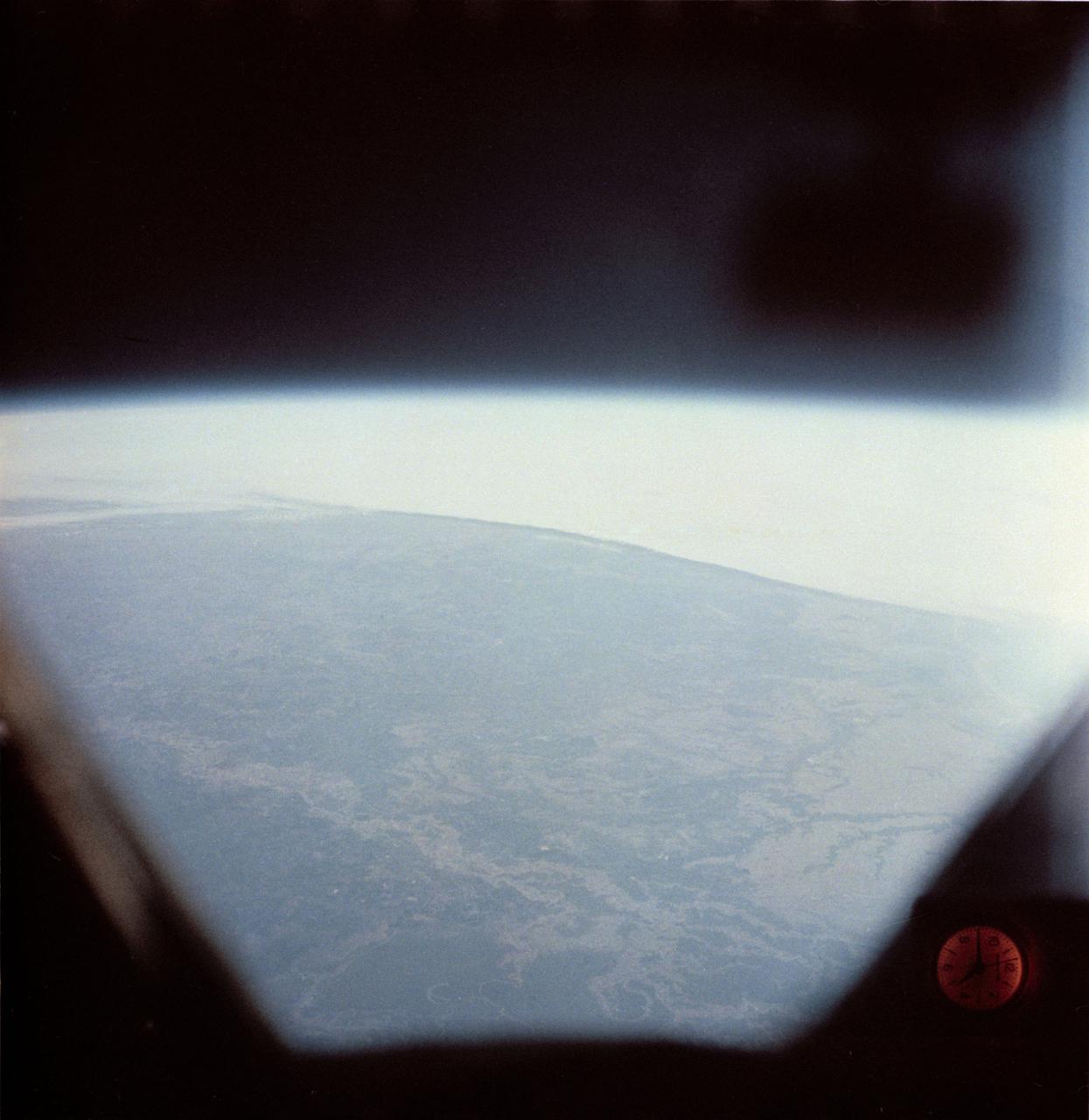
S62-01287 (21 July 1961) --- Earth observation take during the Mercury-Redstone 4 (MR-4) spaceflight. Photo credit: NASA
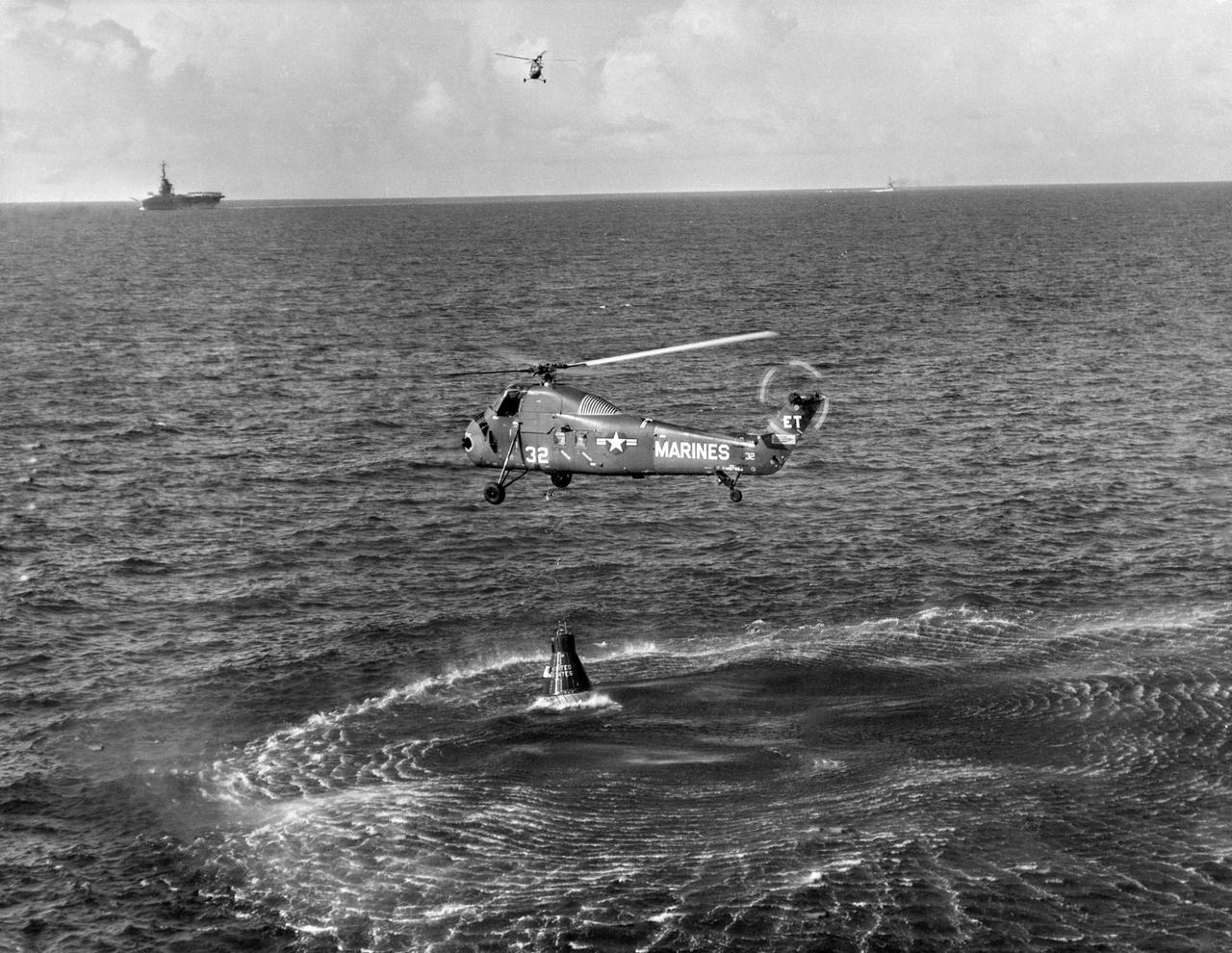
S61-02821 (21 July 1961) --- Attempted recovery of Mercury spacecraft at end of the Mercury-Redstone 4 (MR-4) mission. View shows the Marine helicopter dropping a recovery line to the capsule. In the upper left corner of the view, the recovery ship and another helicopter can be seen. Photo credit: NASA
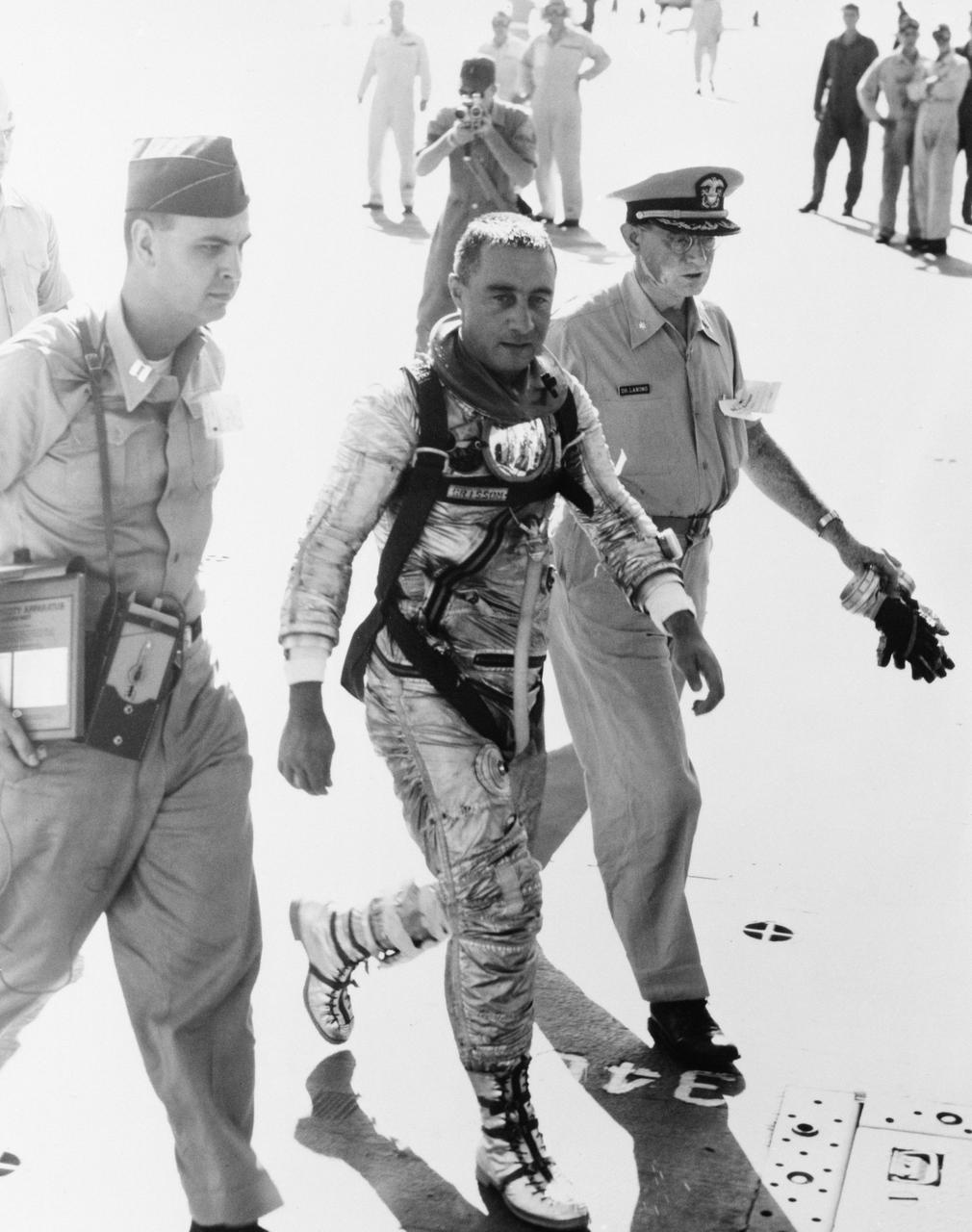
S61-02894 (21 July 1961) --- Astronaut Virgil I. (Gus) Grissom, pilot of the Mercury-Redstone 4 (MR-4) “Liberty Bell 7” spaceflight, arrives aboard the recovery ship, USS Randolph, following his 15-minute, 37-second suborbital space mission. He is flanked by military medical officers. Photo credit: NASA
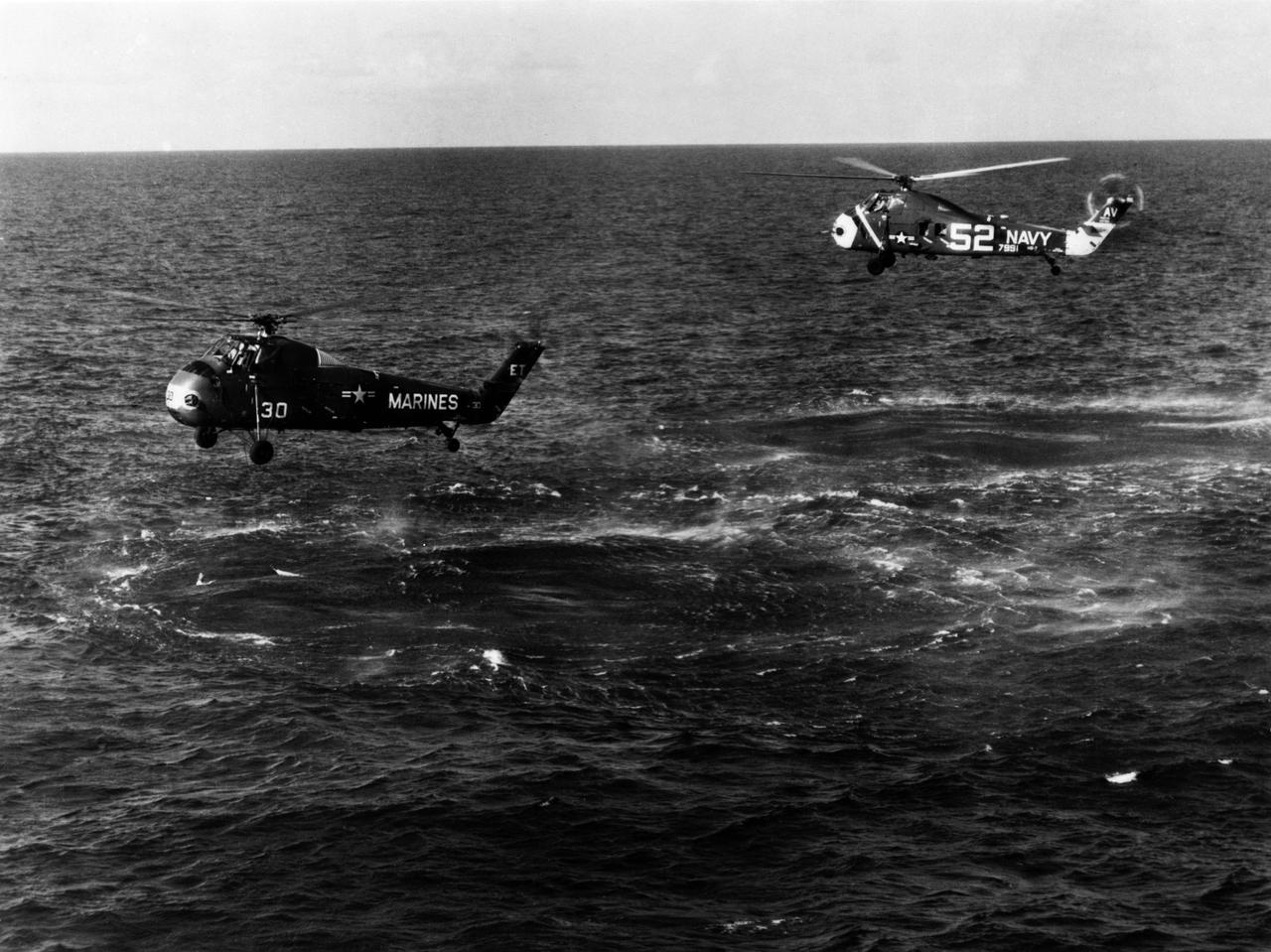
S61-02820 (21 July 1961) --- Attempted recovery of Mercury spacecraft at end of the Mercury-Redstone 4 (MR-4) mission. View shows the Marine helicopter pulled almost to the waters surface by the weight of the capsule, which filled with water. It eventually had to abandon its recovery attempts. Behind the Marine helicopter, a Navy helicopter prepares to assist. Photo credit: NASA
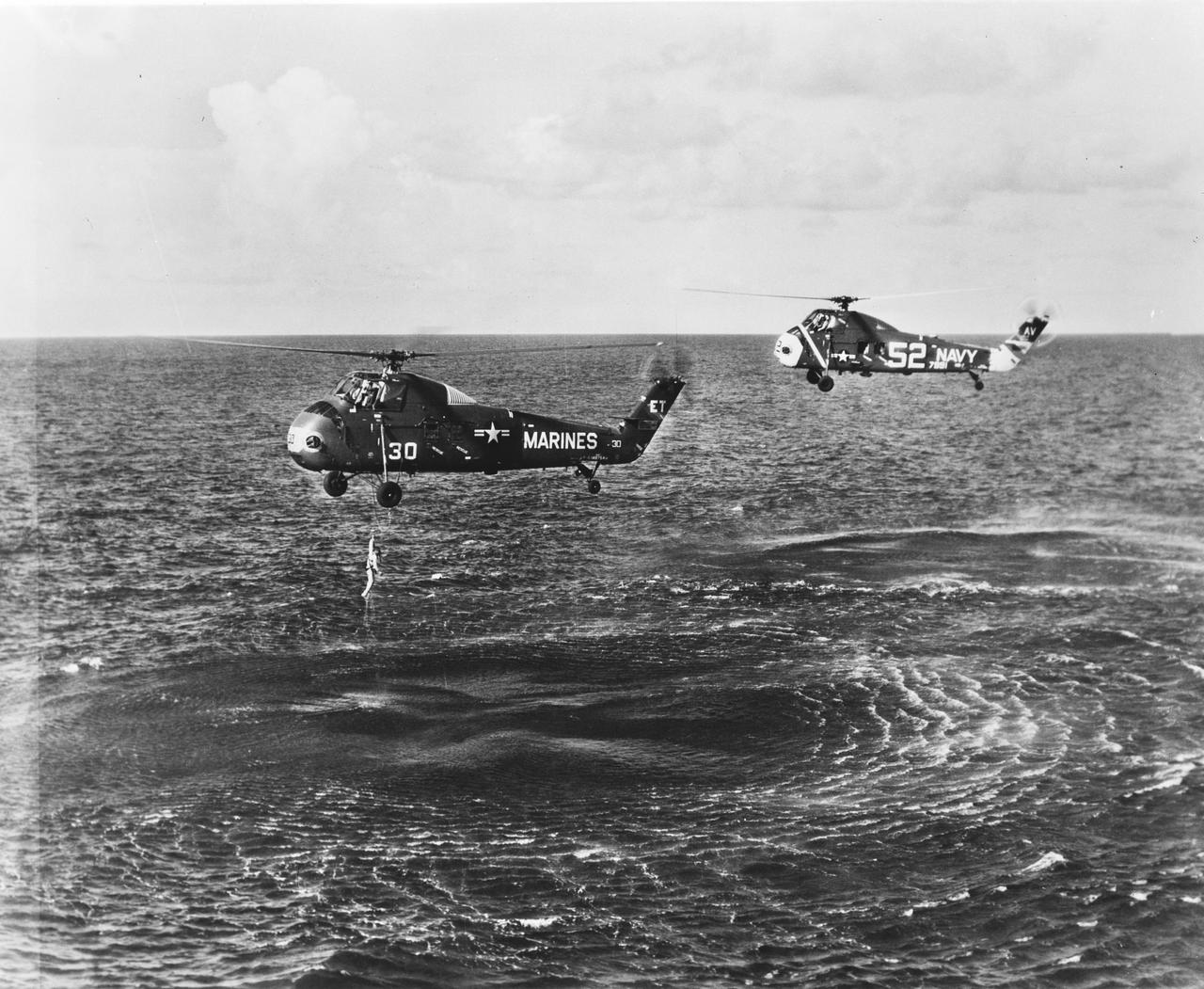
S61-02819 (21 July 1961) --- A U.S. Marine Corps helicopter retrieves astronaut Virgil I. Grissom from the Atlantic Ocean following the Mercury-Redstone 4 (MR-4) spaceflight. Grissom's "Liberty Bell" Mercury spacecraft sank to the bottom of the ocean and was not recovered. Photo credit: NASA
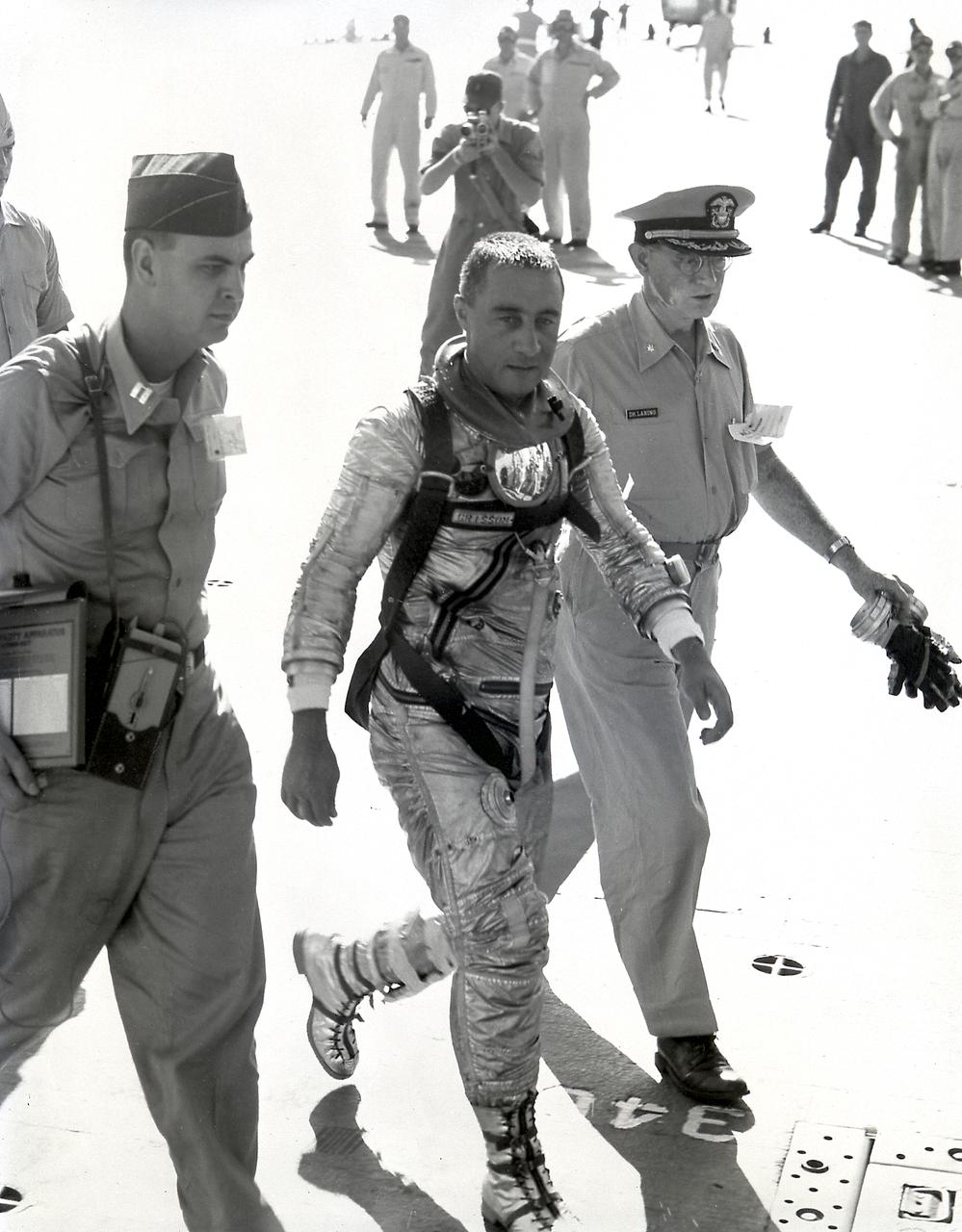
Astronaut Virgil Grissom walks on the recovery ship after completing the 15-1/2-minute suborbital MR-4 mission.
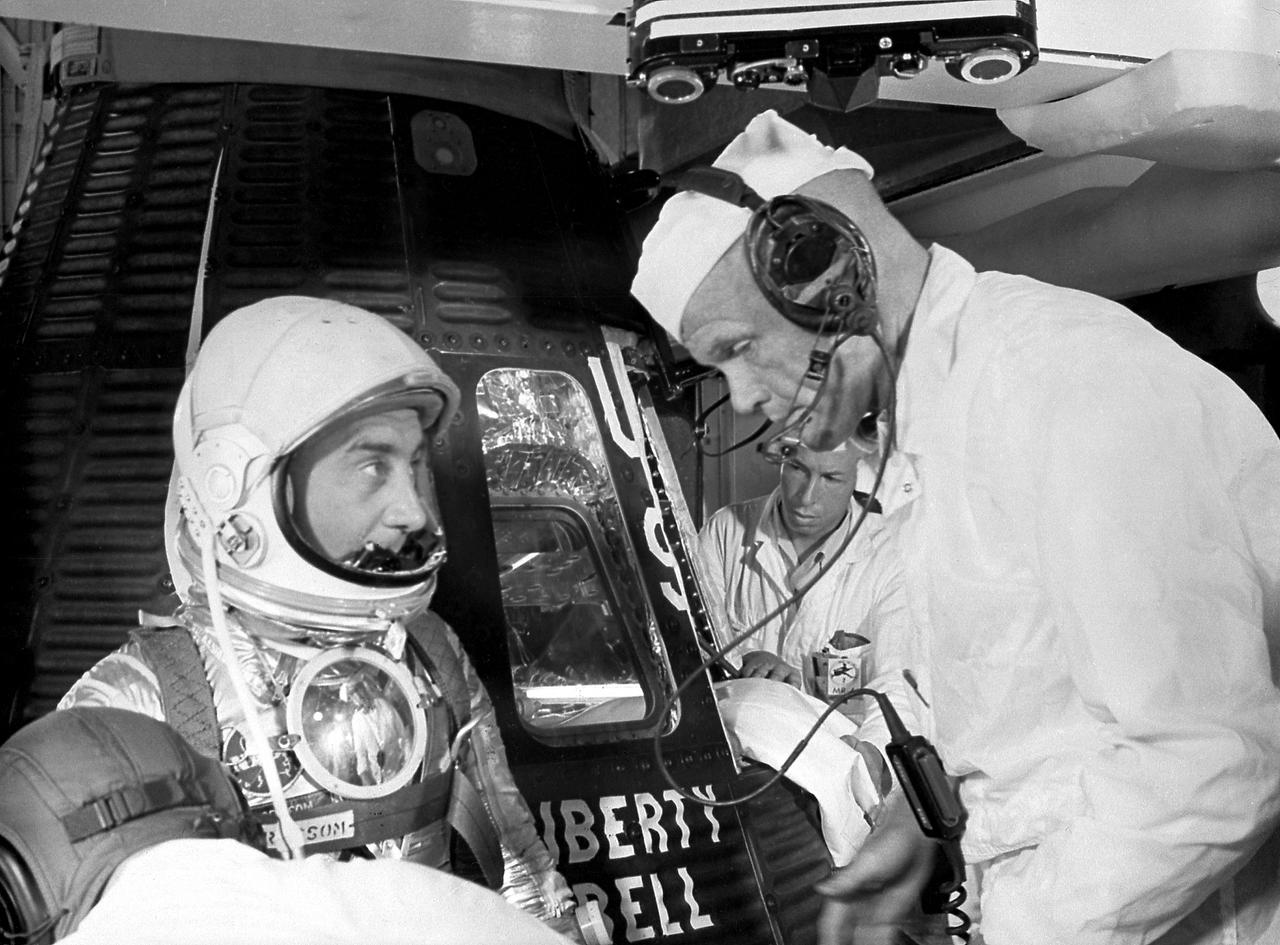
Astronaut Virgil Grissom chats with Astronaut John Glenn prior to entering the Liberty Bell 7 capsule for the MR-4 Mission. The MR-4 mission was the second manned suborbital flight using the Mercury-Redstone booster, which was developed by the Marshall Space Flight Center.
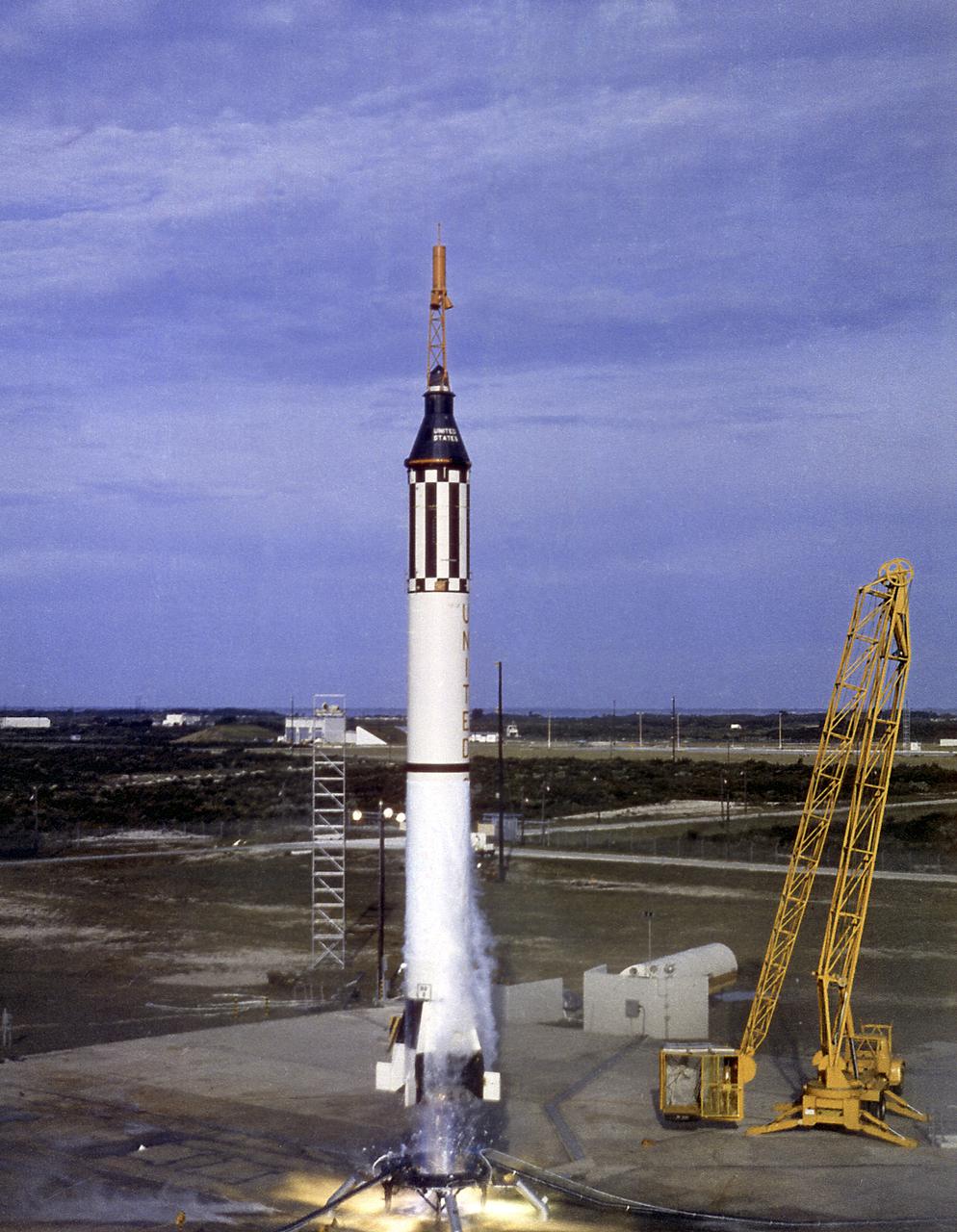
Liftoff of MR-4 (Mercury-Redstone), Liberty Bell 7, on July 21, 1961. MR-4 mission was the second marned suborbital flight and carried Astronaut Virgil Grissom aboard the Liberty Bell 7 spacecraft in space for a duration of 15-1/2 minutes.
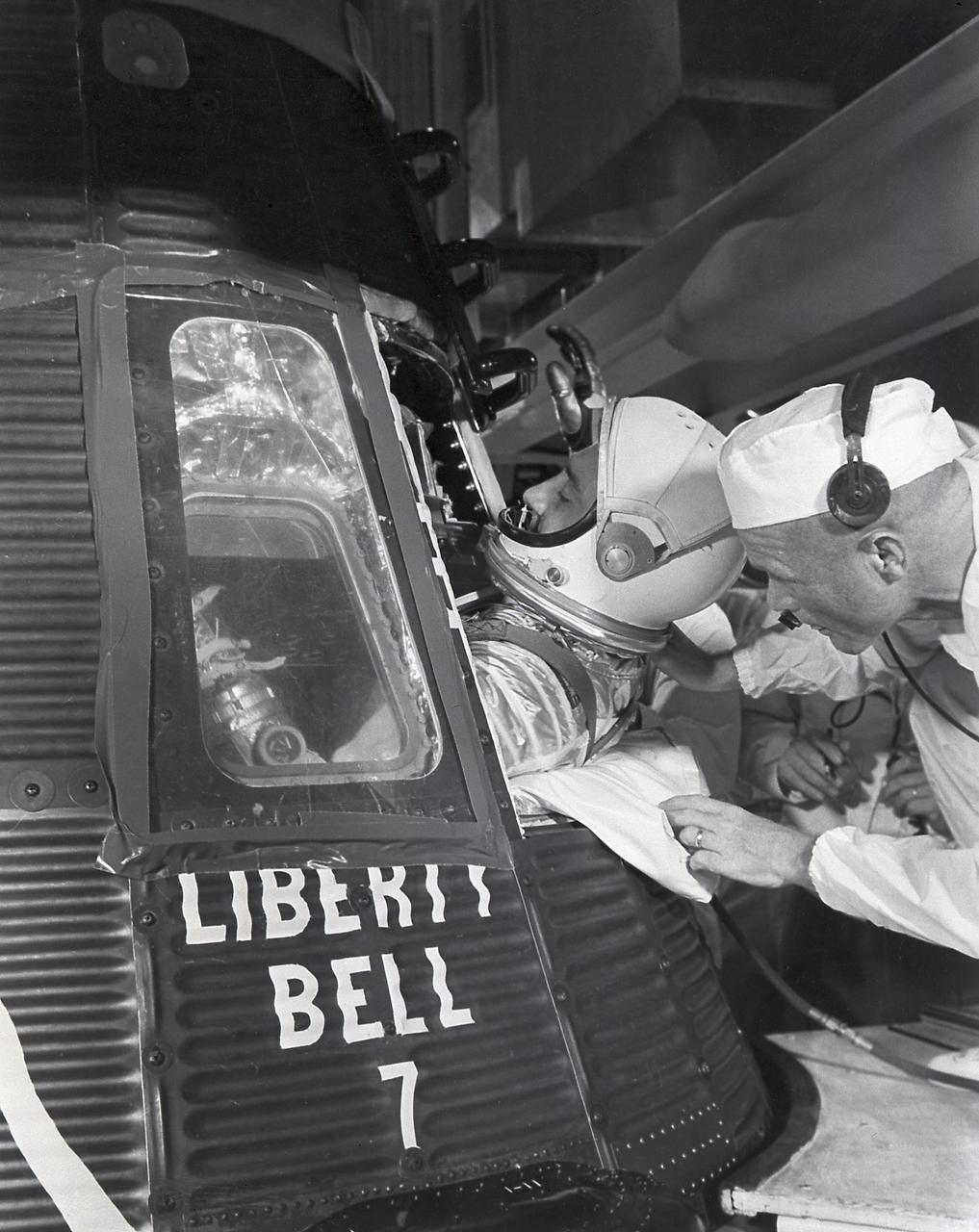
Assisted by Astronaut John Glenn, Astronaut Virgil Grissom enters the Mercury capsule, Liberty Bell 7, for the MR-4 mission on July 21, 1961. Boosted by the Mercury-Redstone vehicle, the MR-4 mission was the second manned suborbital flight.
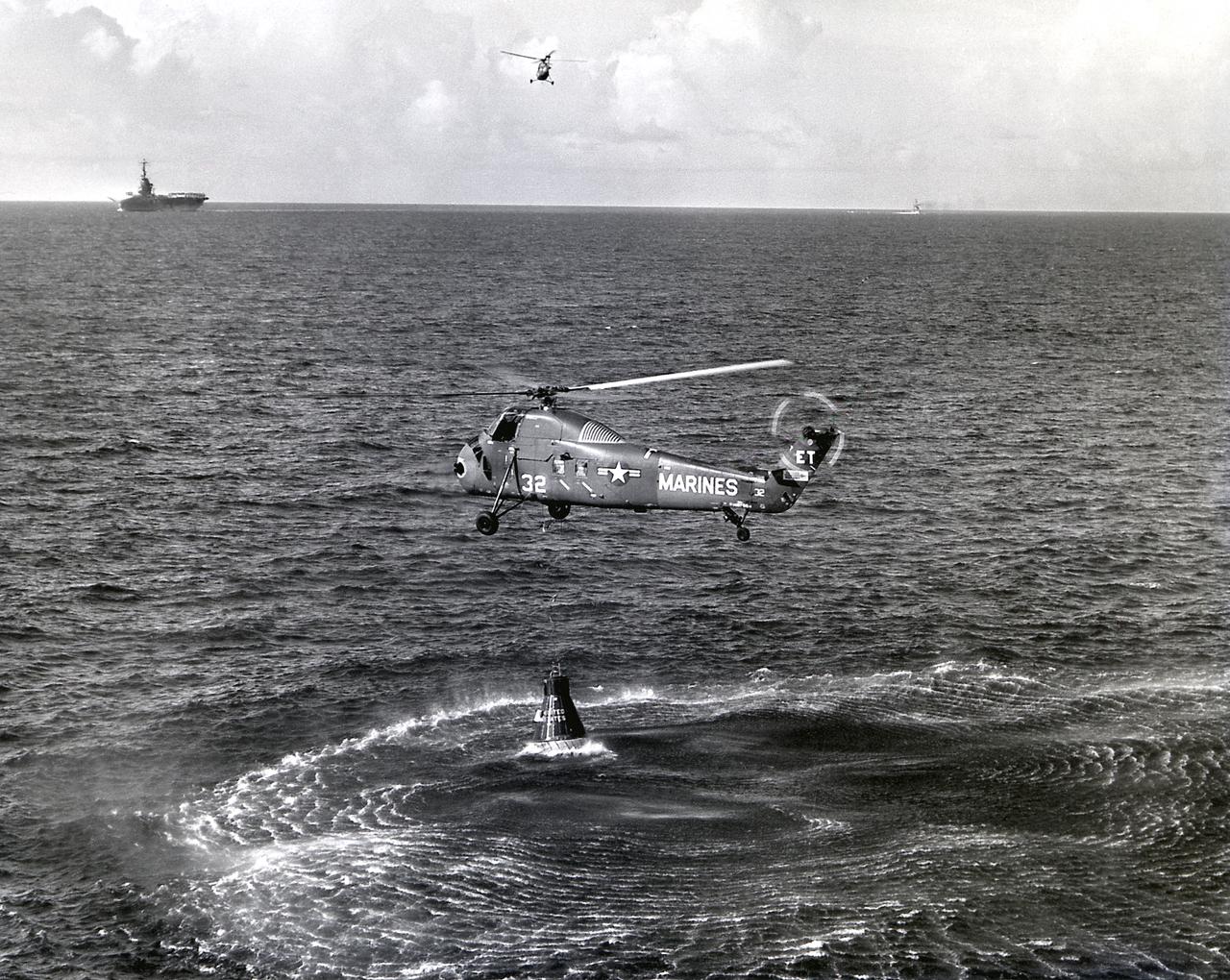
A U.S. Marine helicopter attempts to retrieve the sinking capsule, Liberty Bell 7, of the MR-4 mission. The attempt failed and the capsule sank. The MR-4 mission marned by Astronaut Virgil Grissom was the second manned orbital flight boosted by the Mercury-Redstone vehicle. The Recovery ship is in the background.
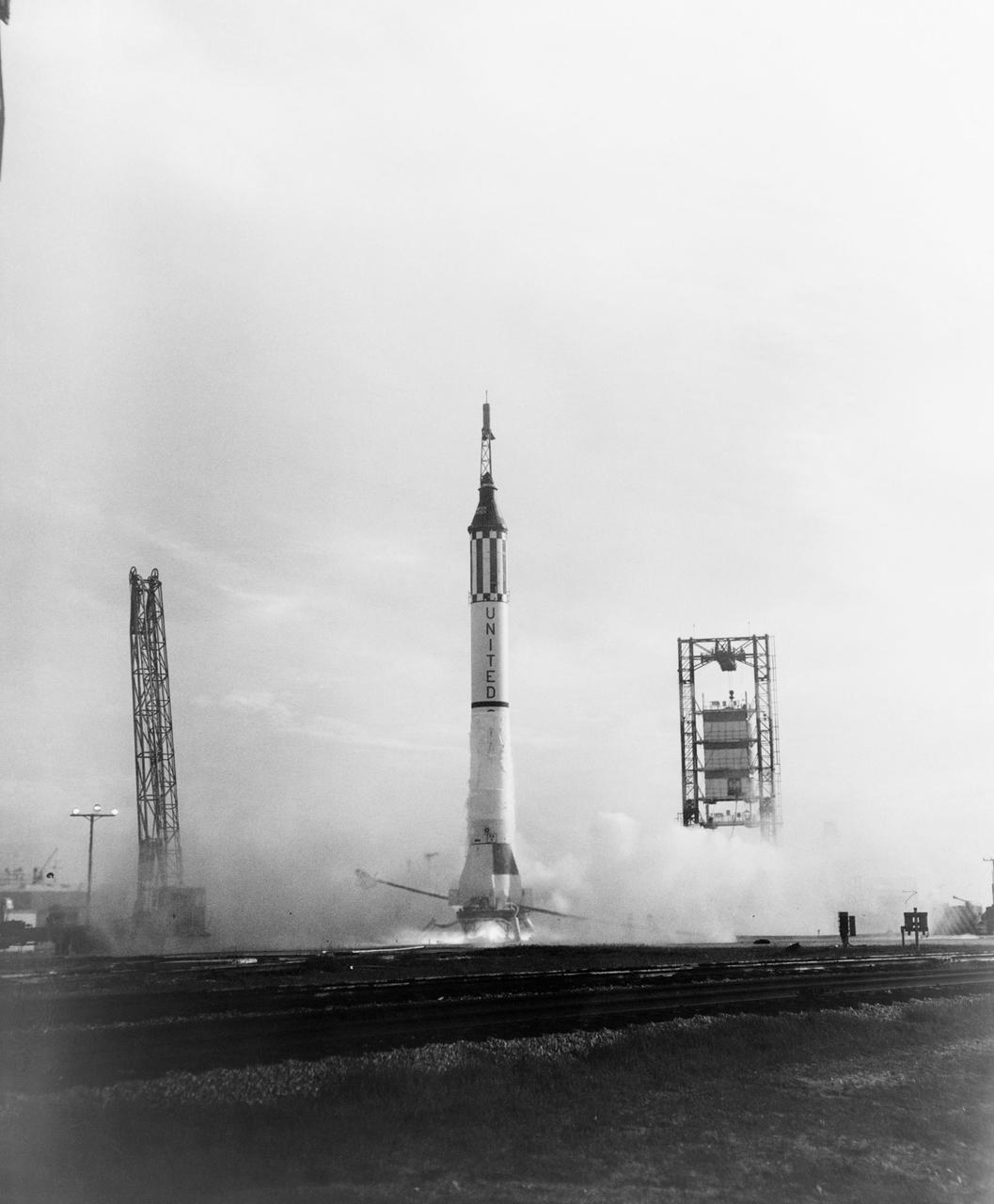
S61-03121 (21 July 1961) --- Mercury-Redstone 4 (MR-4) launch of Virgil I. Grissom on July 21, 1961, from Cape Canaveral, Florida. Photo credit: NASA
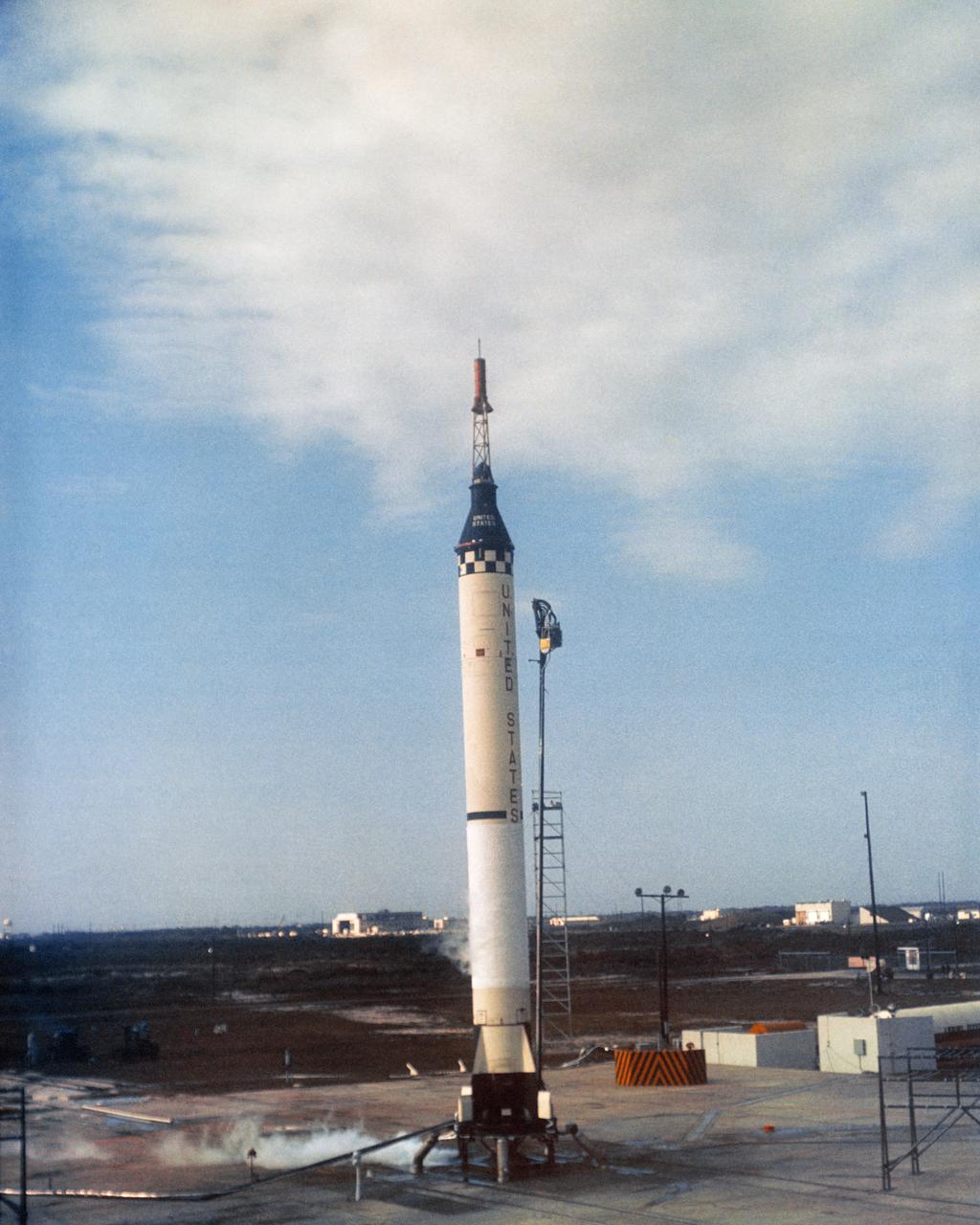
S63-02651 (21 July 1961) --- This is a ground-level view of the Mercury-Redstone (MR-4) launch of Virgil I. Grissom on July 21, 1961, from Cape Canaveral, Florida. Photo credit: NASA

S61-02921 (21 July 1961) --- Attempted recovery of Mercury spacecraft at end of the Mercury-Redstone 4 (MR-4) mission. View shows the top of the capsule before it sinks beneath the waves. Photo credit: NASA
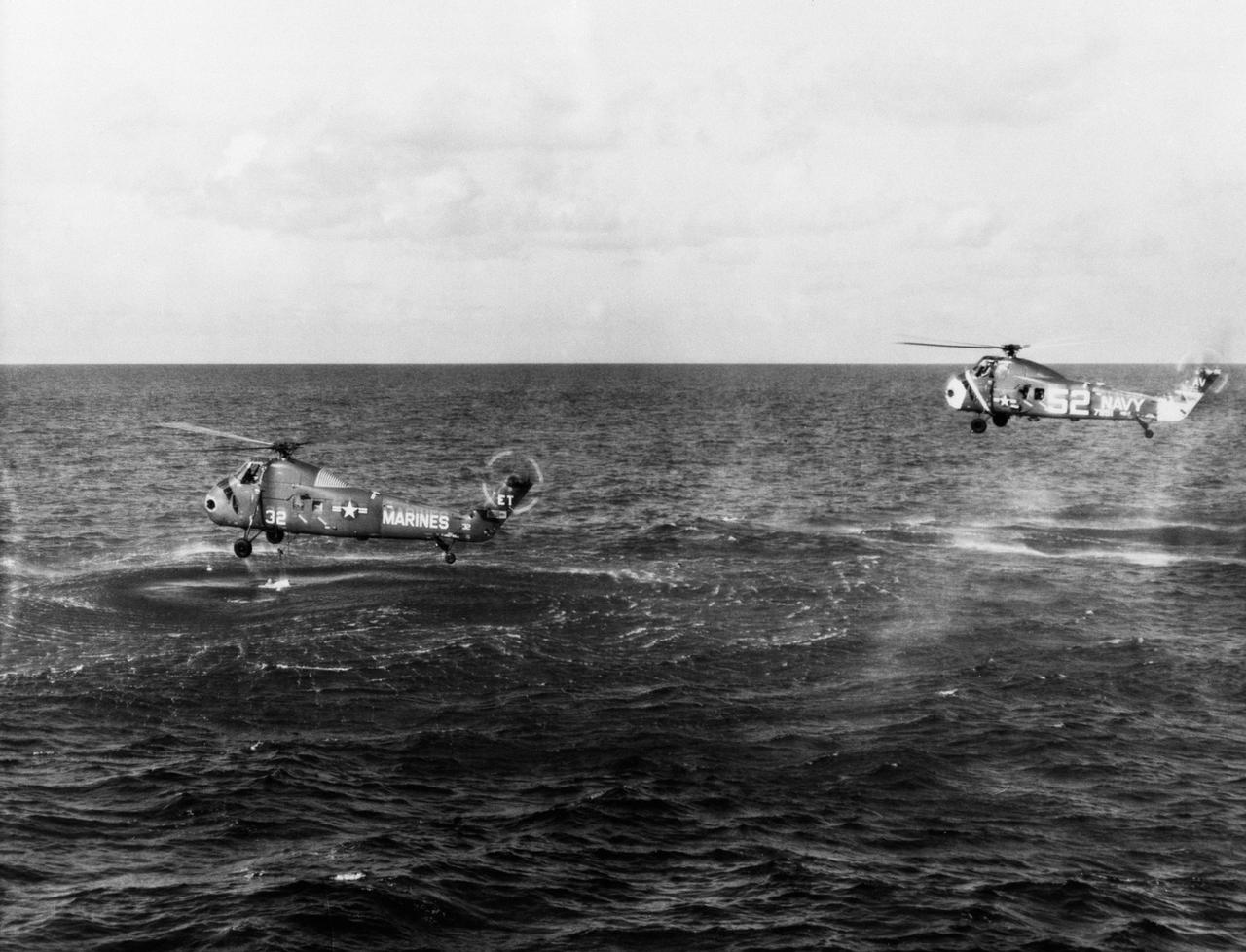
S61-02817 (21 July 1961) --- Attempted recovery of Mercury spacecraft at end of the Mercury-Redstone 4 (MR-4) mission. View shows the Marine helicopter pulled almost to the waters surface by the weight of the capsule, which filled with water. Behind the Marine helicopter, a Navy helicopter prepares to assist. Photo credit: NASA
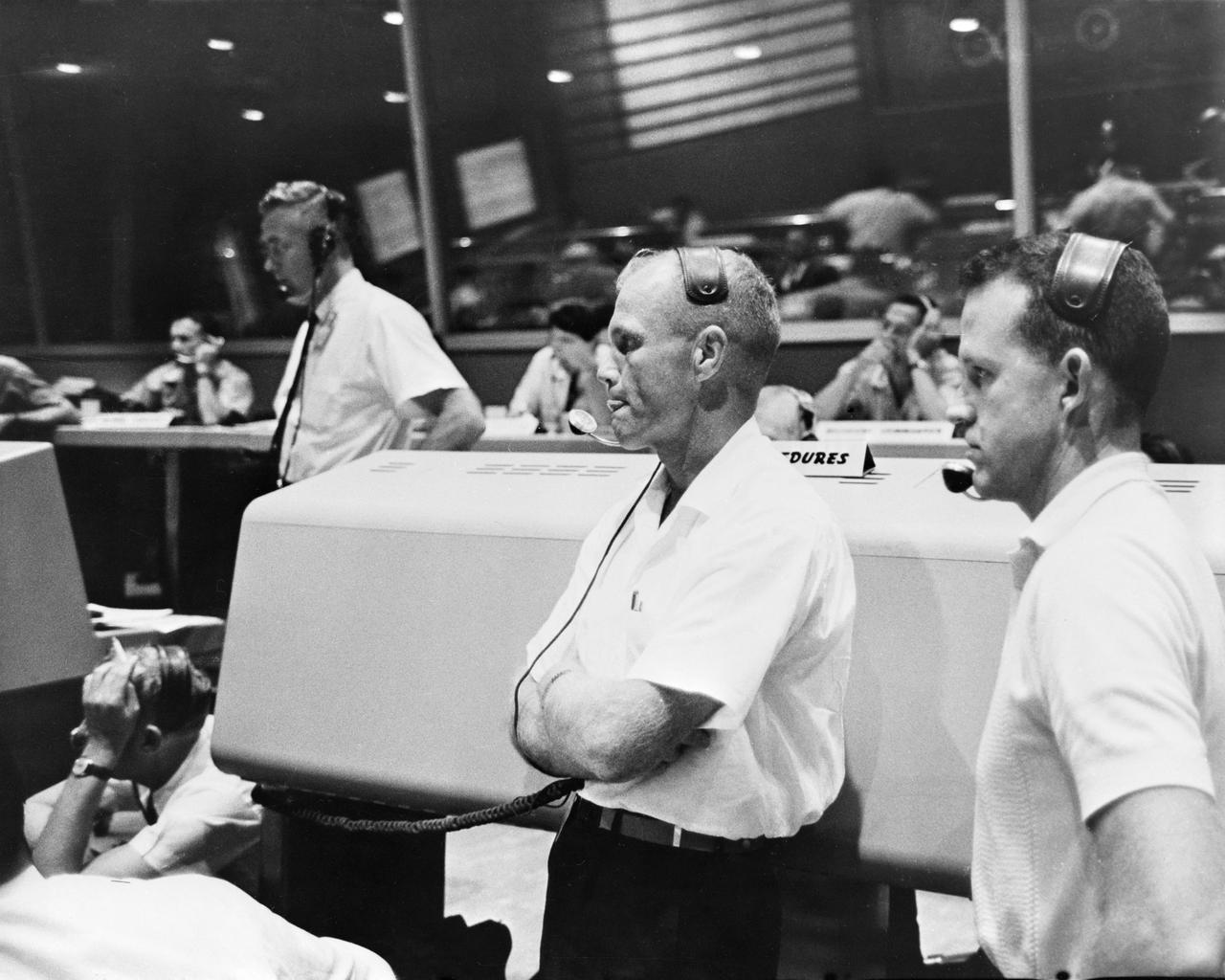
S61-03829 (21 July 1961) --- View of the Mission Control Center at Cape Canaveral during the Mercury-Redstone 4 (MR-4) mission. Astronauts John Glenn (left) and L. Gordon Cooper (right) act as spacecraft communicators (CAPCOM). Photo credit: NASA

Astronaut Virgil I. "Gus" Grissom, one of the original seven astronauts for Mercury Project selected by NASA on April 27, 1959. The MR-4 mission, boosted by the Mercury-Redstone vehicle, made the second marned suborbital flight. The capsule, Liberty Bell 7, sank into the sea after the splashdown.
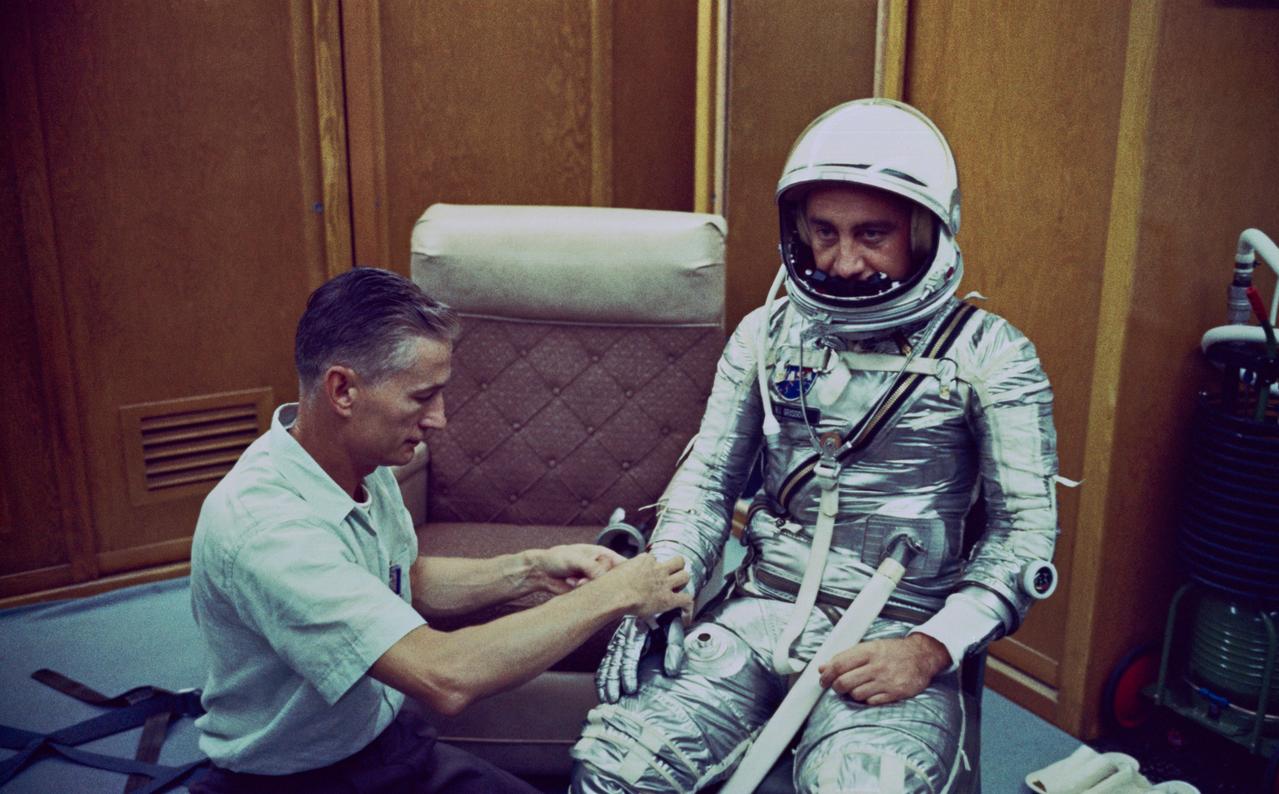
S88-55875 (19 July 1961) --- Donning a spacesuit for the Mercury-Redstone 4 (MR-4) mission, astronaut Virgil I. (Gus) Grissom chats with spaceflight equipment specialist Joe W. Schmitt in the personal equipment room of Hangar S at Cape Canaveral, Florida. Shortly after this photograph was taken, the launch was postponed two days due to unfavorable weather conditions in the area. Photo credit: NASA
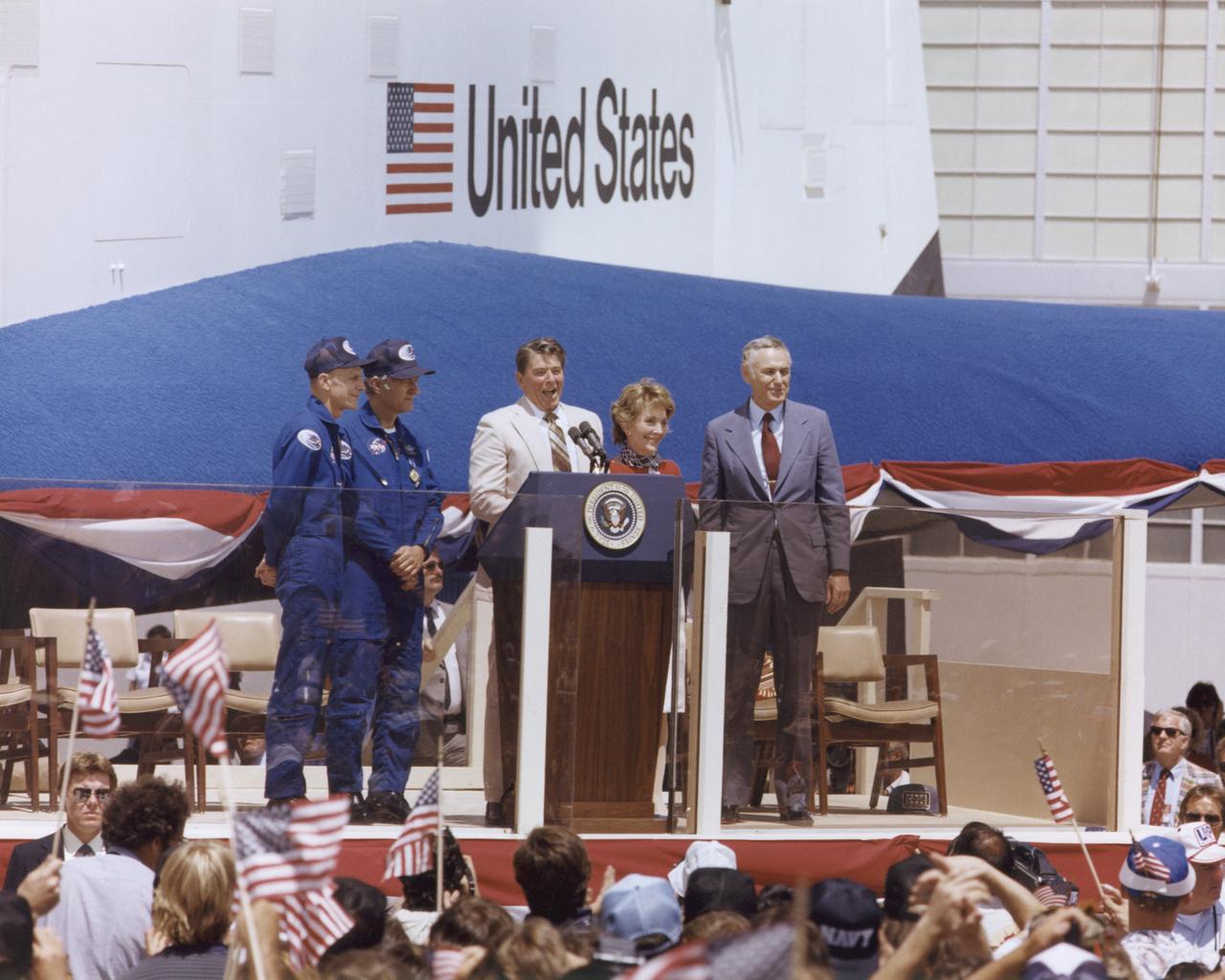
President Ronald Reagan speaks to a crowd of more than 45,000 people at NASA's Dryden Flight Research Center following the landing of STS-4 on July 4, 1982. To the right of the President are Mrs. Reagan and NASA Administrator James M. Beggs. To the left are STS-4 Columbia astronauts Thomas K. Mattingly and Henry W. Hartsfield, Jr. Prototype Space Shuttle Enterprise is in the background.
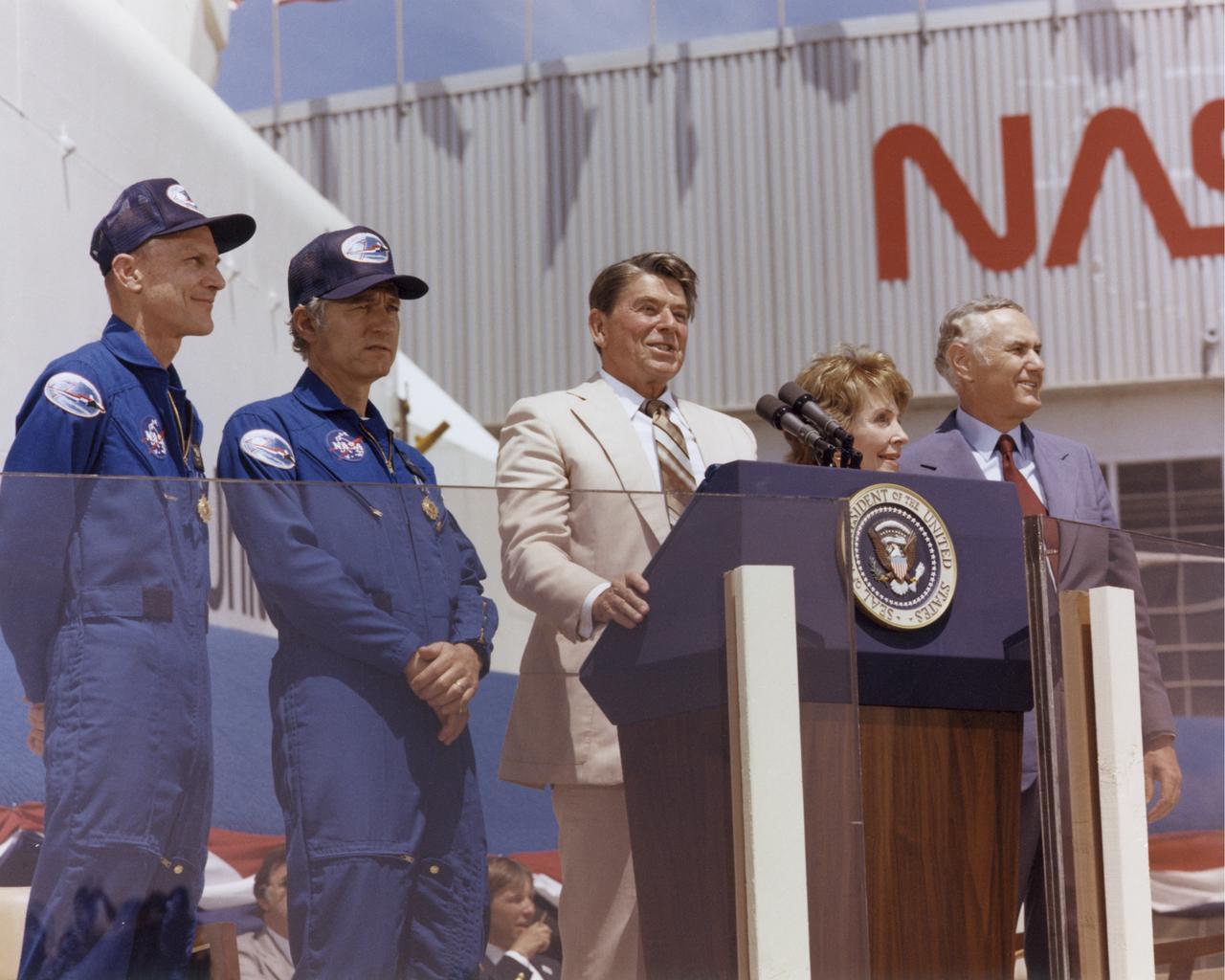
President Ronald Reagan speaks to a crowd of more than 45,000 people at NASA's Dryden Flight Research Center following the landing of STS-4 on July 4, 1982. To the right of the President are Mrs. Reagan and NASA Administrator James M. Beggs. To the left are STS-4 Columbia astronauts Thomas K. Mattingly and Henry W. Hartsfield, Jr. Prototype Space Shuttle Enterprise is in the background.
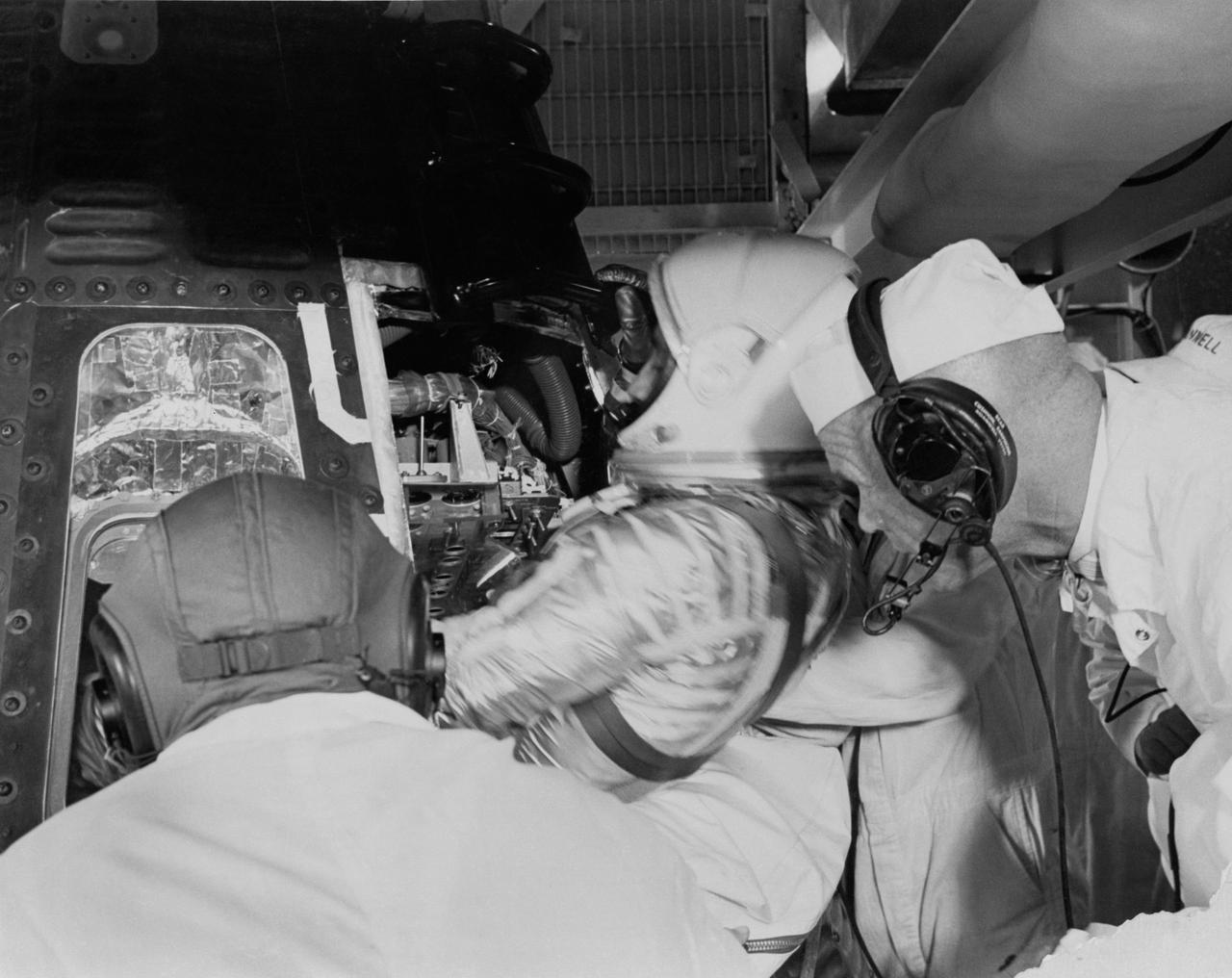
S61-02881 (1961) --- Astronaut Virgil I. (Gus) Grissom, suited up in a newly designed pressure suit, is assisted as he climbs into Liberty Bell 7 spacecraft. Behind him backup pilot John Glenn watches the insertion. The Mercury-Redstone 4 (MR-4) mission was scrubbed a few hours later due to unfavorable weather over the launch pad. Photo credit: NASA
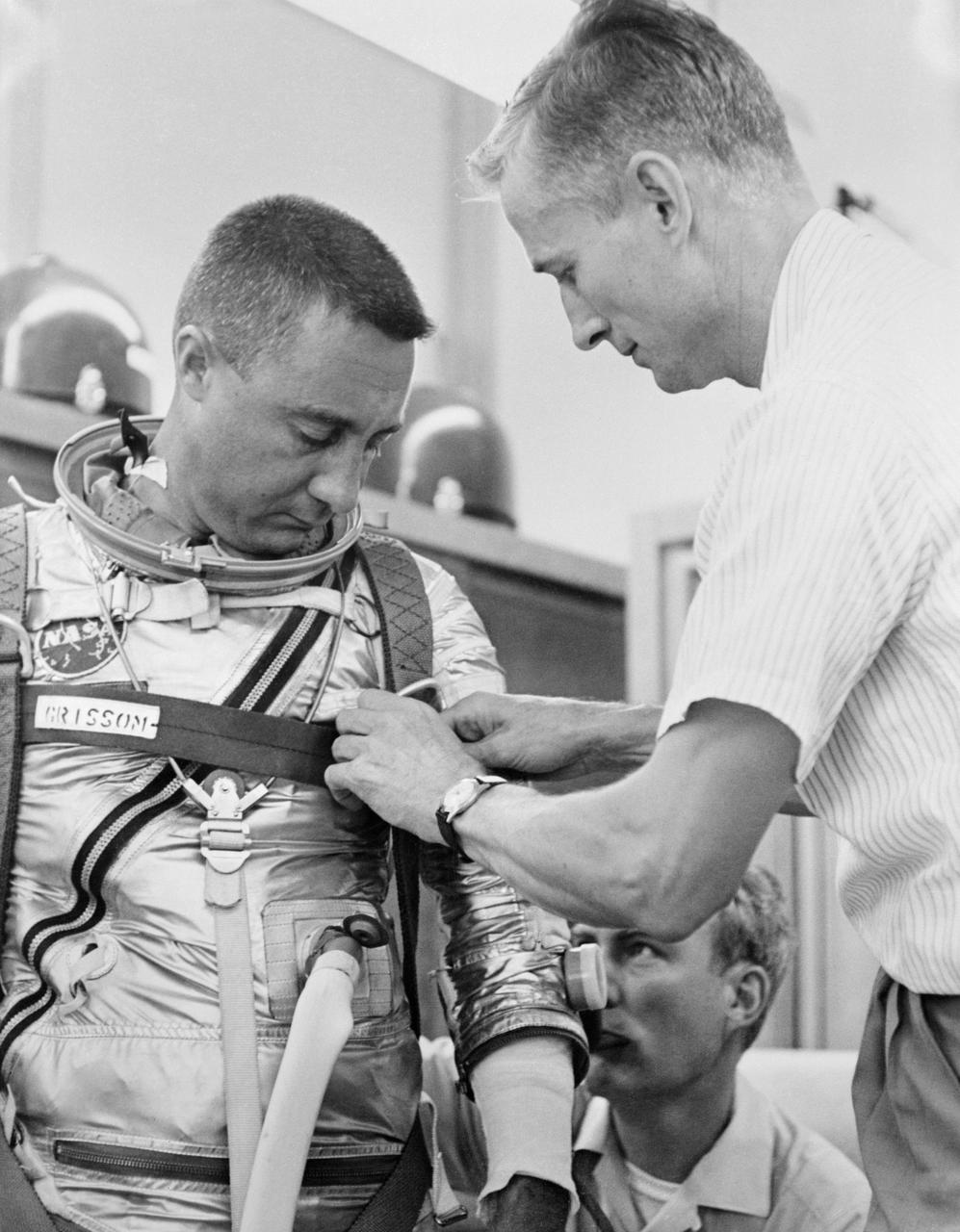
S61-02839 (1961) --- Astronaut Virgil I. (Gus) Grissom, pilot of the Mercury-Redstone 4 (MR-4) spaceflight, suits up for MR-4 simulation training. Assisting is suit technician Joe Schmitt. Photo credit: NASA
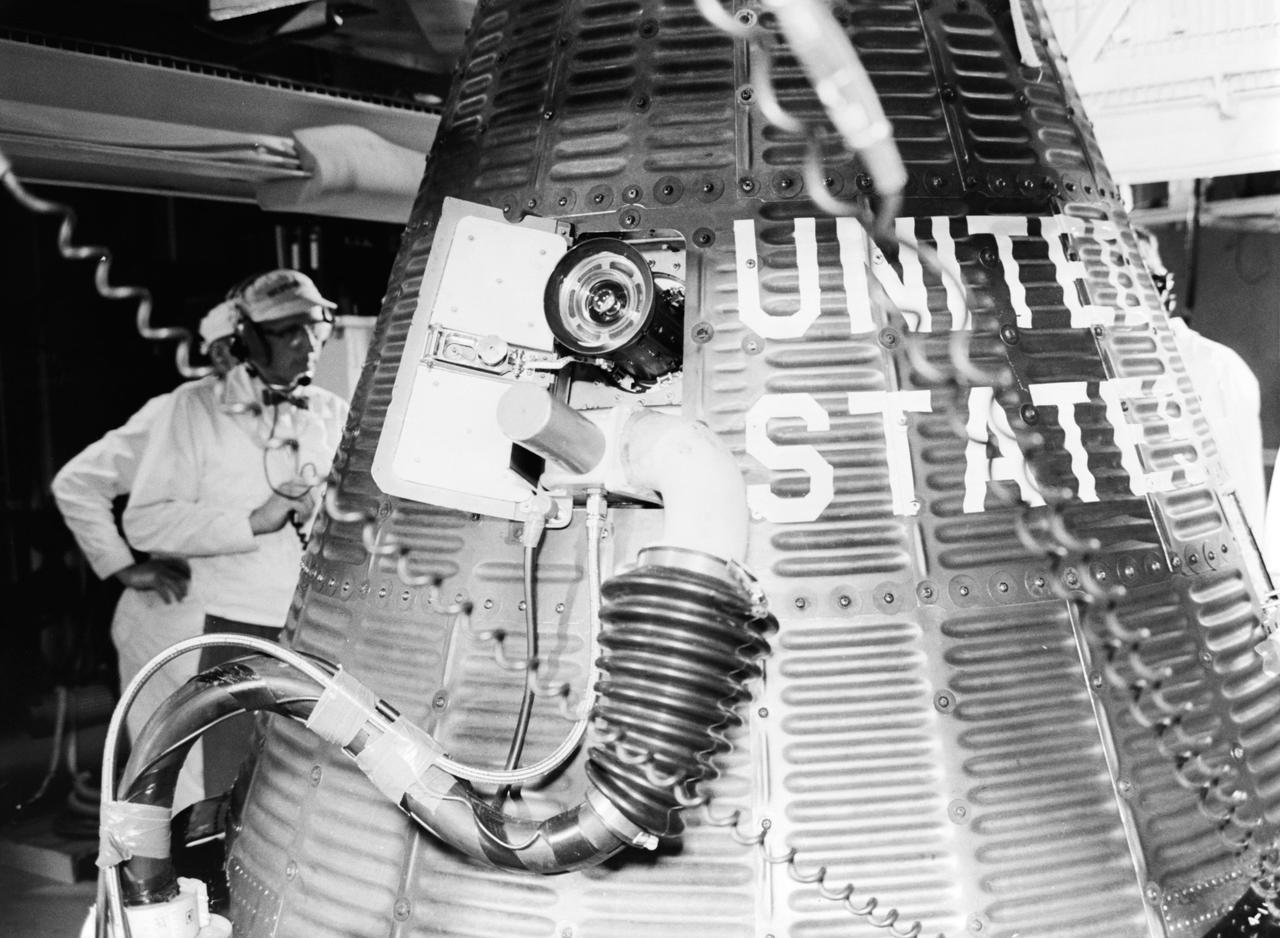
S61-03705 (1961) --- Close-up view of the fueling of the Liberty Bell 7 for the Mercury-Redstone 4 (MR-4) mission. Photo credit: NASA
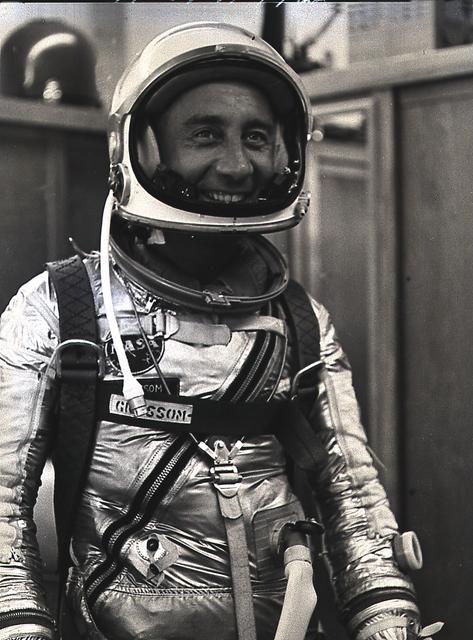
Astronaut Virgil Gus Grissom awaits America's second marned space mission, Mercury-Redstone 4 (MR-4) on July 21, 1961. During the 15-minute suborbital flight, the Liberty Bell 7 Mercury spacecraft reached an altitude of 118 miles and traveled 303 miles downrange. It was the fourth flight of the Mercury-Redstone launch vehicle (MR-4), developed by Dr. Wernher von Braun and the rocket team in Huntsville, Alabama.
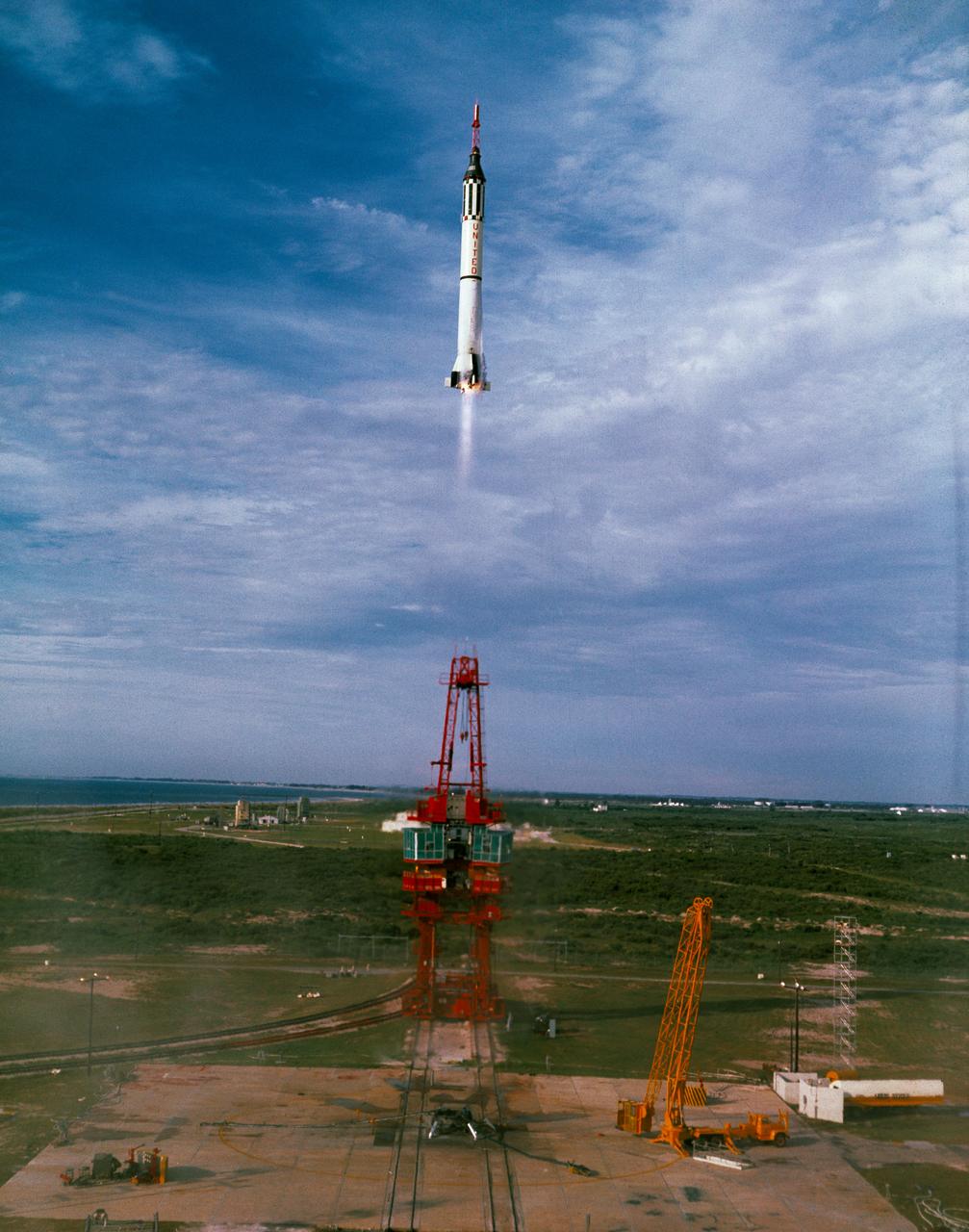
S61-03248 (21 July 1961) --- Mercury-Redstone 4 (MR-4) launch of Virgil I. Grissom on July 21, 1961, from Cape Canaveral, Florida. Photo credit: NASA
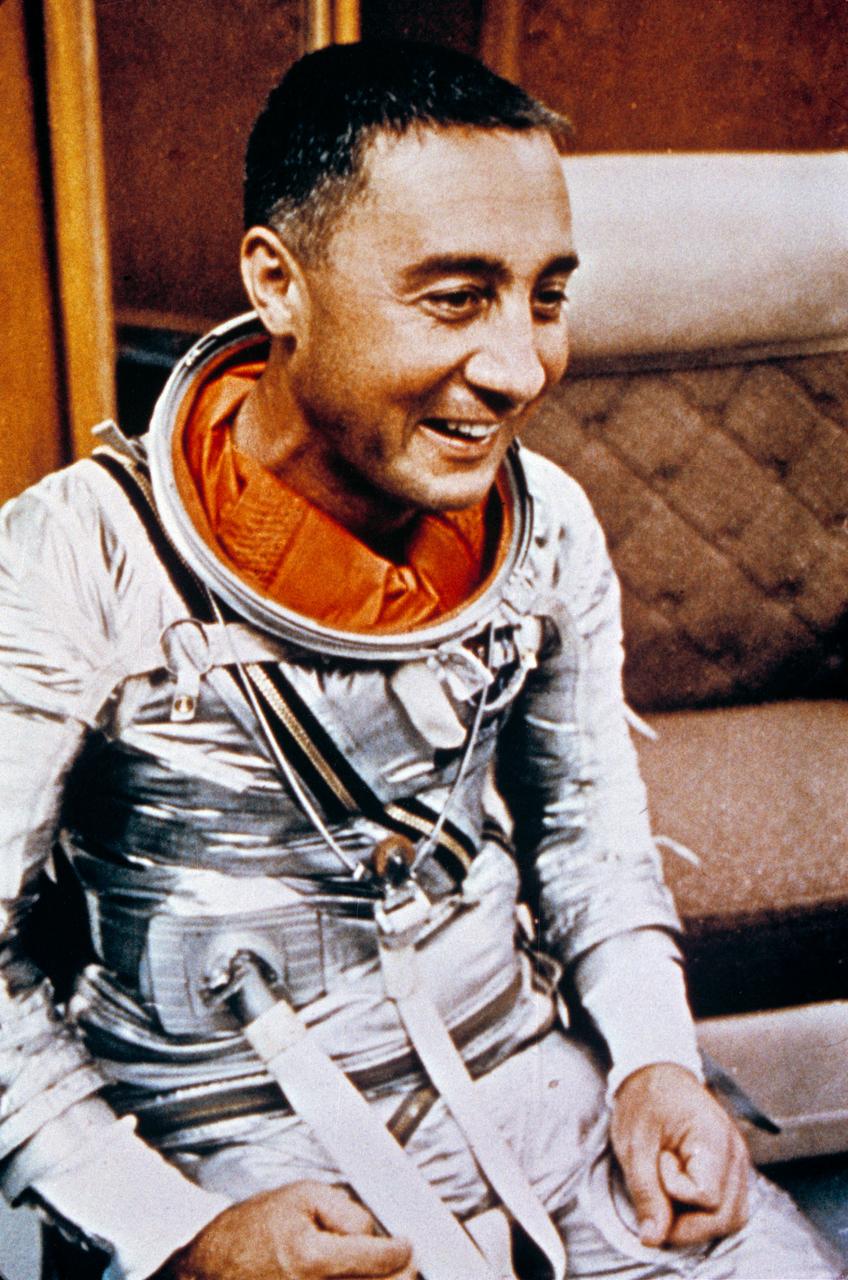
S64-36909 (1961) --- Astronaut Virgil I. (Gus) Grissom, pilot of the Mercury-Redstone 4 (MR-4) spaceflight, wearing Mercury pressure suit, poses for picture during training activities at the Florida Space Center. Photo credit: NASA
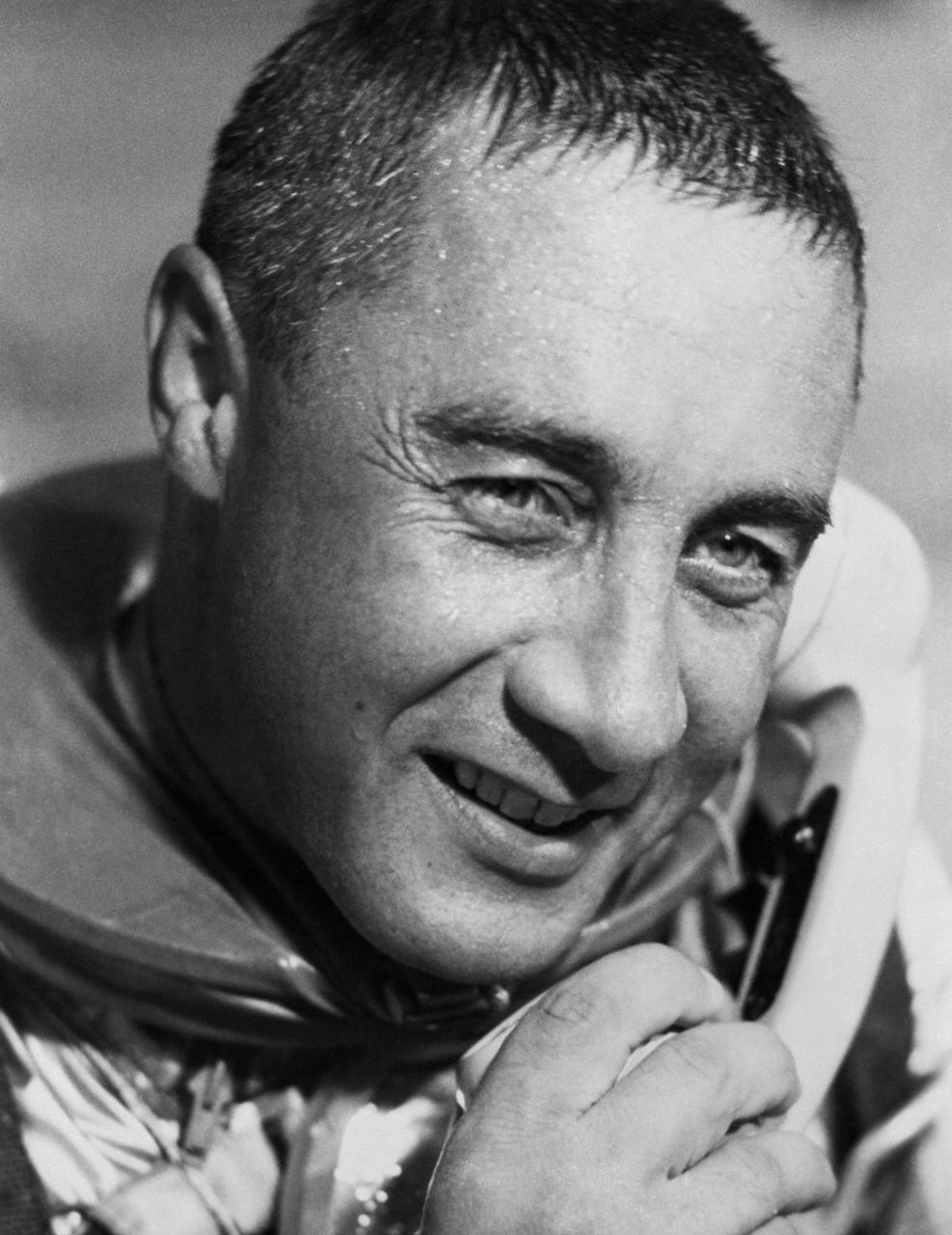
S61-02897 (21 July 1961) --- Virgil I. (Gus) Grissom, pilot of the Mercury-Redstone 4 (MR-4) ?Liberty Bell 7? spaceflight, talking on the phone with President Kennedy. Grissom is still wearing his pressure suit. Photo credit: NASA
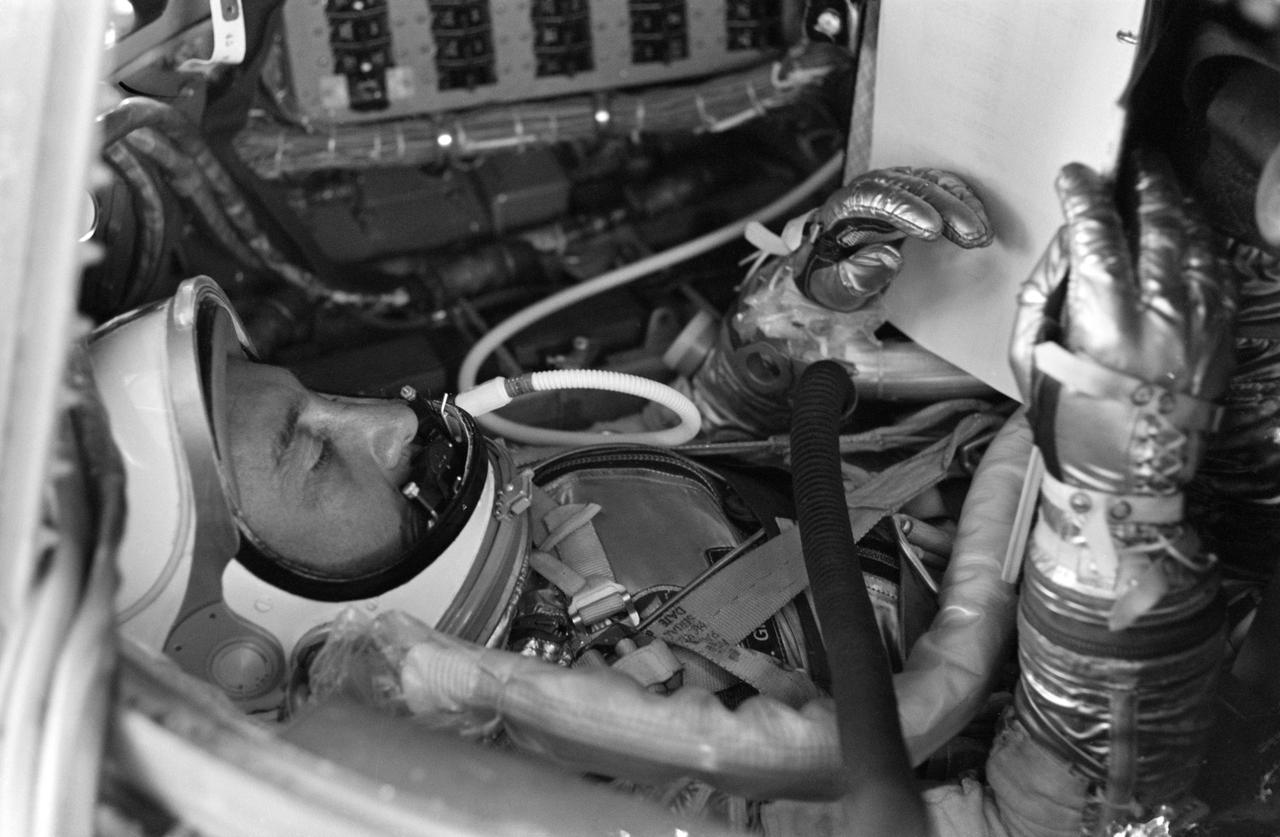
S64-10806 (21 July 1961) --- Astronaut Virgil I. (Gus) Grissom, pilot of the Mercury-Redstone 4 (MR-4) spaceflight, in his Mercury "Liberty Bell 7" spacecraft is checking his flight plan during prelaunch activities. Photo credit: NASA
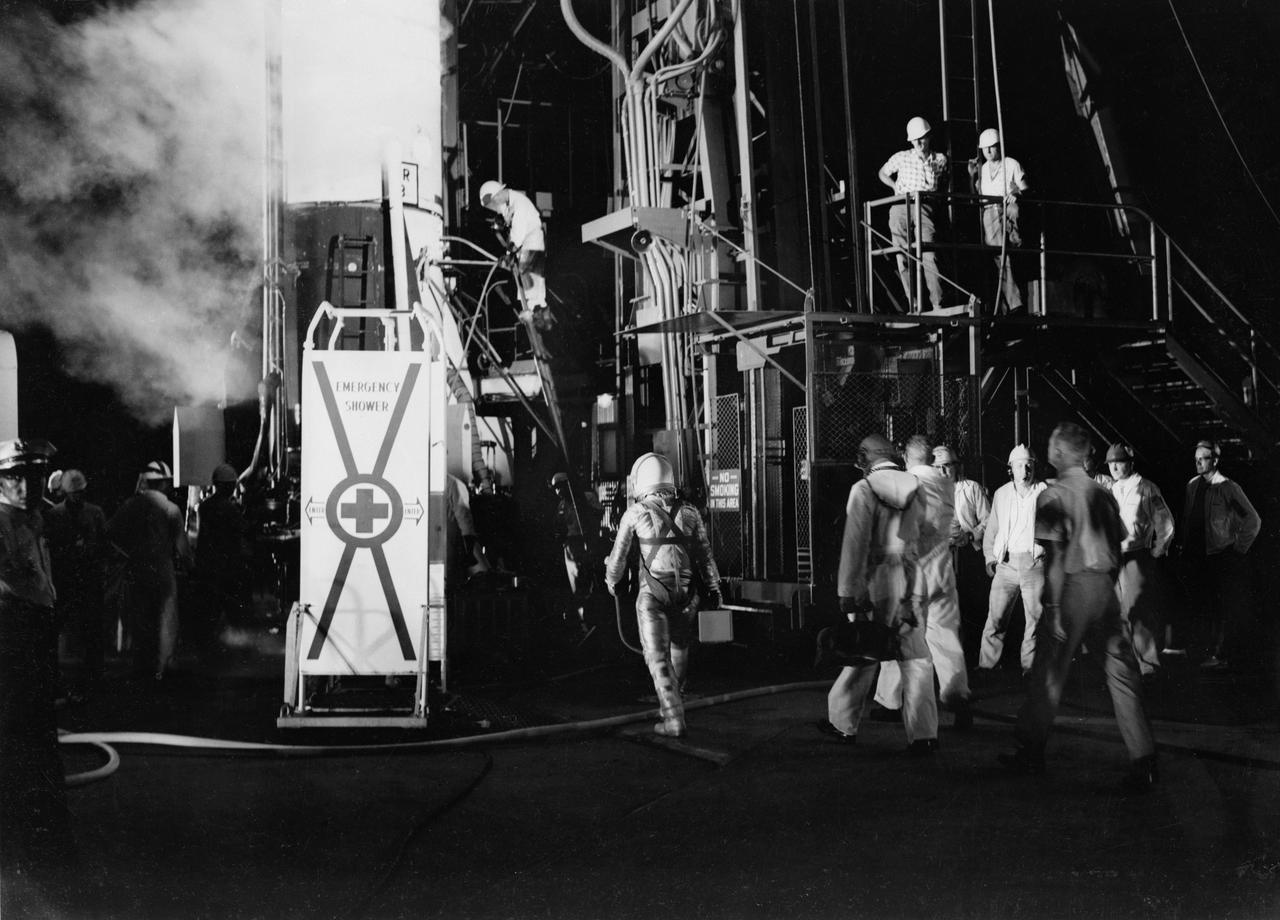
S61-02889 (1961) --- Astronaut Virgil I. (Gus) Grissom approaches his Mercury-Redstone 4 (MR-4) launch vehicle to begin his mission. To the left of the view is an emergency shower stall, to the right is the elevator which will take Grissom to the capsule. Photo credit: NASA
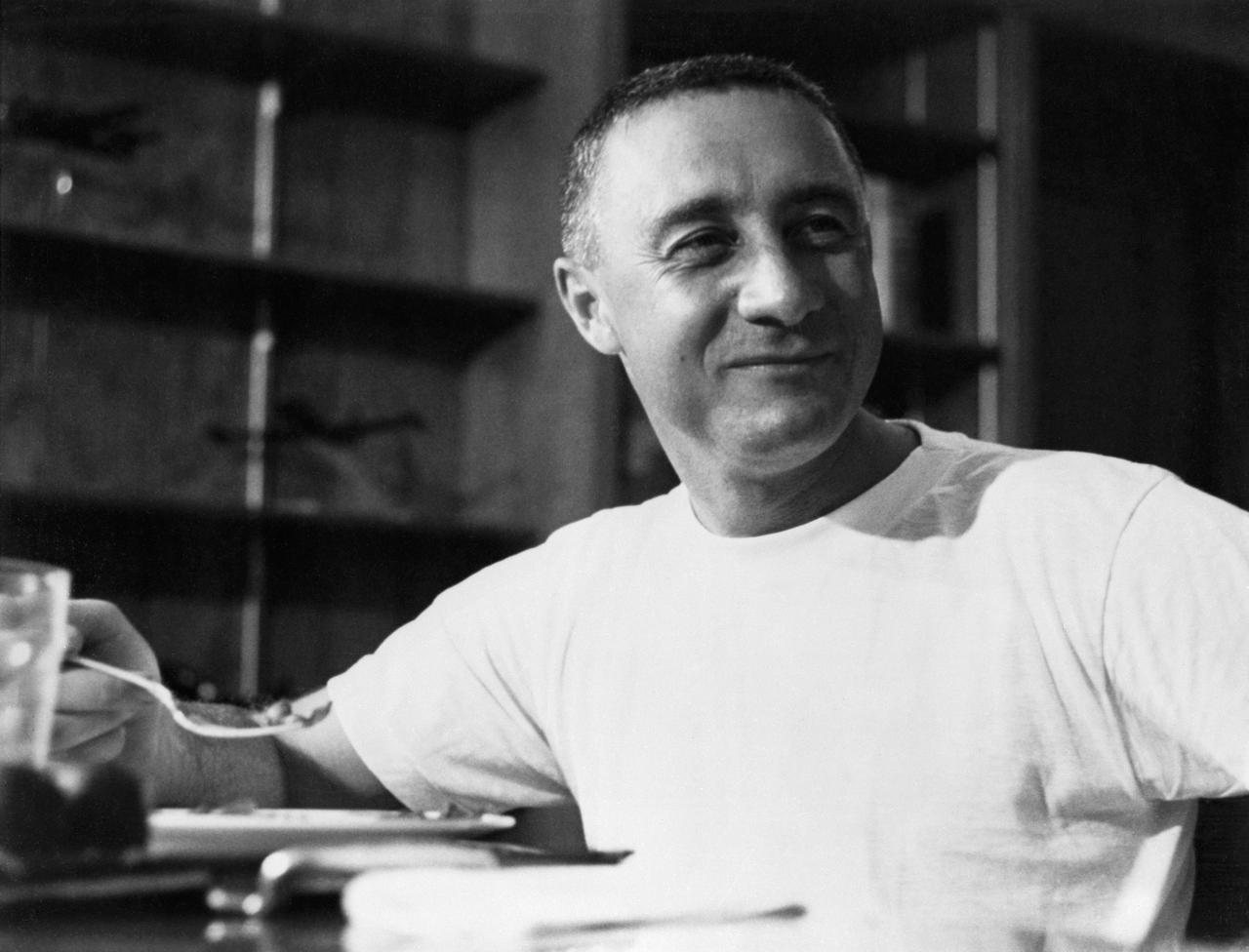
S61-02898 (21 July 1961) --- Virgil I. (Gus) Grissom, pilot of the Mercury-Redstone 4 (MR-4) ?Liberty Bell 7? spaceflight, enjoys a meal aboard the recovery ship, USS Randolph, following his 15-minute, 37-second suborbital space mission. Photo credit: NASA
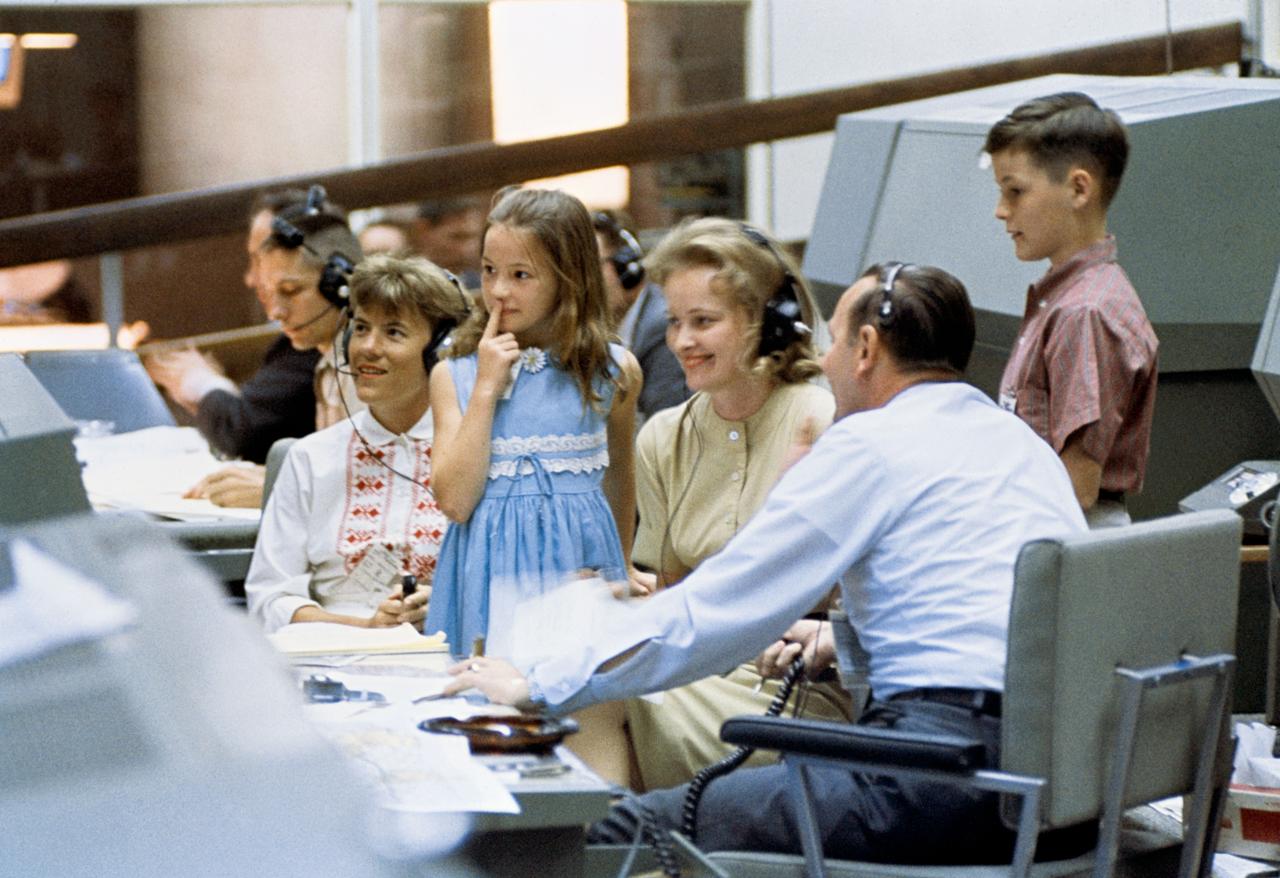
S65-30411 (9 June 1965) --- The families of Gemini 4 astronauts James A. McDivitt and Edward H. White II visited the Mission Control Center in Houston. In the foreground, left to right, are Mrs. Patricia McDivitt, daughter Bonnie White, Mrs. Patricia White, flight director Christopher C. Kraft Jr., and Edward White III. Each of the family members talked with the astronauts as they passed over the United States. Photo credit: NASA
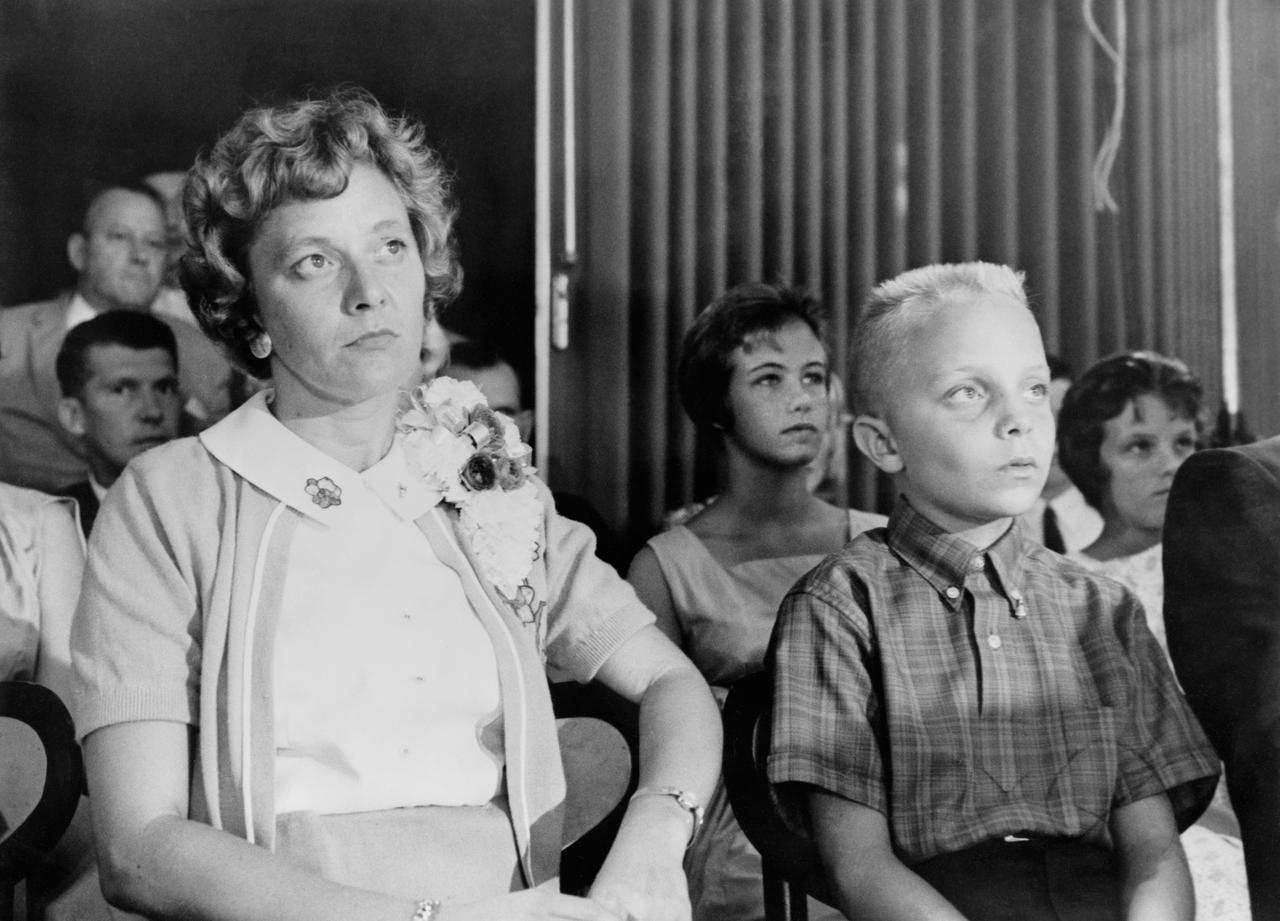
S61-03664 (23 July 1961) --- Astronaut Virgil I. (Gus) Grissom's wife and son watch from the audience as a press conference is held on July 23, 1961 at the Starlight motel. Photo credit: NASA
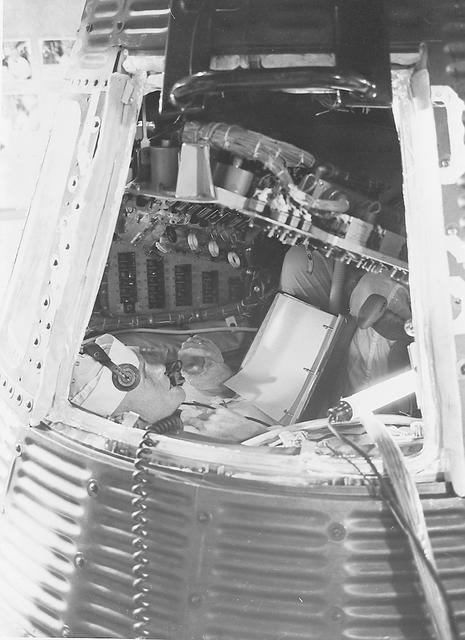
S61-03744 (July 1961) --- Astronaut John H. Glenn Jr., backup astronaut for MR-4, inspects the interior of a Mercury spacecraft on Pad 5. He is reviewing material on the checklist he is holding against the consoles in front of him. Photo credit: NASA
/61-mr4-65(s)~medium.jpg)
KENNEDY SPACE CENTER, FLA. -- This is MR-4 in the final minutes of the mission countdown on July 19. In the background is the rocket's service structure, which was moved to the edge of the pad at T-60. Shortly thereafter the 'cherry picker' was stationed at the spacecraft's hatch to permit emergency egress of the pilot, if necessary. The spacecraft is known as Liberty Bell 7
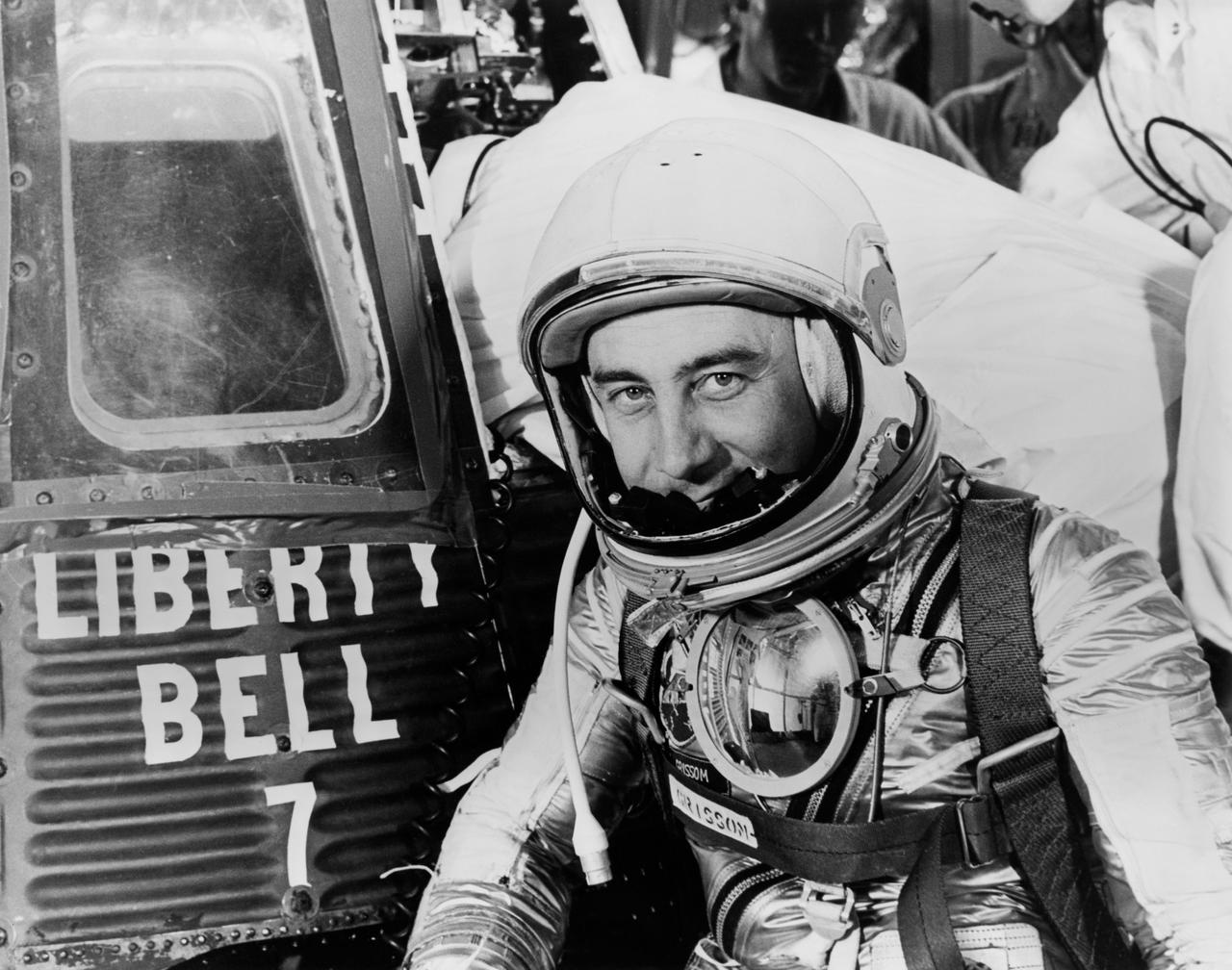
S61-03698 (1961) --- Astronaut Virgil I. (Gus) Grissom, suited up and ready to climb into Liberty Bell 7 spacecraft, sits in front of his capsule for a picture. Behind him technicians work inside the capsule. The Mercury-Redstone 4 (MR-4) mission was scrubbed a few hours later due to unfavorable weather over the launch pad. Photo credit: NASA
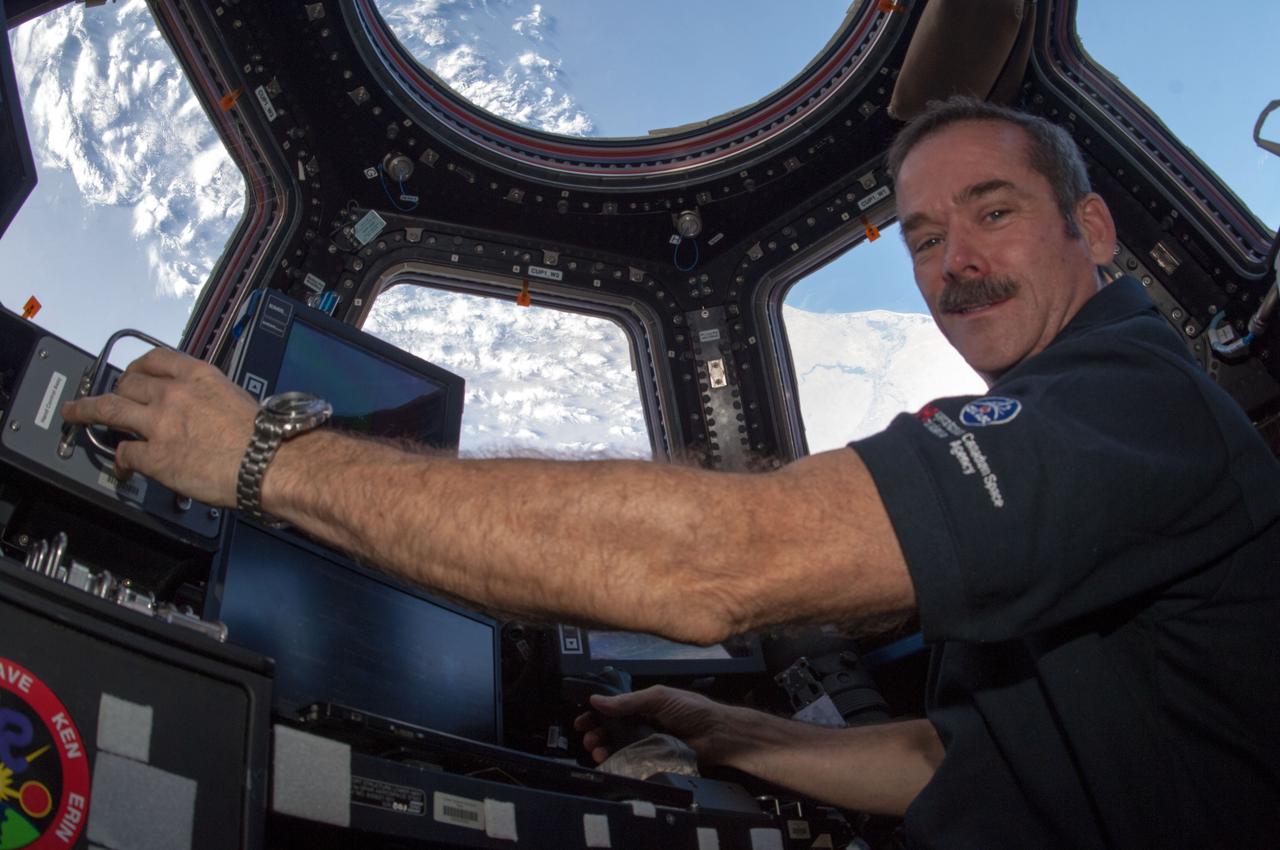
ISS034-E-027317 (10 Jan. 2013) --- In the Cupola aboard the Earth-orbiting International Space Station, Canadian Space Agency astronaut Chris Hadfield, Expedition 34 flight engineer, works the controls at the Robotic workstation to maneuver the Space Station Remote Manipulator System (SSRMS) or CanadArm2 from its parked position to grapple the Mobile Remote Servicer (MRS) Base System (MBS) Power and Data Grapple Fixture 4 (PDGF-4).
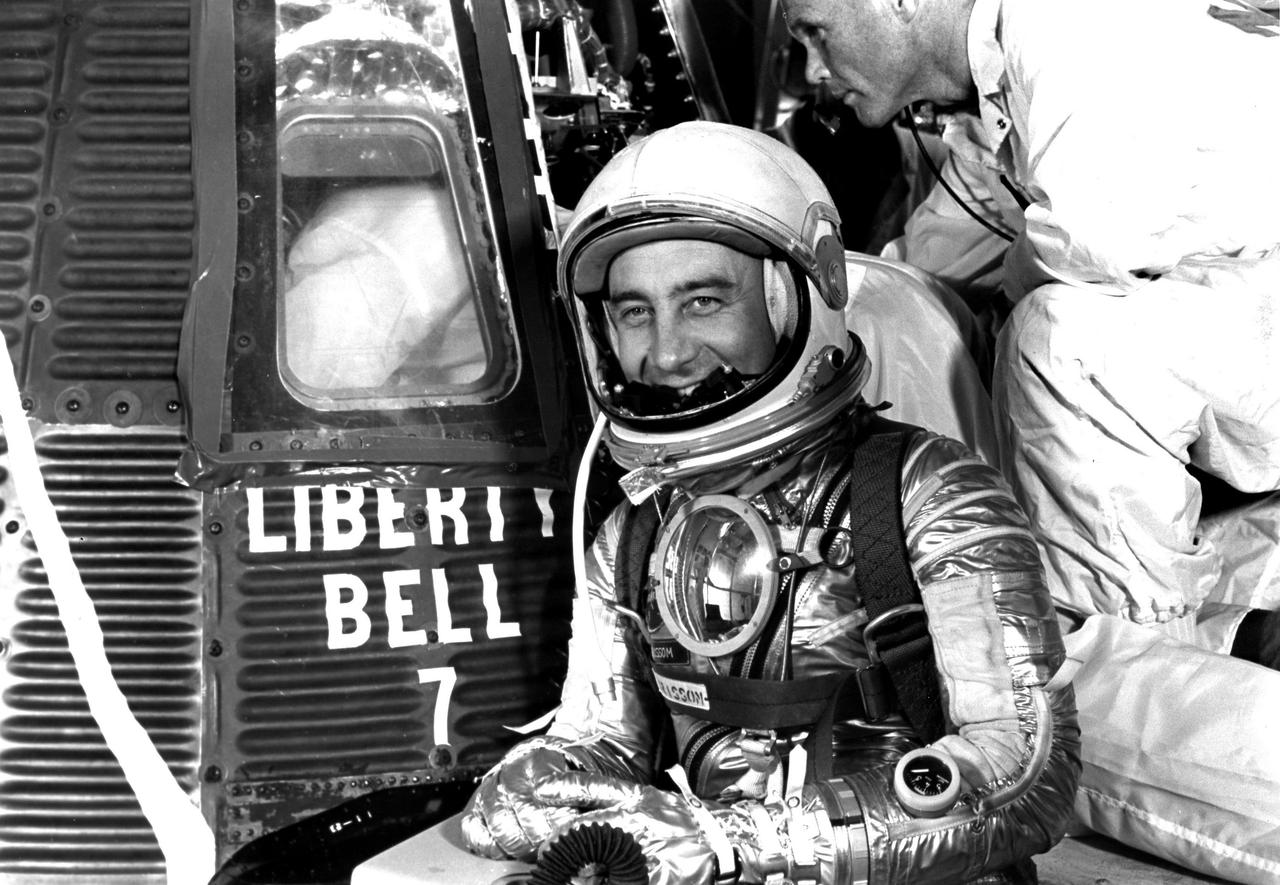
61-MR4-76 (1961) --- Astronaut Virgil I. (Gus) Grissom, suited up and ready to climb into Liberty Bell 7 spacecraft, poses for a picture. Backup pilot John Glenn is in the right corner of the view behind Grissom. The Mercury-Redstone 4 (MR-4) mission was scrubbed a few hours later due to unfavorable weather over the launch pad. Photo credit: NASA
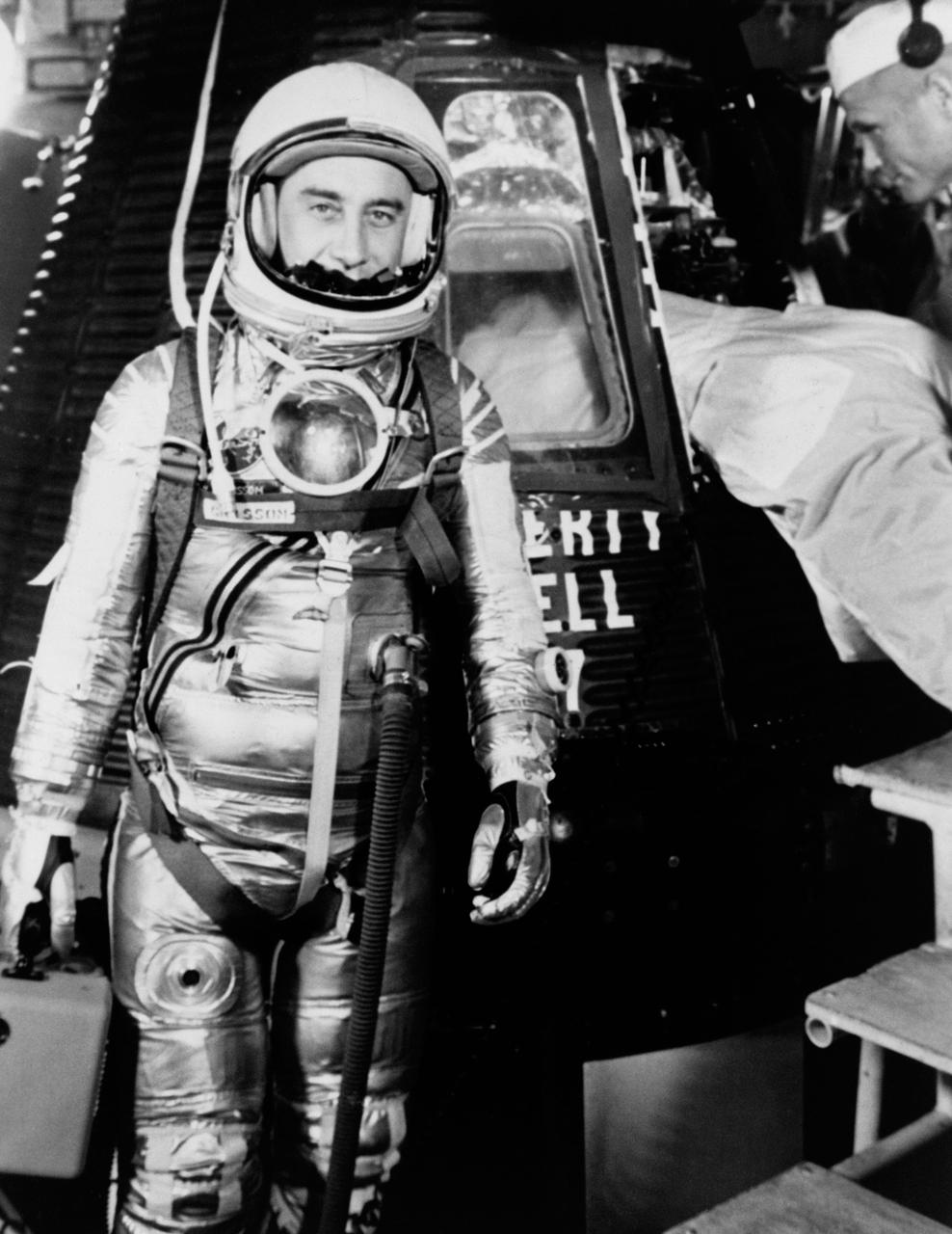
S61-02888 (1961) --- Astronaut Virgil I. (Gus) Grissom, suited up and ready to climb into Liberty Bell 7 spacecraft, stands in front of the capsule for a picture. Backup pilot John Glenn is in the right corner of the view behind Grissom. The Mercury-Redstone 4 (MR-4) mission was scrubbed a few hours later due to unfavorable weather over the launch pad. Photo credit: NASA
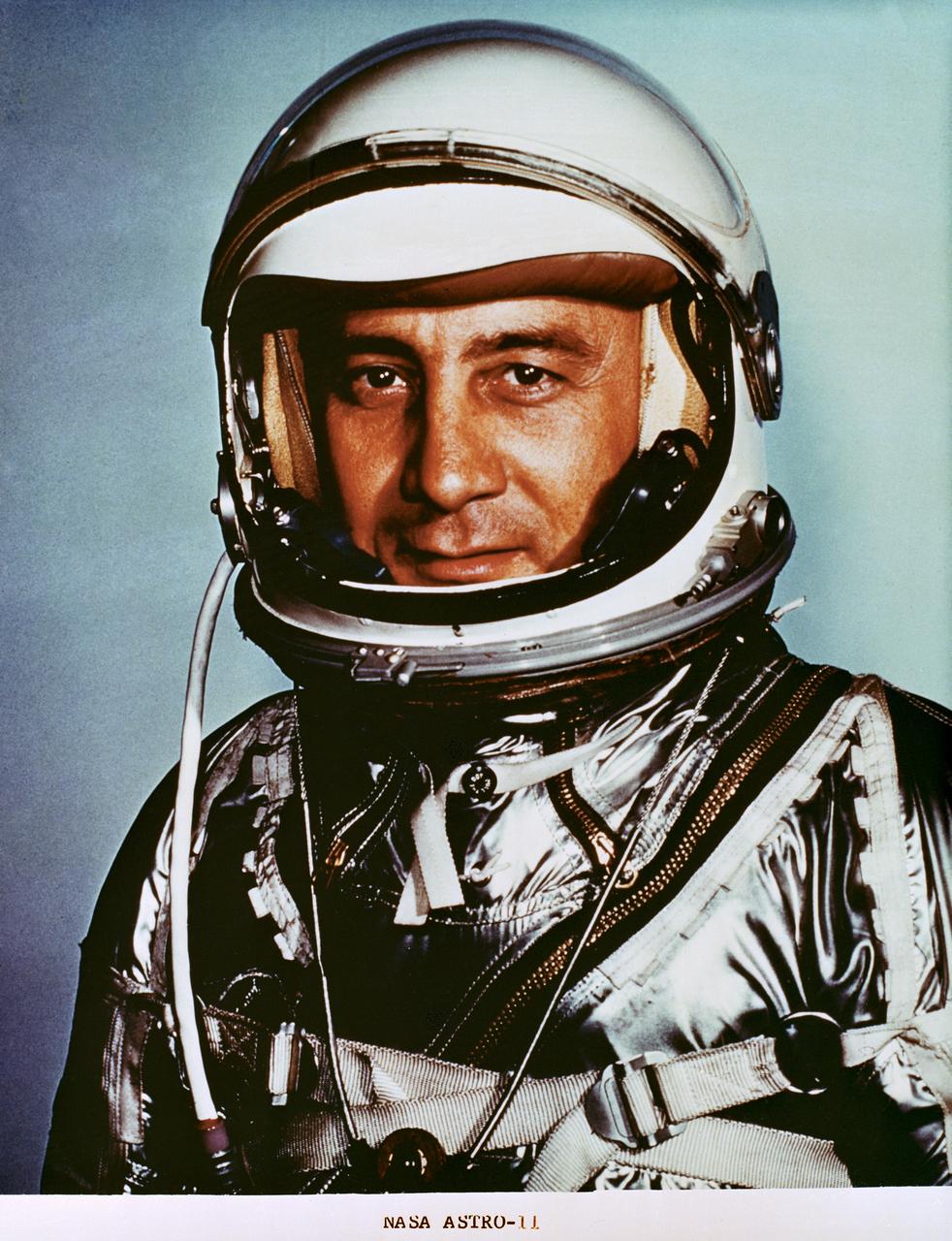
S88-55873 (1961) --- Astronaut Virgil I. (Gus) Grissom, pilot of the Mercury-Redstone 4 (MR-4) spaceflight. (NOTE: Astronaut "Gus" Grissom, one of the original seven astronauts, died Jan. 27, 1967, at NASA?s John F. Kennedy Space Center (KSC), Cape Canaveral Florida, in the Apollo 1 spacecraft fire.) Photo credit: NASA
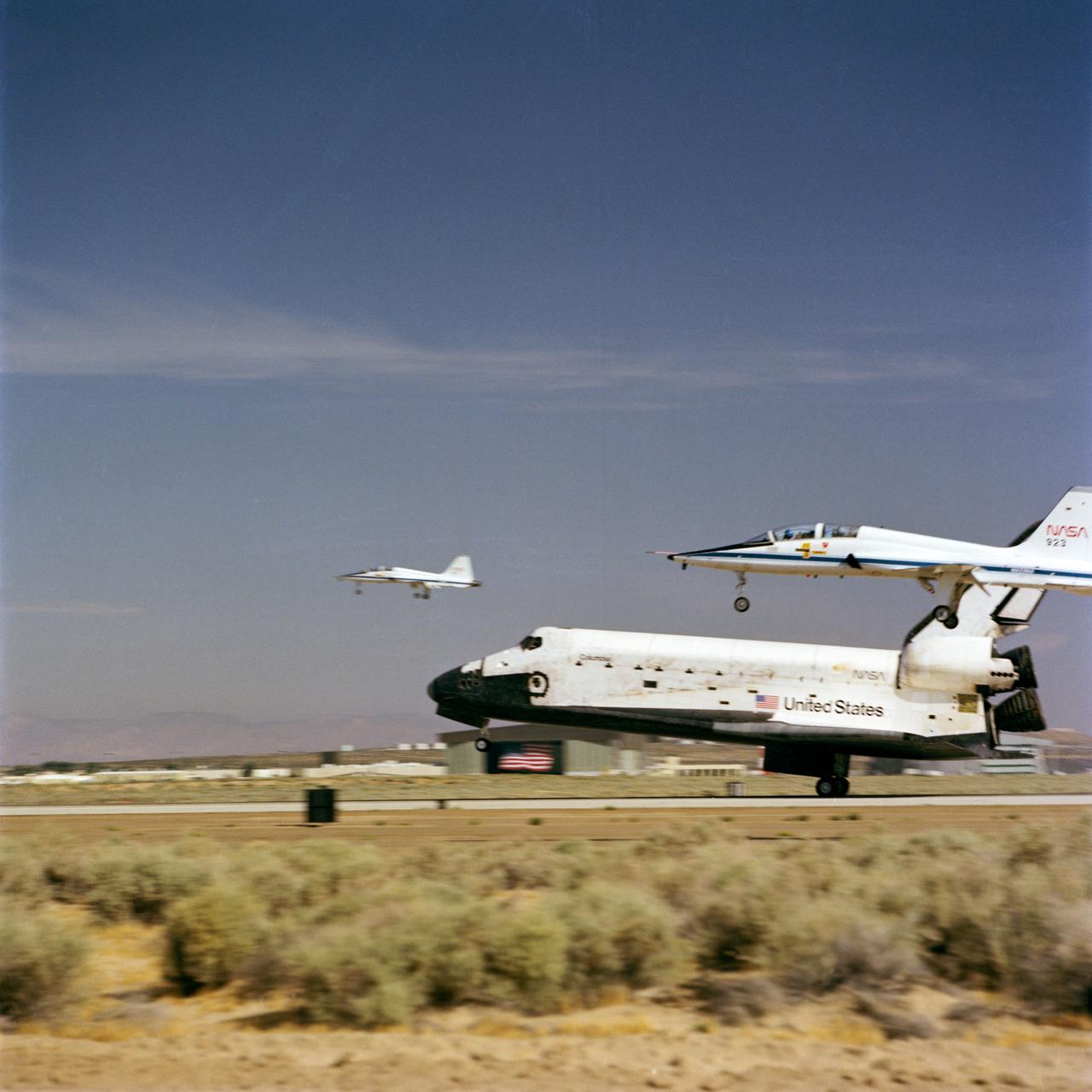
Views of the Columbia landing at EAFB ending the STS-4 Mission on 07/04/1982; of President and Mrs. Reagan greeting the crew out on the Lake bed Runway; and, the view of Roy Rogers with Astronauts Jerry Ross and Guy Gardner. 1. President Ronald Reagan & wife Nancy 2. Roy Rogers 3. Astronaut Jerry L. Ross 4. Astronaut Guy S. Gardner Edwards AFB, CA
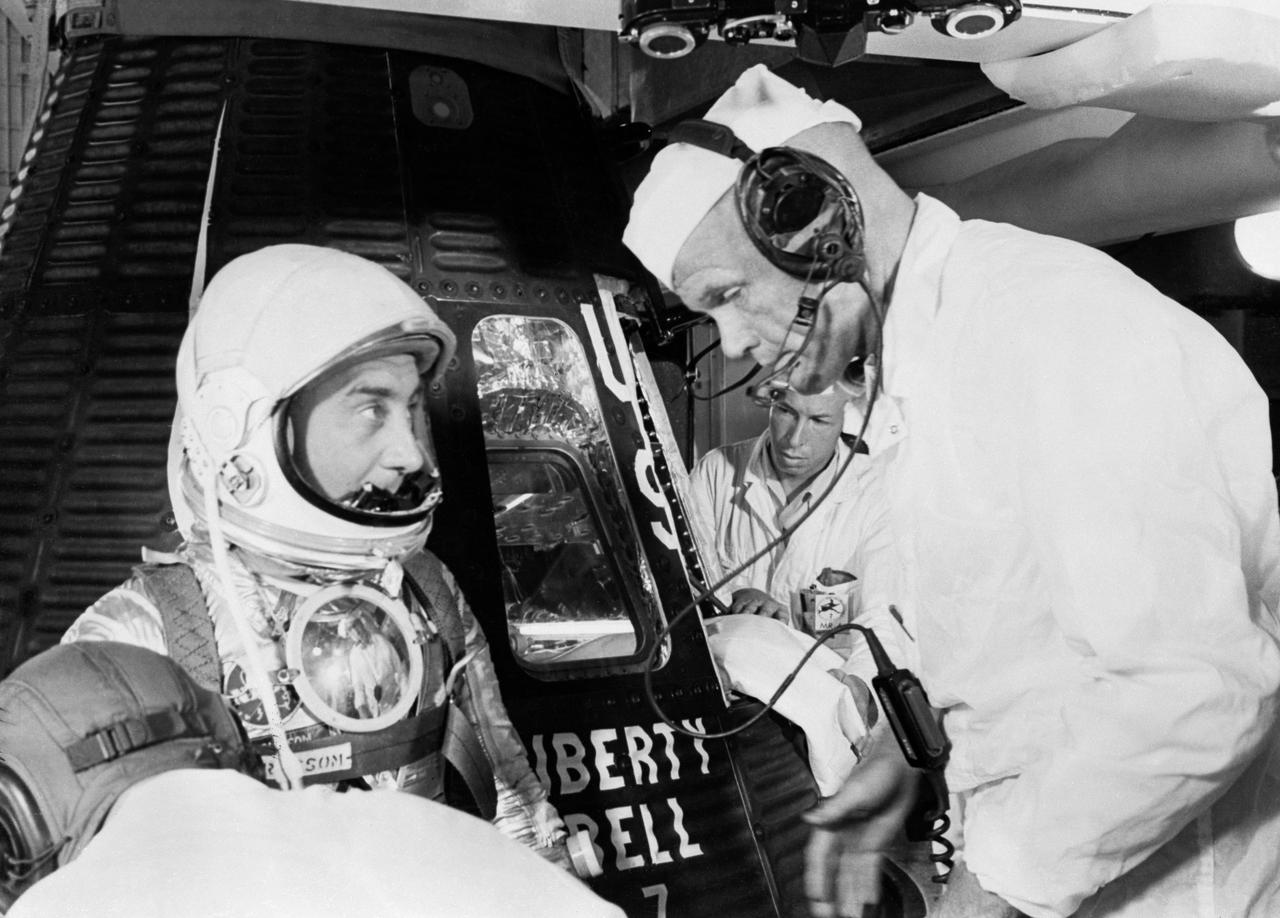
S61-02882 (1961) --- Astronaut Virgil I. (Gus) Grissom, suited up and ready to climb into Liberty Bell 7 spacecraft, talks with backup pilot John H. Glenn prior to insertion. The Mercury-Redstone 4 (MR-4) mission was scrubbed a few hours later due to unfavorable weather over the launch pad. Photo credit: NASA
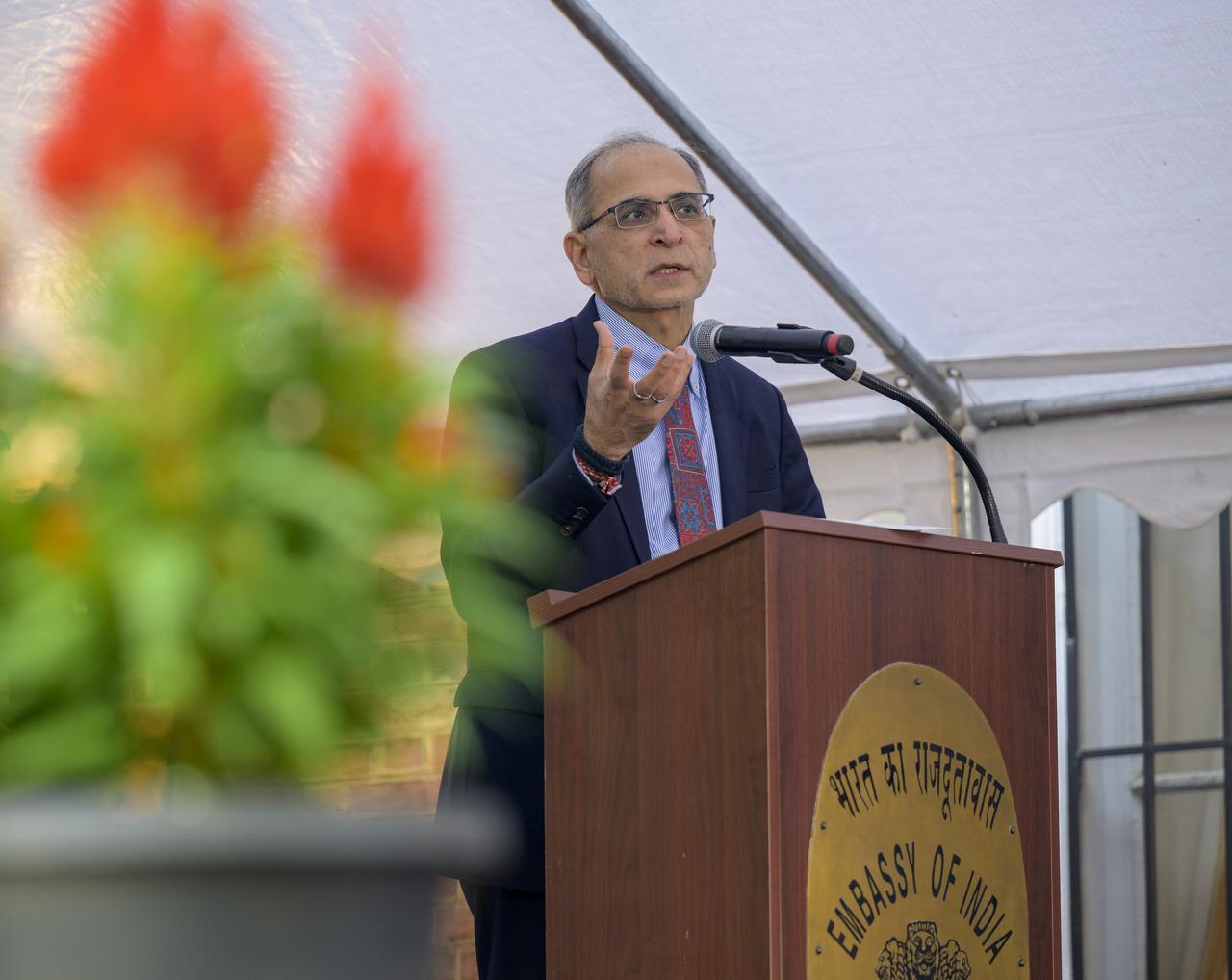
Ambassador of India to the United States H.E. Mr. Vinay Kwatra gives remarks during an event featuring Expedition 72 NASA astronauts Butch WIlmore, Nick Hague, and Suni Williams, and Axiom Mission 4 astronaut Shubhanshu Shukla, Monday, Sept. 15, 2025, at residence of the Ambassador in Washington. Williams, Hague and Wilmore served as part of Expedition 72 onboard the International Space Station. Photo Credit: (NASA/Bill Ingalls)
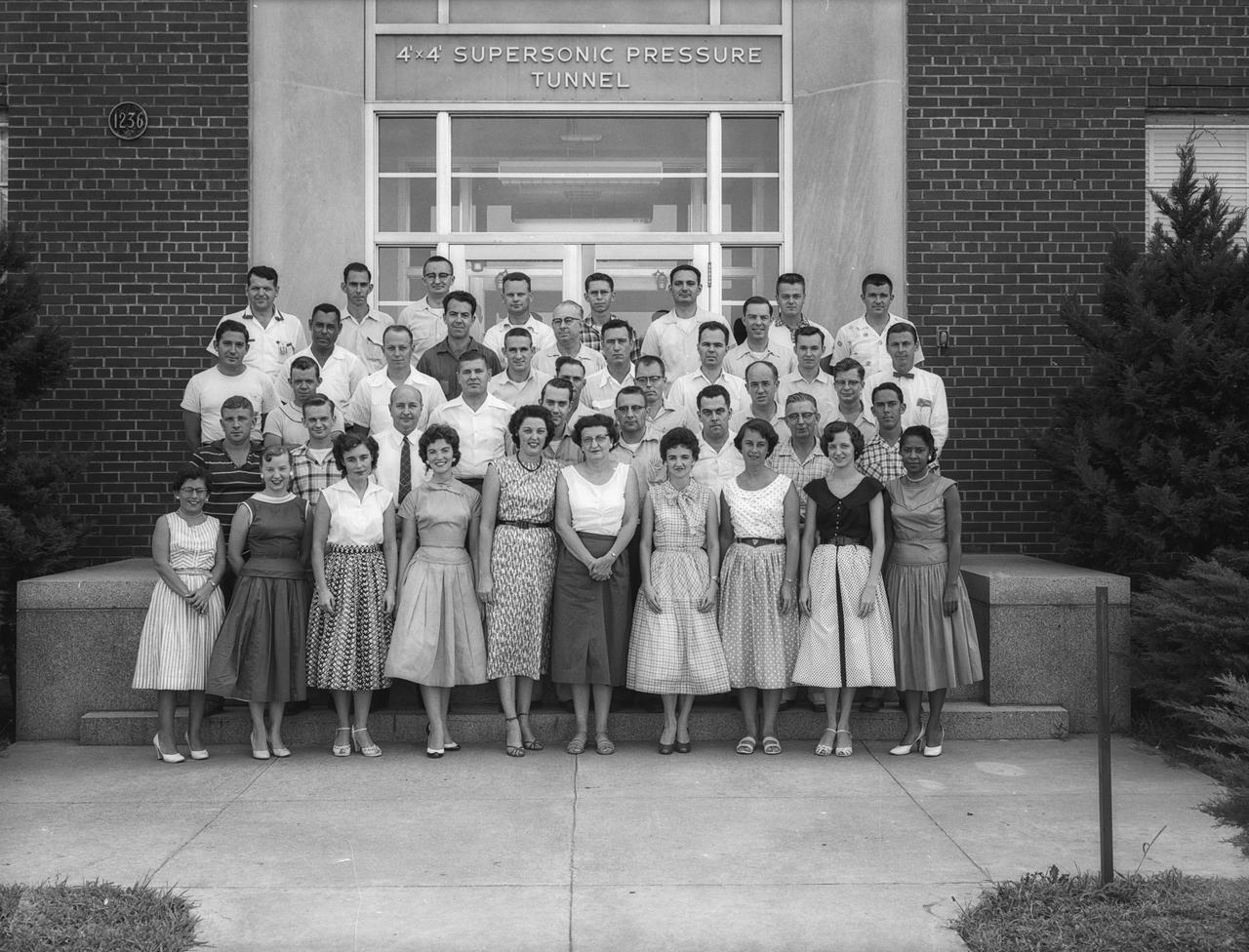
This photograph was taken August 15, 1956. Mary Jackson first person in the front row right side. Mary Jackson began at Langley in 1951 as a computer. She was later assigned to work at the 4-Foot by 4-Foot Supersonic Pressure Tunnel where she worked with Kazimierz "Kaz" Czarnecki, who encouraged her to become an engineer. To attend the university extension engineering classes held at the then all-white Hampton High School, Jackson was required to petition the courts, which she did successfully. The 4’ x 4’ Supersonic Pressure Tunnel was the NACA’s first supersonic wind tunnel. At the time of the photo, Mary Jackson was still a human computer, but was participating in the hands-on experimental work. Mrs. Jackson had begun her studies to be an engineer in the Spring of the same year the photo was taken. She obtained a degree in aerospace engineering in 1958. Photo published in "A Century at Langley" by Joseph R. Chambers page 74.
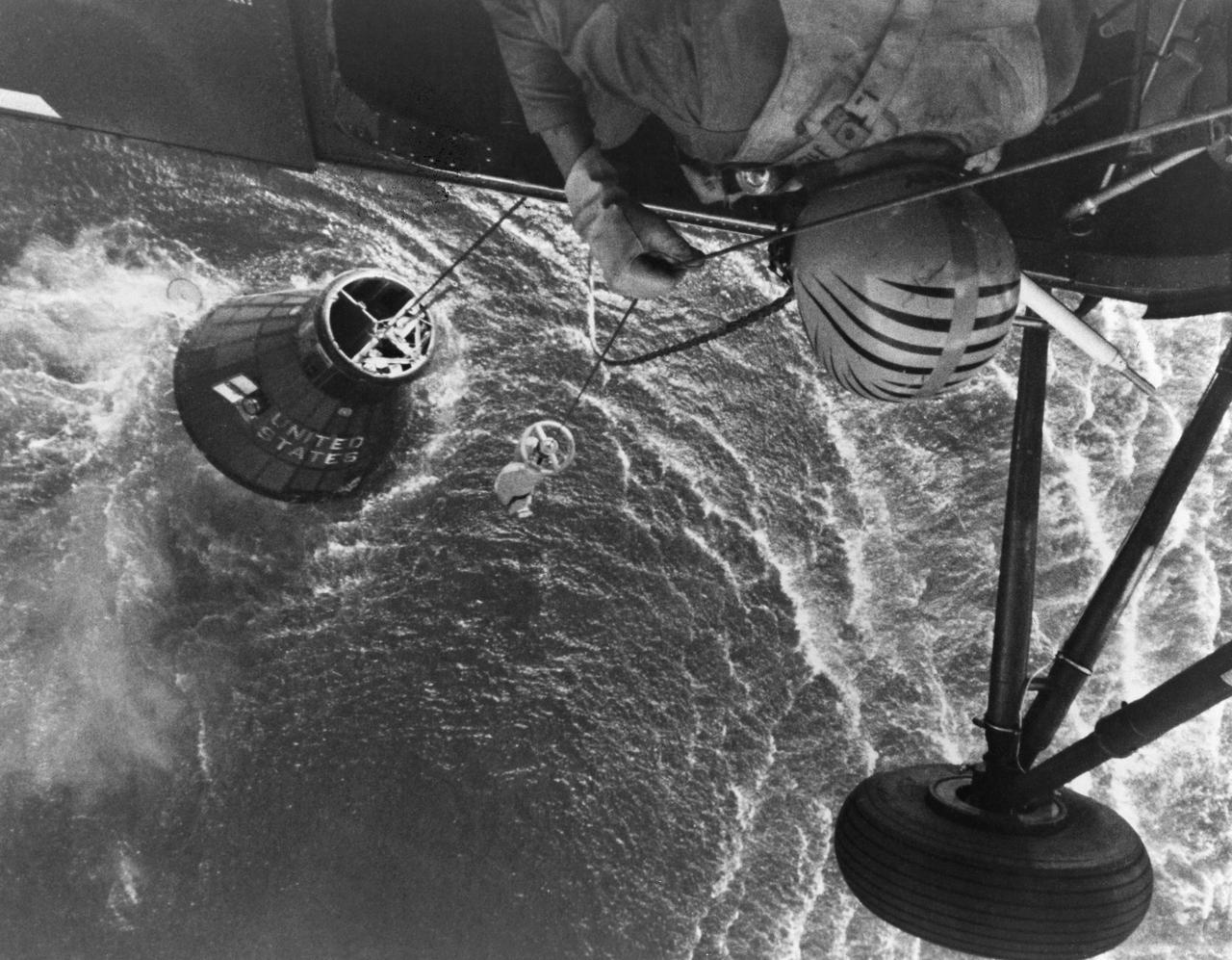
S61-02824 (21 July 1961) --- A U.S. Marine Corps helicopter attempts an unsuccessful recovery of the Mercury-Redstone 4 "Liberty Bell 7" spacecraft. The spacecraft hatch opened prematurely, and astronaut Virgil I. Grissom, pilot, escaped into the water. The helicopter hooked onto the spacecraft but could not retrieve it. Grissom was recovered by another helicopter and flown to the recovery ship, USS Randolph. The Mercury spacecraft sank to the bottom of the ocean. Photo credit: NASA
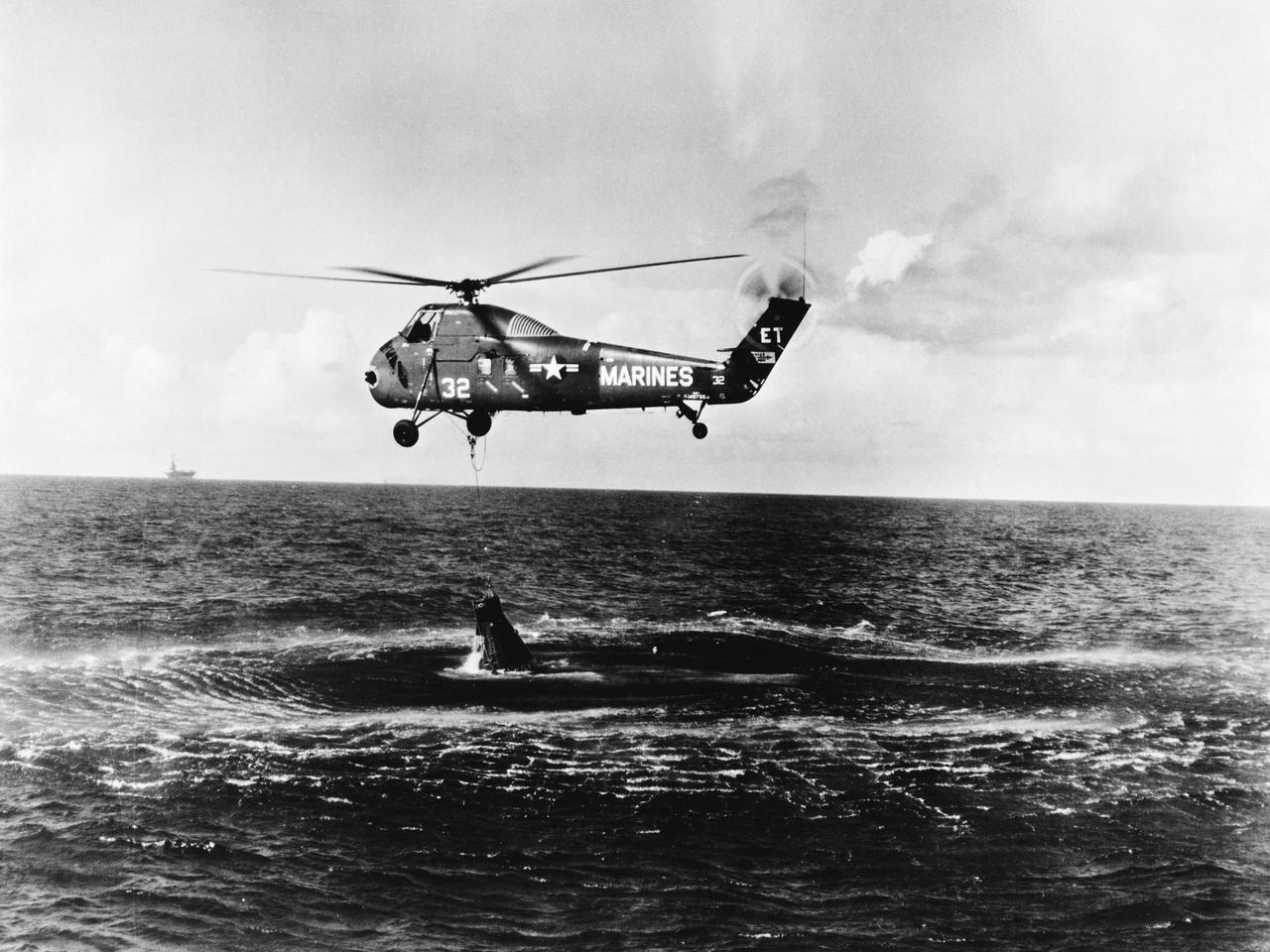
S61-02826 (21 July 1961) --- A U.S. Marine Corps helicopter attempts an unsuccessful recovery of the Mercury-Redstone 4 "Liberty Bell 7" spacecraft. The spacecraft hatch opened prematurely, and astronaut Virgil I. Grissom, pilot, escaped into the water. The helicopter hooked onto the spacecraft but could not retrieve it. Grissom was recovered by another helicopter and flown to the recovery ship, USS Randolph. The Mercury spacecraft sank to the bottom of the ocean. Photo credit: NASA
/61-mr4-60(s)~medium.jpg)
KENNEDY SPACE CENTER, FLA. -- AWAITING ORDERS to proceed to the launching site for Project Mercury's second attempt to launch a man into space, Astronaut Virgil I. 'Gus' Grissom relaxes in a contour chair in the Personal Equipment Room Hangar 'S,' Cape Canaveral, Fla. A parabolic plexiglas mirror on his chest reflects the faces of two fellow Mercury pilots: Walter M. Schirra (left) and M. Scott Carpenter. The mirror, which was not included in the May 5 Shepard flight, will be used to reflect the instrument panel, bringing it into view of the pilot observer camera. MR-4, known as Liberty Bell 7, has been rescheduled for Friday, July 21. (NASA Photo
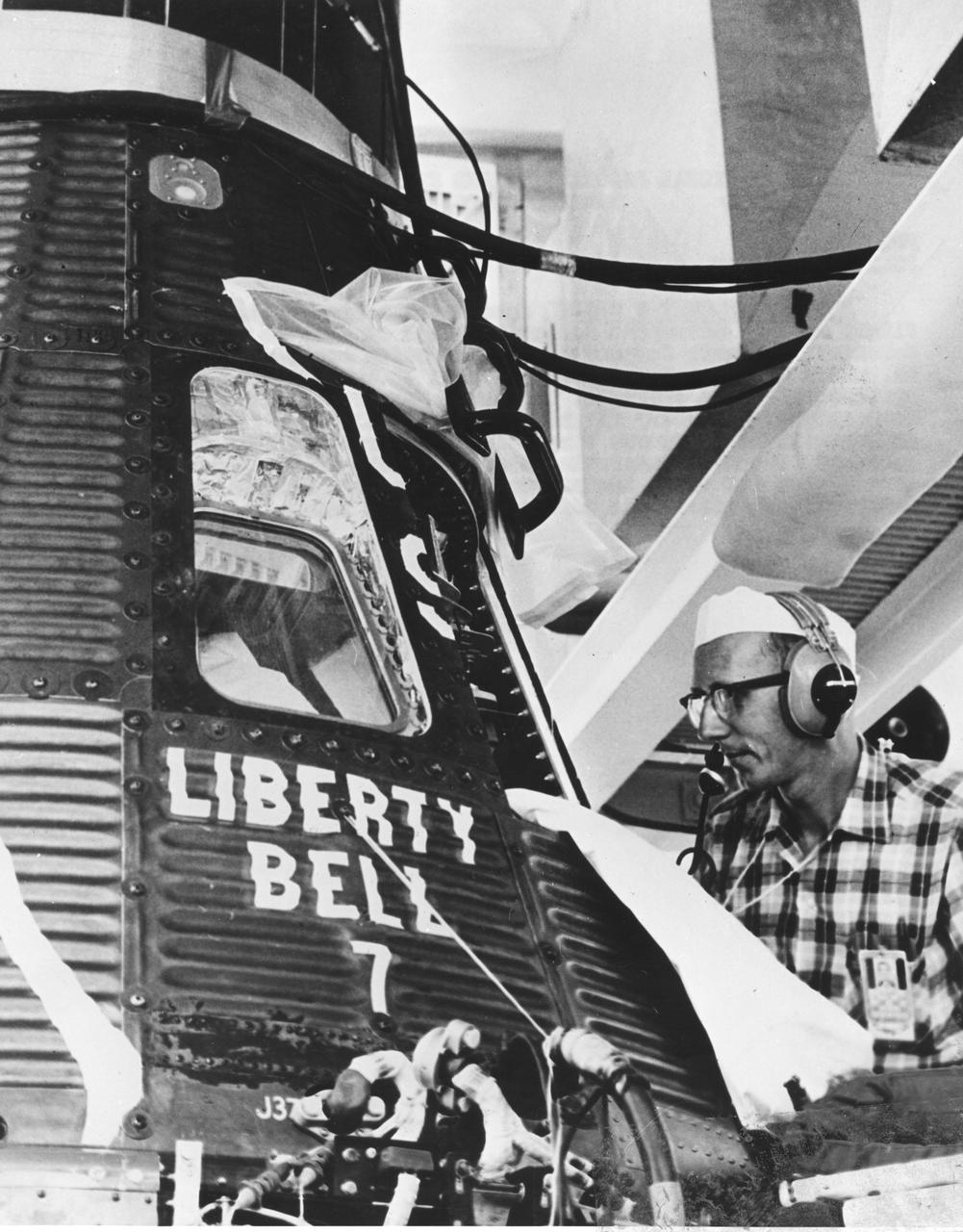
KENNEDY SPACE CENTER, FLA. -- PROJECT MERCURY'S SECOND suborbital astronaut training flight will be attempted during the week of July 16 with McDonnell Aircraft Corporation's production spacecraft number 11, which has been named 'Liberty Bell 7.' The number seven stresses the team effort of the seven Mercury pilots necessary for conducting Mercury flights. Mission pilot for the MR-4 launch will be astronaut Virgil I. 'Gus' Grissom. His spacecraft is seen here undergoing systems checks in the National Aeronautics and Space Administration's Mercury Hangar at Cape Canaveral, Florida, weeks before the planned launch

On June 4, 1974, 5 years after the successful Apollo 11 lunar landing mission, commander Neil Armstrong (right) presented a plaque to U.S. President Richard Milhous Nixon (left) on behalf of all people who had taken part in the space program. In making the presentation, Armstrong said “Mr. President, you have proclaimed this week to be United States Space week in conjunction with the fifth anniversary of our first successful landing on the Moon. It is my privilege to represent my colleagues, the crewmen of projects Mercury, Gemini, Apollo, and Skylab, and the men and women of NASA, and the hundreds of thousands of Americans from across the land who contributed so mightily to the success of our efforts in space in presenting this plaque which bears the names of each individual who has had the privilege of representing this country” in a space flight. The presentation was made at the California white house in San Clemente.