
Photograph taken on February 5, 1975. Guests attending a retirement party for Vernon Courtney, of the MSD Communications Section. Mary Jackson standing on left with human computer Christine B. Richie next to her, another from the west computers group mentioned in the book "Hidden Figures" by author Margot Lee Shetterly. Mary Jackson from NASA Langley was NASA' s first African-American female engineer, and subsequent career supporting the hiring and promotion of other deserving female and minority employees.
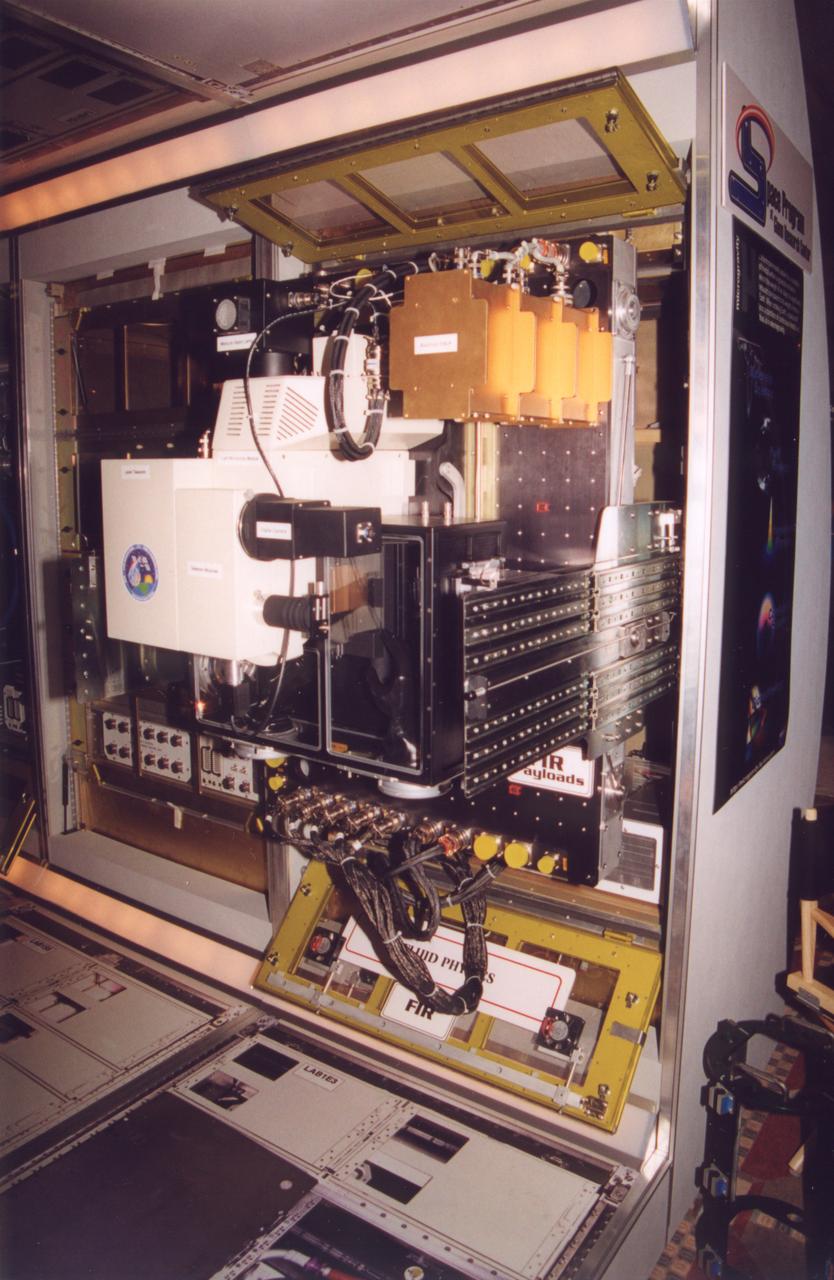
The optical bench for the Fluids Integrated Rack section of the Fluids and Combustion Facility (FCF) is shown extracted for servicing. The FCF will be installed, in phases, in the Destiny, the U.S. Laboratory Module of the International Space Station (ISS), and will accommodate multiple users for a range of investigations. This is an engineering mockup; the flight hardware is subject to change as designs are refined. The FCF is being developed by the Microgravity Science Division (MSD) at the NASA Glenn Research Center. (Photo credit: NASA/Marshall Space Flight Center)
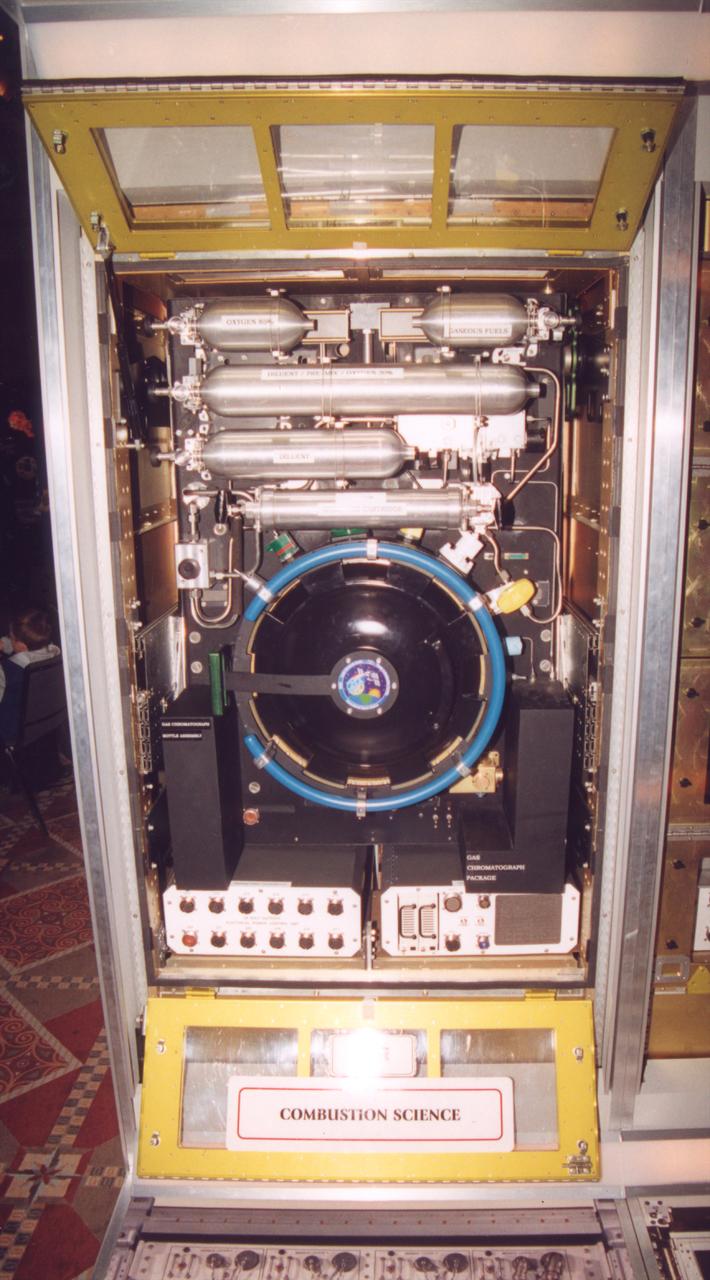
The combustion chamber for the Combustion Integrated Rack section of the Fluids and Combustion Facility (FCF) is shown in its operational configuration. The FCF will be installed, in phases, in the Destiny, the U.S. Laboratory Module of the International Space Station (ISS), and will accommodate multiple users for a range of investigations. This is an engineering mockup; the flight hardware is subject to change as designs are refined. The FCF is being developed by the Microgravity Science Division (MSD) at the NASA Glenn Research Center. (Photo credit: NASA/Marshall Space Flight Center)
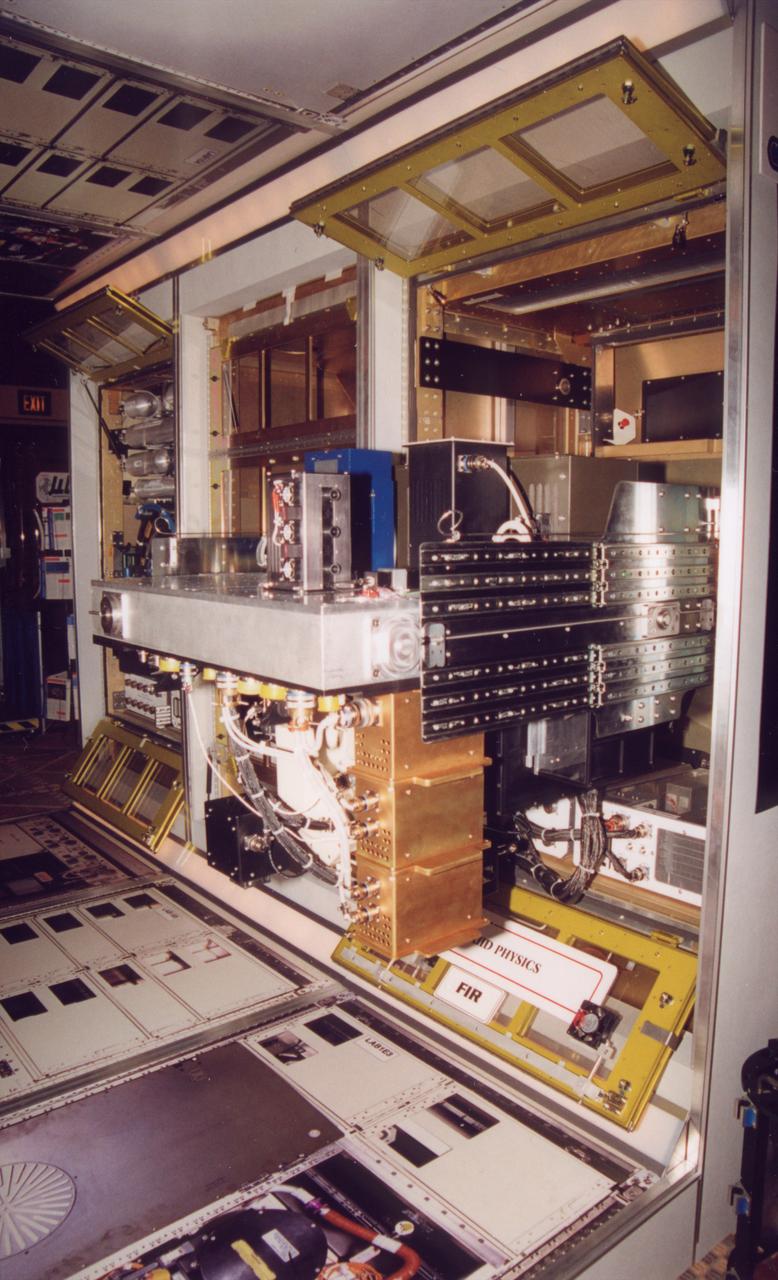
The optical bench for the Fluids Integrated Rack section of the Fluids and Combustion Facility (FCF) is shown extracted for servicing and with the optical bench rotated 90 degrees to access the rear elements. The FCF will be installed, in phases, in the Destiny, the U.S. Laboratory Module of the International Space Station (ISS), and will accommodate multiple users for a range of investigations. This is an engineering mockup; the flight hardware is subject to change as designs are refined. The FCF is being developed by the Microgravity Science Division (MSD) at the NASA Glenn Research Center. (Photo credit: NASA/Marshall Space Flight Center)
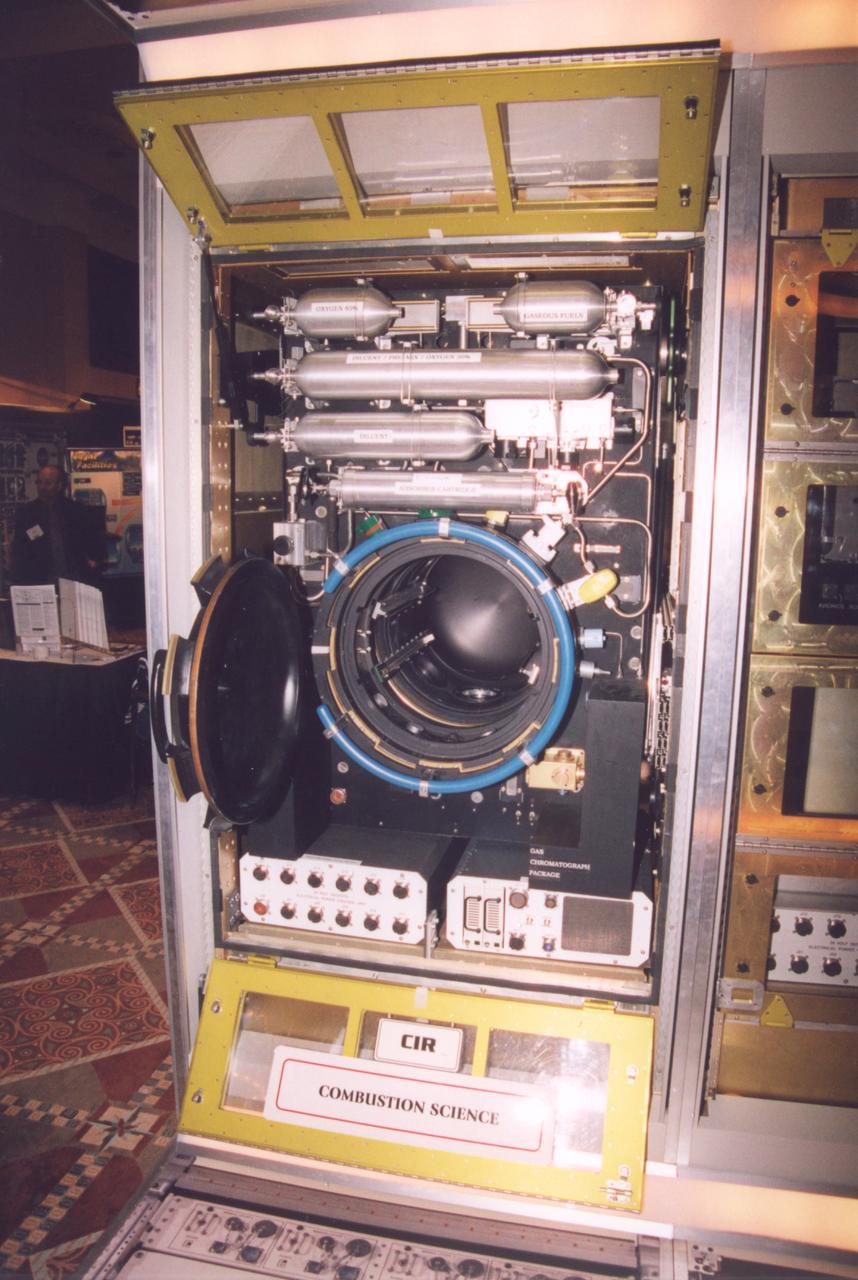
The combustion chamber for the Combustion Integrated Rack section of the Fluids and Combustion Facility (FCF) is shown opened for installation of burn specimens. The FCF will be installed, in phases, in the Destiny, the U.S. Laboratory Module of the International Space Station (ISS), and will accommodate multiple users for a range of investigations. This is an engineering mockup; the flight hardware is subject to change as designs are refined. The FCF is being developed by the Microgravity Science Division (MSD) at the NASA Glenn Research Center. (Photo credit: NASA/Marshall Space Flight Center)
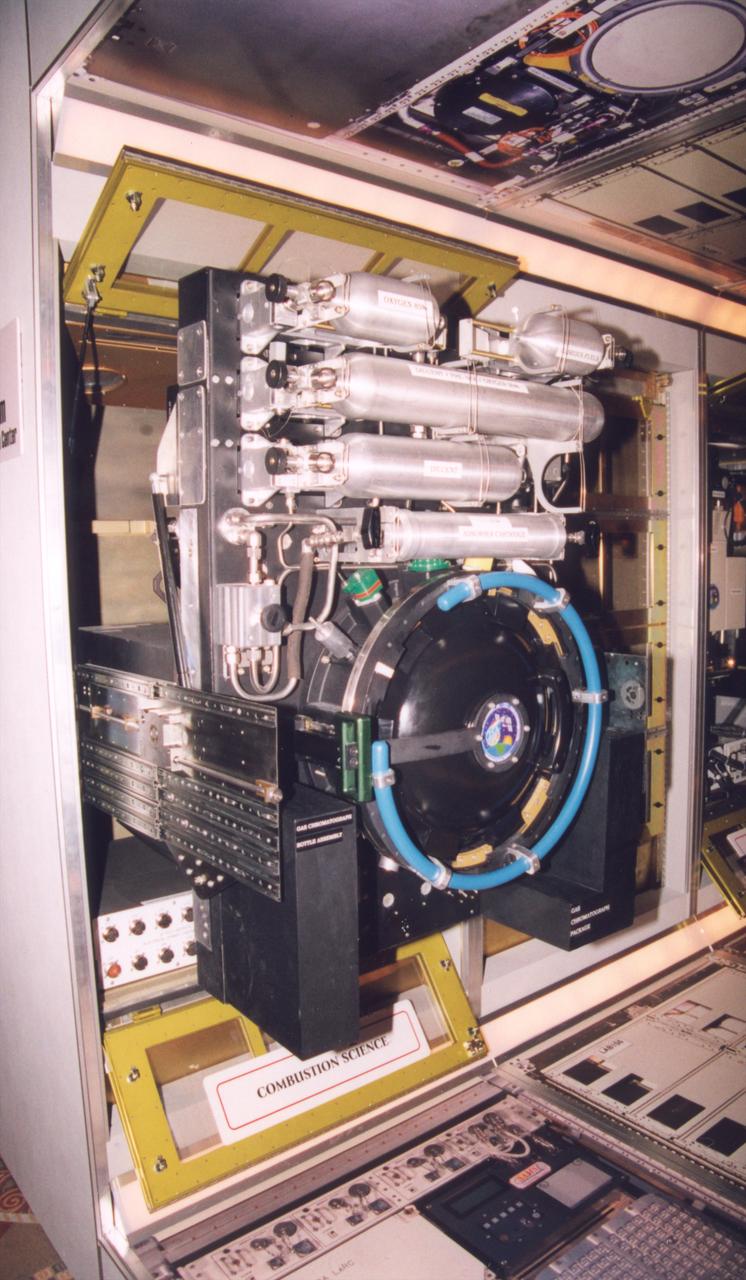
The combustion chamber for the Combustion Integrated Rack section of the Fluids and Combustion Facility (FCF) is shown extracted for servicing. The FCF will be installed, in phases, in the Destiny, the U.S. Laboratory Module of the International Space Station (ISS), and will accommodate multiple users for a range of investigations. This is an engineering mockup; the flight hardware is subject to change as designs are refined. The FCF is being developed by the Microgravity Science Division (MSD) at the NASA Glenn Research Center. (Photo credit: NASA/Marshall Space Flight Center)

The optical bench for the Fluids Integrated Rack section of the Fluids and Combustion Facility (FCF) is shown extracted for servicing and with the optical bench rotated 90 degrees for access to the rear elements. The FCF will be installed, in phases, in the Destiny, the U.S. Laboratory Module of the International Space Station (ISS), and will accommodate multiple users for a range of investigations. This is an engineering mockup; the flight hardware is subject to change as designs are refined. The FCF is being developed by the Microgravity Science Division (MSD) at the NASA Glenn Research Center. (Photo credit: NASA/Marshall Space Flight Center)
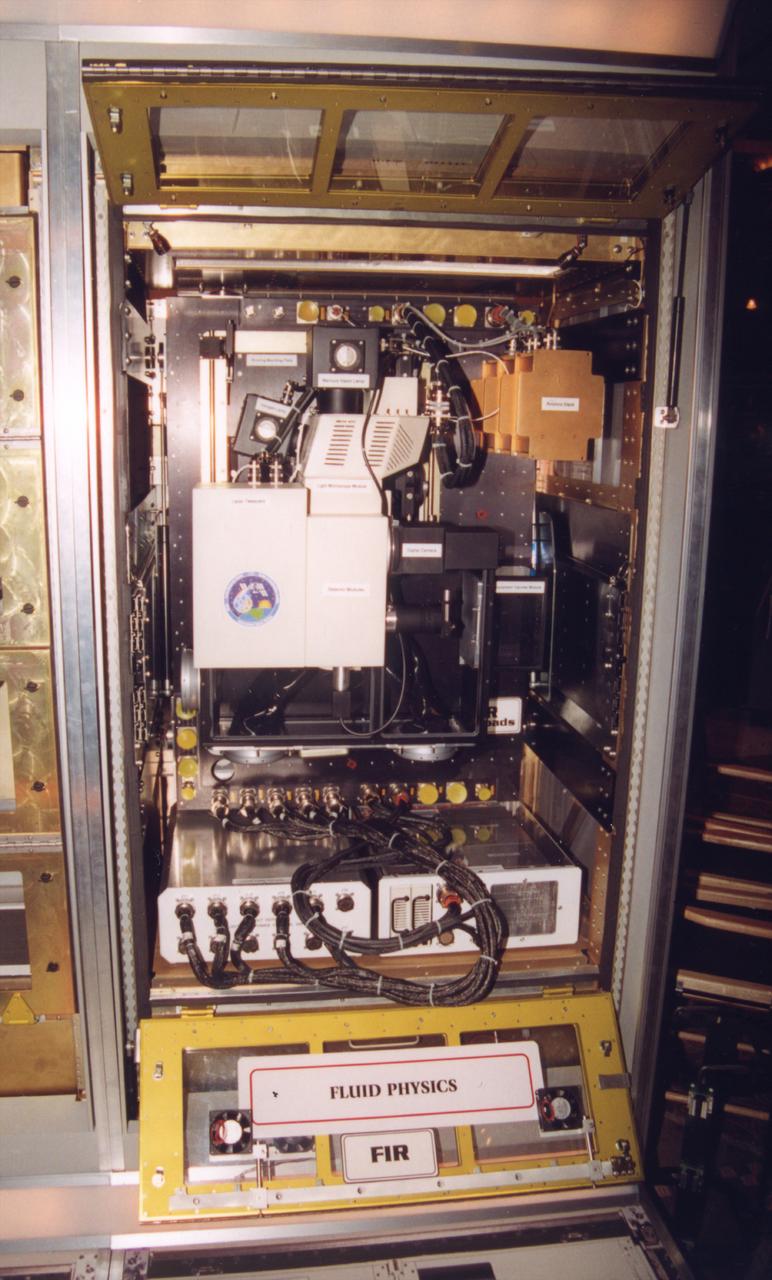
The optical bench for the Fluid Integrated Rack section of the Fluids and Combustion Facility (FCF) is shown in its operational configuration. The FCF will be installed, in phases, in the Destiny, the U.S. Laboratory Module of the International Space Station (ISS), and will accommodate multiple users for a range of investigations. This is an engineering mockup; the flight hardware is subject to change as designs are refined. The FCF is being developed by the Microgravity Science Division (MSD) at the NASA Glenn Research Center. (Photo credit: NASA/Marshall Space Flight Center)
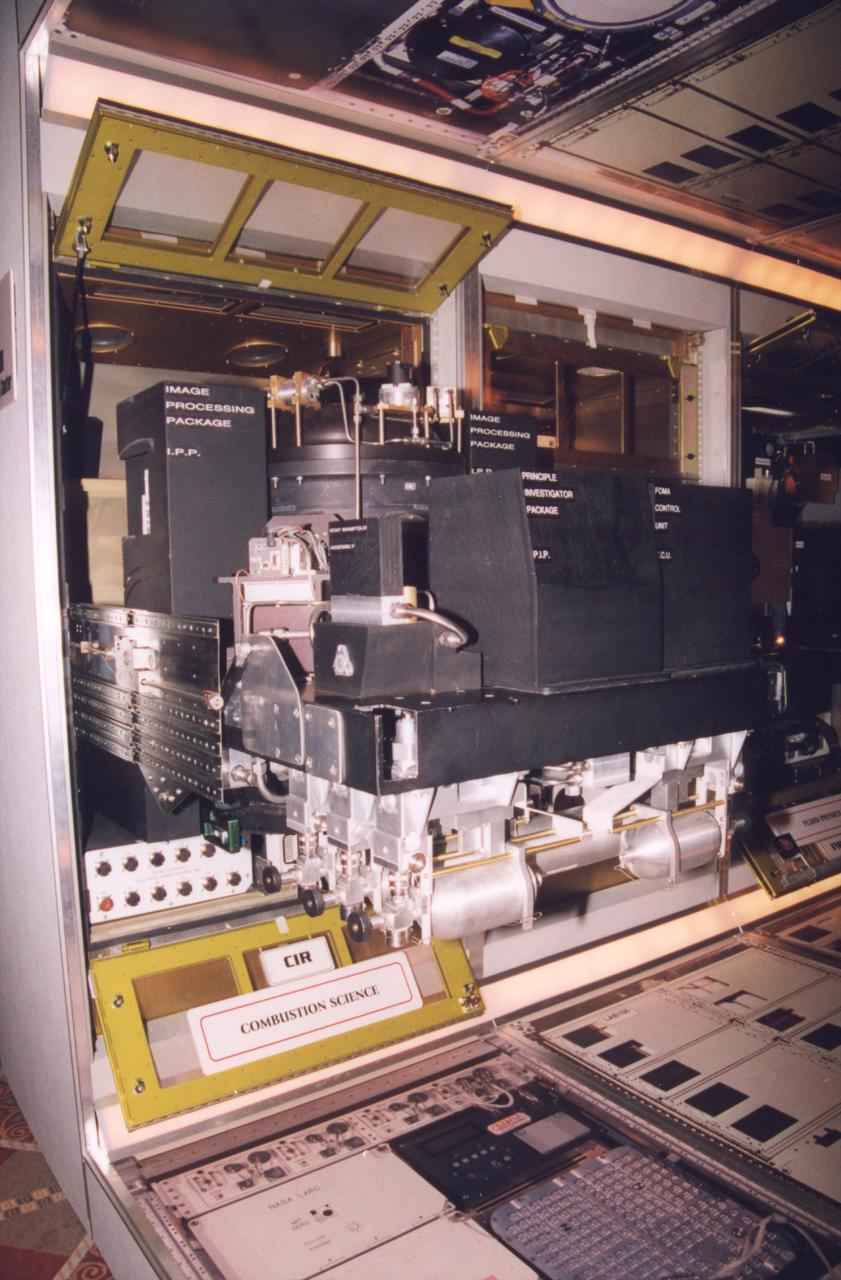
The combustion chamber for the Combustion Integrated Rack section of the Fluids and Combustion Facility (FCF) is shown extracted for servicing and with the optical bench rotated 90 degrees for access to the rear elements. The FCF will be installed, in phases, in the Destiny, the U.S. Laboratory Module of the International Space Station (ISS), and will accommodate multiple users for a range of investigations. This is an engineering mockup; the flight hardware is subject to change as designs are refined. The FCF is being developed by the Microgravity Science Division (MSD) at the NASA Glenn Research Center. (Photo credit: NASA/Marshall Space Flight Center)
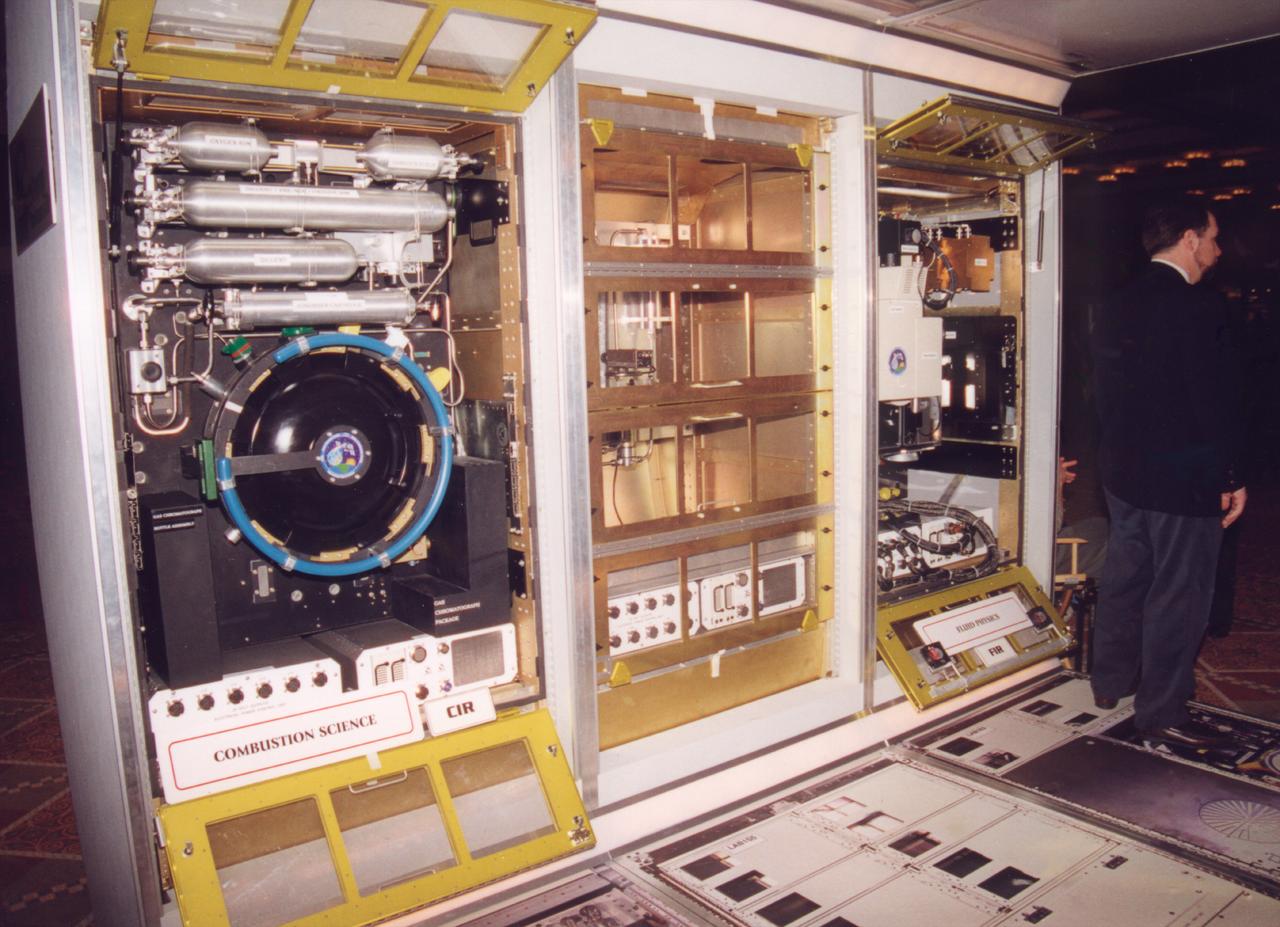
The Fluids and Combustion Facility (FCF) is a modular, multi-user facility to accommodate microgravity science experiments on board Destiny, the U.S. Laboratory Module for the International Space Station (ISS). The FCF will be a permanet facility aboard the ISS, and will be capable of accommodating up to ten science investigations per year. It will support the NASA Science and Technology Research Plans for the International Space Station (ISS) which require sustained systematic research of the effects of reduced gravity in the areas of fluid physics and combustion science. From left to right are the Combustion Integrated Rack, the Shared Rack, and the Fluids Integrated Rack. The FCF is being developed by the Microgravity Science Division (MSD) at the NASA Glenn Research Center. (Photo Credit: NASA/Marshall Space Flight Center)