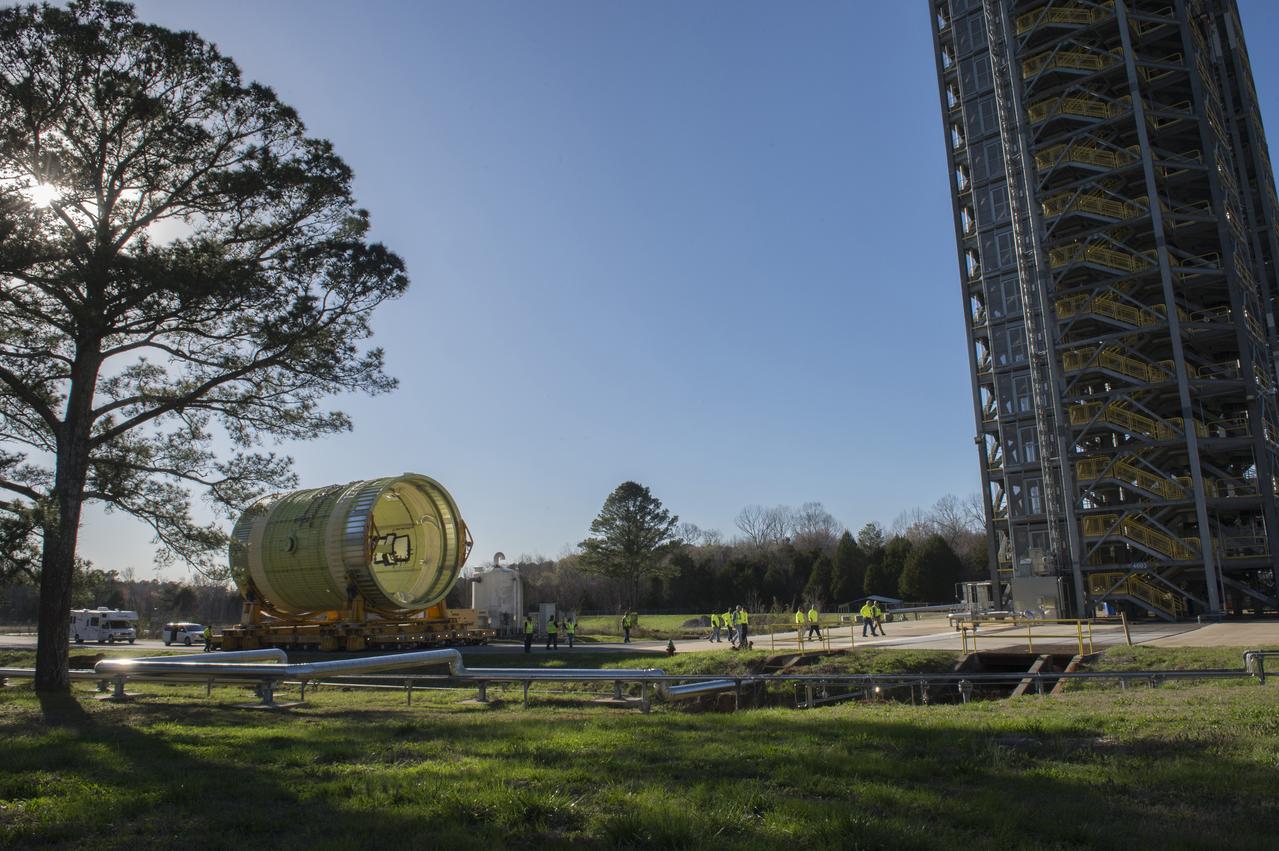
The SLS Stages Intertank Structural Test Assembly (STA) is rolling off the NASA Pegasus Barge at the MSFC Dock enroute to the MSFC 4619 Load Test Annex test facility for qualification testing via MSFC West Test Area. STA approaches Test Stand 4693, SLS LH2 test Stand, on way to Bldg. 4619
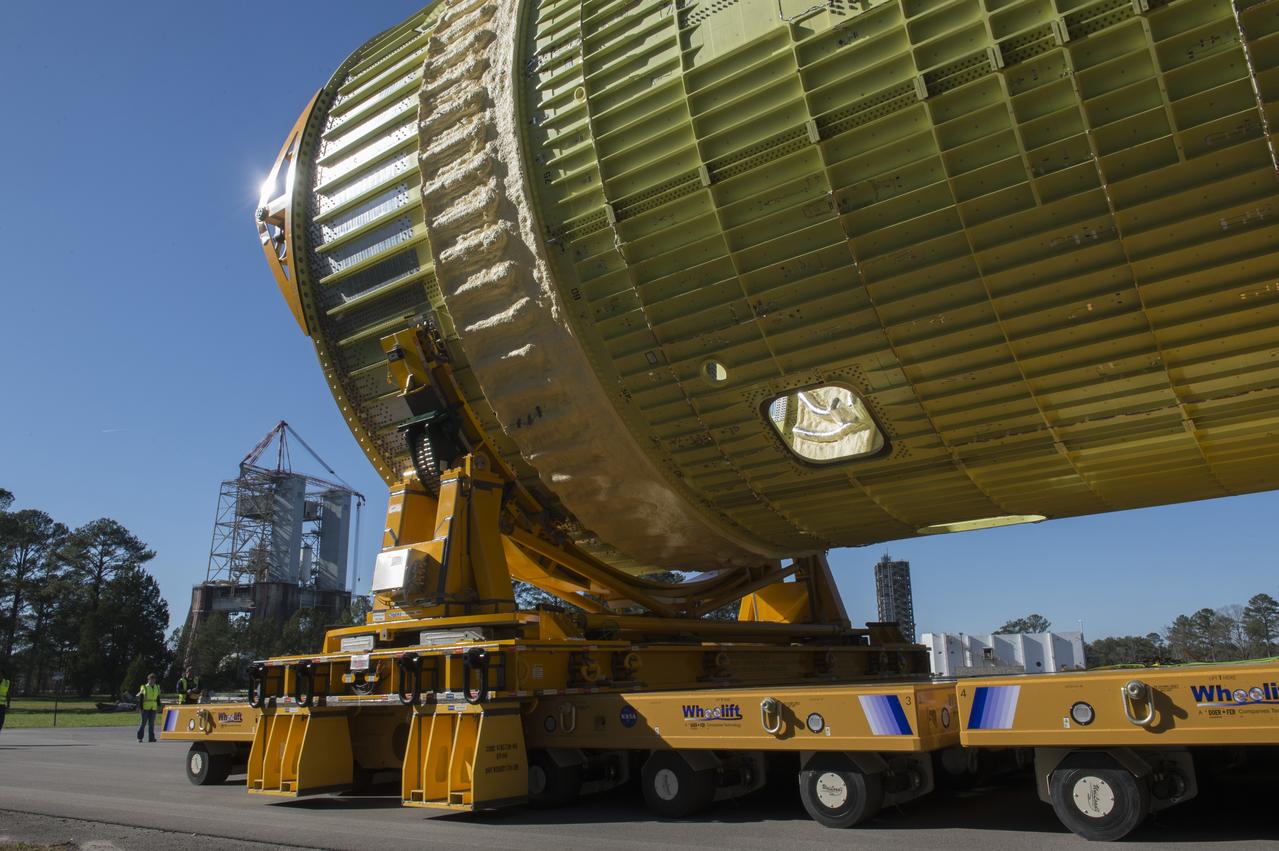
The SLS Stages Intertank Structural Test Assembly (STA) is rolling off the NASA Pegasus Barge at the MSFC Dock enroute to the MSFC 4619 Load Test Annex test facility for qualification testing via MSFC West Test Area. Historic Saturn 1-C test stand on far left, blockhouse 4670 on far right, SLS LH2 test stand, 4693, in center.
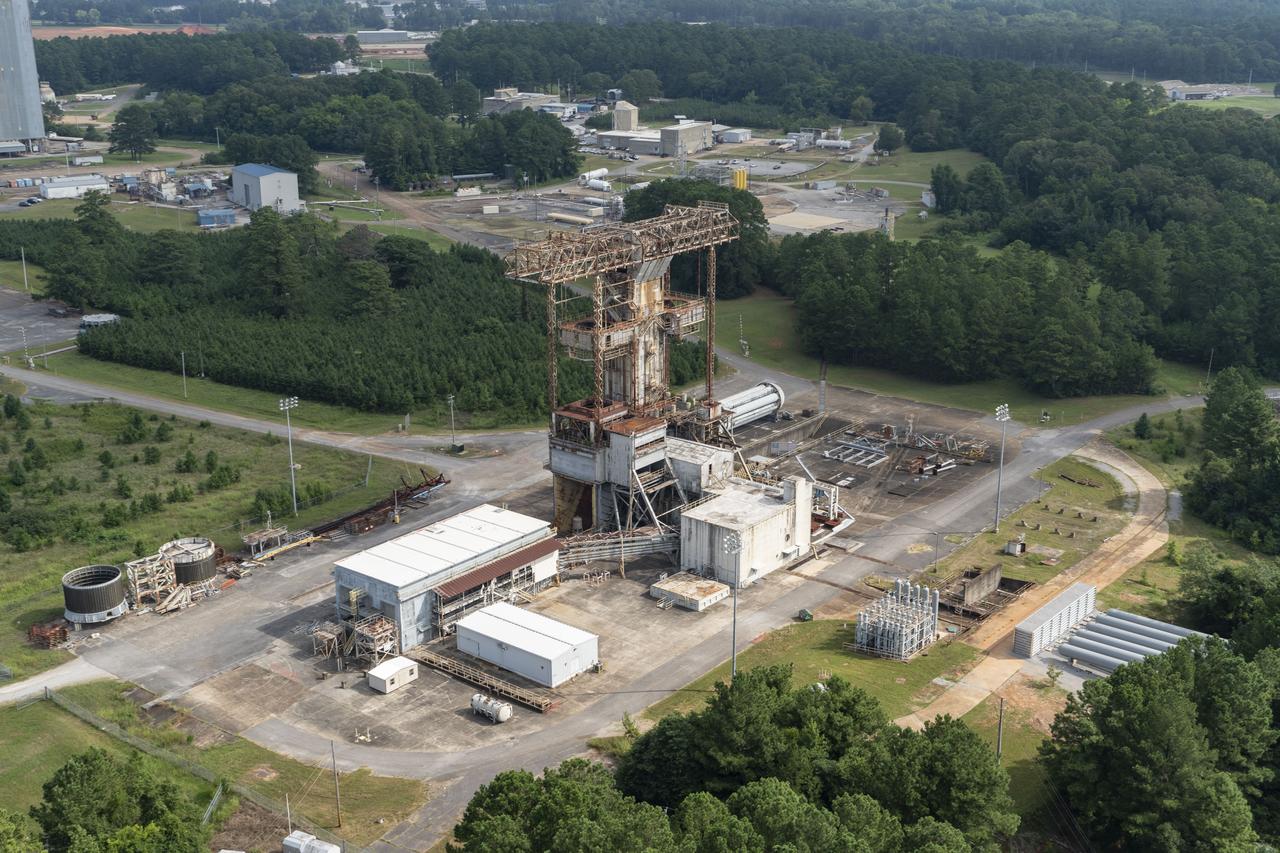
Aerial photograph of the MSFC West Test area with the T-Stand in the foreground
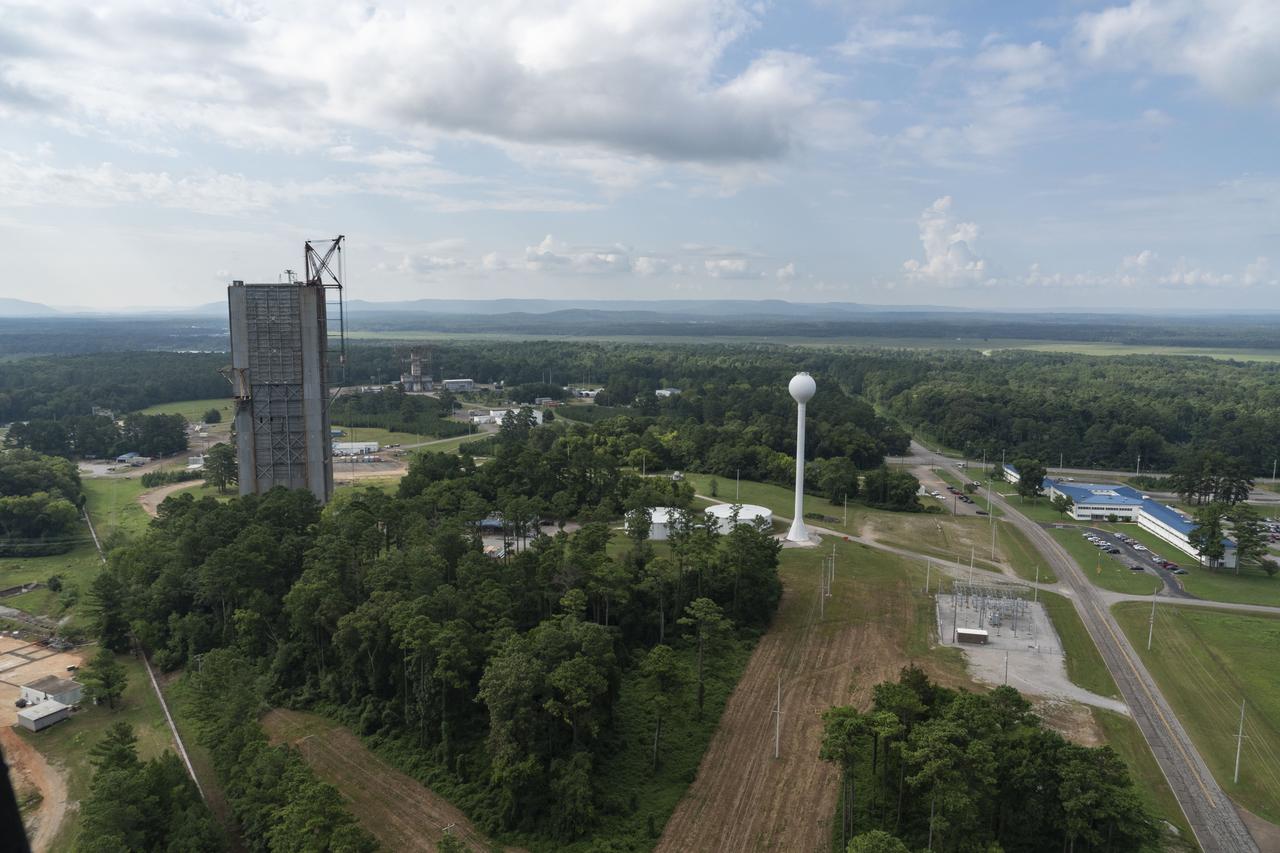
Aerial photograph of the MSFC West Test Area with building 4666 on the right
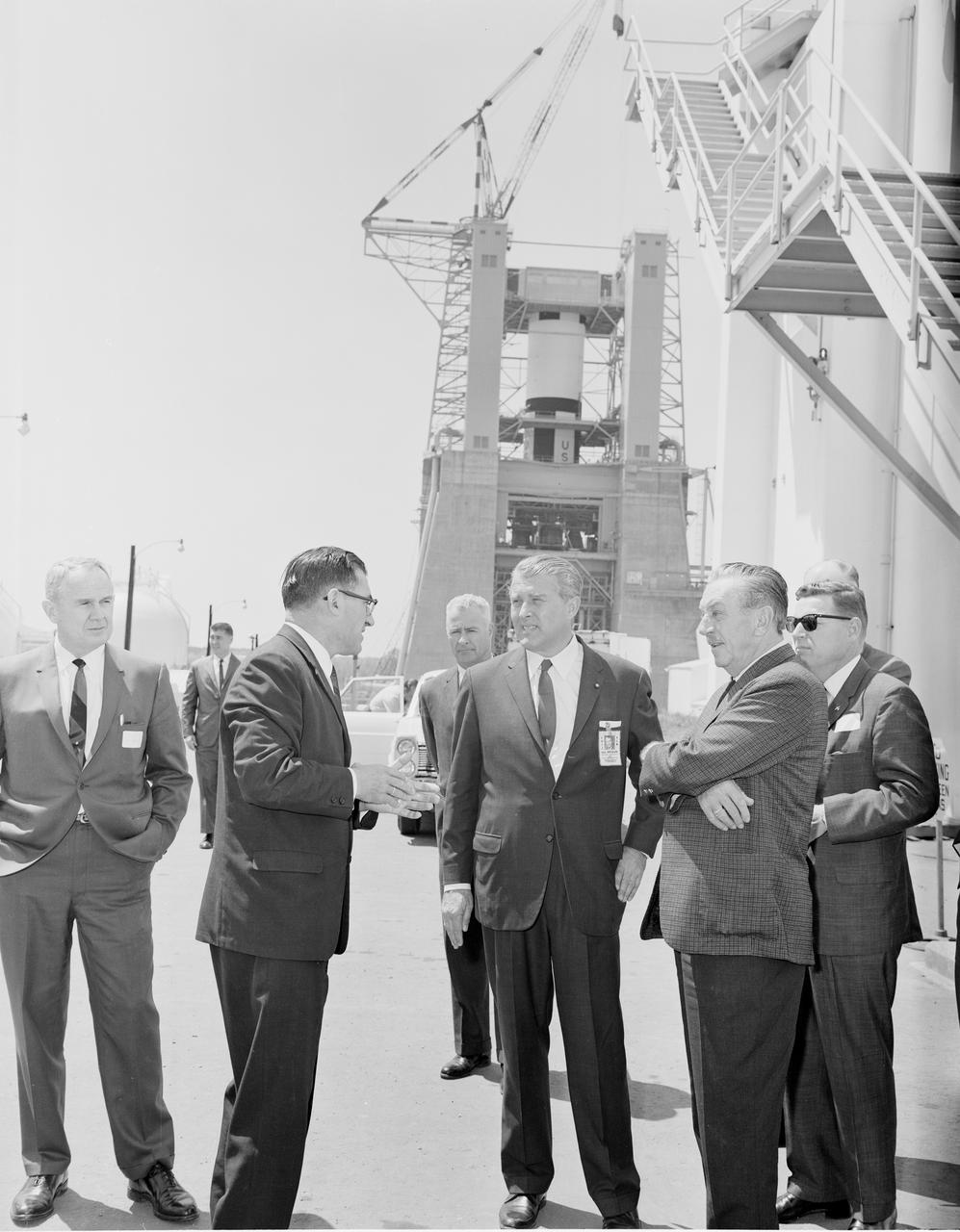
Walt Disney toured the West Test Area during his visit to the Marshall Space Flight Center on April 13, 1965. The three in center foreground are Karl Heimburg, Director, Test Division; Dr. von Braun, Director, MSFC; and Walt Disney. The Dynamic Test Stand with the S-1C stage being installed is in the background.
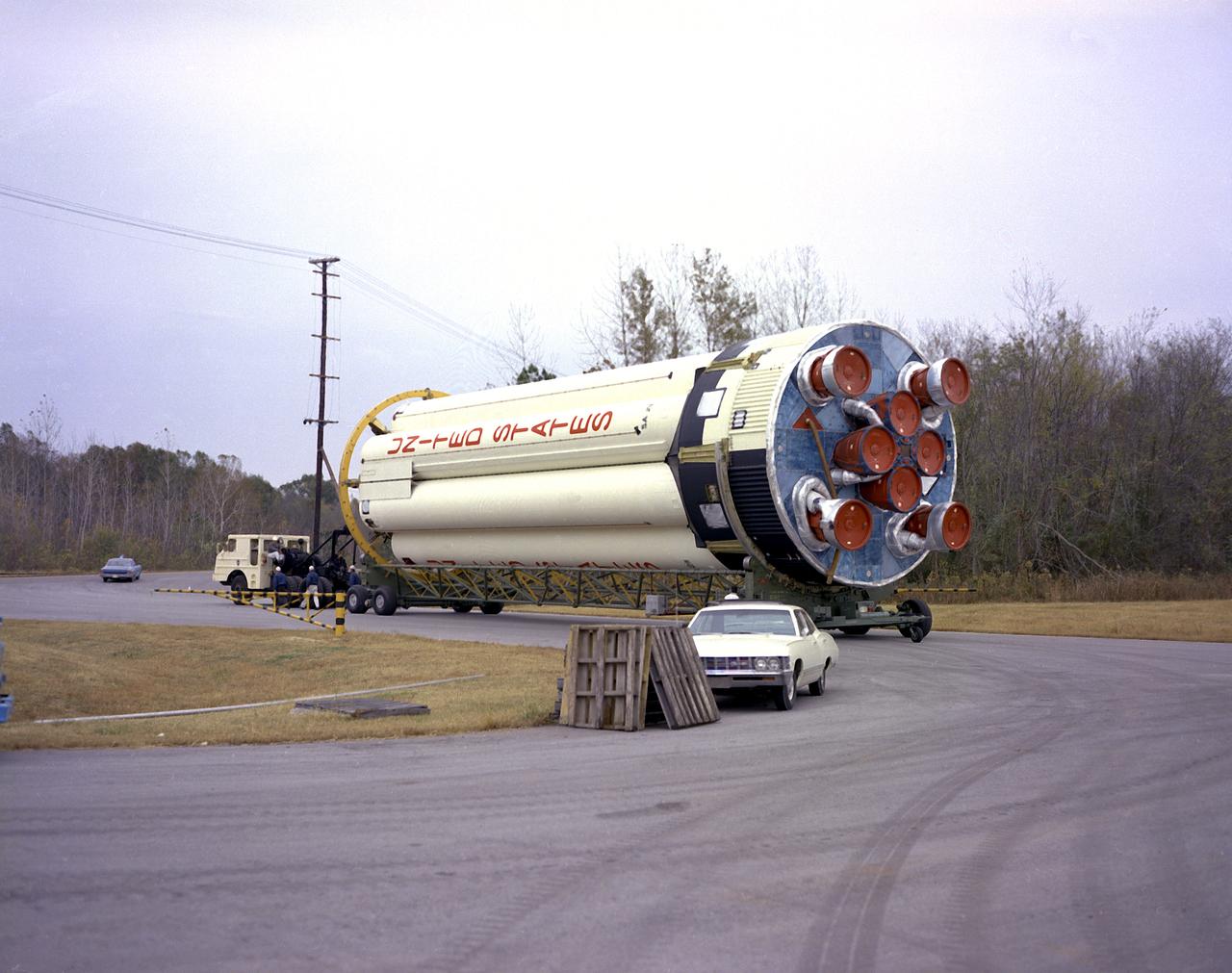
S-IB-211, the flight version of the Saturn IB launch vehicle's first (S-IVB) stage, on its way to Marshall Space Flight Center's (MSFC's) west test area. Between December 1967 and April 1968, the stage would undergo seven static test firings. The S-IB, developed by the MSFC and built by the Chrysler Corporation at the Michoud Assembly Facility near New Orleans, Louisiana, utilized eight H-1 engines and each produced 200,000 pounds of thrust.
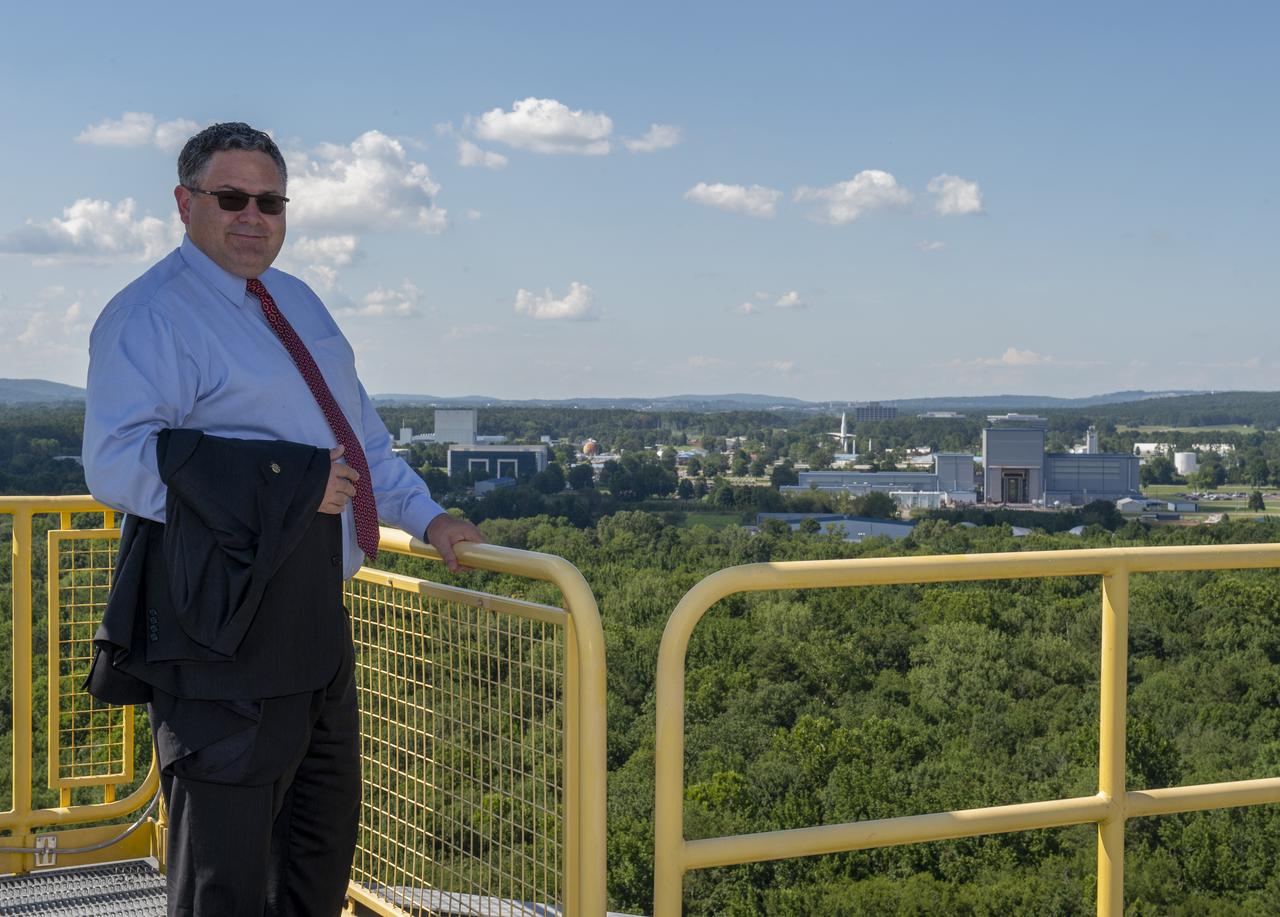
Retiring Marshall Space Flight Center Director Todd May on top of test stand 4693 in MSFC's west test area with MSFC in the background
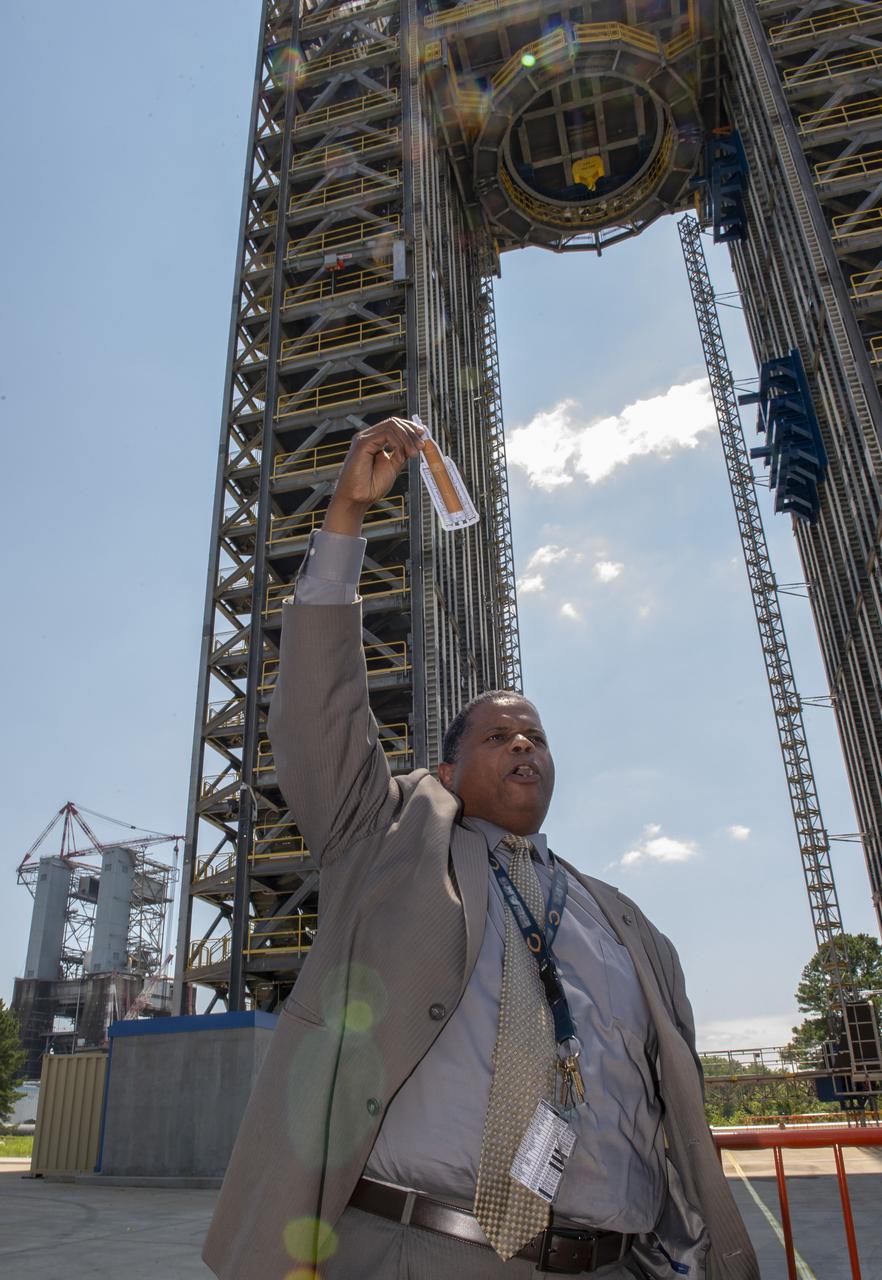
Students from the Tarik Black Foundation attend a STEM program at MSFC and visit SLS Test Stand 4693 in West Test Area. Gary Willis tells Tarik Black Foundation students about Test Stand 4693 and its importance in SLS development.
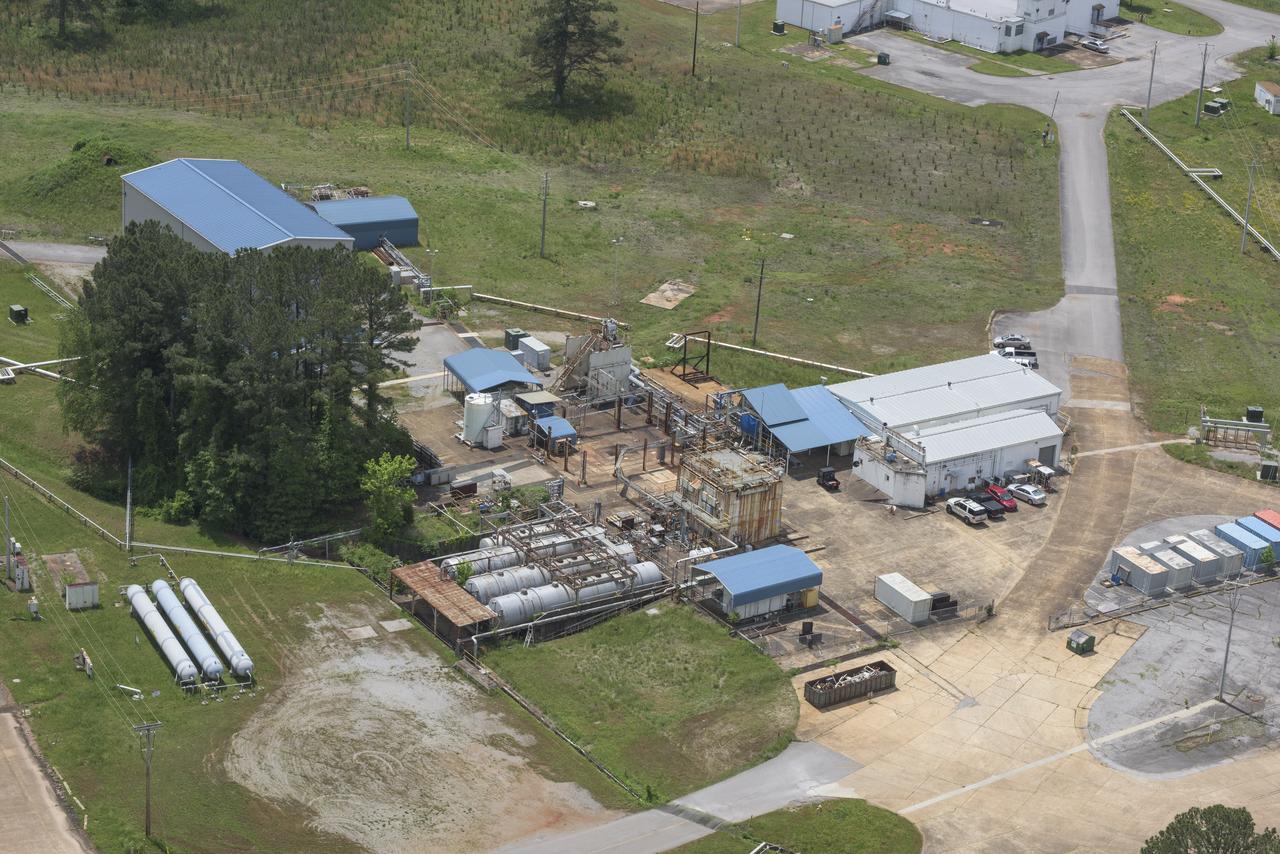
AERIAL PHOTOGRAPHS OF MSFC-4554 AND 4555 WEST TEST AREA
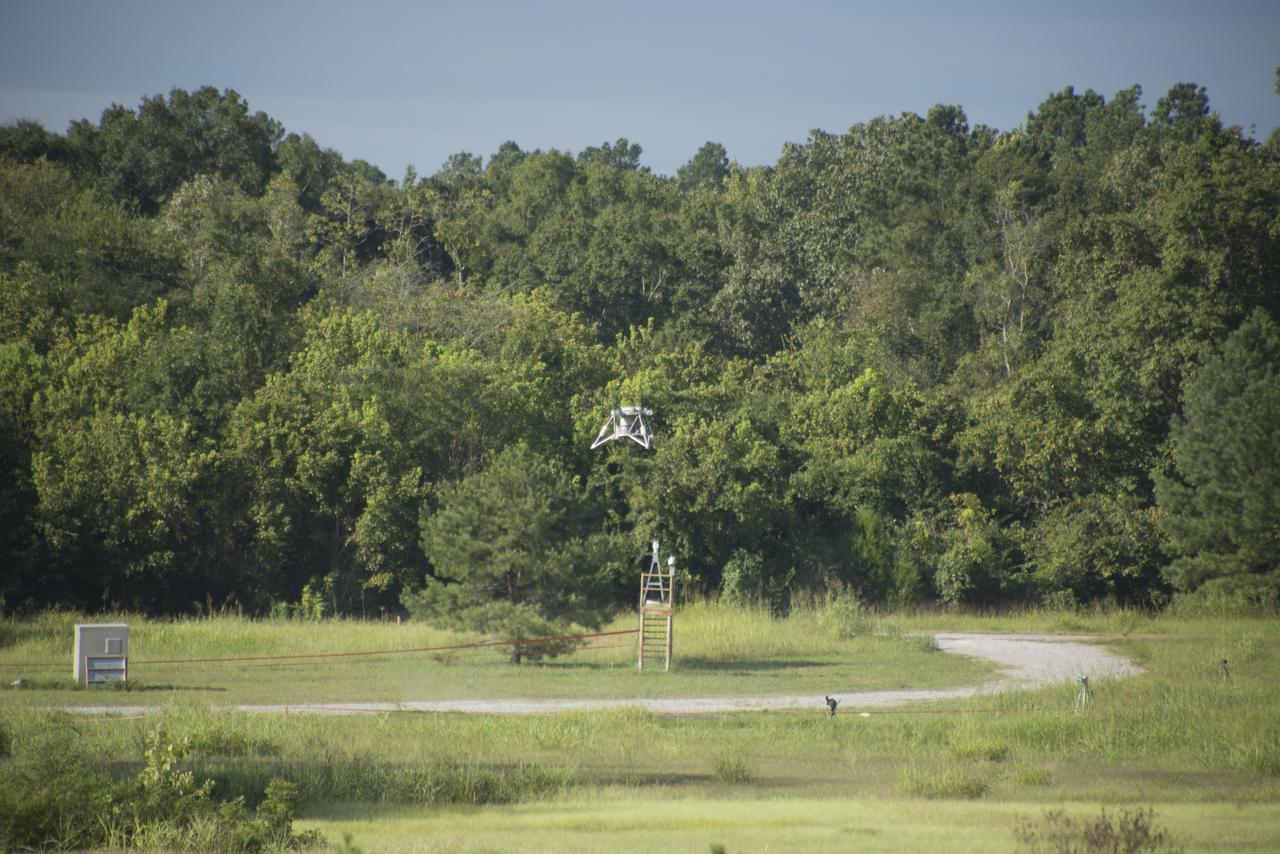
TEST FLIGHT OF MSFC'S "MIGHTY EAGLE" ROBOTIC LANDER IN THE WEST TEST AREA. AUGUST 28, 2012
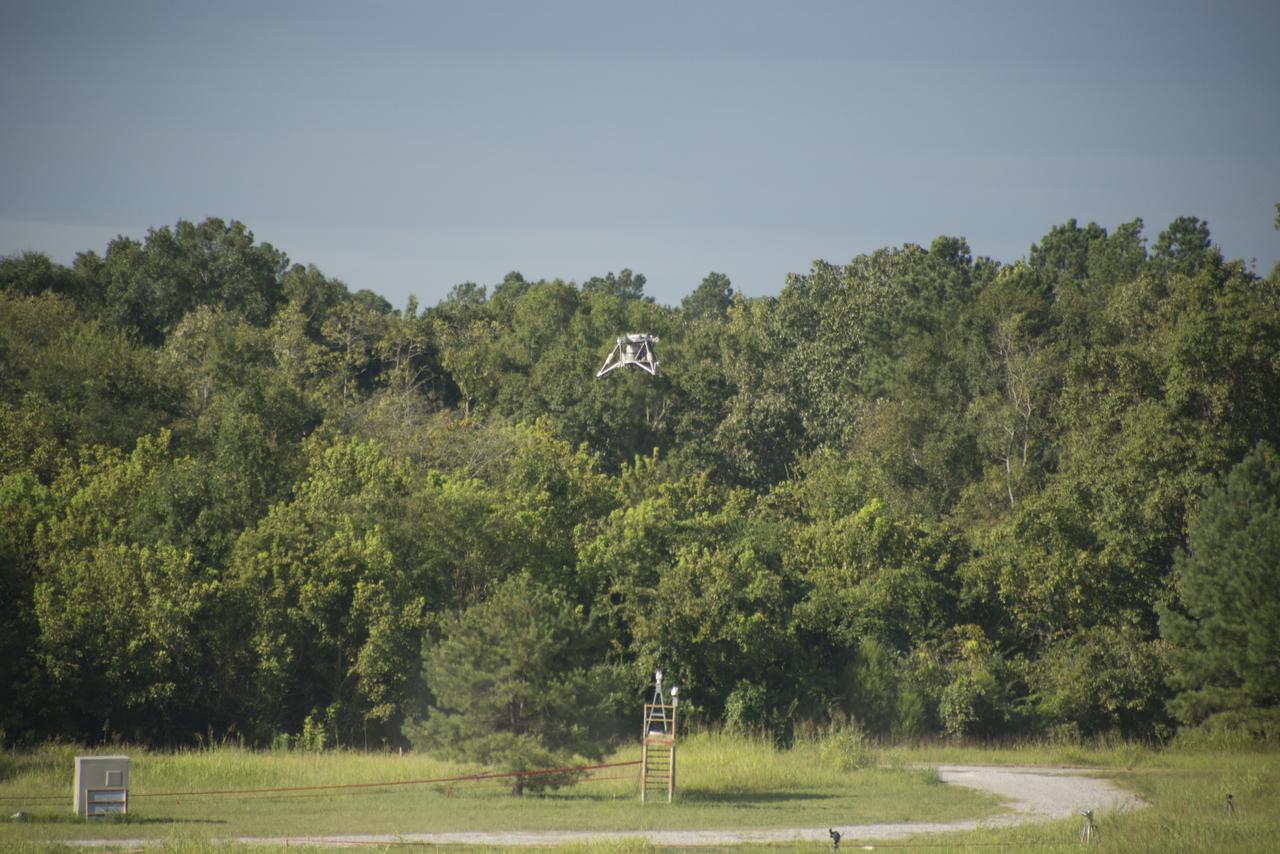
TEST FLIGHT OF MSFC'S "MIGHTY EAGLE" ROBOTIC LANDER IN THE WEST TEST AREA. AUGUST 28, 2012
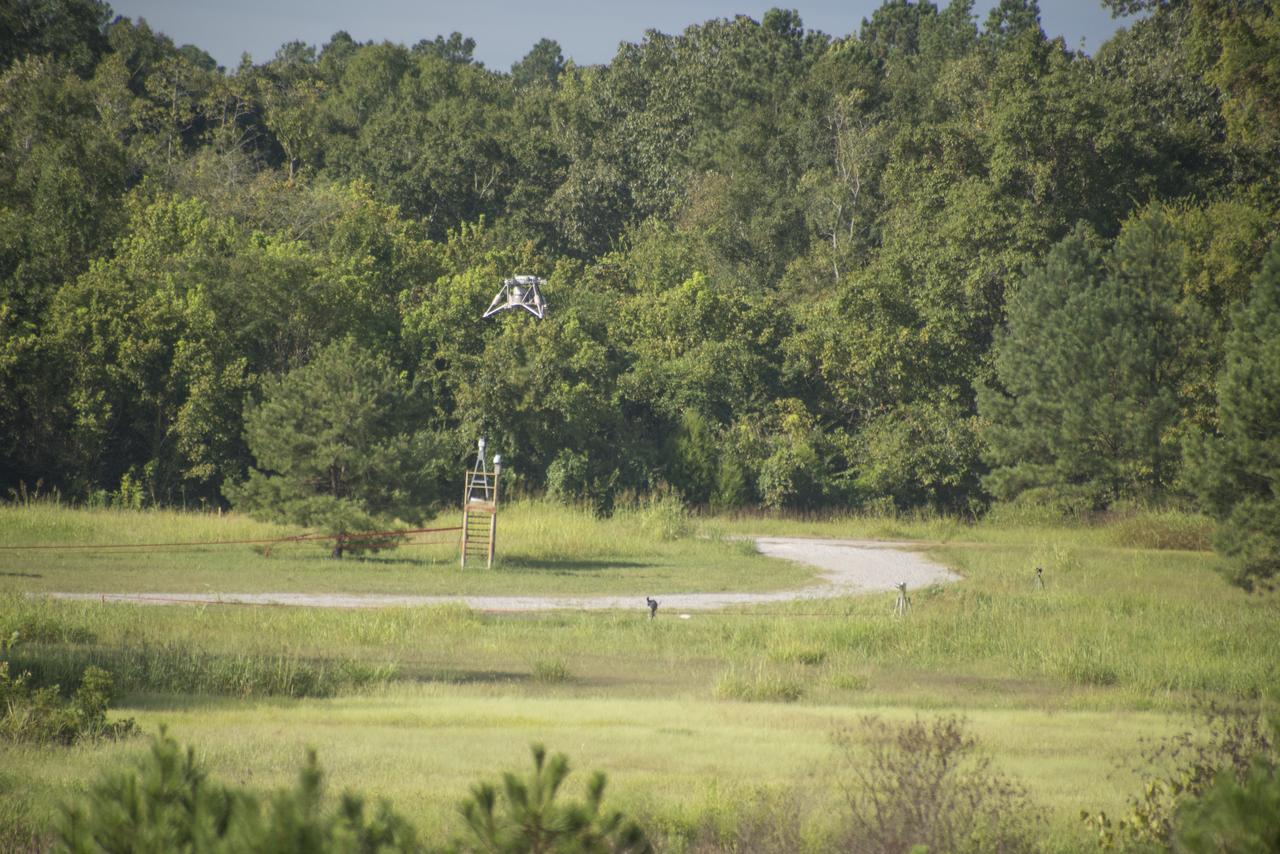
TEST FLIGHT OF MSFC'S "MIGHTY EAGLE" ROBOTIC LANDER IN THE WEST TEST AREA. AUGUST 28, 2012
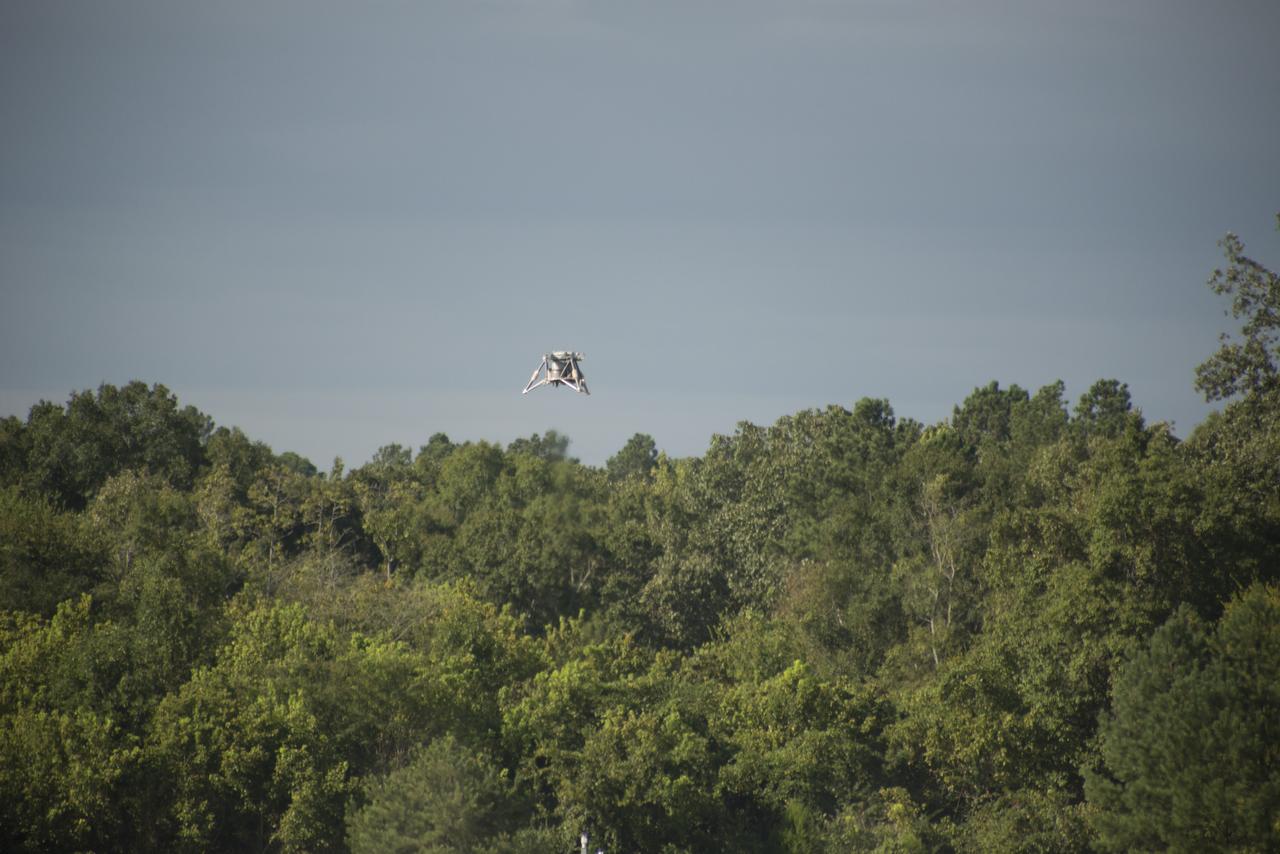
TEST FLIGHT OF MSFC'S "MIGHTY EAGLE" ROBOTIC LANDER IN THE WEST TEST AREA. AUGUST 28, 2012

The Liquid Oxygen (LOX) tank was moved from the Pegasus barge to the west test area for placement in test stand.
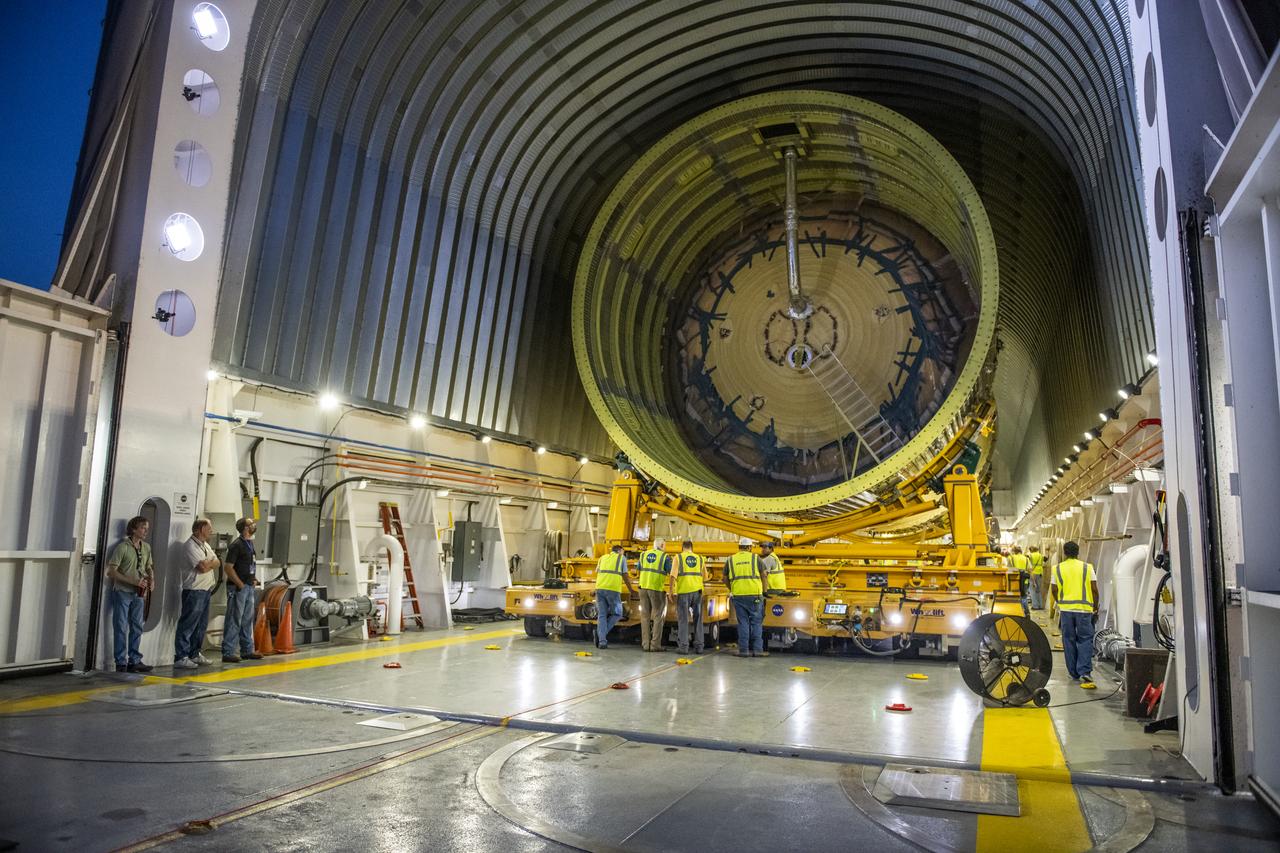
The Liquid Oxygen (LOX) tank was moved from the Pegasus barge to the west test area for placement in test stand.

Aerial photograph of MSFC test stand 4693 with the Liquid Hydrogen test article (LH2) in the stand
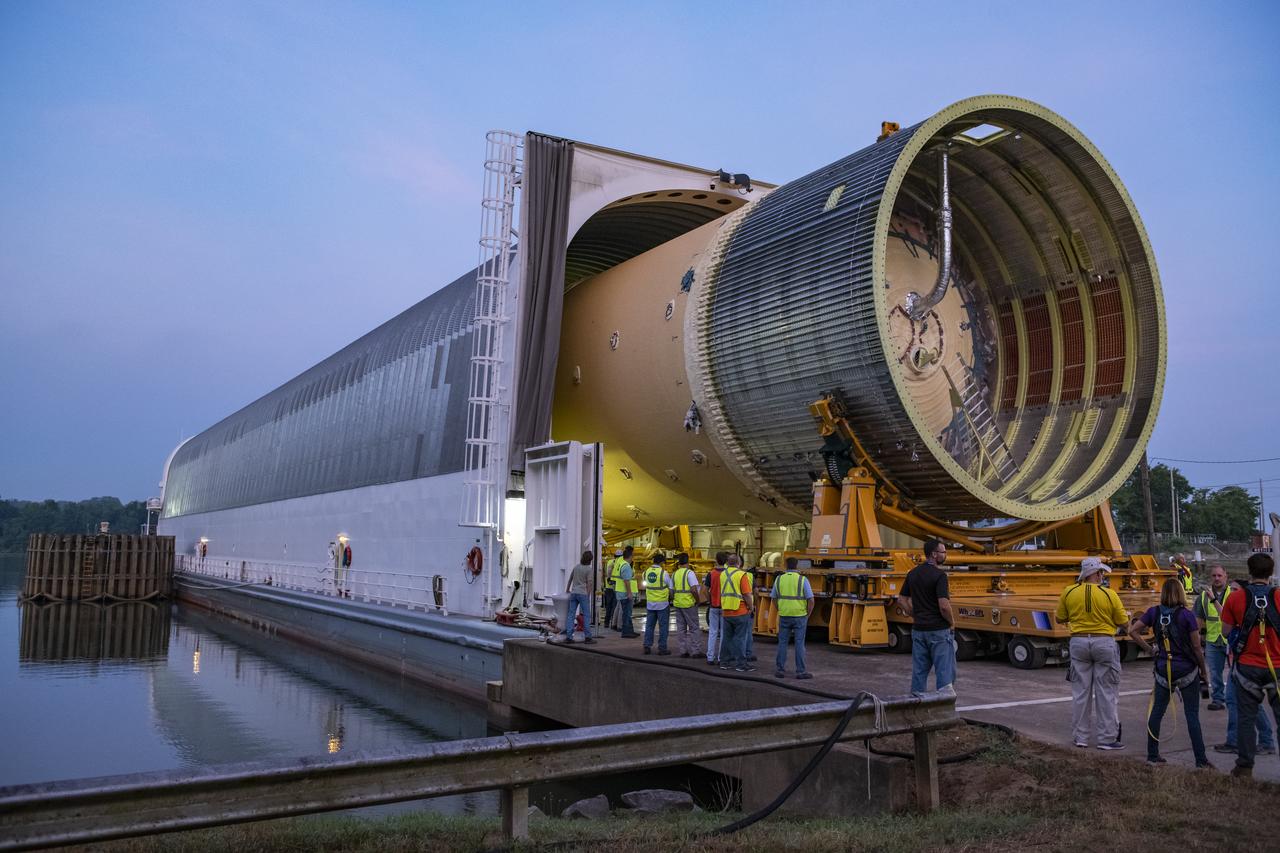
The Liquid Oxygen (LOX) tank was moved from the Pegasus barge to the west test area for placement in test stand.
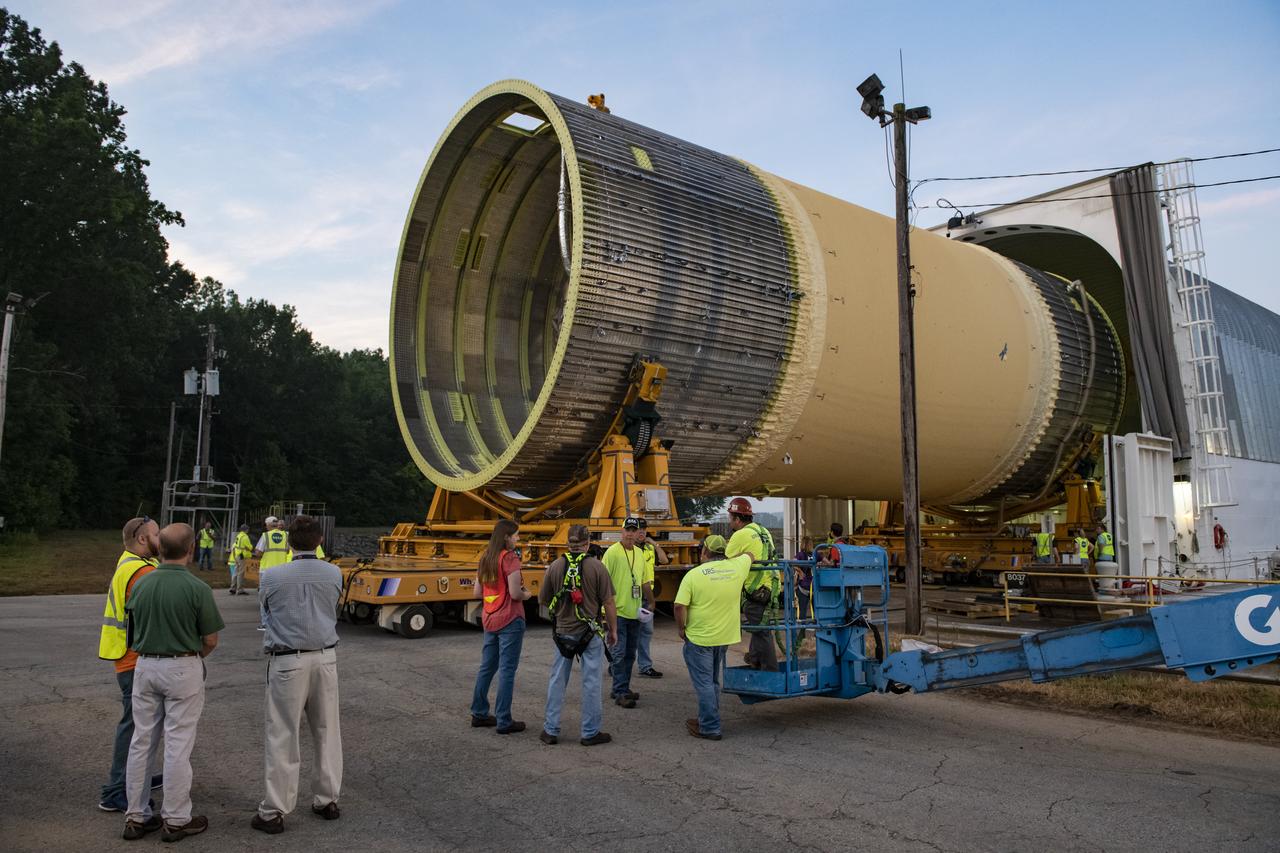
The Liquid Oxygen (LOX) tank was moved from the Pegasus barge to the west test area for placement in test stand.
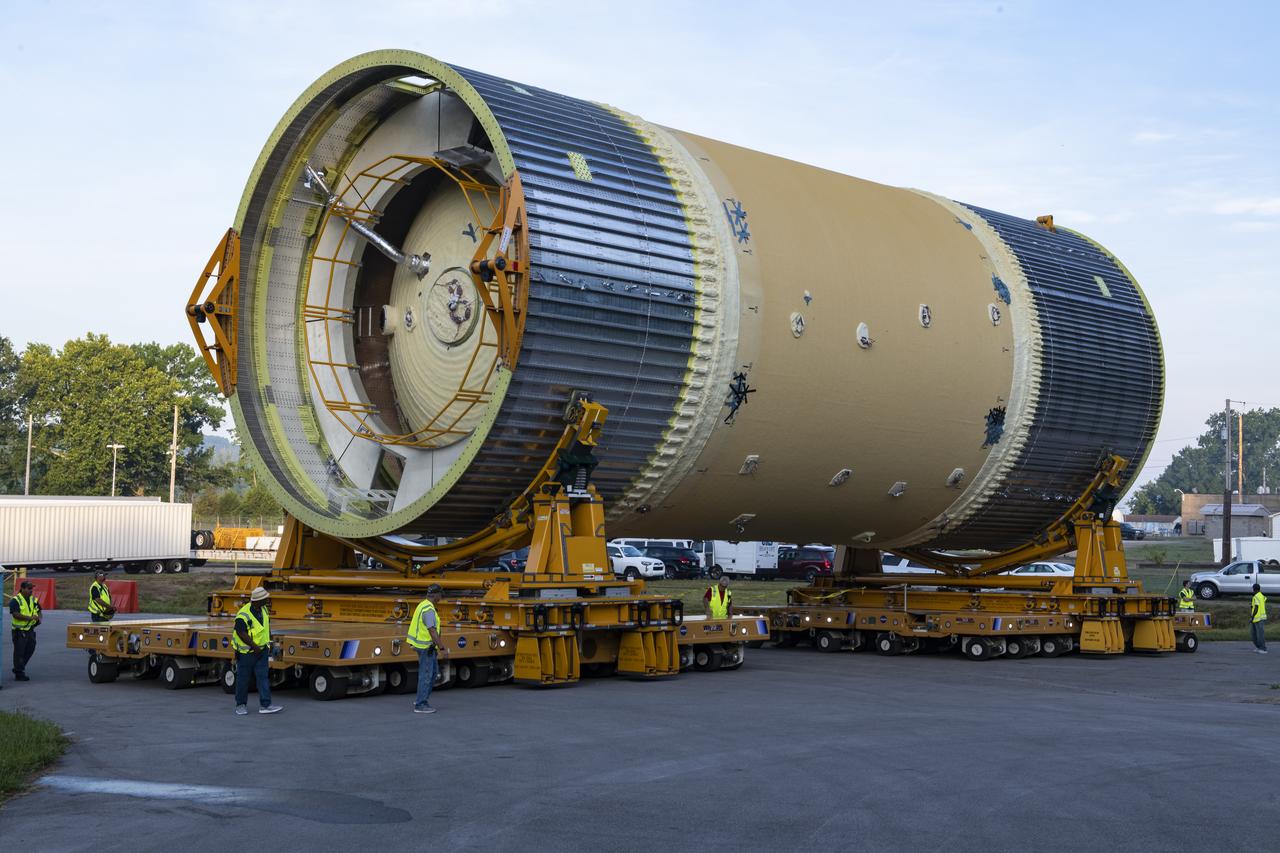
The Liquid Oxygen (LOX) tank was moved from the Pegasus barge to the west test area for placement in test stand.
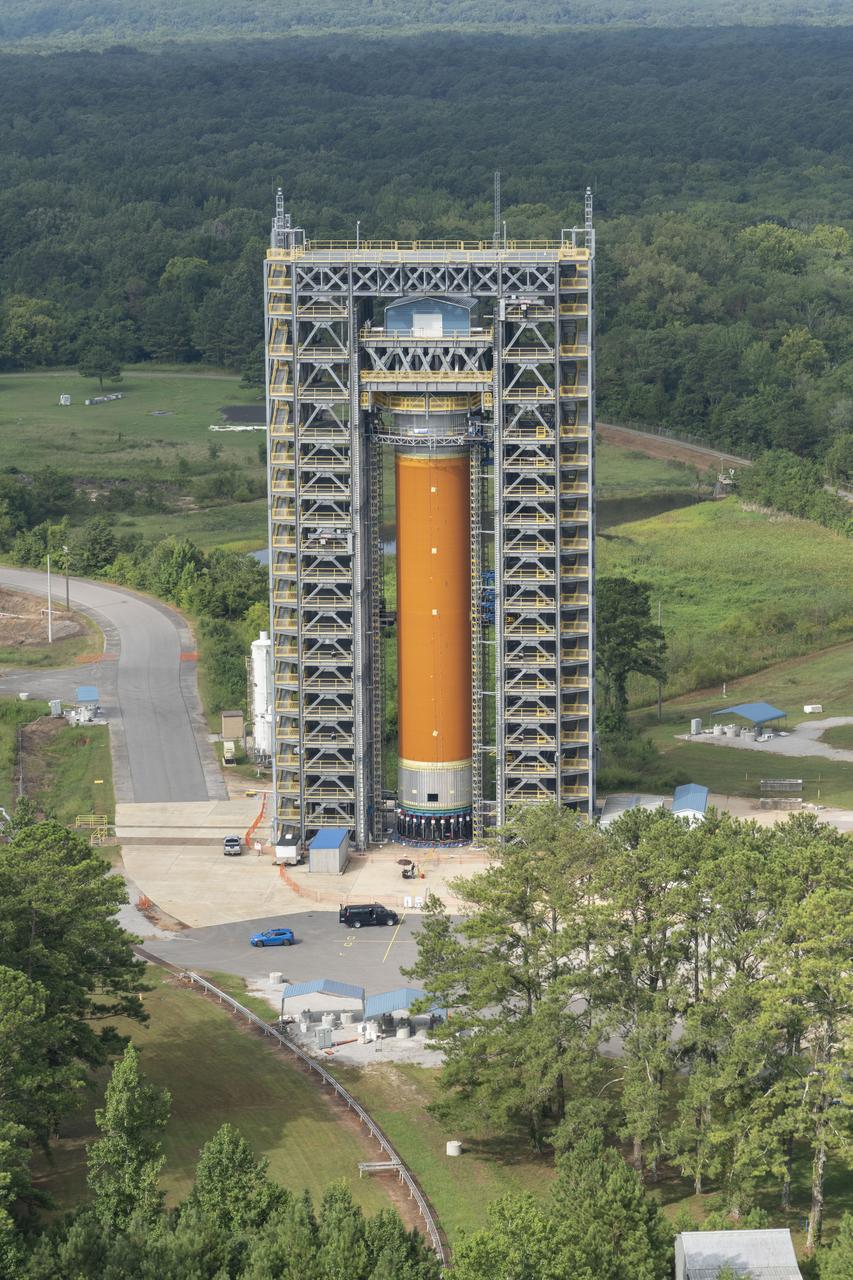
Aerial photograph of MSFC test stand 4693 with the Liquid Hydrogen test article (LH2) in the stand
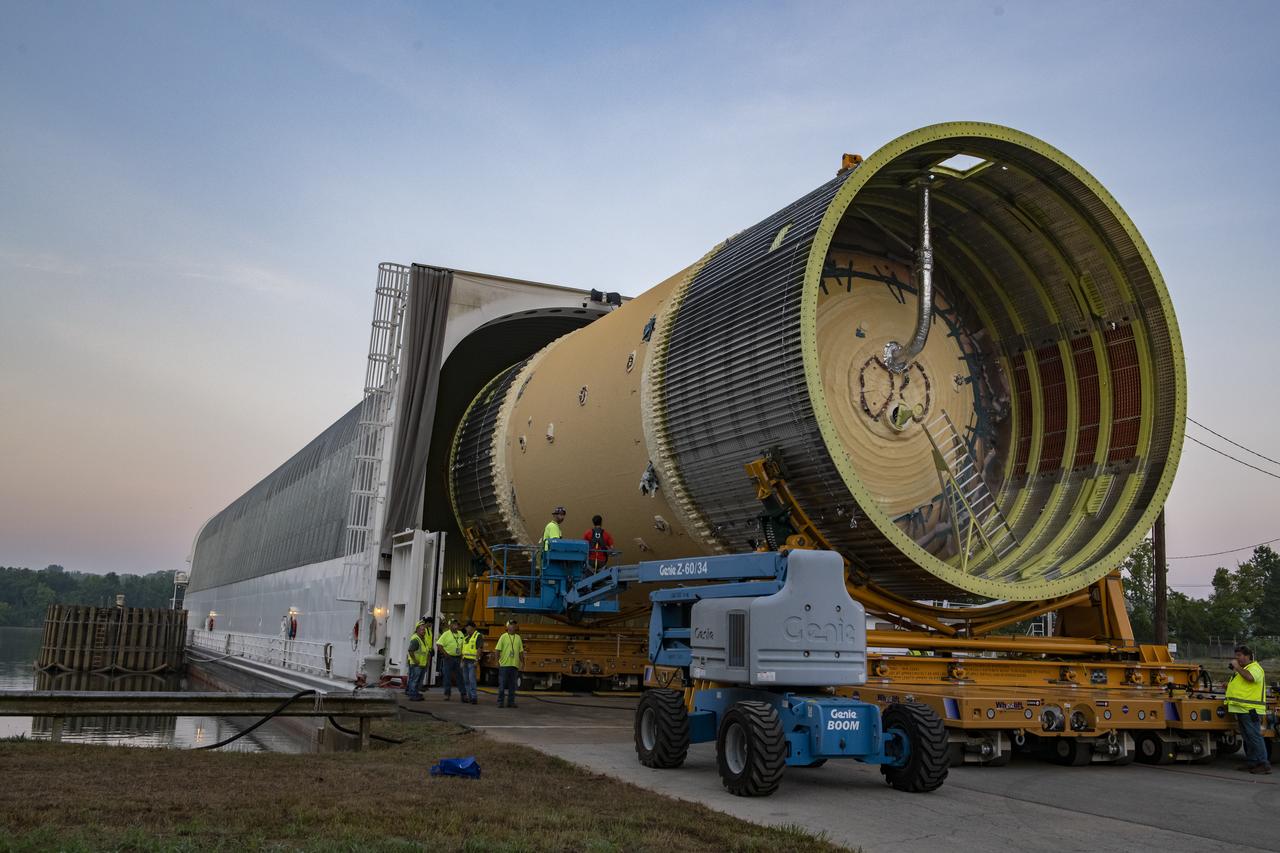
The Liquid Oxygen (LOX) tank was moved from the Pegasus barge to the west test area for placement in test stand.
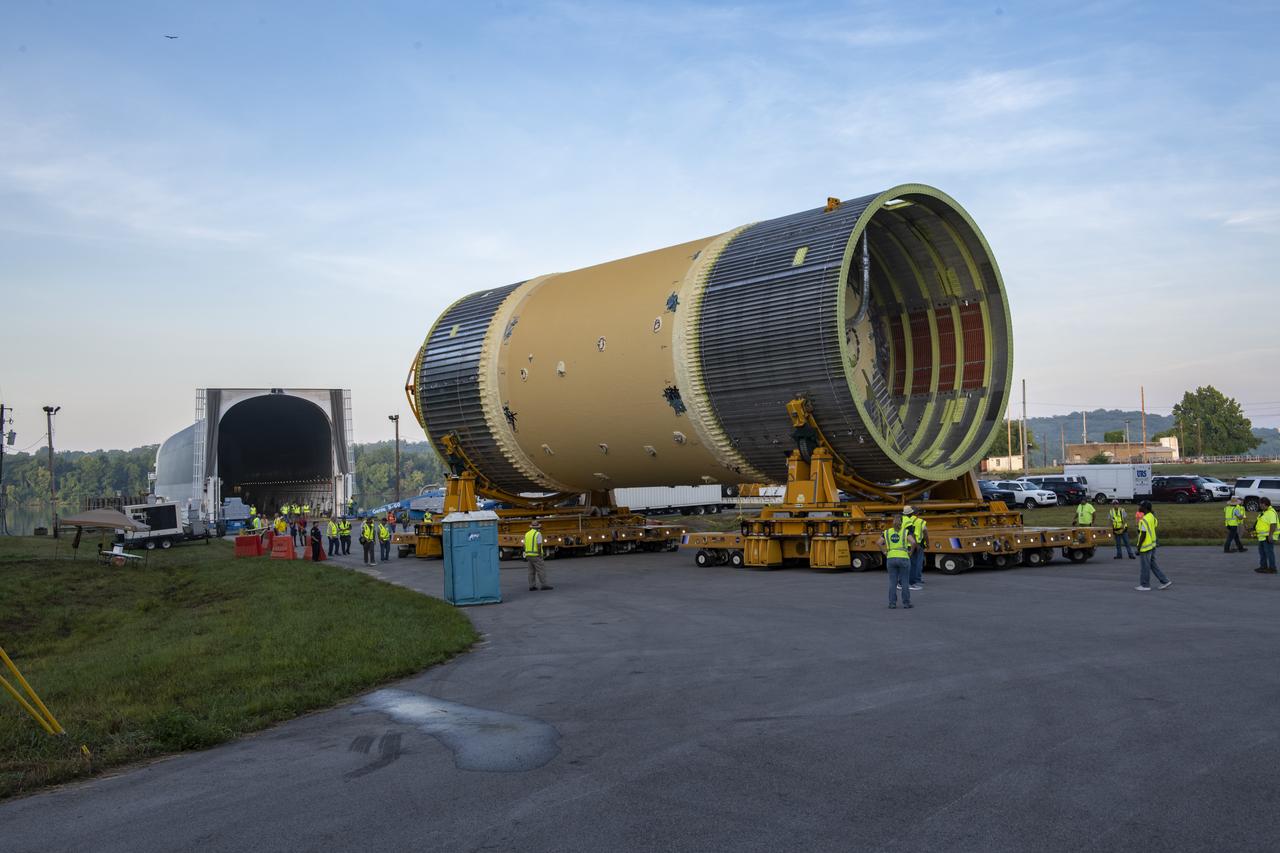
The Liquid Oxygen (LOX) tank was moved from the Pegasus barge to the west test area for placement in test stand.
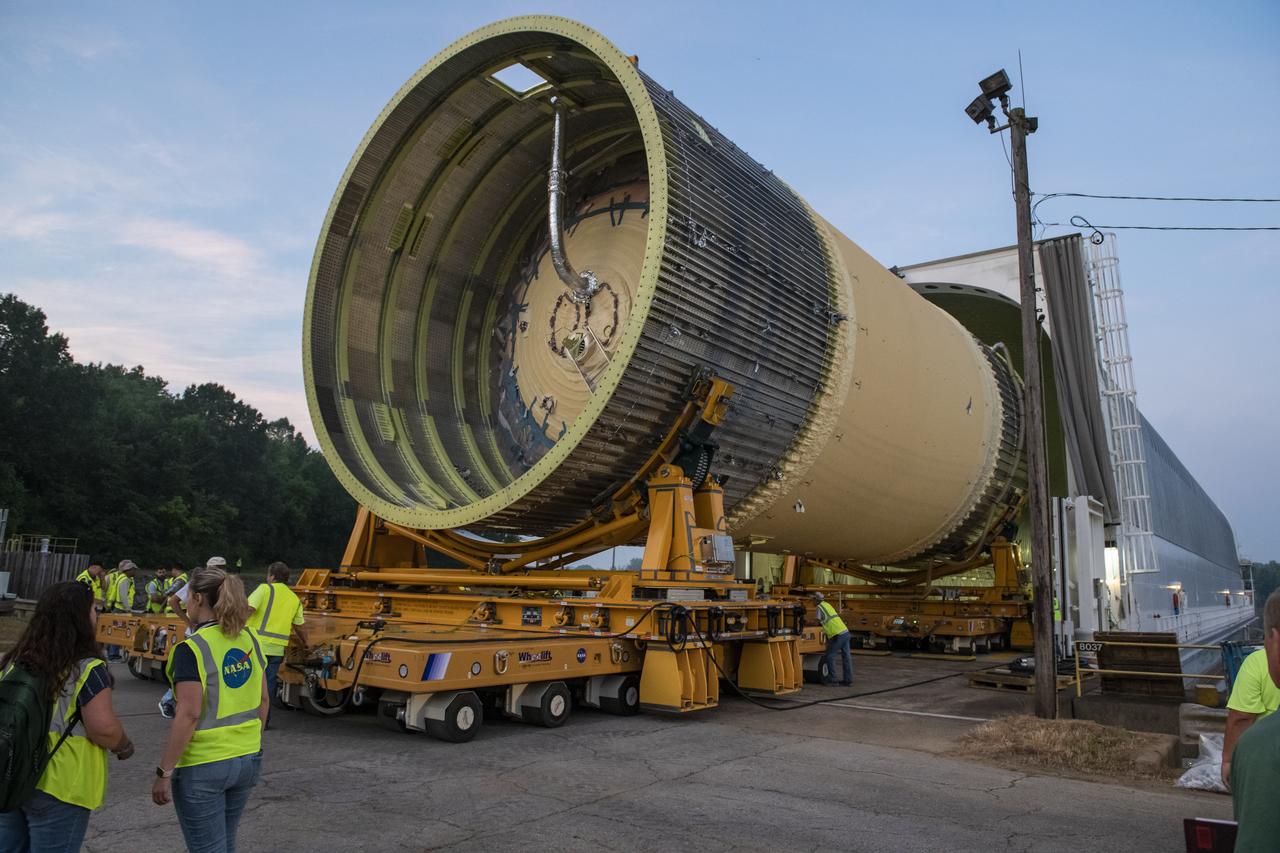
The Liquid Oxygen (LOX) tank was moved from the Pegasus barge to the west test area for placement in test stand.

The Liquid Oxygen (LOX) tank was moved from the Pegasus barge to the west test area for placement in test stand.
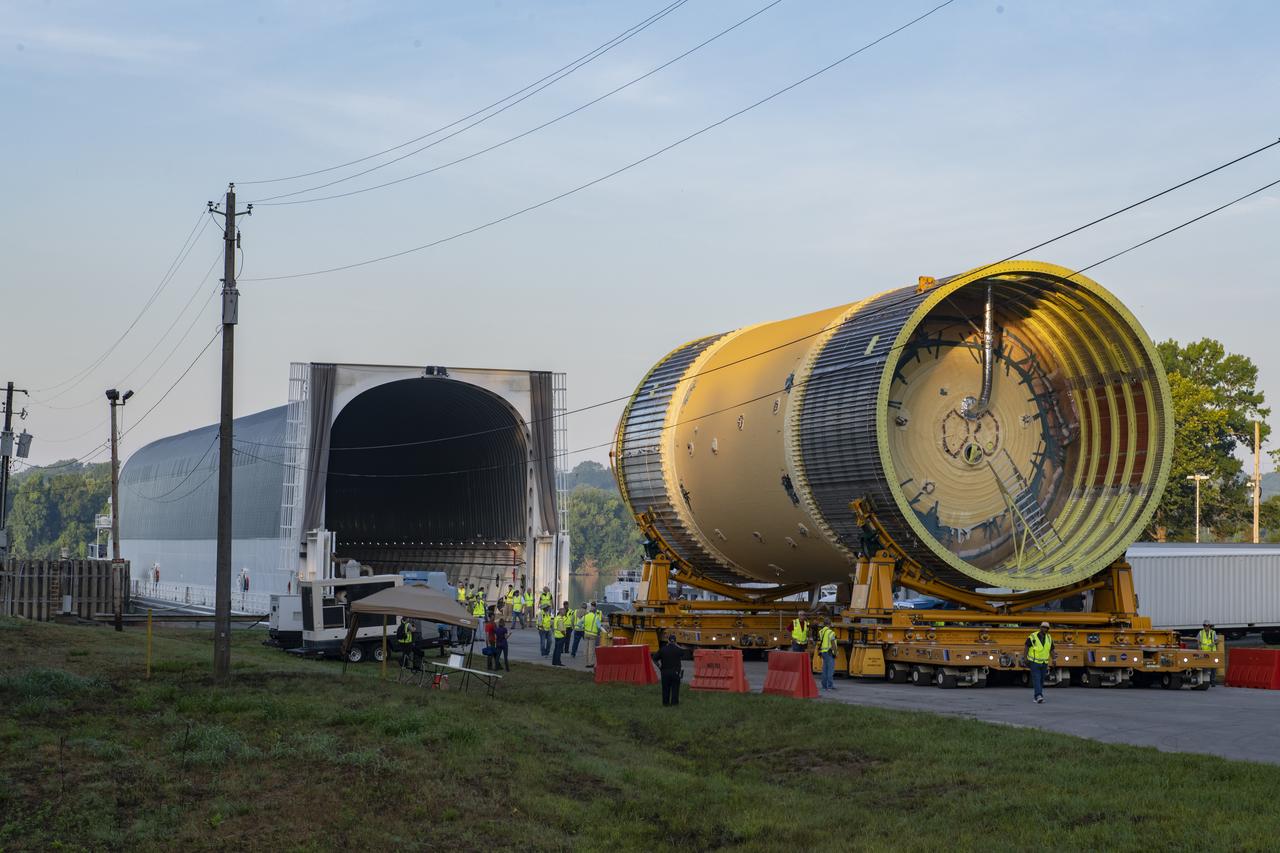
The Liquid Oxygen (LOX) tank was moved from the Pegasus barge to the west test area for placement in test stand.
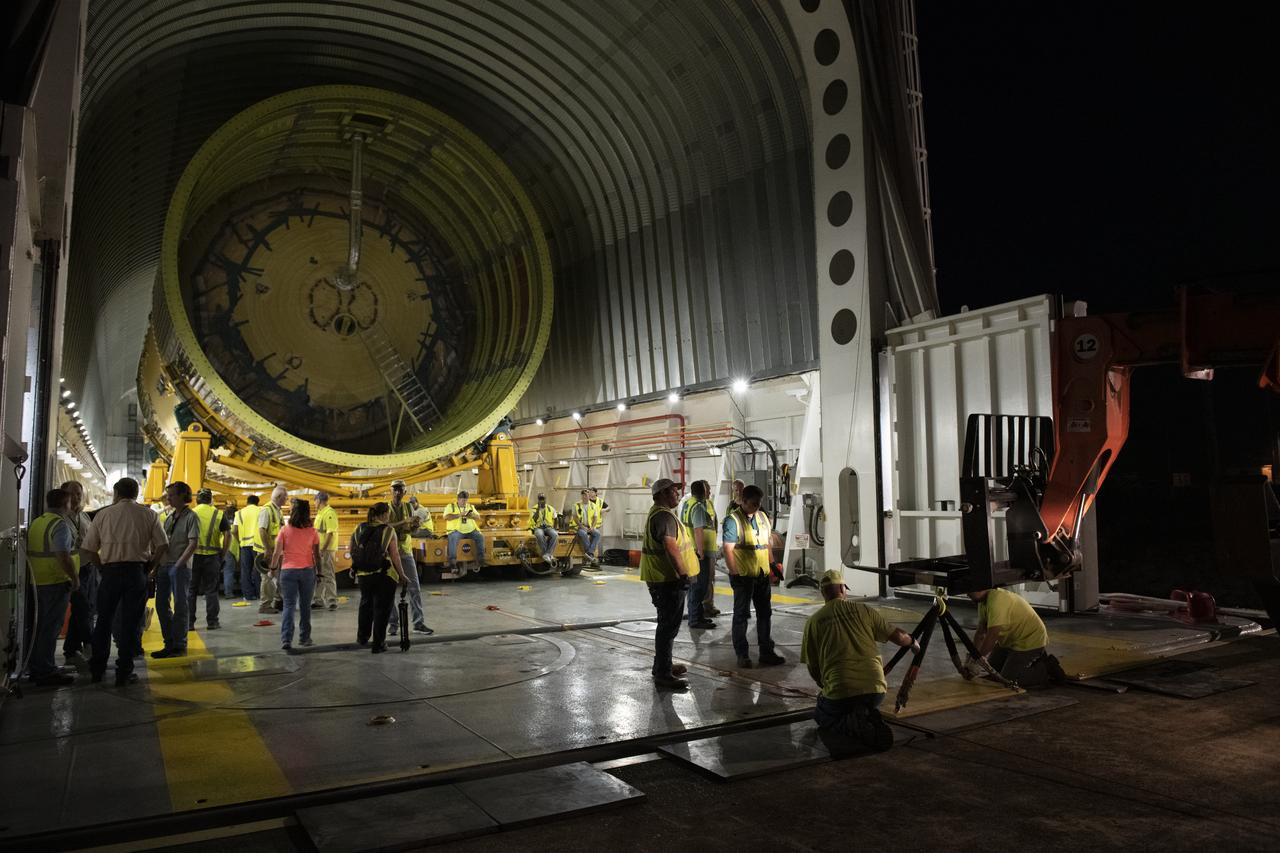
The Liquid Oxygen (LOX) tank was moved from the Pegasus barge to the west test area for placement in test stand.
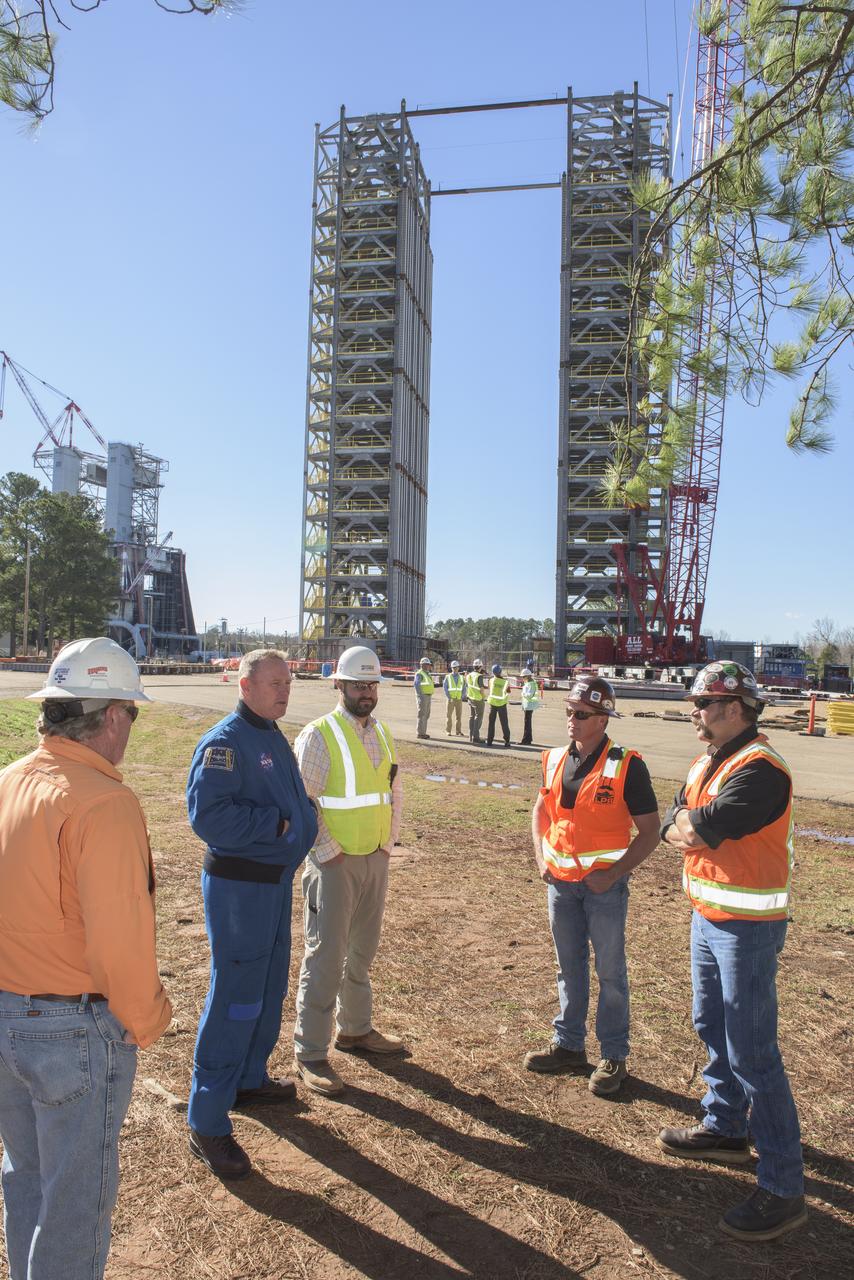
NASA astronaut Butch Wilmore visits with construction workers at the new SLS test stand, 4693, in the West test area of MSFC followed by a media event with NASA administrator, Charles Bolden
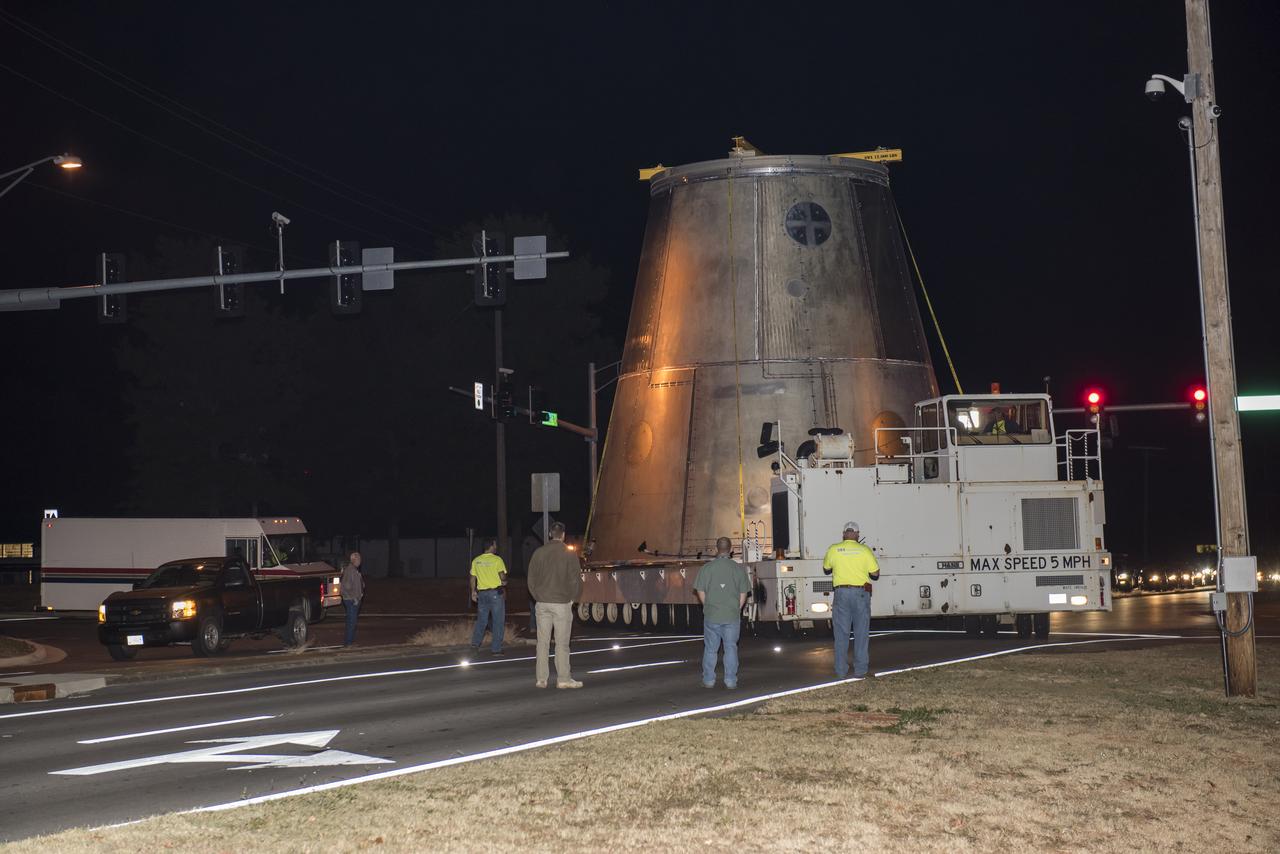
A SLS LAUNCH VEHICLE STAGE ADAPTER IS MOVED FROM THE VERTICAL WELD TOOL STATION IN MSFC’S BUILDING 4755 TO THE WEST TEST AREA’S TEST STAND 4699 WHERE IT WILL UNDERGO FURTHER TESTING OF ITS ABILITY TO WITHSTAND THE STRESSES RELATED TO LAUNCH AND SPACE TRAVEL.
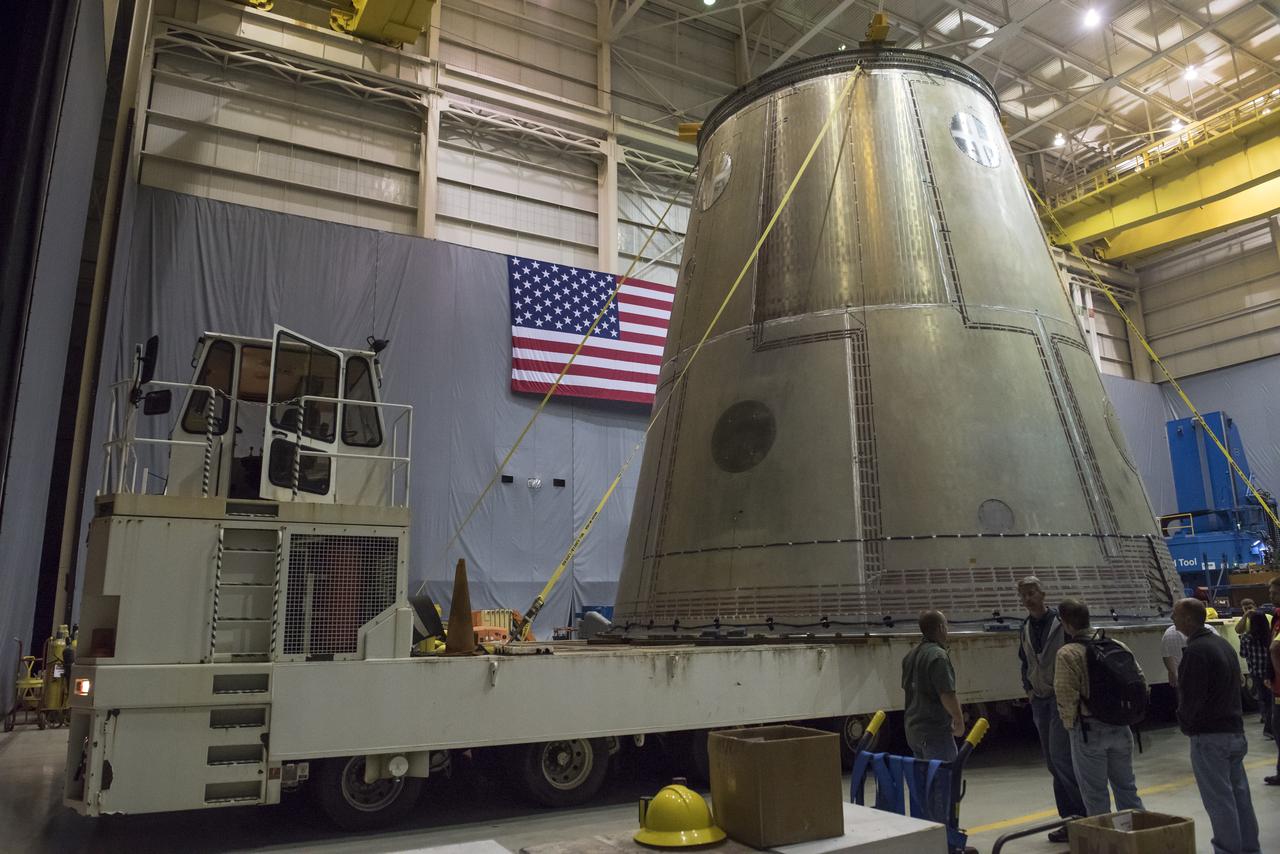
A SLS LAUNCH VEHICLE STAGE ADAPTER IS MOVED FROM THE VERTICAL WELD TOOL STATION IN MSFC’S BUILDING 4755 TO THE WEST TEST AREA’S TEST STAND 4699 WHERE IT WILL UNDERGO FURTHER TESTING OF ITS ABILITY TO WITHSTAND THE STRESSES RELATED TO LAUNCH AND SPACE TRAVEL.
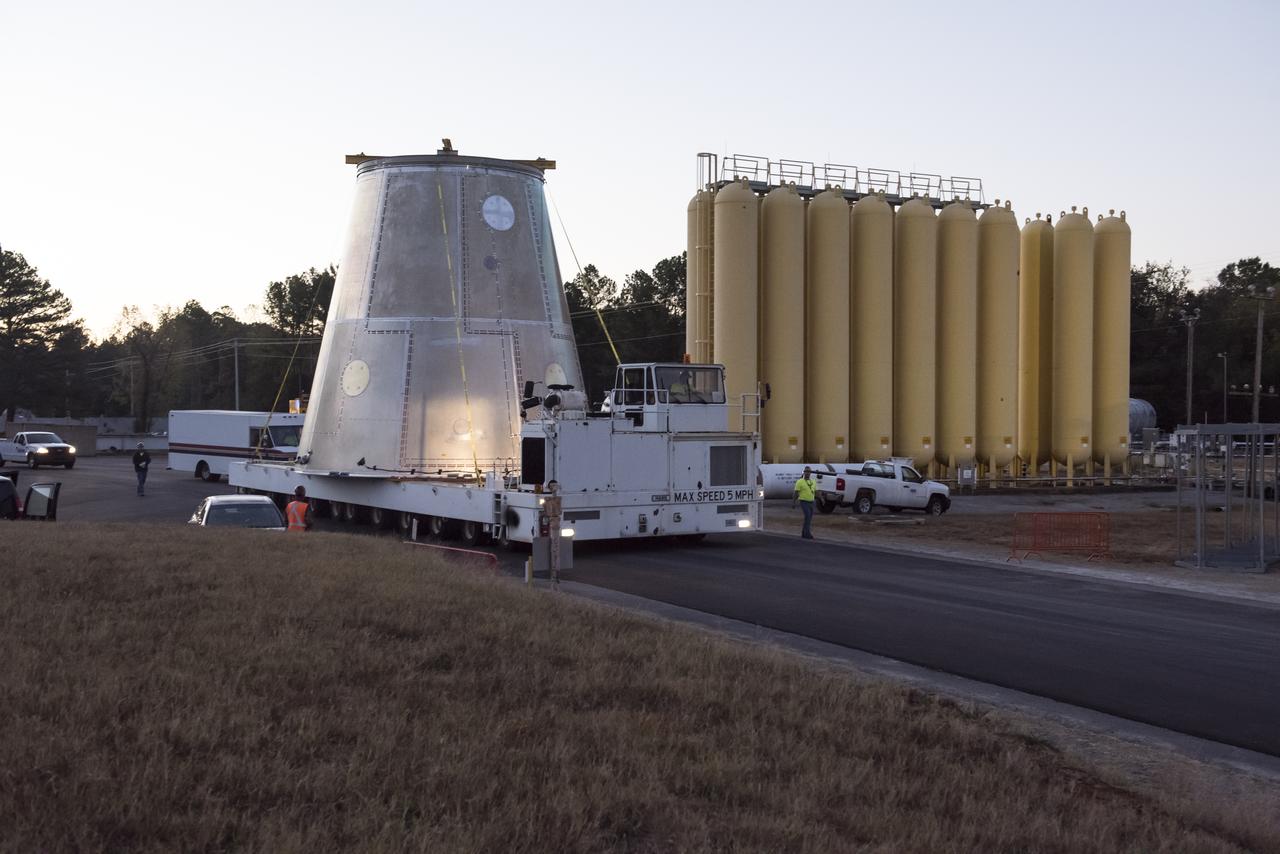
A SLS LAUNCH VEHICLE STAGE ADAPTER IS MOVED FROM THE VERTICAL WELD TOOL STATION IN MSFC’S BUILDING 4755 TO THE WEST TEST AREA’S TEST STAND 4699 WHERE IT WILL UNDERGO FURTHER TESTING OF ITS ABILITY TO WITHSTAND THE STRESSES RELATED TO LAUNCH AND SPACE TRAVEL.
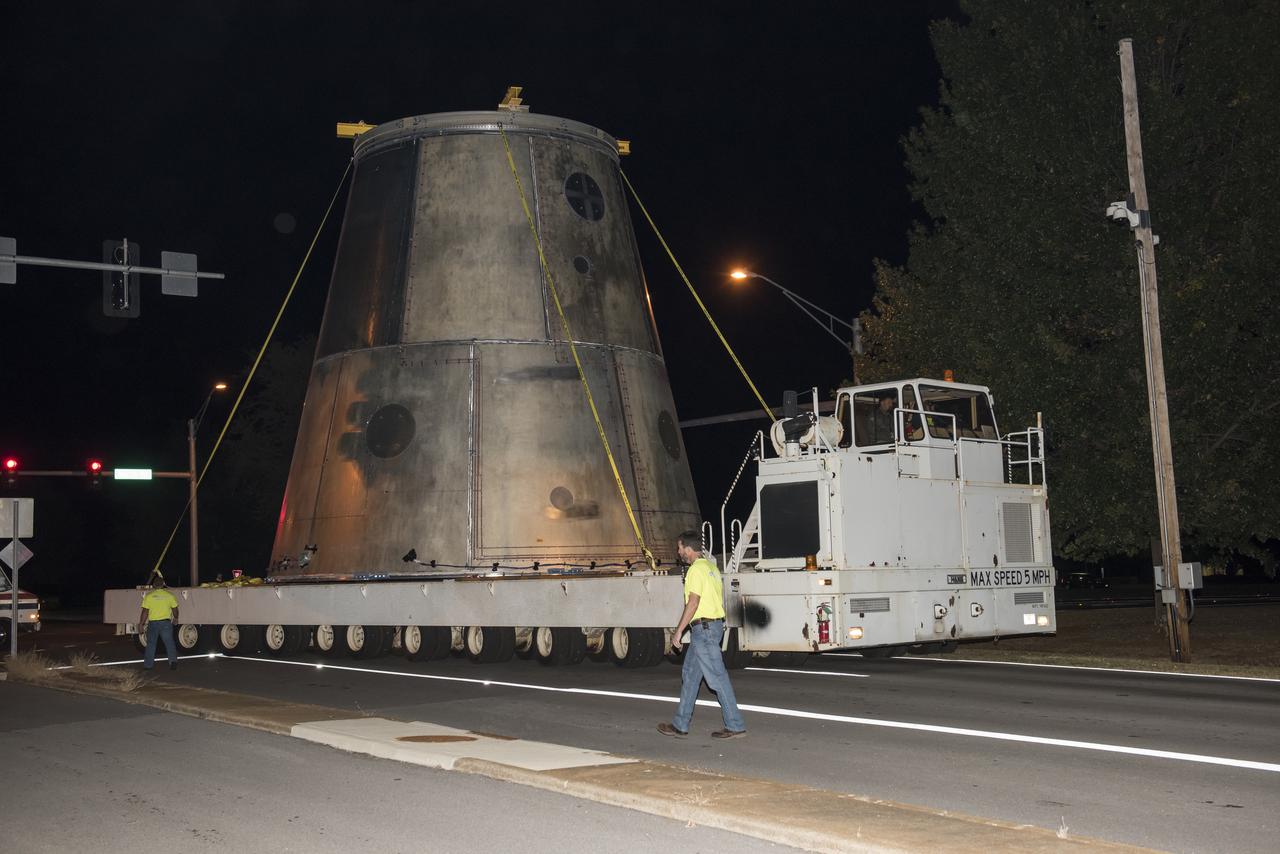
A SLS LAUNCH VEHICLE STAGE ADAPTER IS MOVED FROM THE VERTICAL WELD TOOL STATION IN MSFC’S BUILDING 4755 TO THE WEST TEST AREA’S TEST STAND 4699 WHERE IT WILL UNDERGO FURTHER TESTING OF ITS ABILITY TO WITHSTAND THE STRESSES RELATED TO LAUNCH AND SPACE TRAVEL.
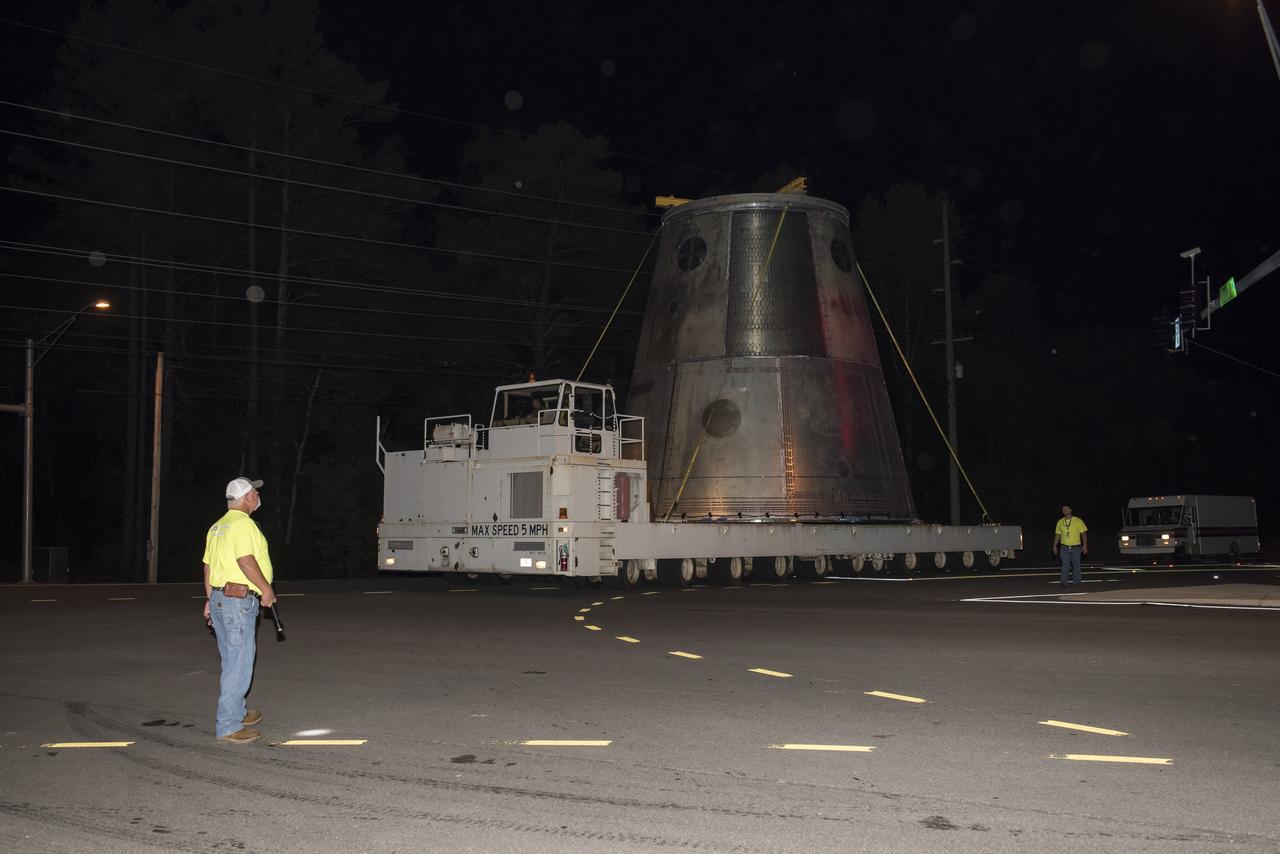
A SLS LAUNCH VEHICLE STAGE ADAPTER IS MOVED FROM THE VERTICAL WELD TOOL STATION IN MSFC’S BUILDING 4755 TO THE WEST TEST AREA’S TEST STAND 4699 WHERE IT WILL UNDERGO FURTHER TESTING OF ITS ABILITY TO WITHSTAND THE STRESSES RELATED TO LAUNCH AND SPACE TRAVEL.
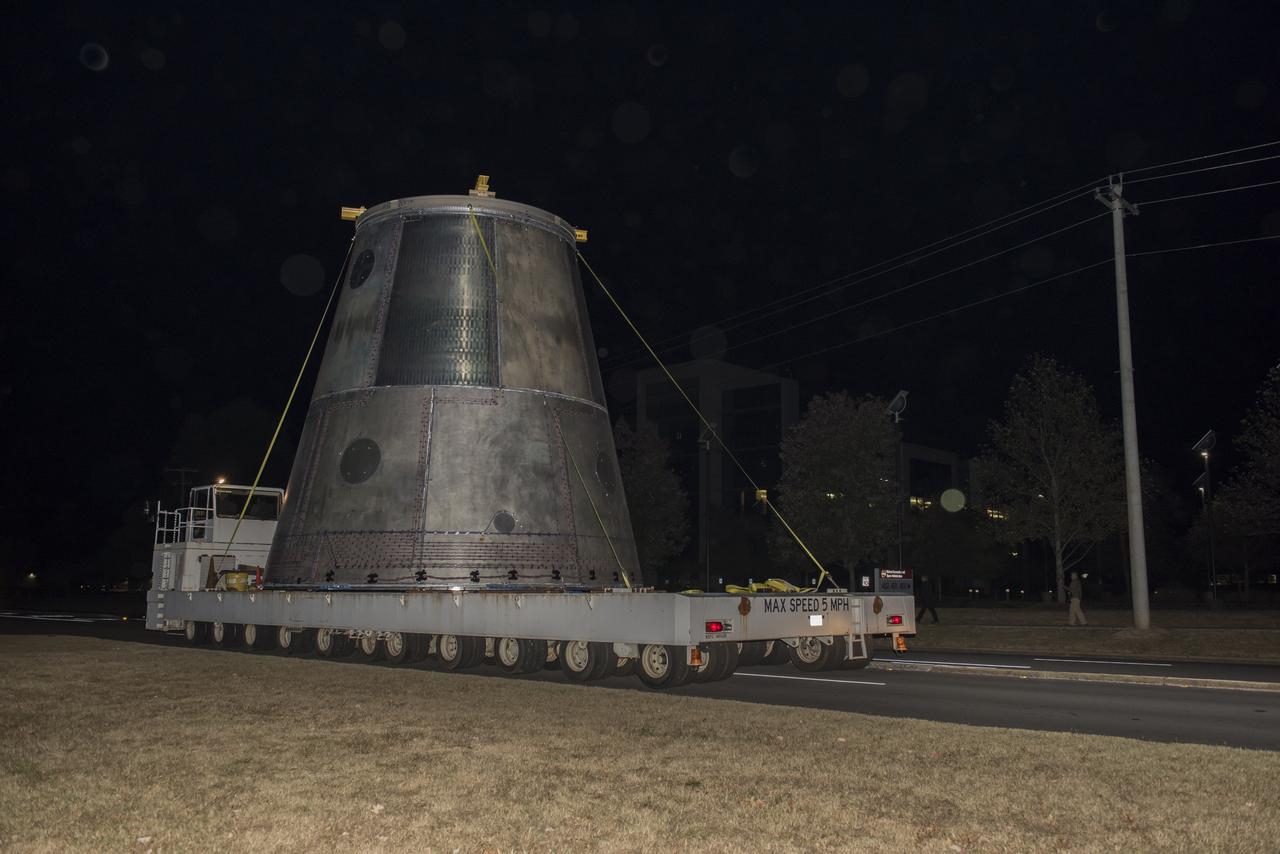
A SLS LAUNCH VEHICLE STAGE ADAPTER IS MOVED FROM THE VERTICAL WELD TOOL STATION IN MSFC’S BUILDING 4755 TO THE WEST TEST AREA’S TEST STAND 4699 WHERE IT WILL UNDERGO FURTHER TESTING OF ITS ABILITY TO WITHSTAND THE STRESSES RELATED TO LAUNCH AND SPACE TRAVEL.
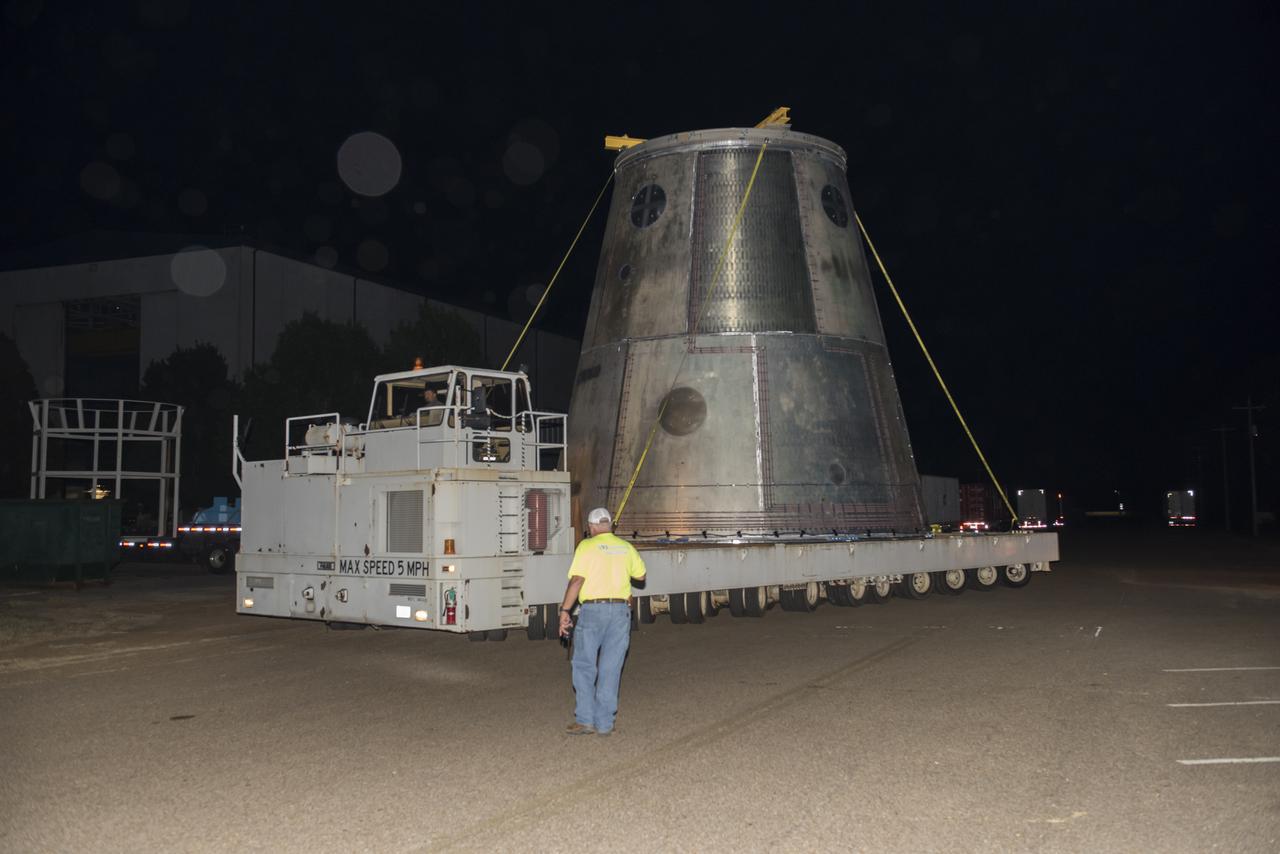
A SLS LAUNCH VEHICLE STAGE ADAPTER IS MOVED FROM THE VERTICAL WELD TOOL STATION IN MSFC’S BUILDING 4755 TO THE WEST TEST AREA’S TEST STAND 4699 WHERE IT WILL UNDERGO FURTHER TESTING OF ITS ABILITY TO WITHSTAND THE STRESSES RELATED TO LAUNCH AND SPACE TRAVEL.
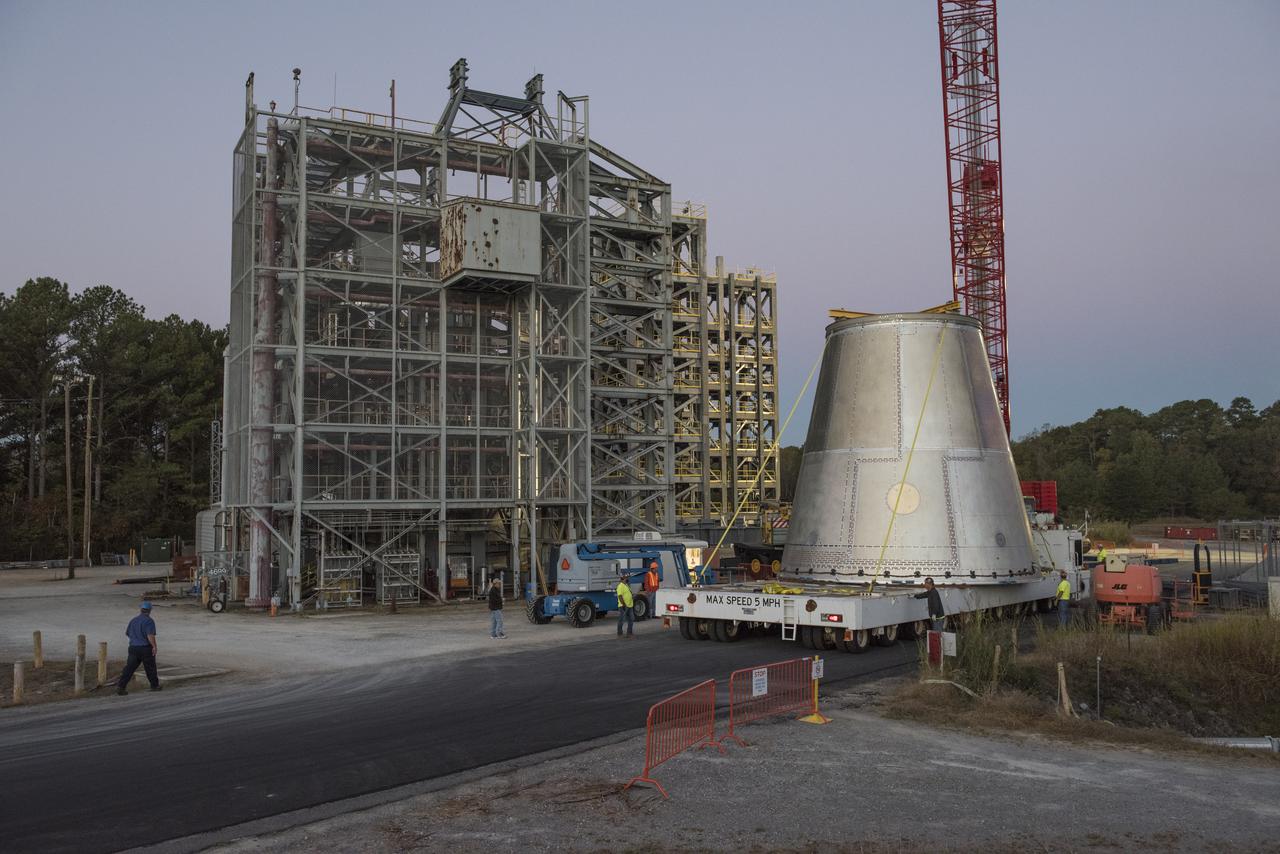
A SLS LAUNCH VEHICLE STAGE ADAPTER IS MOVED FROM THE VERTICAL WELD TOOL STATION IN MSFC’S BUILDING 4755 TO THE WEST TEST AREA’S TEST STAND 4699 WHERE IT WILL UNDERGO FURTHER TESTING OF ITS ABILITY TO WITHSTAND THE STRESSES RELATED TO LAUNCH AND SPACE TRAVEL.
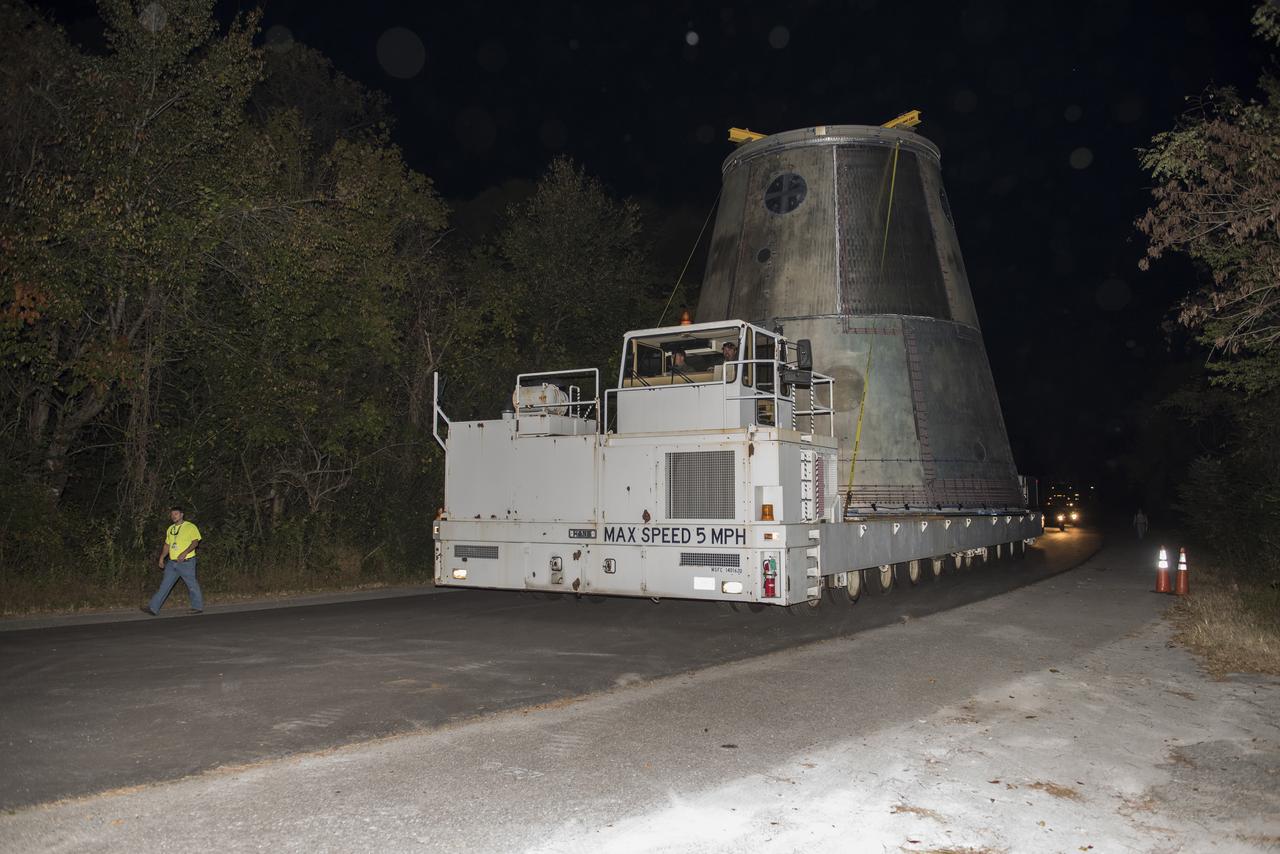
A SLS LAUNCH VEHICLE STAGE ADAPTER IS MOVED FROM THE VERTICAL WELD TOOL STATION IN MSFC’S BUILDING 4755 TO THE WEST TEST AREA’S TEST STAND 4699 WHERE IT WILL UNDERGO FURTHER TESTING OF ITS ABILITY TO WITHSTAND THE STRESSES RELATED TO LAUNCH AND SPACE TRAVEL.
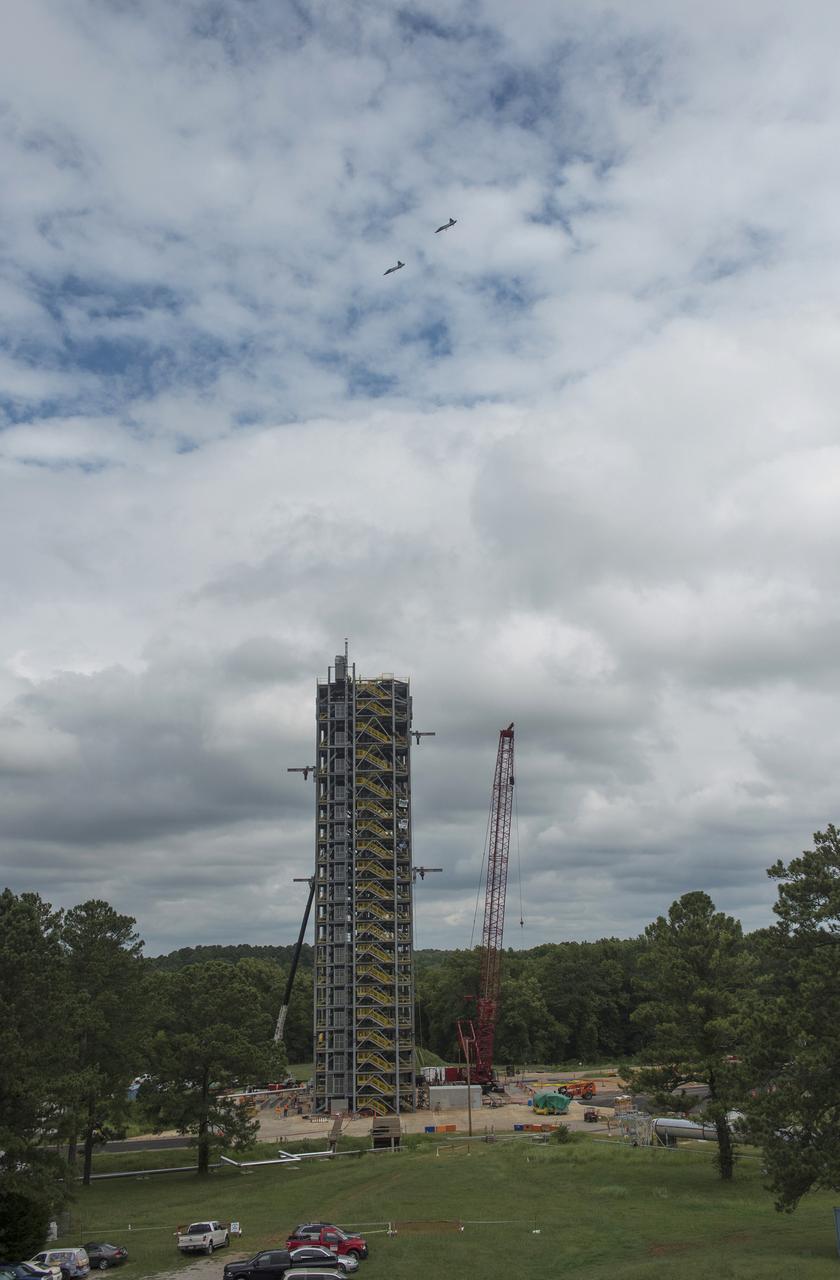
ASTRONAUTS BARRY "BUTCH” WILMORE, VICTOR GLOVER, DON PETTIT AND STEPHANIE WILSON SOAR ABOVE TEST STAND 4693 IN #NASA T-38 JETS ON AUG. 9, 2016
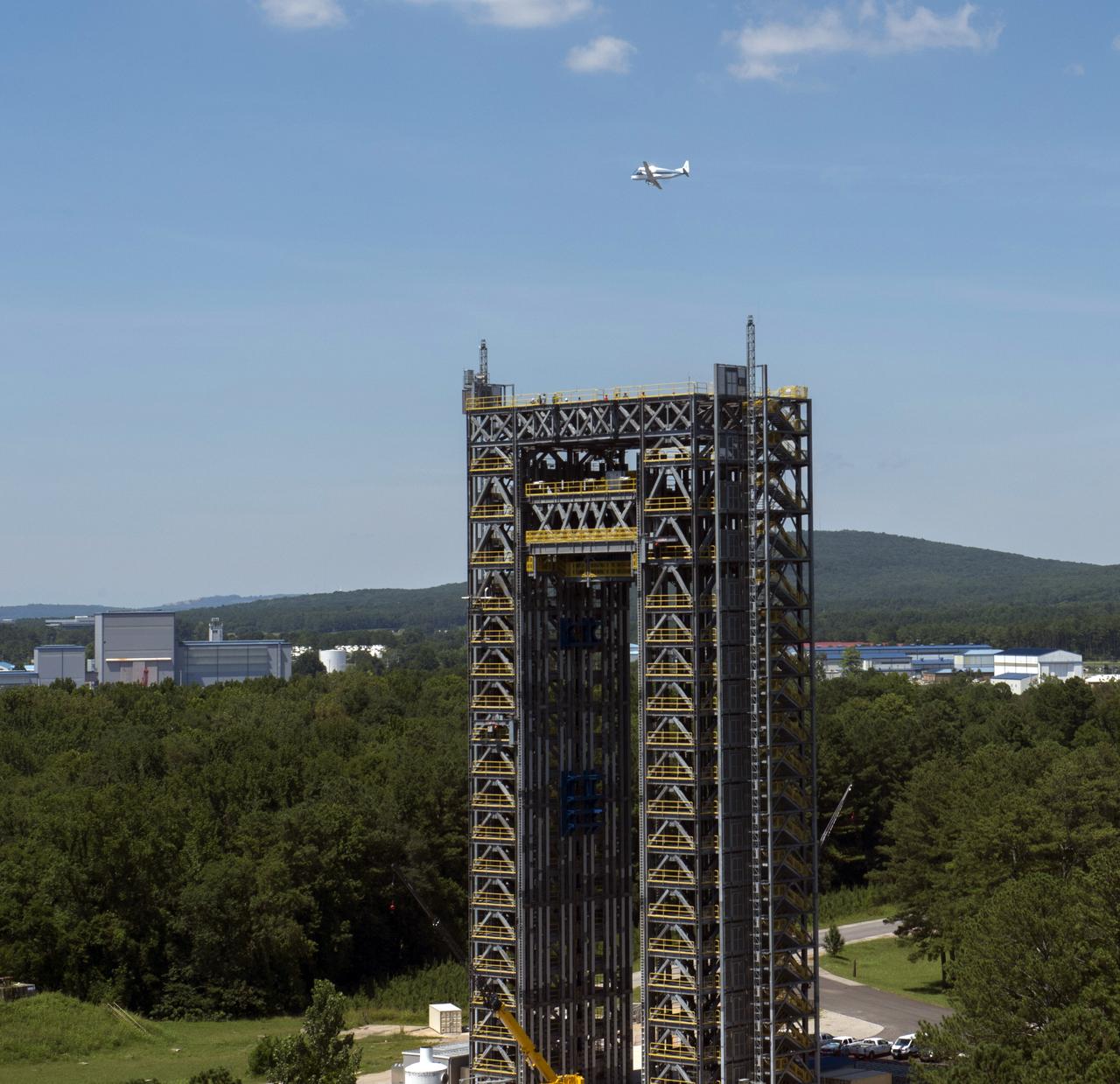
NASA's Super Guppie flies over Marshall Space Flight Center's test stand 4693 in the west test area.
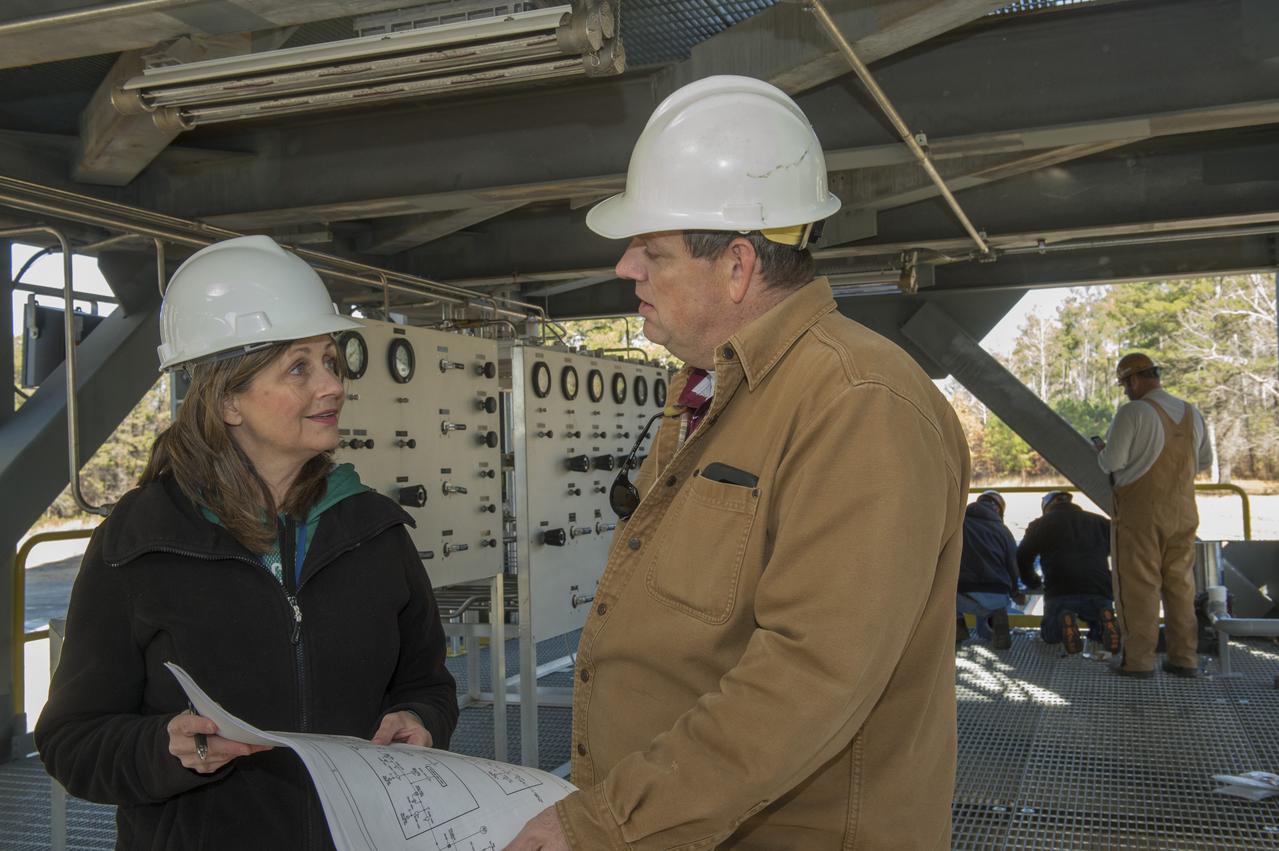
TARA MARSHALL, LEFT, A MARSHALL ENGINEER, TALKS ABOUT THE INSTALLATION OF A PRESSURIZATION CONTROL PANEL AT TEST STAND 4693 WITH MIKE NICHOLS, LEAD TEST ENGINEER FOR THE SPACE LAUNCH SYSTEM LIQUID HYDROGEN TANK STRUCTURAL TEST ARTICLE.
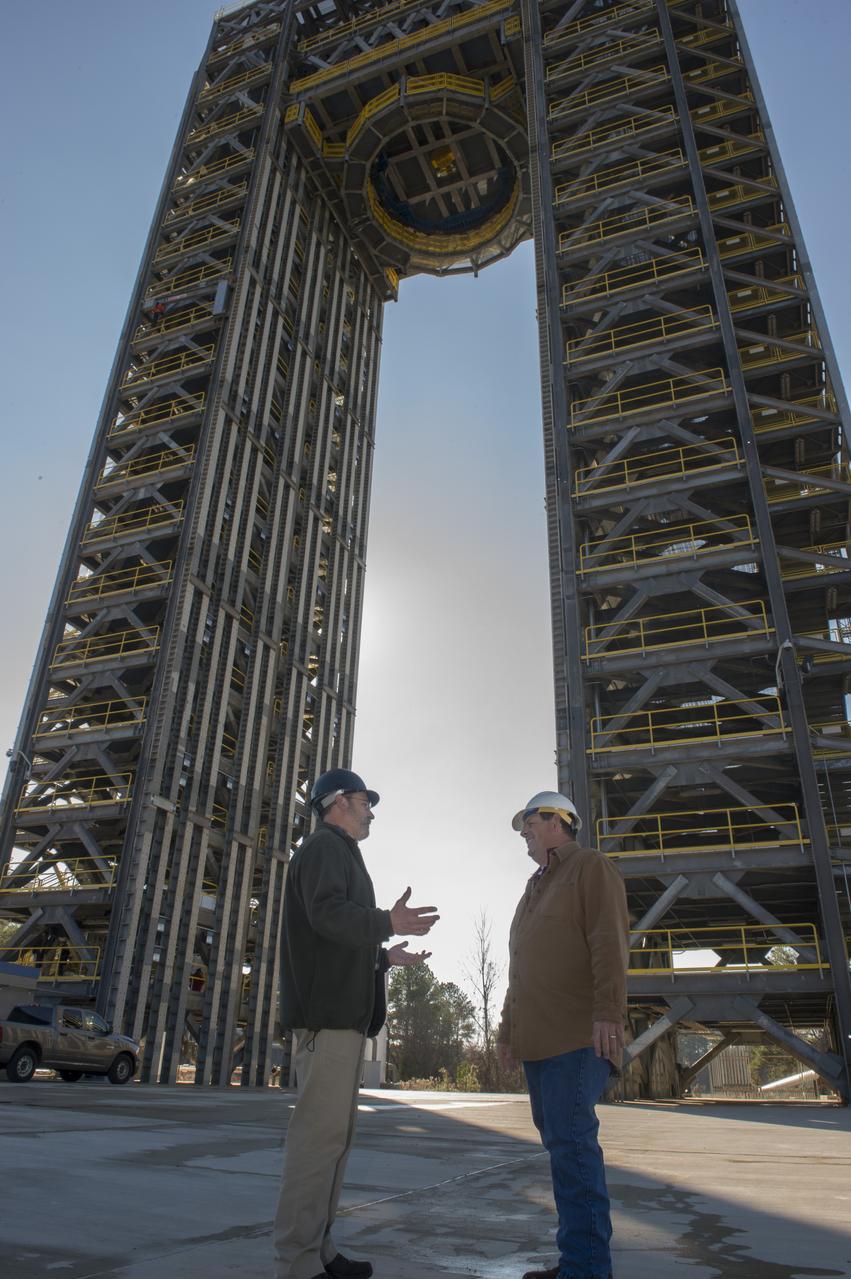
ROBERT BOBO, LEFT, AND MIKE NICHOLS TALK BENEATH THE 221-FOOT-TALL TEST STAND 4693, THE LARGEST OF TWO NEW SPACE LAUNCH SYSTEM TEST STANDS AT MSFC. BOBO MANAGES SLS STRUCTURAL STRENGTH TESTING, AND NICHOLS IS LEAD TEST ENGINEER FOR THE SLS LIQUID HYDROGEN TANK.
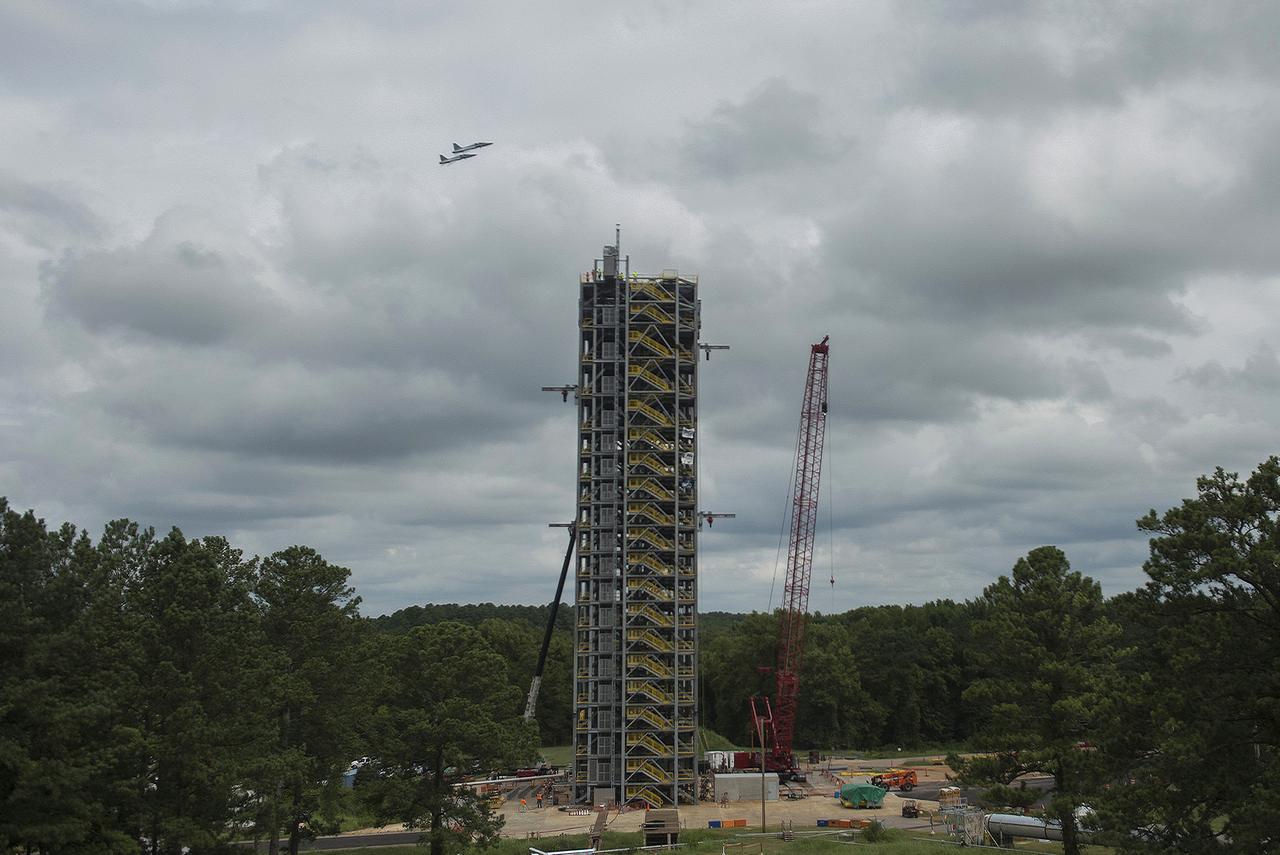
ASTRONAUTS BARRY "BUTCH” WILMORE, VICTOR GLOVER, DON PETTIT AND STEPHANIE WILSON SOAR ABOVE TEST STAND 4693 IN #NASA T-38 JETS ON AUG. 9, 2016
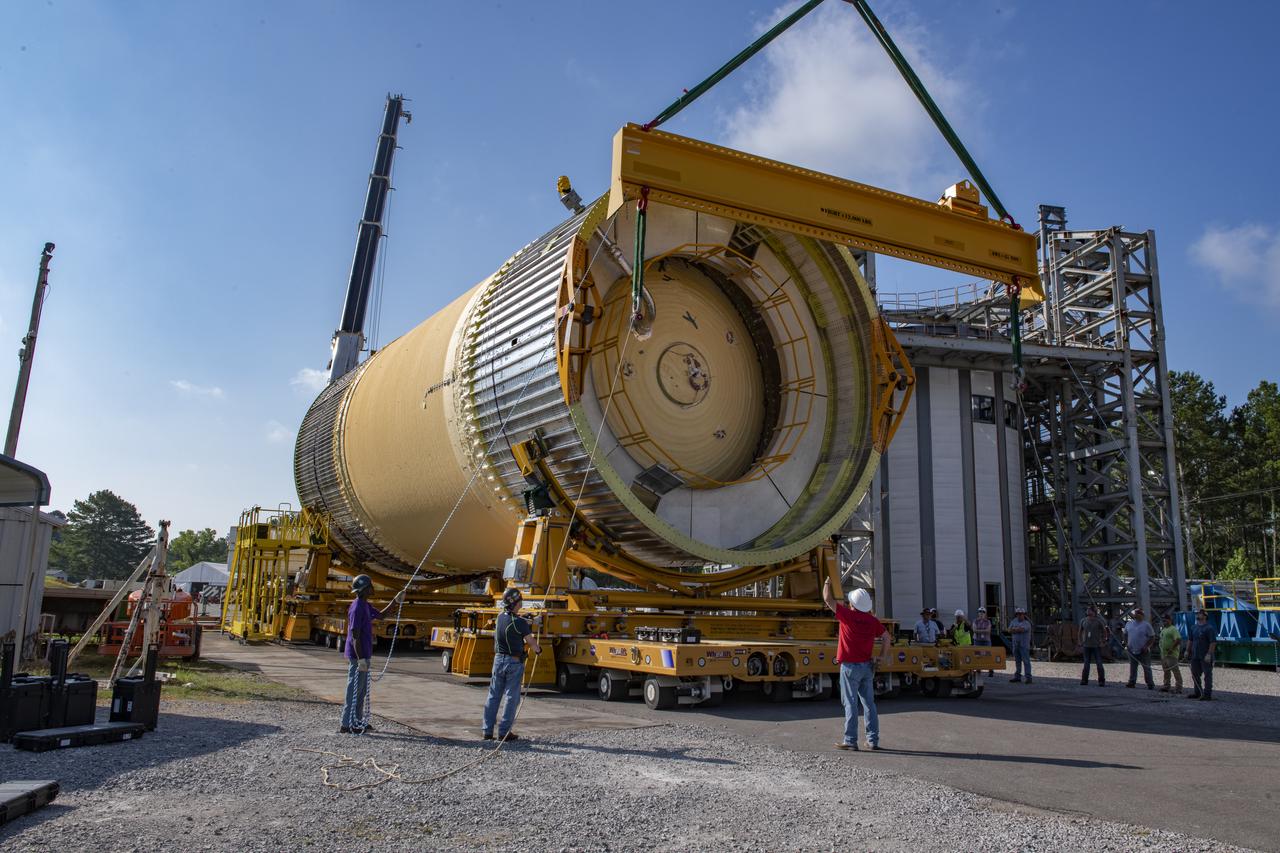
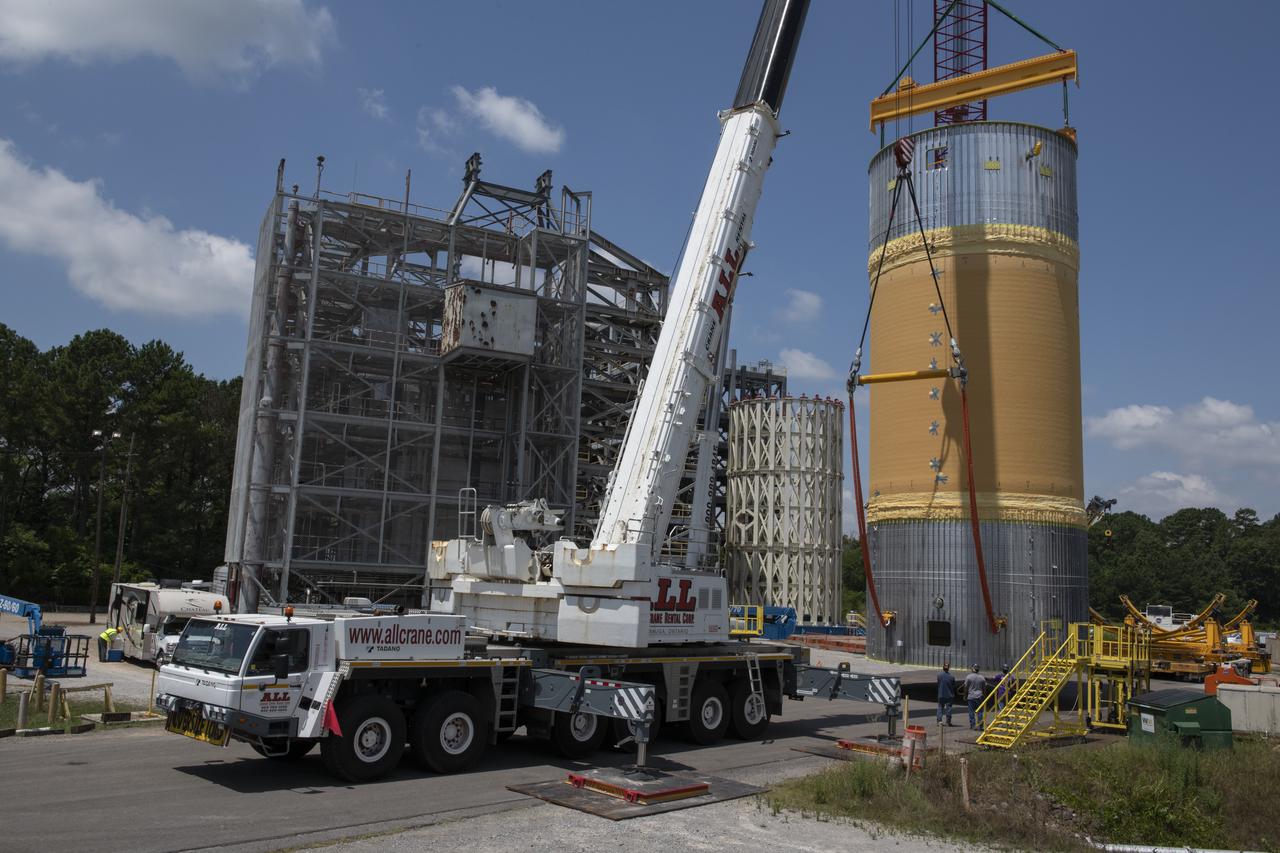
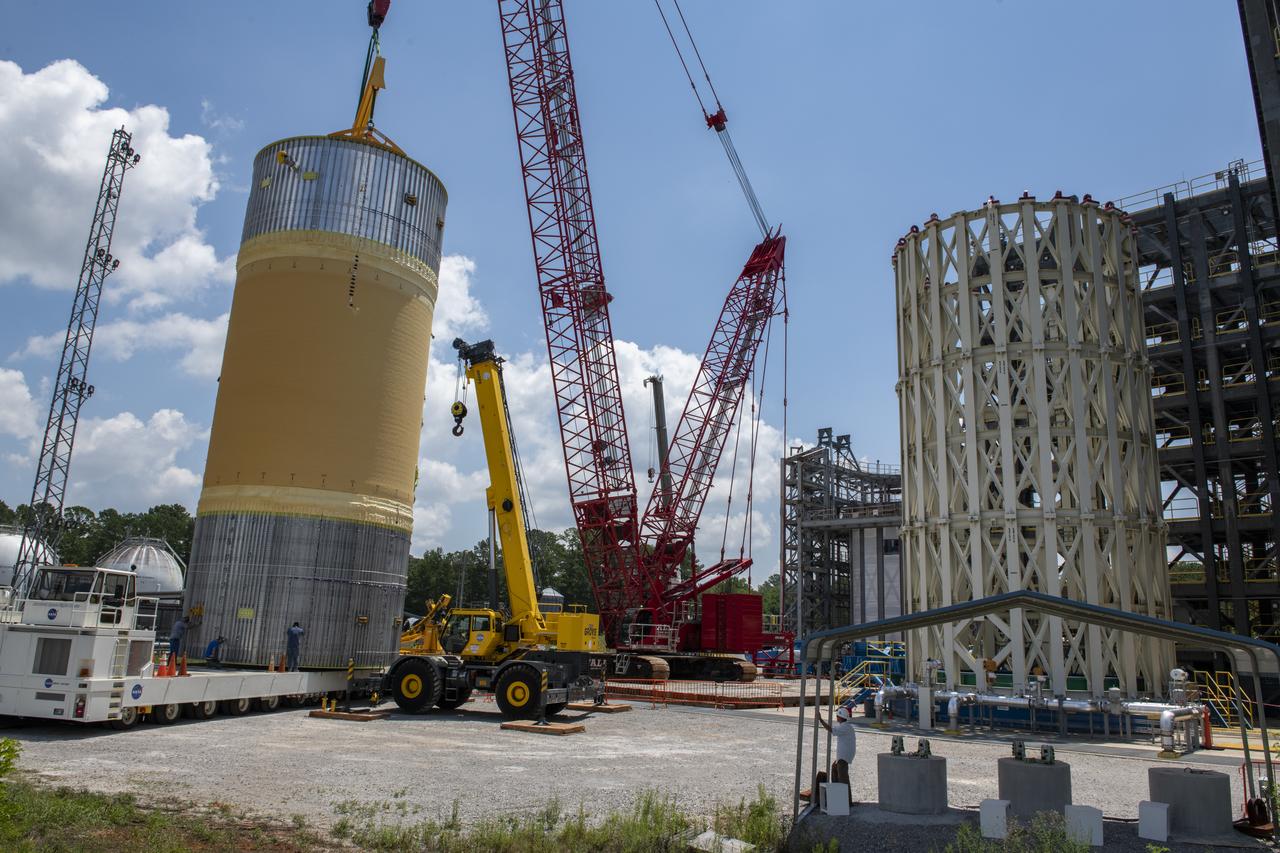
The Liquid Oxygen Test Article was lifted onto the Kmag. Various electronic components will be installed then the article will be moved into test stand 4697.
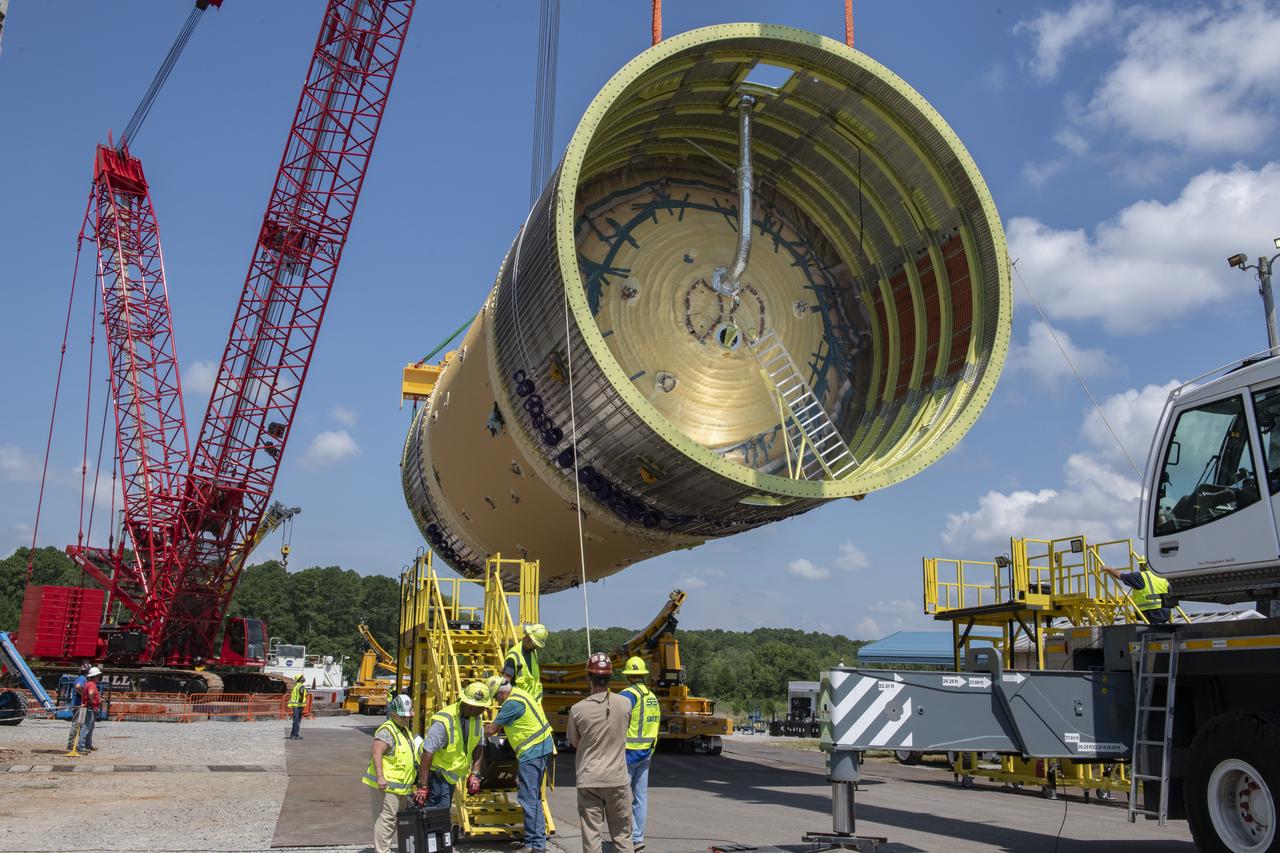
The Liquid Oxygen Test Article was lifted onto the Kmag. Various electronic components will be installed then the article will be moved into test stand 4697.
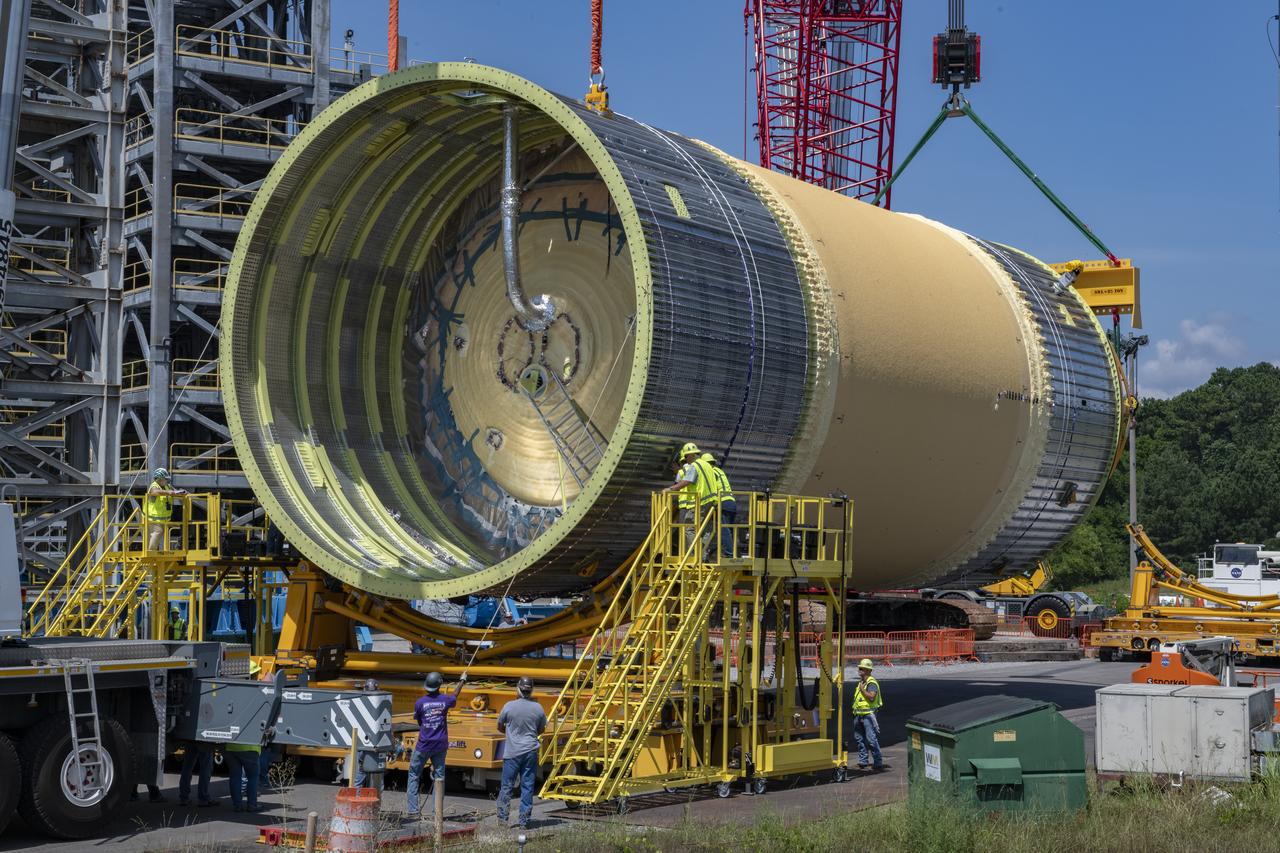
The Liquid Oxygen Test Article was lifted onto the Kmag. Various electronic components will be installed then the article will be moved into test stand 4697.
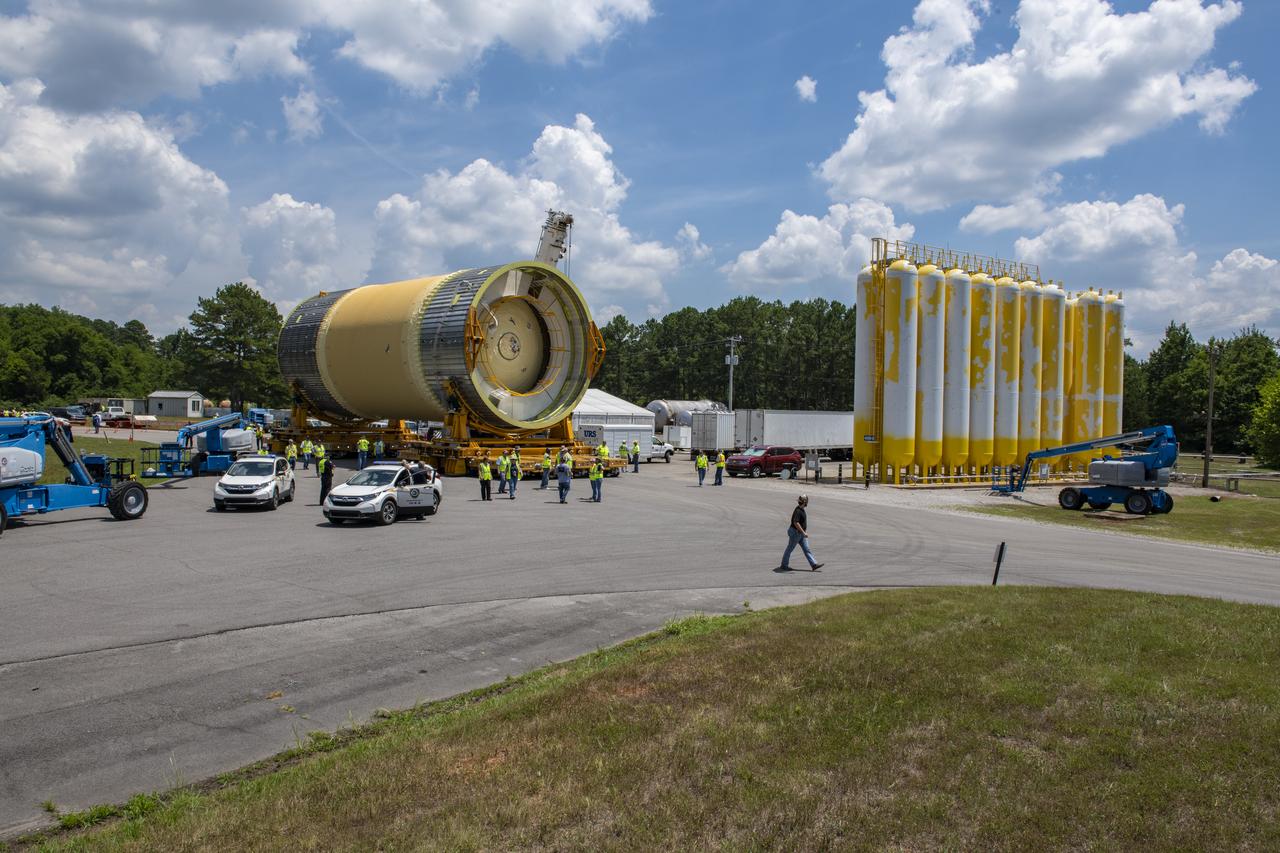
The Liquid Oxygen (LOX) tank was moved from the Pegasus barge to the west test area for placement in test stand 4697.
The Liquid Oxygen Test Article was lifted onto the Kmag. Various electronic components will be installed then the article will be moved into test stand 4697.
The Liquid Oxygen Test Article was lifted onto the Kmag. Various electronic components will be installed then the article will be moved into test stand 4697.
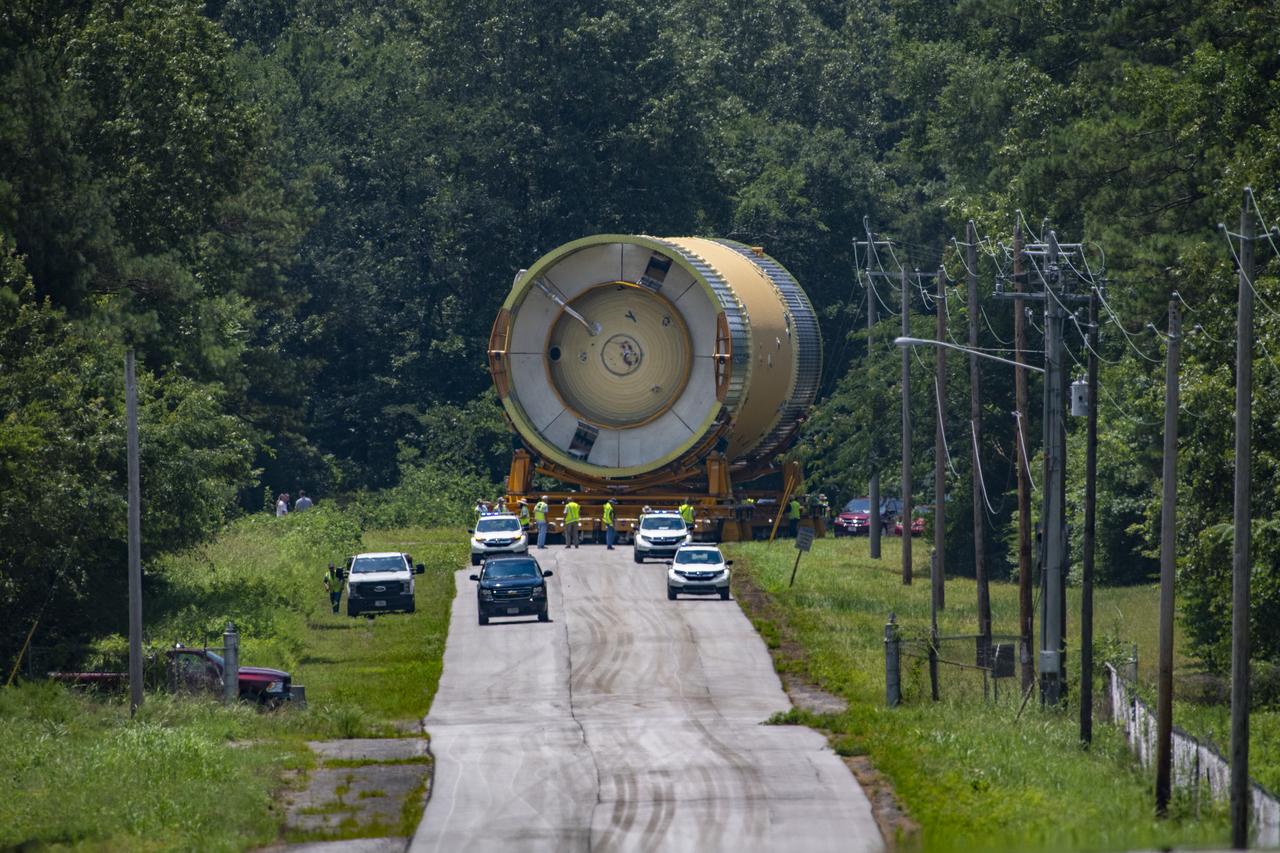
The Liquid Oxygen (LOX) tank was moved from the Pegasus barge to the west test area for placement in test stand 4697.
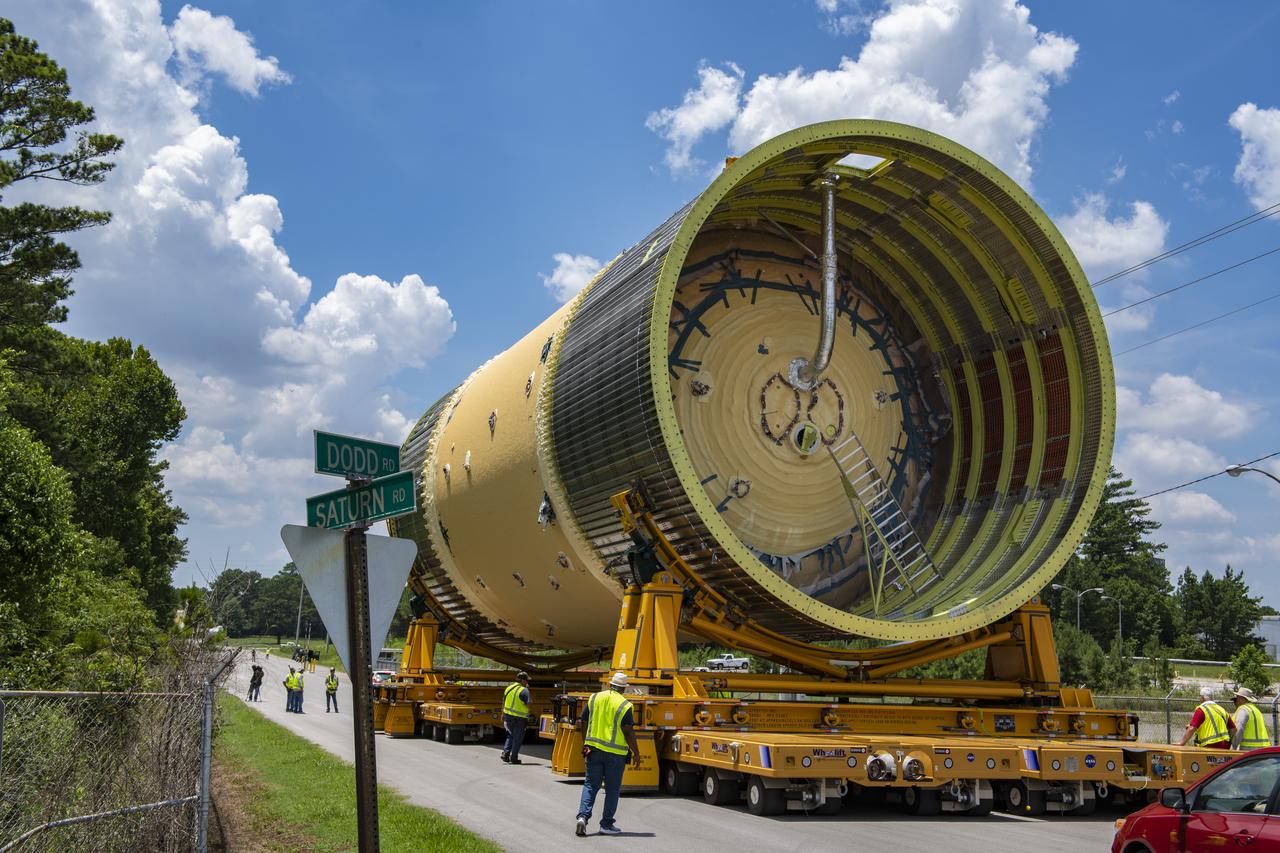
The Liquid Oxygen (LOX) tank was moved from the Pegasus barge to the west test area for placement in test stand 4697.
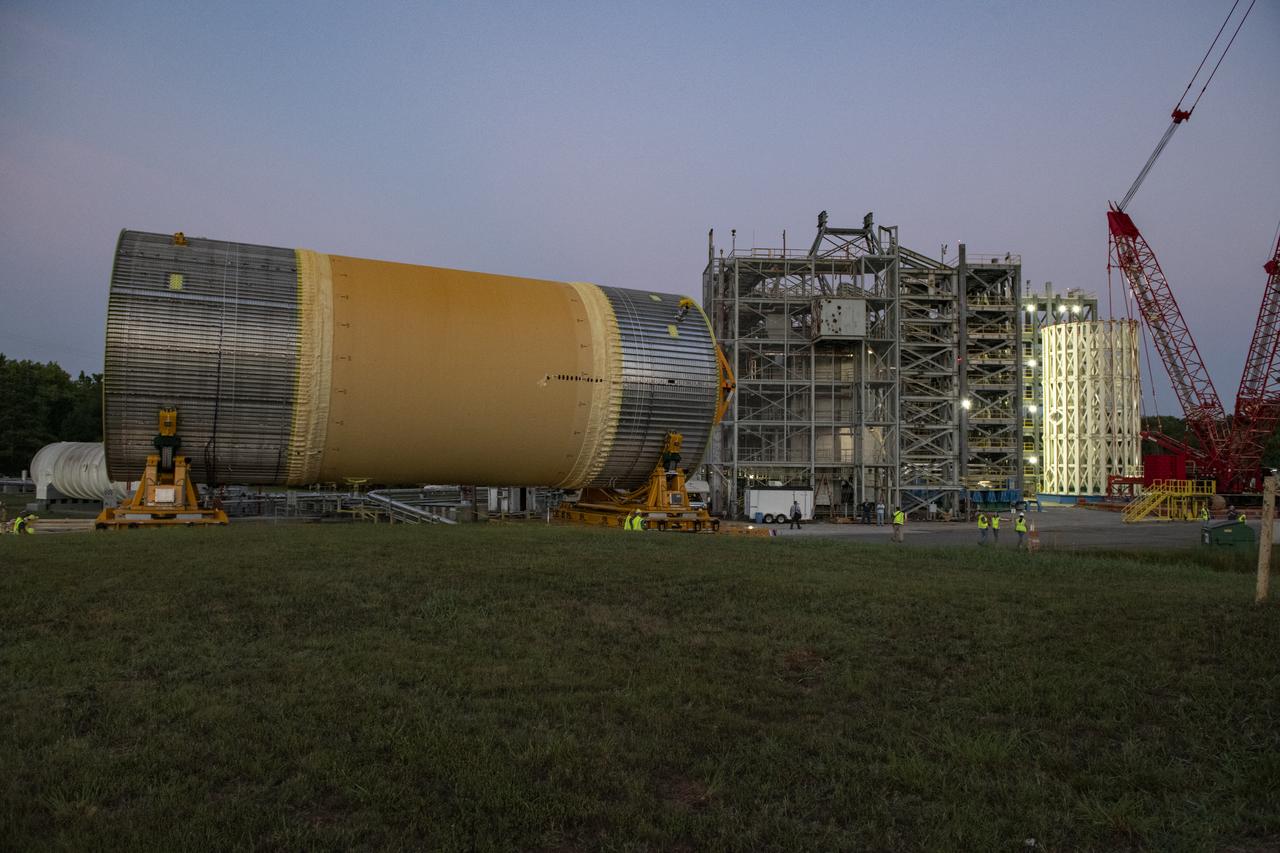
The Liquid Oxygen Test Article was lifted onto the Kmag. Various electronic components will be installed then the article will be moved into test stand 4697.
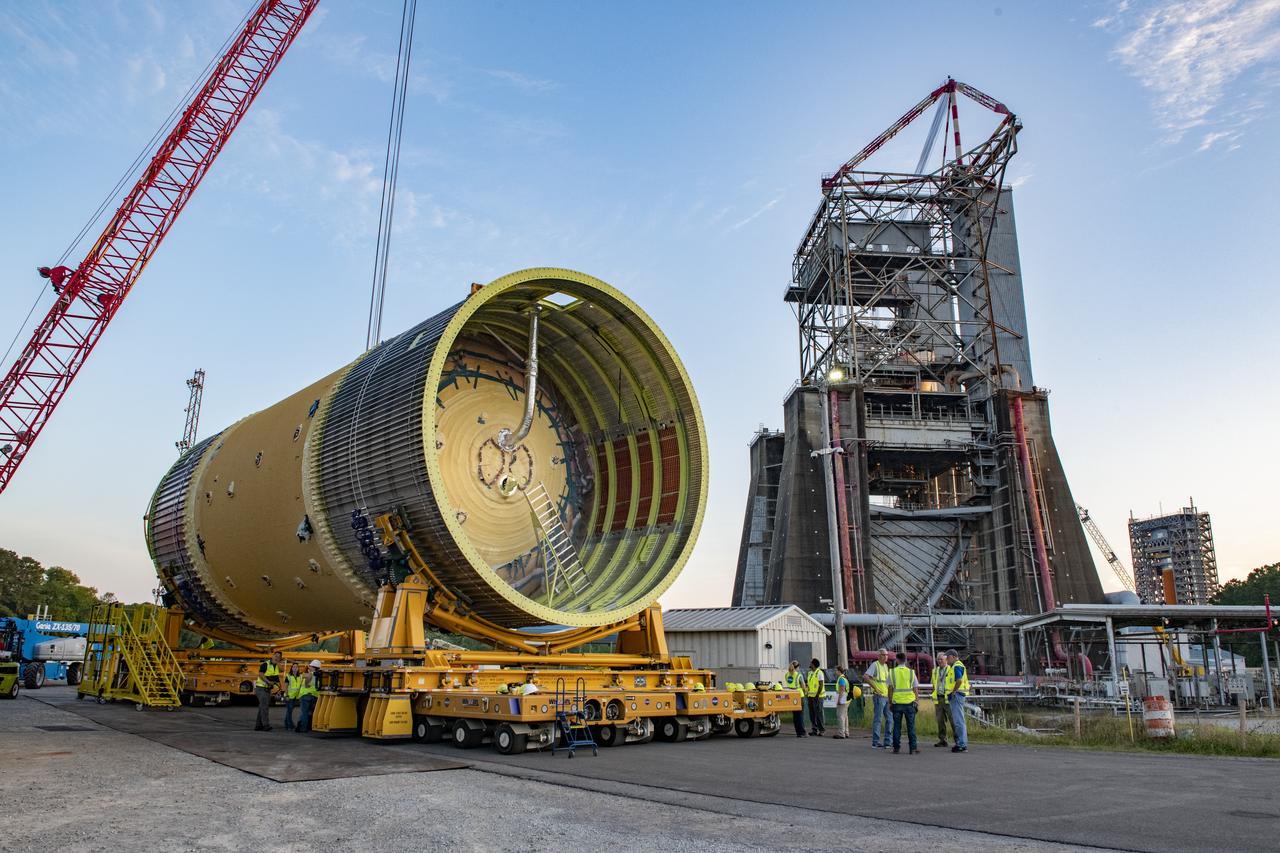
The Liquid Oxygen Test Article was lifted onto the Kmag. Various electronic components will be installed then the article will be moved into test stand 4697.
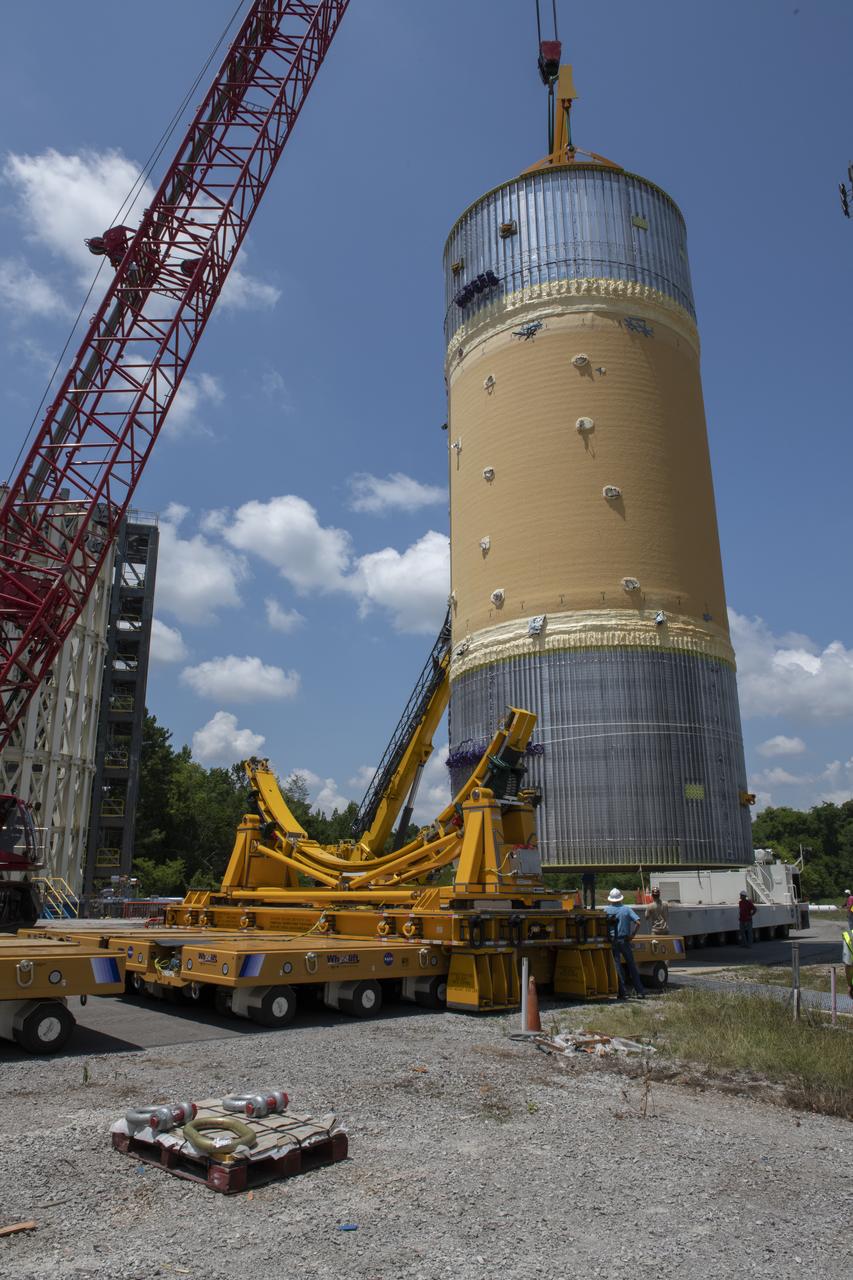
The Liquid Oxygen Test Article was lifted onto the Kmag. Various electronic components will be installed then the article will be moved into test stand 4697.
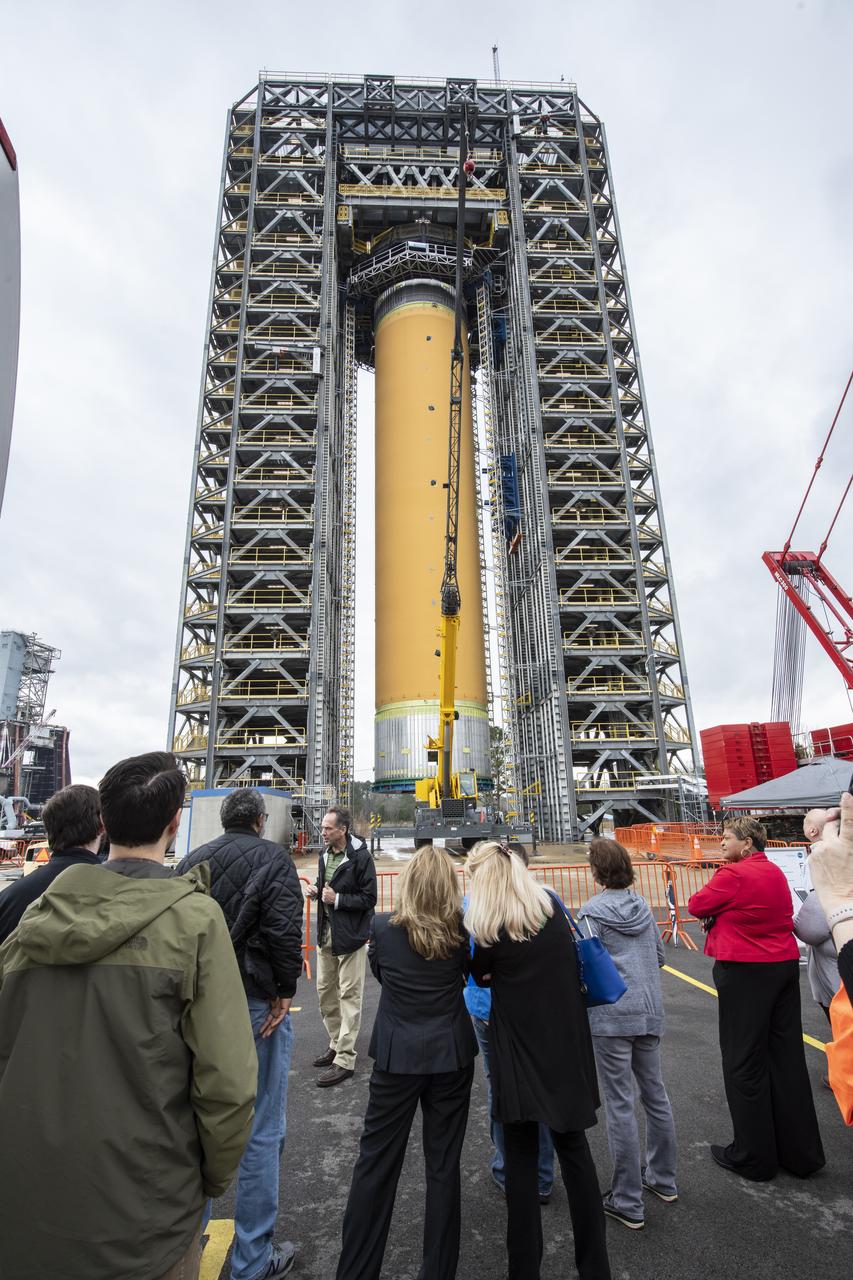
More than 700 NASA Marshall Space Flight Center team members, Boeing employees, Team Redstone participants and local officials filled 17 buses Feb. 6 to view the liquid hydrogen tank structural test article installed in Test Stand 4693 at Marshall. The 149-foot liquid hydrogen tank structural test article is the largest piece of structural test hardware for the core stage of NASA’s Space Launch System (SLS). At 221 feet tall, Test Stand 4693 is the largest test stand at Marshall -- as well as one of the newest. During testing, dozens of hydraulic cylinders in the test stand will push and pull on the tank to simulate the stresses and loads it will endure during liftoff and flight for lunar missions.
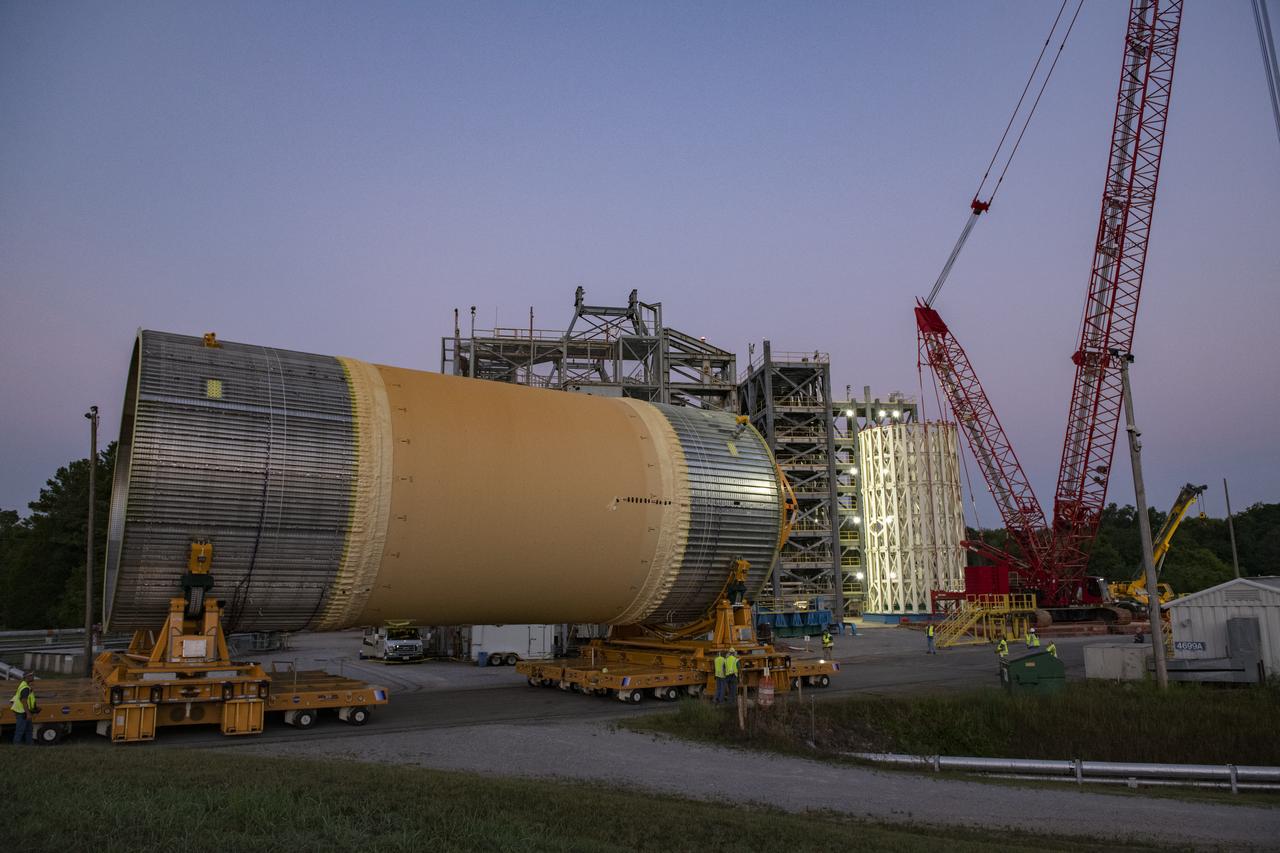
The Liquid Oxygen Test Article was lifted onto the Kmag. Various electronic components will be installed then the article will be moved into test stand 4697.
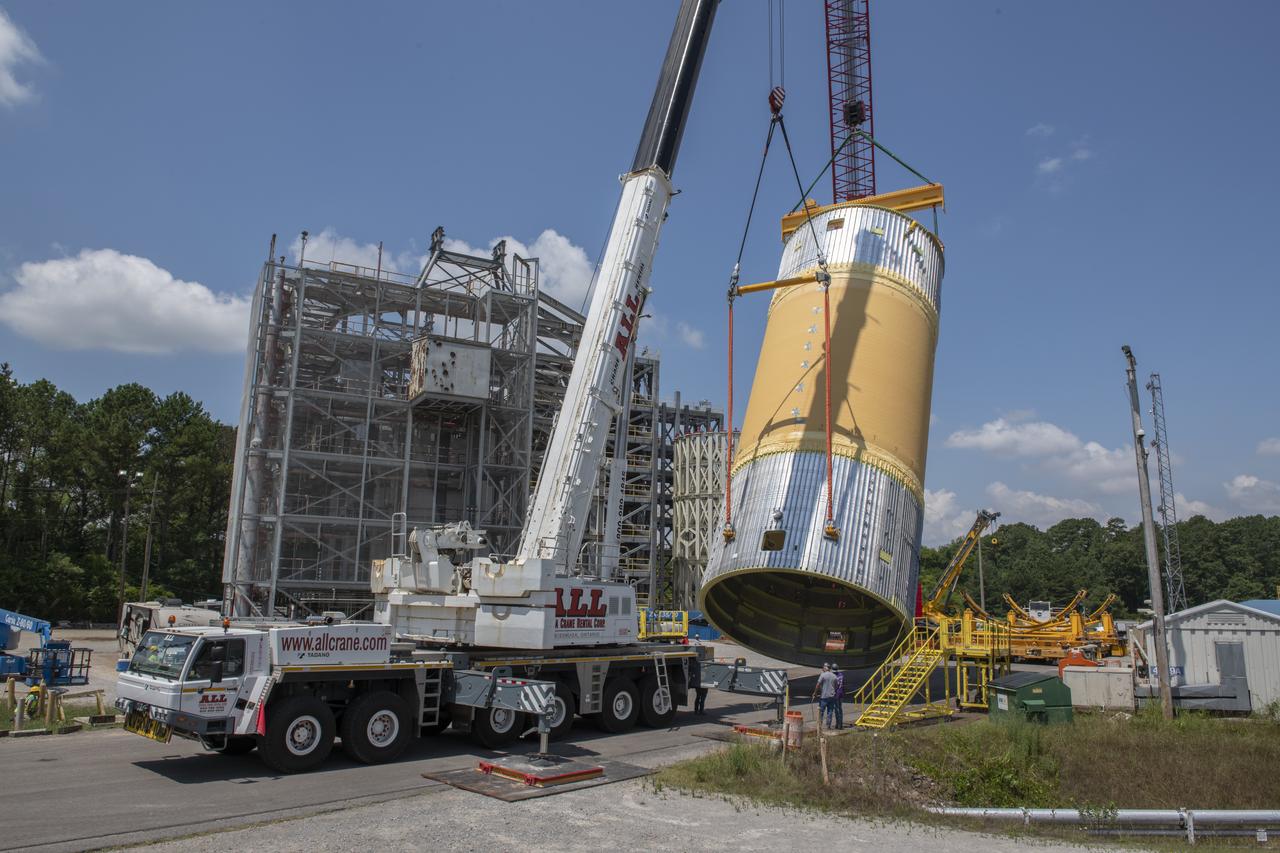
The Liquid Oxygen Test Article was lifted onto the Kmag. Various electronic components will be installed then the article will be moved into test stand 4697.
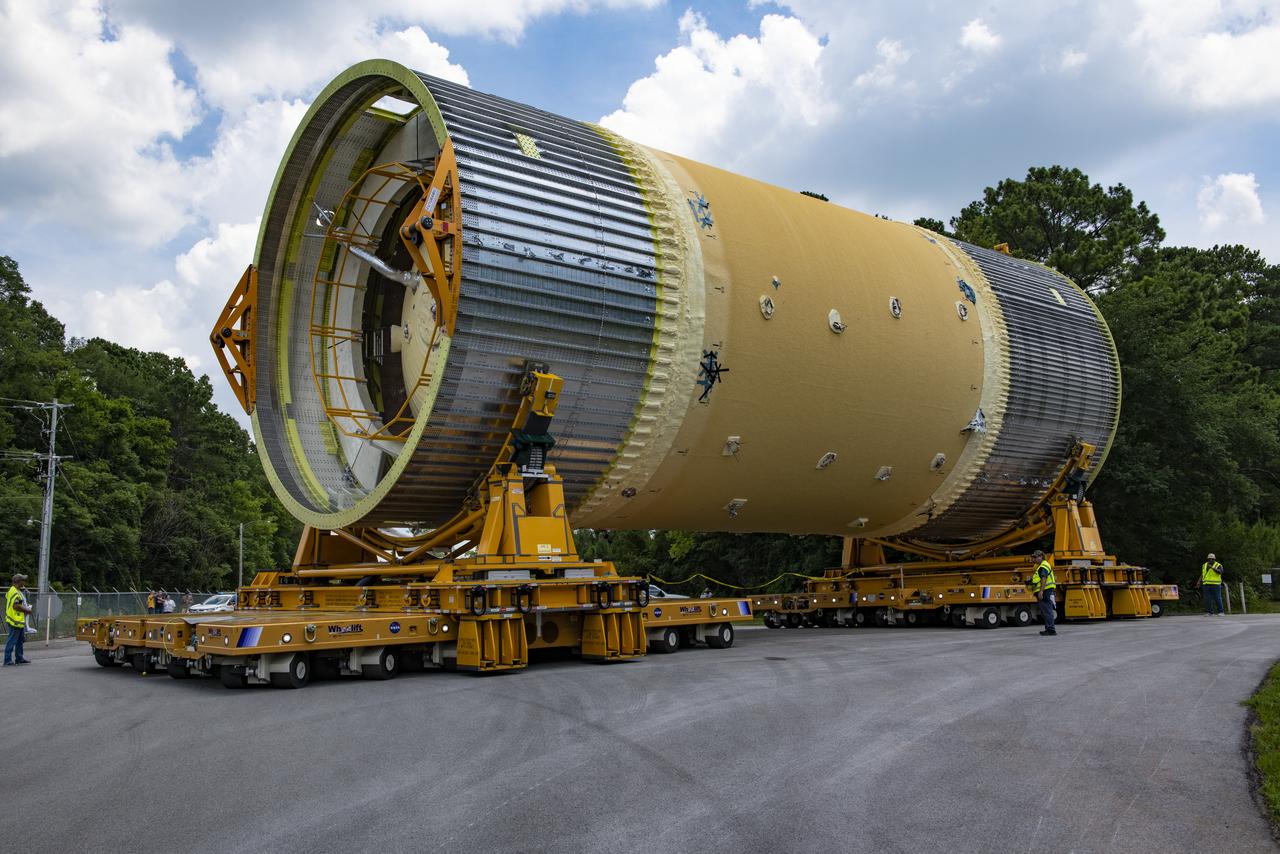
The Liquid Oxygen (LOX) tank was moved from the Pegasus barge to the west test area for placement in test stand 4697.
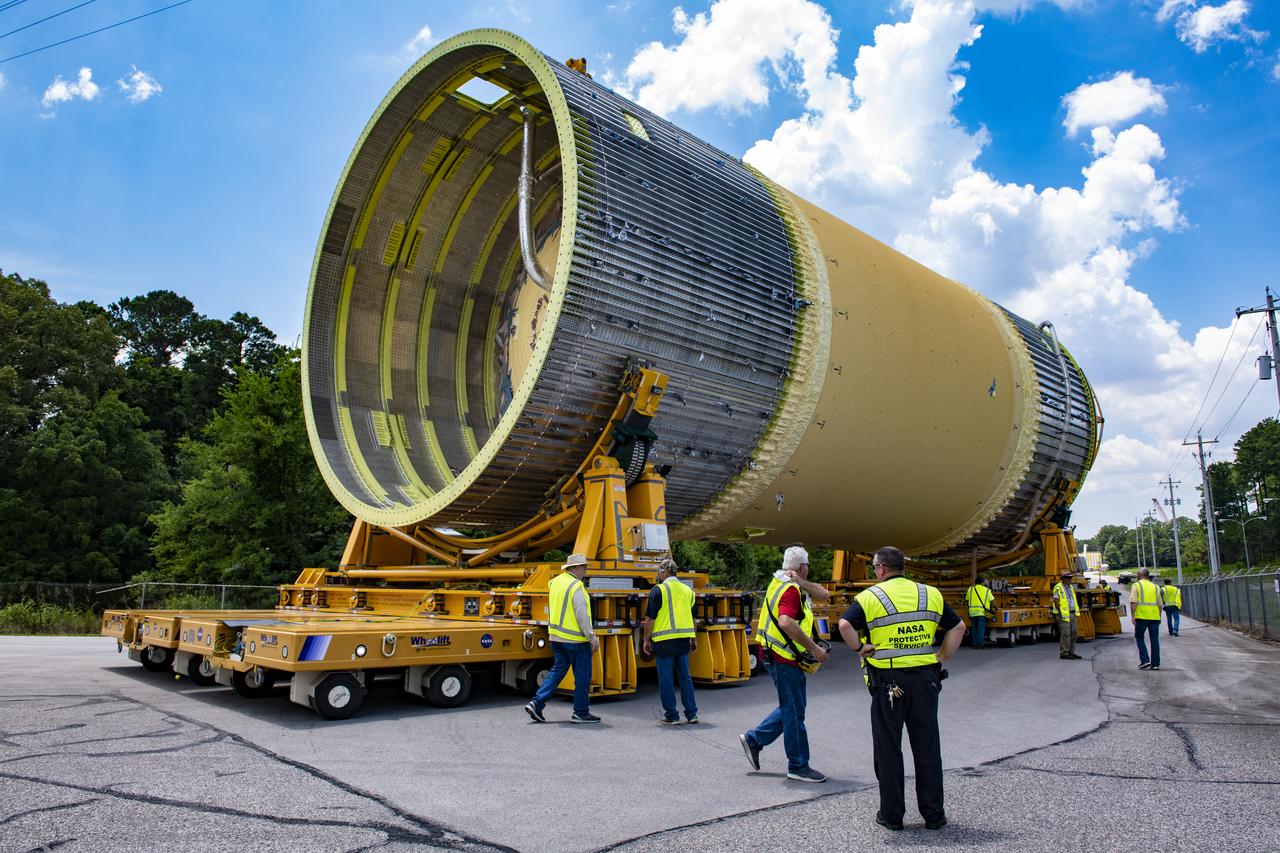
The Liquid Oxygen (LOX) tank was moved from the Pegasus barge to the west test area for placement in test stand 4697.
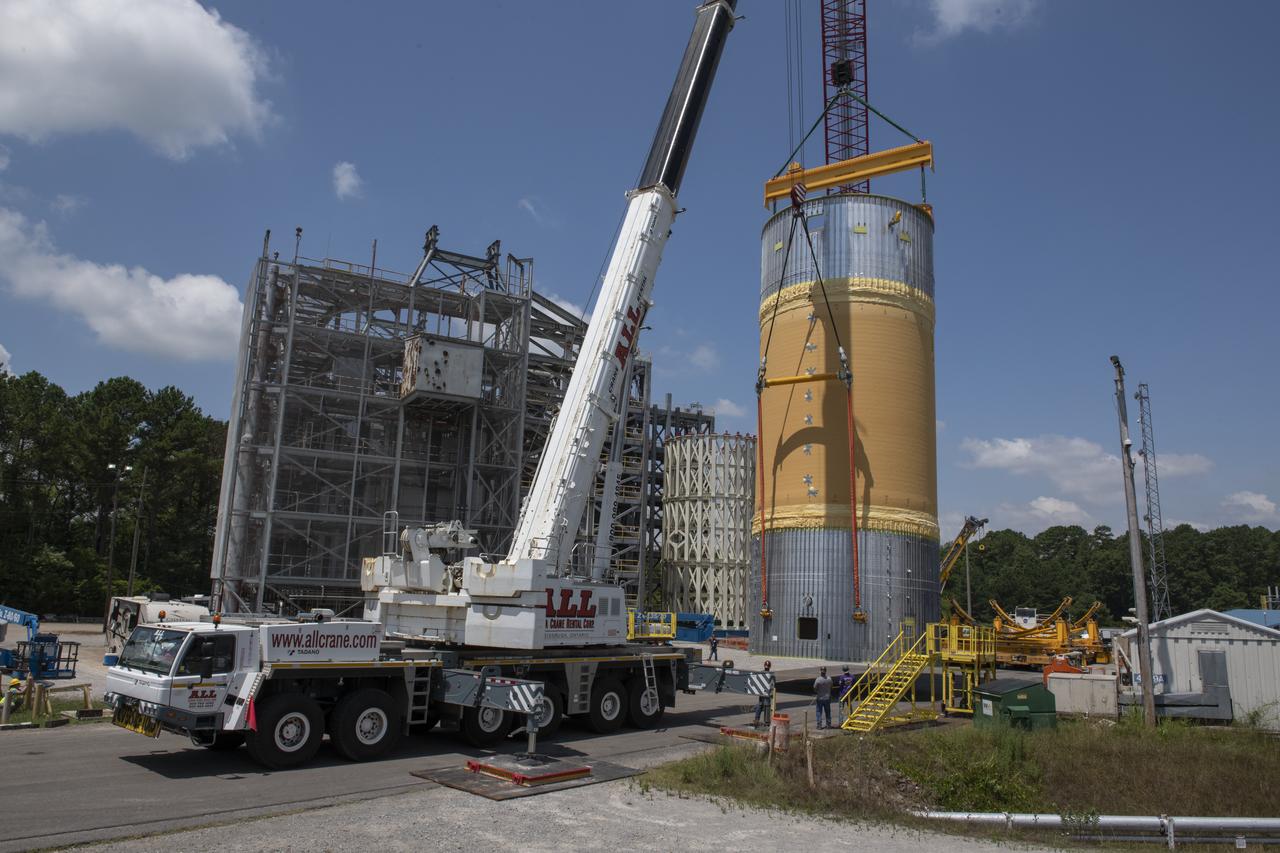
The Liquid Oxygen Test Article was lifted onto the Kmag. Various electronic components will be installed then the article will be moved into test stand 4697.

The Liquid Oxygen (LOX) tank was moved from the Pegasus barge to the west test area for placement in test stand 4697.
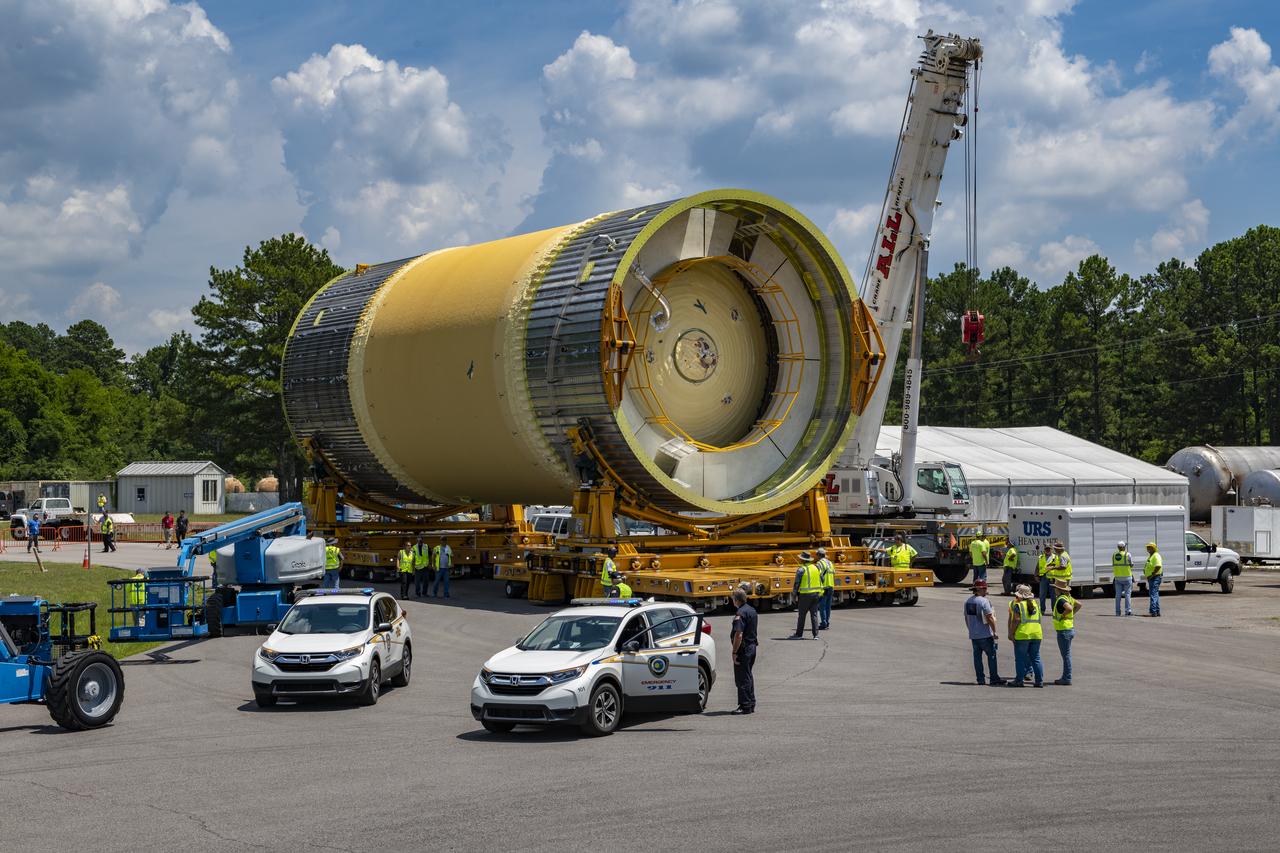
The Liquid Oxygen (LOX) tank was moved from the Pegasus barge to the west test area for placement in test stand 4697.
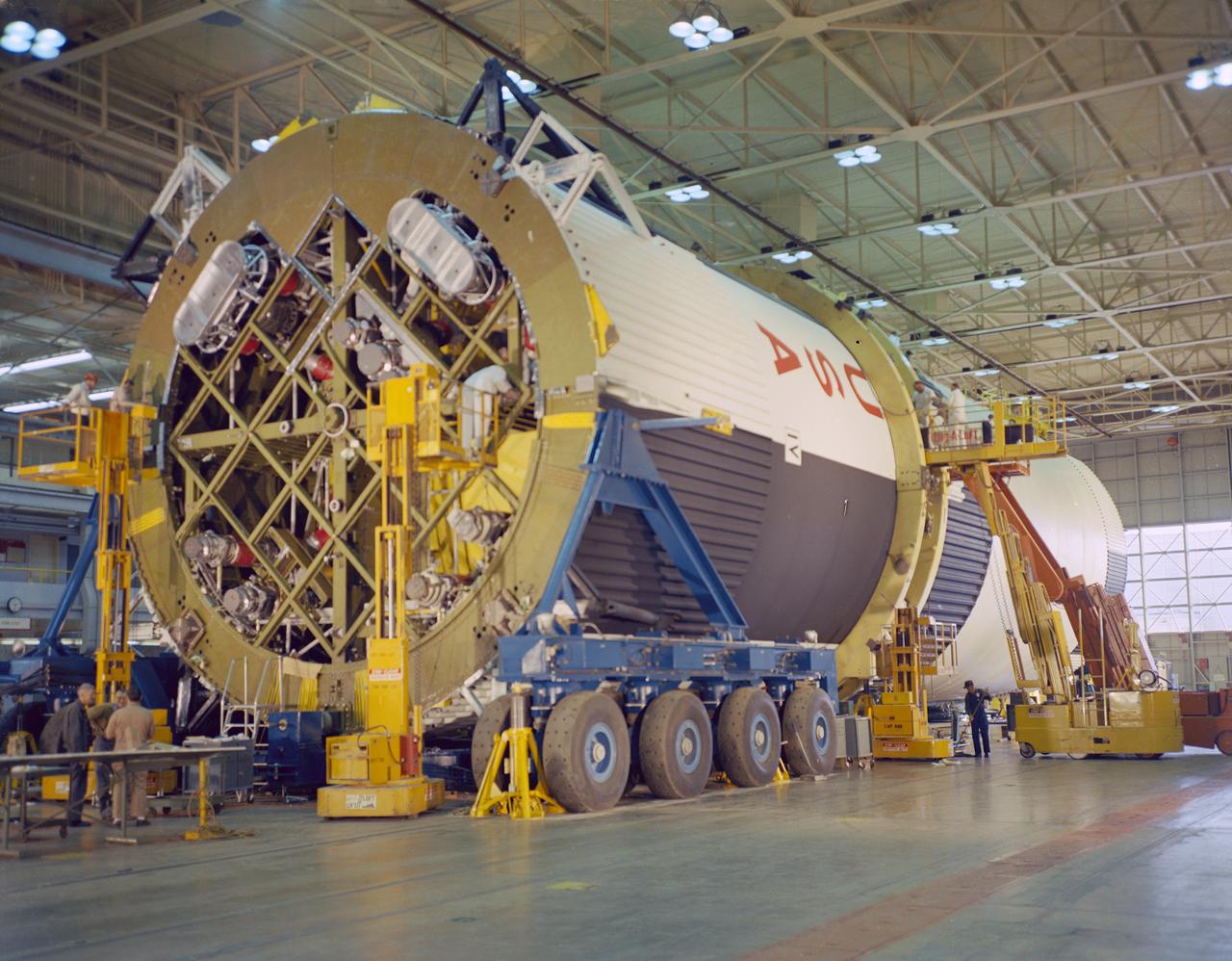
At the Marshall Space Flight Center (MSFC), the fuel tank assembly for the Saturn V S-IC-T (static test stage) fuel tank assembly is mated to the liquid oxygen (LOX) tank in building 4705. This stage underwent numerous static firings at the newly-built S-IC Static Test Stand at the MSFC west test area. The S-IC (first) stage used five F-1 engines that produced a total thrust of 7,500,000 pounds as each engine produced 1,500,000 pounds of thrust. The S-IC stage lifted the Saturn V vehicle and Apollo spacecraft from the launch pad.
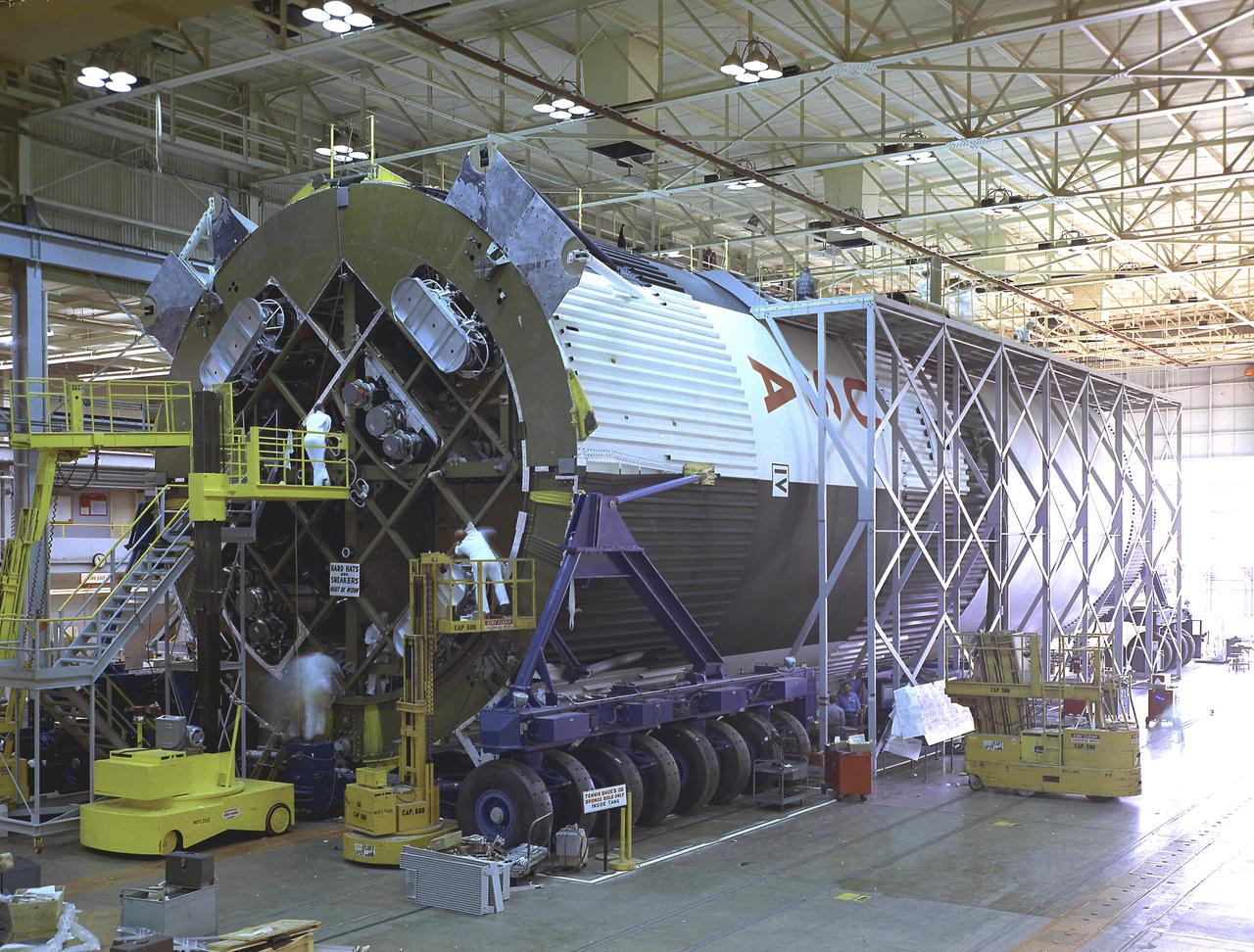
Pictured is the Saturn V S-IC-T stage (static testing stage) being assembled in the horizontal assembly station at the Marshall Space Flight Center (MSFC), building 4705. This stage underwent numerous static firings at the newly-built S-IC Static Test Stand at the MSFC west test area. The S-IC (first) stage used five F-1 engines that produced a total thrust of 7,500,000 pounds as each engine produced 1,500,000 pounds of thrust. The S-IC stage lifted the Saturn V vehicle and Apollo spacecraft from the launch pad.
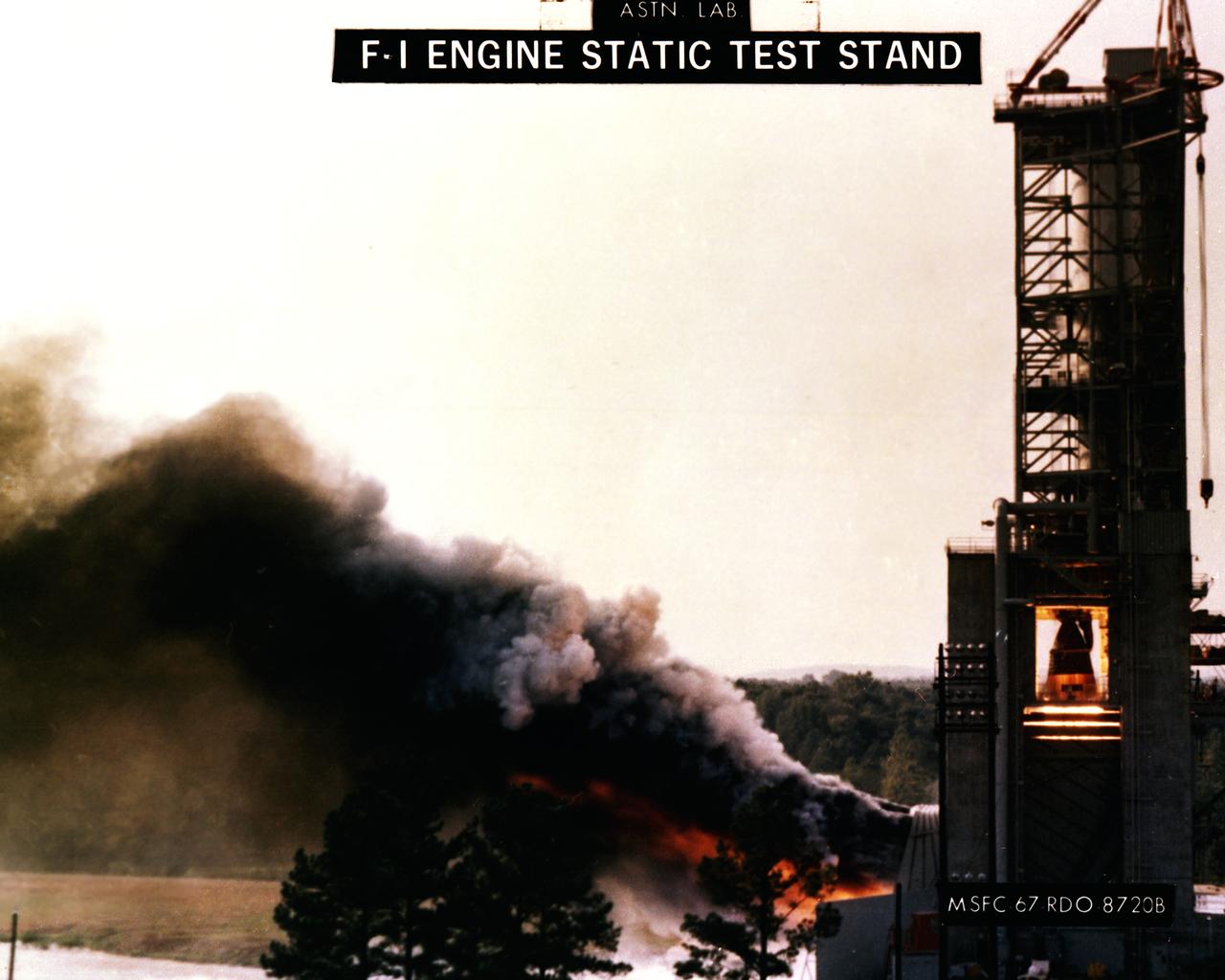
This photograph depicts the F-1 engine firing in the Marshall Space Flight Center’s F-1 Engine Static Test Stand. Construction of the S-IC Static test stand complex began in 1961 in the west test area of MSFC, and was completed in 1964. It is a vertical engine firing test stand, 239 feet in elevation and 4,600 square feet in area at the base, designed to assist in the development of the F-1 Engine. Capability is provided for static firing of 1.5 million pounds of thrust using liquid oxygen and kerosene. The foundation of the stand is keyed into the bedrock approximately 40 feet below grade.
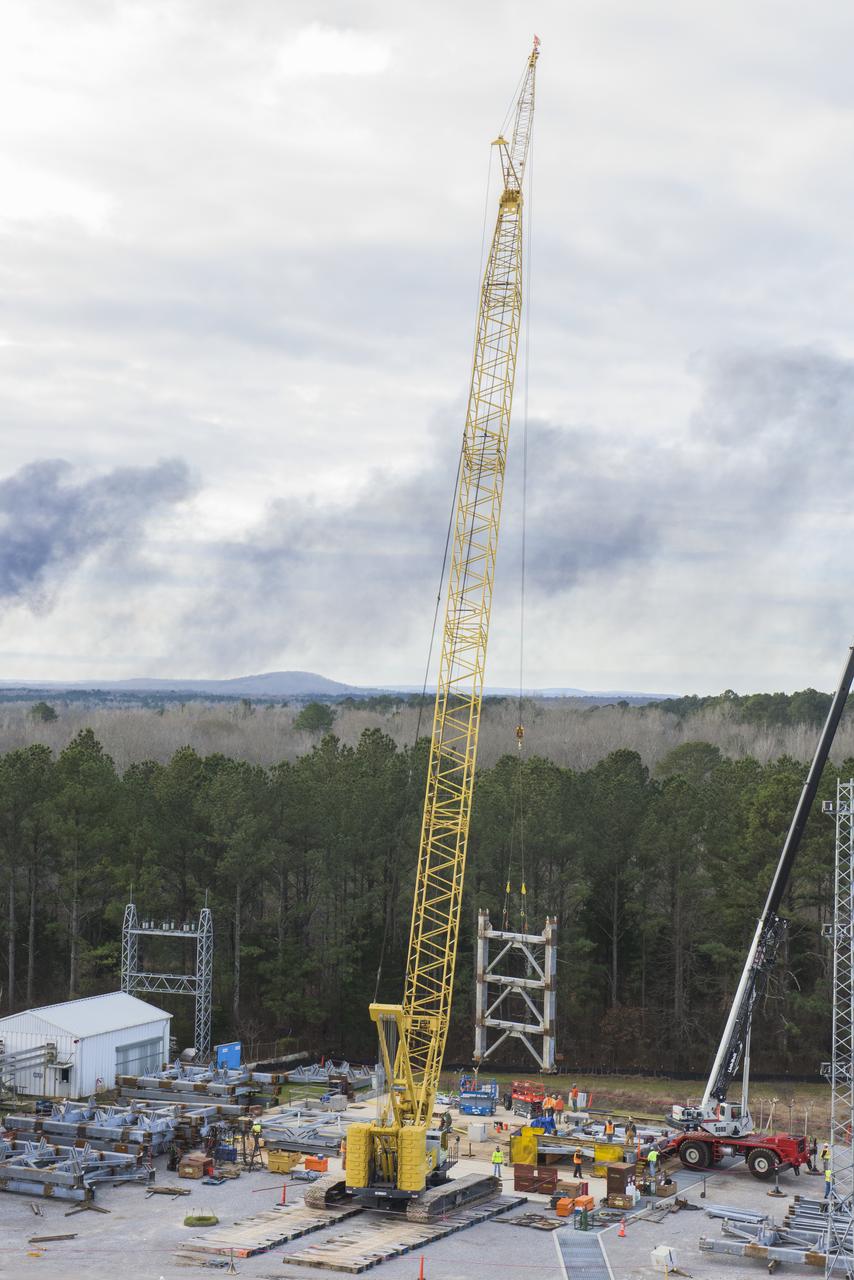
A CRANE MOVES THE FIRST STEEL TIER TO BE BOLTED INTO PLACE ON JAN. 6, FOR WELDING OF A SECOND NEW STRUCTURAL TEST STAND AT NASA'S MARSHALL SPACE FLIGHT CENTER IN HUNTSVILLE, ALABAMA -- CRITICAL TO DEVELOPMENT OF NASA'S SPACE LAUNCH SYSTEM. WHEN COMPLETED THIS SUMMER, THE 85-FOOT-TALL TEST STAND 4697 WILL USE HYDRAULIC CYLINDERS TO SUBJECT THE LIQUID OXYGEN TANK AND HARDWARE OF THE MASSIVE SLS CORE STAGE TO THE SAME LOADS AND STRESSES IT WILL ENDURE DURING A LAUNCH. THE STAND IS RISING IN MARSHALL'S WEST TEST AREA, WHERE WORK IS ALSO UNDERWAY ON THE 215-FOOT-TALL TOWERS OF TEST STAND 4693, WHICH WILL CONDUCT SIMILAR STRUCTURAL TESTS ON THE SLS CORE STAGE'S LIQUID HYDROGEN TANK. SLS, THE MOST POWERFUL ROCKET EVER BUILT, WILL CARRY ASTRONAUTS IN NASA'S ORION SPACECRAFT ON DEEP SPACE MISSIONS, INCLUDING THE JOURNEY TO MARS.
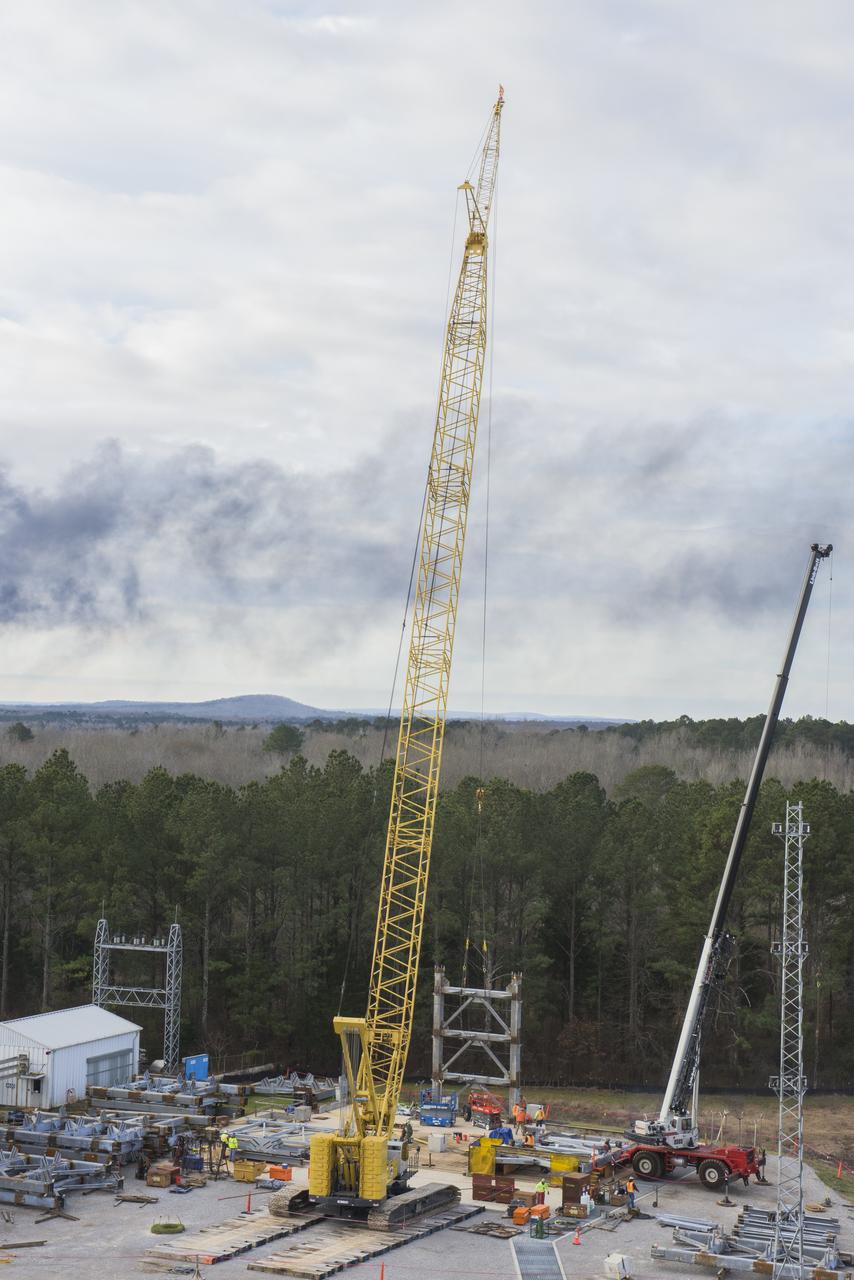
A CRANE MOVES THE FIRST STEEL TIER TO BE BOLTED INTO PLACE ON JAN. 6, FOR WELDING OF A SECOND NEW STRUCTURAL TEST STAND AT NASA'S MARSHALL SPACE FLIGHT CENTER IN HUNTSVILLE, ALABAMA -- CRITICAL TO DEVELOPMENT OF NASA'S SPACE LAUNCH SYSTEM. WHEN COMPLETED THIS SUMMER, THE 85-FOOT-TALL TEST STAND 4697 WILL USE HYDRAULIC CYLINDERS TO SUBJECT THE LIQUID OXYGEN TANK AND HARDWARE OF THE MASSIVE SLS CORE STAGE TO THE SAME LOADS AND STRESSES IT WILL ENDURE DURING A LAUNCH. THE STAND IS RISING IN MARSHALL'S WEST TEST AREA, WHERE WORK IS ALSO UNDERWAY ON THE 215-FOOT-TALL TOWERS OF TEST STAND 4693, WHICH WILL CONDUCT SIMILAR STRUCTURAL TESTS ON THE SLS CORE STAGE'S LIQUID HYDROGEN TANK. SLS, THE MOST POWERFUL ROCKET EVER BUILT, WILL CARRY ASTRONAUTS IN NASA'S ORION SPACECRAFT ON DEEP SPACE MISSIONS, INCLUDING THE JOURNEY TO MARS.
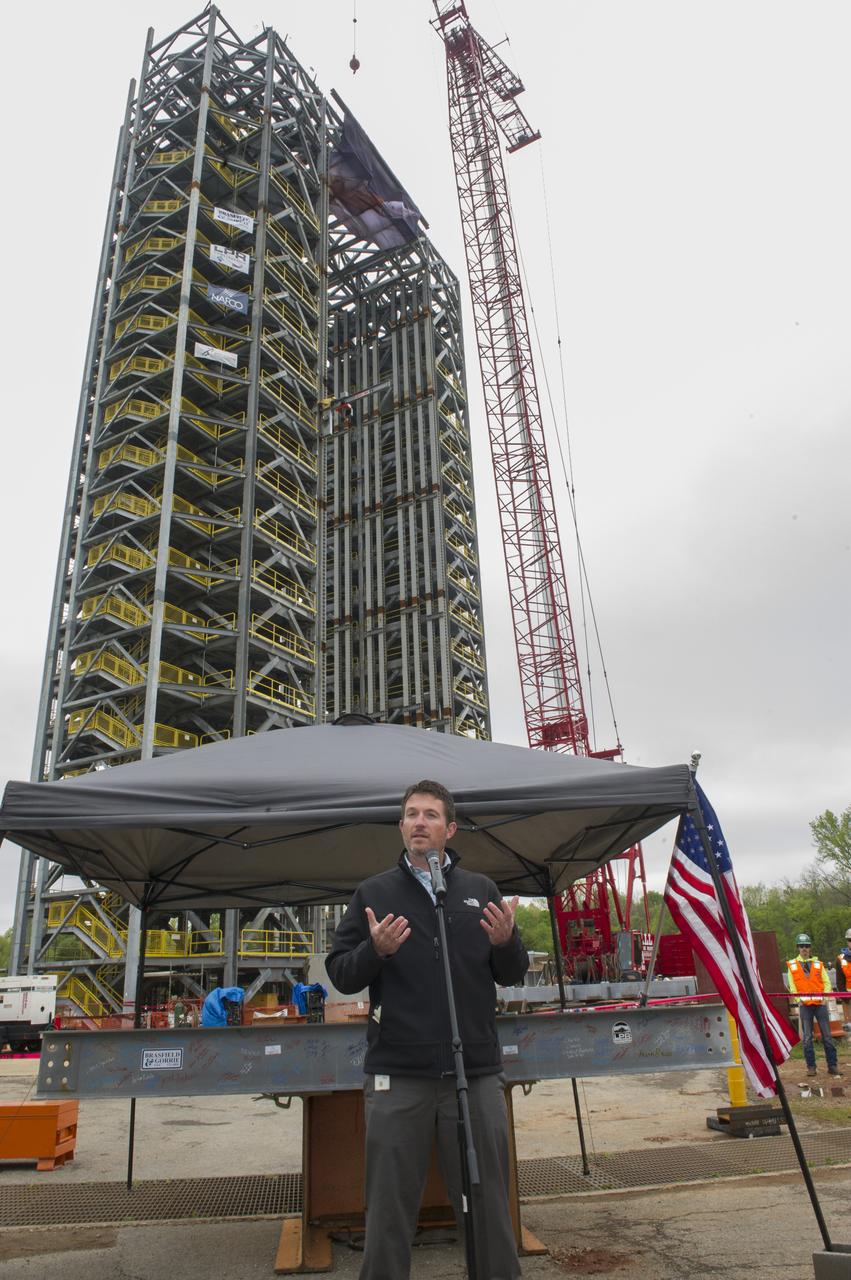
PHIL HENDRIX, SPEAKS TO THE CROWD IN FRONT OF A STEEL BEAM DESTINED FOR TEST STAND 4693 DURING THE STRUCTURE'S TOPPING OUT CEREMONY APRIL 12.
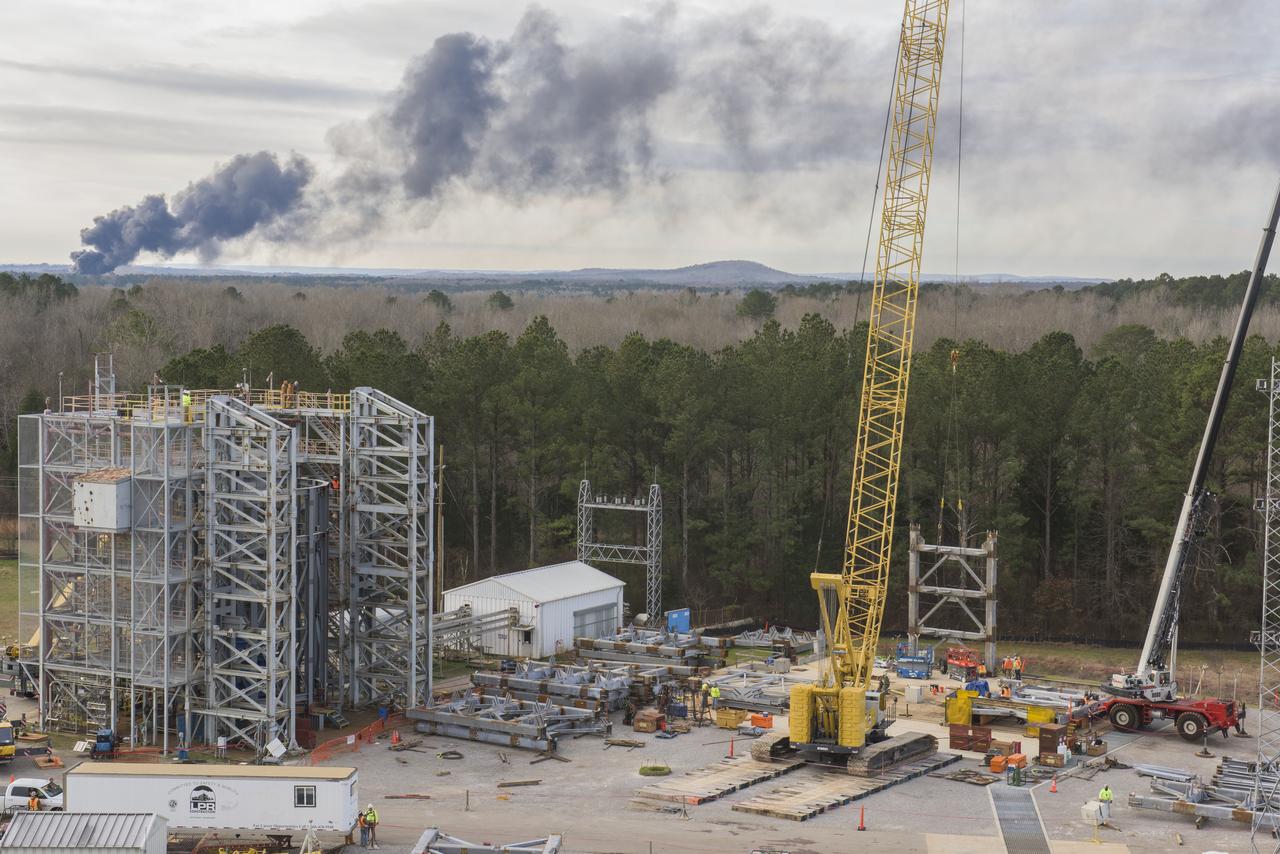
A CRANE MOVES THE FIRST STEEL TIER TO BE BOLTED INTO PLACE ON JAN. 6, FOR WELDING OF A SECOND NEW STRUCTURAL TEST STAND AT NASA'S MARSHALL SPACE FLIGHT CENTER IN HUNTSVILLE, ALABAMA -- CRITICAL TO DEVELOPMENT OF NASA'S SPACE LAUNCH SYSTEM. WHEN COMPLETED THIS SUMMER, THE 85-FOOT-TALL TEST STAND 4697 WILL USE HYDRAULIC CYLINDERS TO SUBJECT THE LIQUID OXYGEN TANK AND HARDWARE OF THE MASSIVE SLS CORE STAGE TO THE SAME LOADS AND STRESSES IT WILL ENDURE DURING A LAUNCH. THE STAND IS RISING IN MARSHALL'S WEST TEST AREA, WHERE WORK IS ALSO UNDERWAY ON THE 215-FOOT-TALL TOWERS OF TEST STAND 4693, WHICH WILL CONDUCT SIMILAR STRUCTURAL TESTS ON THE SLS CORE STAGE'S LIQUID HYDROGEN TANK. SLS, THE MOST POWERFUL ROCKET EVER BUILT, WILL CARRY ASTRONAUTS IN NASA'S ORION SPACECRAFT ON DEEP SPACE MISSIONS, INCLUDING THE JOURNEY TO MARS.
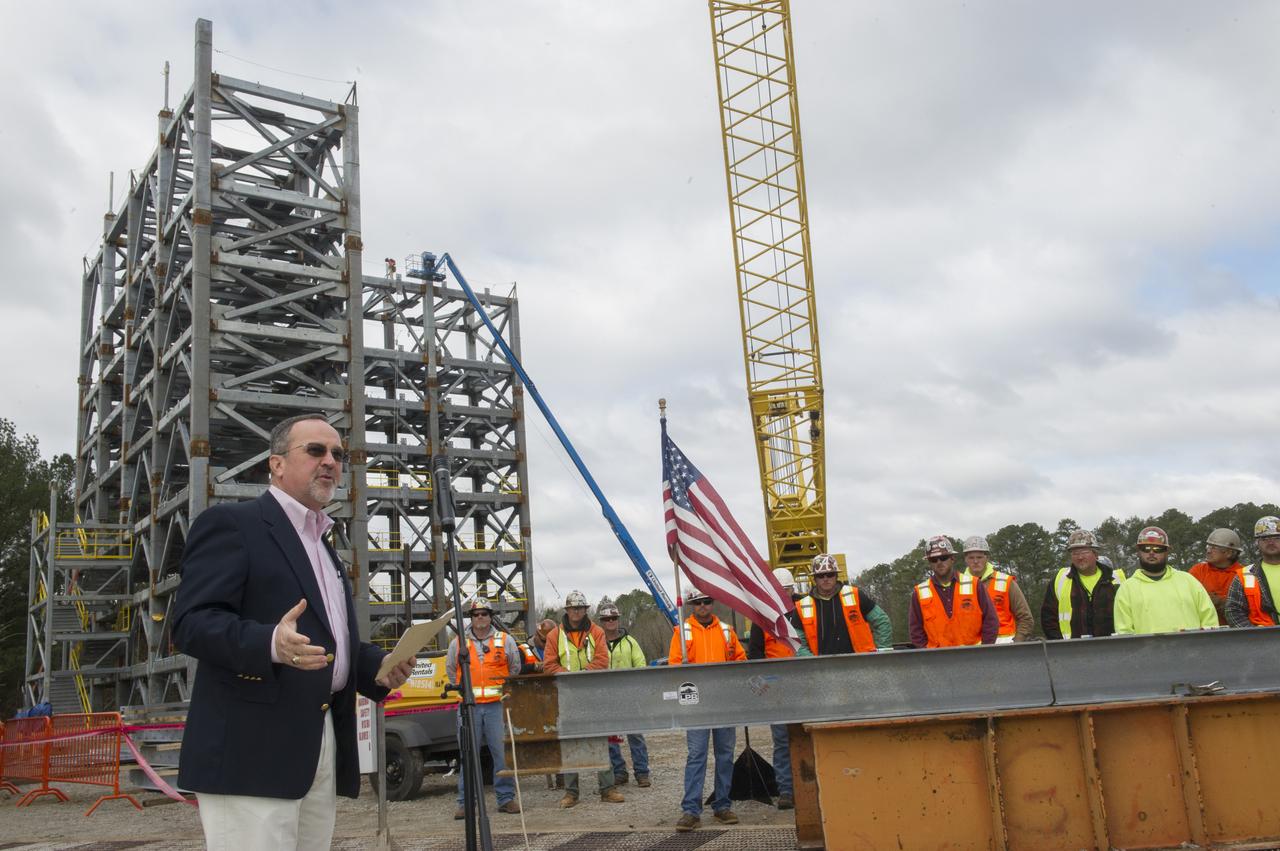
"YOUR WORK IS CRITICAL TO THE JOURNEY TO MARS," SAID SLS DEPUTY PROGRAM MANAGER JERRY COOK TO THE CONSTRUCTION CREW AT THE "TOP OUT" CEREMONY FOR TEST STAND 4697 AT MARSHALL.
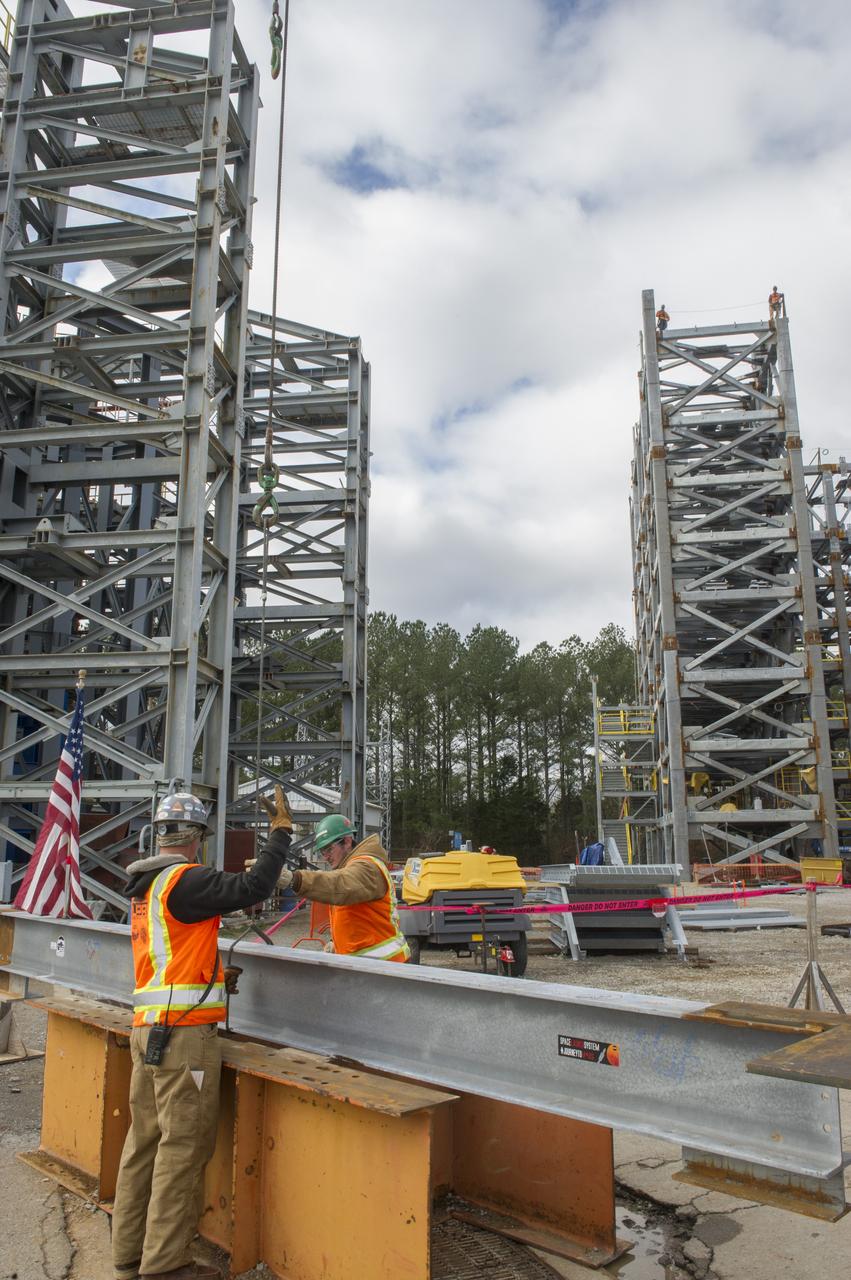
ON MARCH 4, CREW MEMBERS READIED A 900-POUND STEEL BEAM TO "TOP OUT" TEST STAND 4697, WHICH IS UNDER CONSTRUCTION TO TEST THE SPACE LAUNCH SYSTEM LIQUID OXYGEN TANK AT NASA'S MARSHALL SPACE FLIGHT CENTER.
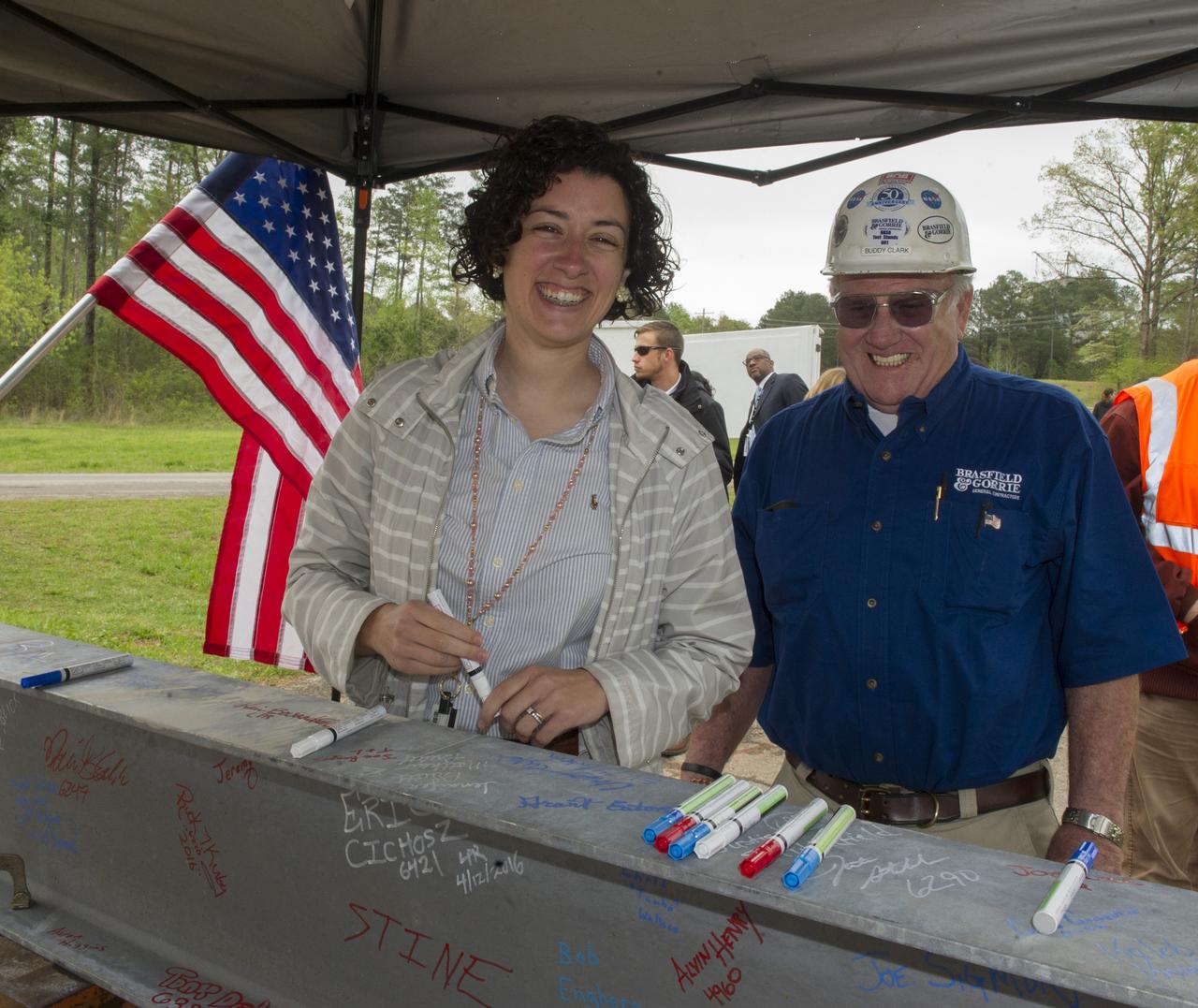
JENNIFER PRUITT AND BUDDY CLARK SMILE FOR THE CAMERA BEFORE SIGNING THE FINAL BEAM TO BE PLACED ATOP TEST STAND 4693 DURING THE STRUCTURE'S TOPPING OUT CEREMONY
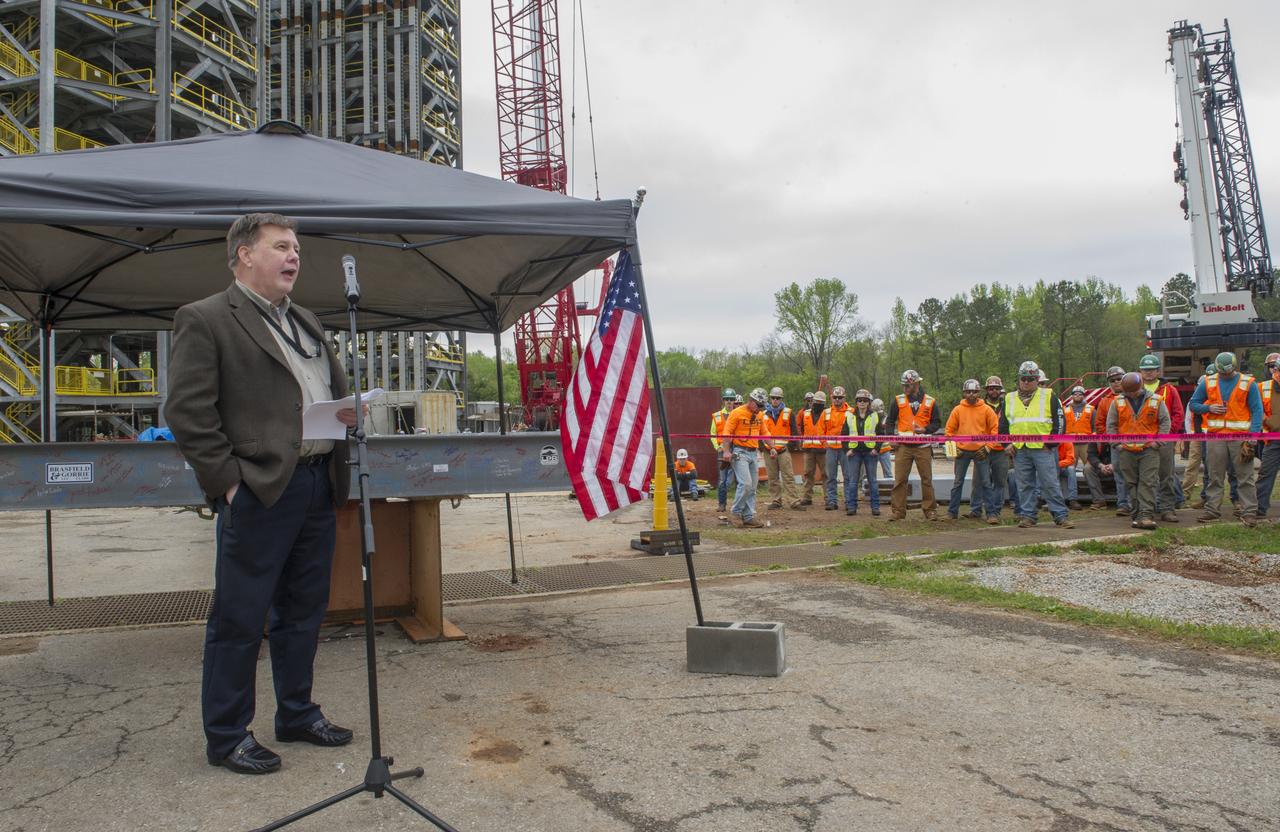
BOB DEVLIN, DEPUTY DIRECTOR OF MARSHALL'S OFFICE OF CENTER OPERATIONS, SPEAKS TO THE CROWD IN FRONT OF A STEEL BEAM DESTINED FOR TEST STAND 4693 DURING THE STRUCTURE'S TOPPING OUT CEREMONY APRIL 12.
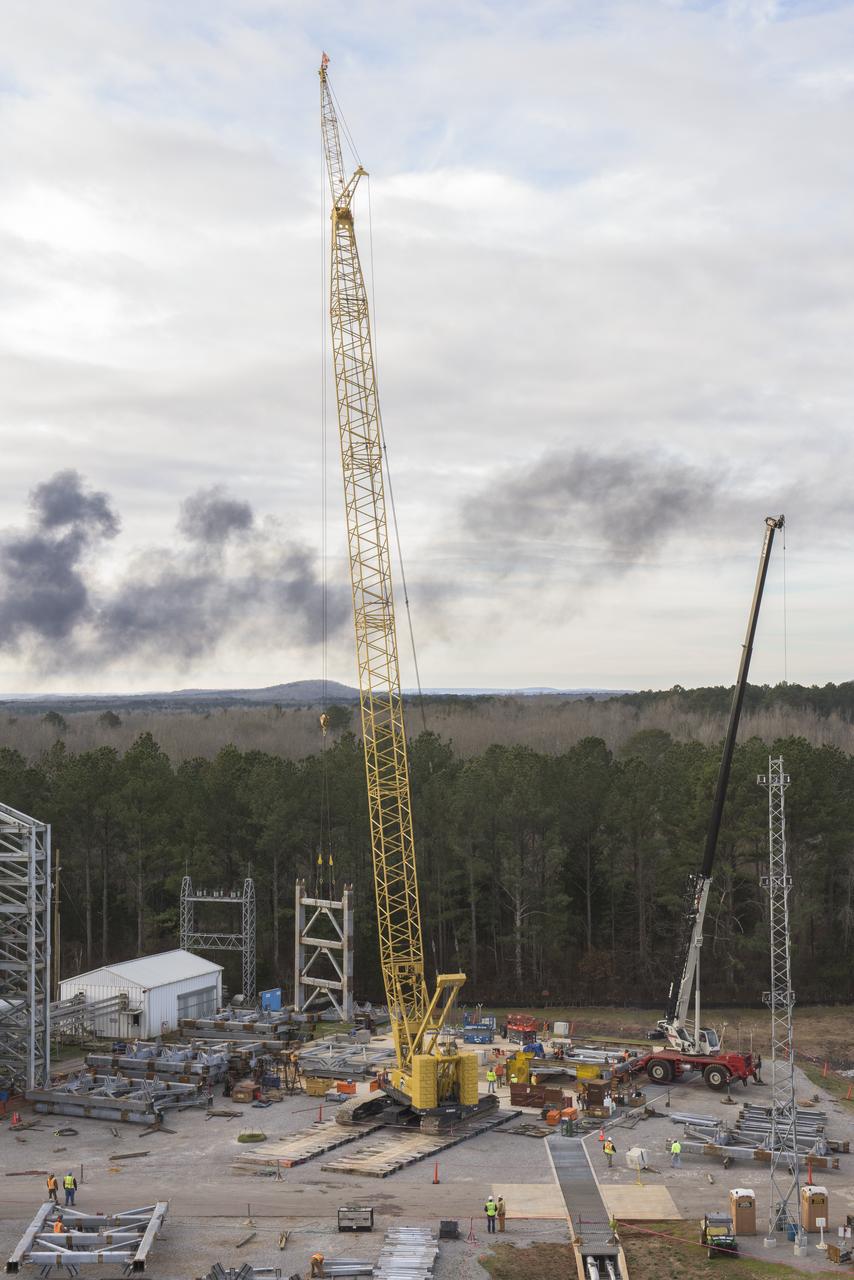
A CRANE MOVES THE FIRST STEEL TIER TO BE BOLTED INTO PLACE ON JAN. 6, FOR WELDING OF A SECOND NEW STRUCTURAL TEST STAND AT NASA'S MARSHALL SPACE FLIGHT CENTER IN HUNTSVILLE, ALABAMA -- CRITICAL TO DEVELOPMENT OF NASA'S SPACE LAUNCH SYSTEM. WHEN COMPLETED THIS SUMMER, THE 85-FOOT-TALL TEST STAND 4697 WILL USE HYDRAULIC CYLINDERS TO SUBJECT THE LIQUID OXYGEN TANK AND HARDWARE OF THE MASSIVE SLS CORE STAGE TO THE SAME LOADS AND STRESSES IT WILL ENDURE DURING A LAUNCH. THE STAND IS RISING IN MARSHALL'S WEST TEST AREA, WHERE WORK IS ALSO UNDERWAY ON THE 215-FOOT-TALL TOWERS OF TEST STAND 4693, WHICH WILL CONDUCT SIMILAR STRUCTURAL TESTS ON THE SLS CORE STAGE'S LIQUID HYDROGEN TANK. SLS, THE MOST POWERFUL ROCKET EVER BUILT, WILL CARRY ASTRONAUTS IN NASA'S ORION SPACECRAFT ON DEEP SPACE MISSIONS, INCLUDING THE JOURNEY TO MARS.
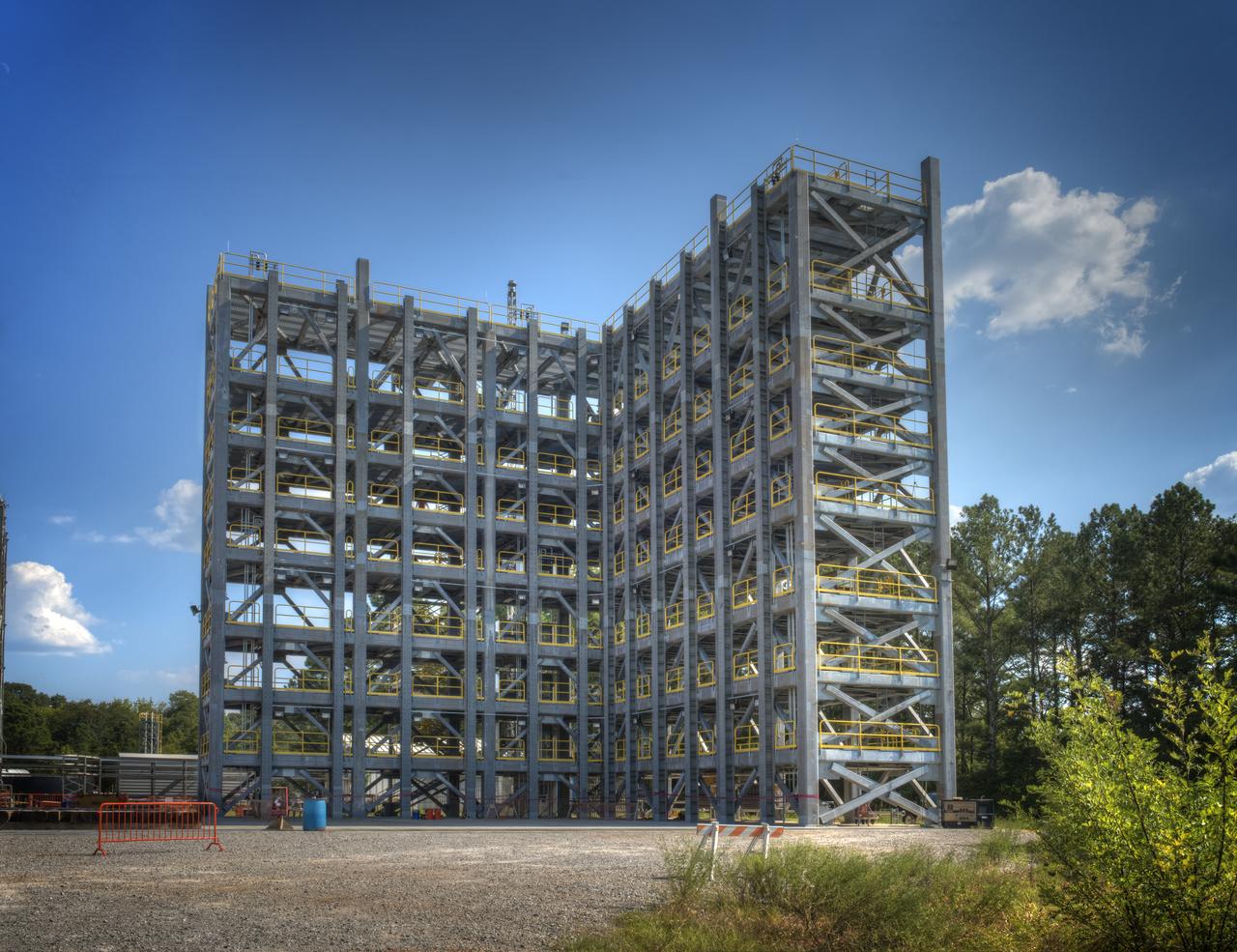
TEST STAND 4697 WILL SUBJECT THE 196,000-GALLON CRYOGENIC LIQUID OXYGEN TANK IN THE MASSIVE CORE STAGE OF NASA'S SPACE LAUNCH SYSTEM TO THE TREMENDOUS FORCES IT WILL ENDURE IN LAUNCH AND FLIGHT.
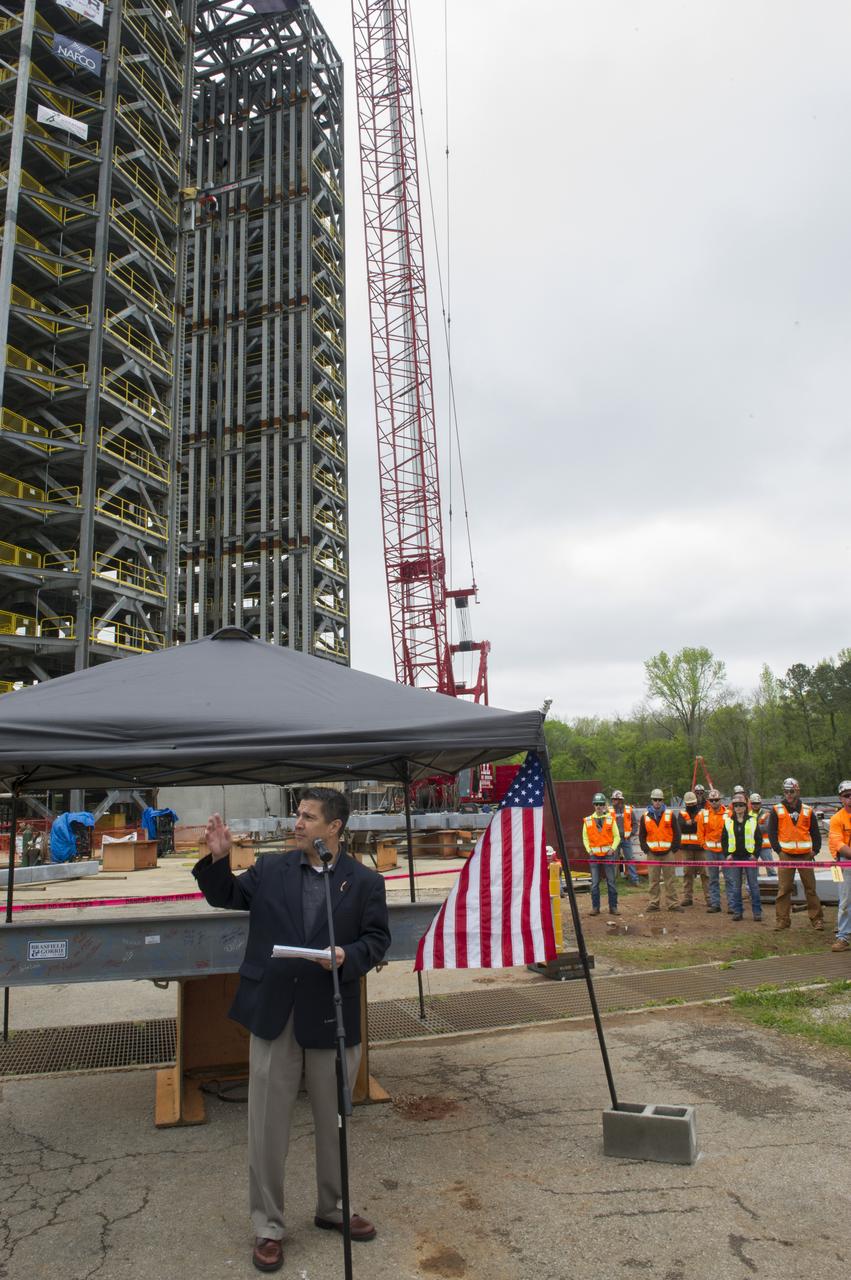
TIM FLORES SPEAKS TO THE CROWD IN FRONT OF A STEEL BEAM DESTINED FOR TEST STAND 4693 DURING THE STRUCTURE'S TOPPING OUT CEREMONY APRIL 12.
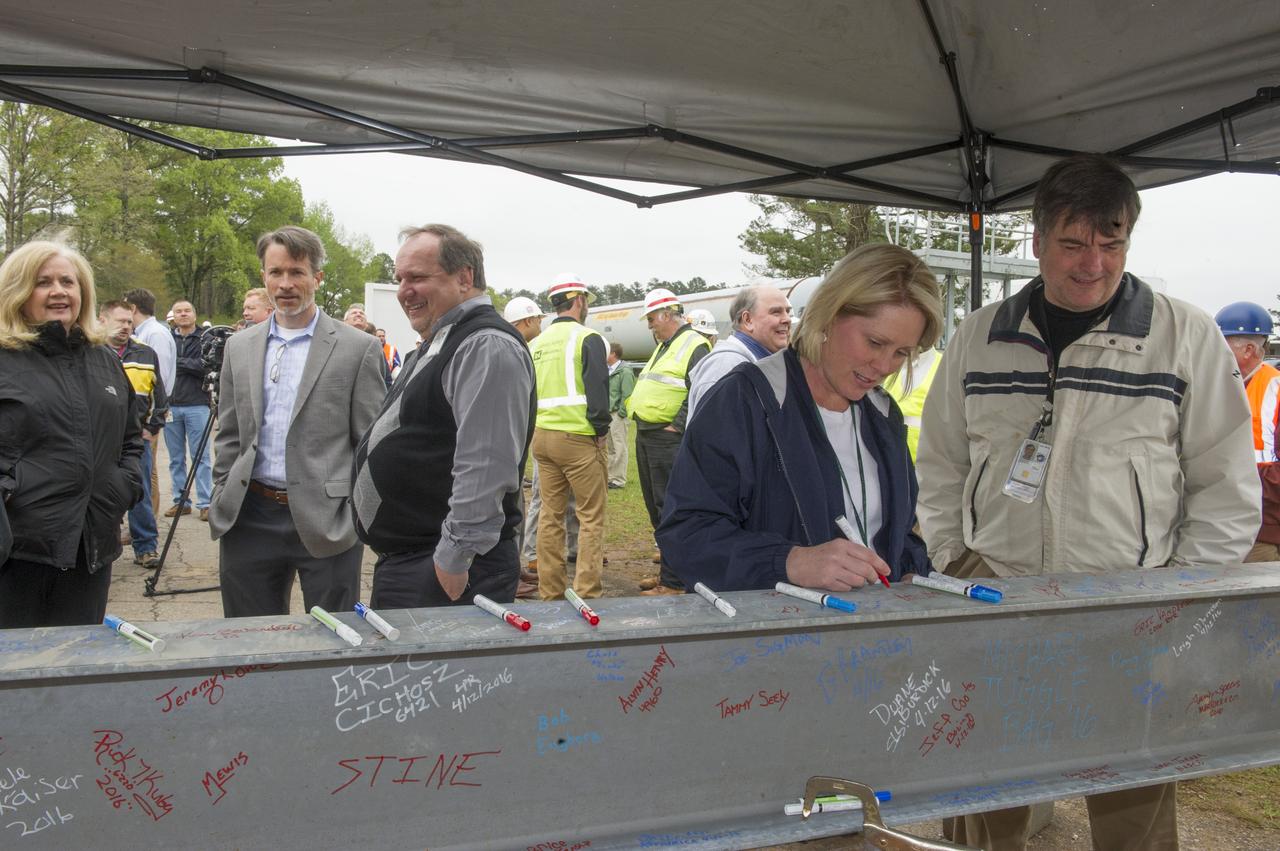
HEATHER HANEY SIGNS FINAL BEAM TO BE PLACED ATOP TEST STAND 4693 DURING THE STRUCTURE'S TOPPING OUT CEREMONY
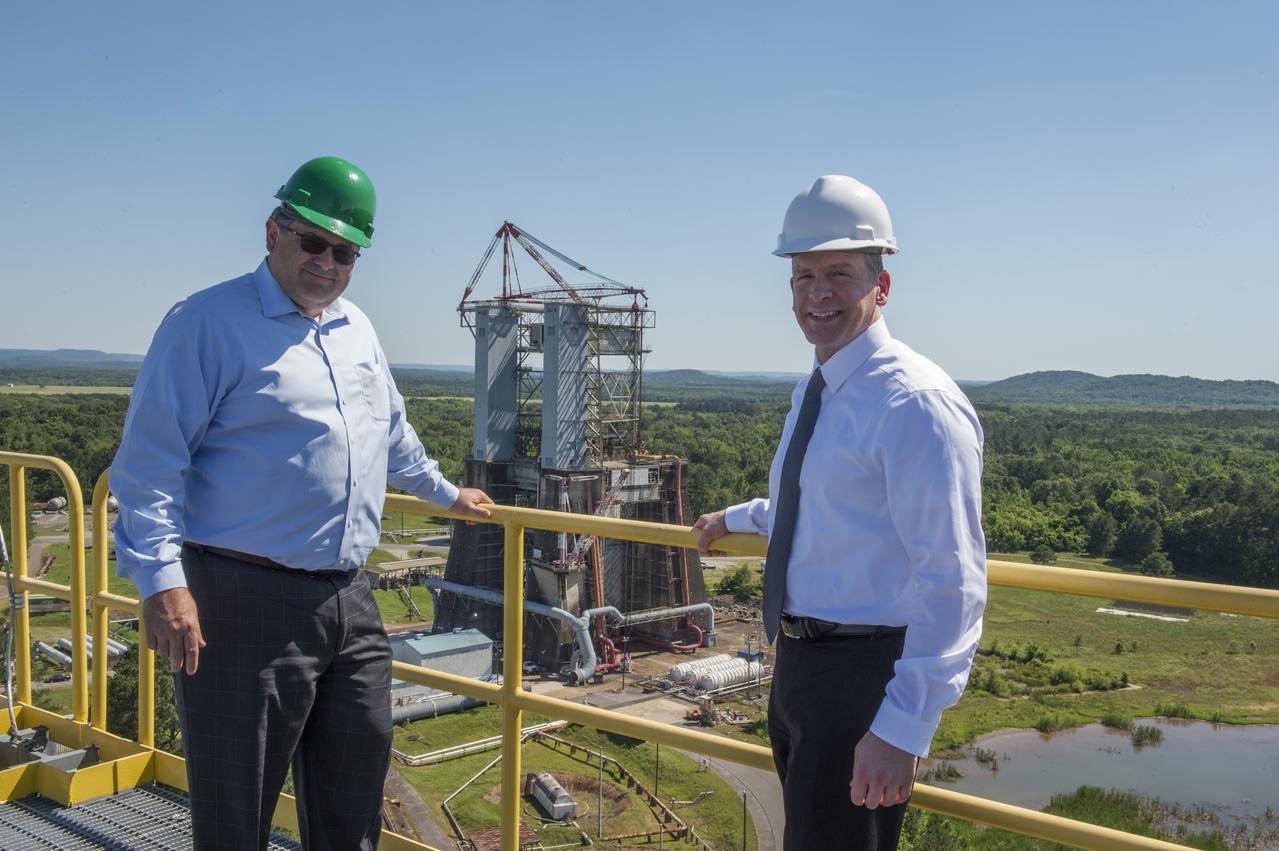
MSFC Director Todd May and FBI Associate Deputy Director Paul Abbate pose atop SLS Test Stand 4693 with historic TTB test stand in background
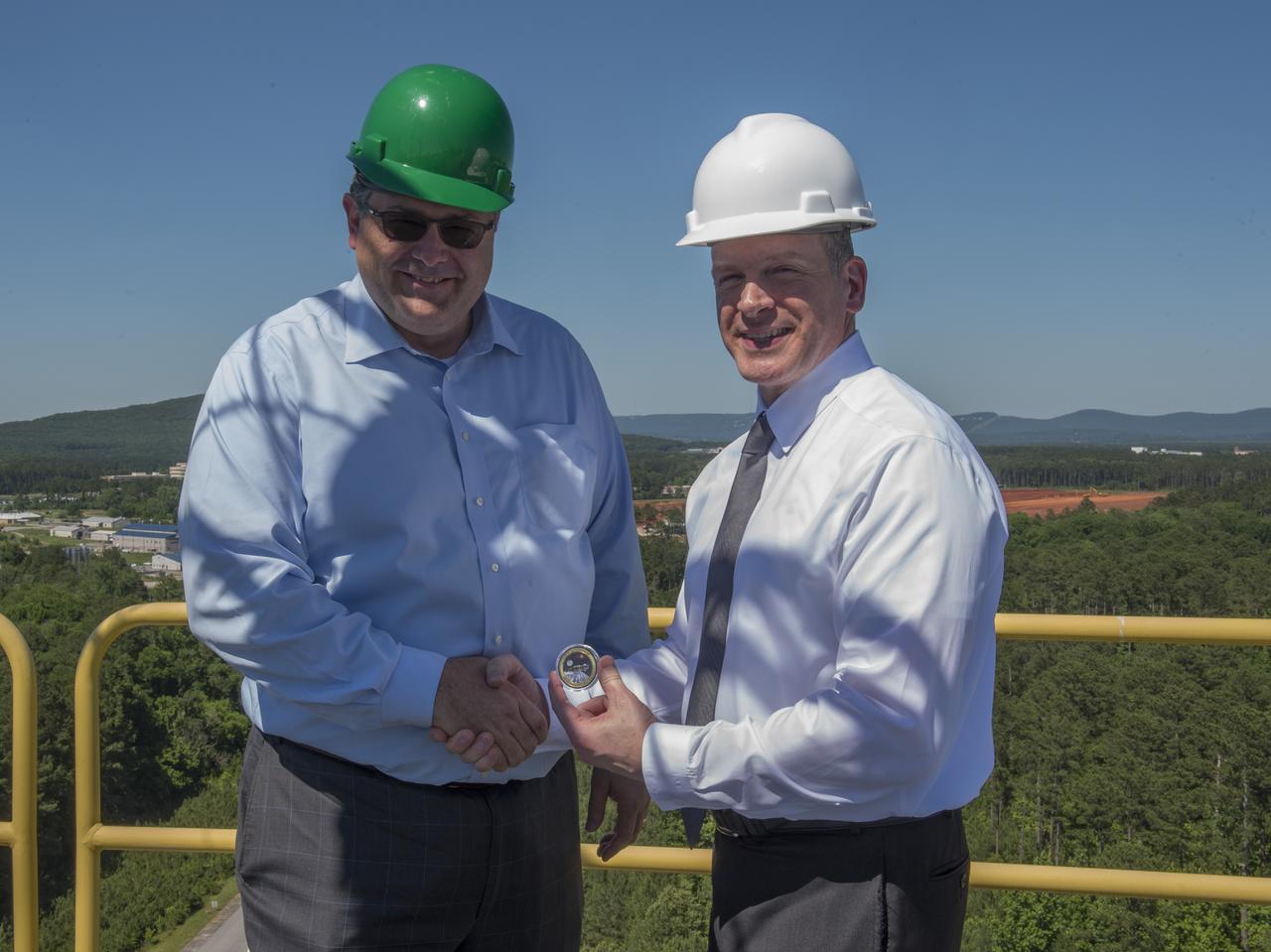
MSFC Director Todd May presents token to FBI Associate Deputy Director Paul Abbate atop SLS Test Stand 4693
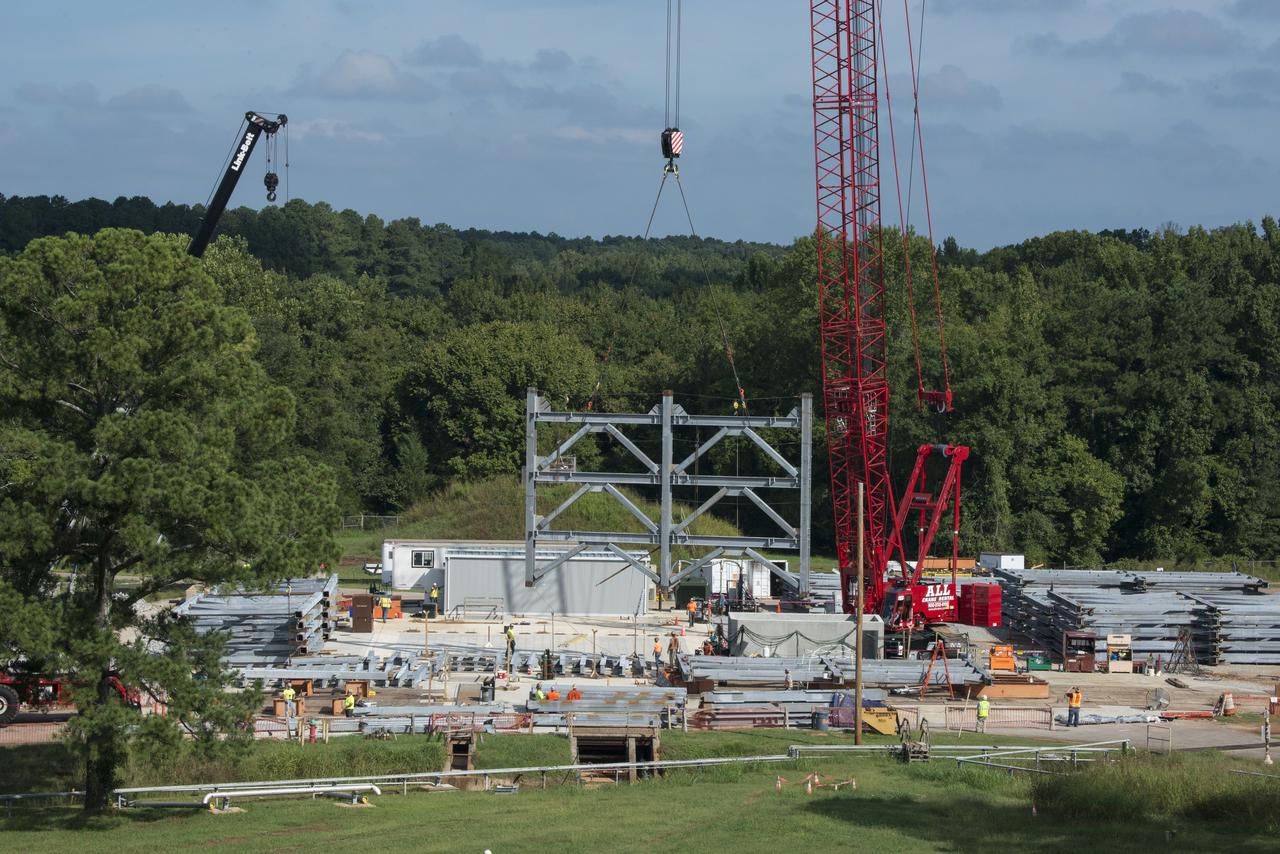
PLACEMENT OF THE FIRST STEEL GIRDERS FOR THE NEW SLS TEST STAND # 4693
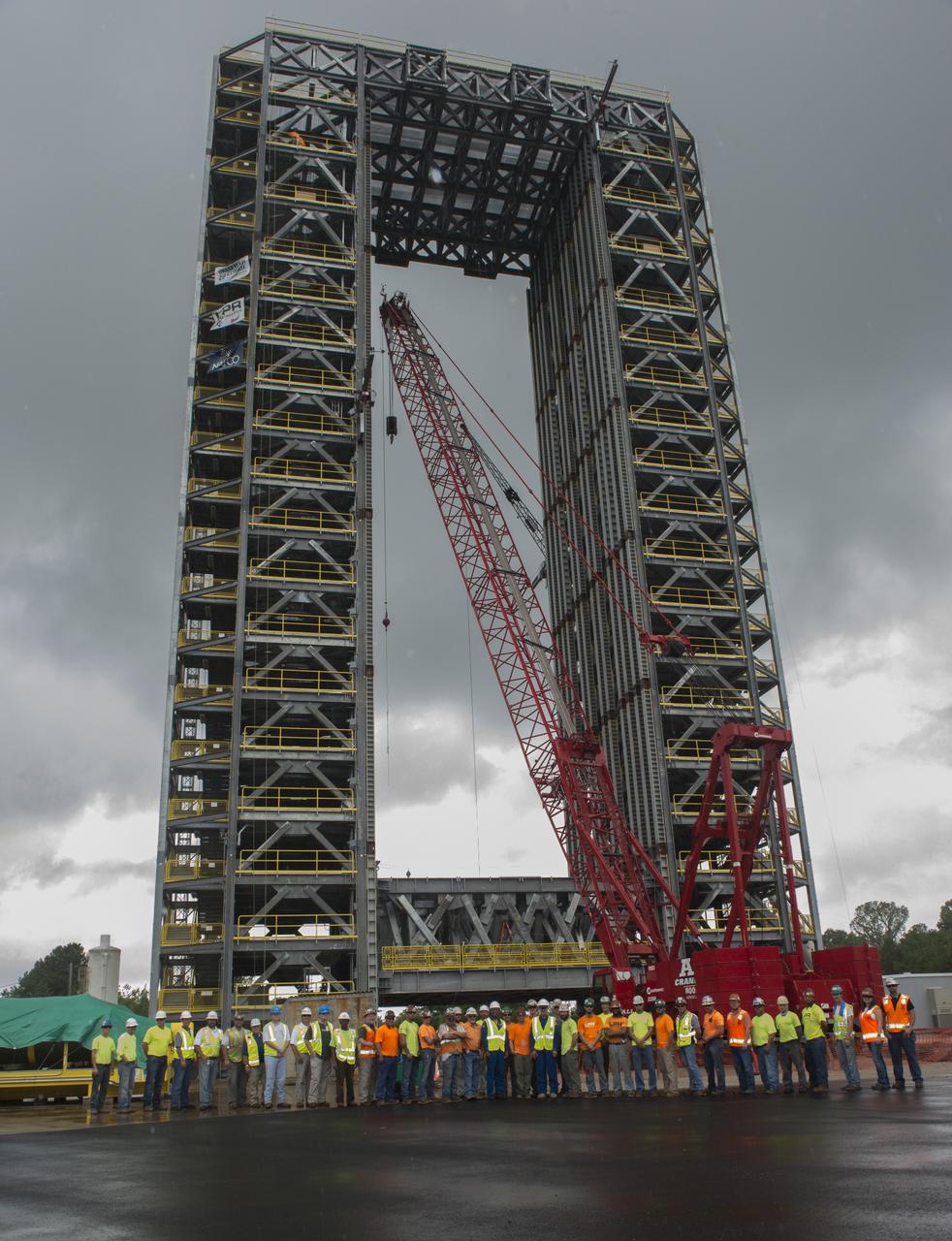
T-38 JETS FLY-OVER TEST STAND 4693 AND ASTRONAUTS DON PETTIT AND VICTOR GLOVER VISIT WITH CONSTRUCTION PERSONNEL.
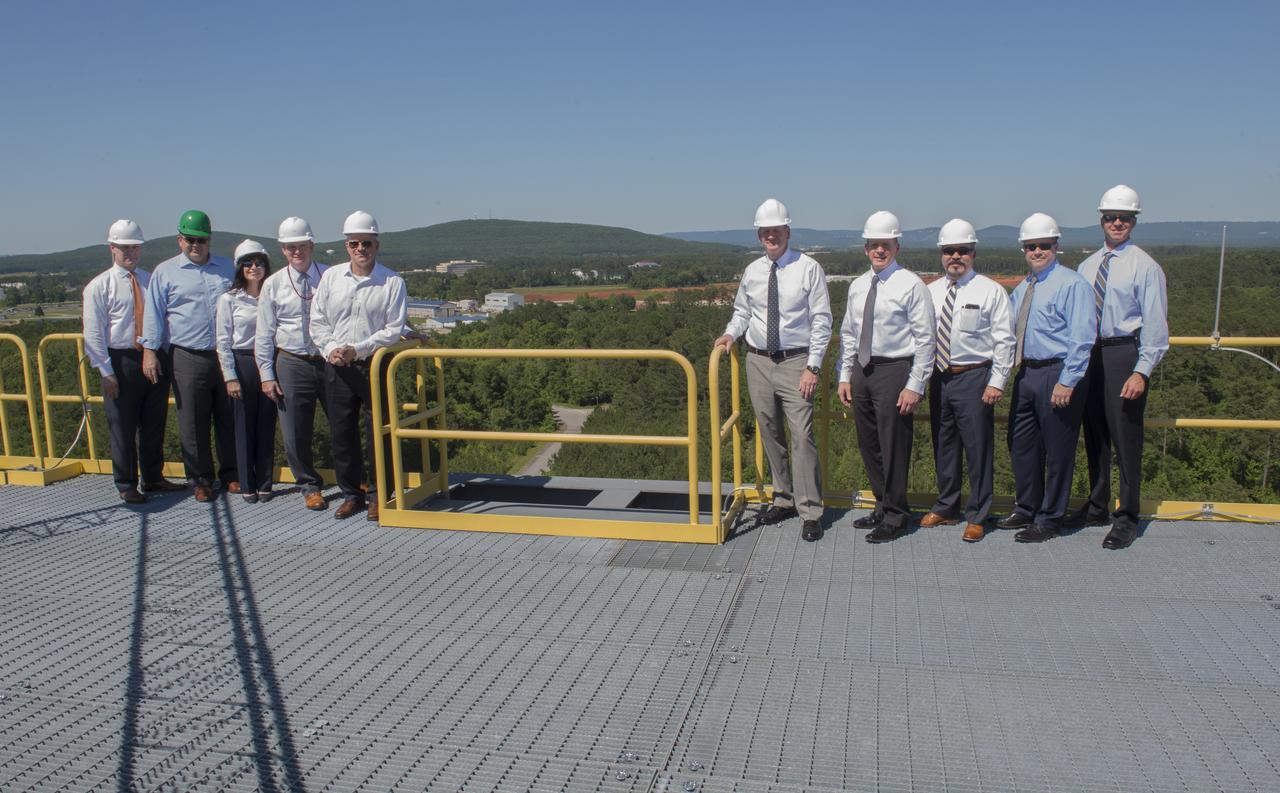
MSFC Director Todd May, (green hard hat), poses with FBI Associate Deputy Director Paul Abbate, (4th from right), and agents atop SLS Test Stand 4693 with view toward land being cleared for FBI complex.
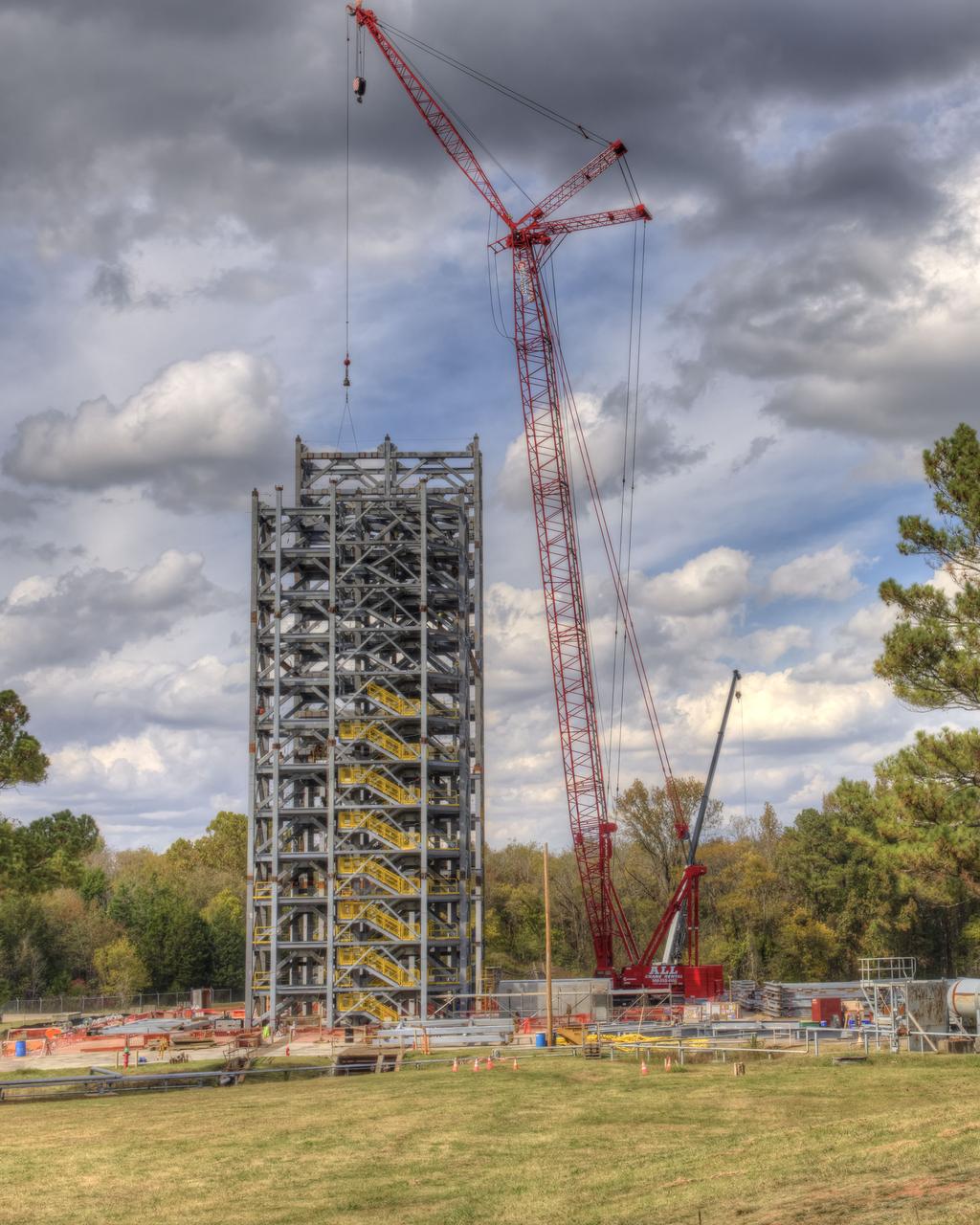
TEST STAND 4693 CONSTRUCTION RISES ABOVE THE TREE LINE. OCTOBER 23, 2015

Alabama House Minority Leader Anthony Daniels, (Left), and Auburn University President, Dr. Stephen Leahy, were part of the Leadership Alabama group that viewed the SLS Liquid Hydrogen test stand at Marshall Space Flight Center on 3/7/19.

Dr. Ruth Jones, Branch Chief for Industrial Safety Branch (QD12) at MSFC, at Test Stand 4693 which holds the Space Launch System Liquid Hydrogen Tank. Photo for publication in University of Arkansas, Pine Bluff, Alumni magazine.

PLACEMENT OF THE FIRST STEEL GIRDERS FOR THE NEW SLS TEST STAND # 4693

At its founding, the Marshall Space Flight Center (MSFC) inherited the Army’s Jupiter and Redstone test stands, but much larger facilities were needed for the giant stages of the Saturn V. From 1960 to 1964, the existing stands were remodeled and a sizable new test area was developed. The new comprehensive test complex for propulsion and structural dynamics was unique within the nation and the free world, and they remain so today because they were constructed with foresight to meet the future as well as on going needs. Construction of the S-IC Static test stand complex began in 1961 in the west test area of MSFC, and was completed in 1964. The S-IC static test stand was originally designed to develop and test the 138-ft long and 33-ft diameter Saturn V S-IC first stage, or booster stage. Modifications to the S-IC Test Stand began in 1975 to accommodate space shuttle external tank testing. This photo depicts the removal of the flame deflector which was originally used to provide water to the 5 F-1 engines of the S-IC stage during testing.

At its founding, the Marshall Space Flight Center (MSFC) inherited the Army’s Jupiter and Redstone test stands, but much larger facilities were needed for the giant stages of the Saturn V. From 1960 to 1964, the existing stands were remodeled and a sizable new test area was developed. The new comprehensive test complex for propulsion and structural dynamics was unique within the nation and the free world, and they remain so today because they were constructed with foresight to meet the future as well as on going needs. Construction of the S-IC Static test stand complex began in 1961 in the west test area of MSFC, and was completed in 1964. The S-IC static test stand was originally designed to develop and test the 138-ft long and 33-ft diameter Saturn V S-IC first stage, or booster stage. Modifications to the S-IC Test Stand began in 1975 to accommodate space shuttle external tank testing. This photo depicts the removal of the flame deflector which was originally used to provide water to the 5 F-1 engines of the S-IC stage during testing.

At its founding, the Marshall Space Flight Center (MSFC) inherited the Army’s Jupiter and Redstone test stands, but much larger facilities were needed for the giant stages of the Saturn V. From 1960 to 1964, the existing stands were remodeled and a sizable new test area was developed. The new comprehensive test complex for propulsion and structural dynamics was unique within the nation and the free world, and they remain so today because they were constructed with foresight to meet the future as well as on going needs. Construction of the S-IC Static test stand complex began in 1961 in the west test area of MSFC, and was completed in 1964. The S-IC static test stand was originally designed to develop and test the 138-ft long and 33-ft diameter Saturn V S-IC first stage, or booster stage. Modifications to the S-IC Test Stand began in 1975 to accommodate space shuttle external tank testing. This photo depicts the continuation of the modification process as of July 14, 1975. The flame deflector originally used to provide water to the 5 F-1 engines of the S-IC stage during testing has been removed.

At its founding, the Marshall Space Flight Center (MSFC) inherited the Army’s Jupiter and Redstone test stands, but much larger facilities were needed for the giant stages of the Saturn V. From 1960 to 1964, the existing stands were remodeled and a sizable new test area was developed. The new comprehensive test complex for propulsion and structural dynamics was unique within the nation and the free world, and they remain so today because they were constructed with foresight to meet the future as well as on going needs. Construction of the S-IC Static test stand complex began in 1961 in the west test area of MSFC, and was completed in 1964. The S-IC static test stand was originally designed to develop and test the 138-ft long and 33-ft diameter Saturn V S-IC first stage, or booster stage. Modifications to the S-IC Test Stand began in 1975 to accommodate space shuttle external tank testing. This photo, taken from the roof of the block house on October 14, 1975, provides an overall view of the stand during the modification process.

At its founding, the Marshall Space Flight Center (MSFC) inherited the Army’s Jupiter and Redstone test stands, but much larger facilities were needed for the giant stages of the Saturn V. From 1960 to 1964, the existing stands were remodeled and a sizable new test area was developed. The new comprehensive test complex for propulsion and structural dynamics was unique within the nation and the free world, and they remain so today because they were constructed with foresight to meet the future as well as on going needs. Construction of the S-IC Static test stand complex began in 1961 in the west test area of MSFC, and was completed in 1964. The S-IC static test stand was originally designed to develop and test the 138-ft long and 33-ft diameter Saturn V S-IC first stage, or booster stage. Modifications to the S-IC Test Stand began in 1975 to accommodate space shuttle external tank testing. This photo is of the horizontal liquid oxygen tanks.

At its founding, the Marshall Space Flight Center (MSFC) inherited the Army’s Jupiter and Redstone test stands, but much larger facilities were needed for the giant stages of the Saturn V. From 1960 to 1964, the existing stands were remodeled and a sizable new test area was developed. The new comprehensive test complex for propulsion and structural dynamics was unique within the nation and the free world, and they remain so today because they were constructed with foresight to meet the future as well as on going needs. Construction of the S-IC Static test stand complex began in 1961 in the west test area of MSFC, and was completed in 1964. The S-IC static test stand was originally designed to develop and test the 138-ft long and 33-ft diameter Saturn V S-IC first stage, or booster stage. Modifications to the S-IC Test Stand began in 1975 to accommodate space shuttle external tank testing. This view looks toward fuel storage bottles during modification process.
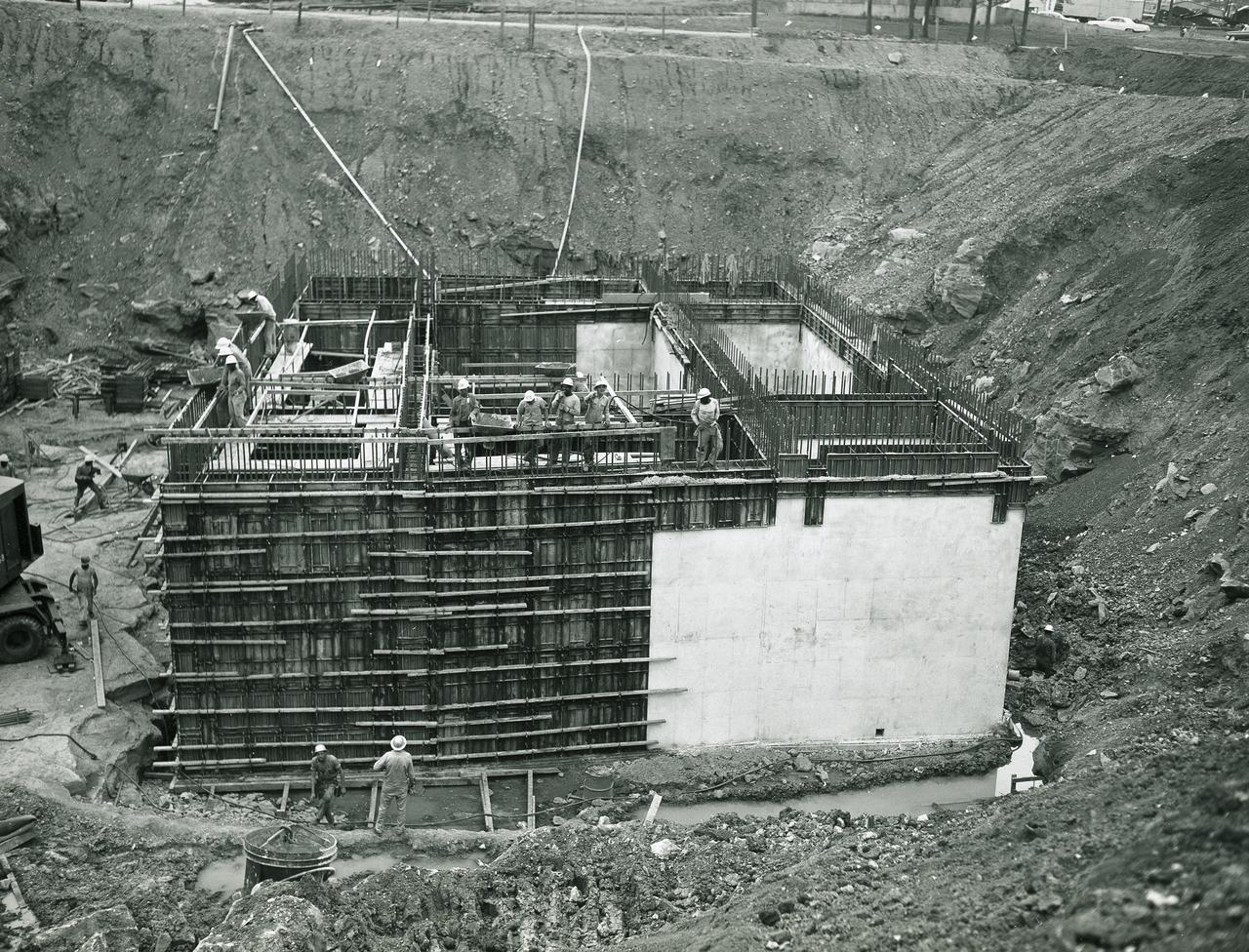
At its founding, the Marshall Space Flight Center (MSFC) inherited the Army’s Jupiter and Redstone test stands, but much larger facilities were needed for the giant stages of the Saturn V. From 1960 to 1964, the existing stands were remodeled and a sizable new test area was developed. The new comprehensive test complex for propulsion and structural dynamics was unique within the nation and the free world, and they remain so today because they were constructed with foresight to meet the future as well as on going needs. Construction of the S-IC Static test stand complex began in 1961 in the west test area of MSFC, and was completed in 1964. The S-IC static test stand was designed to develop and test the 138-ft long and 33-ft diameter Saturn V S-IC first stage, or booster stage, weighing in at 280,000 pounds. Required to hold down the brute force of a 7,500,000-pound thrust produced by 5 F-1 engines, the S-IC static test stand was designed and constructed with the strength of hundreds of tons of steel and 12,000,000 pounds of cement, planted down to bedrock 40 feet below ground level. The foundation walls, constructed with concrete and steel, are 4 feet thick. The base structure consists of four towers with 40-foot-thick walls extending upward 144 feet above ground level. The structure was topped by a crane with a 135-foot boom. With the boom in the upright position, the stand was given an overall height of 405 feet, placing it among the highest structures in Alabama at the time. North of the massive S-IC test stand, the F-1 Engine test stand was built. Designed to assist in the development of the F-1 Engine, the F-1 test stand is a vertical engine firing test stand, 239 feet in elevation and 4,600 square feet in area at the base. Capability was provided for static firing of 1.5 million pounds of thrust using liquid oxygen and kerosene. Like the S-IC stand, the foundation of the F-1 stand is keyed into the bedrock approximately 40 feet below grade. This photo, taken April 17, 1963 depicts the construction of the F-1 test stand foundation walls.
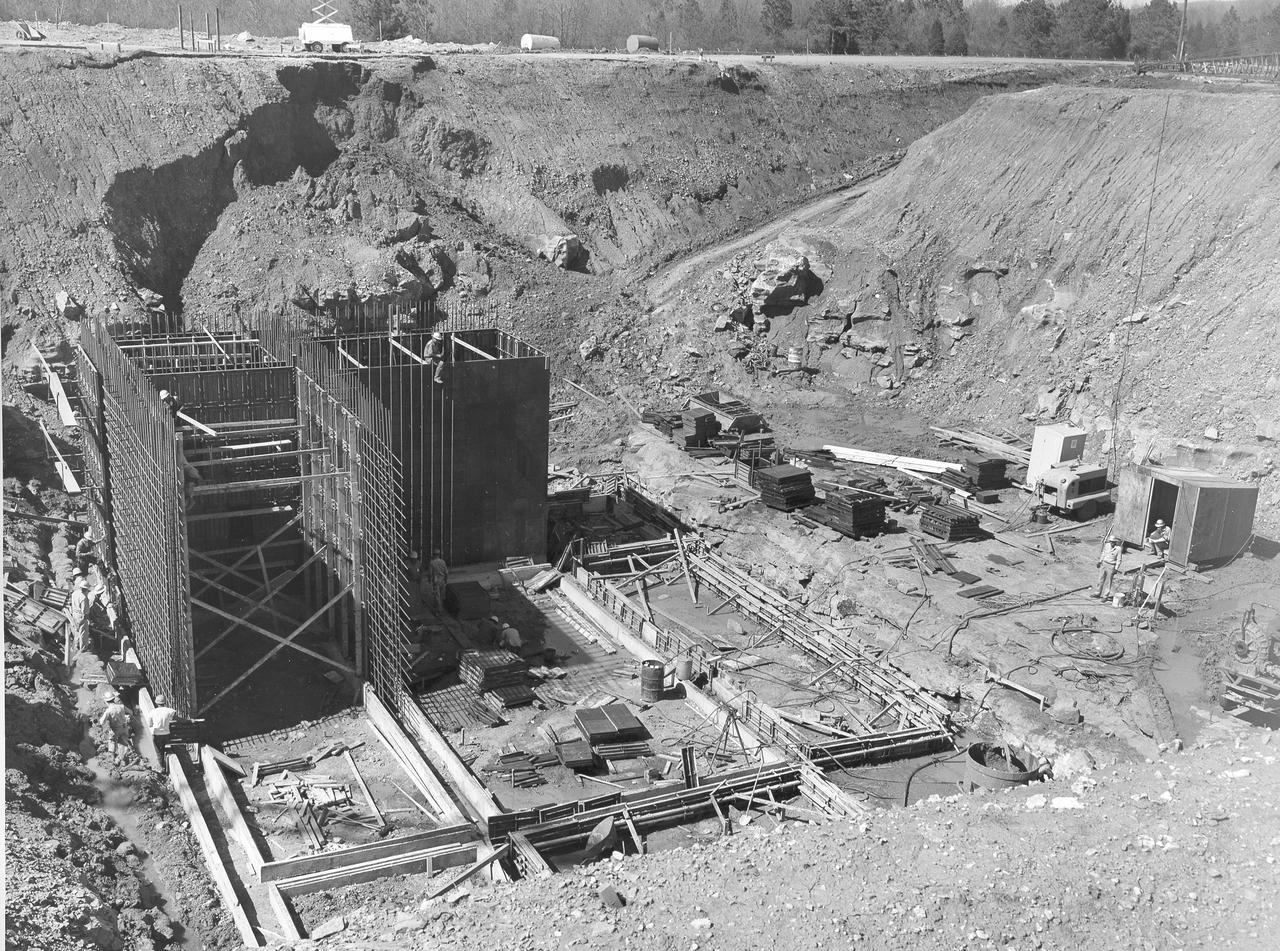
At its founding, the Marshall Space Flight Center (MSFC) inherited the Army’s Jupiter and Redstone test stands, but much larger facilities were needed for the giant stages of the Saturn V. From 1960 to 1964, the existing stands were remodeled and a sizable new test area was developed. The new comprehensive test complex for propulsion and structural dynamics was unique within the nation and the free world, and they remain so today because they were constructed with foresight to meet the future as well as on going needs. Construction of the S-IC Static test stand complex began in 1961 in the west test area of MSFC, and was completed in 1964. The S-IC static test stand was designed to develop and test the 138-ft long and 33-ft diameter Saturn V S-IC first stage, or booster stage, weighing in at 280,000 pounds. Required to hold down the brute force of a 7,500,000-pound thrust produced by 5 F-1 engines, the S-IC static test stand was designed and constructed with the strength of hundreds of tons of steel and 12,000,000 pounds of cement, planted down to bedrock 40 feet below ground level. The foundation walls, constructed with concrete and steel, are 4 feet thick. The base structure consists of four towers with 40-foot-thick walls extending upward 144 feet above ground level. The structure was topped by a crane with a 135-foot boom. With the boom in the upright position, the stand was given an overall height of 405 feet, placing it among the highest structures in Alabama at the time. North of the massive S-IC test stand, the F-1 Engine test stand was built. Designed to assist in the development of the F-1 Engine, the F-1 test stand is a vertical engine firing test stand, 239 feet in elevation and 4,600 square feet in area at the base. Capability was provided for static firing of 1.5 million pounds of thrust using liquid oxygen and kerosene. Like the S-IC stand, the foundation of the F-1 stand is keyed into the bedrock approximately 40 feet below grade. This photo, taken April 4, 1963 depicts the construction of the F-1 test stand foundation walls.
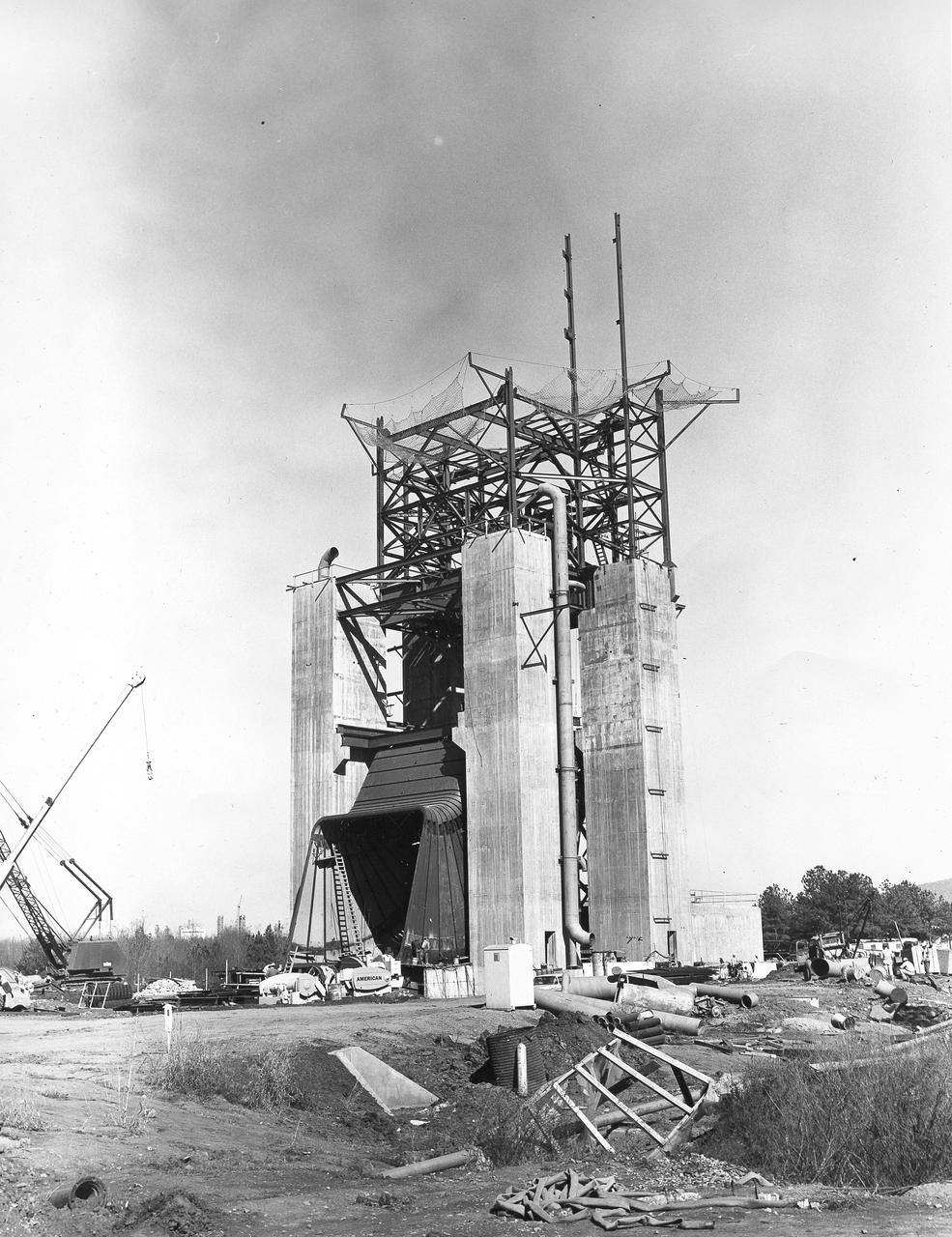
At its founding, the Marshall Space Flight Center (MSFC) inherited the Army’s Jupiter and Redstone test stands, but much larger facilities were needed for the giant stages of the Saturn V. From 1960 to 1964, the existing stands were remodeled and a sizable new test area was developed. The new comprehensive test complex for propulsion and structural dynamics was unique within the nation and the free world, and they remain so today because they were constructed with foresight to meet the future as well as on going needs. Construction of the S-IC Static test stand complex began in 1961 in the west test area of MSFC, and was completed in 1964. The S-IC static test stand was designed to develop and test the 138-ft long and 33-ft diameter Saturn V S-IC first stage, or booster stage, weighing in at 280,000 pounds. Required to hold down the brute force of a 7,500,000-pound thrust produced by 5 F-1 engines, the S-IC static test stand was designed and constructed with the strength of hundreds of tons of steel and 12,000,000 pounds of cement, planted down to bedrock 40 feet below ground level. The foundation walls, constructed with concrete and steel, are 4 feet thick. The base structure consists of four towers with 40-foot-thick walls extending upward 144 feet above ground level. The structure was topped by a crane with a 135-foot boom. With the boom in the upright position, the stand was given an overall height of 405 feet, placing it among the highest structures in Alabama at the time. North of the massive S-IC test stand, the F-1 Engine test stand was built. Designed to assist in the development of the F-1 Engine, the F-1 test stand is a vertical engine firing test stand, 239 feet in elevation and 4,600 square feet in area at the base. Capability was provided for static firing of 1.5 million pounds of thrust using liquid oxygen and kerosene. Like the S-IC stand, the foundation of the F-1 stand is keyed into the bedrock approximately 40 feet below grade. This photo shows the progress of the F-1 Test Stand as of November 20, 1963.
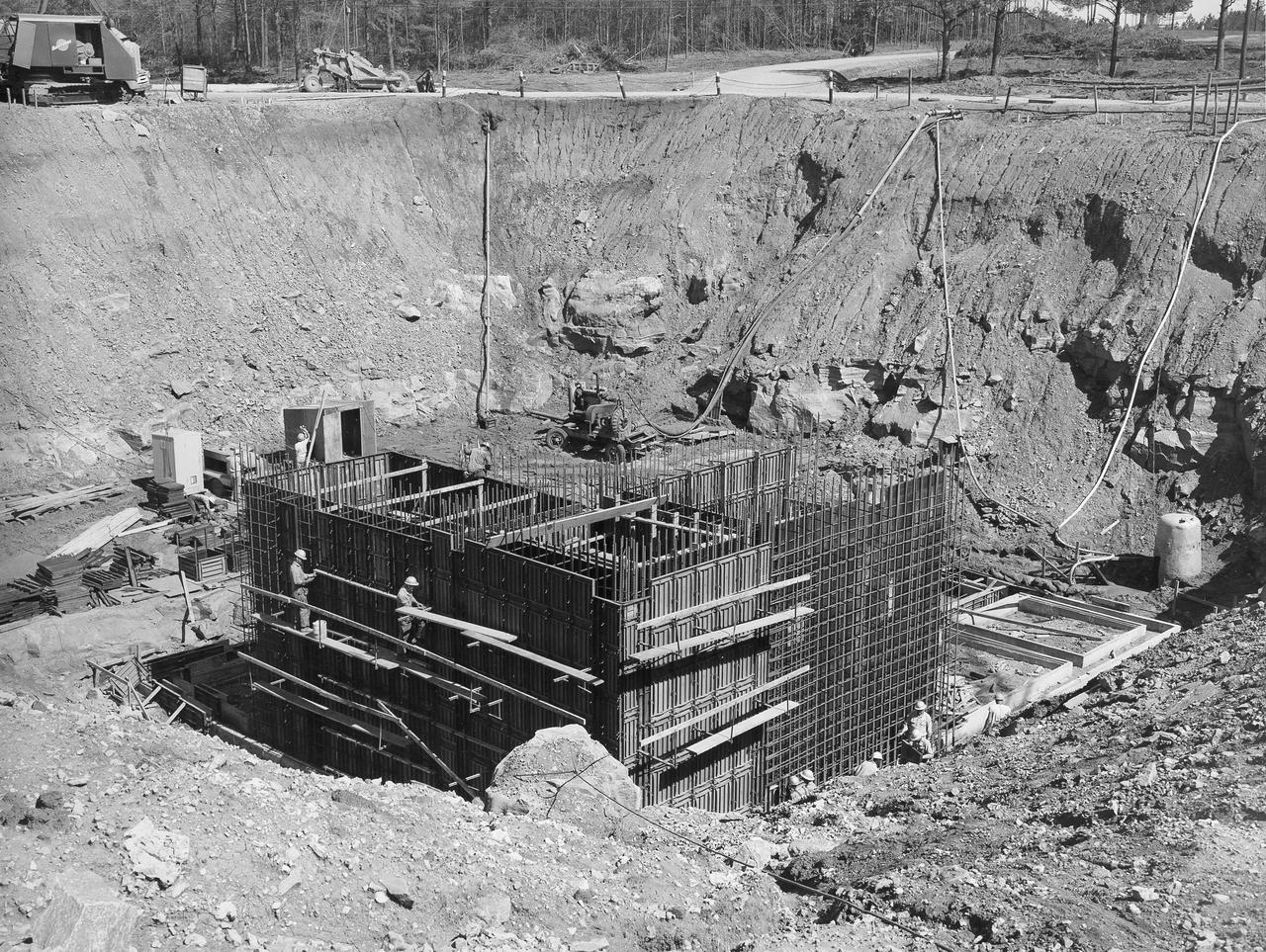
At its founding, the Marshall Space Flight Center (MSFC) inherited the Army’s Jupiter and Redstone test stands, but much larger facilities were needed for the giant stages of the Saturn V. From 1960 to 1964, the existing stands were remodeled and a sizable new test area was developed. The new comprehensive test complex for propulsion and structural dynamics was unique within the nation and the free world, and they remain so today because they were constructed with foresight to meet the future as well as on going needs. Construction of the S-IC Static test stand complex began in 1961 in the west test area of MSFC, and was completed in 1964. The S-IC static test stand was designed to develop and test the 138-ft long and 33-ft diameter Saturn V S-IC first stage, or booster stage, weighing in at 280,000 pounds. Required to hold down the brute force of a 7,500,000-pound thrust produced by 5 F-1 engines, the S-IC static test stand was designed and constructed with the strength of hundreds of tons of steel and 12,000,000 pounds of cement, planted down to bedrock 40 feet below ground level. The foundation walls, constructed with concrete and steel, are 4 feet thick. The base structure consists of four towers with 40-foot-thick walls extending upward 144 feet above ground level. The structure was topped by a crane with a 135-foot boom. With the boom in the upright position, the stand was given an overall height of 405 feet, placing it among the highest structures in Alabama at the time. North of the massive S-IC test stand, the F-1 Engine test stand was built. Designed to assist in the development of the F-1 Engine, the F-1 test stand is a vertical engine firing test stand, 239 feet in elevation and 4,600 square feet in area at the base. Capability was provided for static firing of 1.5 million pounds of thrust using liquid oxygen and kerosene. Like the S-IC stand, the foundation of the F-1 stand is keyed into the bedrock approximately 40 feet below grade. This photo, taken April 4, 1963 depicts the construction of the F-1 test stand foundation walls.
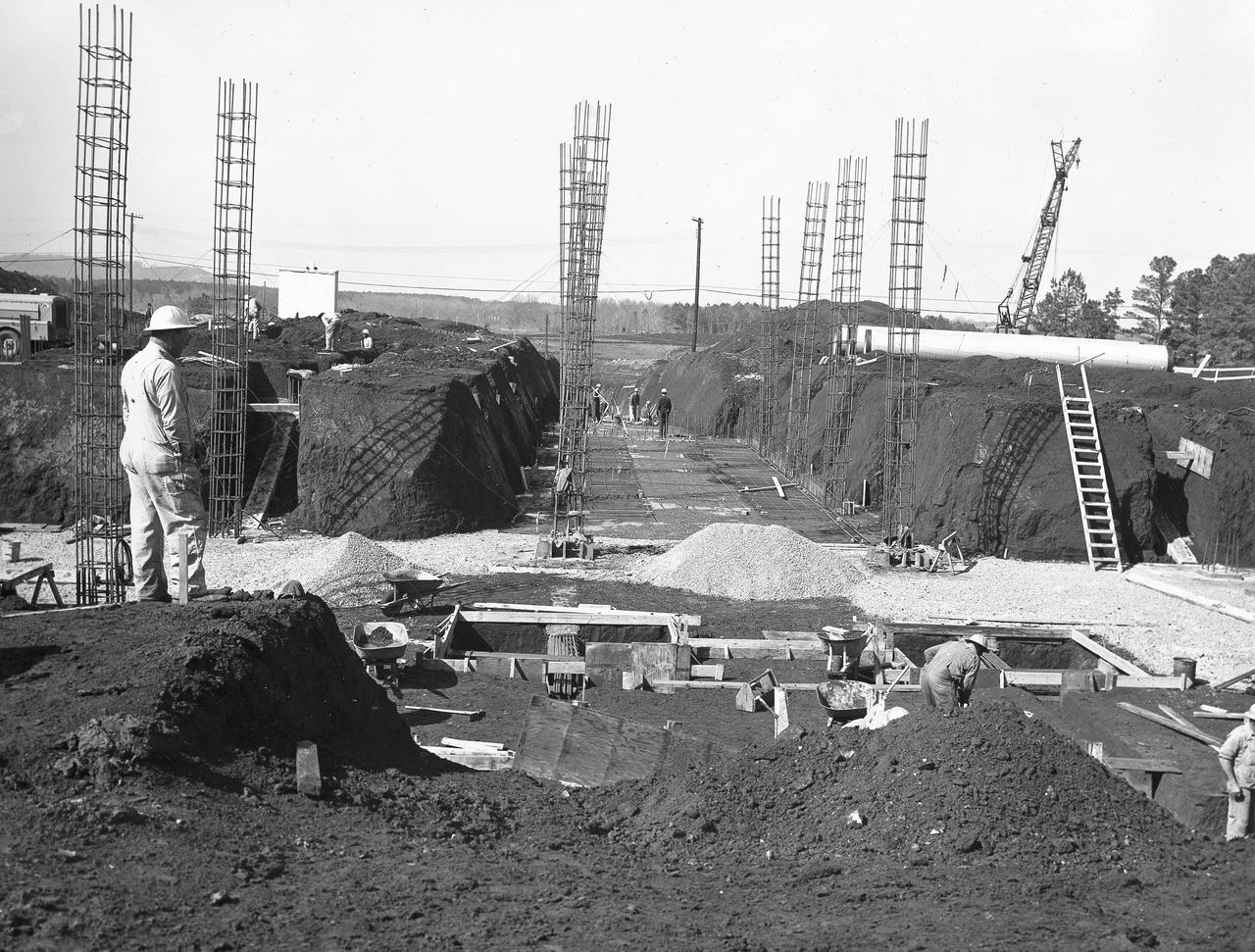
At its founding, the Marshall Space Flight Center (MSFC) inherited the Army’s Jupiter and Redstone test stands, but much larger facilities were needed for the giant stages of the Saturn V. From 1960 to 1964, the existing stands were remodeled and a sizable new test area was developed. The new comprehensive test complex for propulsion and structural dynamics was unique within the nation and the free world, and they remain so today because they were constructed with foresight to meet the future as well as on going needs. Construction of the S-IC Static test stand complex began in 1961 in the west test area of MSFC, and was completed in 1964. The S-IC static test stand was designed to develop and test the 138-ft long and 33-ft diameter Saturn V S-IC first stage, or booster stage, weighing in at 280,000 pounds. Required to hold down the brute force of a 7,500,000-pound thrust produced by 5 F-1 engines, the S-IC static test stand was designed and constructed with the strength of hundreds of tons of steel and 12,000,000 pounds of cement, planted down to bedrock 40 feet below ground level. The foundation walls, constructed with concrete and steel, are 4 feet thick. The base structure consists of four towers with 40-foot-thick walls extending upward 144 feet above ground level. The structure was topped by a crane with a 135-foot boom. With the boom in the upright position, the stand was given an overall height of 405 feet, placing it among the highest structures in Alabama at the time. In addition to the stand itself, related facilities were constructed during this time. Built directly east of the test stand was the Block House, which served as the control center for the test stand. The two were connected by a narrow tunnel which housed the cables for the controls. Again to the east, just south of the Block House, was a newly constructed Pump House. Its function was to provide water to the stand to prevent melting damage during testing. The water was sprayed through small holes in the stand’s 1900 ton water deflector at the rate of 320,000 gallons per minute. In this photo, taken March 20, 1962, construction of the Pump House area is well underway.
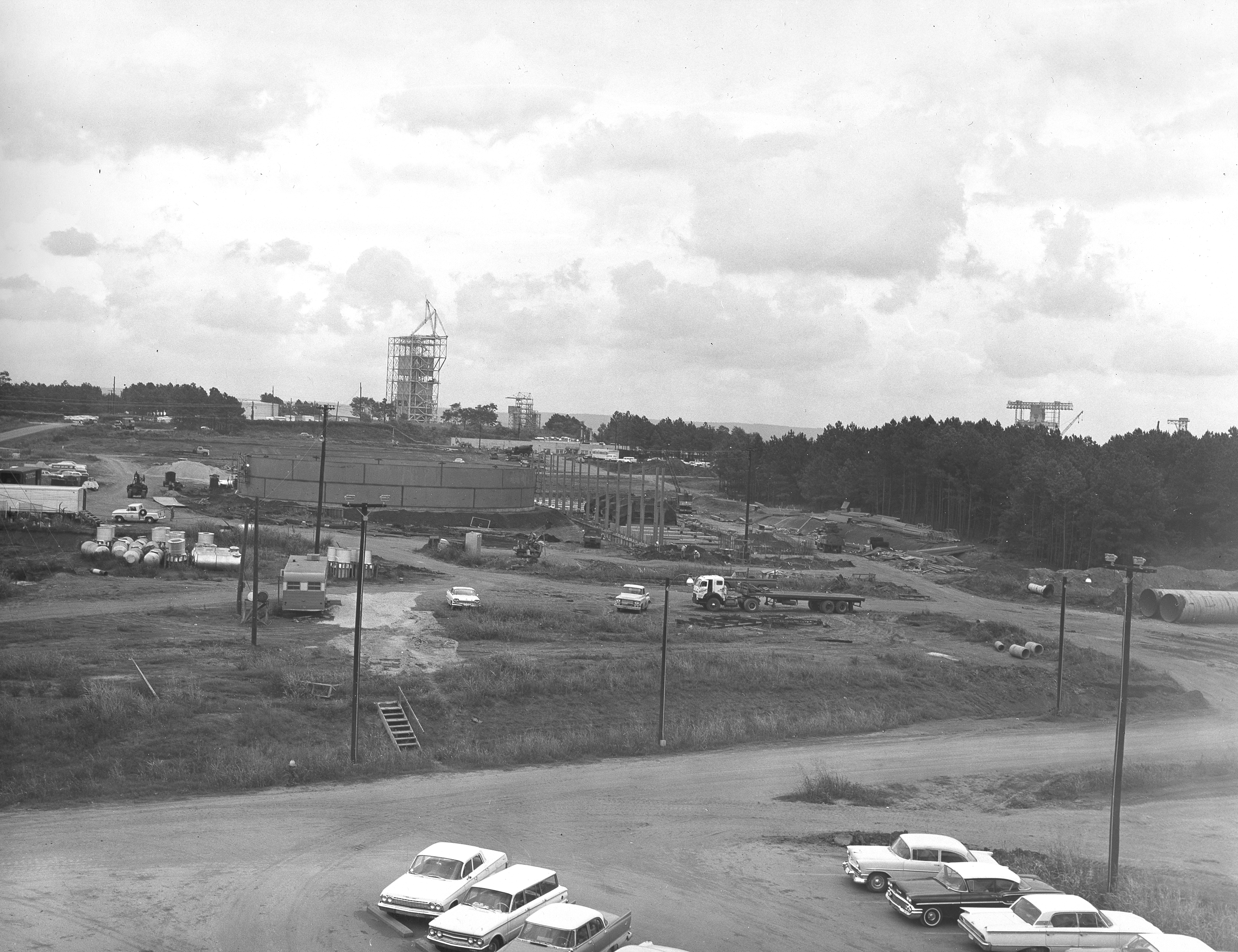
At its founding, the Marshall Space Flight Center (MSFC) inherited the Army’s Jupiter and Redstone test stands, but much larger facilities were needed for the giant stages of the Saturn V. From 1960 to 1964, the existing stands were remodeled and a sizable new test area was developed. The new comprehensive test complex for propulsion and structural dynamics was unique within the nation and the free world, and they remain so today because they were constructed with foresight to meet the future as well as on going needs. Construction of the S-IC Static test stand complex began in 1961 in the west test area of MSFC, and was completed in 1964. The S-IC static test stand was designed to develop and test the 138-ft long and 33-ft diameter Saturn V S-IC first stage, or booster stage, weighing in at 280,000 pounds. Required to hold down the brute force of a 7,500,000-pound thrust produced by 5 F-1 engines, the S-IC static test stand was designed and constructed with the strength of hundreds of tons of steel and 12,000,000 pounds of cement, planted down to bedrock 40 feet below ground level. The foundation walls, constructed with concrete and steel, are 4 feet thick. The base structure consists of four towers with 40-foot-thick walls extending upward 144 feet above ground level. The structure was topped by a crane with a 135-foot boom. With the boom in the upright position, the stand was given an overall height of 405 feet, placing it among the highest structures in Alabama at the time. In addition to the stand itself, related facilities were constructed during this time. Built to the northeast east was a newly constructed Pump House. Its function was to provide water to the stand to prevent melting damage during testing. The water was sprayed through small holes in the stand’s 1900 ton flame deflector at the rate of 320,000 gallons per minute. This photograph of the Pump House area was taken August 13, 1963. The massive round water storage tanks can be seen to the left of the Pump House.
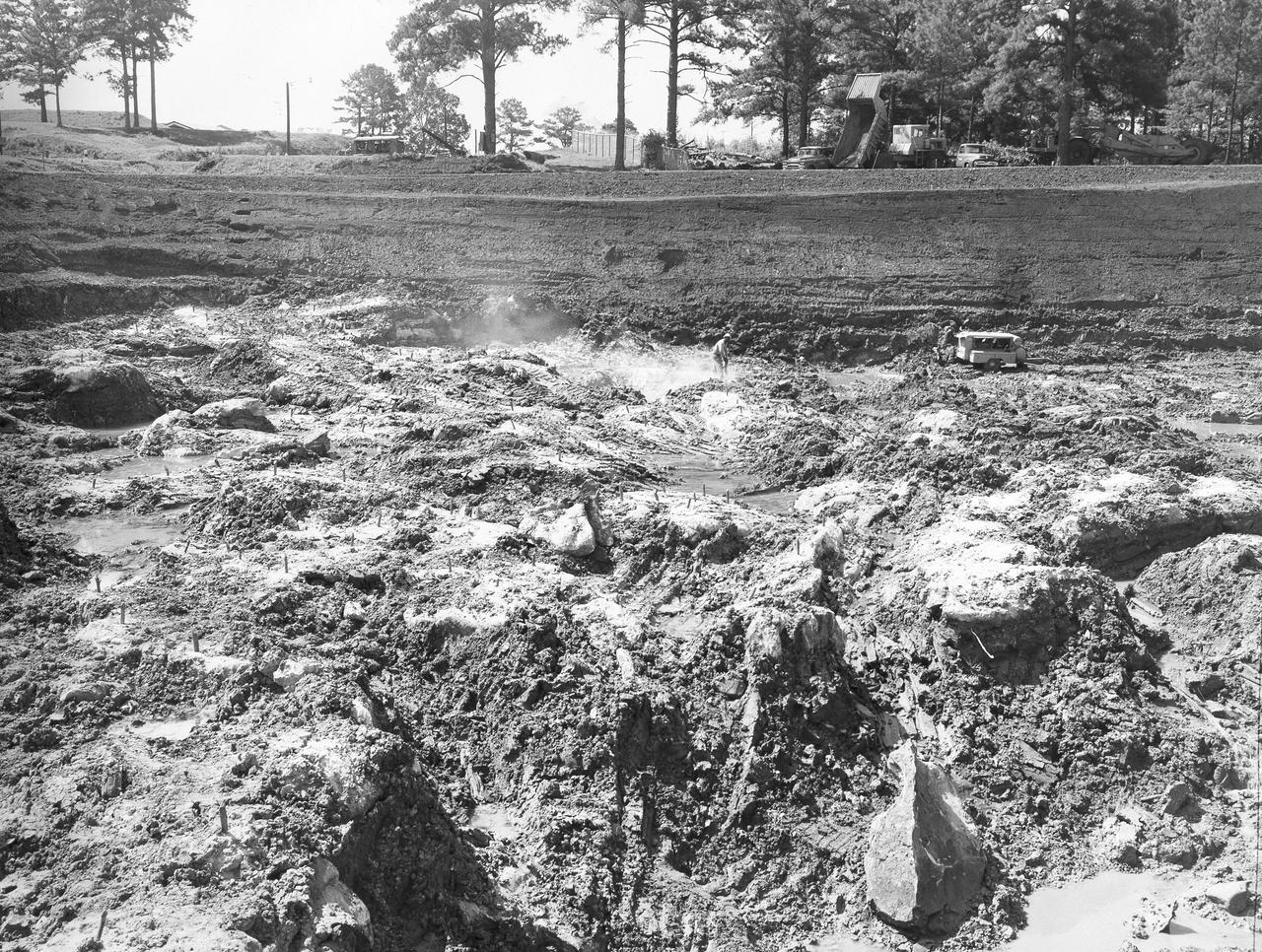
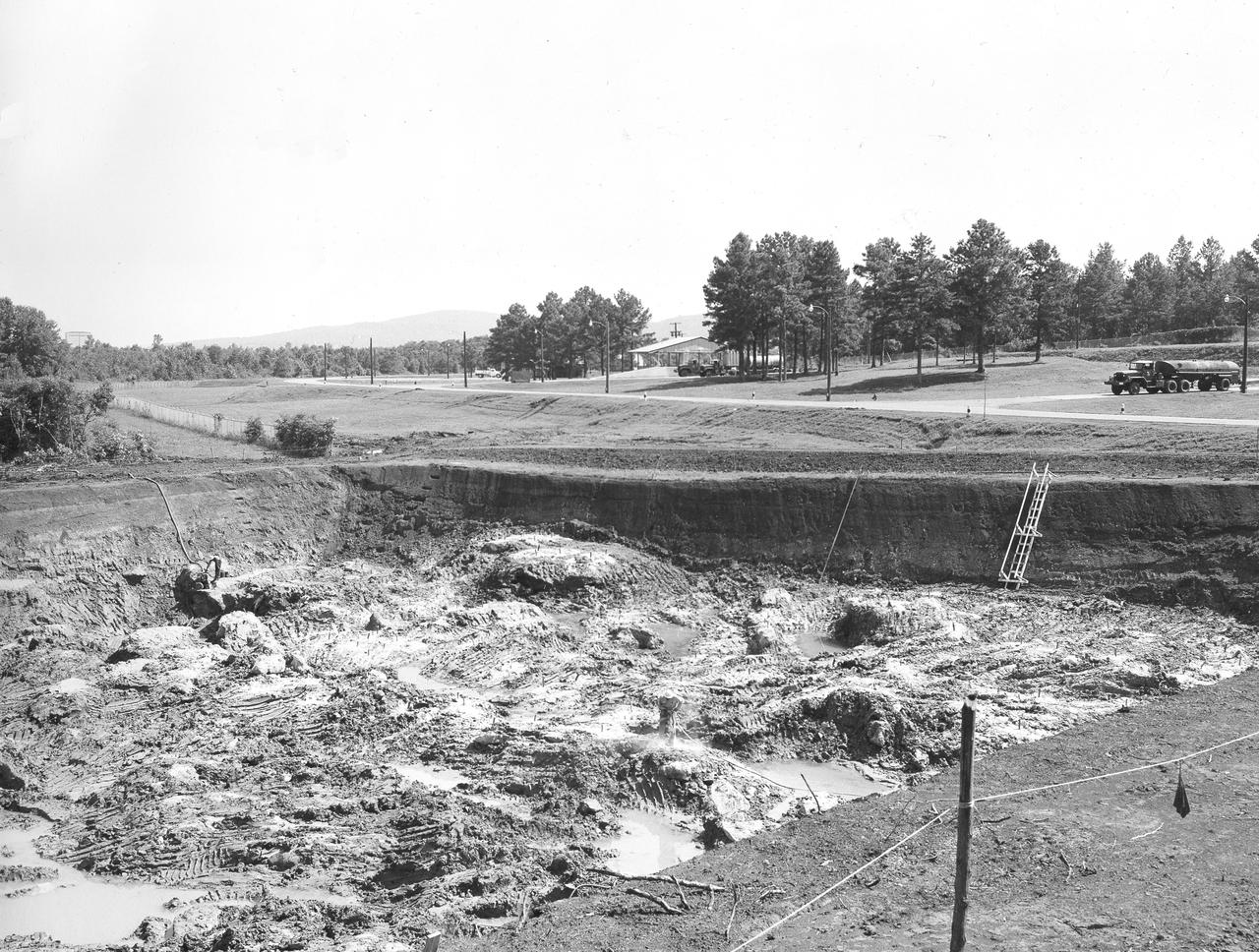
At its founding, the Marshall Space Flight Center (MSFC) inherited the Army’s Jupiter and Redstone test stands, but much larger facilities were needed for the giant stages of the Saturn V. From 1960 to 1964, the existing stands were remodeled and a sizable new test area was developed. The new comprehensive test complex for propulsion and structural dynamics was unique within the nation and the free world, and they remain so today because they were constructed with foresight to meet the future as well as on going needs. Construction of the S-IC Static test stand complex began in 1961 in the west test area of MSFC, and was completed in 1964. The S-IC static test stand was designed to develop and test the 138-ft long and 33-ft diameter Saturn V S-IC first stage, or booster stage, weighing in at 280,000 pounds. Required to hold down the brute force of a 7,500,000-pound thrust produced by 5 F-1 engines, the S-IC static test stand was designed and constructed with the strength of hundreds of tons of steel and 12,000,000 pounds of cement, planted down to bedrock 40 feet below ground level. The foundation walls, constructed with concrete and steel, are 4 feet thick. The base structure consists of four towers with 40-foot-thick walls extending upward 144 feet above ground level. The structure was topped by a crane with a 135-foot boom. With the boom in the upright position, the stand was given an overall height of 405 feet, placing it among the highest structures in Alabama at the time. In this photo, taken July 21, 1961, workers can be seen inside the test stand work area clearing the site.
At its founding, the Marshall Space Flight Center (MSFC) inherited the Army’s Jupiter and Redstone test stands, but much larger facilities were needed for the giant stages of the Saturn V. From 1960 to 1964, the existing stands were remodeled and a sizable new test area was developed. The new comprehensive test complex for propulsion and structural dynamics was unique within the nation and the free world, and they remain so today because they were constructed with foresight to meet the future as well as on going needs. Construction of the S-IC Static test stand complex began in 1961 in the west test area of MSFC, and was completed in 1964. The S-IC static test stand was designed to develop and test the 138-ft long and 33-ft diameter Saturn V S-IC first stage, or booster stage, weighing in at 280,000 pounds. Required to hold down the brute force of a 7,500,000-pound thrust produced by 5 F-1 engines, the S-IC static test stand was designed and constructed with the strength of hundreds of tons of steel and 12,000,000 pounds of cement, planted down to bedrock 40 feet below ground level. The foundation walls, constructed with concrete and steel, are 4 feet thick. The base structure consists of four towers with 40-foot-thick walls extending upward 144 feet above ground level. The structure was topped by a crane with a 135-foot boom. With the boom in the upright position, the stand was given an overall height of 405 feet, placing it among the highest structures in Alabama at the time. In this photo, taken July 21, 1961, a worker can be seen inside the test stand work area with a jack hammer.
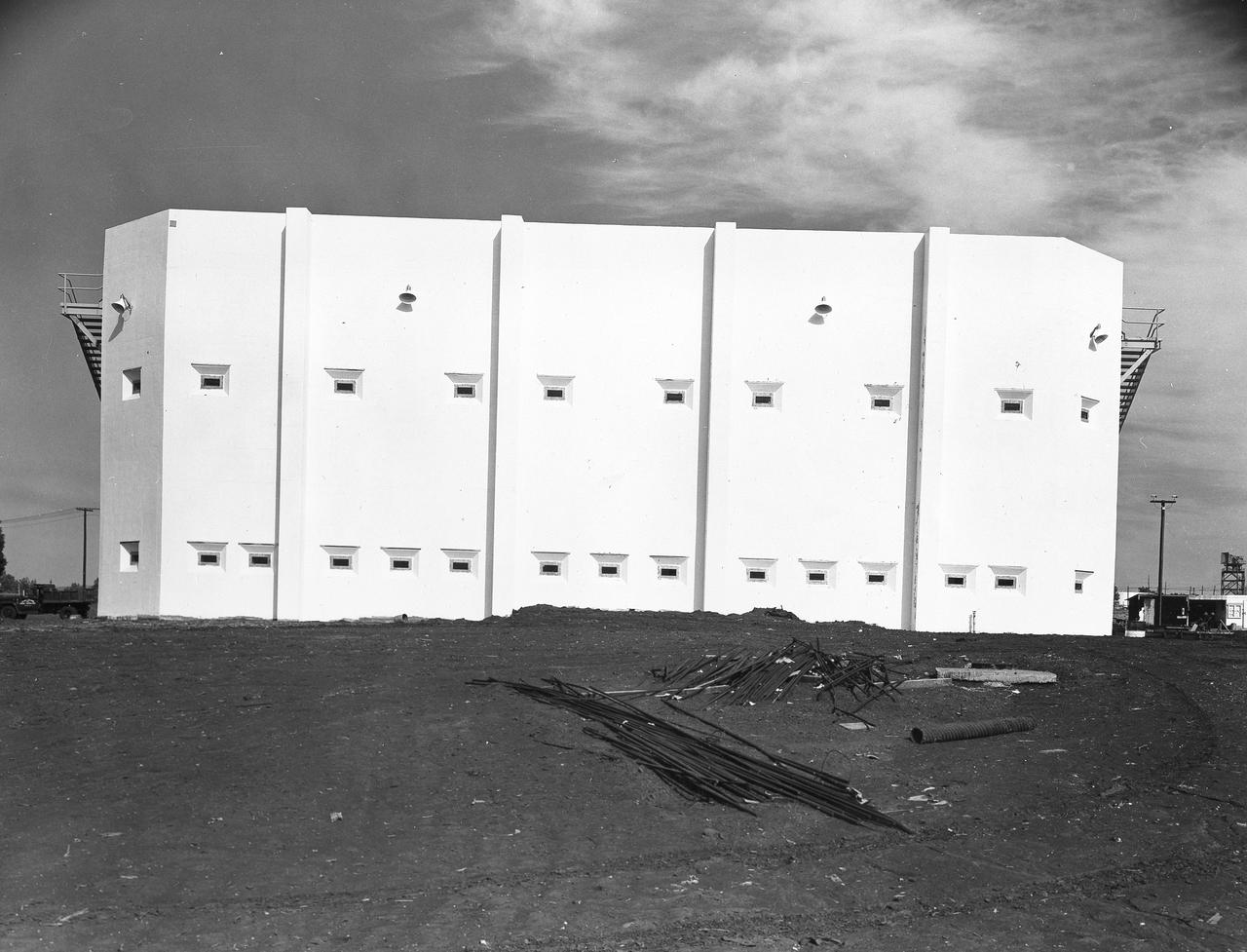
At its founding, the Marshall Space Flight Center (MSFC) inherited the Army’s Jupiter and Redstone test stands, but much larger facilities were needed for the giant stages of the Saturn V. From 1960 to 1964, the existing stands were remodeled and a sizable new test area was developed. The new comprehensive test complex for propulsion and structural dynamics was unique within the nation and the free world, and they remain so today because they were constructed with foresight to meet the future as well as on going needs. Construction of the S-IC Static test stand complex began in 1961 in the west test area of MSFC, and was completed in 1964. The S-IC static test stand was designed to develop and test the 138-ft long and 33-ft diameter Saturn V S-IC first stage, or booster stage, weighing in at 280,000 pounds. Required to hold down the brute force of a 7,500,000-pound thrust produced by 5 F-1 engines, the S-IC static test stand was designed and constructed with the strength of hundreds of tons of steel and 12,000,000 pounds of cement, planted down to bedrock 40 feet below ground level. The foundation walls, constructed with concrete and steel, are 4 feet thick. The base structure consists of four towers with 40-foot-thick walls extending upward 144 feet above ground level. The structure was topped by a crane with a 135-foot boom. With the boom in the upright position, the stand was given an overall height of 405 feet, placing it among the highest structures in Alabama at the time. In addition to the stand itself, related facilities were constructed during this time. Built directly east of the test stand was the Block House, which served as the control center for the test stand. The two were connected by a narrow access tunnel which housed the cables for the controls. This photograph, taken February 25, 1963, gives a close up look at the completed Block House. The side shown faces the S-IC Test Stand.
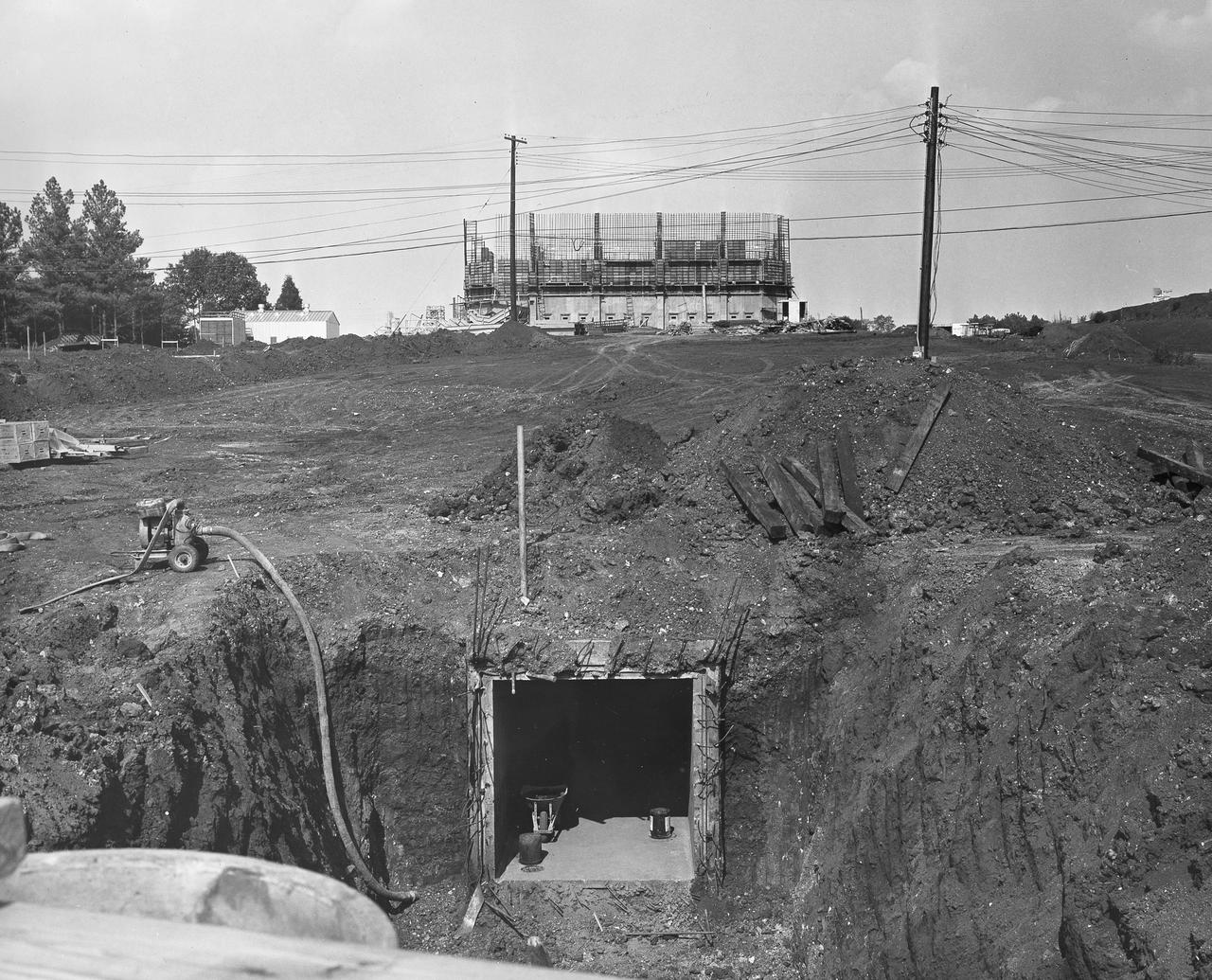
At its founding, the Marshall Space Flight Center (MSFC) inherited the Army’s Jupiter and Redstone test stands, but much larger facilities were needed for the giant stages of the Saturn V. From 1960 to 1964, the existing stands were remodeled and a sizable new test area was developed. The new comprehensive test complex for propulsion and structural dynamics was unique within the nation and the free world, and they remain so today because they were constructed with foresight to meet the future as well as on going needs. Construction of the S-IC Static test stand complex began in 1961 in the west test area of MSFC, and was completed in 1964. The S-IC static test stand was designed to develop and test the 138-ft long and 33-ft diameter Saturn V S-IC first stage, or booster stage, weighing in at 280,000 pounds. Required to hold down the brute force of a 7,500,000-pound thrust produced by 5 F-1 engines, the S-IC static test stand was designed and constructed with the strength of hundreds of tons of steel and 12,000,000 pounds of cement, planted down to bedrock 40 feet below ground level. The foundation walls, constructed with concrete and steel, are 4 feet thick. The base structure consists of four towers with 40-foot-thick walls extending upward 144 feet above ground level. The structure was topped by a crane with a 135-foot boom. With the boom in the upright position, the stand was given an overall height of 405 feet, placing it among the highest structures in Alabama at the time. In addition to the stand itself, related facilities were constructed during this time. Built directly east of the test stand was the Block House, which served as the control center for the test stand. The two were connected by a narrow access tunnel which housed the cables for the controls. This construction photo taken August 17, 1962 depicts a view of the Block House from the test stand site. The tunnel opening is visible in the forefront center of the photo.