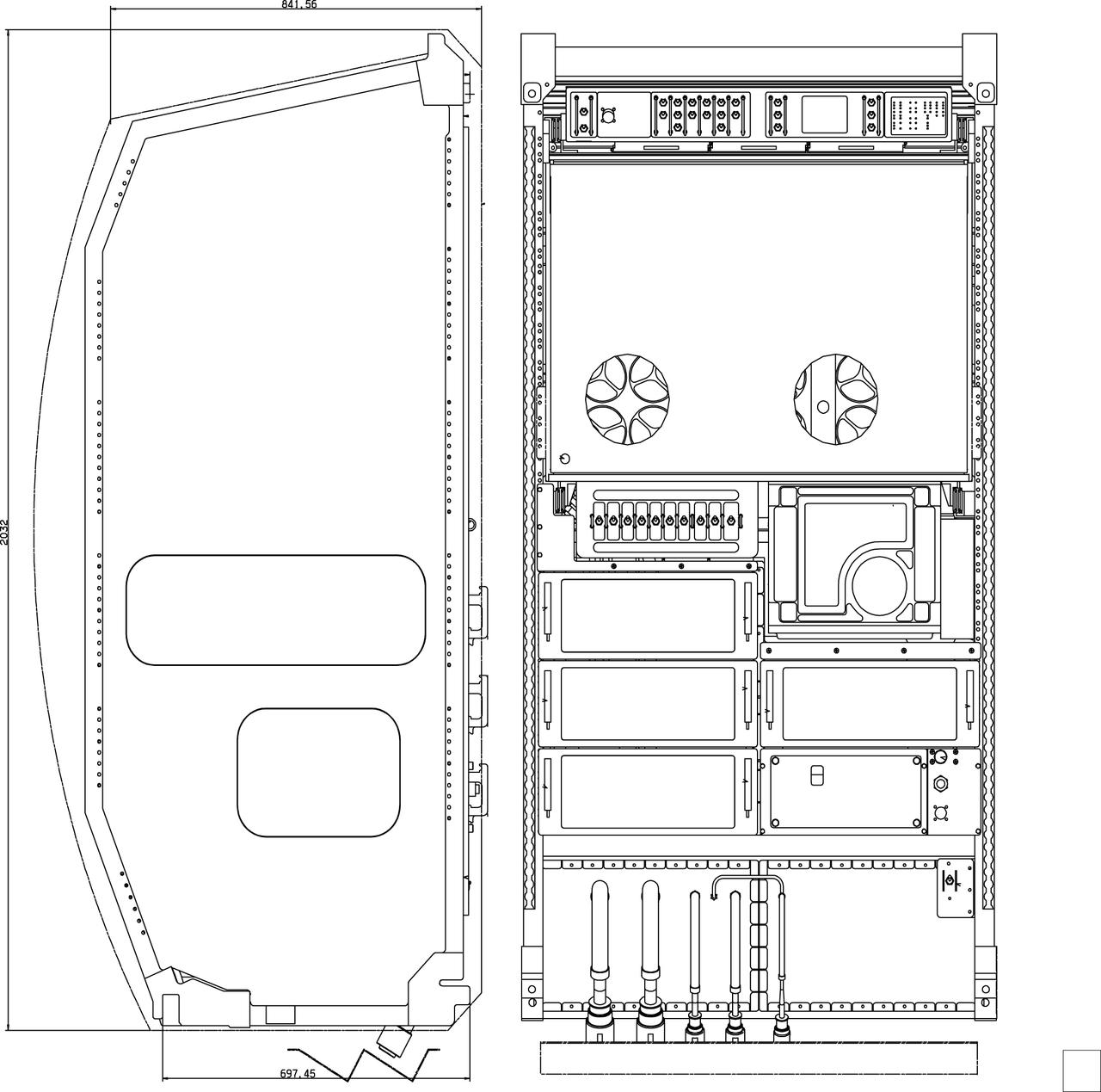
The Microgravity Science Glovebox is being developed by the European Space Agency and NASA to provide a large working volume for hands-on experiments aboard the International Space Station. Scientists will use the MSG to carry out multidisciplinary studies in combustion science, fluid physics and materials science. The MSG is managed by NASA's Marshall Space Flight Center. (Credit: NASA/Marshall)
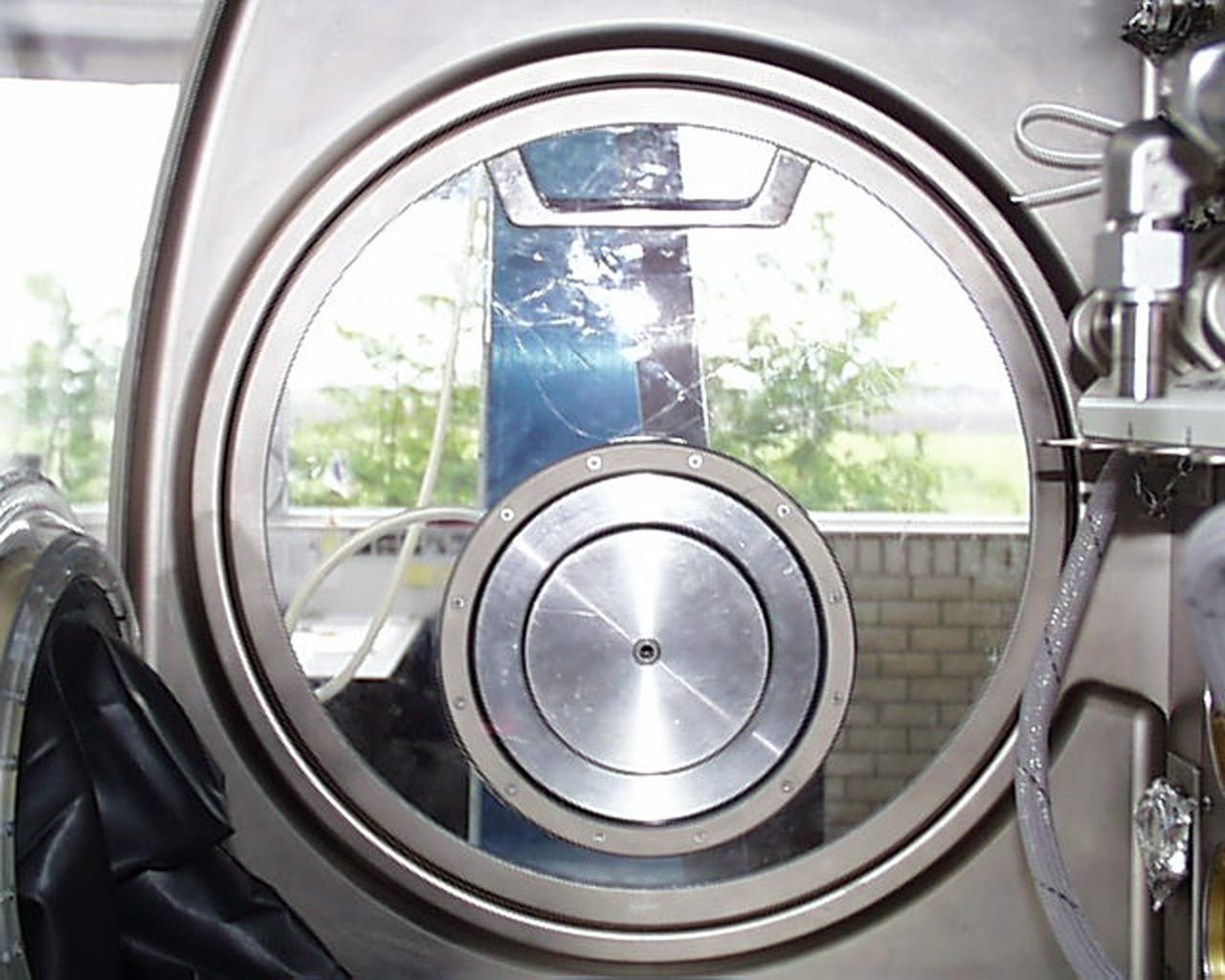
Access ports, one on each side of the Microgravity Science Glovebox (MSG), will allow scientists to place large experiment items inside the MSG. The ports also provide additional glove ports (silver disk) for greater access to the interior. The European Space Agency (ESA) and NASA are developing the MSG for use aboard the International Space Station (ISS). Scientists will use the MSG to carry out multidisciplinary studies in combustion science, fluid physics and materials science. The MSG is managed by NASA's Marshall Space Flight Center (MSFC). Photo Credit: NASA/MSFC
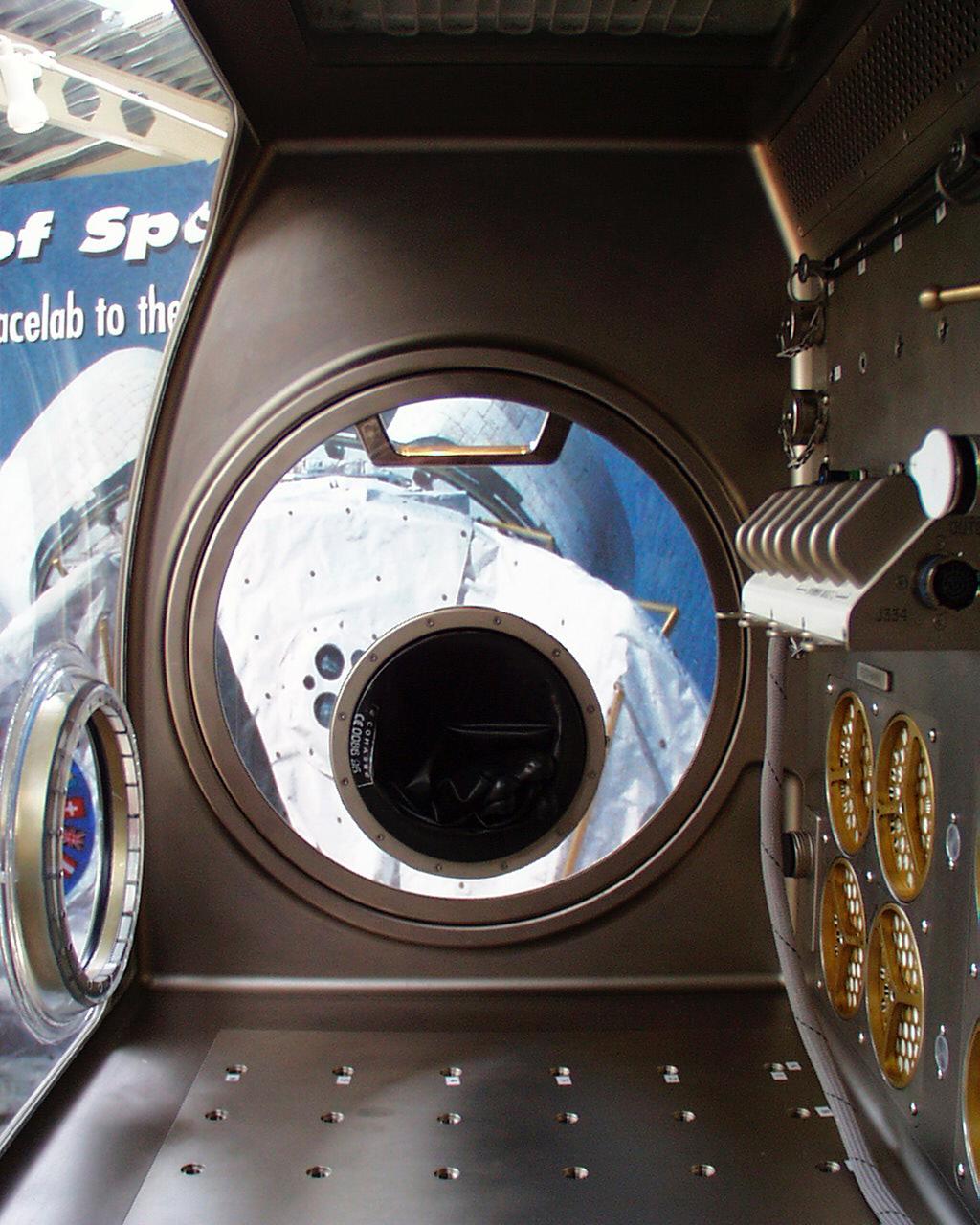
Access ports, one on each side of the Microgravity Science Glovebox (MSG), will allow scientists to place large experiment items inside the MSG. The ports also provide additional glove ports (dark circle) for greater access to the interior. The European Space Agency (ESA) and NASA are developing the MSG for use aboard the International Space Station (ISS). Scientists will use the MSG to carry out multidisciplinary studies in combustion science, fluid physics and materials science. The MSG is managed by NASA's Marshall Space Flight Center (MSFC). Photo Credit: NASA/MSFC
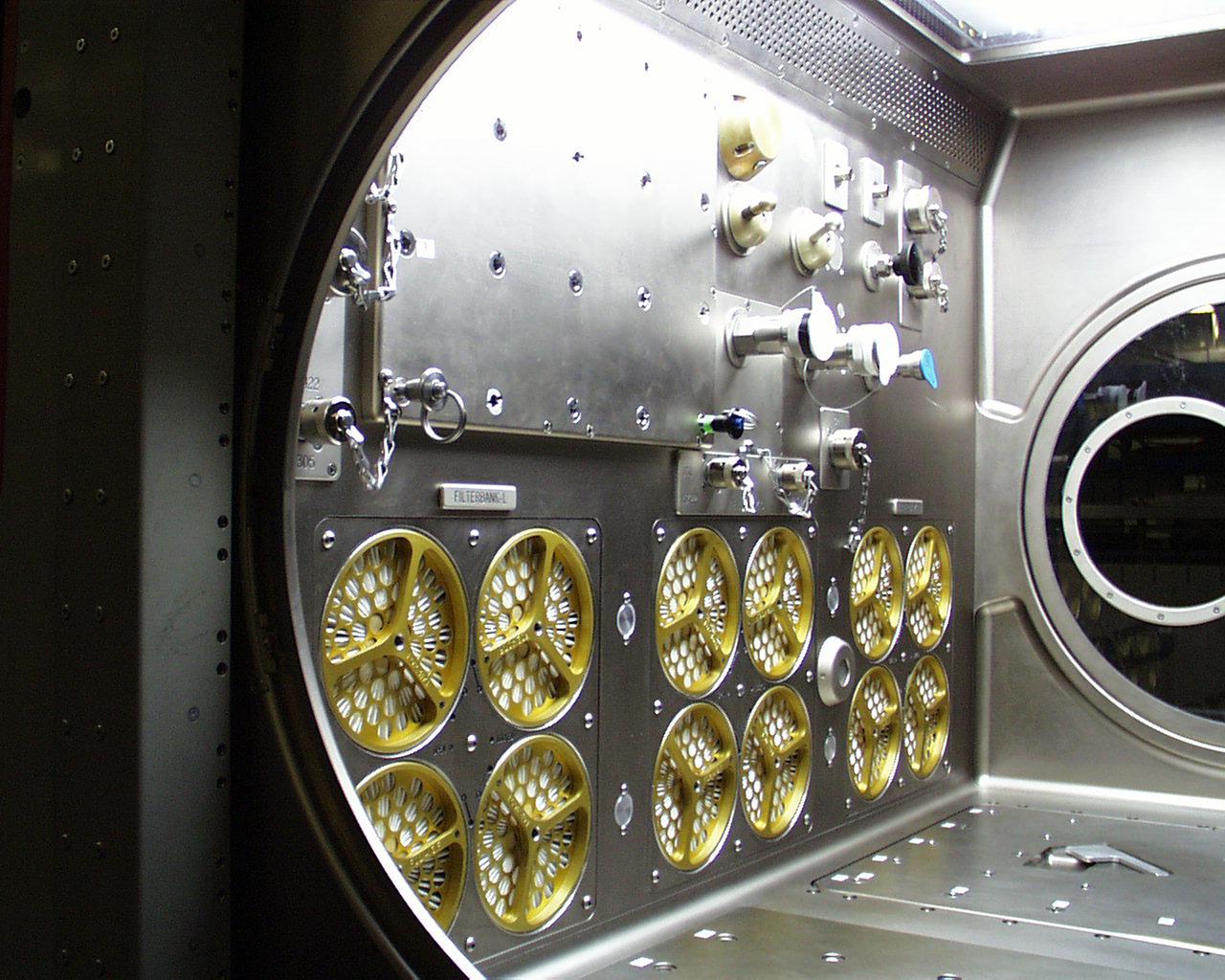
Interior lights give the Microgravity Science Glovebox (MSG) the appearance of a high-tech juke box. The European Space Agency (ESA) and NASA are developing the MSG for use aboard the International Space Station (ISS). Scientists will use the MSG to carry out multidisciplinary studies in combustion science, fluid physics and materials science. The MSG is managed by NASA's Marshall Space Flight Center (MSFC). Photo Credit: NASA/MSFC
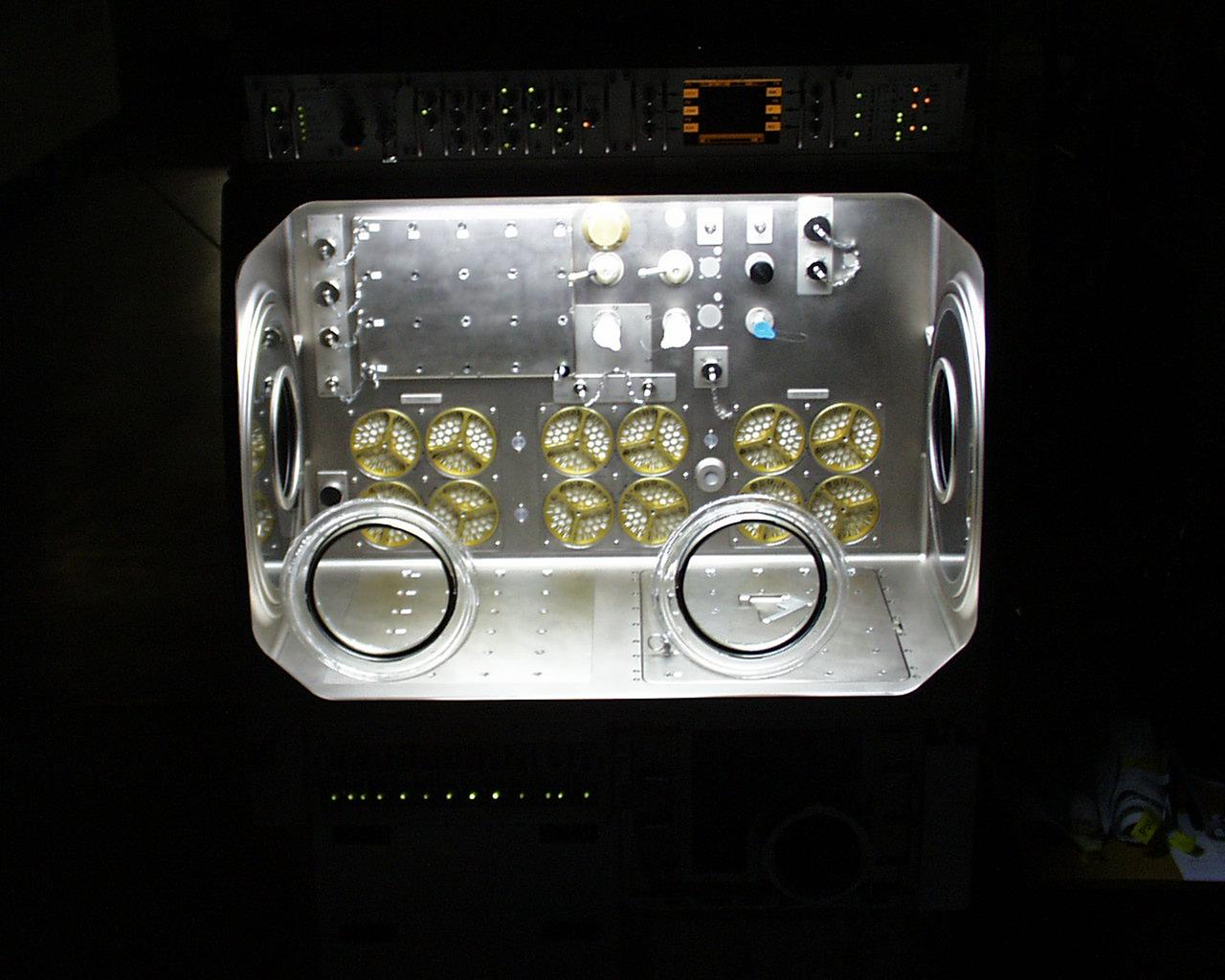
Interior lights give the Microgravity Science Glovebox (MSG) the appearance of a high-tech juke box. The European Space Agency (ESA) and NASA are developing the MSG for use aboard the International Space Station (ISS). Scientists will use the MSG to carry out multidisciplinary studies in combustion science, fluid physics and materials science. The MSG is managed by NASA's Marshall Space Flight Center (MSFC). Photo Credit: NASA/MSFC
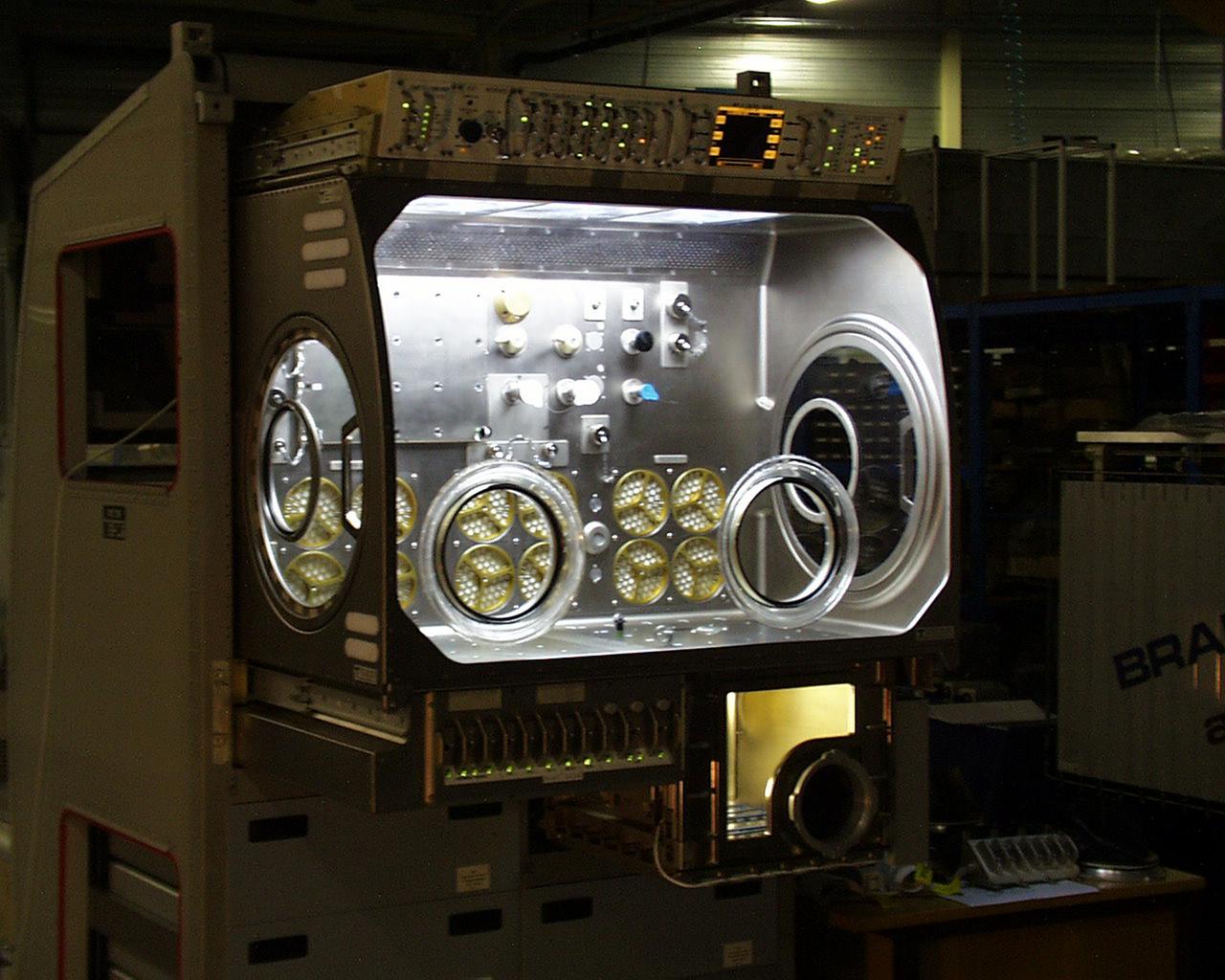
Interior lights give the Microgravity Science Glovebox (MSG) the appearance of a high-tech juke box. The European Space Agency (ESA) and NASA are developing the MSG for use aboard the International Space Station (ISS). Scientists will use the MSG to carry out multidisciplinary studies in combustion science, fluid physics and materials science. The MSG is managed by NASA's Marshall Space Flight Center (MSFC). Photo Credit: NASA/MSFC
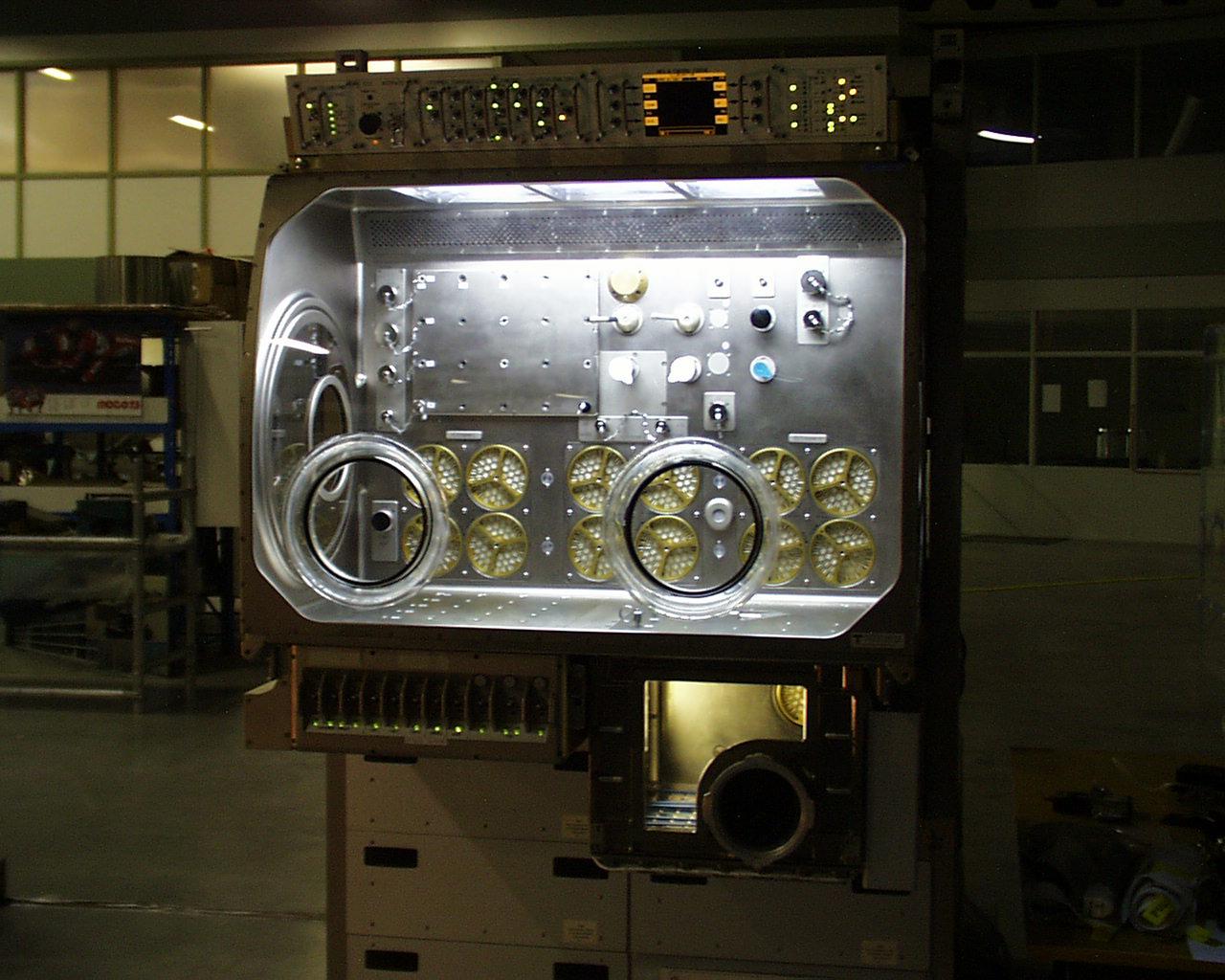
Interior lights give the Microgravity Science Glovebox (MSG) the appearance of a high-tech juke box. The European Space Agency (ESA) and NASA are developing the MSG for use aboard the International Space Station (ISS). Scientists will use the MSG to carry out multidisciplinary studies in combustion science, fluid physics and materials science. The MSG is managed by NASA's Marshall Space Flight Center (MSFC). Photo Credit: NASA/MSFC
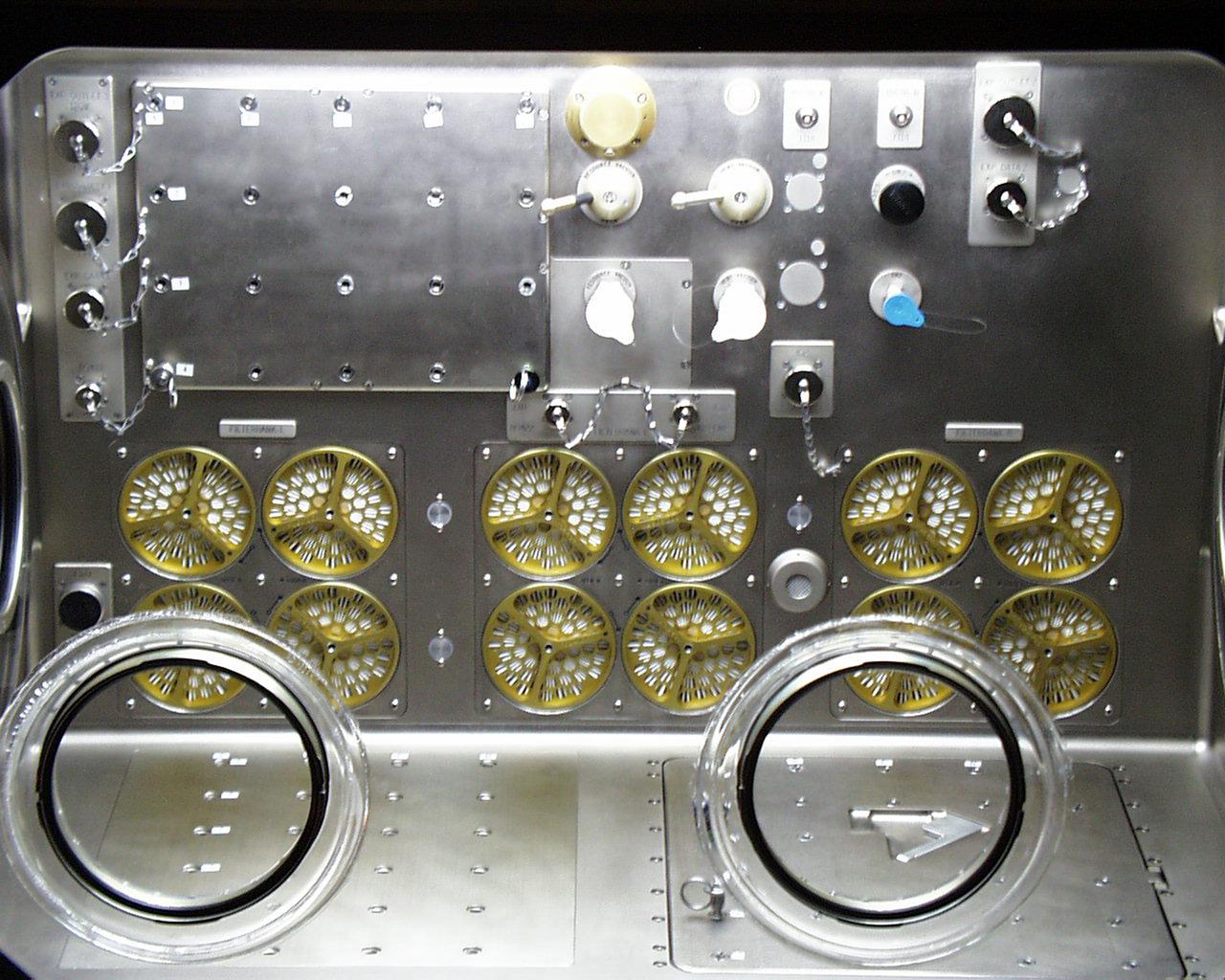
Interior lights give the Microgravity Science Glovebox (MSG) the appearance of a high-tech juke box. The European Space Agency (ESA) and NASA are developing the MSG for use aboard the International Space Station (ISS). Scientists will use the MSG to carry out multidisciplinary studies in combustion science, fluid physics and materials science. The MSG is managed by NASA's Marshall Space Flight Center (MSFC). Photo Credit: NASA/MSFC
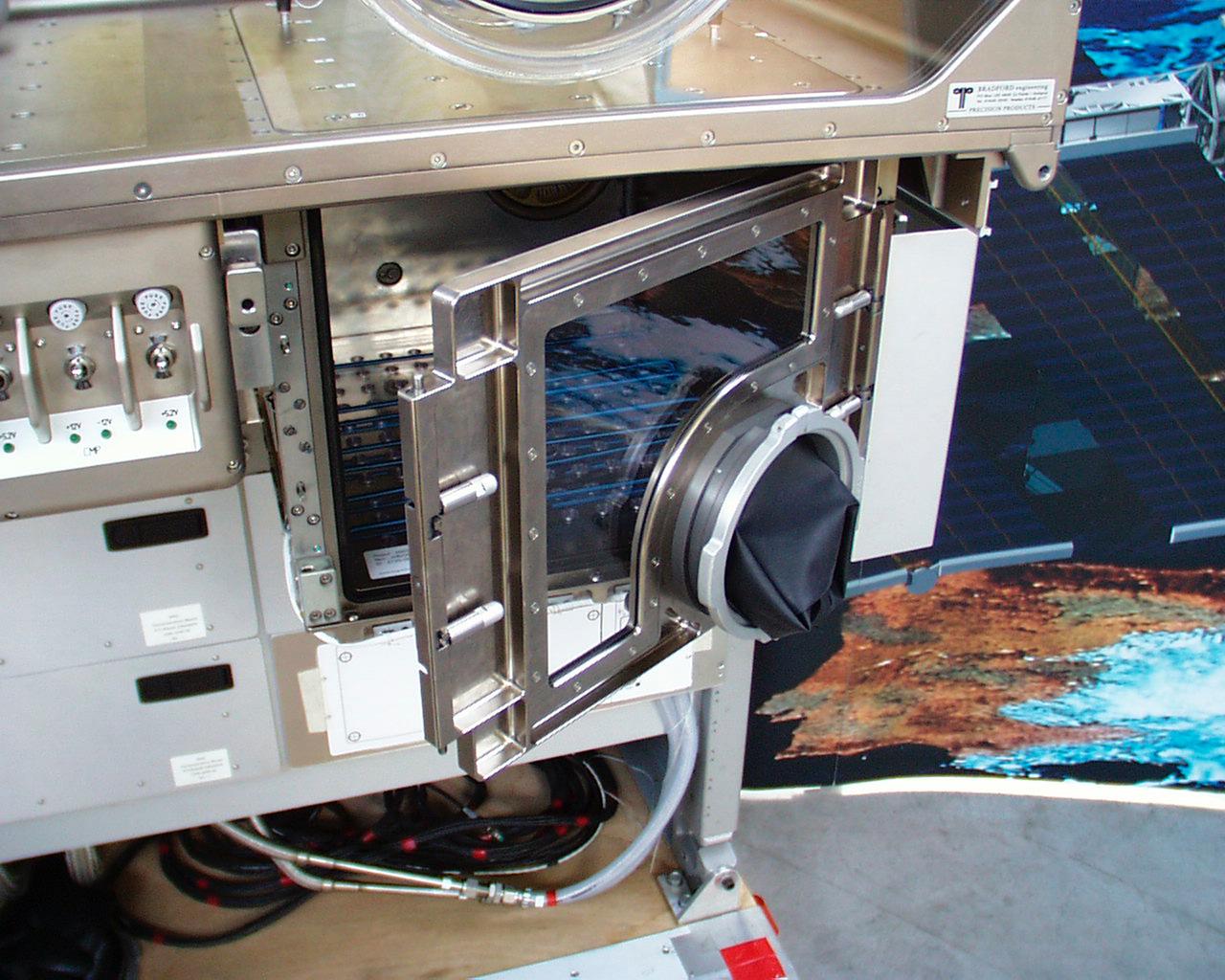
Once the Microgravity Science Glovebox (MSG) is sealed, additional experiment items can be inserted through a small airlock at the bottom right of the work volume. It is shown here with the door open. The European Space Agency (ESA) and NASA are developing the MSG for use aboard the International Space Station (ISS). Scientists will use the MSG to carry out multidisciplinary studies in combustion science, fluid physics and materials science. The MSG is managed by NASA's Marshall Space Flight Center (MSFC). Photo Credit: NASA/MSFC
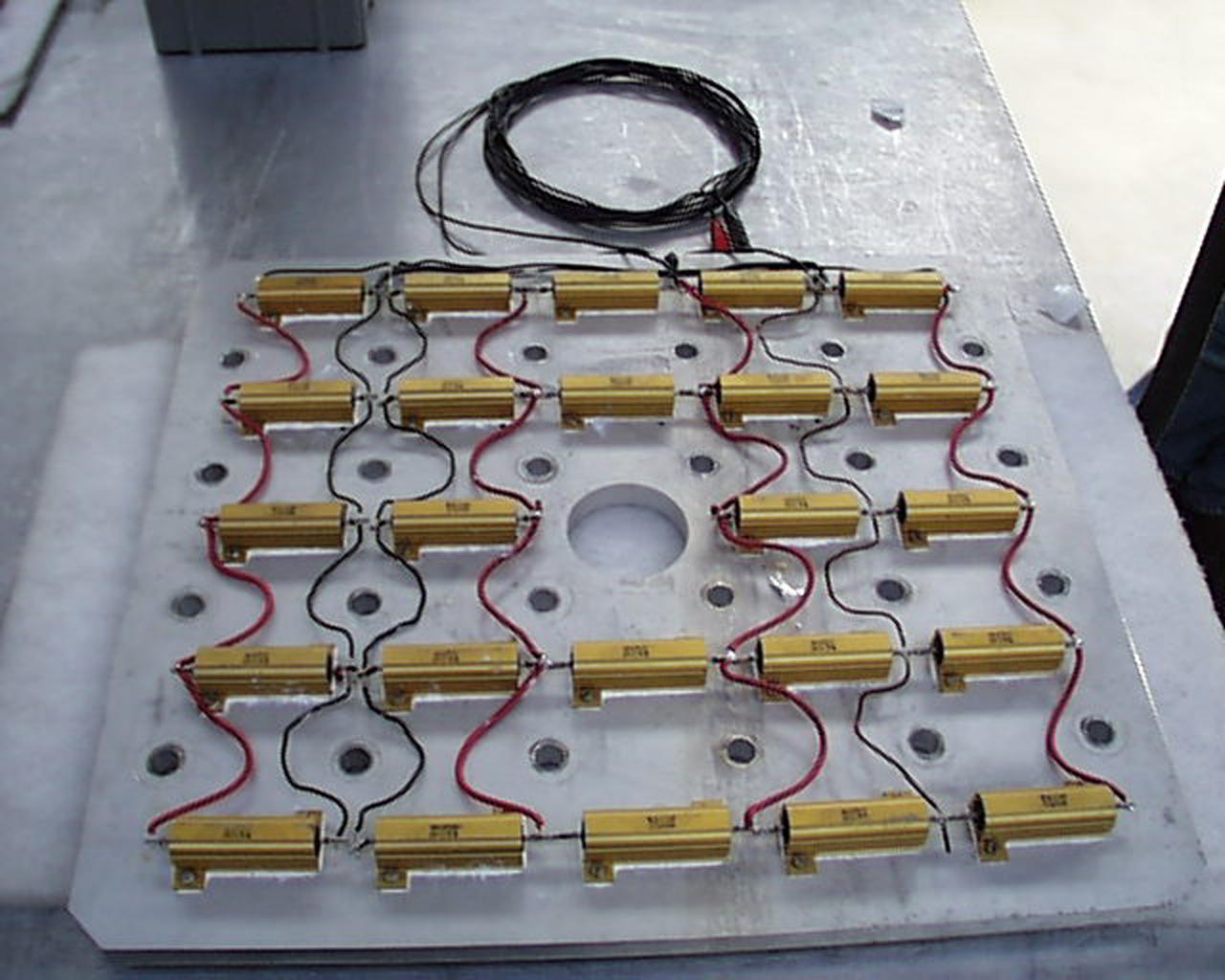
An array of miniature lamps will provide illumination to help scientists as they conduct experiments inside the Microgravity Science Glovebox (MSG). The European Space Agency (ESA) and NASA are developing the MSG for use aboard the International Space Station (ISS). Scientists will use the MSG to carry out multidisciplinary studies in combustion science, fluid physics and materials science. The MSG is managed by NASA's Marshall Space Flight Center (MSFC). Photo Credit: NASA/MSFC
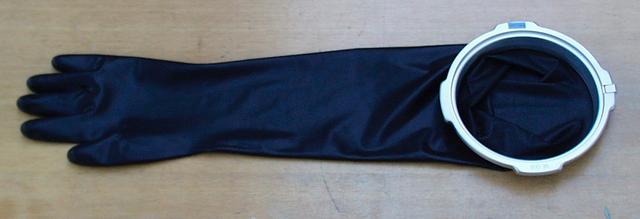
This photo shows a rubber glove and its attachment ring for the Microgravity Science Glovebox (MSG) being developed by the European Space Agency (ESA) and NASA for use aboard the International Space Station (ISS). Scientists will use the MSG to carry out multidisciplinary studies in combustion science, fluid physics and materials science. The MSG is managed by NASA's Marshall Space Flight Center (MSFC). Photo Credit: NASA/MSFC
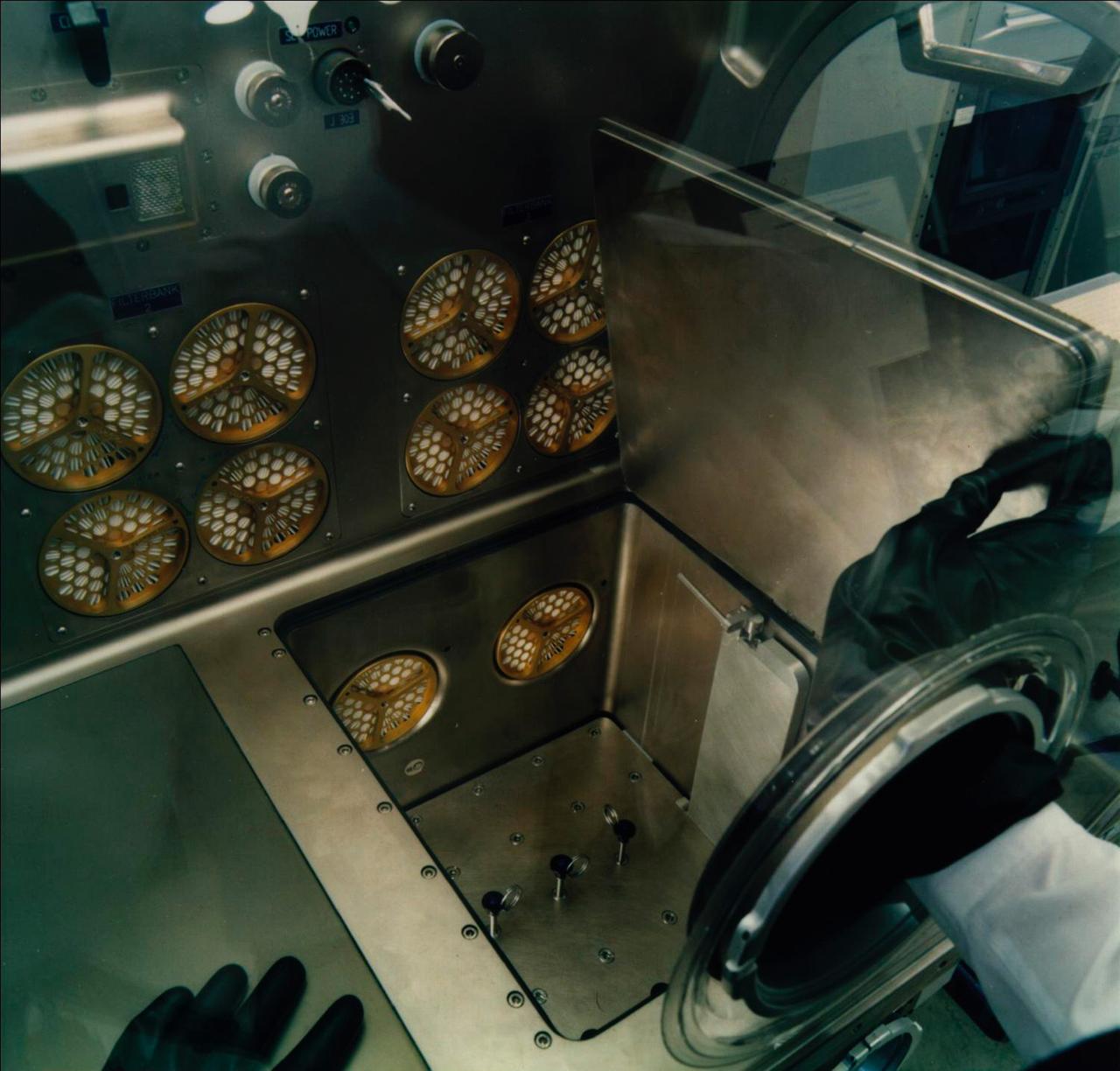
This photo shows the access through the internal airlock (bottom right) on the Microgravity Science Glovebox (MSG) being developed by the European Space Agency (ESA) and NASA for use aboard the International Space Station (ISS). Scientists will use the MSG to carry out multidisciplinary studies in combustion science, fluid physics and materials science. The MSG is managed by NASA's Marshall Space Flight Center (MSFC). Photo Credit: NASA/MSFC
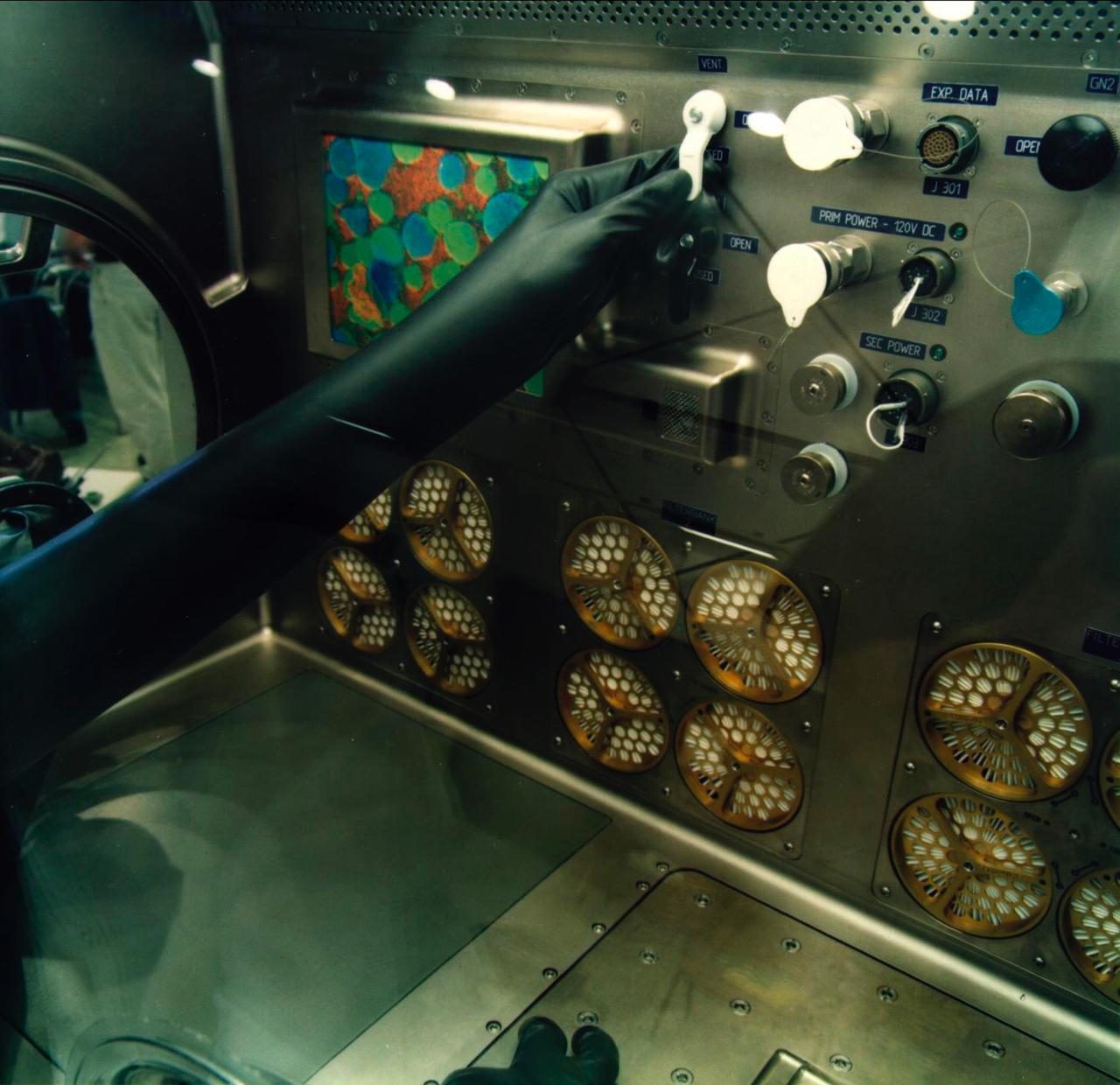
This photo shows the interior reach in the Microgravity Science Glovebox (MSG) being developed by the European Space Agency (ESA) and NASA for use aboard the International Space Station (ISS). Scientists will use the MSG to carry out multidisciplinary studies in combustion science, fluid physics and materials science. The MSG is managed by NASA's Marshall Space Flight Center (MSFC). Photo Credit: NASA/MSFC

The Microgravity Science Glovebox (MSG) is being developed by the European Space Agency (ESA) and NASA for use aboard the International Space Station (ISS). Scientists will use the MSG to carry out multidisciplinary studies in combustion science, fluid physics and materials science. The MSG is managed by NASA's Marshall Space Flight Center (MSFC). Photo Credit: NASA/MSFC
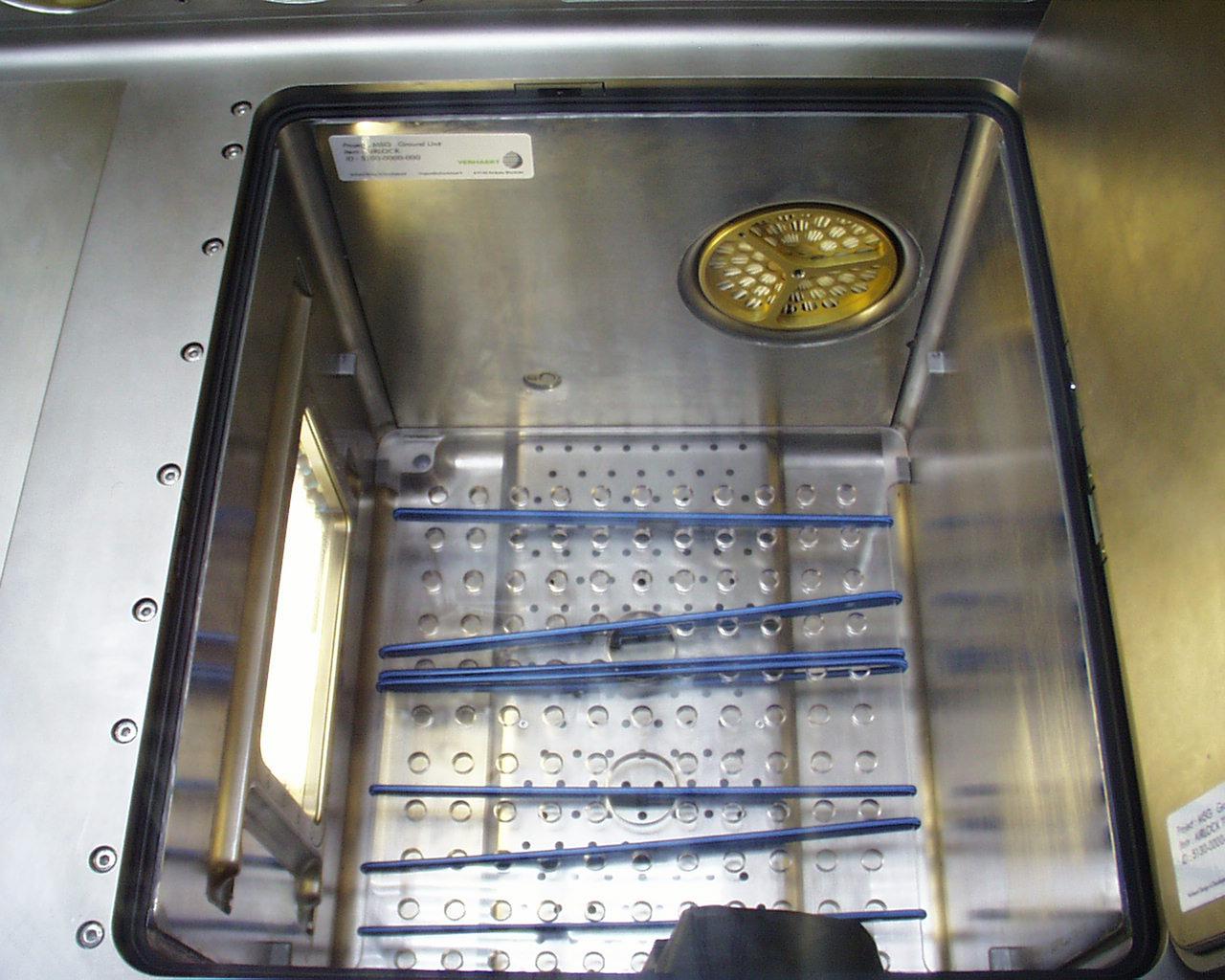
This photo shows the access through the internal airlock on the Microgravity Science Glovebox (MSG) being developed by the European Space Agency (ESA) and NASA for use aboard the International Space Station (ISS). The airlock will allow the insertion or removal of equipment and samples without opening the working volume of the glovebox. Scientists will use the MSG to carry out multidisciplinary studies in combustion science, fluid physics and materials science. The MSG is managed by NASA's Marshall Space Flight Center (MSFC). Photo Credit: NASA/MSFC
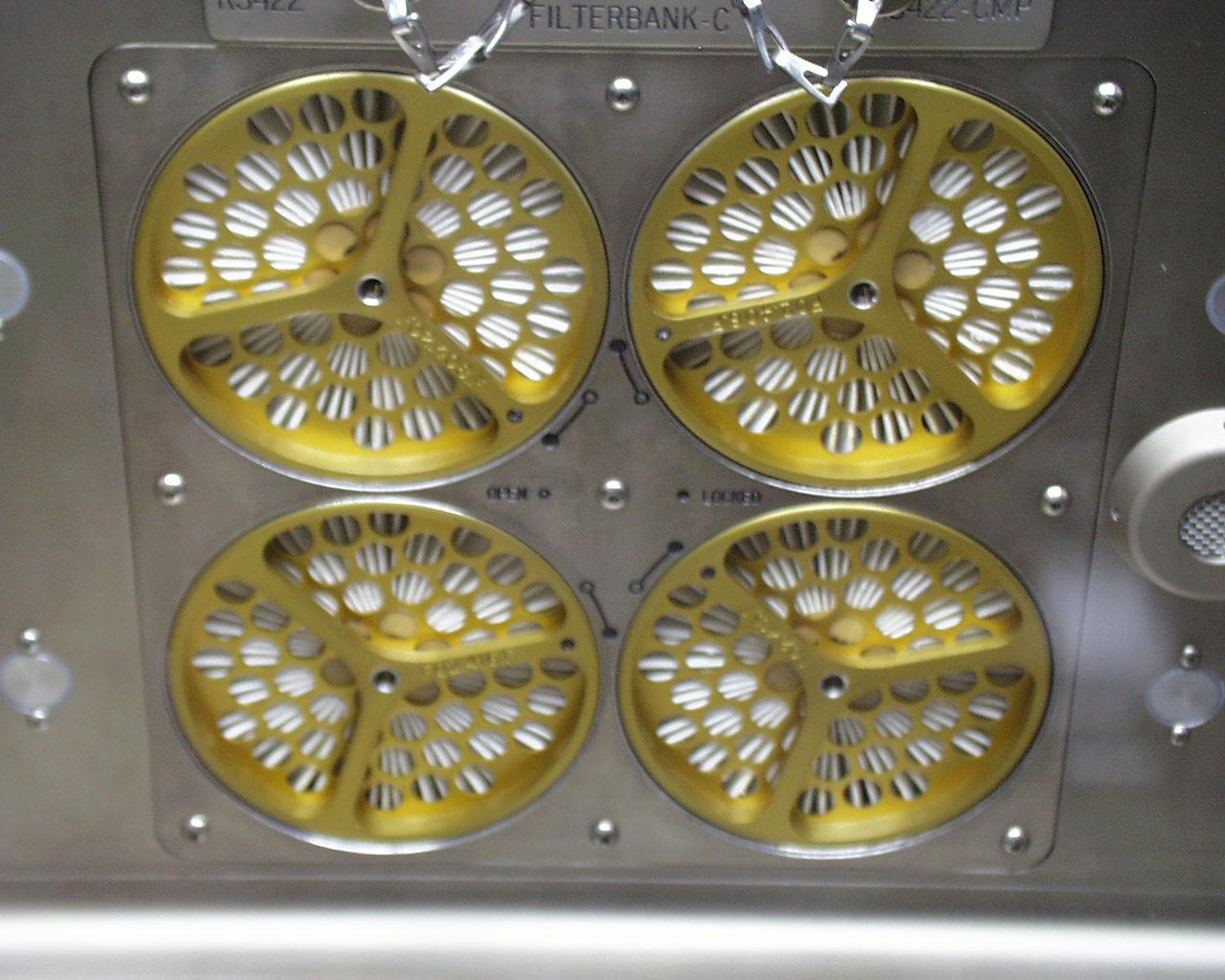
This photo shows one of three arrays of air filters inside the Microgravity Science Glovebox (MSG) being developed by the European Space Agency (ESA) and NASA for use aboard the International Space Station (ISS). Scientists will use the MSG to carry out multidisciplinary studies in combustion science, fluid physics and materials science. The MSG is managed by NASA's Marshall Space Flight Center (MSFC). Photo Credit: NASA/MSFC
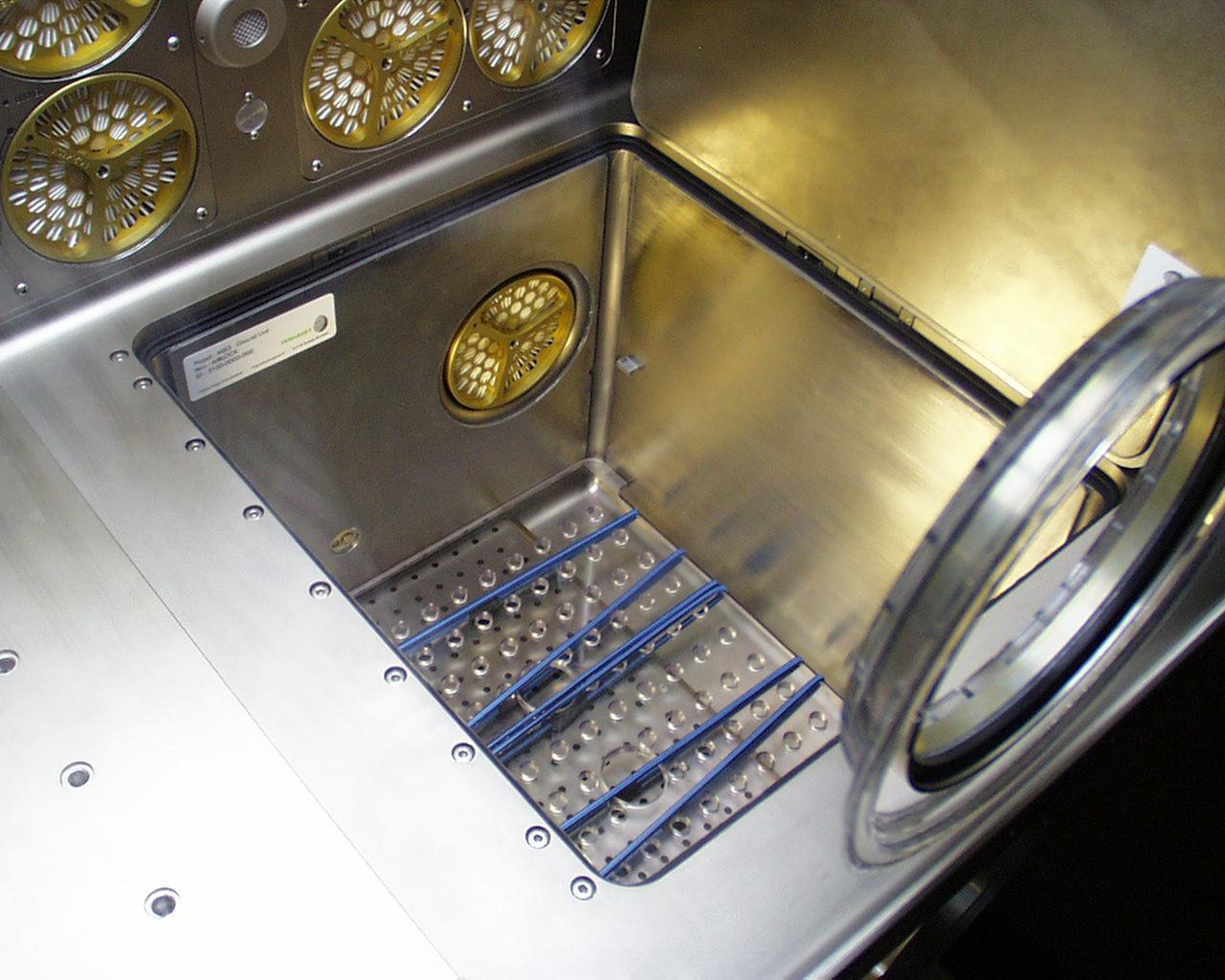
This photo shows the access through the internal airlock (bottom right) on the Microgravity Science Glovebox (MSG) being developed by the European Space Agency (ESA) and NASA for use aboard the International Space Station (ISS). The airlock will allow the insertion or removal of equipment and samples without opening the working volume of the glovebox. Scientists will use the MSG to carry out multidisciplinary studies in combustion science, fluid physics and materials science. The MSG is managed by NASA's Marshall Space Flight Center (MSFC). Photo Credit: NASA/MSFC
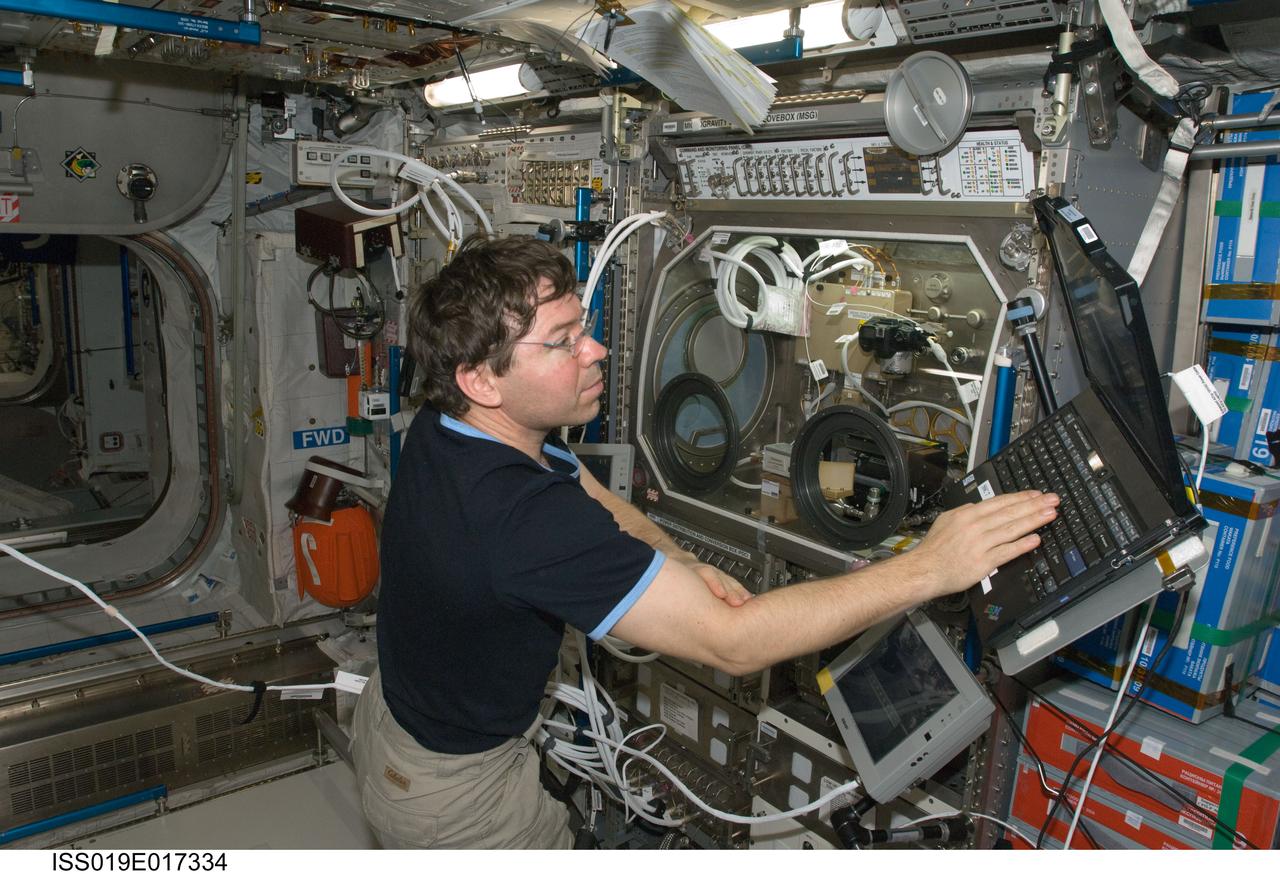
ISS019-E-017334 (16 May 2009) --- Astronaut Michael Barratt, Expedition 19/20 flight engineer, uses a computer near the Microgravity Science Glovebox (MSG) in the Columbus laboratory of the International Space Station.
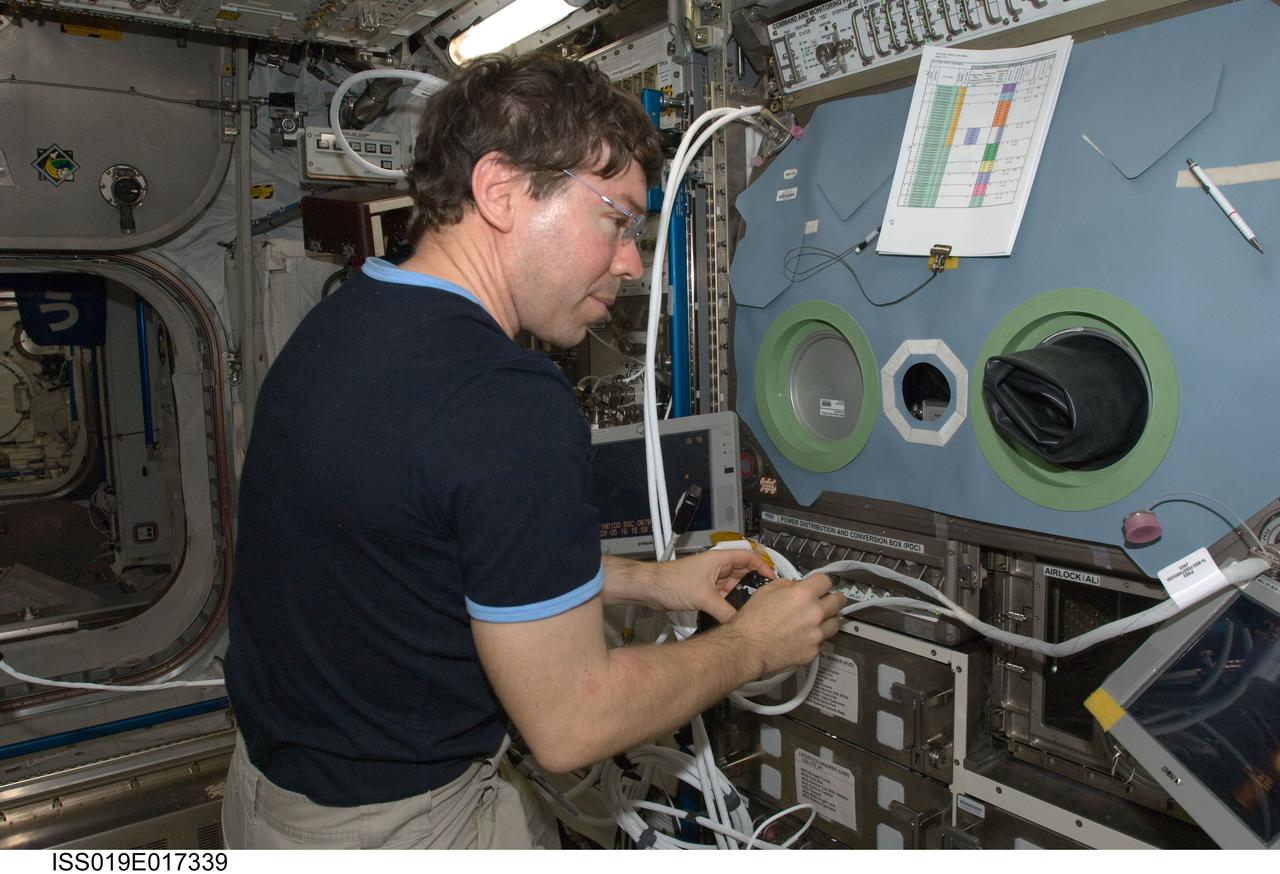
ISS019-E-017339 (16 May 2009) --- Astronaut Michael Barratt, Expedition 19/20 flight engineer, works with the Microgravity Science Glovebox (MSG) in the Columbus laboratory of the International Space Station.
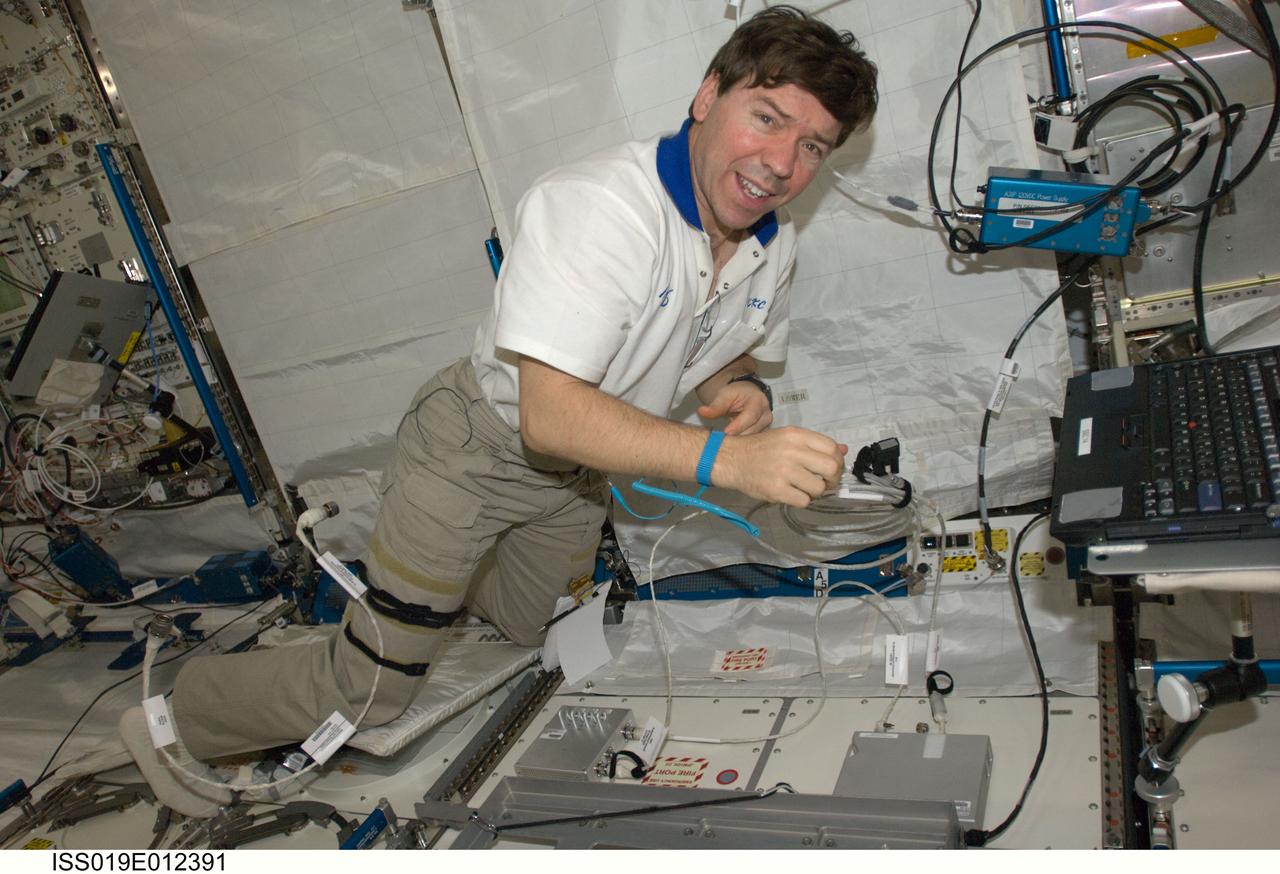
ISS019-E-012391 (29 April 2009) --- Astronaut Michael Barratt, Expedition 19/20 flight engineer, activates the Microgravity Science Glovebox (MSG) from its A31p laptop, initiates and conducts a session, the first of Increment 19, with the experiment Smoke Point In Co-flow Experiment (SPICE), performed in the MSG and controlled by its A31p with SPICE micro-drives in the Kibo laboratory of the International Space Station.
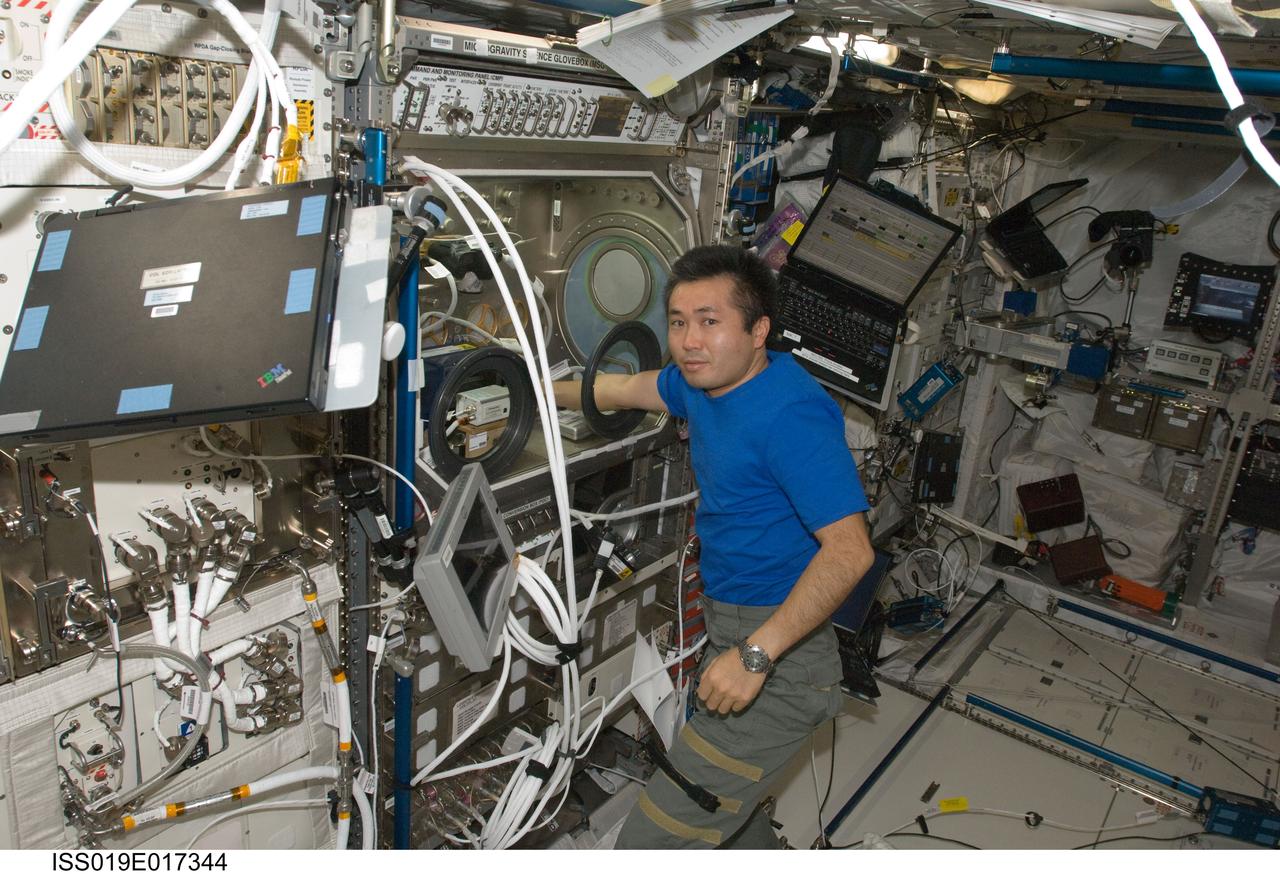
ISS019-E-017344 (16 May 2009) --- Japan Aerospace Exploration Agency (JAXA) astronaut Koichi Wakata, Expedition 19/20 flight engineer, works with the Microgravity Science Glovebox (MSG) in the Columbus laboratory of the International Space Station.
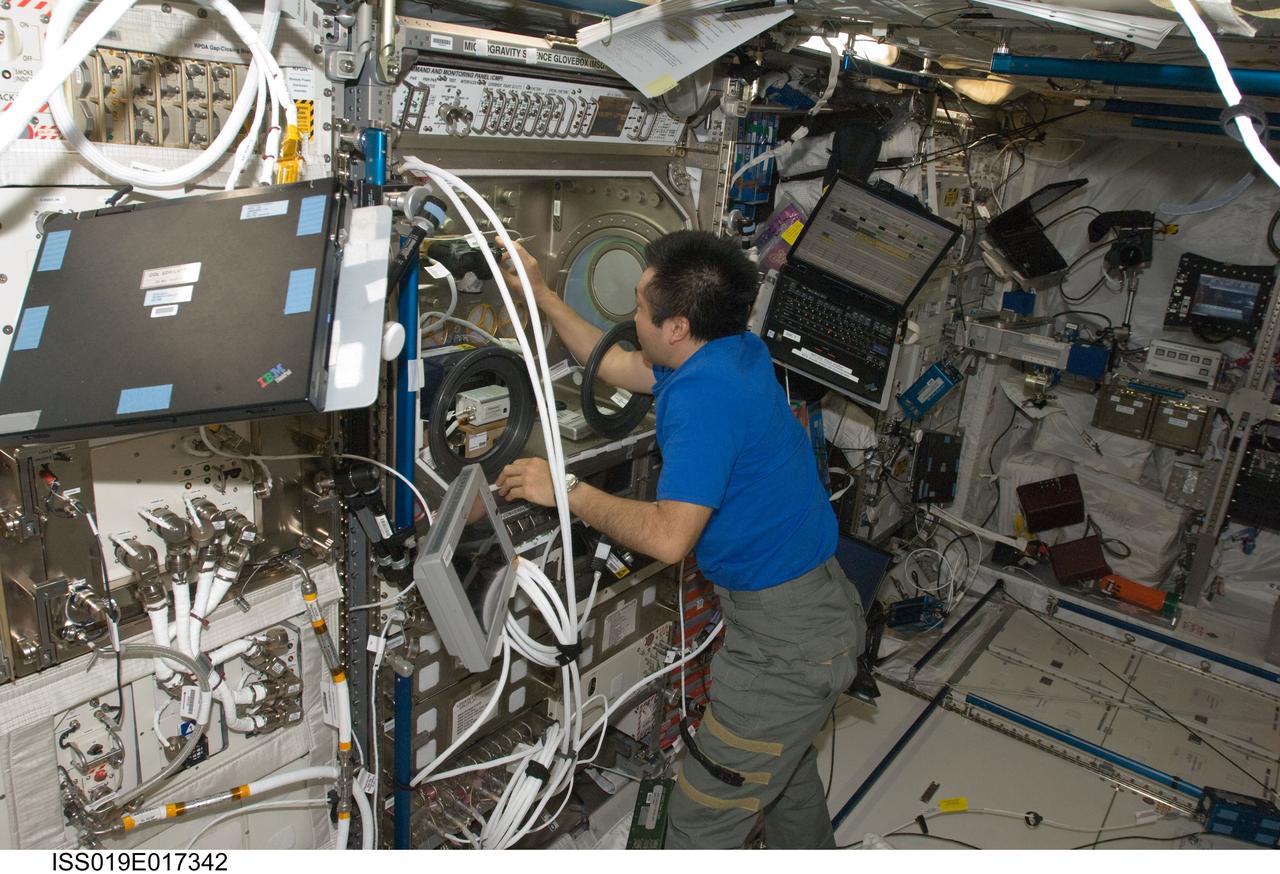
ISS019-E-017342 (16 May 2009) --- Japan Aerospace Exploration Agency (JAXA) astronaut Koichi Wakata, Expedition 19/20 flight engineer, works with the Microgravity Science Glovebox (MSG) in the Columbus laboratory of the International Space Station.
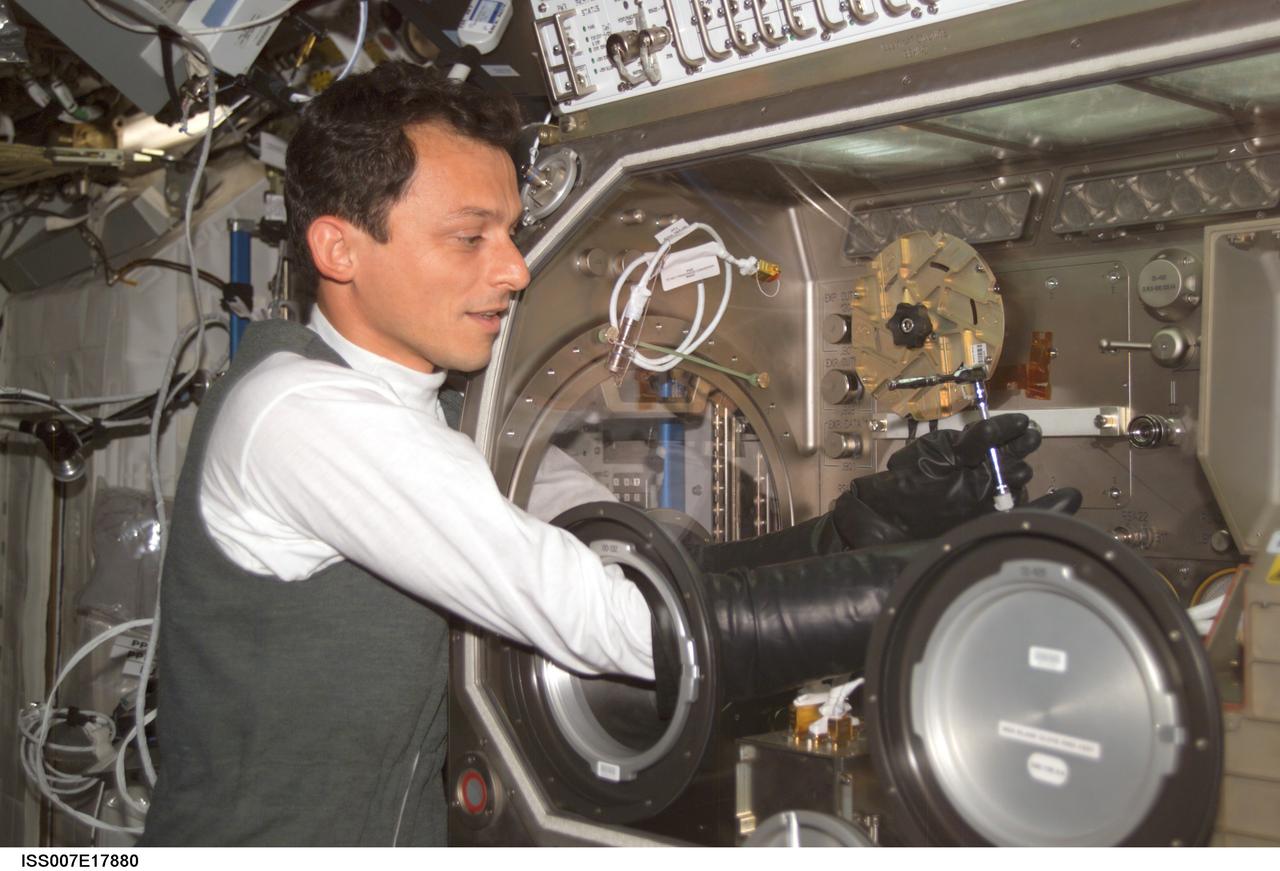
In the Destiny laboratory aboard the International Space Station (ISS), European Space Agency (ESA) astronaut Pedro Duque of Spain is seen working at the Microgravity Science Glovebox (MSG). He is working with the PROMISS experiment, which will investigate the growth processes of proteins during weightless conditions. The PROMISS is one of the Cervantes program of tests (consisting of 20 commercial experiments). The MSG is managed by NASA's Marshall Space Flight Center (MSFC).

ISS005-E-06787 (5 July 2002) --- Astronaut Peggy A. Whitson, Expedition Five flight engineer, works near the Microgravity Science Glovebox (MSG) in the Destiny laboratory on the International Space Station (ISS). Whitson spent much of the morning installing the Solidification Using a Baffle in Sealed Ampoules (SUBSA) experiment in the MSG. The SUBSA installation will be completed once the MSG is activated.
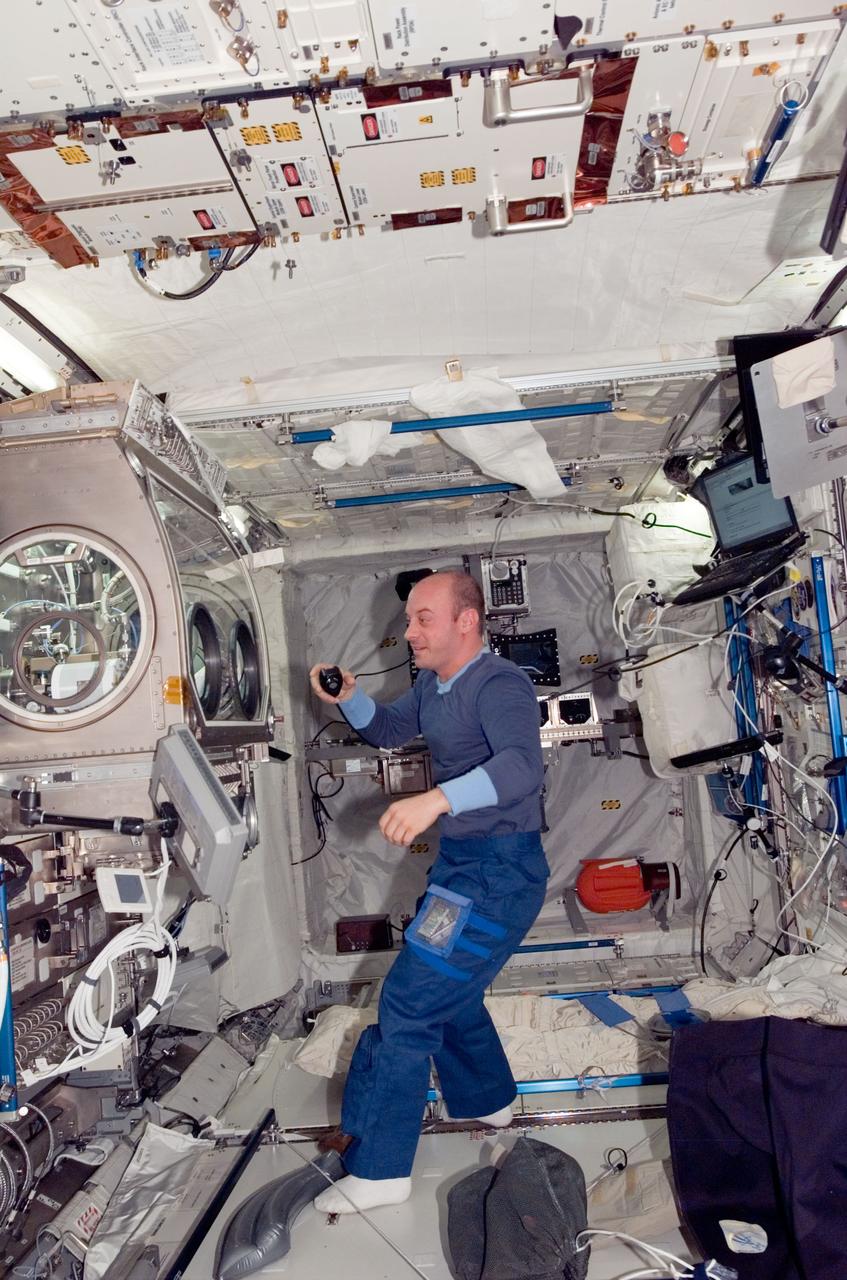
ISS016-E-036417 (14 April 2008) --- NASA astronaut Garrett Reisman, Expedition 16/17 flight engineer, is pictured near the Microgravity Science Glovebox (MSG) located in the Columbus laboratory of the International Space Station.

ISS029-E-040013 (7 Nov. 2011) --- Japan Aerospace Exploration Agency astronaut Satoshi Furukawa, Expedition 29 flight engineer, works at the Microgravity Science Glovebox (MSG) in the Destiny laboratory of the International Space Station.
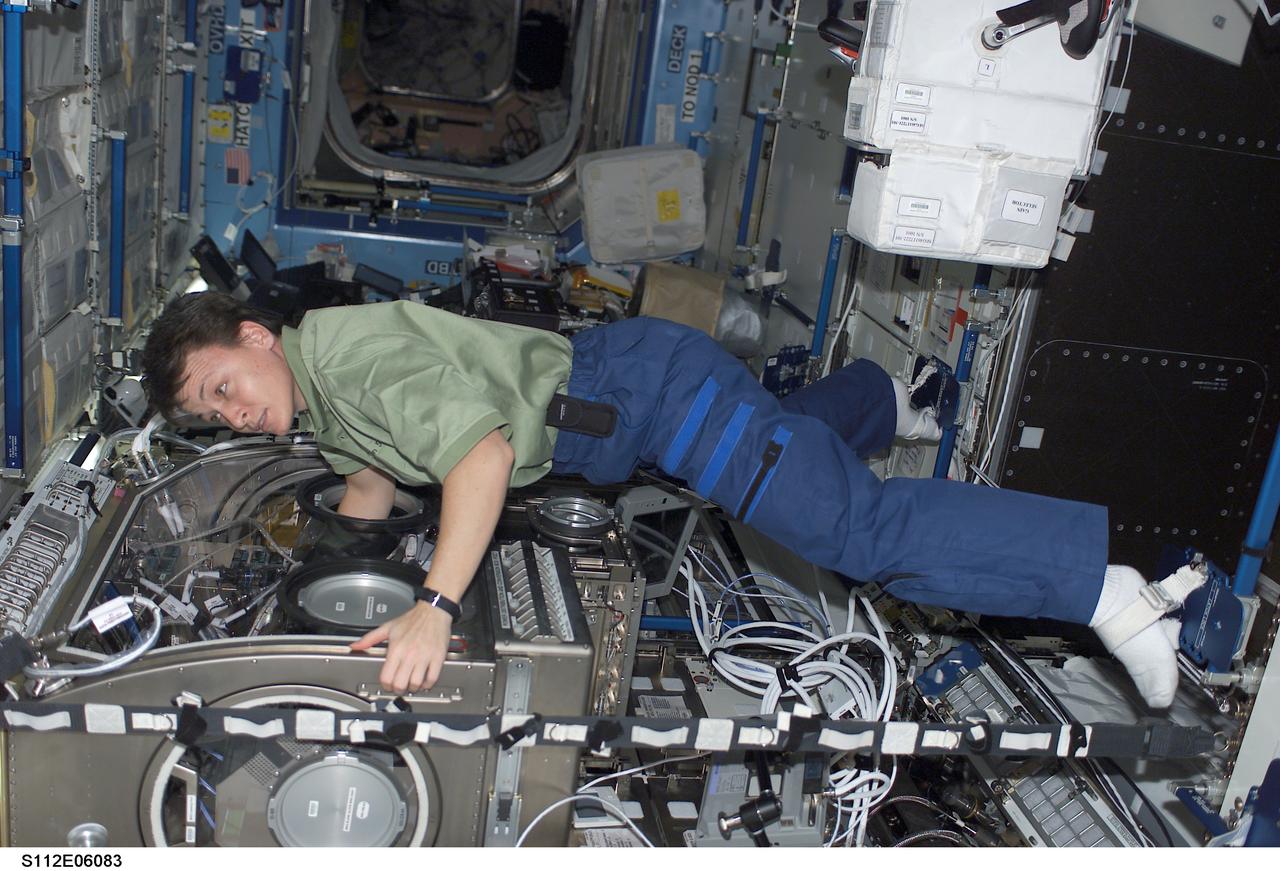
STS112-E-06083 (15 October 2002) --- Astronaut Peggy A. Whitson, Expedition Five flight engineer, works with the Microgravity Science Glovebox (MSG) in the Destiny laboratory on the International Space Station (ISS).
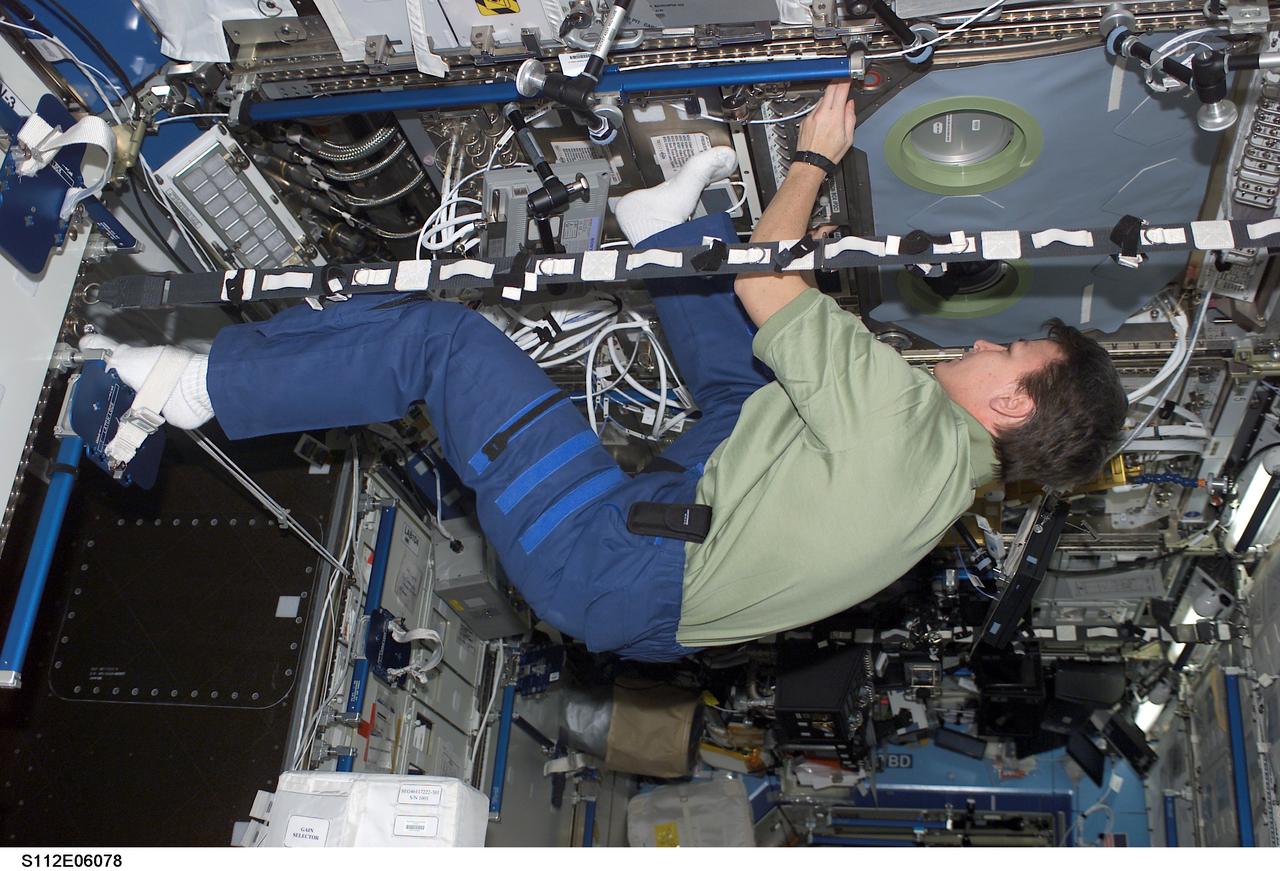
STS112-E-06078 (15 October 2002) --- Astronaut Peggy A. Whitson, Expedition Five flight engineer, works with the Microgravity Science Glovebox (MSG) in the Destiny laboratory on the International Space Station (ISS).

ISS030-E-032779 (16 Jan. 2012) --- European Space Agency astronaut Andre Kuipers, Expedition 30 flight engineer, works at the Microgravity Science Glovebox (MSG) in the Destiny laboratory of the International Space Station.
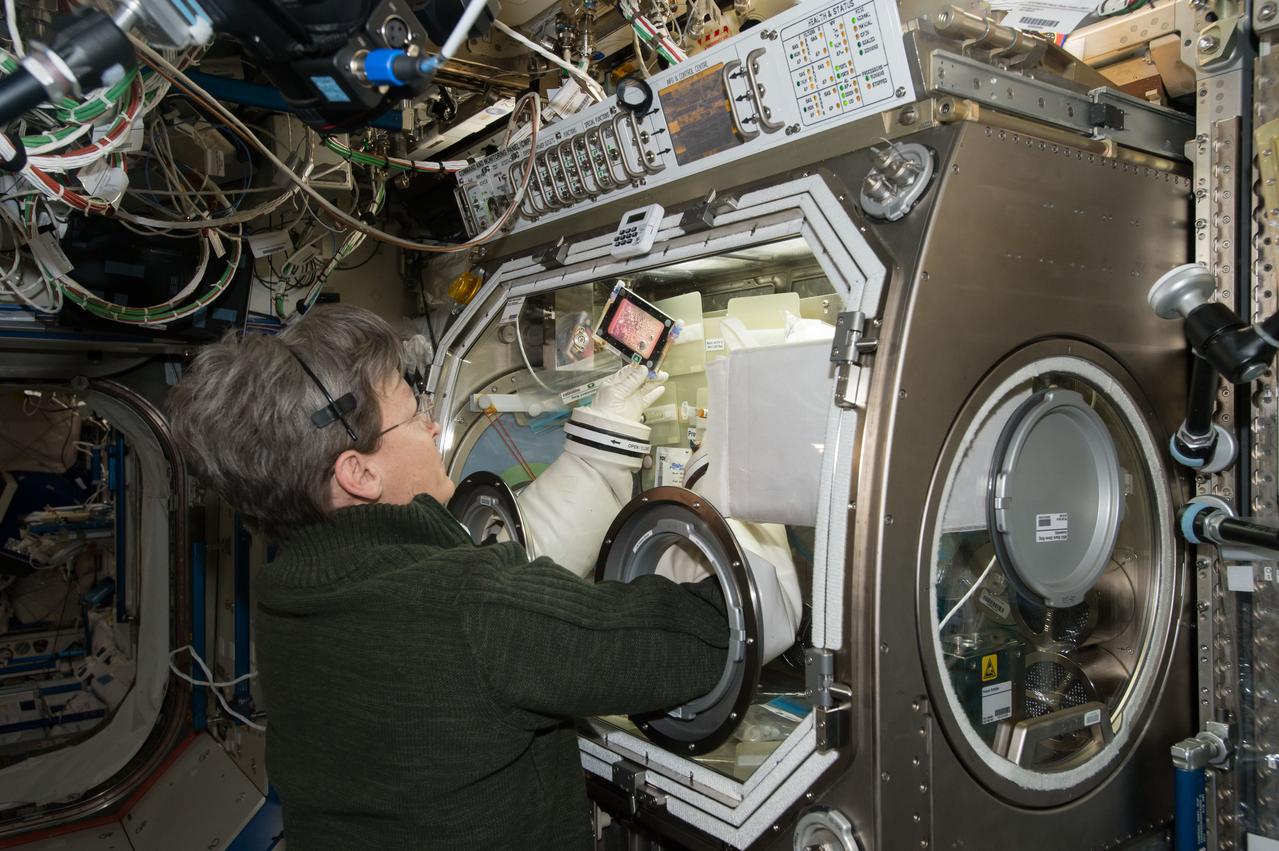
iss050e054453 (3/4/2017) --- NASA astronaut Peggy Whitson during Microgravity Expanded Stem Cells (MESC) clean up, in the Microgravity Science Glovebox (MSG). Microgravity Expanded Stem Cells observes cell growth and morphological characteristics in microgravity and analyzes gene expression profiles of cells grown in microgravity.
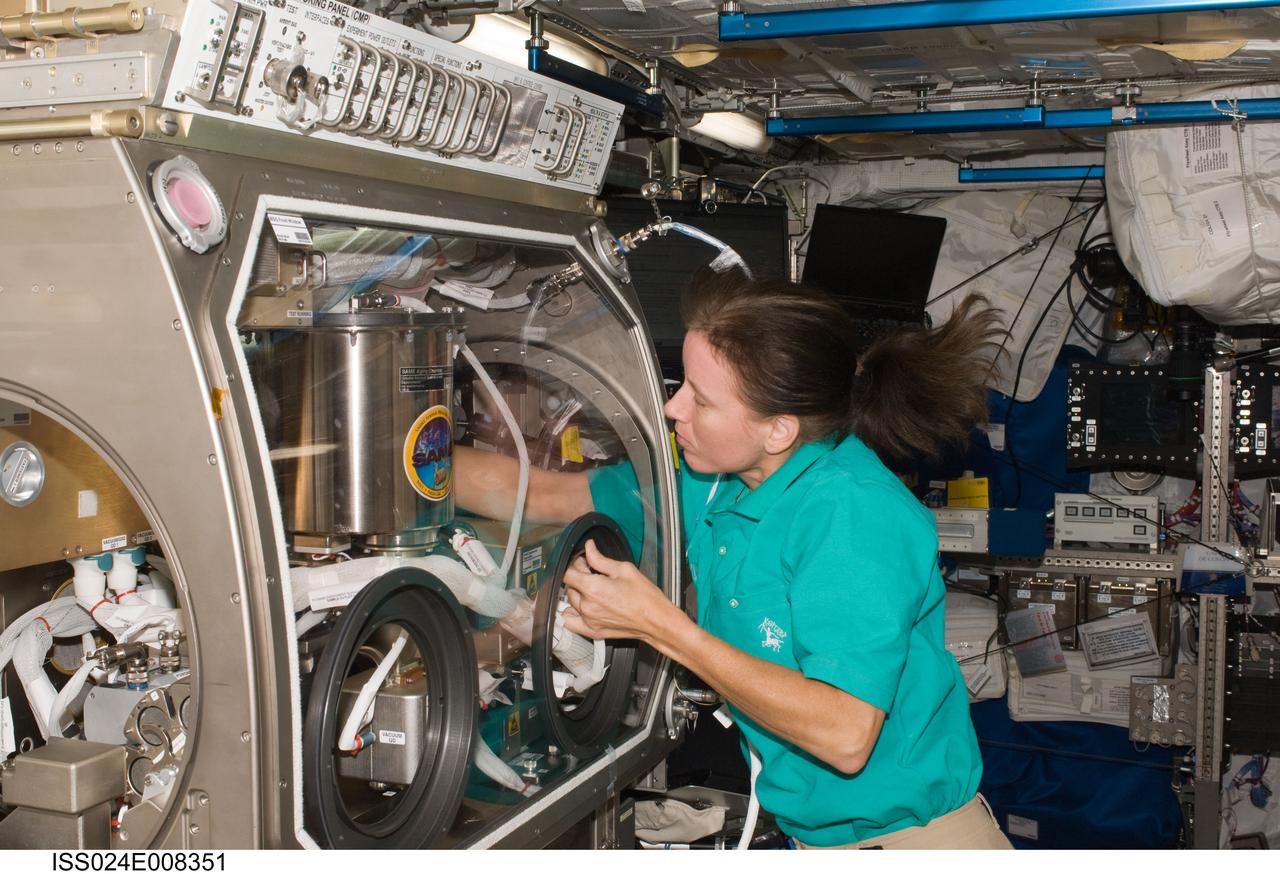
ISS024-E-008351 (15 July 2010) --- NASA astronaut Shannon Walker, Expedition 24 flight engineer, works with the Smoke Aerosol Measurement Experiment (SAME) in the Microgravity Sciences Glovebox (MSG) located in the Columbus laboratory of the International Space Station.
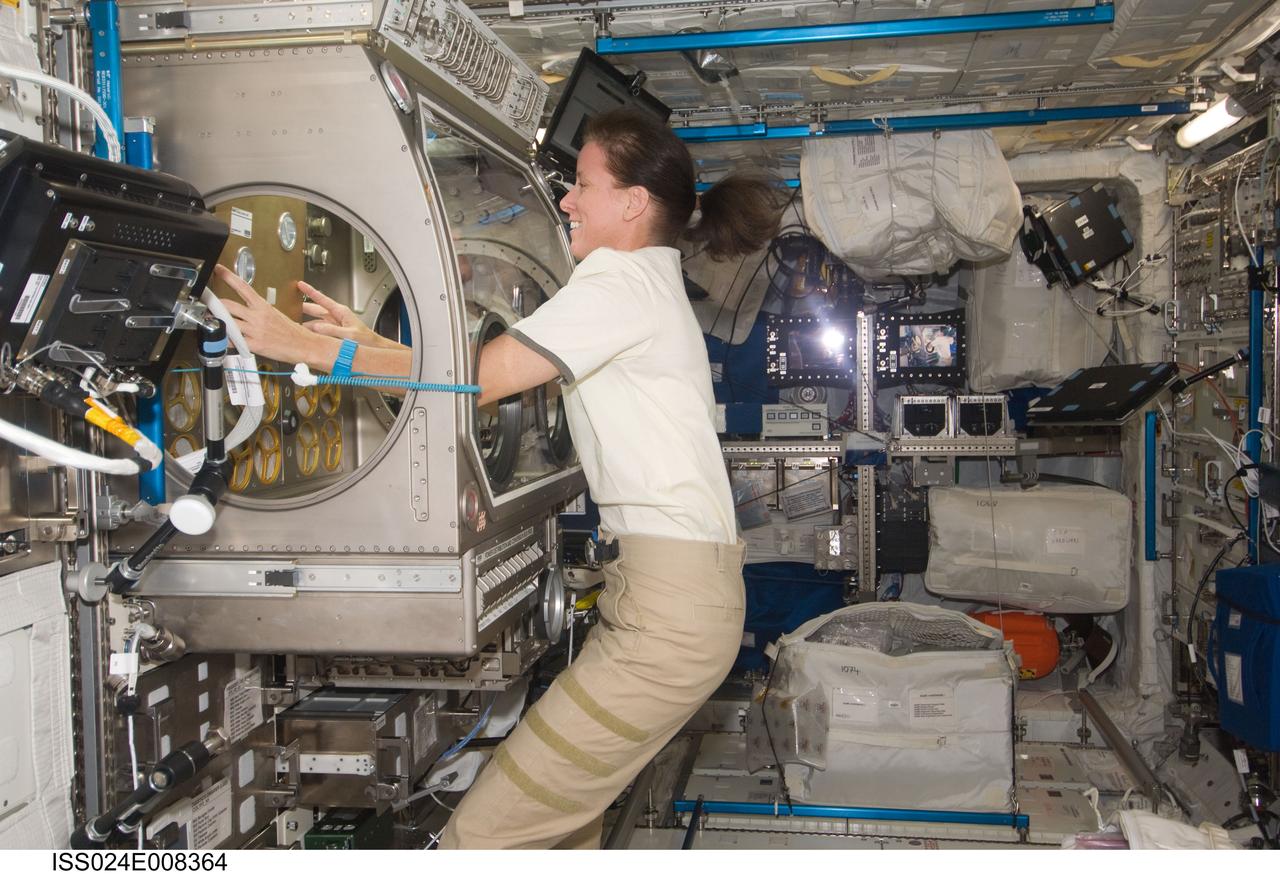
ISS024-E-008364 (14 July 2010)--- Astronaut Shannon Walker, Expedition 24 flight engineer, works on the Smoke Aerosol Measurement Experiment (SAME) inside the Microgravity Science Glovebox (MSG) in the European laboratory Columbus on the International Space Station.
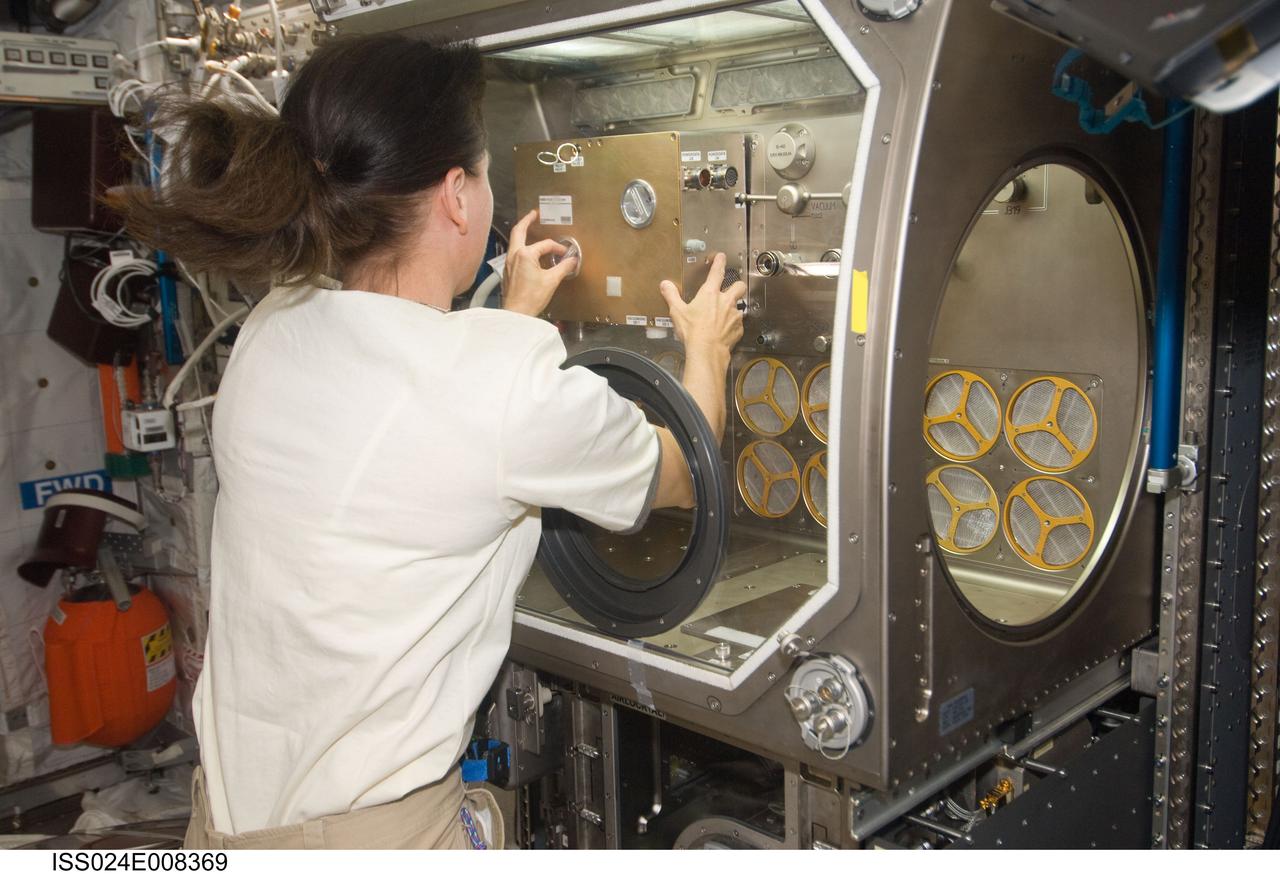
ISS024-E-008369 (14 July 2010)--- Astronaut Shannon Walker, Expedition 24 flight engineer, works on the Smoke Aerosol Measurement Experiment (SAME) inside the Microgravity Science Glovebox (MSG) in the European laboratory Columbus on the International Space Station.

ISS040-E-011006 (13 June 2014) --- European Space Agency astronaut Alexander Gerst, Expedition 40 flight engineer, works with samples and hardware for a combustion experiment known as the Burning and Suppression of Solids (BASS) in the Microgravity Science Glovebox (MSG) in the Destiny laboratory of the International Space Station.

European Space Agency astronaut Alexander Gerst,Expedition 40 flight engineer,works with samples and hardware for a combustion experiment known as the Burning and Suppression of Solids (BASS) in the Microgravity Science Glovebox (MSG) in the Destiny laboratory of the International Space Station.
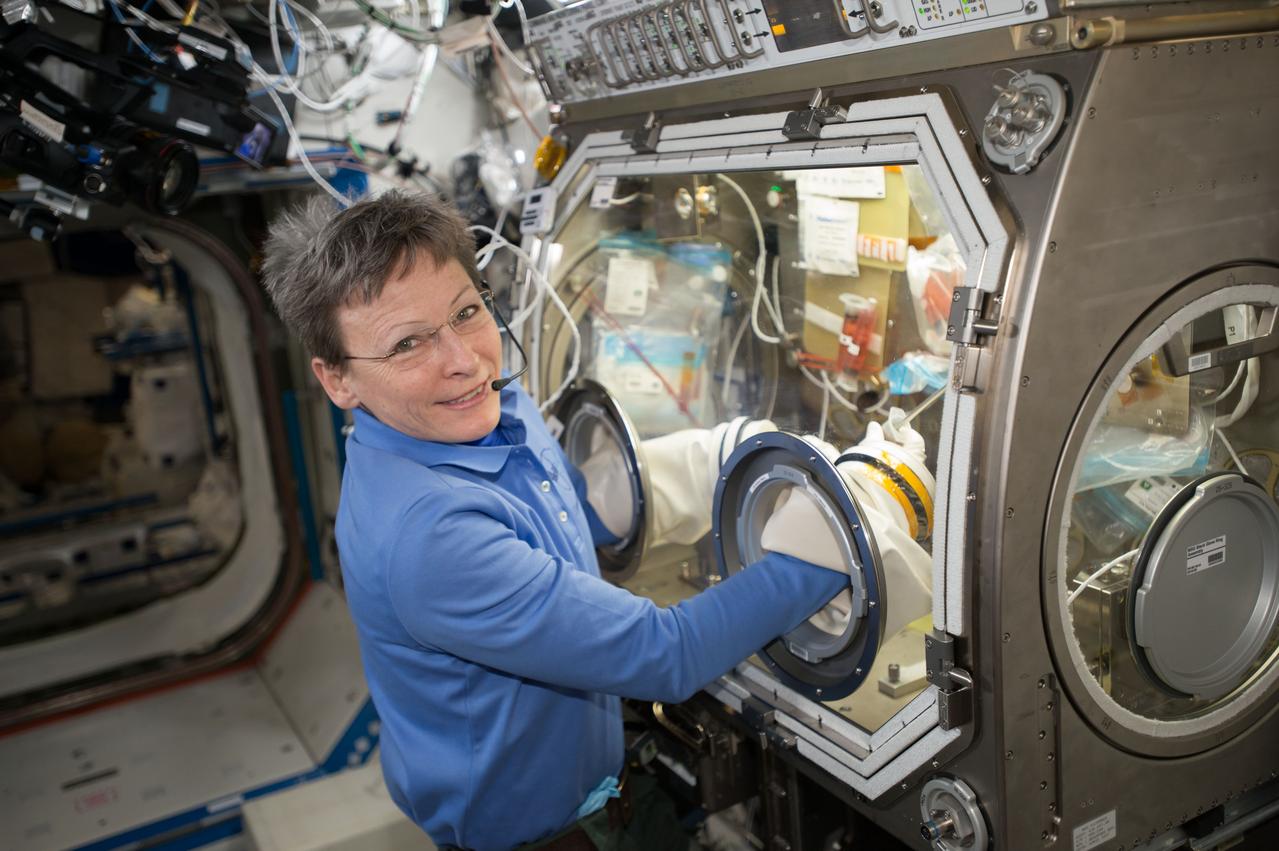
iss051e034104 (5/02/2017) --- NASA astronaut Peggy Whitson pauses for a photo while working inside the Microgravity Sciences Glovebox (MSG) to conduct the first BioCell media change for the OsteoOmics experiment. Image was taken in the Destiny U.S. Laboratory.
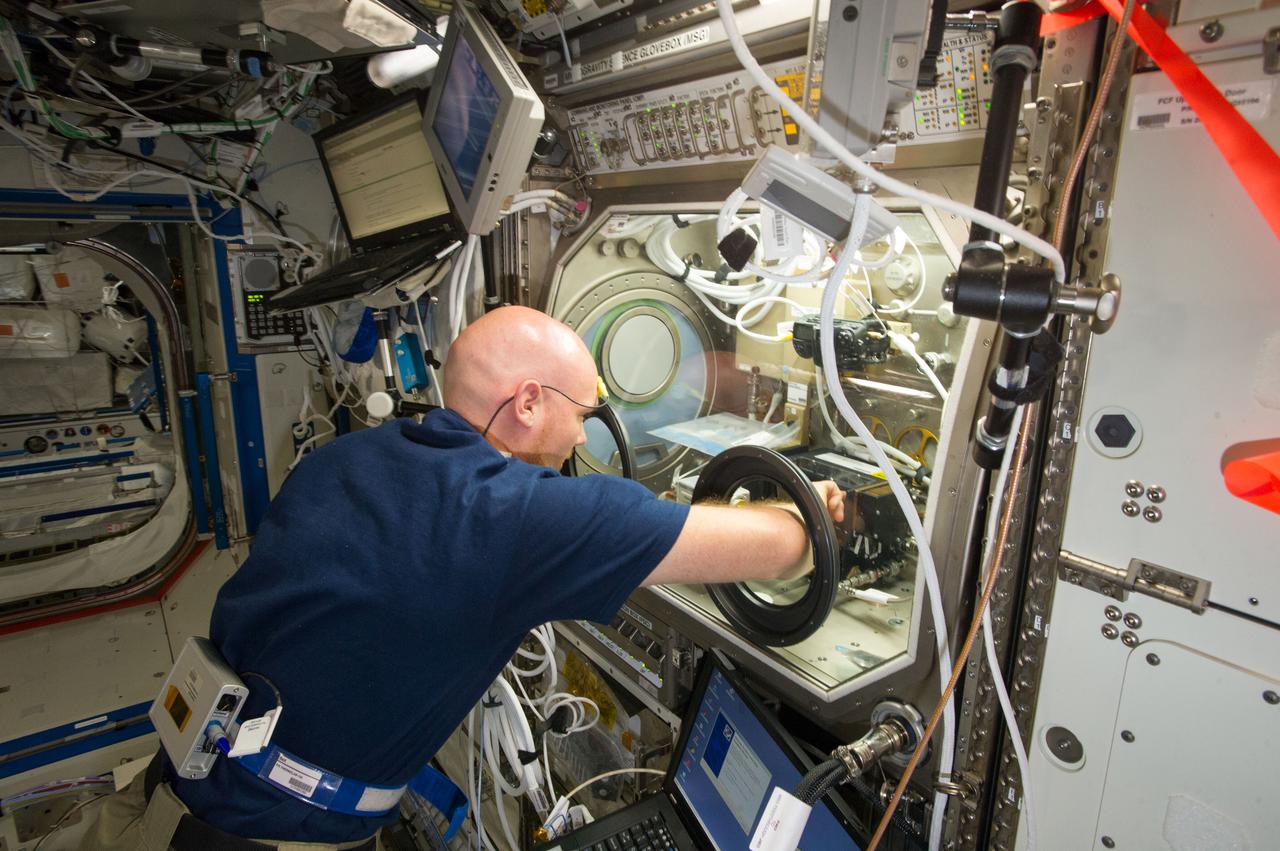
ISS040-E-011004 (13 June 2014) --- European Space Agency astronaut Alexander Gerst, Expedition 40 flight engineer, works with samples and hardware for a combustion experiment known as the Burning and Suppression of Solids (BASS) in the Microgravity Science Glovebox (MSG) in the Destiny laboratory of the International Space Station.
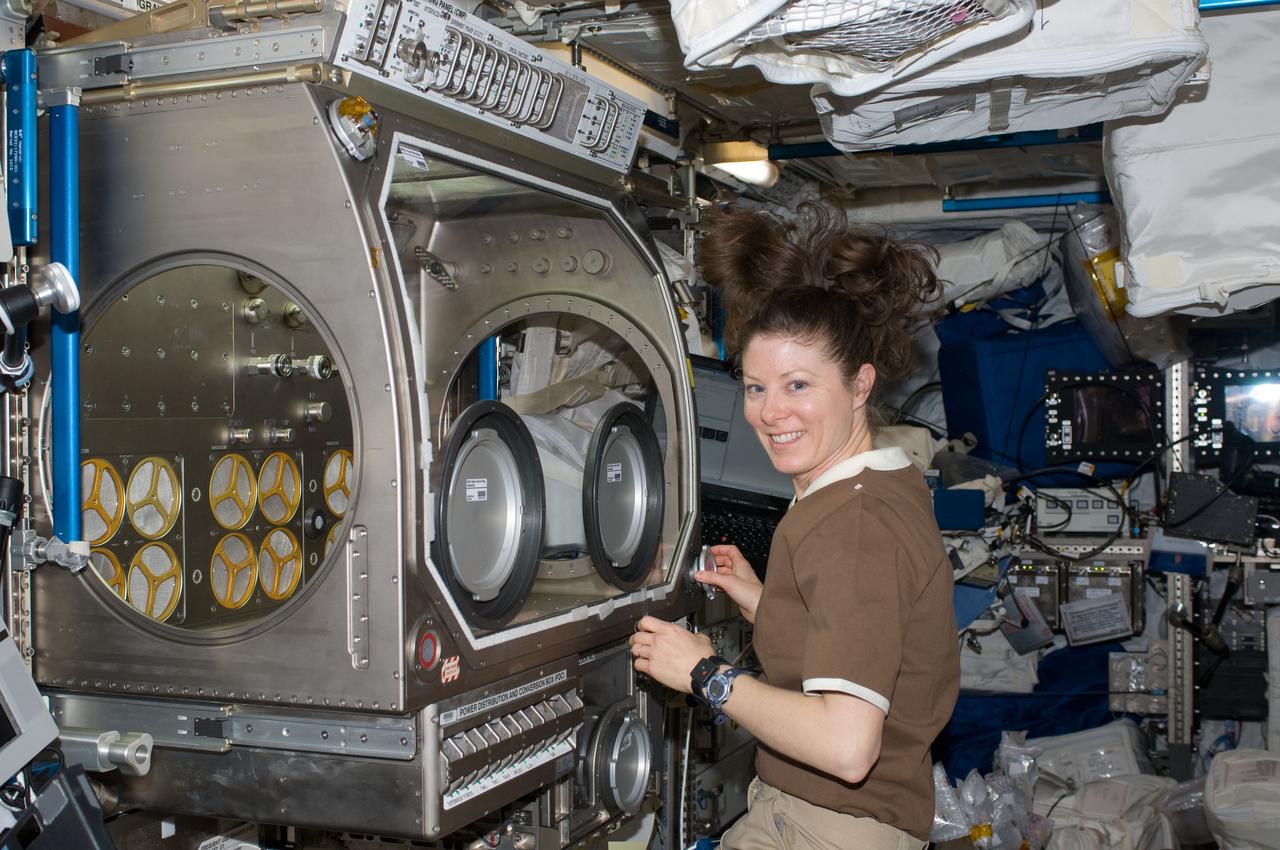
ISS023-E-030740 (3 May 2010) --- NASA astronaut Tracy Caldwell Dyson, Expedition 23 flight engineer, works with experiment hardware in the Microgravity Science Glovebox (MSG) located in the Columbus laboratory of the International Space Station.
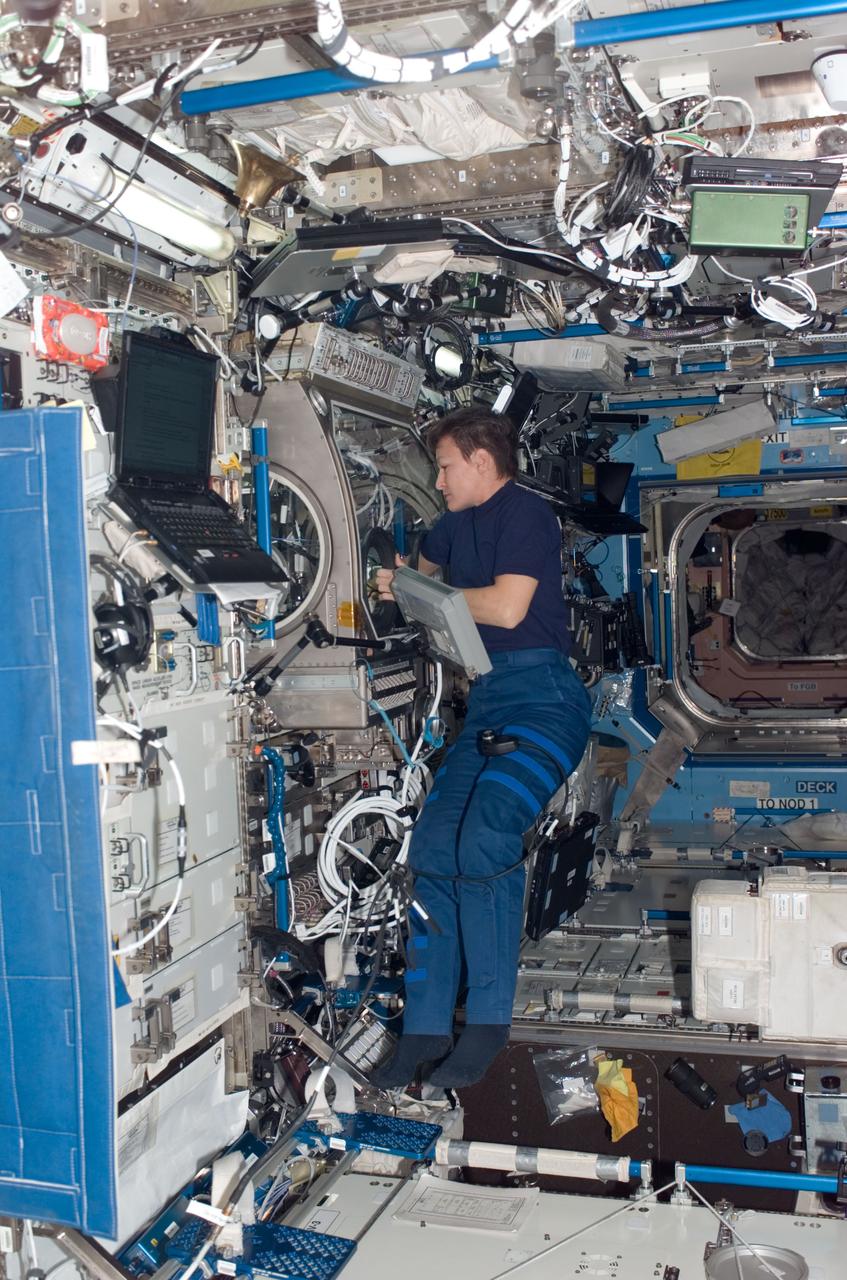
ISS016-E-021064 (5 Jan. 2008) --- Astronaut Peggy A. Whitson, Expedition 16 commander, works at the Microgravity Science Glovebox (MSG) in the Destiny laboratory of the International Space Station.
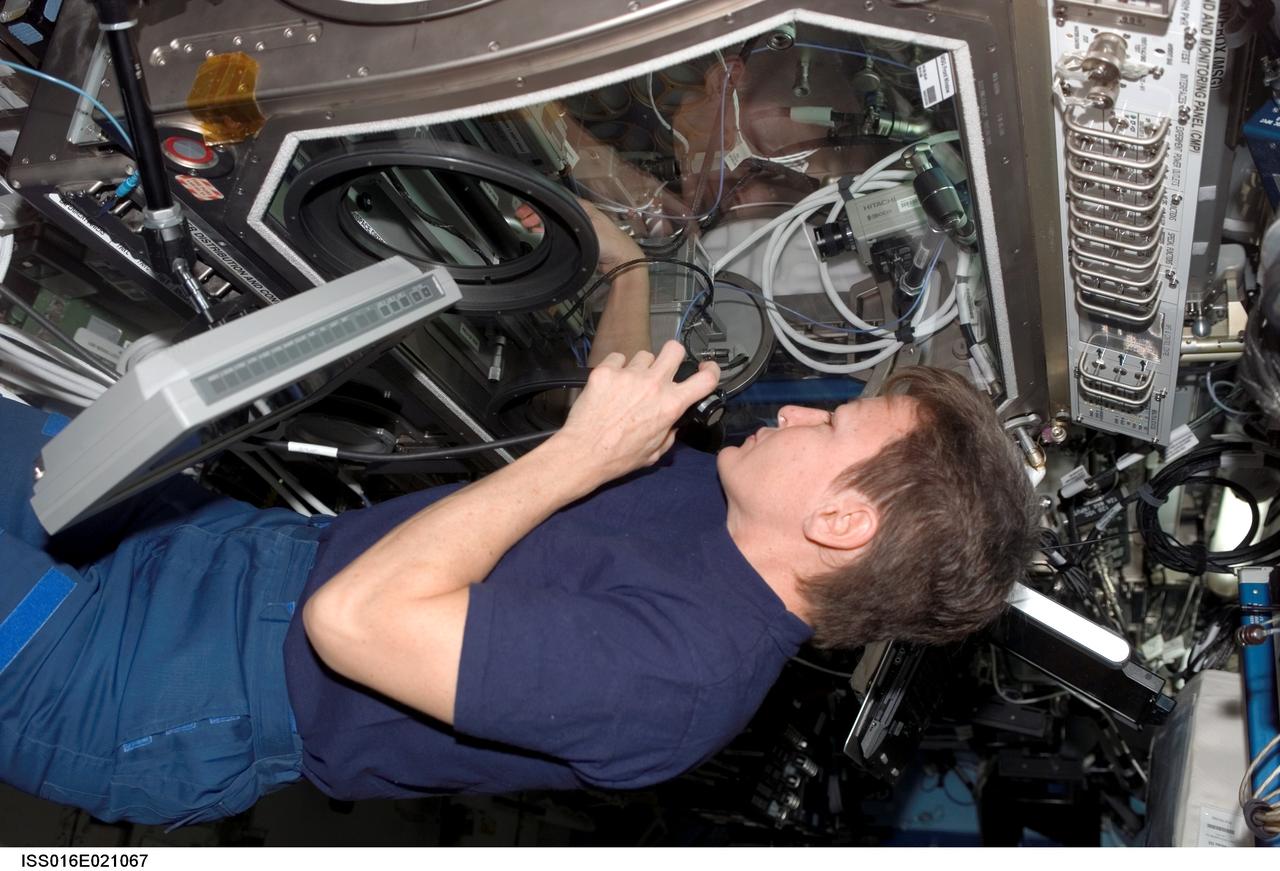
ISS016-E-021067 (5 Jan. 2008) --- Astronaut Peggy A. Whitson, Expedition 16 commander, works at the Microgravity Science Glovebox (MSG) in the Destiny laboratory of the International Space Station.
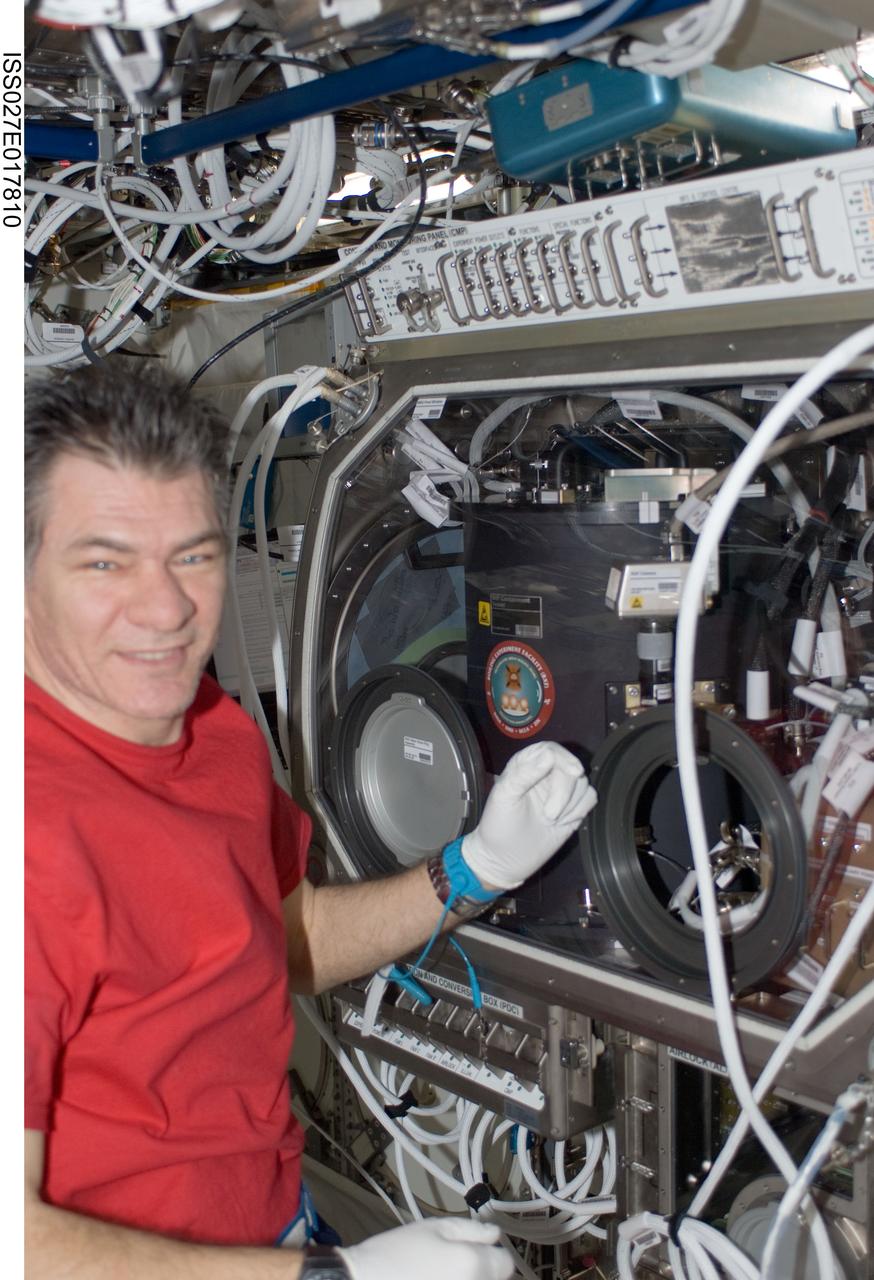
ISS027-E-017810 (28 April 2011) --- European Space Agency astronaut Paolo Nespoli, Expedition 27 flight engineer, works with the Microgravity Science Glovebox (MSG) in the Destiny laboratory of the International Space Station.
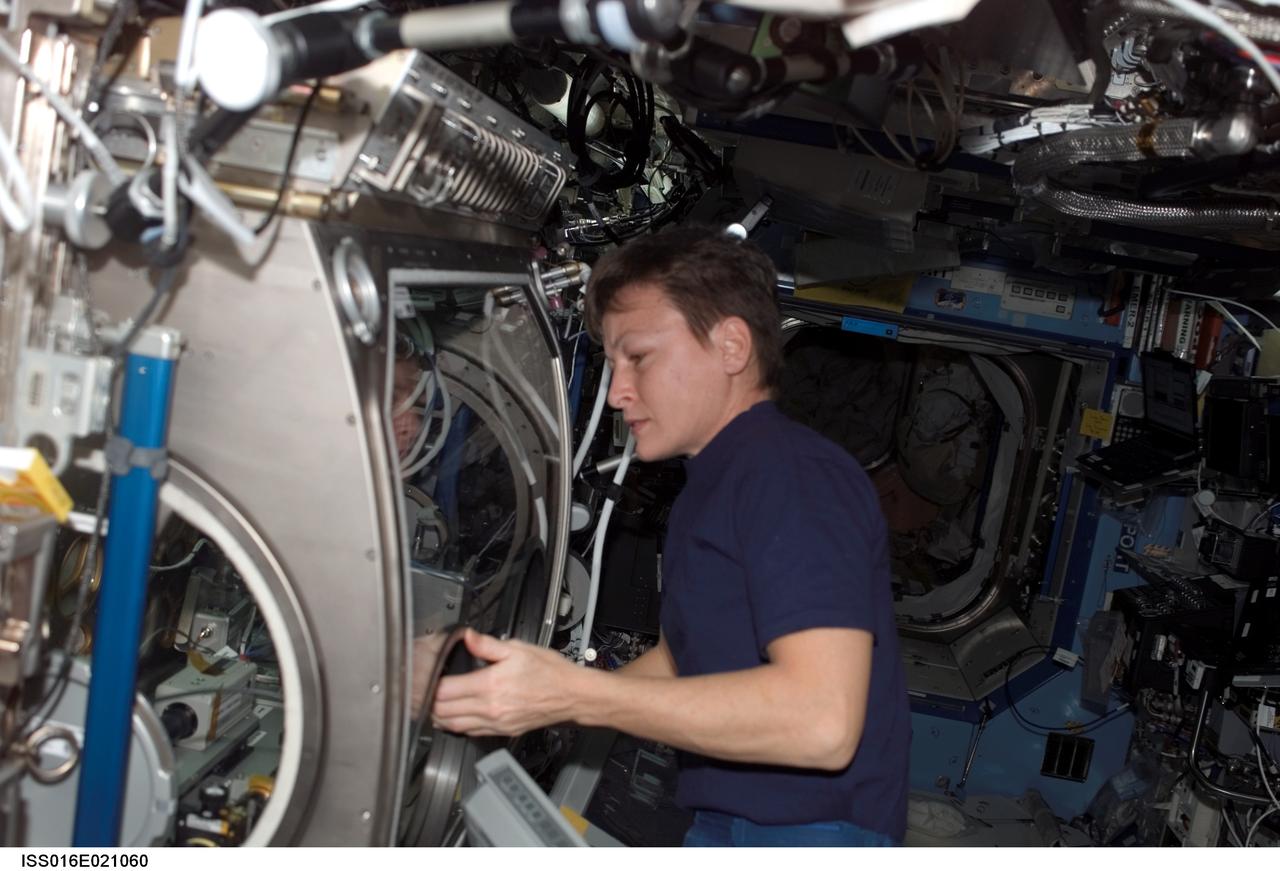
ISS016-E-021060 (5 Jan. 2008) --- Astronaut Peggy A. Whitson, Expedition 16 commander, works at the Microgravity Science Glovebox (MSG) in the Destiny laboratory of the International Space Station.
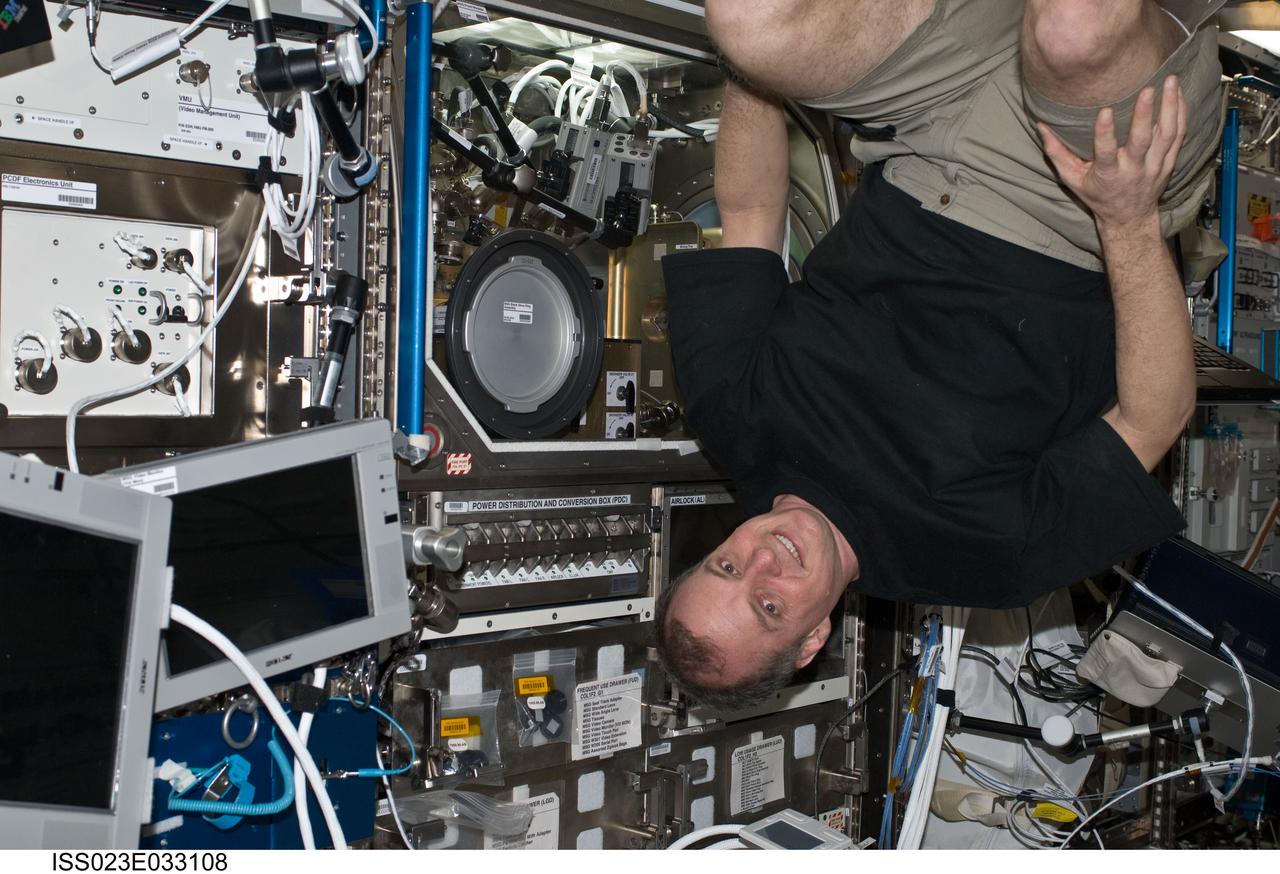
ISS023-E-033108 (6 May 2010) --- NASA astronaut T.J. Creamer, Expedition 23 flight engineer, is pictured near the Microgravity Science Glovebox (MSG) located in the Columbus laboratory of the International Space Station.
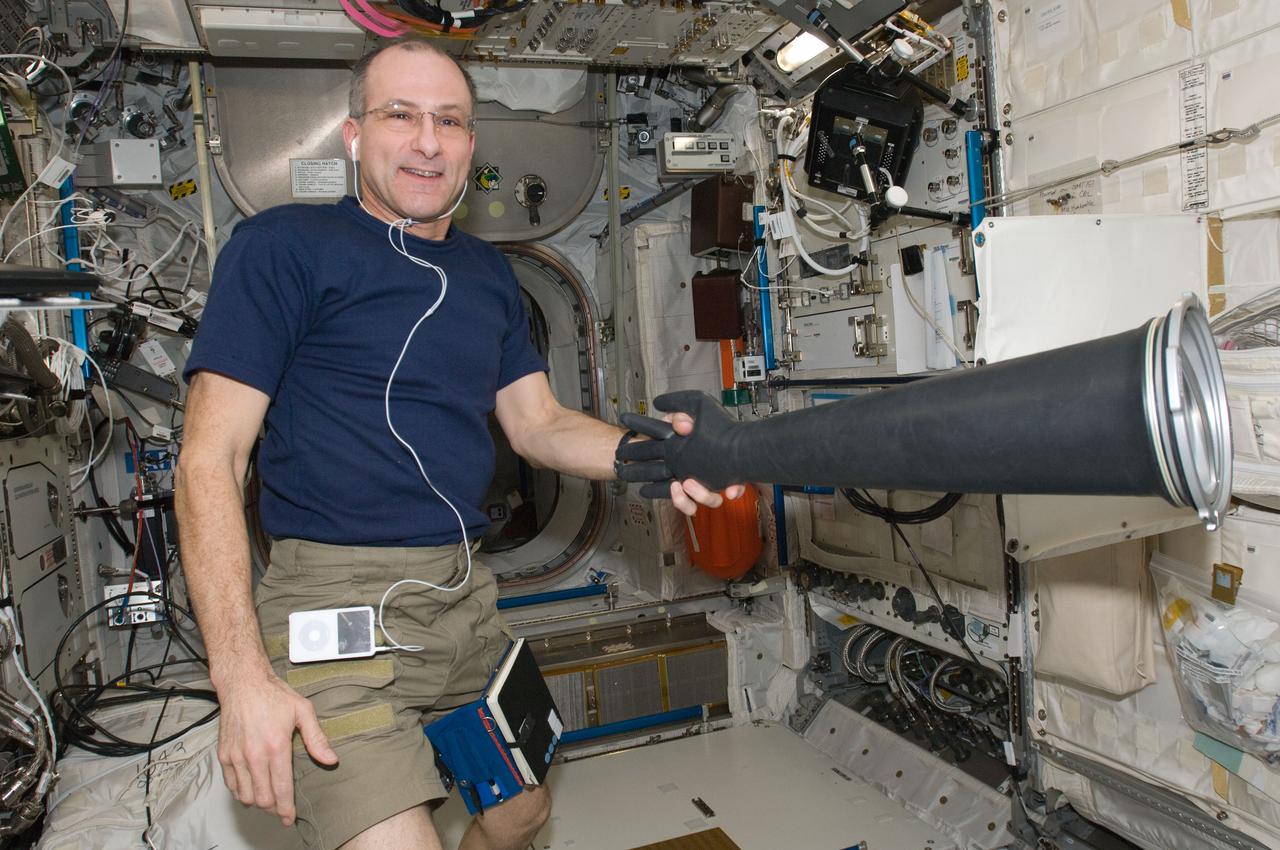
ISS030-E-049556 (17 Jan. 2012) --- NASA astronaut Don Pettit, Expedition 30 flight engineer, holds a Microgravity Science Glovebox (MSG) glove in the Columbus laboratory of the International Space Station.
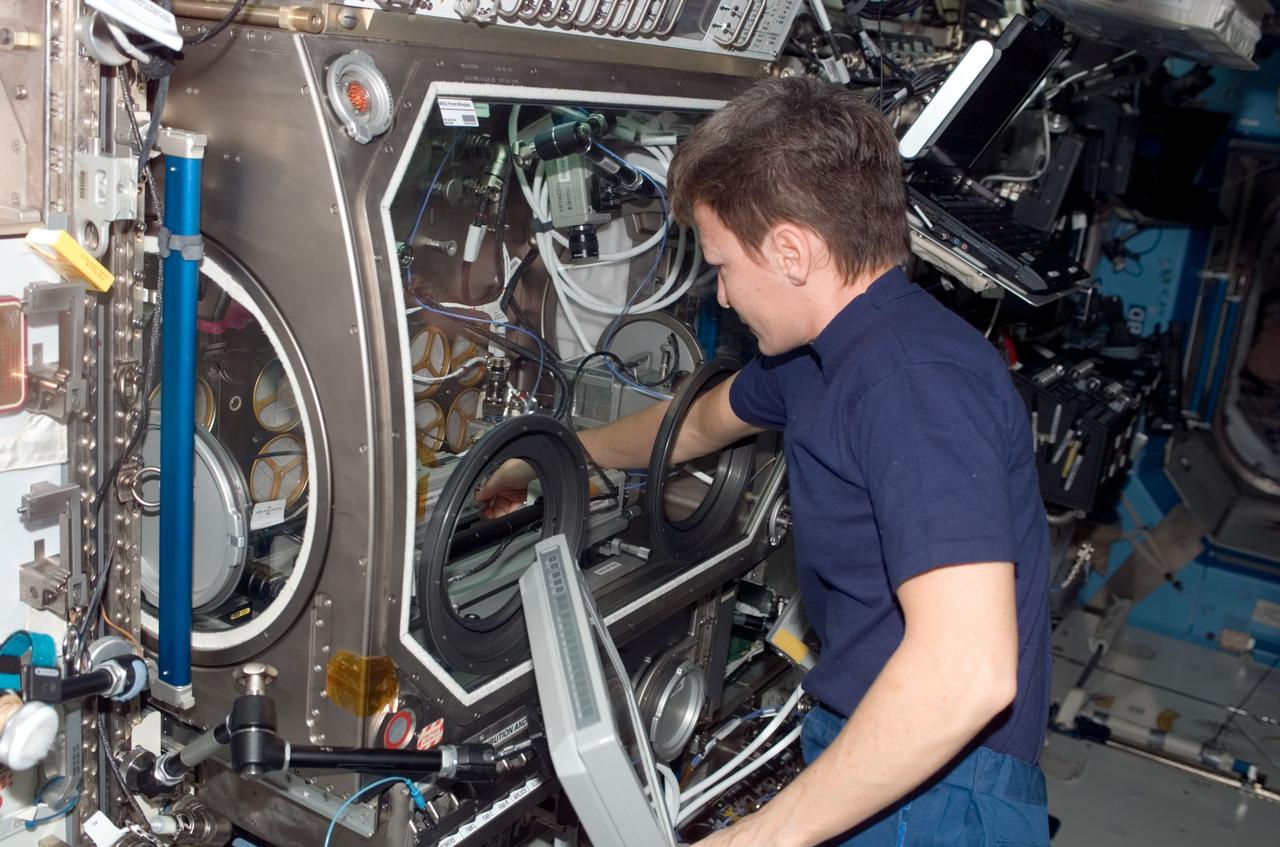
ISS016-E-021059 (5 Jan. 2008) --- Astronaut Peggy A. Whitson, Expedition 16 commander, works at the Microgravity Science Glovebox (MSG) in the Destiny laboratory of the International Space Station.
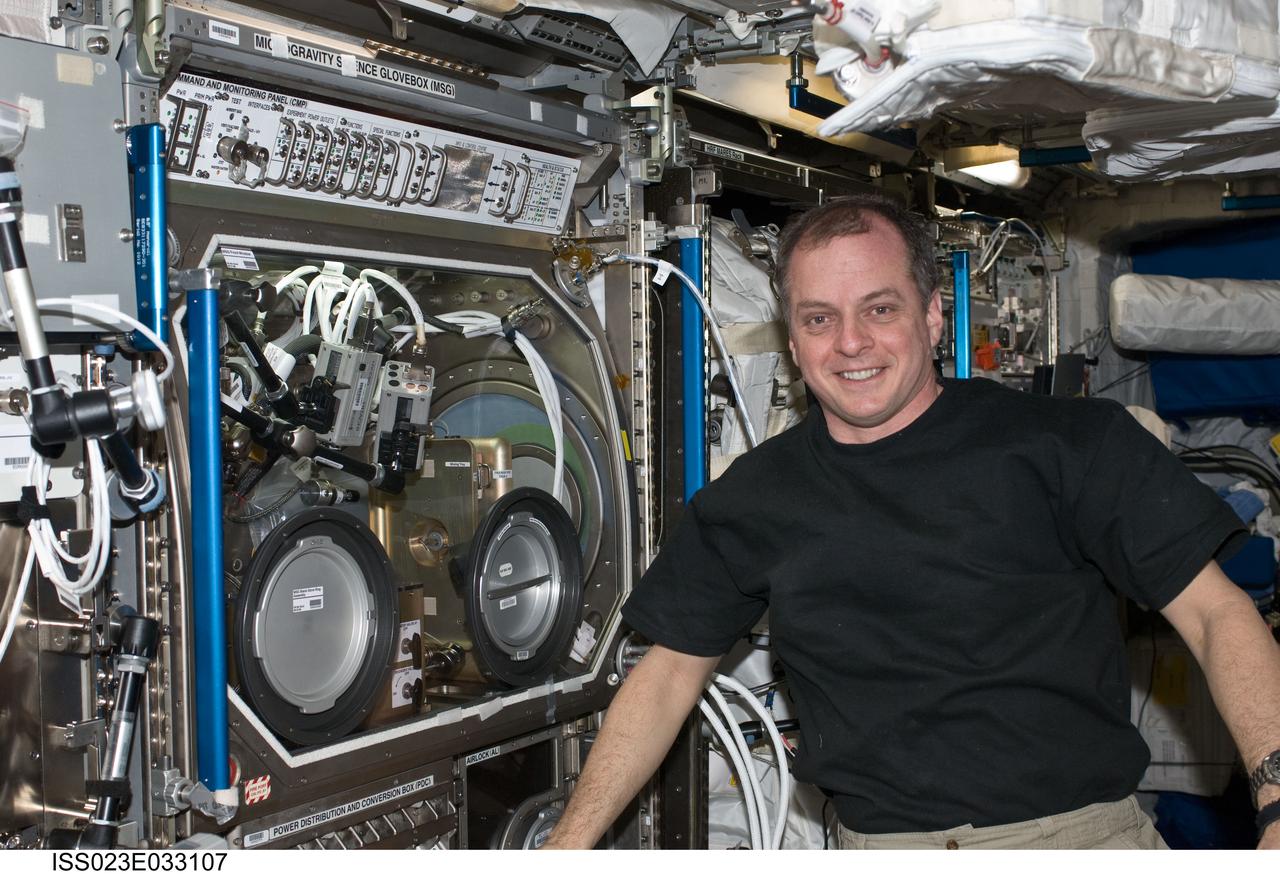
ISS023-E-033107 (6 May 2010) --- NASA astronaut T.J. Creamer, Expedition 23 flight engineer, is pictured near the Microgravity Science Glovebox (MSG) located in the Columbus laboratory of the International Space Station.
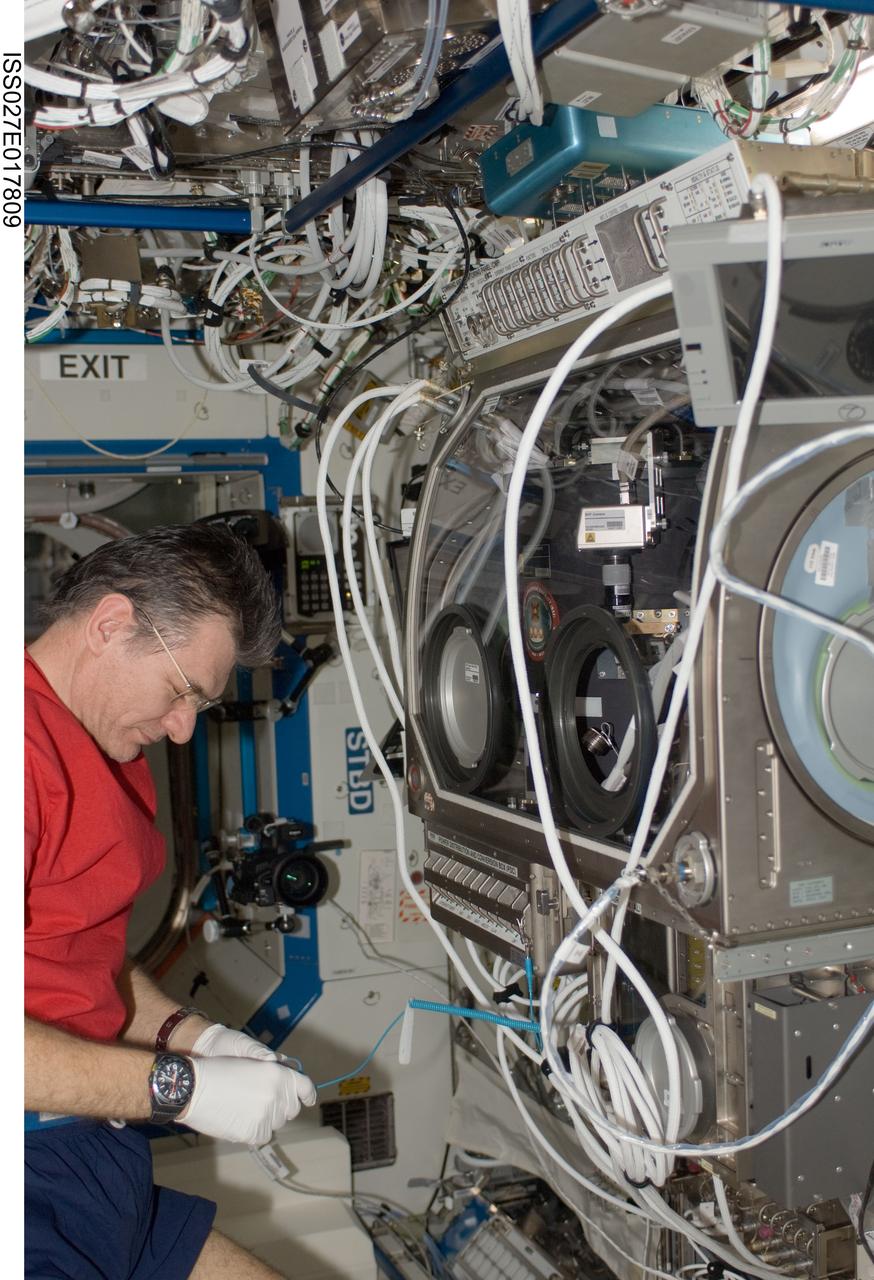
ISS027-E-017809 (28 April 2011) --- European Space Agency astronaut Paolo Nespoli, Expedition 27 flight engineer, works with the Microgravity Science Glovebox (MSG) in the Destiny laboratory of the International Space Station.
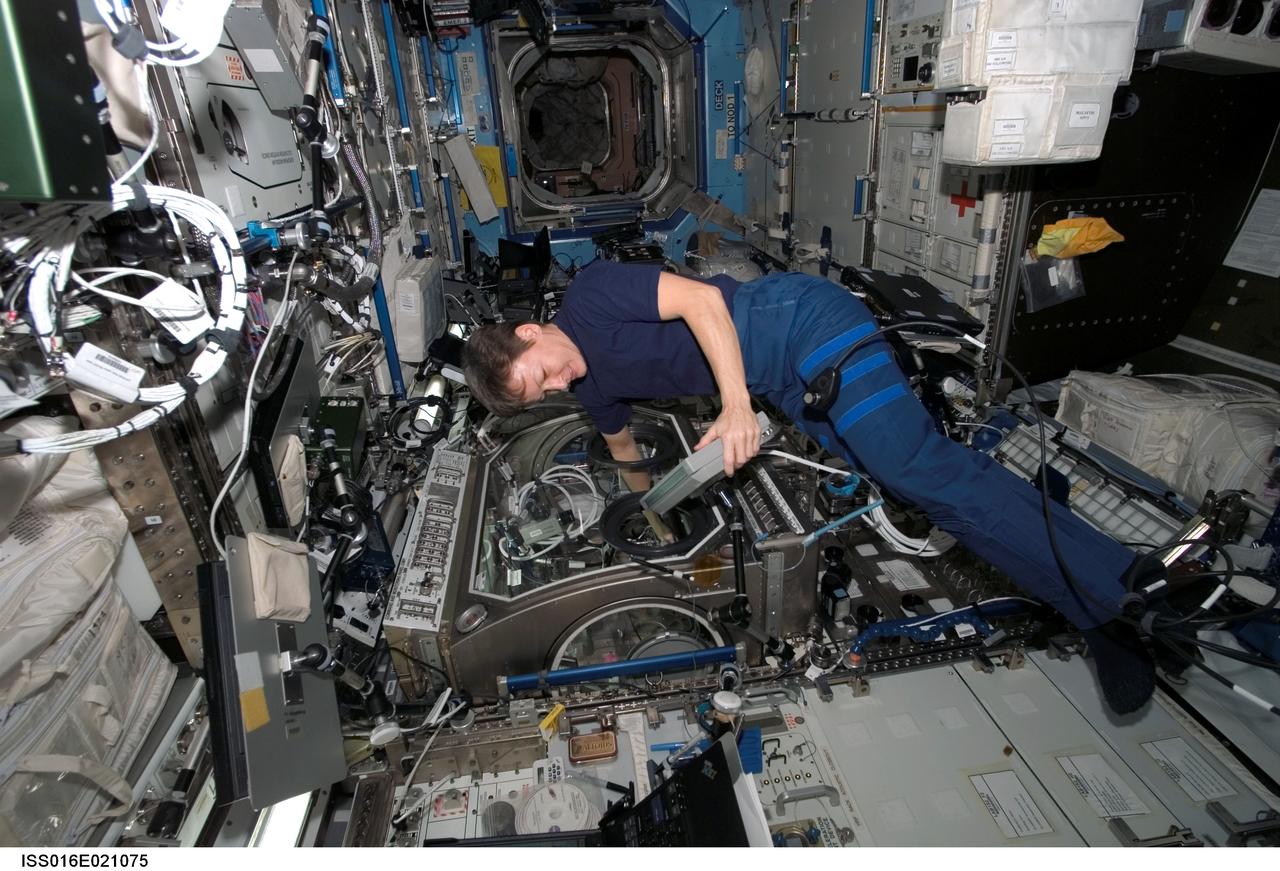
ISS016-E-021075 (5 Jan. 2008) --- Astronaut Peggy A. Whitson, Expedition 16 commander, works at the Microgravity Science Glovebox (MSG) in the Destiny laboratory of the International Space Station.
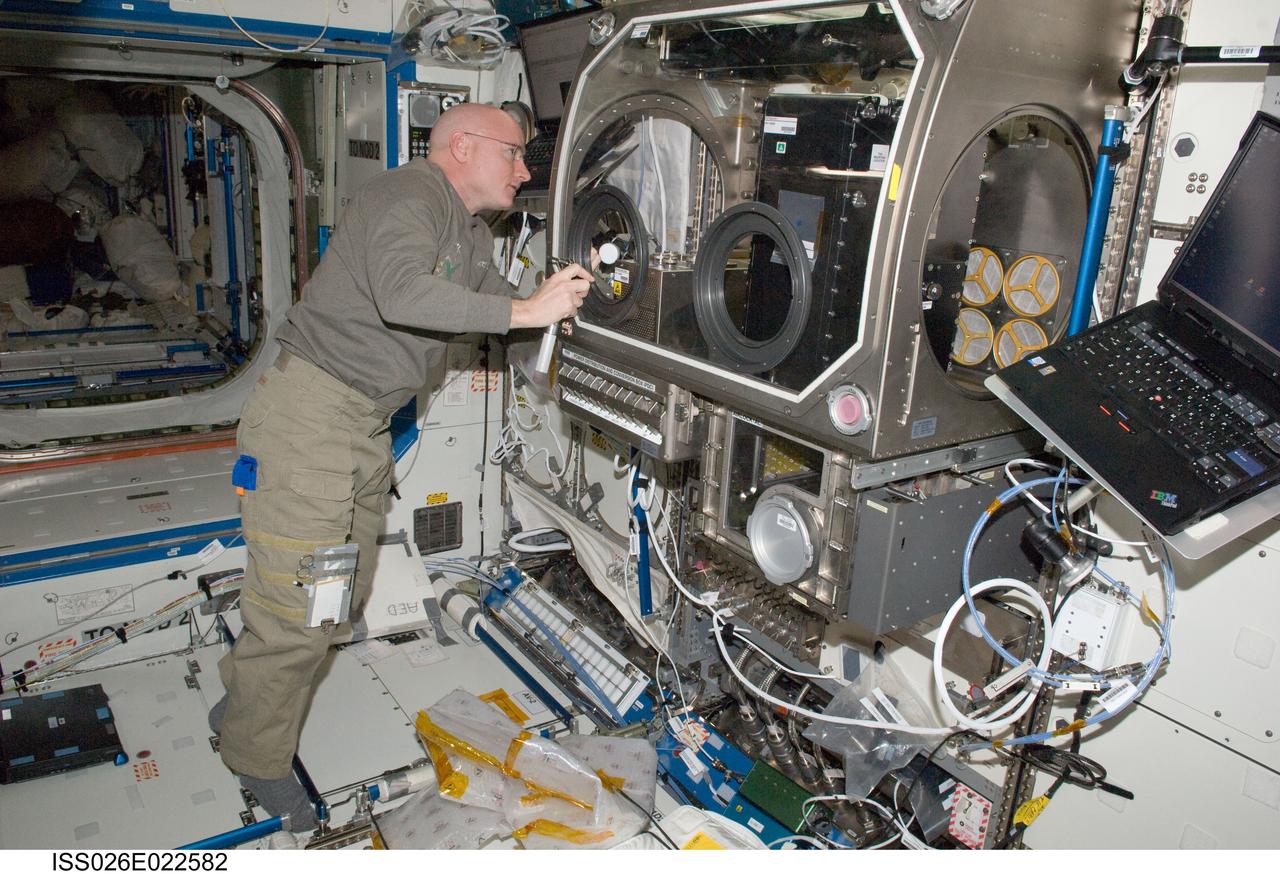
ISS026-E-022582 (27 Dec. 2010) --- NASA astronaut Scott Kelly, Expedition 26 commander, works with Capillary Channel Flow (CCF) experiment hardware in the Microgravity Science Glovebox (MSG) in the Destiny laboratory of the International Space Station. CCF is a versatile experiment for studying a critical variety of inertial-capillary dominated flows key to spacecraft systems that cannot be studied on the ground.
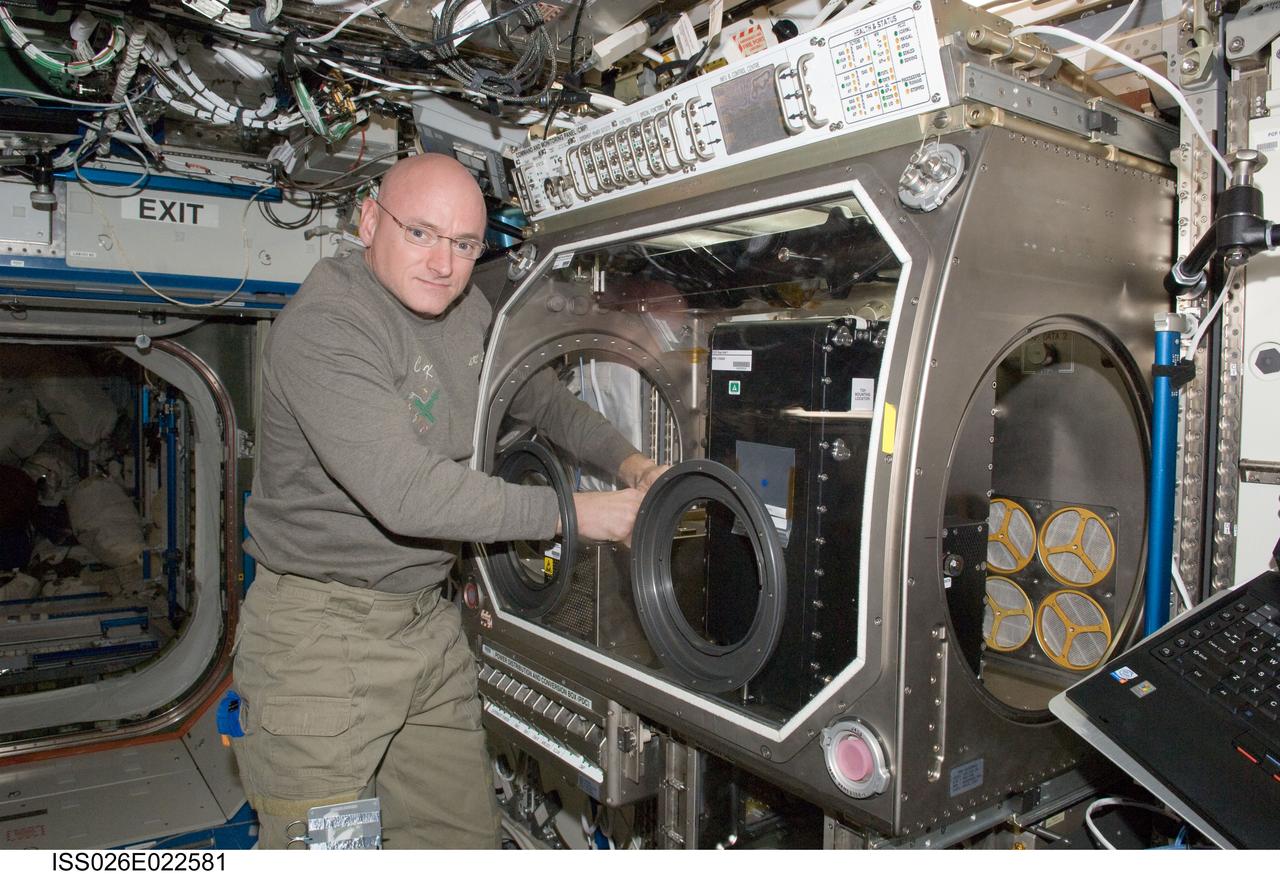
ISS026-E-022581 (27 Dec. 2010) --- NASA astronaut Scott Kelly, Expedition 26 commander, works with Capillary Channel Flow (CCF) experiment hardware in the Microgravity Science Glovebox (MSG) in the Destiny laboratory of the International Space Station. CCF is a versatile experiment for studying a critical variety of inertial-capillary dominated flows key to spacecraft systems that cannot be studied on the ground.
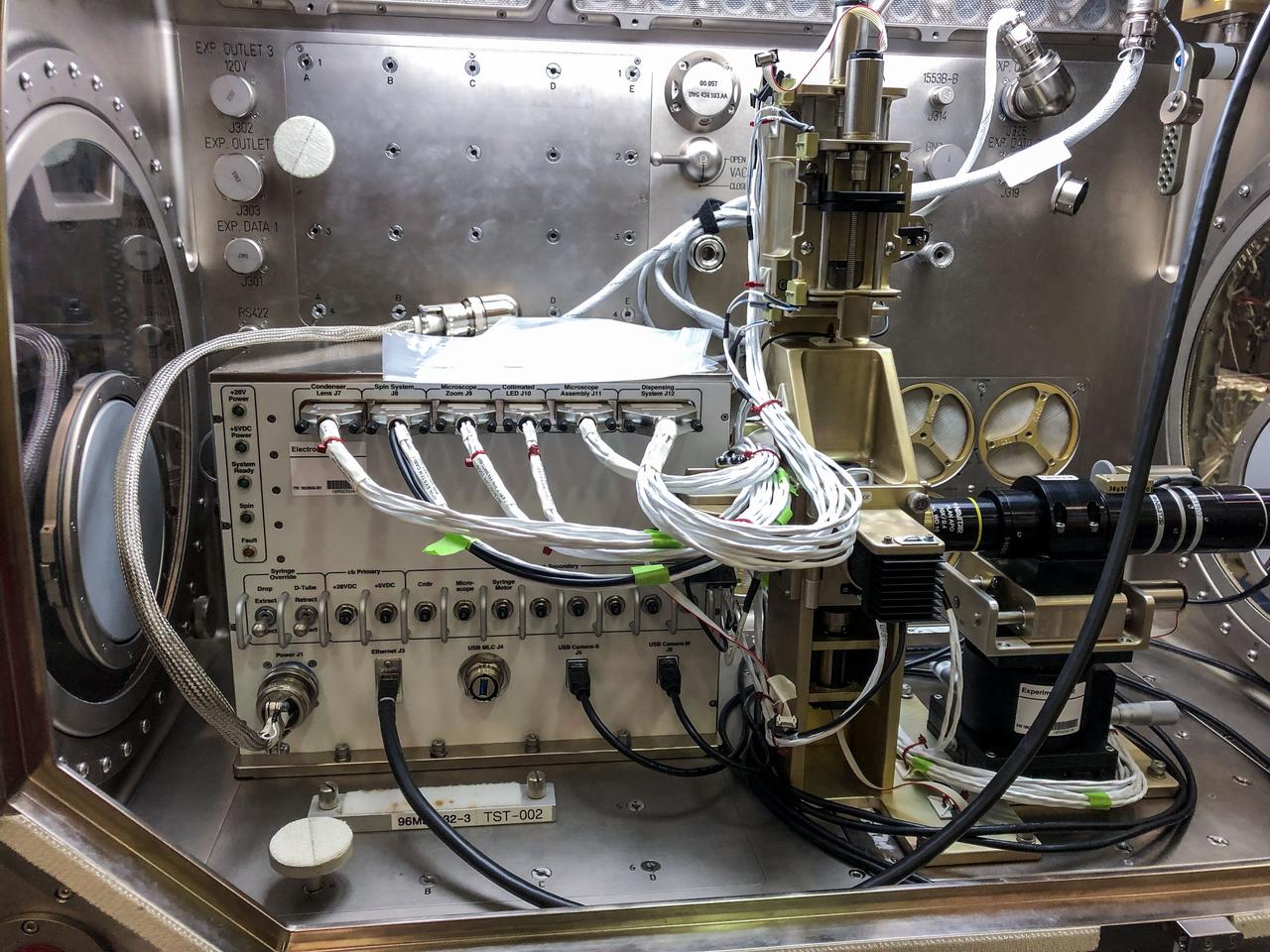
jsc2019e034530 (6/6/2019) --- Preflight photo documentation of the Ring Sheared Drop setup in the Microgravity Sciences Glovebox (MSG). The Ring Sheared Drop investigation uses microgravity to examine the formation and flow of amyloids in the absence of surface tension and other complications created by the solid walls of a container. Amyloids are associated with neurodegenerative diseases such as Alzheimer’s. This investigation may contribute to a better understanding of these diseases and development of potential treatments.

ISS030-E-155913 (16 Jan. 2012) --- NASA astronaut Dan Burbank, Expedition 30 commander, performs in-flight maintenance on the front stray light cover for the Microgravity Science Glovebox (MSG) in the Destiny laboratory of the International Space Station.
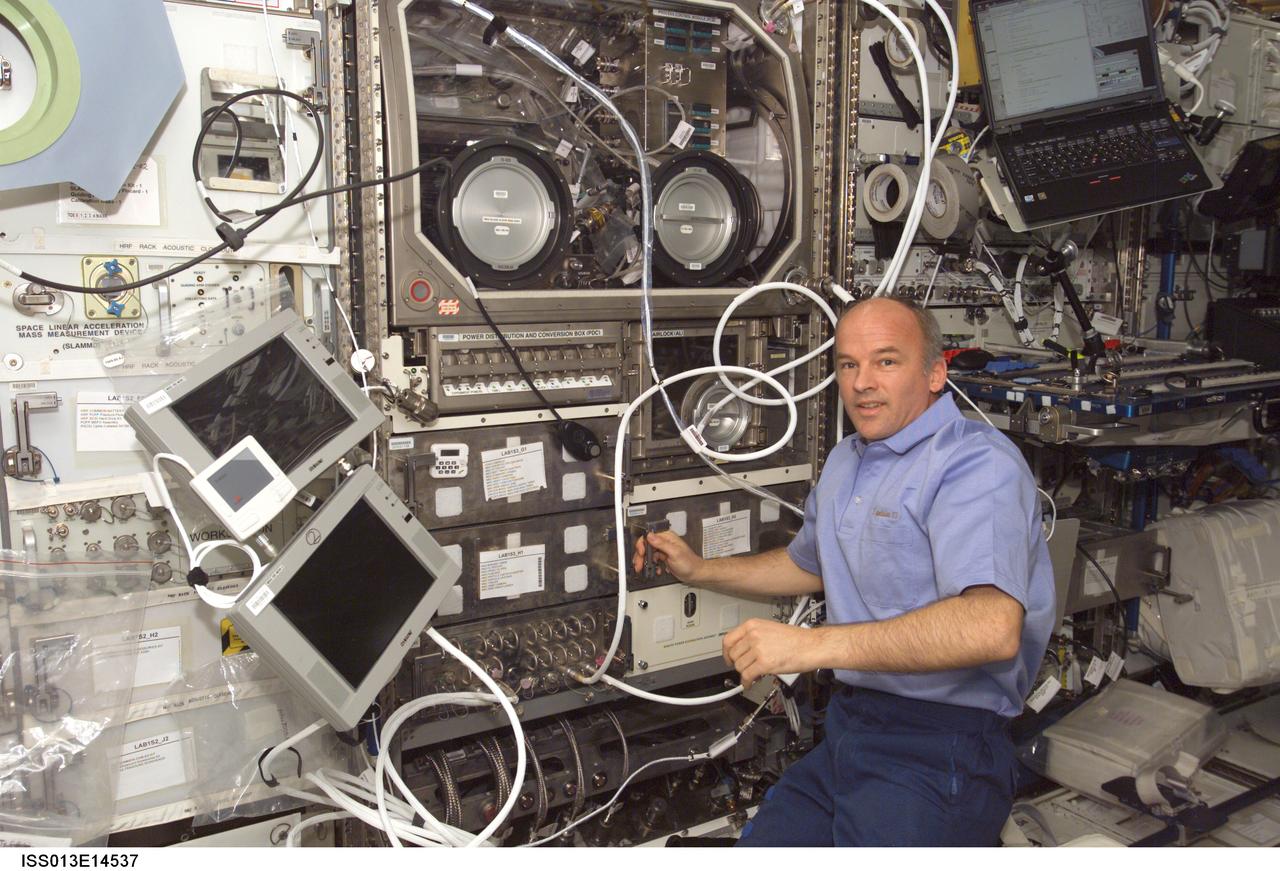
ISS013-E-14537 (4 May 2006) --- Astronaut Jeffrey N. Williams, Expedition 13 NASA space station science officer and flight engineer, conducts the first run of the Pore Formation and Mobility Investigation (PFMI) in the Microgravity Science Glovebox (MSG) in the Destiny laboratory of the International Space Station.
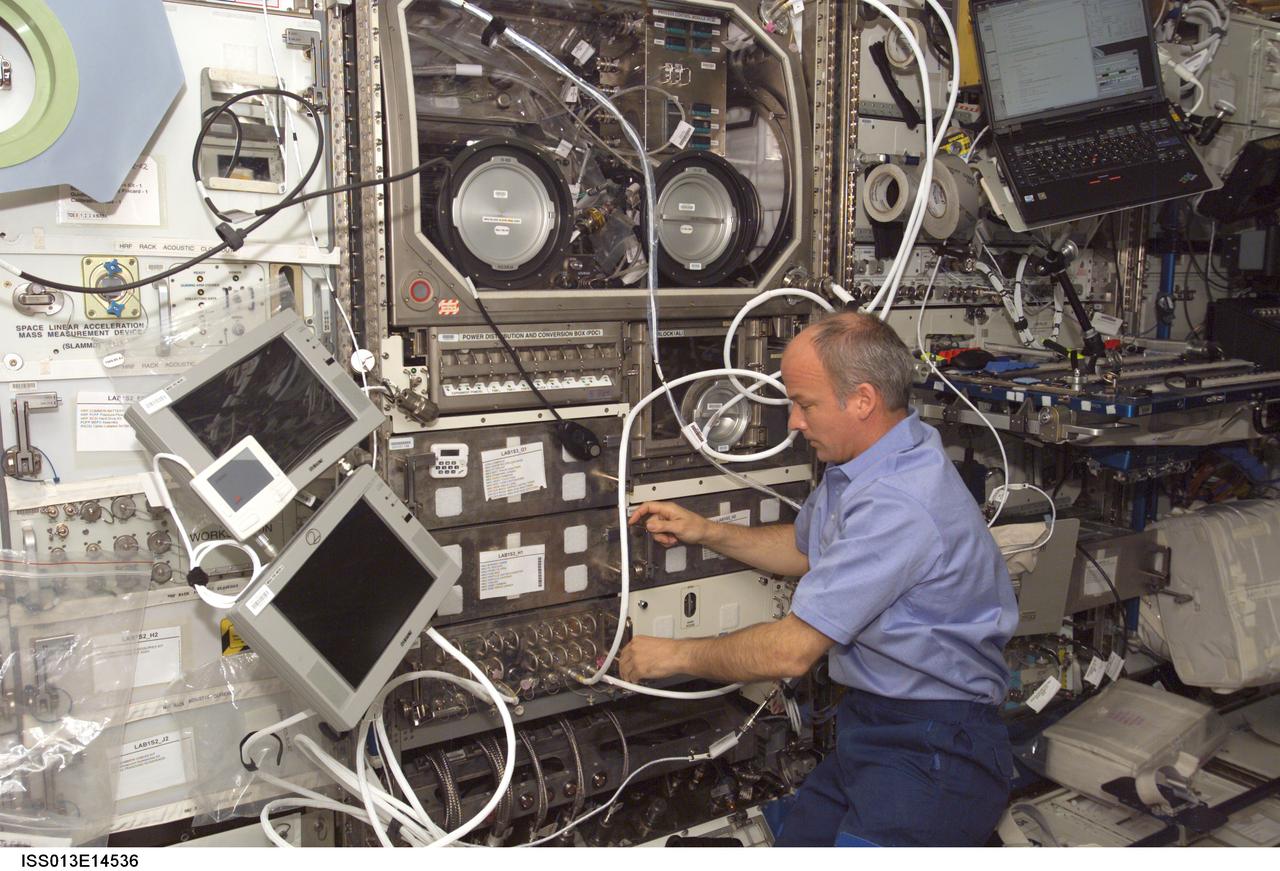
ISS013-E-14536 (4 May 2006) --- Astronaut Jeffrey N. Williams, Expedition 13 NASA space station science officer and flight engineer, conducts the first run of the Pore Formation and Mobility Investigation (PFMI) in the Microgravity Science Glovebox (MSG) in the Destiny laboratory of the International Space Station.
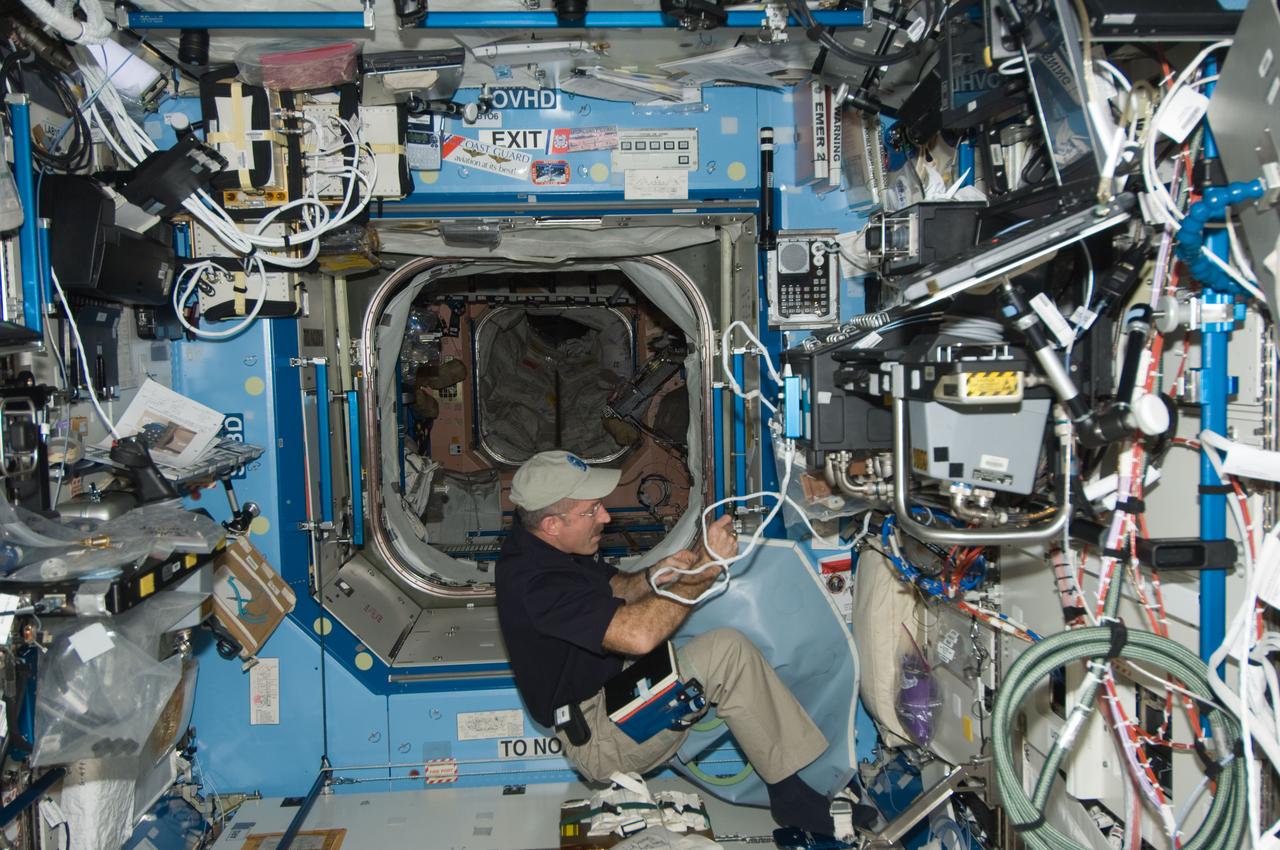
ISS030-E-155912 (16 Jan. 2012) --- NASA astronaut Dan Burbank, Expedition 30 commander, performs in-flight maintenance on the front stray light cover for the Microgravity Science Glovebox (MSG) in the Destiny laboratory of the International Space Station.

ISS038-E-044829 (10 Feb. 2014) --- NASA astronaut Rick Mastracchio, Expedition 38 flight engineer, prepares to use an ultraviolet light to decontaminate hardware used for life science experiments inside the Microgravity Science Glovebox (MSG) in the Destiny laboratory of the International Space Station.
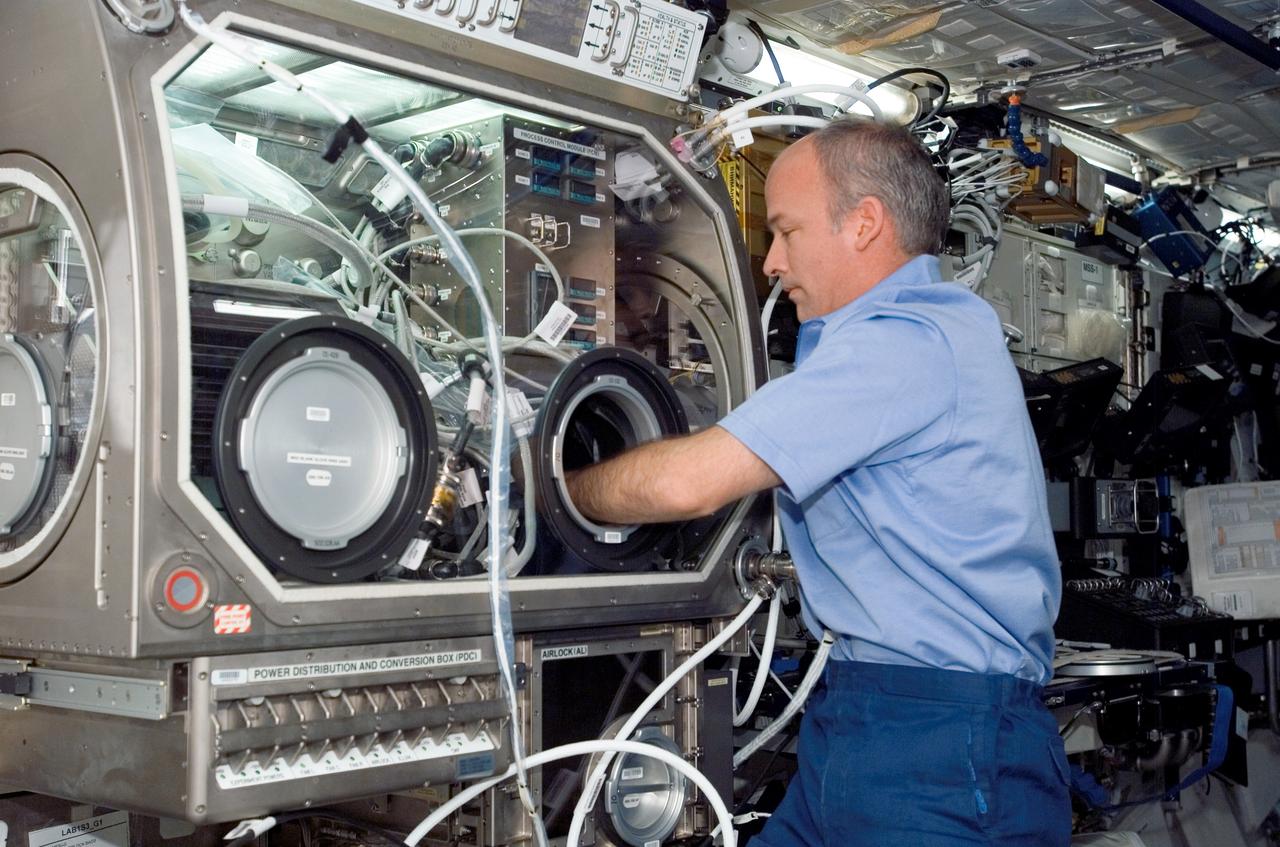
ISS013-E-14524 (4 May 2006) --- Astronaut Jeffrey N. Williams, Expedition 13 NASA space station science officer and flight engineer, conducts the first run of the Pore Formation and Mobility Investigation (PFMI) in the Microgravity Science Glovebox (MSG) in the Destiny laboratory of the International Space Station.
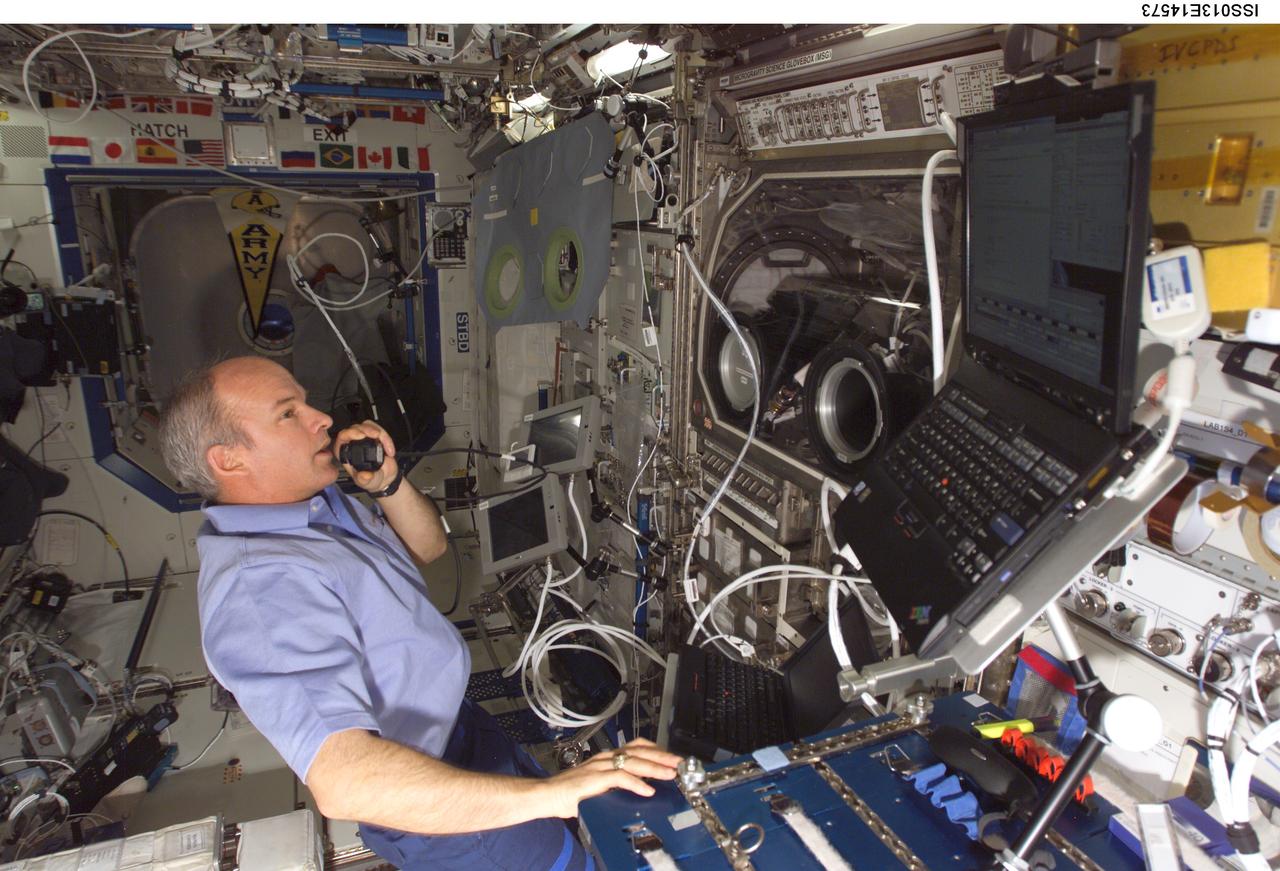
ISS013-E-14573 (4 May 2006) --- Astronaut Jeffrey N. Williams, Expedition 13 NASA space station science officer and flight engineer, conducts the first run of the Pore Formation and Mobility Investigation (PFMI) in the Microgravity Science Glovebox (MSG) in the Destiny laboratory of the International Space Station.
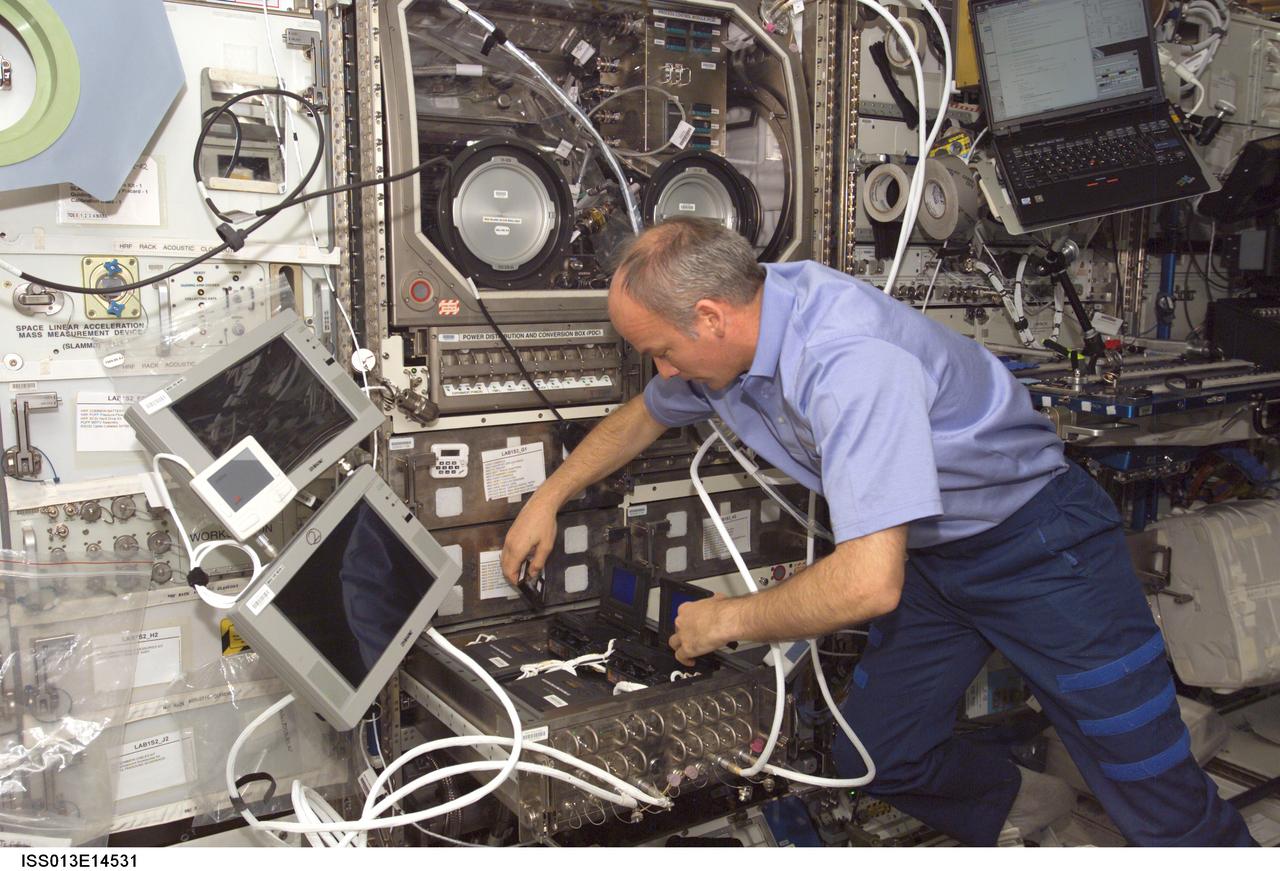
ISS013-E-14531 (4 May 2006) --- Astronaut Jeffrey N. Williams, Expedition 13 NASA space station science officer and flight engineer, conducts the first run of the Pore Formation and Mobility Investigation (PFMI) in the Microgravity Science Glovebox (MSG) in the Destiny laboratory of the International Space Station.
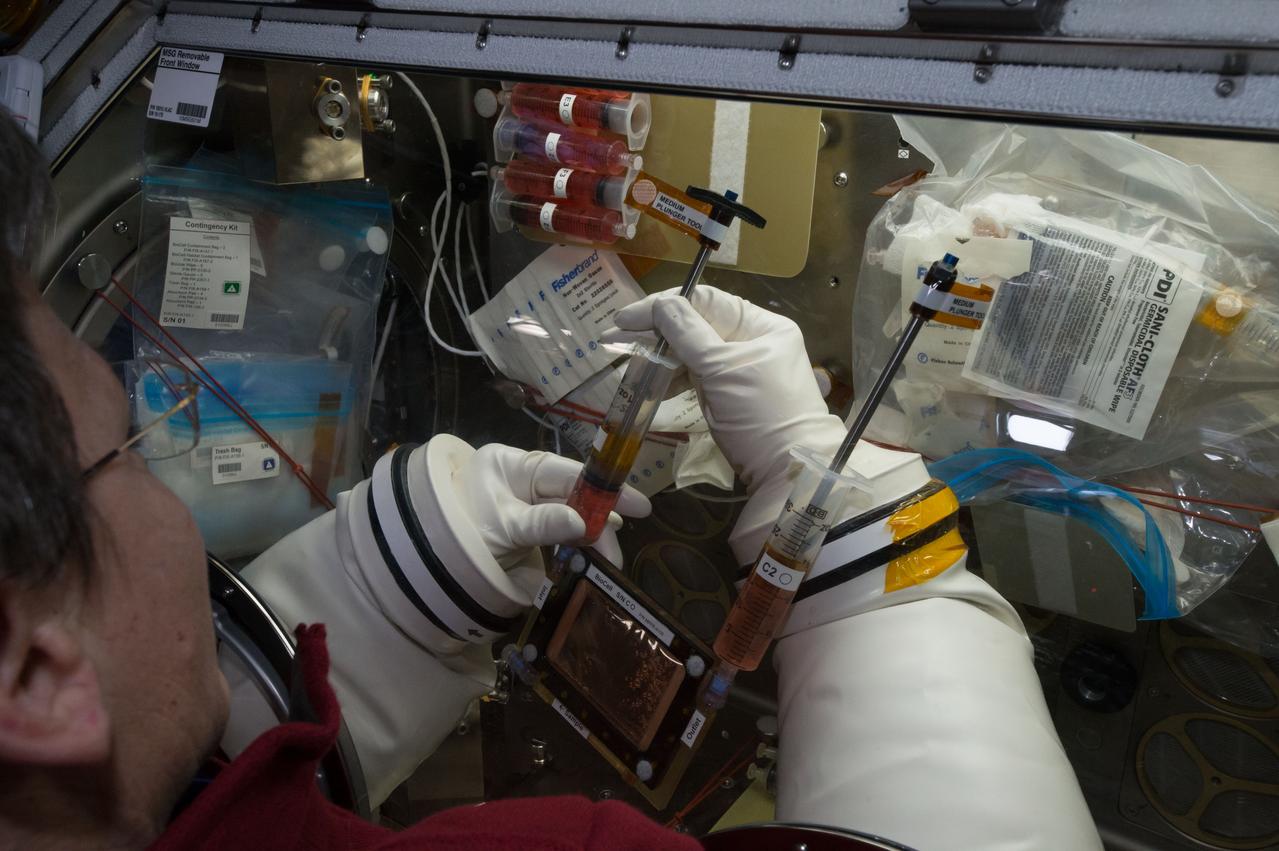
iss051e036140 (5/3/2017) --- A view inside the Microgravity Sciences Glovebox (MSG) where Commander Peggy Whitson works to change the media in a BioCell for the OsteoOmics experiment. Image was taken in the Destiny U.S. Laboratory. Gravitational Regulation of Osteoblast Genomics and Metabolism (OsteoOmics) aims to validate if magnetic levitation is a reasonable simulation of orbital free fall by measuring biological endpoints, such as signaling pathways and gene expression in osteoblast and osteoclast cells. Cells are exposed to a microgravity environment and ground based cells are exposed to magnetic levitation. If the validation is successful, then ground-based magnetic levitation will be an important ground-based tool to investigate the effect of gravitational force on biological systems.
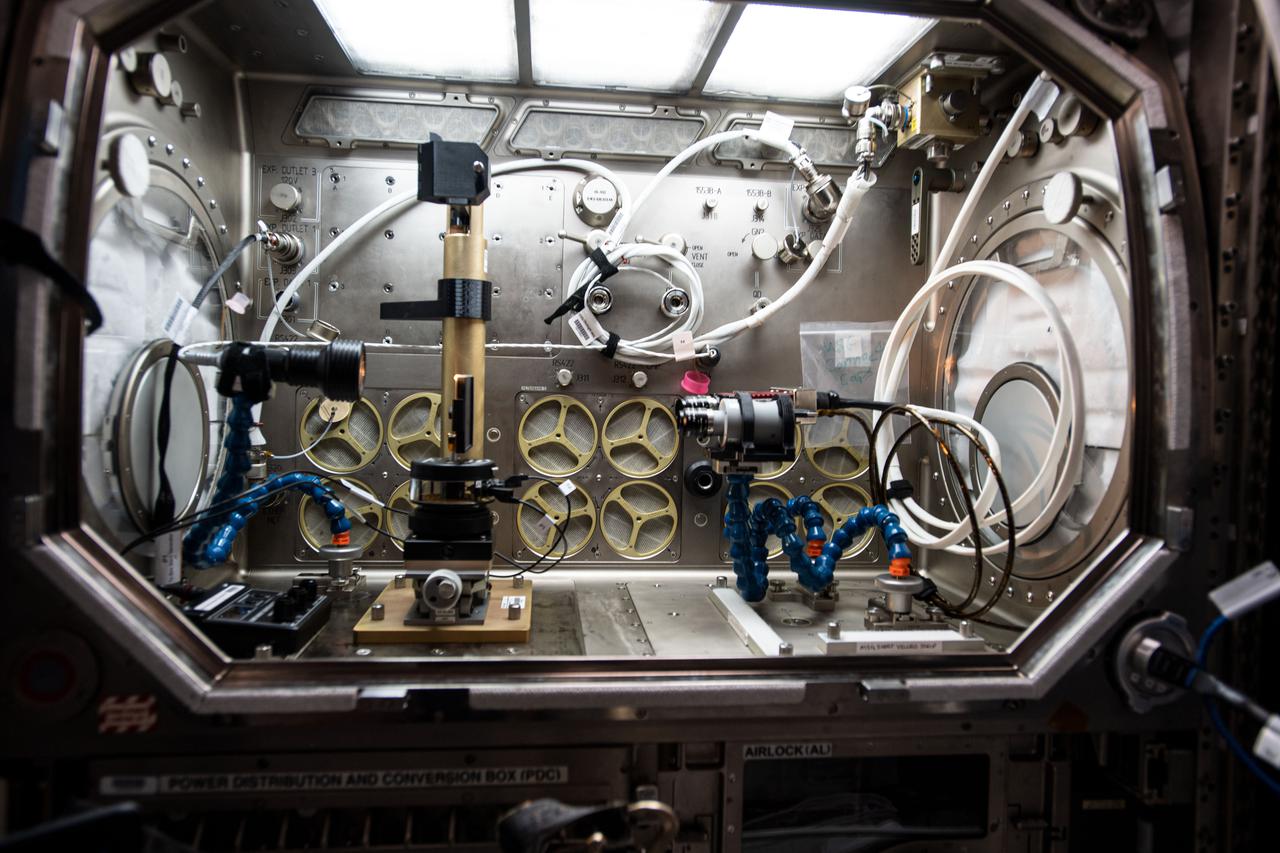
iss064e002379 (1/15/2017) --- Photo documentation of Inertial Spreading with Vibration and Water Coalescence (Drop Vibration) experiment hardware set up inside the Microgravity Science Glovebox (MSG) aboard the International Space Station (ISS). Inertial Spreading with Vibration and Water Coalescence (Drop Vibration) examines the behavior of big liquid drops whose perimeter of contact, called the contact line, moves rapidly as the drops change shape either forced by vibration or freely by merger.
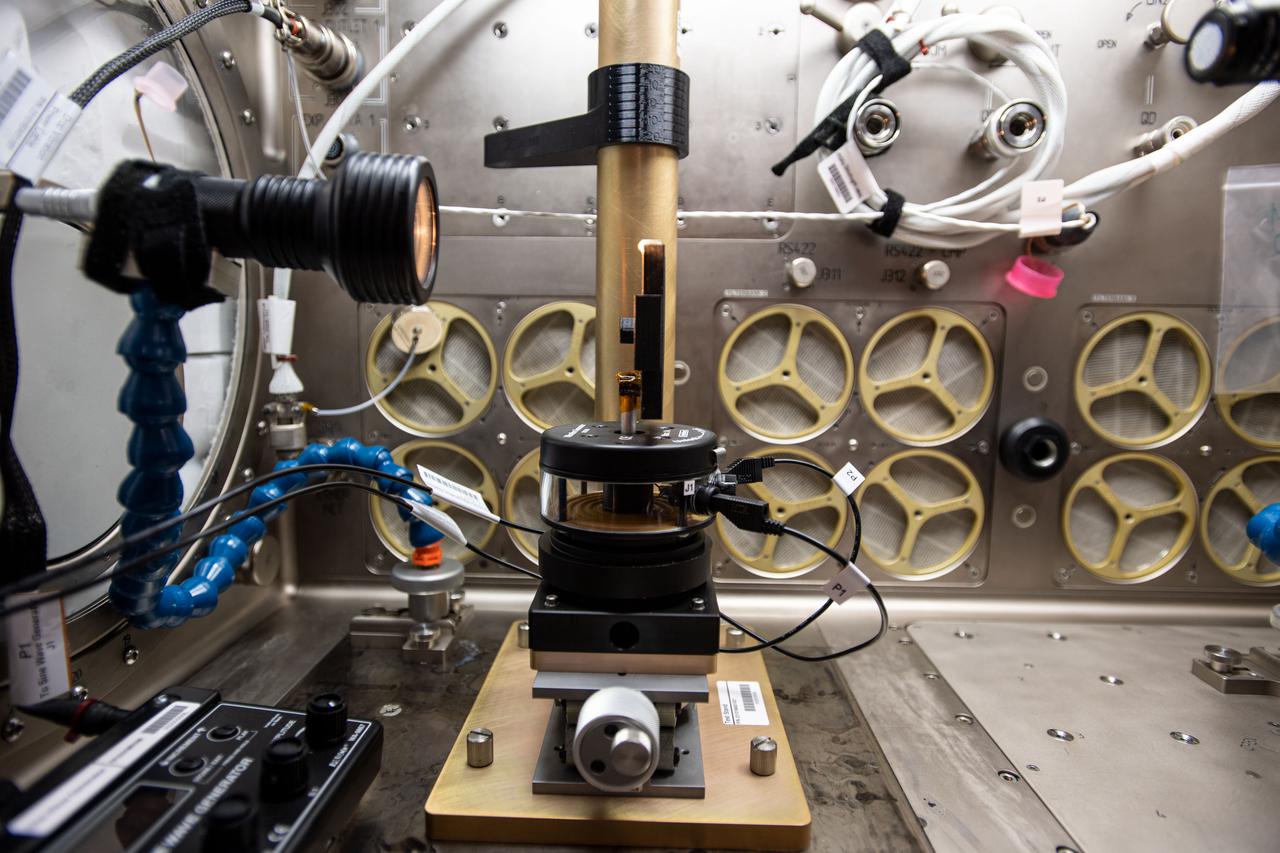
iss064e002375 (1/15/2017) --- Photo documentation of Inertial Spreading with Vibration and Water Coalescence (Drop Vibration) experiment hardware set up inside the Microgravity Science Glovebox (MSG) aboard the International Space Station (ISS). Inertial Spreading with Vibration and Water Coalescence (Drop Vibration) examines the behavior of big liquid drops whose perimeter of contact, called the contact line, moves rapidly as the drops change shape either forced by vibration or freely by merger.
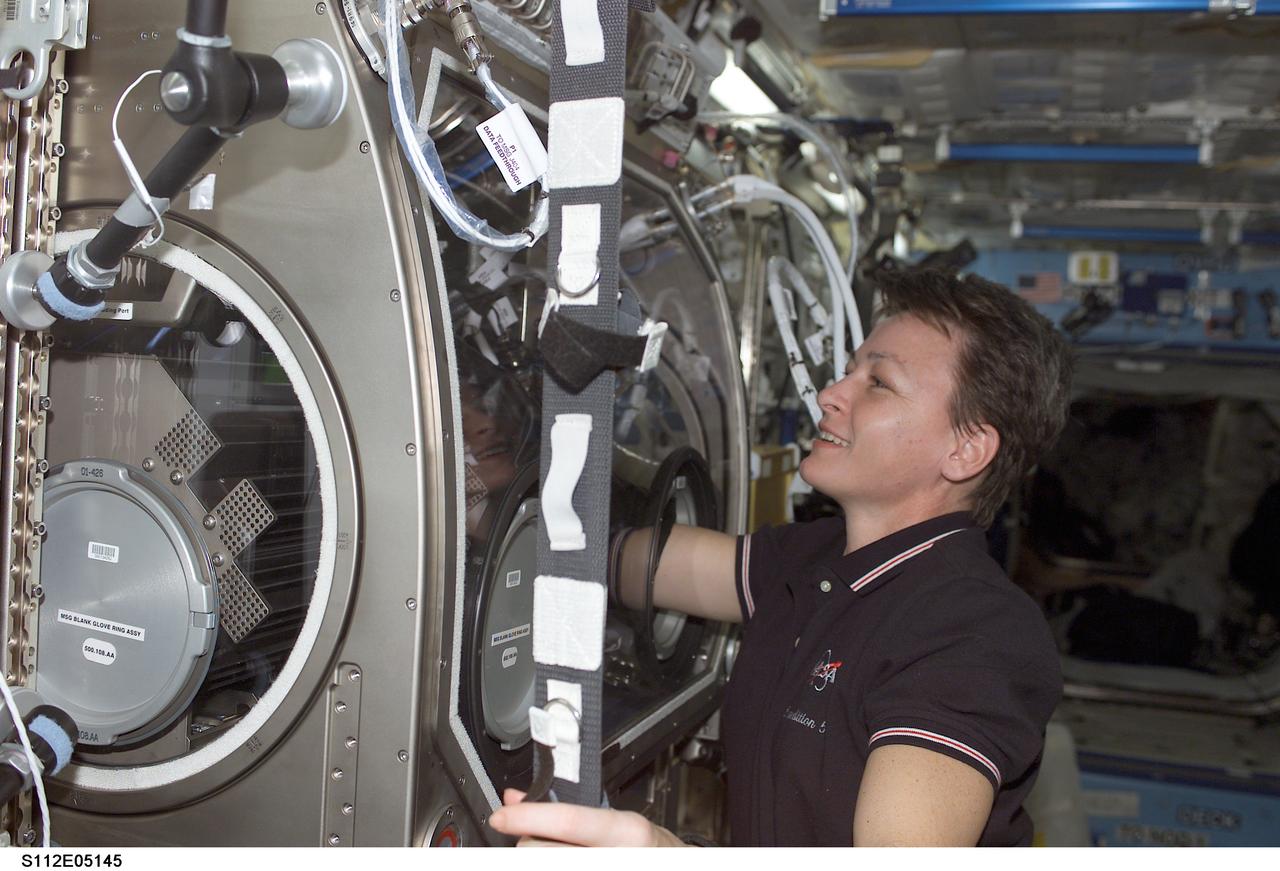
STS112-E-05145 (11 October 2002) --- Astronaut Peggy A. Whitson, Expedition Five flight engineer, works with the Microgravity Science Glovebox (MSG) in the Destiny laboratory on the International Space Station (ISS).
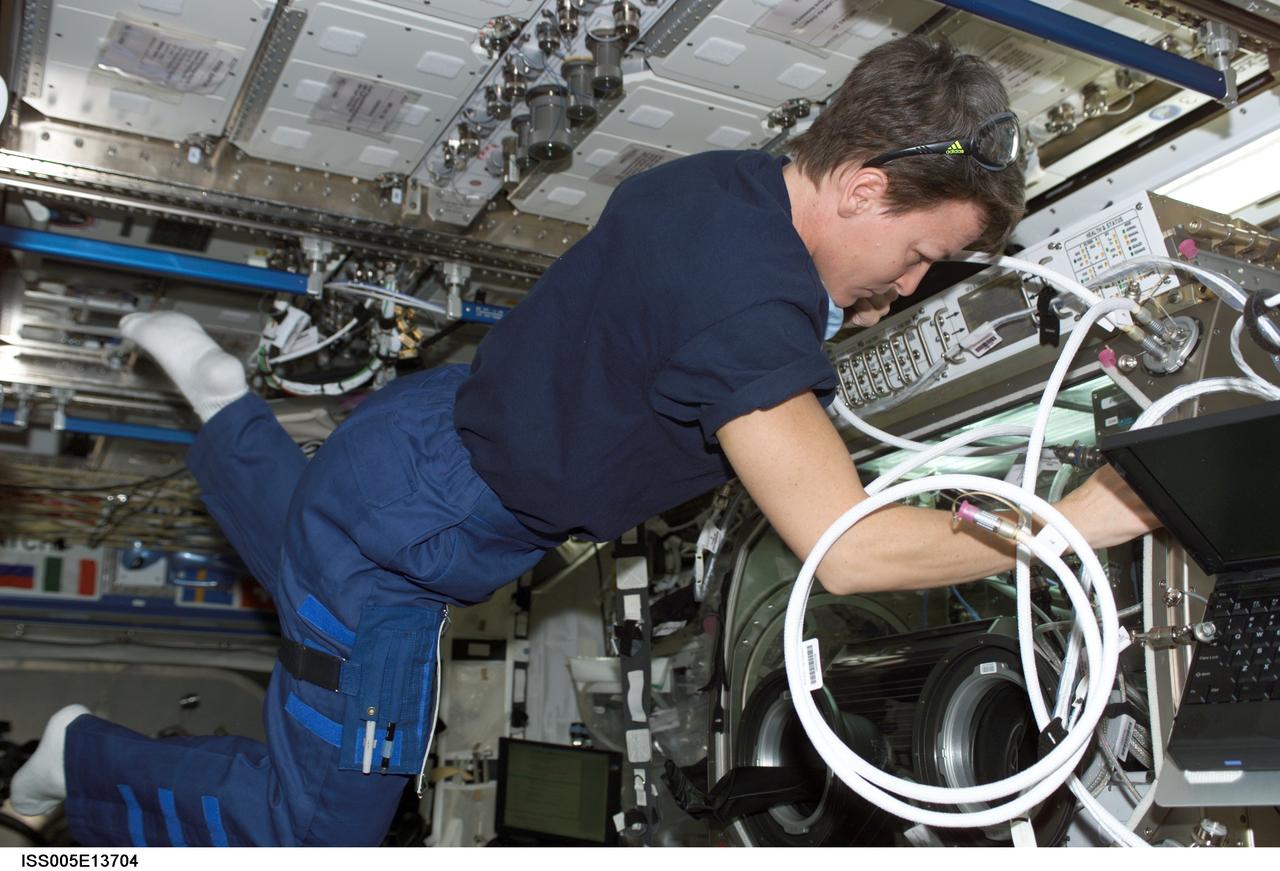
ISS005-E-13704 (11 September 2002) --- Astronaut Peggy A. Whitson, Expedition Five flight engineer, works with the Microgravity Science Glovebox (MSG) in the Destiny laboratory on the International Space Station (ISS).
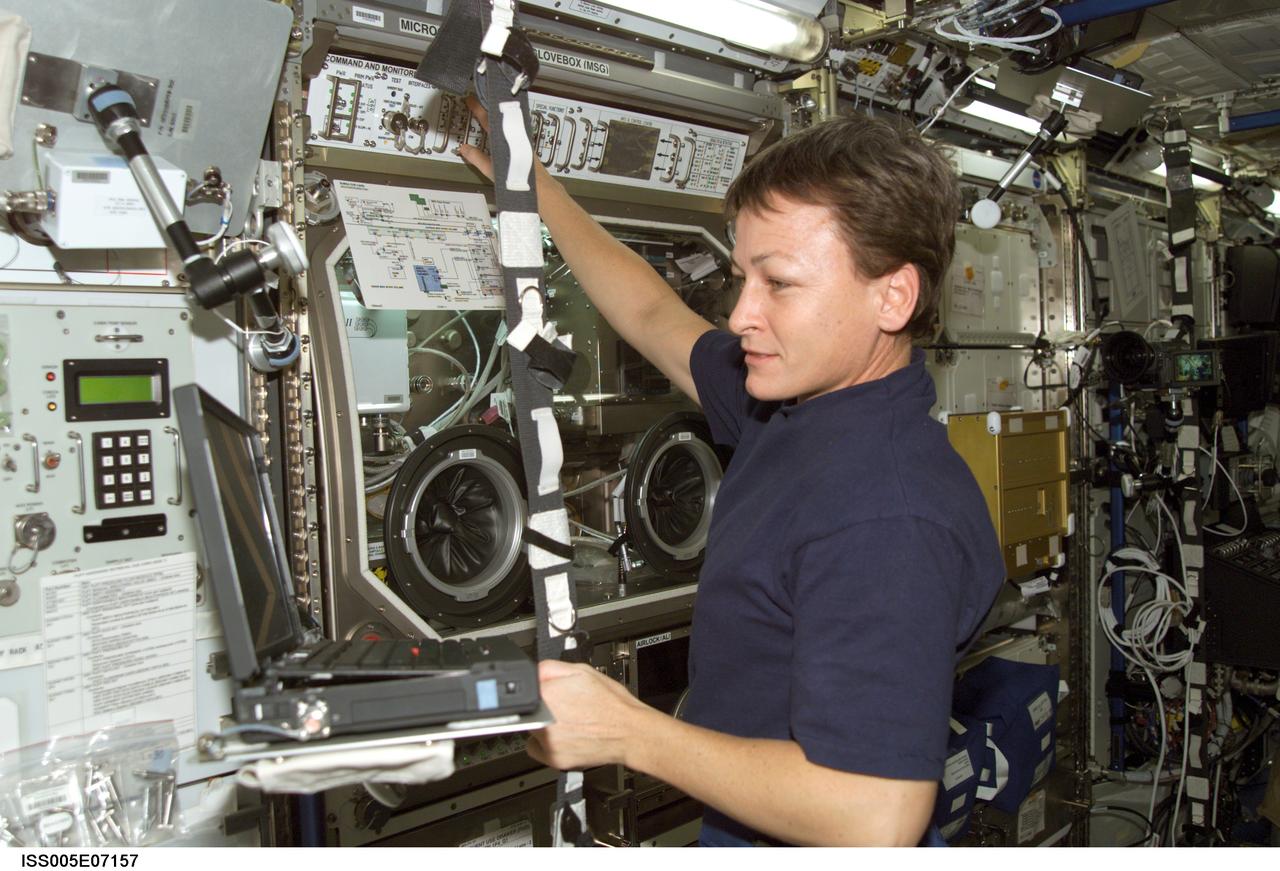
ISS005-E-07157 (8 July 2002) --- Astronaut Peggy A. Whitson, Expedition Five flight engineer, works with the Microgravity Science Glovebox (MSG) in the Destiny laboratory on the International Space Station (ISS).
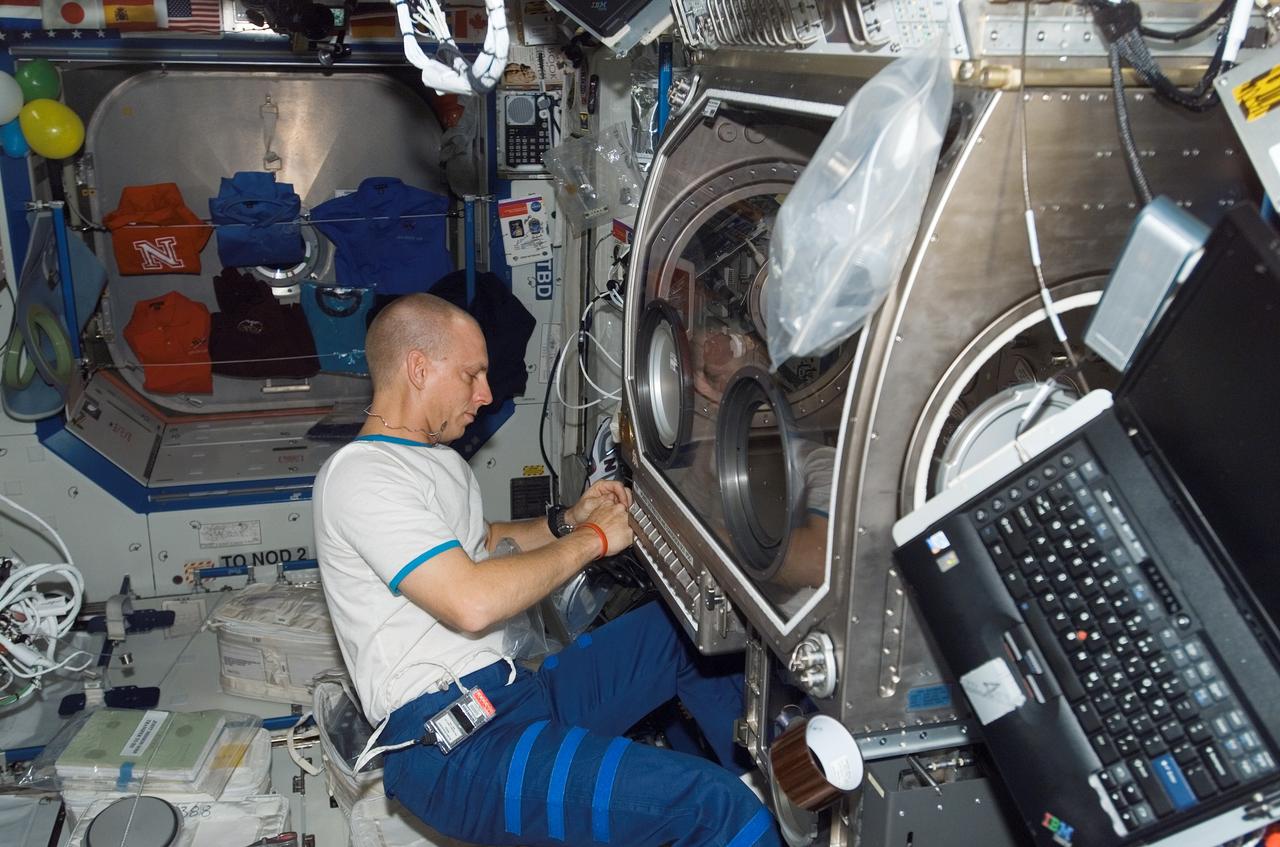
ISS015-E-14705 (28 June 2007) --- Astronaut Clayton C. Anderson, Expedition 15 flight engineer, works with the Microgravity Science Glovebox (MSG) in the Destiny laboratory of the International Space Station.
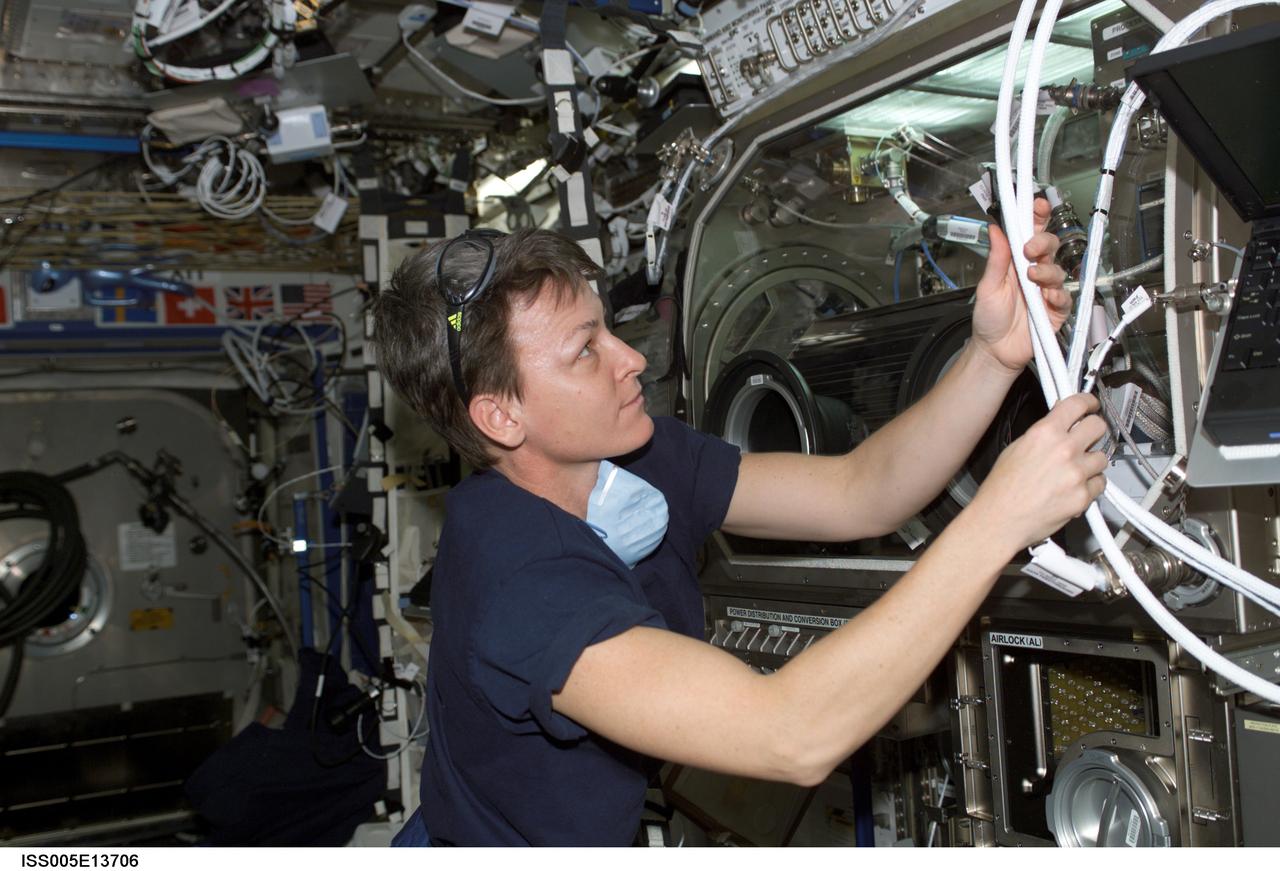
ISS005-E-13706 (11 September 2002) --- Astronaut Peggy A. Whitson, Expedition Five flight engineer, works with the Microgravity Science Glovebox (MSG) in the Destiny laboratory on the International Space Station (ISS).
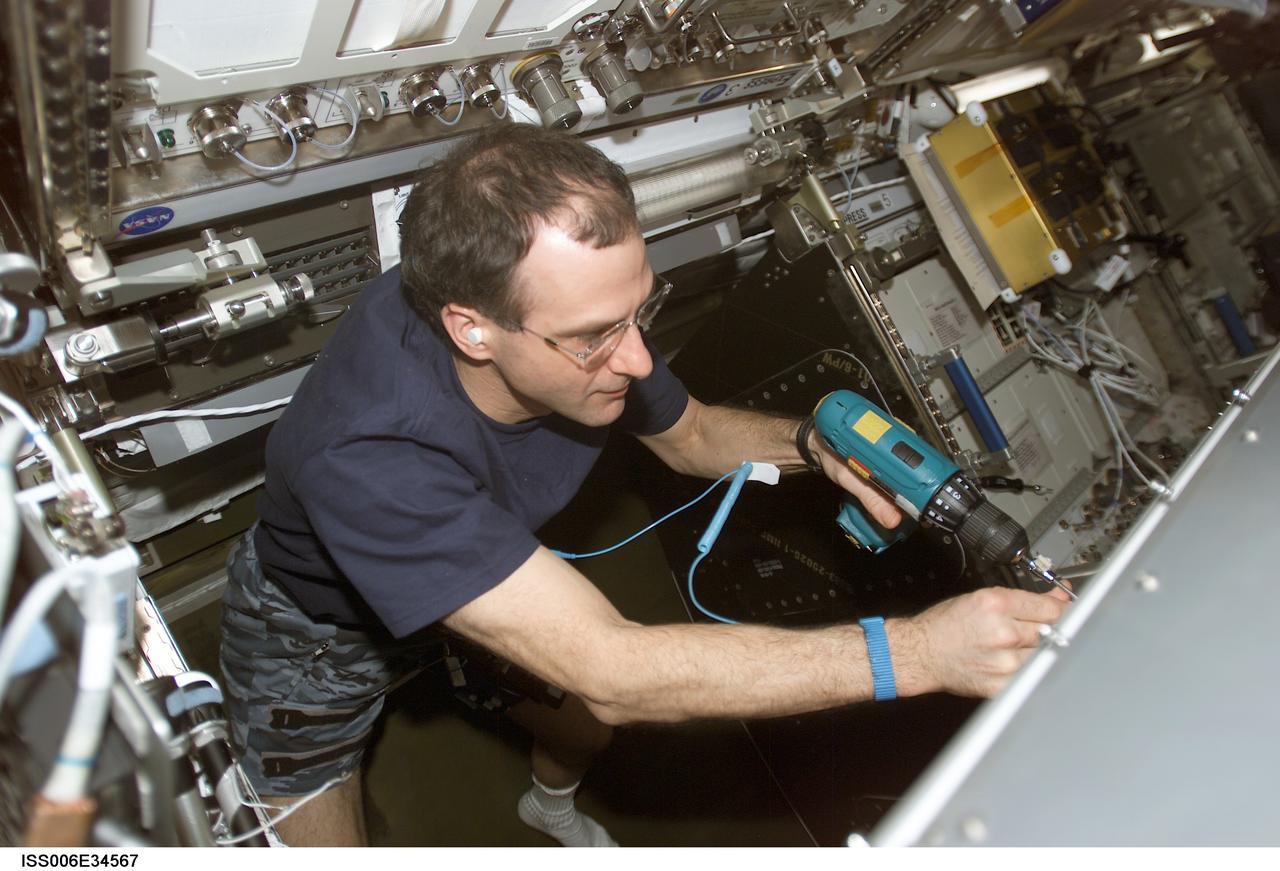
ISS006-E-34567 (27 February 2003) --- Astronaut Donald R. Pettit, Expedition Six NASA ISS science officer, works on the Microgravity Science Glovebox (MSG) in the Destiny laboratory on the International Space Station (ISS).
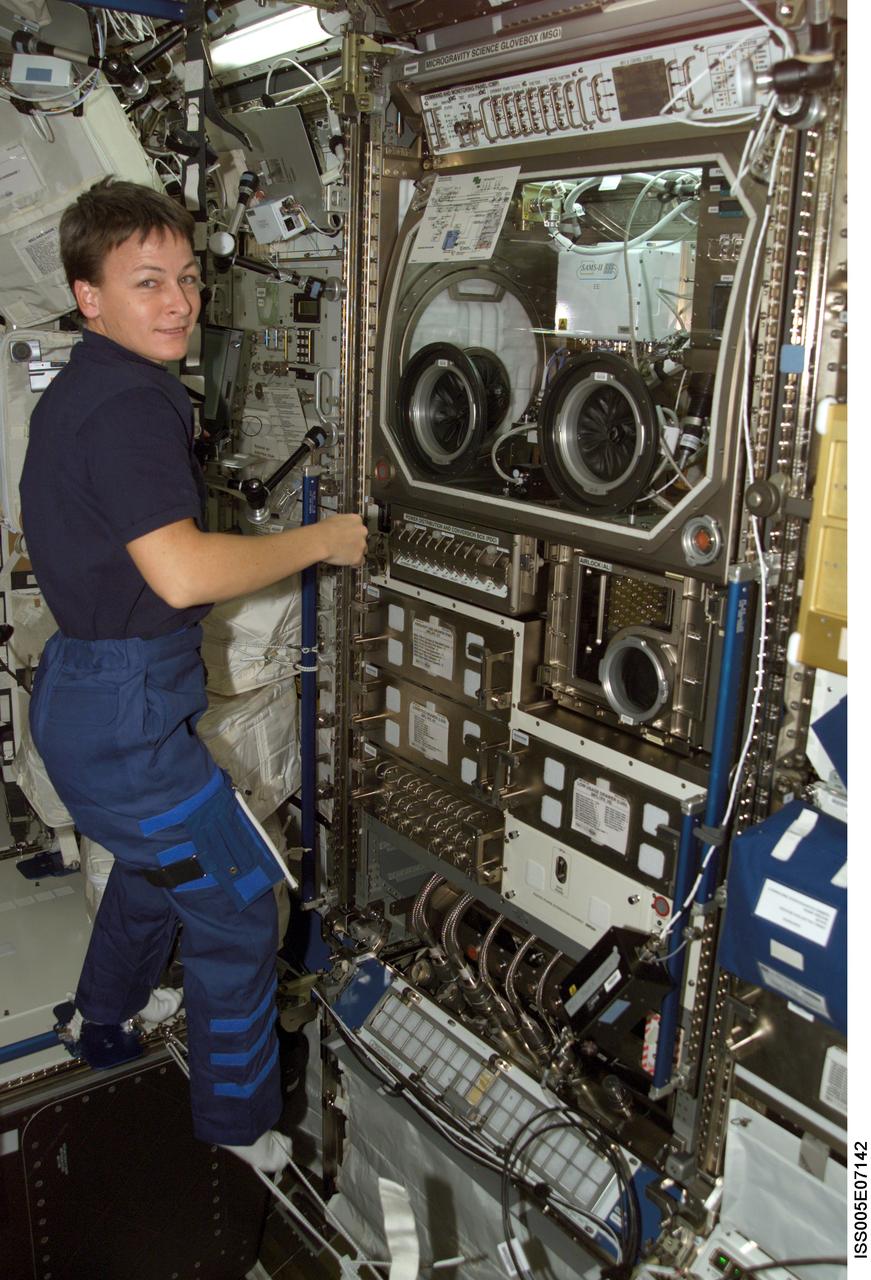
ISS005-E-07142 (8 July 2002) --- Astronaut Peggy A. Whitson, Expedition Five flight engineer, works near the Microgravity Science Glovebox (MSG) in the Destiny laboratory on the International Space Station (ISS).
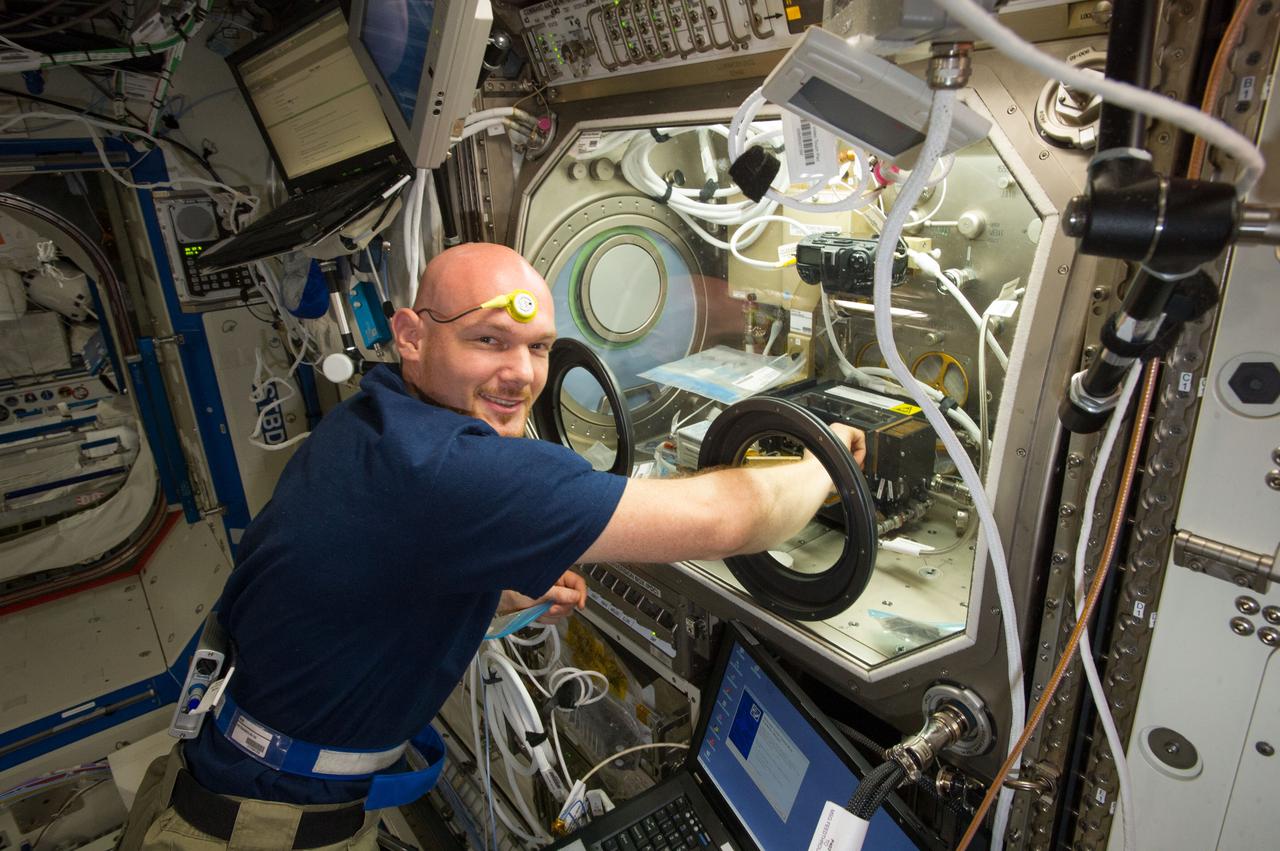
ISS040-E-011005 (13 June 2014) --- European Space Agency astronaut Alexander Gerst, Expedition 40 flight engineer, works with samples and hardware for a combustion experiment known as the Burning and Suppression of Solids (BASS) in the Microgravity Science Glovebox (MSG) in the Destiny laboratory of the International Space Station. He is wearing a Drager Double Sensor on his forehead which is used on the Circadian Rhythms Experiment. This experiment examines the hypothesis that long-term spaceflights significantly affect the synchronization of the circadian rhythms in humans due to changes of a non-24 hour light-dark cycle.
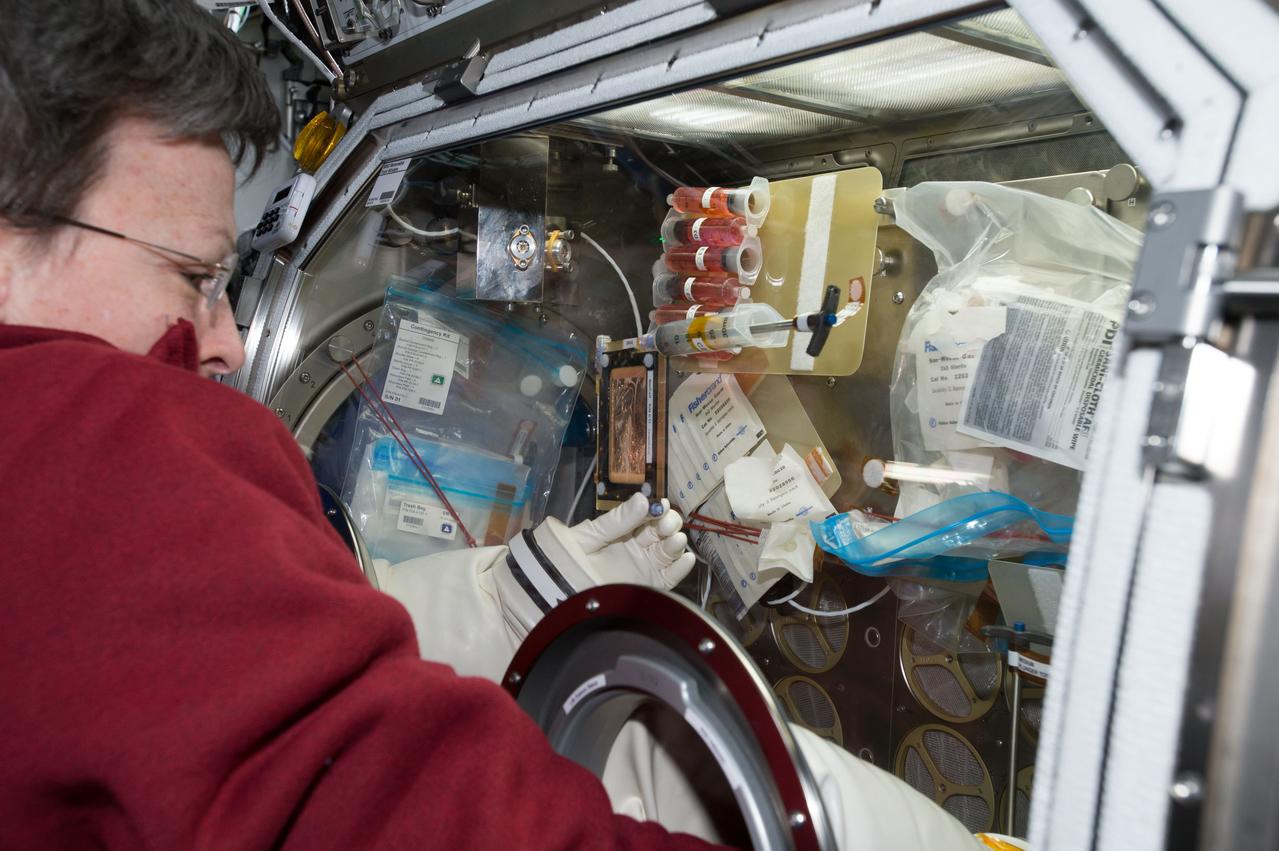
iss051e036121 (5/3/2017) --- An over-the-shoulder look at Commander Peggy Whitson working inside the Microgravity Sciences Glovebox (MSG) to change the media in the BioCell for the OsteoOmics experiment. Image was taken in the Destiny U.S. Laboratory. Gravitational Regulation of Osteoblast Genomics and Metabolism (OsteoOmics) aims to validate if magnetic levitation is a reasonable simulation of orbital free fall by measuring biological endpoints, such as signaling pathways and gene expression in osteoblast and osteoclast cells. Cells are exposed to a microgravity environment and ground based cells are exposed to magnetic levitation. If the validation is successful, then ground-based magnetic levitation will be an important ground-based tool to investigate the effect of gravitational force on biological systems.
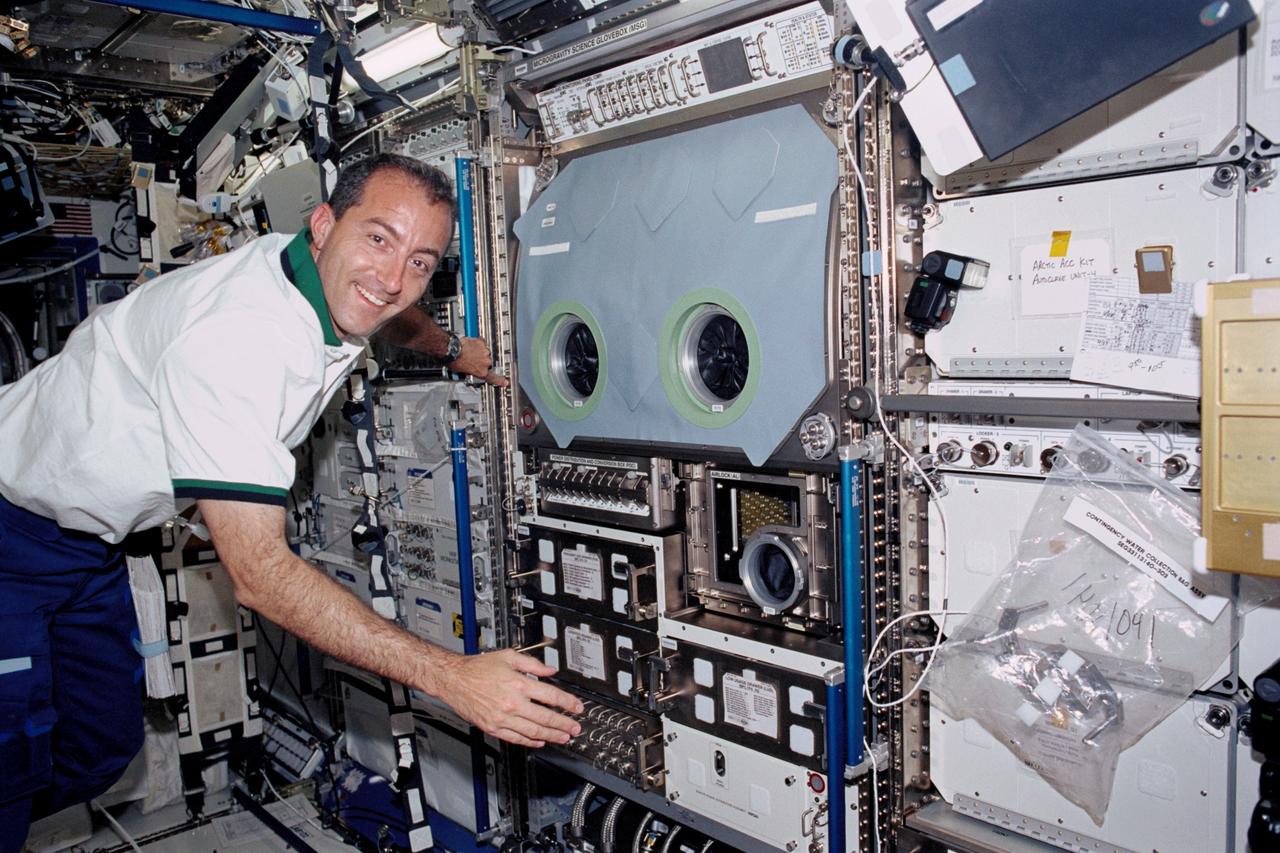
STS111-318-017 (5-19 June 2002) --- Astronaut Philippe Perrin, STS-111 mission specialist, floats near the Microgravity Science Glovebox (MSG) in the Destiny laboratory on the International Space Station (ISS). Perrin represents CNES, the French Space Agency.
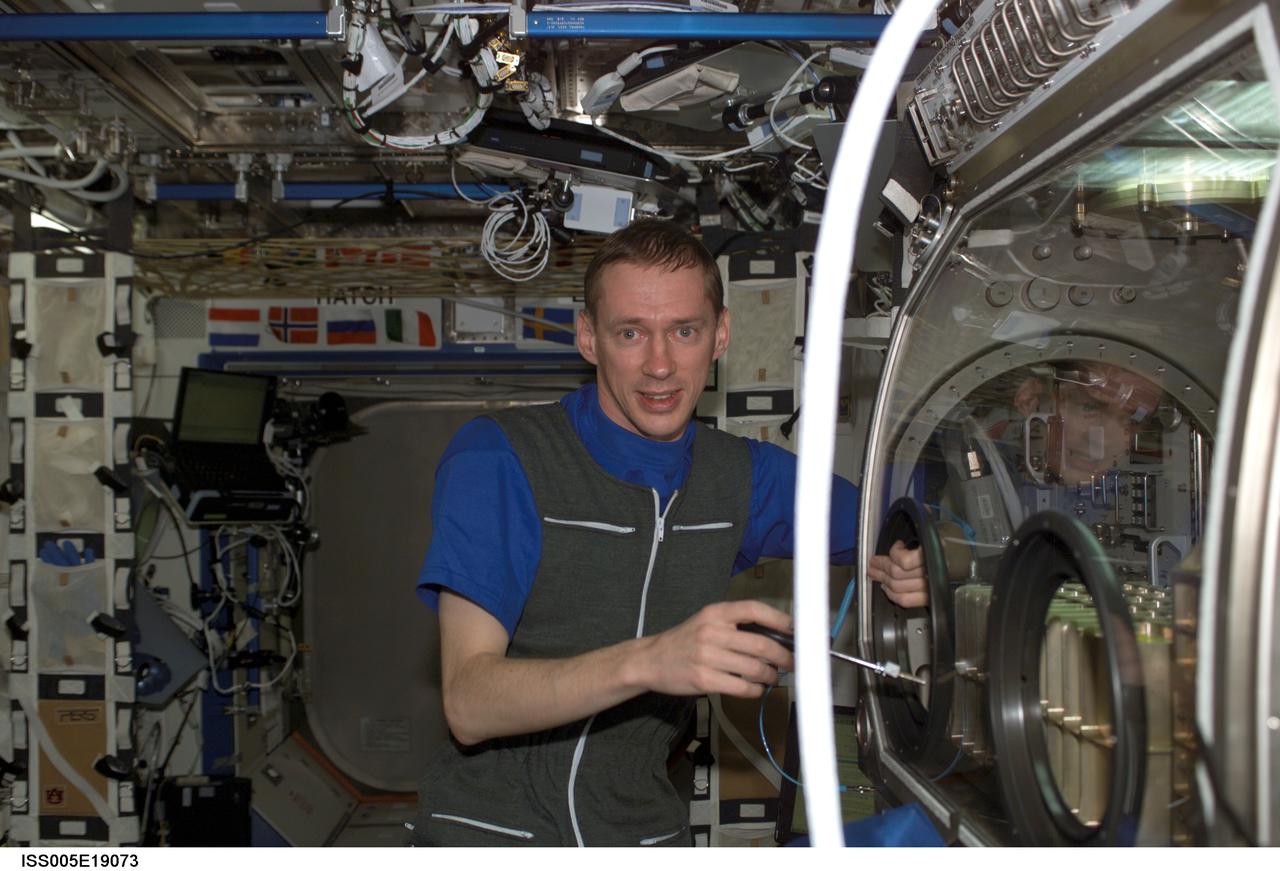
ISS005-E-19073 (1 November 2002) --- Belgian Soyuz 5 Flight Engineer Frank DeWinne, of the European Space Agency (ESA), works with experiments housed in the Microgravity Science Glovebox (MSG) in the Destiny laboratory on the International Space Station (ISS).
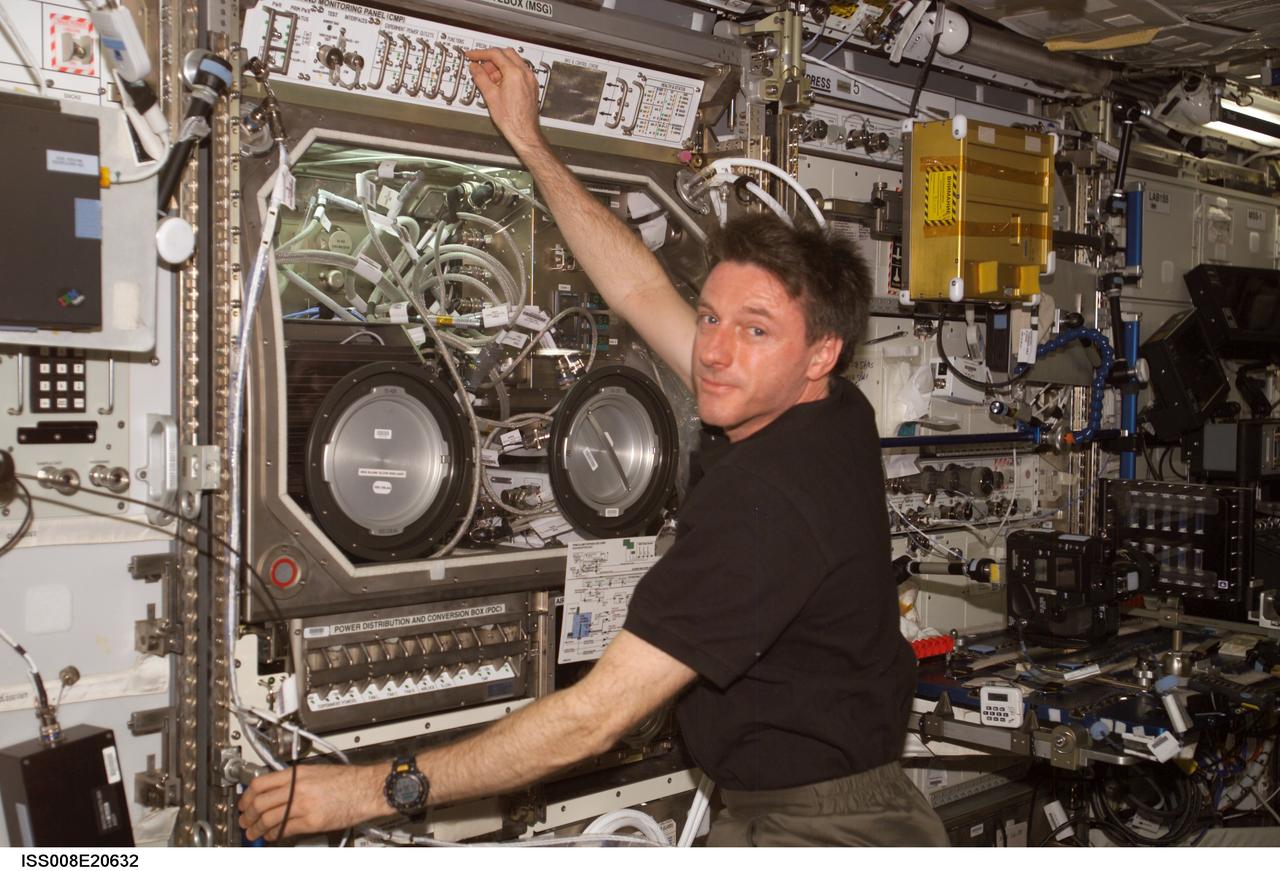
ISS008-E-20632 (5 April 2004) --- Astronaut C. Michael Foale, Expedition 8 commander and NASA ISS science officer, conducts an inspection of the Microgravity Science Glovebox (MSG) / Exchangeable Standard Electronic Module (ESEM) in the Destiny laboratory of the International Space Station (ISS).
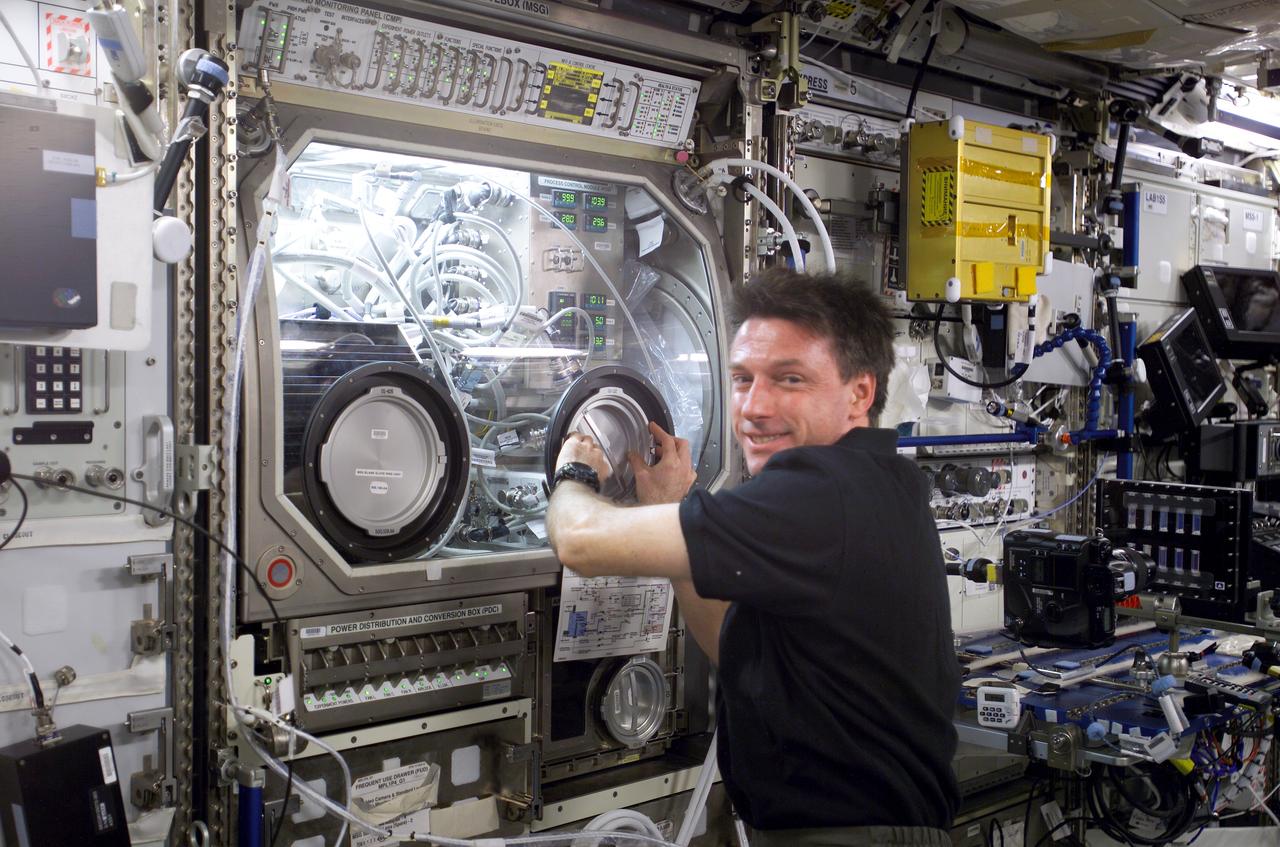
ISS008-E-20622 (5 April 2004) --- Astronaut C. Michael Foale, Expedition 8 commander and NASA ISS science officer, conducts an inspection of the Microgravity Science Glovebox (MSG) / Exchangeable Standard Electronic Module (ESEM) in the Destiny laboratory of the International Space Station (ISS).
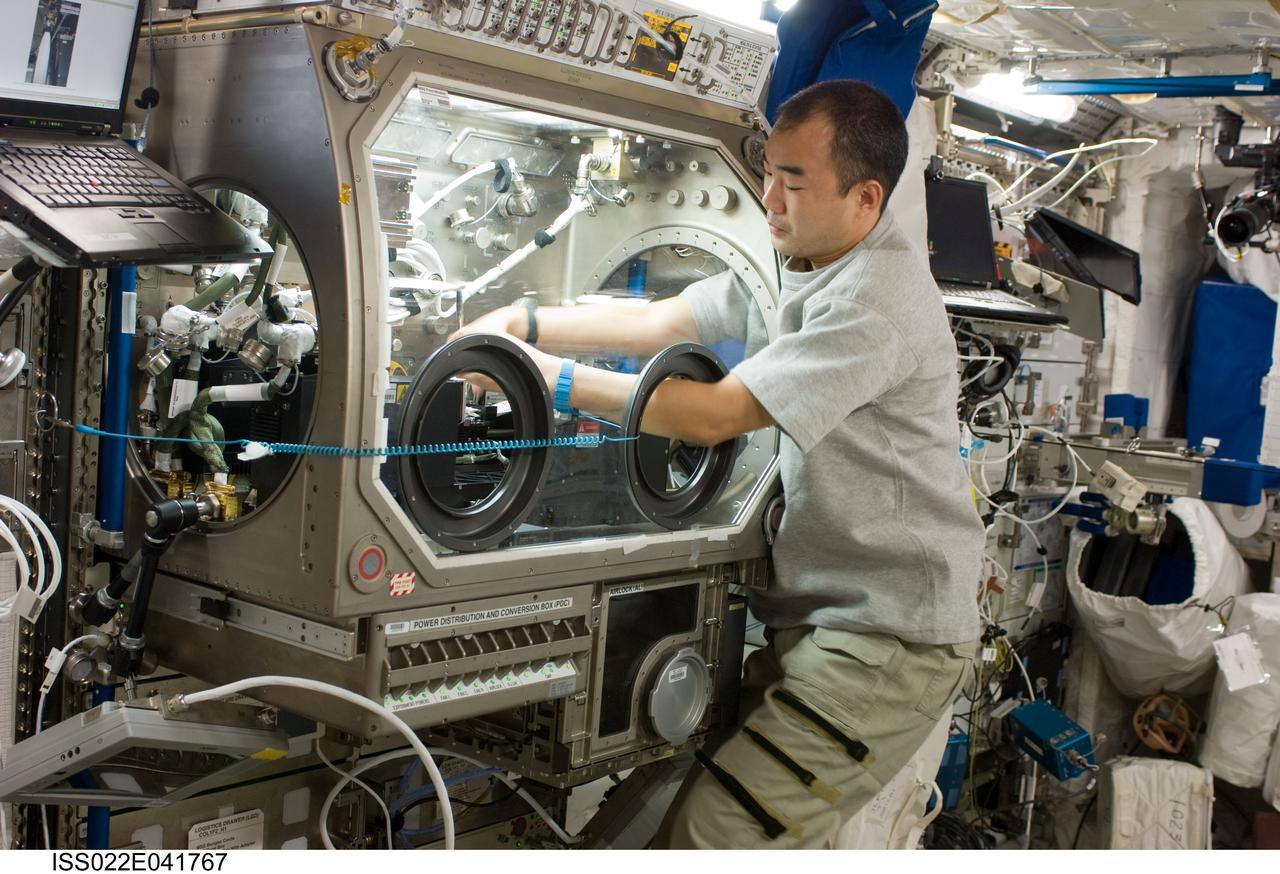
ISS022-E-041767 (28 Jan. 2010) --- Japan Aerospace Exploration Agency (JAXA) astronaut Soichi Noguchi, Expedition 22 flight engineer, works with the European Space Agency (ESA) science payload Selectable Optical Diagnostics Instrument / Influence of Vibration on Diffusion in Liquids (SODI/IVIDIL) hardware in the Microgravity Science Glovebox (MSG) facility located in the Columbus laboratory of the International Space Station.
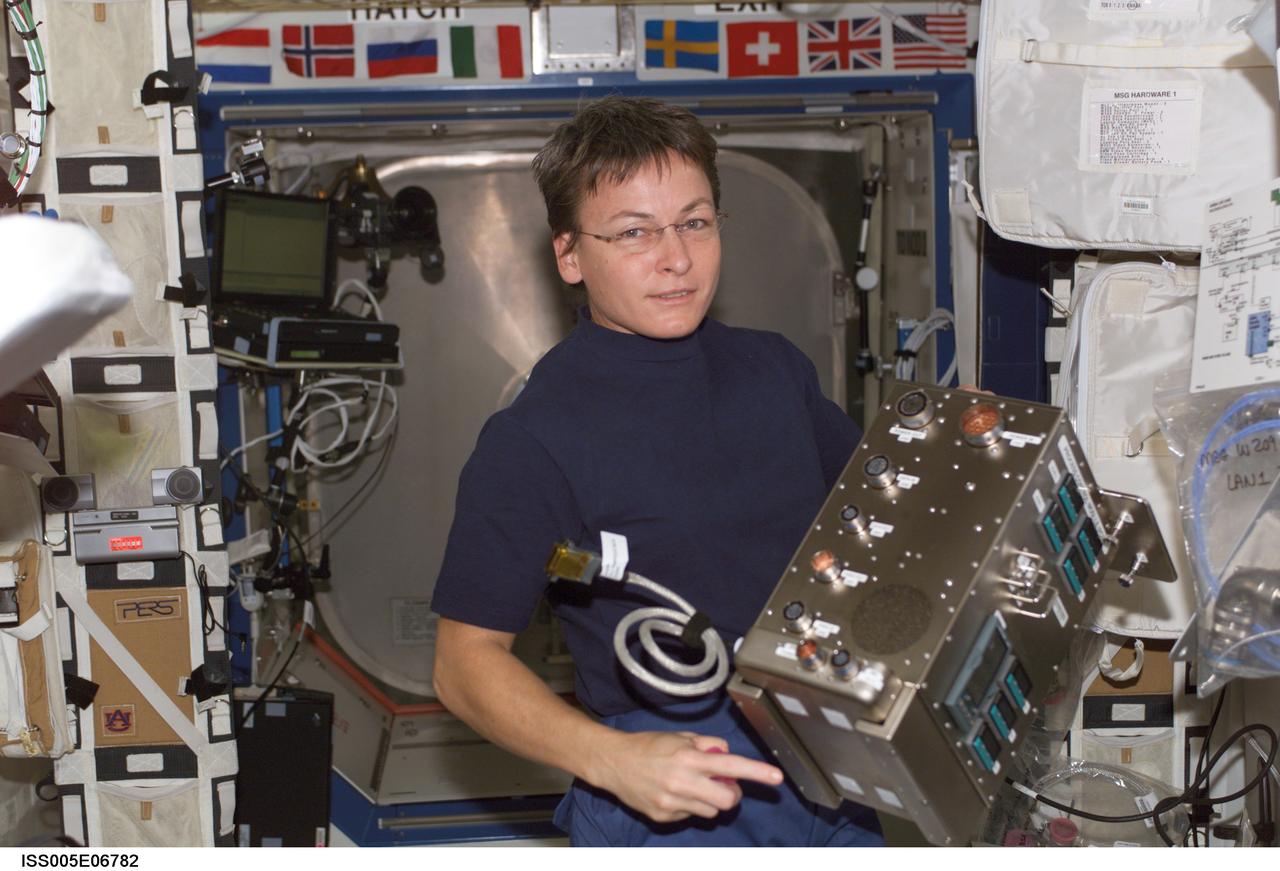
iss005e06782 (7/5/2002) --- NASA astronaut Peggy Whitson installs a Solidification Using a Baffle in Sealed Ampoules (SUBSA) Process Control Module in the Microgravity Science Glovebox (MSG). The SUBSA objective is to advance our understanding of the processes involved in semiconductor crystal growth. It offers a gradient freeze furnace for materials science investigations that can reach 850°C. Samples are contained in transparent quartz or ceramic ampoules with high definition video imaging available in real-time along with remote commanding of thermal control parameters.
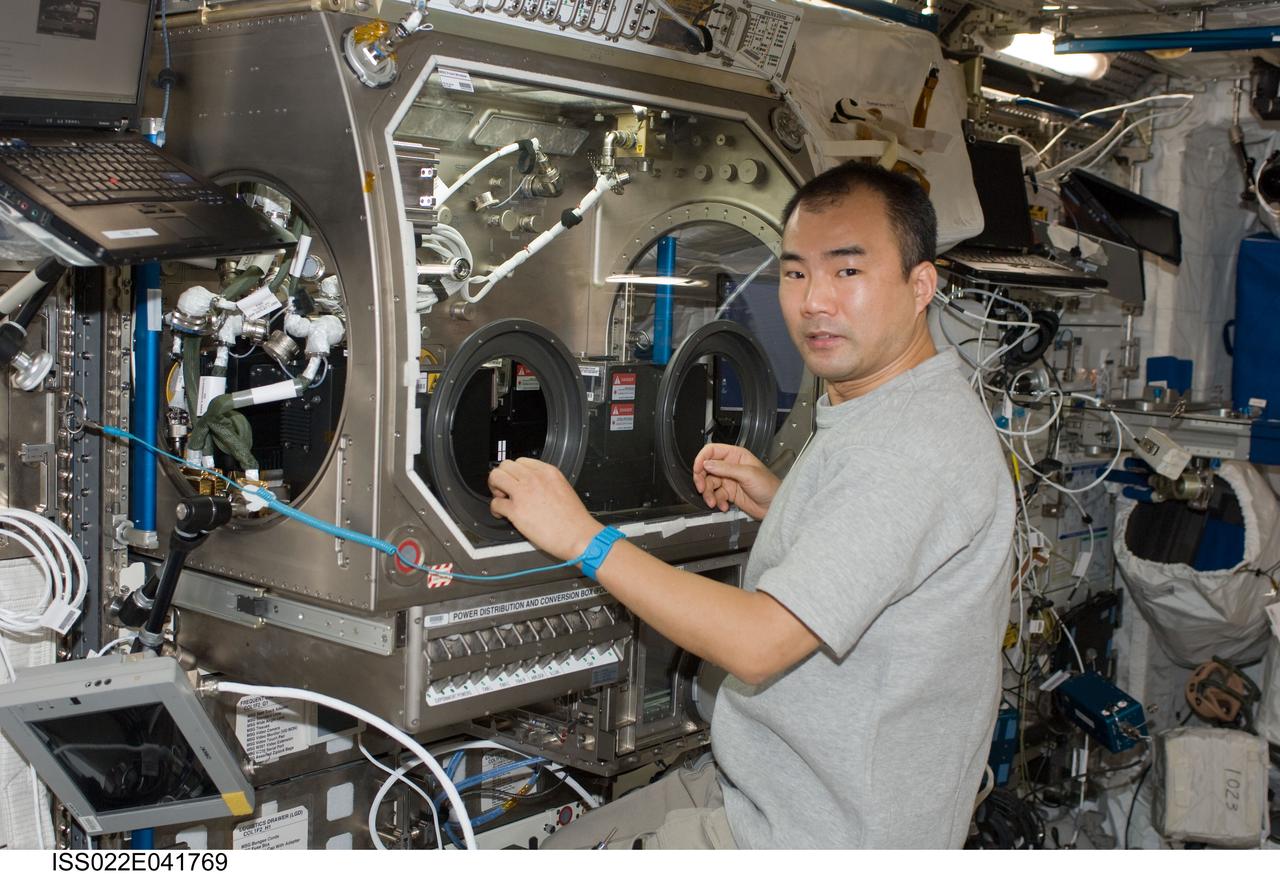
ISS022-E-041769 (28 Jan. 2010) --- Japan Aerospace Exploration Agency (JAXA) astronaut Soichi Noguchi, Expedition 22 flight engineer, works with the European Space Agency (ESA) science payload Selectable Optical Diagnostics Instrument / Influence of Vibration on Diffusion in Liquids (SODI/IVIDIL) hardware in the Microgravity Science Glovebox (MSG) facility located in the Columbus laboratory of the International Space Station.
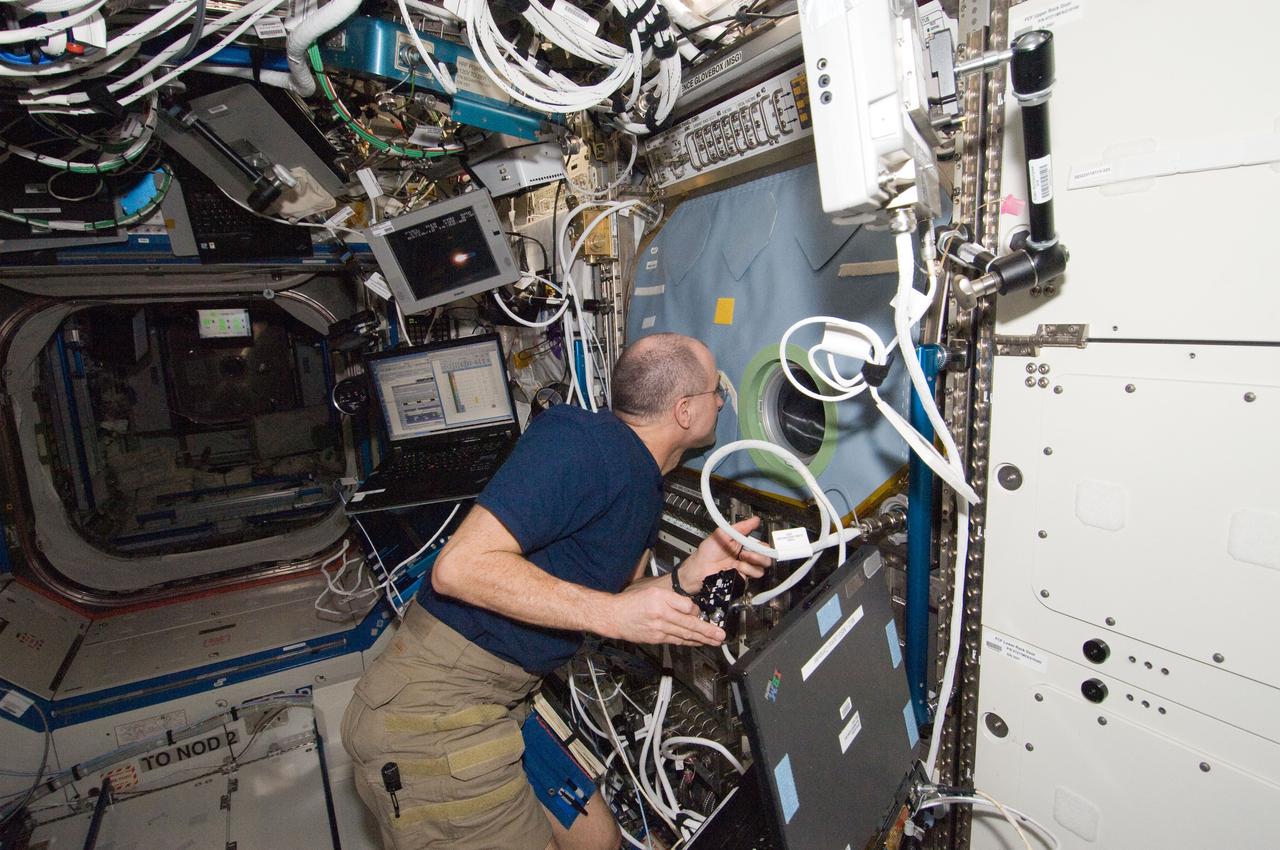
ISS030-E-128918 (9 March 2012) --- NASA astronaut Don Pettit, Expedition 30 flight engineer, works with the Structure and Liftoff In Combustion Experiment (SLICE) at the Microgravity Sciences Glovebox (MSG) in the Destiny laboratory of the International Space Station. Pettit conducted three sets of flame tests, followed by a fan calibration. This test will lead to increased efficiency and reduced pollutant emission for practical combustion devices.

ISS022-E-041766 (28 Jan. 2010) --- Japan Aerospace Exploration Agency (JAXA) astronaut Soichi Noguchi, Expedition 22 flight engineer, works with the European Space Agency (ESA) science payload Selectable Optical Diagnostics Instrument / Influence of Vibration on Diffusion in Liquids (SODI/IVIDIL) hardware in the Microgravity Science Glovebox (MSG) facility located in the Columbus laboratory of the International Space Station.
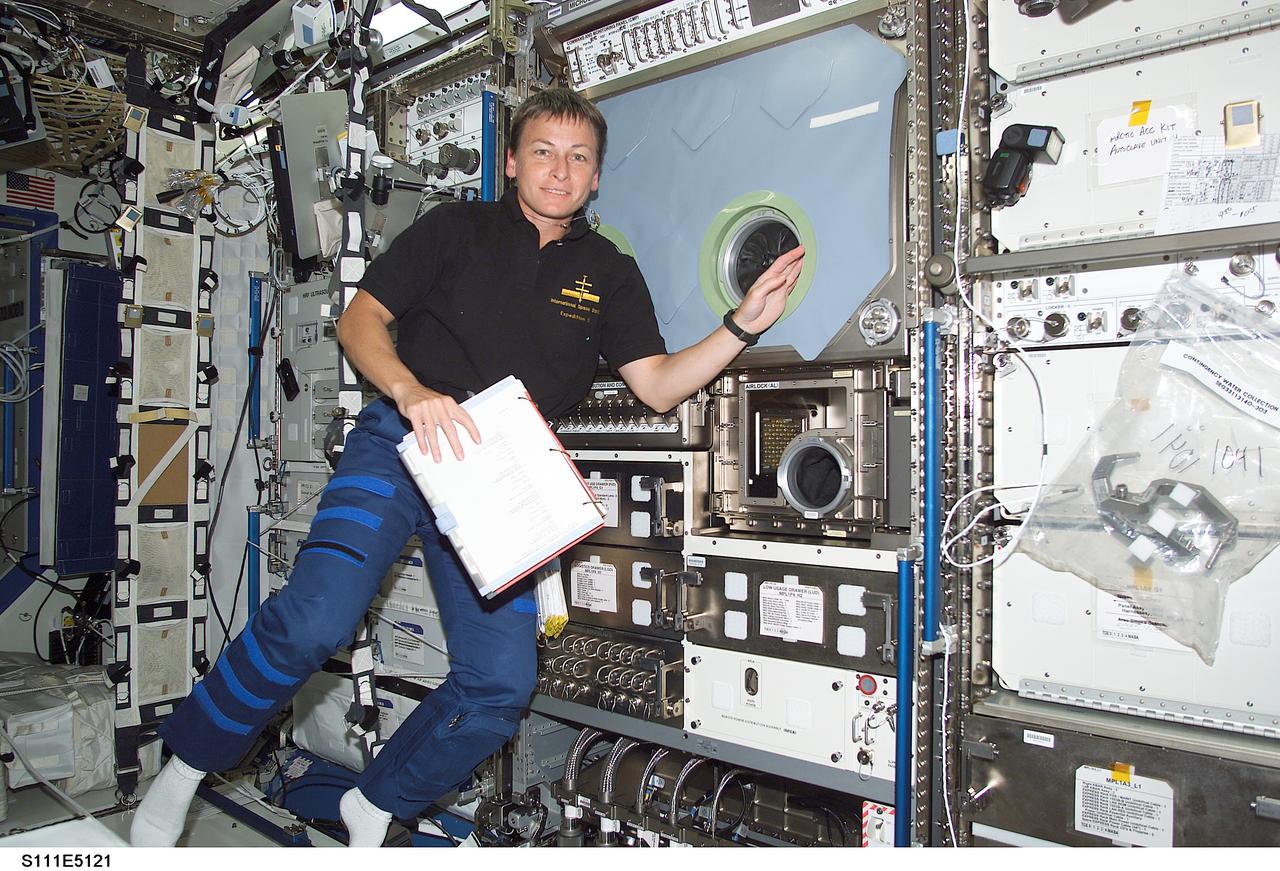
STS111-E-5121 (9 June 2002) --- Astronaut Peggy A. Whitson, Expedition Five flight engineer, floats near the Microgravity Science Glovebox (MSG) in the Destiny laboratory on the International Space Station (ISS).
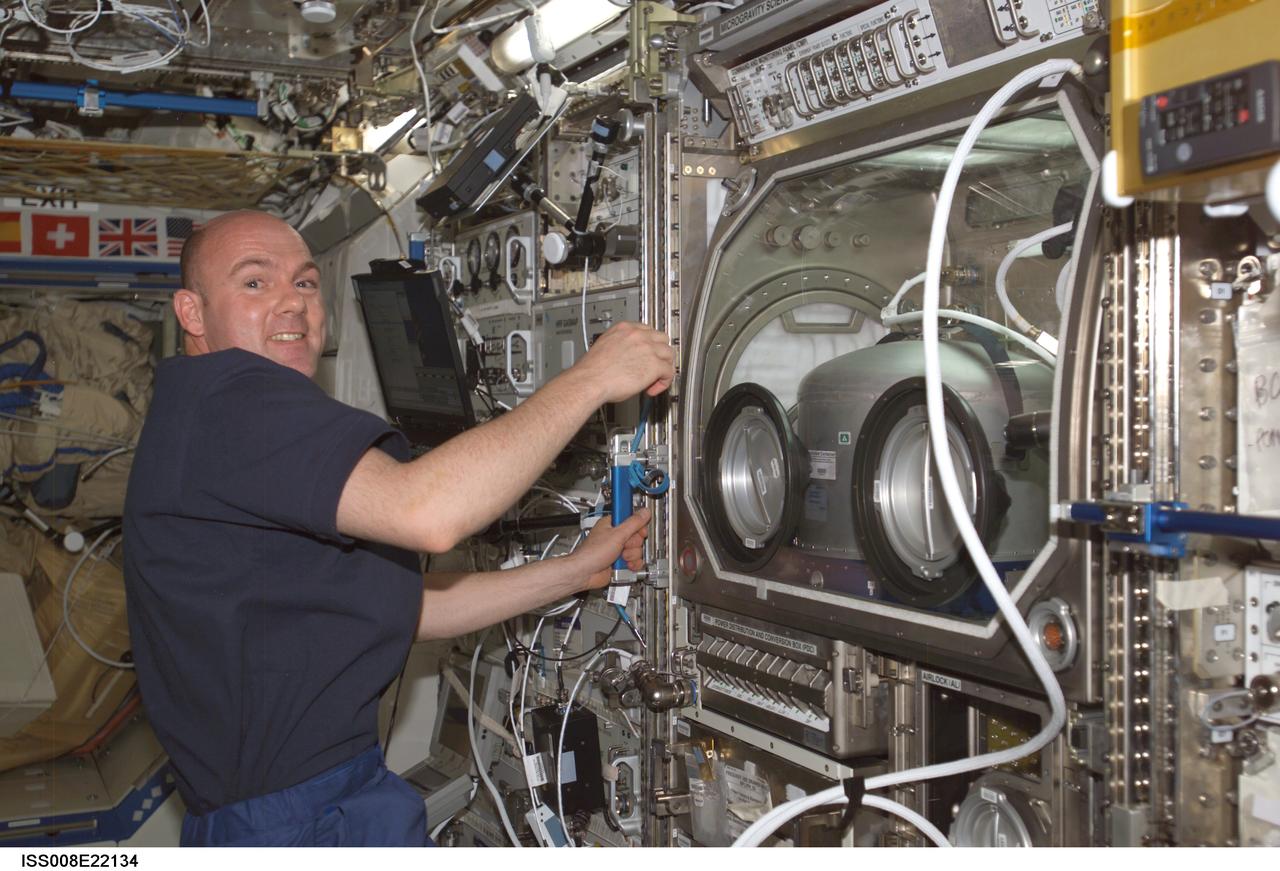
ISS008-E-22134 (24 April 2004) --- European Space Agency (ESA) astronaut Andre Kuipers of the Netherlands is pictured near the Microgravity Science Glovebox (MSG) in the Destiny laboratory of the International Space Station (ISS).
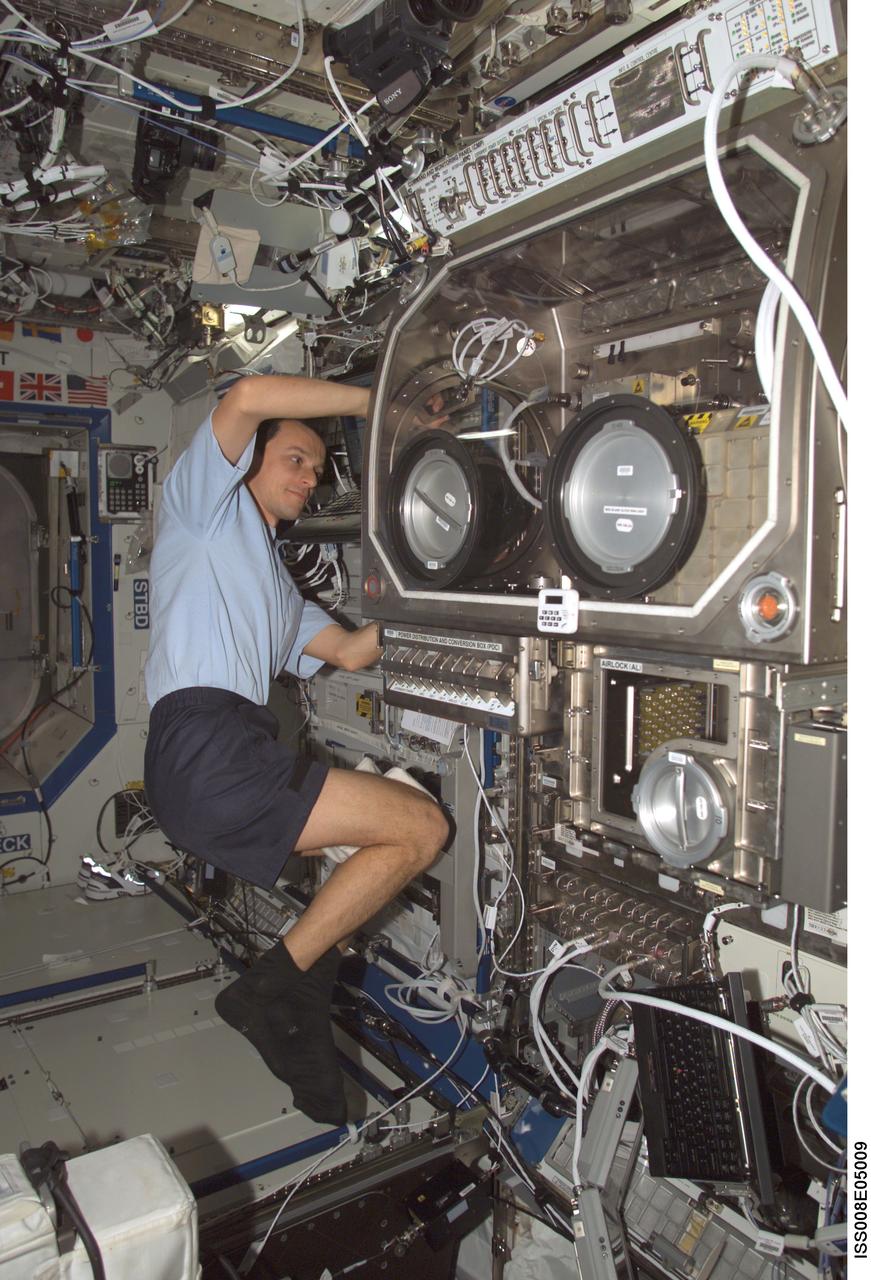
ISS008-E-05009 (27 October 2003) --- European Space Agency (ESA) astronaut Pedro Duque of Spain works with the Microgravity Science Glovebox (MSG) in the Destiny laboratory on the International Space Station (ISS).
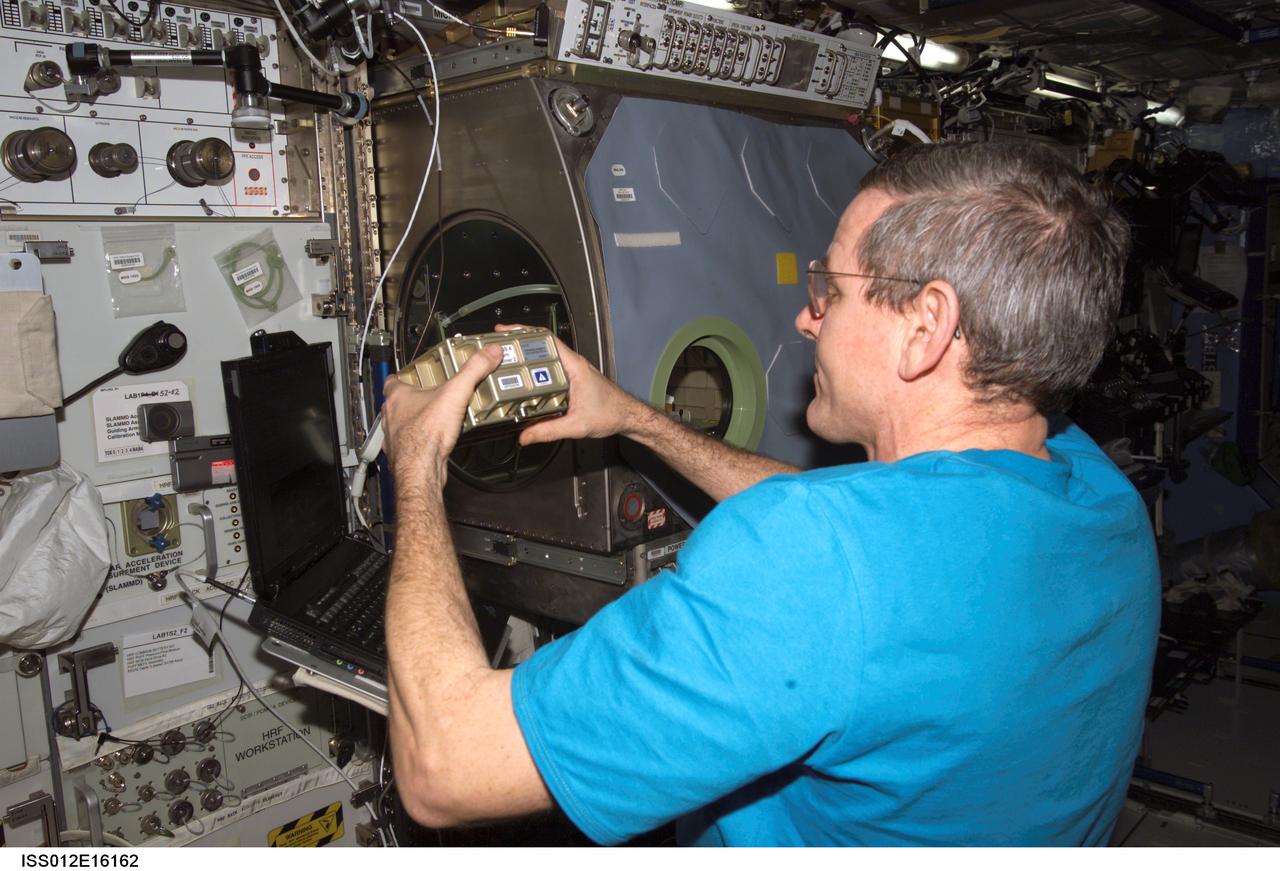
ISS012-E-16162 (18 Jan. 2006) --- Astronaut William S. (Bill) McArthur, Expedition 12 commander and NASA space station science officer, configures the Microgravity Science Glovebox (MSG) facility to prepare for the installation and activation of the Protein Crystal Growth Monitoring by Digital Holographic Microscope (PromISS) experiment in the Destiny laboratory on the International Space Station.
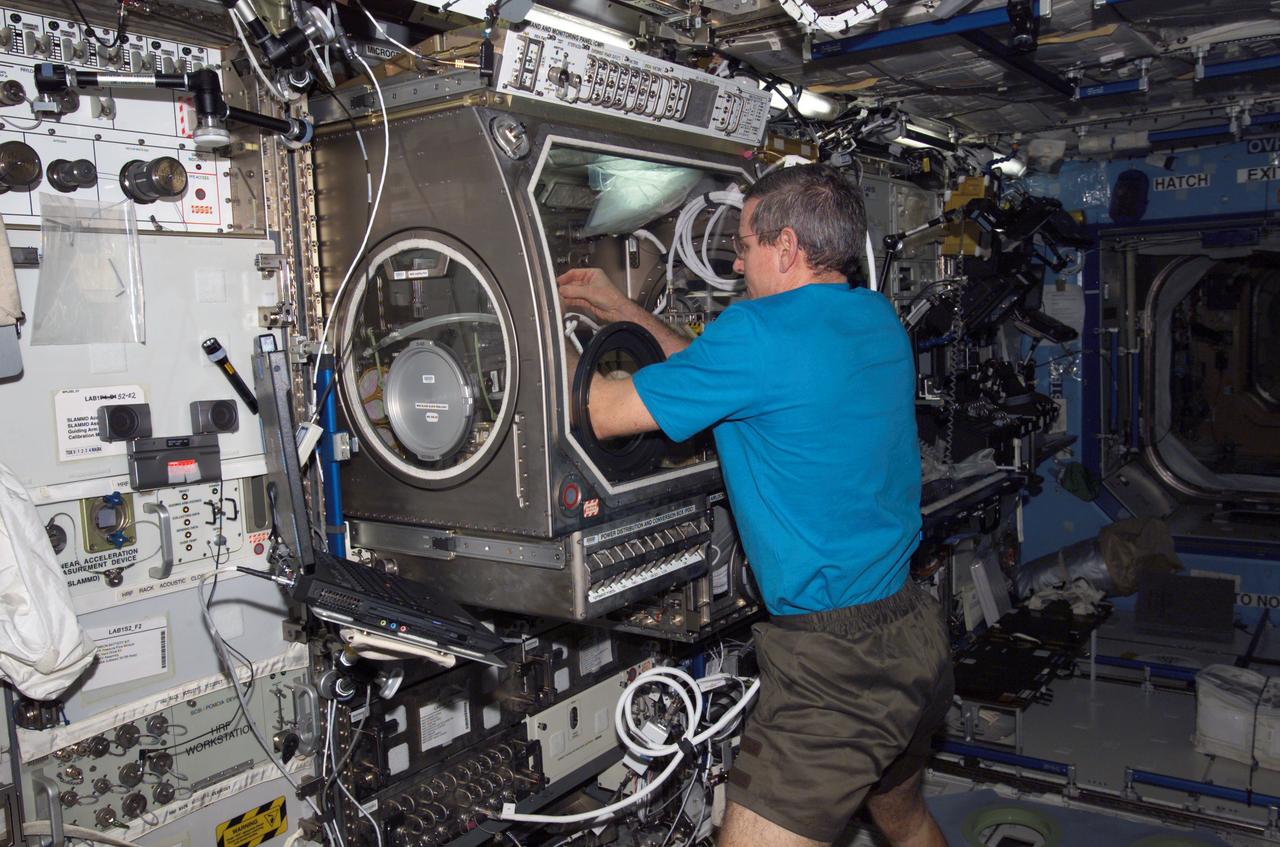
ISS012-E-16184 (18 Jan. 2006) --- Astronaut William S. (Bill) McArthur, Jr., Expedition 12 commander and NASA space station science officer, sets up the Protein Crystal Growth Monitoring by Digital Holographic Microscope (PromISS) experiment hardware inside the Microgravity Science Glovebox (MSG) facility in the Destiny laboratory on the International Space Station.
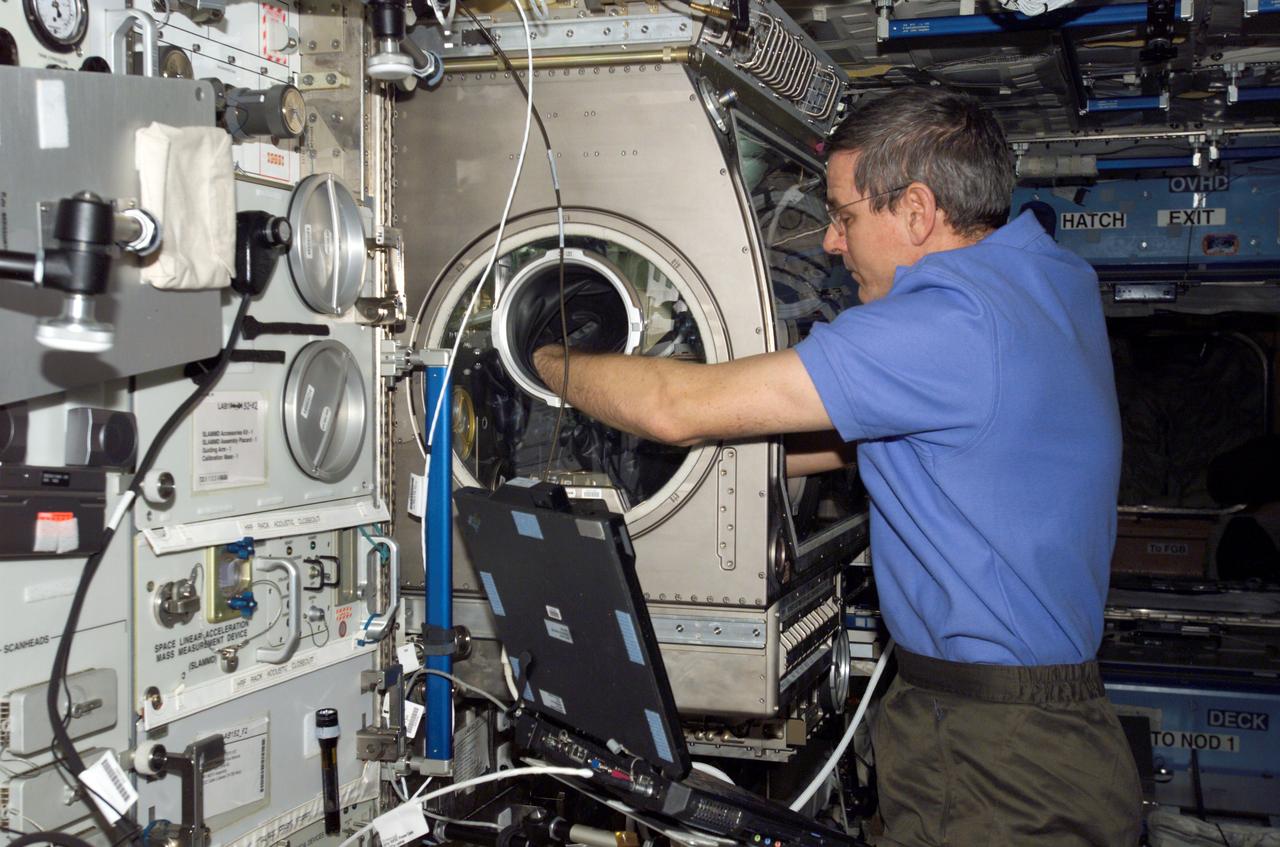
ISS012-E-16237 (19 Jan. 2006) --- Astronaut William S. (Bill) McArthur, Expedition 12 commander and NASA space station science officer, configures the Microgravity Science Glovebox (MSG) facility to prepare for the installation and activation of the Protein Crystal Growth Monitoring by Digital Holographic Microscope (PromISS) experiment in the Destiny laboratory on the International Space Station.
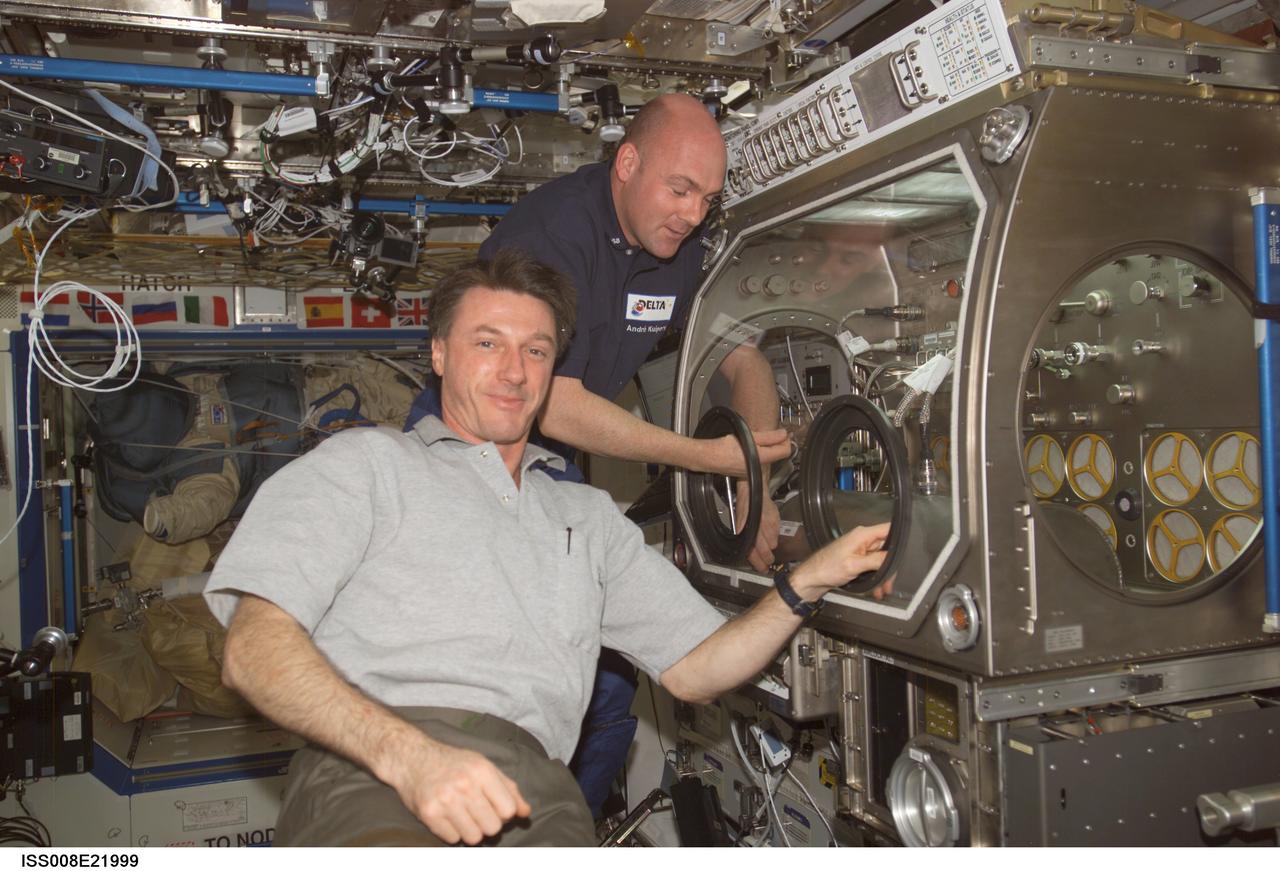
ISS008-E-21999 (22 April 2004) --- Astronaut C. Michael Foale (foreground), Expedition 8 commander and NASA ISS science officer, and European Space Agency (ESA) astronaut Andre Kuipers of the Netherlands work with the HEAT experiment in the Microgravity Science Glovebox (MSG) in the Destiny laboratory of the International Space Station (ISS). The main aim of the HEAT technology demonstration is the characterization of the heat transfer performance of a grooved heat pipe in weightlessness.
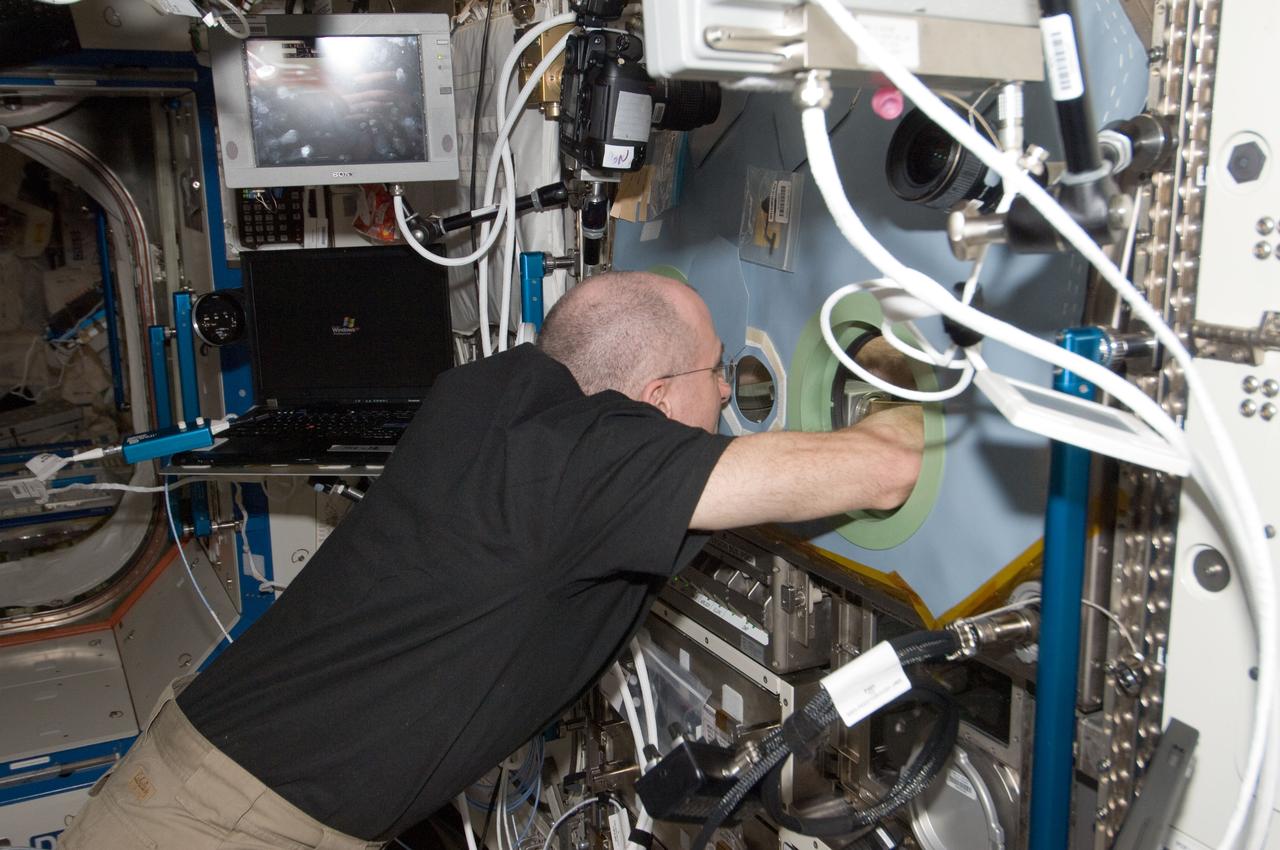
ISS030-E-178648 (30 March 2012) --- NASA astronaut Don Pettit, Expedition 30 flight engineer, performs a session of Burning and Suppression of Solids (BASS) fire safety tests at the Microgravity Sciences Glovebox (MSG) in the International Space Station?s Destiny laboratory. BASS uses Smoke Point in Coflow Experiment (SPICE) equipment but burns solid fuel samples instead of gaseous jets.
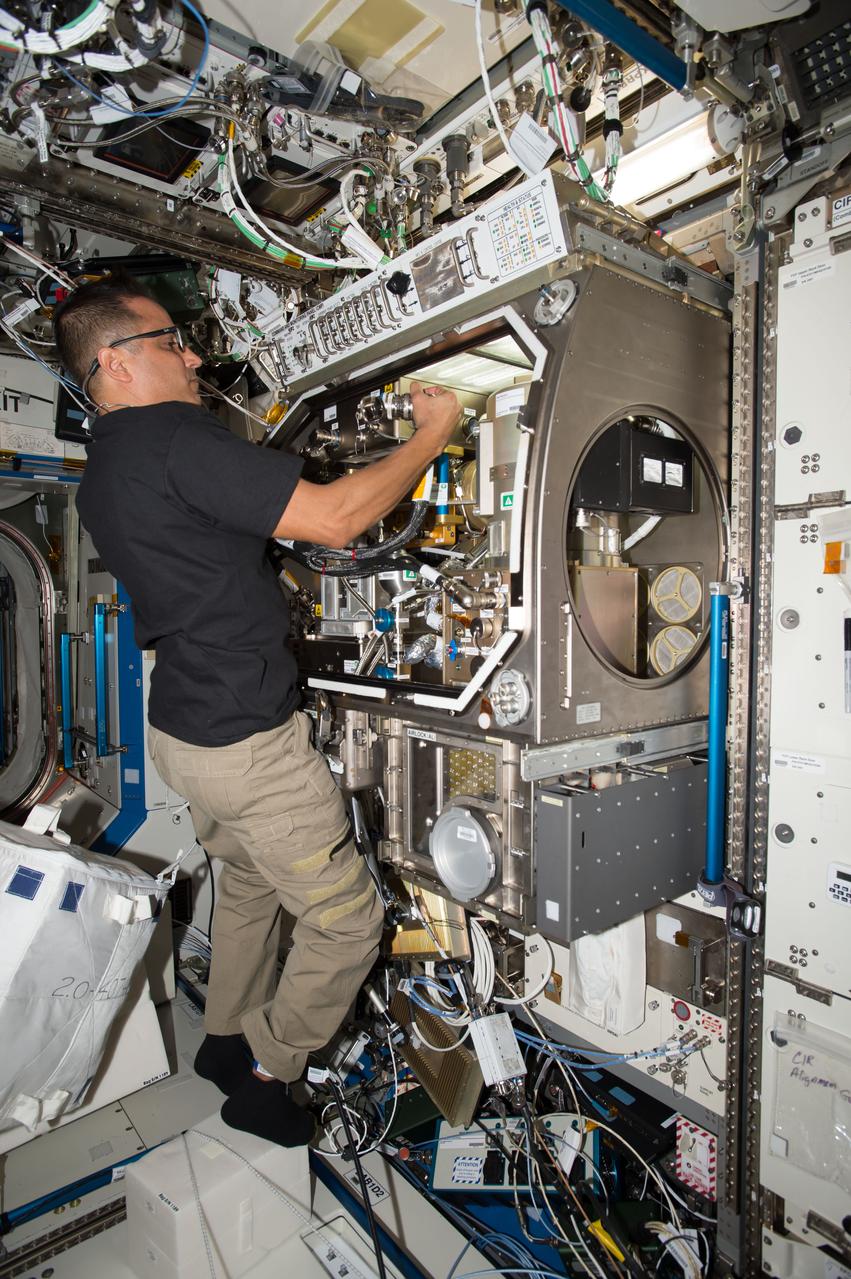
iss053e027113 (9/18/2017) --- NASA astronaut Joe Acaba during the Zero Boil-Off Tank Hardware Setup in the Microgravity Science Glovebox (MSG). Zero Boil-Off Tank (ZBOT) uses an experimental fluid to test active heat removal and forced jet mixing as alternative means for controlling tank pressure for volatile fluids. Results from the investigation improve models used to design tanks for long-term cryogenic liquid storage, which are essential in biotechnology, medicine, industrial, and many other applications on Earth.
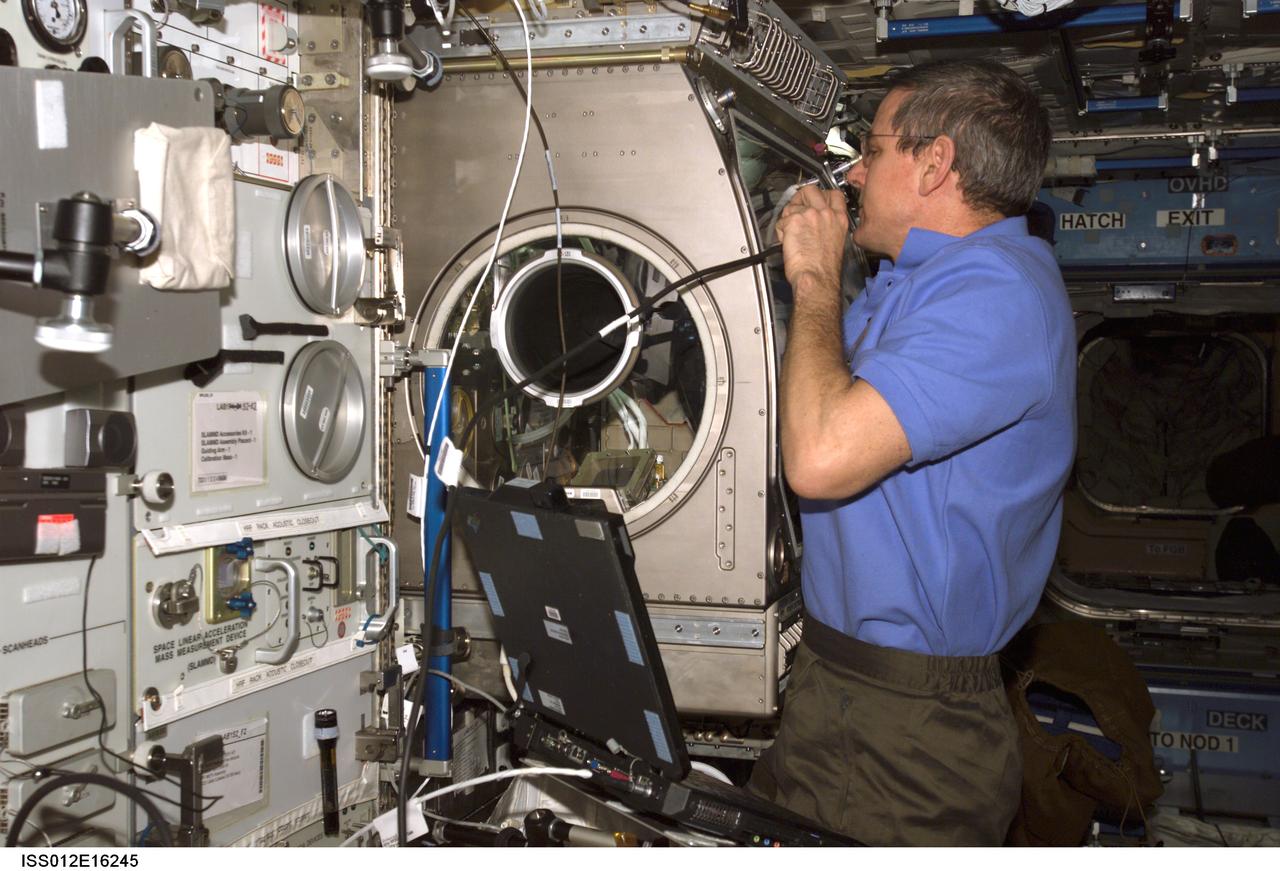
ISS012-E-16245 (19 Jan. 2006) --- Astronaut William S. (Bill) McArthur, Expedition 12 commander and NASA space station science officer, configures the Microgravity Science Glovebox (MSG) facility to prepare for the installation and activation of the Protein Crystal Growth Monitoring by Digital Holographic Microscope (PromISS) experiment in the Destiny laboratory on the International Space Station.
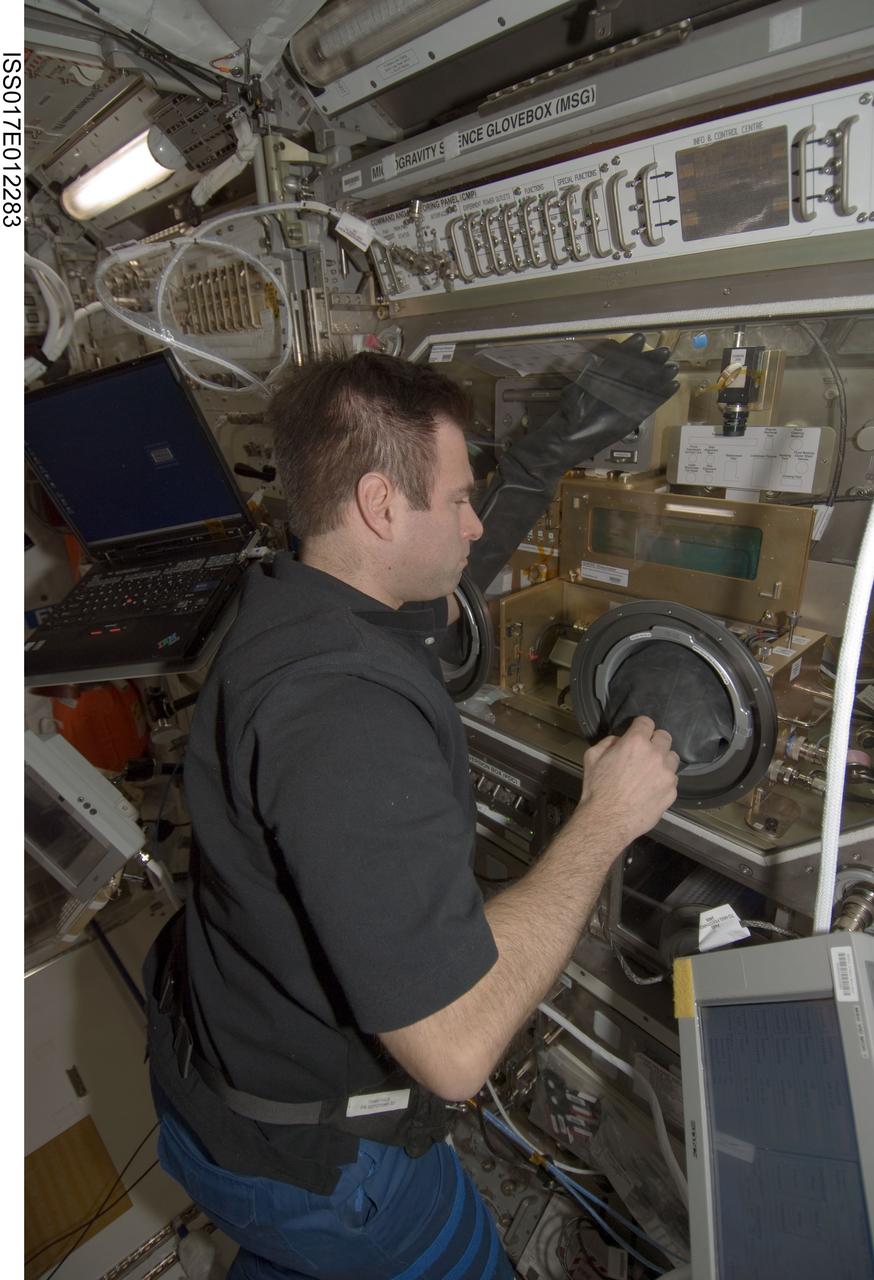
ISS017-E-012283 (31 July 2008) --- NASA astronaut Greg Chamitoff, Expedition 17 flight engineer, works with the Shear History Extensional Rheology Experiment (SHERE) rheometer inside the Microgravity Science Glovebox (MSG) in the Columbus laboratory of the International Space Station.
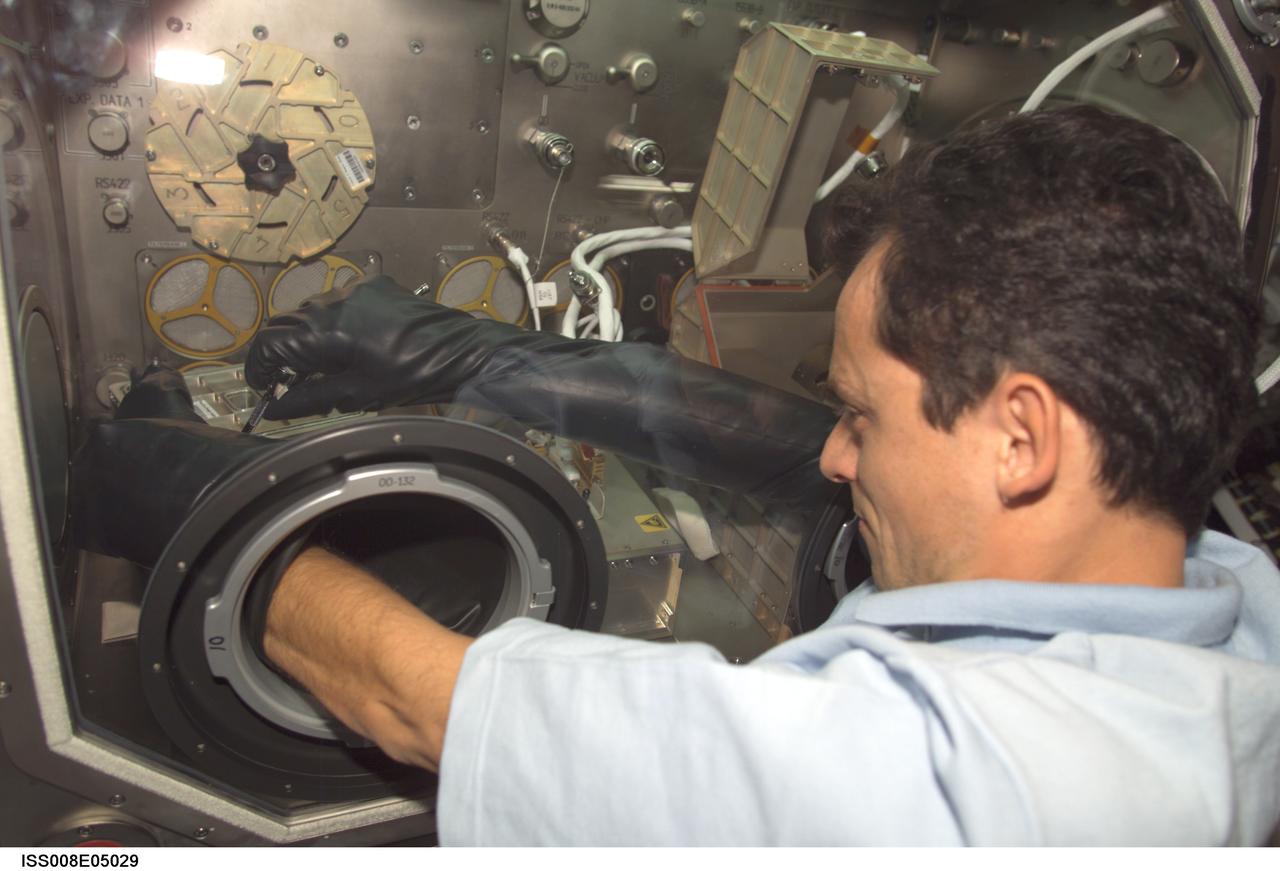
ISS008-E-05029 (27 October 2003) --- European Space Agency (ESA) astronaut Pedro Duque of Spain works with the Cervantes mission experiment PROMISS in the Microgravity Science Glovebox (MSG) in the Destiny laboratory on the International Space Station (ISS). This experiment will investigate the growth processes of proteins in weightless conditions.
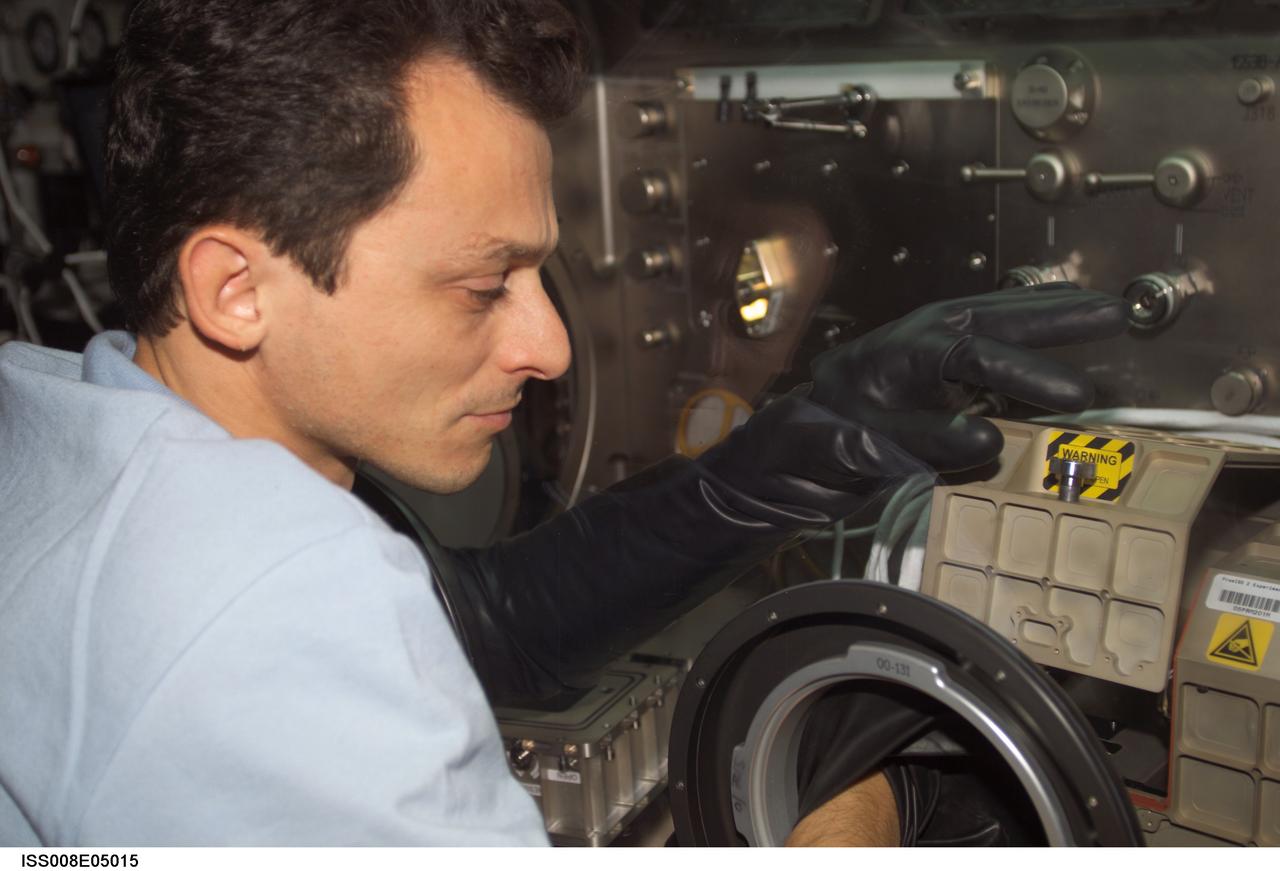
ISS008-E-05015 (27 October 2003) --- European Space Agency (ESA) astronaut Pedro Duque of Spain works with the Cervantes mission experiment PROMISS in the Microgravity Science Glovebox (MSG) in the Destiny laboratory on the International Space Station (ISS). This experiment will investigate the growth processes of proteins in weightless conditions.
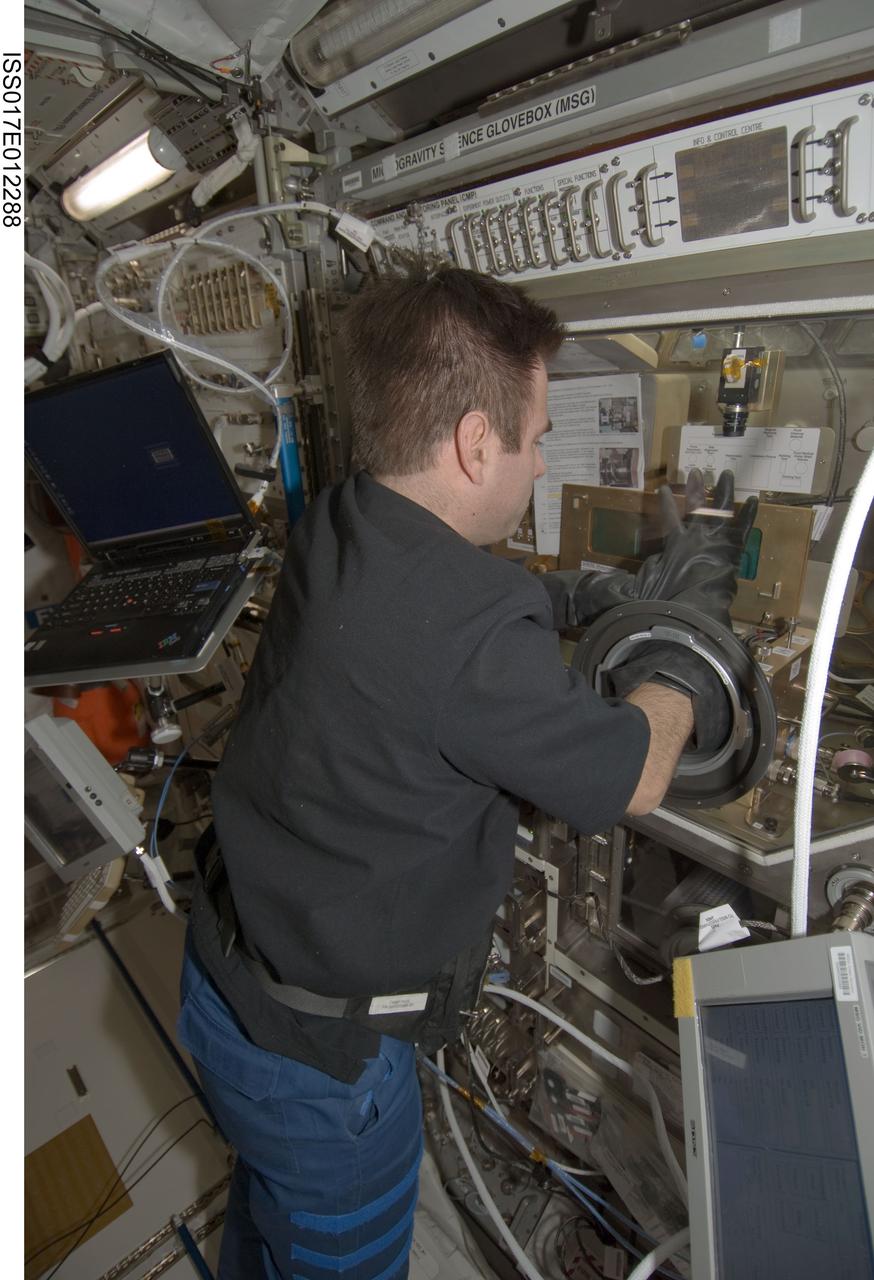
ISS017-E-012288 (31 July 2008) --- NASA astronaut Greg Chamitoff, Expedition 17 flight engineer, works with the Shear History Extensional Rheology Experiment (SHERE) rheometer inside the Microgravity Science Glovebox (MSG) in the Columbus laboratory of the International Space Station.
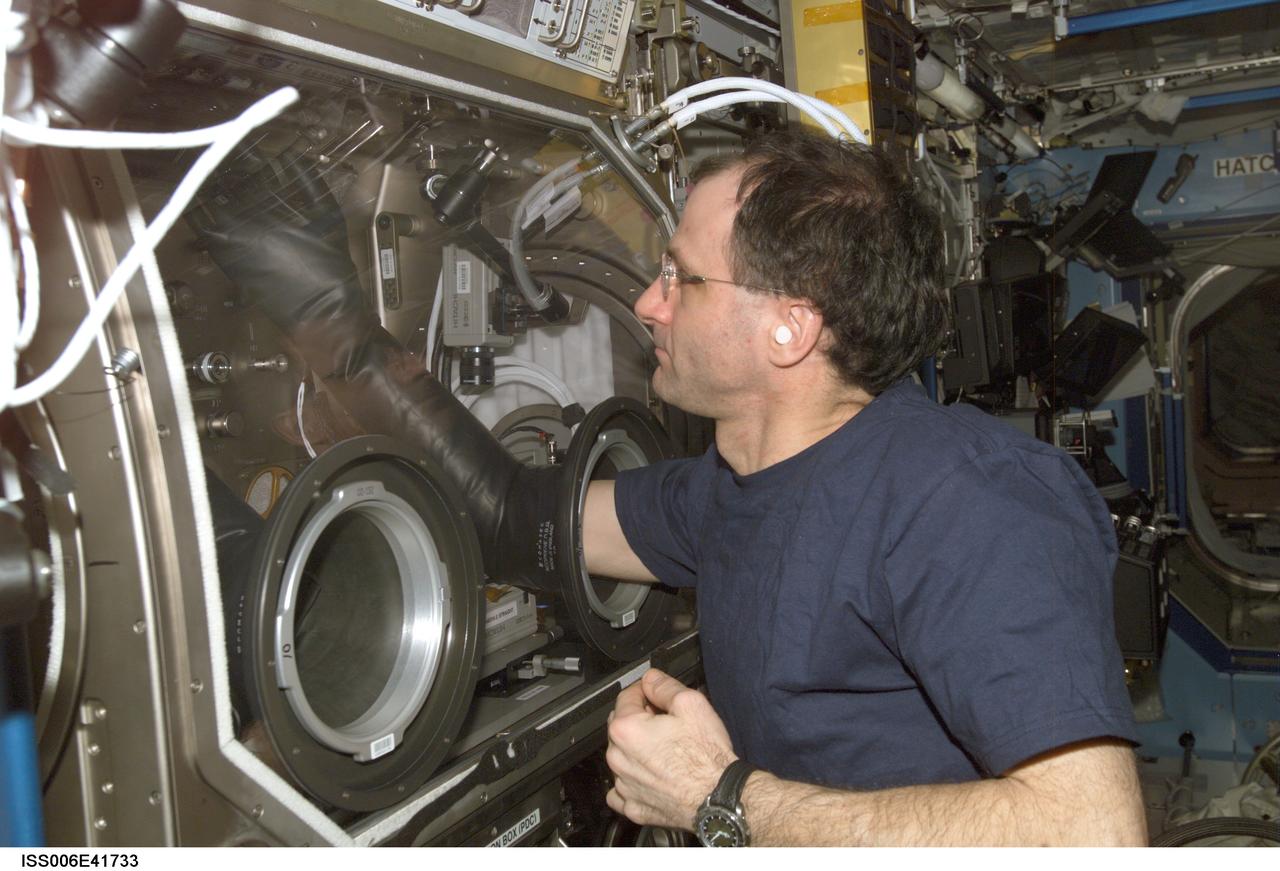
ISS006-E-41733 (1 April 2003) --- Astronaut Donald R. Pettit, Expedition Six NASA ISS science officer, works with the InSpace (Investigating the Structure of Paramagnetic Aggregates from Colloidal Emulsions) experiment in the Microgravity Science Glovebox (MSG) in the Destiny laboratory on the International Space Station (ISS).
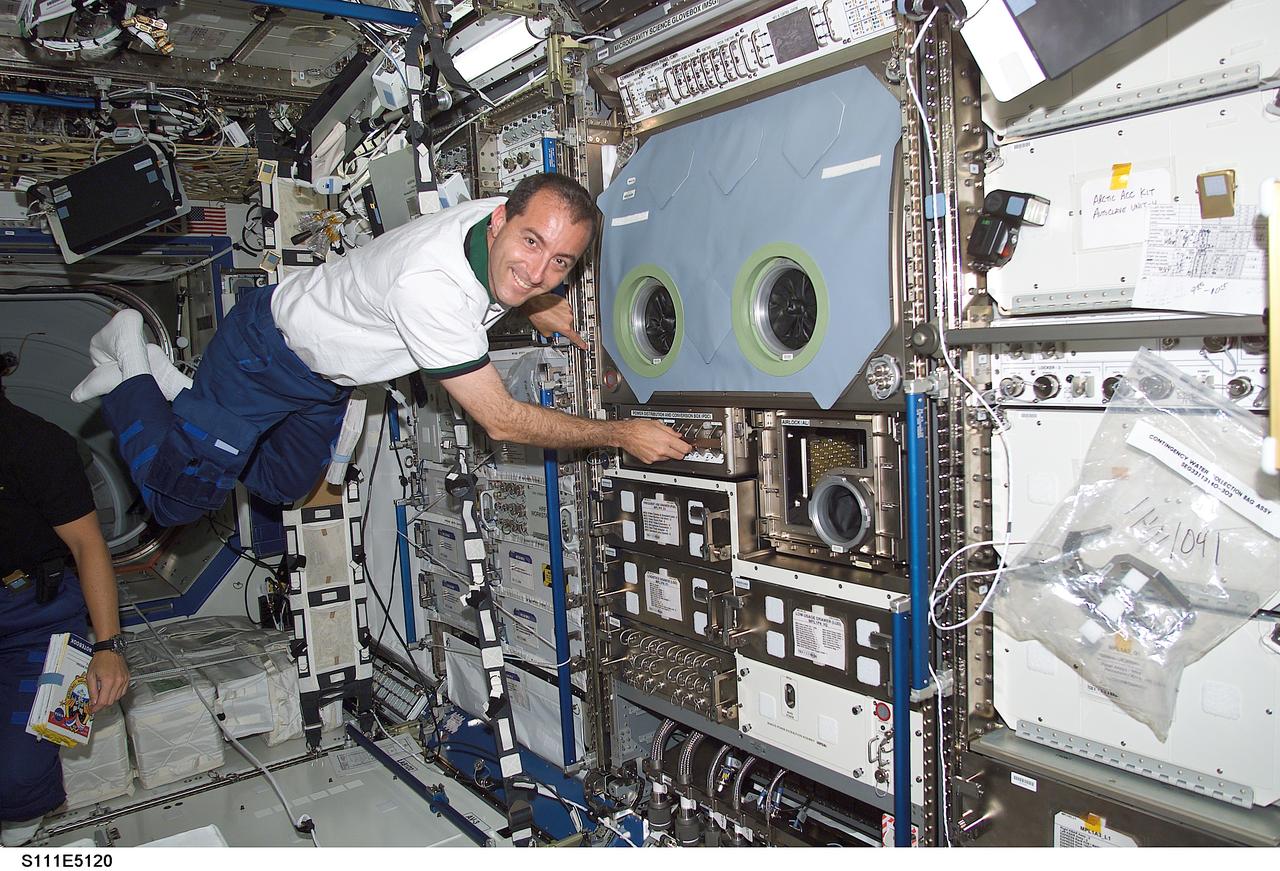
STS111-E-5120 (9 June 2002) --- Astronaut Philippe Perrin, STS-111 mission specialist, floats near the Microgravity Science Glovebox (MSG) in the Destiny laboratory on the International Space Station (ISS). Perrin represent CNES, the French Space Agency.
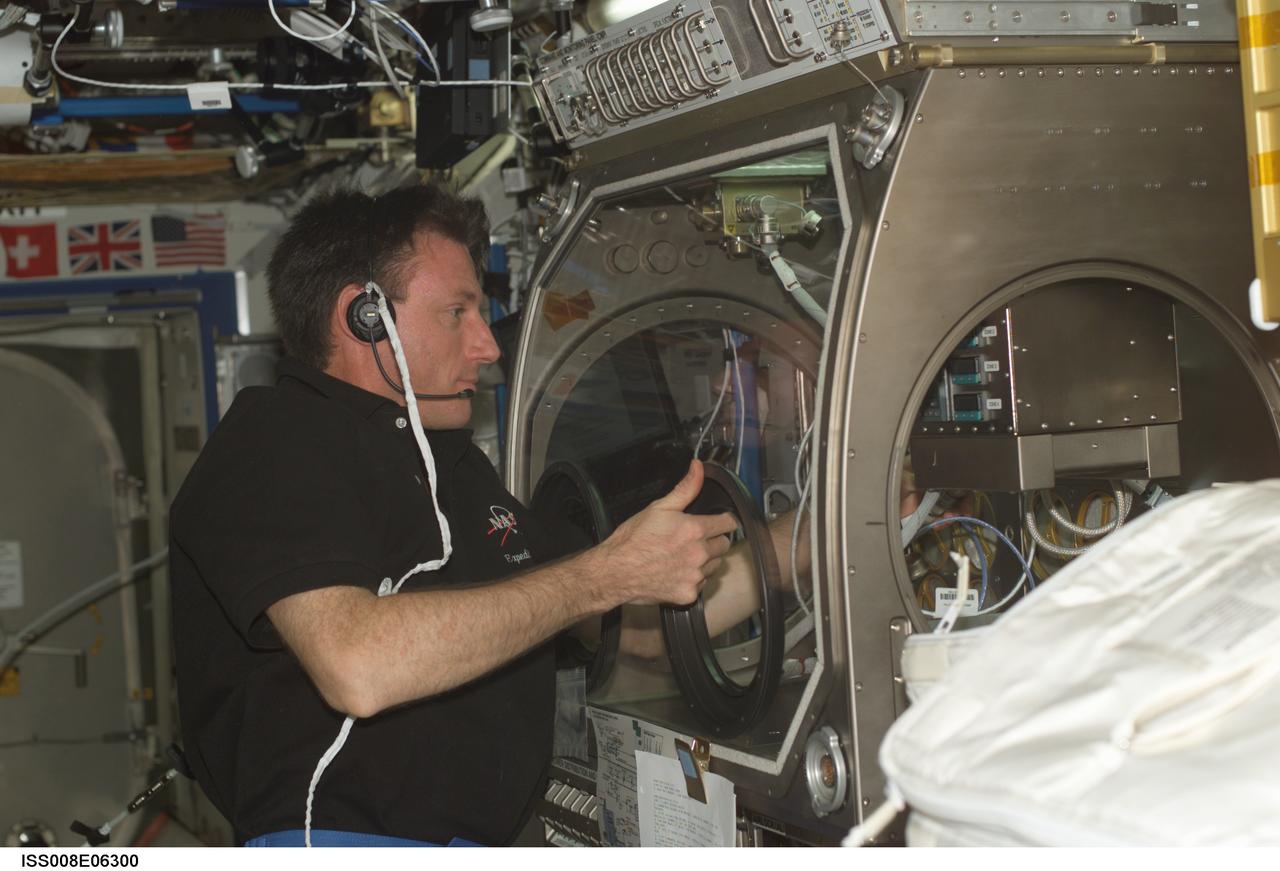
ISS008-E-06300 (28 November 2003) --- Astronaut C. Michael Foale, Expedition 8 mission commander and NASA ISS science officer, installs equipment in the Microgravity Science Glovebox (MSG) for the Pore Formation and Mobility Investigation (PFMI) experiment in the Destiny laboratory on the International Space Station (ISS). This experiment studies how bubbles form in metal and crystal samples, thus deteriorating the samples’ strength and usefulness in experiments.
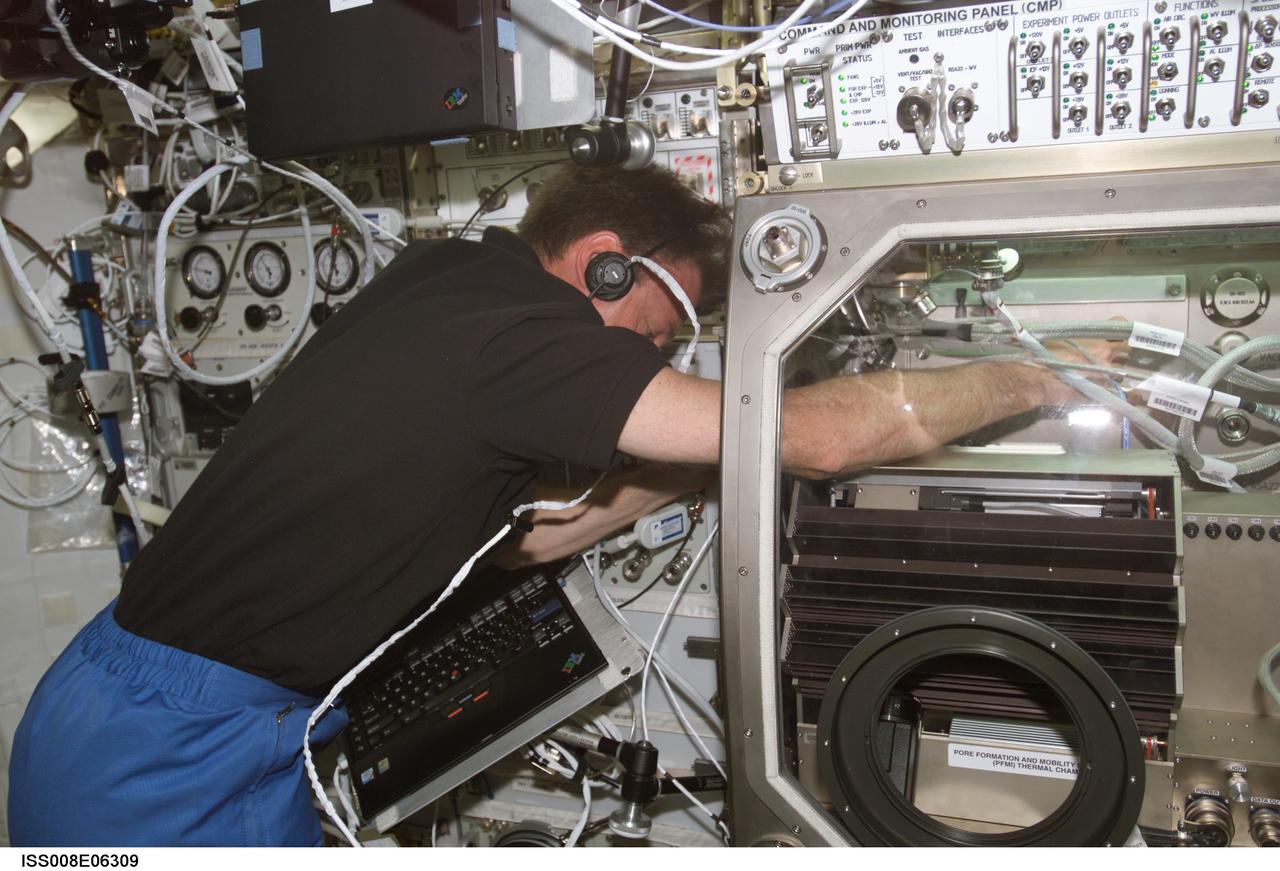
ISS008-E-06309 (28 November 2003) --- Astronaut C. Michael Foale, Expedition 8 mission commander and NASA ISS science officer, installs equipment in the Microgravity Science Glovebox (MSG) for the Pore Formation and Mobility Investigation (PFMI) experiment in the Destiny laboratory on the International Space Station (ISS). This experiment studies how bubbles form in metal and crystal samples, thus deteriorating the samples’ strength and usefulness in experiments.
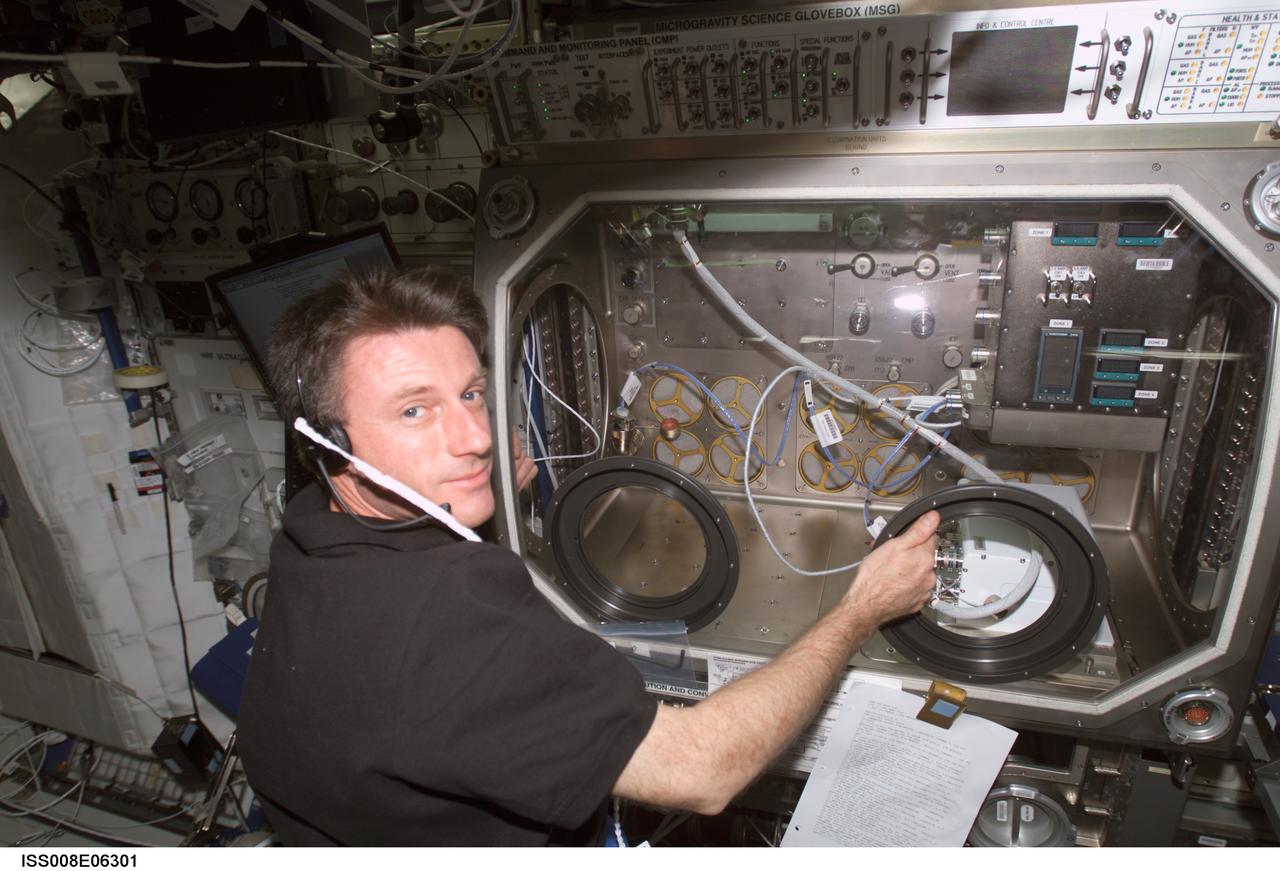
ISS008-E-06301 (28 November 2003) --- Astronaut C. Michael Foale, Expedition 8 mission commander and NASA ISS science officer, installs equipment in the Microgravity Science Glovebox (MSG) for the Pore Formation and Mobility Investigation (PFMI) experiment in the Destiny laboratory on the International Space Station (ISS). This experiment studies how bubbles form in metal and crystal samples, thus deteriorating the samples’ strength and usefulness in experiments.
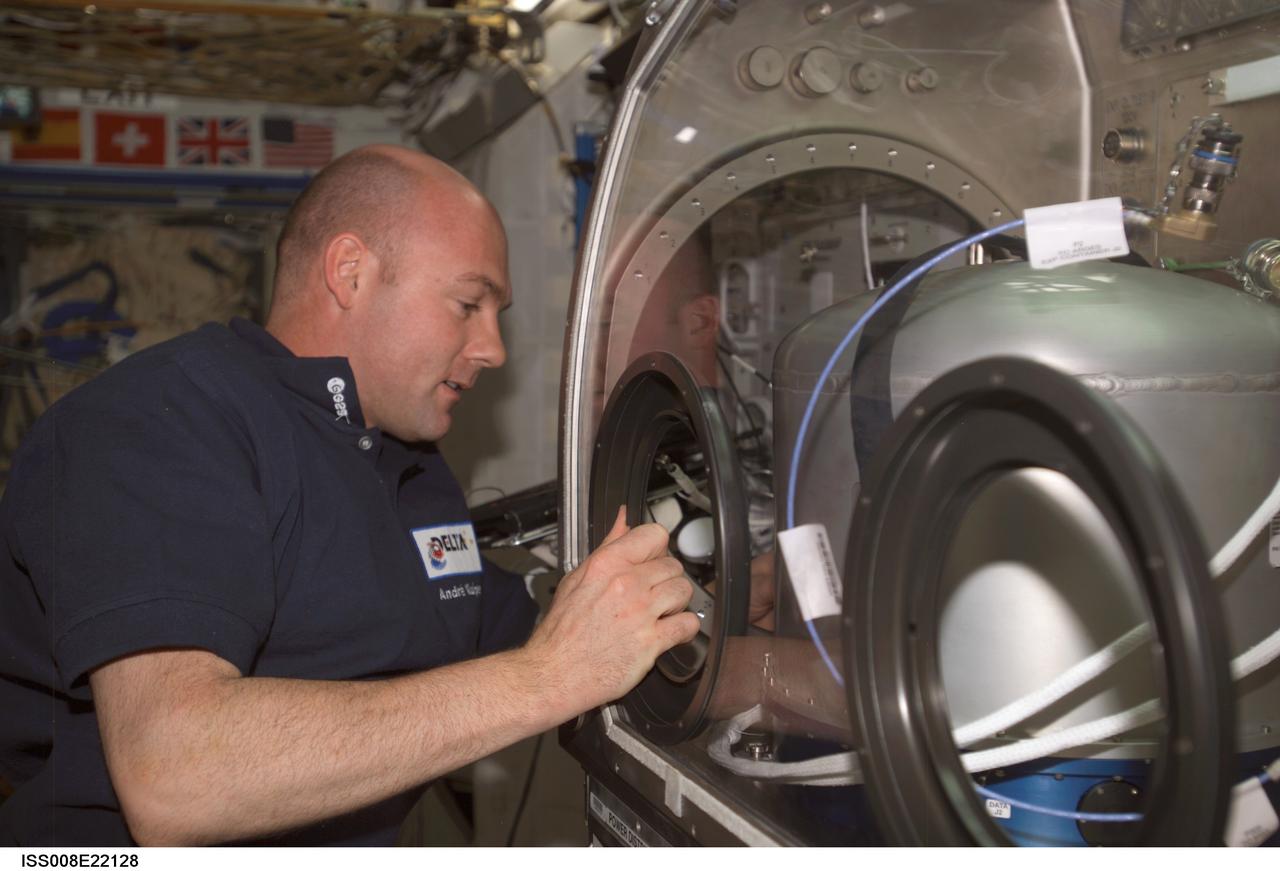
ISS008-E-22128 (24 April 2004) --- European Space Agency (ESA) astronaut Andre Kuipers of the Netherlands works with the ARGES experiment for the Microgravity Science Glovebox (MSG) in the Destiny laboratory of the International Space Station (ISS). The main objectives of ARGES are to determine which factors are critical in the onset of instabilities in High-Intensity Discharge (HID) lamps and to characterize the separation of individual gaseous elements inside.