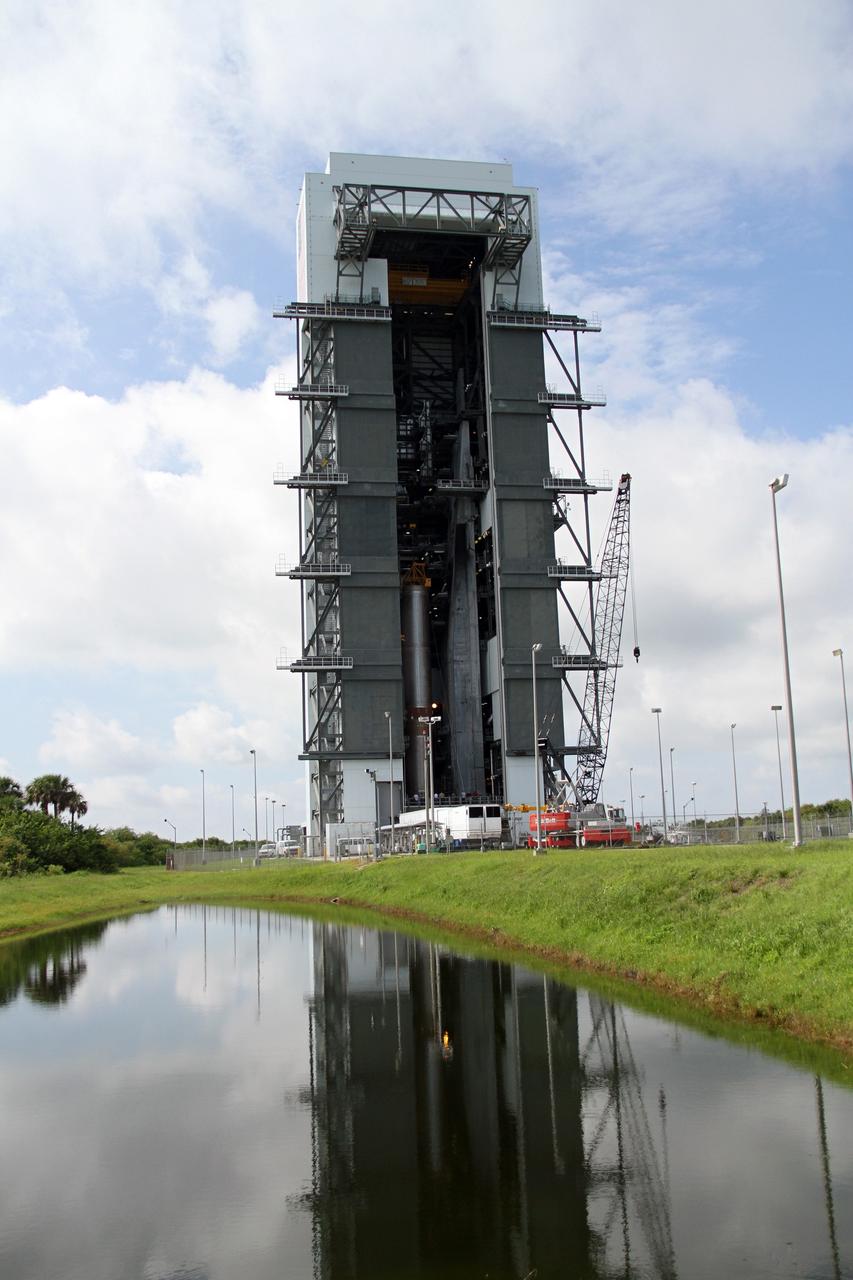
CAPE CANAVERAL, Fla. -- The Vertical Integration Facility is reflected in the water standing near the facility at Space Launch Complex 41 on Cape Canaveral Air Force Station following the arrival of the first stage of the Atlas V rocket for NASA's Mars Science Laboratory (MSL) mission. A United Launch Alliance Atlas V-541 configuration will be used to loft MSL into space. Curiosity’s 10 science instruments are designed to search for evidence on whether Mars has had environments favorable to microbial life, including chemical ingredients for life. The unique rover will use a laser to look inside rocks and release its gasses so that the rover’s spectrometer can analyze and send the data back to Earth. MSL is scheduled to launch Nov. 25 with a window extending to Dec. 18 and arrival at Mars Aug. 2012. For more information, visit http://www.nasa.gov/msl. Photo credit: NASA/Cory Huston
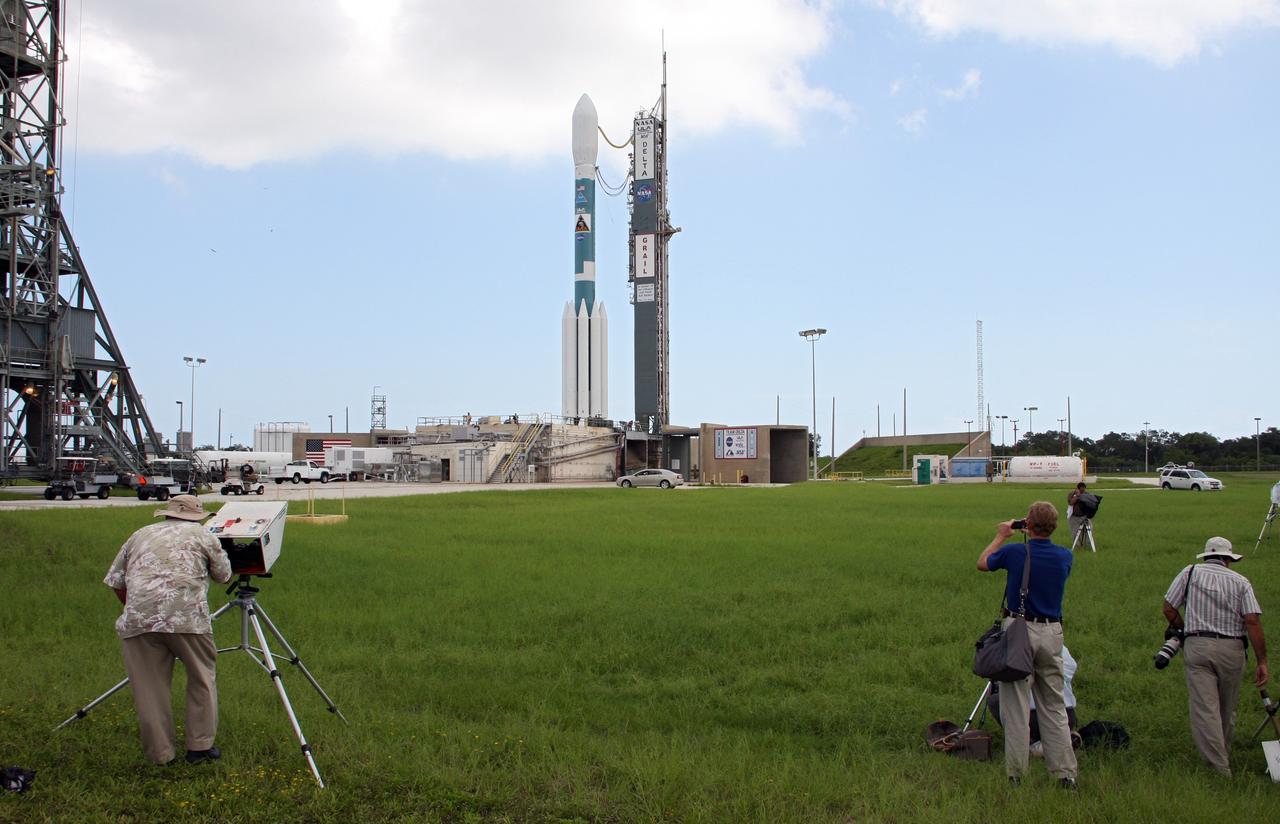
CAPE CANAVERAL, Fla. – News media photograph the United Launch Alliance Delta II heavy rocket carrying NASA’s twin Gravity Recovery and Interior Laboratory spacecraft at Launch Complex 17B as the mobile service tower is rolled back around to the vehicle after the first launch attempt was scrubbed due to upper-level winds. GRAIL is scheduled for another launch attempt Sept.10 at 8:29:45 a.m. EDT. at Cape Canaveral Air Force Station in Florida. GRAIL will fly twin spacecraft in tandem around the moon to precisely measure and map variations in the moon's gravitational field. The mission will provide the most accurate global gravity field to date for any planet, including Earth. This detailed information will reveal differences in the density of the moon's crust and mantle and will help answer fundamental questions about the moon's internal structure, thermal evolution, and history of collisions with asteroids. The aim is to map the moon's gravity field so completely that future moon vehicles can safely navigate anywhere on the moon’s surface. For more information, visit http://www.nasa.gov/grail. Photo credit: NASA/Ken Thornsley
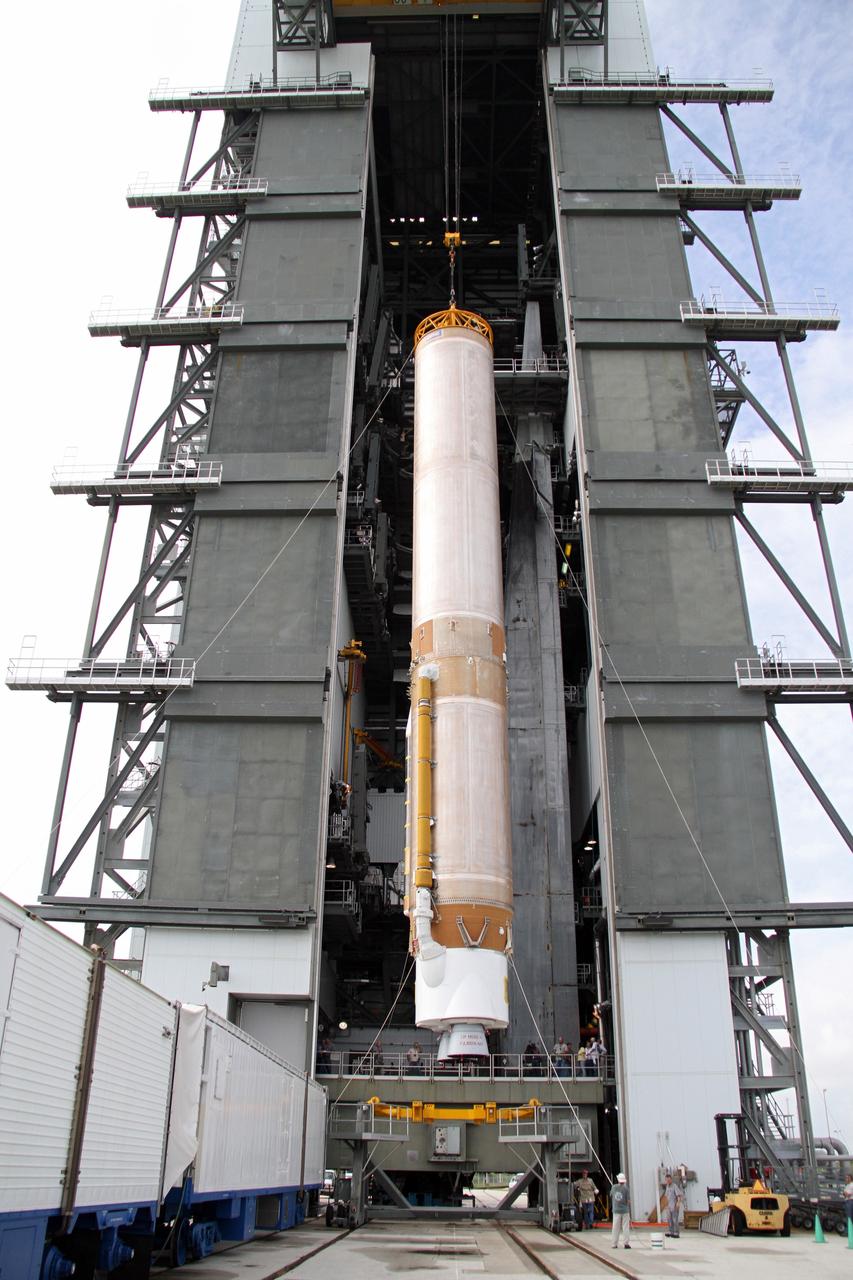
CAPE CANAVERAL, Fla. -- A crane lifts the 106.5-foot-long first stage of the Atlas V rocket for NASA's Mars Science Laboratory (MSL) mission through the open door of the Vertical Integration Facility at Space Launch Complex 41 on Cape Canaveral Air Force Station. A United Launch Alliance Atlas V-541 configuration will be used to loft MSL into space. Curiosity’s 10 science instruments are designed to search for evidence on whether Mars has had environments favorable to microbial life, including chemical ingredients for life. The unique rover will use a laser to look inside rocks and release its gasses so that the rover’s spectrometer can analyze and send the data back to Earth. MSL is scheduled to launch Nov. 25 with a window extending to Dec. 18 and arrival at Mars Aug. 2012. For more information, visit http://www.nasa.gov/msl. Photo credit: NASA/Cory Huston
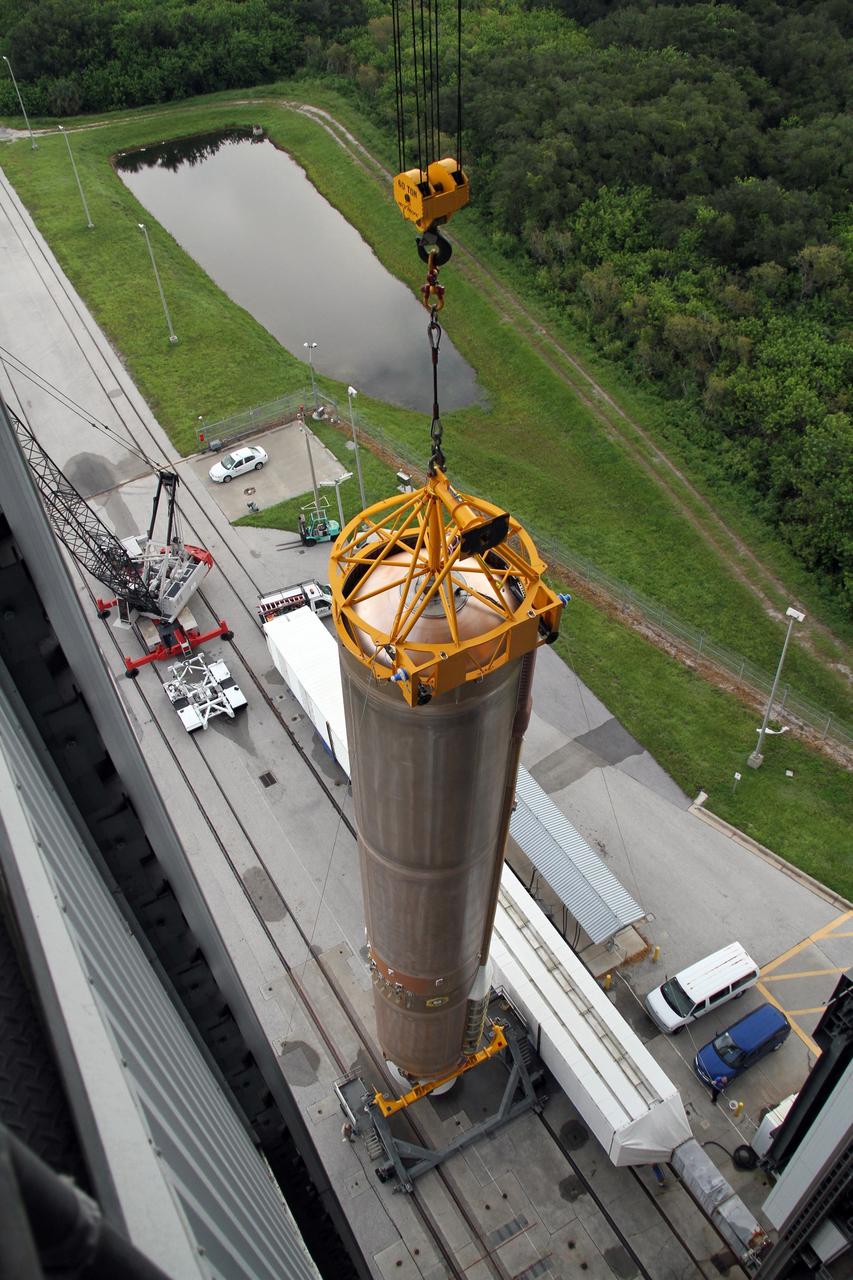
CAPE CANAVERAL, Fla. -- A crane lifts the 106.5-foot-long first stage of the Atlas V rocket for NASA's Mars Science Laboratory (MSL) mission toward the open door of the Vertical Integration Facility at Space Launch Complex 41 on Cape Canaveral Air Force Station. A United Launch Alliance Atlas V-541 configuration will be used to loft MSL into space. Curiosity’s 10 science instruments are designed to search for evidence on whether Mars has had environments favorable to microbial life, including chemical ingredients for life. The unique rover will use a laser to look inside rocks and release its gasses so that the rover’s spectrometer can analyze and send the data back to Earth. MSL is scheduled to launch Nov. 25 with a window extending to Dec. 18 and arrival at Mars Aug. 2012. For more information, visit http://www.nasa.gov/msl. Photo credit: NASA/Cory Huston
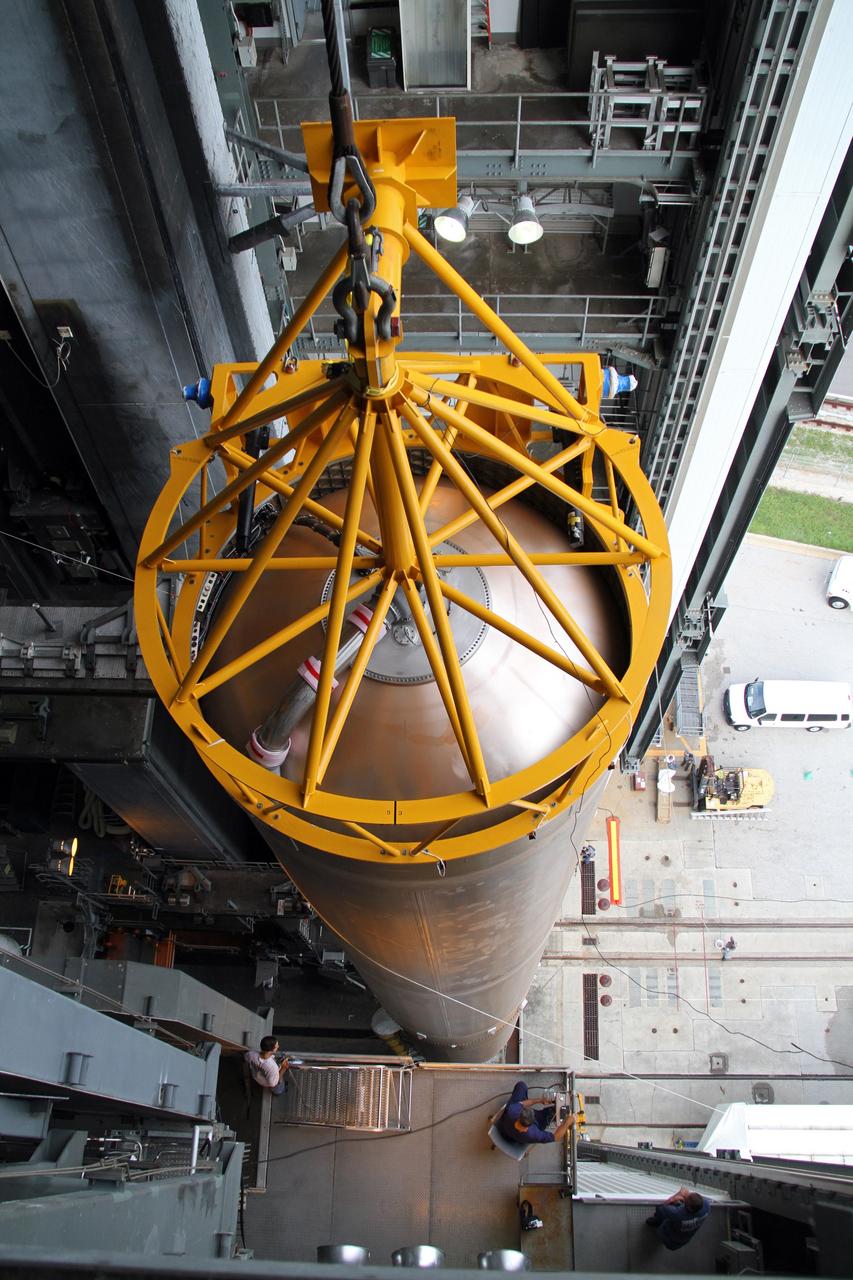
CAPE CANAVERAL, Fla. -- A crane positions the 106.5-foot-long first stage of the Atlas V rocket for NASA's Mars Science Laboratory (MSL) mission inside the Vertical Integration Facility at Space Launch Complex 41 on Cape Canaveral Air Force Station. A United Launch Alliance Atlas V-541 configuration will be used to loft MSL into space. Curiosity’s 10 science instruments are designed to search for evidence on whether Mars has had environments favorable to microbial life, including chemical ingredients for life. The unique rover will use a laser to look inside rocks and release its gasses so that the rover’s spectrometer can analyze and send the data back to Earth. MSL is scheduled to launch Nov. 25 with a window extending to Dec. 18 and arrival at Mars Aug. 2012. For more information, visit http://www.nasa.gov/msl. Photo credit: NASA/Cory Huston
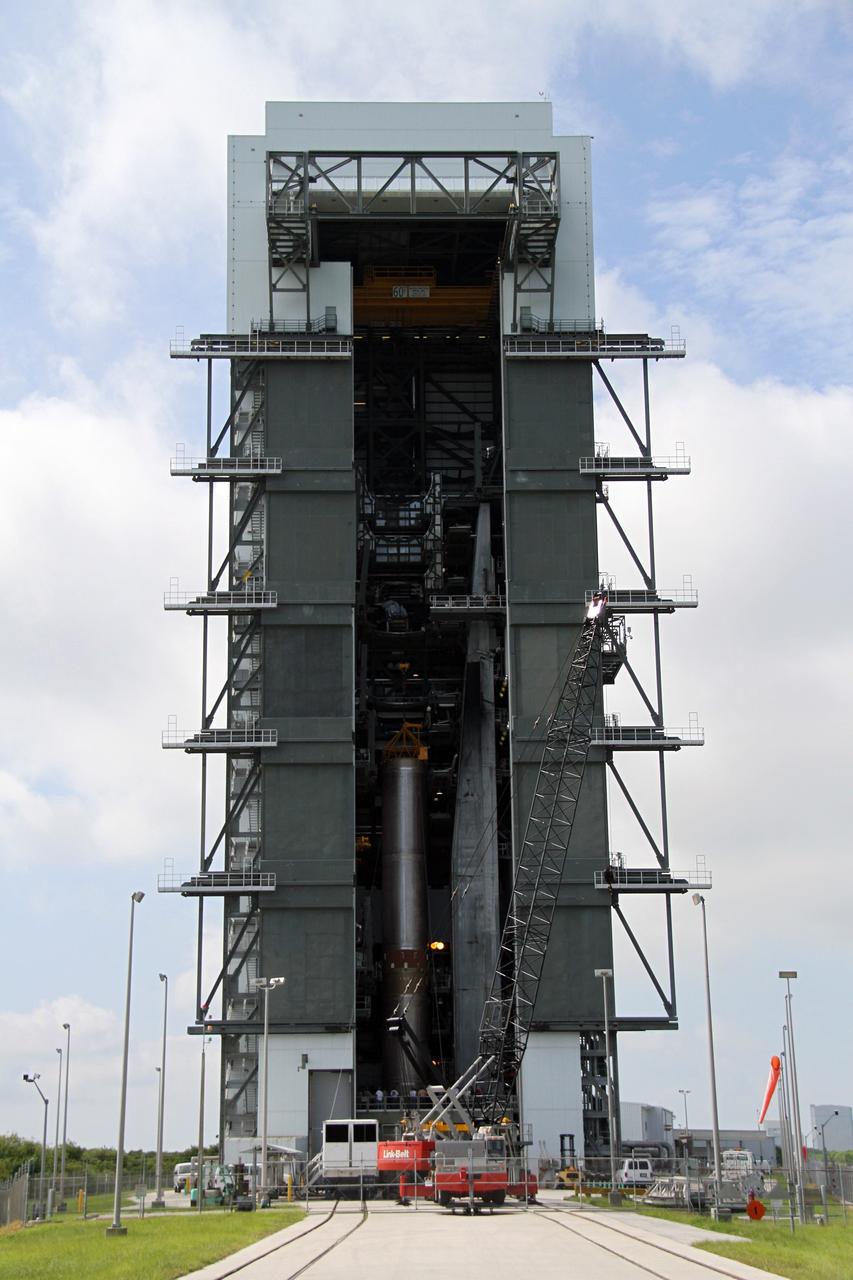
CAPE CANAVERAL, Fla. -- The 106.5-foot-long first stage of the Atlas V rocket for NASA's Mars Science Laboratory (MSL) mission is secured on its launch platform inside the Vertical Integration Facility at Space Launch Complex 41 on Cape Canaveral Air Force Station. A United Launch Alliance Atlas V-541 configuration will be used to loft MSL into space. Curiosity’s 10 science instruments are designed to search for evidence on whether Mars has had environments favorable to microbial life, including chemical ingredients for life. The unique rover will use a laser to look inside rocks and release its gasses so that the rover’s spectrometer can analyze and send the data back to Earth. MSL is scheduled to launch Nov. 25 with a window extending to Dec. 18 and arrival at Mars Aug. 2012. For more information, visit http://www.nasa.gov/msl. Photo credit: NASA/Cory Huston
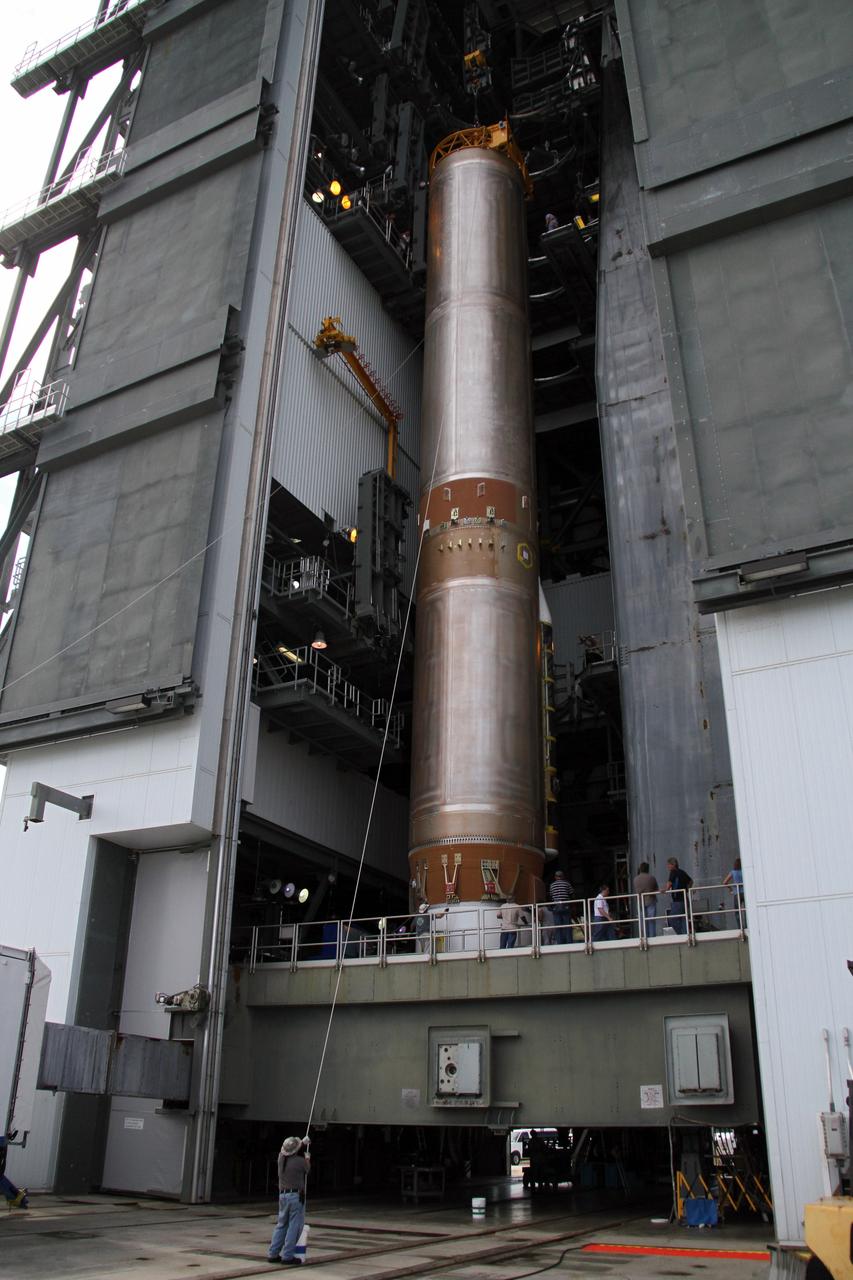
CAPE CANAVERAL, Fla. -- The 106.5-foot-long first stage of the Atlas V rocket for NASA's Mars Science Laboratory (MSL) mission is lowered onto its launch platform inside the Vertical Integration Facility at Space Launch Complex 41 on Cape Canaveral Air Force Station. A United Launch Alliance Atlas V-541 configuration will be used to loft MSL into space. Curiosity’s 10 science instruments are designed to search for evidence on whether Mars has had environments favorable to microbial life, including chemical ingredients for life. The unique rover will use a laser to look inside rocks and release its gasses so that the rover’s spectrometer can analyze and send the data back to Earth. MSL is scheduled to launch Nov. 25 with a window extending to Dec. 18 and arrival at Mars Aug. 2012. For more information, visit http://www.nasa.gov/msl. Photo credit: NASA/Cory Huston