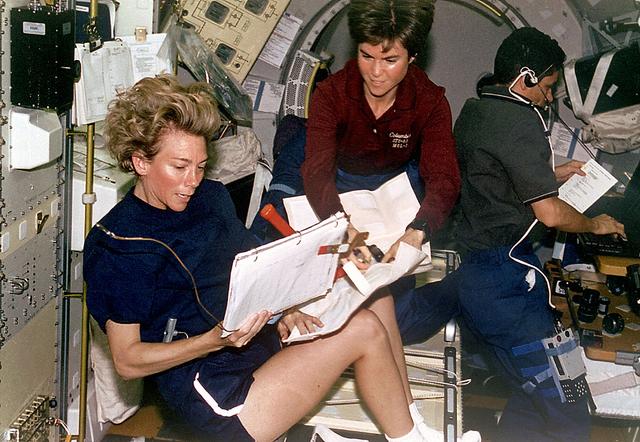
This Space Shuttle Columbia (STS-94) onboard photo is of astronauts Susan Still and Janice Voss reviewing an Inflight Maintenance (IFM) procedure in the Microgravity Science Lab (MSL-1) science module. Astronaut Gregory Linteris works at a lap top computer in the background.
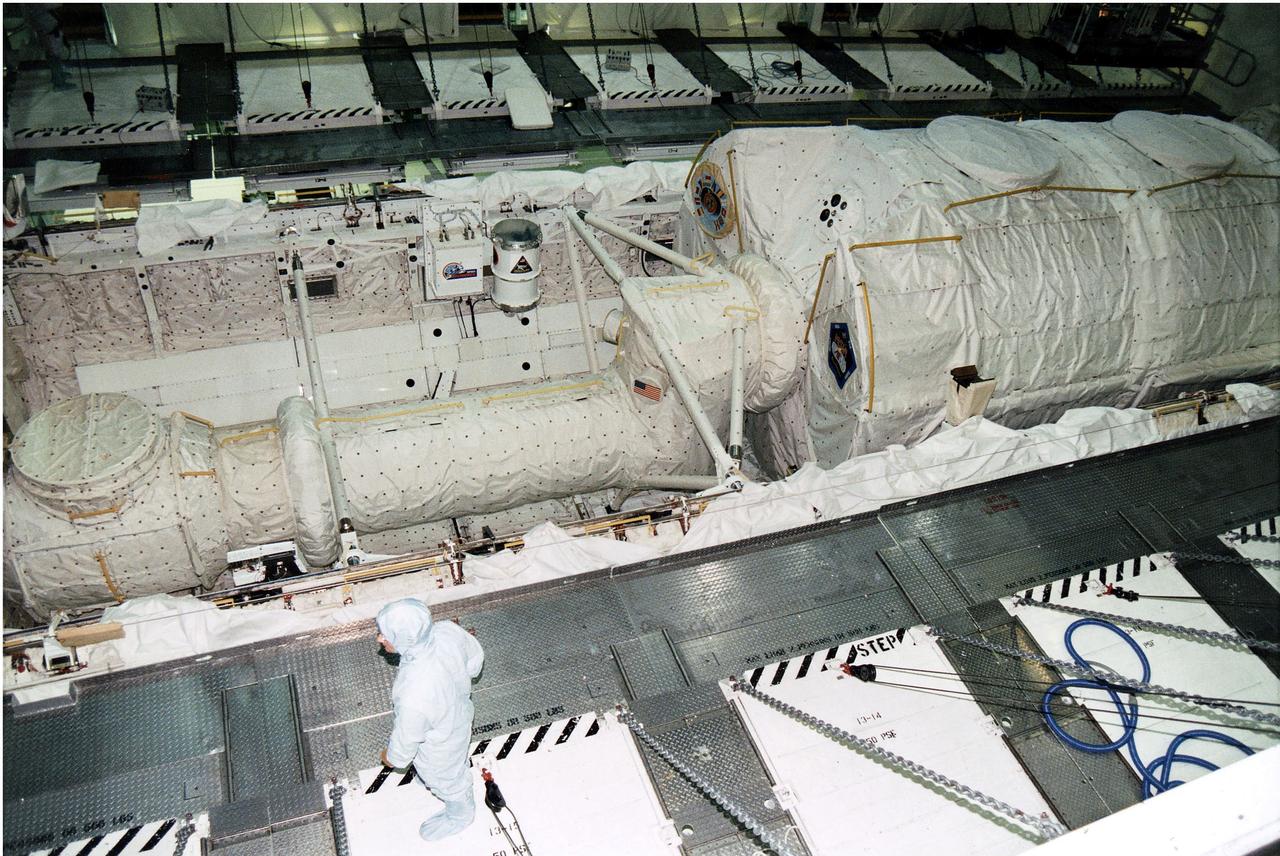
KENNEDY SPACE CENTER, FLA. - The Microgravity Science Laboratory-1 (MSL-1) Spacelab module is installed into the payload bay of the Space Shuttle Orbiter Columbia in Orbiter Processing Facility 1. The Spacelab long crew transfer tunnel that leads from the orbiter's crew airlock to the module is also aboard, as well as the Hitchhiker Cryogenic Flexible Diode (CRYOFD) experiment payload, which is attached to the right side of Columbia's payload bay. During the scheduled 16-day STS-83 mission, the MSL-1 will be used to test some of the hardware, facilities and procedures that are planned for use on the International Space Station while the flight crew conducts combustion, protein crystal growth and materials processing experiments.
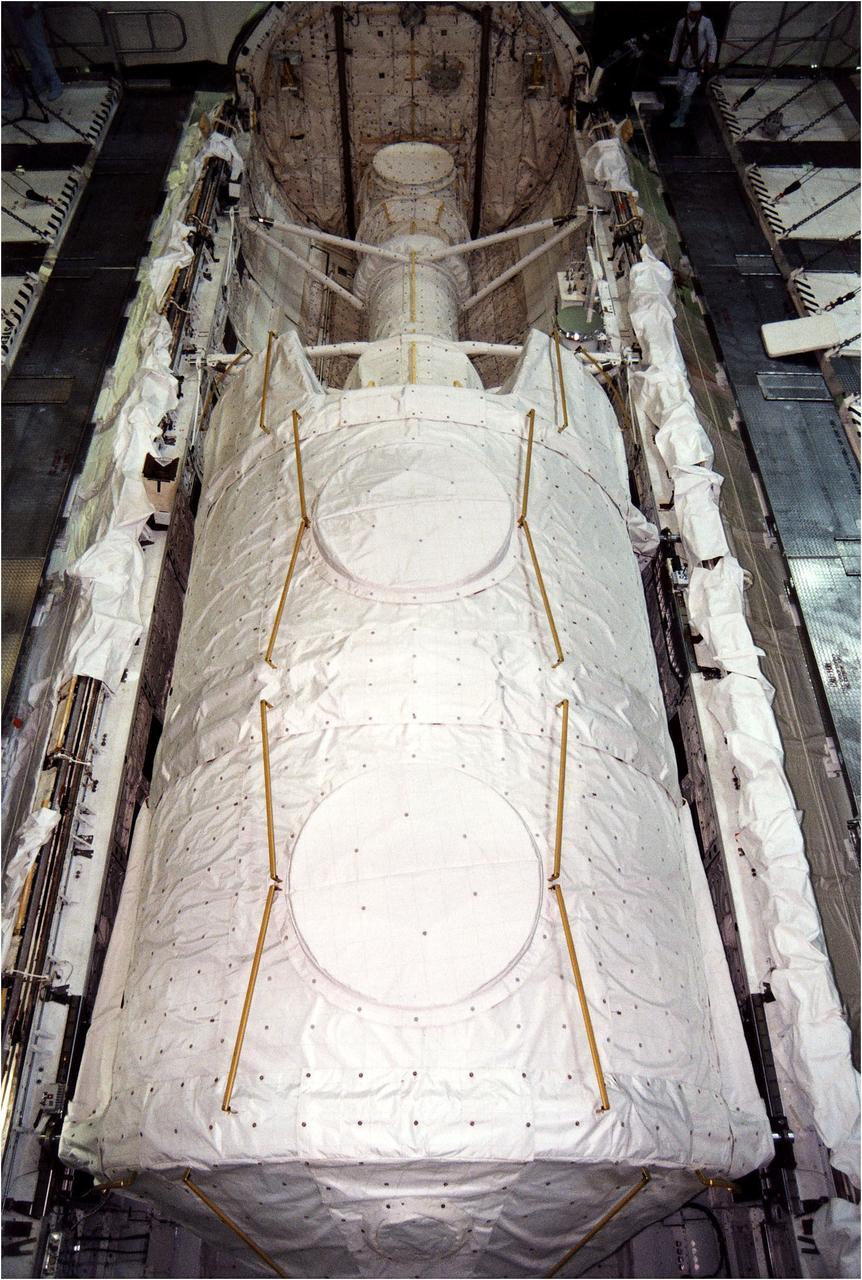
KENNEDY SPACE CENTER, FLA. - The Microgravity Science Laboratory-1 (MSL-1) Spacelab module is installed into the payload bay of the Space Shuttle Orbiter Columbia in Orbiter Processing Facility 1. The Spacelab long crew transfer tunnel that leads from the orbiter's crew airlock to the module is also aboard, as well as the Hitchhiker Cryogenic Flexible Diode (CRYOFD) experiment payload, which is attached to the right side of Columbia's payload bay. During the scheduled 16-day STS-83 mission, the MSL-1 will be used to test some of the hardware, facilities and procedures that are planned for use on the International Space Station while the flight crew conducts combustion, protein crystal growth and materials processing experiments.
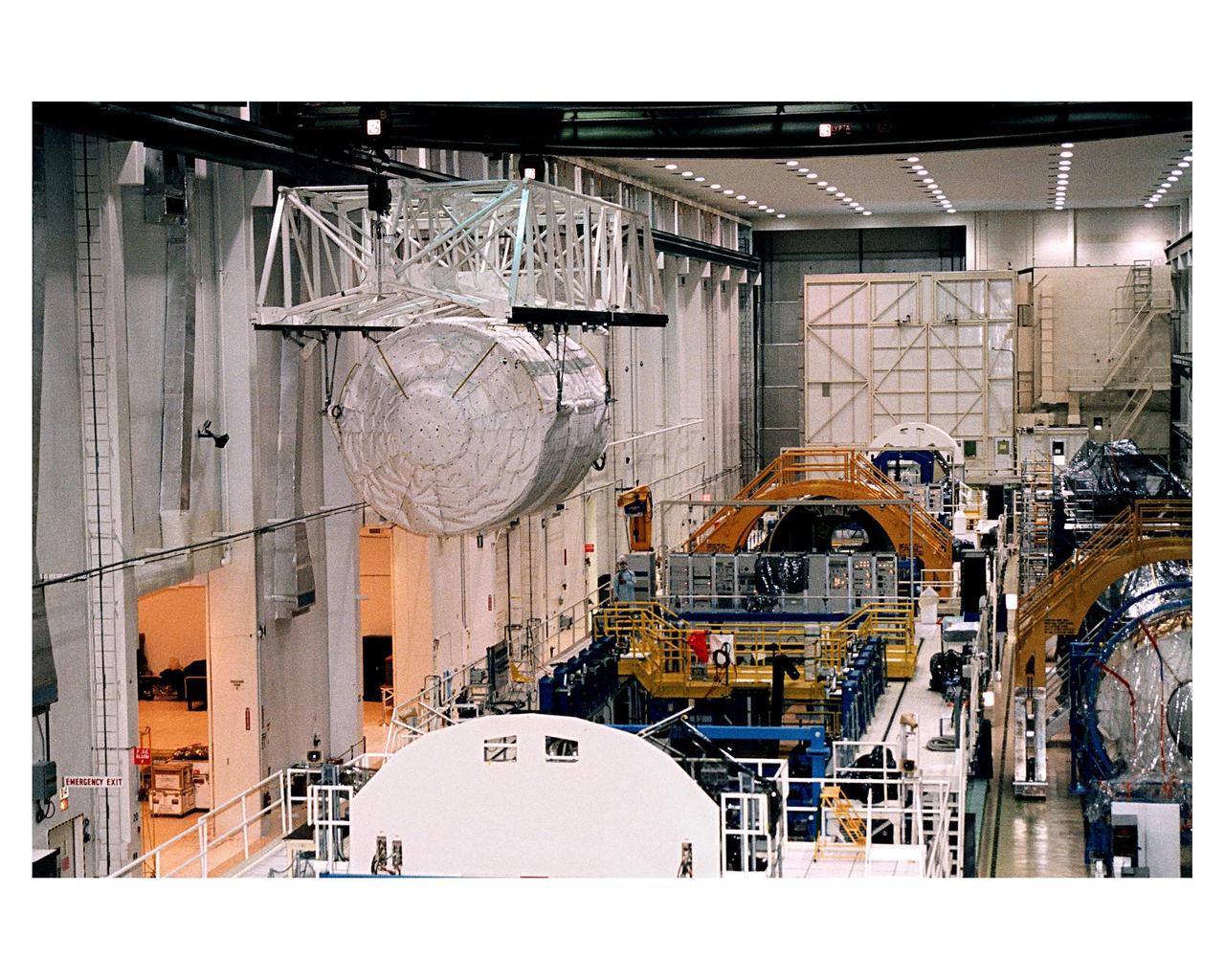
The Microgravity Science Laboratory-1 (MSL-1) Spacelab module is moved to be installed into a payload canister in the Operations and Checkout Building. Once in the canister, the MSL-1 will be transported to Orbiter Processing Bay 1 where it will be integrated into the payload bay of the Space Shuttle orbiter Columbia. During the scheduled 16-day STS-83 mission, the MSL-1 will be used to test some of the hardware, facilities and procedures that are planned for use on the International Space Station while the flight crew conducts combustion, protein crystal growth and materials processing experiments
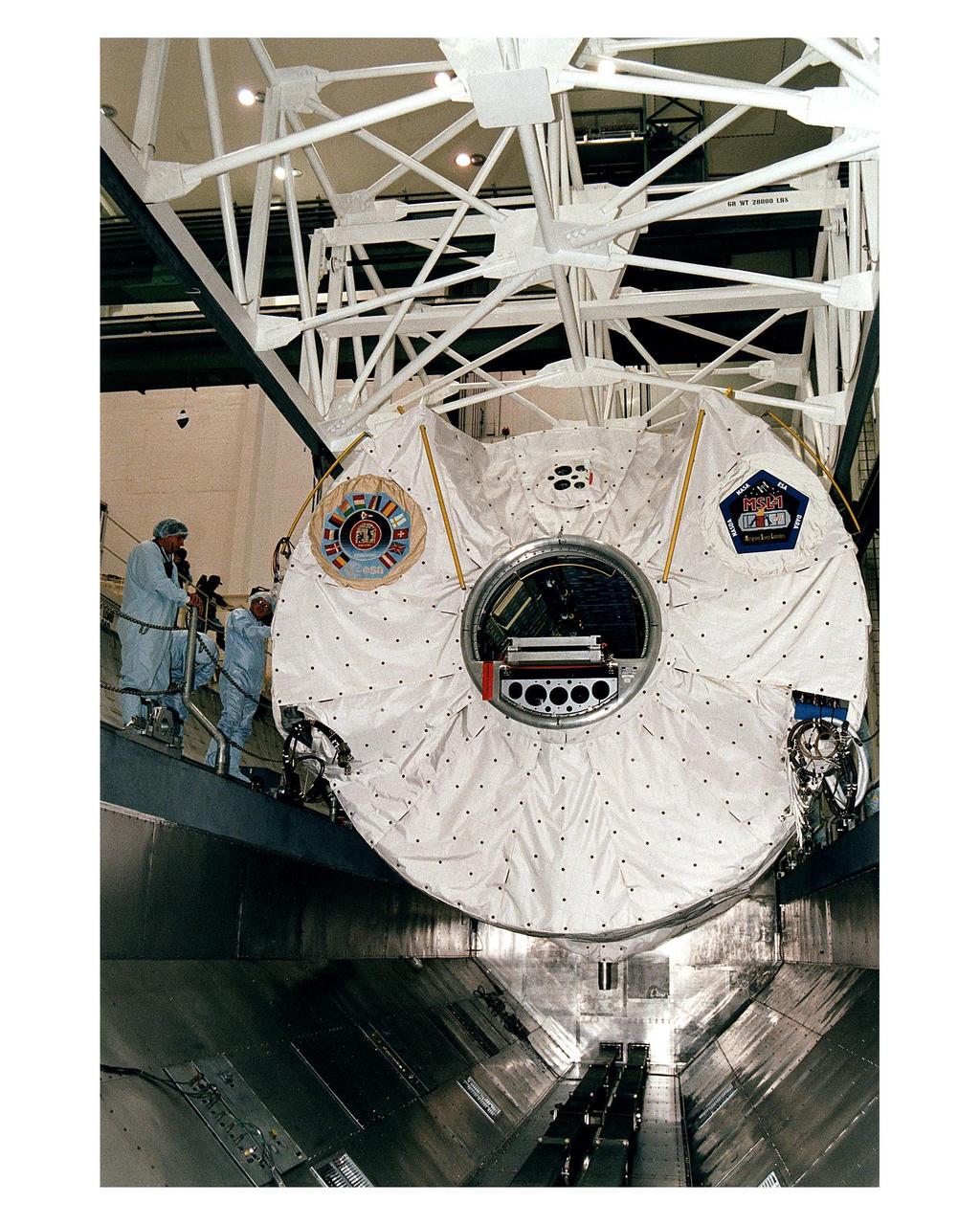
The Microgravity Science Laboratory-1 (MSL-1) Spacelab module is moved to be installed into a payload canister in the Operations and Checkout Building. Once in the canister, the MSL-1 will be transported to Orbiter Processing Bay 1 where it will be integrated into the payload bay of the Space Shuttle orbiter Columbia. During the scheduled 16-day STS-83 mission, the MSL-1 will be used to test some of the hardware, facilities and procedures that are planned for use on the International Space Station while the flight crew conducts combustion, protein crystal growth and materials processing experiments

The Microgravity Science Laboratory-1 (MSL-1) Spacelab module is moved to be installed into a payload canister in the Operations and Checkout Building. Once in the canister, the MSL-1 will be transported to Orbiter Processing Bay 1 where it will be integrated into the payload bay of the Space Shuttle orbiter Columbia. During the scheduled 16-day STS-83 mission, the MSL-1 will be used to test some of the hardware, facilities and procedures that are planned for use on the International Space Station while the flight crew conducts combustion, protein crystal growth and materials processing experiments
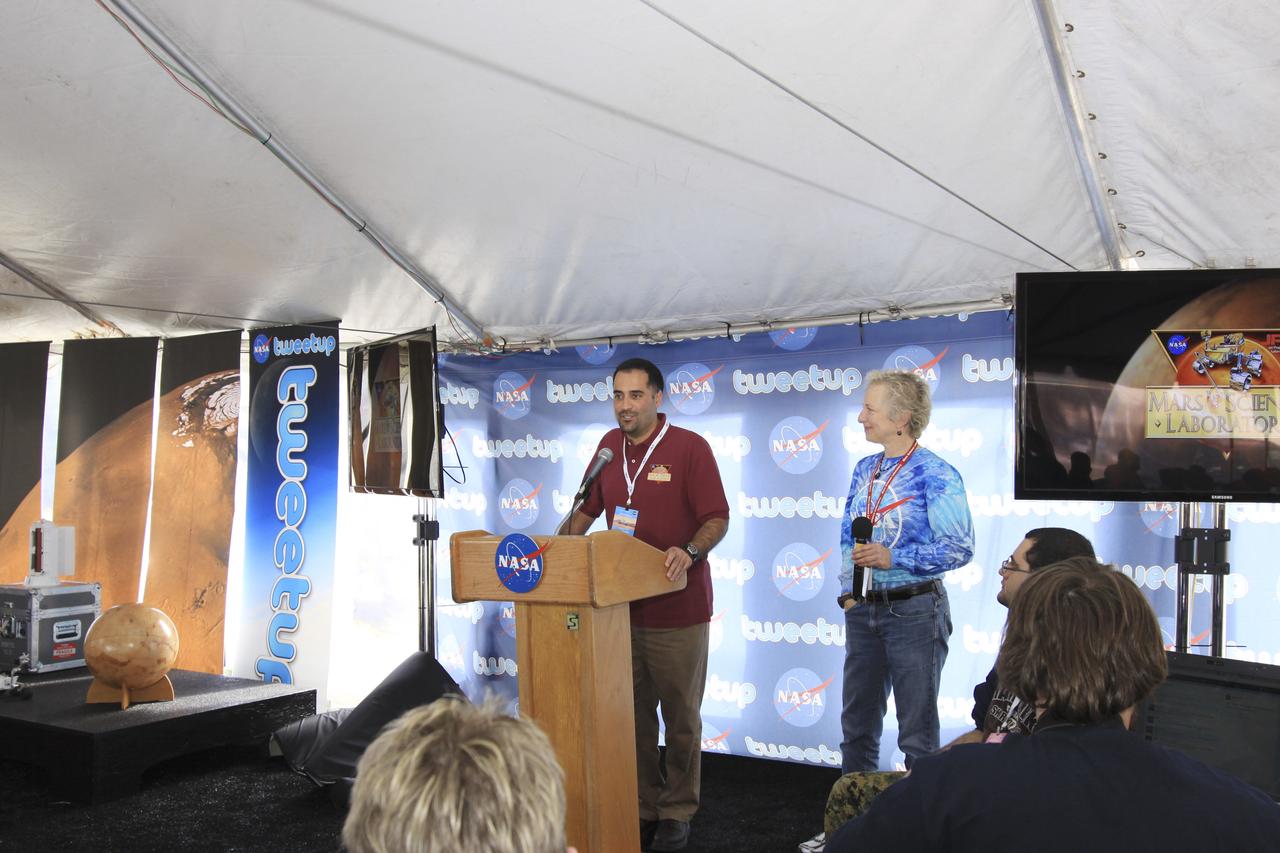
MSL - L-1 Tweet-Up, All Speakers
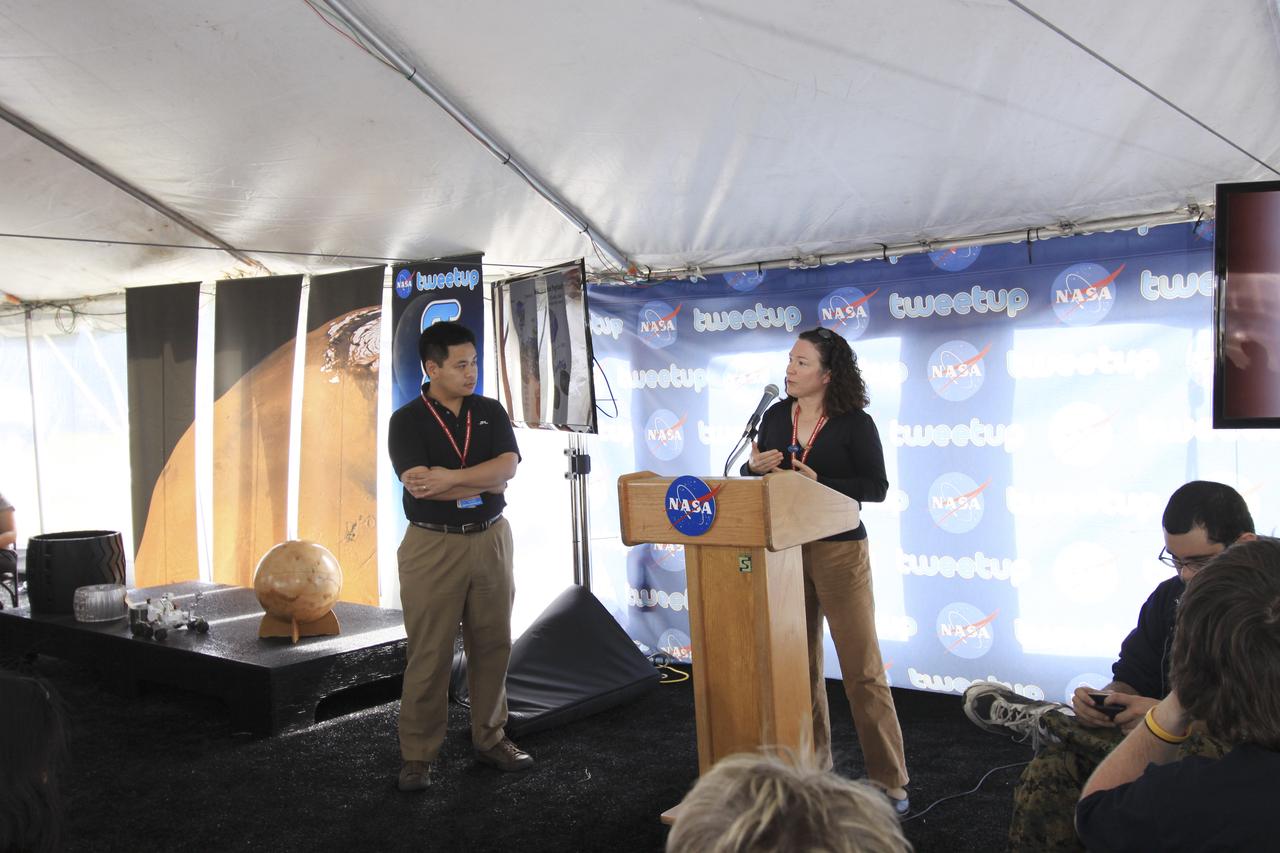
MSL - L-1 Tweet-Up, All Speakers
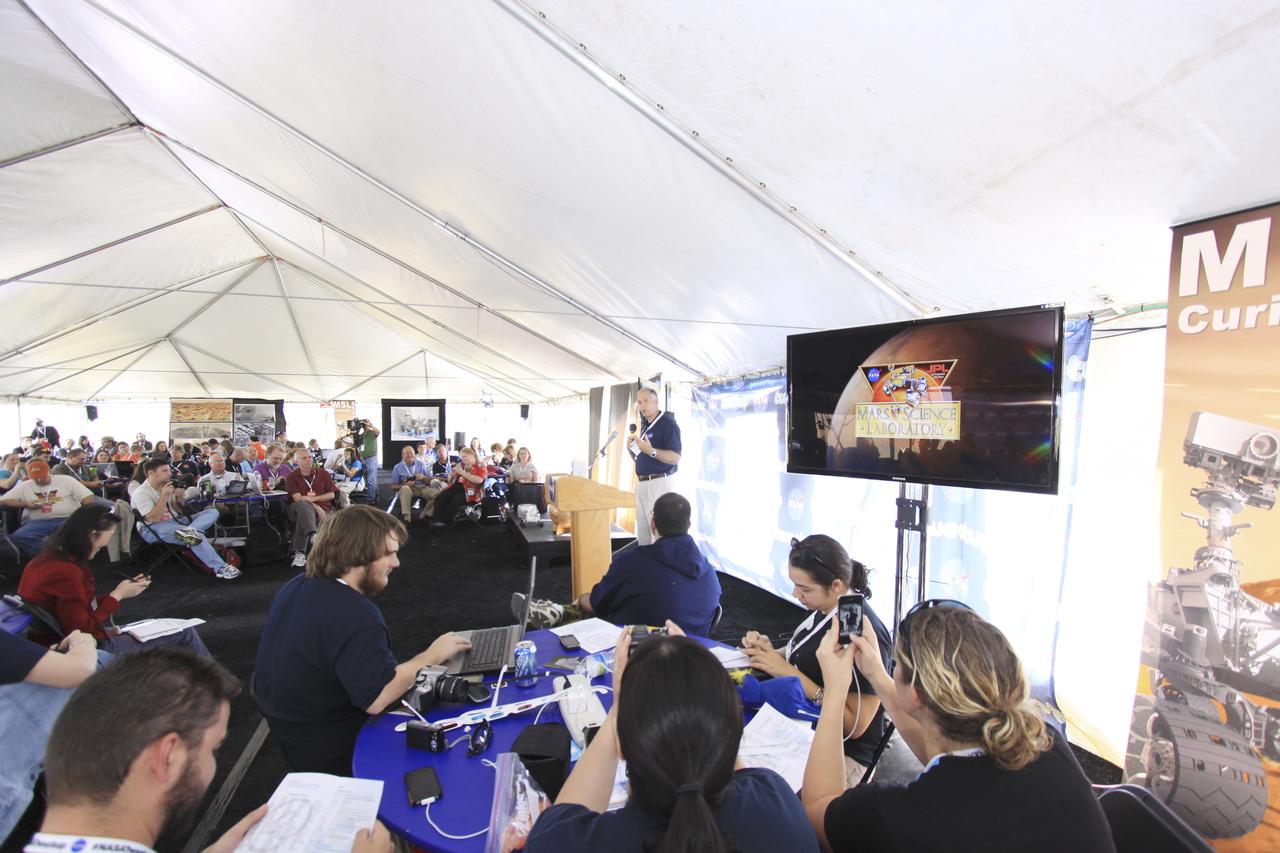
MSL - L-1 Tweet-Up, All Speakers
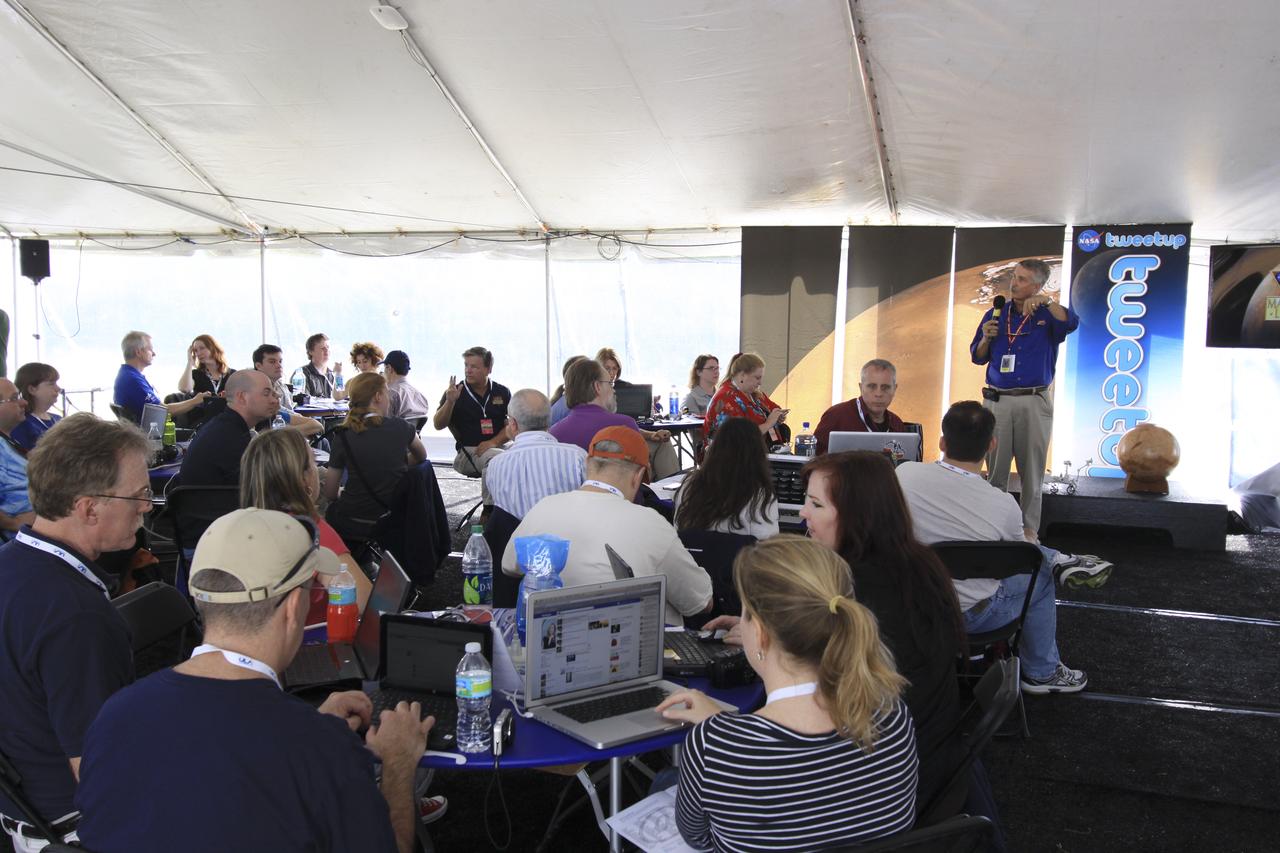
MSL - L-1 Tweet-Up, All Speakers
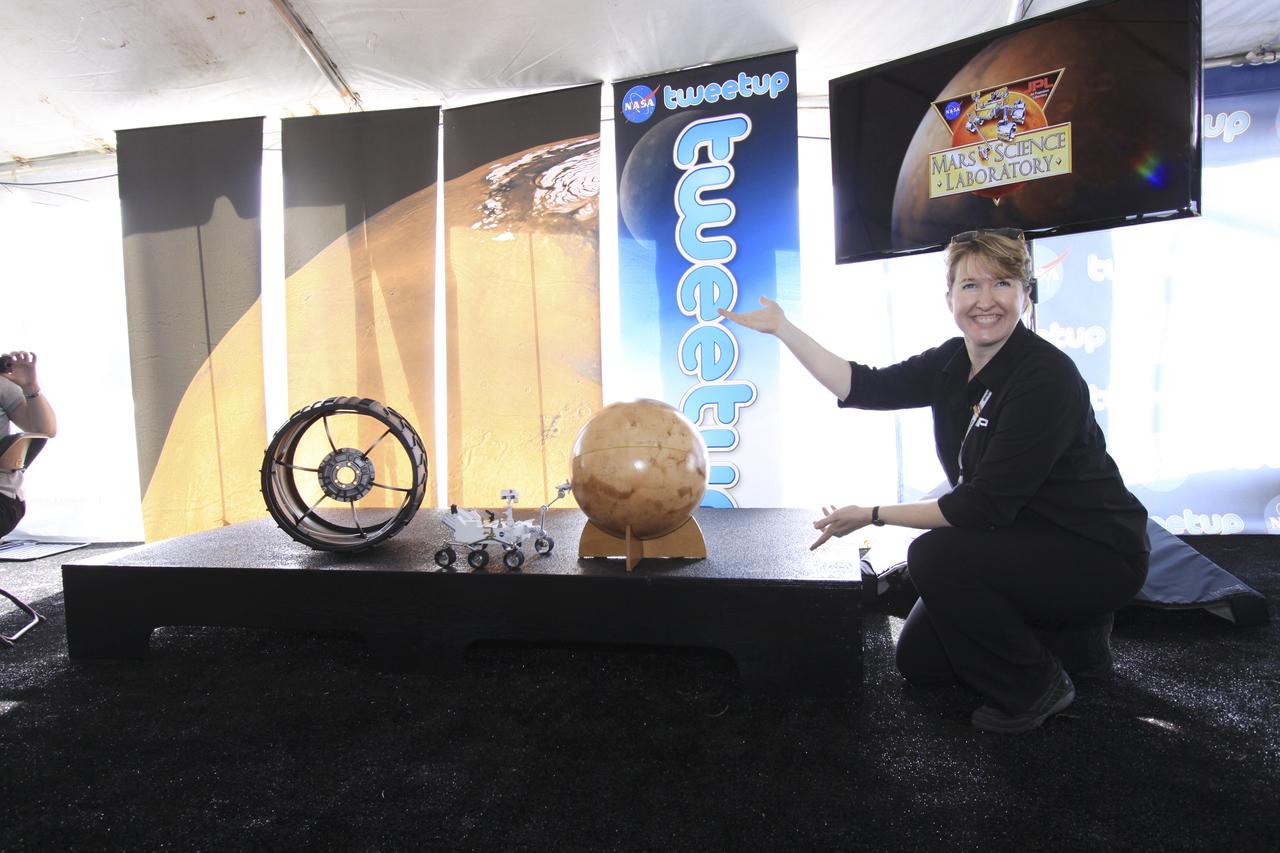
MSL - L-1 Tweet-Up, All Speakers
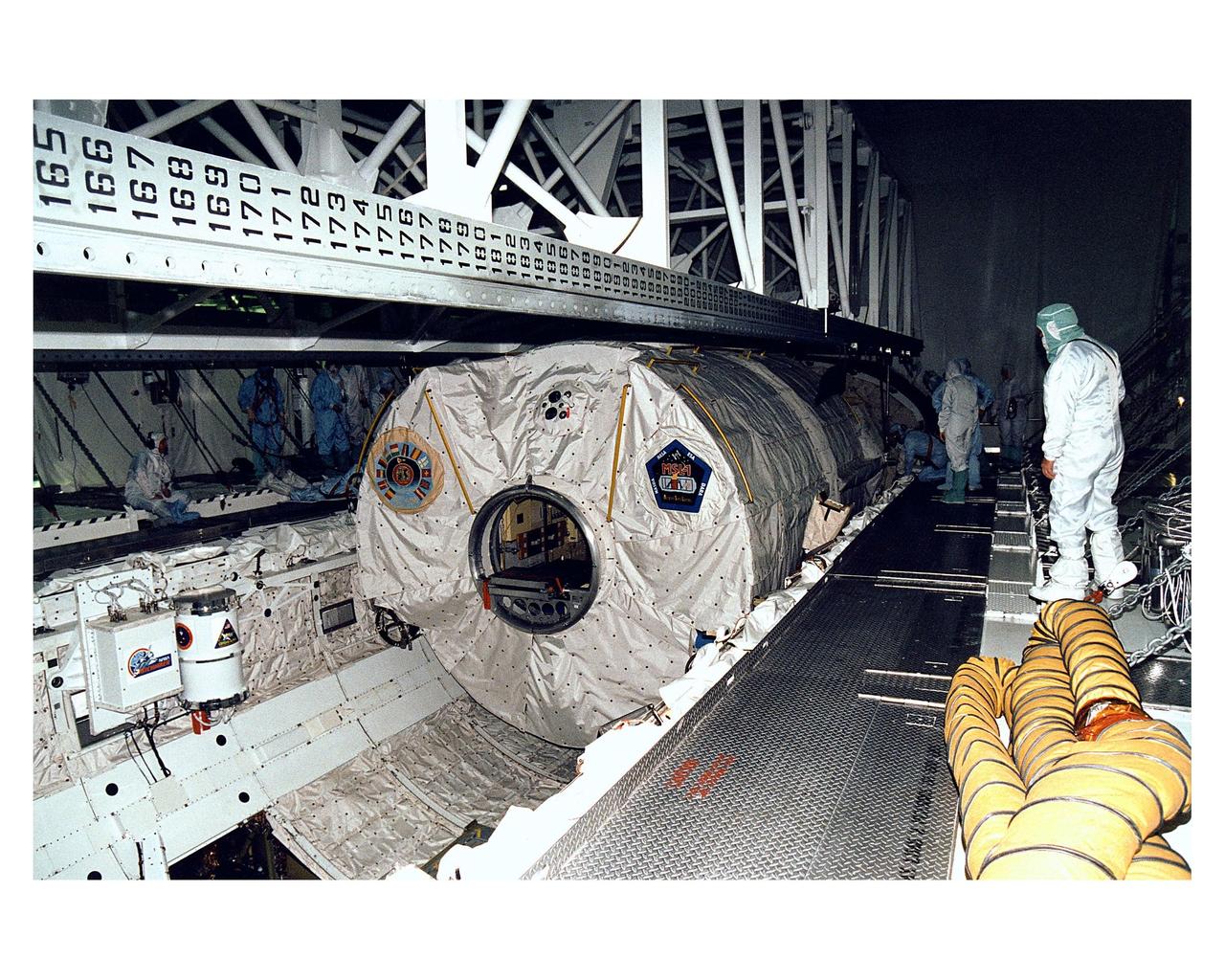
The Microgravity Science Laboratory-1 (MSL-1) Spacelab module is lowered into the payload bay of the Space Shuttle orbiter Columbia in Orbiter Processing Facility 1. During the scheduled 16-day STS-83 mission, the MSL-1 will be used to test some of the hardware, facilities and procedures that are planned for use on the International Space Station while the flight crew conducts combustion, protein crystal growth and materials processing experiments

The Microgravity Science Laboratory-1 (MSL-1) Spacelab module is lowered into the payload bay of the Space Shuttle orbiter Columbia in Orbiter Processing Facility 1. During the scheduled 16-day STS-83 mission, the MSL-1 will be used to test some of the hardware, facilities and procedures that are planned for use on the International Space Station while the flight crew conducts combustion, protein crystal growth and materials processing experiments
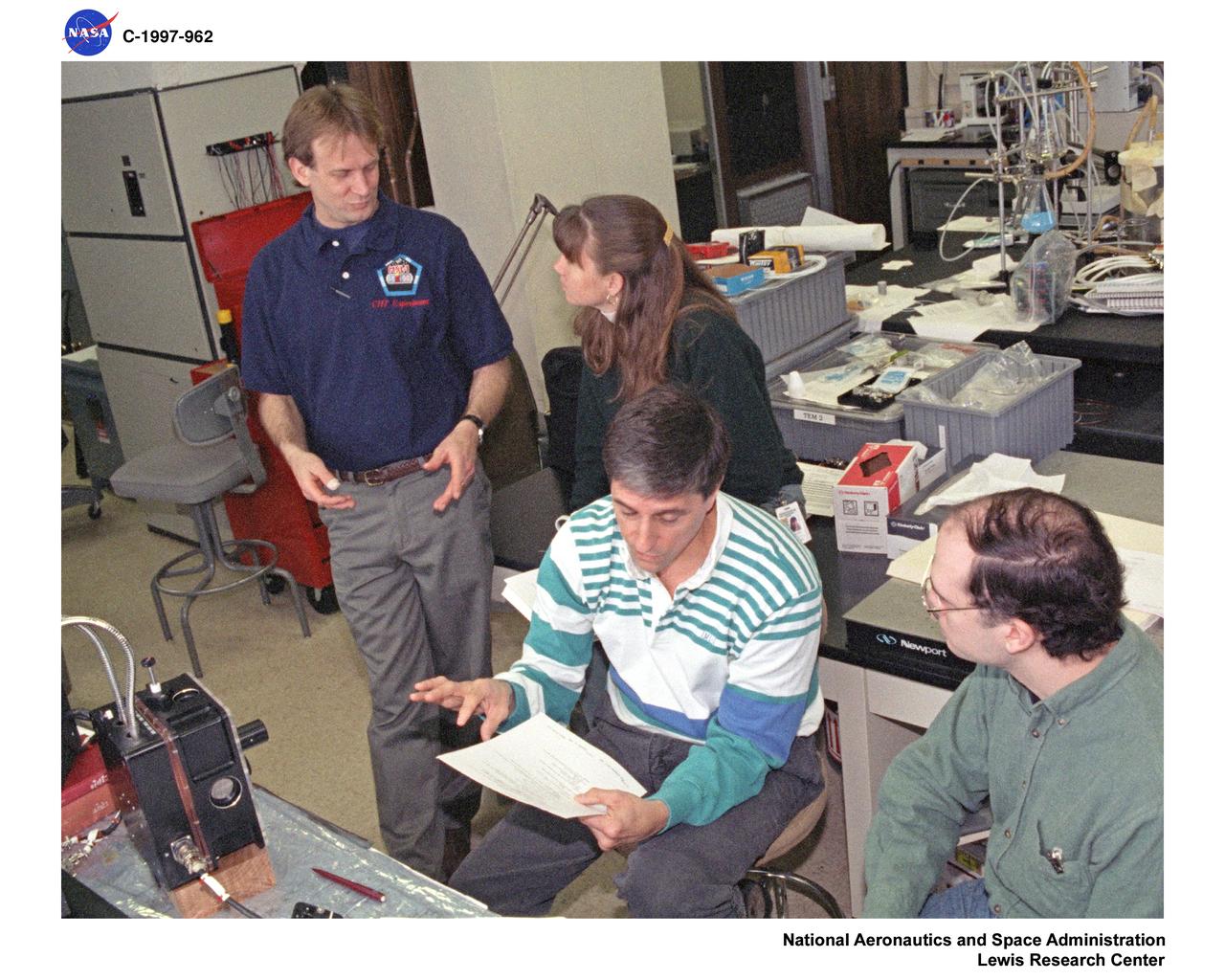
CAPILLARY DRIVEN HEAT TRANSFER EXPERIMENT MSL-1 MICROGRAVITY SCIENCE LABORATORY SHUTTLE FLIGHT STS-83 CREW TRAINING

CAPILLARY DRIVEN HEAT TRANSFER EXPERIMENT MSL-1 MICROGRAVITY SCIENCE LABORATORY SHUTTLE FLIGHT STS-83 CREW TRAINING
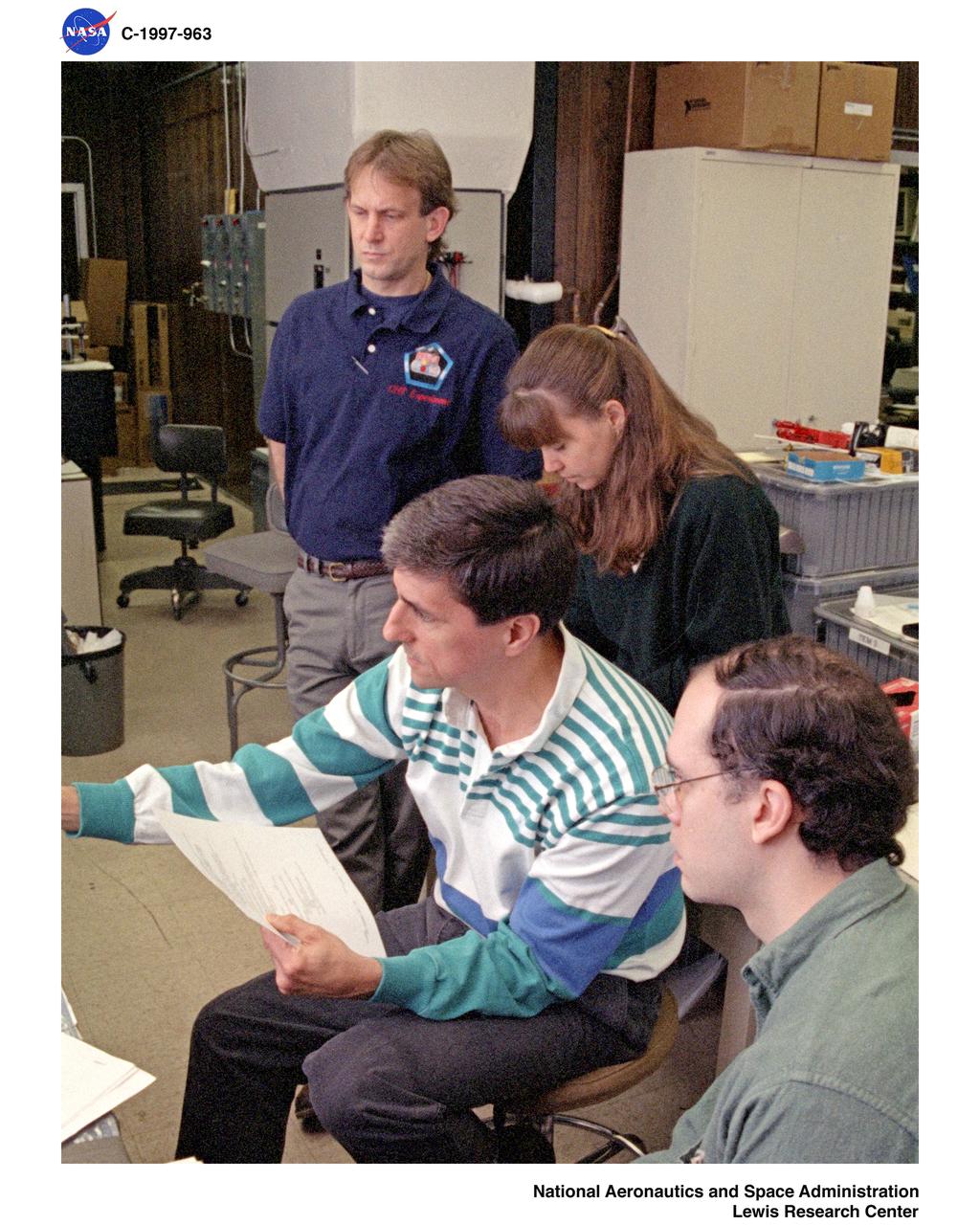
CAPILLARY DRIVEN HEAT TRANSFER EXPERIMENT MSL-1 MICROGRAVITY SCIENCE LABORATORY SHUTTLE FLIGHT STS-83 CREW TRAINING
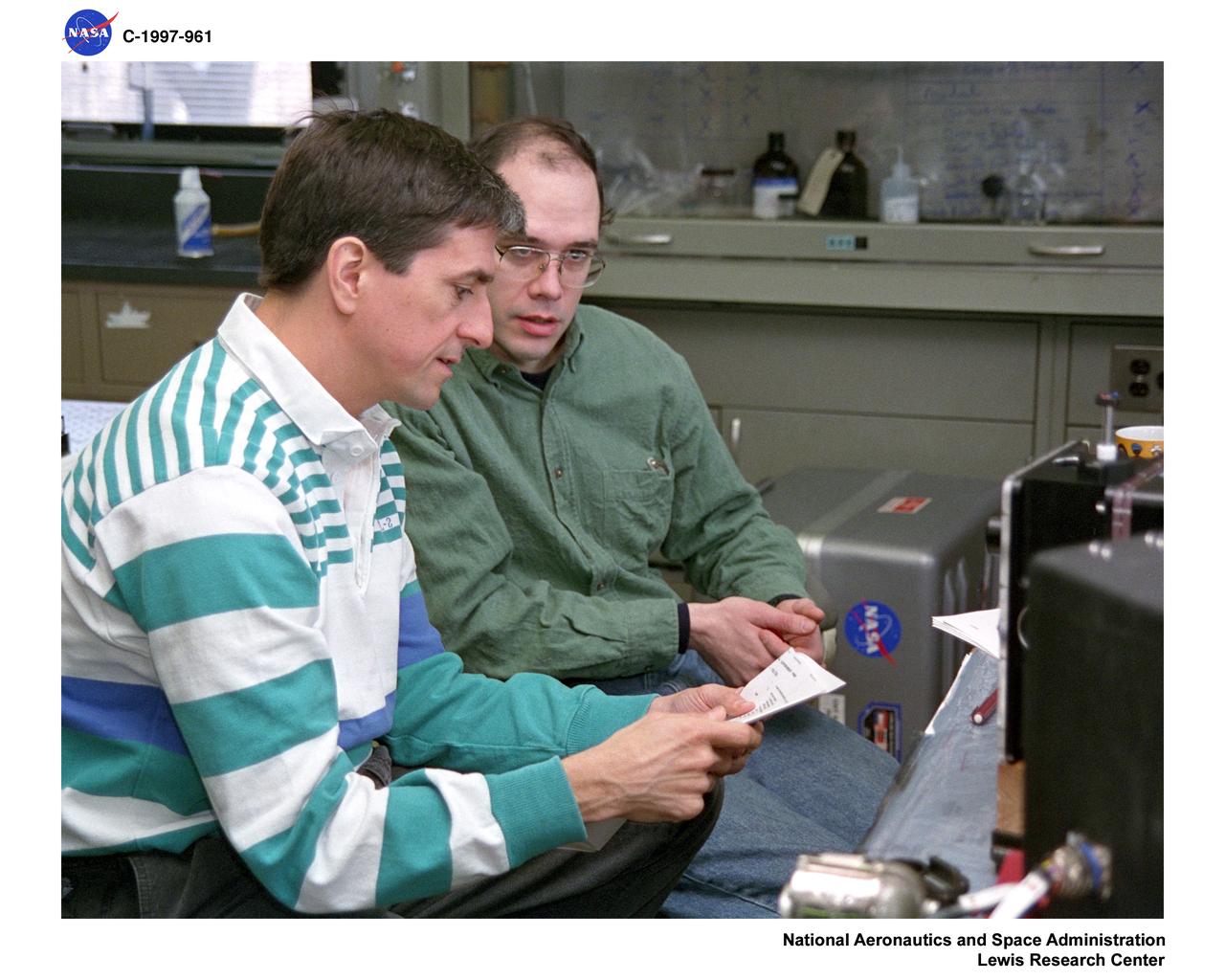
CAPILLARY DRIVEN HEAT TRANSFER EXPERIMENT MSL-1 MICROGRAVITY SCIENCE LABORATORY SHUTTLE FLIGHT STS-83 CREW TRAINING

CAPILLARY DRIVEN HEAT TRANSFER EXPERIMENT MSL-1 MICROGRAVITY SCIENCE LABORATORY SHUTTLE FLIGHT STS-83 CREW TRAINING
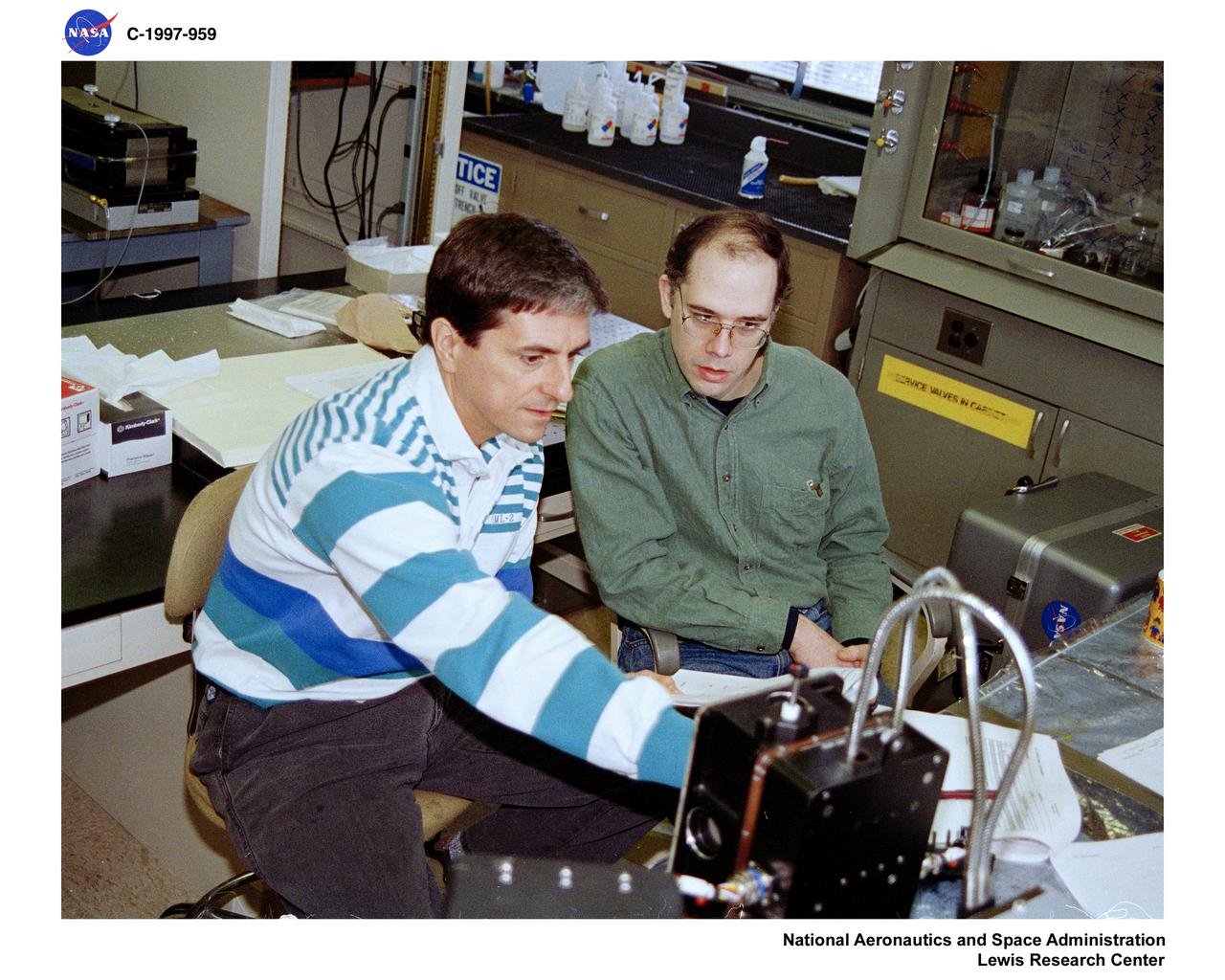
CAPILLARY DRIVEN HEAT TRANSFER EXPERIMENT MSL-1 MICROGRAVITY SCIENCE LABORATORY SHUTTLE FLIGHT STS-83 CREW TRAINING
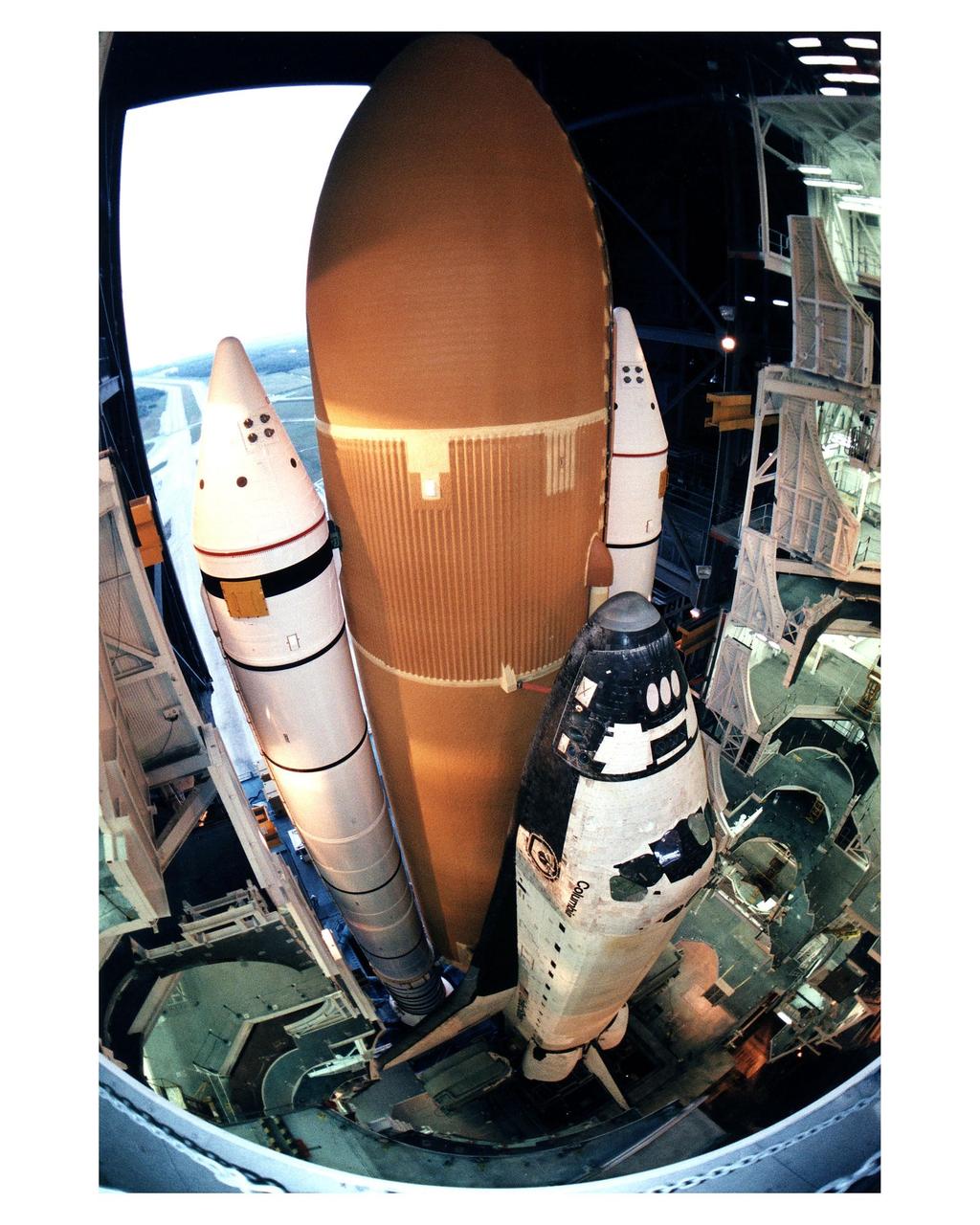
KENNEDY SPACE CENTER, Fla. -- The Space Shuttle Orbiter Columbia begins its rollout from the Vehicle Assembly Building to Launch Pad 39A in preparation for the STS-83 mission. The Microgravity Science Laboratory-1 (MSL-1) Spacelab module is the primary payload on this 16-day spaceflight. The MSL-1 will be used to test some of the hardware, facilities and procedures that are planned for use on the International Space Station, while the seven-member flight crew conducts combustion, protein crystal growth and materials processing experiments
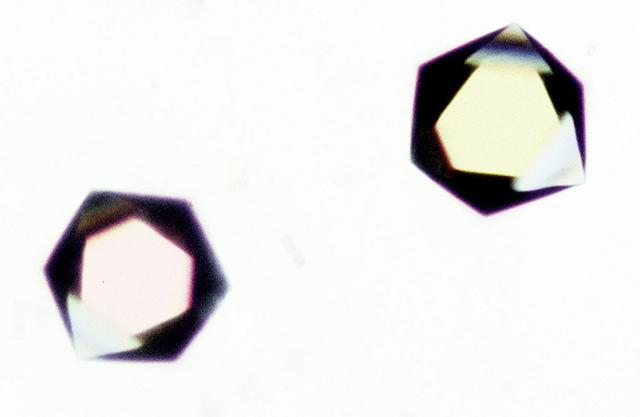
Crystals of Proteinase K complex grown in the VDA-2 (Vapor Diffusion Apparatus) hardware aboard MSL-1. Principal Investigator: Larry DeLucas
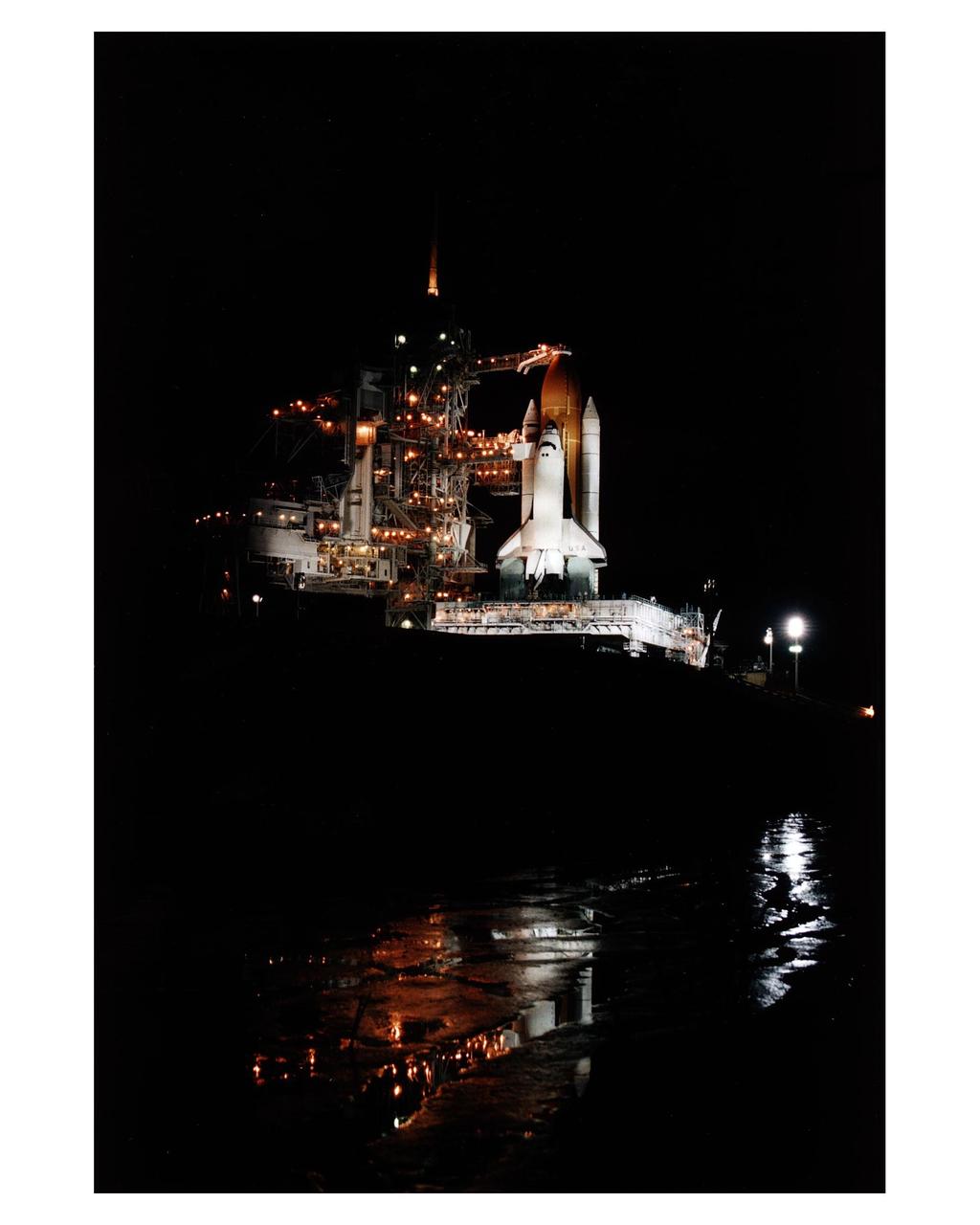
The Space Shuttle Columbia stands poised in the night for the STS-83 Microgravity Science Laboratory-1 (MSL-1) mission after the Rotating Service Structure of Launch Pad 39A has been moved back prior to the start of fueling operations that take place about 12 hours before liftoff. During the scheduled 16-day STS-83 mission, the MSL-1 will be used to test some of the hardware, facilities and procedures that are planned for use on the International Space Station as well as research in combustion, protein crystal growth and materials processing experiments
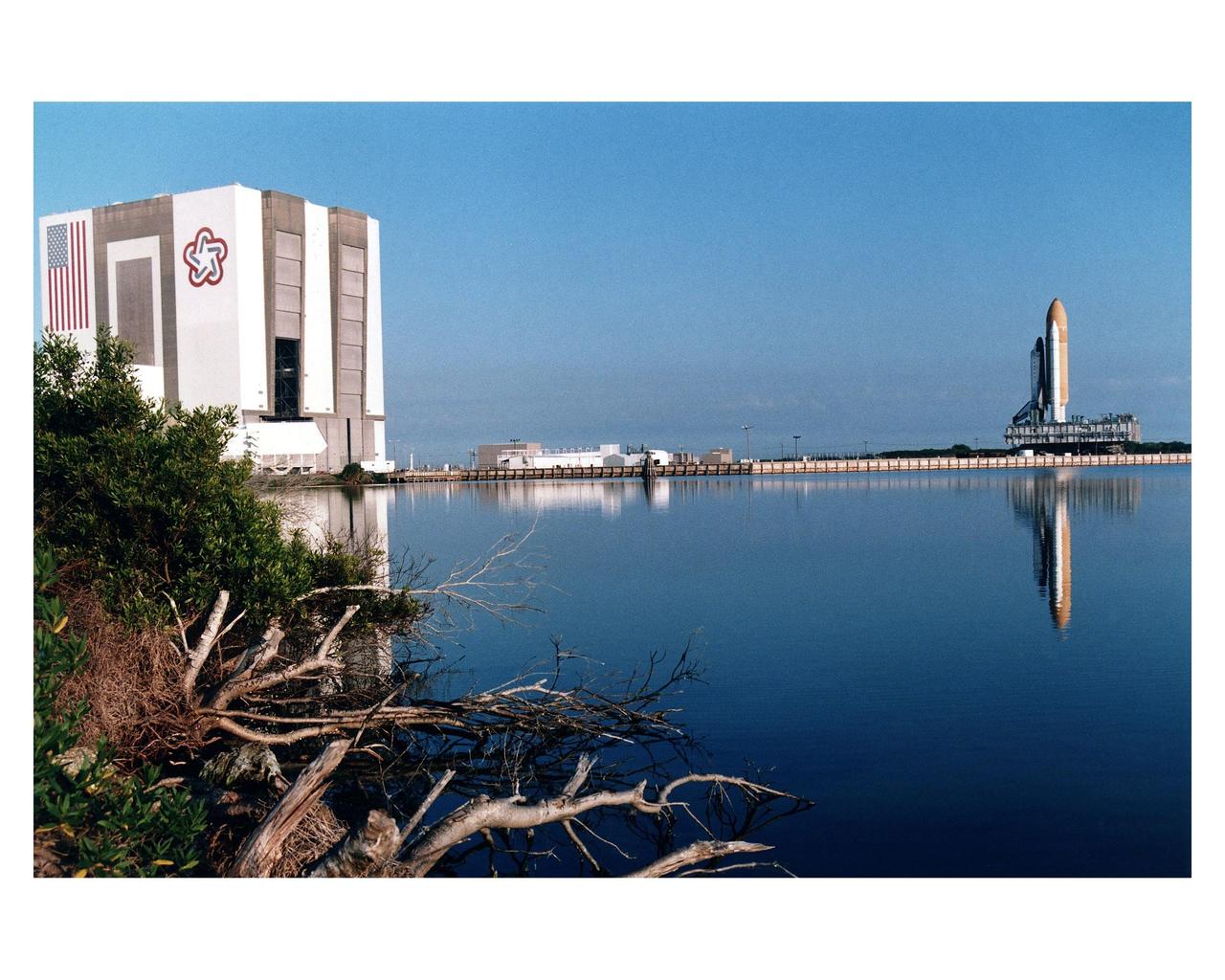
KENNEDY SPACE CENTER, Fla. -- Under a clear blue sky that is reflected in the water of the turn basin, the Space Shuttle Orbiter Columbia rolls out to Launch Pad 39A in preparation for the STS-83 mission.Tthe Microgravity Science Laboratory-1 (MSL-1) Spacelab module is the primary payload on this 16-day space flight. The MSL-1 will be used to test some of the hardware, facilities and procedures that are planned for use on the International Space Station while the seven-member flight crew conducts combustion, protein crystal growth and materials processing experiments.
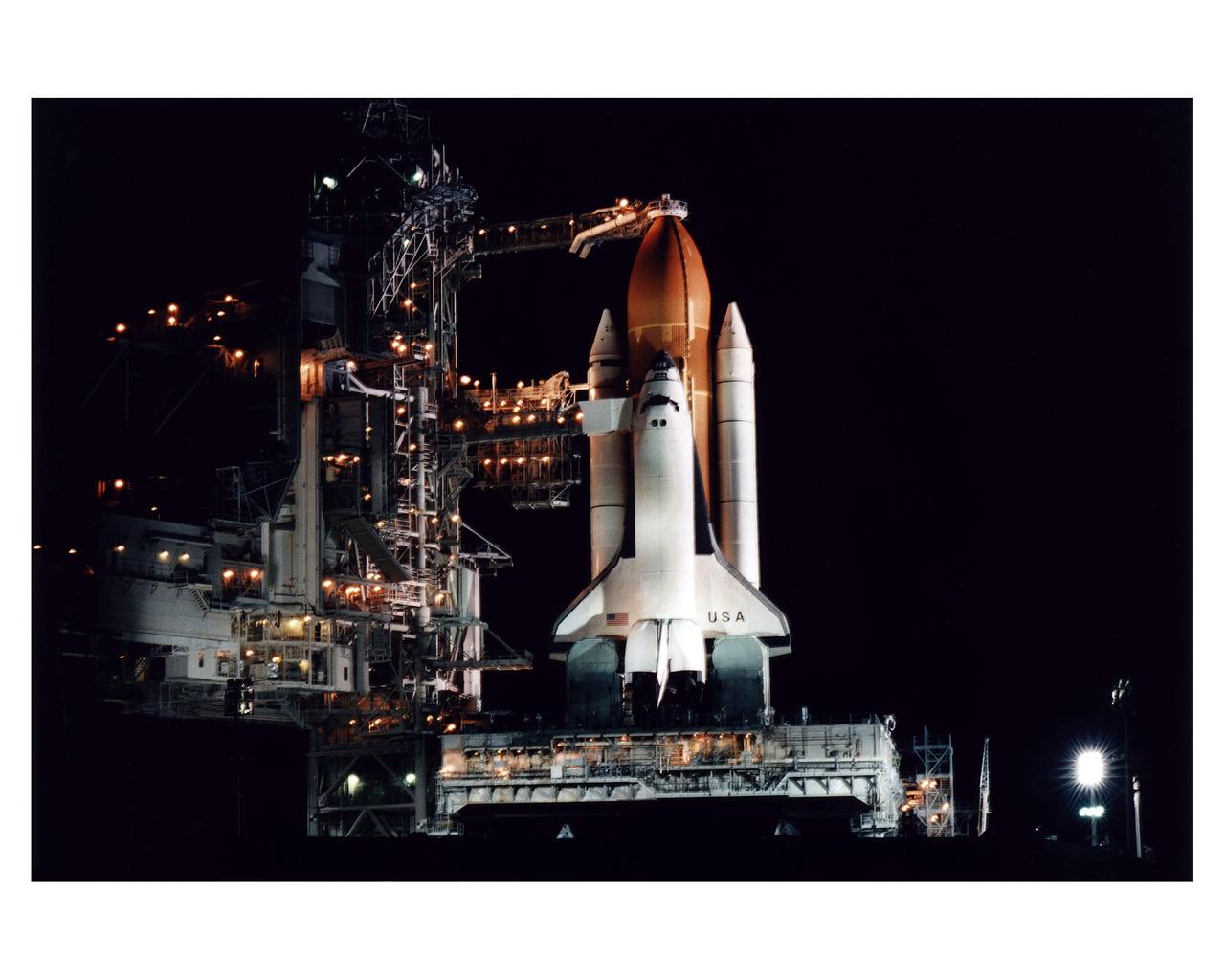
The Space Shuttle Columbia stands poised in the night for the STS-83 Microgravity Science Laboratory-1 (MSL-1) mission after the Rotating Service Structure of Launch Pad 39A has been moved back prior to the start of fueling operations that take place about 12 hours before liftoff. During the scheduled 16-day STS-83 mission, the MSL-1 will be used to test some of the hardware, facilities and procedures that are planned for use on the International Space Station as well as research in combustion, protein crystal growth and materials processing experiments

The Space Shuttle Columbia stands poised in the night for the STS-83 Microgravity Science Laboratory-1 (MSL-1) mission after the Rotating Service Structure of Launch Pad 39A has been moved back prior to the start of fueling operations that take place about 12 hours before liftoff. During the scheduled 16-day STS-83 mission, the MSL-1 will be used to test some of the hardware, facilities and procedures that are planned for use on the International Space Station as well as research in combustion, protein crystal growth and materials processing experiments
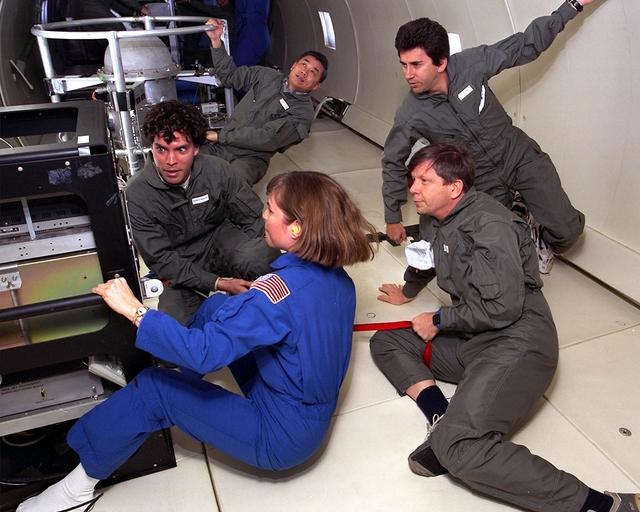
Mission specialist Janice Voss (center, foreground) trains with payload specialists Paul Rorney (right, background) and Roger Crouch (right, foreground) for the Materials Sciences Lab-1 (MSL-1) mission flown in 1997. They are aboard the NASA KC-135 low-g training aircraft.

KENNEDY SPACE CENTER, FLA. - Greeted by cheers from wellwishers at KSC and eager for their ventur into space on the Microgrvity Science Laboratory-1 (MSL-1) mission, the STS-83 astronauts depart the Operations and Checkout Building on their way to Launch Pad 39A. Leading the seven-member crew is Mission Commander James D. Halsell Jr. Behind Halsell and to his right is Pilot Susan L. Still. Behind Still is Payload Commander Janice Voss, with Mission Specialist Donald A. Thomas to her left. Behind Thomas, in order, are Mission Specialist Michael L. Gernhardt and Payload Specialists Roger K. Crouch and Gregory T. Linteris. During the scheduled 16-day STS-83 mission, the MSL-1 will be used to test some of the hardware, facilities and procedures that are planned for use on the International Space Station while the flight crew conducts combustion, protein crystal growth and materials processing experiments. Also onboard is the Hitchhiker Cryogenic Flexible Diode (CRYOFD) experiment payload, which is attched to the right side of Columbia's payload bay.
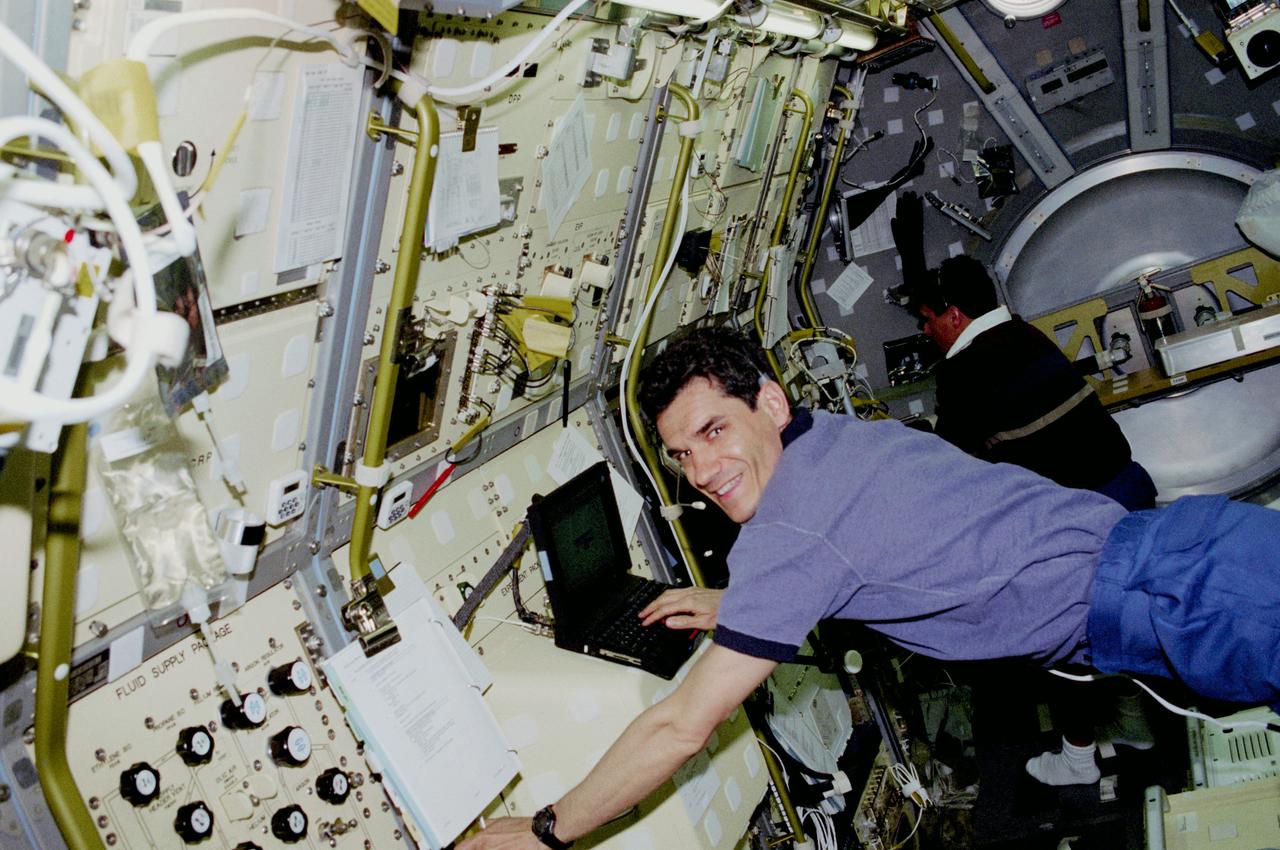
STS083-302-005 (4-8 April 1997) --- Payload specialist Gregory T. Linteris enters data on the progress of a Microgravity Sciences Laboratory (MSL-1) experiment on a lap top computer aboard the Spacelab Science Module while astronaut Donald A. Thomas, mission specialist, checks an experiment in the background. Linteris and Thomas, along with four other NASA astronauts and a second payload specialist supporting the Microgravity Sciences Laboratory (MSL-1) mission were less than a fourth of the way through a scheduled 16-day flight when a power problem cut short their planned stay.
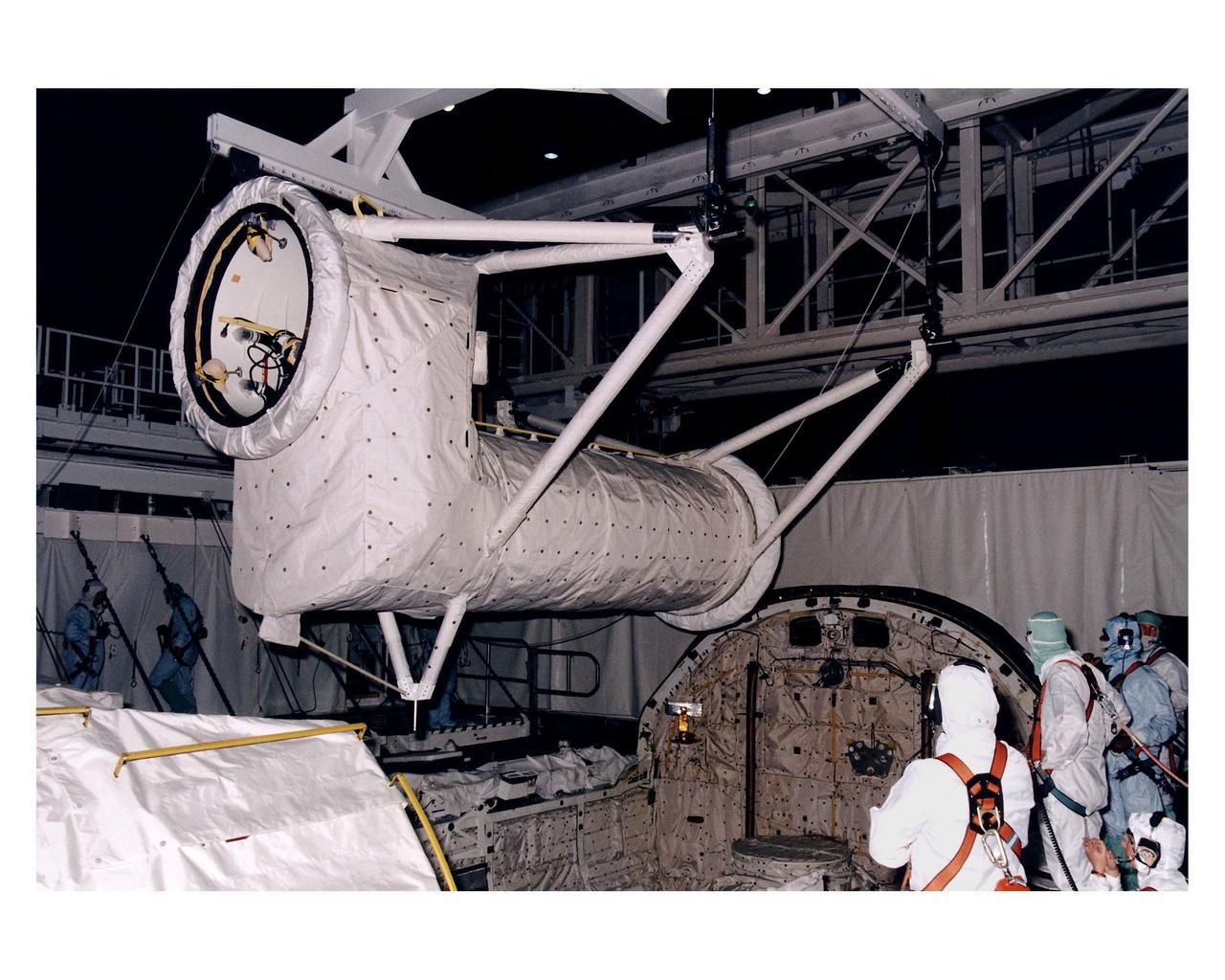
The Spacelab long transfer tunnel that leads from the Space Shuttle Orbiter Columbia’s crew airlock to the Microgravity Science Laboratory-1 (MSL-1) Spacelab module in the spaceplane’s payload bay is removed in Orbiter Processing Facility 1. The tunnel was taken out to allow better access to the MSL-1 module during reservicing operations to prepare it for its reflight as MSL-1R. That mission is now scheduled to lift off July 1. This was the first time that this type of payload was reserviced without removing it from the payload bay. This new procedure pioneers processing efforts for quick relaunch turnaround times for future payloads. The Spacelab module was scheduled to fly again with the full complement of STS-83 experiments after that mission was cut short due to a faulty fuel cell. During the scheduled 16-day reflight, the experiments will be used to test some of the hardware, facilities and procedures that are planned for use on the International Space Station while the flight crew conducts combustion, protein crystal growth and materials processing experiments
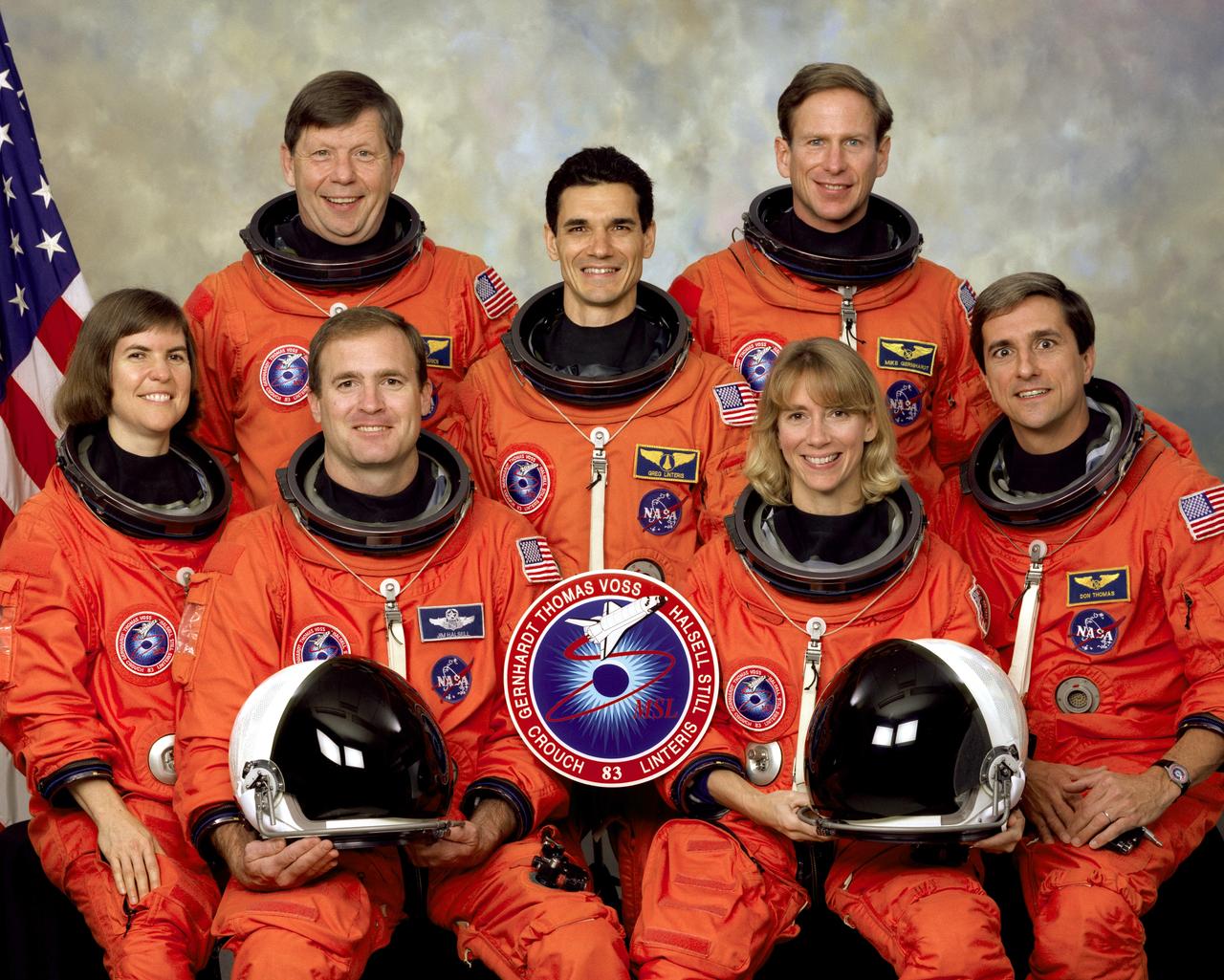
Five NASA astronauts and two scientists comprised the crew for the STS-83 mission in support of the first Microgravity Sciences Laboratory 1 (MSL-1). Pictured on the front row (left to right) are Janice E. Voss, payload commander; James D. Halsell, commander; Susan L. Still, pilot; and Donald A. Thomas, mission specialist. On the back row (left to right) are payload specialists Roger K. Crouch, and Gregory T. Linteris; and Michael L. Gernhardt, mission specialist. Dr. Crouch and Dr. Linteris are experts in several disciplines treated on MSL-1. STS-83 launched aboard the Space Shuttle Columbia on April 4, 1997. The five launched again in July 1997 for the STS-94 mission.
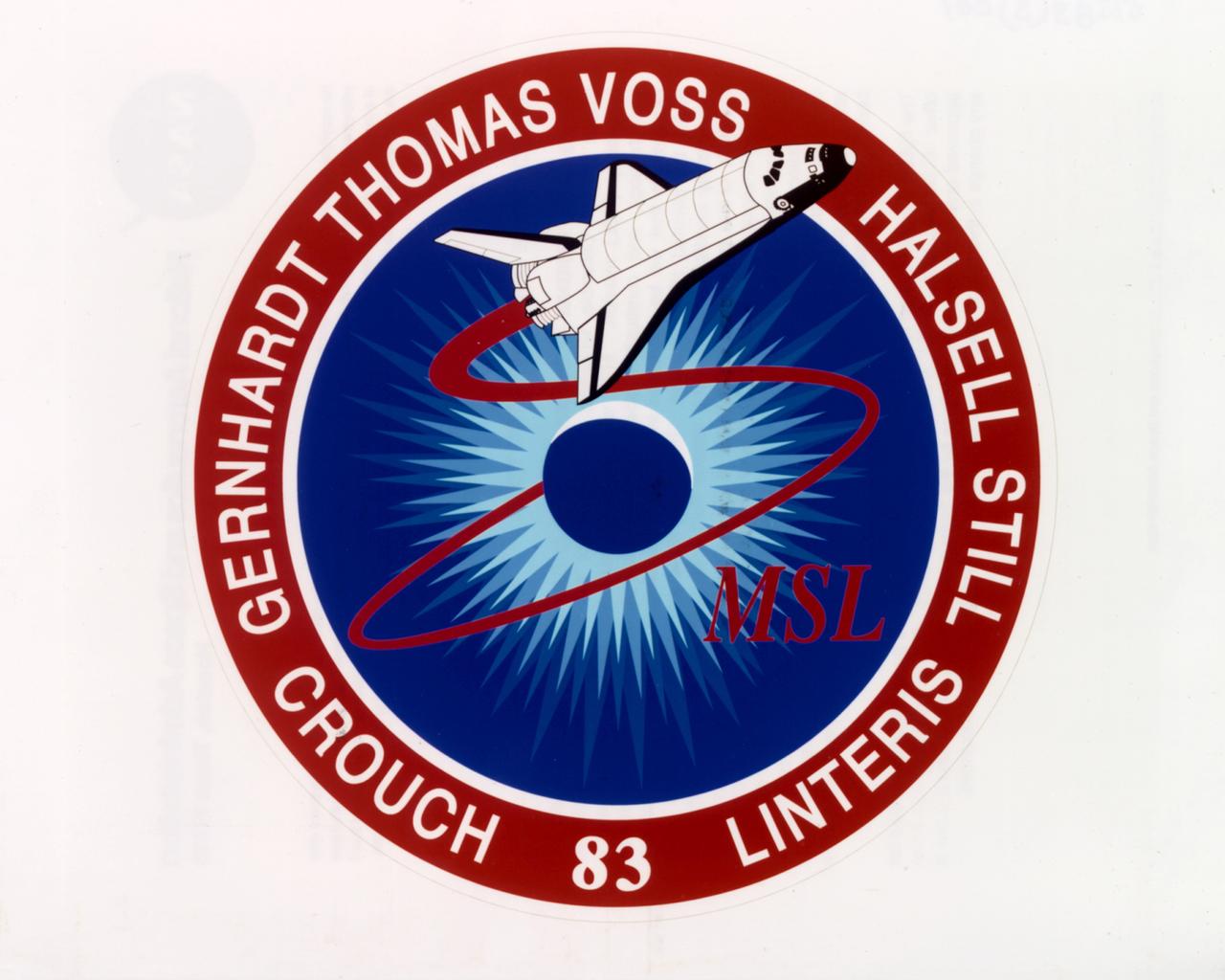
The crew patch for NASA's STS-83 mission depicts the Space Shuttle Columbia launching into space for the first Microgravity Sciences Laboratory 1 (MSL-1) mission. MSL-1 investigated materials science, fluid dynamics, biotechnology, and combustion science in the microgravity environment of space, experiments that were conducted in the Spacelab Module in the Space Shuttle Columbia's cargo bay. The center circle symbolizes a free liquid under microgravity conditions representing various fluid and materials science experiments. Symbolic of the combustion experiments is the surrounding starburst of a blue flame burning in space. The 3-lobed shape of the outermost starburst ring traces the dot pattern of a transmission Laue photograph typical of biotechnology experiments. The numerical designation for the mission is shown at bottom center. As a forerunner to missions involving International Space Station (ISS), STS-83 represented the hope that scientific results and knowledge gained during the flight will be applied to solving problems on Earth for the benefit and advancement of humankind.
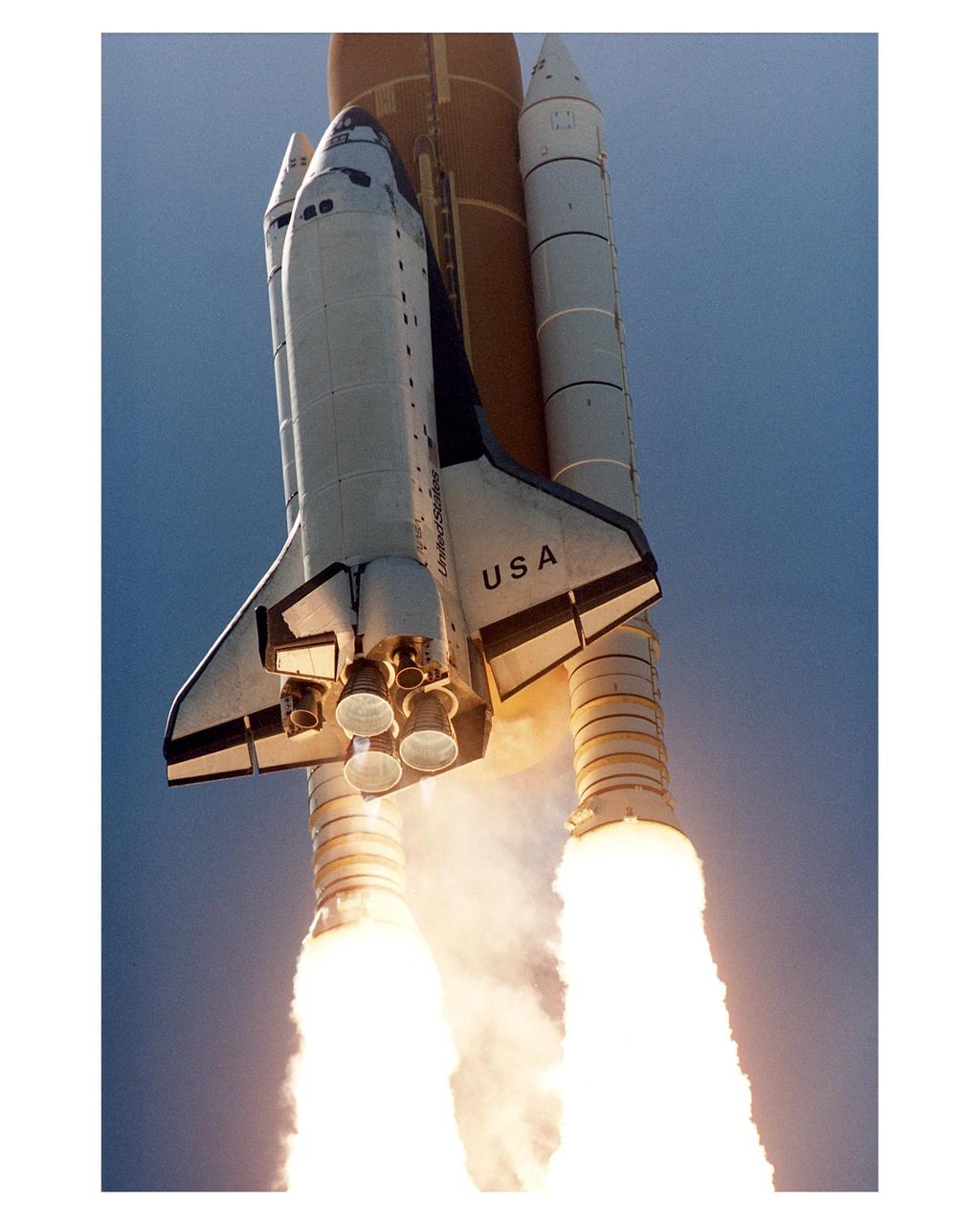
Like a rising sun lighting up the afternoon sky, the Space Shuttle Columbia soars from Launch Pad 39A at 2:20:32 p.m. EST, April 4, on the 16-day Microgravity Science Laboratory-1 (MSL-1) mission. The crew members are Mission Commander James D. Halsell, Jr.; Pilot Susan L. Still; Payload Commander Janice Voss; Mission Specialists Michael L. Gernhardt and Donald A. Thomas; and Payload Specialists Roger K. Crouch and Gregory T. Linteris. During the scheduled 16-day STS-83 mission, the MSL-1 will be used to test some of the hardware, facilities and procedures that are planned for use on the International Space Station as well as research in combustion, protein crystal growth and materials processing experiments
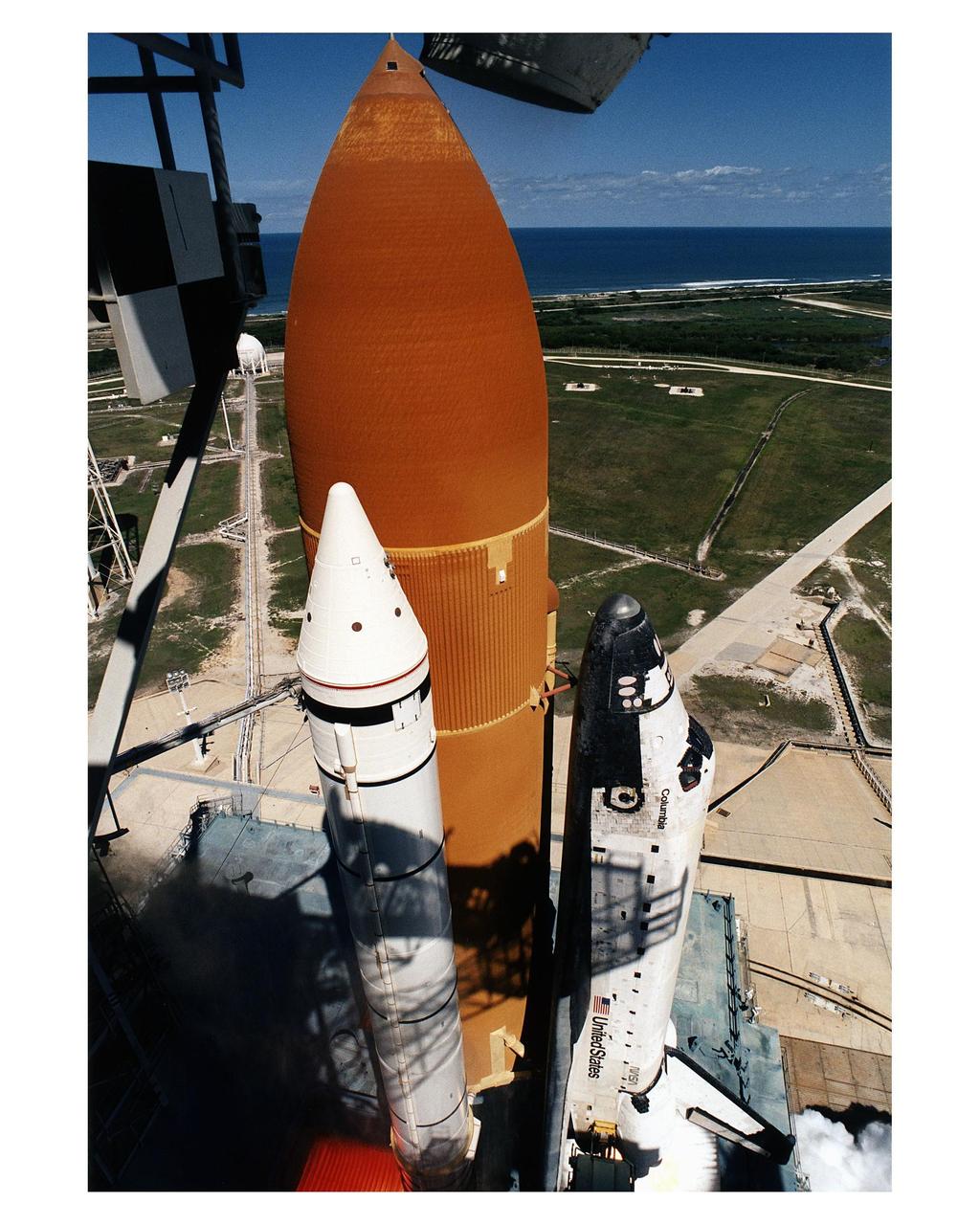
Like a rising sun lighting up the afternoon sky, the Space Shuttle Columbia soars from Launch Pad 39A at 2:20:32 p.m. EST, April 4, on the 16-day Microgravity Science Laboratory-1 (MSL-1) mission. The crew members are Mission Commander James D. Halsell, Jr.; Pilot Susan L. Still; Payload Commander Janice Voss; Mission Specialists Michael L. Gernhardt and Donald A. Thomas; and Payload Specialists Roger K. Crouch and Gregory T. Linteris. During the scheduled 16-day STS-83 mission, the MSL-1 will be used to test some of the hardware, facilities and procedures that are planned for use on the International Space Station as well as research in combustion, protein crystal growth and materials processing experiments
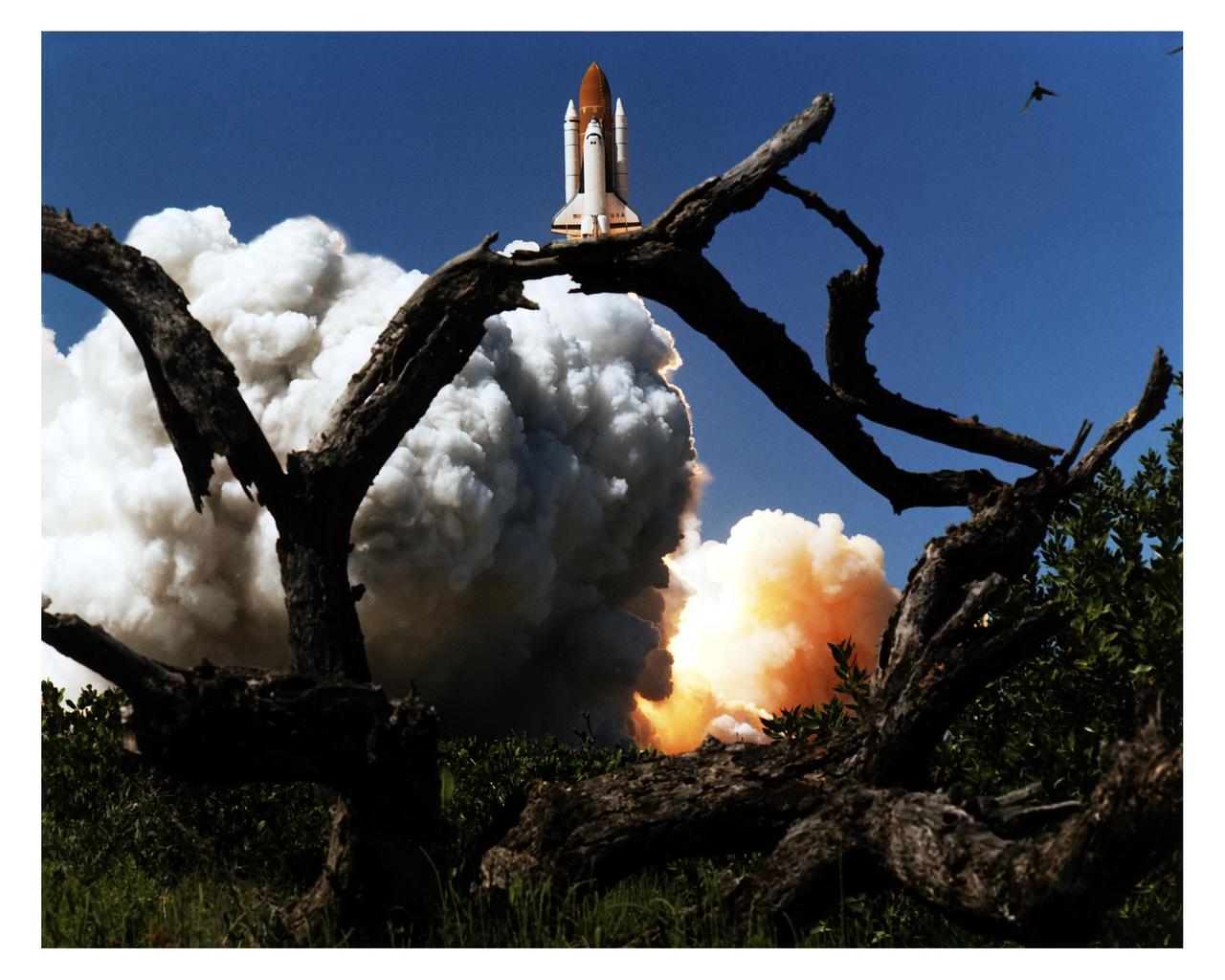
Like a rising sun lighting up the afternoon sky, the Space Shuttle Columbia soars from Launch Pad 39A at 2:20:32 p.m. EST, April 4, on the 16-day Microgravity Science Laboratory-1 (MSL-1) mission. The crew members are Mission Commander James D. Halsell, Jr.; Pilot Susan L. Still; Payload Commander Janice Voss; Mission Specialists Michael L. Gernhardt and Donald A. Thomas; and Payload Specialists Roger K. Crouch and Gregory T. Linteris. During the scheduled 16-day STS-83 mission, the MSL-1 will be used to test some of the hardware, facilities and procedures that are planned for use on the International Space Station as well as research in combustion, protein crystal growth and materials processing experiments
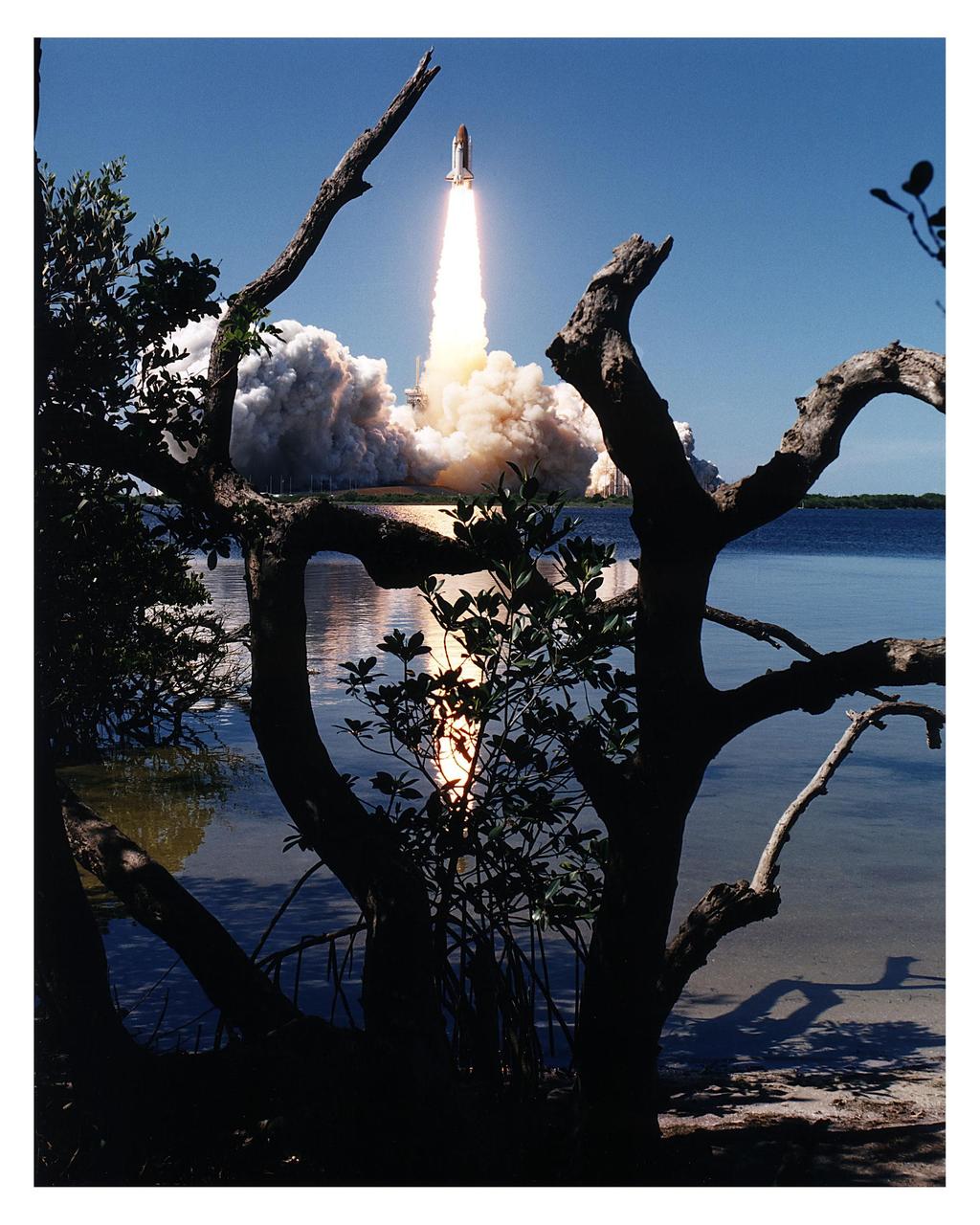
Like a rising sun lighting up the afternoon sky, the Space Shuttle Columbia soars from Launch Pad 39A at 2:20:32 p.m. EST, April 4, on the 16-day Microgravity Science Laboratory-1 (MSL-1) mission. The crew members are Mission Commander James D. Halsell, Jr.; Pilot Susan L. Still; Payload Commander Janice Voss; Mission Specialists Michael L. Gernhardt and Donald A. Thomas; and Payload Specialists Roger K. Crouch and Gregory T. Linteris. During the scheduled 16-day STS-83 mission, the MSL-1 will be used to test some of the hardware, facilities and procedures that are planned for use on the International Space Station as well as research in combustion, protein crystal growth and materials processing experiments
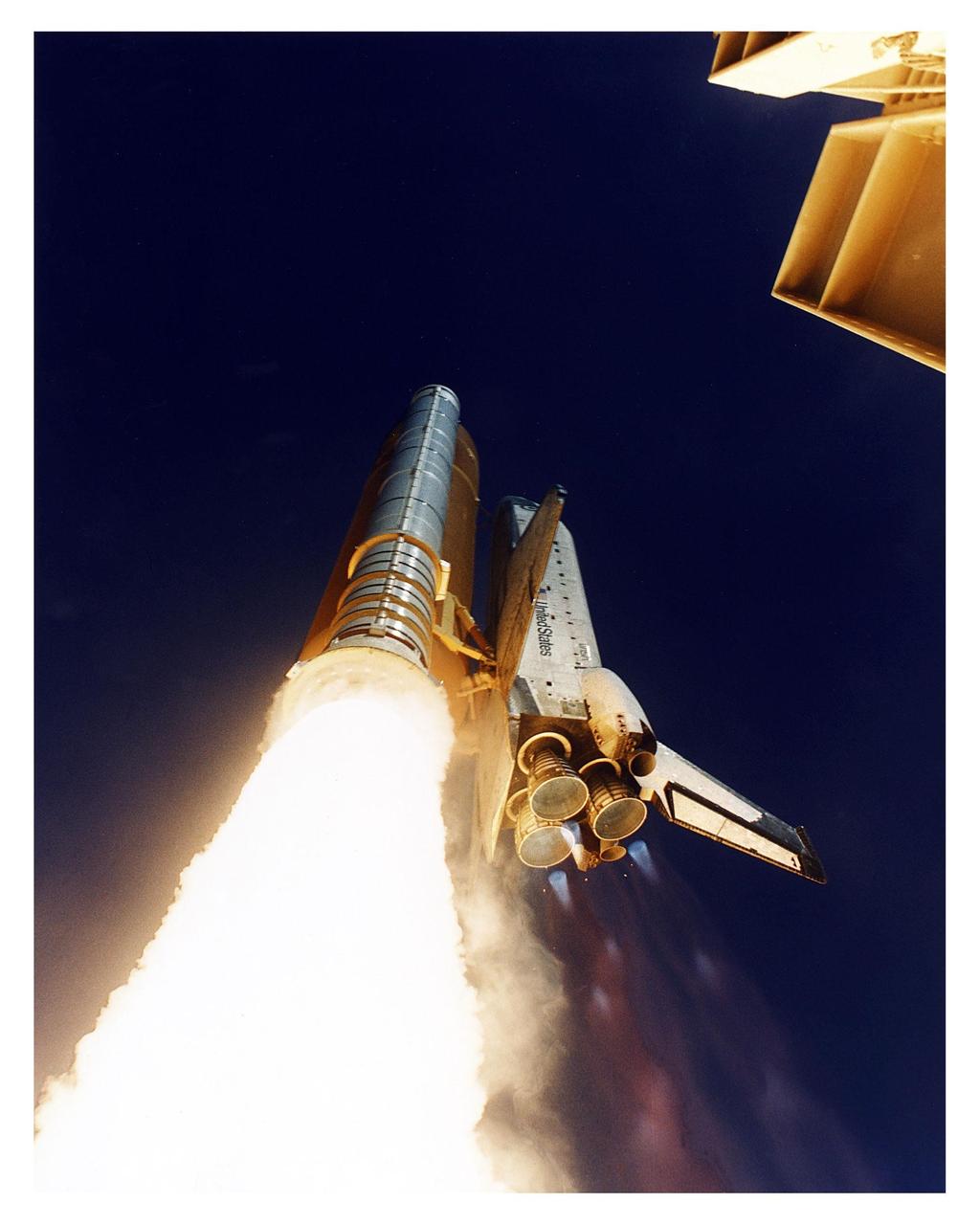
Like a rising sun lighting up the afternoon sky, the Space Shuttle Columbia soars from Launch Pad 39A at 2:20:32 p.m. EST, April 4, on the 16-day Microgravity Science Laboratory-1 (MSL-1) mission. The crew members are Mission Commander James D. Halsell, Jr.; Pilot Susan L. Still; Payload Commander Janice Voss; Mission Specialists Michael L. Gernhardt and Donald A. Thomas; and Payload Specialists Roger K. Crouch and Gregory T. Linteris. During the scheduled 16-day STS-83 mission, the MSL-1 will be used to test some of the hardware, facilities and procedures that are planned for use on the International Space Station as well as research in combustion, protein crystal growth and materials processing experiments

Like a rising sun lighting up the afternoon sky, the Space Shuttle Columbia soars from Launch Pad 39A at 2:20:32 p.m. EST, April 4, on the 16-day Microgravity Science Laboratory-1 (MSL-1) mission. The crew members are Mission Commander James D. Halsell, Jr.; Pilot Susan L. Still; Payload Commander Janice Voss; Mission Specialists Michael L. Gernhardt and Donald A. Thomas; and Payload Specialists Roger K. Crouch and Gregory T. Linteris. During the scheduled 16-day STS-83 mission, the MSL-1 will be used to test some of the hardware, facilities and procedures that are planned for use on the International Space Station as well as research in combustion, protein crystal growth and materials processing experiments
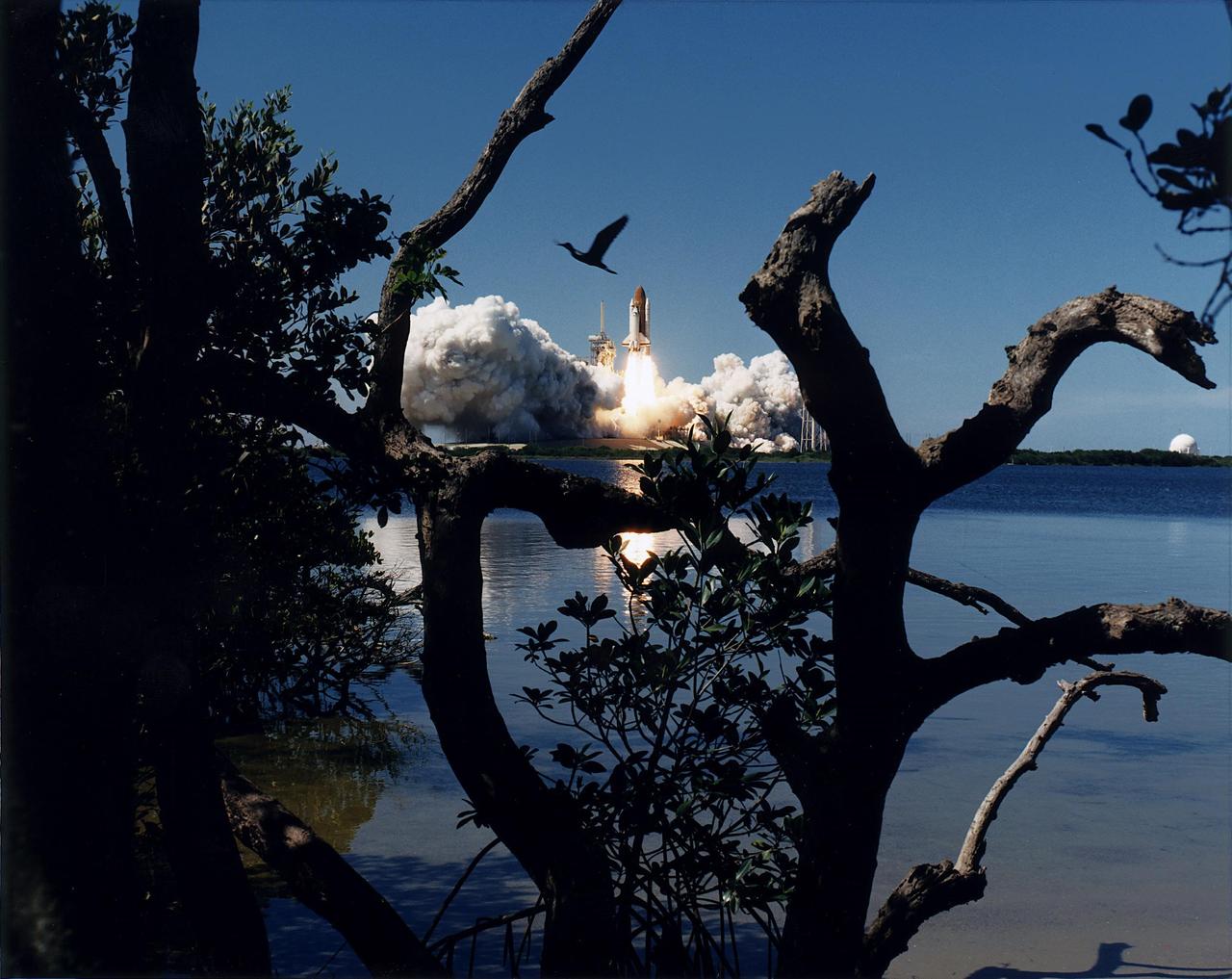
KENNEDY SPACE CENTER, FLA. -- Like a rising sun lighting up the afternoon sky, the Space Shuttle Columbia soars from Launch Pad 39A at 2:20:32 p.m. EST, April 4, on the 16-day Microgravity Science Laboratory-1 (MSL-1) mission. The crew members are Mission Commander James D. Halsell Jr., Pilot Susan L. Still, Payload Commander Janice Voss, Mission Specialists Michael L. Gernhardt and Donald A. Thomas, and Payload Specialists Roger K. Crouch and Gregory T. Linteris. During the scheduled 16-day STS-83 mission, the MSL-1 will be used to test some of the hardware, facilities and procedures that are planned for use on the International Space Station as well as research in combustion, protein crystal growth and materials processing experiments
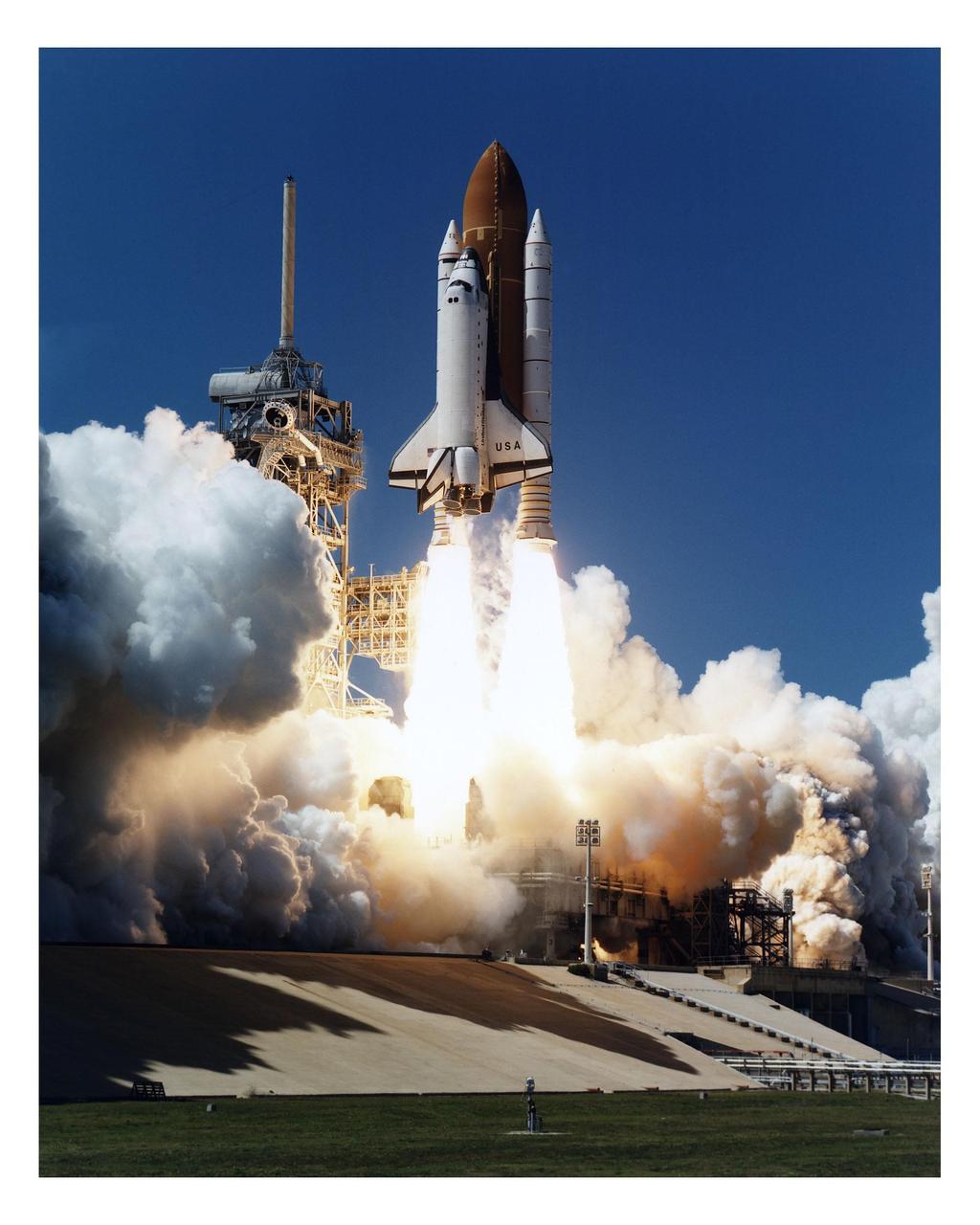
Like a rising sun lighting up the afternoon sky, the Space Shuttle Columbia soars from Launch Pad 39A at 2:20:32 p.m. EST, April 4, on the 16-day Microgravity Science Laboratory-1 (MSL-1) mission. The crew members are Mission Commander James D. Halsell, Jr.; Pilot Susan L. Still; Payload Commander Janice Voss; Mission Specialists Michael L. Gernhardt and Donald A. Thomas; and Payload Specialists Roger K. Crouch and Gregory T. Linteris. During the scheduled 16-day STS-83 mission, the MSL-1 will be used to test some of the hardware, facilities and procedures that are planned for use on the International Space Station as well as research in combustion, protein crystal growth and materials processing experiments
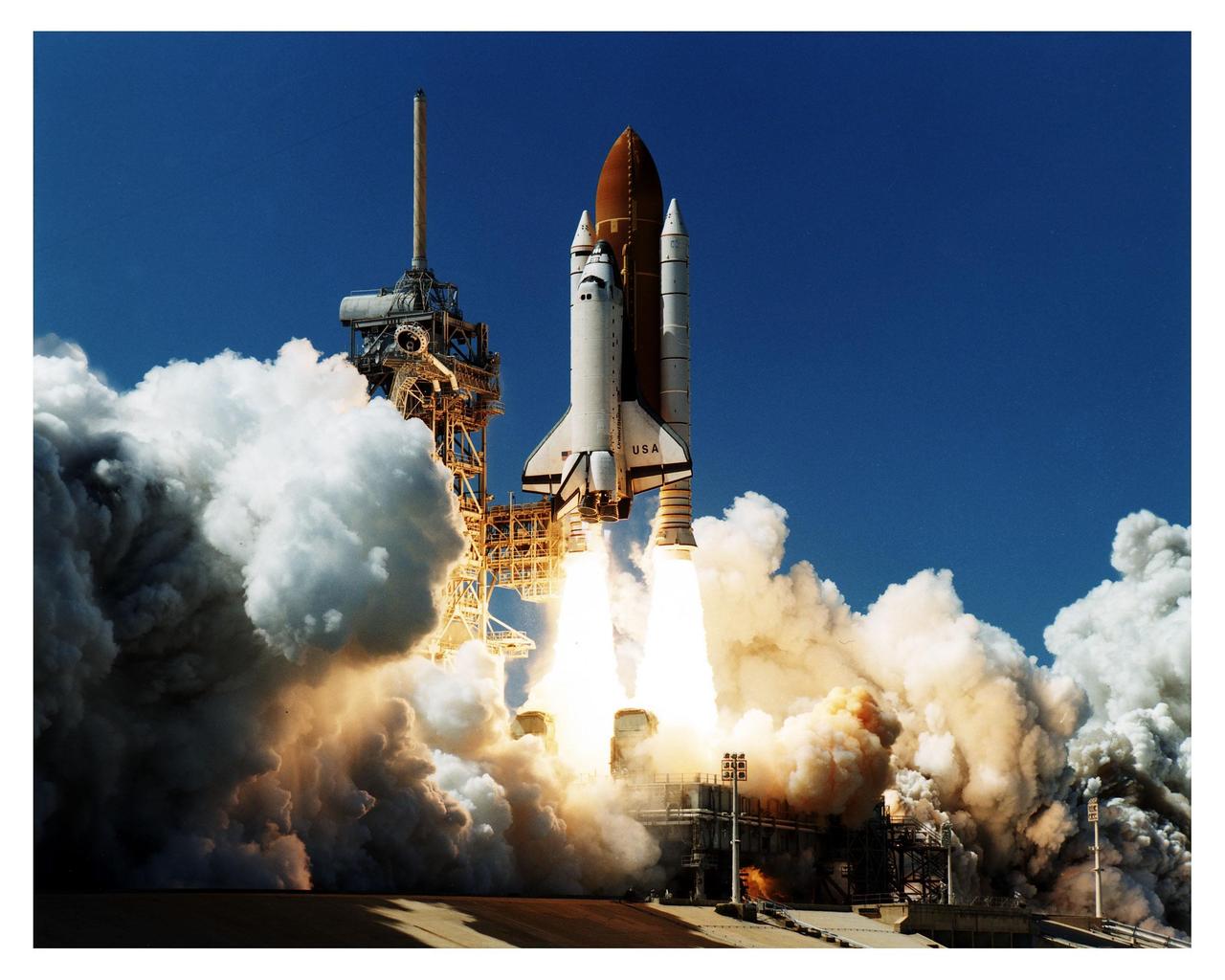
Like a rising sun lighting up the afternoon sky, the Space Shuttle Columbia soars from Launch Pad 39A at 2:20:32 p.m. EST, April 4, on the 16-day Microgravity Science Laboratory-1 (MSL-1) mission. The crew members are Mission Commander James D. Halsell, Jr.; Pilot Susan L. Still; Payload Commander Janice Voss; Mission Specialists Michael L. Gernhardt and Donald A. Thomas; and Payload Specialists Roger K. Crouch and Gregory T. Linteris. During the scheduled 16-day STS-83 mission, the MSL-1 will be used to test some of the hardware, facilities and procedures that are planned for use on the International Space Station as well as research in combustion, protein crystal growth and materials processing experiments
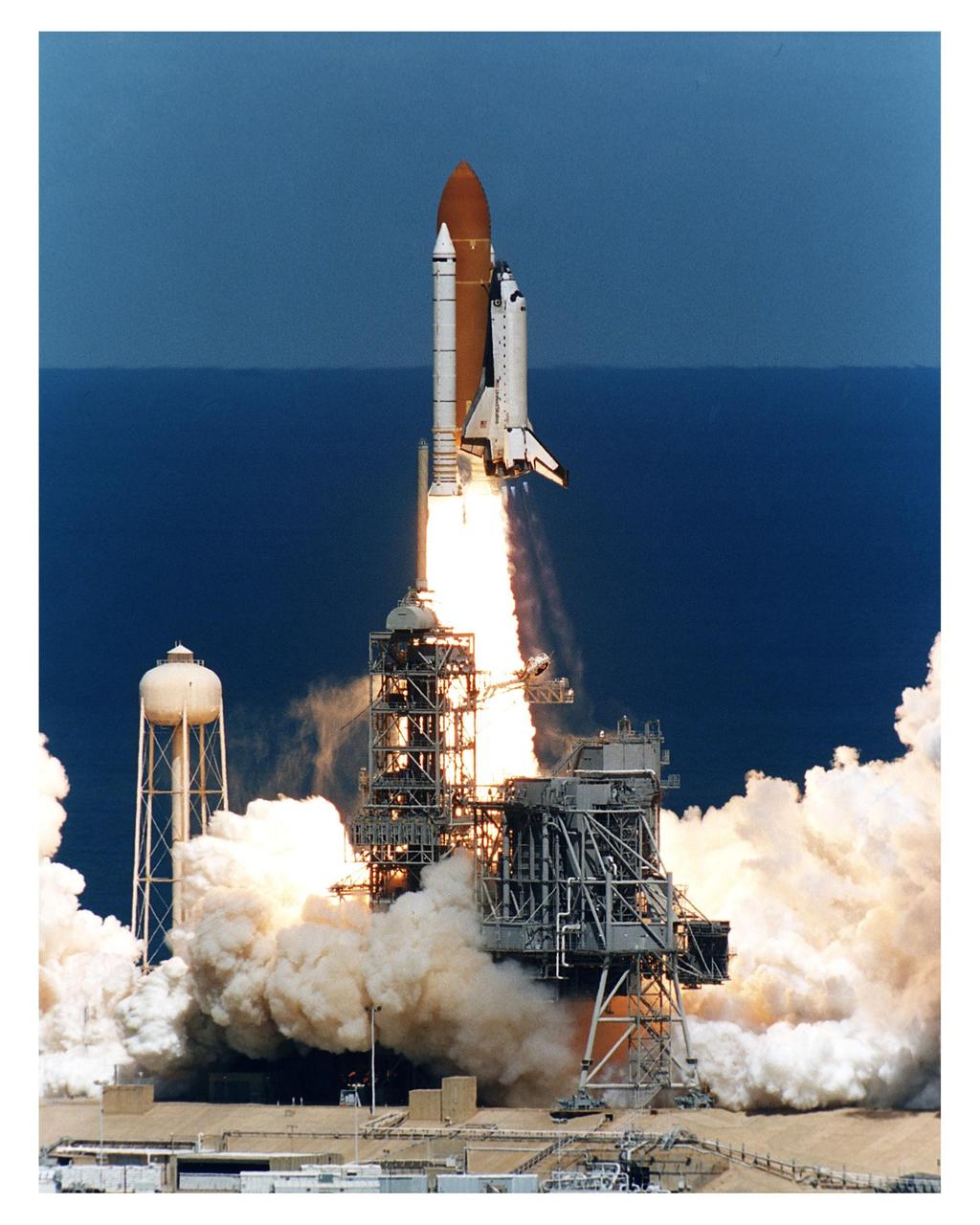
Like a rising sun lighting up the afternoon sky, the Space Shuttle Columbia soars from Launch Pad 39A at 2:20:32 p.m. EST, April 4, on the 16-day Microgravity Science Laboratory-1 (MSL-1) mission. The crew members are Mission Commander James D. Halsell, Jr.; Pilot Susan L. Still; Payload Commander Janice Voss; Mission Specialists Michael L. Gernhardt and Donald A. Thomas; and Payload Specialists Roger K. Crouch and Gregory T. Linteris. During the scheduled 16-day STS-83 mission, the MSL-1 will be used to test some of the hardware, facilities and procedures that are planned for use on the International Space Station as well as research in combustion, protein crystal growth and materials processing experiments
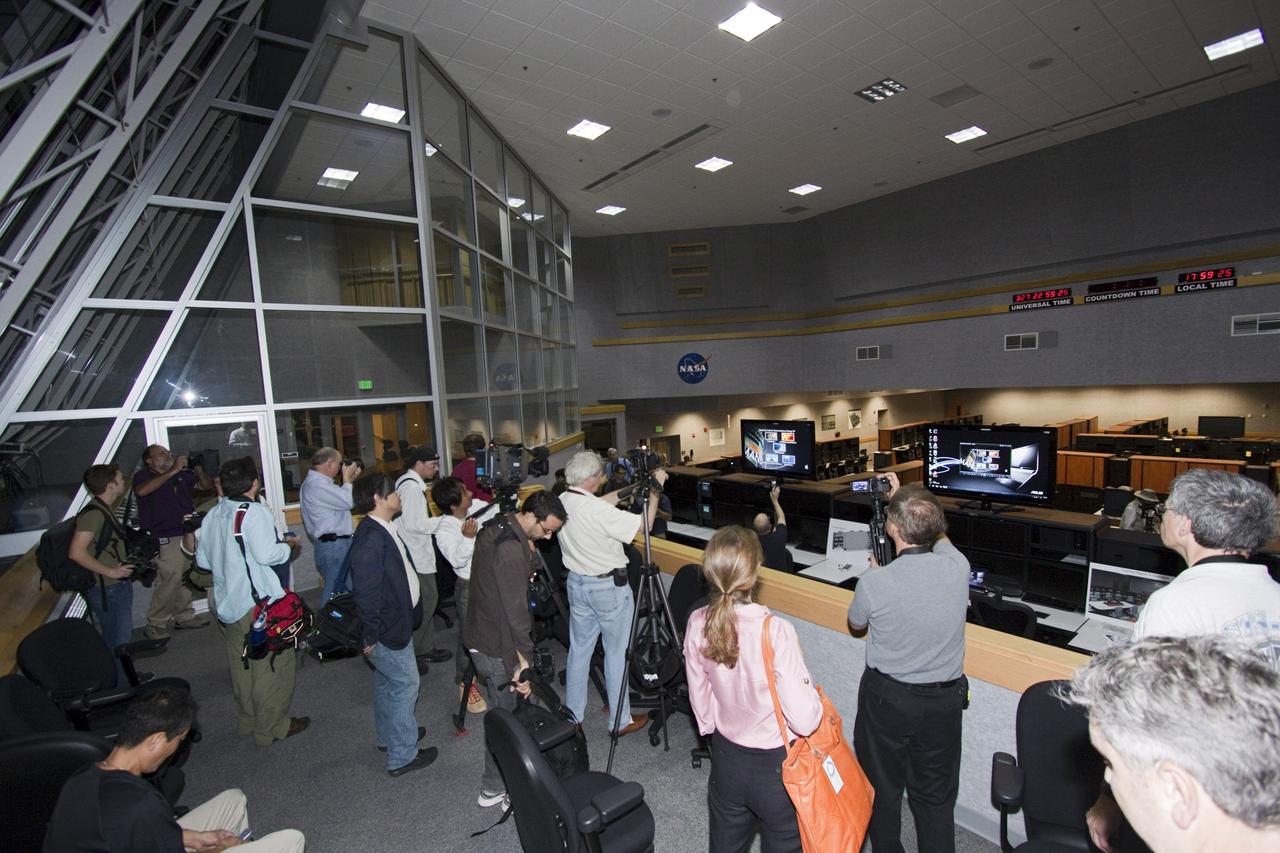
CAPE CANAVERAL, Fla. – At NASA Kennedy Space Center in Florida, media representatives tour the Launch Control Center's Firing Room 1. They are taking the 21st Century Ground Systems tour which also includes the Vehicle Assembly Building, a crawler-transporter parked on the crawlerway, and the new mobile launcher on Launch Pad 39B. These facilities and equipment will be used to prepare and launch NASA's new Orion spacecraft on the Space Launch System heavy-lift rocket. The tour was arranged as part of prelaunch media activities for the agency's Mars Science Laboratory (MSL) launch. Liftoff of MSL aboard a United Launch Alliance Atlas V rocket from Space Launch Complex-41 on Cape Canaveral Air Force Station is planned during a launch window which extends from 10:02 a.m. to 11:45 a.m. EST on Nov. 26. For more information, visit http://www.nasa.gov/msl. Photo credit: NASA/Jim Grossmann
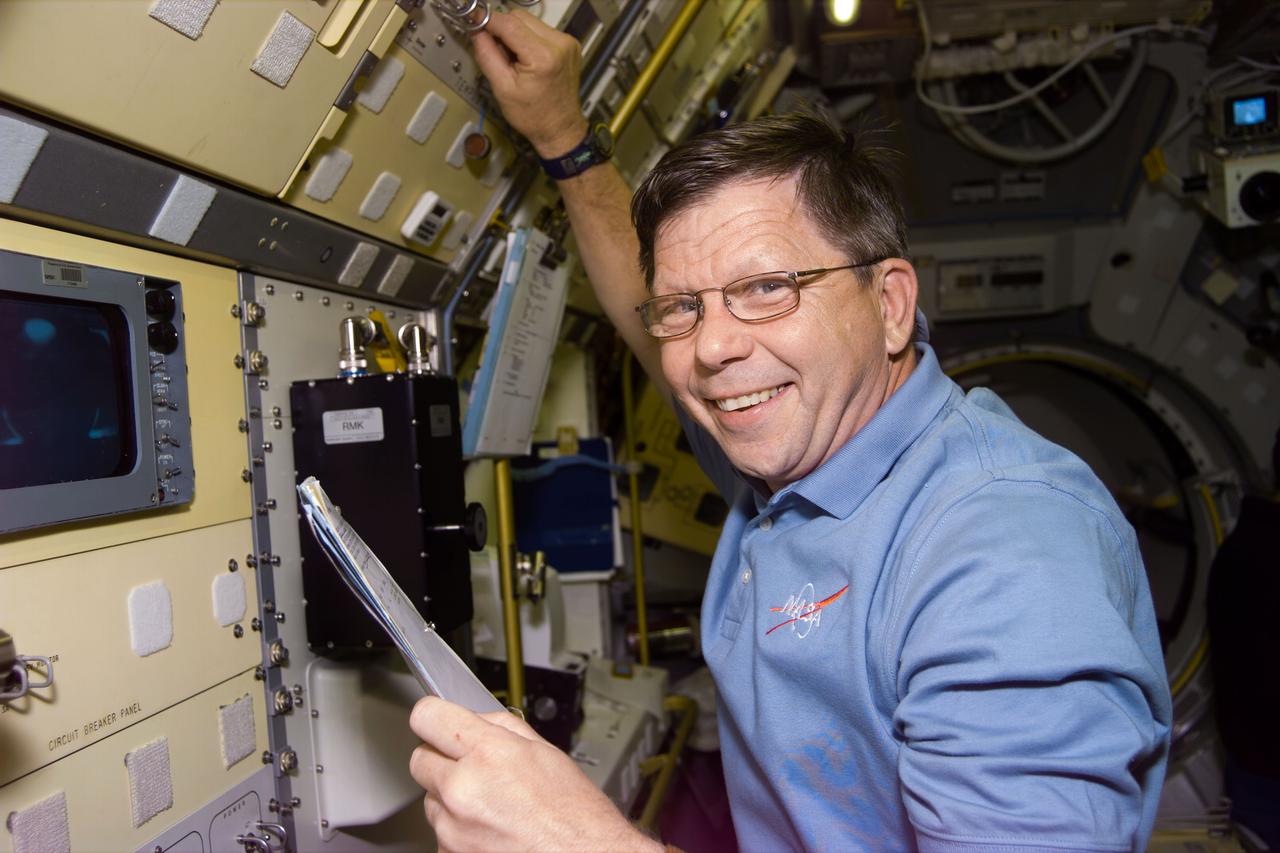
S94-E-5019 (6 July 1997) --- Roger K. Crouch, payload specialist for the Microgravity Sciences Laboratory (MSL-1) mission, is seen at the experiment racks during Flight Day 6 aboard Spacelab. The photo was recorded with an Electronic Still Camera (ESC) and later downlinked to ground controllers in Houston, Texas.
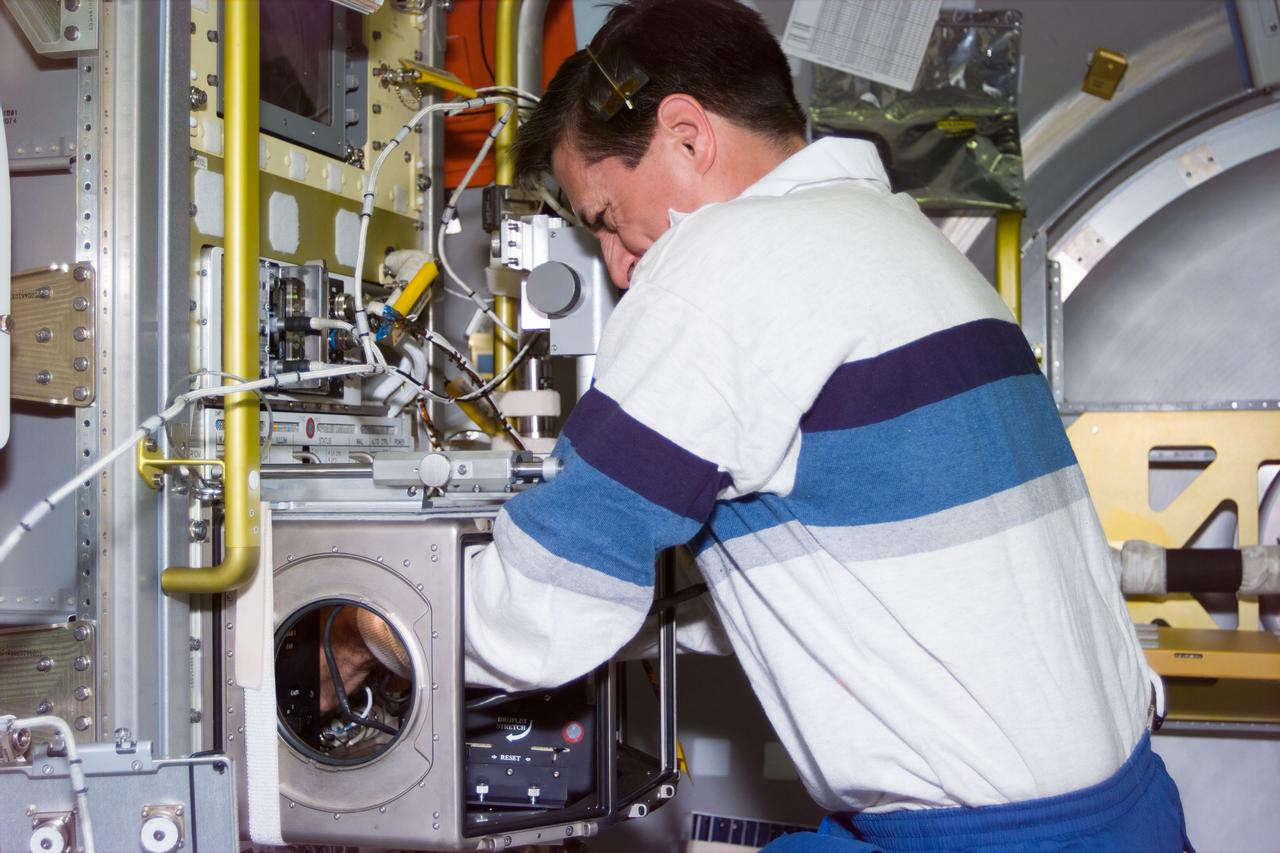
S94-E-5046 (July 1997) --- Astronaut Donald Thomas, mission specialist, sets up an experiment in the glovebox onboard the Spacelab science module. Thomas joins four other NASA astronauts and two payload specialists who are supporting the Microgravity Science Laboratory (MSL-1) mission aboard the Space Shuttle Columiba.
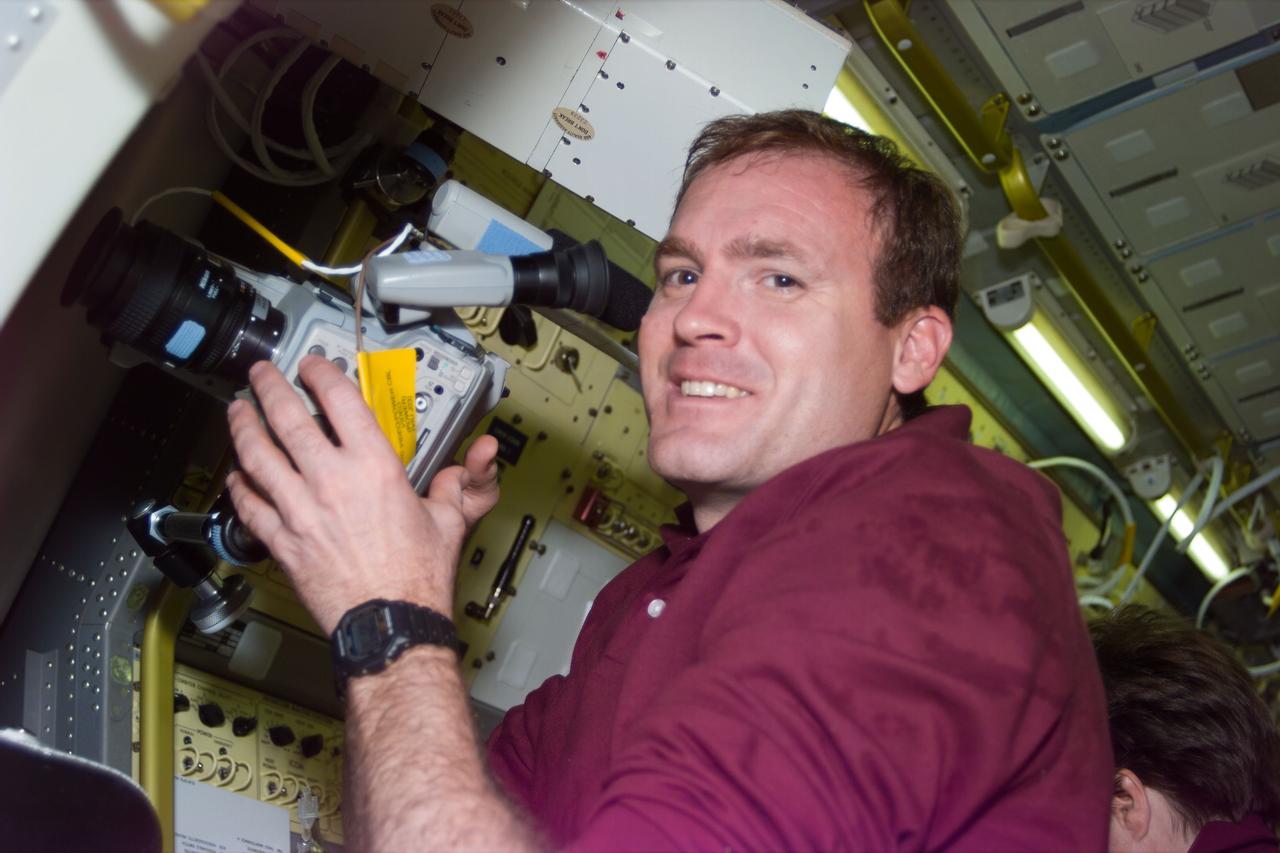
S94-E-5045 (July 1997) --- Astronaut James D. Halsell Jr., mission commander, video tapes an experiment onboard the Spacelab science module in support of the Microgravity Science Laboratory (MSL-1) mission of Columbia and STS-94.
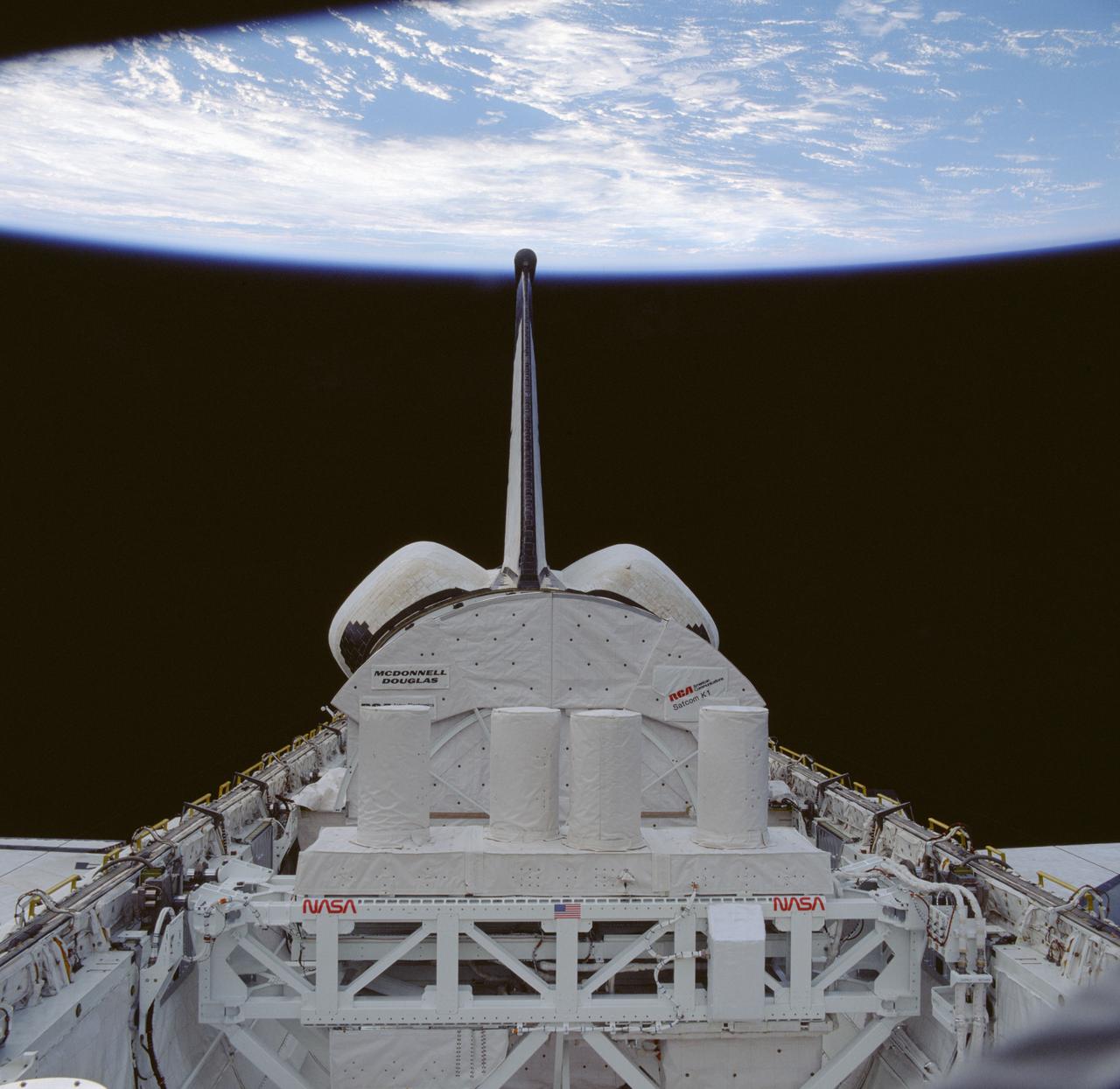
61C-39-002 (12-17 Jan 1986) --- This view of the cargo bay of the Earth-orbiting Space Shuttle Columbia reveals some of the STS 61-C mission payloads. The materials science laboratory (MSL-2), sponsored by the Marshall Space Flight Center (MSFC), is in the foreground. A small portion of the first Hitchhiker payload, sponsored by the Goddard Space Flight Center (GSFC), is in the immediate foreground, mounted to the spacecraft's starboard side. The closed sun shield for the now-vacated RCA SATCOM K-1 communications satellite is behind the MSL. Completely out of view, behind the shield, are 13 getaway specials in canisters. Clouds over ocean and the blackness of space share the backdrop for the 70mm camera's frame.
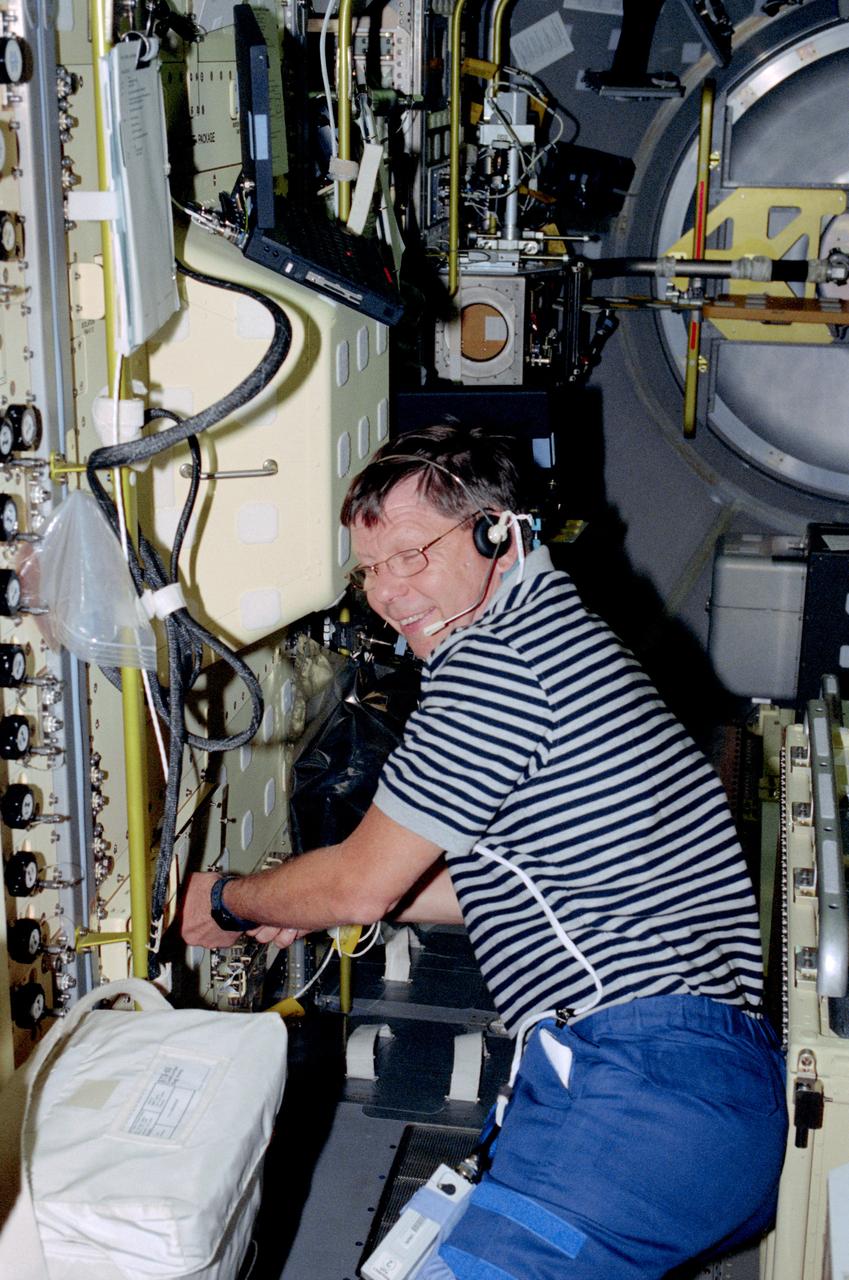
STS083-308-025 (4-8 April 1997) --- Payload specialist Roger K. Crouch, talks to ground controllers while working at Combustion Module-1 in the Spacelab Science Module. Crouch, along with five other NASA astronauts and a second payload specialist supporting the Microgravity Sciences Laboratory (MSL-1) mission were less than a fourth of the way through a scheduled 16-day flight when a power problem cut short their planned stay.

Apollo 7 Commander Walter M. "Wally" Schirra and his wife, Josephine, were among the many special NASA STS-83 launch guests who witnessed the liftoff of the Space Shuttle Columbia April 4 at the Banana Creek VIP Viewing Site at KSC. Columbia took off from Launch Pad 39A at 2:20:32 p.m. EST to begin the 16-day Microgravity Science Laboratory-1 (MSL-1) mission
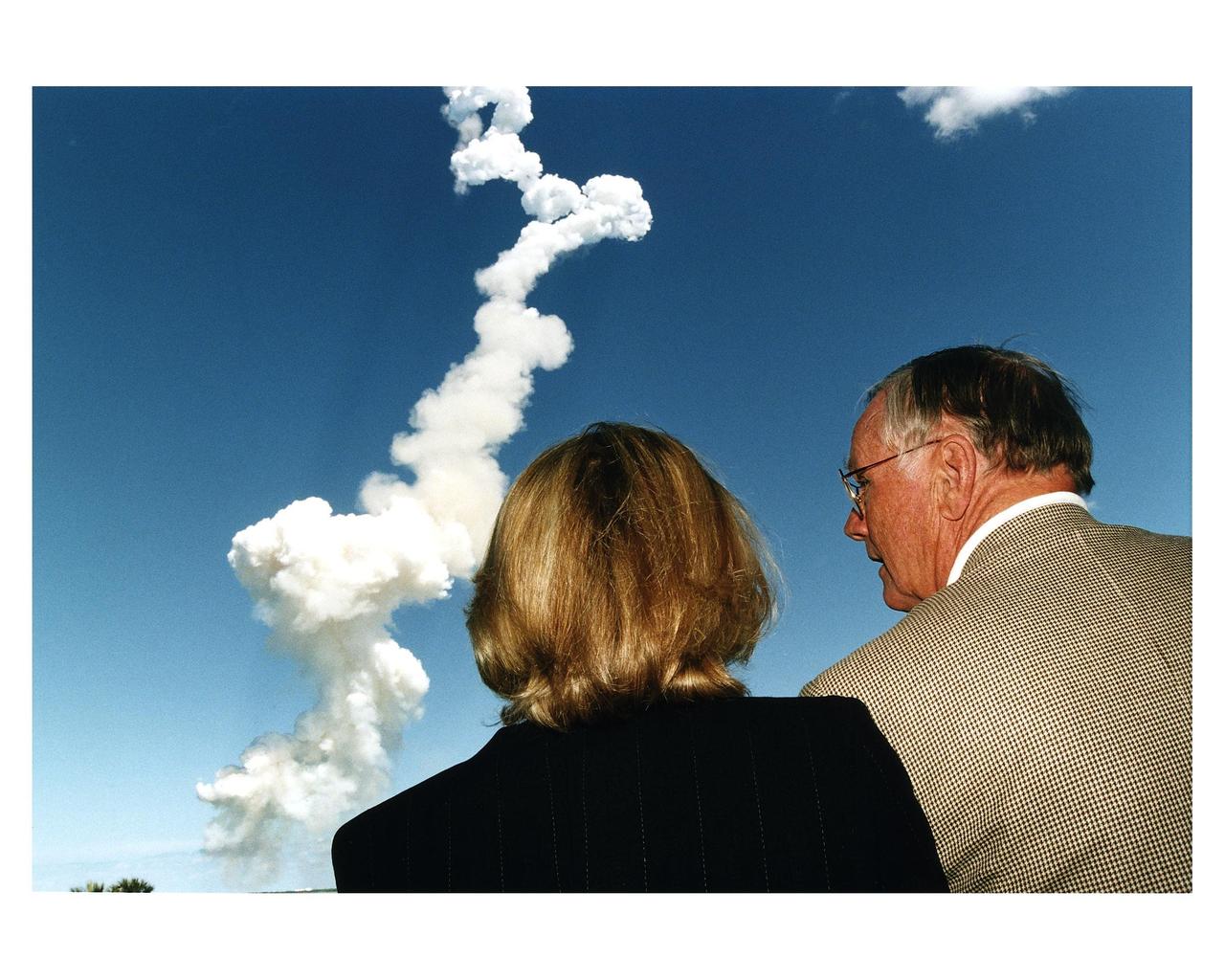
Apollo l1 Commander Neil A. Armstrong and his wife, Carol, were among the many special NASA STS-83 launch guests who witnessed the liftoff of the Space Shuttle Columbia April 4 at the Banana Creek VIP Viewing Site at KSC. Columbia took off from Launch Pad 39A at 2:20:32 p.m. EST to begin the 16-day Microgravity Science Laboratory-1 (MSL-1) mission
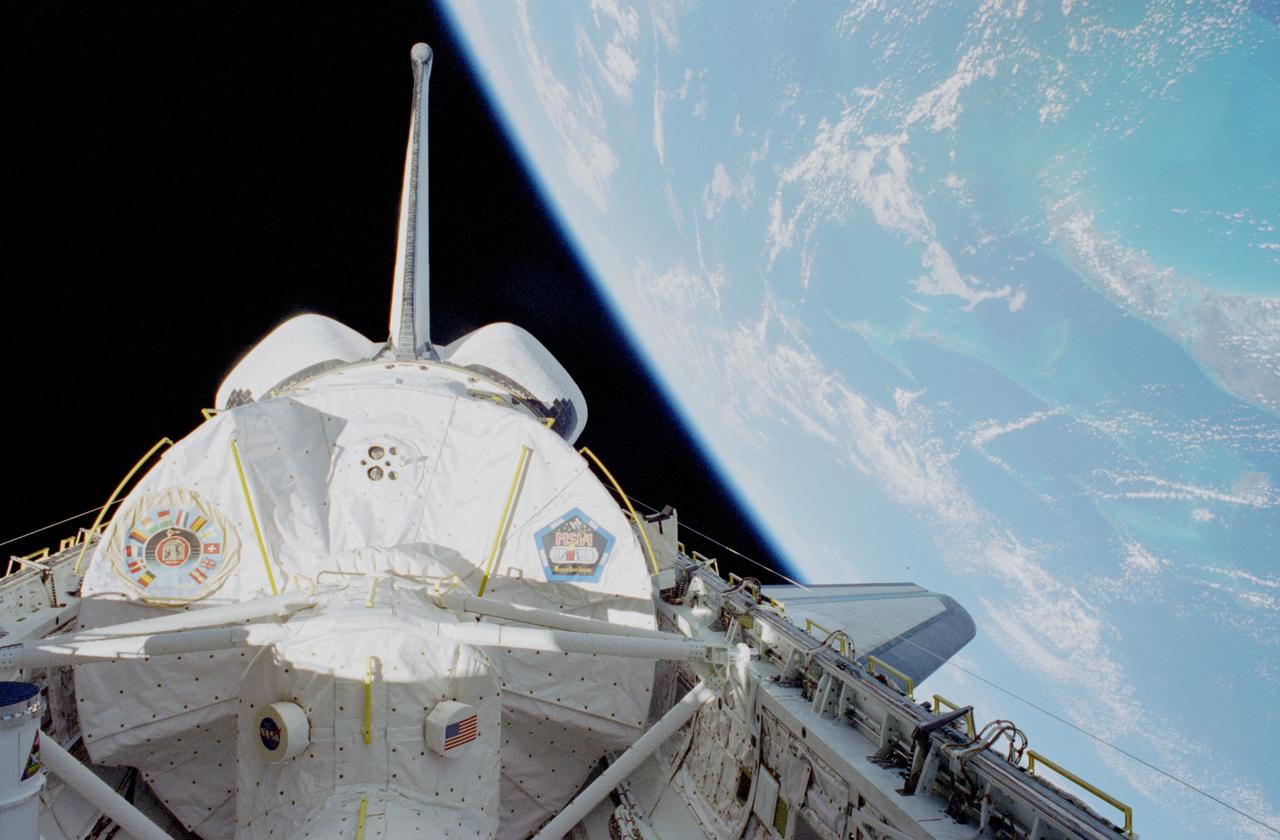
STS083-464-005 (4-8 April 1997) --- This view, photographed not long after orbital insertion, shows Spacelab Module in the cargo bay of the Space Shuttle Columbia, backdropped against the darkness of space and the Bahama Islands area of the Caribbean Sea. The logo on the left pays tribute to the various nations participating in the mission. The decal on the right is the pentagonal logo for the Microgravity Science Laboratory 1 (MSL-1) mission.
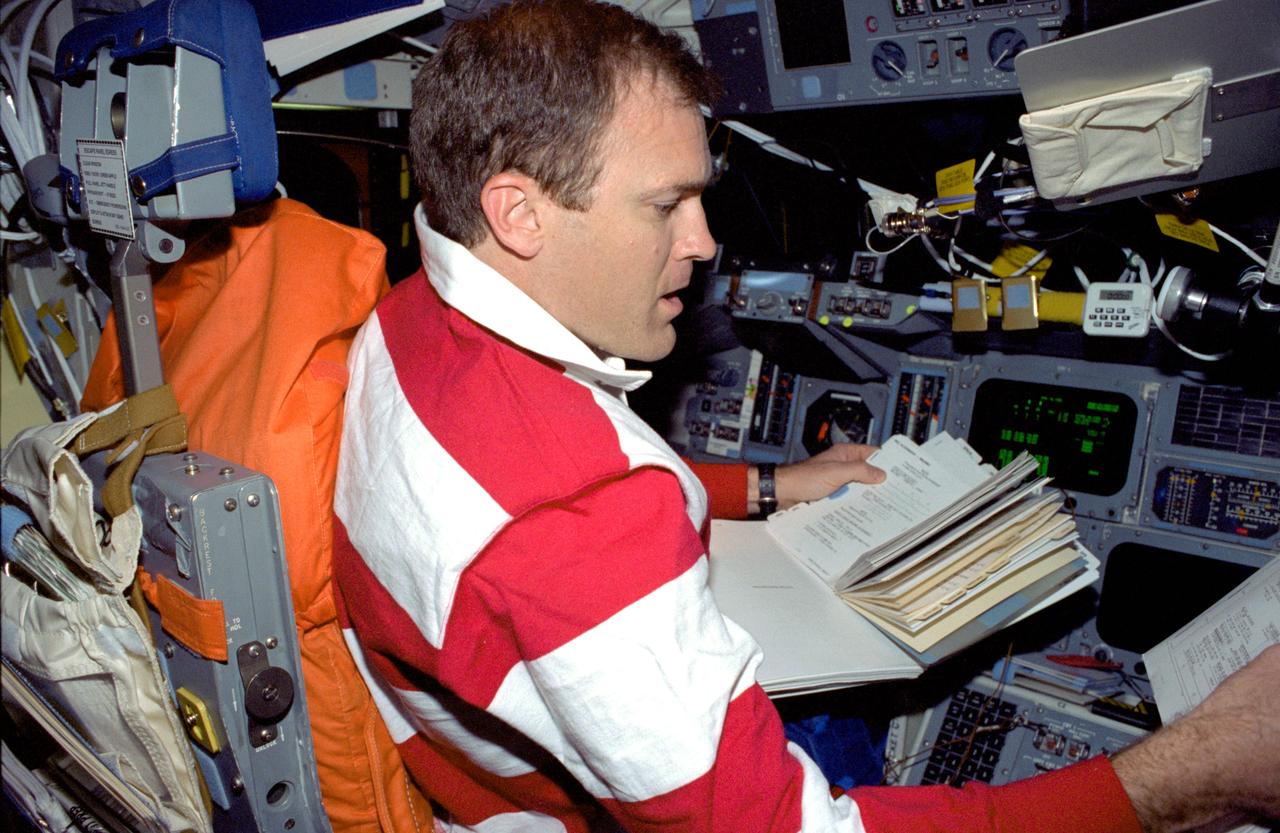
STS083-450-012 (4-8 April 1997) --- Astronaut James D. Halsell, Jr., commander, mans the commander's station aboard the Space Shuttle Columbia. Designed as a 16-day Microgravity Science Laboratory 1 (MSL-1) mission, the flight was cut short when one of three fuel cells did not function properly.

Apollo 11 Commander Neil A. Armstrong and his wife, Carol, were among the many special NASA STS-83 launch guests who witnessed the liftoff of the Space Shuttle Columbia April 4 at the Banana Creek VIP Viewing Site at KSC. Columbia took off from Launch Pad 39A at 2:20:32 p.m. EST to begin the 16-day Microgravity Science Laboratory-1 (MSL-1) mission
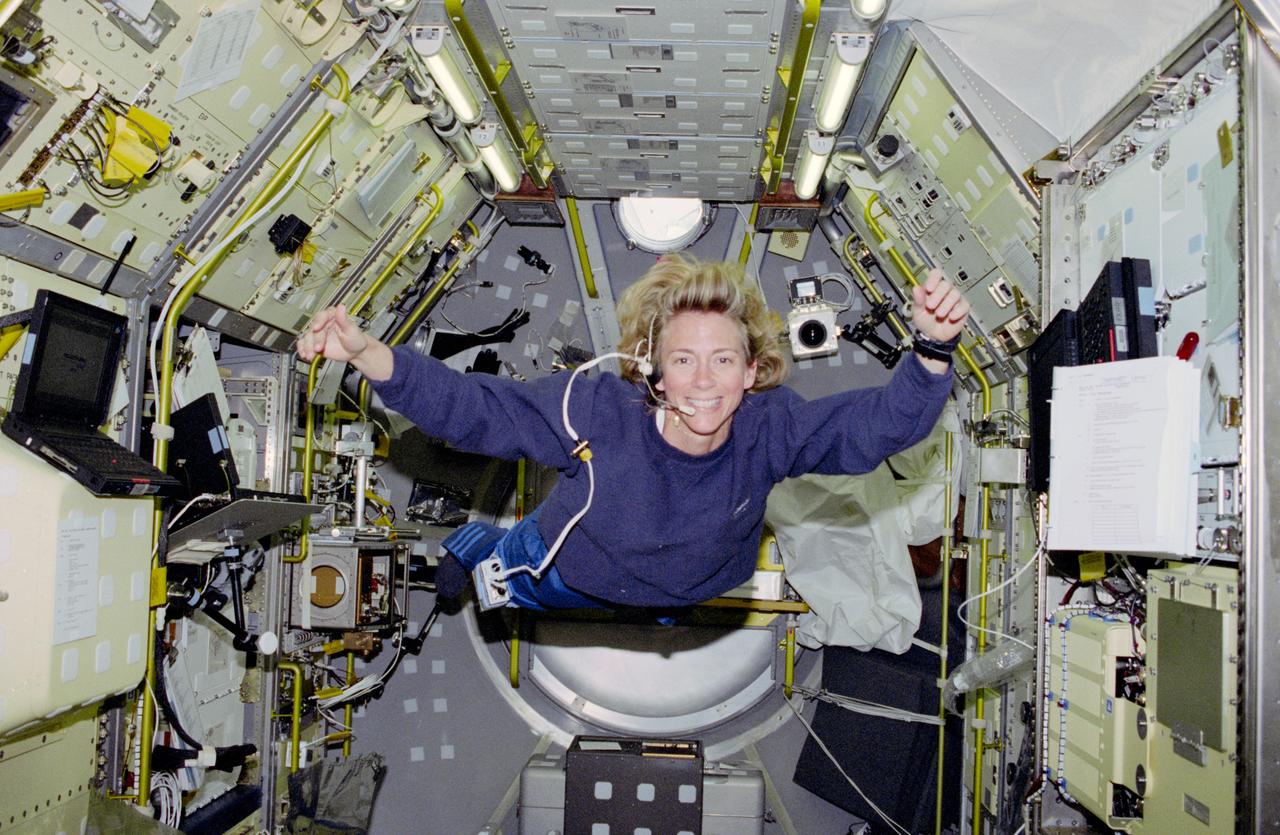
STS083-303-002 (4-8 April 1997) --- Astronaut Susan L. Still, pilot, floats into the Spacelab Module in the early phases of its activation. Still, a member of the 1995 astronaut class, joined four other NASA astronauts and two scientist payload specialists for the Microgravity Science Laboratory 1 (MSL-1) mission aboard the Earth-orbiting Space Shuttle Columbia.
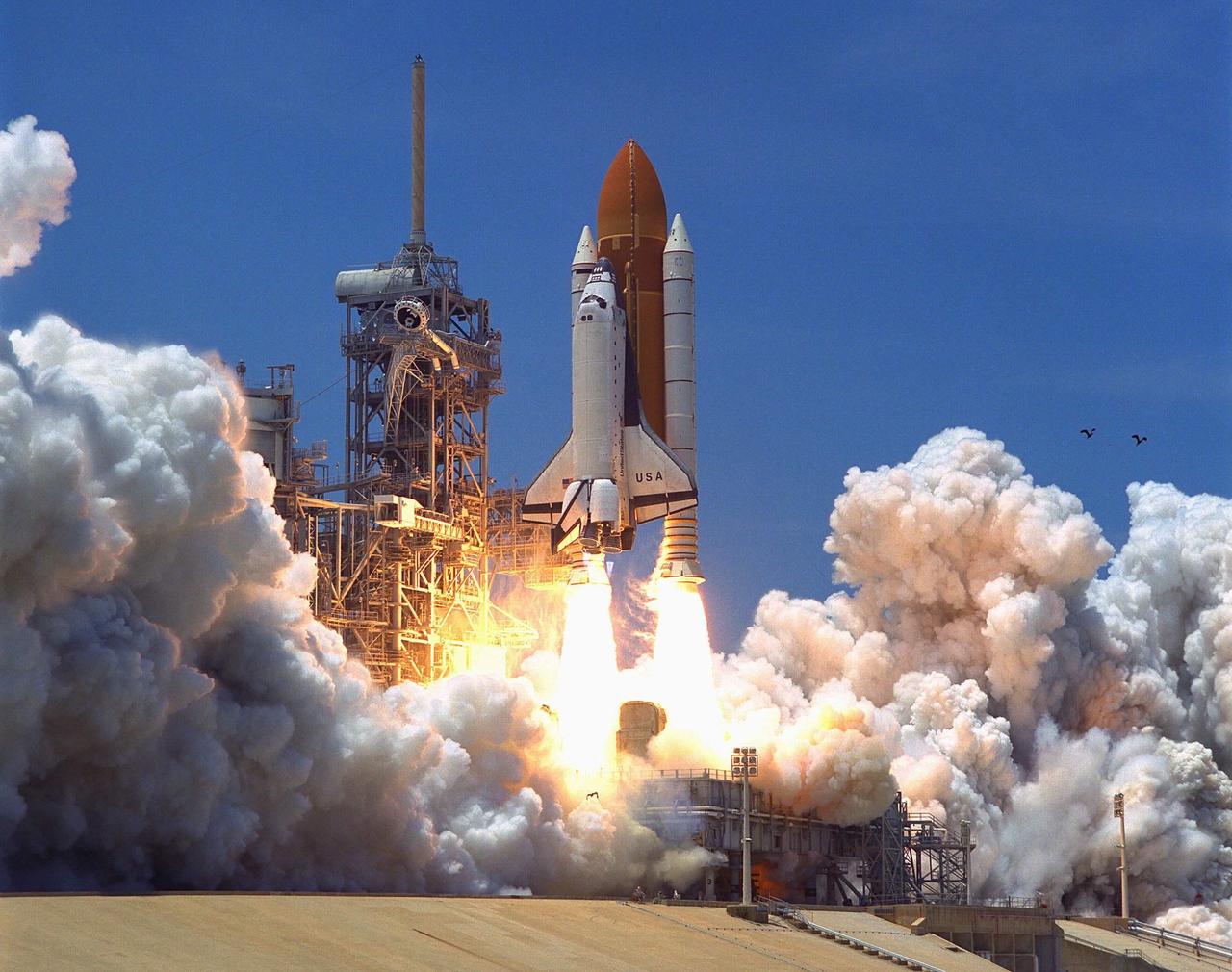
KENNEDY SPACE CENTER, Fla. -- The Space Shuttle Columbia soars from Launch Pad 39A at 2:02 p.m. EDT July 1 to begin the 16-day STS-94 Microgravity Science Laboratory-1 (MSL-1) mission. The launch window was opened 47 minutes earlier than the originally scheduled time of 2:37 p.m. to improve the opportunity to lift off before Florida summer rain showers reached the space center. The crew members are Mission Commander James D. Halsell Jr.; Pilot Susan L. Still; Payload Commander Janice Voss; Mission Specialists Michael L.Gernhardt and Donald A. Thomas; and Payload Specialists Roger K. Crouch and Gregory T. Linteris. During the space flight, the MSL-1 will be used to test some of the hardware, facilities and procedures that are planned for use on the International Space Station while the flight crew conducts combustion, protein crystal growth and materials processing experiments. Also onboard is the Hitchhiker Cryogenic Flexible Diode (CRYOFD) experiment payload, which is attached to the right side of Columbia’s payload bay. These payloads had previously flown on the STS-83 mission in April, which was cut short after nearly four days because of indications of a faulty fuel cell. STS-94 is a reflight of that mission
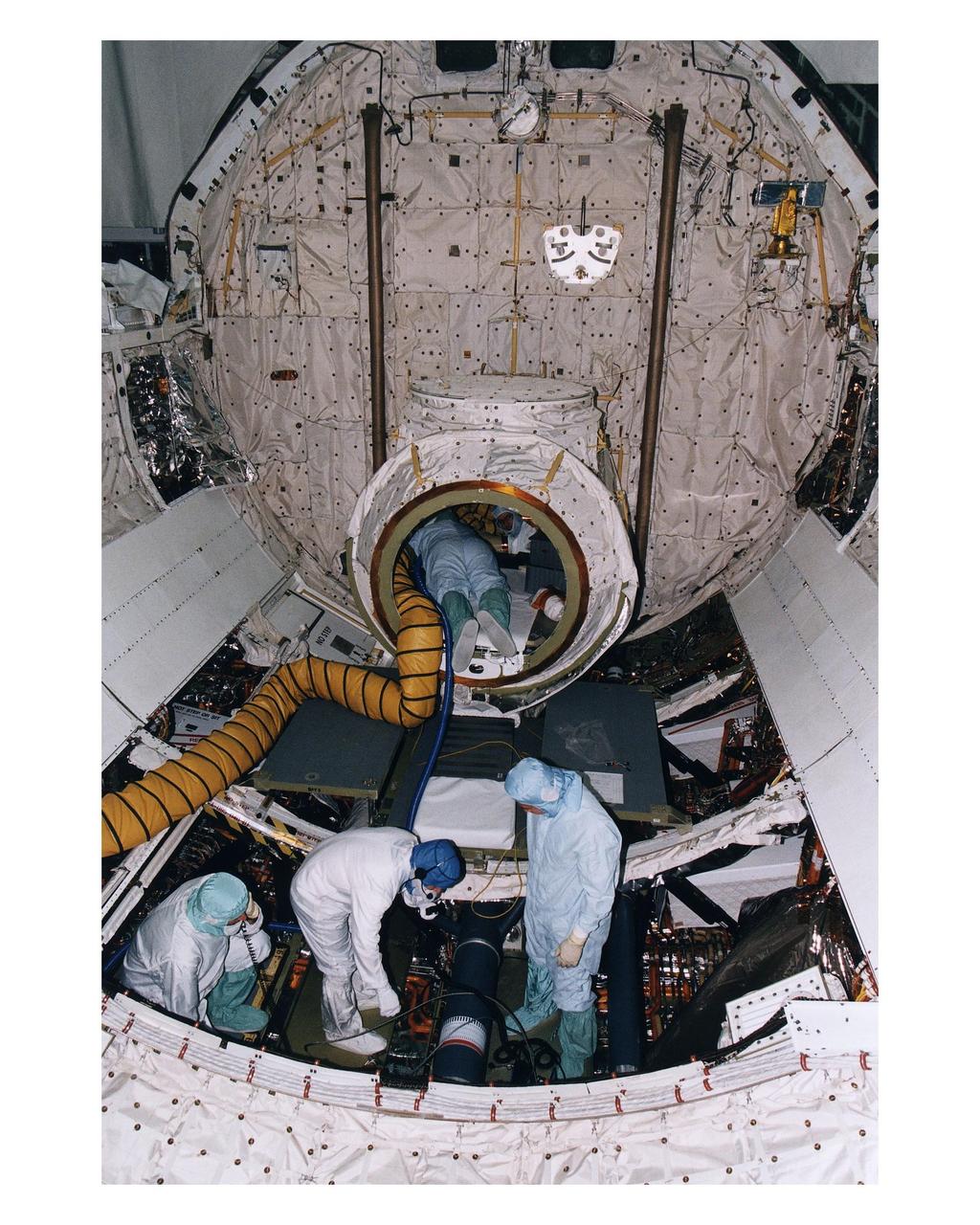
KSC payload processing employees in Orbiter Processing Facility 1 prepare the Space Shuttle Orbiter Columbia’s crew airlock and payload bay for the reinstallation of the Spacelab long transfer tunnel that leads from the airlock to the Microgravity Science Laboratory-1 (MSL-1) Spacelab module. The tunnel was taken out after the STS-83 mission to allow better access to the MSL-1 module during reservicing operations to prepare it for for the STS-94 mission. That space flight is now scheduled to lift off in early July. This was the first time that this type of payload was reserviced without removing it from the payload bay. This new procedure pioneers processing efforts for quick relaunch turnaround times for future payloads. The Spacelab module was scheduled to fly again with the full complement of STS-83 experiments after that mission was cut short due to a faulty fuel cell. During the scheduled 16-day STS-94 mission, the experiments will be used to test some of the hardware, facilities and procedures that are planned for use on the International Space Station while the flight crew conducts combustion, protein crystal growth and materials processing experiments
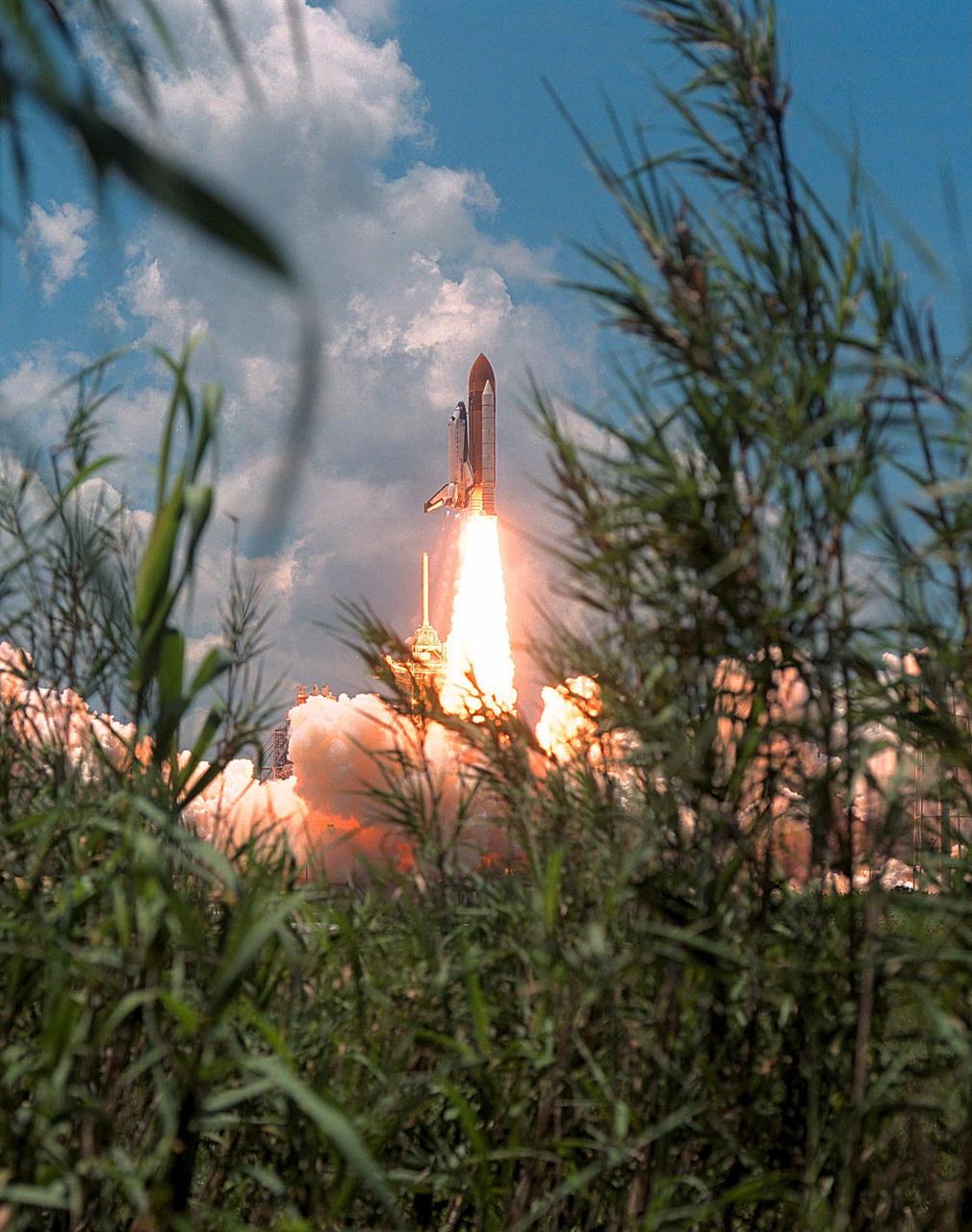
KENNEDY SPACE CENTER, Fla. -- The Space Shuttle Columbia soars from Launch Pad 39A at 2:02 p.m. EDT July 1 to begin the 16-day STS-94 Microgravity Science Laboratory-1 (MSL-1) mission. The launch window was opened 47 minutes earlier than the originally scheduled time of 2:37 p.m. to improve the opportunity to lift off before Florida summer rain showers reached the space center. The crew members are Mission Commander James D. Halsell Jr.; Pilot Susan L. Still; Payload Commander Janice Voss; Mission Specialists Michael L.Gernhardt and Donald A. Thomas; and Payload Specialists Roger K. Crouch and Gregory T. Linteris. During the space flight, the MSL-1 will be used to test some of the hardware, facilities and procedures that are planned for use on the International Space Station while the flight crew conducts combustion, protein crystal growth and materials processing experiments. Also onboard is the Hitchhiker Cryogenic Flexible Diode (CRYOFD) experiment payload, which is attached to the right side of Columbia’s payload bay. These payloads had previously flown on the STS-83 mission in April, which was cut short after nearly four days because of indications of a faulty fuel cell. STS-94 is a reflight of that mission
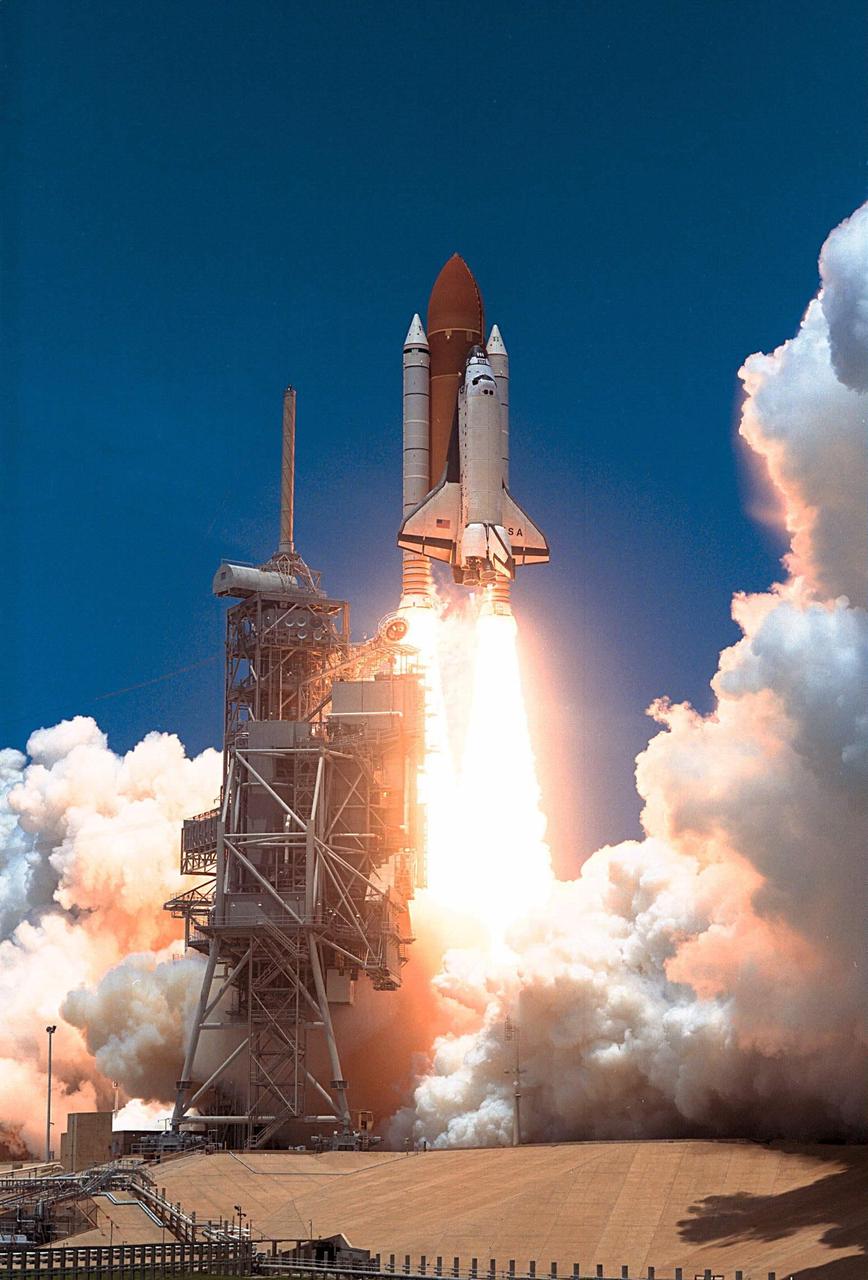
KENNEDY SPACE CENTER, Fla. -- The Space Shuttle Columbia soars from Launch Pad 39A at 2:02 p.m. EDT July 1 to begin the 16-day STS-94 Microgravity Science Laboratory-1 (MSL-1) mission. The launch window was opened 47 minutes earlier than the originally scheduled time of 2:37 p.m. to improve the opportunity to lift off before Florida summer rain showers reached the space center. The crew members are Mission Commander James D. Halsell Jr.; Pilot Susan L. Still; Payload Commander Janice Voss; Mission Specialists Michael L.Gernhardt and Donald A. Thomas; and Payload Specialists Roger K. Crouch and Gregory T. Linteris. During the space flight, the MSL-1 will be used to test some of the hardware, facilities and procedures that are planned for use on the International Space Station while the flight crew conducts combustion, protein crystal growth and materials processing experiments. Also onboard is the Hitchhiker Cryogenic Flexible Diode (CRYOFD) experiment payload, which is attached to the right side of Columbia’s payload bay. These payloads had previously flown on the STS-83 mission in April, which was cut short after nearly four days because of indications of a faulty fuel cell. STS-94 is a reflight of that mission
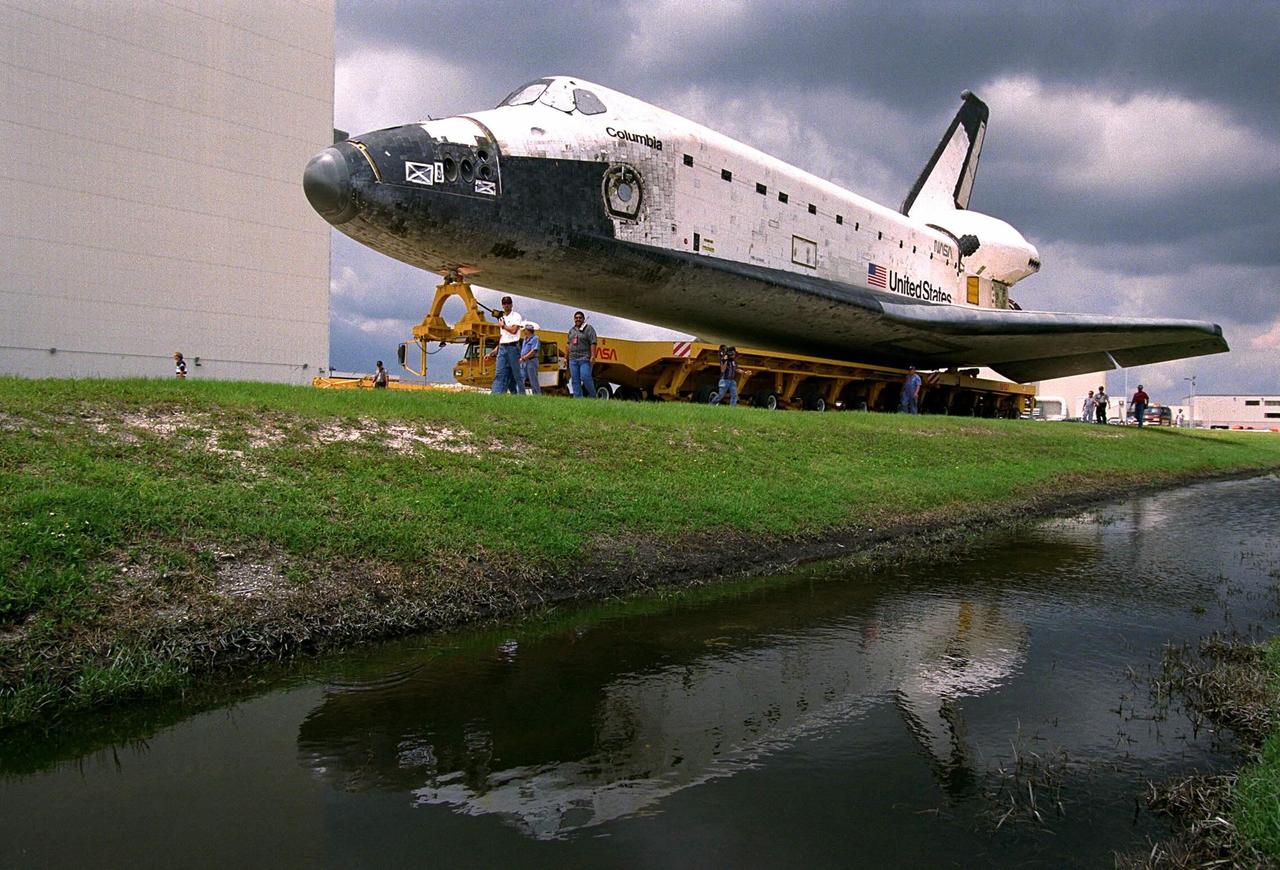
The Space Shuttle Orbiter Columbia is reflected in a nearby pond as it rolls over to the Vehicle Assembly Building (VAB) June 4 from Orbiter Processing Facility (OPF) 1 atop its transporter in preparation for the STS-94 mission. Once inside the VAB, Columbia will be hoisted to be mated with its solid rocket boosters and external tank. Columbia was moved to the OPF April 8 after the completion of the STS-83 mission. KSC payloads processing employees then began work to reservice the Microgravity Science Laboratory-1 (MSL-1) Spacelab module in the orbiter’s payload bay for the STS-94 mission. This was the first time that this type of payload was reserviced without removing it from the payload bay. This new procedure pioneers processing efforts for possible quick relaunch turnaround times for future payloads. The MSL-1 module will fly again with the full complement of STS-83 experiments after that mission was cut short due to indications of a faulty fuel cell. During the scheduled 16-day STS-94 mission, the experiments will be used to test some of the hardware, facilities and procedures that are planned for use on the International Space Station while the flight crew conducts combustion, protein crystal growth and materials processing experiments
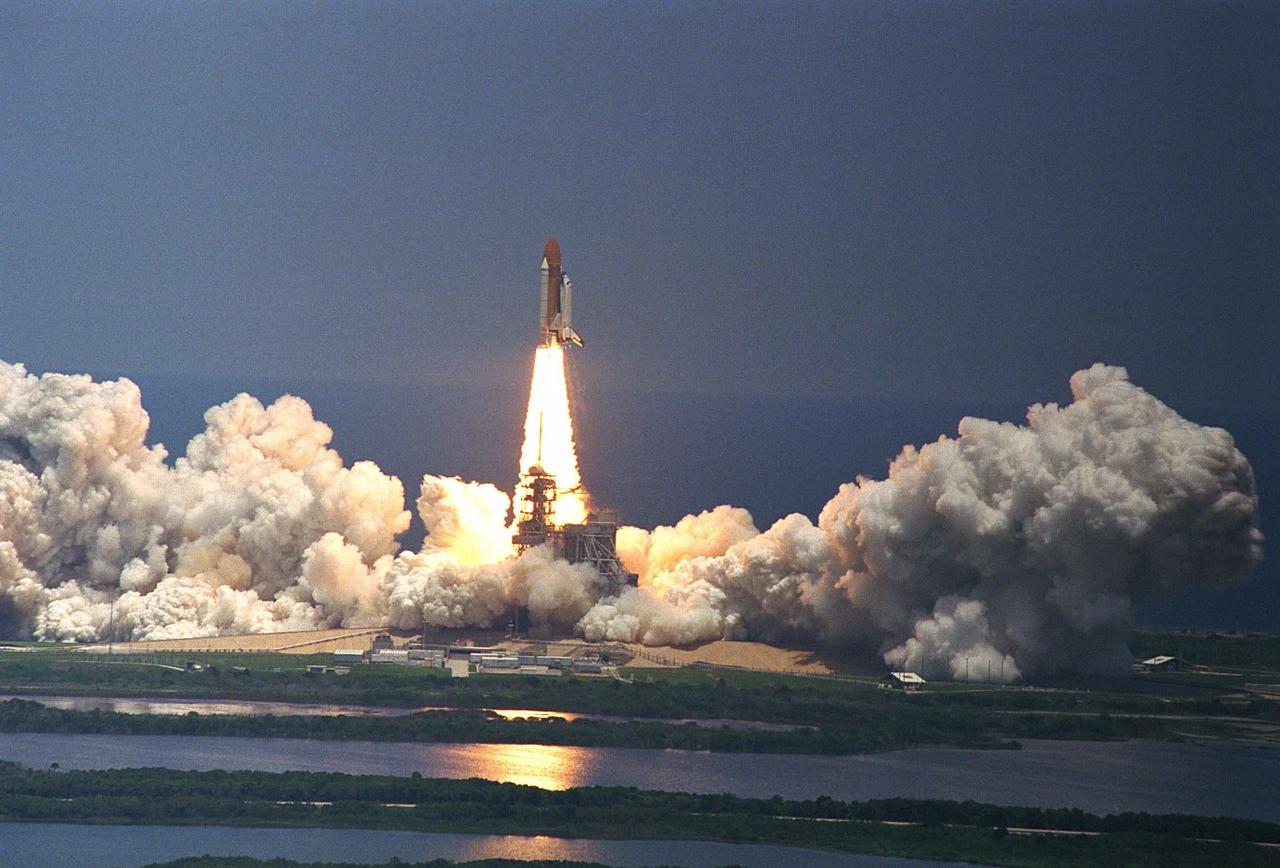
KENNEDY SPACE CENTER, Fla. -- The Space Shuttle Columbia soars from Launch Pad 39A at 2:02 p.m. EDT July 1 to begin the 16-day STS-94 Microgravity Science Laboratory-1 (MSL-1) mission. The launch window was opened 47 minutes earlier than the originally scheduled time of 2:37 p.m. to improve the opportunity to lift off before Florida summer rain showers reached the space center. The crew members are Mission Commander James D. Halsell Jr.; Pilot Susan L. Still; Payload Commander Janice Voss; Mission Specialists Michael L.Gernhardt and Donald A. Thomas; and Payload Specialists Roger K. Crouch and Gregory T. Linteris. During the space flight, the MSL-1 will be used to test some of the hardware, facilities and procedures that are planned for use on the International Space Station while the flight crew conducts combustion, protein crystal growth and materials processing experiments. Also onboard is the Hitchhiker Cryogenic Flexible Diode (CRYOFD) experiment payload, which is attached to the right side of Columbia’s payload bay. These payloads had previously flown on the STS-83 mission in April, which was cut short after nearly four days because of indications of a faulty fuel cell. STS-94 is a reflight of that mission
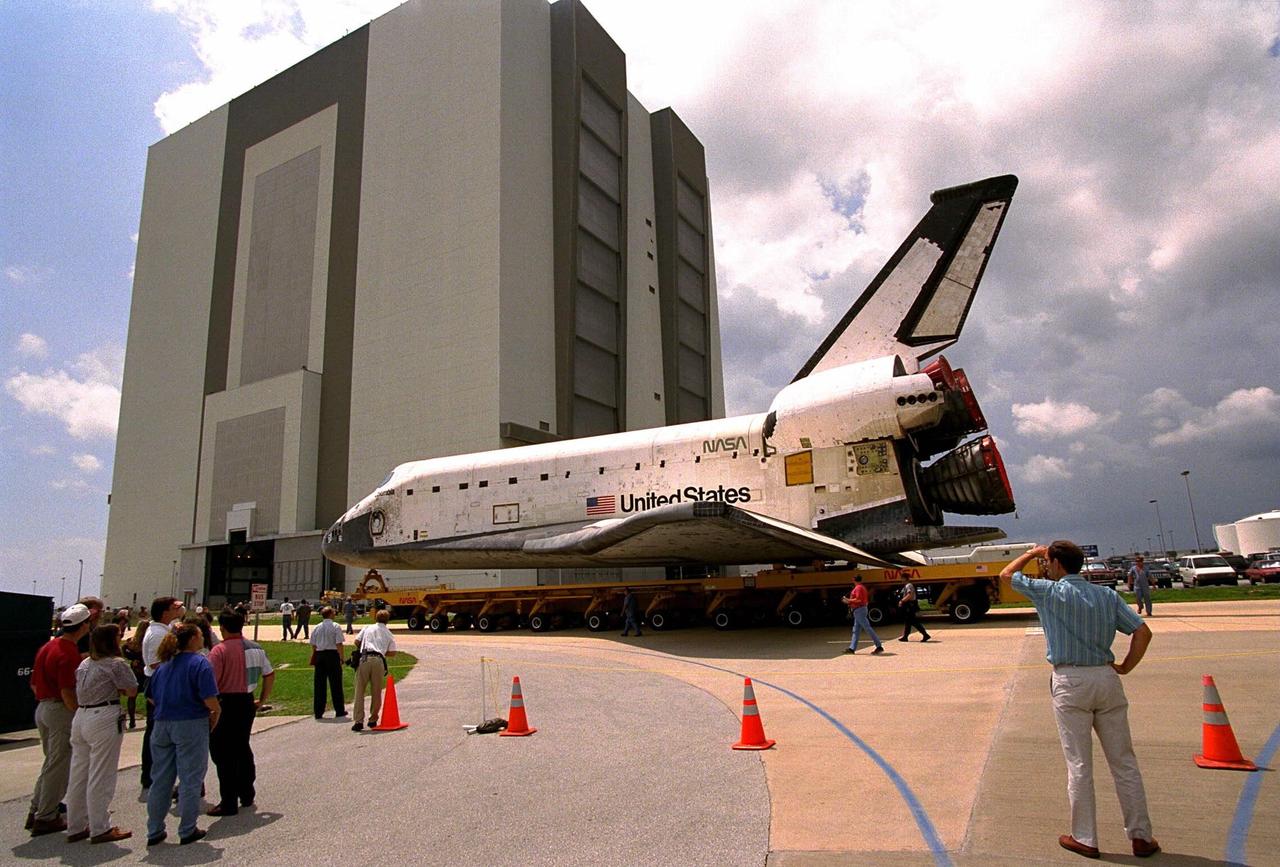
While KSC workers in the Launch Complex 39 Area watch, The Space Shuttle Orbiter Columbia rolls over to the Vehicle Assembly Building (VAB) June 4 from Orbiter Processing Facility (OPF)1 atop its transporter in preparation for the STS-94 mission. Once inside the VAB, Columbia will be hoisted to be mated with its solid rocket boosters and external tank. Columbia was moved to the OPF April 8 after the completion of the STS-83 mission. KSC payloads processing employees then began work to reservice the Microgravity Science Laboratory-1 (MSL-1) Spacelab module in the orbiter’s payload bay for the STS-94 mission. This was the first time that this type of payload was reserviced without removing it from the payload bay. This new procedure pioneers processing efforts for possible quick relaunch turnaround times for future payloads. The MSL-1 module will fly again with the full complement of STS-83 experiments after that mission was cut short due to indications of a faulty fuel cell. During the scheduled 16-day STS-94 mission, the experiments will be used to test some of the hardware, facilities and procedures that are planned for use on the International Space Station while the flight crew conducts combustion, protein crystal growth and materials processing experiments
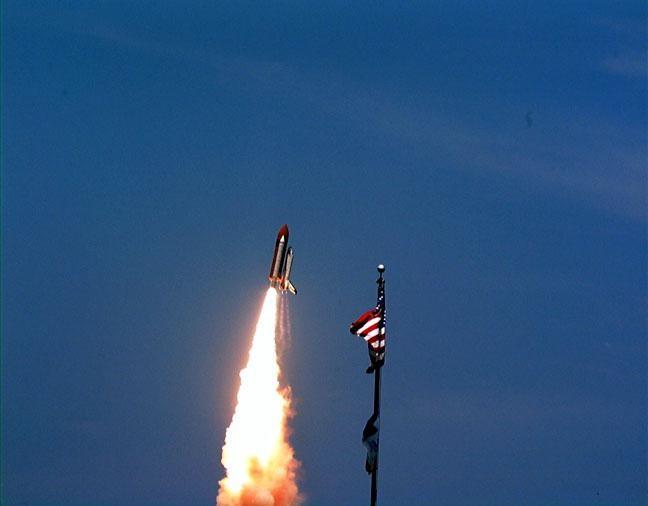
The Space Shuttle Columbia soars from Launch Pad 39A at 2:02 p.m. EDT July 1 to begin the 16-day STS-94 Microgravity Science Laboratory-1 (MSL-1) mission. The launch window was opened 47 minutes earlier than the originally scheduled time of 2:37 p.m. to improve the opportunity to lift off before Florida summer rain showers reached the space center. The crew members are Mission Commander James D. Halsell Jr.; Pilot Susan L. Still; Payload Commander Janice Voss; Mission Specialists Michael L.Gernhardt and Donald A. Thomas; and Payload Specialists Roger K. Crouch and Gregory T. Linteris. During the space flight, the MSL-1 will be used to test some of the hardware, facilities and procedures that are planned for use on the International Space Station while the flight crew conducts combustion, protein crystal growth and materials processing experiments. Also onboard is the Hitchhiker Cryogenic Flexible Diode (CRYOFD) experiment payload, which is attached to the right side of Columbia’s payload bay. These payloads had previously flown on the STS-83 mission in April, which was cut short after nearly four days because of indications of a faulty fuel cell. STS-94 is a reflight of that mission
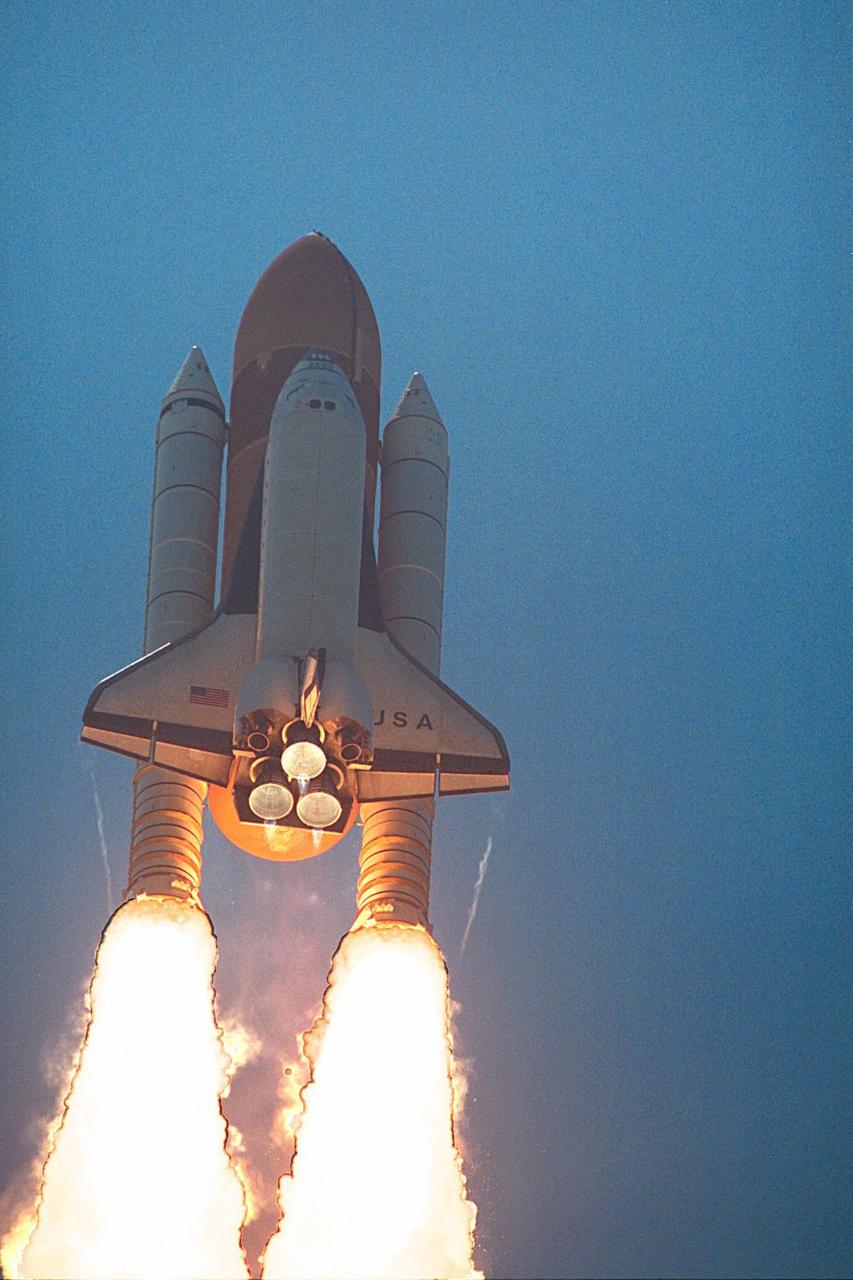
KENNEDY SPACE CENTER, Fla. -- The Space Shuttle Columbia soars from Launch Pad 39A at 2:02 p.m. EDT July 1 to begin the 16-day STS-94 Microgravity Science Laboratory-1 (MSL-1) mission. The launch window was opened 47 minutes earlier than the originally scheduled time of 2:37 p.m. to improve the opportunity to lift off before Florida summer rain showers reached the space center. The crew members are Mission Commander James D. Halsell Jr.; Pilot Susan L. Still; Payload Commander Janice Voss; Mission Specialists Michael L.Gernhardt and Donald A. Thomas; and Payload Specialists Roger K. Crouch and Gregory T. Linteris. During the space flight, the MSL-1 will be used to test some of the hardware, facilities and procedures that are planned for use on the International Space Station while the flight crew conducts combustion, protein crystal growth and materials processing experiments. Also onboard is the Hitchhiker Cryogenic Flexible Diode (CRYOFD) experiment payload, which is attached to the right side of Columbia’s payload bay. These payloads had previously flown on the STS-83 mission in April, which was cut short after nearly four days because of indications of a faulty fuel cell. STS-94 is a reflight of that mission
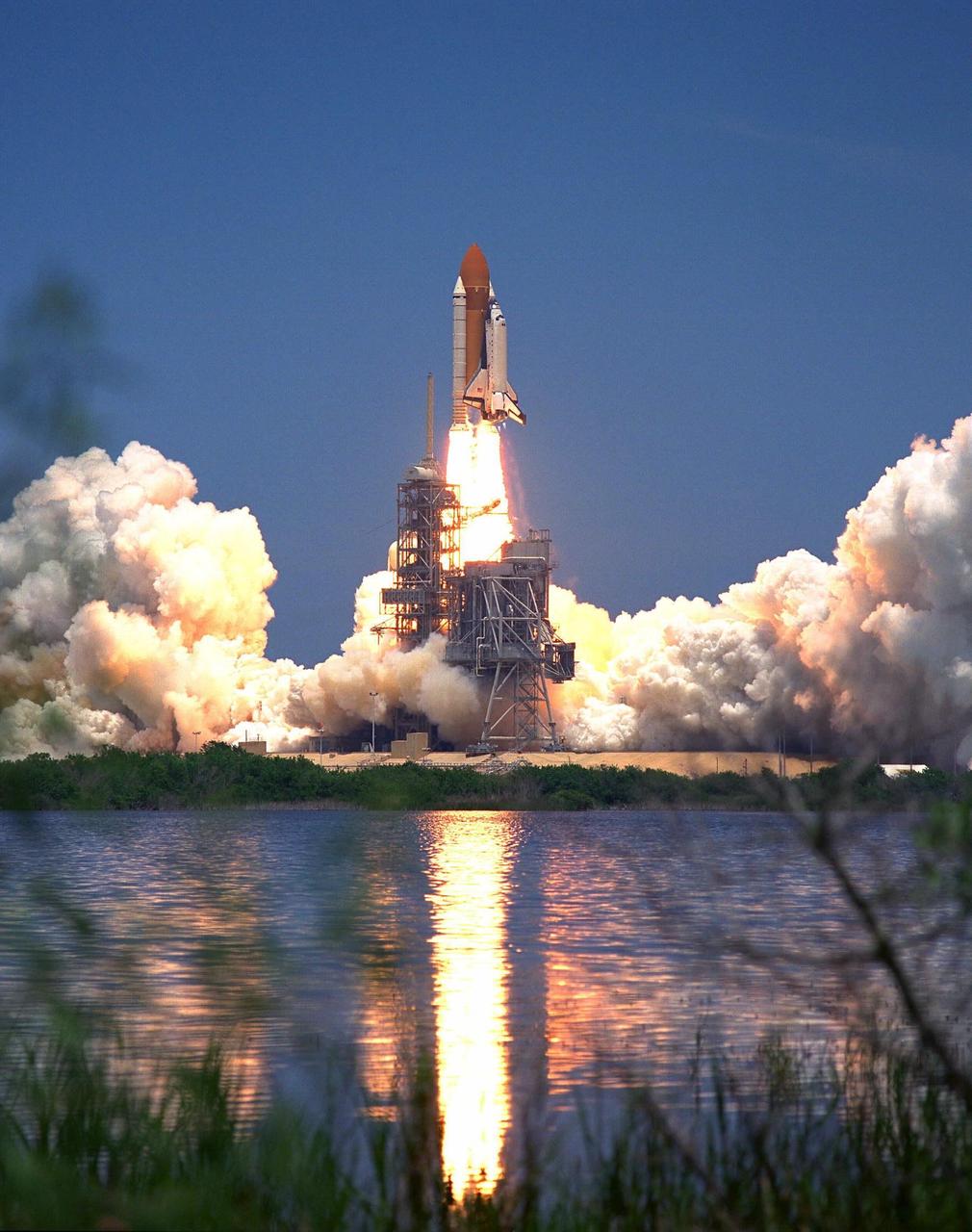
KENNEDY SPACE CENTER, Fla. -- The Space Shuttle Columbia soars from Launch Pad 39A at 2:02 p.m. EDT July 1 to begin the 16-day STS-94 Microgravity Science Laboratory-1 (MSL-1) mission. The launch window was opened 47 minutes earlier than the originally scheduled time of 2:37 p.m. to improve the opportunity to lift off before Florida summer rain showers reached the space center. The crew members are Mission Commander James D. Halsell Jr.; Pilot Susan L. Still; Payload Commander Janice Voss; Mission Specialists Michael L.Gernhardt and Donald A. Thomas; and Payload Specialists Roger K. Crouch and Gregory T. Linteris. During the space flight, the MSL-1 will be used to test some of the hardware, facilities and procedures that are planned for use on the International Space Station while the flight crew conducts combustion, protein crystal growth and materials processing experiments. Also onboard is the Hitchhiker Cryogenic Flexible Diode (CRYOFD) experiment payload, which is attached to the right side of Columbia’s payload bay. These payloads had previously flown on the STS-83 mission in April, which was cut short after nearly four days because of indications of a faulty fuel cell. STS-94 is a reflight of that mission
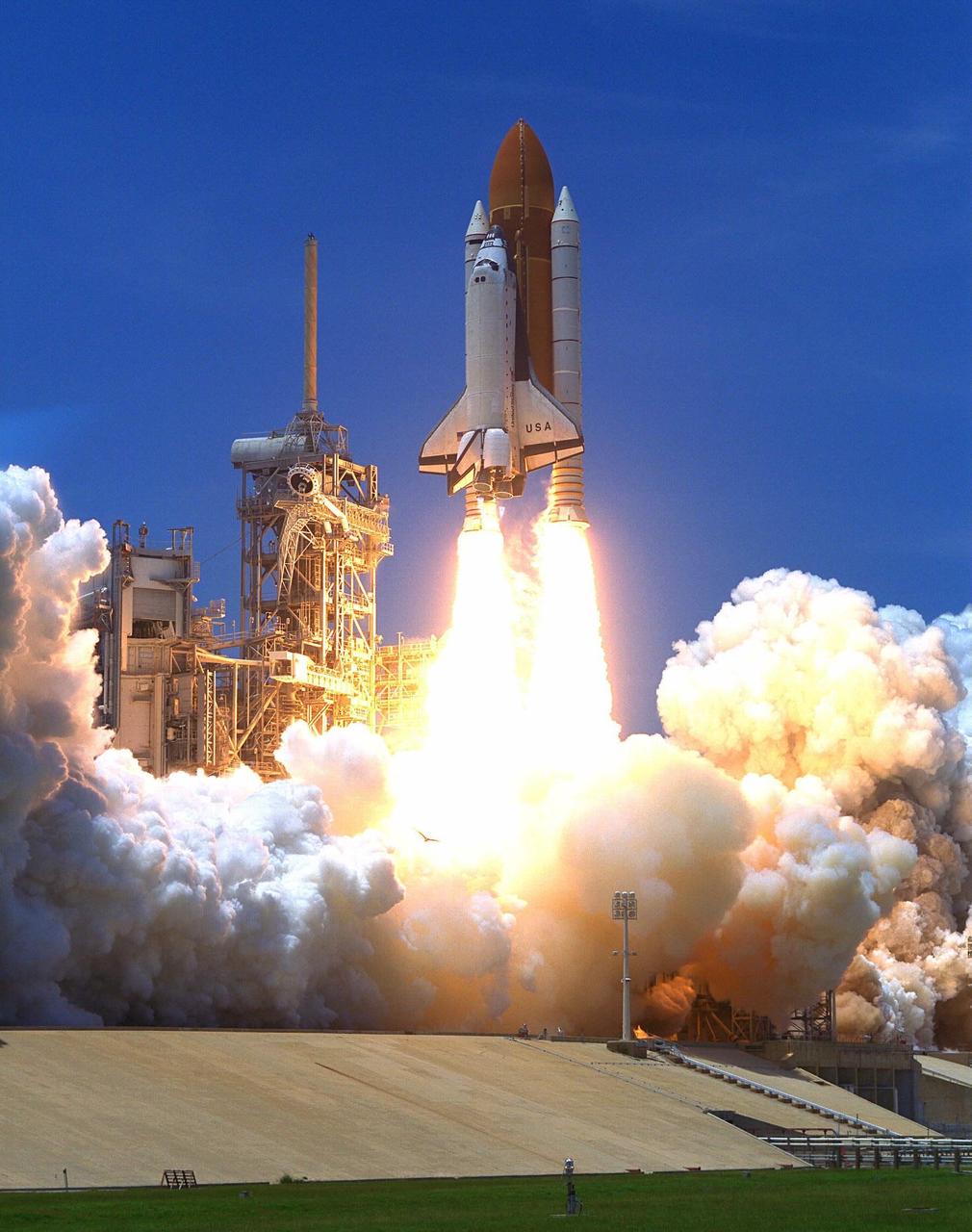
KENNEDY SPACE CENTER, Fla. -- The Space Shuttle Columbia soars from Launch Pad 39A at 2:02 p.m. EDT July 1 to begin the 16-day STS-94 Microgravity Science Laboratory-1 (MSL-1) mission. The launch window was opened 47 minutes earlier than the originally scheduled time of 2:37 p.m. to improve the opportunity to lift off before Florida summer rain showers reached the space center. The crew members are Mission Commander James D. Halsell Jr.; Pilot Susan L. Still; Payload Commander Janice Voss; Mission Specialists Michael L.Gernhardt and Donald A. Thomas; and Payload Specialists Roger K. Crouch and Gregory T. Linteris. During the space flight, the MSL-1 will be used to test some of the hardware, facilities and procedures that are planned for use on the International Space Station while the flight crew conducts combustion, protein crystal growth and materials processing experiments. Also onboard is the Hitchhiker Cryogenic Flexible Diode (CRYOFD) experiment payload, which is attached to the right side of Columbia’s payload bay. These payloads had previously flown on the STS-83 mission in April, which was cut short after nearly four days because of indications of a faulty fuel cell. STS-94 is a reflight of that mission
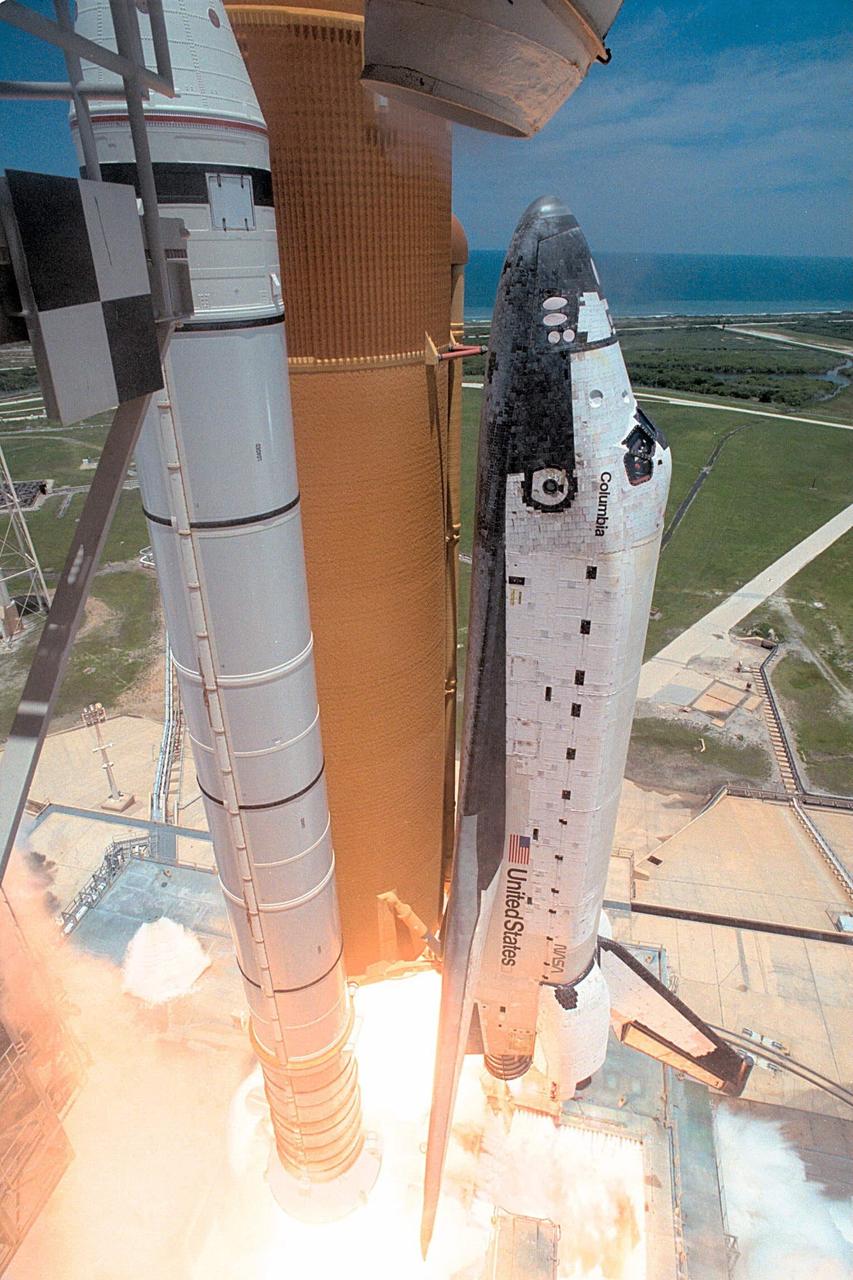
KENNEDY SPACE CENTER, Fla. -- The Space Shuttle Columbia soars from Launch Pad 39A at 2:02 p.m. EDT July 1 to begin the 16-day STS-94 Microgravity Science Laboratory-1 (MSL-1) mission. The launch window was opened 47 minutes earlier than the originally scheduled time of 2:37 p.m. to improve the opportunity to lift off before Florida summer rain showers reached the space center. The crew members are Mission Commander James D. Halsell Jr.; Pilot Susan L. Still; Payload Commander Janice Voss; Mission Specialists Michael L.Gernhardt and Donald A. Thomas; and Payload Specialists Roger K. Crouch and Gregory T. Linteris. During the space flight, the MSL-1 will be used to test some of the hardware, facilities and procedures that are planned for use on the International Space Station while the flight crew conducts combustion, protein crystal growth and materials processing experiments. Also onboard is the Hitchhiker Cryogenic Flexible Diode (CRYOFD) experiment payload, which is attached to the right side of Columbia’s payload bay. These payloads had previously flown on the STS-83 mission in April, which was cut short after nearly four days because of indications of a faulty fuel cell. STS-94 is a reflight of that mission
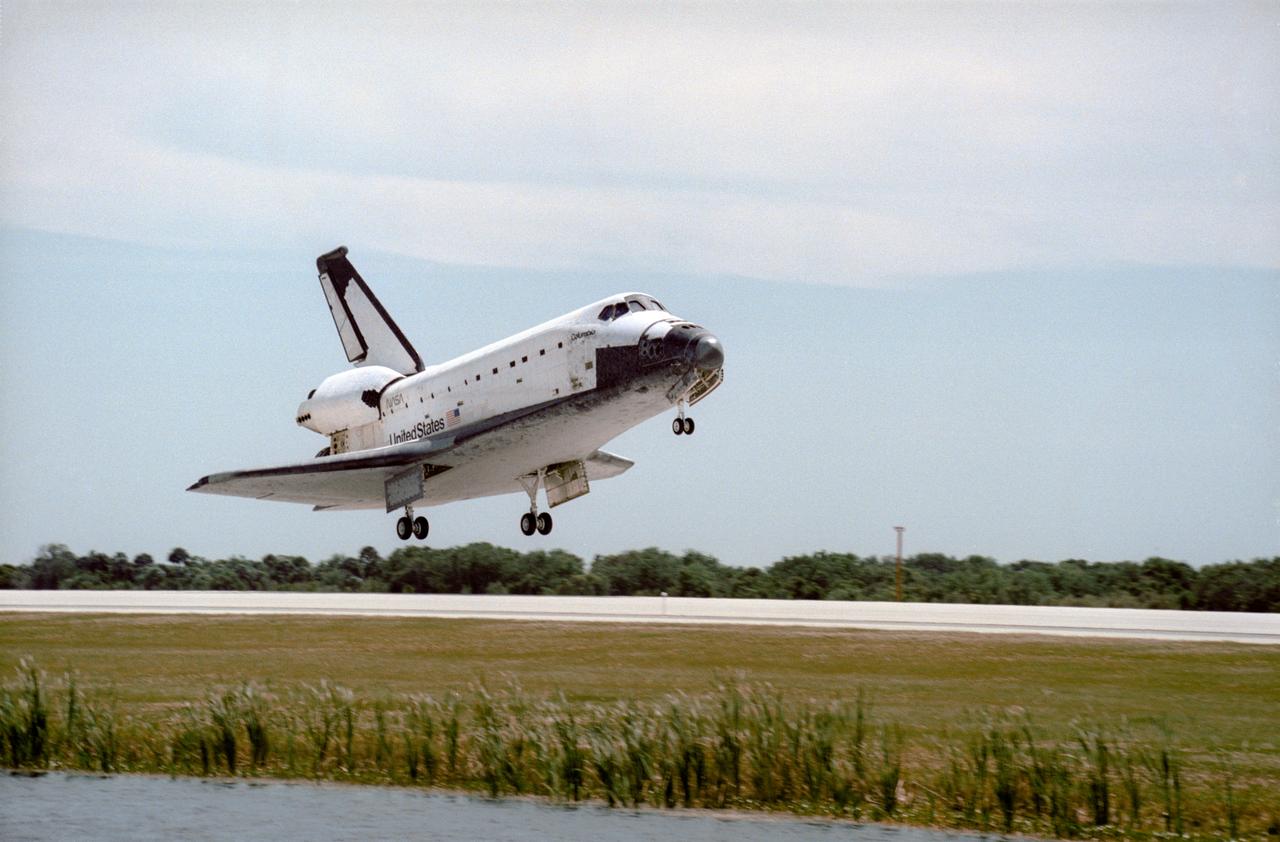
STS083-S-009 (8 April 1997) --- The Space Shuttle Columbia nears touchdown on the Shuttle Landing Facility (SLF) runway at the Kennedy Space Center (KSC), after completing almost four days of a scheduled 16-day mission in Earth-orbit. A problem with one of three fuel cells led to an early landing for the seven-member Microgravity Science Laboratory 1 (MSL-1) crew. Touchdown occurred at 1:33:11 p.m. (EDT), April 8, 1997. Onboard Columbia were James D. Halsell, Jr., Susan L. Still, Janice E. Voss, Donald A. Thomas, Michael L. Gernhardt, Roger K. Crouch and Gregory T. Linteris.
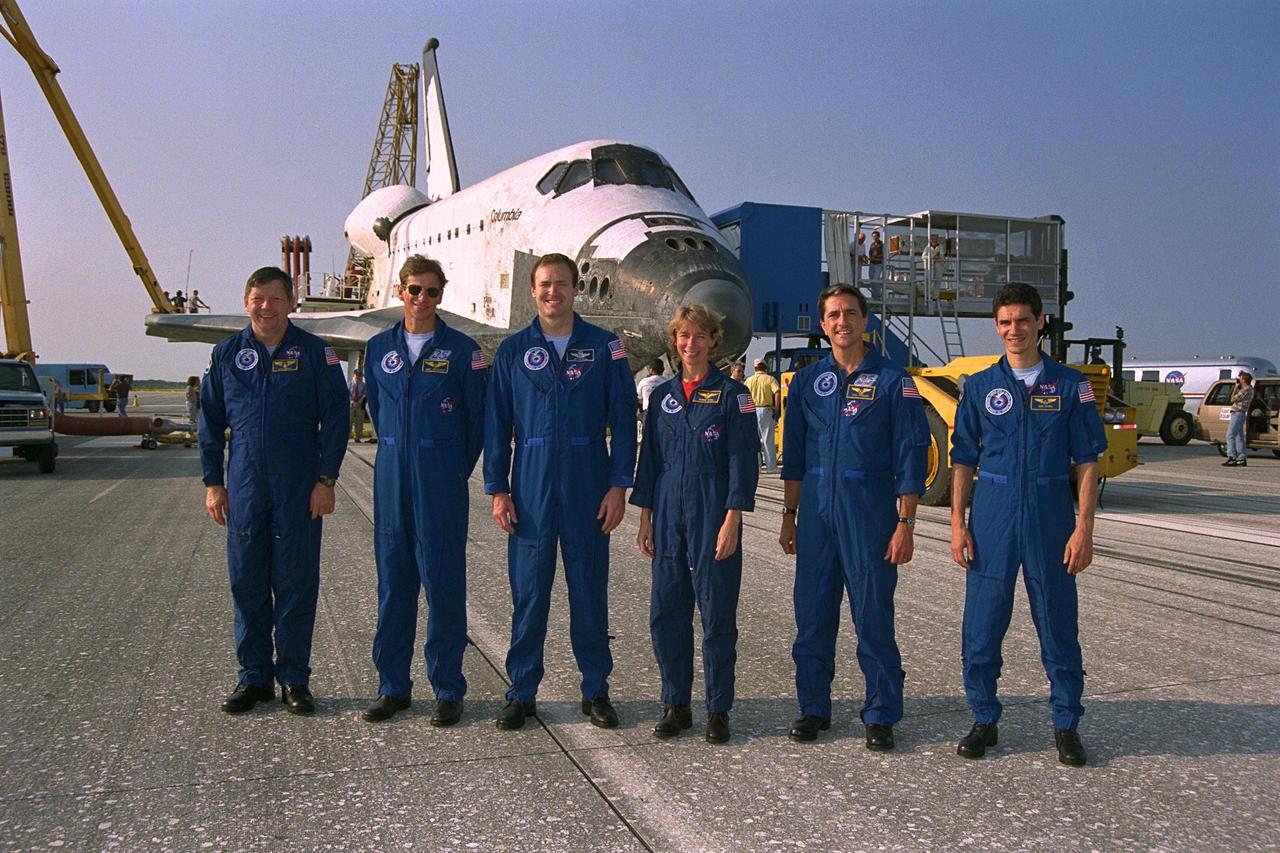
KENNEDY SPACE CENTER, FLA. -- The STS-94 flight crew poses in front of the Space Shuttle orbiter Columbia after an end-of-mission landing on Runway 33 at KSC’s Shuttle Landing Facility July 17 to complete the Microgravity Science Laboratory-1 (MSL-1) mission. They are (from left): Payload Specialist Roger K. Crouch; Mission Specialist Michael L. Gernhardt; Mission Commander James D. Halsell Jr.; Pilot Susan L. Still; Mission Specialist Donald A. Thomas; and Payload Specialist Gregory T. Linteris. Not shown is Payload Commander Janice Voss. During the 15-day, 16-hour spaceflight, the MSL-1 Spacelab module was used to test some of the hardware, facilities and procedures that are planned for use on the International Space Station; the flight crew also conducted combustion, protein crystal growth and materials processing experiments. This mission was a reflight of the STS-83 mission earlier this year that was cut short due to indications of a faulty fuel cell
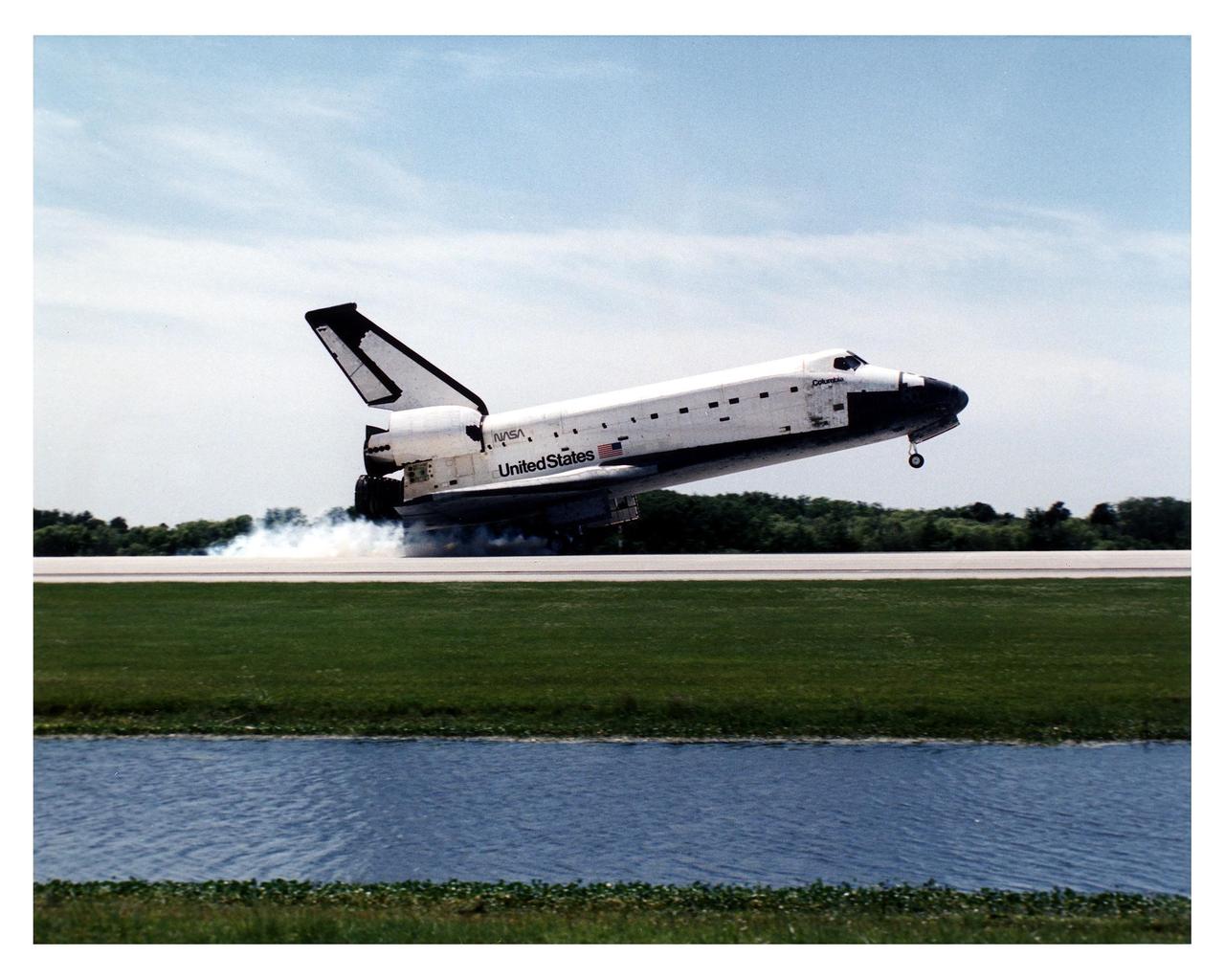
KENNEDY SPACE CENTER, FLA. -- The Space Shuttle Columbia touches down on Runway 33 at KSC's Shuttle Landing Facility at 2:33:11 p.m. EDT, April 8, to conclude the Microgravity Science Laboratory-1 (MSL-1) mission. At main gear touchdown, the STS-83 mission duration was 3 days, 23 hours, 12 minutes. The planned 16-day mission was cut short by a faulty fuel cell. This is only the third time in Shuttle program history that an orbiter was brought home early due to mechanical problems. This was also the 36th KSC landing since the program began in 1981. Mission Commander James D. Halsell, Jr. flew Columbia to a perfect landing with help from Pilot Susan L. Still. Other crew members are Payload Commander Janice E. Voss; Mission Specialists Michael L. Gernhardt and Donald A. Thomas; and Payload Specialists Roger K. Crouch and Gregory T. Linteris. In spite of the abbreviated flight, the crew was able to perform MSL-1 experiments. The Spacelab-module-based experiments were used to test some of the hardware, facilities and procedures that are planned for use on the International Space Station and to conduct combustion, protein crystal growth and materials processing investigations
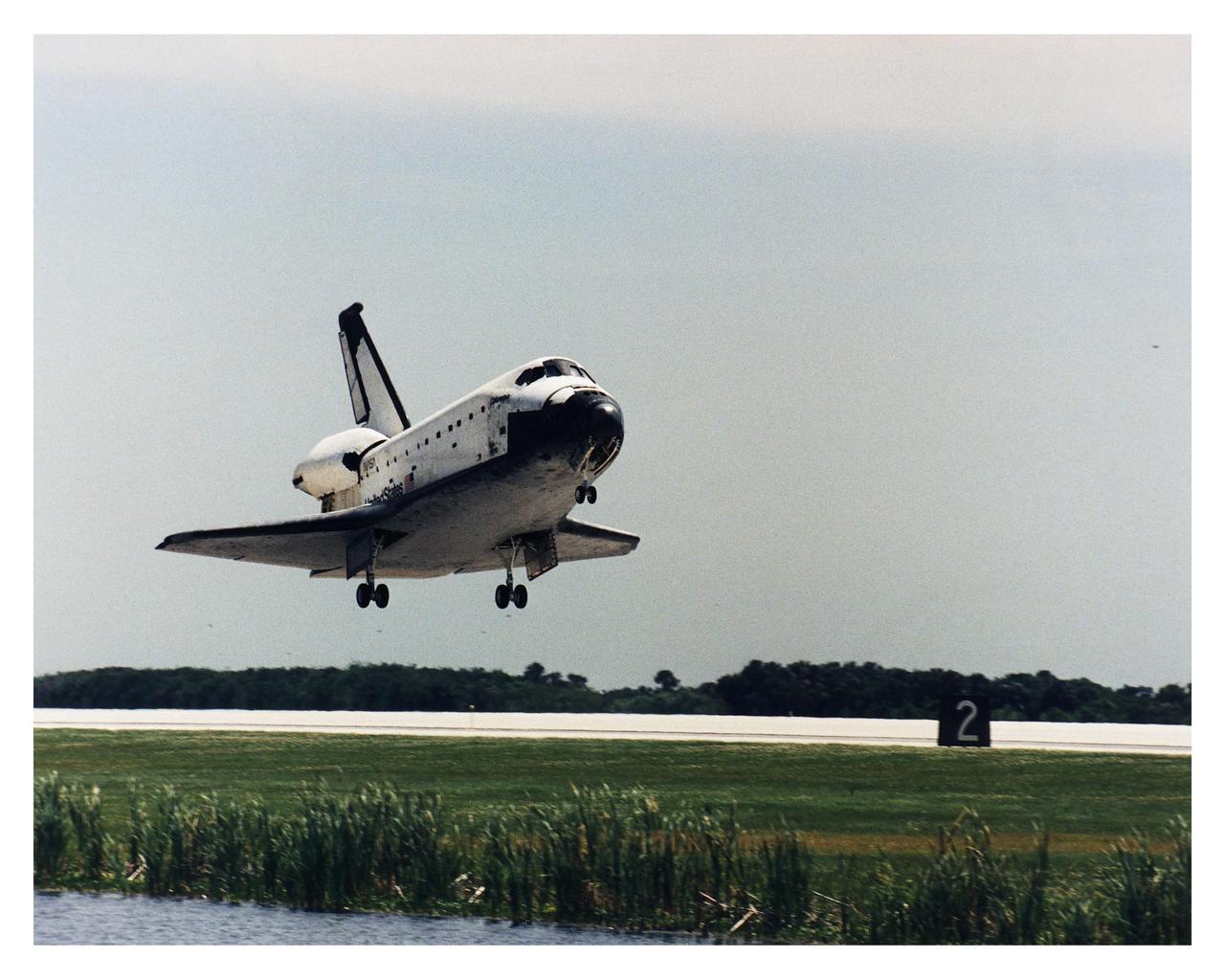
KENNEDY SPACE CENTER, FLA. -- The Space Shuttle Columbia prepares to touch down on Runway 33 at KSC's Shuttle Landing Facility at approximately 2:33 p.m. EDT, April 8, to conclude the Microgravity Science Laboratory-1 (MSL-1) mission. At main gear touchdown, the STS-83 mission duration will be just under four days. The planned 16-day mission was cut short by a faulty fuel cell. This is only the third time in Shuttle program history that an orbiter was brought home early due to mechanical problems. This was also the 36th KSC landing since the program began in 1981. Mission Commander James D. Halsell, Jr. flew Columbia to a perfect landing with help from Pilot Susan L. Still. Other crew members are Payload Commander Janice E. Voss; Mission Specialists Michael L.Gernhardt and Donald A. Thomas; and Payload Specialists Roger K. Crouch and Gregory T. Linteris. In spite of the abbreviated flight, the crew was able to perform MSL-1 experiments. The Spacelab-module-based experiments were used to test some of the hardware, facilities and procedures that are planned for use on the International Space Station and to conduct combustion, protein crystal growth and materials processing investigations
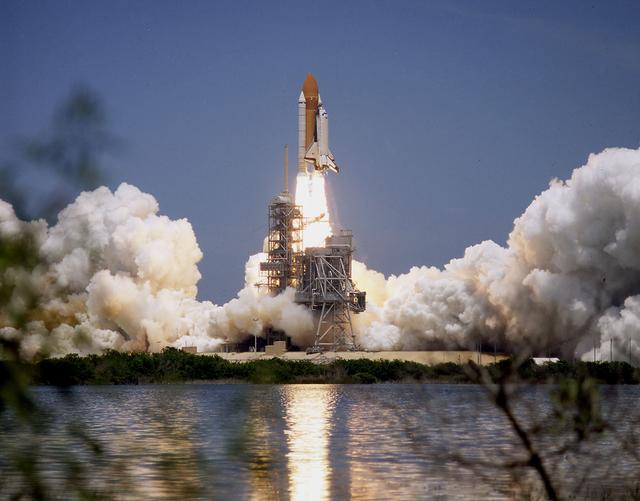
The Space Shuttle Columbia (STS-94) soared from Launch Pad 39A begirning its 16-day Microgravity Science Laboratory -1 (MSL-1) mission. The launch window was opened 47 minutes earlier than the originally scheduled time to improve the opportunity to lift off before Florida summer rain showers reached the space center. During the space flight, the MSL-1 was used to test some of the hardware, facilities and procedures that were planned for use on the International Space Station which were managed by scientists and engineers from the Marshall Space Flight Center, while the flight crew conducted combustion, protein crystal growth and materials processing experiments. Also onboard was the Hitchhiker Cryogenic Flexible Diode (CRYOFD) experiment payload, which was attached to the right side of Columbia's payload bay. These payloads had previously flown on the STS-83 mission in April, which was cut short after nearly four days because of indications of a faulty fuel cell. STS-94 was a reflight of that mission.
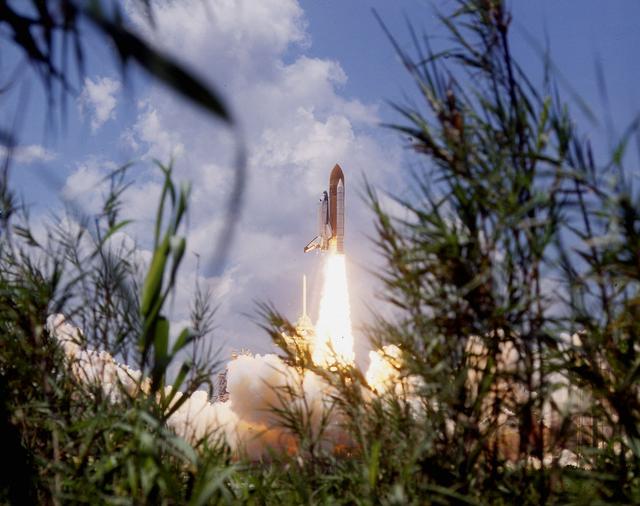
The Space Shuttle Columbia (STS-94) soared from Launch Pad 39A begirning its 16-day Microgravity Science Laboratory -1 (MSL-1) mission. The launch window was opened 47 minutes earlier than the originally scheduled time to improve the opportunity to lift off before Florida summer rain showers reached the space center. During the space flight, the MSL-1 was used to test some of the hardware, facilities and procedures that were planned for use on the International Space Station which were managed by scientists and engineers from the Marshall Space Flight Center, while the flight crew conducted combustion, protein crystal growth and materials processing experiments. Also onboard was the Hitchhiker Cryogenic Flexible Diode (CRYOFD) experiment payload, which was attached to the right side of Columbia's payload bay. These payloads had previously flown on the STS-83 mission in April, which was cut short after nearly four days because of indications of a faulty fuel cell. STS-94 was a reflight of that mission.
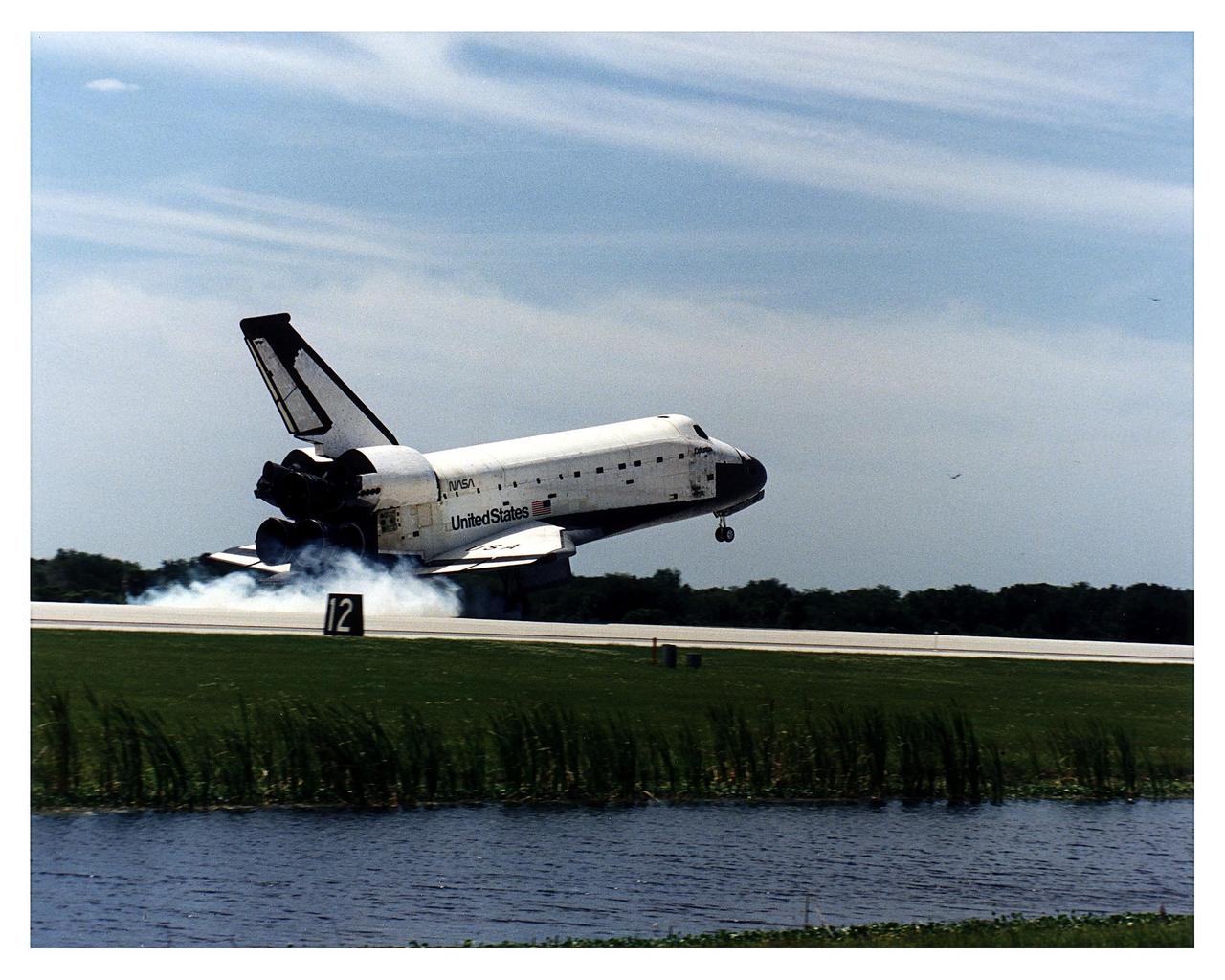
KENNEDY SPACE CENTER, FLA. -- The Space Shuttle Columbia touches down on Runway 33 at KSC's Shuttle Landing Facility at 2:33:11 p.m. EDT, April 8, to conclude the Microgravity Science Laboratory-1 (MSL-1) mission. At main gear touchdown, the STS-83 mission duration was 3 days, 23 hours, 12 minutes. The planned 16-day mission was cut short by a faulty fuel cell. This is only the third time in Shuttle program history that an orbiter was brought home early due to mechanical problems. This was also the 36th KSC landing since the program began in 1981. Mission Commander James D. Halsell, Jr. flew Columbia to a perfect landing with help from Pilot Susan L. Still. Other crew members are Payload Commander Janice E. Voss; Mission Specialists Michael L. Gernhardt and Donald A. Thomas; and Payload Specialists Roger K. Crouch and Gregory T. Linteris. In spite of the abbreviated flight, the crew was able to perform MSL-1 experiments. The Spacelab-module-based experiments were used to test some of the hardware, facilities and procedures that are planned for use on the International Space Station and to conduct combustion, protein crystal growth and materials processing investigations
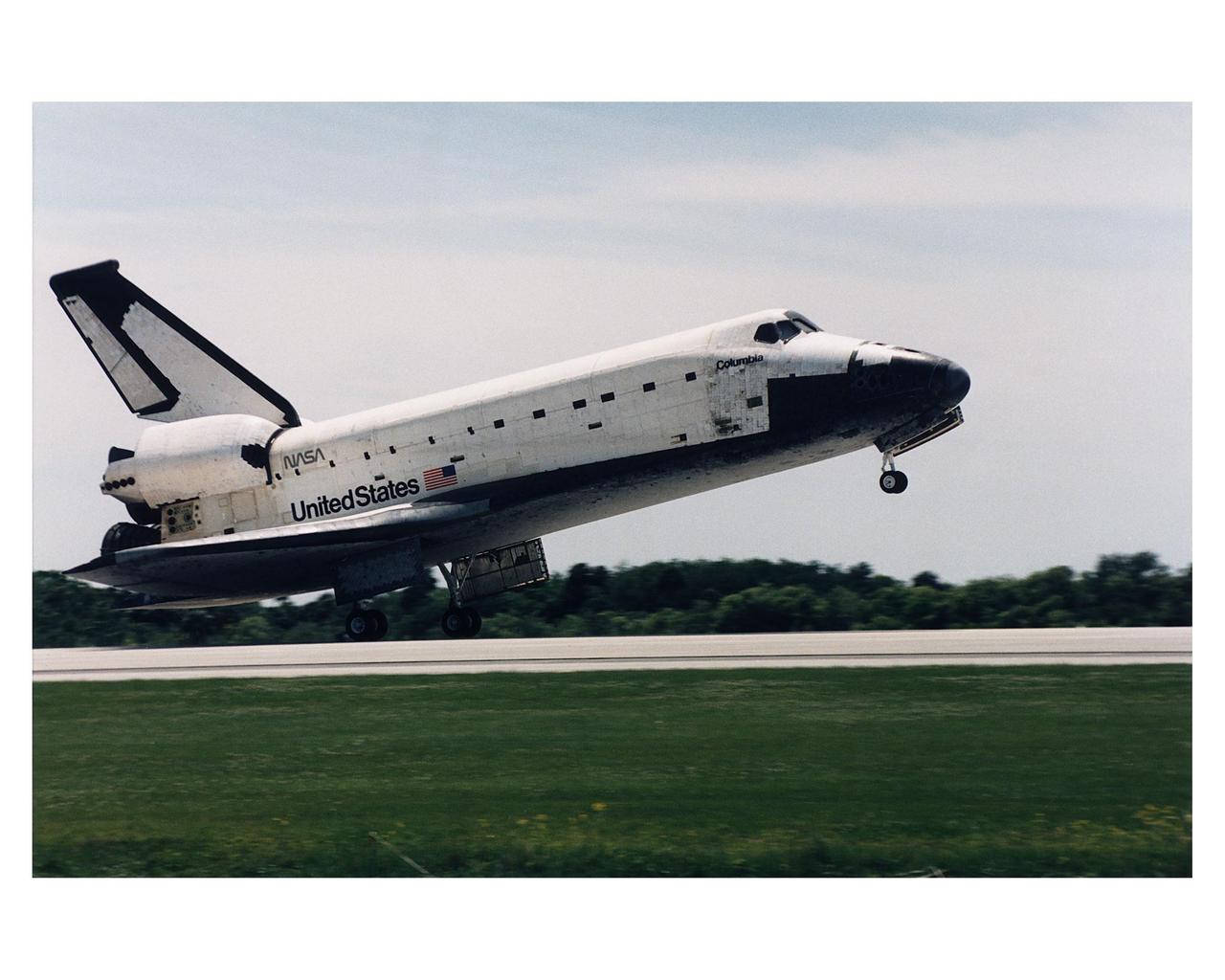
KENNEDY SPACE CENTER, FLA. -- The Space Shuttle Columbia touches down on Runway 33 at KSC's Shuttle Landing Facility at 2:33:11 p.m. EDT, April 8, to conclude the Microgravity Science Laboratory-1 (MSL-1) mission. At main gear touchdown, the STS-83 mission duration was 3 days, 23 hours, 12 minutes. The planned 16-day mission was cut short by a faulty fuel cell. This is only the third time in Shuttle program history that an orbiter was brought home early due to mechanical problems. This was also the 36th KSC landing since the program began in 1981. Mission Commander James D. Halsell, Jr. flew Columbia to a perfect landing with help from Pilot Susan L. Still. Other crew members are Payload Commander Janice E. Voss; Mission Specialists Michael L. Gernhardt and Donald A. Thomas; and Payload Specialists Roger K. Crouch and Gregory T. Linteris. In spite of the abbreviated flight, the crew was able to perform MSL-1 experiments. The Spacelab-module-based experiments were used to test some of the hardware, facilities and procedures that are planned for use on the International Space Station and to conduct combustion, protein crystal growth and materials processing investigations
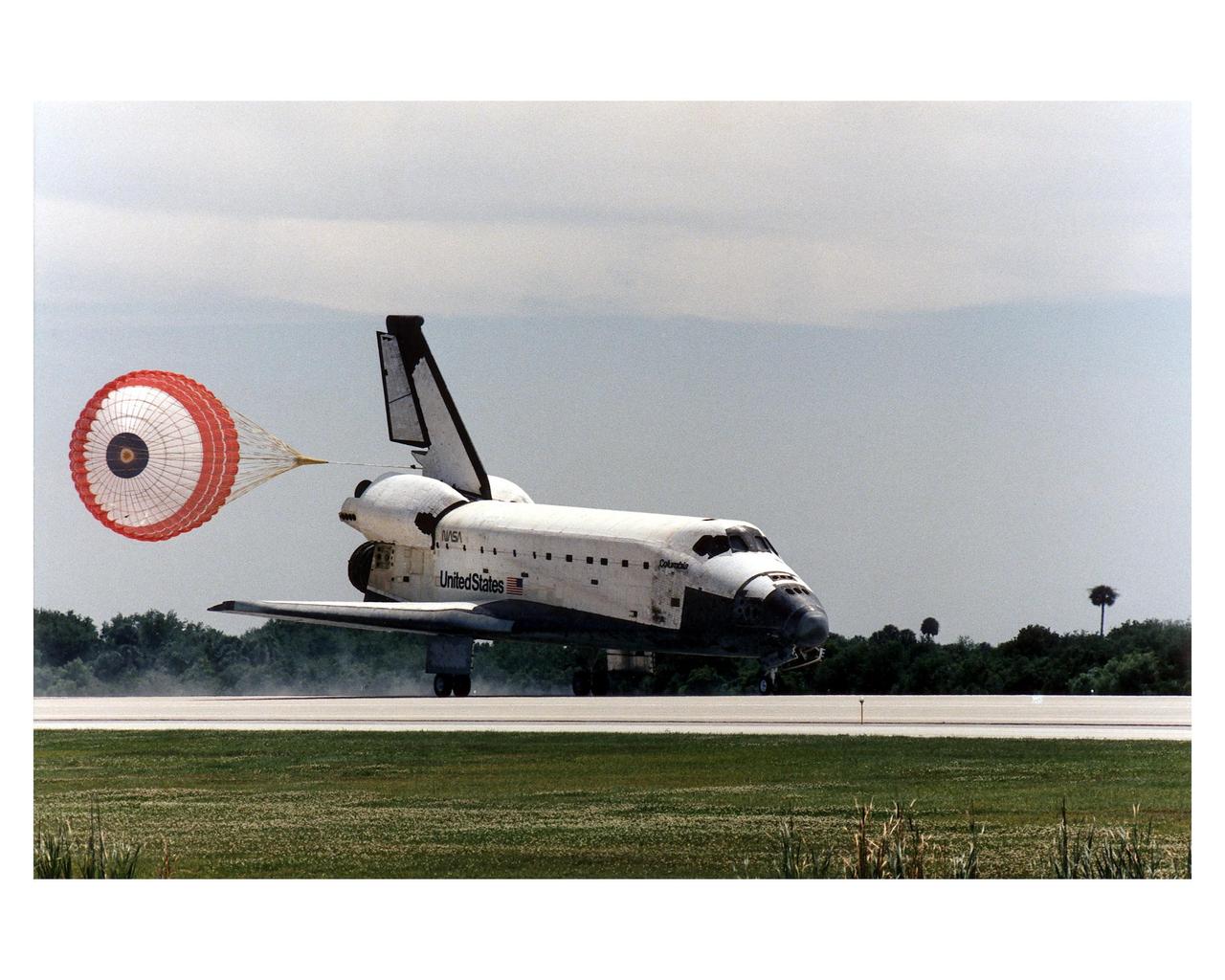
KENNEDY SPACE CENTER, FLA. -- With drag chute deployed, the Space Shuttle Columbia hurtles down Runway 33 at KSCþs Shuttle Landing Facility to conclude the Microgravity Science Laboratory-1 (MSL-1) mission. With main gear touchdown at 2:33:11 p.m. EDT, April 8, the STS-83 mission duration was 3 days, 23 hours, 12 minutes. The planned 16-day mission was cut short by a faulty fuel cell. This is only the third time in Shuttle program history that an orbiter was brought home early due to a mechanical problem. This was also the 36th KSC landing since the program began in 1981. Mission Commander James D. Halsell, Jr. flew Columbia to a perfect landing with help from Pilot Susan L. Still. Other crew members are Payload Commander Janice E. Voss; Mission Specialists Michael L.Gernhardt and Donald A. Thomas; and Payload Specialists Roger K. Crouch and Gregory T. Linteris. In spite of the abbreviated flight, the crew was able to perform MSL-1 experiments. The Spacelab-module-based experiments were used to test some of the hardware, facilities and procedures that are planned for use on the International Space Station and to conduct combustion, protein crystal growth and materials processing investigations
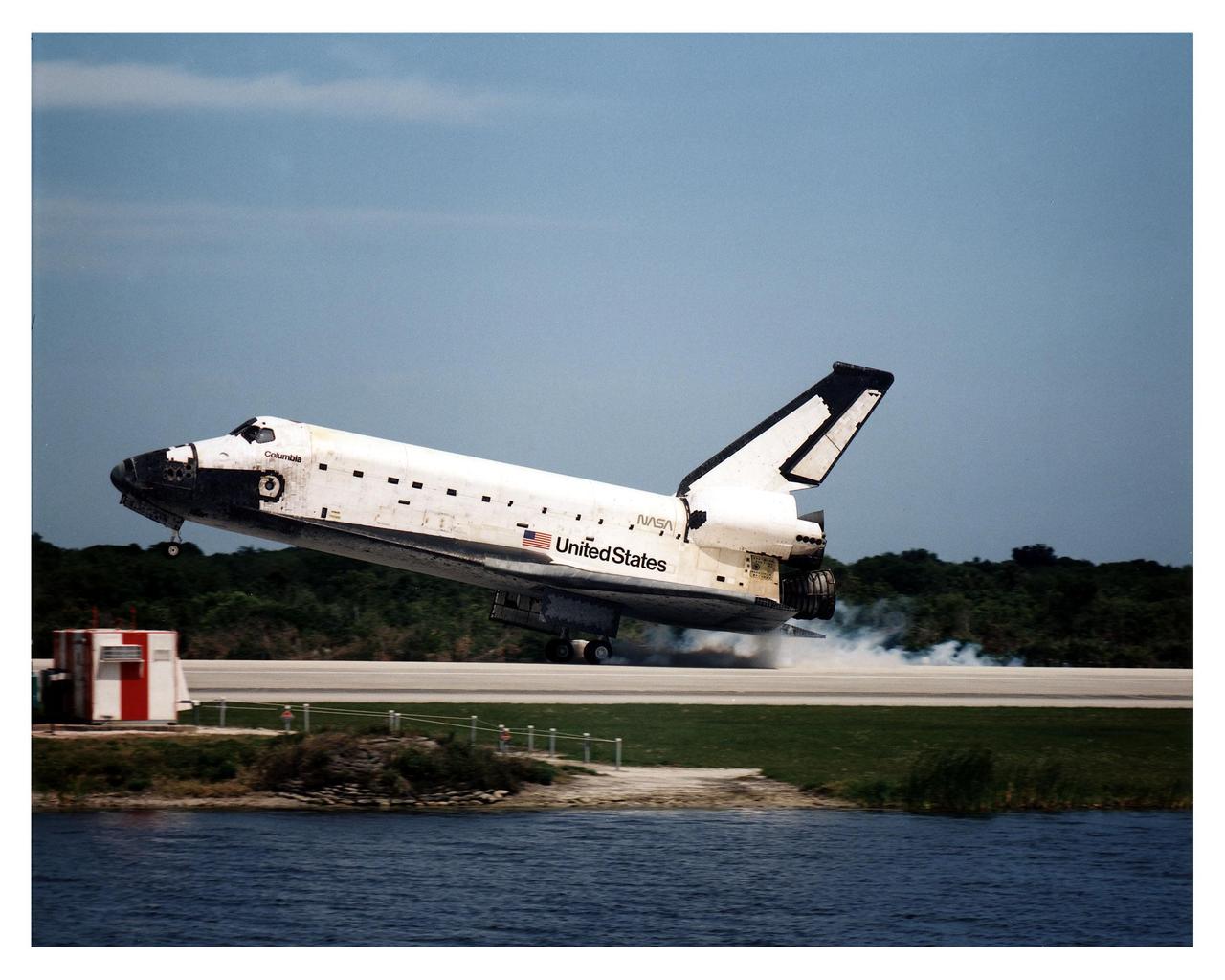
KENNEDY SPACE CENTER, FLA. -- The Space Shuttle Columbia touches down on Runway 33 at KSC's Shuttle Landing Facility at 2:33:11 p.m. EDT, April 8, to conclude the Microgravity Science Laboratory-1 (MSL-1) mission. At main gear touchdown, the STS-83 mission duration was 3 days, 23 hours, 12 minutes. The planned 16-day mission was cut short by a faulty fuel cell. This is only the third time in Shuttle program history that an orbiter was brought home early due to mechanical problems. This was also the 36th KSC landing since the program began in 1981. Mission Commander James D. Halsell, Jr. flew Columbia to a perfect landing with help from Pilot Susan L. Still. Other crew members are Payload Commander Janice E. Voss; Mission Specialists Michael L. Gernhardt and Donald A. Thomas; and Payload Specialists Roger K. Crouch and Gregory T. Linteris. In spite of the abbreviated flight, the crew was able to perform MSL-1 experiments. The Spacelab-module-based experiments were used to test some of the hardware, facilities and procedures that are planned for use on the International Space Station and to conduct combustion, protein crystal growth and materials processing investigations

KENNEDY SPACE CENTER, FLA. -- With drag chute deployed, the Space Shuttle Columbia hurtles down Runway 33 at KSC's Shuttle Landing Facility to conclude the Microgravity Science Laboratory-1 (MSL-1) mission. With main gear touchdown at 2:33:11 p.m. EDT, April 8, the STS-83 mission duration was 3 days, 23 hours, 12 minutes. The planned 16-day mission was cut short by a faulty fuel cell. This is only the third time in Shuttle program history that an orbiter was brought home early due to a mechanical problem. This was also the 36th KSC landing since the program began in 1981. Mission Commander James D. Halsell, Jr. flew Columbia to a perfect landing with help from Pilot Susan L. Still. Other crew members are Payload Commander Janice E. Voss; Mission Specialists Michael L.Gernhardt and Donald A. Thomas; and Payload Specialists Roger K. Crouch and Gregory T. Linteris. In spite of the abbreviated flight, the crew was able to perform MSL-1 experiments. The Spacelab-module-based experiments were used to test some of the hardware, facilities and procedures that are planned for use on the International Space Station and to conduct combustion, protein crystal growth and materials processing investigations
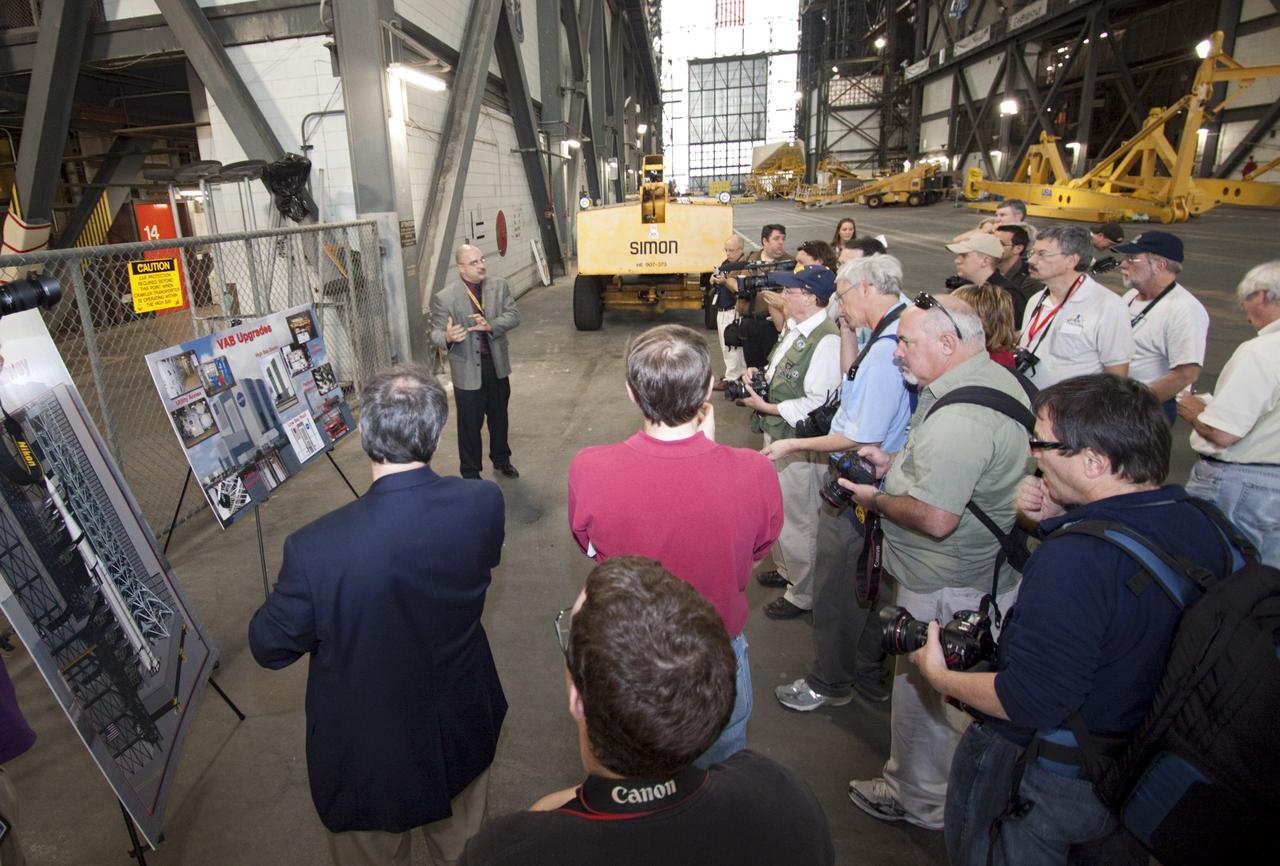
CAPE CANAVERAL, Fla. – At NASA Kennedy Space Center in Florida, Jose Lopez, NASA Vehicle Assembly Building (VAB) project manager, outlines the upgrades planned for the VAB to support NASA's forthcoming Space Launch System. Lopez' audience is made up of media representatives taking the 21st Century Ground Systems tour. Other stops on the tour include a crawler-transporter parked on the crawlerway, the new mobile launcher on Launch Pad 39B, and the Launch Control Center's Firing Room 1. These facilities and equipment will be used to prepare and launch NASA's new Orion spacecraft on the Space Launch System heavy-lift rocket. The tour was arranged as part of prelaunch media activities for the agency's Mars Science Laboratory (MSL) launch. Liftoff of MSL aboard a United Launch Alliance Atlas V rocket from Space Launch Complex-41 on Cape Canaveral Air Force Station is planned during a launch window which extends from 10:02 a.m. to 11:45 a.m. EST on Nov. 26. For more information, visit http://www.nasa.gov/msl. Photo credit: NASA/Jim Grossmann
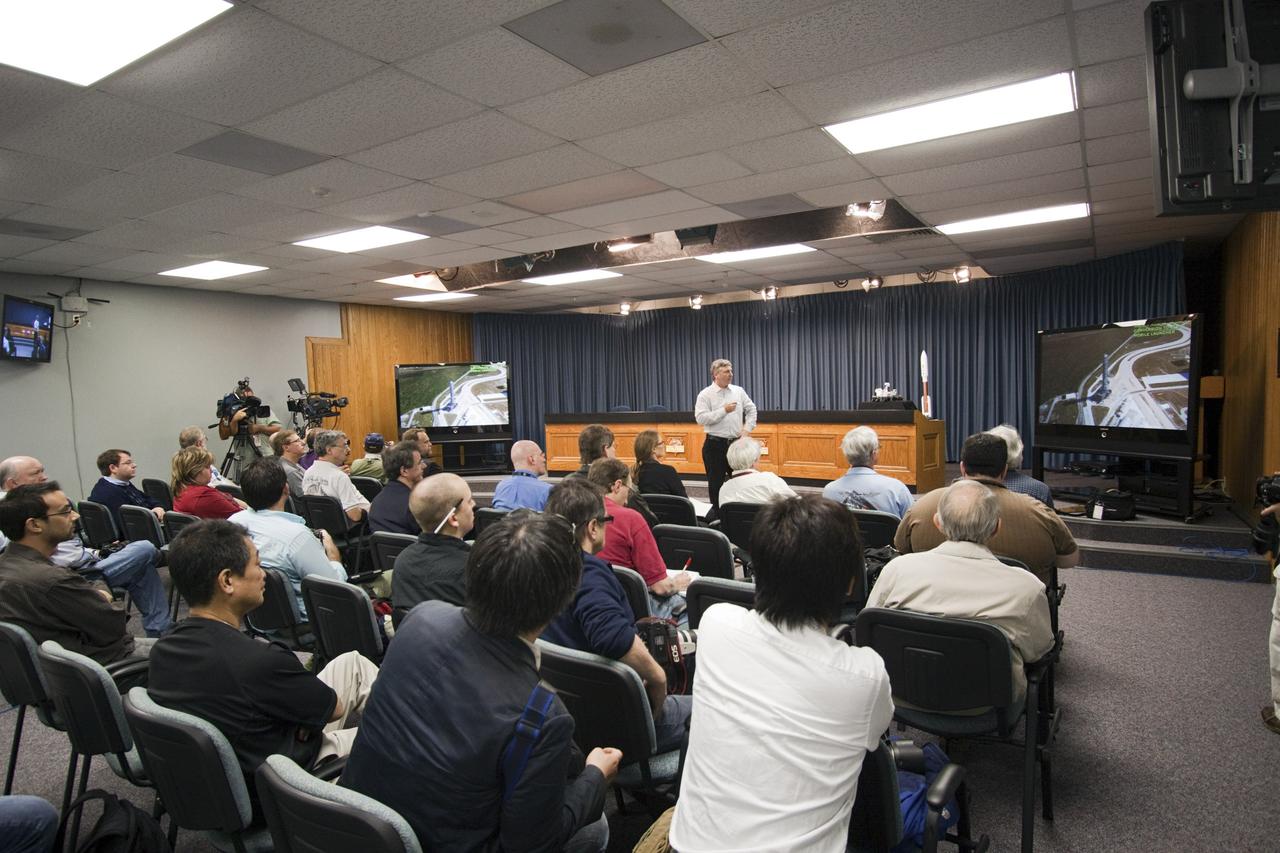
CAPE CANAVERAL, Fla. – In NASA Kennedy Space Center's Press Site auditorium in Florida, Scott Colloredo, NASA 21st Century Ground Systems project manager, gives the media representatives who will be taking the 21st Century Ground Systems tour an overview of the locations they will be visiting, including the Vehicle Assembly Building, a crawler-transporter parked on the crawlerway, the new mobile launcher on Launch Pad 39B, and the Launch Control Center's Firing Room 1. These facilities and equipment will be used to prepare and launch NASA's new Orion spacecraft on the Space Launch System heavy-lift rocket. The tour was arranged as part of prelaunch media activities for the agency's Mars Science Laboratory (MSL) launch. Liftoff of MSL aboard a United Launch Alliance Atlas V rocket from Space Launch Complex-41 on Cape Canaveral Air Force Station is planned during a launch window which extends from 10:02 a.m. to 11:45 a.m. EST on Nov. 26. For more information, visit http://www.nasa.gov/msl. Photo credit: NASA/Jim Grossmann
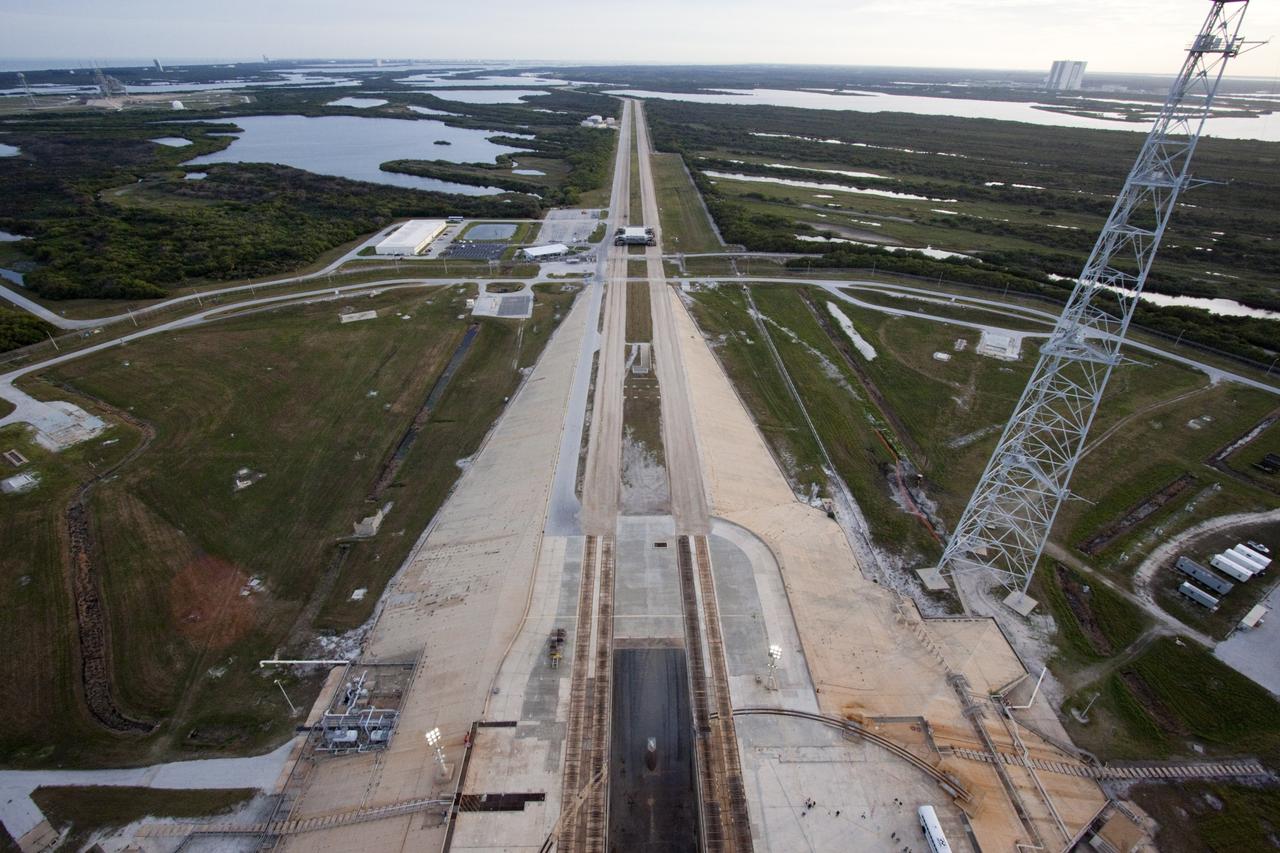
CAPE CANAVERAL, Fla. – At NASA Kennedy Space Center in Florida, this view, taken from the top of the 355-foot-tall mobile launcher at Launch Pad 39B, captures the crawler-transporter parked on the crawlerway leading to the pad's surface and the Vehicle Assembly Building (VAB), in the background at right. Media representatives are taking the 21st Century Ground Systems tour which also includes the VAB, a crawler-transporter, and the Launch Control Center's Firing Room 1. These facilities and equipment will be used to prepare and launch NASA's new Orion spacecraft on the Space Launch System heavy-lift rocket. The tour was arranged as part of prelaunch media activities for the agency's Mars Science Laboratory (MSL) launch. Liftoff of MSL aboard a United Launch Alliance Atlas V rocket from Space Launch Complex-41 on Cape Canaveral Air Force Station is planned during a launch window which extends from 10:02 a.m. to 11:45 a.m. EST on Nov. 26. For more information, visit http://www.nasa.gov/msl. Photo credit: NASA/Jim Grossmann
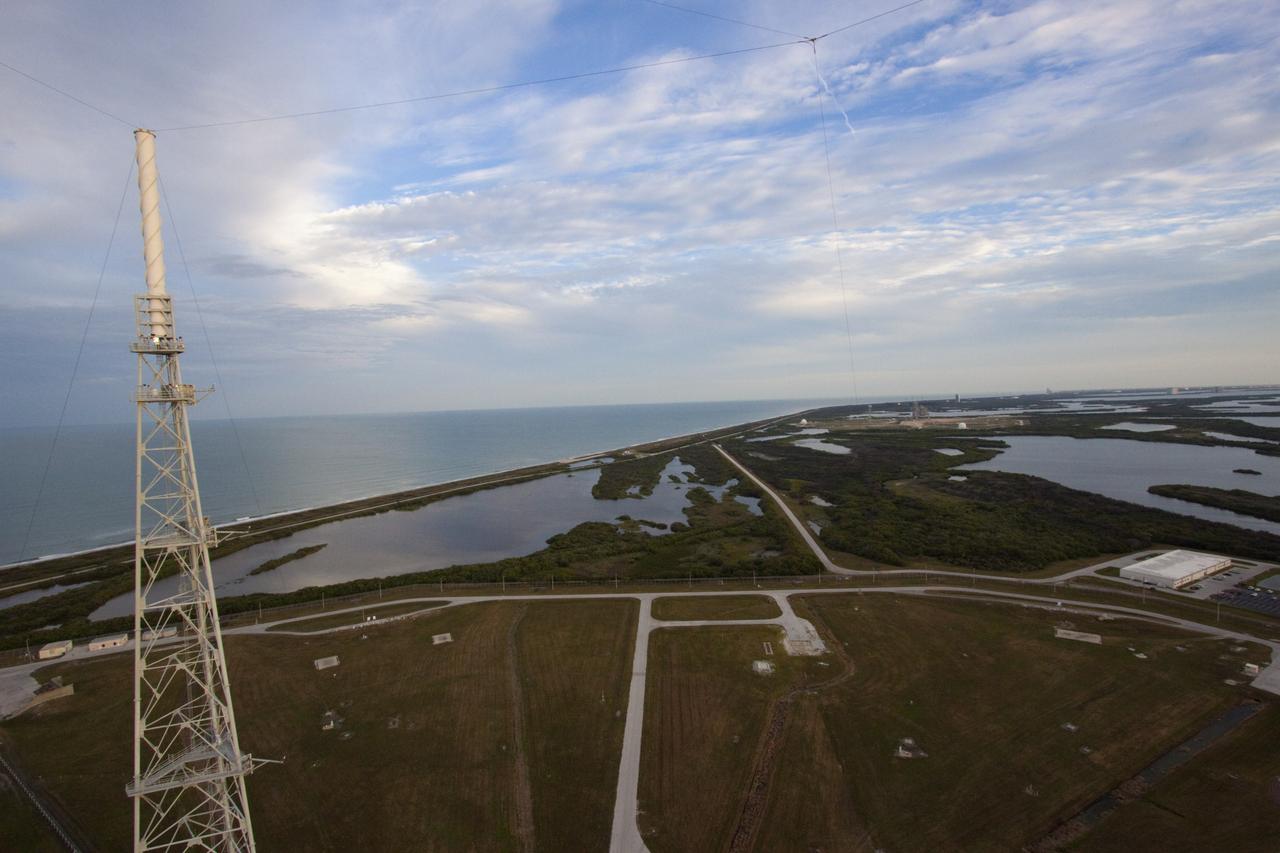
CAPE CANAVERAL, Fla. – At NASA Kennedy Space Center in Florida, this view, taken from the top of the 355-foot-tall mobile launcher at Launch Pad 39B, illustrates the close proximity of the pad to the Atlantic Ocean in the background. Media representatives are taking the 21st Century Ground Systems tour which also includes the Vehicle Assembly Building, a crawler-transporter parked on the crawlerway, and the Launch Control Center's Firing Room 1. These facilities and equipment will be used to prepare and launch NASA's new Orion spacecraft on the Space Launch System heavy-lift rocket. The tour was arranged as part of prelaunch media activities for the agency's Mars Science Laboratory (MSL) launch. Liftoff of MSL aboard a United Launch Alliance Atlas V rocket from Space Launch Complex-41 on Cape Canaveral Air Force Station is planned during a launch window which extends from 10:02 a.m. to 11:45 a.m. EST on Nov. 26. For more information, visit http://www.nasa.gov/msl. Photo credit: NASA/Jim Grossmann
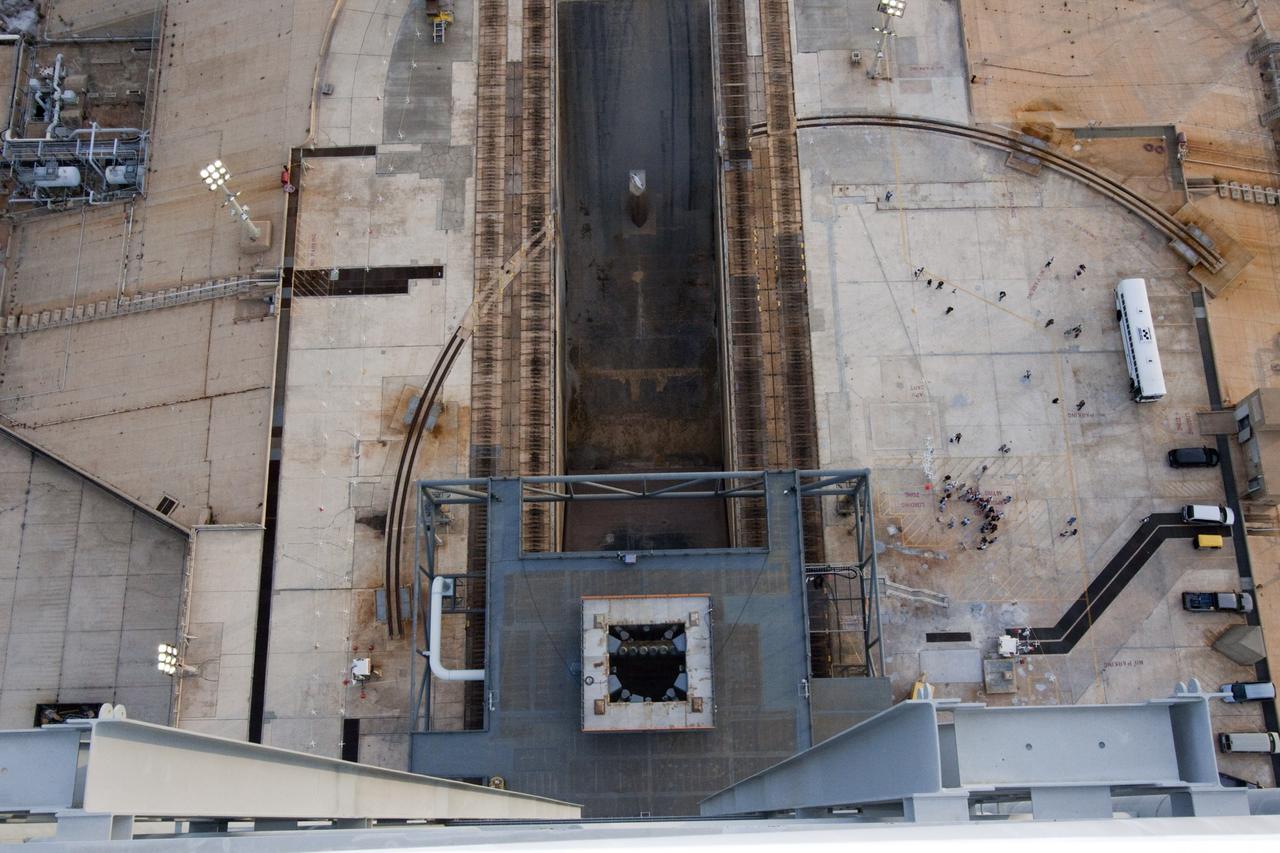
CAPE CANAVERAL, Fla. – At NASA Kennedy Space Center in Florida, media representatives taking the 21st Century Ground Systems tour appear to be the size of ants in this view from the top of the 355-foot-tall mobile launcher on Launch Pad 39B. Other stops on the tour include the Vehicle Assembly Building, a crawler-transporter parked on the crawlerway, and the Launch Control Center's Firing Room 1. These facilities and equipment will be used to prepare and launch NASA's new Orion spacecraft on the Space Launch System heavy-lift rocket. The tour was arranged as part of prelaunch media activities for the agency's Mars Science Laboratory (MSL) launch. Liftoff of MSL aboard a United Launch Alliance Atlas V rocket from Space Launch Complex-41 on Cape Canaveral Air Force Station is planned during a launch window which extends from 10:02 a.m. to 11:45 a.m. EST on Nov. 26. For more information, visit http://www.nasa.gov/msl. Photo credit: NASA/Jim Grossmann
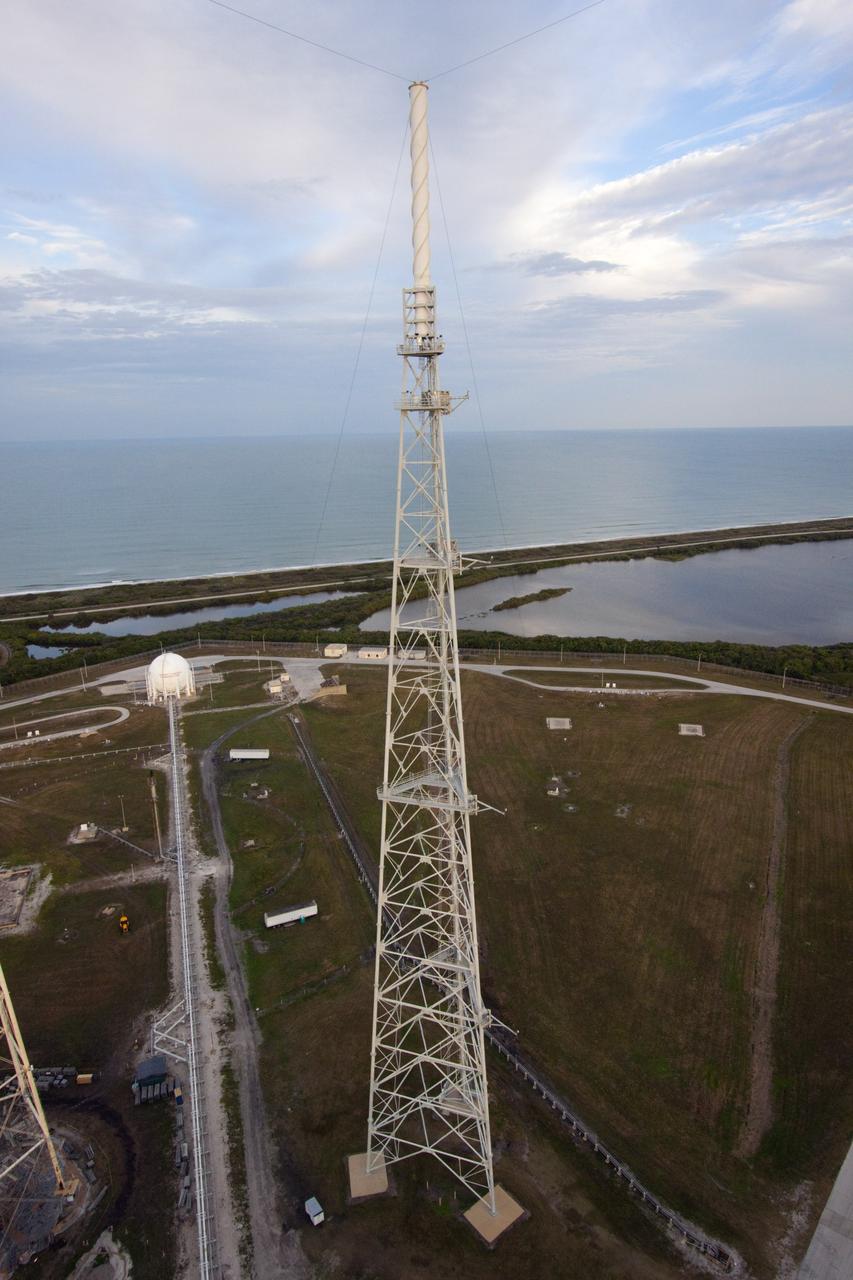
CAPE CANAVERAL, Fla. – At NASA Kennedy Space Center in Florida, this view, taken from the top of the 355-foot-tall mobile launcher at Launch Pad 39B, illustrates the close proximity of the pad to the Atlantic Ocean in the background. The structure in the center of the photo is one of three lightning masts at the pad. Media representatives are taking the 21st Century Ground Systems tour which also includes the Vehicle Assembly Building, a crawler-transporter parked on the crawlerway, and the Launch Control Center's Firing Room 1. These facilities and equipment will be used to prepare and launch NASA's new Orion spacecraft on the Space Launch System heavy-lift rocket. The tour was arranged as part of prelaunch media activities for the agency's Mars Science Laboratory (MSL) launch. Liftoff of MSL aboard a United Launch Alliance Atlas V rocket from Space Launch Complex-41 on Cape Canaveral Air Force Station is planned during a launch window which extends from 10:02 a.m. to 11:45 a.m. EST on Nov. 26. For more information, visit http://www.nasa.gov/msl. Photo credit: NASA/Jim Grossmann
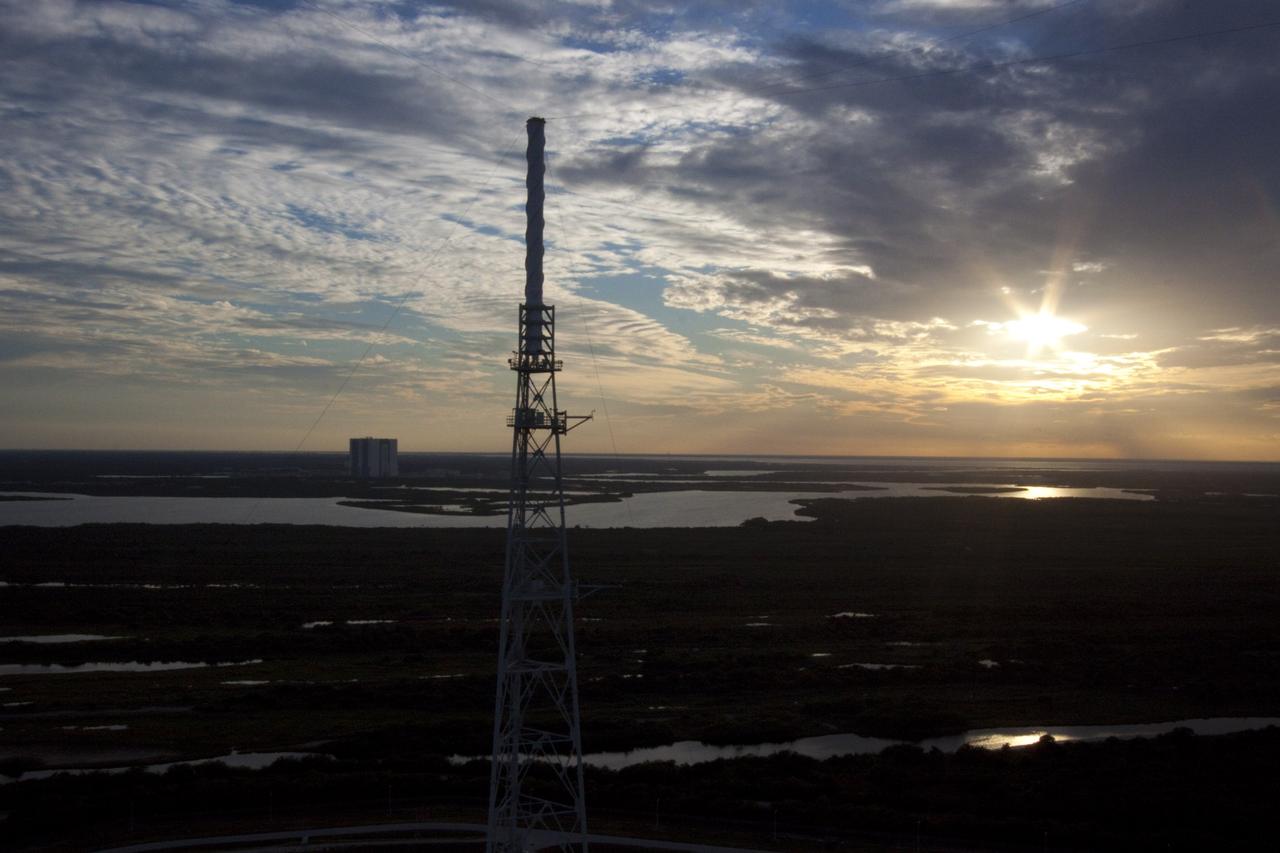
CAPE CANAVERAL, Fla. – At NASA Kennedy Space Center in Florida, the sun begins to set at Launch Pad 39B on the media representatives taking the 21st Century Ground Systems tour. This view was taken from the top of the 355-foot-tall mobile launcher at the pad. In the foreground is one of three lightning masts at the pad; in the distance is the Vehicle Assembly Building. Other stops on the tour include the Vehicle Assembly Building, a crawler-transporter parked on the crawlerway, and the Launch Control Center's Firing Room 1. These facilities and equipment will be used to prepare and launch NASA's new Orion spacecraft on the Space Launch System heavy-lift rocket. The tour was arranged as part of prelaunch media activities for the agency's Mars Science Laboratory (MSL) launch. Liftoff of MSL aboard a United Launch Alliance Atlas V rocket from Space Launch Complex-41 on Cape Canaveral Air Force Station is planned during a launch window which extends from 10:02 a.m. to 11:45 a.m. EST on Nov. 26. For more information, visit http://www.nasa.gov/msl. Photo credit: NASA/Jim Grossmann
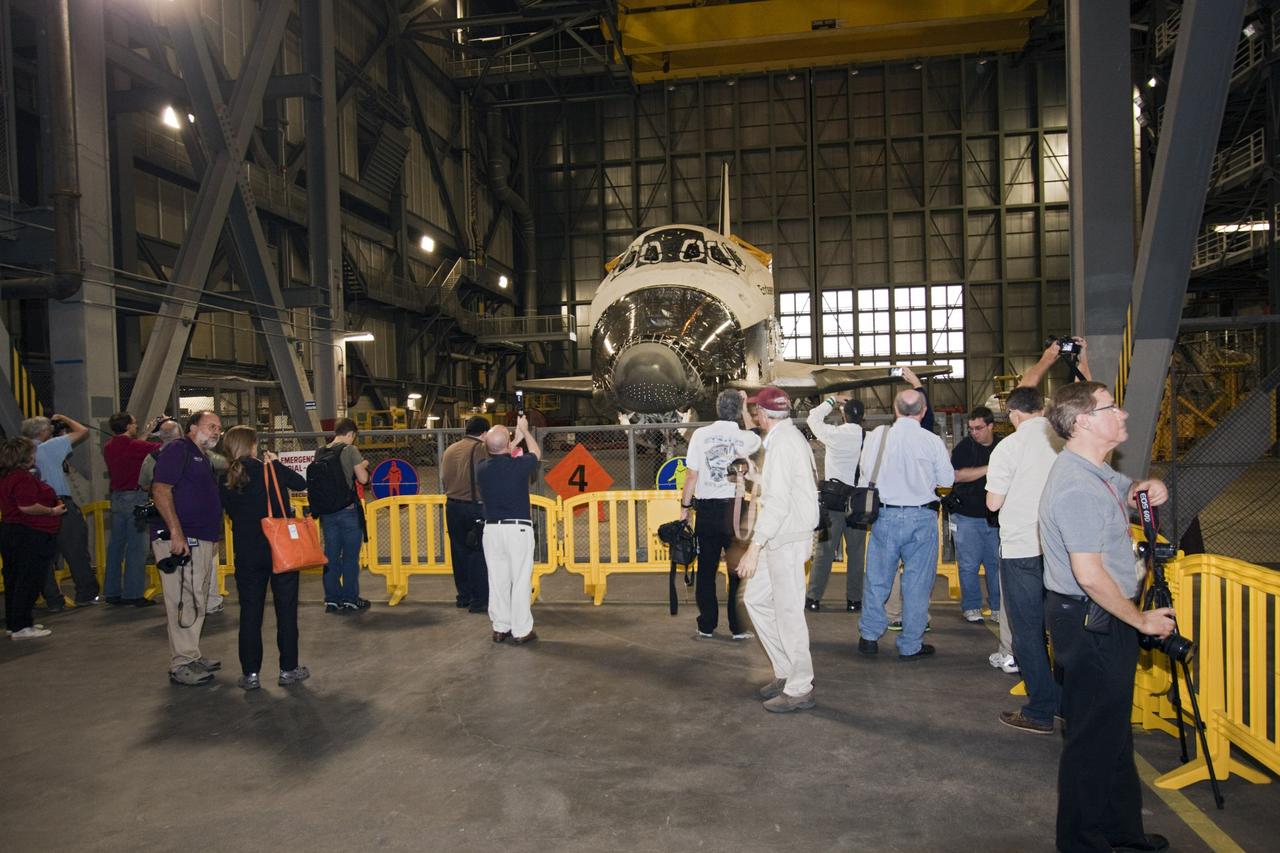
CAPE CANAVERAL, Fla. – At NASA Kennedy Space Center in Florida, media representatives taking the 21st Century Ground Systems tour get a close-up look at space shuttle Endeavour which is being stored in the Vehicle Assembly Building. Other stops on the tour include a crawler-transporter parked on the crawlerway, the new mobile launcher on Launch Pad 39B, and the Launch Control Center's Firing Room 1. These facilities and equipment will be used to prepare and launch NASA's new Orion spacecraft on the Space Launch System heavy-lift rocket. The tour was arranged as part of prelaunch media activities for the agency's Mars Science Laboratory (MSL) launch. Liftoff of MSL aboard a United Launch Alliance Atlas V rocket from Space Launch Complex-41 on Cape Canaveral Air Force Station is planned during a launch window which extends from 10:02 a.m. to 11:45 a.m. EST on Nov. 26. For more information, visit http://www.nasa.gov/msl. Photo credit: NASA/Jim Grossmann
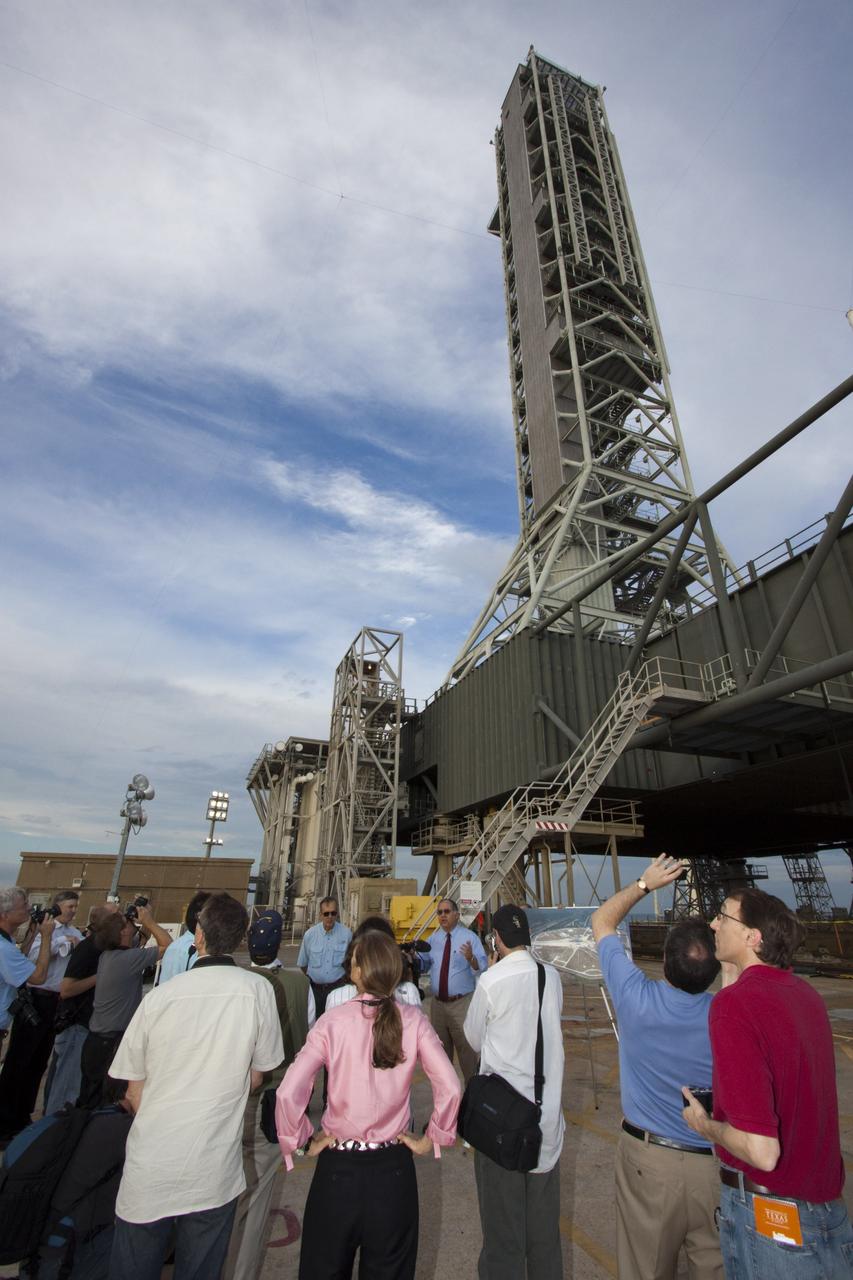
CAPE CANAVERAL, Fla. – At NASA Kennedy Space Center in Florida, Jose Perez-Morales (right), NASA launch pad project manager, and Larry Schultz, NASA mobile launcher project manager, outline the upgrades to Launch Pad 39B and the mobile launcher to support NASA's forthcoming Space Launch System heavy-lift rocket. Their audience is made up of media representatives taking the 21st Century Ground Systems tour. Other stops on the tour include the Vehicle Assembly Building, a crawler-transporter parked on the crawlerway, and the Launch Control Center's Firing Room 1. These facilities and equipment will be used to prepare and launch NASA's new Orion spacecraft. The tour was arranged as part of prelaunch media activities for the agency's Mars Science Laboratory (MSL) launch. Liftoff of MSL aboard a United Launch Alliance Atlas V rocket from Space Launch Complex-41 on Cape Canaveral Air Force Station is planned during a launch window which extends from 10:02 a.m. to 11:45 a.m. EST on Nov. 26. For more information, visit http://www.nasa.gov/msl. Photo credit: NASA/Jim Grossmann
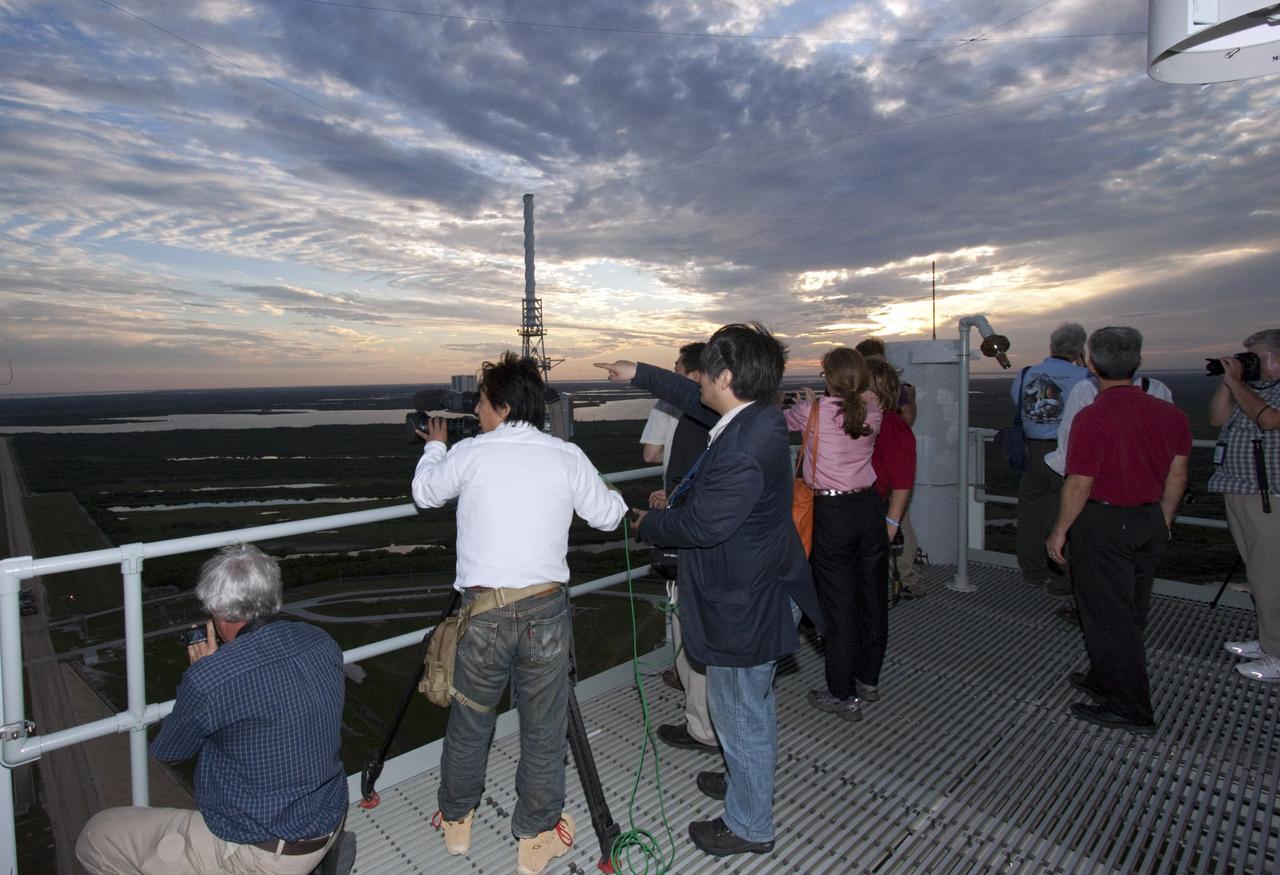
CAPE CANAVERAL, Fla. – At NASA Kennedy Space Center in Florida, media representatives photograph Kennedy Space Center from the vantage of the top of the 355-foot-tall mobile launcher at Launch Pad 39B. They are taking the 21st Century Ground Systems tour which also includes the Vehicle Assembly Building, a crawler-transporter parked on the crawlerway, and the Launch Control Center's Firing Room 1. These facilities and equipment will be used to prepare and launch NASA's new Orion spacecraft on the Space Launch System heavy-lift rocket. The tour was arranged as part of prelaunch media activities for the agency's Mars Science Laboratory (MSL) launch. Liftoff of MSL aboard a United Launch Alliance Atlas V rocket from Space Launch Complex-41 on Cape Canaveral Air Force Station is planned during a launch window which extends from 10:02 a.m. to 11:45 a.m. EST on Nov. 26. For more information, visit http://www.nasa.gov/msl. Photo credit: NASA/Jim Grossmann
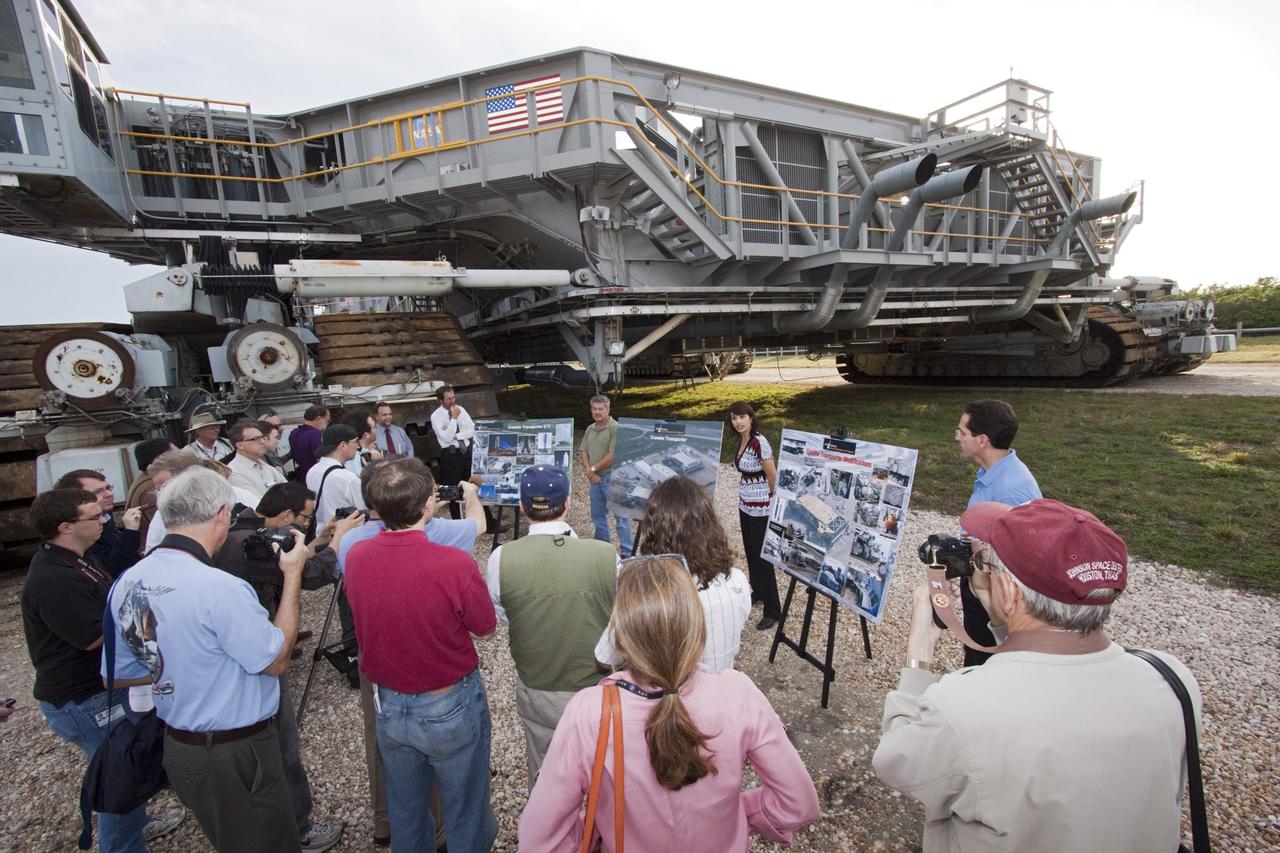
CAPE CANAVERAL, Fla. – At NASA Kennedy Space Center in Florida, Mary Hanna, NASA crawler-transporter project manager, outlines the upgrades planned for the crawler-transport to support NASA's forthcoming Space Launch System heavy-lift rocket. Hanna's audience is made up of media representatives taking the 21st Century Ground Systems tour. Other stops on the tour include the Vehicle Assembly Building, the new mobile launcher on Launch Pad 39B, and the Launch Control Center's Firing Room 1. These facilities and equipment will be used to prepare and launch NASA's new Orion spacecraft. The tour was arranged as part of prelaunch media activities for the agency's Mars Science Laboratory (MSL) launch. Liftoff of MSL aboard a United Launch Alliance Atlas V rocket from Space Launch Complex-41 on Cape Canaveral Air Force Station is planned during a launch window which extends from 10:02 a.m. to 11:45 a.m. EST on Nov. 26. For more information, visit http://www.nasa.gov/msl. Photo credit: NASA/Jim Grossmann
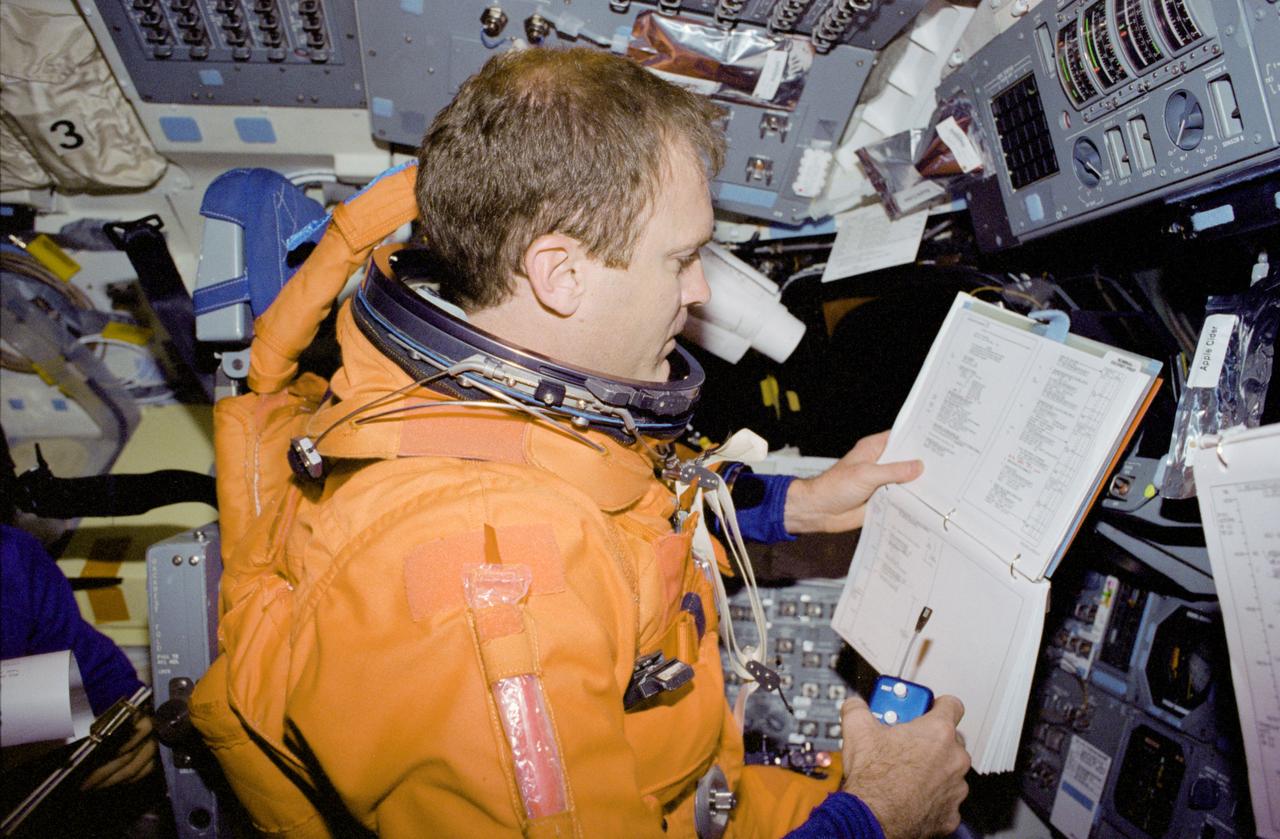
STS083-448-025 (8 April 1997) --- Partially suited in the partial-pressure launch and entry garment, astronaut James D. Halsell, Jr., mission commander, goes over a checklist prior to entry. Halsell, along with four other NASA astronauts and two payload specialists supporting the Microgravity Sciences Laboratory (MSL-1) mission were less than a fourth of the way through a scheduled 16-day flight when a power problem cut short their planned stay.
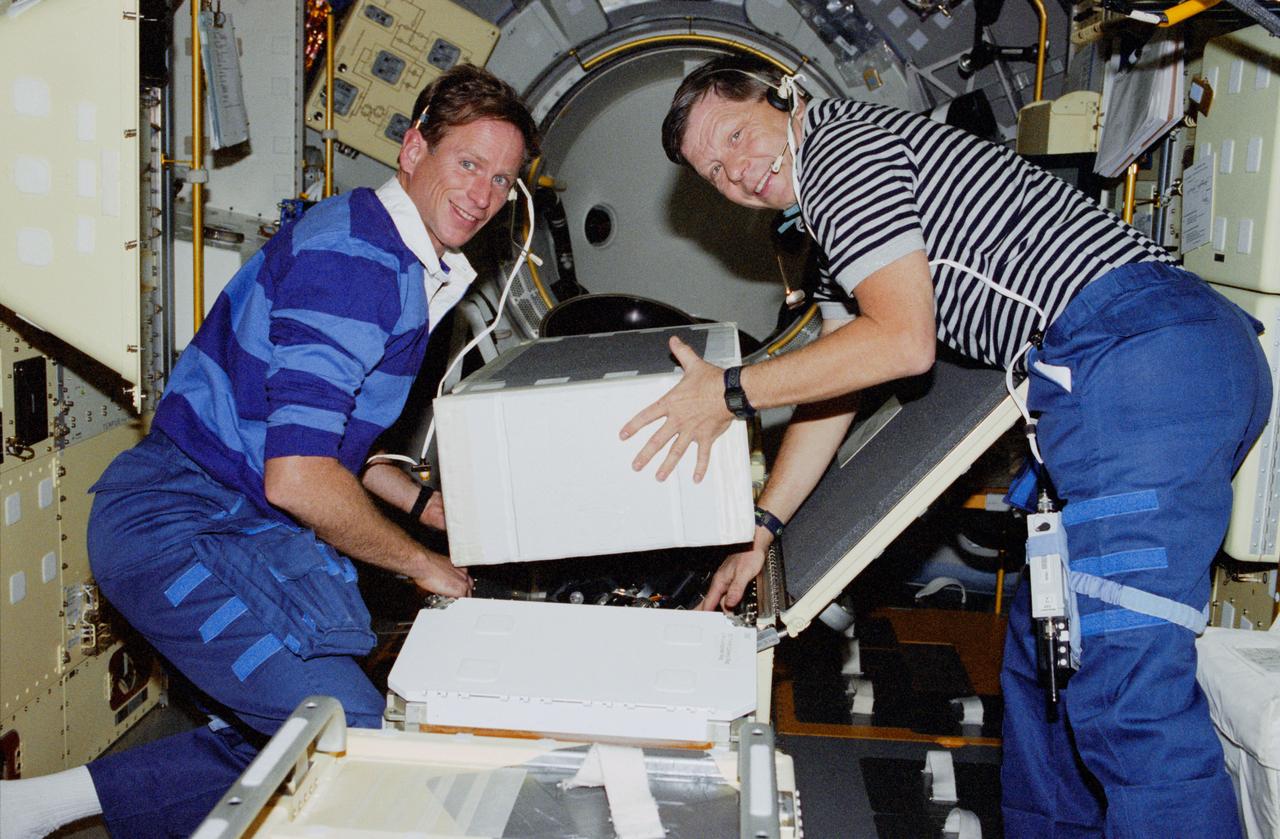
STS083-308-021 (4-8 April 1997) --- Payload specialist Roger K. Crouch and astronaut Michael L. Gernhardt, mission specialist, load boxes as they prepare to deactivate the Spacelab Science Module. Crouch and Gernhardt, along with five other NASA astronauts and a second payload specialist supporting the Microgravity Sciences Laboratory (MSL-1) mission, were less than a fourth of the way through a scheduled 16-day flight when a power problem cut short their planned stay.
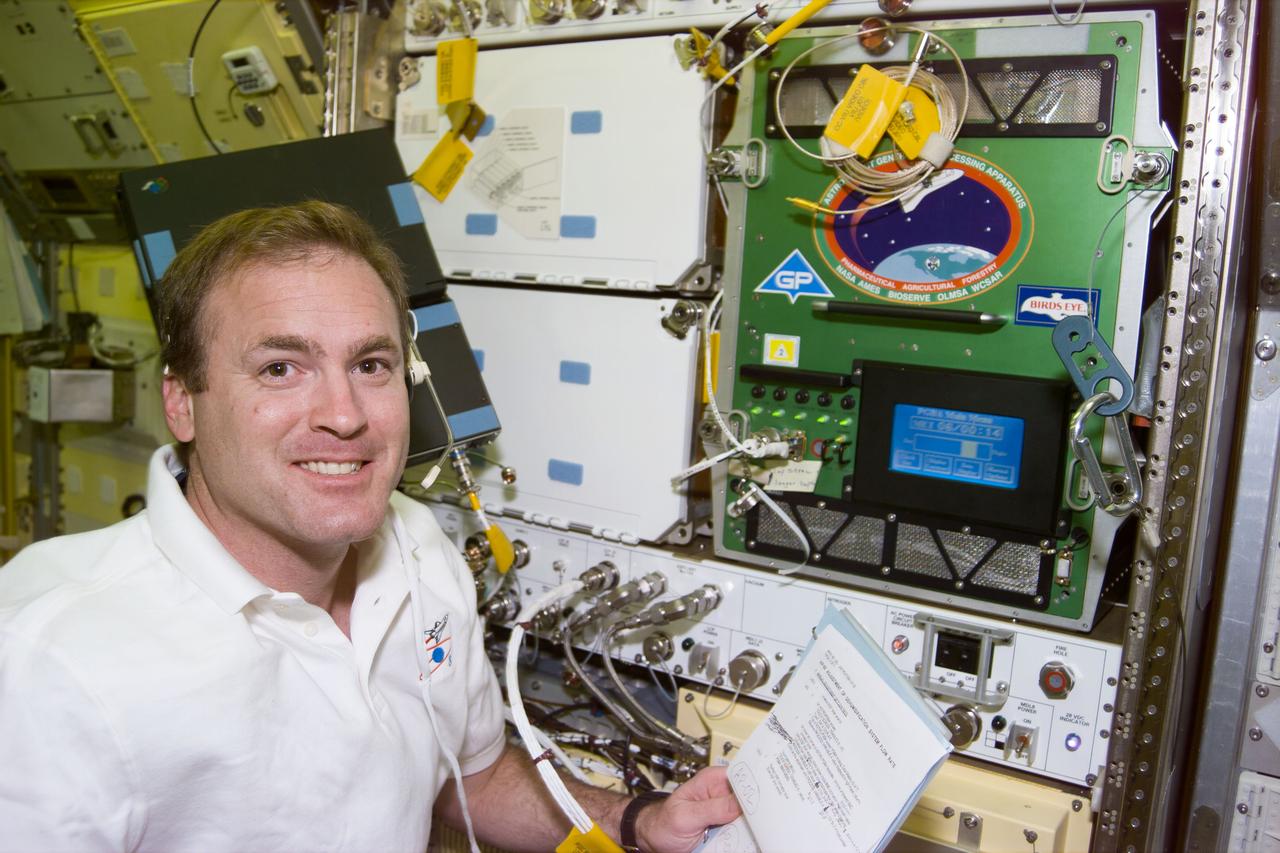
S94-E-5021 (6 July 1997) --- Astronaut James D. Halsell, Jr., mission commander, checks on an experiment in the Astro-Planet Generic Bioprocessing Apparatus onboard the Earth-orbiting Space Shuttle Columbia. The Microgravity Sciences Laboratory (MSL-1) had just completed the first one-third of its manifest time frame. The image was recorded with an Electronic Still Camera (ESC) and later downlinked to ground controllers in Houston, Texas.

STS083-489-021 (4-8 April 1997)--- Astronaut James D. Halsell, Jr., mission commander, checks on an experiment in the Astro-Planet Generic Bioprocessing Apparatus onboard the Earth-orbiting Space Shuttle Columbia. The Microgravity Sciences Laboratory (MSL-1) completed about one-fourth of its manifest time frame prior to being cut short by a power shortage.
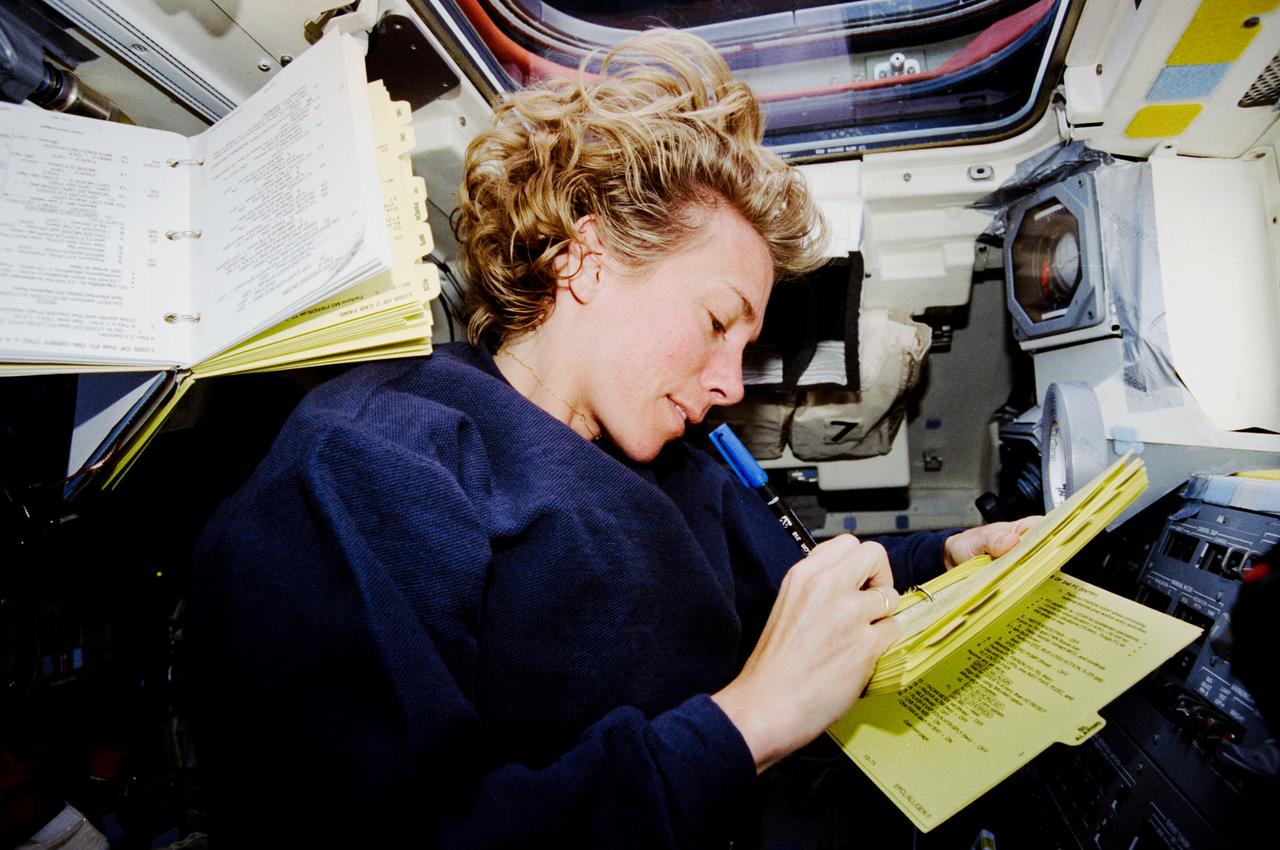
STS083-317-009 (4-8 April 1997) --- Astronaut Susan L. Still, pilot, goes over a checklist at the control panel on the aft flight deck of the Earth-orbiting Space Shuttle Columbia. Scheduled originally as a 16-day mission, the Microgravity Sciences Laboratory (MSL-1) flight completed about one-fourth of its manifest time frame prior to being cut short by a power shortage.
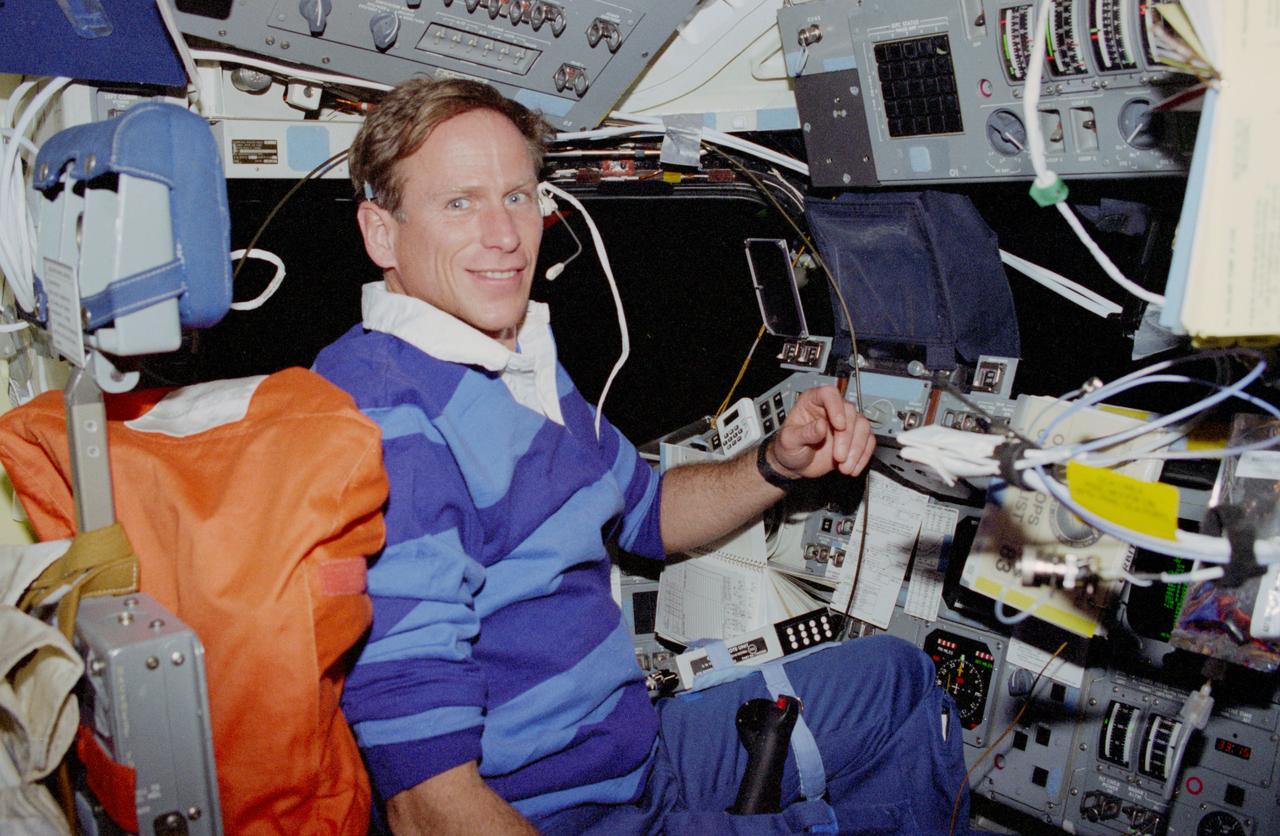
STS083-305-006 (4-8 April 1997) --- Astronaut Michael L. Gernhardt, mission specialist, talks to ground controllers while temporarily occupying the commander's station on the forward flight deck of the Earth-orbiting Space Shuttle Columbia. Crewed by Gernhardt, four other NASA astronauts and two payload specialists, the scheduled 16-day Microgravity Science Mission (MSL-1) mission was later cut short by a power shortage.
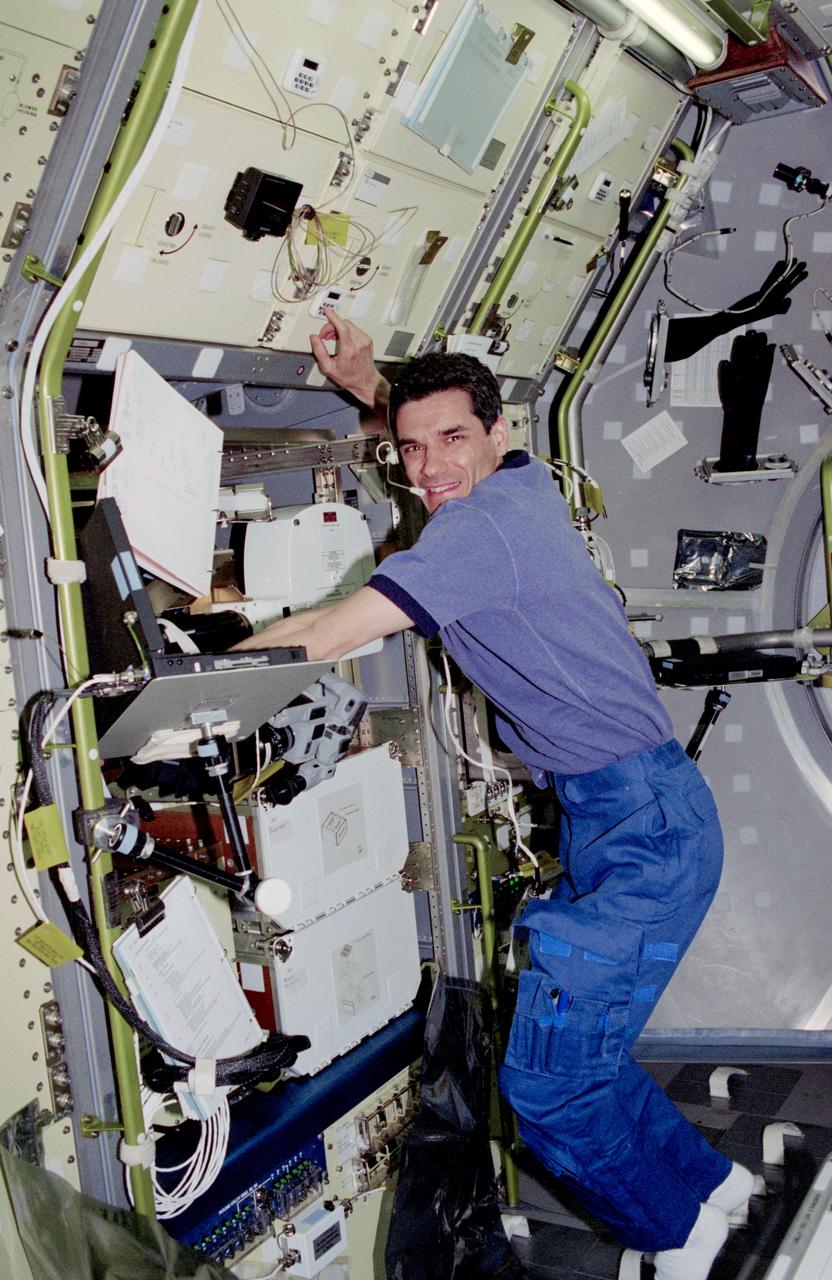
STS083-306-002 (4-8 April 1997) --- Payload specialist Gregory T. Linteris, talks to ground controllers while updating progress on an experiment in the Spacelab Science Module. Linteris, along with five other NASA astronauts and a second payload specialist supporting the Microgravity Sciences Laboratory (MSL-1) mission were less than a fourth of the way through a scheduled 16-day flight when a power problem cut short their planned stay.
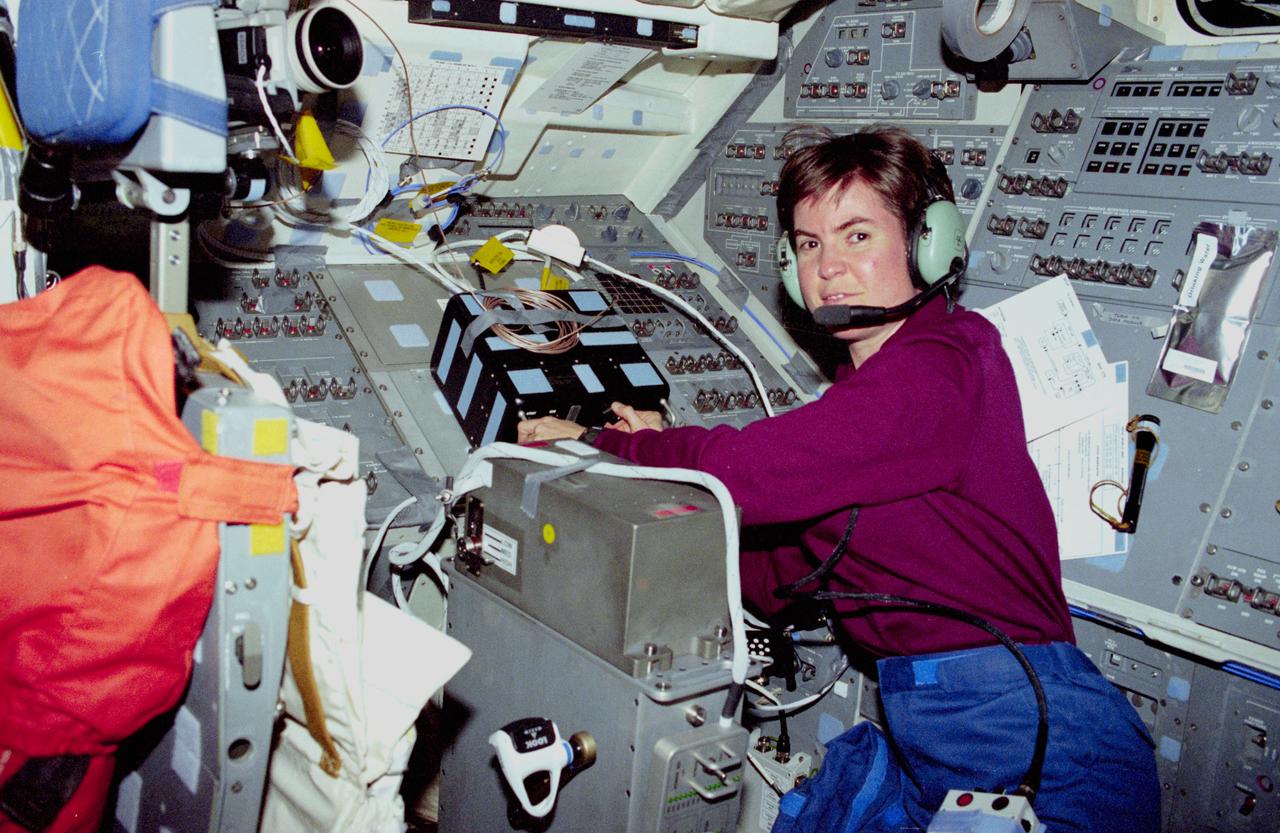
STS083-305-010 (4-8 April 1997) --- Astronaut Janice E. Voss, mission specialist, works with communications systems on the aft flight deck of the Earth-orbiting Space Shuttle Columbia. Voss, along with five other NASA astronauts and two payload specialist supporting the Microgravity Sciences Laboratory (MSL-1) mission, were less than a fourth of the way through a scheduled 16-day flight when a power problem cut short their planned stay.
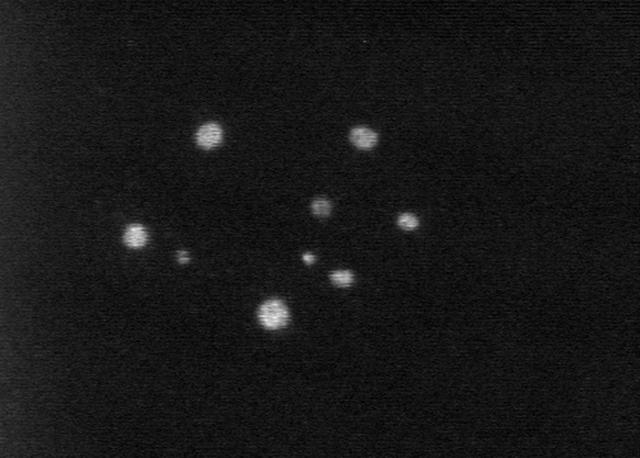
The potential for investigating combustion at the limits of flammability, and the implications for spacecraft fire safety, led to the Structures Of Flame Balls At Low Lewis-number (SOFBALL) experiment flown twice aboard the Space Shuttle in 1997. The success there led to reflight on STS-107 Research 1 mission plarned for 2002. This image is a video frame which shows MSL-1 flameballs which are intrinsically dim, thus requiring the use of image intensifiers on video cameras. The principal investigator is Dr. Paul Ronney of the University of Southern California, Los Angeles. Glenn Research in Cleveland, OH, manages the project.
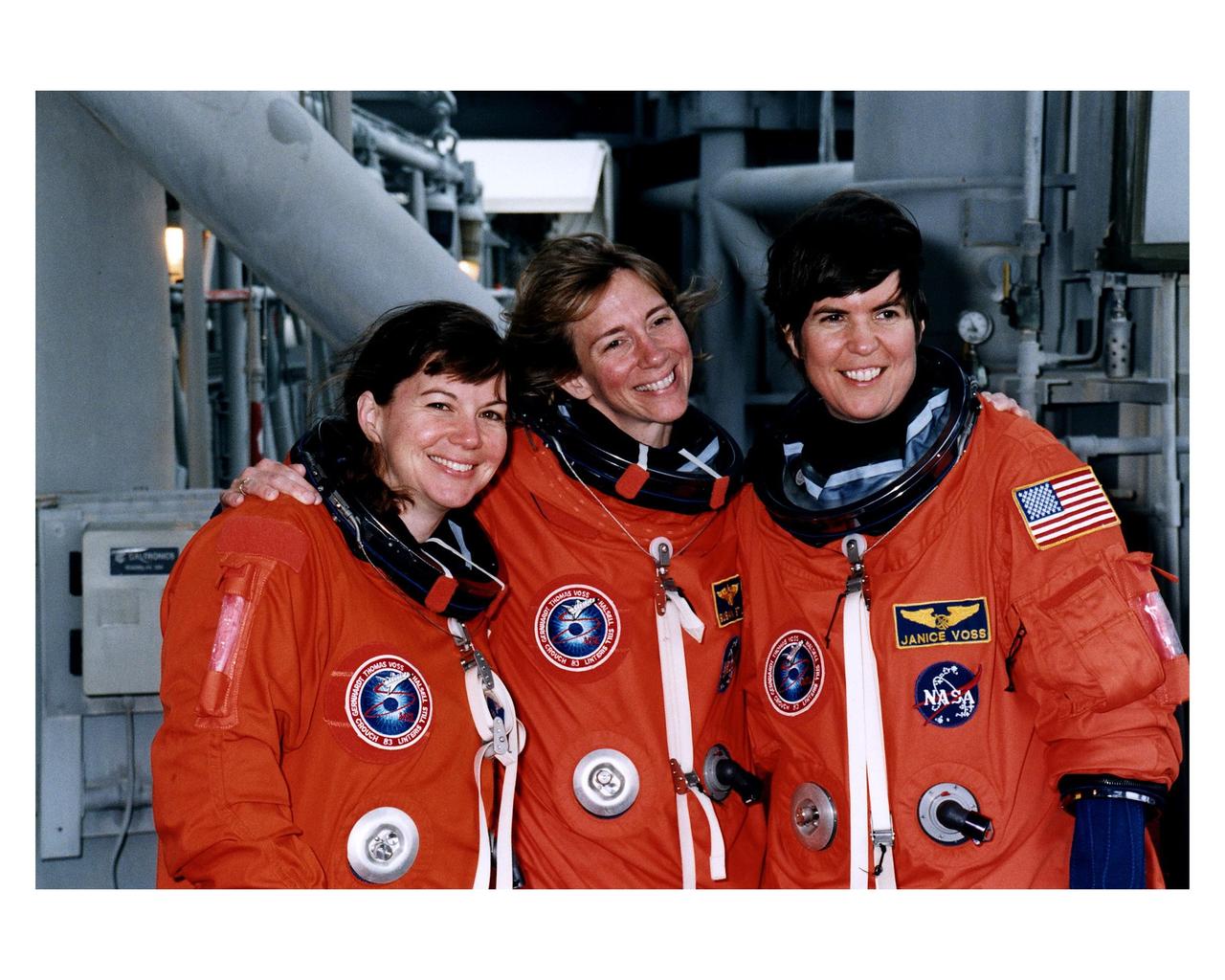
STS-83 Alternate Mission Specialist Catherine "Cady" Coleman, Pilot Susan L. Still and Payload Commander Janice Voss mug for the camera at the 195-foot level of Launch Pad 39A during Terminal Countdown Demonstration Test (TCDT) exercises for that mission. The other crew members for the 16-day Microgravity Science Laboratory-1 (MSL-1) mission are Mission Commander James D. Halsell, Jr.; Mission Specialist Donald A. Thomas; Payload Specialist Gregory T. Linteris; Mission Specialist Michael L. Gernhardt; and Payload Specialist Roger K. Crouch
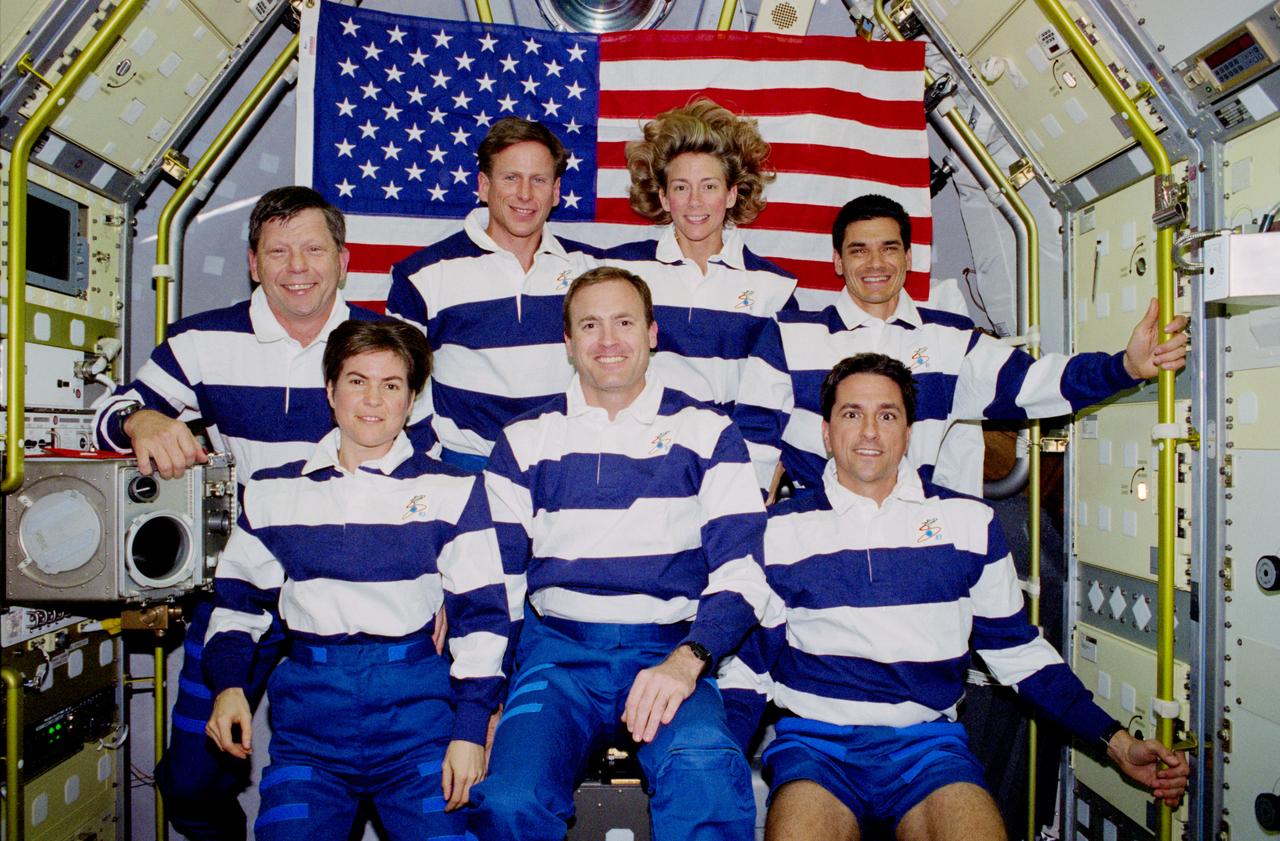
STS083-325-004 (4-8 April 1997) --- Five NASA astronauts and two payload specialists pose for the traditional inflight crew portrait during a Microgravity Science Laboratory 1 (MSL-1) shift changeover in the Spacelab Module aboard the Space Shuttle Columbia. In front (from the left) are astronauts Janice E. Voss, James D. Halsell, Jr. and Donald A. Thomas. From left to right in the rear are Roger K. Crouch, along with astronauts Michael L. Gernhardt and Susan L. Still, and Gregory T. Linteris. Crouch and Linteris are payload specialists.
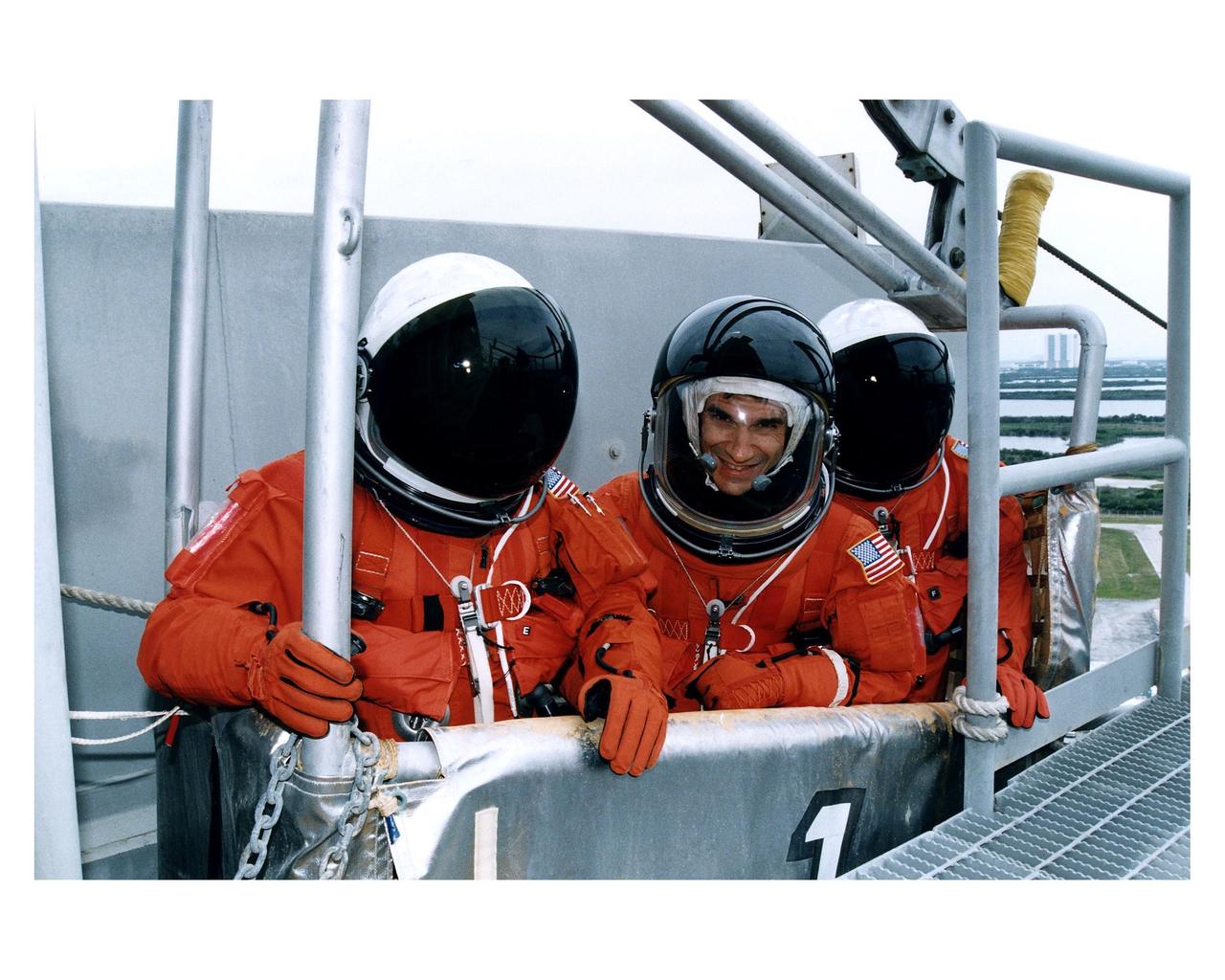
Three members of the STS-83 flight crew check out one of the baskets for the emergency egress slidewire system at Launch Pad 39A during Terminal Countdown Demonstration Test (TCDT) exercises for that mission. Payload Specialist Gregory T. Linteris is in the center of the group. Other crew members on the 16-day Microgravity Science Laboratory-1 (MSL-1) mission are: Mission Commander James D. Halsell, Jr.; Pilot Susan L. Still; Payload Commander Janice Voss; Mission Specialists Michael L. Gernhardt and Donald A. Thomas; and Payload Specialist Roger K. Crouch
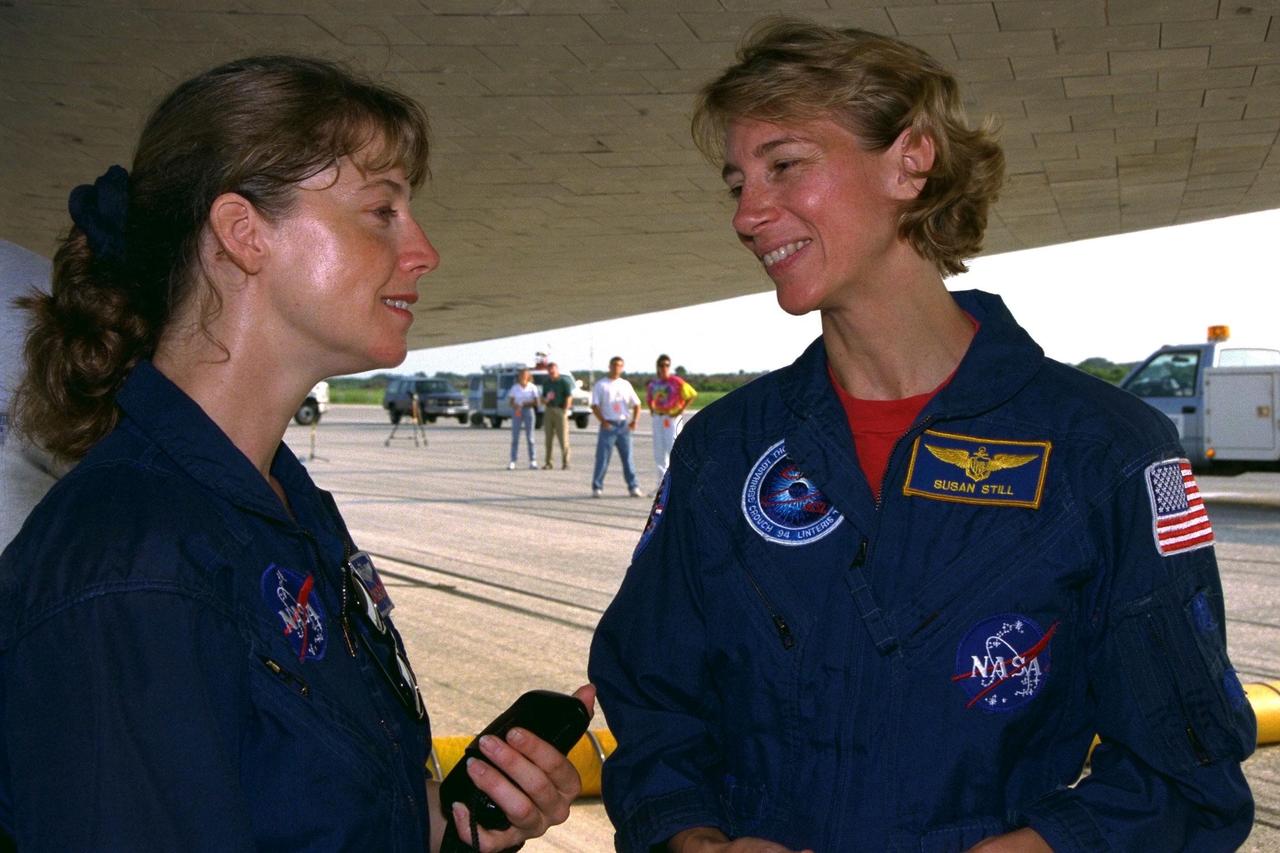
KENNEDY SPACE CENTER, FLA. -- Astronaut Support team member Pamela A. Melroy (left) greets STS-94 Pilot Susan L. Still underneath the Space Shuttle orbiter Columbia after an end-of-mission landing on Runway 33 of KSC’s Shuttle Landing Facility July 17 to complete the Microgravity Science Laboratory-1 (MSL-1) mission. Six of the seven STS-94 crew members took the traditional post-landing walk around the orbiter, meeting with members of the orbiter recovery convoy team and inspecting the vehicle that carried them through space for nearly 17 days on a highly successful microgravity research mission