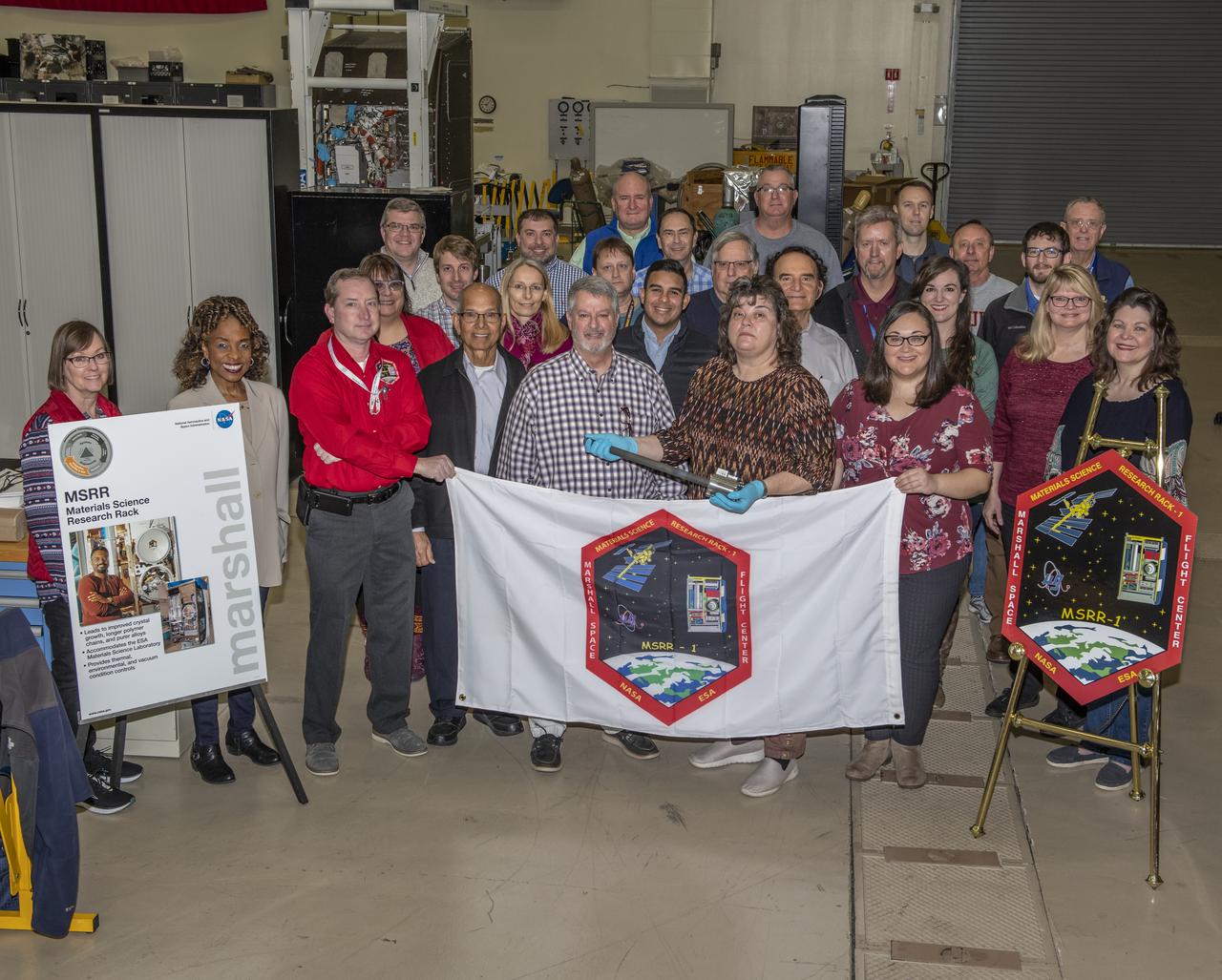
NASA's first Sample Cartridge Assembly (SCA) project designed and validated a payload containing a materials research sample in a sealed environment. The SCA was heated in the European Space Agency's (ESA) Low Gradient Furnace (LGF) that is housed inside the Material Science Research Rack (MSRR) located on the International Space Station (ISS). Sintered metals and crystal growth experiments in microgravity are examples of some of the types of materials research that may be performed with a SCA.
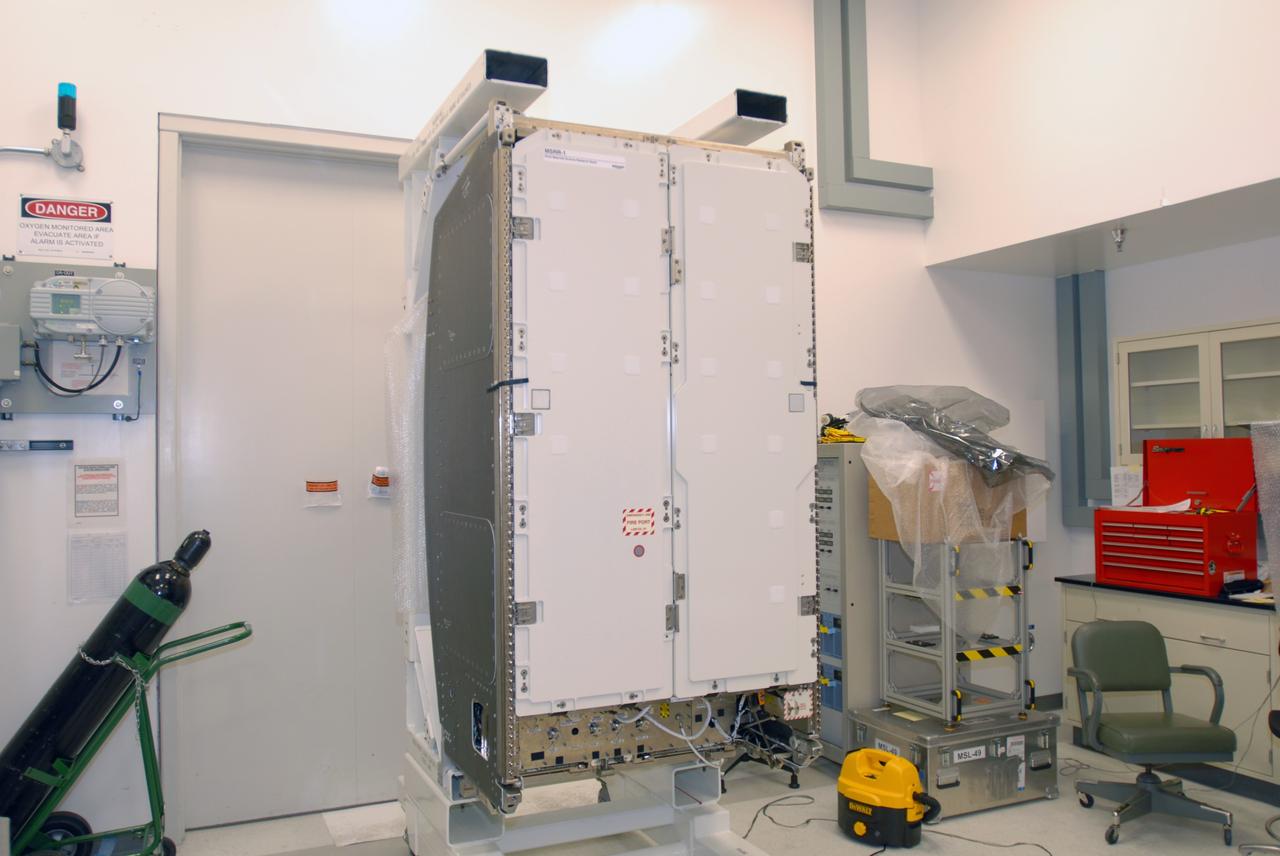
CAPE CANAVERAL, Fla. – The Materials Science Research Rack-1, or MSRR-1, arrived at NASA's Kennedy Space Center in Florida for final flight preparations. The size of a large refrigerator, MSRR-1 is 6 feet high, 3.5 feet wide and 40 inches deep and weighs about 1 ton. MSRR-1 is the payload for the STS-128 mission targeted to launch in August. The rack will be installed in the Leonardo Multi-Purpose Logistics Module for transport to the International Space Station . After arriving at the station, the rack will be housed in the U.S. Destiny laboratory. MSRR-1 will allow for study of a variety of materials including metals, ceramics, semiconductor crystals and glasses onboard the orbiting laboratory. Photo credit: NASA/Jim Grossmann
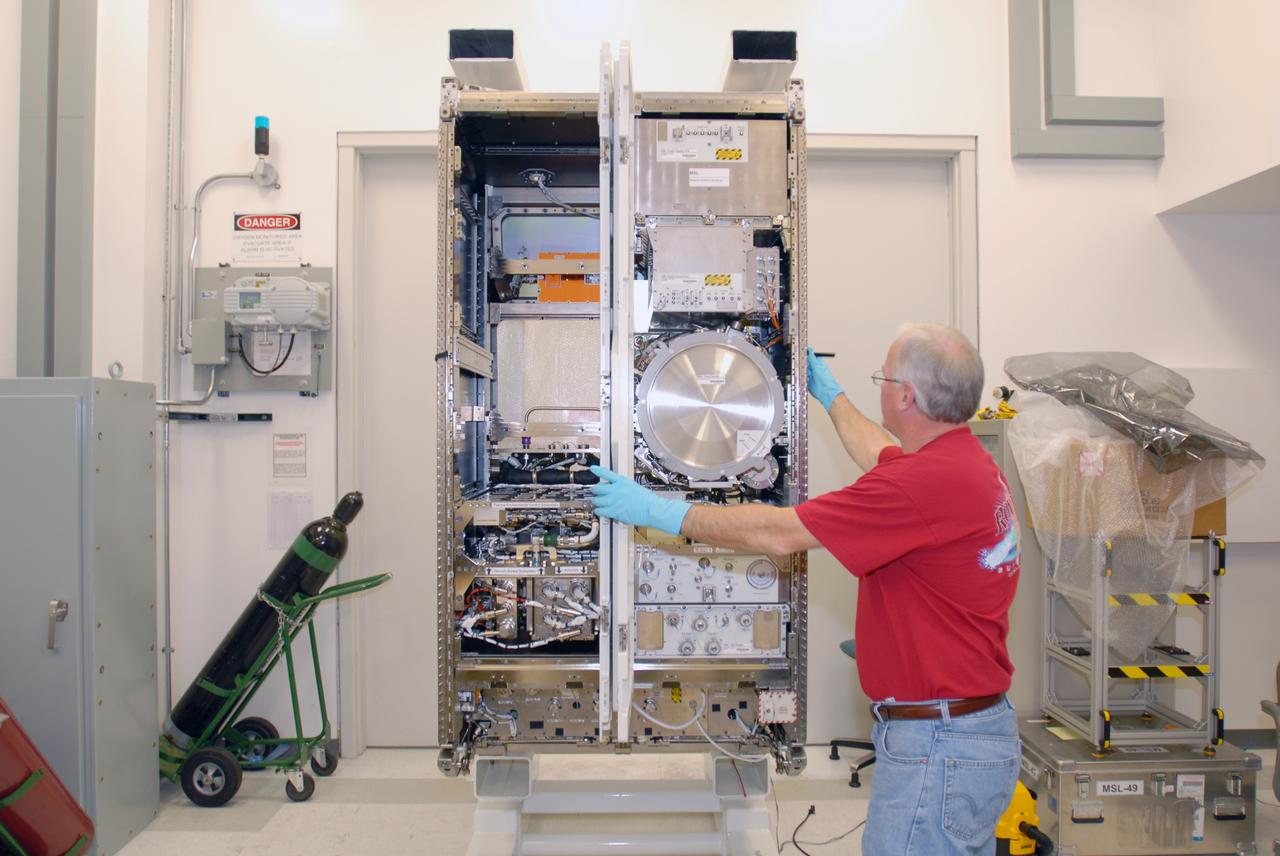
CAPE CANAVERAL, Fla. – At NASA's Kennedy Space Center in Florida, a technician checks out the Materials Science Research Rack-1, or MSRR-1, which will undergo final flight preparations. The size of a large refrigerator, MSRR-1 is 6 feet high, 3.5 feet wide and 40 inches deep and weighs about 1 ton. MSRR-1 is the payload for the STS-128 mission targeted to launch in August. The rack will be installed in the Leonardo Multi-Purpose Logistics Module for transport to the International Space Station . After arriving at the station, the rack will be housed in the U.S. Destiny laboratory. MSRR-1 will allow for study of a variety of materials including metals, ceramics, semiconductor crystals and glasses onboard the orbiting laboratory. Photo credit: NASA/Jim Grossmann
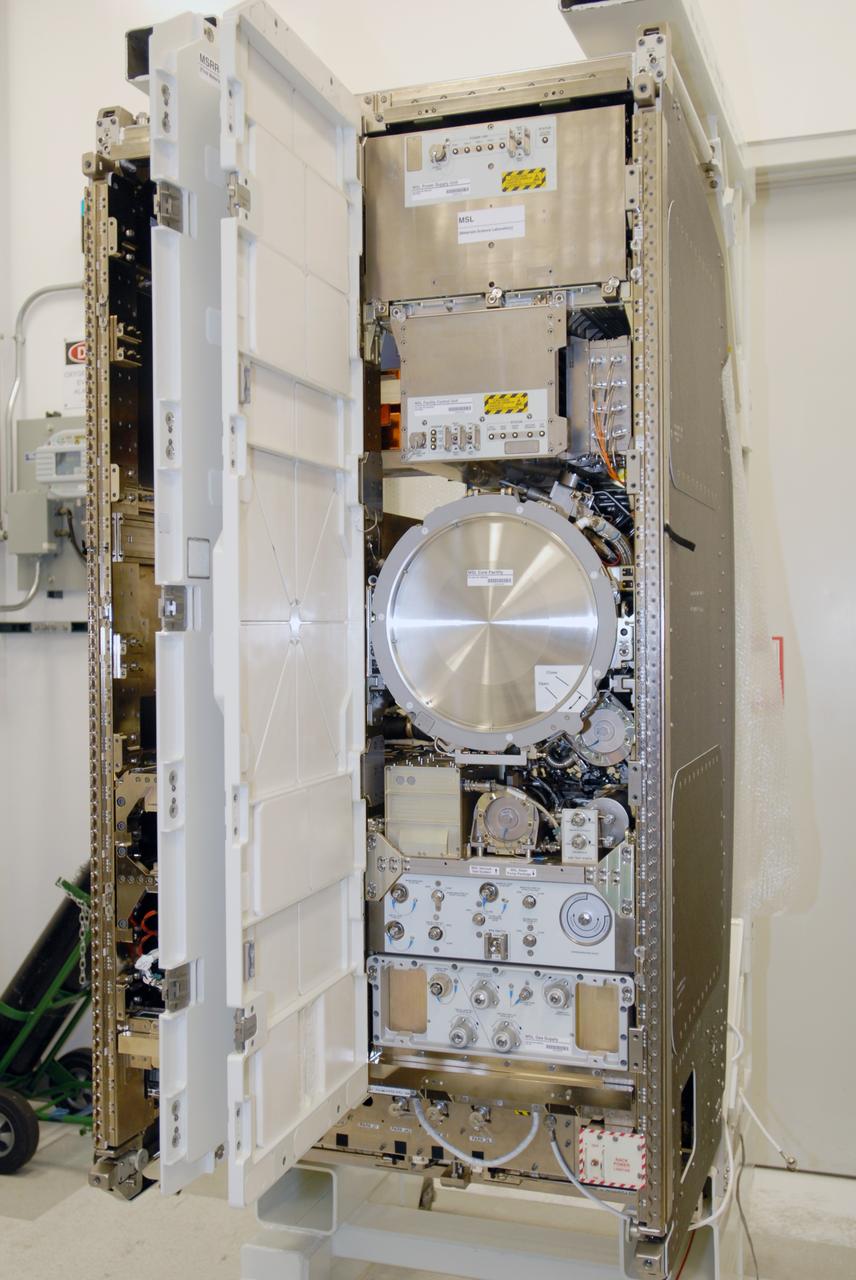
CAPE CANAVERAL, Fla. – This close-up shows some of the components of the Materials Science Research Rack-1, or MSRR-1, which arrived at NASA's Kennedy Space Center in Florida for final flight preparations. The size of a large refrigerator, MSRR-1 is 6 feet high, 3.5 feet wide and 40 inches deep and weighs about 1 ton. MSRR-1 is the payload for the STS-128 mission targeted to launch in August. The rack will be installed in the Leonardo Multi-Purpose Logistics Module for transport to the International Space Station . After arriving at the station, the rack will be housed in the U.S. Destiny laboratory. MSRR-1 will allow for study of a variety of materials including metals, ceramics, semiconductor crystals and glasses onboard the orbiting laboratory. Photo credit: NASA/Jim Grossmann

L TO R: DR. FRANCIS CHIARAMONTE, PROGRAM EXECUTIVE FOR PHYSICAL SCIENCES, ISS RESEARCH PROJECT, NASA HEADQUARTERS; DR. RAYMOND CLINTON, ACTING MANAGER FOR SCIENCE AND MISSION SYSTEMS OFFICE, NASA MARSHALL; DR. FRANK SZOFRAN, MICROGRAVITY MATERIALS SCIENCE PROJECT MANAGER AND DISCIPLINE SCIENTIST MATERIALS AND PROCESSES LABORATORY AT MSFC.
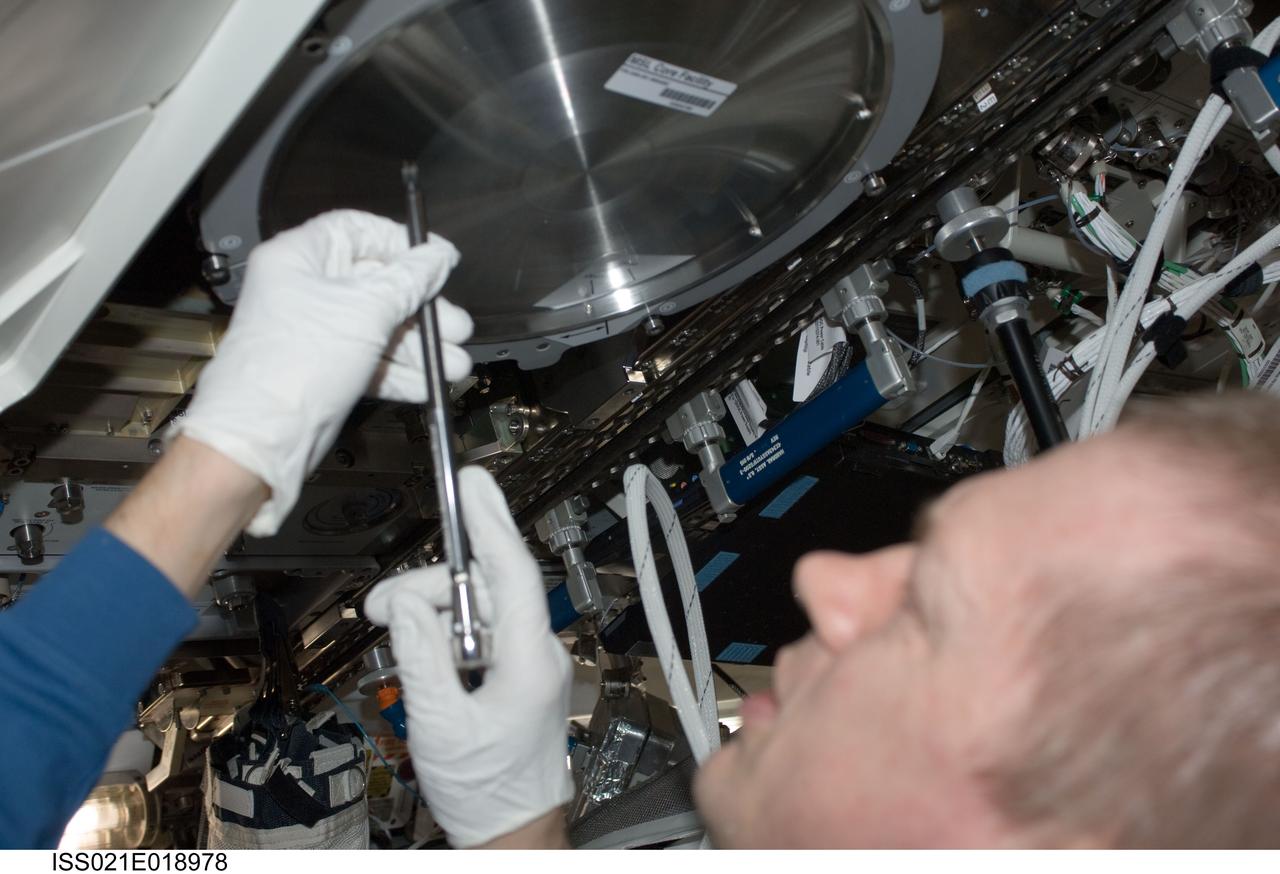
ISS021-E-018978 (2 Nov. 2009) --- European Space Agency astronaut Frank De Winne, Expedition 21 commander, works with Materials Science Laboratory (MSL) hardware in the Destiny laboratory of the International Space Station.
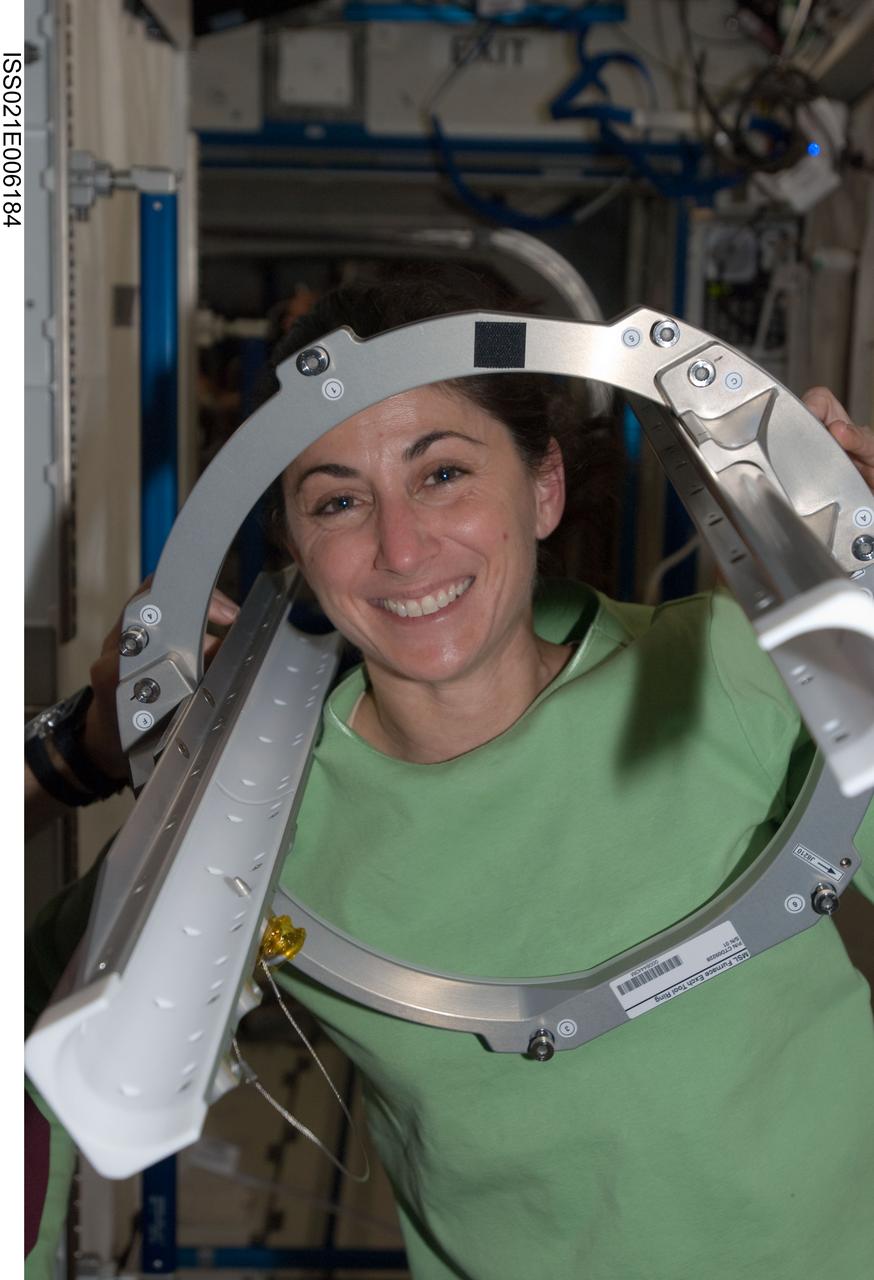
ISS021-E-006184 (14 Oct. 2009) --- NASA astronaut Nicole Stott, Expedition 21 flight engineer, works with Materials Science Laboratory (MSL) hardware in the Destiny laboratory of the International Space Station.
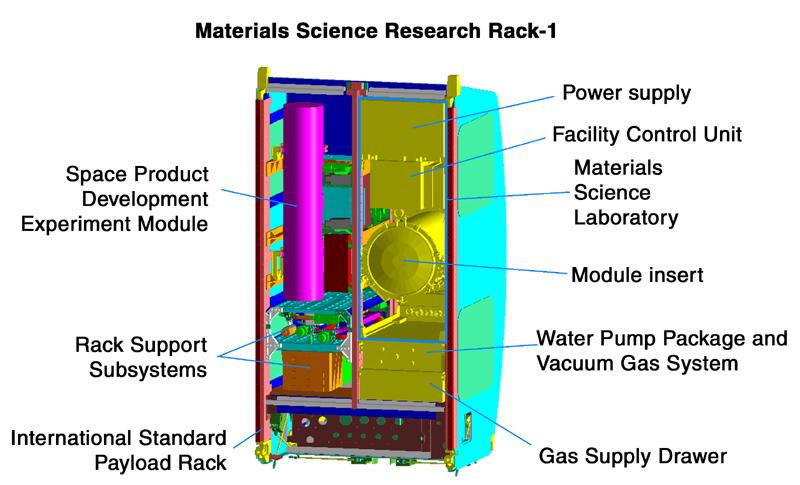
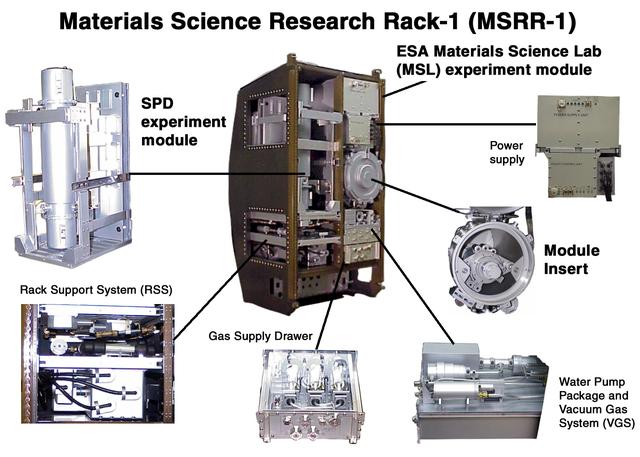
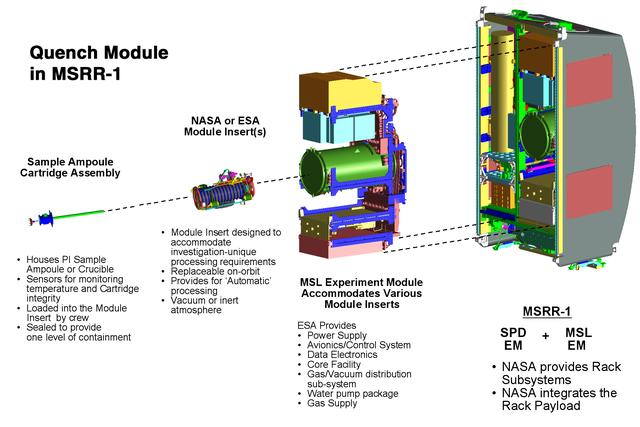
This computer-generated image depicts the Materials Science Research Rack-1 (MSRR-1) being developed by NASA's Marshall Space Flight Center and the European Space Agency (ESA) for placement in the Destiny laboratory module aboard the International Space Station. The rack is part of the plarned Materials Science Research Facility (MSRF) and is expected to include two furnace module inserts, a Quench Module Insert (being developed by NASA's Marshall Space Flight Center) to study directional solidification in rapidly cooled alloys and a Diffusion Module Insert (being developed by the European Space Agency) to study crystal growth, and a transparent furnace (being developed by NASA's Space Product Development program). Multi-user equipment in the rack is being developed under the auspices of NASA's Office of Biological and Physical Research (OBPR) and ESA. A larger image is available without labels (No. 0101755).
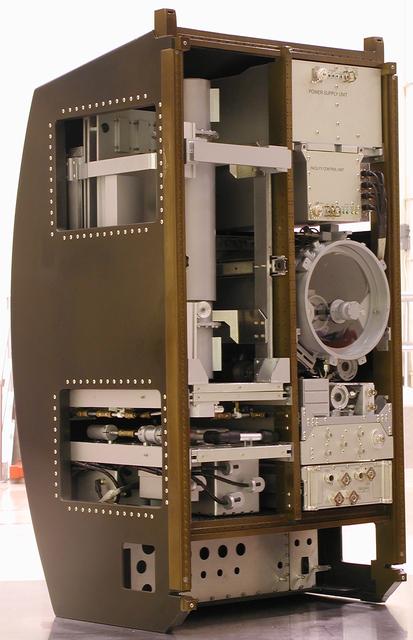
This scale model depicts the Materials Science Research Rack-1 (MSRR-1) being developed by NASA's Marshall Space Flight Center and the European Space Agency (ESA) for placement in the Destiny laboratory module aboard the International Space Station. The rack is part of the plarned Materials Science Research Facility (MSRF) and is expected to include two furnace module inserts, a Quench Module Insert (being developed by NASA's Marshall Space Flight Center) to study directional solidification in rapidly cooled alloys and a Diffusion Module Insert (being developed by the European Space Agency) to study crystal growth, and a transparent furnace (being developed by NASA's Space Product Development program). Multi-user equipment in the rack is being developed under the auspices of NASA's Office of Biological and Physical Research (OBPR) and ESA. Key elements are labeled in other images (0101754, 0101829, 0101830, and TBD). This image is from a digital still camera; higher resolution is not available.
This scale model depicts the Materials Science Research Rack-1 (MSRR-1) being developed by NASA's Marshall Space Flight Center and the European Space Agency (ESA) for placement in the Destiny laboratory module aboard the International Space Station. The rack is part of the plarned Materials Science Research Facility (MSRF) and is expected to include two furnace module inserts, a Quench Module Insert (being developed by NASA's Marshall Space Flight Center) to study directional solidification in rapidly cooled alloys and a Diffusion Module Insert (being developed by the European Space Agency) to study crystal growth, and a transparent furnace (being developed by NASA's Space Product Development program). Multi-user equipment in the rack is being developed under the auspices of NASA's Office of Biological and Physical Research (OBPR) and ESA. Key elements are labeled in other images (0101754, 0101829, and TBD). This composite is from a digital still camera; higher resolution is not available.
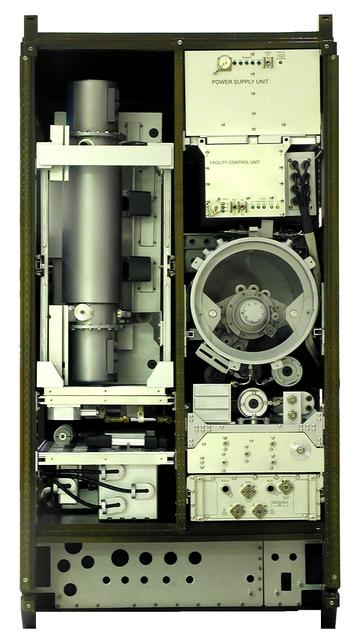
This scale model depicts the Materials Science Research Rack-1 (MSRR-1) being developed by NASA's Marshall Space Flight Center and the European Space Agency (ESA) for placement in the Destiny laboratory module aboard the International Space Station. The rack is part of the plarned Materials Science Research Facility (MSRF) and is expected to include two furnace module inserts, a Quench Module Insert (being developed by NASA's Marshall Space Flight Center) to study directional solidification in rapidly cooled alloys and a Diffusion Module Insert (being developed by the European Space Agency) to study crystal growth, and a transparent furnace (being developed by NASA's Space Product Development program). Multi-user equipment in the rack is being developed under the auspices of NASA's Office of Biological and Physical Research (OBPR) and ESA. Key elements are labeled in other images (0101754, 0101829, 0101830, and TBD).
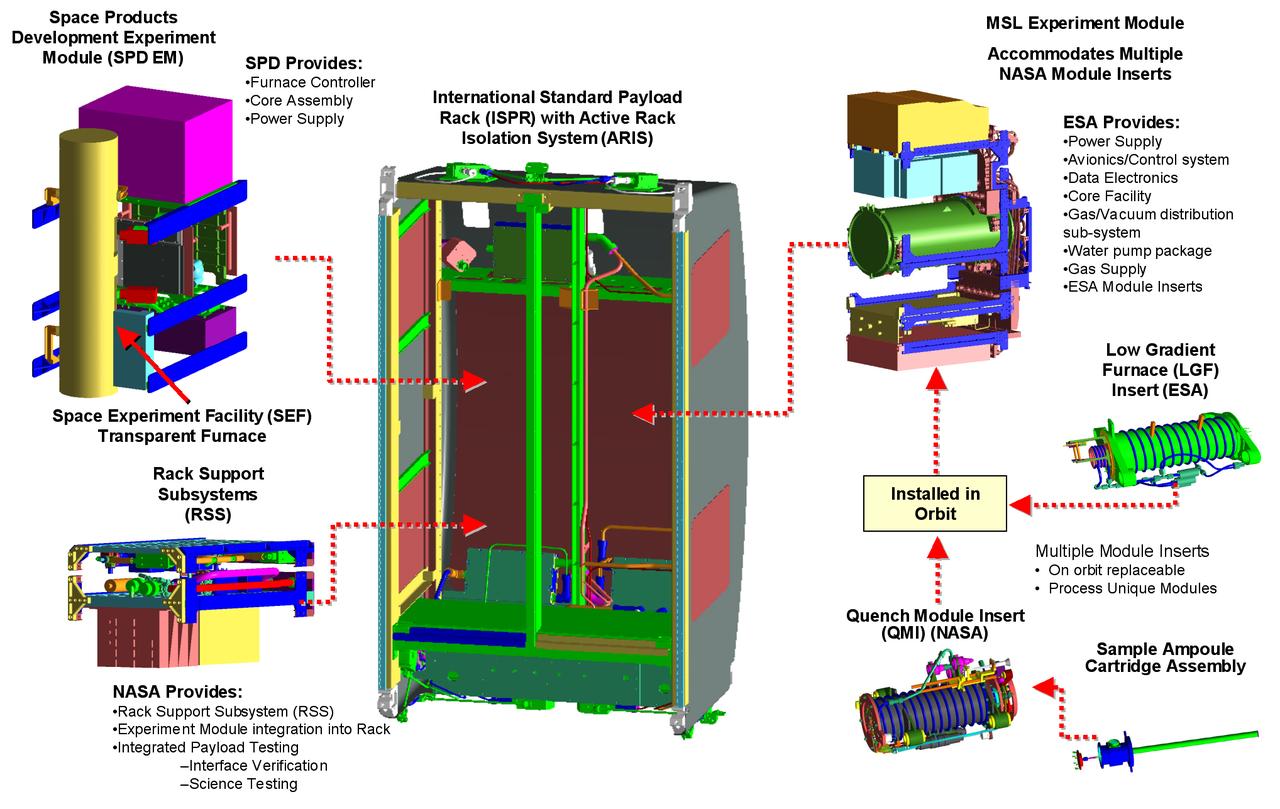
This computer-generated image depicts the Materials Science Research Rack-1 (MSRR-1) being developed by NASA's Marshall Space Flight Center and the European Space Agency (ESA) for placement in the Destiny laboratory module aboard the International Space Station. The rack is part of the plarned Materials Science Research Facility (MSRF) and is expected to include two furnace module inserts, a Quench Module Insert (being developed by NASA's Marshall Space Flight Center) to study directional solidification in rapidly cooled alloys and a Diffusion Module Insert (being developed by the European Space Agency) to study crystal growth, and a transparent furnace (being developed by NASA's Space Product Development program). Multi-user equipment in the rack is being developed under the auspices of NASA's Office of Biological and Physical Research (OBPR) and ESA. Key elements are labeled in other images (0101754, 0101830, and TBD).
This computer-generated image depicts the Materials Science Research Rack-1 (MSRR-1) being developed by NASA's Marshall Space Flight Center and the European Space Agency (ESA) for placement in the Destiny laboratory module aboard the International Space Station. The rack is part of the plarned Materials Science Research Facility (MSRF) and is expected to include two furnace module inserts, a Quench Module Insert (being developed by NASA's Marshall Space Flight Center) to study directional solidification in rapidly cooled alloys and a Diffusion Module Insert (being developed by the European Space Agency) to study crystal growth, and a transparent furnace (being developed by NASA's Space Product Development program). Multi-user equipment in the rack is being developed under the auspices of NASA's Office of Biological and Physical Research (OBPR) and ESA. Key elements are labeled in other images (0101754, 0101829, 0101830).
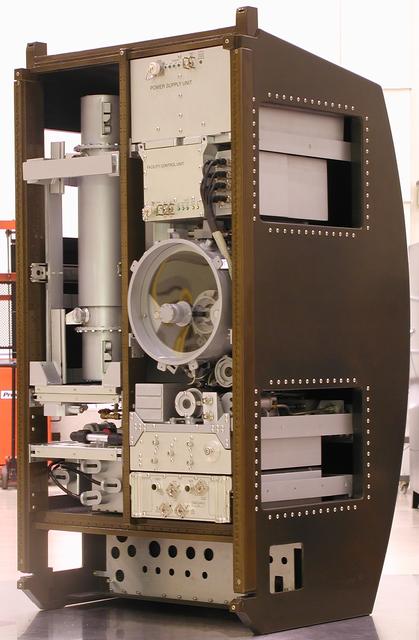
This scale model depicts the Materials Science Research Rack-1 (MSRR-1) being developed by NASA's Marshall Space Flight Center and the European Space Agency (ESA) for placement in the Destiny laboratory module aboard the International Space Station. The rack is part of the plarned Materials Science Research Facility (MSRF) and is expected to include two furnace module inserts, a Quench Module Insert (being developed by NASA's Marshall Space Flight Center) to study directional solidification in rapidly cooled alloys and a Diffusion Module Insert (being developed by the European Space Agency) to study crystal growth, and a transparent furnace (being developed by NASA's Space Product Development program). Multi-user equipment in the rack is being developed under the auspices of NASA's Office of Biological and Physical Research (OBPR) and ESA. Key elements are labeled in other images (0101754, 0101829, 0101830, and TBD). This image is from a digital still camera; higher resolution is not available.
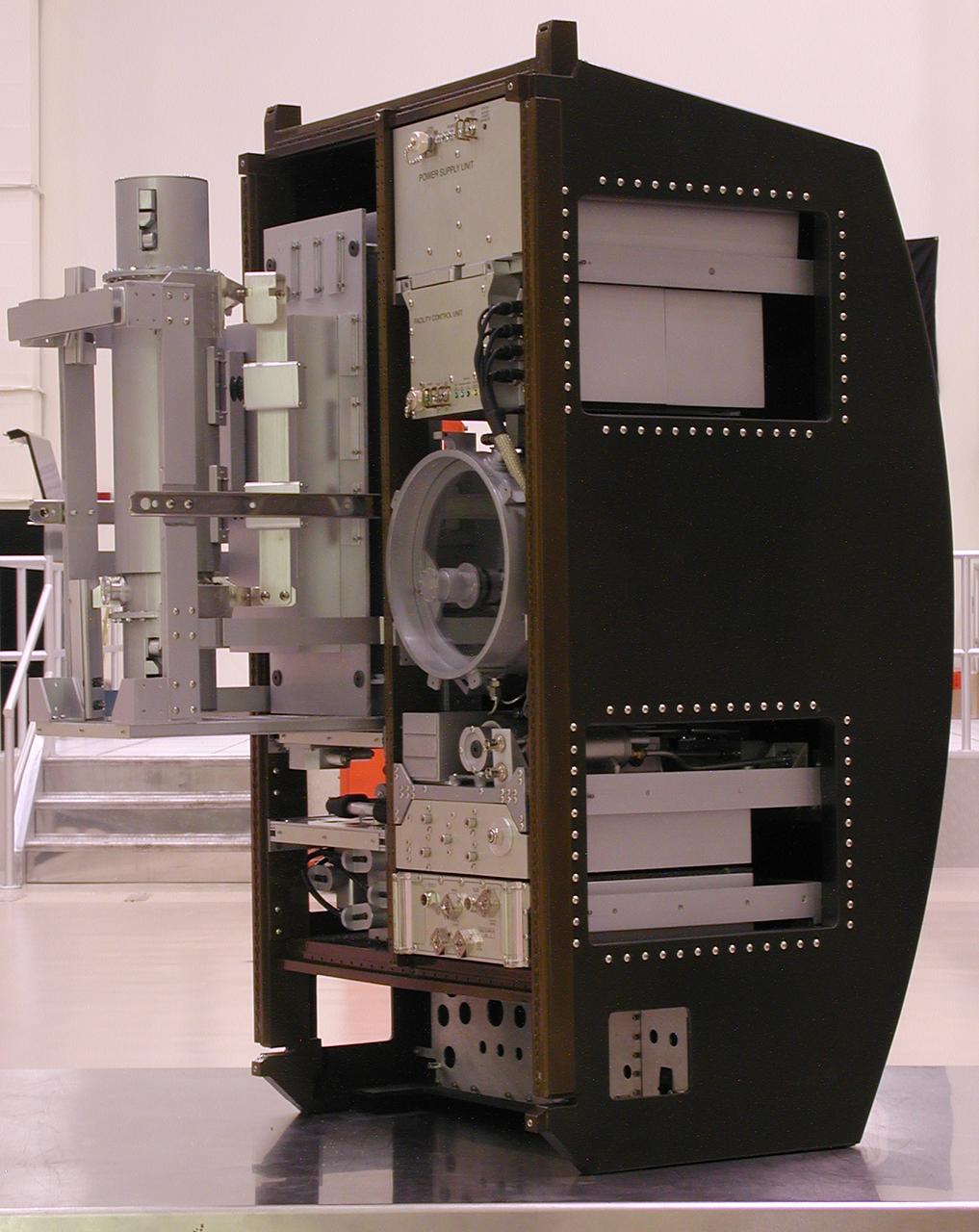
This scale model depicts the Materials Science Research Rack-1 (MSRR-1) being developed by NASA's Marshall Space Flight Center and the European Space Agency (ESA) for placement in the Destiny laboratory module aboard the International Space Station. The rack is part of the plarned Materials Science Research Facility (MSRF) and is expected to include two furnace module inserts, a Quench Module Insert (being developed by NASA's Marshall Space Flight Center) to study directional solidification in rapidly cooled alloys and a Diffusion Module Insert (being developed by the European Space Agency) to study crystal growth, and a transparent furnace (being developed by NASA's Space Product Development program). Multi-user equipment in the rack is being developed under the auspices of NASA's Office of Biological and Physical Research (OBPR) and ESA. Here the transparent furnace is extracted for servicing. Key elements are labeled in other images (0101754, 0101829, 0101830, and TBD).
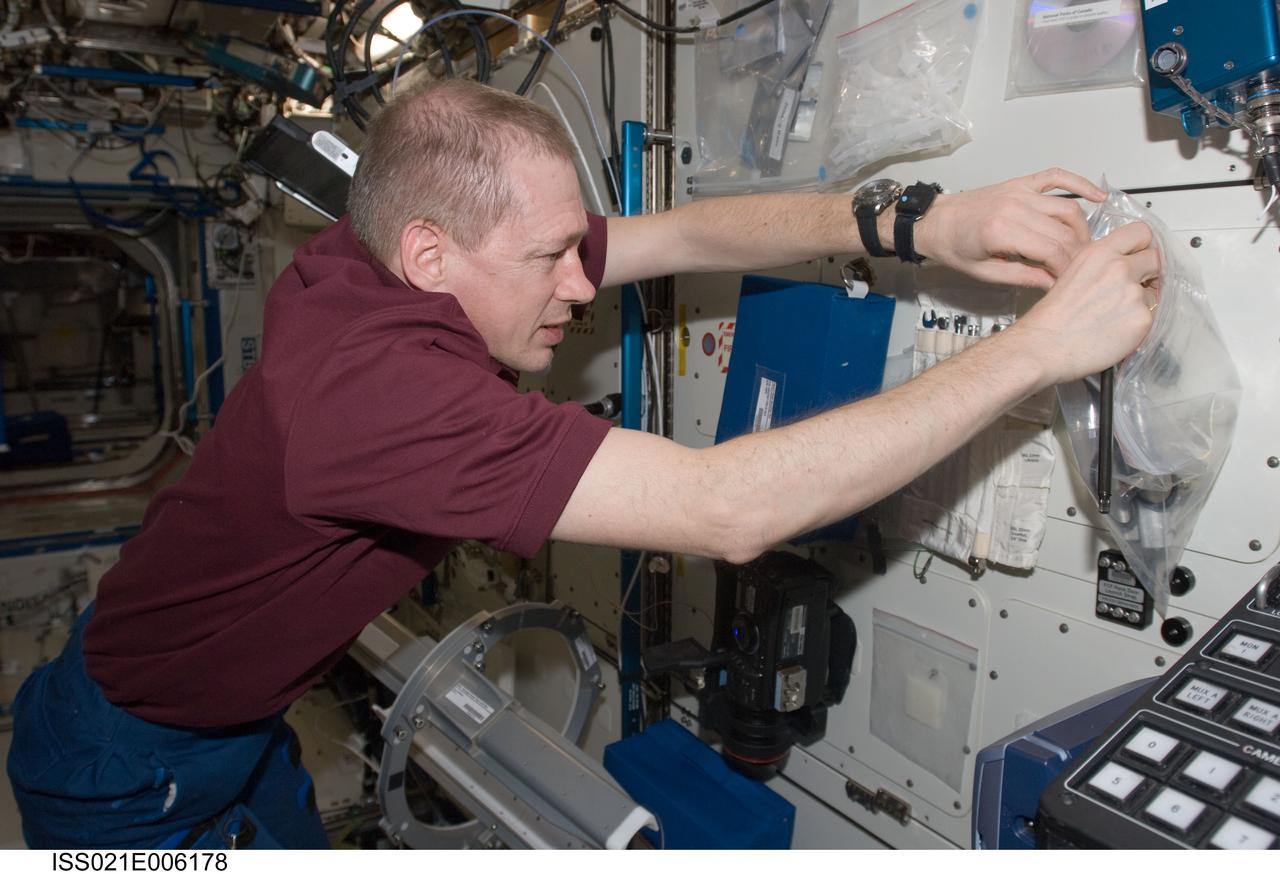
ISS021-E-006178 (14 Oct. 2009) --- European Space Agency astronaut Frank De Winne, Expedition 21 commander, works in the Destiny laboratory of the International Space Station.
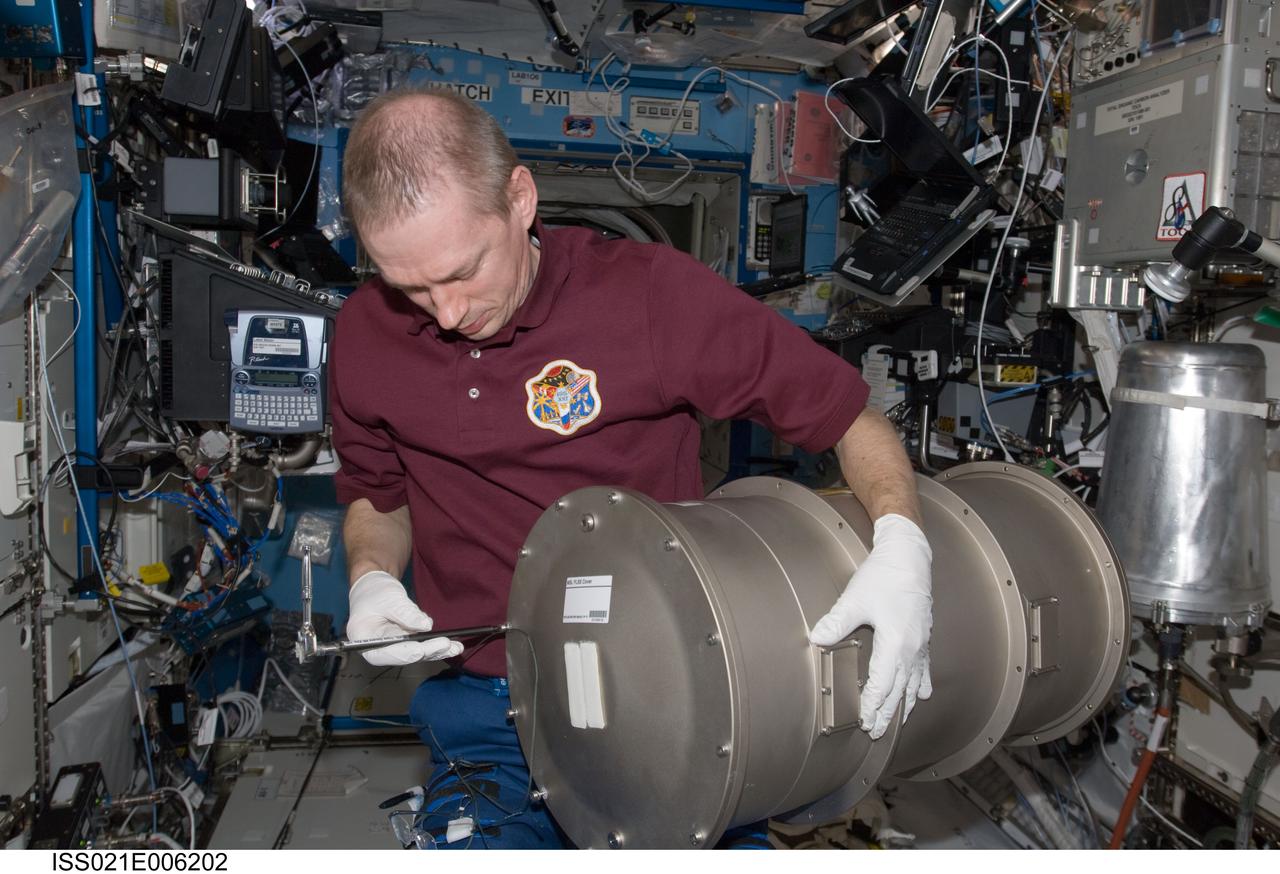
ISS021-E-006202 (14 Oct. 2009) --- European Space Agency astronaut Frank De Winne, Expedition 21 commander, works with Materials Science Laboratory (MSL) hardware in the Destiny laboratory of the International Space Station.
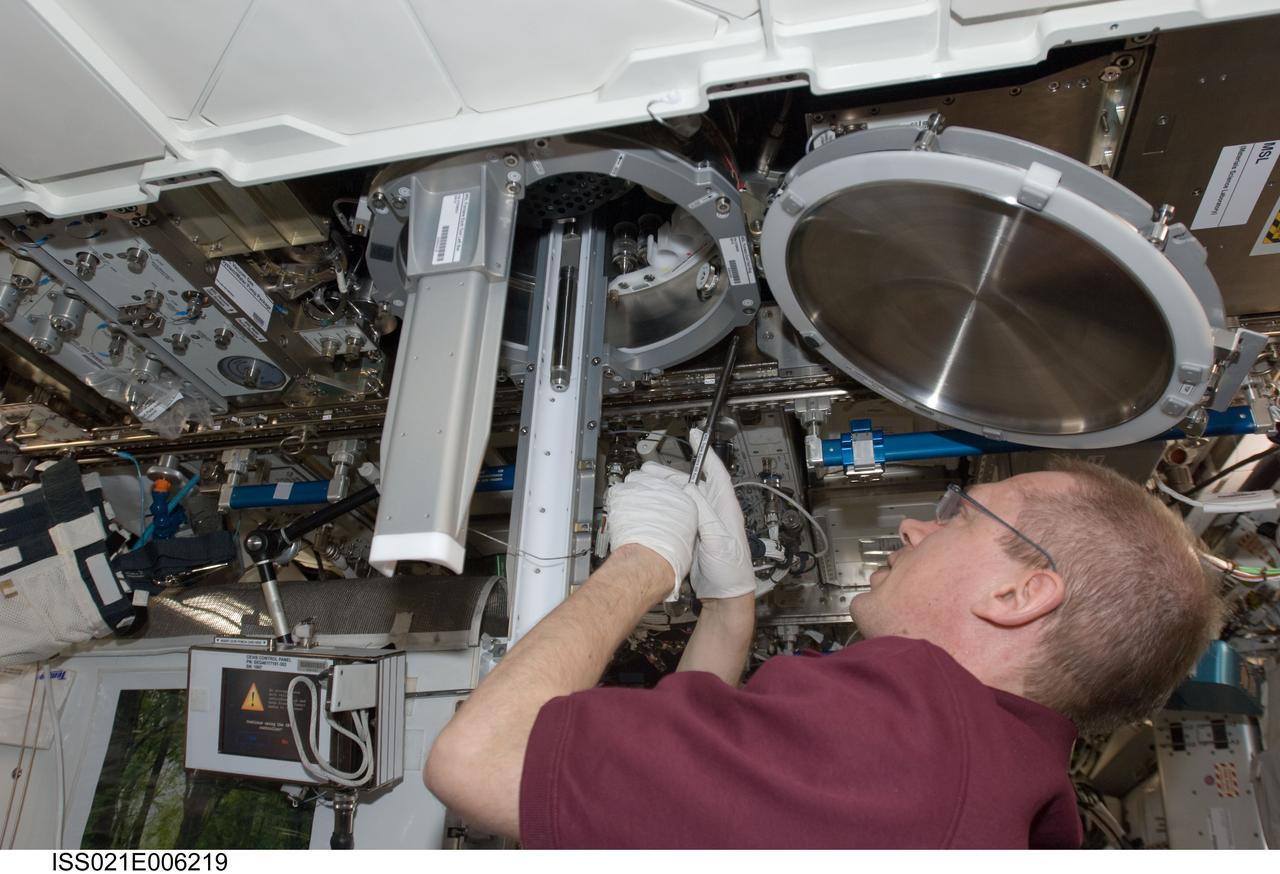
ISS021-E-006219 (14 Oct. 2009) --- European Space Agency astronaut Frank De Winne, Expedition 21 commander, works with Materials Science Laboratory (MSL) hardware in the Destiny laboratory of the International Space Station.
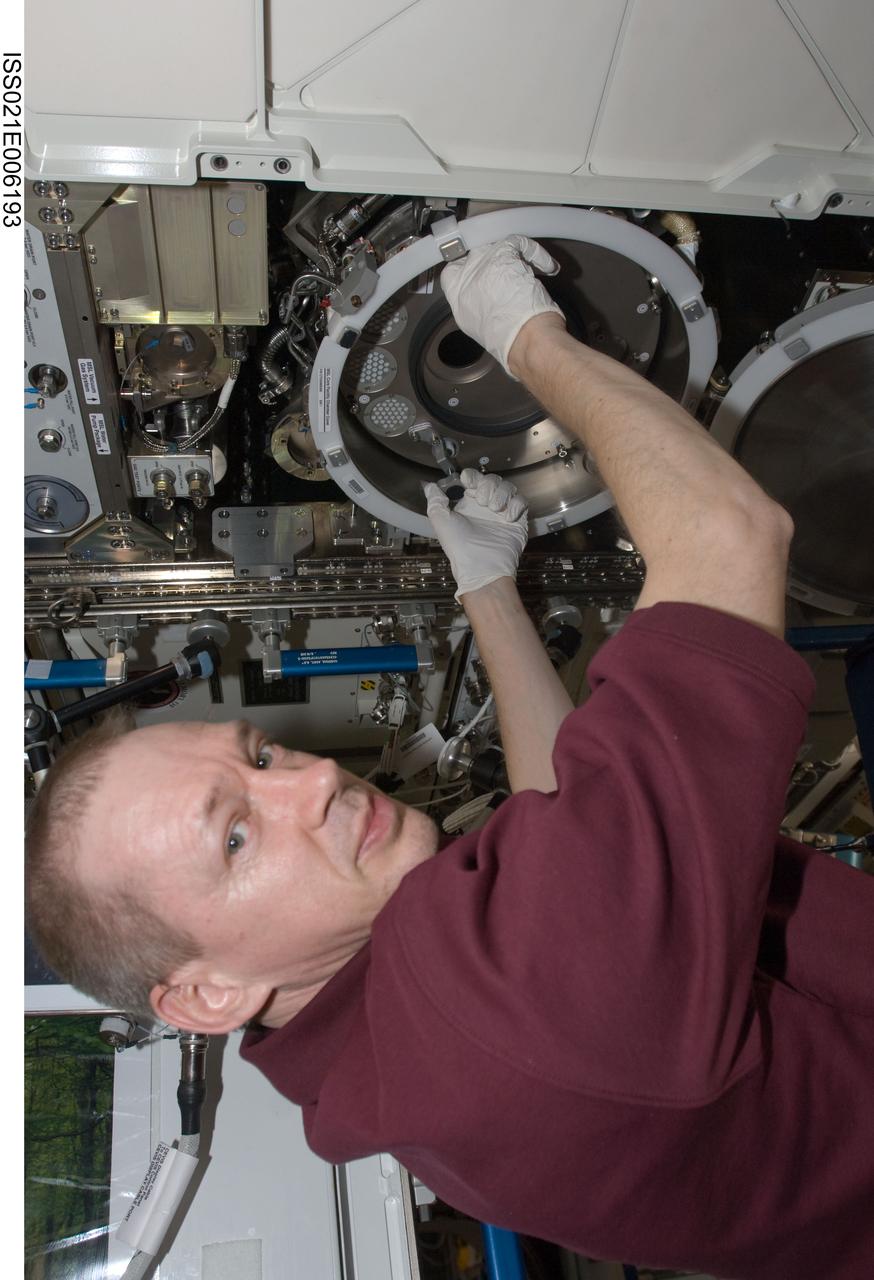
ISS021-E-006193 (14 Oct. 2009) --- European Space Agency astronaut Frank De Winne, Expedition 21 commander, works with a Materials Science Laboratory (MSL) chamber in the Destiny laboratory of the International Space Station.
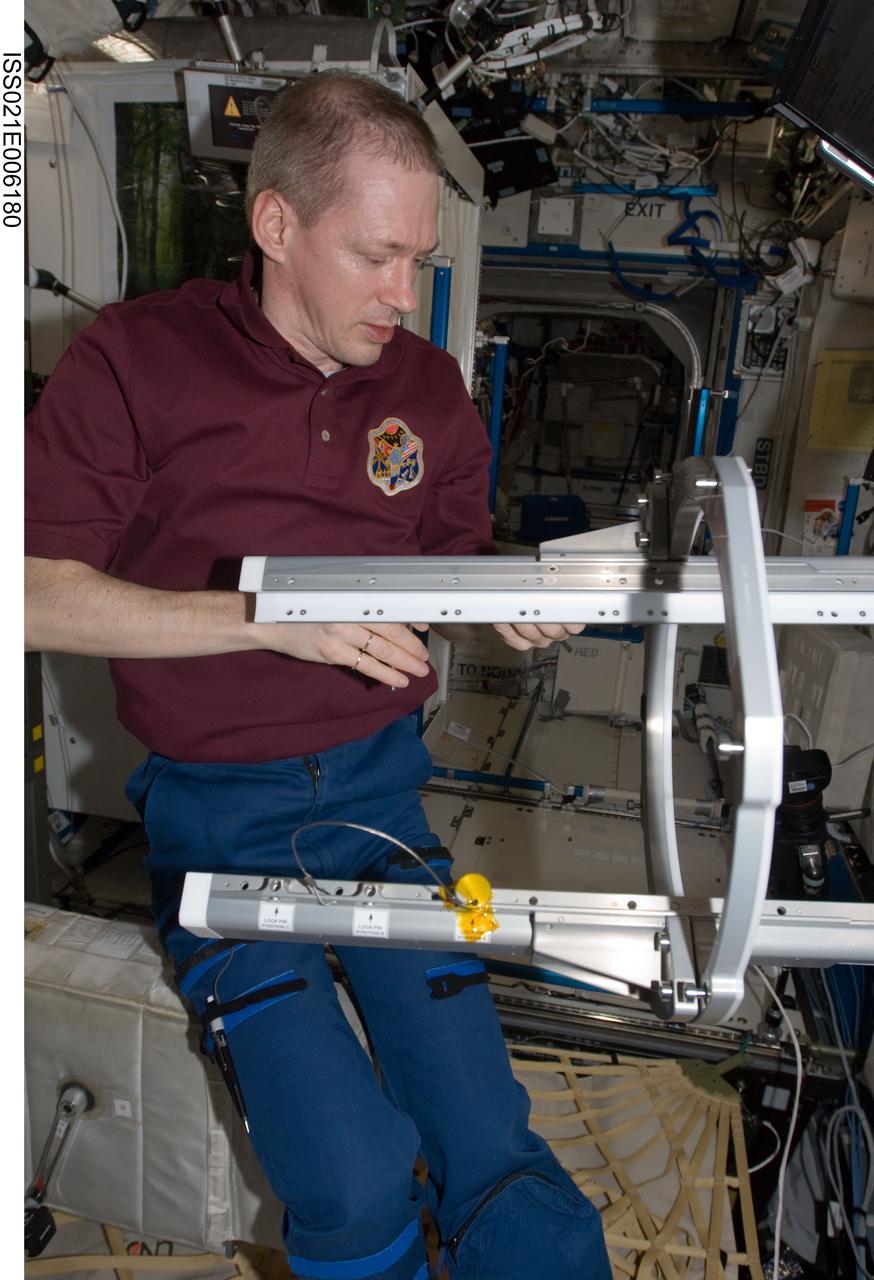
ISS021-E-006180 (14 Oct. 2009) --- European Space Agency astronaut Frank De Winne, Expedition 21 commander, works with Materials Science Laboratory (MSL) hardware in the Destiny laboratory of the International Space Station.
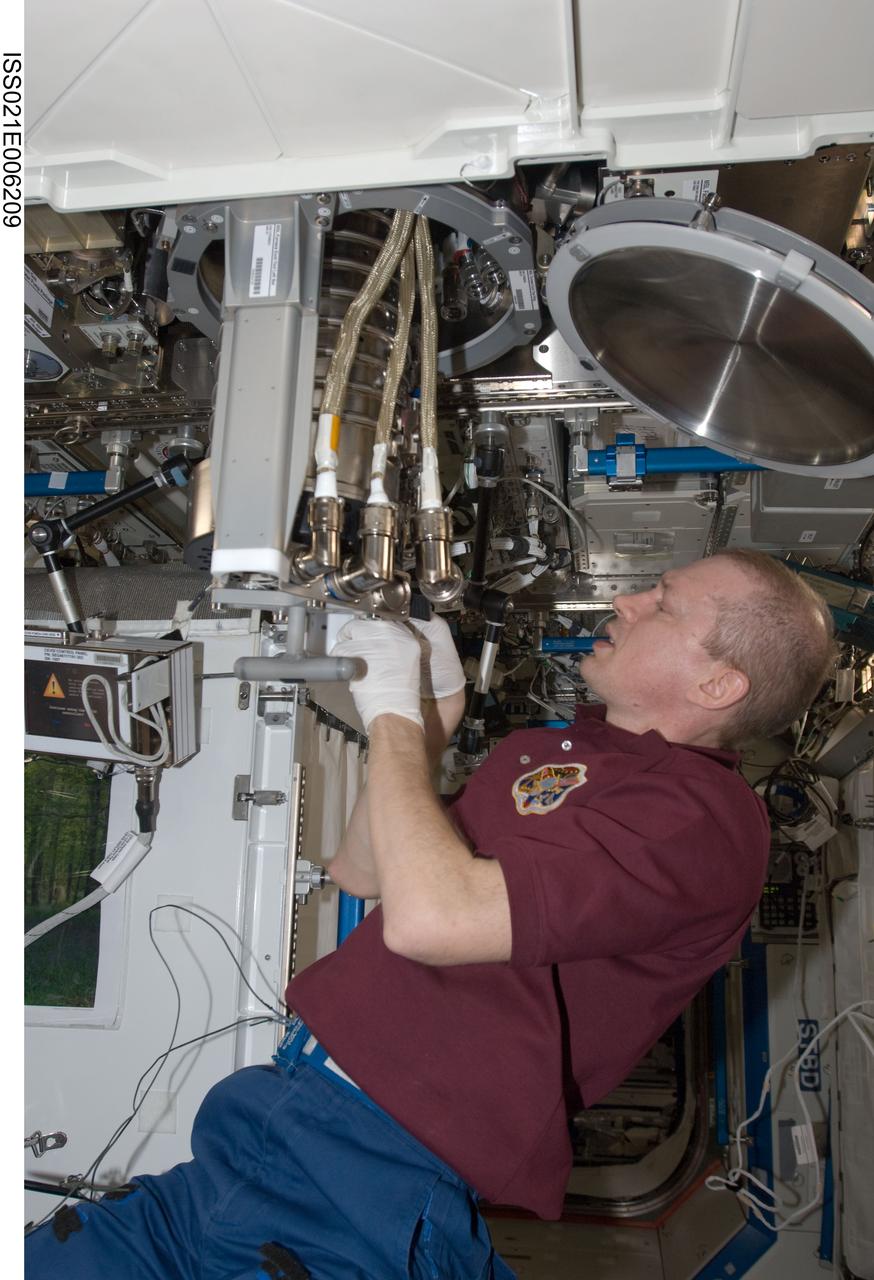
ISS021-E-006209 (14 Oct. 2009) --- European Space Agency astronaut Frank De Winne, Expedition 21 commander, works with Materials Science Laboratory (MSL) hardware in the Destiny laboratory of the International Space Station.

ISS021-E-006196 (14 Oct. 2009) --- European Space Agency astronaut Frank De Winne, Expedition 21 commander, works with Materials Science Laboratory (MSL) hardware in the Destiny laboratory of the International Space Station.