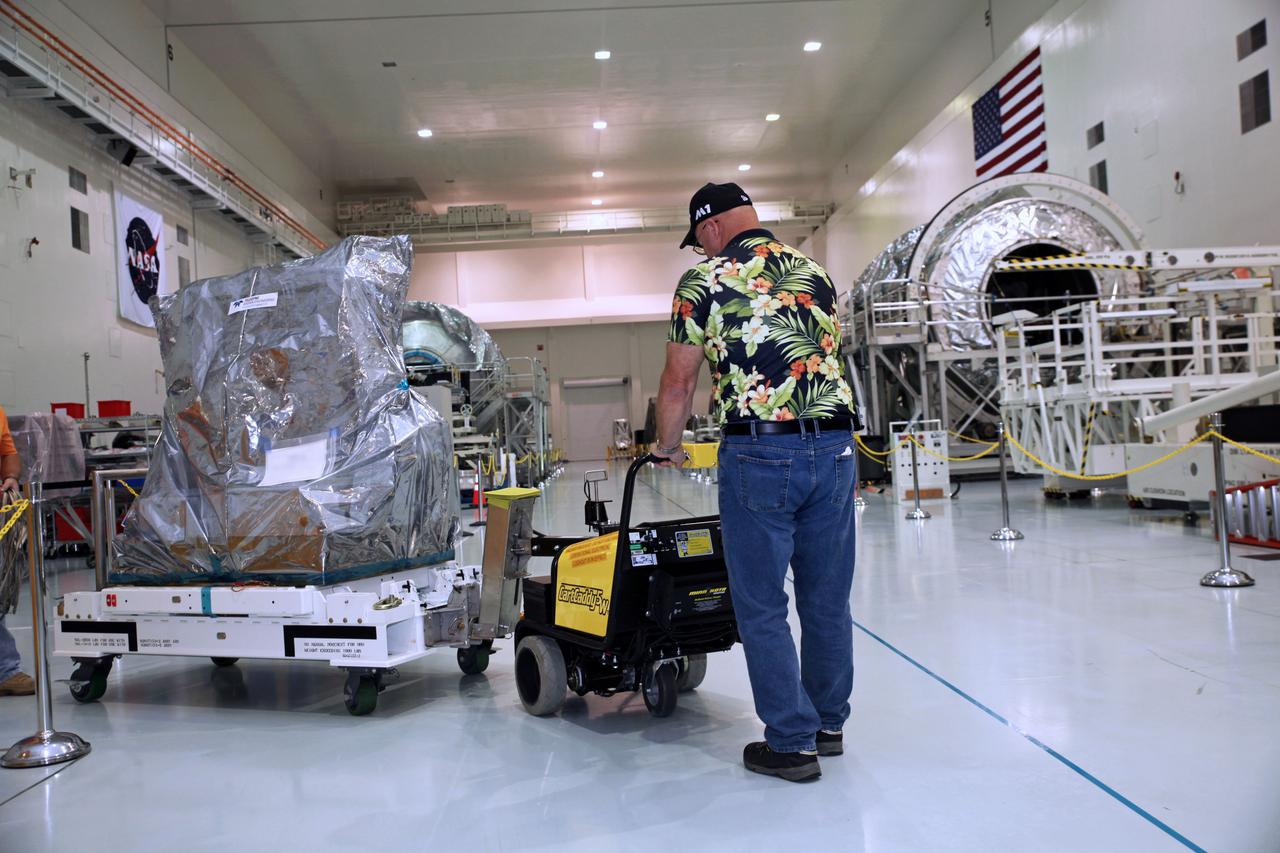
Inside the Space Station Processing Facility high bay at NASA's Kennedy Space Center in Florida, the Multiple User System for Earth Sensing, or MUSES, payload is being prepared for transfer out of the high bay. MUSES will be delivered to the International Space Station aboard the SpaceX Dragon cargo carrier on the company’s 11th commercial resupply services mission to the space station. MUSES, developed by Teledyne Brown, is part of the company's new commercial space-based digital imaging business. MUSES hosts earth-viewing instruments, such as high-resolution digital cameras, hyperspectral imagers, and provides precision pointing and other accommodations.
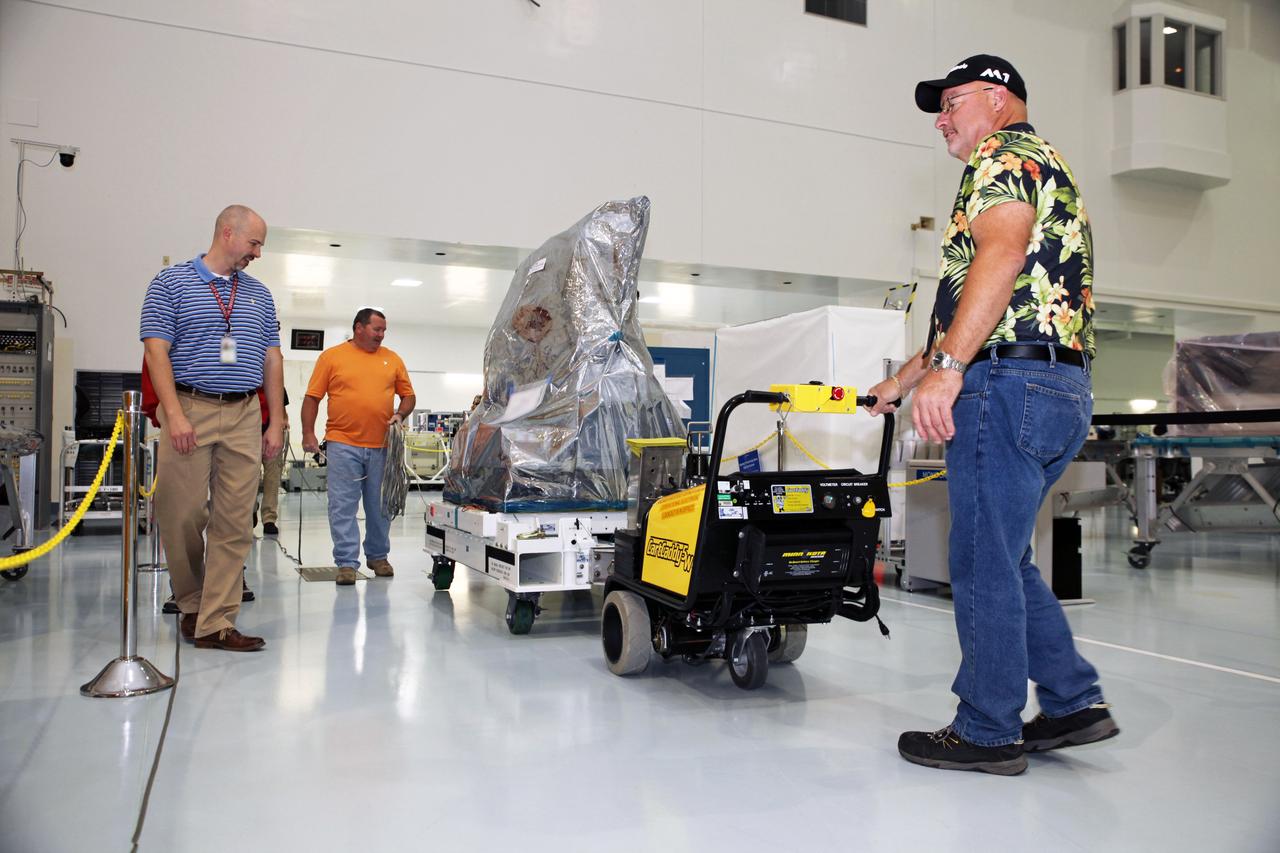
Inside the Space Station Processing Facility high bay at NASA's Kennedy Space Center in Florida, the Multiple User System for Earth Sensing, or MUSES, payload is being prepared for transfer out of the high bay. MUSES will be delivered to the International Space Station aboard the SpaceX Dragon cargo carrier on the company’s 11th commercial resupply services mission to the space station. MUSES, developed by Teledyne Brown, is part of the company's new commercial space-based digital imaging business. MUSES hosts earth-viewing instruments, such as high-resolution digital cameras, hyperspectral imagers, and provides precision pointing and other accommodations.
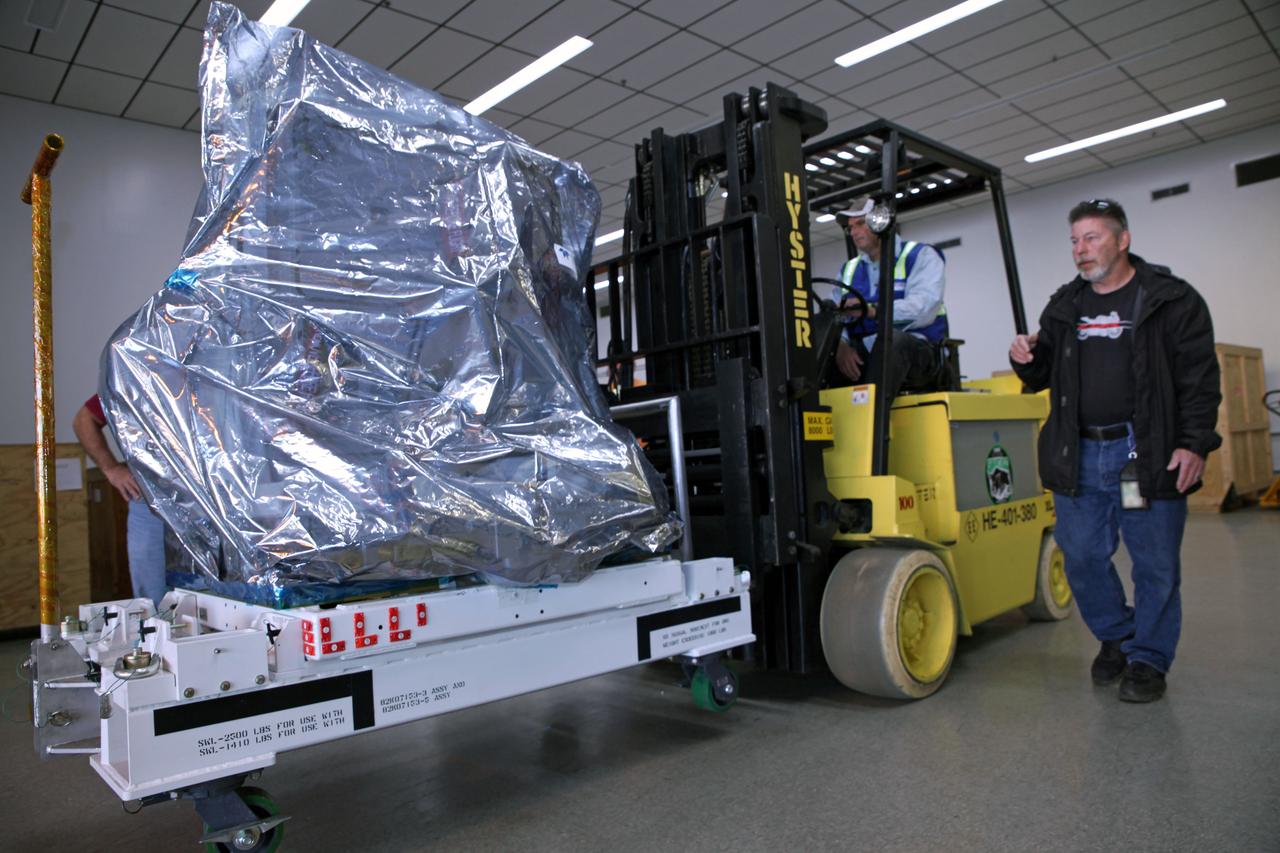
Technicians use a Hyster forklift to move the Multiple User System for Earth Sensing, or MUSES, payload out of the Space Station Processing Facility high bay at NASA's Kennedy Space Center in Florida. MUSES will be delivered to the International Space Station aboard the SpaceX Dragon cargo carrier on the company’s 11th commercial resupply services mission to the space station. MUSES, developed by Teledyne Brown, is part of the company's new commercial space-based digital imaging business. MUSES hosts earth-viewing instruments, such as high-resolution digital cameras, hyperspectral imagers, and provides precision pointing and other accommodations.
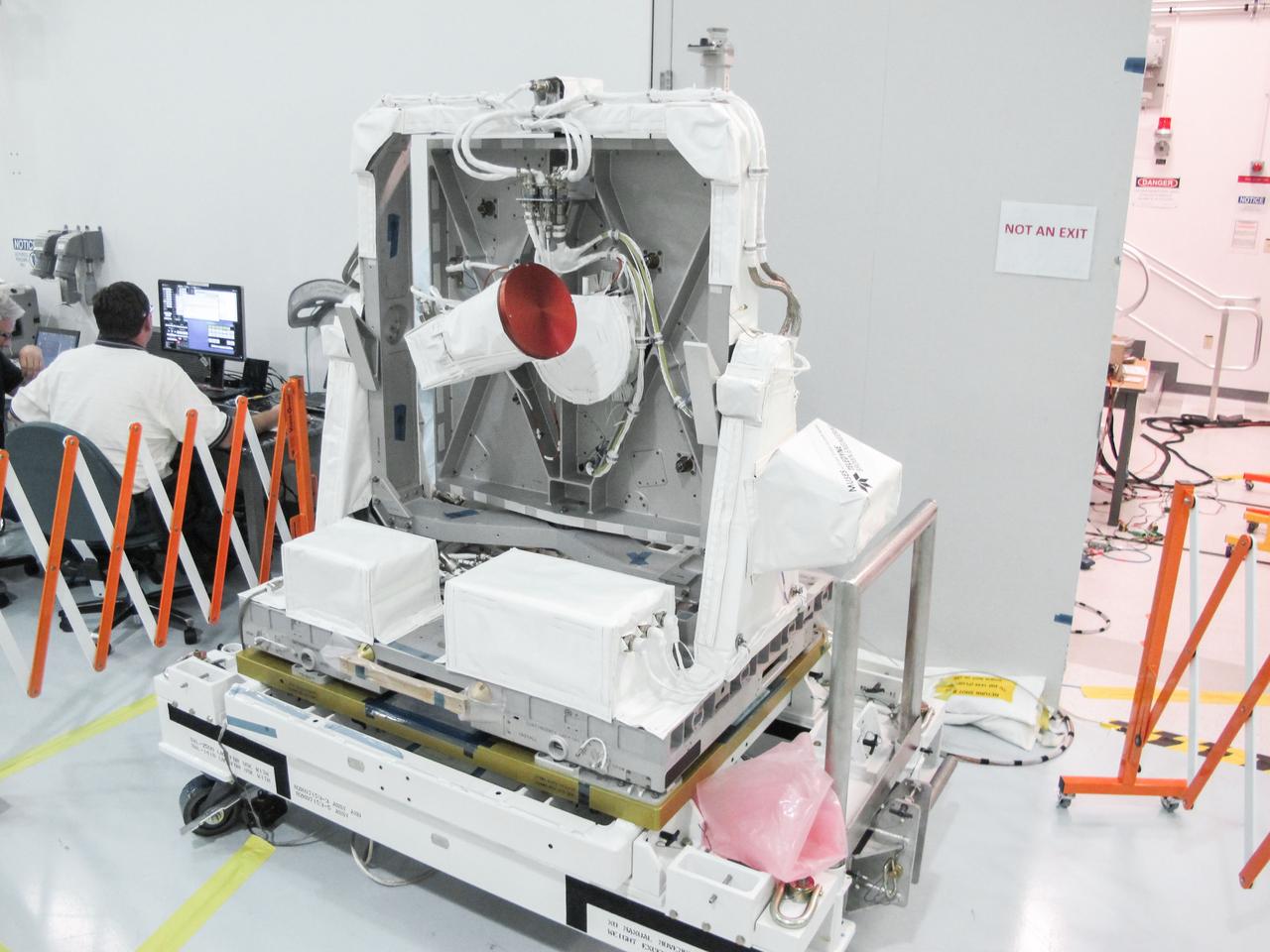
jsc2016e073274 (6/18/2015) --- Photographic documentation taken of the MUSES payload Integrated Assembly to be flown on the SpaceX-11 flight. Photo taken during EVA tool fit checks.
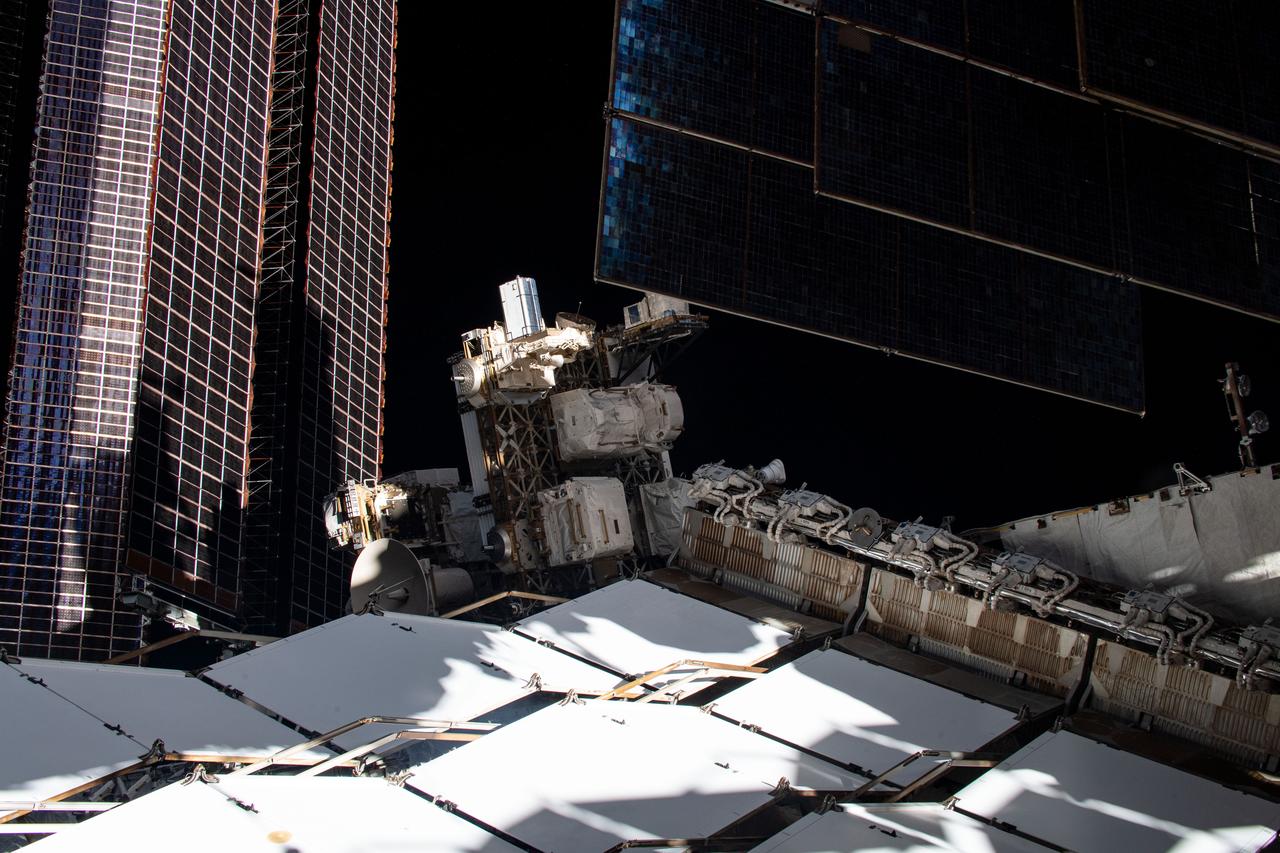
iss067e055839 (5/16/2022) --- Multiple User System for Earth Sensing (MUSES) is the first multi-user facility on an ISS ExPRESS Logistics Carrier (ELC). The facility primarily serves as a platform for earth-viewing sensors and other technologies requiring long-term access to the space environment.
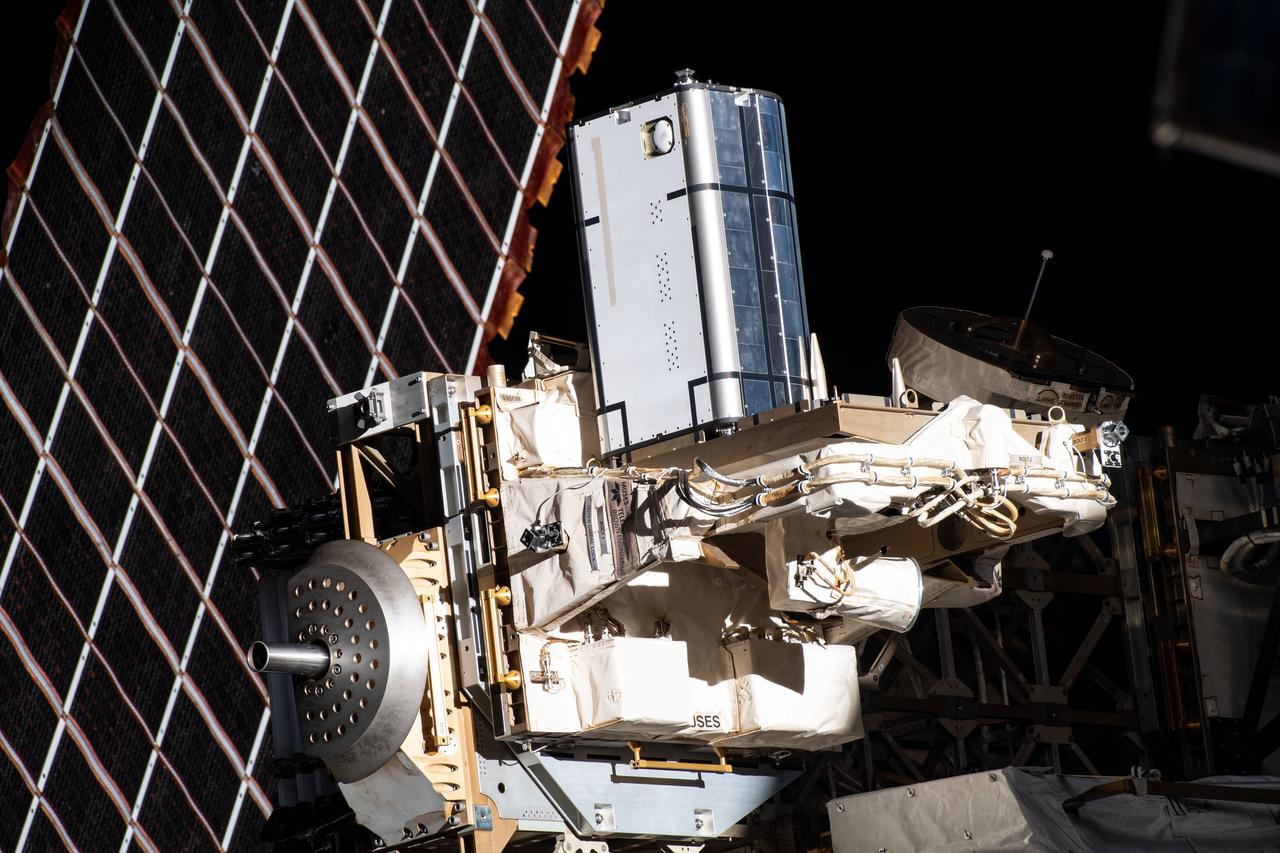
iss067e055847 (5/16/2022) --- Multiple User System for Earth Sensing (MUSES) is the first multi-user facility on an ISS ExPRESS Logistics Carrier (ELC). The facility primarily serves as a platform for earth-viewing sensors and other technologies requiring long-term access to the space environment.
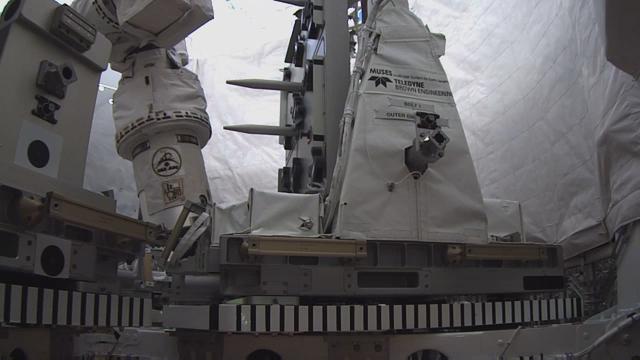
jsc2017e088397 (7/3/2017) --- Multiple User System for Earth Sensing (MUSES) is the first multi-user facility on an ISS ExPRESS Logistics Carrier (ELC). The facility primarily serves as a platform for earth-viewing sensors and other technologies requiring long-term access to the space environment.
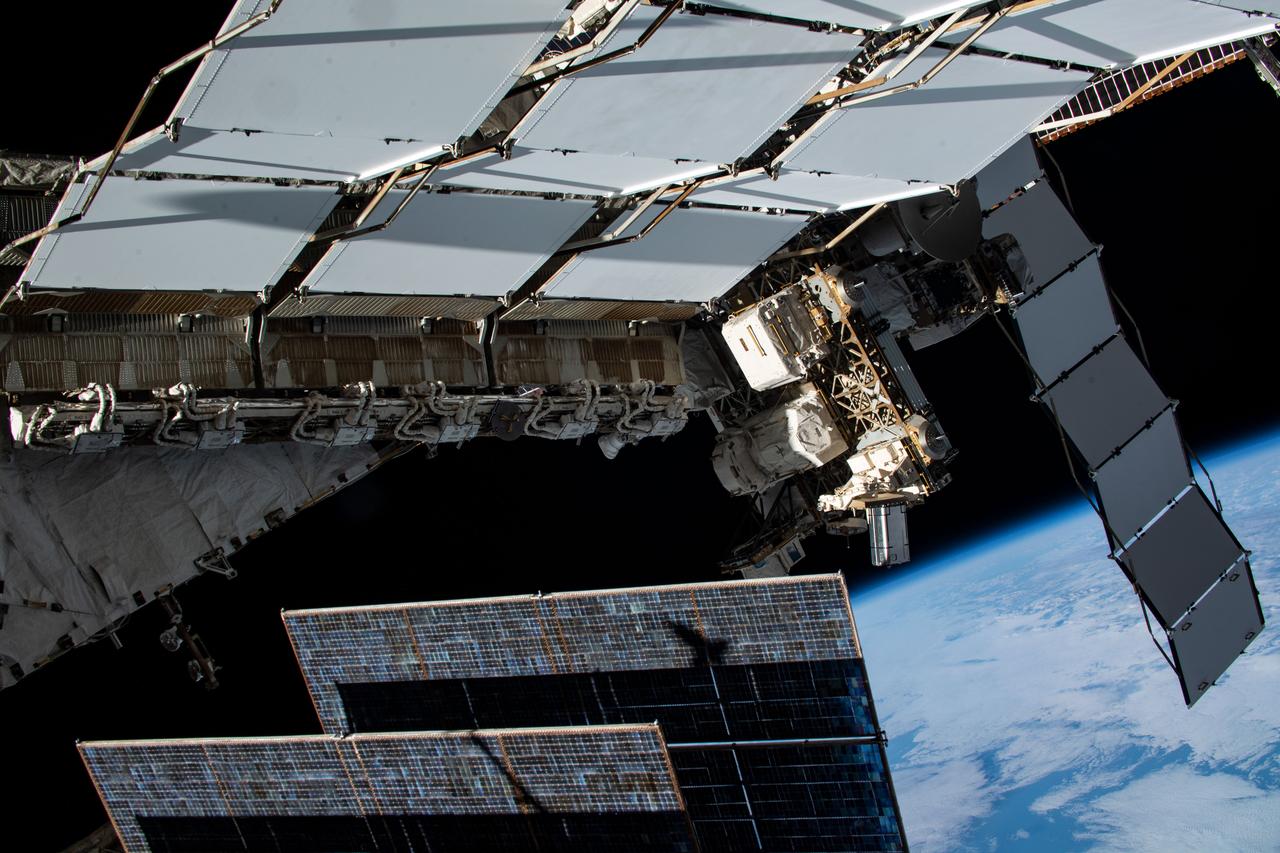
iss067e055504 (5/16/2022) --- Multiple User System for Earth Sensing (MUSES) is the first multi-user facility on an ISS ExPRESS Logistics Carrier (ELC). The facility primarily serves as a platform for earth-viewing sensors and other technologies requiring long-term access to the space environment.
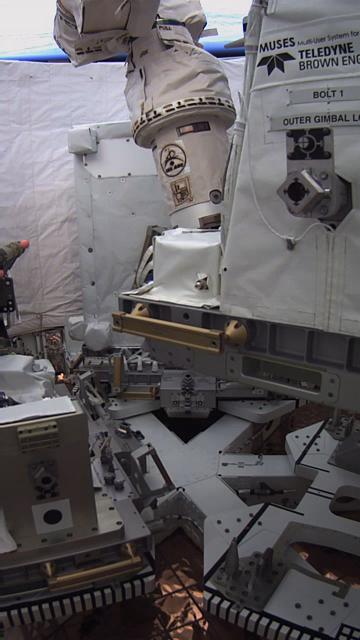
jsc2017e088400 (7/3/2017) --- Multiple User System for Earth Sensing (MUSES) is the first multi-user facility on an ISS ExPRESS Logistics Carrier (ELC). The facility primarily serves as a platform for earth-viewing sensors and other technologies requiring long-term access to the space environment.
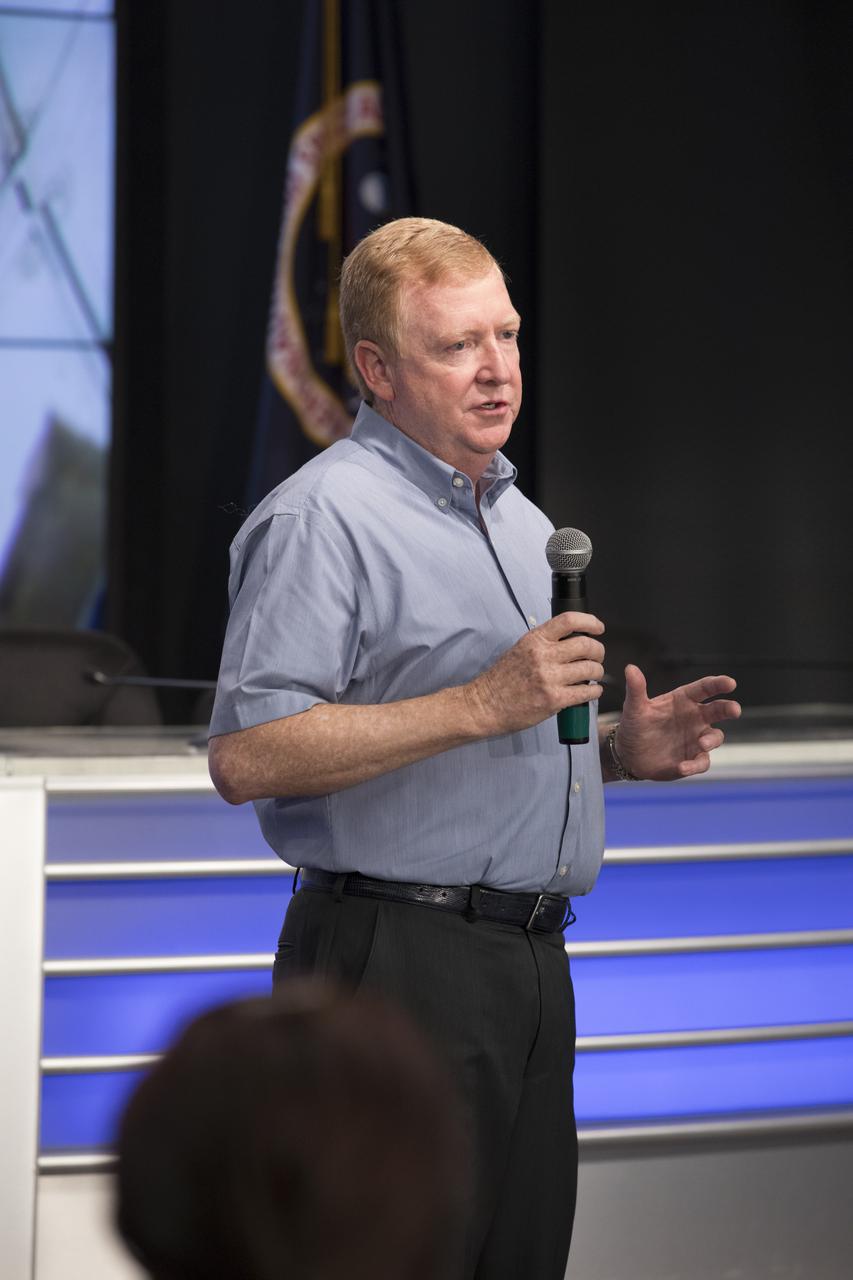
Paul Galloway, program manager for an Earth imaging platform called the Multiple User System for Earth Sensing, or MUSES, speaks to members of social media in the Kennedy Space Center’s Press Site auditorium. The briefing focused on experiments and instruments to be delivered to the International Space Station on SpaceX CRS-11. A Dragon spacecraft is scheduled to be launched from Kennedy’s Launch Complex 39A on June 1 atop a SpaceX Falcon 9 rocket on the company's 11th Commercial Resupply Services mission to the space station.

This video clip shows a visualisation of the three-dimensional structure of the Pillars of Creation within the star formation region Messier 16 (also called the Eagle Nebula). It is based on new observations of the object using the MUSE instrument on ESO’s Very Large Telescope in Chile. The pillars actually consist of several distinct pieces on either side of the star cluster NGC 6611. Credit: ESO/M. Kornmesser Read more: <a href="http://www.nasa.gov/image-feature/goddard/pillars-of-creation-revealed-in-3-d" rel="nofollow">www.nasa.gov/image-feature/goddard/pillars-of-creation-re...</a> <b><a href="http://www.nasa.gov/audience/formedia/features/MP_Photo_Guidelines.html" rel="nofollow">NASA image use policy.</a></b> <b><a href="http://www.nasa.gov/centers/goddard/home/index.html" rel="nofollow">NASA Goddard Space Flight Center</a></b> enables NASA’s mission through four scientific endeavors: Earth Science, Heliophysics, Solar System Exploration, and Astrophysics. Goddard plays a leading role in NASA’s accomplishments by contributing compelling scientific knowledge to advance the Agency’s mission. <b>Follow us on <a href="http://twitter.com/NASAGoddardPix" rel="nofollow">Twitter</a></b> <b>Like us on <a href="http://www.facebook.com/pages/Greenbelt-MD/NASA-Goddard/395013845897?ref=tsd" rel="nofollow">Facebook</a></b> <b>Find us on <a href="http://instagrid.me/nasagoddard/?vm=grid" rel="nofollow">Instagram</a></b>