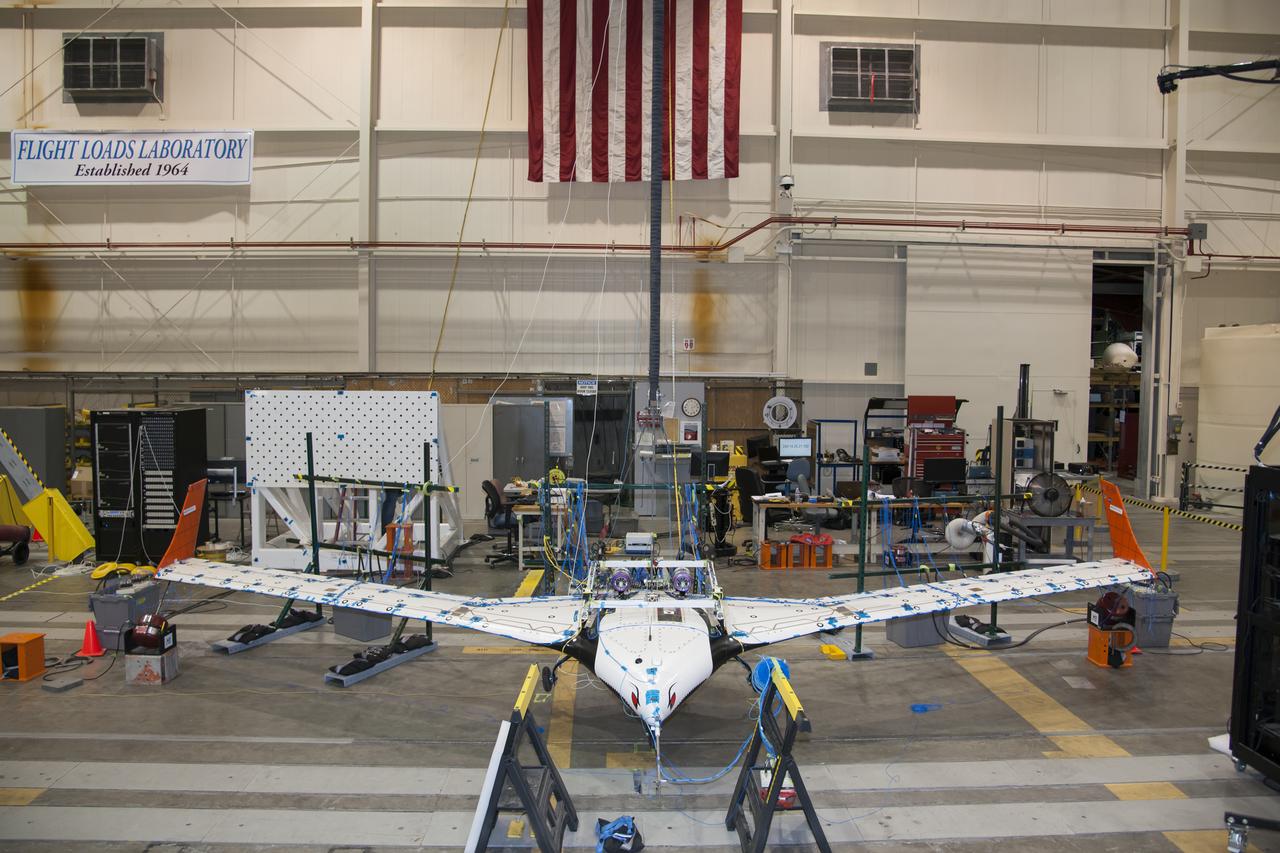
The X-56 Multi-Utility Technology Testbed (MUTT) undergoes ground vibration tests in Armstrong's Flight Loads Laboratory.
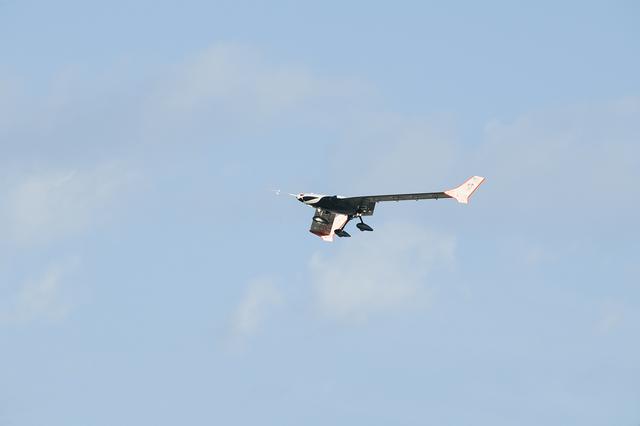
Long, thin, high-aspect-ratio wings are considered crucial to the design of future long-range aircraft, including fuel-efficient airliners and cargo transports. Unlike the short, stiff wings found on most aircraft today, slender, flexible airfoils are susceptible to uncontrollable vibrations, known as flutter, and may be stressed by bending forces from wind gusts and atmospheric turbulence. To improve ride quality, efficiency, safety, and the long-term health of flexible aircraft structures, NASA is using the X-56A Multi-Utility Technology Testbed (MUTT) to investigate key technologies for active flutter suppression and gust-load alleviation.
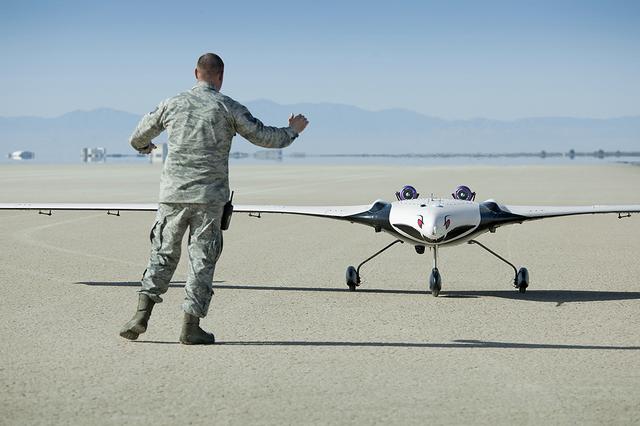
The X-56A Multi-Utility Technology Testbed (MUTT) is greeted on an Edwards Air Force Base runway by a U.S. Air Force Research Laboratory (AFRL) team member. NASA’s Armstrong Flight Research Center and the AFRL, along with participants from Langley Research Center and Glenn Research Center, and support from Lockheed Martin, are using the second X-56A (dubbed “Buckeye”) to check out aircraft systems, evaluate handling qualities, characterize and expand the airplane’s performance envelope, and verify pre-flight predictions regarding aircraft behavior. The 20-minute flight marked the beginning of a research effort designed to yield significant advances in aeroservoelastic technology using a low-cost, modular, remotely piloted aerial vehicle.
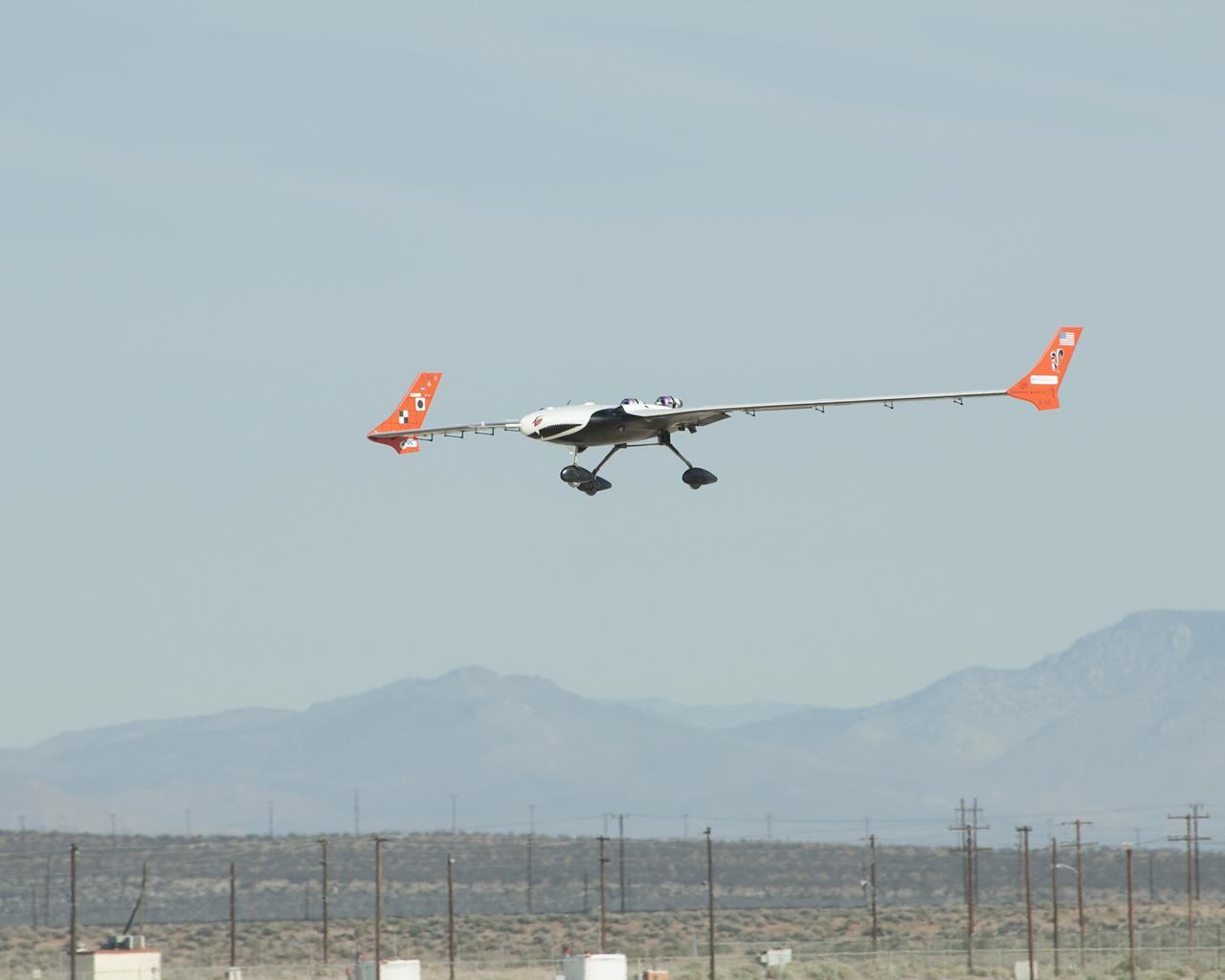
NASA researchers are using the X-56A, a low-cost, modular, remotely piloted aerial vehicle, to explore the behavior of lightweight, flexible aircraft structures.
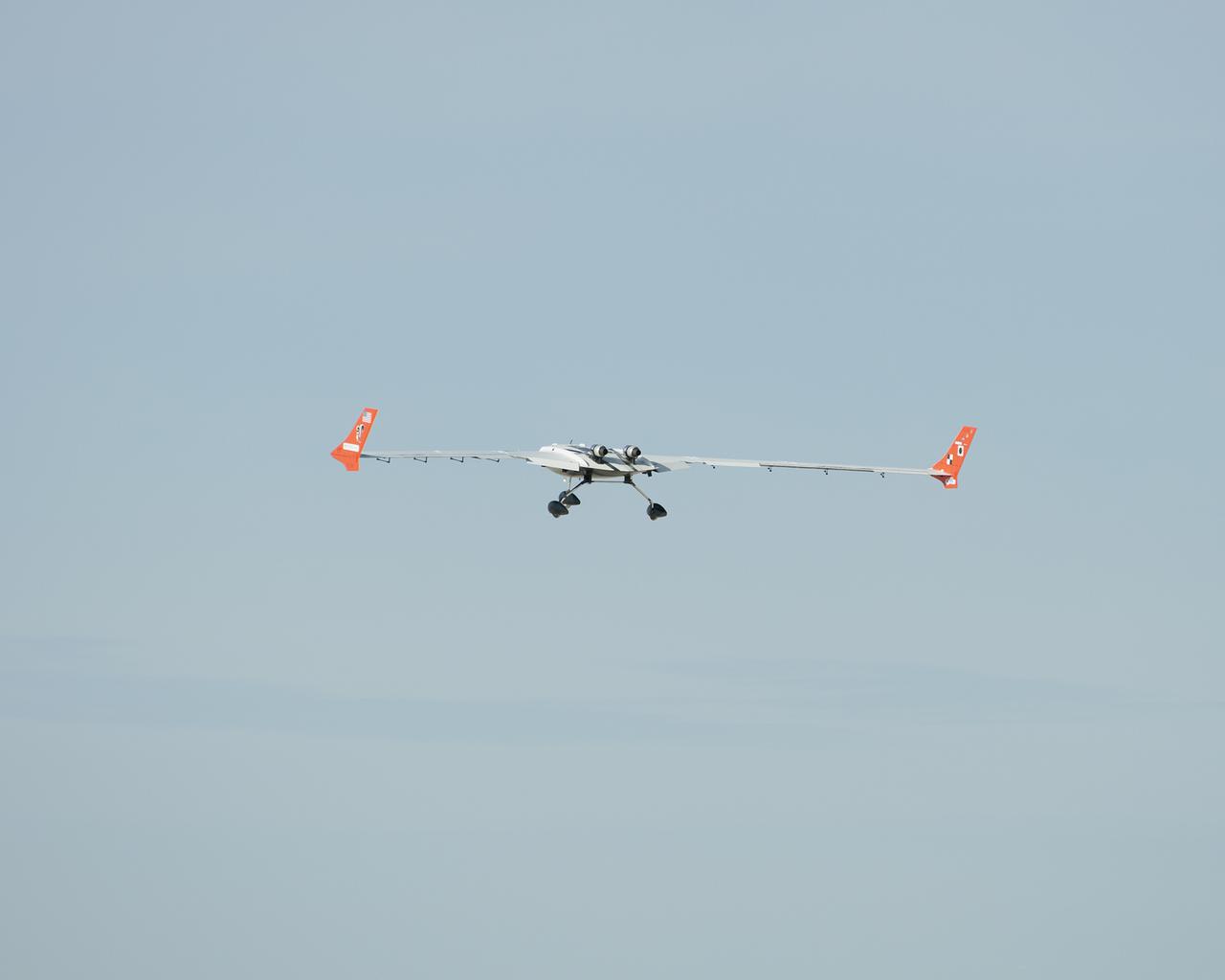
The X-56A takes off on its maiden flight from NASA Armstrong Flight Research Center, Edwards, California.
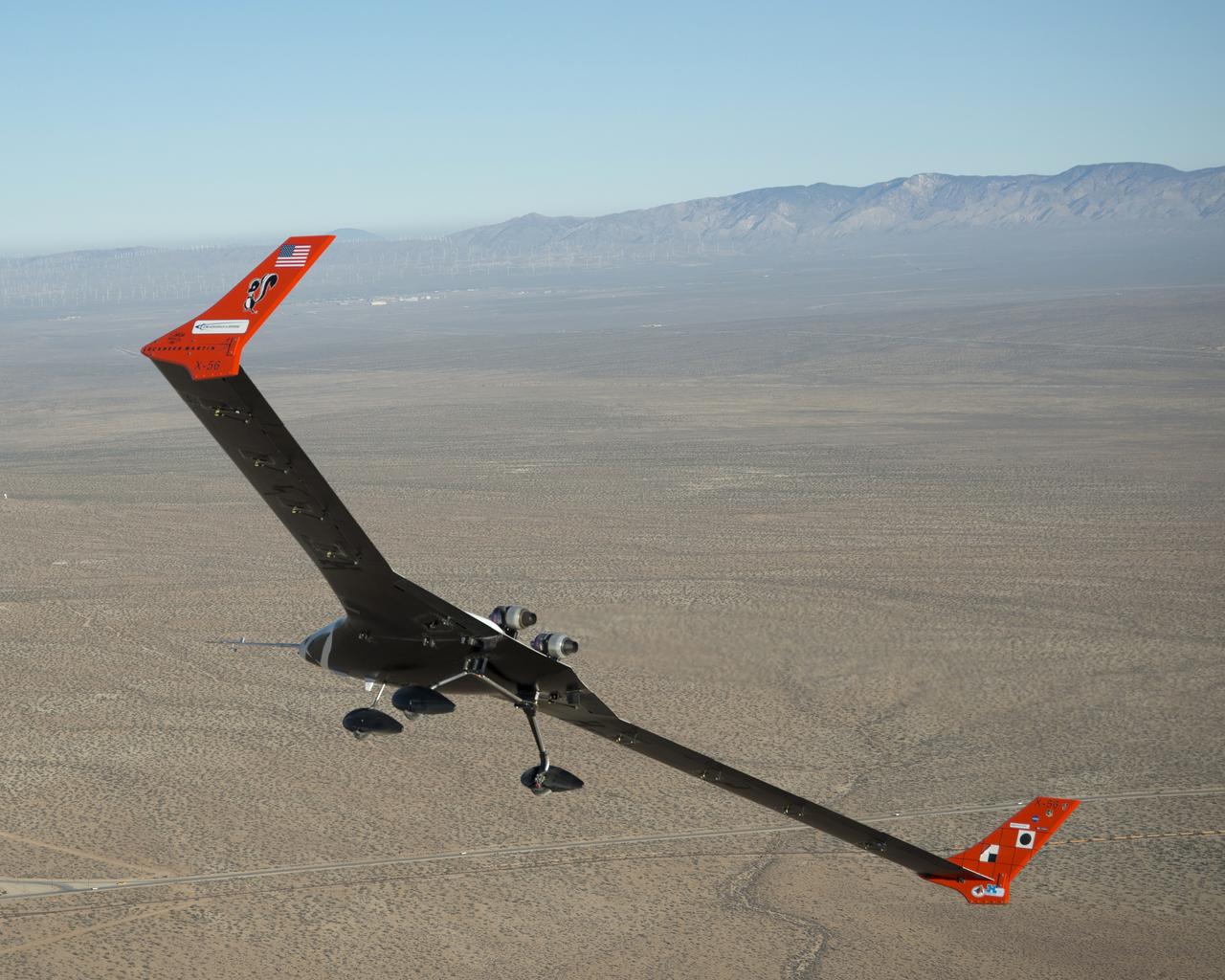
The X-56A flies over the desert near NASA Armstrong Flight Research Center, Edwards, California. NASA researchers are using the remotely piloted X-56A to explore the behavior of lightweight, flexible aircraft structures.
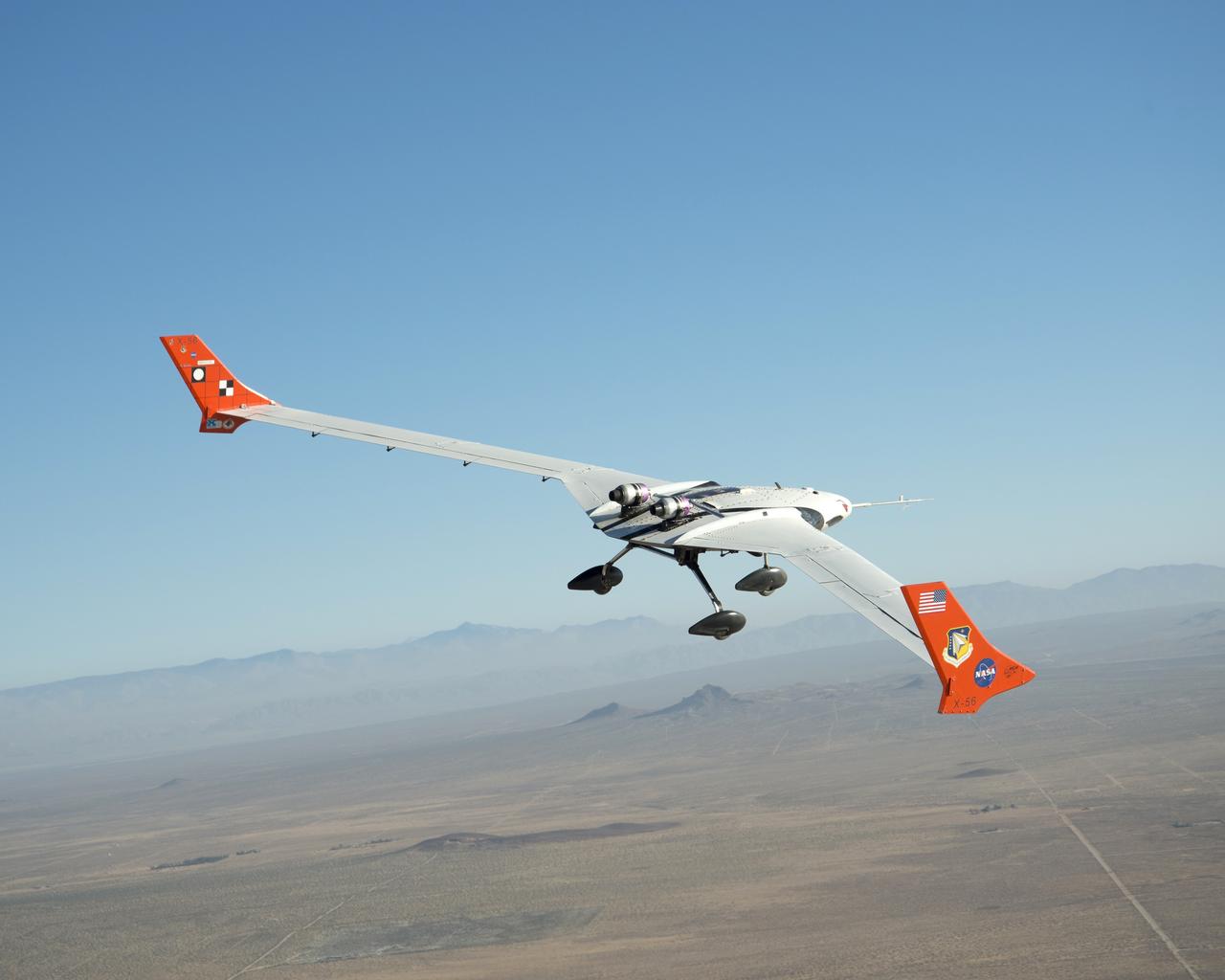
The X-56A flies over the desert near NASA Armstrong Flight Research Center, Edwards, California. NASA researchers are using the remotely piloted X-56A to explore the behavior of lightweight, flexible aircraft structures.
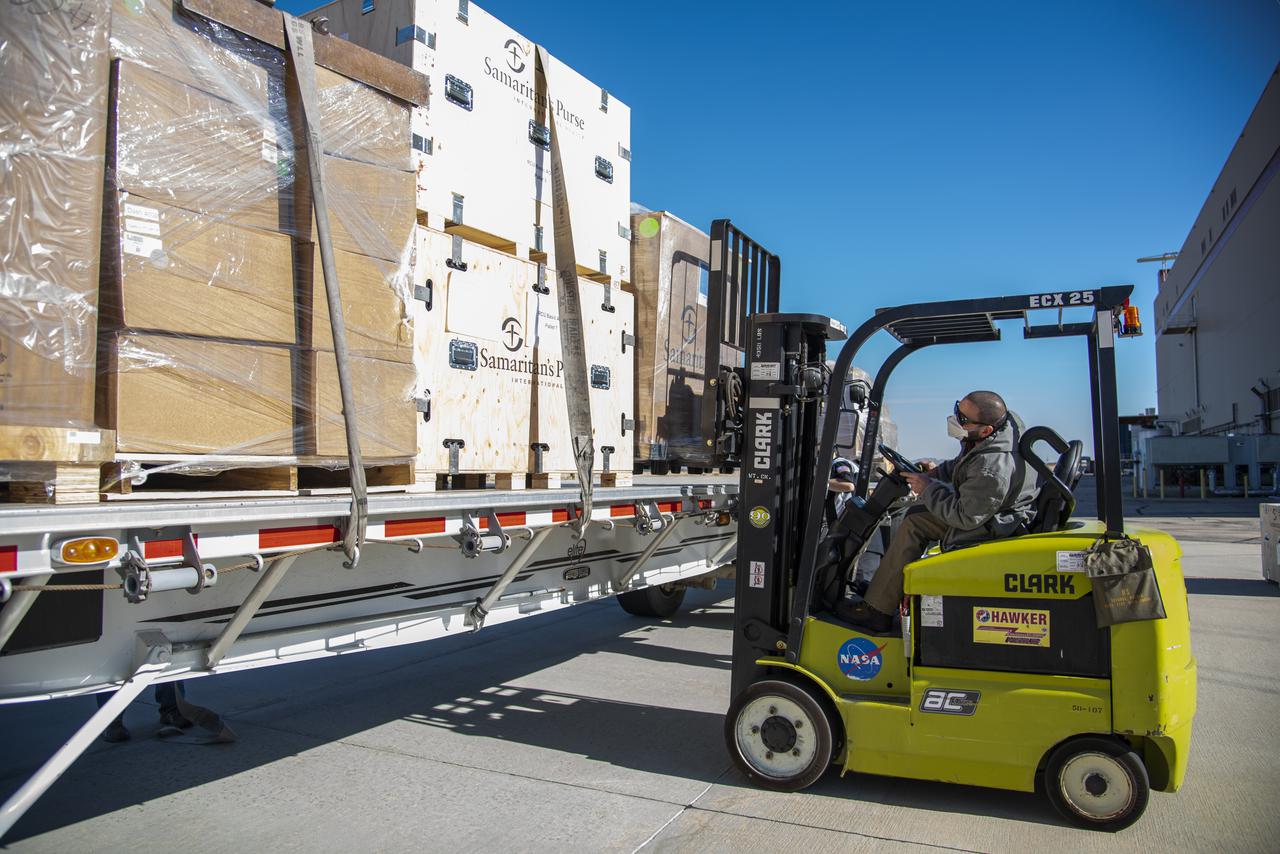
Marlon Espinoza uses a forklift at NASA's Armstrong Flight Research Center Building 703 in Palmdale, California, to assist in Samaritan Purse's COVID-19 aid work. The supplies were unloaded from a DC-8 and loaded onto a truck.
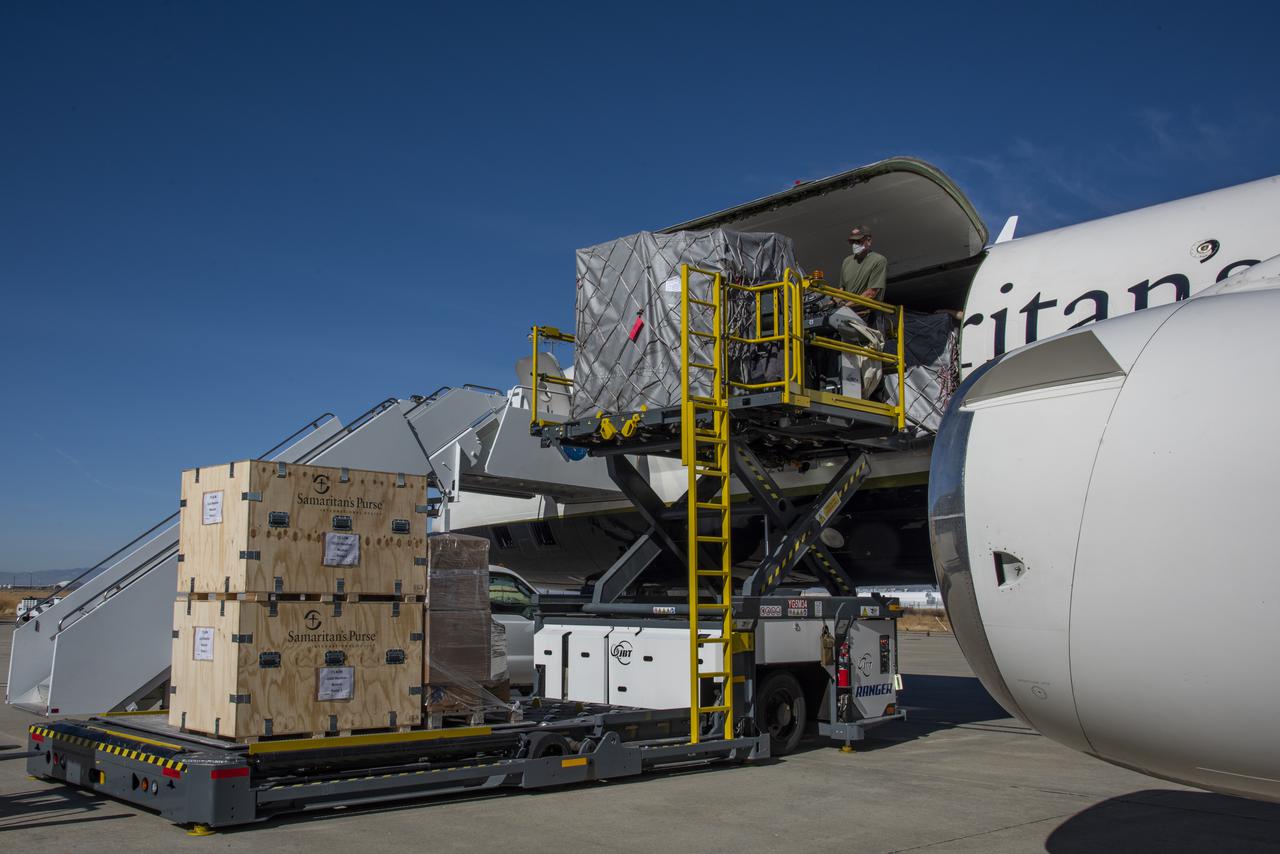
Samaritan Purse landed its DC-8 at NASA's Armstrong Flight Research Center Building 703 in Palmdale, California, to deliver supplies needed to meet the demands of the COVID-19 pandemic. NASA Armstrong personnel assisted in unloading the aircraft.