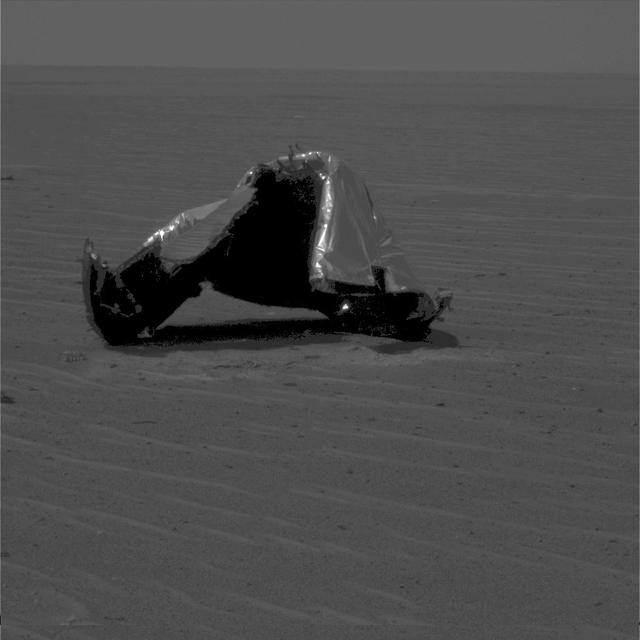
Heat Shield Main Piece
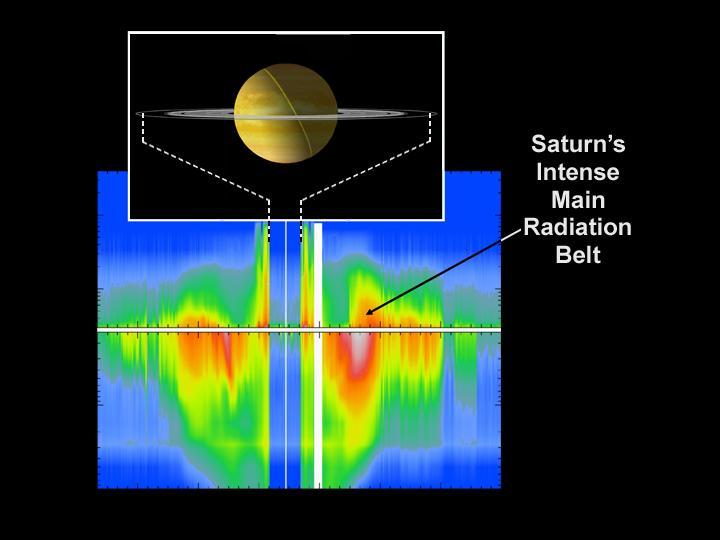
Saturn Main Radiation Belt
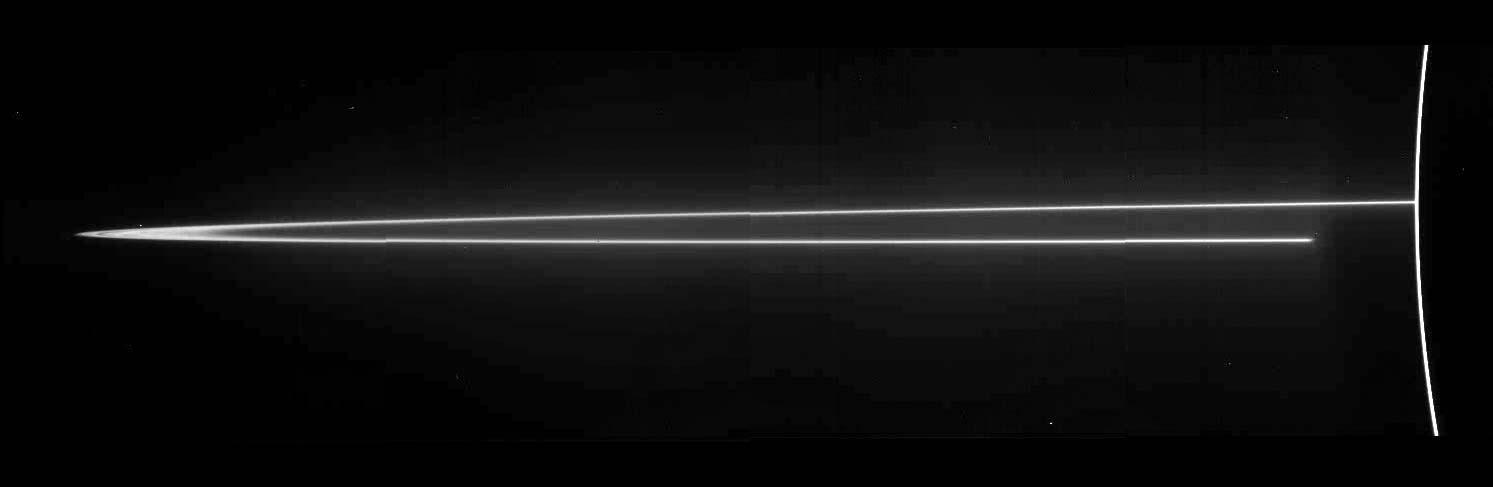
Jupiter Main Ring

Jupiter Main Ring and Halo

Employees watch the last planned space shuttle main engine test firing.

The last planned space shuttle main engine test firing takes place on July 29, 2009.
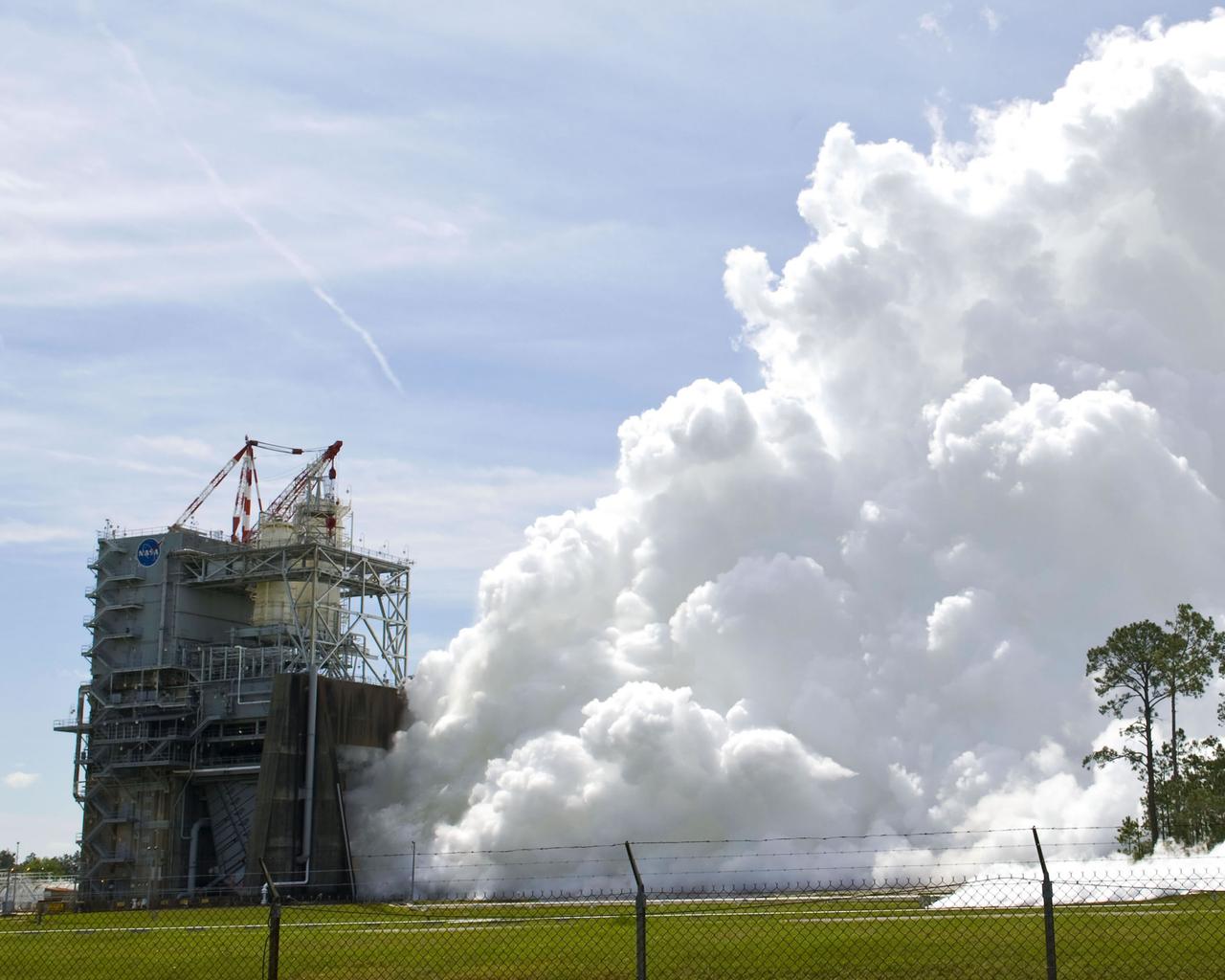
Stennis engineers conduct a test of a space shuttle main engine on March 30, 2009.

NASA's Pegasus barge arrived at Stennis Space Center on Nov. 16, delivering space shuttle main engine ground support equipment to the south Mississippi facility. Stennis tested every main engine used on all 135 space shuttle flights.
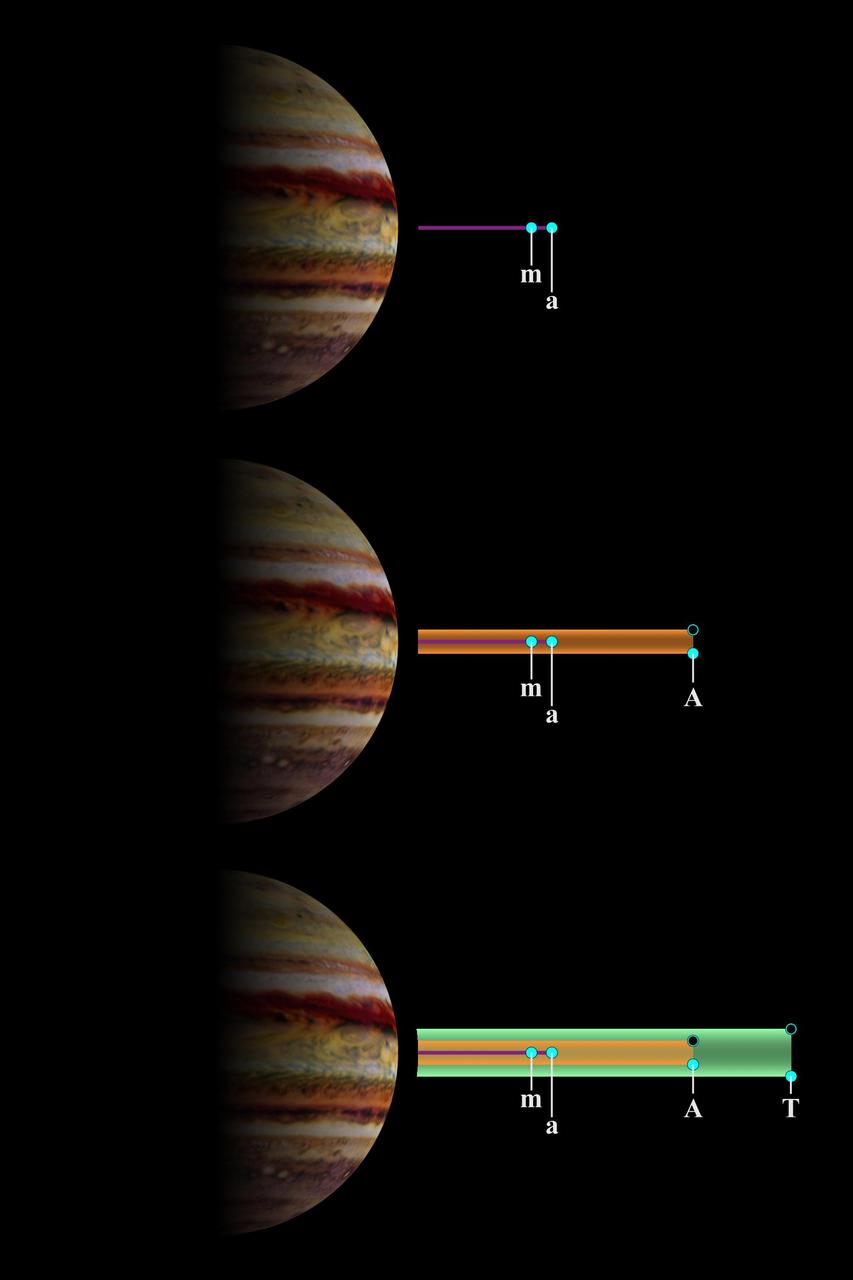
Jupiter Main and Gossamer Ring Structures
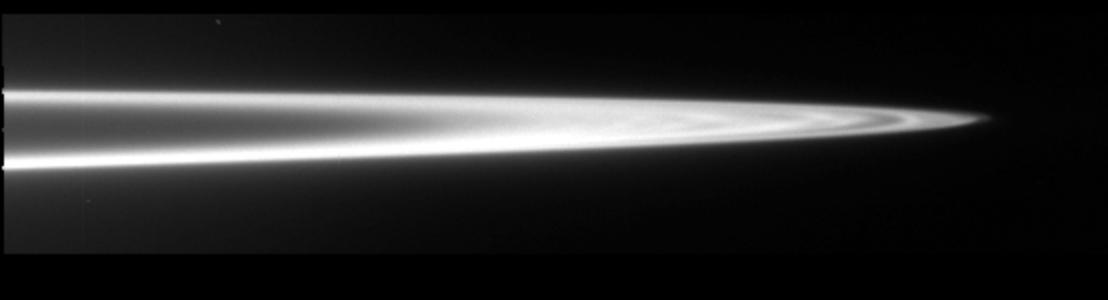
The Main Ring of Jupiter clear filter
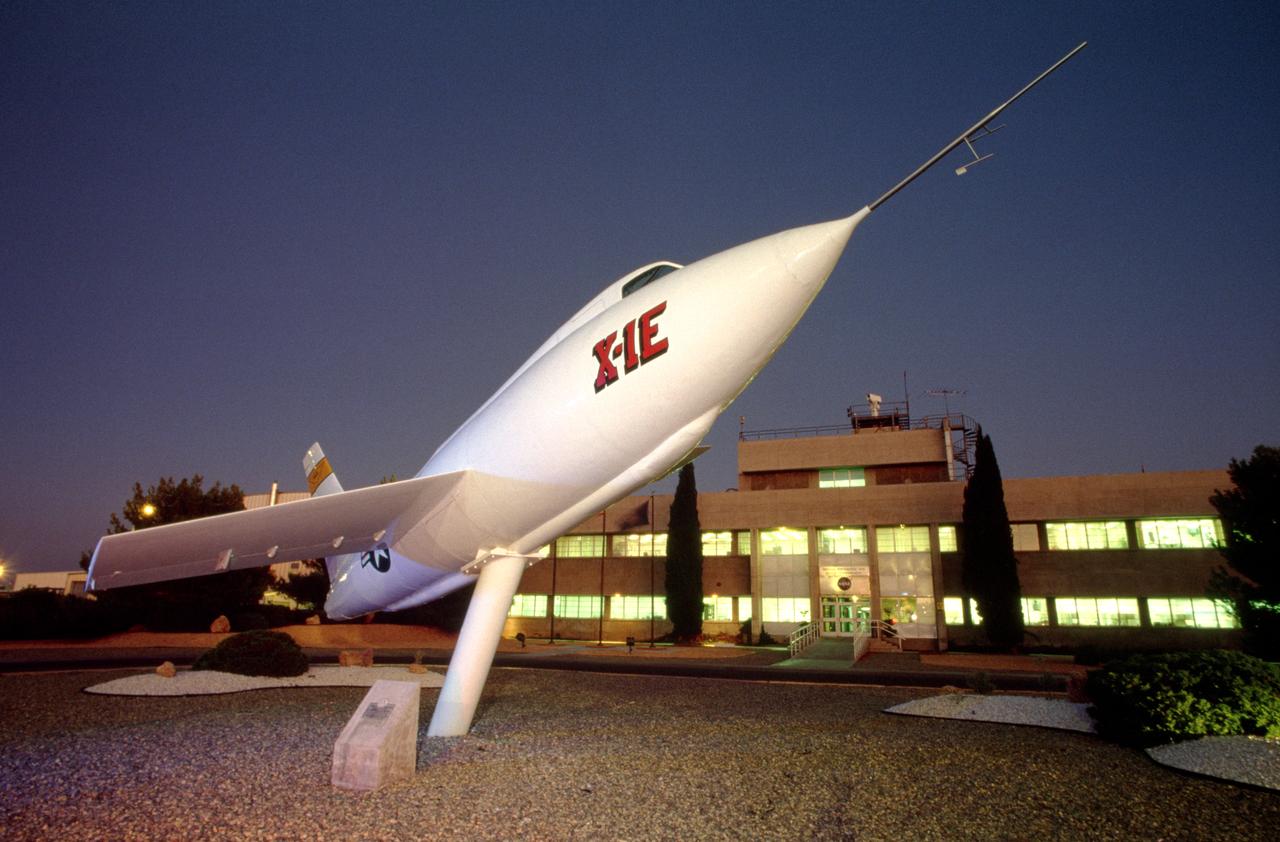
The X-1E guards NASA Dryden Flight Research Center's main building.
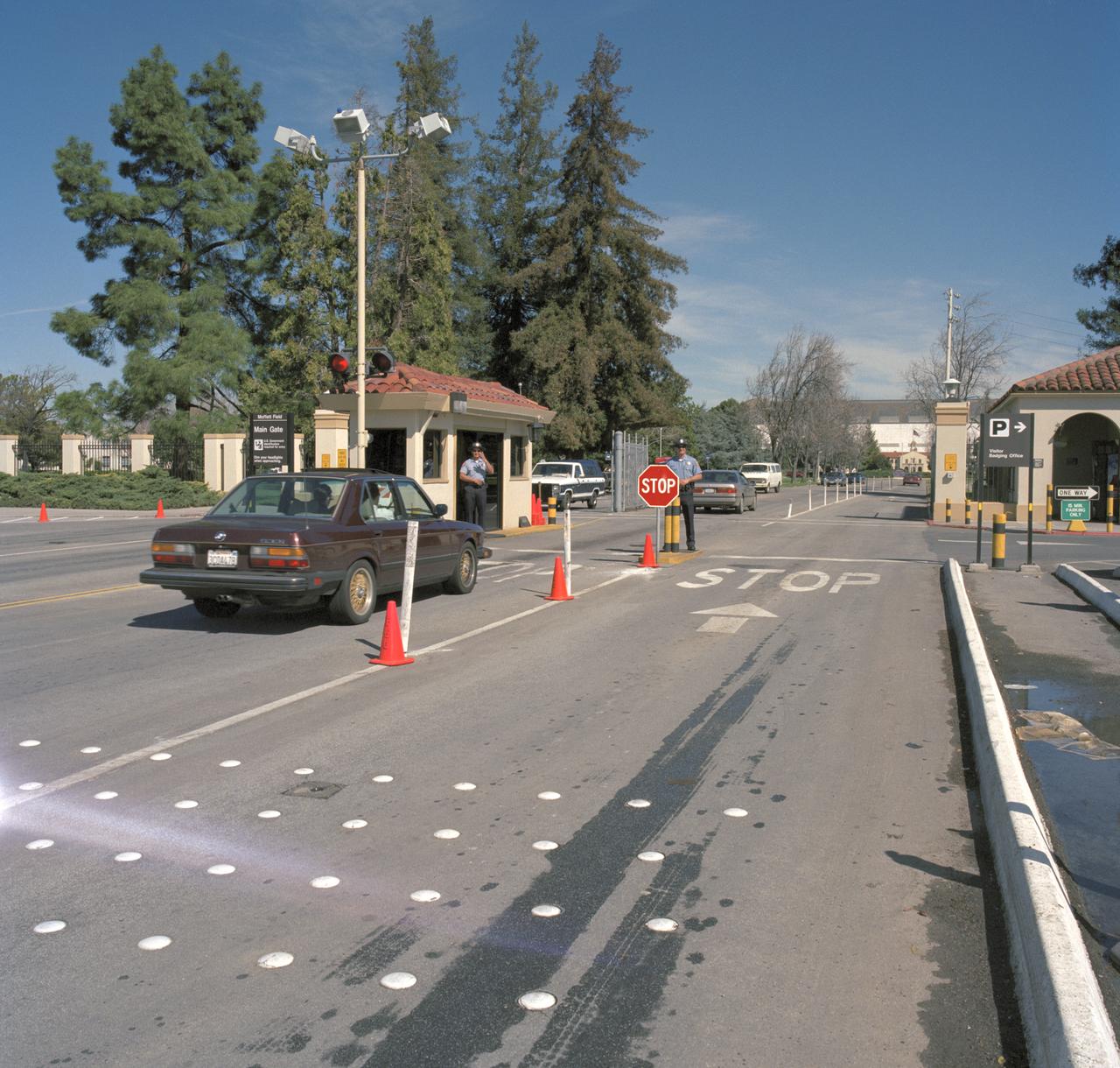
Protective Services Office (Code JP) Personnel On Duty. Main Gate Guards Rubin Cablgas and Robert Burja
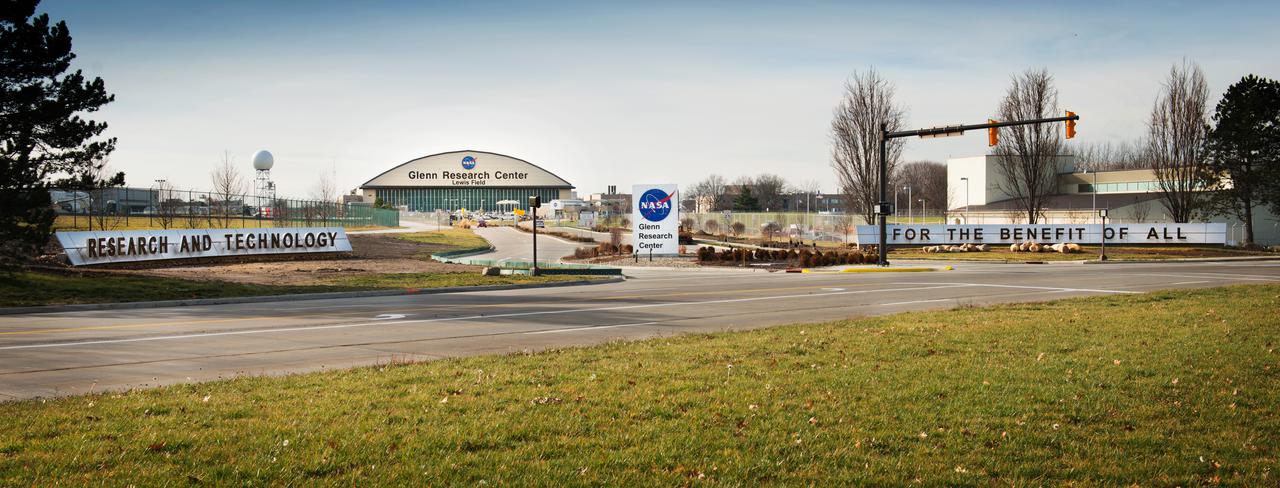
Main Entrance of NASA Glenn Research Center at Brookpark Road and NASA Parkway. The signs read: Research and Technology For The Benefit Of All.
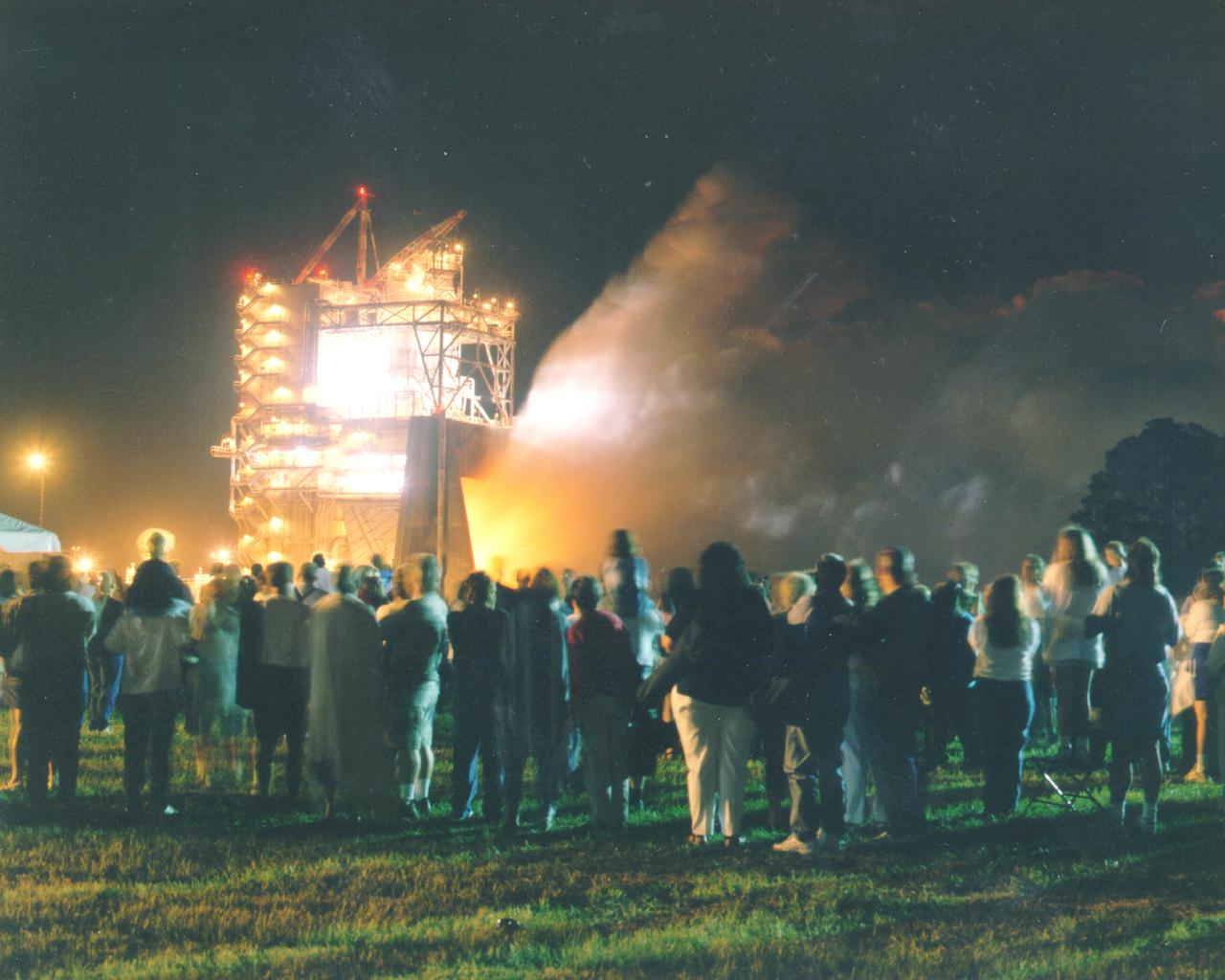
Thousands of people watch the first-ever evening public engine test of a Space Shuttle Main Engine at NASA's John C. Stennis Space Center. The spectacular test marked Stennis Space Center's 20th anniversary celebration of the first Space Shuttle mission.
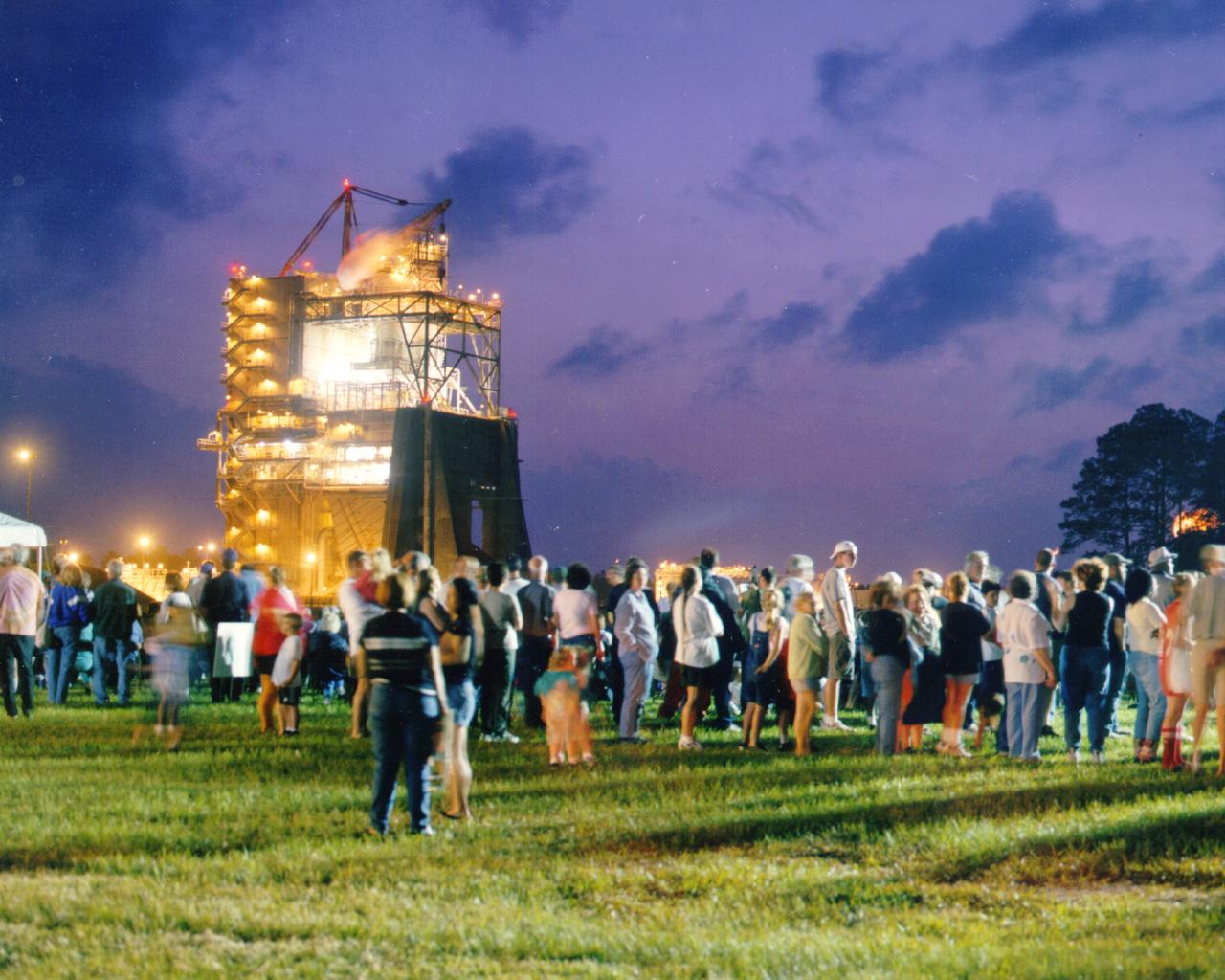
Approximately 13,000 people fill the grounds at NASA's John C. Stennis Space Center for the first-ever evening public engine test of a Space Shuttle Main Engine. The test marked Stennis Space Center's 20th anniversary celebration of the first Space Shuttle mission.
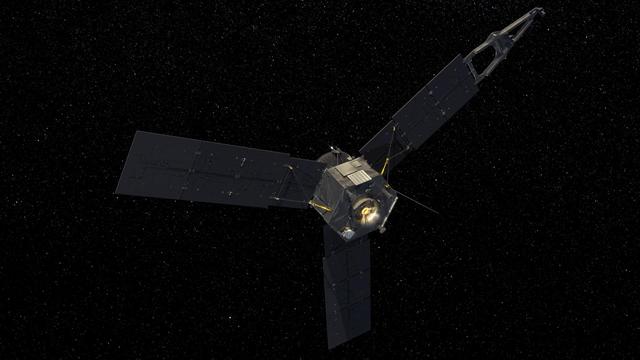
A computer-generated image depicts NASA Juno spacecraft firing its main engine.
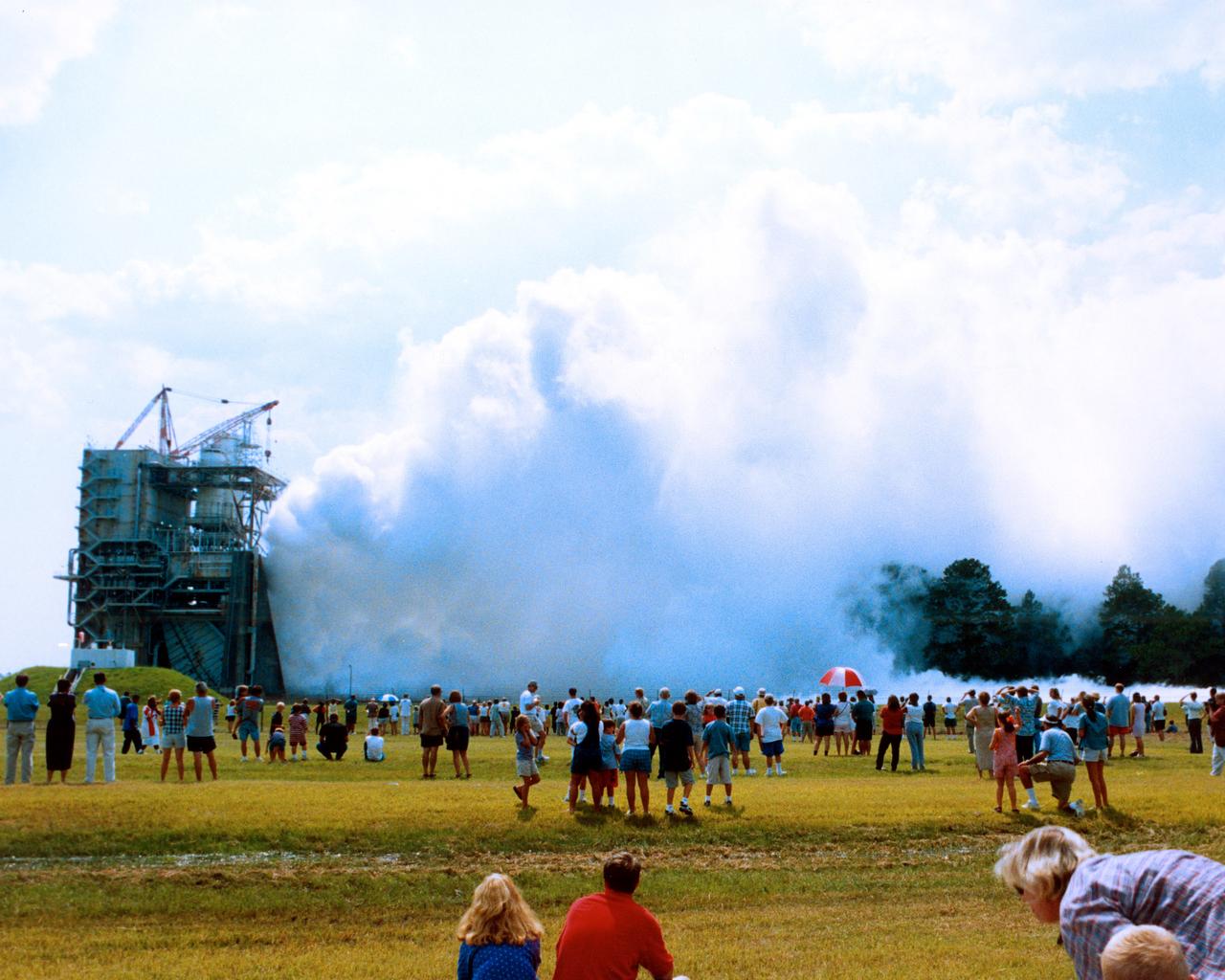
A new NASA Space Shuttle Main Engine (SSME) roars to the approval of more than 2,000 people who came to John C. Stennis Space Center in Hancock County, Miss., on July 25 for a flight-certification test of the SSME Block II configuration. The engine, a new and significantly upgraded shuttle engine, was delivered to NASA's Kennedy Space Center in Florida for use on future shuttle missions. Spectators were able to experience the 'shake, rattle and roar' of the engine, which ran for 520 seconds - the length of time it takes a shuttle to reach orbit.
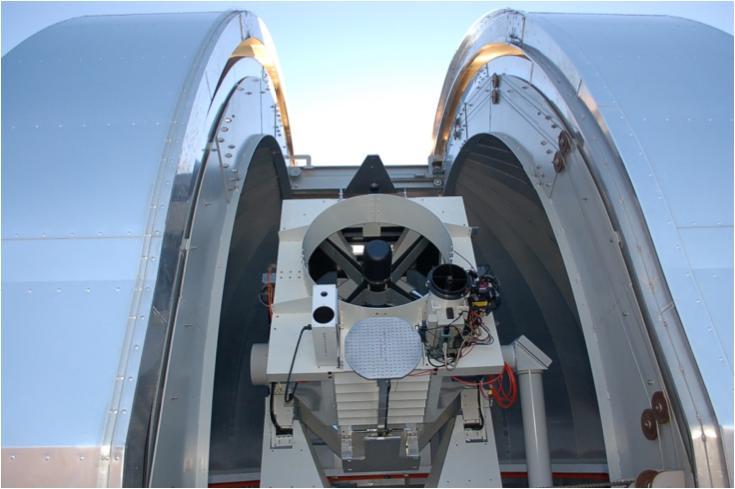
This is a 3-foot 1-meter aperture main telescope located at the NASA Jet Propulsion Laboratory Optical Communications Telescope Laboratory ground station.
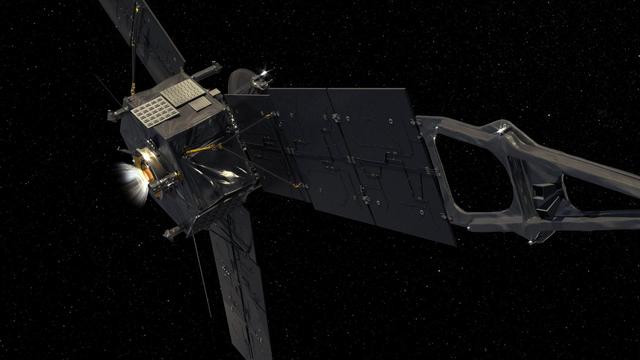
This computer-generated image depicts NASA Juno spacecraft firing its Leros-1b main engine.
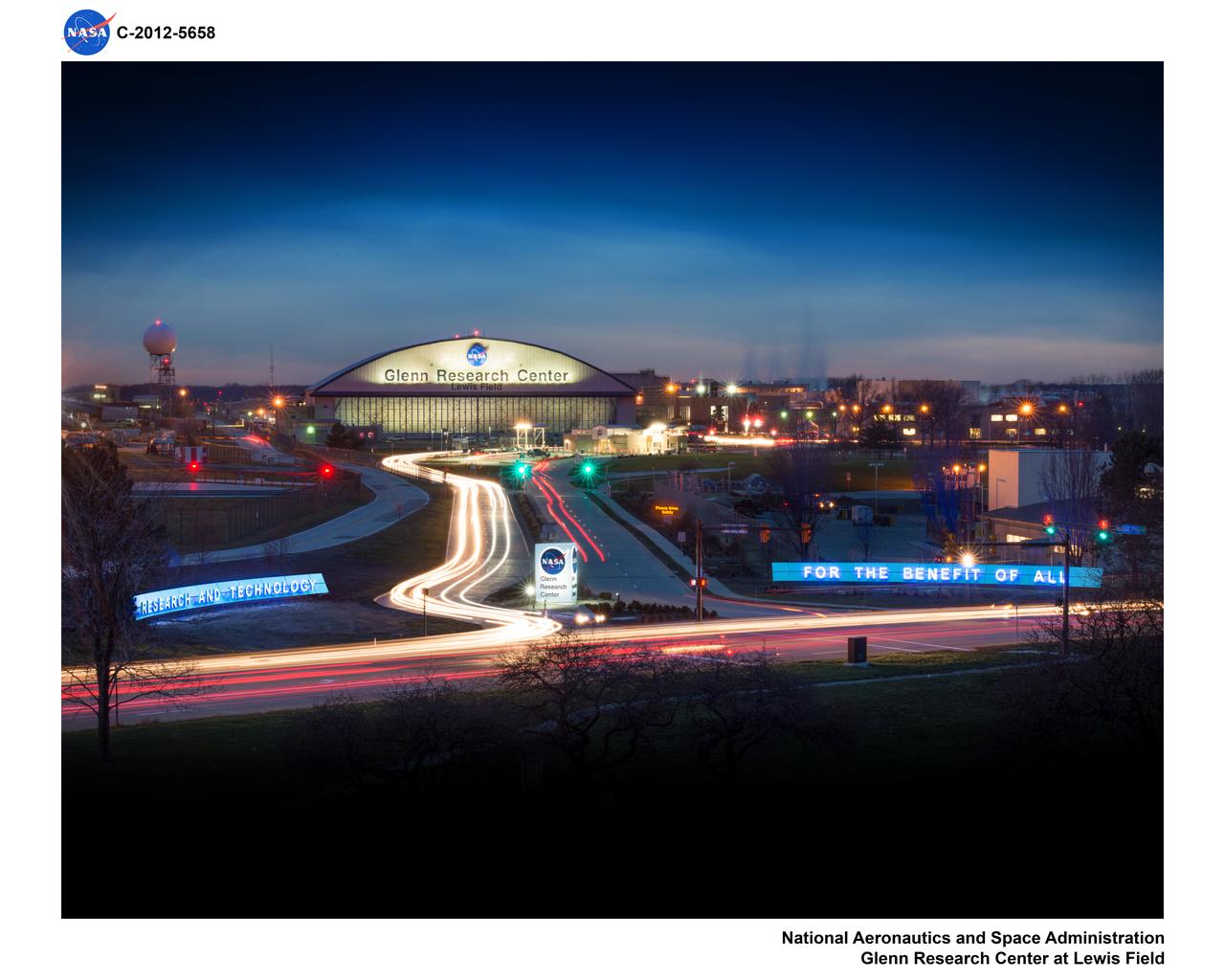
Main Gate, NASA Glenn Research Center, Cleveland, Ohio
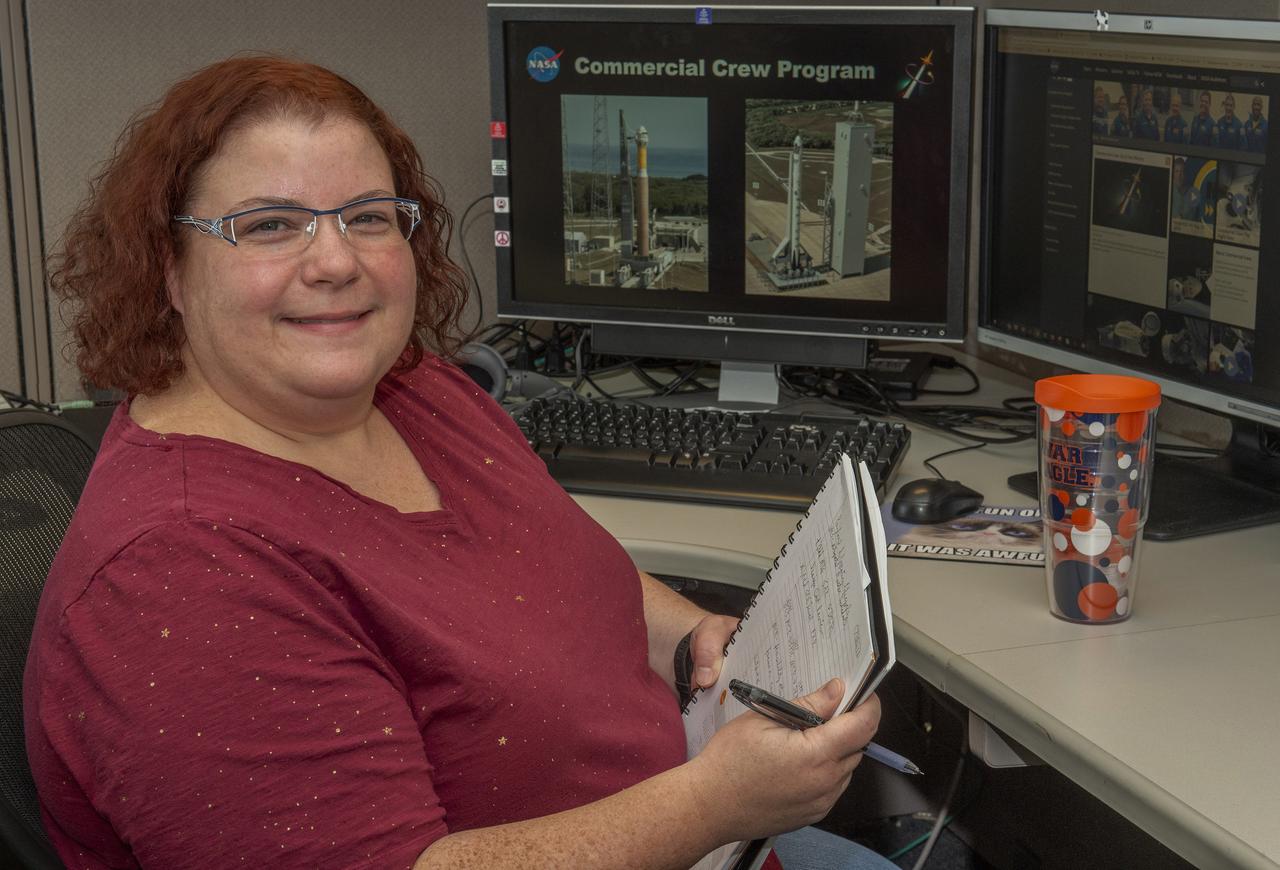
Miranda Holton is the Main Propulsion Systems (MPS) Subsystem Manager for NASA’s Commercial Crew Program. The goal of the Commercial Crew Program is to have safe, reliable and cost-effective access to and from the International Space Station and foster commercial access to other potential low-Earth orbit destinations.

Nine Galileo Views in Exaggerated Color of Main-Belt Asteroid Ida http://photojournal.jpl.nasa.gov/catalog/PIA00331

Nine Galileo Views in Natural Color of Main-Belt Asteroid Ida http://photojournal.jpl.nasa.gov/catalog/PIA00330

This high-resolution image of Jupiter's main dust ring was collected by the Stellar Reference Unit (SRU) navigation camera aboard NASA's Juno spacecraft. The image was taken from inside the ring looking out as Juno flew between Jupiter and the radiation belts during the spacecraft's 36th close flyby on Sept. 2, 2021. The brightest thin dust bands are associated with the orbits of Jupiter's small moons, Metis and Adrastea. The image is at a resolution of nearly 20 miles (32 kilometers) per pixel. https://photojournal.jpl.nasa.gov/catalog/PIA25038

Event: SEG 410 Main Wing A Lockheed Martin technician works on the installation of wiring on the trailing edge structure of the right side of the X-59’s wing. The aircraft, under construction at Lockheed Martin Skunk Works in Palmdale, California, will demonstrate the ability to fly supersonic while reducing the loud sonic boom to a quiet sonic thump.
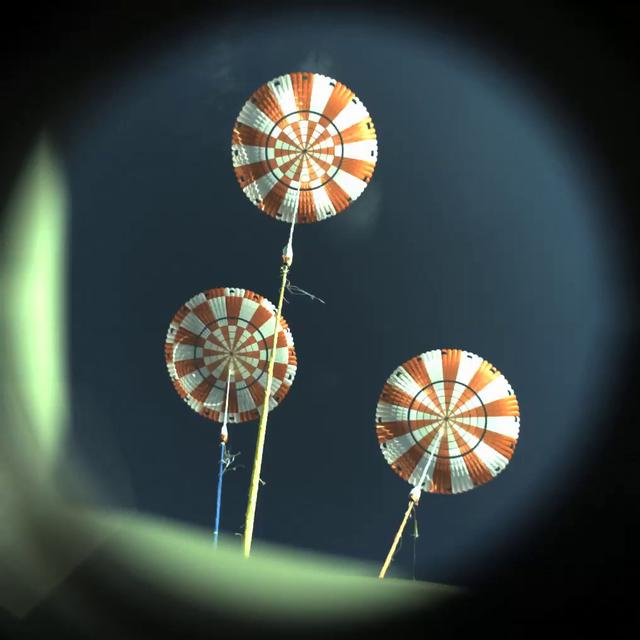
The main parachutes deploy on Orion's first flight test, Exploration Flight Test-1 (EFT-1), on December 5, 2014.
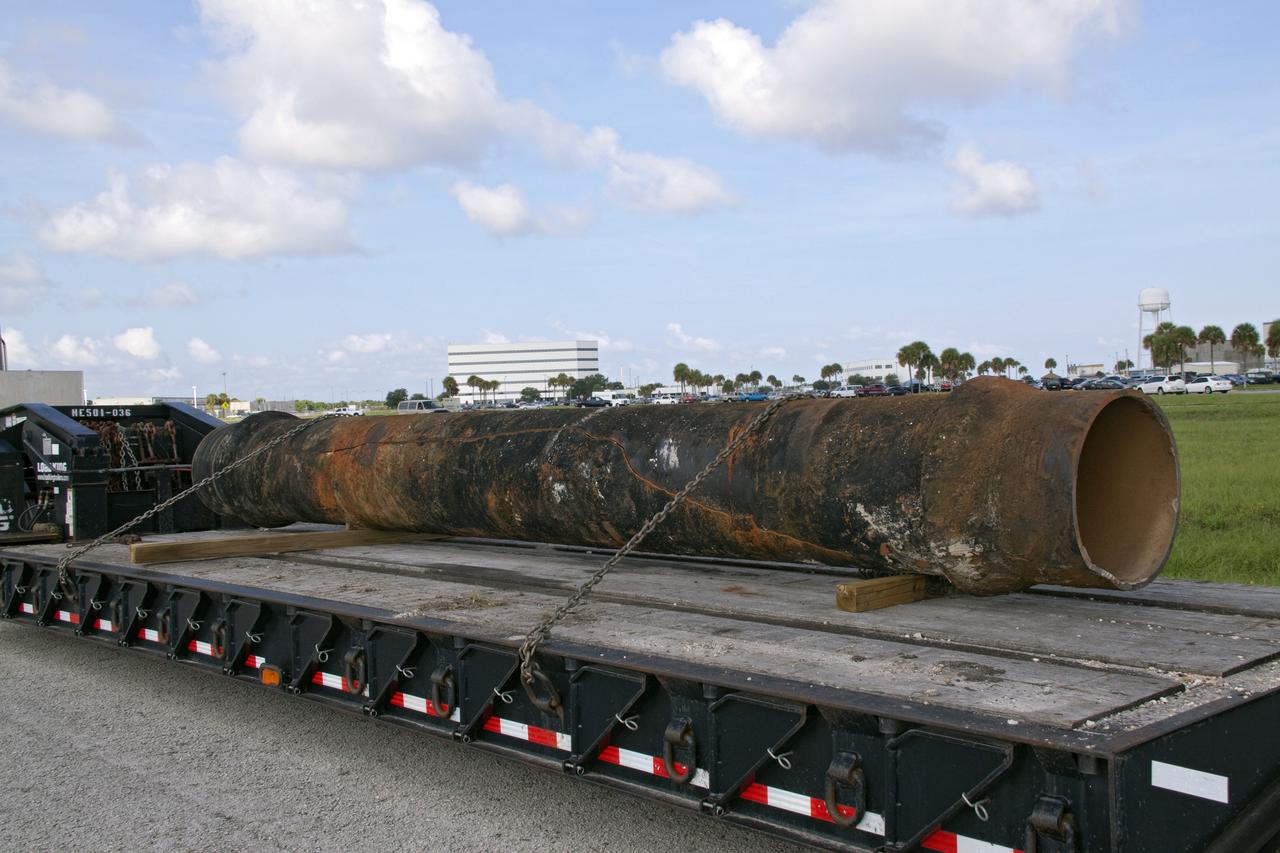
CAPE CANAVERAL, Fla. -- In the Launch Complex-39 Turn Basin area, across from the Vehicle Assembly Building at NASA's Kennedy Space Center in Florida, the section of a 24-inch cast iron water main pipe that failed is hauled away by a transport truck. Kennedy was closed to non-essential personnel the morning of Sept. 8 while crews assessed the water main break and restored water to the center. Photo credit: NASA/Jack Pfaller
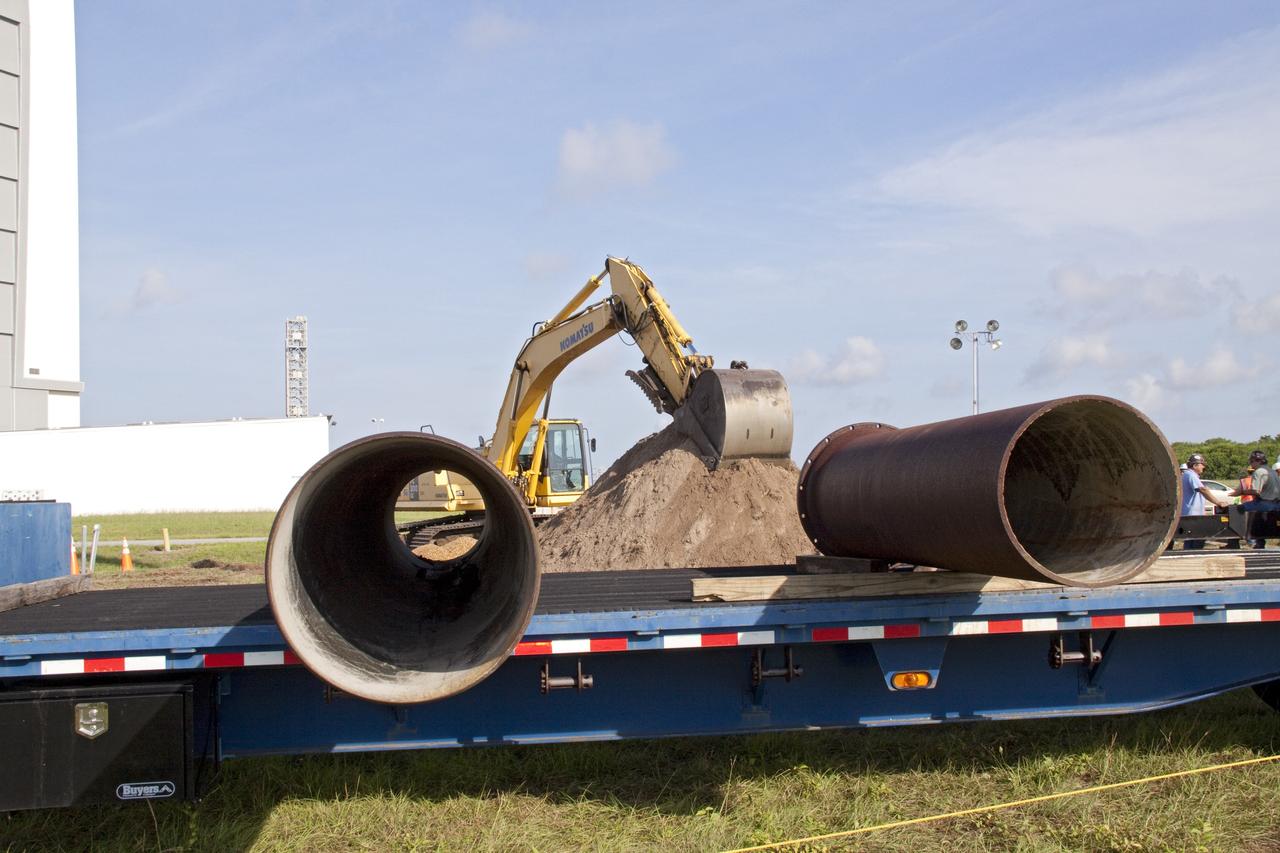
CAPE CANAVERAL, Fla. -- In the Launch Complex-39 Turn Basin area, across from the Vehicle Assembly Building at NASA's Kennedy Space Center in Florida, replacement sections of a 24-inch cast iron water main pipe awaits installation. Kennedy was closed to non-essential personnel the morning of Sept. 8 while crews assessed the water main break and restored water to the center. Photo credit: NASA/Jack Pfaller
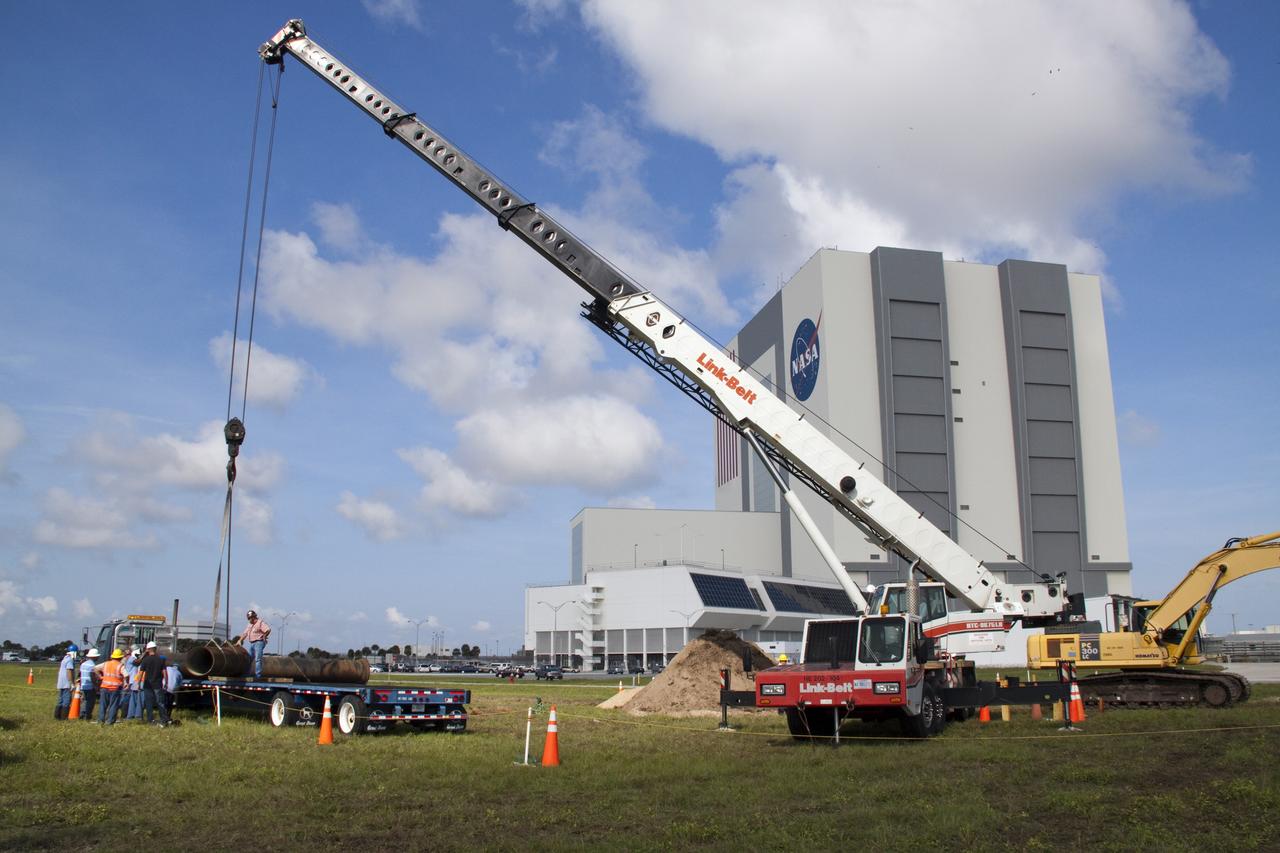
CAPE CANAVERAL, Fla. --In the Launch Complex-39 Turn Basin area, across from the Vehicle Assembly Building at NASA's Kennedy Space Center in Florida, workers, assisted by an overhead crane maneuver the replacement section of a 24-inch cast iron water main pipe off of a transport truck. Kennedy was closed to non-essential personnel the morning of Sept. 8 while crews assessed the water main break and restored water to the center. Photo credit: NASA/Jack Pfaller
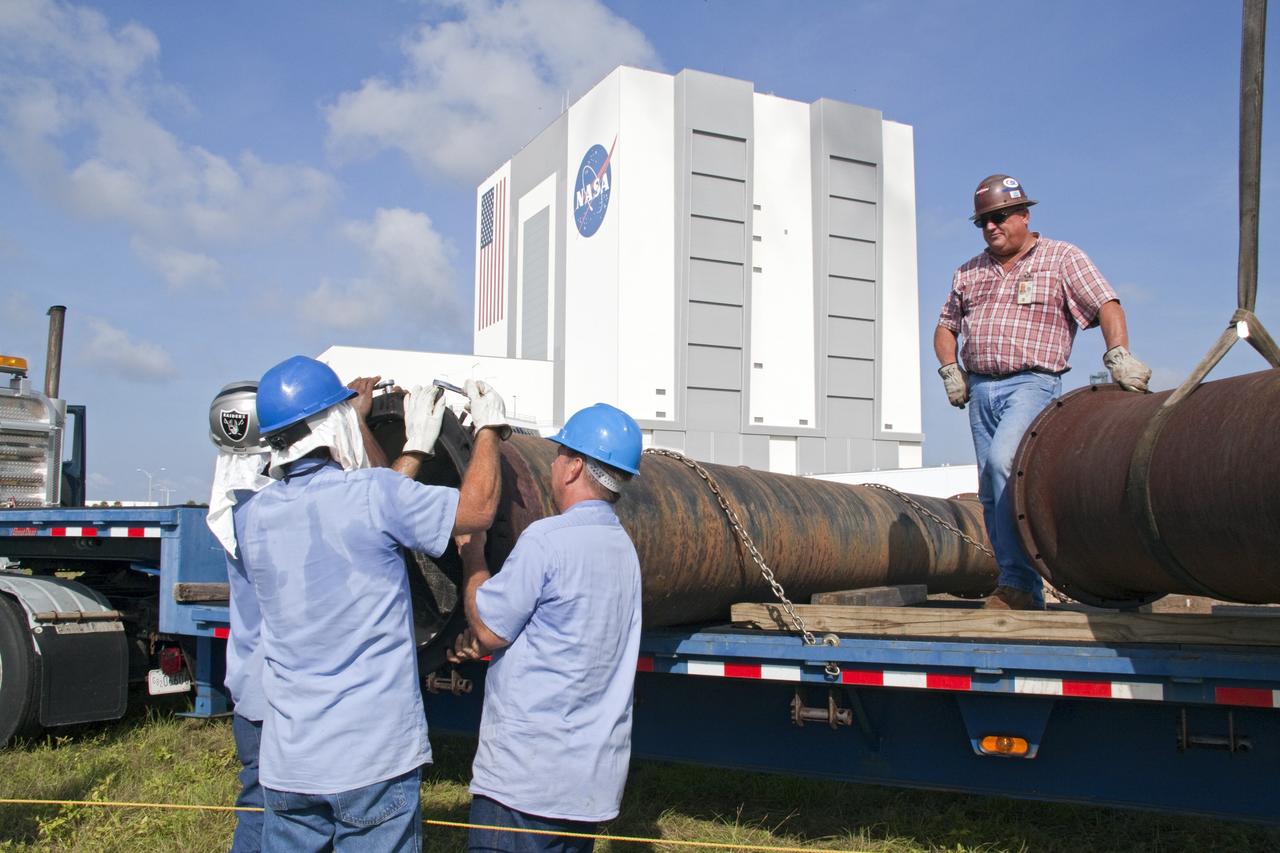
CAPE CANAVERAL, Fla. -- In the Launch Complex-39 Turn Basin area, across from the Vehicle Assembly Building at NASA's Kennedy Space Center in Florida, workers maneuver the replacement section of a 24-inch cast iron water main pipe off of a transport truck. Kennedy was closed to non-essential personnel the morning of Sept. 8 while crews assessed the water main break and restored water to the center. Photo credit: NASA/Jack Pfaller
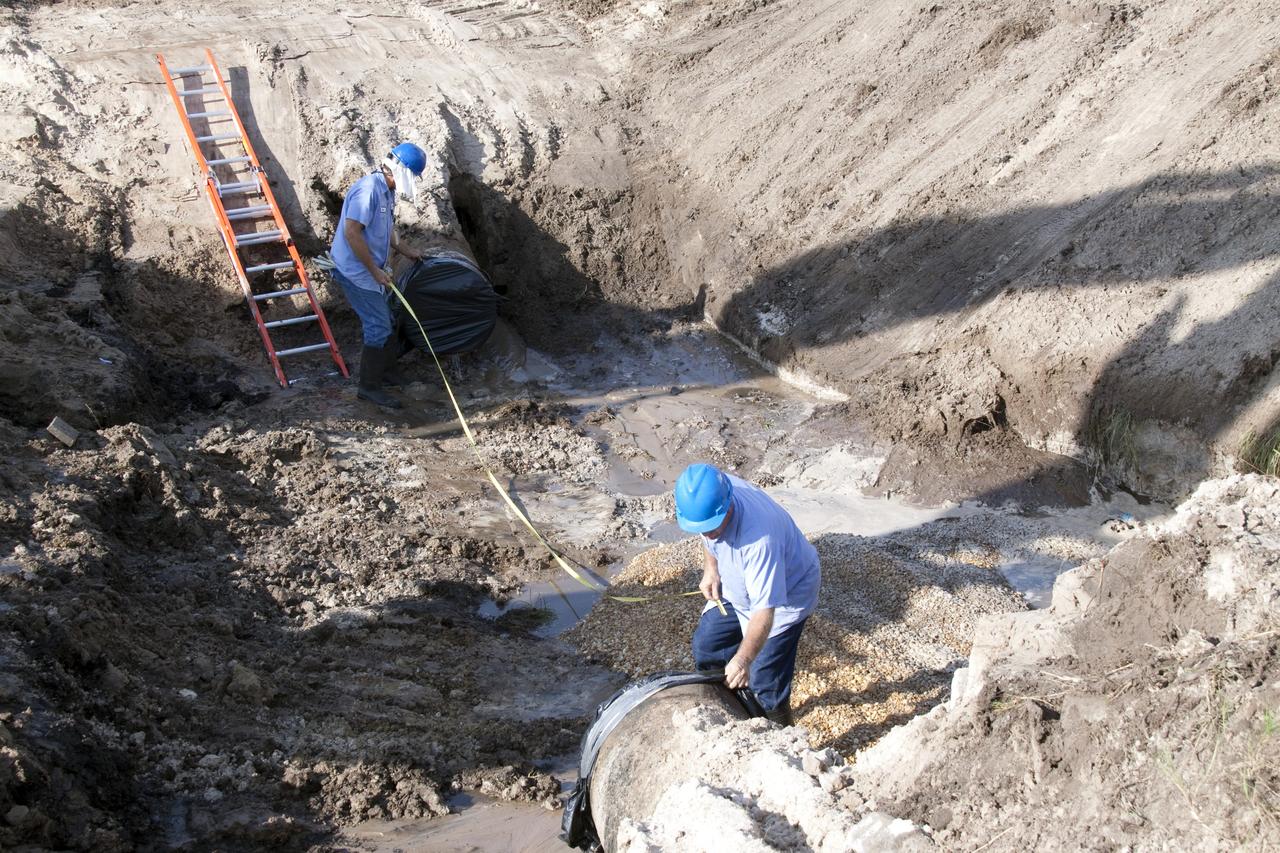
CAPE CANAVERAL, Fla. -- In the Launch Complex-39 Turn Basin area, across from the Vehicle Assembly Building at NASA's Kennedy Space Center in Florida, workers take measurements for replacement sections of a 24-inch cast iron water main pipe. Kennedy was closed to non-essential personnel the morning of Sept. 8 while crews assessed the water main break and restored water to the center. Photo credit: NASA/Jack Pfaller
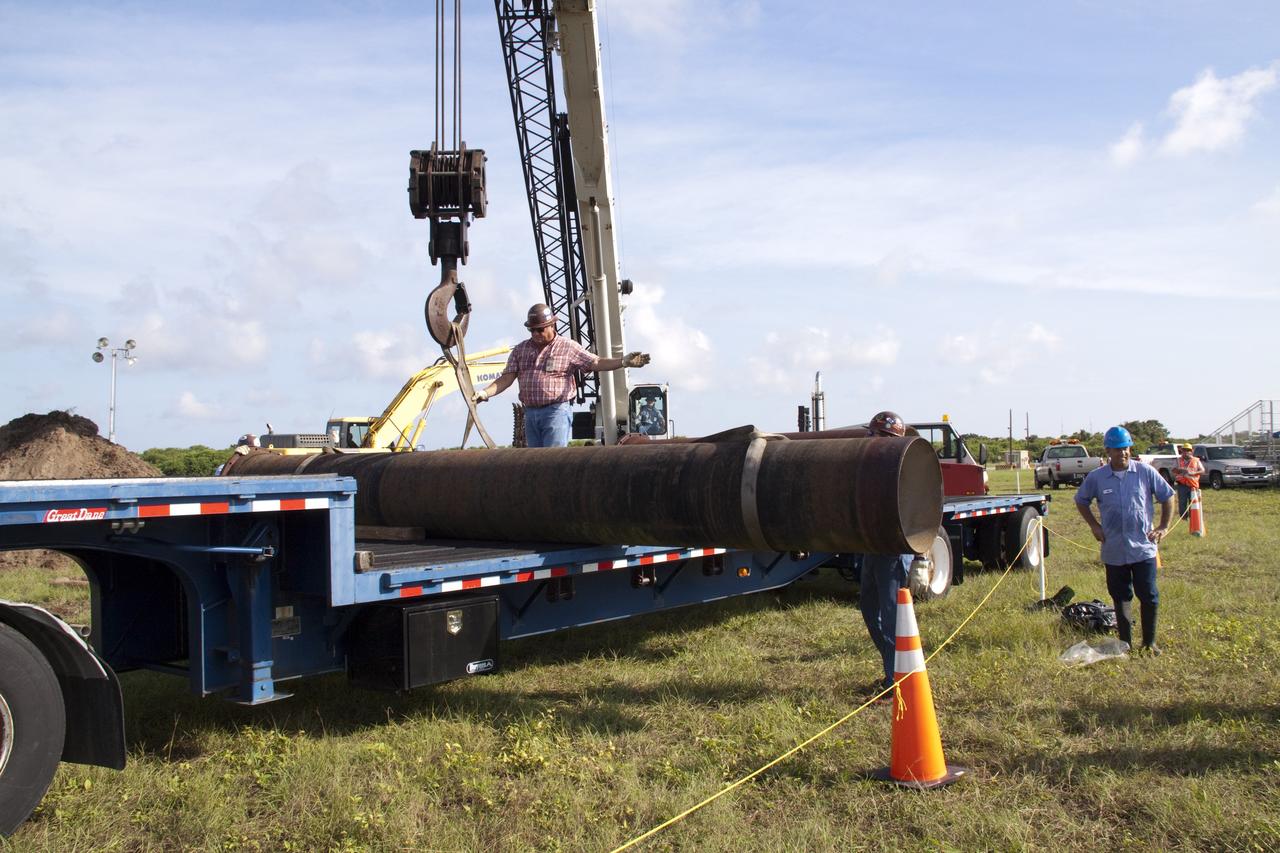
CAPE CANAVERAL, Fla. -- In the Launch Complex-39 Turn Basin area, across from the Vehicle Assembly Building at NASA's Kennedy Space Center in Florida, workers maneuver the replacement sections of a 24-inch cast iron water main pipe off of a transport truck. Kennedy was closed to non-essential personnel the morning of Sept. 8 while crews assessed the water main break and restored water to the center. Photo credit: NASA/Jack Pfaller
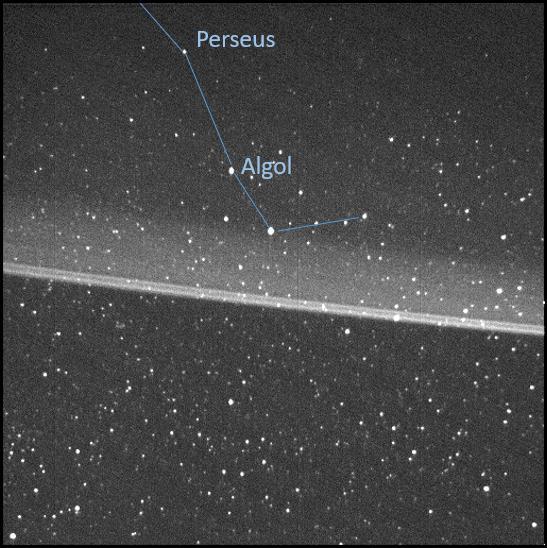
This annotated, high-resolution image of Jupiter's main dust ring was collected by the Stellar Reference Unit (SRU) navigation camera aboard NASA's Juno spacecraft. The image was taken from inside the ring looking out as Juno flew between Jupiter and the radiation belts during the spacecraft's 36th close flyby on Sept. 2, 2021. The brightest thin dust bands are associated with the orbits of Jupiter's small moons, Metis and Adrastea. The image also captured an arm of the Perseus constellation, as shown in the annotation. https://photojournal.jpl.nasa.gov/catalog/PIA25039
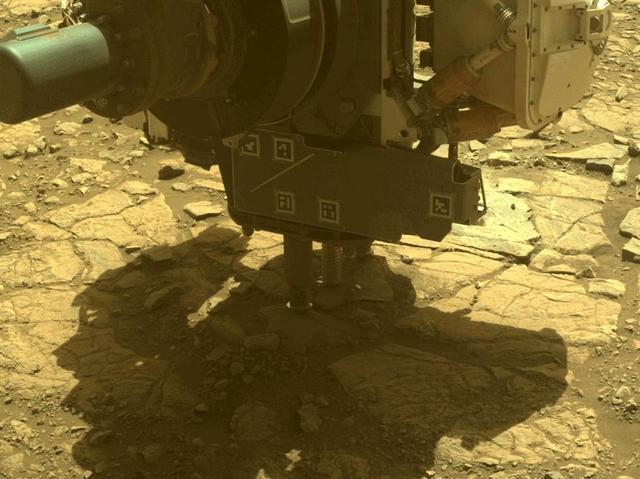
The robotic arm on NASA's Perseverance Mars rover used its percussive drill to core and collect the "Main River" rock sample on March 10, 2025, the 1,441st Martian day, or sol, of the mission. The time-lapse movie, taken by one of the rover's hazard cameras, is made up of 35 images taken over the course of 34 minutes. The sample was taken from a rock the rover science team named "Broom Point" at a location near the rim of Jezero Crater called "Witch Hazel Hill." A key objective for Perseverance's mission on Mars is astrobiology, including the search for signs of ancient microbial life. The rover will characterize the planet's geology and past climate, pave the way for human exploration of the Red Planet, and be the first mission to collect and cache Martian rock and regolith (broken rock and dust). Subsequent NASA missions, in cooperation with ESA (European Space Agency), would send spacecraft to Mars to collect these sealed samples from the surface and return them to Earth for in-depth analysis. The Mars 2020 Perseverance mission is part of NASA's Mars Exploration Program (MEP) portfolio and the agency's Moon to Mars exploration approach, which includes Artemis missions to the Moon that will help prepare for human exploration of the Red Planet. Animation available at https://photojournal.jpl.nasa.gov/catalog/PIA26571
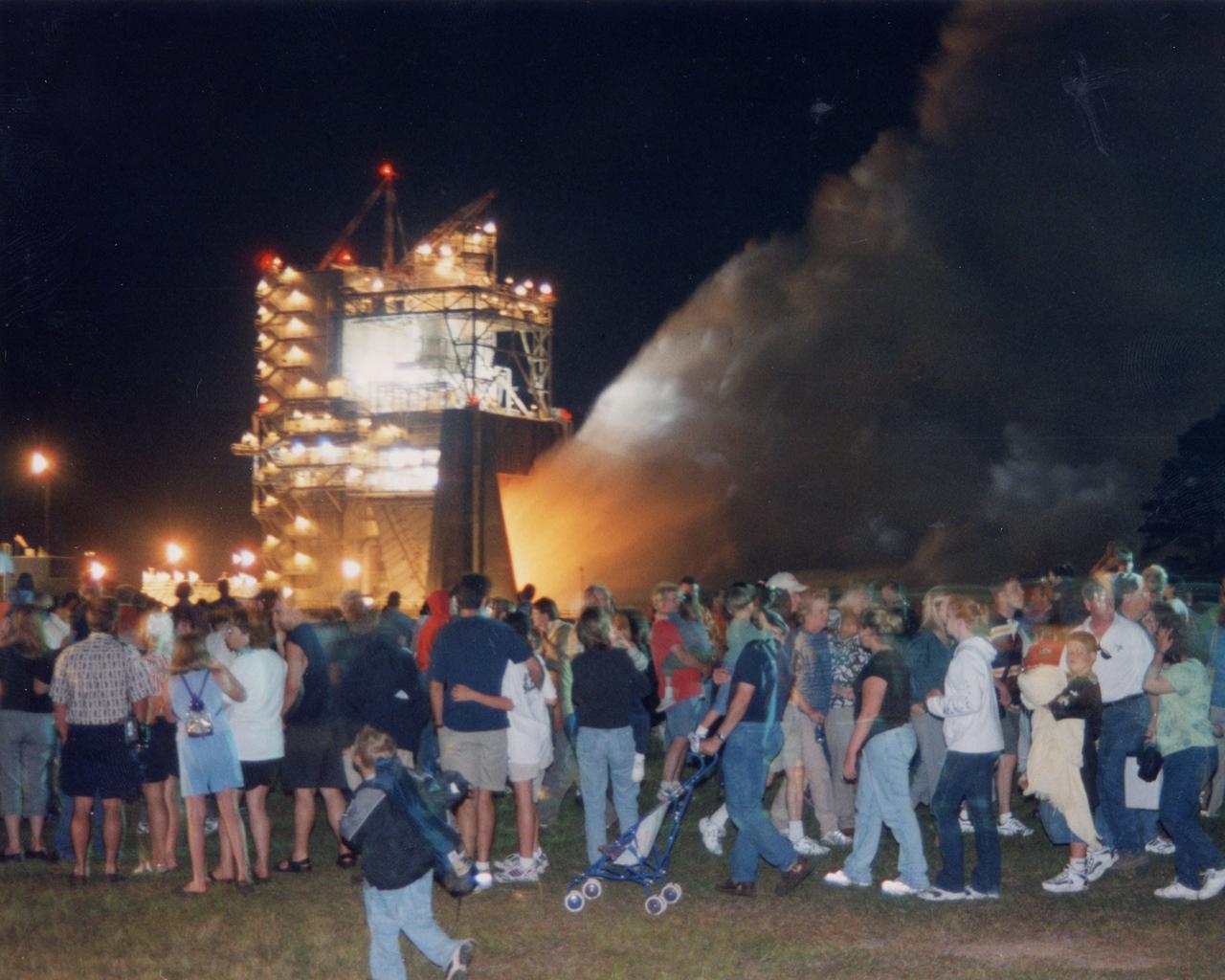
Over the past year, more than 20,000 people came to Stennis Space Center to witness the 'shake, rattle and roar' of one of the world's most sophisticated engines. Stennis Space Center in south Mississippi is NASA's lead center for rocket propulsion testing. StenniSphere, the visitor center for Stennis Space Center, hosted more than 250,000 visitors in its first year of operation. Of those visitors, 26.4 percent were from Louisiana.

A workman reams holes to the proper size and aligment in the Space Shuttle Main Engine's main injector body, through which propellants will pass through on their way into the engine's combustion chamber. Rockwell International's Rocketdyne Division plant produced the engines under contract to the Marshall Space Flight Center.

A Space Shuttle Main Engine undergoes test-firing at the National Space Technology Laboratories (now the Sternis Space Center) in Mississippi. The Marshall Space Flight Center had management responsibility of Space Shuttle propulsion elements, including the Main Engines.

A Space Shuttle Main Engine (SSME) - hot and cold cycles turbine blade test firing.

A modified Space Shuttle Main Engine is static fired at Marshall's Technology Test Bed.

A modified Space Shuttle Main Engine is static fired at Marshall's Technology Test Bed.
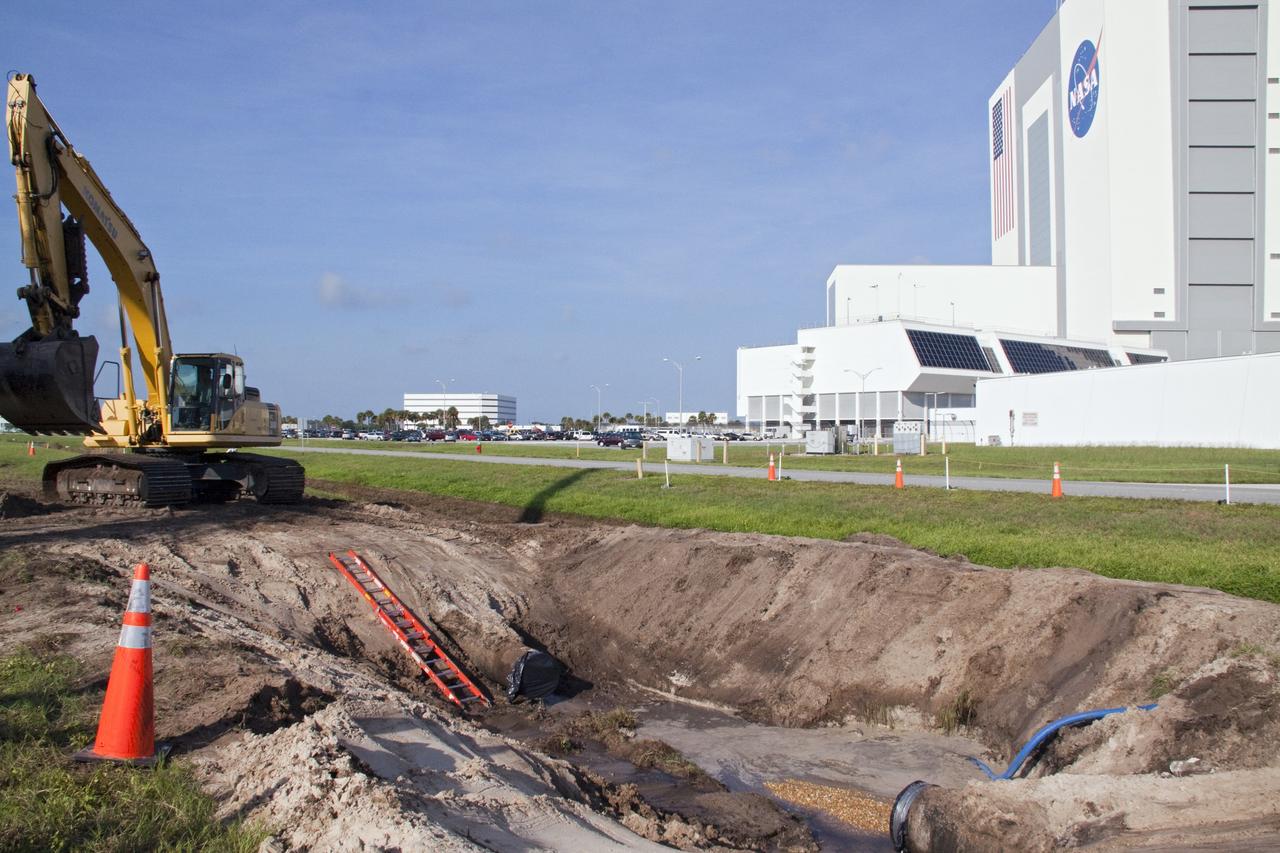
CAPE CANAVERAL, Fla. -- At NASA's Kennedy Space Center in Florida, a work crew has removed a large section of a 24-inch cast iron water main pipe located in the Launch Complex-39 Turn Basin area, across from the Vehicle Assembly Building and the Launch Control Center. Kennedy was closed to non-essential personnel the morning of Sept. 8 while crews assessed the break and restored water to the center. Photo credit: NASA/Jack Pfaller
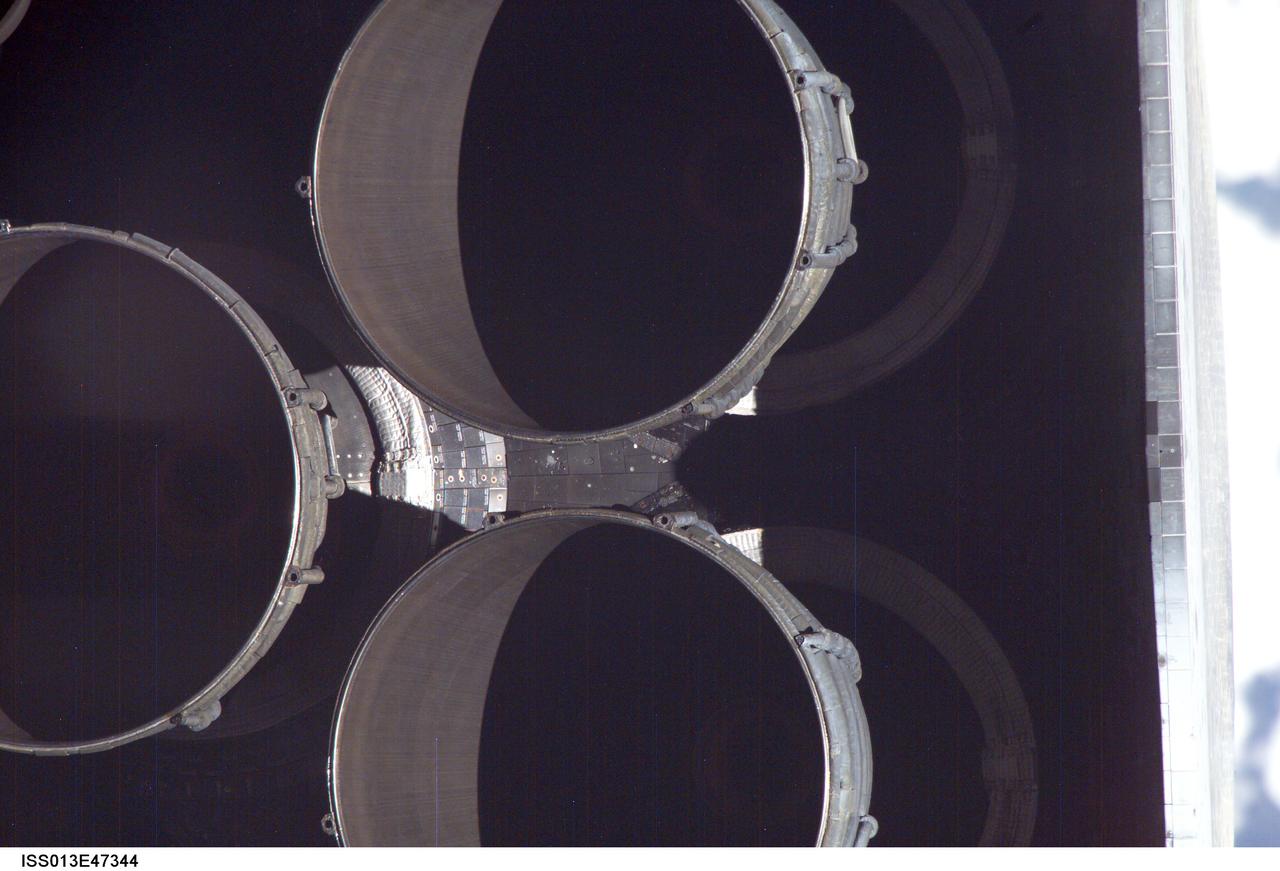
The nozzles for Discovery's three main engines are visible in this close-up image photographed by one of the Expedition 13 crew members onboard the International Space Station (ISS) during the STS-121 Rotating Pitch Maneuver (RPM) survey prior to docking of the two spacecraft. The Marshall Space Flight Center (MSFC) has management responsibility for development of the space shuttle main engines (SSME).
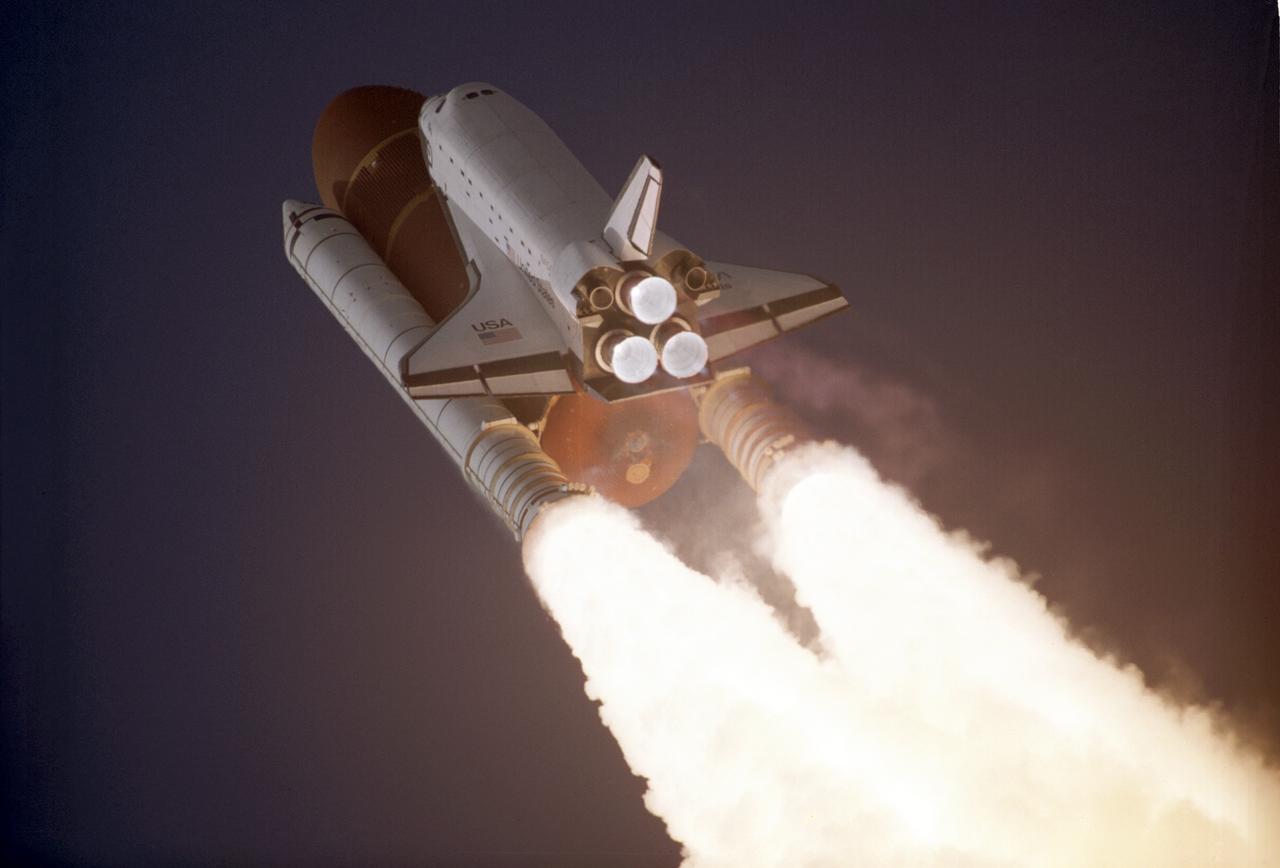
Space Shuttle Atlantis takes flight on its STS-27 mission, December 2, 1988, utilizing 375,000 pounds of thrust produced by its three main engines. The engines start in 3.9 seconds of ignition and go to static pump speeds of approximately 35,000 revolutions per minute during that time. The Marshall Space Flight Center had management responsibility of Space Shuttle propulsion elements, including the Main Engines.
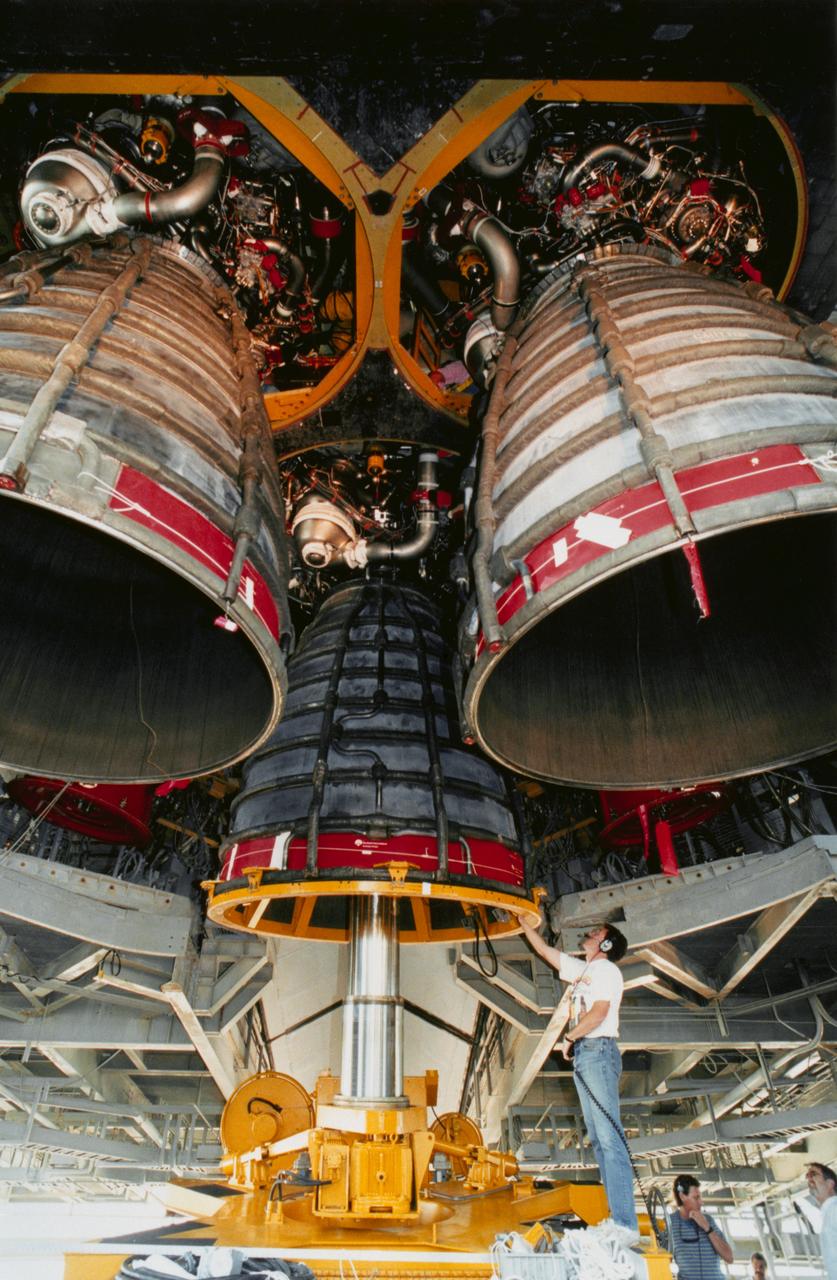
S93-43619 (18 Aug 1993) --- At Launch Pad 39B, work is under way to remove and replace the three main engines on the Space Shuttle Discovery. Here, Rocketdyne workers Jim Tibble (left), John Mooney and Ken Bair are assisting with the removal of the first engine, main engine no. 1, using the engine vertical installer. A failed sensor in main engine no. 2 led to the shutdown of all three engines three seconds before liftoff of mission STS-51 on August 12, 1993. Because it is difficult to perform the necessary inspections, refurbishment, and retesting of a fired engine on a vehicle at the pad, NASA opted to install a fresh set of engines on Discovery.
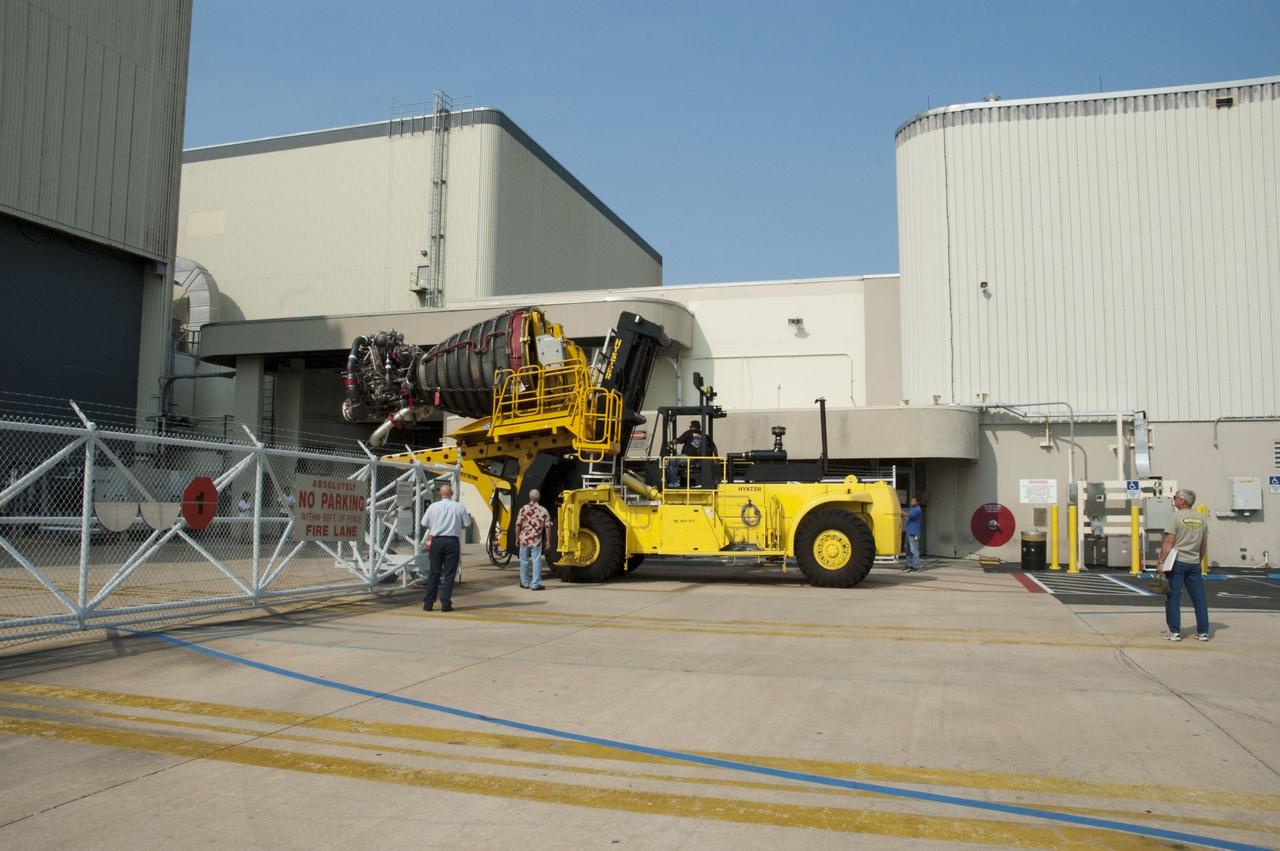
CAPE CANAVERAL, Fla. -- Engine No. 1, one of three space shuttle main engines, was removed from shuttle Endeavour and is being transported from Orbiter Processing Facility-1 to the Space Shuttle Main Engine Processing Facility at NASA's Kennedy Space Center in Florida. The work is part of Endeavour's transition and retirement processing. The spacecraft is being prepared for public display at the California Science Center in Los Angeles. Endeavour flew 25 missions, spent 299 days in space, orbited Earth 4,671 times and traveled 122,883,151 miles over the course of its 19-year career. Endeavour's STS-134 and final mission was completed after landing on June 1, 2011. Photo credit: NASA/Chris Chamberland
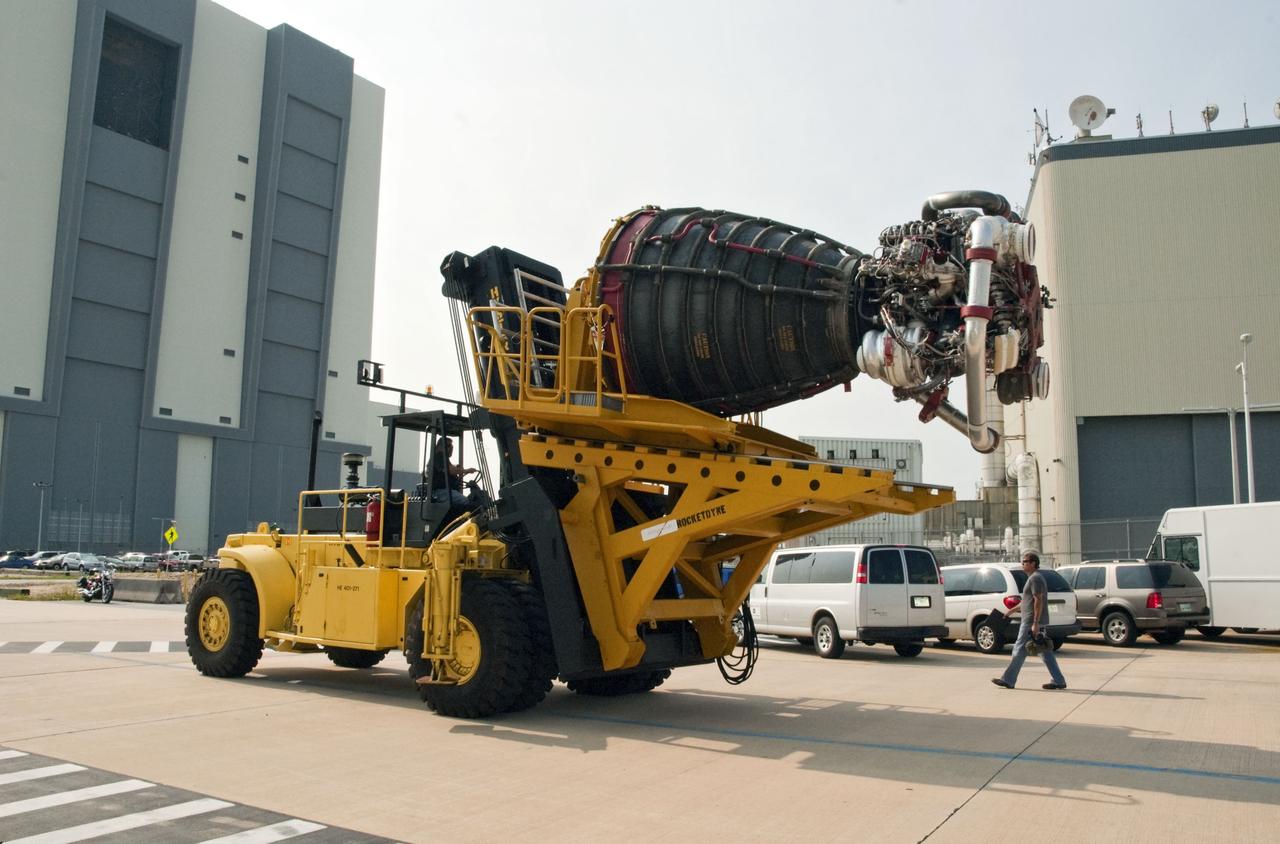
CAPE CANAVERAL, Fla. -- Engine No. 1, one of three space shuttle main engines, was removed from shuttle Endeavour and is being transported from Orbiter Processing Facility-1 to the Space Shuttle Main Engine Processing Facility at NASA's Kennedy Space Center in Florida. The work is part of Endeavour's transition and retirement processing. The spacecraft is being prepared for public display at the California Science Center in Los Angeles. Endeavour flew 25 missions, spent 299 days in space, orbited Earth 4,671 times and traveled 122,883,151 miles over the course of its 19-year career. Endeavour's STS-134 and final mission was completed after landing on June 1, 2011. Photo credit: NASA/Chris Chamberland
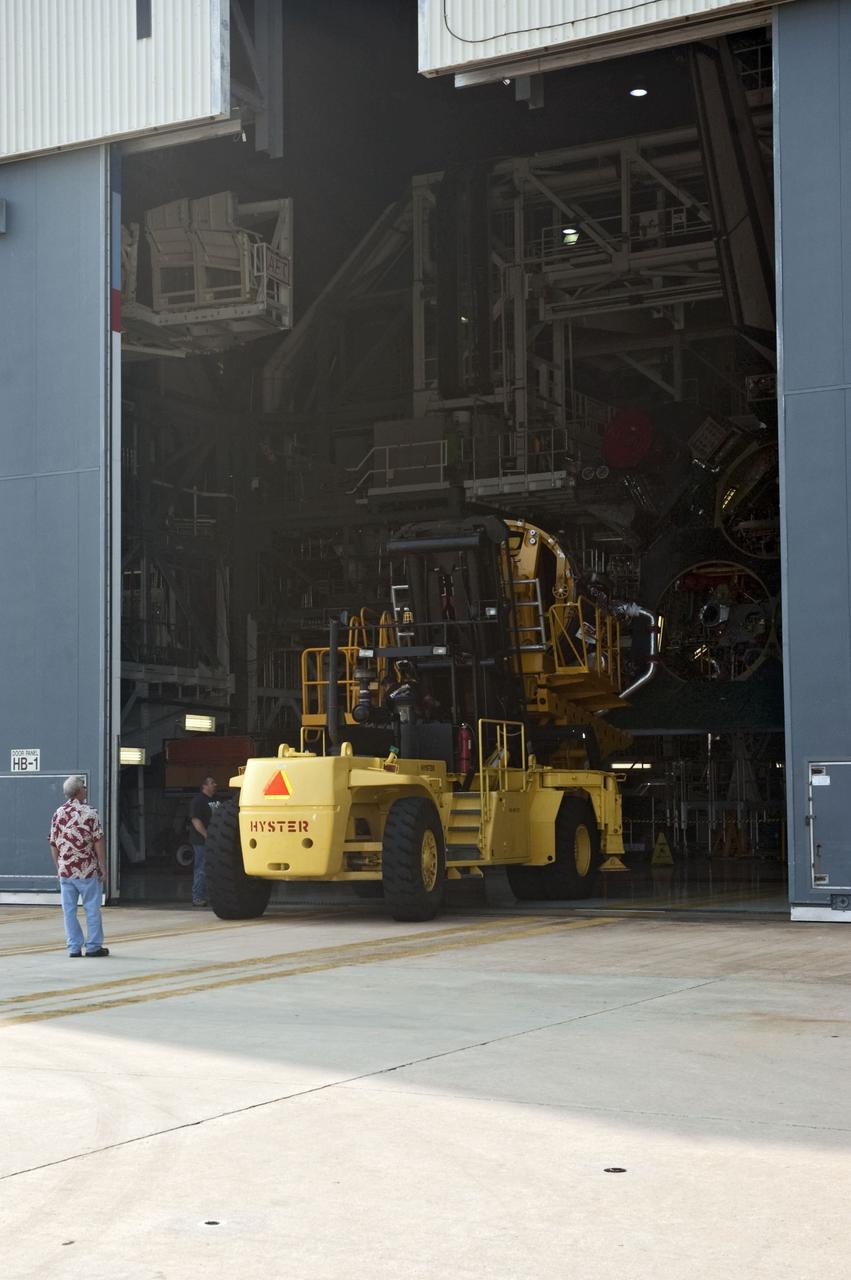
CAPE CANAVERAL, Fla. -- Engine No. 1, one of three space shuttle main engines, was removed from shuttle Endeavour and is being transported from Orbiter Processing Facility-1 to the Space Shuttle Main Engine Processing Facility at NASA's Kennedy Space Center in Florida. The work is part of Endeavour's transition and retirement processing. The spacecraft is being prepared for public display at the California Science Center in Los Angeles. Endeavour flew 25 missions, spent 299 days in space, orbited Earth 4,671 times and traveled 122,883,151 miles over the course of its 19-year career. Endeavour's STS-134 and final mission was completed after landing on June 1, 2011. Photo credit: NASA/Chris Chamberland
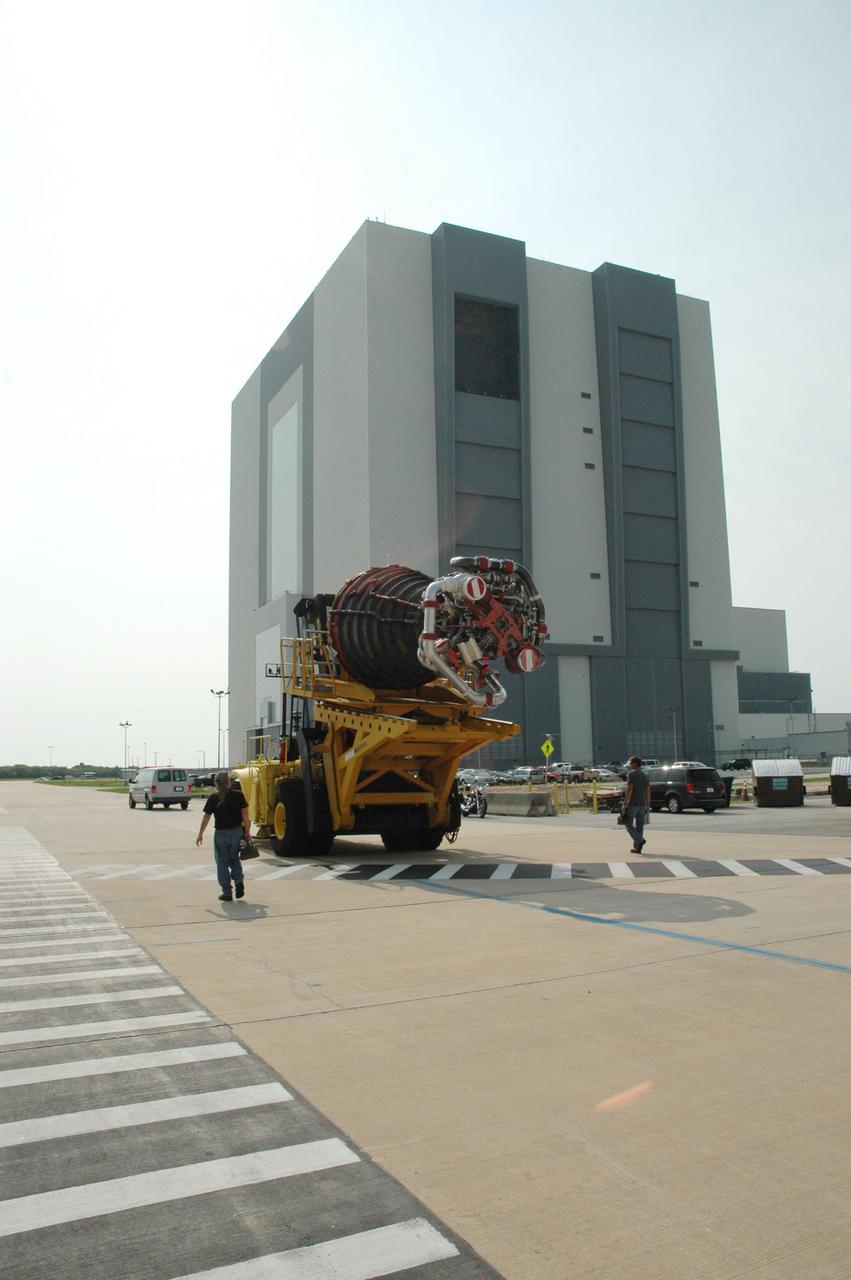
CAPE CANAVERAL, Fla. -- Engine No. 1, one of three space shuttle main engines, was removed from shuttle Endeavour and is being transported from Orbiter Processing Facility-1 to the Space Shuttle Main Engine Processing Facility at NASA's Kennedy Space Center in Florida. The work is part of Endeavour's transition and retirement processing. The spacecraft is being prepared for public display at the California Science Center in Los Angeles. Endeavour flew 25 missions, spent 299 days in space, orbited Earth 4,671 times and traveled 122,883,151 miles over the course of its 19-year career. Endeavour's STS-134 and final mission was completed after landing on June 1, 2011. Photo credit: NASA/Chris Chamberland
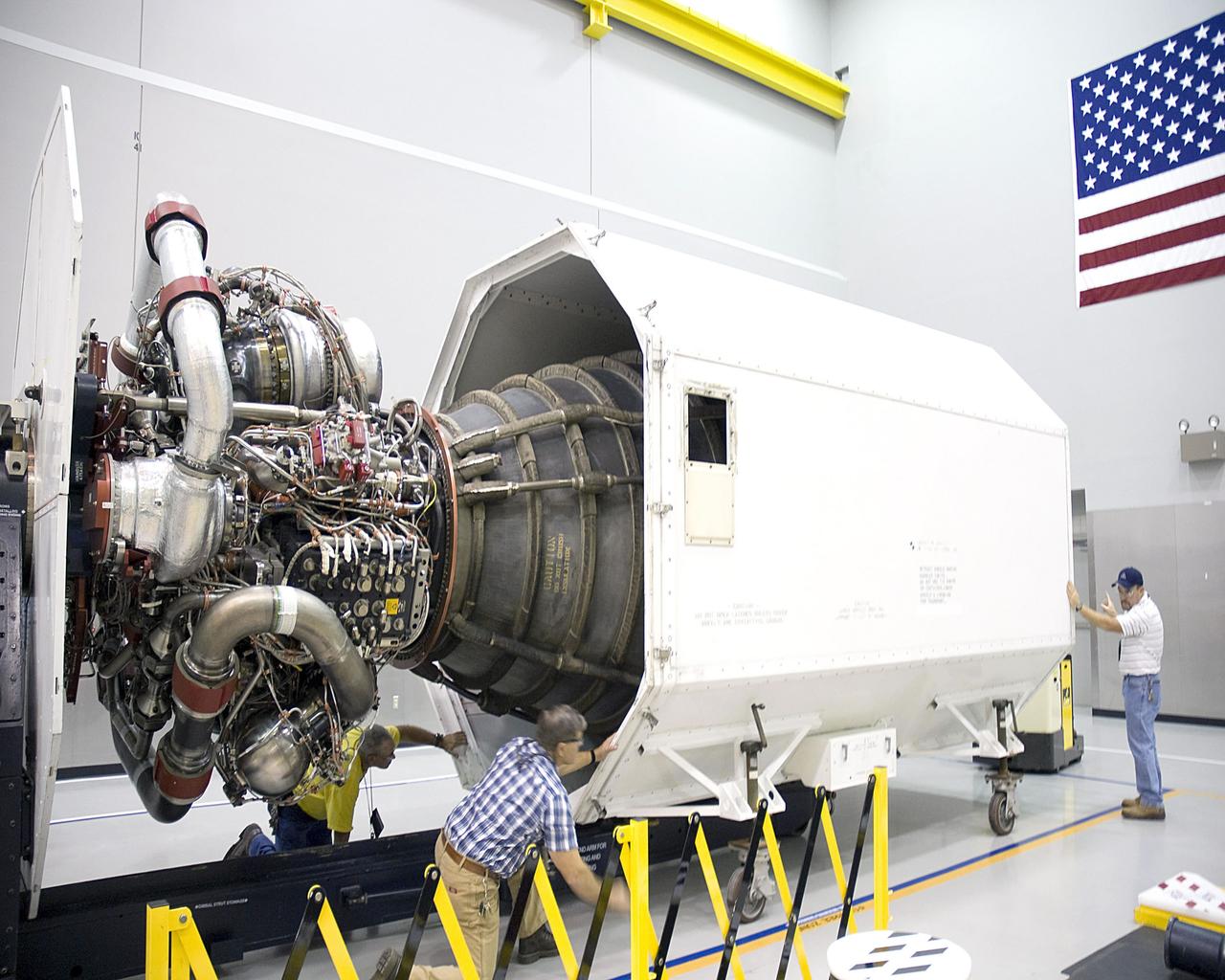
Workers at Stennis Space Center examine space shuttle main engine 2061 upon its arrival Oct. 1. The engine was to be the last shuttle flight engine to be scheduled for testing at Stennis.
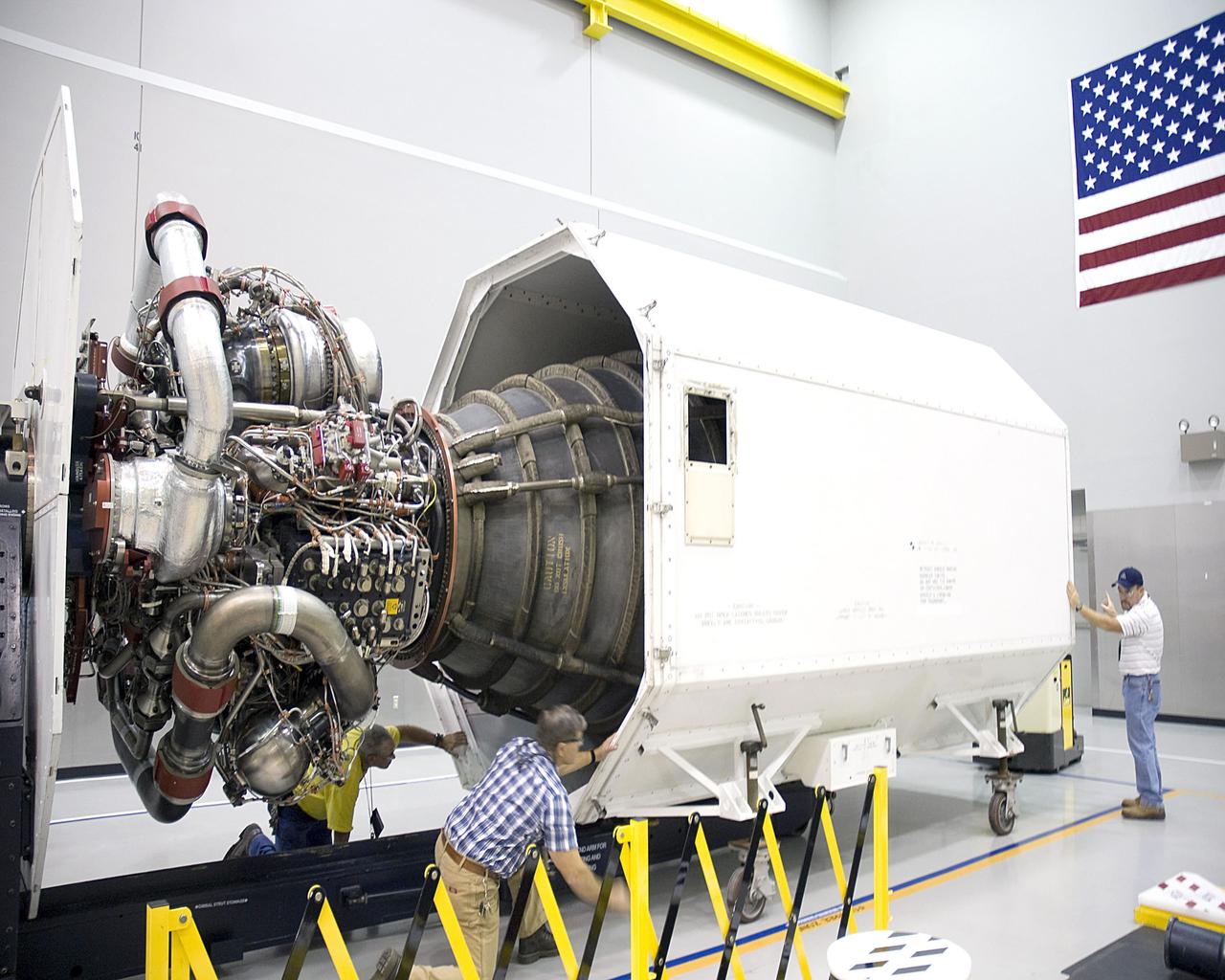
Workers at Stennis Space Center examine space shuttle main engine 2061 upon its arrival Oct. 1. The engine was to be the last shuttle flight engine to be scheduled for testing at Stennis.
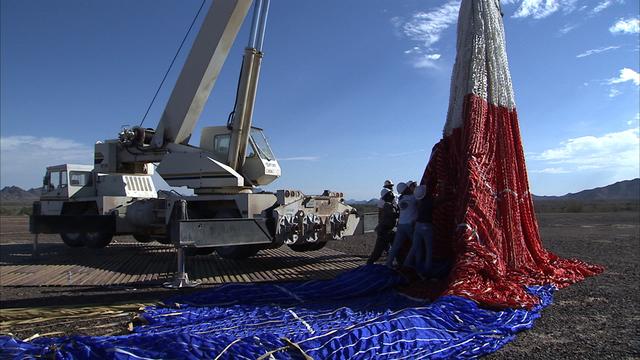
Shown is the testing of the Main Parachute for the Ares/CLV first stage in support of the Ares/Constellation program at the Yuma Proving Ground, Arizona. This image is extracted from high definition video and is the highest resolution available.

In Orbiter Processing Facility bay 2, technicians on a Hyster forklift maneuver space shuttle main engine no. 3 into place on Endeavour. Each space shuttle main engine is 14 feet long, weighs about 6,700 pounds, and is 7.5 feet in diameter at the end of the nozzle. The orbiter is scheduled for mission STS-118, targeted for launch on June 28. The mission will be the 22nd flight to the International Space Station, carrying another starboard array, S5, for installation.
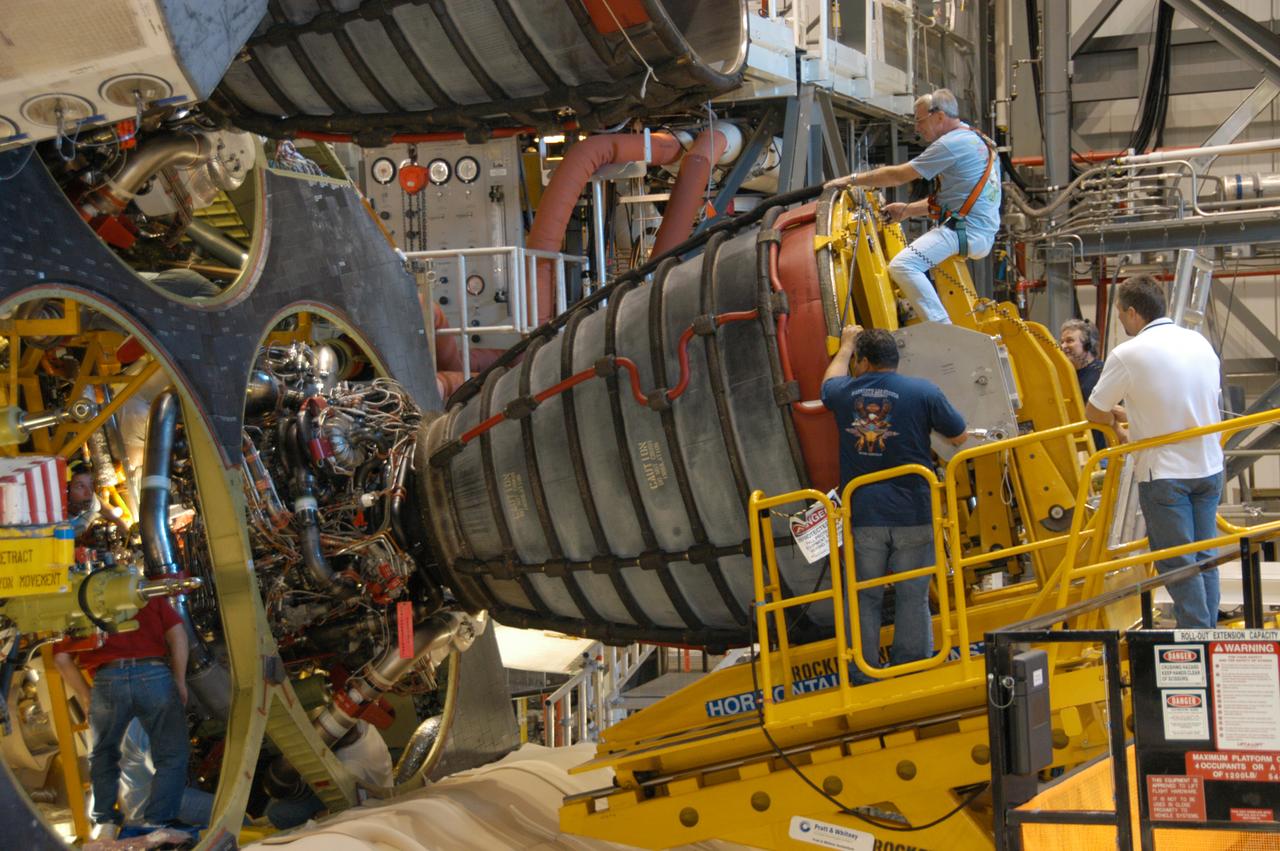
In Orbiter Processing Facility bay 2, technicians on a Hyster forklift maneuver space shuttle main engine no. 3 into place on Endeavour. Each space shuttle main engine is 14 feet long, weighs about 6,700 pounds, and is 7.5 feet in diameter at the end of the nozzle. The orbiter is scheduled for mission STS-118, targeted for launch on June 28. The mission will be the 22nd flight to the International Space Station, carrying another starboard array, S5, for installation.
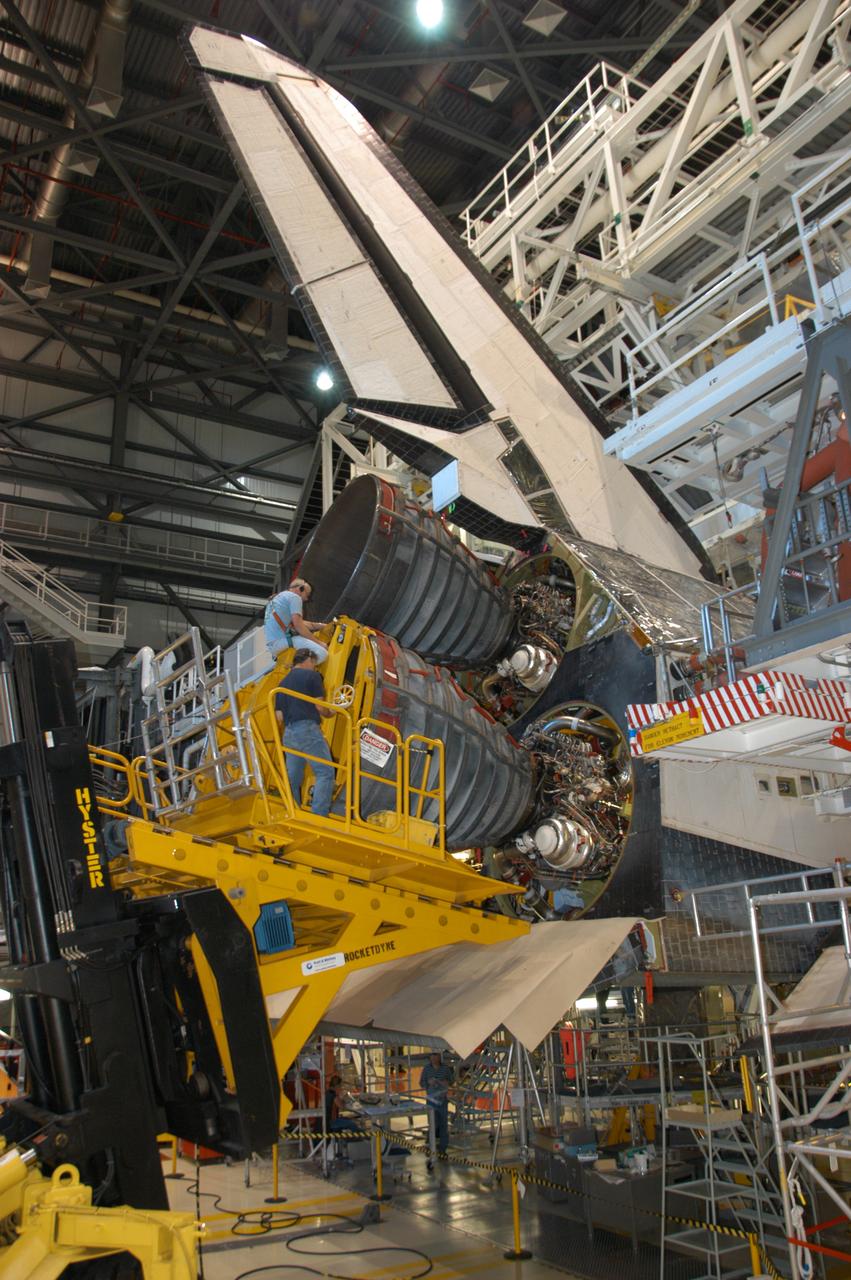
In Orbiter Processing Facility bay 2, technicians on a Hyster forklift install space shuttle main engine no. 3 into Endeavour. Each space shuttle main engine is 14 feet long, weighs about 6,700 pounds, and is 7.5 feet in diameter at the end of the nozzle. The orbiter is scheduled for mission STS-118, targeted for launch on June 28. The mission will be the 22nd flight to the International Space Station, carrying another starboard array, S5, for installation.
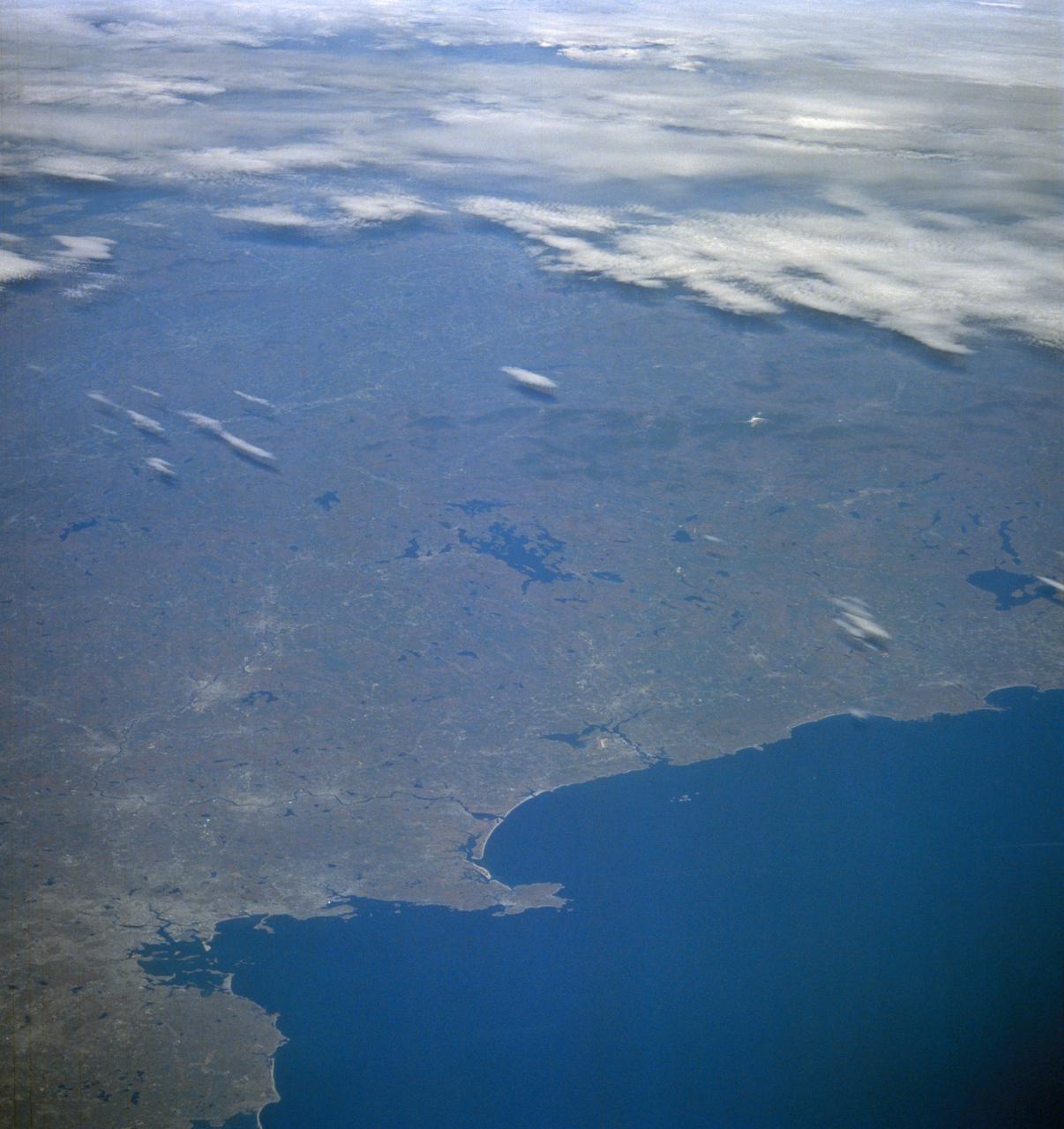
STS058-105-016 (18 Oct-1 Nov 1993) --- This photograph includes much of the heart of New England, stretching from Boston and Boston Harbor (lower left) across New Hampshire and Vermont to Lake Champlain (upper left), and up to southern Maine (Portland is just off the photo at right center). The colors in this photograph are less vivid than those in STS-58-81-038, because the color changes on the deciduous trees in central and northern New England were past their peak when this photograph was taken. North of Boston flows the Merrimack River (which forms part of the state boundary between Massachusetts and New Hampshire). It is delineated by the small industrial towns (Concord, Manchester, Nashua, Lowell) which grew up on its banks. The White Mountains of New Hampshire are seen near the center, and Mt. Washington (6,288 feet) is capped with snow.
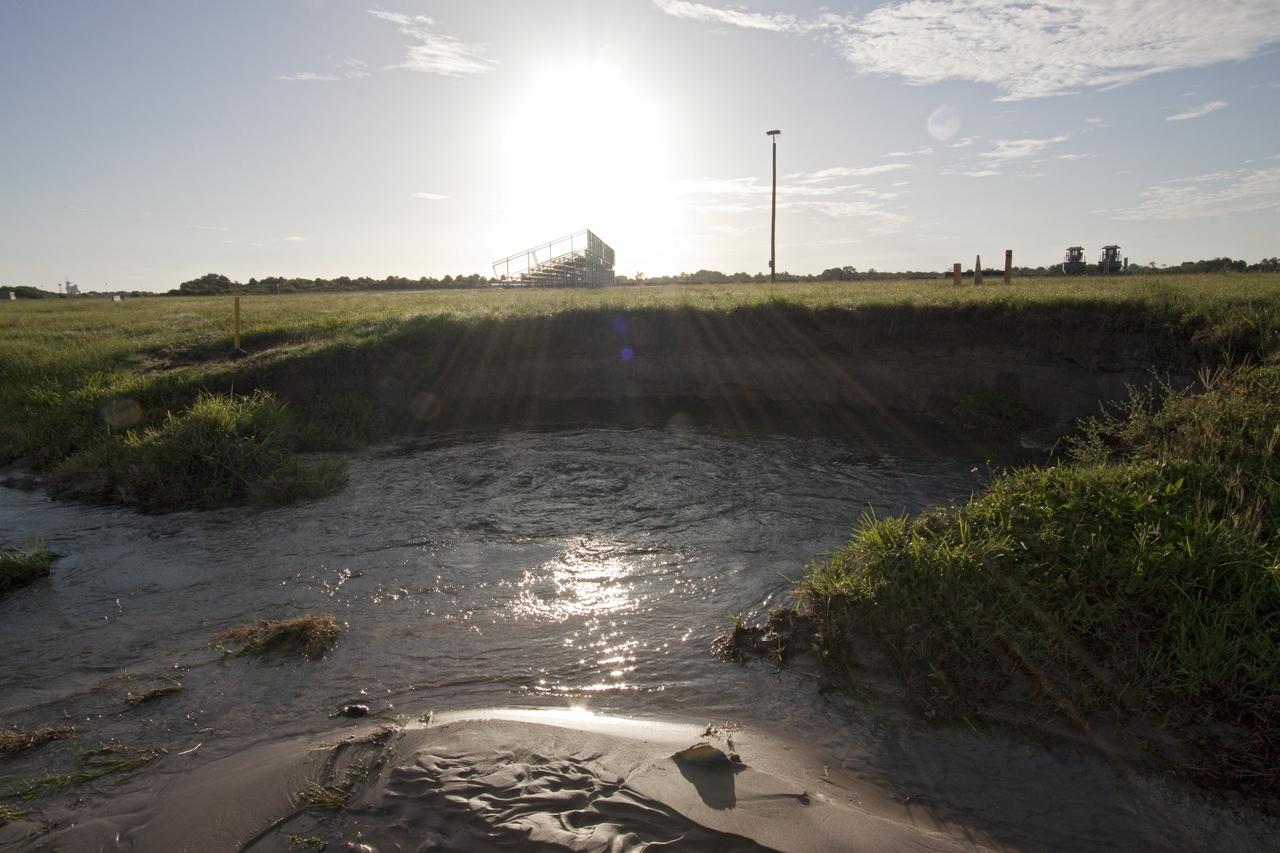
CAPE CANAVERAL, Fla. -- Looking towards a shuttle launch viewing stand is the result of a major water main leak in a 24-inch pipe that caused soil to wash away near the Press Site in the LC-39 Complex Turn Basin area across from the Vehicle Assembly Building at NASA's Kennedy Space Center in Florida. The center was closed for the morning while workers assessed and repaired the break. Photo credit: NASA/Jack Pfaller
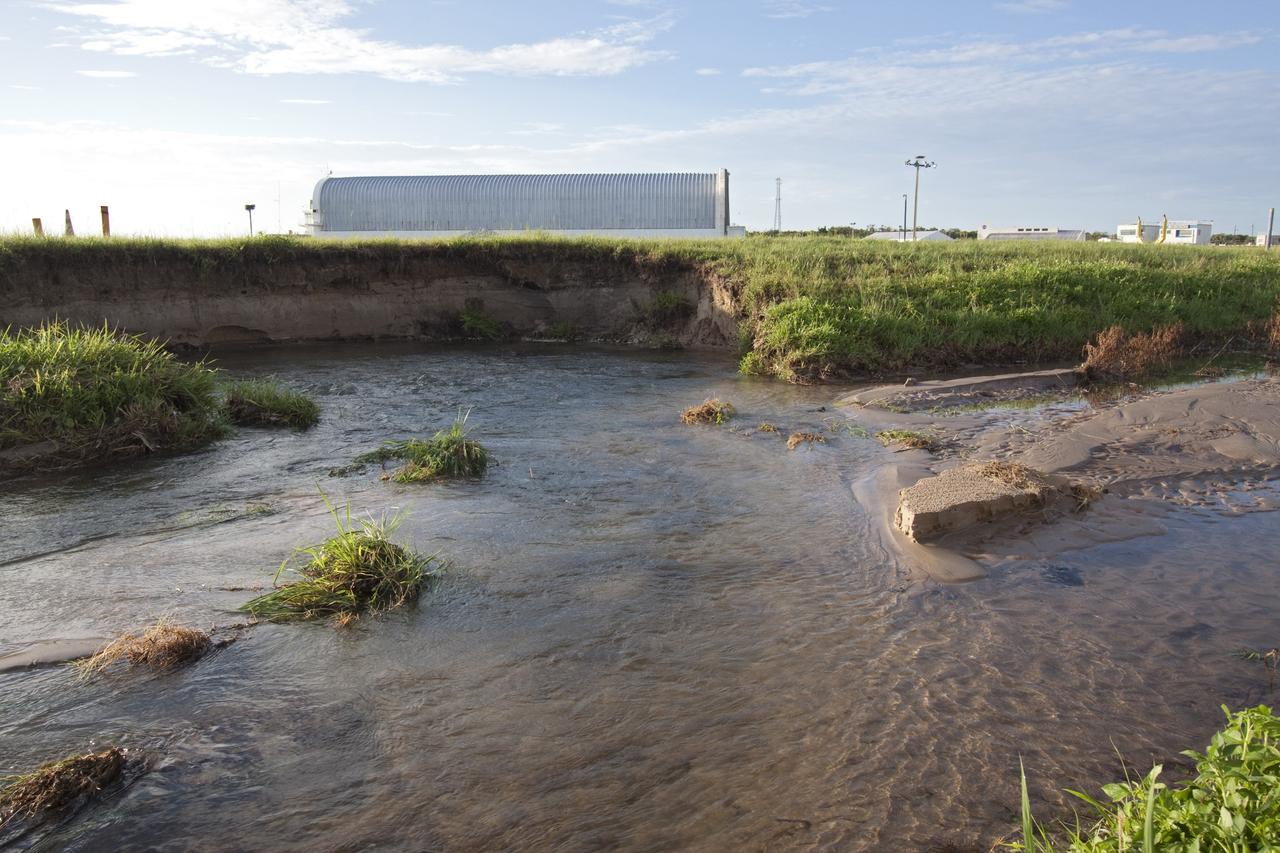
CAPE CANAVERAL, Fla. -- In the LC-39 Complex Turn Basin area across from the Vehicle Assembly Building at NASA's Kennedy Space Center in Florida, a major water main leak in a 24-inch pipe caused soil to wash away near the Press Site. The center was closed for the morning while workers assessed and repaired the break. In the background is the Pegasus barge docked at the Turn Basin which is used to deliver the space shuttle external fuel tank. Photo credit: NASA/Jack Pfaller
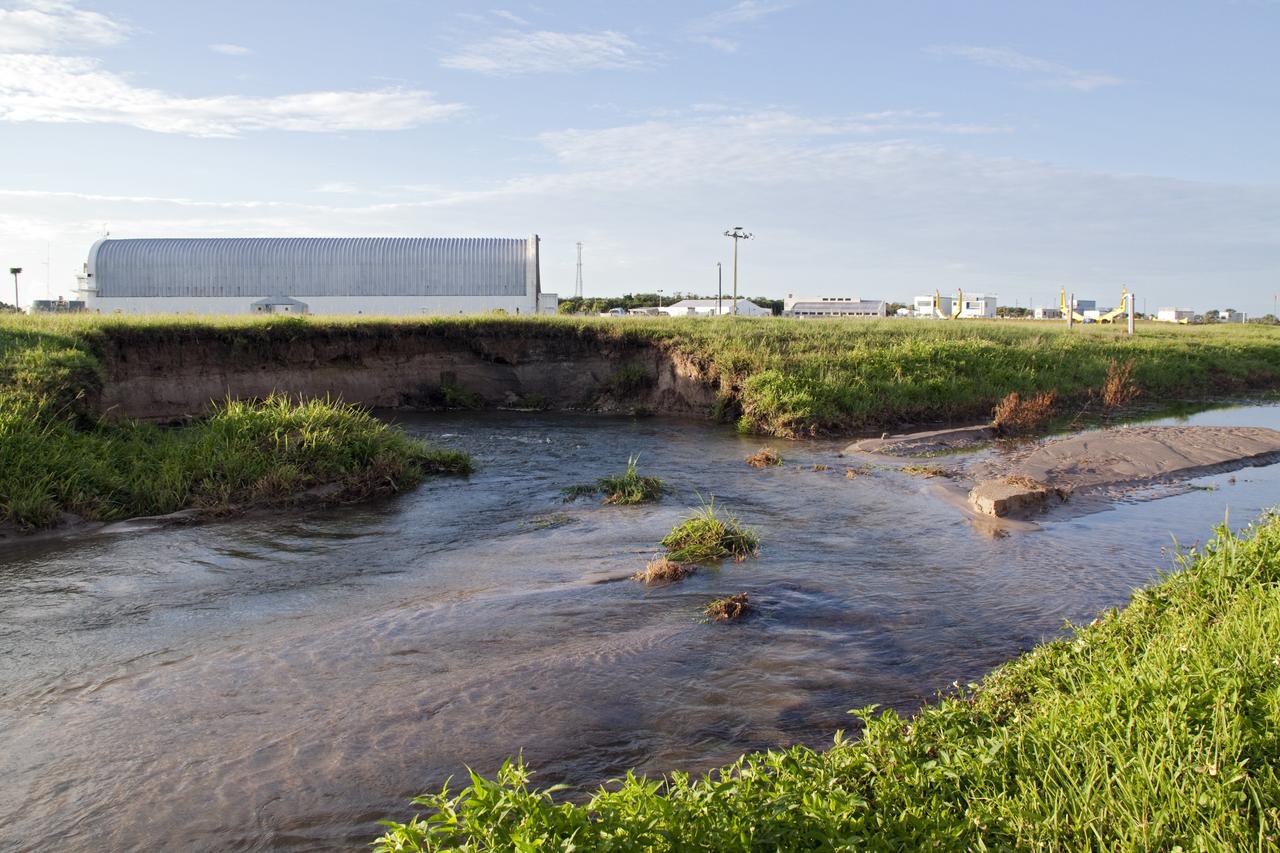
CAPE CANAVERAL, Fla. -- In the LC-39 Complex Turn Basin area across from the Vehicle Assembly Building at NASA's Kennedy Space Center in Florida, a major water main leak in a 24-inch pipe caused soil to wash away near the Press Site. The center was closed for the morning while workers assessed and repaired the break. In the background is the Pegasus barge docked at the Turn Basin which is used to deliver the space shuttle external fuel tank. Photo credit: NASA/Jack Pfaller
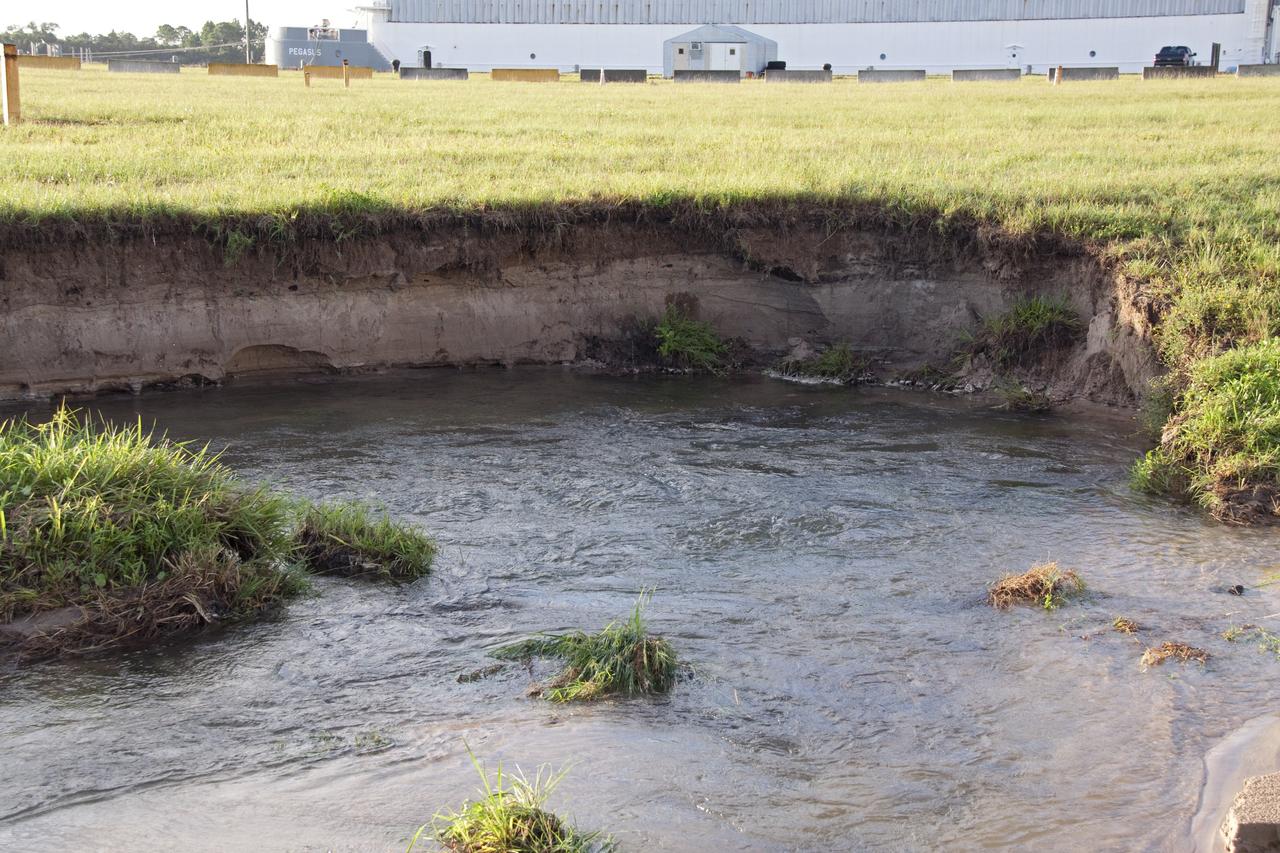
CAPE CANAVERAL, Fla. -- In the LC-39 Complex Turn Basin area across from the Vehicle Assembly Building at NASA's Kennedy Space Center in Florida, a major water main leak in a 24-inch pipe caused soil to wash away near the Press Site. The center was closed for the morning while workers assessed and repaired the break. In the background is the Pegasus barge docked at the Turn Basin which is used to deliver the space shuttle external fuel tank. Photo credit: NASA/Jack Pfaller
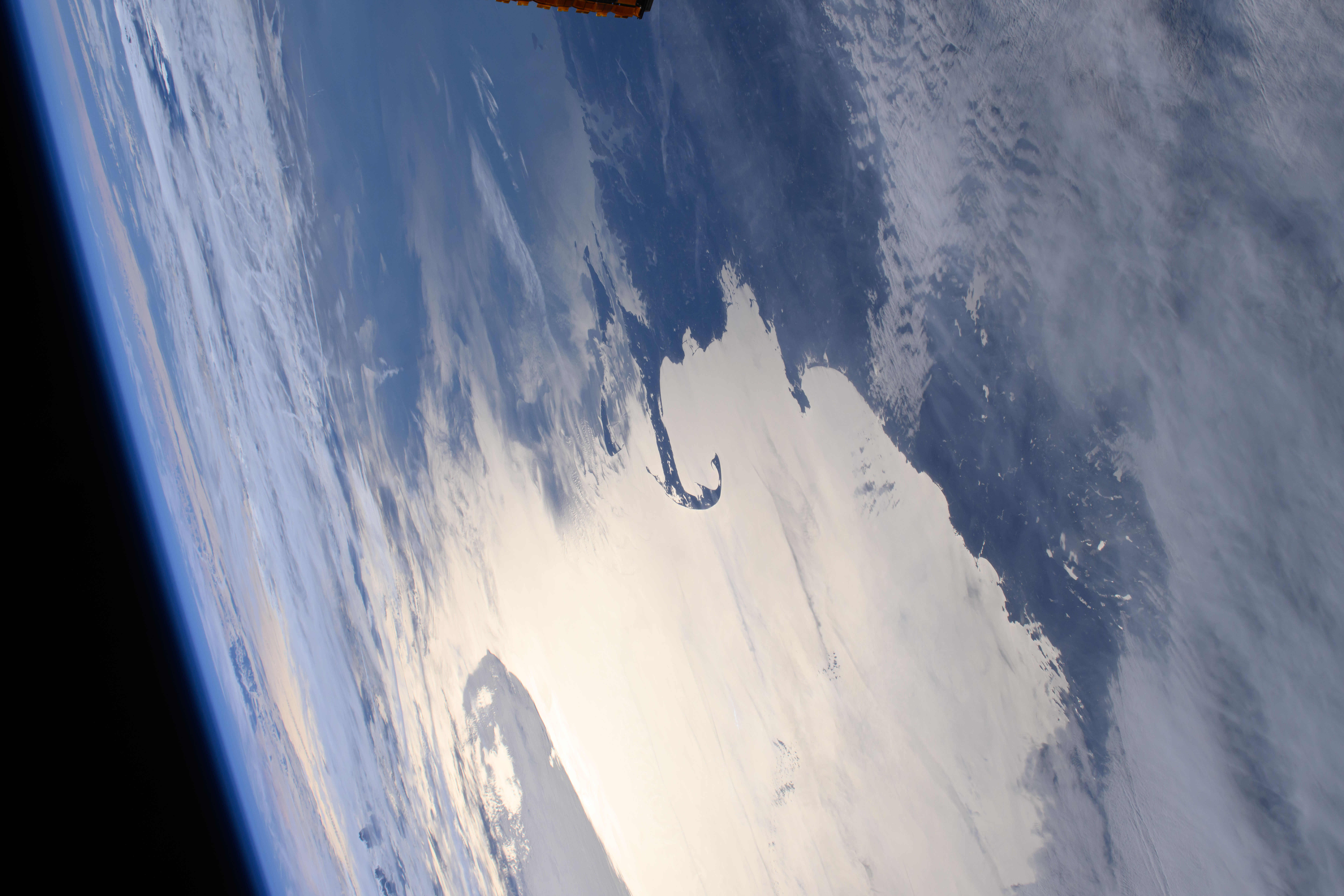
iss072e394484 (Dec. 18, 2024) --- The gleaming New England coast from Massachusetts to Maine is pictured from the International Space Station as it orbited 262 miles above Quebec, Canada.
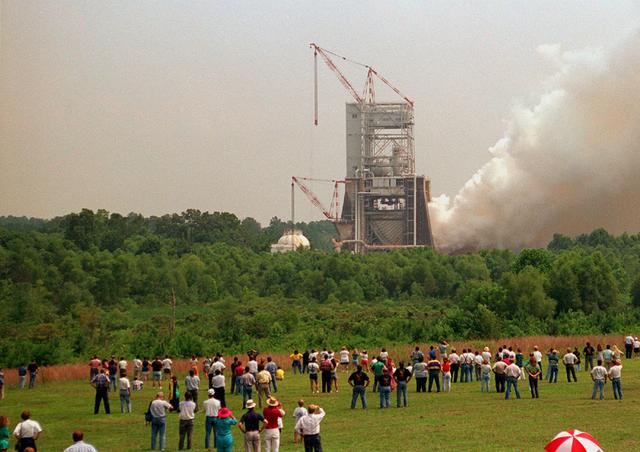
On the 25th Anniversary of the Apollo-11 space launch, Marshall celebrated with a test firing of the Space Shuttle Main Engine at the Technology Test Bed (SSME-TTB). This drew a large crowd who stood in the fields around the test site and watched as plumes of white smoke verified ignition.
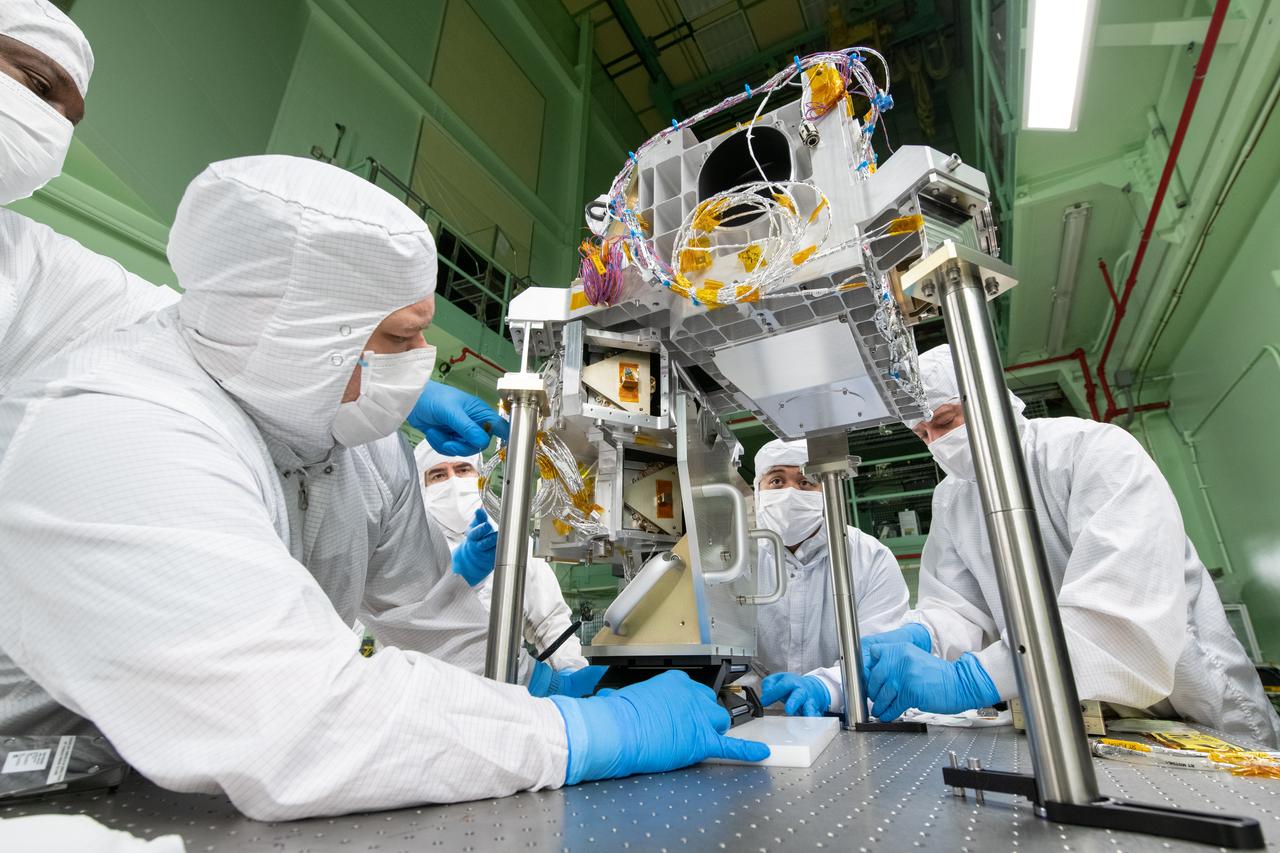
Mechanical technician, Andrew Scharmann, slides a lift fixture into position to ensure the Ocean Color Instrument (OCI) Main Optics Bench (MOB) and Main Optics Sub Bench (MOSB) are aligned. OCI is a highly advanced optical spectrometer that will be used to measure properties of light over portions of the electromagnetic spectrum. It will enable continuous measurement of light at finer wavelength resolution than previous NASA satellite sensors, extending key system ocean color data records for climate studies. OCI is PACE's (Plankton, Aerosol, Cloud, ocean Ecosystem) primary sensor built at Goddard Space Flight Center in Greenbelt, MD.
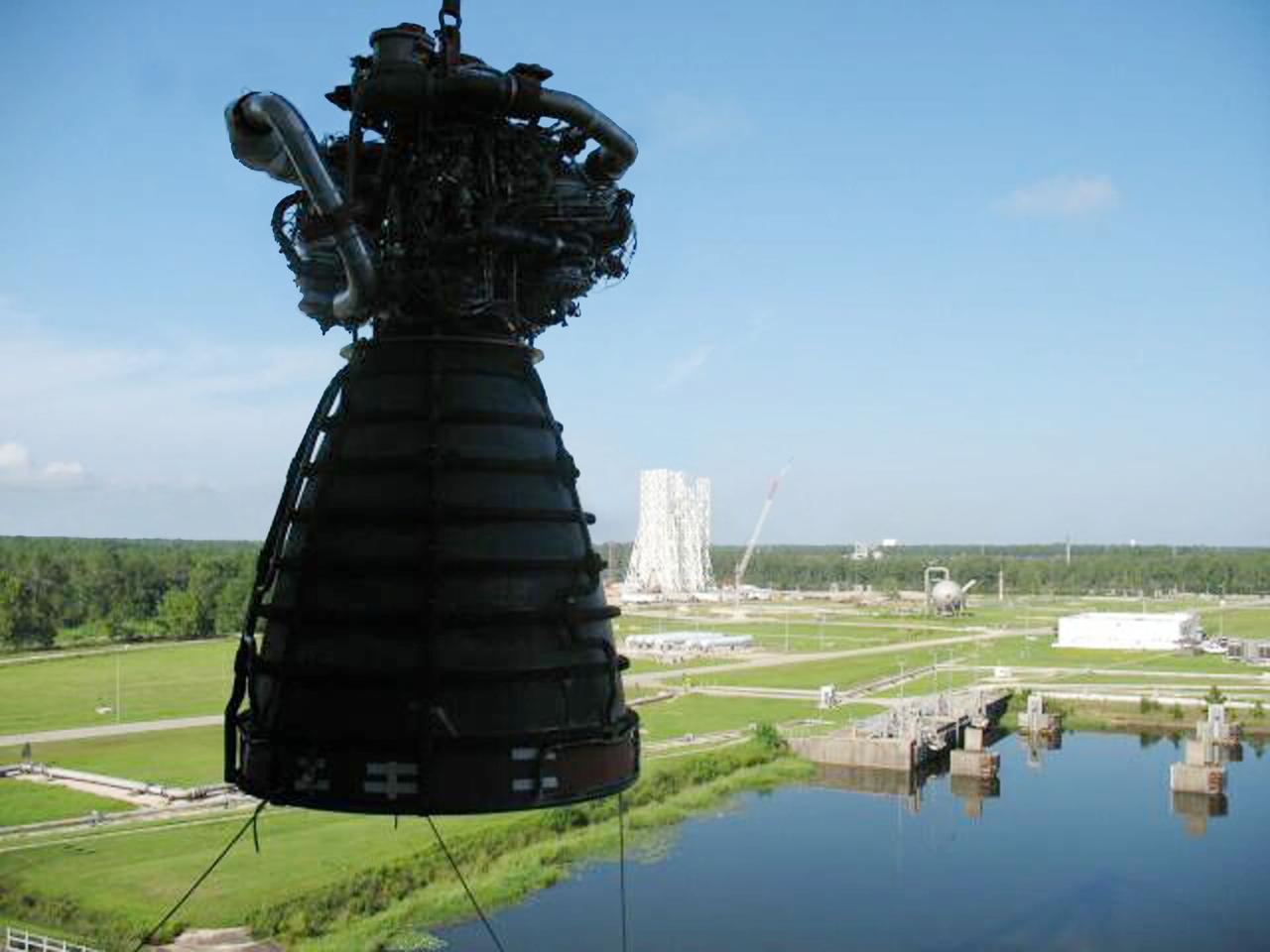
Space shuttle main engine No. 0525 is lifted from the A-2 Test Stand at Stennis Space Center against the backdrop of the new A-3 Test Stand under construction, offering a glimpse of the past and future in the nation's space exploration program. With the shuttle program set to end in 2010, Stennis conducted the last planned space shuttle main engine test on July 29 and now is deactivating the A-2 Test Stand to a safe 'standby' status.
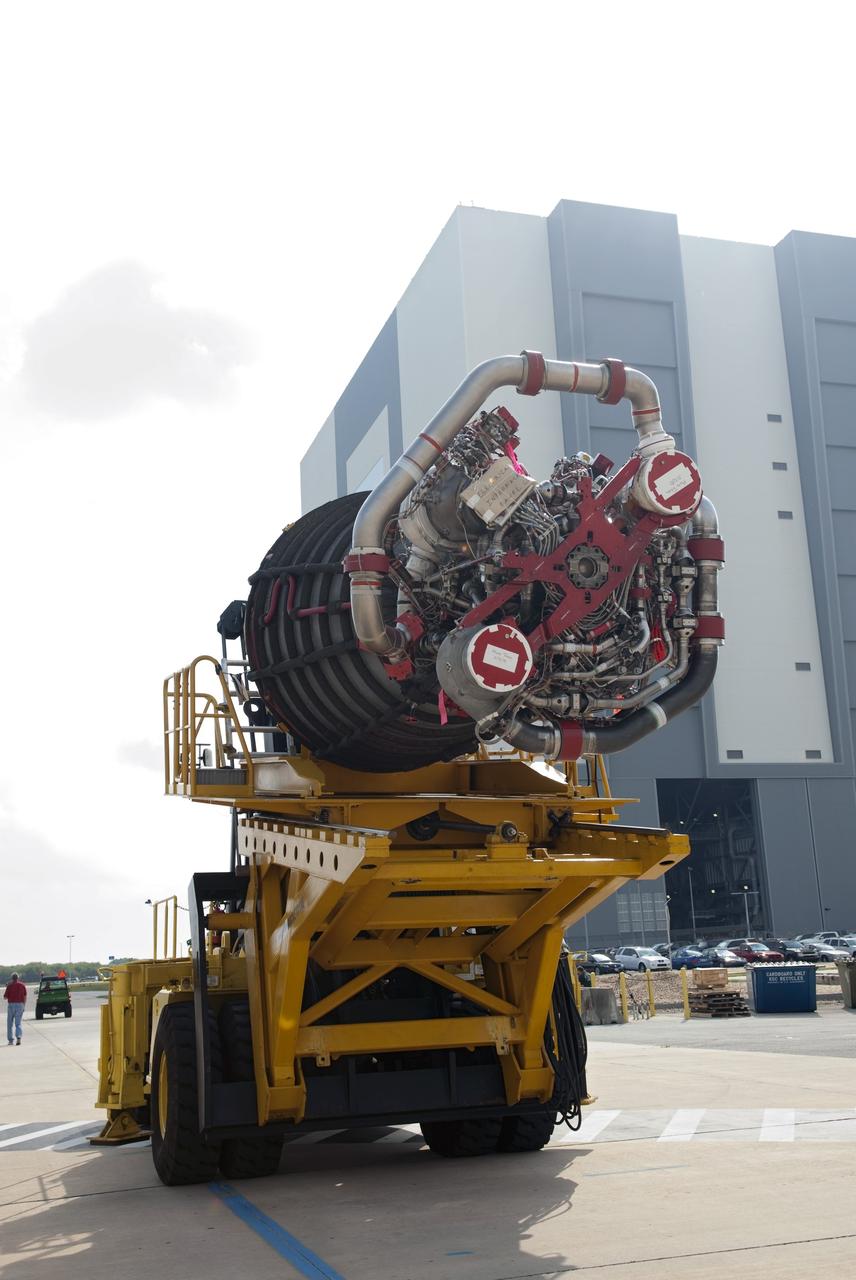
CAPE CANAVERAL, Fla. -- A heavy forklift with its specialized engine installer hold one of the main engines taken from space shuttle Discovery. The forklift is driving the engine from Orbiter Processing Facility-2 at NASA's Kennedy Space Center in Florida to the center's Space Shuttle Main Engine Processing Facility. The transition and retirement processing is expected to help rocket designers build next-generation spacecraft and prepare the shuttle for display. Photo credit: NASA/Jim Grossmann
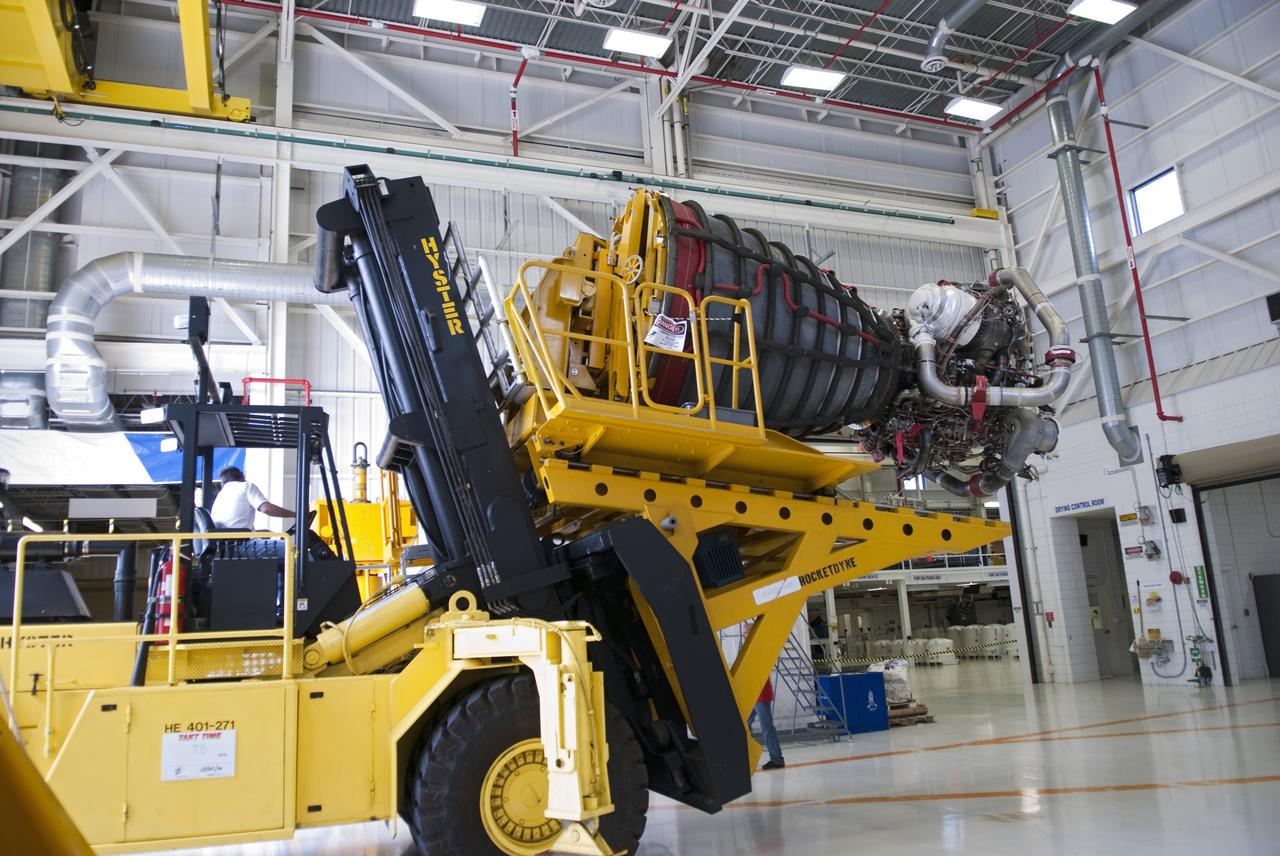
CAPE CANAVERAL, Fla. -- A heavy forklift with its specialized engine installer carries one of the main engines taken from space shuttle Discovery into the Space Shuttle Main Engine Processing Facility at NASA's Kennedy Space Center in Florida. The transition and retirement processing is expected to help rocket designers build next-generation spacecraft and prepare the shuttle for display. Photo credit: NASA/Jim Grossmann

CAPE CANAVERAL, Fla. -- In the Engine Shop at NASA’s Kennedy Space Center in Florida, space shuttle main engine #2 sits on a transporter after technicians removed it from space shuttle Atlantis in Orbiter Processing Facility-2. All three main engines are being removed from Atlantis so that the vehicle can be decommissioned and prepared for eventual display at the Kennedy Space Center Visitor Complex in Florida. Photo credit: Frankie Martin
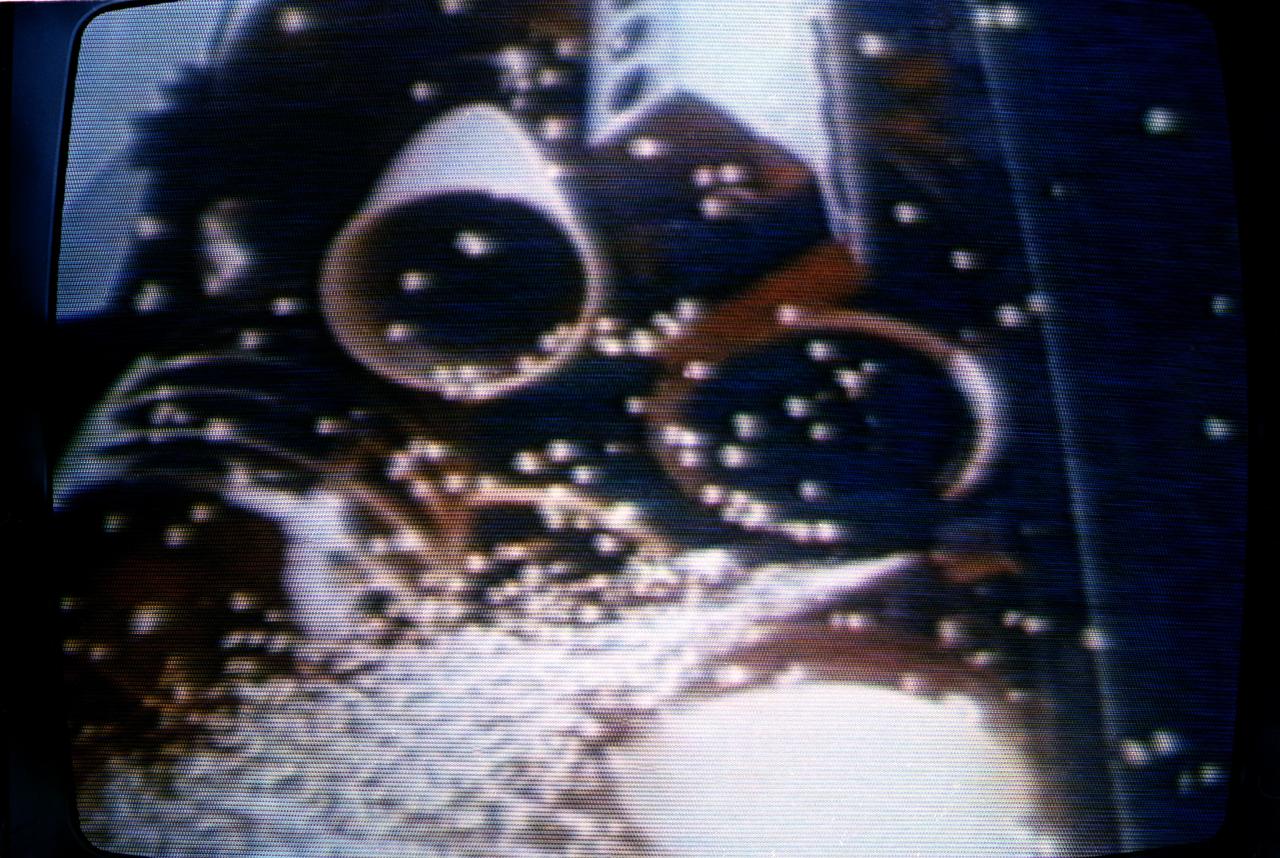
S84-36146 (12 April 1981) --- This close-up television view captures the flames of the space shuttle Columbia’s three main engines just seconds before launch and the beginning of the STS-1 mission. Photo credit: NASA or National Aeronautics and Space Administration
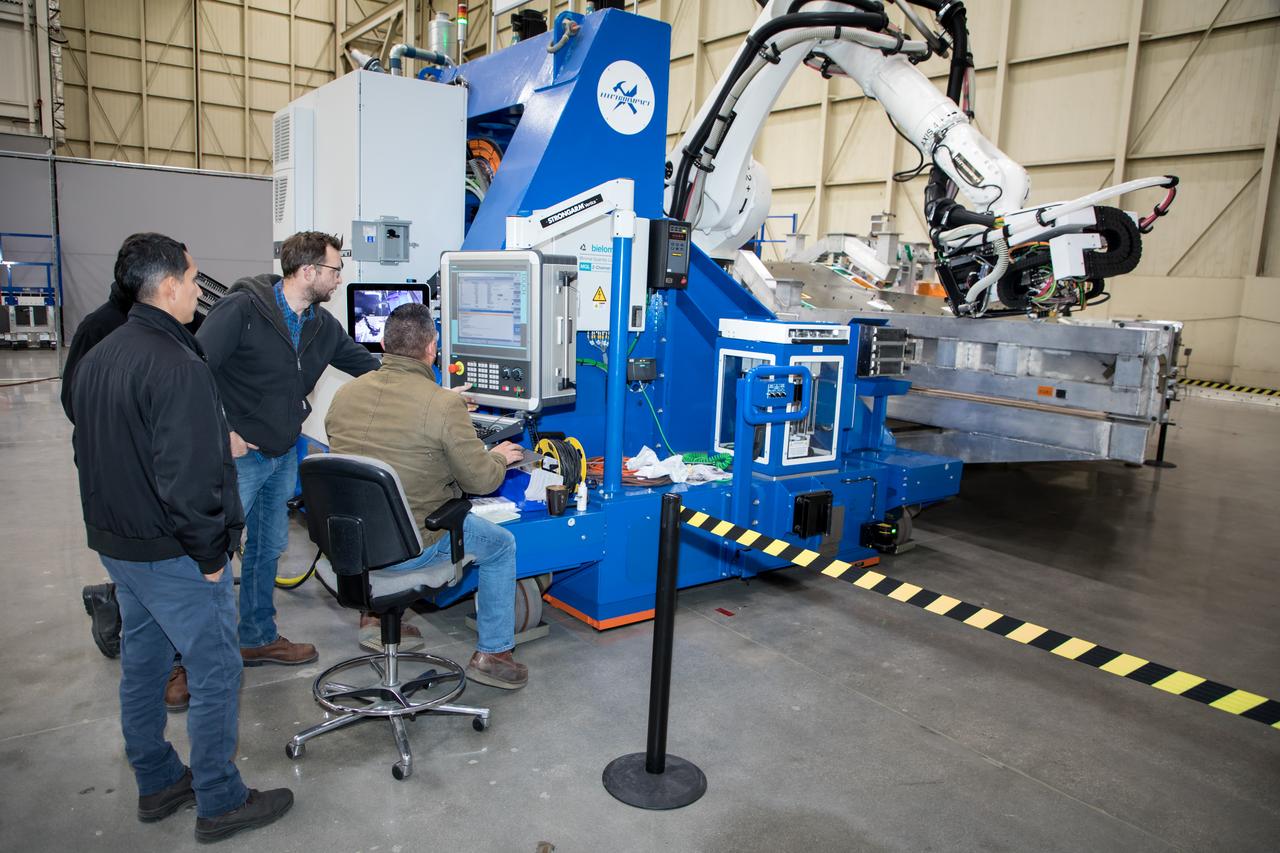
Lockheed Martin Photography By Garry Tice 1011 Lockheed Way, Palmdale, Ca. 93599 Event: SEG 410 Main Wing, COBRA Drillng Machine, Drilling Lower Wing Skins Date: 1/07/20 Additional Info:
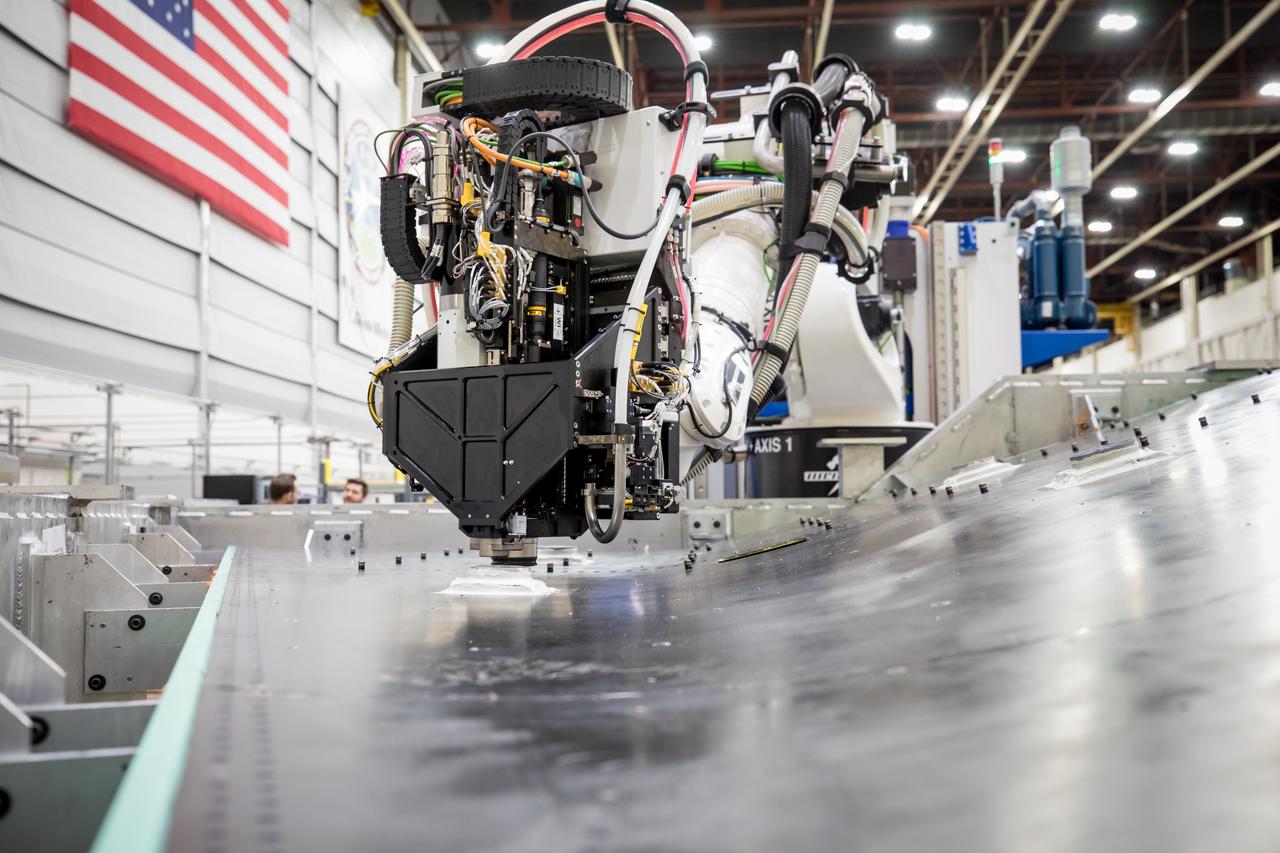
Lockheed Martin Photography By Garry Tice 1011 Lockheed Way, Palmdale, Ca. 93599 Event: SEG 410 Main Wing, COBRA Drillng Machine, Drilling Lower Wing Skins Date: 1/07/20 Additional Info:
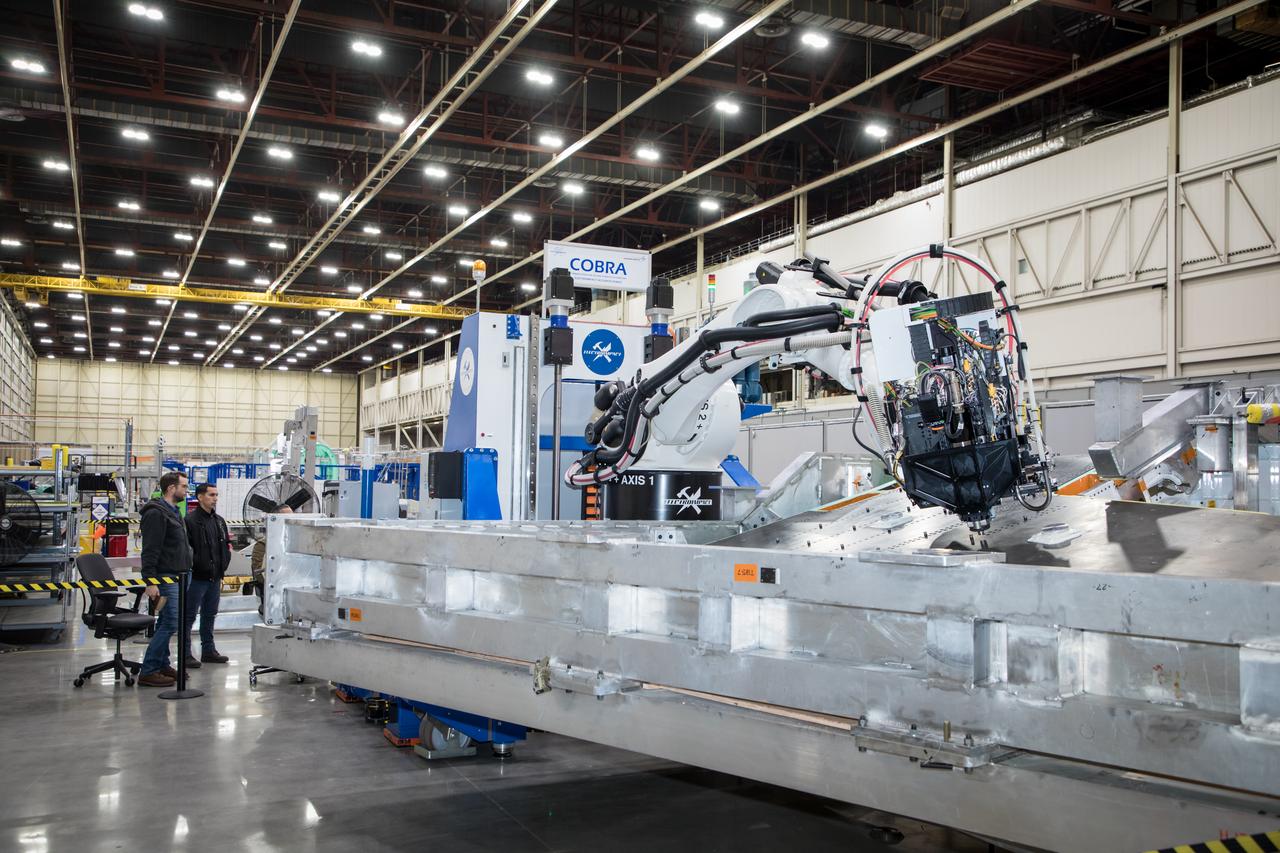
Lockheed Martin Photography By Garry Tice 1011 Lockheed Way, Palmdale, Ca. 93599 Event: SEG 410 Main Wing, COBRA Drillng Machine, Drilling Lower Wing Skins Date: 1/07/20 Additional Info:
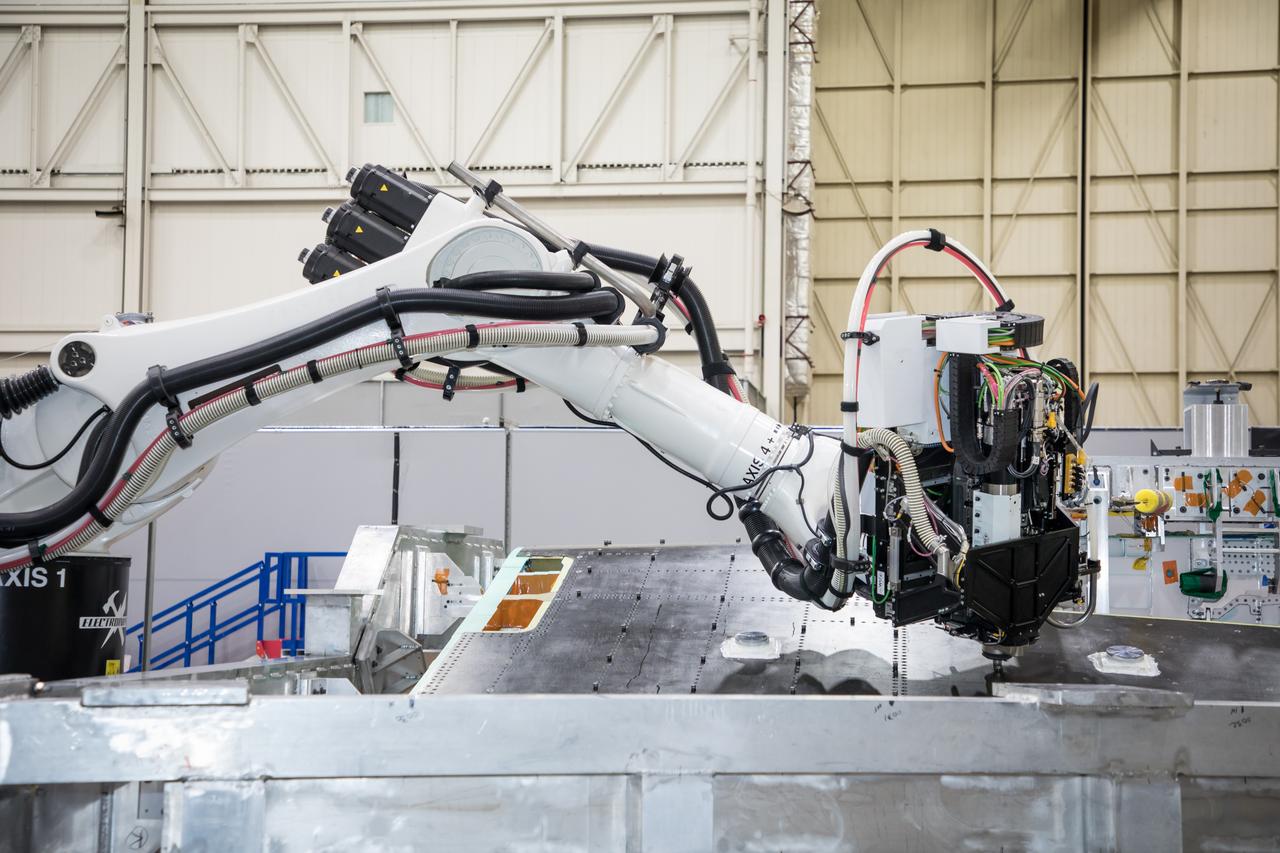
Lockheed Martin Photography By Garry Tice 1011 Lockheed Way, Palmdale, Ca. 93599 Event: SEG 410 Main Wing, COBRA Drillng Machine, Drilling Lower Wing Skins Date: 1/07/20 Additional Info:
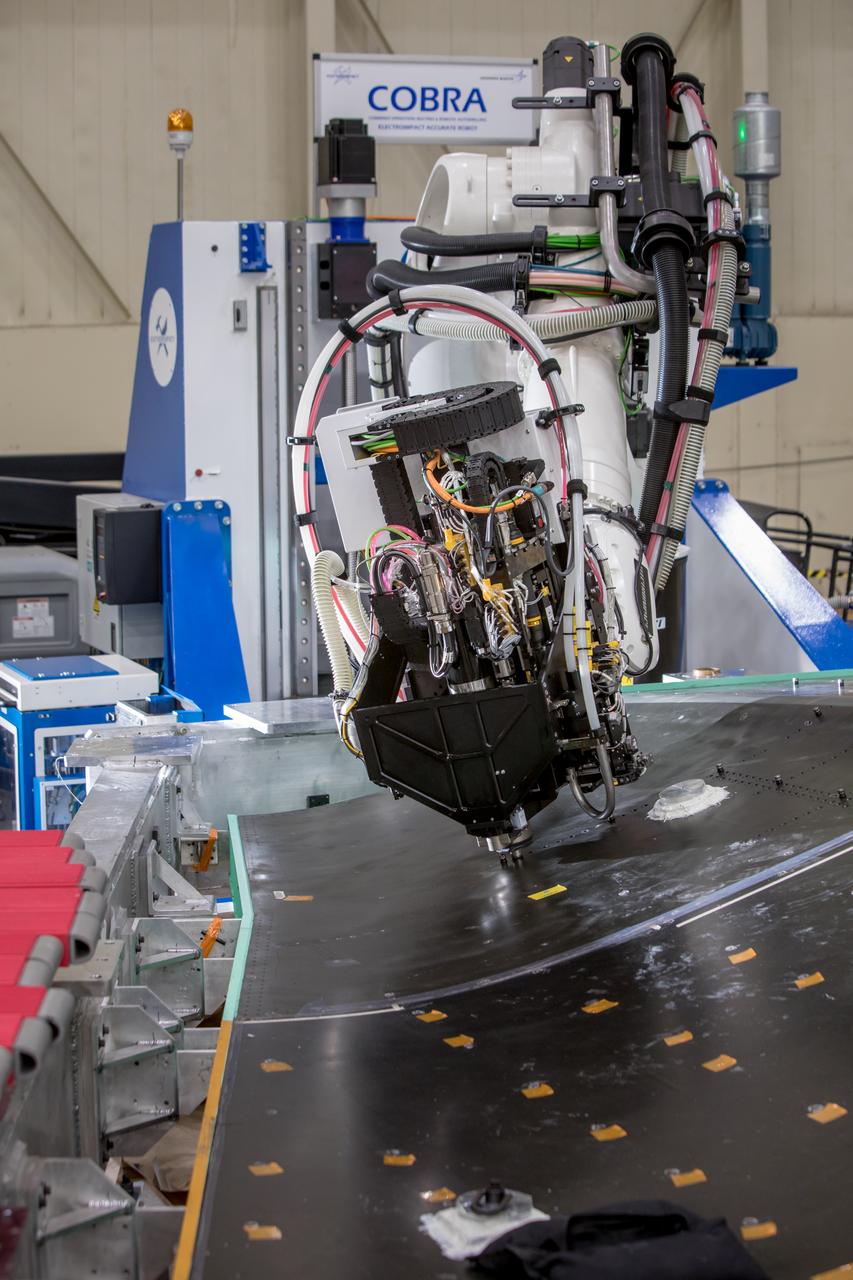
Lockheed Martin Photography By Garry Tice 1011 Lockheed Way, Palmdale, Ca. 93599 Event: SEG 410 Main Wing, COBRA Drillng Machine, Drilling Lower Wing Skins Date: 12/23/19 Additional Info:
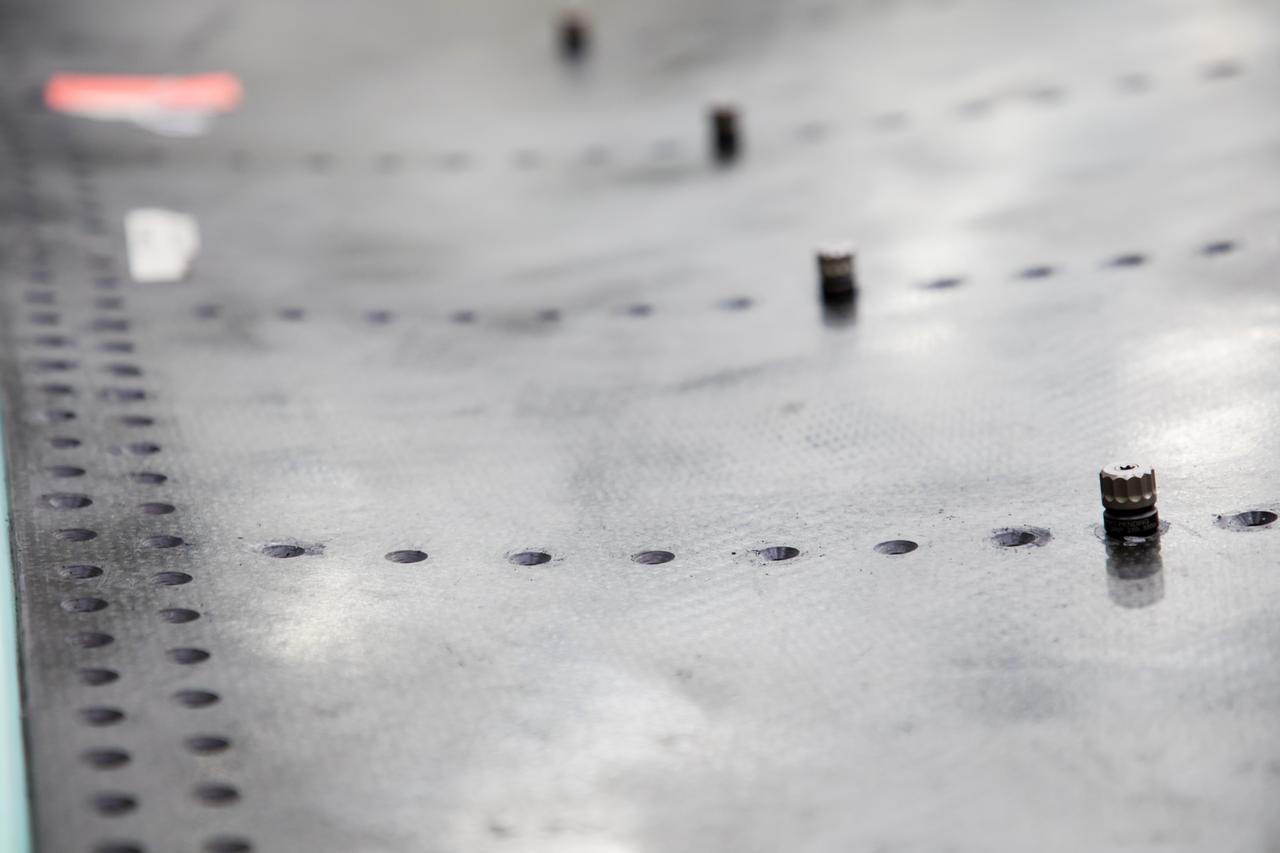
Lockheed Martin Photography By Garry Tice 1011 Lockheed Way, Palmdale, Ca. 93599 Event: SEG 410 Main Wing, COBRA Drillng Machine, Drilling Lower Wing Skins Date: 1/07/20 Additional Info:

Lockheed Martin Photography By Garry Tice 1011 Lockheed Way, Palmdale, Ca. 93599 Event: SEG 410 Main Wing, COBRA Drillng Machine, Drilling Lower Wing Skins Date: 1/07/20 Additional Info:
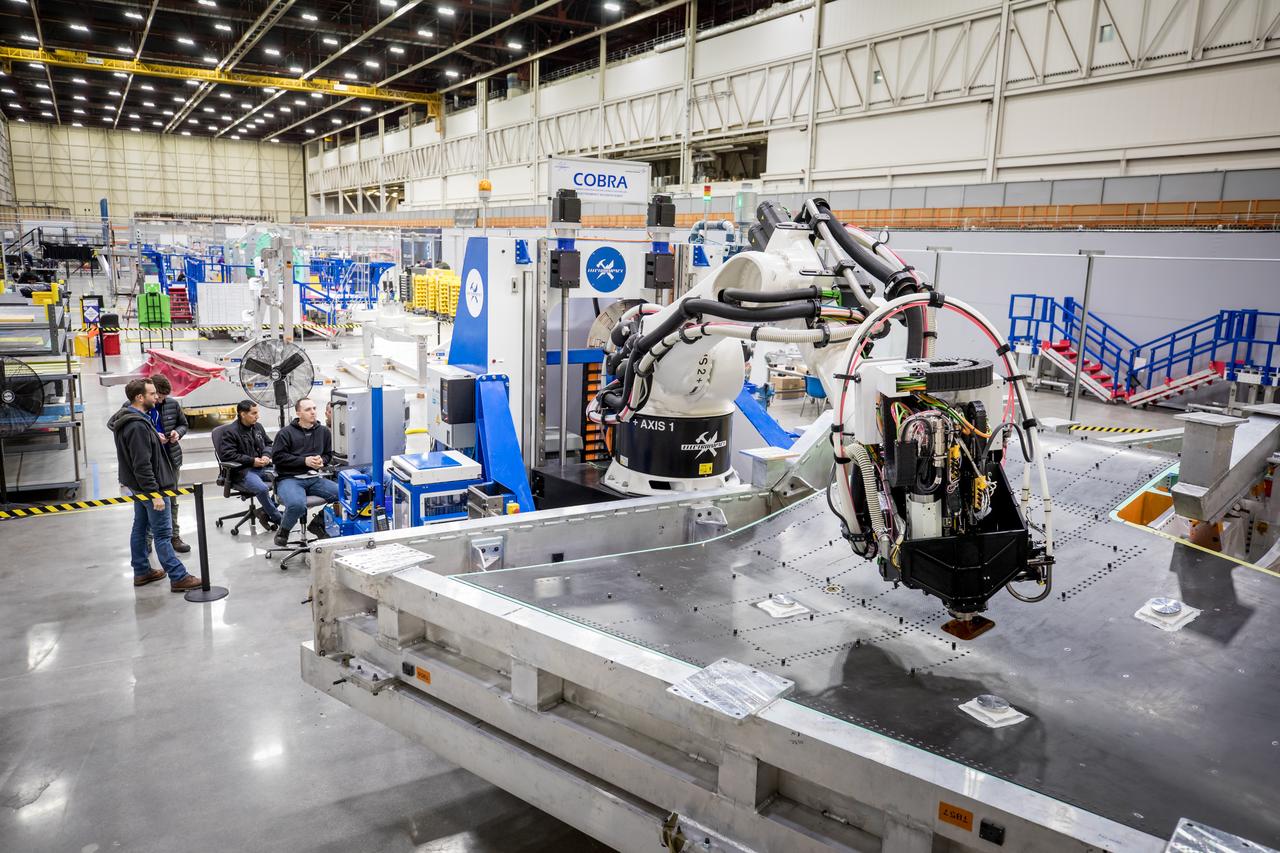
Lockheed Martin Photography By Garry Tice 1011 Lockheed Way, Palmdale, Ca. 93599 Event: SEG 410 Main Wing, COBRA Drillng Machine, Drilling Lower Wing Skins Date: 1/07/20 Additional Info:
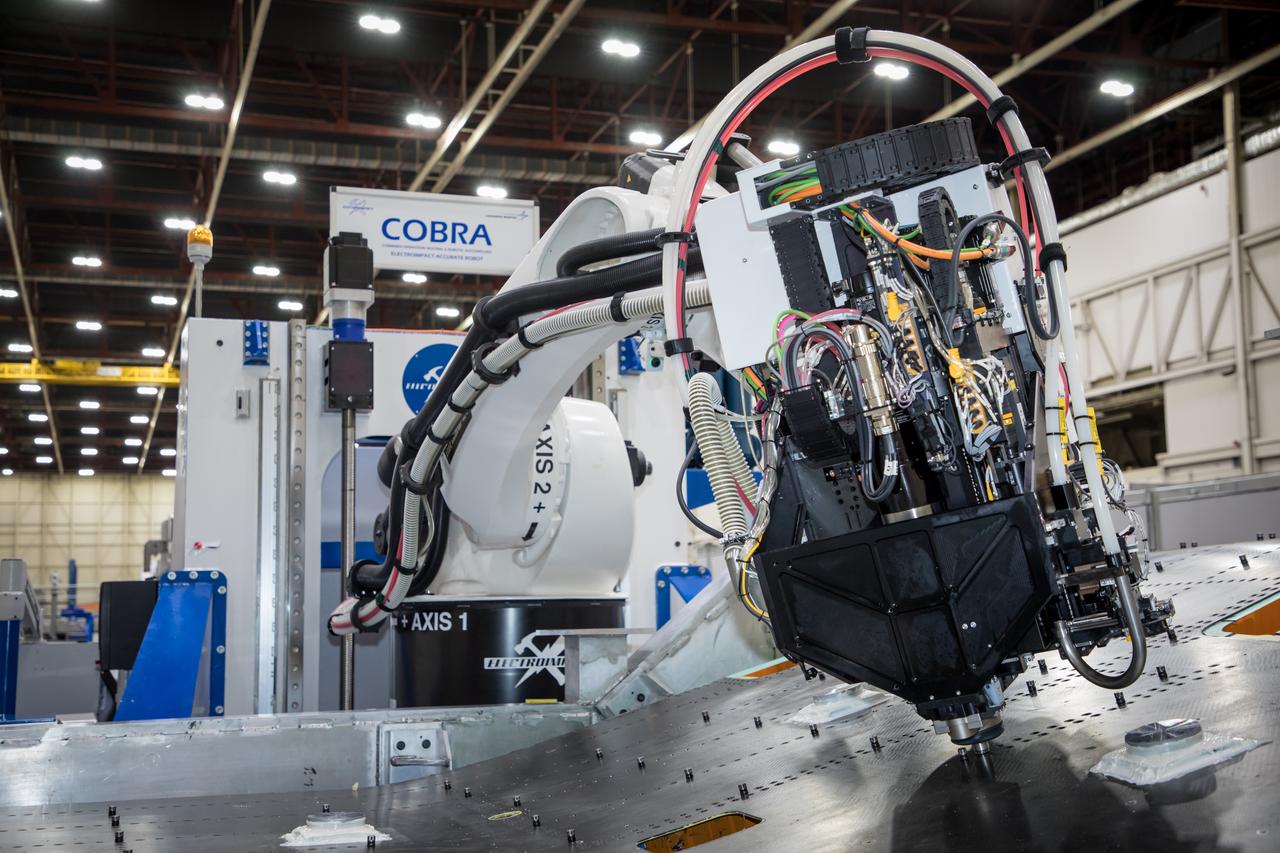
Lockheed Martin Photography By Garry Tice 1011 Lockheed Way, Palmdale, Ca. 93599 Event: SEG 410 Main Wing, COBRA Drillng Machine, Drilling Lower Wing Skins Date: 1/07/20 Additional Info:
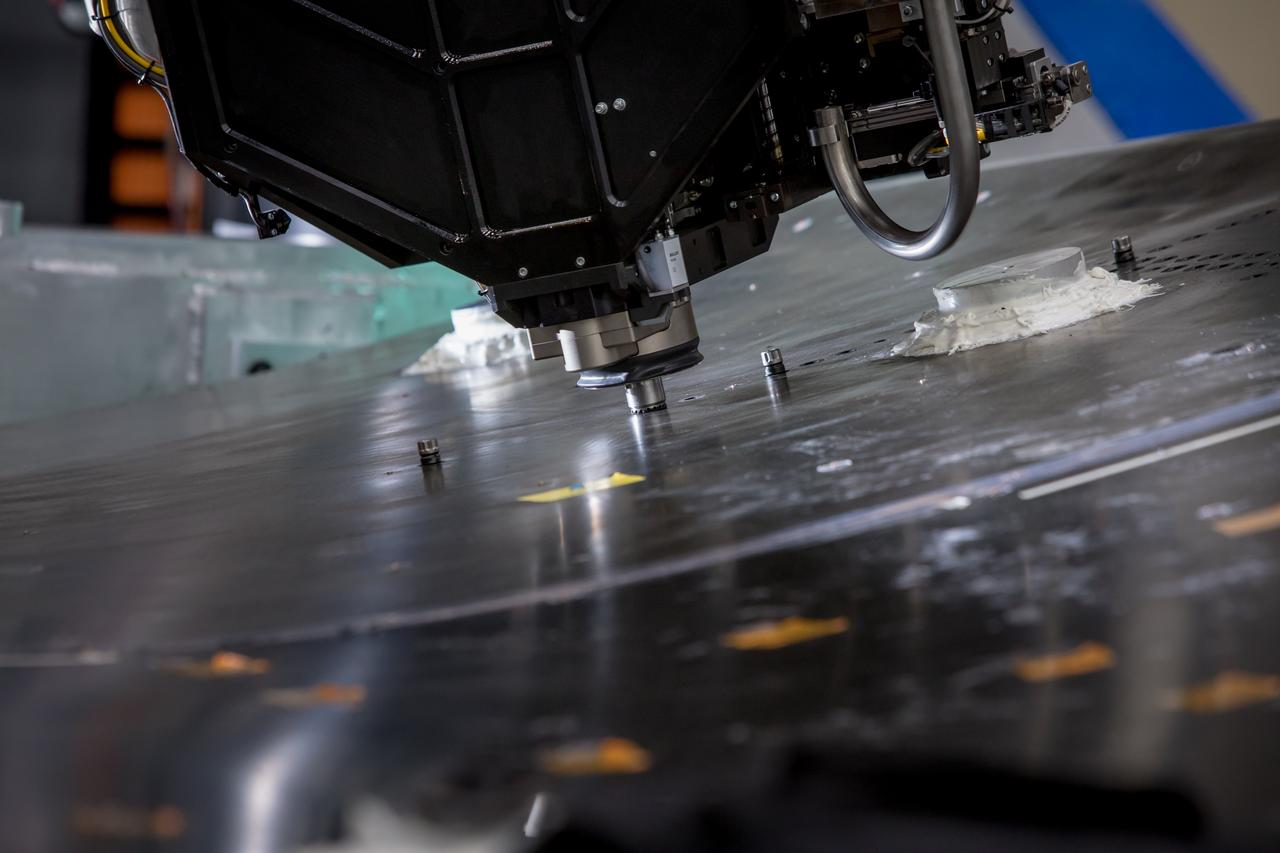
Lockheed Martin Photography By Garry Tice 1011 Lockheed Way, Palmdale, Ca. 93599 Event: SEG 410 Main Wing, COBRA Drillng Machine, Drilling Lower Wing Skins Date: 12/23/19 Additional Info:
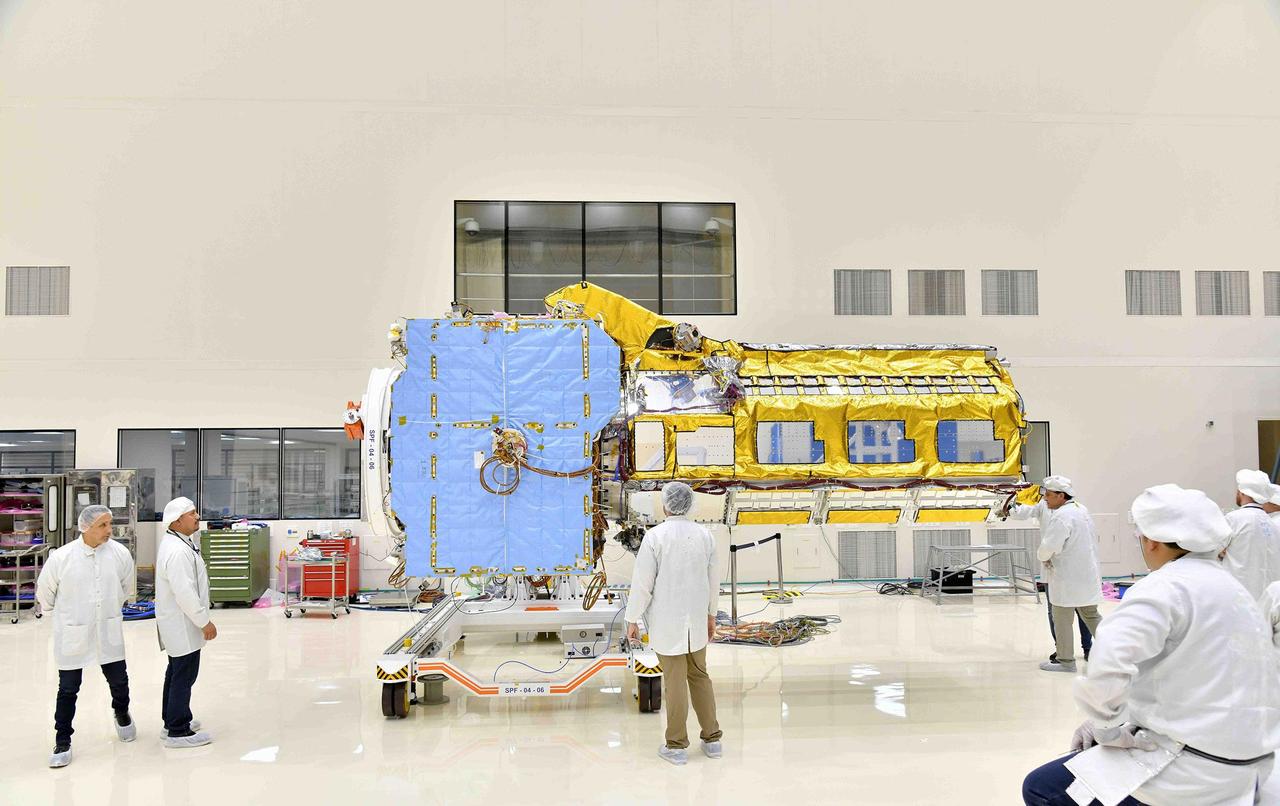
The NISAR (NASA-ISRO Synthetic Aperture Radar) satellite sits in a clean room facility at U R Rao Satellite Centre (URSC) in Bengaluru, India, in mid-June 2023, shortly after engineers from NASA's Jet Propulsion Laboratory in Southern California and the Indian Space Research Organisation joined its two main components, the radar instrument payload and the spacecraft bus. Set to launch in early 2024 from the Satish Dhawan Space Centre in Sriharikota, India, NISAR is being jointly developed by NASA and ISRO to observe movements of Earth's land and ice surfaces in extremely fine detail. As NISAR observes nearly every part of Earth at least once every 12 days, the satellite will help scientists understand, among other observables, the dynamics of forests, wetlands, and agricultural lands. The radar instrument payload, partially wrapped in gold-colored thermal blanketing, arrived from JPL in March and consists of L- and S-band radar systems, so named to indicate the wavelengths of their signals. Both sensors can see through clouds and collect data day and night. The bus, which is shown in blue blanketing and includes components and systems developed by both ISRO and JPL, was built at URSC and will provide power, navigation, pointing control, and communications for the mission. NISAR is an equal collaboration between NASA and ISRO and marks the first time the two agencies have cooperated on hardware development for an Earth-observing mission. JPL, which is managed for NASA by Caltech in Pasadena, leads the U.S. component of the project and is providing the mission's L-band SAR. NASA is also providing the radar reflector antenna, the deployable boom, a high-rate communication subsystem for science data, GPS receivers, a solid-state recorder, and payload data subsystem. URSC, which is leading the ISRO component of the mission, is providing the spacecraft bus, the S-band SAR electronics, the launch vehicle, and associated launch services and satellite mission operations. https://photojournal.jpl.nasa.gov/catalog/PIA25865
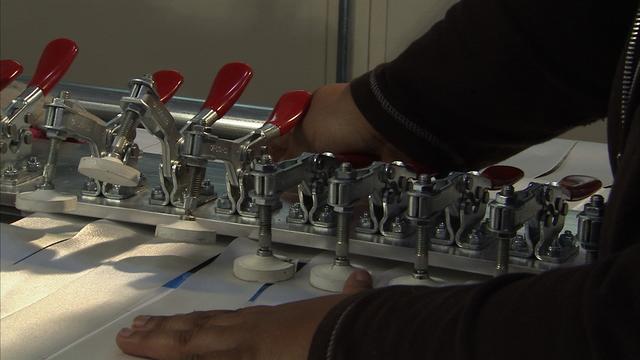
Shown is the fabrication of the First Stage Main Parachute in support of Ares/CLV at the Pioneer Zodiac Facility in Mississippi in support of the Constellation/Ares project. This image is extracted from a high definition video file and is the highest resolution available
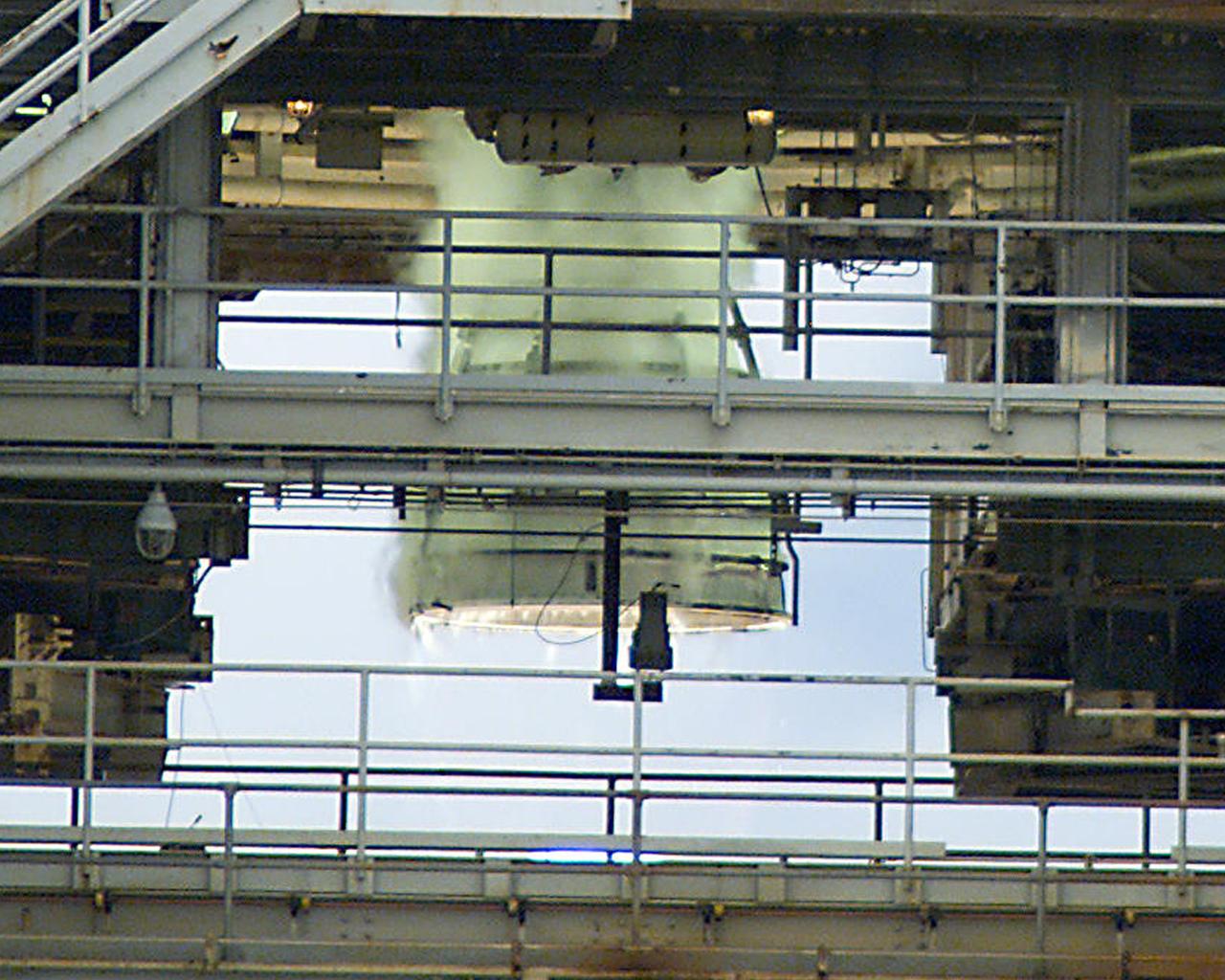
This close-up photo was taken during testing of a Space Shuttle Main Engine on the A-1 Test Stand at Stennis Space Center near Bay St. Louis, Miss. The test was conducted June 19, 2003.
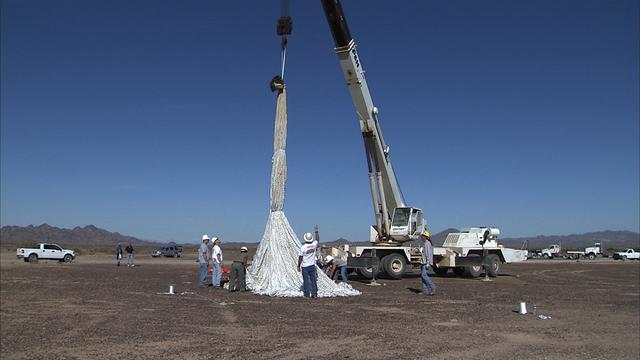
Shown is the testing of the Main Parachute for the Ares/CLV first stage in support of the Ares/Constellation program at the Yuma Proving Ground, Arizona. This image is extracted from high definition video and is the highest resolution available.
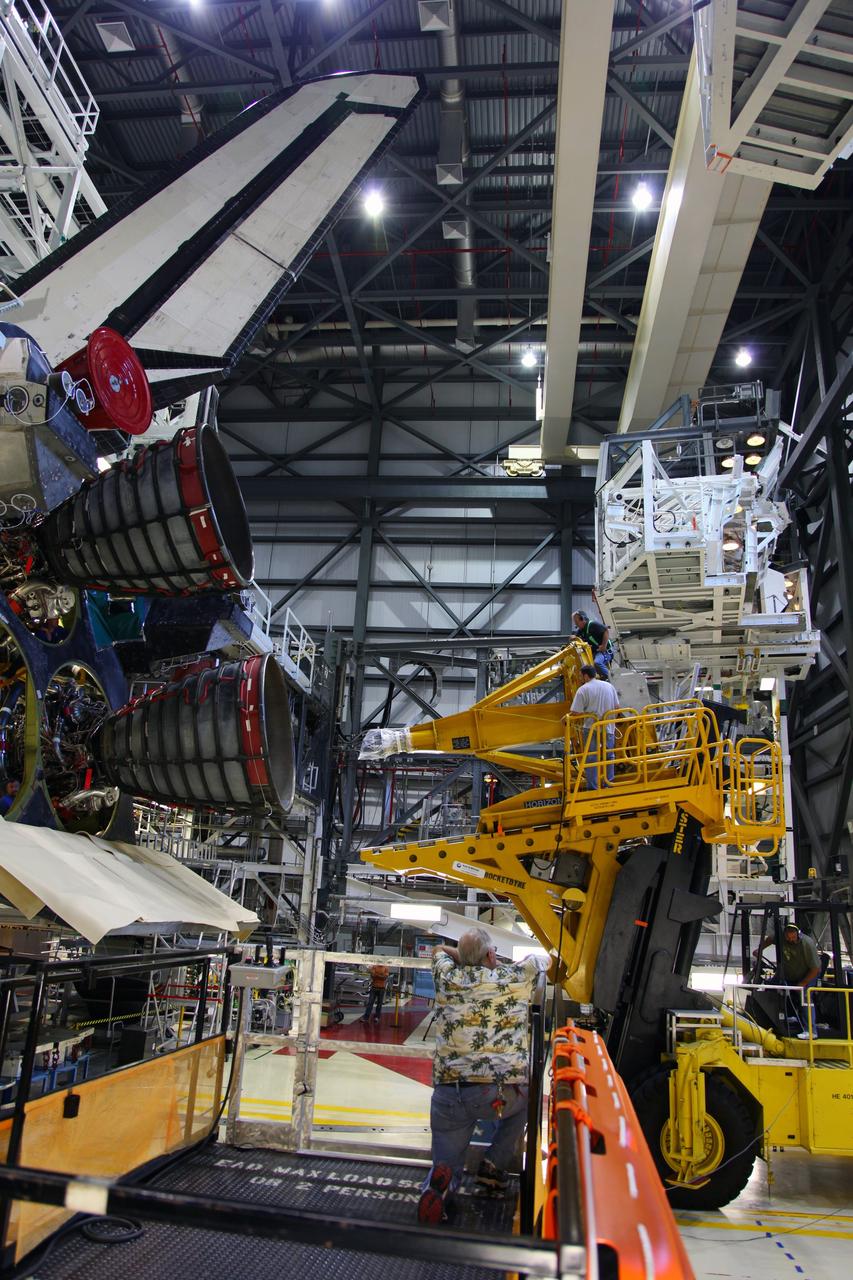
CAPE CANAVERAL, Fla. -- In Orbiter Processing Facility-2 at NASA’s Kennedy Space Center in Florida, a technician moves a Hyster forklift toward Engine #3 on space shuttle Atlantis. The forklift will be used to remove the engine and transport it to the Engine Shop for possible future use. Each of the three space shuttle main engines is 14 feet long and weighs 7,800 pounds. Removal of the space shuttle main engines is part of the Transition and Retirement work that is being performed in order to prepare Atlantis for eventual display at the Kennedy Space Center Visitor Complex in Florida. Photo credit: Frankie Martin
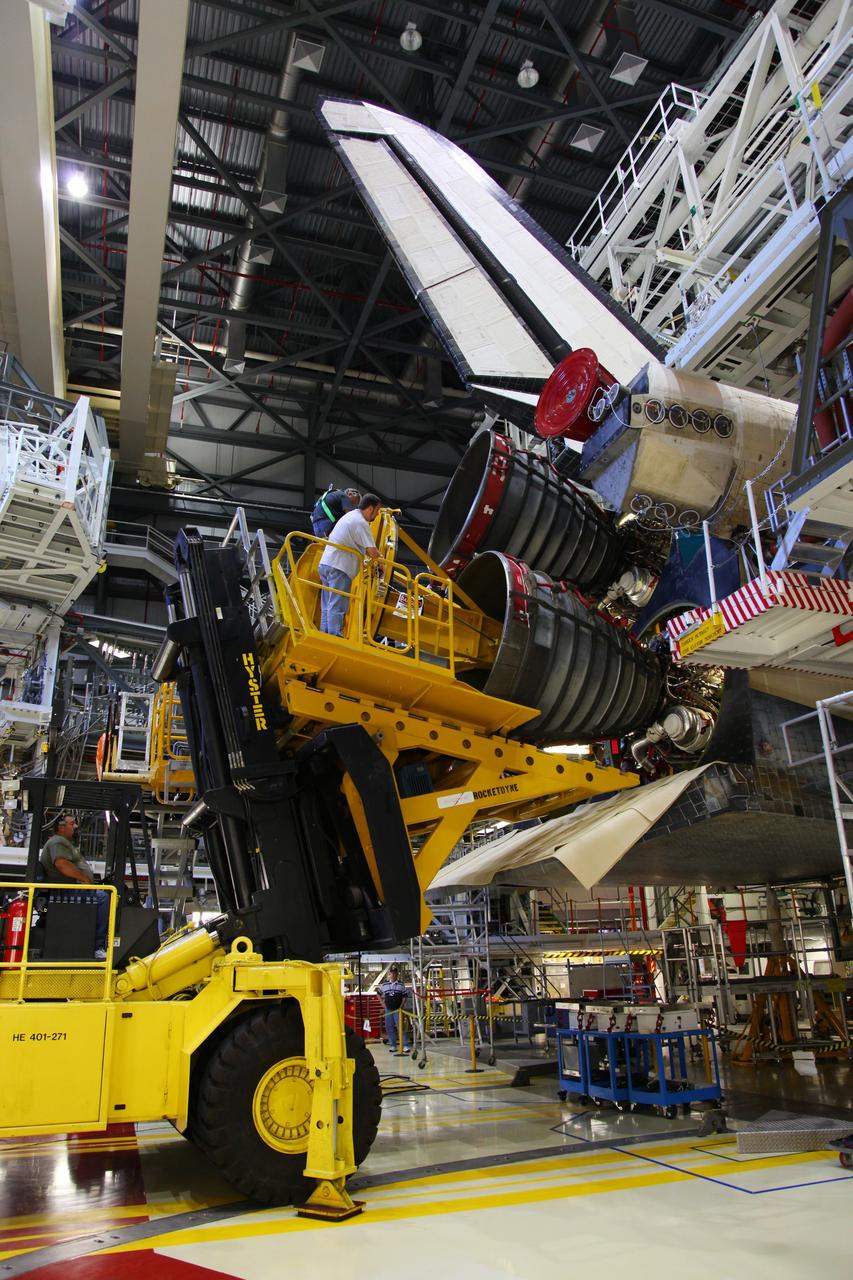
CAPE CANAVERAL, Fla. -- In Orbiter Processing Facility-2 at NASA’s Kennedy Space Center in Florida, technicians use a Hyster forklift to position an engine removal device on Engine #3 on space shuttle Atlantis. The forklift will be used to remove the engine and transport it to the Engine Shop for possible future use. Each of the three space shuttle main engines is 14 feet long and weighs 7,800 pounds. Removal of the space shuttle main engines is part of the Transition and Retirement work that is being performed in order to prepare Atlantis for eventual display at the Kennedy Space Center Visitor Complex in Florida. Photo credit: Frankie Martin
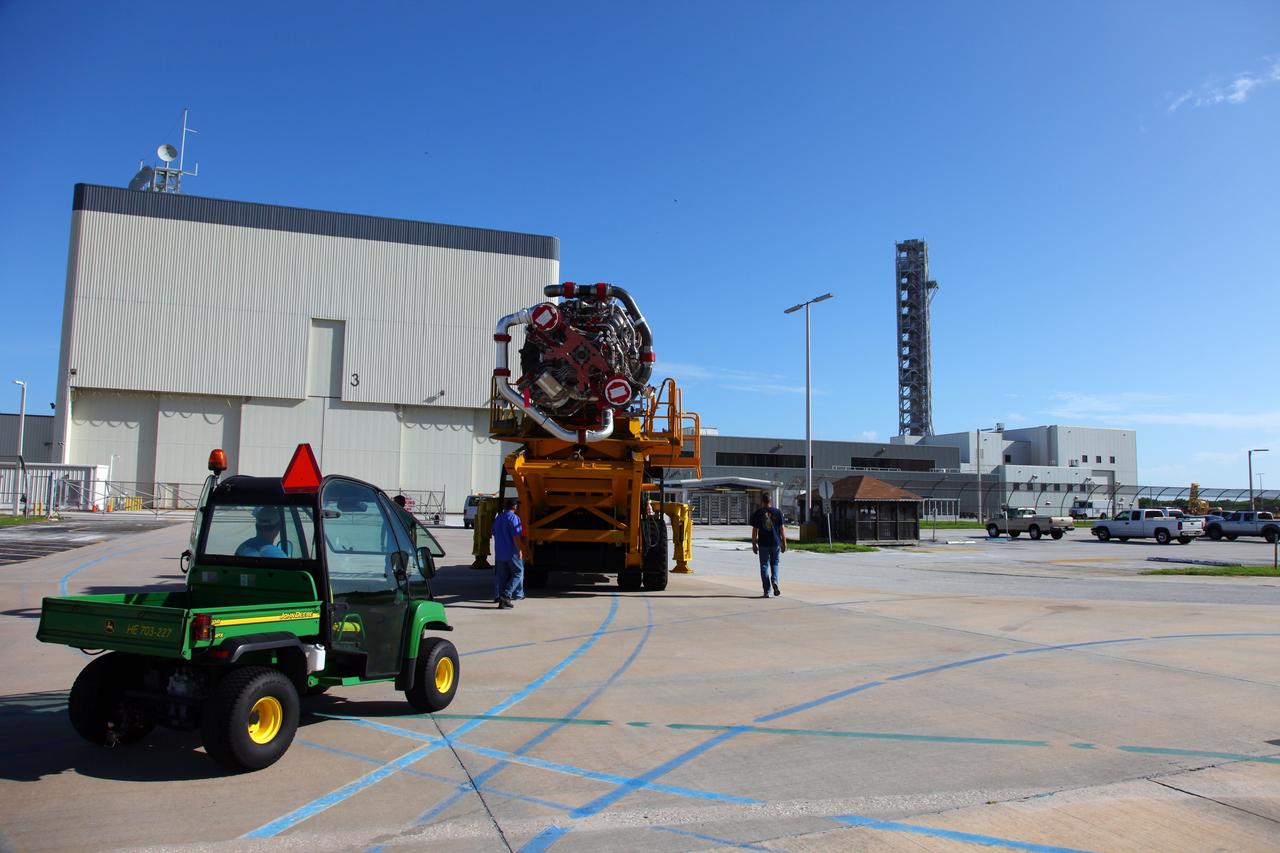
CAPE CANAVERAL, Fla. -- Technicians use a Hyster forklift to transport Engine #3 to the Engine Shop for possible future use after it was removed from space shuttle Atlantis in Orbiter Processing Facility-2 at NASA’s Kennedy Space Center in Florida. Each of the three space shuttle main engines is 14 feet long and weighs 7,800 pounds. Removal of the space shuttle main engines is part of the Transition and Retirement work that is being performed in order to prepare Atlantis for eventual display at the Kennedy Space Center Visitor Complex in Florida. Photo credit: Frankie Martin
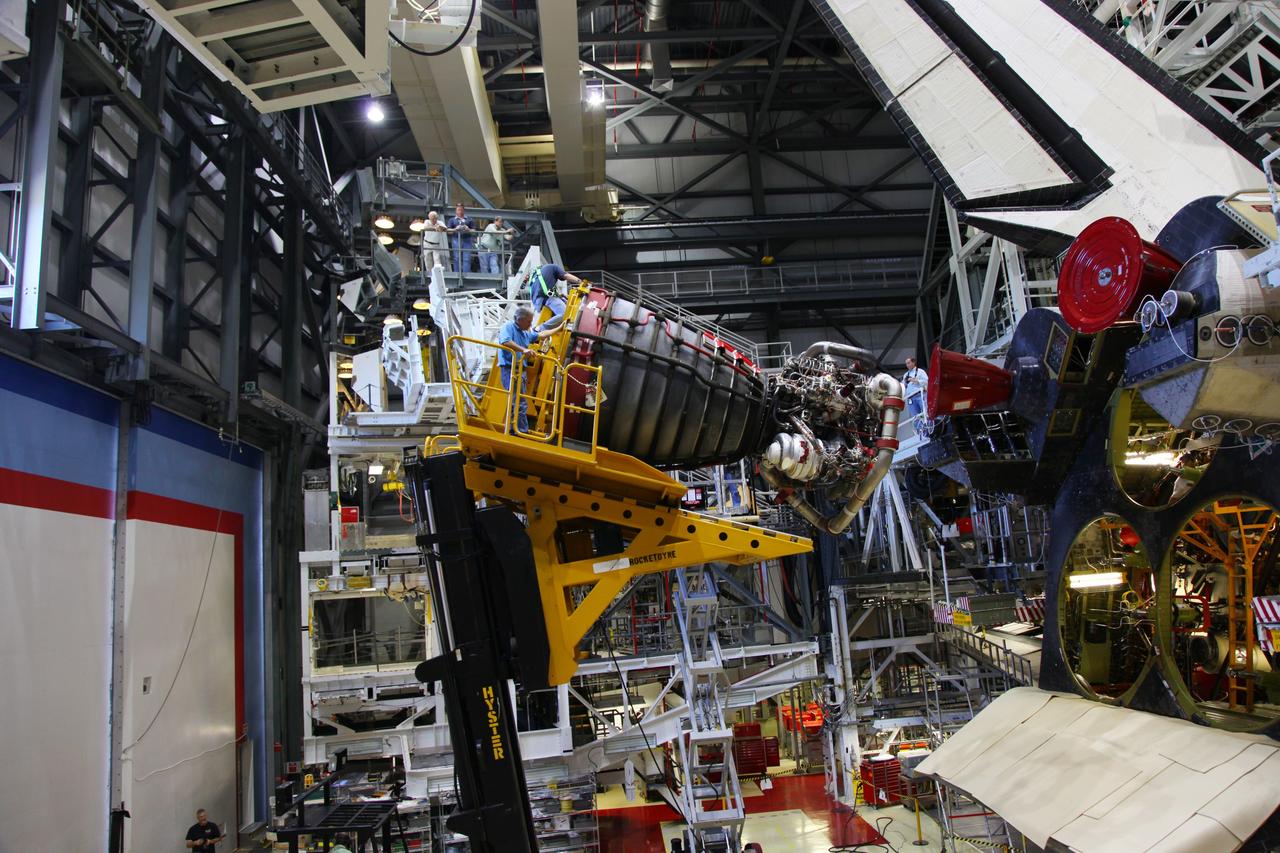
CAPE CANAVERAL, Fla. -- In Orbiter Processing Facility-2 at NASA’s Kennedy Space Center in Florida, technicians use a Hyster forklift to remove Engine #1, the final engine to be removed from space shuttle Atlantis. The forklift will be used to transport the engine to the Engine Shop for possible future use. Each of the three space shuttle main engines is 14 feet long and weighs 7,800 pounds. Removal of the space shuttle main engines is part of the Transition and Retirement work that is being performed in order to prepare Atlantis for eventual display at the Kennedy Space Center Visitor Complex in Florida. Photo credit: Frankie Martin
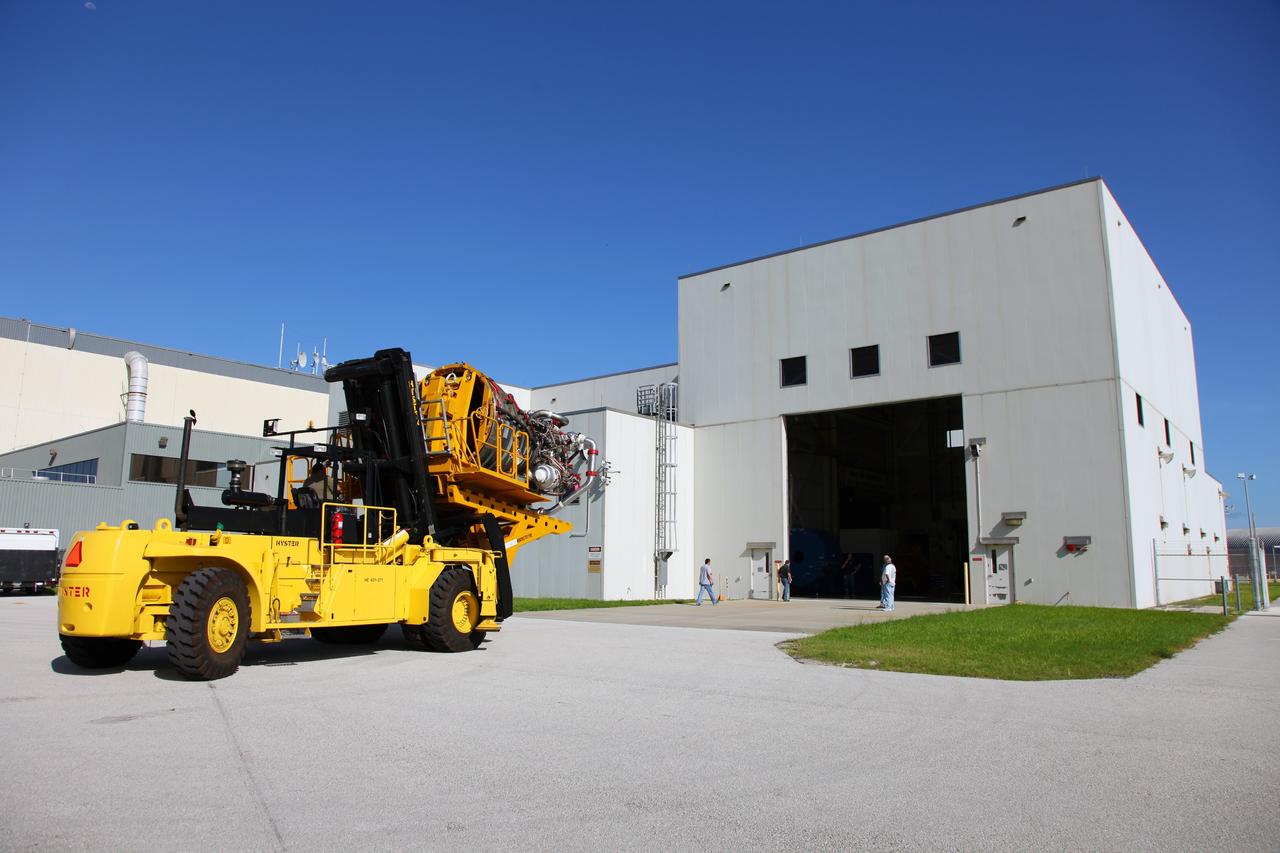
CAPE CANAVERAL, Fla. -- Technicians use a Hyster forklift to transport Engine #3 to the Engine Shop for possible future use after it was removed from space shuttle Atlantis in Orbiter Processing Facility-2 at NASA’s Kennedy Space Center in Florida. Each of the three space shuttle main engines is 14 feet long and weighs 7,800 pounds. Removal of the space shuttle main engines is part of the Transition and Retirement work that is being performed in order to prepare Atlantis for eventual display at the Kennedy Space Center Visitor Complex in Florida. Photo credit: Frankie Martin
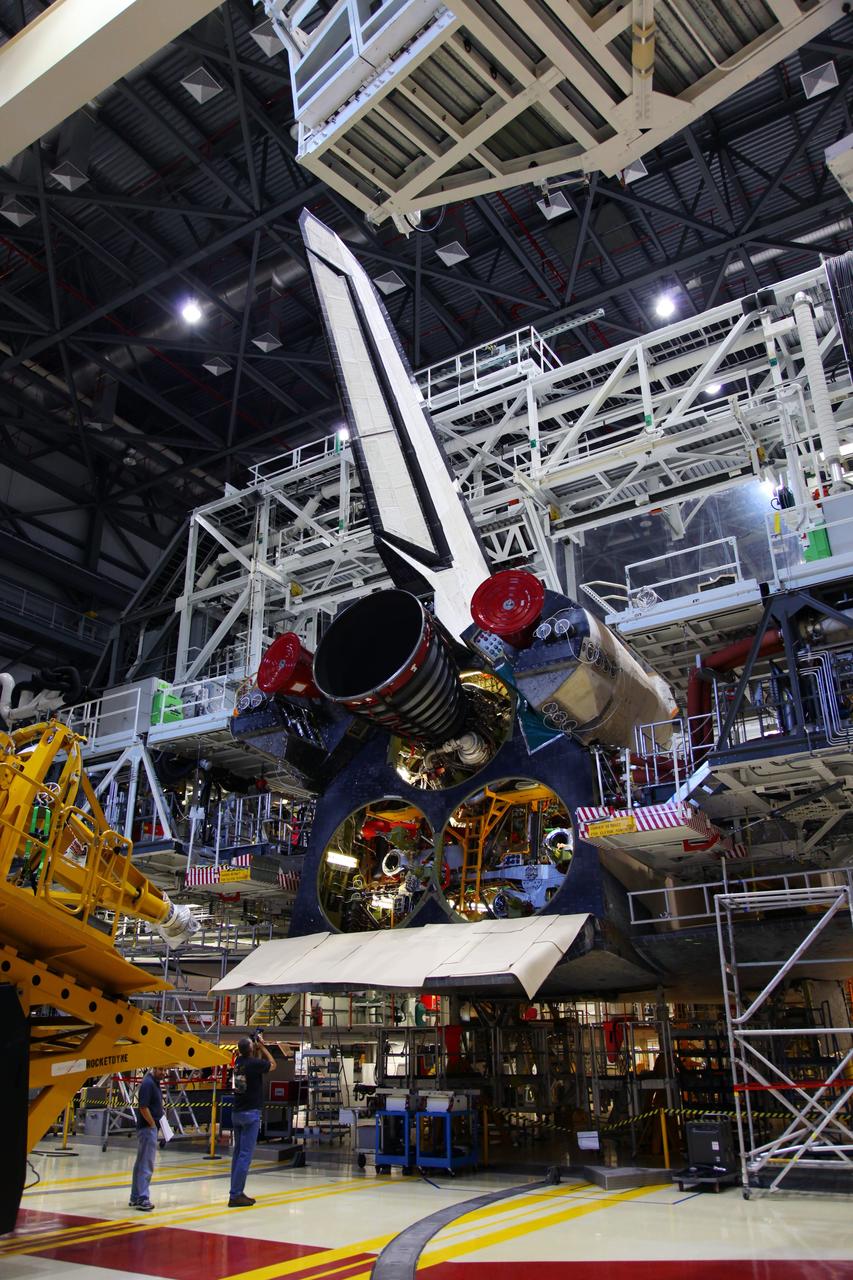
CAPE CANAVERAL, Fla. -- In Orbiter Processing Facility-2 at NASA’s Kennedy Space Center in Florida, technicians move a Hyster forklift toward Engine #1, the final engine to be removed from space shuttle Atlantis. The forklift will be used to remove the engine and transport it to the Engine Shop for possible future use. Each of the three space shuttle main engines is 14 feet long and weighs 7,800 pounds. Removal of the space shuttle main engines is part of the Transition and Retirement work that is being performed in order to prepare Atlantis for eventual display at the Kennedy Space Center Visitor Complex in Florida. Photo credit: Frankie Martin
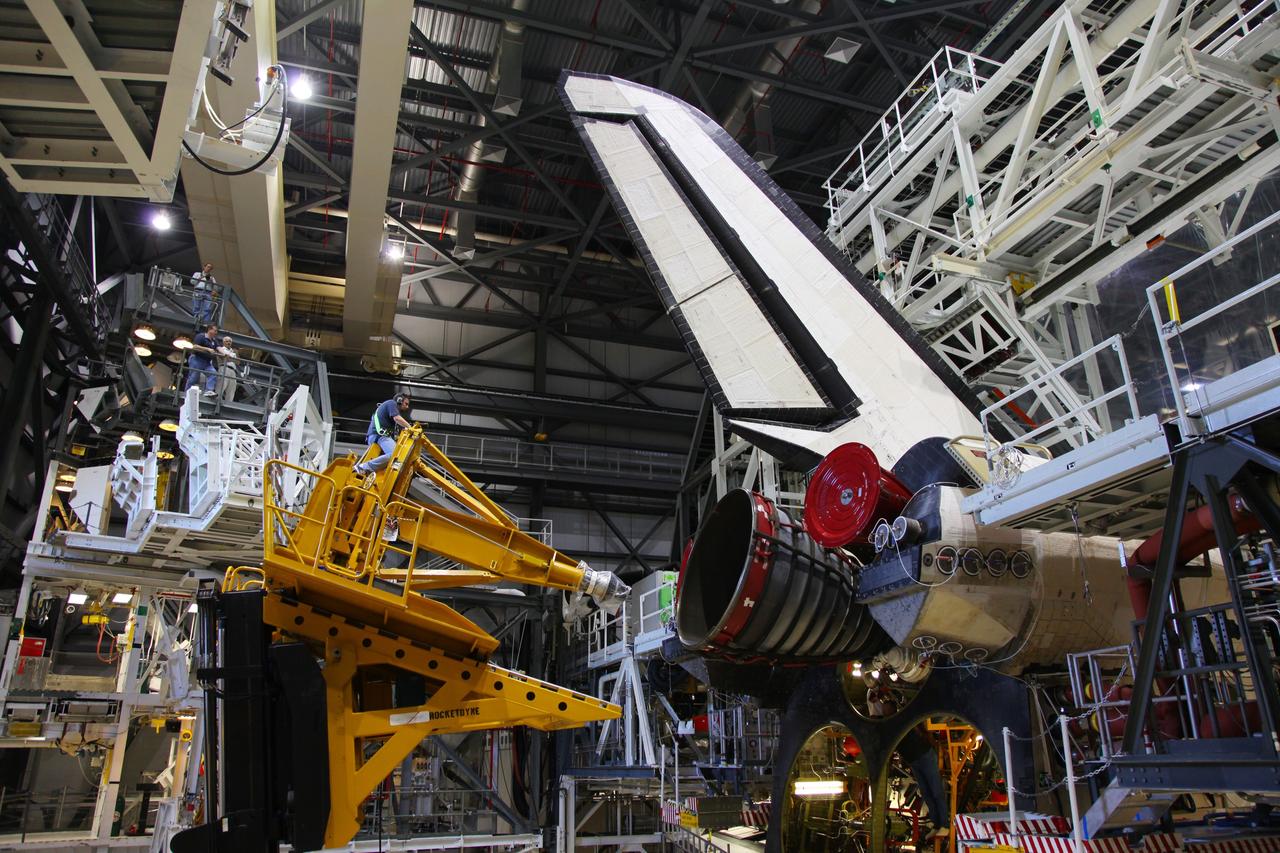
CAPE CANAVERAL, Fla. -- In Orbiter Processing Facility-2 at NASA’s Kennedy Space Center in Florida, technicians move a Hyster forklift closer to Engine #1, the final engine to be removed from space shuttle Atlantis. The forklift will be used to remove the engine and transport it to the Engine Shop for possible future use. Each of the three space shuttle main engines is 14 feet long and weighs 7,800 pounds. Removal of the space shuttle main engines is part of the Transition and Retirement work that is being performed in order to prepare Atlantis for eventual display at the Kennedy Space Center Visitor Complex in Florida. Photo credit: Frankie Martin
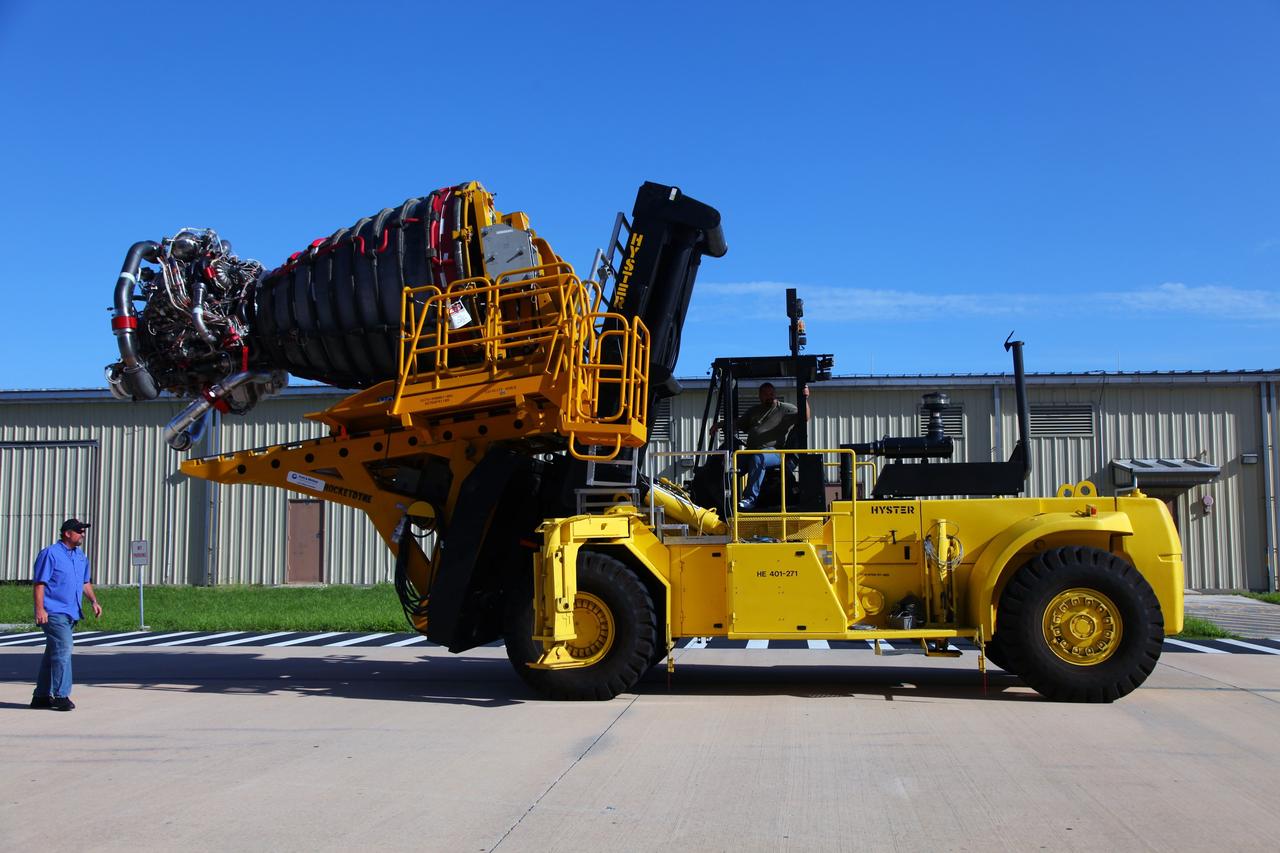
CAPE CANAVERAL, Fla. -- Technicians use a Hyster forklift to transport Engine #3 to the Engine Shop for possible future use after it was removed from space shuttle Atlantis in Orbiter Processing Facility-2 at NASA’s Kennedy Space Center in Florida. Each of the three space shuttle main engines is 14 feet long and weighs 7,800 pounds. Removal of the space shuttle main engines is part of the Transition and Retirement work that is being performed in order to prepare Atlantis for eventual display at the Kennedy Space Center Visitor Complex in Florida. Photo credit: Frankie Martin
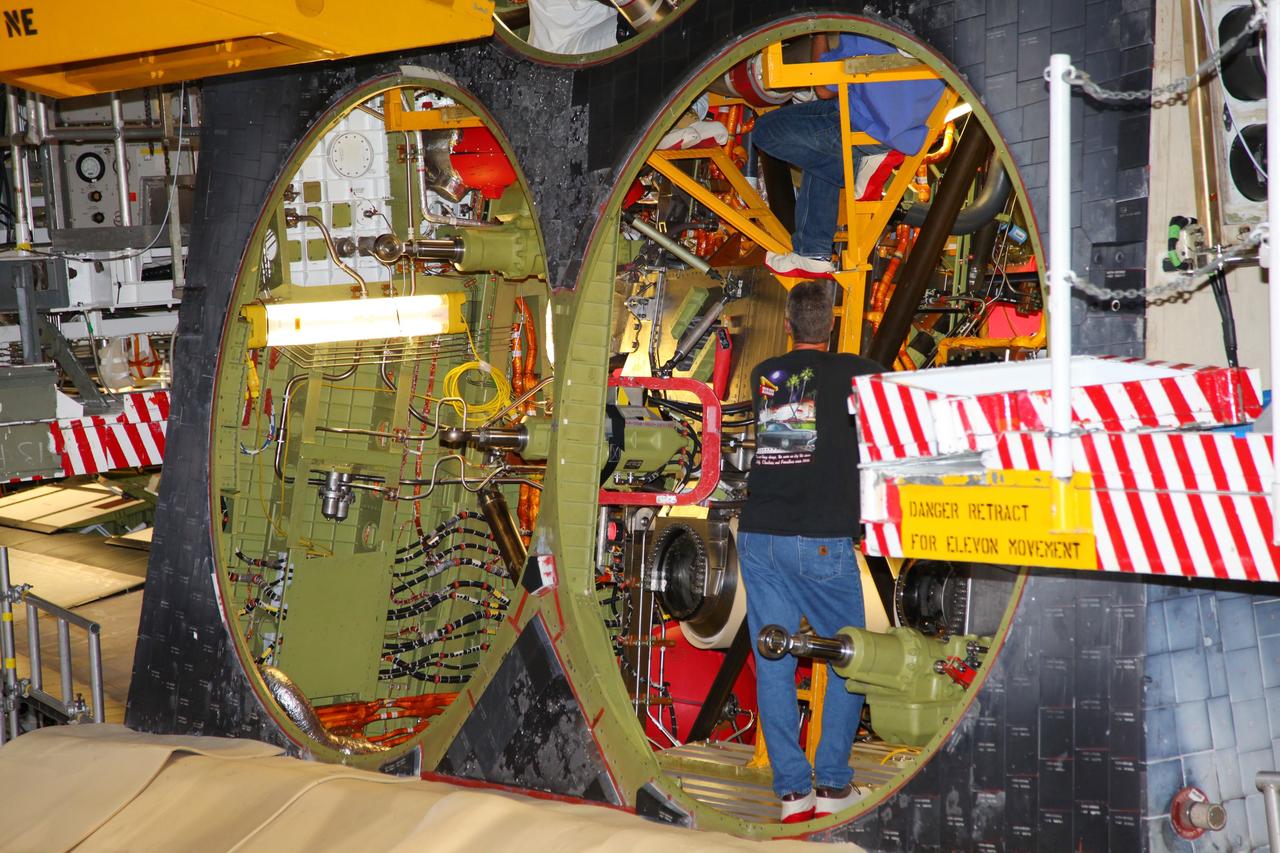
CAPE CANAVERAL, Fla. -- In Orbiter Processing Facility-2 at NASA’s Kennedy Space Center in Florida, technicians inside the aft area monitor the progress as a Hyster forklift is used to remove Engine #1, the final engine to be removed from space shuttle Atlantis. The forklift will be used to remove the engine and transport it to the Engine Shop for possible future use. Each of the three space shuttle main engines is 14 feet long and weighs 7,800 pounds. Removal of the space shuttle main engines is part of the Transition and Retirement work that is being performed in order to prepare Atlantis for eventual display at the Kennedy Space Center Visitor Complex in Florida. Photo credit: Frankie Martin
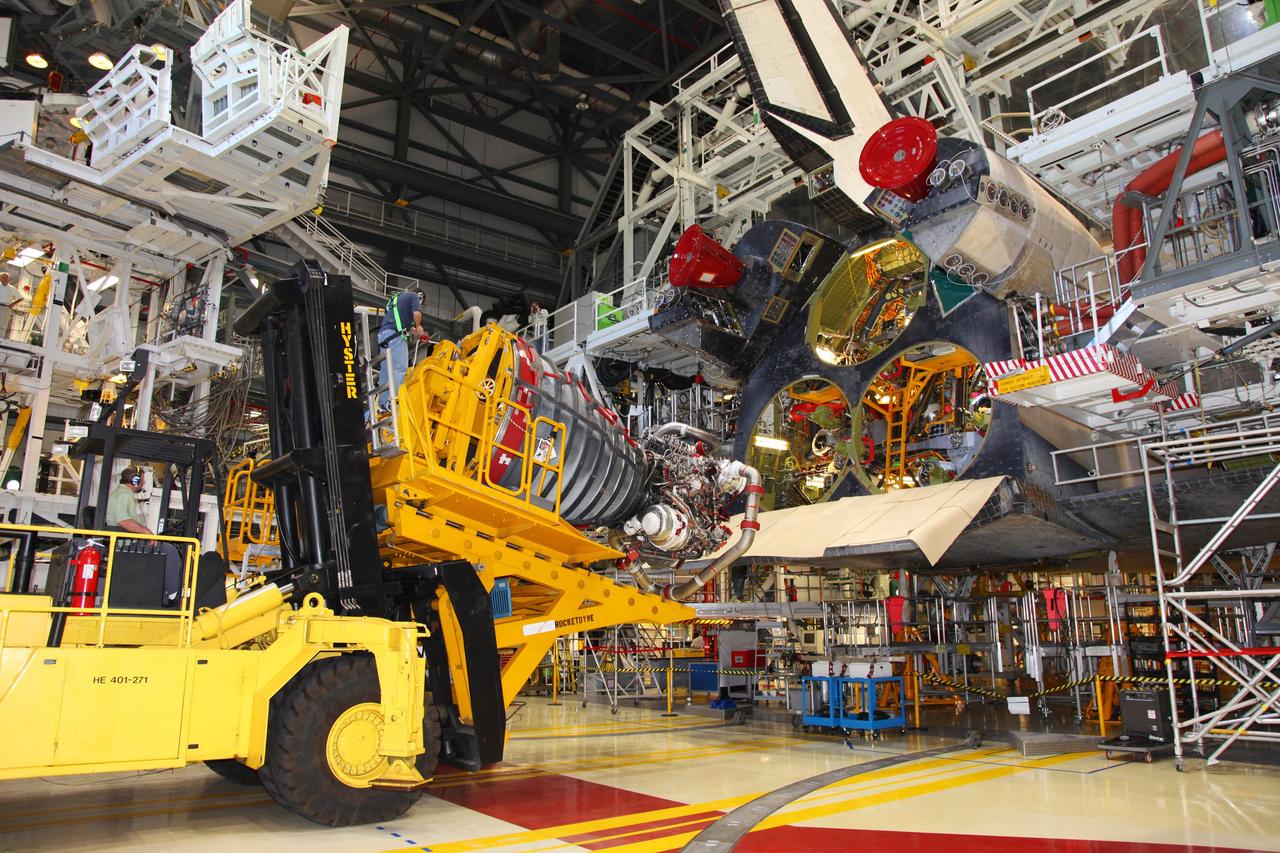
CAPE CANAVERAL, Fla. -- In Orbiter Processing Facility-2 at NASA’s Kennedy Space Center in Florida, technicians used a Hyster forklift to remove Engine #1, the final engine to be removed from space shuttle Atlantis. The forklift will be used to transport the engine to the Engine Shop for possible future use. Each of the three space shuttle main engines is 14 feet long and weighs 7,800 pounds. Removal of the space shuttle main engines is part of the Transition and Retirement work that is being performed in order to prepare Atlantis for eventual display at the Kennedy Space Center Visitor Complex in Florida. Photo credit: Frankie Martin
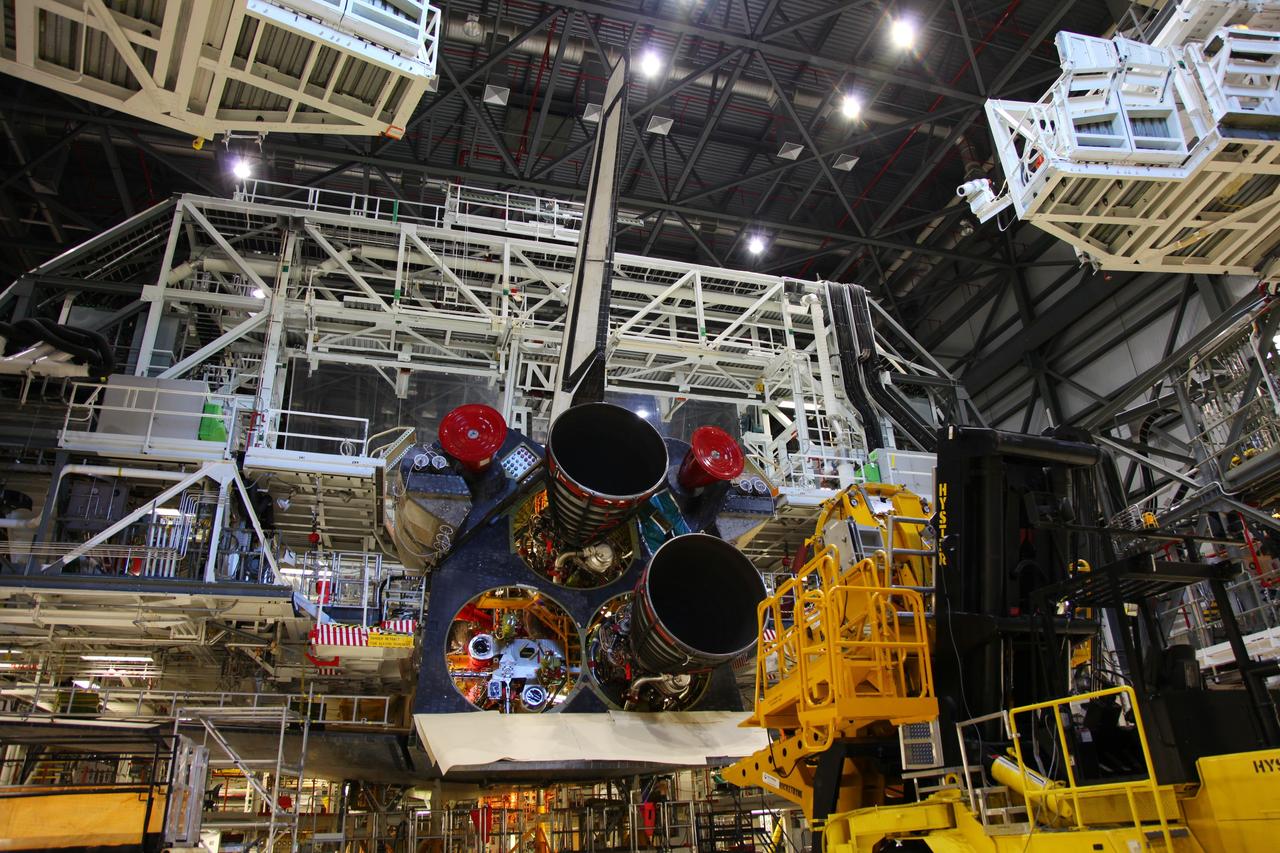
CAPE CANAVERAL, Fla. -- In Orbiter Processing Facility-2 at NASA’s Kennedy Space Center in Florida, a technician moves a Hyster forklift toward Engine #3 on space shuttle Atlantis. The forklift will be used to remove the engine and transport it to the Engine Shop for possible future use. Each of the three space shuttle main engines is 14 feet long and weighs 7,800 pounds. Removal of the space shuttle main engines is part of the Transition and Retirement work that is being performed in order to prepare Atlantis for eventual display at the Kennedy Space Center Visitor Complex in Florida. Photo credit: Frankie Martin
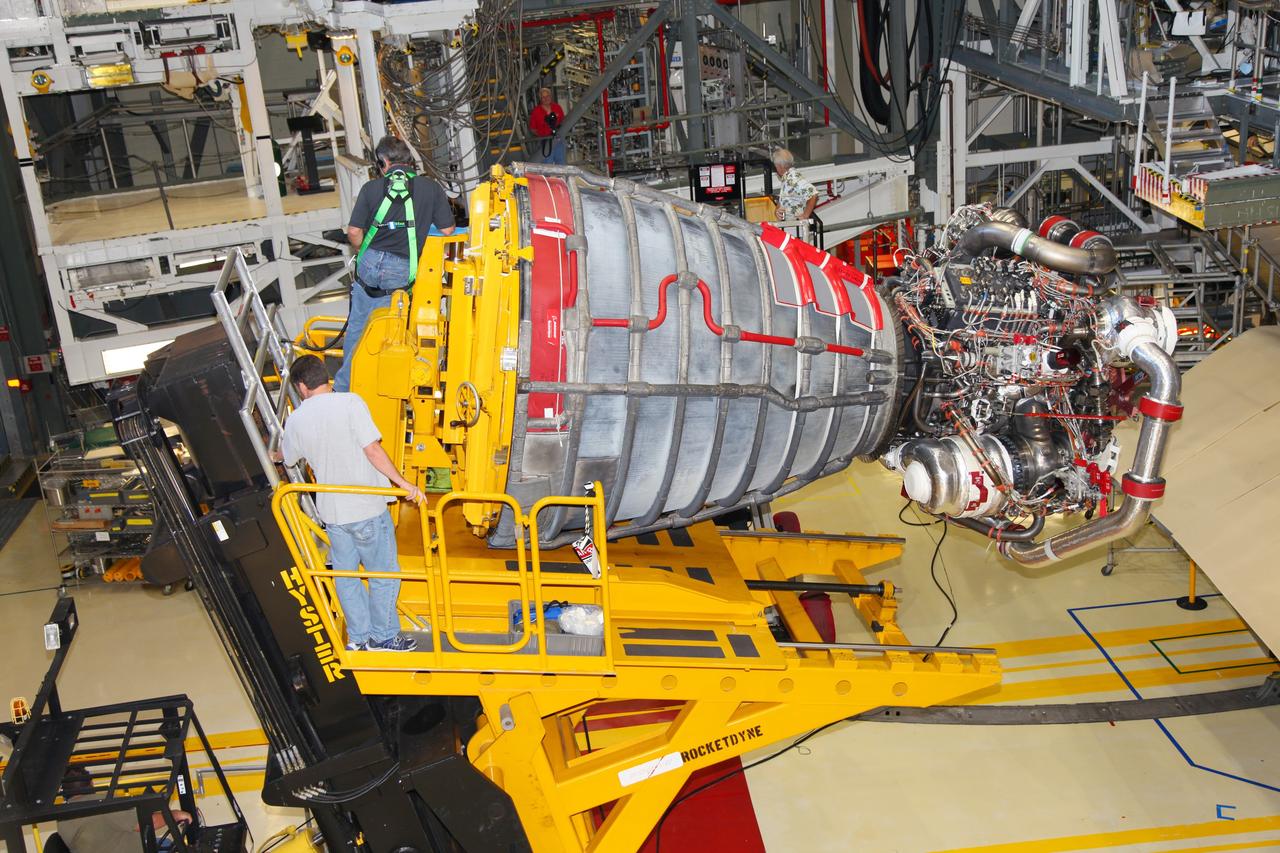
CAPE CANAVERAL, Fla. -- In Orbiter Processing Facility-2 at NASA’s Kennedy Space Center in Florida, technicians used a Hyster forklift to remove Engine #3 from space shuttle Atlantis. The engine will be transported to the Engine Shop for possible future use. Each of the three space shuttle main engines is 14 feet long and weighs 7,800 pounds. Removal of the space shuttle main engines is part of the Transition and Retirement work that is being performed in order to prepare Atlantis for eventual display at the Kennedy Space Center Visitor Complex in Florida. Photo credit: Frankie Martin
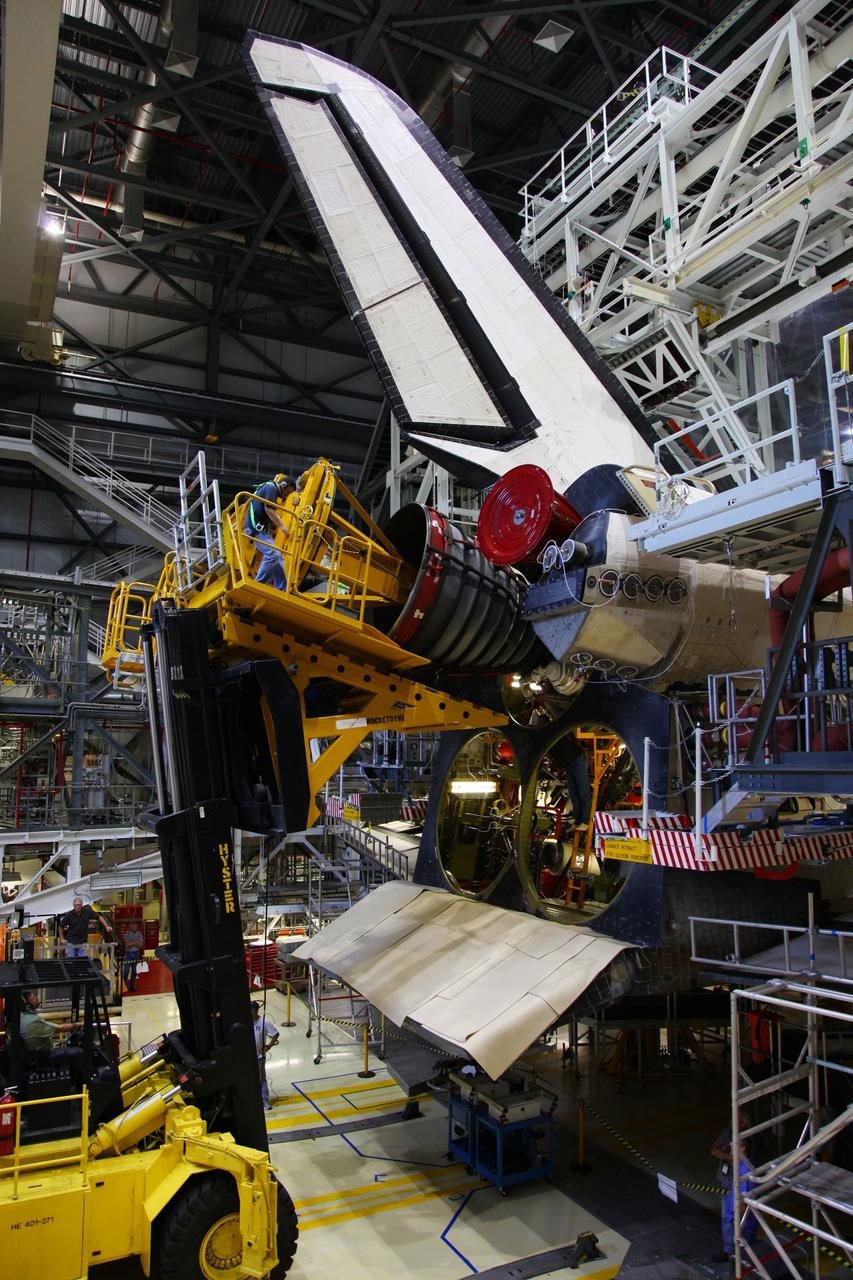
CAPE CANAVERAL, Fla. -- In Orbiter Processing Facility-2 at NASA’s Kennedy Space Center in Florida, a technician sitting on the Hyster forklift monitors the progress as the engine removal device moves toward Engine #1, the final engine to be removed from space shuttle Atlantis. The forklift will be used to remove the engine and transport it to the Engine Shop for possible future use. Each of the three space shuttle main engines is 14 feet long and weighs 7,800 pounds. Removal of the space shuttle main engines is part of the Transition and Retirement work that is being performed in order to prepare Atlantis for eventual display at the Kennedy Space Center Visitor Complex in Florida. Photo credit: Frankie Martin
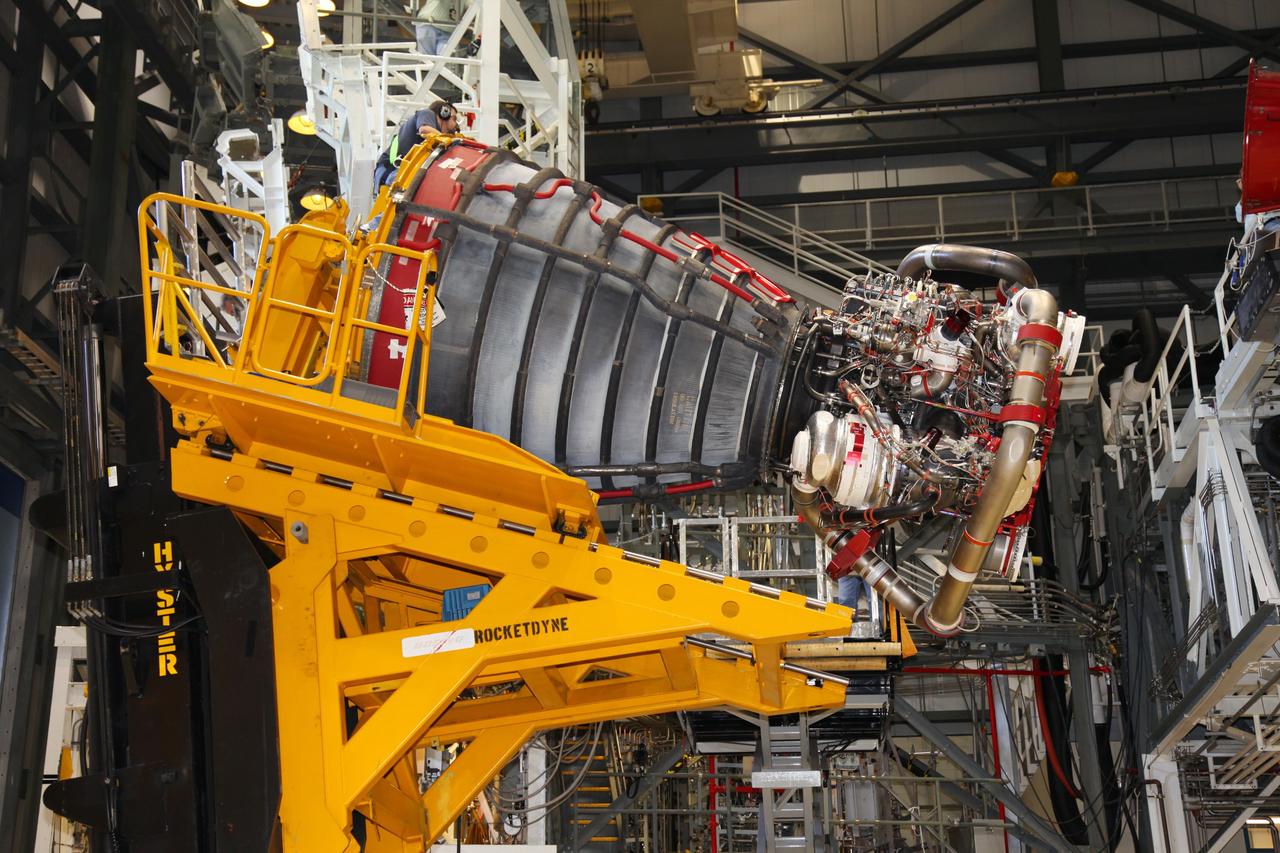
CAPE CANAVERAL, Fla. -- In Orbiter Processing Facility-2 at NASA’s Kennedy Space Center in Florida, technicians use a Hyster forklift to remove Engine #1, the final engine to be removed from space shuttle Atlantis. The forklift will be used to transport the engine to the Engine Shop for possible future use. Each of the three space shuttle main engines is 14 feet long and weighs 7,800 pounds. Removal of the space shuttle main engines is part of the Transition and Retirement work that is being performed in order to prepare Atlantis for eventual display at the Kennedy Space Center Visitor Complex in Florida. Photo credit: Frankie Martin
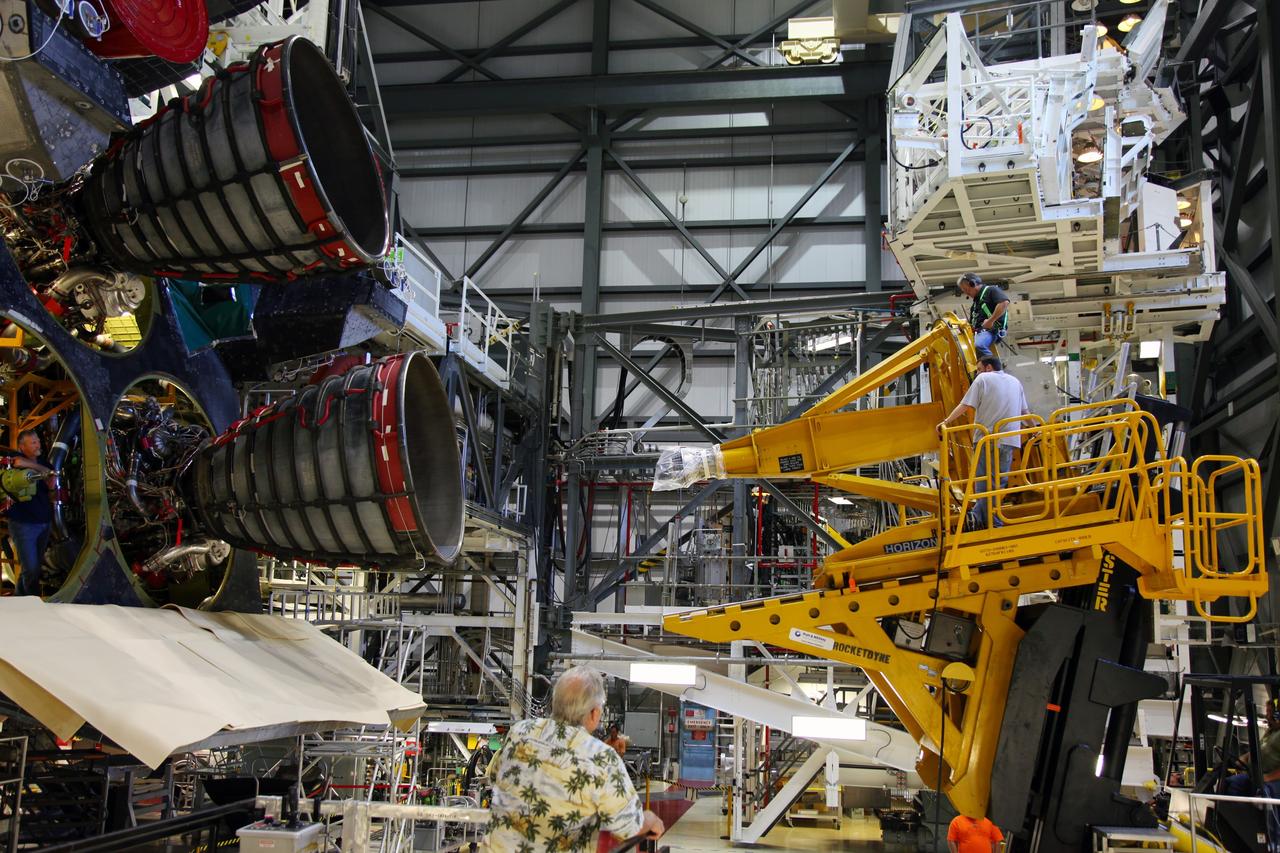
CAPE CANAVERAL, Fla. -- In Orbiter Processing Facility-2 at NASA’s Kennedy Space Center in Florida, a technician moves a Hyster forklift toward Engine #3 on space shuttle Atlantis. The forklift will be used to remove the engine and transport it to the Engine Shop for possible future use. Each of the three space shuttle main engines is 14 feet long and weighs 7,800 pounds. Removal of the space shuttle main engines is part of the Transition and Retirement work that is being performed in order to prepare Atlantis for eventual display at the Kennedy Space Center Visitor Complex in Florida. Photo credit: Frankie Martin
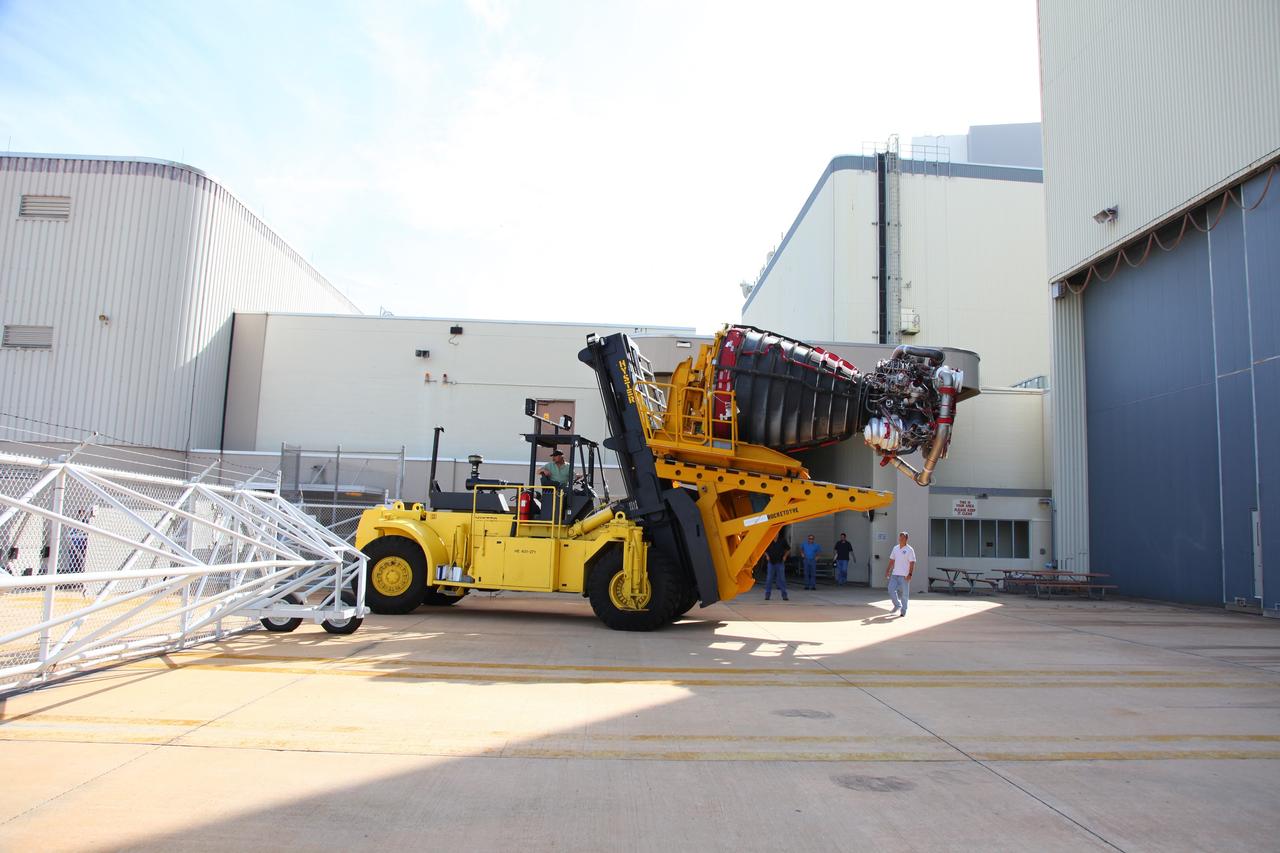
CAPE CANAVERAL, Fla. -- Technicians use a Hyster forklift to transport Engine #1, the final engine removed from space shuttle Atlantis, to the Engine Shop for possible future use. The engine was removed from Atlantis in Orbiter Processing Facility-2 at NASA’s Kennedy Space Center in Florida. Each of the three space shuttle main engines is 14 feet long and weighs 7,800 pounds. Removal of the space shuttle main engines is part of the Transition and Retirement work that is being performed in order to prepare Atlantis for eventual display at the Kennedy Space Center Visitor Complex in Florida. Photo credit: Frankie Martin
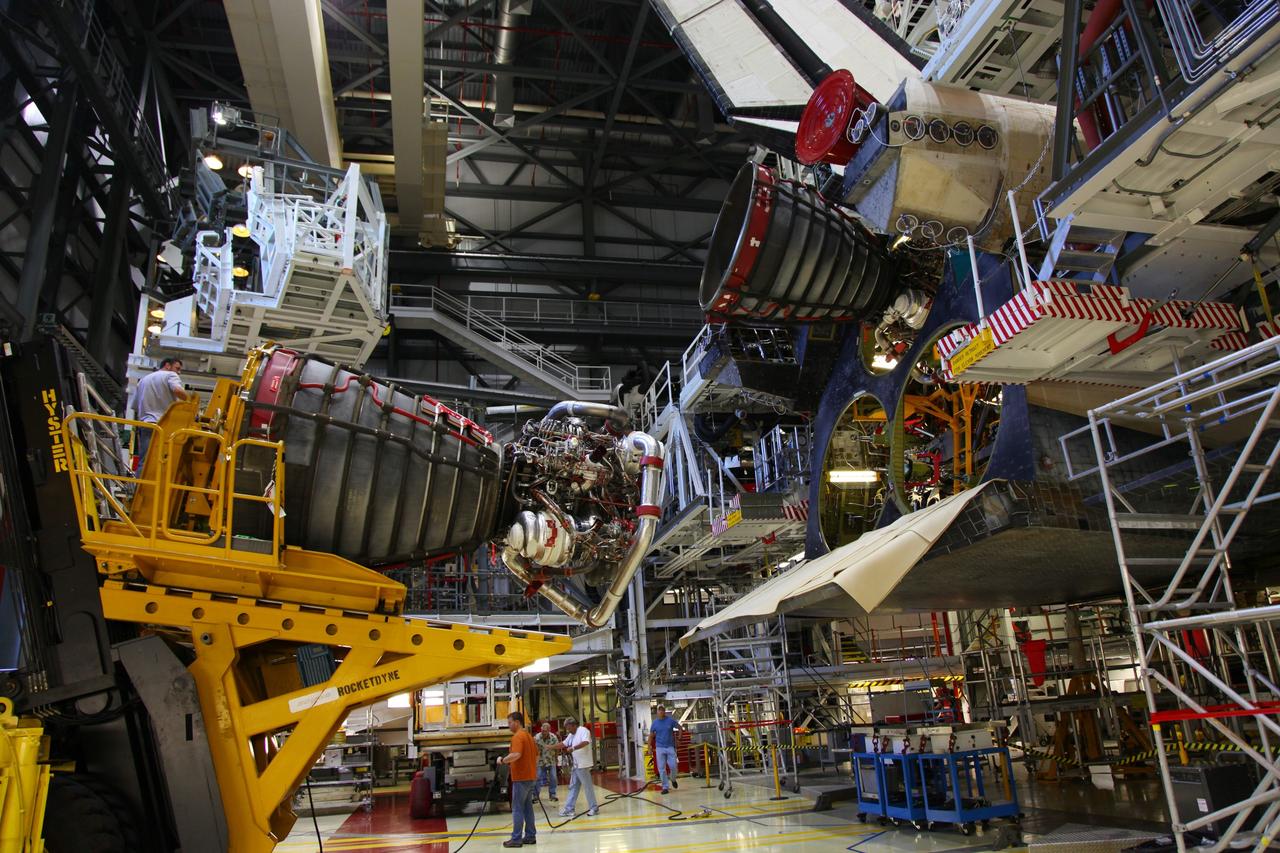
CAPE CANAVERAL, Fla. -- In Orbiter Processing Facility-2 at NASA’s Kennedy Space Center in Florida, technicians, using a Hyster forklift, have removed Engine #3 from space shuttle Atlantis. The engine will be transported to the Engine Shop for possible future use. Each of the three space shuttle main engines is 14 feet long and weighs 7,800 pounds. Removal of the space shuttle main engines is part of the Transition and Retirement work that is being performed in order to prepare Atlantis for eventual display at the Kennedy Space Center Visitor Complex in Florida. Photo credit: Frankie Martin
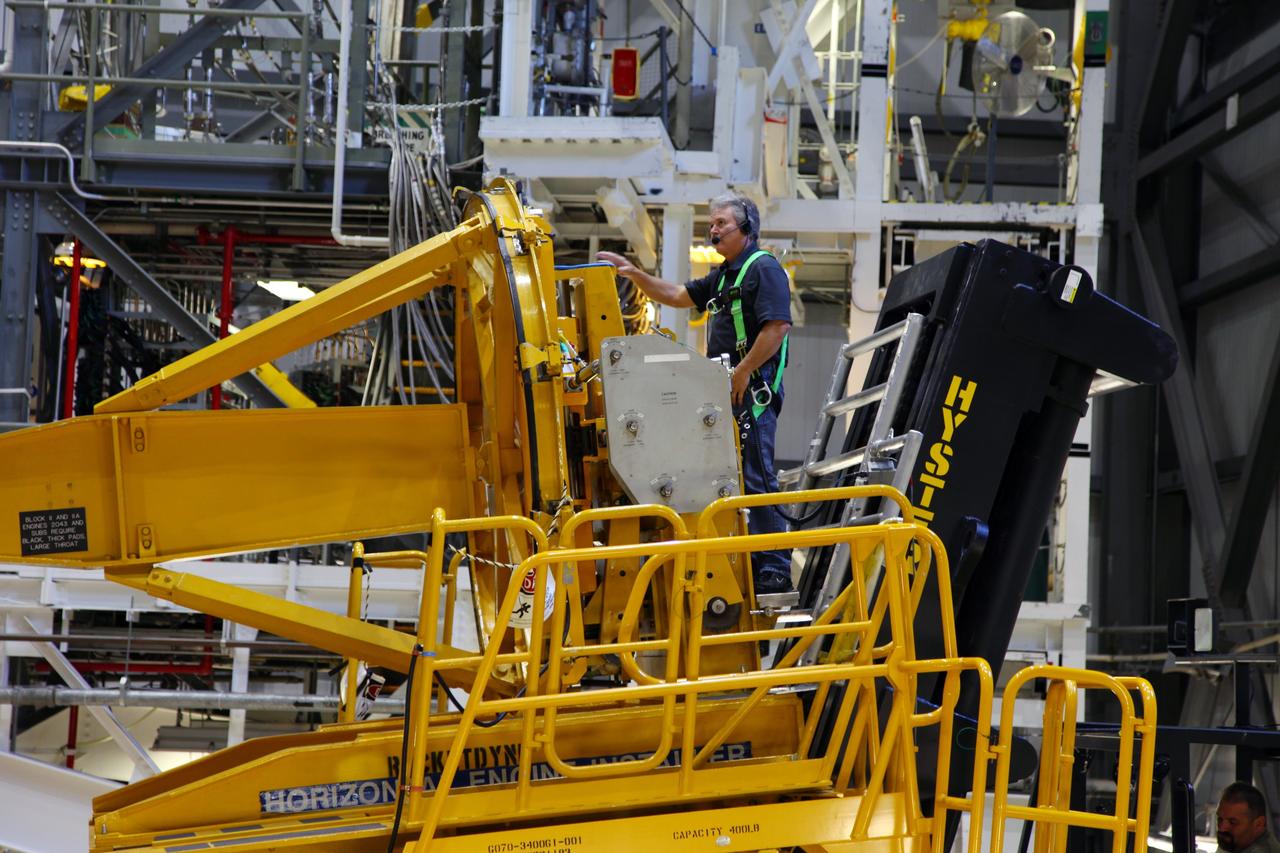
CAPE CANAVERAL, Fla. -- In Orbiter Processing Facility-2 at NASA’s Kennedy Space Center in Florida, a technician moves a Hyster forklift toward Engine #3 on space shuttle Atlantis. The forklift will be used to remove the engine and transport it to the Engine Shop for possible future use. Each of the three space shuttle main engines is 14 feet long and weighs 7,800 pounds. Removal of the space shuttle main engines is part of the Transition and Retirement work that is being performed in order to prepare Atlantis for eventual display at the Kennedy Space Center Visitor Complex in Florida. Photo credit: Frankie Martin
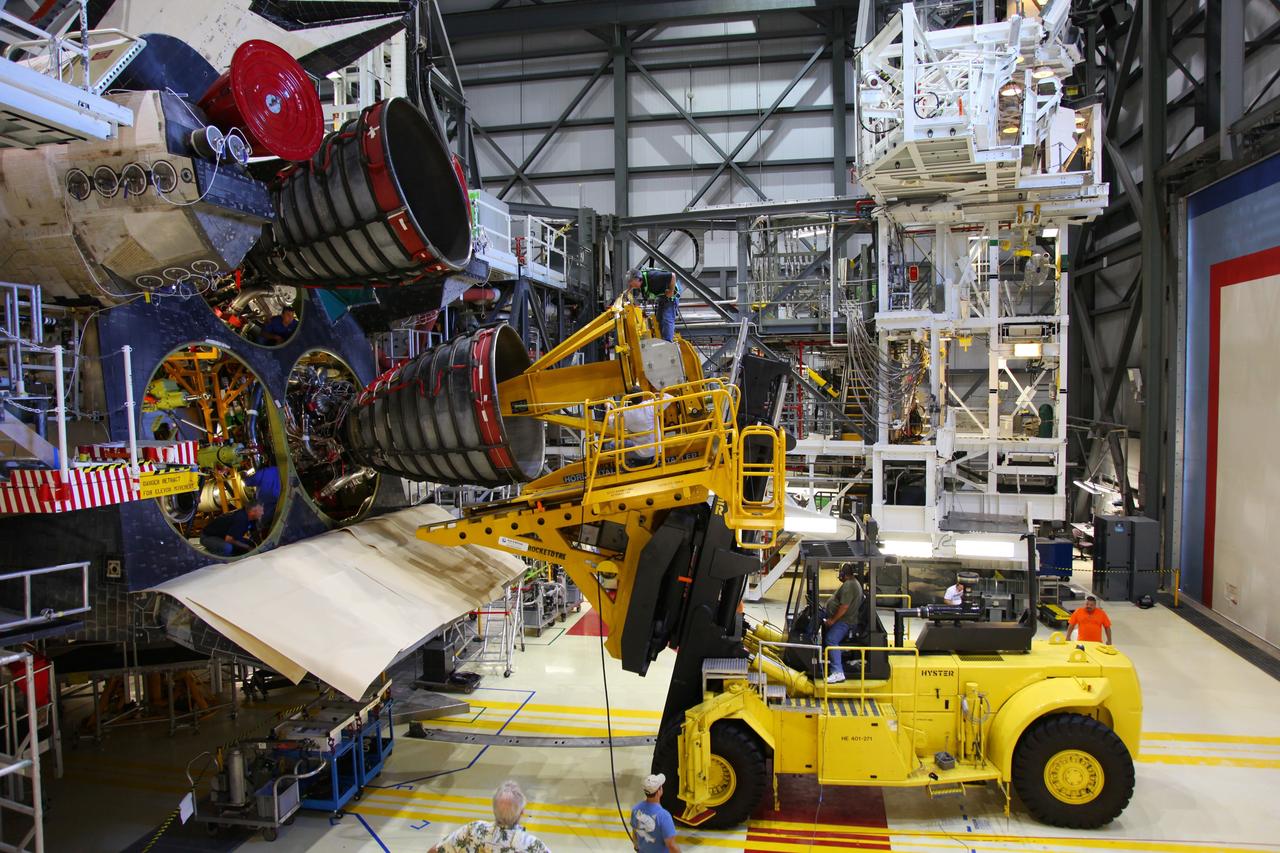
CAPE CANAVERAL, Fla. -- In Orbiter Processing Facility-2 at NASA’s Kennedy Space Center in Florida, technicians use a Hyster forklift to position an engine removal device on Engine #3 on space shuttle Atlantis. The forklift will be used to remove the engine and transport it to the Engine Shop for possible future use. Each of the three space shuttle main engines is 14 feet long and weighs 7,800 pounds. Removal of the space shuttle main engines is part of the Transition and Retirement work that is being performed in order to prepare Atlantis for eventual display at the Kennedy Space Center Visitor Complex in Florida. Photo credit: Frankie Martin