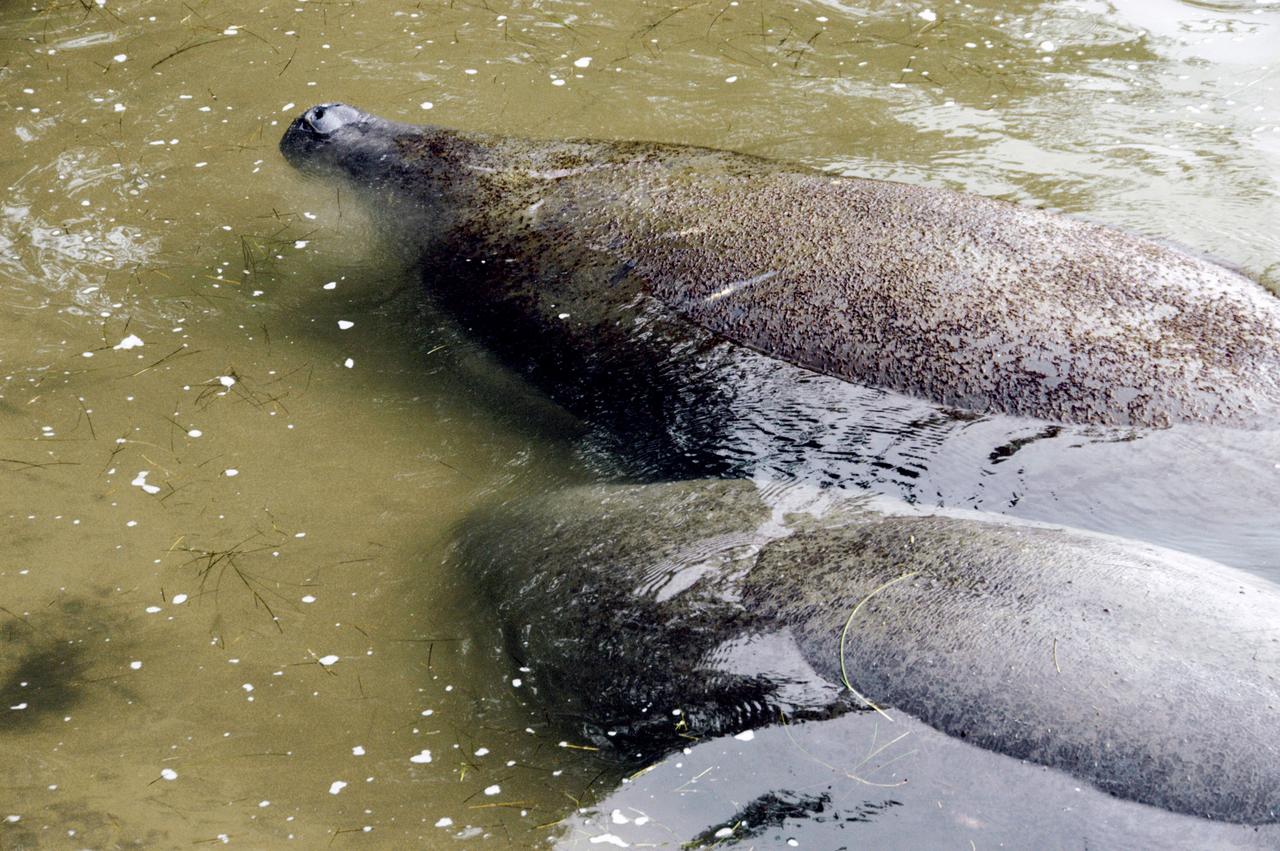
Manatees gather in the shallows of Banana Creek inside NASA's Kennedy Space Center. Manatees live in Florida's warm-water rivers and inland springs. The Florida manatee feeds on more than 60 varieties of grasses and plants. Manatee cows give birth about once every three years. Gestation lasts about 12 months. KSC shares a boundary with the Merritt Island National Wildlife Refuge, which encompasses 92,000 acres that are a habitat for more than 331 species of birds, 31 mammals, 117 fishes, and 65 amphibians and reptiles.
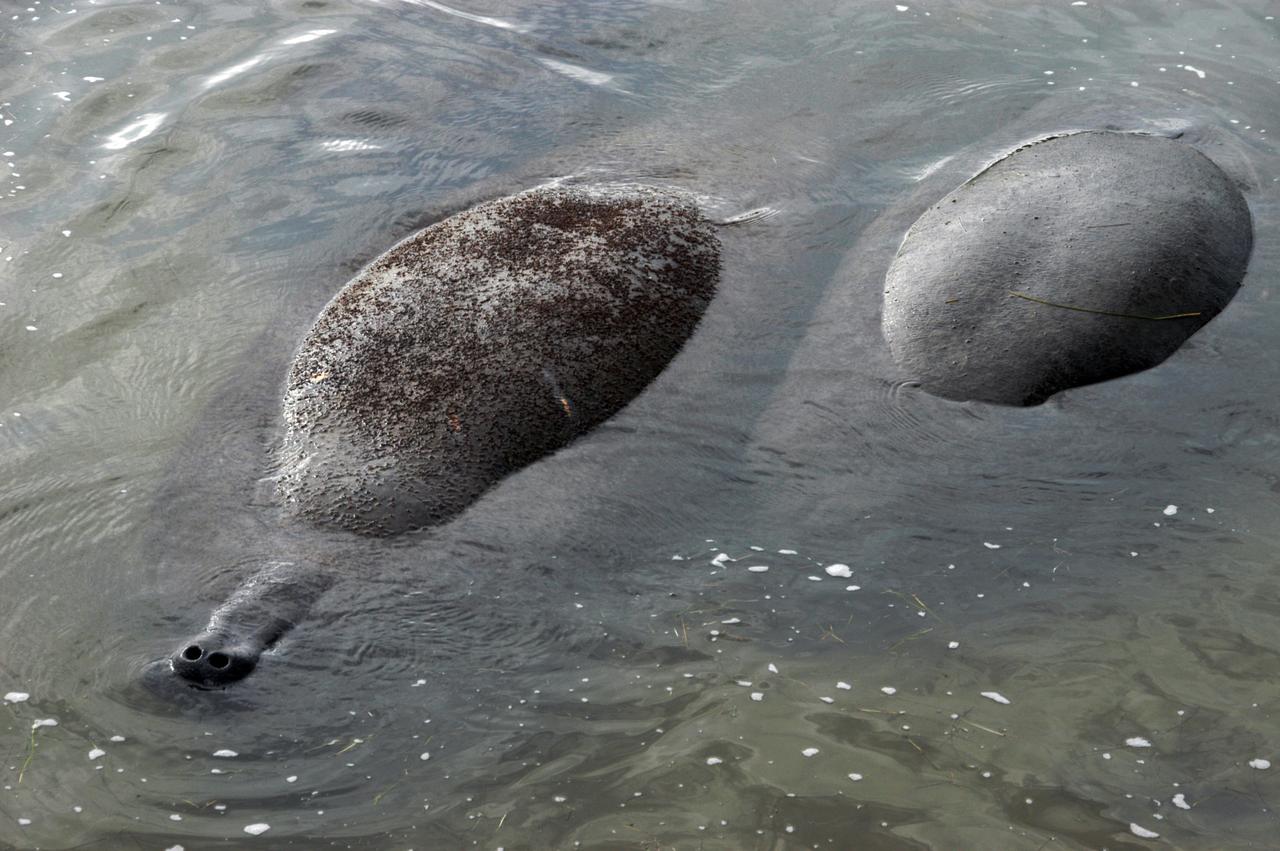
Manatees gather in the Banana Creek inside NASA's Kennedy Space Center. Manatees live in Florida's warm-water rivers and inland springs. The Florida manatee feeds on more than 60 varieties of grasses and plants. Manatee cows give birth about once every three years. Gestation lasts about 12 months. KSC shares a boundary with the Merritt Island National Wildlife Refuge, which encompasses 92,000 acres that are a habitat for more than 331 species of birds, 31 mammals, 117 fishes, and 65 amphibians and reptiles.
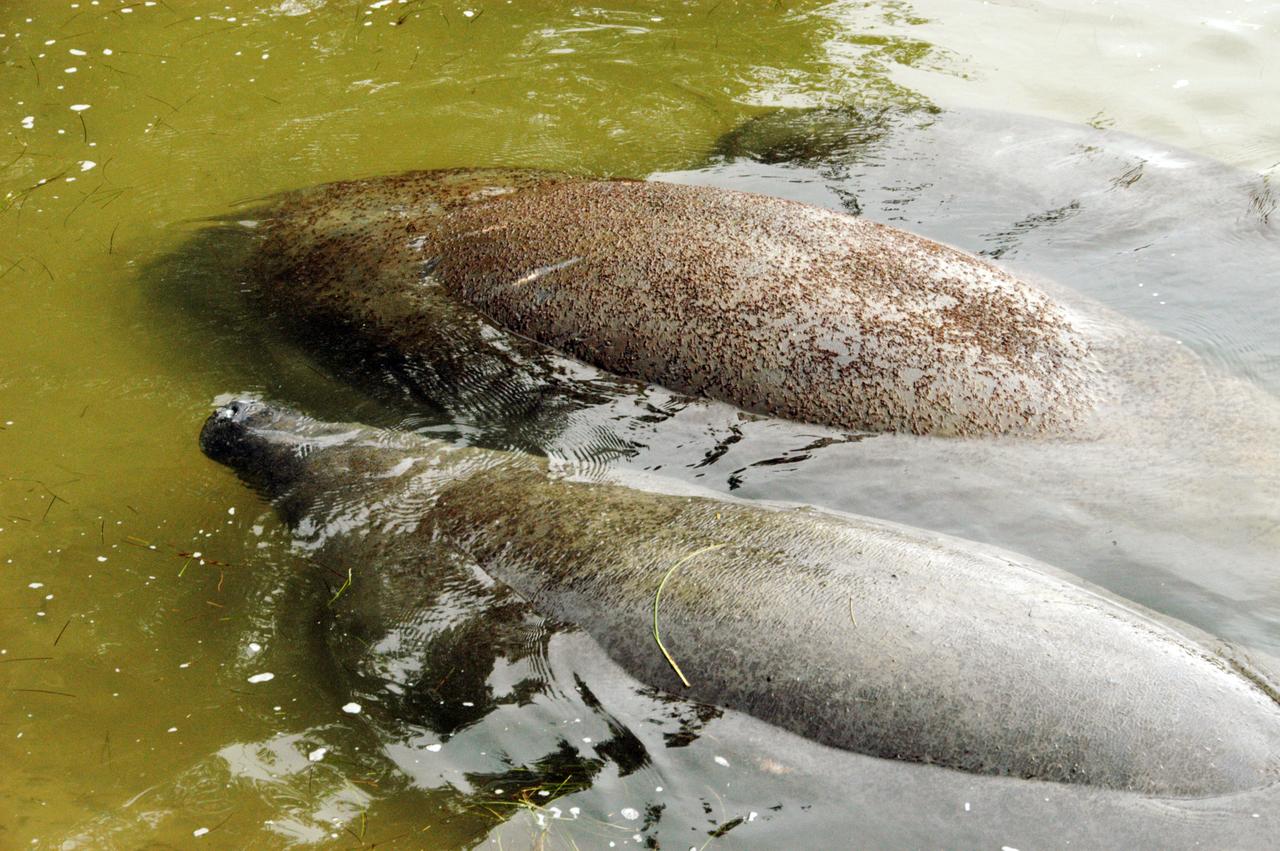
Manatees gather in the shallows of Banana Creek inside NASA's Kennedy Space Center. Manatees live in Florida's warm-water rivers and inland springs. The Florida manatee feeds on more than 60 varieties of grasses and plants. Manatee cows give birth about once every three years. Gestation lasts about 12 months. KSC shares a boundary with the Merritt Island National Wildlife Refuge, which encompasses 92,000 acres that are a habitat for more than 331 species of birds, 31 mammals, 117 fishes, and 65 amphibians and reptiles.
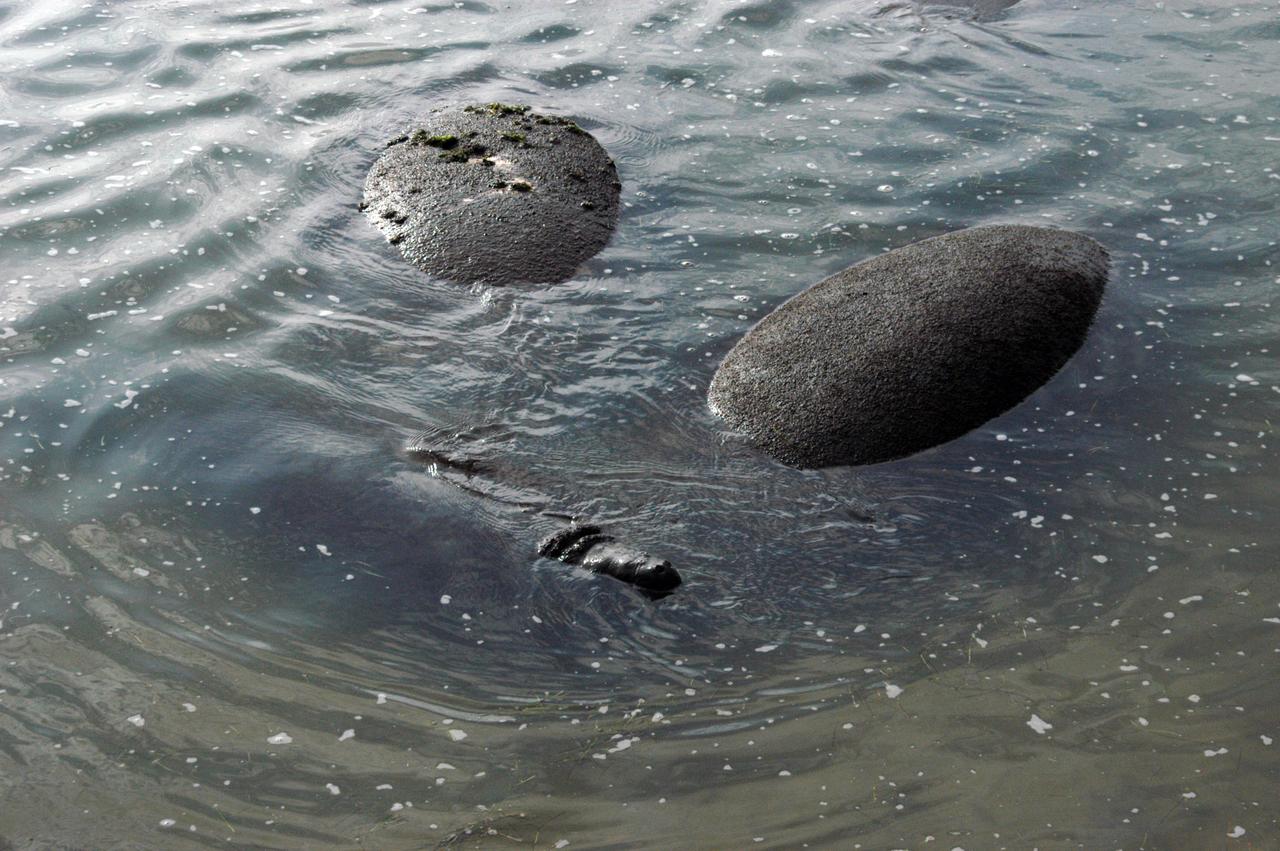
Manatees gather in the Banana Creek inside NASA's Kennedy Space Center. Manatees live in Florida's warm-water rivers and inland springs. The Florida manatee feeds on more than 60 varieties of grasses and plants. Manatee cows give birth about once every three years. Gestation lasts about 12 months. KSC shares a boundary with the Merritt Island National Wildlife Refuge, which encompasses 92,000 acres that are a habitat for more than 331 species of birds, 31 mammals, 117 fishes, and 65 amphibians and reptiles.
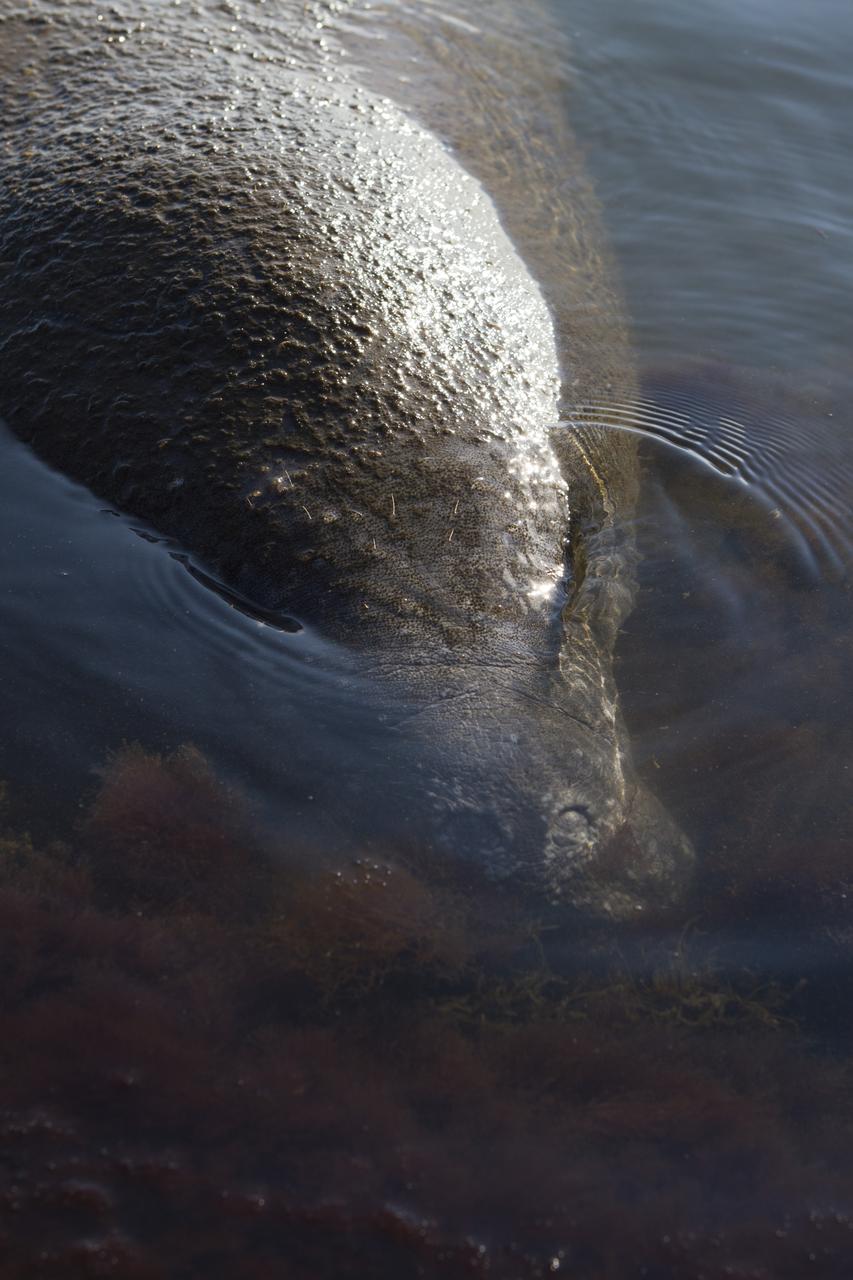
CAPE CANAVERAL, Fla. -- A manatee swims in the water near the NASA Causeway Bridge at Kennedy Space Center in Florida. The gentle sea cows prefer warmer inland waterways during the winter months. The center shares a boundary with the Merritt Island National Wildlife Refuge. The refuge encompasses 140,000 acres that are a habitat for more than 330 species of birds, 31 mammals, 117 fishes, and 65 amphibians and reptiles. It contains more than 1,000 known plant species. The marshes and open water of the refuge provide wintering areas for 23 species of migratory waterfowl, as well as a year-round home for great blue herons, great egrets, wood storks, cormorants, brown pelicans and other species of marsh and shore birds, and a variety of insects. Photo credit: NASA/Ben Smegelsky
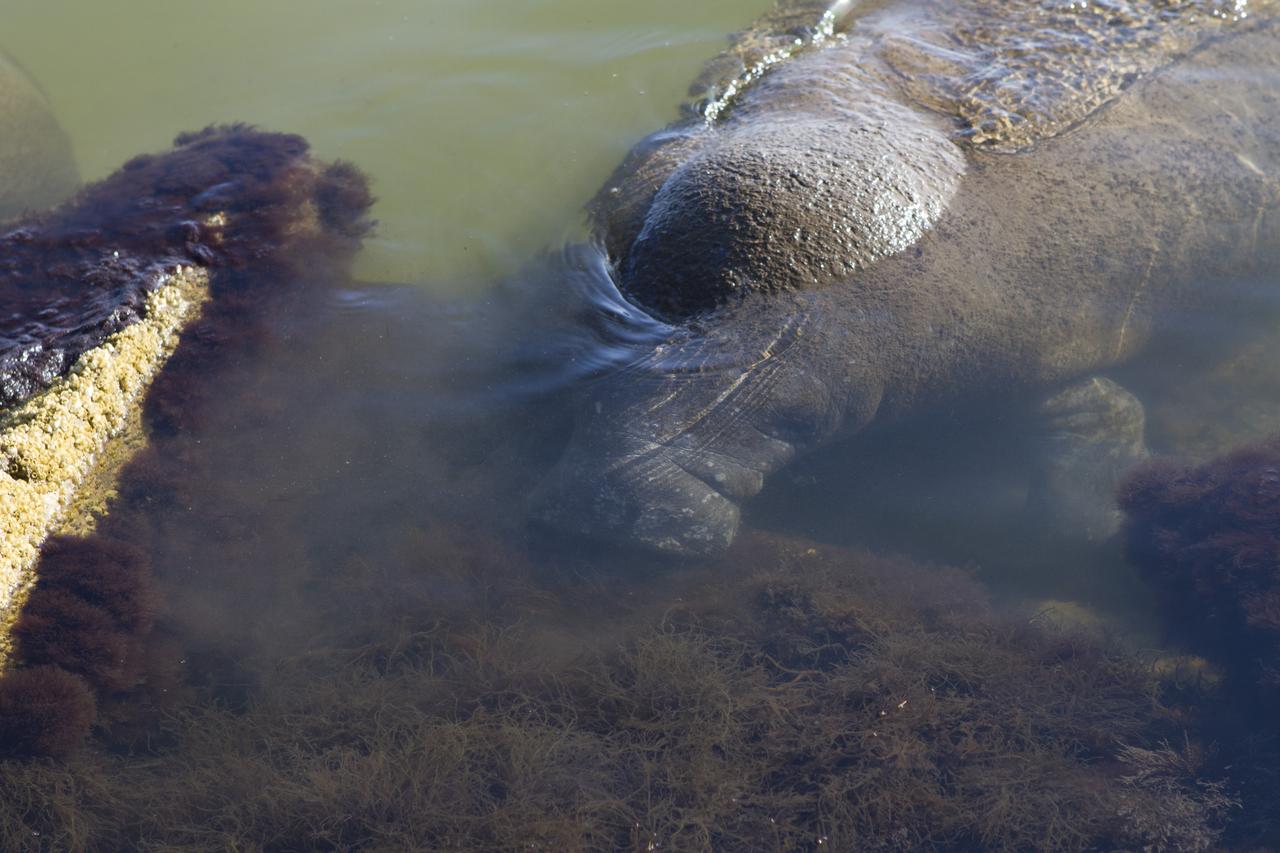
CAPE CANAVERAL, Fla. -- A manatee swims in the water near the NASA Causeway Bridge at Kennedy Space Center in Florida. The gentle sea cows prefer warmer inland waterways during the winter months. The center shares a boundary with the Merritt Island National Wildlife Refuge. The refuge encompasses 140,000 acres that are a habitat for more than 330 species of birds, 31 mammals, 117 fishes, and 65 amphibians and reptiles. It contains more than 1,000 known plant species. The marshes and open water of the refuge provide wintering areas for 23 species of migratory waterfowl, as well as a year-round home for great blue herons, great egrets, wood storks, cormorants, brown pelicans and other species of marsh and shore birds, and a variety of insects. Photo credit: NASA/Ben Smegelsky
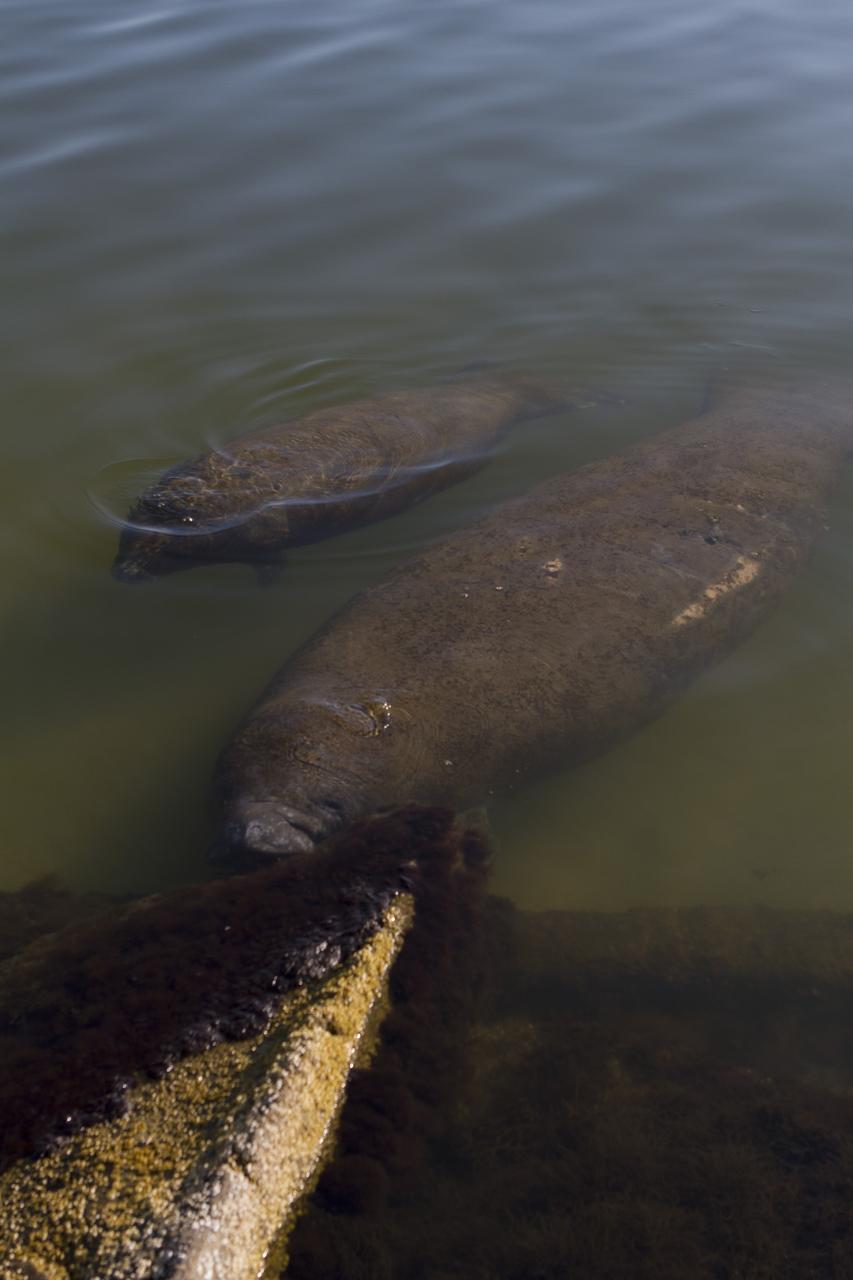
CAPE CANAVERAL, Fla. -- Two manatees swim in the water near the NASA Causeway Bridge at Kennedy Space Center in Florida. The gentle sea cows prefer warmer inland waterways during the winter months. The center shares a boundary with the Merritt Island National Wildlife Refuge. The refuge encompasses 140,000 acres that are a habitat for more than 330 species of birds, 31 mammals, 117 fishes, and 65 amphibians and reptiles. It contains more than 1,000 known plant species. The marshes and open water of the refuge provide wintering areas for 23 species of migratory waterfowl, as well as a year-round home for great blue herons, great egrets, wood storks, cormorants, brown pelicans and other species of marsh and shore birds, and a variety of insects. Photo credit: NASA/Ben Smegelsky
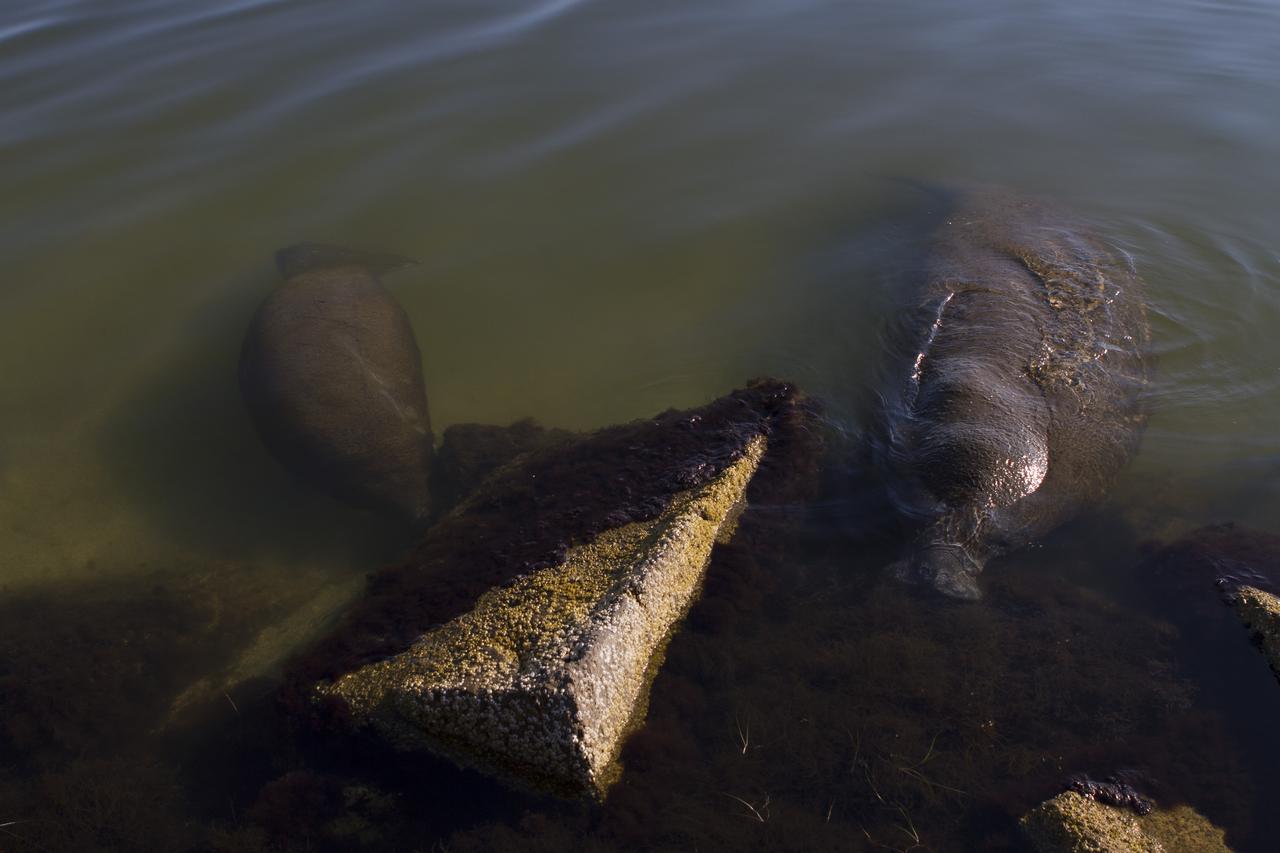
CAPE CANAVERAL, Fla. -- Two manatees swim in the water near the NASA Causeway Bridge at Kennedy Space Center in Florida. The gentle sea cows prefer warmer inland waterways during the winter months. The center shares a boundary with the Merritt Island National Wildlife Refuge. The refuge encompasses 140,000 acres that are a habitat for more than 330 species of birds, 31 mammals, 117 fishes, and 65 amphibians and reptiles. It contains more than 1,000 known plant species. The marshes and open water of the refuge provide wintering areas for 23 species of migratory waterfowl, as well as a year-round home for great blue herons, great egrets, wood storks, cormorants, brown pelicans and other species of marsh and shore birds, and a variety of insects. Photo credit: NASA/Ben Smegelsky
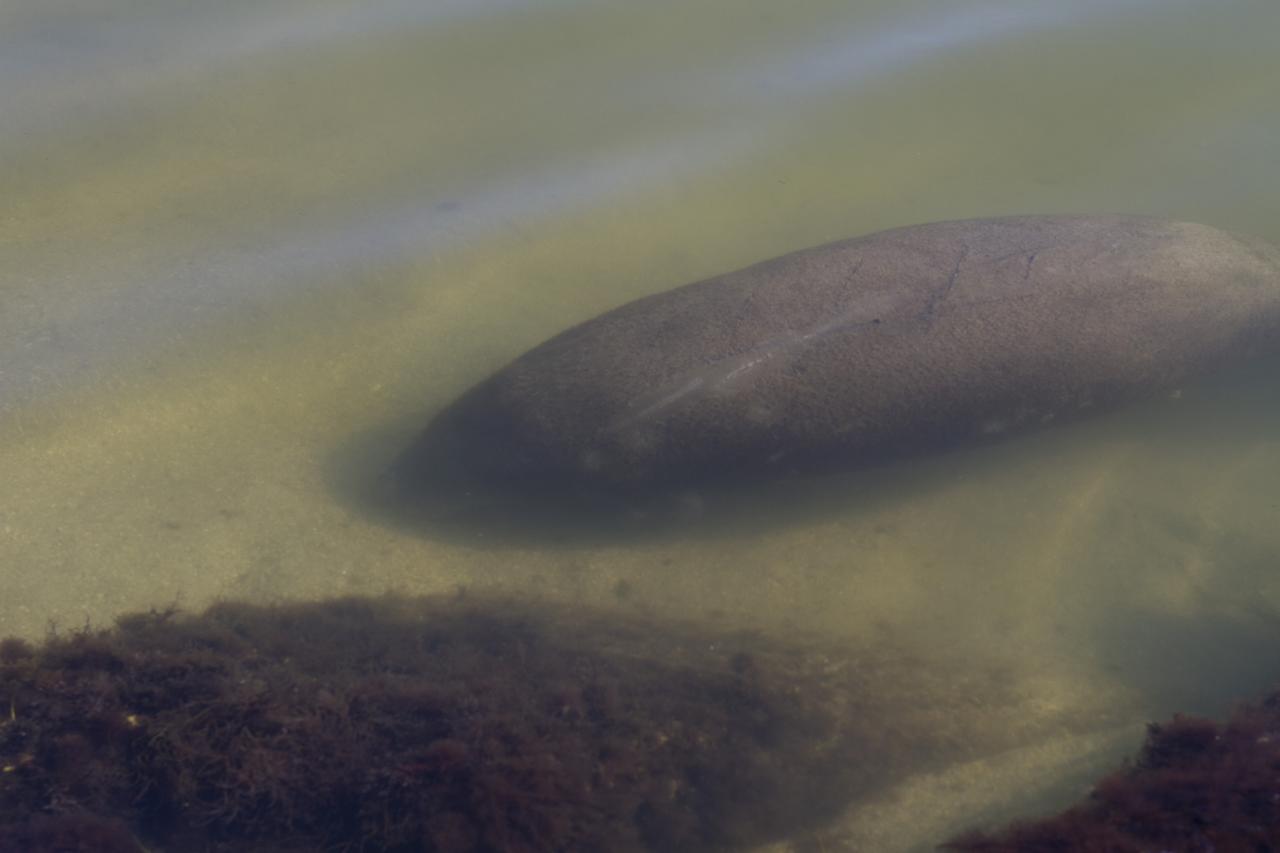
CAPE CANAVERAL, Fla. -- A manatee swims in the water near the NASA Causeway Bridge at Kennedy Space Center in Florida. The gentle sea cows prefer warmer inland waterways during the winter months. The center shares a boundary with the Merritt Island National Wildlife Refuge. The refuge encompasses 140,000 acres that are a habitat for more than 330 species of birds, 31 mammals, 117 fishes, and 65 amphibians and reptiles. It contains more than 1,000 known plant species. The marshes and open water of the refuge provide wintering areas for 23 species of migratory waterfowl, as well as a year-round home for great blue herons, great egrets, wood storks, cormorants, brown pelicans and other species of marsh and shore birds, and a variety of insects. Photo credit: NASA/Ben Smegelsky
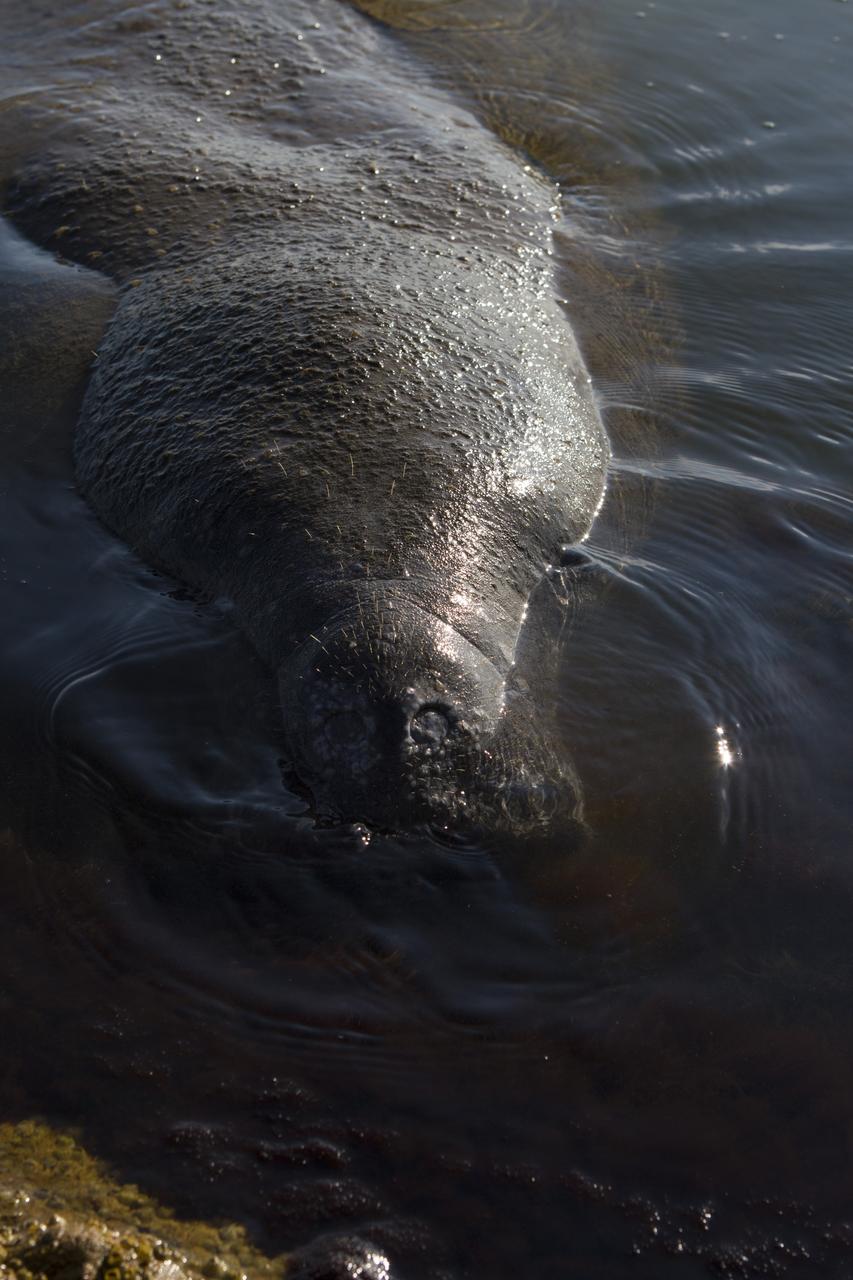
CAPE CANAVERAL, Fla. -- A manatee swims in the water near the NASA Causeway Bridge at Kennedy Space Center in Florida. The gentle sea cows prefer warmer inland waterways during the winter months. The center shares a boundary with the Merritt Island National Wildlife Refuge. The refuge encompasses 140,000 acres that are a habitat for more than 330 species of birds, 31 mammals, 117 fishes, and 65 amphibians and reptiles. It contains more than 1,000 known plant species. The marshes and open water of the refuge provide wintering areas for 23 species of migratory waterfowl, as well as a year-round home for great blue herons, great egrets, wood storks, cormorants, brown pelicans and other species of marsh and shore birds, and a variety of insects. Photo credit: NASA/Ben Smegelsky
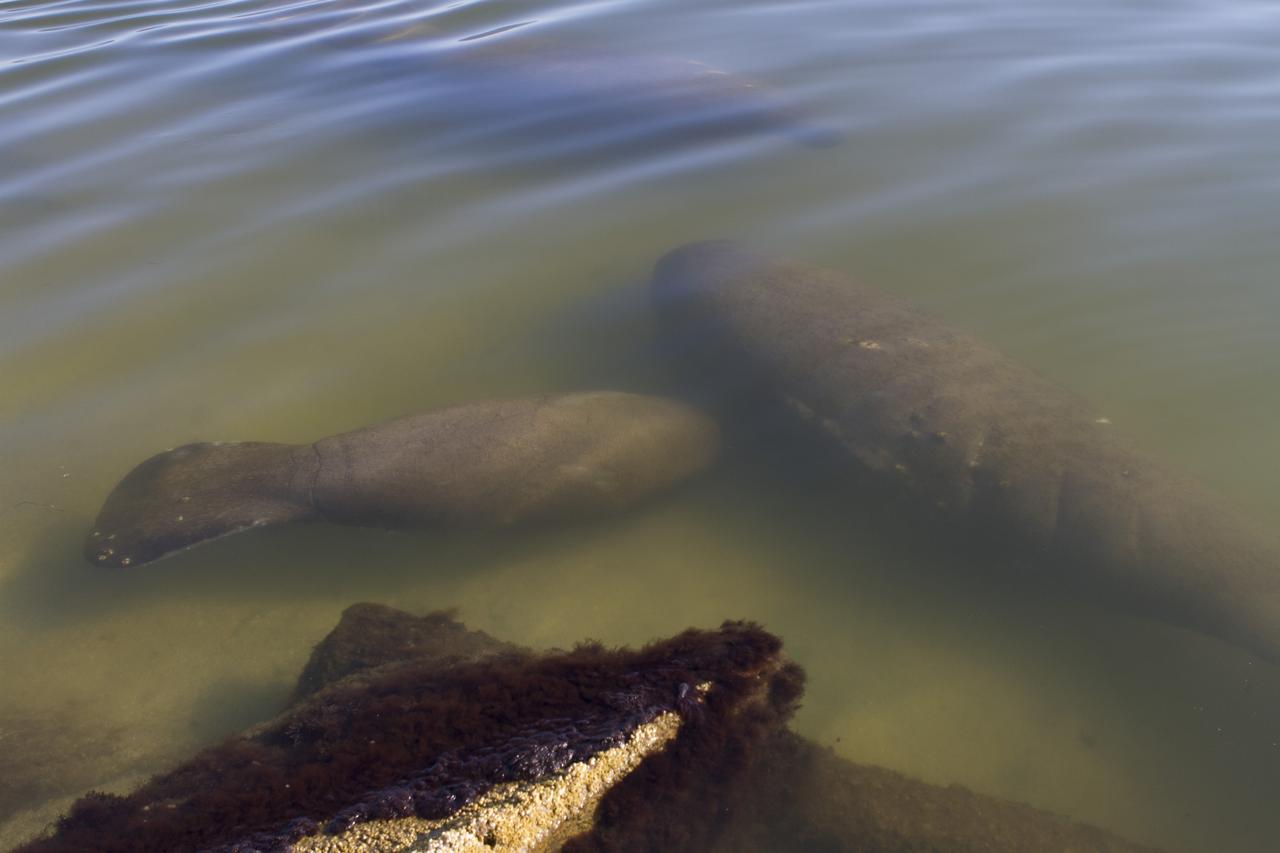
CAPE CANAVERAL, Fla. -- Two manatees swim in the water near the NASA Causeway Bridge at Kennedy Space Center in Florida. The gentle sea cows prefer warmer inland waterways during the winter months. The center shares a boundary with the Merritt Island National Wildlife Refuge. The refuge encompasses 140,000 acres that are a habitat for more than 330 species of birds, 31 mammals, 117 fishes, and 65 amphibians and reptiles. It contains more than 1,000 known plant species. The marshes and open water of the refuge provide wintering areas for 23 species of migratory waterfowl, as well as a year-round home for great blue herons, great egrets, wood storks, cormorants, brown pelicans and other species of marsh and shore birds, and a variety of insects. Photo credit: NASA/Ben Smegelsky
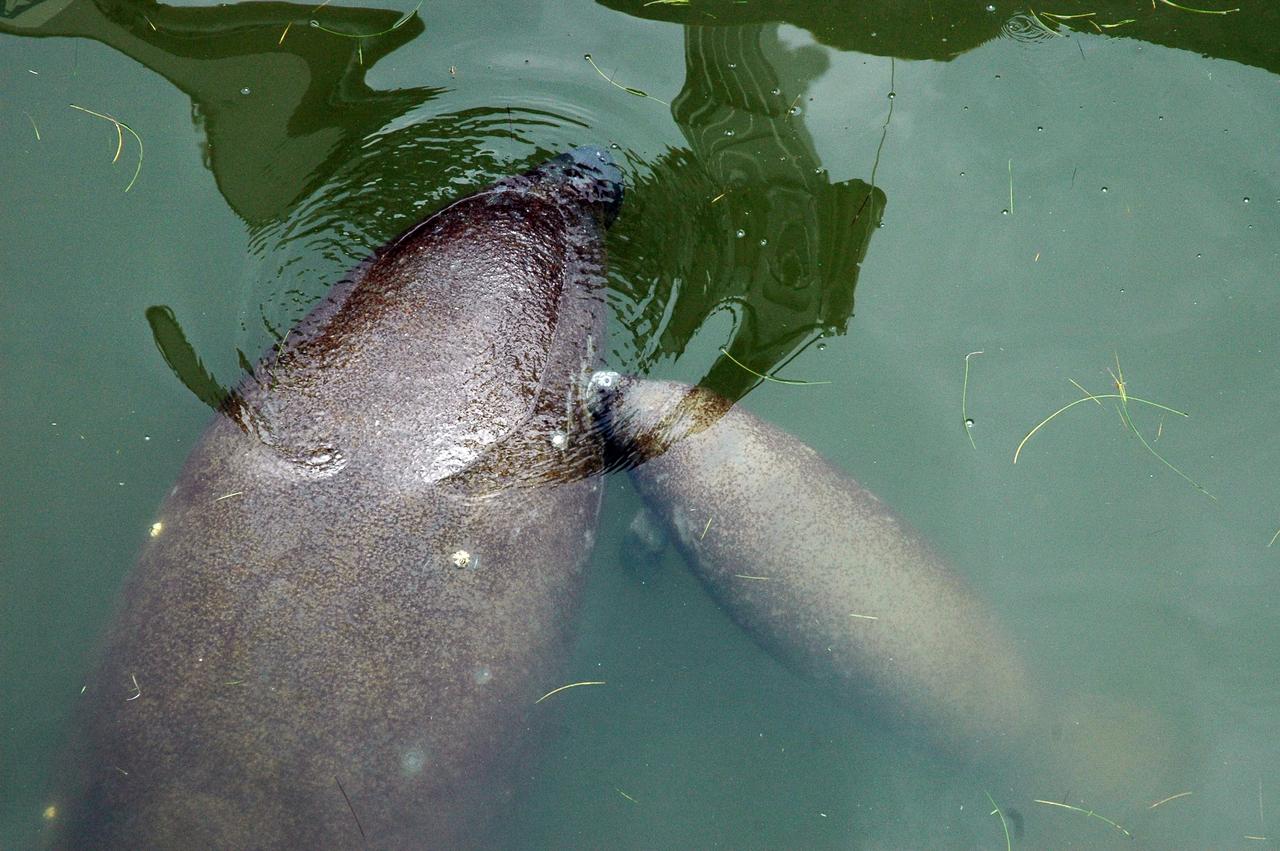
CAPE CANAVERAL, Fla. – Two manatees frolic in the Banana Creek at Cape Canaveral Air Force Station, adjacent to NASA’s Kennedy Space Center. Manatees live in Florida’s warm-water rivers and inland springs. The Florida manatee feeds on more than 60 varieties of grasses and plants. Kennedy shares a boundary with the Merritt Island National Wildlife Refuge, which encompasses 92,000 acres that are a habitat for more than 330 species of birds, 25 mammals, 117 fishes and 65 amphibians and reptiles. Photo credit: NASA/Ben Smegelsky
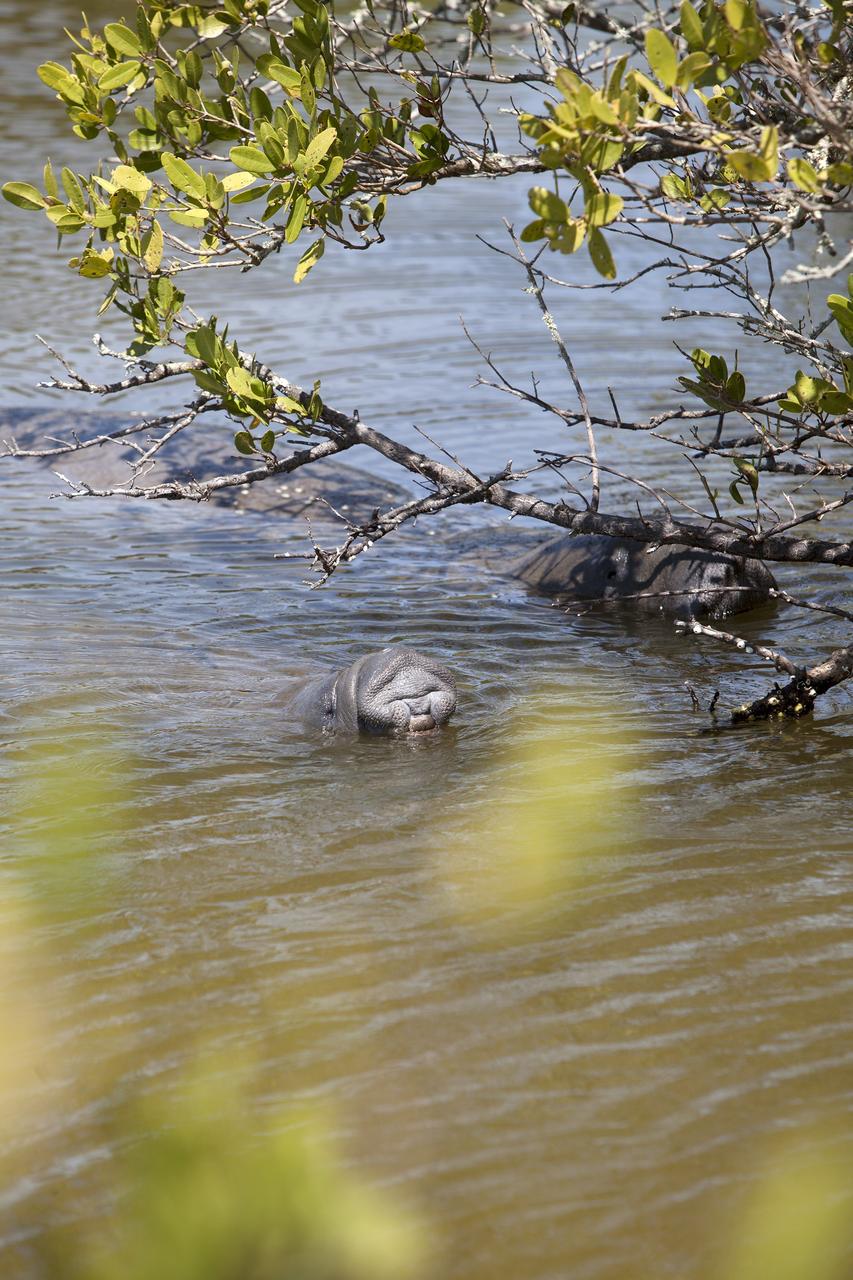
CAPE CANAVERAL, Fla. – A parent and a baby manatee come up for air beneath the branches of a mangrove in a creek at NASA's Kennedy Space Center in Florida. The center shares a boundary with the Merritt Island National Wildlife Refuge, which encompasses 140,000 acres that provide a habitat for more than 330 species of birds, 31 mammals, 117 fishes, and 65 amphibians and reptiles. Photo credit: NASA/Daniel Casper
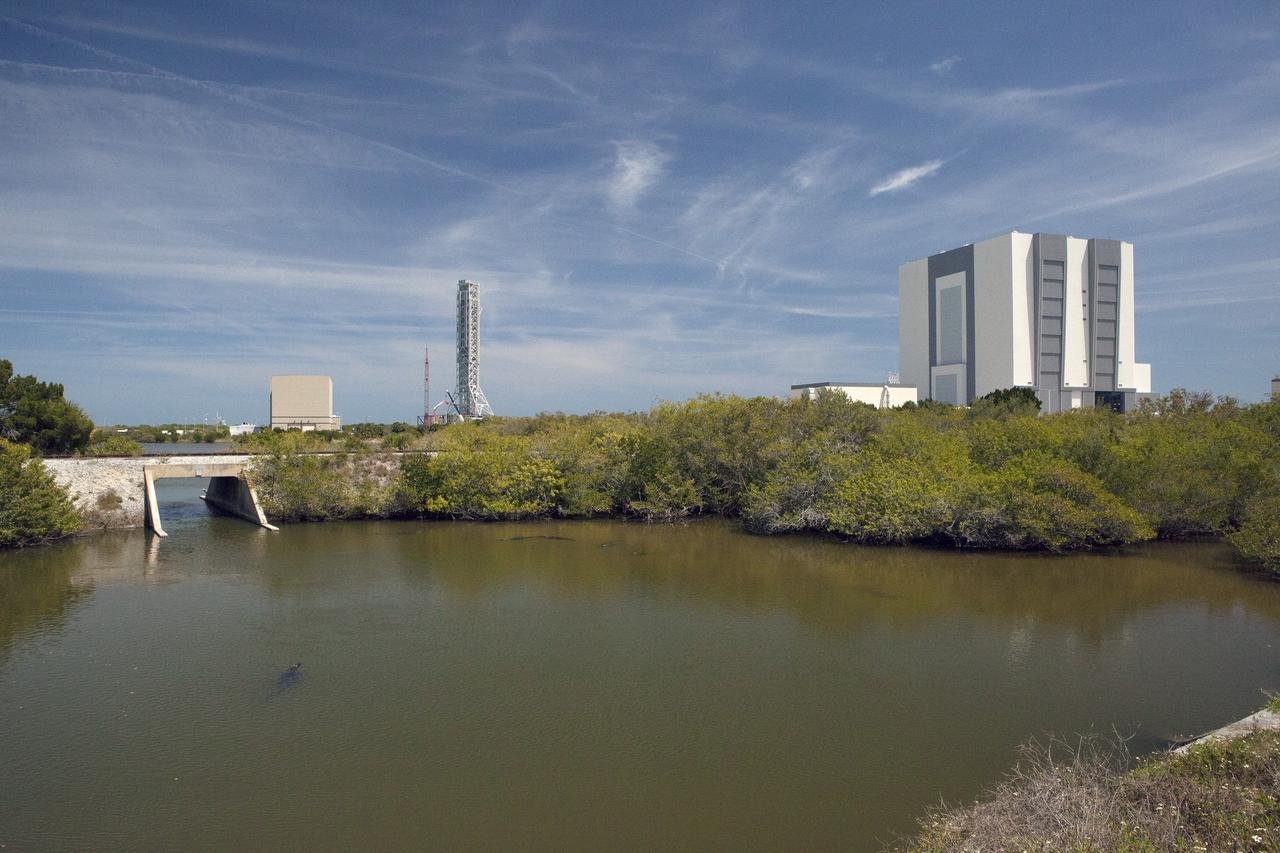
CAPE CANAVERAL, Fla. – Manatees and alligators gather in a creek at Kennedy Space Center's Launch Complex 39 area. In the background from left to right are the Rotation, Processing and Surge Facility, mobile launcher and Vehicle Assembly Building. The center shares a boundary with the Merritt Island National Wildlife Refuge, which encompasses 140,000 acres that provide a habitat for more than 330 species of birds, 31 mammals, 117 fishes, and 65 amphibians and reptiles. Photo credit: NASA/Daniel Casper
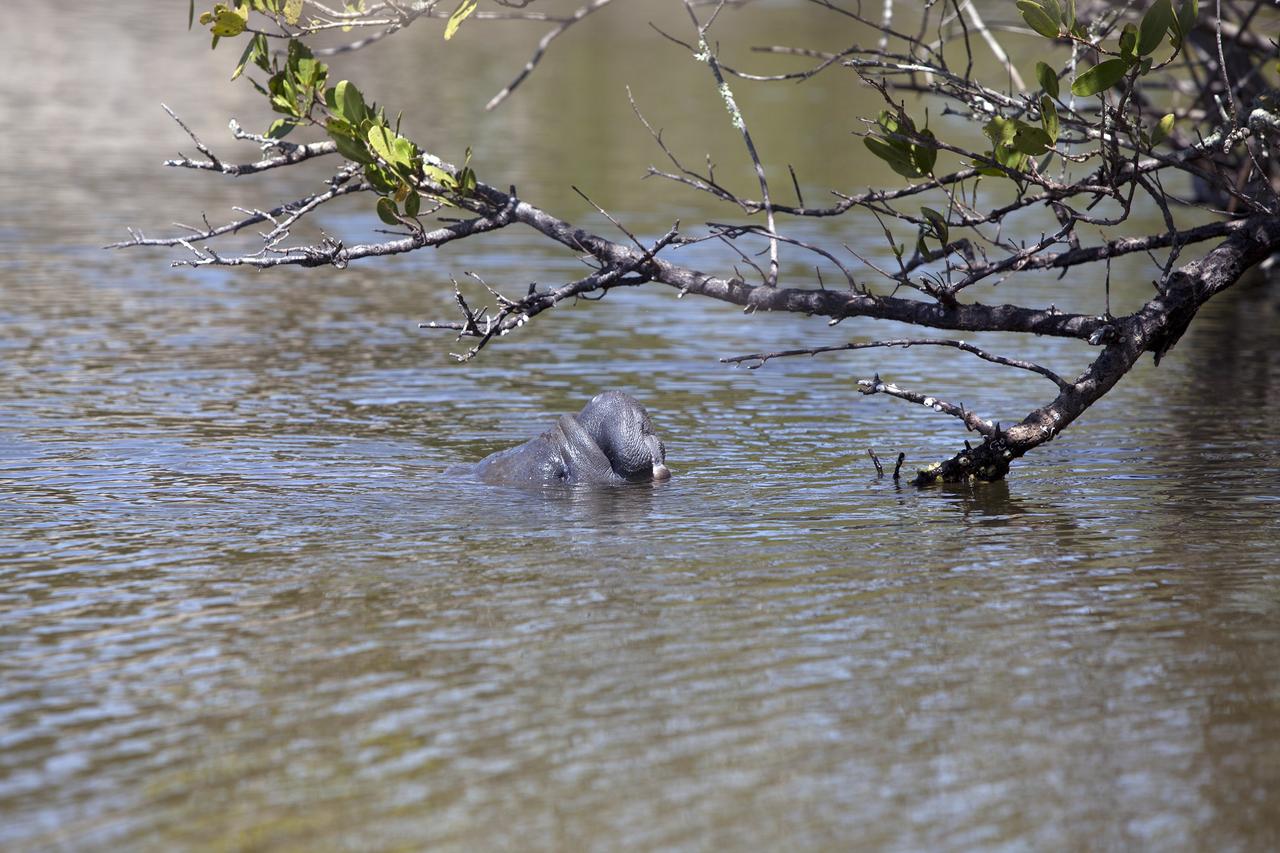
CAPE CANAVERAL, Fla. – A manatee raises its eyes and nose above the waterline in a creek at NASA's Kennedy Space Center in Florida. The center shares a boundary with the Merritt Island National Wildlife Refuge, which encompasses 140,000 acres that provide a habitat for more than 330 species of birds, 31 mammals, 117 fishes, and 65 amphibians and reptiles. Photo credit: NASA/Daniel Casper
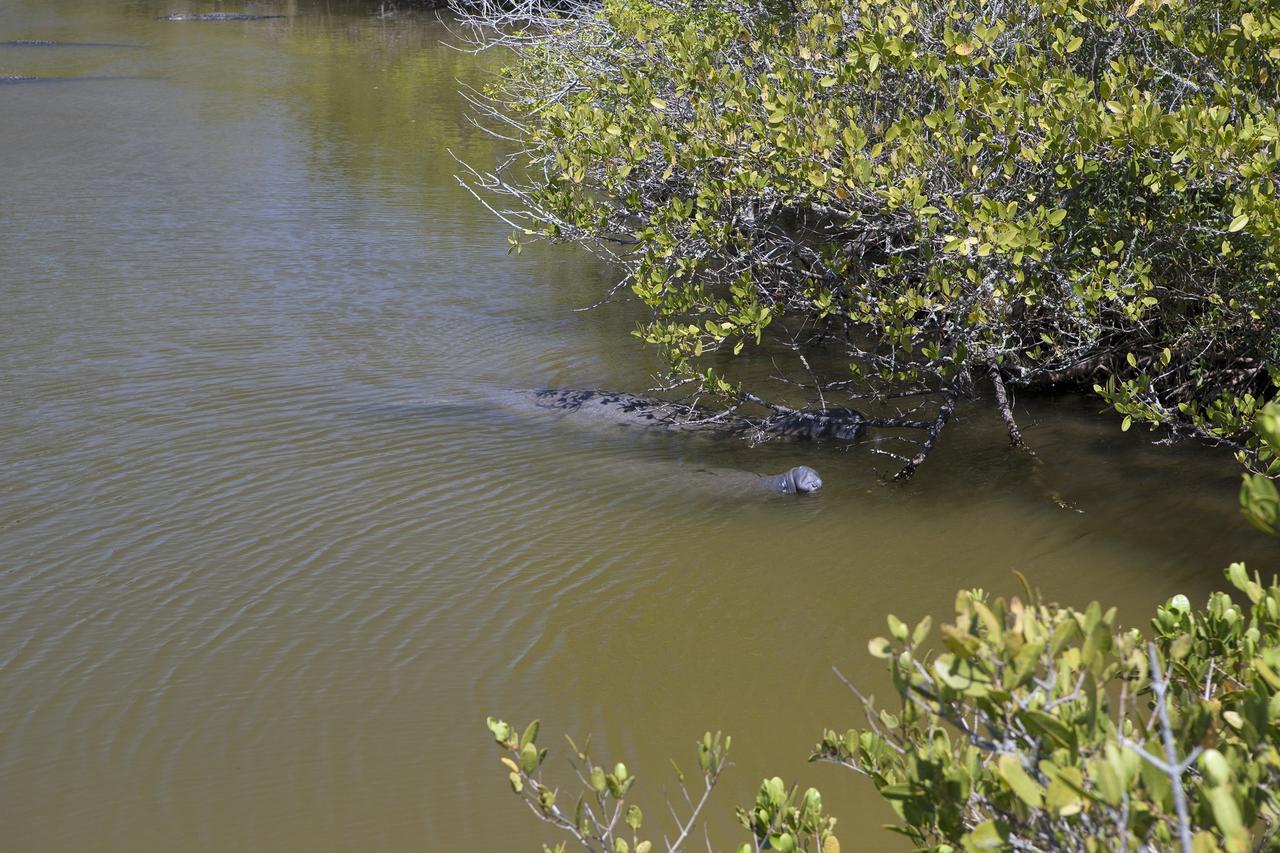
CAPE CANAVERAL, Fla. – A parent and a baby manatee come up for air beneath the branches of a mangrove in a creek at NASA's Kennedy Space Center in Florida. The center shares a boundary with the Merritt Island National Wildlife Refuge, which encompasses 140,000 acres that provide a habitat for more than 330 species of birds, 31 mammals, 117 fishes, and 65 amphibians and reptiles. Photo credit: NASA/Daniel Casper
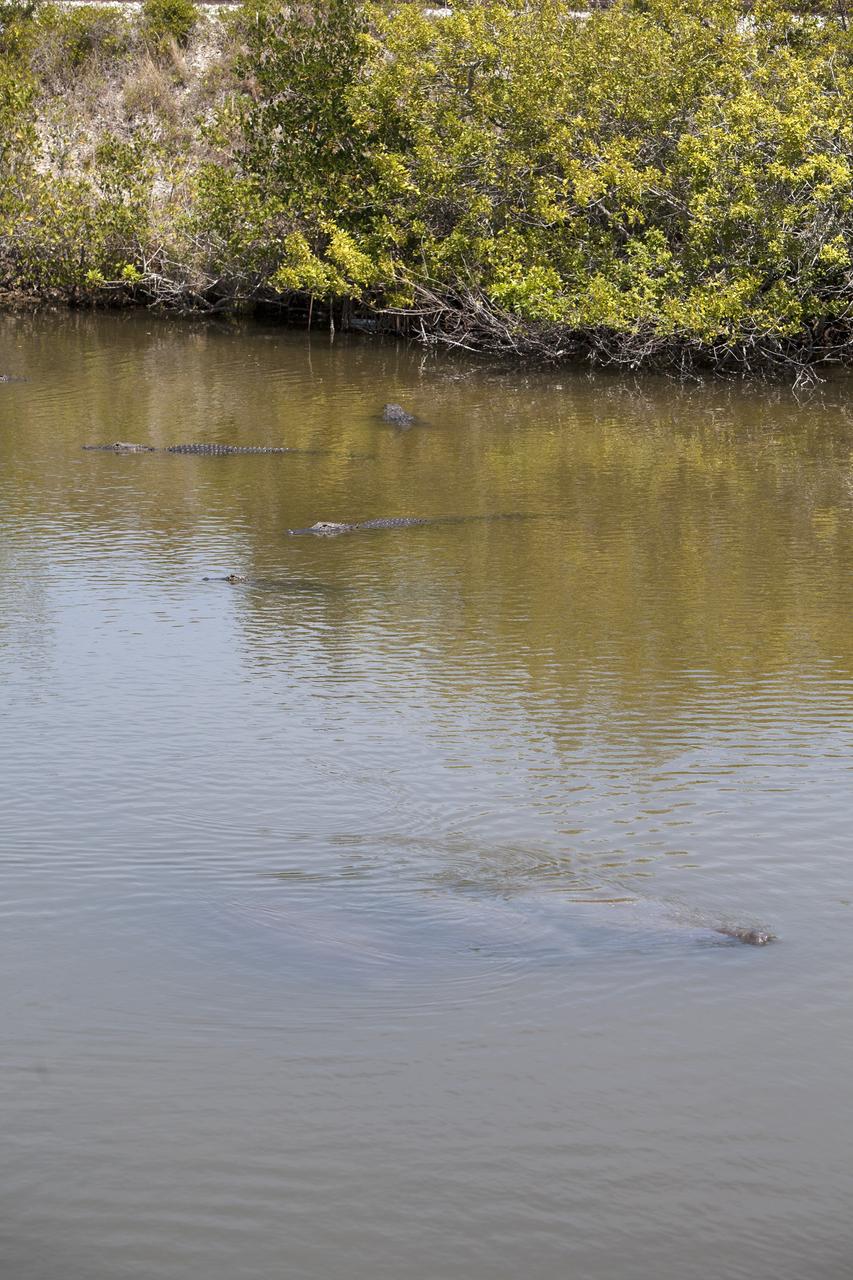
CAPE CANAVERAL, Fla. – In a creek at NASA's Kennedy Space Center in Florida, a manatee in the foreground comes up for air, unbothered by a group of nearby alligators. The center shares a boundary with the Merritt Island National Wildlife Refuge, which encompasses 140,000 acres that provide a habitat for more than 330 species of birds, 31 mammals, 117 fishes, and 65 amphibians and reptiles. Photo credit: NASA/Daniel Casper
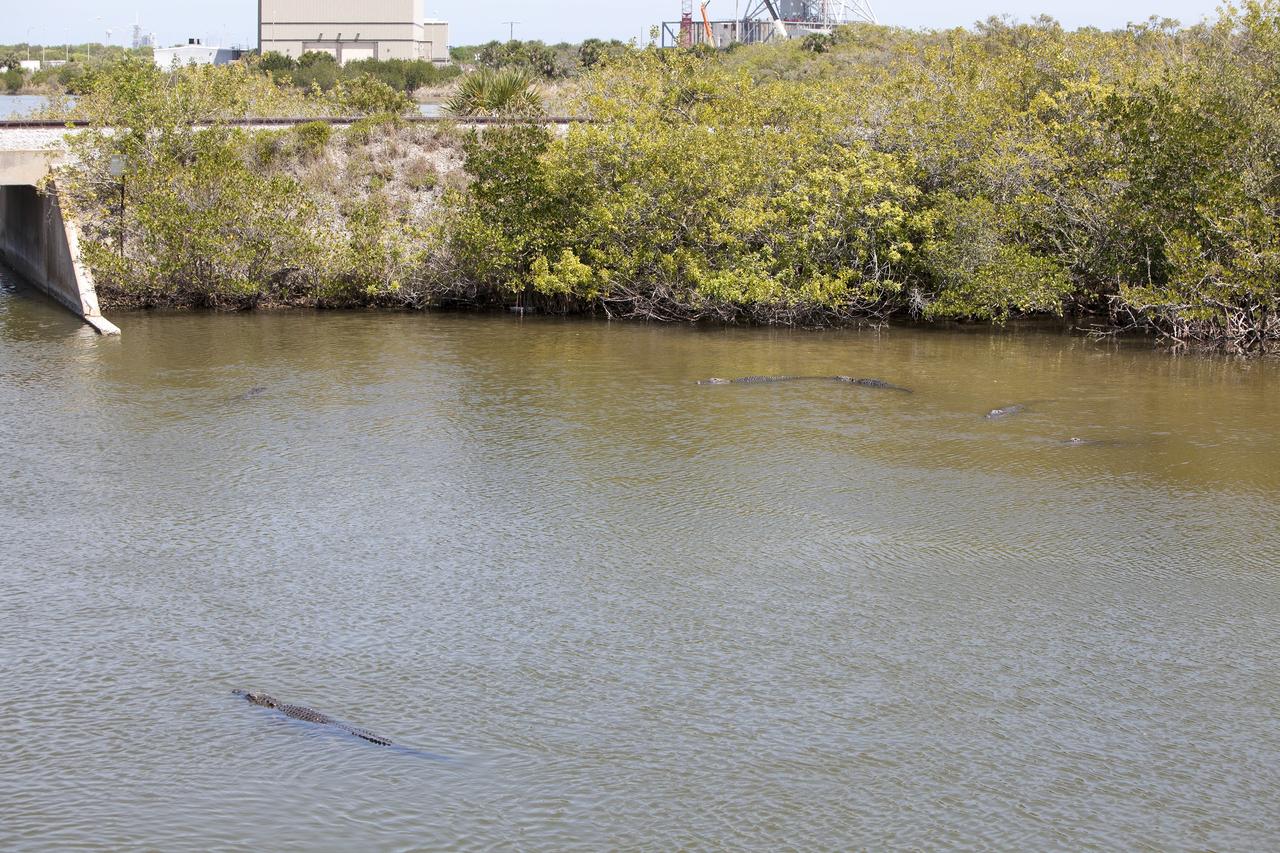
CAPE CANAVERAL, Fla. – The NASA Railroad track borders a creek that often serves as a popular gathering place for alligators and manatees at Kennedy Space Center in Florida. The center shares a boundary with the Merritt Island National Wildlife Refuge, which encompasses 140,000 acres that provide a habitat for more than 330 species of birds, 31 mammals, 117 fishes, and 65 amphibians and reptiles. Photo credit: NASA/Daniel Casper
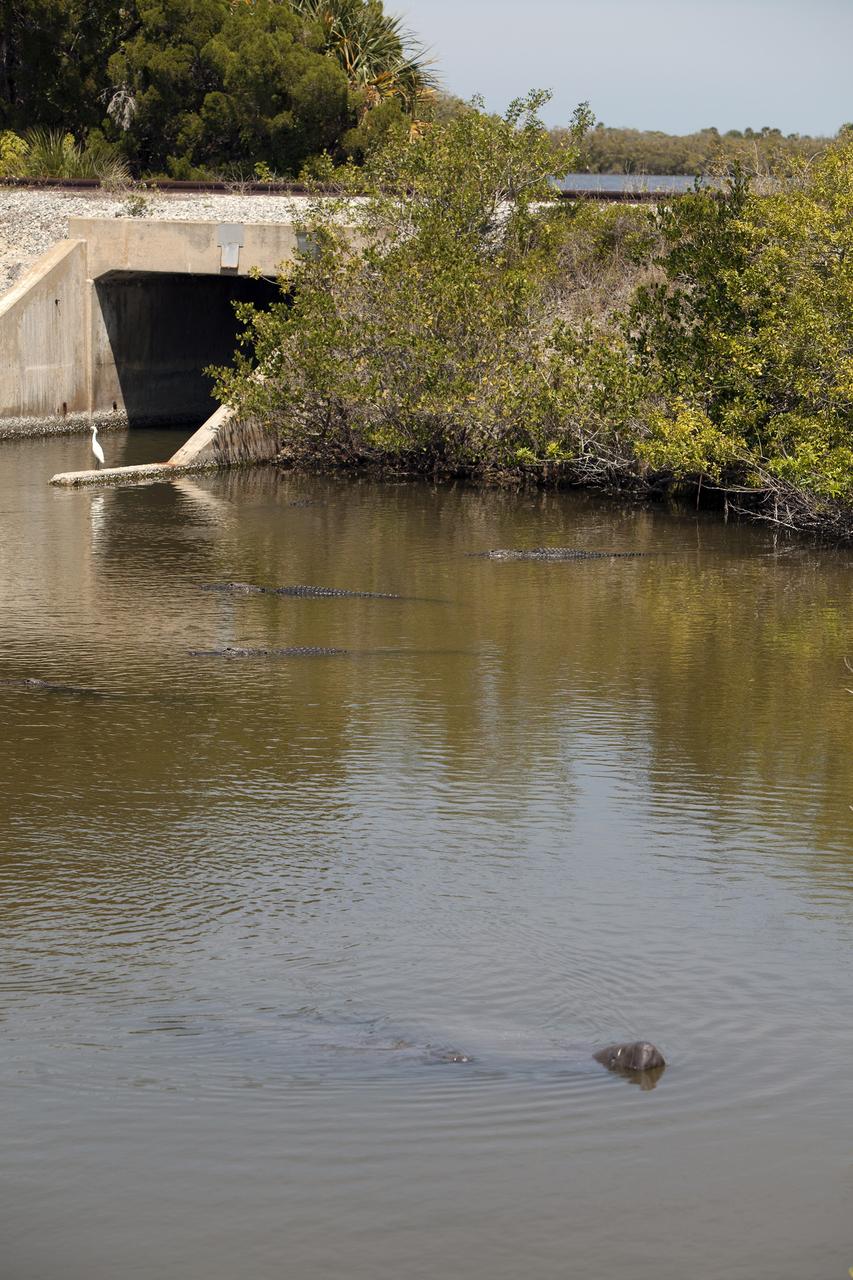
CAPE CANAVERAL, Fla. – A manatee's nose breaks the surface of the water in a creek at NASA's Kennedy Space Center in Florida. Several alligators linger in the background. The center shares a boundary with the Merritt Island National Wildlife Refuge, which encompasses 140,000 acres that provide a habitat for more than 330 species of birds, 31 mammals, 117 fishes, and 65 amphibians and reptiles. Photo credit: NASA/Daniel Casper
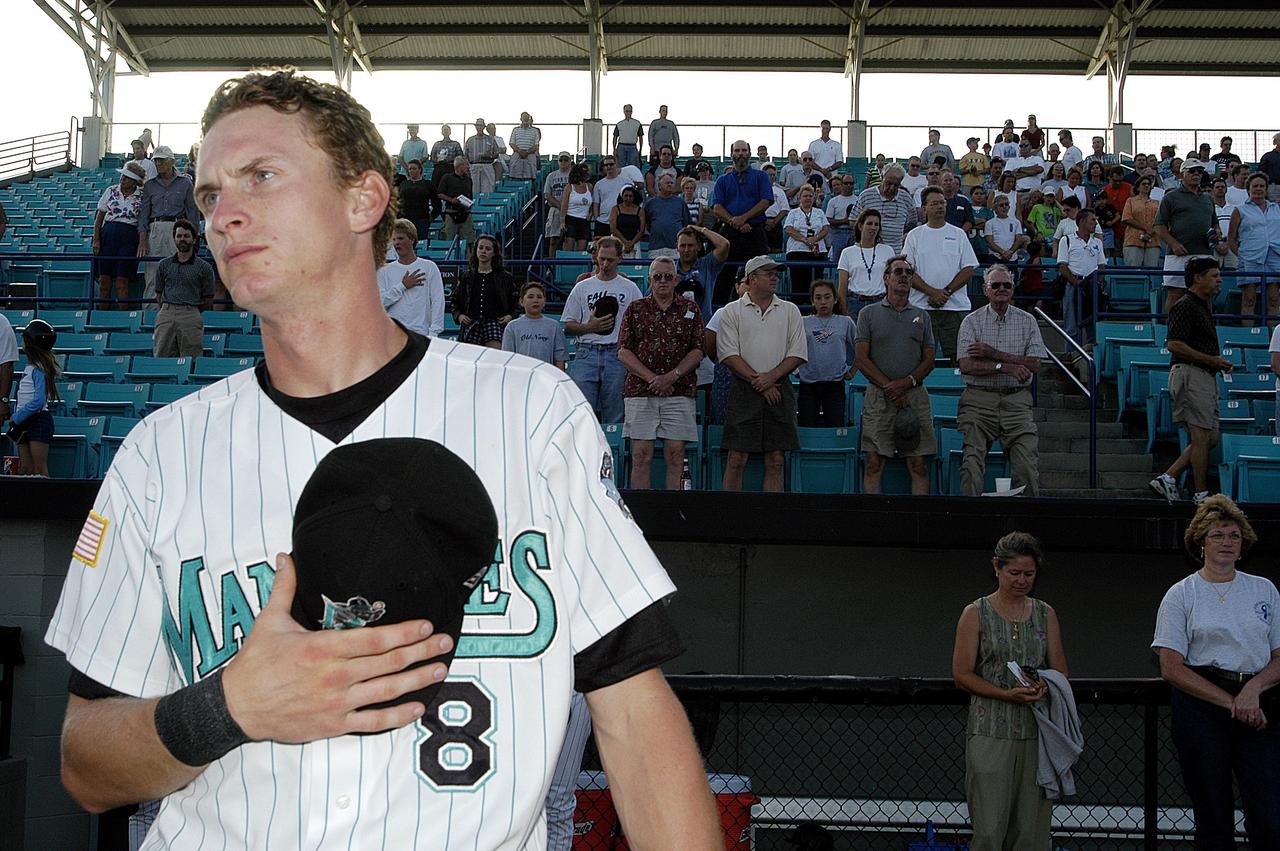
KENNEDY SPACE CENTER, FLA. - The Brevard Manatees, a minor league baseball team in Central Florida, hosts KSC employees at a ballgame at Manatees Stadium. Before the game, attendees offered a moment of silence to honor the STS-107 crew and two recovery workers who died in a helicopter crash.
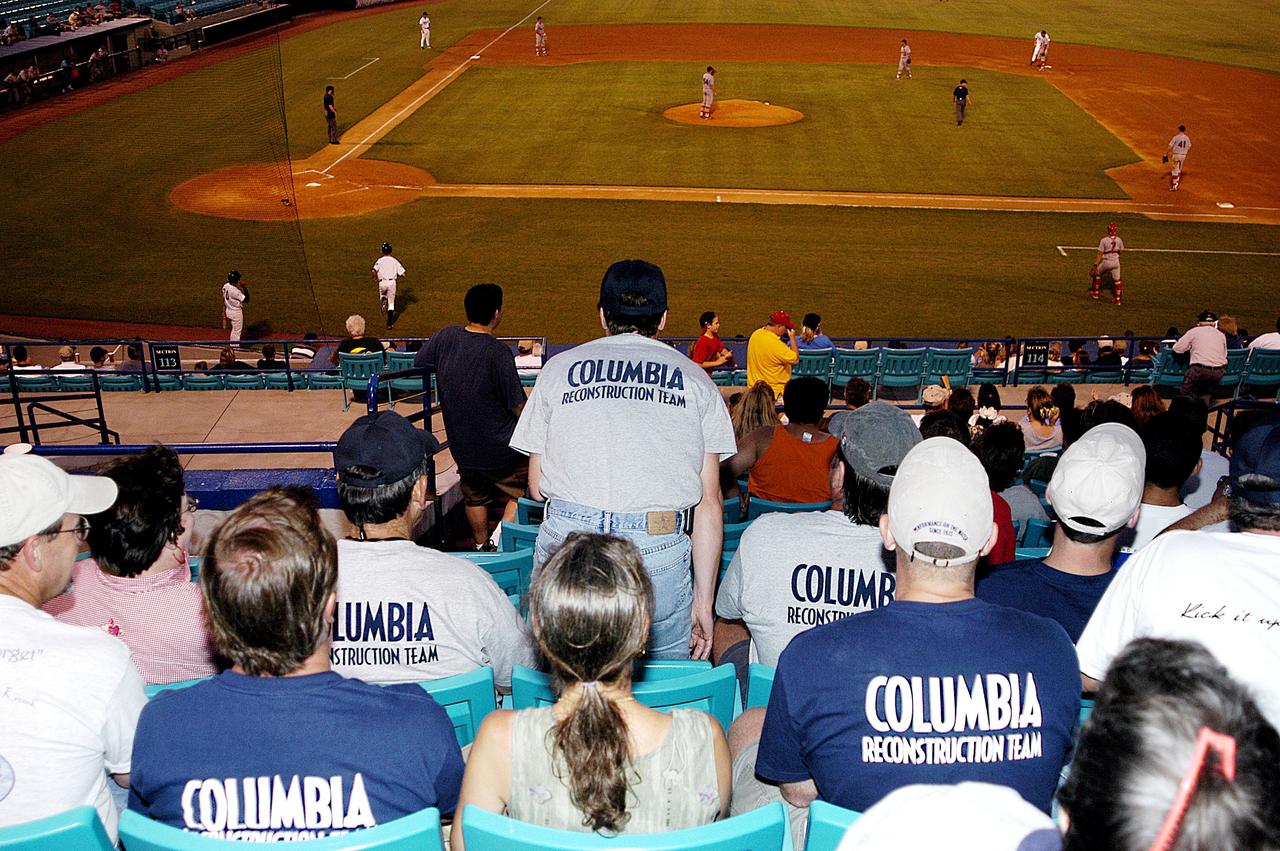
KENNEDY SPACE CENTER, FLA. - KSC employees enjoy a baseball game at Manatees Stadium, home of the Brevard Manatees, a minor league baseball team in Central Florida. The team hosted KSC employees for the game, which included a moment of silence to honor the STS-107 crew and two recovery workers who died in a helicopter crash.
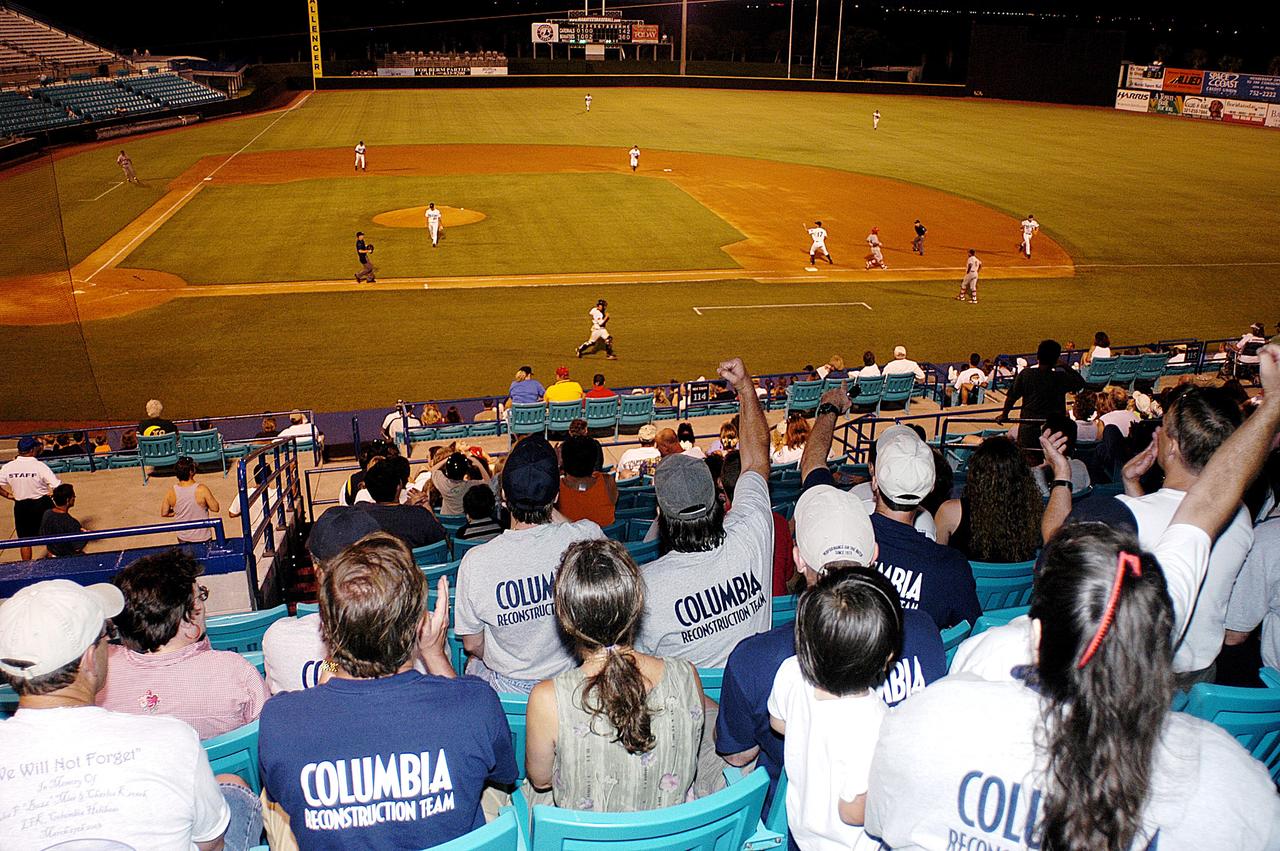
KENNEDY SPACE CENTER, FLA. - KSC employees enjoy a baseball game at Manatees Stadium, home of the Brevard Manatees, a minor league baseball team in Central Florida. The team hosted the employees for the game, which included a moment of silence to honor the STS-107 crew and two recovery workers who died in a helicopter crash.
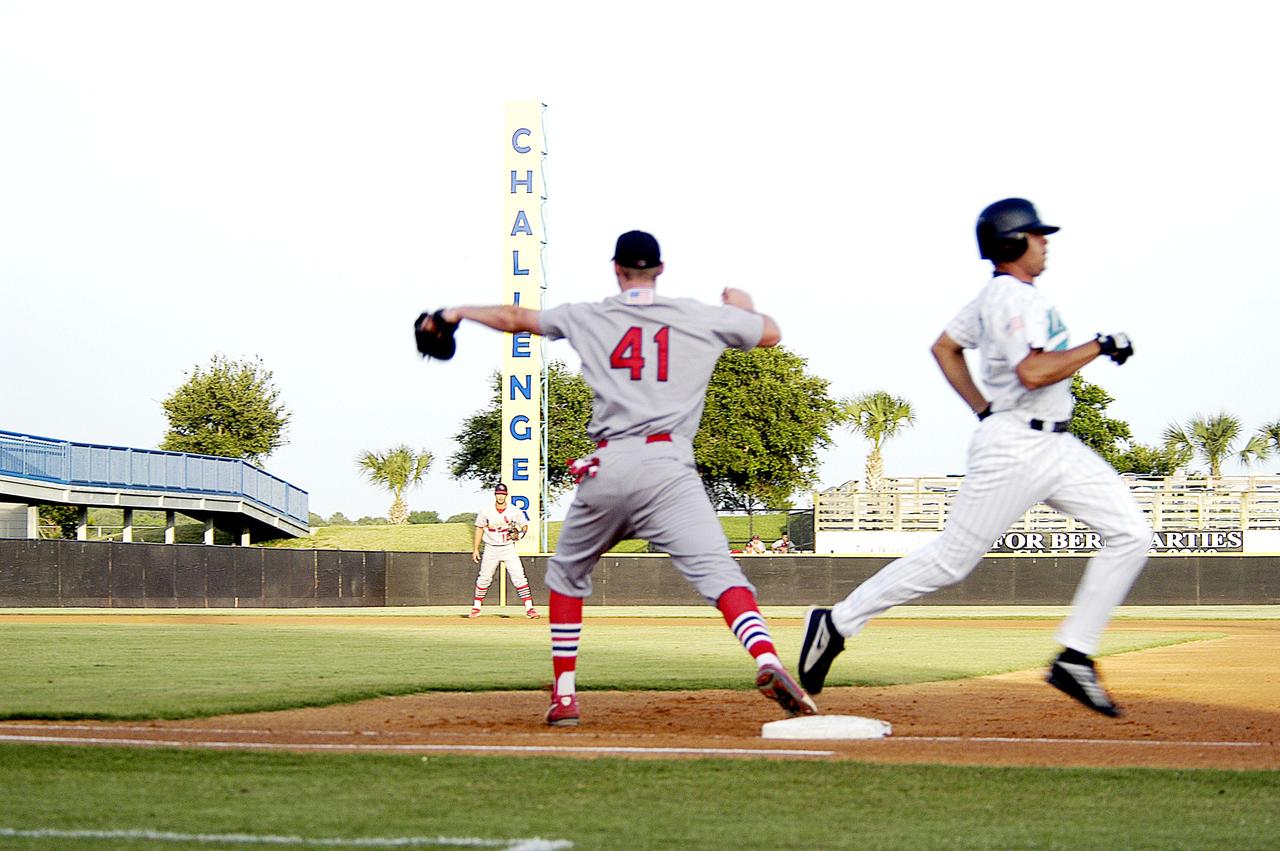
KENNEDY SPACE CENTER, FLA. - There is action on the baseball diamond during a game at Manatees Stadium, home of the Brevard Manatees, a minor league baseball team in Central Florida. The team hosted KSC employees for the game, which included a moment of silence to honor the STS-107 crew and two recovery workers who died in a helicopter crash.
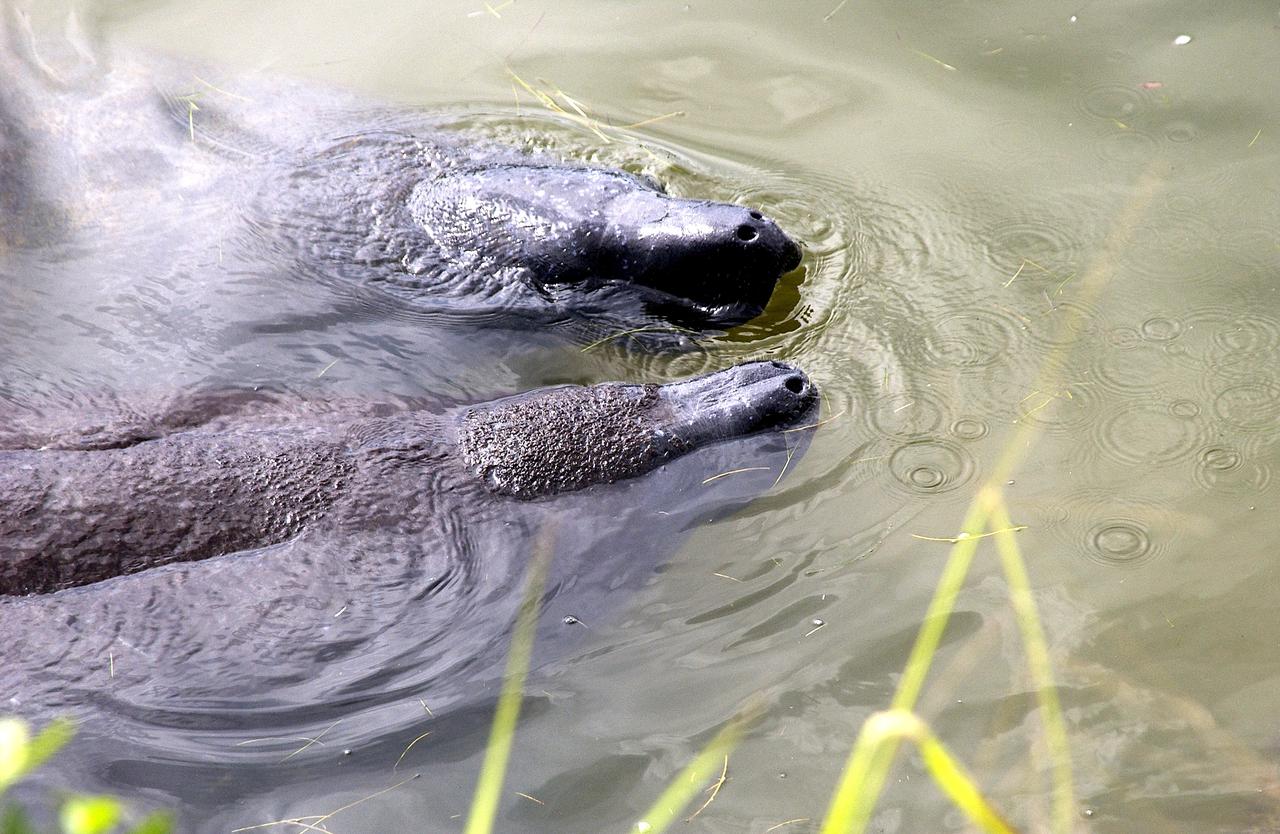
KENNEDY SPACE CENTER, FLA. - Two manatees surface for air in water on KSC. Manatees live in Florida's warm water rivers and inland springs. KSC shares a boundary with the Merritt Island National Wildlife Refuge, which encompasses 92,000 acres that are a habitat for more than 331 species of birds, 31 mammals, 117 fishes, and 65 amphibians and reptiles.
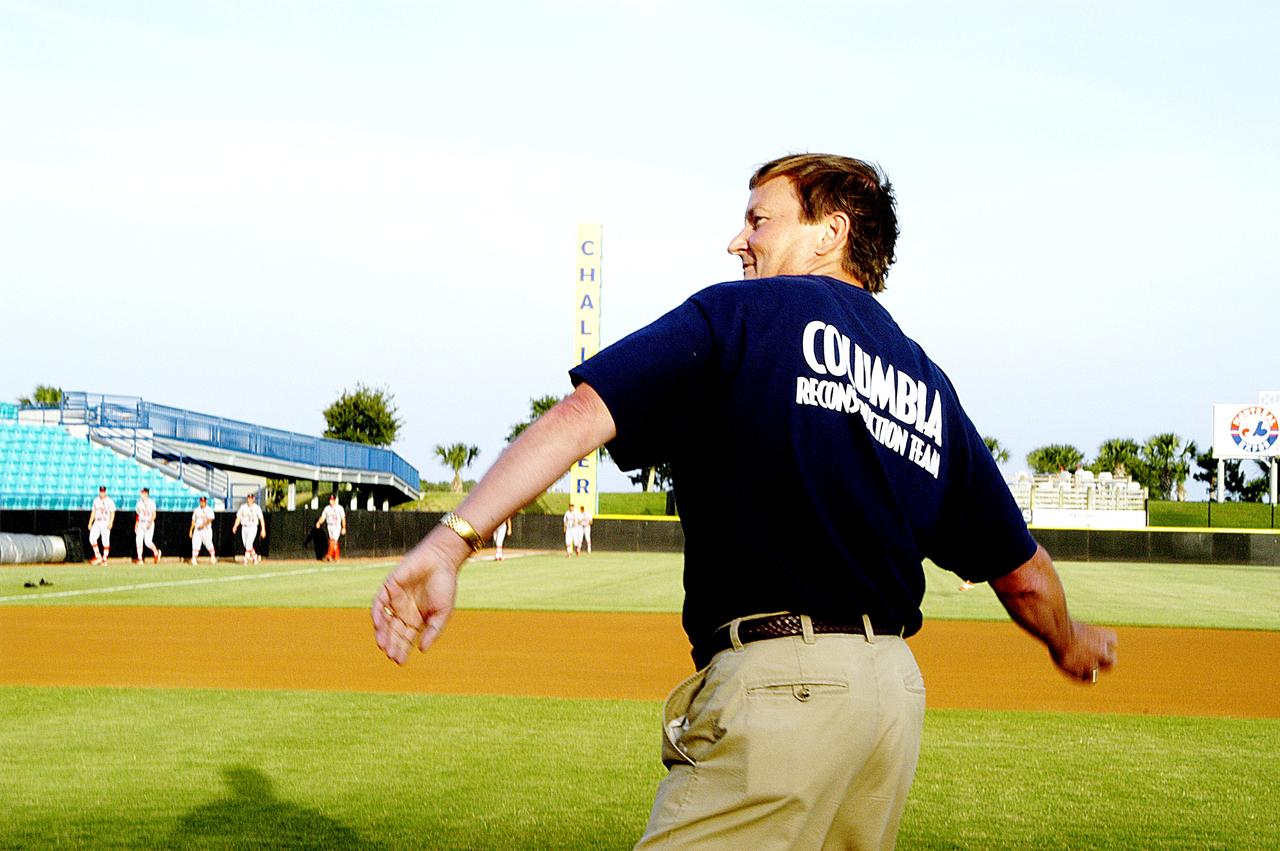
KENNEDY SPACE CENTER, FLA. - Shuttle Launch Director Mike Leinbach throws out the first pitch at a local baseball game at Manatees Stadium. KSC employees were hosted by the Brevard Manatees, a minor league baseball team in Central Florida. Before the game, attendees offered a moment of silence to honor the STS-107 crew and two recovery workers who died in a helicopter crash.
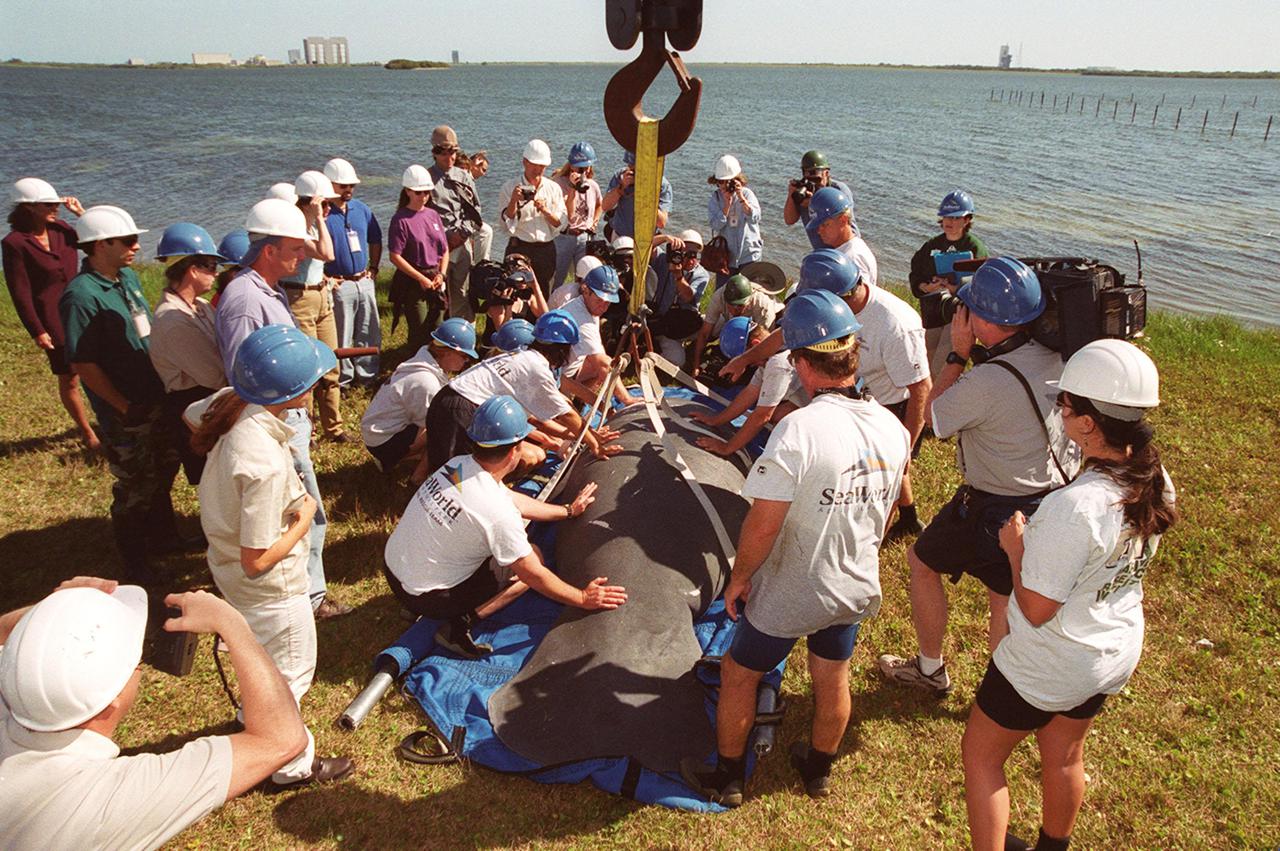
KENNEDY SPACE CENTER, FLA. -- Spectators and photographers gather around the adult manatee Sea World workers are releasing into the Banana River in the background. The site is on the north side of the NASA Causeway, near Kennedy Space Center. On the horizon at left can be seen the Vehicle Assembly Building. The weight of the manatee requires a hoist to lift it. Earlier, workers released a calf. The two manatees recovered from injuries at Sea World. Manatees are frequently seen in the waters around Kennedy Space Center, which is surrounded by the Merritt Island National Wildlife Refuge
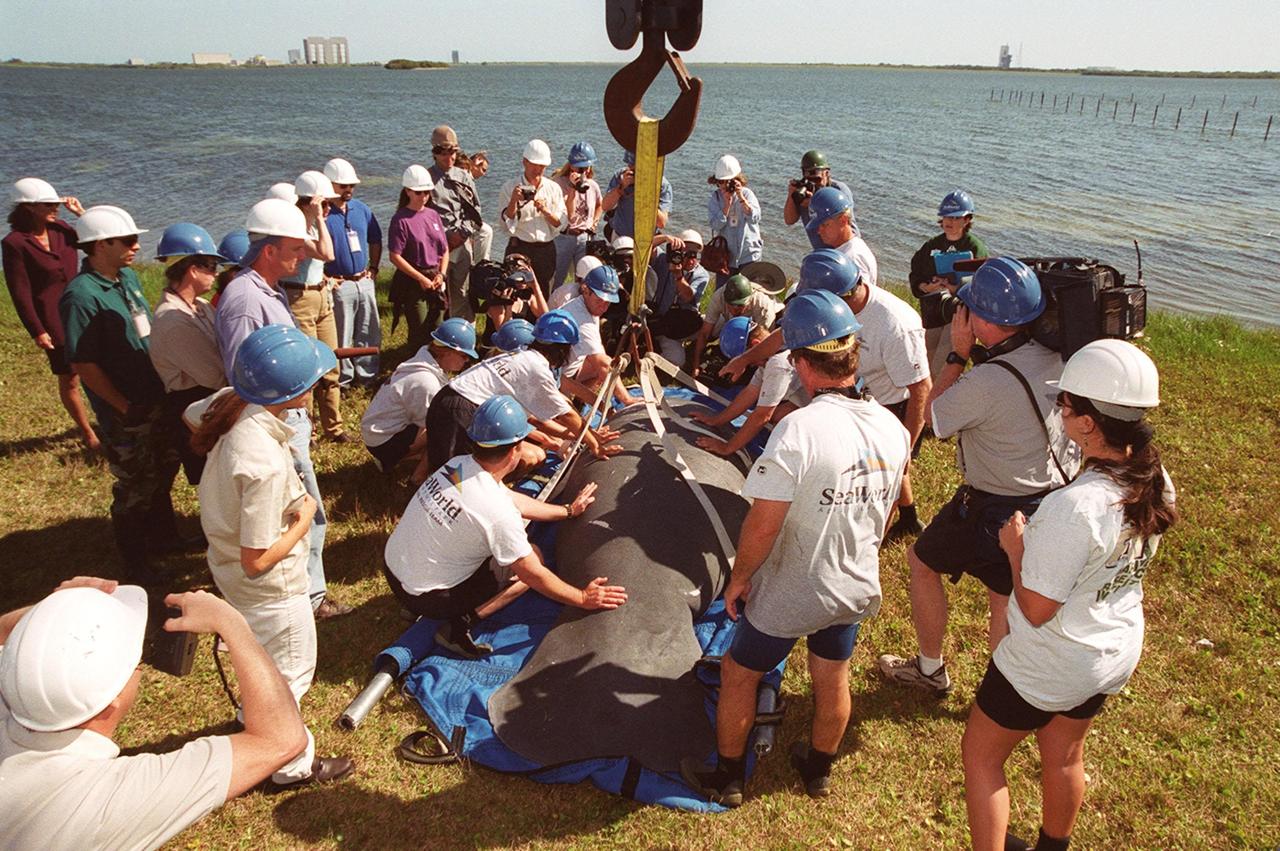
KENNEDY SPACE CENTER, FLA. -- Spectators and photographers gather around the adult manatee Sea World workers are releasing into the Banana River in the background. The site is on the north side of the NASA Causeway, near Kennedy Space Center. On the horizon at left can be seen the Vehicle Assembly Building. The weight of the manatee requires a hoist to lift it. Earlier, workers released a calf. The two manatees recovered from injuries at Sea World. Manatees are frequently seen in the waters around Kennedy Space Center, which is surrounded by the Merritt Island National Wildlife Refuge
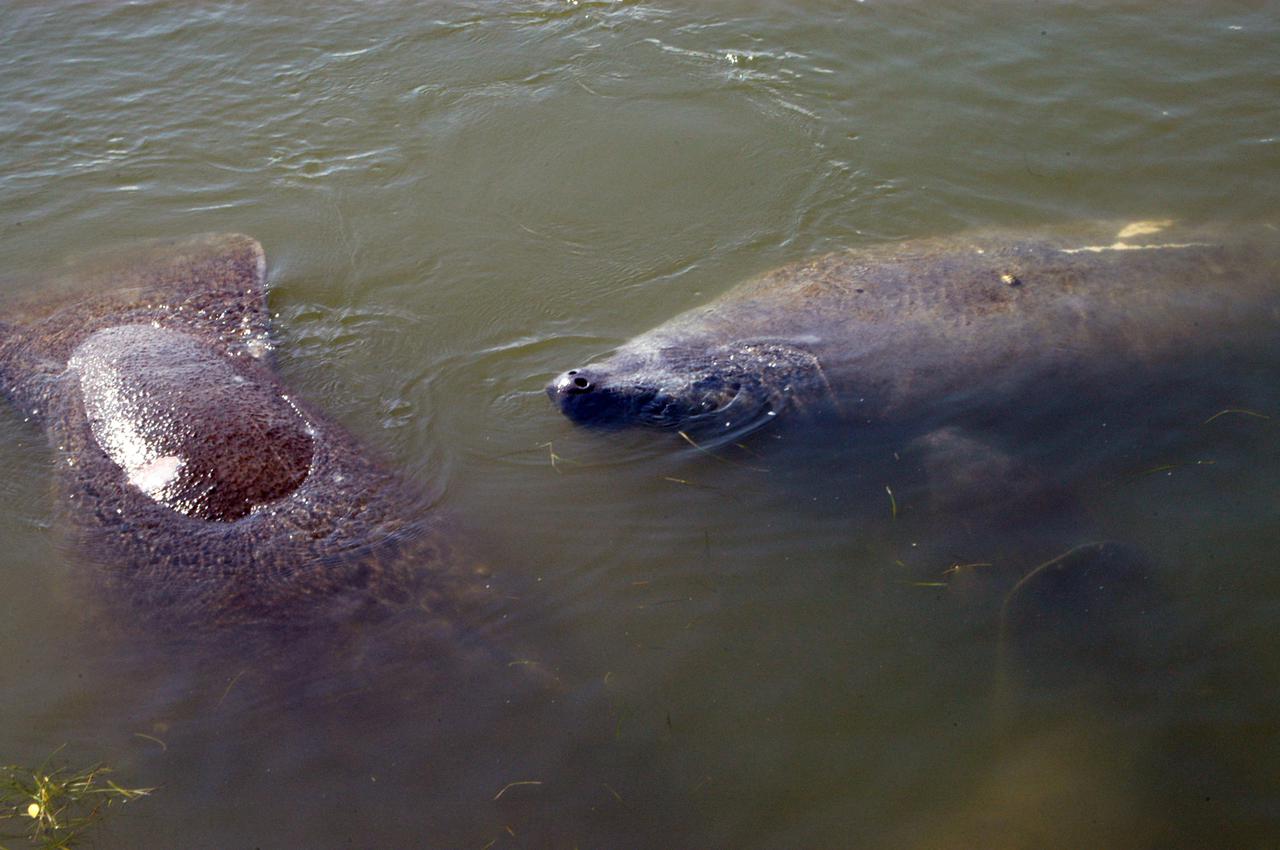
KENNEDY SPACE CENTER, FLA. - Two manatees surface in the Haulover Canal near NASA’s Kennedy Space Center. Manatees live in Florida's warm-water rivers and inland springs. The Florida manatee feeds on more than 60 varieties of grasses and plants. Manatee cows give birth about once every three years. Gestation lasts about 12 months. KSC shares a boundary with the Merritt Island National Wildlife Refuge, which encompasses 92,000 acres that are a habitat for more than 331 species of birds, 31 mammals, 117 fishes, and 65 amphibians and reptiles.
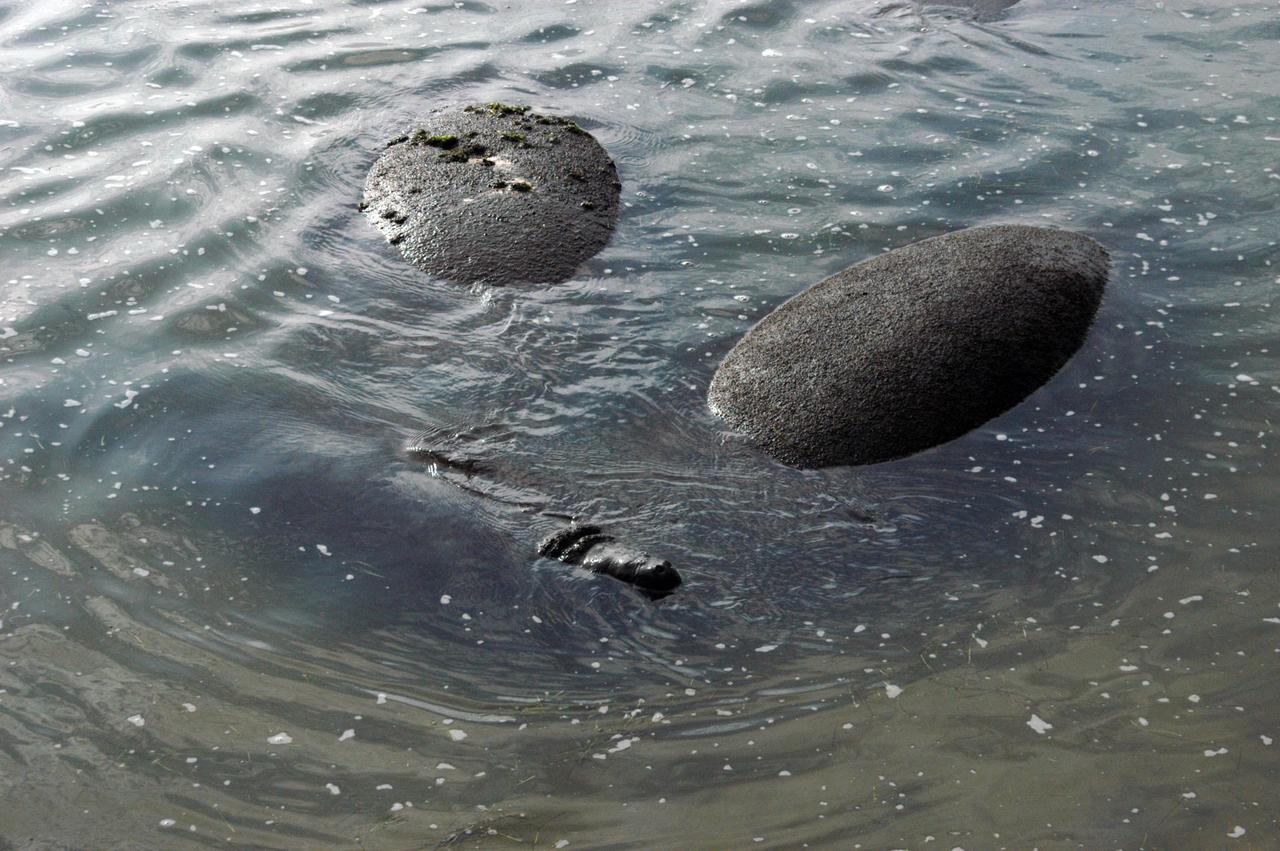
KENNEDY SPACE CENTER, FLA. -- Manatees gather in the Banana Creek inside NASA's Kennedy Space Center. Manatees live in Florida's warm-water rivers and inland springs. The Florida manatee feeds on more than 60 varieties of grasses and plants. Manatee cows give birth about once every three years. Gestation lasts about 12 months. KSC shares a boundary with the Merritt Island National Wildlife Refuge, which encompasses 92,000 acres that are a habitat for more than 331 species of birds, 31 mammals, 117 fishes, and 65 amphibians and reptiles. Photo credit: NASA/George Shelton
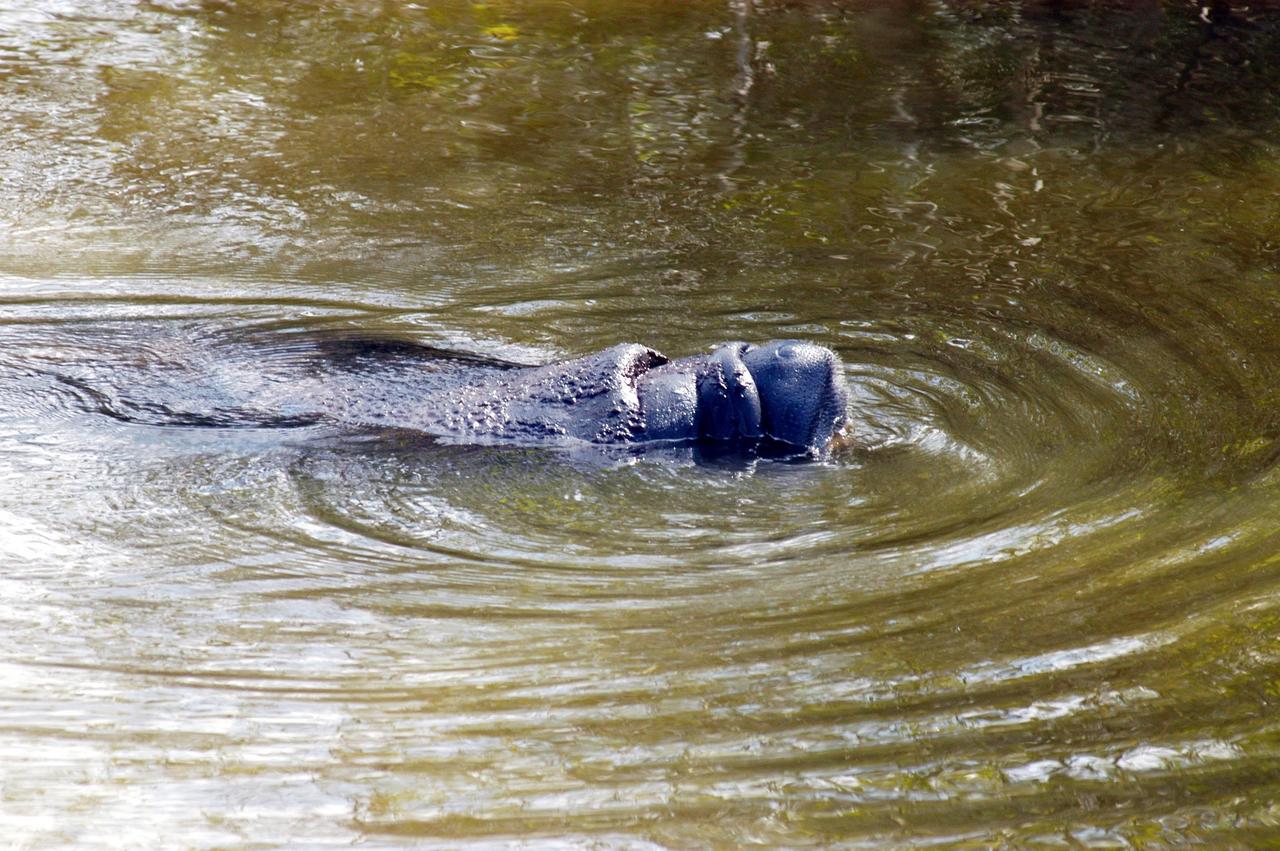
KENNEDY SPACE CENTER, FLA. - At the mouth of Banana Creek on Kennedy Space Center, a manatee rests in the shallows. Manatees live in Florida's warm-water rivers and inland springs. The Florida manatee feeds on more than 60 varieties of grasses and plants. Manatee cows give birth about once every three years. Gestation lasts about 12 months. KSC shares a boundary with the Merritt Island National Wildlife Refuge, which encompasses 92,000 acres that are a habitat for more than 331 species of birds, 31 mammals, 117 fishes, and 65 amphibians and reptiles.
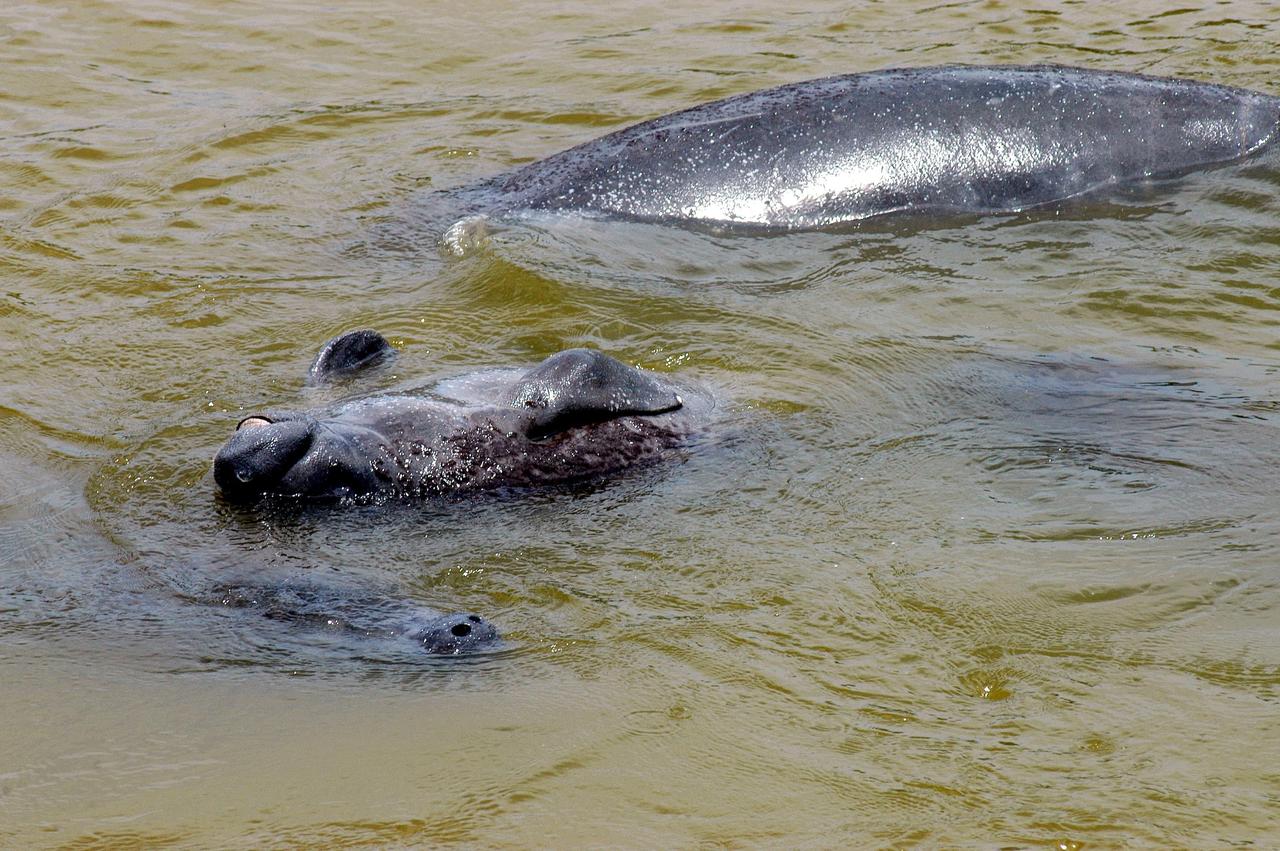
KENNEDY SPACE CENTER, FLA. - At the mouth of Banana Creek on Kennedy Space Center, a baby manatee seems to be smiling as it floats on its back nestled between two adults. Manatees live in Florida's warm-water rivers and inland springs. The Florida manatee feeds on more than 60 varieties of grasses and plants. Manatee cows give birth about once every three years. Gestation lasts about 12 months. KSC shares a boundary with the Merritt Island National Wildlife Refuge, which encompasses 92,000 acres that are a habitat for more than 331 species of birds, 31 mammals, 117 fishes, and 65 amphibians and reptiles.
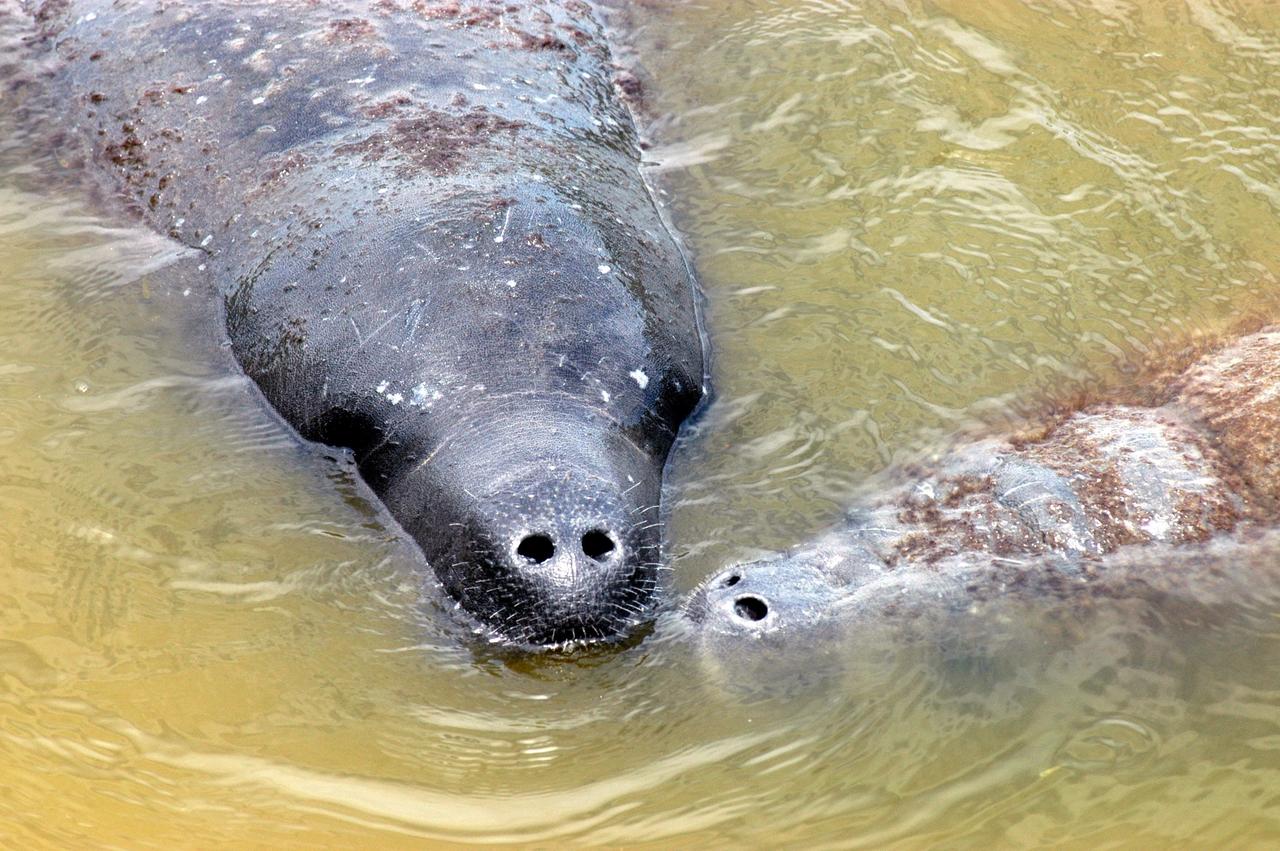
KENNEDY SPACE CENTER, FLA. - Looking more like an alien than a mammal, an adult manatee (left) nuzzles its baby (right) in the water at the mouth of Banana Creek on Kennedy Space Center. Manatees live in Florida's warm-water rivers and inland springs. The Florida manatee feeds on more than 60 varieties of grasses and plants. Manatee cows give birth about once every three years. Gestation lasts about 12 months. KSC shares a boundary with the Merritt Island National Wildlife Refuge, which encompasses 92,000 acres that are a habitat for more than 331 species of birds, 31 mammals, 117 fishes, and 65 amphibians and reptiles.
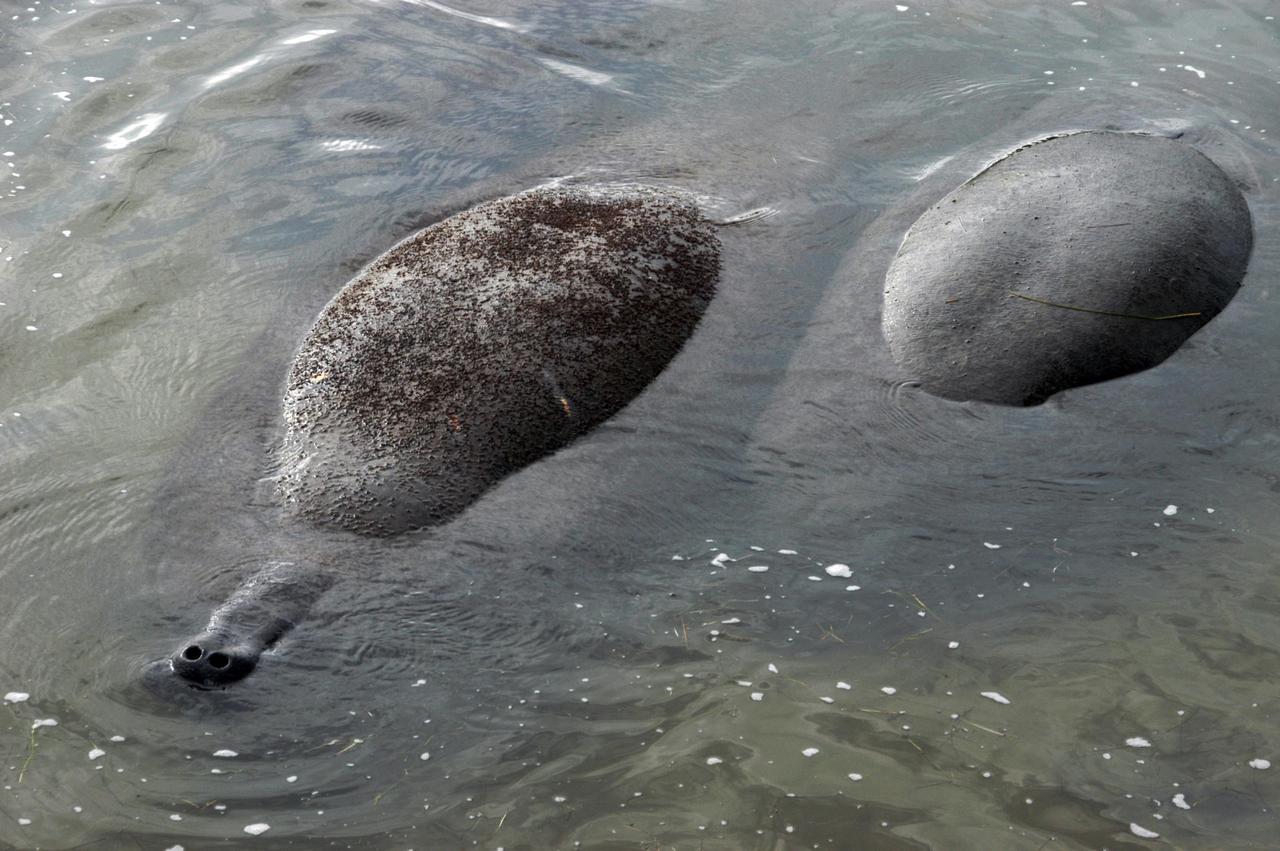
KENNEDY SPACE CENTER, FLA. -- Manatees gather in the Banana Creek inside NASA's Kennedy Space Center. Manatees live in Florida's warm-water rivers and inland springs. The Florida manatee feeds on more than 60 varieties of grasses and plants. Manatee cows give birth about once every three years. Gestation lasts about 12 months. KSC shares a boundary with the Merritt Island National Wildlife Refuge, which encompasses 92,000 acres that are a habitat for more than 331 species of birds, 31 mammals, 117 fishes, and 65 amphibians and reptiles. Photo credit: NASA/George Shelton
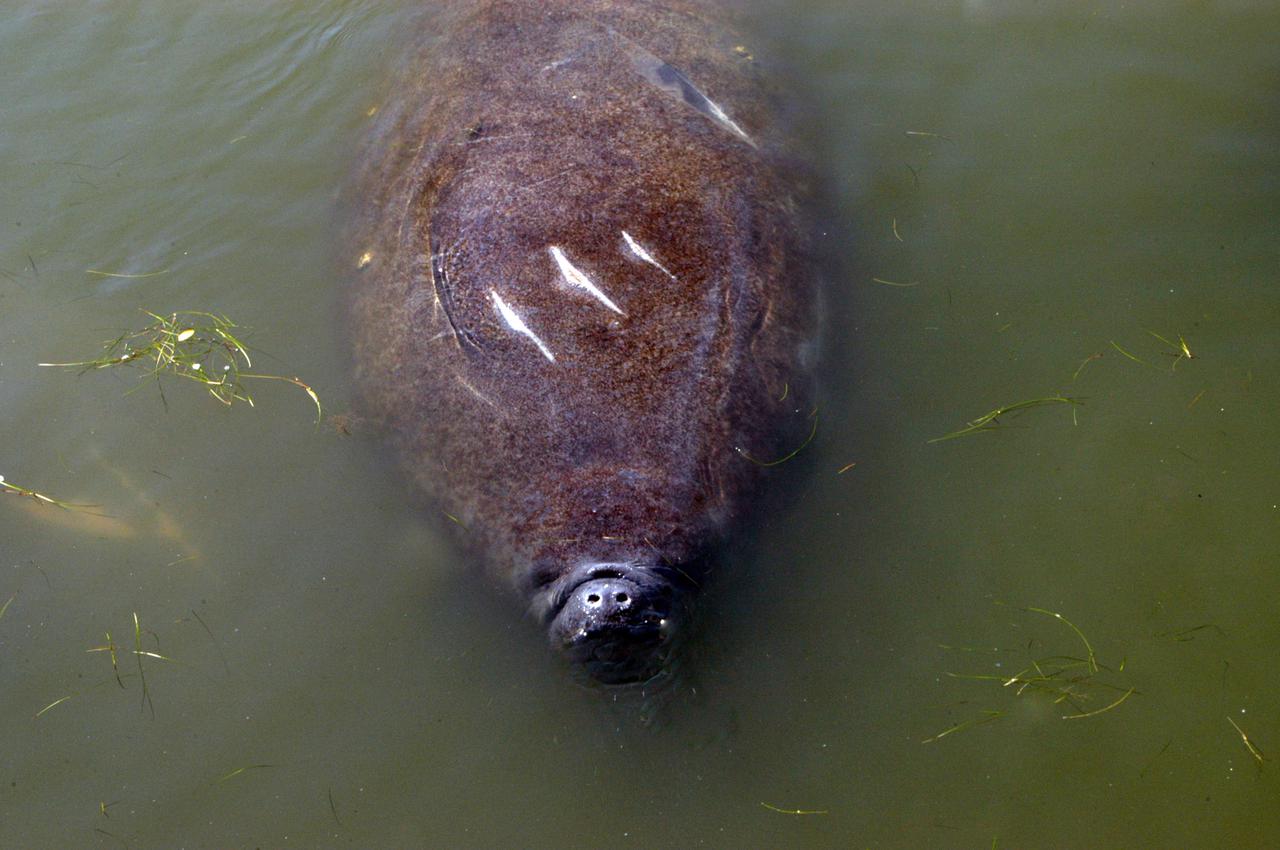
KENNEDY SPACE CENTER, FLA. - Looking more like an alien life form than a mammal, a manatee floats on its back in the Haulover Canal near NASA’s Kennedy Space Center. Manatees live in Florida's warm-water rivers and inland springs. The Florida manatee feeds on more than 60 varieties of grasses and plants. Manatee cows give birth about once every three years. Gestation lasts about 12 months. KSC shares a boundary with the Merritt Island National Wildlife Refuge, which encompasses 92,000 acres that are a habitat for more than 331 species of birds, 31 mammals, 117 fishes, and 65 amphibians and reptiles.
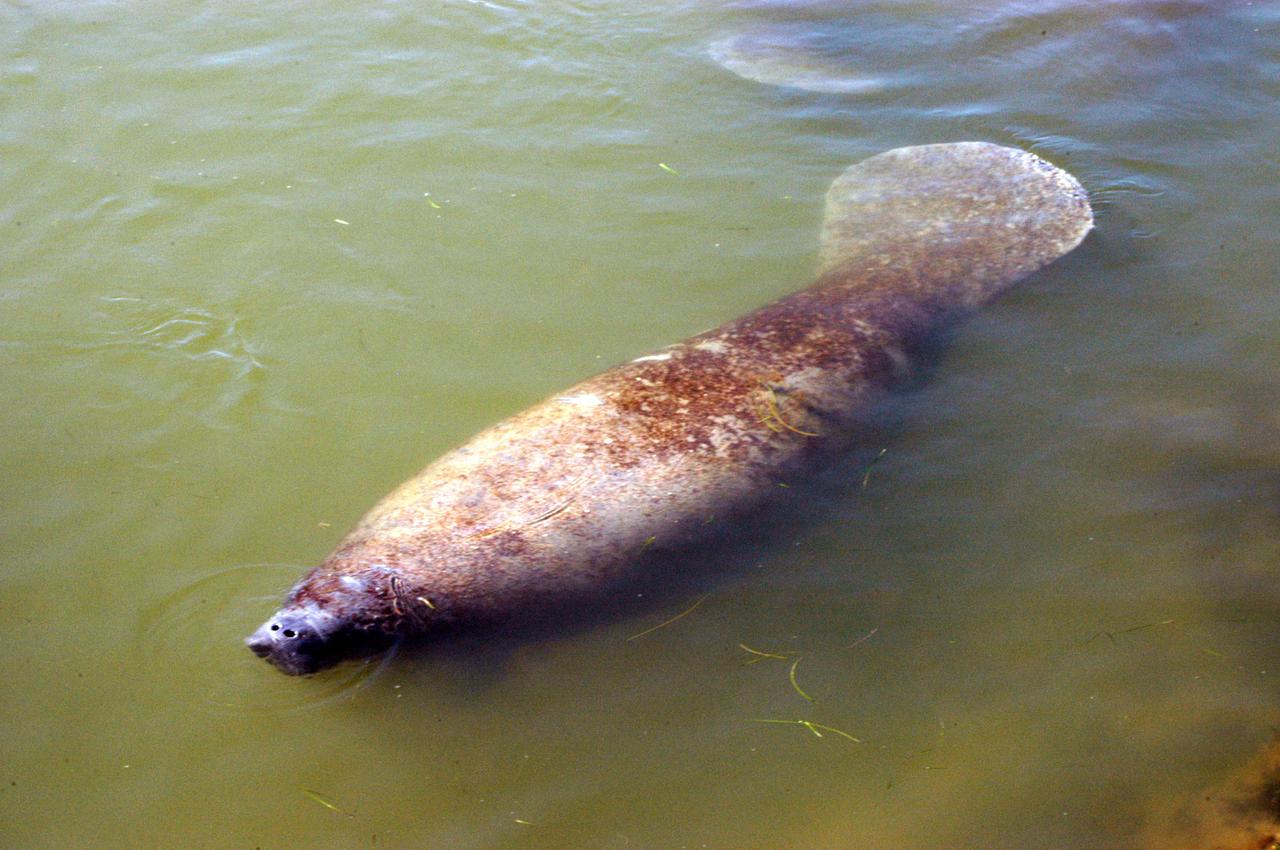
KENNEDY SPACE CENTER, FLA. - Seemingly asleep, a manatee floats in the Haulover Canal near NASA’s Kennedy Space Center. Manatees live in Florida's warm-water rivers and inland springs. The Florida manatee feeds on more than 60 varieties of grasses and plants. Manatee cows give birth about once every three years. Gestation lasts about 12 months. KSC shares a boundary with the Merritt Island National Wildlife Refuge, which encompasses 92,000 acres that are a habitat for more than 331 species of birds, 31 mammals, 117 fishes, and 65 amphibians and reptiles.
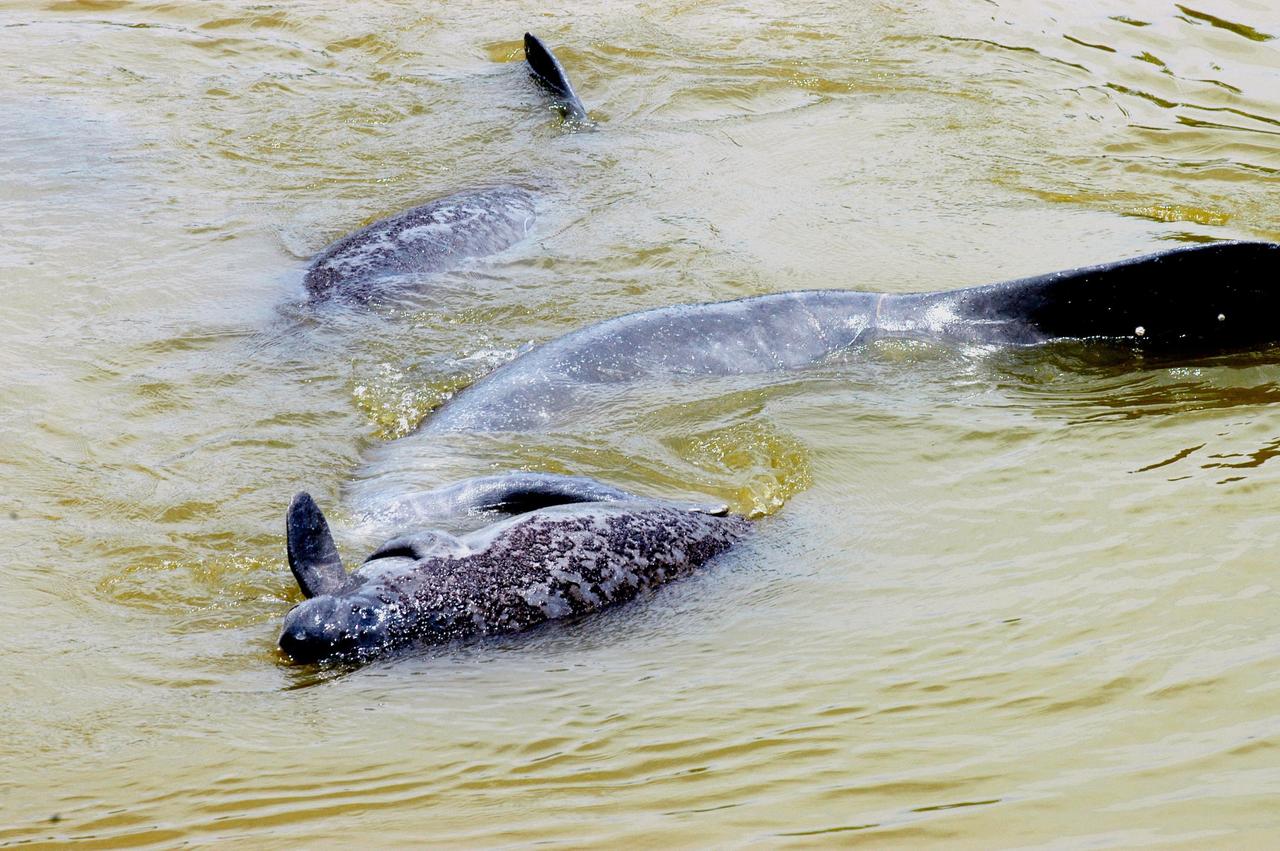
KENNEDY SPACE CENTER, FLA. - At the mouth of Banana Creek on Kennedy Space Center, a baby manatee (foreground) is nuzzled by one of its parents while another swims nearby. Manatees live in Florida's warm-water rivers and inland springs. The Florida manatee feeds on more than 60 varieties of grasses and plants. Manatee cows give birth about once every three years. Gestation lasts about 12 months. KSC shares a boundary with the Merritt Island National Wildlife Refuge, which encompasses 92,000 acres that are a habitat for more than 331 species of birds, 31 mammals, 117 fishes, and 65 amphibians and reptiles.
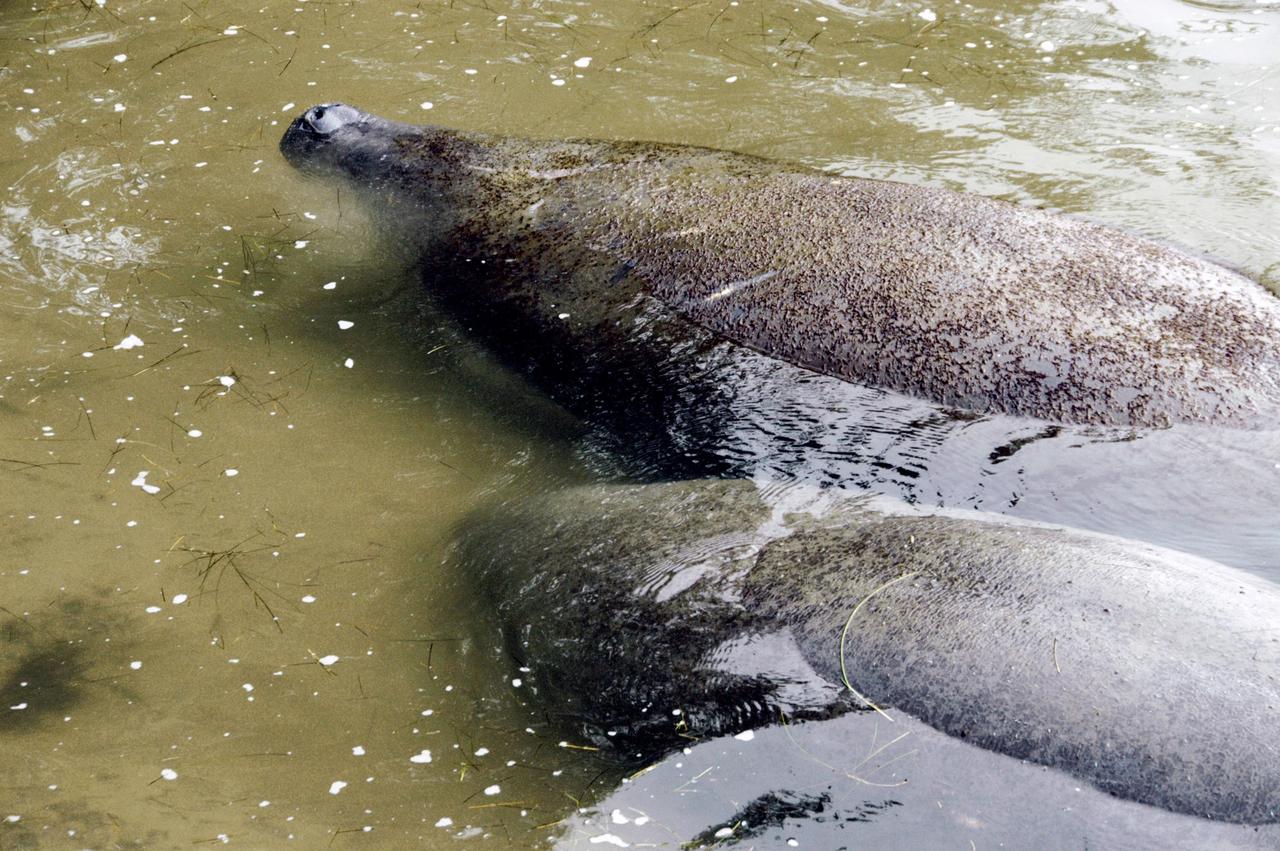
KENNEDY SPACE CENTER, FLA. -- Manatees gather in the shallows of Banana Creek inside NASA's Kennedy Space Center. Manatees live in Florida's warm-water rivers and inland springs. The Florida manatee feeds on more than 60 varieties of grasses and plants. Manatee cows give birth about once every three years. Gestation lasts about 12 months. KSC shares a boundary with the Merritt Island National Wildlife Refuge, which encompasses 92,000 acres that are a habitat for more than 331 species of birds, 31 mammals, 117 fishes, and 65 amphibians and reptiles. Photo credit: NASA/George Shelton

KENNEDY SPACE CENTER, FLA. -- Manatees gather in the shallows of Banana Creek inside NASA's Kennedy Space Center. Manatees live in Florida's warm-water rivers and inland springs. The Florida manatee feeds on more than 60 varieties of grasses and plants. Manatee cows give birth about once every three years. Gestation lasts about 12 months. KSC shares a boundary with the Merritt Island National Wildlife Refuge, which encompasses 92,000 acres that are a habitat for more than 331 species of birds, 31 mammals, 117 fishes, and 65 amphibians and reptiles. Photo credit: NASA/George Shelton
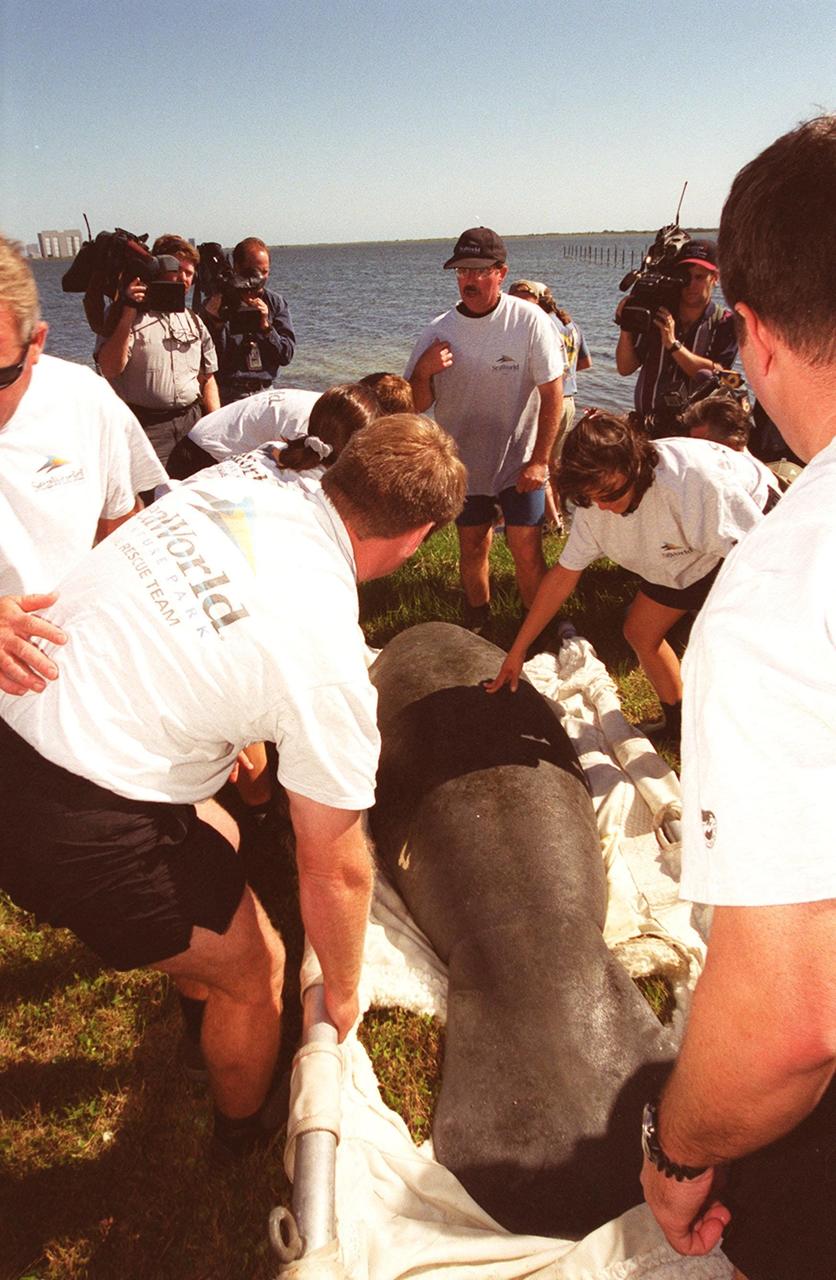
KENNEDY SPACE CENTER, FLA. -- After removing a young manatee from the van that brought it from Sea World, Orlando, Fla., workers get ready for the final step, releasing it into the Banana River behind them. The site is on the north side of the NASA Causeway, near Kennedy Space Center. The calf was one of two manatees being released after recovering from injuries. Manatees are frequently seen in the waters around Kennedy Space Center, which is surrounded by the Merritt Island National Wildlife Refuge
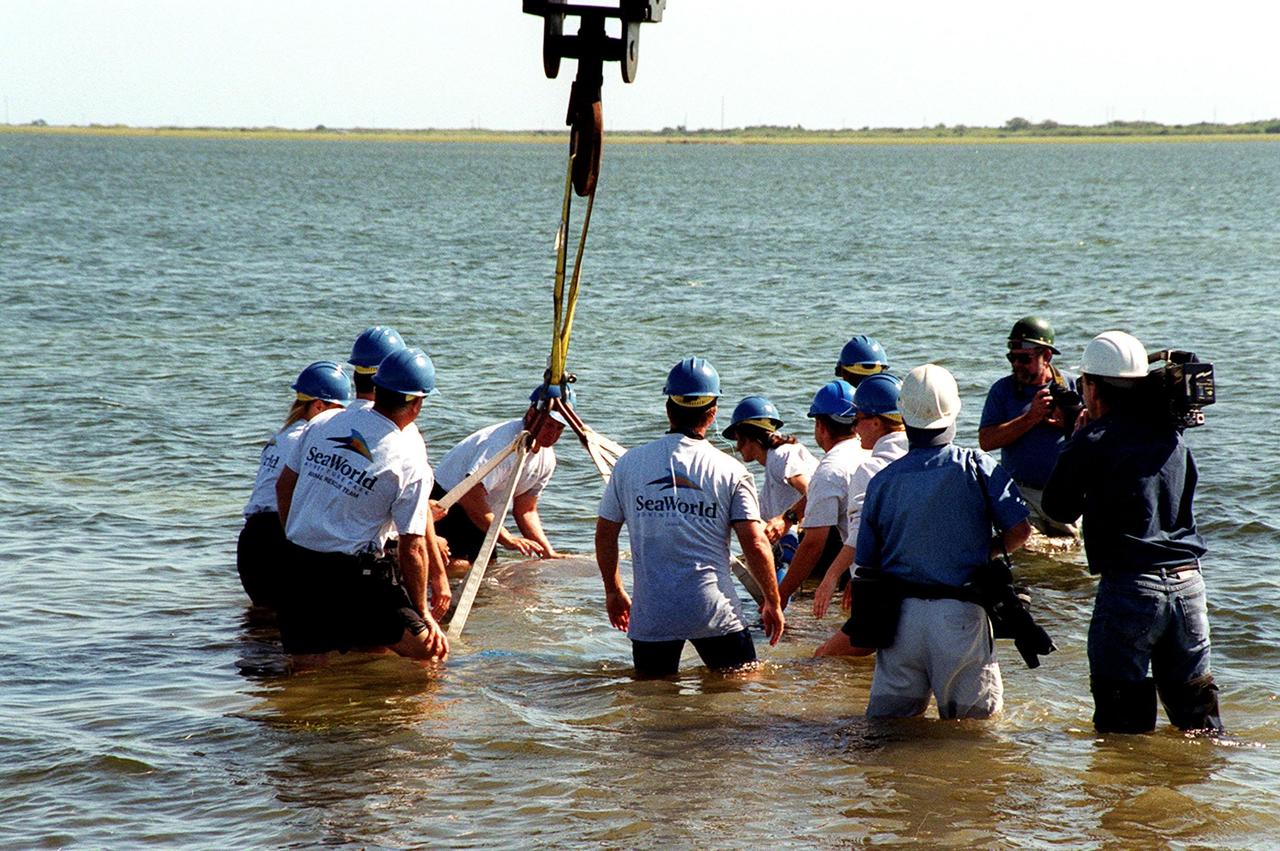
KENNEDY SPACE CENTER, FLA. -- Sea World workers coax a manatee into the Banana River after the hoist and sling it was in relaxes in the water. The site is on the north side of the NASA Causeway, near Kennedy Space Center. The manatee is one of two released after recovering at Sea World from injuries. Manatees are frequently seen in the waters around Kennedy Space Center, which is surrounded by the Merritt Island National Wildlife Refuge
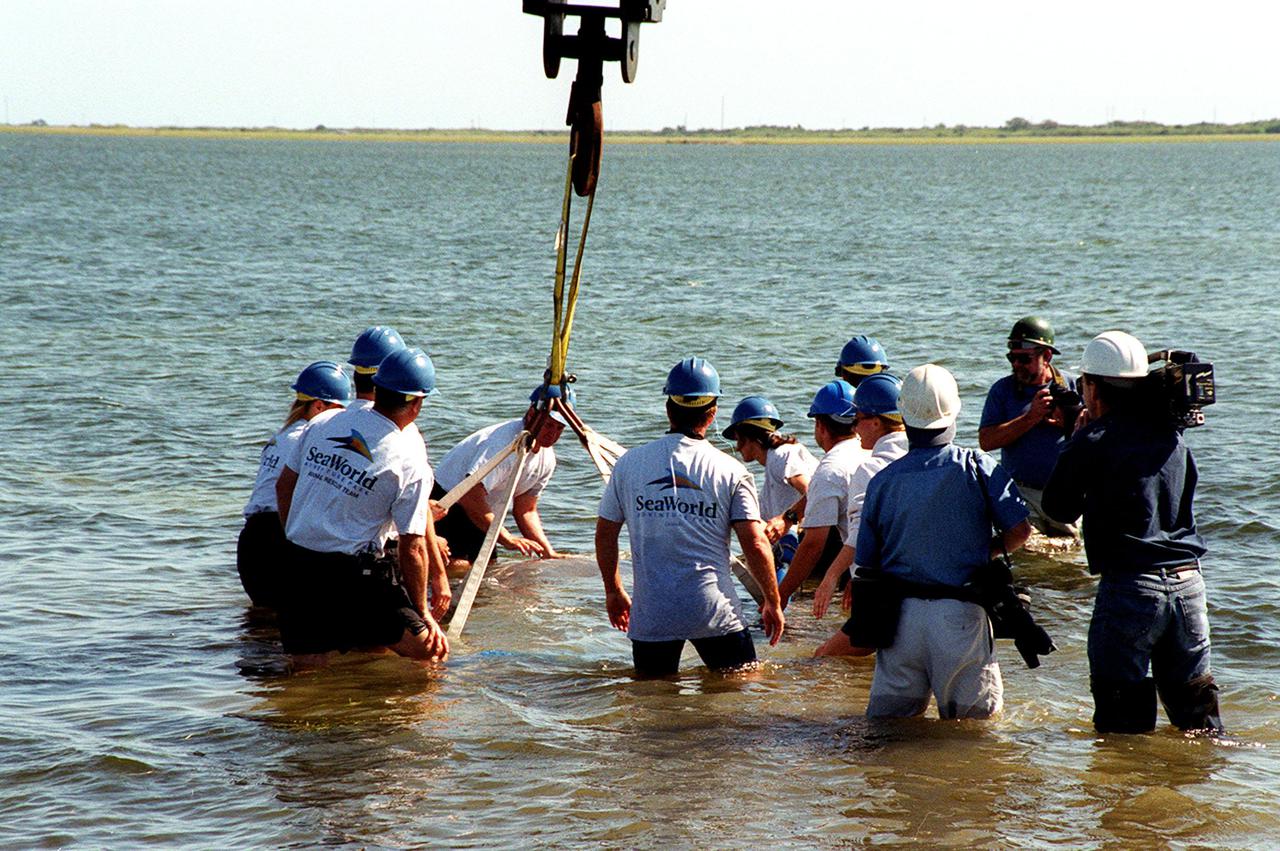
KENNEDY SPACE CENTER, FLA. -- Sea World workers coax a manatee into the Banana River after the hoist and sling it was in relaxes in the water. The site is on the north side of the NASA Causeway, near Kennedy Space Center. The manatee is one of two released after recovering at Sea World from injuries. Manatees are frequently seen in the waters around Kennedy Space Center, which is surrounded by the Merritt Island National Wildlife Refuge
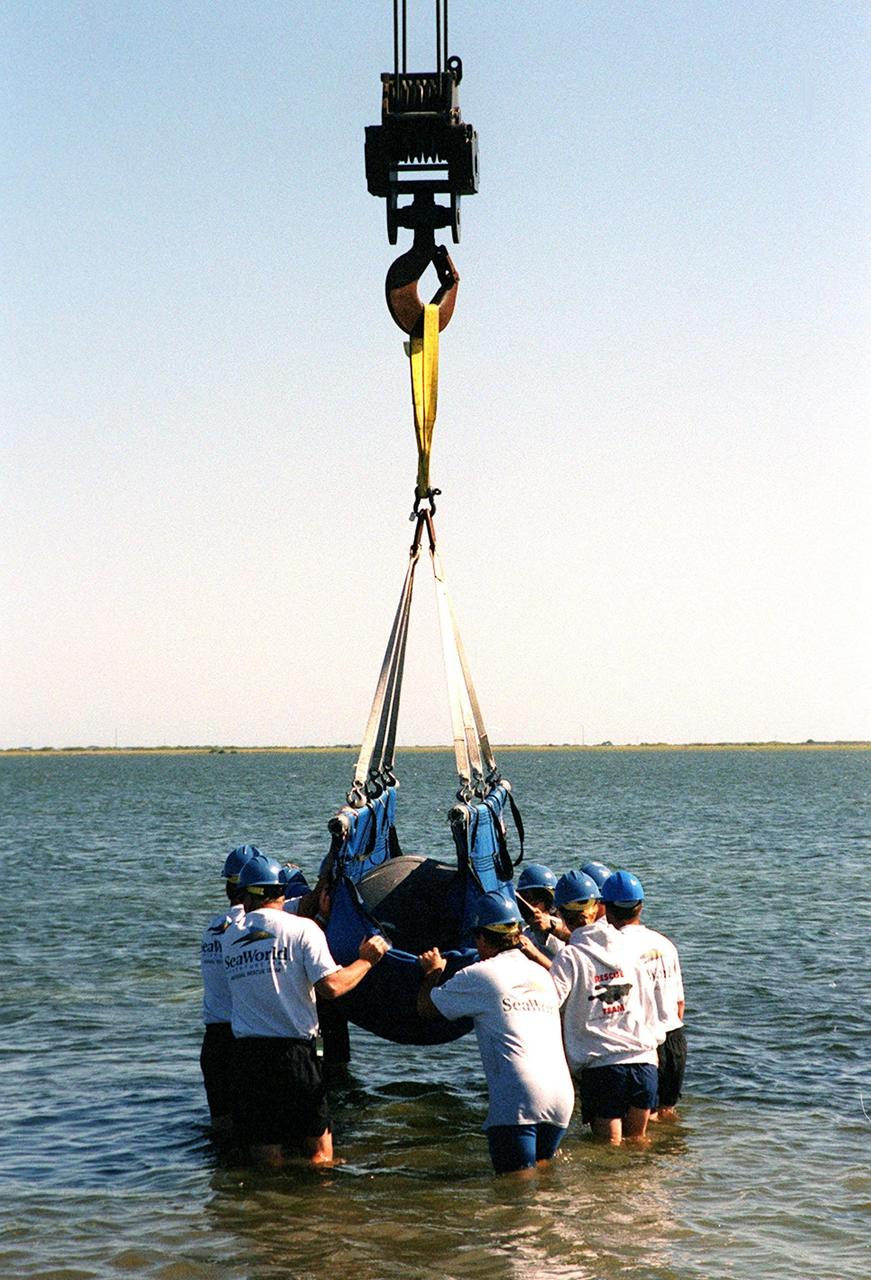
KENNEDY SPACE CENTER, FLA. -- Sea World workers wade into the Banana River while they steady the hoist and sling carrying a manatee. The site is on the north side of the NASA Causeway, near Kennedy Space Center. The manatee is one of two released after recovering at Sea World from injuries. Manatees are frequently seen in the waters around Kennedy Space Center, which is surrounded by the Merritt Island National Wildlife Refuge
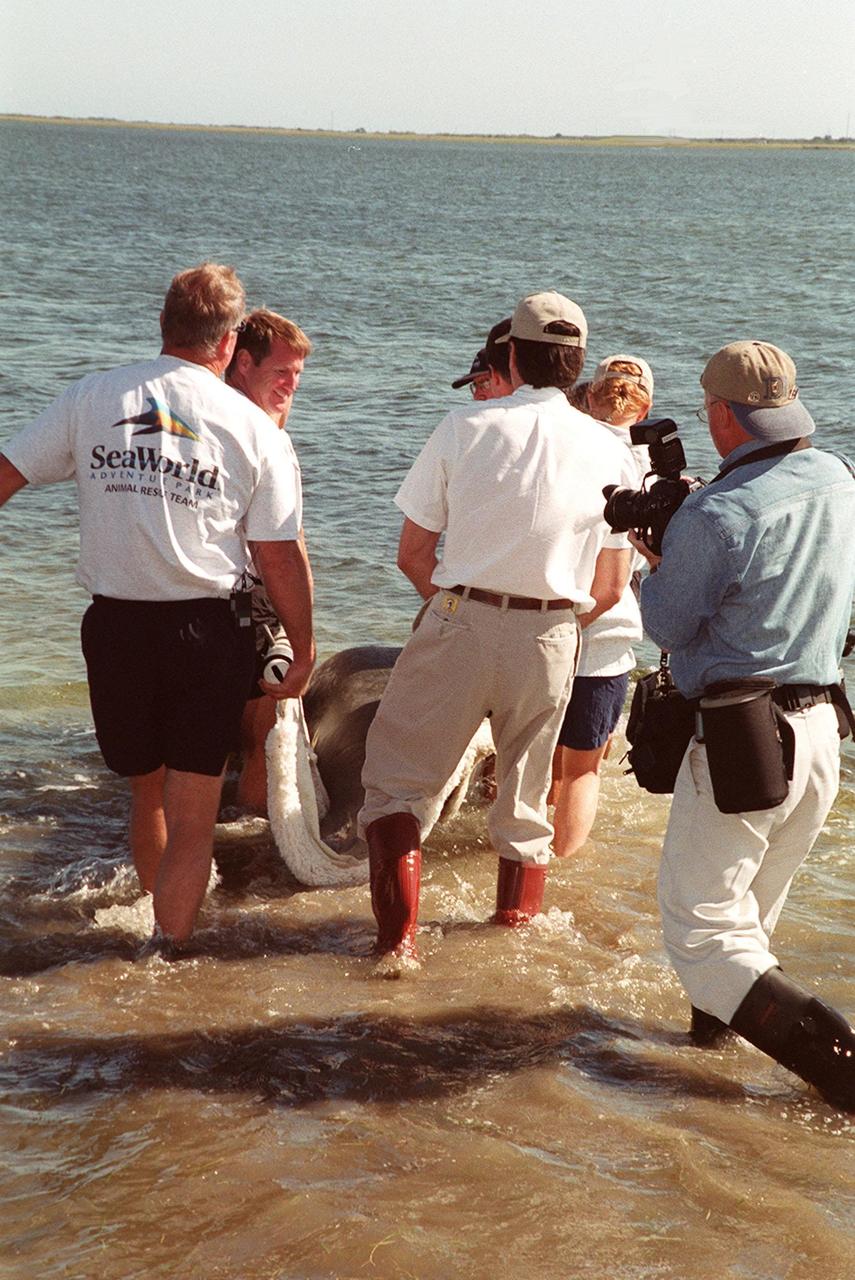
KENNEDY SPACE CENTER, FLA. -- Sea World workers wade into the Banana River carrying a young manatee they are releasing. The site is on the north side of the NASA Causeway, near Kennedy Space Center. The calf was one of two manatees being released after recovering from injuries. Manatees are frequently seen in the waters around Kennedy Space Center, which is surrounded by the Merritt Island National Wildlife Refuge
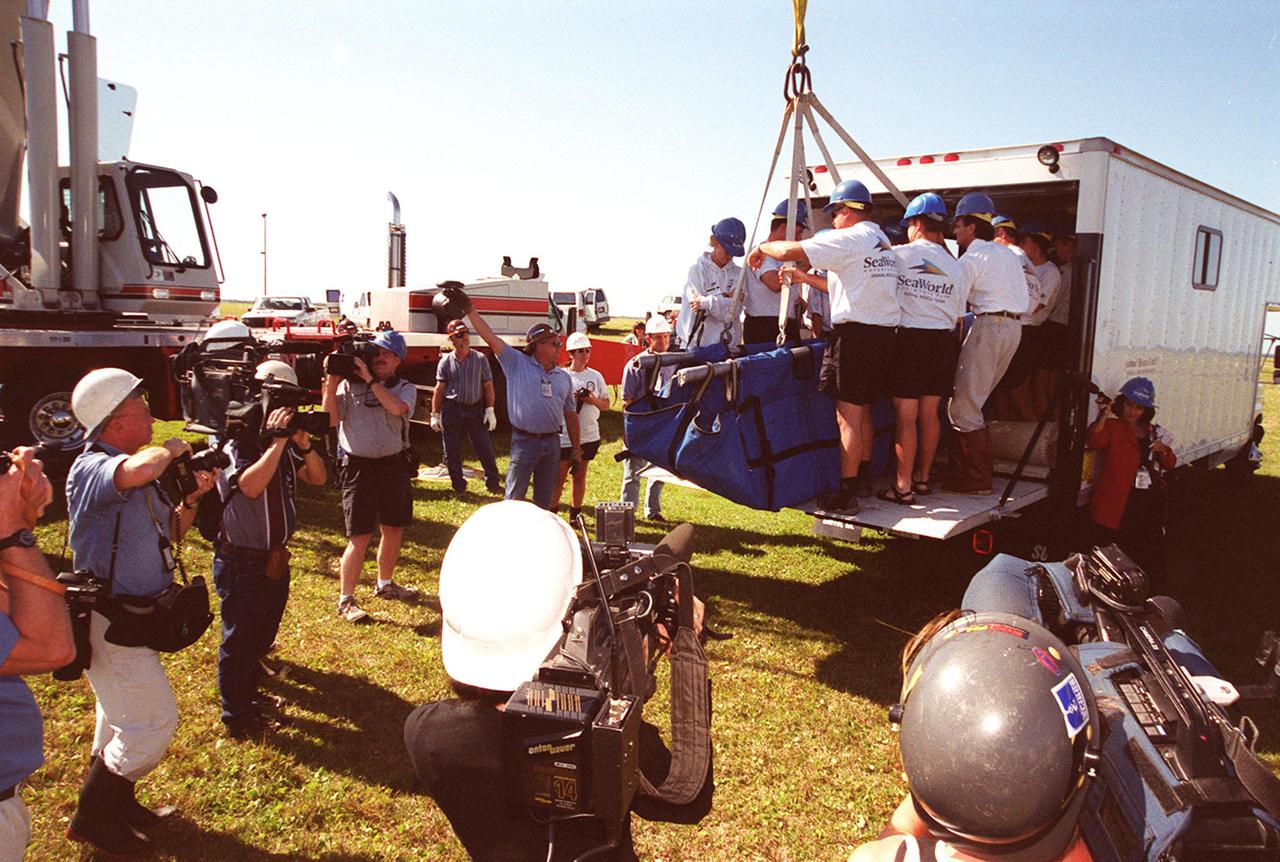
KENNEDY SPACE CENTER, FLA. -- The weight of an adult manatee requires a hoist to lift it out of the van for release into the Banana River. The site is on the north side of the NASA Causeway, near Kennedy Space Center. Sea World workers also released a calf at the site. The two manatees recovered from injuries at the Central Florida theme park. Manatees are frequently seen in the waters around Kennedy Space Center, which is surrounded by the Merritt Island National Wildlife Refuge
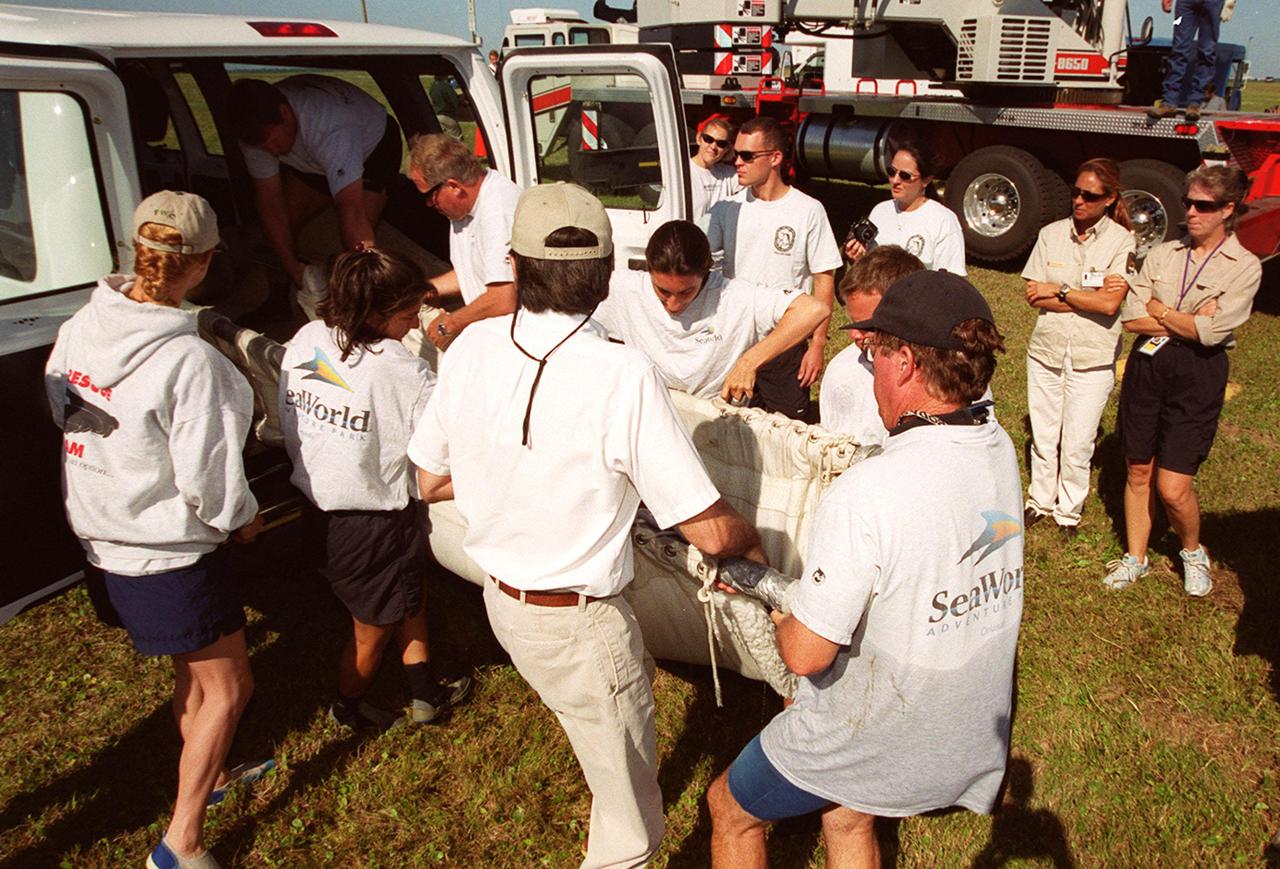
KENNEDY SPACE CENTER, FLA. -- Workers from Sea World, Orlando, Fla., remove a young manatee from the van in order to release it into the Banana River on the north side of the NASA Causeway near KSC. The calf was one of two manatees being released after recovering from injuries. Manatees are frequently seen in the waters around Kennedy Space Center, which is surrounded by the Merritt Island National Wildlife Refuge
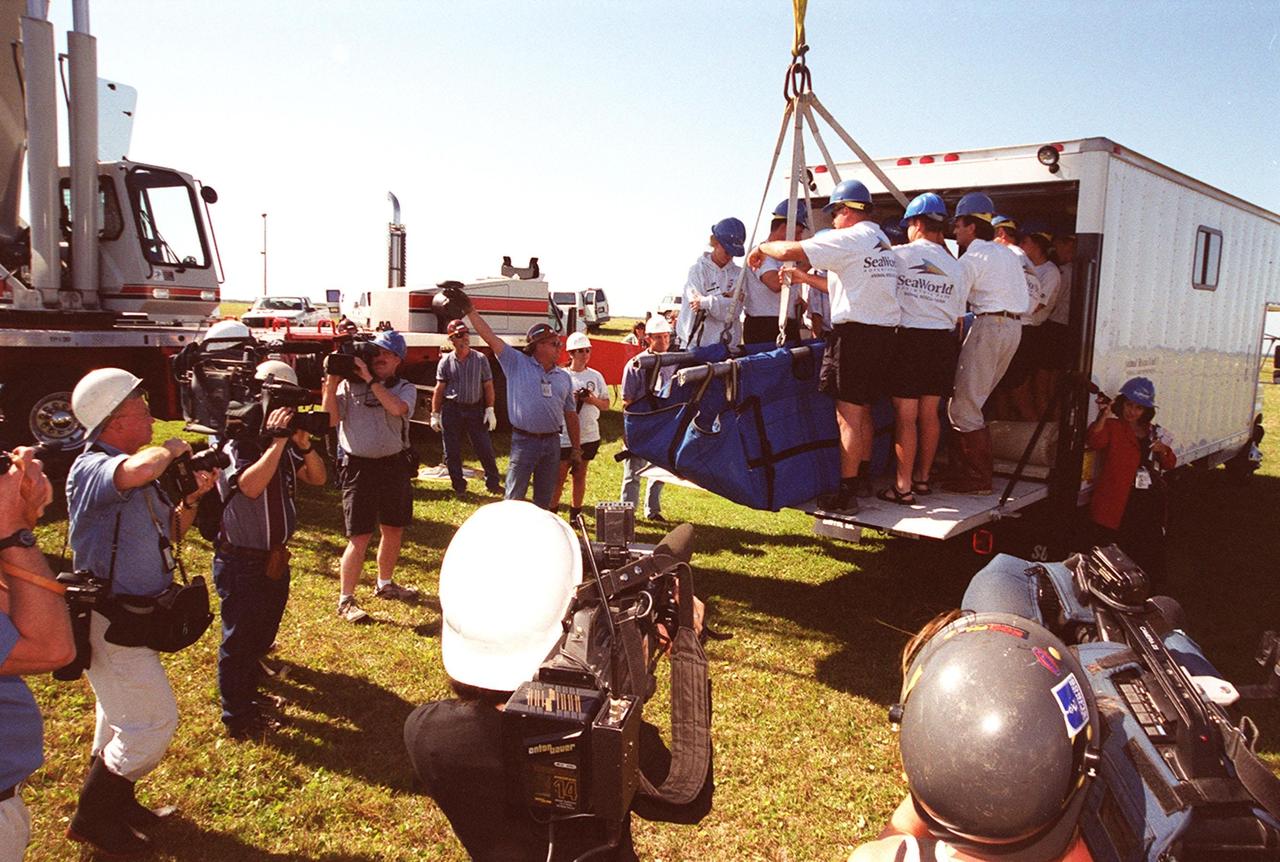
KENNEDY SPACE CENTER, FLA. -- The weight of an adult manatee requires a hoist to lift it out of the van for release into the Banana River. The site is on the north side of the NASA Causeway, near Kennedy Space Center. Sea World workers also released a calf at the site. The two manatees recovered from injuries at the Central Florida theme park. Manatees are frequently seen in the waters around Kennedy Space Center, which is surrounded by the Merritt Island National Wildlife Refuge
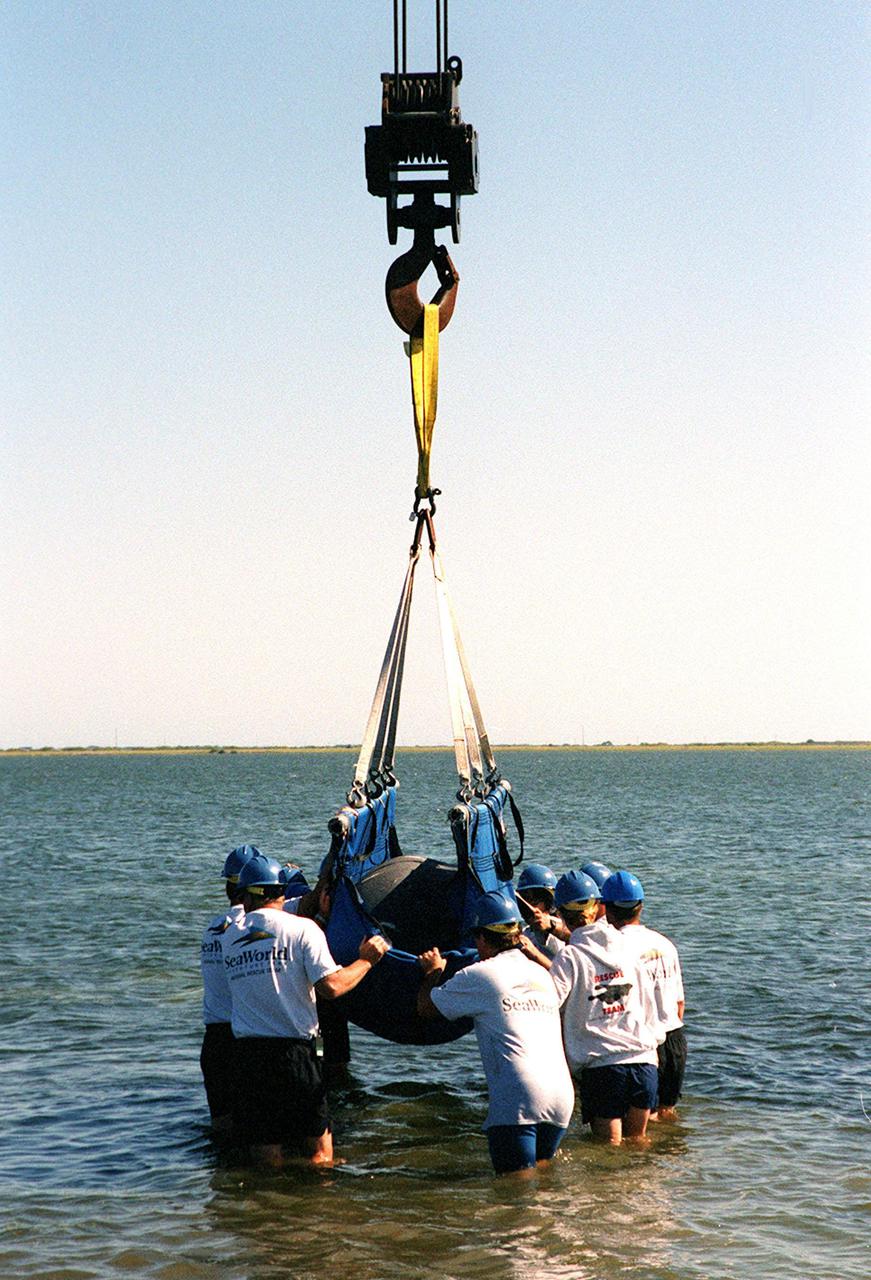
KENNEDY SPACE CENTER, FLA. -- Sea World workers wade into the Banana River while they steady the hoist and sling carrying a manatee. The site is on the north side of the NASA Causeway, near Kennedy Space Center. The manatee is one of two released after recovering at Sea World from injuries. Manatees are frequently seen in the waters around Kennedy Space Center, which is surrounded by the Merritt Island National Wildlife Refuge
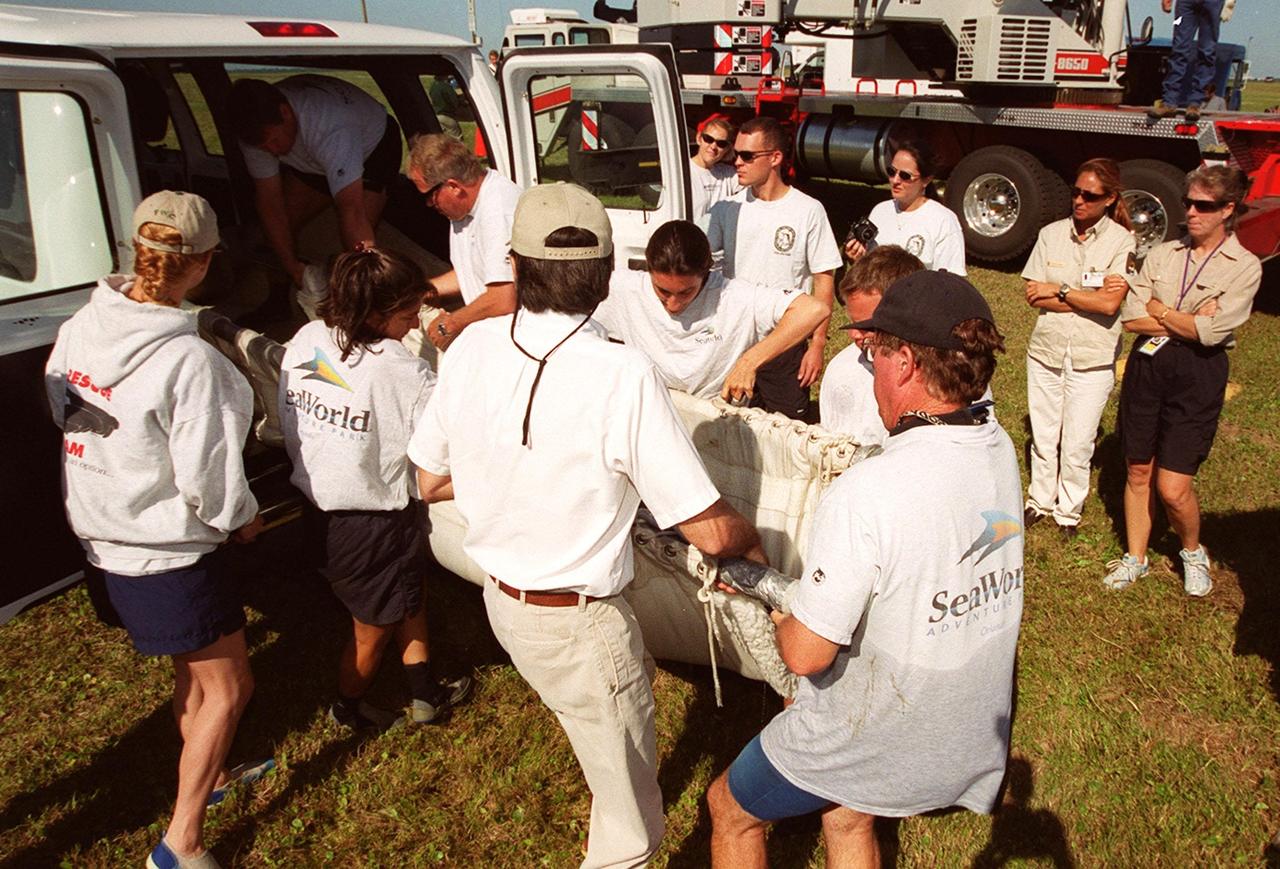
KENNEDY SPACE CENTER, FLA. -- Workers from Sea World, Orlando, Fla., remove a young manatee from the van in order to release it into the Banana River on the north side of the NASA Causeway near KSC. The calf was one of two manatees being released after recovering from injuries. Manatees are frequently seen in the waters around Kennedy Space Center, which is surrounded by the Merritt Island National Wildlife Refuge
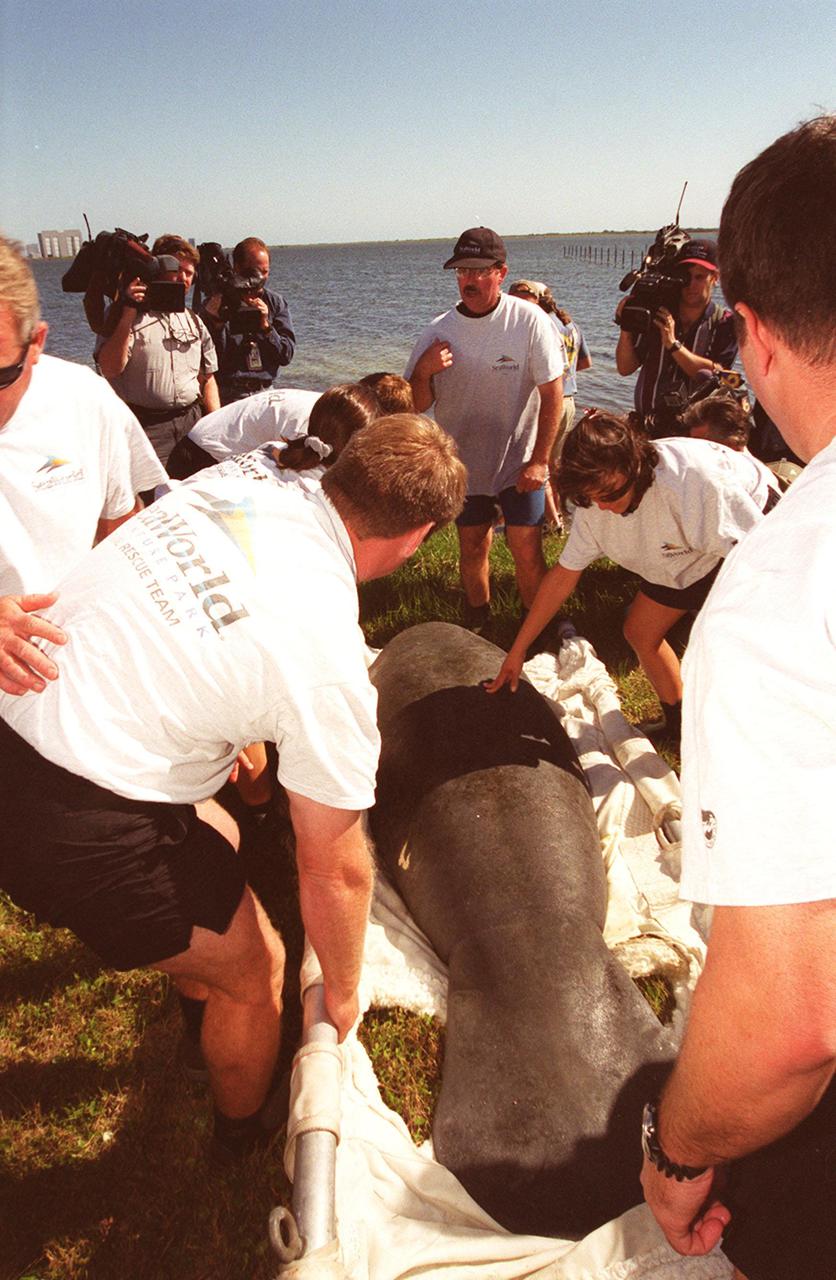
KENNEDY SPACE CENTER, FLA. -- After removing a young manatee from the van that brought it from Sea World, Orlando, Fla., workers get ready for the final step, releasing it into the Banana River behind them. The site is on the north side of the NASA Causeway, near Kennedy Space Center. The calf was one of two manatees being released after recovering from injuries. Manatees are frequently seen in the waters around Kennedy Space Center, which is surrounded by the Merritt Island National Wildlife Refuge

KENNEDY SPACE CENTER, FLA. -- Sea World workers wade into the Banana River carrying a young manatee they are releasing. The site is on the north side of the NASA Causeway, near Kennedy Space Center. The calf was one of two manatees being released after recovering from injuries. Manatees are frequently seen in the waters around Kennedy Space Center, which is surrounded by the Merritt Island National Wildlife Refuge
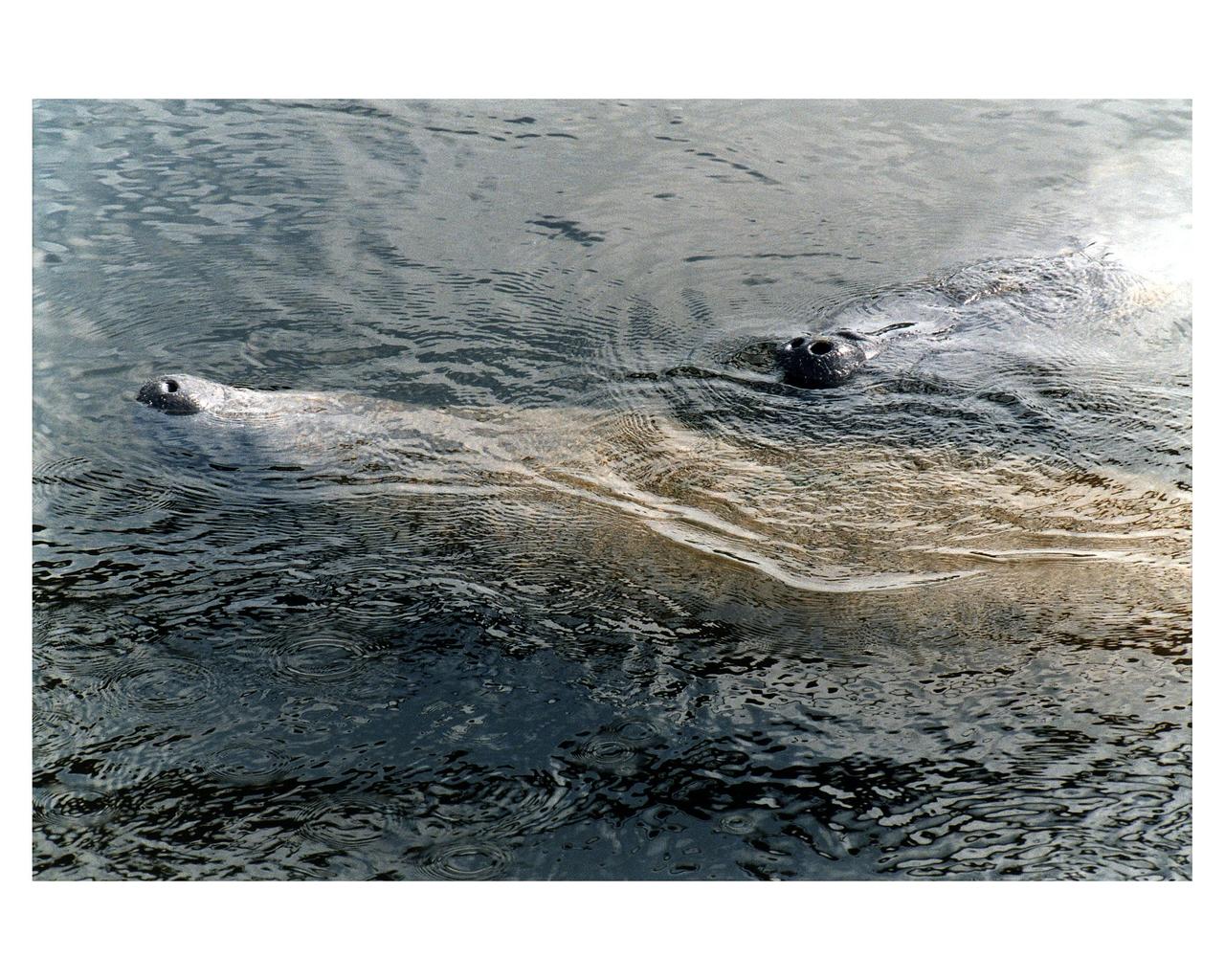
KENNEDY SPACE CENTER, FLA. -- Manatees in the Banana Creek
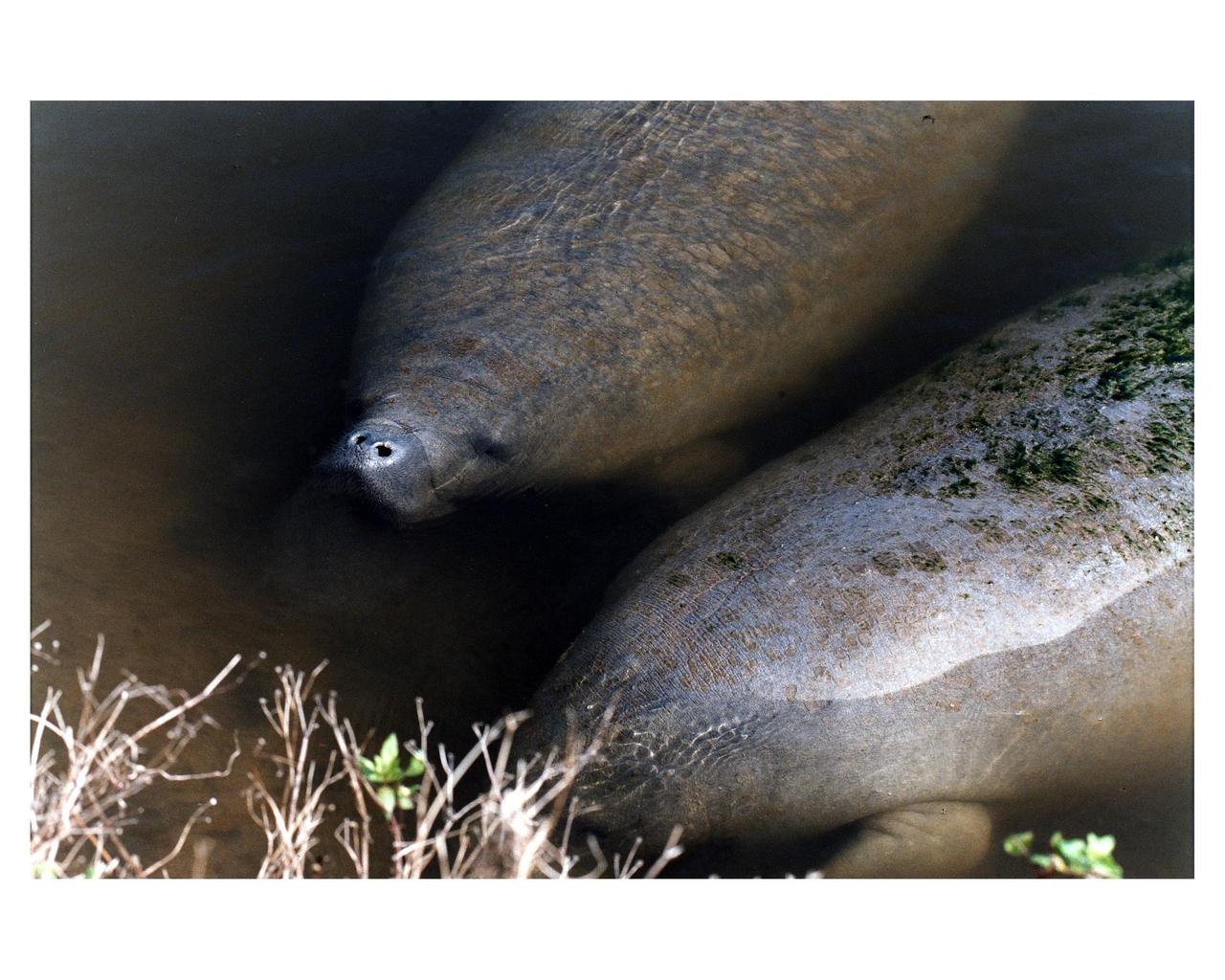
KENNEDY SPACE CENTER, FLA. -- Manatees in the Banana Creek
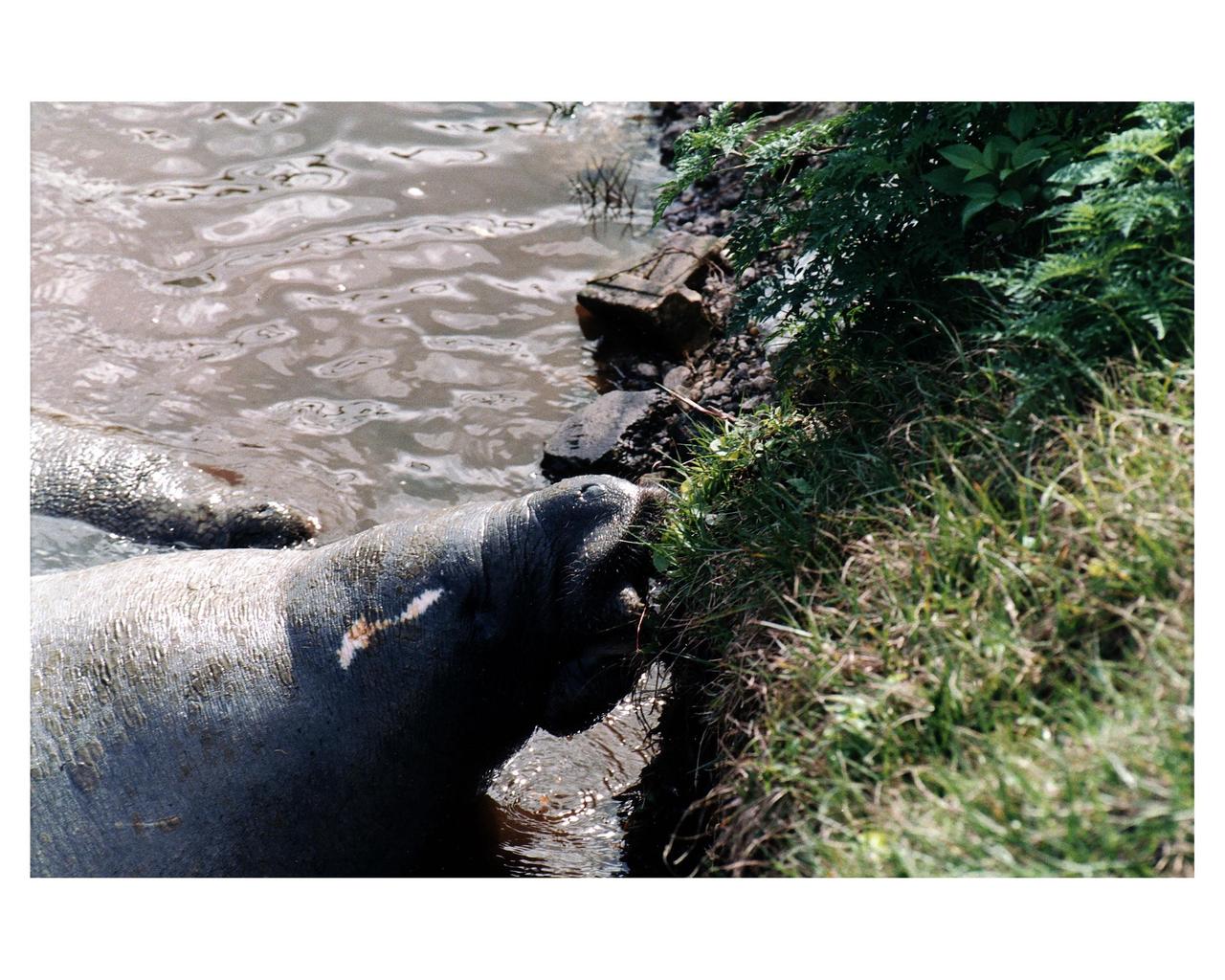
KENNEDY SPACE CENTER, FLA. -- Manatees in the Banana Creek

KENNEDY SPACE CENTER, FLA. -- Manatees in the Banana Creek
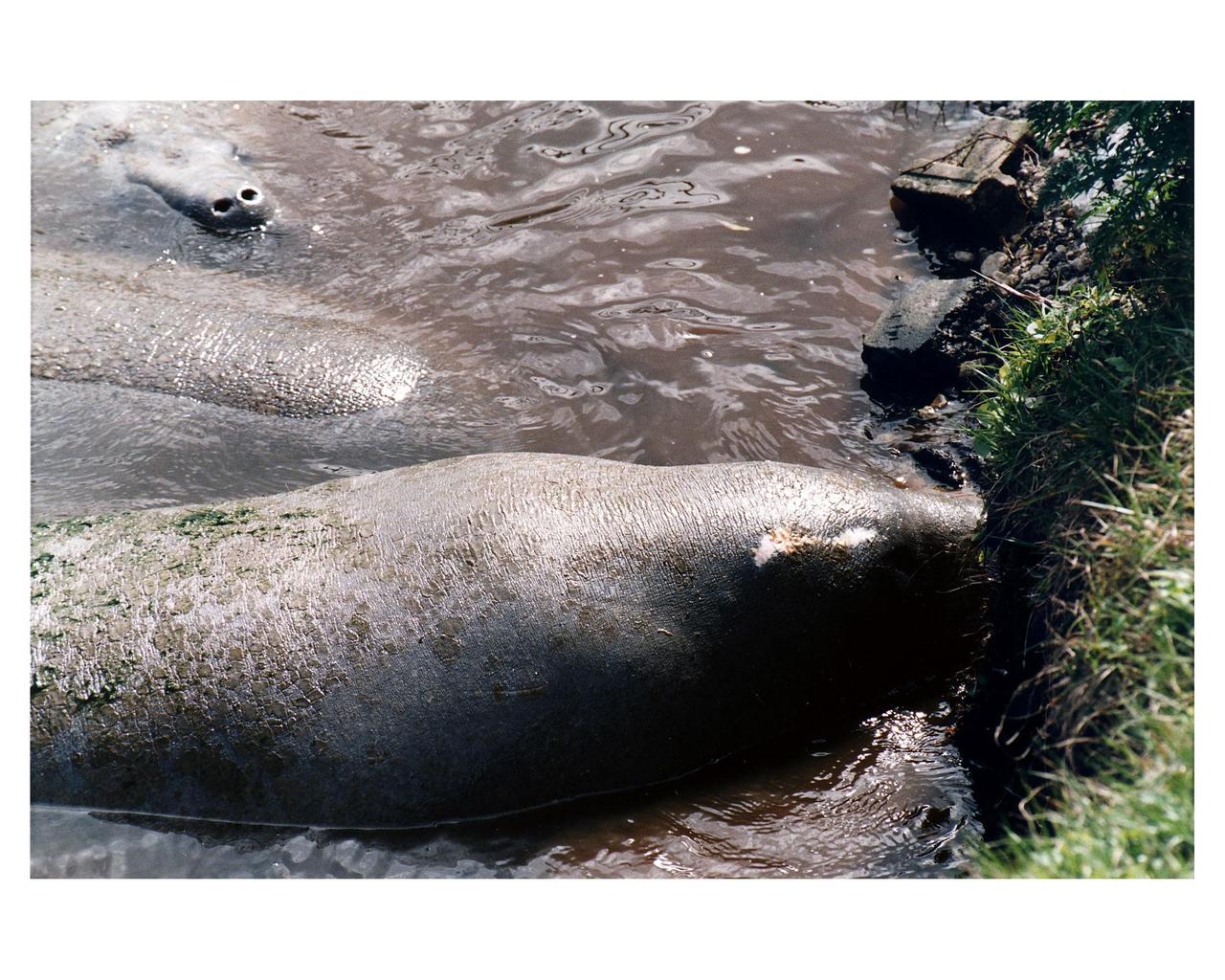
KENNEDY SPACE CENTER, FLA. -- Manatees in the Banana Creek
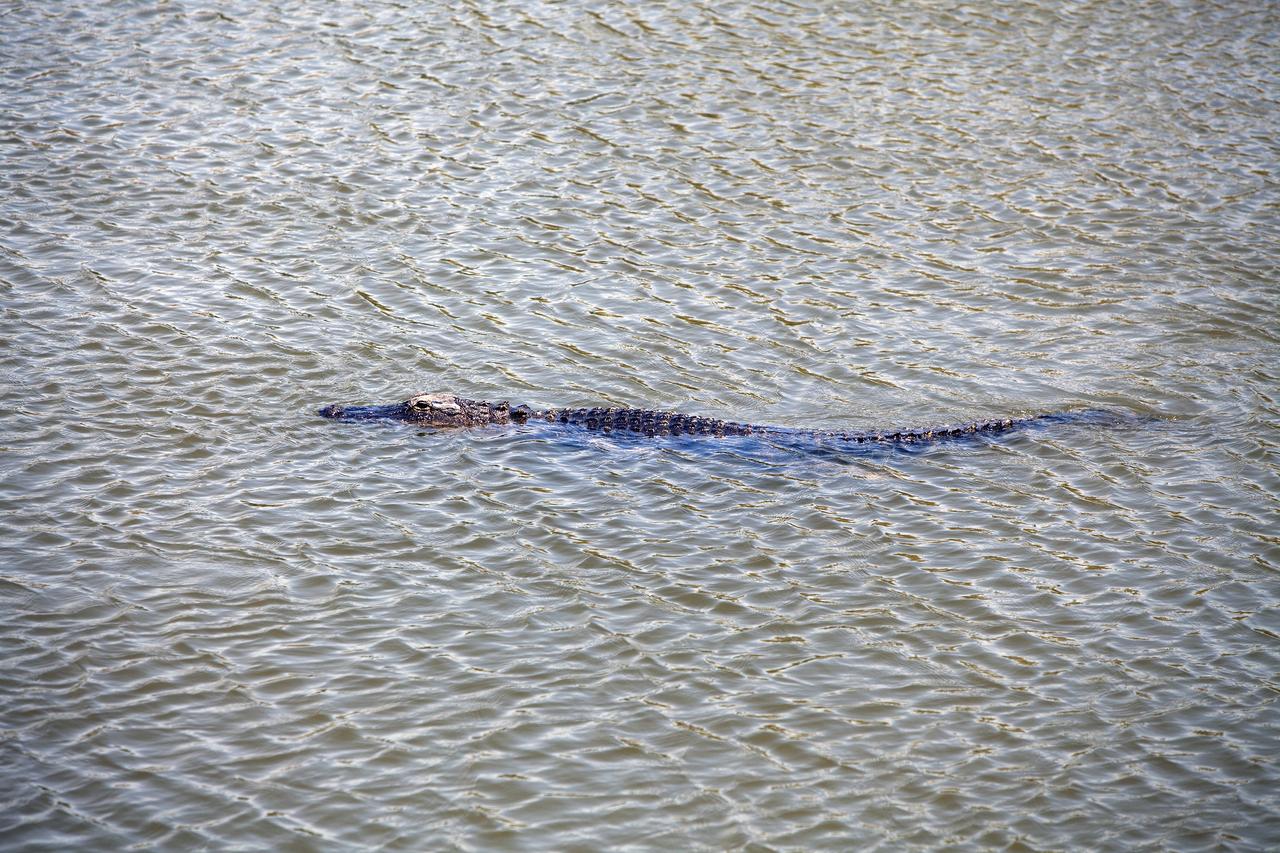
CAPE CANAVERAL, Fla. – An alligator glides through the shallow water of a creek at NASA's Kennedy Space Center. The center shares a boundary with the Merritt Island National Wildlife Refuge, which encompasses 140,000 acres that provide a habitat for more than 330 species of birds, 31 mammals, 117 fishes, and 65 amphibians and reptiles. Photo credit: NASA/Daniel Casper

CAPE CANAVERAL, Fla. – Several alligators float at the surface of a creek at NASA's Kennedy Space Center in Florida. The center shares a boundary with the Merritt Island National Wildlife Refuge, which encompasses 140,000 acres that provide a habitat for more than 330 species of birds, 31 mammals, 117 fishes, and 65 amphibians and reptiles. Photo credit: NASA/Daniel Casper
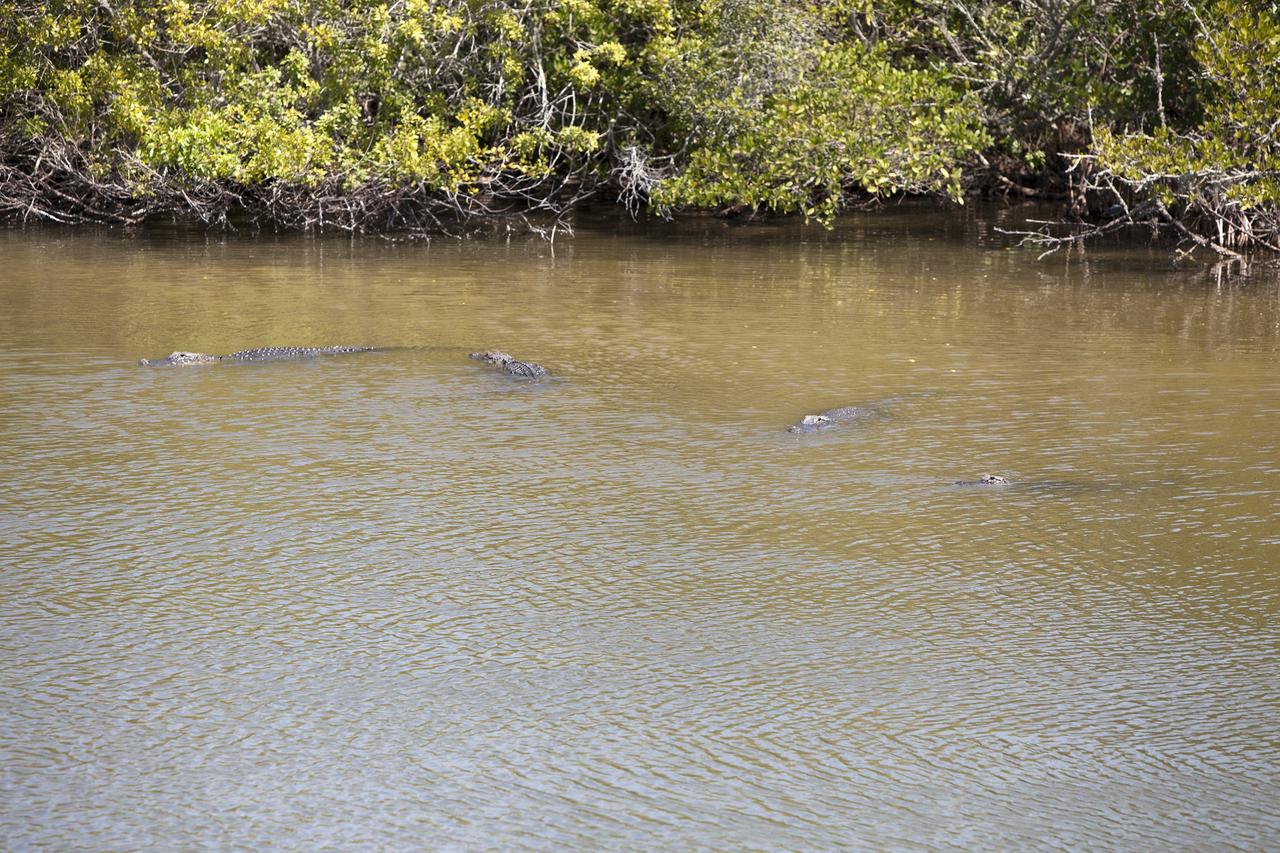
CAPE CANAVERAL, Fla. – Alligators gather in the shallow water of a creek at NASA's Kennedy Space Center in Florida. The center shares a boundary with the Merritt Island National Wildlife Refuge, which encompasses 140,000 acres that provide a habitat for more than 330 species of birds, 31 mammals, 117 fishes, and 65 amphibians and reptiles. Photo credit: NASA/Daniel Casper
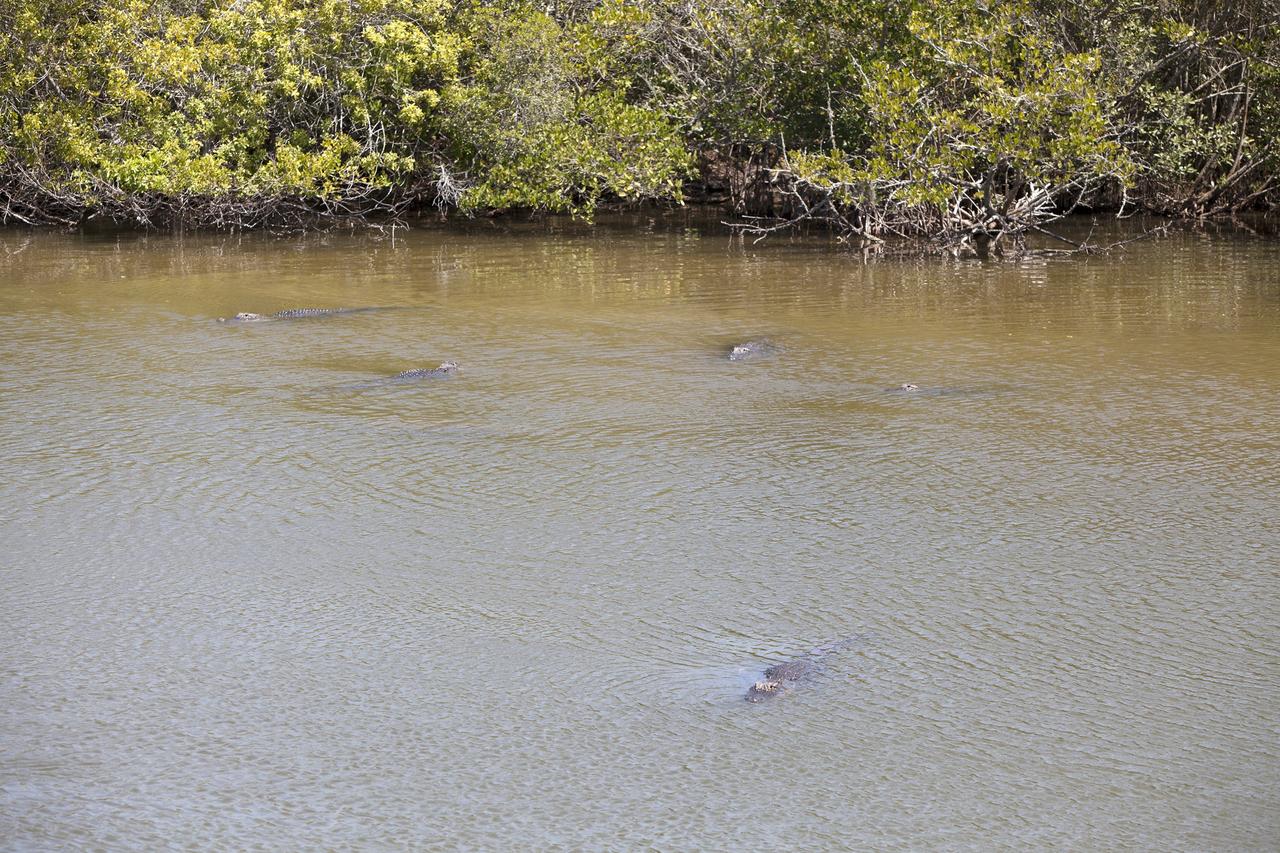
CAPE CANAVERAL, Fla. – Alligators gather in the shallow water of a creek at NASA's Kennedy Space Center in Florida. The center shares a boundary with the Merritt Island National Wildlife Refuge, which encompasses 140,000 acres that provide a habitat for more than 330 species of birds, 31 mammals, 117 fishes, and 65 amphibians and reptiles. Photo credit: NASA/Daniel Casper
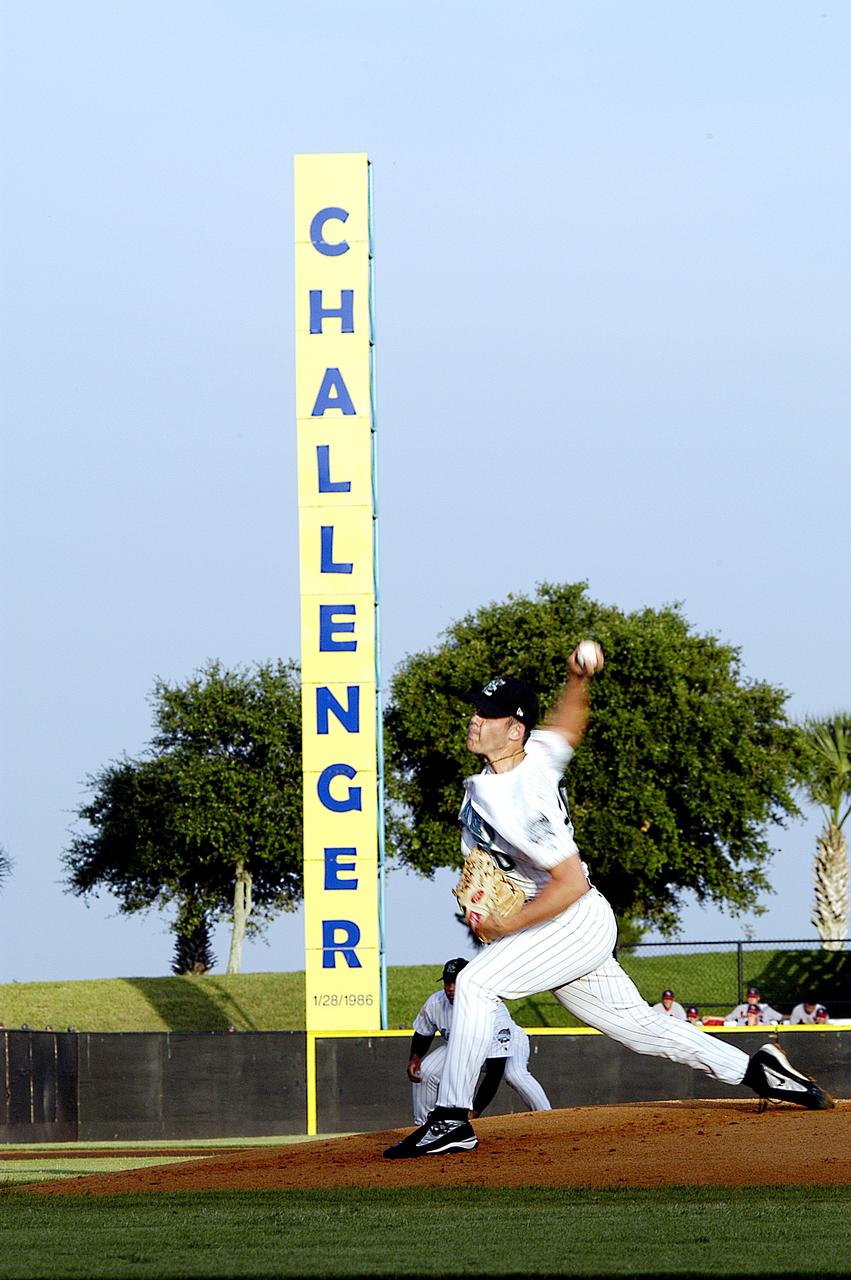
KENNEDY SPACE CENTER, FLA. - The pitcher with the Brevard Manatees, a minor league baseball team in Central Florida, starts the game on a night that hosted KSC employees. Before the game, attendees offered a moment of silence to honor the STS-107 crew and two recovery workers who died in a helicopter crash.
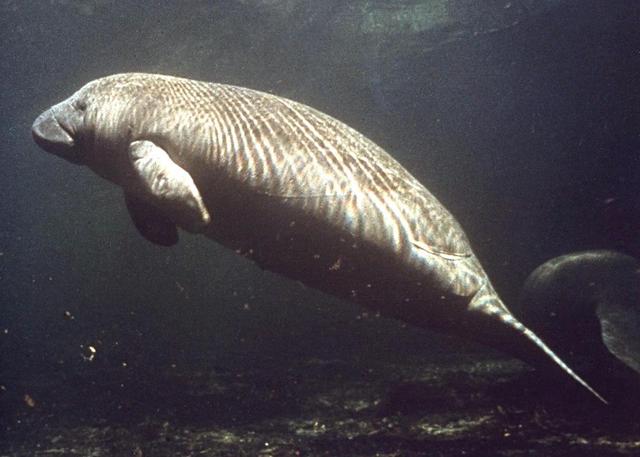
KENNEDY SPACE CENTER, FLA. -- A manatee swims in the water near Kennedy Space Center.
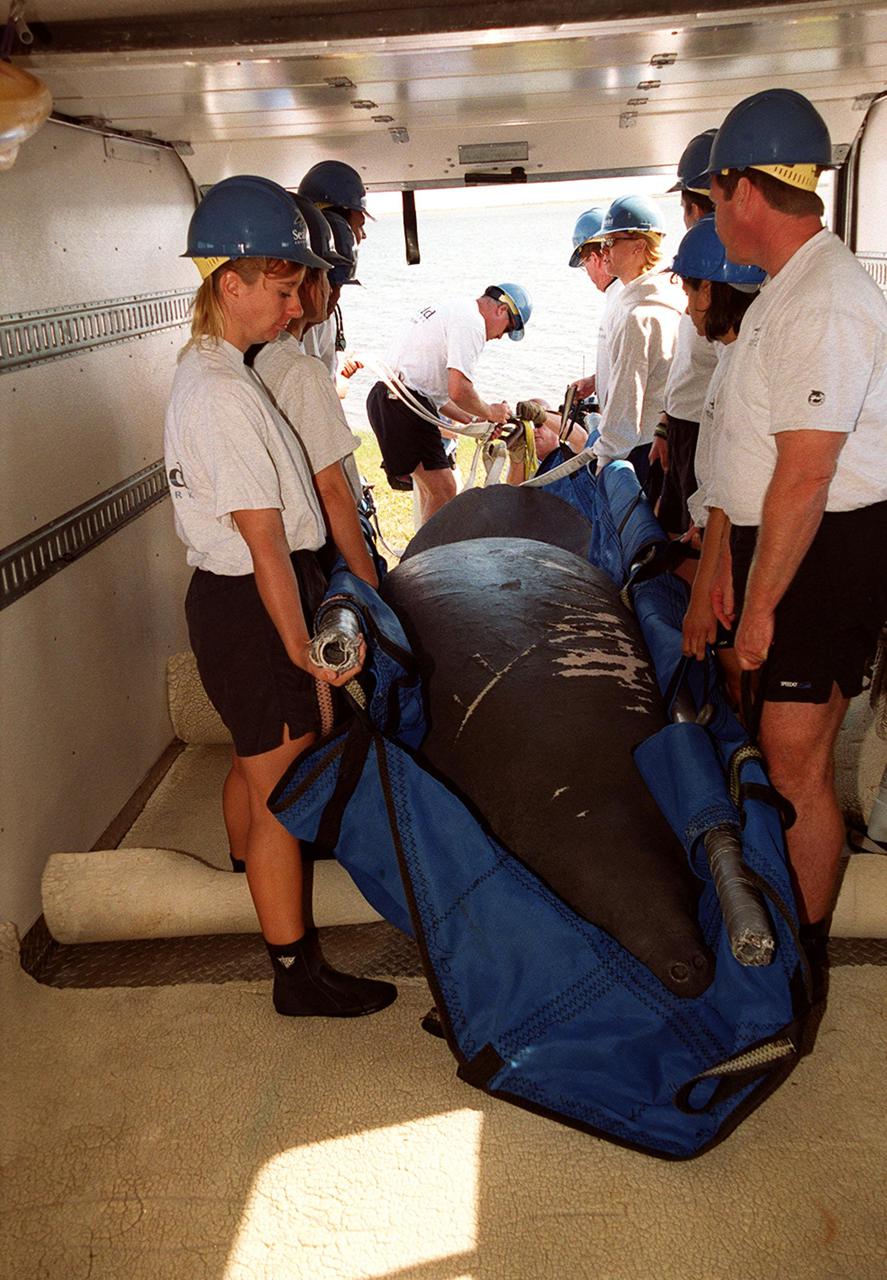
KENNEDY SPACE CENTER, FLA. -- A large adult manatee requires many helpers to lift it out of the van that brought it from Sea World for release into the Banana River. The site is on the north side of the NASA Causeway, near Kennedy Space Center. A calf was also released at the site. Manatees are frequently seen in the waters around Kennedy Space Center, which is surrounded by the Merritt Island National Wildlife Refuge
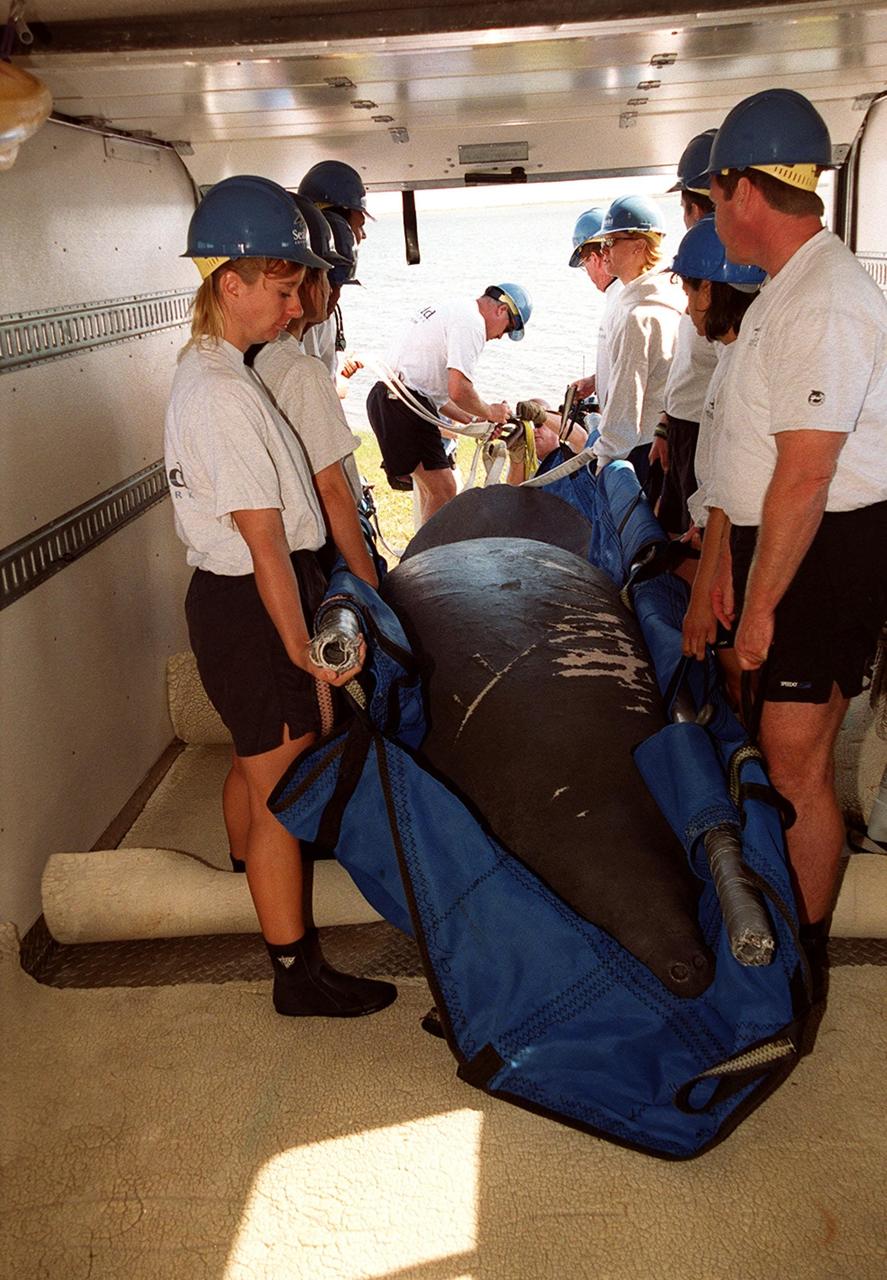
KENNEDY SPACE CENTER, FLA. -- A large adult manatee requires many helpers to lift it out of the van that brought it from Sea World for release into the Banana River. The site is on the north side of the NASA Causeway, near Kennedy Space Center. A calf was also released at the site. Manatees are frequently seen in the waters around Kennedy Space Center, which is surrounded by the Merritt Island National Wildlife Refuge
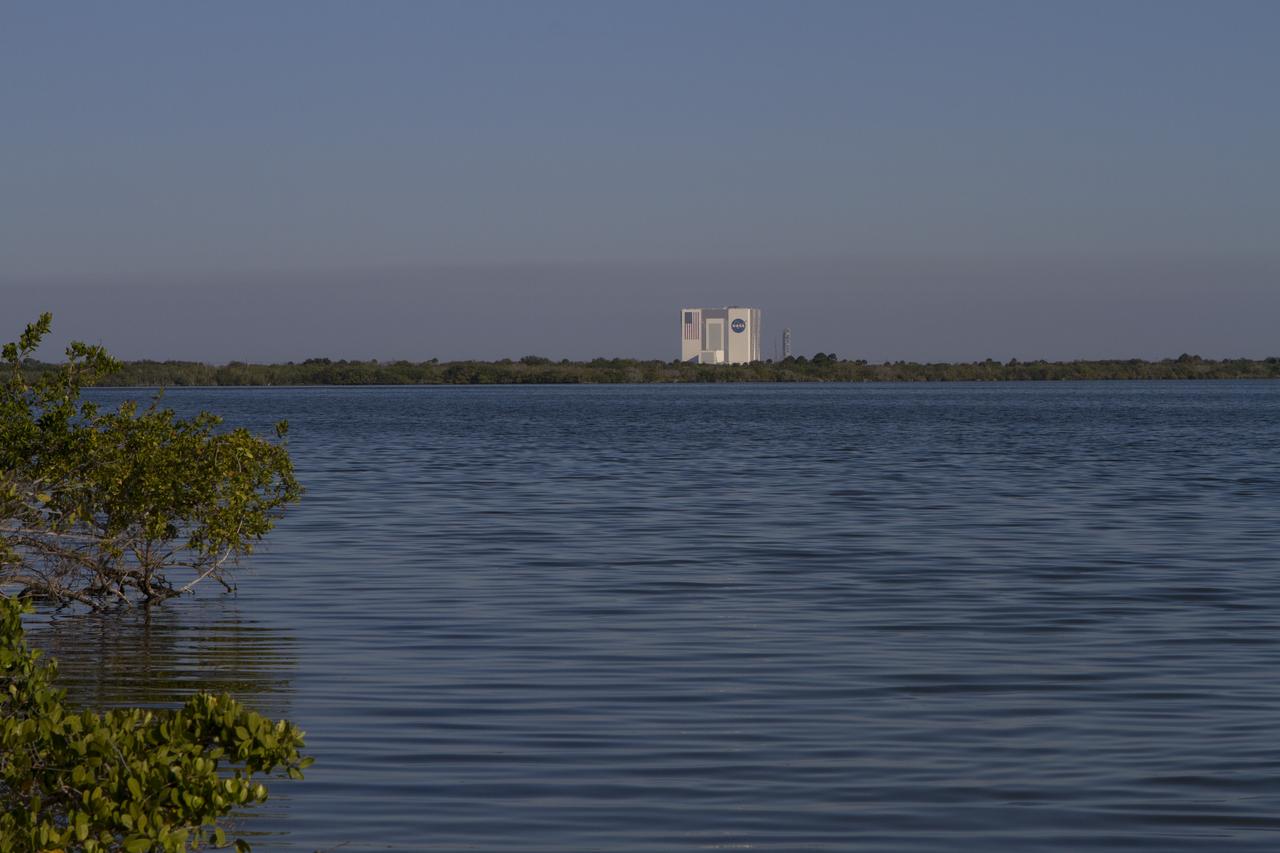
CAPE CANAVERAL, Fla. -- The 525-foot-tall Vehicle Assembly Building is seen from this view looking north across the inland waterway of the Banana River at NASA’s Kennedy Space Center in Florida. In view to the right is the Mobile Launcher. The center shares a boundary with the Merritt Island National Wildlife Refuge. The refuge encompasses 140,000 acres that are a habitat for more than 330 species of birds, 31 mammals, 117 fishes, and 65 amphibians and reptiles. It contains more than 1,000 known plant species. The marshes and open water of the refuge provide wintering areas for 23 species of migratory waterfowl, as well as a year-round home for great blue herons, great egrets, wood storks, cormorants, brown pelicans and other species of marsh and shore birds, and a variety of insects. Photo credit: NASA/Ben Smegelsky
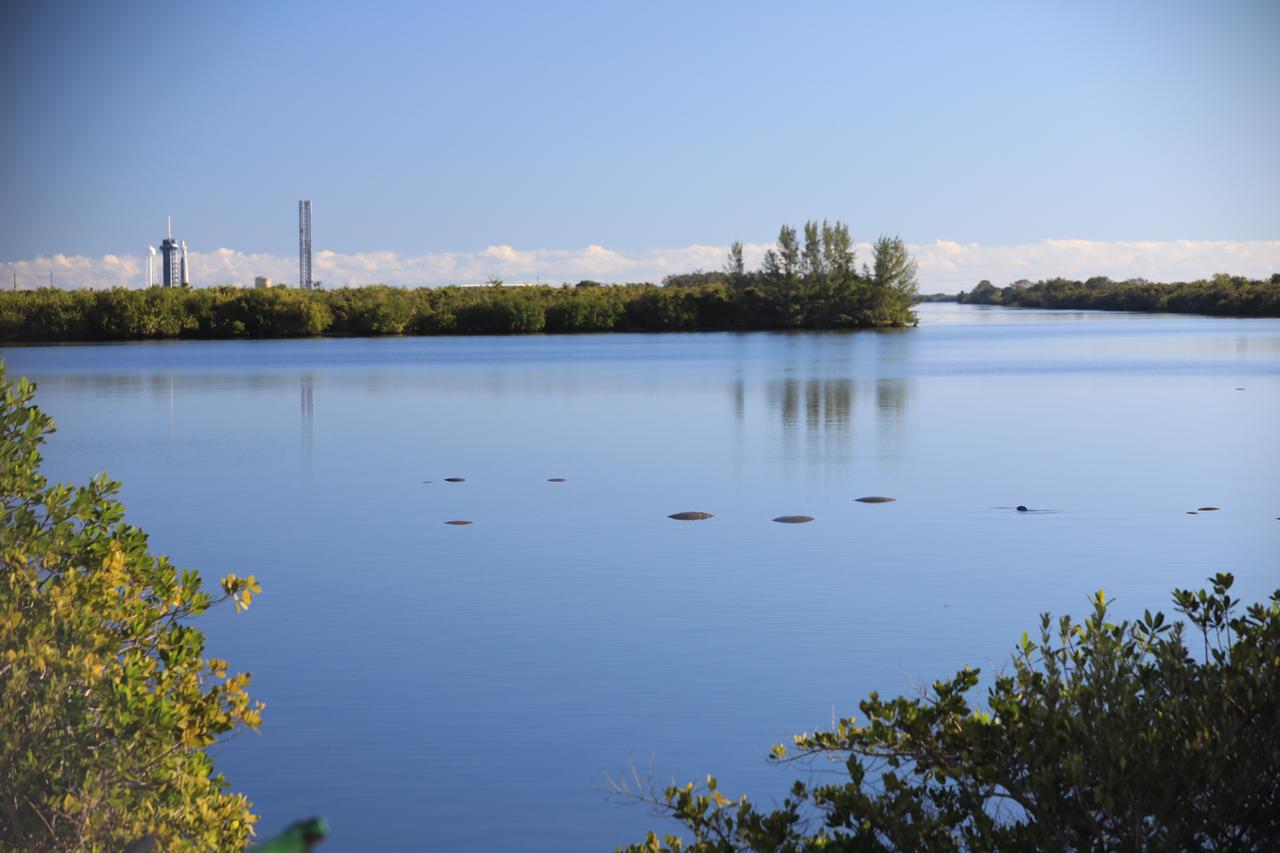
Several manatees swim in the turn basin of Launch Complex 39 at NASA’s Kennedy Space Center in Florida on Tuesday, Nov. 26, 2024. NASA Kennedy shares a boundary with the Merritt Island Wildlife National Refuge and is home to more than 1,500 species of plants and animals on 140,000 acres.
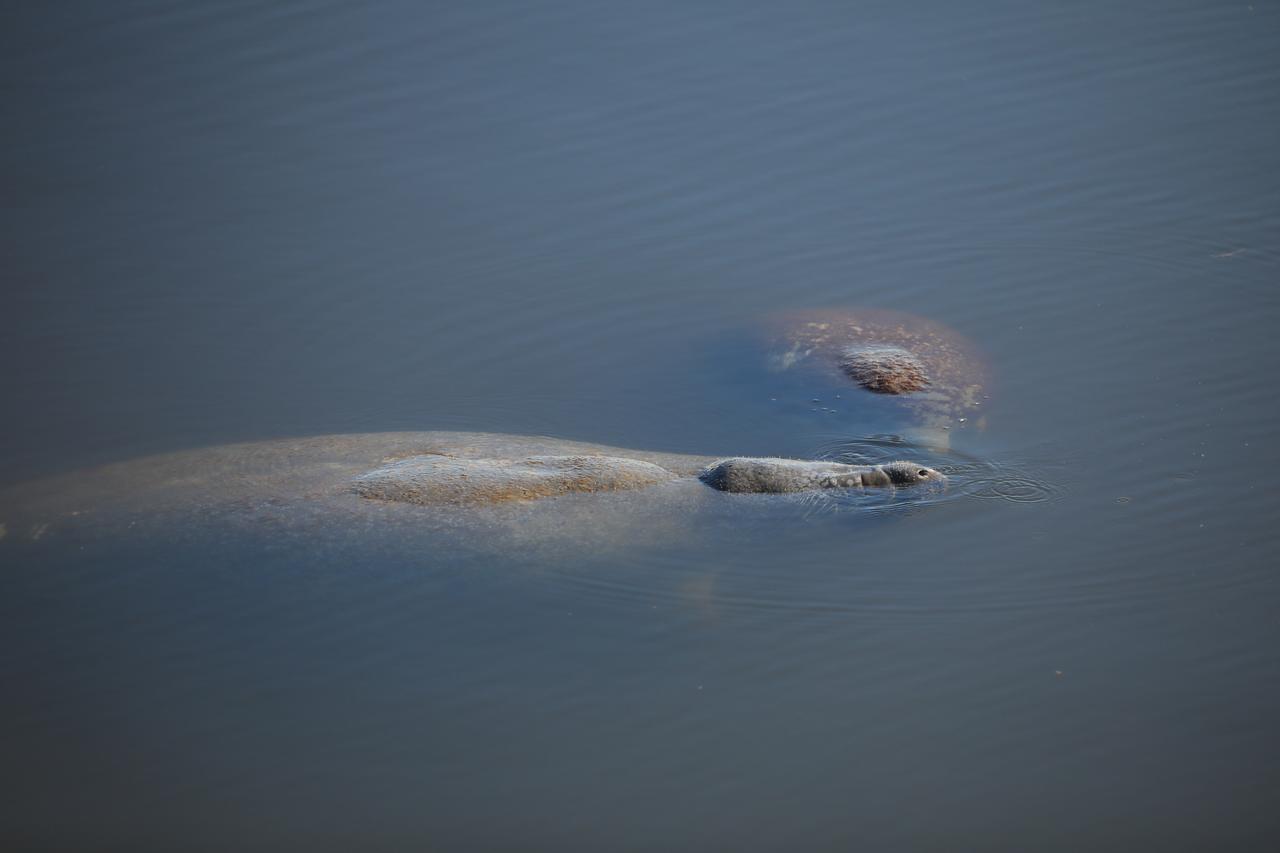
Several manatees swim in the turn basin of Launch Complex 39 at NASA’s Kennedy Space Center in Florida on Tuesday, Nov. 26, 2024. NASA Kennedy shares a boundary with the Merritt Island Wildlife National Refuge and is home to more than 1,500 species of plants and animals on 140,000 acres.
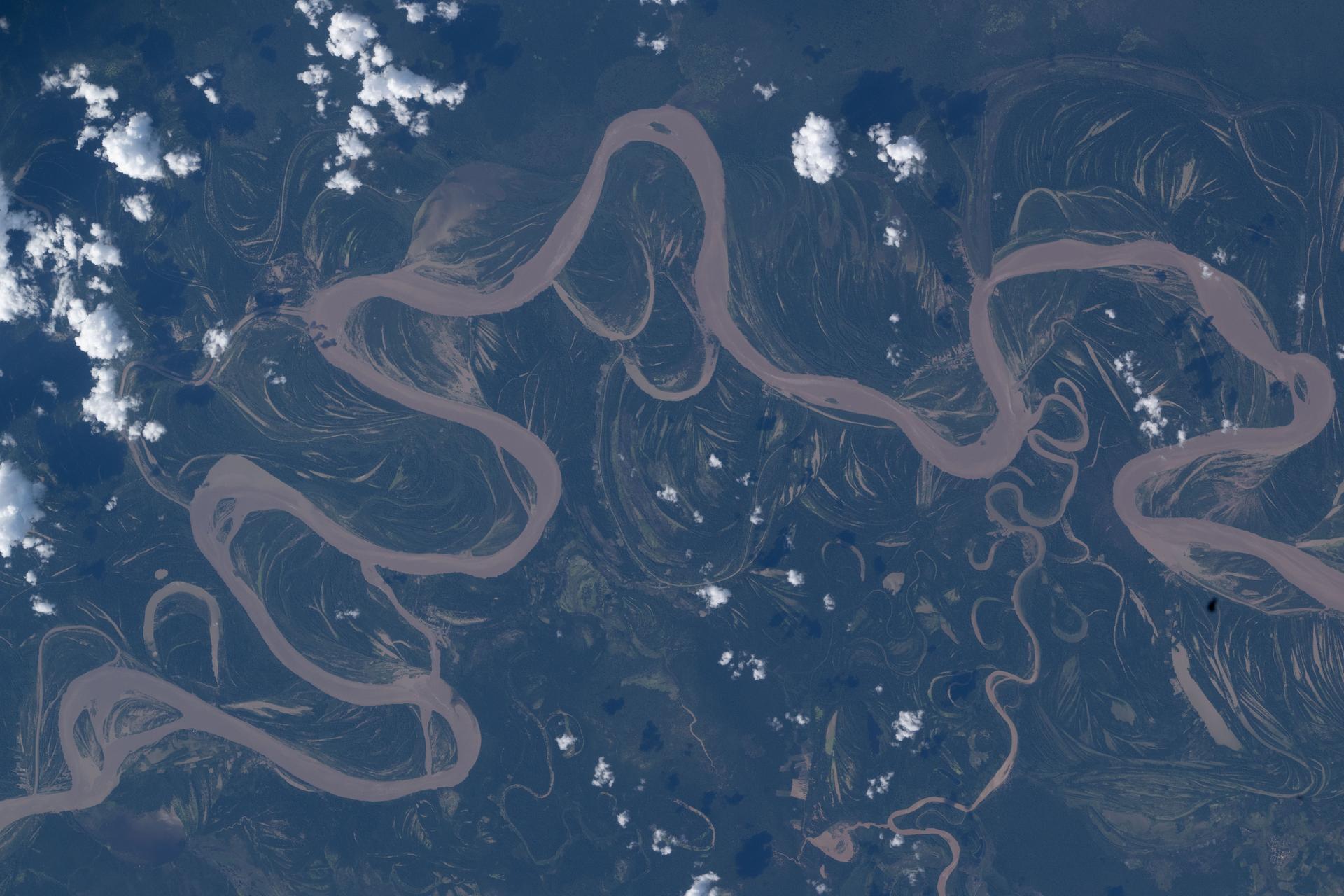
iss074e0492148 (April 15, 2026) --- The Ucayali River in central Peru—home to a wide array of wildlife including dolphins, manatees, reptiles, and birds—is a major tributary and main headstream of the Amazon River. The International Space Station was orbiting 264 miles above the lowland Amazon rainforest when this photograph was taken. Credit: NASA/Jessica Meir
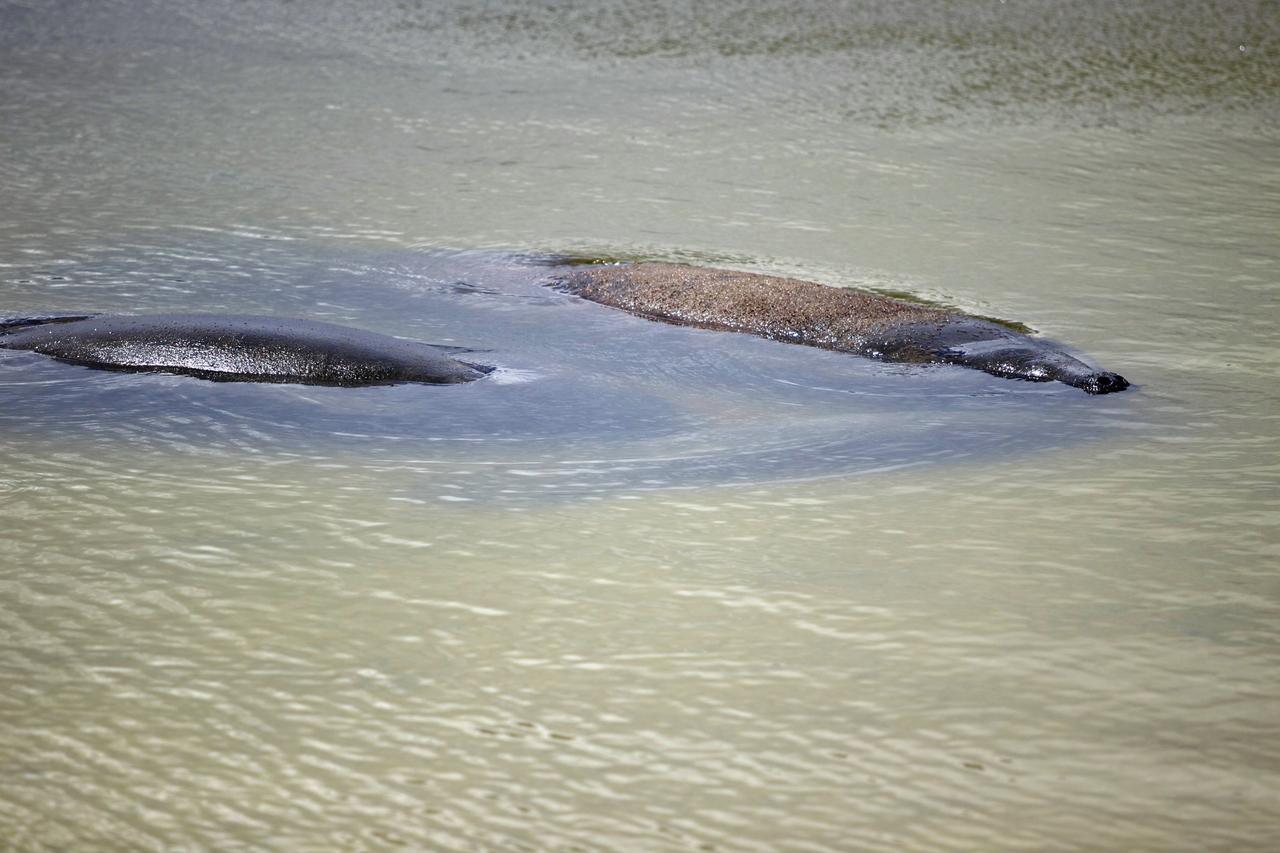
CAPE CANAVERAL, Fla. -- At NASA's Kennedy Space Center in Florida, two manatees congregate in brackish water off State Road 3, near the center's north guard gate. Kennedy coexists with the Merritt Island National Wildlife Refuge, habitat to more than 310 species of birds, 25 mammals, 117 fish and 65 amphibians and reptiles. Photo credit: NASA/Frank Michaux

iss074e0417599 (March 27, 2026) --- The West African coast, highlighting the nations of Senegal, The Gambia, and Guinea‑Bissau, transitions from arid plains to swampy coastal lowlands. The Gambia River (top center), which flows through the middle of the tiny nation of The Gambia, supports a wide array of wildlife including migratory birds, chimpanzees, hippos, crocodiles, and manatees. It is also important for transportation and agriculture throughout the Senegambia region. Credit: NASA
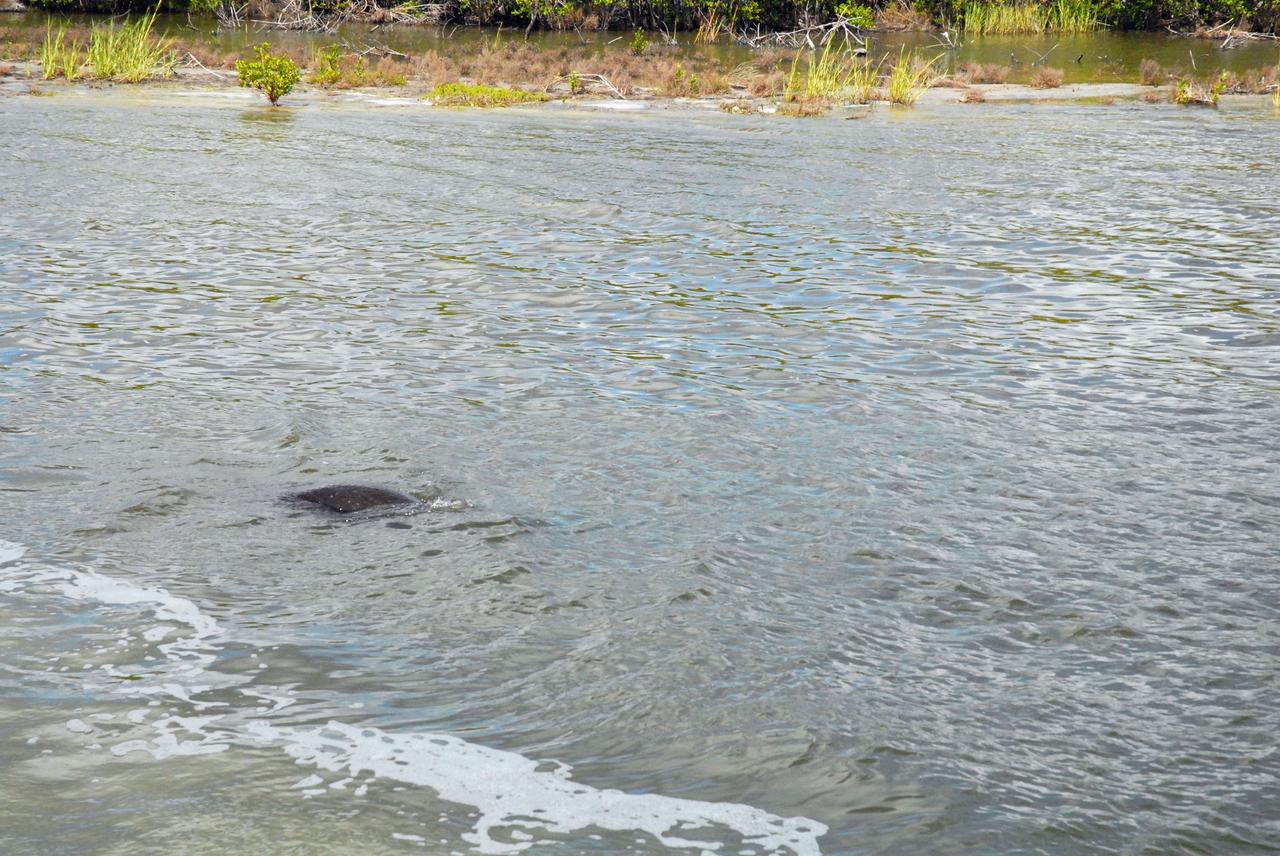
CAPE CANAVERAL, Fla. – A manatee swims in the Banana River during a field-guided boat tour of NASA's Kennedy Space Center in Florida. As part of the center's first-ever Innovation Expo, the tour, called "Living Outdoor Laboratory for Environmental Sustainability," is giving employees the opportunity to see the unique estuarine ecosystems that are protected from development by the presence of Kennedy and the Merritt Island National Wildlife Refuge. Manatees are one of the many threatened or endangered species that call the refuge home. The diverse and healthy area encompassing about 140,000 acres of central Florida's east coast has been closed to the public for 50 years, allowing the coastal dunes, saltwater estuaries and marshes, freshwater impoundments, scrub, pine flatwoods, and hardwood hammocks to provide habitats for more than 1,000 species of plants and animals. Innovation Expo is showcasing the innovative work taking place throughout the center's facilities and labs to encourage employees to work together to solve future challenges. For more information, visit http://www.nasa.gov/kennedy. Photo credit: NASA
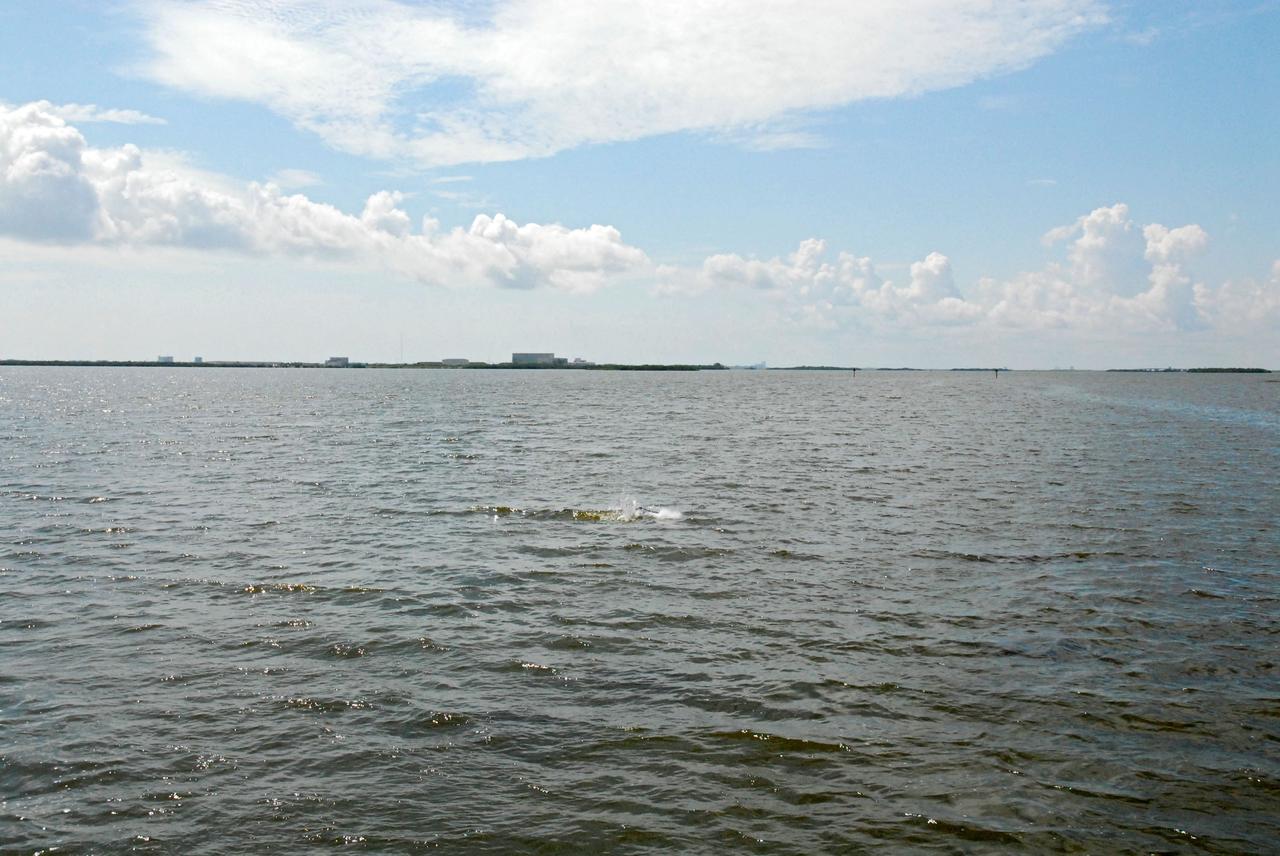
CAPE CANAVERAL, Fla. – A manatee splashes in the Banana River during a field-guided boat tour of NASA's Kennedy Space Center in Florida. As part of the center's first-ever Innovation Expo, the tour, called "Living Outdoor Laboratory for Environmental Sustainability," is giving employees the opportunity to see the unique estuarine ecosystems that are protected from development by the presence of Kennedy and the Merritt Island National Wildlife Refuge. Manatees are one of the many threatened or endangered species that call the refuge home. The diverse and healthy area encompassing about 140,000 acres of central Florida's east coast has been closed to the public for 50 years, allowing the coastal dunes, saltwater estuaries and marshes, freshwater impoundments, scrub, pine flatwoods, and hardwood hammocks to provide habitats for more than 1,000 species of plants and animals. Innovation Expo is showcasing the innovative work taking place throughout the center's facilities and labs to encourage employees to work together to solve future challenges. For more information, visit http://www.nasa.gov/kennedy. Photo credit: NASA
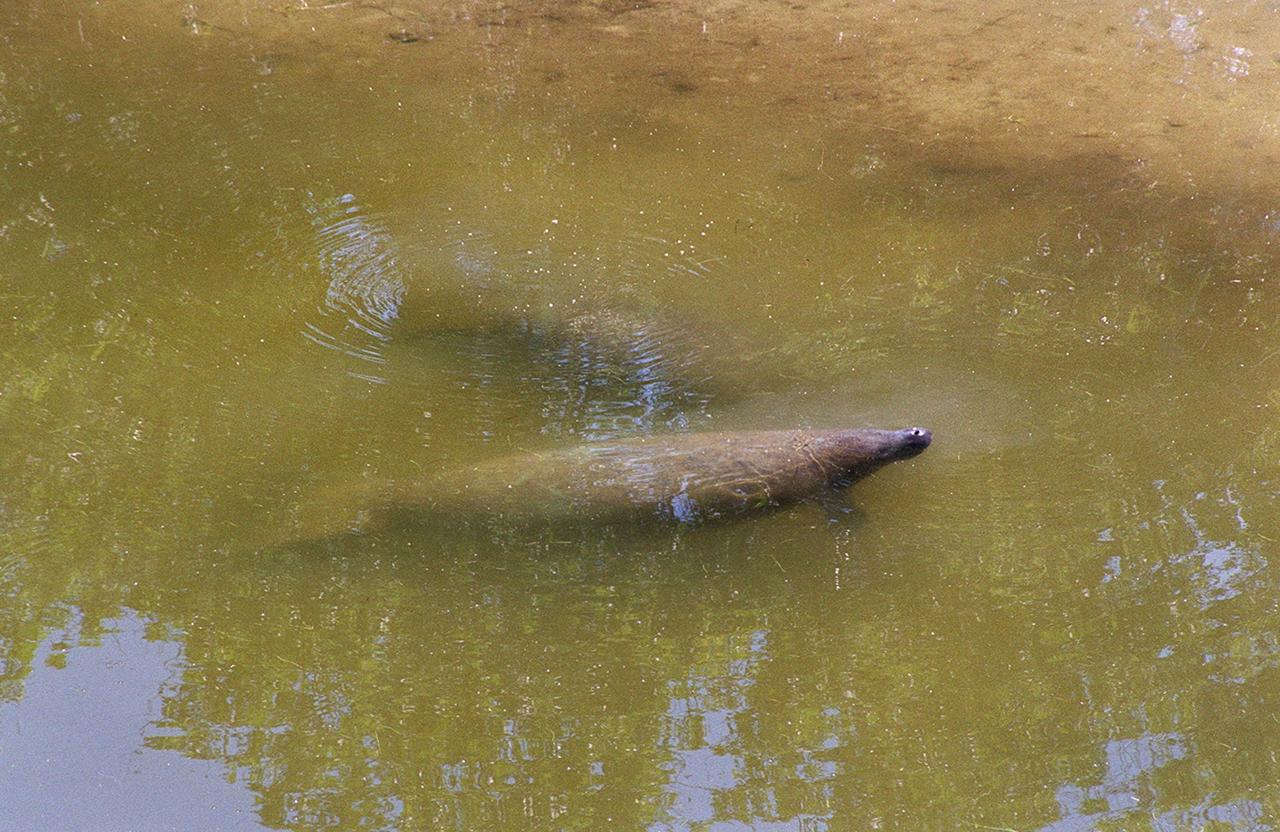
In waters on Kennedy Space Center, two manatees are seen leisurely swimming. In winter they gather in Florida's warm water rivers and inland springs. KSC shares a boundary with the Merritt Island National Wildlife Refuge, which encompasses 92,000 acres that are a habitat for more than 331 species of birds, 31 mammals, 117 fishes, and 65 amphibians and reptiles. The marshes and open water of the refuge provide wintering areas for 23 species of migratory waterfowl, as well as a year-round home for great blue herons, great egrets, wood storks, cormorants, brown pelicans and other species of marsh and shore birds, as well as a variety of insects
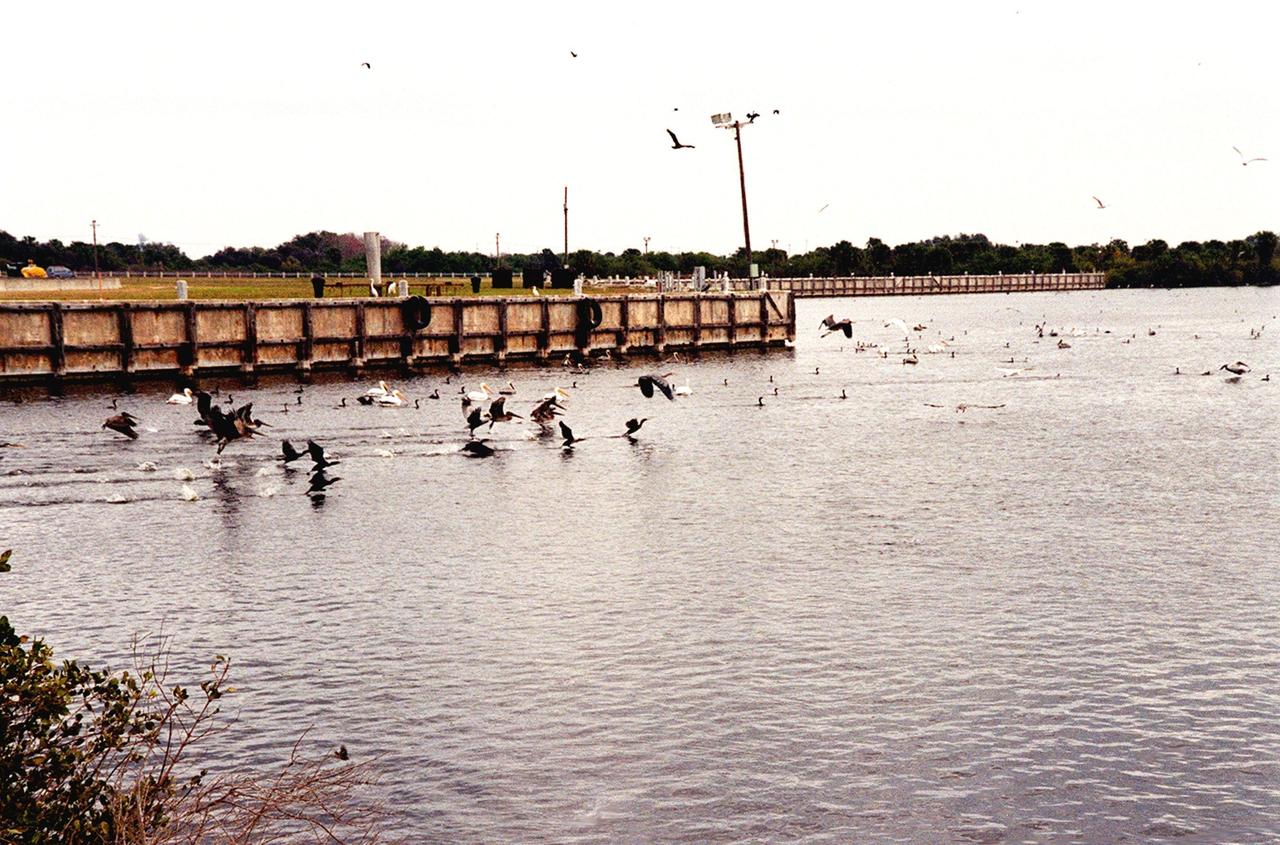
KENNEDY SPACE CENTER, FLA. -- The water in the turn basin, east of the Vehicle Assembly Building and next to the crawlerway, teems with fish and draws white pelicans, gray pelicans, cormorants, sea gulls and more looking for a meal. The turn basin is part of the Indian River Lagoon, composed of Mosquito Lagoon to the north, Banana River and Creek to the south and the Indian River to the west. The Indian River Lagoon has one of the most diverse bird populations anywhere in America. Also, nearly one-third of the nation's manatee population lives here or migrates through the lagoon seasonally. The lagoon varies in width from ½ mile to 5 miles and averages only 3 feet in depth

KENNEDY SPACE CENTER, FLA. -- Two fledgling eagles bear the regal look of their parents as they rest in their nest at the north end of S.R. 3 near Kennedy Space Center. This year-old nest is one of a dozen eagle nests both in KSC and in the Merritt Island National Wildlife Refuge, which surrounds KSC. The refuge includes several wading bird rookeries, many osprey nests, up to 400 manatees during the spring, and approximately 2,500 Florida scrub jays. It also is a major wintering area for migratory birds. More than 500 species of wildlife inhabit the refuge, with 15 considered federally threatened or endangered. Photo credit: NASA/Ken Thornsley
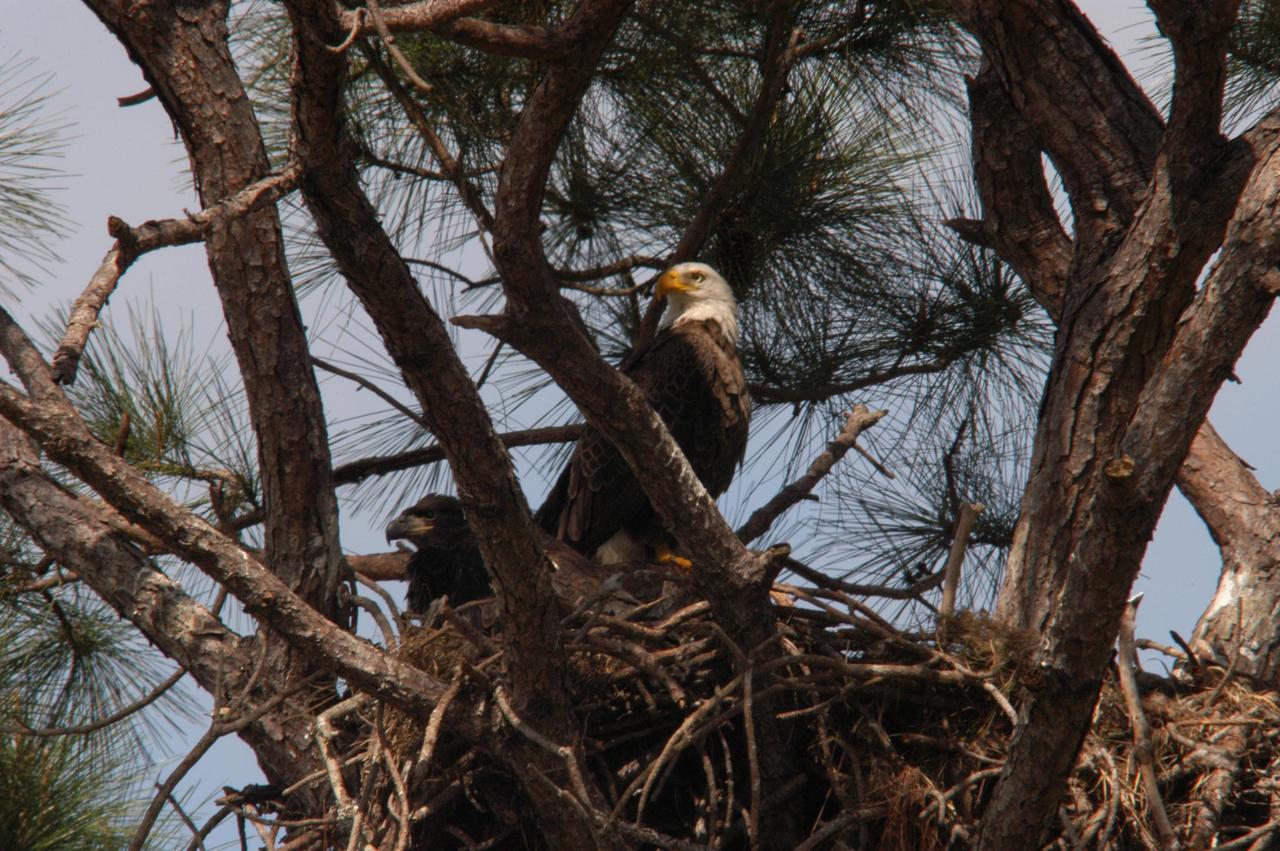
KENNEDY SPACE CENTER, FLA. -- High in a pine tree at NASA's Kennedy Space Center, an adult bald eagle (right) and a fledgling keep watch from their nest. There are approximately a dozen active bald eagle nests both in KSC and in the Merritt Island National Wildlife Refuge, which surrounds KSC. The refuge includes several wading bird rookeries, many osprey nests, up to 400 manatees during the spring, and approximately 2,500 Florida scrub jays. It also is a major wintering area for migratory birds. More than 500 species of wildlife inhabit the refuge, with 15 considered federally threatened or endangered. Photo credit: NASA/George Shelton
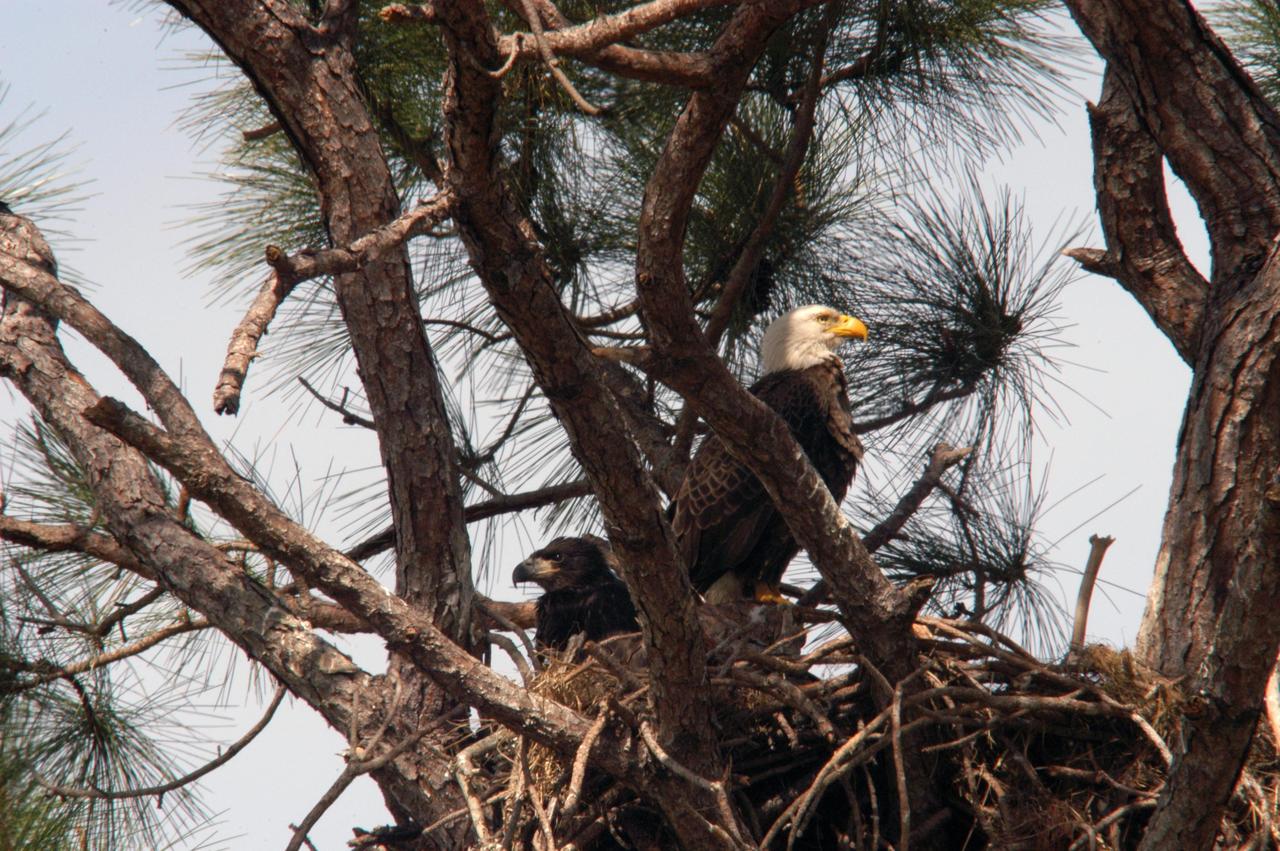
KENNEDY SPACE CENTER, FLA. -- High in a pine tree at NASA's Kennedy Space Center, an adult bald eagle (right) and a fledgling keep watch from their nest. There are approximately a dozen active bald eagle nests both in KSC and in the Merritt Island National Wildlife Refuge, which surrounds KSC. The refuge includes several wading bird rookeries, many osprey nests, up to 400 manatees during the spring, and approximately 2,500 Florida scrub jays. It also is a major wintering area for migratory birds. More than 500 species of wildlife inhabit the refuge, with 15 considered federally threatened or endangered. Photo credit: NASA/George Shelton
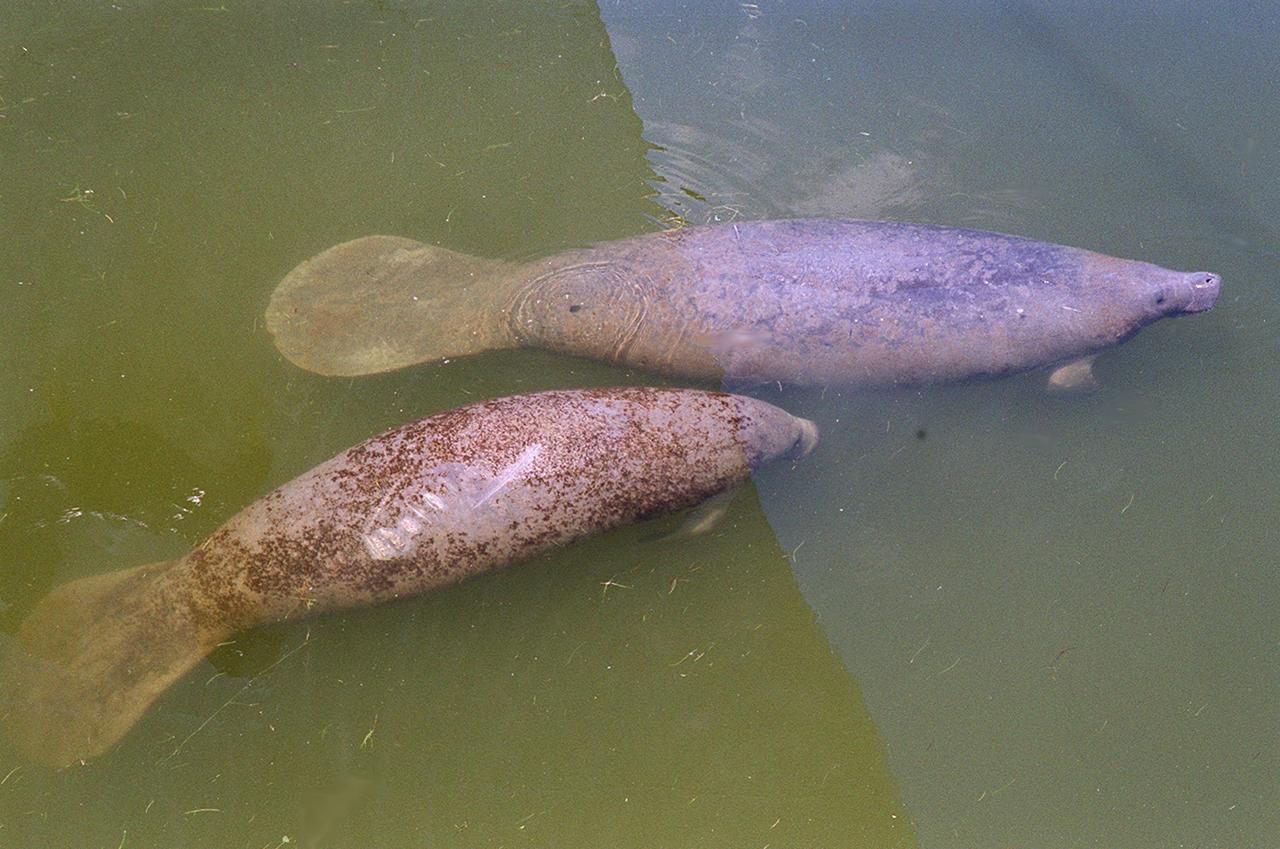
Two manatees swim leisurely in waters on Kennedy Space Center. They gather in Florida's warm water rivers and inland springs during the winter. KSC shares a boundary with the Merritt Island National Wildlife Refuge, which encompasses 92,000 acres that are a habitat for more than 331 species of birds, 31 mammals, 117 fishes, and 65 amphibians and reptiles. The marshes and open water of the refuge provide wintering areas for 23 species of migratory waterfowl, as well as a year-round home for great blue herons, great egrets, wood storks, cormorants, brown pelicans and other species of marsh and shore birds, as well as a variety of insects
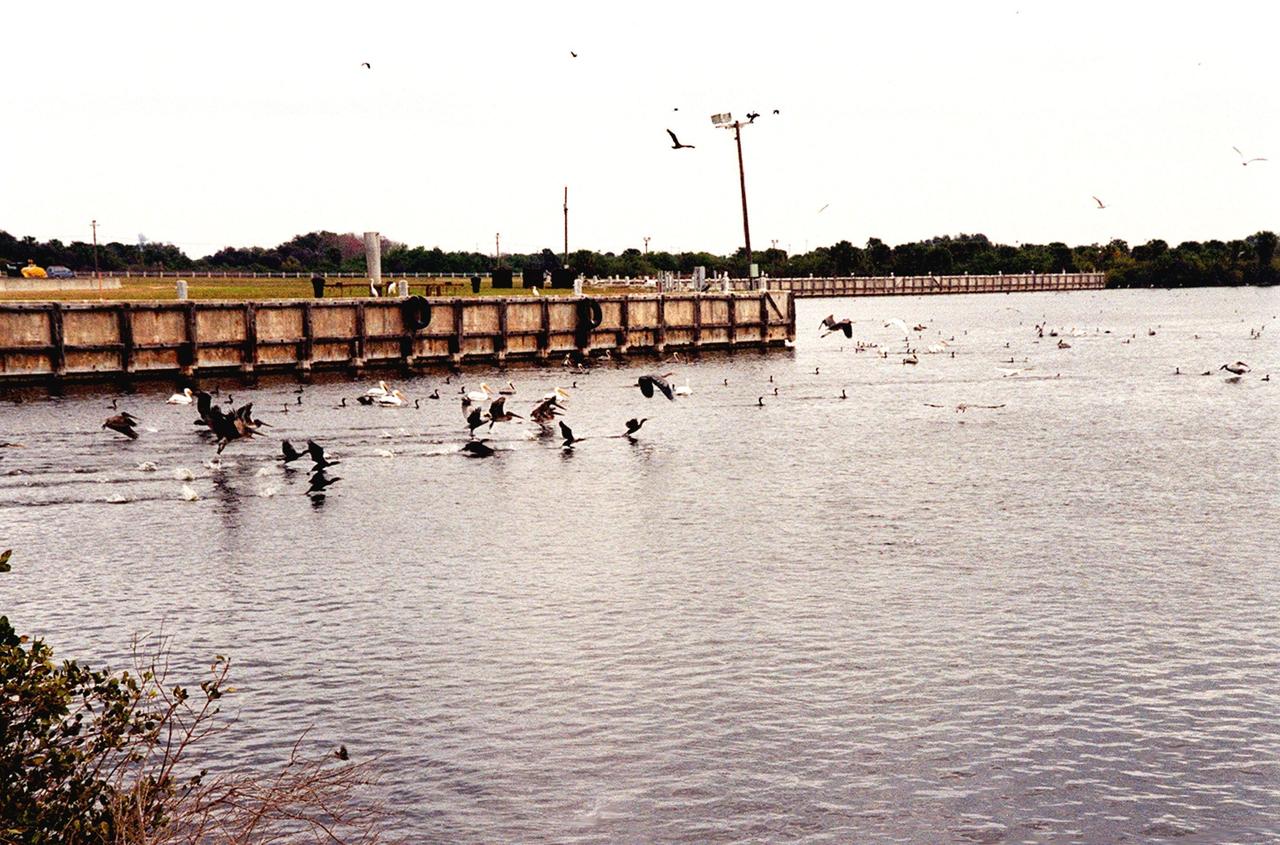
KENNEDY SPACE CENTER, FLA. -- The water in the turn basin, east of the Vehicle Assembly Building and next to the crawlerway, teems with fish and draws white pelicans, gray pelicans, cormorants, sea gulls and more looking for a meal. The turn basin is part of the Indian River Lagoon, composed of Mosquito Lagoon to the north, Banana River and Creek to the south and the Indian River to the west. The Indian River Lagoon has one of the most diverse bird populations anywhere in America. Also, nearly one-third of the nation's manatee population lives here or migrates through the lagoon seasonally. The lagoon varies in width from ½ mile to 5 miles and averages only 3 feet in depth
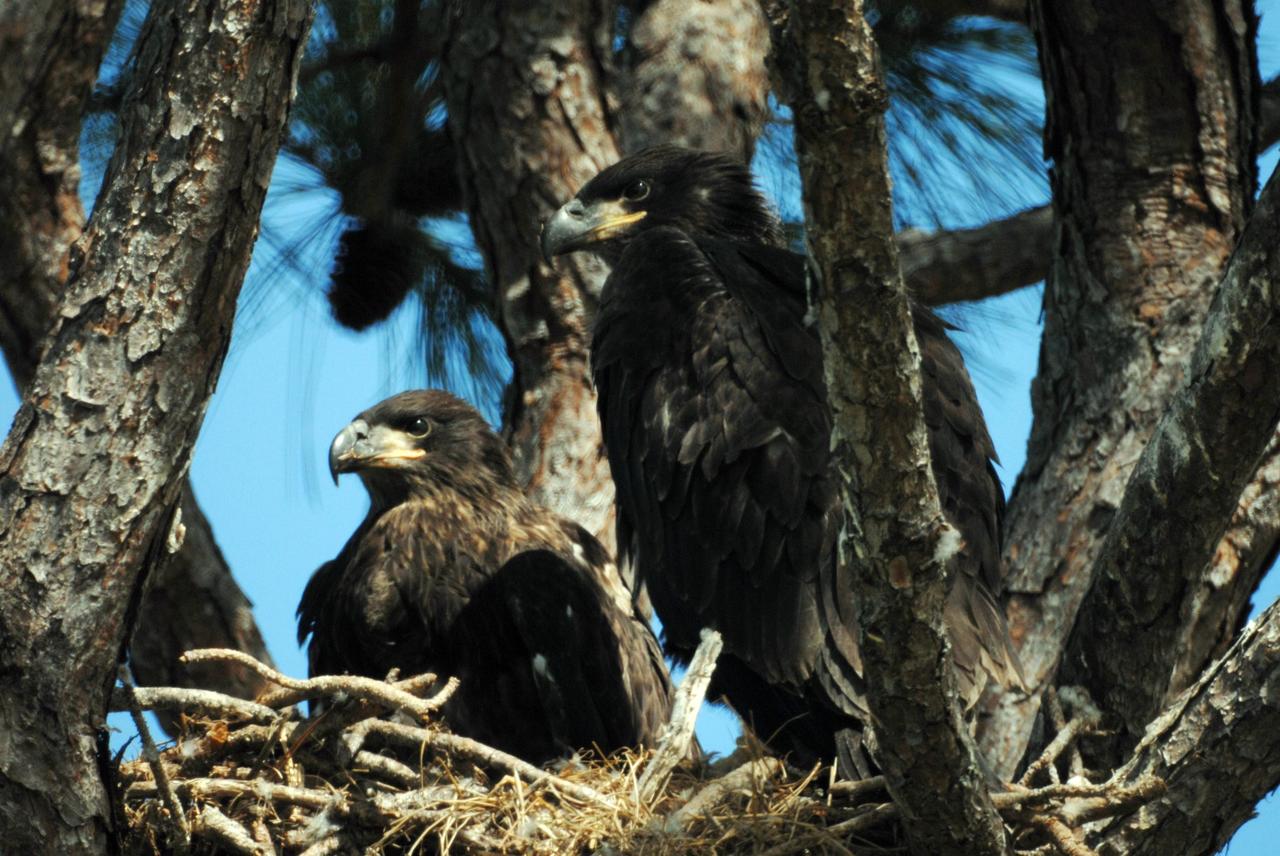
KENNEDY SPACE CENTER, FLA. -- Two fledgling eagles bear the regal look of their parents as they rest in their nest at the north end of S.R. 3 near Kennedy Space Center. This year-old nest is one of a dozen eagle nests both in KSC and in the Merritt Island National Wildlife Refuge, which surrounds KSC. The refuge includes several wading bird rookeries, many osprey nests, up to 400 manatees during the spring, and approximately 2,500 Florida scrub jays. It also is a major wintering area for migratory birds. More than 500 species of wildlife inhabit the refuge, with 15 considered federally threatened or endangered. Photo credit: NASA/Ken Thornsley
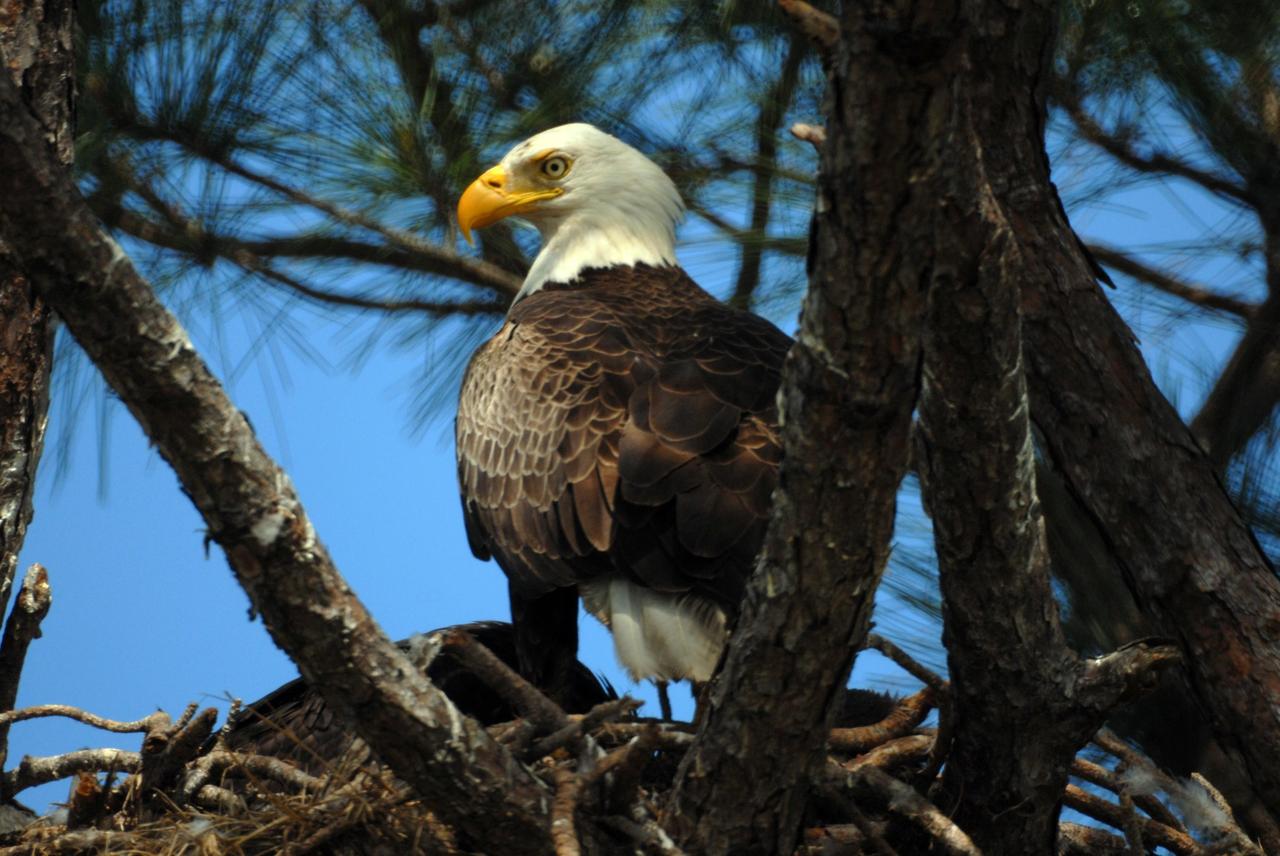
KENNEDY SPACE CENTER, FLA. -- This mother eagle appears wary as she stands in her nest at the north end of S.R. 3 near Kennedy Space Center. The resident eagle parents are raising two offspring. It is one of a dozen eagle nests both in KSC and in the Merritt Island National Wildlife Refuge, which surrounds KSC. The refuge includes several wading bird rookeries, many osprey nests, up to 400 manatees during the spring, and approximately 2,500 Florida scrub jays. It also is a major wintering area for migratory birds. More than 500 species of wildlife inhabit the refuge, with 15 considered federally threatened or endangered. Photo credit: NASA/Ken Thornsley
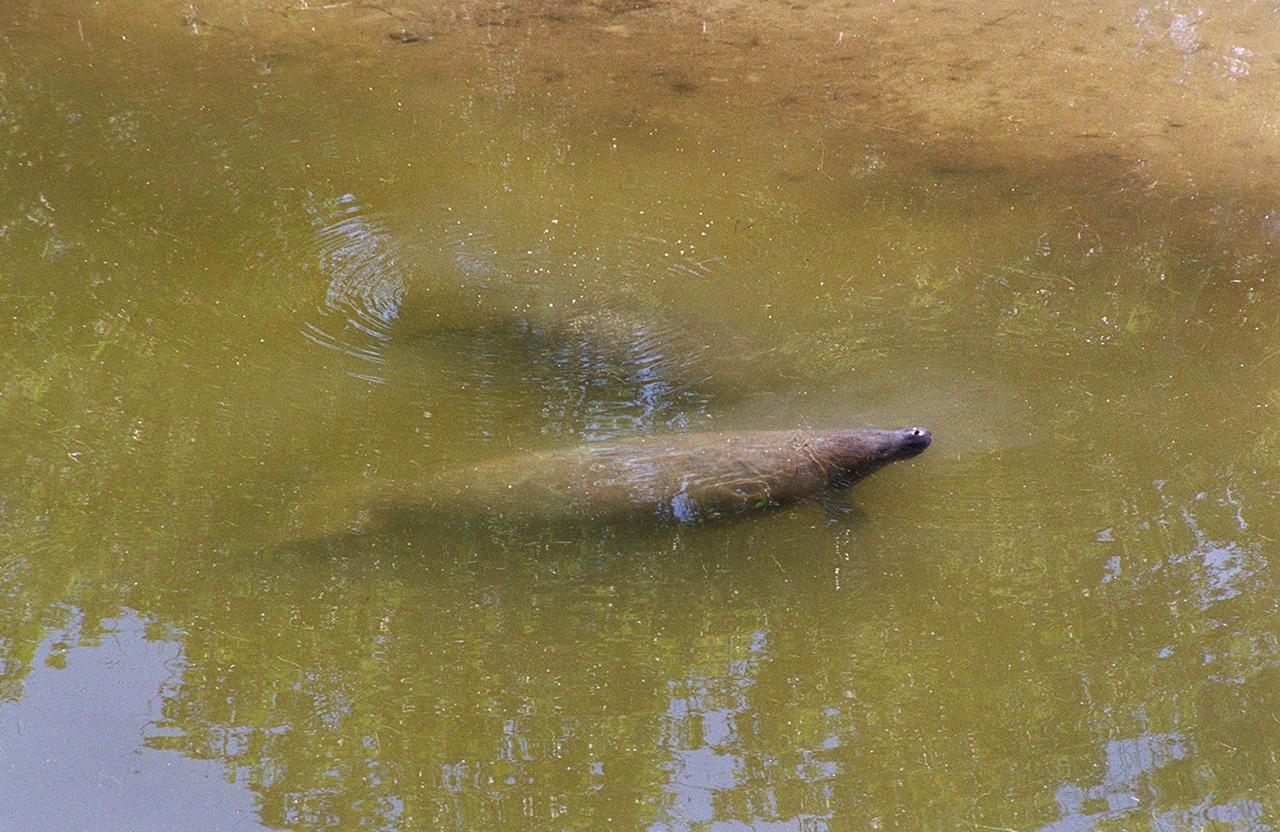
In waters on Kennedy Space Center, two manatees are seen leisurely swimming. In winter they gather in Florida's warm water rivers and inland springs. KSC shares a boundary with the Merritt Island National Wildlife Refuge, which encompasses 92,000 acres that are a habitat for more than 331 species of birds, 31 mammals, 117 fishes, and 65 amphibians and reptiles. The marshes and open water of the refuge provide wintering areas for 23 species of migratory waterfowl, as well as a year-round home for great blue herons, great egrets, wood storks, cormorants, brown pelicans and other species of marsh and shore birds, as well as a variety of insects
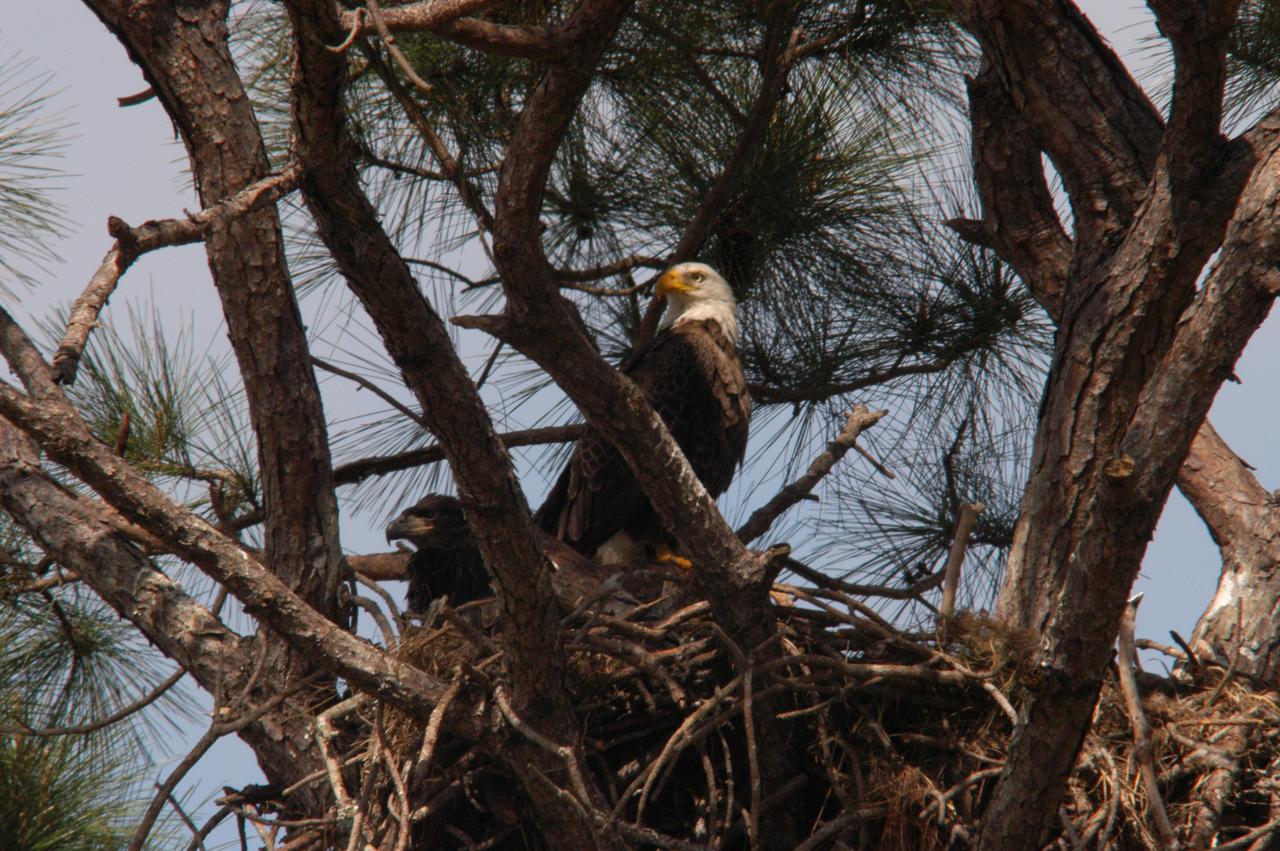
High in a pine tree at NASA's Kennedy Space Center, an adult bald eagle (right) and a fledgling keep watch from their nest. There are approximately a dozen active bald eagle nests both in KSC and in the Merritt Island National Wildlife Refuge, which surrounds KSC. The refuge includes several wading bird rookeries, many osprey nests, up to 400 manatees during the spring, and approximately 2,500 Florida scrub jays. It also is a major wintering area for migratory birds. More than 500 species of wildlife inhabit the refuge, with 15 considered federally threatened or endangered.
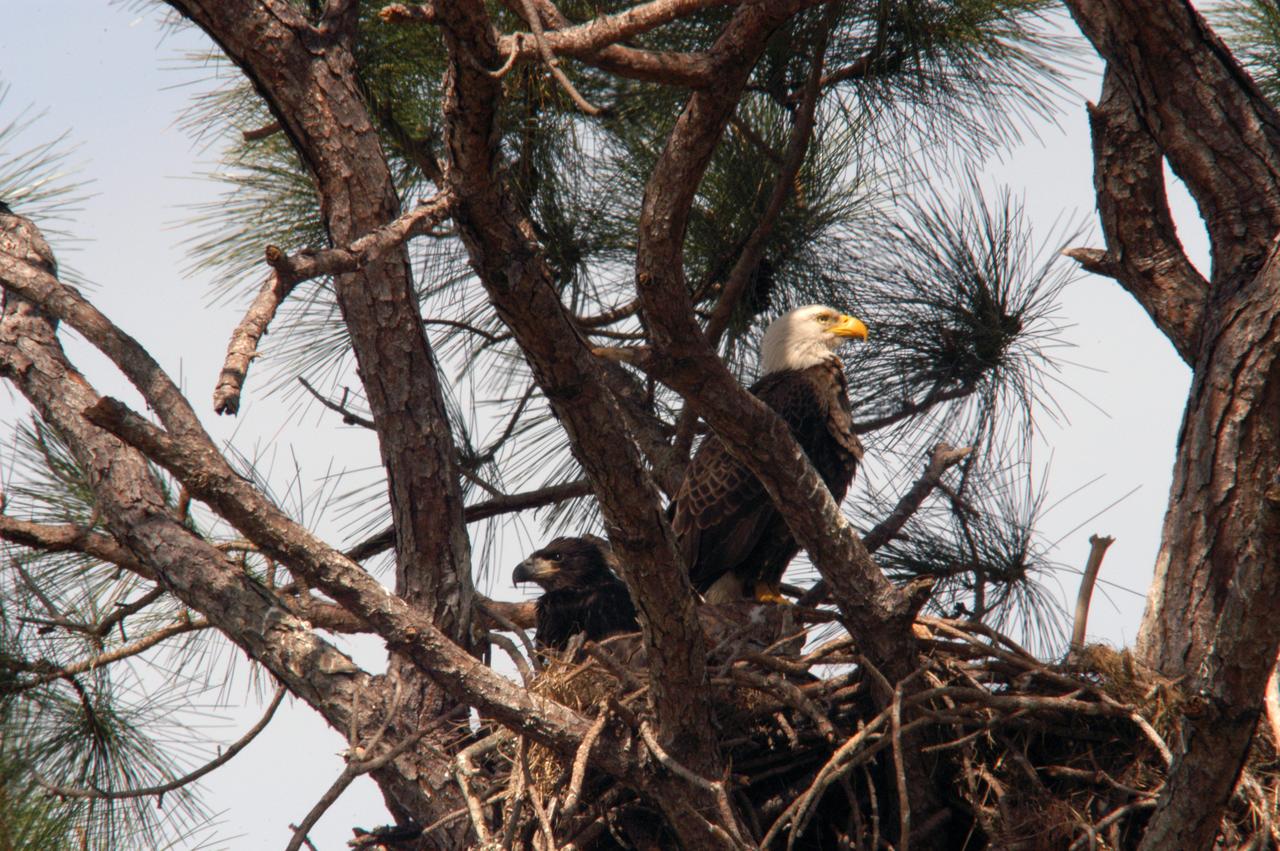
High in a pine tree at NASA's Kennedy Space Center, an adult bald eagle (right) and a fledgling keep watch from their nest. There are approximately a dozen active bald eagle nests both in KSC and in the Merritt Island National Wildlife Refuge, which surrounds KSC. The refuge includes several wading bird rookeries, many osprey nests, up to 400 manatees during the spring, and approximately 2,500 Florida scrub jays. It also is a major wintering area for migratory birds. More than 500 species of wildlife inhabit the refuge, with 15 considered federally threatened or endangered.
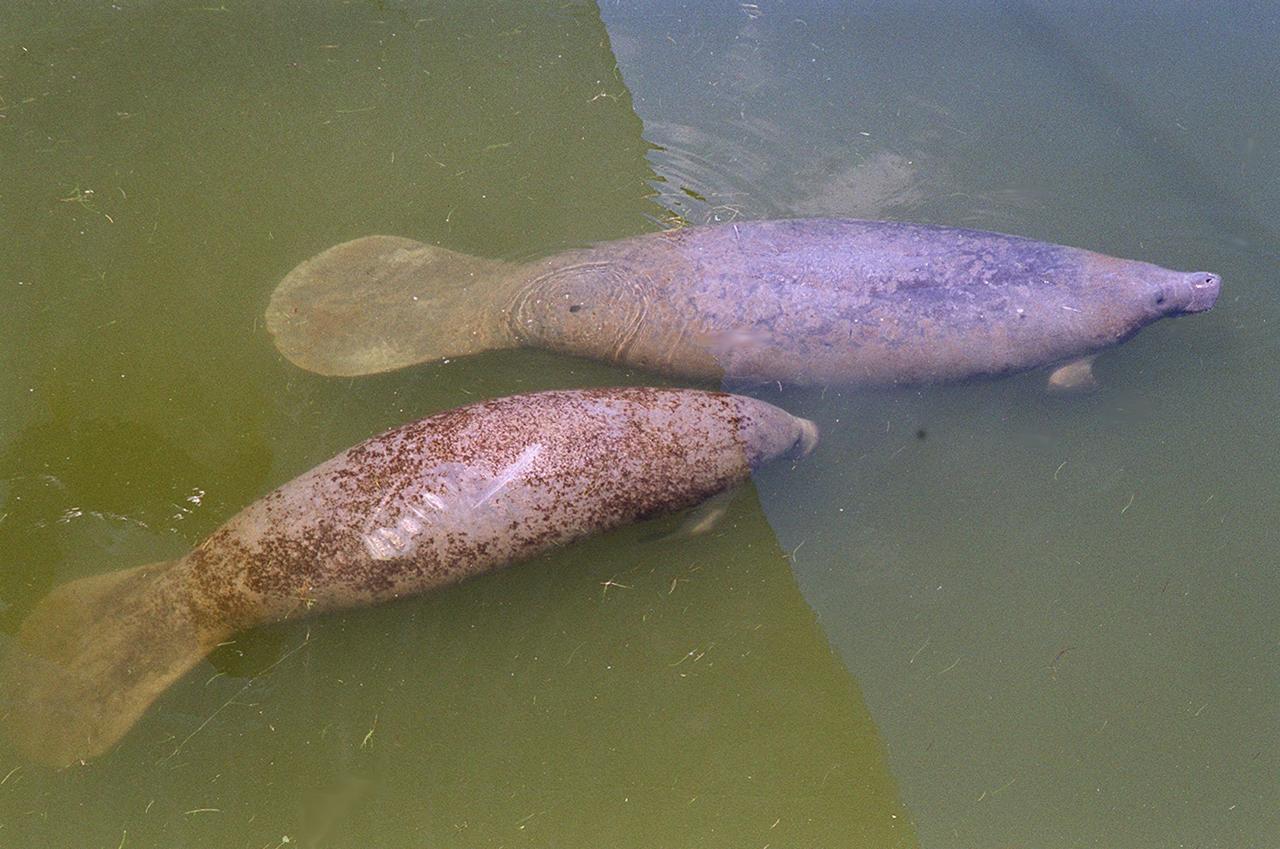
Two manatees swim leisurely in waters on Kennedy Space Center. They gather in Florida's warm water rivers and inland springs during the winter. KSC shares a boundary with the Merritt Island National Wildlife Refuge, which encompasses 92,000 acres that are a habitat for more than 331 species of birds, 31 mammals, 117 fishes, and 65 amphibians and reptiles. The marshes and open water of the refuge provide wintering areas for 23 species of migratory waterfowl, as well as a year-round home for great blue herons, great egrets, wood storks, cormorants, brown pelicans and other species of marsh and shore birds, as well as a variety of insects
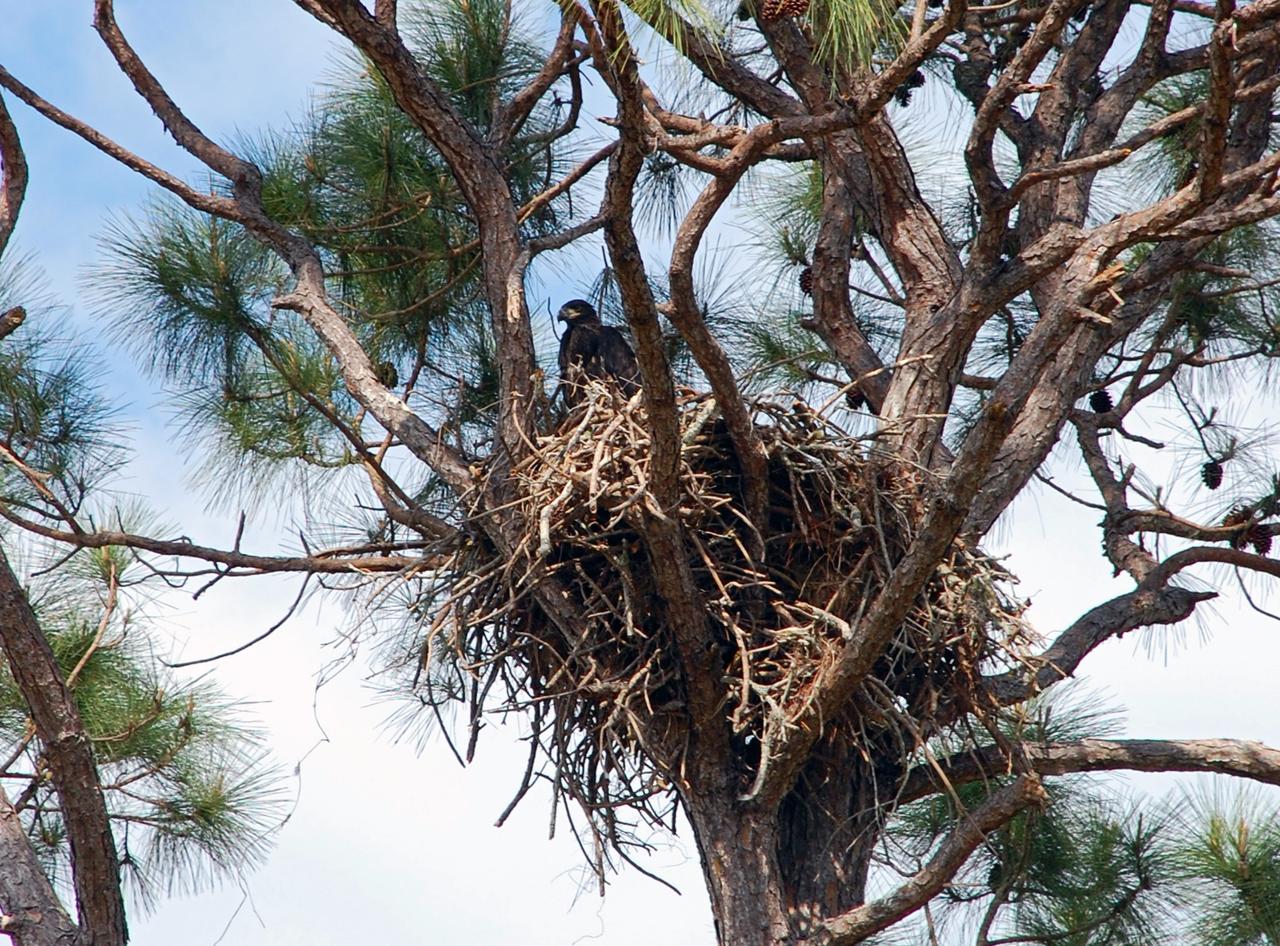
CAPE CANAVERAL, Fla. – At NASA's Kennedy Space Center in Florida, a young eagle shows itself in its nest in a pine tree on S.R. 3. There are a dozen eagle nests within Kennedy and in the surrounding Merritt Island National Wildlife Refuge. Bald eagles use a specific territory for nesting (they mate for life), winter feeding or a year-round residence. Its natural domain is from Alaska to Baja, California, and from Maine to Florida. The Merritt Island refuge also includes several wading bird rookeries, many osprey nests, up to 400 manatees during the spring, and approximately 2,500 Florida scrub jays. It also is a major wintering area for migratory birds. More than 500 species of wildlife inhabit the refuge, with 15 considered federally threatened or endangered. Photo credit: NASA/Ben Smegelsky
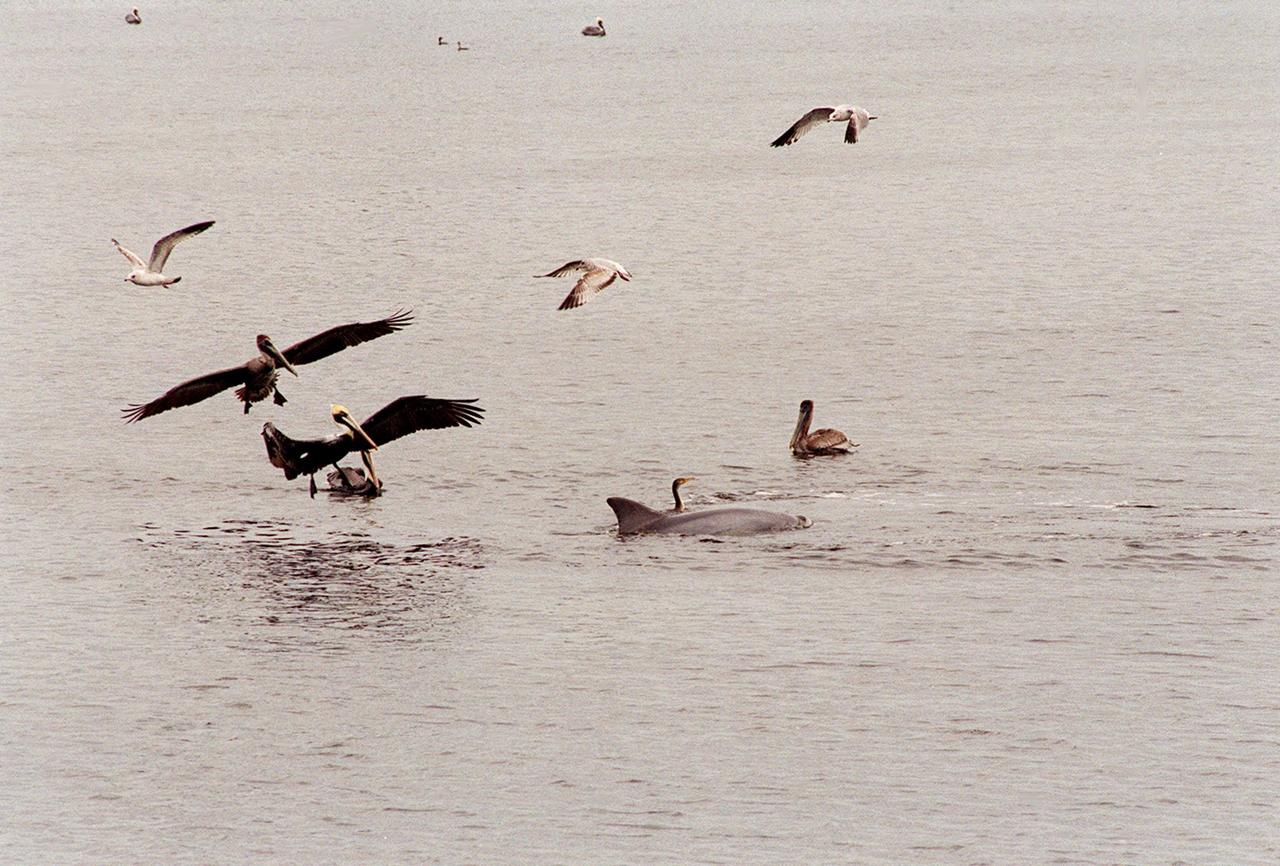
KENNEDY SPACE CENTER, FLA. -- A gray and a white pelican glide down to the water near a dolphin and cormorant in the turn basin to search for a meal in the fish-teeming water. Sea gulls also approach. The turn basin, which is east of the Vehicle Assembly Building and next to the crawlerway, is part of the Indian River Lagoon, composed of Mosquito Lagoon to the north, Banana River and Creek to the south and the Indian River to the west. The lagoon has one of the most diverse bird populations anywhere in America, plus many different species of oceanic and lagoon fish, shellfish and dolphins. Also, nearly one-third of the nation's manatee population lives here or migrates through the Lagoon seasonally. The Lagoon varies in width from ½ mile to 5 miles and averages only 3 feet in depth
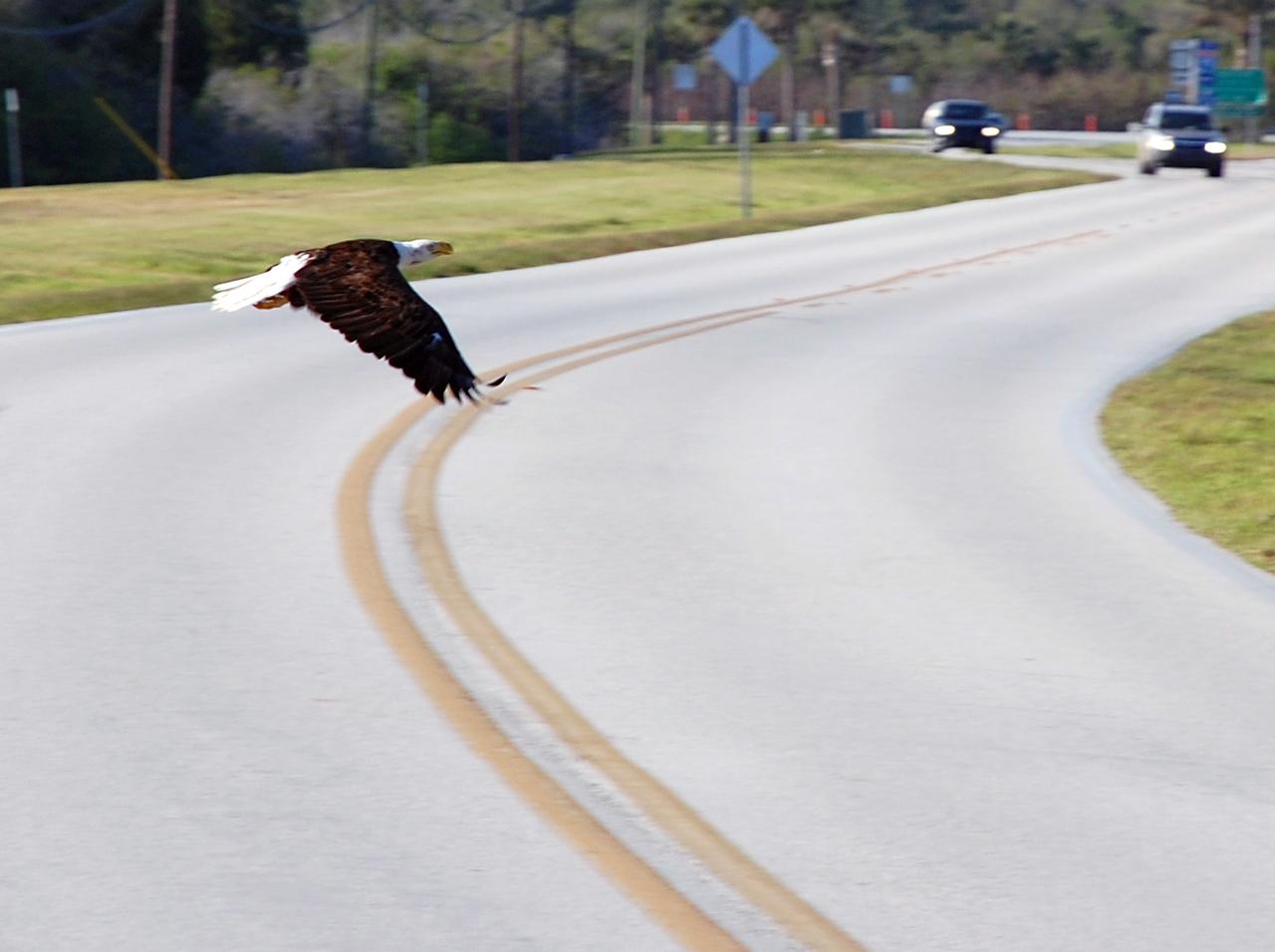
CAPE CANAVERAL, Fla. – At NASA's Kennedy Space Center in Florida, a bald eagle flies across the road in front of vehicles on the road. There are a dozen eagle nests within Kennedy and in the surrounding Merritt Island National Wildlife Refuge, some of them close to roads through the center. Bald eagles use a specific territory for nesting (they mate for life), winter feeding or a year-round residence. Eagles' natural domain is from Alaska to Baja, California, and from Maine to Florida. The Merritt Island refuge also includes several wading bird rookeries, many osprey nests, up to 400 manatees during the spring, and approximately 2,500 Florida scrub jays. It also is a major wintering area for migratory birds. More than 500 species of wildlife inhabit the refuge, with 15 considered federally threatened or endangered. Photo credit: NASA/Ben Smegelsky
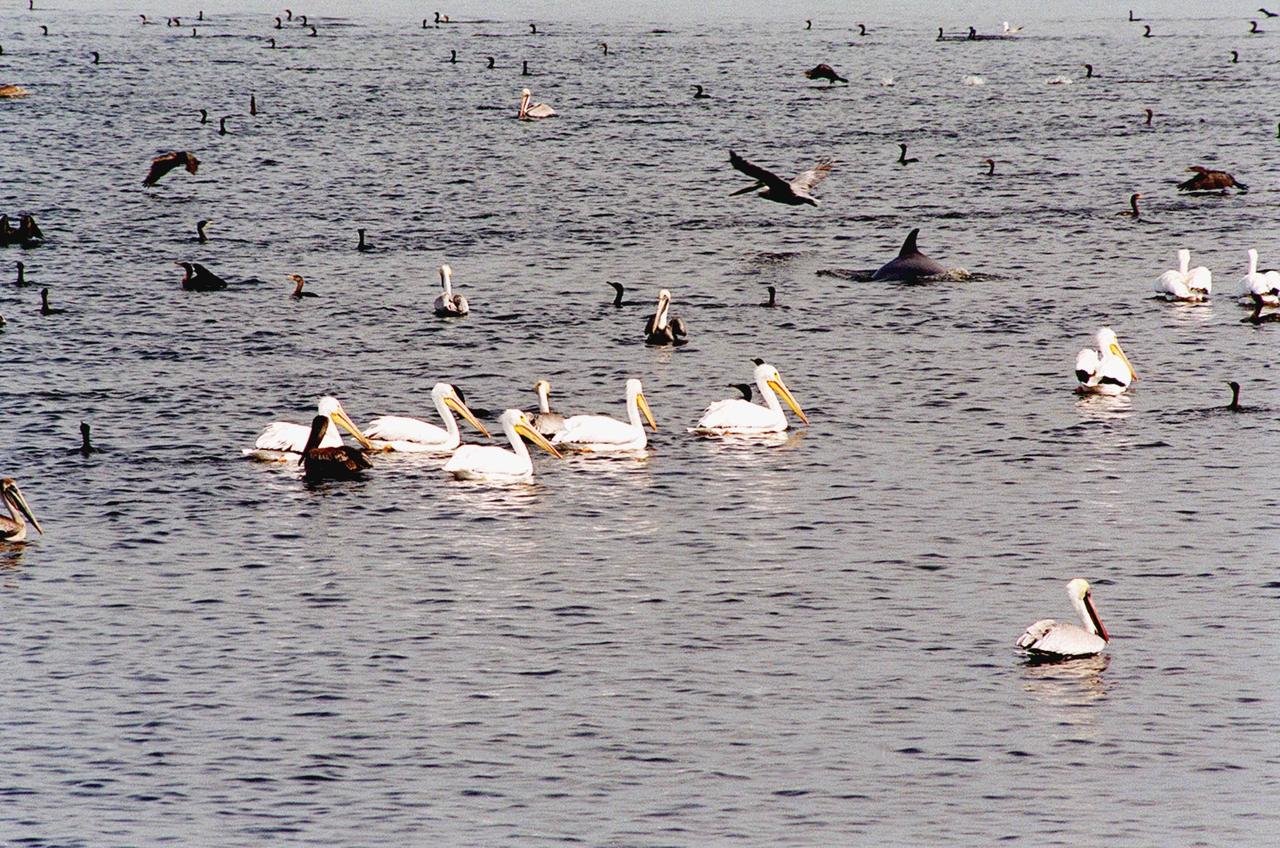
KENNEDY SPACE CENTER, FLA. -- The water in the turn basin, located east of the Vehicle Assembly Building and next to the crawlerway, teems with fish and draws white pelicans, gray pelicans, cormorants, sea gulls and one of several dolphins looking for a meal. The turn basin is part of the Indian River Lagoon, composed of Mosquito Lagoon to the north, Banana River and Creek to the south and the Indian River to the west. The lagoon has one of the most diverse bird populations anywhere in America, plus many different species of oceanic and lagoon fish, shellfish and dolphins. Also, nearly one-third of the nation's manatee population lives here or migrates through the lagoon seasonally. The lagoon varies in width from ½ mile to 5 miles and averages only 3 feet in depth
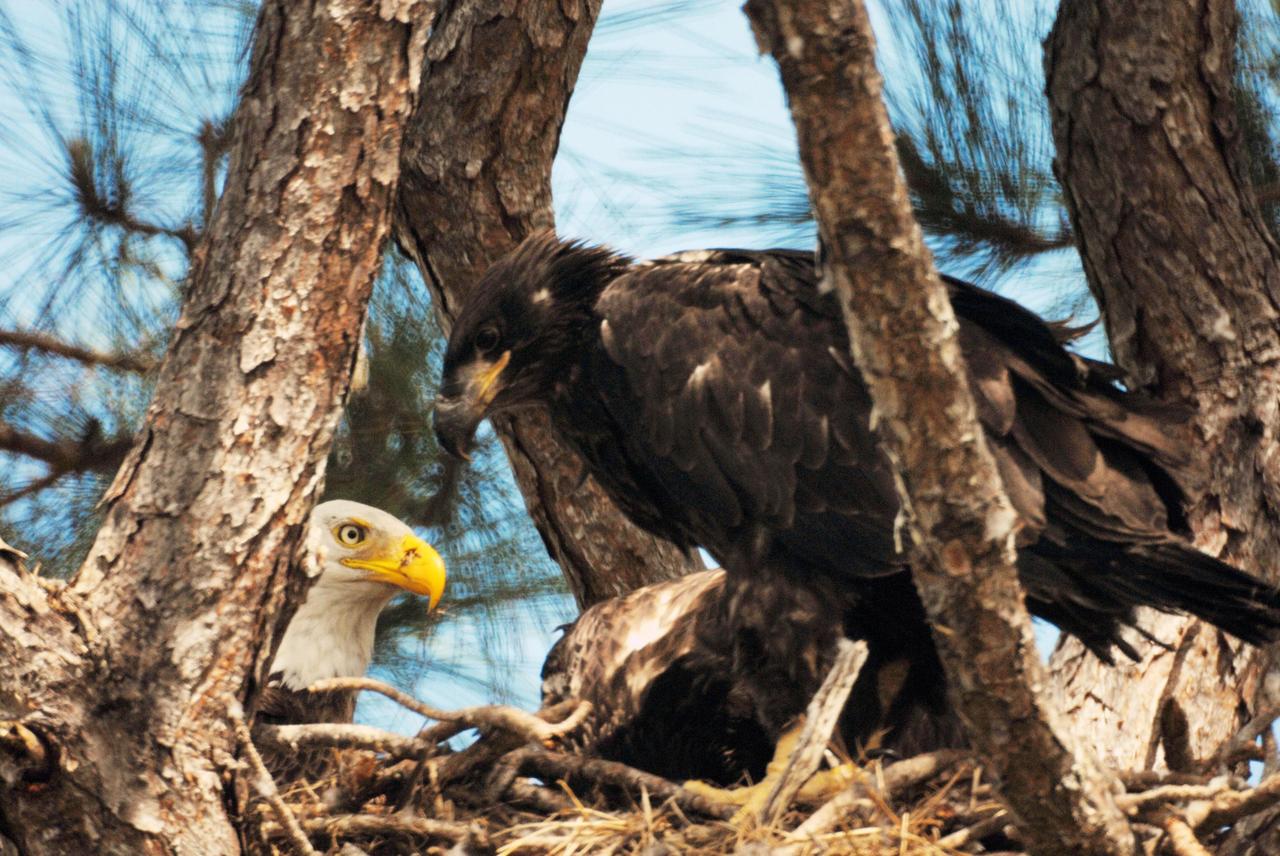
KENNEDY SPACE CENTER, FLA. -- This fledgling eagle, at right, stares at his mother, at left, in their nest at the north end of S.R. 3 near Kennedy Space Center. The resident eagle parents are raising two offspring. This year-old nest is one of a dozen eagle nests both in KSC and in the Merritt Island National Wildlife Refuge, which surrounds KSC. The refuge includes several wading bird rookeries, many osprey nests, up to 400 manatees during the spring, and approximately 2,500 Florida scrub jays. It also is a major wintering area for migratory birds. More than 500 species of wildlife inhabit the refuge, with 15 considered federally threatened or endangered. Photo credit: NASA/Ken Thornsley
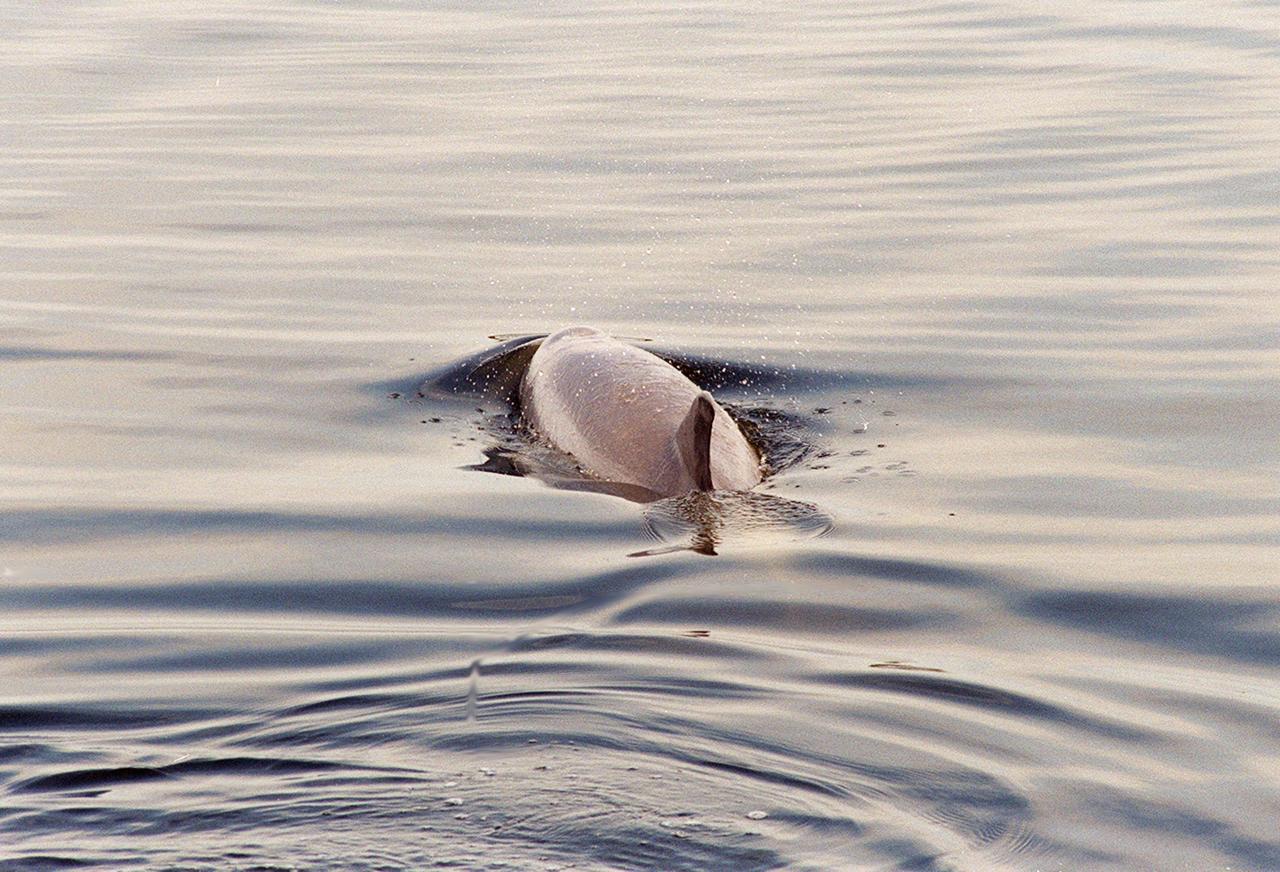
KENNEDY SPACE CENTER, FLA. -- A dolphin glides through the water looking for fish in the turn basin, which is located east of the Vehicle Assembly Building and next to the crawlerway. Dolphins inhabit the waters, known as the Indian River Lagoon, around Kennedy Space Center, along with many different species of oceanic and lagoon fish and shellfish. Mosquito Lagoon to the north, Banana River and Creek to the south and the Indian River to the west make up a special type of estuary called a lagoon, a body of water separated from the ocean by barrier islands, with limited exchange with the ocean through inlets. The Indian River Lagoon has one of the most diverse bird populations anywhere in America. Also, nearly one-third of the nation's manatee population lives here or migrates through the lagoon seasonally. The lagoon varies in width from ½ mile to 5 miles and averages only 3 feet in depth
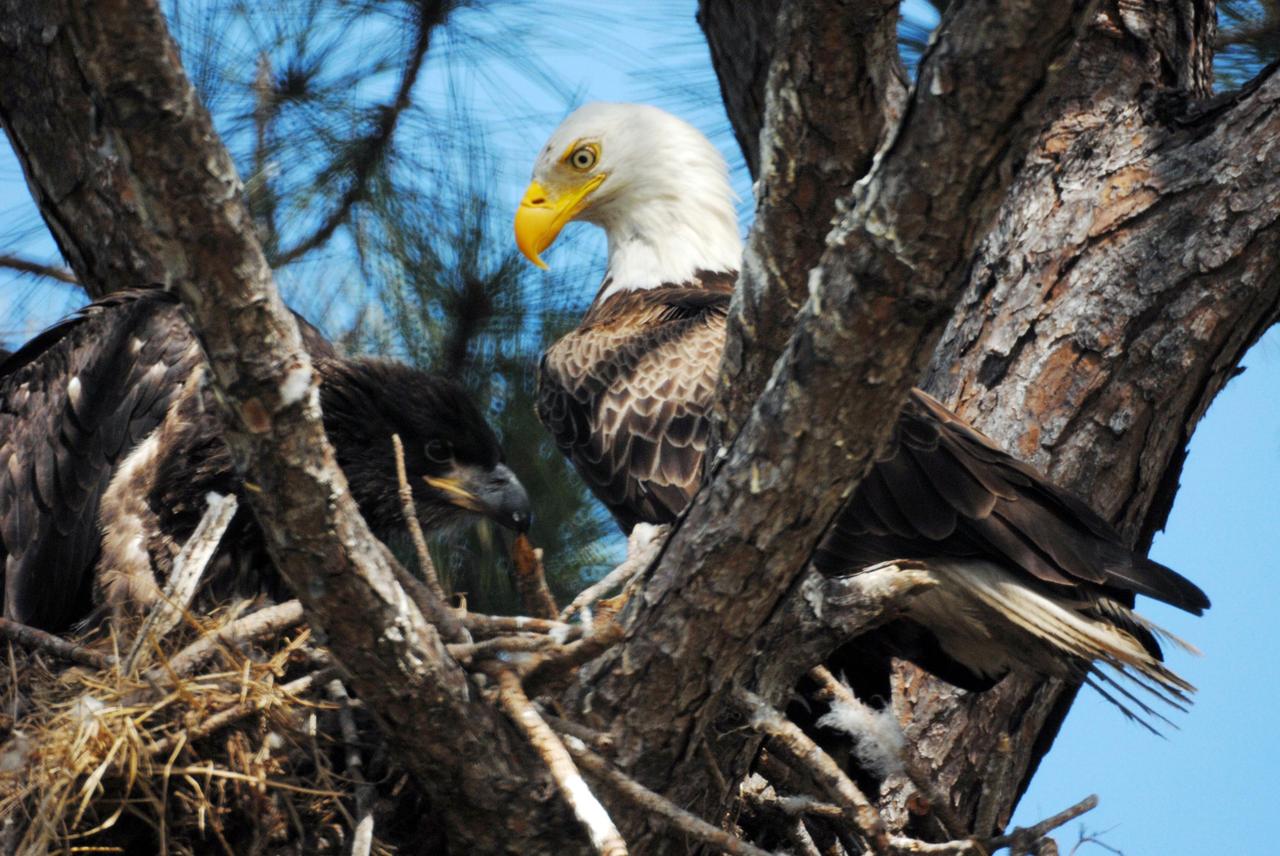
KENNEDY SPACE CENTER, FLA. -- This mother eagle looks at one of her offspring, at left, in their nest at the north end of S.R. 3 near Kennedy Space Center. The resident eagle parents are raising two offspring. This year-old nest is one of a dozen eagle nests both in KSC and in the Merritt Island National Wildlife Refuge, which surrounds KSC. The refuge includes several wading bird rookeries, many osprey nests, up to 400 manatees during the spring, and approximately 2,500 Florida scrub jays. It also is a major wintering area for migratory birds. More than 500 species of wildlife inhabit the refuge, with 15 considered federally threatened or endangered. Photo credit: NASA/Ken Thornsley

KENNEDY SPACE CENTER, FLA. -- A gray and a white pelican glide down to the water near a dolphin and cormorant in the turn basin to search for a meal in the fish-teeming water. Sea gulls also approach. The turn basin, which is east of the Vehicle Assembly Building and next to the crawlerway, is part of the Indian River Lagoon, composed of Mosquito Lagoon to the north, Banana River and Creek to the south and the Indian River to the west. The lagoon has one of the most diverse bird populations anywhere in America, plus many different species of oceanic and lagoon fish, shellfish and dolphins. Also, nearly one-third of the nation's manatee population lives here or migrates through the Lagoon seasonally. The Lagoon varies in width from ½ mile to 5 miles and averages only 3 feet in depth
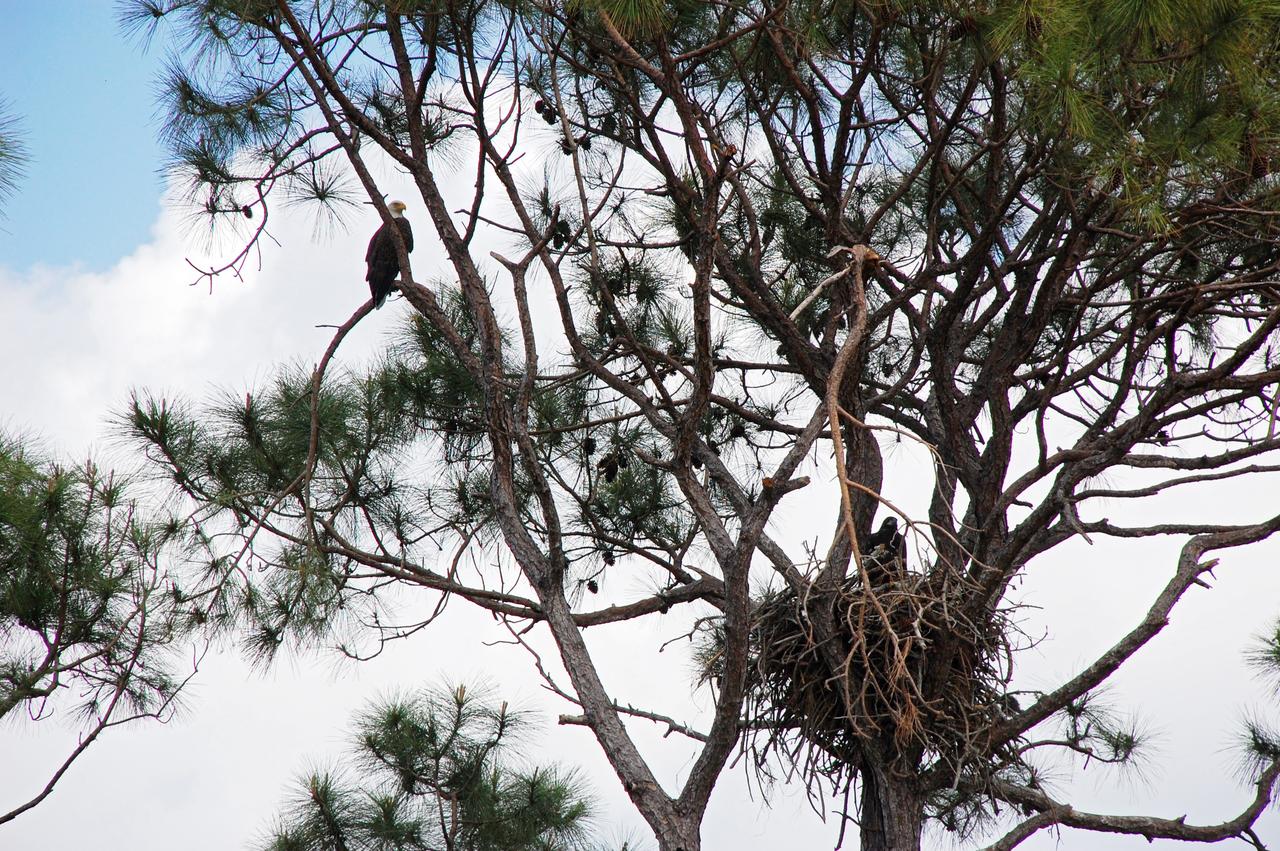
CAPE CANAVERAL, Fla. – On a road through NASA's Kennedy Space Center in Florida, an eagle's nest in a pine tree holds a young eagle while its parent watches on a nearby branch. There are a dozen eagle nests within Kennedy and in the surrounding Merritt Island National Wildlife Refuge. Bald eagles use a specific territory for nesting (they mate for life), winter feeding or a year-round residence. Its natural domain is from Alaska to Baja, California, and from Maine to Florida. The Merritt Island refuge also includes several wading bird rookeries, many osprey nests, up to 400 manatees during the spring, and approximately 2,500 Florida scrub jays. It also is a major wintering area for migratory birds. More than 500 species of wildlife inhabit the refuge, with 15 considered federally threatened or endangered. Photo credit: NASA/Ben Smegelsky
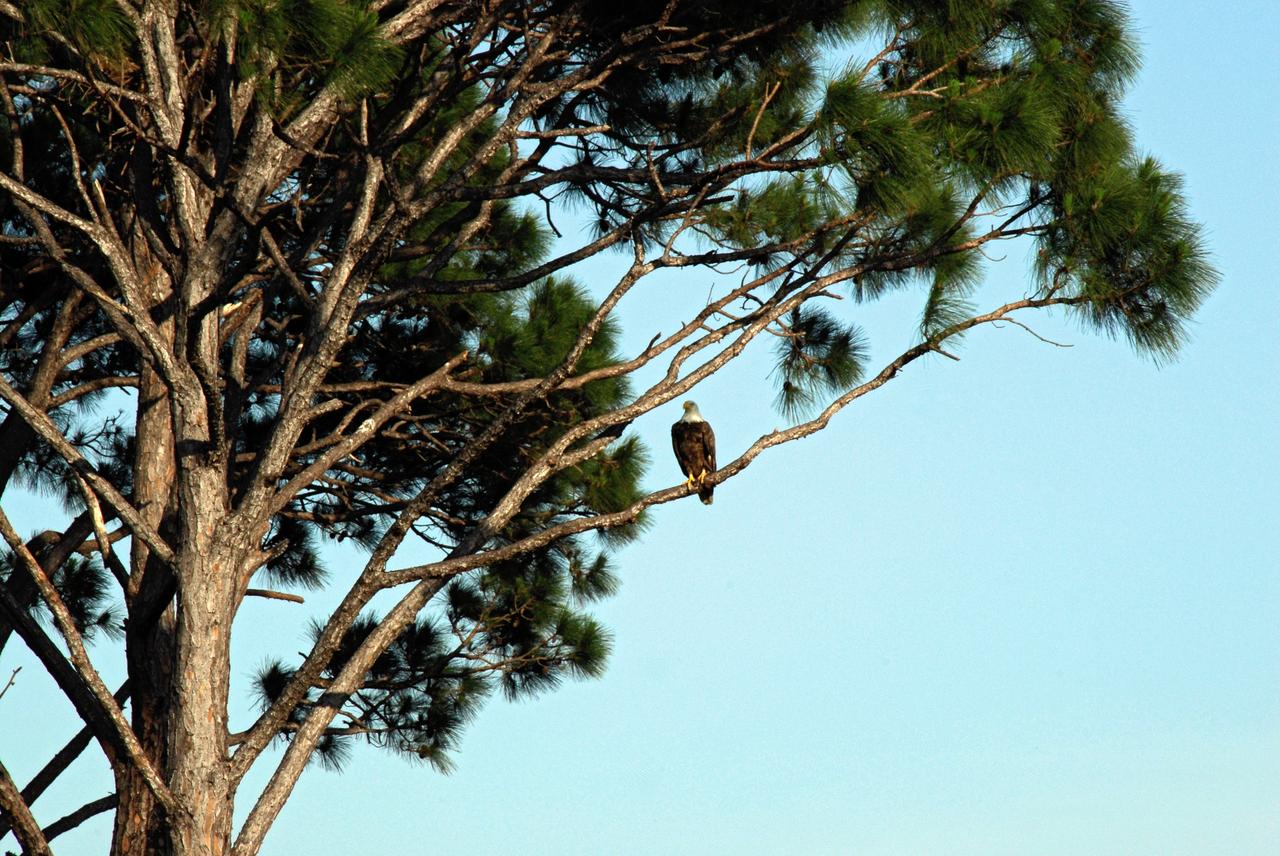
CAPE CANAVERAL, Fla. -- Near NASA Kennedy Space Center's Shuttle Landing Facility, this bald eagle is spotted sitting in a tall pine tree. There are a dozen eagle nests within Kennedy and in the surrounding Merritt Island National Wildlife Refuge. Bald eagles use a specific territory for nesting (they mate for life), winter feeding or a year-round residence. Its natural domain is from Alaska to Baja, California, and from Maine to Florida. The Merritt Island refuge also includes several wading bird rookeries, many osprey nests, up to 400 manatees during the spring, and approximately 2,500 Florida scrub jays. It also is a major wintering area for migratory birds. More than 500 species of wildlife inhabit the refuge, with 15 considered federally threatened or endangered. Photo credit: NASA/Kim Shiflett
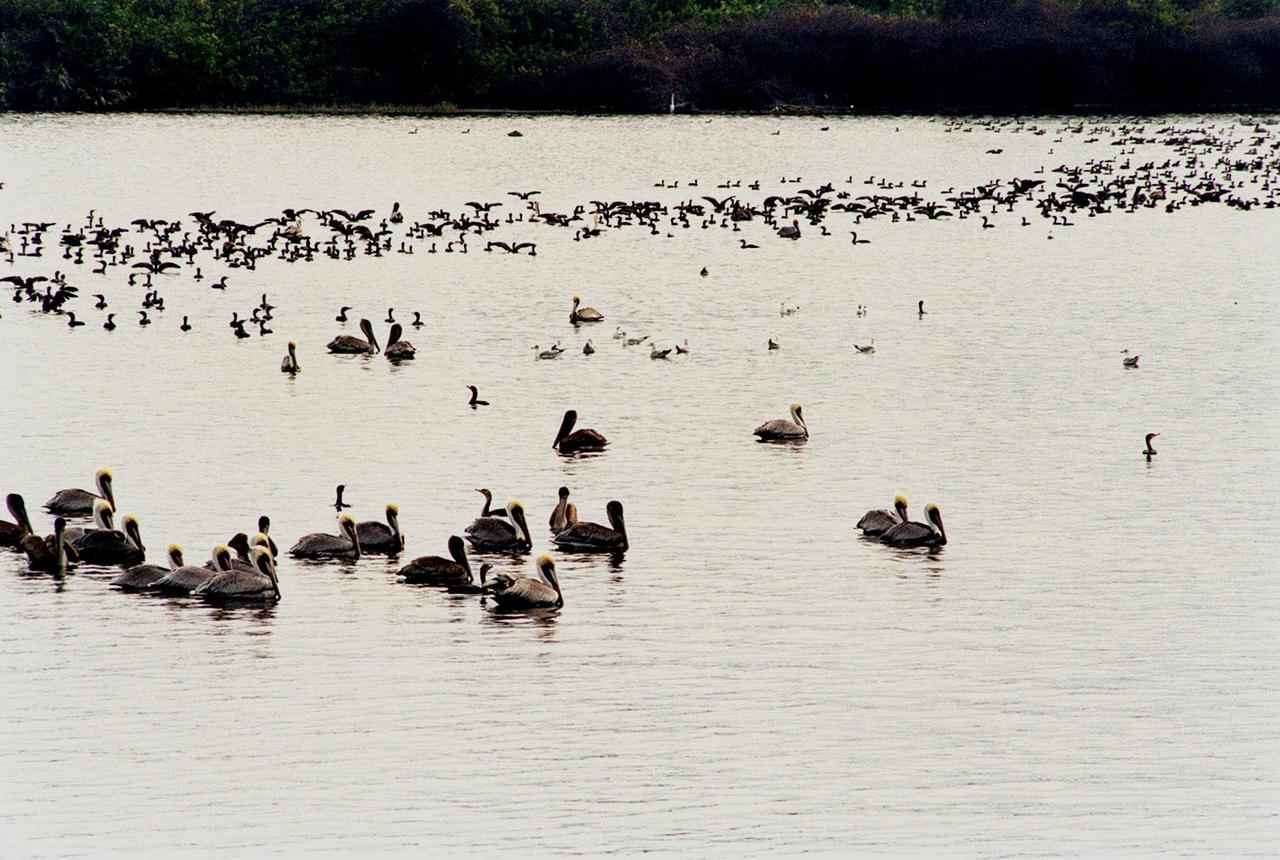
KENNEDY SPACE CENTER, FLA. -- Hundreds of birds, especially gray and white pelicans and cormorants, cover the water in the turn basin, located east of the Vehicle Assembly Building and next to the crawlerway. The basin is teeming with fish, attracting the crowd for a meal. The turn basin is part of the Indian River Lagoon, composed of Mosquito Lagoon to the north, Banana River and Creek to the south and the Indian River to the west. The lagoon has one of the most diverse bird populations anywhere in America, plus many different species of oceanic and lagoon fish, shellfish and dolphins. Also, nearly one-third of the nation's manatee population lives here or migrates through the Lagoon seasonally. The Lagoon varies in width from ½ mile to 5 miles and averages only 3 feet in depth
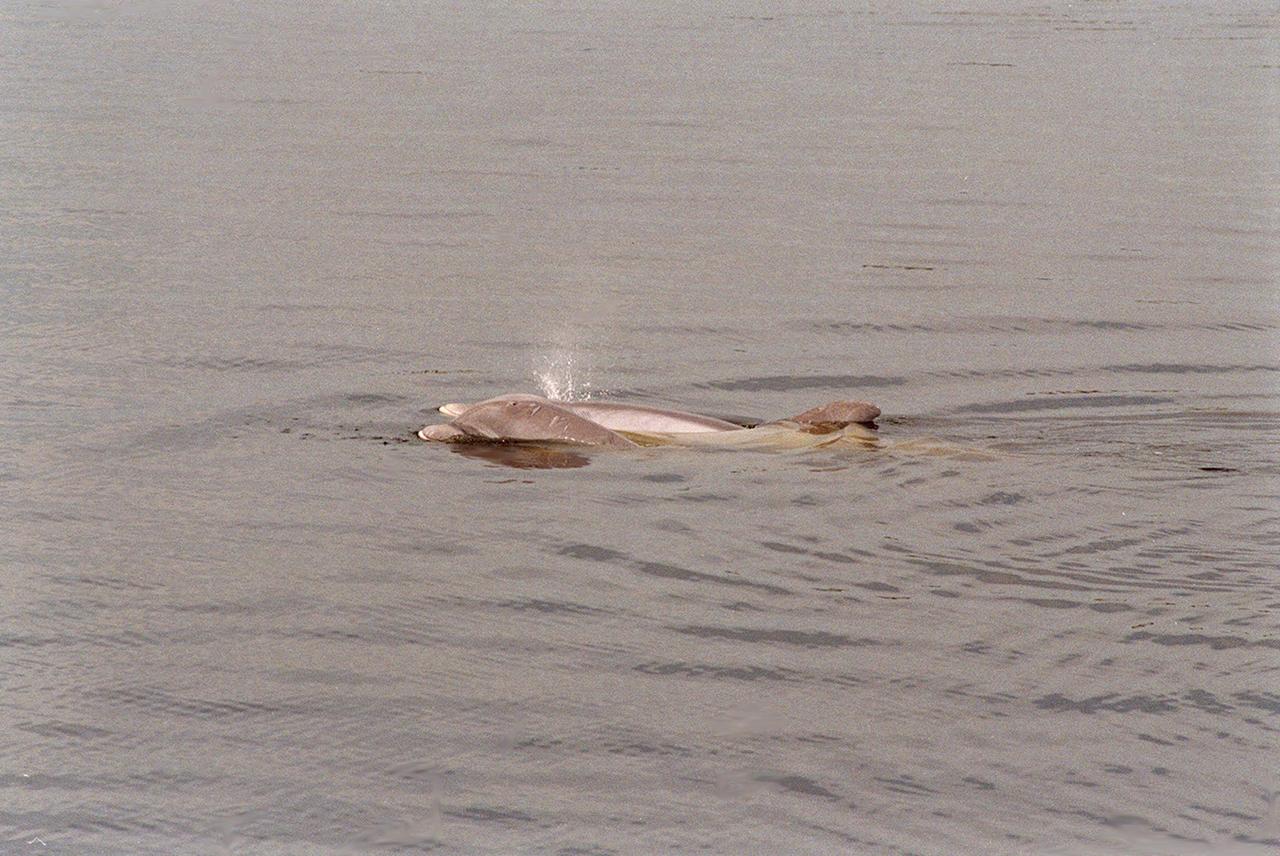
KENNEDY SPACE CENTER, FLA. -- In the turn basin east of the Vehicle Assembly Building and next to the crawlerway, a mother dolphin guides her baby through the water to search for food. Dolphins inhabit the waters around Kennedy Space Center, along with many different species of oceanic and lagoon fish and shellfish. Mosquito Lagoon to the north, Banana River and Creek to the south and the Indian River to the west make up a special type of estuary called a lagoon, a body of water separated from the ocean by barrier islands, with limited exchange with the ocean through inlets. The Lagoon varies in width from ½ mile to 5 miles and averages only 3 feet in depth. Nearly one-third of the nation's manatee population lives here or migrates through the Lagoon seasonally
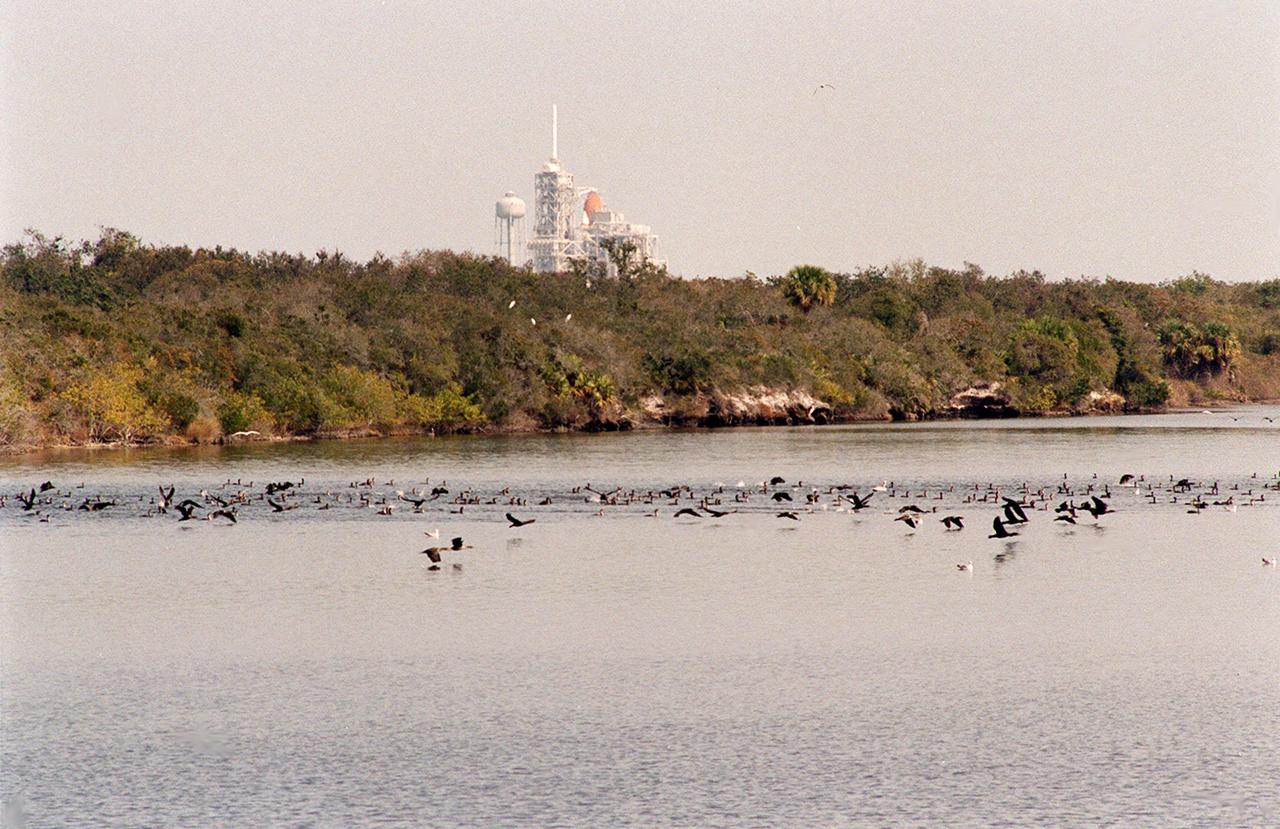
KENNEDY SPACE CENTER, FLA. -- Birds by the score, especially gray and white pelicans, cormorants, sea gulls, herons and ospreys, flock to the turn basin east of the Vehicle Assembly Building in a feeding frenzy as schools of fish fill the waters. In the background is Launch Pad A with Space Shuttle Endeavour waiting for launch on Friday, Feb. 11 for mission STS-99. The basin is part of the Indian River Lagoon, which is made up of Mosquito Lagoon to the north, Banana River and Creek to the south and the Indian River to the west. It is called a lagoon because it is a body of water separated from the ocean by barrier islands, with limited exchange with the ocean through inlets. The Indian River Lagoon has one of the most diverse bird populations anywhere in America. Also, nearly one-third of the nation's manatee population lives here or migrates through the lagoon seasonally. The lagoon varies in width from ½ mile to 5 miles and averages only 3 feet in depth
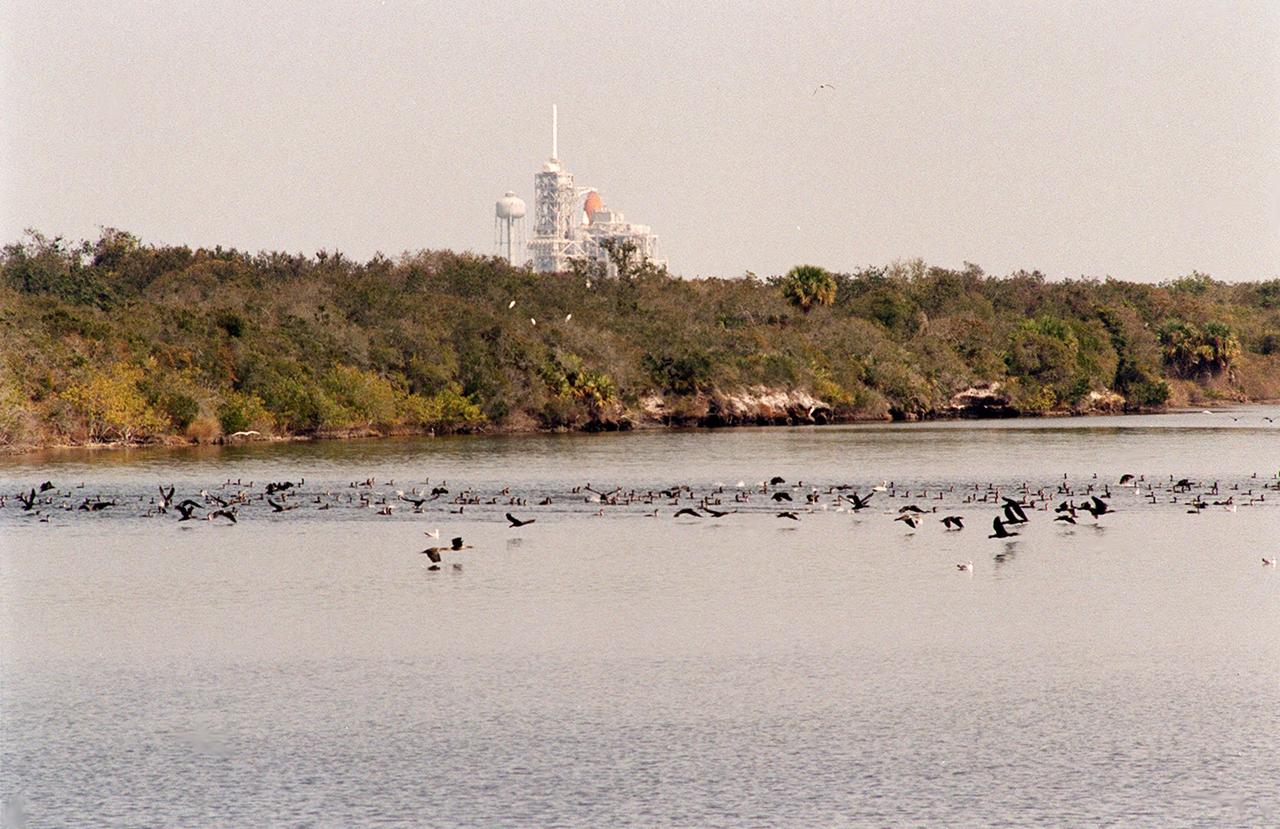
KENNEDY SPACE CENTER, FLA. -- Birds by the score, especially gray and white pelicans, cormorants, sea gulls, herons and ospreys, flock to the turn basin east of the Vehicle Assembly Building in a feeding frenzy as schools of fish fill the waters. In the background is Launch Pad A with Space Shuttle Endeavour waiting for launch on Friday, Feb. 11 for mission STS-99. The basin is part of the Indian River Lagoon, which is made up of Mosquito Lagoon to the north, Banana River and Creek to the south and the Indian River to the west. It is called a lagoon because it is a body of water separated from the ocean by barrier islands, with limited exchange with the ocean through inlets. The Indian River Lagoon has one of the most diverse bird populations anywhere in America. Also, nearly one-third of the nation's manatee population lives here or migrates through the lagoon seasonally. The lagoon varies in width from ½ mile to 5 miles and averages only 3 feet in depth
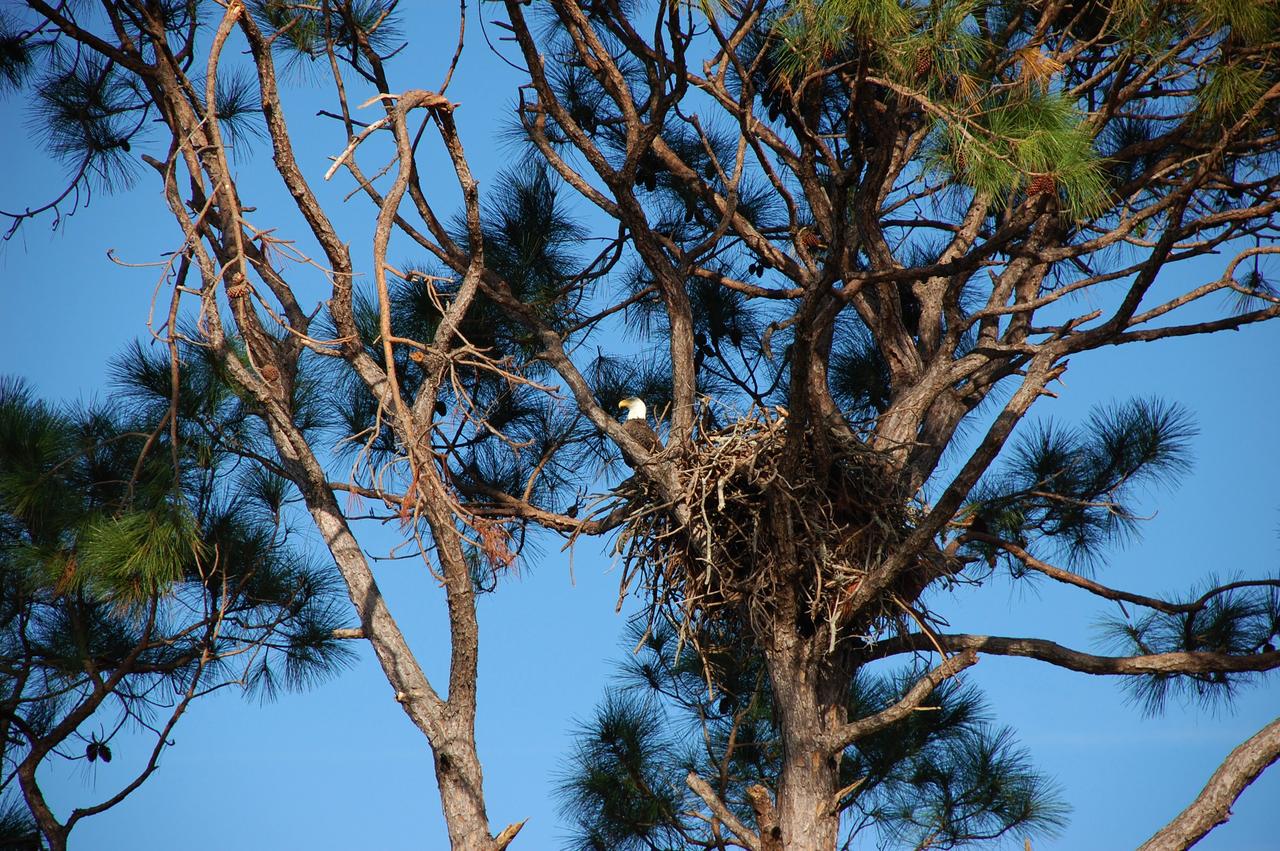
CAPE CANAVERAL, Fla. – A bald eagle appears to keep watch in its nest near the top of a pine tree near the Shuttle Landing Facility at NASA's Kennedy Space Center in Florida. There are a dozen eagle nests within Kennedy and in the surrounding Merritt Island National Wildlife Refuge. Bald eagles use a specific territory for nesting (they mate for life), winter feeding or a year-round residence. Its natural domain is from Alaska to Baja, California, and from Maine to Florida. The Merritt Island Refuge also includes several wading bird rookeries, many osprey nests, up to 400 manatees during the spring, and approximately 2,500 Florida scrub jays. It also is a major wintering area for migratory birds. More than 500 species of wildlife inhabit the refuge, with 15 considered federally threatened or endangered. Photo credit: NASA/Ben Smegelsky
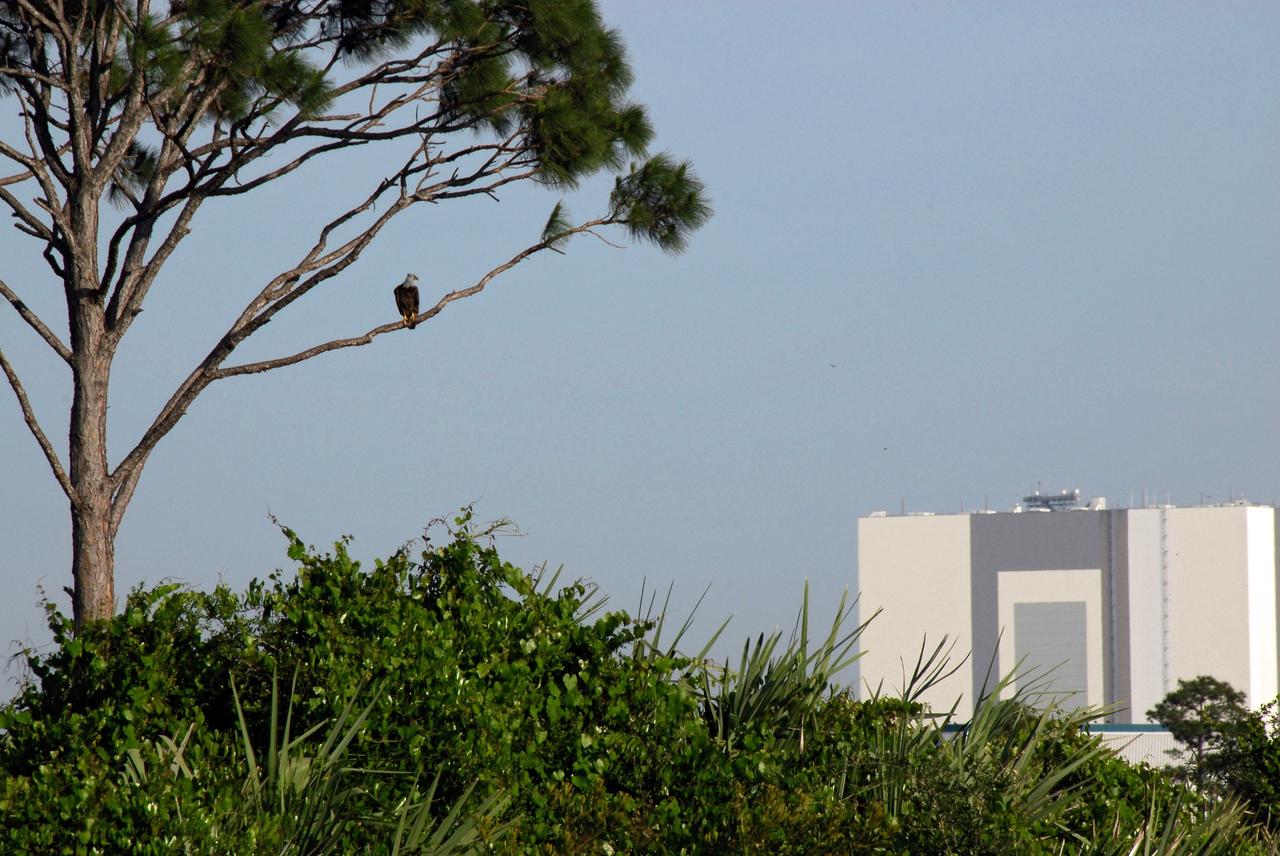
CAPE CANAVERAL, Fla. -- Near NASA Kennedy Space Center's Shuttle Landing Facility, this bald eagle is spotted in a tall pine tree. At right is the Vehicle Assembly Building. There are a dozen eagle nests within Kennedy and in the surrounding Merritt Island National Wildlife Refuge. Bald eagles use a specific territory for nesting (they mate for life), winter feeding or a year-round residence. Its natural domain is from Alaska to Baja, California, and from Maine to Florida. The Merritt Island refuge also includes several wading bird rookeries, many osprey nests, up to 400 manatees during the spring, and approximately 2,500 Florida scrub jays. It also is a major wintering area for migratory birds. More than 500 species of wildlife inhabit the refuge, with 15 considered federally threatened or endangered. Photo credit: NASA/Kim Shiflett