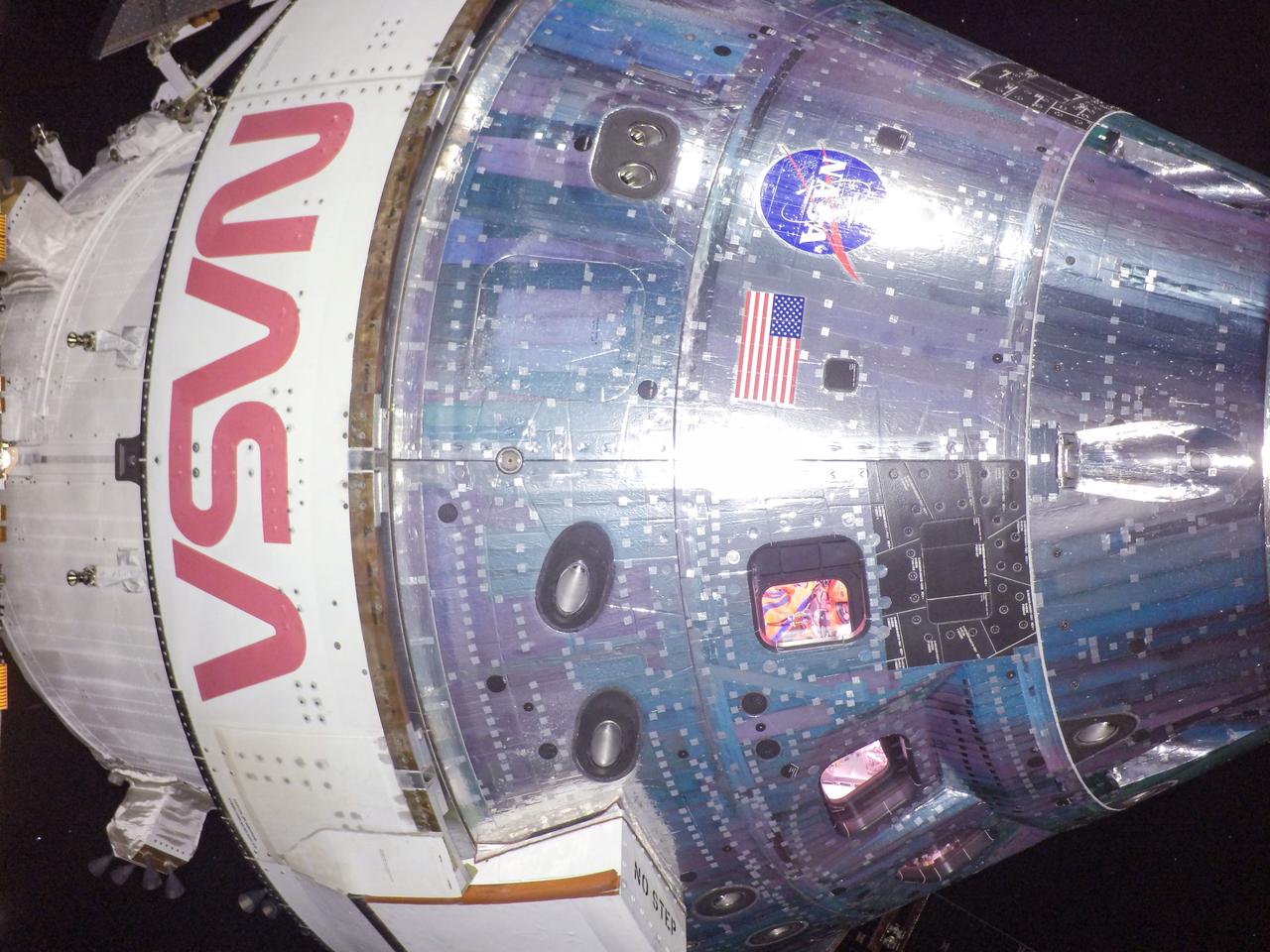
art001e002135 (Dec. 5, 2022) - Solar array-mounted cameras capture close-up images of NASA's Orion Command Module and European Service Module on the 20th day of the Artemis I mission. Windows on the Orion capsule offer a glimpse of “Commander Moonikin Campos," a manikin equipped with sensors measuring radiation, acceleration, and vibration data throughout the mission.
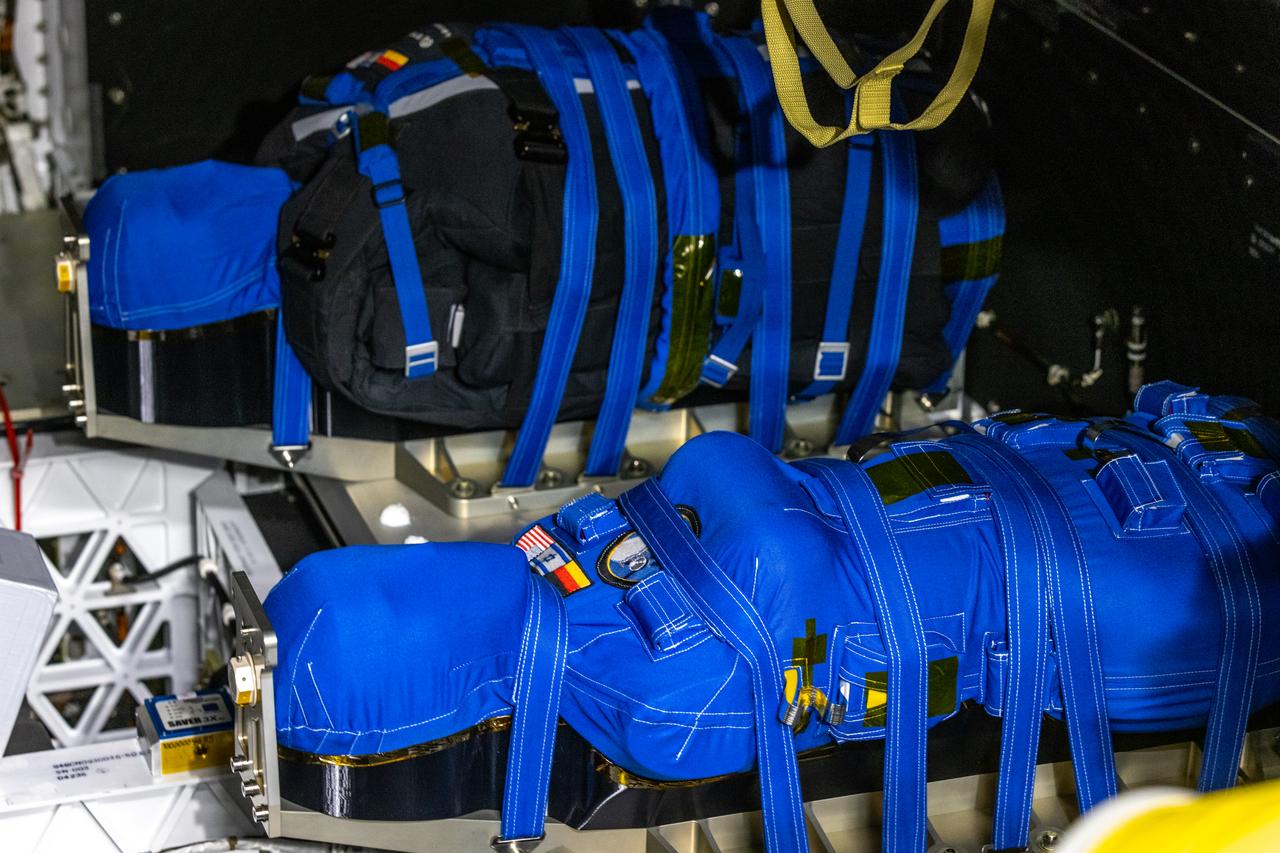
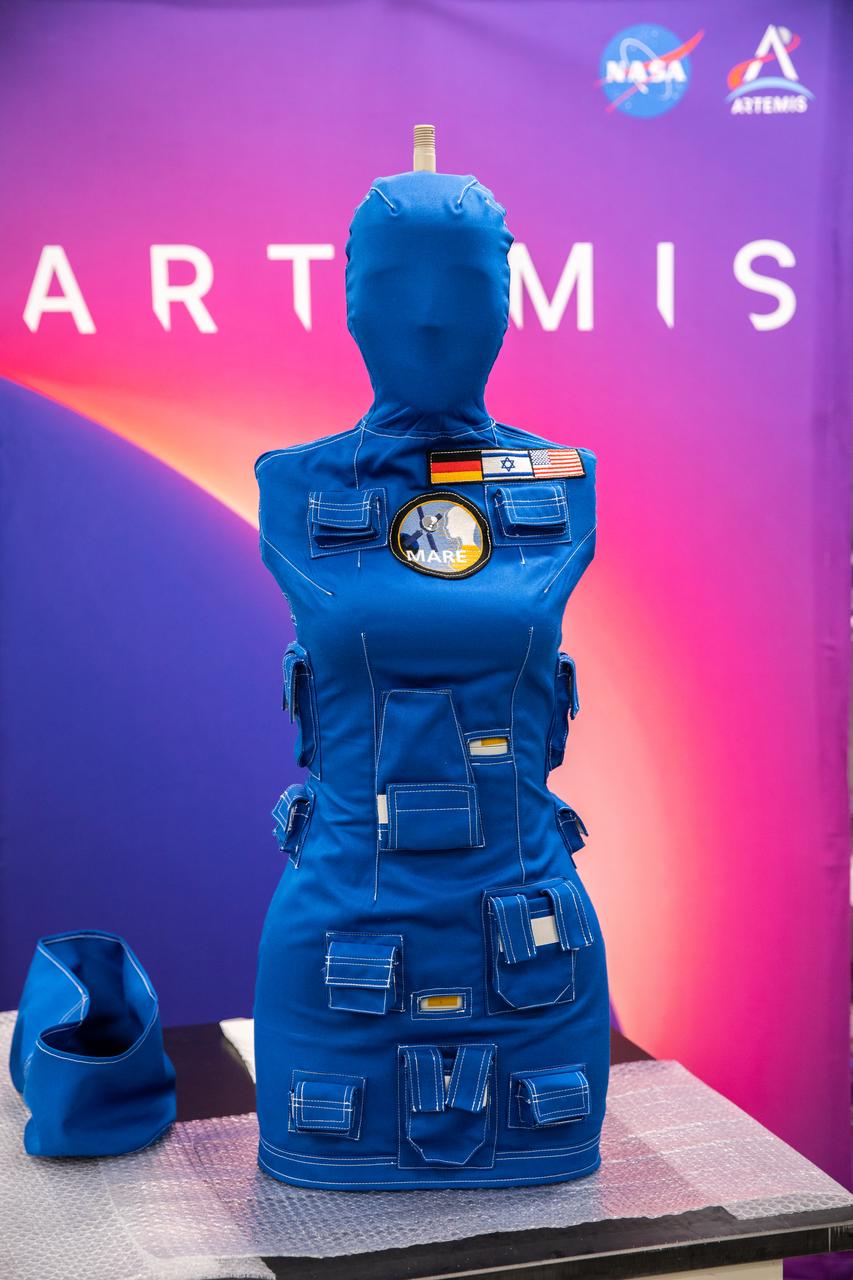
Two manikins are installed in the passenger seats inside the Artemis I Orion crew module atop the Space Launch System rocket in High Bay 3 of the Vehicle Assembly Building at NASA’s Kennedy Space Center in Florida on Aug. 8, 2022. As part of the Matroshka AstroRad Radiation Experiment (MARE) investigation, the two female manikins – Helga and Zohar – are equipped with radiation detectors, while Zohar also wears a radiation protection vest, to determine the radiation risk on its way to the Moon. Artemis I will provide a foundation for human deep space exploration and demonstrate NASA’s capability to extend human presence to the Moon and beyond. The primary goal of Artemis I is to thoroughly test the Space Launch System rocket and Orion spacecraft’s integrated systems before crewed missions. Under Artemis, NASA aims to land the first woman and first person of color on the Moon and establish sustainable lunar exploration.
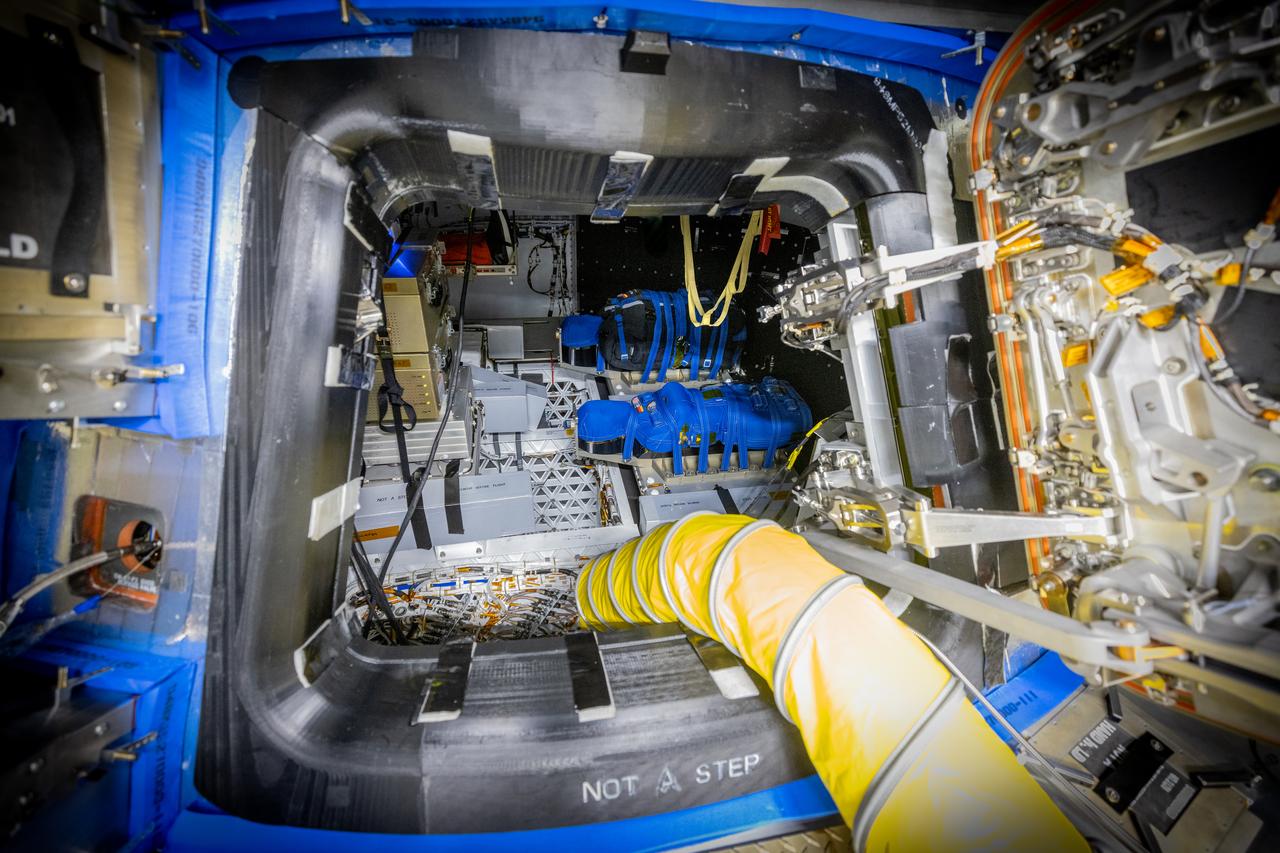
Two manikins are installed in the passenger seats inside the Artemis I Orion crew module atop the Space Launch System rocket in High Bay 3 of the Vehicle Assembly Building at NASA’s Kennedy Space Center in Florida on Aug. 8, 2022. As part of the Matroshka AstroRad Radiation Experiment (MARE) investigation, the two female manikins – Helga and Zohar – are equipped with radiation detectors, while Zohar also wears a radiation protection vest, to determine the radiation risk on its way to the Moon. Artemis I will provide a foundation for human deep space exploration and demonstrate NASA’s capability to extend human presence to the Moon and beyond. The primary goal of Artemis I is to thoroughly test the Space Launch System rocket and Orion spacecraft’s integrated systems before crewed missions. Under Artemis, NASA aims to land the first woman and first person of color on the Moon and establish sustainable lunar exploration.
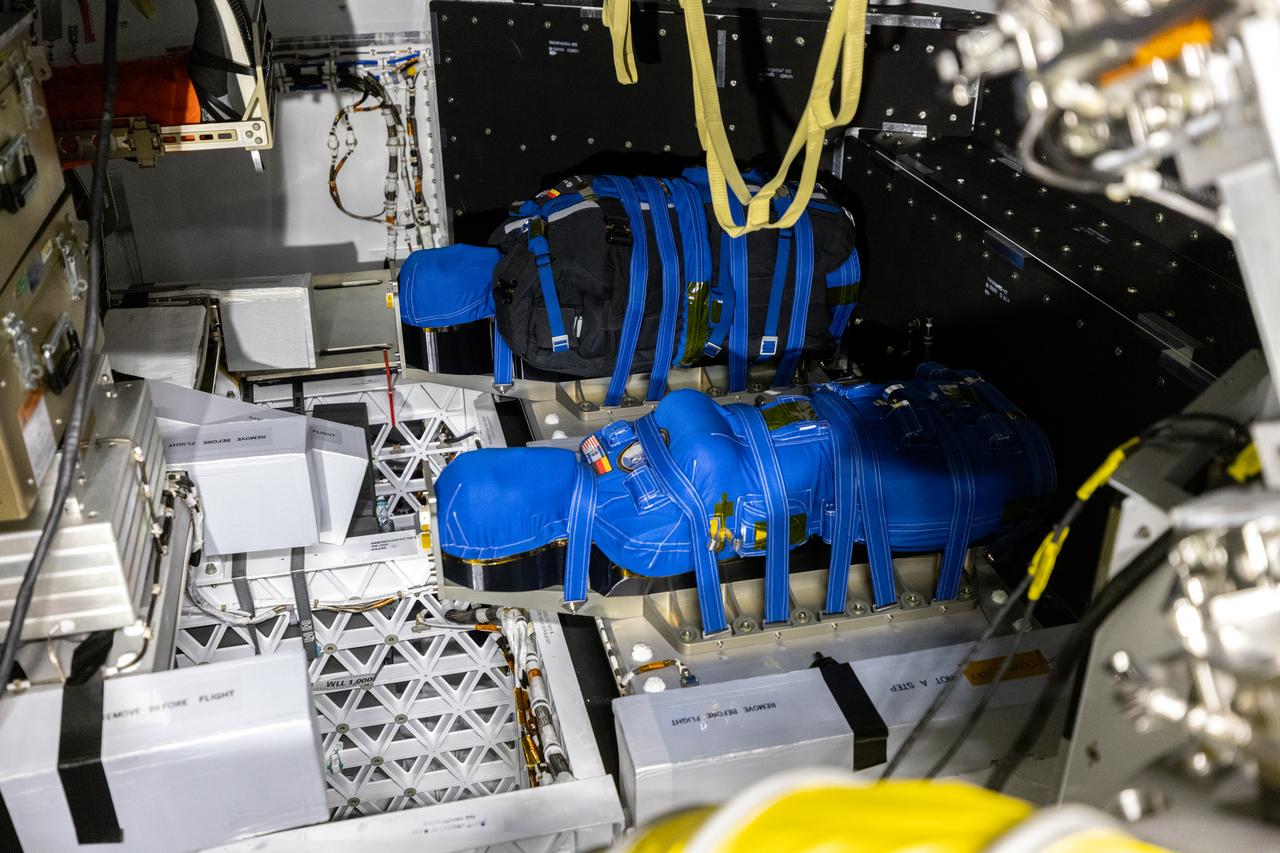
Two manikins are installed in the passenger seats inside the Artemis I Orion crew module atop the Space Launch System rocket in High Bay 3 of the Vehicle Assembly Building at NASA’s Kennedy Space Center in Florida on Aug. 8, 2022. As part of the Matroshka AstroRad Radiation Experiment (MARE) investigation, the two female manikins – Helga and Zohar – are equipped with radiation detectors, while Zohar also wears a radiation protection vest, to determine the radiation risk on its way to the Moon. Artemis I will provide a foundation for human deep space exploration and demonstrate NASA’s capability to extend human presence to the Moon and beyond. The primary goal of Artemis I is to thoroughly test the Space Launch System rocket and Orion spacecraft’s integrated systems before crewed missions. Under Artemis, NASA aims to land the first woman and first person of color on the Moon and establish sustainable lunar exploration.

A Navy MH-60 Seahawk from Helicopter Sea Combat Squadron (HSC) 23 is seen as it lifts a training manikin as teams practice Artemis recovery procedures during Underway Recovery Test-12 onboard USS Somerset off the coast of California, Thursday, March 27, 2025. During the test, NASA and Department of Defense teams are practicing to ensure recovery procedures are validated as NASA plans to send the Artemis II astronauts around the Moon and splashdown in the Pacific Ocean. Photo Credit: (NASA/Joel Kowsky) 1st lift
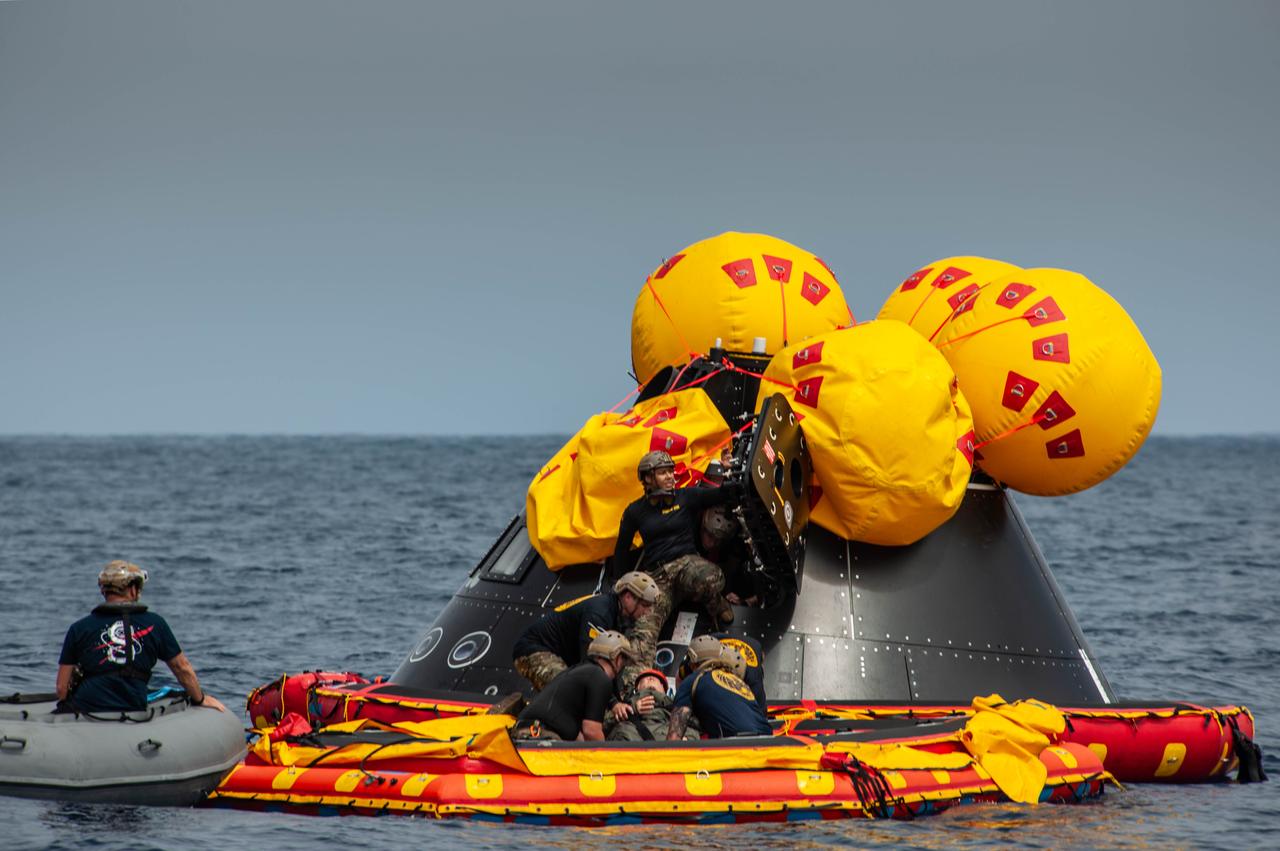
Navy divers from Explosive Ordnance Disposal (EOD) Expeditionary Support Unit 1 practice contingency recovery procedures with a manikin and the Orion Crew Module Test Article (CMTA) in the Pacific Ocean as part of NASA’s Underway Recovery Test 10 (URT-10). The divers are trained in open water and small boat procedures and will be the team to help Artemis astronauts exit the Orion spacecraft and make it safely to the recovery ship after splashdown in addition to preparing the spacecraft to be transported back inside the recovery ship.
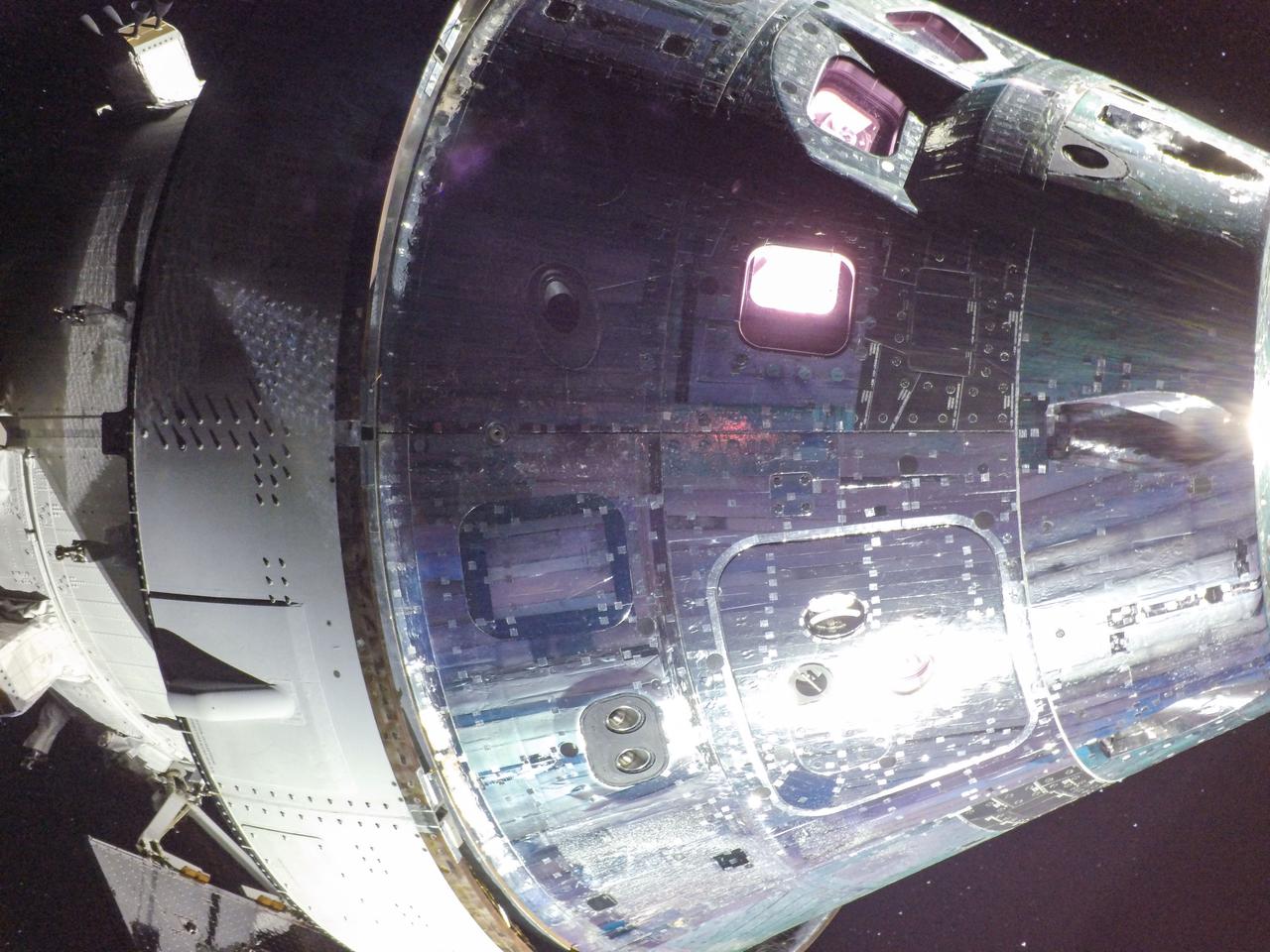
art001e002143 (Dec. 5, 2022) - Solar array-mounted cameras capture close-up images of NASA's Orion Command Module and European Service Module on the 20th day of the Artemis I mission. Windows on the Orion capsule offer a glimpse of “Commander Moonikin Campos," a manikin equipped with sensors measuring radiation, acceleration, and vibration data throughout the mission.
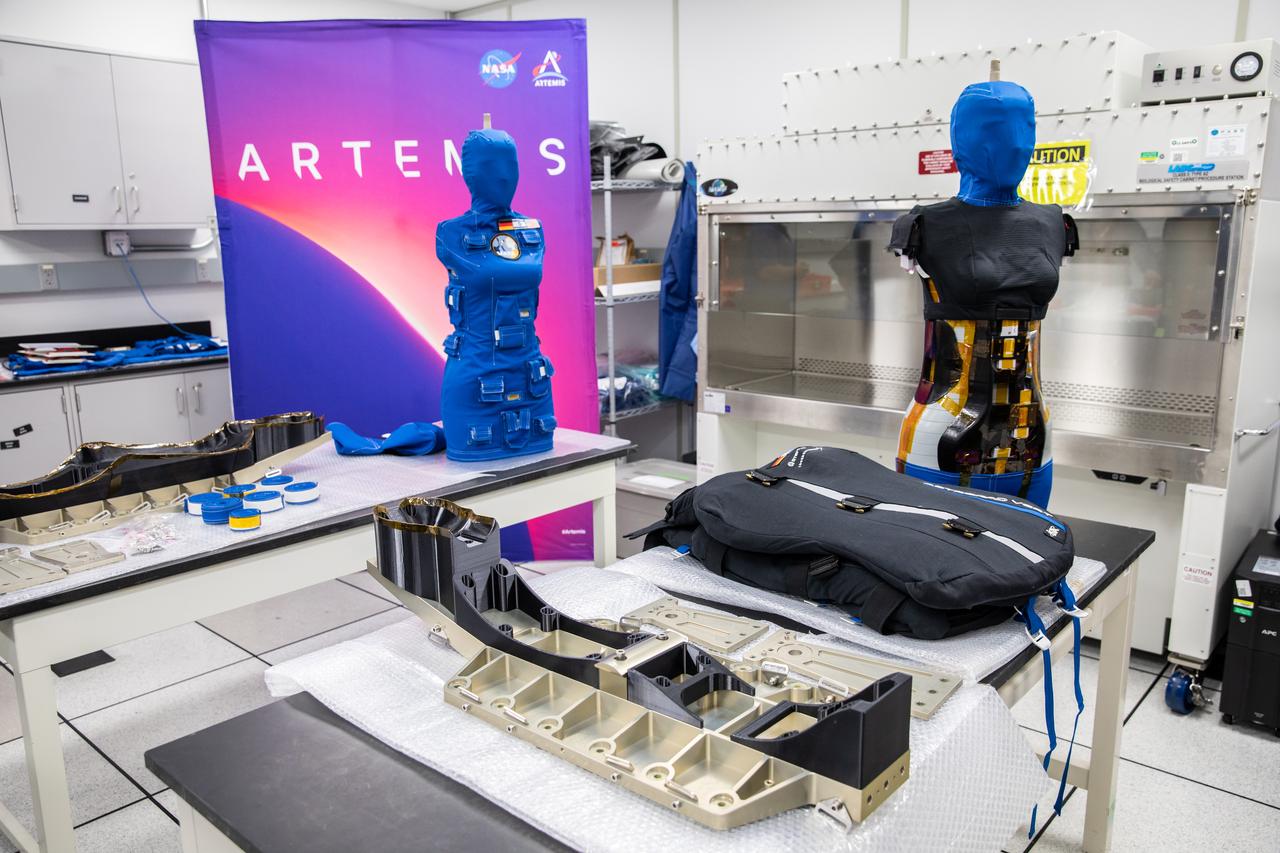
After a 25-day flight beyond the Moon and back inside the Artemis I Orion crew module, two manikins undergo post-flight payload inspections inside the Space Station Processing Facility at Kennedy Space Center in Florida on Jan. 11, 2023. As part of the Matroshka AstroRad Radiation Experiment (MARE) investigation, the two female manikins – Helga and Zohar – were equipped with radiation detectors. Zohar also wore a radiation protection vest, to determine the radiation risk during the Artemis I mission and potentially reduce exposure during future missions with astronauts. The detectors will be removed at Kennedy and the torsos will return to teams at the German Space Agency for further analysis. Artemis I Orion launched atop the Space Launch System (SLS) rocket from Kennedy’s Launch Complex 39B on Nov. 16, 2022, at 1:47 a.m. EST. During the flight, Orion flew farther than any spacecraft built for humans has ever flown, paving the way for human deep space exploration and demonstrating NASA’s commitment and capability to extend human presence to the Moon and beyond. The primary goal of Artemis I was to thoroughly test the SLS and Orion spacecraft’s integrated systems before crewed missions. Under Artemis, NASA aims to land the first woman and first person of color on the Moon and establish sustainable lunar exploration.
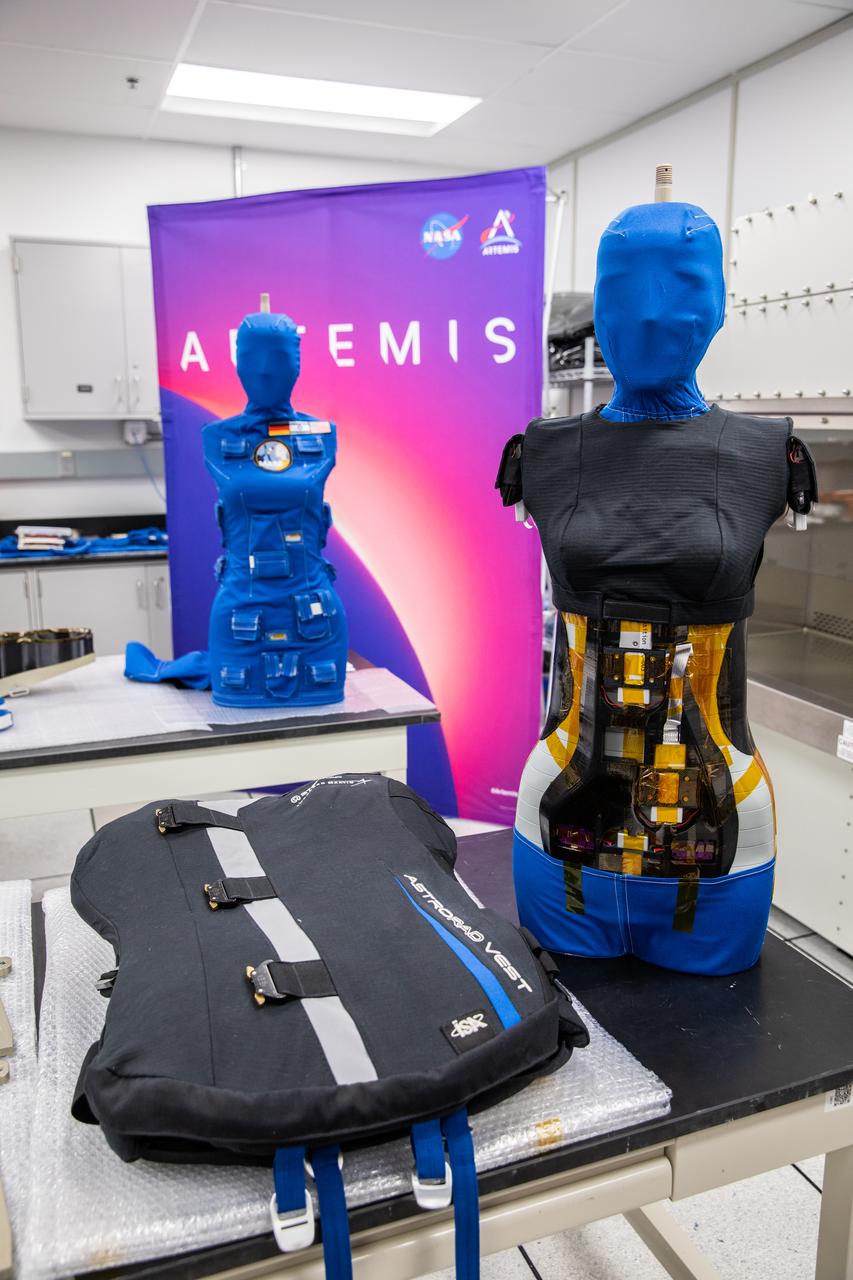
After a 25-day flight beyond the Moon and back inside the Artemis I Orion crew module, two manikins undergo post-flight payload inspections inside the Space Station Processing Facility at Kennedy Space Center in Florida on Jan. 11, 2023. As part of the Matroshka AstroRad Radiation Experiment (MARE) investigation, the two female manikins – Helga and Zohar – were equipped with radiation detectors. Zohar also wore a radiation protection vest, to determine the radiation risk during the Artemis I mission and potentially reduce exposure during future missions with astronauts. The detectors will be removed at Kennedy and the torsos will return to teams at the German Space Agency for further analysis. Artemis I Orion launched atop the Space Launch System (SLS) rocket from Kennedy’s Launch Complex 39B on Nov. 16, 2022, at 1:47 a.m. EST. During the flight, Orion flew farther than any spacecraft built for humans has ever flown, paving the way for human deep space exploration and demonstrating NASA’s commitment and capability to extend human presence to the Moon and beyond. The primary goal of Artemis I was to thoroughly test the SLS and Orion spacecraft’s integrated systems before crewed missions. Under Artemis, NASA aims to land the first woman and first person of color on the Moon and establish sustainable lunar exploration.
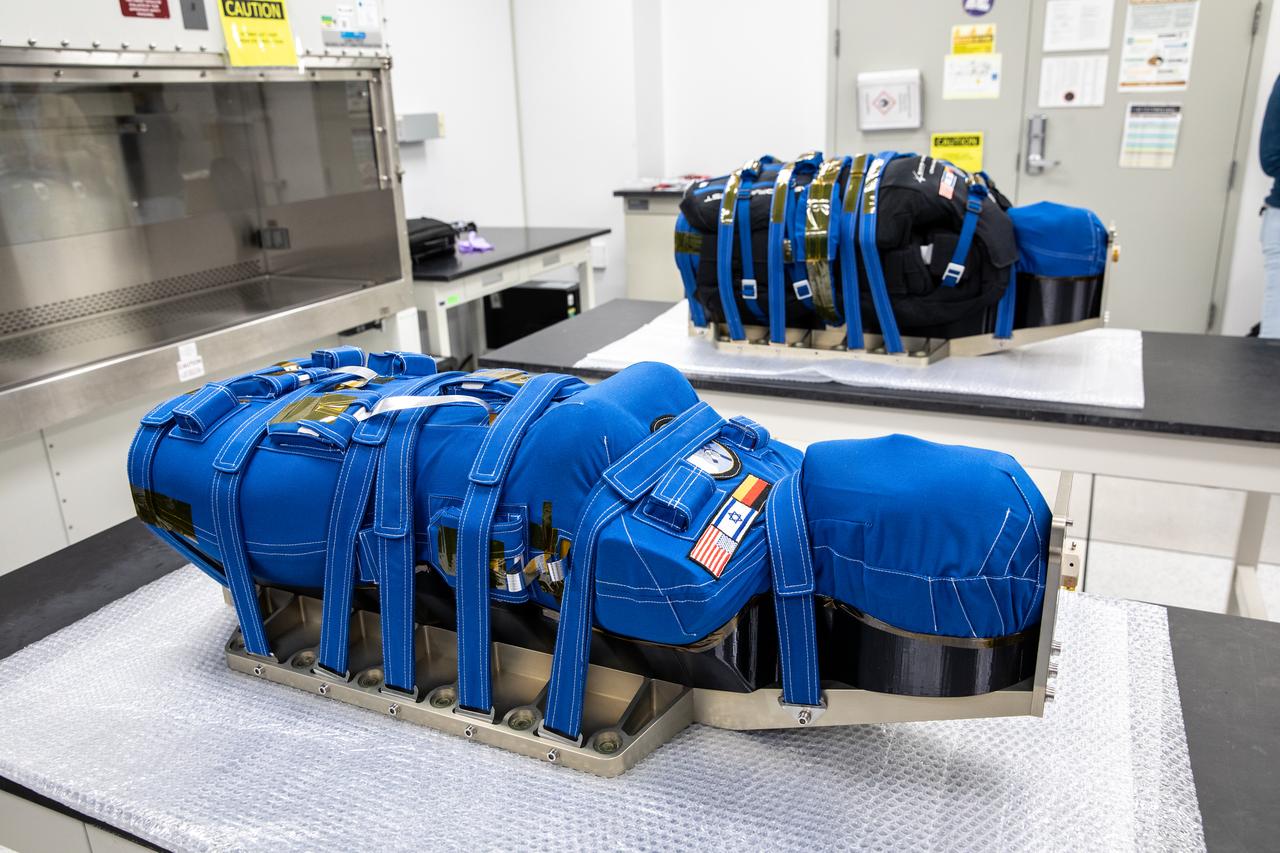
After a 25-day flight beyond the Moon and back inside the Artemis I Orion crew module, two manikins undergo post-flight payload inspections inside the Space Station Processing Facility at Kennedy Space Center in Florida on Jan. 11, 2023. As part of the Matroshka AstroRad Radiation Experiment (MARE) investigation, the two female manikins – Helga and Zohar – were equipped with radiation detectors. Zohar also wore a radiation protection vest, to determine the radiation risk during the Artemis I mission and potentially reduce exposure during future missions with astronauts. The detectors will be removed at Kennedy and the torsos will return to teams at the German Space Agency for further analysis. Artemis I Orion launched atop the Space Launch System (SLS) rocket from Kennedy’s Launch Complex 39B on Nov. 16, 2022, at 1:47 a.m. EST. During the flight, Orion flew farther than any spacecraft built for humans has ever flown, paving the way for human deep space exploration and demonstrating NASA’s commitment and capability to extend human presence to the Moon and beyond. The primary goal of Artemis I was to thoroughly test the SLS and Orion spacecraft’s integrated systems before crewed missions. Under Artemis, NASA aims to land the first woman and first person of color on the Moon and establish sustainable lunar exploration.
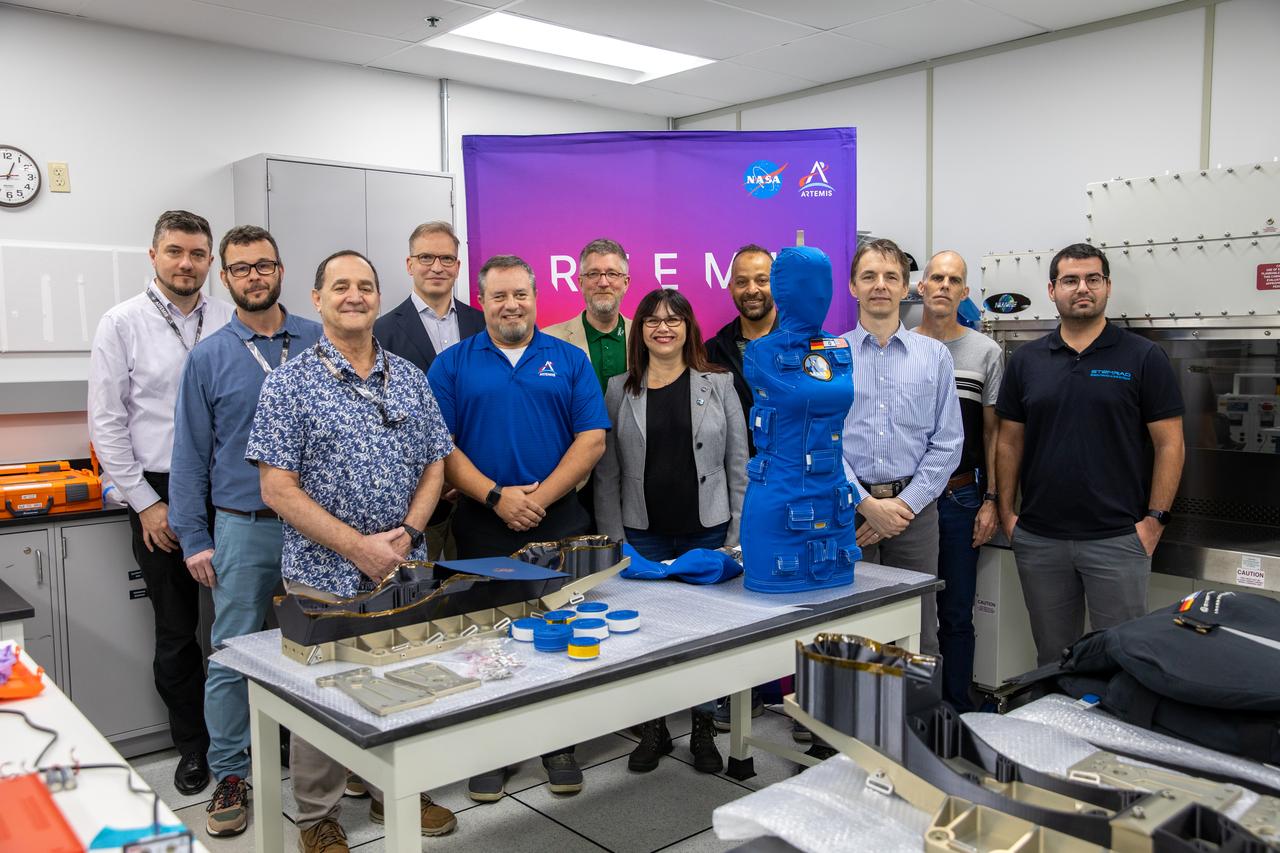
After a 25-day flight beyond the Moon and back inside the Artemis I Orion crew module, two manikins undergo post-flight payload inspections by teams from NASA, Lockheed Martin, AstroRad and the German Space Agency inside the Space Station Processing Facility at Kennedy Space Center in Florida on Jan. 17, 2023. As part of the Matroshka AstroRad Radiation Experiment (MARE) investigation, the two female manikins – Helga and Zohar – were equipped with radiation detectors. Zohar also wore a radiation protection vest, to determine the radiation risk during the Artemis I mission and potentially reduce exposure during future missions with astronauts. Artemis I Orion launched atop the Space Launch System (SLS) rocket from Kennedy’s Launch Complex 39B on Nov. 16, 2022, at 1:47 a.m. EST. During the flight, Orion flew farther than any spacecraft built for humans has ever flown, paving the way for human deep space exploration and demonstrating NASA’s commitment and capability to extend human presence to the Moon and beyond. The primary goal of Artemis I was to thoroughly test the SLS and Orion spacecraft’s integrated systems before crewed missions. Under Artemis, NASA aims to land the first woman and first person of color on the Moon and establish sustainable lunar exploration.
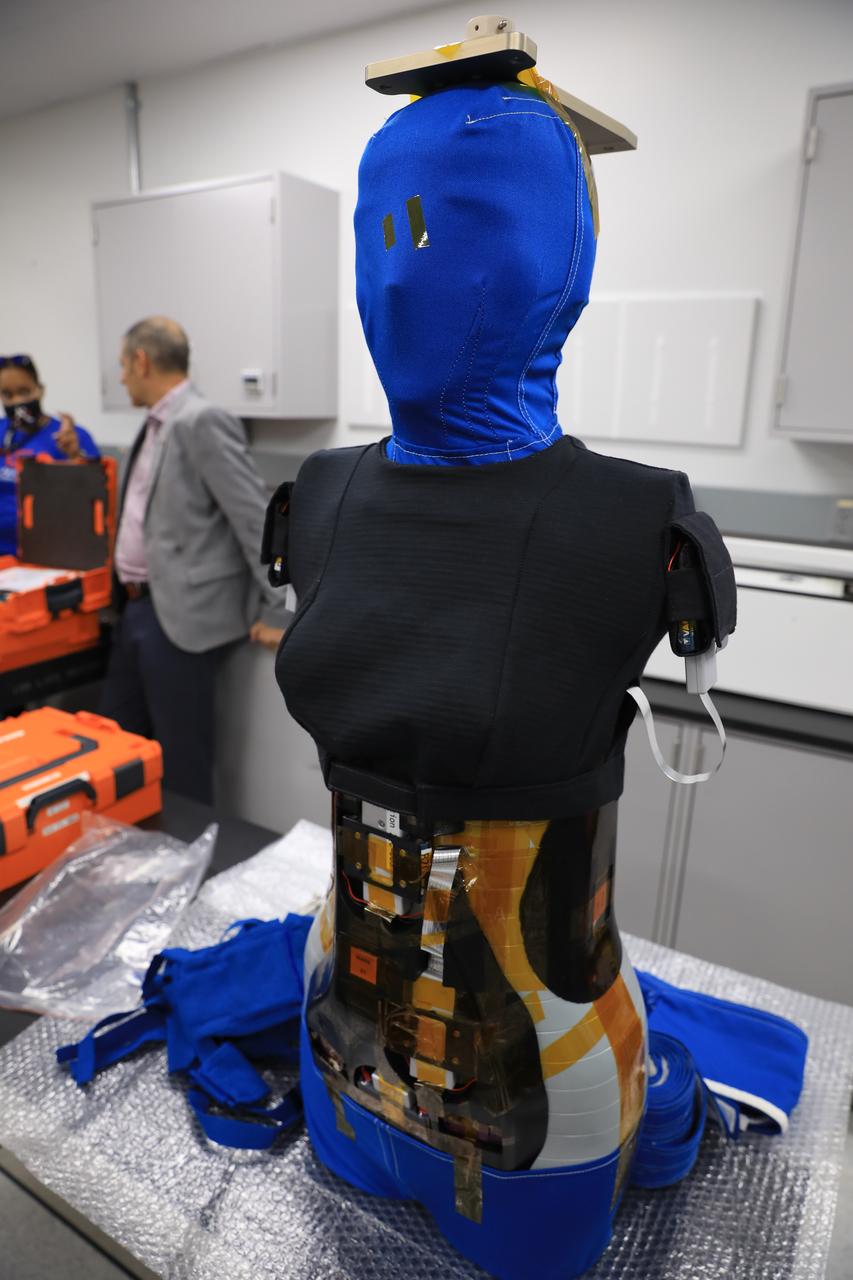
In preparation for the Artemis I flight test, teams at NASA’s Kennedy Space Center in Florida prepare the Matroshka AstroRad Radiation Experiment (MARE) investigation on Aug. 5, 2022. MARE will fly on Artemis I and features two manikins, called phantoms – Helga and Zohar – equipped with radiation detectors to determine the radiation risk on its way to the Moon. The phantoms will be seated as passengers in the Orion crew module, with Zohar also wearing the experimental AstroRad radiation protection vest. The MARE experiment is part of an agreement between NASA, the Israel Space Agency, and the German Aerospace Center. Artemis I will provide a foundation for human deep space exploration and demonstrate NASA’s capability to extend human presence to the Moon and beyond. The primary goal of Artemis I is to thoroughly test the Space Launch System rocket and Orion spacecraft’s integrated systems before crewed missions. Under Artemis, NASA aims to land the first woman and first person of color on the Moon and establish sustainable lunar exploration.

In preparation for the Artemis I flight test, teams at NASA’s Kennedy Space Center in Florida prepare two manikins, called phantoms, as part of the Matroshka AstroRad Radiation Experiment (MARE) investigation on Aug. 4, 2022. The two female phantoms – Helga and Zohar – will fly aboard the Orion crew module during Artemis I. Each will be equipped with radiation detectors, with Zohar also wearing a radiation protection vest, to determine the radiation risk on its way to the Moon. The MARE experiment is part of an agreement between NASA, the Israel Space Agency, and the German Aerospace Center. Artemis I will provide a foundation for human deep space exploration and demonstrate NASA’s capability to extend human presence to the Moon and beyond. The primary goal of Artemis I is to thoroughly test the Space Launch System rocket and Orion spacecraft’s integrated systems before crewed missions. Under Artemis, NASA aims to land the first woman and first person of color on the Moon and establish sustainable lunar exploration.
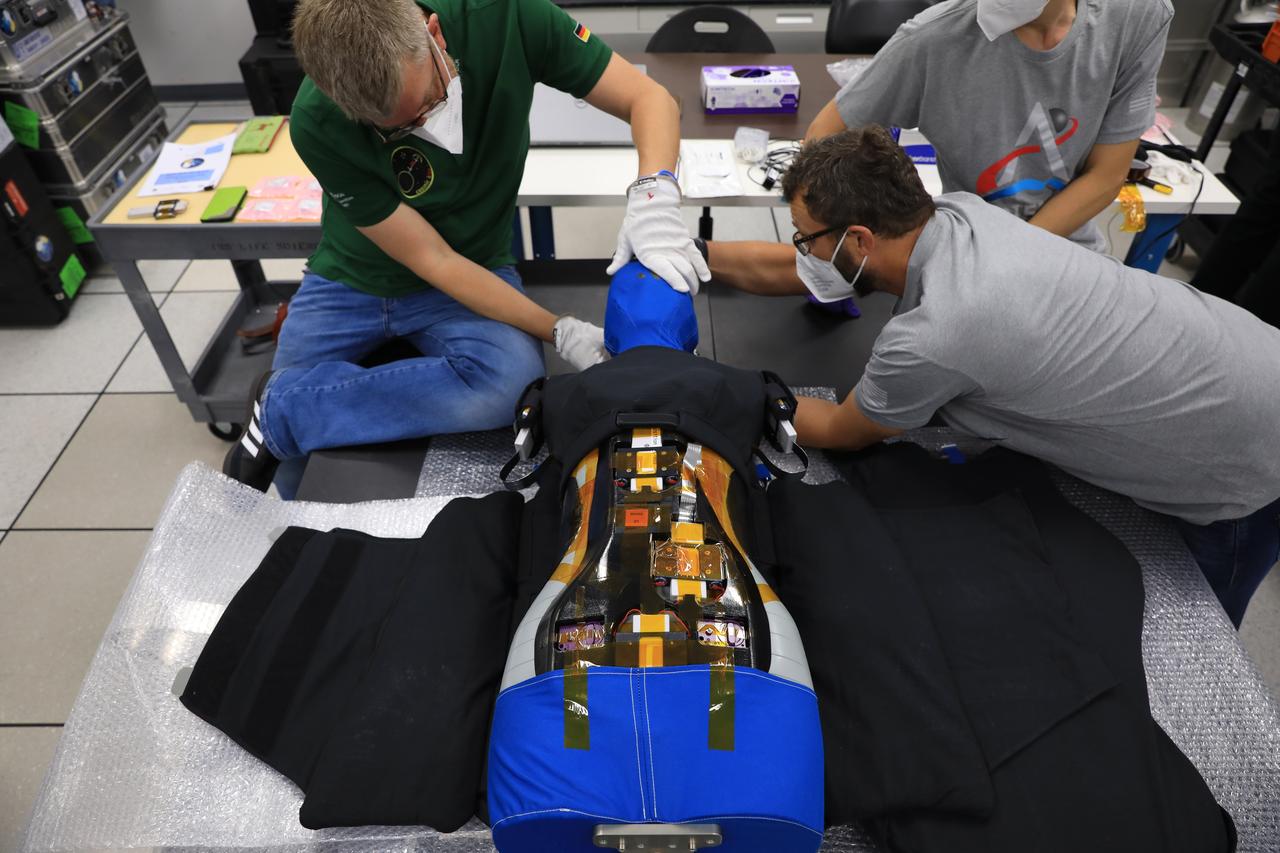
In preparation for the Artemis I flight test, teams at NASA’s Kennedy Space Center in Florida prepare the Matroshka AstroRad Radiation Experiment (MARE) investigation on Aug. 5, 2022. MARE will fly on Artemis I and features two manikins, called phantoms – Helga and Zohar – equipped with radiation detectors to determine the radiation risk on its way to the Moon. The phantoms will be seated as passengers in the Orion crew module, with Zohar also wearing the experimental AstroRad radiation protection vest. The MARE experiment is part of an agreement between NASA, the Israel Space Agency, and the German Aerospace Center. Artemis I will provide a foundation for human deep space exploration and demonstrate NASA’s capability to extend human presence to the Moon and beyond. The primary goal of Artemis I is to thoroughly test the Space Launch System rocket and Orion spacecraft’s integrated systems before crewed missions. Under Artemis, NASA aims to land the first woman and first person of color on the Moon and establish sustainable lunar exploration.
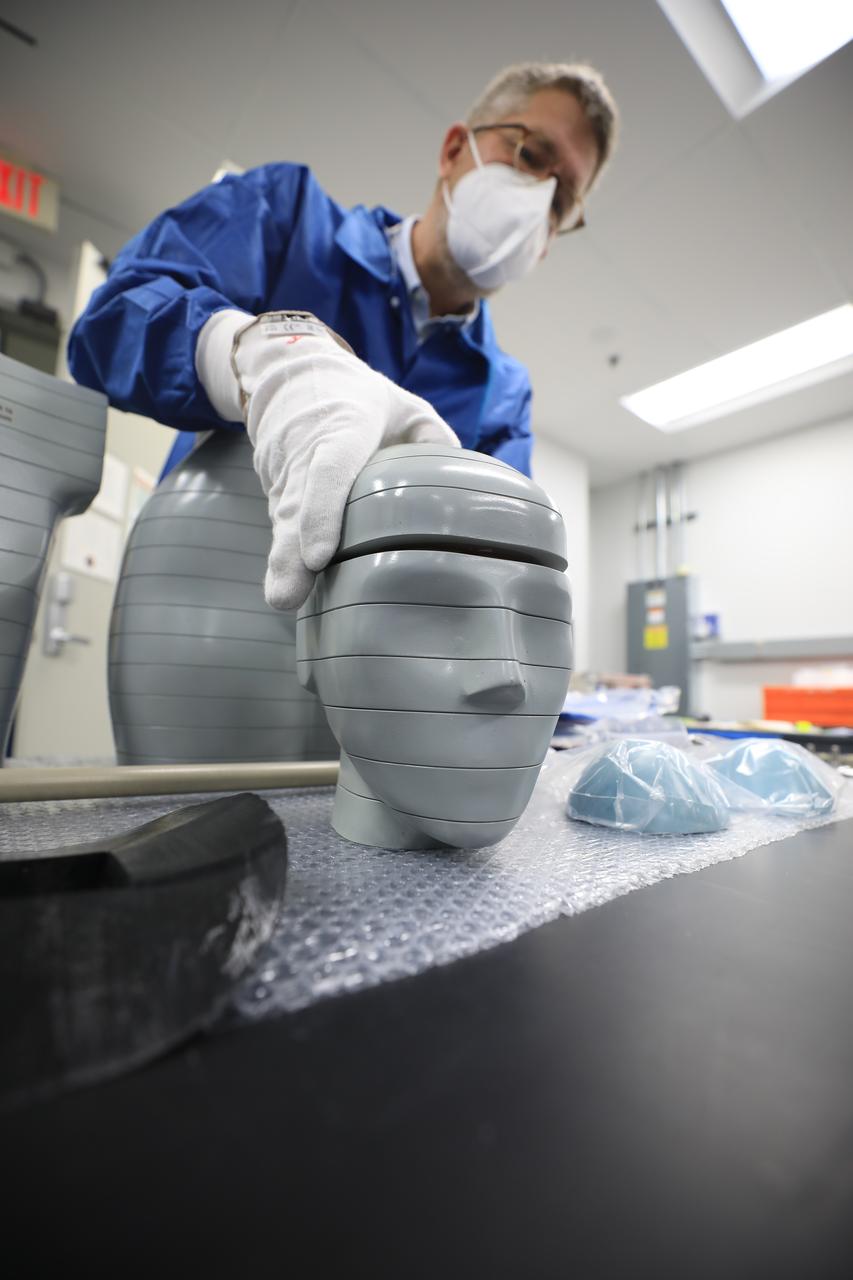
In preparation for the Artemis I flight test, teams at NASA’s Kennedy Space Center in Florida prepare two manikins, called phantoms, as part of the Matroshka AstroRad Radiation Experiment (MARE) investigation on Aug. 4, 2022. The two female phantoms – Helga and Zohar – will fly aboard the Orion crew module during Artemis I. Each will be equipped with radiation detectors, with Zohar also wearing a radiation protection vest, to determine the radiation risk on its way to the Moon. The MARE experiment is part of an agreement between NASA, the Israel Space Agency, and the German Aerospace Center. Artemis I will provide a foundation for human deep space exploration and demonstrate NASA’s capability to extend human presence to the Moon and beyond. The primary goal of Artemis I is to thoroughly test the Space Launch System rocket and Orion spacecraft’s integrated systems before crewed missions. Under Artemis, NASA aims to land the first woman and first person of color on the Moon and establish sustainable lunar exploration.
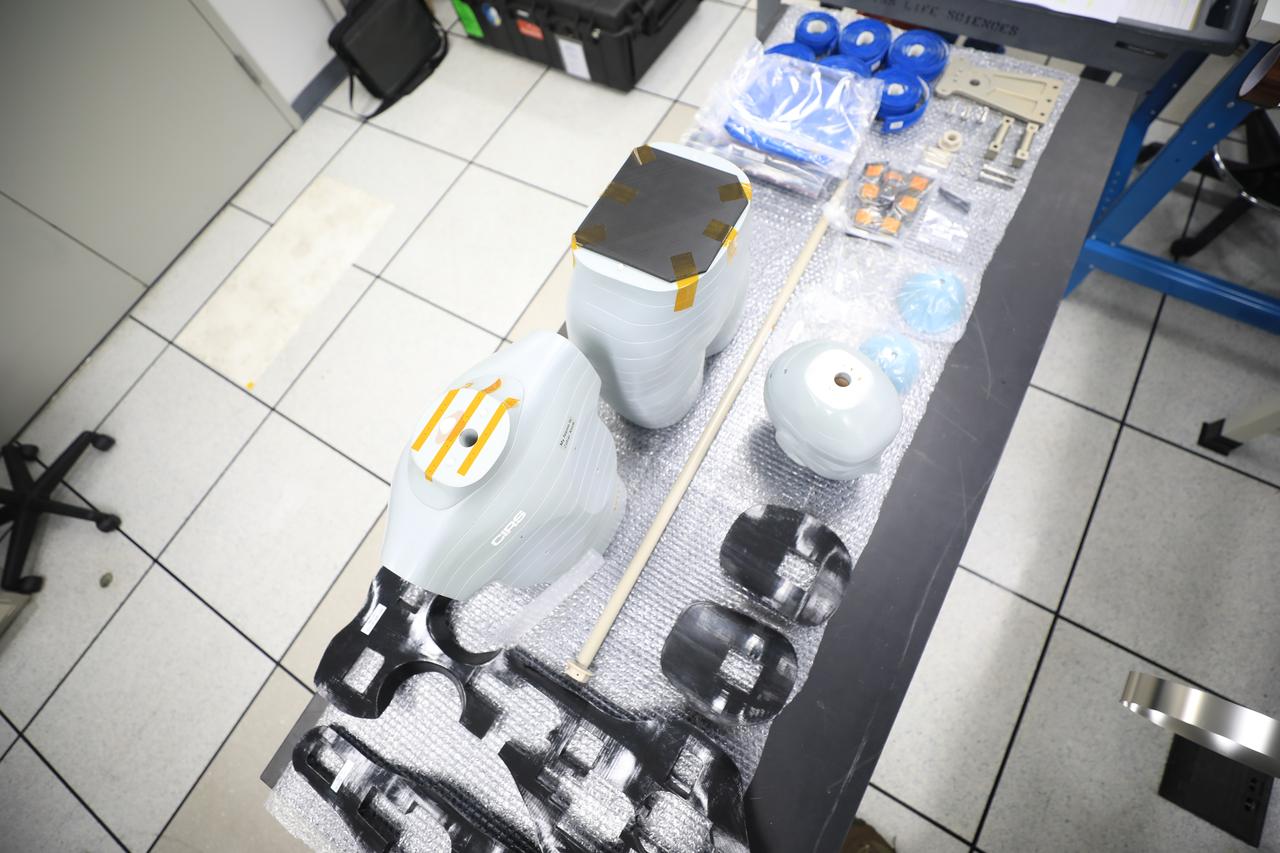
In preparation for the Artemis I flight test, teams at NASA’s Kennedy Space Center in Florida prepare two manikins, called phantoms, as part of the Matroshka AstroRad Radiation Experiment (MARE) investigation on Aug. 4, 2022. The two female phantoms – Helga and Zohar – will fly aboard the Orion crew module during Artemis I. Each will be equipped with radiation detectors, with Zohar also wearing a radiation protection vest, to determine the radiation risk on its way to the Moon. The MARE experiment is part of an agreement between NASA, the Israel Space Agency, and the German Aerospace Center. Artemis I will provide a foundation for human deep space exploration and demonstrate NASA’s capability to extend human presence to the Moon and beyond. The primary goal of Artemis I is to thoroughly test the Space Launch System rocket and Orion spacecraft’s integrated systems before crewed missions. Under Artemis, NASA aims to land the first woman and first person of color on the Moon and establish sustainable lunar exploration.
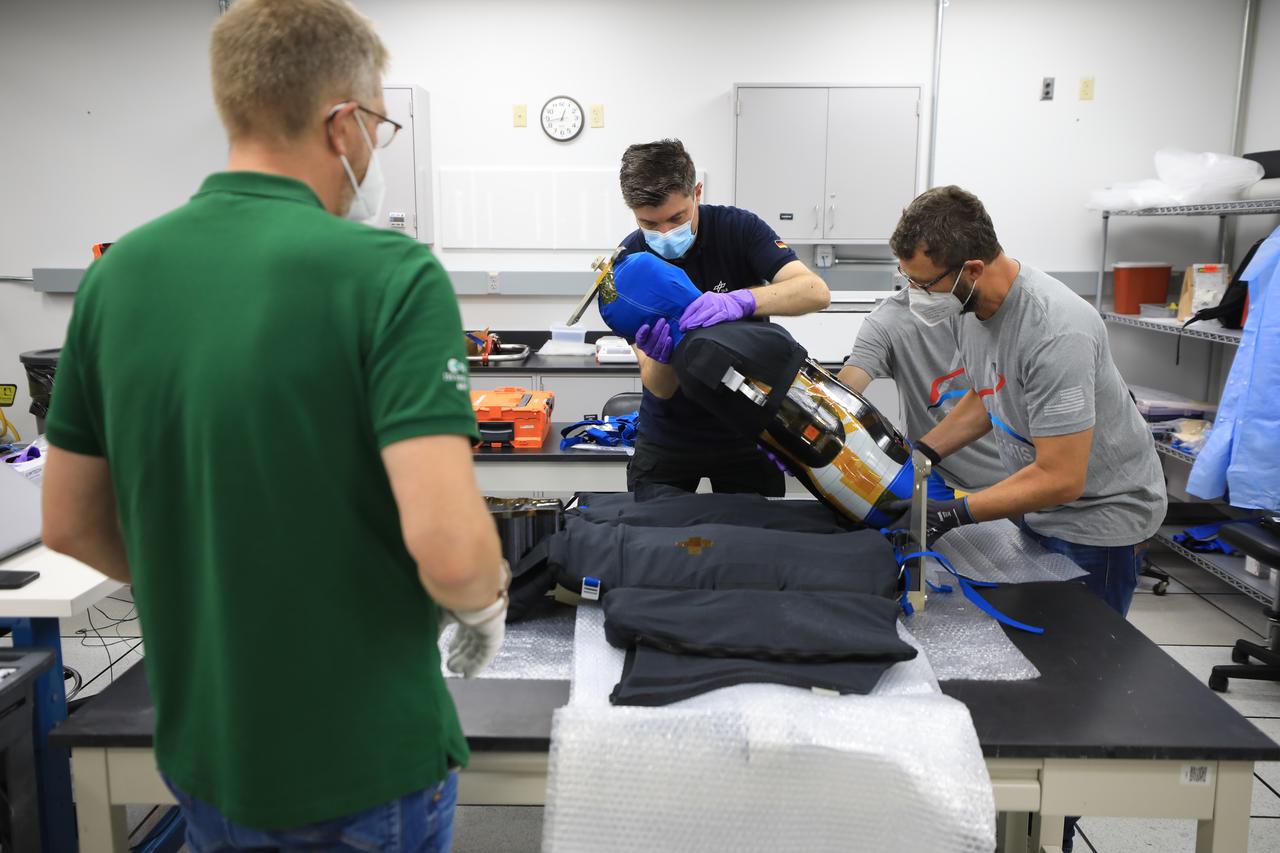
In preparation for the Artemis I flight test, teams at NASA’s Kennedy Space Center in Florida prepare the Matroshka AstroRad Radiation Experiment (MARE) investigation on Aug. 5, 2022. MARE will fly on Artemis I and features two manikins, called phantoms – Helga and Zohar – equipped with radiation detectors to determine the radiation risk on its way to the Moon. The phantoms will be seated as passengers in the Orion crew module, with Zohar also wearing the experimental AstroRad radiation protection vest. The MARE experiment is part of an agreement between NASA, the Israel Space Agency, and the German Aerospace Center. Artemis I will provide a foundation for human deep space exploration and demonstrate NASA’s capability to extend human presence to the Moon and beyond. The primary goal of Artemis I is to thoroughly test the Space Launch System rocket and Orion spacecraft’s integrated systems before crewed missions. Under Artemis, NASA aims to land the first woman and first person of color on the Moon and establish sustainable lunar exploration.
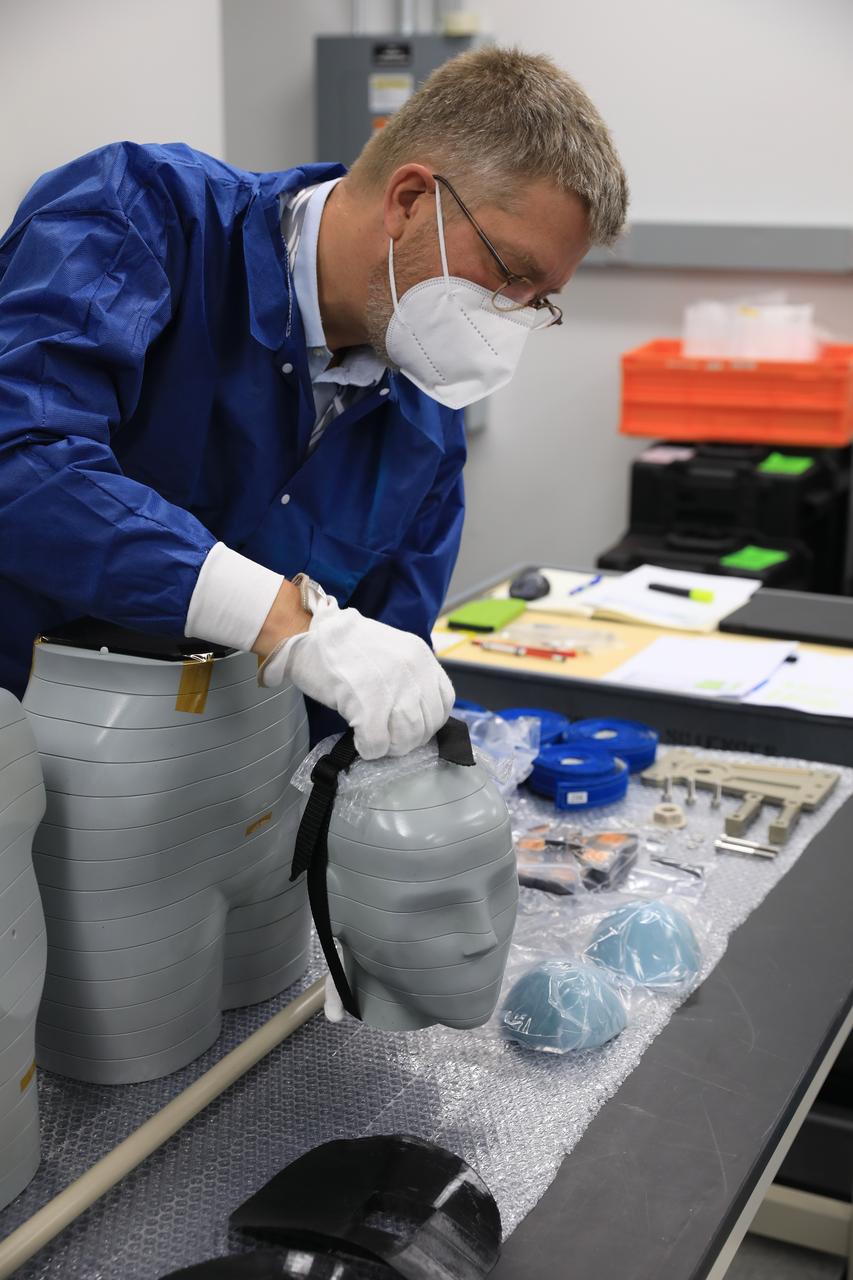
In preparation for the Artemis I flight test, teams at NASA’s Kennedy Space Center in Florida prepare two manikins, called phantoms, as part of the Matroshka AstroRad Radiation Experiment (MARE) investigation on Aug. 4, 2022. The two female phantoms – Helga and Zohar – will fly aboard the Orion crew module during Artemis I. Each will be equipped with radiation detectors, with Zohar also wearing a radiation protection vest, to determine the radiation risk on its way to the Moon. The MARE experiment is part of an agreement between NASA, the Israel Space Agency, and the German Aerospace Center. Artemis I will provide a foundation for human deep space exploration and demonstrate NASA’s capability to extend human presence to the Moon and beyond. The primary goal of Artemis I is to thoroughly test the Space Launch System rocket and Orion spacecraft’s integrated systems before crewed missions. Under Artemis, NASA aims to land the first woman and first person of color on the Moon and establish sustainable lunar exploration.
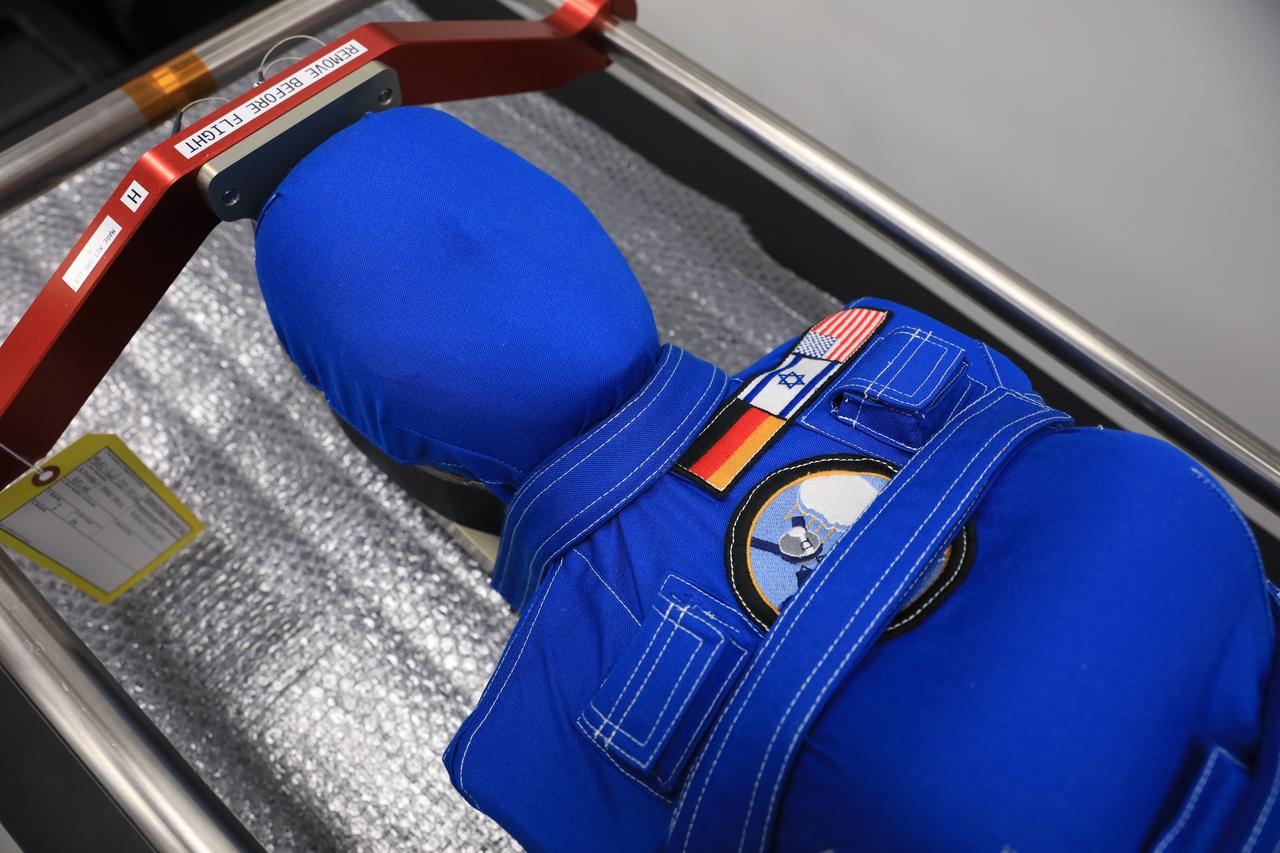
In preparation for the Artemis I flight test, teams at NASA’s Kennedy Space Center in Florida prepare two manikins, called phantoms, as part of the Matroshka AstroRad Radiation Experiment (MARE) investigation on Aug. 4, 2022. The two female phantoms – Helga and Zohar – will fly aboard the Orion crew module during Artemis I. Each will be equipped with radiation detectors, with Zohar also wearing a radiation protection vest, to determine the radiation risk on its way to the Moon. The MARE experiment is part of an agreement between NASA, the Israel Space Agency, and the German Aerospace Center. Artemis I will provide a foundation for human deep space exploration and demonstrate NASA’s capability to extend human presence to the Moon and beyond. The primary goal of Artemis I is to thoroughly test the Space Launch System rocket and Orion spacecraft’s integrated systems before crewed missions. Under Artemis, NASA aims to land the first woman and first person of color on the Moon and establish sustainable lunar exploration.
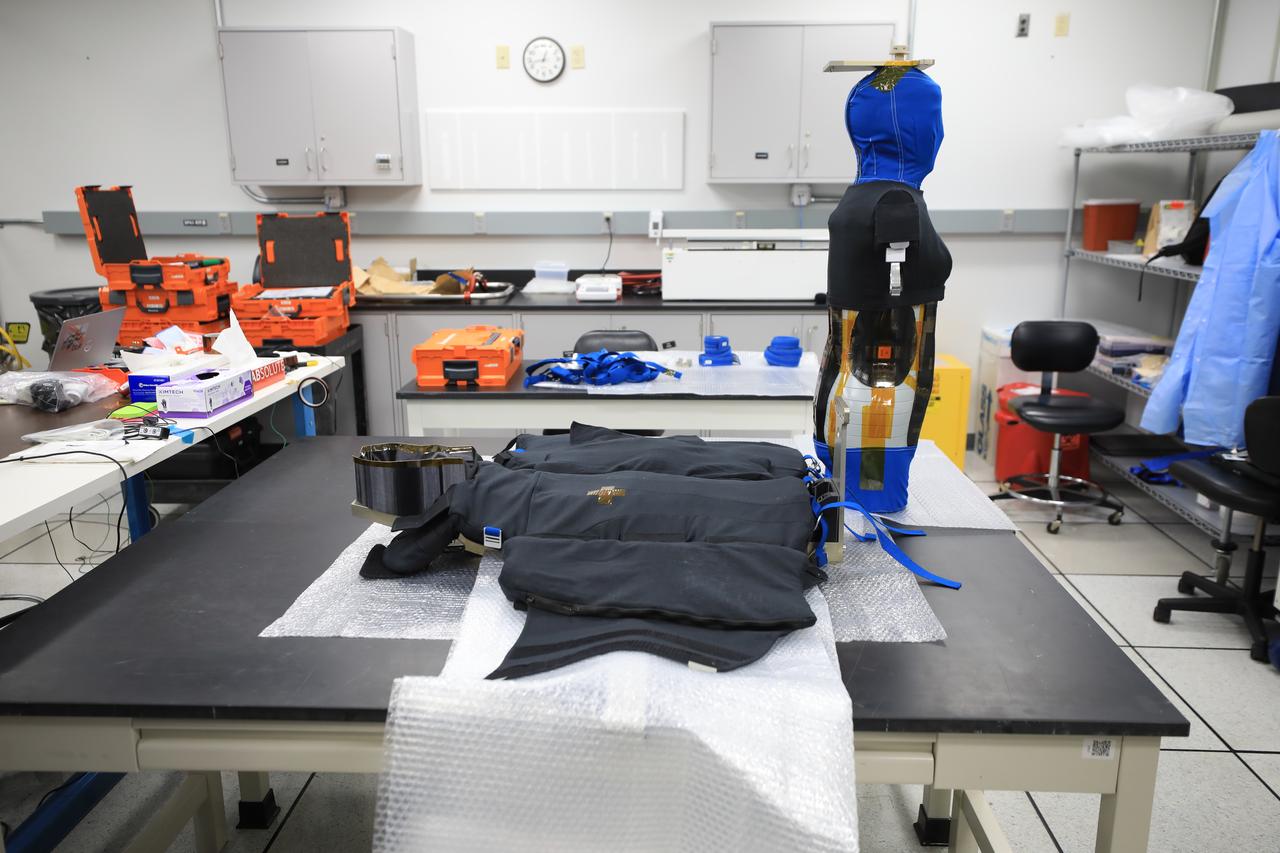
In preparation for the Artemis I flight test, teams at NASA’s Kennedy Space Center in Florida prepare the Matroshka AstroRad Radiation Experiment (MARE) investigation on Aug. 5, 2022. MARE will fly on Artemis I and features two manikins, called phantoms – Helga and Zohar – equipped with radiation detectors to determine the radiation risk on its way to the Moon. The phantoms will be seated as passengers in the Orion crew module, with Zohar also wearing the experimental AstroRad radiation protection vest. The MARE experiment is part of an agreement between NASA, the Israel Space Agency, and the German Aerospace Center. Artemis I will provide a foundation for human deep space exploration and demonstrate NASA’s capability to extend human presence to the Moon and beyond. The primary goal of Artemis I is to thoroughly test the Space Launch System rocket and Orion spacecraft’s integrated systems before crewed missions. Under Artemis, NASA aims to land the first woman and first person of color on the Moon and establish sustainable lunar exploration.
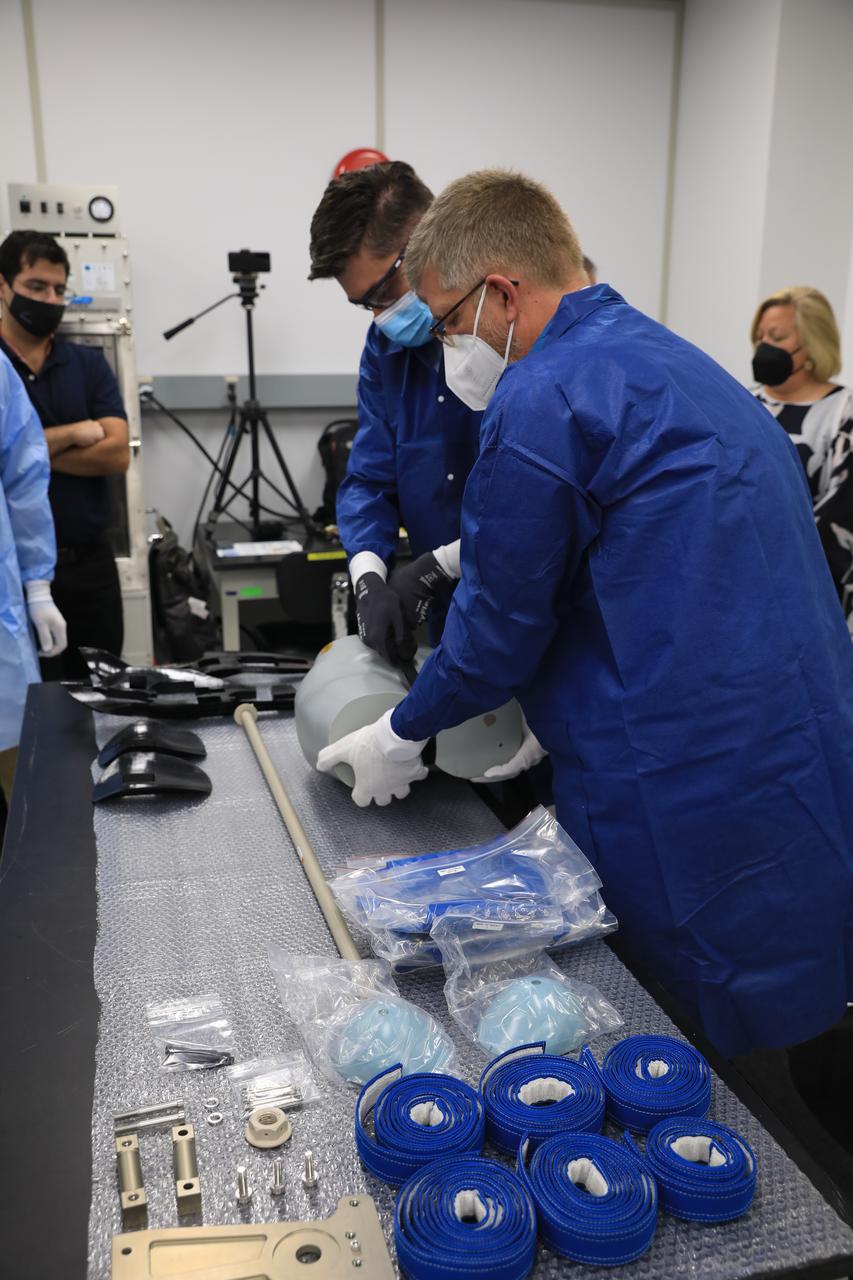
In preparation for the Artemis I flight test, teams at NASA’s Kennedy Space Center in Florida prepare two manikins, called phantoms, as part of the Matroshka AstroRad Radiation Experiment (MARE) investigation on Aug. 4, 2022. The two female phantoms – Helga and Zohar – will fly aboard the Orion crew module during Artemis I. Each will be equipped with radiation detectors, with Zohar also wearing a radiation protection vest, to determine the radiation risk on its way to the Moon. The MARE experiment is part of an agreement between NASA, the Israel Space Agency, and the German Aerospace Center. Artemis I will provide a foundation for human deep space exploration and demonstrate NASA’s capability to extend human presence to the Moon and beyond. The primary goal of Artemis I is to thoroughly test the Space Launch System rocket and Orion spacecraft’s integrated systems before crewed missions. Under Artemis, NASA aims to land the first woman and first person of color on the Moon and establish sustainable lunar exploration.
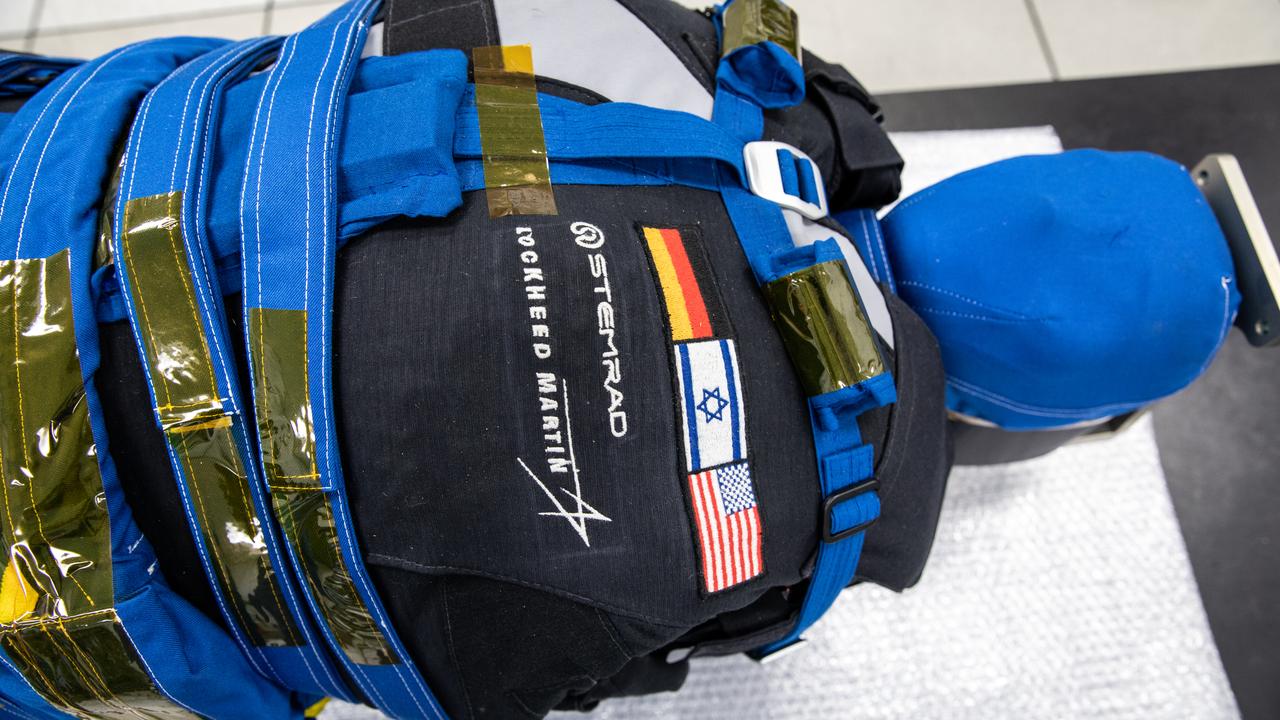
After a 25-day flight inside the Artemis I Orion crew module beyond the Moon and back, Helga, one of two identical phantom torsos, is shown without a radiation detection vest while undergoing post-flight payload inspections inside the Space Station Processing Facility at Kennedy Space Center in Florida on Jan. 11, 2023. The detectors will be removed at Kennedy and the torsos will return to teams at the German Space Agency for further analysis. As part of the Matroshka AstroRad Radiation Experiment (MARE) investigation, two female manikins – Helga and Zohar – were equipped with radiation detectors, while Zohar also wore a radiation protection vest, to determine the radiation risk during the Artemis I mission and potentially reduce exposure during future missions with astronauts. Artemis I Orion launched atop the Space Launch System (SLS) rocket from Kennedy’s Launch Complex 39B on Nov. 16, 2022, at 1:47 a.m. EST. During the flight, Orion flew farther than any spacecraft built for humans has ever flown, paving the way for human deep space exploration and demonstrating NASA’s commitment and capability to extend human presence to the Moon and beyond. The primary goal of Artemis I was to thoroughly test the SLS and Orion spacecraft’s integrated systems before crewed missions. Under Artemis, NASA aims to land the first woman and first person of color on the Moon and establish sustainable lunar exploration.

After a 25-day flight inside the Artemis I Orion crew module beyond the Moon and back, Helga, one of two identical phantom torsos, is shown without a radiation detection vest while undergoing post-flight payload inspections inside the Space Station Processing Facility at Kennedy Space Center in Florida on Jan. 11, 2023. The detectors will be removed at Kennedy and the torsos will return to teams at the German Space Agency for further analysis. As part of the Matroshka AstroRad Radiation Experiment (MARE) investigation, two female manikins – Helga and Zohar – were equipped with radiation detectors, while Zohar also wore a radiation protection vest, to determine the radiation risk during the Artemis I mission and potentially reduce exposure during future missions with astronauts. Artemis I Orion launched atop the Space Launch System (SLS) rocket from Kennedy’s Launch Complex 39B on Nov. 16, 2022, at 1:47 a.m. EST. During the flight, Orion flew farther than any spacecraft built for humans has ever flown, paving the way for human deep space exploration and demonstrating NASA’s commitment and capability to extend human presence to the Moon and beyond. The primary goal of Artemis I was to thoroughly test the SLS and Orion spacecraft’s integrated systems before crewed missions. Under Artemis, NASA aims to land the first woman and first person of color on the Moon and establish sustainable lunar exploration.
After a 25-day flight inside the Artemis I Orion crew module beyond the Moon and back, Helga, one of two identical phantom torsos, is shown without a radiation detection vest while undergoing post-flight payload inspections inside the Space Station Processing Facility at Kennedy Space Center in Florida on Jan. 11, 2023. The detectors will be removed at Kennedy and the torsos will return to teams at the German Space Agency for further analysis. As part of the Matroshka AstroRad Radiation Experiment (MARE) investigation, two female manikins – Helga and Zohar – were equipped with radiation detectors, while Zohar also wore a radiation protection vest, to determine the radiation risk during the Artemis I mission and potentially reduce exposure during future missions with astronauts. Artemis I Orion launched atop the Space Launch System (SLS) rocket from Kennedy’s Launch Complex 39B on Nov. 16, 2022, at 1:47 a.m. EST. During the flight, Orion flew farther than any spacecraft built for humans has ever flown, paving the way for human deep space exploration and demonstrating NASA’s commitment and capability to extend human presence to the Moon and beyond. The primary goal of Artemis I was to thoroughly test the SLS and Orion spacecraft’s integrated systems before crewed missions. Under Artemis, NASA aims to land the first woman and first person of color on the Moon and establish sustainable lunar exploration.