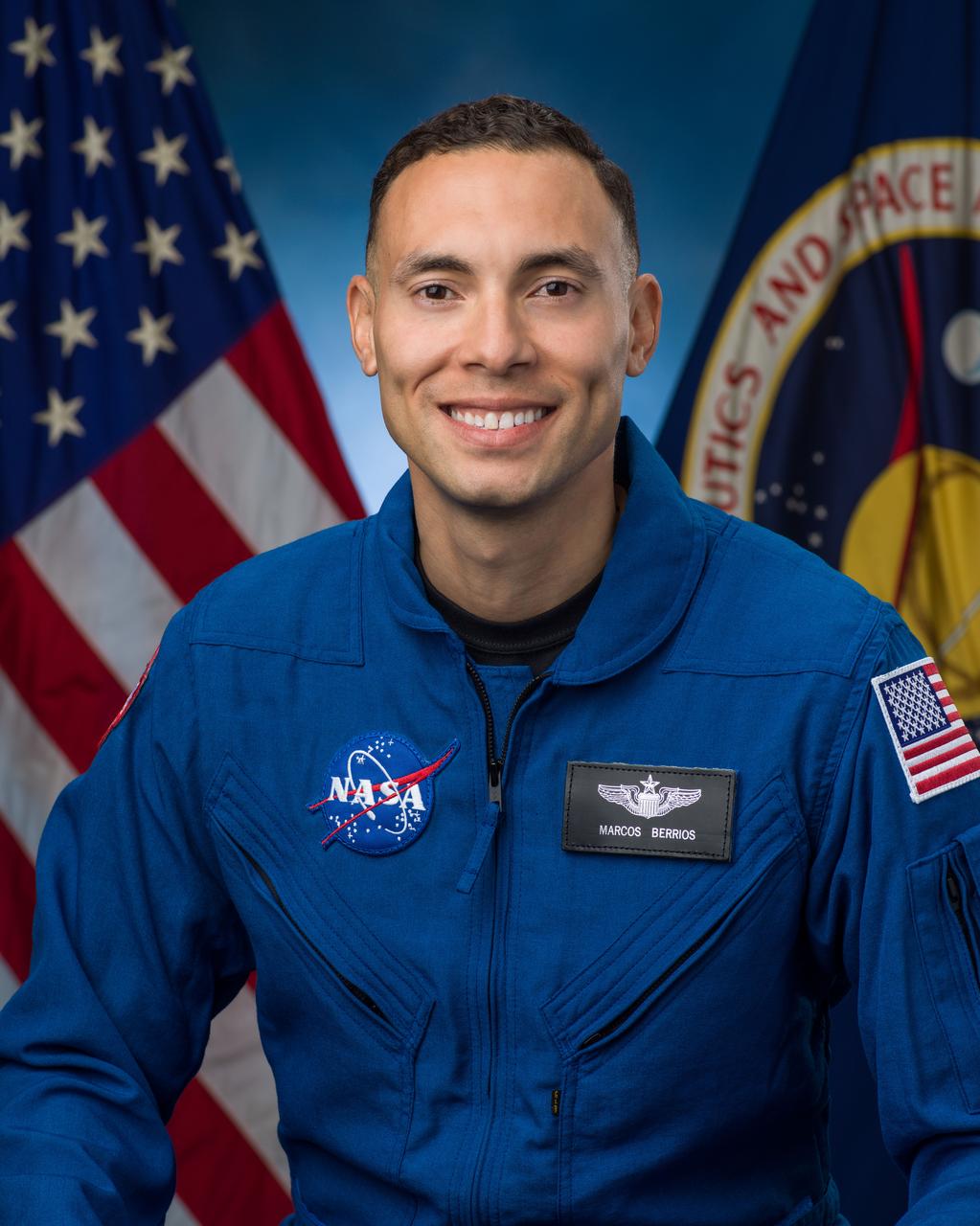
Astronaut Candidate Individual Portrait, Marcos Berrios - ASCAN Class of 2021. Photo Date: December 3, 2021. Location: Building 8, Room 183 - Photo Studio. Credit: NASA/Robert Markowitz
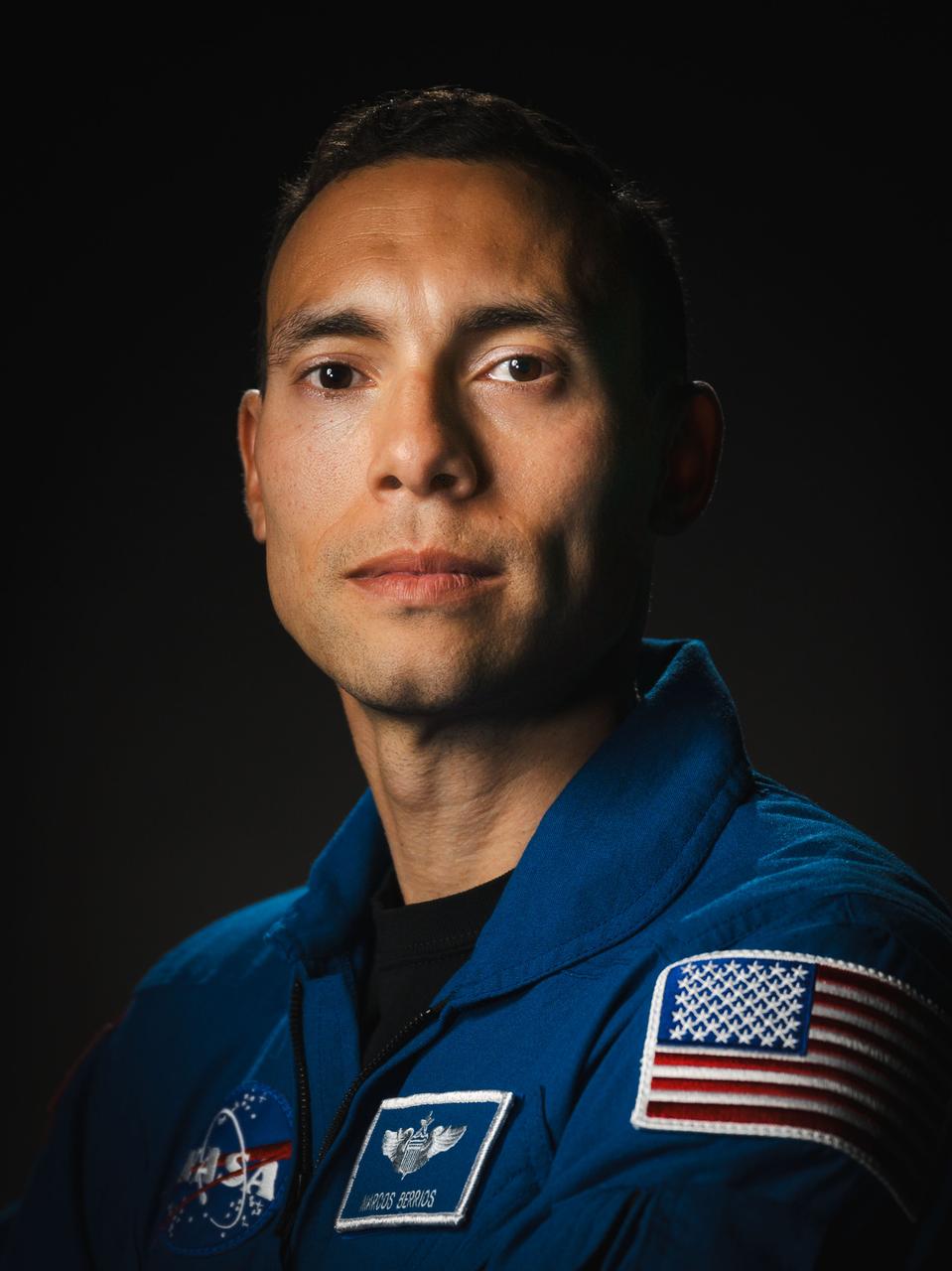
jsc2024e013681_alt (February 8, 2024) --- NASA astronaut Marcos Berrios poses for a portrait at NASA’s Johnson Space Center in Houston, Texas. Credit: NASA/ Josh Valcarcel
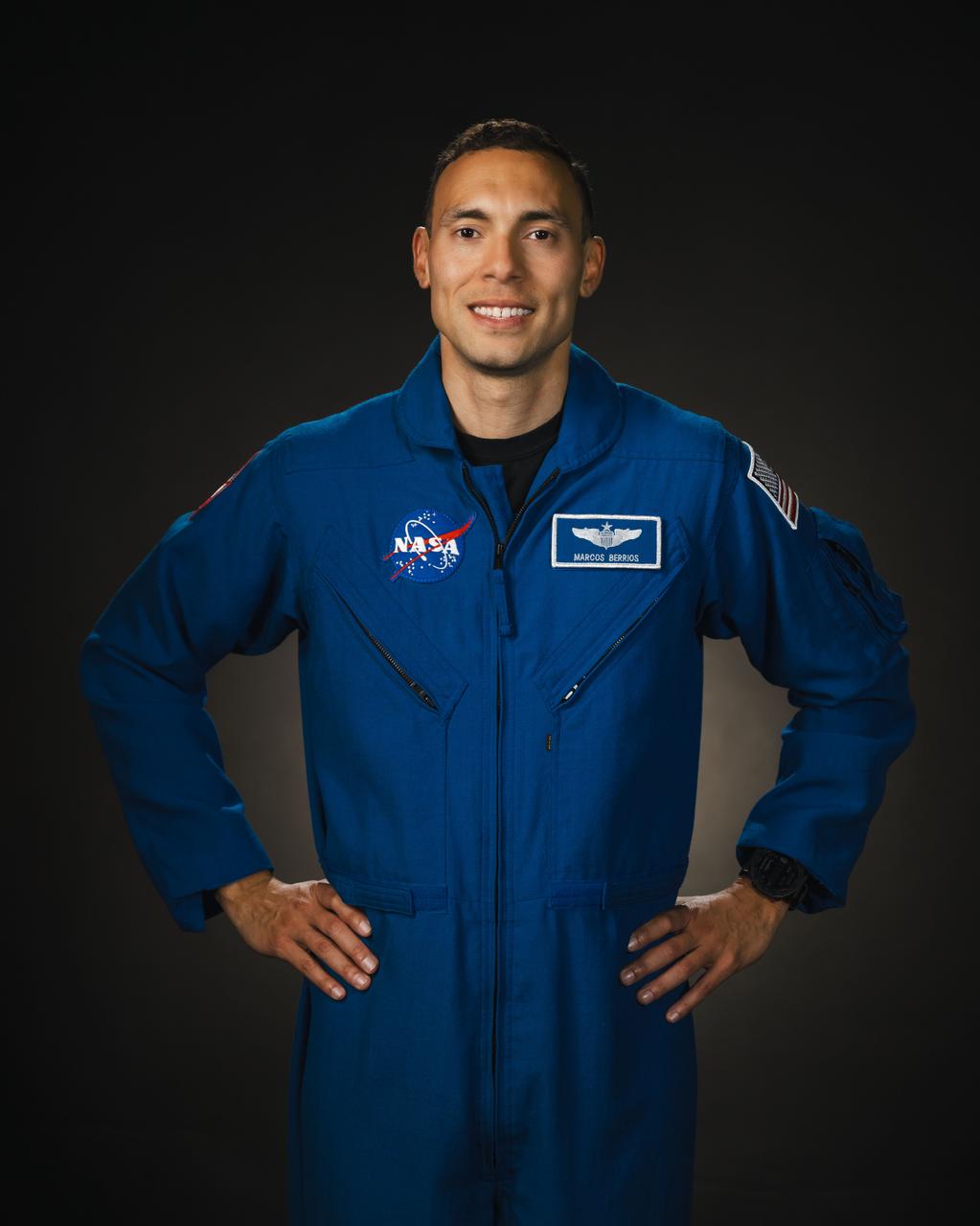
jsc2024e013658 (February 8, 2024) --- NASA astronaut Marcos Berrios poses for a portrait at NASA’s Johnson Space Center in Houston, Texas. Credit: NASA/ Josh Valcarcel
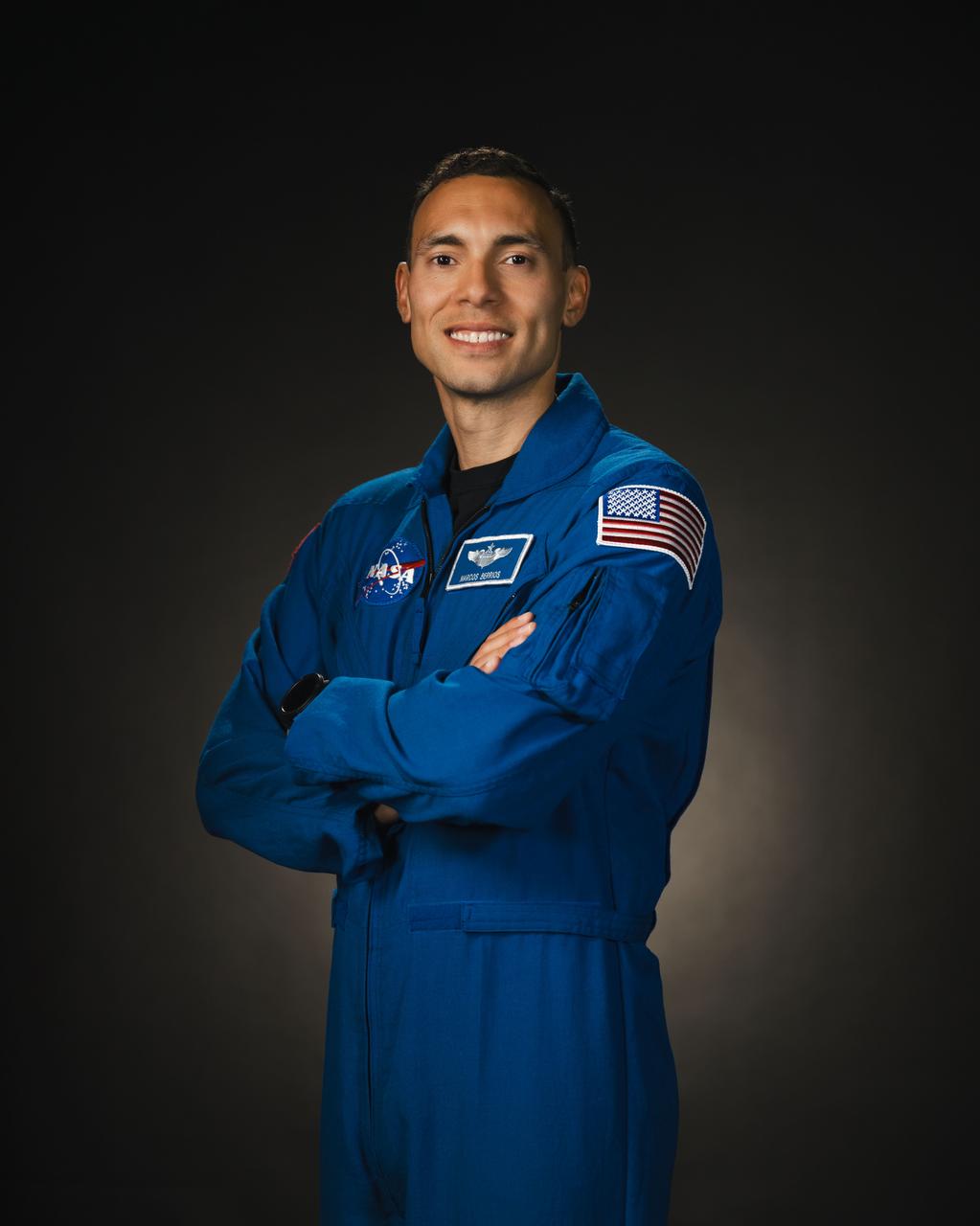
jsc2024e013659 (February 8, 2024) --- NASA astronaut Marcos Berrios poses for a portrait at NASA’s Johnson Space Center in Houston, Texas. Credit: NASA/ Josh Valcarcel
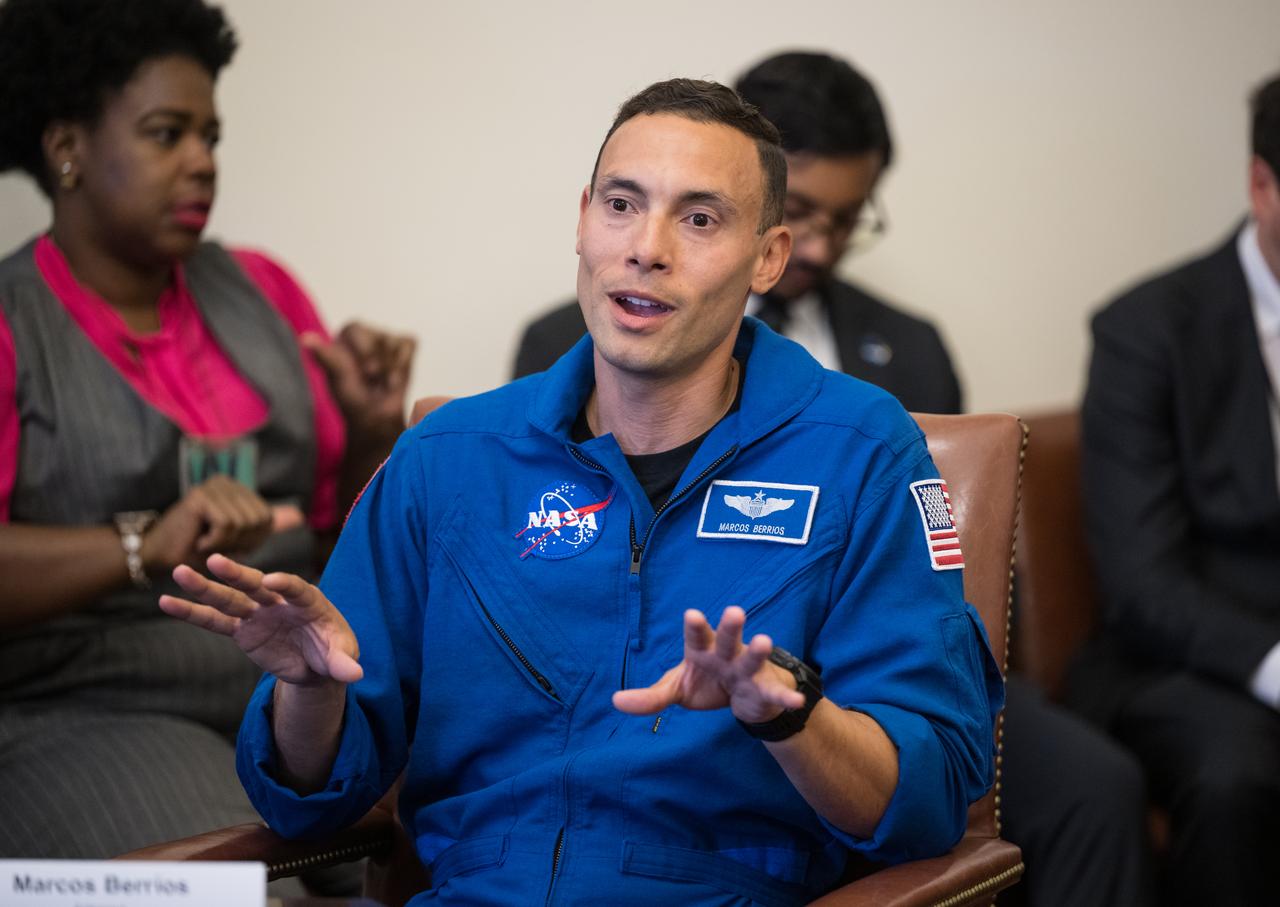
NASA Astronaut Marcos Berrios speaks at a staff engagement event that took place during a White House Hispanic Heritage month event titled “Soaring Together: Inspiring the Next Generation of Space Leaders” at the Eisenhower Executive Office Building, Monday, Sept. 30, 2024 in Washington. Photo Credit: (NASA/Aubrey Gemignani)
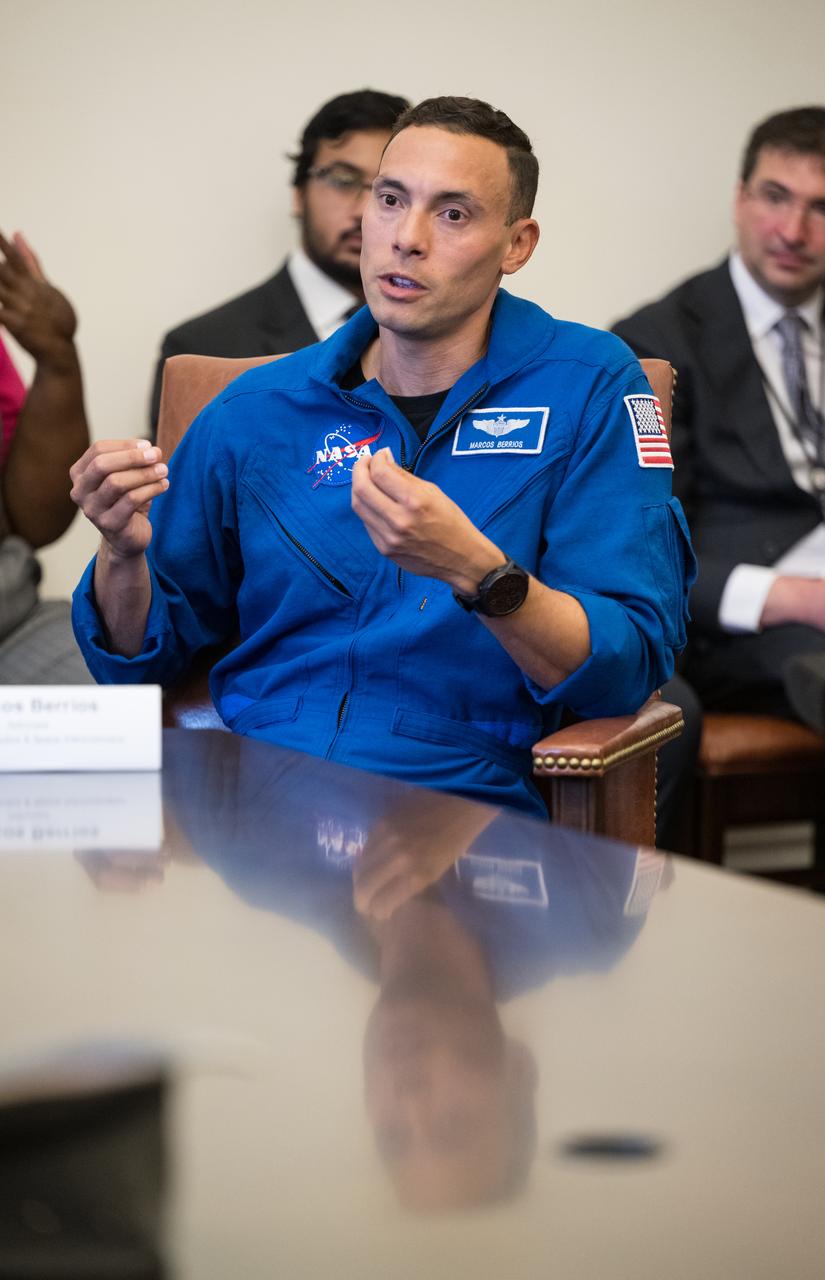
NASA Astronaut Marcos Berrios speaks at a staff engagement event that took place during a White House Hispanic Heritage month event titled “Soaring Together: Inspiring the Next Generation of Space Leaders” at the Eisenhower Executive Office Building, Monday, Sept. 30, 2024 in Washington. Photo Credit: (NASA/Aubrey Gemignani)
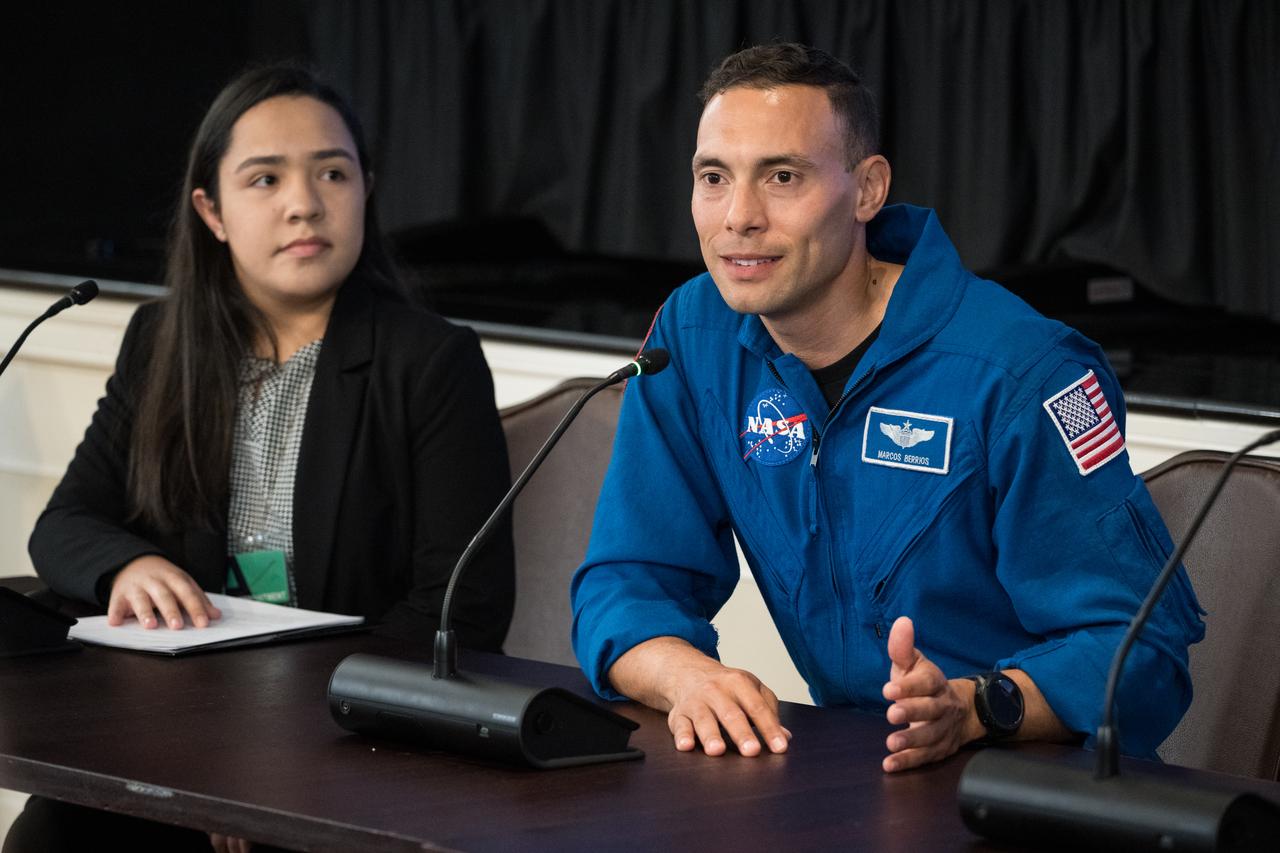
Marcos Berrios, NASA Astronaut, speaks at a White House Hispanic Heritage month event titled “Soaring Together: Inspiring the Next Generation of Space Leaders” at the Eisenhower Executive Office Building, Monday, Sept. 30, 2024 in Washington. Photo Credit: (NASA/Aubrey Gemignani)
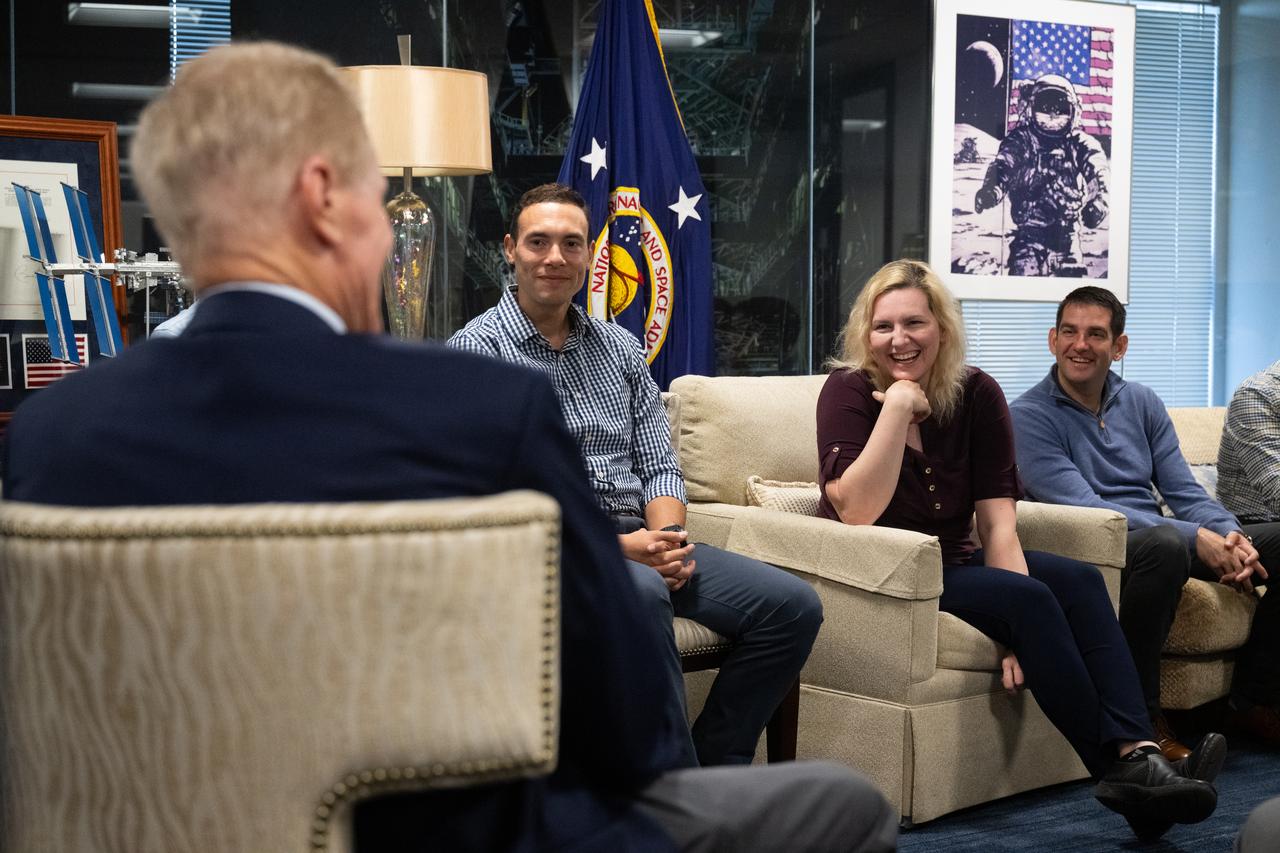
NASA astronaut candidates Marcos Berríos, left, Deniz Burnham, center, and Jack Hathaway, right, are seen during a meeting with NASA Administrator Bill Nelson, NASA Deputy Administrator Pam Melroy, and Bob Cabana, NASA associate administrator, Wednesday, Oct. 18, 2023, at the Mary W. Jackson NASA Headquarters building in Washington. Upon completion of two years of training they could be assigned to missions that involve performing research aboard the International Space Station, launching from American soil on spacecraft built by commercial companies, as well as deep space missions to destinations including the Moon on NASA’s Orion spacecraft and Space Launch System rocket. Photo Credit: (NASA/Joel Kowsky)
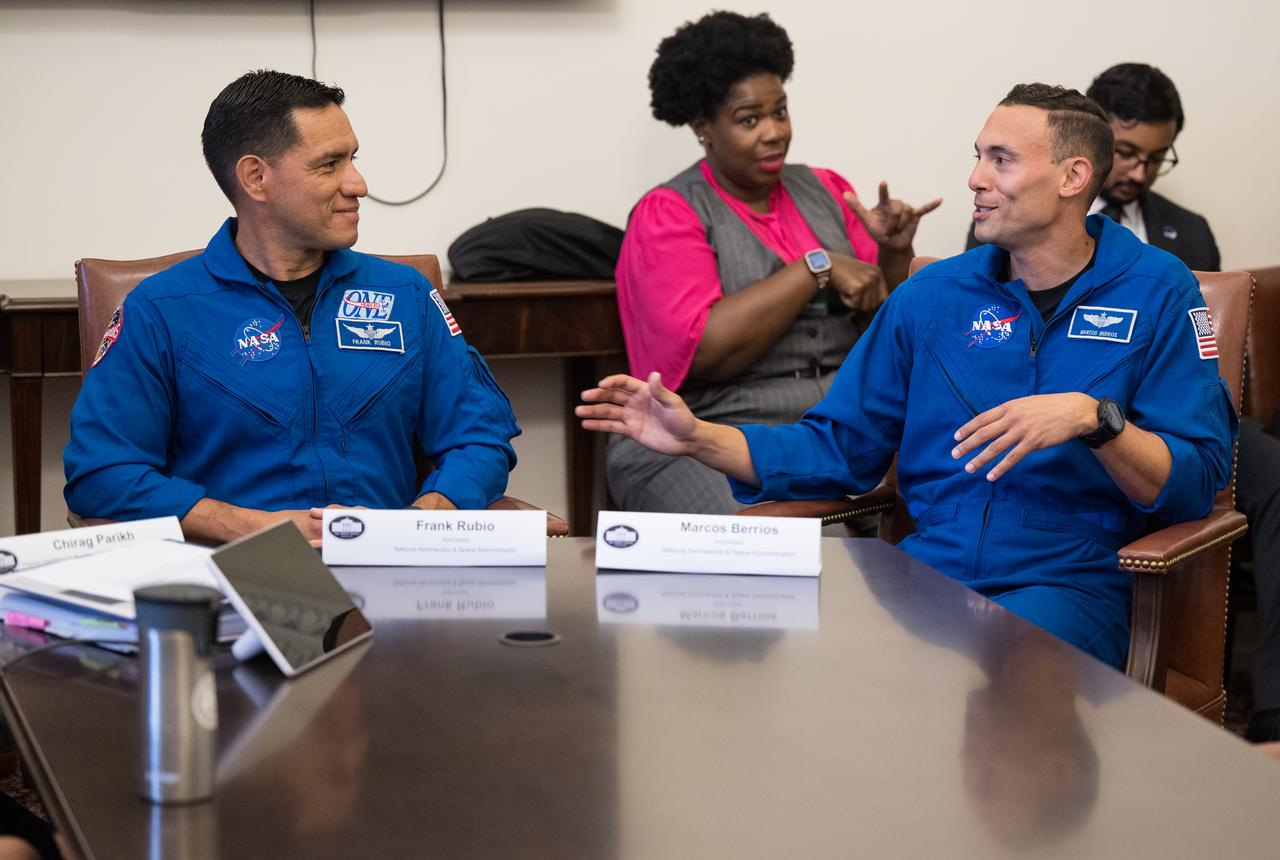
NASA Astronauts Frank Rubio, left, and Marcos Berrios, speak at a staff engagement event that took place during a White House Hispanic Heritage month event titled “Soaring Together: Inspiring the Next Generation of Space Leaders” at the Eisenhower Executive Office Building, Monday, Sept. 30, 2024 in Washington. Photo Credit: (NASA/Aubrey Gemignani)
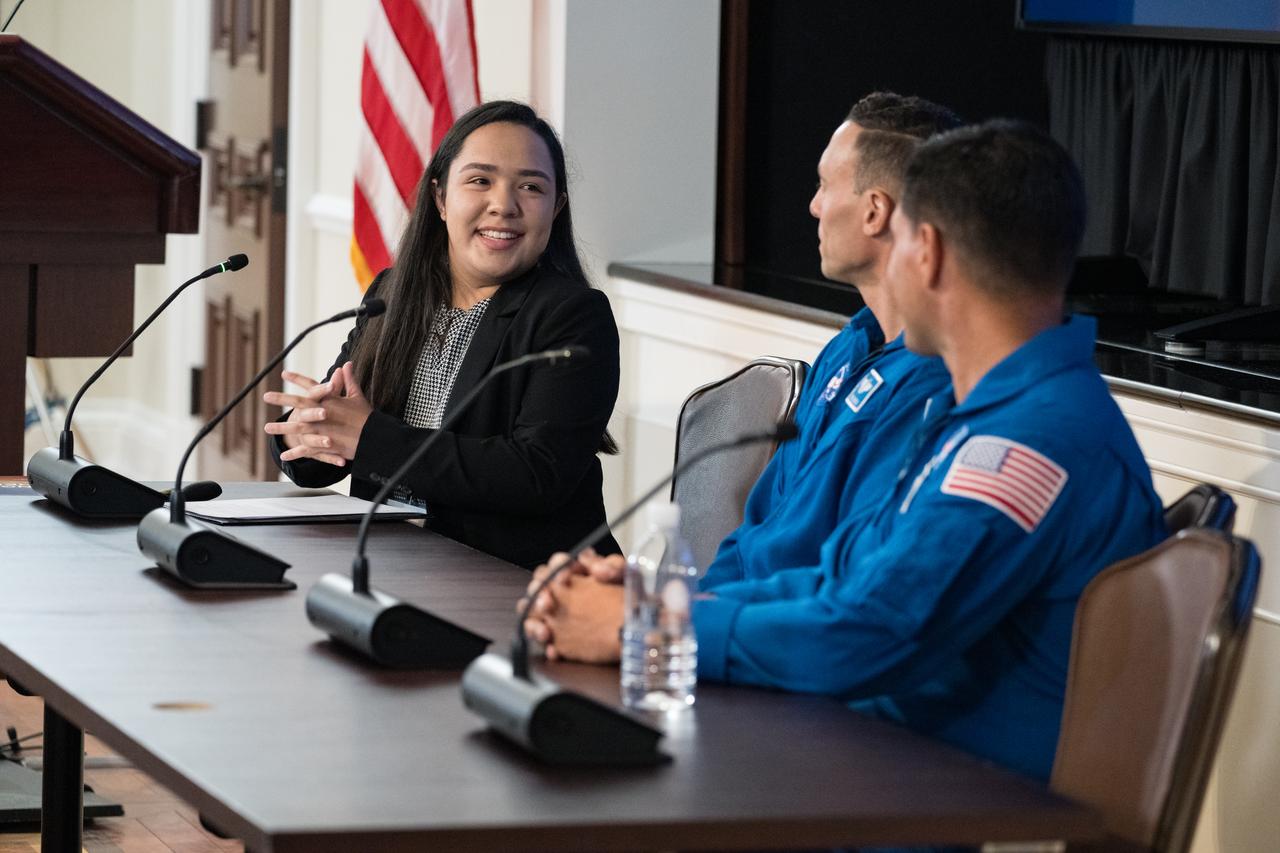
Wilmar Galvez Alfonso, Aerospace Engineering Student, Embry-Riddle Aeronautical University moderates a discussion with NASA astronauts Frank Rubio and Marcos Berrios at a White House Hispanic Heritage month event titled “Soaring Together: Inspiring the Next Generation of Space Leaders” at the Eisenhower Executive Office Building, Monday, Sept. 30, 2024 in Washington. Photo Credit: (NASA/Aubrey Gemignani)
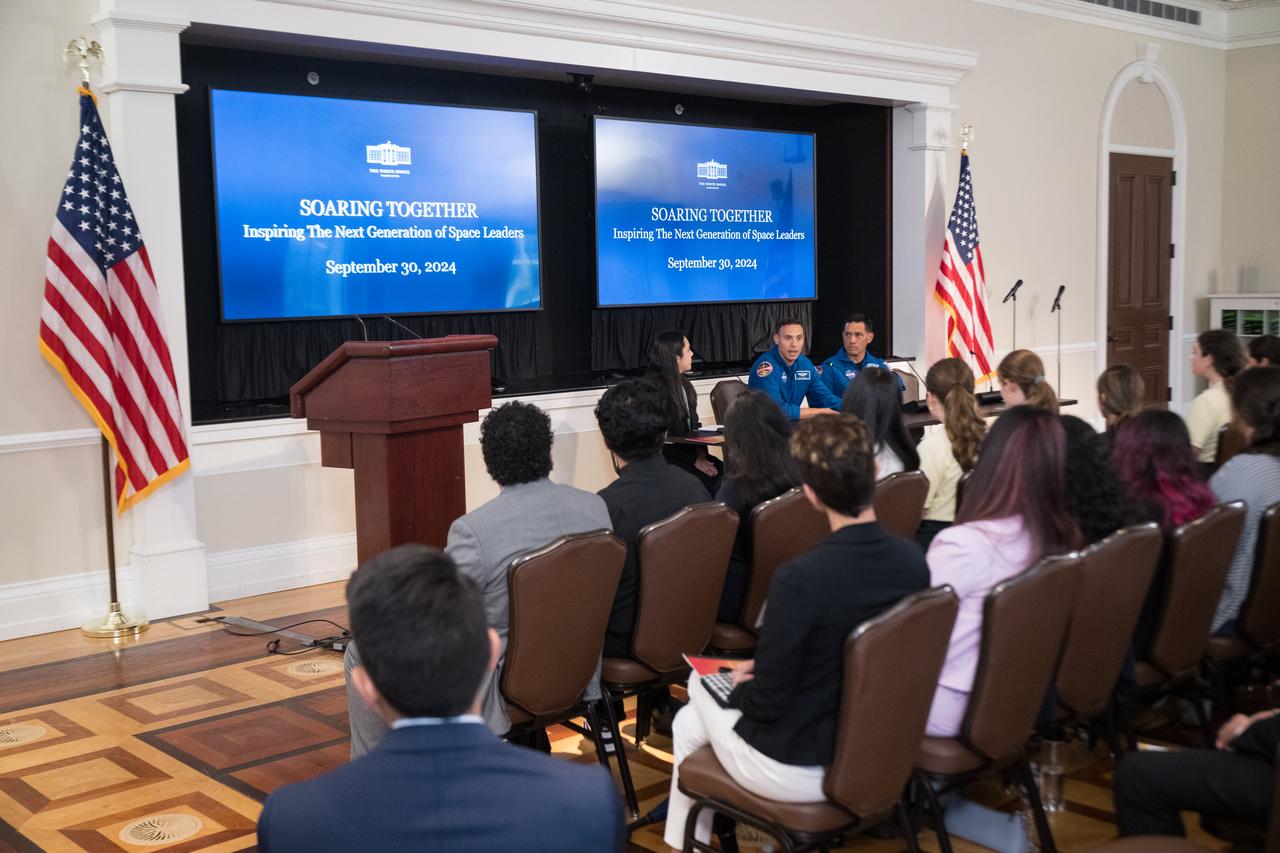
Wilmar Galvez Alfonso, Aerospace Engineering Student, Embry-Riddle Aeronautical University moderates a discussion with NASA astronauts Frank Rubio and Marcos Berrios at a White House Hispanic Heritage month event titled “Soaring Together: Inspiring the Next Generation of Space Leaders” at the Eisenhower Executive Office Building, Monday, Sept. 30, 2024 in Washington. Photo Credit: (NASA/Aubrey Gemignani)
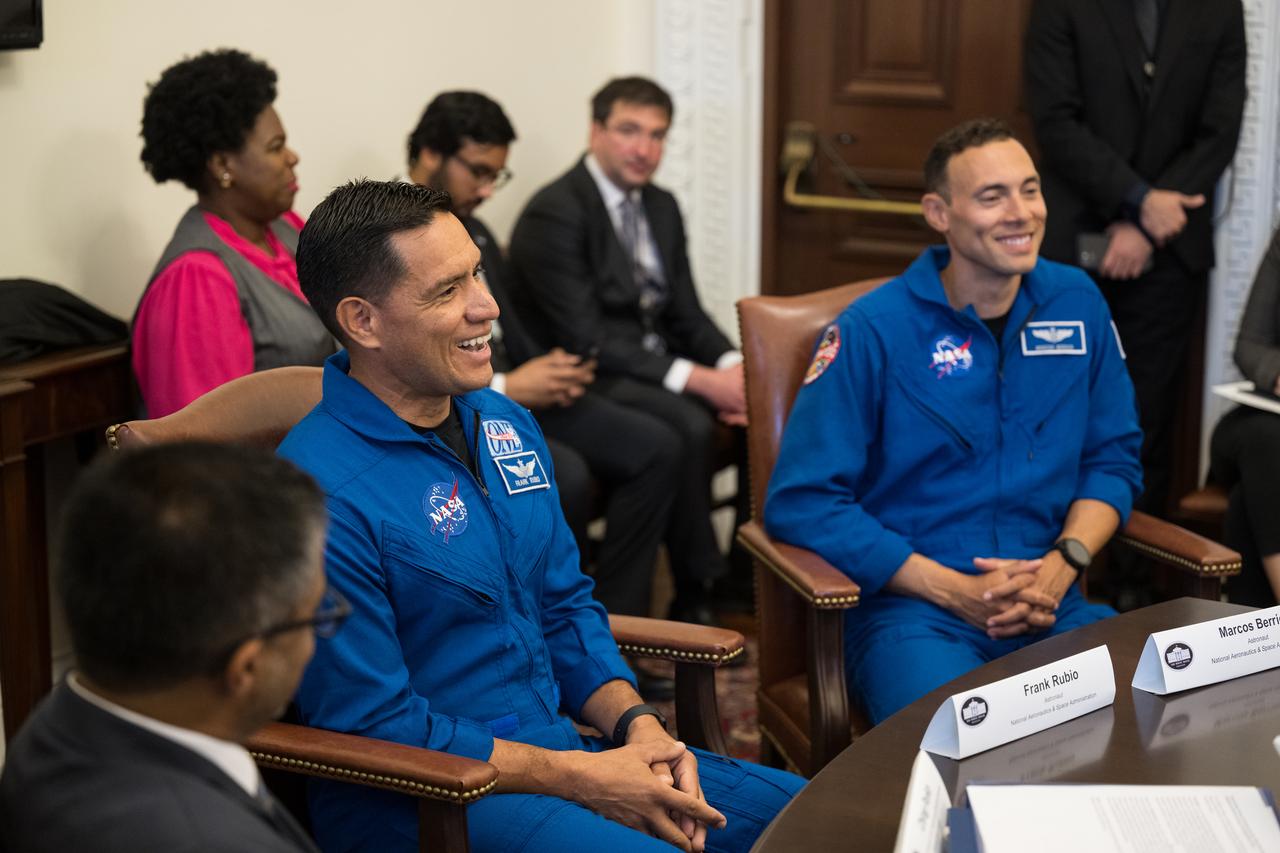
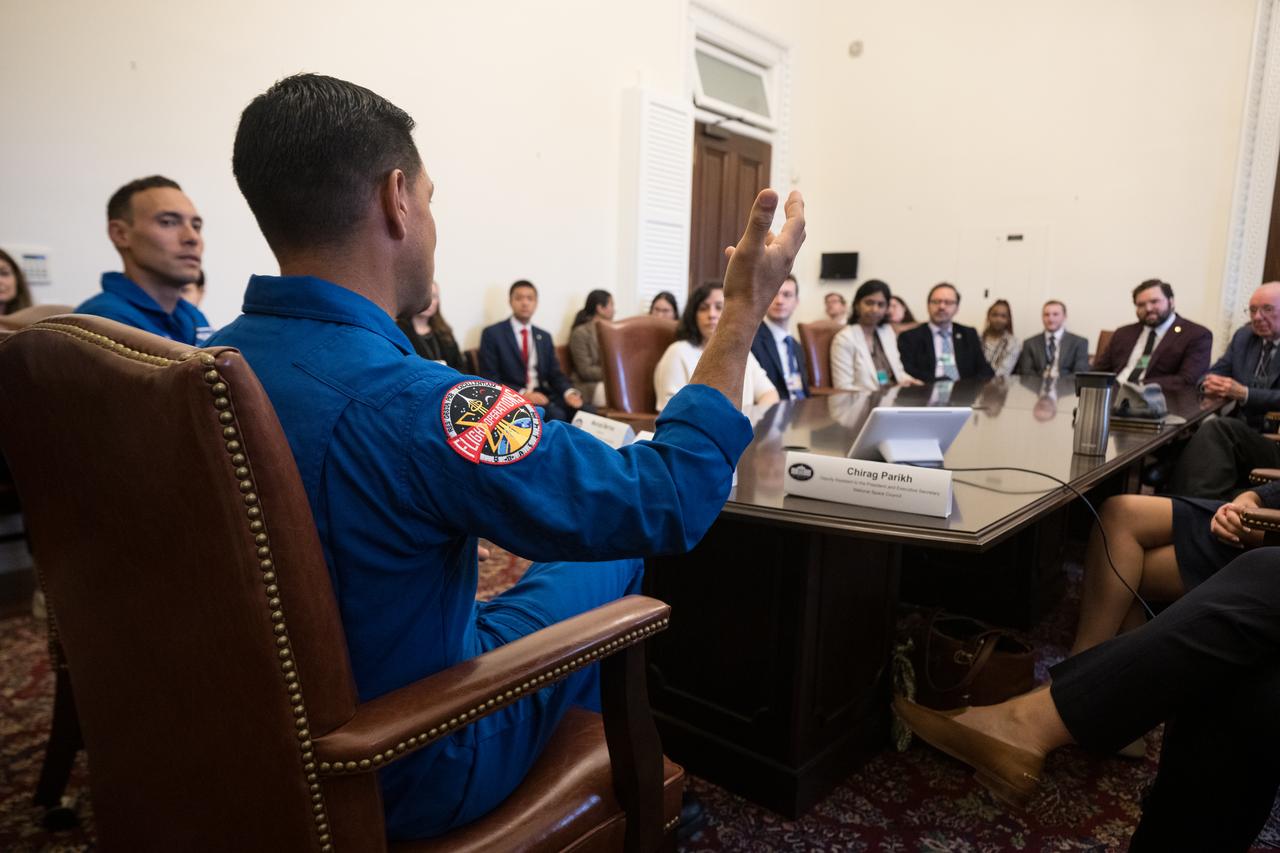
Chirag Parikh, Deputy Assistant to the President and Executive Secretary of the National Space Council, left, and NASA Astronauts Frank Rubio, center, and Marcos Berrios, speak at a staff engagement event that took place during a White House Hispanic Heritage month event titled “Soaring Together: Inspiring the Next Generation of Space Leaders” at the Eisenhower Executive Office Building, Monday, Sept. 30, 2024 in Washington. Photo Credit: (NASA/Aubrey Gemignani)
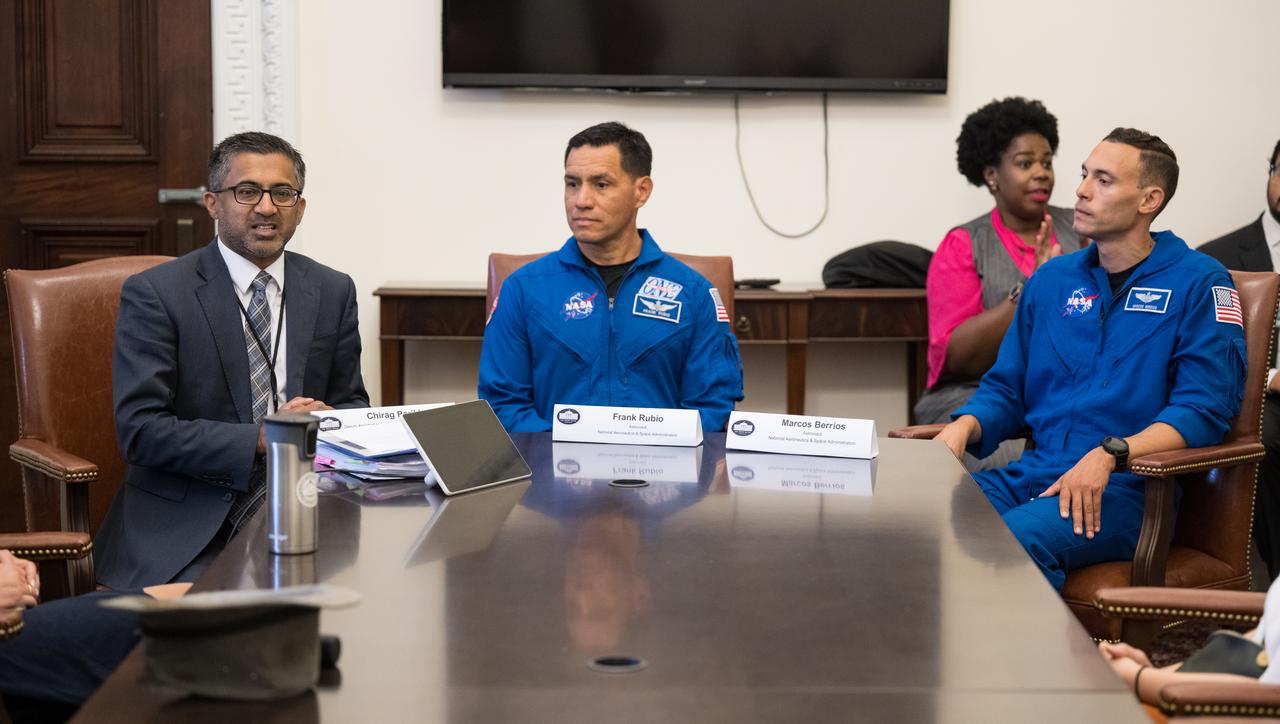
Chirag Parikh, Deputy Assistant to the President and Executive Secretary of the National Space Council, introduces NASA Astronauts Frank Rubio, center, and Marcos Berrios, at a staff engagement event that took place during a White House Hispanic Heritage month event titled “Soaring Together: Inspiring the Next Generation of Space Leaders” at the Eisenhower Executive Office Building, Monday, Sept. 30, 2024 in Washington. Photo Credit: (NASA/Aubrey Gemignani)
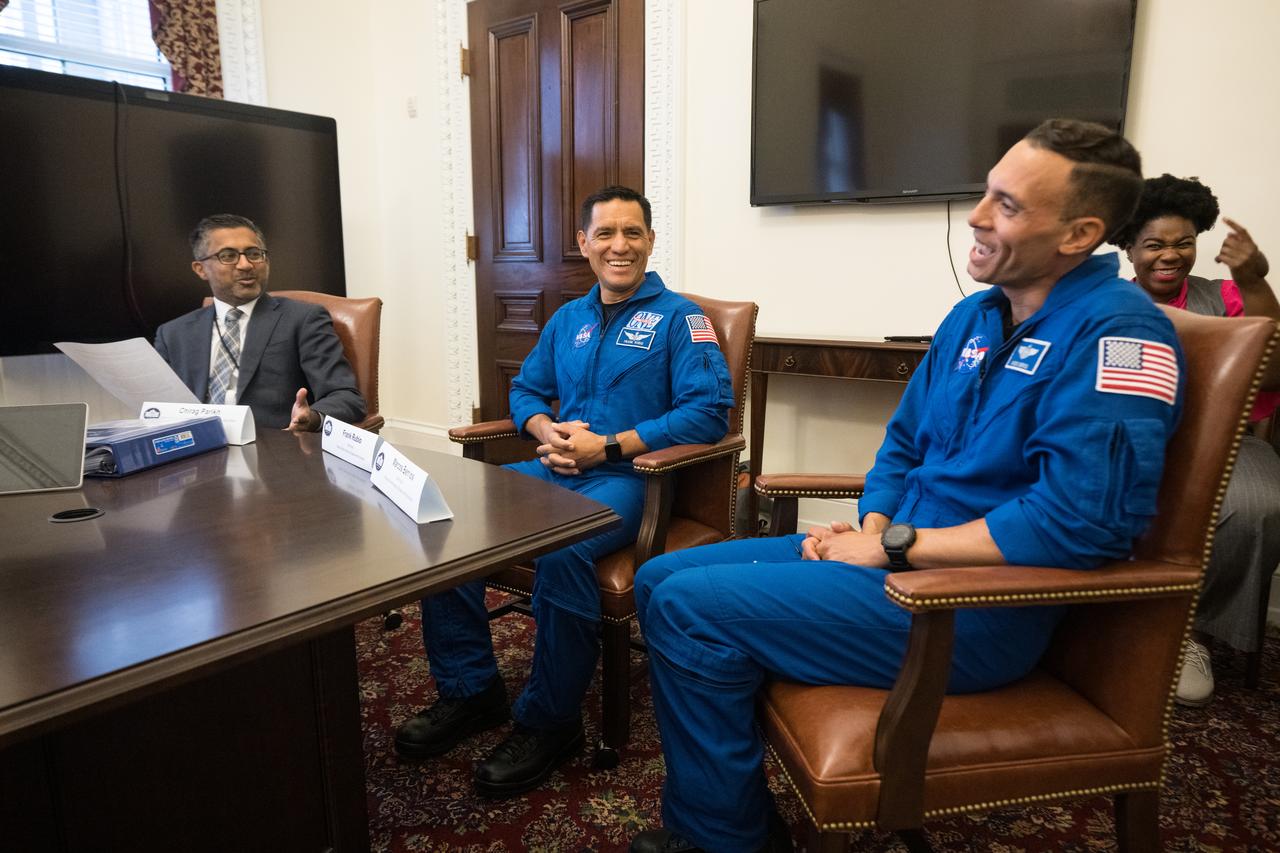
Chirag Parikh, Deputy Assistant to the President and Executive Secretary of the National Space Council, left, and NASA Astronauts Frank Rubio, center, and Marcos Berrios, speak at a staff engagement event that took place during a White House Hispanic Heritage month event titled “Soaring Together: Inspiring the Next Generation of Space Leaders” at the Eisenhower Executive Office Building, Monday, Sept. 30, 2024 in Washington. Photo Credit: (NASA/Aubrey Gemignani)
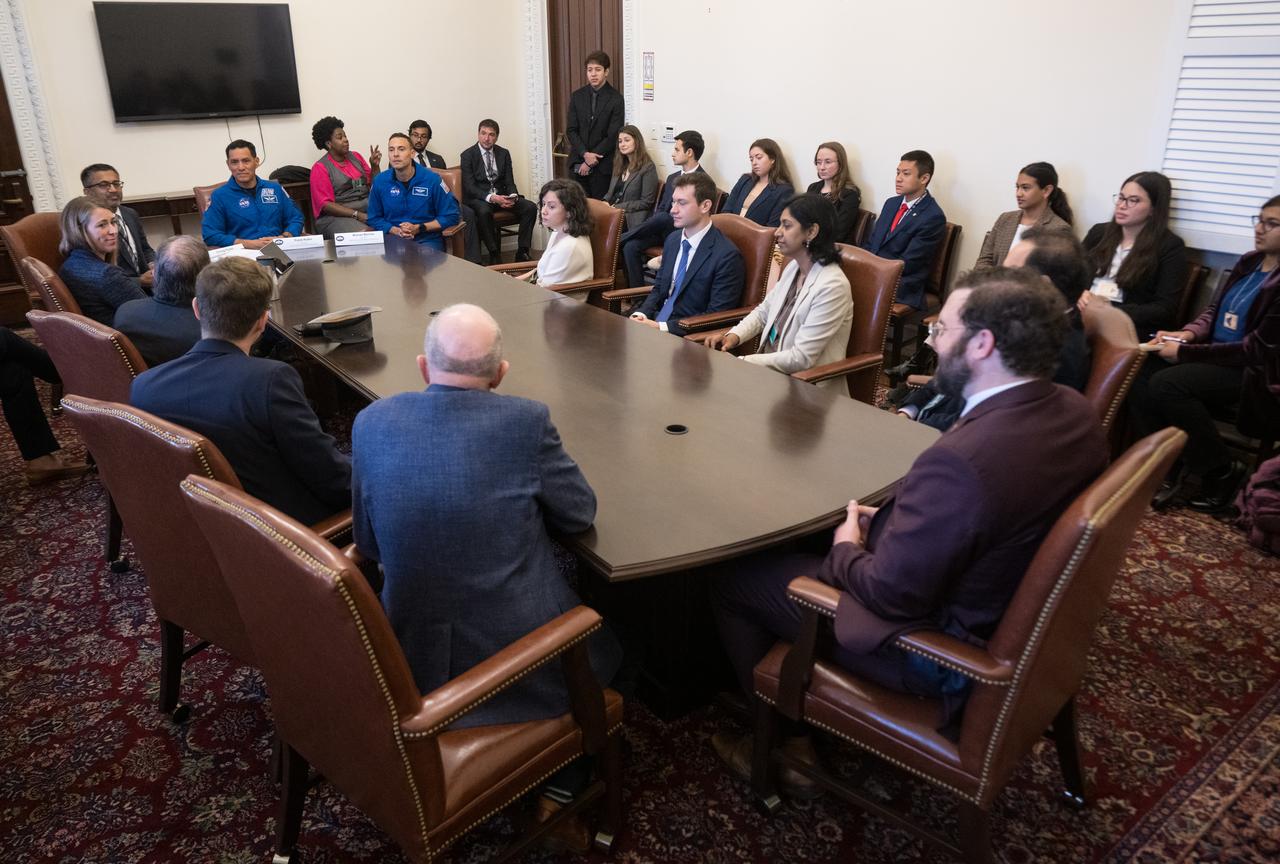
Chirag Parikh, Deputy Assistant to the President and Executive Secretary of the National Space Council, top left, and NASA Astronauts Frank Rubio, center, and Marcos Berrios, speak at a staff engagement event that took place during a White House Hispanic Heritage month event titled “Soaring Together: Inspiring the Next Generation of Space Leaders” at the Eisenhower Executive Office Building, Monday, Sept. 30, 2024 in Washington. Photo Credit: (NASA/Aubrey Gemignani)
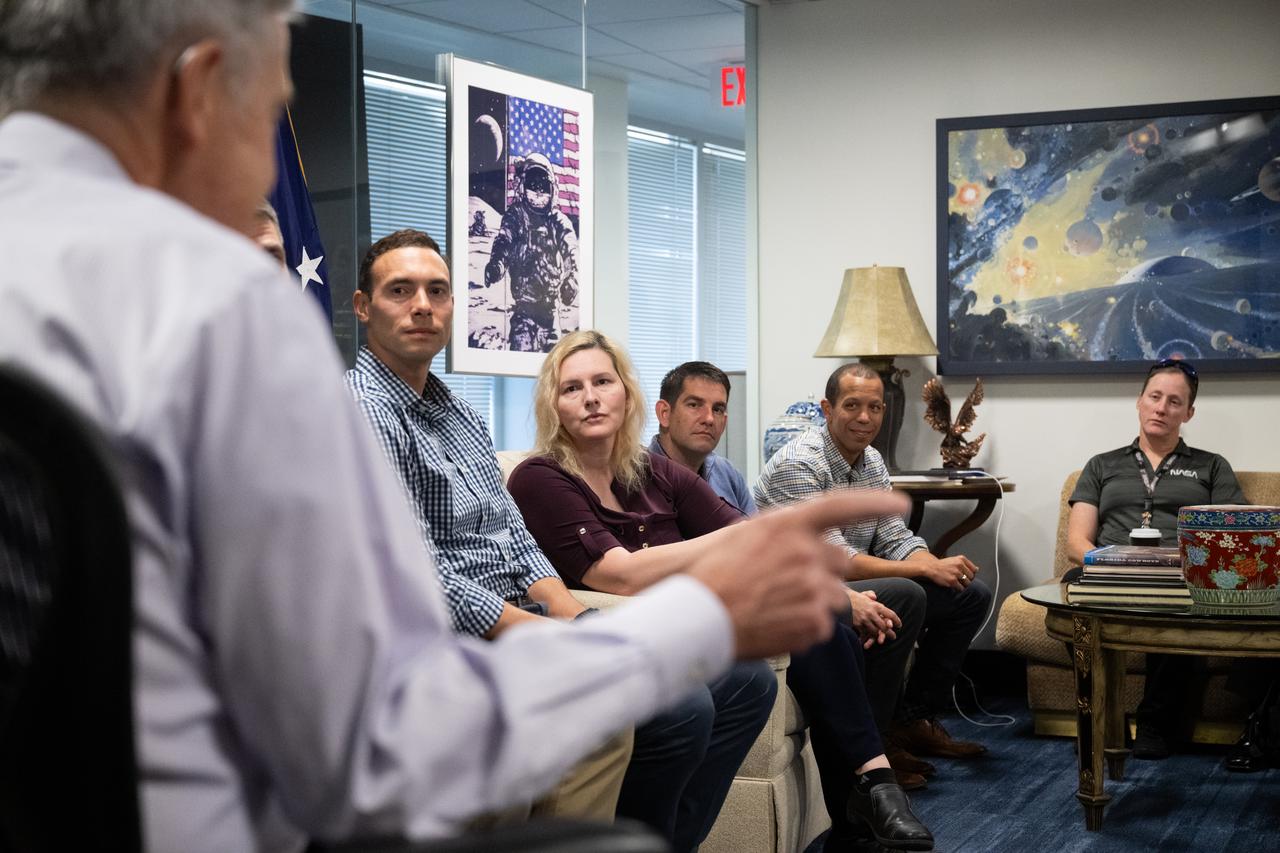
NASA astronaut candidates Marcos Berríos, left, Deniz Burnham, Jack Hathaway, Christopher Williams, and Jessica Wittner, are seen during a meeting with NASA Administrator Bill Nelson, NASA Deputy Administrator Pam Melroy, and Bob Cabana, NASA associate administrator, Wednesday, Oct. 18, 2023, at the Mary W. Jackson NASA Headquarters building in Washington. Upon completion of two years of training they could be assigned to missions that involve performing research aboard the International Space Station, launching from American soil on spacecraft built by commercial companies, as well as deep space missions to destinations including the Moon on NASA’s Orion spacecraft and Space Launch System rocket. Photo Credit: (NASA/Joel Kowsky)
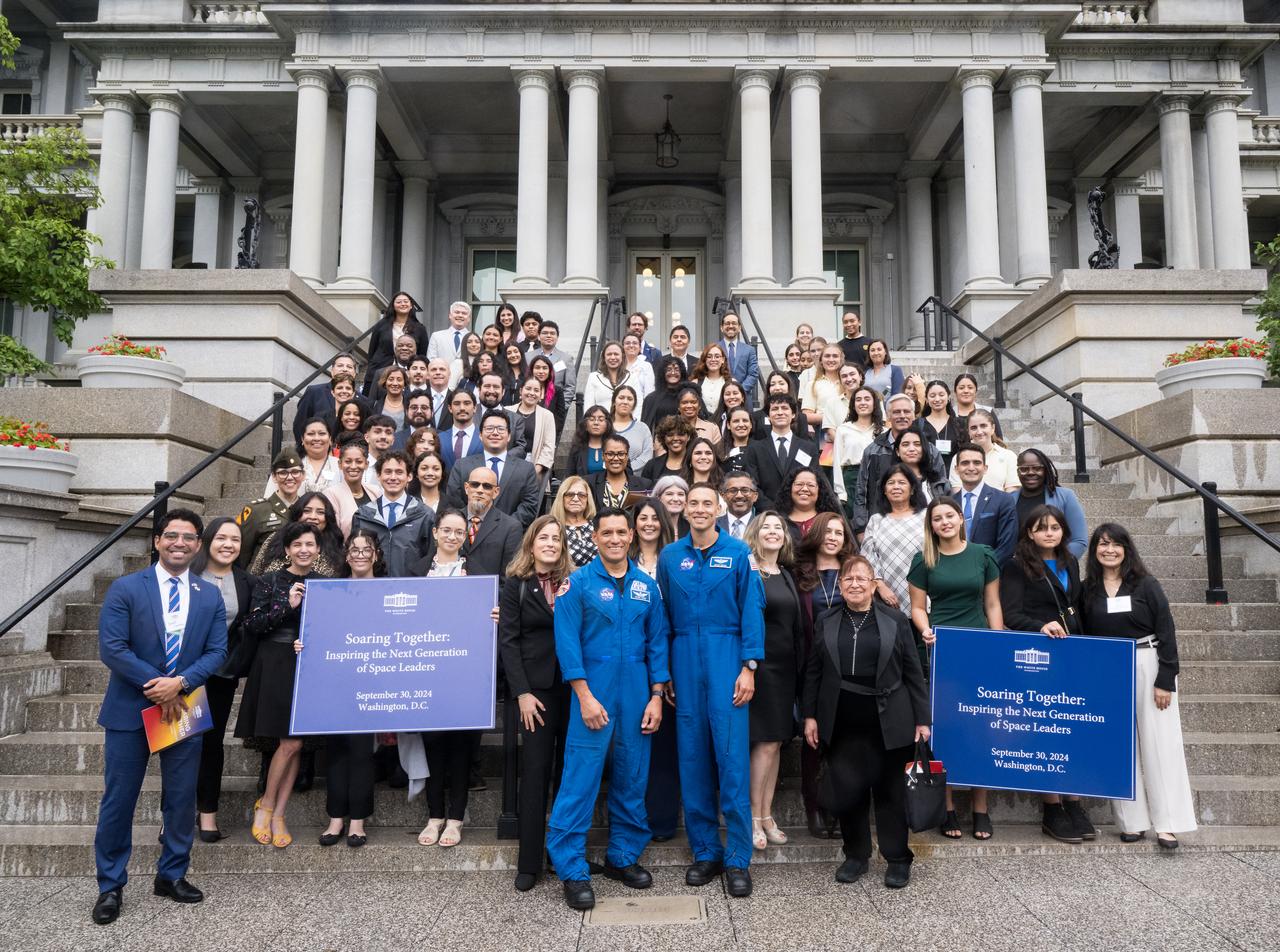
NASA astronauts Frank Rubio, center left, and Marcos Berrios, center right, pose for a photo on the Navy Steps of the Eisenhower Executive Office Building with attendees, panelists, and speakers of the White House Hispanic Heritage month event titled “Soaring Together: Inspiring the Next Generation of Space Leaders” at the Eisenhower Executive Office Building, Monday, Sept. 30, 2024 in Washington. Photo Credit: (NASA/Aubrey Gemignani)
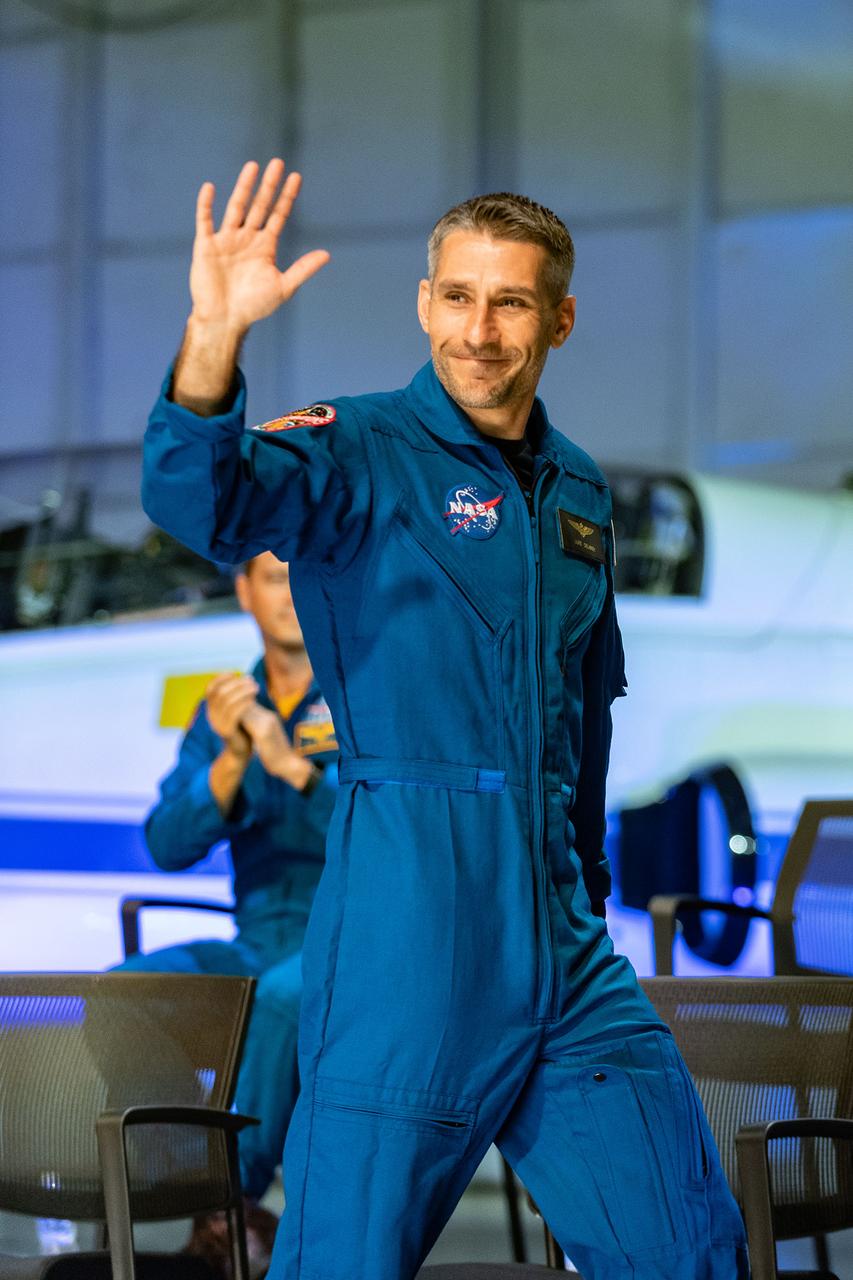
Photo Date: 2021-12-06 Subject: NASA announced its 2021 astronaut candidate class on Dec. 6, 2021. The 10 candidates, pictured here in an event at Ellington Field near NASA’s Johnson Space Center in Houston are Nichole Ayers, Christopher Williams, Luke Delaney, Jessica Wittner, Anil Menon, Marcos Berríos, Jack Hathaway, Christina Birch, Deniz Burnham, and Andre Douglas. NASA’s new astronaut candidates will begin about two years of training in January 2022, after which they could be assigned to missions performing research on the International Space Station, launching from American soil on spacecraft built by commercial companies, and launching on Artemis missions to the Moon on NASA’s new Orion spacecraft and Space Launch System rocket. Location: Ellington Hangar 135 Photographer: James Blair
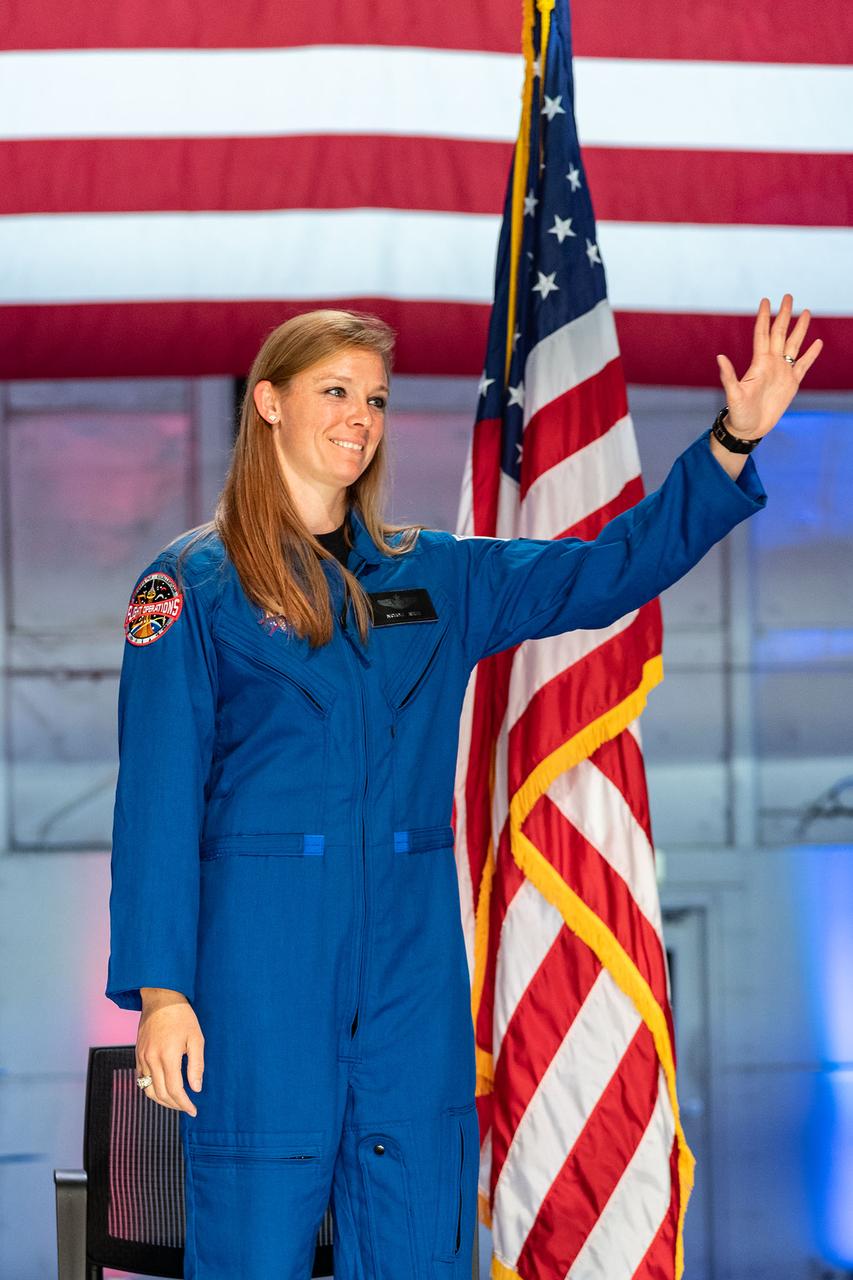
Photo Date: 2021-12-06 Subject: NASA announced its 2021 astronaut candidate class on Dec. 6, 2021. The 10 candidates, pictured here in an event at Ellington Field near NASA’s Johnson Space Center in Houston are Nichole Ayers, Christopher Williams, Luke Delaney, Jessica Wittner, Anil Menon, Marcos Berríos, Jack Hathaway, Christina Birch, Deniz Burnham, and Andre Douglas. NASA’s new astronaut candidates will begin about two years of training in January 2022, after which they could be assigned to missions performing research on the International Space Station, launching from American soil on spacecraft built by commercial companies, and launching on Artemis missions to the Moon on NASA’s new Orion spacecraft and Space Launch System rocket. Location: Ellington Hangar 135 Photographer: Robert Markowitz
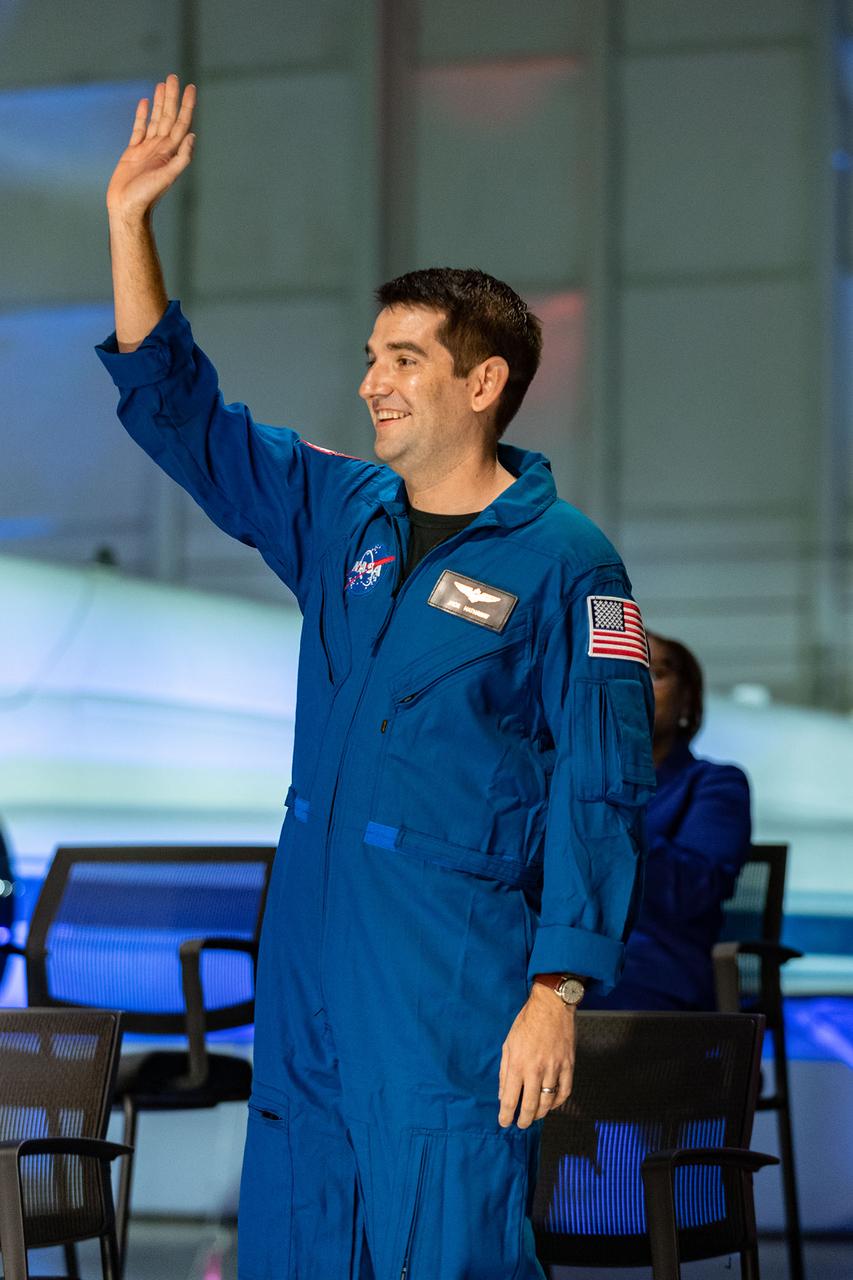
Photo Date: 2021-12-06 Subject: NASA announced its 2021 astronaut candidate class on Dec. 6, 2021. The 10 candidates, pictured here in an event at Ellington Field near NASA’s Johnson Space Center in Houston are Nichole Ayers, Christopher Williams, Luke Delaney, Jessica Wittner, Anil Menon, Marcos Berríos, Jack Hathaway, Christina Birch, Deniz Burnham, and Andre Douglas. NASA’s new astronaut candidates will begin about two years of training in January 2022, after which they could be assigned to missions performing research on the International Space Station, launching from American soil on spacecraft built by commercial companies, and launching on Artemis missions to the Moon on NASA’s new Orion spacecraft and Space Launch System rocket. Location: Ellington Hangar 135 Photographer: James Blair
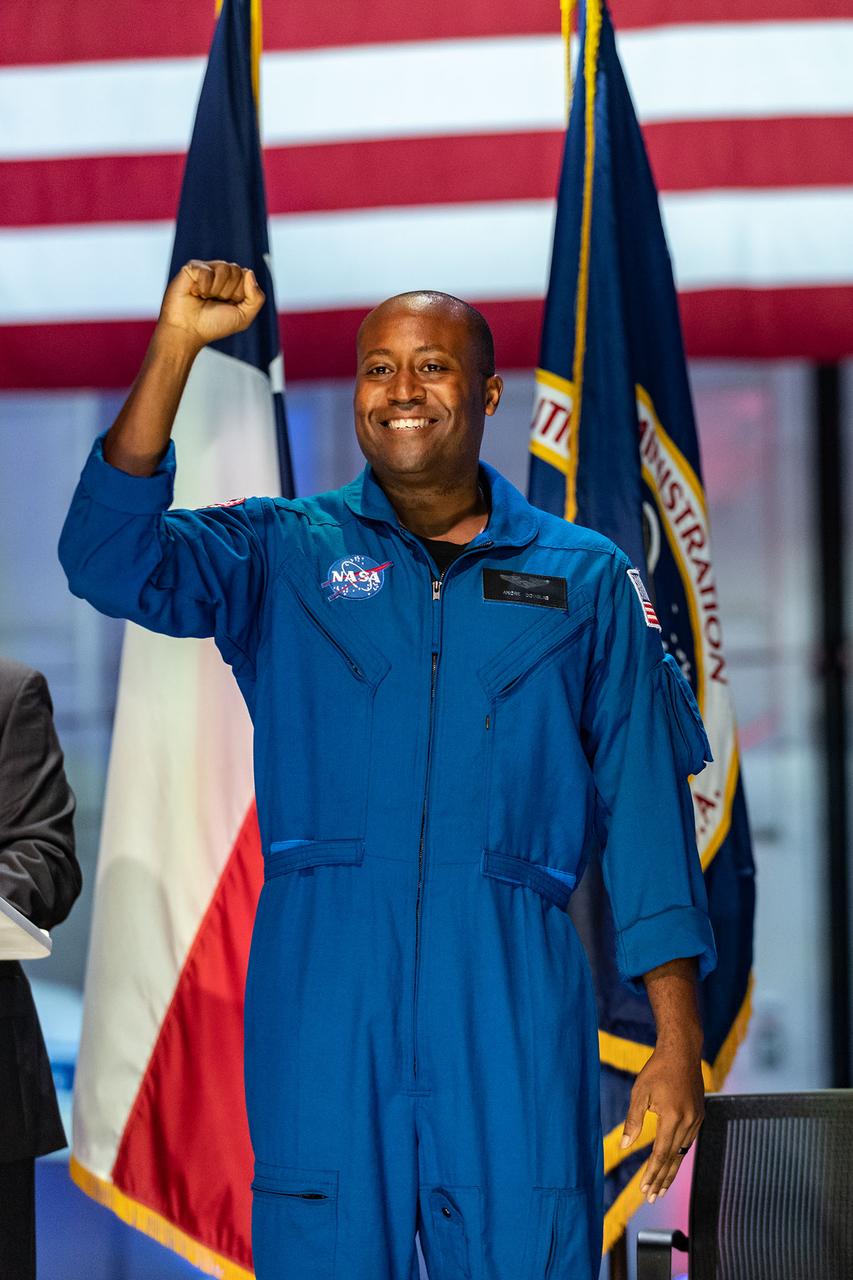
Photo Date: 2021-12-06 Subject: NASA announced its 2021 astronaut candidate class on Dec. 6, 2021. The 10 candidates, pictured here in an event at Ellington Field near NASA’s Johnson Space Center in Houston are Nichole Ayers, Christopher Williams, Luke Delaney, Jessica Wittner, Anil Menon, Marcos Berríos, Jack Hathaway, Christina Birch, Deniz Burnham, and Andre Douglas. NASA’s new astronaut candidates will begin about two years of training in January 2022, after which they could be assigned to missions performing research on the International Space Station, launching from American soil on spacecraft built by commercial companies, and launching on Artemis missions to the Moon on NASA’s new Orion spacecraft and Space Launch System rocket. Location: Ellington Hangar 135 Photographer: James Blair
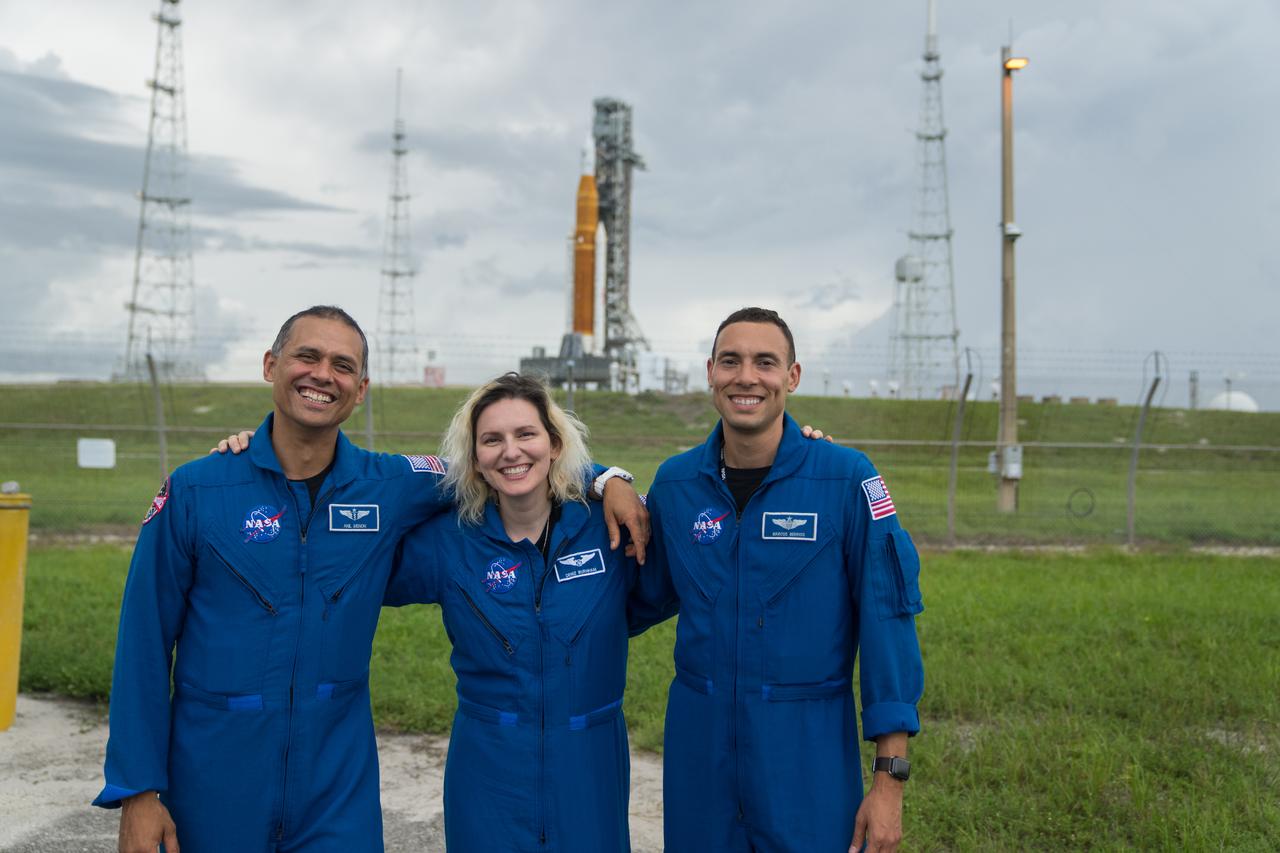
From left to right, NASA astronaut candidates Anil Menon, Deniz Burnham, and Marcos Berrios pose for a photograph in front of NASA’s Artemis I Space Launch System and Orion spacecraft atop the mobile launcher on the pad at Launch Complex 39B at the agency’s Kennedy Space Center in Florida on Sept. 2, 2022. The first in a series of increasingly complex missions, Artemis I will provide a foundation for human deep space exploration and demonstrate our commitment and capability to extend human presence to the Moon and beyond. The primary goal of Artemis I is to thoroughly test the integrated systems before crewed missions by operating the spacecraft in a deep space environment, testing Orion’s heat shield, and recovering the crew module after reentry, descent, and splashdown. In later missions, NASA will land the first woman and the first person of color on the surface of the Moon, paving the way for a long-term lunar presence and serving as a steppingstone on the way to Mars.
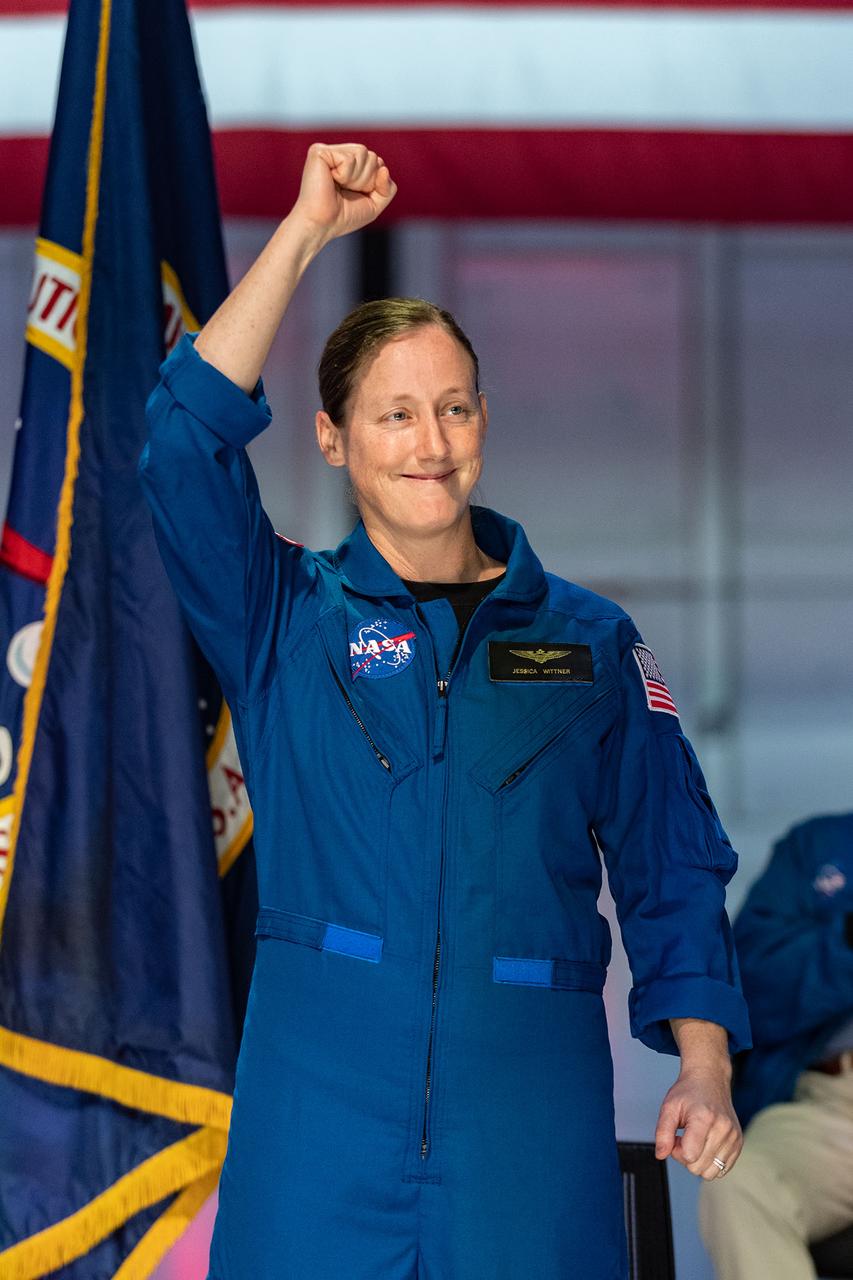
Photo Date: 2021-12-06 Subject: NASA announced its 2021 astronaut candidate class on Dec. 6, 2021. The 10 candidates, pictured here in an event at Ellington Field near NASA’s Johnson Space Center in Houston are Nichole Ayers, Christopher Williams, Luke Delaney, Jessica Wittner, Anil Menon, Marcos Berríos, Jack Hathaway, Christina Birch, Deniz Burnham, and Andre Douglas. NASA’s new astronaut candidates will begin about two years of training in January 2022, after which they could be assigned to missions performing research on the International Space Station, launching from American soil on spacecraft built by commercial companies, and launching on Artemis missions to the Moon on NASA’s new Orion spacecraft and Space Launch System rocket. Location: Ellington Hangar 135 Photographer: James Blair
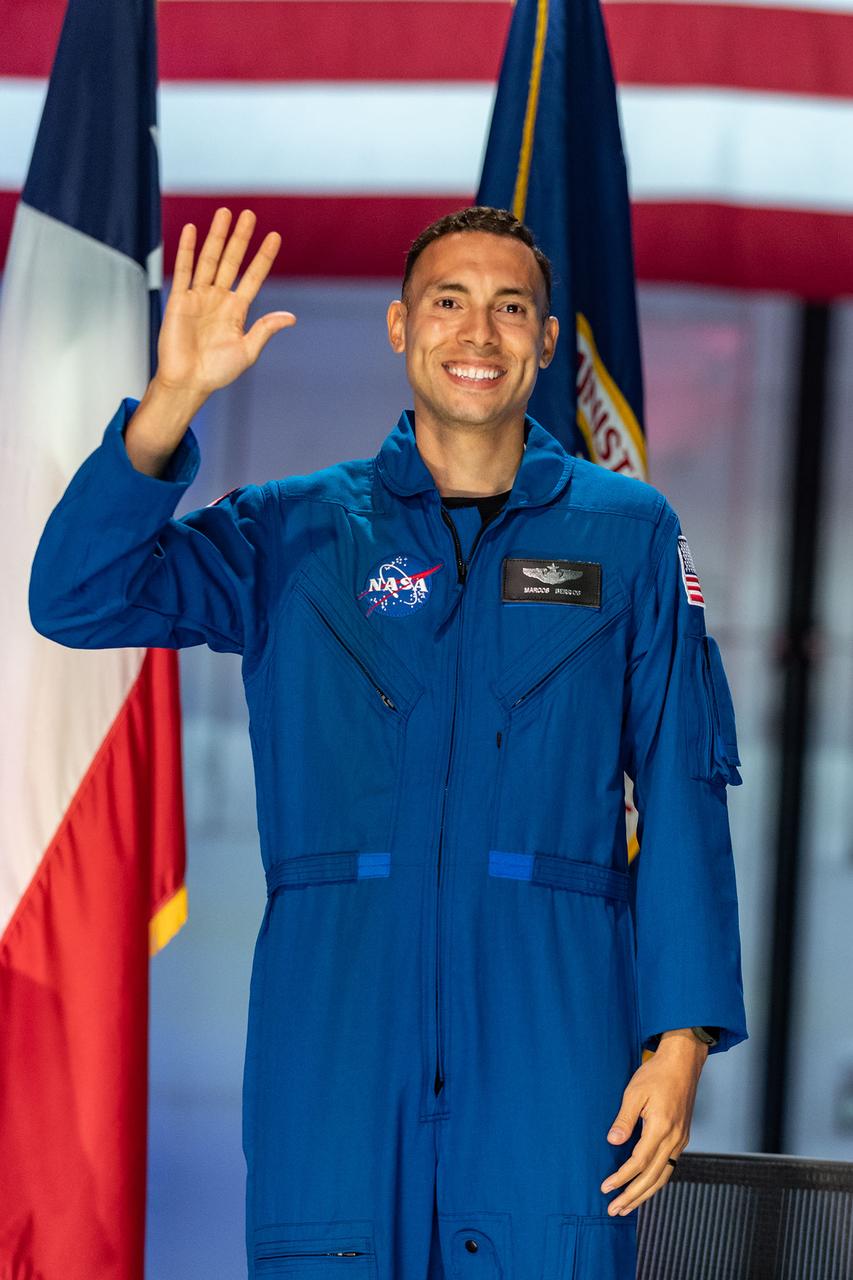
Photo Date: 2021-12-06 Subject: NASA announced its 2021 astronaut candidate class on Dec. 6, 2021. The 10 candidates, pictured here in an event at Ellington Field near NASA’s Johnson Space Center in Houston are Nichole Ayers, Christopher Williams, Luke Delaney, Jessica Wittner, Anil Menon, Marcos Berríos, Jack Hathaway, Christina Birch, Deniz Burnham, and Andre Douglas. NASA’s new astronaut candidates will begin about two years of training in January 2022, after which they could be assigned to missions performing research on the International Space Station, launching from American soil on spacecraft built by commercial companies, and launching on Artemis missions to the Moon on NASA’s new Orion spacecraft and Space Launch System rocket. Location: Ellington Hangar 135 Photographer: James Blair
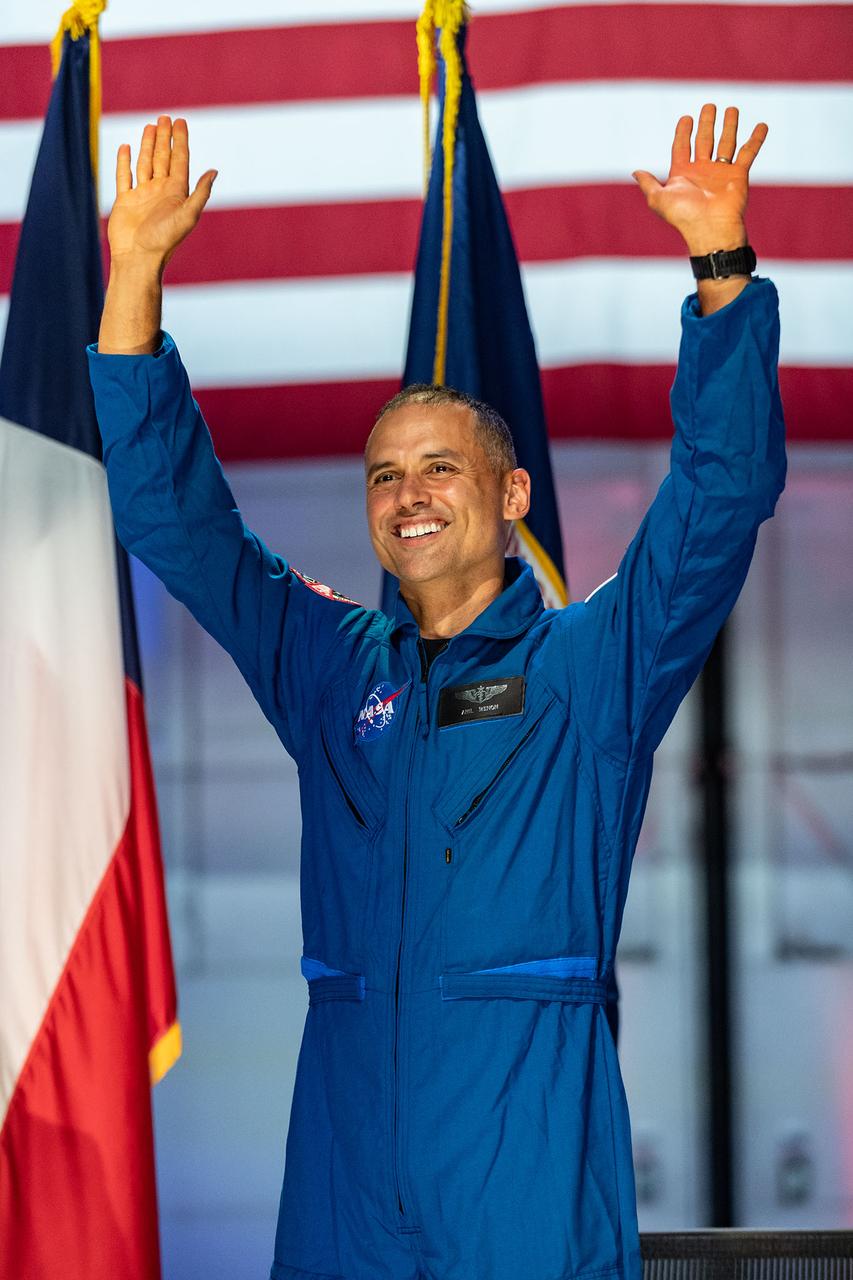
Photo Date: 2021-12-06 Subject: NASA announced its 2021 astronaut candidate class on Dec. 6, 2021. The 10 candidates, pictured here in an event at Ellington Field near NASA’s Johnson Space Center in Houston are Nichole Ayers, Christopher Williams, Luke Delaney, Jessica Wittner, Anil Menon, Marcos Berríos, Jack Hathaway, Christina Birch, Deniz Burnham, and Andre Douglas. NASA’s new astronaut candidates will begin about two years of training in January 2022, after which they could be assigned to missions performing research on the International Space Station, launching from American soil on spacecraft built by commercial companies, and launching on Artemis missions to the Moon on NASA’s new Orion spacecraft and Space Launch System rocket. Location: Ellington Hangar 135 Photographer: James Blair
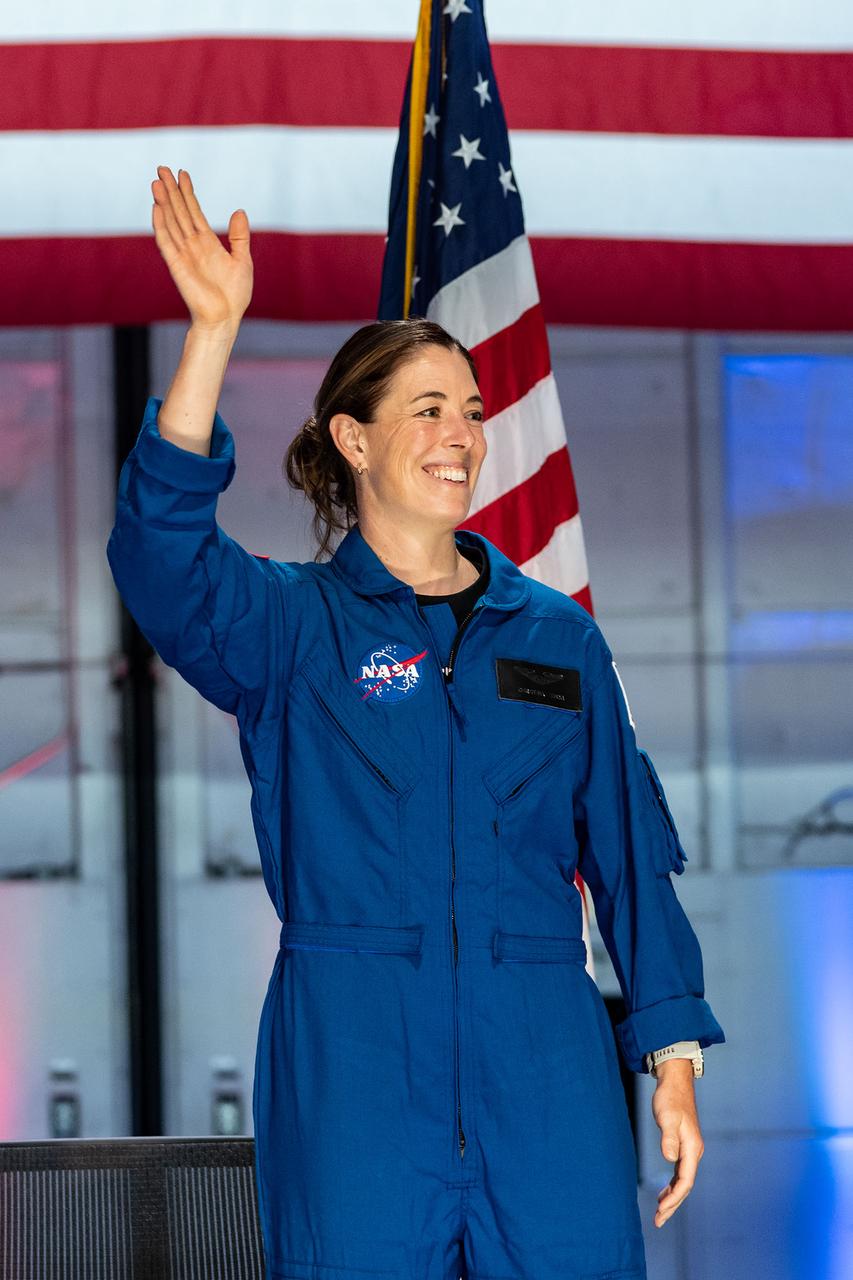
Photo Date: 2021-12-06 Subject: NASA announced its 2021 astronaut candidate class on Dec. 6, 2021. The 10 candidates, pictured here in an event at Ellington Field near NASA’s Johnson Space Center in Houston are Nichole Ayers, Christopher Williams, Luke Delaney, Jessica Wittner, Anil Menon, Marcos Berríos, Jack Hathaway, Christina Birch, Deniz Burnham, and Andre Douglas. NASA’s new astronaut candidates will begin about two years of training in January 2022, after which they could be assigned to missions performing research on the International Space Station, launching from American soil on spacecraft built by commercial companies, and launching on Artemis missions to the Moon on NASA’s new Orion spacecraft and Space Launch System rocket. Location: Ellington Hangar 135 Photographer: Robert Markowitz

Photo Date: 2021-12-06 Subject: NASA announced its 2021 astronaut candidate class on Dec. 6, 2021. The 10 candidates, pictured here in an event at Ellington Field near NASA’s Johnson Space Center in Houston are Nichole Ayers, Christopher Williams, Luke Delaney, Jessica Wittner, Anil Menon, Marcos Berríos, Jack Hathaway, Christina Birch, Deniz Burnham, and Andre Douglas. NASA’s new astronaut candidates will begin about two years of training in January 2022, after which they could be assigned to missions performing research on the International Space Station, launching from American soil on spacecraft built by commercial companies, and launching on Artemis missions to the Moon on NASA’s new Orion spacecraft and Space Launch System rocket. Location: Ellington Hangar 135 Photographer: James Blair
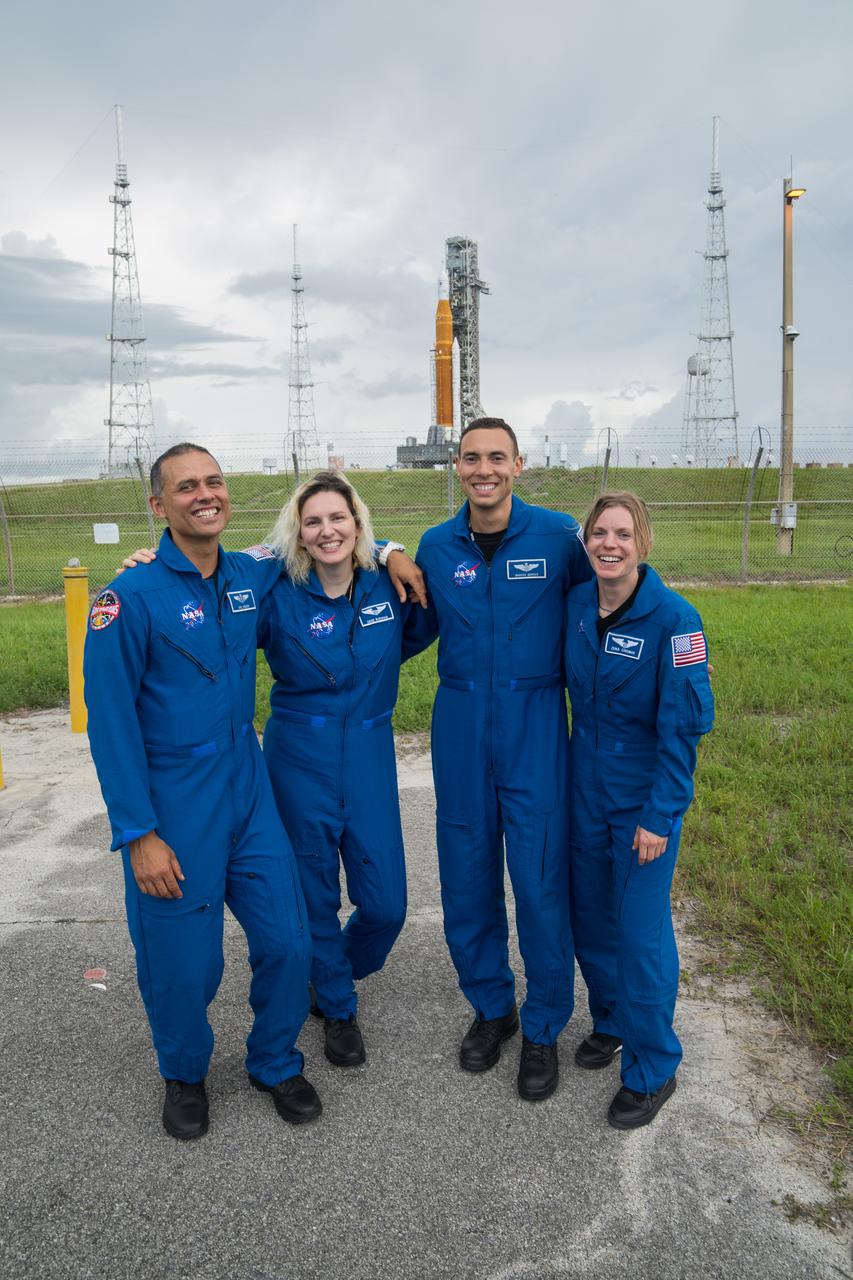
From left to right, NASA astronaut candidates Anil Menon, Deniz Burnham, and Marcos Berrios, and NASA astronaut Zena Cardman pose for a photograph in front of NASA’s Artemis I Space Launch System and Orion spacecraft atop the mobile launcher on the pad at Launch Complex 39B at the agency’s Kennedy Space Center in Florida on Sept. 2, 2022. The first in a series of increasingly complex missions, Artemis I will provide a foundation for human deep space exploration and demonstrate our commitment and capability to extend human presence to the Moon and beyond. The primary goal of Artemis I is to thoroughly test the integrated systems before crewed missions by operating the spacecraft in a deep space environment, testing Orion’s heat shield, and recovering the crew module after reentry, descent, and splashdown. In later missions, NASA will land the first woman and the first person of color on the surface of the Moon, paving the way for a long-term lunar presence and serving as a steppingstone on the way to Mars.
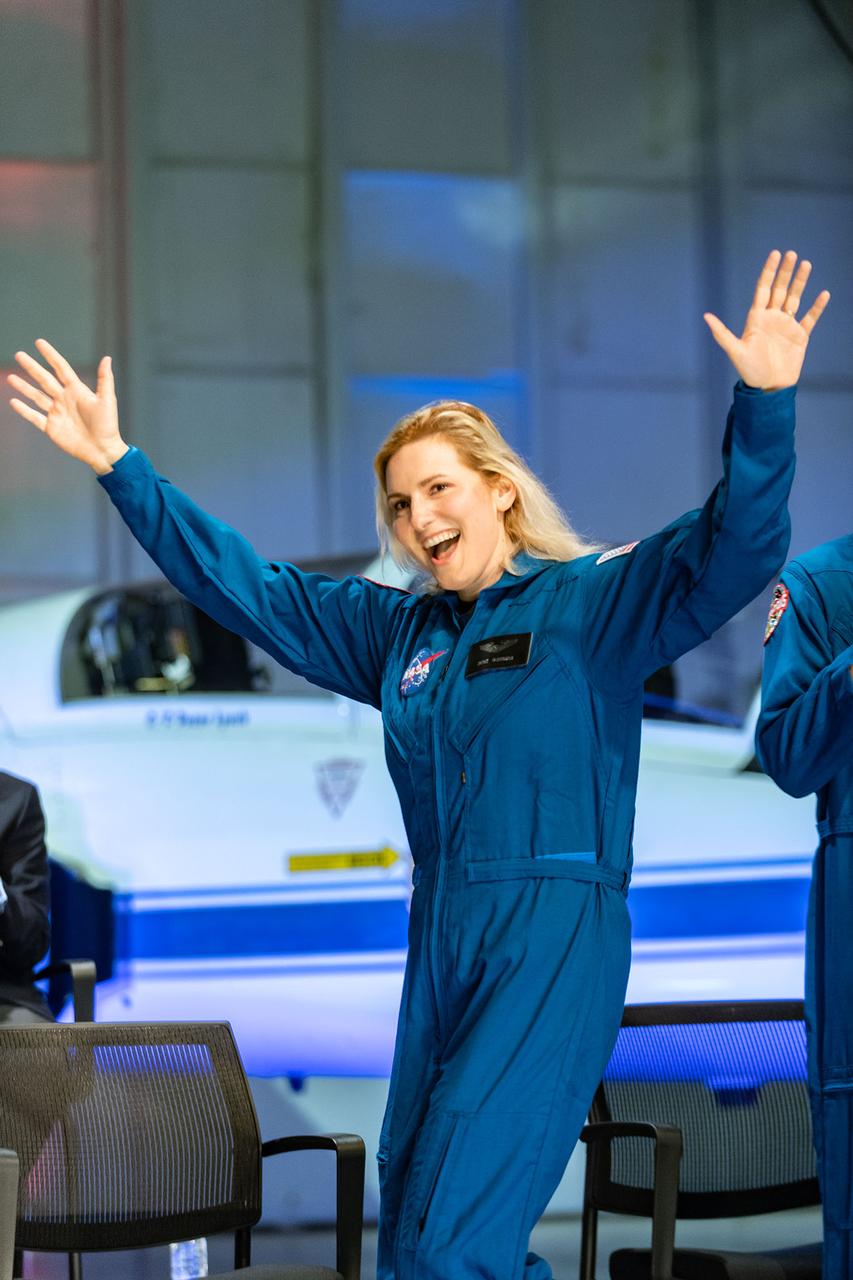
Photo Date: 2021-12-06 Subject: NASA announced its 2021 astronaut candidate class on Dec. 6, 2021. The 10 candidates, pictured here in an event at Ellington Field near NASA’s Johnson Space Center in Houston are Nichole Ayers, Christopher Williams, Luke Delaney, Jessica Wittner, Anil Menon, Marcos Berríos, Jack Hathaway, Christina Birch, Deniz Burnham, and Andre Douglas. NASA’s new astronaut candidates will begin about two years of training in January 2022, after which they could be assigned to missions performing research on the International Space Station, launching from American soil on spacecraft built by commercial companies, and launching on Artemis missions to the Moon on NASA’s new Orion spacecraft and Space Launch System rocket. Location: Ellington Hangar 135 Photographer: James Blair
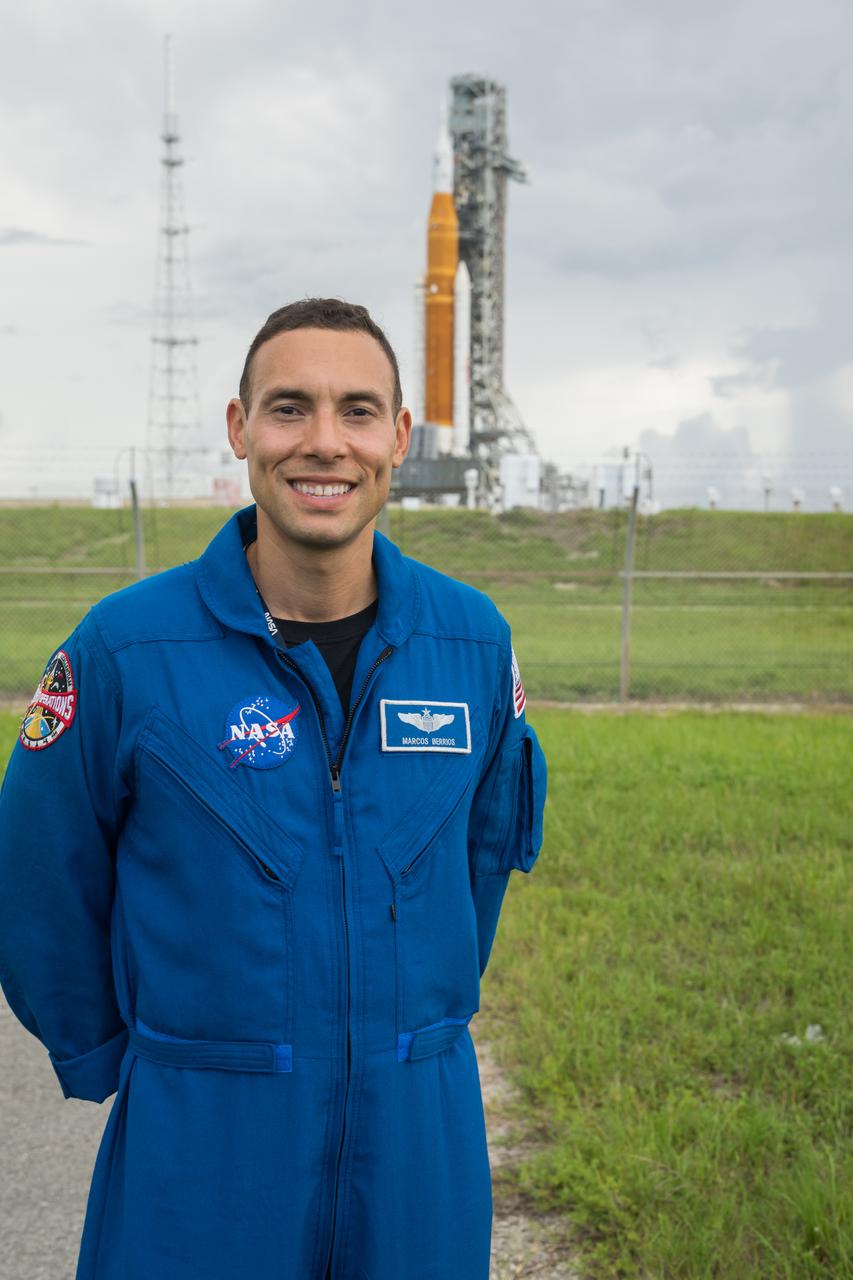
NASA astronaut candidate Marcos Berrios poses for a photograph in front of NASA’s Artemis I Space Launch System and Orion spacecraft atop the mobile launcher on the pad at Launch Complex 39B at the agency’s Kennedy Space Center in Florida on Sept. 2, 2022. The first in a series of increasingly complex missions, Artemis I will provide a foundation for human deep space exploration and demonstrate our commitment and capability to extend human presence to the Moon and beyond. The primary goal of Artemis I is to thoroughly test the integrated systems before crewed missions by operating the spacecraft in a deep space environment, testing Orion’s heat shield, and recovering the crew module after reentry, descent, and splashdown. In later missions, NASA will land the first woman and the first person of color on the surface of the Moon, paving the way for a long-term lunar presence and serving as a steppingstone on the way to Mars.
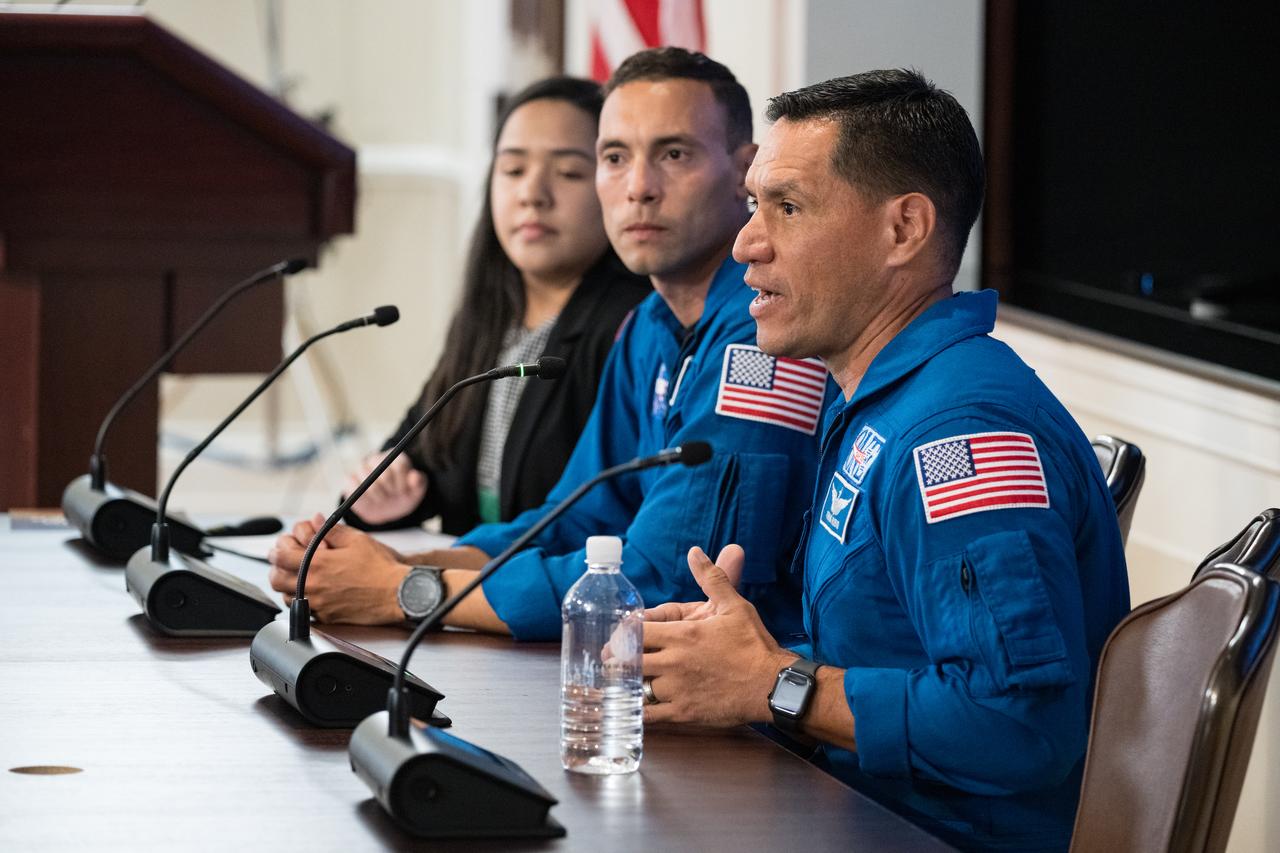
Frank Rubio, NASA Astronaut, speaks at a White House Hispanic Heritage month event titled “Soaring Together: Inspiring the Next Generation of Space Leaders” at the Eisenhower Executive Office Building, Monday, Sept. 30, 2024 in Washington. Photo Credit: (NASA/Aubrey Gemignani)
NASA Astronaut Frank Rubio answers a question at a staff engagement event that took place during a White House Hispanic Heritage month event titled “Soaring Together: Inspiring the Next Generation of Space Leaders” at the Eisenhower Executive Office Building, Monday, Sept. 30, 2024 in Washington. Photo Credit: (NASA/Aubrey Gemignani)
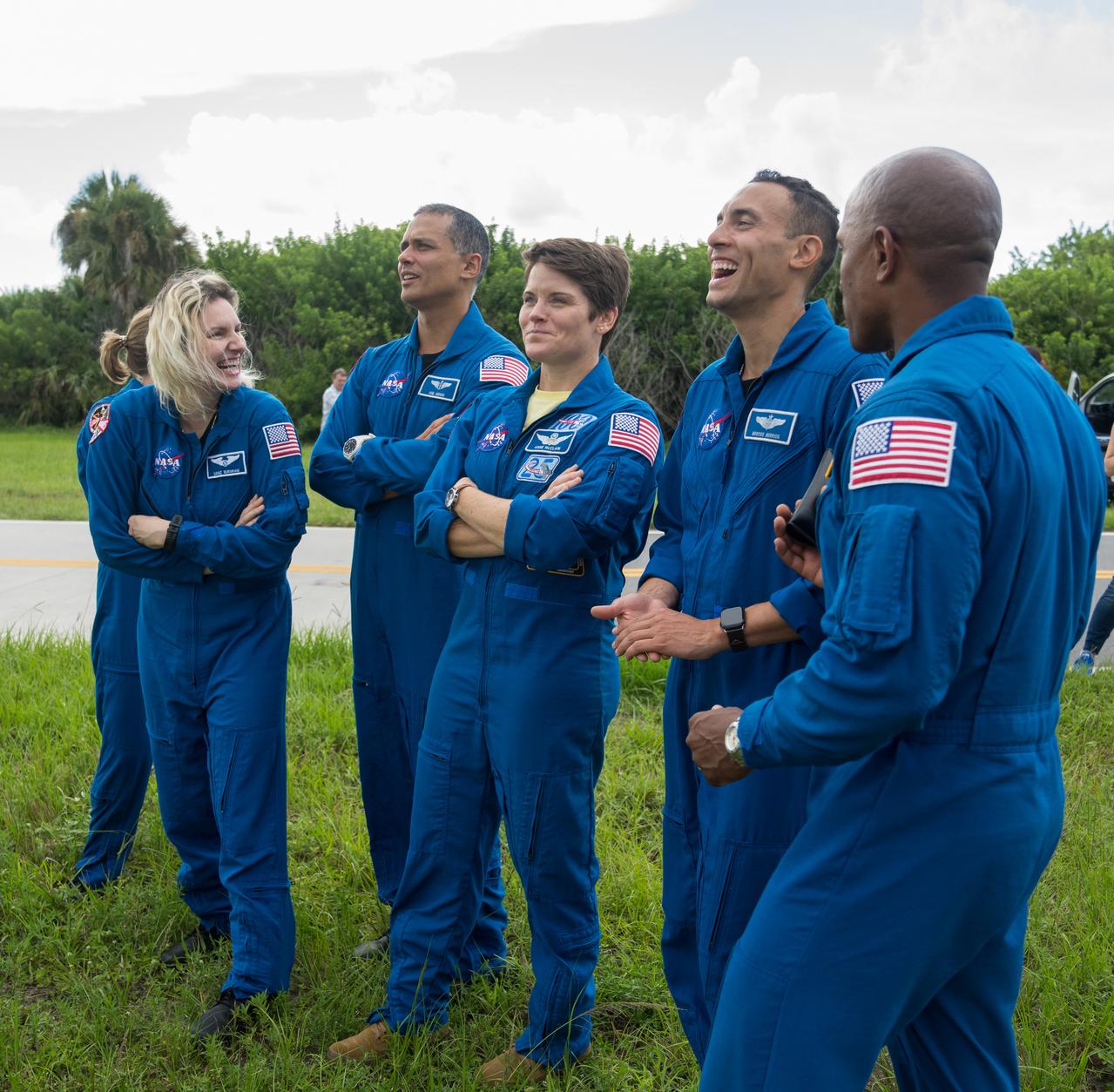
NASA astronauts and astronaut candidates view NASA’s Artemis I Space Launch System and Orion spacecraft atop the mobile launcher on the pad at Launch Complex 39B at the agency’s Kennedy Space Center in Florida on Sept. 2, 2022. The astronauts are, from left to right: Zena Cardman (partially obscured), NASA astronaut; Deniz Burnham and Anil Menon, NASA astronaut candidates; Anne McClain, NASA astronaut; Marcos Berrios, NASA astronaut candidate; and Victor Glover, NASA astronaut. The first in a series of increasingly complex missions, Artemis I will provide a foundation for human deep space exploration and demonstrate our commitment and capability to extend human presence to the Moon and beyond. The primary goal of Artemis I is to thoroughly test the integrated systems before crewed missions by operating the spacecraft in a deep space environment, testing Orion’s heat shield, and recovering the crew module after reentry, descent, and splashdown. In later missions, NASA will land the first woman and the first person of color on the surface of the Moon, paving the way for a long-term lunar presence and serving as a steppingstone on the way to Mars.
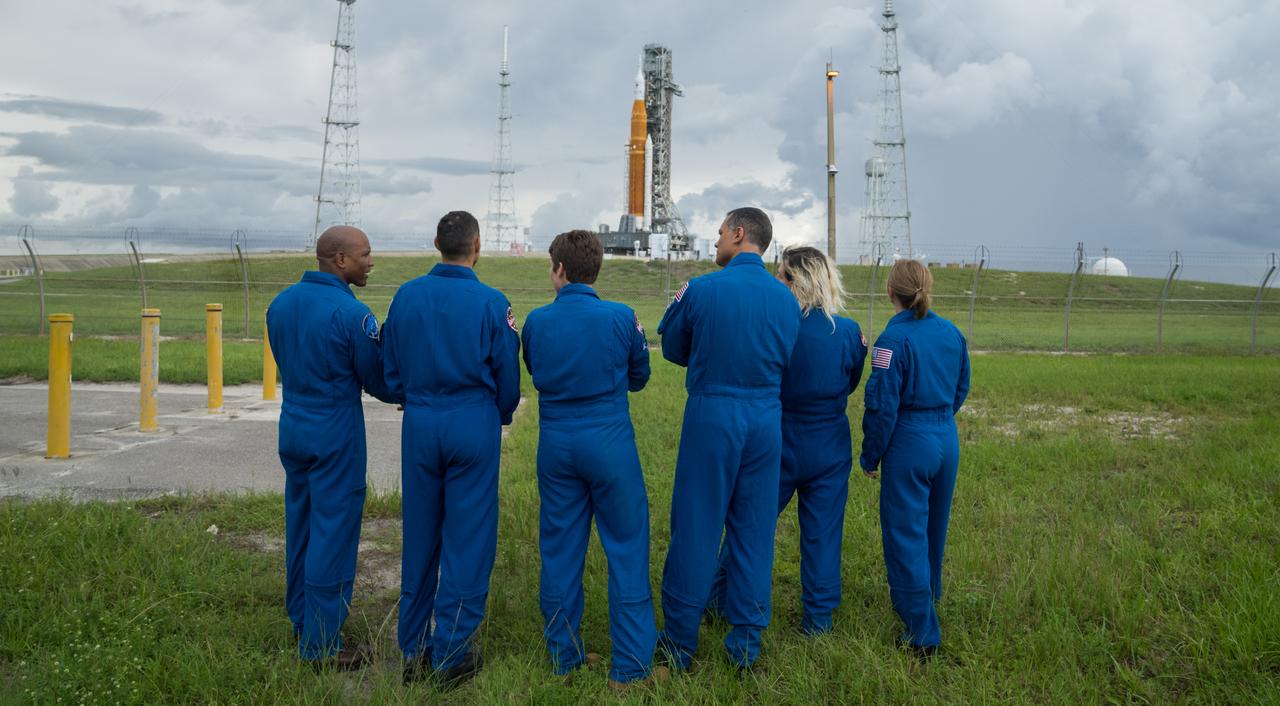
NASA astronauts and astronaut candidates view NASA’s Artemis I Space Launch System and Orion spacecraft atop the mobile launcher on the pad at Launch Complex 39B at the agency’s Kennedy Space Center in Florida on Sept. 2, 2022. The astronauts are, from left to right: Victor Glover, NASA astronaut; Marcos Berrios, NASA astronaut candidate; Anne McClain, NASA astronaut; Anil Menon and Deniz Burnham, NASA astronaut candidates; and Zena Cardman, NASA astronaut. The first in a series of increasingly complex missions, Artemis I will provide a foundation for human deep space exploration and demonstrate our commitment and capability to extend human presence to the Moon and beyond. The primary goal of Artemis I is to thoroughly test the integrated systems before crewed missions by operating the spacecraft in a deep space environment, testing Orion’s heat shield, and recovering the crew module after reentry, descent, and splashdown. In later missions, NASA will land the first woman and the first person of color on the surface of the Moon, paving the way for a long-term lunar presence and serving as a steppingstone on the way to Mars.
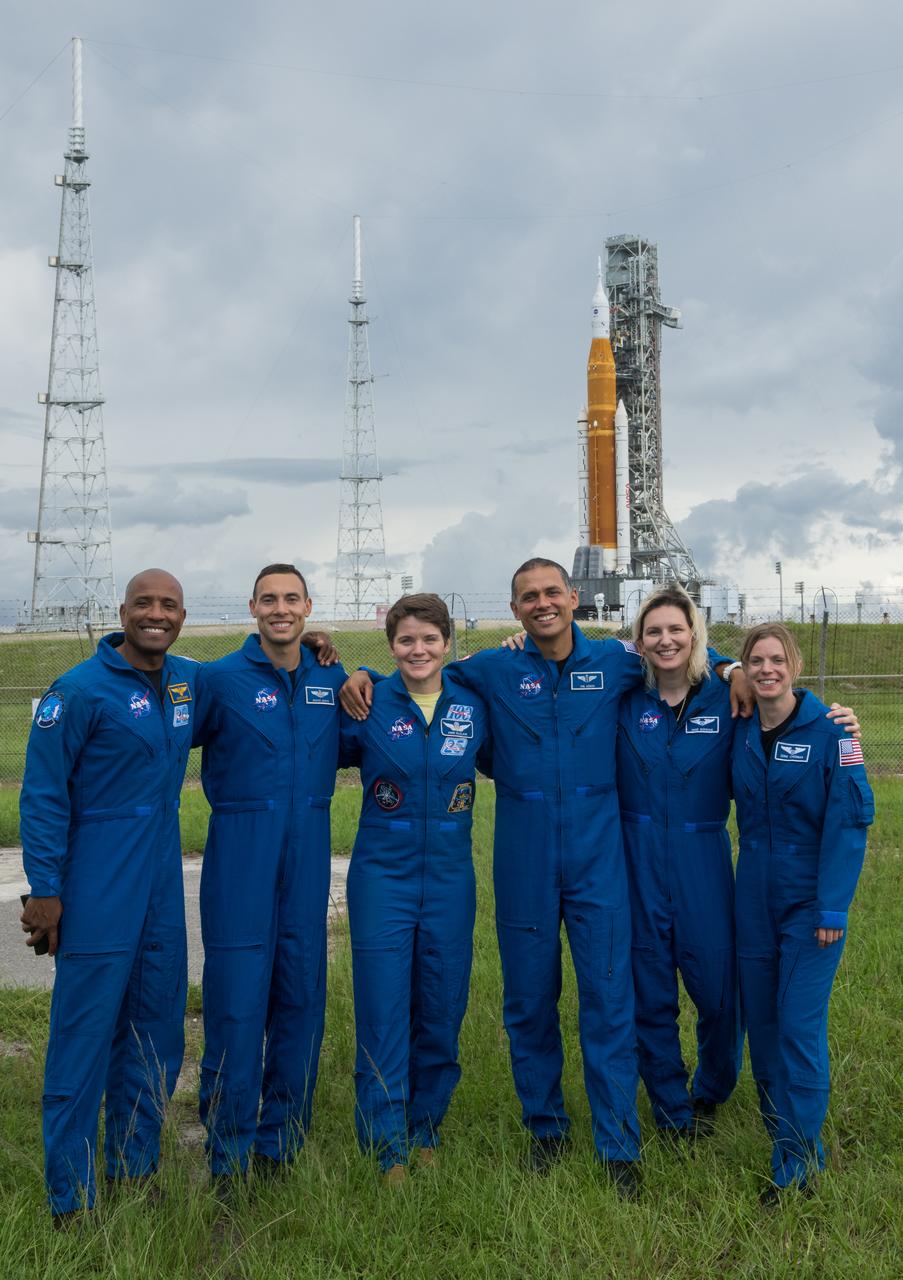
NASA astronauts and astronaut candidates pose for a photograph in front of NASA’s Artemis I Space Launch System and Orion spacecraft atop the mobile launcher on the pad at Launch Complex 39B at the agency’s Kennedy Space Center in Florida on Sept. 2, 2022. The astronauts are, from left to right: Victor Glover, NASA astronaut; Marcos Berrios, NASA astronaut candidate; Anne McClain, NASA astronaut; Anil Menon and Deniz Burnham, NASA astronaut candidates; and Zena Cardman, NASA astronaut. The first in a series of increasingly complex missions, Artemis I will provide a foundation for human deep space exploration and demonstrate our commitment and capability to extend human presence to the Moon and beyond. The primary goal of Artemis I is to thoroughly test the integrated systems before crewed missions by operating the spacecraft in a deep space environment, testing Orion’s heat shield, and recovering the crew module after reentry, descent, and splashdown. In later missions, NASA will land the first woman and the first person of color on the surface of the Moon, paving the way for a long-term lunar presence and serving as a steppingstone on the way to Mars.
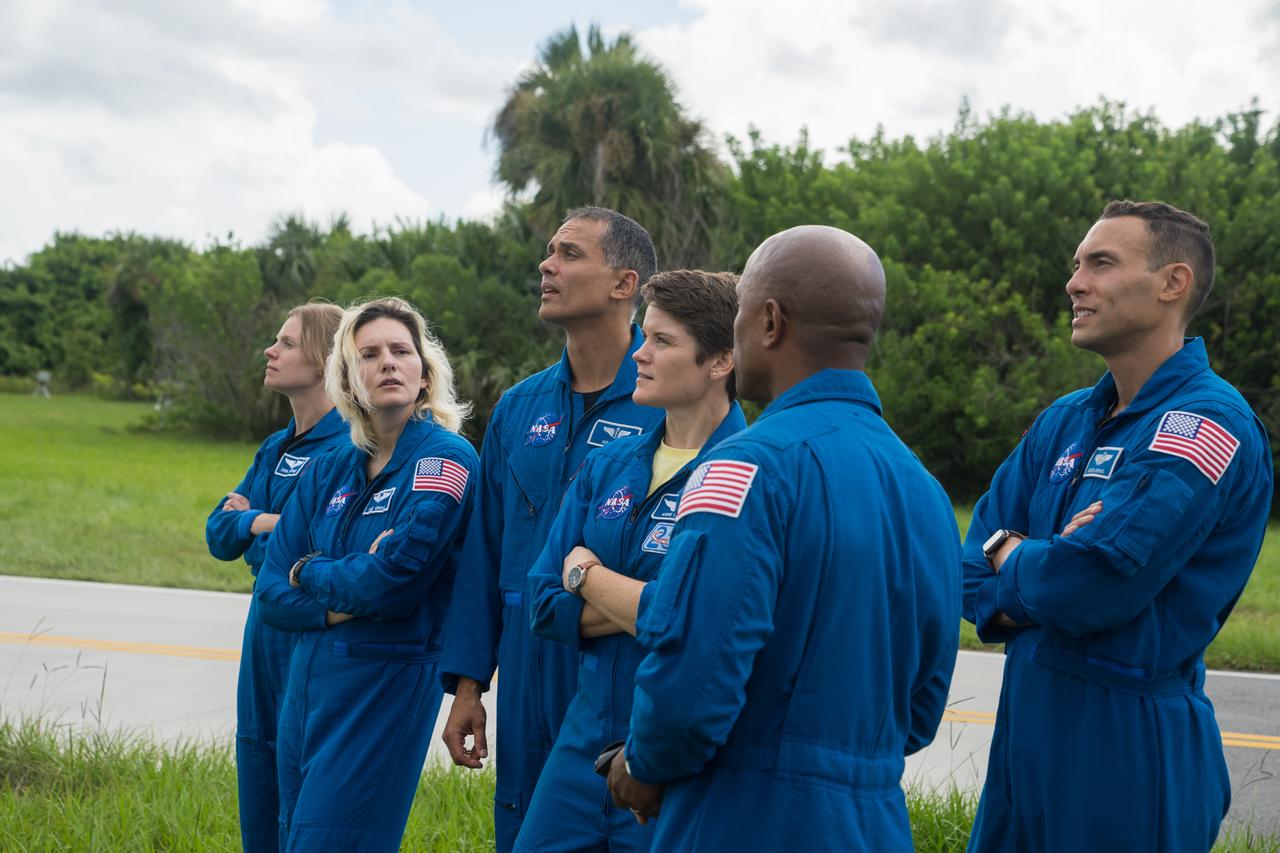
NASA astronauts and astronaut candidates view NASA’s Artemis I Space Launch System and Orion spacecraft atop the mobile launcher on the pad at Launch Complex 39B at the agency’s Kennedy Space Center in Florida on Sept. 2, 2022. The astronauts are, from left to right: Zena Cardman, NASA astronaut; Deniz Burnham and Anil Menon, NASA astronaut candidates; Anne McClain, NASA astronaut; Marcos Berrios, NASA astronaut candidate; and Victor Glover, NASA astronaut. The first in a series of increasingly complex missions, Artemis I will provide a foundation for human deep space exploration and demonstrate our commitment and capability to extend human presence to the Moon and beyond. The primary goal of Artemis I is to thoroughly test the integrated systems before crewed missions by operating the spacecraft in a deep space environment, testing Orion’s heat shield, and recovering the crew module after reentry, descent, and splashdown. In later missions, NASA will land the first woman and the first person of color on the surface of the Moon, paving the way for a long-term lunar presence and serving as a steppingstone on the way to Mars.
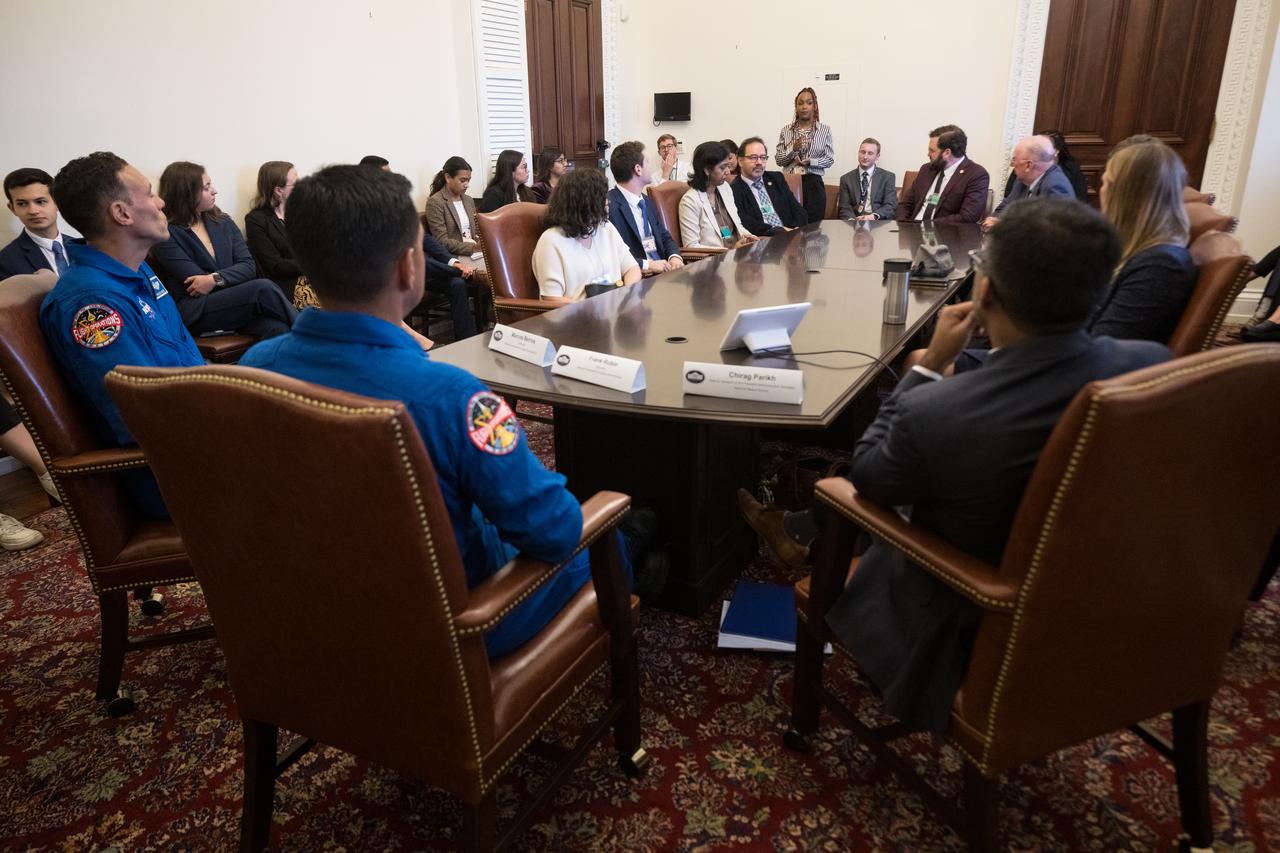
Carrington Jones-Jackson, Intern, Vice Presidential Correspondence, asks a question at at a staff engagement event that took place during a White House Hispanic Heritage month event titled “Soaring Together: Inspiring the Next Generation of Space Leaders” at the Eisenhower Executive Office Building, Monday, Sept. 30, 2024 in Washington. Photo Credit: (NASA/Aubrey Gemignani)