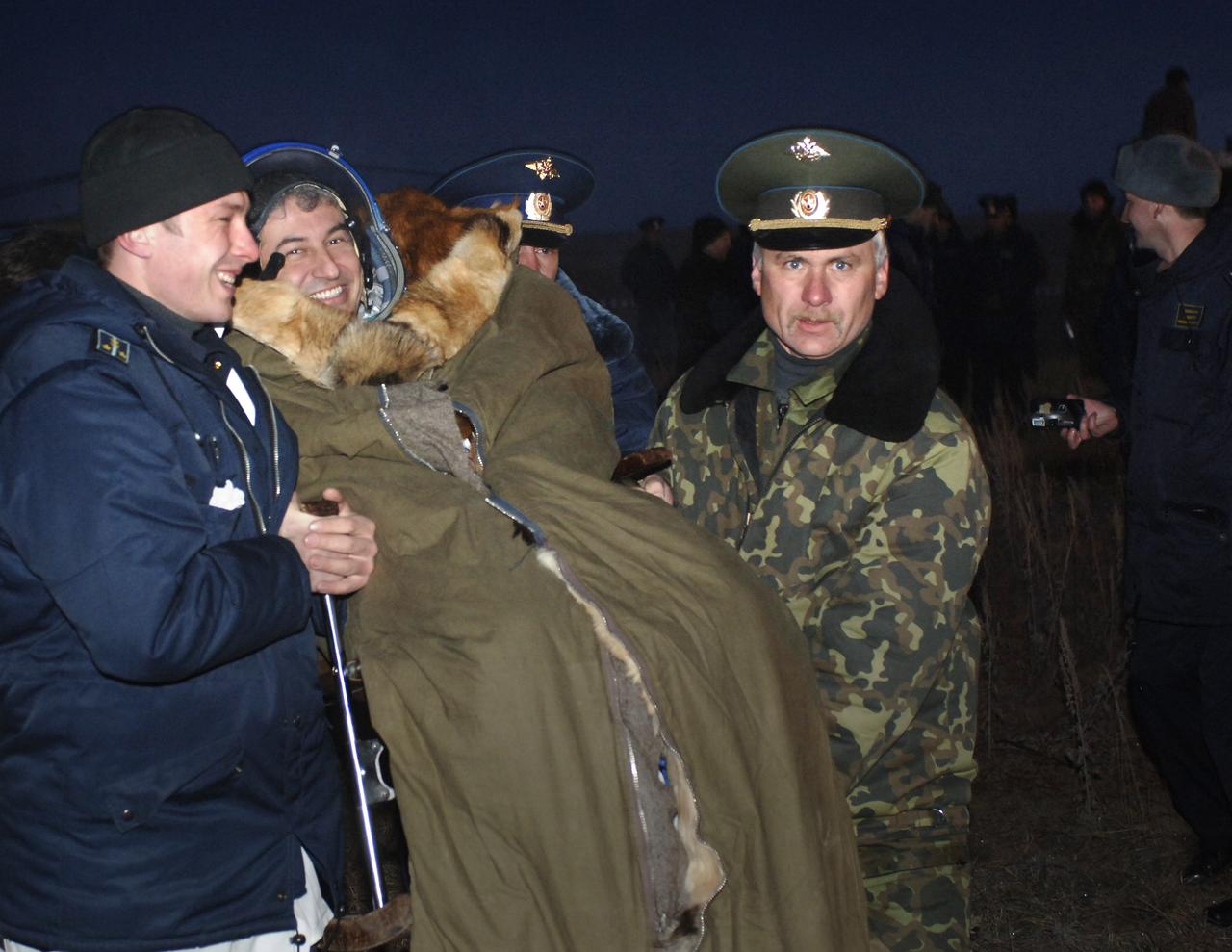
Brazil’s first astronaut in space, Marcos C. Pontes smiles as he exchanges greetings with some of the crowd on hand in the steppes of Kazakhstan to meet him and the two Expedition 12 crewmembers returning to Earth from the International Space Station in the Soyuz TMA-7 spacecraft, Sunday April 9, 2006. Pontes spent a little over a week onboard the orbital outpost. Returning with Pontes were Expedition 12 Commander Bill McArthur and Flight Engineer Valery Tokarev. Photo Credit: (NASA/Bill Ingalls)
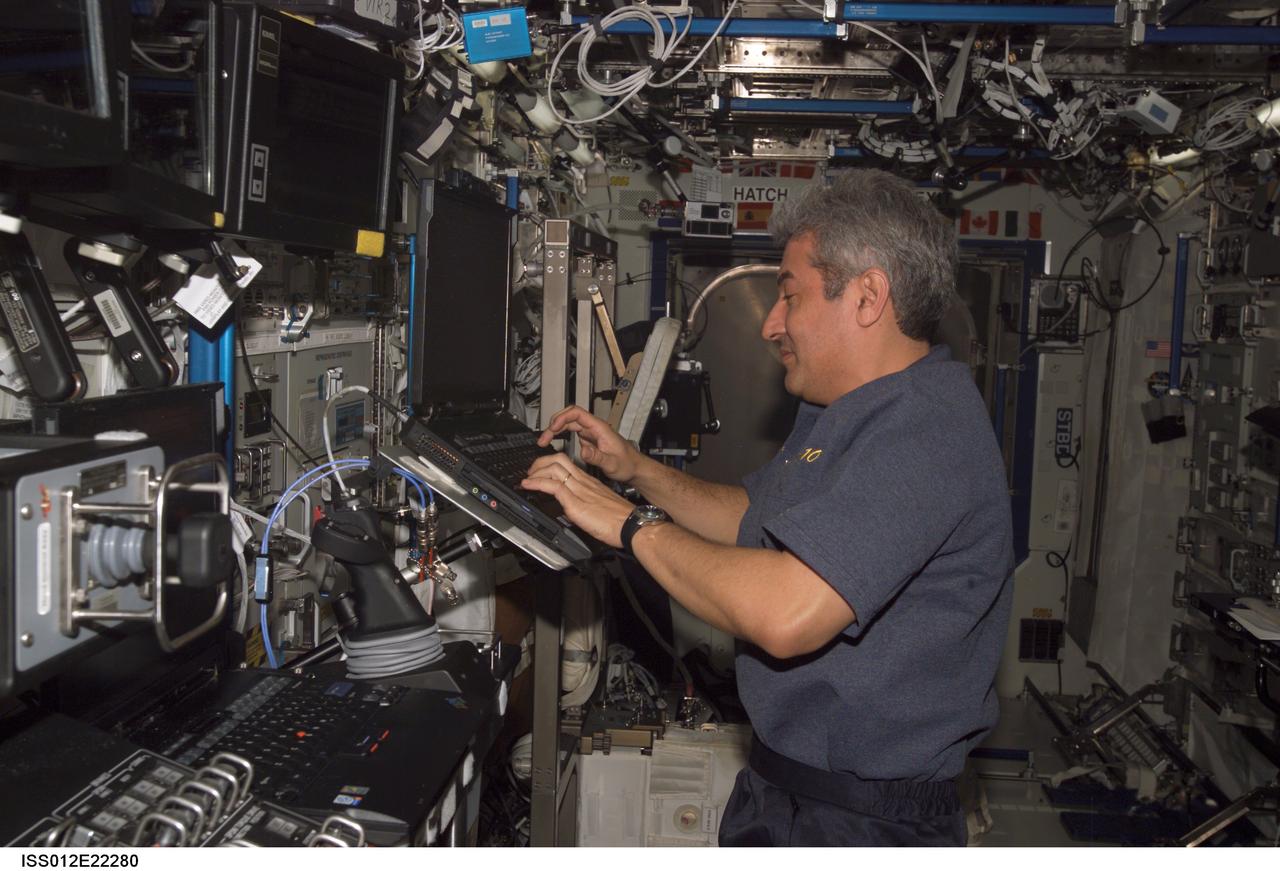
ISS012-E-22280 (3 April 2006) --- Brazilian Space Agency astronaut Marcos C. Pontes uses a computer in the Destiny laboratory of the International Space Station soon after his arrival.

ISS012-E-22281 (3 April 2006) --- Brazilian Space Agency astronaut Marcos C. Pontes uses a computer in the Destiny laboratory of the International Space Station soon after his arrival.
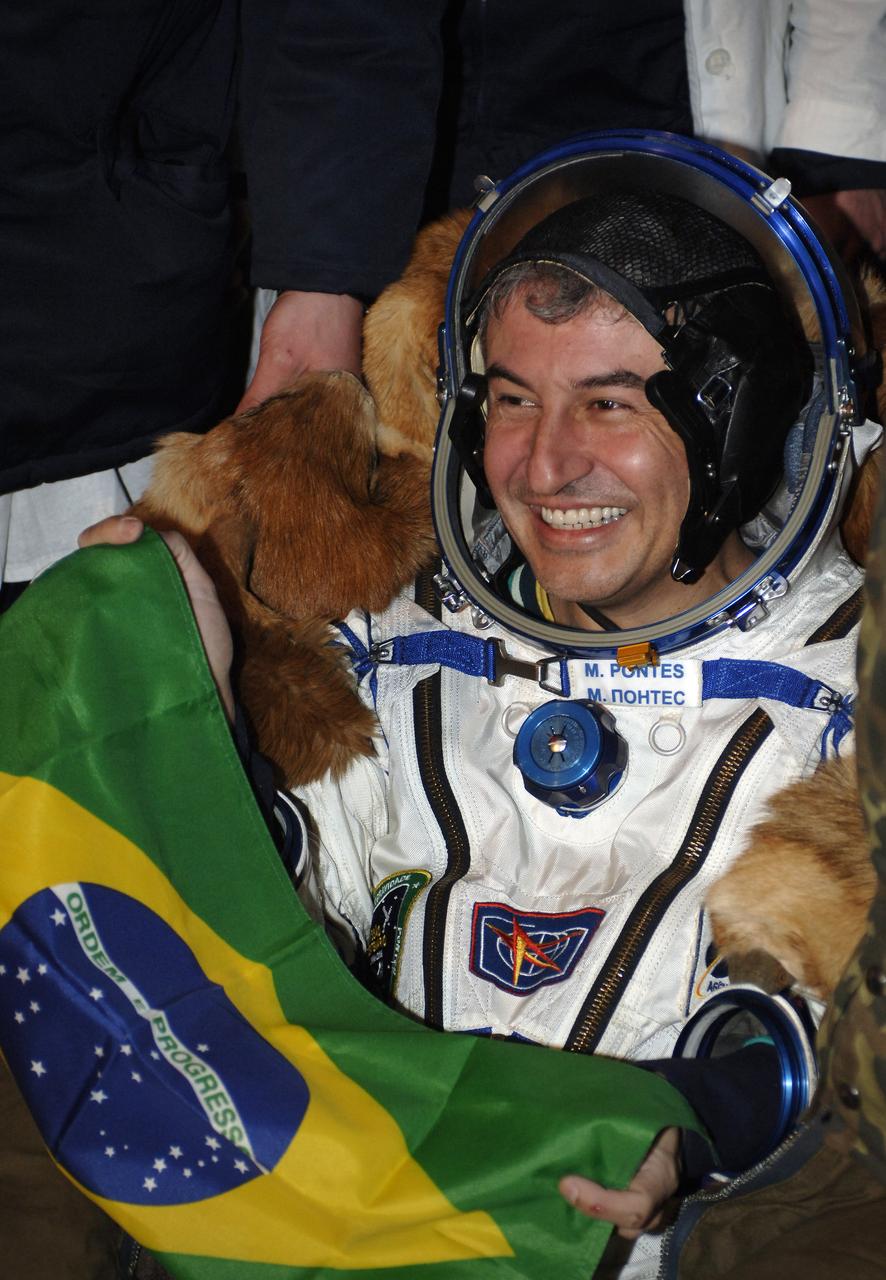
Brazil’s first astronaut in space, Marcos C. Pontes smiles as he exchanges greetings with some of the crowd on hand in the steppes of Kazakhstan to meet him and the two Expedition 12 crewmembers returning to Earth from the International Space Station in the Soyuz TMA-7 spacecraft on Saturday, April 9, 2006. The Soyuz TMA-7 spacecraft touched down at 7:48 p.m. EDT. Pontes spent a little over a week onboard the orbital outpost. He arrived at the station with Expedition 13 on Sunday, April 1, 2008. He represented the Brazil Space Agency. Photo Credit: (NASA/Bill Ingalls)
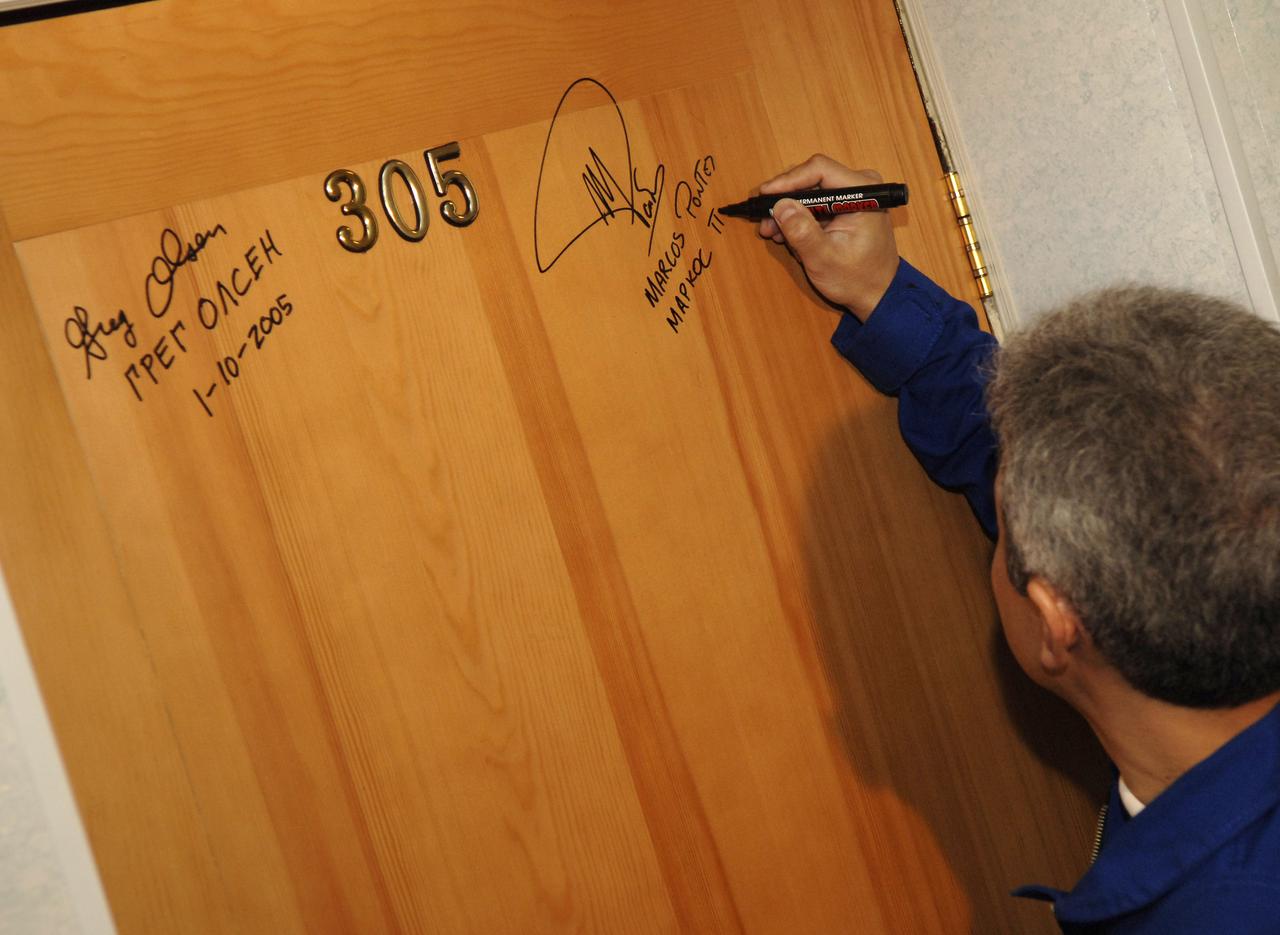
Brazilian Space Agency Soyuz crew member Marcos Pontes performs the traditional signing of a bedroom door at the Cosmonaut Hotel in Baikonur, Kazakhstan on Thursday, March 30, 2006 prior to the crew’s departure to building 254 and their suit up for launch onboard the Soyuz. Photo Credit: (NASA/Bill Ingalls)
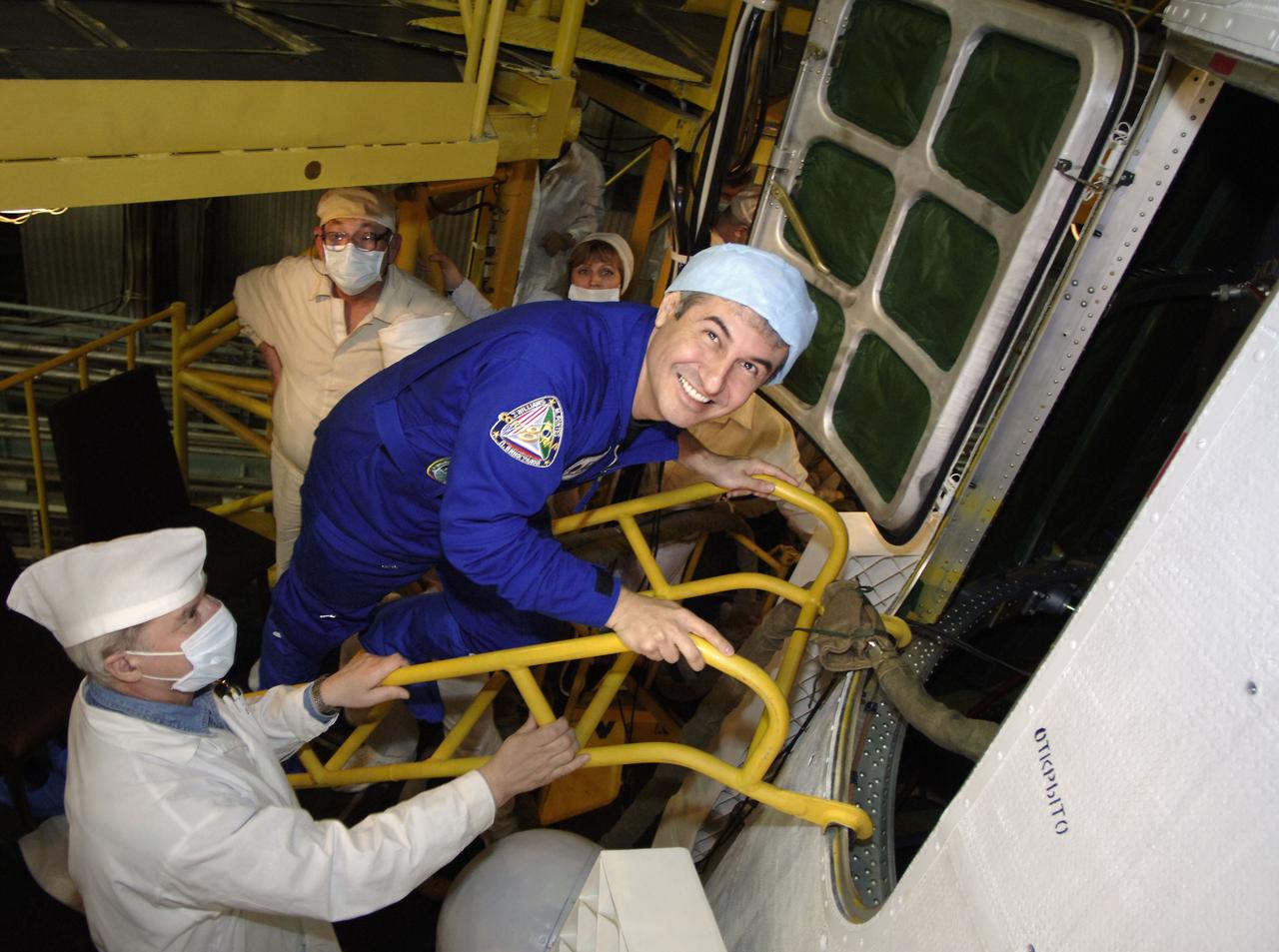
Marcos Pontes, Brazilian Space Agency Soyuz crew member, climbs into the Soyuz capsule for his final check at building 254 of the Baikonur Cosmodrome in Baikonur, Kazakhstan days before launch to the International Space Station. Sunday, March 26, 2006. Photo Credit: (NASA/Bill Ingalls)
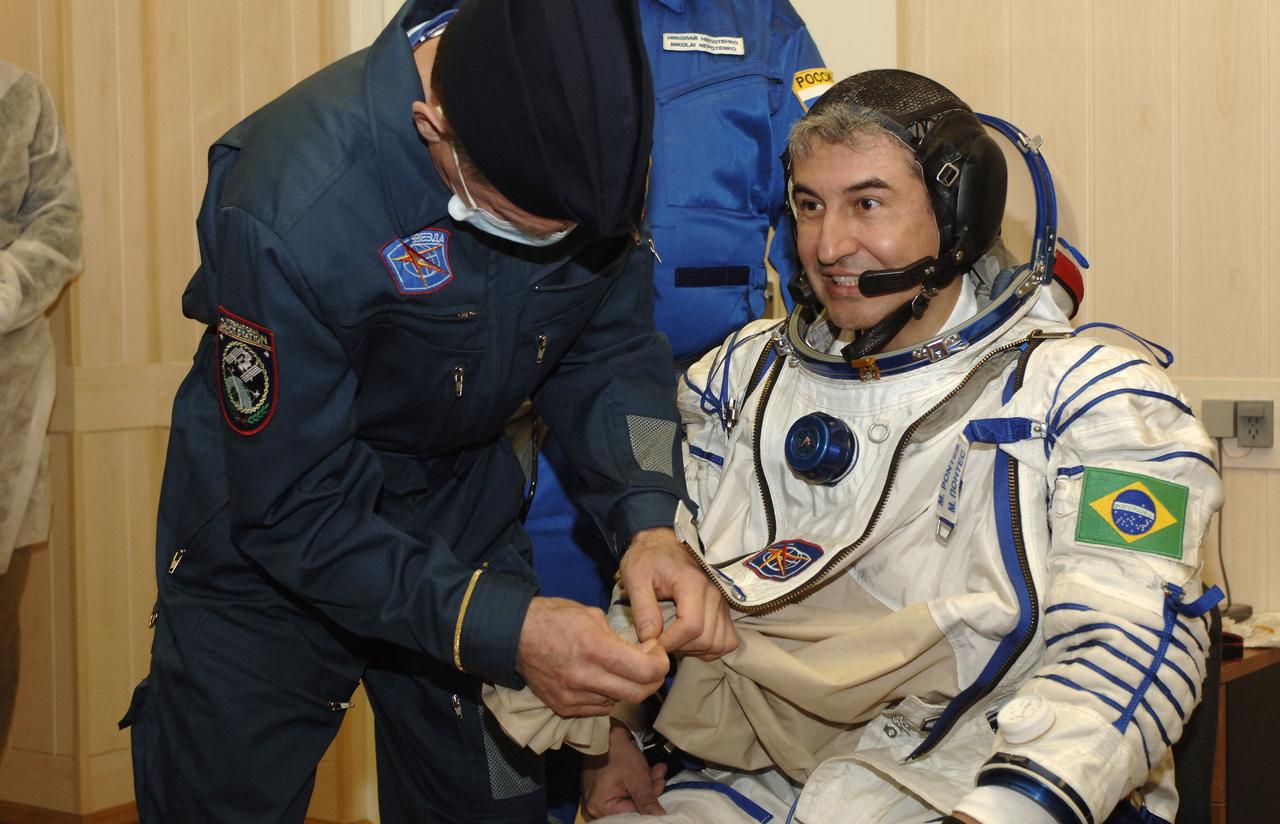
Brazilian Space Agency Soyuz crew member Marcos Pontes dons his pressure suit in building 254 of the Baikonur Cosmodrome prior to launch from Baikonur, Kazakhstan. Thursday, March 30, 2006. Photo Credit: (NASA/Bill Ingalls)
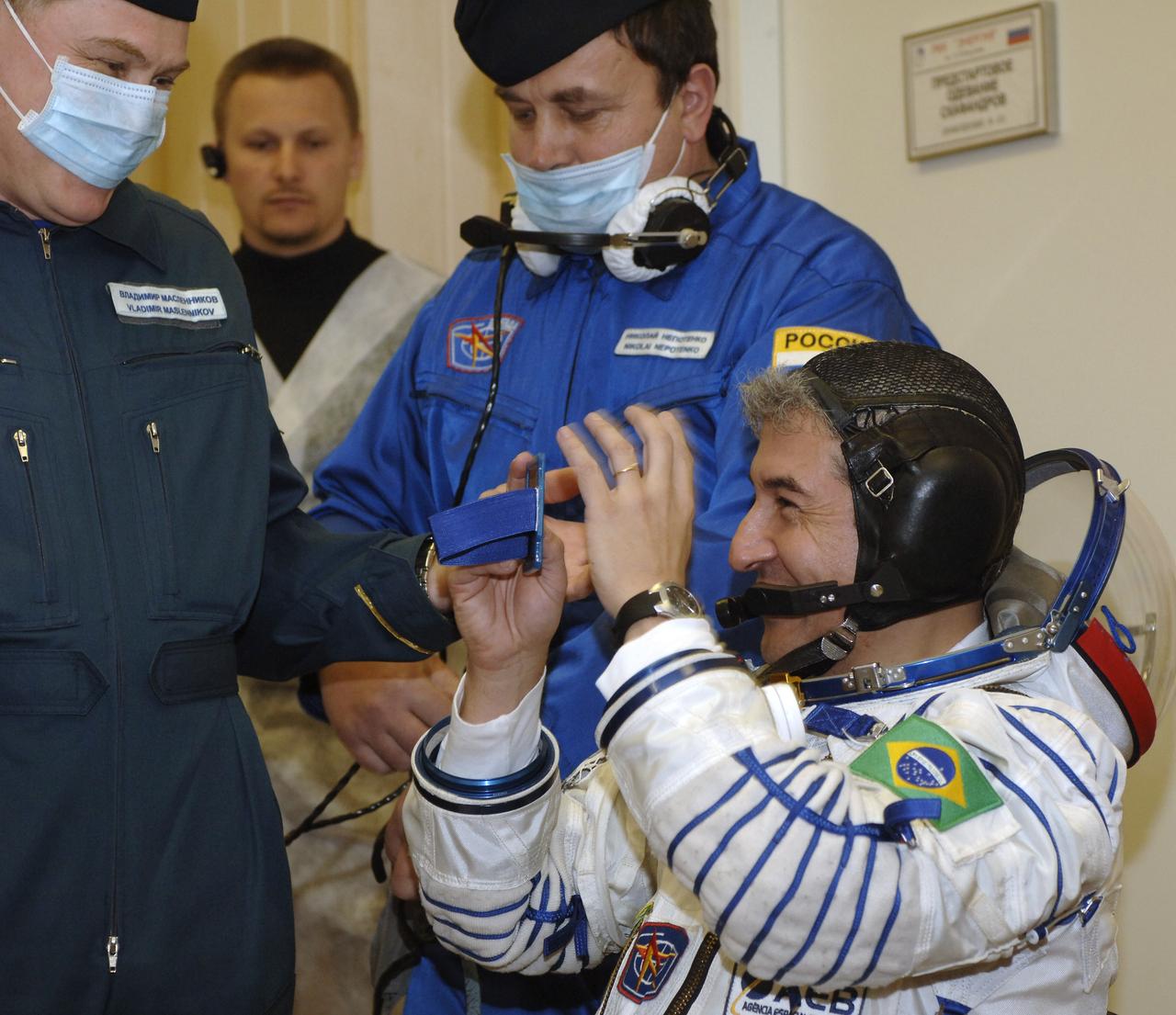
Marcos Pontes, Brazilian Space Agency Soyuz crew member, looks into a mirror to check his hair after donning his pressure suit in preparation to launch onboard the Soyuz spacecraft from Baikonur, Kazakhstan, Thursday, March 30, 2006. Photo Credit: (NASA/Bill Ingalls)
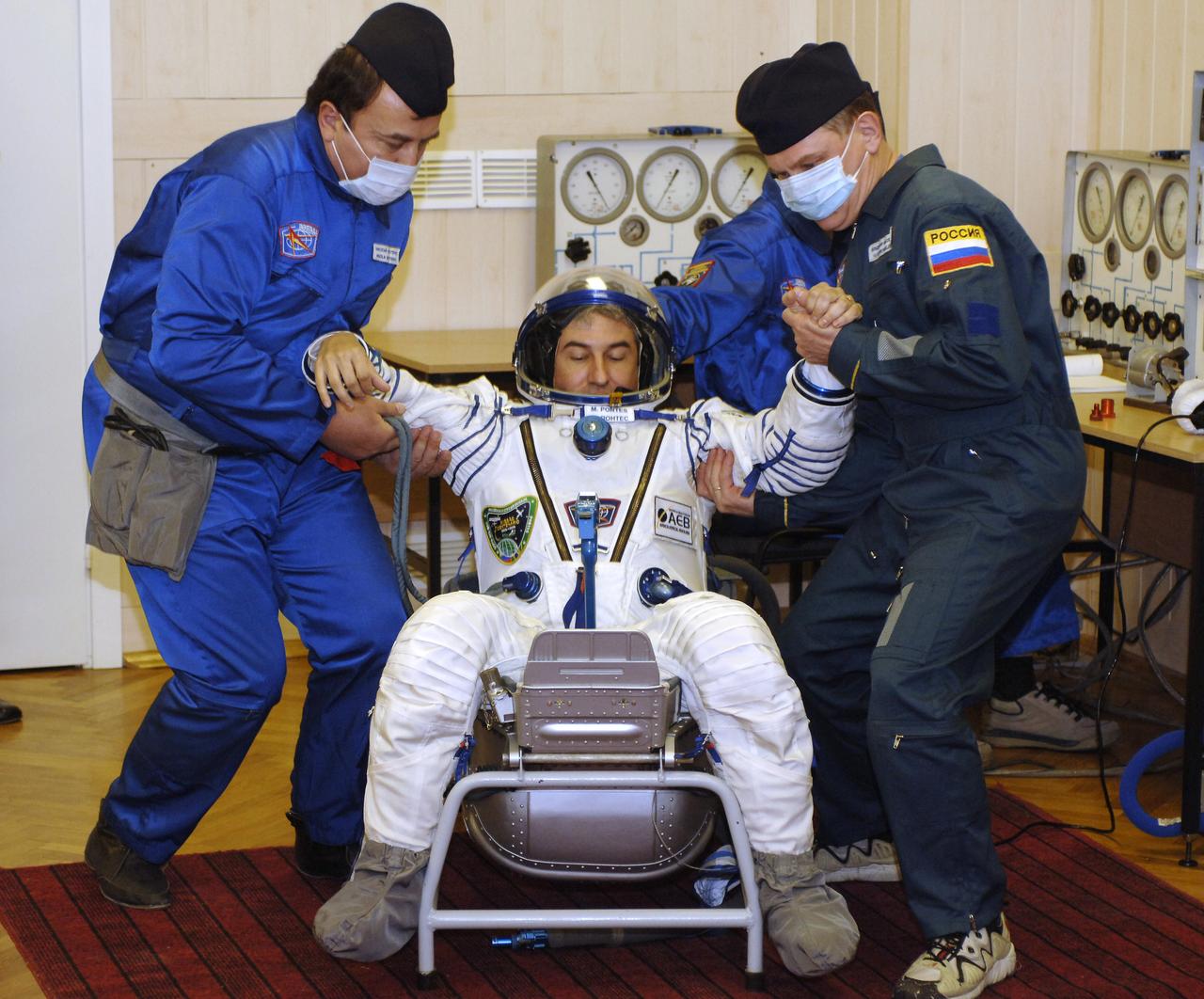
Technicians check suit pressure for Brazilian Space Agency Soyuz crew member Marcos Pontes prior to launch onboard the Soyuz spacecraft from Baikonur, Kazakhstan, Thursday, March 30. 2006. Photo Credit: (NASA/Bill Ingalls)
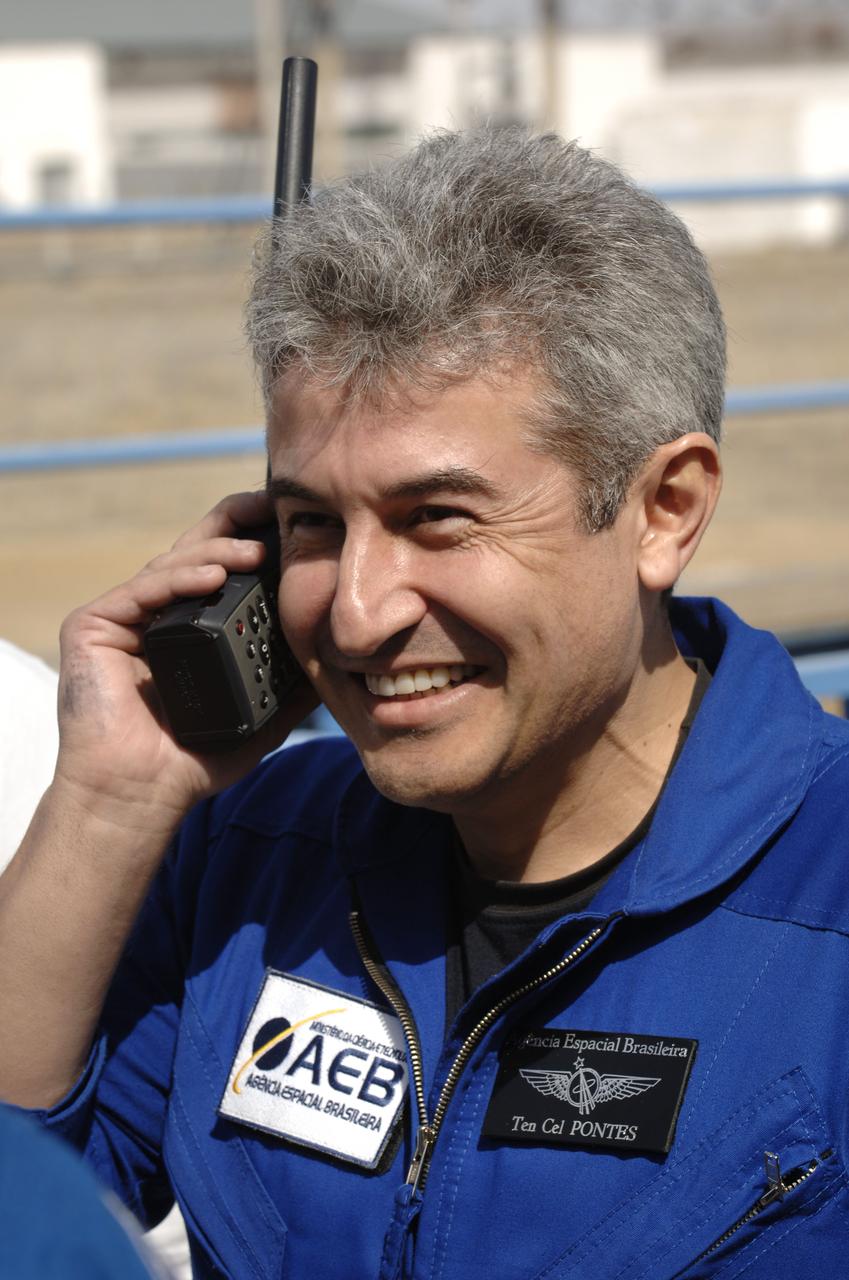
Marcos Pontes, Brazilian Space Agency Soyuz crew member who will spend 10 days aboard the International Space Station under an agreement with the Russian Federal Space Agency, uses a satellite phone after crew members' final check of the Soyuz at building 254 of the Baikonur Cosmodrome in Baikonur, Kazakhstan. Sunday, March 26, 2006. Photo Credit: (NASA/Bill Ingalls)
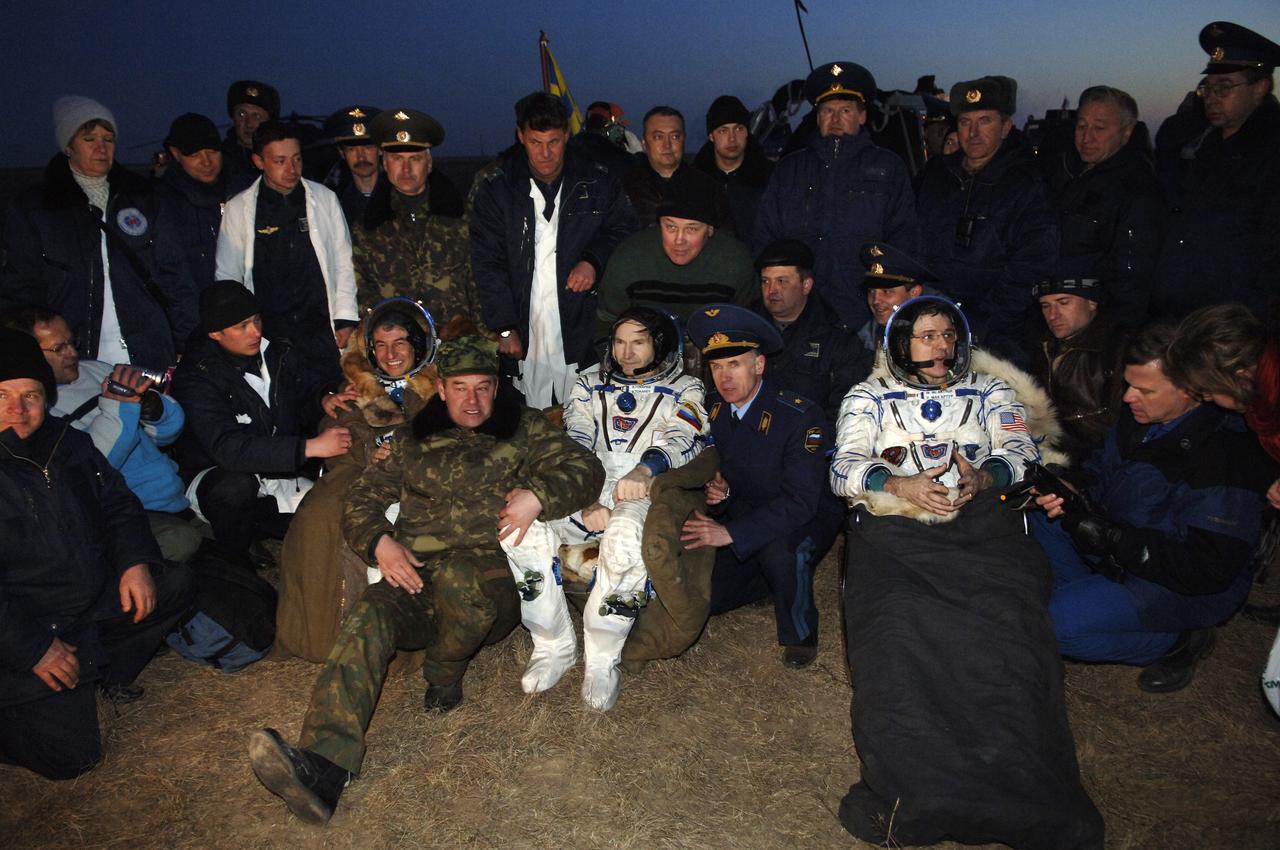
The two Expedition 12 crew members and a Brazilian astronaut are met by a couple of dozen greeters on hand at the landing site of the Soyuz TMA-7 spacecraft in the steppes of Kazakhstan on Sunday, April 9, 2006. Still wearing their spacesuits (in the foreground, left to right) are Marcos C. Pontes of Brazil, Valery I. Tokarev of Russia's Federal Space Agency and William S. McArthur Jr. Photo Credit: (NASA/Bill Ingalls)
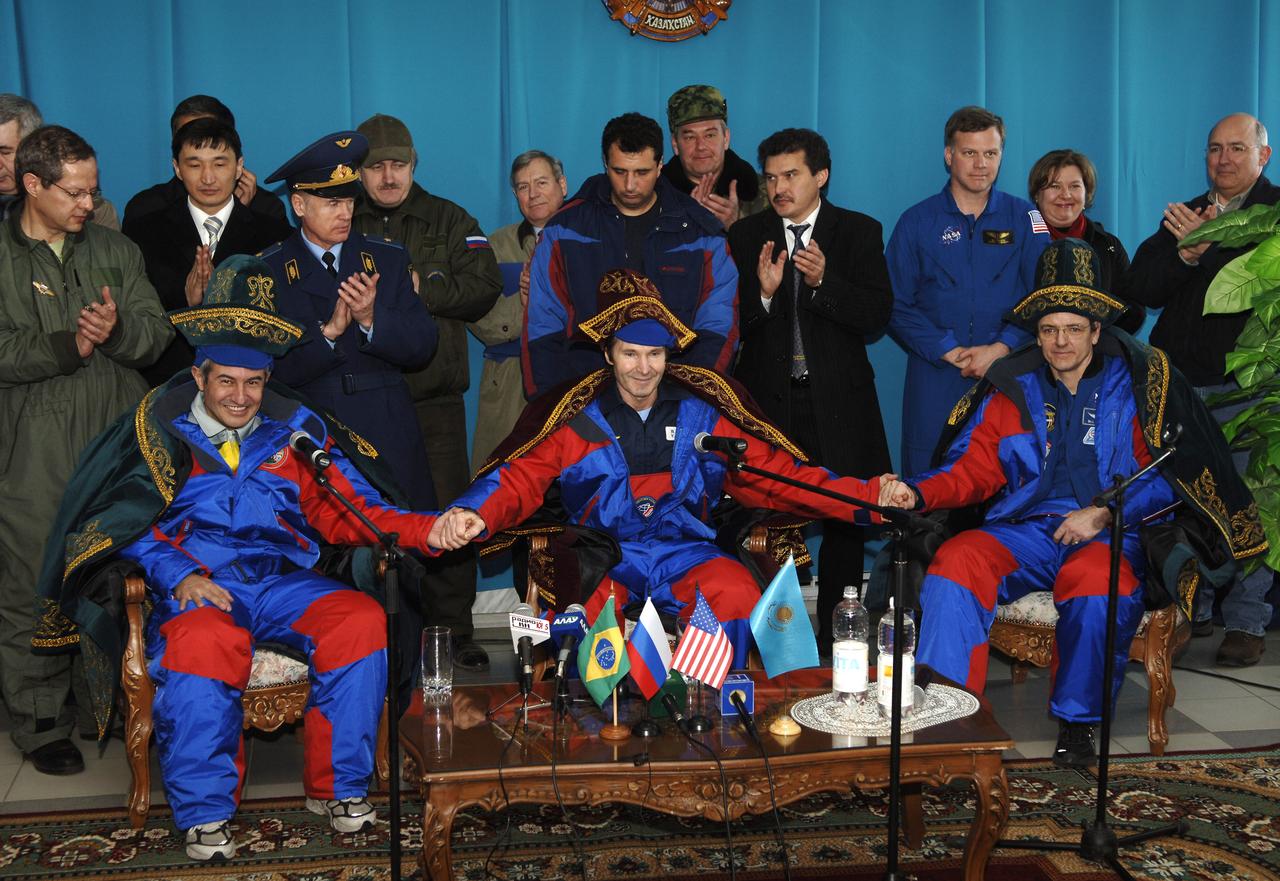
Brazilian astronaut Marcos C. Pontes, left, Expedition 12 crew members, Valery I. Tokarev, Flight Engineer and Soyuz Commander, and William S. (Bill) McArthur, Jr., right, Expedition 12 commander and space station Science Officer. Expedition 12 returned to Earth and landed in the steppes of Kazakhstan. The Soyuz TMA-7 spacecraft touched down at 7:48 p.m. EDT, Sunday, April 9, 2006. Photo Credit: (NASA/Bill Ingalls)
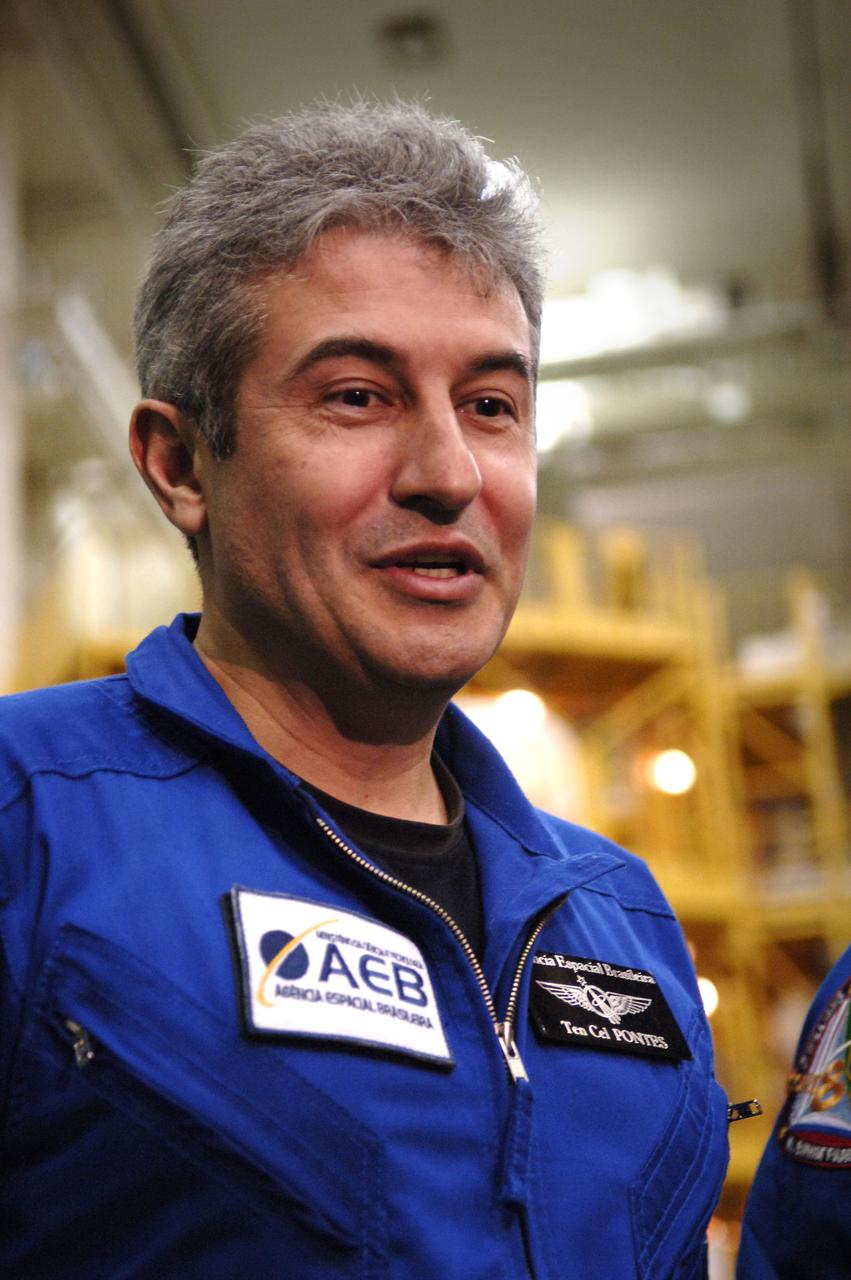
Astronaut Marcos Pontes, Brazilian Space Agency Soyuz crew member who will spend 10 days aboard the International Space Station under an agreement with the Russian Federal Space Agency, talks with members of the media after a final Soyuz check at building 254 of the Baikonur Cosmodrome in Baikonur, Kazakhstan. Sunday, March 26, 2006. Photo Credit: (NASA/Bill Ingalls)
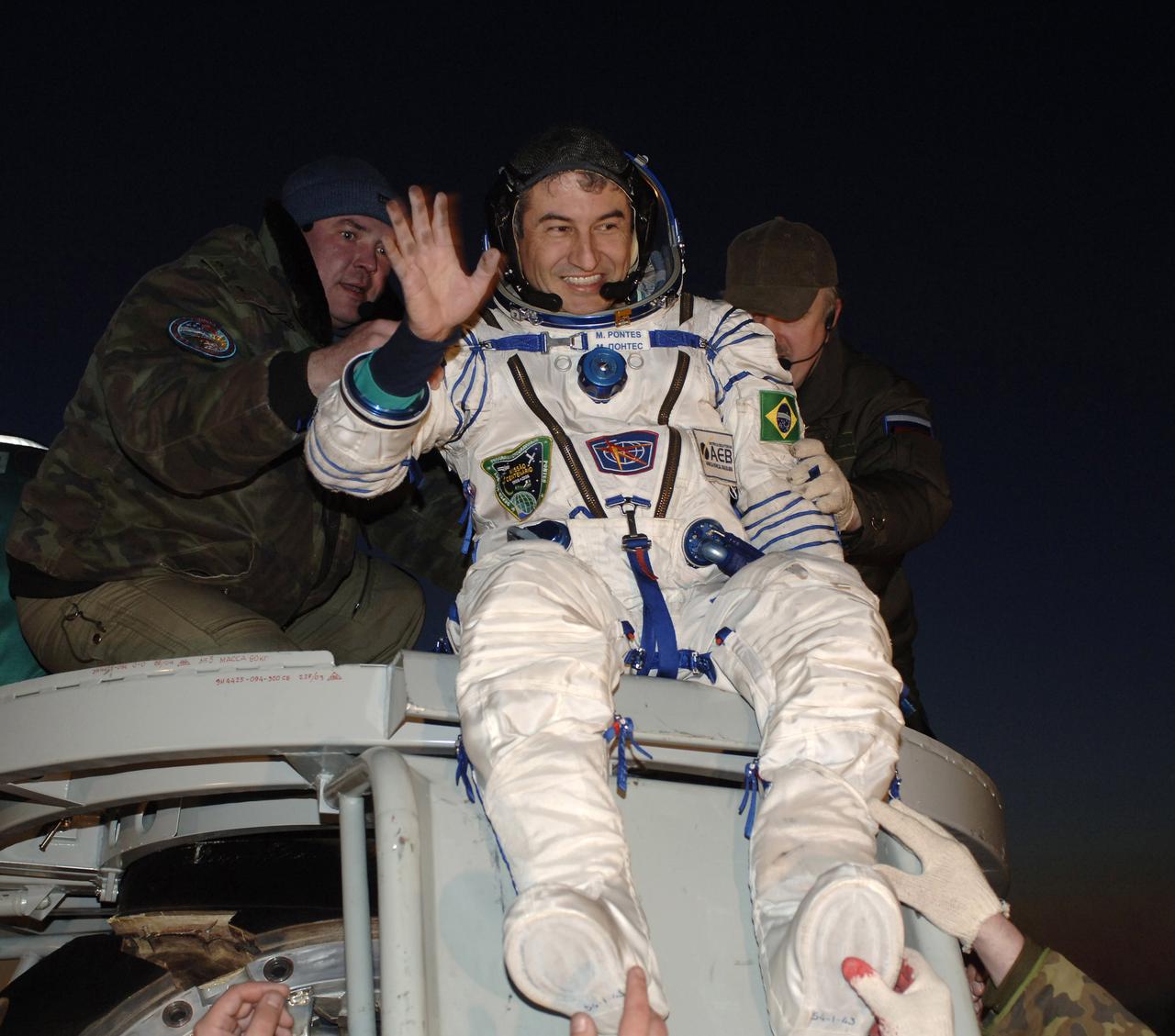
Astronaut Marcos Pontes, Brazilian Space Agency participant, and Brazil's first astronaut to go into space, greets personnel on hand at the Expedition landing site in Kazakhstan. The Expedition 12 crew members astronaut William S. McArthur, Jr., NASA commander and International Space Station science officer; and cosmonaut Valery I. Tokarev, Russias Federal Space Agency flight engineer and Soyuz commander returned to earth onboard the Soyuz TMA-7 spacecraft. Touch down was Sunday, April 9, 2006, in the steppes of Kazakhstan. Pontes arrived at the station with the Expedition 13 crew on April 1. Photo Credit: (NASA/Bill Ingalls)
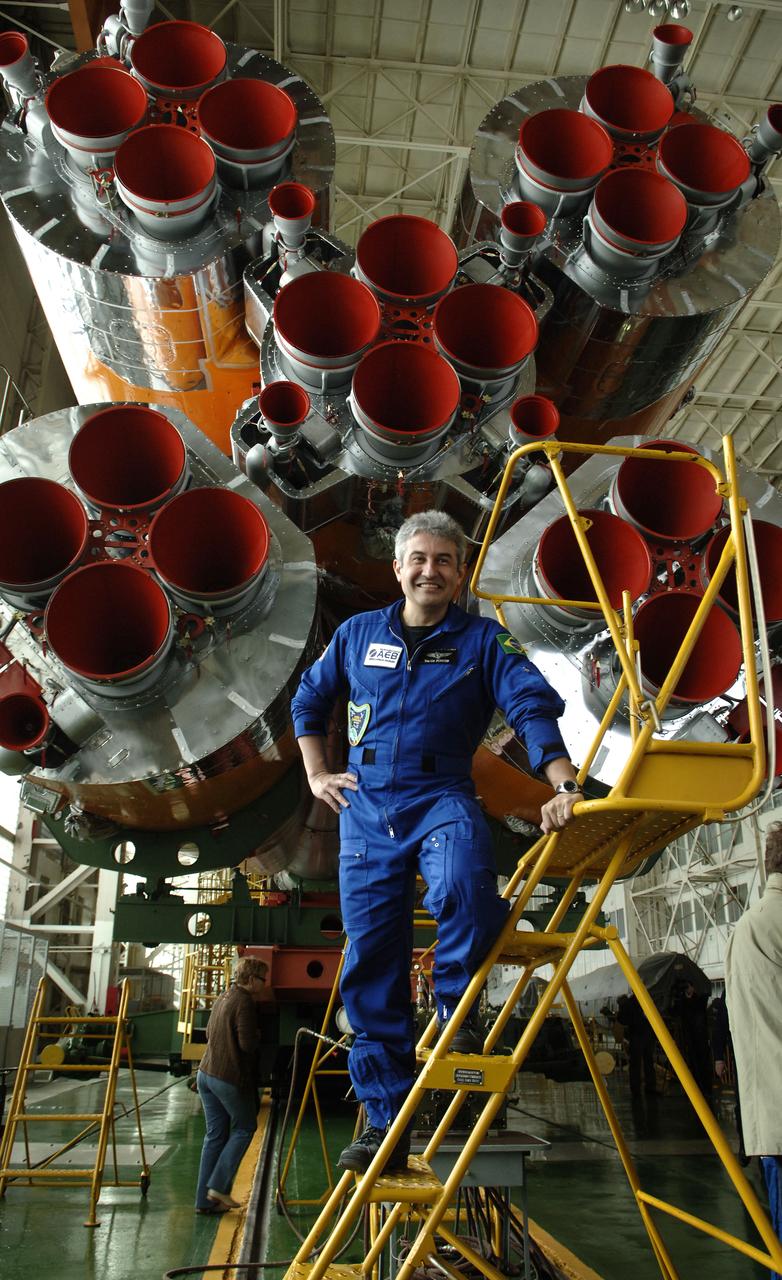
Marcos Pontes, Brazilian Space Agency Soyuz crew member who will spend 10 days aboard the International Space Station under an agreement with the Russian Federal Space Agency, poses for a photo during a tour of the Soyuz assembly building at the Baikonur Cosmodrome in Baikonur, Kazakhstan. Sunday, March 26, 2006. Photo Credit: (NASA/Bill Ingalls)
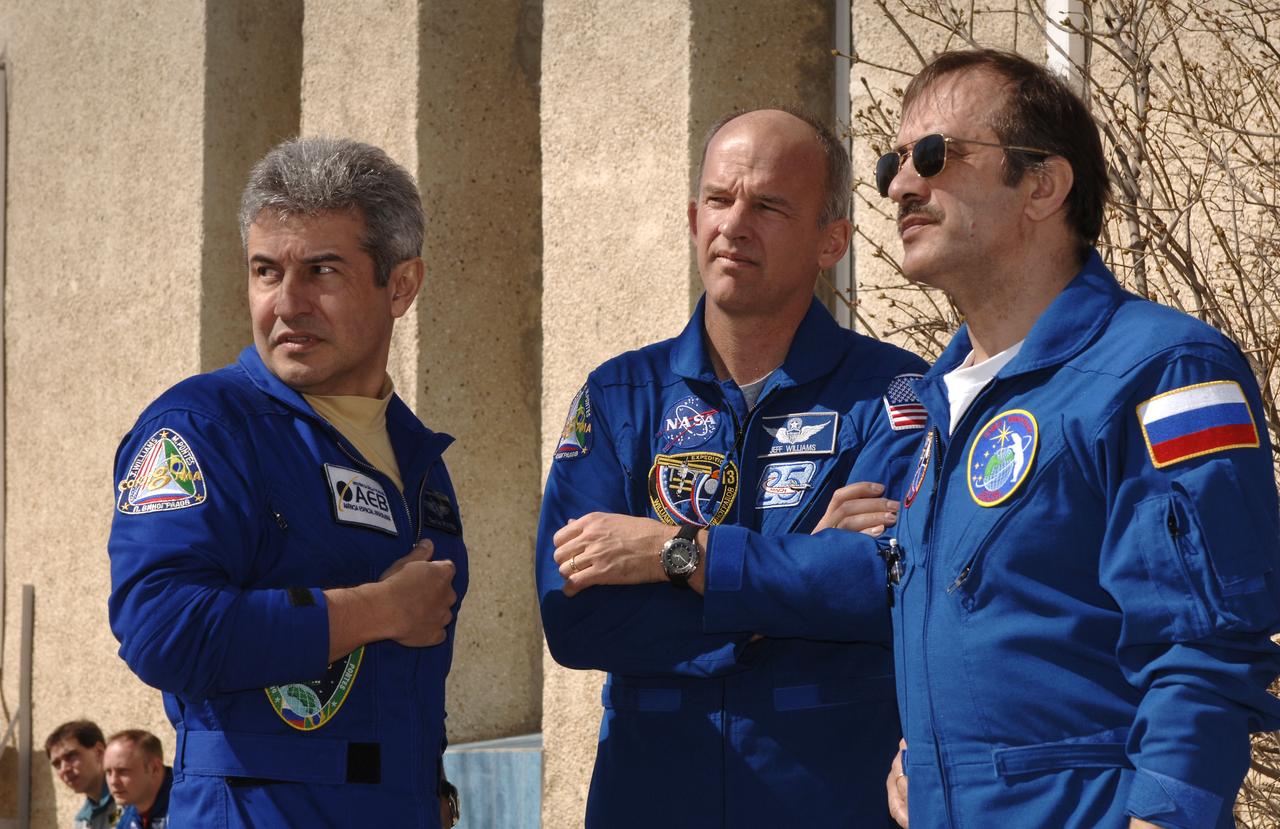
Marcos Pontes, left, Brazilian Space Agency’s Soyuz crew member, Jeffrey N. Williams, Expedition 13 NASA International Space Station Science Officer and Flight Engineer, and Pavel V. Vinogradov, right, Expedition 13 commander, take a break from their training at the Cosmonaut Hotel in Baikonur, Kazakhstan, Saturday, March 25, 2006, days before their launch on a Soyuz spacecraft. Photo Credit: (NASA/Bill Ingalls)
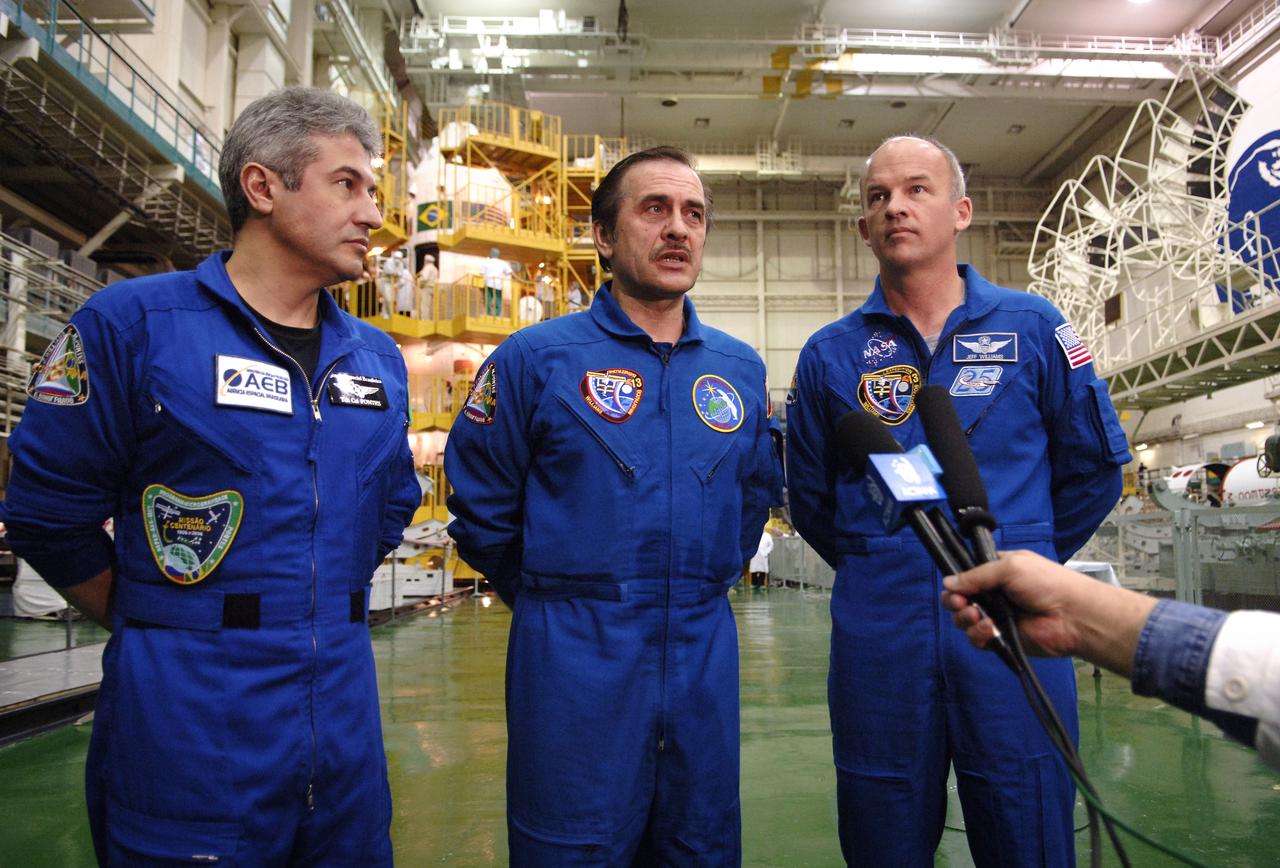
Marcos Pontes, left, Brazilian Space Agency Soyuz crew member; Pavel V. Vinogradov, Russia’s Federal Space Agency Expedition 13 International Space Station Commander; and Jeffrey N. Williams, right, Expedition 13 Science Officer and Flight Engineer, talk with the media after the crew's final check of the Soyuz at building 254 of the Baikonur Cosmodrome in Baikonur, Kazakhstan. Sunday, March 26, 2006. Photo Credit: (NASA/Bill Ingalls)
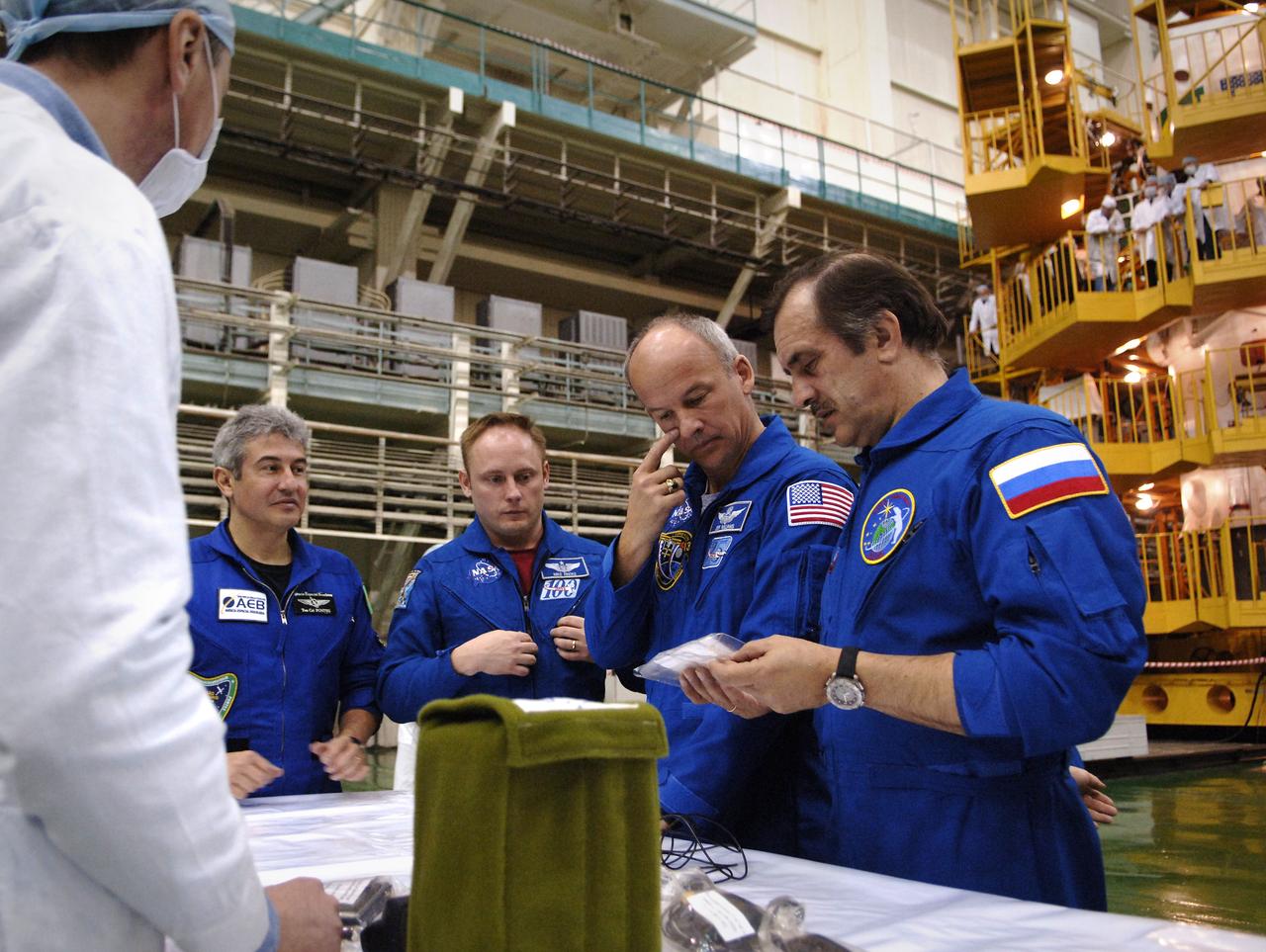
Marcos Pontes, left, Brazilian Space Agency Soyuz crew member; Michael Fincke, backup crew member; Jeffrey N. Williams, Expedition 13 Science Officer and Flight Engineer; and Pavel V. Vinogradov, right, Commander, train at building 254 of the Baikonur Cosmodrome in Baikonur, Kazakhstan days before launch to the International Space Station. Sunday, March 26, 2006. Photo Credit: (NASA/Bill Ingalls)
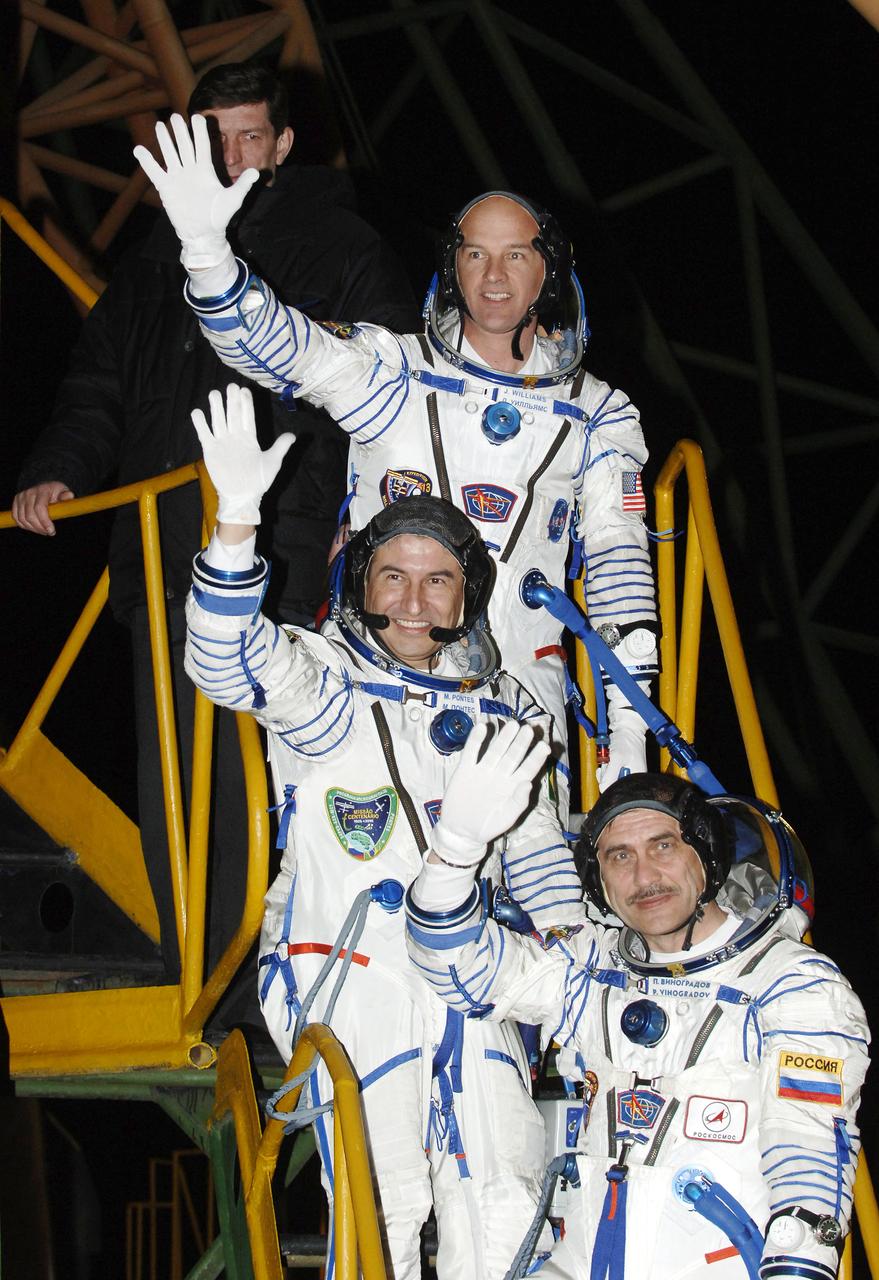
Expedition 13 prime crew members wave goodbye to the cameras at the launch pad. Jeffrey N. Williams, top, Science Officer and Flight Engineer; Marcos Pontes, Brazilian Space Agency Soyuz crew member; and Pavel V. Vinogradov, bottom, Commander. Baikonur, Kazakhstan. Thursday, March 30, 2006. Photo Credit: (NASA/Bill Ingalls)
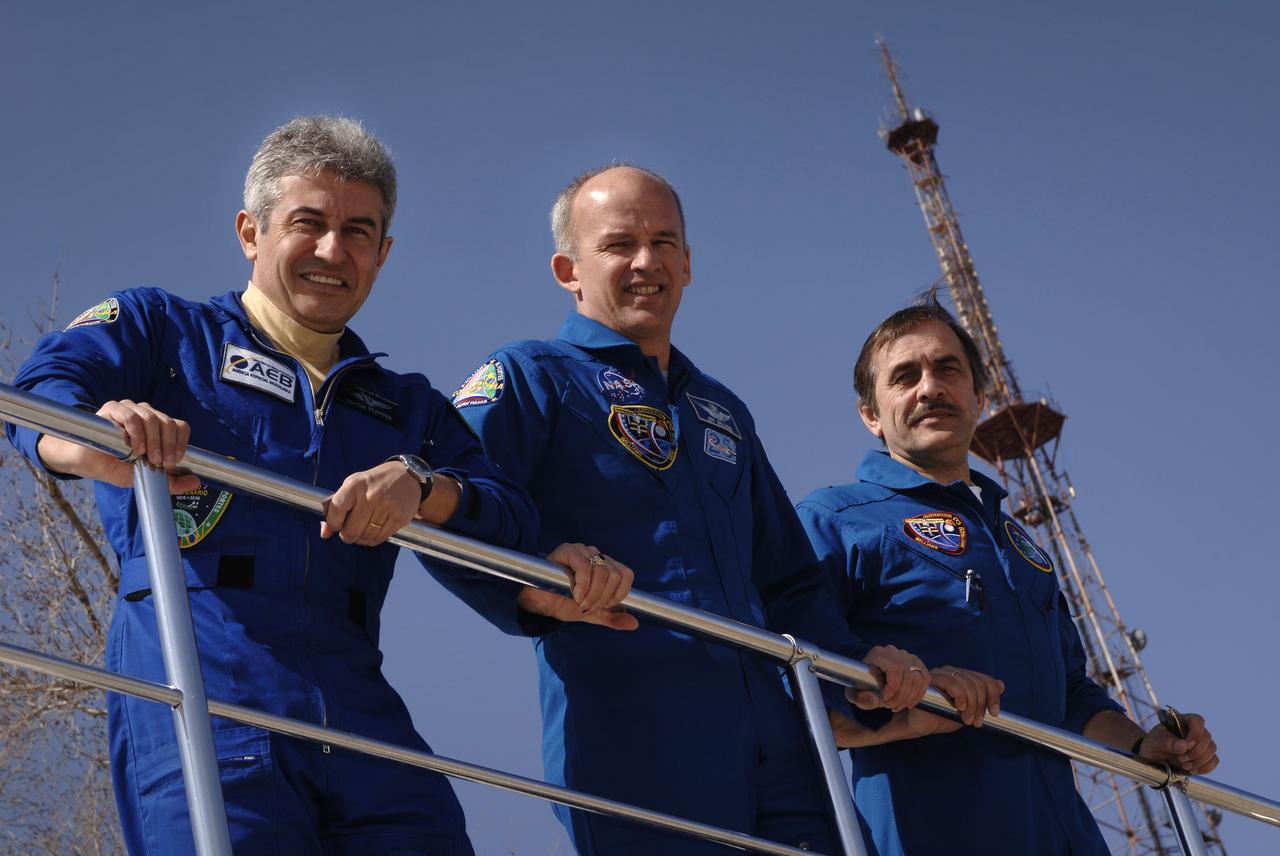
Days before their launch to the International Space Station, Marcos Pontes (left), Brazilian Space Agency Soyuz crewmember, Jeffrey N. Williams, Expedition 13 NASA International Space Station Science Officer and Flight Engineer, and Pavel V. Vinogradov, Expedition 13 Commander, take a break from their training at the Cosmonaut Hotel in Baikonur, Kazakhstan, Saturday, March 25, 2006. Photo Credit: (NASA/Bill Ingalls)
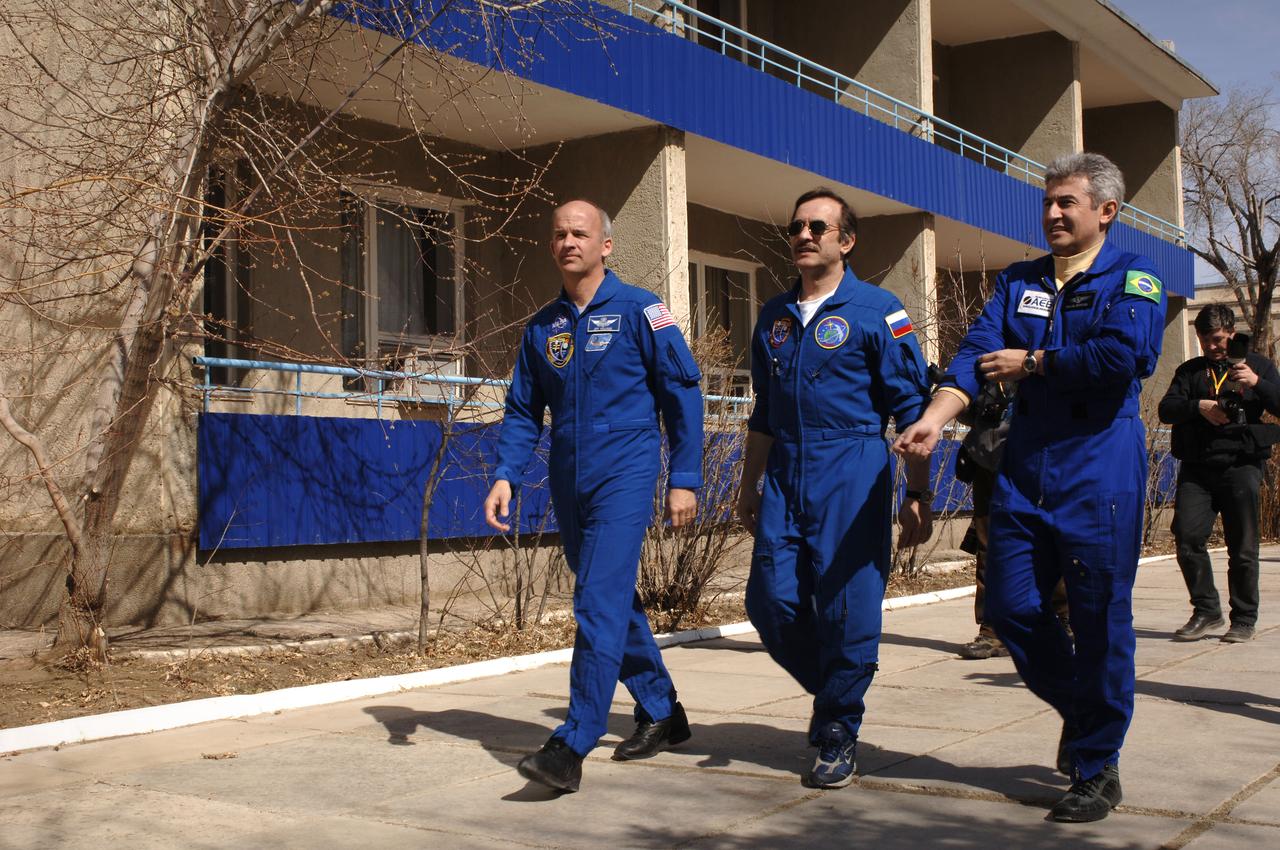
NASA Flight Engineer and Science Officer Jeffrey N. Williams, left, Expedition 13 Commander Pavel V. Vinogradov, and Brazilian Space Agency’s Soyuz crewmember Marcos Pontes, right, take a break from their training at the Cosmonaut Hotel in Baikonur, Kazakhstan, Saturday, March 25, 2006, days before their launch on a Soyuz spacecraft. Photo Credit: (NASA/Bill Ingalls)
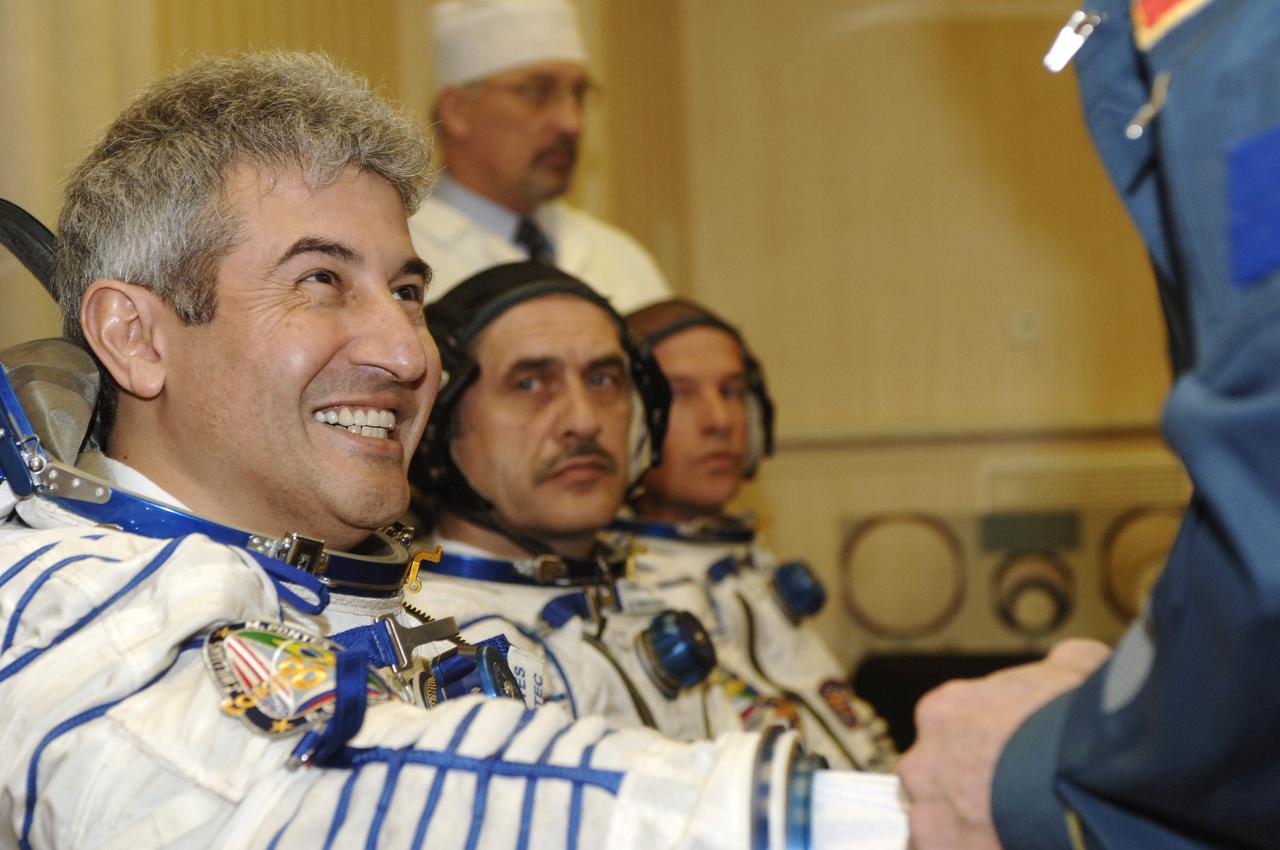
Brazilian Space Agency Soyuz crew member Marcos Pontes, left, Expedition 13 Commander Pavel V. Vinogradov, and Expedition 13 Science Officer and Flight Engineer Jeffrey N. Williams, right, don their pressure suits in building 254 of the Baikonur Cosmodrome prior to their launch from Baikonur, Kazakhstan, Thursday, March 30, 2006. Photo Credit: (NASA/Bill Ingalls)
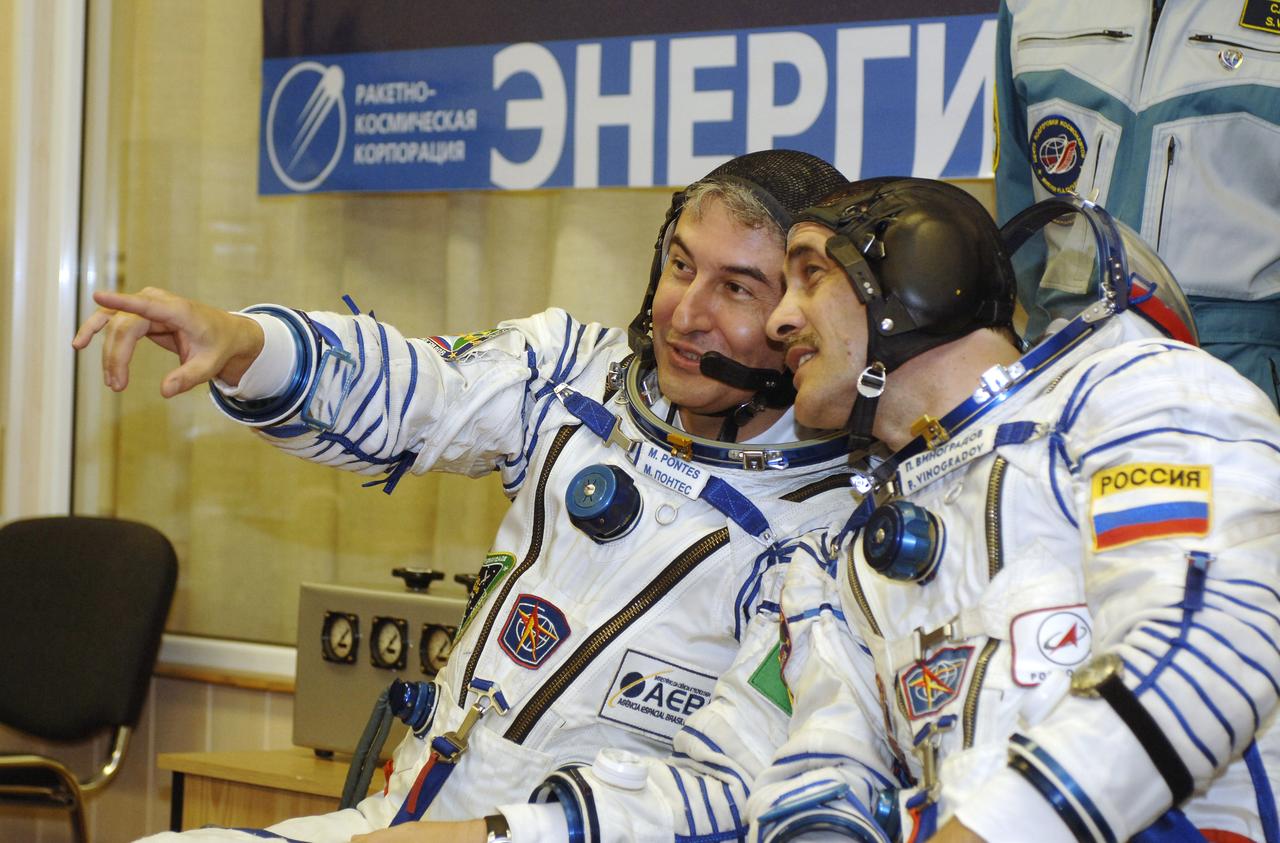
Brazilian Space Agency Soyuz crew member Marcos Pontes, left, and Expedition 13 Commander Pavel V. Vinogradov point out friends and family watching them during the pressure checks on their suits. The two will be launched onboard the Soyuz spacecraft with Expedition 13 Science Officer and Flight Engineer Jeffrey N. Williams from the Baikonur Cosmodrome, Baikonur, Kazakhstan, Thursday, March 30, 2006. Photo Credit: (NASA/Bill Ingalls)
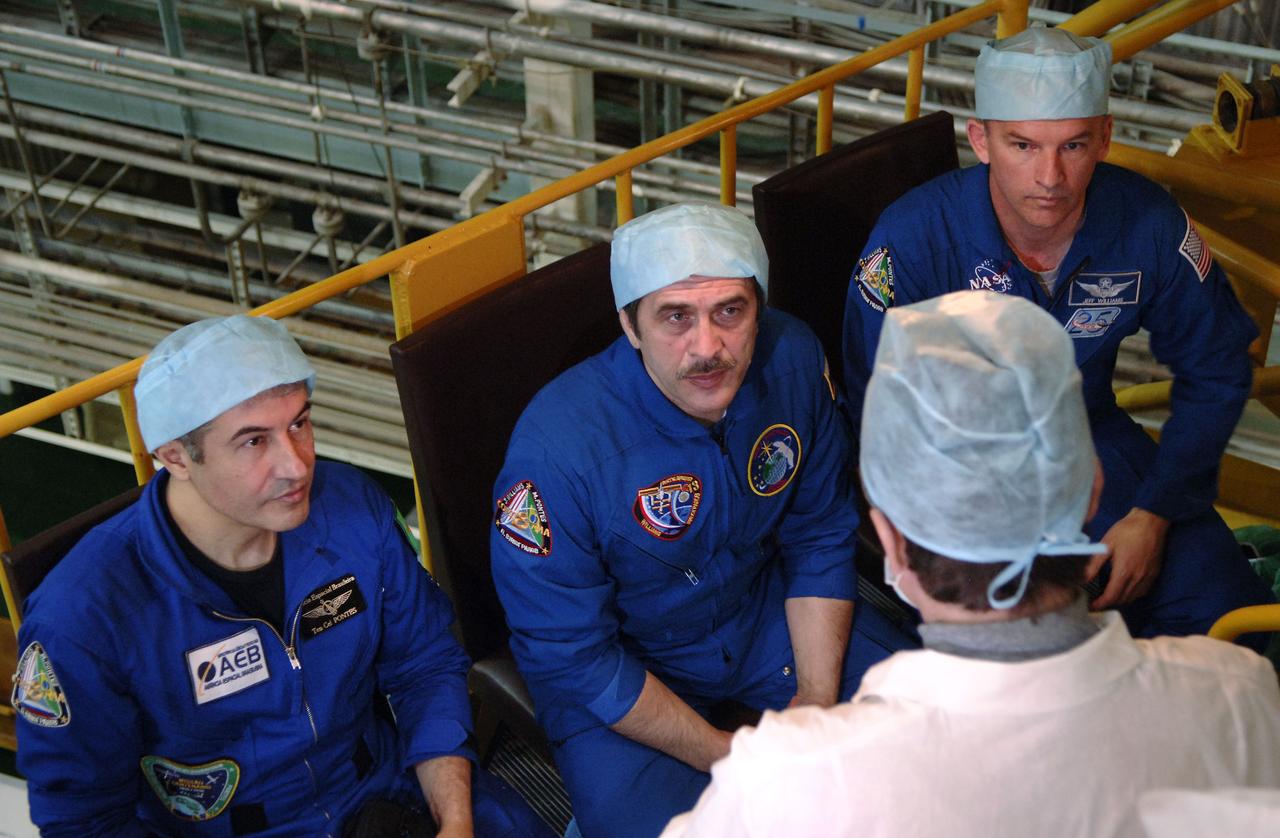
Marcos Pontes, left, Brazilian Space Agency Soyuz crew member; Pavel V. Vinogradov, Russias Federal Space Agency Expedition 13 International Space Station Commander; and Jeffrey N. Williams, right, Expedition 13 Science Officer and Flight Engineer, talk with engineers after the crew's final check of the Soyuz at building 254 of the Baikonur Cosmodrome in Baikonur, Kazakhstan days before launch to the International Space Station. Sunday, March 26, 2006. Photo Credit: (NASA/Bill Ingalls)
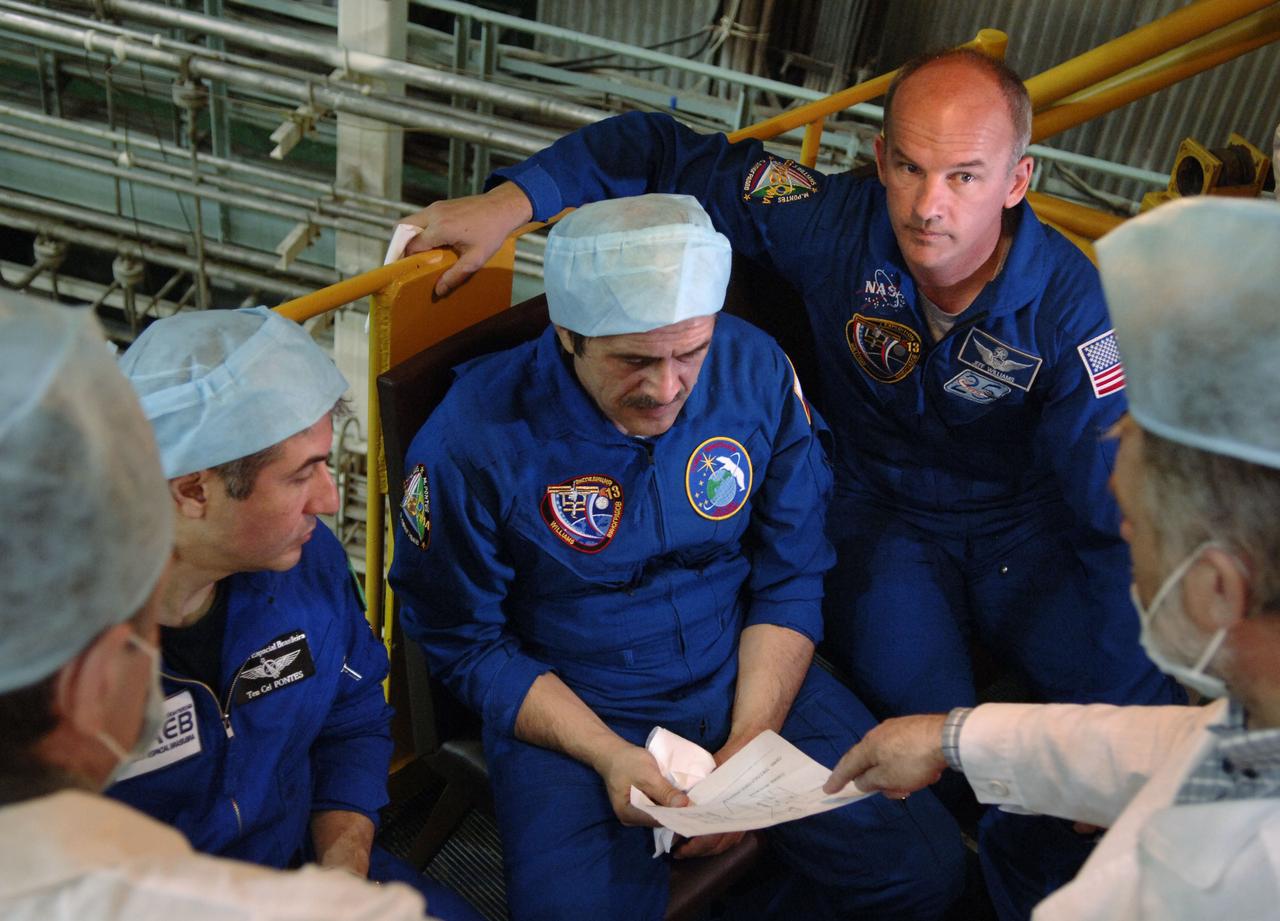
Marcos Pontes, left, Brazilian Space Agency Soyuz crew member; Pavel V. Vinogradov, Russias Federal Space Agency Expedition 13 International Space Station Commander; and Jeffrey N. Williams, right, Expedition 13 Science Officer and Flight Engineer, talk with engineers after the crew's final check of the Soyuz at building 254 of the Baikonur Cosmodrome in Baikonur, Kazakhstan days before launch to the International Space Station. Sunday, March 26, 2006. Photo Credit: (NASA/Bill Ingalls)
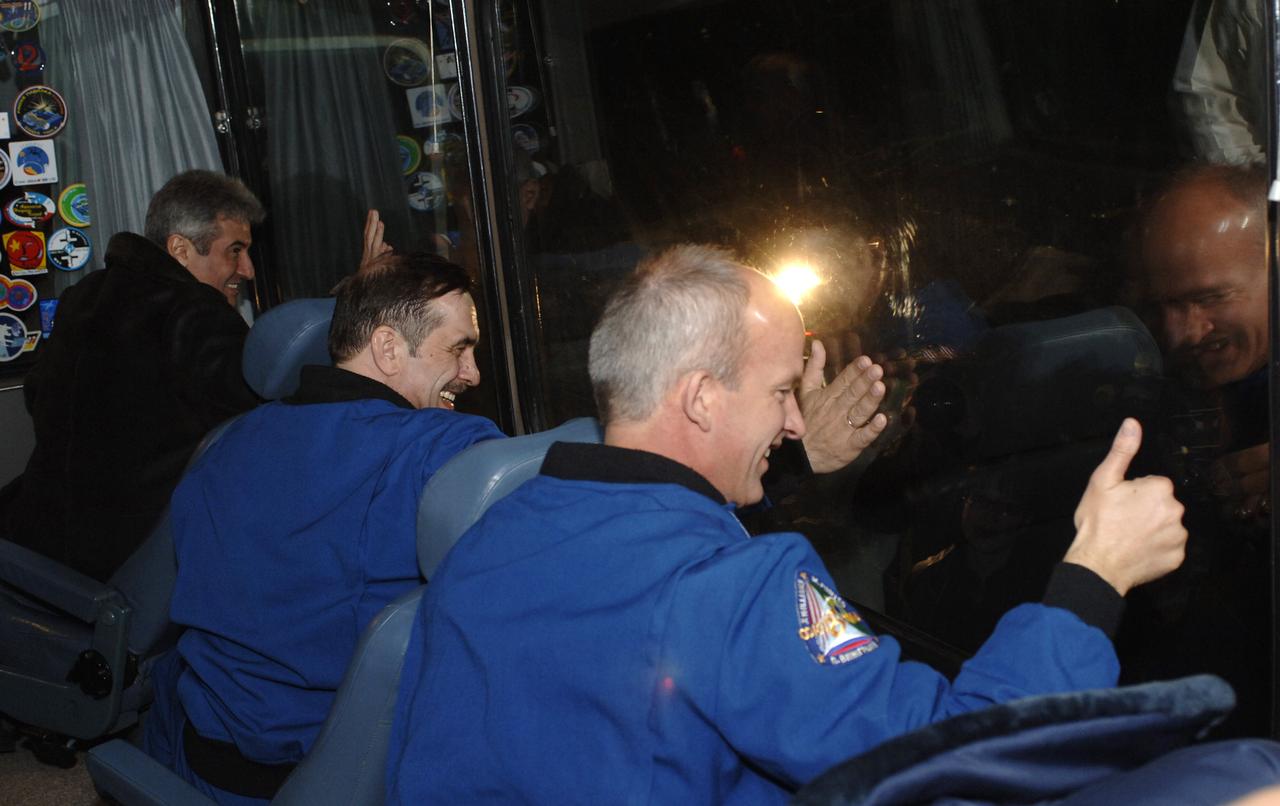
Marcos Pontes, left, Brazilian Space Agency Soyuz crew member, and Expedition 13 crew members, Pavel V. Vinogradov, Commander, and Jeffrey N. Williams, Science Officer and Flight Engineer, right, wave goodbye to friends and family at the Cosmonaut Hotel in Baikonur, Kazakhstan on Thursday, March 30, 2006. Photo Credit: (NASA/Bill Ingalls)
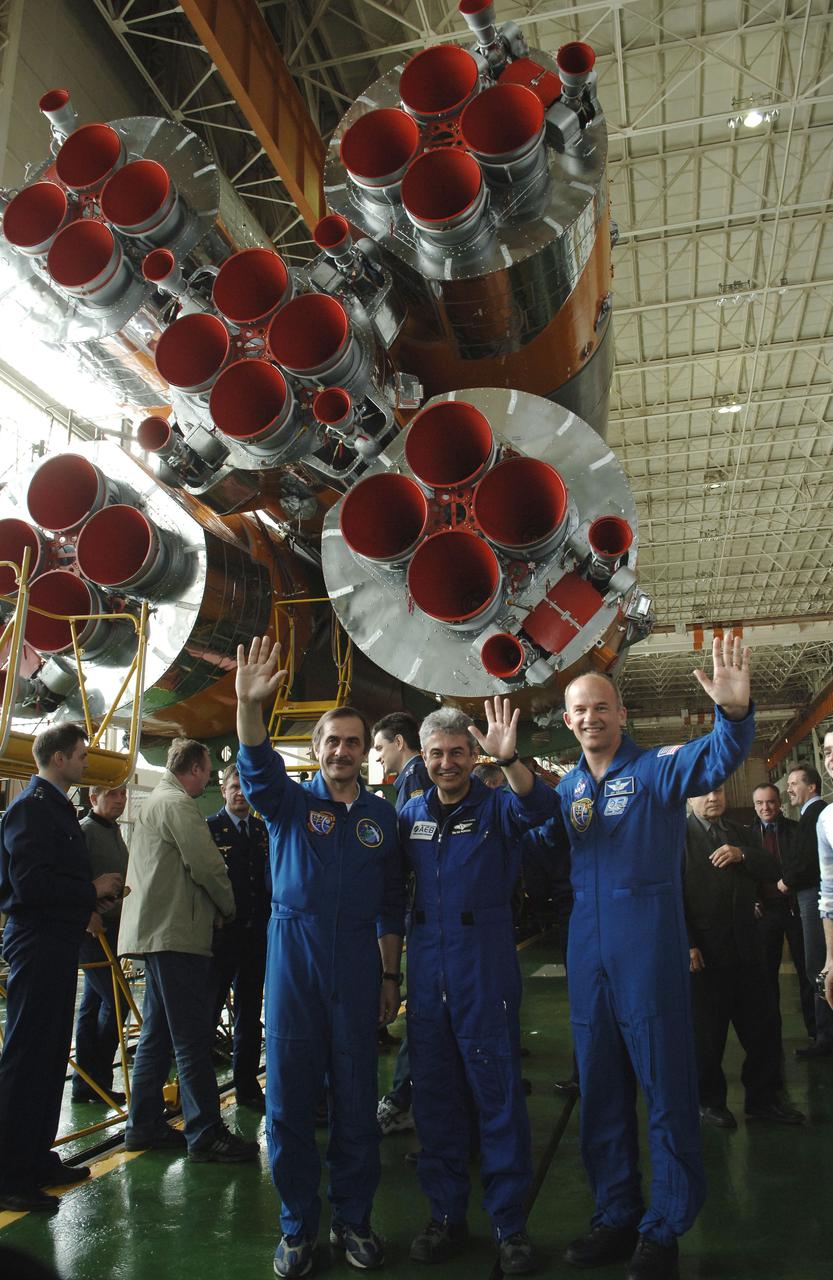
Pavel V. Vinogradov, right, Russia’s Federal Space Agency Expedition 13 International Space Station Commander; Marcos Pontes, Brazilian Space Agency Soyuz crew member; and Jeffrey N. Williams, left, Expedition 13 Science Officer and Flight Engineer, waves at media representatives during a tour of the Soyuz assembly building at the Baikonur Cosmodrome in Baikonur, Kazakhstan. Sunday, March 26, 2006. Photo Credit: (NASA/Bill Ingalls)
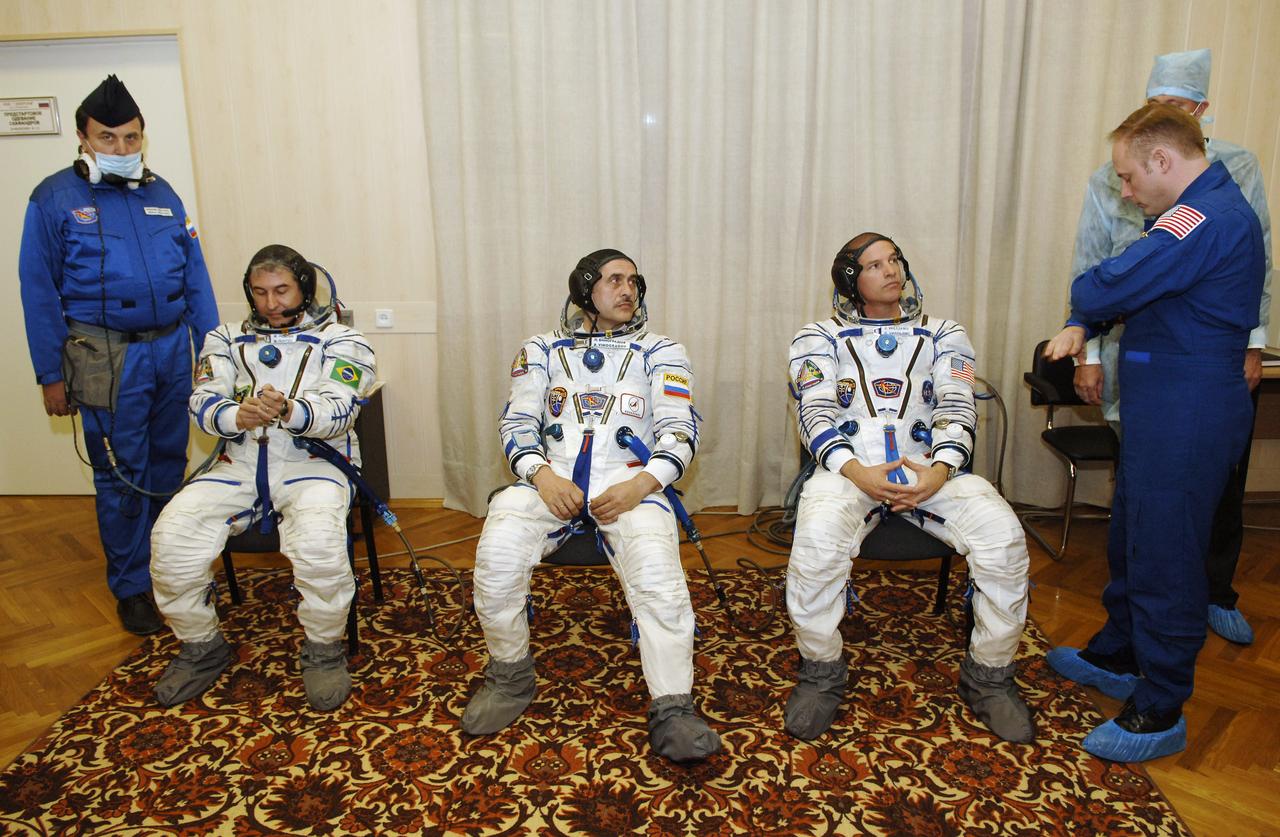
Brazilian Space Agency Soyuz crew member Marcos Pontes, left, and Expedition 13 Commander Pavel V. Vinogradov, and Expedition 13 Science Officer and Flight Engineer Jeffrey N. Williams, right, don their pressure suits in building 254 of the Baikonur Cosmodrome prior to their launch from Baikonur, Kazakhstan. Thursday, March 30, 2006. Photo Credit: (NASA/Bill Ingalls)
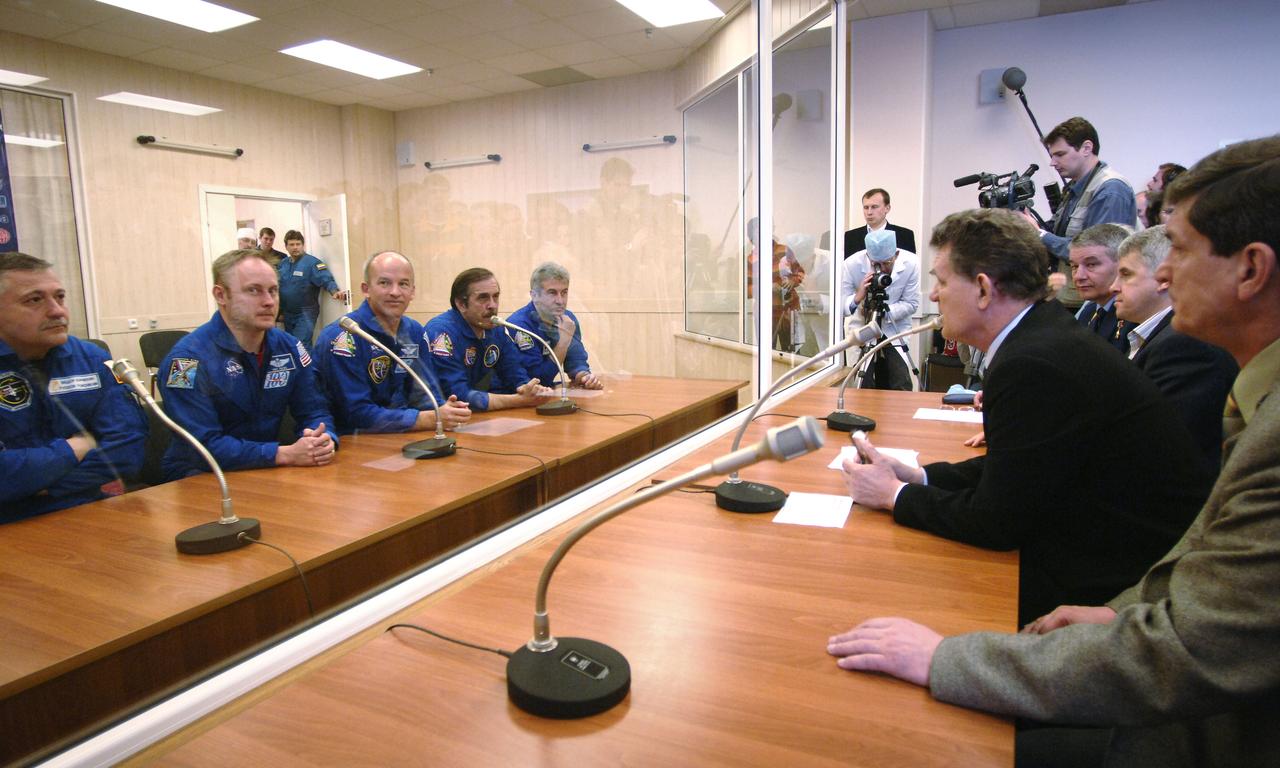
Prime and backup crew members for the Expedition 13 mission talk with officials at building 254 of the Baikonur Cosmodrome during their final check of the Soyuz spacecraft. Backup crew members, left to right, Fyodor N. Yurchikhin, Commander; Michael Fincke, NASA International Space Station Science Officer and Flight Engineer; and prime crew members Jeffrey N. Williams, NASA International Space Station Science Officer and Flight Engineer; Pavel V. Vinogradov, Commander; and Marcos Pontes, Brazilian Space Agency Soyuz crew member. Sunday, March 26, 2006. Photo Credit: (NASA/Bill Ingalls)
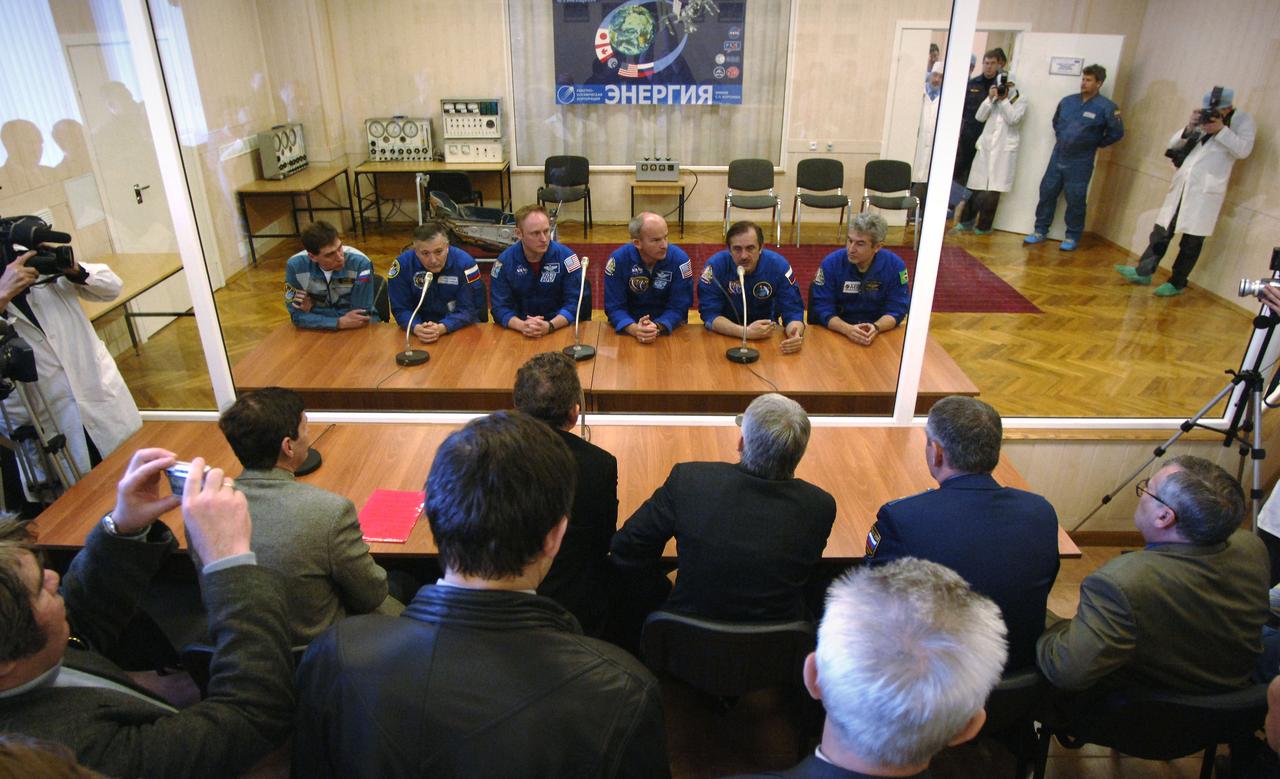
Prime and backup crew members for the Expedition 13 mission talk with officials at building 254 of the Baikonur Cosmodrome during their final check of the Soyuz spacecraft. Backup crew members, left to right, Sergei Volkov, Fyodor N. Yurchikhin, Commander; Michael Fincke, NASA International Space Station Science Officer and Flight Engineer; and prime crew members Jeffrey N. Williams, NASA International Space Station Science Officer and Flight Engineer; Pavel V. Vinogradov, Commander; and Marcos Pontes, Brazilian Space Agency Soyuz crew member. Sunday, March 26, 2006. Photo Credit: (NASA/Bill Ingalls)
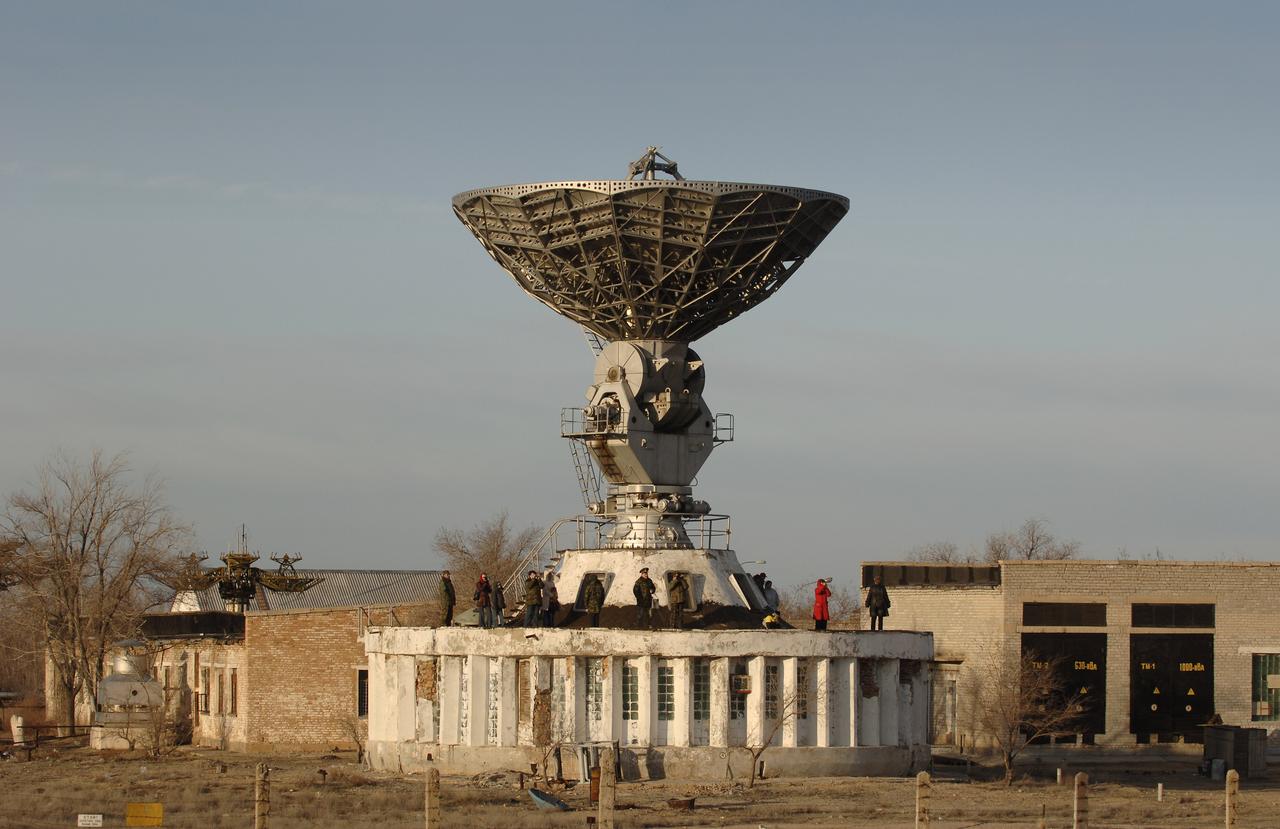
Spectators try to grab the highest viewing point to watch the launch of the Soyuz spacecraft. The Soyuz TMA-8 spacecraft launched with Expedition 13 crew members Pavel V. Vinogradov, Commander; Jeffrey N. Williams, Science Officer and Flight Engineer; and Marcos Pontes, Brazilian Space Agency Soyuz crew member. They began their mission Wednesday evening launching from Baikonur, Kazakhstan at 8:30 a.m. (Kazakhstan time). Pontes will return home with Expedition 12 on April 8, 2006. Photo Credit: (NASA/Bill Ingalls)
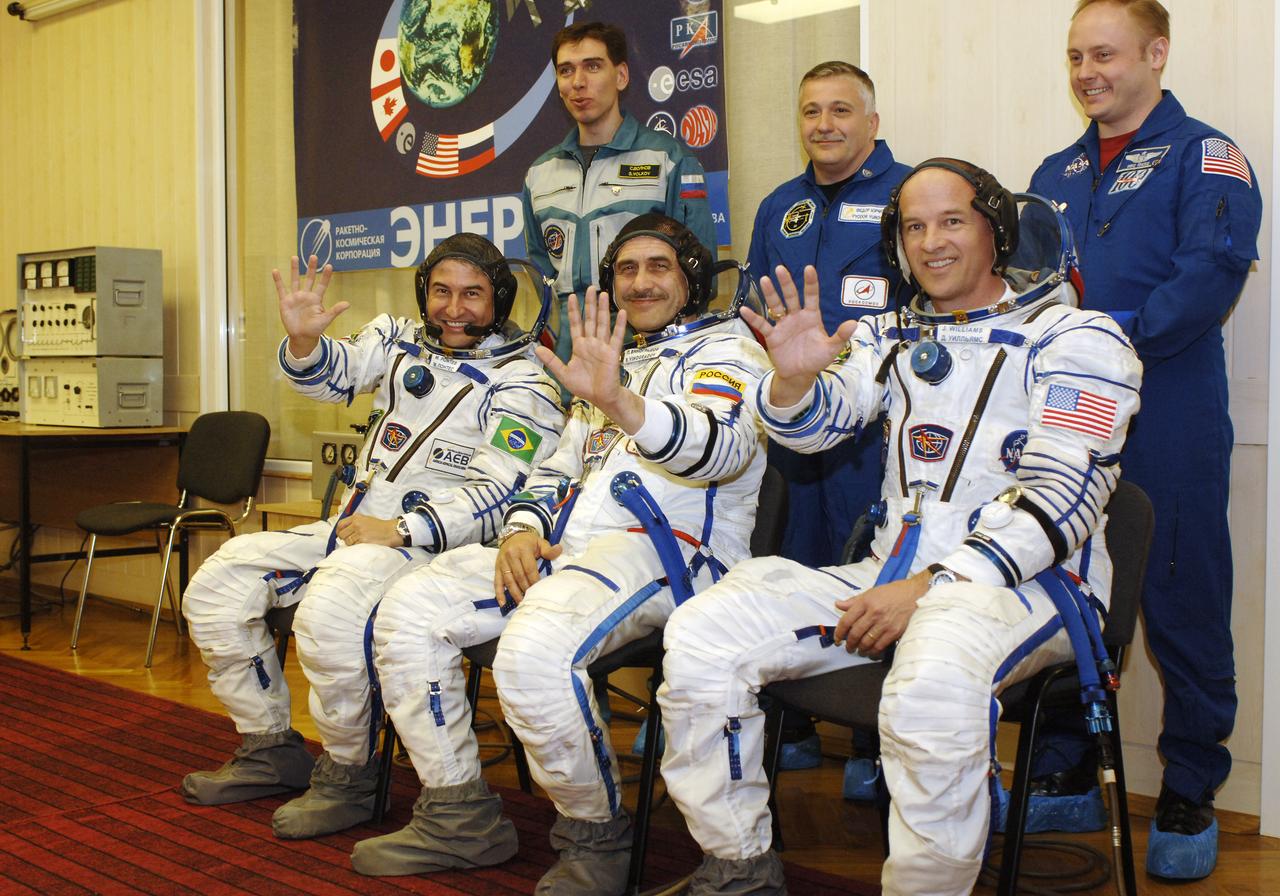
Prime and backup crew members for the upcoming mission to the International Space Station wave at the camera at Baikonur Cosmodrome during the final pressure checks of their suits. Backup crew: Sergei Volkov, standing left, Russia’s Federal Space Agency Soyuz crew member; Fyodor N. Yurchikhin, Commander; and Edward M. (Mike) Fincke, standing right, Science Officer and Flight Engineer. Prime crew: Marcos Pontes, seated left, Brazilian Space Agency Soyuz crew member; Expedition 13 crew members Pavel V. Vinogradov, Commander, and Jeffrey N. Williams, seated right, Science Officer and Flight Engineer. Baikonur, Kazakhstan. Thursday, March 30, 2006. Photo Credit: (NASA/Bill Ingalls)
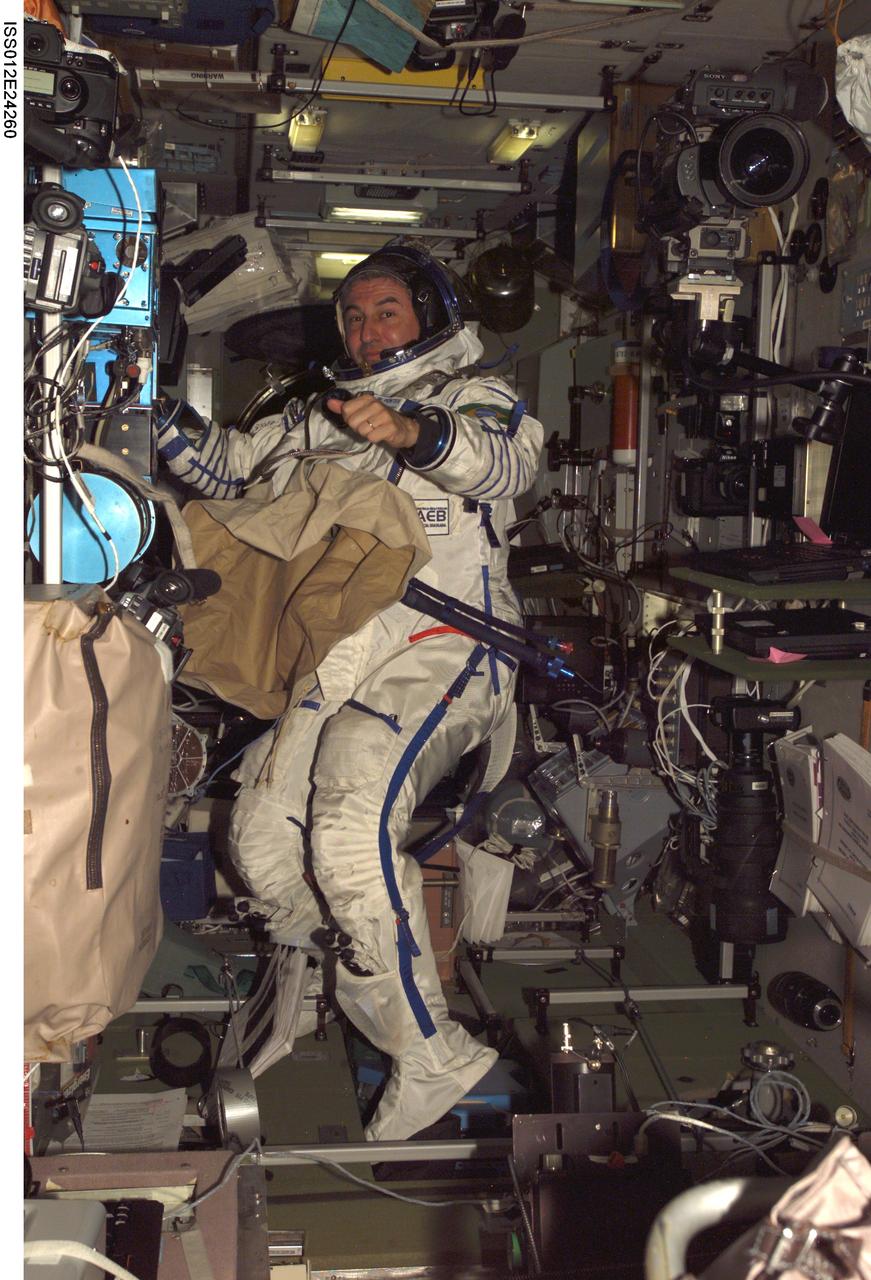
ISS012-E-24260 (8 April 2006) --- Brazilian Space Agency astronaut Marcos C. Pontes, attired in a Russian Sokol spacesuit, works in the Destiny laboratory of the International Space Station prior to his departure in a Soyuz TMA-7 spacecraft.
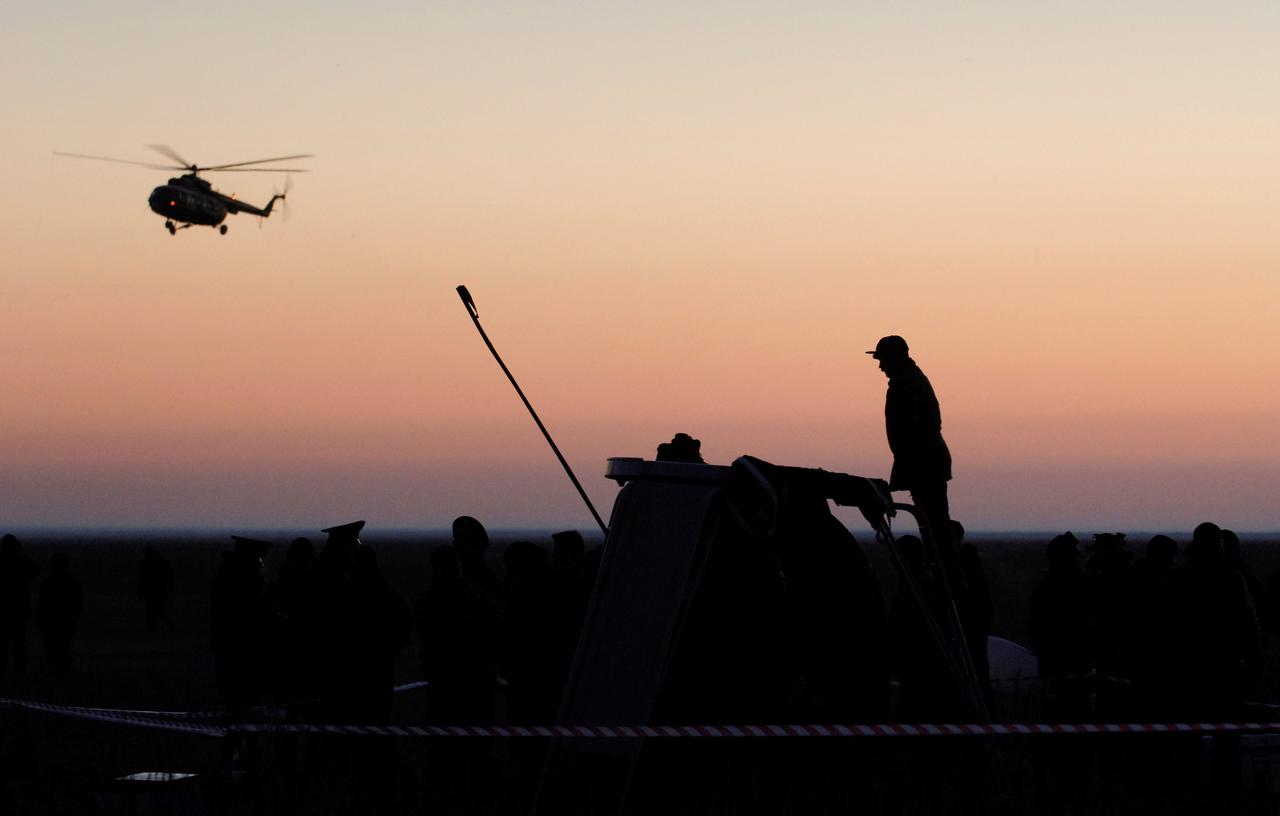
JSC2006-E-16029 (9 April 2006) --- A Russian search and rescue helicopter flies over Arkalyk airport, Kazakhstan. Astronaut William S. (Bill) McArthur, Jr., Expedition 12 commander and NASA space station science officer; cosmonaut Valery I. Tokarev, flight engineer and Soyuz commander representing Russia's Federal Space Agency; and Brazilian astronaut Marco C. Pontes brought their Soyuz TMA-7 capsule to a pre-dawn landing on April 9, 2006 (Kazakhstan time). McArthur and Tokarev completed six months in space on the station, while Pontes spent 10 days in orbit. Photo Credit: NASA/Victor Zelentsov
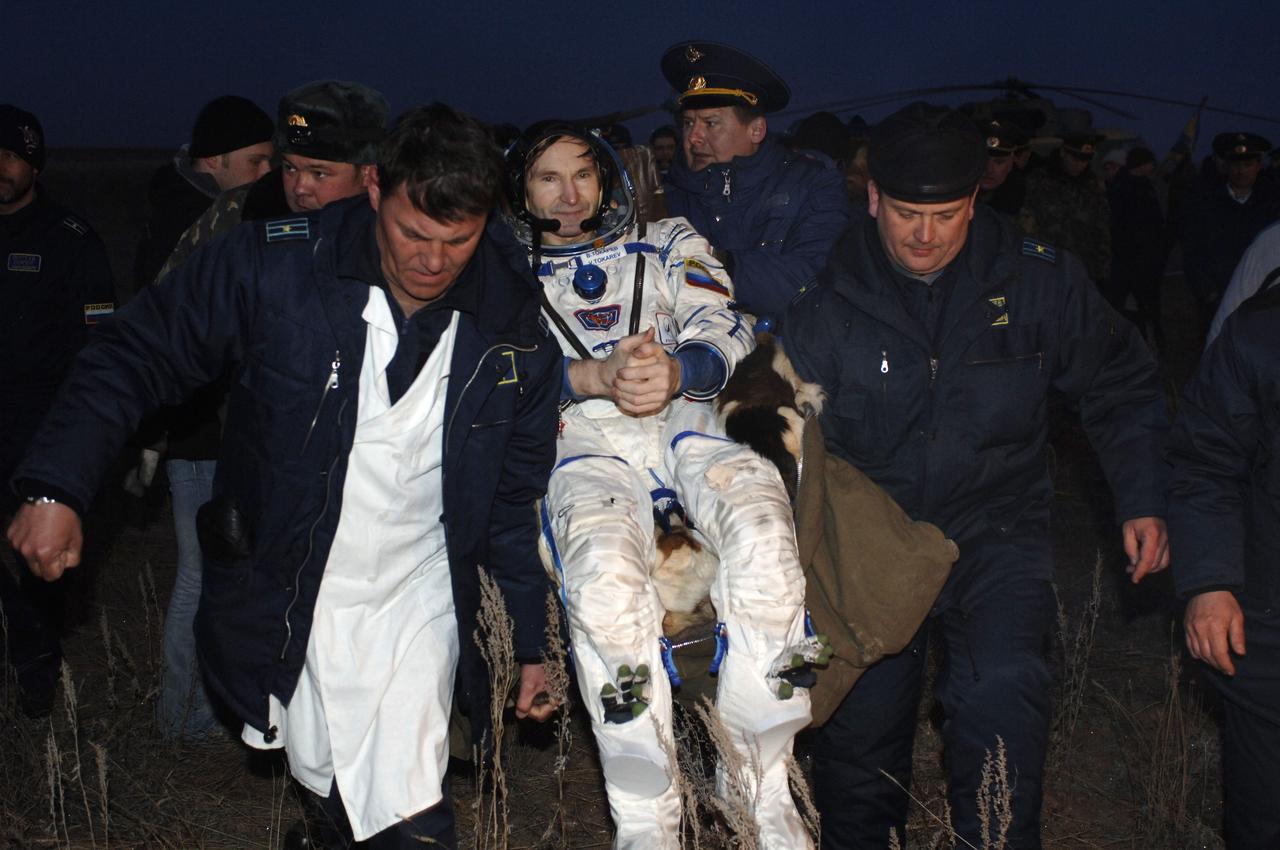
Valery I. Tokarev, Russia’s Federal Space Agency Flight Engineer and Soyuz Commander; sees more people than he's seen in six months as personnel assist him in egressing his Soyuz spacecraft. Tokarev and William S. McArthur, Jr., NASA Commander and International Space Station Science Officer; along with Marcos C. Pontes representing the Brazilian Space Agency, returned to Earth onboard the Soyuz TMA-7 spacecraft. Touch down was on Sunday, April 9, 2006, in the steppes of Kazakhstan. Pontes arrived at the station with the Expedition 13 crew on April 1. Photo Credit: (NASA/Bill Ingalls)
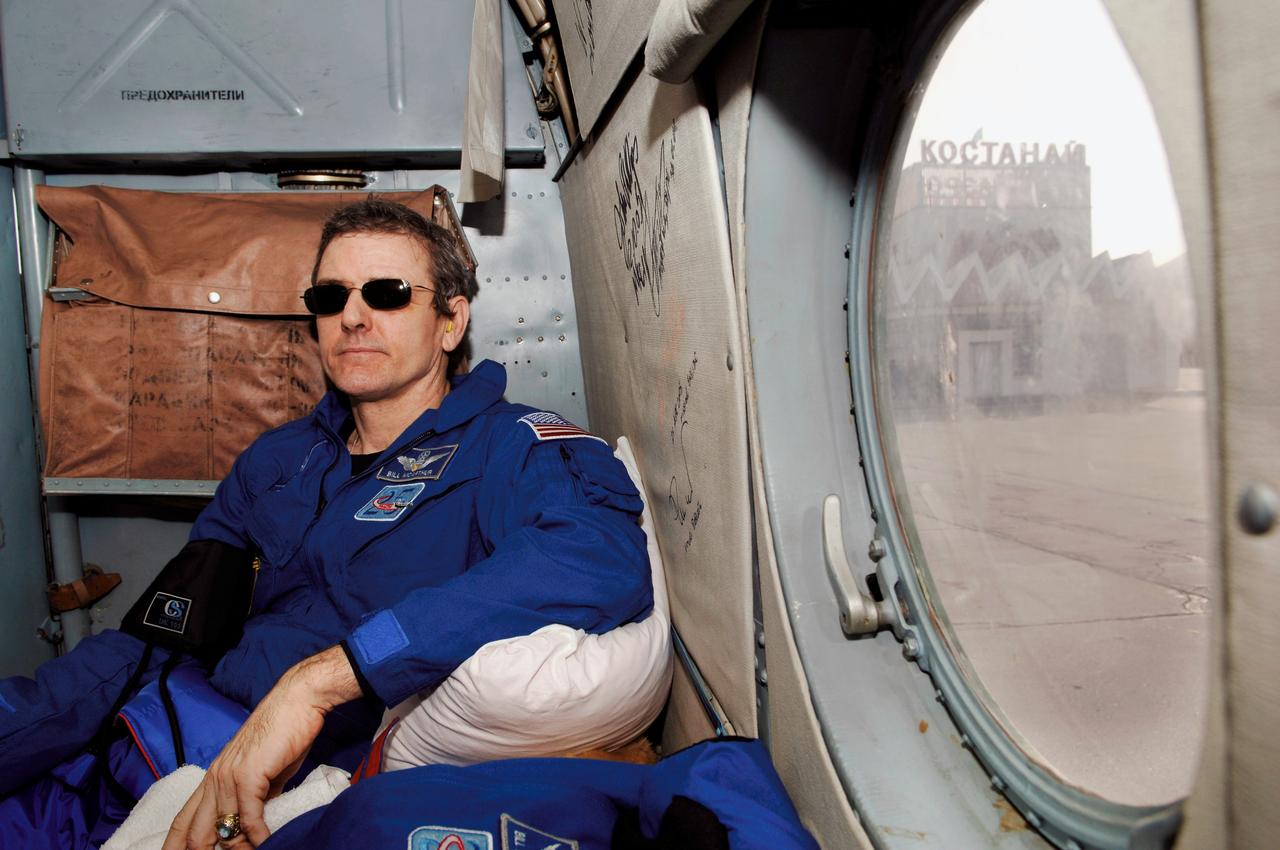
JSC2006-E-13228 (9 April 2006) --- Astronaut William S. McArthur, Jr., NASA Expedition 12 commander and International Space Station science officer, waits onboard a helicopter before transferring to an airplane for a flight back to Moscow from Kustanay, Kazakhstan. The Expedition 12 crew and astronaut Marcos Pontes, Brazilian Space Agency participant, returned to earth on the Soyuz TMA-7 spacecraft and landed in the steppes of Kazakhstan on April 9, 2006. Returning on the spacecraft along with McArthur and Pontes was cosmonaut Valery I. Tokarev, Russia’s Federal Space Agency flight engineer and Soyuz commander. Pontes arrived at the station with the Expedition 13 crew on April 1. Photo Credit: NASA/Bill Ingalls
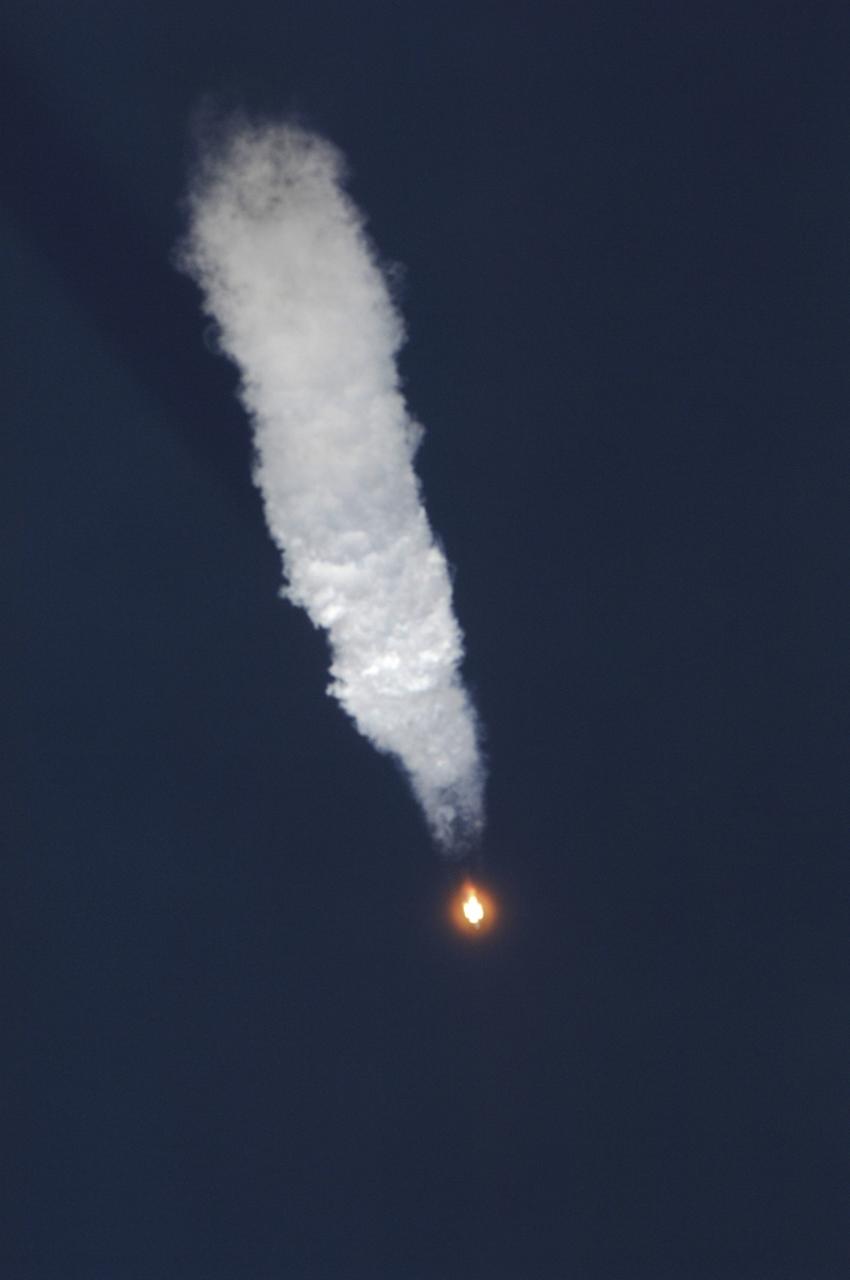
The Soyuz TMA-8 rocket launched from the Baikonur Cosmodrome in Baikonur, Kazakhstan on Wednesday, March 29, 2006 at 9:30 p.m. EST, (Thursday, March 30, 2006, 8:30 a.m. Kazakhstan time). Aboard the spacecraft are Expedition 13 Commander Pavel V. Vinogradov, Science Officer and Flight Engineer Jeffrey N. Williams, and Brazilian Space Agency Soyuz crew member Marcos Pontes. Photo Credit: (NASA/Bill Ingalls)
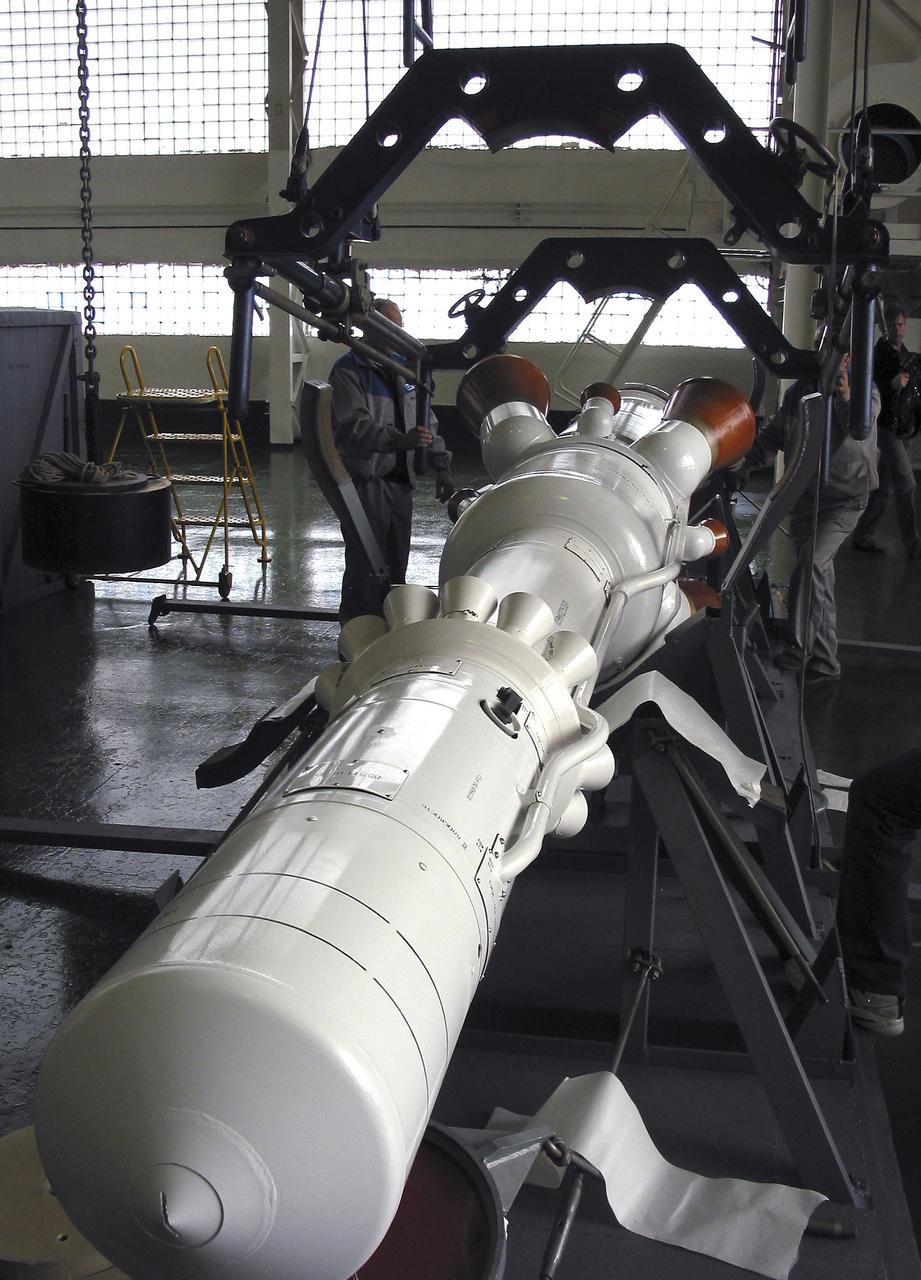
The Soyuz TMA-8 capsule was mated Monday, March 27, 2006 to its booster in preparation for the launch on March 30, 2006 carrying Expedition 13 crew members, Jeffrey N. Williams, Science Officer and Flight Engineer; Pavel V. Vinogradov, Russia’s Federal Space Agency International Space Station Commander; and Marcos Pontes, Brazilian Space Agency Soyuz crew member. Baikonur Cosmodrome in Baikonur, Kazakhstan. Photo Credit: (NASA/Victor Zelentsov)
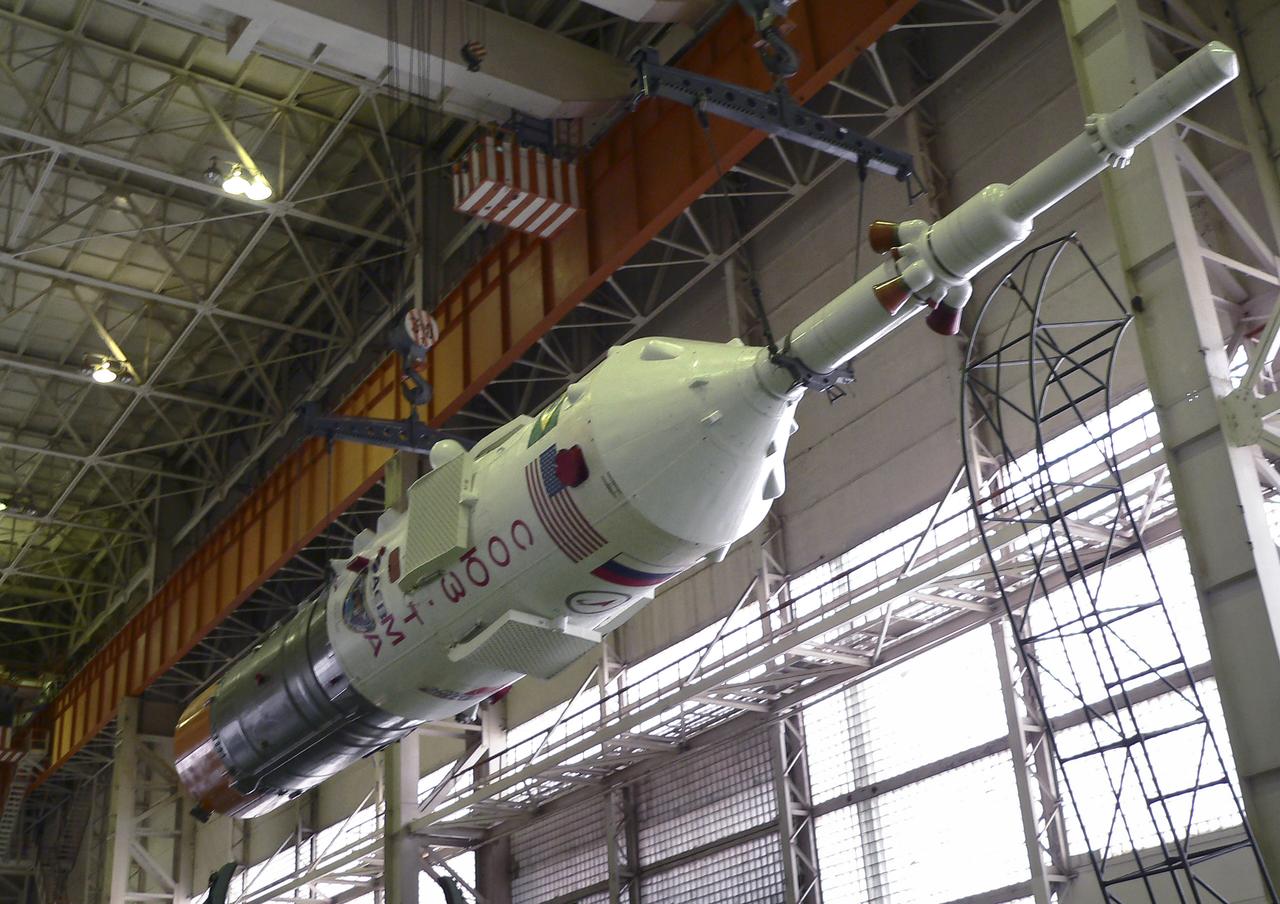
The Soyuz TMA-8 capsule was mated Monday, March 27, 2006, to its booster in preparation for the launch on March 30, 2006 carrying Expedition 13 crew members, Jeffrey N. Williams, Science Officer and Flight Engineer; Pavel V. Vinogradov, Russia’s Federal Space Agency International Space Station Commander; and Marcos Pontes, Brazilian Space Agency Soyuz crew member. Baikonur Cosmodrome in Baikonur, Kazakhstan. Photo Credit: (NASA/Victor Zelentsov)
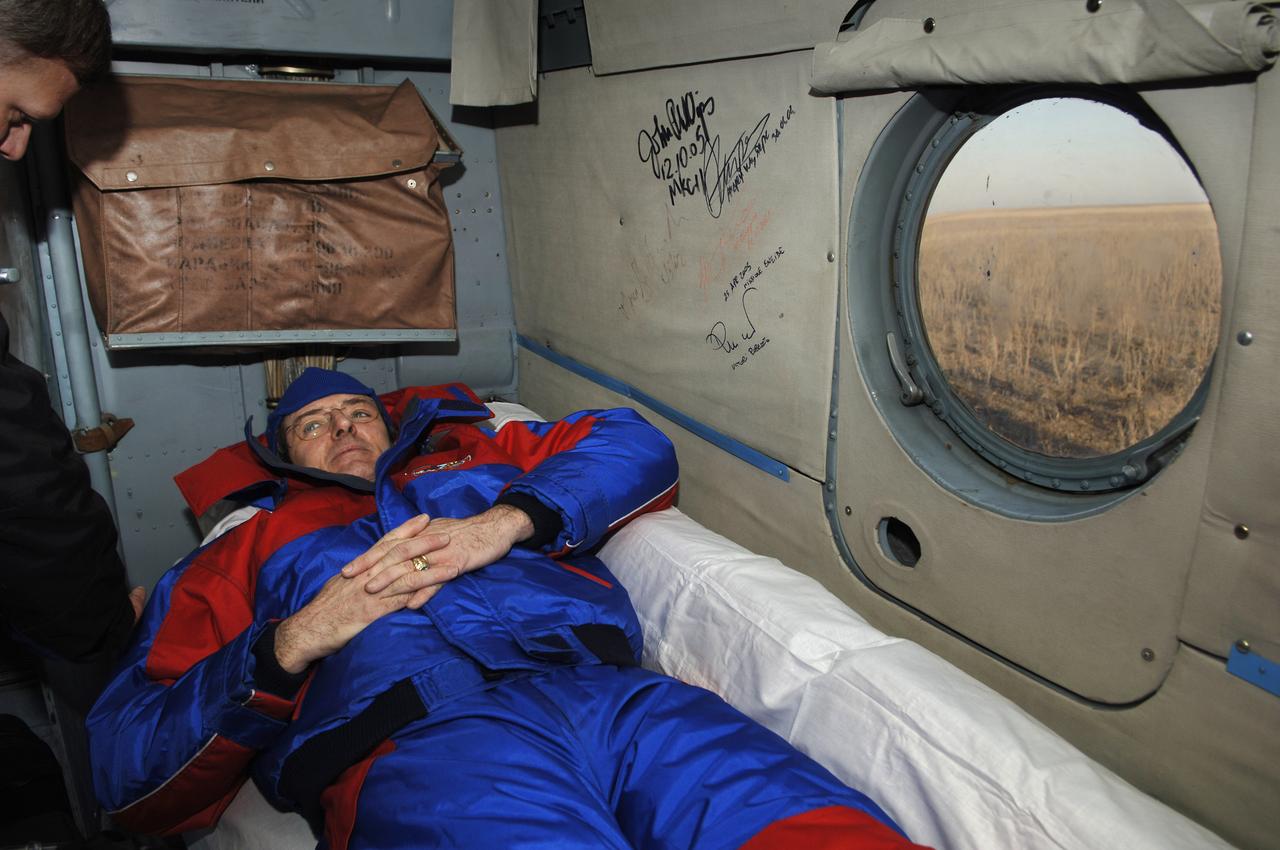
Expedition 12 Commander Bill McArthur rest onboard a Russian helicopter that will take him from the landing site to Kustanay, Kazakhstan. Expedition 12 returned to Earth and landed in the steppes of Kazakhstan onboard a Soyuz TMA-7 spacecraft that touched down at 7:48 p.m. EDT on Sunday, April 9, 2006. Returning with Commander Bill McArthur and Flight Engineer Valery Tokarev was Brazil’s first astronaut, Marcos Pontes, who arrived at the station with Expedition 13 on April 1. Photo Credit: (NASA/Bill Ingalls)
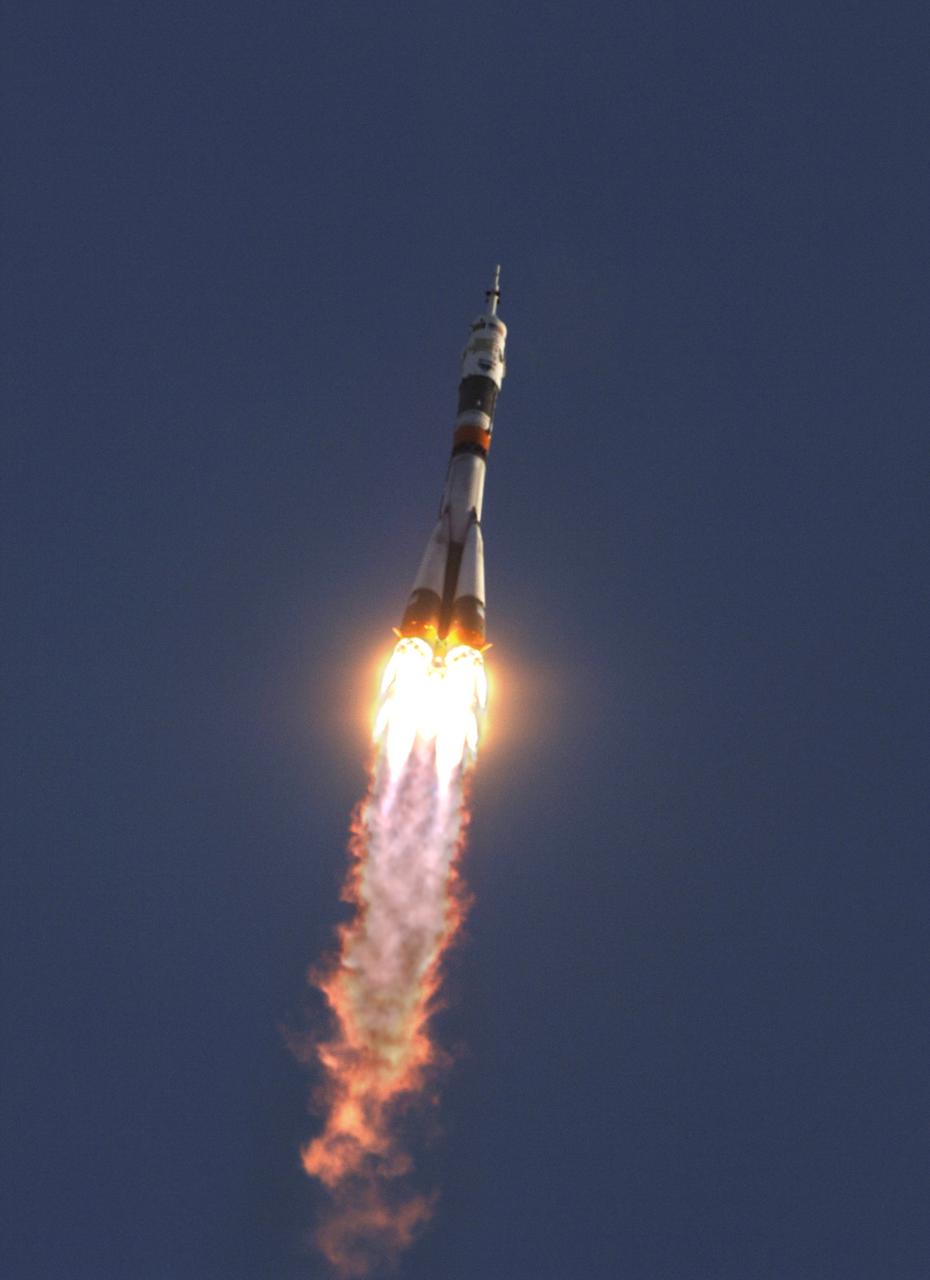
Expedition 13 Commander Pavel V. Vinogradov and Science Officer and Flight Engineer Jeffrey N. Williams began their mission Wednesday at 9:30 p.m. EST, (Thursday, March 30, 2006, 8:30 a.m. Kazakhstan time). They launched aboard a Soyuz TMA-8 rocket from the Baikonur Cosmodrome in Baikonur, Kazakhstan. Joining them for several days as a Soyuz crew member before returning home with the Expedition 12 crew is Marcos Pontes, Brazilian Space Agency. Photo Credit: (NASA/Bill Ingalls)
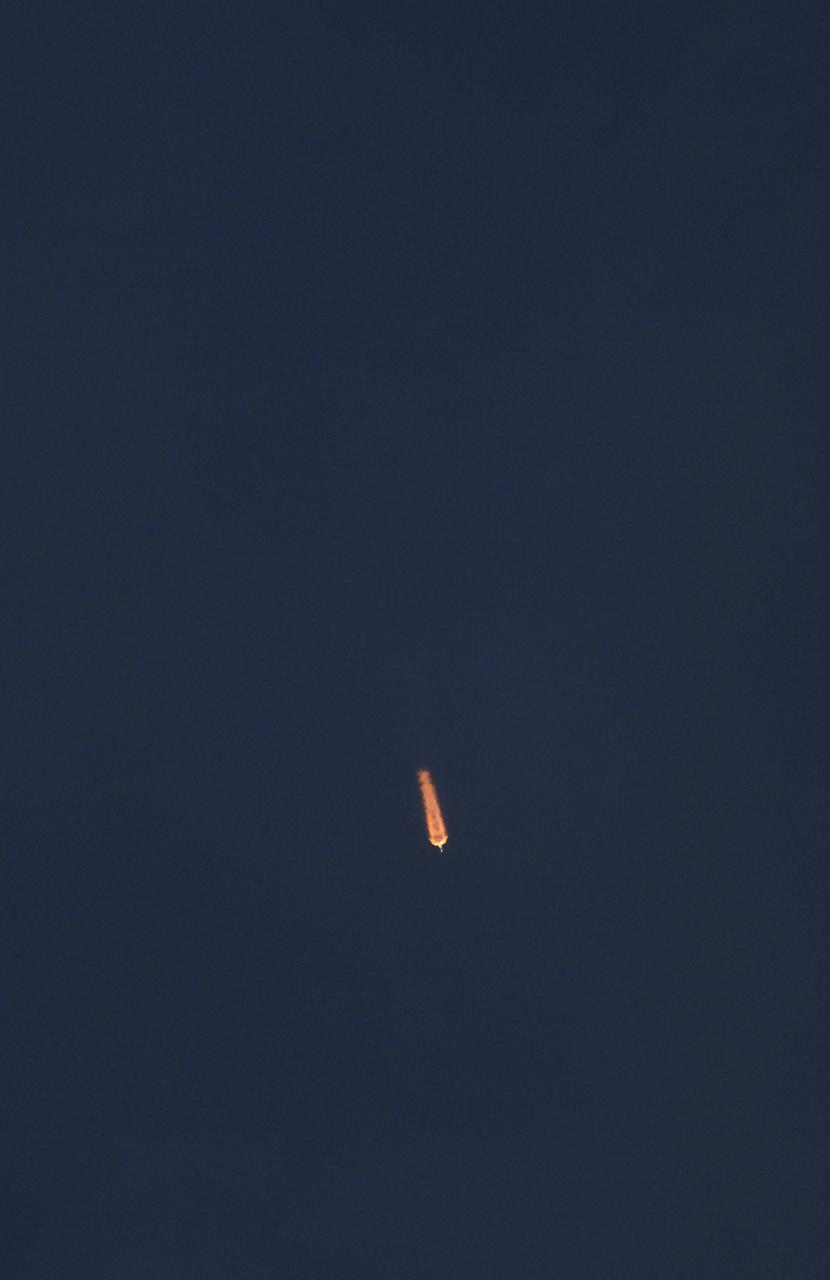
The Soyuz TMA-8 rocket launched from the Baikonur Cosmodrome in Baikonur, Kazakhstan on Wednesday, March 29, 2006 at 9:30 p.m. EST, (Thursday, March 30, 2006, 8:30 a.m. Kazakhstan time). Aboard the spacecraft are Expedition 13 Commander Pavel V. Vinogradov, Science Officer and Flight Engineer Jeffrey N. Williams, and Brazilian Space Agency Soyuz crew member Marcos Pontes. Photo Credit: (NASA/Bill Ingalls)
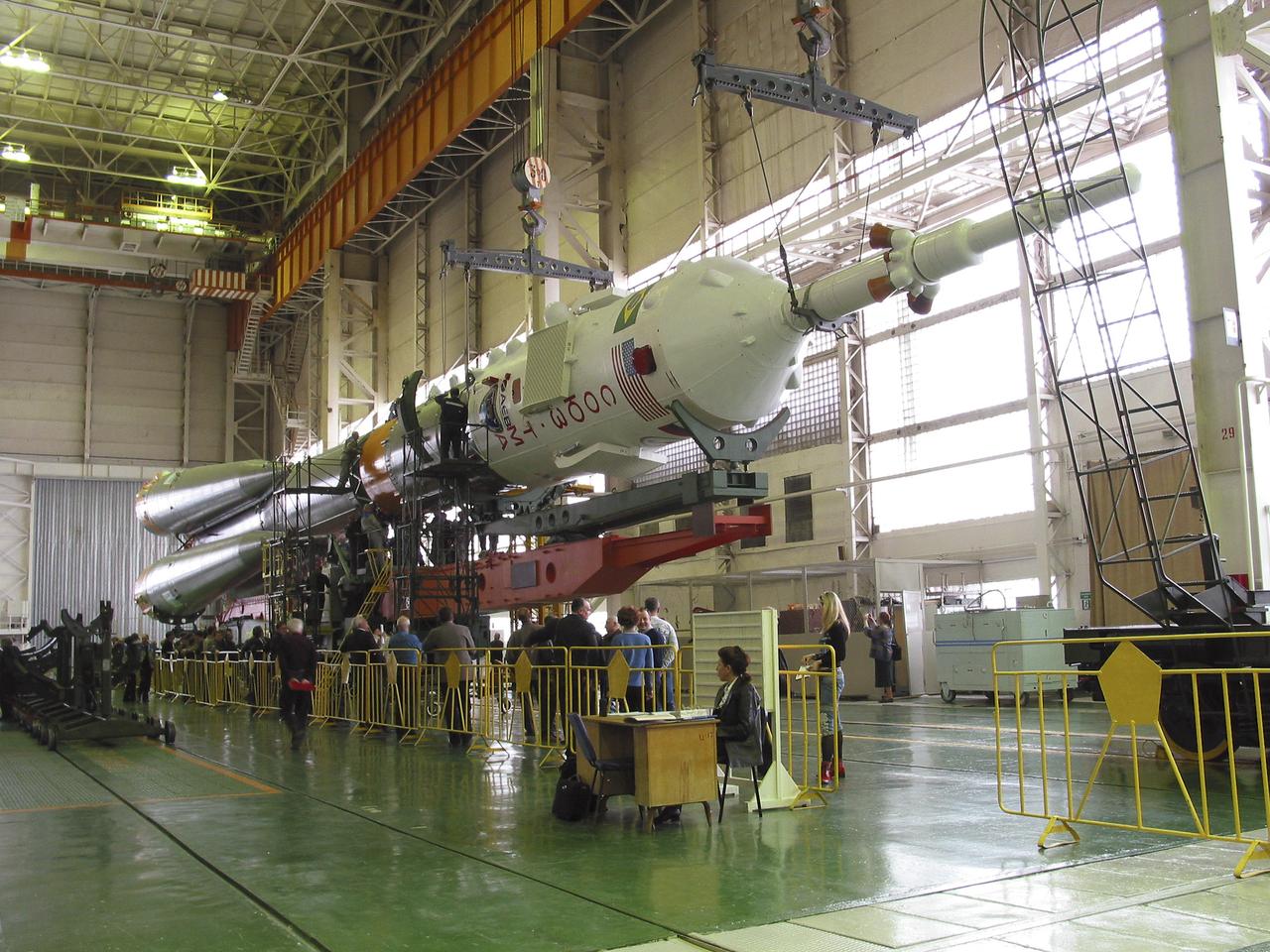
The Soyuz TMA-8 capsule was mated Monday, March 27, 2006, to its booster in preparation for the launch on March 30, 2006 carrying Expedition 13 crew members, Jeffrey N. Williams, Science Officer and Flight Engineer; Pavel V. Vinogradov, Russia’s Federal Space Agency International Space Station Commander; and Marcos Pontes, Brazilian Space Agency Soyuz crew member. Baikonur Cosmodrome in Baikonur, Kazakhstan. Photo Credit: (NASA/Victor Zelentsov)
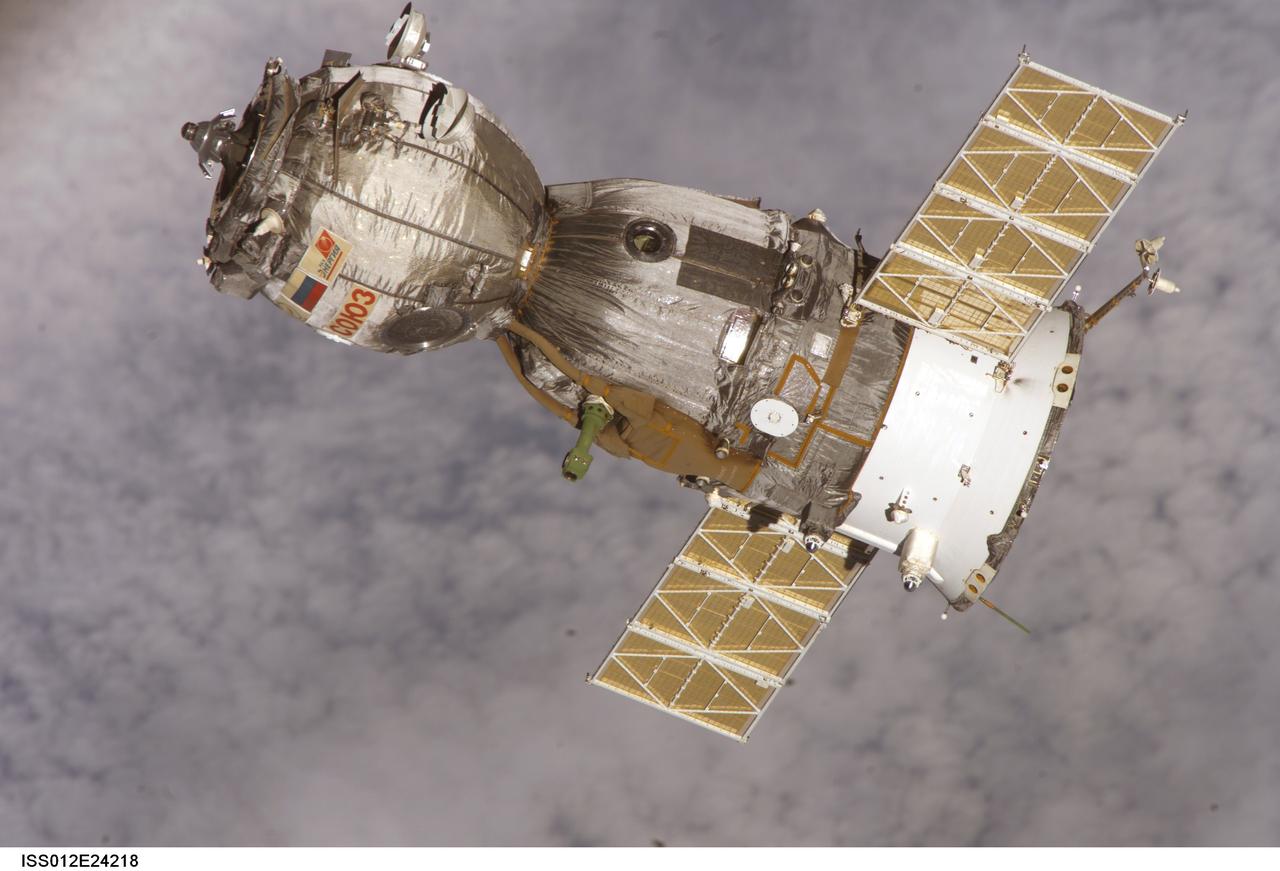
ISS012-E-24218 (8 April 2006) --- Backdropped by a blanket of clouds, the Soyuz TMA-7 spacecraft departs from the International Space Station carrying astronaut William S. (Bill) McArthur Jr., Expedition 12 commander and NASA space station science officer; Russian Federal Space Agency cosmonaut Valery I. Tokarev, flight engineer; and Brazilian Space Agency astronaut Marcos C. Pontes. Undocking occurred at 2:48 p.m. (CDT) on April 8.
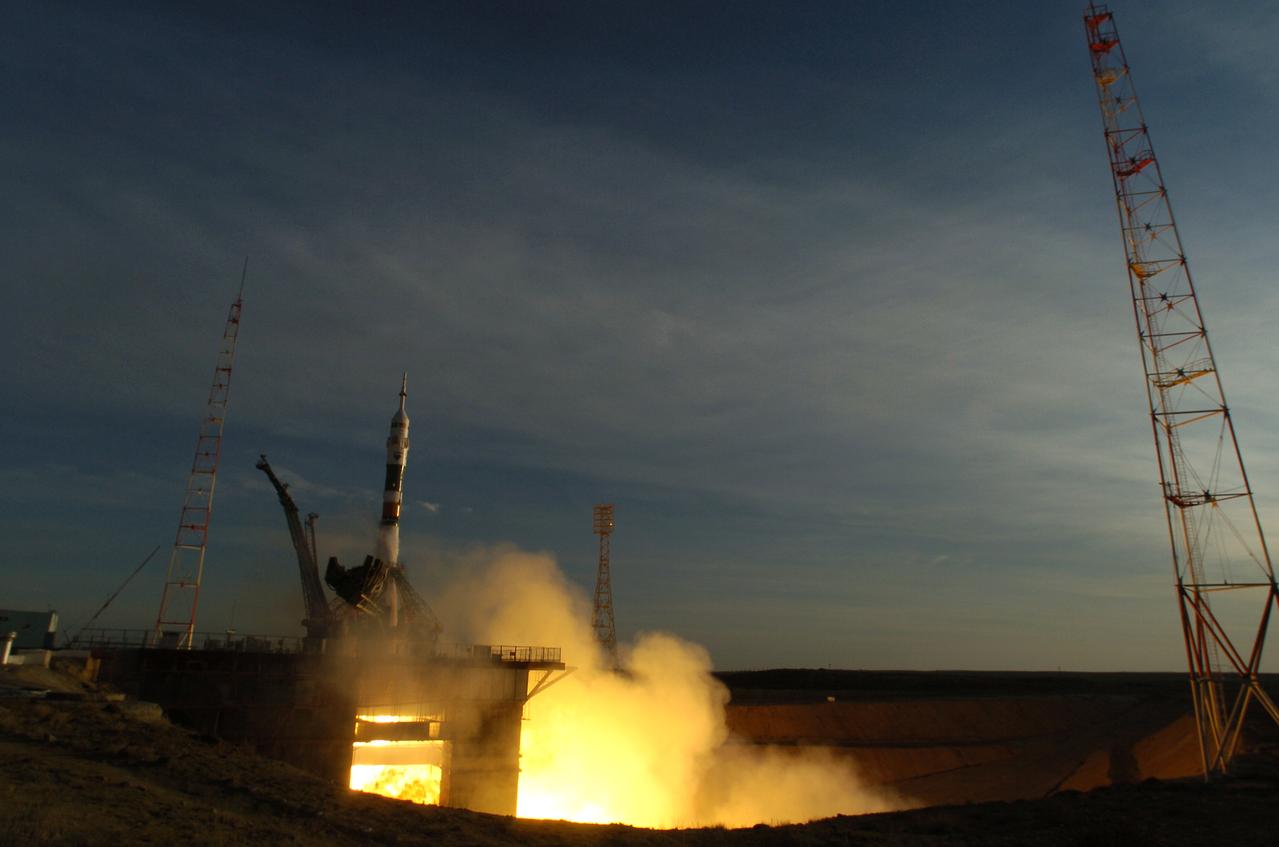
Expedition 13 Commander Pavel V. Vinogradov and Science Officer and Flight Engineer Jeffrey N. Williams began their mission Wednesday at 9:30 p.m. EST, (Thursday, March 30, 2006, 8:30 a.m. Kazakhstan time). They launched aboard a Soyuz TMA-8 rocket from the Baikonur Cosmodrome in Baikonur, Kazakhstan. Joining them for several days as a Soyuz crew member before returning home with the Expedition 12 crew is Marcos Pontes, Brazilian Space Agency. Photo Credit: (NASA/Bill Ingalls)
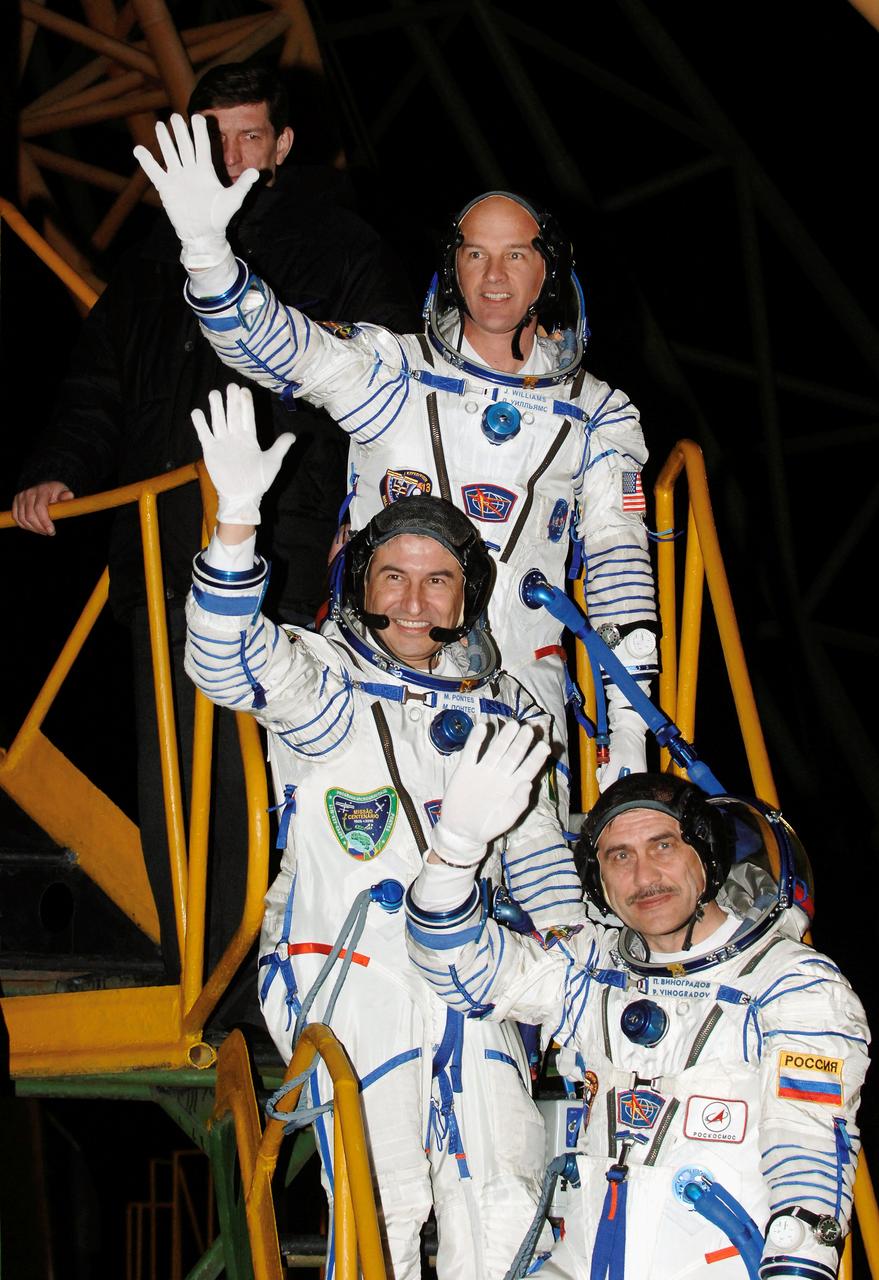
JSC2006-E-11941 (30 March 2006) --- Prime crew members for the upcoming mission to the International Space Station wave goodbye to the cameras at the launch pad. (top to bottom) Astronaut Jeffrey N. Williams, NASA International Space Station science officer and flight engineer; astronaut Marcos Pontes, Brazilian Space Agency Soyuz crew member; and cosmonaut Pavel V. Vinogradov, Russia’s Federal Space Agency International Space Station commander. Baikonur, Kazakhstan. Photo Credit: NASA/Bill Ingalls
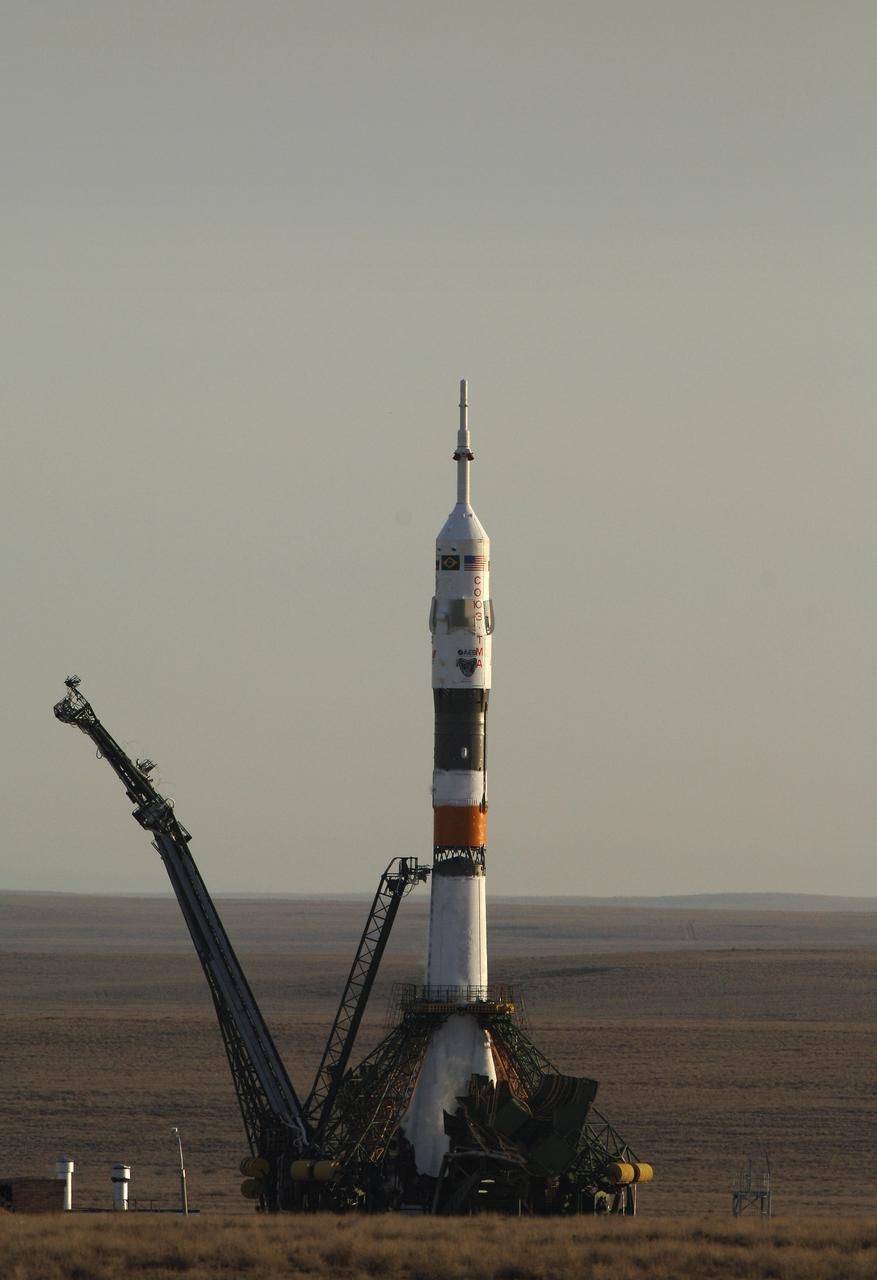
Expedition 13 Commander Pavel V. Vinogradov and Science Officer and Flight Engineer Jeffrey N. Williams began their mission Wednesday at 9:30 p.m. EST, (Thursday, March 30, 2006, 8:30 a.m. Kazakhstan time). They launched aboard a Soyuz TMA-8 rocket from the Baikonur Cosmodrome in Baikonur, Kazakhstan. Joining them for several days as a Soyuz crew member before returning home with the Expedition 12 crew is Marcos Pontes, Brazilian Space Agency. Photo Credit: (NASA/Bill Ingalls)
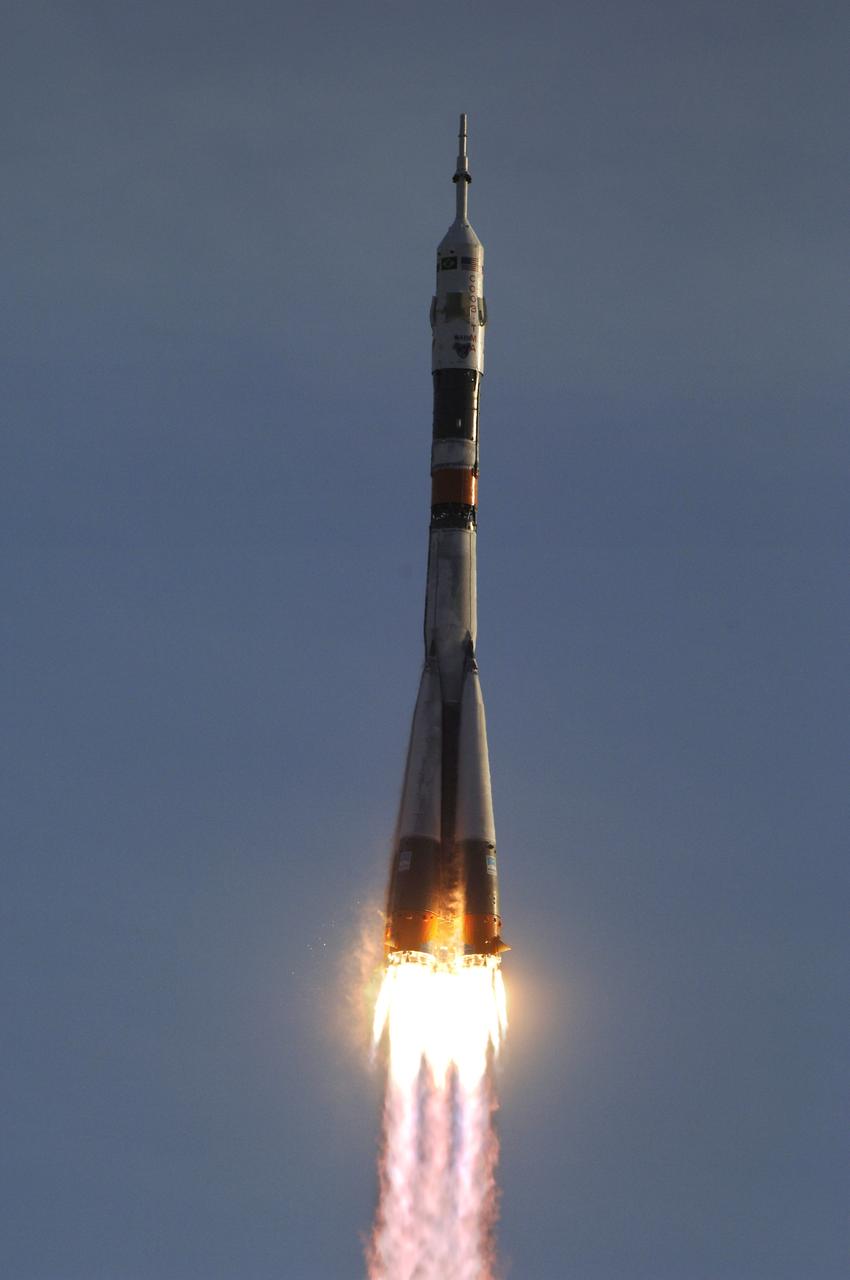
The Soyuz TMA-8 rocket launched from the Baikonur Cosmodrome in Baikonur, Kazakhstan on Wednesday, March 29, 2006 at 9:30 p.m. EST, (Thursday, March 30, 2006, 8:30 a.m. Kazakhstan time). Aboard the spacecraft are Expedition 13 Commander Pavel V. Vinogradov, Science Officer and Flight Engineer Jeffrey N. Williams, and Brazilian Space Agency Soyuz crew member Marcos Pontes. Photo Credit: (NASA/Bill Ingalls)
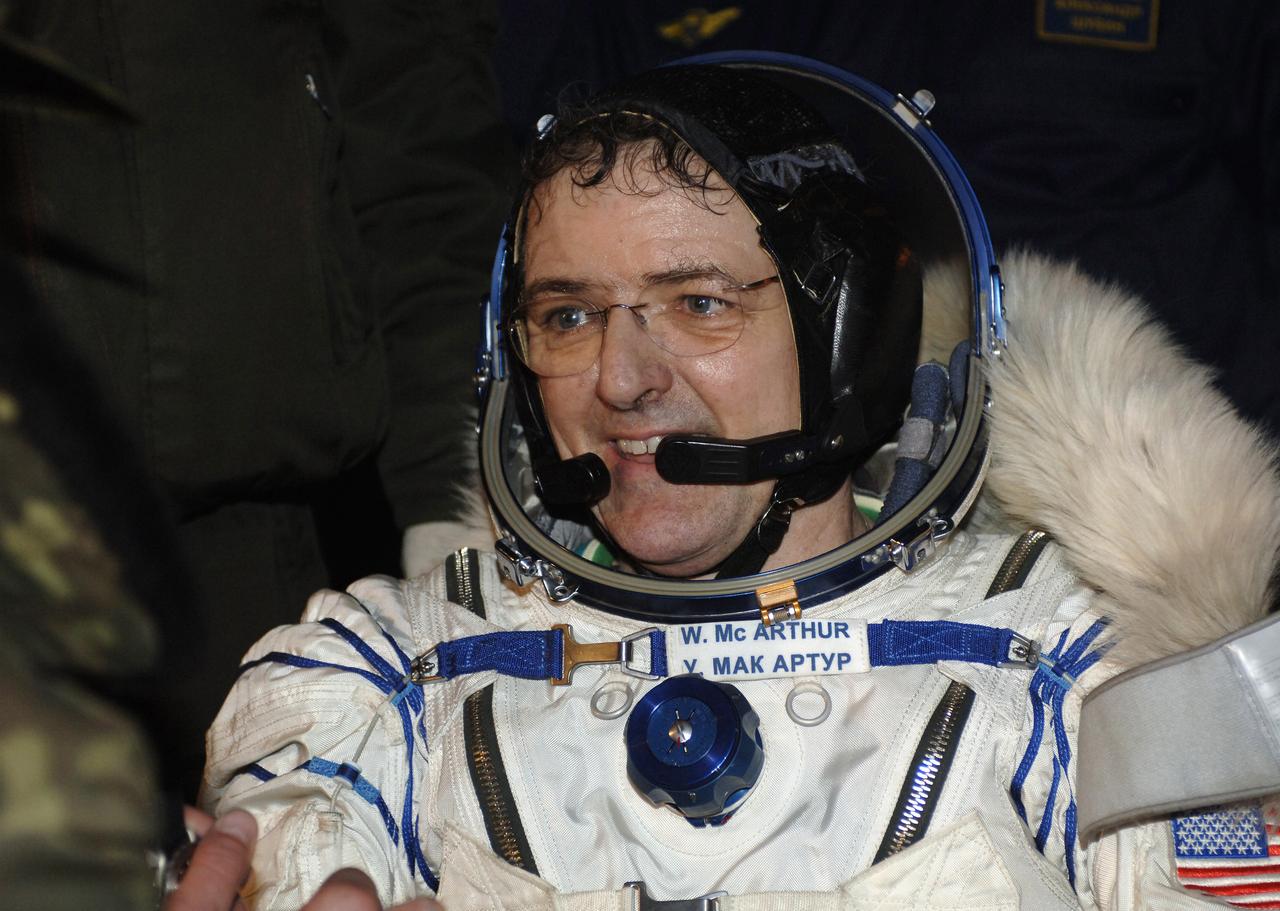
Astronaut William S. McArthur Jr., Expedition 12 commander and space station science officer, smiles as he experiences terra firma for the first time in six months following the touchdown of the Soyuz TMA-7 spacecraft in the steppes of Kazakhstan, Sunday, April 9, 2006. Brazilian astronaut Marcos Pontes and cosmonaut Valery I. Tokarev, Russias Federal Space Agency flight engineer and Soyuz commander joined McArthur for the return trip from the orbital outpost. Photo Credit: (NASA/Bill Ingalls)
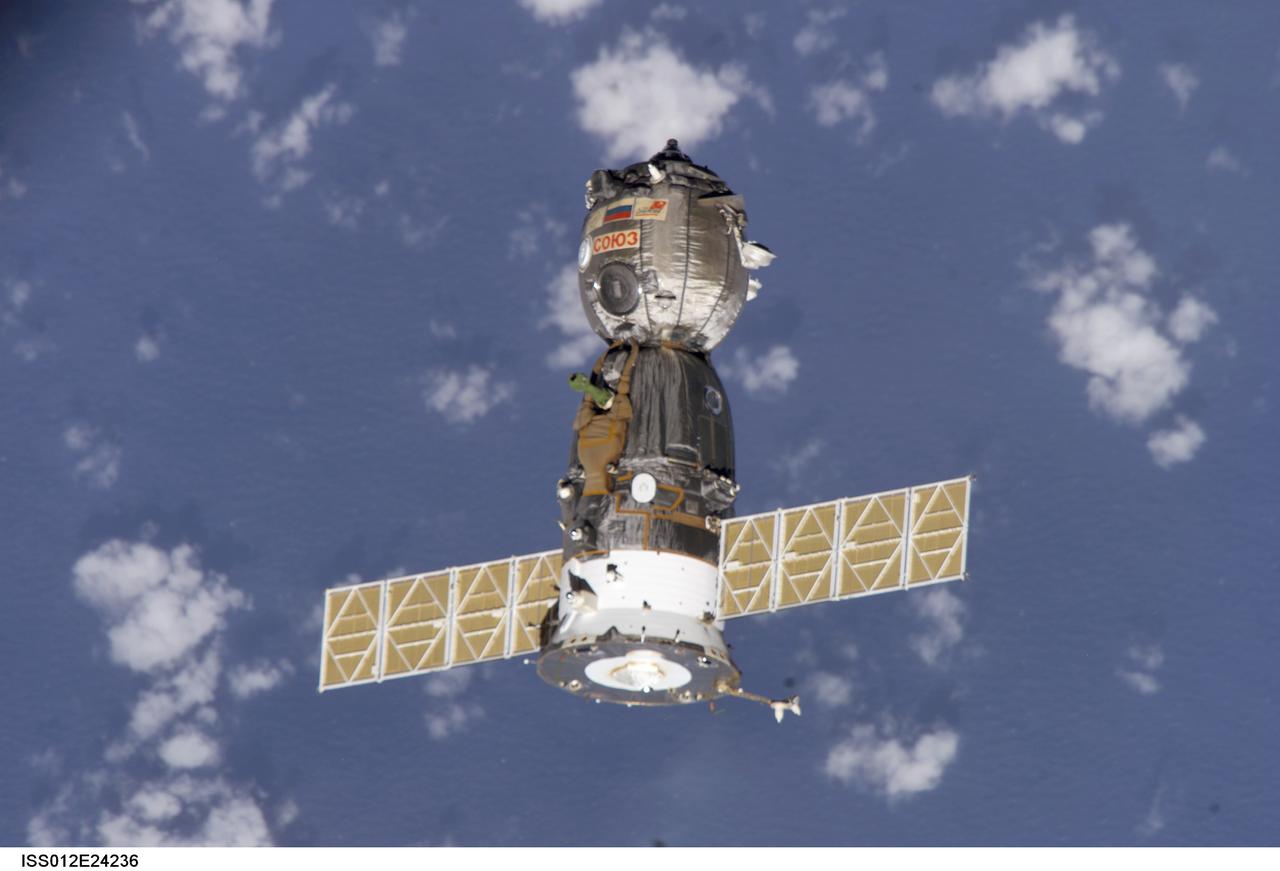
ISS012-E-24236 (8 April 2006) --- Backdropped by a blue and white Earth, the Soyuz TMA-7 spacecraft departs from the International Space Station carrying astronaut William S. (Bill) McArthur Jr., Expedition 12 commander and NASA space station science officer; Russian Federal Space Agency cosmonaut Valery I. Tokarev, flight engineer; and Brazilian Space Agency astronaut Marcos C. Pontes. Undocking occurred at 2:48 p.m. (CDT) on April 8.
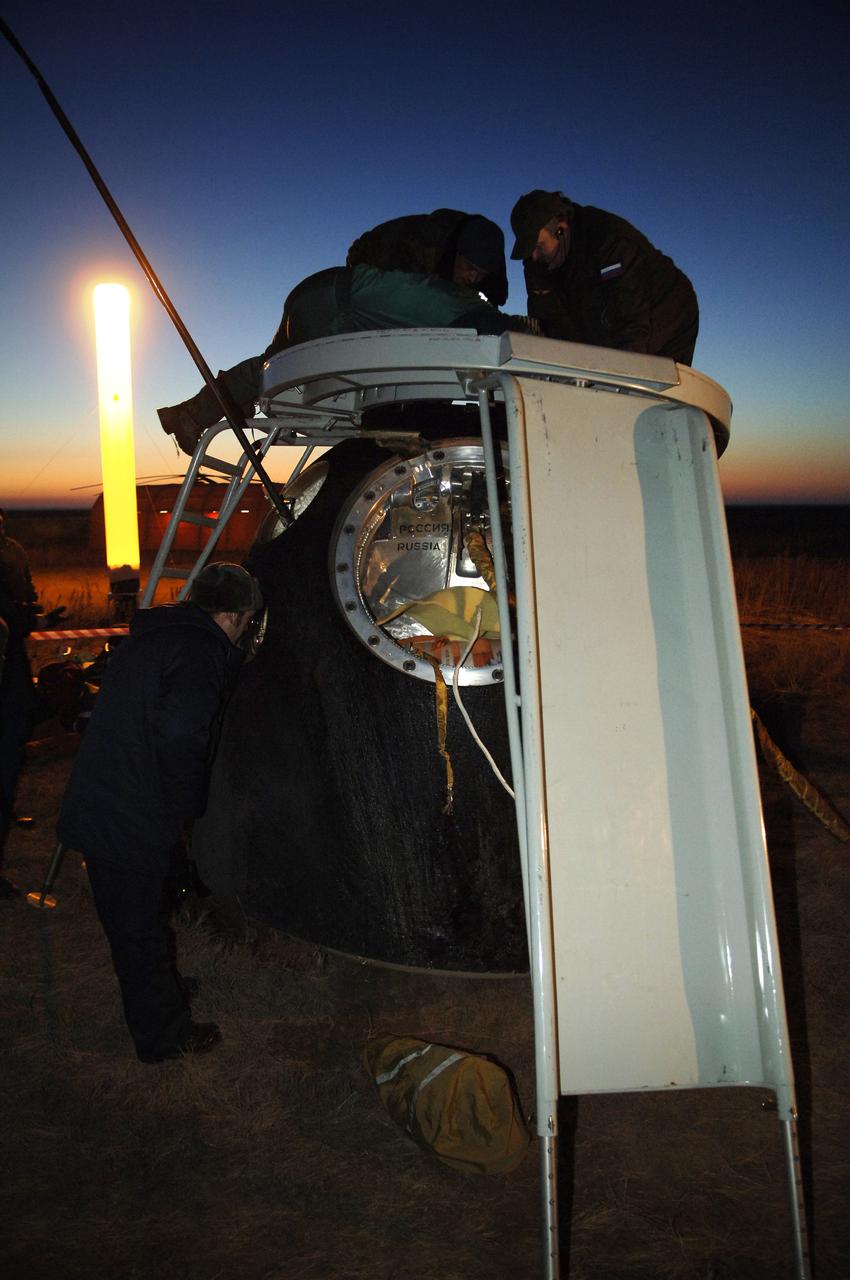
Workers prepare to open the hatch of the Soyuz TMA-7 spacecraft moments after its touchdown in the steppes of Kazakhstan, Sunday, April 9, 2006. Inside were Commander and International Space Station Science Officer, William S. McArthur Jr.; Russia’s Federal Space Agency Flight Engineer and Soyuz Commander, Valery I. Tokarev and Brazil’s first astronaut in space, Marcos C. Pontes representing the Brazilian Space Agency. Photo Credit: (NASA/Bill Ingalls)
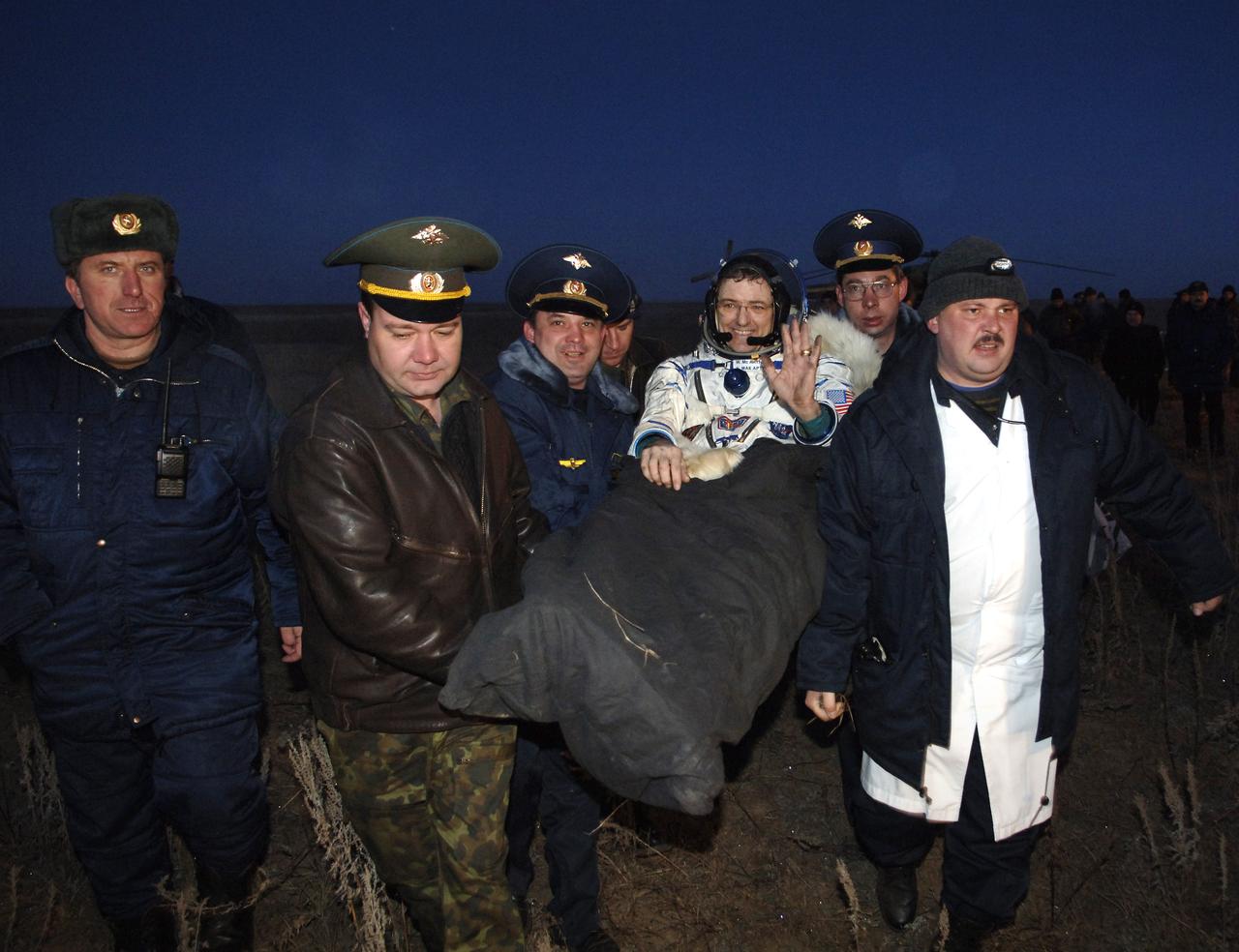
William S. McArthur Jr., Expedition 12 Commander and Space Station Science Officer, waves to some of the crowd on hand in the steppes of Kazakhstan to greet the three crewmembers returning to Earth from the International Space Station in the Soyuz TMA-7 spacecraft on Sunday, April 9, 2006. Returning with McArthur, Flight Engineer Valery Tokarev and Brazil’s first astronaut, Marcos Pontes, who arrived at the station with Expedition 13 on April 1. Photo Credit: (NASA/Bill Ingalls)
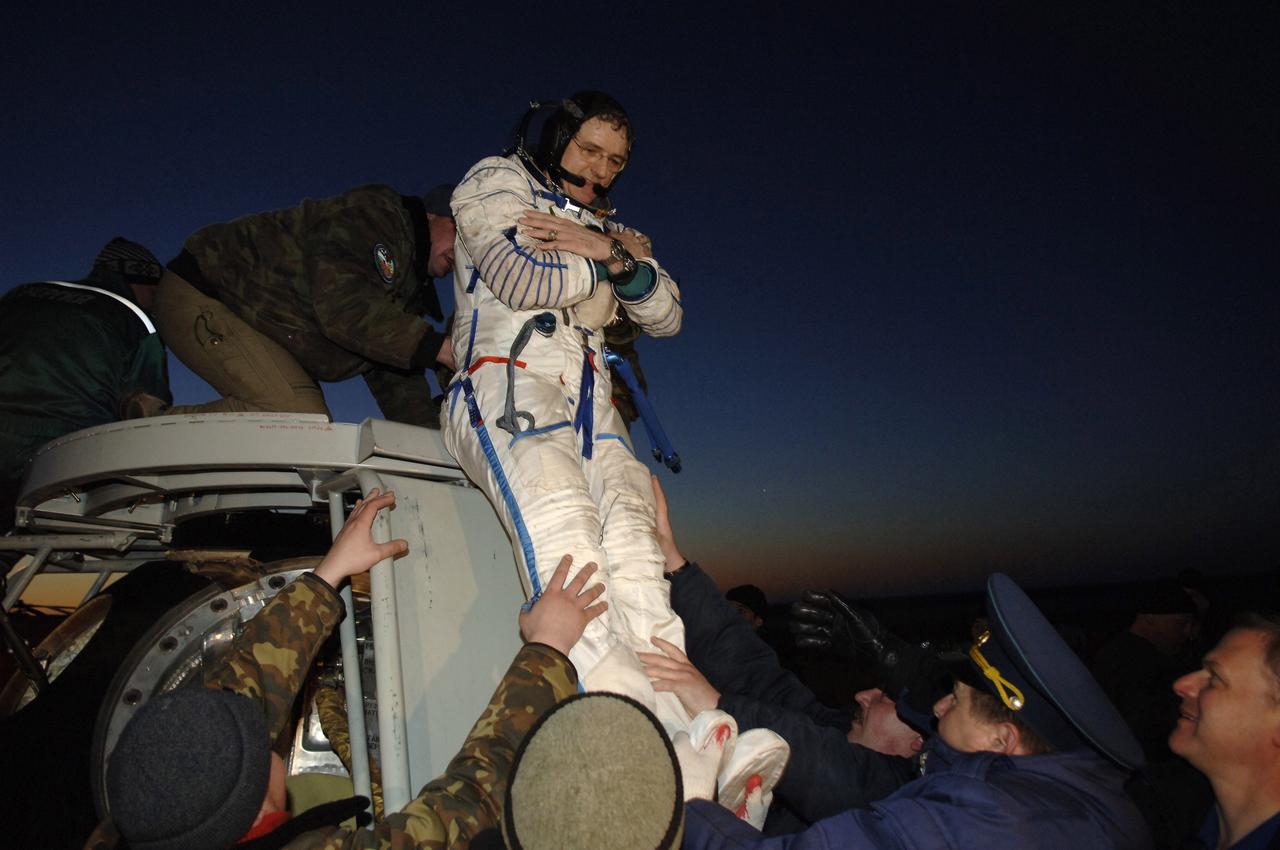
Expedition 12 Commander Bill McArthur is being helped down from the Soyuz TMA-7 spacecraft after it landed in the steppes of Kazakhstan at 7:48 p.m. EDT on Sunday, April 9, 2006. Returning with him was Flight Engineer Valery Tokarev and Brazil's first astronaut, Marcos Pontes, who arrived at the space station with Expedition 13 on April 1. Photo Credit: (NASA/Bill Ingalls)
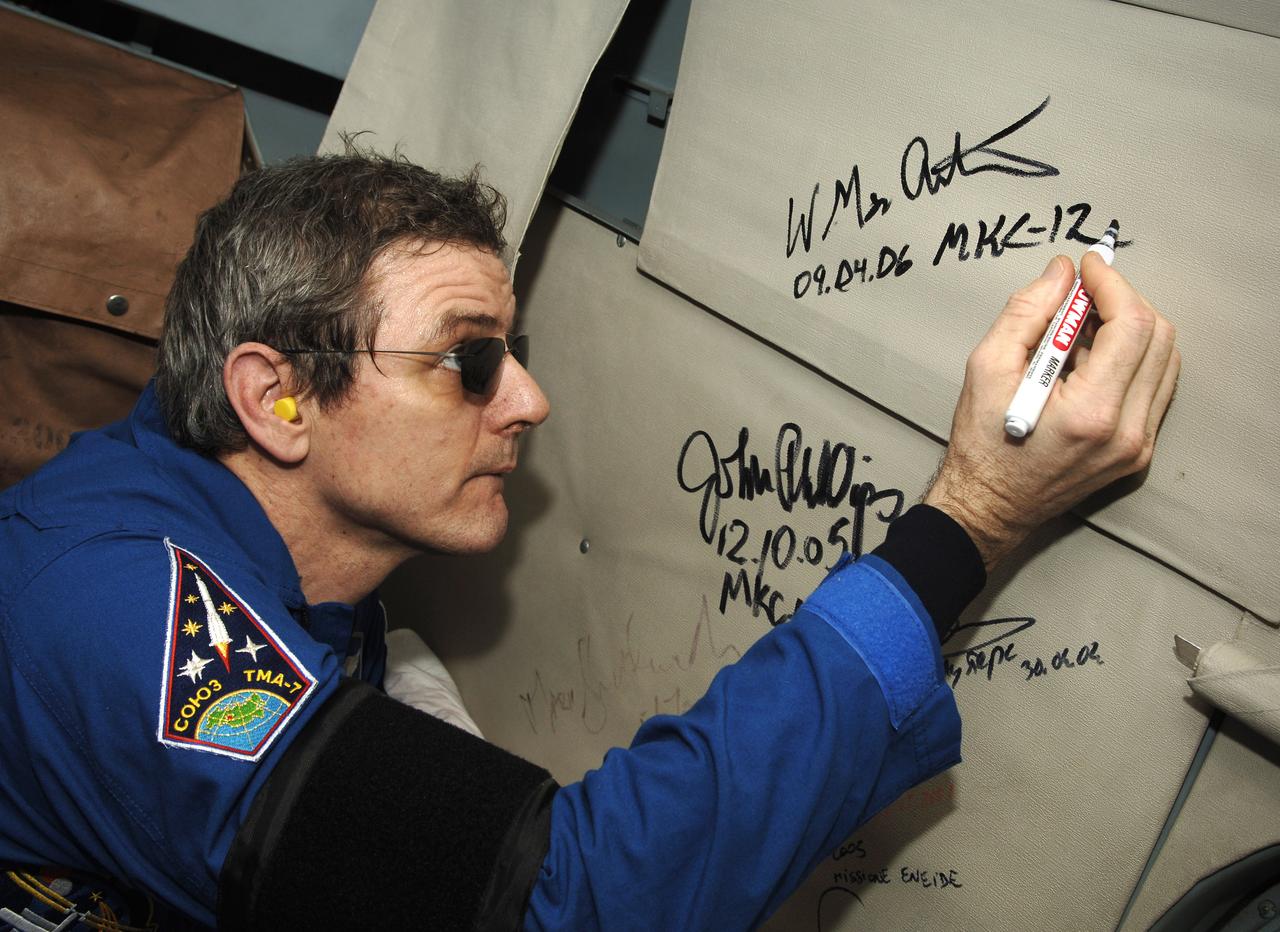
Expedition 12 Commander Bill McArthur signs the interior of the Russian helicopter that will take him from the landing site to Kustanay, Kazakhstan. Expedition 12 returned to Earth and landed in the steppes of Kazakhstan onboard a Soyuz TMA-7 spacecraft that touched down at 7:48 p.m. EDT, Sunday, April 9, 2006. Returning with Commander Bill McArthur and Flight Engineer Valery Tokarev was Brazil’s first astronaut, Marcos Pontes, who arrived at the station with Expedition 13 on April 1. Photo Credit: (NASA/Bill Ingalls)
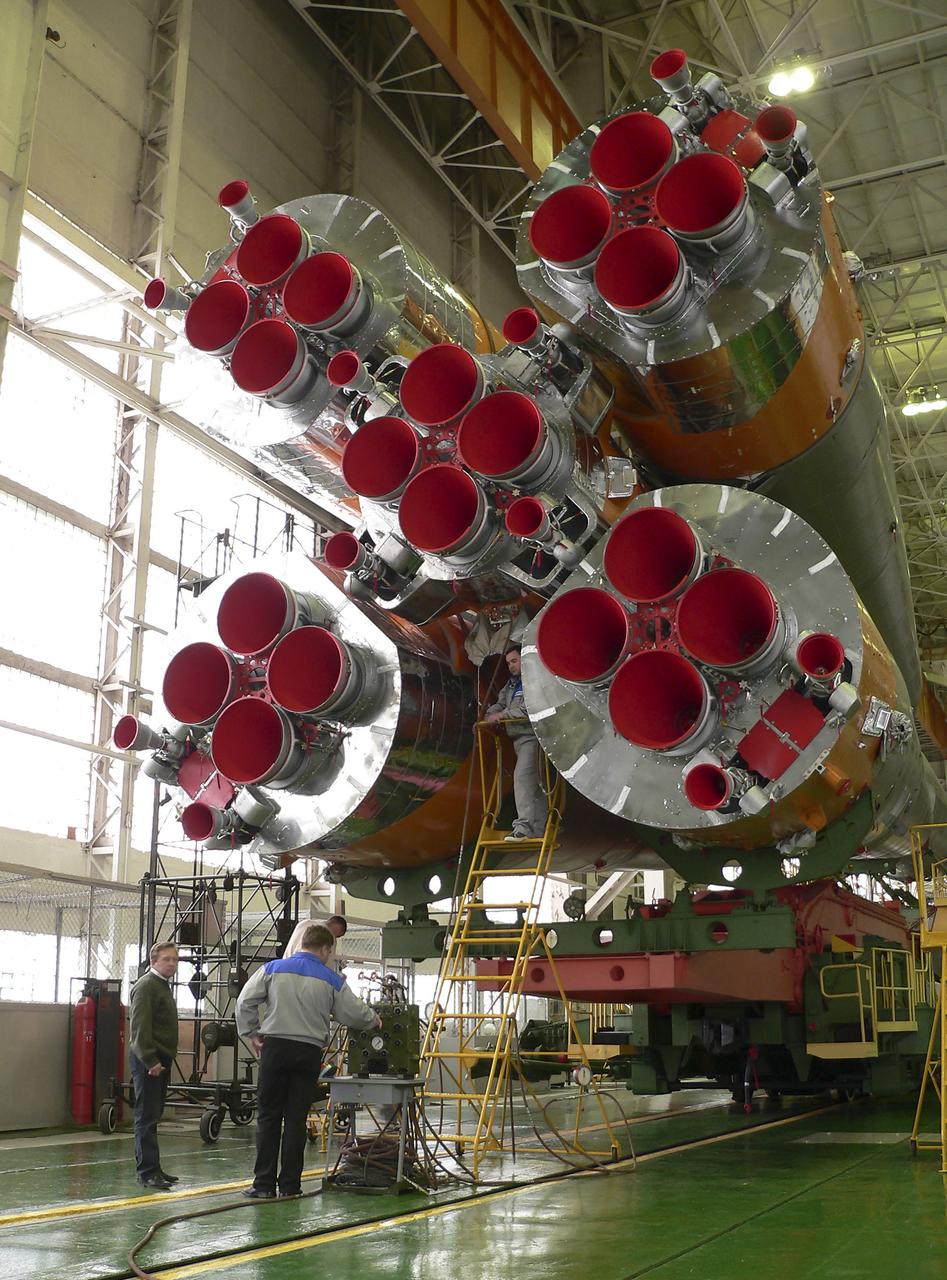
The Soyuz TMA-8 capsule was mated Monday, March 27, 2006, to its booster in preparation for the launch on March 30, 2006 carrying Expedition 13 crew members, Jeffrey N. Williams, Science Officer and Flight Engineer; Pavel V. Vinogradov, Russia’s Federal Space Agency International Space Station Commander; and Marcos Pontes, Brazilian Space Agency Soyuz crew member. Baikonur Cosmodrome in Baikonur, Kazakhstan. Photo Credit: (NASA/Victor Zelentsov)
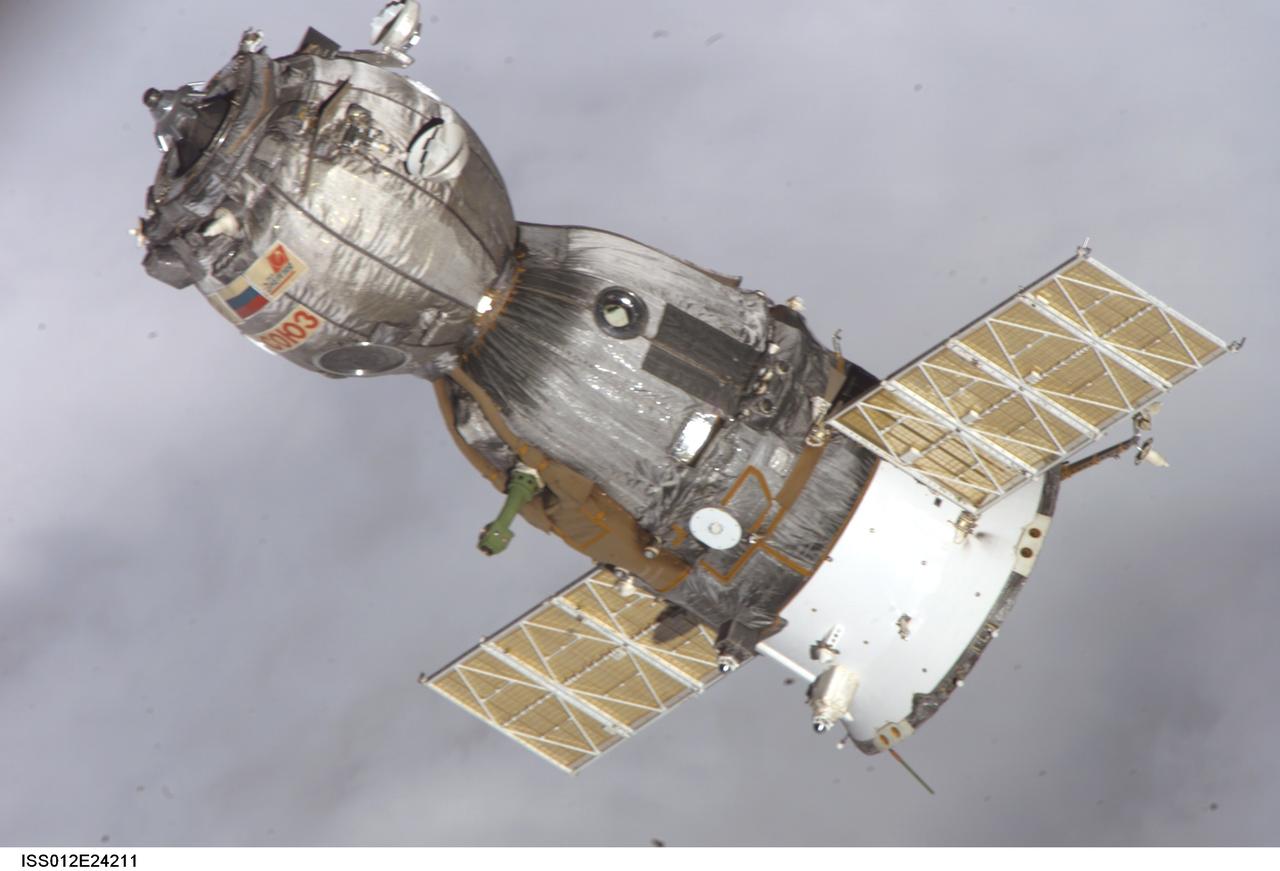
ISS012-E-24211 (8 April 2006) --- Backdropped by a blanket of clouds, the Soyuz TMA-7 spacecraft departs from the International Space Station carrying astronaut William S. (Bill) McArthur Jr., Expedition 12 commander and NASA space station science officer; Russian Federal Space Agency cosmonaut Valery I. Tokarev, flight engineer; and Brazilian Space Agency astronaut Marcos C. Pontes. Undocking occurred at 2:48 p.m. (CDT) on April 8.
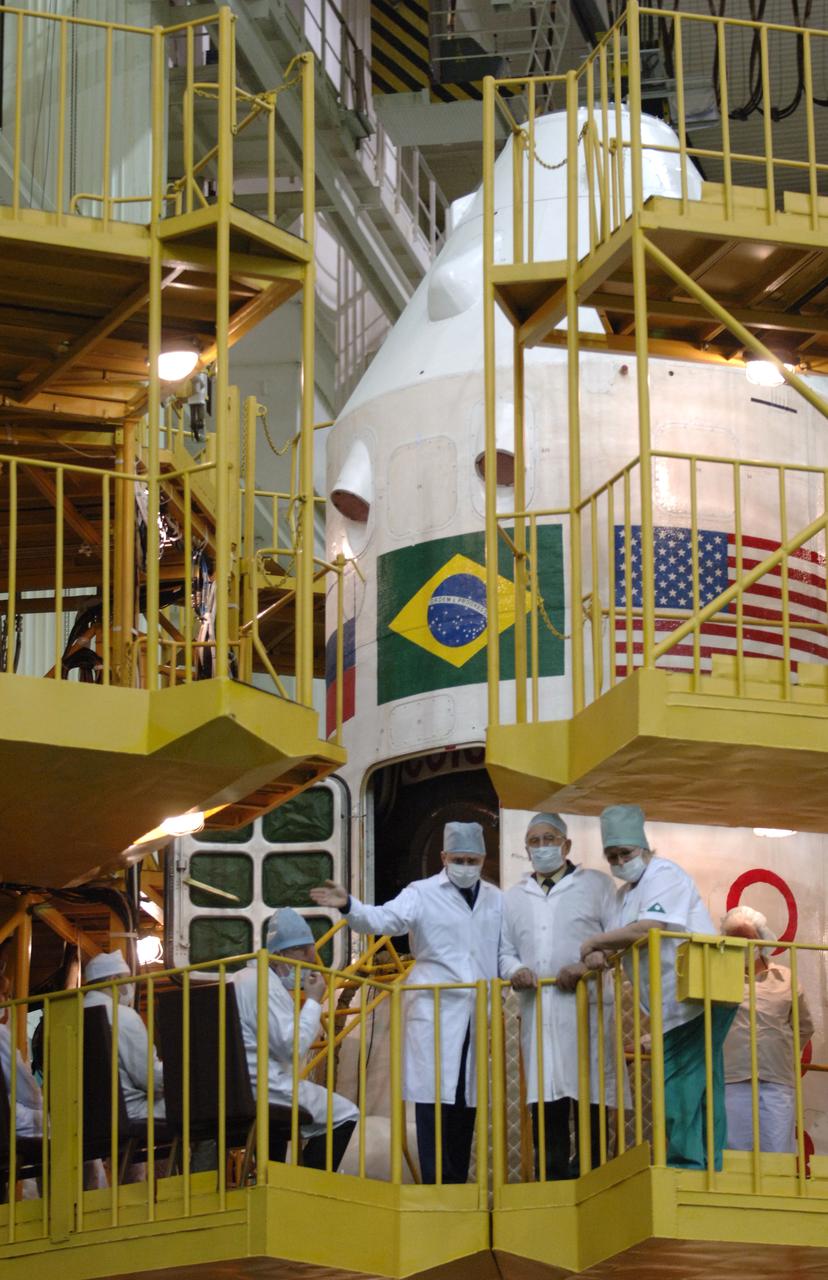
Workers atop the Soyuz work stand await the International Space Station Expedition 13 crew members, Jeffrey N. Williams, NASA International Space Station Science Officer and Flight Engineer; Pavel V. Vinogradov, Commander; and Marcos Pontes, Brazilian Space Agency Soyuz crew member. The crew members did their final check of the Soyuz at building 254 of the Baikonur Cosmodrome in Baikonur, Kazakhstan. Sunday, March 26, 2006. Photo Credit: (NASA/Bill Ingalls)
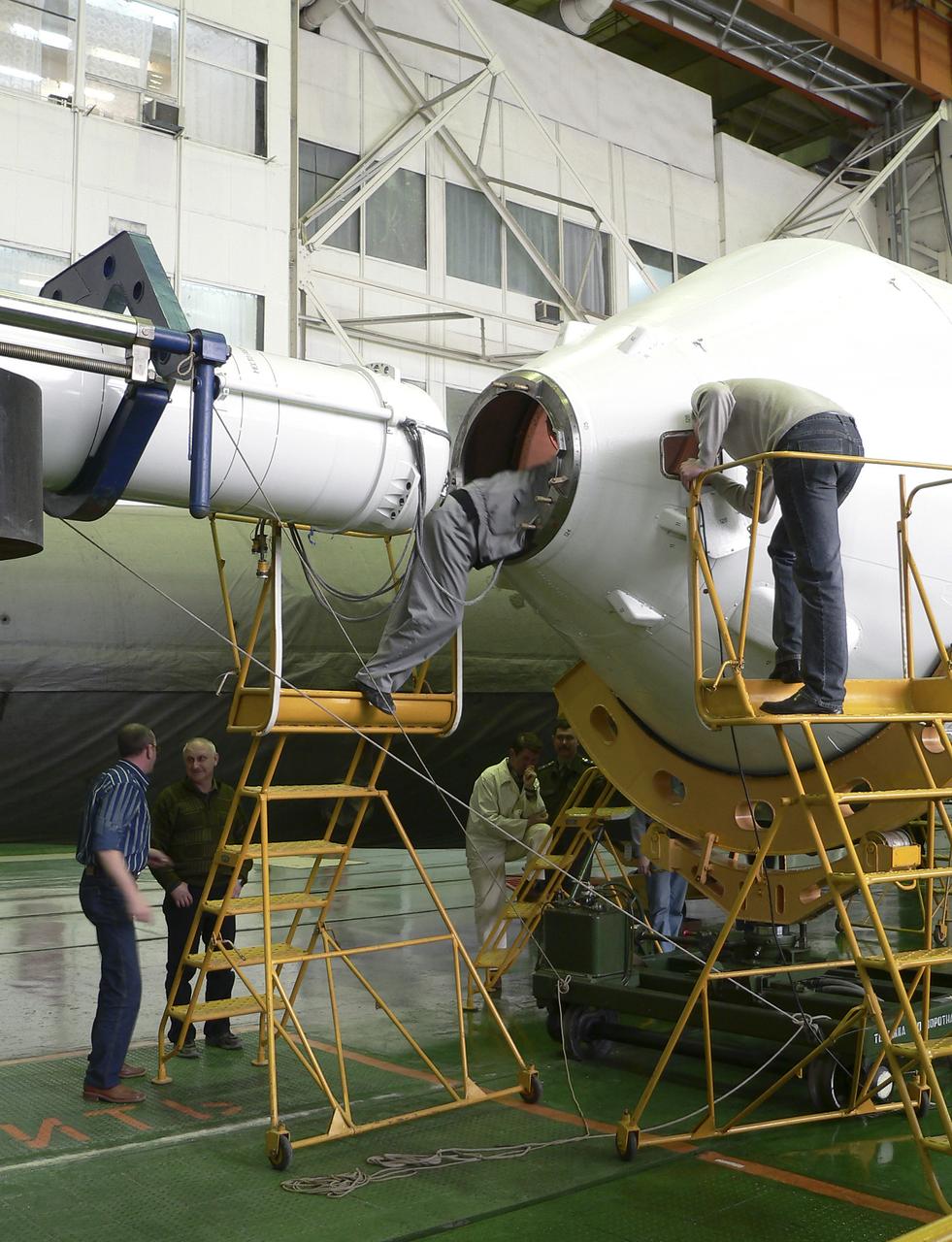
The Soyuz TMA-8 capsule was mated Monday, March 27, 2006, to its booster in preparation for the launch on March 30, 2006 carrying Expedition 13 crew members, Jeffrey N. Williams, Science Officer and Flight Engineer; Pavel V. Vinogradov, Russia’s Federal Space Agency International Space Station Commander; and Marcos Pontes, Brazilian Space Agency Soyuz crew member. Baikonur Cosmodrome in Baikonur, Kazakhstan. Photo Credit: (NASA/Victor Zelentsov)

ISS012-E-24266 (8 April 2006) --- Cosmonaut Valery I. Tokarev (left), Expedition 12 flight engineer representing Russia's Federal Space Agency; Brazilian Space Agency astronaut Marcos C. Pontes; and astronaut William S. (Bill) McArthur, Expedition 12 commander and NASA space station science officer, pose for a photo in the Zvezda Service Module of the International Space Station prior to their departure in a Soyuz TMA-7 spacecraft.
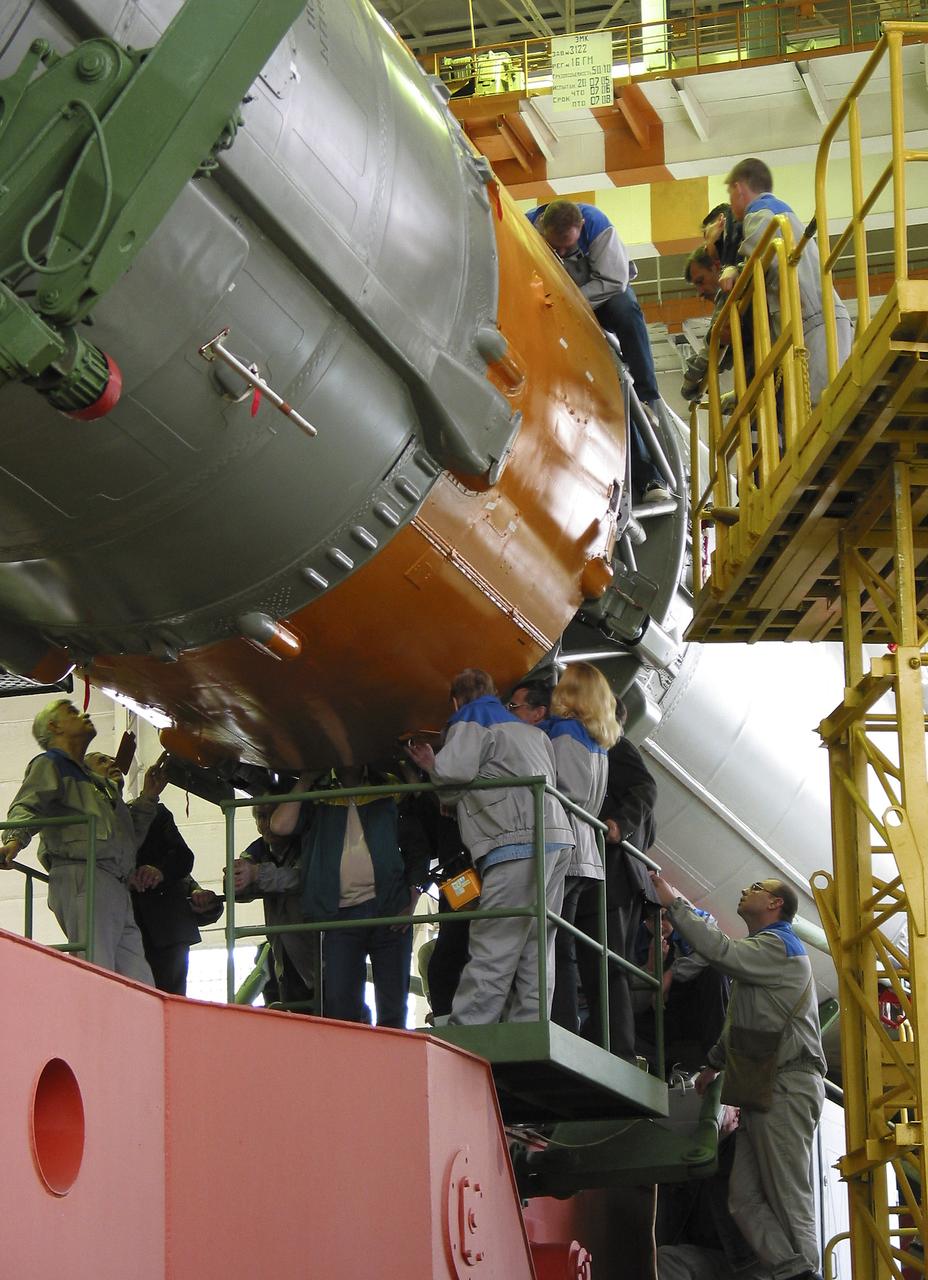
The Soyuz TMA-8 capsule was mated Monday, March 27, 2006, to its booster in preparation for the launch on March 30, 2006 carrying Expedition 13 crew members, Jeffrey N. Williams, Science Officer and Flight Engineer; Pavel V. Vinogradov, Russia’s Federal Space Agency International Space Station Commander; and Marcos Pontes, Brazilian Space Agency Soyuz crew member. Baikonur Cosmodrome in Baikonur, Kazakhstan. Photo Credit: (NASA/Victor Zelentsov)
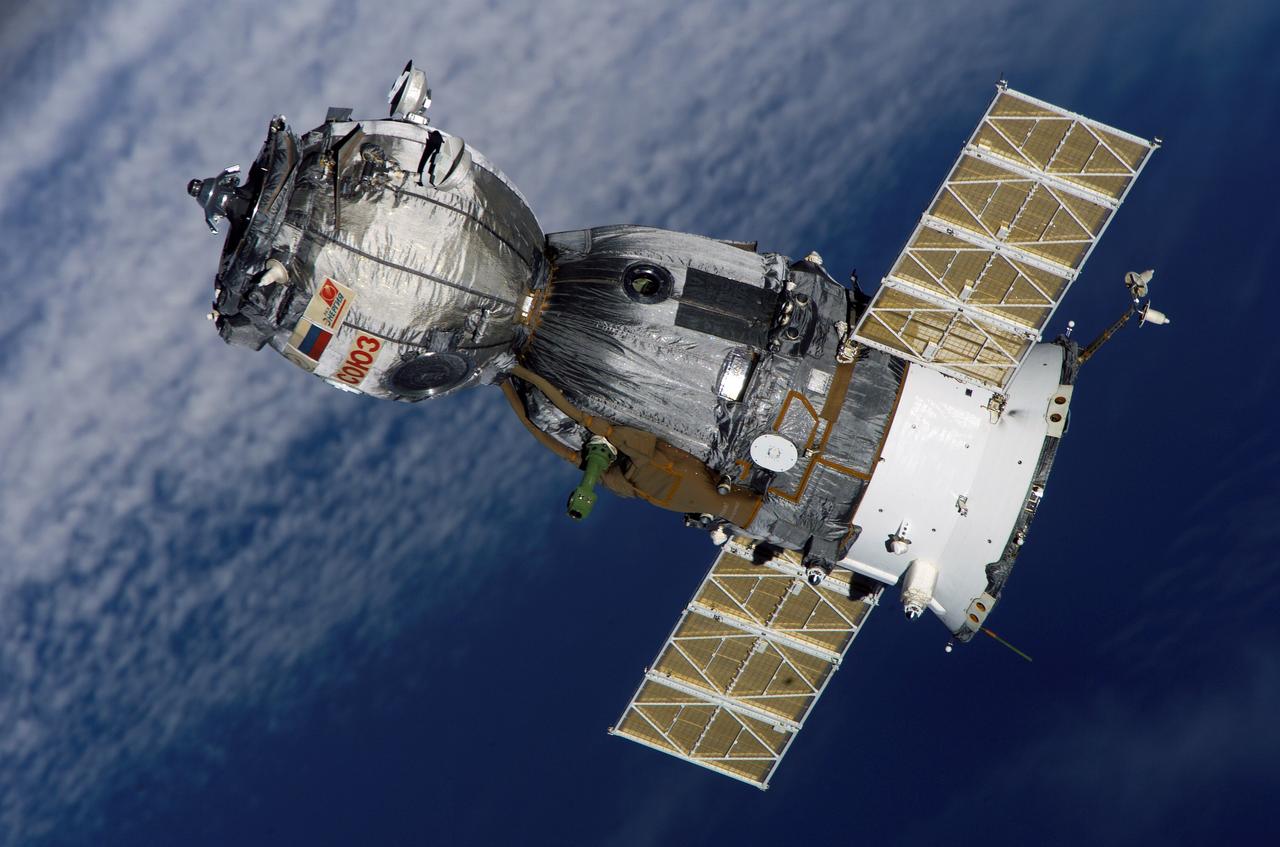
ISS012-E-24219 (8 April 2006) --- Backdropped by a blanket of clouds, the Soyuz TMA-7 spacecraft departs from the International Space Station carrying astronaut William S. (Bill) McArthur Jr., Expedition 12 commander and NASA space station science officer; Russian Federal Space Agency cosmonaut Valery I. Tokarev, flight engineer; and Brazilian Space Agency astronaut Marcos C. Pontes. Undocking occurred at 2:48 p.m. (CDT) on April 8.
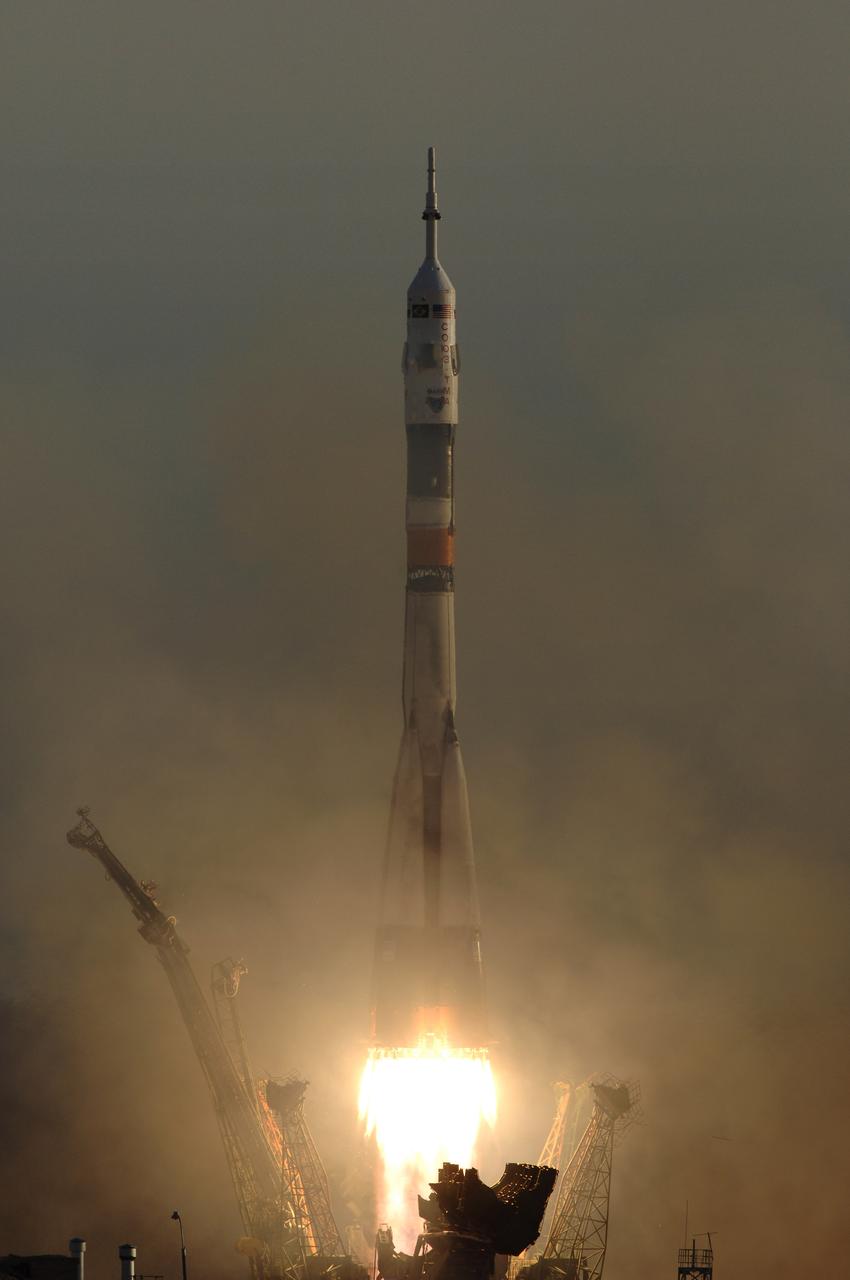
Expedition 13 Commander Pavel V. Vinogradov and Science Officer and Flight Engineer Jeffrey N. Williams began their mission Wednesday at 9:30 p.m. EST, (Thursday, March 30, 2006, 8:30 a.m. Kazakhstan time). They launched aboard a Soyuz TMA-8 rocket from the Baikonur Cosmodrome in Baikonur, Kazakhstan. Joining them for several days as a Soyuz crew member before returning home with the Expedition 12 crew is Marcos Pontes, Brazilian Space Agency. Photo Credit: (NASA/Bill Ingalls)
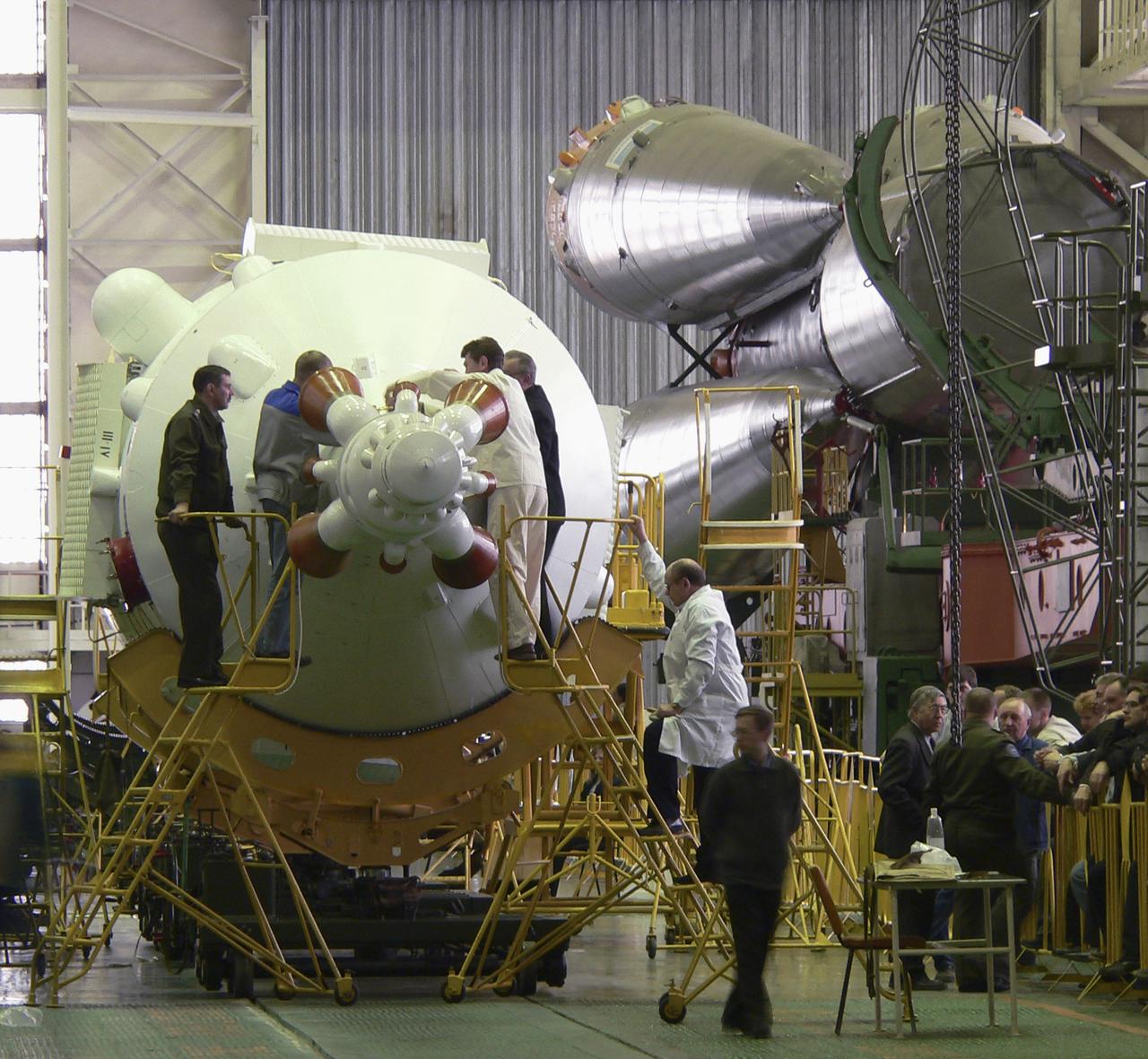
The Soyuz TMA-8 capsule was mated Monday, March 27, 2006, to its booster in preparation for the launch on March 30, 2006 carrying Expedition 13 crew members, Jeffrey N. Williams, Science Officer and Flight Engineer; Pavel V. Vinogradov, Russia’s Federal Space Agency International Space Station Commander; and Marcos Pontes, Brazilian Space Agency Soyuz crew member. Baikonur Cosmodrome in Baikonur, Kazakhstan. Photo Credit: (NASA/Victor Zelentsov)
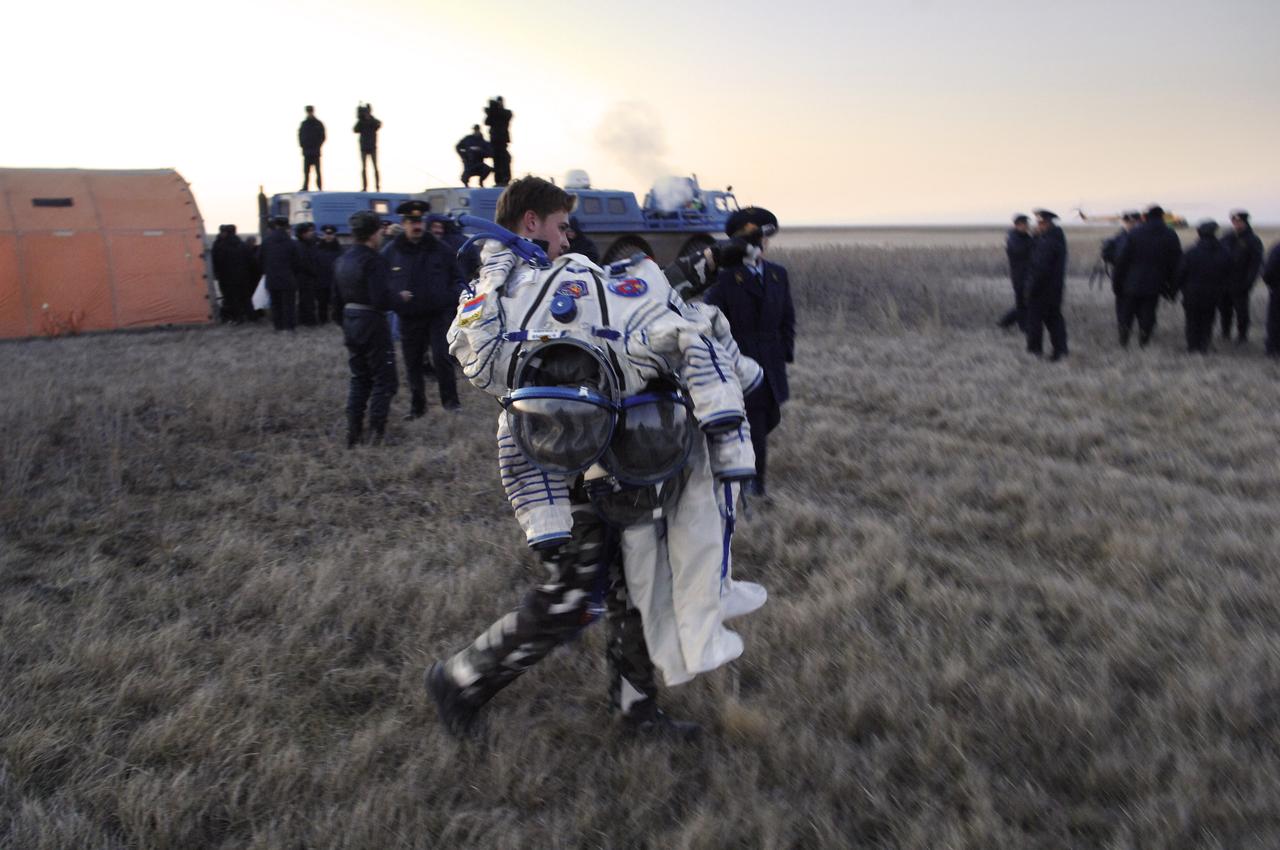
The Russian Sokol Suits are carried from the medical tent after the landing of the Soyuz TMA-7 spacecraft in the steppes of Kazakhstan. The Soyuz TMA-7 spacecraft touched down at 7:48 p.m. EDT on Saturday, April 9, 2006. Returning with Expedition 12 Commander Bill McArthur and Flight Engineer Valery Tokarev was Brazil’s first astronaut, Marcos Pontes, who arrived at the station with Expedition 13 on Sunday, April 1, 2006. Photo Credit: (NASA/Bill Ingalls)
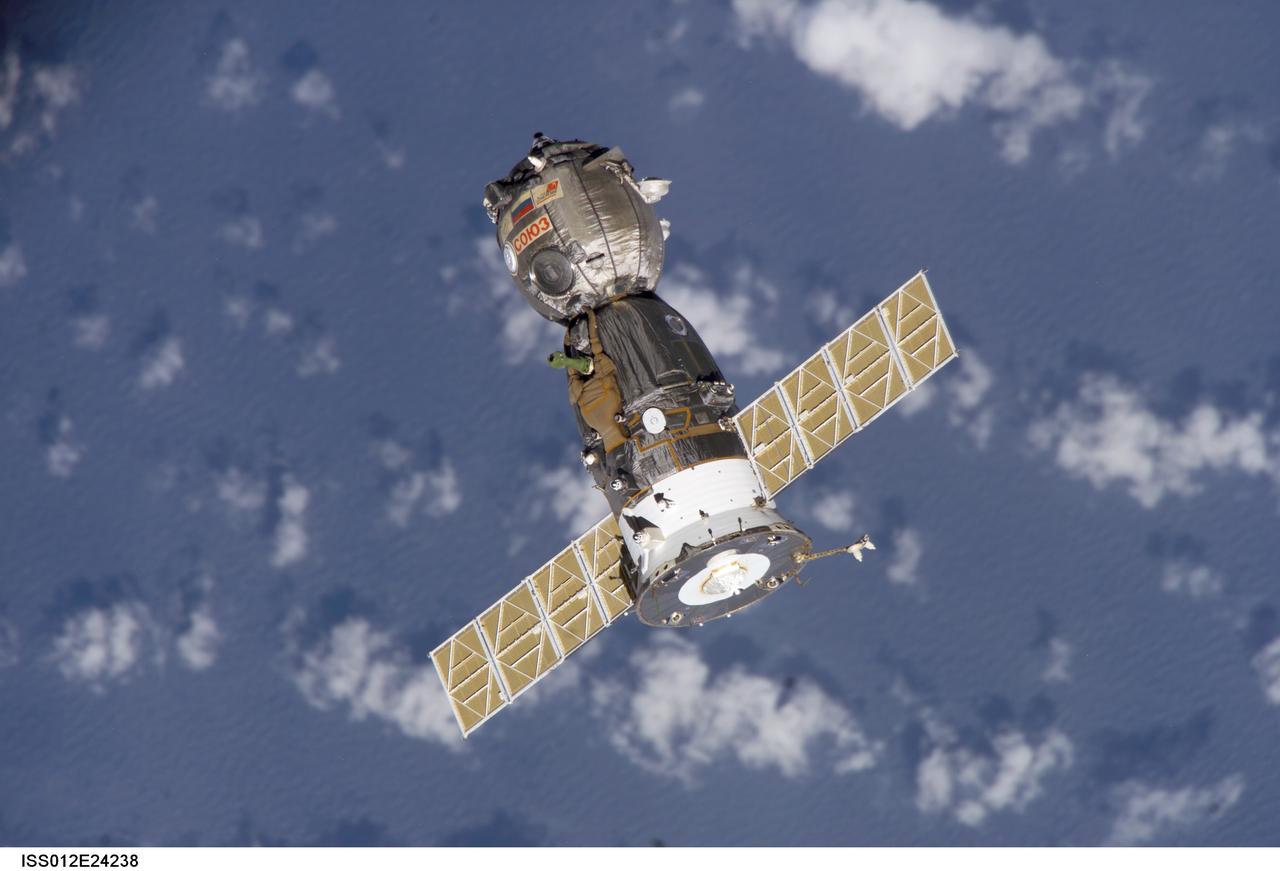
ISS012-E-24238 (8 April 2006) --- Backdropped by a blue and white Earth, the Soyuz TMA-7 spacecraft departs from the International Space Station carrying astronaut William S. (Bill) McArthur Jr., Expedition 12 commander and NASA space station science officer; Russian Federal Space Agency cosmonaut Valery I. Tokarev, flight engineer; and Brazilian Space Agency astronaut Marcos C. Pontes. Undocking occurred at 2:48 p.m. (CDT) on April 8.
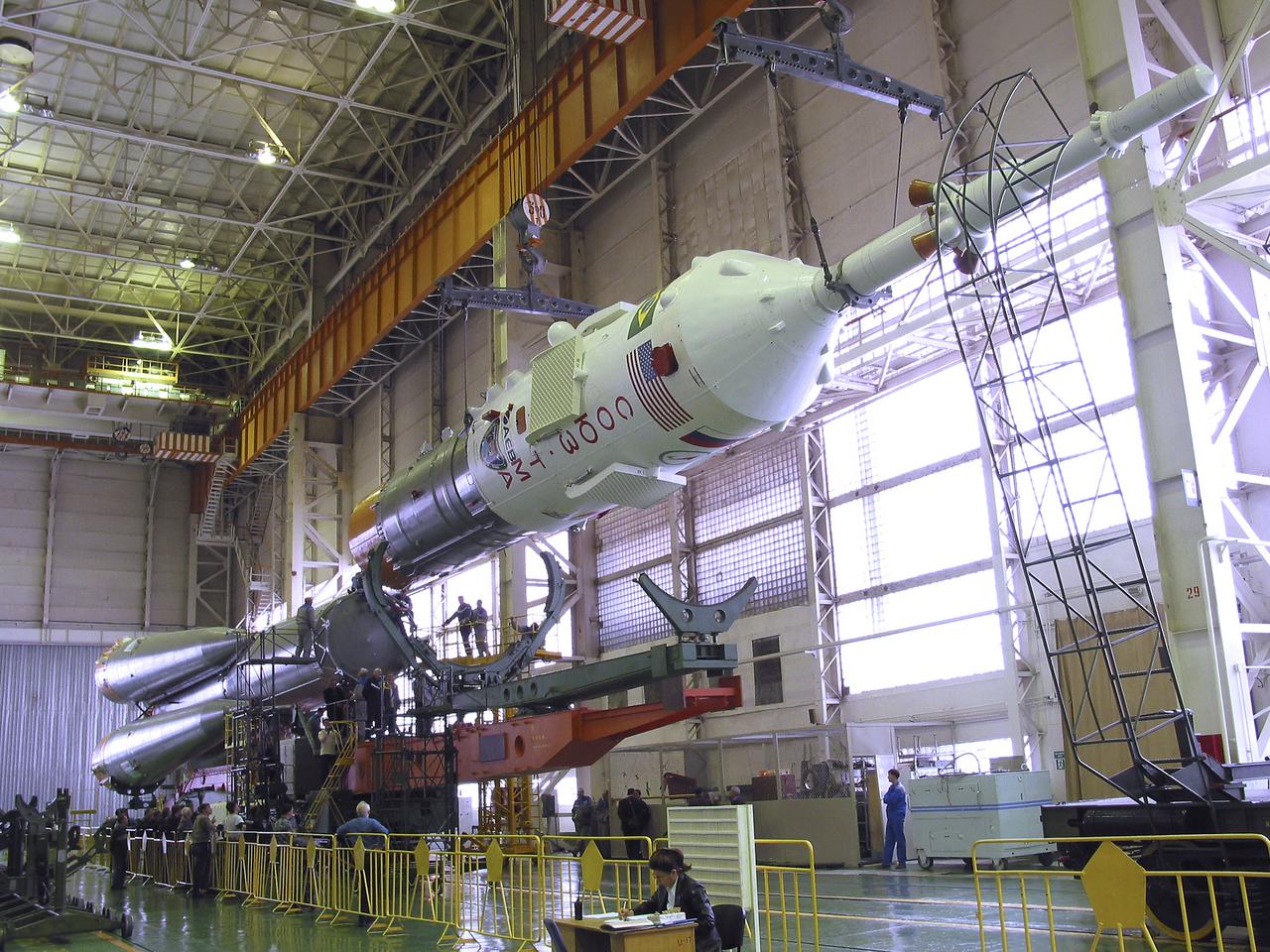
The Soyuz TMA-8 capsule was mated Monday, March 27, 2006, to its booster in preparation for the launch on March 30, 2006 carrying Expedition 13 crew members, Jeffrey N. Williams, Science Officer and Flight Engineer; Pavel V. Vinogradov, Russia’s Federal Space Agency International Space Station Commander; and Marcos Pontes, Brazilian Space Agency Soyuz crew member. Baikonur Cosmodrome in Baikonur, Kazakhstan. Photo Credit: (NASA/Victor Zelentsov)
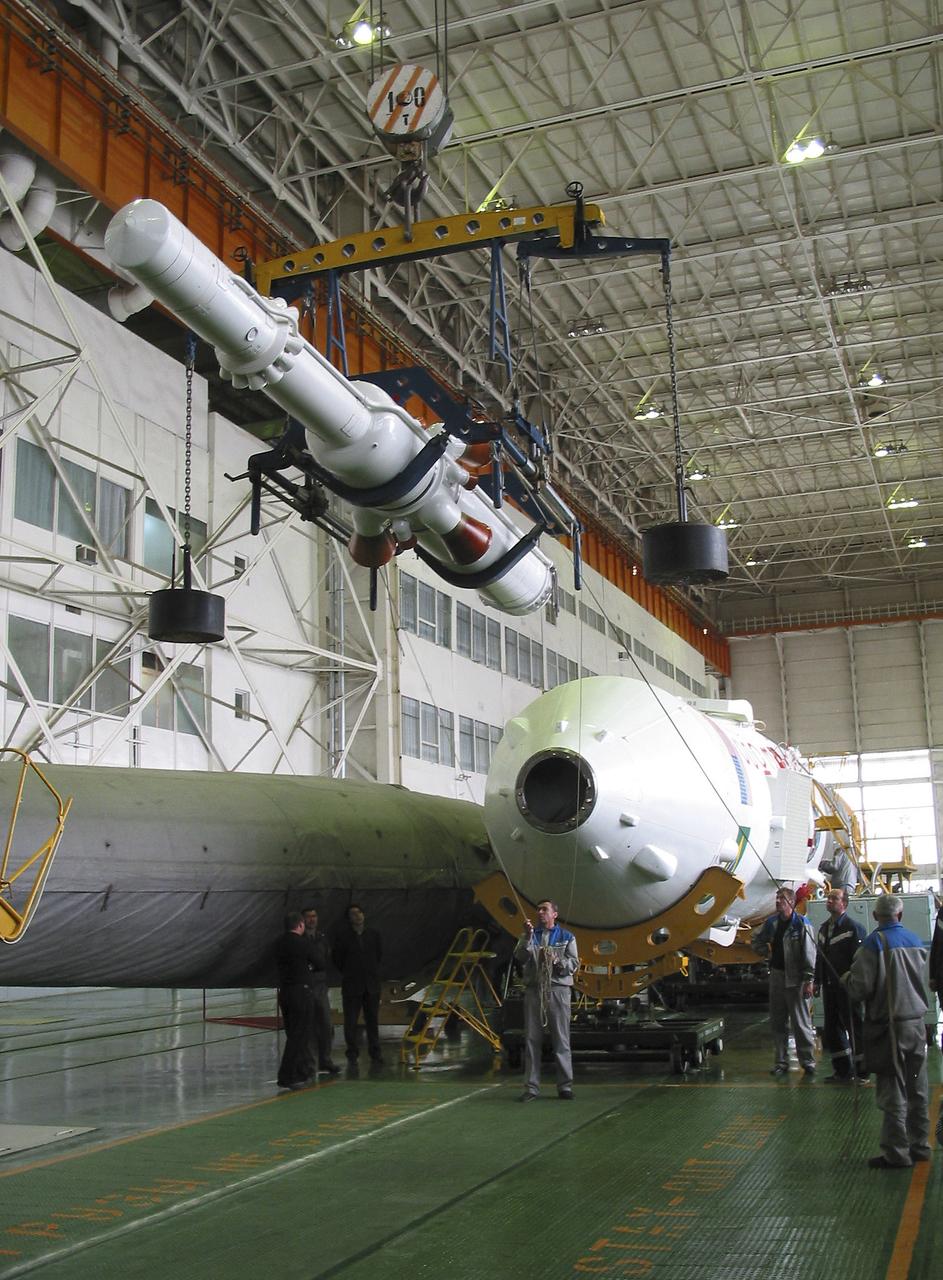
The Soyuz TMA-8 capsule was mated Monday, March 27, 2006, to its booster in preparation for the launch on March 30, 2006 carrying Expedition 13 crew members, Jeffrey N. Williams, Science Officer and Flight Engineer; Pavel V. Vinogradov, Russia’s Federal Space Agency International Space Station Commander; and Marcos Pontes, Brazilian Space Agency Soyuz crew member. Baikonur Cosmodrome in Baikonur, Kazakhstan. Photo Credit: (NASA/Victor Zelentsov)
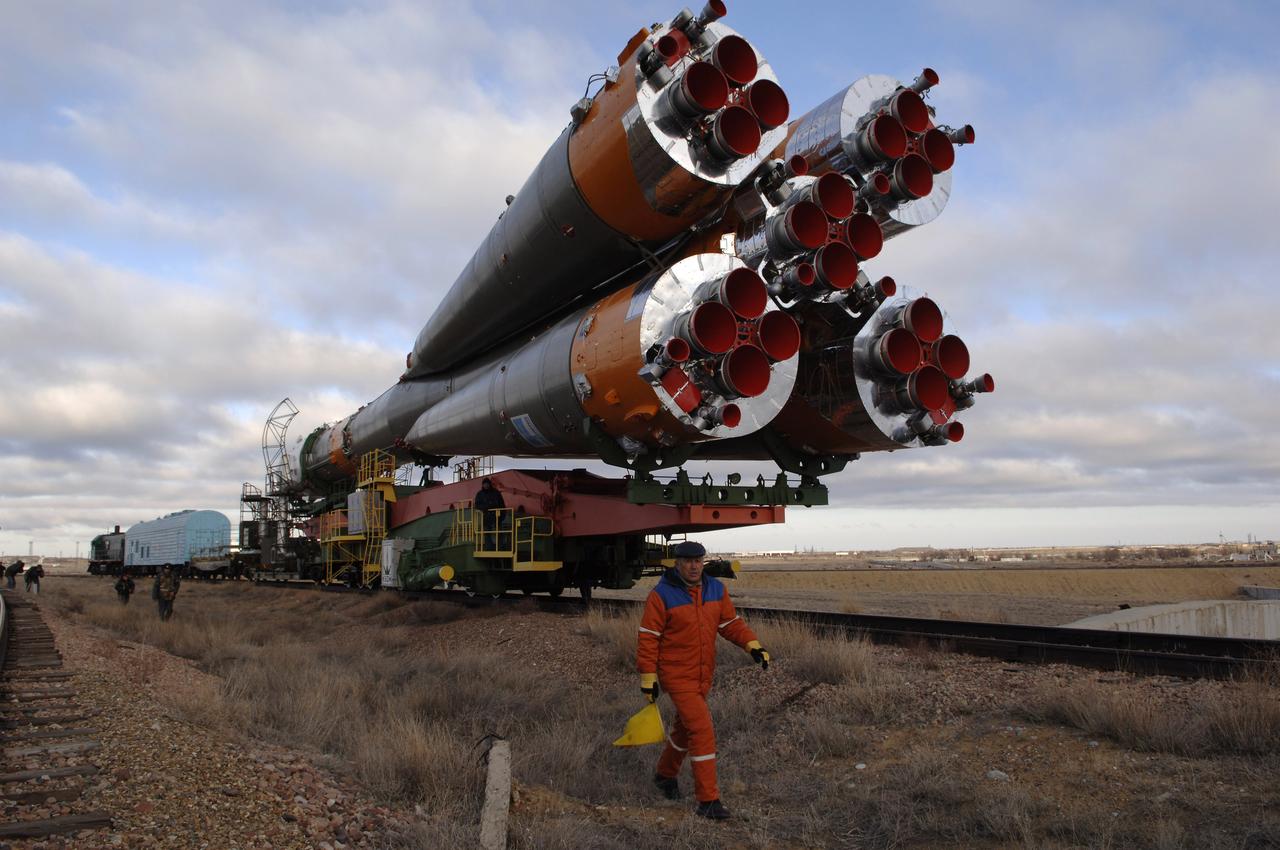
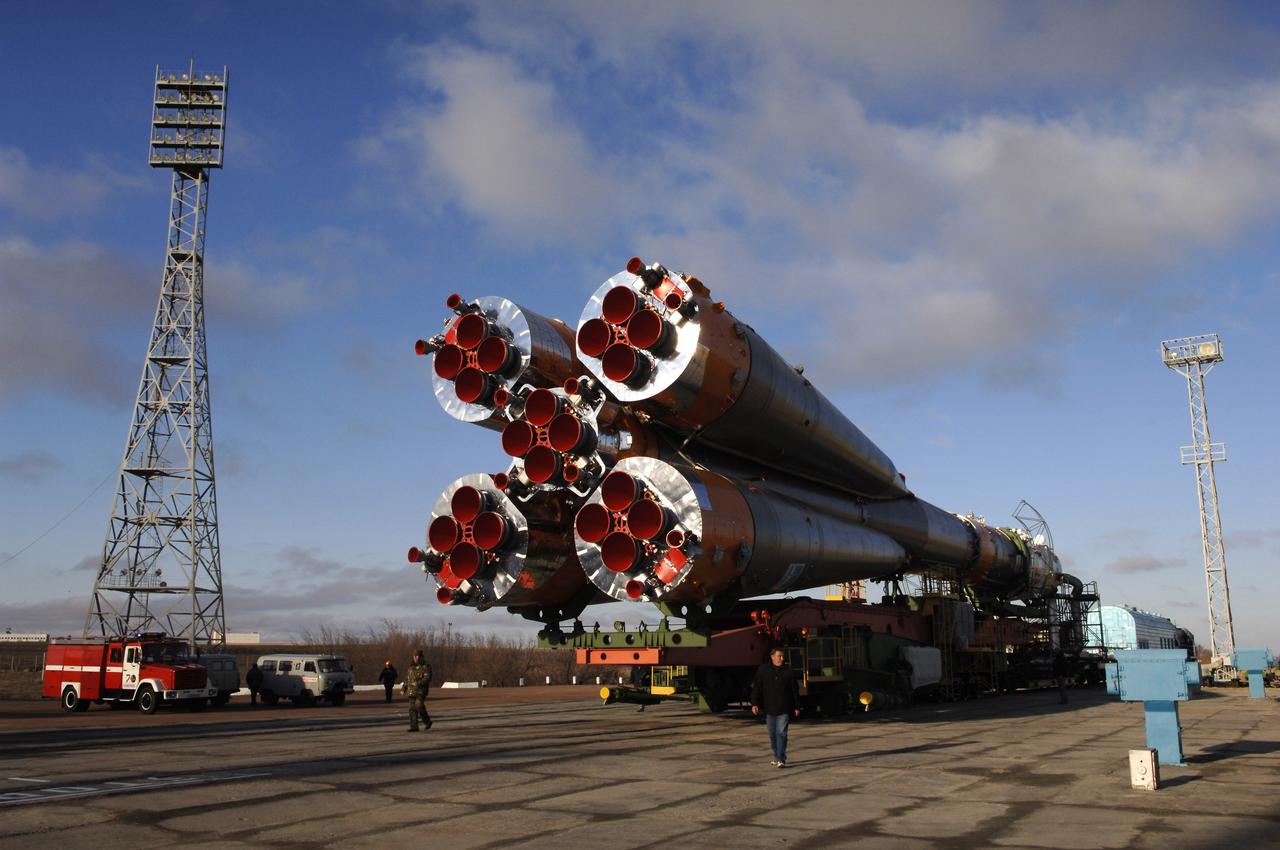
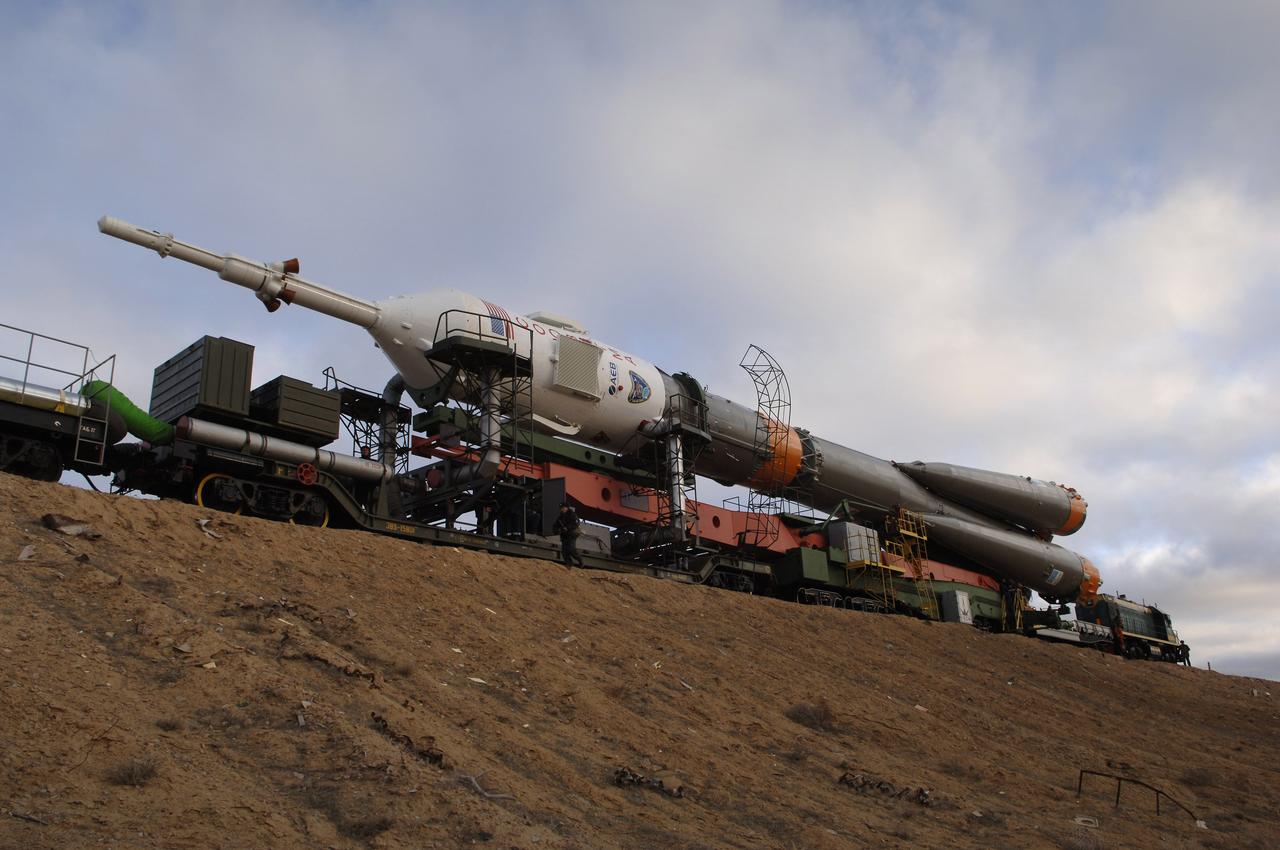
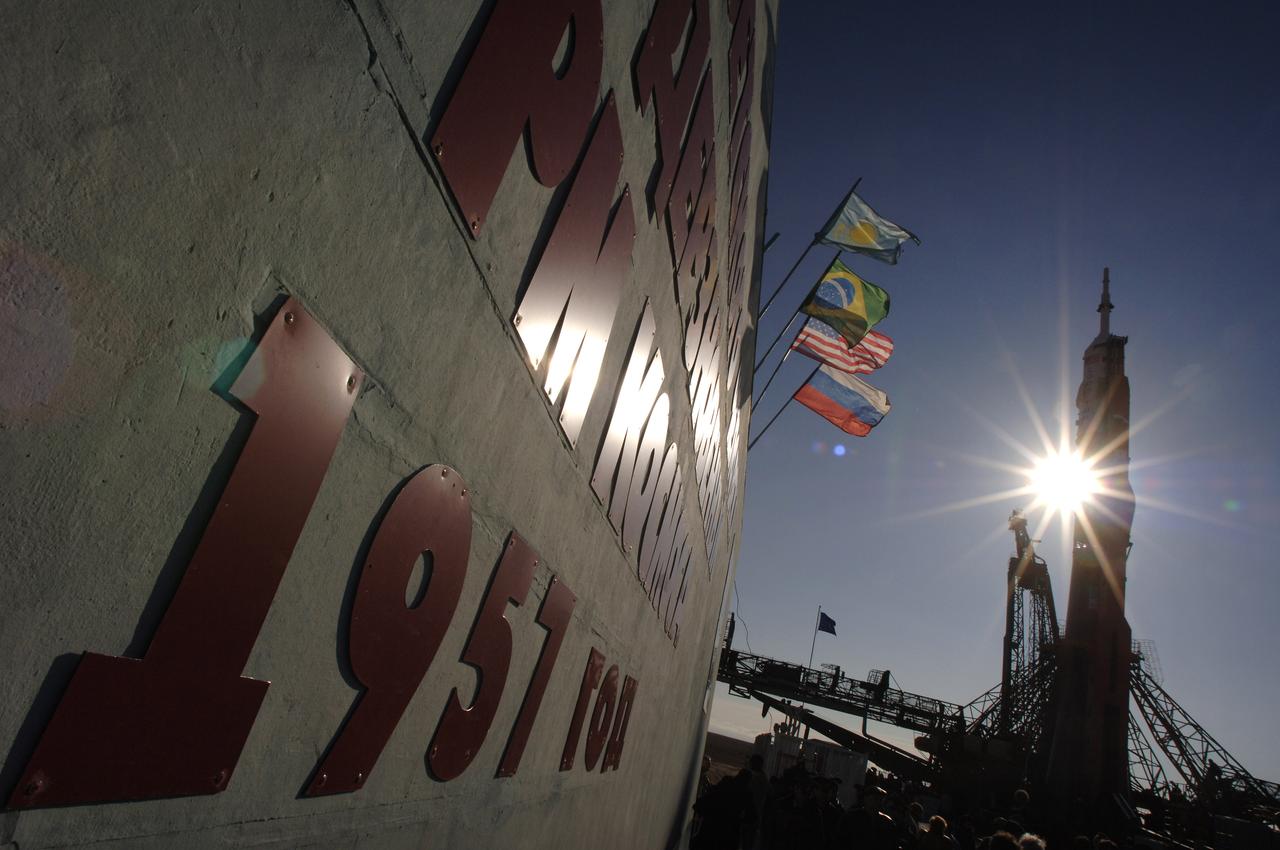
The Soyuz TMA-8 spacecraft and its booster rolled out to the launch pad on Tuesday, March 28, 2006 at the Baikonur Cosmodrome in Baikonur, Kazakhstan for final pre-launch preparations. The Soyuz will blast off on March 30, 2006 to carry Expedition 13 Commander Pavel V. Vinogradov and Science Officer and Flight Engineer Jeffrey N. Williams to the International Space Station for a six-month mission. The spacecraft will also be carrying Brazilian Space Agency Soyuz crew member Marcos Pontes, who will spend 10 days aboard the International Space Station under an agreement with the Russian Federal Space Agency. Photo Credit: (NASA/Bill Ingalls) The Soyuz TMA-8 spacecraft and its booster rolled out to the launch pad on Tuesday, March 28, 2006 at the Baikonur Cosmodrome in Baikonur, Kazakhstan for final pre-launch preparations. The Soyuz will blast off on March 30, 2006 to carry Expedition 13 Commander Pavel V. Vinogradov and Science Officer and Flight Engineer Jeffrey N. Williams to the International Space Station for a six-month mission. The spacecraft will also be carrying Brazilian Space Agency Soyuz crew member Marcos Pontes, who will spend 10 days aboard the International Space Station under an agreement with the Russian Federal Space Agency. Photo Credit: (NASA/Bill Ingalls)
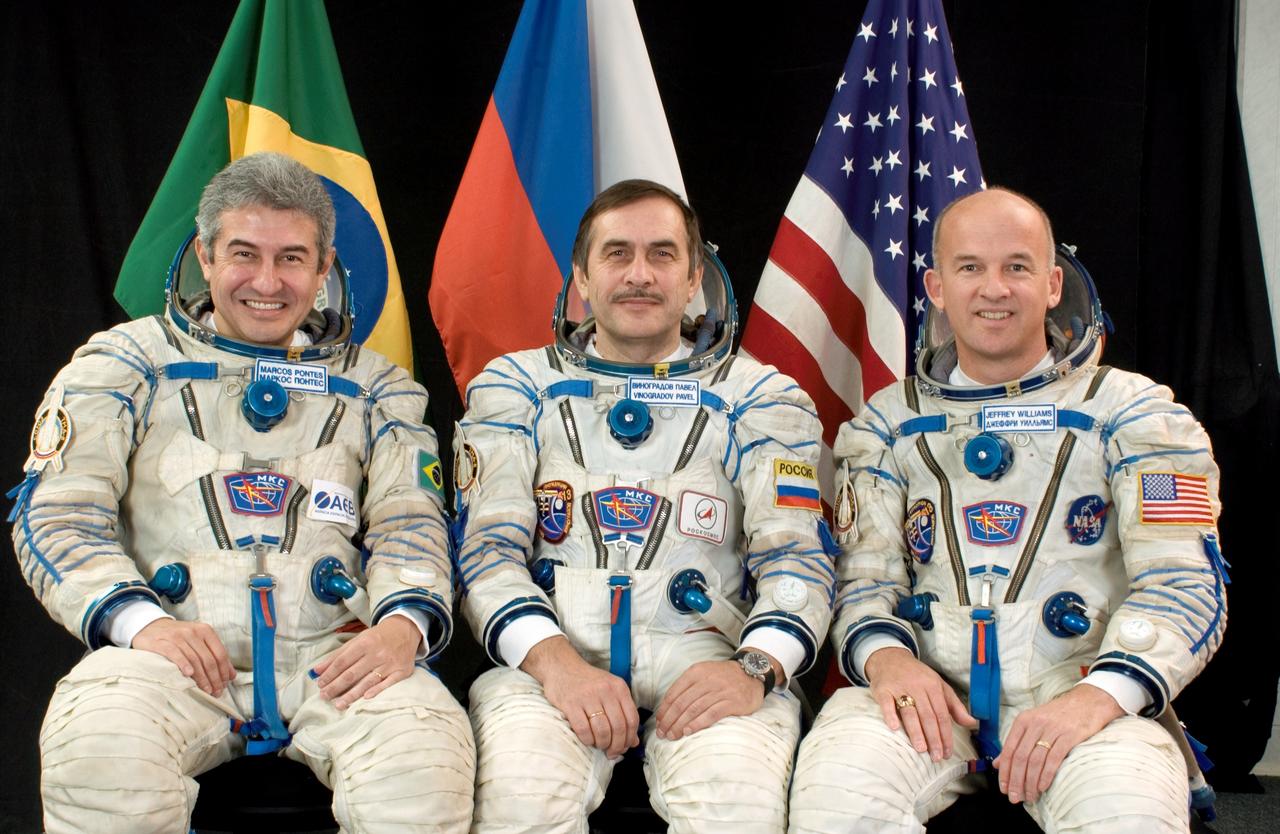
JSC2006-E-00224 (22 Dec. 2005) --- Attired in Russian Sokol launch and landing suits, the next crew to launch to the International Space Station pauses from its training schedule in Star City, Russia to pose for a crew portrait. From the left are Brazilian Space Agency astronaut Marcos C. Pontes; cosmonaut Pavel V. Vinogradov, Expedition 13 commander, representing Russia's Federal Space Agency; and NASA astronaut Jeffrey N. Williams, Expedition 13 Flight Engineer and Science Officer. The crew will launch on the Soyuz TMA-8 spacecraft from Baikonur, Kazakhstan in March 2006. Pontes is flying under a commercial agreement with Russia's Federal Space Agency and will return to Earth April 1 with the Expedition 12 crew that has been on the station since October 2005. Photo Credit: Gagarin Cosmonaut Training Center
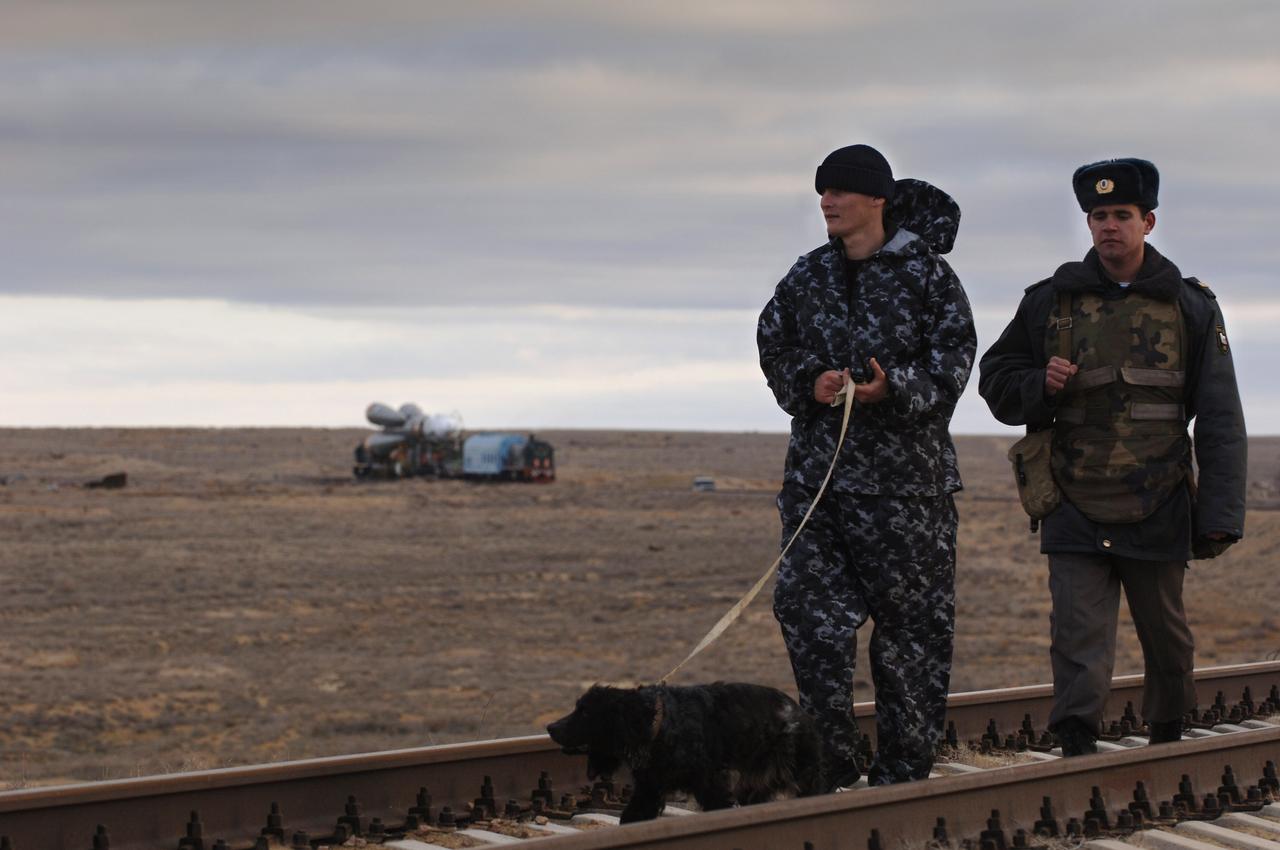
The Soyuz TMA-8 spacecraft and its booster rolled out to the launch pad on Tuesday, March 28, 2006 at the Baikonur Cosmodrome in Baikonur, Kazakhstan for final pre-launch preparations. The Soyuz will blast off on March 30, 2006 to carry Expedition 13 Commander Pavel V. Vinogradov and Science Officer and Flight Engineer Jeffrey N. Williams to the International Space Station for a six-month mission. The spacecraft will also be carrying Brazilian Space Agency Soyuz crew member Marcos Pontes, who will spend 10 days aboard the International Space Station under an agreement with the Russian Federal Space Agency. Photo Credit: (NASA/Bill Ingalls)
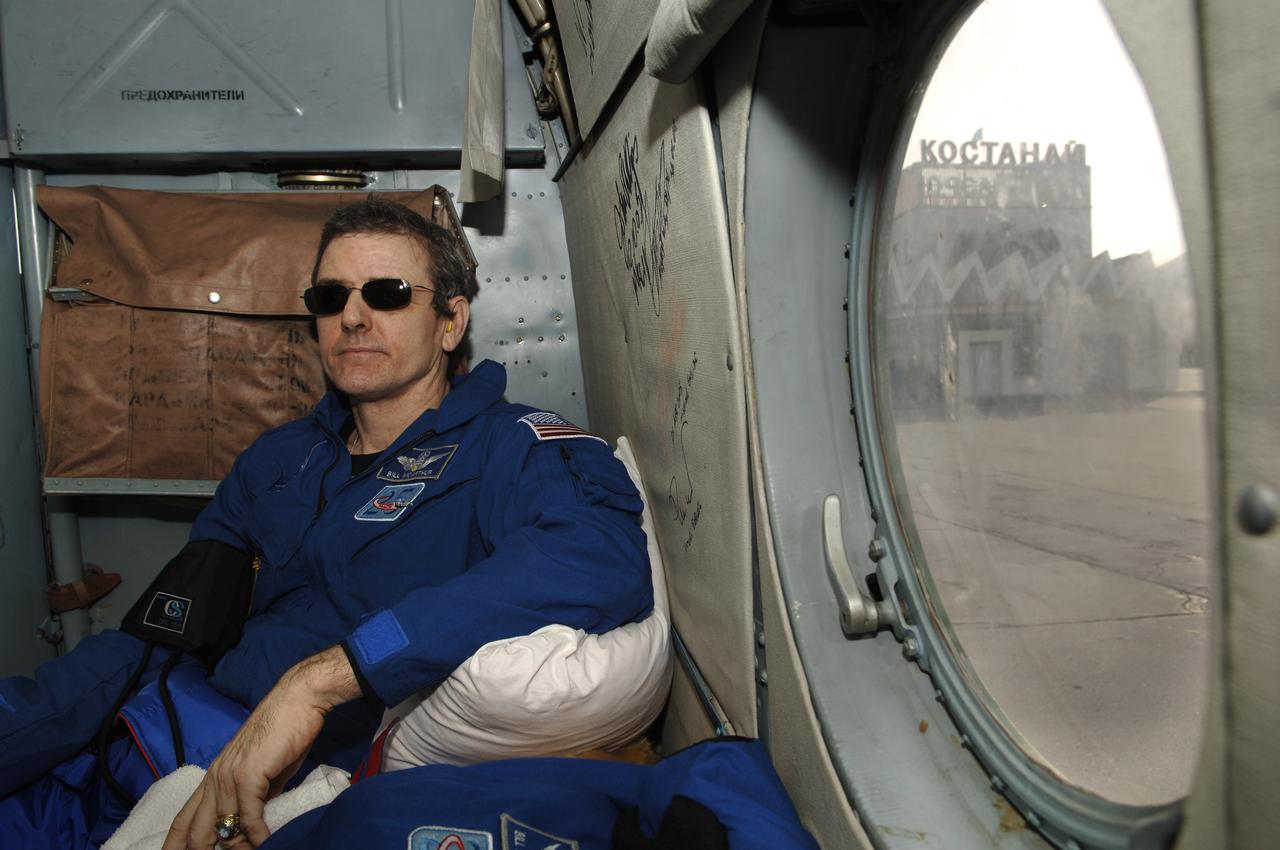
Expedition 12 Commander and International Space Station Science Officer, Bill McArthur waits onboard a helicopter before transferring to an airplane and a flight back to Moscow from Kustanay, Kazakhstan. Expedition 12 returned to Earth and landed in the steppes of Kazakhstan. The Soyuz TMA-7 spacecraft touched down at 7:48 p.m. EDT, Sunday, April 9, 2006. Returning with Commander Bill McArthur were Flight Engineer Valery Tokarev and Brazil’s first astronaut, Marcos Pontes, who arrived at the station with Expedition 13 on April 1. Photo Credit: (NASA/Bill Ingalls)
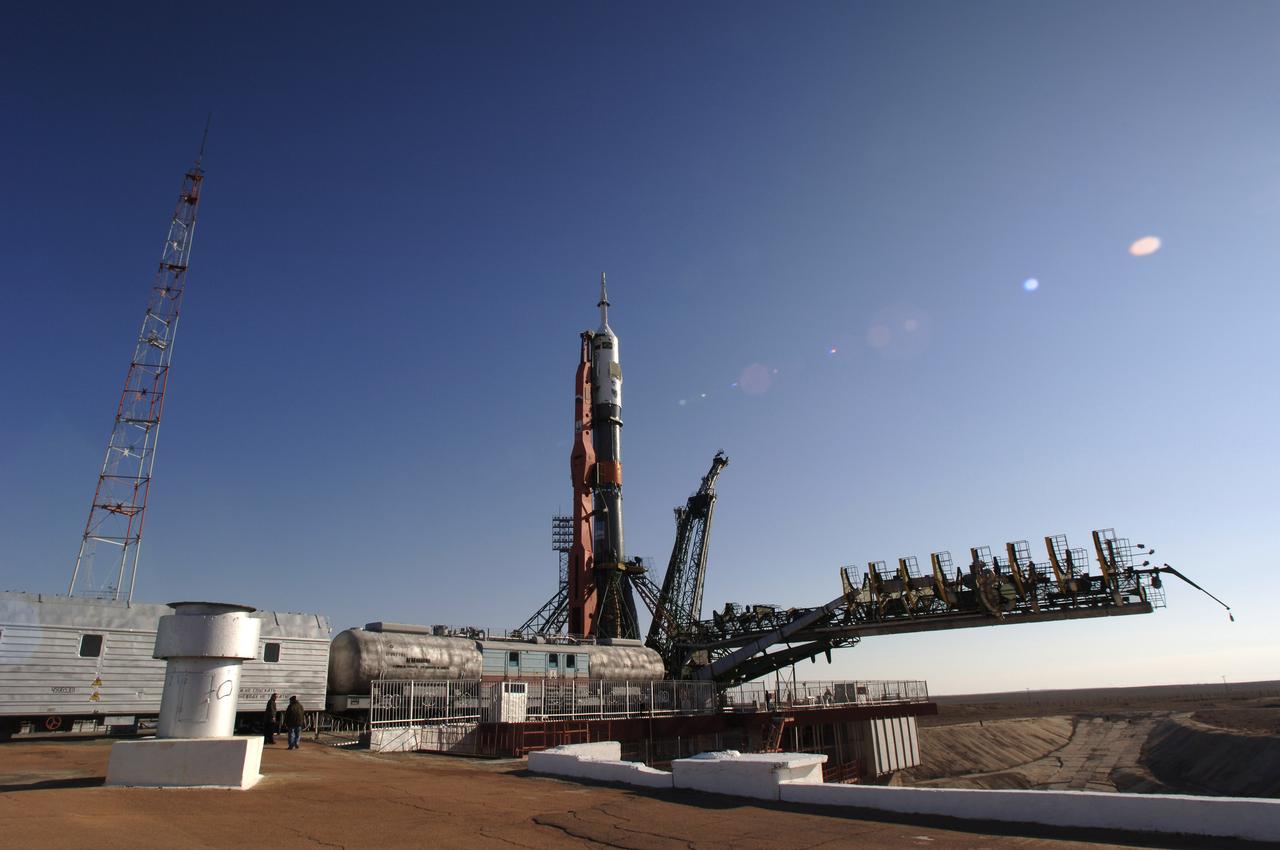
The Soyuz TMA-8 spacecraft and its booster rolled out to the launch pad on Tuesday, March 28, 2006 at the Baikonur Cosmodrome in Baikonur, Kazakhstan for final pre-launch preparations. The Soyuz will blast off on March 30, 2006 to carry Expedition 13 Commander Pavel V. Vinogradov and Science Officer and Flight Engineer Jeffrey N. Williams to the International Space Station for a six-month mission. The spacecraft will also be carrying Brazilian Space Agency Soyuz crew member Marcos Pontes, who will spend 10 days aboard the International Space Station under an agreement with the Russian Federal Space Agency. Photo Credit: (NASA/Bill Ingalls)
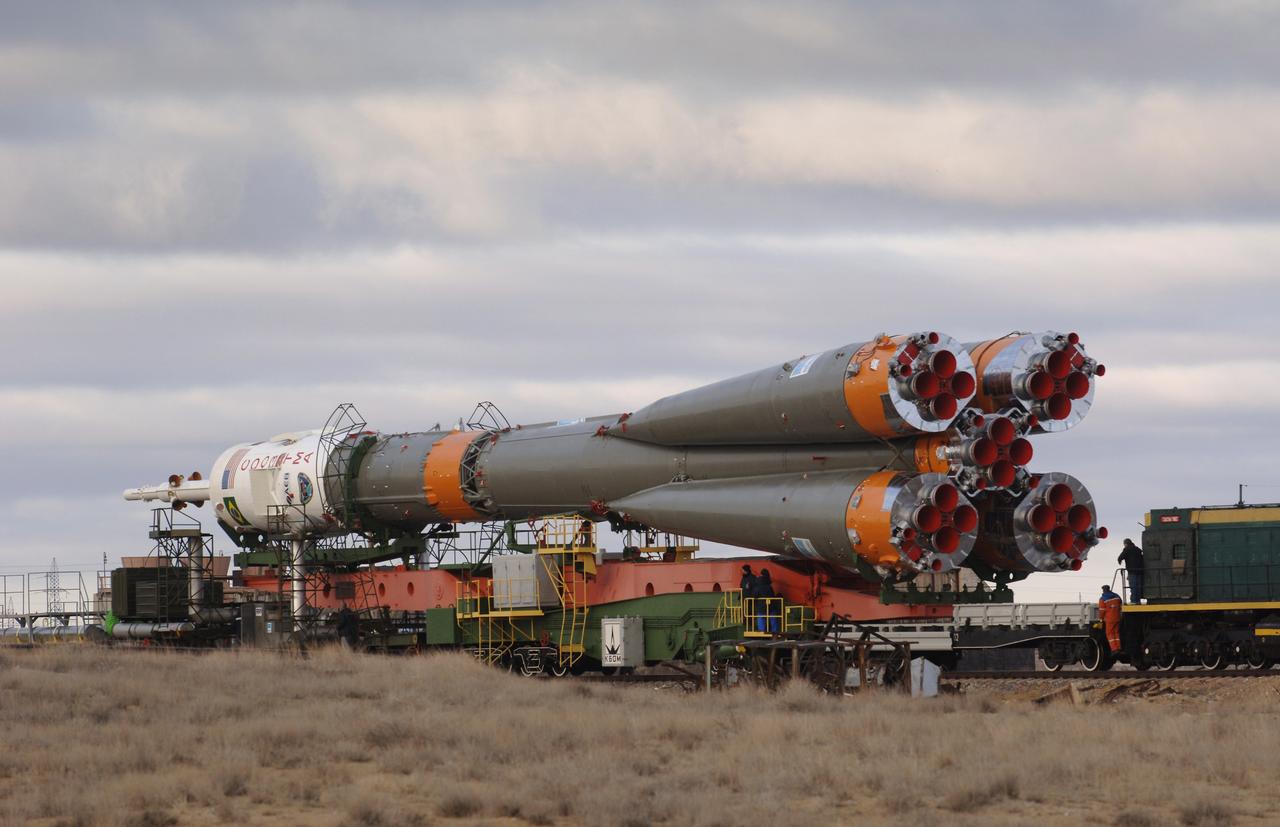
The Soyuz TMA-8 spacecraft and its booster rolled out to the launch pad on Tuesday, March 28, 2006 at the Baikonur Cosmodrome in Baikonur, Kazakhstan for final pre-launch preparations. The Soyuz will blast off on March 30, 2006 to carry Expedition 13 Commander Pavel V. Vinogradov and Science Officer and Flight Engineer Jeffrey N. Williams to the International Space Station for a six-month mission. The spacecraft will also be carrying Brazilian Space Agency Soyuz crew member Marcos Pontes, who will spend 10 days aboard the International Space Station under an agreement with the Russian Federal Space Agency. Photo Credit: (NASA/Bill Ingalls)
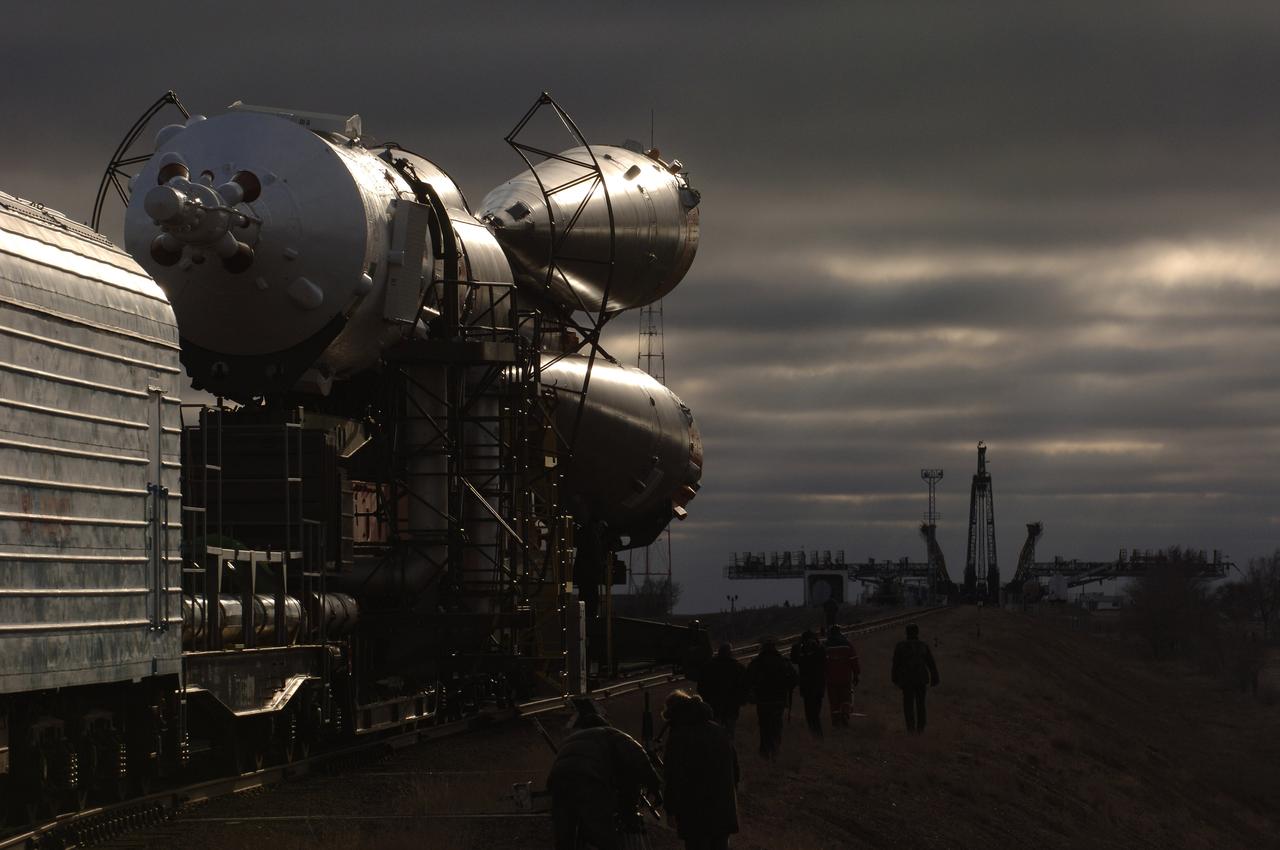
The Soyuz TMA-8 spacecraft and its booster rolled out to the launch pad on Tuesday, March 28, 2006 at the Baikonur Cosmodrome in Baikonur, Kazakhstan for final pre-launch preparations. The Soyuz will blast off on March 30, 2006 to carry Expedition 13 Commander Pavel V. Vinogradov and Science Officer and Flight Engineer Jeffrey N. Williams to the International Space Station for a six-month mission. The spacecraft will also be carrying Brazilian Space Agency Soyuz crew member Marcos Pontes, who will spend 10 days aboard the International Space Station under an agreement with the Russian Federal Space Agency. Photo Credit: (NASA/Bill Ingalls)
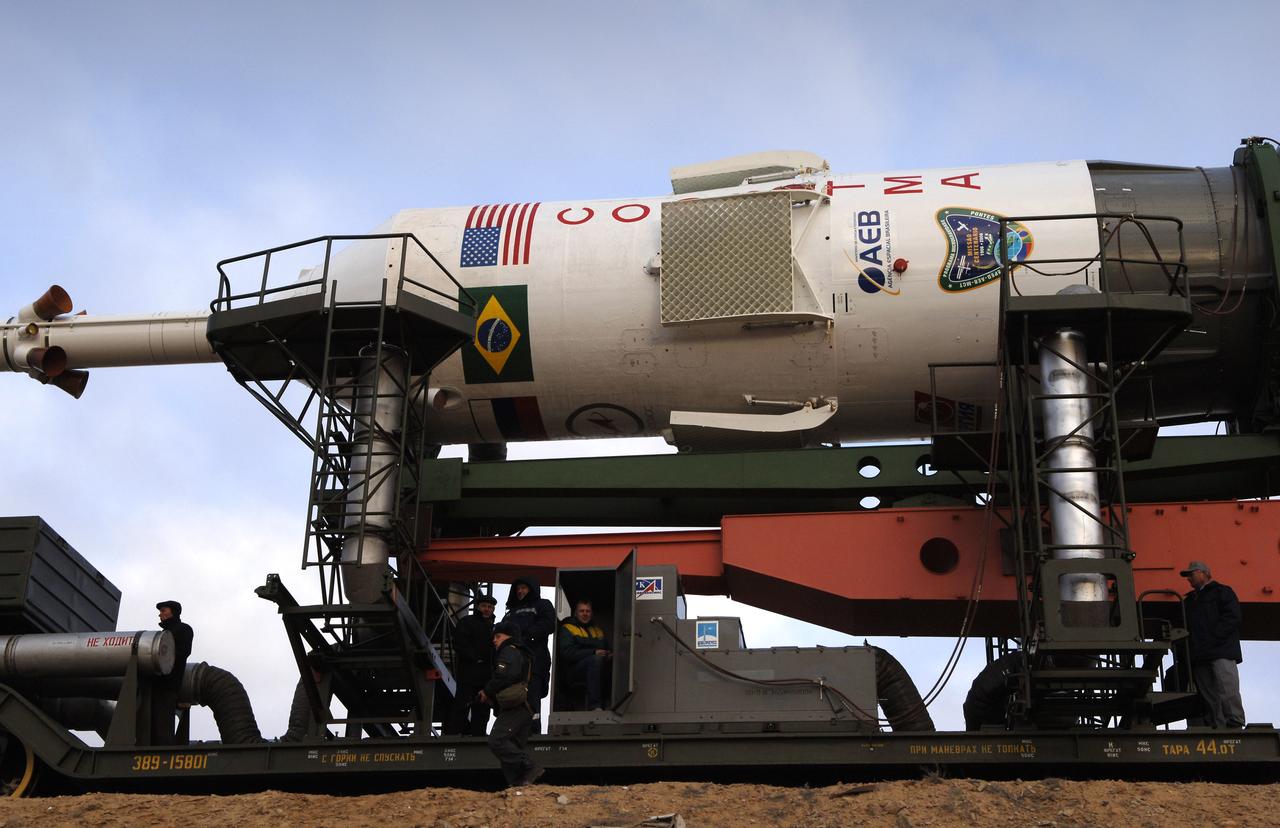
The Soyuz TMA-8 spacecraft and its booster rolled out to the launch pad on Tuesday, March 28, 2006 at the Baikonur Cosmodrome in Baikonur, Kazakhstan for final pre-launch preparations. The Soyuz will blast off on March 30, 2006 to carry Expedition 13 Commander Pavel V. Vinogradov and Science Officer and Flight Engineer Jeffrey N. Williams to the International Space Station for a six-month mission. The spacecraft will also be carrying Brazilian Space Agency Soyuz crew member Marcos Pontes, who will spend 10 days aboard the International Space Station under an agreement with the Russian Federal Space Agency. Photo Credit: (NASA/Bill Ingalls)
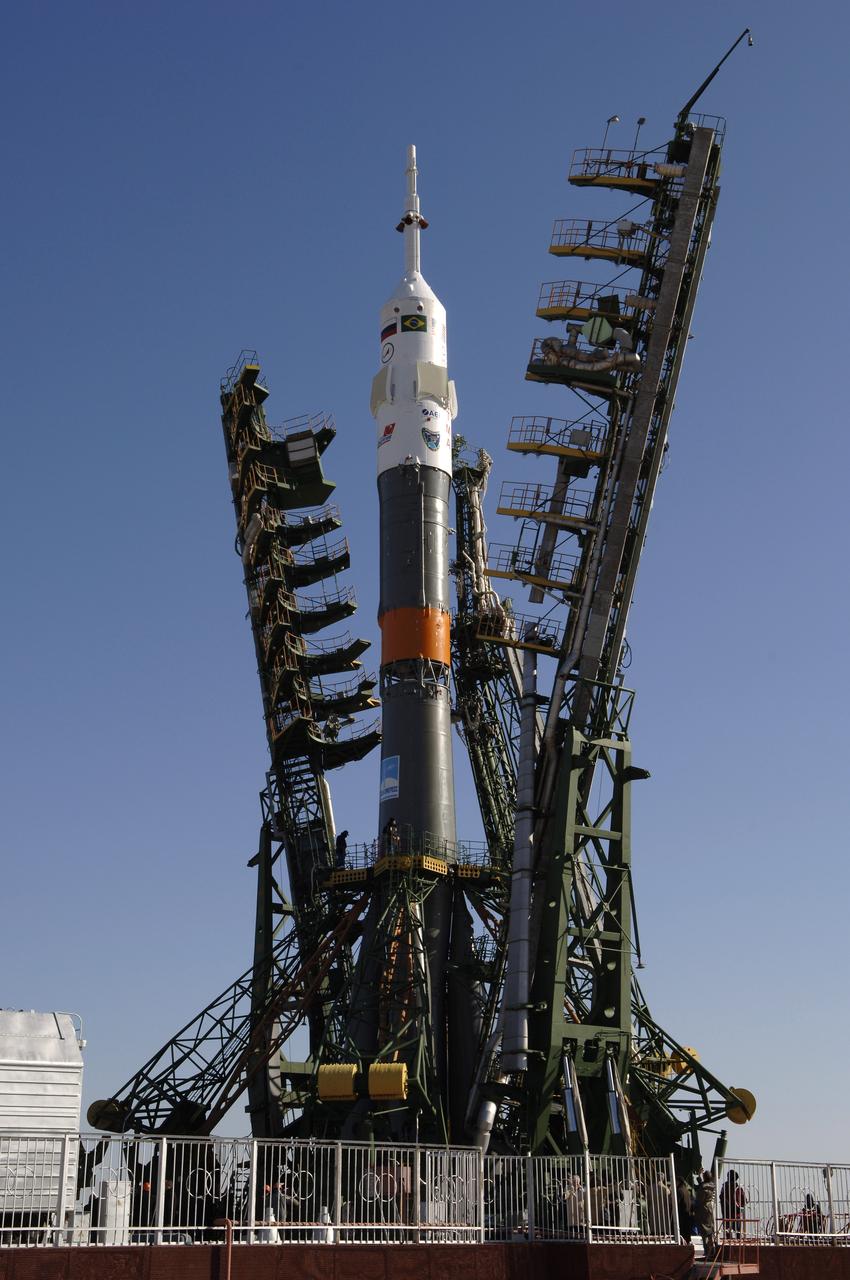
The Soyuz TMA-8 spacecraft and its booster rolled out to the launch pad on Tuesday, March 28, 2006 at the Baikonur Cosmodrome in Baikonur, Kazakhstan for final pre-launch preparations. The Soyuz will blast off on March 30, 2006 to carry Expedition 13 Commander Pavel V. Vinogradov and Science Officer and Flight Engineer Jeffrey N. Williams to the International Space Station for a six-month mission. The spacecraft will also be carrying Brazilian Space Agency Soyuz crew member Marcos Pontes, who will spend 10 days aboard the International Space Station under an agreement with the Russian Federal Space Agency. Photo Credit: (NASA/Bill Ingalls)
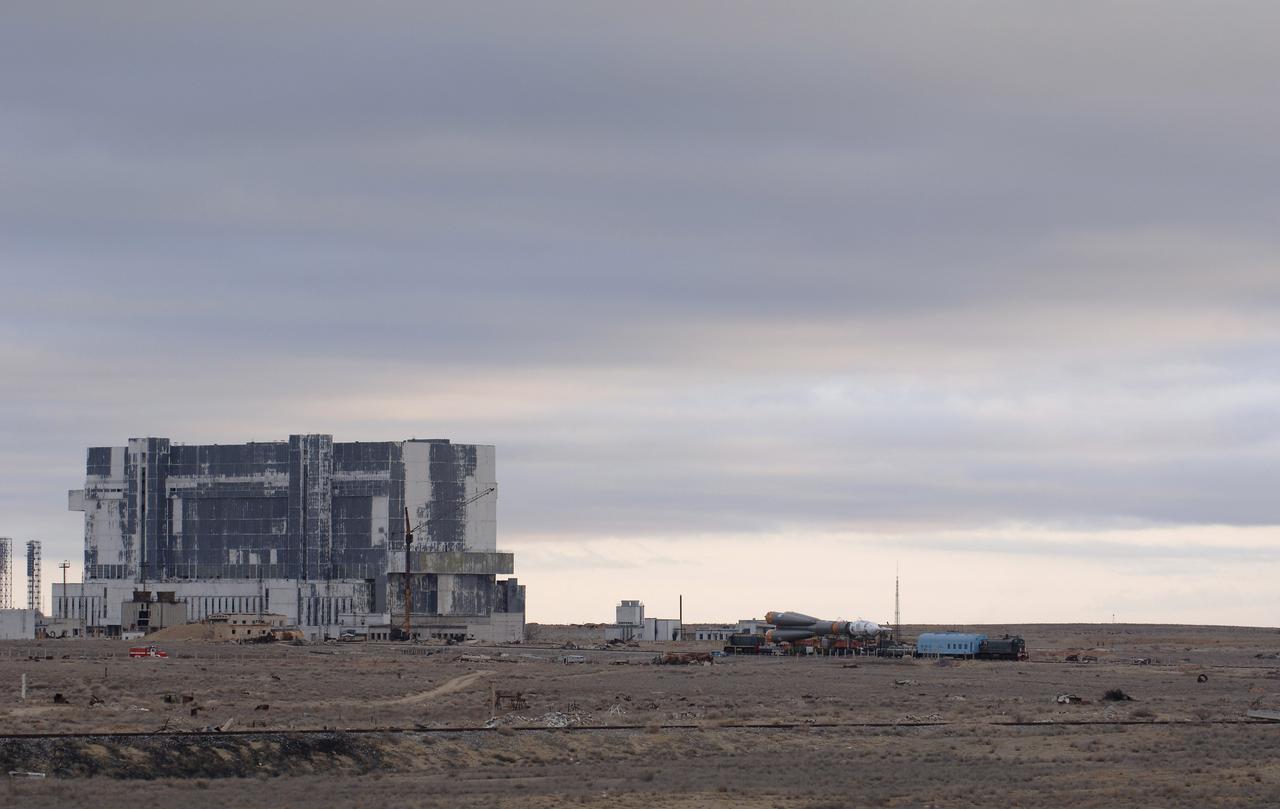
The Soyuz TMA-8 spacecraft and its booster rolled out to the launch pad on Tuesday, March 28, 2006 at the Baikonur Cosmodrome in Baikonur, Kazakhstan for final pre-launch preparations. The Soyuz will blast off on March 30, 2006 to carry Expedition 13 Commander Pavel V. Vinogradov and Science Officer and Flight Engineer Jeffrey N. Williams to the International Space Station for a six-month mission. The spacecraft will also be carrying Brazilian Space Agency Soyuz crew member Marcos Pontes, who will spend 10 days aboard the International Space Station under an agreement with the Russian Federal Space Agency. Photo Credit: (NASA/Bill Ingalls)
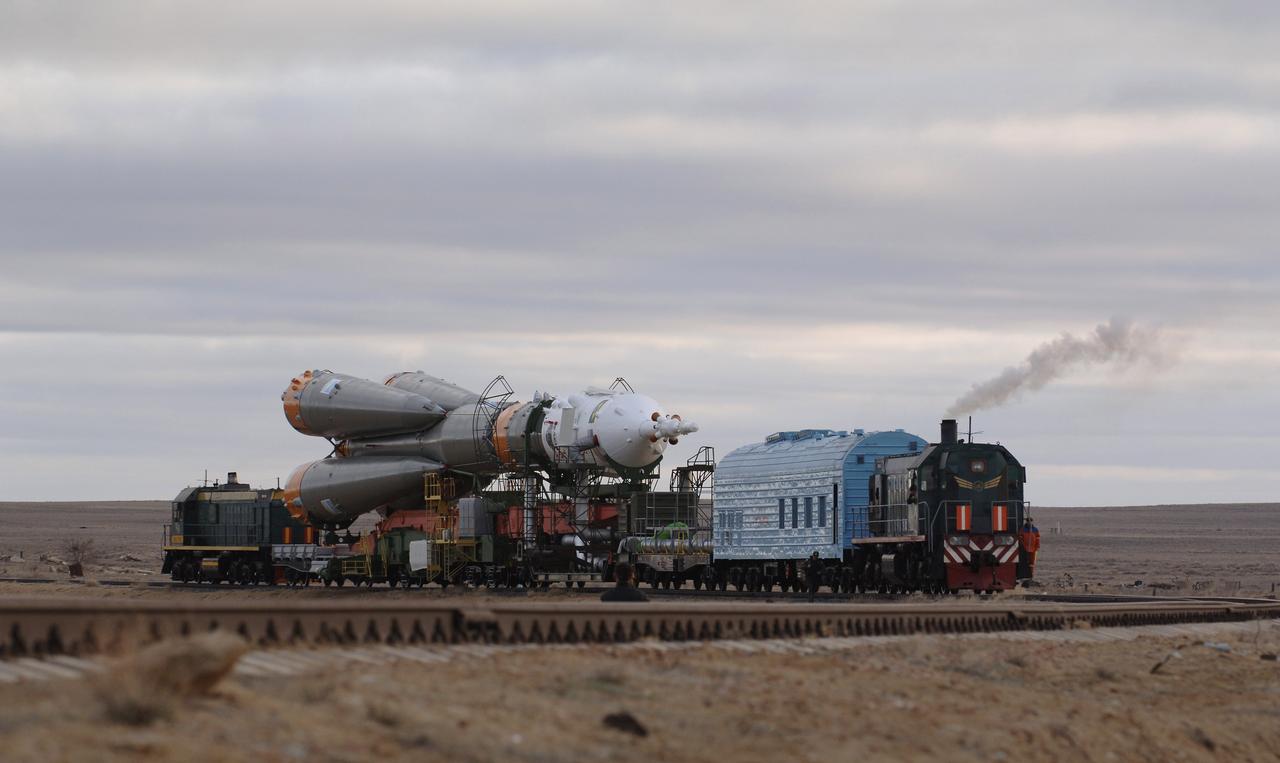
The Soyuz TMA-8 spacecraft and its booster rolled out to the launch pad on Tuesday, March 28, 2006 at the Baikonur Cosmodrome in Baikonur, Kazakhstan for final pre-launch preparations. The Soyuz will blast off on March 30, 2006 to carry Expedition 13 Commander Pavel V. Vinogradov and Science Officer and Flight Engineer Jeffrey N. Williams to the International Space Station for a six-month mission. The spacecraft will also be carrying Brazilian Space Agency Soyuz crew member Marcos Pontes, who will spend 10 days aboard the International Space Station under an agreement with the Russian Federal Space Agency. Photo Credit: (NASA/Bill Ingalls)
The Soyuz TMA-8 spacecraft and its booster rolled out to the launch pad on Tuesday, March 28, 2006 at the Baikonur Cosmodrome in Baikonur, Kazakhstan for final pre-launch preparations. The Soyuz will blast off on March 30, 2006 to carry Expedition 13 Commander Pavel V. Vinogradov and Science Officer and Flight Engineer Jeffrey N. Williams to the International Space Station for a six-month mission. The spacecraft will also be carrying Brazilian Space Agency Soyuz crew member Marcos Pontes, who will spend 10 days aboard the International Space Station under an agreement with the Russian Federal Space Agency. Photo Credit: (NASA/Bill Ingalls)
The Soyuz TMA-8 spacecraft and its booster rolled out to the launch pad on Tuesday, March 28, 2006 at the Baikonur Cosmodrome in Baikonur, Kazakhstan for final pre-launch preparations. The Soyuz will blast off on March 30, 2006 to carry Expedition 13 Commander Pavel V. Vinogradov and Science Officer and Flight Engineer Jeffrey N. Williams to the International Space Station for a six-month mission. The spacecraft will also be carrying Brazilian Space Agency Soyuz crew member Marcos Pontes, who will spend 10 days aboard the International Space Station under an agreement with the Russian Federal Space Agency. Photo Credit: (NASA/Bill Ingalls)
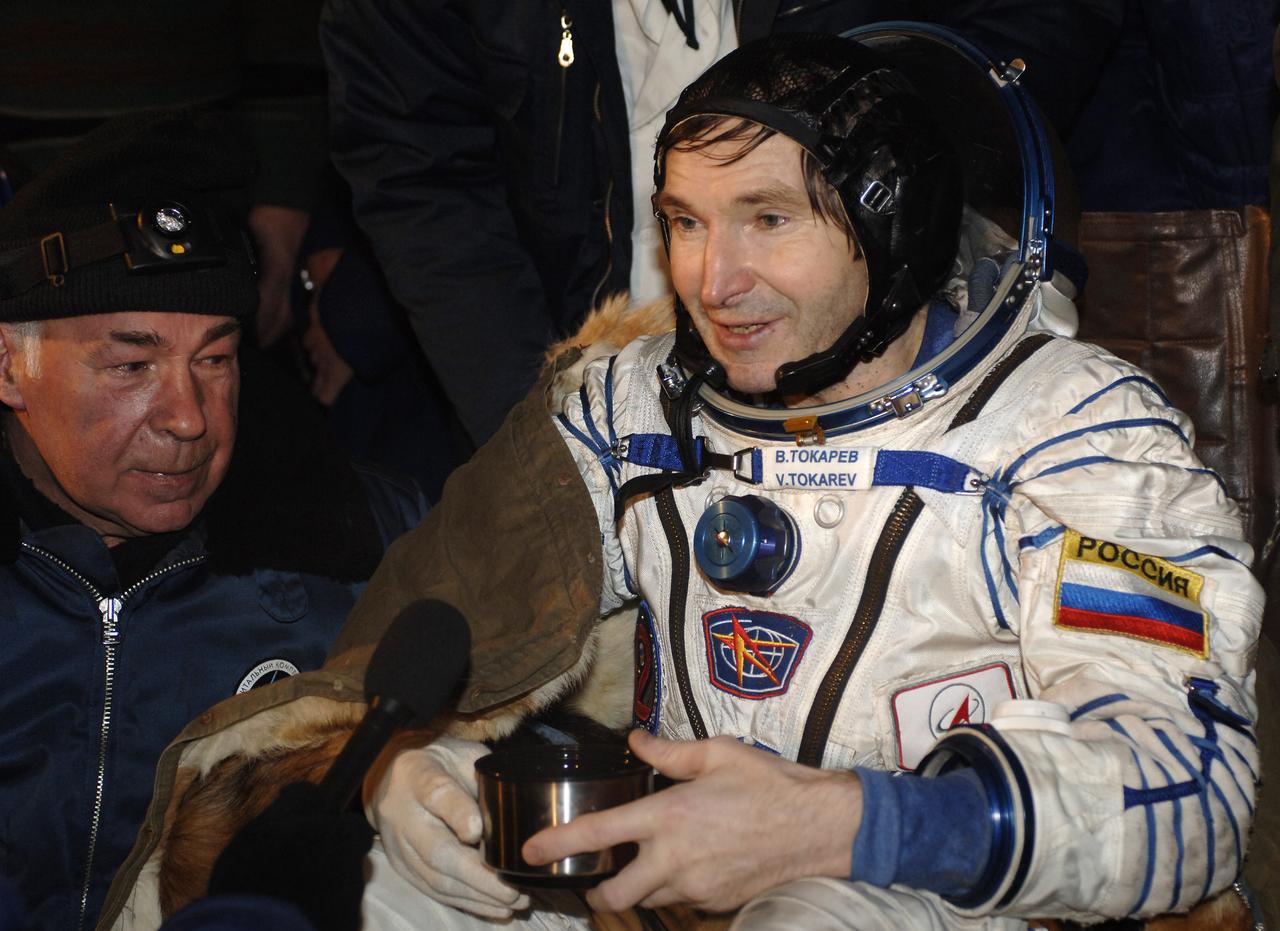
Valery I. Tokarev, Soyuz Commander and Expedition 12 Flight Engineer, exchanges greetings with some of the crowd on hand in the steppes of Kazakhstan to meet the three crewmembers returning to Earth from the International Space Station in the Soyuz TMA-7 spacecraft on Sunday, April 9, 2006. Returning with Tokarev were Expedition 12 Commander Space Station Science Officer Bill McArthur and Brazil’s first astronaut, Marcos Pontes representing the Braizil Space Agency, who arrived at the station with Expedition 13 on April 1. Photo Credit: (NASA/Bill Ingalls)
The Soyuz TMA-8 spacecraft and its booster rolled out to the launch pad on Tuesday, March 28, 2006 at the Baikonur Cosmodrome in Baikonur, Kazakhstan for final pre-launch preparations. The Soyuz will blast off on March 30, 2006 to carry Expedition 13 Commander Pavel V. Vinogradov and Science Officer and Flight Engineer Jeffrey N. Williams to the International Space Station for a six-month mission. The spacecraft will also be carrying Brazilian Space Agency Soyuz crew member Marcos Pontes, who will spend 10 days aboard the International Space Station under an agreement with the Russian Federal Space Agency. Photo Credit: (NASA/Bill Ingalls)
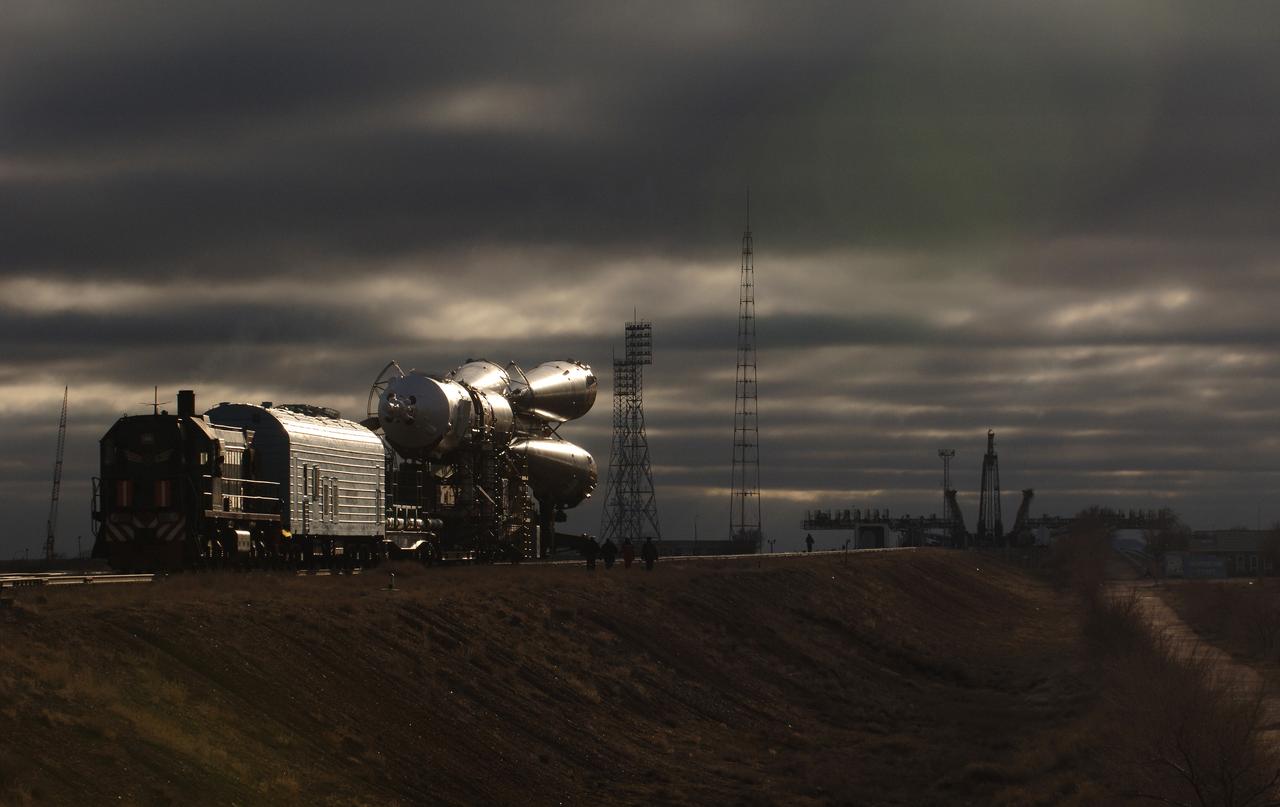
The Soyuz TMA-8 spacecraft and its booster rolled out to the launch pad on Tuesday, March 28, 2006 at the Baikonur Cosmodrome in Baikonur, Kazakhstan for final pre-launch preparations. The Soyuz will blast off on March 30, 2006 to carry Expedition 13 Commander Pavel V. Vinogradov and Science Officer and Flight Engineer Jeffrey N. Williams to the International Space Station for a six-month mission. The spacecraft will also be carrying Brazilian Space Agency Soyuz crew member Marcos Pontes, who will spend 10 days aboard the International Space Station under an agreement with the Russian Federal Space Agency. Photo Credit: (NASA/Bill Ingalls)
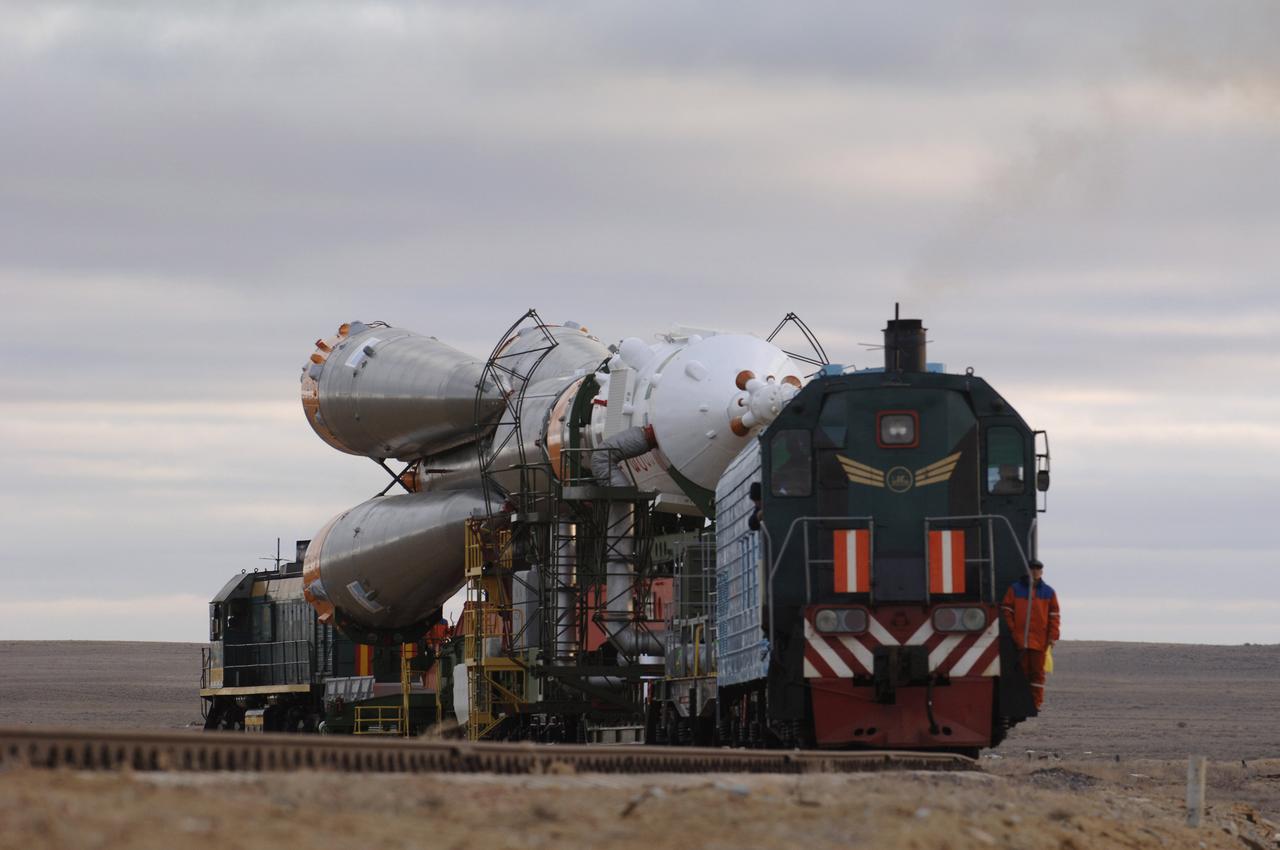
The Soyuz TMA-8 spacecraft and its booster rolled out to the launch pad on Tuesday, March 28, 2006 at the Baikonur Cosmodrome in Baikonur, Kazakhstan for final pre-launch preparations. The Soyuz will blast off on March 30, 2006 to carry Expedition 13 Commander Pavel V. Vinogradov and Science Officer and Flight Engineer Jeffrey N. Williams to the International Space Station for a six-month mission. The spacecraft will also be carrying Brazilian Space Agency Soyuz crew member Marcos Pontes, who will spend 10 days aboard the International Space Station under an agreement with the Russian Federal Space Agency. Photo Credit: (NASA/Bill Ingalls)
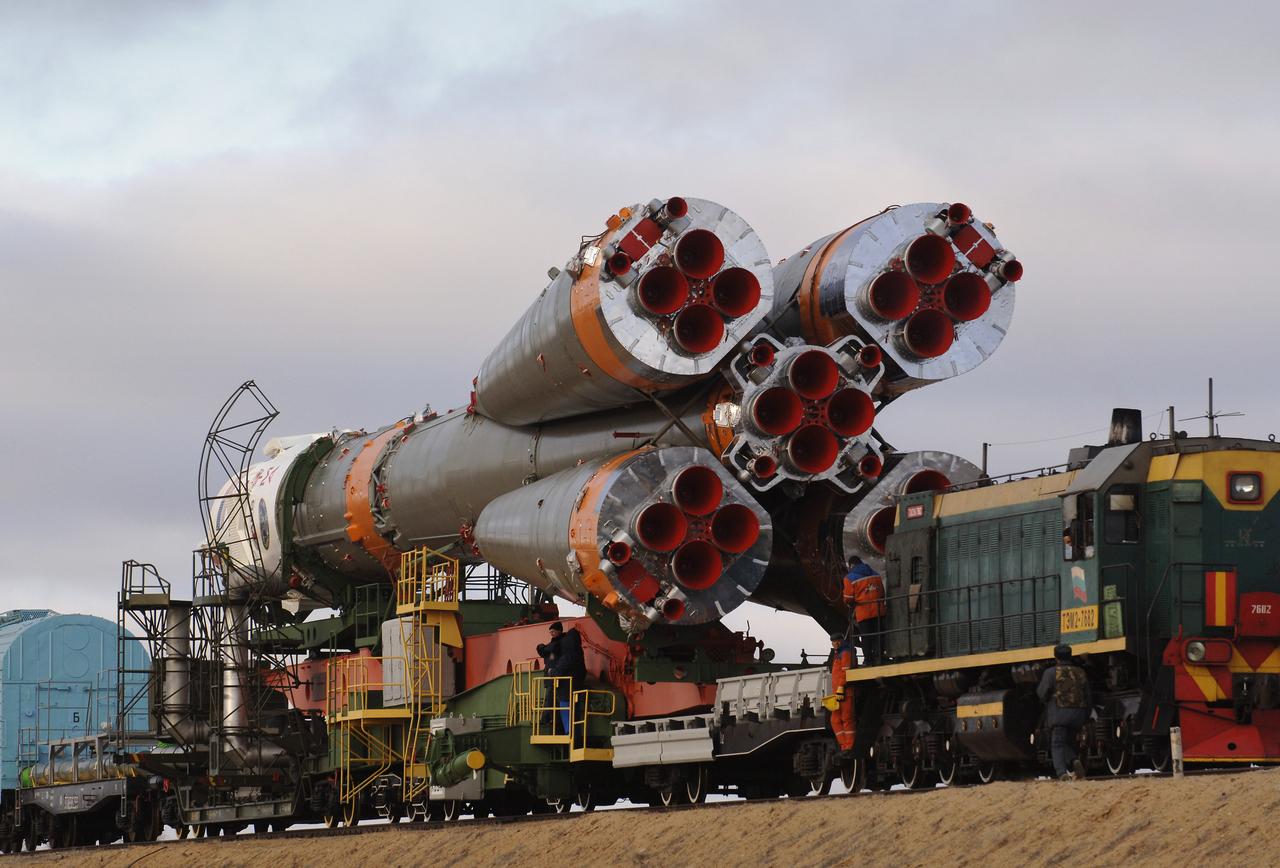
The Soyuz TMA-8 spacecraft and its booster rolled out to the launch pad on Tuesday, March 28, 2006 at the Baikonur Cosmodrome in Baikonur, Kazakhstan for final pre-launch preparations. The Soyuz will blast off on March 30, 2006 to carry Expedition 13 Commander Pavel V. Vinogradov and Science Officer and Flight Engineer Jeffrey N. Williams to the International Space Station for a six-month mission. The spacecraft will also be carrying Brazilian Space Agency Soyuz crew member Marcos Pontes, who will spend 10 days aboard the International Space Station under an agreement with the Russian Federal Space Agency. Photo Credit: (NASA/Bill Ingalls)

The Soyuz TMA-8 spacecraft and its booster rolled out to the launch pad on Tuesday, March 28, 2006 at the Baikonur Cosmodrome in Baikonur, Kazakhstan for final pre-launch preparations. The Soyuz will blast off on March 30, 2006 to carry Expedition 13 Commander Pavel V. Vinogradov and Science Officer and Flight Engineer Jeffrey N. Williams to the International Space Station for a six-month mission. The spacecraft will also be carrying Brazilian Space Agency Soyuz crew member Marcos Pontes, who will spend 10 days aboard the International Space Station under an agreement with the Russian Federal Space Agency. Photo Credit: (NASA/Bill Ingalls)
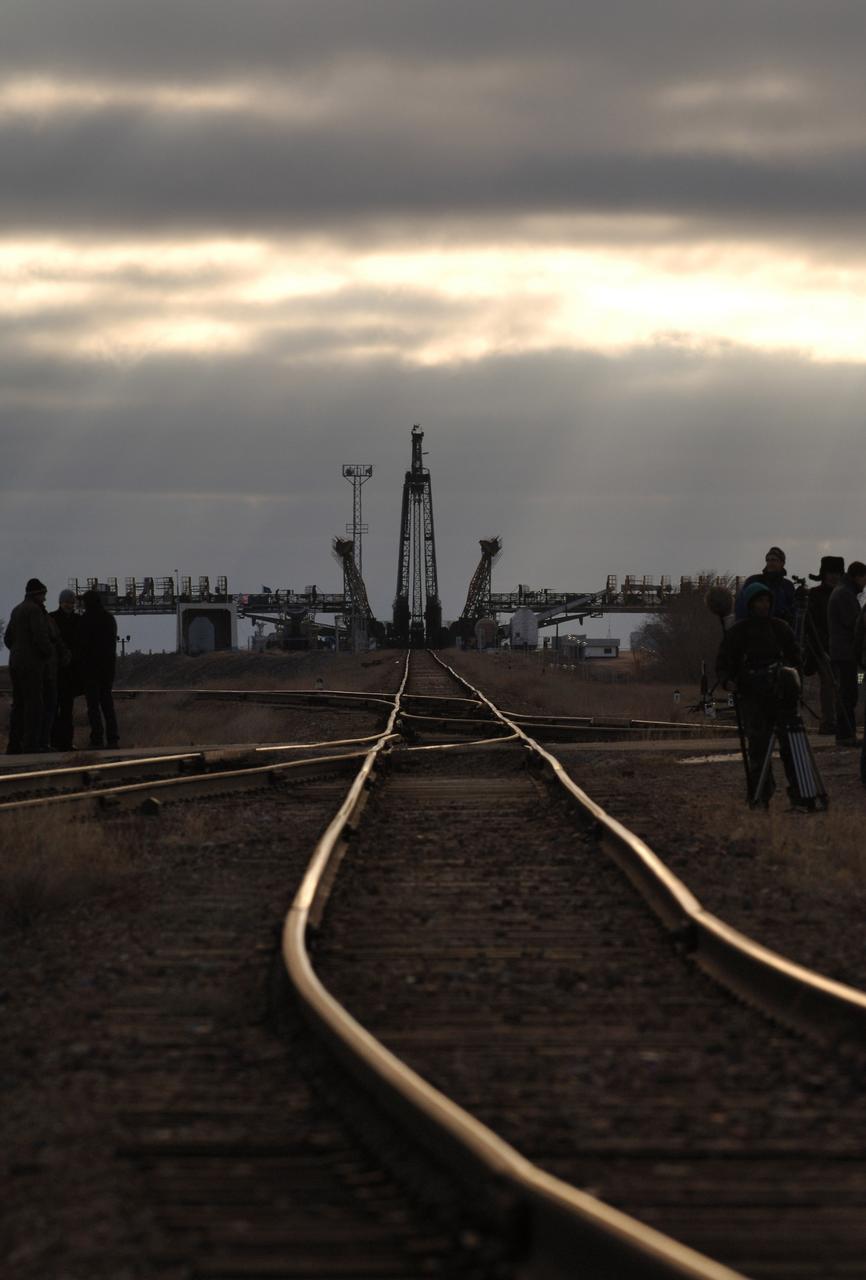
The Soyuz TMA-8 spacecraft and its booster rolled out to the launch pad on Tuesday, March 28, 2006 at the Baikonur Cosmodrome in Baikonur, Kazakhstan for final pre-launch preparations. The Soyuz will blast off on March 30, 2006 to carry Expedition 13 Commander Pavel V. Vinogradov and Science Officer and Flight Engineer Jeffrey N. Williams to the International Space Station for a six-month mission. The spacecraft will also be carrying Brazilian Space Agency Soyuz crew member Marcos Pontes, who will spend 10 days aboard the International Space Station under an agreement with the Russian Federal Space Agency. Photo Credit: (NASA/Bill Ingalls)
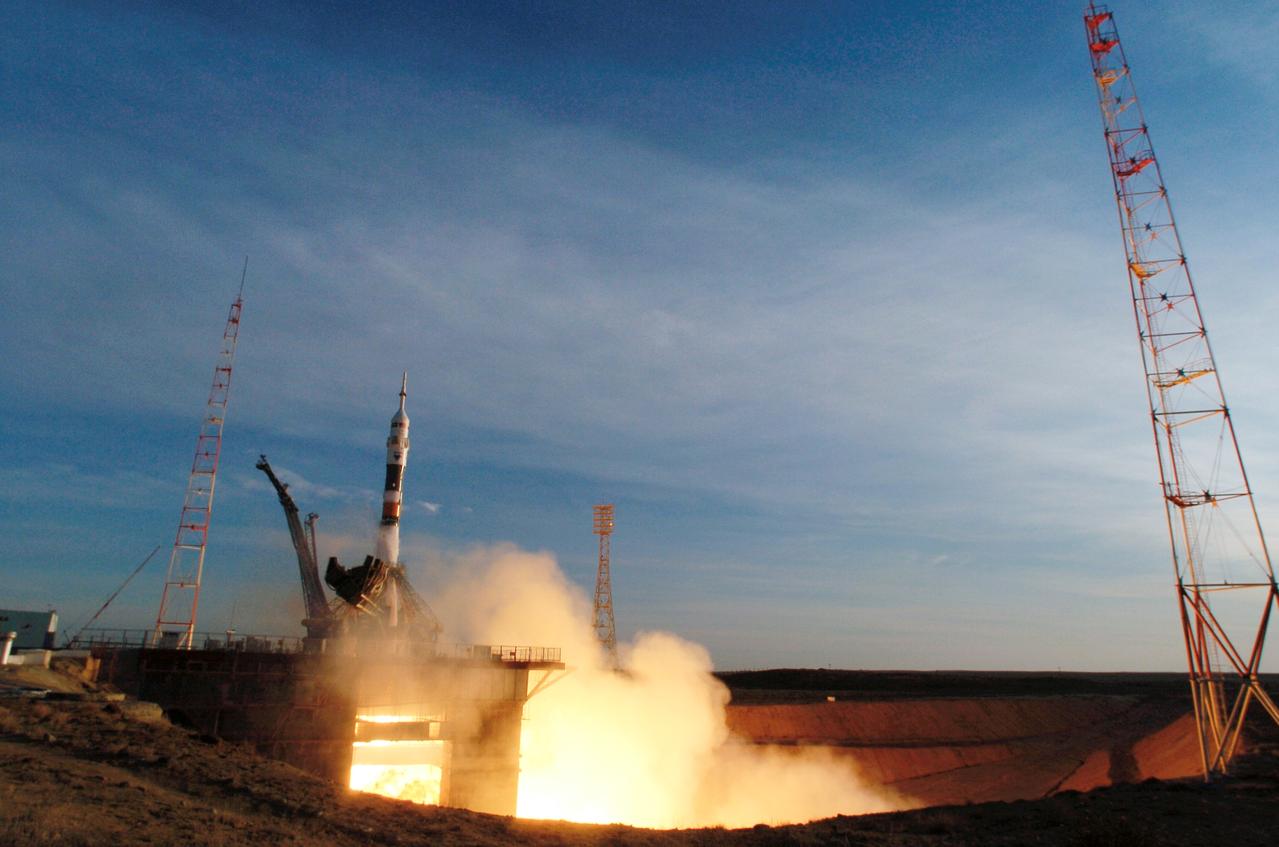
JSC2006-E-11944 (30 March 2006) --- With the launch of a Soyuz rocket, cosmonaut Pavel V. Vinogradov, Russia’s Federal Space Agency Expedition 13 International Space Station commander, and astronaut Jeffrey N. Williams, NASA International Space Station flight engineer and science officer, began their mission Wednesday at 9:30 p.m. EST, (Thursday, March 30, 2006, 8:30 a.m. Kazakhstan time). They launched aboard a Soyuz rocket from the Baikonur Cosmodrome in Kazakhstan. Joining them for several days before returning home with the Expedition 12 crew is astronaut Marcos Pontes, Brazilian Space Agency Soyuz crew member. Photo Credit: NASA/Bill Ingalls
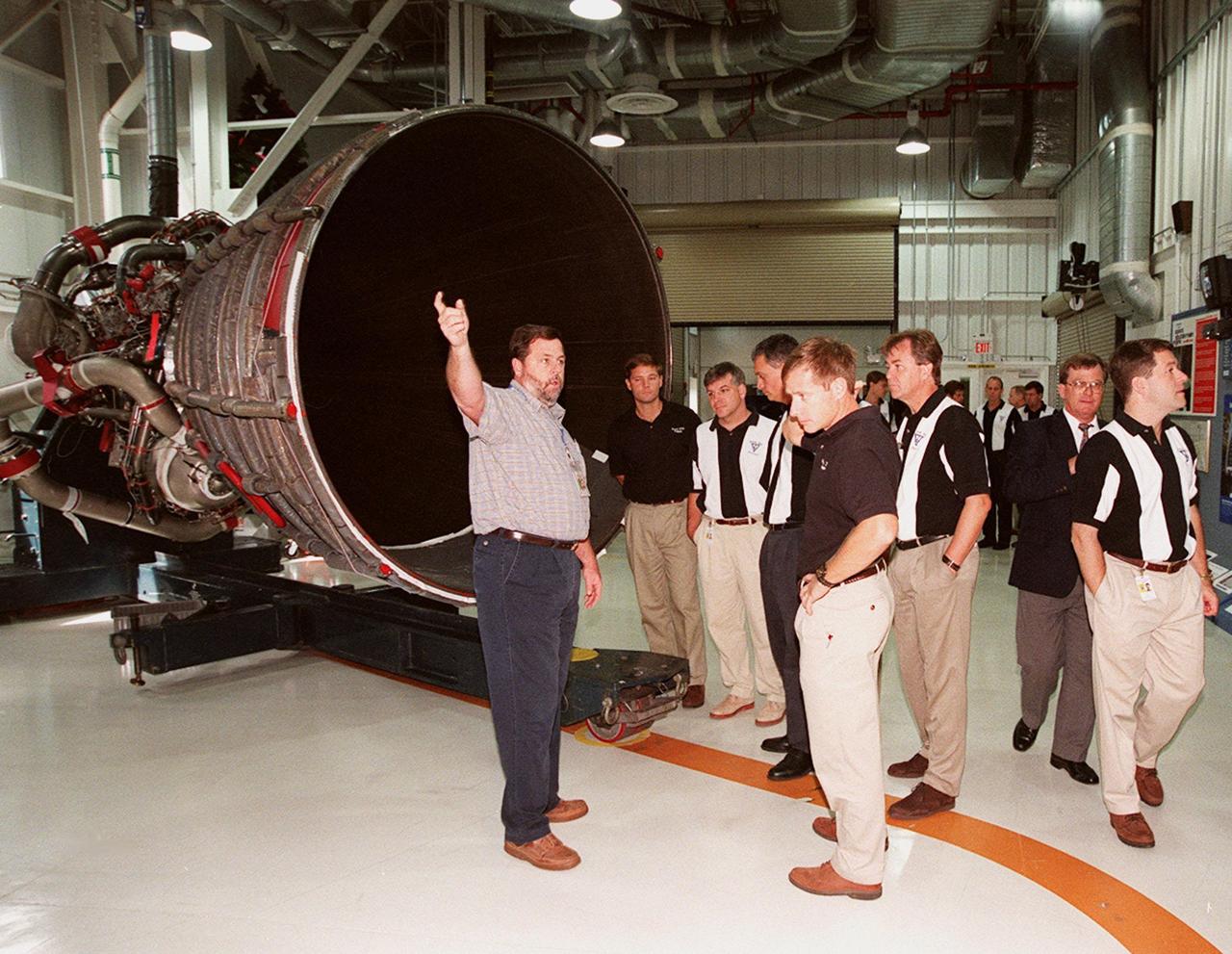
Members of the 1998 astronaut candidate class (group 17) learn about the use of the Space Shuttle Main Engine (SSME) Processing Facility. At left is one of the main shuttle engines. The class is at KSC for training activities, including fire training and a flight awareness program, plus touring the OPF, VAB, SSPF, launch pads, SLF, Apollo/Saturn V Center, the crew headquarters, as well as the SSME Processing Facility. The U.S. candidates in the '98 class are Clayton C. Anderson, Lee J. Archambault, Tracy E. Caldwell (Ph.D.), Gregory E. Chamitoff (Ph.D.), Timothy J. Creamer, Christopher J. Ferguson, Michael J. Foreman, Michael E. Fossum, Kenneth T. Ham, Patricia C. Hilliard (M.D.), Gregory C. Johnson, Gregory H. Johnson, Stanley G. Love (Ph.D.), Leland D. Melvin, Barbara R. Morgan, William A. Oefelein, John D. Olivas (Ph.D.), Nicholas J.M. Patrick (Ph.D.), Alan G. Poindexter, Garrett E. Reisman (Ph.D.), Steven R. Swanson, Douglas H. Wheelock, Sunita L. Williams, Neil W. Woodward III, George D. Zamka; and the international candidates are Leopold Eyharts, Paolo Nespoli, Hans Schlegel, Roberto Vittori, Bjarni V. Tryggvason, and Marcos Pontes
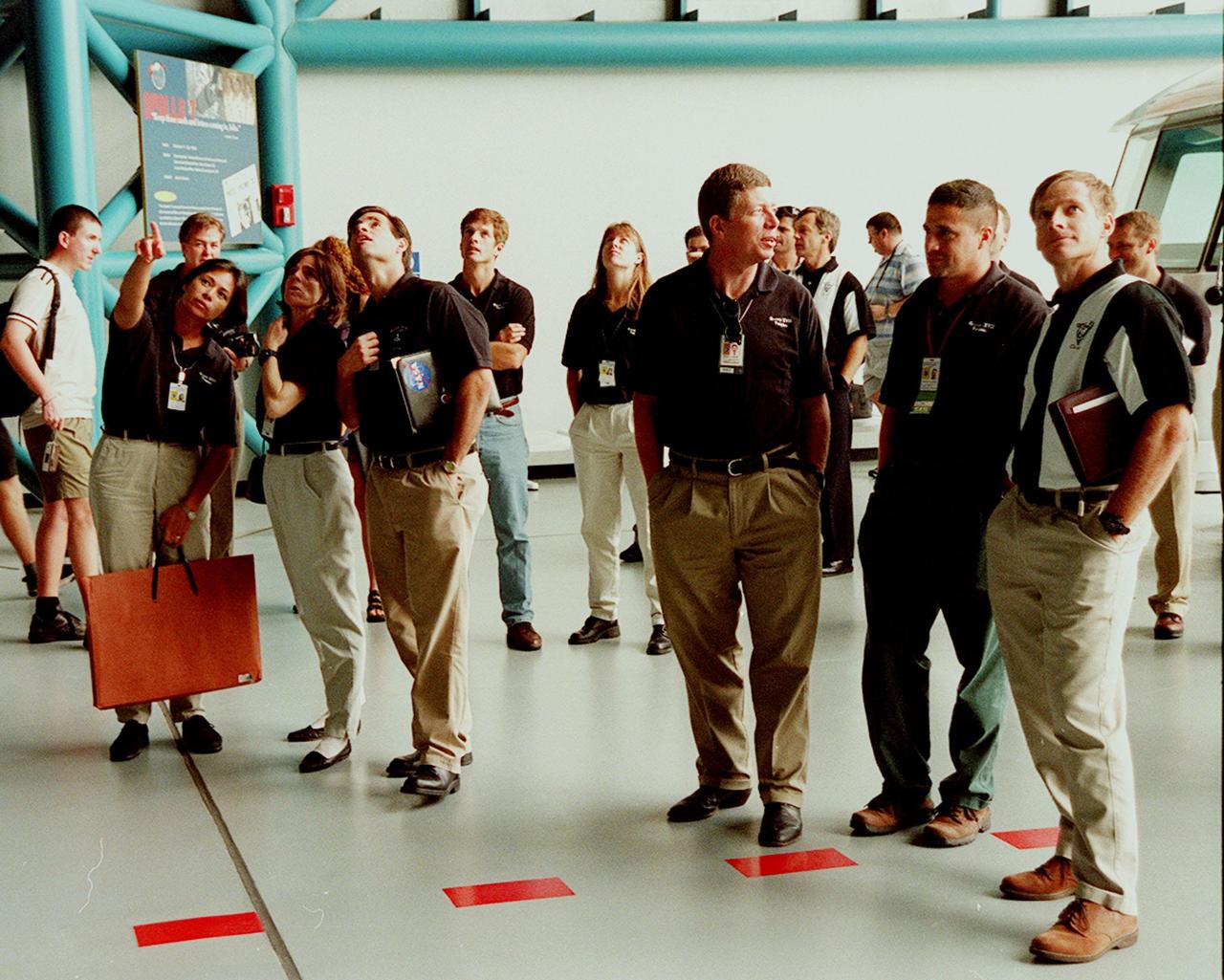
KENNEDY SPACE CENTER, FLA. -- At the Apollo/Saturn V Center, some of the 1998 astronaut candidate class (group 17) take a close look at the Saturn V rocket on display. The U.S. candidates include Clayton C. Anderson, Lee J. Archambault, Tracy E. Caldwell (Ph.D.), Gregory E. Chamitoff (Ph.D.), Timothy J. Creamer, Christopher J. Ferguson, Michael J. Foreman, Michael E. Fossum, Kenneth T. Ham, Patricia C. Hilliard (M.D.), Gregory C. Johnson, Gregory H. Johnson, Stanley G. Love (Ph.D.), Leland D. Melvin, Barbara R. Morgan, William A. Oefelein, John D. Olivas (Ph.D.), Nicholas J.M. Patrick (Ph.D.), Alan G. Poindexter, Garrett E. Reisman (Ph.D.), Steven R. Swanson, Douglas H. Wheelock, Sunita L. Williams, Neil W. Woodward III, George D. Zamka; and international candidates Leopold Eyharts, Paolo Nespoli, Hans Schlegel, Roberto Vittori, Bjarni V. Tryggvason, and Marcos Pontes. The class is at KSC for training activities, including fire training and a flight awareness program, plus touring the OPF, SSME Processing Facility, VAB, SSPF, launch pads, SLF, Apollo/Saturn V Center and the crew headquarters
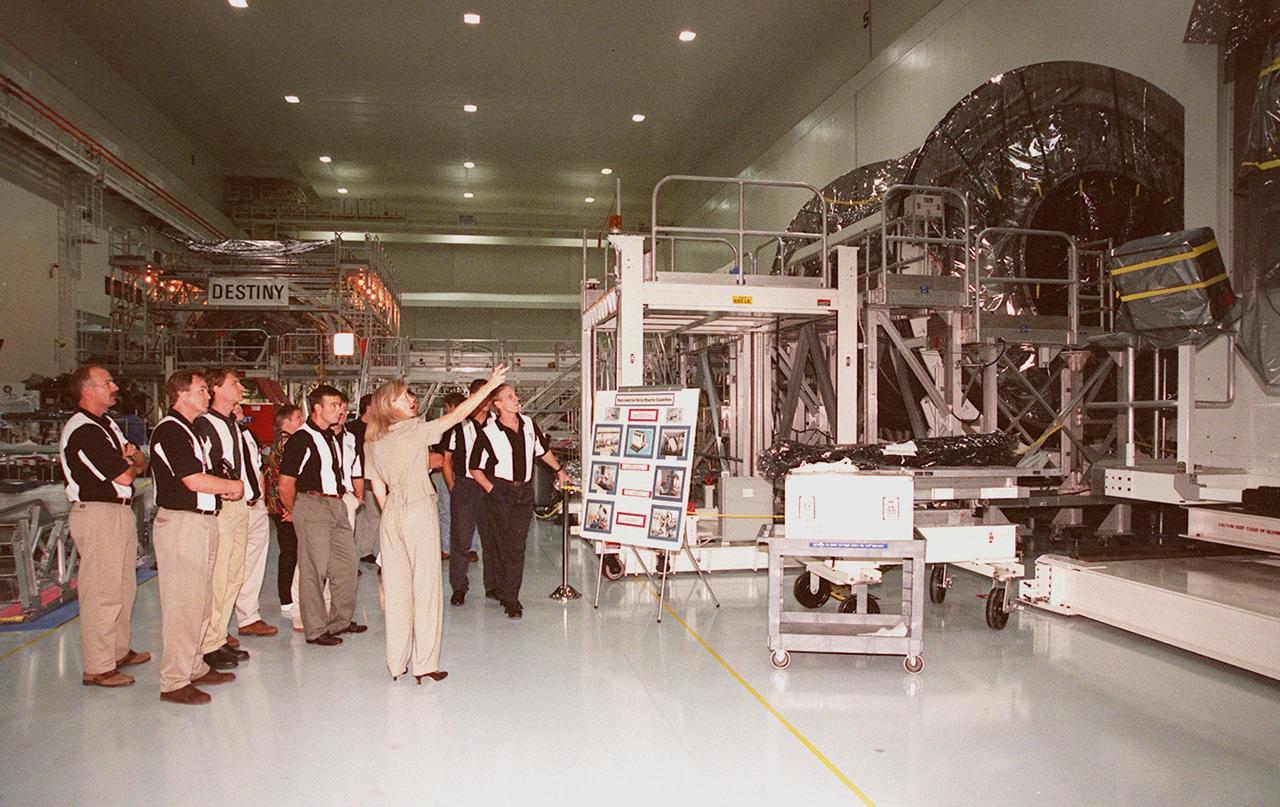
KENNEDY SPACE CENTER, FLA. -- In the Space Station Processing Facility (SSPF), members of the 1998 astronaut candidate class (group 17) are shown future components of the International Space Station, such as the Multi-Purpose Logistics Module at right. The class is taking part in training activities, including fire training and a flight awareness program, plus touring the OPF, VAB, SSME Processing Facility, launch pads, SLF, Apollo/Saturn V Center, the crew headquarters, as well as the SSPF. The U.S. candidates in the '98 class are Clayton C. Anderson, Lee J. Archambault, Tracy E. Caldwell (Ph.D.), Gregory E. Chamitoff (Ph.D.), Timothy J. Creamer, Christopher J. Ferguson, Michael J. Foreman, Michael E. Fossum, Kenneth T. Ham, Patricia C. Hilliard (M.D.), Gregory C. Johnson, Gregory H. Johnson, Stanley G. Love (Ph.D.), Leland D. Melvin, Barbara R. Morgan, William A. Oefelein, John D. Olivas (Ph.D.), Nicholas J.M. Patrick (Ph.D.), Alan G. Poindexter, Garrett E. Reisman (Ph.D.), Steven R. Swanson, Douglas H. Wheelock, Sunita L. Williams, Neil W. Woodward III, George D. Zamka; and the international candidates are Leopold Eyharts, Paolo Nespoli, Hans Schlegel, Roberto Vittori, Bjarni V. Tryggvason, and Marcos Pontes
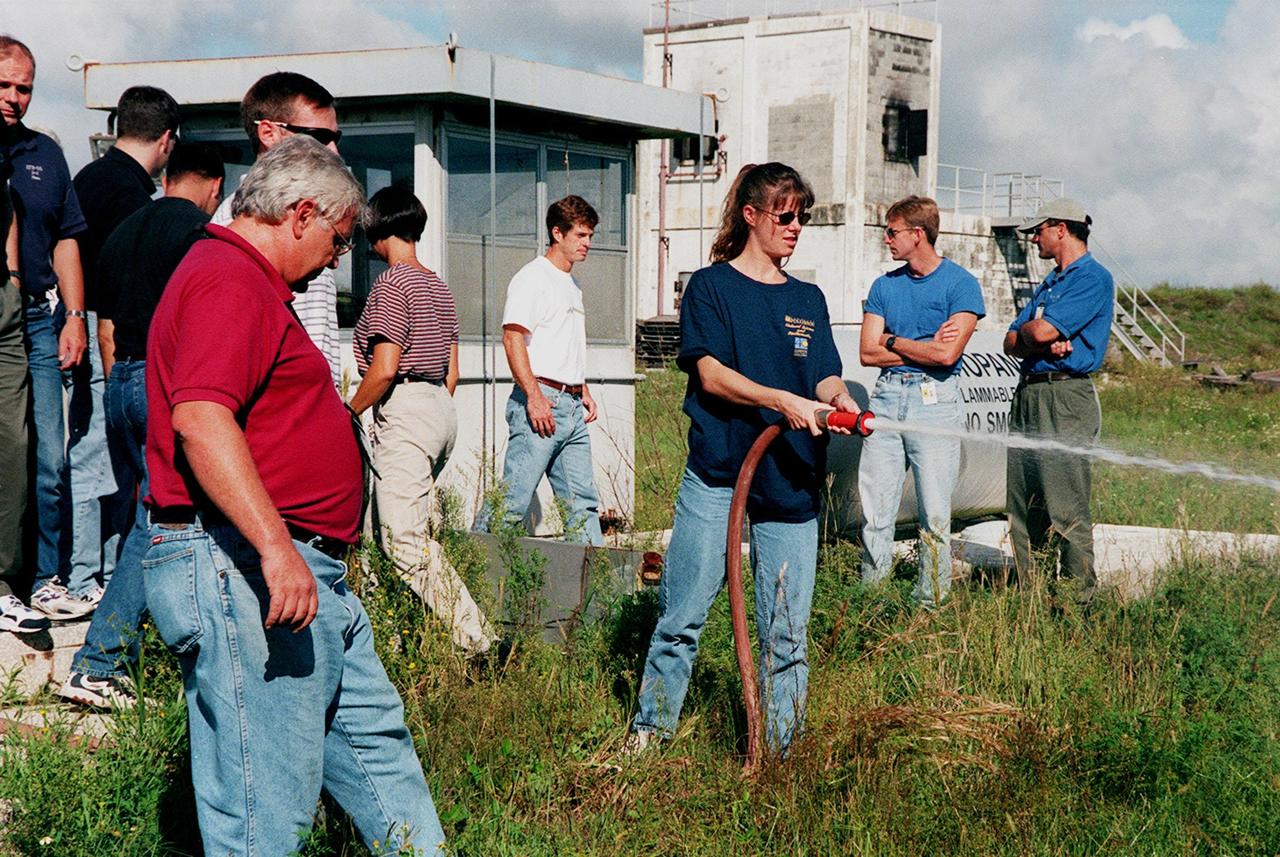
KENNEDY SPACE CENTER, FLA. -- On the grounds of the Kennedy Space Center, members of the 1998 astronaut candidate class (Group 17) watch as candidate Tracy E. Caldwell (Ph.D.) practices using firefighting equipment during fire training. The class is at KSC for training activities, including a flight awareness program, plus touring the OPF, VAB, SSPF, SSME Processing Facility, launch pads, SLF, Apollo/Saturn V Center, and the crew quarters. The other U.S. candidates in the '98 class are Clayton C. Anderson, Lee J. Archambault, Gregory E. Chamitoff (Ph.D.), Timothy J. Creamer, Christopher J. Ferguson, Michael J. Foreman, Michael E. Fossum, Kenneth T. Ham, Patricia C. Hilliard (M.D.), Gregory C. Johnson, Gregory H. Johnson, Stanley G. Love (Ph.D.), Leland D. Melvin, Barbara R. Morgan, William A. Oefelein, John D. Olivas (Ph.D.), Nicholas J.M. Patrick (Ph.D.), Alan G. Poindexter, Garrett E. Reisman (Ph.D.), Steven R. Swanson, Douglas H. Wheelock, Sunita L. Williams, Neil W. Woodward III, George D. Zamka; and the international candidates are Leopold Eyharts, Paolo Nespoli, Hans Schlegel, Roberto Vittori, Bjarni V. Tryggvason, and Marcos Pontes
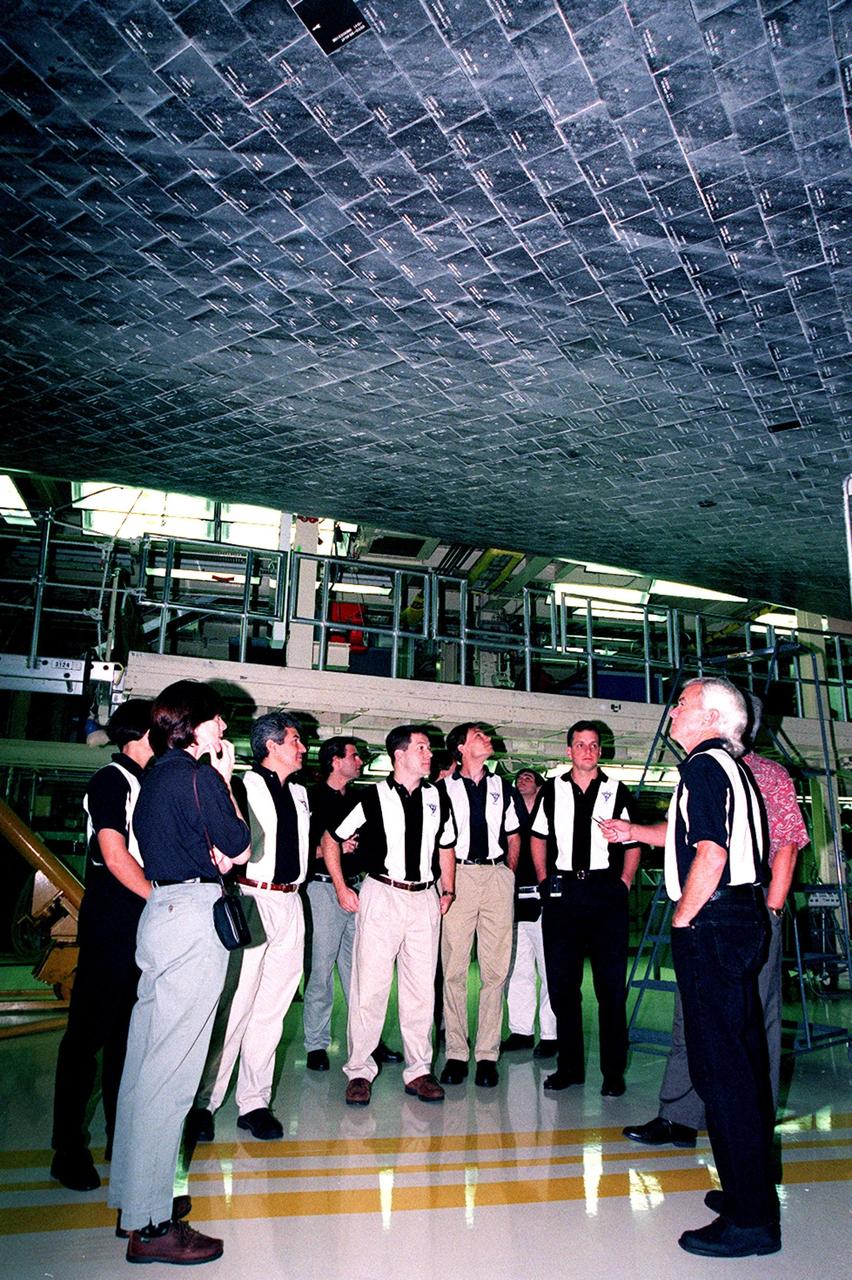
In the Orbiter Processing Facility bay 3, members of the 1998 astronaut candidate class (group 17) get a close-up view of the tiles, part of the thermal protection system, on the underside of the orbiter Atlantis overhead. The class is at KSC for training activities, including fire training and a flight awareness program, plus touring the OPF, SSME Processing Facility, VAB, SSPF, launch pads, SLF, Apollo/Saturn V Center and the crew headquarters. The U.S. candidates in the '98 class are Clayton C. Anderson, Lee J. Archambault, Tracy E. Caldwell (Ph.D.), Gregory E. Chamitoff (Ph.D.), Timothy J. Creamer, Christopher J. Ferguson, Michael J. Foreman, Michael E. Fossum, Kenneth T. Ham, Patricia C. Hilliard (M.D.), Gregory C. Johnson, Gregory H. Johnson, Stanley G. Love (Ph.D.), Leland D. Melvin, Barbara R. Morgan, William A. Oefelein, John D. Olivas (Ph.D.), Nicholas J.M. Patrick (Ph.D.), Alan G. Poindexter, Garrett E. Reisman (Ph.D.), Steven R. Swanson, Douglas H. Wheelock, Sunita L. Williams, Neil W. Woodward III, George D. Zamka; and the international candidates are Leopold Eyharts, Paolo Nespoli, Hans Schlegel, Roberto Vittori, Bjarni V. Tryggvason, and Marcos Pontes
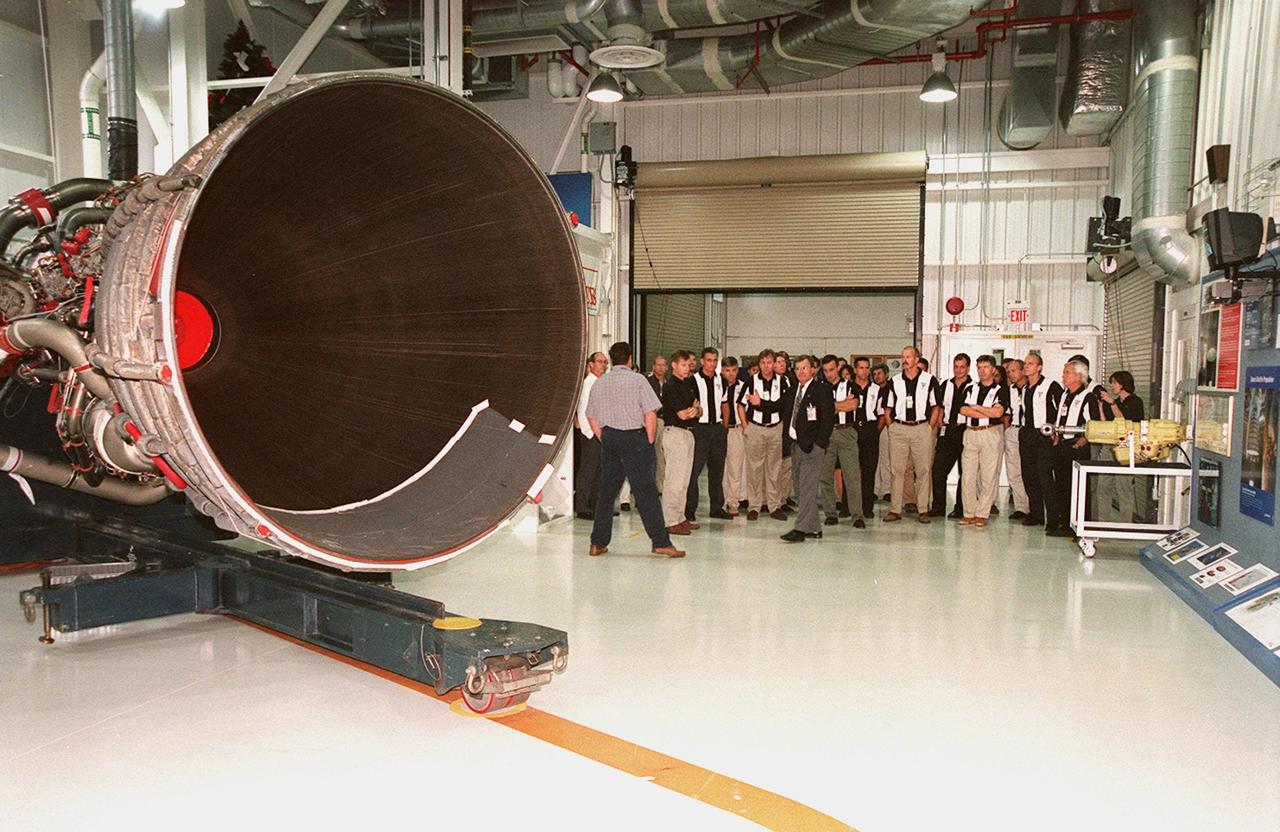
The 1998 astronaut candidate class (group 17) gather in the Space Shuttle Main Engine Processing (SSMEP) Facility. In the foreground is one of the main shuttle engines. The class is at KSC for training activities, including fire training and a flight awareness program, plus touring the OPF, SSME Processing Facility, VAB, SSPF, launch pads, SLF, Apollo/Saturn V Center and the crew headquarters. The U.S. candidates in the '98 class are Clayton C. Anderson, Lee J. Archambault, Tracy E. Caldwell (Ph.D.), Gregory E. Chamitoff (Ph.D.), Timothy J. Creamer, Christopher J. Ferguson, Michael J. Foreman, Michael E. Fossum, Kenneth T. Ham, Patricia C. Hilliard (M.D.), Gregory C. Johnson, Gregory H. Johnson, Stanley G. Love (Ph.D.), Leland D. Melvin, Barbara R. Morgan, William A. Oefelein, John D. Olivas (Ph.D.), Nicholas J.M. Patrick (Ph.D.), Alan G. Poindexter, Garrett E. Reisman (Ph.D.), Steven R. Swanson, Douglas H. Wheelock, Sunita L. Williams, Neil W. Woodward III, George D. Zamka; and the international candidates are Leopold Eyharts, Paolo Nespoli, Hans Schlegel, Roberto Vittori, Bjarni V. Tryggvason, and Marcos Pontes

KENNEDY SPACE CENTER, FLA. -- On the grounds of the Kennedy Space Center, members of the 1998 astronaut candidate class (Group 17) watch as candidate Sunita L. Williams practices using firefighting equipment during fire training. The class is at KSC for training activities, including a flight awareness program, plus touring the OPF, VAB, SSPF, SSME Processing Facility, launch pads, SLF, Apollo/Saturn V Center, and the crew quarters. The other U.S. candidates in the '98 class are Clayton C. Anderson, Lee J. Archambault, Tracy E. Caldwell (Ph.D.), Gregory E. Chamitoff (Ph.D.), Timothy J. Creamer, Christopher J. Ferguson, Michael J. Foreman, Michael E. Fossum, Kenneth T. Ham, Patricia C. Hilliard (M.D.), Gregory C. Johnson, Gregory H. Johnson, Stanley G. Love (Ph.D.), Leland D. Melvin, Barbara R. Morgan, William A. Oefelein, John D. Olivas (Ph.D.), Nicholas J.M. Patrick (Ph.D.), Alan G. Poindexter, Garrett E. Reisman (Ph.D.), Steven R. Swanson, Douglas H. Wheelock, Neil W. Woodward III, George D. Zamka; and the international candidates are Leopold Eyharts, Paolo Nespoli, Hans Schlegel, Roberto Vittori, Bjarni V. Tryggvason, and Marcos Pontes
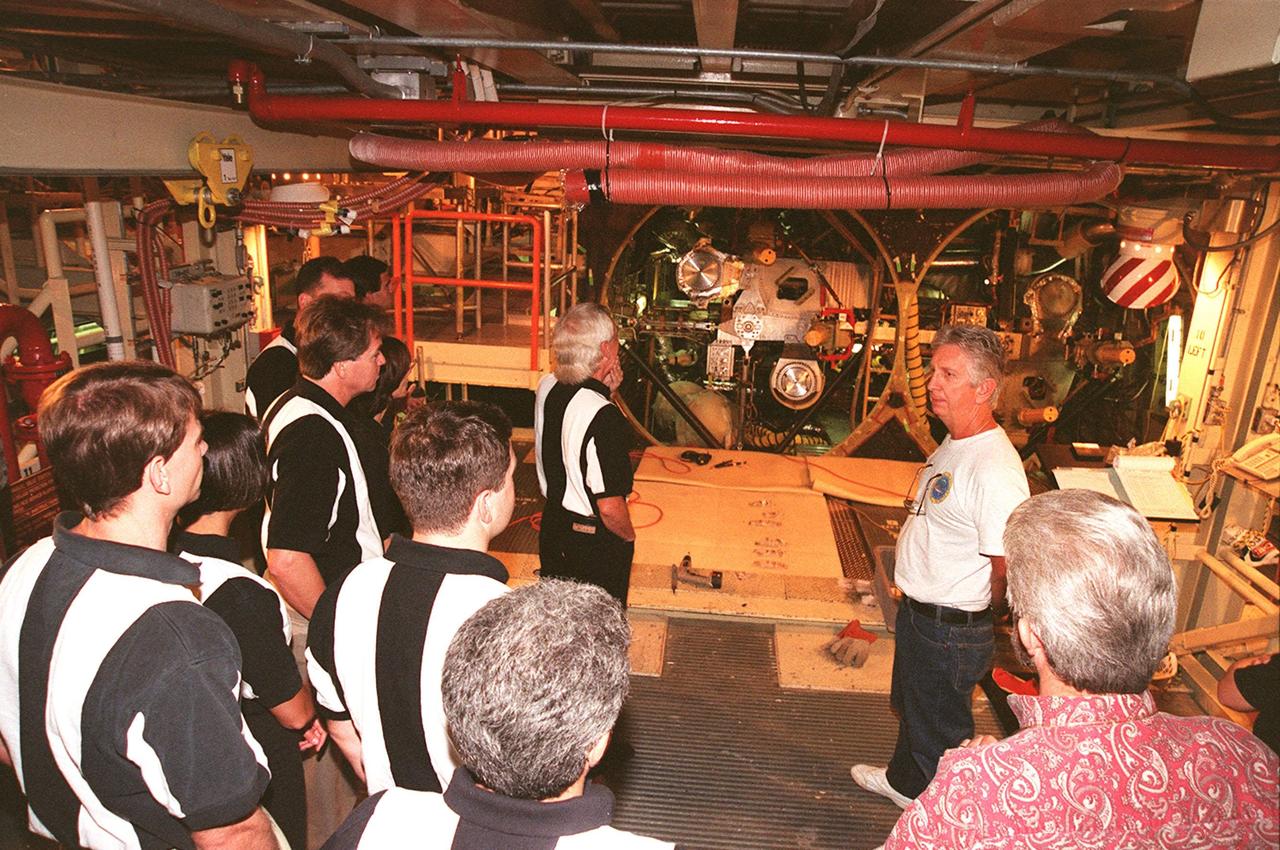
On a raised platform in the Orbiter Processing Facility bay 3, members of the 1998 astronaut candidate class (group 17) look at the aft fuselage of the orbiter Atlantis. The class is at KSC for training activities, including fire training and a flight awareness program, plus touring the OPF, SSME Processing Facility, VAB, SSPF, launch pads, SLF, Apollo/Saturn V Center and the crew headquarters. The U.S. candidates in the '98 class are Clayton C. Anderson, Lee J. Archambault, Tracy E. Caldwell (Ph.D.), Gregory E. Chamitoff (Ph.D.), Timothy J. Creamer, Christopher J. Ferguson, Michael J. Foreman, Michael E. Fossum, Kenneth T. Ham, Patricia C. Hilliard (M.D.), Gregory C. Johnson, Gregory H. Johnson, Stanley G. Love (Ph.D.), Leland D. Melvin, Barbara R. Morgan, William A. Oefelein, John D. Olivas (Ph.D.), Nicholas J.M. Patrick (Ph.D.), Alan G. Poindexter, Garrett E. Reisman (Ph.D.), Steven R. Swanson, Douglas H. Wheelock, Sunita L. Williams, Neil W. Woodward III, George D. Zamka; and the international candidates are Leopold Eyharts, Paolo Nespoli, Hans Schlegel, Roberto Vittori, Bjarni V. Tryggvason, and Marcos Pontes
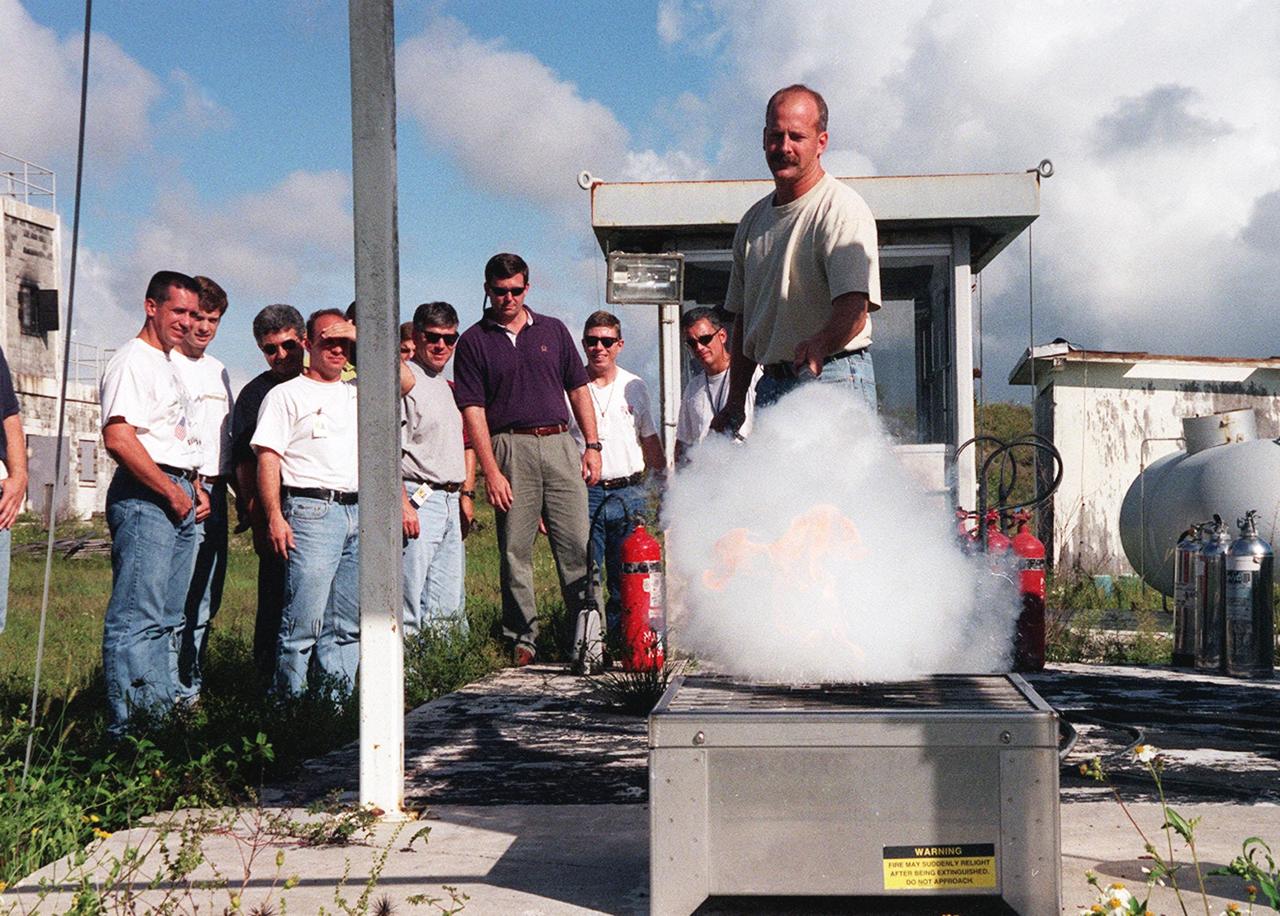
KENNEDY SPACE CENTER, FLA. -- On the grounds of the Kennedy Space Center, members of the 1998 astronaut candidate class (Group 17) watch as candidate Alan G. Poindexter practices using firefighting equipment during fire training. The class is at KSC for training activities, including a flight awareness program, plus touring the OPF, VAB, SSPF, SSME Processing Facility, launch pads, SLF, Apollo/Saturn V Center, and the crew quarters. The other U.S. candidates in the '98 class are Clayton C. Anderson, Lee J. Archambault, Tracy E. Caldwell (Ph.D.), Gregory E. Chamitoff (Ph.D.), Timothy J. Creamer, Christopher J. Ferguson, Michael J. Foreman, Michael E. Fossum, Kenneth T. Ham, Patricia C. Hilliard (M.D.), Gregory C. Johnson, Gregory H. Johnson, Stanley G. Love (Ph.D.), Leland D. Melvin, Barbara R. Morgan, William A. Oefelein, John D. Olivas (Ph.D.), Nicholas J.M. Patrick (Ph.D.), Garrett E. Reisman (Ph.D.), Steven R. Swanson, Douglas H. Wheelock, Sunita L. Williams, Neil W. Woodward III, George D. Zamka; and the international candidates are Leopold Eyharts, Paolo Nespoli, Hans Schlegel, Roberto Vittori, Bjarni V. Tryggvason, and Marcos Pontes
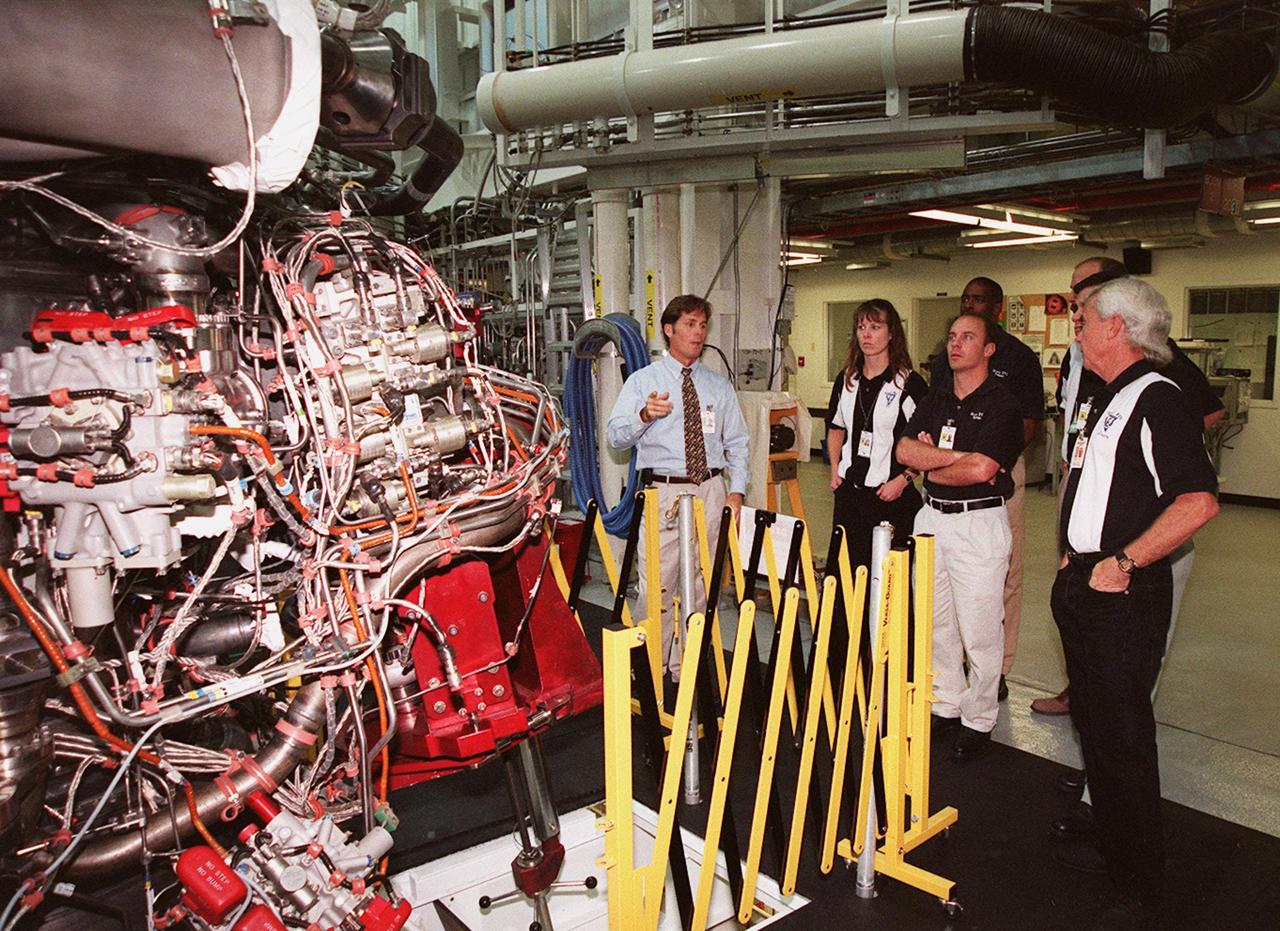
KENNEDY SPACE CENTER, FLA. -- On their tour of KSC, members of the 1998 astronaut candidate class (group 17) stop at the Space Shuttle Main Engine (SSME) Processing Facility for a close up look at a main shuttle engine. The class is taking part in training activities, including fire training and a flight awareness program, plus touring the OPF, VAB, SSPF, launch pads, SLF, Apollo/Saturn V Center, the crew headquarters, as well as the SSME Processing Facility. The U.S. candidates in the '98 class are Clayton C. Anderson, Lee J. Archambault, Tracy E. Caldwell (Ph.D.), Gregory E. Chamitoff (Ph.D.), Timothy J. Creamer, Christopher J. Ferguson, Michael J. Foreman, Michael E. Fossum, Kenneth T. Ham, Patricia C. Hilliard (M.D.), Gregory C. Johnson, Gregory H. Johnson, Stanley G. Love (Ph.D.), Leland D. Melvin, Barbara R. Morgan, William A. Oefelein, John D. Olivas (Ph.D.), Nicholas J.M. Patrick (Ph.D.), Alan G. Poindexter, Garrett E. Reisman (Ph.D.), Steven R. Swanson, Douglas H. Wheelock, Sunita L. Williams, Neil W. Woodward III, George D. Zamka; and the international candidates are Leopold Eyharts, Paolo Nespoli, Hans Schlegel, Roberto Vittori, Bjarni V. Tryggvason, and Marcos Pontes
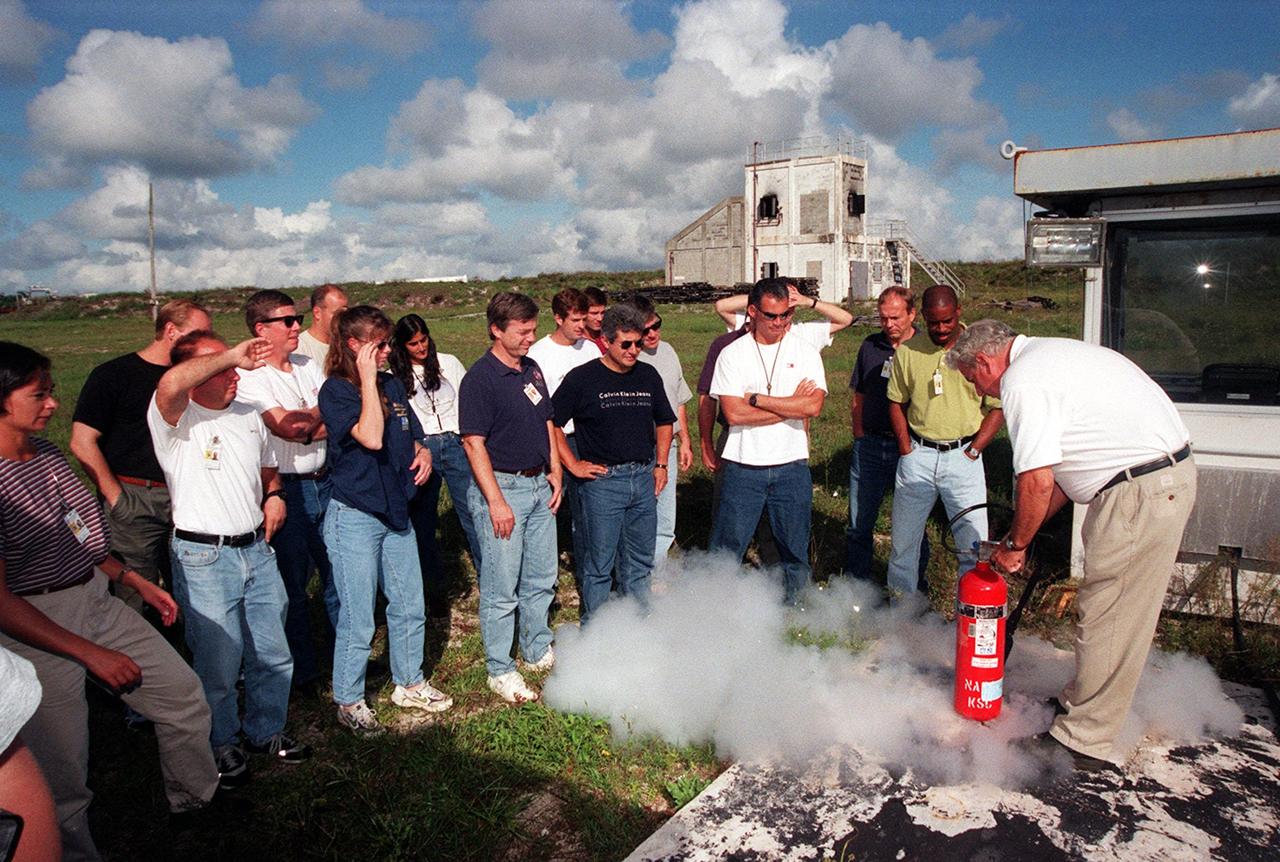
KENNEDY SPACE CENTER, FLA. -- On the grounds of the Kennedy Space Center, members of the 1998 astronaut candidate class (Group 17) take part in fire training. The class is taking part in training activities, including a flight awareness program, plus touring the OPF, VAB, SSPF, SSME Processing Facility, launch pads, SLF, Apollo/Saturn V Center, and the crew quarters. The U.S. candidates in the '98 class are Clayton C. Anderson, Lee J. Archambault, Tracy E. Caldwell (Ph.D.), Gregory E. Chamitoff (Ph.D.), Timothy J. Creamer, Christopher J. Ferguson, Michael J. Foreman, Michael E. Fossum, Kenneth T. Ham, Patricia C. Hilliard (M.D.), Gregory C. Johnson, Gregory H. Johnson, Stanley G. Love (Ph.D.), Leland D. Melvin, Barbara R. Morgan, William A. Oefelein, John D. Olivas (Ph.D.), Nicholas J.M. Patrick (Ph.D.), Alan G. Poindexter, Garrett E. Reisman (Ph.D.), Steven R. Swanson, Douglas H. Wheelock, Sunita L. Williams, Neil W. Woodward III, George D. Zamka; and the international candidates are Leopold Eyharts, Paolo Nespoli, Hans Schlegel, Roberto Vittori, Bjarni V. Tryggvason, and Marcos Pontes
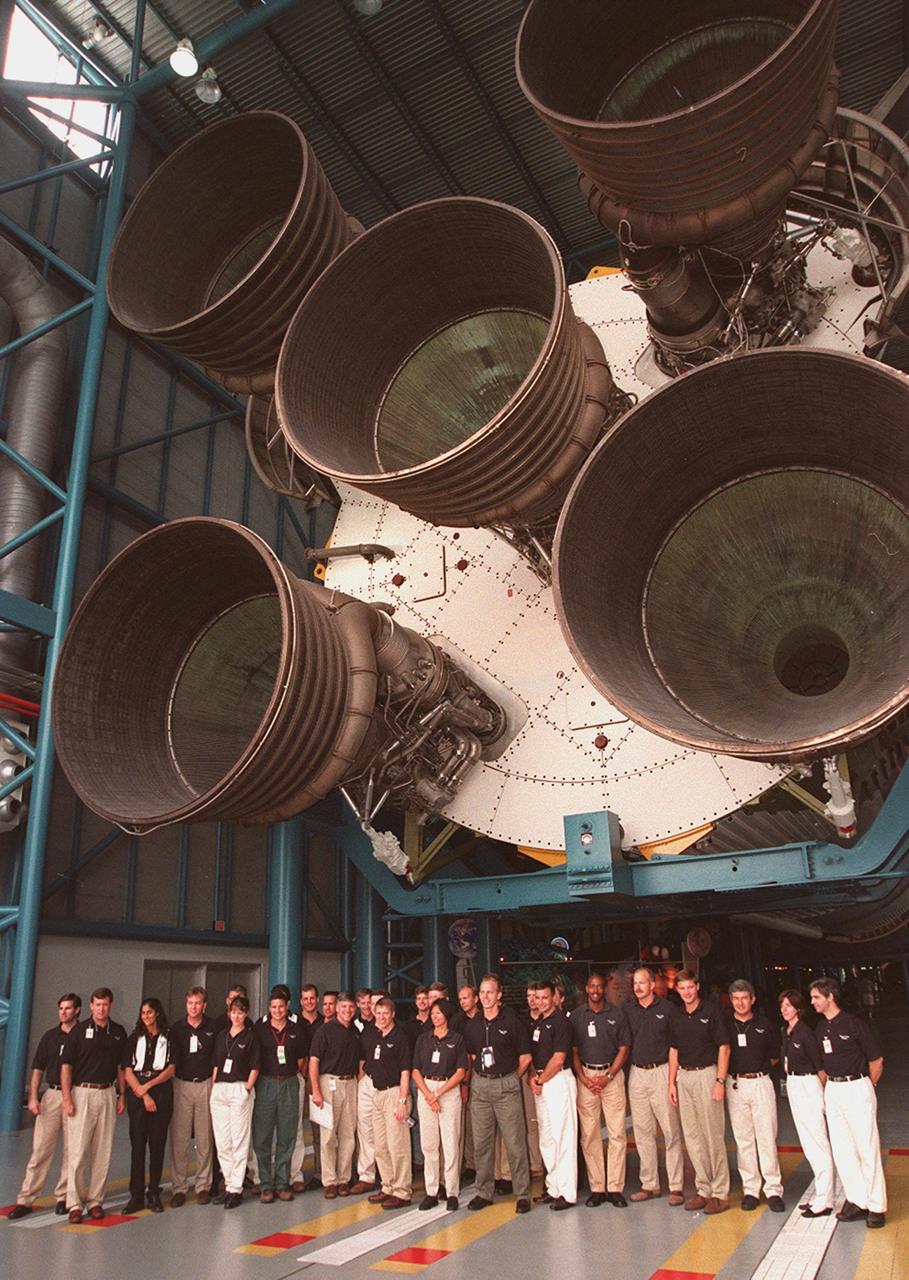
KENNEDY SPACE CENTER, FLA. -- At the Apollo/Saturn V Center, some of the 1998 astronaut candidate class (group 17) line up for a photo while standing under the engines of the Saturn V rocket on display. The U.S. candidates include Clayton C. Anderson, Lee J. Archambault, Tracy E. Caldwell (Ph.D.), Gregory E. Chamitoff (Ph.D.), Timothy J. Creamer, Christopher J. Ferguson, Michael J. Foreman, Michael E. Fossum, Kenneth T. Ham, Patricia C. Hilliard (M.D.), Gregory C. Johnson, Gregory H. Johnson, Stanley G. Love (Ph.D.), Leland D. Melvin, Barbara R. Morgan, William A. Oefelein, John D. Olivas (Ph.D.), Nicholas J.M. Patrick (Ph.D.), Alan G. Poindexter, Garrett E. Reisman (Ph.D.), Steven R. Swanson, Douglas H. Wheelock, Sunita L. Williams, Neil W. Woodward III, George D. Zamka; and international candidates Leopold Eyharts, Paolo Nespoli, Hans Schlegel, Roberto Vittori, Bjarni V. Tryggvason, and Marcos Pontes. The class is at KSC for training activities, including fire training and a flight awareness program, plus touring the OPF, SSME Processing Facility, VAB, SSPF, launch pads, SLF, Apollo/Saturn V Center and the crew headquarters