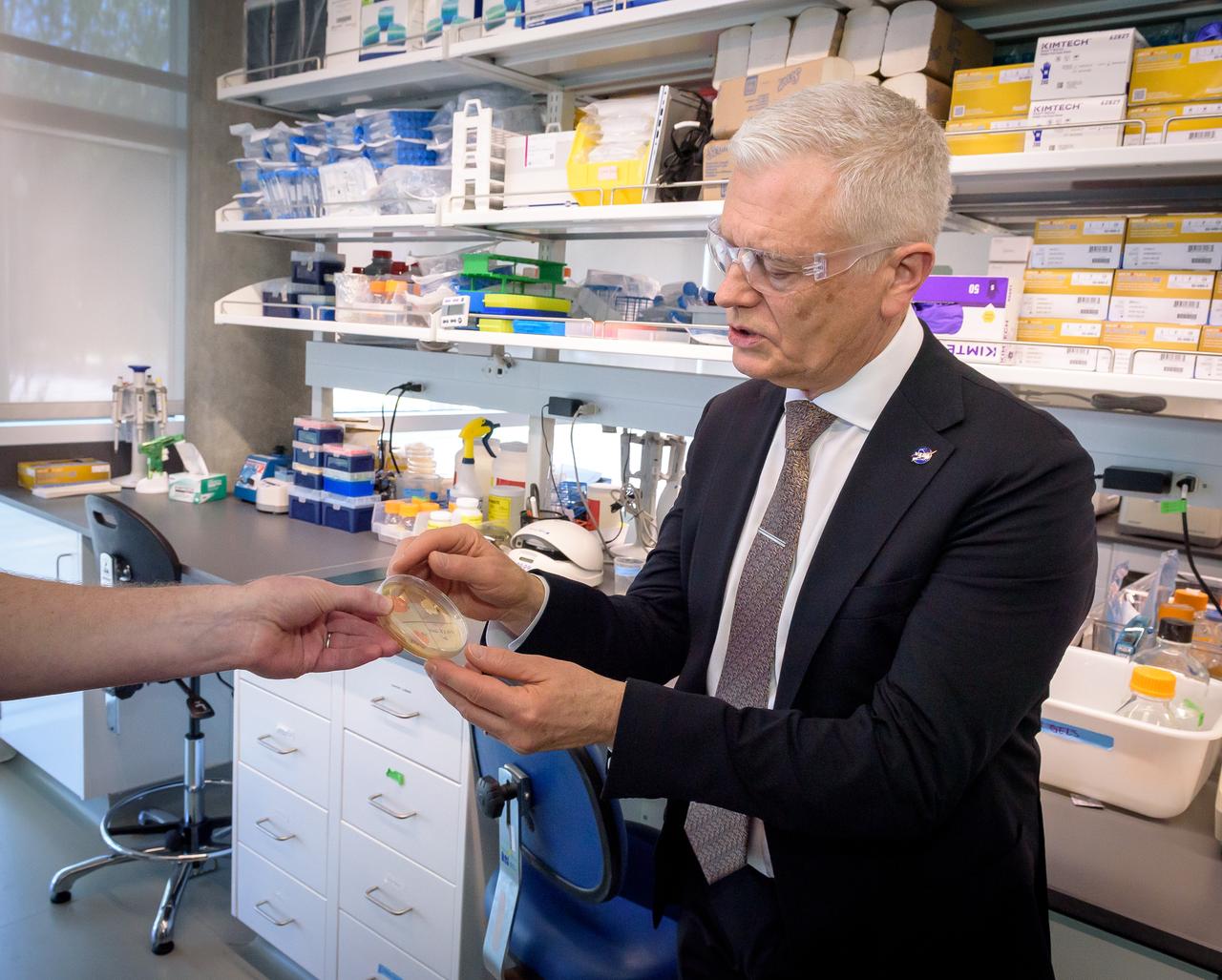
Acting Deputy Associate Administrator (DAA) for the Science Mission Directorate (SMD) Mark Clampin learns about the Lunar Explorer Instrument for space biology Applications (LEIA) the Bioscience Collaborative Laboratory, N288.
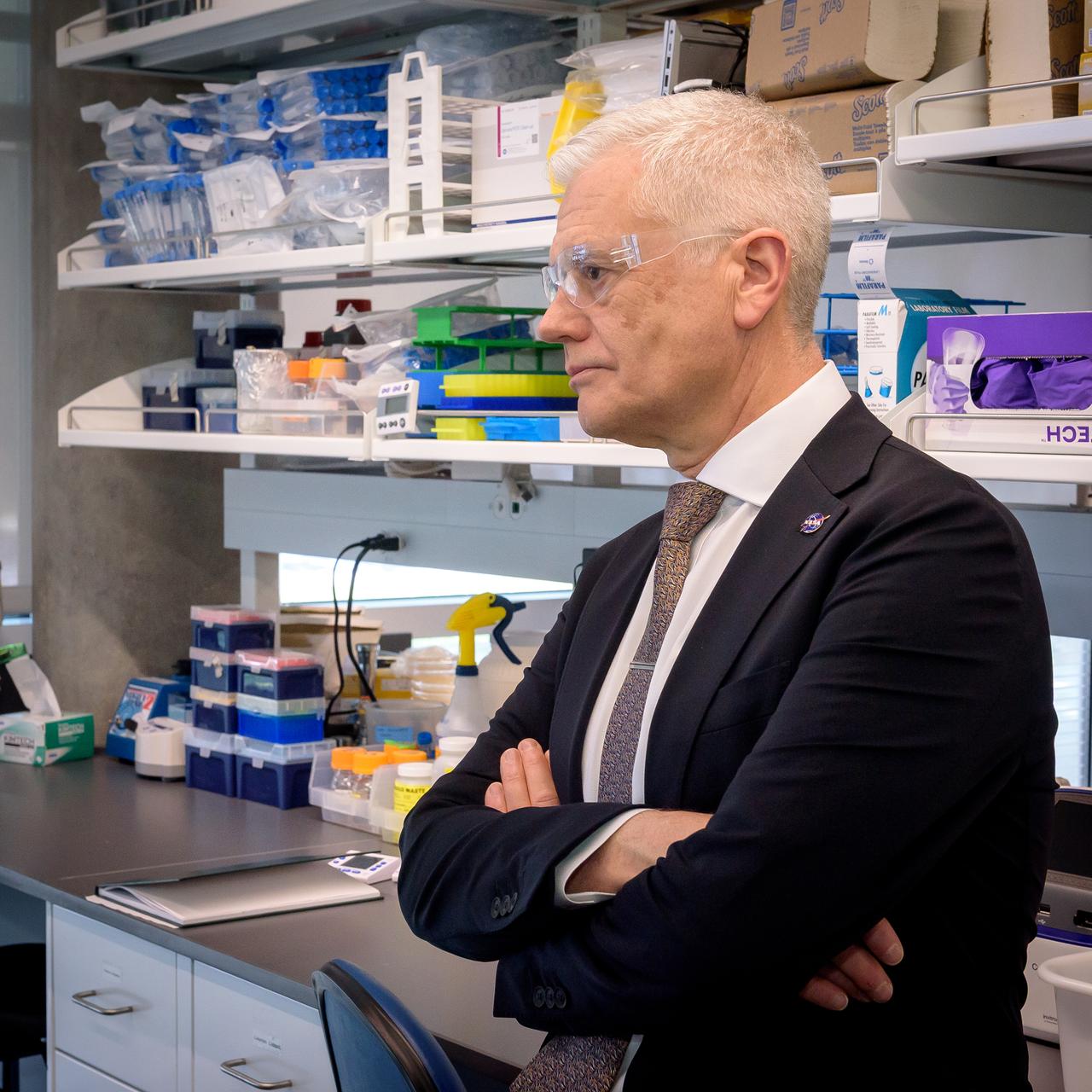
Acting Deputy Associate Administrator (DAA) for the Science Mission Directorate (SMD) Mark Clampin learns about the Lunar Explorer Instrument for space biology Applications (LEIA) the Bioscience Collaborative Laboratory, N288.
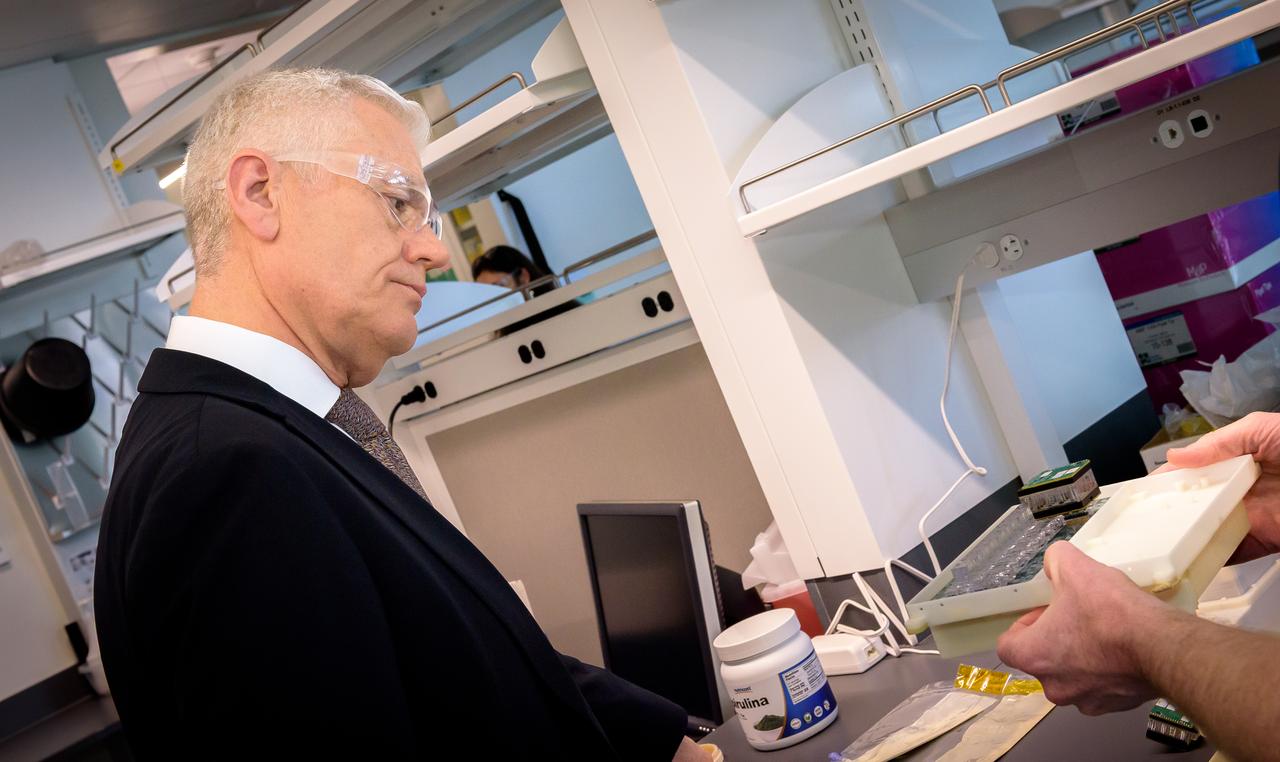
Acting Deputy Associate Administrator (DAA) for the Science Mission Directorate (SMD) Mark Clampin learns about the Lunar Explorer Instrument for space biology Applications (LEIA) the Bioscience Collaborative Laboratory, N288.
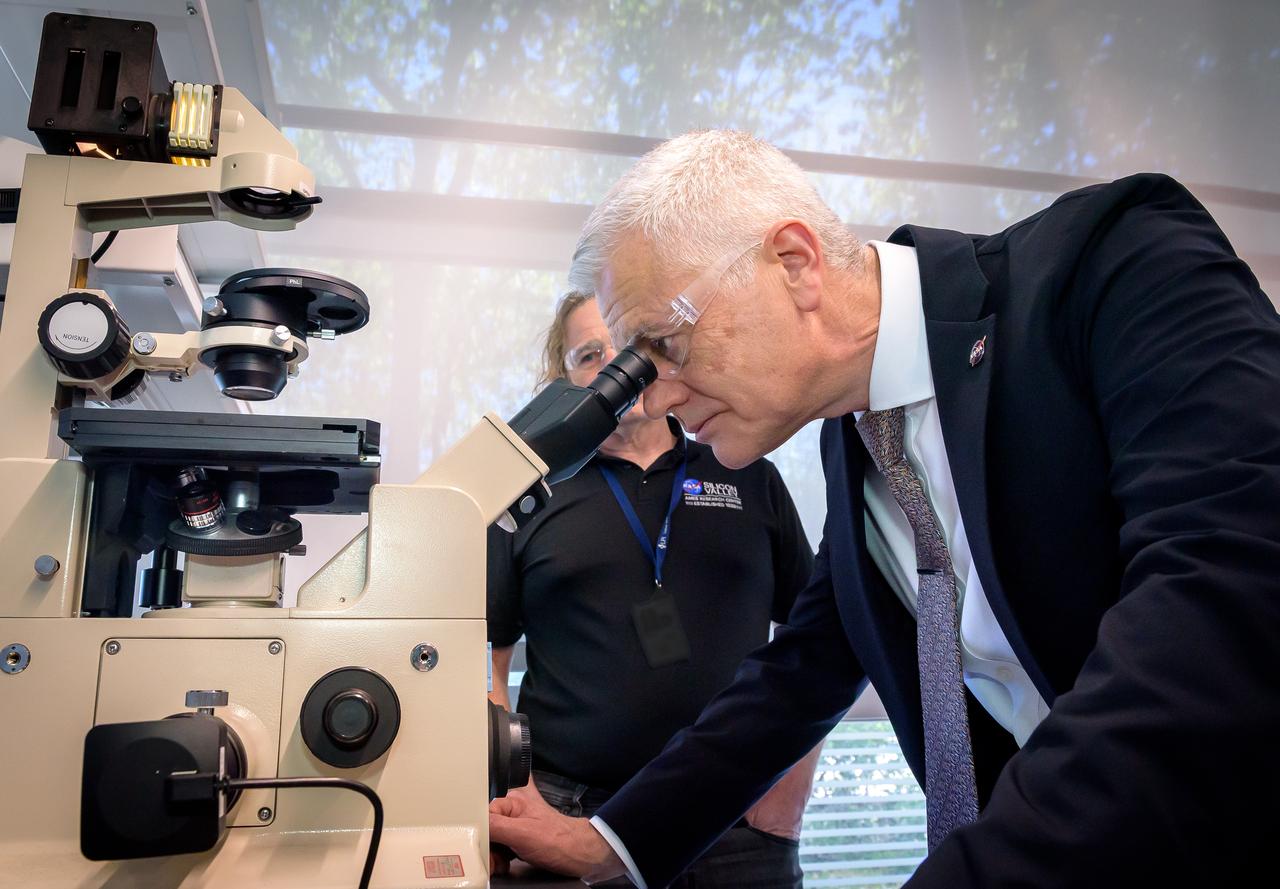
Acting Deputy Associate Administrator (DAA) for the Science Mission Directorate (SMD) Mark Clampin learns about the Lunar Explorer Instrument for space biology Applications (LEIA) the Bioscience Collaborative Laboratory, N288.
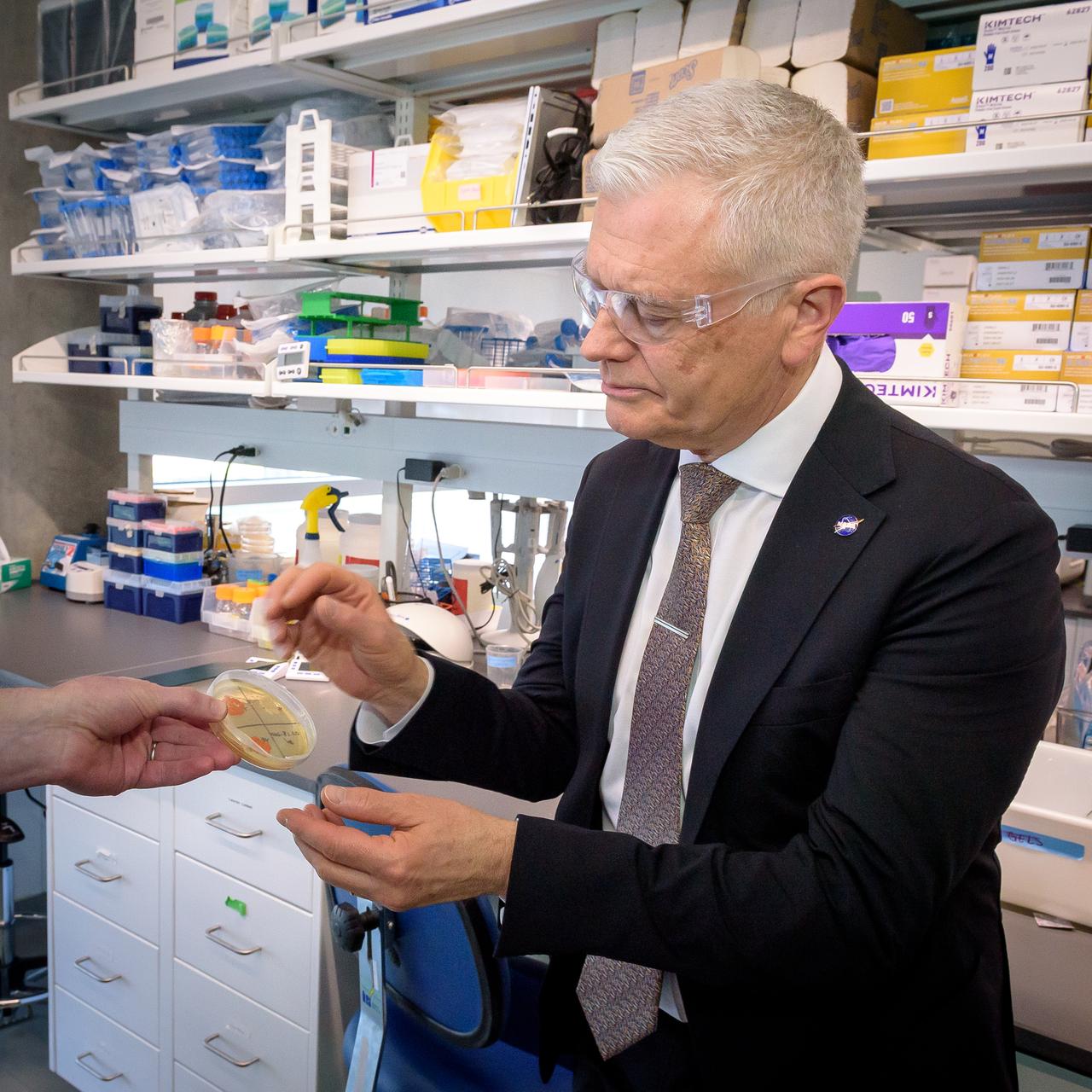
Acting Deputy Associate Administrator (DAA) for the Science Mission Directorate (SMD) Mark Clampin learns about the Lunar Explorer Instrument for space biology Applications (LEIA) the Bioscience Collaborative Laboratory, N288.
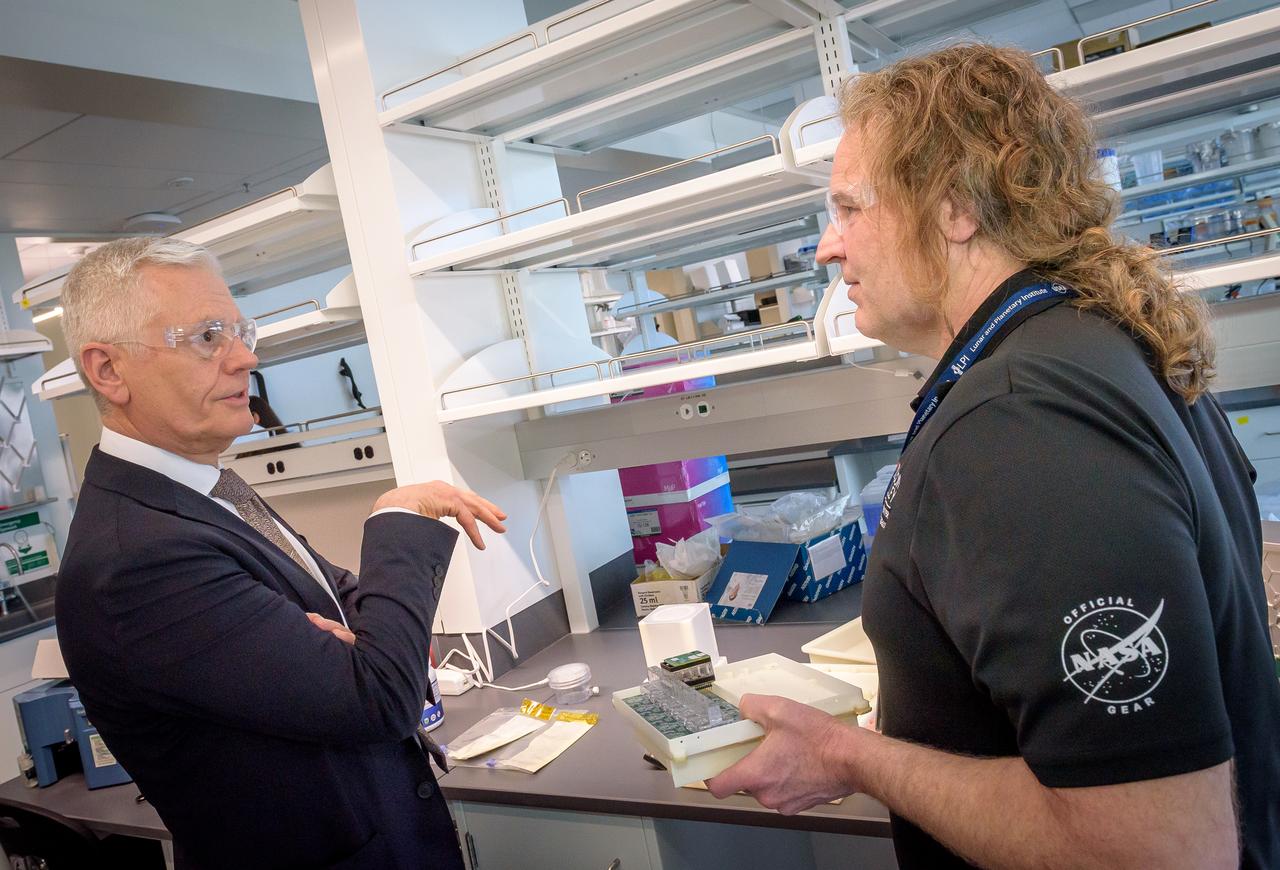
Director of Science Michael Hesse, right, presents an overview of Lunar Explorer Instrument for space biology Applications (LEIA) to Acting Deputy Associate Administrator (DAA) for the Science Mission Directorate (SMD) Mark Clampin in the Bioscience Collaborative Laboratory, N288.
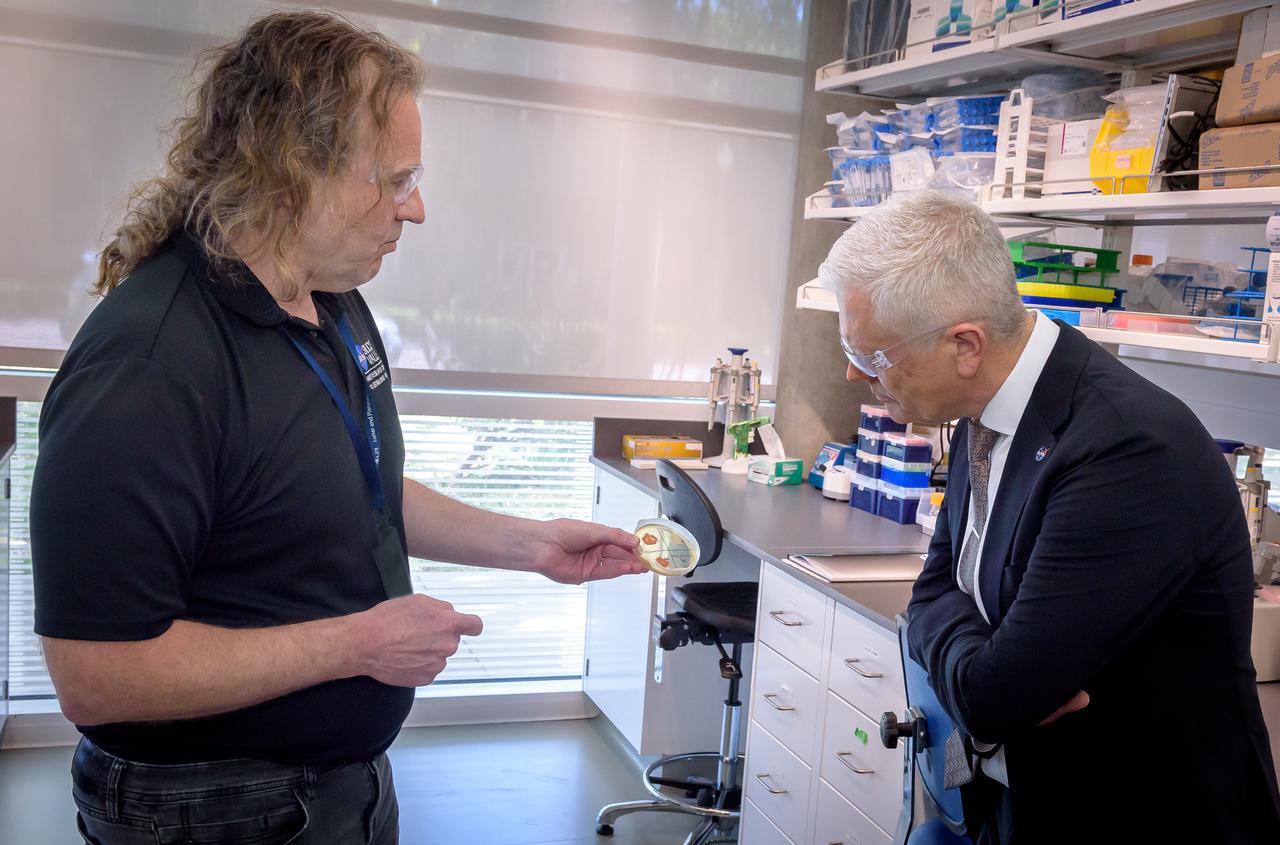
Director of Science Michael Hesse, left, presents an overview of Lunar Explorer Instrument for space biology Applications (LEIA) to Acting Deputy Associate Administrator (DAA) for the Science Mission Directorate (SMD) Mark Clampin in the Bioscience Collaborative Laboratory, N288.
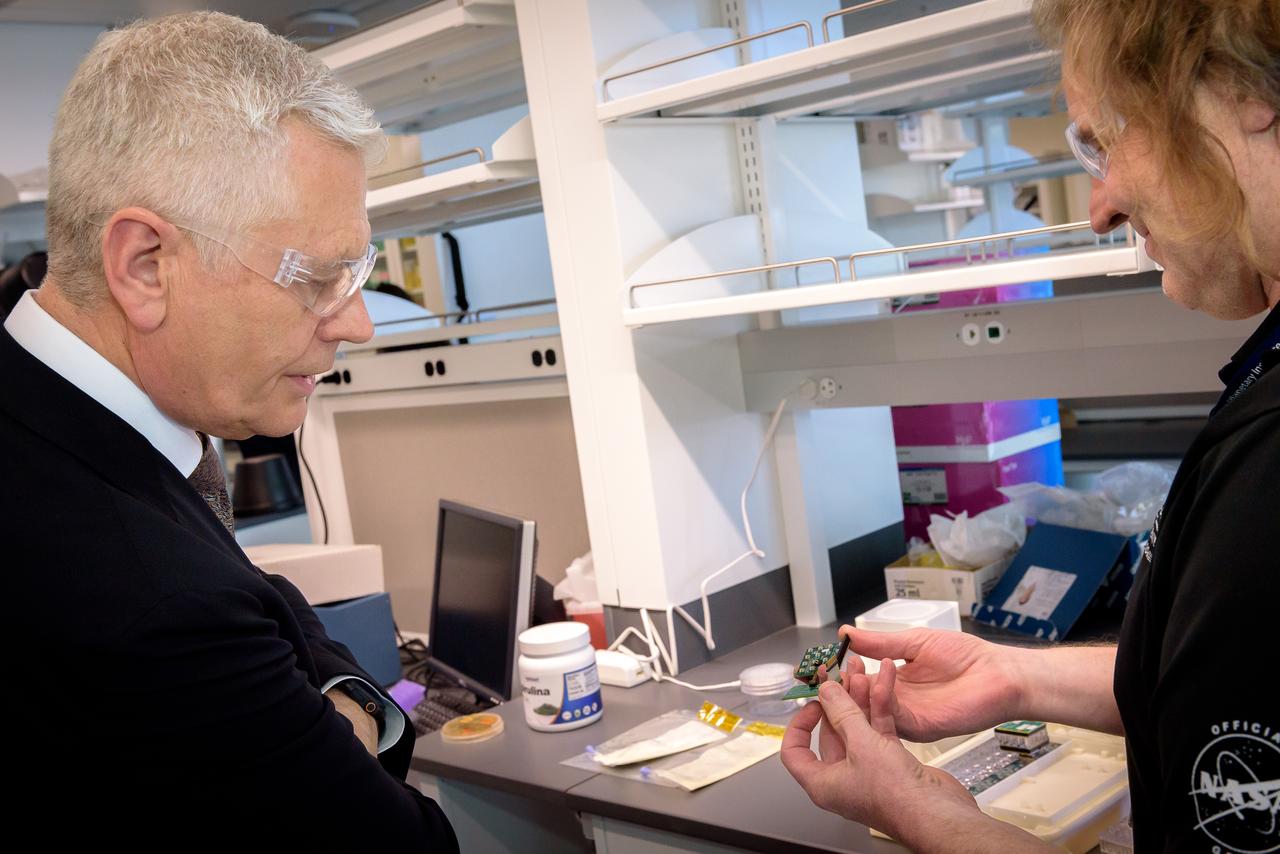
Director of Science Michael Hesse, right, presents an overview of Lunar Explorer Instrument for space biology Applications (LEIA) to Acting Deputy Associate Administrator (DAA) for the Science Mission Directorate (SMD) Mark Clampin in the Bioscience Collaborative Laboratory, N288.
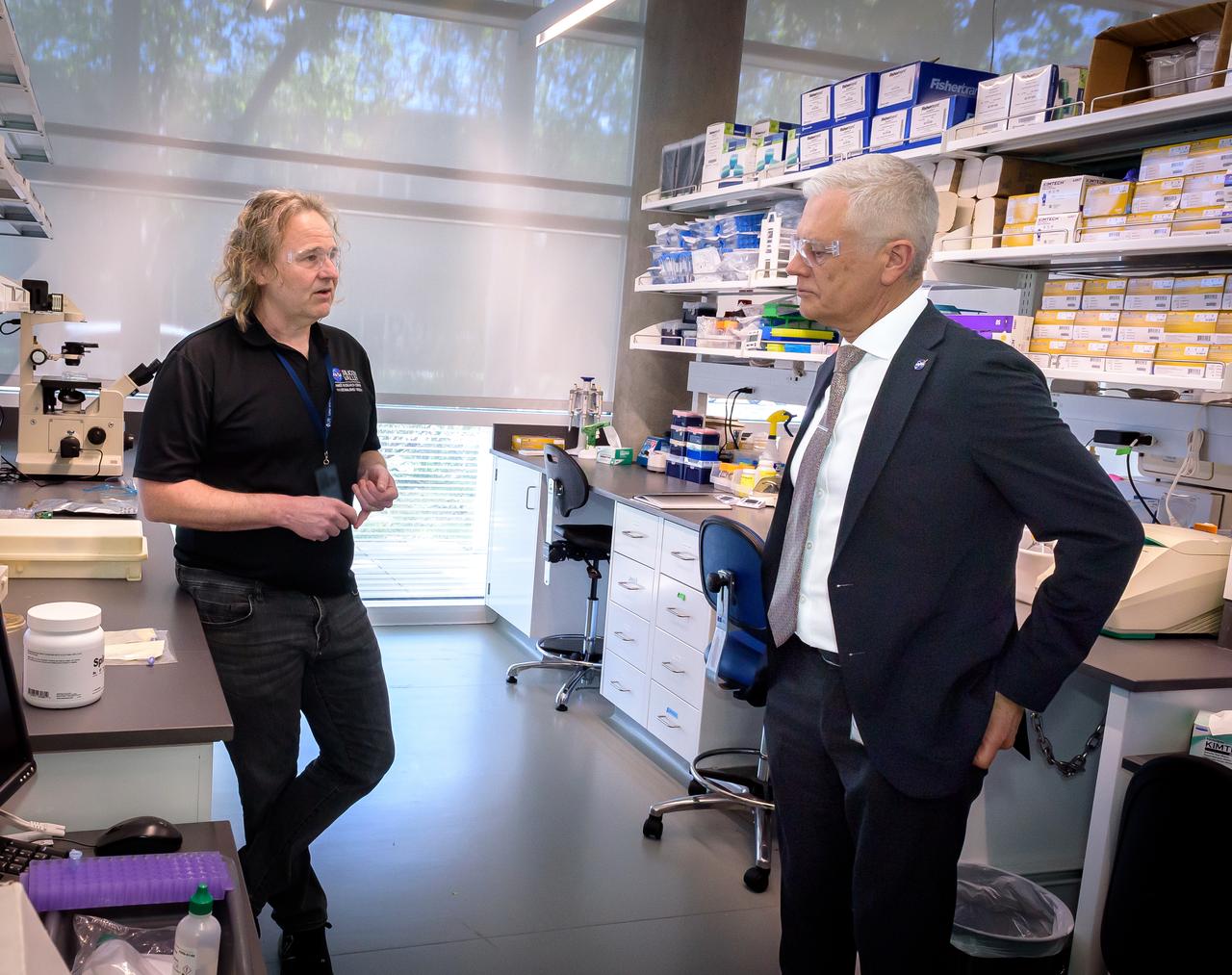
Director of Science Michael Hesse, left, presents an overview of Lunar Explorer Instrument for space biology Applications (LEIA) to Acting Deputy Associate Administrator (DAA) for the Science Mission Directorate (SMD) Mark Clampin in the Bioscience Collaborative Laboratory, N288.
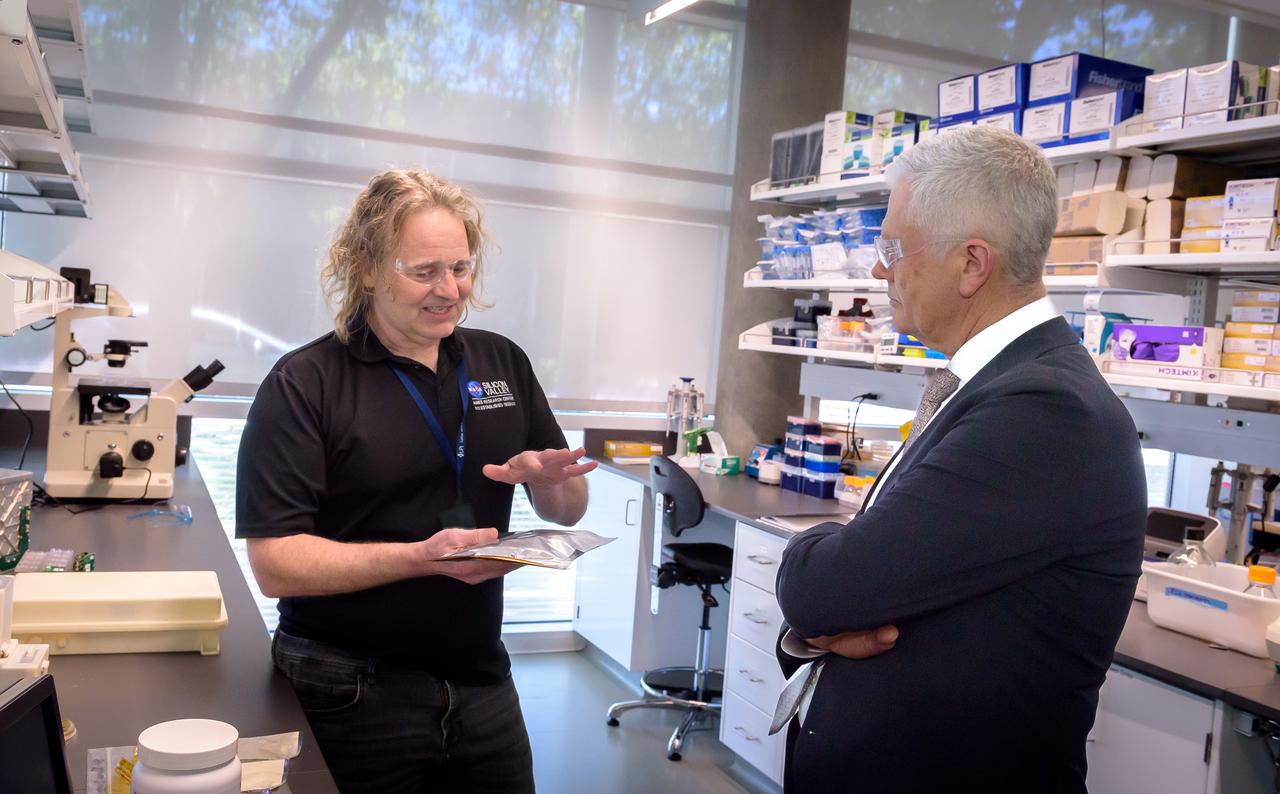
Director of Science Michael Hesse, left, presents an overview of Lunar Explorer Instrument for space biology Applications (LEIA) to Acting Deputy Associate Administrator (DAA) for the Science Mission Directorate (SMD) Mark Clampin in the Bioscience Collaborative Laboratory, N288.
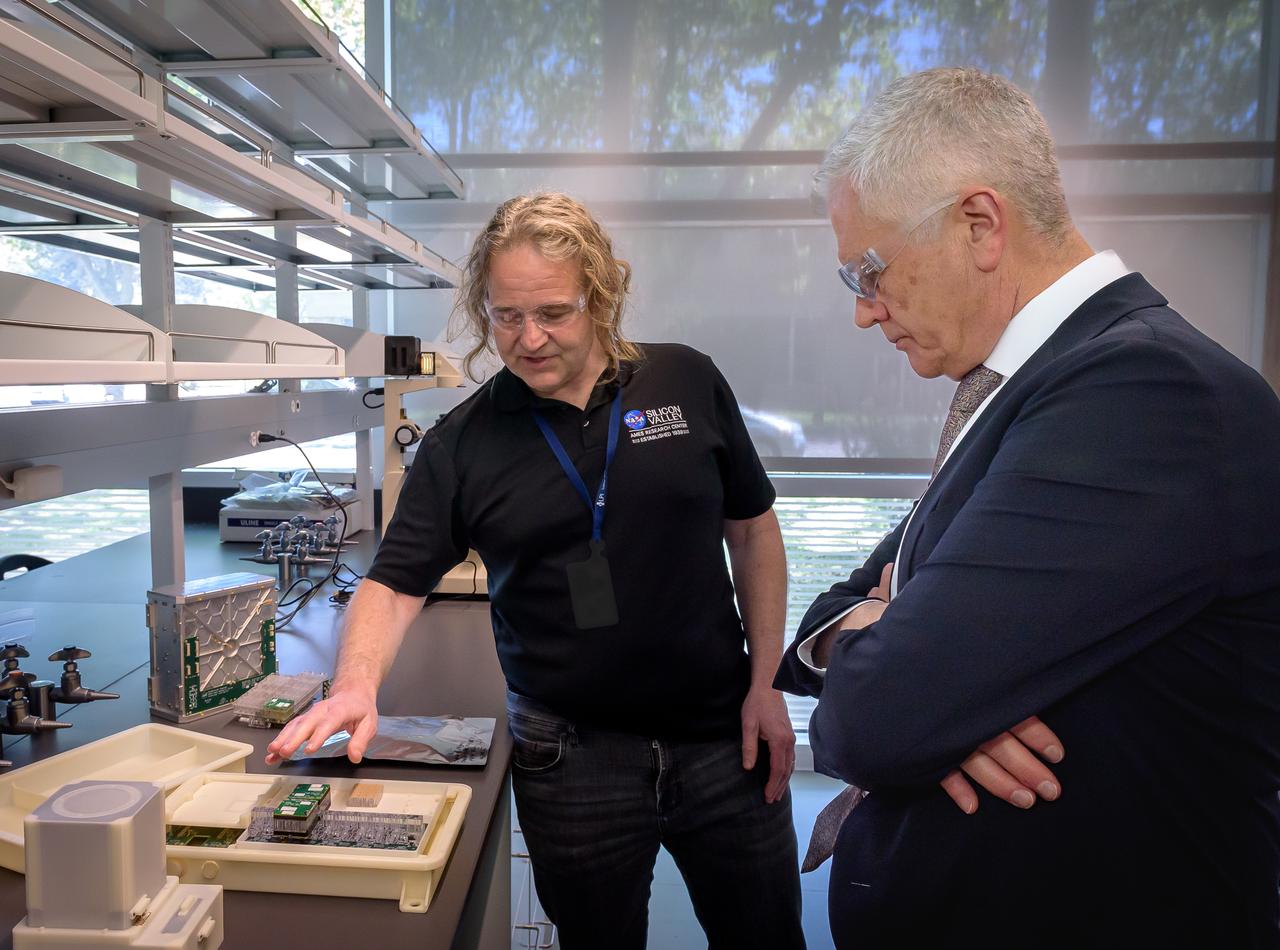
Director of Science Michael Hesse, left, presents an overview of Lunar Explorer Instrument for space biology Applications (LEIA) to Acting Deputy Associate Administrator (DAA) for the Science Mission Directorate (SMD) Mark Clampin in the Bioscience Collaborative Laboratory, N288.
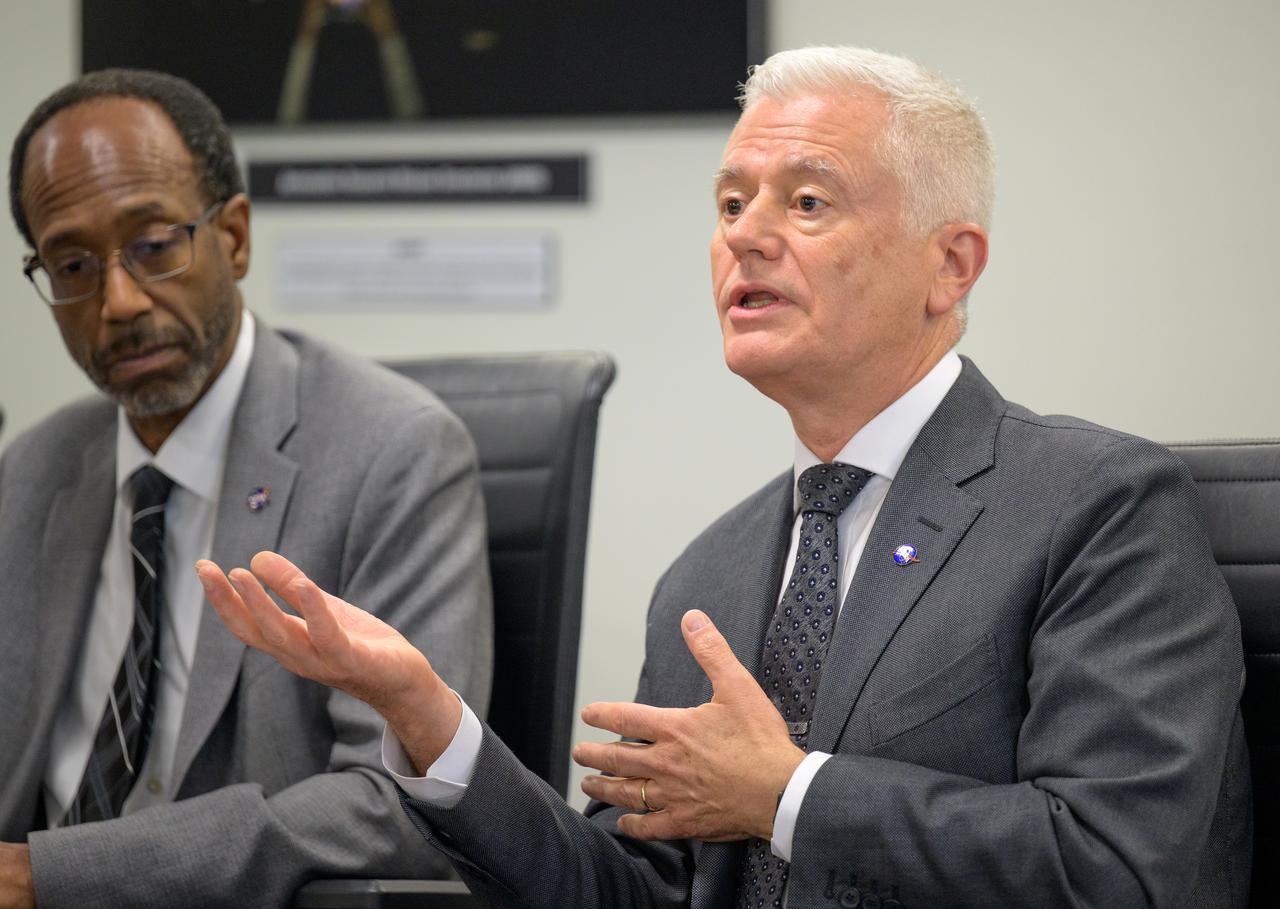
Acting Deputy Associate Administrator for NASA's Science Mission Directorate Mark Clampin speaks with acting NASA Administrator Sean Duffy, Friday, July 18, 2025, at the Mary W. Jackson NASA Headquarters Building in Washington. Photo Credit: (NASA/Bill Ingalls)

Mark Clampin, Deputy Associate Administrator in the Science Mission Directorate at NASA Headquarters, speaks about the contributions of the Hubble Space Telescope to future astronomy missions during an event titled “Beyond the Deep Field: Hubble’s Legacy and the Future of Cosmic Observation,” Friday, June 5, 2026, at the Mary W. Jackson NASA Headquarters building in Washington. Photo Credit: (NASA/Aubrey Gemignani)

Mark Clampin, Deputy Associate Administrator in the Science Mission Directorate at NASA Headquarters, speaks about the contributions of the Hubble Space Telescope to future astronomy missions during an event titled “Beyond the Deep Field: Hubble’s Legacy and the Future of Cosmic Observation,” Friday, June 5, 2026, at the Mary W. Jackson NASA Headquarters building in Washington. Photo Credit: (NASA/Aubrey Gemignani)

Mark Clampin, Deputy Associate Administrator in the Science Mission Directorate at NASA Headquarters, speaks about the contributions of the Hubble Space Telescope to future astronomy missions during an event titled “Beyond the Deep Field: Hubble’s Legacy and the Future of Cosmic Observation,” Friday, June 5, 2026, at the Mary W. Jackson NASA Headquarters building in Washington. Photo Credit: (NASA/Aubrey Gemignani)

Shawn Domagal-Goldman, Astrophysics Division Director at NASA, left, moderates a panel discussion with, from left to right, Knicole Colon, Mark Clampin, Jane Rigby, Giada Arney, and Julie McEnery, about the contributions of the Hubble Space Telescope to future astronomy missions during an event titled “Beyond the Deep Field: Hubble’s Legacy and the Future of Cosmic Observation,” Friday, June 5, 2026, at the Mary W. Jackson NASA Headquarters building in Washington. Photo Credit: (NASA/Aubrey Gemignani)

Shawn Domagal-Goldman, Astrophysics Division Director at NASA, moderates a panel discussion with, from left to right, Knicole Colon, Mark Clampin, Jane Rigby, Giada Arney, and Julie McEnery, about the contributions of the Hubble Space Telescope to future astronomy missions during an event titled “Beyond the Deep Field: Hubble’s Legacy and the Future of Cosmic Observation,” Friday, June 5, 2026, at the Mary W. Jackson NASA Headquarters building in Washington. Photo Credit: (NASA/Aubrey Gemignani)
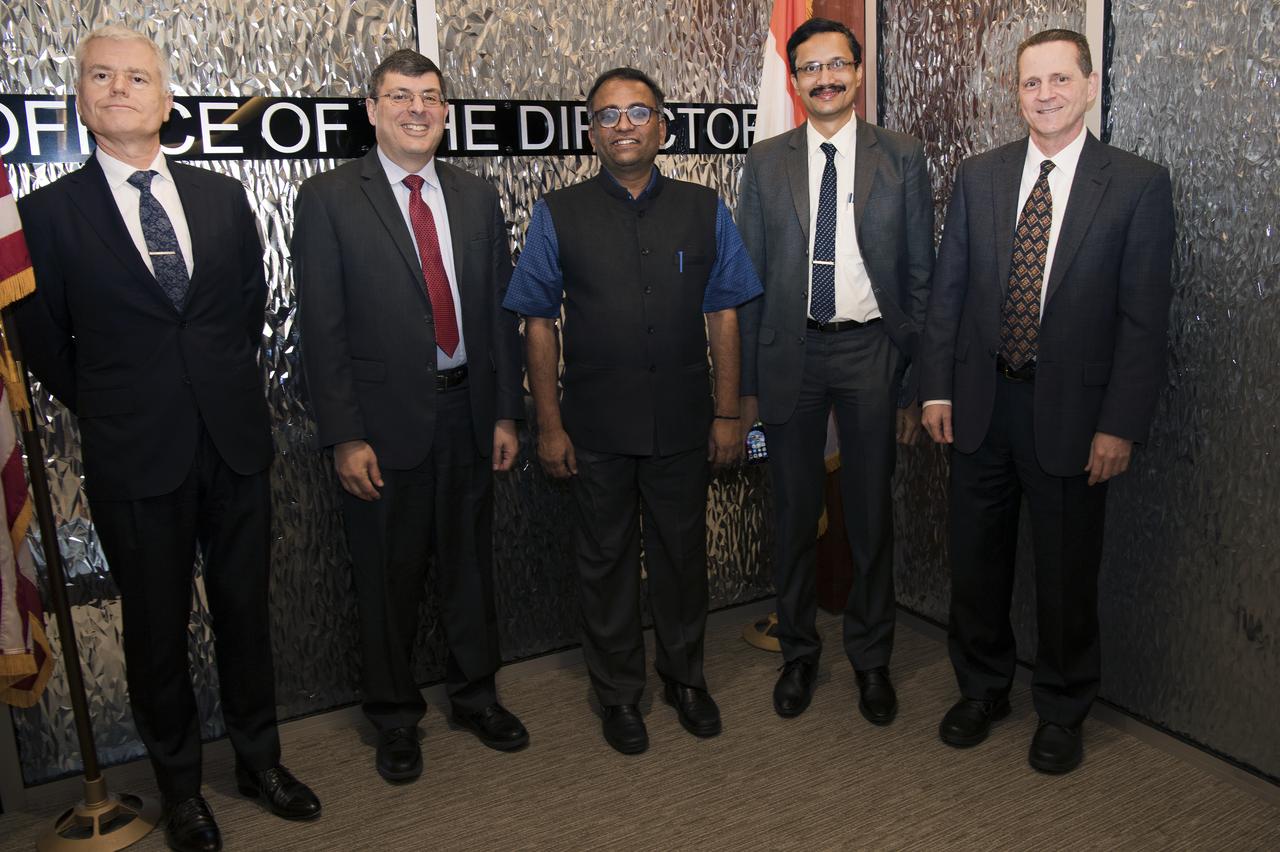
Indian Space Research Organization ISRO visited Goddard March 13, 2019 pictured here with Mark Clampin and Center Director Chris Scolese
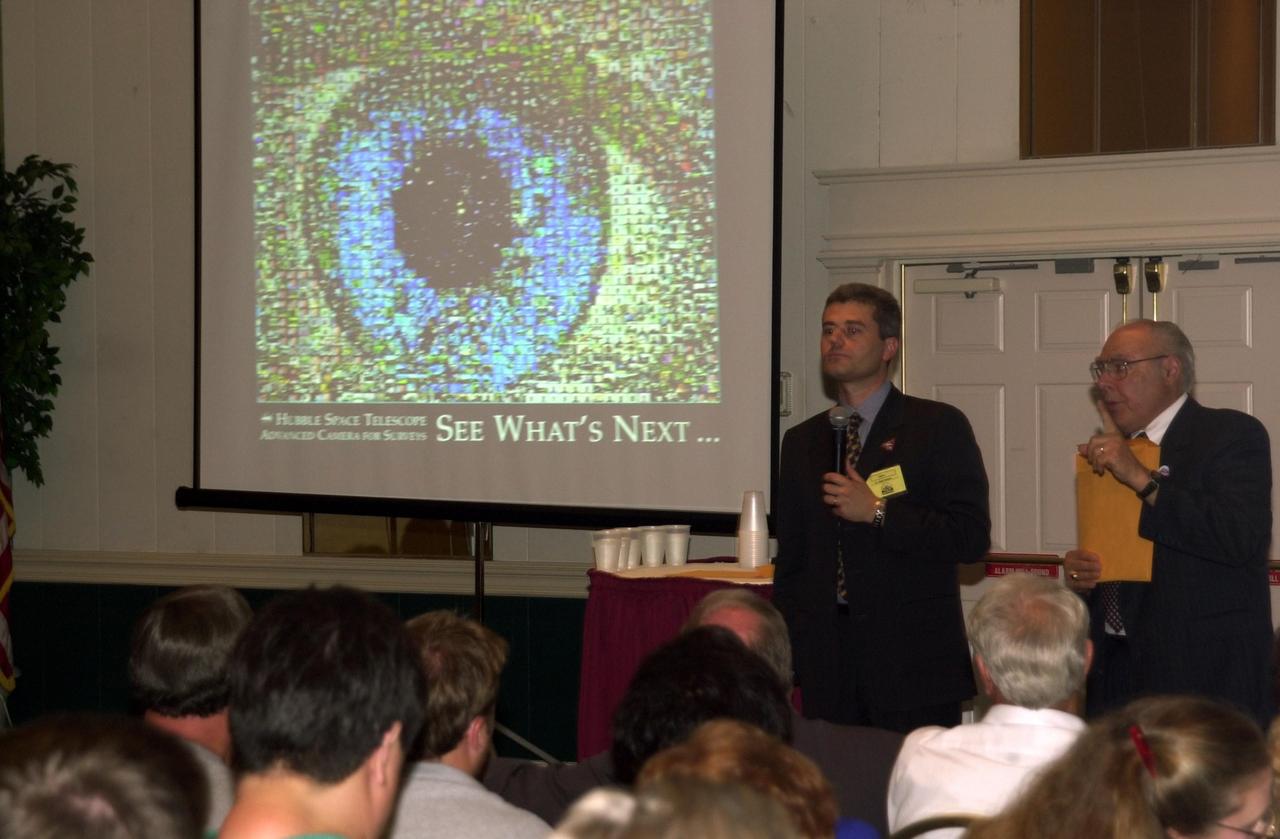
KENNEDY SPACE CENTER, FLA. -- At the 2002 Space Congress, Cape Canaveral, Fla., a presentation on "Hubble Discoveries" by Dr. Mark Clampin (with microphone), Advanced Camera for Surveys team, included an image of an eye (seen on the screen) comprising hundreds of photos of all the people who worked on Hubble. On the right is Frank Ceppolina, project manager, Hubble Space Telescope Development Project. The Space Congress is held annually to highlight military and space initiatives, new technologies, and Florida's role in programs and research. This year's theme is Beginning a New Era - Initiatives in Space. NASA presented several paper sessions, including Advancements in Technology. Space Congress is sponsored by the Canaveral Council of Technical Societies

James Webb Space Telescope Operations Project Scientist, Knicole Colon, speaks about the contributions of the Hubble Space Telescope to future astronomy missions during an event titled “Beyond the Deep Field: Hubble’s Legacy and the Future of Cosmic Observation,” Friday, June 5, 2026, at the Mary W. Jackson NASA Headquarters building in Washington. Photo Credit: (NASA/Aubrey Gemignani)
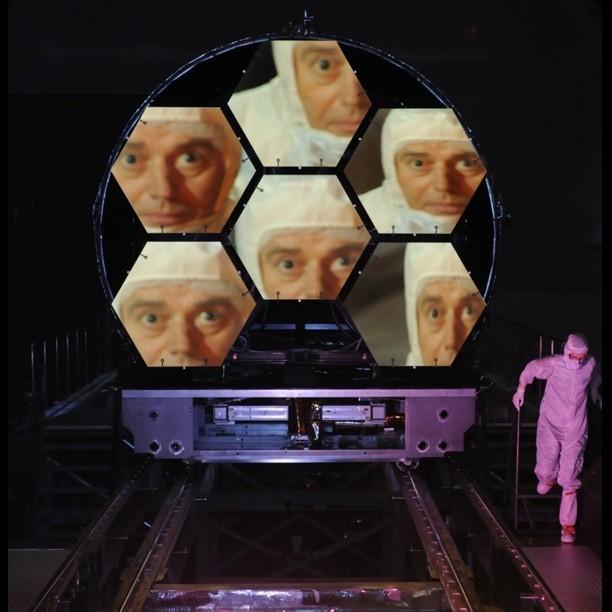
Project scientist Mark Clampin is reflected in the flight mirrors of the Webb Space Telescope at Marshall Space Flight Center. Portions of the Webb telescope are being built at NASA Goddard. Credit: Ball Aerospace/NASA <b><a href="http://www.nasa.gov/centers/goddard/home/index.html" rel="nofollow">NASA Goddard Space Flight Center</a></b> enables NASA’s mission through four scientific endeavors: Earth Science, Heliophysics, Solar System Exploration, and Astrophysics. Goddard plays a leading role in NASA’s accomplishments by contributing compelling scientific knowledge to advance the Agency’s mission. <b>Follow us on <a href="http://twitter.com/NASA_GoddardPix" rel="nofollow">Twitter</a></b> <b>Join us on <a href="http://www.facebook.com/pages/Greenbelt-MD/NASA-Goddard/395013845897?ref=tsd" rel="nofollow">Facebook</a></b> <b>Find us on <a href="http://instagr.am/p/E_05l/" rel="nofollow">Instagram</a></b>
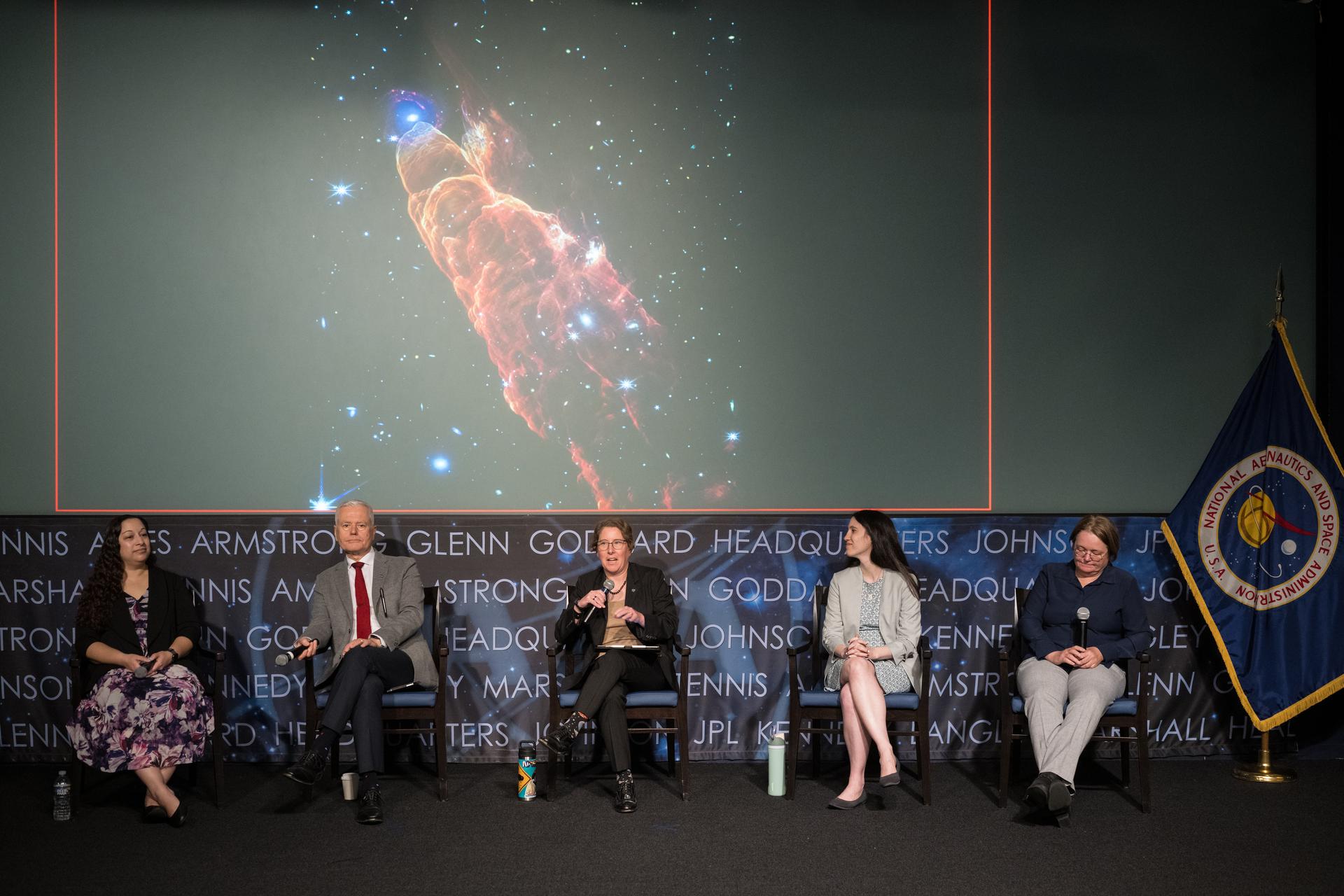
Senior Project Scientist for the James Webb Space Telescope, Jane Rigby, speaks on a panel about the contributions of the Hubble Space Telescope to future astronomy missions during an event titled “Beyond the Deep Field: Hubble’s Legacy and the Future of Cosmic Observation,” Friday, June 5, 2026, at the Mary W. Jackson NASA Headquarters building in Washington. Photo Credit: (NASA/Aubrey Gemignani)
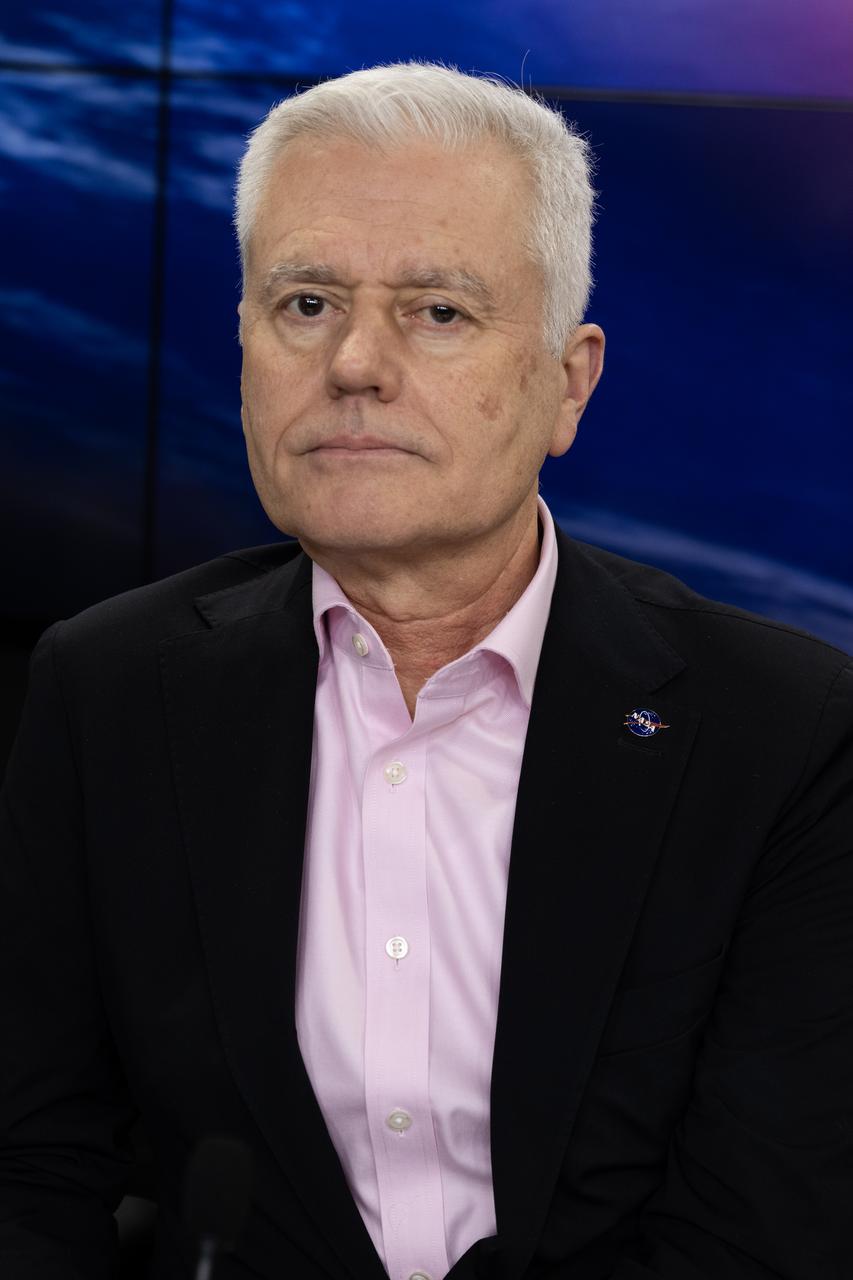
Mark Clampin, acting deputy associate administrator, Science Mission Directorate, NASA Headquarters, participates in a prelaunch news conference on Friday, March 7, 2025, to discuss the upcoming launch of NASA’s SPHEREx (Spectro-Photometer for the History of the Universe, Epoch of Reionization and Ices Explorer) observatory and PUNCH (Polarimeter to Unify the Corona and Heliosphere) satellites at Vandenberg Space Force Base in California. SPHEREx will use its telescope to provide an all-sky spectral survey, creating a 3D map of the entire sky to help scientists investigate the origins of our universe. PUNCH will study origins of the Sun’s outflow of material, or the solar wind, capturing continuous 3D images of the Sun’s corona and the solar wind’s journey into the solar system. Liftoff aboard a SpaceX Falcon 9 rocket is targeted for NET 10:10 p.m. EST (7:10 p.m. PST), Saturday, March 8, 2025, at Space Launch Complex 4 East from Vandenberg Space Force Base in California.
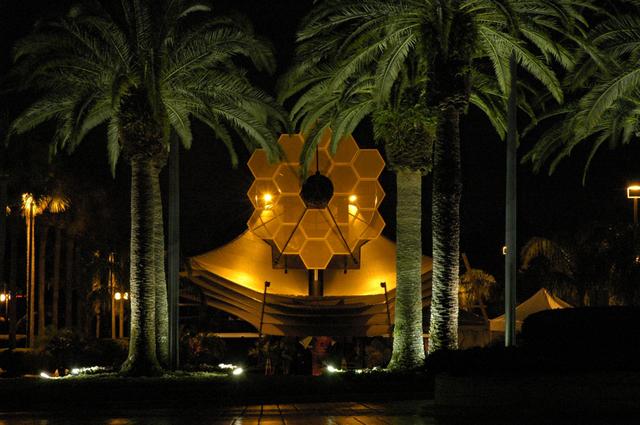
JWST Full-Scale Model on Display. A full-scale model of the James Webb Space Telescope was built by the prime contractor, Northrop Grumman, to provide a better understanding of the size, scale and complexity of this satellite. The model is constructed mainly of aluminum and steel, weighs 12,000 lb., and is approximately 80 feet long, 40 feet wide and 40 feet tall. The model requires 2 trucks to ship it and assembly takes a crew of 12 approximately four days. This model has traveled to a few sites since 2005. The photographs below were taken at some of its destinations. The model was on display at The International Society for Optical Engineering's (SPIE) week-long Astronomical Telescopes and Instrumentations conference,May 25 - 30, 2006. Credit: NASA/Goddard Space Flight Center/Dr Mark Clampin <b><a href="http://www.nasa.gov/audience/formedia/features/MP_Photo_Guidelines.html" rel="nofollow">NASA image use policy.</a></b> <b><a href="http://www.nasa.gov/centers/goddard/home/index.html" rel="nofollow">NASA Goddard Space Flight Center</a></b> enables NASA’s mission through four scientific endeavors: Earth Science, Heliophysics, Solar System Exploration, and Astrophysics. Goddard plays a leading role in NASA’s accomplishments by contributing compelling scientific knowledge to advance the Agency’s mission. <b>Follow us on <a href="http://twitter.com/NASA_GoddardPix" rel="nofollow">Twitter</a></b> <b>Like us on <a href="http://www.facebook.com/pages/Greenbelt-MD/NASA-Goddard/395013845897?ref=tsd" rel="nofollow">Facebook</a></b> <b>Find us on <a href="http://instagram.com/nasagoddard?vm=grid" rel="nofollow">Instagram</a></b>
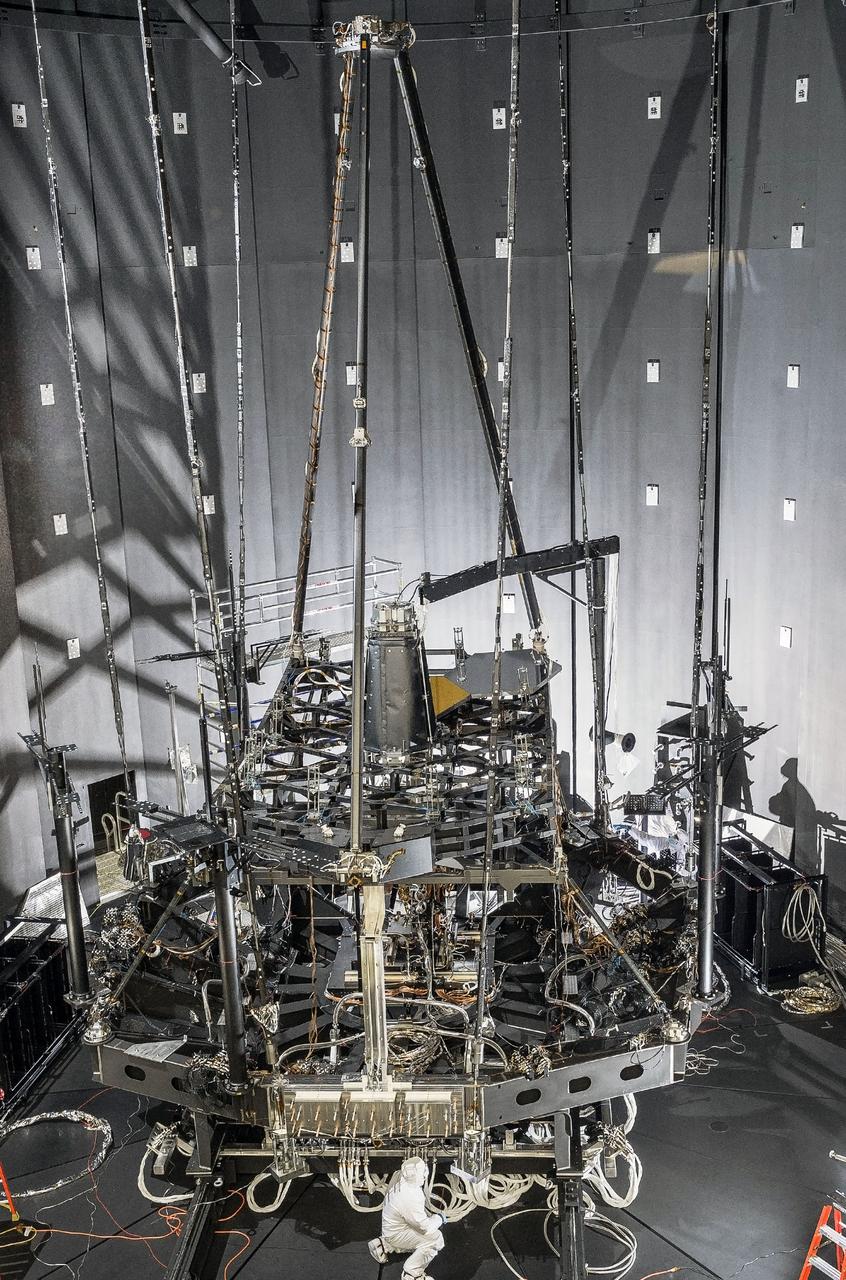
Testing is crucial part of NASA's success on Earth and in space. So, as the actual flight components of NASA's James Webb Space Telescope come together, engineers are testing the non-flight equipment to ensure that tests on the real Webb telescope later goes safely and according to plan. Recently, the "pathfinder telescope," or just “Pathfinder,” completed its first super-cold optical test that resulted in many first-of-a-kind demonstrations. "This test is the first dry-run of the equipment and procedures we will use to conduct an end-to-end optical test of the flight telescope and instruments," said Mark Clampin, Webb telescope Observatory Project Scientist at NASA's Goddard Space Flight Center in Greenbelt, Maryland. "It provides confidence that once the flight telescope is ready, we are fully prepared for a successful test of the flight hardware." The Pathfinder is a non-flight replica of the Webb telescope’s center section backplane, or “backbone,” that includes mirrors. The flight backplane comes in three segments, a center section and two wing-like parts, all of which will support large hexagonal mirrors on the Webb telescope. The pathfinder only consists of the center part of the backplane. However, during the test, it held two full size spare primary mirror segments and a full size spare secondary mirror to demonstrate the ability to optically test and align the telescope at the planned operating temperatures of -400 degrees Fahrenheit (-240 Celsius). Read more: <a href="http://www.nasa.gov/feature/goddard/nasas-webb-pathfinder-telescope-successfully-completes-first-super-cold-optical-test" rel="nofollow">www.nasa.gov/feature/goddard/nasas-webb-pathfinder-telesc...</a> Credit: NASA/Goddard/Chris Gunn <b><a href="http://www.nasa.gov/audience/formedia/features/MP_Photo_Guidelines.html" rel="nofollow">NASA image use policy.</a></b> <b><a href="http://www.nasa.gov/centers/goddard/home/index.html" rel="nofollow">NASA Goddard Space Flight Center</a></b> enables NASA’s mission through four scientific endeavors: Earth Science, Heliophysics, Solar System Exploration, and Astrophysics. Goddard plays a leading role in NASA’s accomplishments by contributing compelling scientific knowledge to advance the Agency’s mission. <b>Follow us on <a href="http://twitter.com/NASAGoddardPix" rel="nofollow">Twitter</a></b> <b>Like us on <a href="http://www.facebook.com/pages/Greenbelt-MD/NASA-Goddard/395013845897?ref=tsd" rel="nofollow">Facebook</a></b> <b>Find us on <a href="http://instagrid.me/nasagoddard/?vm=grid" rel="nofollow">Instagram</a></b>