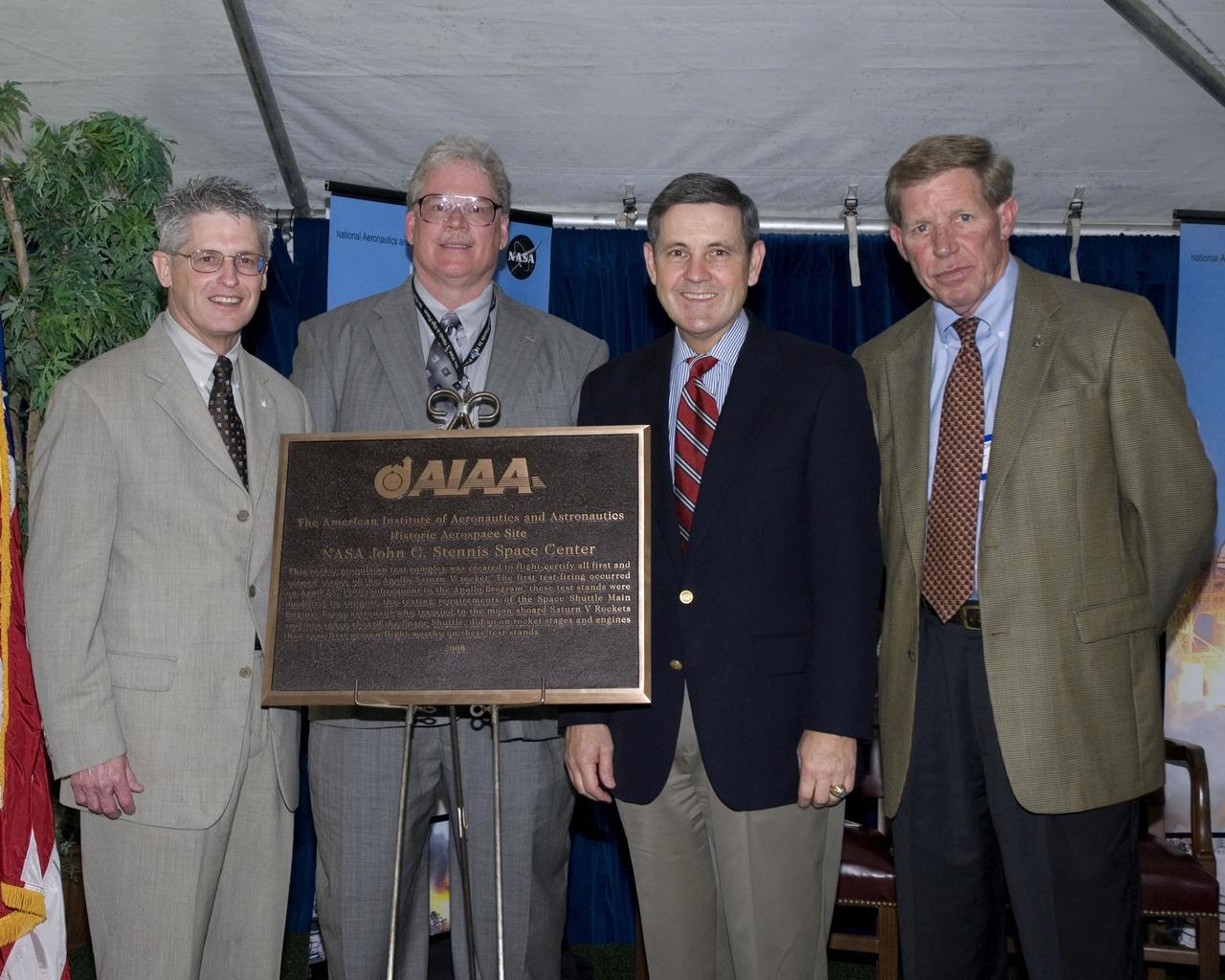
Picured (left to right) American Institute of Aeronautics and Astronautics (AIAA) representative David Throckmorton presents a plaque designating NASA's John C. Stennis Space Center as a historical aerospace site during an April 10 ceremony. Joining Throckmorton for the presentation were AIAA Greater New Orleans Chapter Chair Mark Hughes, Stennis Space Center Director Bob Cabana and Pratt & Whitney Rocketdyne Vice President John Plowden.
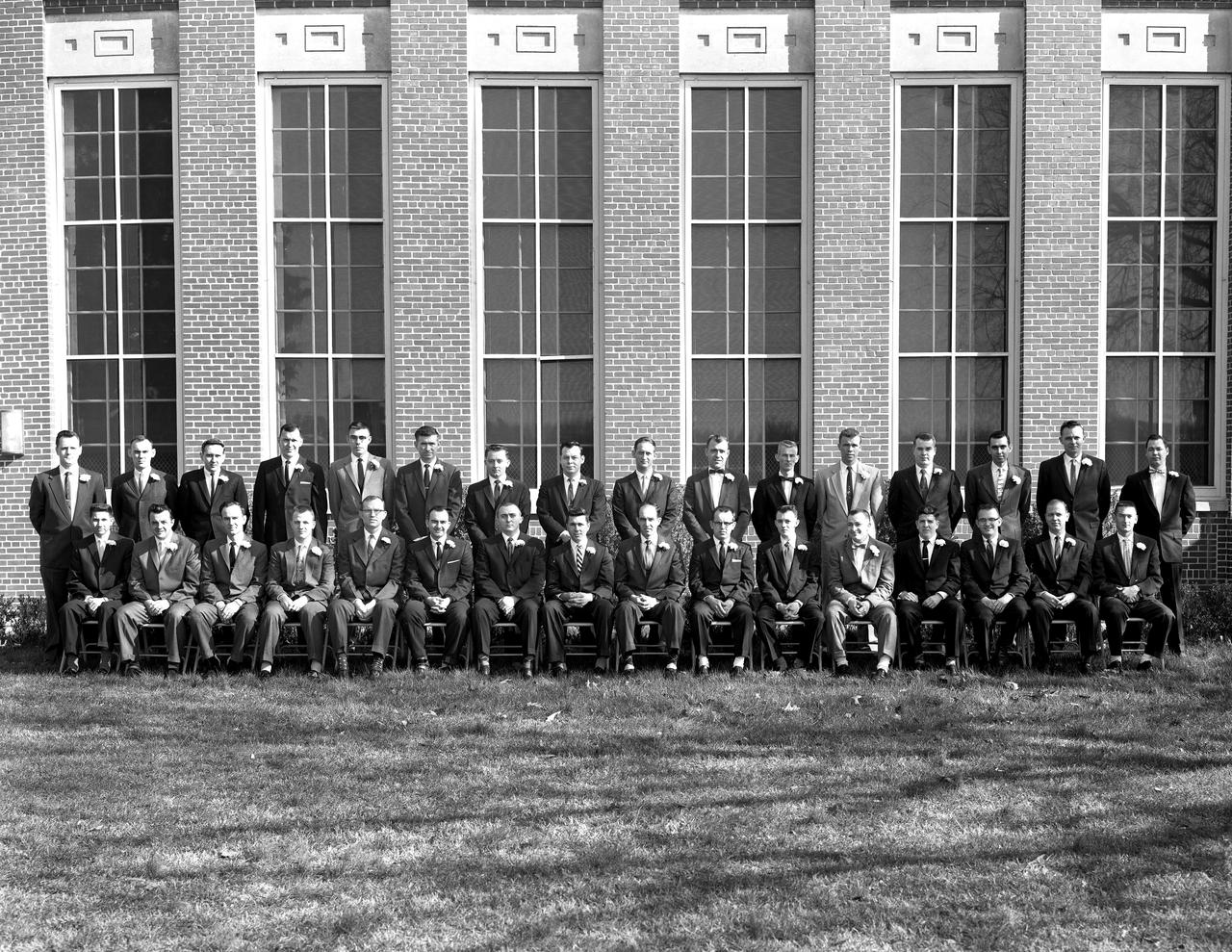
Apprentice Class Graduates: 32 Apprentice Greaduates: Ivan E. Albertson, Colossie N. Batts, Billy W. Beasley, John H. Belveal, Ernest R. Dunnigan, Durwood W. Davis, Charles E. Drummond, John R.Ellingsworth, Jr., Hugh D. Fitzgerald, Ernest A. Gurganus, Joseph R. Guy, William C. Henley,Jr., Richard N. Hill, Hiram R. Hogge, Jr., James D. Holt, James L. Hudgins, Robert F. Macklin, Roy W. Mason, Clyde J. May,Roger N. Messier, William C. Moughon, William S. Pillow, Wayne R. Posey, Mark E. Price, John W. Schwartz, Herbert F. Shackleford, John W. Simpson,John B. Slight, Cecil W. Stephens, Richard K. Stoops, John W. Sundy, Dave, E. Williams.
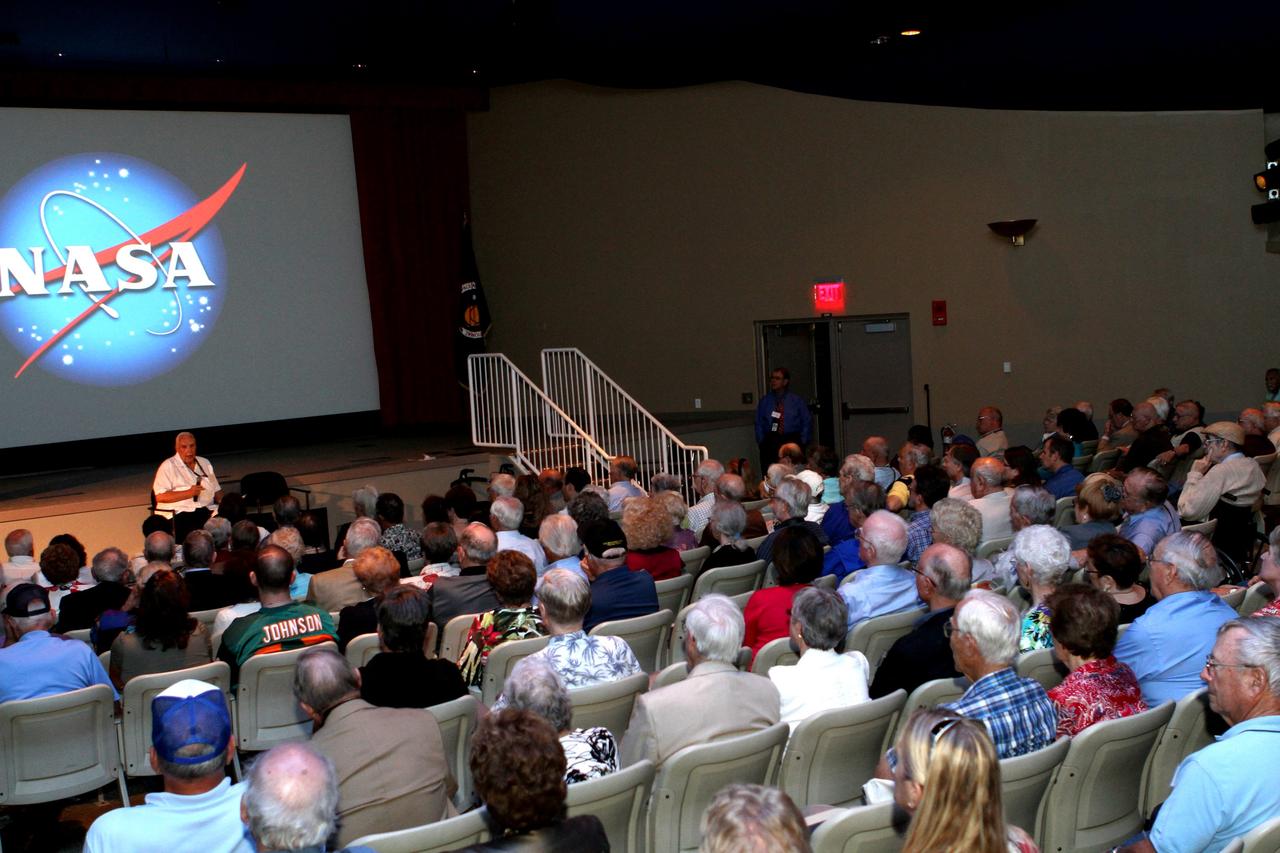
CAPE CANAVERAL, Fla. -- Hugh Harris, the former director of Public Affairs at NASA's Kennedy Space Center in Florida, talks to Mercury Project workers and other guests in the Astronaut Encounter Theater at the Kennedy Space Center Visitor Complex in Florida. Harris is helping Mercury astronauts, John Glenn and Scott Carpenter, mark the 50th anniversary of Glenn being the first American to orbit the Earth inside the NASA Mercury Project's Friendship 7 capsule on Feb. 20, 1962. Glenn's launch aboard an Atlas rocket took with it the hopes of an entire nation and ushered in a new era of space travel that eventually led to Americans walking on the moon by the end of the 1960s. Glenn soon was followed into orbit by Carpenter, Walter Schirra and Gordon Cooper. Their fellow Mercury astronauts Alan Shepard and Virgil "Gus" Grissom flew earlier suborbital flights. Deke Slayton, a member of NASA's original Mercury 7 astronauts, was grounded by a medical condition until the Apollo-Soyuz Test Project in 1975. Photo credit: Kim Shiflett
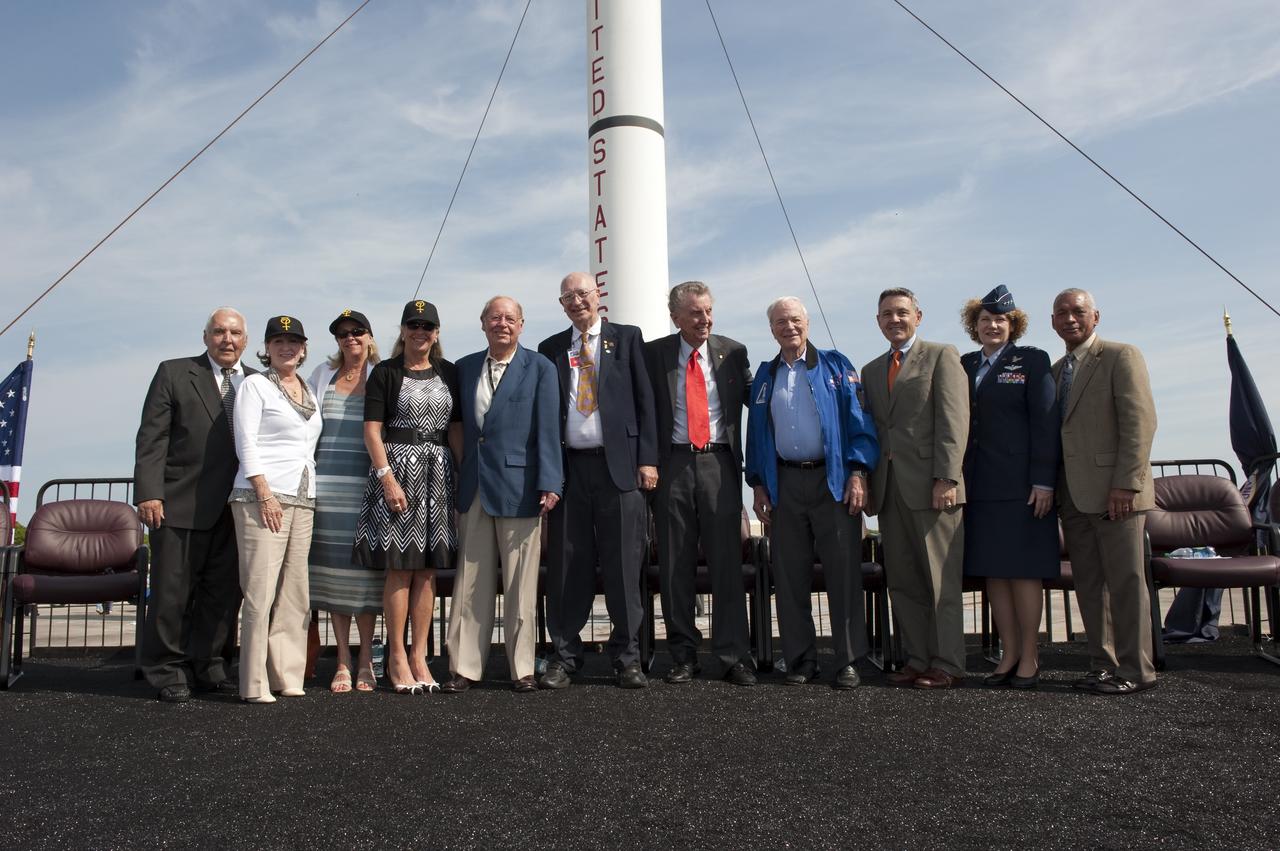
CAPE CANAVERAL, Fla. -- Program participants pose for a group photo in front of a replica of a Mercury-Redstone rocket during a celebration at Complex 5/6 on Cape Canaveral Air Force Station in Florida. From left are Hugh Harris, former director of Public Affairs at Kennedy Space Center; Alice Wackermann, Julie Jenkins and Laura Churchley, daughters of astronaut Alan Shepard; Jack King, former chief, Public Information Office, Marshall Space Flight Center; Bob Moser, former chief test conductor for the Mercury-Redstone launches; NBC reporter Jay Barbree; Mercury astronaut Scott Carpenter; Kennedy Space Center Director Bob Cabana; Lieutenant General Susan J. Helms, commander of the 14th Air Force and former astronaut; and NASA Administrator Charlie Bolden. The celebration was held at the launch site of the first U.S. manned spaceflight May 5, 1961, to mark the 50th anniversary of the flight. Fifty years ago, astronaut Alan Shepard lifted off inside the Mercury capsule, "Freedom 7," atop an 82-foot-tall Mercury-Redstone rocket at 9:34 a.m. EST, sending him on a remarkably successful, 15-minute suborbital flight. The event was attended by more than 200 workers from the original Mercury program and included a re-creation of Shepard's flight and recovery, as well as a tribute to his contributions as a moonwalker on the Apollo 14 lunar mission. For more information, visit www.nasa.gov/topics/history/milestones/index.html. Photo credit: NASA/Kim Shiflett