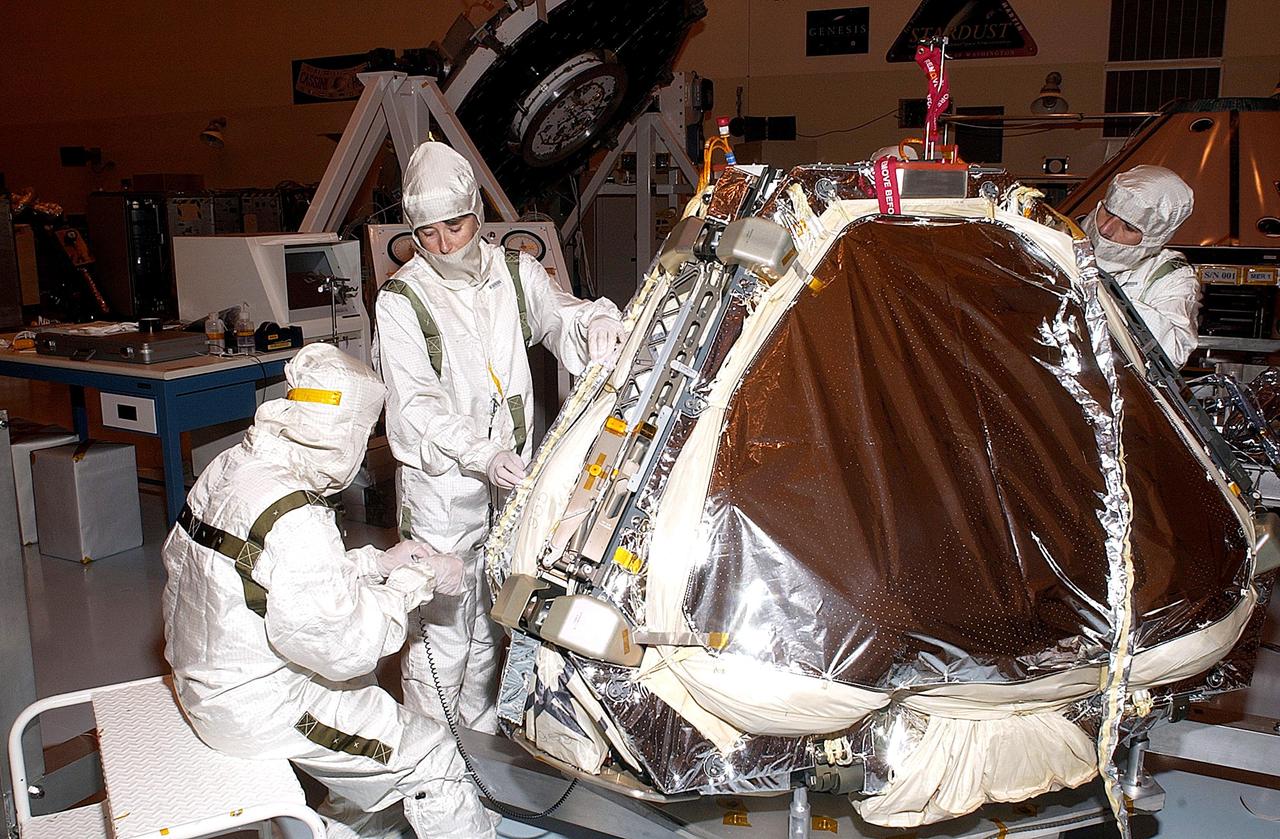
Air bags are installed on the lander on Mars Exploration Rover 1 MER-1.
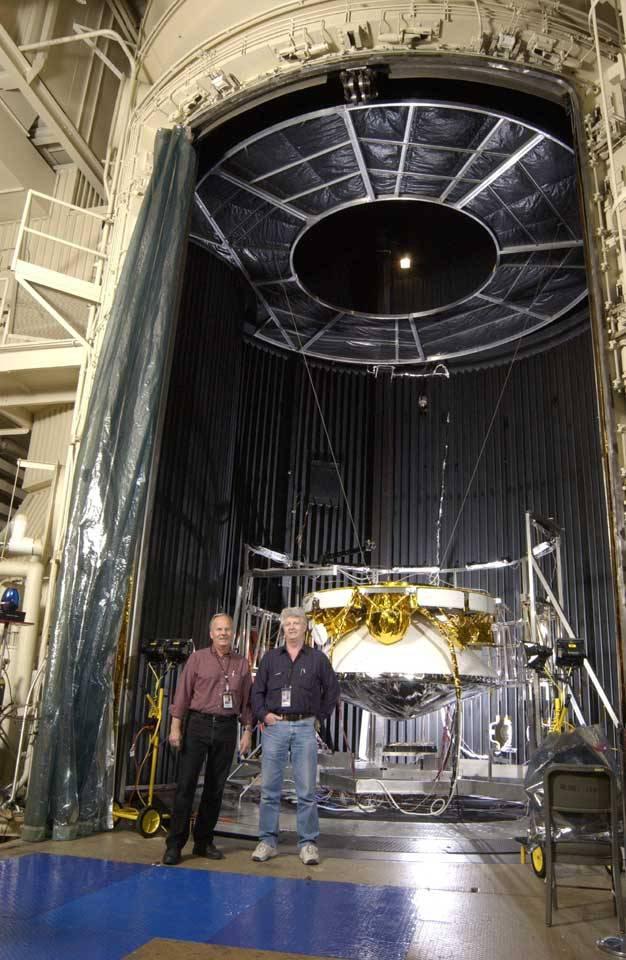
Mars Exploration Rover MER spacecraft -- areoshell encapsulating the rover and lander plus cruise stage.
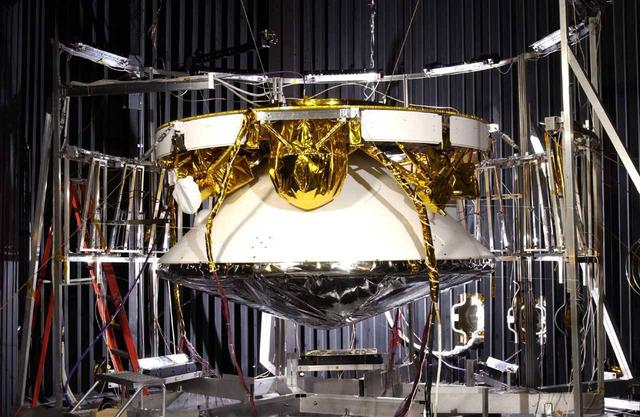
Mars Exploration Rover MER spacecraft -- areoshell encapsulating the rover and lander plus cruise stage.
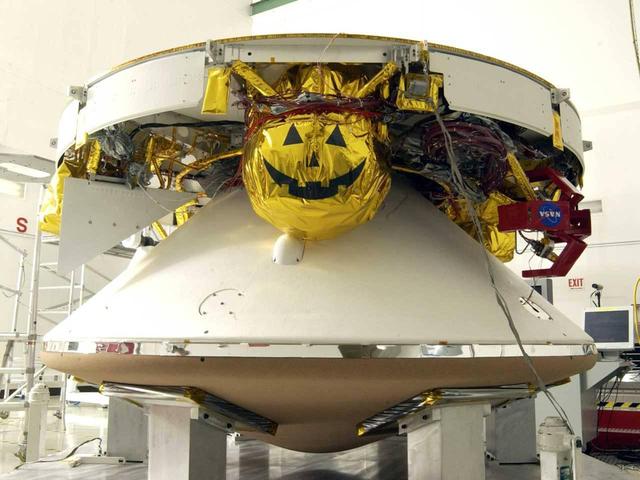
Mars Exploration Rover MER spacecraft -- areoshell encapsulating the rover and lander plus cruise stage.
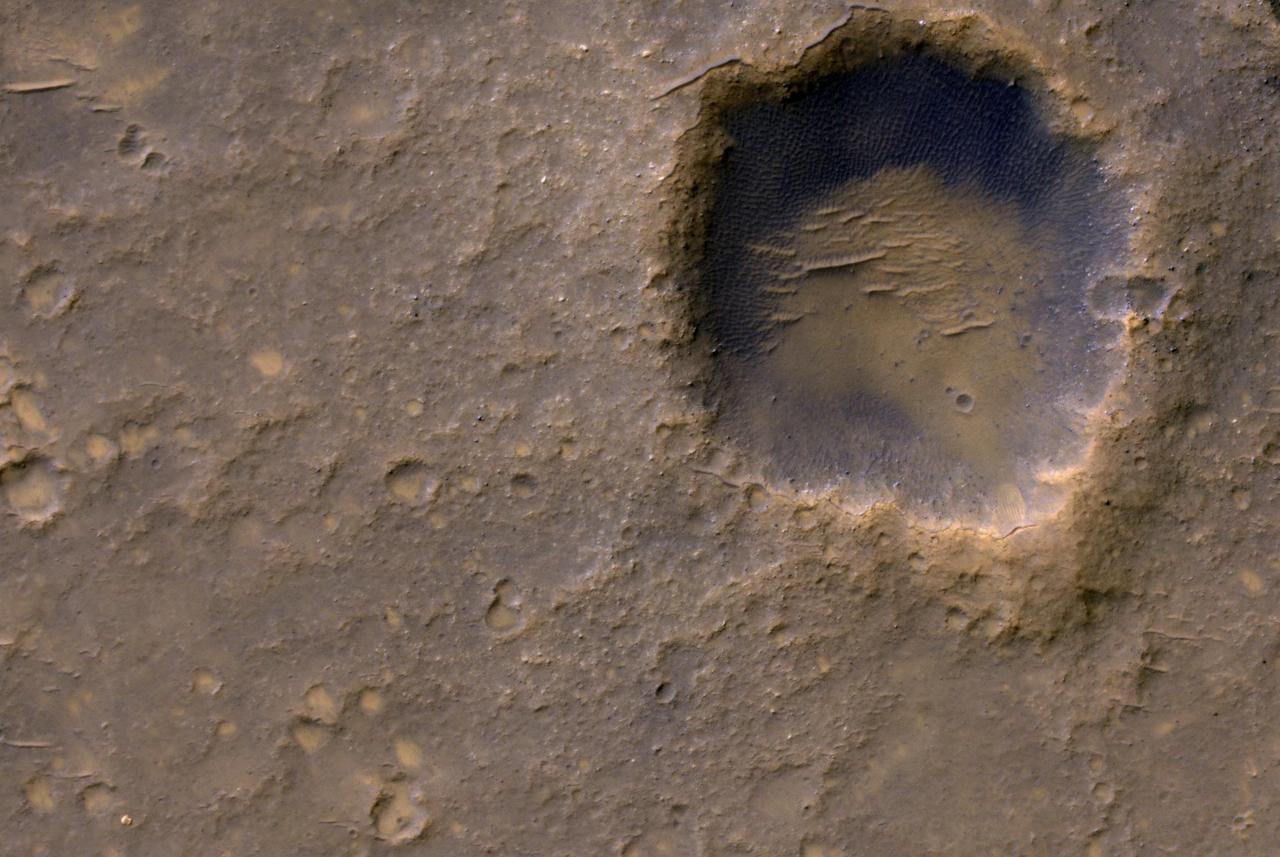
Near the lower left corner of this view is the three-petal lander platform that NASA Mars Exploration Rover Spirit drove off in January 2004. The lander is still bright, but with a reddish color, probably due to accumulation of Martian dust.
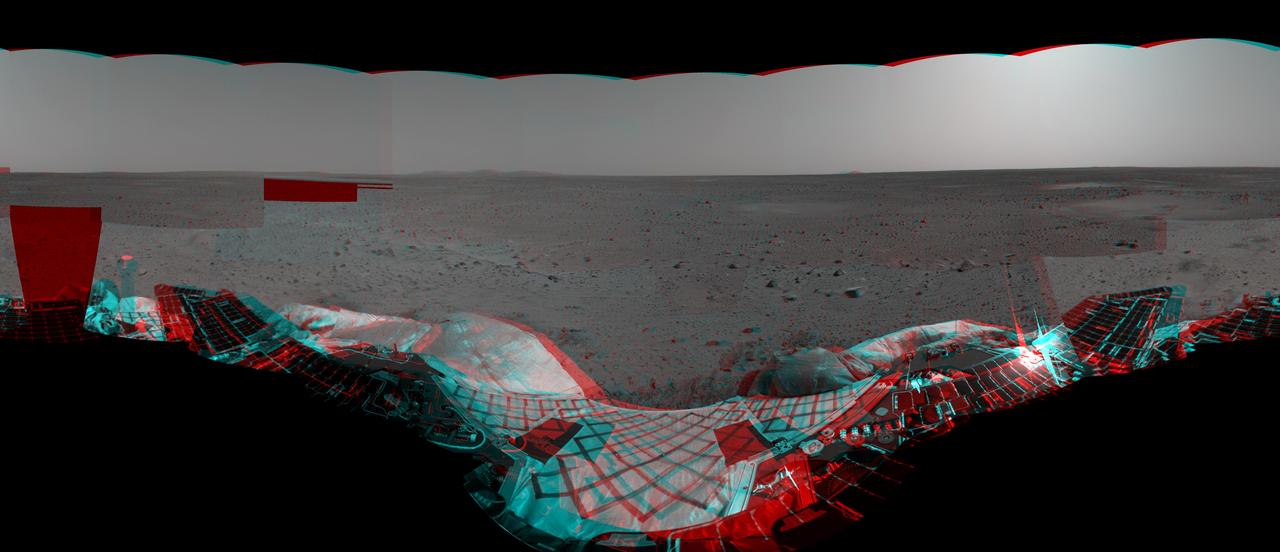
This anaglyph from NASA Mars Exploration Rover, Spirit, shows the rover lander and, in the background, the surrounding martian terrain. 3D glasses are necessary to view this image.
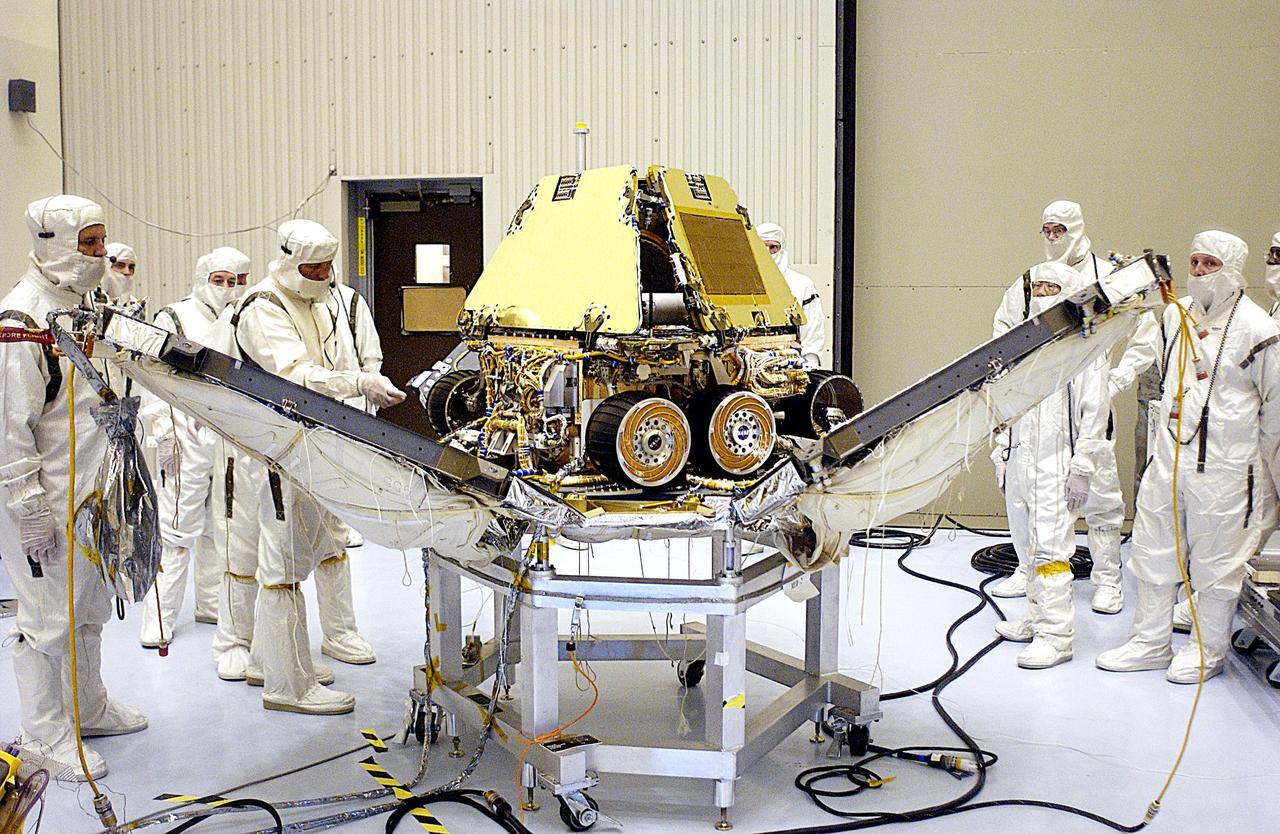
In the Payload Hazardous Servicing Facility, technicians reopen the lander petals of the Mars Exploration Rover 2 MER-2 to allow access to one of the spacecraft circuit boards.
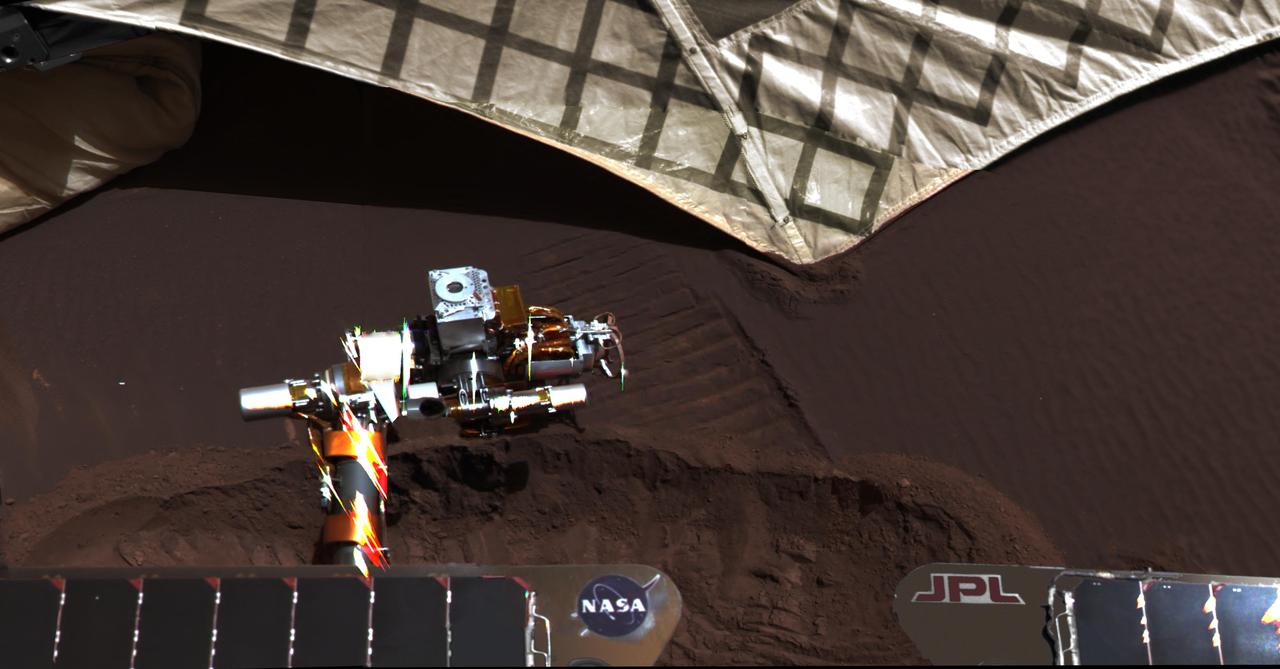
On March 20, 2004, NASA Mars Exploration Rover Opportunity used a wheel to dig a trench revealing subsurface material beside the lander hardware that carried the rover to the surface of Mars 55 Martian days earlier.
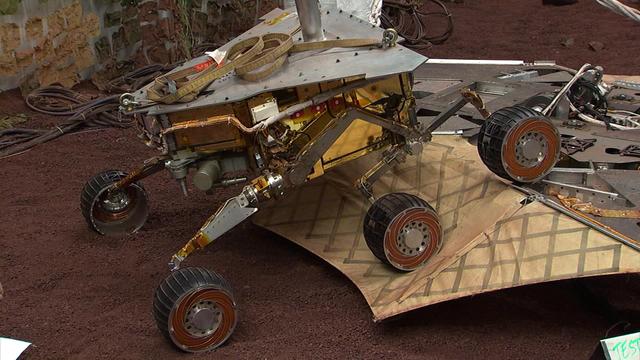
This still image illustrates what the Mars Exploration Rover Spirit will look like as it rolls off the northeastern side of the lander on Mars. The image was taken from footage of rover testing at JPL In-Situ Instruments Laboratory, or Testbed.
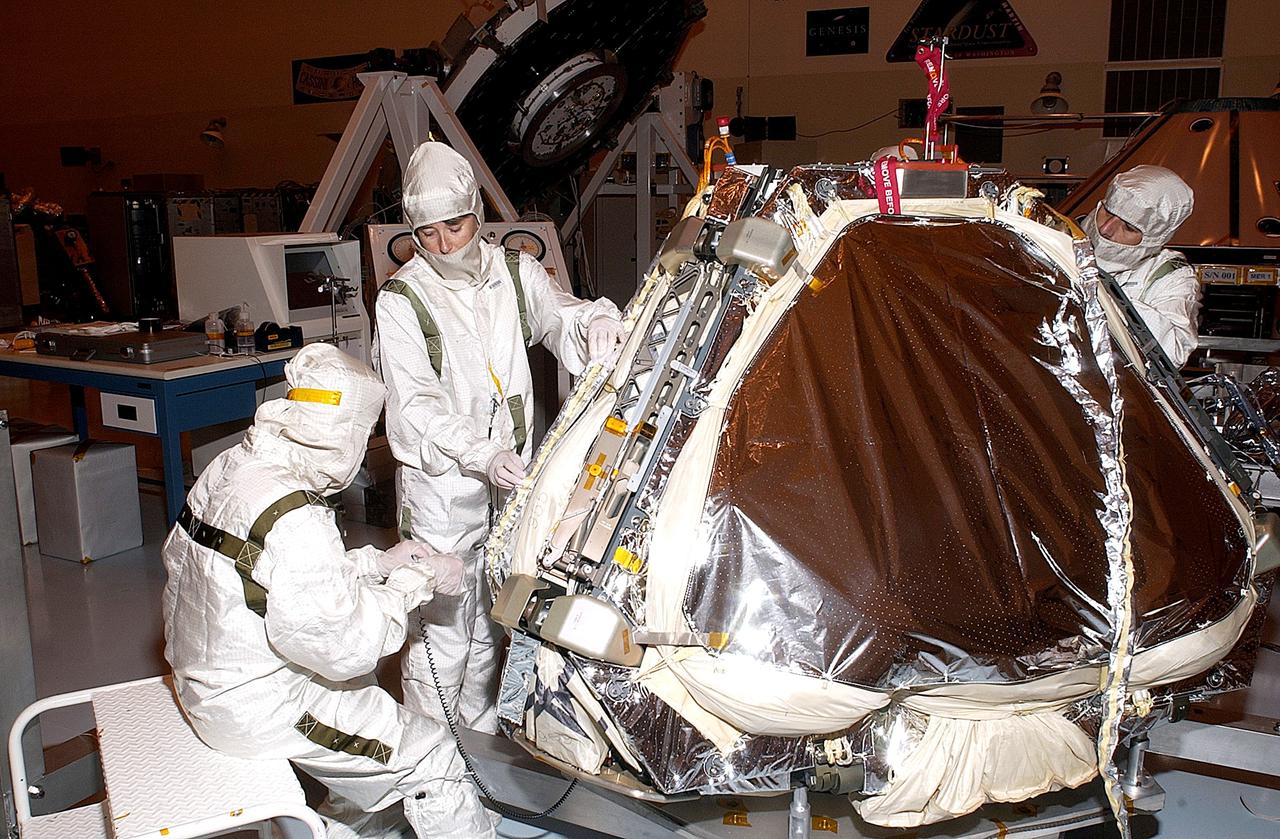
KENNEDY SPACE CENTER, FLA. - On Mars Exploration Rover 1 (MER-1) , air bags are installed on the lander. The airbags will inflate to cushion the landing of the spacecraft on the surface of Mars. When it stops bouncing and rolling, the airbags will deflate and retract, the petals will open to bring the lander to an upright position, and the rover will be exposed. NASA's twin Mars Exploration Rovers are designed to study the history of water on Mars. These robotic geologists are equipped with a robotic arm, a drilling tool, three spectrometers, and four pairs of cameras that allow them to have a human-like, 3D view of the terrain. Each rover could travel as far as 100 meters in one day to act as Mars scientists' eyes and hands, exploring an environment where humans can't yet go. MER-1 is scheduled to launch June 25 as MER-B aboard a Delta II rocket from Cape Canaveral Air Force Station.

KENNEDY SPACE CENTER, FLA. - The Mars Exploration Rover 1 (MER-1) is seen after installation of the air bags on the outside of the lander. The airbags will inflate to cushion the landing of the spacecraft on the surface of Mars. When it stops bouncing and rolling, the airbags will deflate and retract, the petals will open to bring the lander to an upright position, and the rover will be exposed. NASA's twin Mars Exploration Rovers are designed to study the history of water on Mars. These robotic geologists are equipped with a robotic arm, a drilling tool, three spectrometers, and four pairs of cameras that allow them to have a human-like, 3D view of the terrain. Each rover could travel as far as 100 meters in one day to act as Mars scientists' eyes and hands, exploring an environment where humans can't yet go. MER-1 is scheduled to launch June 25 as MER-B aboard a Delta II rocket from Cape Canaveral Air Force Station.
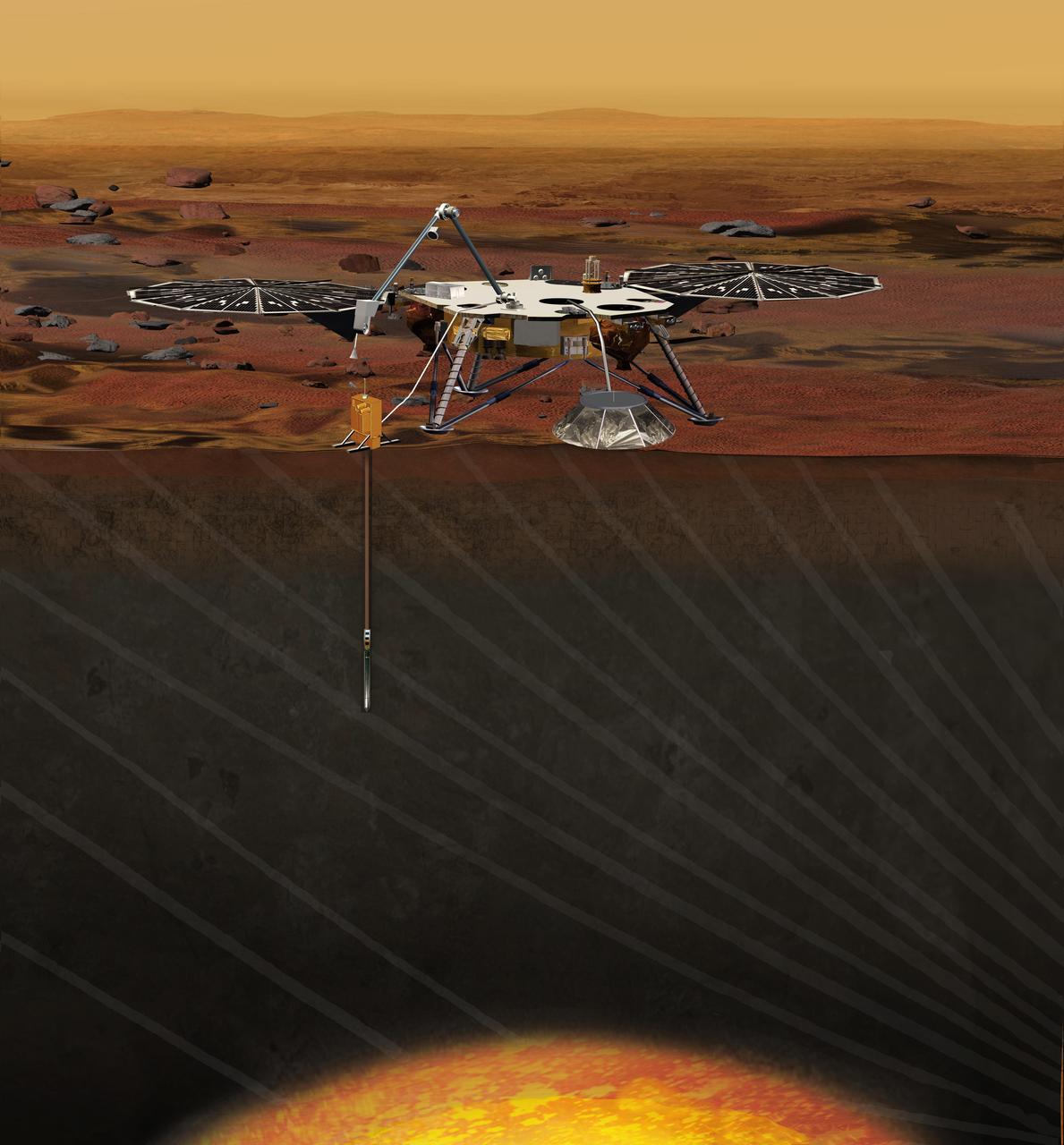
This artist rendition is of the Interior exploration using Seismic Investigations, Geodesy and Heat Transport InSight Lander. InSight proposes to place a single geophysical lander on Mars to study its deep interior. Note: After thorough examination, NASA managers have decided to suspend the planned March 2016 launch of the Interior Exploration using Seismic Investigations Geodesy and Heat Transport (InSight) mission. The decision follows unsuccessful attempts to repair a leak in a section of the prime instrument in the science payload. http://photojournal.jpl.nasa.gov/catalog/PIA13958
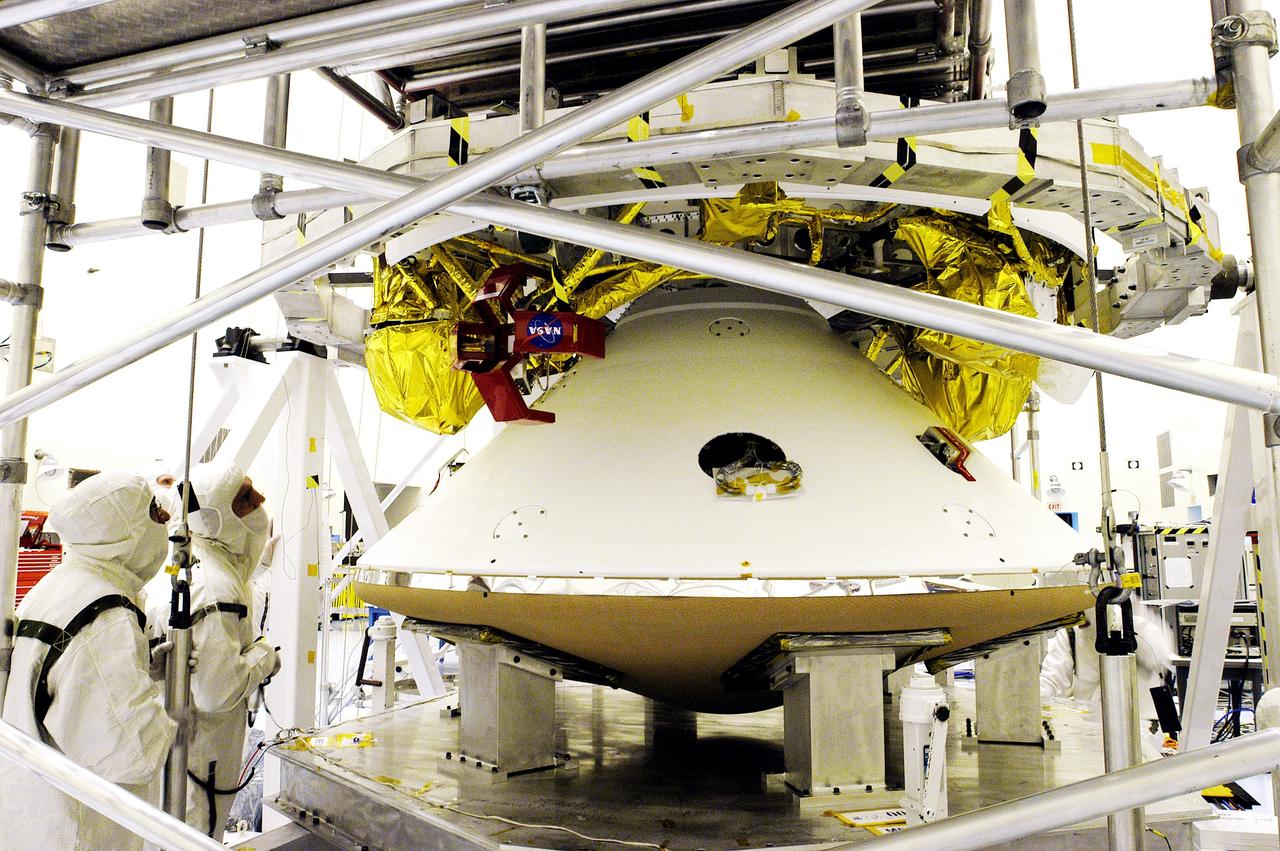
KENNEDY SPACE CENTER, FLA. - The Mars Exploration Rover 1 (MER-1) lander (below) is mated to the cruise stage, seen above the lander. NASA's twin Mars Exploration Rovers are designed to study the history of water on Mars. These robotic geologists are equipped with a robotic arm, a drilling tool, three spectrometers, and four pairs of cameras that allow them to have a human-like, 3D view of the terrain. Each rover could travel as far as 100 meters in one day to act as Mars scientists' eyes and hands, exploring an environment where humans can't yet go. MER-1 is scheduled to launch June 25 as MER-B aboard a Delta II rocket from Cape Canaveral Air Force Station.
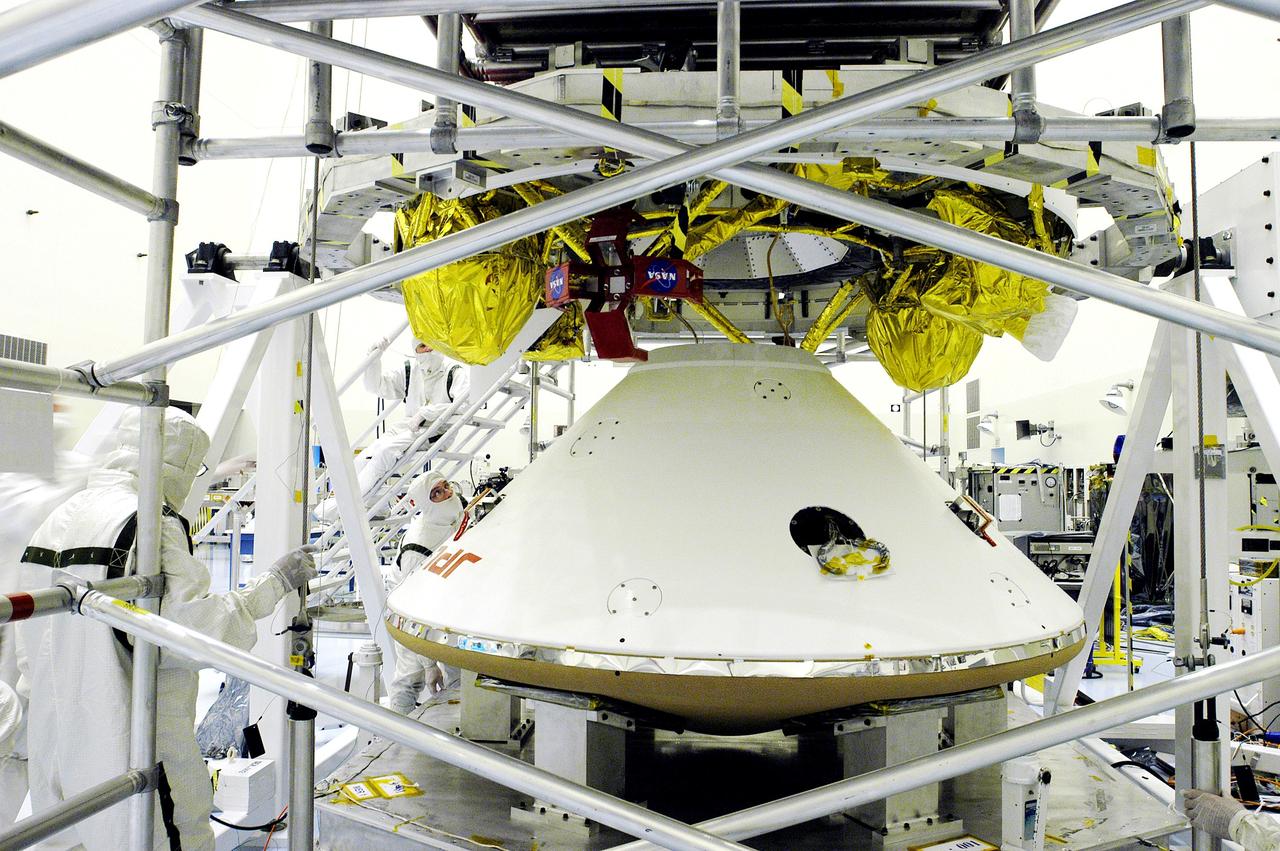
KENNEDY SPACE CENTER, FLA. - The Mars Exploration Rover 1 (MER-1) lander (below) is mated to the cruise stage, seen above the lander. NASA's twin Mars Exploration Rovers are designed to study the history of water on Mars. These robotic geologists are equipped with a robotic arm, a drilling tool, three spectrometers, and four pairs of cameras that allow them to have a human-like, 3D view of the terrain. Each rover could travel as far as 100 meters in one day to act as Mars scientists' eyes and hands, exploring an environment where humans can't yet go. MER-1 is scheduled to launch June 25 as MER-B aboard a Delta II rocket from Cape Canaveral Air Force Station.
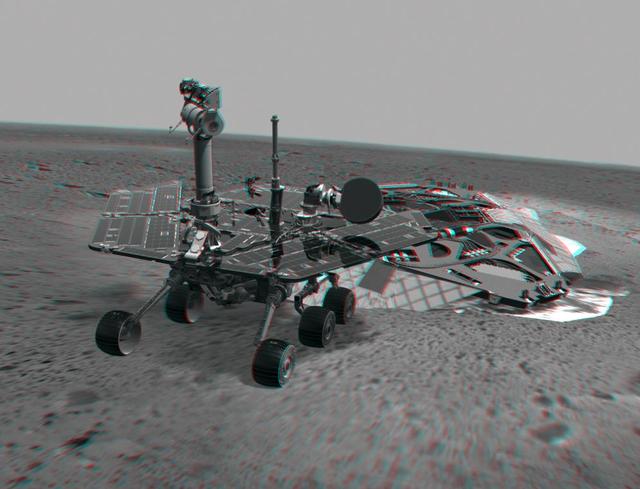
This 3-D image combines computer-generated models of NASA Mars Exploration Rover Spirit and its lander with real surface data from the rover panoramic camera. 3D glasses are necessary to view this image.
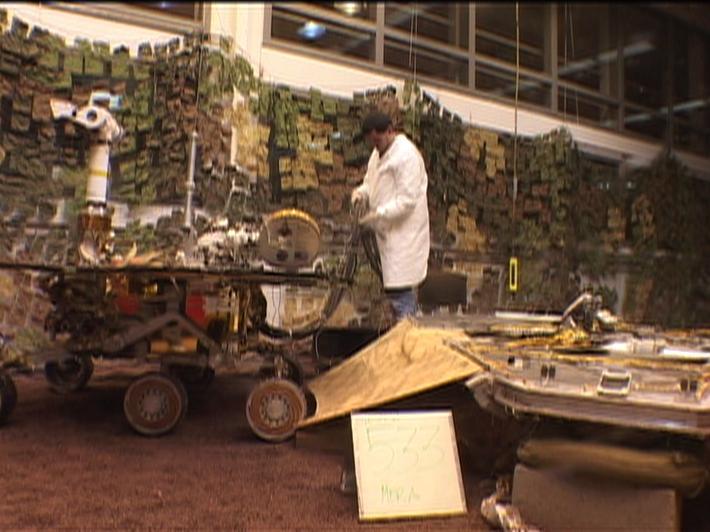
Footage from the JPL In-Situ Instruments Laboratory, or testbed, shows engineers rehearsing a crucial maneuver called egress in which NASA Mars Exploration Rover Spirit rolls off its lander platform and touches martian soil.
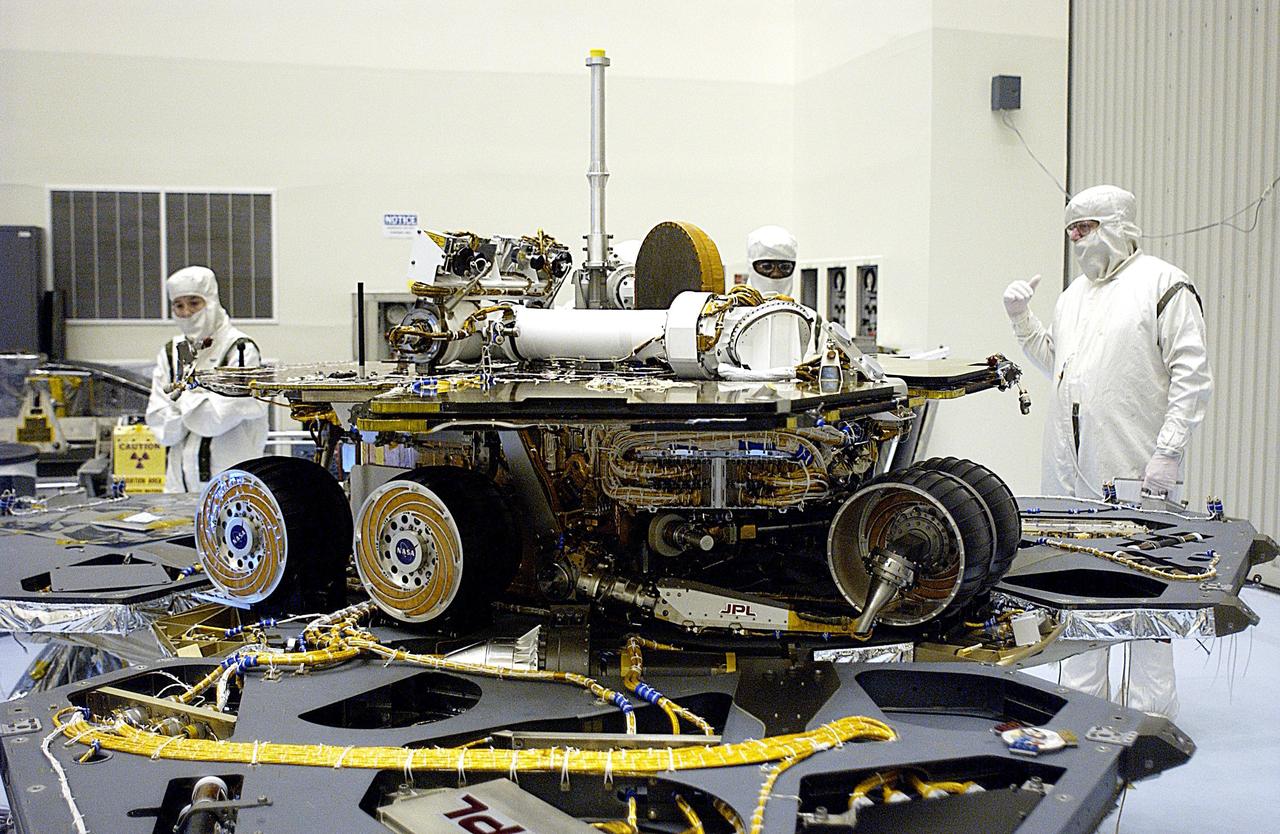
In the Payload Hazardous Servicing Facility, the lander petals of the Mars Exploration Rover 2 MER-2 have been reopened and its solar panels deployed to allow technicians access to the spacecraft to remove one of its circuit boards.
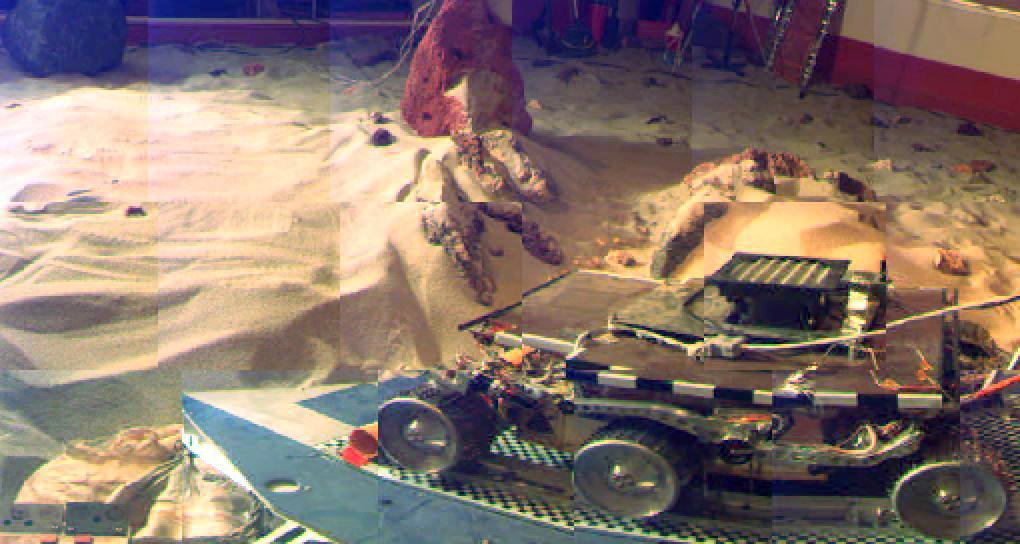
Marie Curie sits on the lander petal prior to deployment during the pre-launch Operations Readiness Test ORT 6. NASA Pathfinder, a low-cost Discovery mission, is the first of a new fleet of spacecraft that are planned to explore Mars.
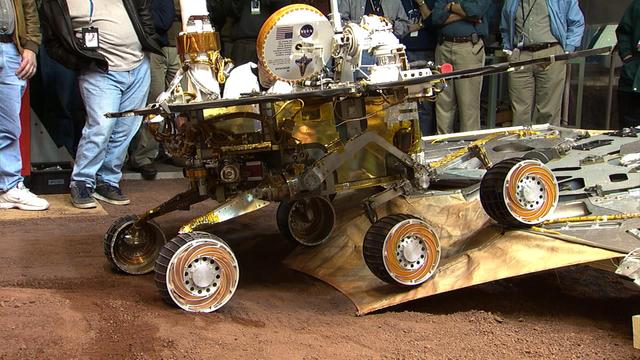
This image taken at JPL shows engineers testing the route by which the Mars Exploration Rover Opportunity will roll off its lander. Opportunity touched down at Meridiani Planum, Mars on Jan. 24, 9:05 p.m. PST, 2004, Earth-received time.
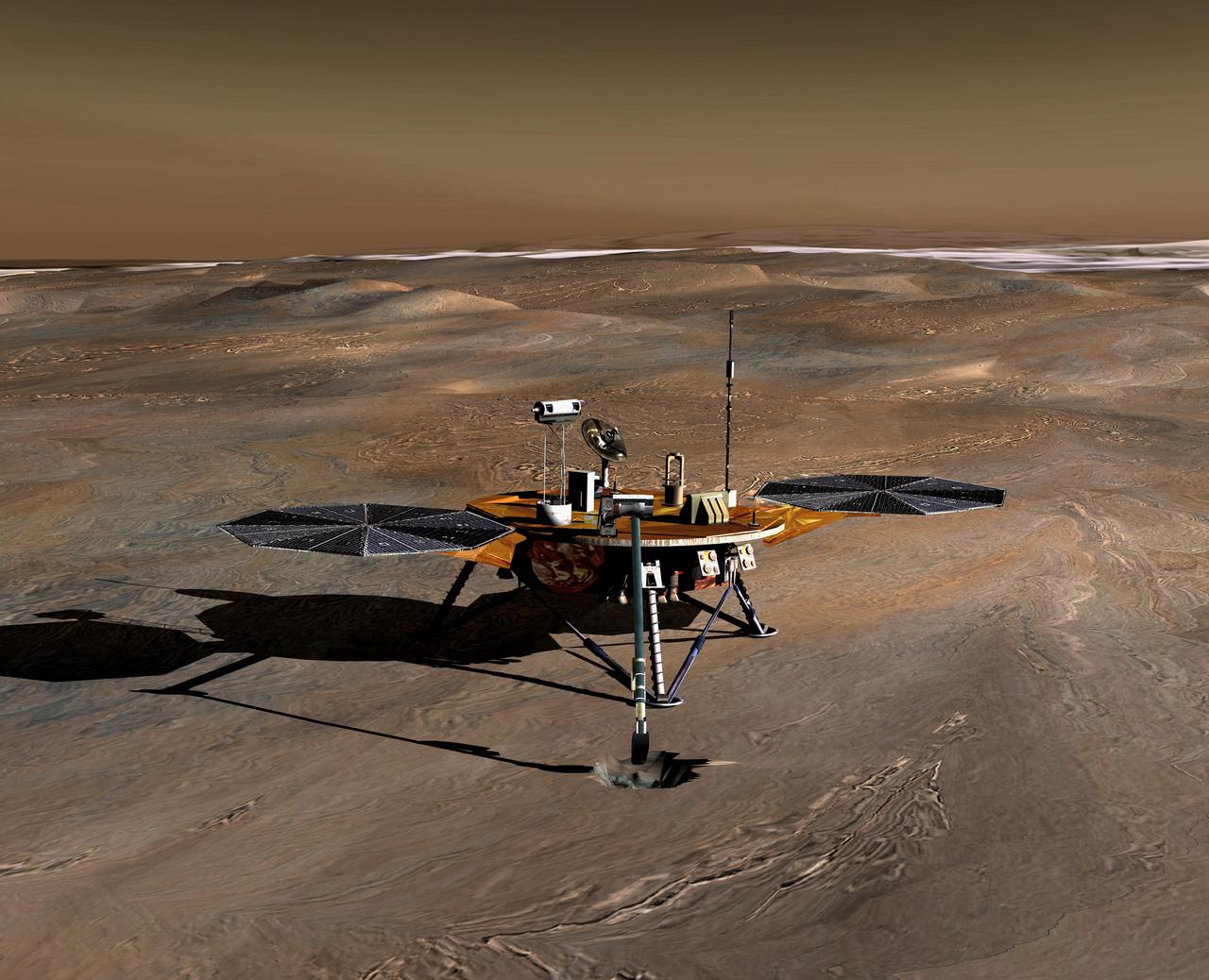
NASA Phoenix Mars Lander, landed on May 25, 2008, and explored the history of water and monitored polar climate on Mars until communications ended in November, 2008, about six months after landing, when its solar panels ceased operating in the winter.

This 3-D image captured by NASA Mars Exploration Rover Opportunity rear hazard-identification camera shows the now-empty lander that carried the rover 283 million miles to Meridiani Planum, Mars. 3D glasses are necessary to view this image.
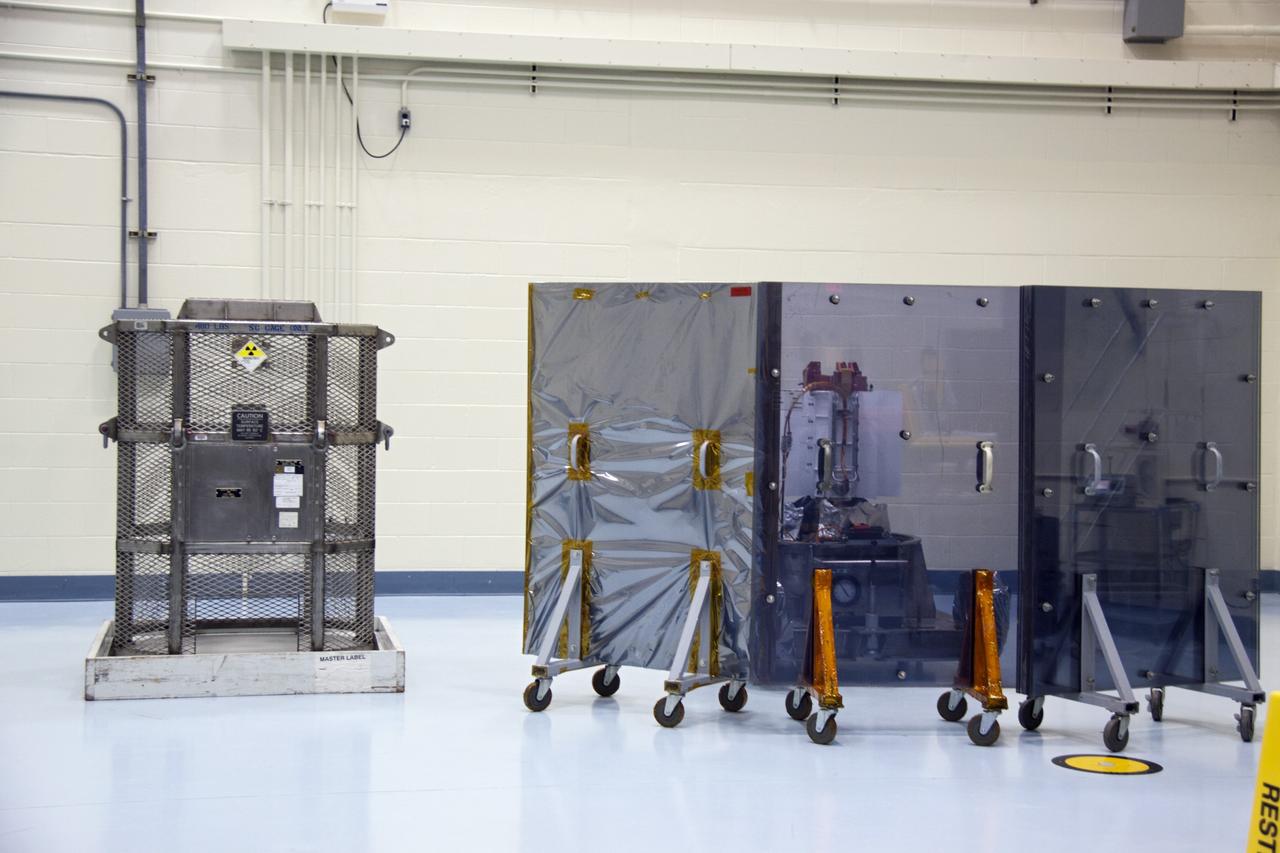
CAPE CANAVERAL, Fla. -- The multi-mission radioisotope thermoelectric generator (MMRTG) for NASA's Mars Science Laboratory (MSL) mission is position behind mobile plexiglass radiation shields in the high bay of the RTG storage facility (RTGF) at NASA's Kennedy Space Center in Florida. The MMRTG was returned to the RTGF following a fit check on MSL's Curiosity rover in the Payload Hazardous Servicing Facility (PHSF). The generator will remain in the RTGF until is moved to the pad for integration on the rover. The MMRTG will generate the power needed for the mission from the natural decay of plutonium-238, a non-weapons-grade form of the radioisotope. Heat given off by this natural decay will provide constant power through the day and night during all seasons. MSL's components include a compact car-sized rover, Curiosity, which has 10 science instruments designed to search for signs of life, including methane, and help determine if the gas is from a biological or geological source. Waste heat from the MMRTG will be circulated throughout the rover system to keep instruments, computers, mechanical devices and communications systems within their operating temperature ranges. Launch of MSL aboard a United Launch Alliance Atlas V rocket is targeted for Nov. 25 from Space Launch Complex 41 on Cape Canaveral Air Force Station. For more information, visit http://www.nasa.gov/msl. Photo credit: NASA/Troy Cryder
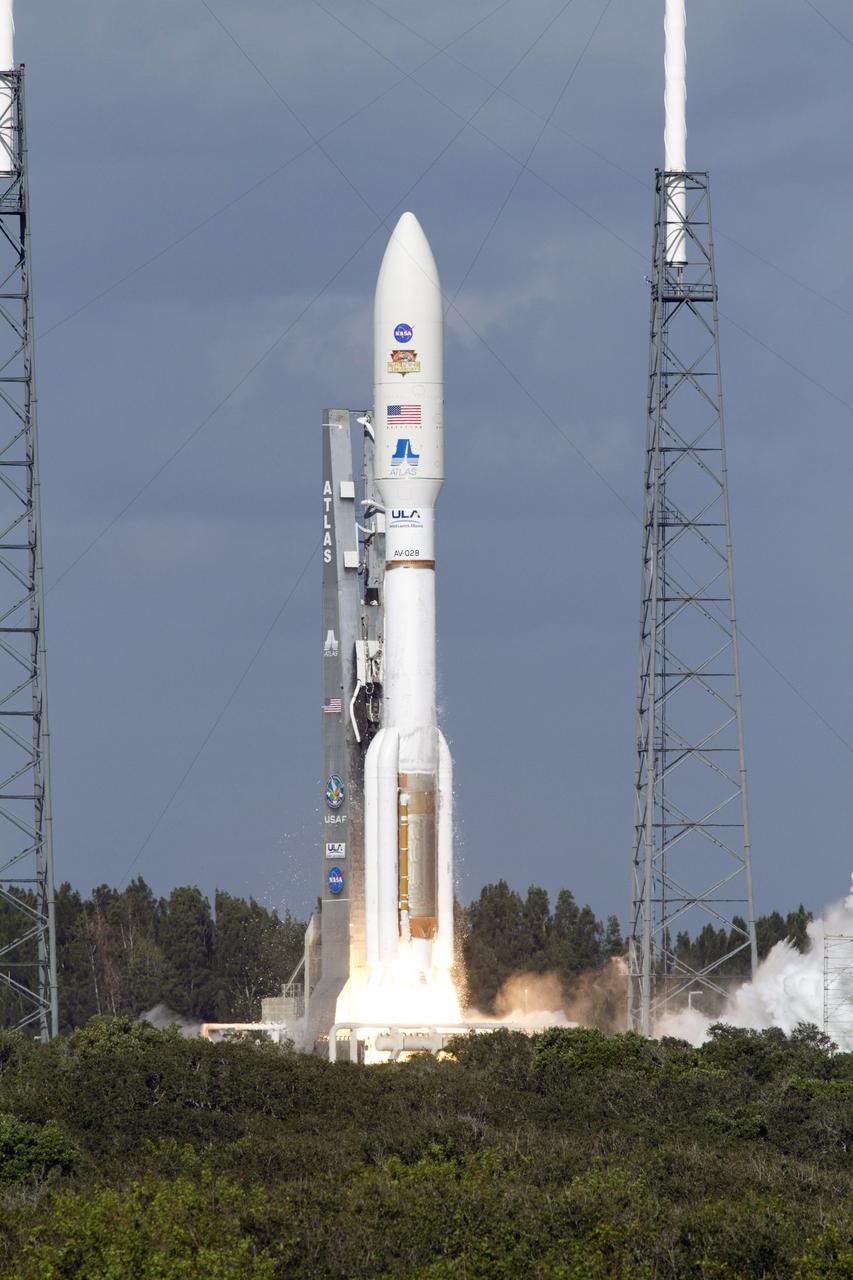
CAPE CANAVERAL, Fla. -- With NASA's Mars Science Laboratory (MSL) spacecraft sealed inside its payload fairing, the United Launch Alliance Atlas V rocket prepares to liftoff from Space Launch Complex-41 on Cape Canaveral Air Force Station in Florida at 10:02 a.m. EST Nov. 26. MSL's components include a car-sized rover, Curiosity, which has 10 science instruments designed to search for signs of life, including methane, and help determine if the gas is from a biological or geological source. For more information, visit http://www.nasa.gov/msl. Photo credit: NASA/George Roberts
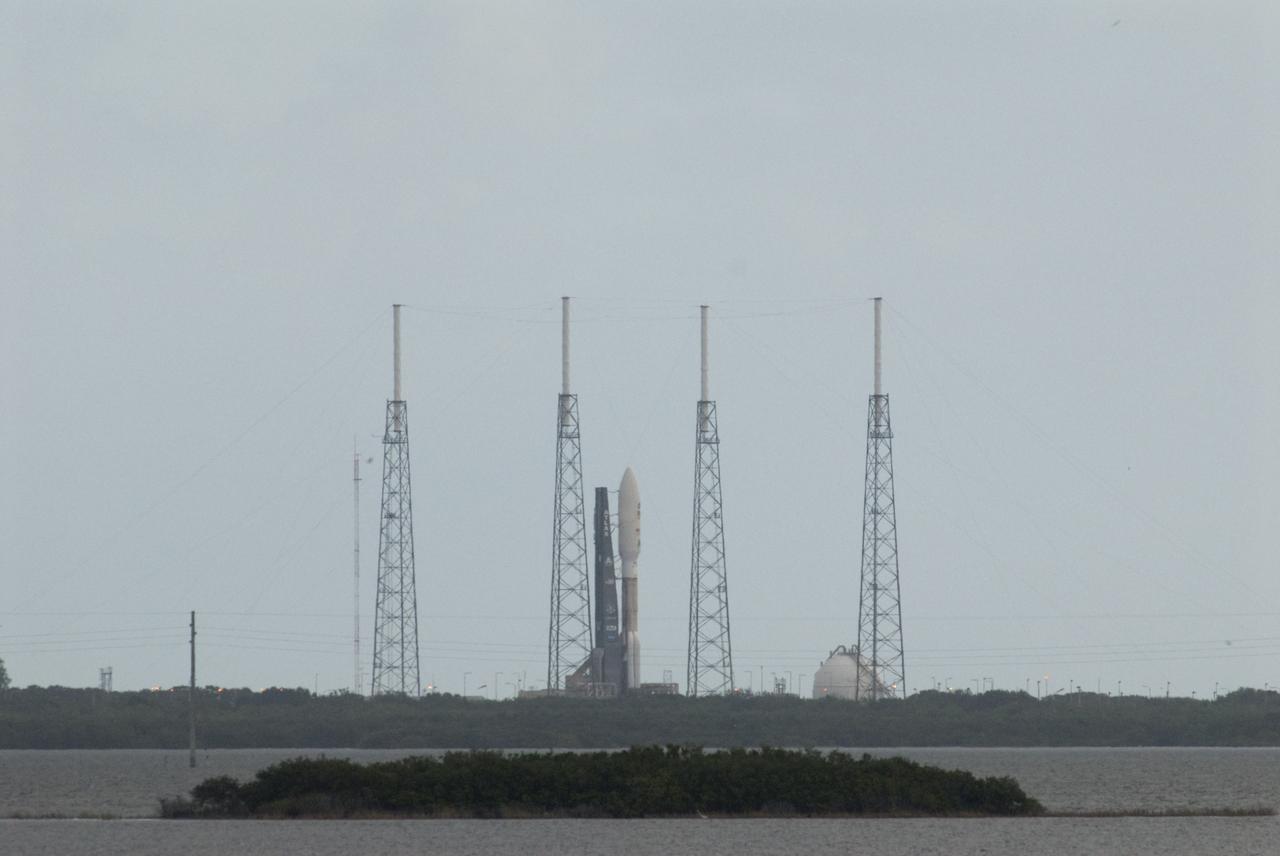
CAPE CANAVERAL, Fla. – Four towering lightning protection masts seem to stand guard as NASA's Mars Science Laboratory (MSL) spacecraft, sealed inside its payload fairing, awaits liftoff aboard the United Launch Alliance Atlas V rocket. MSL lifted off from Space Launch Complex 41 on Cape Canaveral Air Force Station in Florida at 10:02 a.m. EST Nov. 26, beginning a 9-month interplanetary cruise to Mars. MSL's components include a car-sized rover, Curiosity, which has 10 science instruments designed to search for signs of life, including methane, and help determine if the gas is from a biological or geological source. For more information, visit http://www.nasa.gov/msl. Photo credit: NASA/Bill White
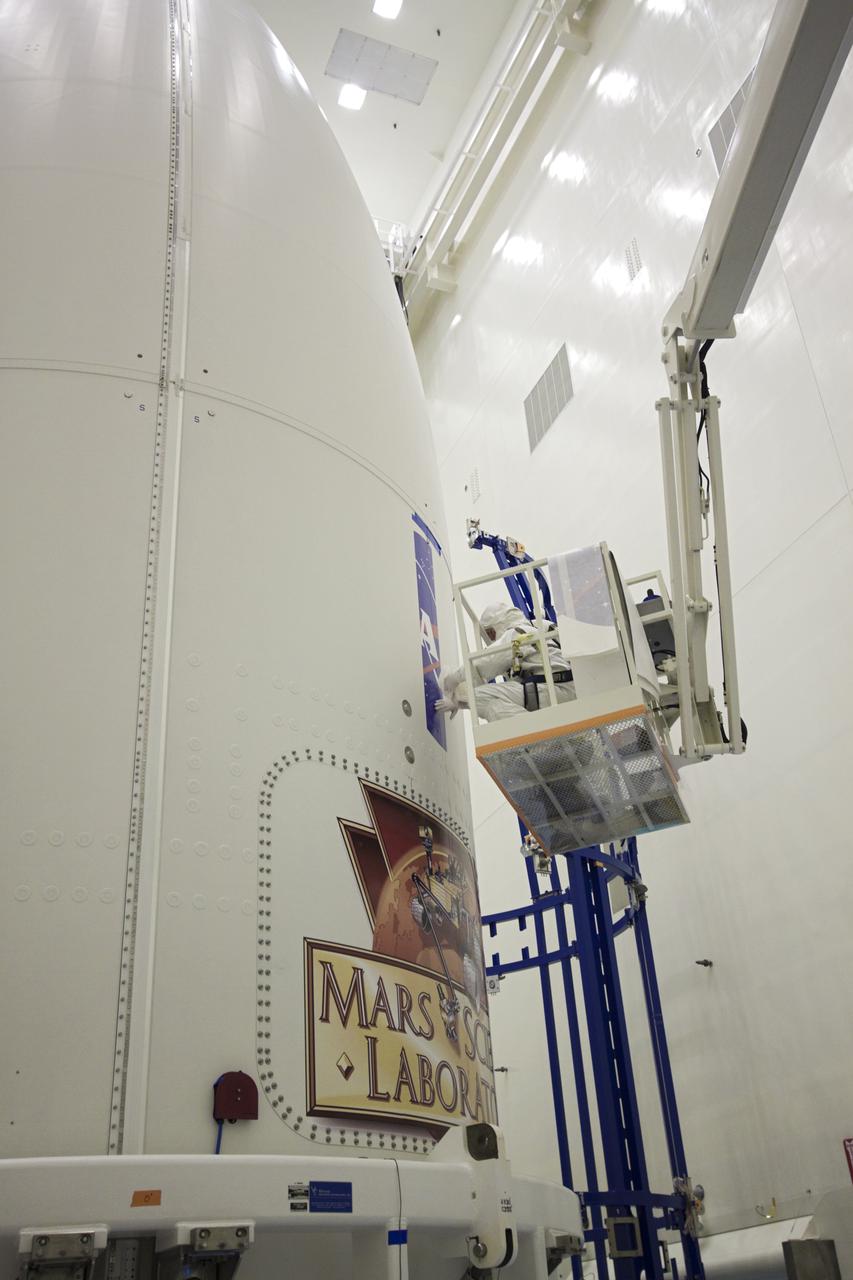
CAPE CANAVERAL, Fla. -- In the Payload Hazardous Servicing Facility at NASA's Kennedy Space Center in Florida, technicians begin applying the NASA logo above the Mars Science Laboratory (MSL) mission logo to the exterior of an Atlas V rocket's payload fairing. Tucked inside the fairing is the MSL spacecraft, including a compact car-sized rover, Curiosity, which has 10 science instruments designed to search for evidence on whether Mars has had environments favorable to microbial life, including the chemical ingredients for life. The unique rover will use a laser to look inside rocks and release its gasses so that the rover’s spectrometer can analyze and send the data back to Earth. Launch of MSL aboard a United Launch Alliance Atlas V rocket is planned for Nov. 25 from Space Launch Complex-41 on Cape Canaveral Air Force Station. For more information, visit http:__www.nasa.gov_msl. Photo credit: NASA_Jim Grossmann
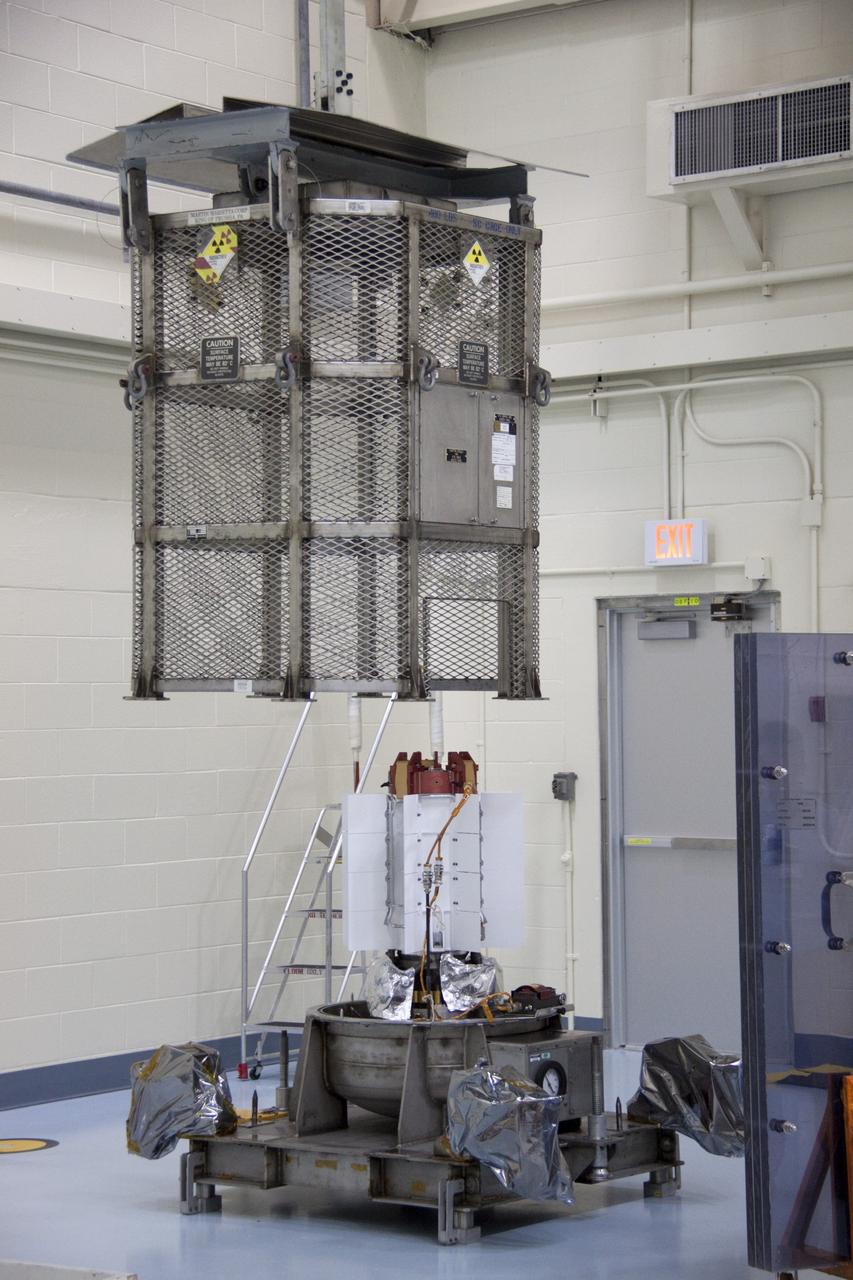
CAPE CANAVERAL, Fla. -- In the high bay of the RTG storage facility (RTGF) at NASA's Kennedy Space Center in Florida, the mesh container enclosing the multi-mission radioisotope thermoelectric generator (MMRTG) for NASA's Mars Science Laboratory (MSL) mission is lifted from around the MMRTG. The container, known as the "gorilla cage," protects the MMRTG during transport and allows any excess heat generated to dissipate into the air. The cage is being removed following the return of the MMRTG to the RTGF from a fit check on MSL's Curiosity rover in the Payload Hazardous Servicing Facility (PHSF). The MMRTG will generate the power needed for the mission from the natural decay of plutonium-238, a non-weapons-grade form of the radioisotope. Heat given off by this natural decay will provide constant power through the day and night during all seasons. MSL's components include a compact car-sized rover, Curiosity, which has 10 science instruments designed to search for signs of life, including methane, and help determine if the gas is from a biological or geological source. Waste heat from the MMRTG will be circulated throughout the rover system to keep instruments, computers, mechanical devices and communications systems within their operating temperature ranges. Launch of MSL aboard a United Launch Alliance Atlas V rocket is targeted for Nov. 25 from Space Launch Complex 41 on Cape Canaveral Air Force Station. For more information, visit http://www.nasa.gov/msl. Photo credit: NASA/Troy Cryder
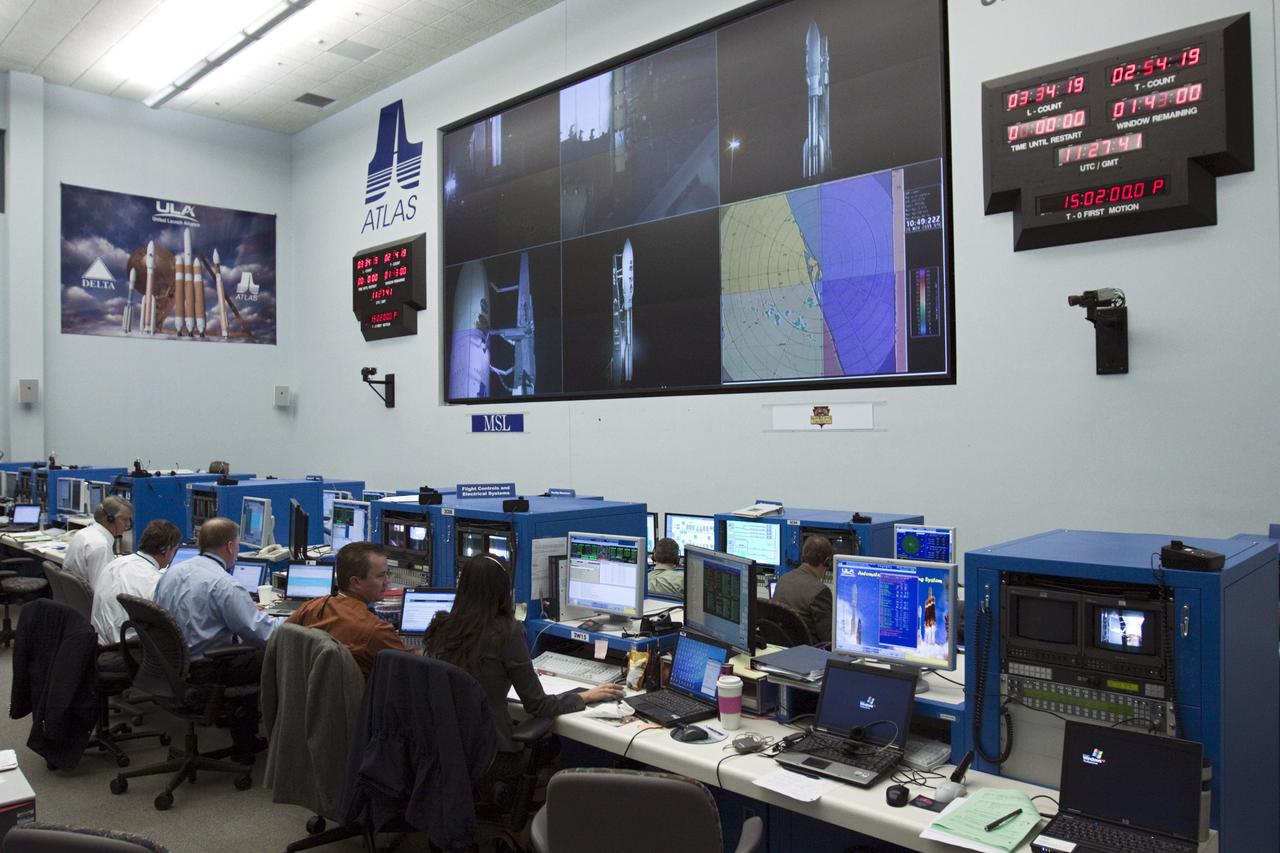
CAPE CANAVERAL – Launch controllers oversee the countdown in the Atlas V Spaceflight Operations Center (ASOC) before the launch of the Mars Science Laboratory on an Atlas V rocket. MSL lifted off at 10:02 a.m. EST Nov. 26, beginning a 9-month interplanetary cruise to Mars. MSL's components include a car-sized rover, Curiosity, which has 10 science instruments designed to search for signs of life, including methane, and help determine if the gas is from a biological or geological source. For more information, visit http://www.nasa.gov/msl. Photo credit: NASA/Kim Shiflett
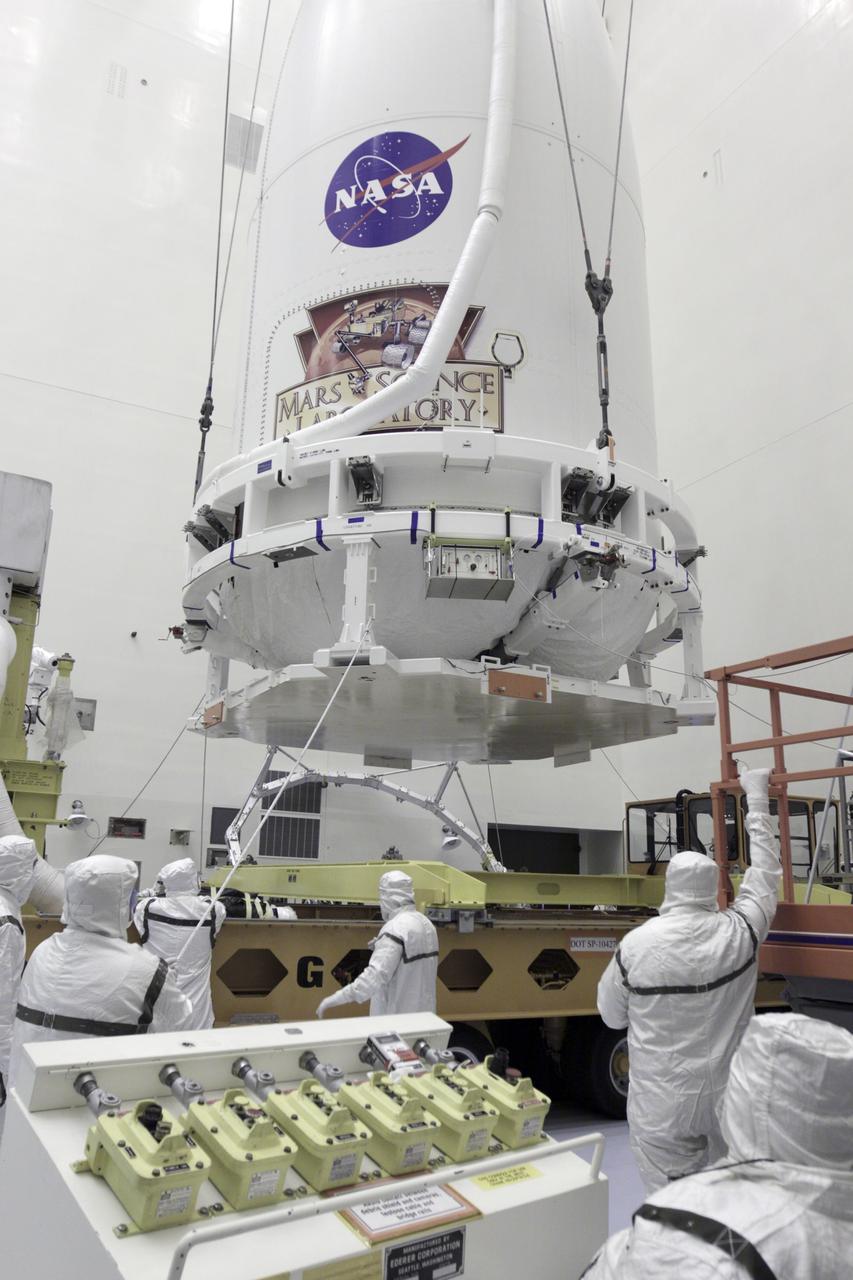
CAPE CANAVERAL, Fla. -- In the Payload Hazardous Servicing Facility at NASA's Kennedy Space Center in Florida, technicians help guide an Atlas V rocket's payload fairing down to the surface of a transporter for the move to Space Launch Complex 41. The Mars Science Laboratory (MSL) spacecraft is enclosed in the fairing, which will protect the payload from heat and aerodynamic pressure generated during launch. MSL's components include a compact car-sized rover, Curiosity, which has 10 science instruments designed to search for evidence on whether Mars has had environments favorable to microbial life, including the chemical ingredients for life. The unique rover will use a laser to look inside rocks and release its gasses so that the rover’s spectrometer can analyze and send the data back to Earth. Launch of MSL aboard a United Launch Alliance Atlas V rocket is planned for Nov. 25 from Space Launch Complex-41 on Cape Canaveral Air Force Station. For more information, visit http://www.nasa.gov/msl. Photo credit: NASA/Kim Shiflett
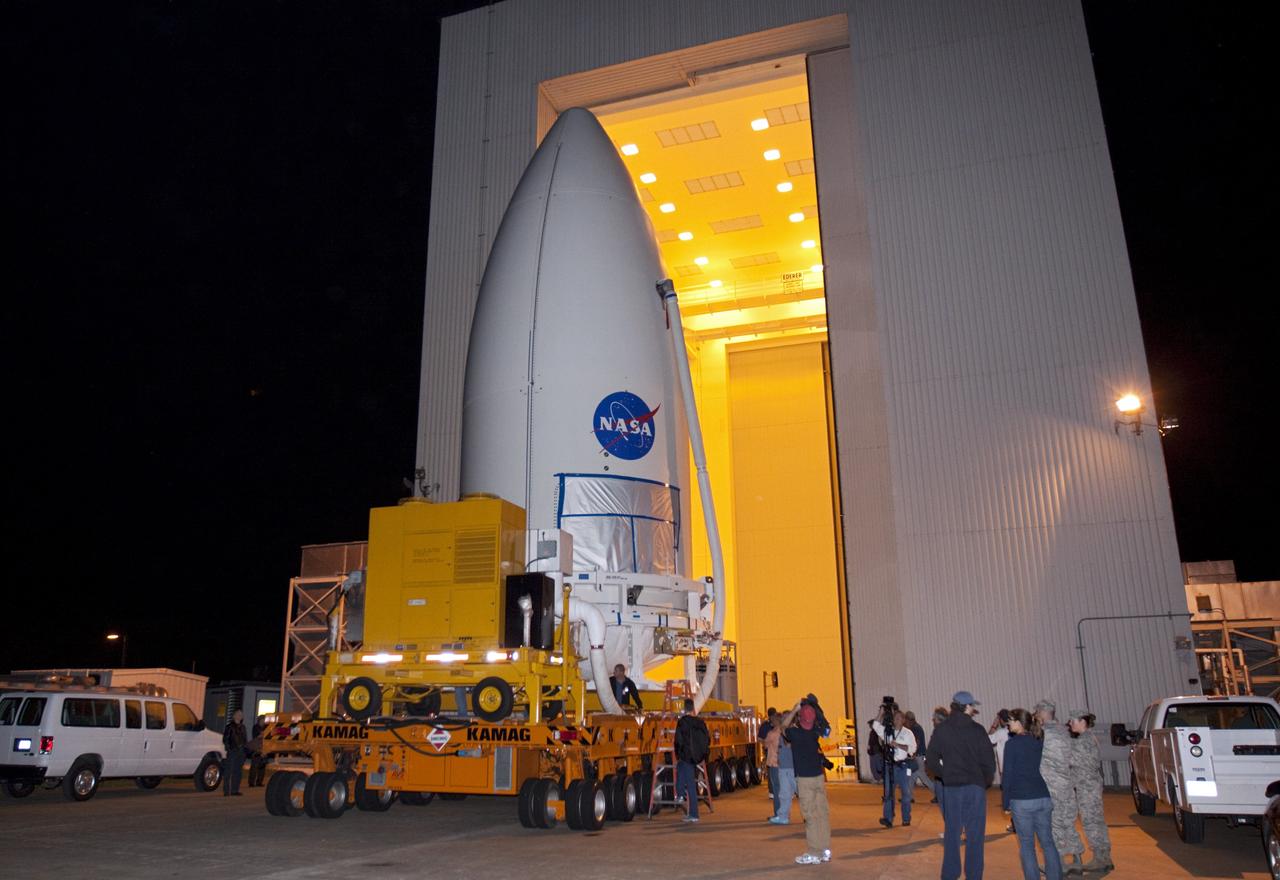
CAPE CANAVERAL, Fla. -- Standing atop a payload transporter, the Atlas V rocket payload fairing containing NASA's Mars Science Laboratory (MSL) spacecraft rolls out of the Payload Hazardous Servicing Facility at Kennedy Space Center in Florida, beginning the move to Space Launch Complex 41. The fairing will protect the payload from heat and aerodynamic pressure generated during launch. MSL's components include a compact car-sized rover, Curiosity, which has 10 science instruments designed to search for evidence on whether Mars has had environments favorable to microbial life, including the chemical ingredients for life. The unique rover will use a laser to look inside rocks and release its gasses so that the rover’s spectrometer can analyze and send the data back to Earth. Launch of MSL aboard a United Launch Alliance Atlas V rocket is planned for Nov. 25 from Space Launch Complex 41 on Cape Canaveral Air Force Station. For more information, visit http://www.nasa.gov/msl. Photo credit: NASA/Kim Shiflett
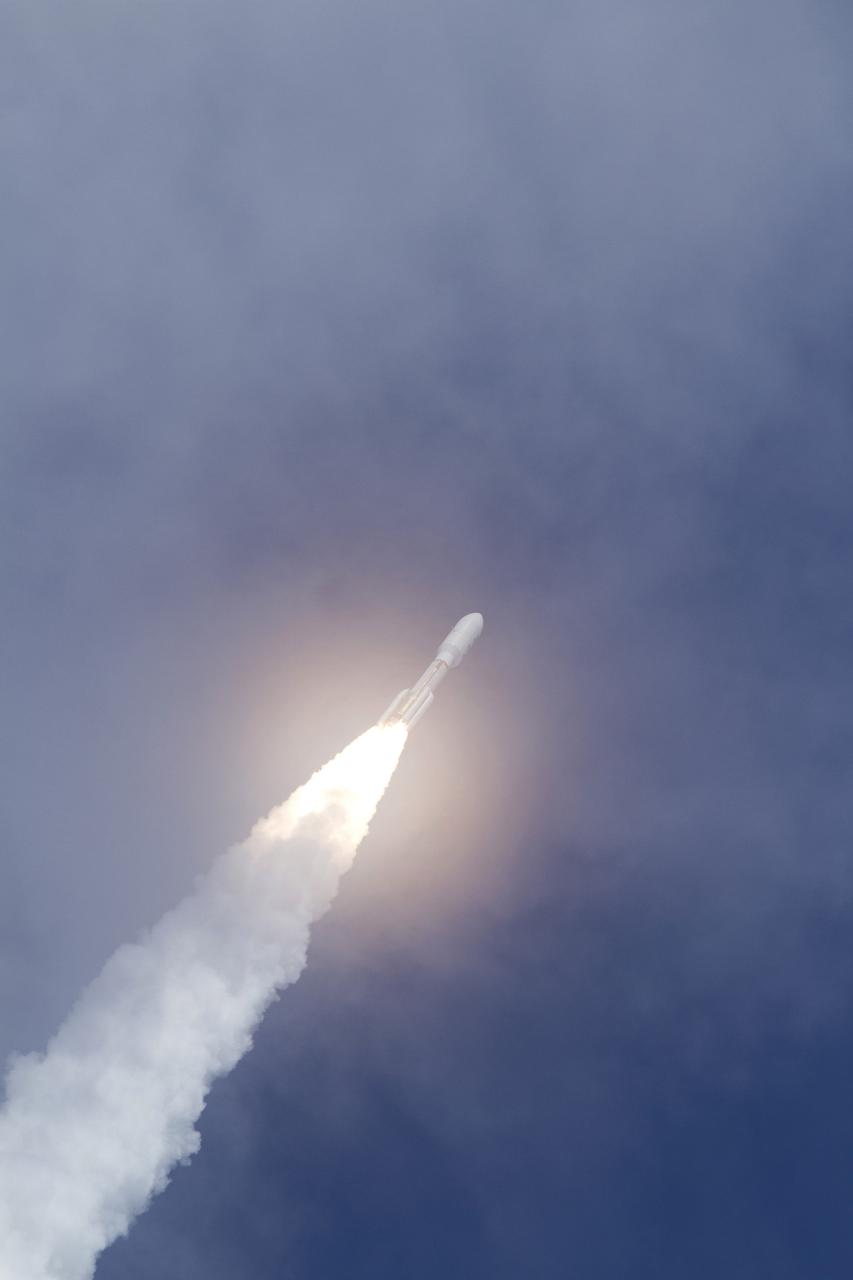
CAPE CANAVERAL, Fla. -- With NASA's Mars Science Laboratory (MSL) spacecraft sealed inside its payload fairing, the United Launch Alliance Atlas V rocket rides a plume of flames as it continues its assent into the blue sky over Space Launch Complex-41 on Cape Canaveral Air Force Station in Florida at 10:02 a.m. EST Nov. 26. MSL's components include a car-sized rover, Curiosity, which has 10 science instruments designed to search for signs of life, including methane, and help determine if the gas is from a biological or geological source. For more information, visit http://www.nasa.gov/msl. Photo credit: NASA/George Roberts
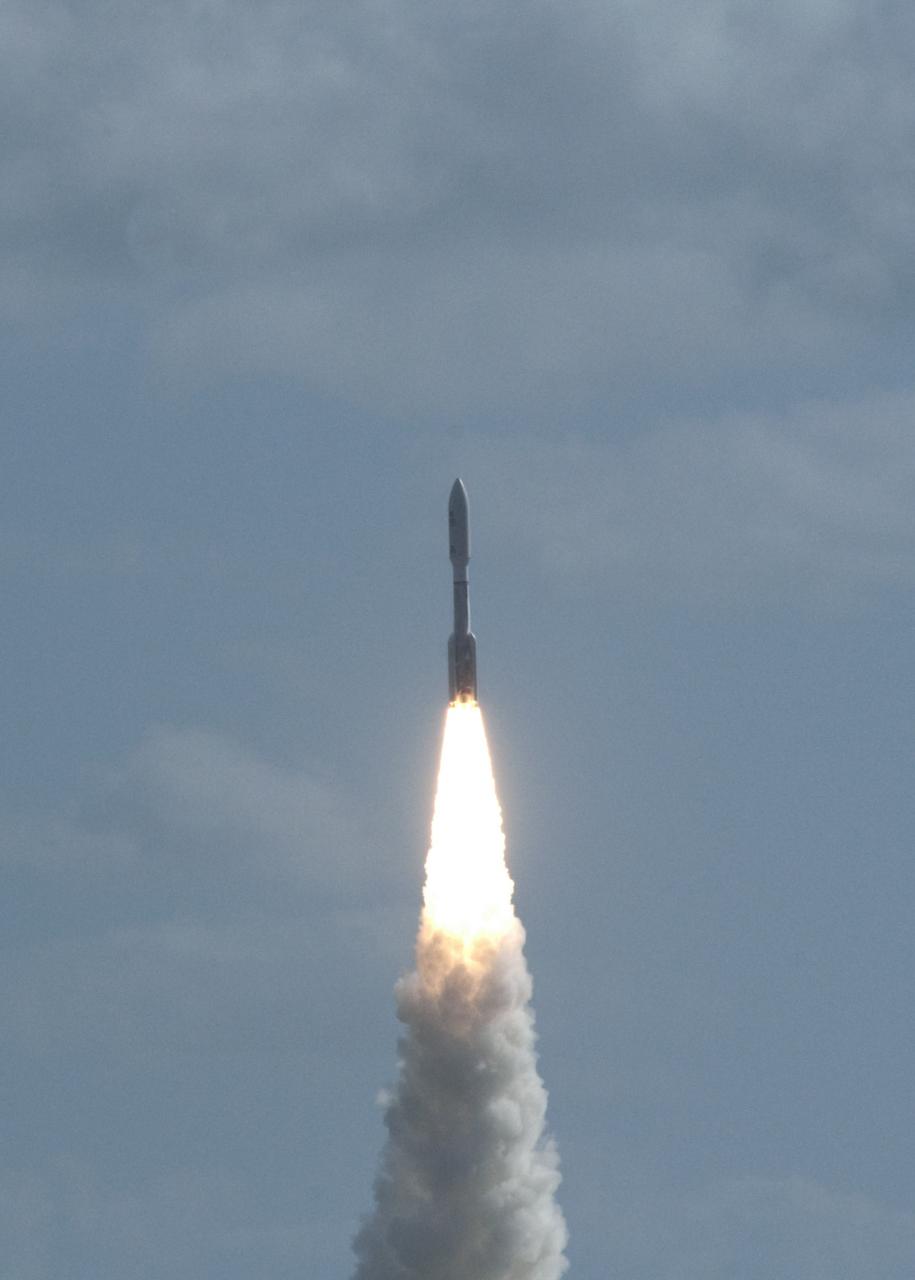
CAPE CANAVERAL, Fla. – NASA's Mars Science Laboratory (MSL) spacecraft, sealed inside its payload fairing atop the United Launch Alliance Atlas V rocket, blazes a trail into the skies above Space Launch Complex 41 on Cape Canaveral Air Force Station in Florida. MSL lifted off on the first opportunity at 10:02 a.m. EST Nov. 26, beginning a 9-month interplanetary cruise to Mars. MSL's components include a car-sized rover, Curiosity, which has 10 science instruments designed to search for signs of life, including methane, and help determine if the gas is from a biological or geological source. For more information, visit http://www.nasa.gov/msl. Photo credit: NASA/Darrell L. McCall
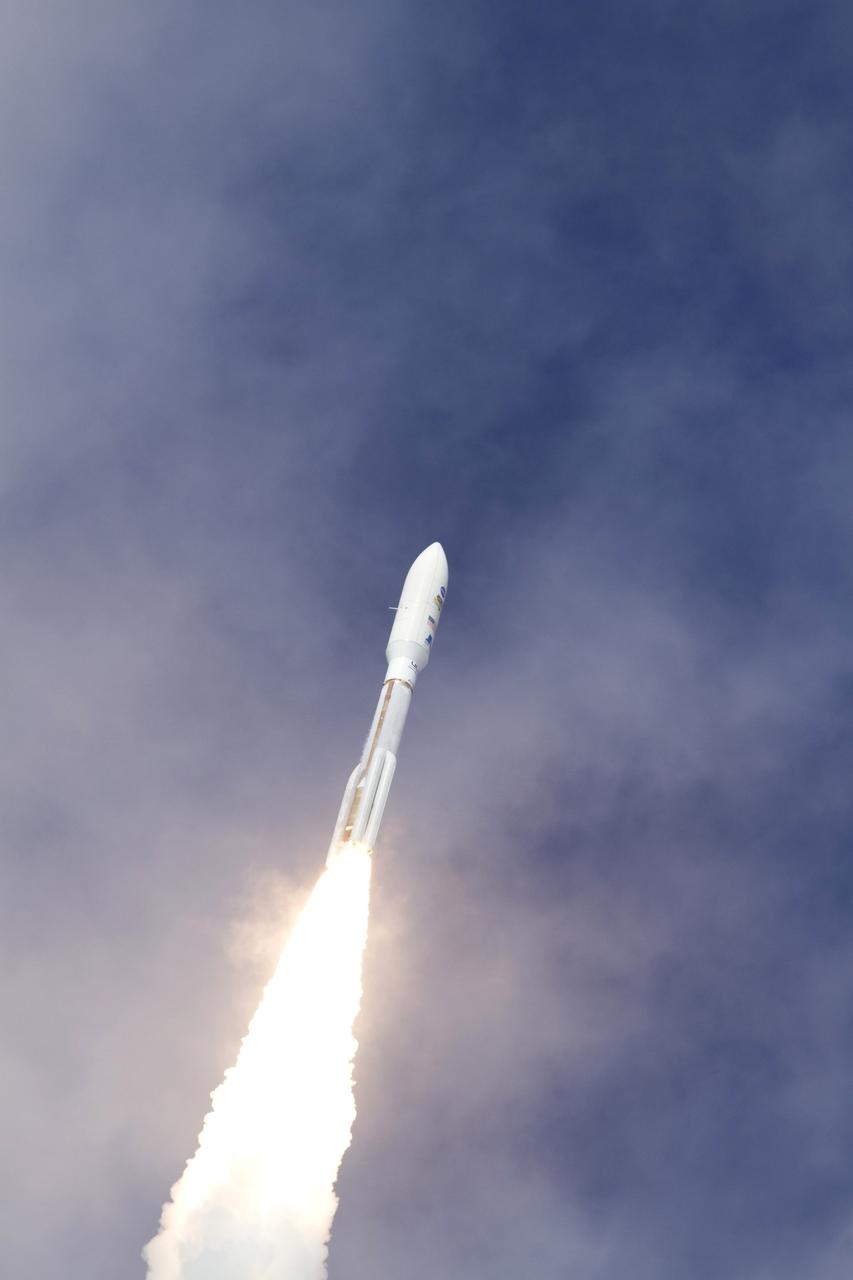
CAPE CANAVERAL, Fla. -- With NASA's Mars Science Laboratory (MSL) spacecraft sealed inside its payload fairing, the United Launch Alliance Atlas V rocket rides a plume of flames as it climbs into the blue sky over Space Launch Complex-41 on Cape Canaveral Air Force Station in Florida at 10:02 a.m. EST Nov. 26. MSL's components include a car-sized rover, Curiosity, which has 10 science instruments designed to search for signs of life, including methane, and help determine if the gas is from a biological or geological source. For more information, visit http://www.nasa.gov/msl. Photo credit: NASA/George Roberts
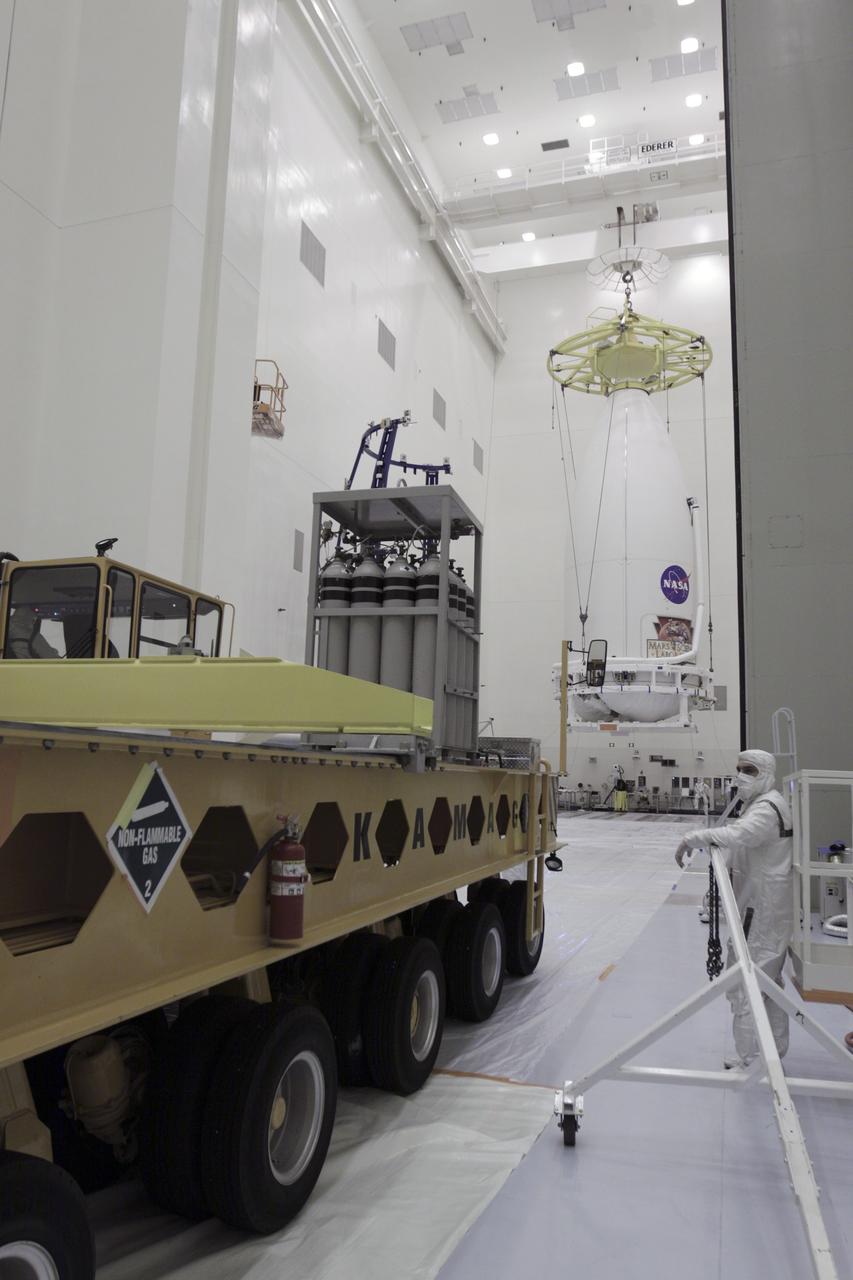
CAPE CANAVERAL, Fla. -- The Atlas V payload fairing containing NASA's Mars Science Laboratory (MSL) spacecraft is moved toward a waiting transporter inside the Payload Hazardous Servicing Facility at Kennedy Space Center in Florida. The transporter will carry the fairing to Space Launch Complex 41. MSL's components include a compact car-sized rover, Curiosity, which has 10 science instruments designed to search for evidence on whether Mars has had environments favorable to microbial life, including the chemical ingredients for life. The unique rover will use a laser to look inside rocks and release its gasses so that the rover’s spectrometer can analyze and send the data back to Earth. Launch of MSL aboard a United Launch Alliance Atlas V rocket is planned for Nov. 25 from Space Launch Complex-41 on Cape Canaveral Air Force Station. For more information, visit http://www.nasa.gov/msl. Photo credit: NASA/Kim Shiflett
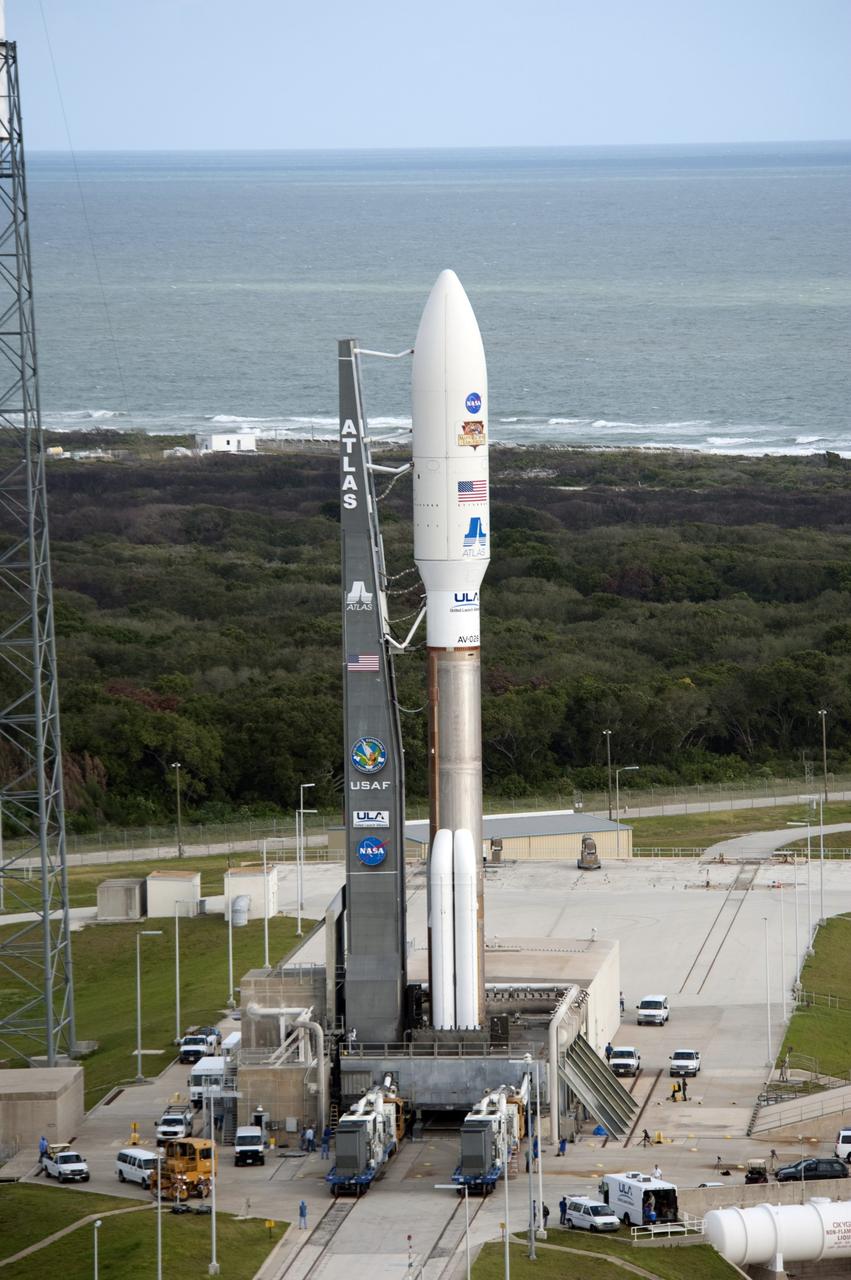
CAPE CANAVERAL, Fla. -- On Cape Canaveral Air Force Station in Florida, the 197-foot-tall United Launch Alliance Atlas V rocket arrives on the launch pad at Space Launch Complex-41, situated near the Atlantic Ocean. Atop the rocket is NASA's Mars Science Laboratory (MSL), enclosed in its payload fairing. The rocket began its move from the complex' Vertical Integration Facility at 8 a.m. EST. Liftoff is planned during a launch window which extends from 10:02 a.m. to 11:45 a.m. EST on Nov. 26. MSL's components include a car-sized rover, Curiosity, which has 10 science instruments designed to search for signs of life, including methane, and help determine if the gas is from a biological or geological source. For more information, visit http://www.nasa.gov/msl. Photo credit: NASA/Tony Gray
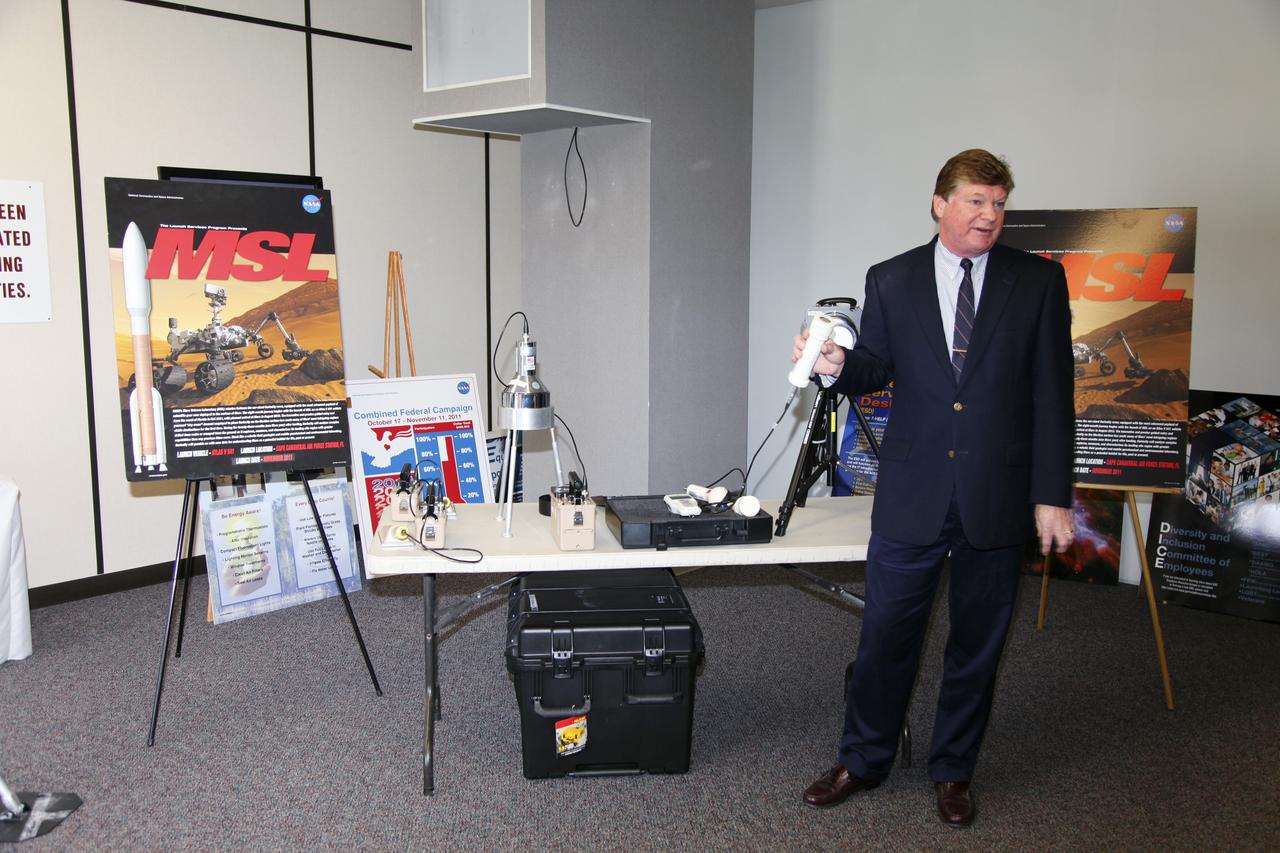
CAPE CANAVERAL, Fla. -- Steve Homann, senior advisor for the Department of Energy, speaks to media during a tour of the Radiological Control Center (RADCC) at NASA's Kennedy Space Center in Florida. The tour focused on safety equipment and procedures for the upcoming launch of the Mars Science Laboratory (MSL) mission. The MSL spacecraft includes a multi-mission radioisotope thermoelectric generator (MMRTG) that will generate the power needed for the mission from the natural decay of plutonium-238, a non-weapons-grade form of the radioisotope. MSL's components include a car-sized rover, Curiosity, which has 10 science instruments designed to search for signs of life, including methane, and help determine if the gas is from a biological or geological source. Launch of MSL aboard a United Launch Alliance Atlas V rocket is targeted for Nov. 26 from Space Launch Complex 41 on Cape Canaveral Air Force Station. For more information, visit http://www.nasa.gov/msl. Photo credit: NASA/Frankie Martin
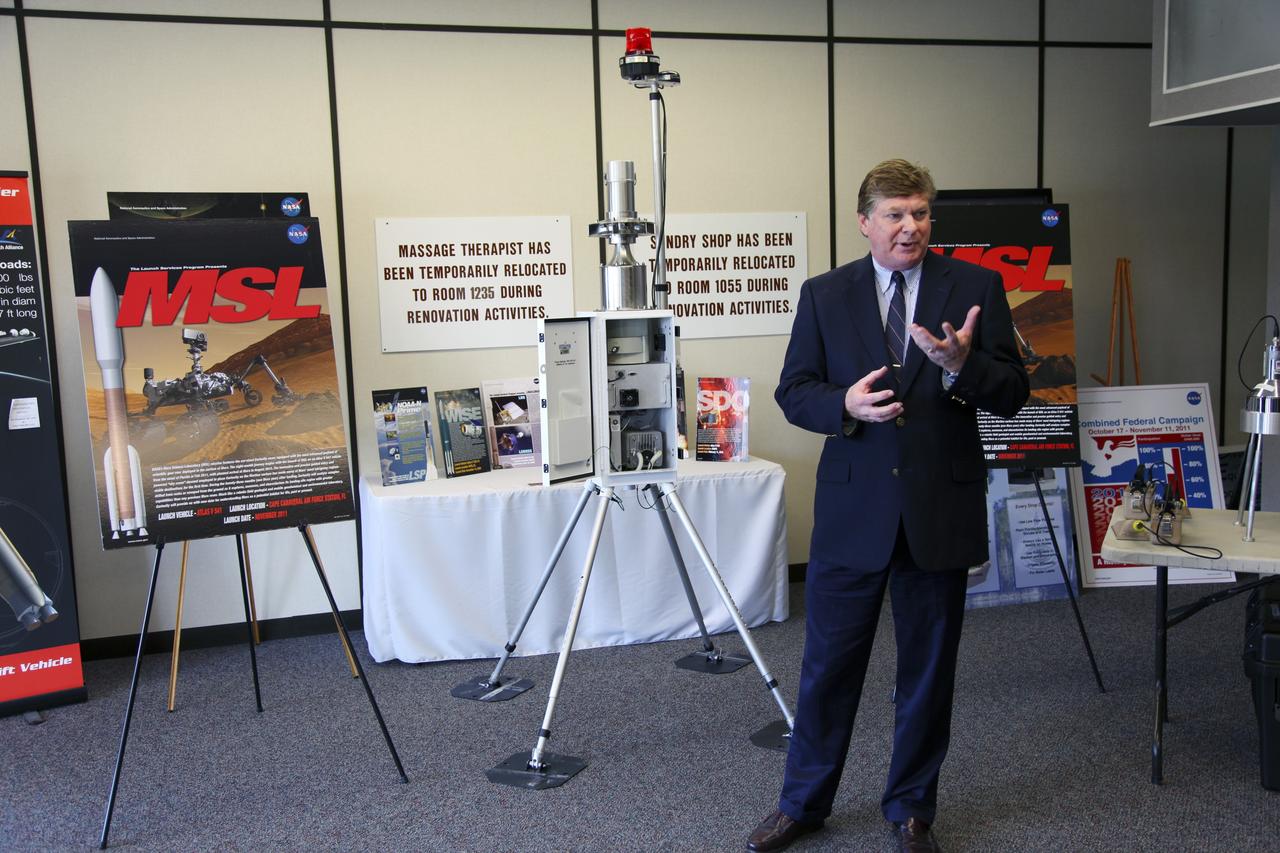
CAPE CANAVERAL, Fla. -- Steve Homann, senior advisor for the Department of Energy, speaks to media during a tour of the Radiological Control Center (RADCC) at NASA's Kennedy Space Center in Florida. The tour focused on safety equipment and procedures for the upcoming launch of the Mars Science Laboratory (MSL) mission. The MSL spacecraft includes a multi-mission radioisotope thermoelectric generator (MMRTG) that will generate the power needed for the mission from the natural decay of plutonium-238, a non-weapons-grade form of the radioisotope. MSL's components include a car-sized rover, Curiosity, which has 10 science instruments designed to search for signs of life, including methane, and help determine if the gas is from a biological or geological source. Launch of MSL aboard a United Launch Alliance Atlas V rocket is targeted for Nov. 26 from Space Launch Complex 41 on Cape Canaveral Air Force Station. For more information, visit http://www.nasa.gov/msl. Photo credit: NASA/Frankie Martin
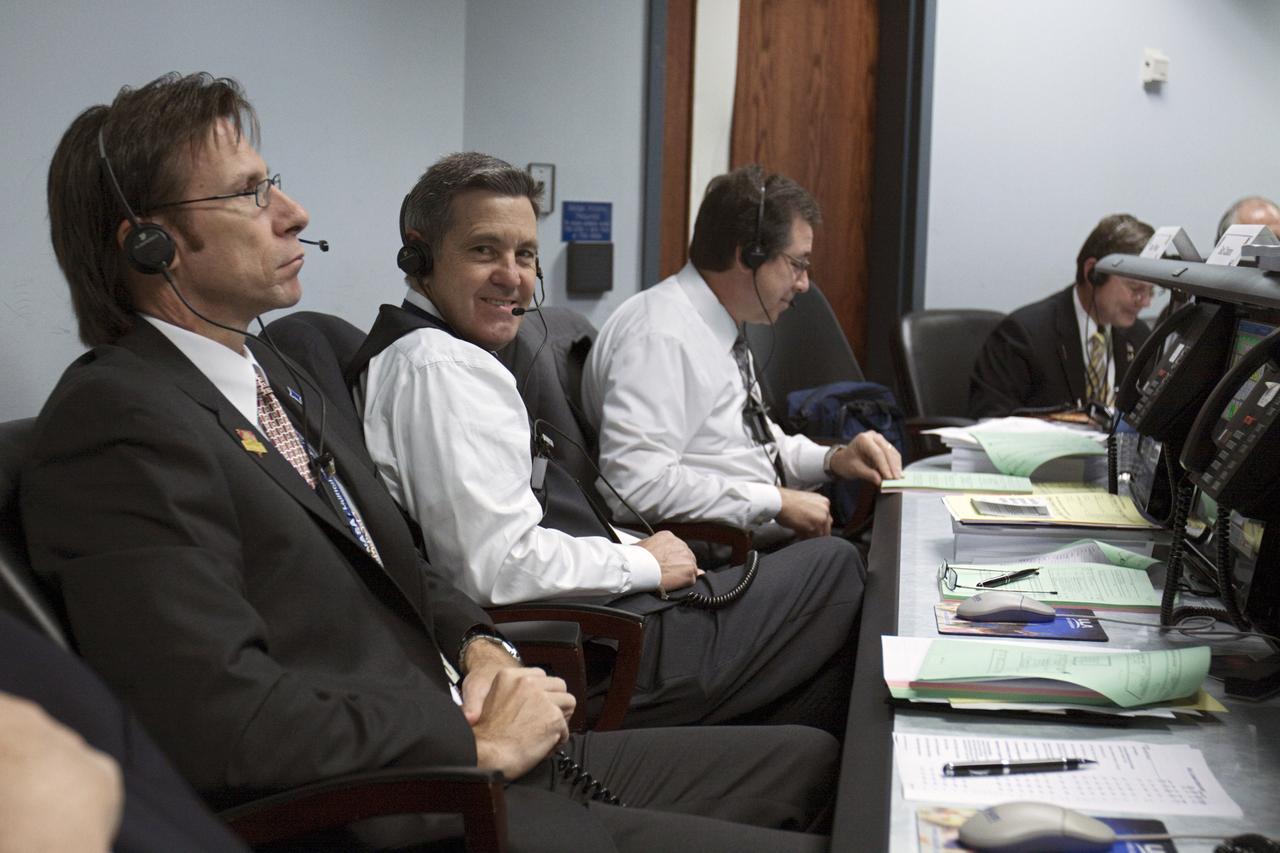
CAPE CANAVERAL – Chuck Duvale, deputy director of the Launch Services Program, left, and Bob Cabana, Kennedy Space Center director, oversee the countdown in the Atlas V Spaceflight Operations Center (ASOC) before the launch of the Mars Science Laboratory on an Atlas V rocket. MSL lifted off at 10:02 a.m. EST Nov. 26, beginning a 9-month interplanetary cruise to Mars. MSL's components include a car-sized rover, Curiosity, which has 10 science instruments designed to search for signs of life, including methane, and help determine if the gas is from a biological or geological source. For more information, visit http://www.nasa.gov/msl. Photo credit: NASA/Kim Shiflett
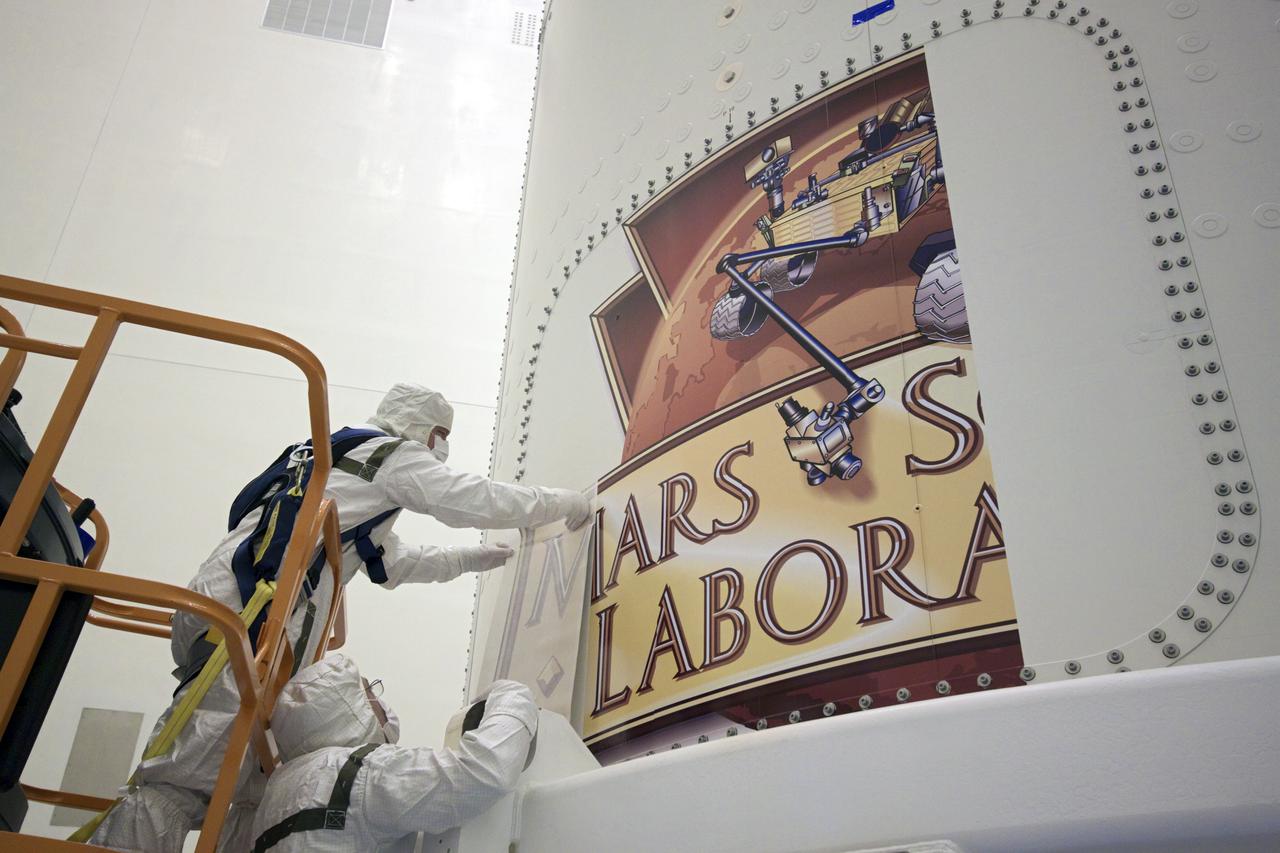
CAPE CANAVERAL, Fla. -- The Mars Science Laboratory (MSL) mission logo begins to take shape as technicians install it on the exterior of an Atlas V rocket's payload fairing inside the Payload Hazardous Processing Facility at NASA's Kennedy Space Center in Florida. Tucked inside the fairing is the MSL spacecraft, including a compact car-sized rover, Curiosity, which has 10 science instruments designed to search for evidence on whether Mars has had environments favorable to microbial life, including the chemical ingredients for life. The unique rover will use a laser to look inside rocks and release its gasses so that the rover’s spectrometer can analyze and send the data back to Earth. Launch of MSL aboard a United Launch Alliance Atlas V rocket is planned for Nov. 25 from Space Launch Complex-41 on Cape Canaveral Air Force Station. For more information, visit http:__www.nasa.gov_msl. Photo credit: NASA_Jim Grossmann
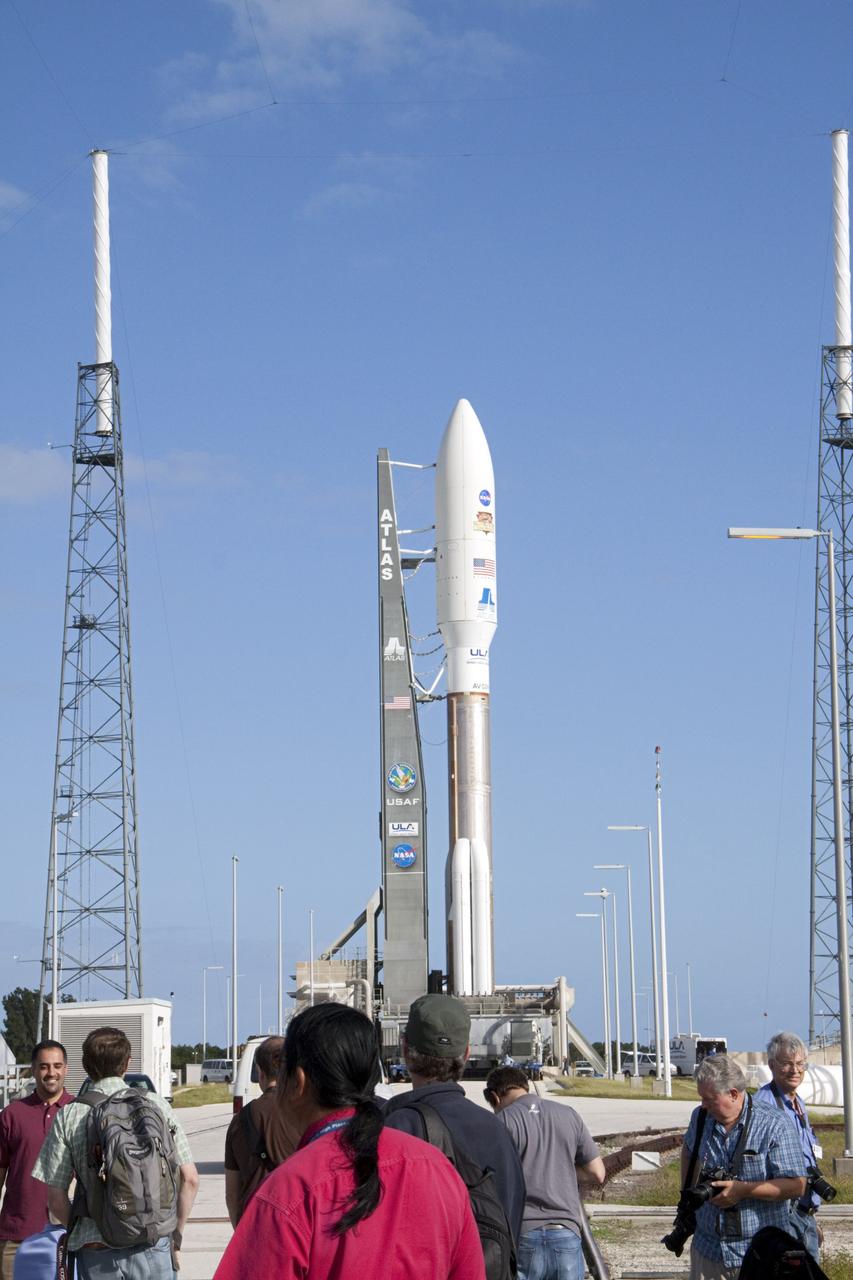
CAPE CANAVERAL, Fla. -- Members of the media gather near the launch pad at Space Launch Complex 41 on Cape Canaveral Air Force Station in Florida, documenting the arrival of the 197-foot-tall United Launch Alliance Atlas V rocket after its early morning move from the nearby Vertical Integration Facility (VIF). Atop the rocket is NASA's Mars Science Laboratory (MSL), enclosed in its payload fairing. The rocket began its move from the VIF at 8 a.m. EST and reached the launch pad at 8:40 a.m. Liftoff is planned during a launch window which extends from 10:02 a.m. to 11:45 a.m. EST on Nov. 26. MSL's components include a car-sized rover, Curiosity, which has 10 science instruments designed to search for signs of life, including methane, and help determine if the gas is from a biological or geological source. For more information, visit http://www.nasa.gov/msl. Photo credit: NASA/Ken Thornsley
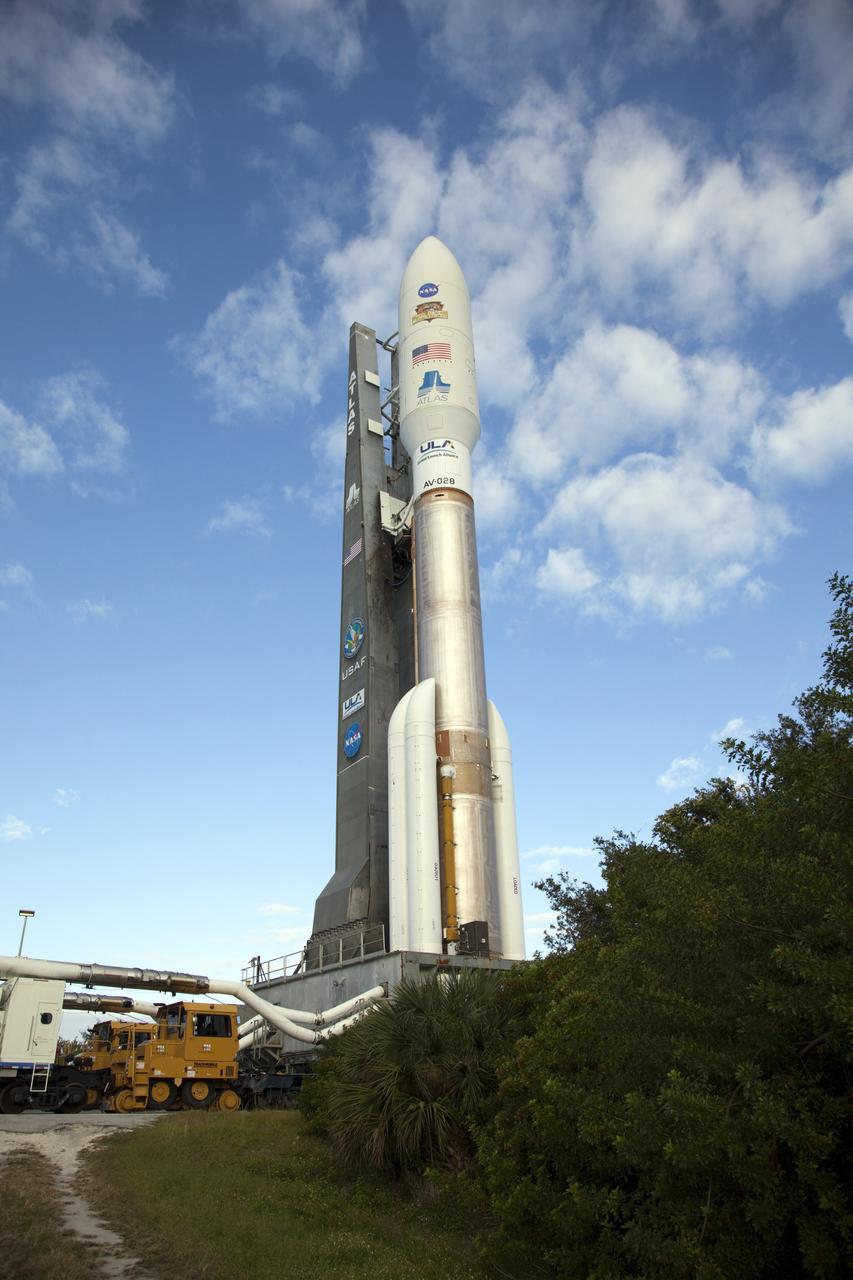
CAPE CANAVERAL, Fla. -- On Cape Canaveral Air Force Station in Florida, the 197-foot-tall United Launch Alliance Atlas V rocket rolls to the launch pad at Space Launch Complex 41. Atop the rocket is NASA's Mars Science Laboratory (MSL), enclosed in its payload fairing. The rocket began its move from the Vertical Integration Facility at 8 a.m. EST and arrived at the pad at 8:40 a.m. Liftoff is planned during a launch window which extends from 10:02 a.m. to 11:45 a.m. EST on Nov. 26. MSL's components include a car-sized rover, Curiosity, which has 10 science instruments designed to search for signs of life, including methane, and help determine if the gas is from a biological or geological source. For more information, visit http://www.nasa.gov/msl. Photo credit: NASA/Frankie Martin
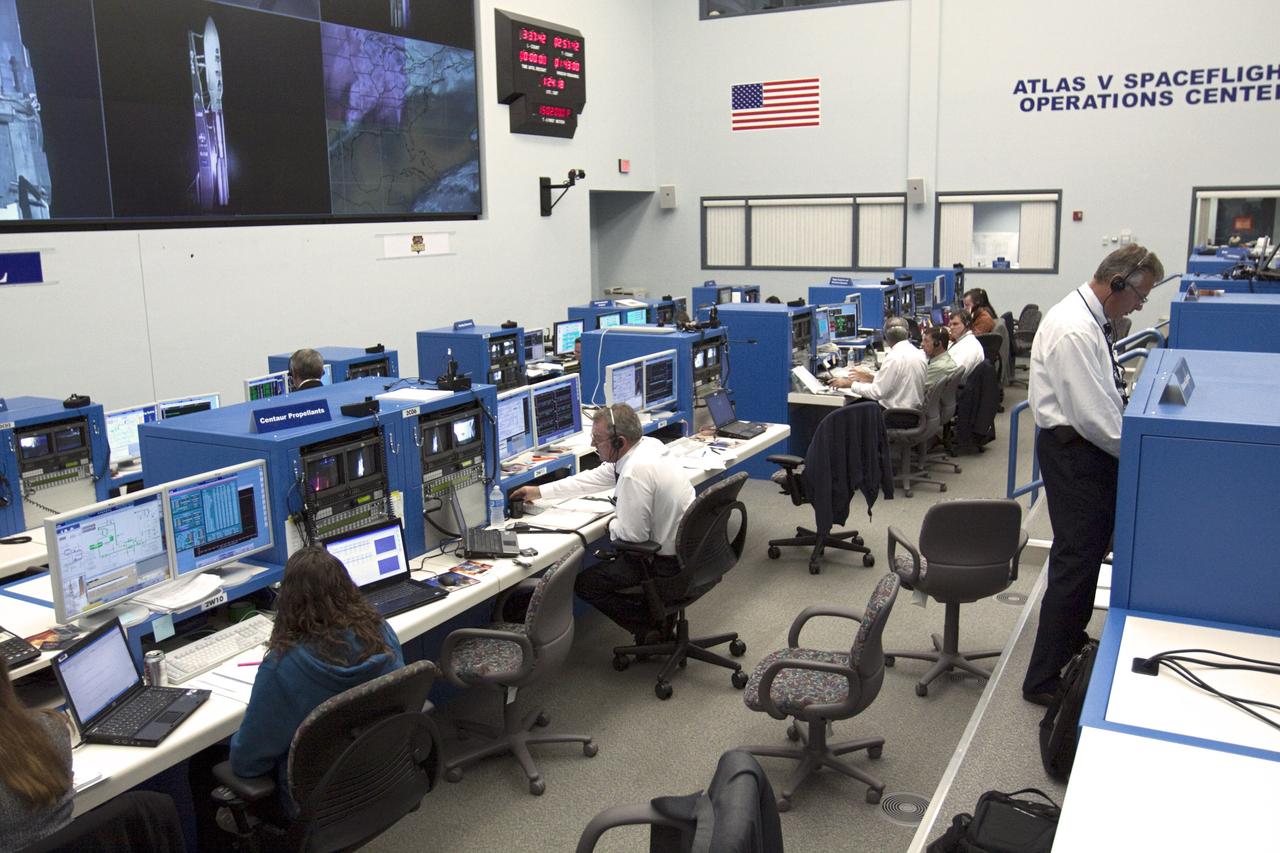
CAPE CANAVERAL – Launch controllers oversee the countdown in the Atlas V Spaceflight Operations Center (ASOC) before the launch of the Mars Science Laboratory on an Atlas V rocket. MSL lifted off at 10:02 a.m. EST Nov. 26, beginning a 9-month interplanetary cruise to Mars. MSL's components include a car-sized rover, Curiosity, which has 10 science instruments designed to search for signs of life, including methane, and help determine if the gas is from a biological or geological source. For more information, visit http://www.nasa.gov/msl. Photo credit: NASA/Kim Shiflett
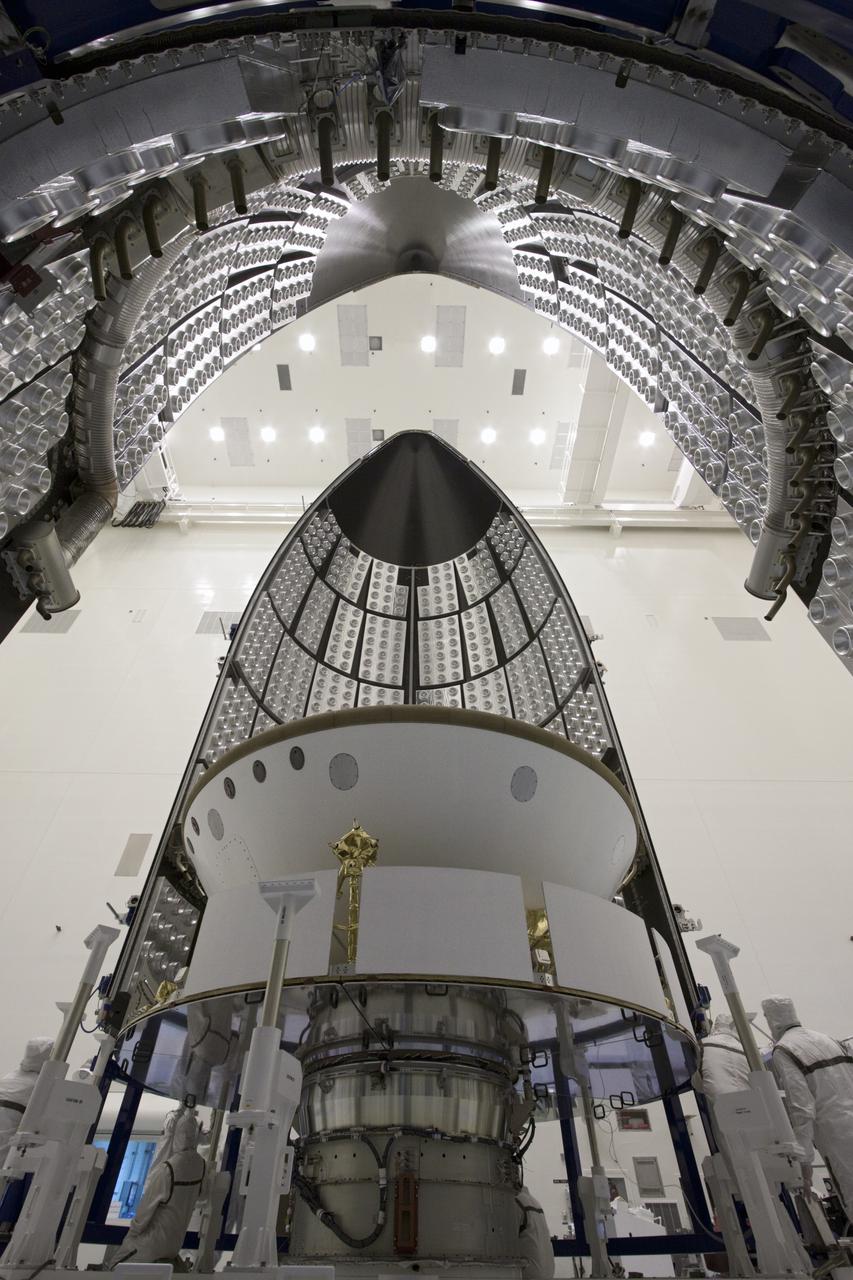
CAPE CANAVERAL, Fla. -- In the Payload Hazardous Servicing Facility at NASA's Kennedy Space Center in Florida, sections of an Atlas V rocket payload fairing engulf NASA's Mars Science Laboratory (MSL) as they close in around it. The blocks on the interior of the fairing are components of the fairing acoustic protection (FAP) system, designed to protect the payload by dampening the sound created by the rocket during liftoff. The fairing will protect the spacecraft from the impact of aerodynamic pressure and heating during ascent. MSL's components include a compact car-sized rover, Curiosity, which has 10 science instruments designed to search for evidence on whether Mars has had environments favorable to microbial life, including the chemical ingredients for life. The unique rover will use a laser to look inside rocks and release its gasses so that the rover’s spectrometer can analyze and send the data back to Earth. Launch of MSL aboard a United Launch Alliance Atlas V rocket is planned for Nov. 25 from Space Launch Complex-41 on Cape Canaveral Air Force Station. For more information, visit http://www.nasa.gov/msl. Photo credit: NASA/Jim Grossmann
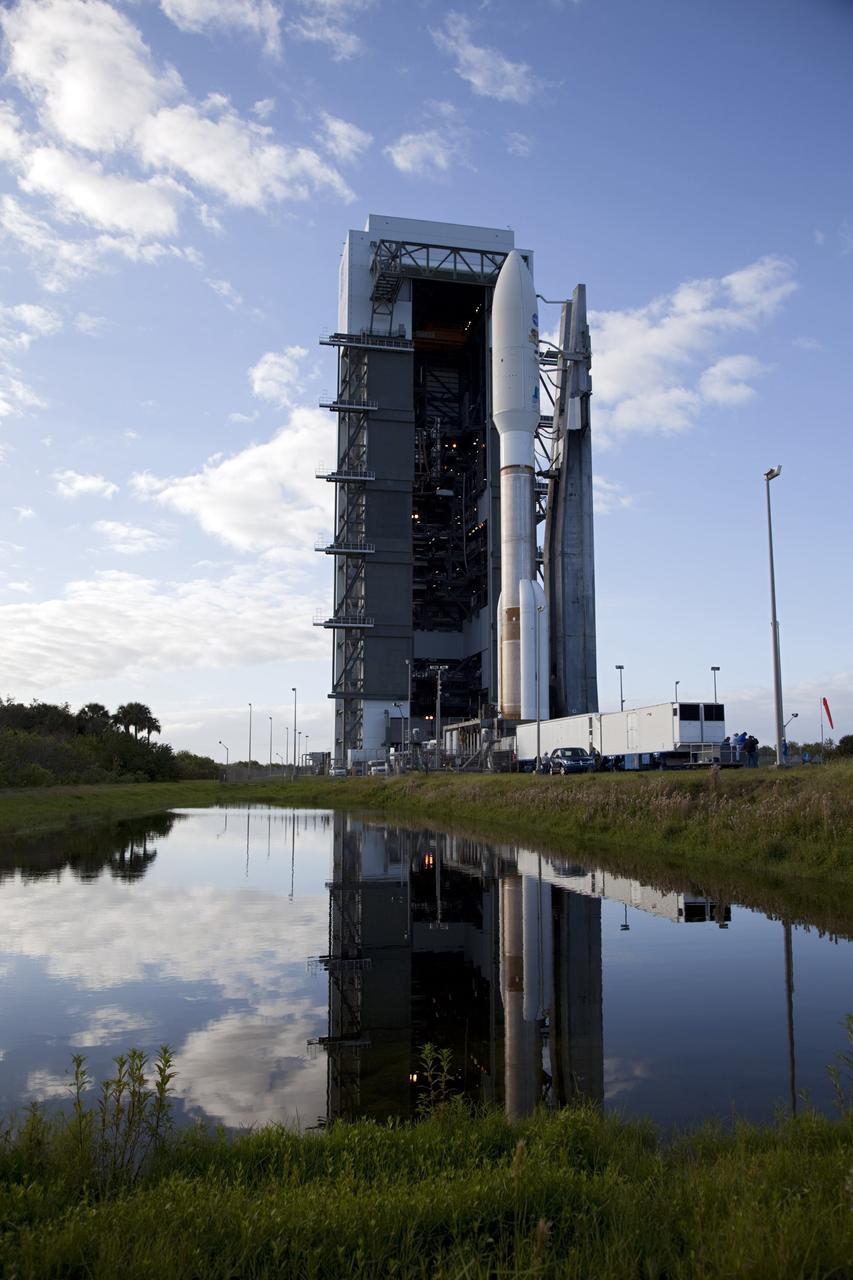
CAPE CANAVERAL, Fla. -- On Cape Canaveral Air Force Station in Florida, the 197-foot-tall United Launch Alliance Atlas V rocket moves away from the Vertical Integration Facility (VIF) during the vehicle's rollout to the launch pad at Space Launch Complex 41. Atop the rocket is NASA's Mars Science Laboratory (MSL), enclosed in its payload fairing. The rocket began its move from the VIF at 8 a.m. EST and arrived at the pad at 8:40 a.m. Liftoff is planned during a launch window which extends from 10:02 a.m. to 11:45 a.m. EST on Nov. 26. MSL's components include a car-sized rover, Curiosity, which has 10 science instruments designed to search for signs of life, including methane, and help determine if the gas is from a biological or geological source. For more information, visit http://www.nasa.gov/msl. Photo credit: NASA/Frankie Martin
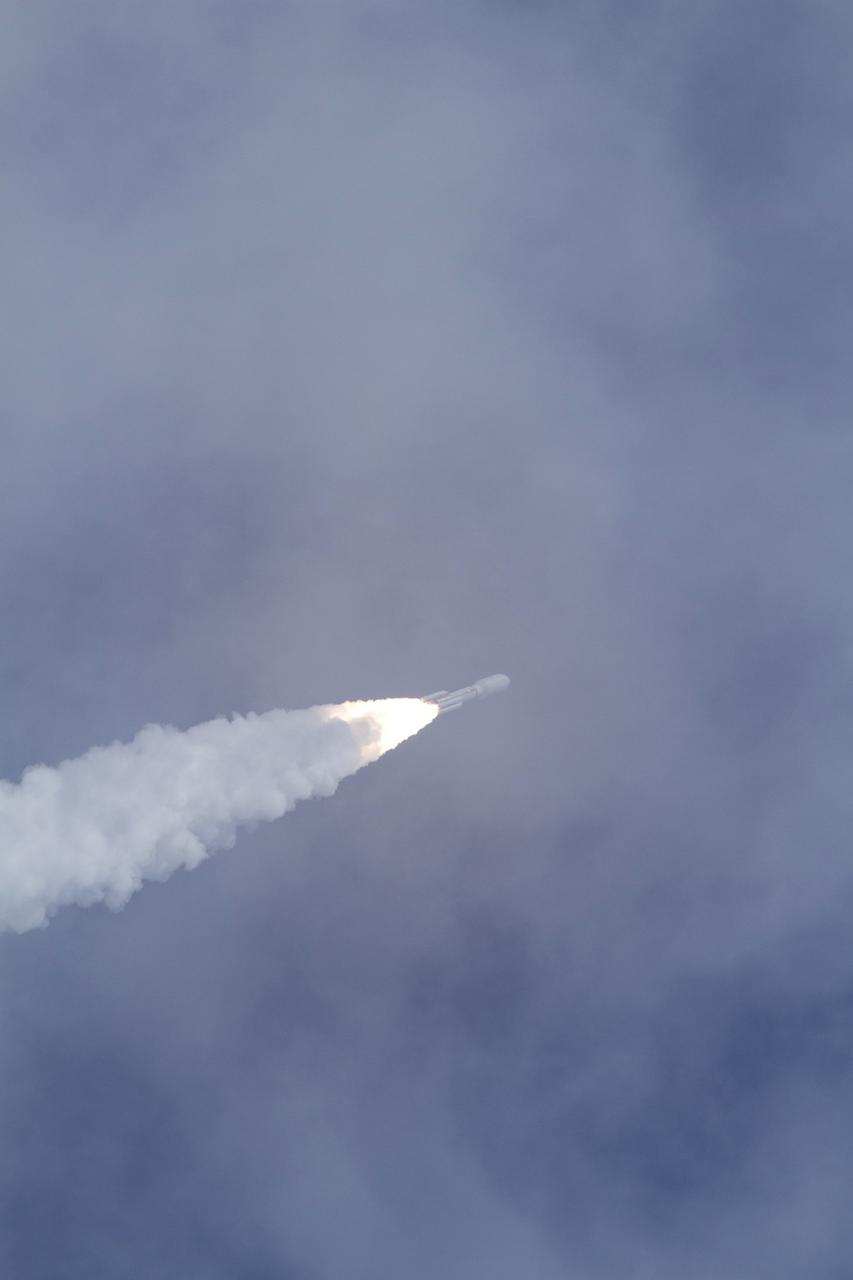
CAPE CANAVERAL, Fla. -- With NASA's Mars Science Laboratory (MSL) spacecraft sealed inside its payload fairing, the United Launch Alliance Atlas V rocket rides a plume of flames as it continues its assent into the blue sky over Space Launch Complex-41 on Cape Canaveral Air Force Station in Florida at 10:02 a.m. EST Nov. 26. MSL's components include a car-sized rover, Curiosity, which has 10 science instruments designed to search for signs of life, including methane, and help determine if the gas is from a biological or geological source. For more information, visit http://www.nasa.gov/msl. Photo credit: NASA/George Roberts
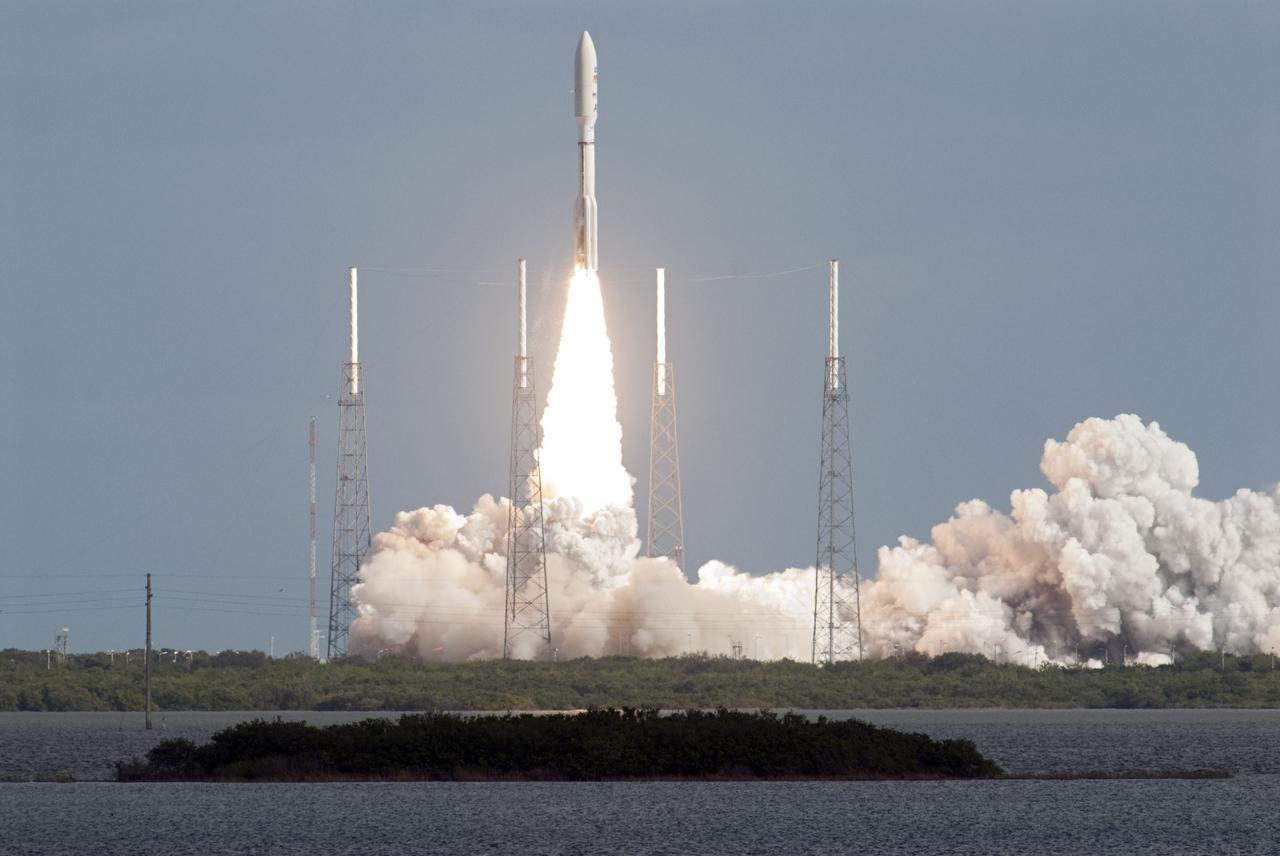
CAPE CANAVERAL, Fla. – NASA's Mars Science Laboratory (MSL) spacecraft, sealed inside its payload fairing atop the United Launch Alliance Atlas V rocket, clears the tower at Space Launch Complex 41 on Cape Canaveral Air Force Station in Florida. MSL lifted off from at 10:02 a.m. EST Nov. 26, beginning a 9-month interplanetary cruise to Mars. MSL's components include a car-sized rover, Curiosity, which has 10 science instruments designed to search for signs of life, including methane, and help determine if the gas is from a biological or geological source. For more information, visit http://www.nasa.gov/msl. Photo credit: NASA/Bill White
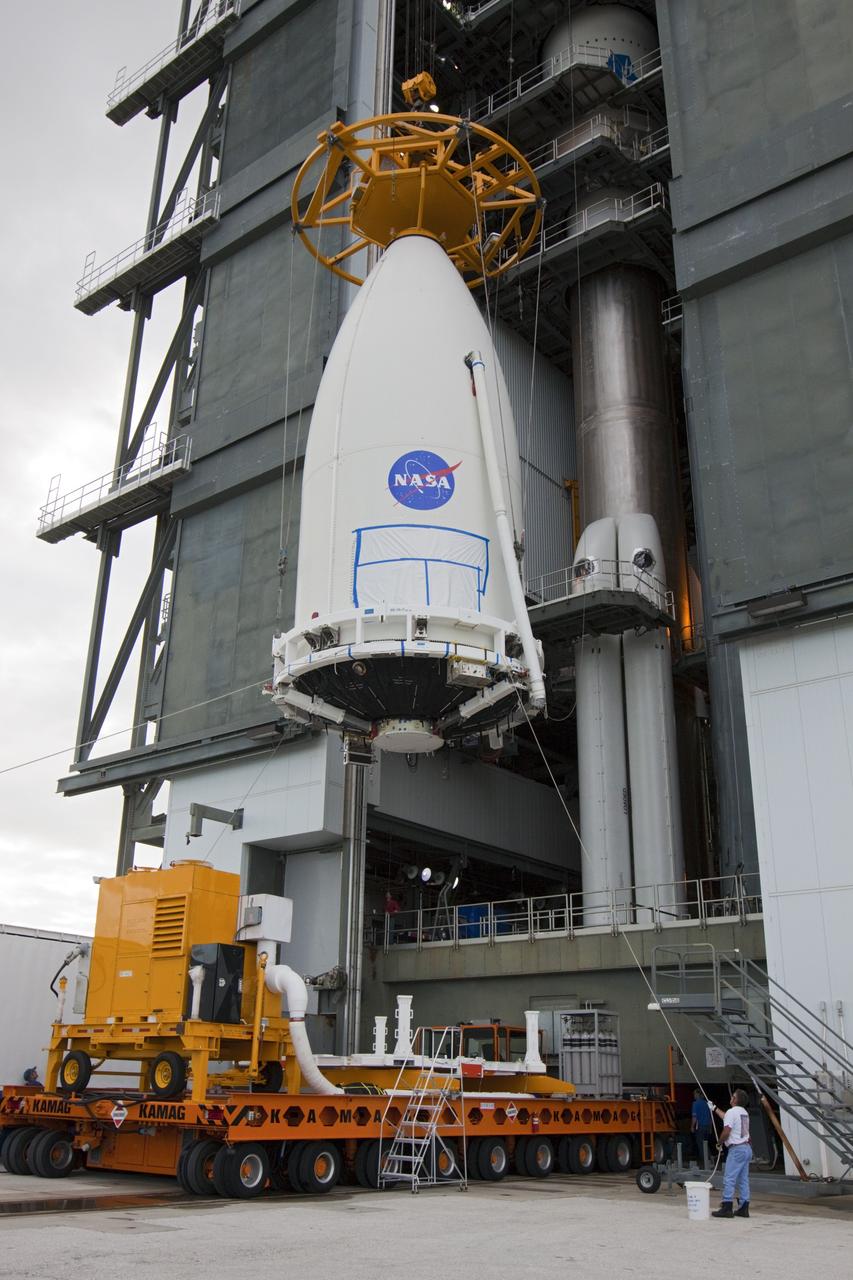
CAPE CANAVERAL, Fla. -- At Space Launch Complex 41, the payload fairing containing NASA's Mars Science Laboratory (MSL) spacecraft rises from the transporter below as it is lifted up the side of the Vertical Integration Facility. The fairing, which protects the payload during launch, will be attached to the Atlas V rocket already stacked inside the facility. MSL was prepared for launch in the Payload Hazardous Servicing Facility at NASA's Kennedy Space Center. MSL's components include a compact car-sized rover, Curiosity, which has 10 science instruments designed to search for evidence on whether Mars has had environments favorable to microbial life, including the chemical ingredients for life. The unique rover will use a laser to look inside rocks and release its gasses so that the rover’s spectrometer can analyze and send the data back to Earth. Launch of MSL aboard a United Launch Alliance Atlas V rocket is planned for Nov. 25 from Space Launch Complex 41 on Cape Canaveral Air Force Station. For more information, visit http://www.nasa.gov/msl. Photo credit: NASA/Kim Shiflett
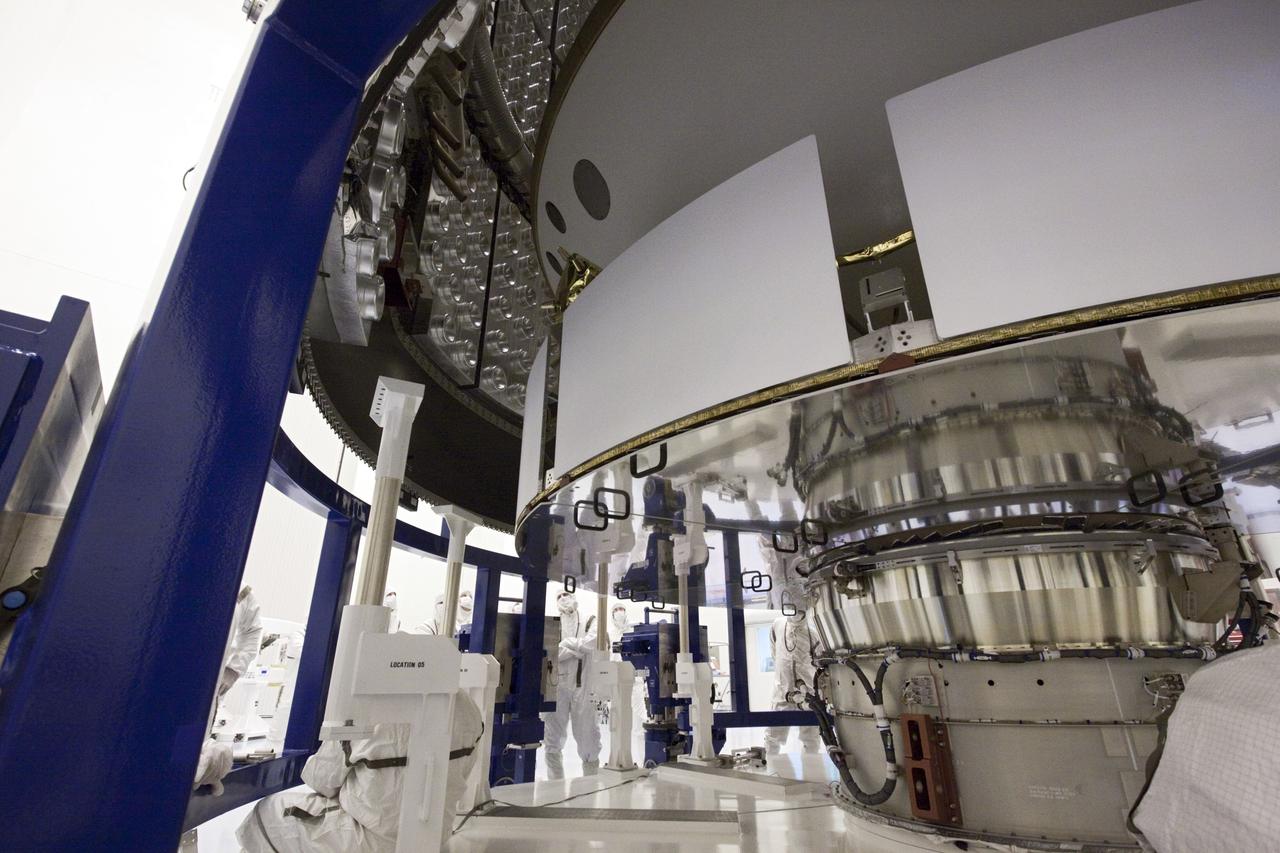
CAPE CANAVERAL, Fla. - In the Payload Hazardous Servicing Facility at NASA's Kennedy Space Center in Florida, the camera captures NASA's Mars Science Laboratory (MSL) one last time before an Atlas V rocket payload fairing is secured around it. Next, the lab will be transported to the launch pad. by dampening the sound created by the rocket during liftoff. The fairing will protect the spacecraft from the impact of aerodynamic pressure and heating during ascent. MSL's components include a compact car-sized rover, Curiosity, which has 10 science instruments designed to search for evidence on whether Mars has had environments favorable to microbial life, including the chemical ingredients for life. The unique rover will use a laser to look inside rocks and release its gasses so that the rover’s spectrometer can analyze and send the data back to Earth. Launch of MSL aboard a United Launch Alliance Atlas V rocket is planned for Nov. 25 from Space Launch Complex-41 on Cape Canaveral Air Force Station. For more information, visit http://www.nasa.gov/msl. Photo credit: NASA/Jim Grossmann
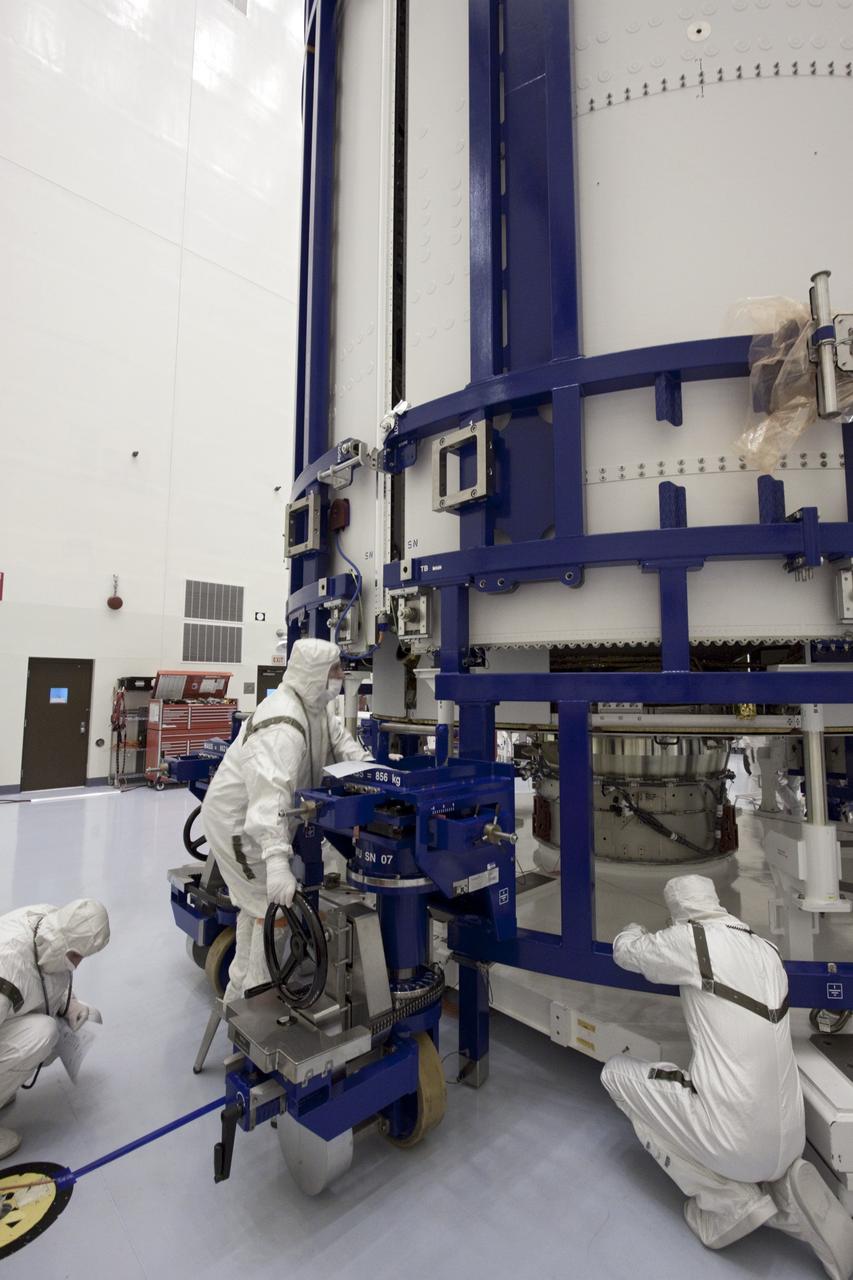
CAPE CANAVERAL, Fla. - In the Payload Hazardous Servicing Facility at NASA's Kennedy Space Center in Florida, spacecraft technicians align the sections of an Atlas V rocket payload fairing around NASA's Mars Science Laboratory (MSL). Next, the lab will be transported to the launch pad. The fairing will protect the spacecraft from the impact of aerodynamic pressure and heating during ascent. MSL's components include a compact car-sized rover, Curiosity, which has 10 science instruments designed to search for evidence on whether Mars has had environments favorable to microbial life, including the chemical ingredients for life. The unique rover will use a laser to look inside rocks and release its gasses so that the rover’s spectrometer can analyze and send the data back to Earth. Launch of MSL aboard a United Launch Alliance Atlas V rocket is planned for Nov. 25 from Space Launch Complex-41 on Cape Canaveral Air Force Station. For more information, visit http://www.nasa.gov/msl. Photo credit: NASA/Jim Grossmann
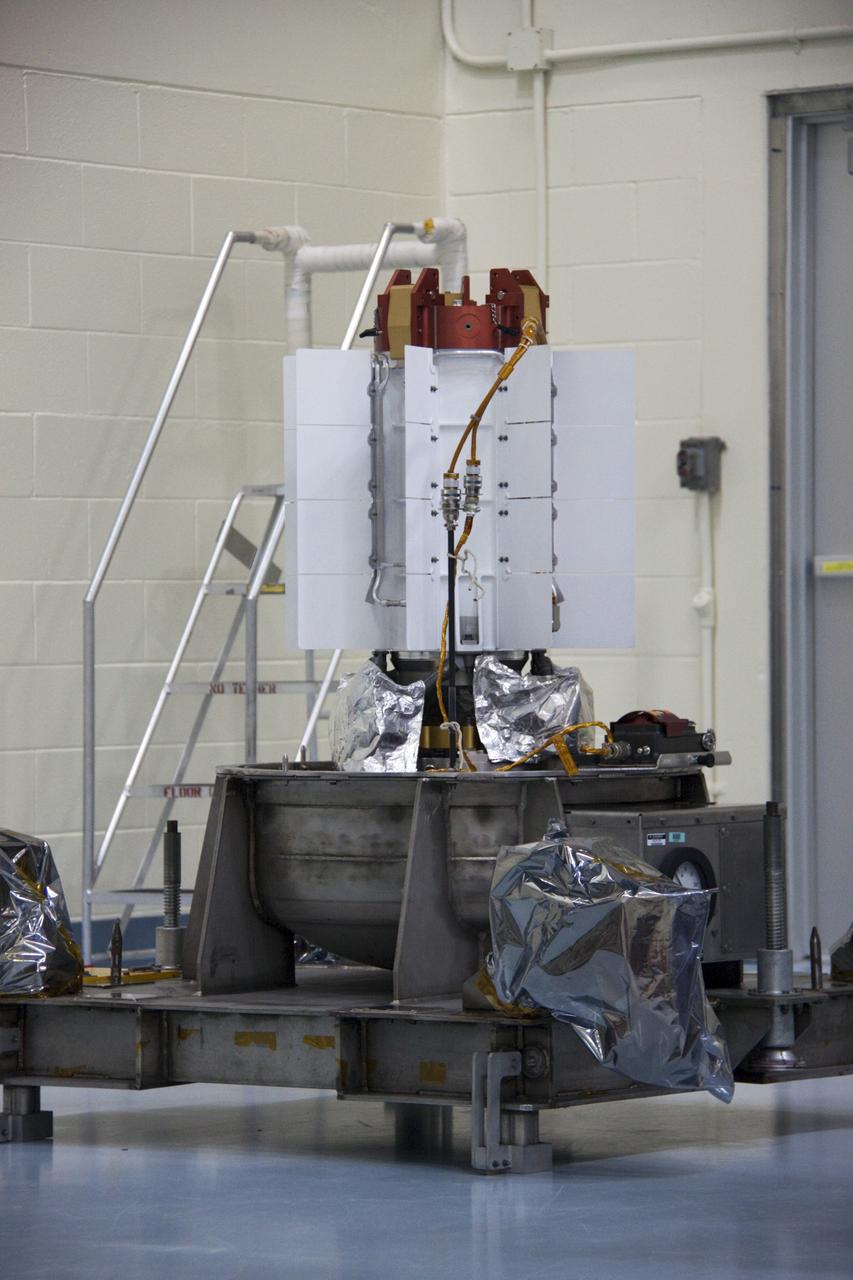
CAPE CANAVERAL, Fla. -- The multi-mission radioisotope thermoelectric generator (MMRTG) for NASA's Mars Science Laboratory (MSL) mission is uncovered in the high bay of the RTG storage facility (RTGF) at NASA's Kennedy Space Center in Florida. The MMRTG was returned to the RTGF following a fit check on MSL's Curiosity rover in the Payload Hazardous Servicing Facility (PHSF). The MMRTG will generate the power needed for the mission from the natural decay of plutonium-238, a non-weapons-grade form of the radioisotope. Heat given off by this natural decay will provide constant power through the day and night during all seasons. MSL's components include a compact car-sized rover, Curiosity, which has 10 science instruments designed to search for signs of life, including methane, and help determine if the gas is from a biological or geological source. Waste heat from the MMRTG will be circulated throughout the rover system to keep instruments, computers, mechanical devices and communications systems within their operating temperature ranges. Launch of MSL aboard a United Launch Alliance Atlas V rocket is targeted for Nov. 25 from Space Launch Complex 41 on Cape Canaveral Air Force Station. For more information, visit http://www.nasa.gov/msl. Photo credit: NASA/Troy Cryder
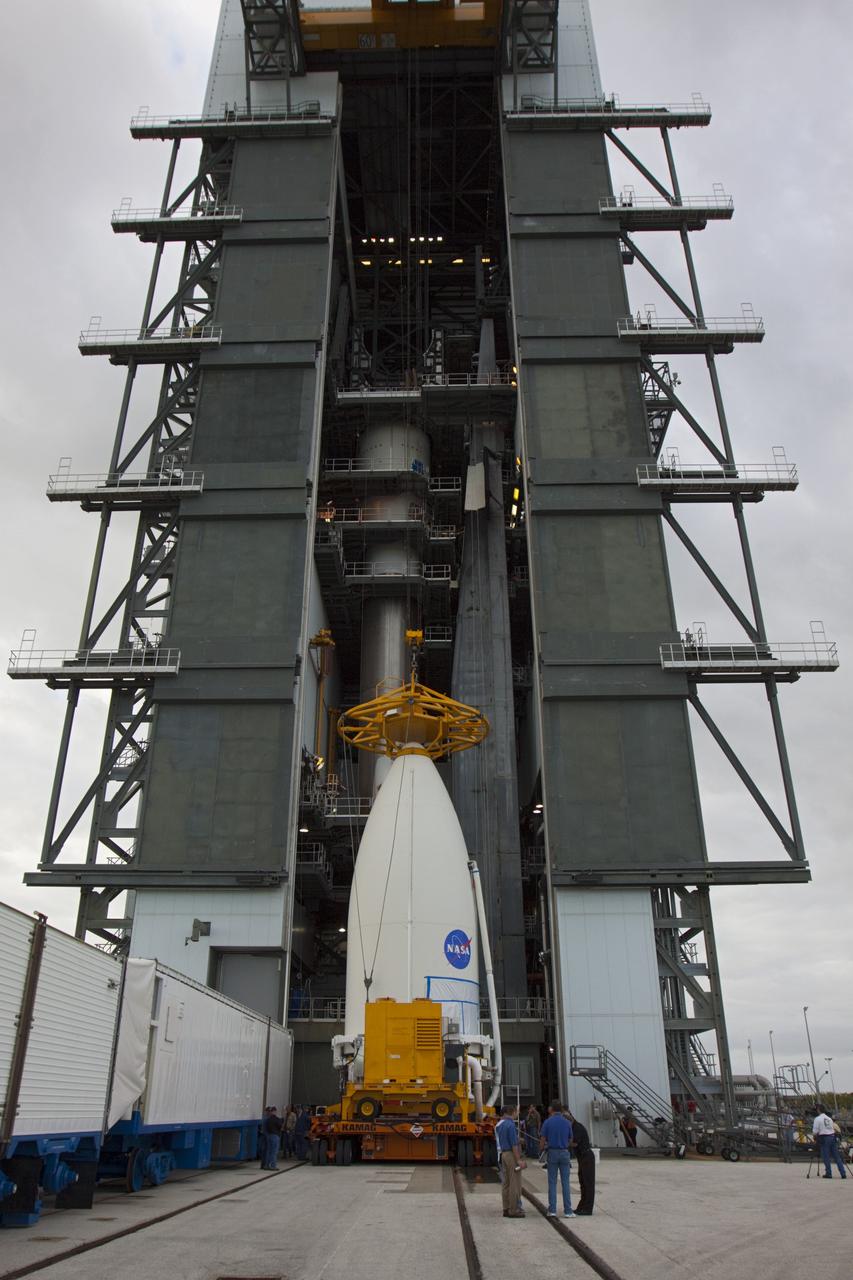
CAPE CANAVERAL, Fla. -- The Vertical Integration Facility at Space Launch Complex 41 towers above the payload fairing containing NASA's Mars Science Laboratory (MSL) spacecraft as activities begin to lift and mate the fairing to the Atlas V rocket already in place. The fairing will protect the payload from heat and aerodynamic pressure generated during ascent. MSL was prepared for launch in the Payload Hazardous Servicing Facility at NASA's Kennedy Space Center. MSL's components include a compact car-sized rover, Curiosity, which has 10 science instruments designed to search for evidence on whether Mars has had environments favorable to microbial life, including the chemical ingredients for life. The unique rover will use a laser to look inside rocks and release its gasses so that the rover’s spectrometer can analyze and send the data back to Earth. Launch of MSL aboard a United Launch Alliance Atlas V rocket is planned for Nov. 25 from Space Launch Complex 41 on Cape Canaveral Air Force Station. For more information, visit http://www.nasa.gov/msl. Photo credit: NASA/Kim Shiflett
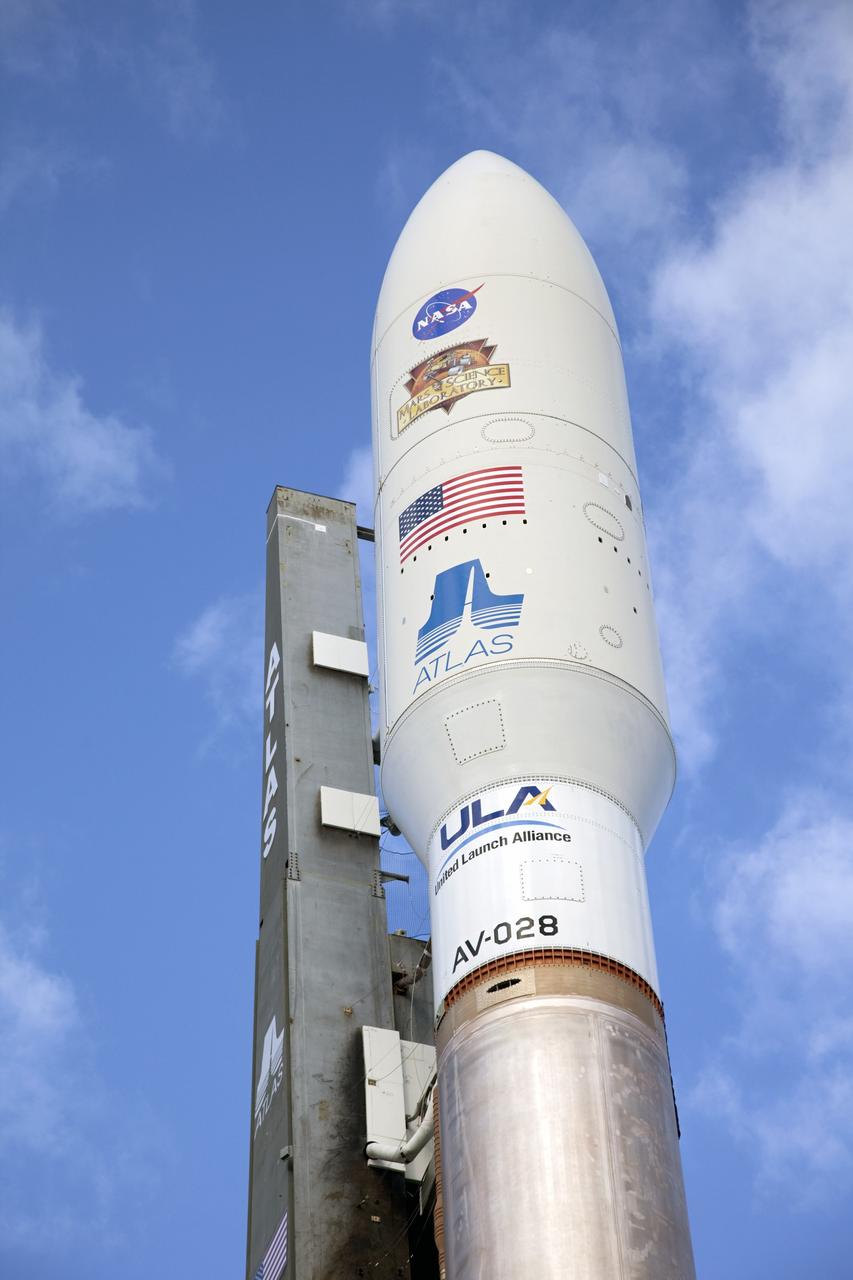
CAPE CANAVERAL, Fla. -- The NASA and Mars Science Laboratory (MSL) logos appear above the American flag and Atlas logo on the payload fairing atop the 197-foot-tall United Launch Alliance Atlas V rocket. Enclosed inside the fairing is the MSL spacecraft, awaiting its launch on a mission to the Red Planet. The rocket is on its way from the Vertical Integration Facility to the launch pad at Space Launch Complex 41 on Cape Canaveral Air Force Station in Florida. The vehicle arrived at the launch pad at 8:40 a.m. EST. Liftoff is planned during a launch window which extends from 10:02 a.m. to 11:45 a.m. EST on Nov. 26. MSL's components include a car-sized rover, Curiosity, which has 10 science instruments designed to search for signs of life, including methane, and help determine if the gas is from a biological or geological source. For more information, visit http://www.nasa.gov/msl. Photo credit: NASA/Frankie Martin
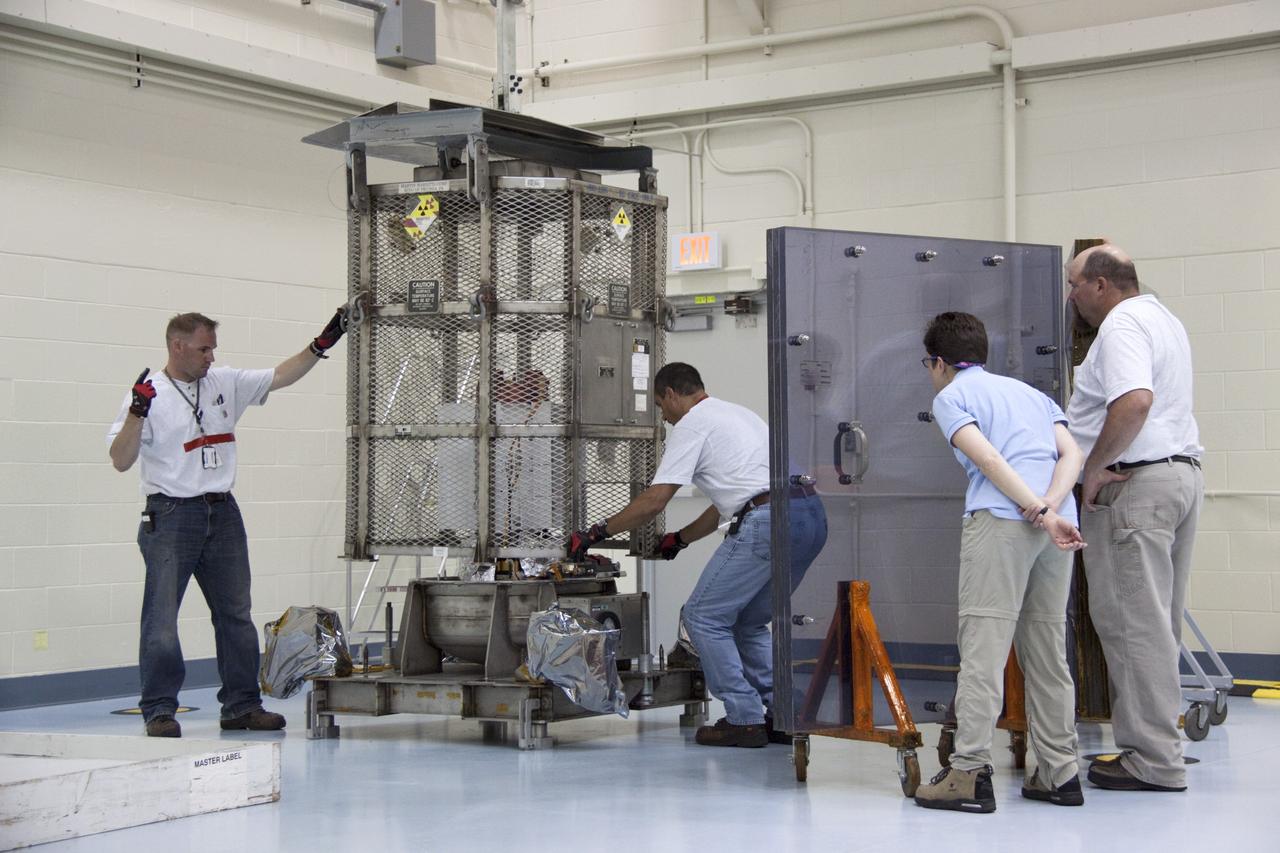
CAPE CANAVERAL, Fla. -- In the high bay of the RTG storage facility (RTGF) at NASA's Kennedy Space Center in Florida, Department of Energy workers guide the mesh container enclosing the multi-mission radioisotope thermoelectric generator (MMRTG) for NASA's Mars Science Laboratory (MSL) mission as it is lifted by a crane. The container, known as the "gorilla cage," protects the MMRTG during transport and allows any excess heat generated to dissipate into the air. The cage is being removed from around the MMRTG following it return to the RTGF from a fit check on MSL's Curiosity rover in the Payload Hazardous Servicing Facility (PHSF). The workers at right are observing the operation from behind a mobile plexiglass radiation shield to minimize their radiation exposure. The MMRTG will generate the power needed for the mission from the natural decay of plutonium-238, a non-weapons-grade form of the radioisotope. Heat given off by this natural decay will provide constant power through the day and night during all seasons. MSL's components include a compact car-sized rover, Curiosity, which has 10 science instruments designed to search for signs of life, including methane, and help determine if the gas is from a biological or geological source. Waste heat from the MMRTG will be circulated throughout the rover system to keep instruments, computers, mechanical devices and communications systems within their operating temperature ranges. Launch of MSL aboard a United Launch Alliance Atlas V rocket is targeted for Nov. 25 from Space Launch Complex 41 on Cape Canaveral Air Force Station. For more information, visit http://www.nasa.gov/msl. Photo credit: NASA/Troy Cryder
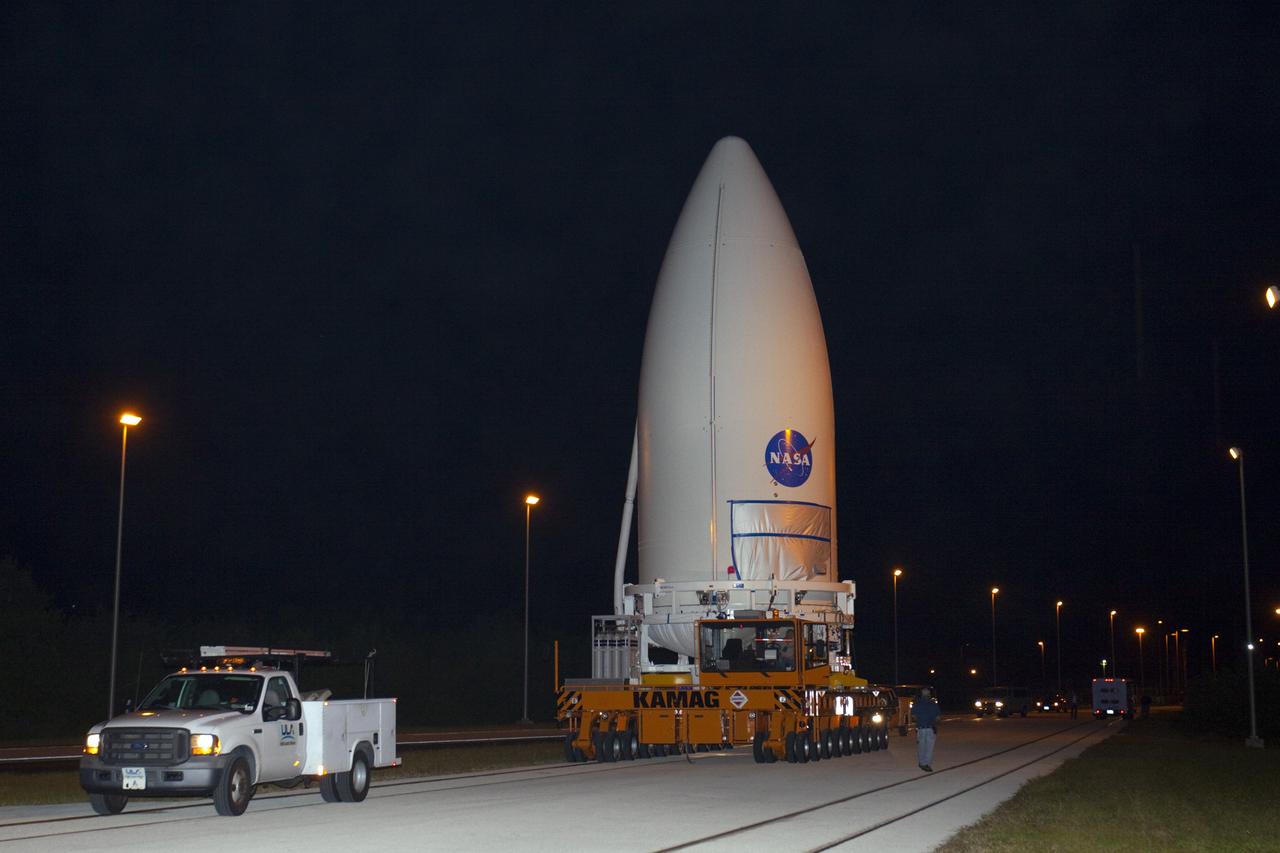
CAPE CANAVERAL, Fla. -- Standing atop a payload transporter, the Atlas V payload fairing containing NASA's Mars Science Laboratory (MSL) spacecraft rolls down a darkened roadway during the early morning move from Kennedy Space Center's Payload Hazardous Servicing Facility to Space Launch Complex 41. The fairing will protect the payload from heat and aerodynamic pressure generated during launch. MSL's components include a compact car-sized rover, Curiosity, which has 10 science instruments designed to search for evidence on whether Mars has had environments favorable to microbial life, including the chemical ingredients for life. The unique rover will use a laser to look inside rocks and release its gasses so that the rover’s spectrometer can analyze and send the data back to Earth. Launch of MSL aboard a United Launch Alliance Atlas V rocket is planned for Nov. 25 from Space Launch Complex 41 on Cape Canaveral Air Force Station. For more information, visit http://www.nasa.gov/msl. Photo credit: NASA/Kim Shiflett
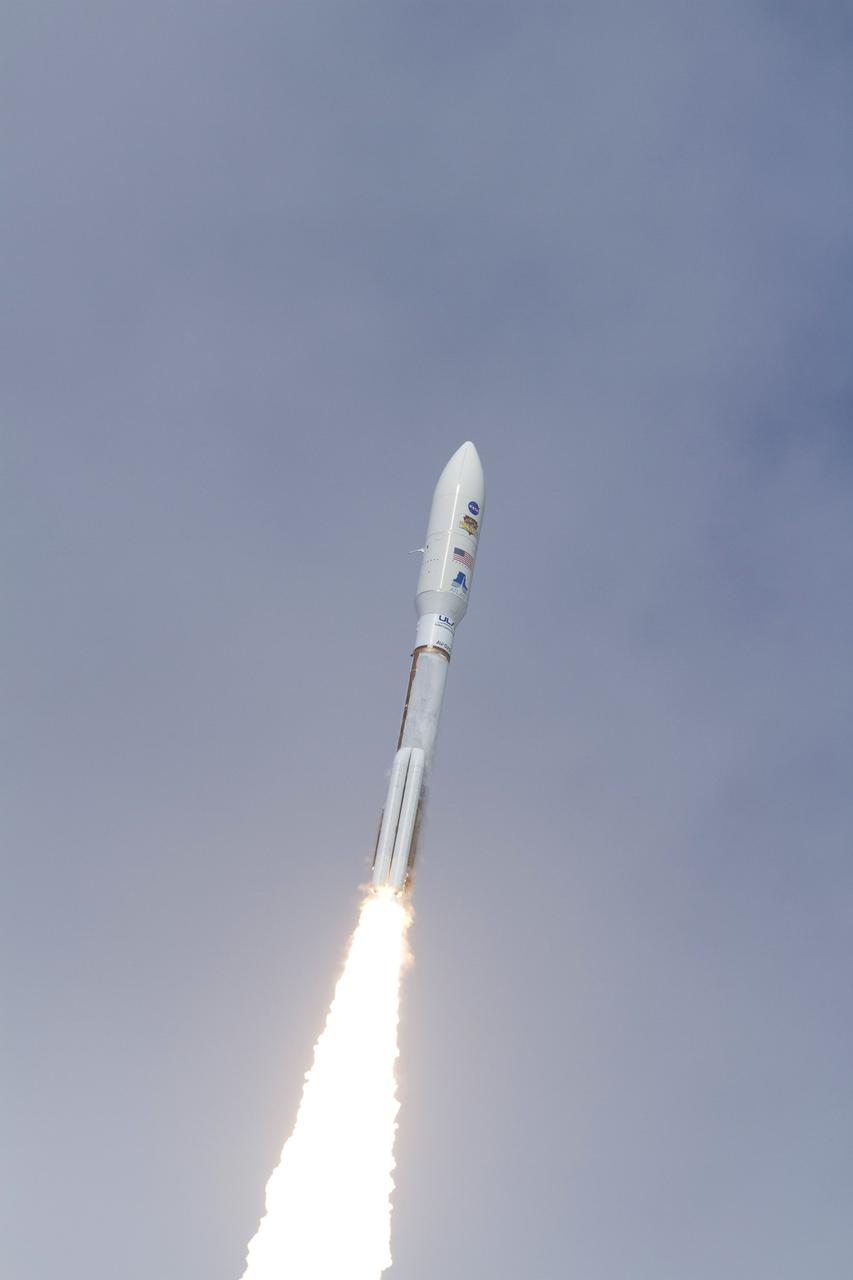
CAPE CANAVERAL, Fla. -- With NASA's Mars Science Laboratory (MSL) spacecraft sealed inside its payload fairing, the United Launch Alliance Atlas V rocket rides a plume of flames as it climbs into the blue sky over Space Launch Complex-41 on Cape Canaveral Air Force Station in Florida at 10:02 a.m. EST Nov. 26. MSL's components include a car-sized rover, Curiosity, which has 10 science instruments designed to search for signs of life, including methane, and help determine if the gas is from a biological or geological source. For more information, visit http://www.nasa.gov/msl. Photo credit: NASA/George Roberts
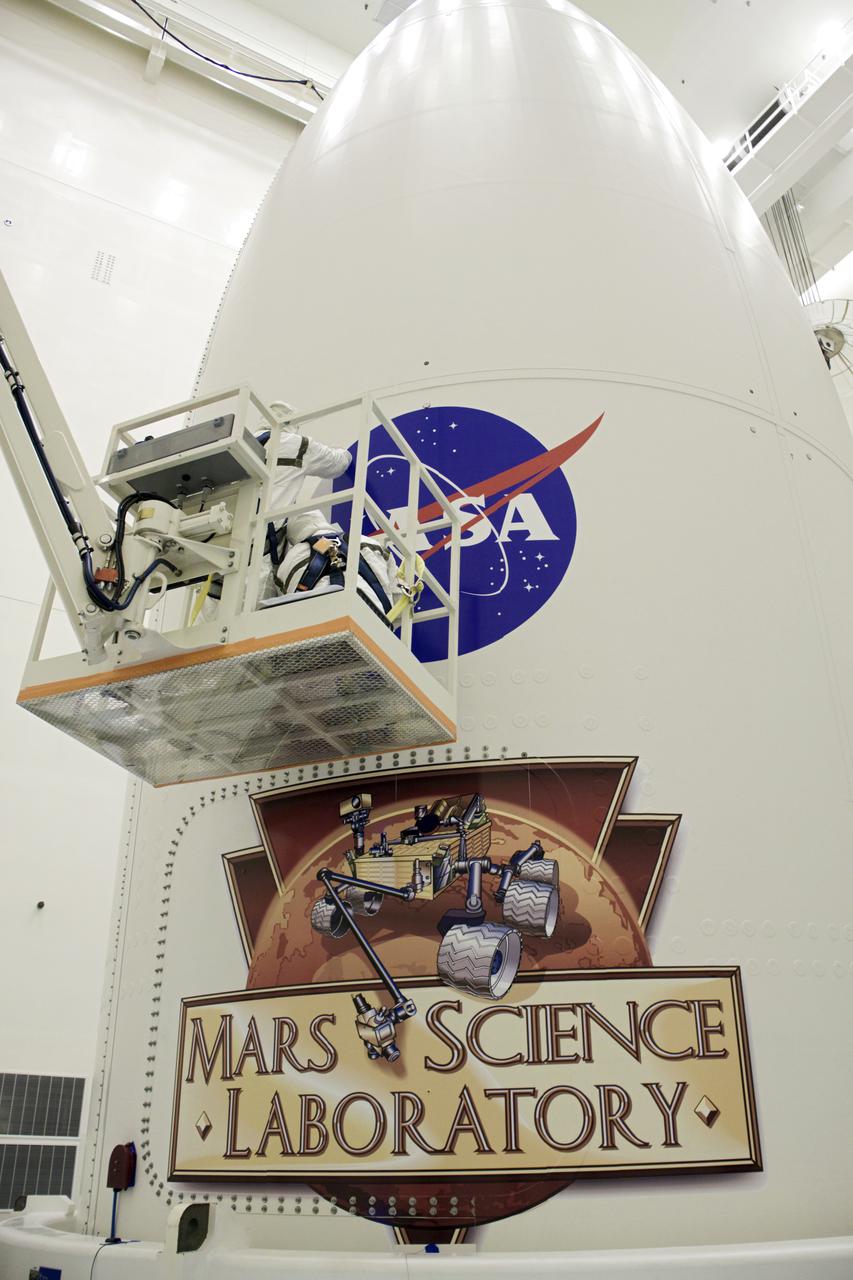
CAPE CANAVERAL, Fla. -- In the Payload Hazardous Servicing Facility at NASA's Kennedy Space Center in Florida, technicians use a lift to reach the upper region of an Atlas V rocket's payload fairing, where the NASA logo is being installed. Below is the Mars Science Laboratory (MSL) mission logo. Tucked inside the fairing is the MSL spacecraft, including a compact car-sized rover, Curiosity, which has 10 science instruments designed to search for evidence on whether Mars has had environments favorable to microbial life, including the chemical ingredients for life. The unique rover will use a laser to look inside rocks and release its gasses so that the rover’s spectrometer can analyze and send the data back to Earth. Launch of MSL aboard a United Launch Alliance Atlas V rocket is planned for Nov. 25 from Space Launch Complex-41 on Cape Canaveral Air Force Station. For more information, visit http:__www.nasa.gov_msl. Photo credit: NASA_Jim Grossmann
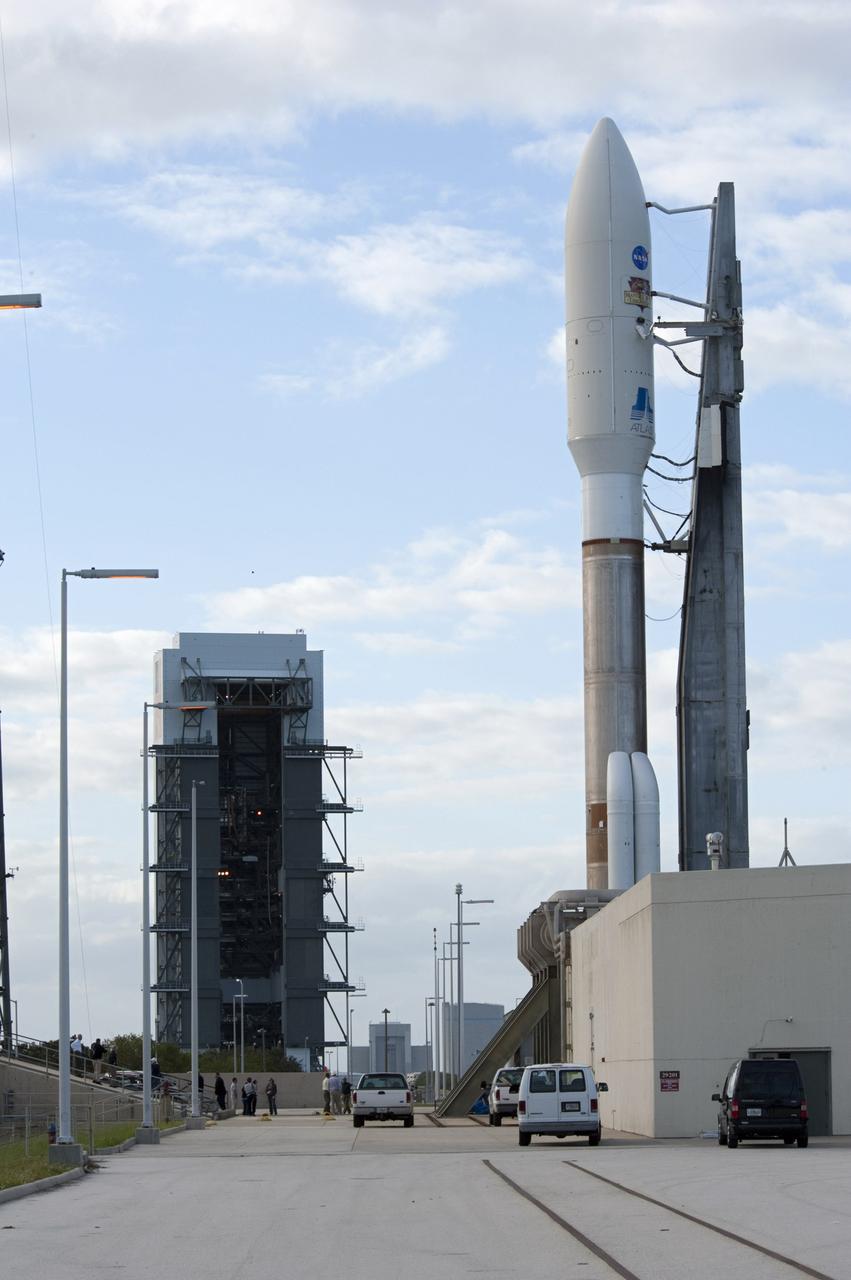
CAPE CANAVERAL, Fla. -- On Cape Canaveral Air Force Station in Florida, the 197-foot-tall United Launch Alliance Atlas V rocket rolls from the Vertical Integration Facility (VIF) at Space Launch Complex-41, in the background, to the launch pad. Atop the rocket is NASA's Mars Science Laboratory (MSL), enclosed in its payload fairing. The rocket began its move from the VIF at 8 a.m. EST. Liftoff is planned during a launch window which extends from 10:02 a.m. to 11:45 a.m. EST on Nov. 26. MSL's components include a car-sized rover, Curiosity, which has 10 science instruments designed to search for signs of life, including methane, and help determine if the gas is from a biological or geological source. For more information, visit http://www.nasa.gov/msl. Photo credit: NASA/Tony Gray
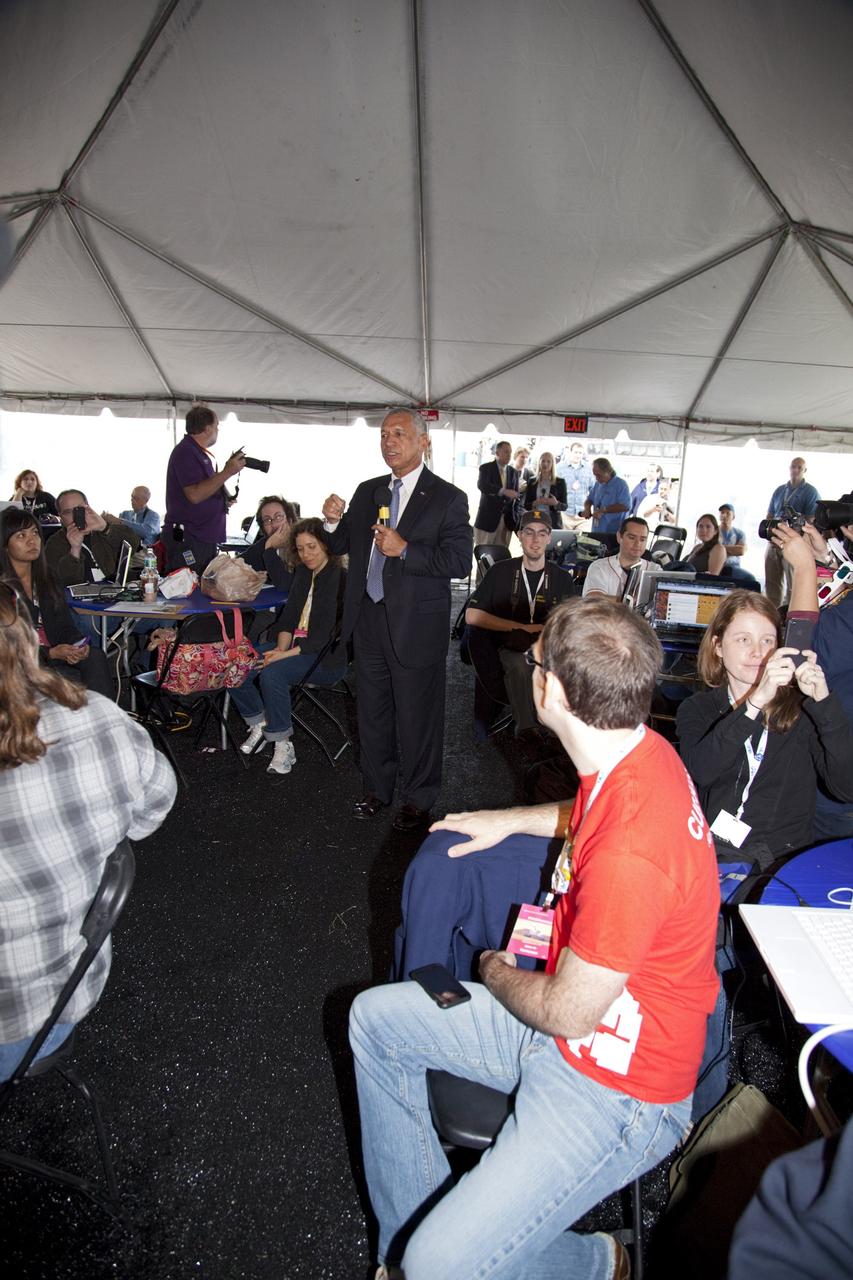
CAPE CANAVERAL, Fla. – NASA Administrator Charles Bolden addresses the participants of a NASA Tweetup in a tent set up at NASA Kennedy Space Center's Press Site in Florida during prelaunch activities for the agency’s Mars Science Laboratory (MSL) launch. Participants in the Tweetup are given the opportunity to listen to agency briefings, tour locations on the center normally off limits to visitors, and get a close-up view of Space Launch Complex-41 on Cape Canaveral Air Force Station. The tweeters will share their experiences with followers through the social networking site Twitter. The MSL mission will pioneer precision landing technology and a sky-crane touchdown to place a car-sized rover, Curiosity, near the foot of a mountain inside Gale Crater on Aug. 6, 2012. During a nearly two-year prime mission after landing, the rover will investigate whether the region has ever offered conditions favorable for microbial life, including the chemical ingredients for life. Liftoff of MSL aboard a United Launch Alliance Atlas V rocket from pad 41 is planned during a launch window which extends from 10:02 a.m. to 11:45 a.m. EST on Nov. 26. For more information, visit http://www.nasa.gov/msl. Photo credit: NASA/Frankie Martin
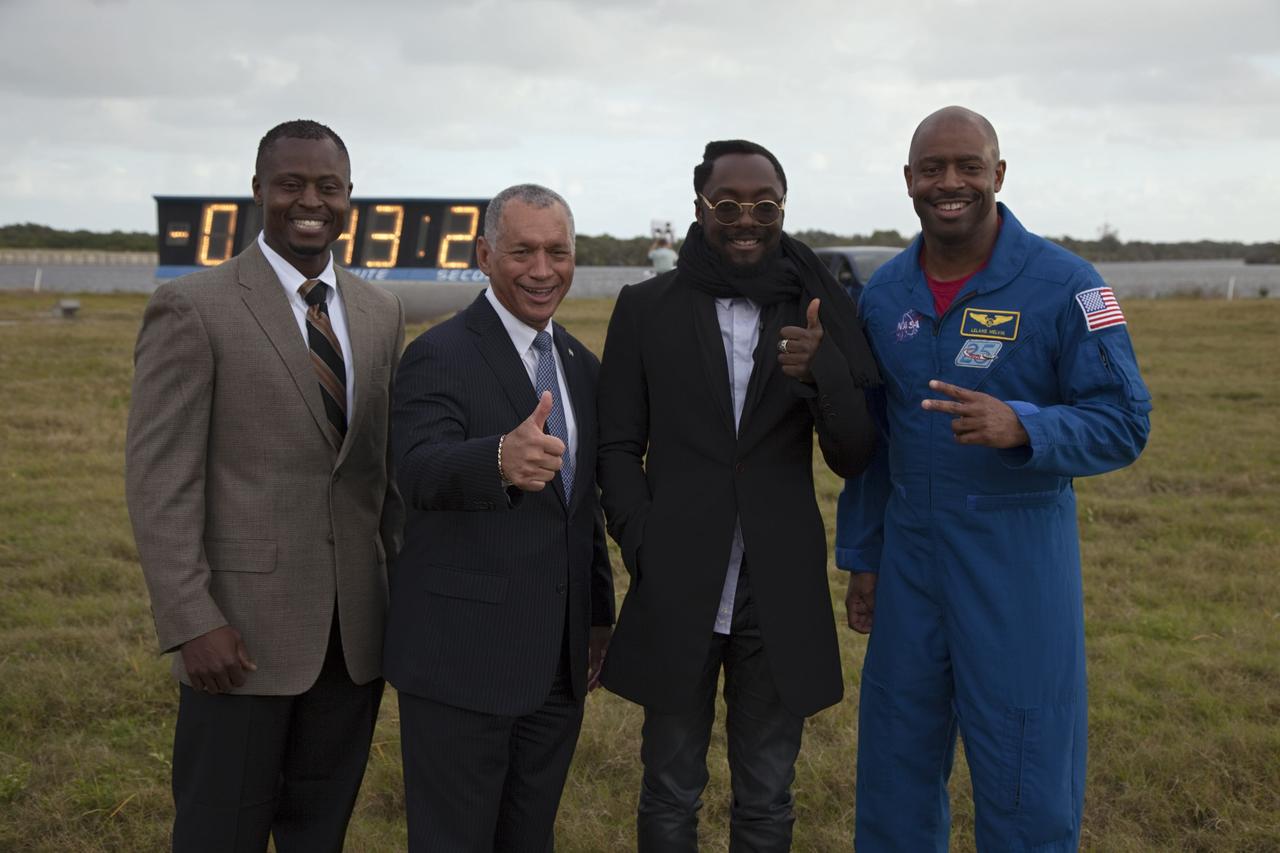
CAPE CANAVERAL, Fla. – From left, Yves Lamothe, lead systems engineer for the 21st Century Ground Systems Program at NASA Kennedy Space Center; NASA Administrator Charles Bolden; Will.i.am, entertainer and member of The Black Eyed Peas; and former astronaut Leland Melvin, NASA associate administrator for Education, take part in a Tweetup at NASA Kennedy Space Center's Press Site in Florida during prelaunch activities for the agency’s Mars Science Laboratory (MSL) launch. Behind them, the countdown clock ticks off the seconds to launch. Participants in the Tweetup are given the opportunity to listen to agency briefings, tour locations on the center normally off limits to visitors, and get a close-up view of Space Launch Complex-41 on Cape Canaveral Air Force Station. The tweeters will share their experiences with followers through the social networking site Twitter. The MSL mission will pioneer precision landing technology and a sky-crane touchdown to place a car-sized rover, Curiosity, near the foot of a mountain inside Gale Crater on Aug. 6, 2012. During a nearly two-year prime mission after landing, the rover will investigate whether the region has ever offered conditions favorable for microbial life, including the chemical ingredients for life. Liftoff of MSL aboard a United Launch Alliance Atlas V rocket from pad 41 is planned during a launch window which extends from 10:02 a.m. to 11:45 a.m. EST on Nov. 26. For more information, visit http://www.nasa.gov/msl. Photo credit: NASA/Frankie Martin
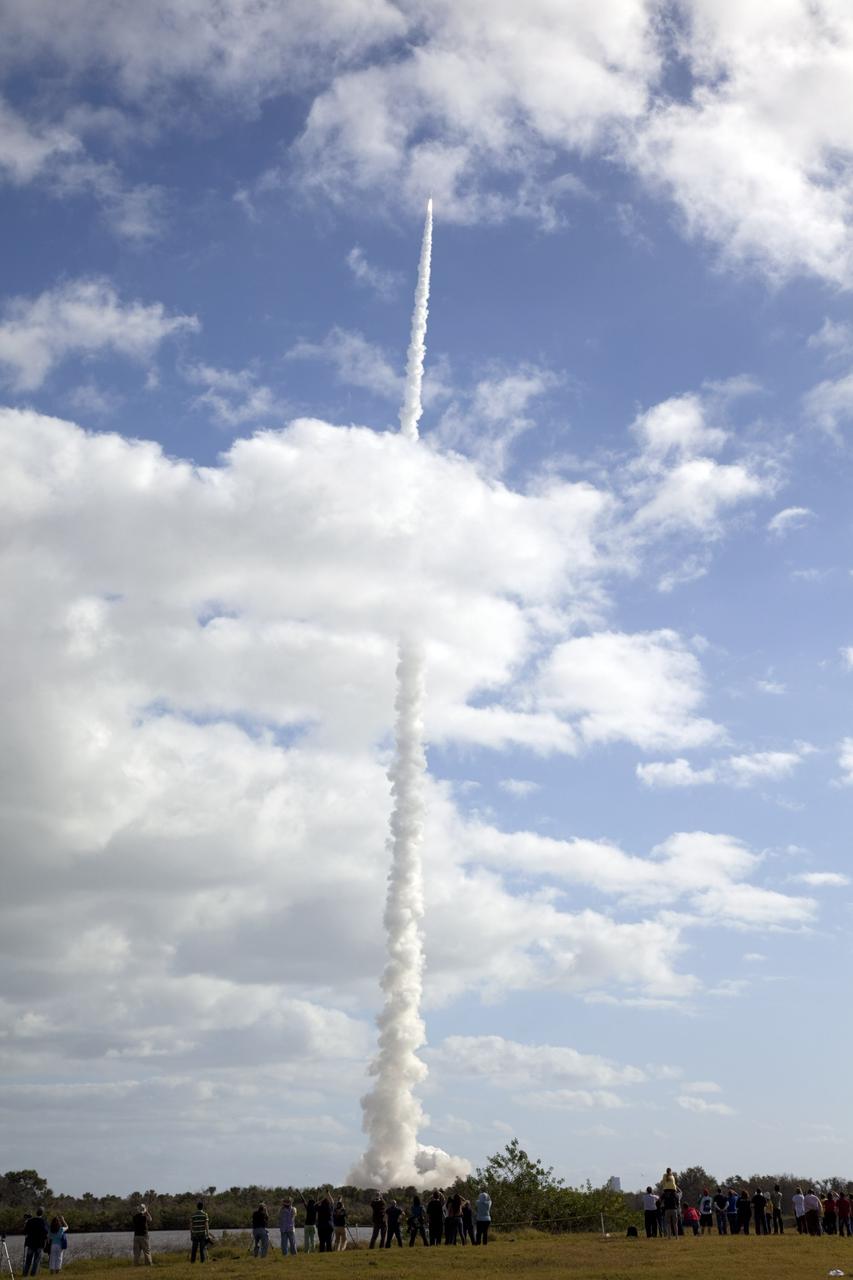
CAPE CANAVERAL, Fla. – At NASA Kennedy Space Center's Press Site in Florida, participants in NASA's Tweetup photograph the launch of the agency's Mars Science Laboratory (MSL) as it races through the clouds. The tweeters will share their experiences with followers through the social networking site Twitter. The 197-foot-tall United Launch Alliance Atlas V rocket lifted off Space Launch Complex-41 on neighboring Cape Canaveral Air Force Station at 10:02 a.m. EST at the opening of the launch window. MSL's components include a car-sized rover, Curiosity, which has 10 science instruments designed to search for signs of life, including methane, and help determine if the gas is from a biological or geological source. For more information, visit http://www.nasa.gov/msl. Photo credit: NASA/Frankie Martin
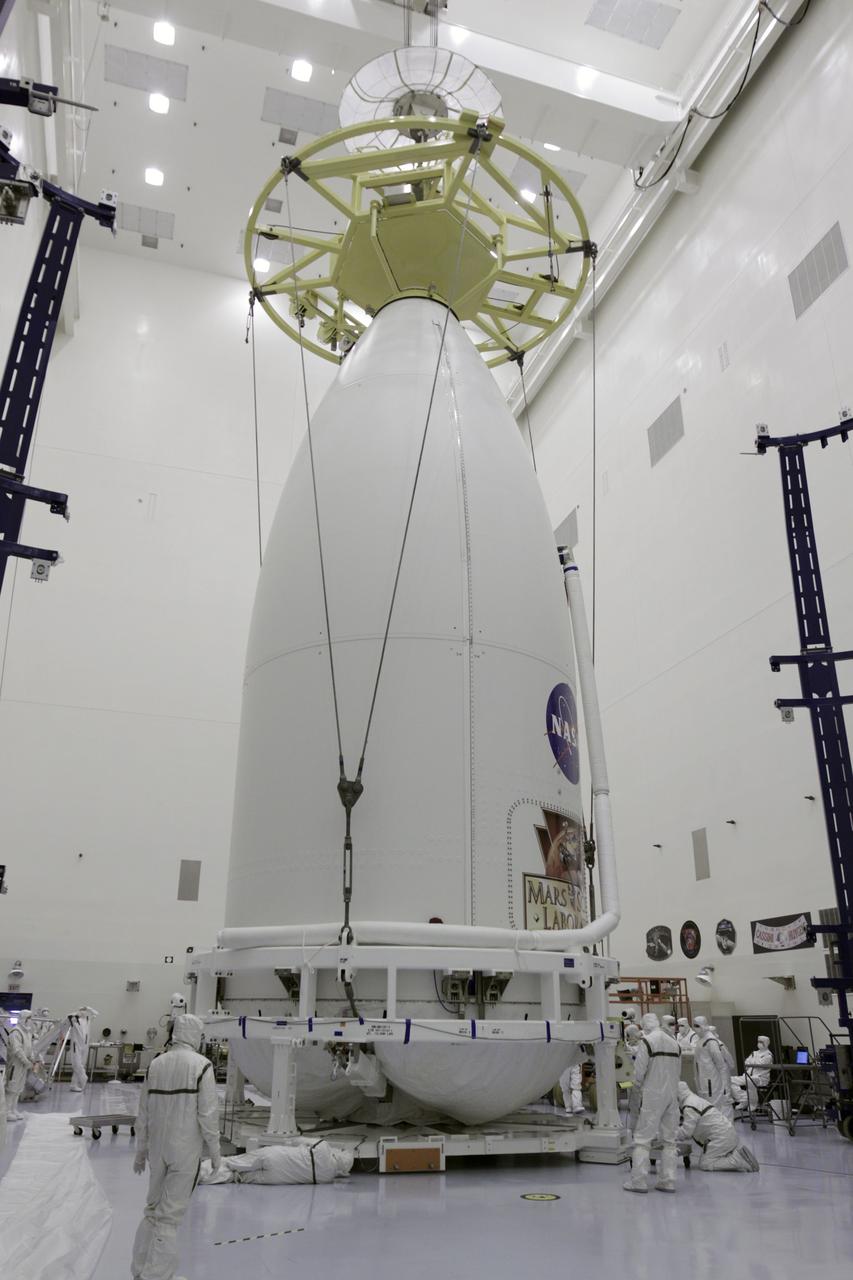
CAPE CANAVERAL, Fla. -- Technicians inside NASA Kennedy Space Center's Payload Hazardous Servicing Facility have attached a lifting device to the Atlas V rocket's payload fairing enclosing the Mars Science Laboratory (MSL) spacecraft. The fairing must be raised in order to be placed on a transporter for the move to Space Launch Complex 41. MSL's components include a compact car-sized rover, Curiosity, which has 10 science instruments designed to search for evidence on whether Mars has had environments favorable to microbial life, including the chemical ingredients for life. The unique rover will use a laser to look inside rocks and release its gasses so that the rover’s spectrometer can analyze and send the data back to Earth. Launch of MSL aboard a United Launch Alliance Atlas V rocket is planned for Nov. 25 from Space Launch Complex-41 on Cape Canaveral Air Force Station. For more information, visit http://www.nasa.gov/msl. Photo credit: NASA/Kim Shiflett
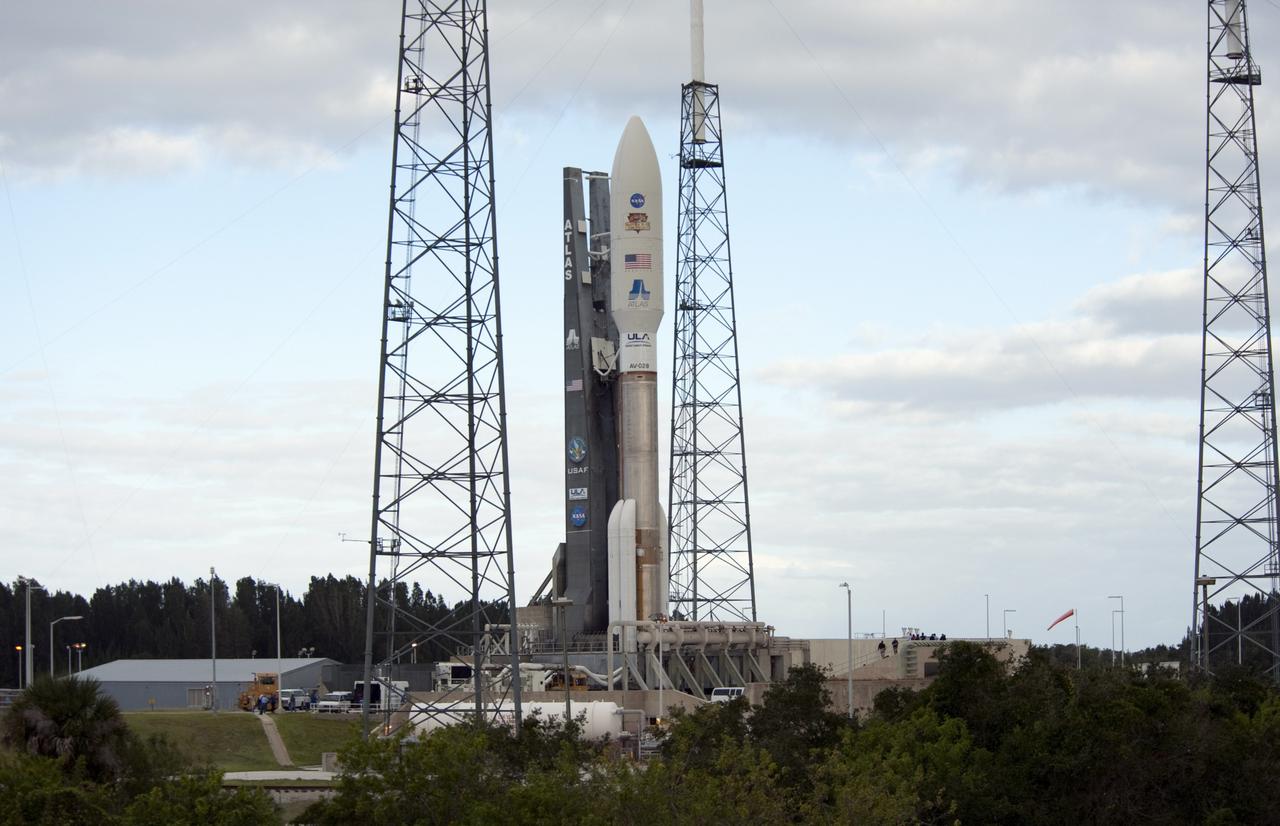
CAPE CANAVERAL, Fla. -- On Cape Canaveral Air Force Station in Florida, lightning masts protect the 197-foot-tall United Launch Alliance Atlas V rocket as it leaves behind the safety of the Vertical Integration Facility (VIF) at Space Launch Complex-41 to take its position on the pad's surface. Atop the rocket is NASA's Mars Science Laboratory (MSL), enclosed in its payload fairing. The rocket began its move from the VIF at 8 a.m. EST. Liftoff is planned during a launch window which extends from 10:02 a.m. to 11:45 a.m. EST on Nov. 26. MSL's components include a car-sized rover, Curiosity, which has 10 science instruments designed to search for signs of life, including methane, and help determine if the gas is from a biological or geological source. For more information, visit http://www.nasa.gov/msl. Photo credit: NASA/Tony Gray
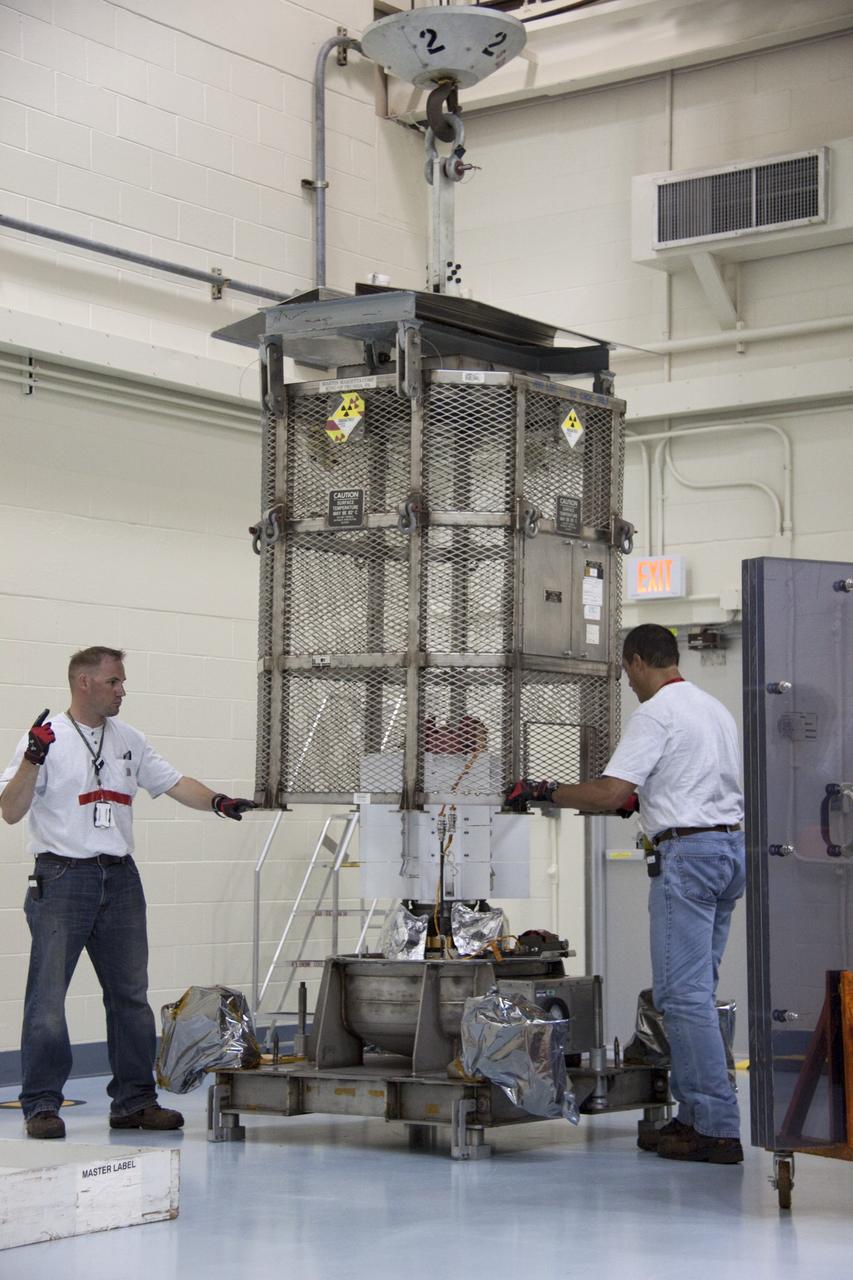
CAPE CANAVERAL, Fla. -- In the high bay of the RTG storage facility (RTGF) at NASA's Kennedy Space Center in Florida, Department of Energy workers guide the mesh container enclosing the multi-mission radioisotope thermoelectric generator (MMRTG) for NASA's Mars Science Laboratory (MSL) mission as it is lifted by a crane. The container, known as the "gorilla cage," protects the MMRTG during transport and allows any excess heat generated to dissipate into the air. The cage is being removed from around the MMRTG following it return to the RTGF from a fit check on MSL's Curiosity rover in the Payload Hazardous Servicing Facility (PHSF). The MMRTG will generate the power needed for the mission from the natural decay of plutonium-238, a non-weapons-grade form of the radioisotope. Heat given off by this natural decay will provide constant power through the day and night during all seasons. MSL's components include a compact car-sized rover, Curiosity, which has 10 science instruments designed to search for signs of life, including methane, and help determine if the gas is from a biological or geological source. Waste heat from the MMRTG will be circulated throughout the rover system to keep instruments, computers, mechanical devices and communications systems within their operating temperature ranges. Launch of MSL aboard a United Launch Alliance Atlas V rocket is targeted for Nov. 25 from Space Launch Complex 41 on Cape Canaveral Air Force Station. For more information, visit http://www.nasa.gov/msl. Photo credit: NASA/Troy Cryder
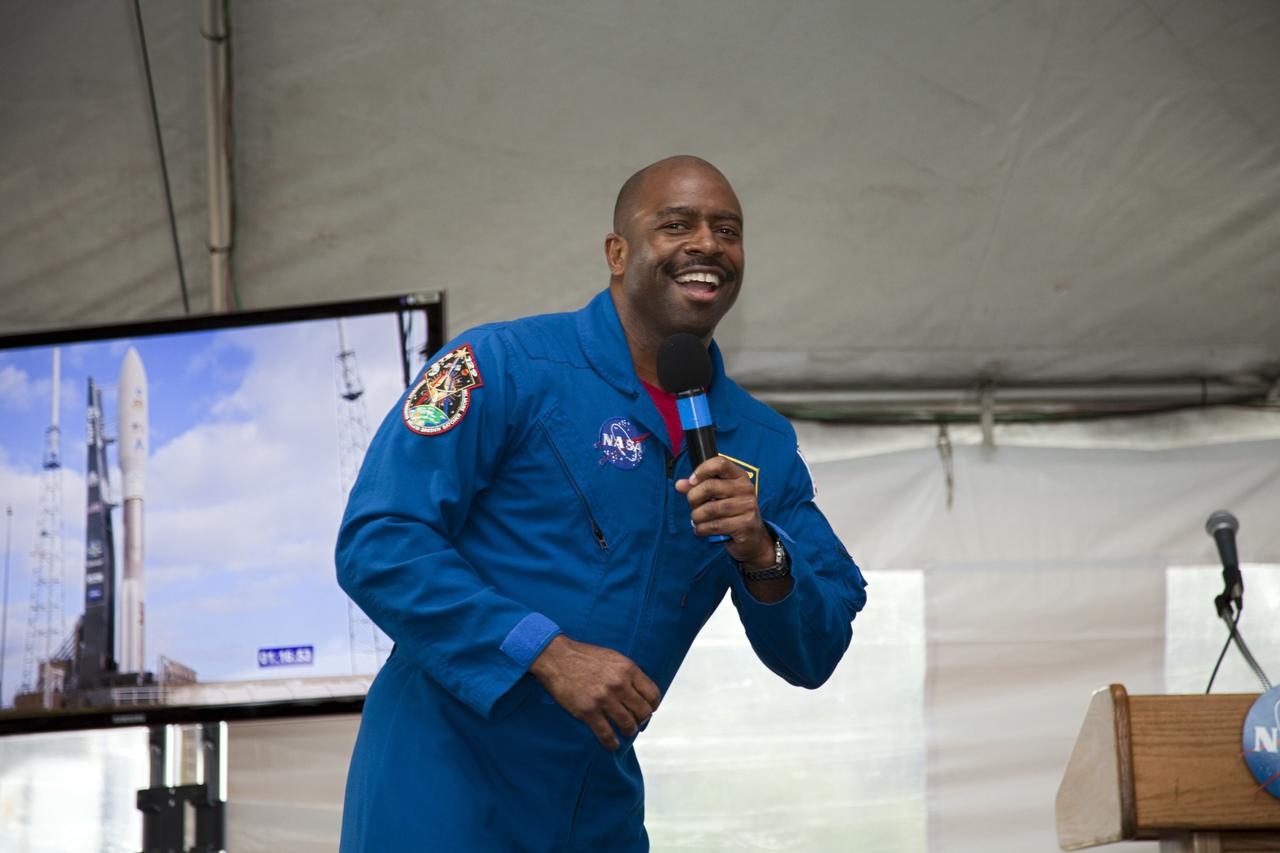
CAPE CANAVERAL, Fla. – Former astronaut Leland Melvin, NASA associate administrator for Education, takes part in a Tweetup in a tent set up at NASA Kennedy Space Center's Press Site in Florida during prelaunch activities for the agency’s Mars Science Laboratory (MSL) launch. Melvin flew on the space shuttle Atlantis' STS-122 mission in 2008 and STS-129 mission in 2009. Participants in the Tweetup are given the opportunity to listen to agency briefings, tour locations on the center normally off limits to visitors, and get a close-up view of Space Launch Complex-41 on Cape Canaveral Air Force Station. The tweeters will share their experiences with followers through the social networking site Twitter. The MSL mission will pioneer precision landing technology and a sky-crane touchdown to place a car-sized rover, Curiosity, near the foot of a mountain inside Gale Crater on Aug. 6, 2012. During a nearly two-year prime mission after landing, the rover will investigate whether the region has ever offered conditions favorable for microbial life, including the chemical ingredients for life. Liftoff of MSL aboard a United Launch Alliance Atlas V rocket from pad 41 is planned during a launch window which extends from 10:02 a.m. to 11:45 a.m. EST on Nov. 26. For more information, visit http://www.nasa.gov/msl. Photo credit: NASA/Frankie Martin
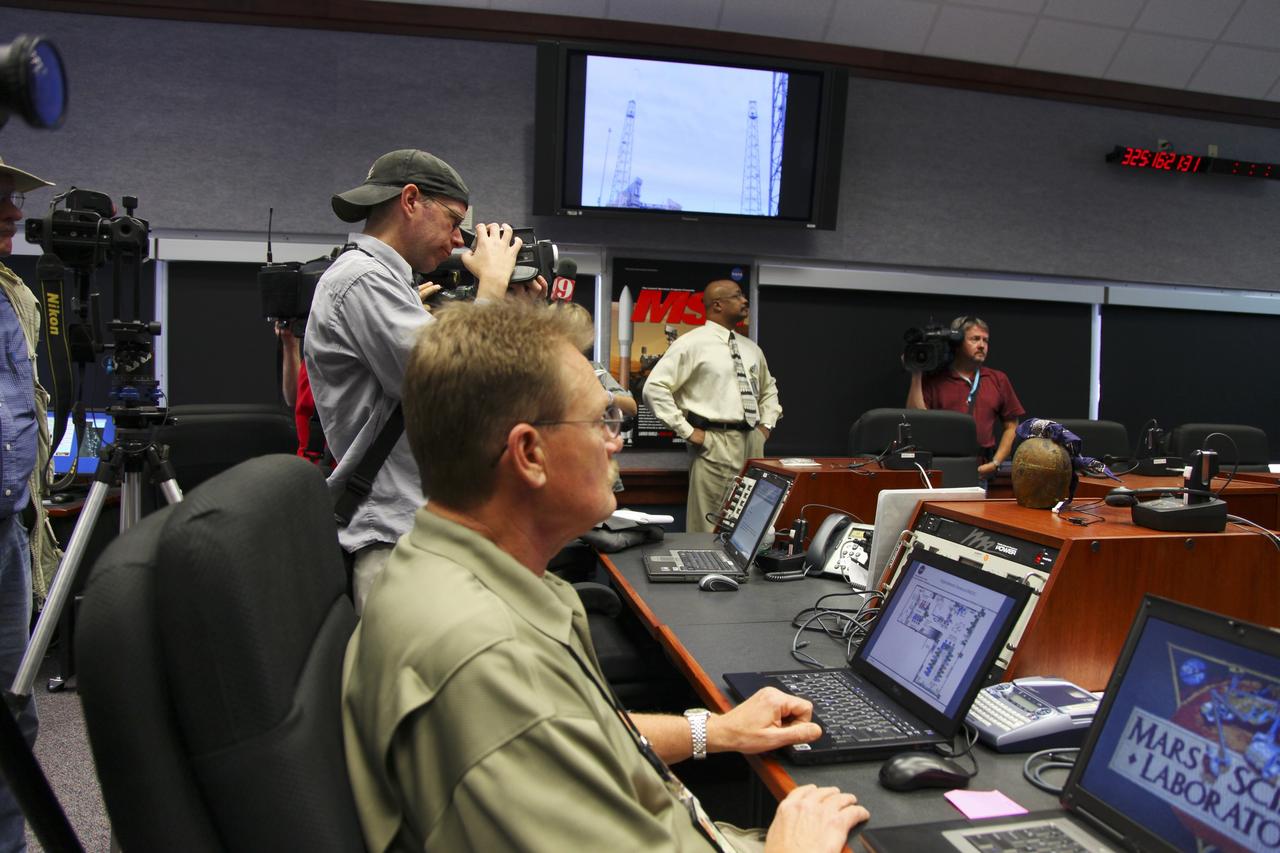
CAPE CANAVERAL, Fla. -- Members of the media take a tour of the Radiological Control Center (RADCC) at NASA's Kennedy Space Center in Florida. The tour focused on safety equipment and procedures for the upcoming launch of the Mars Science Laboratory (MSL) mission. The MSL spacecraft includes a multi-mission radioisotope thermoelectric generator (MMRTG) that will generate the power needed for the mission from the natural decay of plutonium-238, a non-weapons-grade form of the radioisotope. MSL's components include a car-sized rover, Curiosity, which has 10 science instruments designed to search for signs of life, including methane, and help determine if the gas is from a biological or geological source. Launch of MSL aboard a United Launch Alliance Atlas V rocket is targeted for Nov. 26 from Space Launch Complex 41 on Cape Canaveral Air Force Station. For more information, visit http://www.nasa.gov/msl. Photo credit: NASA/Frankie Martin
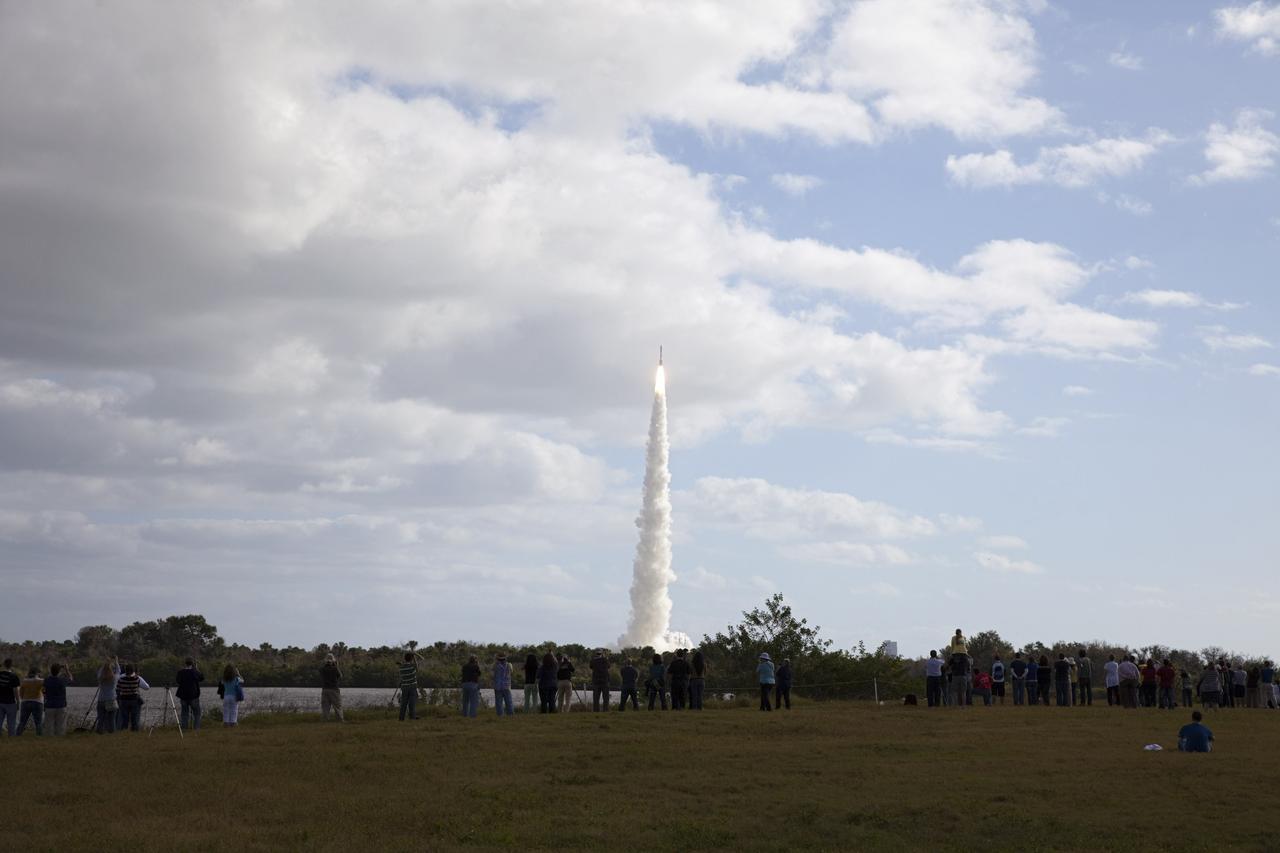
CAPE CANAVERAL, Fla. – At NASA Kennedy Space Center's Press Site in Florida, participants in NASA's Tweetup photograph the launch of the agency's Mars Science Laboratory (MSL) from the turn basin. The tweeters will share their experiences with followers through the social networking site Twitter. The 197-foot-tall United Launch Alliance Atlas V rocket lifted off Space Launch Complex-41 on neighboring Cape Canaveral Air Force Station at 10:02 a.m. EST at the opening of the launch window. MSL's components include a car-sized rover, Curiosity, which has 10 science instruments designed to search for signs of life, including methane, and help determine if the gas is from a biological or geological source. For more information, visit http://www.nasa.gov/msl. Photo credit: NASA/Frankie Martin
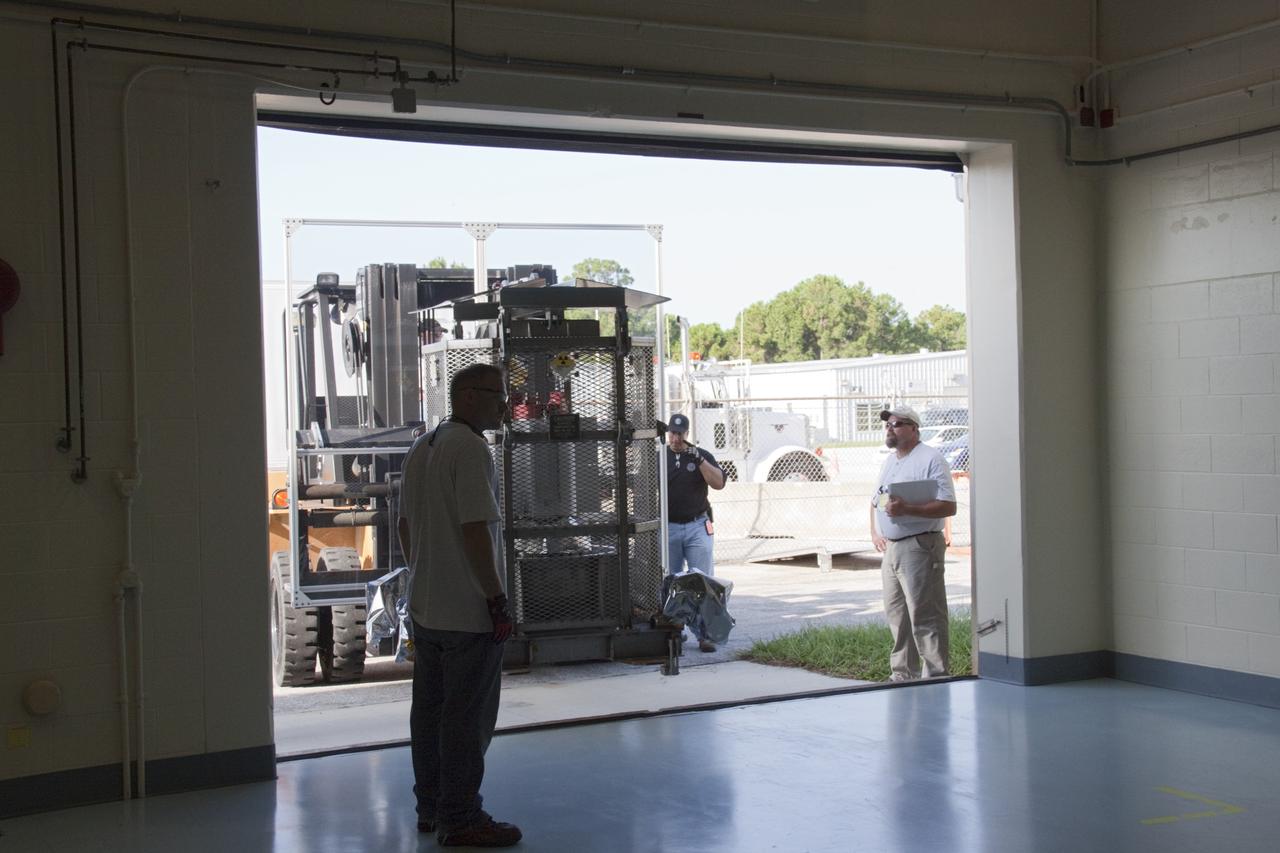
CAPE CANAVERAL, Fla. -- A forklift moves the multi-mission radioisotope thermoelectric generator (MMRTG) for NASA's Mars Science Laboratory (MSL) mission into the high bay of the RTG storage facility (RTGF) at NASA's Kennedy Space Center in Florida. The MMRTG is enclosed in a mesh container, known as the "gorilla cage," which protects it during transport and allows any excess heat generated to dissipate into the air. The MMRTG is returning to the RTGF following a fit check on MSL's Curiosity rover in the Payload Hazardous Servicing Facility (PHSF). The MMRTG will generate the power needed for the mission from the natural decay of plutonium-238, a non-weapons-grade form of the radioisotope. Heat given off by this natural decay will provide constant power through the day and night during all seasons. MSL's components include a compact car-sized rover, Curiosity, which has 10 science instruments designed to search for signs of life, including methane, and help determine if the gas is from a biological or geological source. Waste heat from the MMRTG will be circulated throughout the rover system to keep instruments, computers, mechanical devices and communications systems within their operating temperature ranges. Launch of MSL aboard a United Launch Alliance Atlas V rocket is targeted for Nov. 25 from Space Launch Complex 41 on Cape Canaveral Air Force Station. For more information, visit http://www.nasa.gov/msl. Photo credit: NASA/Troy Cryder
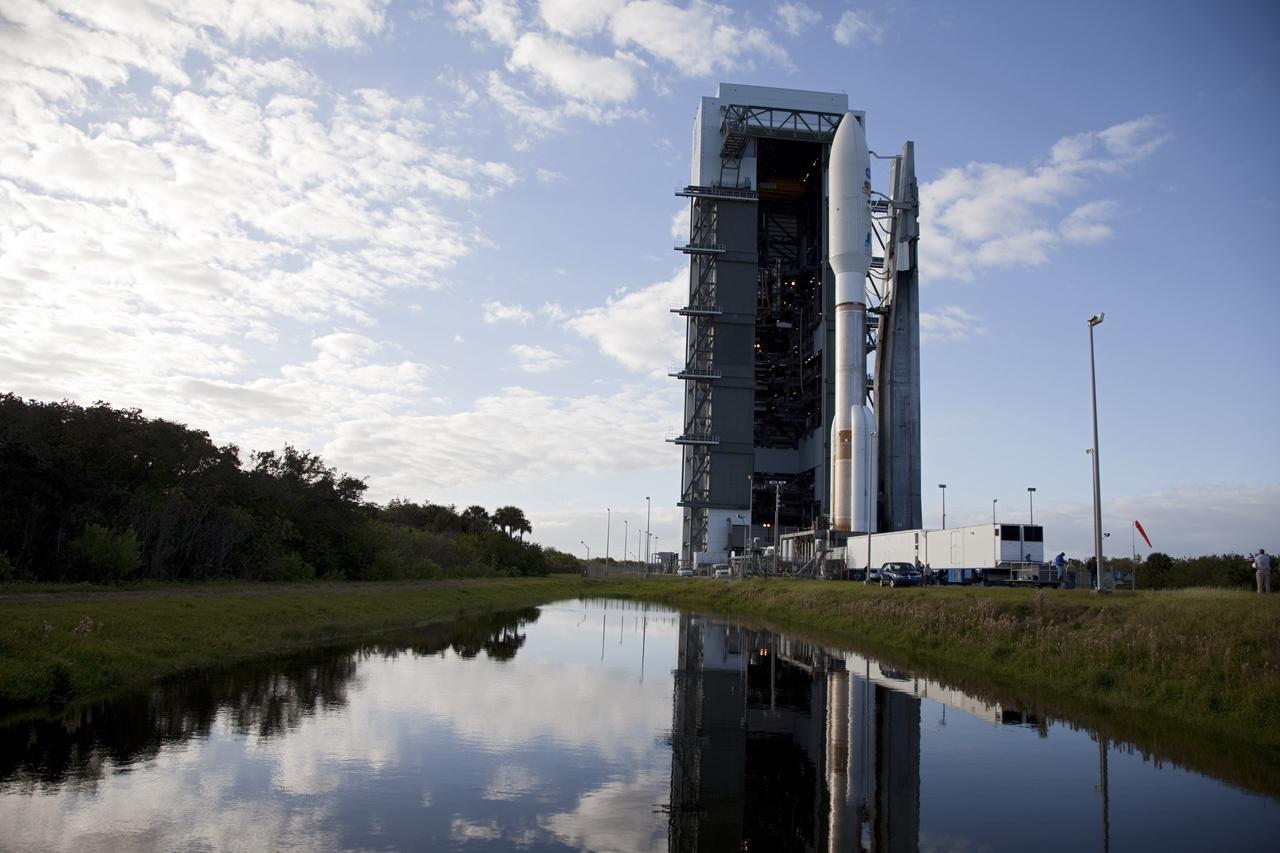
CAPE CANAVERAL, Fla. -- At Space Launch Complex 41 on Cape Canaveral Air Force Station in Florida, a pond reflects the 197-foot-tall United Launch Alliance Atlas V rocket and Vertical Integration Facility (VIF) against a blue sky flecked with white clouds. Atop the rocket is NASA's Mars Science Laboratory (MSL), enclosed in its payload fairing. The rocket began its move from the VIF to the launch pad at 8 a.m. EST, reaching the pad at 8:40 a.m. Liftoff is planned during a launch window which extends from 10:02 a.m. to 11:45 a.m. EST on Nov. 26. MSL's components include a car-sized rover, Curiosity, which has 10 science instruments designed to search for signs of life, including methane, and help determine if the gas is from a biological or geological source. For more information, visit http://www.nasa.gov/msl. Photo credit: NASA/Frankie Martin
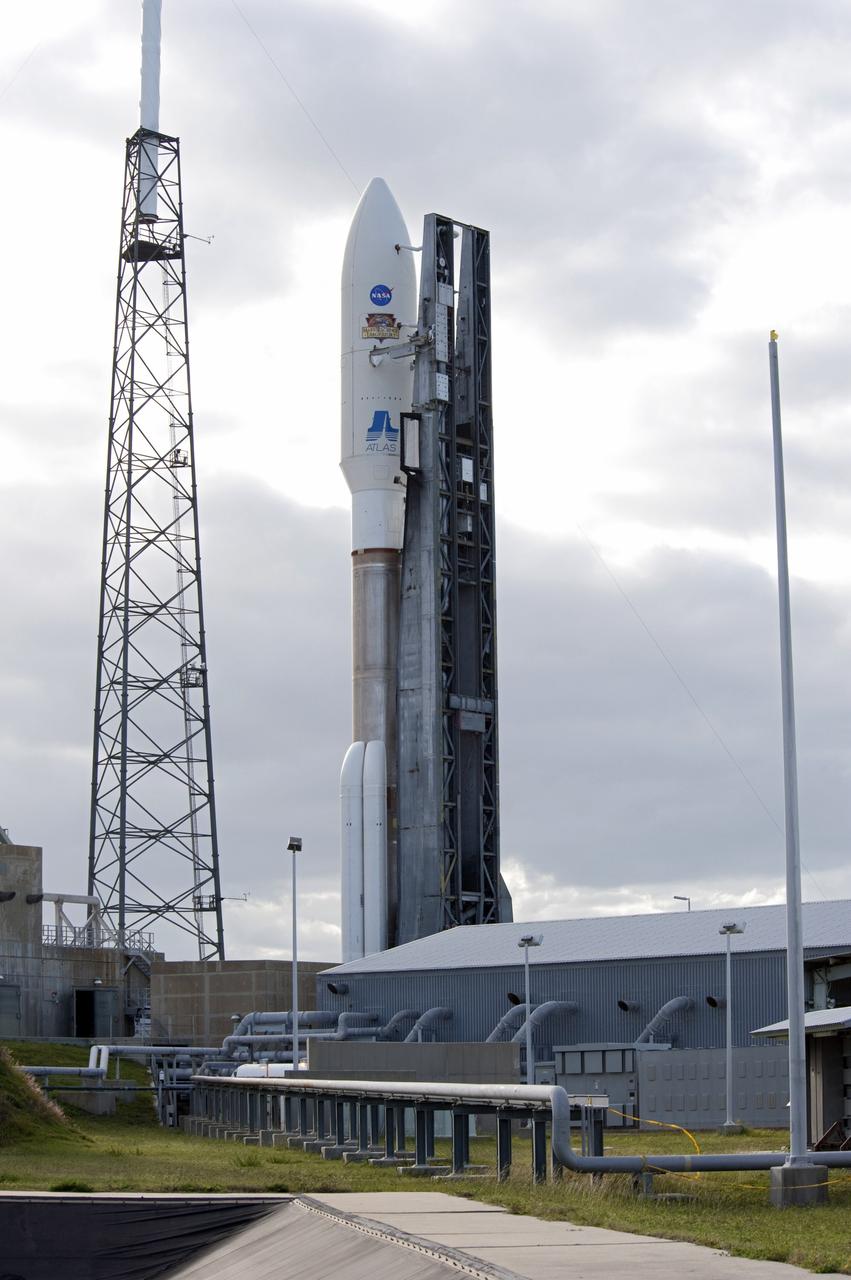
CAPE CANAVERAL, Fla. -- On Cape Canaveral Air Force Station in Florida, one of three lightning masts, at left, protects the 197-foot-tall United Launch Alliance Atlas V rocket as it rolls from the safety of the Vertical Integration Facility (VIF) at Space Launch Complex-41 to the pad's surface. Atop the rocket is NASA's Mars Science Laboratory (MSL), enclosed in its payload fairing. The rocket began its move from the VIF at 8 a.m. EST. Liftoff is planned during a launch window which extends from 10:02 a.m. to 11:45 a.m. EST on Nov. 26. MSL's components include a car-sized rover, Curiosity, which has 10 science instruments designed to search for signs of life, including methane, and help determine if the gas is from a biological or geological source. For more information, visit http://www.nasa.gov/msl. Photo credit: NASA/Tony Gray
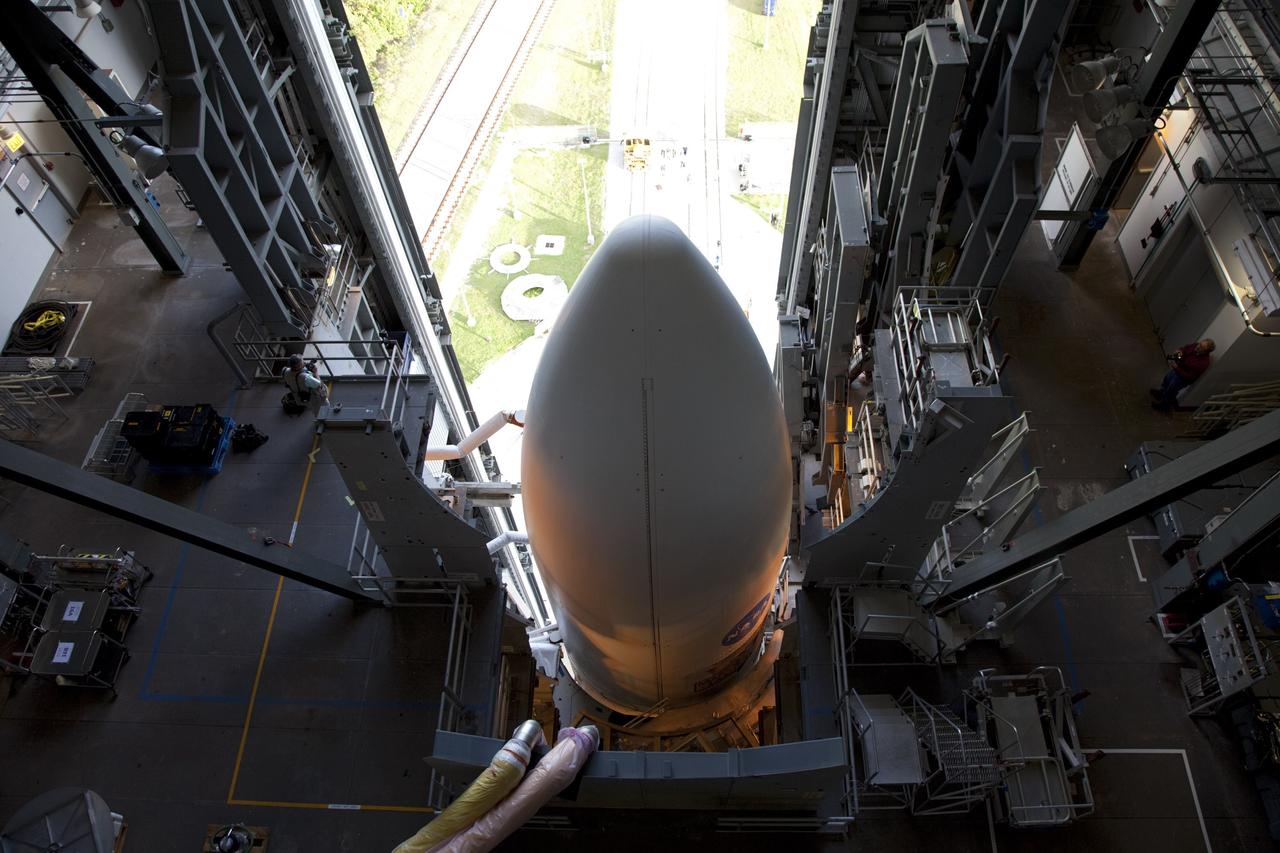
CAPE CANAVERAL, Fla. -- On Cape Canaveral Air Force Station in Florida, the payload fairing protecting NASA's Mars Science Laboratory (MSL) stands atop the 197-foot-tall United Launch Alliance Atlas V rocket, which is ready to roll from the Vertical Integration Facility (VIF) to the launch pad at Space Launch Complex 41. The rocket began its move from the VIF at 8 a.m. EST and arrived at the pad at 8:40 a.m. Liftoff is planned during a launch window which extends from 10:02 a.m. to 11:45 a.m. EST on Nov. 26. MSL's components include a car-sized rover, Curiosity, which has 10 science instruments designed to search for signs of life, including methane, and help determine if the gas is from a biological or geological source. For more information, visit http://www.nasa.gov/msl. Photo credit: NASA/Frankie Martin
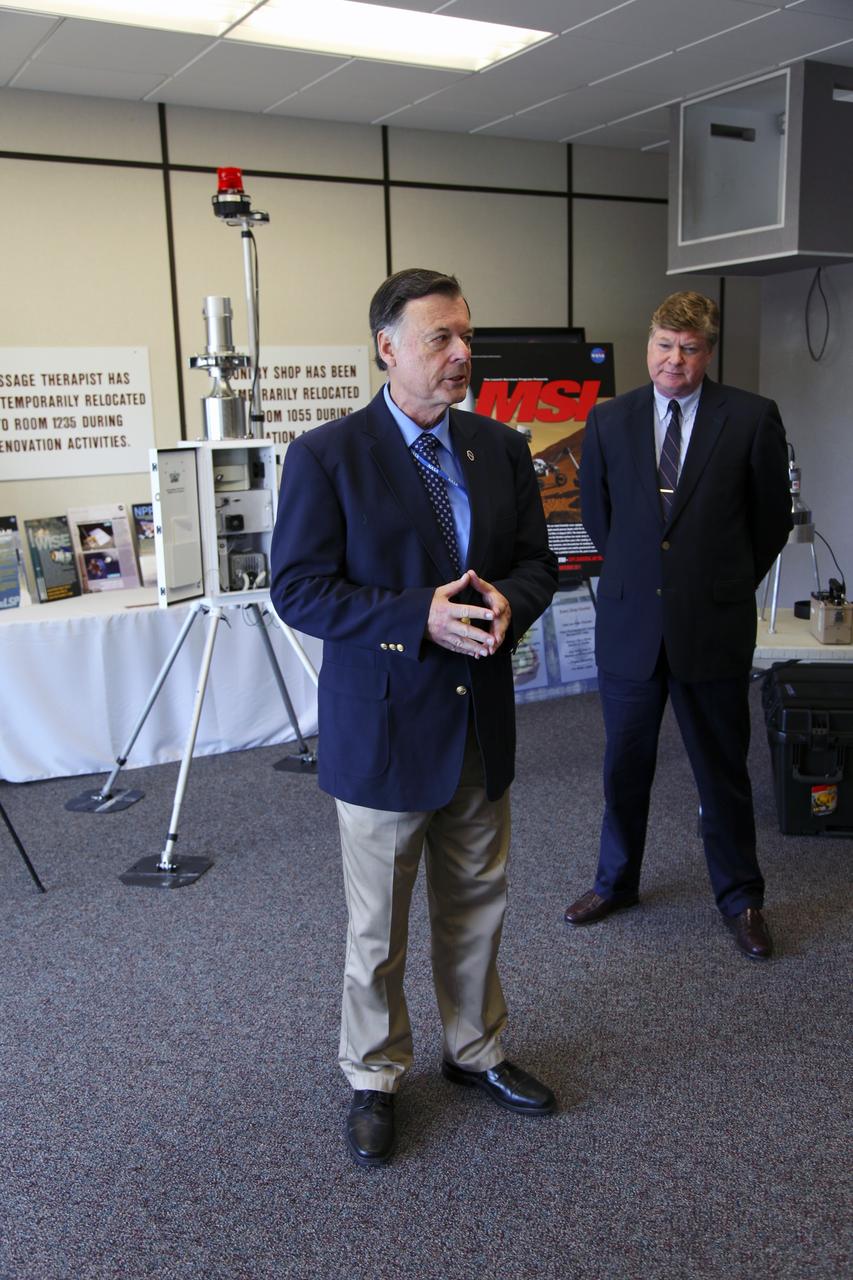
CAPE CANAVERAL, Fla. -- Randy Scott, director of Kennedy Space Center's Radiological Control Center (RADCC), speaks to media during a tour regarding safety equipment and procedures for the upcoming launch of the Mars Science Laboratory (MSL) mission. Behind him is Steve Homann, senior advisor for the Department of Energy. The MSL spacecraft includes a multi-mission radioisotope thermoelectric generator (MMRTG) that will generate the power needed for the mission from the natural decay of plutonium-238, a non-weapons-grade form of the radioisotope. MSL's components include a car-sized rover, Curiosity, which has 10 science instruments designed to search for signs of life, including methane, and help determine if the gas is from a biological or geological source. Launch of MSL aboard a United Launch Alliance Atlas V rocket is targeted for Nov. 26 from Space Launch Complex 41 on Cape Canaveral Air Force Station. For more information, visit http://www.nasa.gov/msl. Photo credit: NASA/Frankie Martin
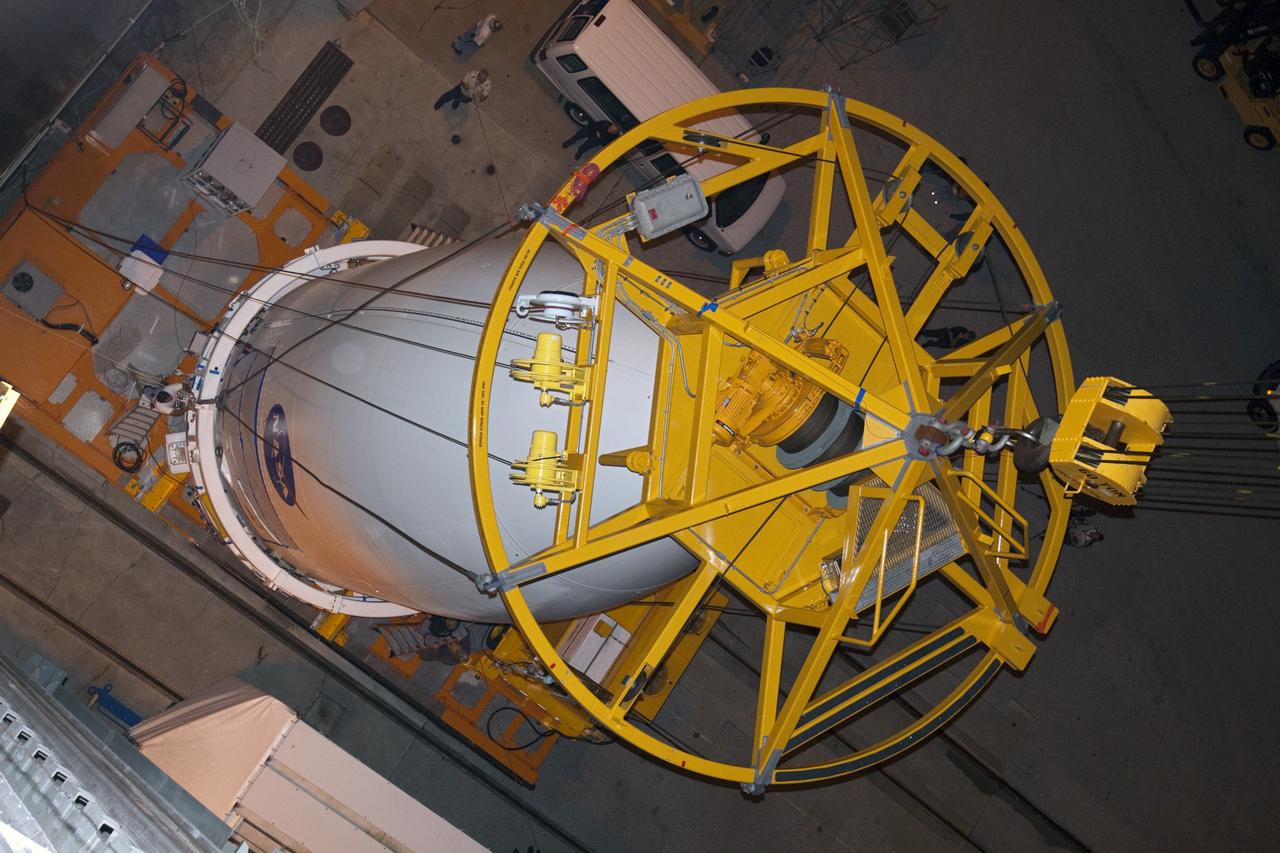
CAPE CANAVERAL, Fla. -- At Space Launch Complex 41 at Cape Canaveral Air Force Station in Florida, a lifting device is attached to the Atlas V payload fairing containing NASA's Mars Science Laboratory (MSL) spacecraft. The fairing, which protects the payload during ascent, will be lifted and mated to the Atlas V rocket already in place at the launch pad. MSL was prepared for launch in the Payload Hazardous Servicing Facility at NASA's Kennedy Space Center. MSL's components include a compact car-sized rover, Curiosity, which has 10 science instruments designed to search for evidence on whether Mars has had environments favorable to microbial life, including the chemical ingredients for life. The unique rover will use a laser to look inside rocks and release its gasses so that the rover’s spectrometer can analyze and send the data back to Earth. Launch of MSL aboard a United Launch Alliance Atlas V rocket is planned for Nov. 25 from Space Launch Complex 41 on Cape Canaveral Air Force Station. For more information, visit http://www.nasa.gov/msl. Photo credit: NASA/Kim Shiflett
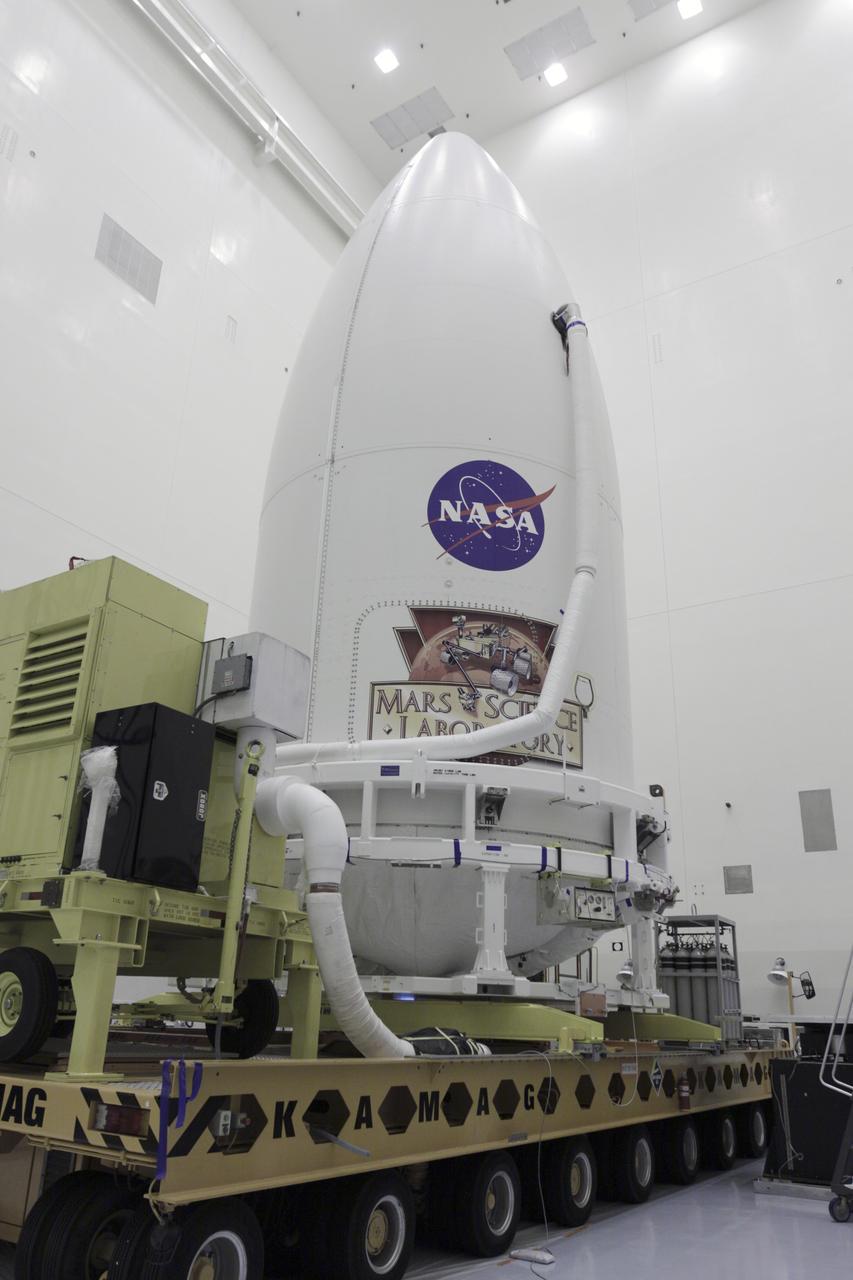
CAPE CANAVERAL, Fla. -- In the Payload Hazardous Servicing Facility at NASA's Kennedy Space Center in Florida, an Atlas V rocket's payload fairing, containing the Mars Science Laboratory (MSL) spacecraft, is in place atop a transporter that will carry it to Space Launch Complex 41. MSL's components include a compact car-sized rover, Curiosity, which has 10 science instruments designed to search for evidence on whether Mars has had environments favorable to microbial life, including the chemical ingredients for life. The unique rover will use a laser to look inside rocks and release its gasses so that the rover’s spectrometer can analyze and send the data back to Earth. Launch of MSL aboard a United Launch Alliance Atlas V rocket is planned for Nov. 25 from Space Launch Complex-41 on Cape Canaveral Air Force Station. For more information, visit http://www.nasa.gov/msl. Photo credit: NASA/Kim Shiflett
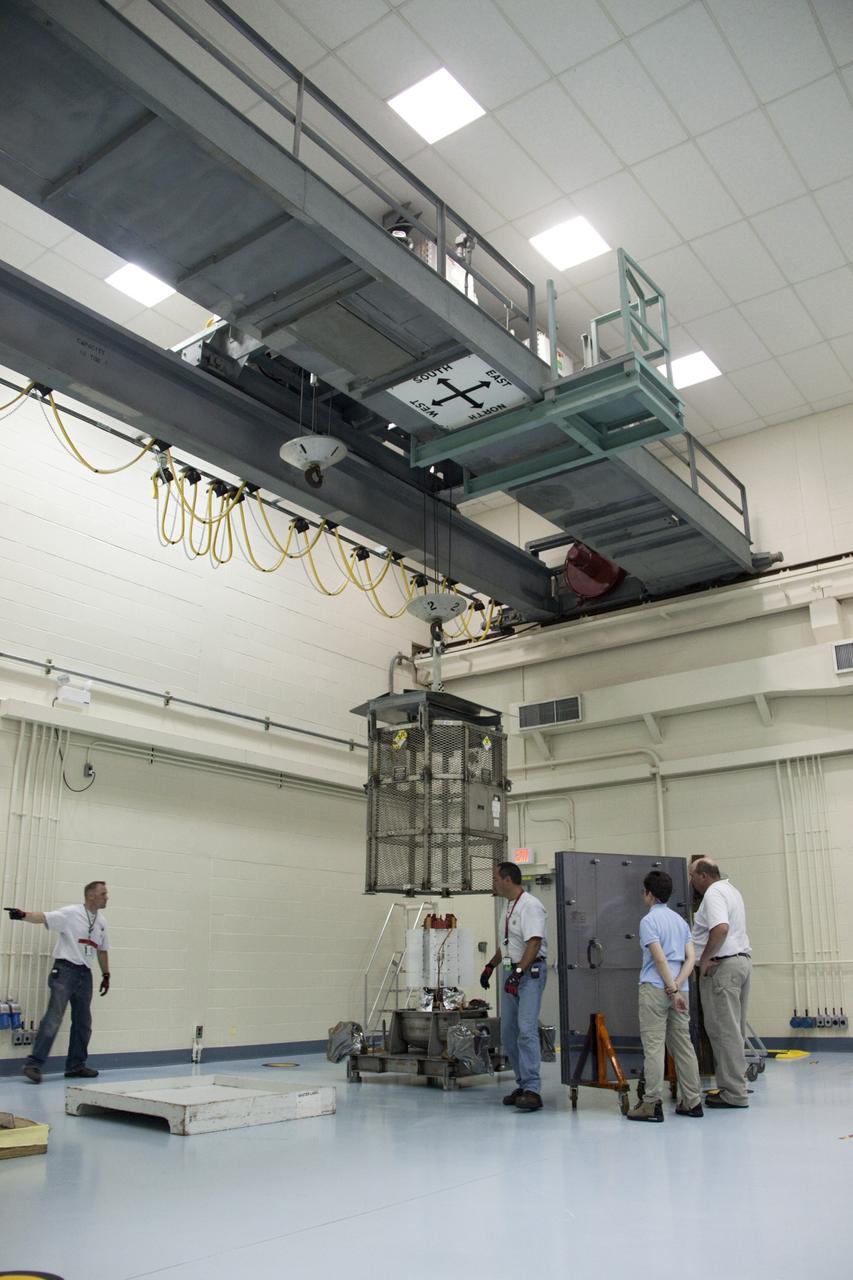
CAPE CANAVERAL, Fla. -- In the high bay of the RTG storage facility (RTGF) at NASA's Kennedy Space Center in Florida, the mesh container enclosing the multi-mission radioisotope thermoelectric generator (MMRTG) for NASA's Mars Science Laboratory (MSL) mission is lifted from around the MMRTG. The container, known as the "gorilla cage," protects the MMRTG during transport and allows any excess heat generated to dissipate into the air. The cage is being removed following the return of the MMRTG to the RTGF from a fit check on MSL's Curiosity rover in the Payload Hazardous Servicing Facility (PHSF). The workers at right are observing the operation from behind a mobile plexiglass radiation shield to minimize their radiation exposure. The MMRTG will generate the power needed for the mission from the natural decay of plutonium-238, a non-weapons-grade form of the radioisotope. Heat given off by this natural decay will provide constant power through the day and night during all seasons. MSL's components include a compact car-sized rover, Curiosity, which has 10 science instruments designed to search for signs of life, including methane, and help determine if the gas is from a biological or geological source. Waste heat from the MMRTG will be circulated throughout the rover system to keep instruments, computers, mechanical devices and communications systems within their operating temperature ranges. Launch of MSL aboard a United Launch Alliance Atlas V rocket is targeted for Nov. 25 from Space Launch Complex 41 on Cape Canaveral Air Force Station. For more information, visit http://www.nasa.gov/msl. Photo credit: NASA/Troy Cryder
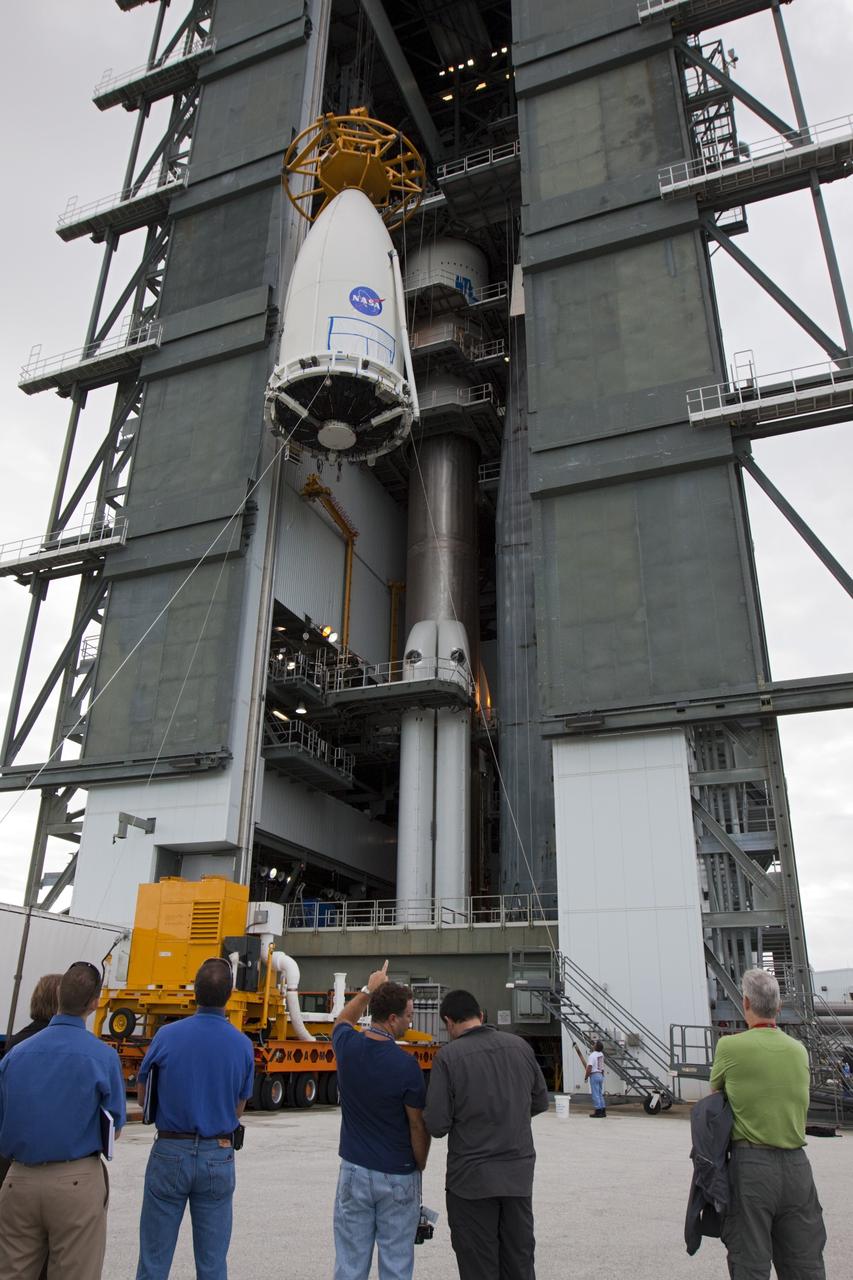
CAPE CANAVERAL, Fla. -- Employees at Space Launch Complex 41 keep watch as the payload fairing containing NASA's Mars Science Laboratory (MSL) spacecraft is lifted up the side of the Vertical Integration Facility. The fairing, which protects the payload during launch, will be attached to the Atlas V rocket already stacked inside the facility. MSL was prepared for launch in the Payload Hazardous Servicing Facility at NASA's Kennedy Space Center. MSL's components include a compact car-sized rover, Curiosity, which has 10 science instruments designed to search for evidence on whether Mars has had environments favorable to microbial life, including the chemical ingredients for life. The unique rover will use a laser to look inside rocks and release its gasses so that the rover’s spectrometer can analyze and send the data back to Earth. Launch of MSL aboard a United Launch Alliance Atlas V rocket is planned for Nov. 25 from Space Launch Complex 41 on Cape Canaveral Air Force Station. For more information, visit http://www.nasa.gov/msl. Photo credit: NASA/Kim Shiflett
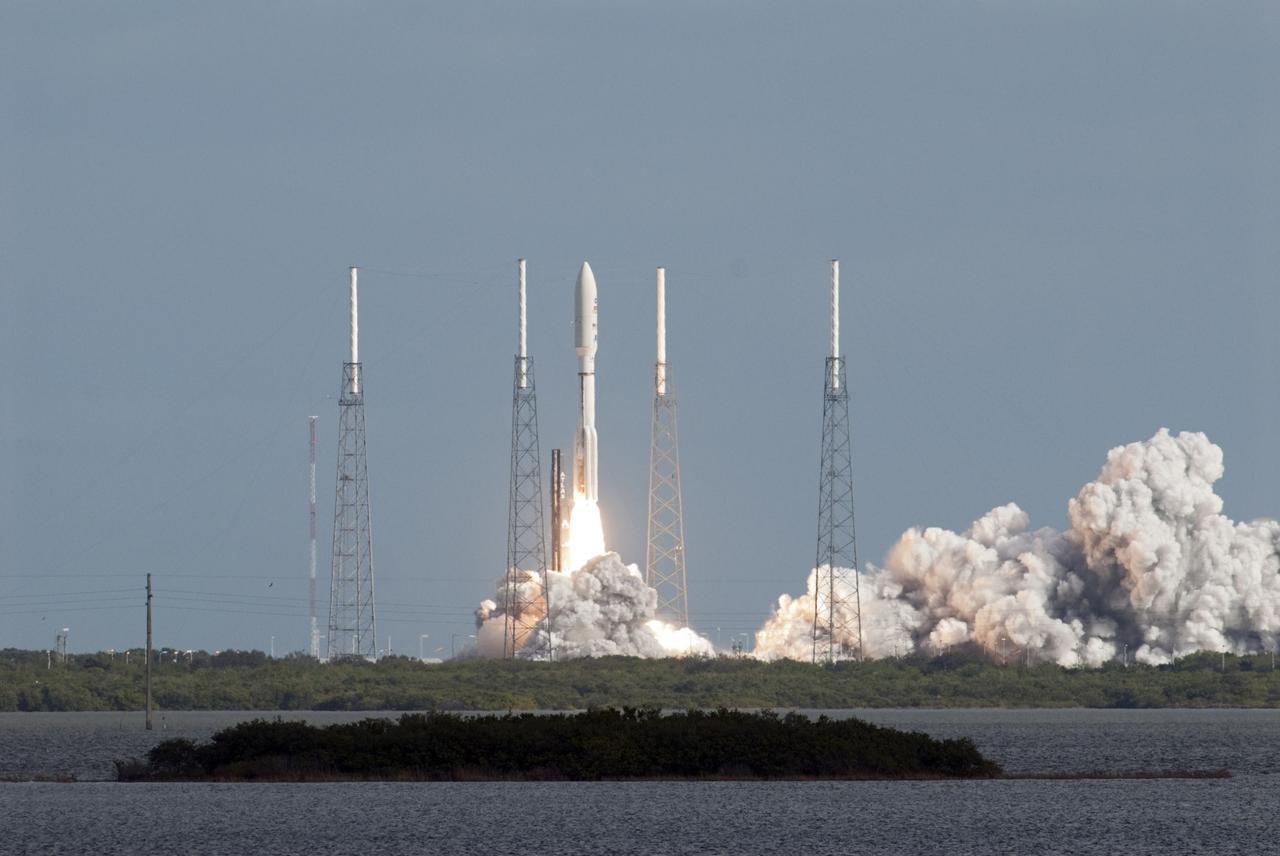
CAPE CANAVERAL, Fla. – NASA's Mars Science Laboratory (MSL) spacecraft, sealed inside its payload fairing, rises skyward aboard the United Launch Alliance Atlas V rocket. MSL lifted off from Space Launch Complex 41 on Cape Canaveral Air Force Station in Florida at 10:02 a.m. EST Nov. 26, beginning a 9-month interplanetary cruise to Mars. MSL's components include a car-sized rover, Curiosity, which has 10 science instruments designed to search for signs of life, including methane, and help determine if the gas is from a biological or geological source. For more information, visit http://www.nasa.gov/msl. Photo credit: NASA/Bill White
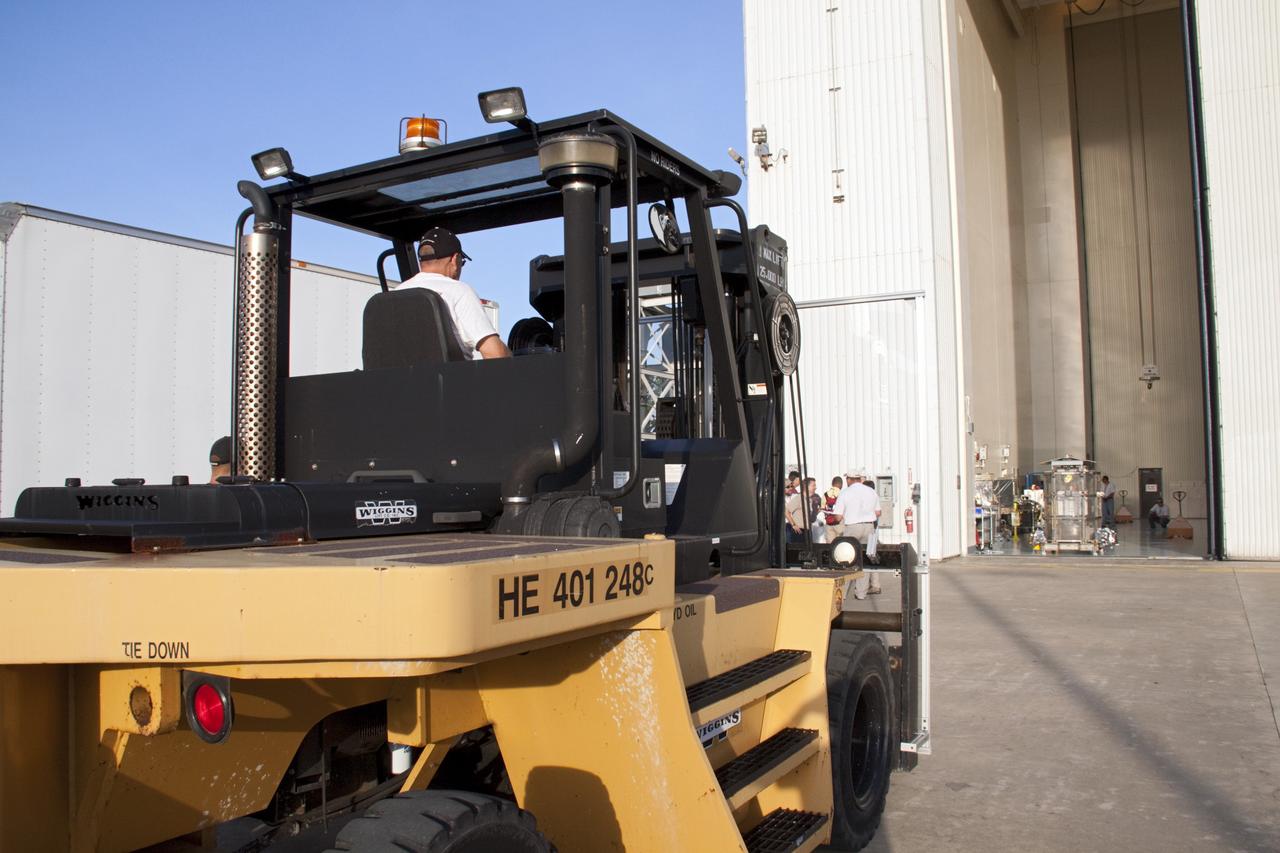
CAPE CANAVERAL, Fla. -- A forklift approaches the airlock of the Payload Hazardous Servicing Facility (PHSF) at NASA's Kennedy Space Center in Florida where the multi-mission radioisotope thermoelectric generator (MMRTG) for NASA's Mars Science Laboratory (MSL) mission awaits transport to the RTG storage facility. The MMRTG is enclosed in a mesh container, known as the "gorilla cage," which protects it during transport and allows any excess heat generated to dissipate into the air. The MMRTG was in the PHSF for a fit check on MSL's Curiosity rover. The MMRTG will generate the power needed for the mission from the natural decay of plutonium-238, a non-weapons-grade form of the radioisotope. Heat given off by this natural decay will provide constant power through the day and night during all seasons. MSL's components include a compact car-sized rover, Curiosity, which has 10 science instruments designed to search for signs of life, including methane, and help determine if the gas is from a biological or geological source. Waste heat from the MMRTG will be circulated throughout the rover system to keep instruments, computers, mechanical devices and communications systems within their operating temperature ranges. Launch of MSL aboard a United Launch Alliance Atlas V rocket is targeted for Nov. 25 from Space Launch Complex 41 on Cape Canaveral Air Force Station. For more information, visit http://www.nasa.gov/msl. Photo credit: NASA/Troy Cryder
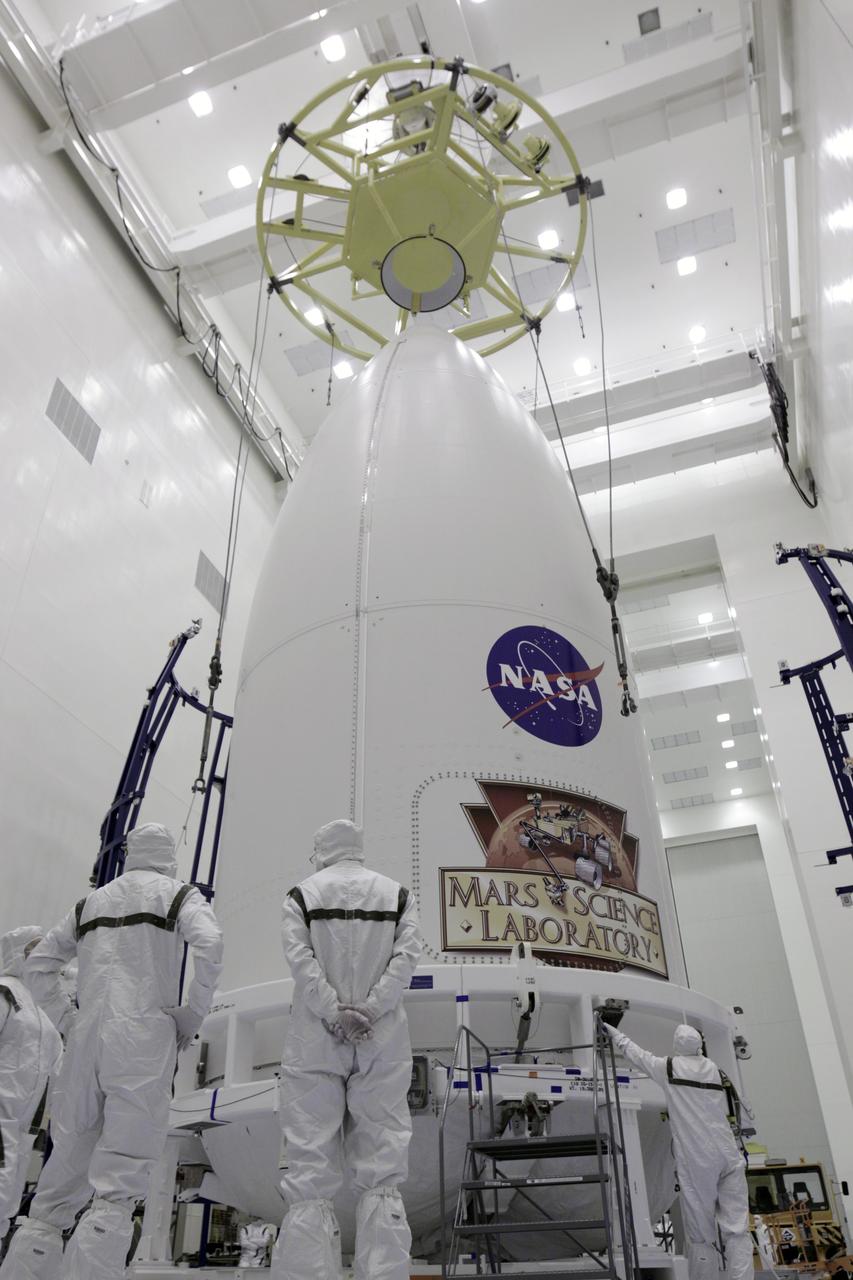
CAPE CANAVERAL, Fla. -- In the Payload Hazardous Servicing Facility at NASA's Kennedy Space Center in Florida, technicians attach a lifting device to the payload fairing of an Atlas V rocket. The fairing must be raised in order to be placed on a transporter for the move to Space Launch Complex 41. The Mars Science Laboratory (MSL) spacecraft is enclosed in the fairing, which will protect the payload from heat and aerodynamic pressure generated during launch. MSL's components include a compact car-sized rover, Curiosity, which has 10 science instruments designed to search for evidence on whether Mars has had environments favorable to microbial life, including the chemical ingredients for life. The unique rover will use a laser to look inside rocks and release its gasses so that the rover’s spectrometer can analyze and send the data back to Earth. Launch of MSL aboard a United Launch Alliance Atlas V rocket is planned for Nov. 25 from Space Launch Complex-41 on Cape Canaveral Air Force Station. For more information, visit http://www.nasa.gov/msl. Photo credit: NASA/Kim Shiflett
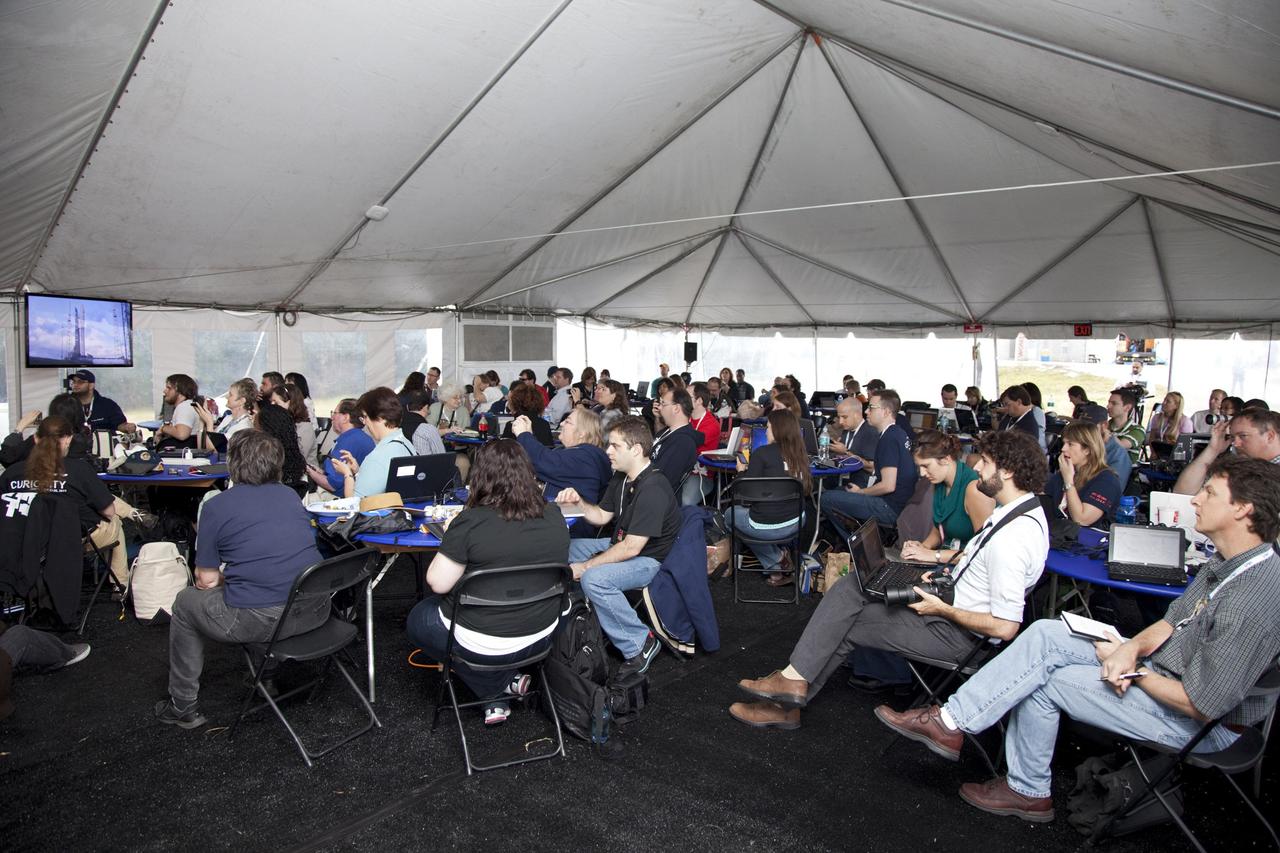
CAPE CANAVERAL, Fla. – A Tweetup gets under way in a tent set up at NASA Kennedy Space Center's Press Site in Florida during prelaunch activities for the agency’s Mars Science Laboratory (MSL) launch. Participants in the Tweetup are given the opportunity to listen to agency briefings, tour locations on the center normally off limits to visitors, and get a close-up view of Space Launch Complex-41 on Cape Canaveral Air Force Station. The tweeters will share their experiences with followers through the social networking site Twitter. The MSL mission will pioneer precision landing technology and a sky-crane touchdown to place a car-sized rover, Curiosity, near the foot of a mountain inside Gale Crater on Aug. 6, 2012. During a nearly two-year prime mission after landing, the rover will investigate whether the region has ever offered conditions favorable for microbial life, including the chemical ingredients for life. Liftoff of MSL aboard a United Launch Alliance Atlas V rocket from pad 41 is planned during a launch window which extends from 10:02 a.m. to 11:45 a.m. EST on Nov. 26. For more information, visit http://www.nasa.gov/msl. Photo credit: NASA/Frankie Martin

CAPE CANAVERAL, Fla. -- With NASA's Mars Science Laboratory (MSL) spacecraft sealed inside its payload fairing, the United Launch Alliance Atlas V rocket prepares to liftoff from Space Launch Complex-41 on Cape Canaveral Air Force Station in Florida at 10:02 a.m. EST Nov. 26. MSL's components include a car-sized rover, Curiosity, which has 10 science instruments designed to search for signs of life, including methane, and help determine if the gas is from a biological or geological source. For more information, visit http://www.nasa.gov/msl. Photo credit: NASA/George Roberts
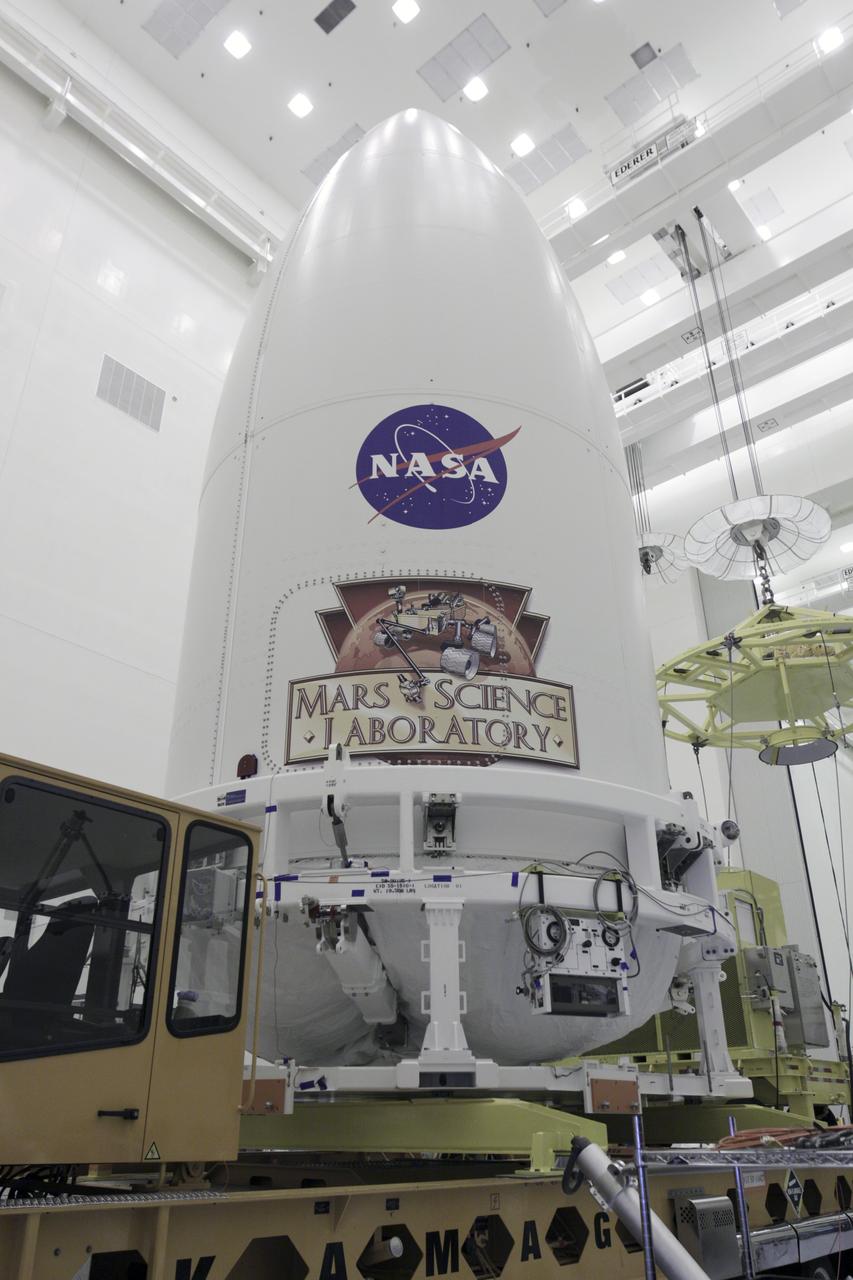
CAPE CANAVERAL, Fla. -- In the Payload Hazardous Servicing Facility at NASA's Kennedy Space Center in Florida, the Atlas V rocket's payload fairing containing the Mars Science Laboratory (MSL) spacecraft stands securely atop the transporter that will carry it to Space Launch Complex 41. MSL's components include a compact car-sized rover, Curiosity, which has 10 science instruments designed to search for evidence on whether Mars has had environments favorable to microbial life, including the chemical ingredients for life. The unique rover will use a laser to look inside rocks and release its gasses so that the rover’s spectrometer can analyze and send the data back to Earth. Launch of MSL aboard a United Launch Alliance Atlas V rocket is planned for Nov. 25 from Space Launch Complex-41 on Cape Canaveral Air Force Station. For more information, visit http://www.nasa.gov/msl. Photo credit: NASA/Kim Shiflett
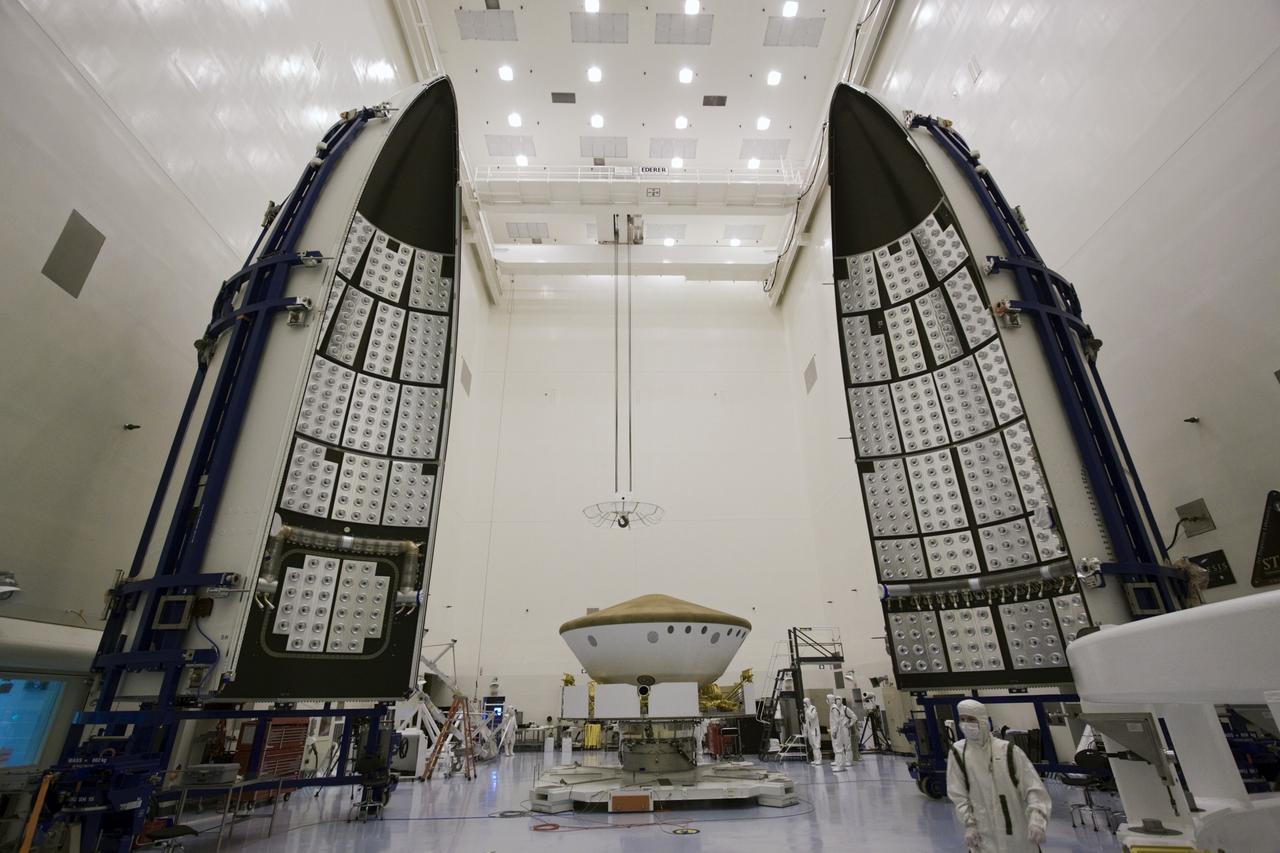
CAPE CANAVERAL, Fla. -- In the Payload Hazardous Servicing Facility at NASA's Kennedy Space Center in Florida, preparations are under way to enclose NASA's Mars Science Laboratory (MSL) in an Atlas V rocket payload fairing. The blocks on the interior of the fairing are components of the fairing acoustic protection (FAP) system, designed to protect the payload by dampening the sound created by the rocket during liftoff. The fairing will protect the spacecraft from the impact of aerodynamic pressure and heating during ascent. MSL's components include a compact car-sized rover, Curiosity, which has 10 science instruments designed to search for evidence on whether Mars has had environments favorable to microbial life, including the chemical ingredients for life. The unique rover will use a laser to look inside rocks and release its gasses so that the rover’s spectrometer can analyze and send the data back to Earth. Launch of MSL aboard a United Launch Alliance Atlas V rocket is planned for Nov. 25 from Space Launch Complex-41 on Cape Canaveral Air Force Station. For more information, visit http://www.nasa.gov/msl. Photo credit: NASA/Jim Grossmann
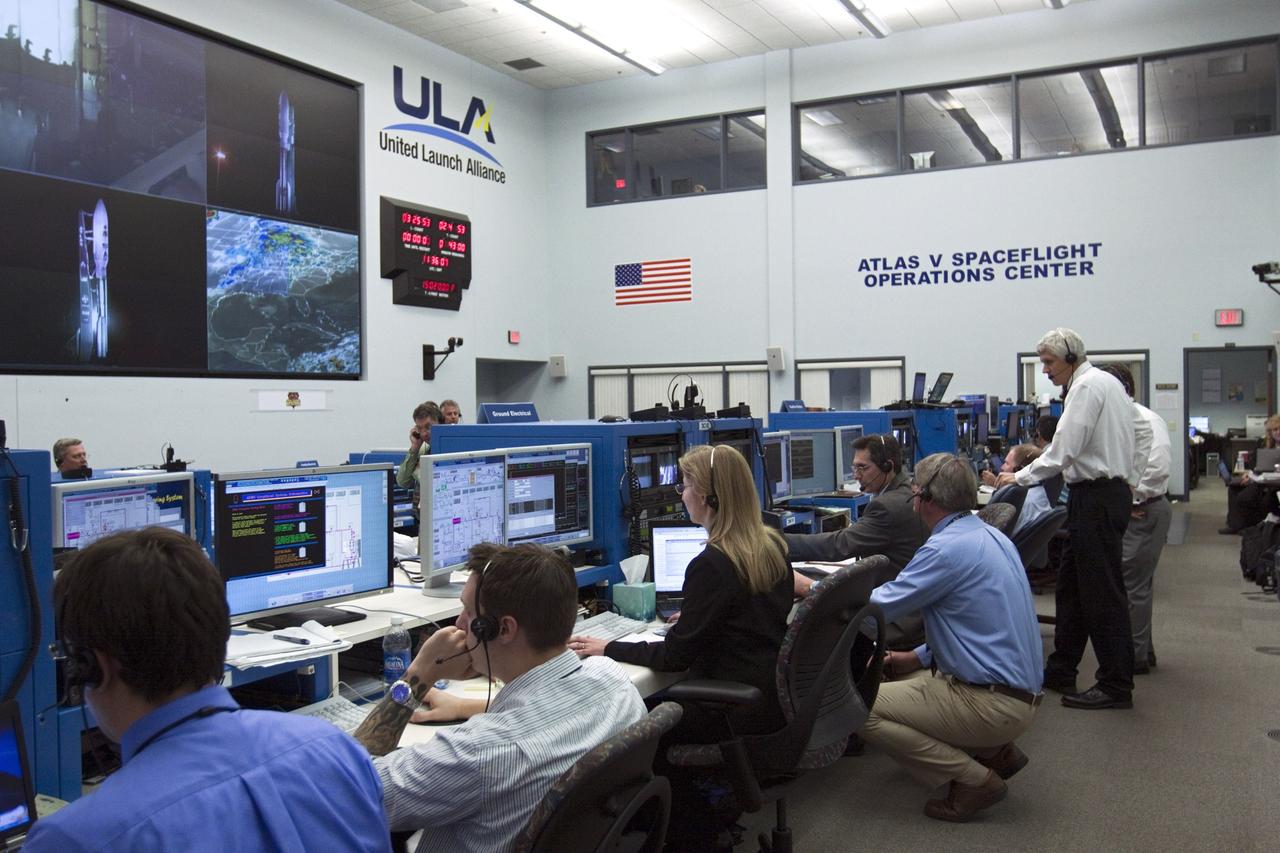
CAPE CANAVERAL – Launch controllers oversee the countdown in the Atlas V Spaceflight Operations Center (ASOC) before the launch of the Mars Science Laboratory on an Atlas V rocket. MSL lifted off at 10:02 a.m. EST Nov. 26, beginning a 9-month interplanetary cruise to Mars. MSL's components include a car-sized rover, Curiosity, which has 10 science instruments designed to search for signs of life, including methane, and help determine if the gas is from a biological or geological source. For more information, visit http://www.nasa.gov/msl. Photo credit: NASA/Kim Shiflett

CAPE CANAVERAL, Fla. – Television personality Bill Nye the Science Guy talks to the participants of a NASA Tweetup in a tent set up at NASA Kennedy Space Center's Press Site in Florida during prelaunch activities for the agency’s Mars Science Laboratory (MSL) launch. Participants in the Tweetup are given the opportunity to listen to agency briefings, tour locations on the center normally off limits to visitors, and get a close-up view of Space Launch Complex-41 on Cape Canaveral Air Force Station. The tweeters will share their experiences with followers through the social networking site Twitter. The MSL mission will pioneer precision landing technology and a sky-crane touchdown to place a car-sized rover, Curiosity, near the foot of a mountain inside Gale Crater on Aug. 6, 2012. During a nearly two-year prime mission after landing, the rover will investigate whether the region has ever offered conditions favorable for microbial life, including the chemical ingredients for life. Liftoff of MSL aboard a United Launch Alliance Atlas V rocket from pad 41 is planned during a launch window which extends from 10:02 a.m. to 11:45 a.m. EST on Nov. 26. For more information, visit http://www.nasa.gov/msl. Photo credit: NASA/Frankie Martin
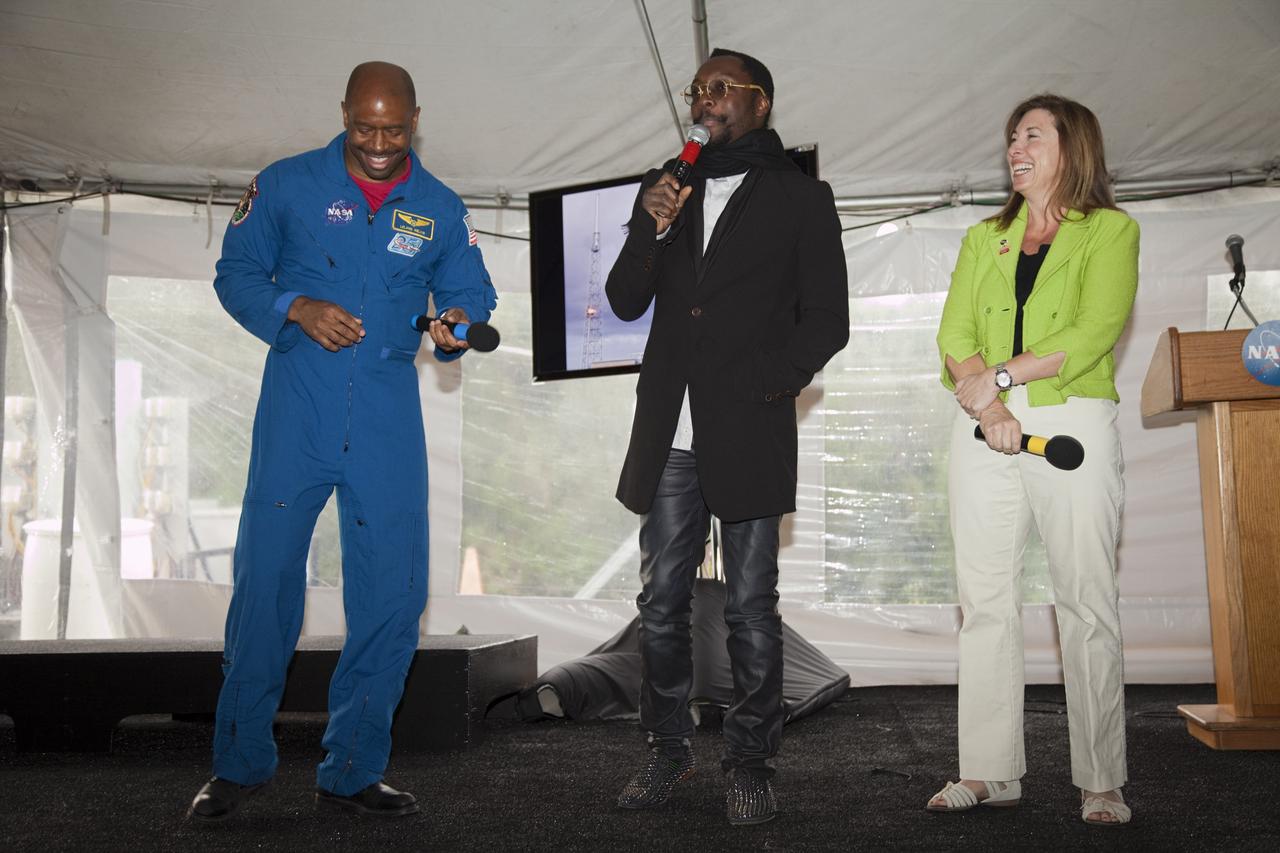
CAPE CANAVERAL, Fla. – From left, former astronaut Leland Melvin, NASA associate administrator for Education; Will.i.am, entertainer and member of The Black Eyed Peas; and NASA Deputy Administrator Lori Garver share a light moment with the participants of a NASA Tweetup in a tent set up at NASA Kennedy Space Center's Press Site in Florida during prelaunch activities for the agency’s Mars Science Laboratory (MSL) launch. Participants in the Tweetup are given the opportunity to listen to agency briefings, tour locations on the center normally off limits to visitors, and get a close-up view of Space Launch Complex-41 on Cape Canaveral Air Force Station. The tweeters will share their experiences with followers through the social networking site Twitter. The MSL mission will pioneer precision landing technology and a sky-crane touchdown to place a car-sized rover, Curiosity, near the foot of a mountain inside Gale Crater on Aug. 6, 2012. During a nearly two-year prime mission after landing, the rover will investigate whether the region has ever offered conditions favorable for microbial life, including the chemical ingredients for life. Liftoff of MSL aboard a United Launch Alliance Atlas V rocket from pad 41 is planned during a launch window which extends from 10:02 a.m. to 11:45 a.m. EST on Nov. 26. For more information, visit http://www.nasa.gov/msl. Photo credit: NASA/Frankie Martin
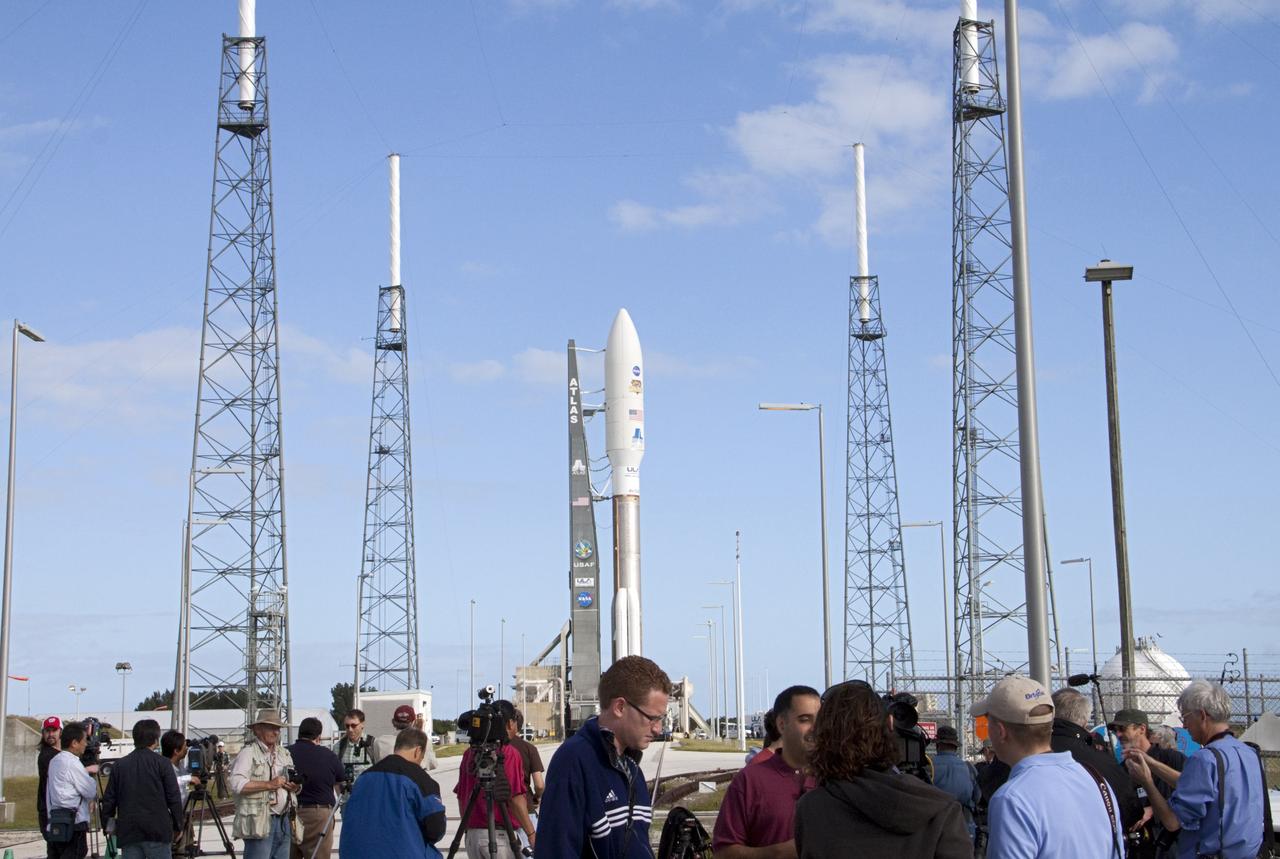
CAPE CANAVERAL, Fla. -- On Cape Canaveral Air Force Station in Florida, members of the media gather near the launch pad at Space Launch Complex 41 to document the arrival of the 197-foot-tall United Launch Alliance Atlas V rocket after an early morning move from the nearby Vertical Integration Facility (VIF). Atop the rocket is NASA's Mars Science Laboratory (MSL), enclosed in its payload fairing. The rocket began its move from the VIF at 8 a.m. EST and reached the launch pad at 8:40 a.m. Liftoff is planned during a launch window which extends from 10:02 a.m. to 11:45 a.m. EST on Nov. 26. MSL's components include a car-sized rover, Curiosity, which has 10 science instruments designed to search for signs of life, including methane, and help determine if the gas is from a biological or geological source. For more information, visit http://www.nasa.gov/msl. Photo credit: NASA/Ken Thornsley
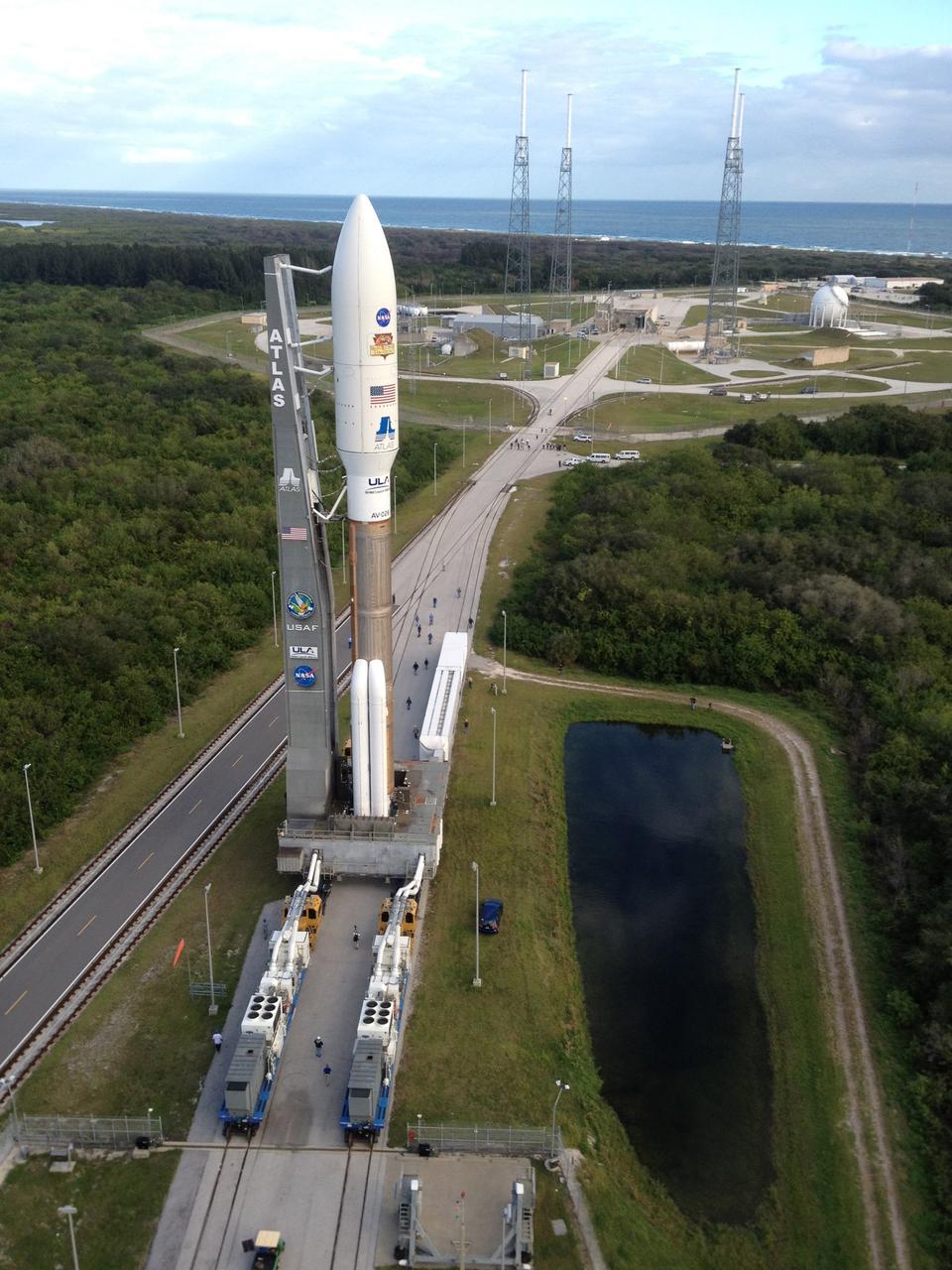
CAPE CANAVERAL, Fla. -- Backdropped by the Atlantic Ocean, the 197-foot-tall United Launch Alliance Atlas V rocket rolls toward the launch pad at Space Launch Complex 41 on Cape Canaveral Air Force Station in Florida. Atop the rocket is NASA's Mars Science Laboratory (MSL), enclosed in its payload fairing. The rocket began its move from the Vertical Integration Facility at 8 a.m. EST, arriving at the launch pad at 8:40 a.m. Liftoff is planned during a launch window which extends from 10:02 a.m. to 11:45 a.m. EST on Nov. 26. MSL's components include a car-sized rover, Curiosity, which has 10 science instruments designed to search for signs of life, including methane, and help determine if the gas is from a biological or geological source. For more information, visit http://www.nasa.gov/msl. Photo credit: Courtesy Scott Andrews
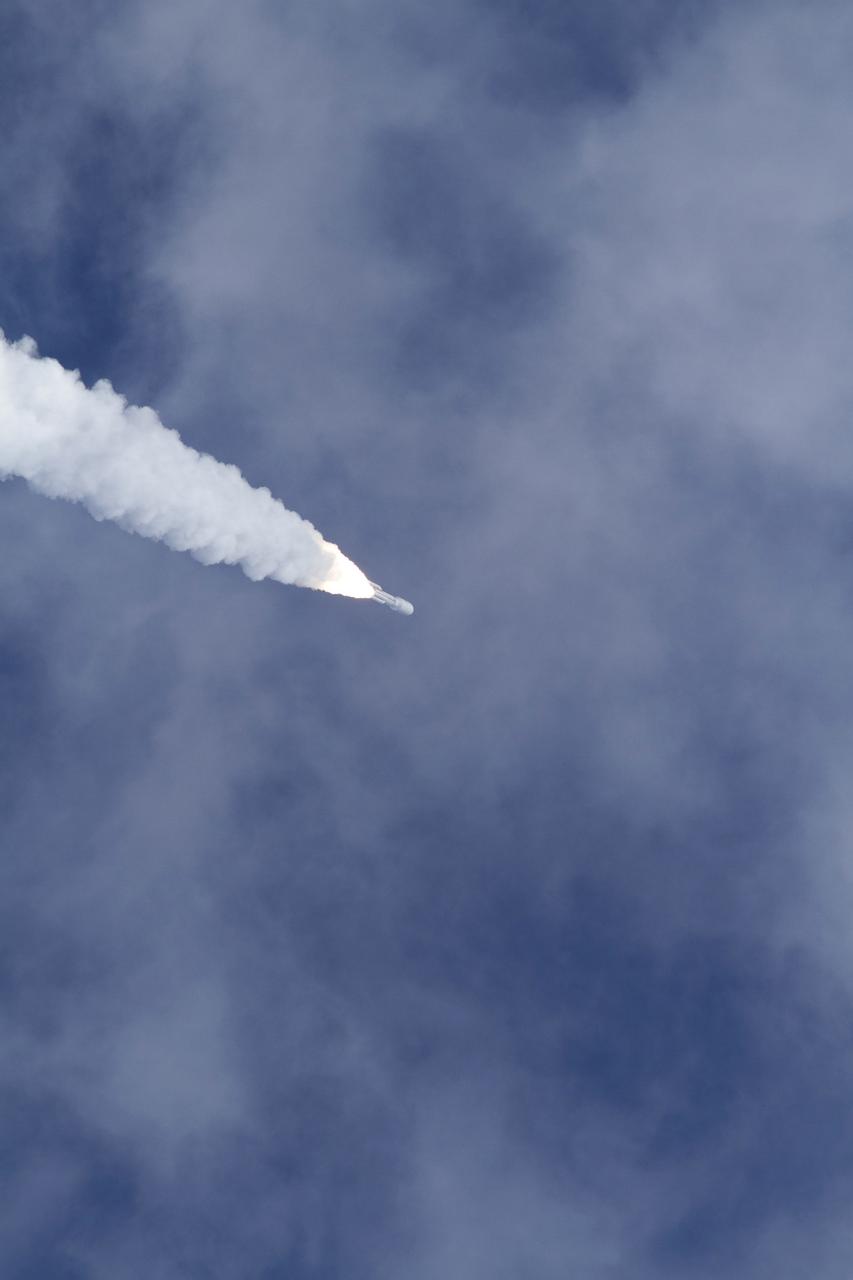
CAPE CANAVERAL, Fla. -- With NASA's Mars Science Laboratory (MSL) spacecraft sealed inside its payload fairing, the United Launch Alliance Atlas V rocket rides a plume of flames as it continues its assent into the blue sky over Space Launch Complex-41 on Cape Canaveral Air Force Station in Florida at 10:02 a.m. EST Nov. 26. MSL's components include a car-sized rover, Curiosity, which has 10 science instruments designed to search for signs of life, including methane, and help determine if the gas is from a biological or geological source. For more information, visit http://www.nasa.gov/msl. Photo credit: NASA/George Roberts
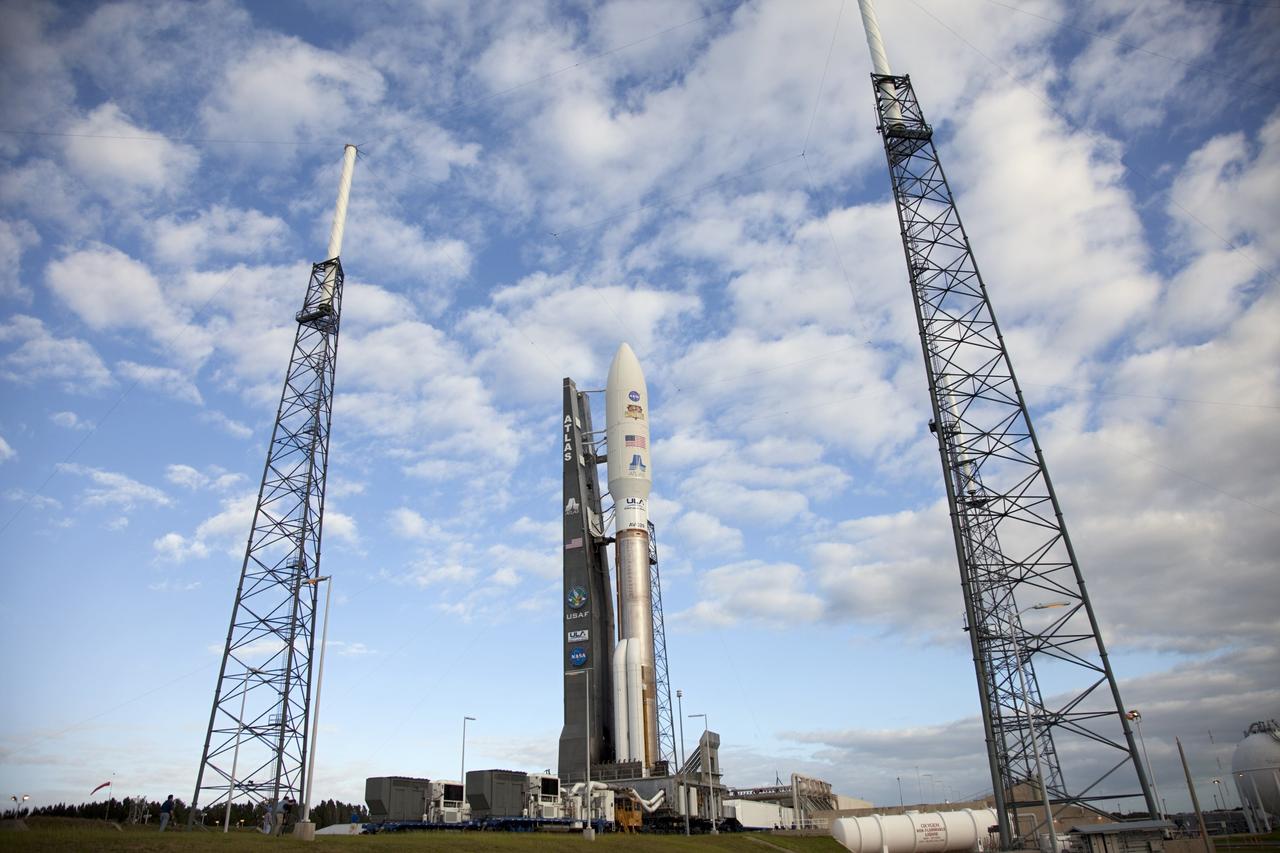
CAPE CANAVERAL, Fla. -- Surrounded by four towering lightning masts, the 197-foot-tall United Launch Alliance Atlas V rocket arrives at the launch pad at Space Launch Complex 41 on Cape Canaveral Air Force Station in Florida. Atop the rocket is NASA's Mars Science Laboratory (MSL), enclosed in its payload fairing. The rocket began its move from the Vertical Integration Facility at 8 a.m. EST and arrived at the pad at 8:40 a.m. Liftoff is planned during a launch window which extends from 10:02 a.m. to 11:45 a.m. EST on Nov. 26. MSL's components include a car-sized rover, Curiosity, which has 10 science instruments designed to search for signs of life, including methane, and help determine if the gas is from a biological or geological source. For more information, visit http://www.nasa.gov/msl. Photo credit: NASA/Frankie Martin
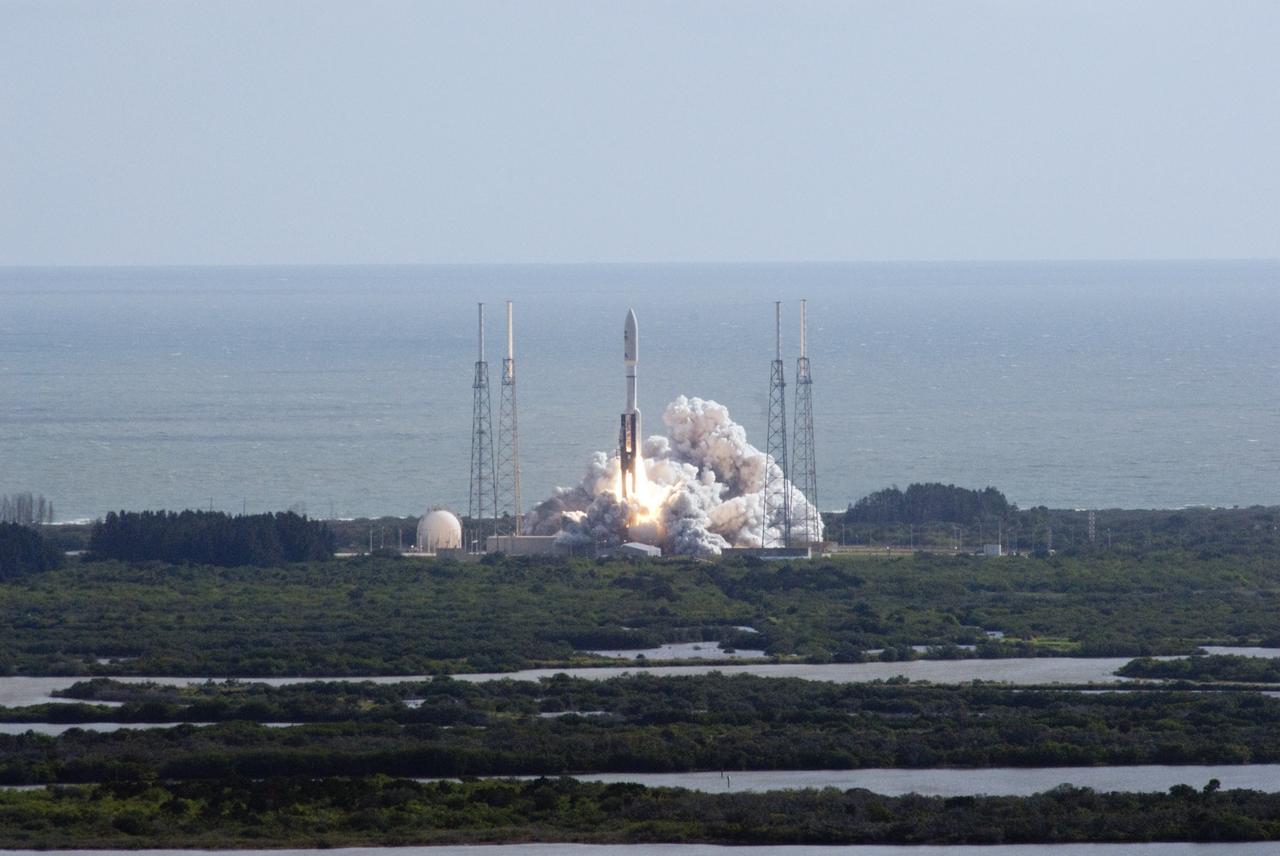
CAPE CANAVERAL, Fla. – The Atlantic Ocean provides a backdrop as the United Launch Alliance Atlas V rocket clears the tower at Space Launch Complex 41 on Cape Canaveral Air Force Station in Florida. Sealed inside the rocket's protective payload fairing is NASA's Mars Science Laboratory (MSL) spacecraft, beginning a 9-month interplanetary cruise to Mars. Liftoff was at 10:02 a.m. EST Nov. 26. MSL's components include a car-sized rover, Curiosity, which has 10 science instruments designed to search for signs of life, including methane, and help determine if the gas is from a biological or geological source. For more information, visit http://www.nasa.gov/msl. Photo credit: NASA/Darrell L. McCall
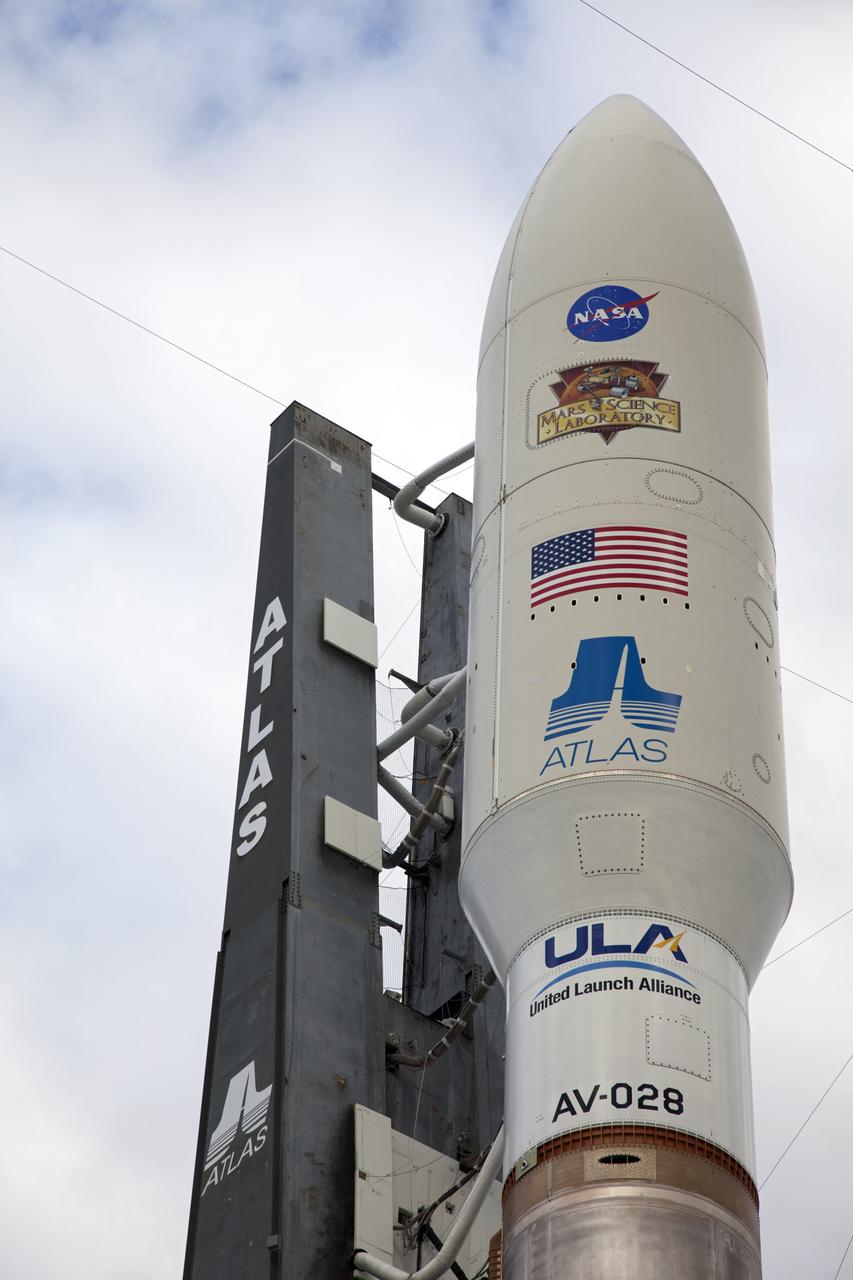
CAPE CANAVERAL, Fla. -- The NASA and Mars Science Laboratory (MSL) logos appear above the American flag and Atlas logo on the payload fairing atop the 197-foot-tall United Launch Alliance Atlas V rocket. Enclosed inside the fairing is the MSL spacecraft, awaiting its launch on a mission to the Red Planet. At 8 a.m., the rocket rolled out of the Vertical Integration Facility at Space Launch Complex 41 on Cape Canaveral Air Force Station in Florida, arriving at the launch pad at 8:40 a.m. Liftoff is planned during a launch window which extends from 10:02 a.m. to 11:45 a.m. EST on Nov. 26. MSL's components include a car-sized rover, Curiosity, which has 10 science instruments designed to search for signs of life, including methane, and help determine if the gas is from a biological or geological source. For more information, visit http://www.nasa.gov/msl. Photo credit: NASA/Frankie Martin
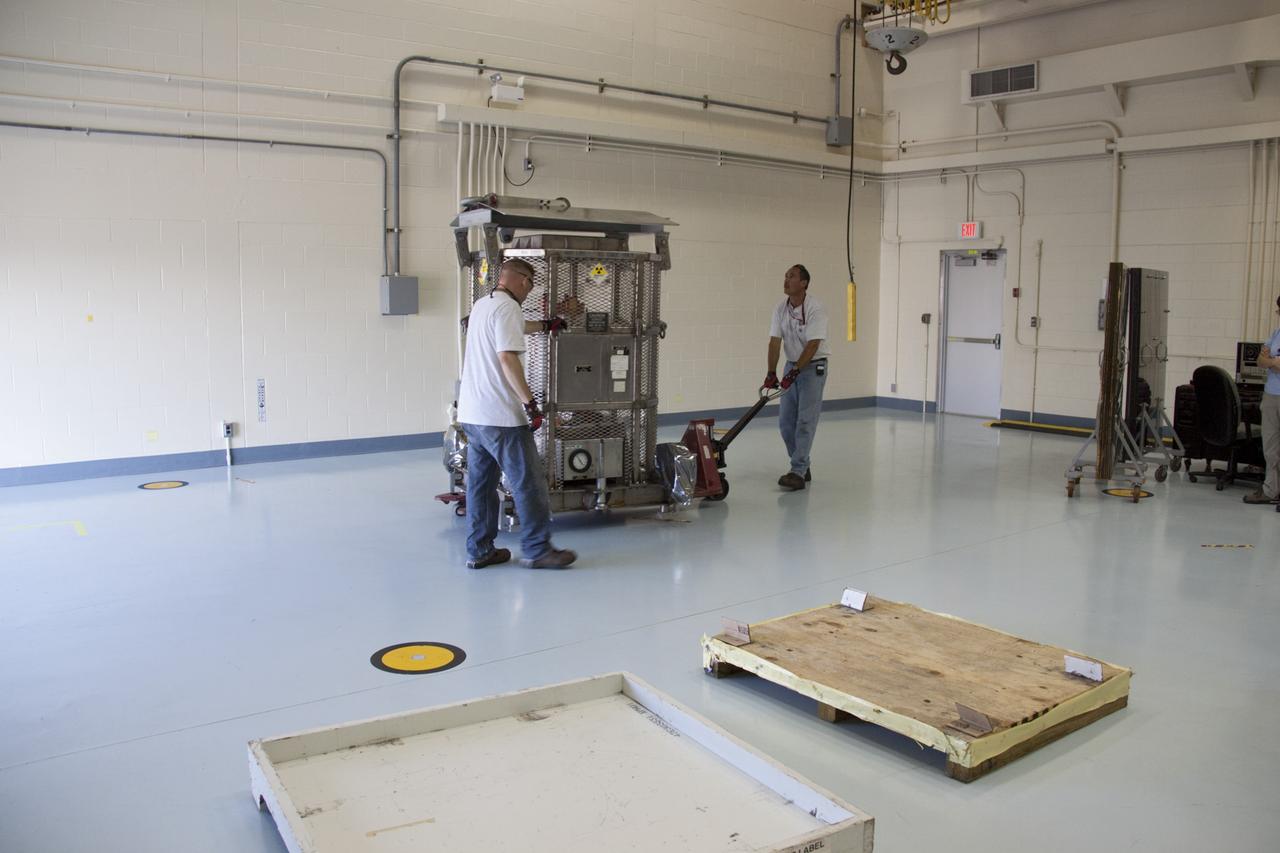
CAPE CANAVERAL, Fla. -- Department of Energy workers park the multi-mission radioisotope thermoelectric generator (MMRTG) for NASA's Mars Science Laboratory (MSL) mission in the high bay of the RTG storage facility (RTGF) at NASA's Kennedy Space Center in Florida. The MMRTG is enclosed in a mesh container, known as the "gorilla cage," which protects it during transport and allows any excess heat generated to dissipate into the air. The MMRTG is returning to the RTGF following a fit check on MSL's Curiosity rover in the Payload Hazardous Servicing Facility (PHSF). The MMRTG will generate the power needed for the mission from the natural decay of plutonium-238, a non-weapons-grade form of the radioisotope. Heat given off by this natural decay will provide constant power through the day and night during all seasons. MSL's components include a compact car-sized rover, Curiosity, which has 10 science instruments designed to search for signs of life, including methane, and help determine if the gas is from a biological or geological source. Waste heat from the MMRTG will be circulated throughout the rover system to keep instruments, computers, mechanical devices and communications systems within their operating temperature ranges. Launch of MSL aboard a United Launch Alliance Atlas V rocket is targeted for Nov. 25 from Space Launch Complex 41 on Cape Canaveral Air Force Station. For more information, visit http://www.nasa.gov/msl. Photo credit: NASA/Troy Cryder
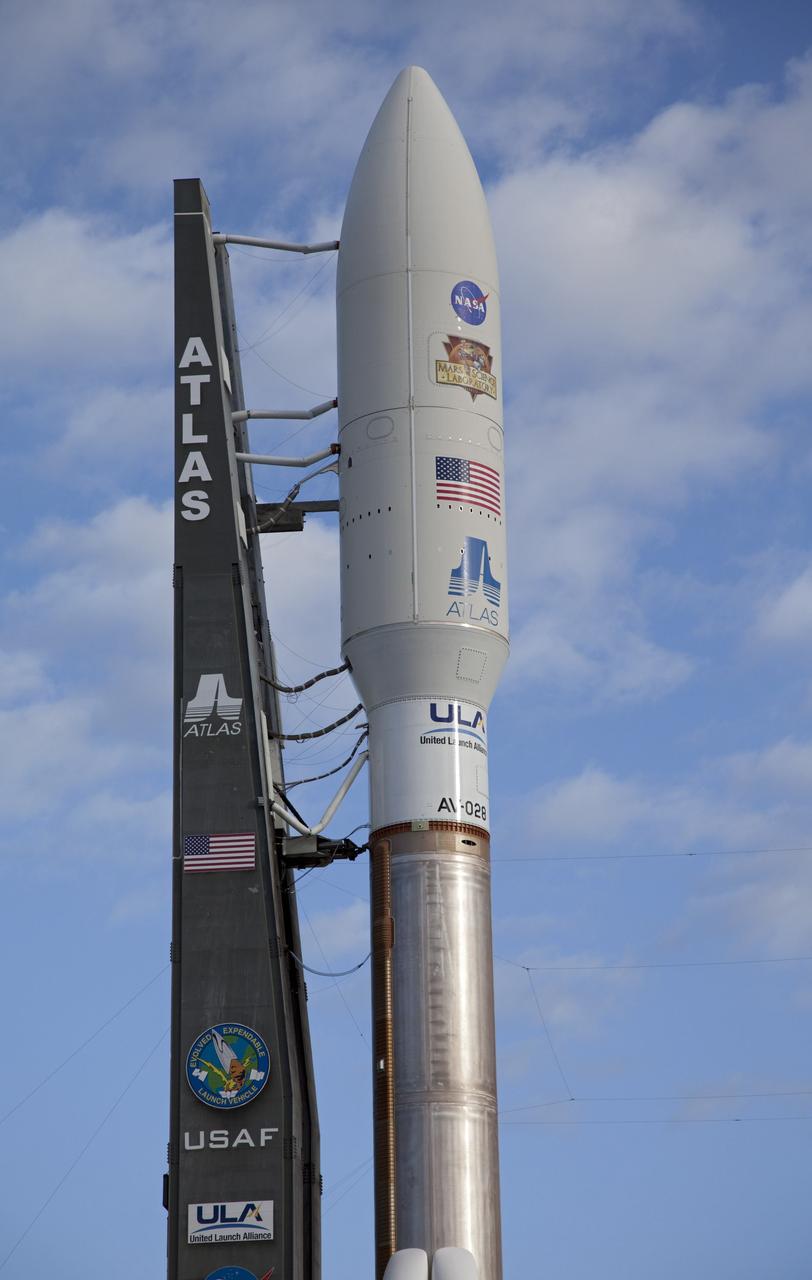
CAPE CANAVERAL, Fla. -- On Cape Canaveral Air Force Station in Florida, the payload fairing protecting NASA's Mars Science Laboratory (MSL) stands atop the 197-foot-tall United Launch Alliance Atlas V rocket during rollout to the launch pad at Space Launch Complex 41. The rocket began its move from the Vertical Integration Facility at 8 a.m. EST and arrived at the pad at 8:40 a.m. Liftoff is planned during a launch window which extends from 10:02 a.m. to 11:45 a.m. EST on Nov. 26. MSL's components include a car-sized rover, Curiosity, which has 10 science instruments designed to search for signs of life, including methane, and help determine if the gas is from a biological or geological source. For more information, visit http://www.nasa.gov/msl. Photo credit: NASA/Frankie Martin
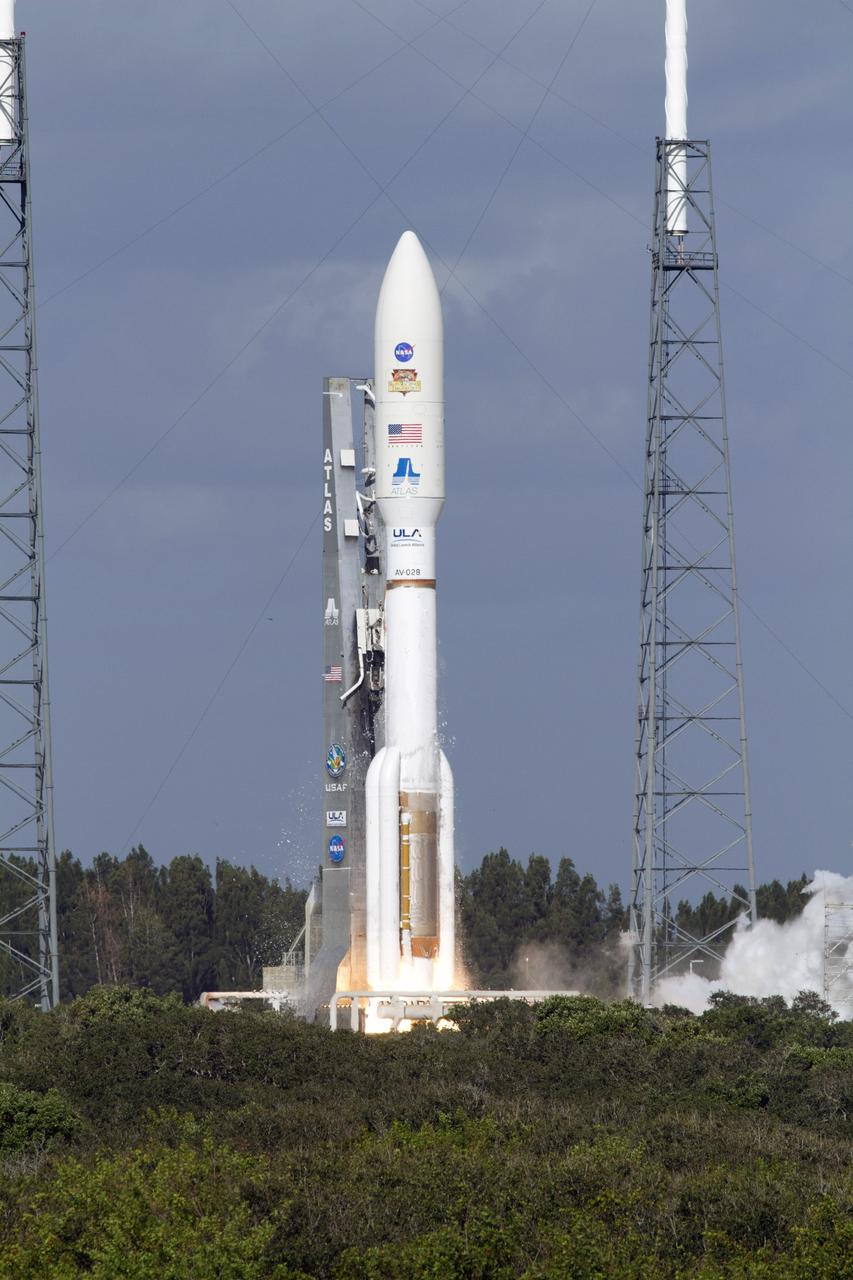
CAPE CANAVERAL, Fla. -- With NASA's Mars Science Laboratory (MSL) spacecraft sealed inside its payload fairing, the United Launch Alliance Atlas V rocket prepares to liftoff from Space Launch Complex-41 on Cape Canaveral Air Force Station in Florida at 10:02 a.m. EST Nov. 26. MSL's components include a car-sized rover, Curiosity, which has 10 science instruments designed to search for signs of life, including methane, and help determine if the gas is from a biological or geological source. For more information, visit http://www.nasa.gov/msl. Photo credit: NASA/George Roberts
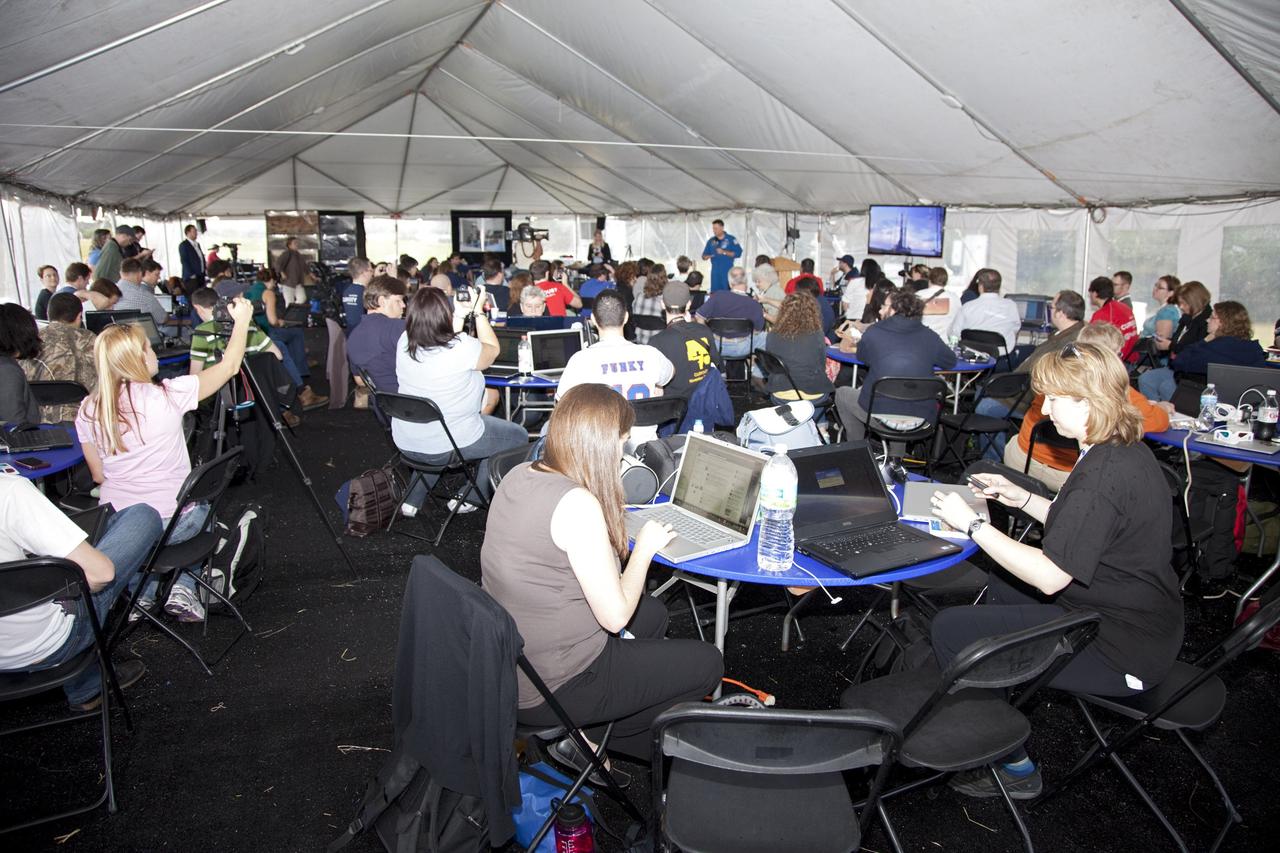
CAPE CANAVERAL, Fla. – NASA Tweetup participants hear a presentation by Expedition 25 astronaut Doug Wheelock in a tent set up at NASA Kennedy Space Center's Press Site in Florida during prelaunch activities for the agency’s Mars Science Laboratory (MSL) launch. Participants in the Tweetup are given the opportunity to listen to agency briefings, tour locations on the center normally off limits to visitors, and get a close-up view of Space Launch Complex-41 on Cape Canaveral Air Force Station. The tweeters will share their experiences with followers through the social networking site Twitter. The MSL mission will pioneer precision landing technology and a sky-crane touchdown to place a car-sized rover, Curiosity, near the foot of a mountain inside Gale Crater on Aug. 6, 2012. During a nearly two-year prime mission after landing, the rover will investigate whether the region has ever offered conditions favorable for microbial life, including the chemical ingredients for life. Liftoff of MSL aboard a United Launch Alliance Atlas V rocket from pad 41 is planned during a launch window which extends from 10:02 a.m. to 11:45 a.m. EST on Nov. 26. For more information, visit http://www.nasa.gov/msl. Photo credit: NASA/Frankie Martin

CAPE CANAVERAL – Chuck Duvale, deputy director of the Launch Services Program, second from left, and Bob Cabana, Kennedy Space Center director, oversee the countdown in the Atlas V Spaceflight Operations Center (ASOC) before the launch of the Mars Science Laboratory on an Atlas V rocket. MSL lifted off at 10:02 a.m. EST Nov. 26, beginning a 9-month interplanetary cruise to Mars. MSL's components include a car-sized rover, Curiosity, which has 10 science instruments designed to search for signs of life, including methane, and help determine if the gas is from a biological or geological source. For more information, visit http://www.nasa.gov/msl. Photo credit: NASA/Kim Shiflett
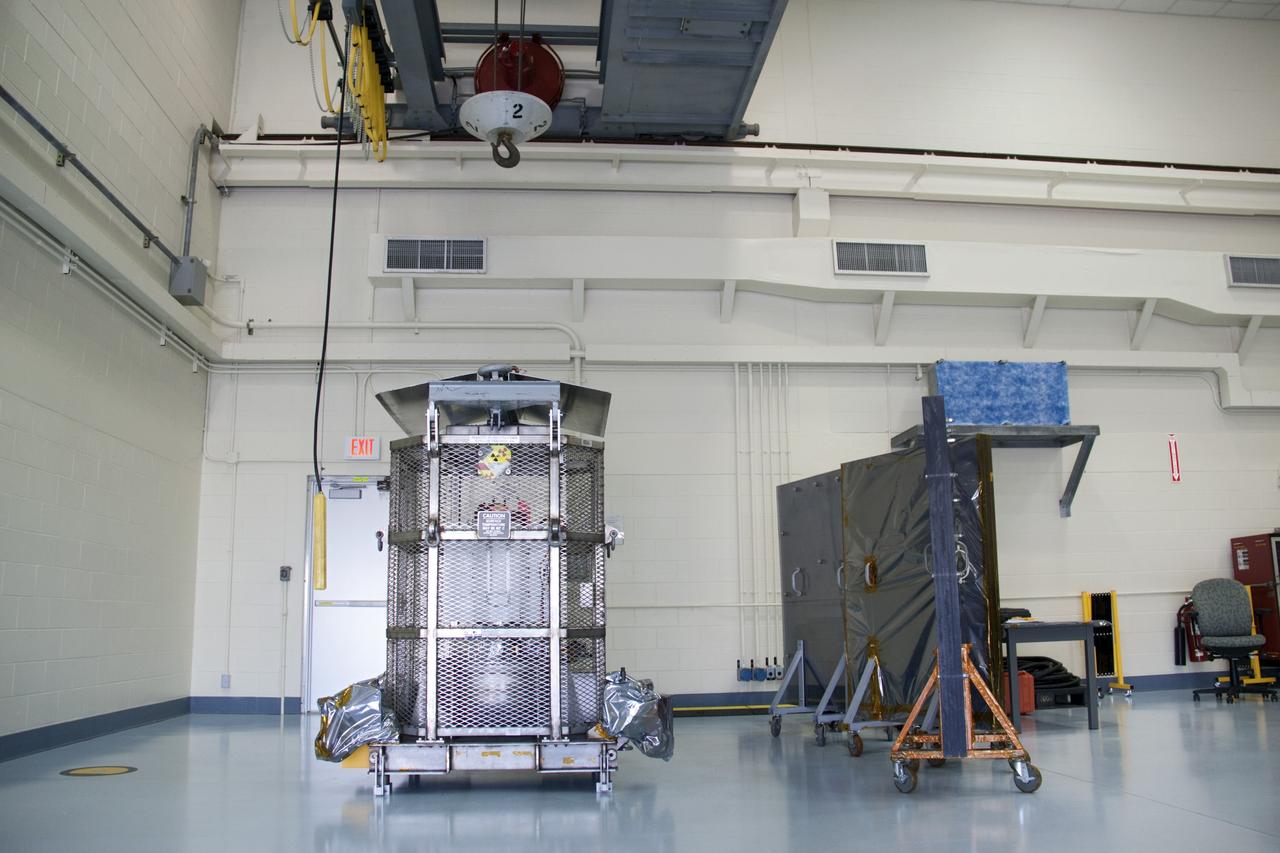
CAPE CANAVERAL, Fla. -- A crane is positioned over the multi-mission radioisotope thermoelectric generator (MMRTG) for NASA's Mars Science Laboratory (MSL) mission in the high bay of the RTG storage facility (RTGF) at NASA's Kennedy Space Center in Florida. Preparations are under way to lift the mesh container, known as the "gorilla cage," from the support base on which the MMRTG is resting. The cage protects the MMRTG during transport and allows any excess heat generated to dissipate into the air. The MMRTG is returning to the RTGF following a fit check on MSL's Curiosity rover in the Payload Hazardous Servicing Facility (PHSF). The MMRTG will generate the power needed for the mission from the natural decay of plutonium-238, a non-weapons-grade form of the radioisotope. Heat given off by this natural decay will provide constant power through the day and night during all seasons. MSL's components include a compact car-sized rover, Curiosity, which has 10 science instruments designed to search for signs of life, including methane, and help determine if the gas is from a biological or geological source. Waste heat from the MMRTG will be circulated throughout the rover system to keep instruments, computers, mechanical devices and communications systems within their operating temperature ranges. Launch of MSL aboard a United Launch Alliance Atlas V rocket is targeted for Nov. 25 from Space Launch Complex 41 on Cape Canaveral Air Force Station. For more information, visit http://www.nasa.gov/msl. Photo credit: NASA/Troy Cryder
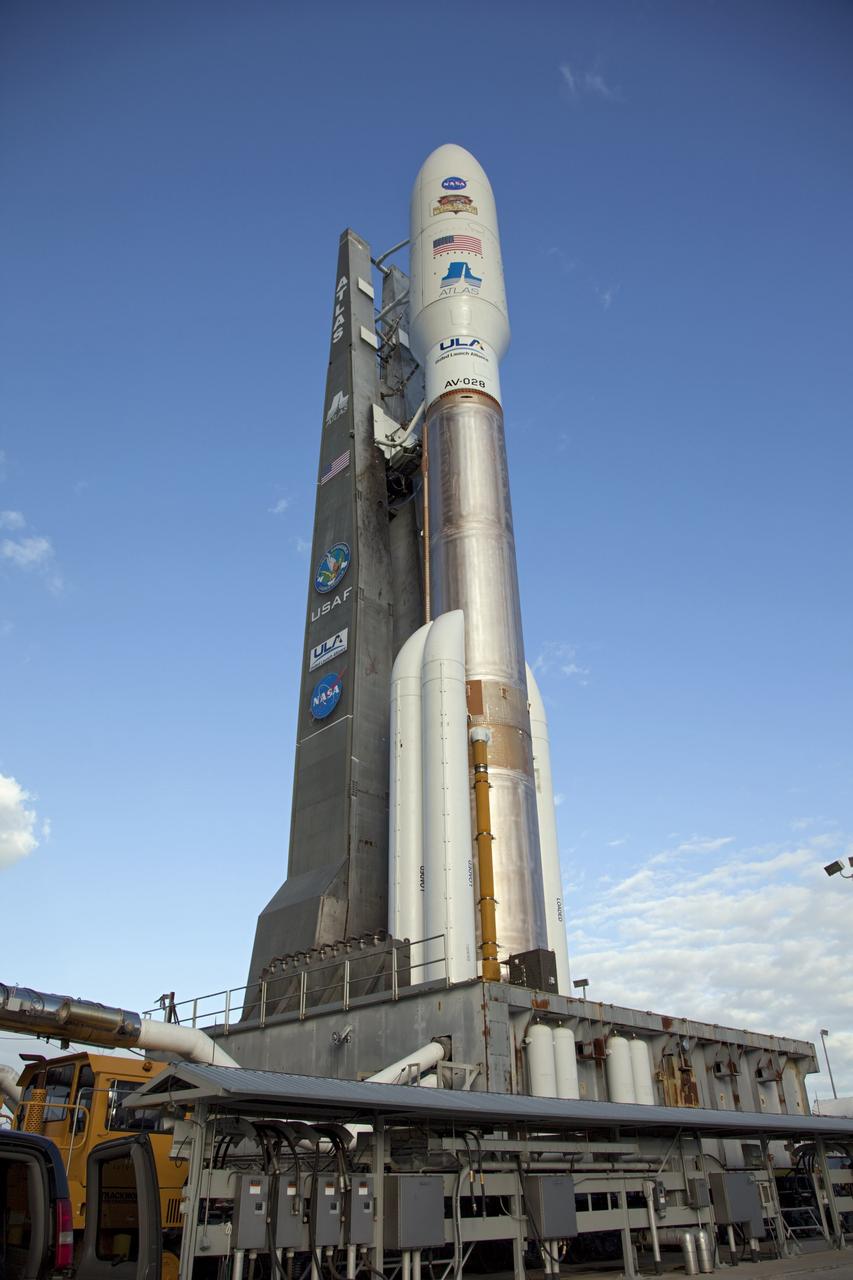
CAPE CANAVERAL, Fla. -- On Cape Canaveral Air Force Station in Florida, the 197-foot-tall United Launch Alliance Atlas V rocket is backdropped by a bright blue sky as the vehicle rolls from the Vertical Integration Facility (VIF) to the launch pad at Space Launch Complex 41. Atop the rocket is NASA's Mars Science Laboratory (MSL), enclosed in its payload fairing. The rocket began its move from the VIF at 8 a.m. EST and arrived at the pad at 8:40 a.m. Liftoff is planned during a launch window which extends from 10:02 a.m. to 11:45 a.m. EST on Nov. 26. MSL's components include a car-sized rover, Curiosity, which has 10 science instruments designed to search for signs of life, including methane, and help determine if the gas is from a biological or geological source. For more information, visit http://www.nasa.gov/msl. Photo credit: NASA/Frankie Martin
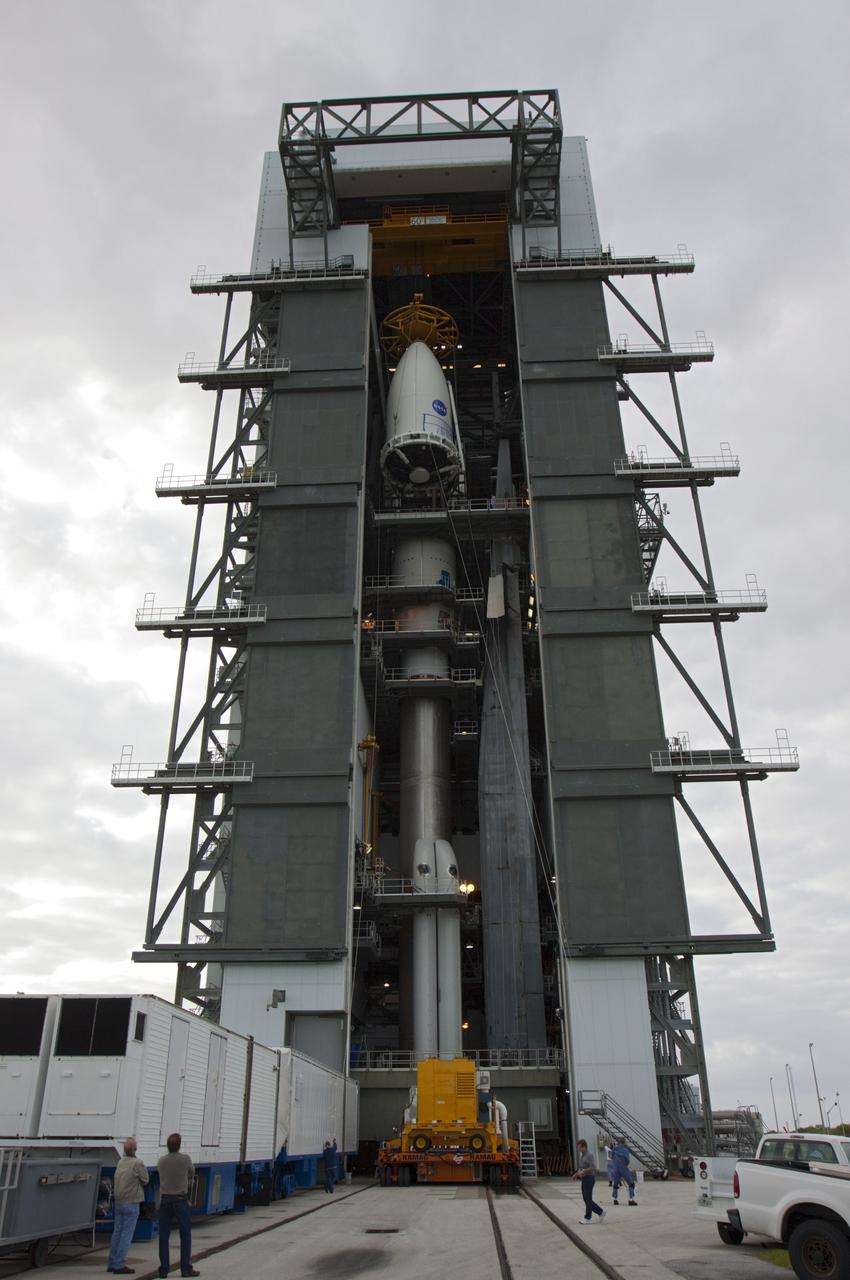
CAPE CANAVERAL, Fla. -- The payload fairing containing NASA's Mars Science Laboratory (MSL) spacecraft is hoisted to the top of the Vertical Integration Facility at Space Launch Complex 41, where it will be attached to the Atlas V rocket already stacked inside. MSL was prepared for launch in the Payload Hazardous Servicing Facility at NASA's Kennedy Space Center. MSL's components include a compact car-sized rover, Curiosity, which has 10 science instruments designed to search for evidence on whether Mars has had environments favorable to microbial life, including the chemical ingredients for life. The unique rover will use a laser to look inside rocks and release its gasses so that the rover’s spectrometer can analyze and send the data back to Earth. Launch of MSL aboard a United Launch Alliance Atlas V rocket is planned for Nov. 25 from Space Launch Complex 41 on Cape Canaveral Air Force Station. For more information, visit http://www.nasa.gov/msl. Photo credit: NASA/Kim Shiflett
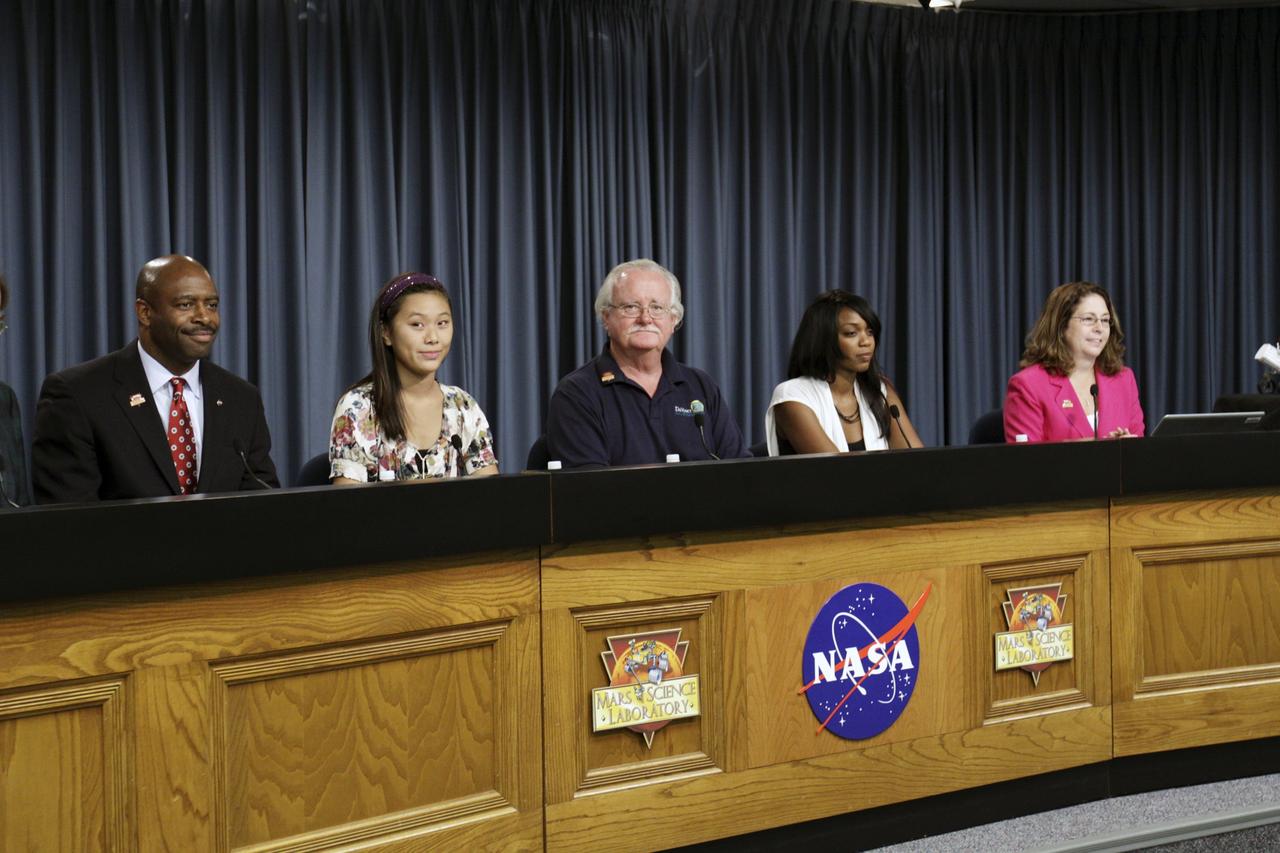
CAPE CANAVERAL, Fla. – An educational news conference to explore "Why Mars Excites and Inspires Us" begins in NASA Kennedy Space Center's Press Site auditorium in Florida during prelaunch activities for the agency’s Mars Science Laboratory (MSL) launch. Participants are, from left, Leland Melvin, NASA associate administrator for Education; Clara Ma, student, NASA contest winner for naming Curiosity, Shawnee Mission East High School, Prairie Village, Kansas; Scott Anderson, teacher and science department chairman, Da Vinci School for Science and the Arts, El Paso, Texas; Lauren Lyons, graduate student, Harvard University, FIRST robotics alumna; and Veronica McGregor, manager, Media Relations Office, NASA Jet Propulsion Laboratory. MSL's car-sized Martian rover, Curiosity, has 10 science instruments designed to search for signs of life, including methane, and help determine if the gas is from a biological or geological source. Ma's entry was selected the winner from 9,000 entries in NASA's nationwide student contest to name the rover. At the time, she was a twelve-year-old sixth-grade student at the Sunflower Elementary school in Lenexa, Kansas. Liftoff of MSL aboard a United Launch Alliance Atlas V rocket from Space Launch Complex-41 on Cape Canaveral Air Force Station is planned during a launch window which extends from 10:02 a.m. to 11:45 a.m. EST on Nov. 26. For more information, visit http://www.nasa.gov/msl. Photo credit: NASA/Kim Shiflett

CAPE CANAVERAL, Fla. – Television personality Bill Nye the Science Guy talks to the participants of a NASA Tweetup in a tent set up at NASA Kennedy Space Center's Press Site in Florida during prelaunch activities for the agency’s Mars Science Laboratory (MSL) launch. Participants in the Tweetup are given the opportunity to listen to agency briefings, tour locations on the center normally off limits to visitors, and get a close-up view of Space Launch Complex-41 on Cape Canaveral Air Force Station. The tweeters will share their experiences with followers through the social networking site Twitter. The MSL mission will pioneer precision landing technology and a sky-crane touchdown to place a car-sized rover, Curiosity, near the foot of a mountain inside Gale Crater on Aug. 6, 2012. During a nearly two-year prime mission after landing, the rover will investigate whether the region has ever offered conditions favorable for microbial life, including the chemical ingredients for life. Liftoff of MSL aboard a United Launch Alliance Atlas V rocket from pad 41 is planned during a launch window which extends from 10:02 a.m. to 11:45 a.m. EST on Nov. 26. For more information, visit http://www.nasa.gov/msl. Photo credit: NASA/Frankie Martin