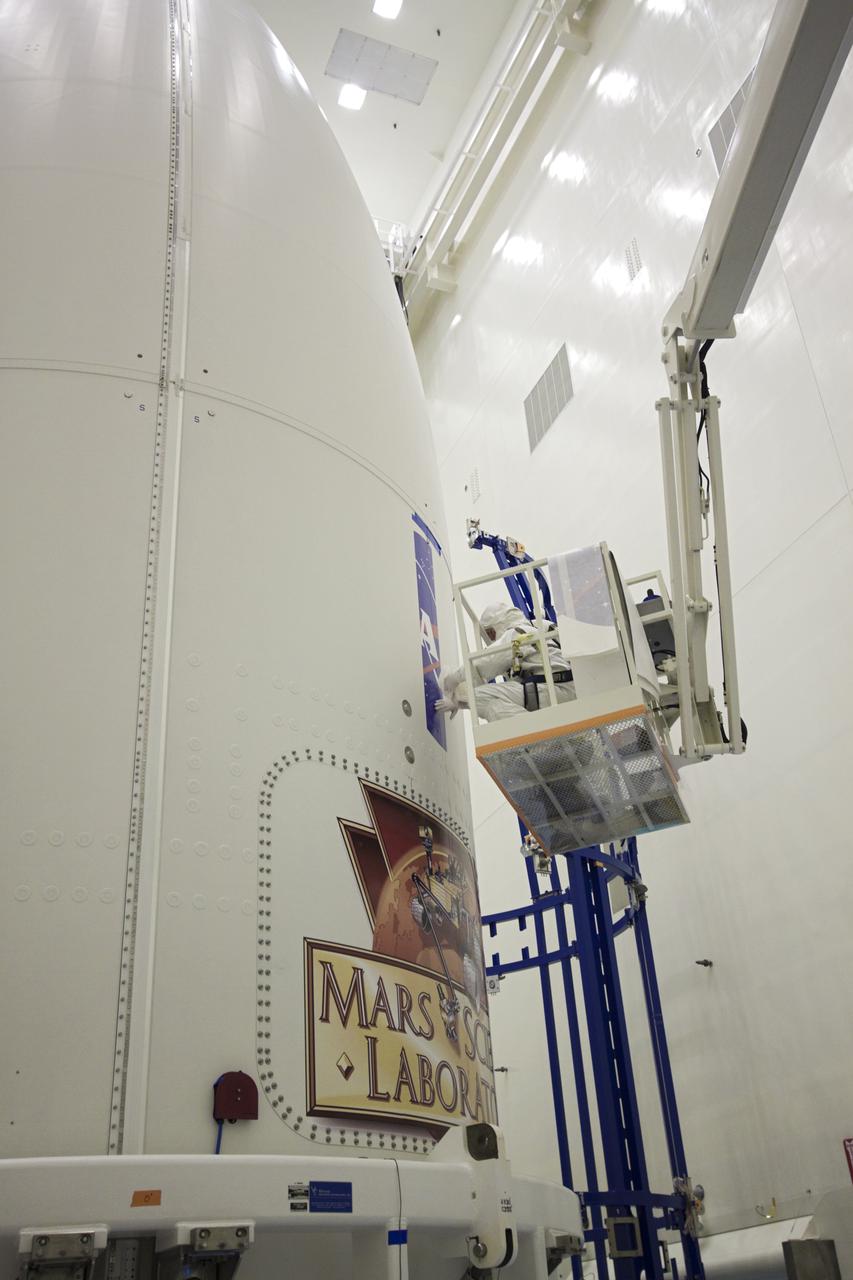
CAPE CANAVERAL, Fla. -- In the Payload Hazardous Servicing Facility at NASA's Kennedy Space Center in Florida, technicians begin applying the NASA logo above the Mars Science Laboratory (MSL) mission logo to the exterior of an Atlas V rocket's payload fairing. Tucked inside the fairing is the MSL spacecraft, including a compact car-sized rover, Curiosity, which has 10 science instruments designed to search for evidence on whether Mars has had environments favorable to microbial life, including the chemical ingredients for life. The unique rover will use a laser to look inside rocks and release its gasses so that the rover’s spectrometer can analyze and send the data back to Earth. Launch of MSL aboard a United Launch Alliance Atlas V rocket is planned for Nov. 25 from Space Launch Complex-41 on Cape Canaveral Air Force Station. For more information, visit http:__www.nasa.gov_msl. Photo credit: NASA_Jim Grossmann
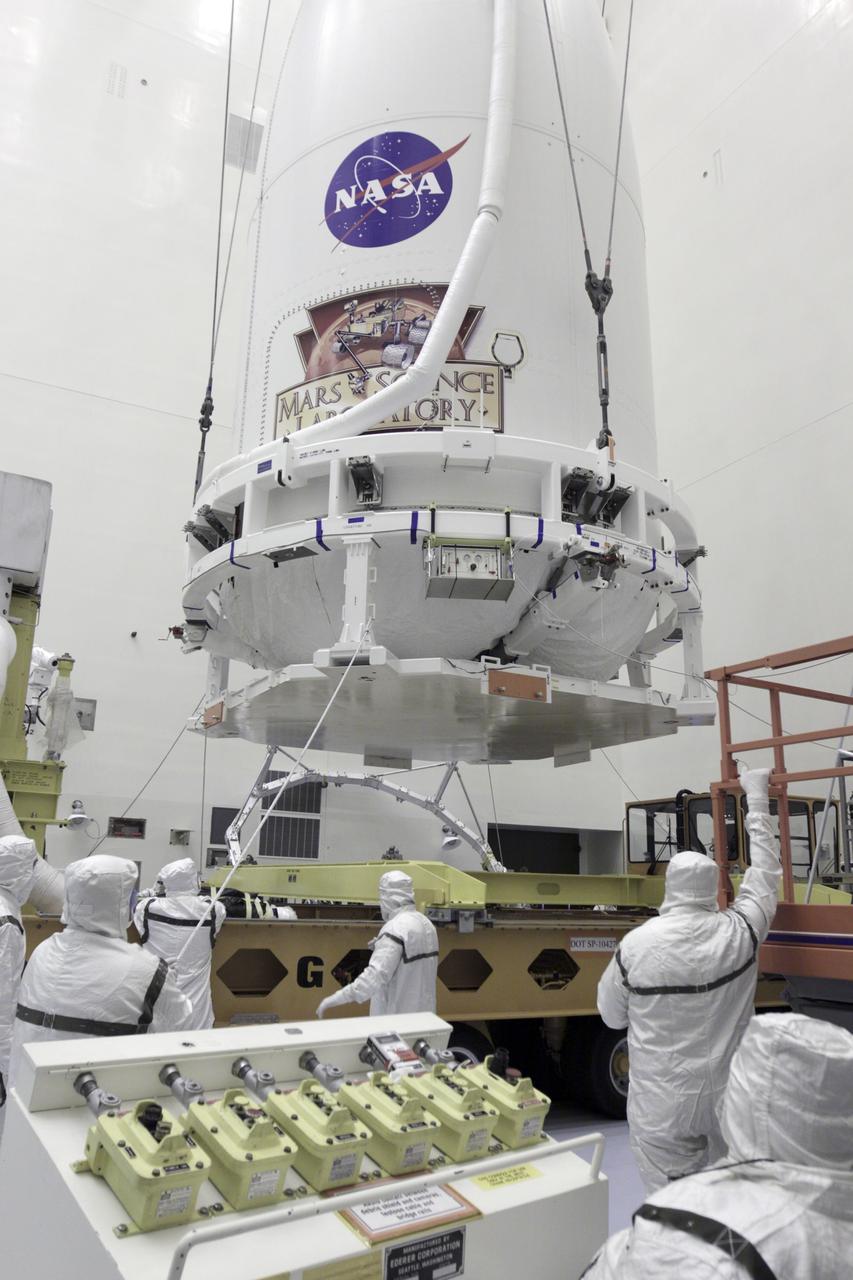
CAPE CANAVERAL, Fla. -- In the Payload Hazardous Servicing Facility at NASA's Kennedy Space Center in Florida, technicians help guide an Atlas V rocket's payload fairing down to the surface of a transporter for the move to Space Launch Complex 41. The Mars Science Laboratory (MSL) spacecraft is enclosed in the fairing, which will protect the payload from heat and aerodynamic pressure generated during launch. MSL's components include a compact car-sized rover, Curiosity, which has 10 science instruments designed to search for evidence on whether Mars has had environments favorable to microbial life, including the chemical ingredients for life. The unique rover will use a laser to look inside rocks and release its gasses so that the rover’s spectrometer can analyze and send the data back to Earth. Launch of MSL aboard a United Launch Alliance Atlas V rocket is planned for Nov. 25 from Space Launch Complex-41 on Cape Canaveral Air Force Station. For more information, visit http://www.nasa.gov/msl. Photo credit: NASA/Kim Shiflett
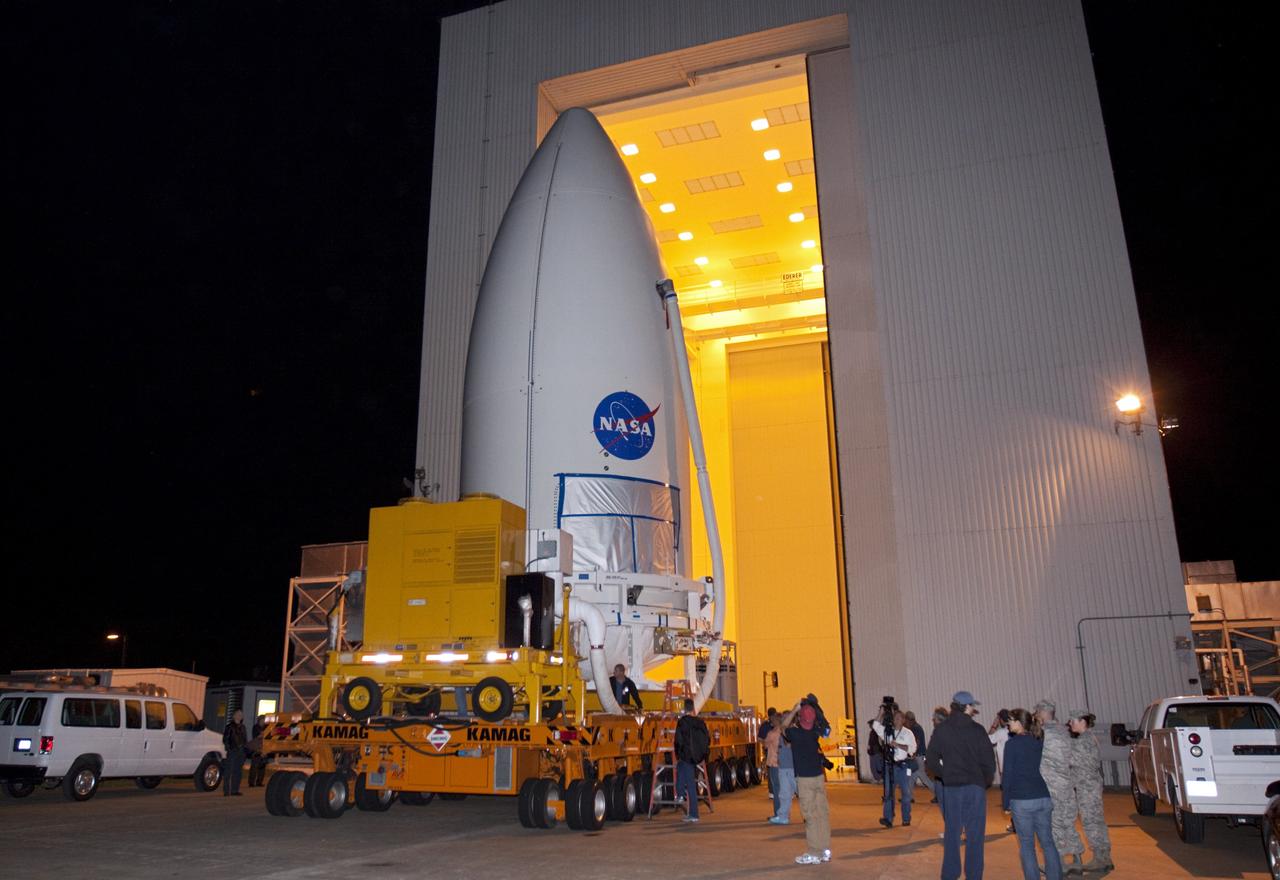
CAPE CANAVERAL, Fla. -- Standing atop a payload transporter, the Atlas V rocket payload fairing containing NASA's Mars Science Laboratory (MSL) spacecraft rolls out of the Payload Hazardous Servicing Facility at Kennedy Space Center in Florida, beginning the move to Space Launch Complex 41. The fairing will protect the payload from heat and aerodynamic pressure generated during launch. MSL's components include a compact car-sized rover, Curiosity, which has 10 science instruments designed to search for evidence on whether Mars has had environments favorable to microbial life, including the chemical ingredients for life. The unique rover will use a laser to look inside rocks and release its gasses so that the rover’s spectrometer can analyze and send the data back to Earth. Launch of MSL aboard a United Launch Alliance Atlas V rocket is planned for Nov. 25 from Space Launch Complex 41 on Cape Canaveral Air Force Station. For more information, visit http://www.nasa.gov/msl. Photo credit: NASA/Kim Shiflett
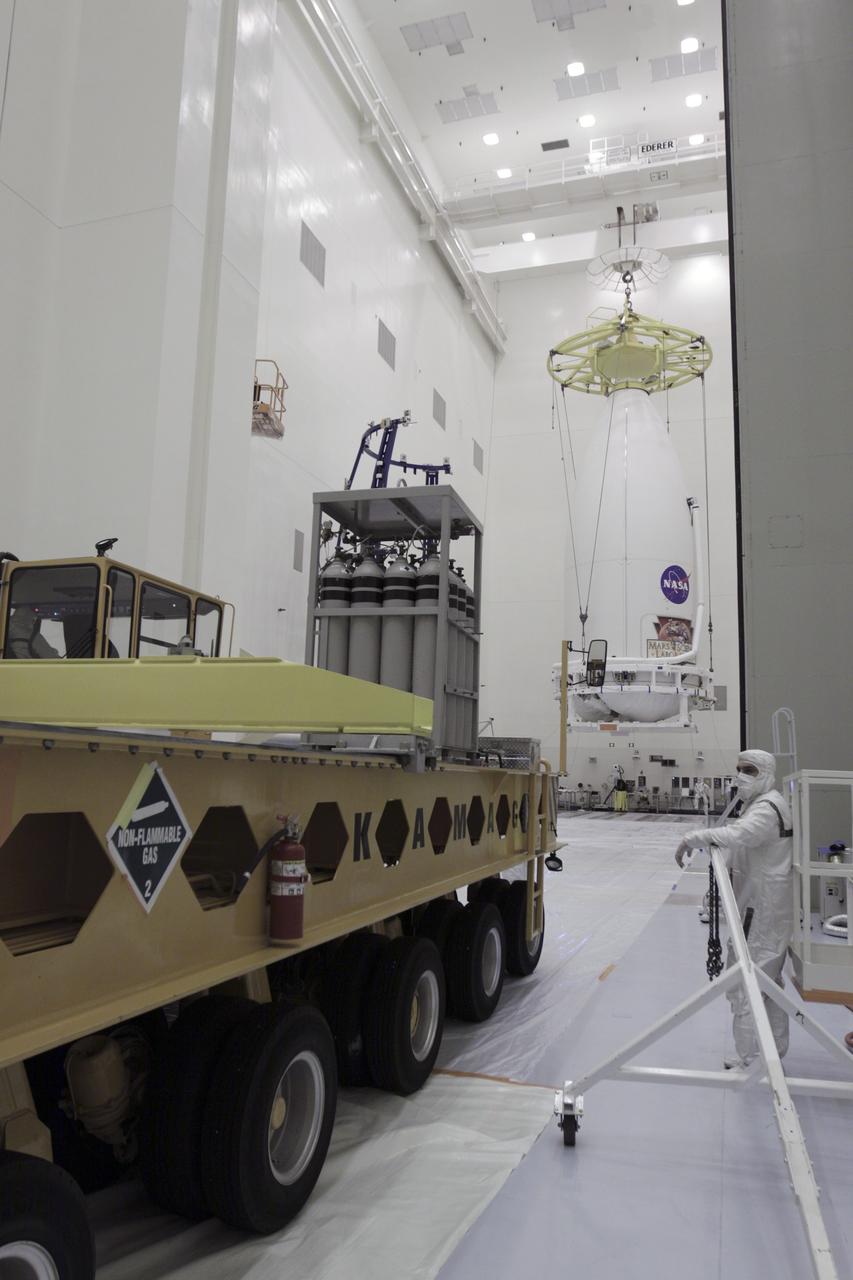
CAPE CANAVERAL, Fla. -- The Atlas V payload fairing containing NASA's Mars Science Laboratory (MSL) spacecraft is moved toward a waiting transporter inside the Payload Hazardous Servicing Facility at Kennedy Space Center in Florida. The transporter will carry the fairing to Space Launch Complex 41. MSL's components include a compact car-sized rover, Curiosity, which has 10 science instruments designed to search for evidence on whether Mars has had environments favorable to microbial life, including the chemical ingredients for life. The unique rover will use a laser to look inside rocks and release its gasses so that the rover’s spectrometer can analyze and send the data back to Earth. Launch of MSL aboard a United Launch Alliance Atlas V rocket is planned for Nov. 25 from Space Launch Complex-41 on Cape Canaveral Air Force Station. For more information, visit http://www.nasa.gov/msl. Photo credit: NASA/Kim Shiflett
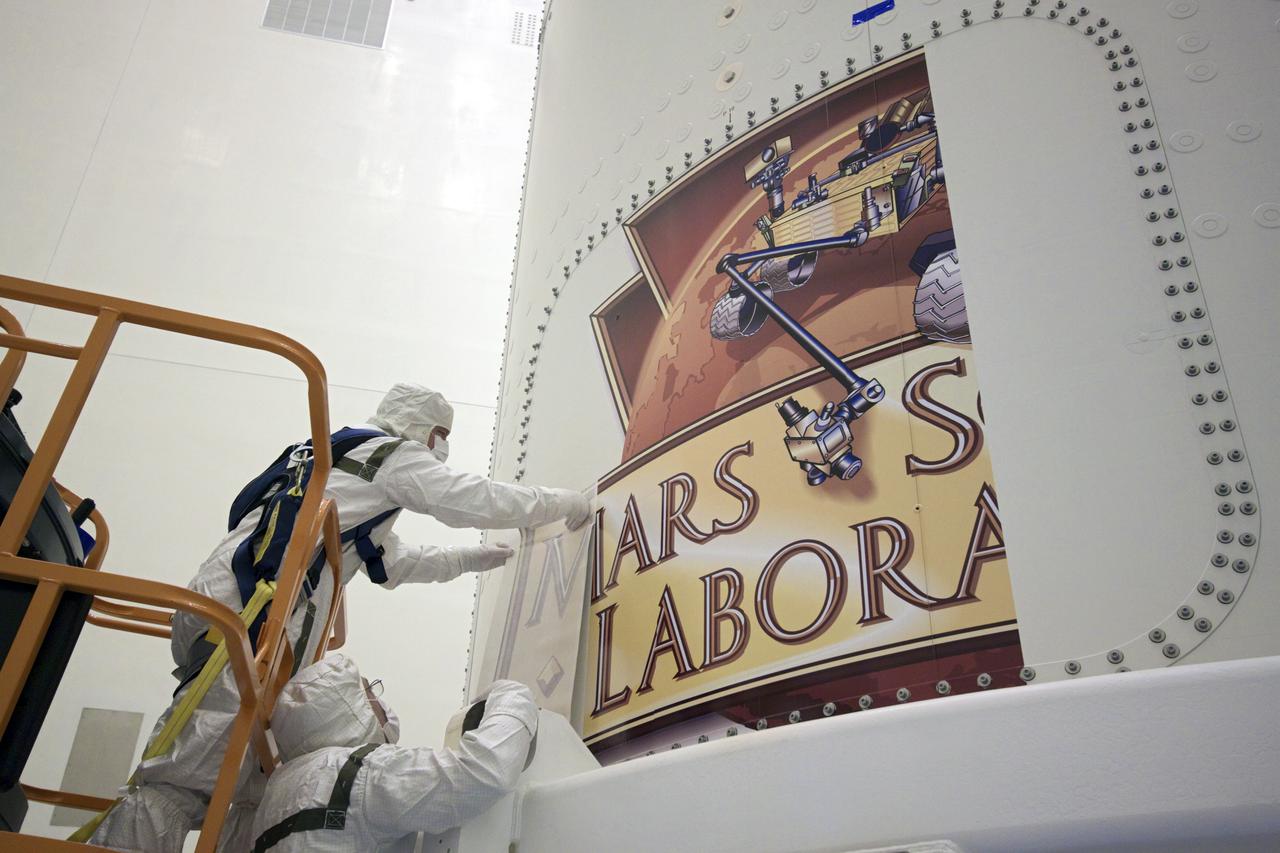
CAPE CANAVERAL, Fla. -- The Mars Science Laboratory (MSL) mission logo begins to take shape as technicians install it on the exterior of an Atlas V rocket's payload fairing inside the Payload Hazardous Processing Facility at NASA's Kennedy Space Center in Florida. Tucked inside the fairing is the MSL spacecraft, including a compact car-sized rover, Curiosity, which has 10 science instruments designed to search for evidence on whether Mars has had environments favorable to microbial life, including the chemical ingredients for life. The unique rover will use a laser to look inside rocks and release its gasses so that the rover’s spectrometer can analyze and send the data back to Earth. Launch of MSL aboard a United Launch Alliance Atlas V rocket is planned for Nov. 25 from Space Launch Complex-41 on Cape Canaveral Air Force Station. For more information, visit http:__www.nasa.gov_msl. Photo credit: NASA_Jim Grossmann
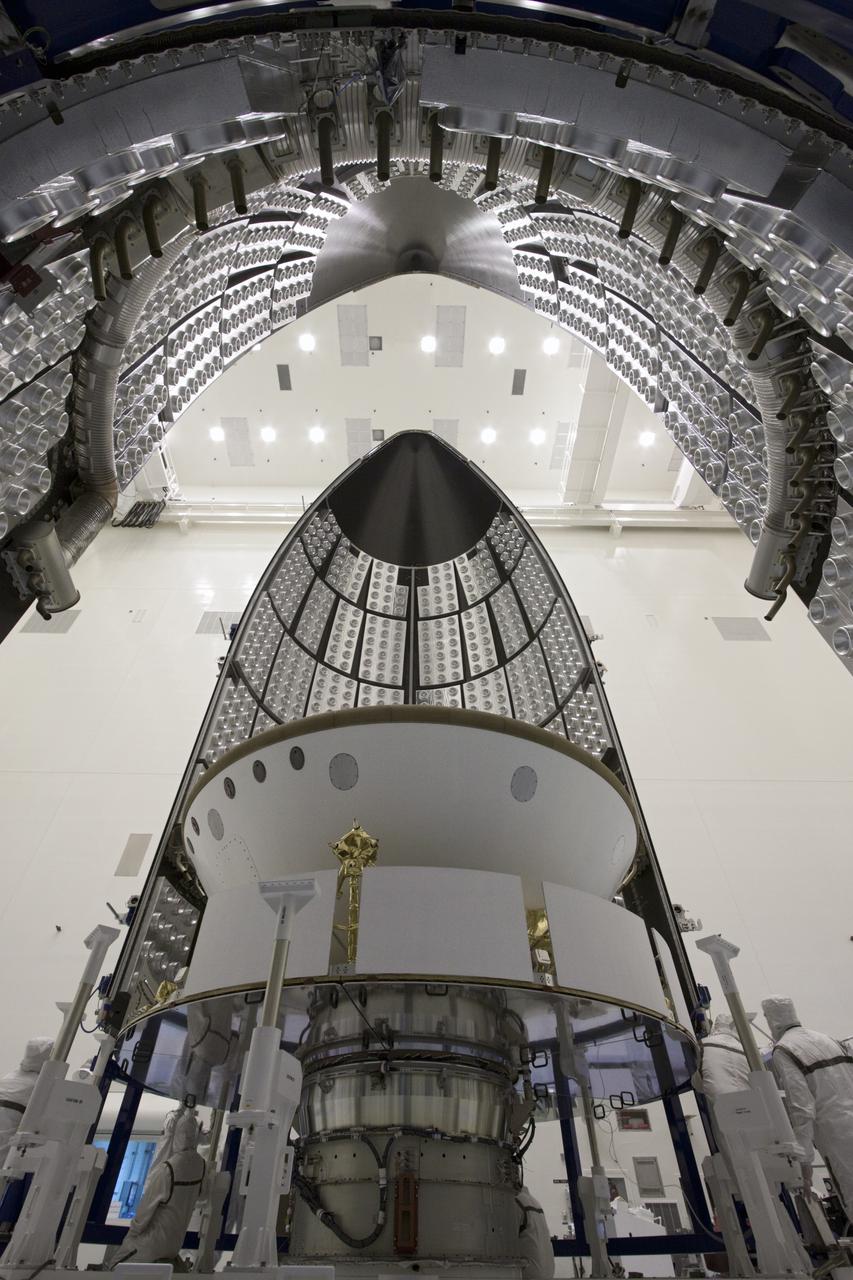
CAPE CANAVERAL, Fla. -- In the Payload Hazardous Servicing Facility at NASA's Kennedy Space Center in Florida, sections of an Atlas V rocket payload fairing engulf NASA's Mars Science Laboratory (MSL) as they close in around it. The blocks on the interior of the fairing are components of the fairing acoustic protection (FAP) system, designed to protect the payload by dampening the sound created by the rocket during liftoff. The fairing will protect the spacecraft from the impact of aerodynamic pressure and heating during ascent. MSL's components include a compact car-sized rover, Curiosity, which has 10 science instruments designed to search for evidence on whether Mars has had environments favorable to microbial life, including the chemical ingredients for life. The unique rover will use a laser to look inside rocks and release its gasses so that the rover’s spectrometer can analyze and send the data back to Earth. Launch of MSL aboard a United Launch Alliance Atlas V rocket is planned for Nov. 25 from Space Launch Complex-41 on Cape Canaveral Air Force Station. For more information, visit http://www.nasa.gov/msl. Photo credit: NASA/Jim Grossmann
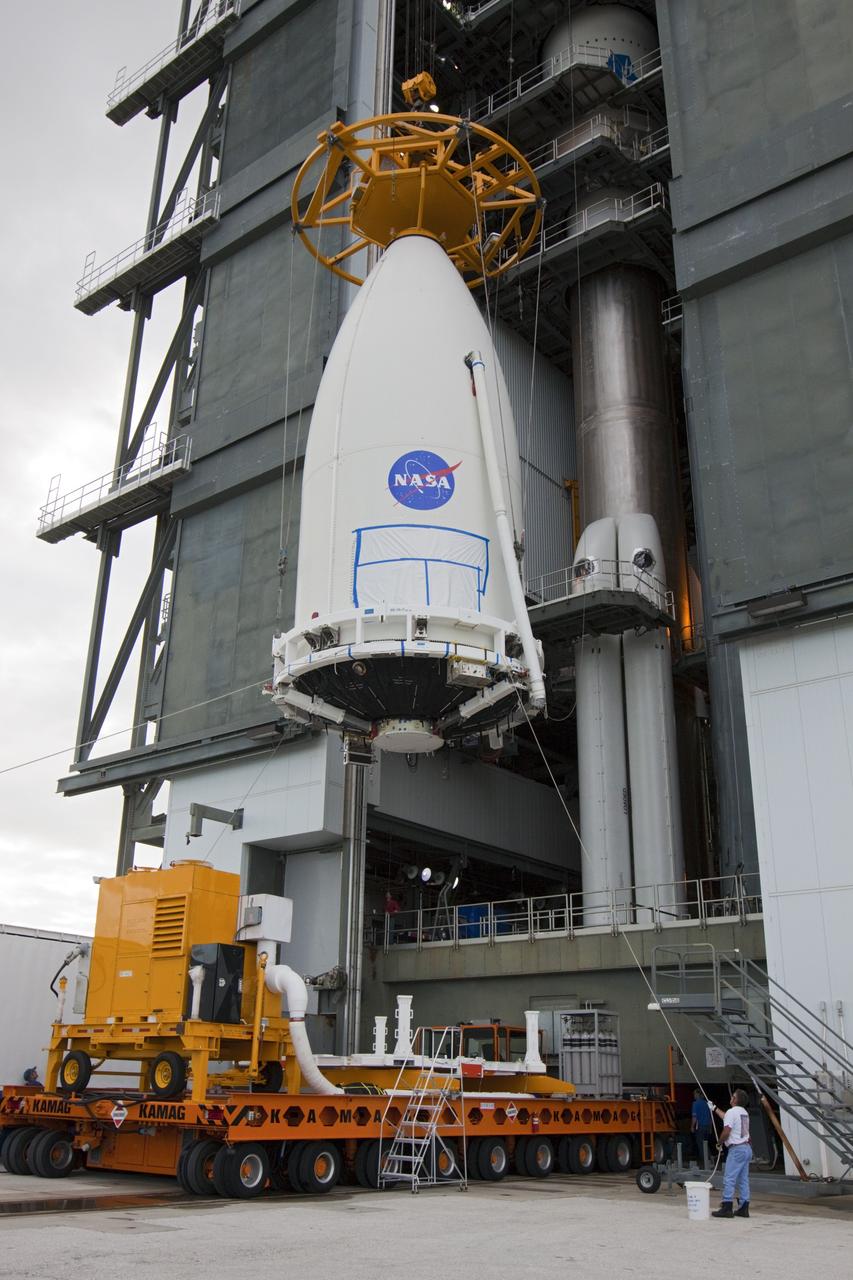
CAPE CANAVERAL, Fla. -- At Space Launch Complex 41, the payload fairing containing NASA's Mars Science Laboratory (MSL) spacecraft rises from the transporter below as it is lifted up the side of the Vertical Integration Facility. The fairing, which protects the payload during launch, will be attached to the Atlas V rocket already stacked inside the facility. MSL was prepared for launch in the Payload Hazardous Servicing Facility at NASA's Kennedy Space Center. MSL's components include a compact car-sized rover, Curiosity, which has 10 science instruments designed to search for evidence on whether Mars has had environments favorable to microbial life, including the chemical ingredients for life. The unique rover will use a laser to look inside rocks and release its gasses so that the rover’s spectrometer can analyze and send the data back to Earth. Launch of MSL aboard a United Launch Alliance Atlas V rocket is planned for Nov. 25 from Space Launch Complex 41 on Cape Canaveral Air Force Station. For more information, visit http://www.nasa.gov/msl. Photo credit: NASA/Kim Shiflett
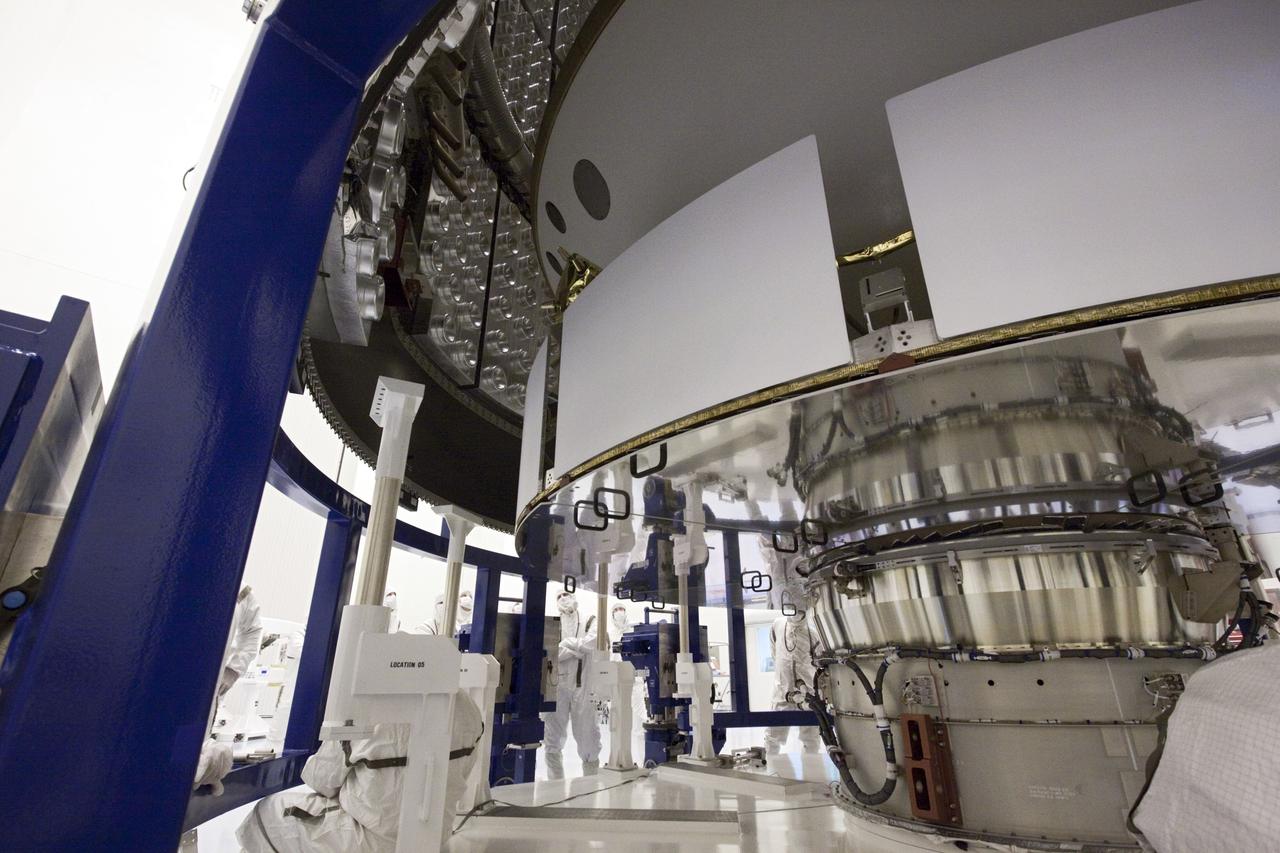
CAPE CANAVERAL, Fla. - In the Payload Hazardous Servicing Facility at NASA's Kennedy Space Center in Florida, the camera captures NASA's Mars Science Laboratory (MSL) one last time before an Atlas V rocket payload fairing is secured around it. Next, the lab will be transported to the launch pad. by dampening the sound created by the rocket during liftoff. The fairing will protect the spacecraft from the impact of aerodynamic pressure and heating during ascent. MSL's components include a compact car-sized rover, Curiosity, which has 10 science instruments designed to search for evidence on whether Mars has had environments favorable to microbial life, including the chemical ingredients for life. The unique rover will use a laser to look inside rocks and release its gasses so that the rover’s spectrometer can analyze and send the data back to Earth. Launch of MSL aboard a United Launch Alliance Atlas V rocket is planned for Nov. 25 from Space Launch Complex-41 on Cape Canaveral Air Force Station. For more information, visit http://www.nasa.gov/msl. Photo credit: NASA/Jim Grossmann
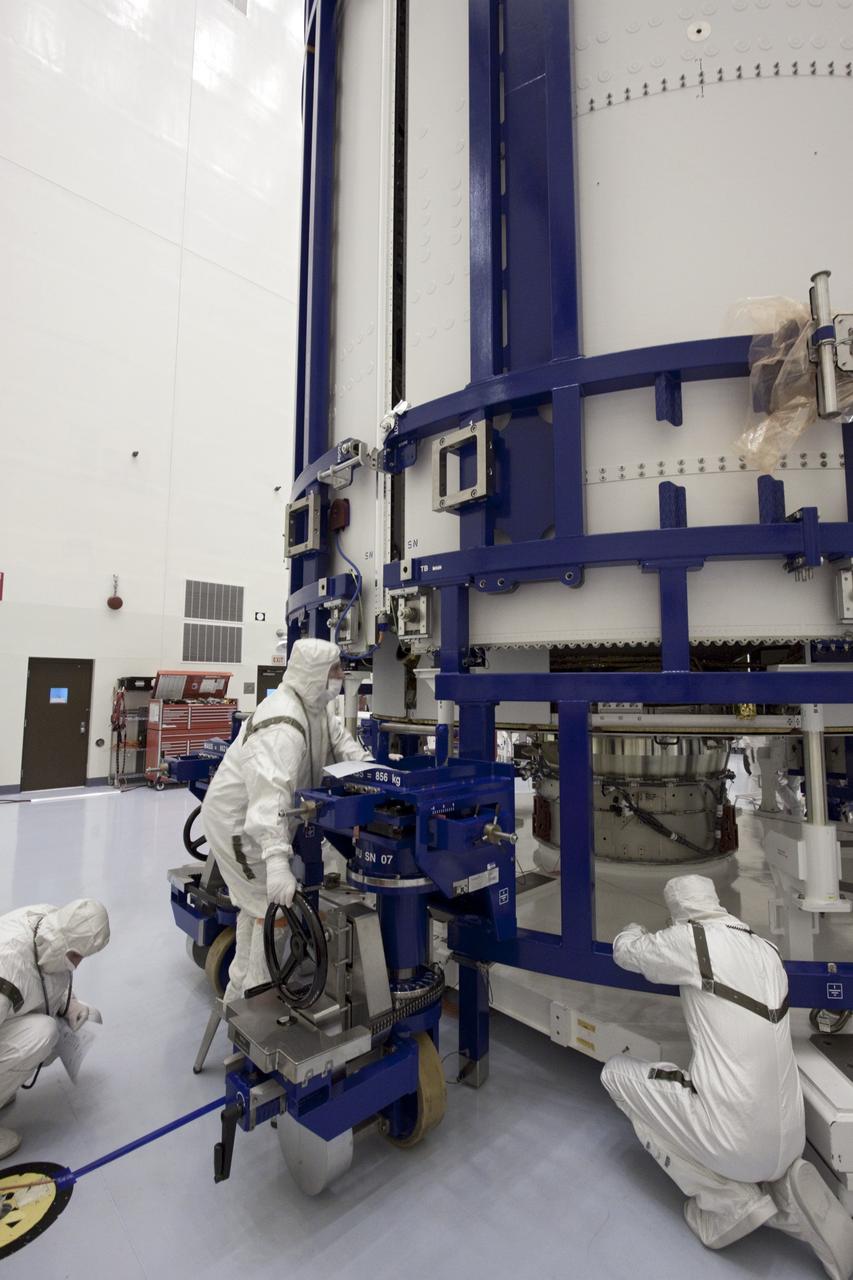
CAPE CANAVERAL, Fla. - In the Payload Hazardous Servicing Facility at NASA's Kennedy Space Center in Florida, spacecraft technicians align the sections of an Atlas V rocket payload fairing around NASA's Mars Science Laboratory (MSL). Next, the lab will be transported to the launch pad. The fairing will protect the spacecraft from the impact of aerodynamic pressure and heating during ascent. MSL's components include a compact car-sized rover, Curiosity, which has 10 science instruments designed to search for evidence on whether Mars has had environments favorable to microbial life, including the chemical ingredients for life. The unique rover will use a laser to look inside rocks and release its gasses so that the rover’s spectrometer can analyze and send the data back to Earth. Launch of MSL aboard a United Launch Alliance Atlas V rocket is planned for Nov. 25 from Space Launch Complex-41 on Cape Canaveral Air Force Station. For more information, visit http://www.nasa.gov/msl. Photo credit: NASA/Jim Grossmann
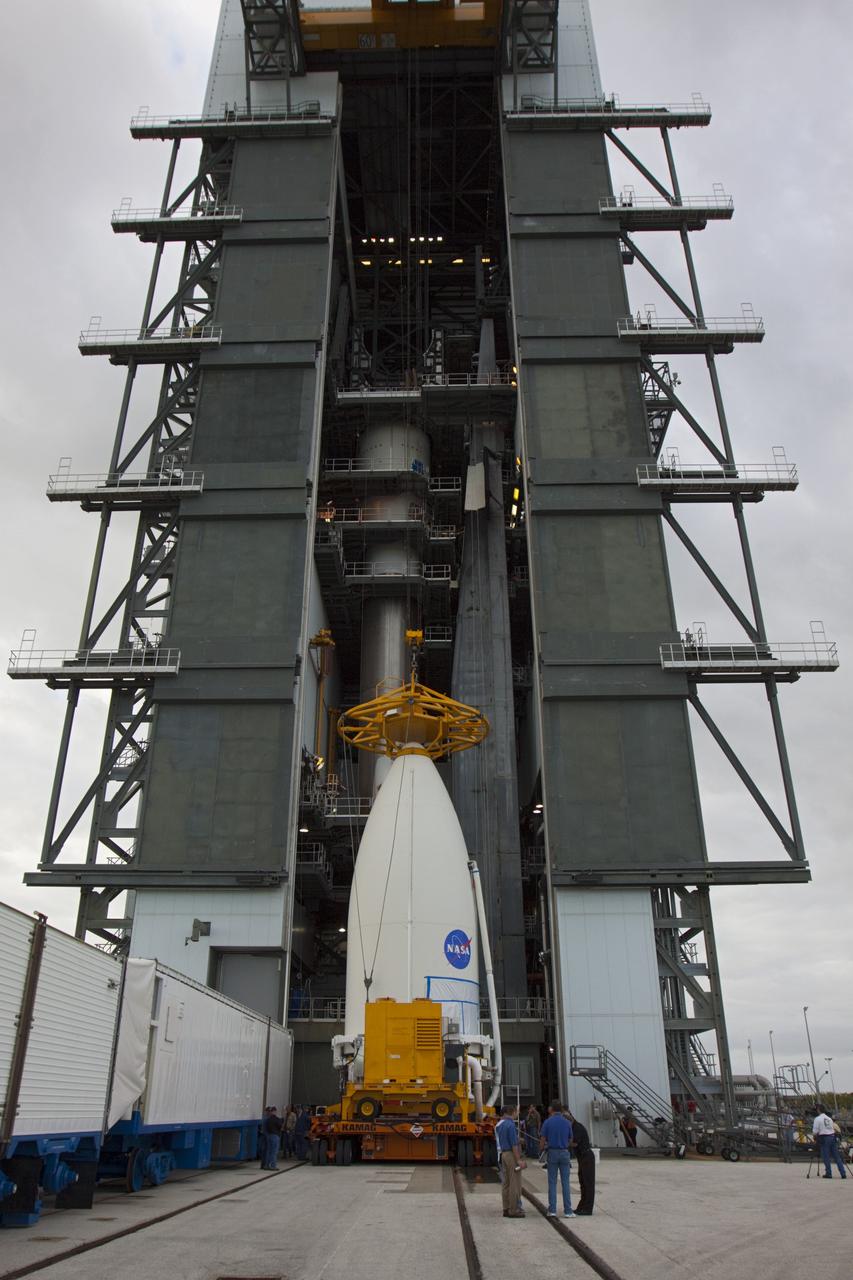
CAPE CANAVERAL, Fla. -- The Vertical Integration Facility at Space Launch Complex 41 towers above the payload fairing containing NASA's Mars Science Laboratory (MSL) spacecraft as activities begin to lift and mate the fairing to the Atlas V rocket already in place. The fairing will protect the payload from heat and aerodynamic pressure generated during ascent. MSL was prepared for launch in the Payload Hazardous Servicing Facility at NASA's Kennedy Space Center. MSL's components include a compact car-sized rover, Curiosity, which has 10 science instruments designed to search for evidence on whether Mars has had environments favorable to microbial life, including the chemical ingredients for life. The unique rover will use a laser to look inside rocks and release its gasses so that the rover’s spectrometer can analyze and send the data back to Earth. Launch of MSL aboard a United Launch Alliance Atlas V rocket is planned for Nov. 25 from Space Launch Complex 41 on Cape Canaveral Air Force Station. For more information, visit http://www.nasa.gov/msl. Photo credit: NASA/Kim Shiflett
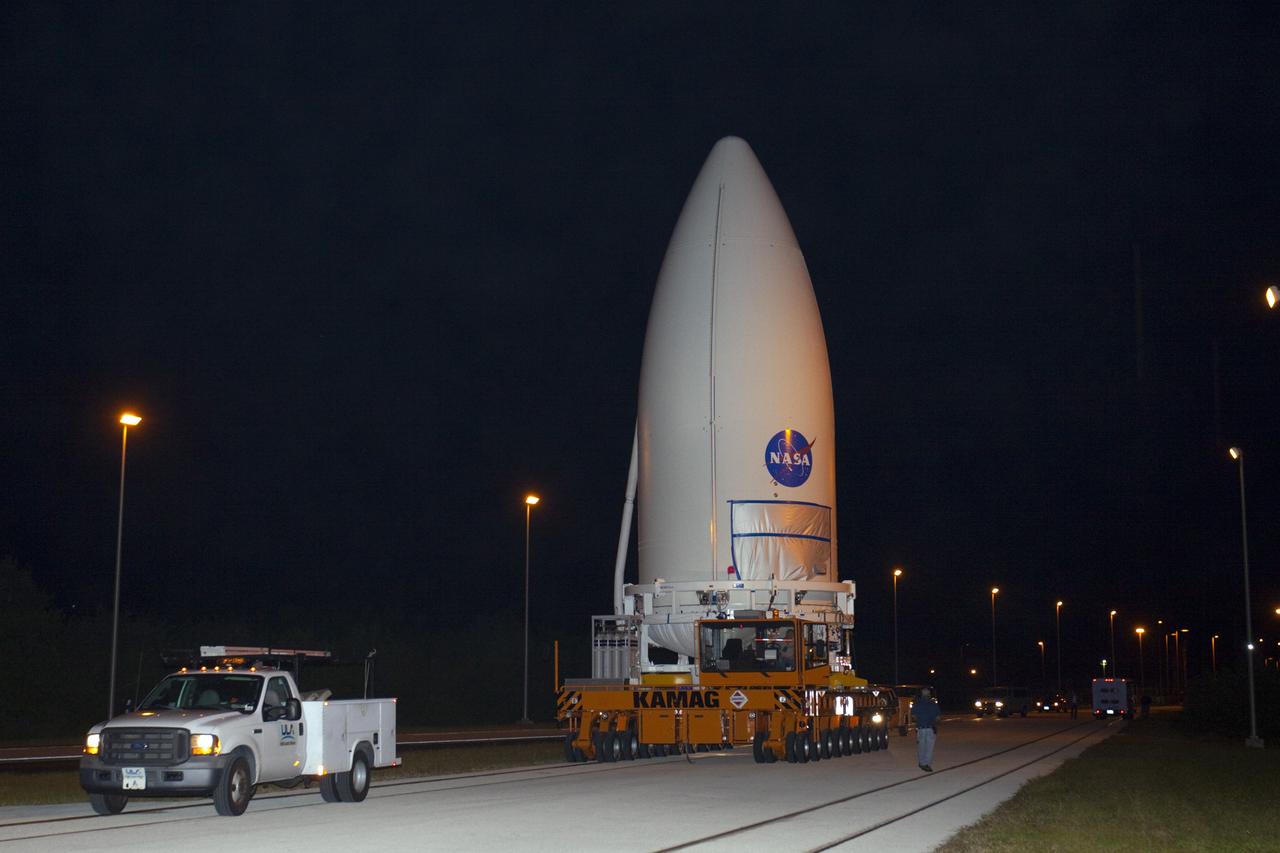
CAPE CANAVERAL, Fla. -- Standing atop a payload transporter, the Atlas V payload fairing containing NASA's Mars Science Laboratory (MSL) spacecraft rolls down a darkened roadway during the early morning move from Kennedy Space Center's Payload Hazardous Servicing Facility to Space Launch Complex 41. The fairing will protect the payload from heat and aerodynamic pressure generated during launch. MSL's components include a compact car-sized rover, Curiosity, which has 10 science instruments designed to search for evidence on whether Mars has had environments favorable to microbial life, including the chemical ingredients for life. The unique rover will use a laser to look inside rocks and release its gasses so that the rover’s spectrometer can analyze and send the data back to Earth. Launch of MSL aboard a United Launch Alliance Atlas V rocket is planned for Nov. 25 from Space Launch Complex 41 on Cape Canaveral Air Force Station. For more information, visit http://www.nasa.gov/msl. Photo credit: NASA/Kim Shiflett
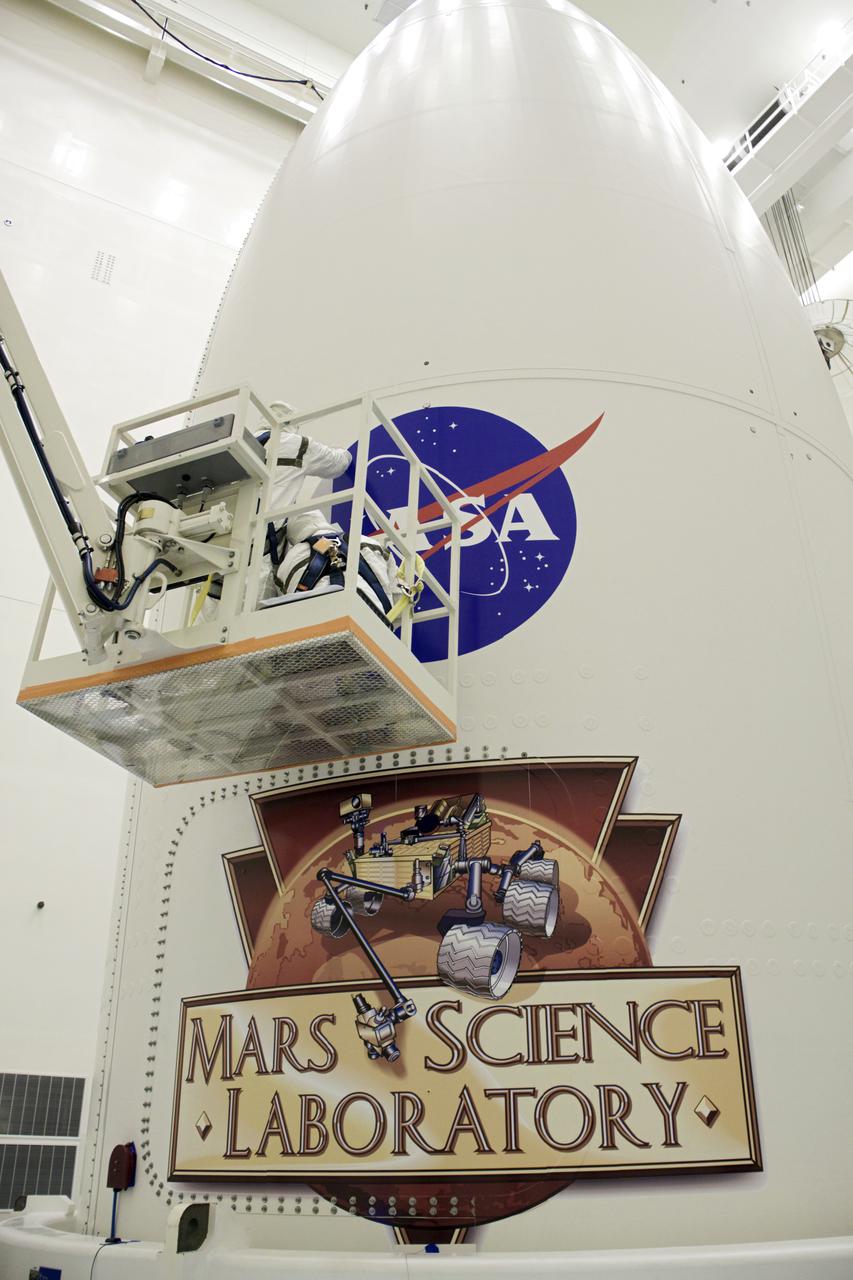
CAPE CANAVERAL, Fla. -- In the Payload Hazardous Servicing Facility at NASA's Kennedy Space Center in Florida, technicians use a lift to reach the upper region of an Atlas V rocket's payload fairing, where the NASA logo is being installed. Below is the Mars Science Laboratory (MSL) mission logo. Tucked inside the fairing is the MSL spacecraft, including a compact car-sized rover, Curiosity, which has 10 science instruments designed to search for evidence on whether Mars has had environments favorable to microbial life, including the chemical ingredients for life. The unique rover will use a laser to look inside rocks and release its gasses so that the rover’s spectrometer can analyze and send the data back to Earth. Launch of MSL aboard a United Launch Alliance Atlas V rocket is planned for Nov. 25 from Space Launch Complex-41 on Cape Canaveral Air Force Station. For more information, visit http:__www.nasa.gov_msl. Photo credit: NASA_Jim Grossmann
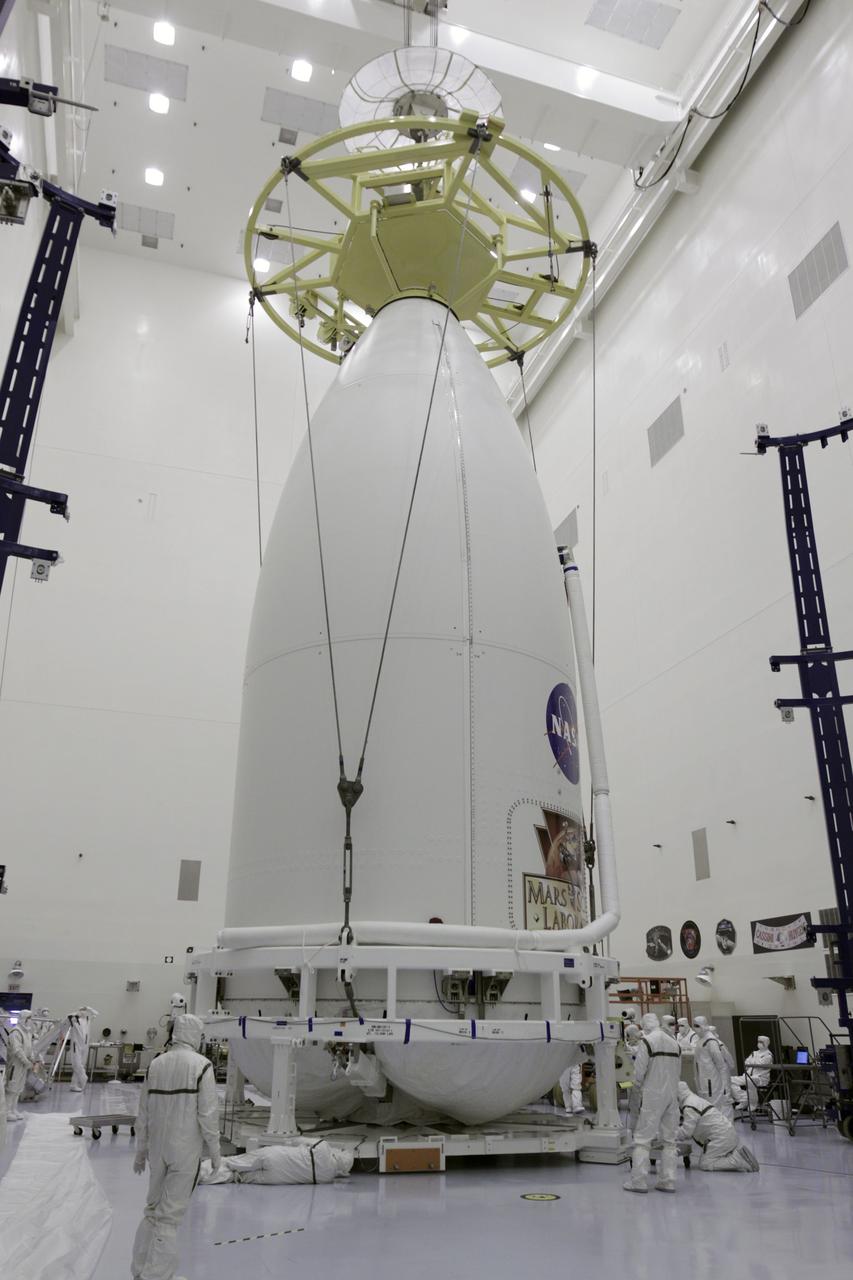
CAPE CANAVERAL, Fla. -- Technicians inside NASA Kennedy Space Center's Payload Hazardous Servicing Facility have attached a lifting device to the Atlas V rocket's payload fairing enclosing the Mars Science Laboratory (MSL) spacecraft. The fairing must be raised in order to be placed on a transporter for the move to Space Launch Complex 41. MSL's components include a compact car-sized rover, Curiosity, which has 10 science instruments designed to search for evidence on whether Mars has had environments favorable to microbial life, including the chemical ingredients for life. The unique rover will use a laser to look inside rocks and release its gasses so that the rover’s spectrometer can analyze and send the data back to Earth. Launch of MSL aboard a United Launch Alliance Atlas V rocket is planned for Nov. 25 from Space Launch Complex-41 on Cape Canaveral Air Force Station. For more information, visit http://www.nasa.gov/msl. Photo credit: NASA/Kim Shiflett
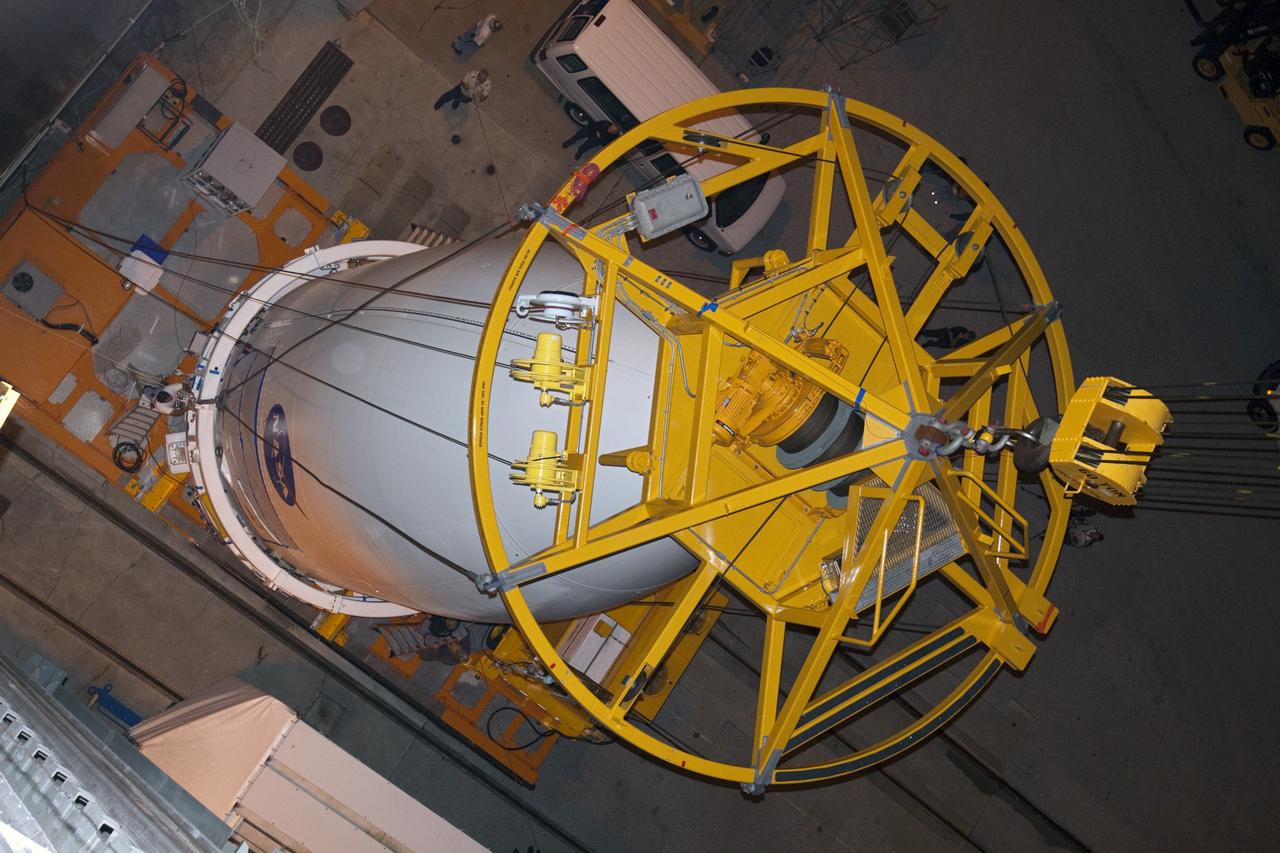
CAPE CANAVERAL, Fla. -- At Space Launch Complex 41 at Cape Canaveral Air Force Station in Florida, a lifting device is attached to the Atlas V payload fairing containing NASA's Mars Science Laboratory (MSL) spacecraft. The fairing, which protects the payload during ascent, will be lifted and mated to the Atlas V rocket already in place at the launch pad. MSL was prepared for launch in the Payload Hazardous Servicing Facility at NASA's Kennedy Space Center. MSL's components include a compact car-sized rover, Curiosity, which has 10 science instruments designed to search for evidence on whether Mars has had environments favorable to microbial life, including the chemical ingredients for life. The unique rover will use a laser to look inside rocks and release its gasses so that the rover’s spectrometer can analyze and send the data back to Earth. Launch of MSL aboard a United Launch Alliance Atlas V rocket is planned for Nov. 25 from Space Launch Complex 41 on Cape Canaveral Air Force Station. For more information, visit http://www.nasa.gov/msl. Photo credit: NASA/Kim Shiflett
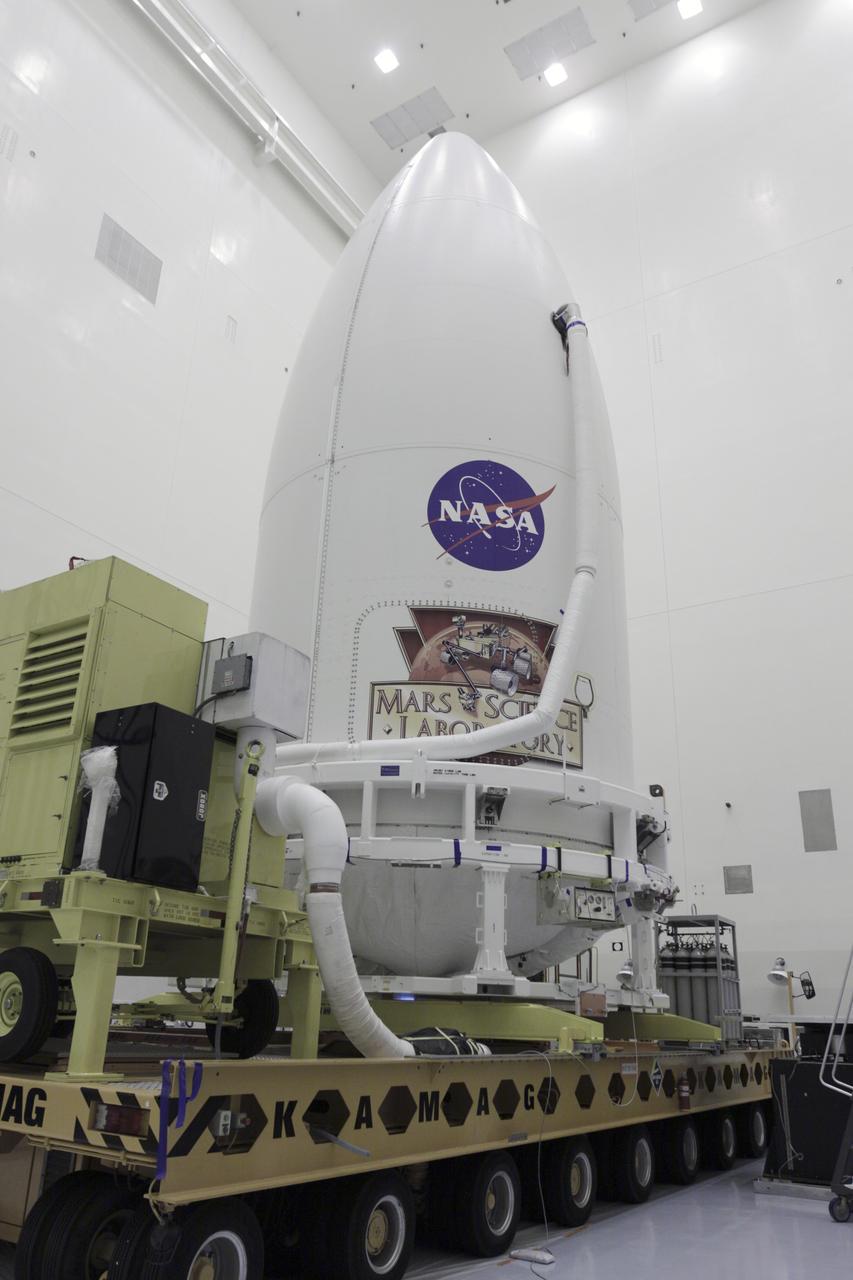
CAPE CANAVERAL, Fla. -- In the Payload Hazardous Servicing Facility at NASA's Kennedy Space Center in Florida, an Atlas V rocket's payload fairing, containing the Mars Science Laboratory (MSL) spacecraft, is in place atop a transporter that will carry it to Space Launch Complex 41. MSL's components include a compact car-sized rover, Curiosity, which has 10 science instruments designed to search for evidence on whether Mars has had environments favorable to microbial life, including the chemical ingredients for life. The unique rover will use a laser to look inside rocks and release its gasses so that the rover’s spectrometer can analyze and send the data back to Earth. Launch of MSL aboard a United Launch Alliance Atlas V rocket is planned for Nov. 25 from Space Launch Complex-41 on Cape Canaveral Air Force Station. For more information, visit http://www.nasa.gov/msl. Photo credit: NASA/Kim Shiflett
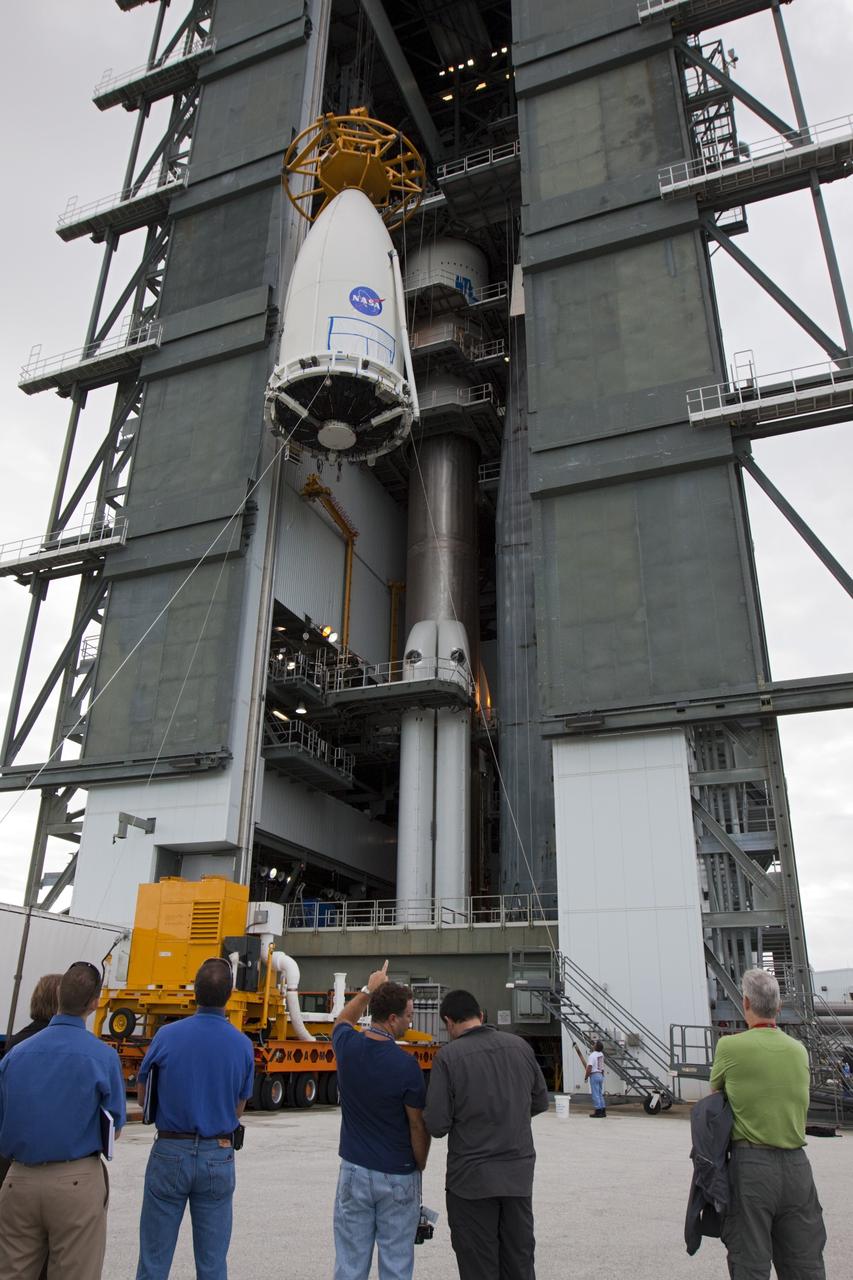
CAPE CANAVERAL, Fla. -- Employees at Space Launch Complex 41 keep watch as the payload fairing containing NASA's Mars Science Laboratory (MSL) spacecraft is lifted up the side of the Vertical Integration Facility. The fairing, which protects the payload during launch, will be attached to the Atlas V rocket already stacked inside the facility. MSL was prepared for launch in the Payload Hazardous Servicing Facility at NASA's Kennedy Space Center. MSL's components include a compact car-sized rover, Curiosity, which has 10 science instruments designed to search for evidence on whether Mars has had environments favorable to microbial life, including the chemical ingredients for life. The unique rover will use a laser to look inside rocks and release its gasses so that the rover’s spectrometer can analyze and send the data back to Earth. Launch of MSL aboard a United Launch Alliance Atlas V rocket is planned for Nov. 25 from Space Launch Complex 41 on Cape Canaveral Air Force Station. For more information, visit http://www.nasa.gov/msl. Photo credit: NASA/Kim Shiflett
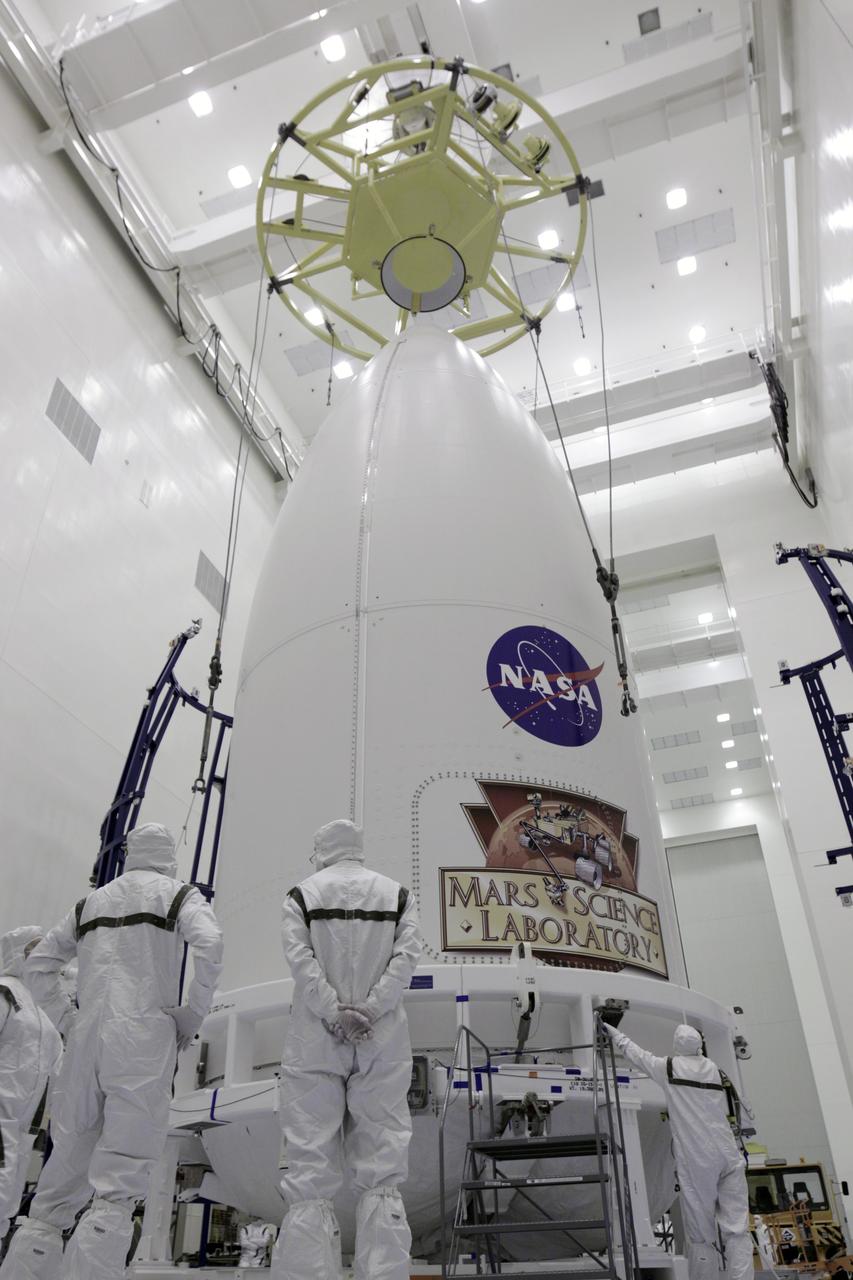
CAPE CANAVERAL, Fla. -- In the Payload Hazardous Servicing Facility at NASA's Kennedy Space Center in Florida, technicians attach a lifting device to the payload fairing of an Atlas V rocket. The fairing must be raised in order to be placed on a transporter for the move to Space Launch Complex 41. The Mars Science Laboratory (MSL) spacecraft is enclosed in the fairing, which will protect the payload from heat and aerodynamic pressure generated during launch. MSL's components include a compact car-sized rover, Curiosity, which has 10 science instruments designed to search for evidence on whether Mars has had environments favorable to microbial life, including the chemical ingredients for life. The unique rover will use a laser to look inside rocks and release its gasses so that the rover’s spectrometer can analyze and send the data back to Earth. Launch of MSL aboard a United Launch Alliance Atlas V rocket is planned for Nov. 25 from Space Launch Complex-41 on Cape Canaveral Air Force Station. For more information, visit http://www.nasa.gov/msl. Photo credit: NASA/Kim Shiflett
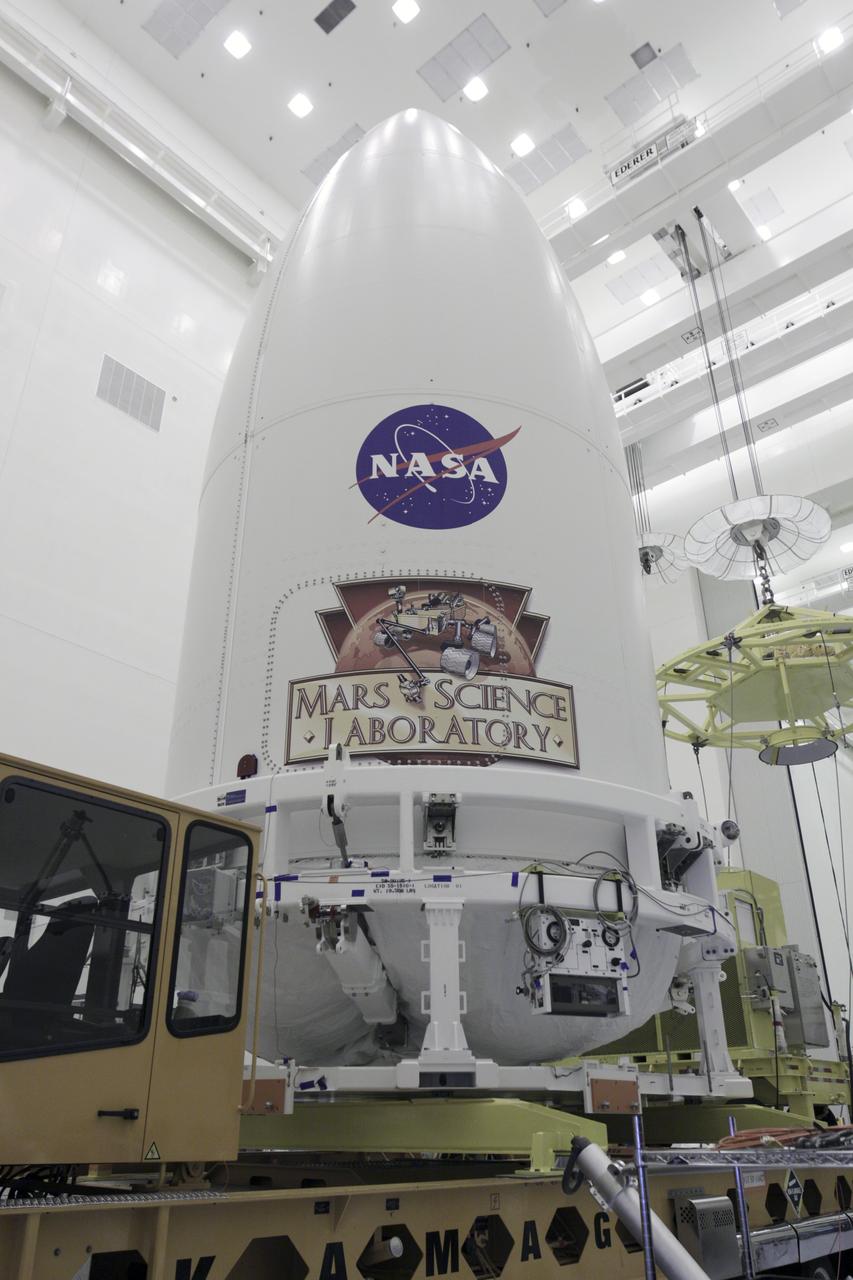
CAPE CANAVERAL, Fla. -- In the Payload Hazardous Servicing Facility at NASA's Kennedy Space Center in Florida, the Atlas V rocket's payload fairing containing the Mars Science Laboratory (MSL) spacecraft stands securely atop the transporter that will carry it to Space Launch Complex 41. MSL's components include a compact car-sized rover, Curiosity, which has 10 science instruments designed to search for evidence on whether Mars has had environments favorable to microbial life, including the chemical ingredients for life. The unique rover will use a laser to look inside rocks and release its gasses so that the rover’s spectrometer can analyze and send the data back to Earth. Launch of MSL aboard a United Launch Alliance Atlas V rocket is planned for Nov. 25 from Space Launch Complex-41 on Cape Canaveral Air Force Station. For more information, visit http://www.nasa.gov/msl. Photo credit: NASA/Kim Shiflett
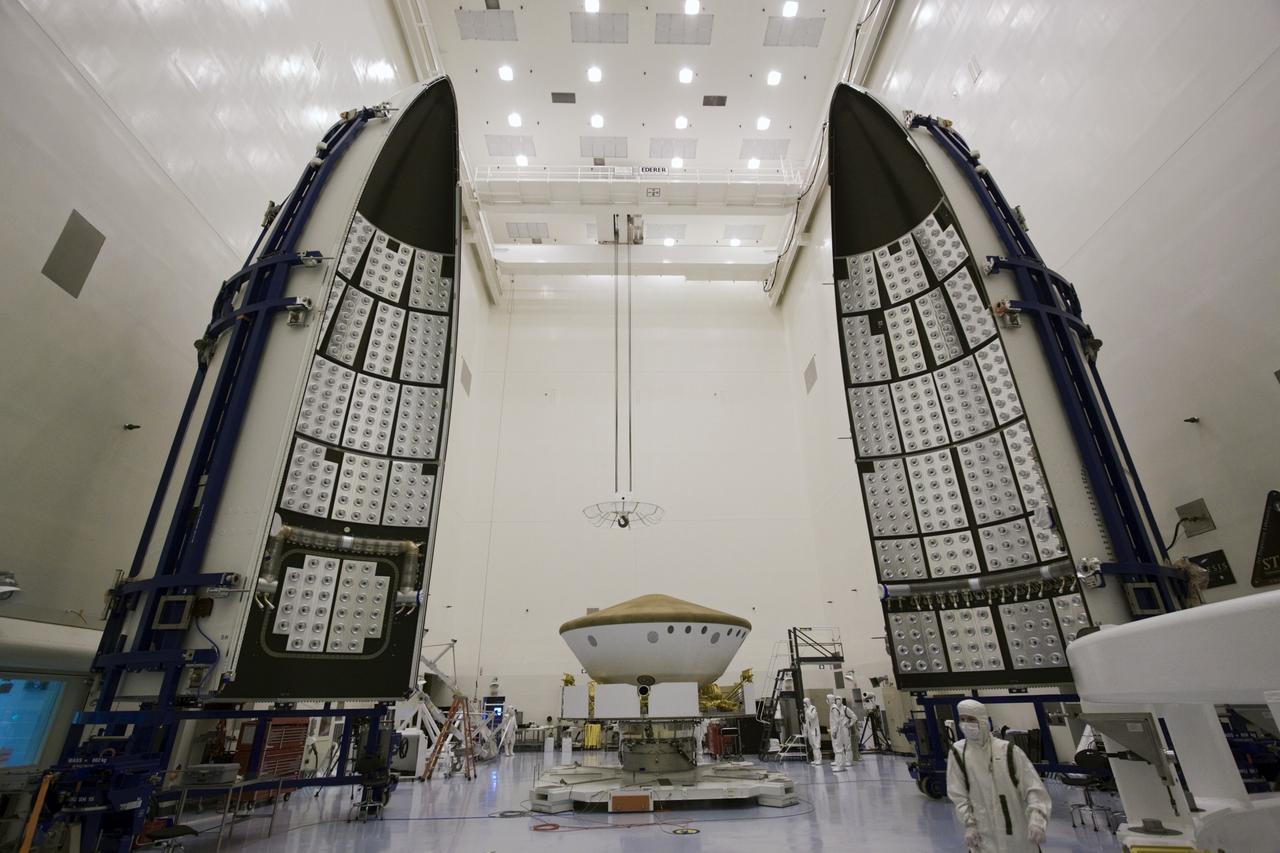
CAPE CANAVERAL, Fla. -- In the Payload Hazardous Servicing Facility at NASA's Kennedy Space Center in Florida, preparations are under way to enclose NASA's Mars Science Laboratory (MSL) in an Atlas V rocket payload fairing. The blocks on the interior of the fairing are components of the fairing acoustic protection (FAP) system, designed to protect the payload by dampening the sound created by the rocket during liftoff. The fairing will protect the spacecraft from the impact of aerodynamic pressure and heating during ascent. MSL's components include a compact car-sized rover, Curiosity, which has 10 science instruments designed to search for evidence on whether Mars has had environments favorable to microbial life, including the chemical ingredients for life. The unique rover will use a laser to look inside rocks and release its gasses so that the rover’s spectrometer can analyze and send the data back to Earth. Launch of MSL aboard a United Launch Alliance Atlas V rocket is planned for Nov. 25 from Space Launch Complex-41 on Cape Canaveral Air Force Station. For more information, visit http://www.nasa.gov/msl. Photo credit: NASA/Jim Grossmann
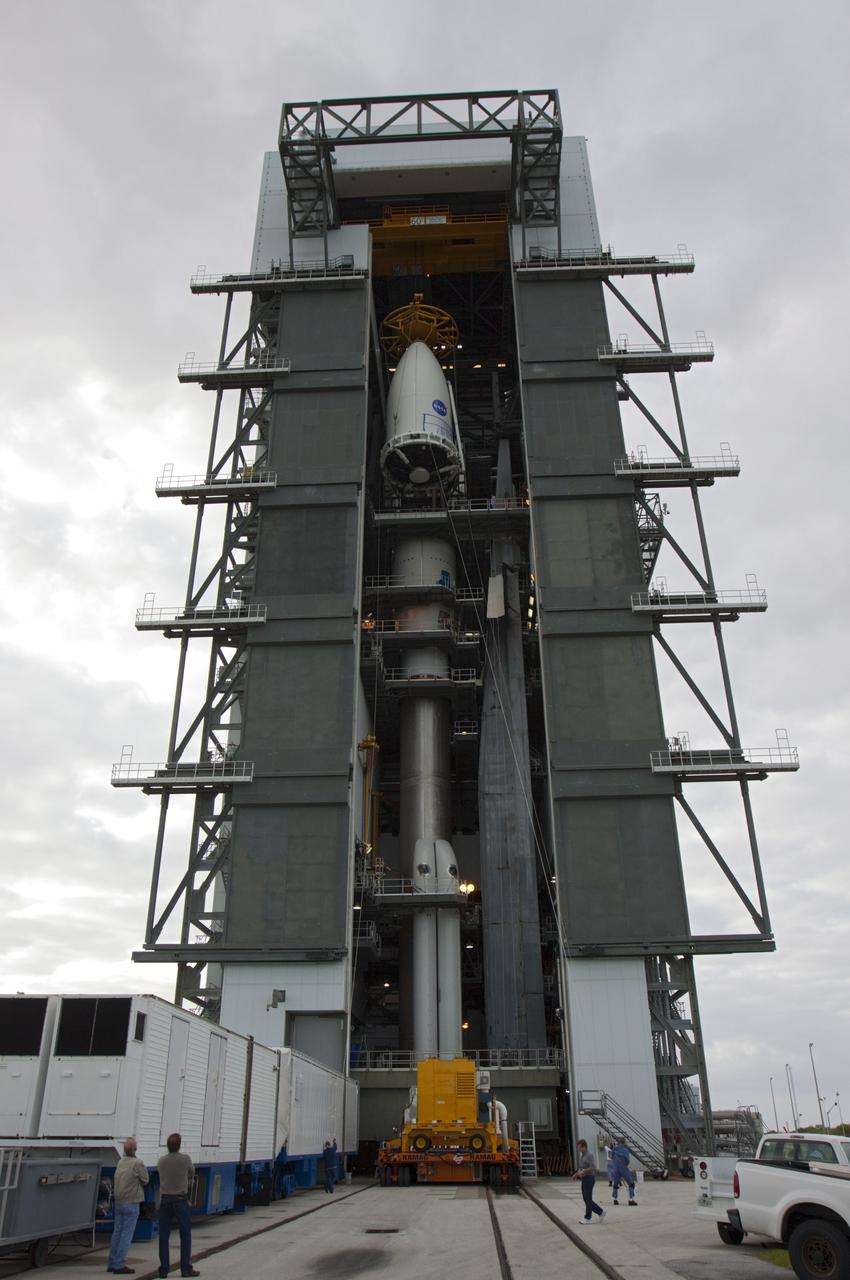
CAPE CANAVERAL, Fla. -- The payload fairing containing NASA's Mars Science Laboratory (MSL) spacecraft is hoisted to the top of the Vertical Integration Facility at Space Launch Complex 41, where it will be attached to the Atlas V rocket already stacked inside. MSL was prepared for launch in the Payload Hazardous Servicing Facility at NASA's Kennedy Space Center. MSL's components include a compact car-sized rover, Curiosity, which has 10 science instruments designed to search for evidence on whether Mars has had environments favorable to microbial life, including the chemical ingredients for life. The unique rover will use a laser to look inside rocks and release its gasses so that the rover’s spectrometer can analyze and send the data back to Earth. Launch of MSL aboard a United Launch Alliance Atlas V rocket is planned for Nov. 25 from Space Launch Complex 41 on Cape Canaveral Air Force Station. For more information, visit http://www.nasa.gov/msl. Photo credit: NASA/Kim Shiflett
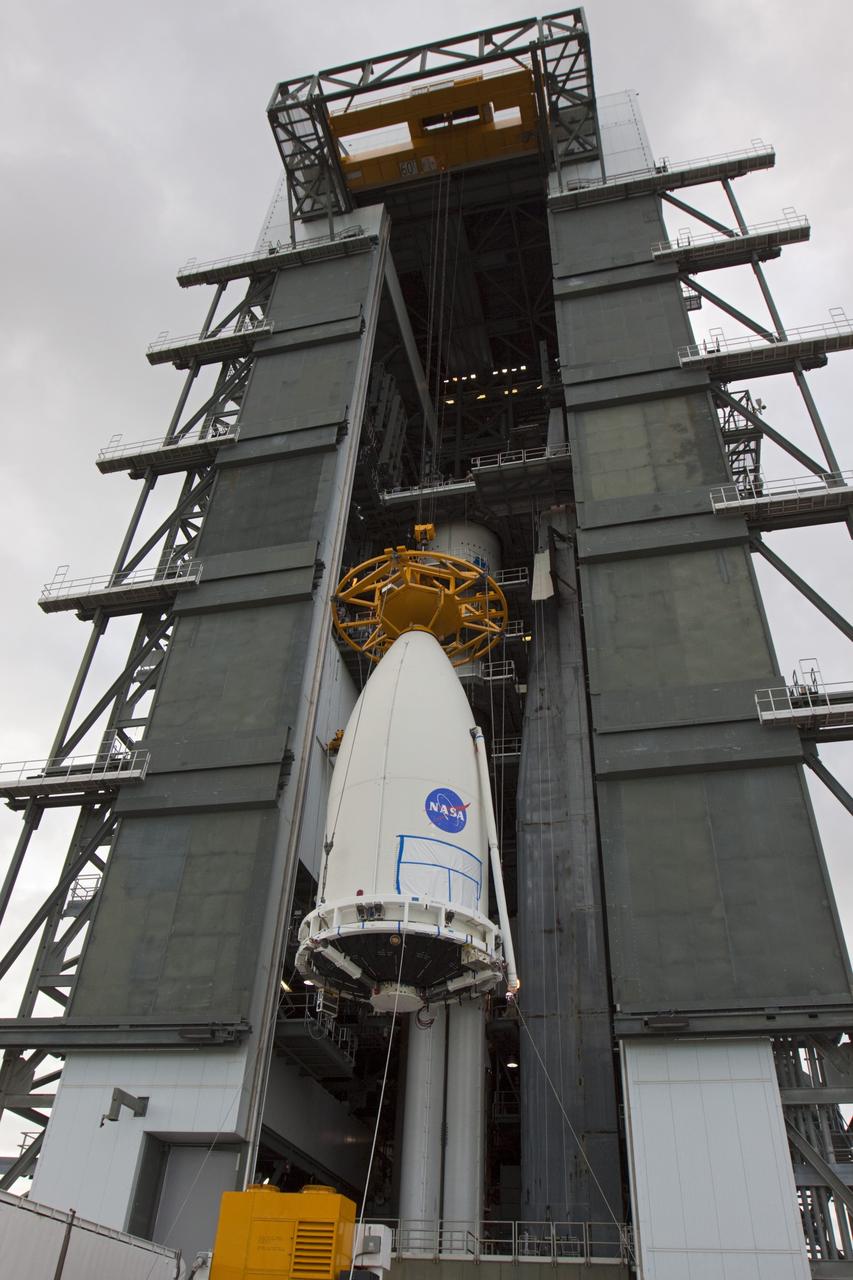
CAPE CANAVERAL, Fla. -- At Space Launch Complex 41, the payload fairing containing NASA's Mars Science Laboratory (MSL) spacecraft is lifted up the side of the Vertical Integration Facility, where it will be attached to the Atlas V rocket already stacked inside. MSL was prepared for launch in the Payload Hazardous Servicing Facility at NASA's Kennedy Space Center. MSL's components include a compact car-sized rover, Curiosity, which has 10 science instruments designed to search for evidence on whether Mars has had environments favorable to microbial life, including the chemical ingredients for life. The unique rover will use a laser to look inside rocks and release its gasses so that the rover’s spectrometer can analyze and send the data back to Earth. Launch of MSL aboard a United Launch Alliance Atlas V rocket is planned for Nov. 25 from Space Launch Complex 41 on Cape Canaveral Air Force Station. For more information, visit http://www.nasa.gov/msl. Photo credit: NASA/Kim Shiflett
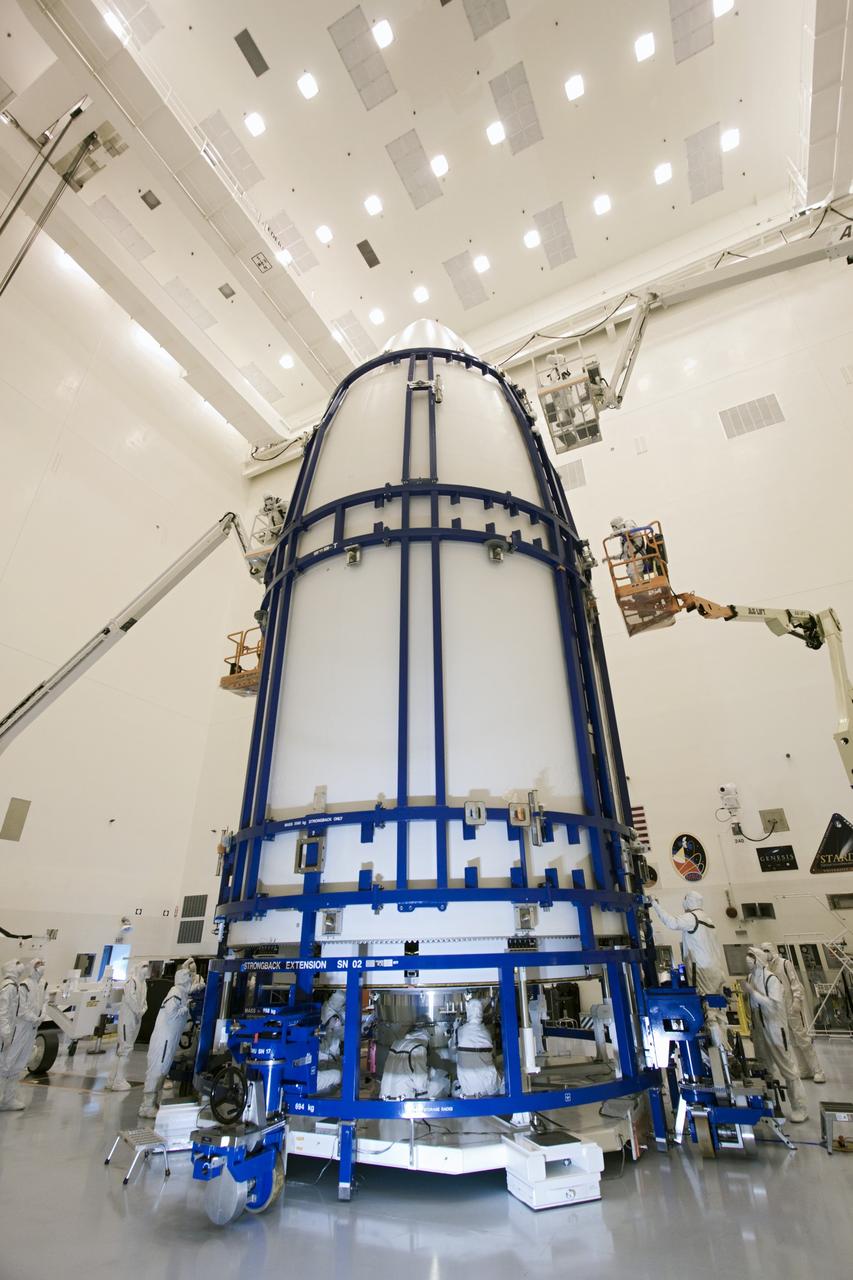
CAPE CANAVERAL, Fla. - In the Payload Hazardous Servicing Facility at NASA's Kennedy Space Center in Florida, spacecraft technicians secure an Atlas V rocket payload fairing around NASA's Mars Science Laboratory (MSL). Next, the lab will be transported to the launch pad. The fairing will protect the spacecraft from the impact of aerodynamic pressure and heating during ascent. MSL's components include a compact car-sized rover, Curiosity, which has 10 science instruments designed to search for evidence on whether Mars has had environments favorable to microbial life, including the chemical ingredients for life. The unique rover will use a laser to look inside rocks and release its gasses so that the rover’s spectrometer can analyze and send the data back to Earth. Launch of MSL aboard a United Launch Alliance Atlas V rocket is planned for Nov. 25 from Space Launch Complex-41 on Cape Canaveral Air Force Station. For more information, visit http://www.nasa.gov/msl. Photo credit: NASA/Jim Grossmann
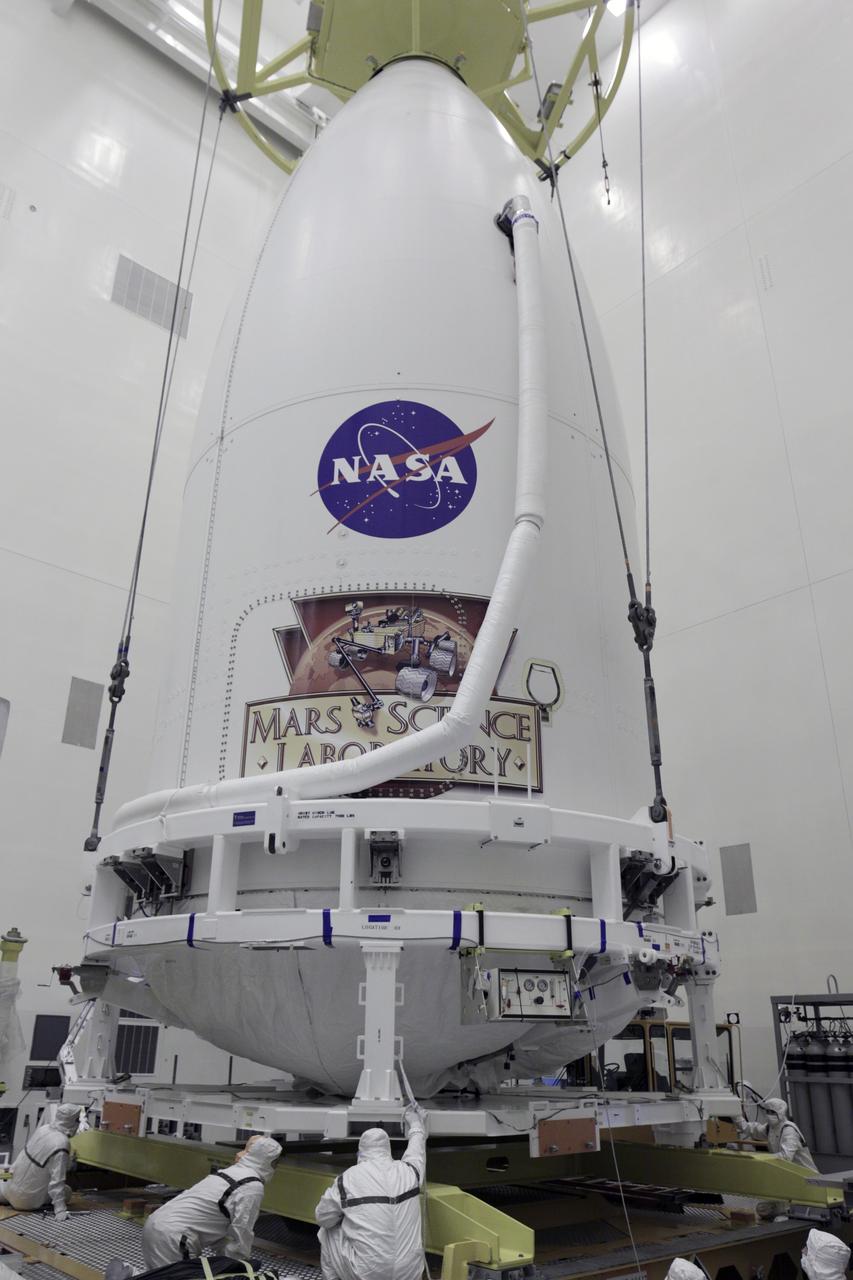
CAPE CANAVERAL, Fla. -- Technicians in the Payload Hazardous Servicing Facility at NASA's Kennedy Space Center in Florida check the placement of Atlas V rocket's payload fairing atop the transporter that will carry it to Space Launch Complex 41. The Mars Science Laboratory (MSL) spacecraft is enclosed in the fairing, which will protect the payload from heat and aerodynamic pressure generated during launch. MSL's components include a compact car-sized rover, Curiosity, which has 10 science instruments designed to search for evidence on whether Mars has had environments favorable to microbial life, including the chemical ingredients for life. The unique rover will use a laser to look inside rocks and release its gasses so that the rover’s spectrometer can analyze and send the data back to Earth. Launch of MSL aboard a United Launch Alliance Atlas V rocket is planned for Nov. 25 from Space Launch Complex-41 on Cape Canaveral Air Force Station. For more information, visit http://www.nasa.gov/msl. Photo credit: NASA/Kim Shiflett
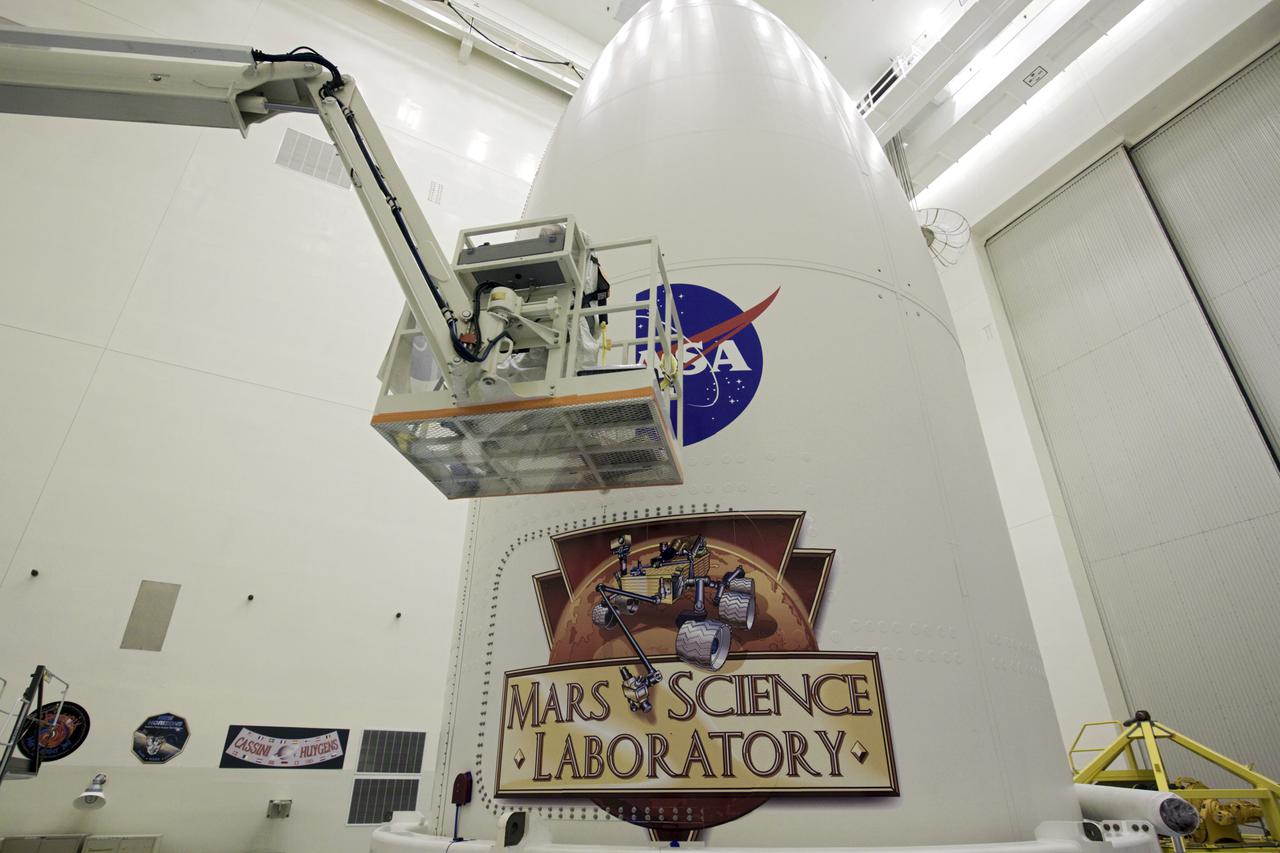
CAPE CANAVERAL, Fla. -- Technicians inside NASA Kennedy Space Center's Payload Hazardous Servicing Facility use a lift as they adhere the NASA logo above the Mars Science Laboratory (MSL) mission logo on the exterior of an Atlas V rocket's payload fairing. Tucked inside the fairing is the MSL spacecraft, including a compact car-sized rover, Curiosity, which has 10 science instruments designed to search for evidence on whether Mars has had environments favorable to microbial life, including the chemical ingredients for life. The unique rover will use a laser to look inside rocks and release its gasses so that the rover’s spectrometer can analyze and send the data back to Earth. Launch of MSL aboard a United Launch Alliance Atlas V rocket is planned for Nov. 25 from Space Launch Complex-41 on Cape Canaveral Air Force Station. For more information, visit http:__www.nasa.gov_msl. Photo credit: NASA_Jim Grossmann
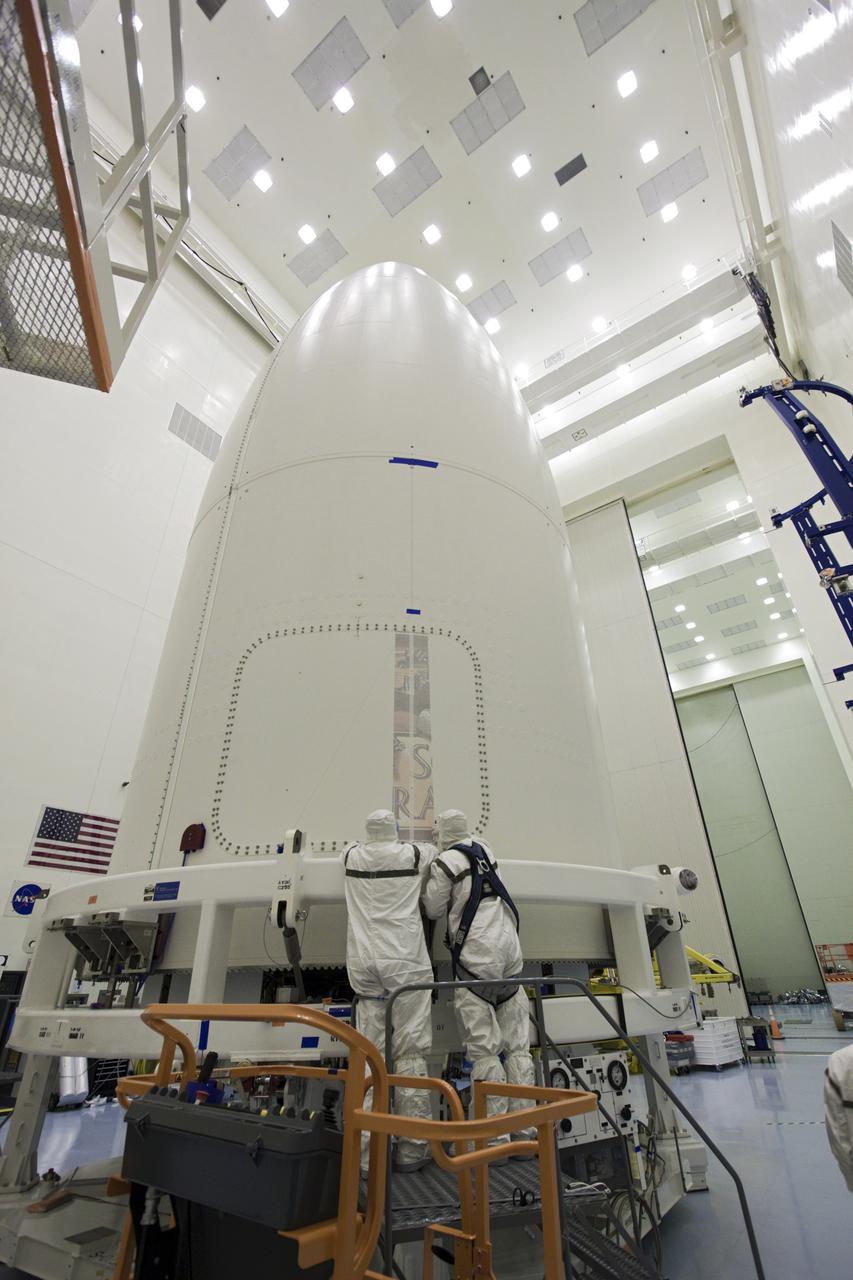
CAPE CANAVERAL, Fla. – In the Payload Hazardous Servicing Facility at NASA's Kennedy Space Center in Florida, technicians apply the first section of Mars Science Laboratory (MSL) mission logo to the exterior of an Atlas V rocket's payload fairing. Tucked inside the fairing is the MSL spacecraft, including a compact car-sized rover, Curiosity, which has 10 science instruments designed to search for evidence on whether Mars has had environments favorable to microbial life, including the chemical ingredients for life. The unique rover will use a laser to look inside rocks and release its gasses so that the rover’s spectrometer can analyze and send the data back to Earth. Launch of MSL aboard a United Launch Alliance Atlas V rocket is planned for Nov. 25 from Space Launch Complex-41 on Cape Canaveral Air Force Station. For more information, visit http:__www.nasa.gov_msl. Photo credit: NASA_Jim Grossmann
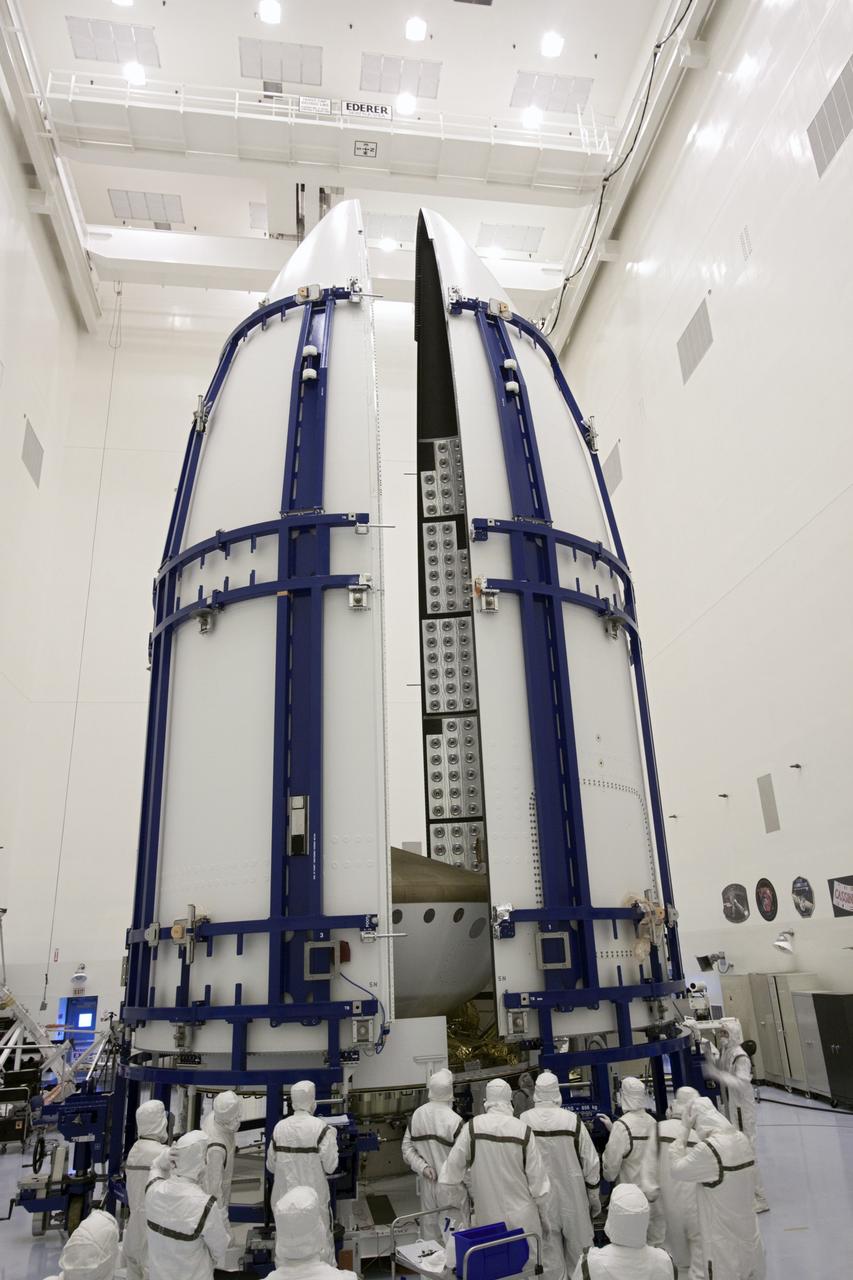
CAPE CANAVERAL, Fla. -- In the Payload Hazardous Servicing Facility at NASA's Kennedy Space Center in Florida, sections of an Atlas V rocket payload fairing obscure NASA's Mars Science Laboratory (MSL) from view as they close in around it. The blocks on the interior of the fairing are components of the fairing acoustic protection (FAP) system, designed to protect the payload by dampening the sound created by the rocket during liftoff. The fairing will protect the spacecraft from the impact of aerodynamic pressure and heating during ascent. MSL's components include a compact car-sized rover, Curiosity, which has 10 science instruments designed to search for evidence on whether Mars has had environments favorable to microbial life, including the chemical ingredients for life. The unique rover will use a laser to look inside rocks and release its gasses so that the rover’s spectrometer can analyze and send the data back to Earth. Launch of MSL aboard a United Launch Alliance Atlas V rocket is planned for Nov. 25 from Space Launch Complex-41 on Cape Canaveral Air Force Station. For more information, visit http://www.nasa.gov/msl. Photo credit: NASA/Jim Grossmann
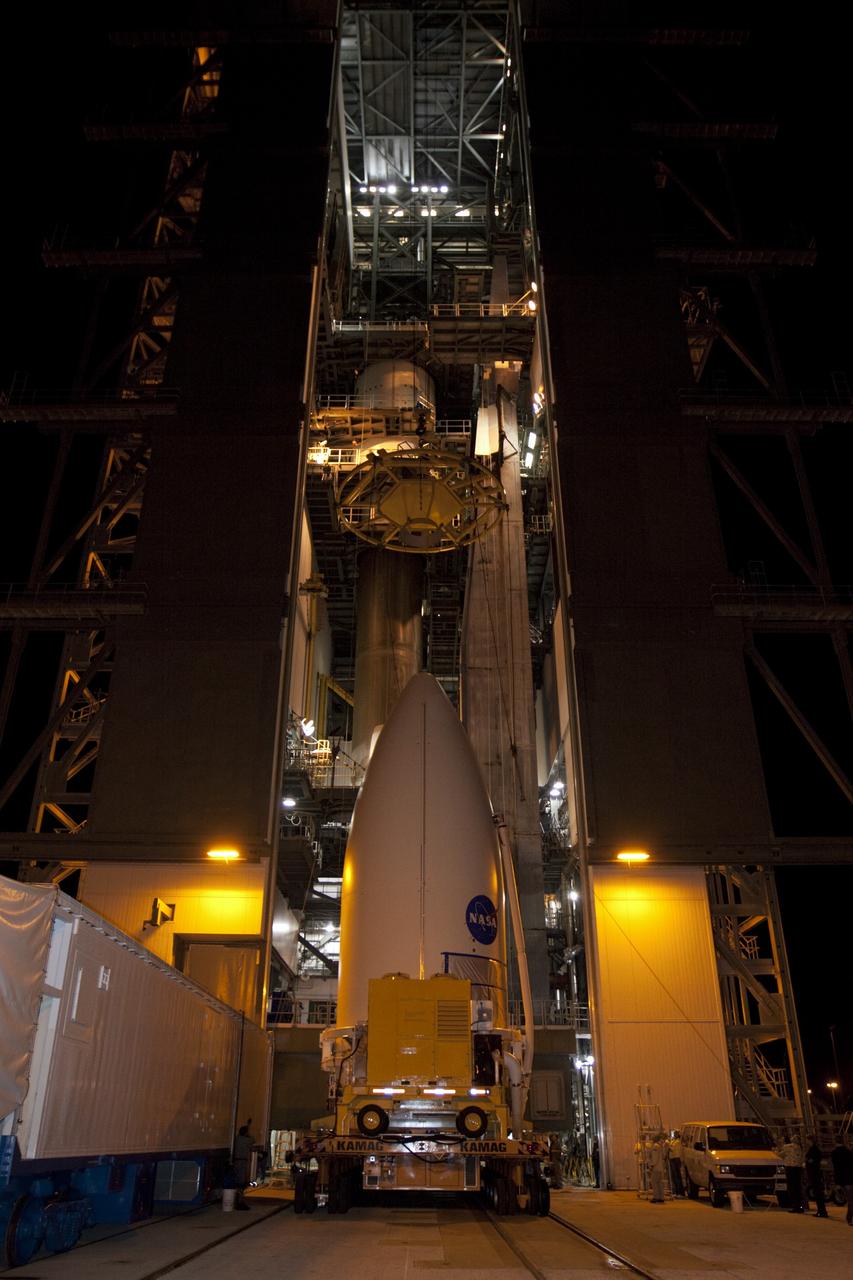
CAPE CANAVERAL, Fla. -- The payload fairing containing NASA's Mars Science Laboratory (MSL) spacecraft arrives at the Vertical Integration Facility at Space Launch Complex 41 at Cape Canaveral Air Force Station in Florida. The fairing, which protects the payload during ascent, will be lifted and mated to the Atlas V rocket already in place at the launch pad. The spacecraft was prepared for launch in the Payload Hazardous Servicing Facility at NASA's Kennedy Space Center. MSL's components include a compact car-sized rover, Curiosity, which has 10 science instruments designed to search for evidence on whether Mars has had environments favorable to microbial life, including the chemical ingredients for life. The unique rover will use a laser to look inside rocks and release its gasses so that the rover’s spectrometer can analyze and send the data back to Earth. Launch of MSL aboard a United Launch Alliance Atlas V rocket is planned for Nov. 25 from Space Launch Complex 41 on Cape Canaveral Air Force Station. For more information, visit http://www.nasa.gov/msl. Photo credit: NASA/Kim Shiflett
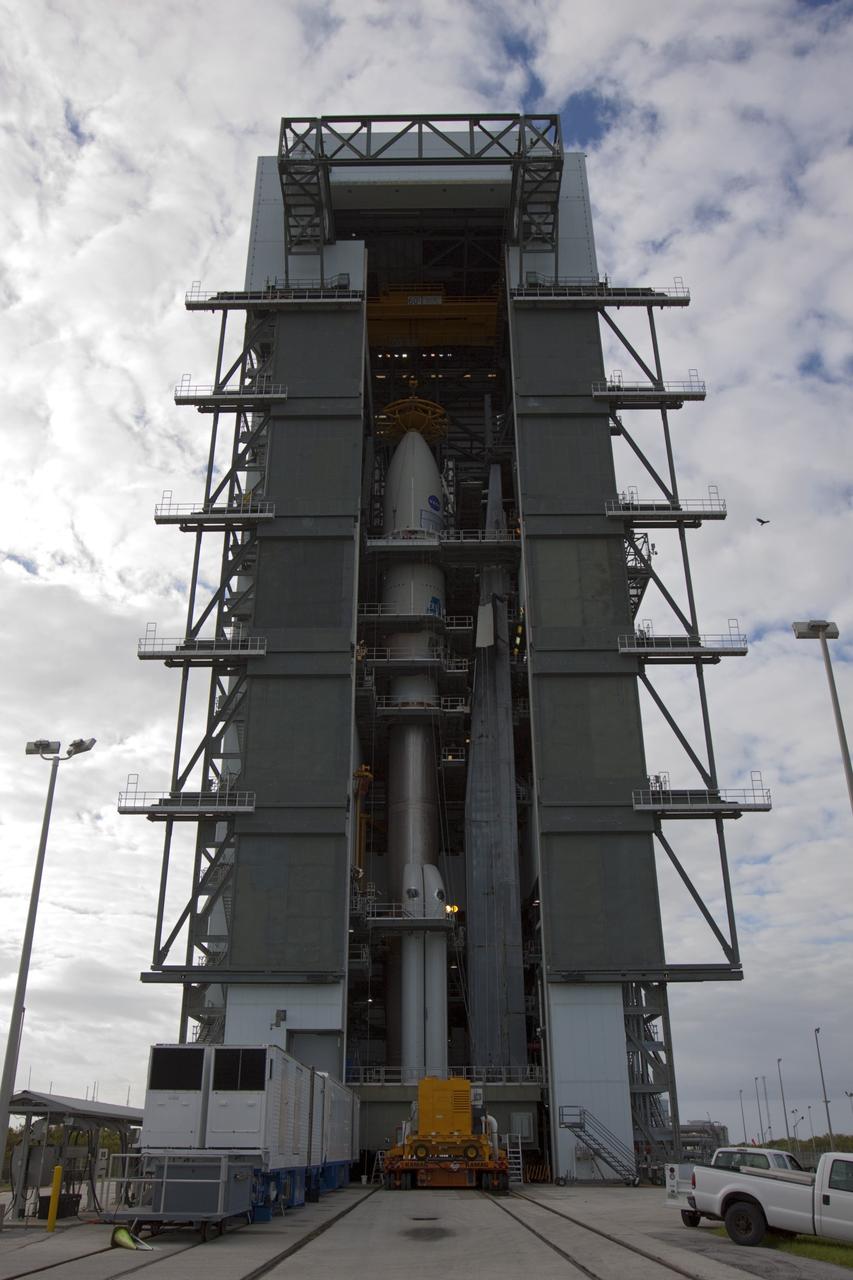
CAPE CANAVERAL, Fla. -- In the Vertical Integration Facility at Space Launch Complex 41, the payload fairing containing NASA's Mars Science Laboratory (MSL) spacecraft has been attached to its Atlas V rocket. MSL was prepared for launch in the Payload Hazardous Servicing Facility at NASA's Kennedy Space Center. MSL's components include a compact car-sized rover, Curiosity, which has 10 science instruments designed to search for evidence on whether Mars has had environments favorable to microbial life, including the chemical ingredients for life. The unique rover will use a laser to look inside rocks and release its gasses so that the rover’s spectrometer can analyze and send the data back to Earth. Launch of MSL aboard a United Launch Alliance Atlas V rocket is planned for Nov. 25 from Space Launch Complex 41 on Cape Canaveral Air Force Station. For more information, visit http://www.nasa.gov/msl. Photo credit: NASA/Kim Shiflett
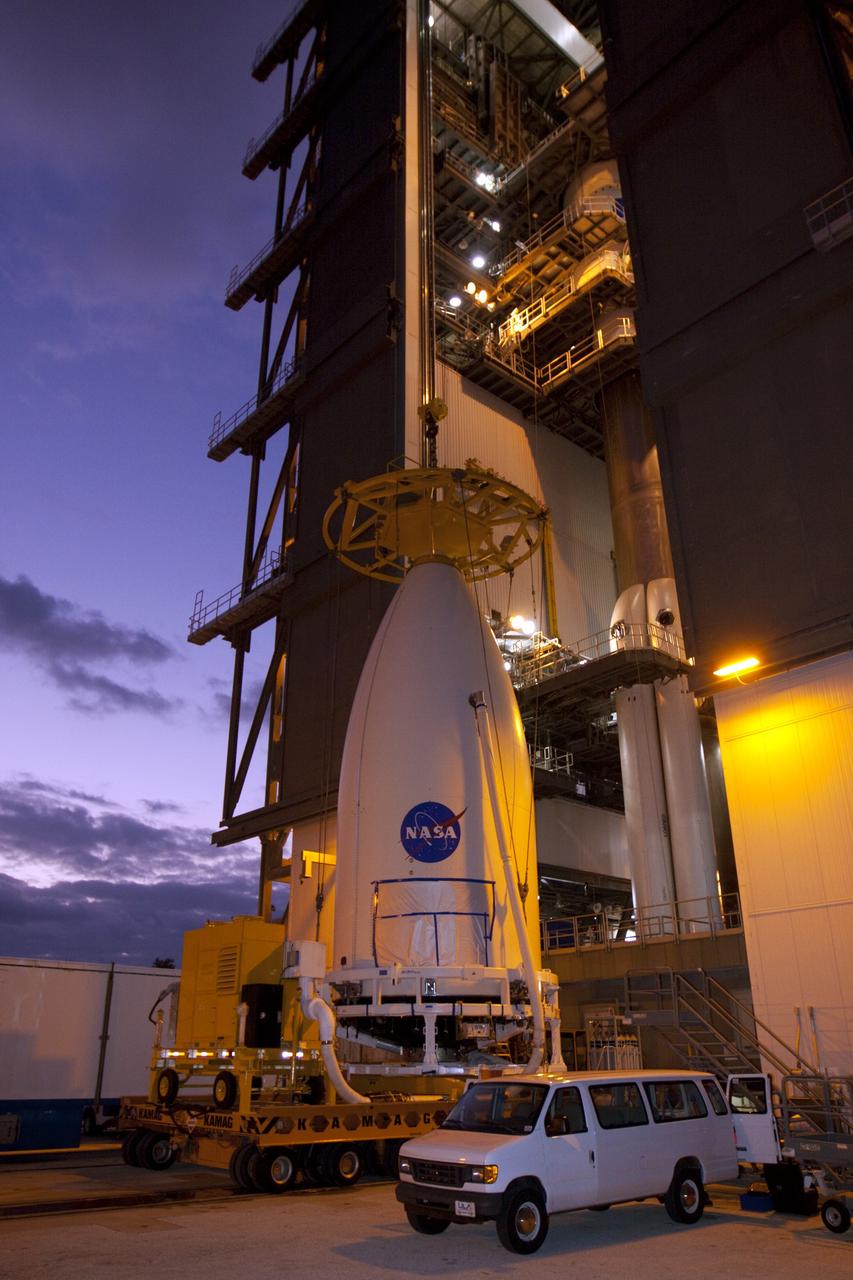
CAPE CANAVERAL, Fla. -- At Space Launch Complex 41, the payload fairing containing NASA's Mars Science Laboratory (MSL) spacecraft has been attached to a lifting device in order to be raised and attached to the Atlas V rocket inside the Vertical Integration Facility. The fairing will protect the payload from heat and aerodynamic pressure generated during ascent. MSL was prepared for launch in the Payload Hazardous Servicing Facility at NASA's Kennedy Space Center. MSL's components include a compact car-sized rover, Curiosity, which has 10 science instruments designed to search for evidence on whether Mars has had environments favorable to microbial life, including the chemical ingredients for life. The unique rover will use a laser to look inside rocks and release its gasses so that the rover’s spectrometer can analyze and send the data back to Earth. Launch of MSL aboard a United Launch Alliance Atlas V rocket is planned for Nov. 25 from Space Launch Complex 41 on Cape Canaveral Air Force Station. For more information, visit http://www.nasa.gov/msl. Photo credit: NASA/Kim Shiflett
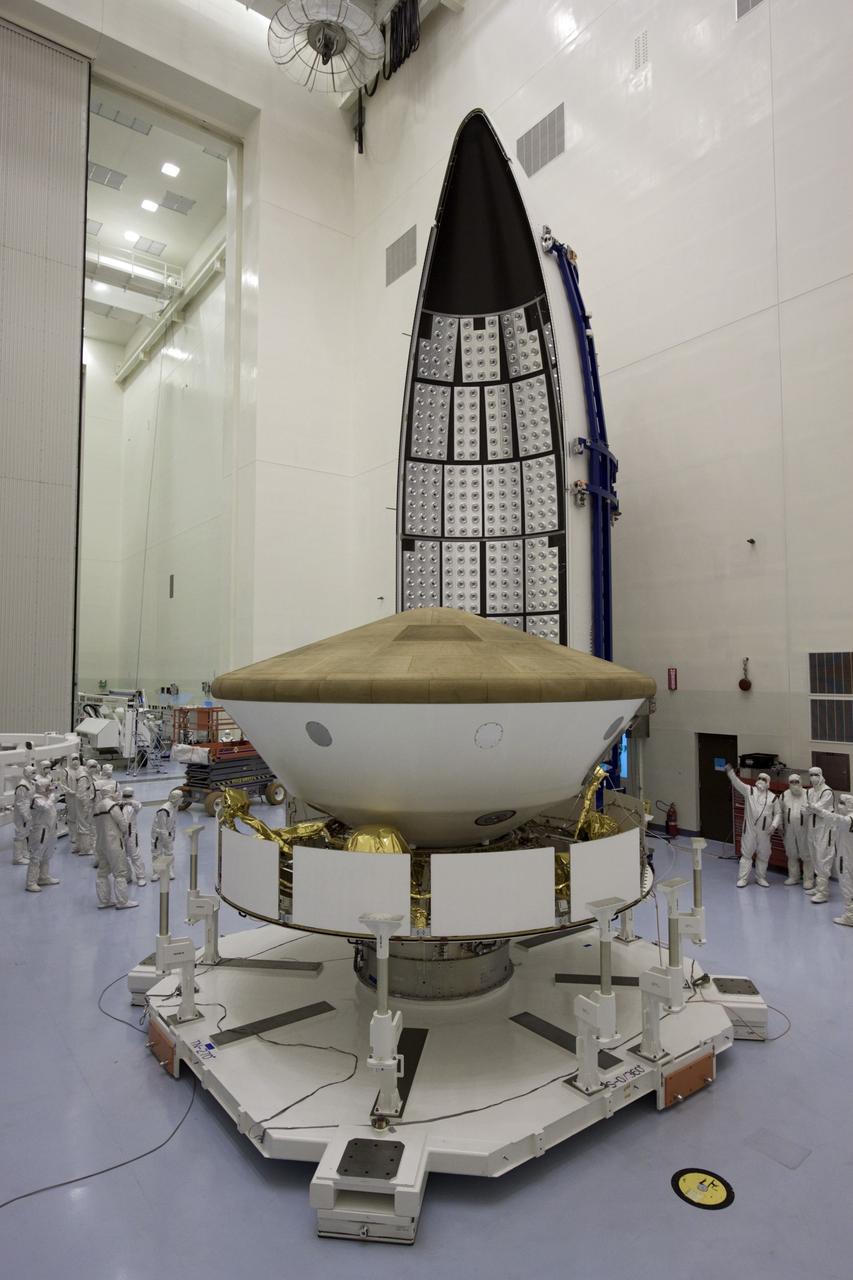
CAPE CANAVERAL, Fla. -- In the Payload Hazardous Servicing Facility at NASA's Kennedy Space Center in Florida, spacecraft technicians prepare to enclose NASA's Mars Science Laboratory (MSL) in an Atlas V rocket payload fairing. The blocks on the interior of the fairing are components of the fairing acoustic protection (FAP) system, designed to protect the payload by dampening the sound created by the rocket during liftoff. The fairing will protect the spacecraft from the impact of aerodynamic pressure and heating during ascent. MSL's components include a compact car-sized rover, Curiosity, which has 10 science instruments designed to search for evidence on whether Mars has had environments favorable to microbial life, including the chemical ingredients for life. The unique rover will use a laser to look inside rocks and release its gasses so that the rover’s spectrometer can analyze and send the data back to Earth. Launch of MSL aboard a United Launch Alliance Atlas V rocket is planned for Nov. 25 from Space Launch Complex-41 on Cape Canaveral Air Force Station. For more information, visit http://www.nasa.gov/msl. Photo credit: NASA/Jim Grossmann
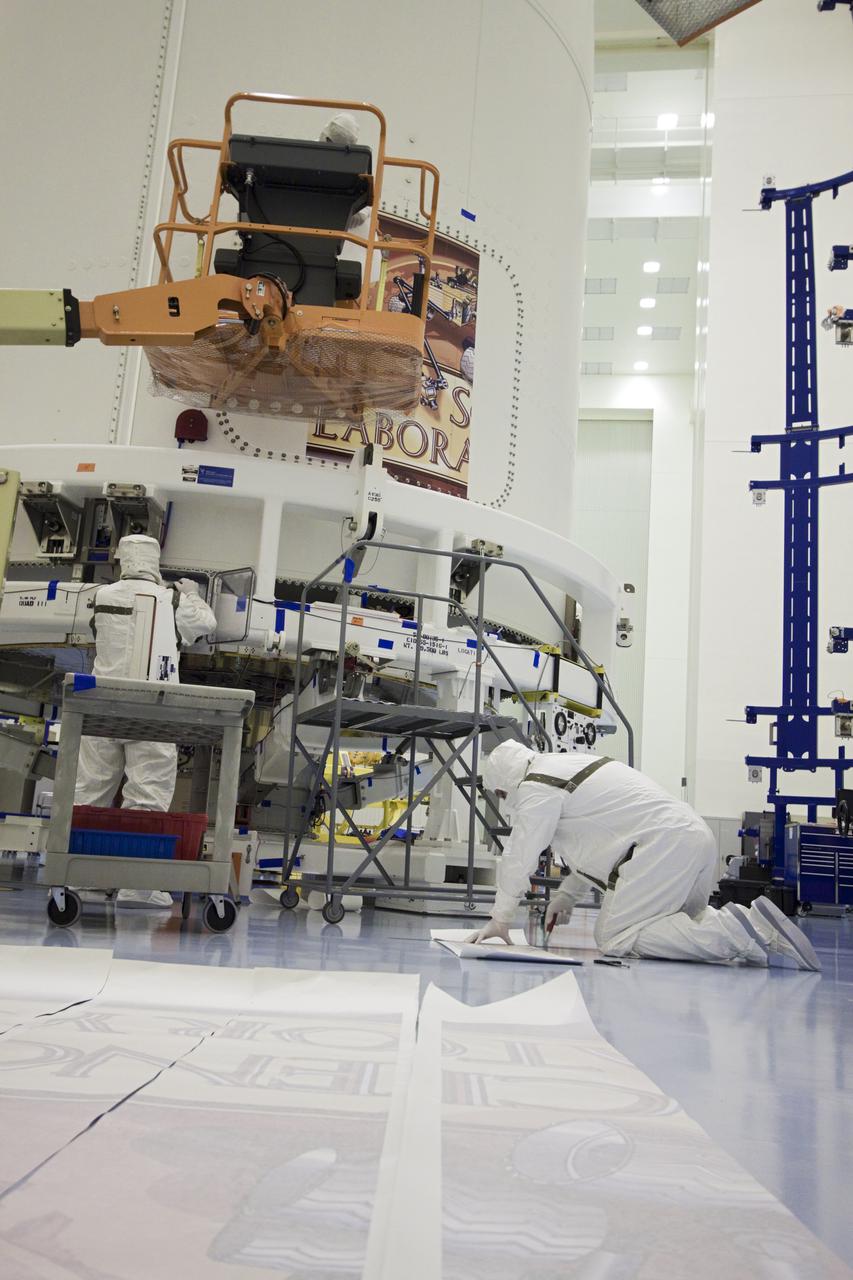
CAPE CANAVERAL, Fla. – Technicians inside NASA Kennedy Space Center's Payload Hazardous Servicing Facility use a lift to position a section of the Mars Science Laboratory (MSL) mission logo on the exterior of an Atlas V rocket's payload fairing. Tucked inside the fairing is the MSL spacecraft, including a compact car-sized rover, Curiosity, which has 10 science instruments designed to search for evidence on whether Mars has had environments favorable to microbial life, including the chemical ingredients for life.The unique rover will use a laser to look inside rocks and release its gasses so that the rover’s spectrometer can analyze and send the data back to Earth. Launch of MSL aboard a United Launch Alliance Atlas V rocket is planned for Nov. 25 from Space Launch Complex-41 on Cape Canaveral Air Force Station. For more information, visit http:__www.nasa.gov_msl. Photo credit: NASA_Jim Grossmann
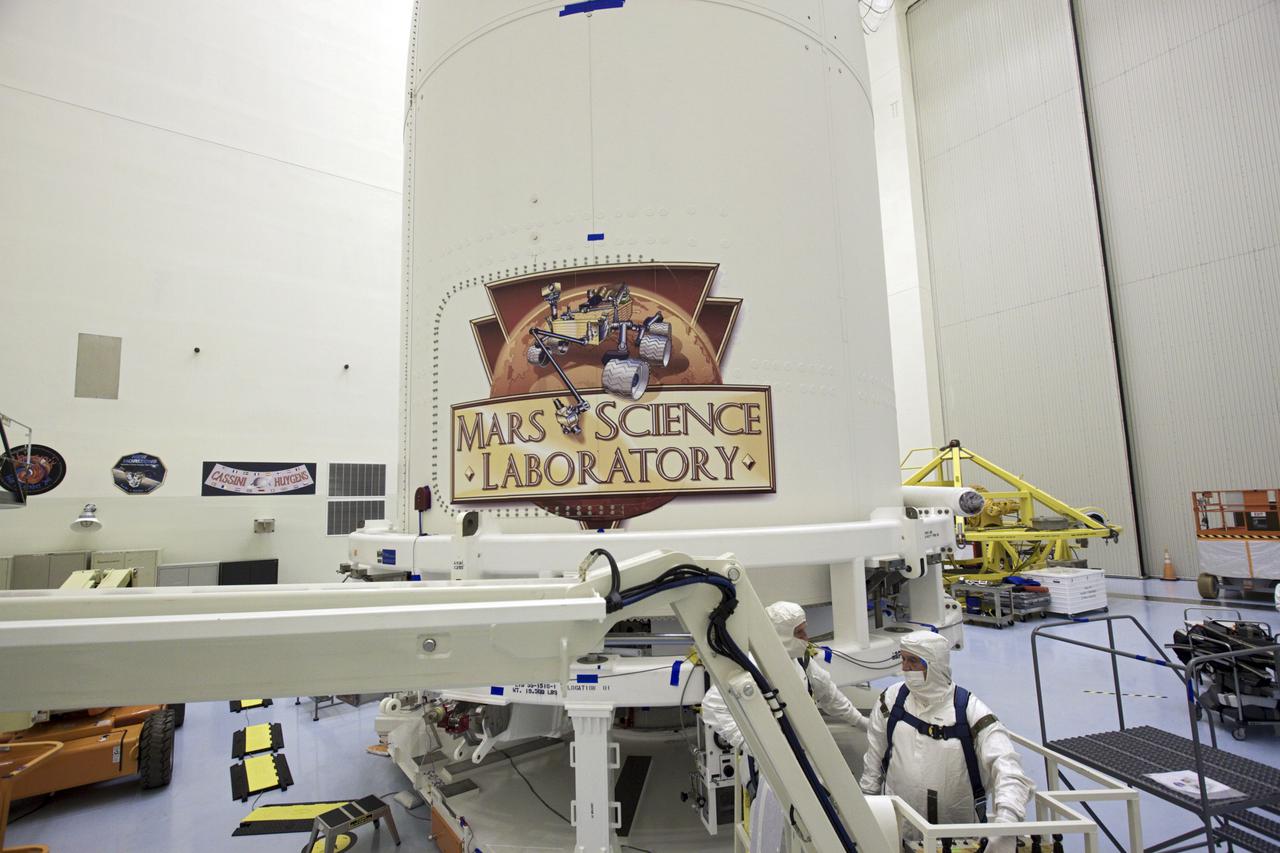
CAPE CANAVERAL, Fla. -- In the Payload Hazardous Servicing Facility at NASA's Kennedy Space Center in Florida, the Mars Science Laboratory (MSL) logo -- depicting the mission's compact car-sized rover, Curiosity -- has been applied to the exterior of an Atlas V rocket's payload fairing. Tucked inside the fairing is the MSL spacecraft, including Curiosity, which has 10 science instruments designed to search for evidence on whether Mars has had environments favorable to microbial life, including the chemical ingredients for life. The unique rover will use a laser to look inside rocks and release its gasses so that the rover’s spectrometer can analyze and send the data back to Earth. Launch of MSL aboard a United Launch Alliance Atlas V rocket is planned for Nov. 25 from Space Launch Complex-41 on Cape Canaveral Air Force Station. For more information, visit http:__www.nasa.gov_msl. Photo credit: NASA_Jim Grossmann

CAPE CANAVERAL, Fla. -- In the Payload Hazardous Servicing Facility at NASA's Kennedy Space Center in Florida, NASA's Mars Science Laboratory (MSL) is ready to be enclosed in the Atlas V rocket payload fairing in the background. The blocks on the interior of the fairing are components of the fairing acoustic protection (FAP) system, designed to protect the payload by dampening the sound created by the rocket during liftoff. The fairing will protect the spacecraft from the impact of aerodynamic pressure and heating during ascent. MSL's components include a compact car-sized rover, Curiosity, which has 10 science instruments designed to search for evidence on whether Mars has had environments favorable to microbial life, including the chemical ingredients for life. The unique rover will use a laser to look inside rocks and release its gasses so that the rover’s spectrometer can analyze and send the data back to Earth. Launch of MSL aboard a United Launch Alliance Atlas V rocket is planned for Nov. 25 from Space Launch Complex-41 on Cape Canaveral Air Force Station. For more information, visit http://www.nasa.gov/msl. Photo credit: NASA/Jim Grossmann
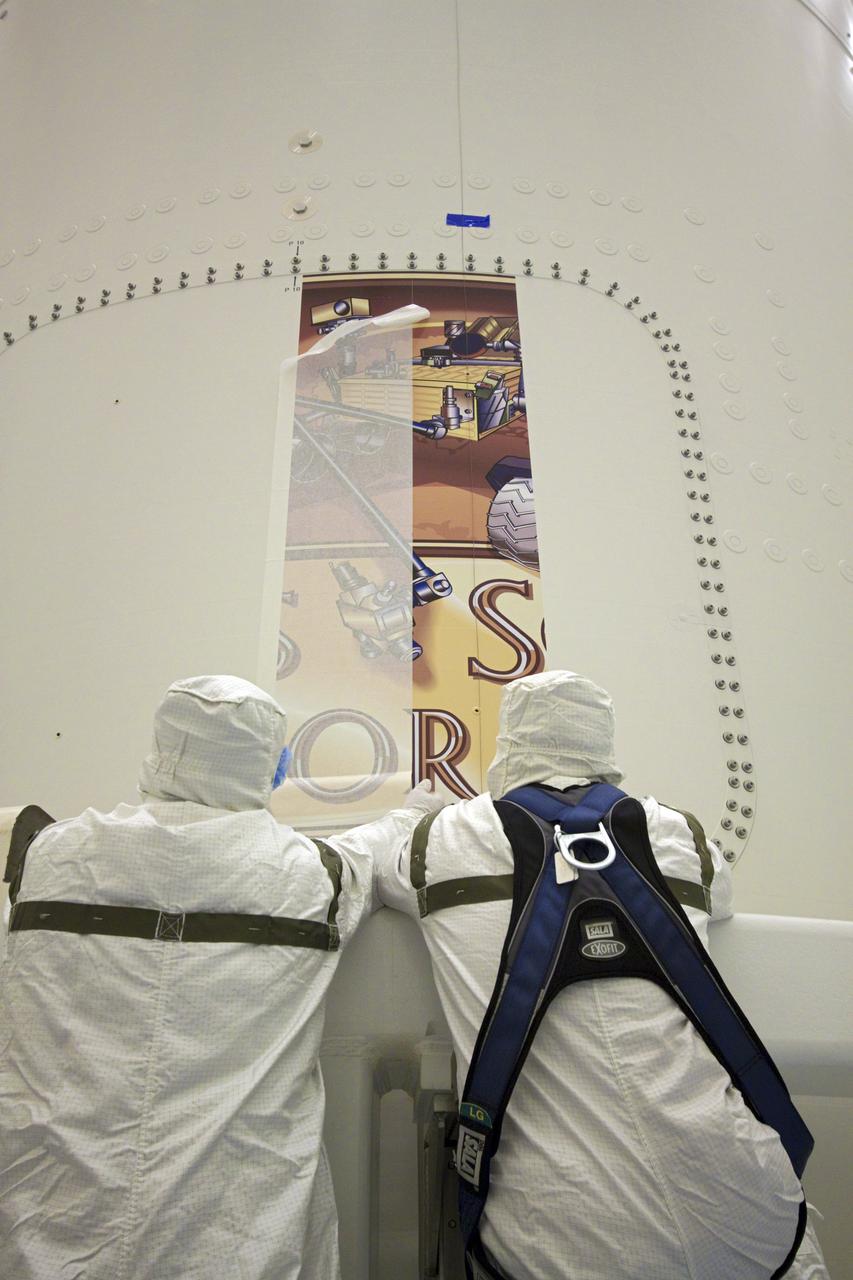
CAPE CANAVERAL, Fla. – In the Payload Hazardous Servicing Facility at NASA's Kennedy Space Center in Florida, two technicians carefully apply the Mars Science Laboratory (MSL) mission logo to the exterior of an Atlas V rocket's payload fairing. Tucked inside the fairing is the MSL spacecraft, including a compact car-sized rover, Curiosity, which has 10 science instruments designed to search for evidence on whether Mars has had environments favorable to microbial life, including the chemical ingredients for life. The unique rover will use a laser to look inside rocks and release its gasses so that the rover’s spectrometer can analyze and send the data back to Earth. Launch of MSL aboard a United Launch Alliance Atlas V rocket is planned for Nov. 25 from Space Launch Complex-41 on Cape Canaveral Air Force Station. For more information, visit http:__www.nasa.gov_msl. Photo credit: NASA_Jim Grossmann
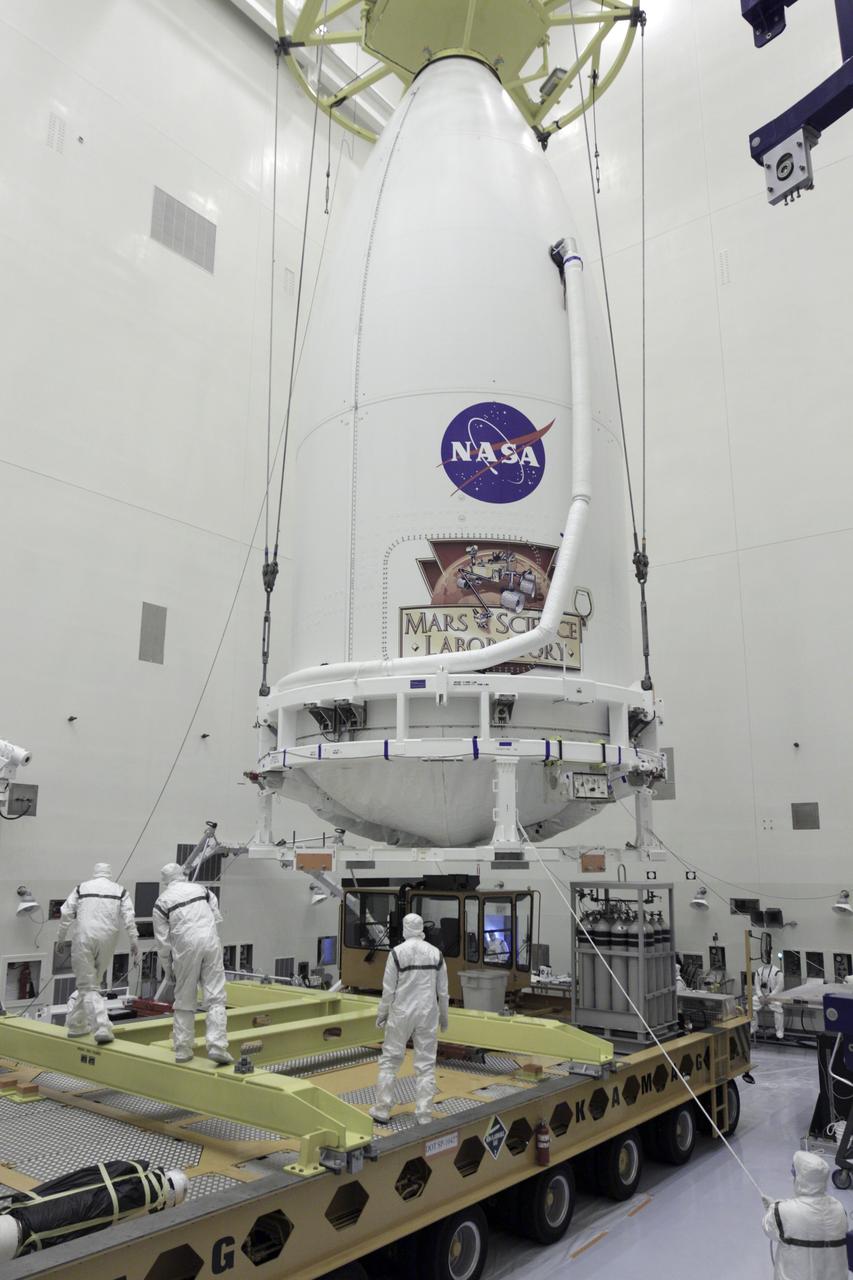
CAPE CANAVERAL, Fla. -- In the Payload Hazardous Servicing Facility at NASA's Kennedy Space Center in Florida, technicians assist as the payload fairing of an Atlas V rocket approaches a transporter for the move to Space Launch Complex 41. The Mars Science Laboratory (MSL) spacecraft is enclosed in the fairing, which will protect the payload from heat and aerodynamic pressure generated during launch. MSL's components include a compact car-sized rover, Curiosity, which has 10 science instruments designed to search for evidence on whether Mars has had environments favorable to microbial life, including the chemical ingredients for life. The unique rover will use a laser to look inside rocks and release its gasses so that the rover’s spectrometer can analyze and send the data back to Earth. Launch of MSL aboard a United Launch Alliance Atlas V rocket is planned for Nov. 25 from Space Launch Complex-41 on Cape Canaveral Air Force Station. For more information, visit http://www.nasa.gov/msl. Photo credit: NASA/Kim Shiflett
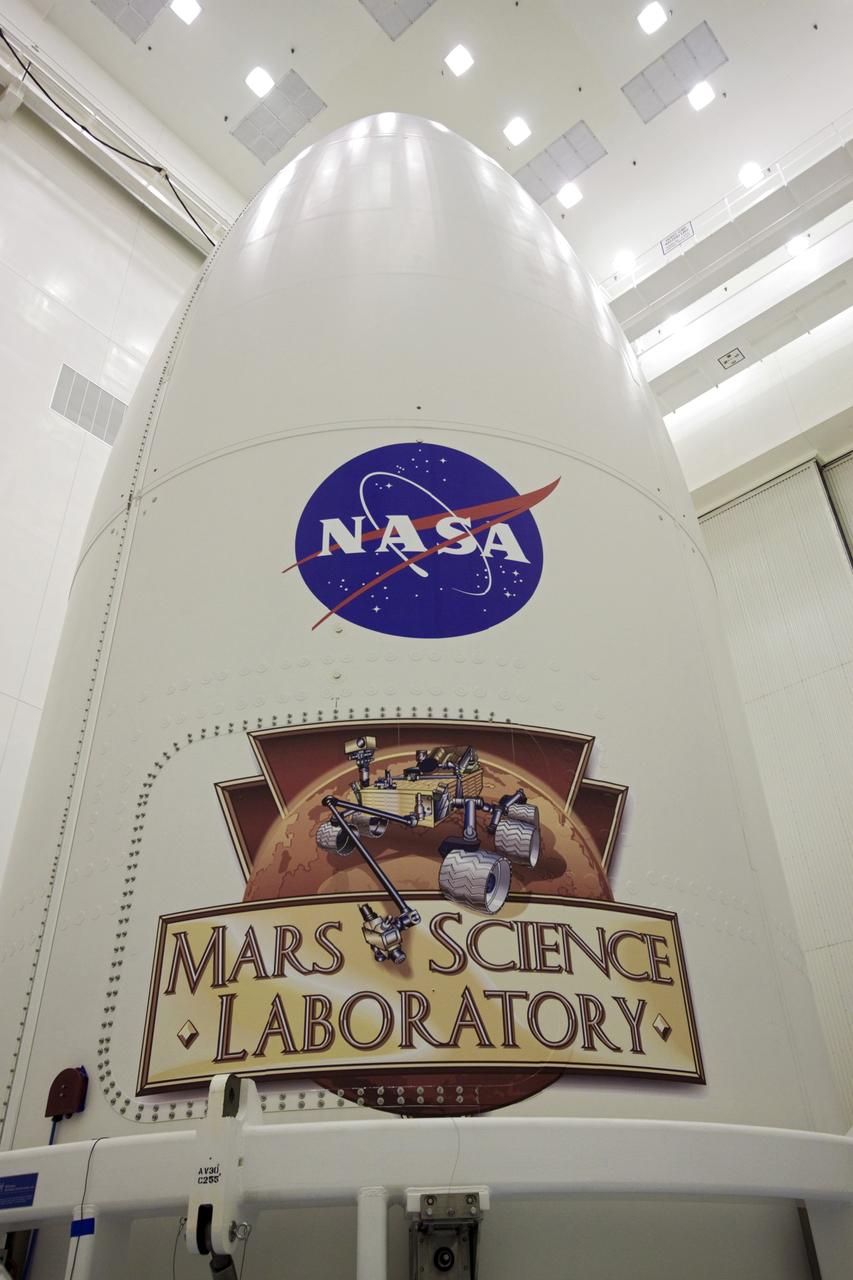
CAPE CANAVERAL, Fla. -- In the Payload Hazardous Servicing Facility at NASA's Kennedy Space Center in Florida, an Atlas V rocket's payload fairing bears the NASA logo above the Mars Science Laboratory (MSL) logo, depicting the mission's compact car-sized rover, Curiosity. Tucked inside the fairing is the MSL spacecraft, including Curiosity, which has 10 science instruments designed to search for evidence on whether Mars has had environments favorable to microbial life, including the chemical ingredients for life. The unique rover will use a laser to look inside rocks and release its gasses so that the rover’s spectrometer can analyze and send the data back to Earth. Launch of MSL aboard a United Launch Alliance Atlas V rocket is planned for Nov. 25 from Space Launch Complex-41 on Cape Canaveral Air Force Station. For more information, visit http://www.nasa.gov/msl. Photo credit: NASA/Jim Grossmann
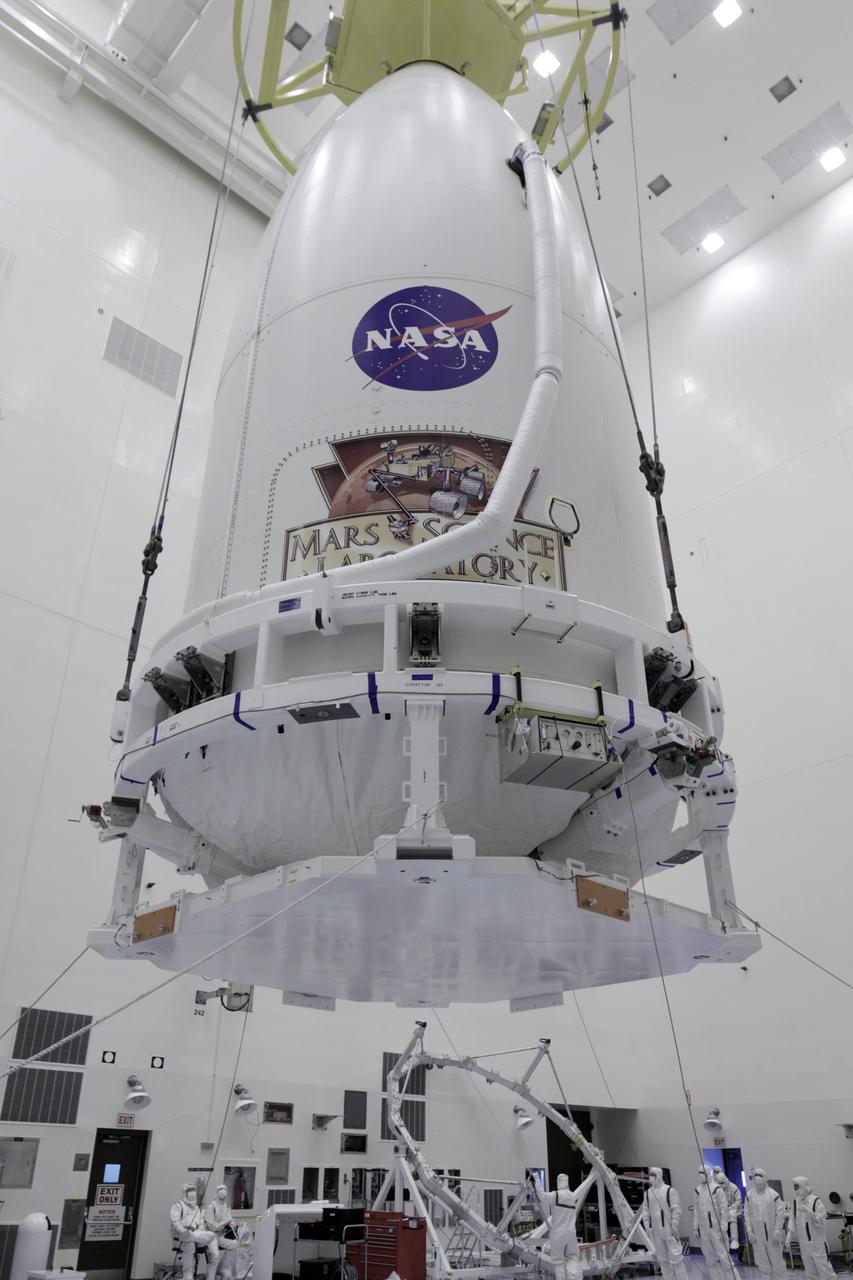
CAPE CANAVERAL, Fla. -- The Atlas V payload fairing containing NASA's Mars Science Laboratory (MSL) spacecraft rises above the floor of the Payload Hazardous Servicing Facility at Kennedy Space Center in Florida. The fairing will be placed on a transporter for the move to Space Launch Complex 41. MSL's components include a compact car-sized rover, Curiosity, which has 10 science instruments designed to search for evidence on whether Mars has had environments favorable to microbial life, including the chemical ingredients for life. The unique rover will use a laser to look inside rocks and release its gasses so that the rover’s spectrometer can analyze and send the data back to Earth. Launch of MSL aboard a United Launch Alliance Atlas V rocket is planned for Nov. 25 from Space Launch Complex-41 on Cape Canaveral Air Force Station. For more information, visit http://www.nasa.gov/msl. Photo credit: NASA/Kim Shiflett
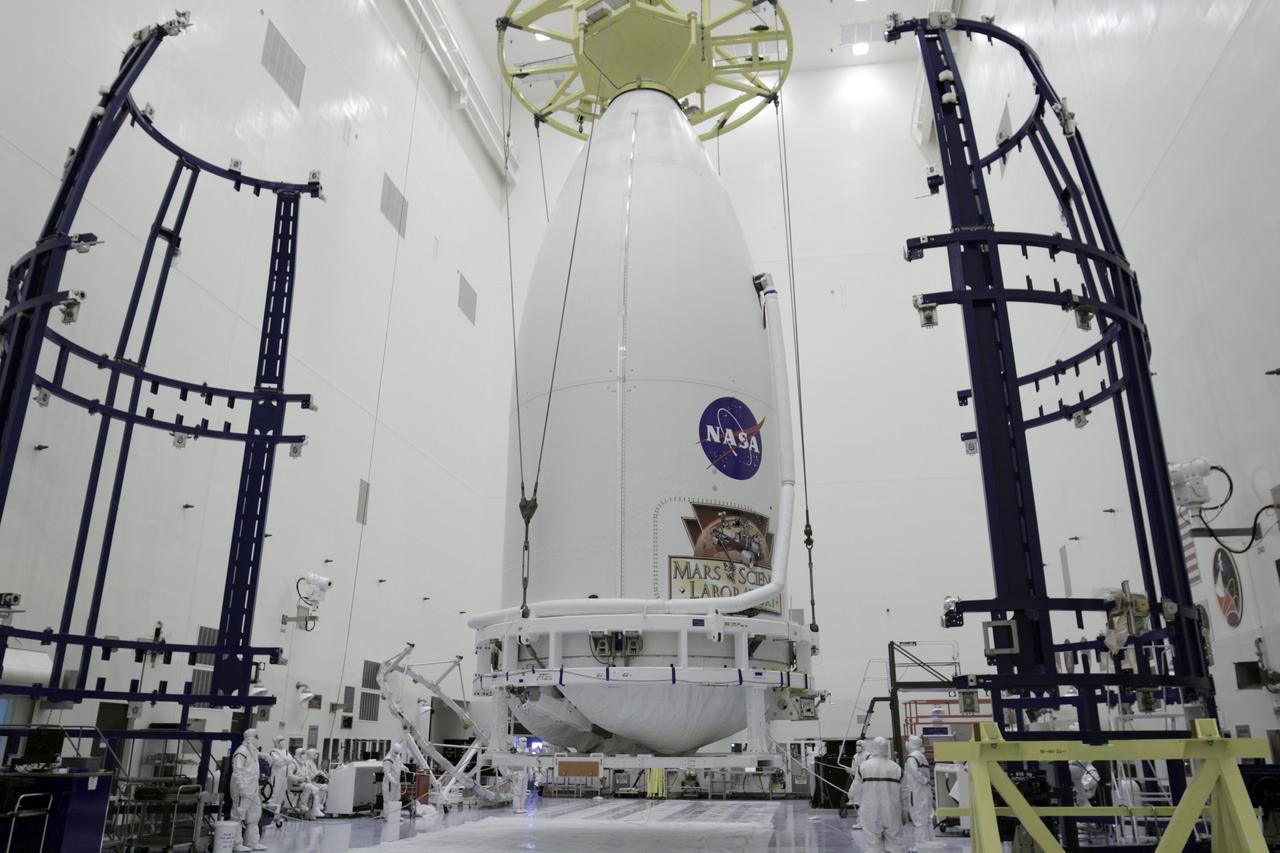
CAPE CANAVERAL, Fla. -- In the Payload Hazardous Servicing Facility at NASA's Kennedy Space Center in Florida, technicians prepare to lift the Mars Science Laboratory (MSL) spacecraft, enclosed in an Atlas V rocket's payload fairing, and place it on a transporter for the move to Space Launch Complex 41. MSL's components include a compact car-sized rover, Curiosity, which has 10 science instruments designed to search for evidence on whether Mars has had environments favorable to microbial life, including the chemical ingredients for life. The unique rover will use a laser to look inside rocks and release its gasses so that the rover’s spectrometer can analyze and send the data back to Earth. Launch of MSL aboard a United Launch Alliance Atlas V rocket is planned for Nov. 25 from Space Launch Complex-41 on Cape Canaveral Air Force Station. For more information, visit http://www.nasa.gov/msl. Photo credit: NASA/Kim Shiflett
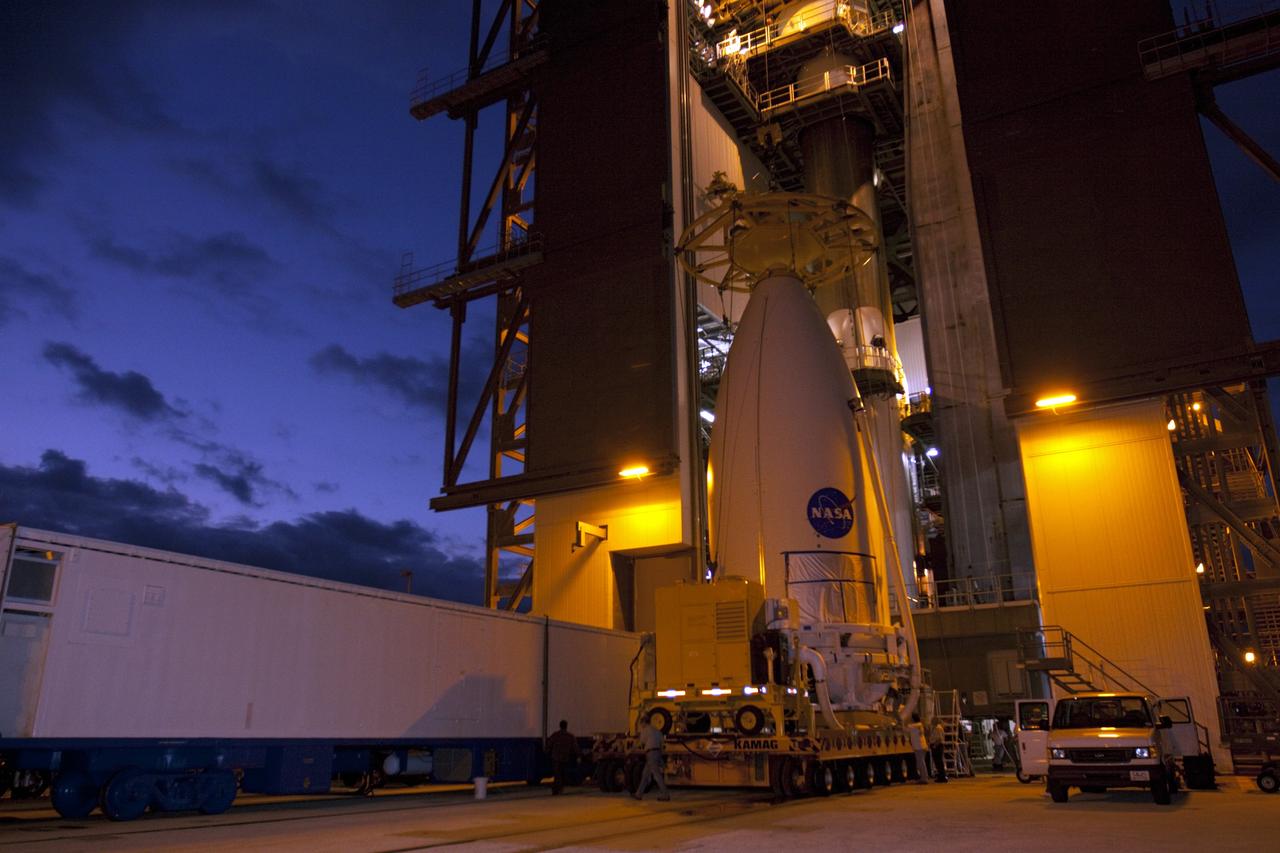
CAPE CANAVERAL, Fla. -- The predawn light reveals the payload fairing containing NASA's Mars Science Laboratory (MSL) spacecraft as it is prepared to be lifted into place atop the Atlas V rocket already waiting at the Vertical Integration Facility at Space Launch Complex 41 at Cape Canaveral Air Force Station in Florida. The fairing, which protects the payload during ascent, will be lifted and mated to the Atlas V rocket already in place at the launch pad. MSL was prepared for launch in the Payload Hazardous Servicing Facility at NASA's Kennedy Space Center. MSL's components include a compact car-sized rover, Curiosity, which has 10 science instruments designed to search for evidence on whether Mars has had environments favorable to microbial life, including the chemical ingredients for life. The unique rover will use a laser to look inside rocks and release its gasses so that the rover’s spectrometer can analyze and send the data back to Earth. Launch of MSL aboard a United Launch Alliance Atlas V rocket is planned for Nov. 25 from Space Launch Complex 41 on Cape Canaveral Air Force Station. For more information, visit http://www.nasa.gov/msl. Photo credit: NASA/Kim Shiflett