
The Mars celebration Friday, May 31, 2019, in Mars, Pennsylvania. NASA is in the small town to celebrate Mars exploration and share the agency’s excitement about landing astronauts on the Moon in five years. The celebration includes a weekend of Science, Technology, Engineering, Arts and Mathematics (STEAM) activities. Photo Credit: (NASA/Bill Ingalls)

The Mars celebration Friday, May 31, 2019, in Mars, Pennsylvania. NASA is in the small town to celebrate Mars exploration and share the agency’s excitement about landing astronauts on the Moon in five years. The celebration includes a weekend of Science, Technology, Engineering, Arts and Mathematics (STEAM) activities. Photo Credit: (NASA/Bill Ingalls)

The Mars celebration Friday, May 31, 2019, in Mars, Pennsylvania. NASA is in the small town to celebrate Mars exploration and share the agency’s excitement about landing astronauts on the Moon in five years. The celebration includes a weekend of Science, Technology, Engineering, Arts and Mathematics (STEAM) activities. Photo Credit: (NASA/Bill Ingalls)

The Mars celebration Friday, May 31, 2019, in Mars, Pennsylvania. NASA is in the small town to celebrate Mars exploration and share the agency’s excitement about landing astronauts on the Moon in five years. The celebration includes a weekend of Science, Technology, Engineering, Arts and Mathematics (STEAM) activities. Photo Credit: (NASA/Bill Ingalls)

The Mars celebration Friday, May 31, 2019, in Mars, Pennsylvania. NASA is in the small town to celebrate Mars exploration and share the agency’s excitement about landing astronauts on the Moon in five years. The celebration includes a weekend of Science, Technology, Engineering, Arts and Mathematics (STEAM) activities. Photo Credit: (NASA/Bill Ingalls)

The Mars celebration Saturday, June 1, 2019, in Mars, Pennsylvania. NASA is in the small town to celebrate Mars exploration and share the agency’s excitement about landing astronauts on the Moon in five years. The celebration includes a weekend of Science, Technology, Engineering, Arts and Mathematics (STEAM) activities. Photo Credit: (NASA/Bill Ingalls)

The Mars celebration Friday, May 31, 2019, in Mars, Pennsylvania. NASA is in the small town to celebrate Mars exploration and share the agency’s excitement about landing astronauts on the Moon in five years. The celebration includes a weekend of Science, Technology, Engineering, Arts and Mathematics (STEAM) activities. Photo Credit: (NASA/Bill Ingalls)

The Mars celebration Friday, May 31, 2019, in Mars, Pennsylvania. NASA is in the small town to celebrate Mars exploration and share the agency’s excitement about landing astronauts on the Moon in five years. The celebration includes a weekend of Science, Technology, Engineering, Arts and Mathematics (STEAM) activities. Photo Credit: (NASA/Bill Ingalls)

The Mars celebration Friday, May 31, 2019, in Mars, Pennsylvania. NASA is in the small town to celebrate Mars exploration and share the agency’s excitement about landing astronauts on the Moon in five years. The celebration includes a weekend of Science, Technology, Engineering, Arts and Mathematics (STEAM) activities. Photo Credit: (NASA/Bill Ingalls)

The Mars celebration Friday, May 31, 2019, in Mars, Pennsylvania. NASA is in the small town to celebrate Mars exploration and share the agency’s excitement about landing astronauts on the Moon in five years. The celebration includes a weekend of Science, Technology, Engineering, Arts and Mathematics (STEAM) activities. Photo Credit: (NASA/Bill Ingalls)

The Mars celebration Friday, May 31, 2019, in Mars, Pennsylvania. NASA is in the small town to celebrate Mars exploration and share the agency’s excitement about landing astronauts on the Moon in five years. The celebration includes a weekend of Science, Technology, Engineering, Arts and Mathematics (STEAM) activities. Photo Credit: (NASA/Bill Ingalls)

The Mars celebration Saturday, June 1, 2019, in Mars, Pennsylvania. NASA is in the small town to celebrate Mars exploration and share the agency’s excitement about landing astronauts on the Moon in five years. The celebration includes a weekend of Science, Technology, Engineering, Arts and Mathematics (STEAM) activities. Photo Credit: (NASA/Bill Ingalls)

The Mars celebration Friday, May 31, 2019, in Mars, Pennsylvania. NASA is in the small town to celebrate Mars exploration and share the agency’s excitement about landing astronauts on the Moon in five years. The celebration includes a weekend of Science, Technology, Engineering, Arts and Mathematics (STEAM) activities. Photo Credit: (NASA/Bill Ingalls)

The Mars celebration Friday, May 31, 2019, in Mars, Pennsylvania. NASA is in the small town to celebrate Mars exploration and share the agency’s excitement about landing astronauts on the Moon in five years. The celebration includes a weekend of Science, Technology, Engineering, Arts and Mathematics (STEAM) activities. Photo Credit: (NASA/Bill Ingalls)

The Mars celebration Friday, May 31, 2019, in Mars, Pennsylvania. NASA is in the small town to celebrate Mars exploration and share the agency’s excitement about landing astronauts on the Moon in five years. The celebration includes a weekend of Science, Technology, Engineering, Arts and Mathematics (STEAM) activities. Photo Credit: (NASA/Bill Ingalls)

The Mars celebration Friday, May 31, 2019, in Mars, Pennsylvania. NASA is in the small town to celebrate Mars exploration and share the agency’s excitement about landing astronauts on the Moon in five years. The celebration includes a weekend of Science, Technology, Engineering, Arts and Mathematics (STEAM) activities. Photo Credit: (NASA/Bill Ingalls)

The Mars celebration Saturday, June 1, 2019, in Mars, Pennsylvania. NASA is in the small town to celebrate Mars exploration and share the agency’s excitement about landing astronauts on the Moon in five years. The celebration includes a weekend of Science, Technology, Engineering, Arts and Mathematics (STEAM) activities. Photo Credit: (NASA/Bill Ingalls)

A Mars celebration attendee views the surface of Mars via a virtual reality headset Saturday, June 1, 2019, in Mars, Pennsylvania. NASA is in the small town to celebrate Mars exploration and share the agency’s excitement about landing astronauts on the Moon in five years. The celebration includes a weekend of Science, Technology, Engineering, Arts and Mathematics (STEAM) activities. Photo Credit: (NASA/Bill Ingalls)

Attendees view a 3D panorama of Mars during a Mars celebration event Friday, May 31, 2019, in Mars, Pennsylvania. NASA is in the small town to celebrate Mars exploration and share the agency’s excitement about landing astronauts on the Moon in five years. The celebration includes a weekend of Science, Technology, Engineering, Arts and Mathematics (STEAM) activities. Photo Credit: (NASA/Bill Ingalls)

NASA engineers discuss Mars exploration with attendees of a Mars celebration Friday, May 31, 2019, in Mars, Pennsylvania. NASA is in the small town to celebrate Mars exploration and share the agency’s excitement about landing astronauts on the Moon in five years. The celebration includes a weekend of Science, Technology, Engineering, Arts and Mathematics (STEAM) activities. Photo Credit: (NASA/Bill Ingalls)

NASA engineers discuss Mars exploration with attendees of a Mars celebration Friday, May 31, 2019, in Mars, Pennsylvania. NASA is in the small town to celebrate Mars exploration and share the agency’s excitement about landing astronauts on the Moon in five years. The celebration includes a weekend of Science, Technology, Engineering, Arts and Mathematics (STEAM) activities. Photo Credit: (NASA/Bill Ingalls)

A participant of the Mars celebration launches a rocket, Saturday, June 1, 2019, in Mars, Pennsylvania. NASA is in the small town to celebrate Mars exploration and share the agency’s excitement about landing astronauts on the Moon in five years. The celebration includes a weekend of Science, Technology, Engineering, Arts and Mathematics (STEAM) activities. Photo Credit: (NASA/Bill Ingalls)

A young couple stop by the Mars celebration prior to attending prom, Saturday, June 1, 2019, in Mars, Pennsylvania. NASA is in the small town to celebrate Mars exploration and share the agency’s excitement about landing astronauts on the Moon in five years. The celebration includes a weekend of Science, Technology, Engineering, Arts and Mathematics (STEAM) activities. Photo Credit: (NASA/Bill Ingalls)

Staff prepare for the Mars celebration event Friday, May 31, 2019, in Mars, Pennsylvania. NASA is in the small town to celebrate Mars exploration and share the agency’s excitement about landing astronauts on the Moon in five years. The celebration includes a weekend of Science, Technology, Engineering, Arts and Mathematics (STEAM) activities. Photo Credit: (NASA/Bill Ingalls)

A participant of the Mars celebration launches a rocket, Saturday, June 1, 2019, in Mars, Pennsylvania. NASA is in the small town to celebrate Mars exploration and share the agency’s excitement about landing astronauts on the Moon in five years. The celebration includes a weekend of Science, Technology, Engineering, Arts and Mathematics (STEAM) activities. Photo Credit: (NASA/Bill Ingalls)

A drone show is seen during the Mars celebration Friday, May 31, 2019, in Mars, Pennsylvania. NASA is in the small town to celebrate Mars exploration and share the agency’s excitement about landing astronauts on the Moon in five years. The celebration includes a weekend of Science, Technology, Engineering, Arts and Mathematics (STEAM) activities. Photo Credit: (NASA/Bill Ingalls)

A woman photographs her two dogs during a Mars celebration event Friday, May 31, 2019, in Mars, Pennsylvania. NASA is in the small town to celebrate Mars exploration and share the agency’s excitement about landing astronauts on the Moon in five years. The celebration includes a weekend of Science, Technology, Engineering, Arts and Mathematics (STEAM) activities. Photo Credit: (NASA/Bill Ingalls)

A drone show is seen during the Mars celebration Friday, May 31, 2019, in Mars, Pennsylvania. NASA is in the small town to celebrate Mars exploration and share the agency’s excitement about landing astronauts on the Moon in five years. The celebration includes a weekend of Science, Technology, Engineering, Arts and Mathematics (STEAM) activities. Photo Credit: (NASA/Bill Ingalls)

A mural inside the Mars Brew House is seen during the Mars celebration Saturday, June 1, 2019, in Mars, Pennsylvania. NASA is in the small town to celebrate Mars exploration and share the agency’s excitement about landing astronauts on the Moon in five years. The celebration includes a weekend of Science, Technology, Engineering, Arts and Mathematics (STEAM) activities. Photo Credit: (NASA/Bill Ingalls)

An alien themed cup cake is seen during the Mars celebration Saturday, June 1, 2019, in Mars, Pennsylvania. NASA is in the small town to celebrate Mars exploration and share the agency’s excitement about landing astronauts on the Moon in five years. The celebration includes a weekend of Science, Technology, Engineering, Arts and Mathematics (STEAM) activities. Photo Credit: (NASA/Bill Ingalls)

Lyle Tavernier from NASA's Jet Propulsion Laboratory talks about Mars rovers live from California to attendees of a Mars celebration Friday, May 31, 2019, in Mars, Pennsylvania. NASA is in the small town to celebrate Mars exploration and share the agency’s excitement about landing astronauts on the Moon in five years. The celebration includes a weekend of Science, Technology, Engineering, Arts and Mathematics (STEAM) activities. Photo Credit: (NASA/Bill Ingalls)

NASA Chief Technologist Douglas Terrier talks about NASA's plans for going forward to the Moon and Mars during a Mars celebration Saturday, June 1, 2019, in Mars, Pennsylvania. NASA is in the small town to celebrate Mars exploration and share the agency’s excitement about landing astronauts on the Moon in five years. The celebration includes a weekend of Science, Technology, Engineering, Arts and Mathematics (STEAM) activities. Photo Credit: (NASA/Bill Ingalls)

NASA Chief Technologist Douglas Terrier talks about NASA's plans for going forward to the Moon and Mars during a Mars celebration Saturday, June 1, 2019, in Mars, Pennsylvania. NASA is in the small town to celebrate Mars exploration and share the agency’s excitement about landing astronauts on the Moon in five years. The celebration includes a weekend of Science, Technology, Engineering, Arts and Mathematics (STEAM) activities. Photo Credit: (NASA/Bill Ingalls)

Sophia Bogat from NASA Headquarters talks about the various wheels used on Mars rovers during the Mars celebration Saturday, June 1, 2019, in Mars, Pennsylvania. NASA is in the small town to celebrate Mars exploration and share the agency’s excitement about landing astronauts on the Moon in five years. The celebration includes a weekend of Science, Technology, Engineering, Arts and Mathematics (STEAM) activities. Photo Credit: (NASA/Bill Ingalls)

Sandy Krasner from NASA's Jet Propulsion Laboratory discusses the Mars InSight lander with attendees of a Mars celebration Friday, May 31, 2019, in Mars, Pennsylvania. NASA is in the small town to celebrate Mars exploration and share the agency’s excitement about landing astronauts on the Moon in five years. The celebration includes a weekend of Science, Technology, Engineering, Arts and Mathematics (STEAM) activities. Photo Credit: (NASA/Bill Ingalls)

NASA Chief Technologist Douglas Terrier talks about NASA's plans for going forward to the Moon and Mars during a Mars celebration Saturday, June 1, 2019, in Mars, Pennsylvania. NASA is in the small town to celebrate Mars exploration and share the agency’s excitement about landing astronauts on the Moon in five years. The celebration includes a weekend of Science, Technology, Engineering, Arts and Mathematics (STEAM) activities. Photo Credit: (NASA/Bill Ingalls)

NASA Chief Technologist Douglas Terrier talks about NASA's plans for going forward to the Moon and Mars during a Mars celebration Saturday, June 1, 2019, in Mars, Pennsylvania. NASA is in the small town to celebrate Mars exploration and share the agency’s excitement about landing astronauts on the Moon in five years. The celebration includes a weekend of Science, Technology, Engineering, Arts and Mathematics (STEAM) activities. Photo Credit: (NASA/Bill Ingalls)

NASA Chief Technologist Douglas Terrier talks about NASA's plans for going forward to the Moon and Mars during a Mars celebration Saturday, June 1, 2019, in Mars, Pennsylvania. NASA is in the small town to celebrate Mars exploration and share the agency’s excitement about landing astronauts on the Moon in five years. The celebration includes a weekend of Science, Technology, Engineering, Arts and Mathematics (STEAM) activities. Photo Credit: (NASA/Bill Ingalls)

Bruce Banerdt, InSight Principal Investigator, NASA JPL, talks about Mars exploration during a Mars celebration Sunday, June 2, 2019, in Mars, Pennsylvania. NASA is in the small town to celebrate Mars exploration and share the agency’s excitement about landing astronauts on the Moon in five years. The celebration includes a weekend of Science, Technology, Engineering, Arts and Mathematics (STEAM) activities. Photo Credit: (NASA/Bill Ingalls)

NASA Chief Technologist Douglas Terrier gives opening remarks during a Mars celebration Friday, May 31, 2019, in Mars, Pennsylvania. NASA is in the small town to celebrate Mars exploration and share the agency’s excitement about landing astronauts on the Moon in five years. The celebration includes a weekend of Science, Technology, Engineering, Arts and Mathematics (STEAM) activities. Photo Credit: (NASA/Bill Ingalls)

April Lanotte gives remarks during the Mars celebration Saturday, June 1, 2019, in Mars, Pennsylvania. NASA is in the small town to celebrate Mars exploration and share the agency’s excitement about landing astronauts on the Moon in five years. The celebration includes a weekend of Science, Technology, Engineering, Arts and Mathematics (STEAM) activities. Photo Credit: (NASA/Bill Ingalls)

A local First Robotics team poses for a group photo during Tthe Mars celebration Saturday, June 1, 2019, in Mars, Pennsylvania. NASA is in the small town to celebrate Mars exploration and share the agency’s excitement about landing astronauts on the Moon in five years. The celebration includes a weekend of Science, Technology, Engineering, Arts and Mathematics (STEAM) activities. Photo Credit: (NASA/Bill Ingalls)

Local resident Rick Miller, dressed as Abraham Lincoln, attends the Mars celebration Saturday, June 1, 2019, in Mars, Pennsylvania. NASA is in the small town to celebrate Mars exploration and share the agency’s excitement about landing astronauts on the Moon in five years. The celebration includes a weekend of Science, Technology, Engineering, Arts and Mathematics (STEAM) activities. Photo Credit: (NASA/Bill Ingalls)

Mitch Schulte from NASA Headquarters talks with attendees of the Mars celebration Saturday, June 1, 2019, in Mars, Pennsylvania. NASA is in the small town to celebrate Mars exploration and share the agency’s excitement about landing astronauts on the Moon in five years. The celebration includes a weekend of Science, Technology, Engineering, Arts and Mathematics (STEAM) activities. Photo Credit: (NASA/Bill Ingalls)
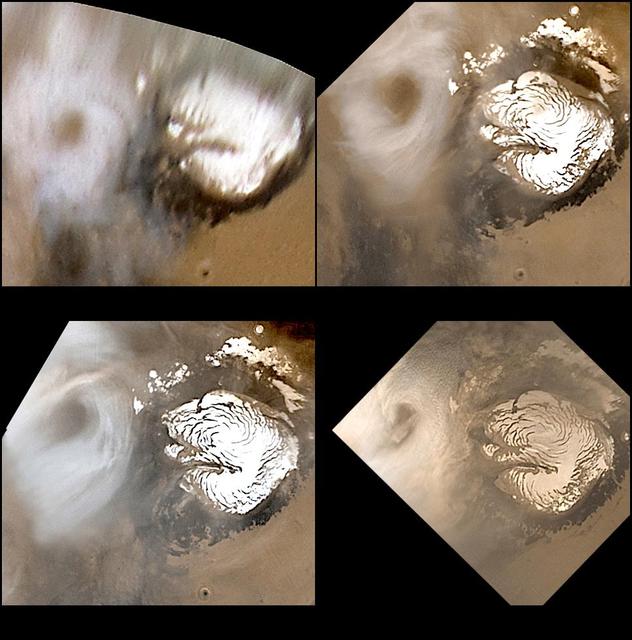
Celebrating 8 Years at Mars: Repeated Weather Events

Mars Global Surveyor MOC Celebrates 2 Years in Orbit!
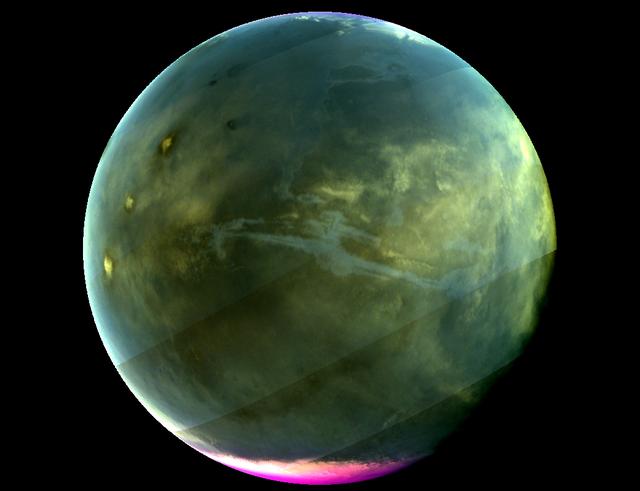
Caption: MAVEN's Imaging UltraViolet Spectrograph obtained this image of Mars on July 13, 2016, when the planet appeared nearly full when viewed from the highest altitudes in the MAVEN orbit. The ultraviolet colors of the planet have been rendered in false color, to show what we would see with ultraviolet-sensitive eyes. The ultraviolet (UV) view gives several new perspectives on Mars. Valles Marineris, a two-thousand-mile canyon system, appears prominently across the middle of the image as a blue gash. The deep canyon appears blue due to the scattering of ultraviolet light by the atmosphere, so strong that we cannot make out the bottom of the canyon. The greenish cast of the planet as a whole is a combination of the reflection of the surface plus the atmospheric scattering. The three tall Tharsis volcanoes appear near the left edge, dotted by white clouds forming as the winds flow over them. Bright white polar caps appear at both poles, typical for this season, in which there is a transition from southern-hemisphere winter to summer. The magenta-colored region visible at the south pole shows where ozone is absorbing ultraviolet light — the same property of ozone that protects life on Earth from harmful UV radiation. While ozone tends to be destroyed by chemical processes in the winter on Earth, different atmospheric chemistry at Mars caused it to build up in the winter there. A hint of ozone is also visible near the north pole; more will accumulate there as winter is coming. IUVS obtains images of Mars every orbit when the sunlit portion of the planet is visible from high altitude. Credits: NASA/Goddard/University of Colorado/LASP Read more: <a href="http://go.nasa.gov/2d9aU1N" rel="nofollow">go.nasa.gov/2d9aU1N</a> Today, NASA’s Mars Atmosphere and Volatile EvolutioN (MAVEN) mission completed one Mars year of science observations. One Mars year is just under two Earth years. MAVEN launched on Nov. 18, 2013, and went into orbit around Mars on Sept. 21, 2014. During its time at Mars, MAVEN has answered many questions about the Red Planet. “Taken together, the MAVEN results tell us that loss of gas from the atmosphere to space has been the major force behind the climate having changed from a warm, wet environment to the cold, dry one that we see today,” said Bruce Jakosky, MAVEN principal investigator, from the University of Colorado in Boulder. NASA recently declared that MAVEN had achieved mission success during its primary mission. Mission success means that the spacecraft operated as intended, made the expected science measurements, and achieved its proposed science objectives. <b><a href="http://www.nasa.gov/audience/formedia/features/MP_Photo_Guidelines.html" rel="nofollow">NASA image use policy.</a></b> <b><a href="http://www.nasa.gov/centers/goddard/home/index.html" rel="nofollow">NASA Goddard Space Flight Center</a></b> enables NASA’s mission through four scientific endeavors: Earth Science, Heliophysics, Solar System Exploration, and Astrophysics. Goddard plays a leading role in NASA’s accomplishments by contributing compelling scientific knowledge to advance the Agency’s mission. <b>Follow us on <a href="http://twitter.com/NASAGoddardPix" rel="nofollow">Twitter</a></b> <b>Like us on <a href="http://www.facebook.com/pages/Greenbelt-MD/NASA-Goddard/395013845897?ref=tsd" rel="nofollow">Facebook</a></b> <b>Find us on <a href="http://instagrid.me/nasagoddard/?vm=grid" rel="nofollow">Instagram</a></b>
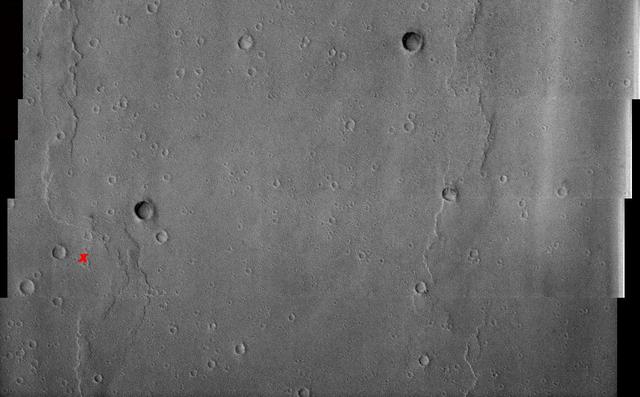
NASA Viking 1 landing site is shown in this commemorative image from NASA Mars Odyssey spacecraft to celebrate the July 20, 1969 and 1976 anniversaries of NASA Apollo 11 and Viking 1 landings on the Moon and Mars, respectively.
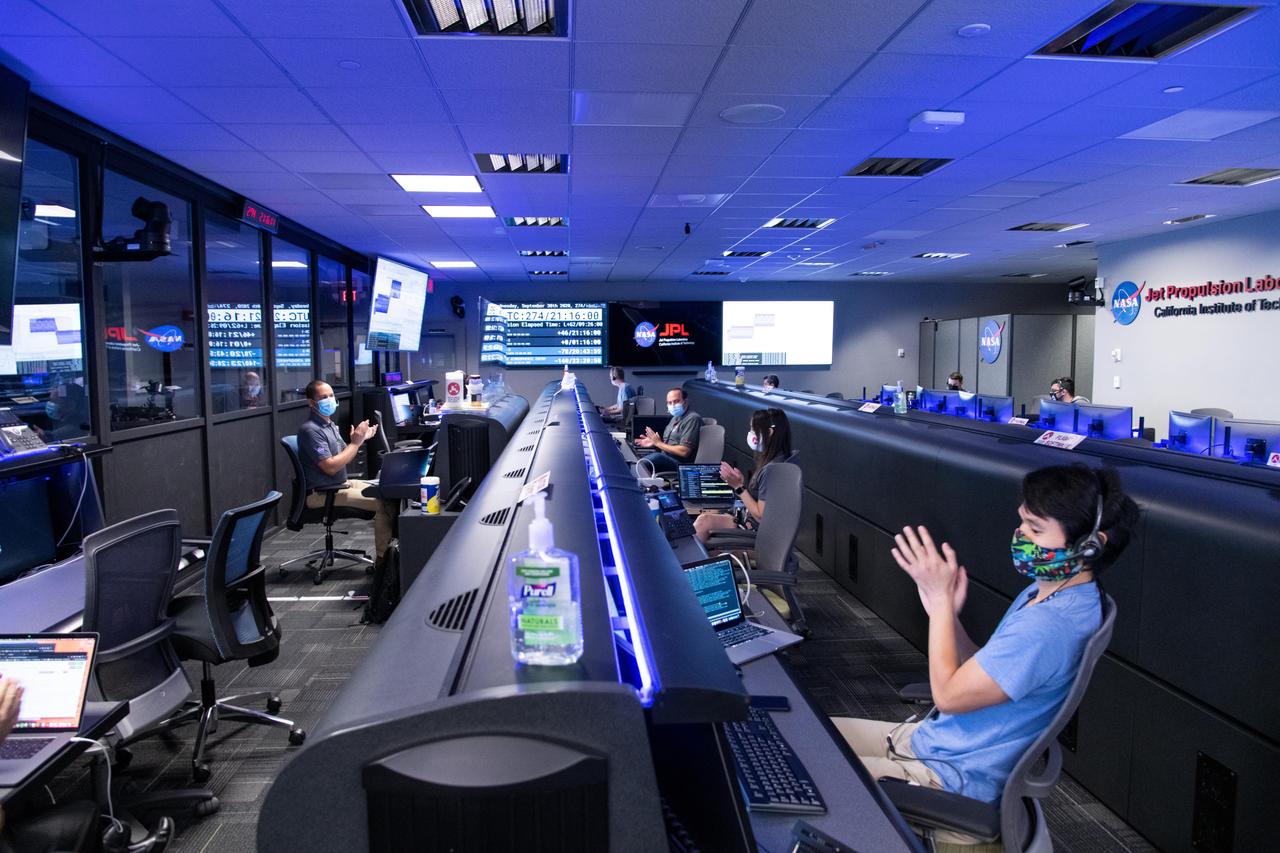
The Mars 2020 navigation team celebrates Perseverance's nominal, or successful, trajectory correction maneuver in the Mission Support Area at NASA's Jet Propulsion Laboratory in Southern California. https://photojournal.jpl.nasa.gov/catalog/PIA24192
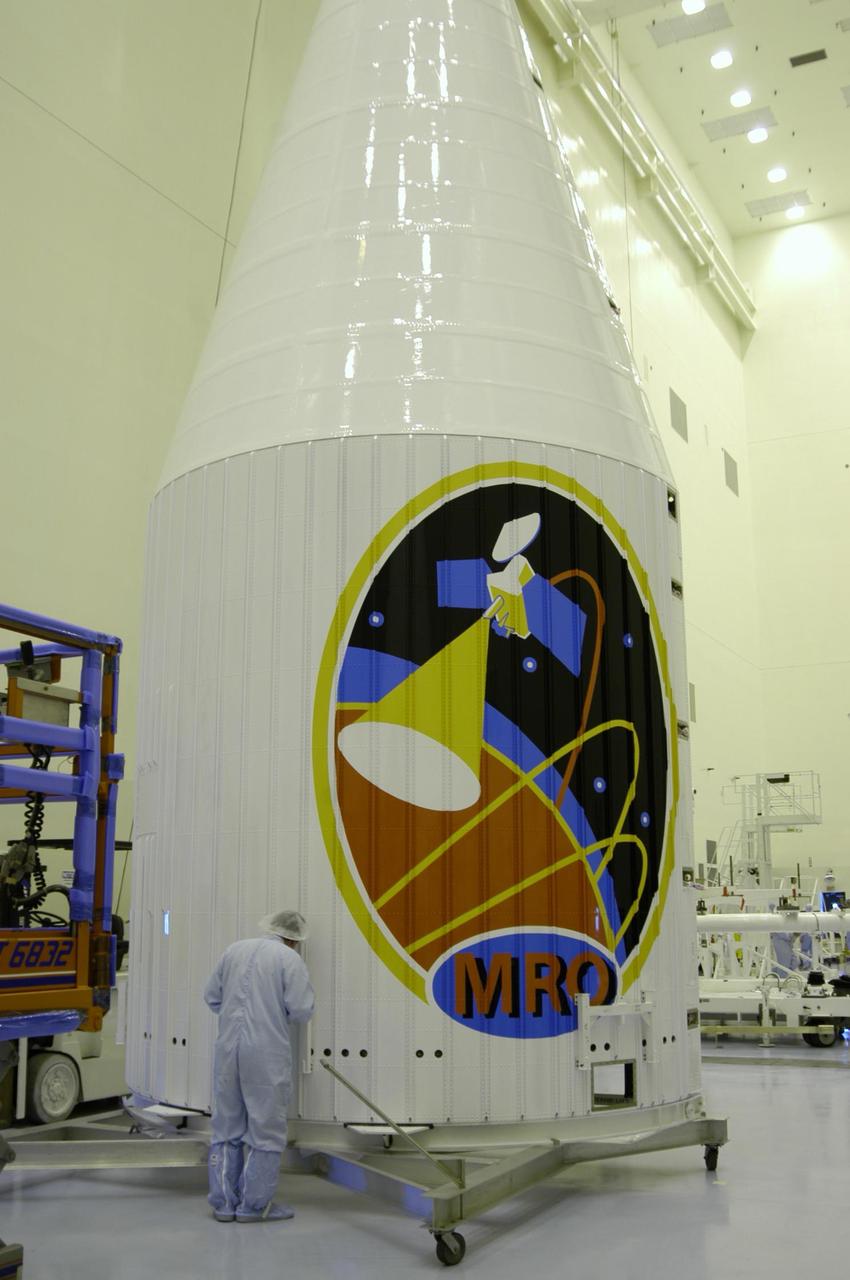
This image features the protective fairing that encapsulated NASA Mars Reconnaissance Orbiter atop an Atlas V rocket. The lively logo celebrates the intense science mission ahead of the orbiter.

Team members of NASA's next Mars mission applaud as mission manager Jennifer Trosper unveils a nameplate with "Perseverance" laser-etched into its surface. The image was taken at the agency's Jet Propulsion Laboratory on March 5, 2020. https://photojournal.jpl.nasa.gov/catalog/PIA23763
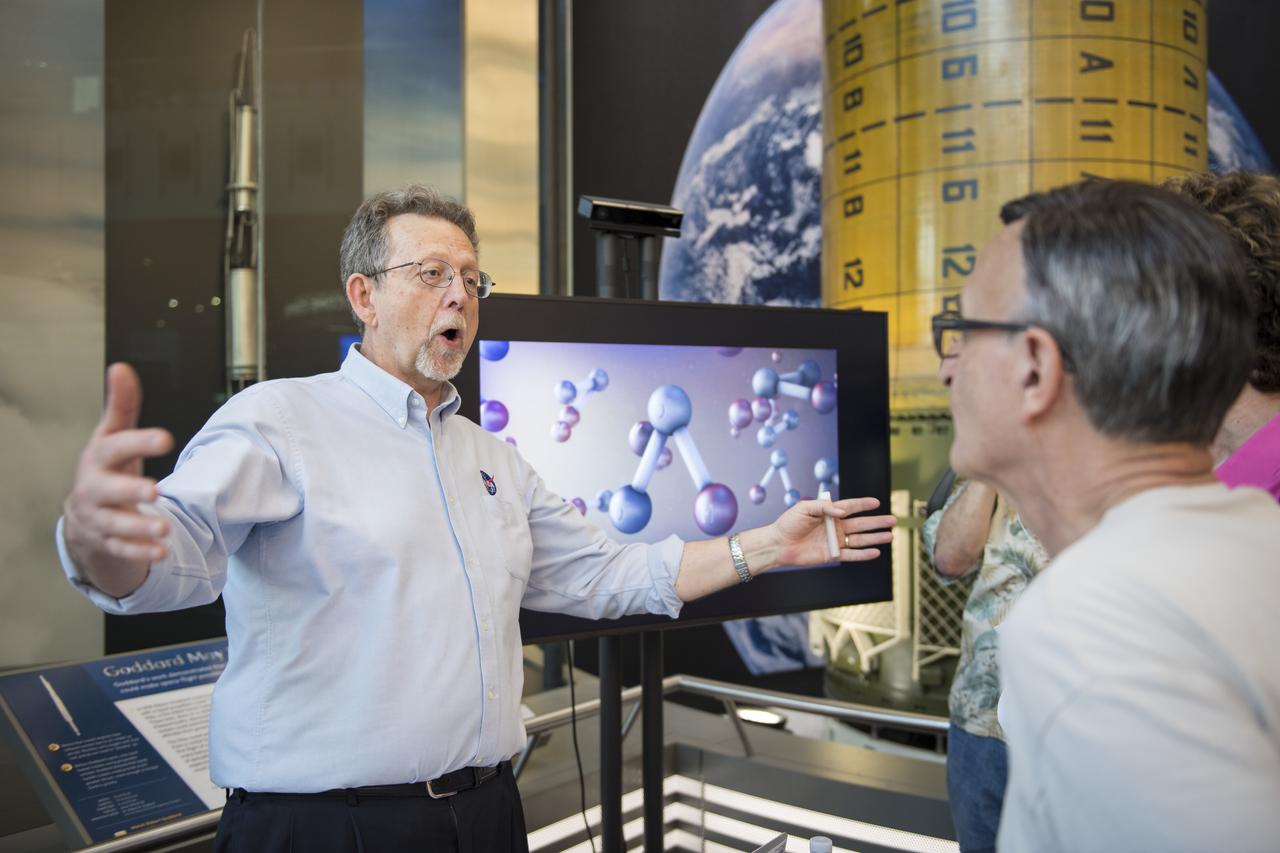
Jim Green, director of NASA’s Planetary Science Division, discusses NASA’s Mars missions with visitors during the Smithsonian Institution’s National Air and Space Museum Mars Day, celebrating the Red Planet with exhibits, speakers, and educational activities, Friday, July 21, 2017 in Washington. Photo Credit: (NASA/Aubrey Gemignani)
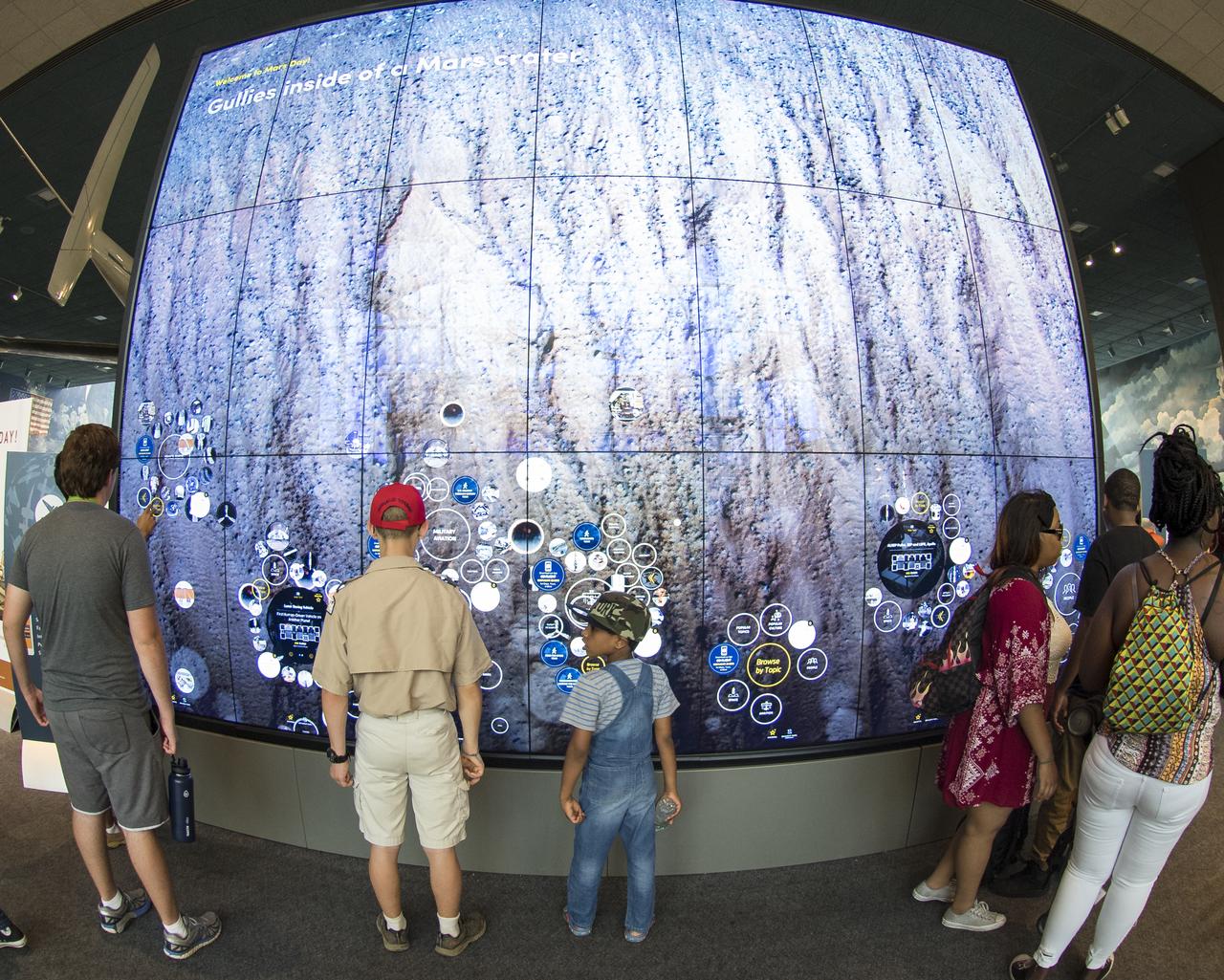
Visitors explore an interactive map of the surface of Mars at the Smithsonian Institution’s National Air and Space Museum Mars Day, an annual event celebrating the Red Planet with exhibits, speakers, and educational activities, Friday, July 21, 2017 in Washington. Photo Credit: (NASA/Aubrey Gemignani)
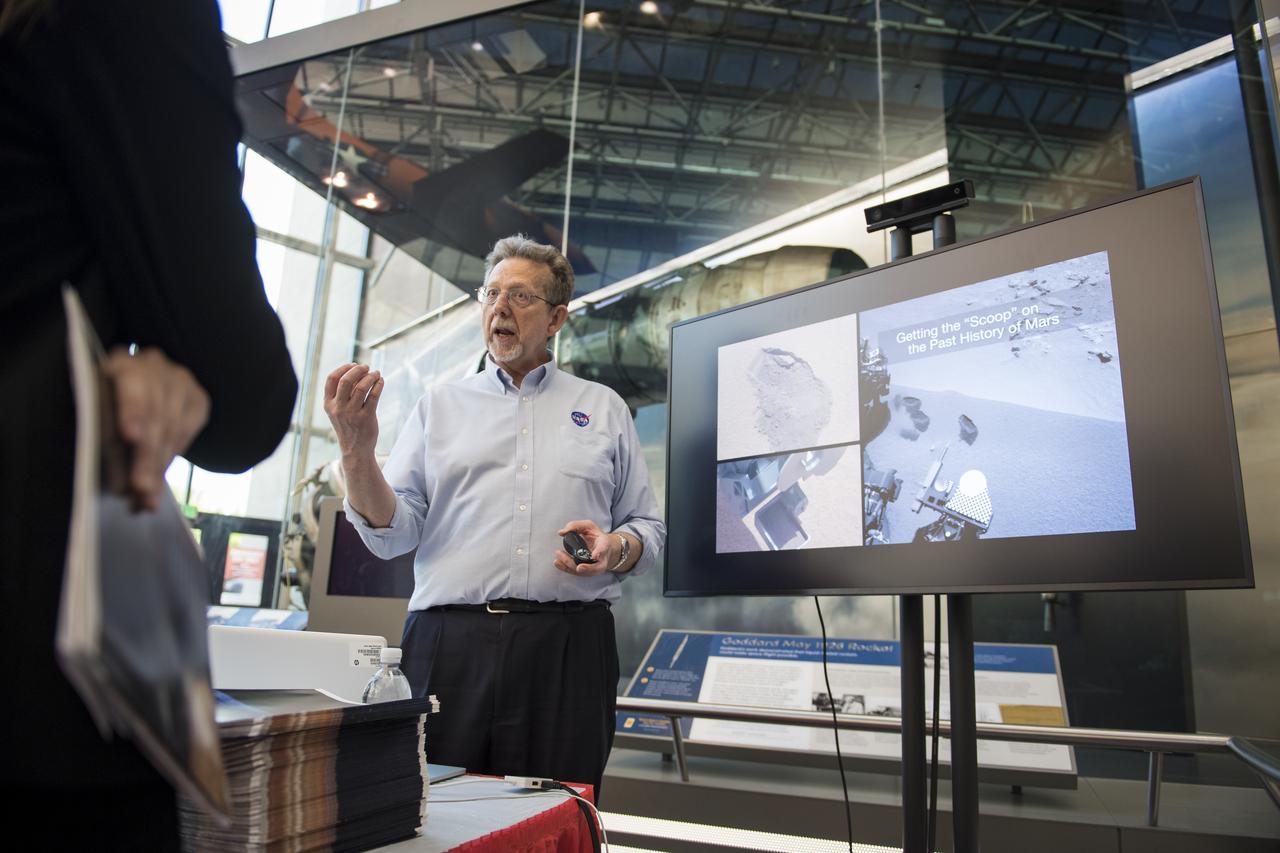
Jim Green, director of NASA’s Planetary Science Division, discusses NASA’s Mars missions with visitors during the Smithsonian Institution’s National Air and Space Museum Mars Day, celebrating the Red Planet with exhibits, speakers, and educational activities, Friday, July 21, 2017 in Washington. Photo Credit: (NASA/Aubrey Gemignani)
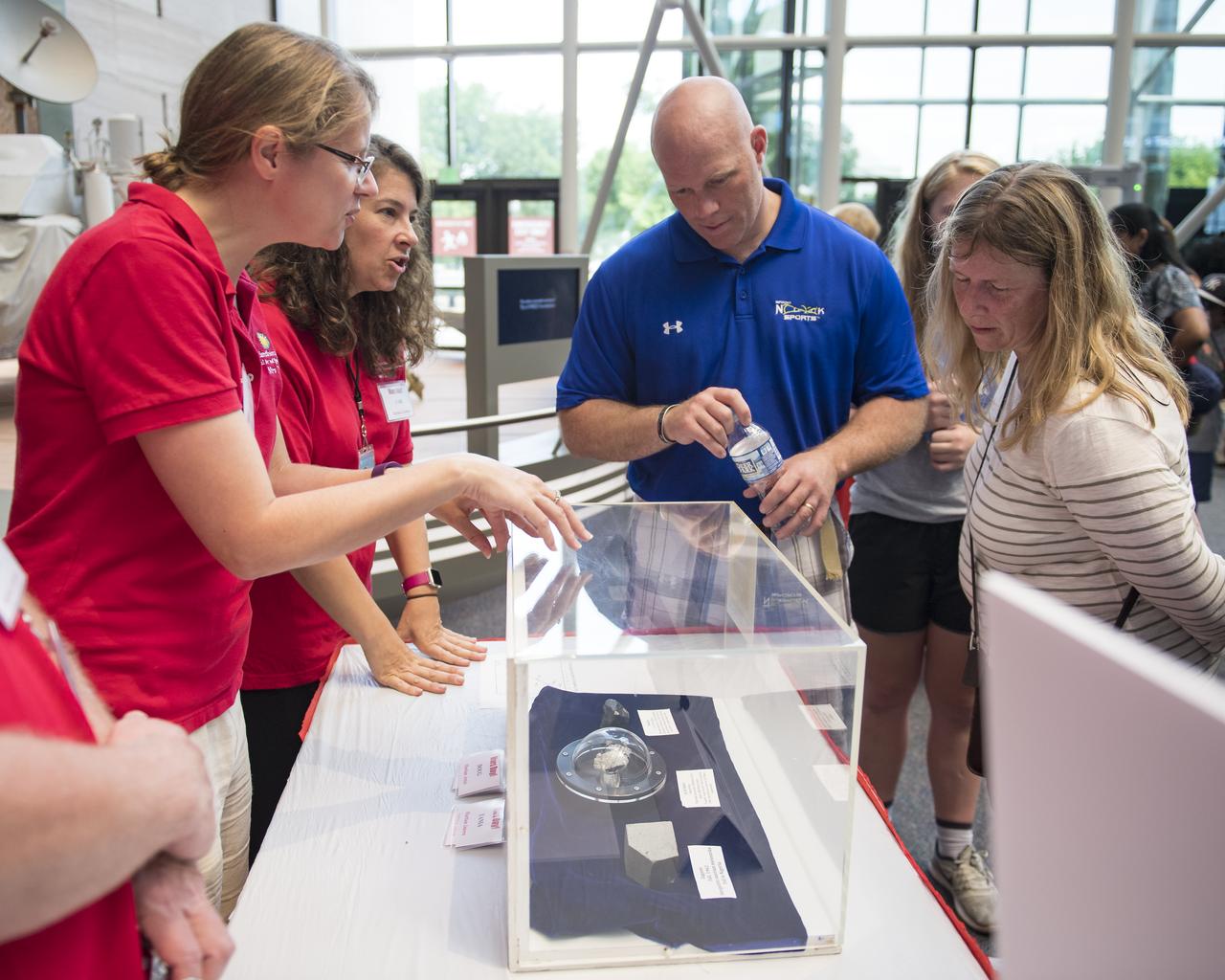
Visitors view a piece of Mars at the Smithsonian Institution’s National Air and Space Museum Mars Day, an annual event celebrating the Red Planet with exhibits, speakers, and educational activities, Friday, July 21, 2017 in Washington. Photo Credit: (NASA/Aubrey Gemignani)
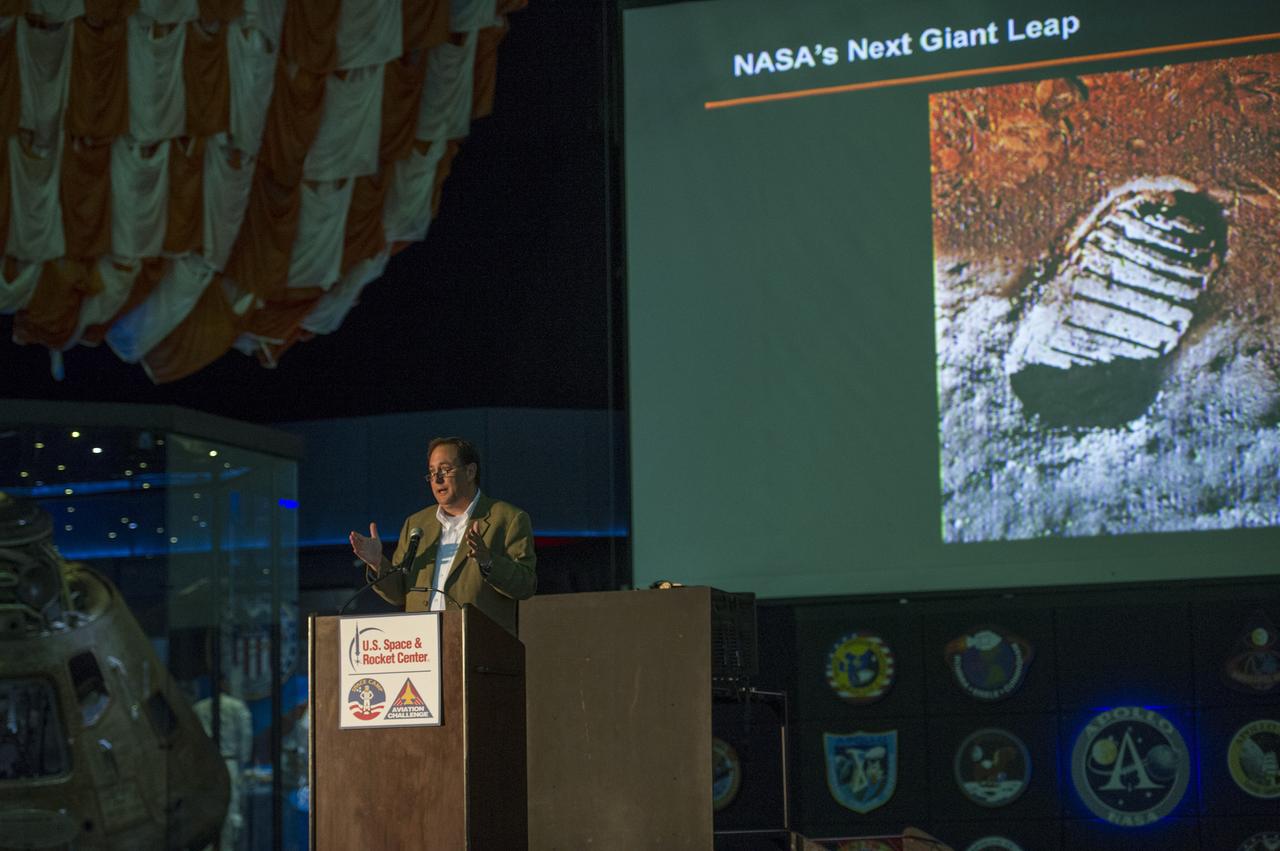
NASA ASSOCIATE ADMINISTRATOR ROBERT LIGHTFOOT TOLD THE AUDIENCE ATTENDING THE SPACE EXPLORATION CELEBRATION THAT NASA IS MAKING PROGRESS TOWARD THE NEXT GIANT LEAP IN SPACE--THE HUMAN EXPLORATION OF MARS.
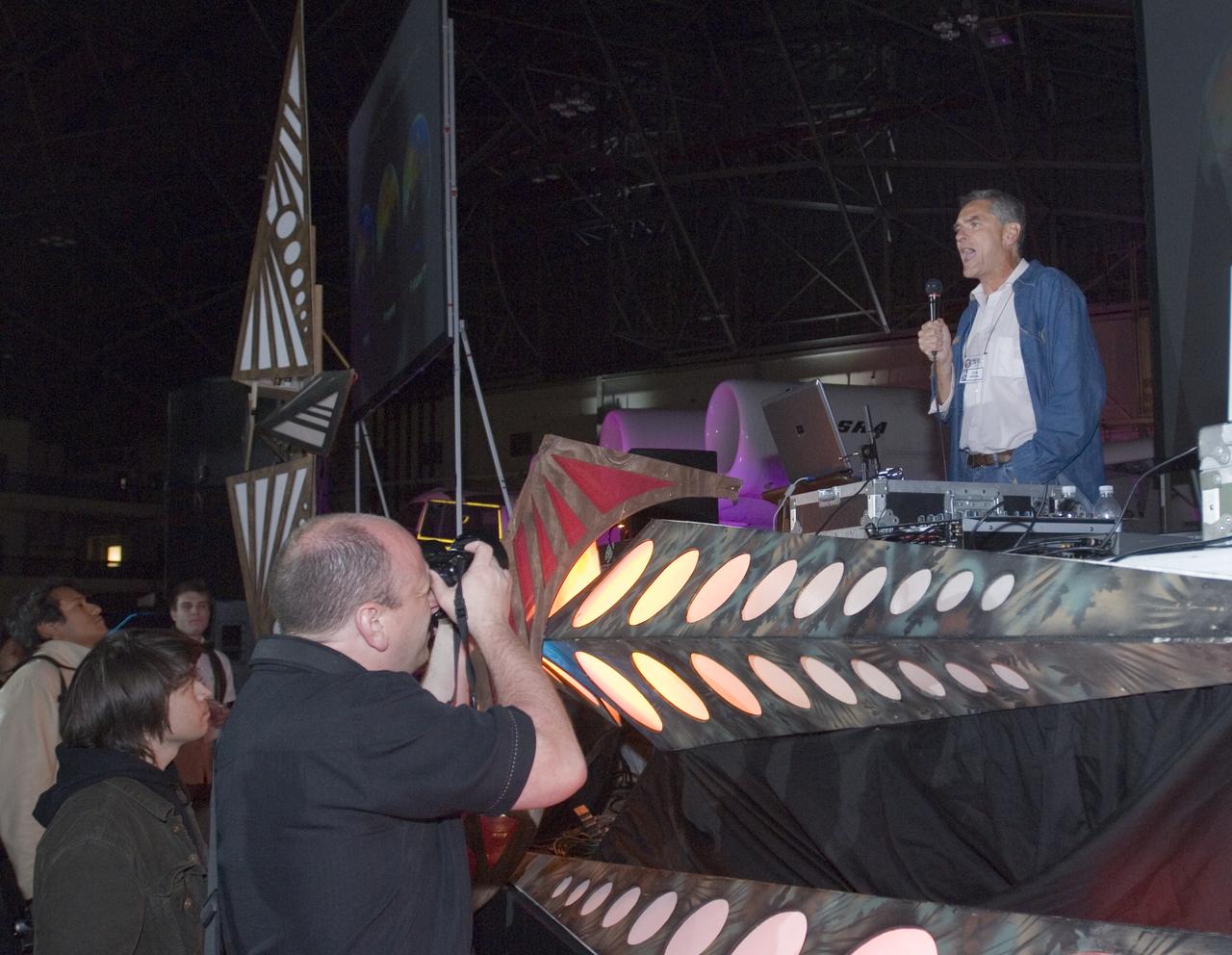
Yuri's Night at Ames a celebration of the first human in space. Ames Planetary Scientist with the Space Science Division Dr Chris McKay addresses a audience about Mars and life in extreme environments.
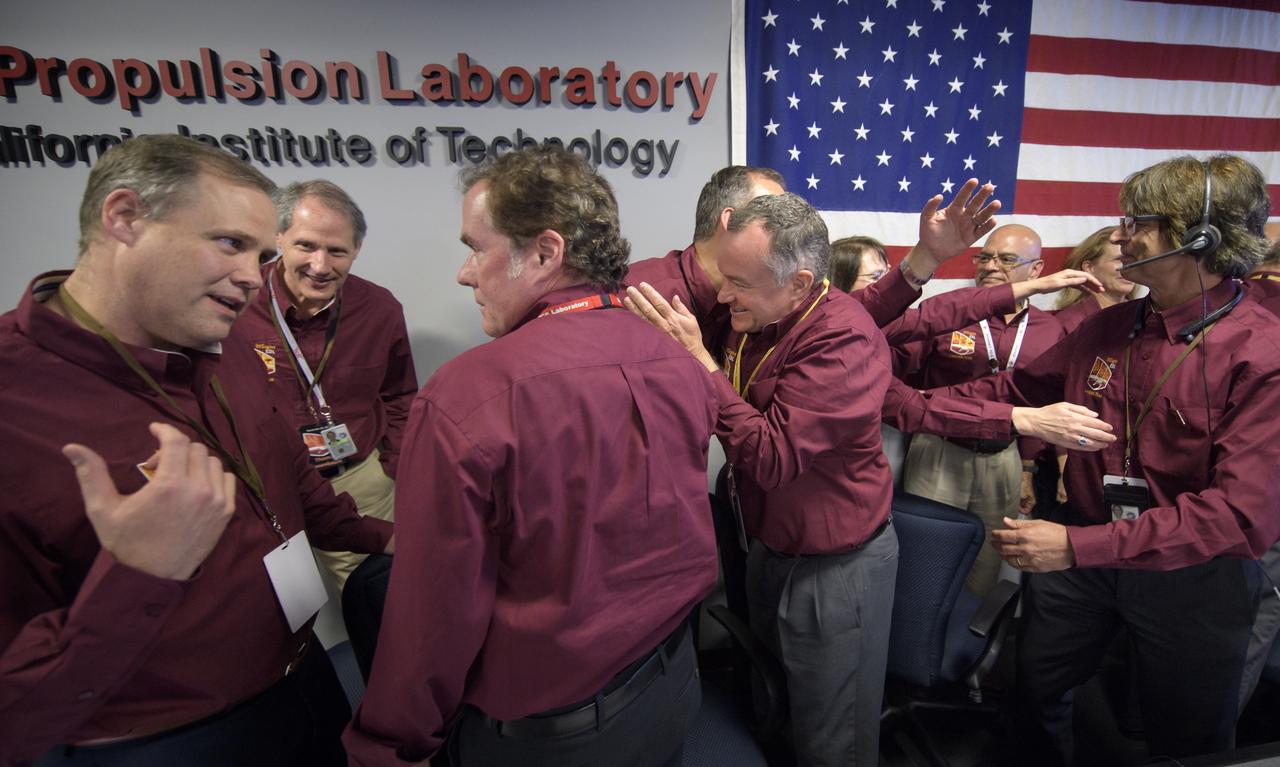
NASA Administrator Jim Bridenstine, left, celebrates with other managers after receiving confirmation that the Mars InSight lander successfully touched down on the surface of Mars, Monday, Nov. 26, 2018 inside the Mission Support Area at NASA's Jet Propulsion Laboratory in Pasadena, California. InSight, short for Interior Exploration using Seismic Investigations, Geodesy and Heat Transport, is a Mars lander designed to study the "inner space" of Mars: its crust, mantle, and core. Photo Credit: (NASA/Bill Ingalls)
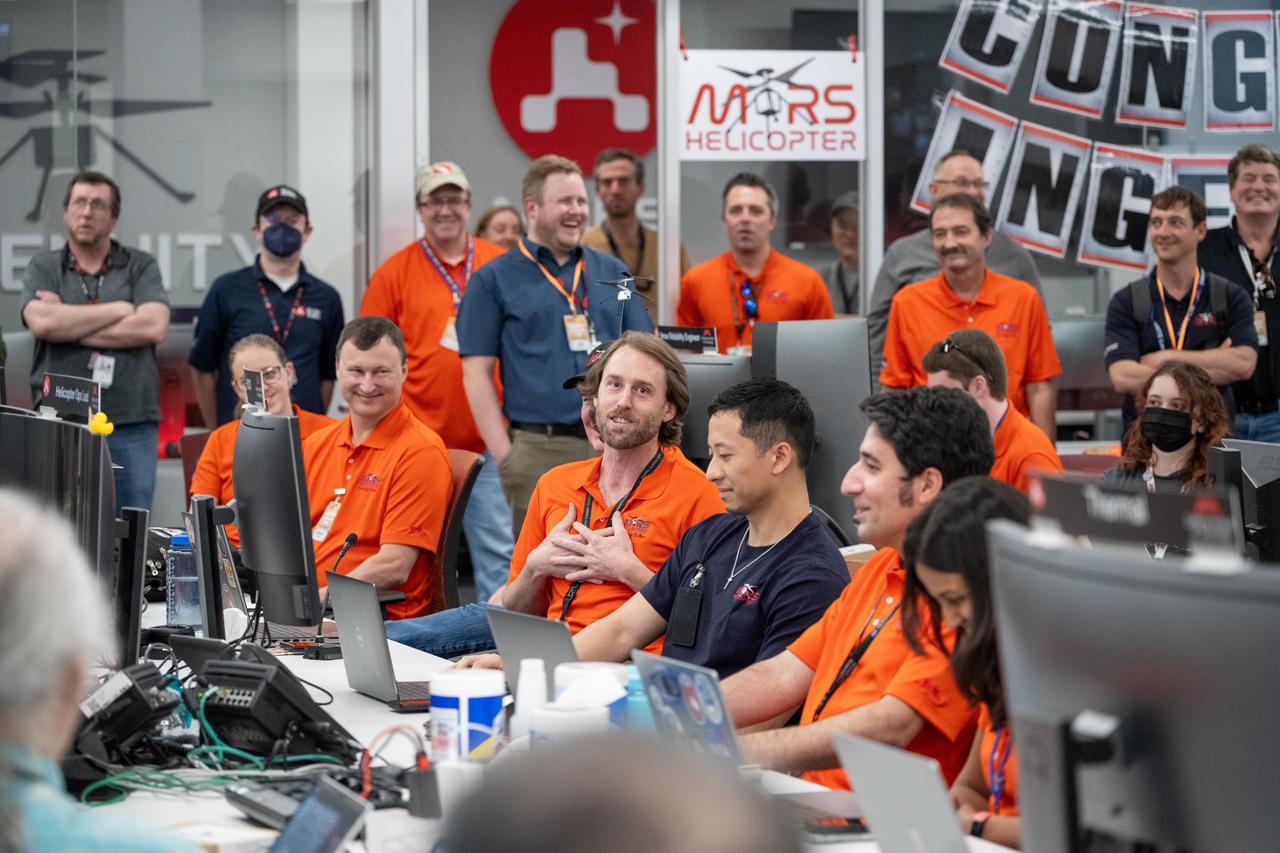
The Ingenuity team celebrates during their final shift working on NASA's Ingenuity Mars Helicopter at the agency's Jet Propulsion Laboratory on April 16, 2024. The team gathered to review a transmission from the helicopter that confirmed the operation of a software patch allowing Ingenuity to act as a stationary testbed and collect data that could benefit future explorers of the Red Planet. Originally designed as short-lived technology demonstration mission that would perform up to five experimental test flights over 30 days, the first aircraft on another world operated from the Martian surface for almost three years, flew more than 14 times farther than planned, and logged more than two hours of total flight time. Its 72nd and final flight was Jan. 18, 2024. https://photojournal.jpl.nasa.gov/catalog/PIA26319
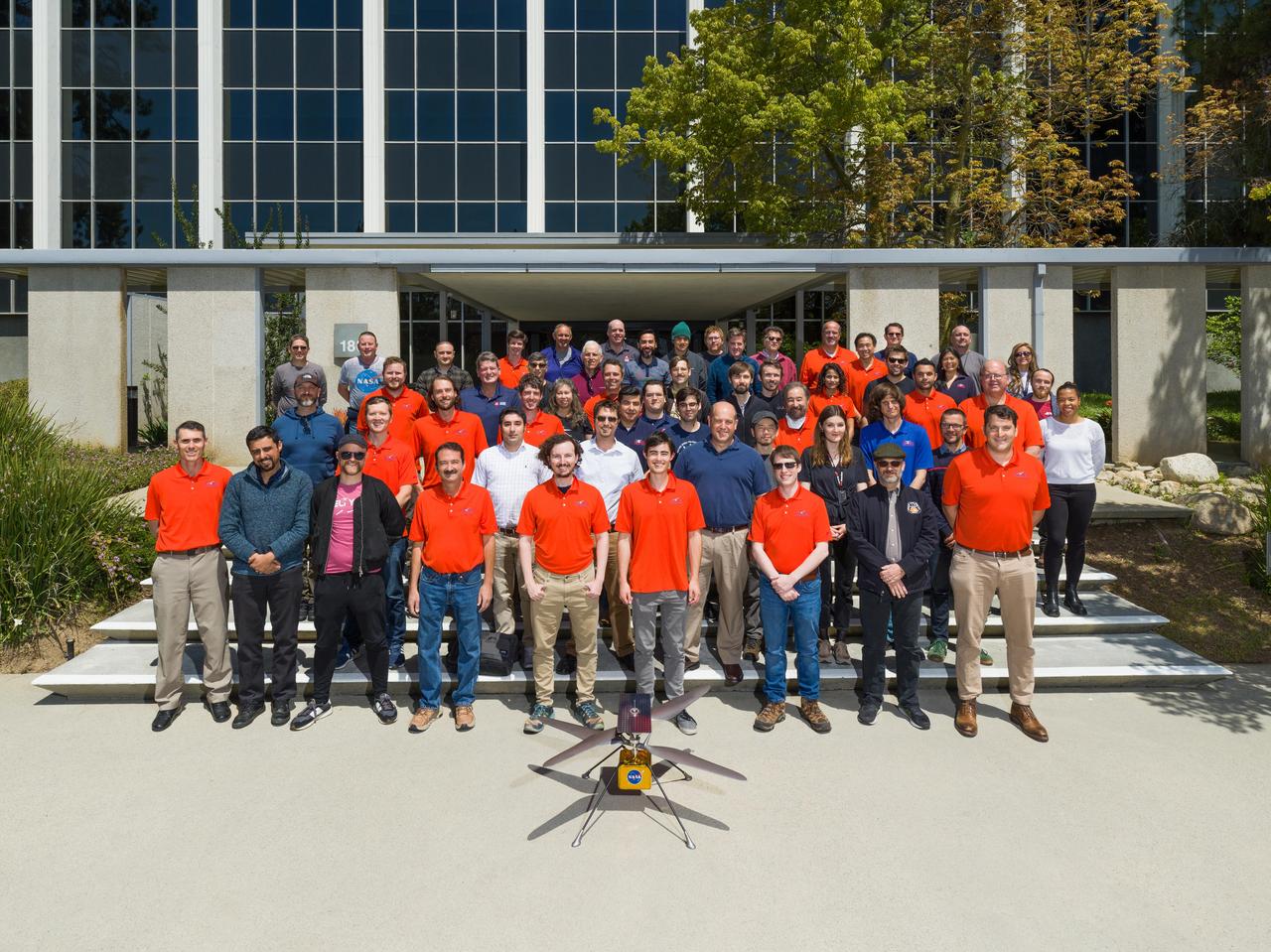
Members of NASA's Ingenuity Mars Helicopter team got together for a team photo on the second anniversary of the rotorcraft's first flight on Mars. The image was taken at the agency's Jet Propulsion Laboratory in Southern California on April 19, 2023. https://photojournal.jpl.nasa.gov/catalog/PIA25882
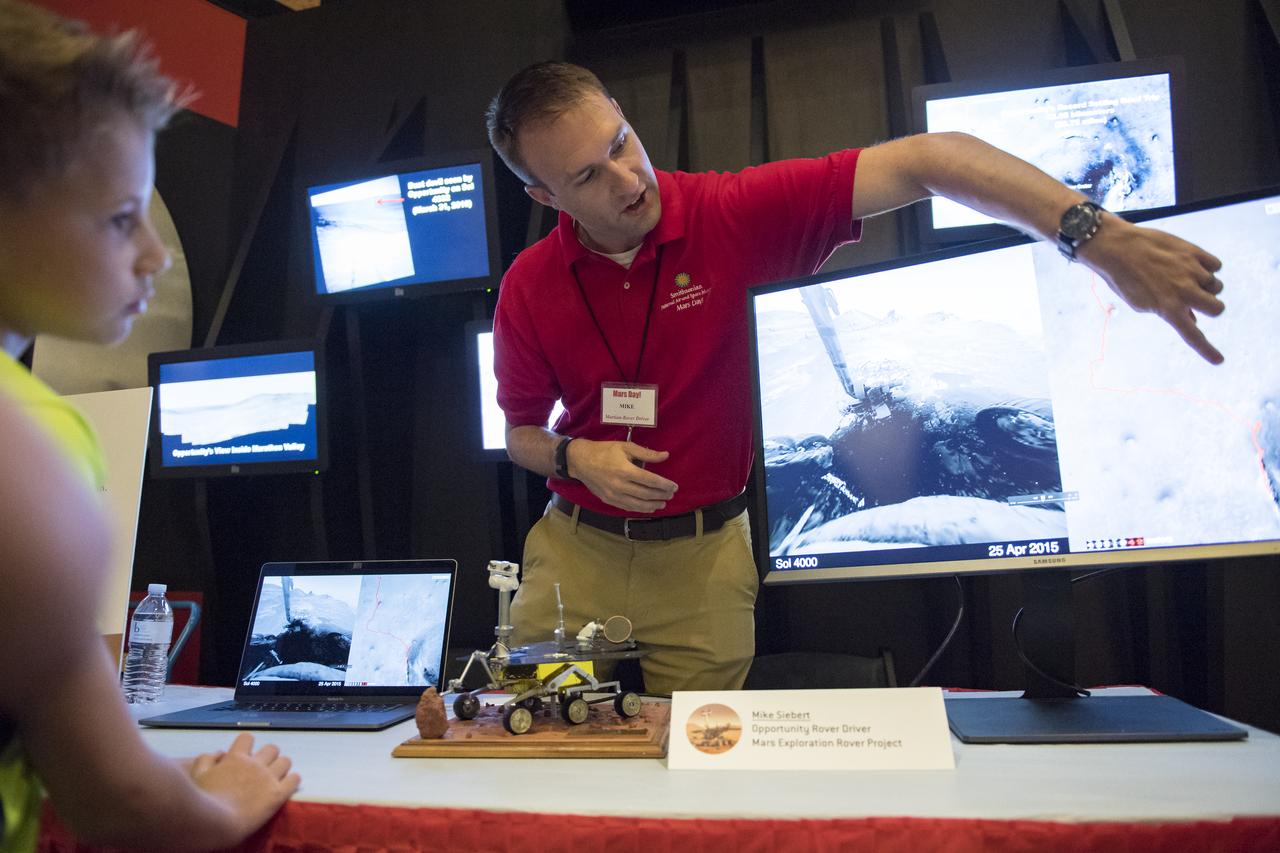
Mike Seibert, rover driver for NASA’s Opportunity rover on Mars talks with visitors about navigating the surface of Mars at the Smithsonian Institution’s National Air and Space Museum Mars Day, an annual event celebrating the Red Planet with exhibits, speakers, and educational activities, Friday, July 21, 2017 in Washington. Photo Credit: (NASA/Aubrey Gemignani)
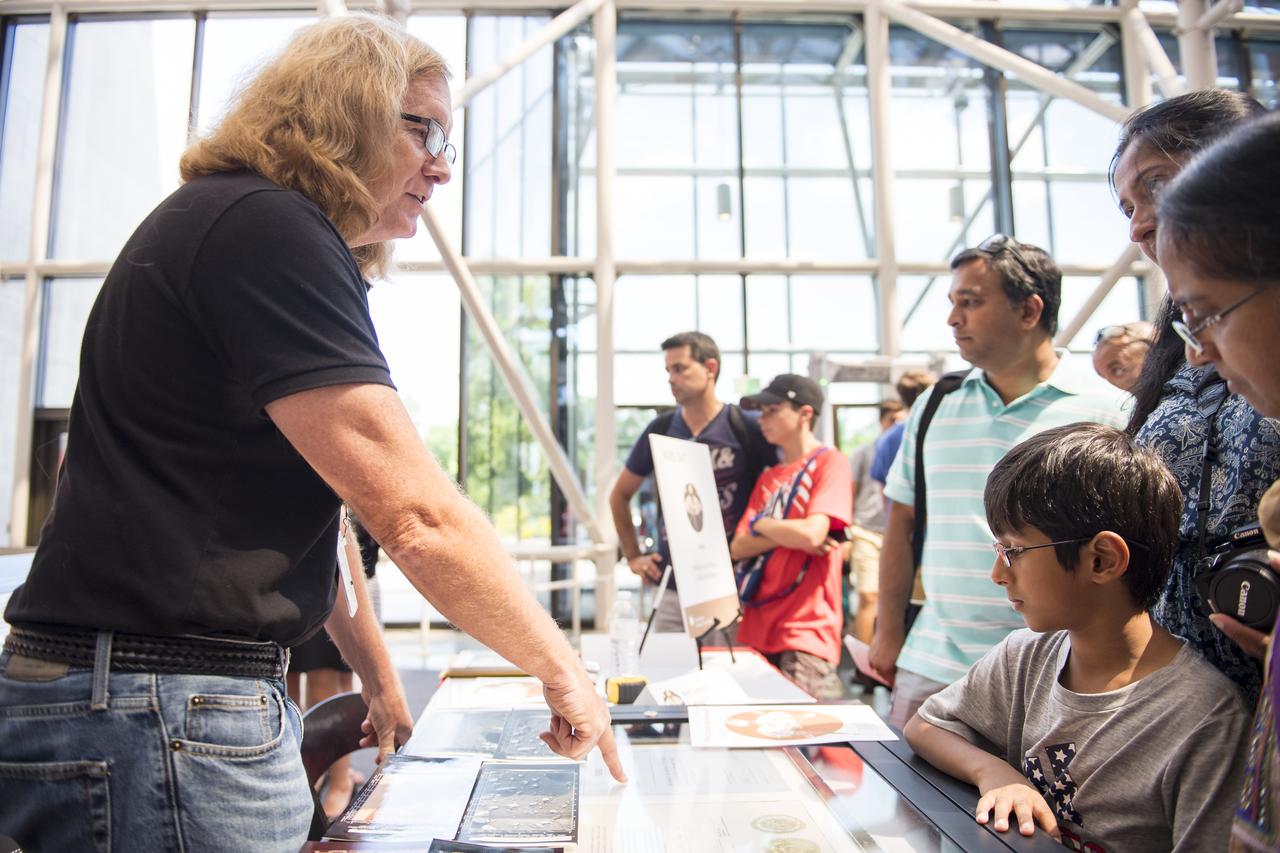
Visitors learn about the Viking landers at the Smithsonian Institution’s National Air and Space Museum Mars Day, an annual event celebrating the Red Planet with exhibits, speakers, and educational activities, Friday, July 21, 2017 in Washington. Photo Credit: (NASA/Aubrey Gemignani)
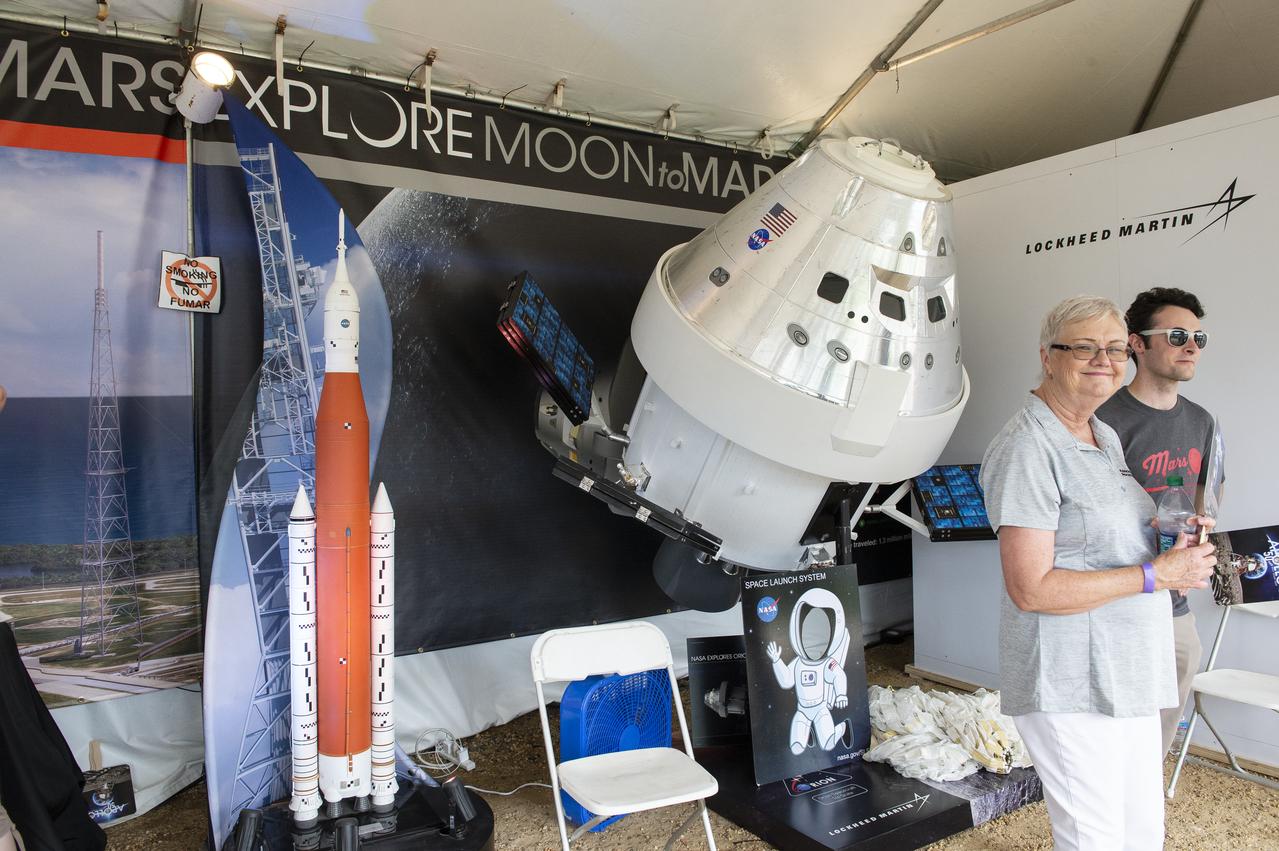
The Moon to Mars exhibit is seen at the Apollo 11 50th Anniversary celebration on the National Mall, Thursday, July 18, 2019 in Washington. Apollo 11 was the first mission to land astronauts on the Moon and launched on July 16, 1969 with astronauts Neil Armstrong, Michael Collins, and Buzz Aldrin. Photo Credit: (NASA/Connie Moore)
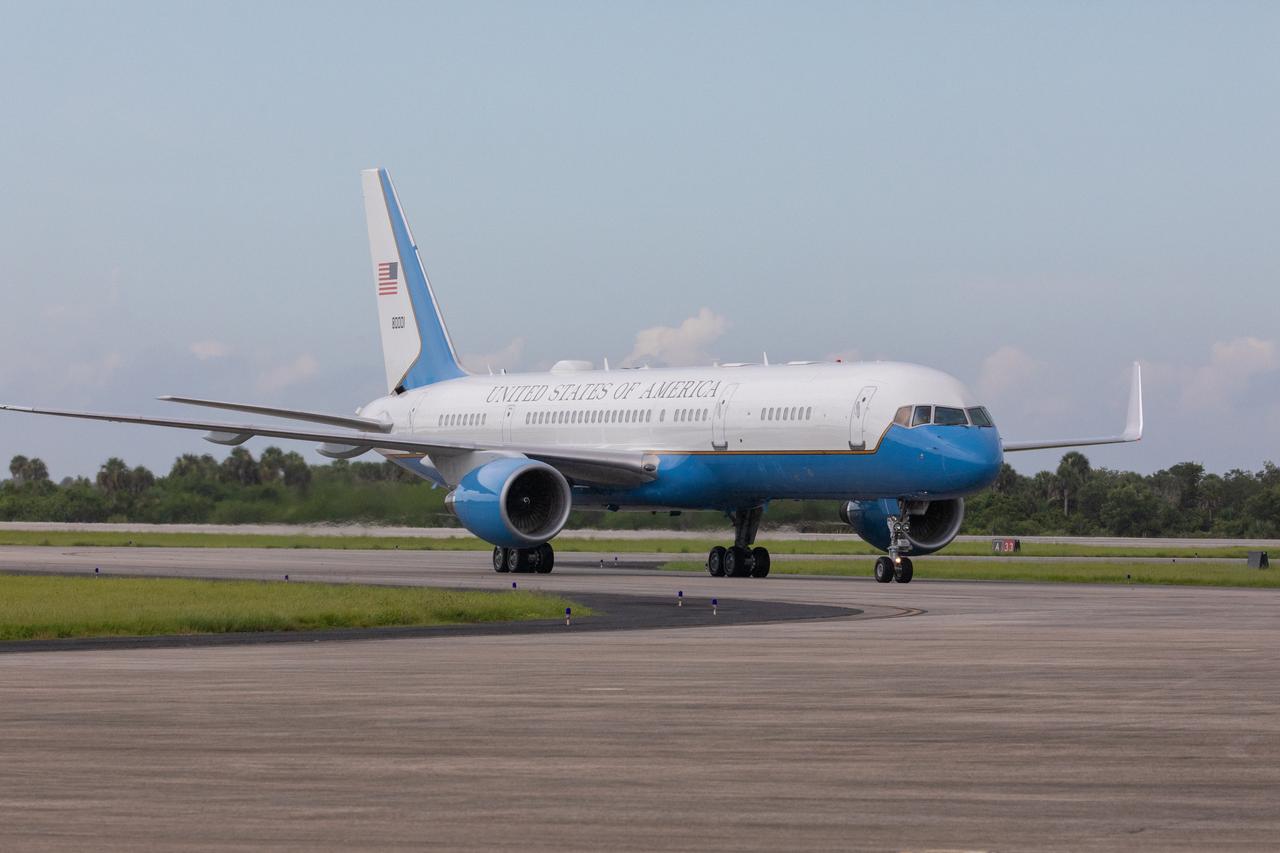
Vice President Pence arrives at Kennedy Space Center on July 20, 2019 in celebration of the Apollo 11 50th Anniversary. While at Kennedy, he recognized the historic mission, by visiting the mission’s launch site, pad 39a, and addressed NASA’s future plans to travel to the Moon and on to Mars.
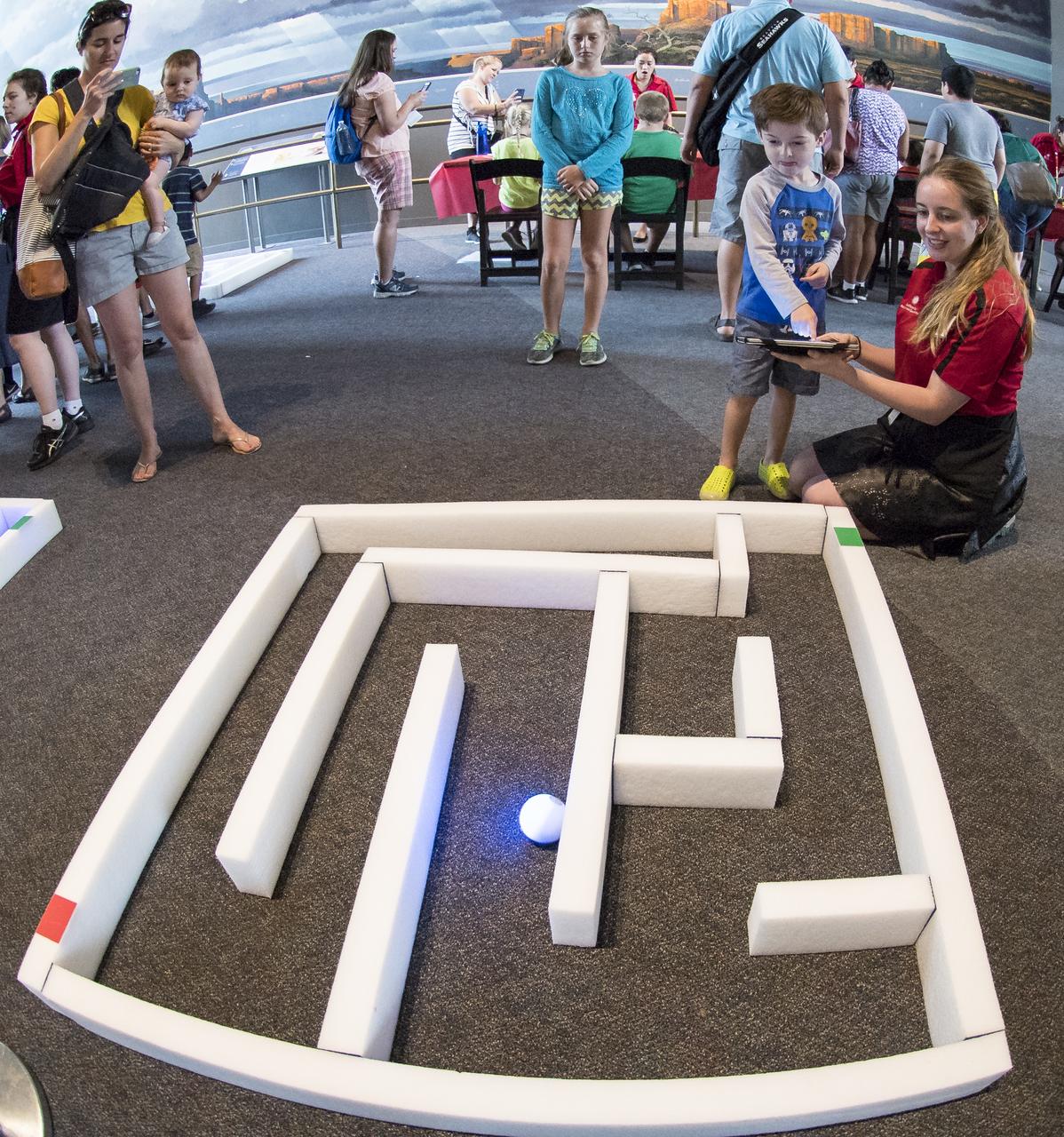
Visitors direct a robotic ball through a maze at the Smithsonian Institution’s National Air and Space Museum Mars Day, an annual event celebrating the Red Planet with exhibits, speakers, and educational activities, Friday, July 21, 2017 in Washington. Photo Credit: (NASA/Aubrey Gemignani)
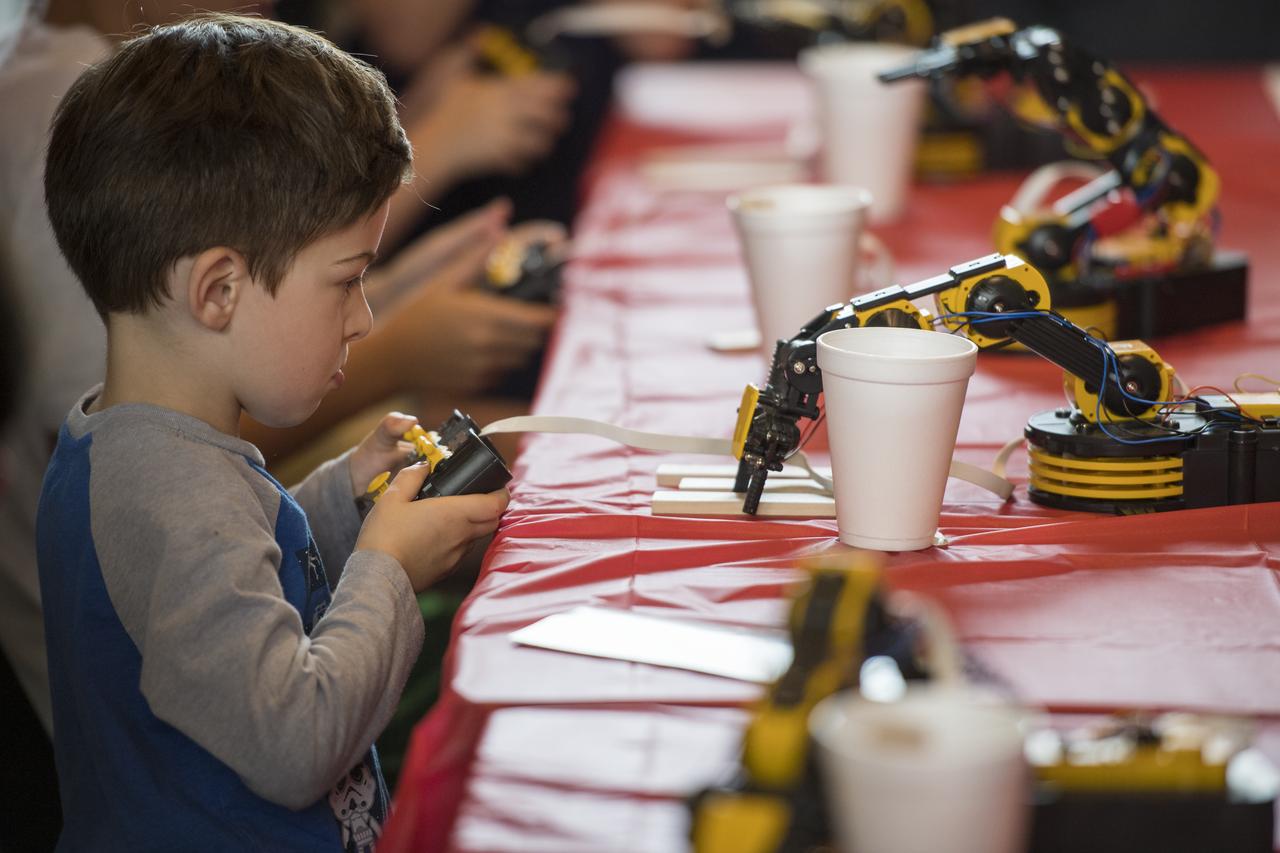
Visitors operate robotic arms at the Smithsonian Institution’s National Air and Space Museum Mars Day, an annual event celebrating the Red Planet with exhibits, speakers, and educational activities, Friday, July 21, 2017 in Washington. Photo Credit: (NASA/Aubrey Gemignani)
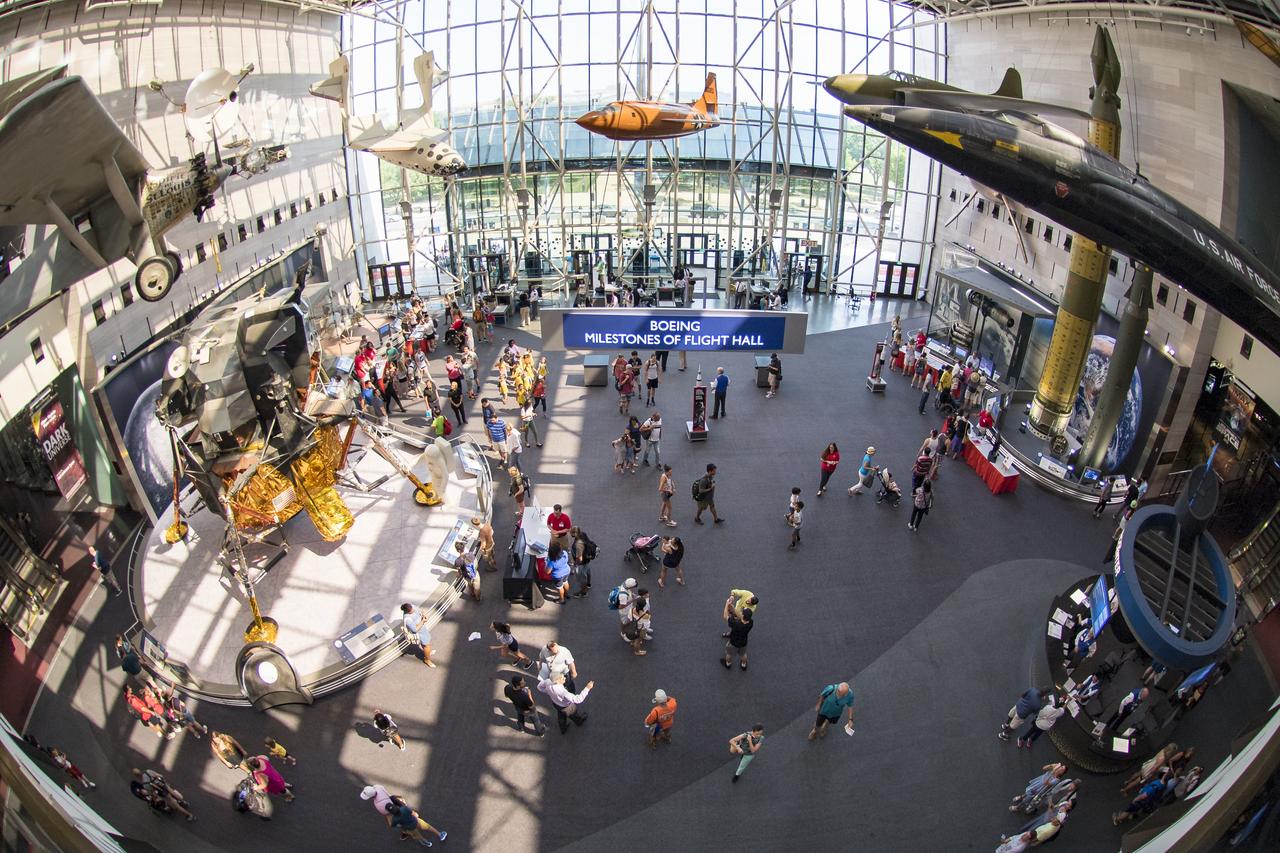
Visitors explore Smithsonian Institution’s National Air and Space Museum’s Mars Day, an annual event celebrating the Red Planet with exhibits, speakers, and educational activities, Friday, July 21, 2017 in Washington. Photo Credit: (NASA/Aubrey Gemignani)
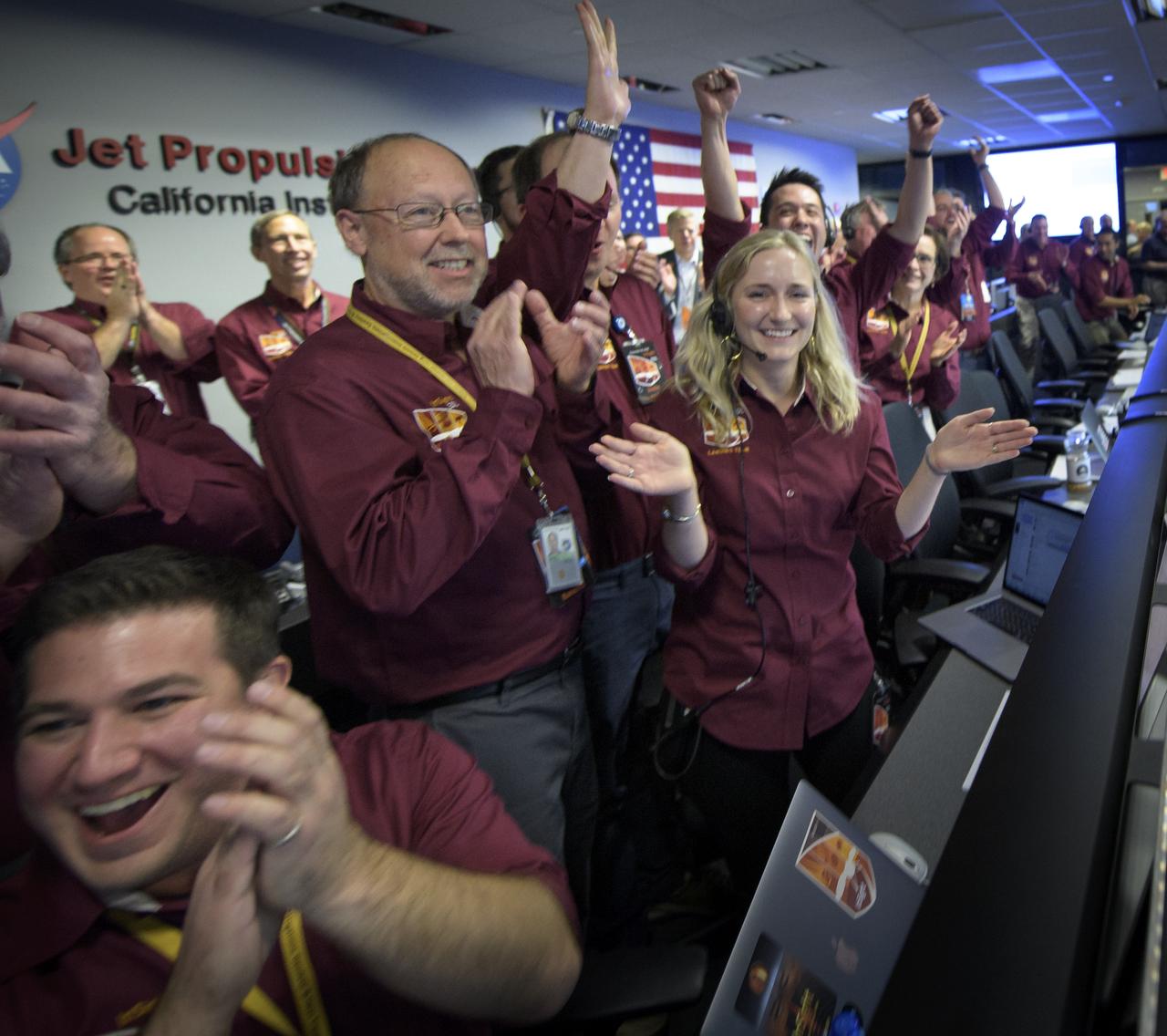
Bruce Banerdt, InSight Principal Investigator, NASA JPL, left, Hallie Gengl, Data Visualization Developer, NASA JPL, right, and other NASA InSight team members celebrate after the first image of Mars from the Mars InSight lander, Monday, Nov. 26, 2018 inside the Mission Support Area at NASA's Jet Propulsion Laboratory in Pasadena, California. InSight, short for Interior Exploration using Seismic Investigations, Geodesy and Heat Transport, is a Mars lander designed to study the "inner space" of Mars: its crust, mantle, and core. Photo Credit: (NASA/Bill Ingalls)
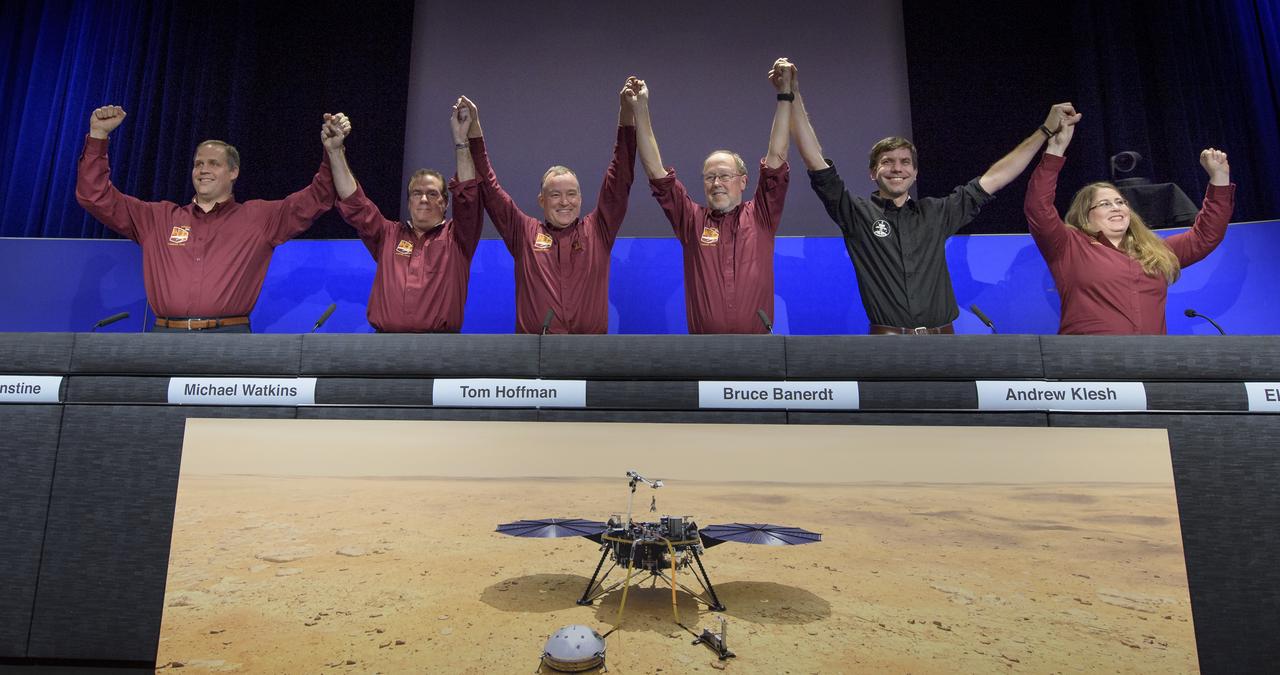
NASA Administrator Jim Bridenstine, left, JPL Director Michael Watkins, InSight Project Manager Tom Hoffman, InSight Principal Investigator Bruce Banerdt, MarCO chief engineer Andy Klesh, and InSight Instrument Operations Lead Elizabeth Barrett, celebrate Mars InSight landing successfully on Mars during a press conference, Monday, Nov. 26, 2018 at NASA's Jet Propulsion Laboratory in Pasadena, California. InSight, short for Interior Exploration using Seismic Investigations, Geodesy and Heat Transport, is a Mars lander designed to study the "inner space" of Mars: its crust, mantle, and core. Photo Credit: (NASA/Bill Ingalls)
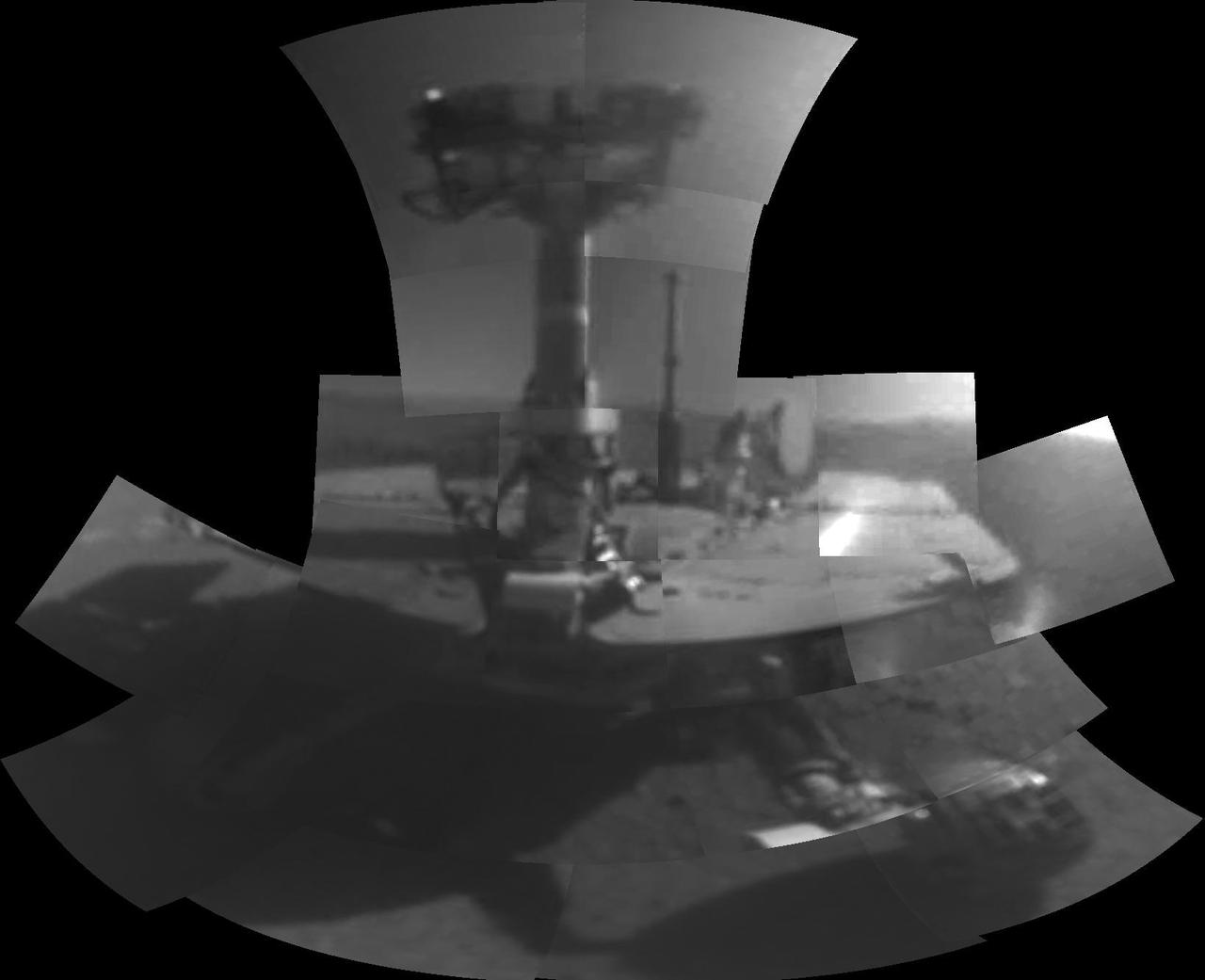
This self-portrait of NASA's Opportunity Mars rover shows the vehicle at a site called "Perseverance Valley" on the slopes of Endeavour Crater. It was taken with the rover's Microscopic Imager to celebrate the 5000th Martian Day, or sol, of the rover's mission. The Microscopic Imager is a fixed-focus camera mounted at the end of the rover's robotic arm. Because it was designed for close inspection of rocks, soils and other targets at a distance of around 2.7 inches (7 cm), the rover is out of focus. The rover's self-portrait view is made by stitching together multiple images take on Sol 5,000 and 5,006 of the mission. Wrist motions and turret rotations on the arm allowed the Microscopic Imager to acquire the mosaic's component images. The resulting mosaic does not include the rover's arm. This simulation from planning software used to write commands for the rover shows the motion of the robotic arm, and an inset view of the Microscopic Imager. https://photojournal.jpl.nasa.gov/catalog/PIA22222

The Empire State Building is illuminated in red to celebrate this Thursday's scheduled landing on Mars of NASA's Perseverance rover, Tuesday, Feb. 16, 2021 in New York City. A key objective for Perseverance’s mission on Mars is astrobiology, including the search for signs of ancient microbial life. The rover will characterize the planet’s geology and past climate, pave the way for human exploration of the Red Planet, and be the first mission to collect and cache Martian rock and regolith. Photo Credit: (NASA/Emma Howells)

The Empire State Building is illuminated in red to celebrate this Thursday's scheduled landing on Mars of NASA's Perseverance rover, Tuesday, Feb. 16, 2021 in New York City. A key objective for Perseverance’s mission on Mars is astrobiology, including the search for signs of ancient microbial life. The rover will characterize the planet’s geology and past climate, pave the way for human exploration of the Red Planet, and be the first mission to collect and cache Martian rock and regolith. Photo Credit: (NASA/Emma Howells)
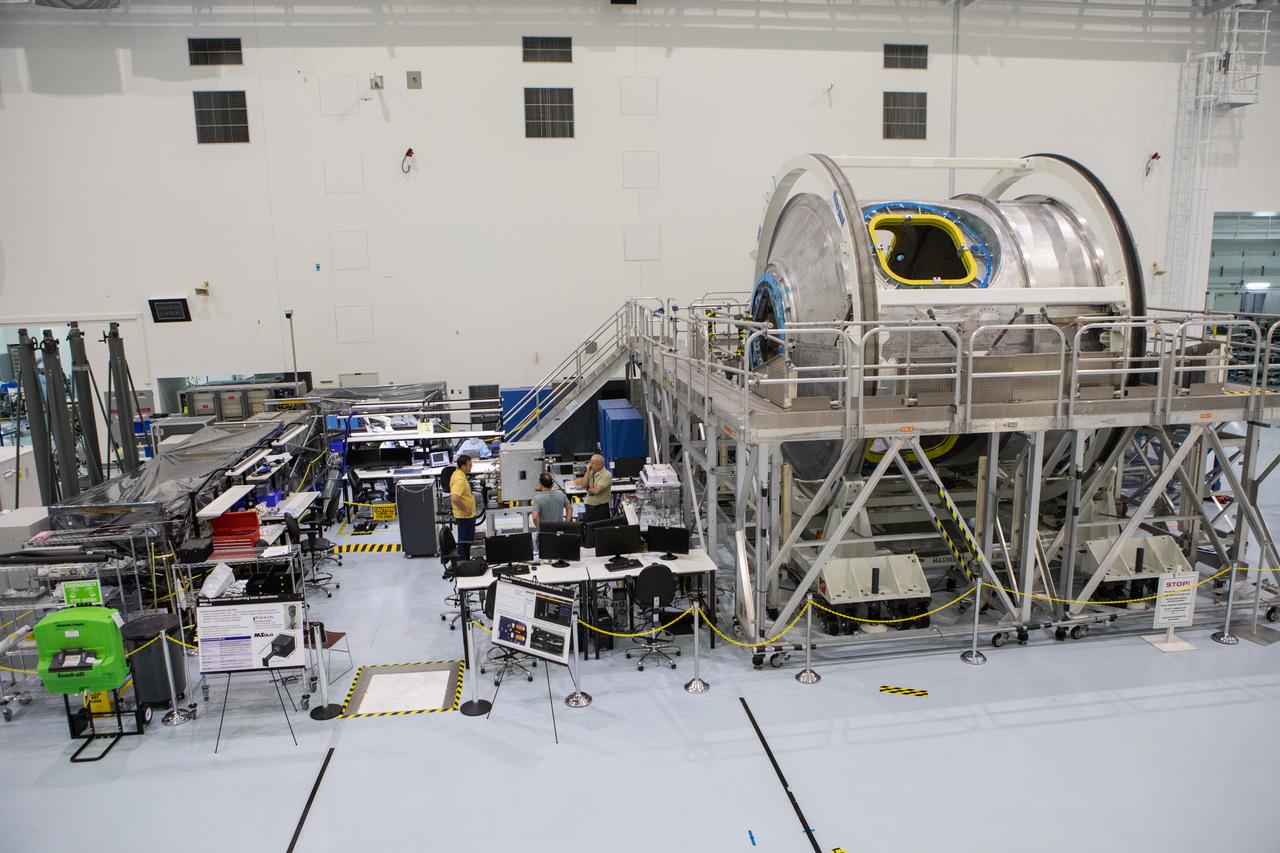
Instruments for NASA’s Mars Spectrometer observing lunar operations (MSolo) are in view at left in the high bay of the Space Station Processing Facility (SSPF) at NASA's Kennedy Space Center in Florida, on May 16, 2019. The center is celebrating the SSPF’s 25th anniversary. The facility was built to process elements for the International Space Station. Now it is providing support for current and future NASA and commercial provider programs, including Commercial Resupply Services, Artemis 1, sending the first woman and next man to the Moon, and deep space destinations including Mars.

The Empire State Building is illuminated in red to celebrate this Thursday's scheduled landing on Mars of NASA's Perseverance rover, Tuesday, Feb. 16, 2021 in New York City. A key objective for Perseverance’s mission on Mars is astrobiology, including the search for signs of ancient microbial life. The rover will characterize the planet’s geology and past climate, pave the way for human exploration of the Red Planet, and be the first mission to collect and cache Martian rock and regolith. Photo Credit: (NASA/Emma Howells)

The Empire State Building is illuminated in red to celebrate this Thursday's scheduled landing on Mars of NASA's Perseverance rover, Tuesday, Feb. 16, 2021 in New York City. A key objective for Perseverance’s mission on Mars is astrobiology, including the search for signs of ancient microbial life. The rover will characterize the planet’s geology and past climate, pave the way for human exploration of the Red Planet, and be the first mission to collect and cache Martian rock and regolith. Photo Credit: (NASA/Emma Howells)

The Empire State Building is illuminated in red to celebrate this Thursday's scheduled landing on Mars of NASA's Perseverance rover, Tuesday, Feb. 16, 2021 in New York City. A key objective for Perseverance’s mission on Mars is astrobiology, including the search for signs of ancient microbial life. The rover will characterize the planet’s geology and past climate, pave the way for human exploration of the Red Planet, and be the first mission to collect and cache Martian rock and regolith. Photo Credit: (NASA/Emma Howells)
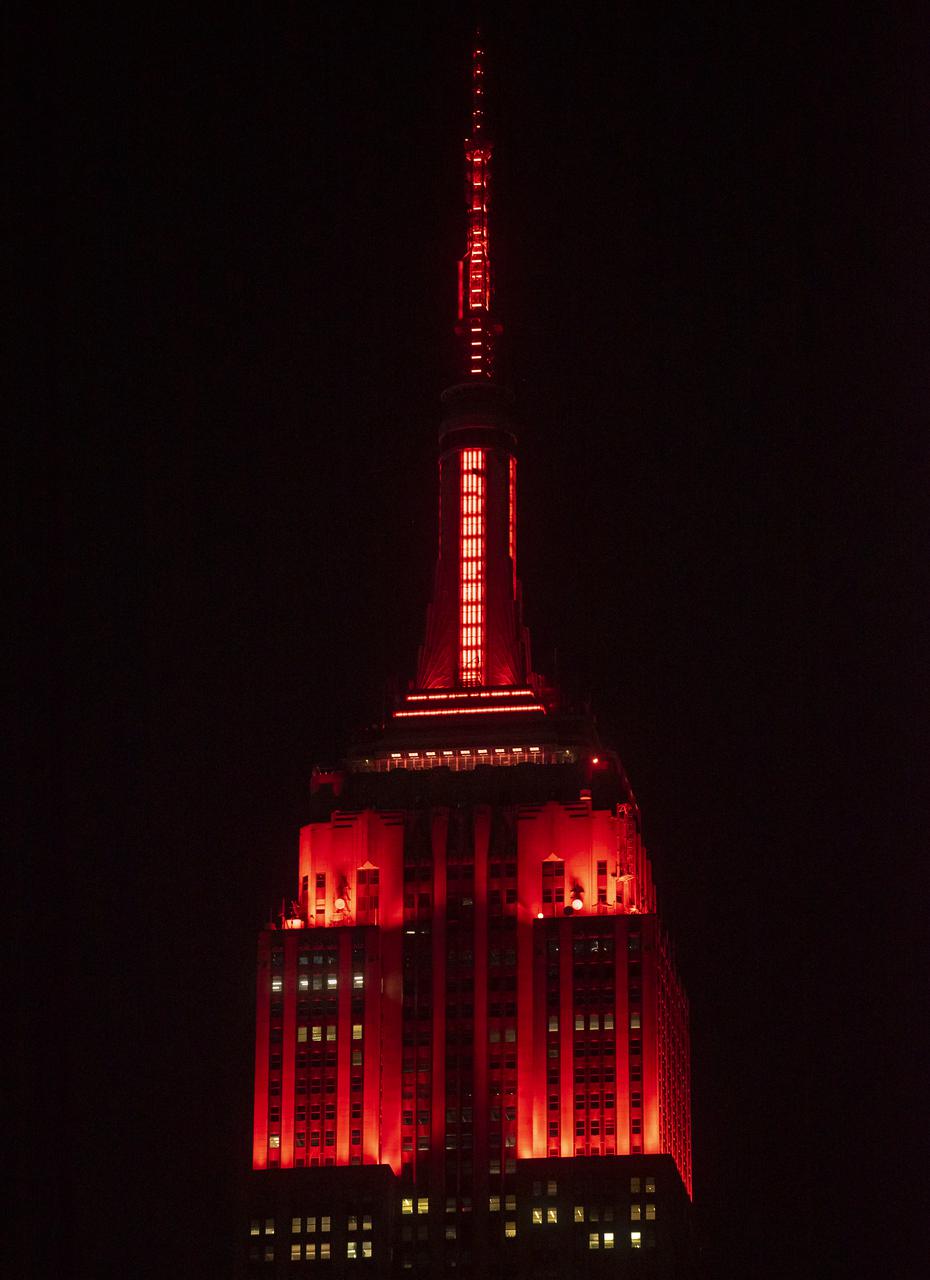
The Empire State Building is illuminated in red to celebrate this Thursday's scheduled landing on Mars of NASA's Perseverance rover, Tuesday, Feb. 16, 2021 in New York City. A key objective for Perseverance’s mission on Mars is astrobiology, including the search for signs of ancient microbial life. The rover will characterize the planet’s geology and past climate, pave the way for human exploration of the Red Planet, and be the first mission to collect and cache Martian rock and regolith. Photo Credit: (NASA/Emma Howells)
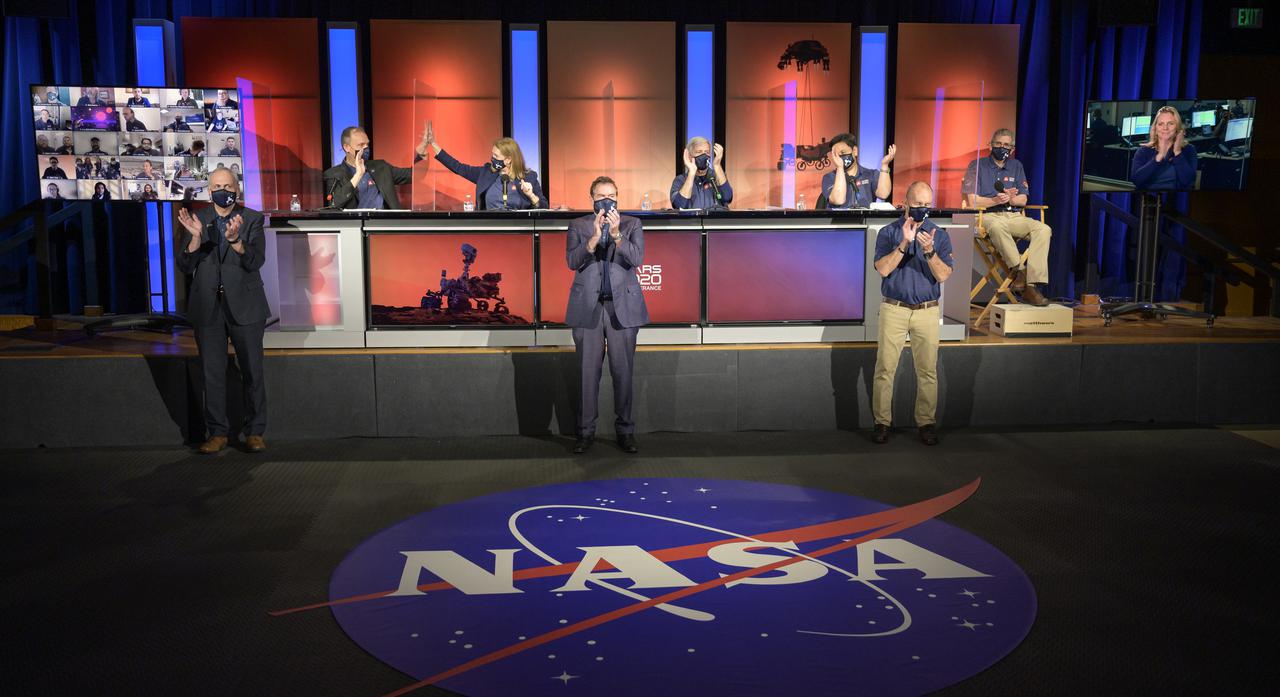
NASA Perseverance rover mission management and scientist celebrate a successful landing on Mars at the start of a post-landing update, Thursday, Feb. 18, 2021, at NASA's Jet Propulsion Laboratory in Pasadena, California. A key objective for Perseverance’s mission on Mars is astrobiology, including the search for signs of ancient microbial life. The rover will characterize the planet’s geology and past climate, pave the way for human exploration of the Red Planet, and be the first mission to collect and cache Martian rock and regolith. Photo Credit: (NASA/Bill Ingalls)

The Empire State Building is illuminated in red to celebrate this Thursday's scheduled landing on Mars of NASA's Perseverance rover, Tuesday, Feb. 16, 2021 in New York City. A key objective for Perseverance’s mission on Mars is astrobiology, including the search for signs of ancient microbial life. The rover will characterize the planet’s geology and past climate, pave the way for human exploration of the Red Planet, and be the first mission to collect and cache Martian rock and regolith. Photo Credit: (NASA/Emma Howells)
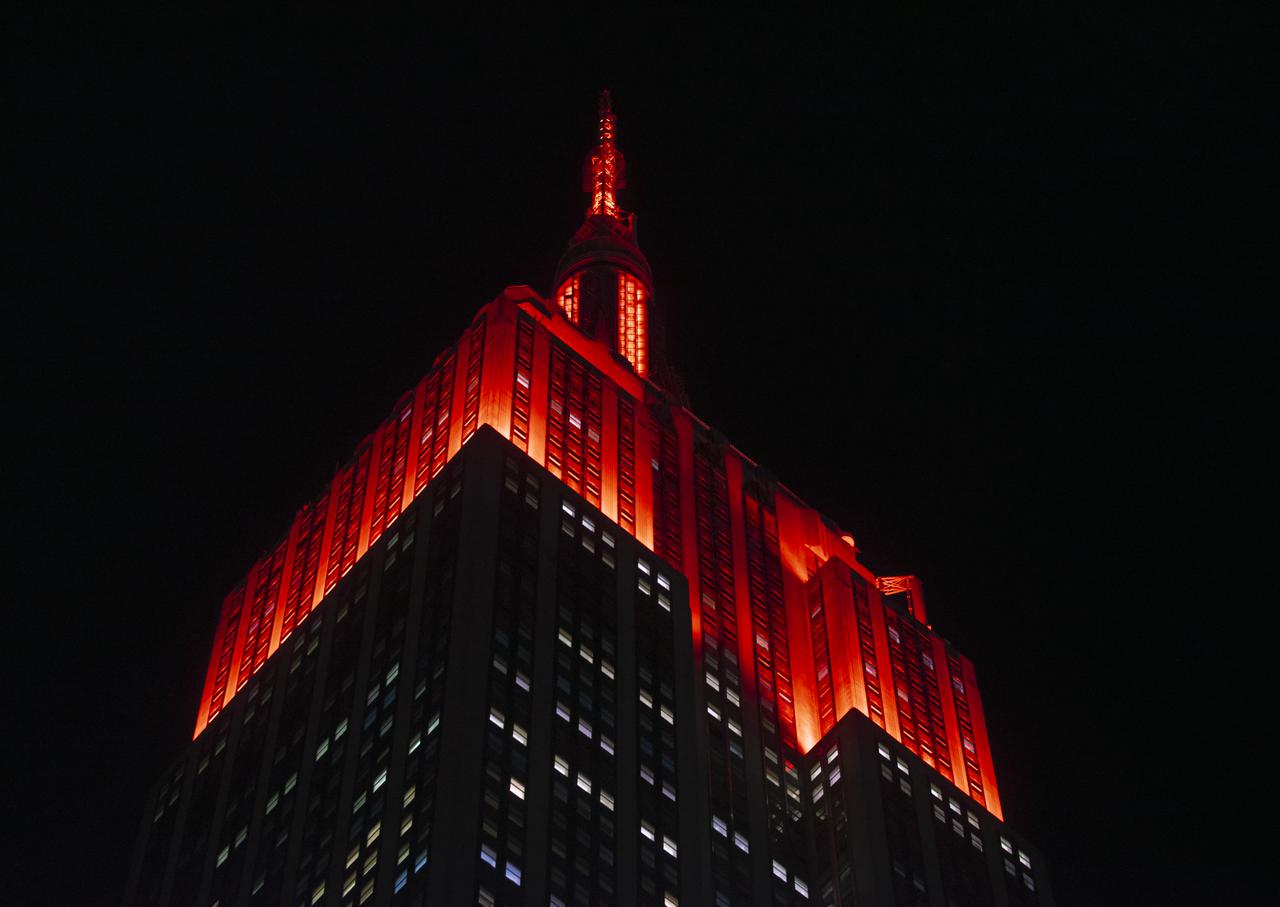
The Empire State Building is illuminated in red to celebrate this Thursday's scheduled landing on Mars of NASA's Perseverance rover, Tuesday, Feb. 16, 2021 in New York City. A key objective for Perseverance’s mission on Mars is astrobiology, including the search for signs of ancient microbial life. The rover will characterize the planet’s geology and past climate, pave the way for human exploration of the Red Planet, and be the first mission to collect and cache Martian rock and regolith. Photo Credit: (NASA/Emma Howells)

The Empire State Building is illuminated in red to celebrate this Thursday's scheduled landing on Mars of NASA's Perseverance rover, Tuesday, Feb. 16, 2021 in New York City. A key objective for Perseverance’s mission on Mars is astrobiology, including the search for signs of ancient microbial life. The rover will characterize the planet’s geology and past climate, pave the way for human exploration of the Red Planet, and be the first mission to collect and cache Martian rock and regolith. Photo Credit: (NASA/Emma Howells)

The Empire State Building is illuminated in red to celebrate this Thursday's scheduled landing on Mars of NASA's Perseverance rover, Tuesday, Feb. 16, 2021 in New York City. A key objective for Perseverance’s mission on Mars is astrobiology, including the search for signs of ancient microbial life. The rover will characterize the planet’s geology and past climate, pave the way for human exploration of the Red Planet, and be the first mission to collect and cache Martian rock and regolith. Photo Credit: (NASA/Emma Howells)

The Empire State Building is illuminated in red to celebrate this Thursday's scheduled landing on Mars of NASA's Perseverance rover, Tuesday, Feb. 16, 2021 in New York City. A key objective for Perseverance’s mission on Mars is astrobiology, including the search for signs of ancient microbial life. The rover will characterize the planet’s geology and past climate, pave the way for human exploration of the Red Planet, and be the first mission to collect and cache Martian rock and regolith. Photo Credit: (NASA/Emma Howells)

The Empire State Building is illuminated in red to celebrate this Thursday's scheduled landing on Mars of NASA's Perseverance rover, Tuesday, Feb. 16, 2021 in New York City. A key objective for Perseverance’s mission on Mars is astrobiology, including the search for signs of ancient microbial life. The rover will characterize the planet’s geology and past climate, pave the way for human exploration of the Red Planet, and be the first mission to collect and cache Martian rock and regolith. Photo Credit: (NASA/Emma Howells)

The Empire State Building is illuminated in red to celebrate this Thursday's scheduled landing on Mars of NASA's Perseverance rover, Tuesday, Feb. 16, 2021 in New York City. A key objective for Perseverance’s mission on Mars is astrobiology, including the search for signs of ancient microbial life. The rover will characterize the planet’s geology and past climate, pave the way for human exploration of the Red Planet, and be the first mission to collect and cache Martian rock and regolith. Photo Credit: (NASA/Emma Howells)
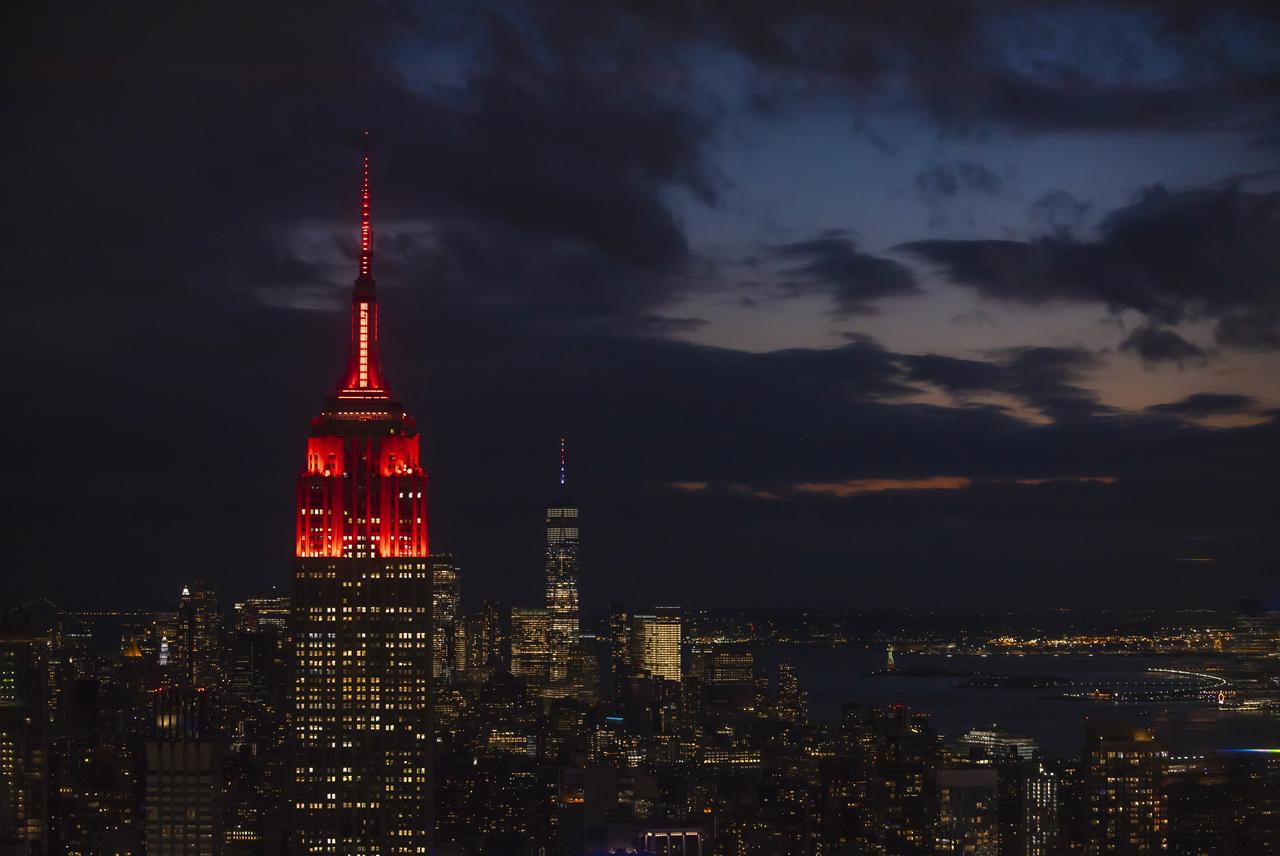
The Empire State Building is illuminated in red to celebrate this Thursday's scheduled landing on Mars of NASA's Perseverance rover, Tuesday, Feb. 16, 2021 in New York City. A key objective for Perseverance’s mission on Mars is astrobiology, including the search for signs of ancient microbial life. The rover will characterize the planet’s geology and past climate, pave the way for human exploration of the Red Planet, and be the first mission to collect and cache Martian rock and regolith. Photo Credit: (NASA/Emma Howells)
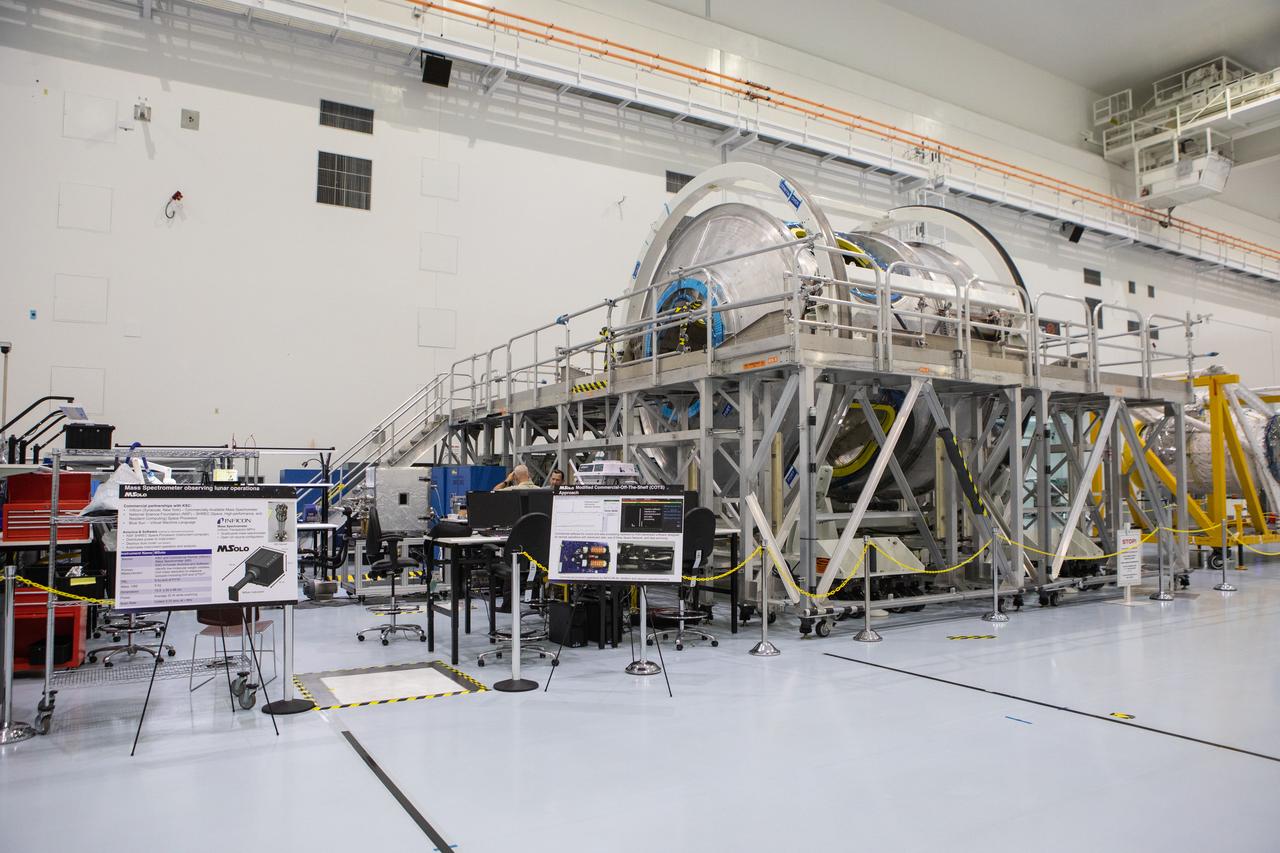
Instruments for NASA’s Mars Spectrometer observing lunar operations (MSolo) are in view at left in the high bay of the Space Station Processing Facility (SSPF) at NASA's Kennedy Space Center in Florida, on May 16, 2019. The center is celebrating the SSPF’s 25th anniversary. The facility was built to process elements for the International Space Station. Now it is providing support for current and future NASA and commercial provider programs, including Commercial Resupply Services, Artemis 1, sending the first woman and next man to the Moon, and deep space destinations including Mars.

The Empire State Building is illuminated in red to celebrate this Thursday's scheduled landing on Mars of NASA's Perseverance rover, Tuesday, Feb. 16, 2021 in New York City. A key objective for Perseverance’s mission on Mars is astrobiology, including the search for signs of ancient microbial life. The rover will characterize the planet’s geology and past climate, pave the way for human exploration of the Red Planet, and be the first mission to collect and cache Martian rock and regolith. Photo Credit: (NASA/Emma Howells)

The Empire State Building is illuminated in red to celebrate this Thursday's scheduled landing on Mars of NASA's Perseverance rover, Tuesday, Feb. 16, 2021 in New York City. A key objective for Perseverance’s mission on Mars is astrobiology, including the search for signs of ancient microbial life. The rover will characterize the planet’s geology and past climate, pave the way for human exploration of the Red Planet, and be the first mission to collect and cache Martian rock and regolith. Photo Credit: (NASA/Emma Howells)

NASA Perseverance rover mission management and scientist celebrate a successful landing on Mars at the start of a post-landing update, Thursday, Feb. 18, 2021, at NASA's Jet Propulsion Laboratory in Pasadena, California. A key objective for Perseverance’s mission on Mars is astrobiology, including the search for signs of ancient microbial life. The rover will characterize the planet’s geology and past climate, pave the way for human exploration of the Red Planet, and be the first mission to collect and cache Martian rock and regolith. Photo Credit: (NASA/Bill Ingalls)

The Empire State Building is illuminated in red to celebrate this Thursday's scheduled landing on Mars of NASA's Perseverance rover, Tuesday, Feb. 16, 2021 in New York City. A key objective for Perseverance’s mission on Mars is astrobiology, including the search for signs of ancient microbial life. The rover will characterize the planet’s geology and past climate, pave the way for human exploration of the Red Planet, and be the first mission to collect and cache Martian rock and regolith. Photo Credit: (NASA/Emma Howells)

The Empire State Building is illuminated in red to celebrate this Thursday's scheduled landing on Mars of NASA's Perseverance rover, Tuesday, Feb. 16, 2021 in New York City. A key objective for Perseverance’s mission on Mars is astrobiology, including the search for signs of ancient microbial life. The rover will characterize the planet’s geology and past climate, pave the way for human exploration of the Red Planet, and be the first mission to collect and cache Martian rock and regolith. Photo Credit: (NASA/Emma Howells)

The Empire State Building is illuminated in red to celebrate this Thursday's scheduled landing on Mars of NASA's Perseverance rover, Tuesday, Feb. 16, 2021 in New York City. A key objective for Perseverance’s mission on Mars is astrobiology, including the search for signs of ancient microbial life. The rover will characterize the planet’s geology and past climate, pave the way for human exploration of the Red Planet, and be the first mission to collect and cache Martian rock and regolith. Photo Credit: (NASA/Emma Howells)
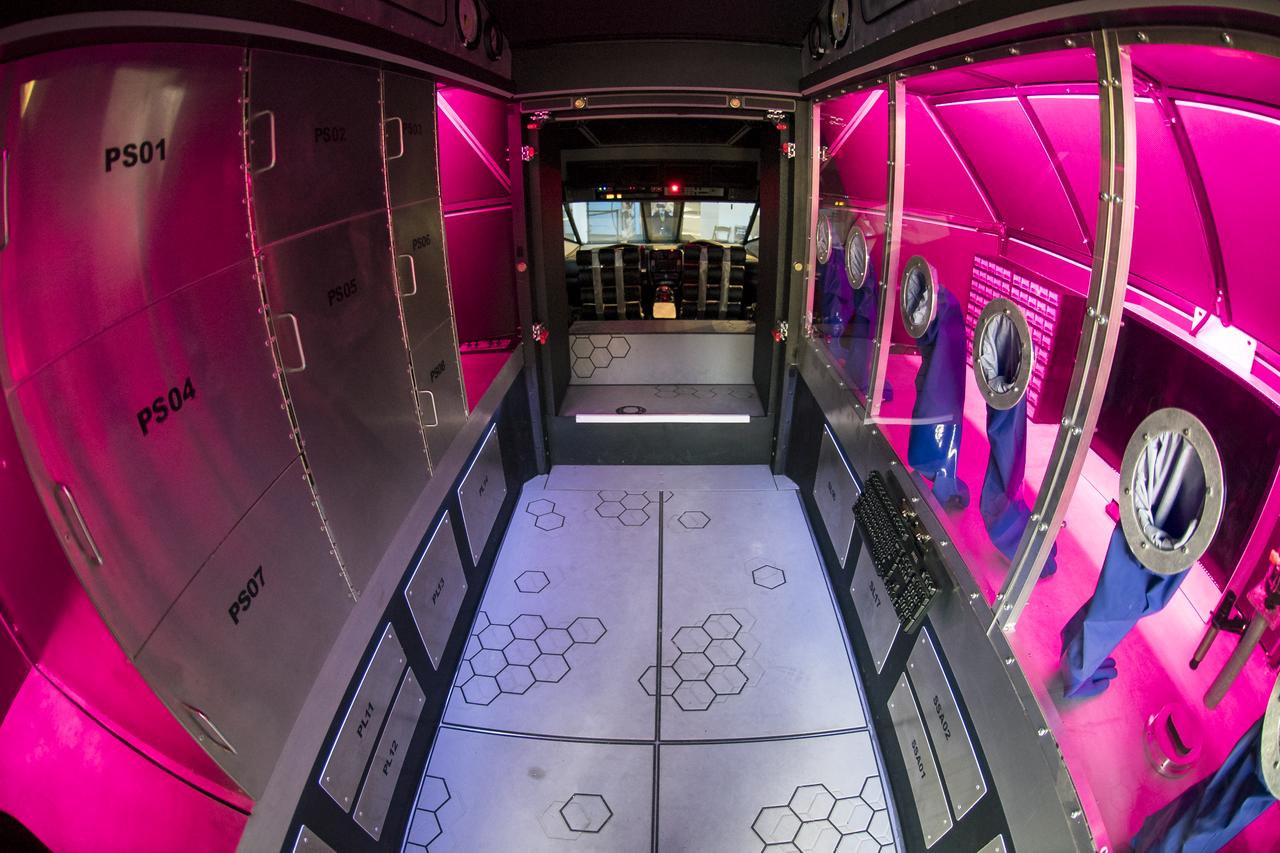
A view of the inside of the Mars rover concept, developed by vehicle designers, the Parker Brothers, with advice from NASA, is seen here during the Smithsonian Institution’s National Air and Space Museum’s Mars Day, an annual event celebrating the Red Planet with exhibits, speakers, and educational activities, Friday, July 21, 2017 in Washington. The Mars rover concept is currently on an East Coast tour from its home base at the Kennedy Space Center Visitor’s Center in Florida, and is designed to engage and educate the public by demonstrating the types of features and equipment a future human exploration vehicle may need. Photo Credit: (NASA/Aubrey Gemignani)

A view of the Mars rover concept, developed by vehicle designers, the Parker Brothers, with advice from NASA, is seen here during the Smithsonian Institution’s National Air and Space Museum’s Mars Day, an annual event celebrating the Red Planet with exhibits, speakers, and educational activities, Friday, July 21, 2017 in Washington. The Mars rover concept is currently on an East Coast tour from its home base at the Kennedy Space Center Visitor’s Center in Florida, and is designed to engage and educate the public by demonstrating the types of features and equipment a future human exploration vehicle may need. Photo Credit: (NASA/Aubrey Gemignani)

A view of the controls of the Mars rover concept, developed by vehicle designers, the Parker Brothers, with advice from NASA, is seen here during the Smithsonian Institution’s National Air and Space Museum’s Mars Day, an annual event celebrating the Red Planet with exhibits, speakers, and educational activities, Friday, July 21, 2017 in Washington. The Mars rover concept is currently on an East Coast tour from its home base at the Kennedy Space Center Visitor’s Center in Florida, and is designed to engage and educate the public by demonstrating the types of features and equipment a future human exploration vehicle may need. Photo Credit: (NASA/Aubrey Gemignani)
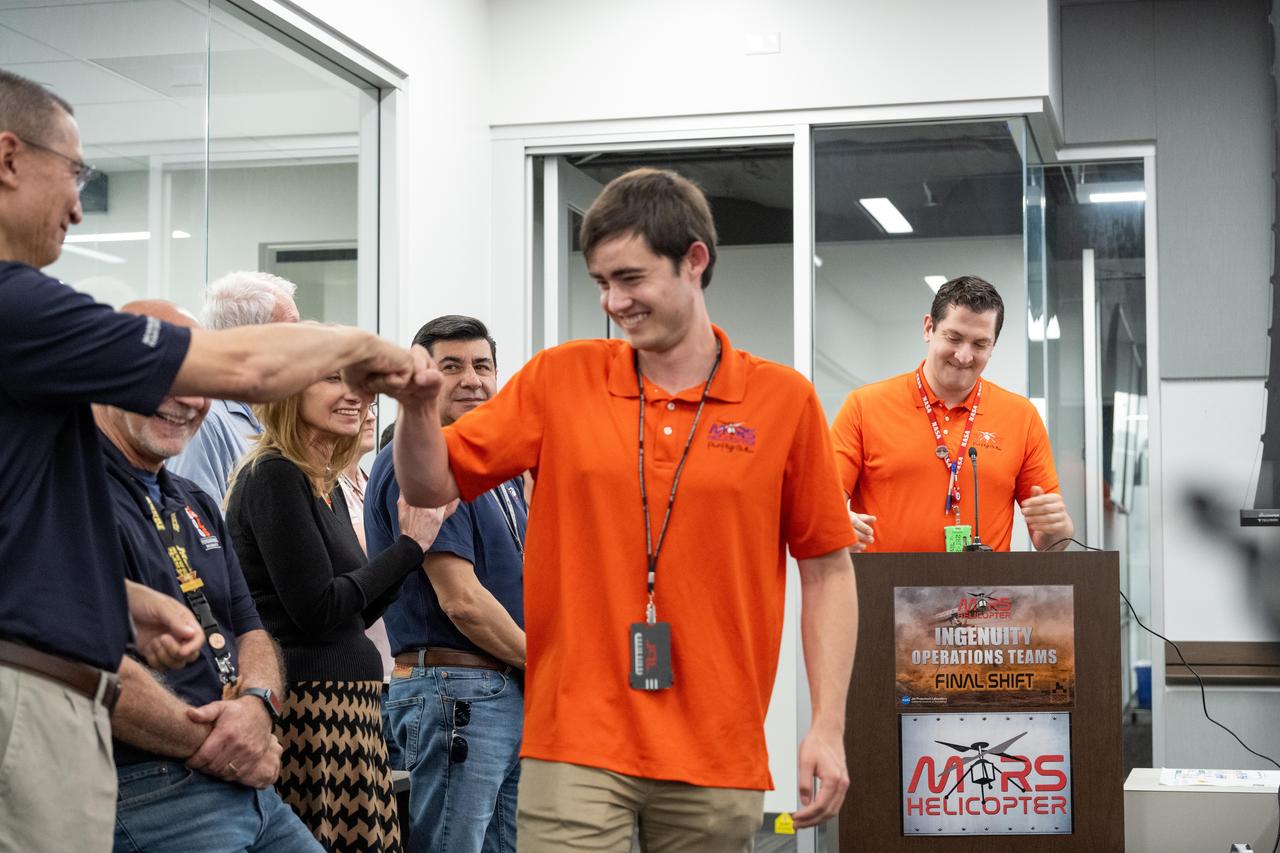
Ingenuity team lead Josh Anderson celebrates with Perseverance rover deputy project manager Steve Lee during the final shift for engineers working on NASA's Ingenuity Mars Helicopter at the agency's Jet Propulsion Laboratory on April 16, 2024. The team for the first aircraft on another world gathered to review a transmission that confirmed a software patch allowing Ingenuity to act as a stationary testbed and collect data that could benefit future explorers of the Red Planet. Originally designed as short-lived technology demonstration mission that would perform up to five experimental test flights over 30 days, the first aircraft on another world operated from the Martian surface for almost three years, flew more than 14 times farther than planned, and logged more than two hours of total flight time. Its 72nd and final flight was Jan. 18, 2024. https://photojournal.jpl.nasa.gov/catalog/PIA26317
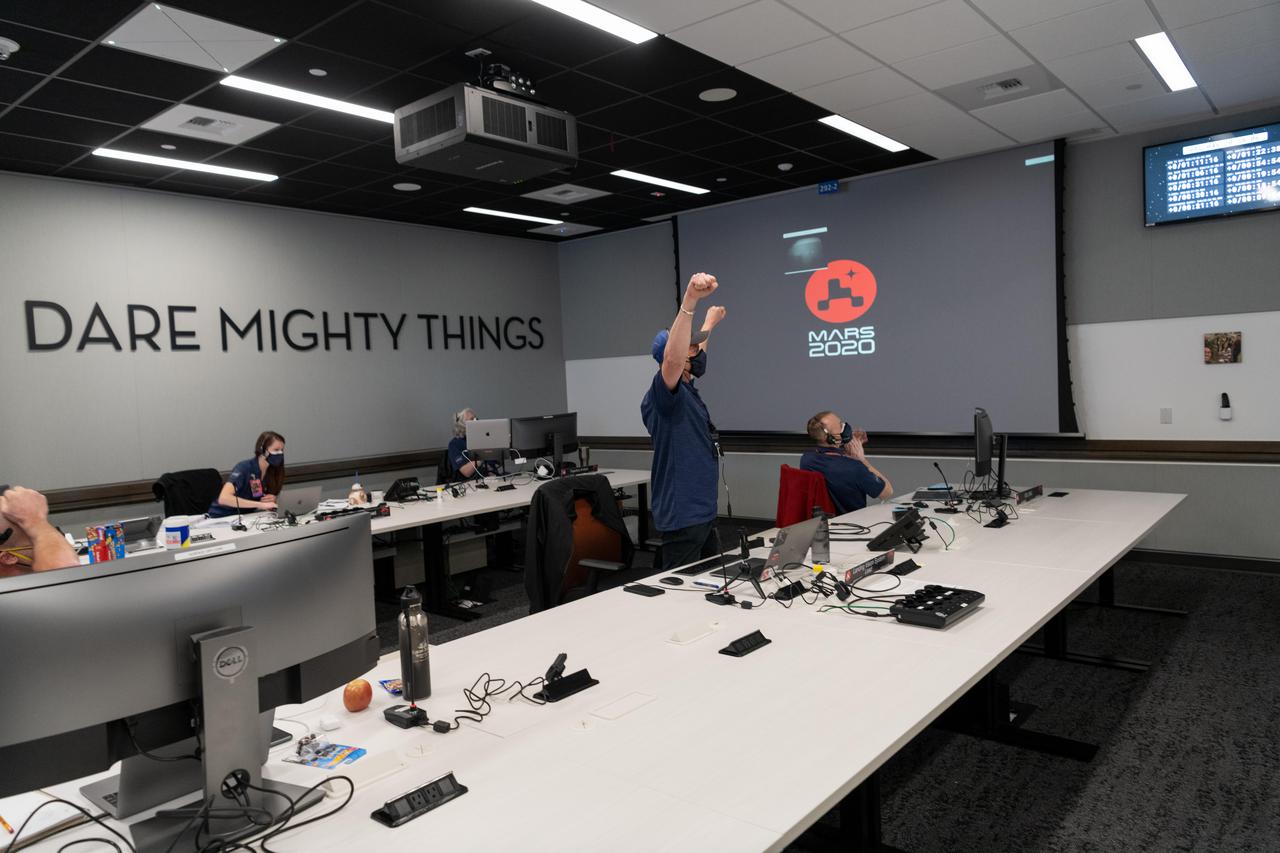
Members of NASA's Mars 2020 Perseverance rover mission celebrate on Feb. 18, 2021, after learning the spacecraft has touched down on Mars. They are in the Entry, Descent and Landing War Room at NASA's Jet Propulsion Laboratory in Southern California. A key objective for Perseverance's mission on Mars is astrobiology, including the search for signs of ancient microbial life. The rover will characterize the planet's geology and past climate, pave the way for human exploration of the Red Planet, and be the first mission to collect and cache Martian rock and regolith. Subsequent missions, currently under consideration by NASA in cooperation with ESA (European Space Agency), would send spacecraft to Mars to collect these cached samples from the surface and return them to Earth for in-depth analysis. https://photojournal.jpl.nasa.gov/catalog/PIA24267

This colorful illustration depicts NASA's Perseverance Rover on Mars, where it landed in February 2021. The Perseverance team faced numerous technical and logistical challenges, including those presented by the COVID-19 pandemic, before and after launch and landing. Because they know how hard it can be to overcome obstacles, they're celebrating students who have persevered in the face of academic challenges. Awardees will receive a personal message beamed back from Mars by the rover. Find out how to nominate a student for "You've Got Perseverance!" at: go.nasa.gov/gotperseverance Animation available at https://photojournal.jpl.nasa.gov/catalog/PIA24948
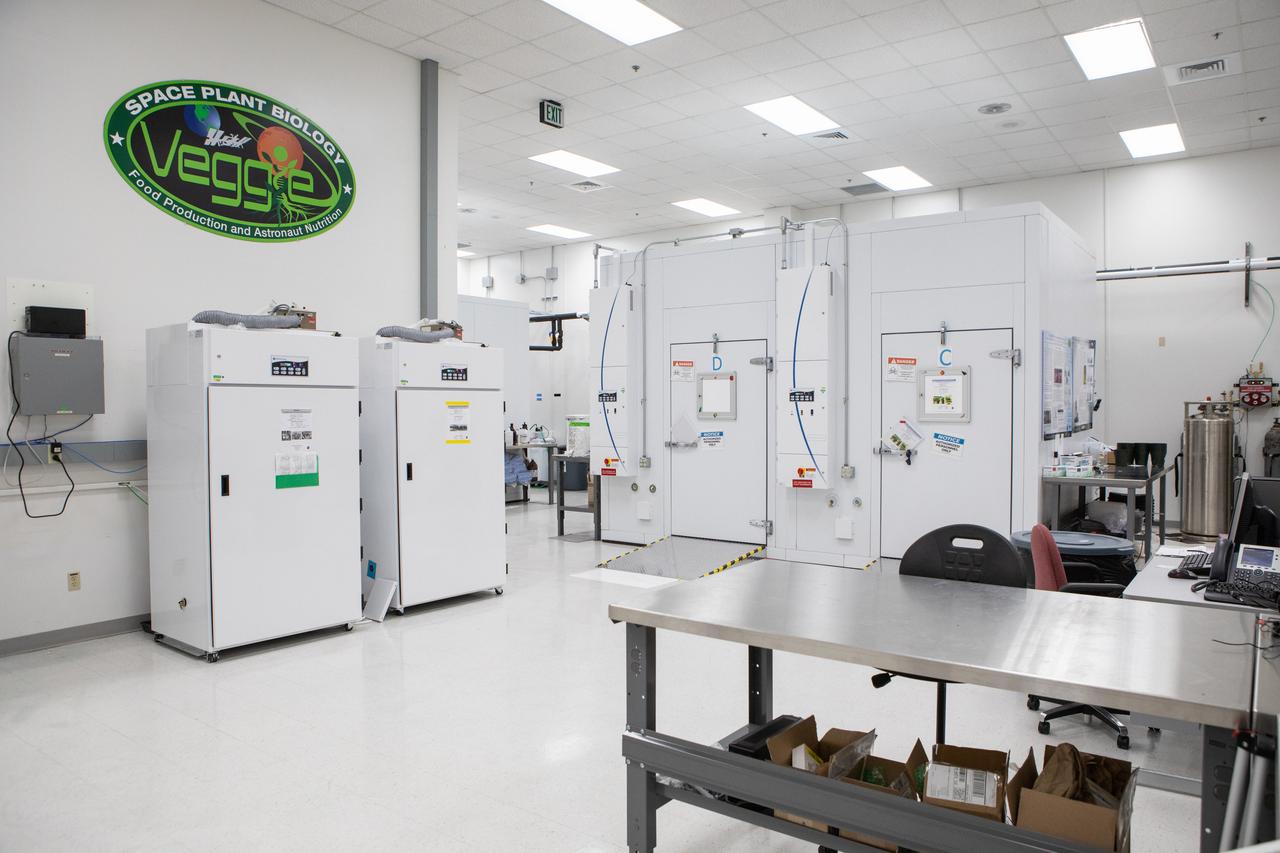
Experiment chambers are in view in the Veggie Laboratory inside the Space Station Processing Facility (SSPF) at NASA’s Kennedy Space Center in Florida, on May 16, 2019. The center is celebrating the SSPF’s 25th anniversary. The facility was built to process elements for the International Space Station. Now it is providing support for current and future NASA and commercial provider programs, including Commercial Resupply Services, Artemis 1, sending the first woman and next man to the Moon, and deep space destinations including Mars.