Happy Valentine Day From Mars!
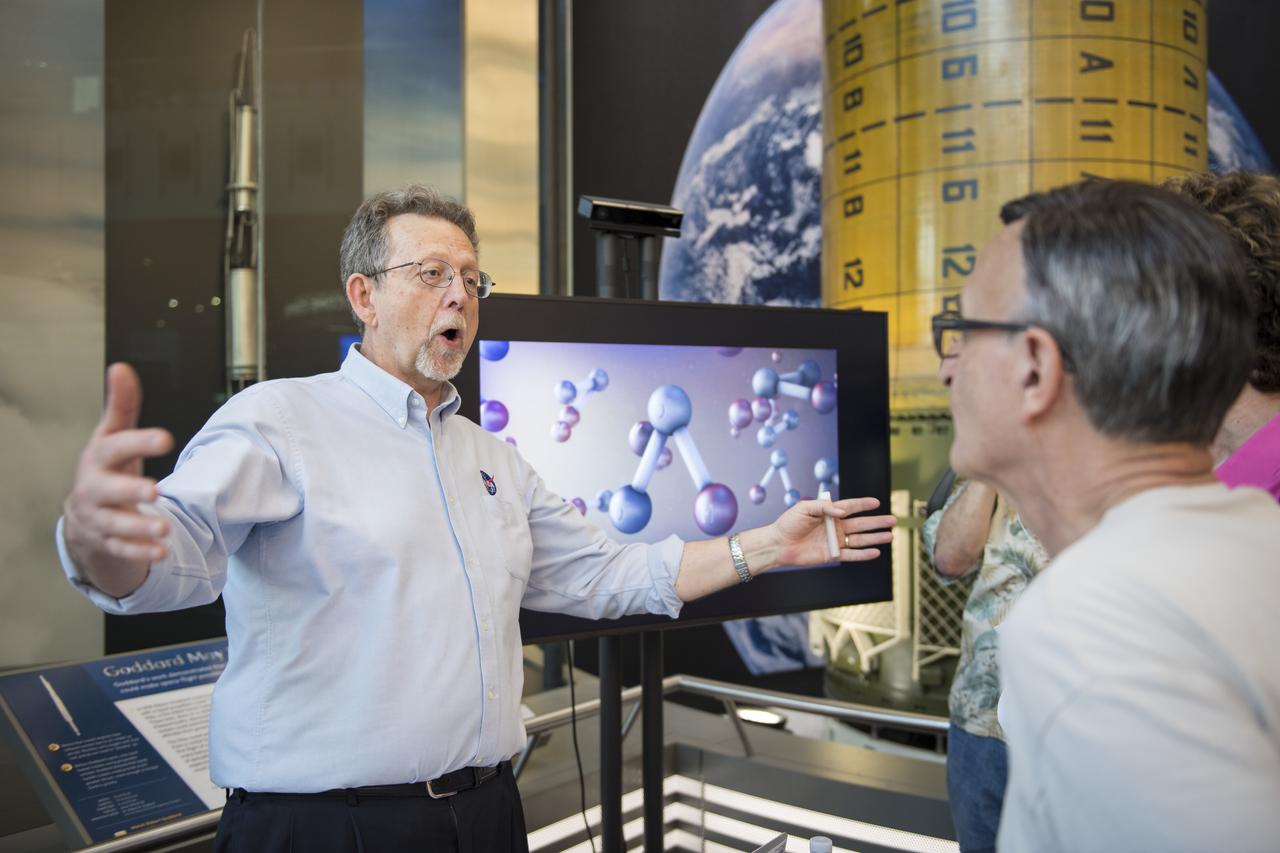
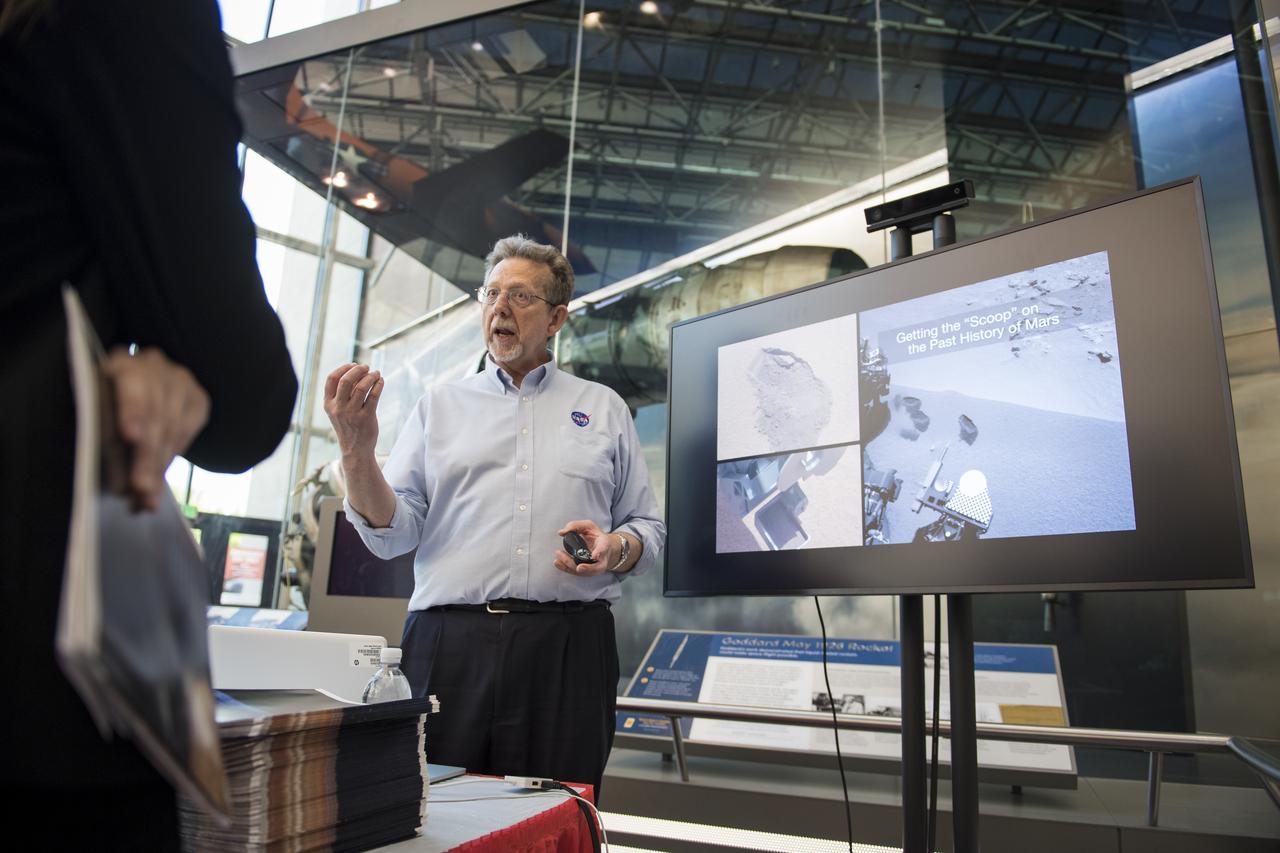
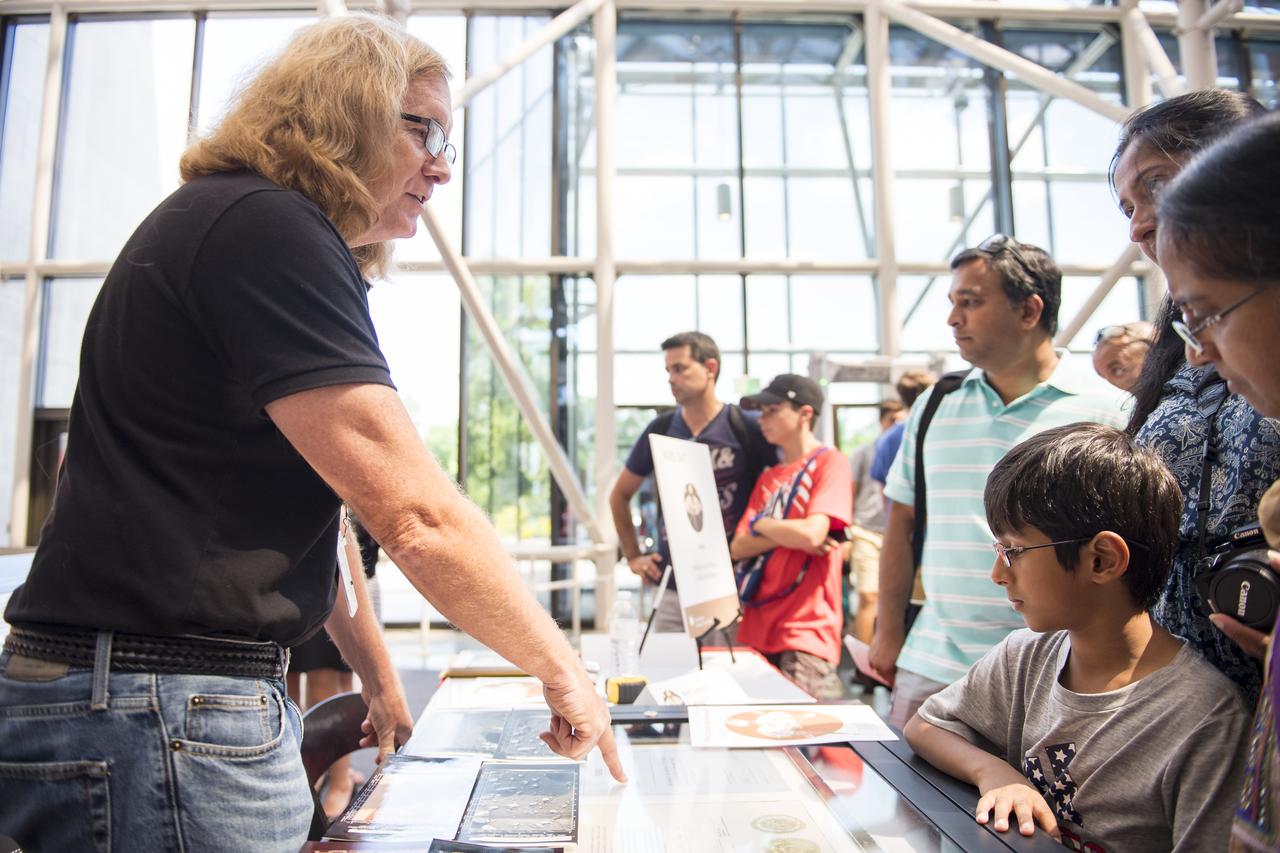
Jim Green, director of NASA’s Planetary Science Division, discusses NASA’s Mars missions with visitors during the Smithsonian Institution’s National Air and Space Museum Mars Day, celebrating the Red Planet with exhibits, speakers, and educational activities, Friday, July 21, 2017 in Washington. Photo Credit: (NASA/Aubrey Gemignani)
NASM Mars Day
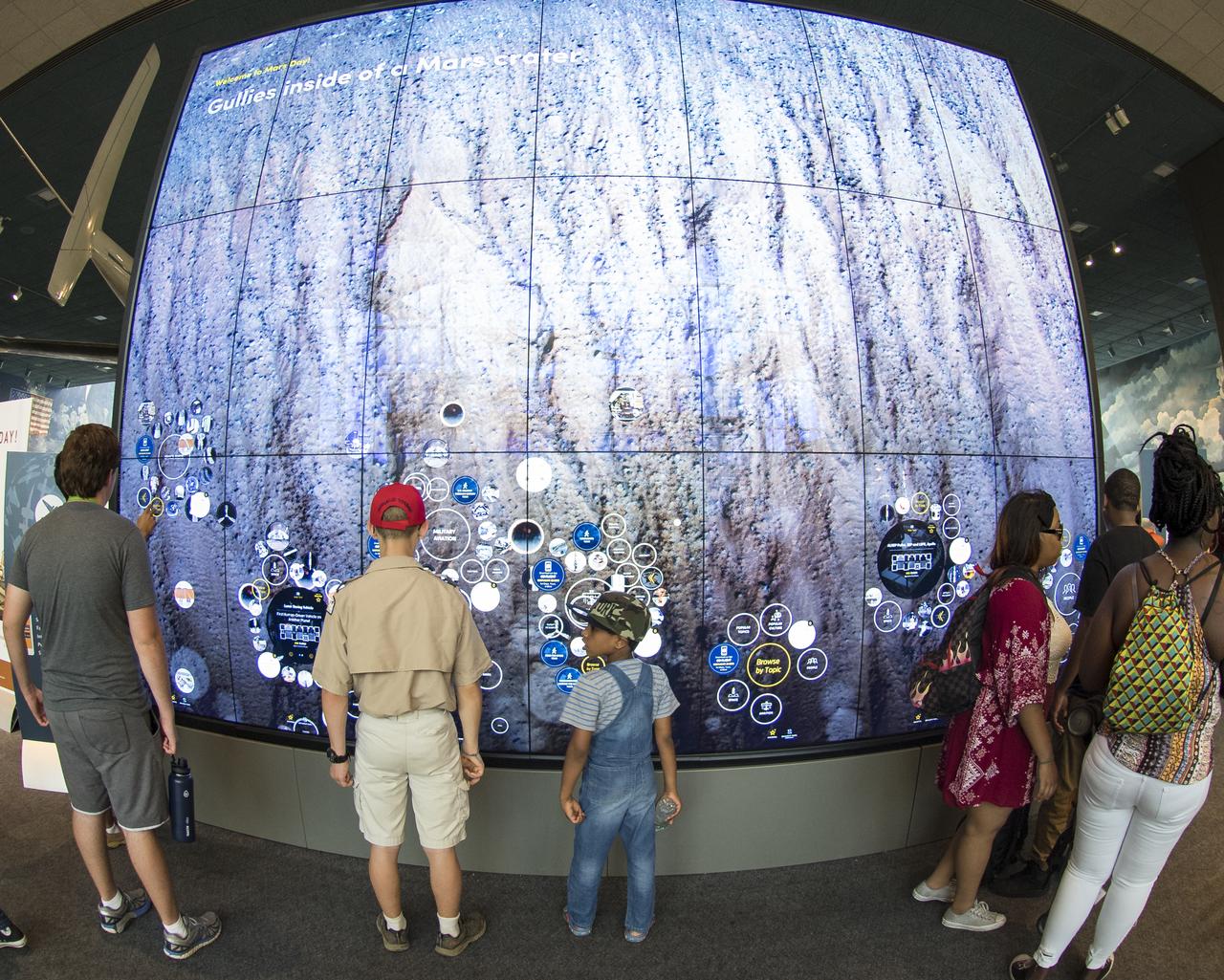
Visitors explore an interactive map of the surface of Mars at the Smithsonian Institution’s National Air and Space Museum Mars Day, an annual event celebrating the Red Planet with exhibits, speakers, and educational activities, Friday, July 21, 2017 in Washington. Photo Credit: (NASA/Aubrey Gemignani)
NASM Mars Day
Jim Green, director of NASA’s Planetary Science Division, discusses NASA’s Mars missions with visitors during the Smithsonian Institution’s National Air and Space Museum Mars Day, celebrating the Red Planet with exhibits, speakers, and educational activities, Friday, July 21, 2017 in Washington. Photo Credit: (NASA/Aubrey Gemignani)
NASM Mars Day
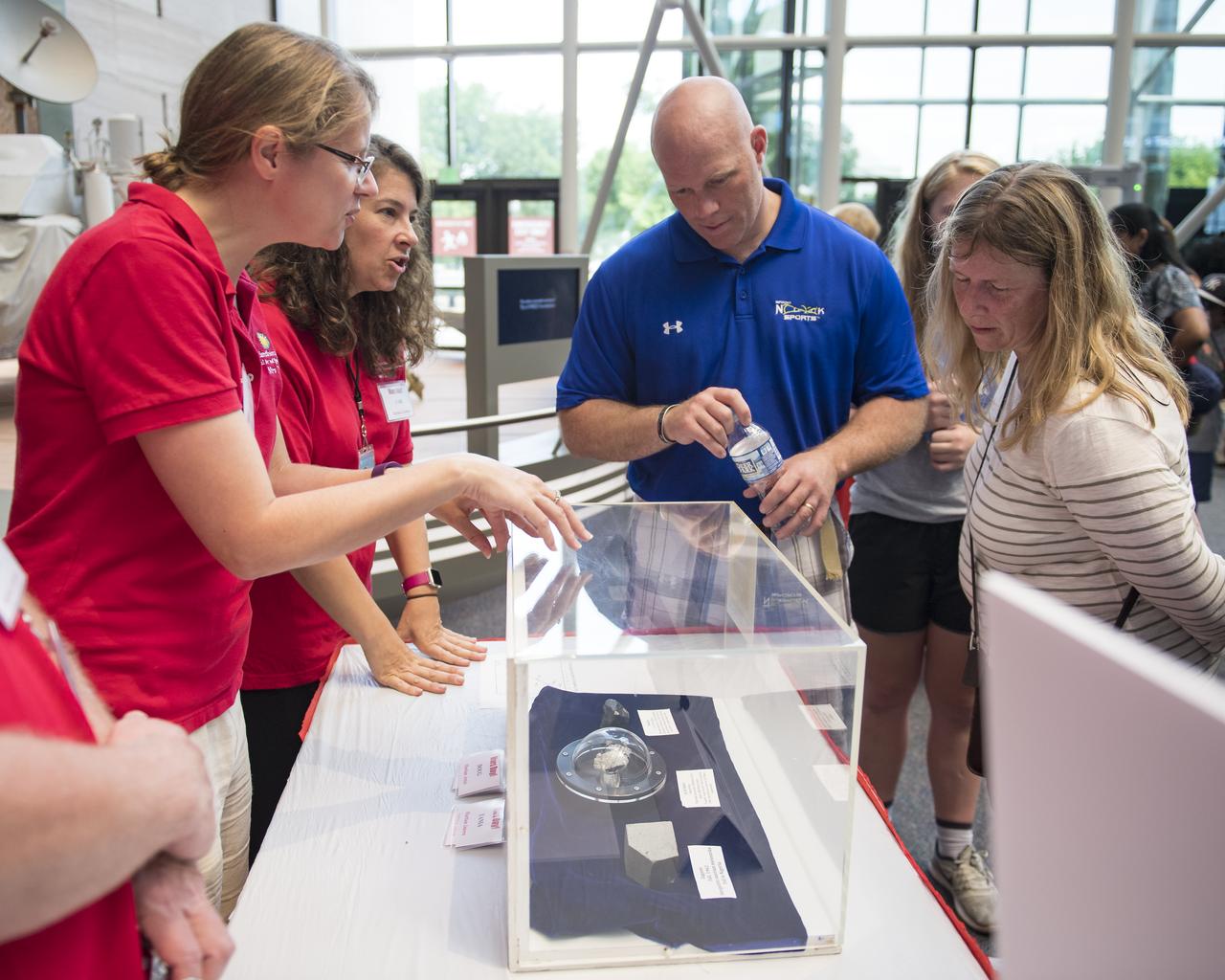
Visitors view a piece of Mars at the Smithsonian Institution’s National Air and Space Museum Mars Day, an annual event celebrating the Red Planet with exhibits, speakers, and educational activities, Friday, July 21, 2017 in Washington. Photo Credit: (NASA/Aubrey Gemignani)
NASM Mars Day
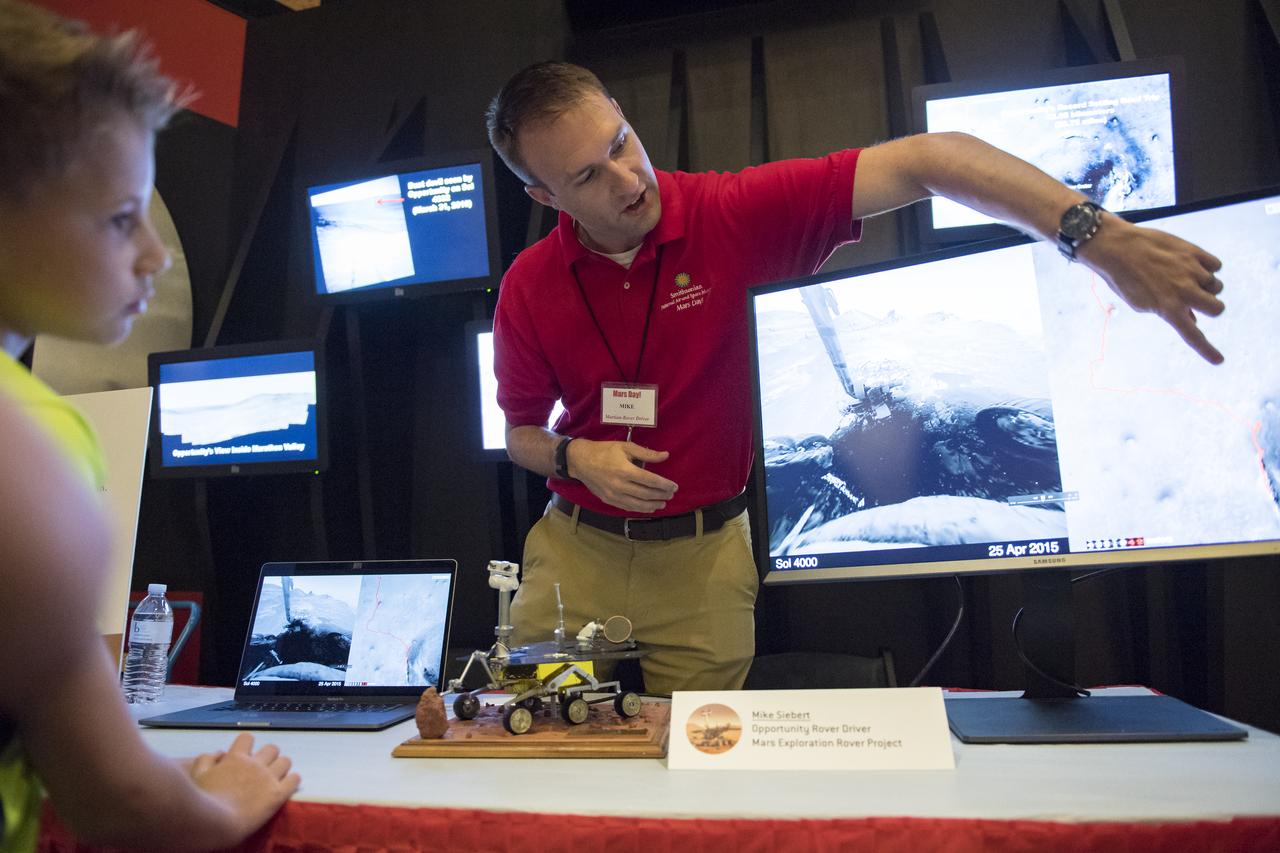
Mike Seibert, rover driver for NASA’s Opportunity rover on Mars talks with visitors about navigating the surface of Mars at the Smithsonian Institution’s National Air and Space Museum Mars Day, an annual event celebrating the Red Planet with exhibits, speakers, and educational activities, Friday, July 21, 2017 in Washington. Photo Credit: (NASA/Aubrey Gemignani)
NASM Mars Day
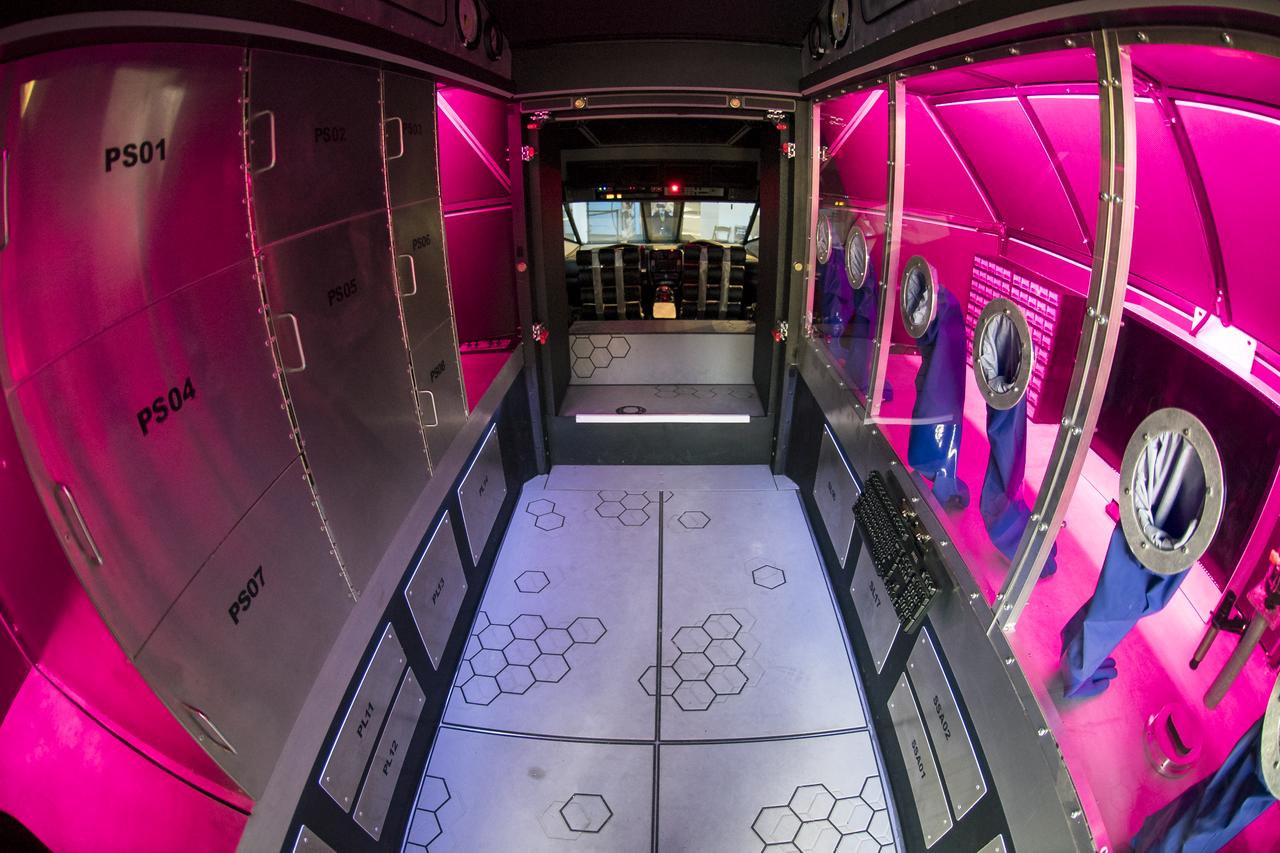
A view of the inside of the Mars rover concept, developed by vehicle designers, the Parker Brothers, with advice from NASA, is seen here during the Smithsonian Institution’s National Air and Space Museum’s Mars Day, an annual event celebrating the Red Planet with exhibits, speakers, and educational activities, Friday, July 21, 2017 in Washington. The Mars rover concept is currently on an East Coast tour from its home base at the Kennedy Space Center Visitor’s Center in Florida, and is designed to engage and educate the public by demonstrating the types of features and equipment a future human exploration vehicle may need. Photo Credit: (NASA/Aubrey Gemignani)
NASM Mars Day
Jim Green, director of NASA’s Planetary Science Division, poses for a photo with the Mars rover concept, developed by vehicle designers, the Parker Brothers, with advice from NASA, during the Smithsonian Institution’s National Air and Space Museum’s Mars Day, Friday, July 21, 2017 in Washington. The Mars rover concept is currently on an East Coast tour from its home base at the Kennedy Space Center Visitor’s Center in Florida, and is designed to engage and educate the public by demonstrating the types of features and equipment a future human exploration vehicle may need. Photo Credit: (NASA/Aubrey Gemignani)
NASM Mars Day
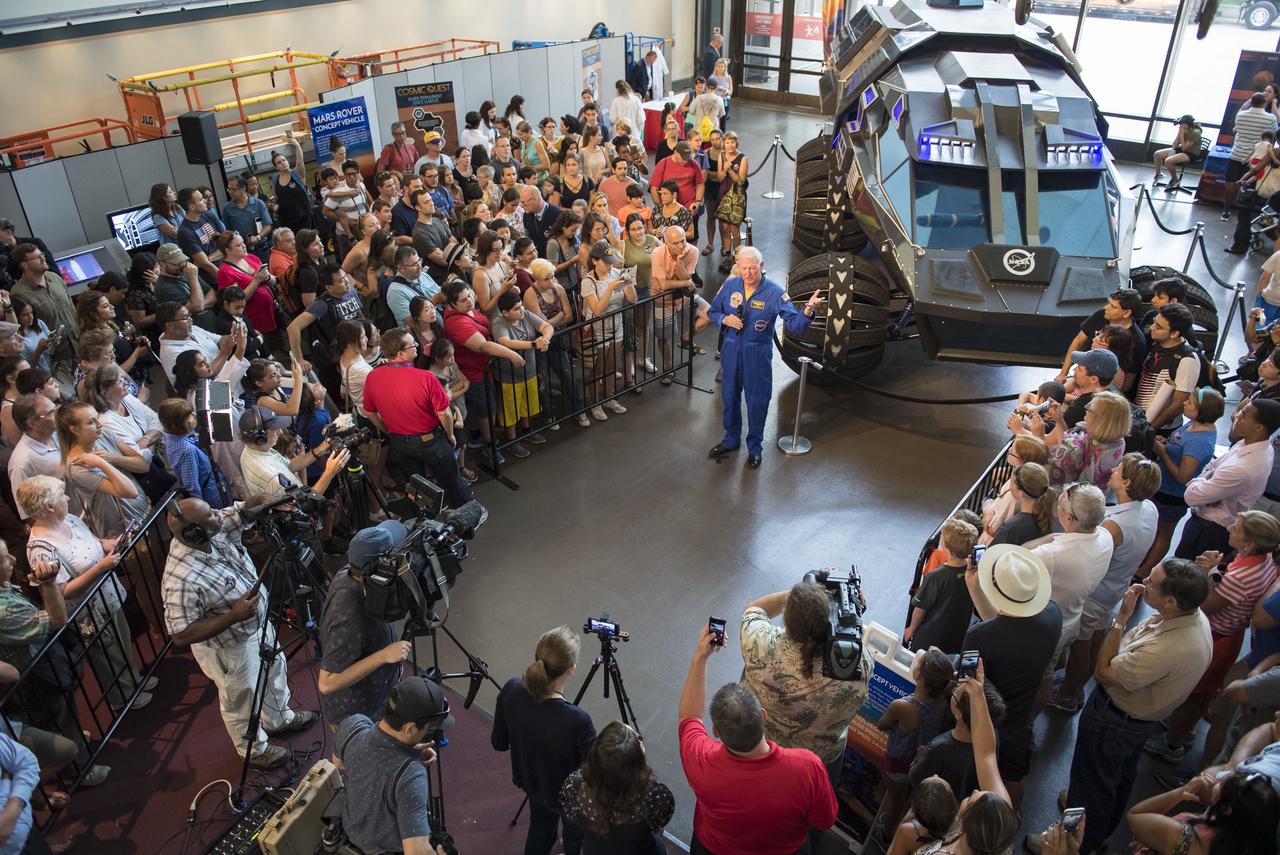
Jon McBride, retired NASA astronaut, speaks to visitors in front of the Mars rover concept, developed by vehicle designers, the Parker Brothers, with advice from NASA, during the Smithsonian Institution’s National Air and Space Museum Mars Day, Friday, July 21, 2017 in Washington. The Mars rover concept is currently on an East Coast tour from its home base at the Kennedy Space Center Visitor’s Center in Florida, and is designed to engage and educate the public by demonstrating the types of features and equipment a future human exploration vehicle may need. Photo Credit: (NASA/Aubrey Gemignani)
NASM Mars Day
A view of the controls of the Mars rover concept, developed by vehicle designers, the Parker Brothers, with advice from NASA, is seen here during the Smithsonian Institution’s National Air and Space Museum’s Mars Day, an annual event celebrating the Red Planet with exhibits, speakers, and educational activities, Friday, July 21, 2017 in Washington. The Mars rover concept is currently on an East Coast tour from its home base at the Kennedy Space Center Visitor’s Center in Florida, and is designed to engage and educate the public by demonstrating the types of features and equipment a future human exploration vehicle may need. Photo Credit: (NASA/Aubrey Gemignani)
NASM Mars Day
Jon McBride, retired NASA astronaut, is interviewed in front of the Mars rover concept, developed by vehicle designers, the Parker Brothers, with advice from NASA, during the Smithsonian Institution’s National Air and Space Museum’s Mars Day, Friday, July 21, 2017 in Washington. The Mars rover concept is currently on an East Coast tour from its home base at the Kennedy Space Center Visitor’s Center in Florida, and is designed to engage and educate the public by demonstrating the types of features and equipment a future human exploration vehicle may need. Photo Credit: (NASA/Aubrey Gemignani)
NASM Mars Day
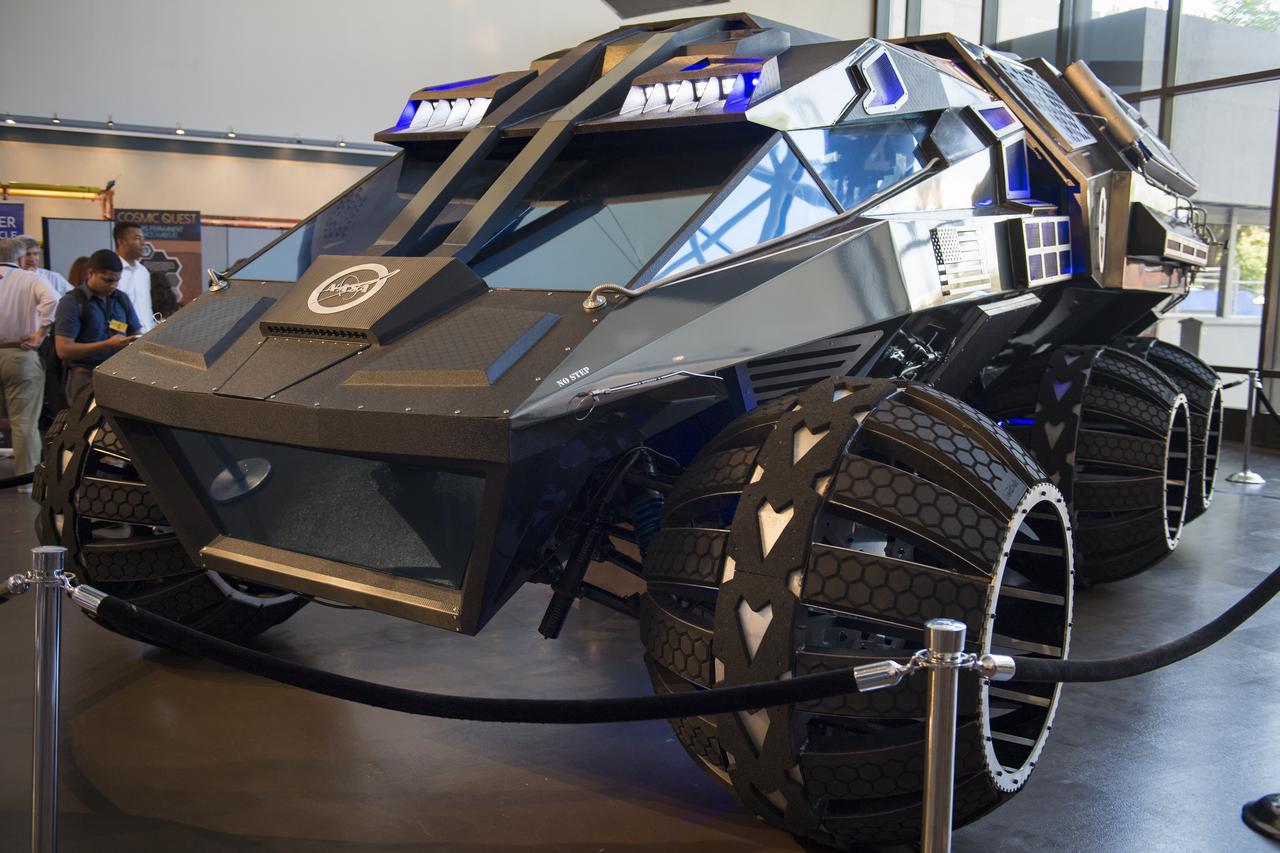
A view of the Mars rover concept, developed by vehicle designers, the Parker Brothers, with advice from NASA, is seen here during the Smithsonian Institution’s National Air and Space Museum’s Mars Day, an annual event celebrating the Red Planet with exhibits, speakers, and educational activities, Friday, July 21, 2017 in Washington. The Mars rover concept is currently on an East Coast tour from its home base at the Kennedy Space Center Visitor’s Center in Florida, and is designed to engage and educate the public by demonstrating the types of features and equipment a future human exploration vehicle may need. Photo Credit: (NASA/Aubrey Gemignani)
NASM Mars Day
Jim Green, director of NASA’s Planetary Science Division, poses for a photo with the Mars rover concept, developed by vehicle designers, the Parker Brothers, with advice from NASA, during the Smithsonian Institution’s National Air and Space Museum’s Mars Day, Friday, July 21, 2017 in Washington. The Mars rover concept is currently on an East Coast tour from its home base at the Kennedy Space Center Visitor’s Center in Florida, and is designed to engage and educate the public by demonstrating the types of features and equipment a future human exploration vehicle may need. Photo Credit: (NASA/Aubrey Gemignani)
NASM Mars Day
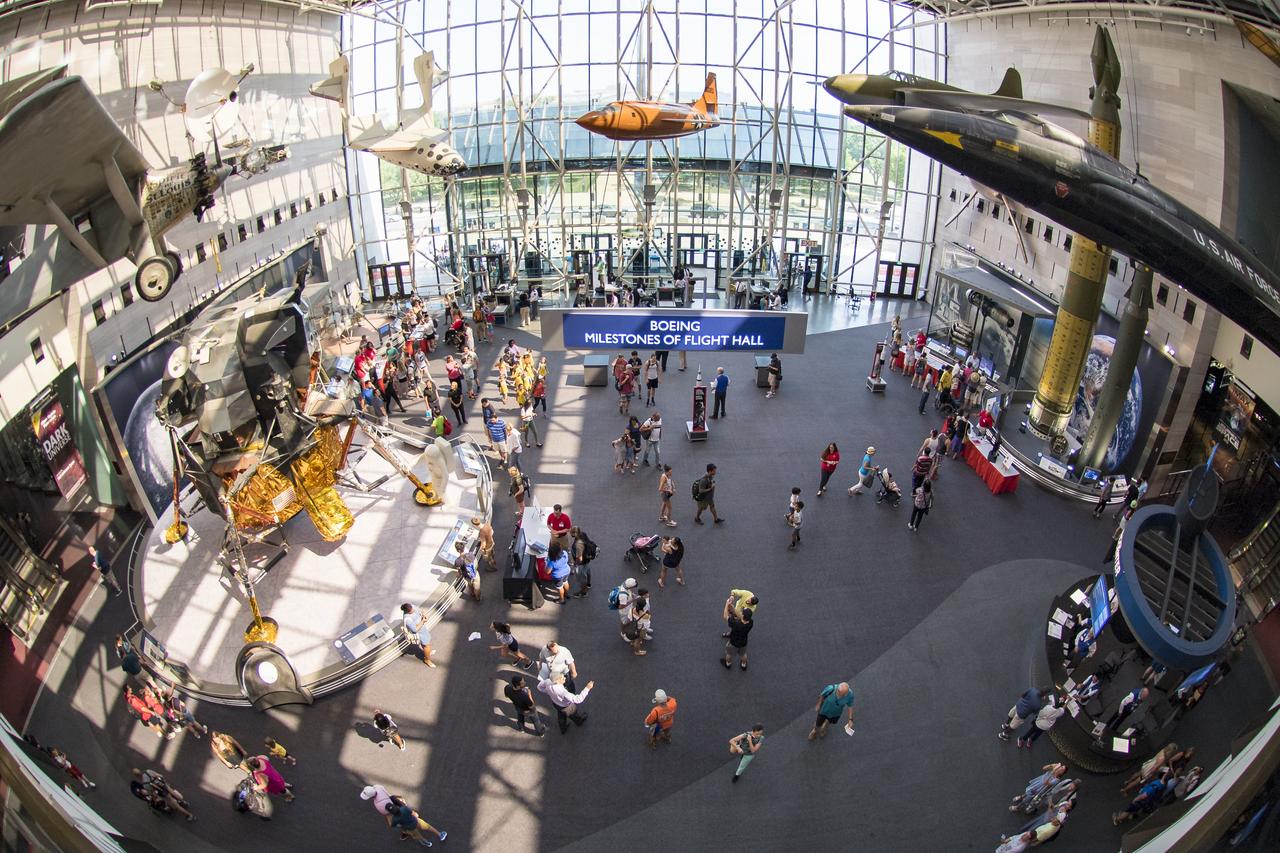
Visitors explore Smithsonian Institution’s National Air and Space Museum’s Mars Day, an annual event celebrating the Red Planet with exhibits, speakers, and educational activities, Friday, July 21, 2017 in Washington. Photo Credit: (NASA/Aubrey Gemignani)
NASM Mars Day
Visitors operate robotic arms at the Smithsonian Institution’s National Air and Space Museum Mars Day, an annual event celebrating the Red Planet with exhibits, speakers, and educational activities, Friday, July 21, 2017 in Washington. Photo Credit: (NASA/Aubrey Gemignani)
NASM Mars Day
Visitors learn about the Viking landers at the Smithsonian Institution’s National Air and Space Museum Mars Day, an annual event celebrating the Red Planet with exhibits, speakers, and educational activities, Friday, July 21, 2017 in Washington. Photo Credit: (NASA/Aubrey Gemignani)
NASM Mars Day
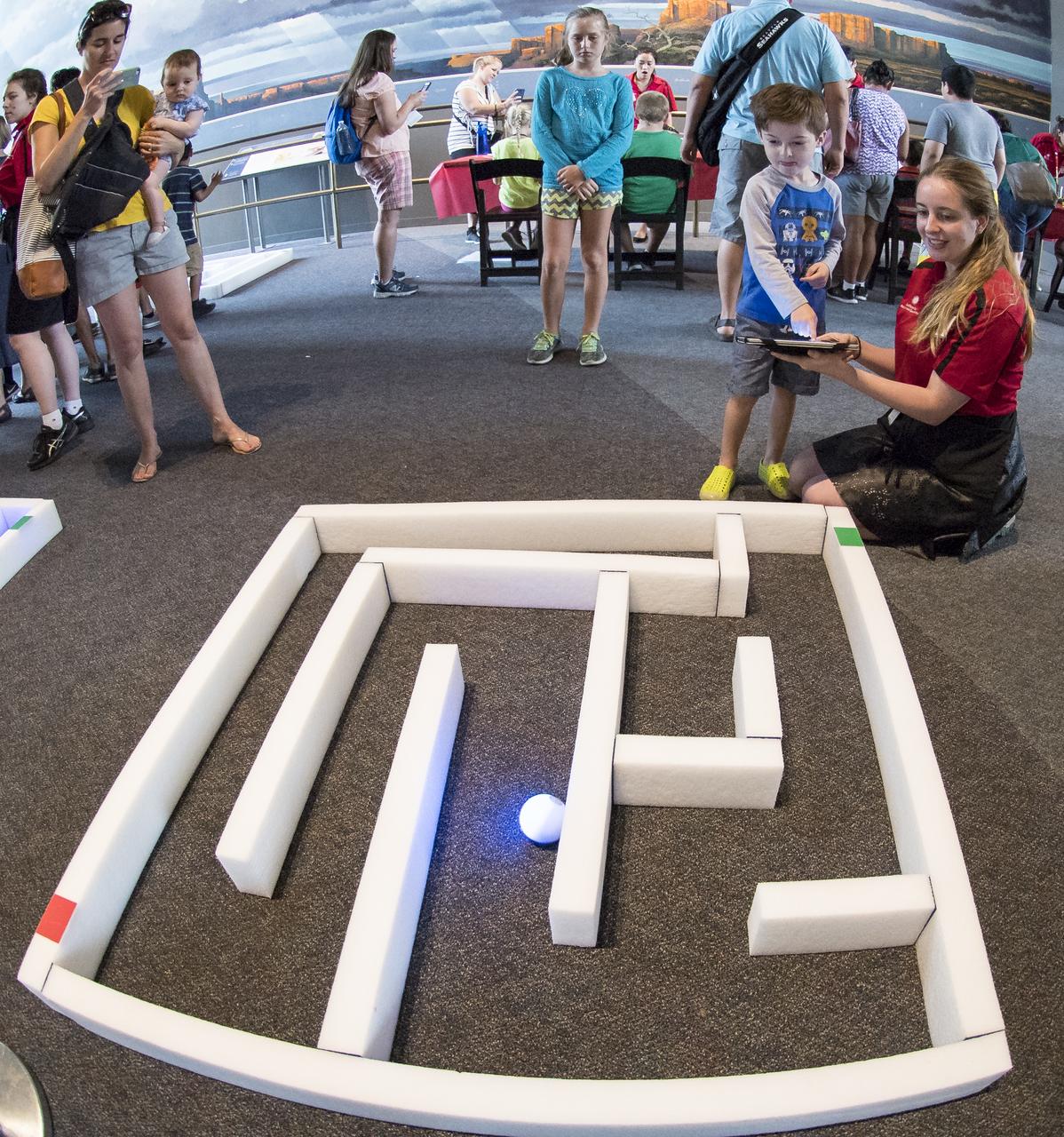
Visitors direct a robotic ball through a maze at the Smithsonian Institution’s National Air and Space Museum Mars Day, an annual event celebrating the Red Planet with exhibits, speakers, and educational activities, Friday, July 21, 2017 in Washington. Photo Credit: (NASA/Aubrey Gemignani)
NASM Mars Day
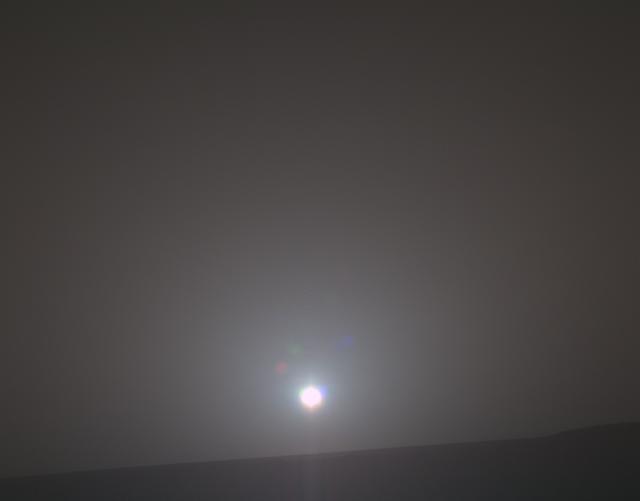
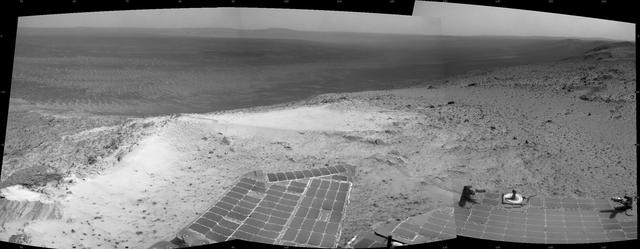
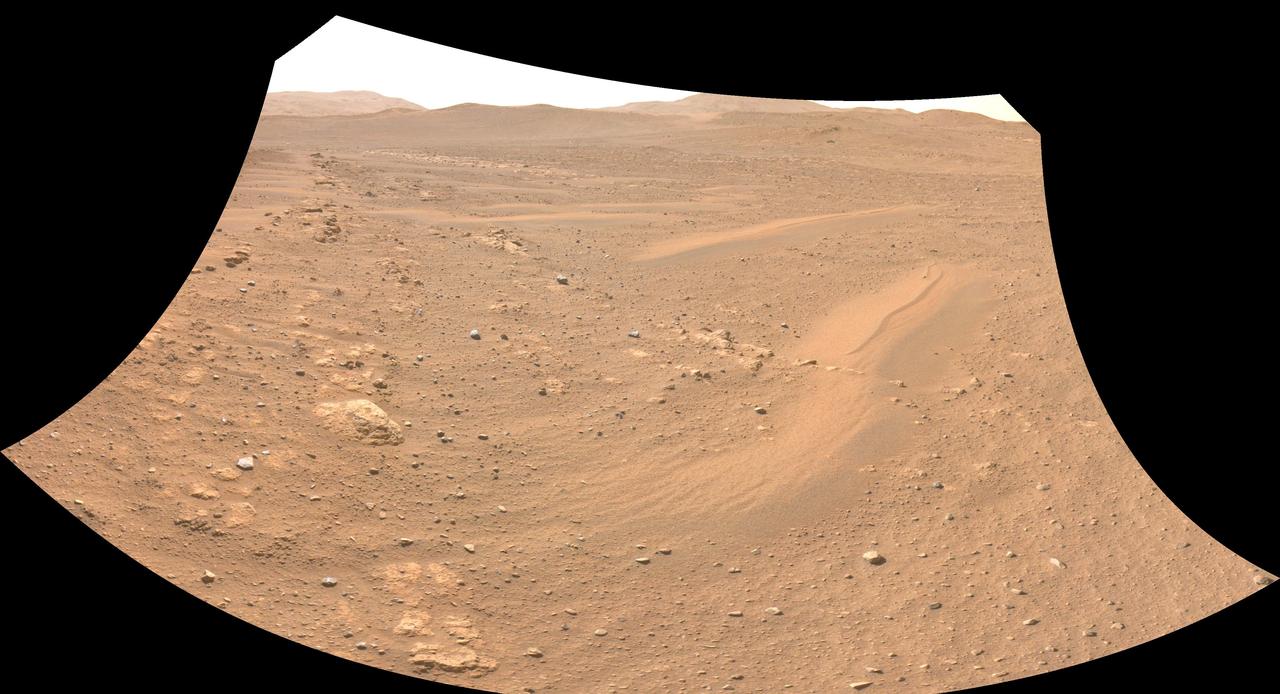
NASA's Mars Exploration Rover Opportunity recorded the dawn of the rover's 4,999th Martian day, or sol, with its Panoramic Camera (Pancam) on Feb. 15, 2018, yielding this processed, approximately true-color scene.  The view looks across Endeavour Crater, which is about 14 miles (22 kilometers) in diameter, from the inner slope of the crater's western rim. Opportunity has driven a little over 28.02 miles (45.1 kilometers) since it landed in the Meridiani Planum region of Mars in January, 2004, for what was planned as a 90-sol mission. A sol lasts about 40 minutes longer than an Earth day.  This view combines three separate Pancam exposures taken through filters centered on wavelengths of 601 microns (red), 535 microns (green) and 482 microns (blue). It was processed at Texas A&M University to correct for some of the oversaturation and glare, though it still includes some artifacts from pointing a camera with a dusty lens at the Sun. The processing includes radiometric correction, interpolation to fill in gaps in the data caused by saturation due to Sun's brightness, and warping the red and blue images to undo the effects of time passing between each of the exposures through different filters.  https://photojournal.jpl.nasa.gov/catalog/PIA22221
New Day for Longest-Working Mars Rover
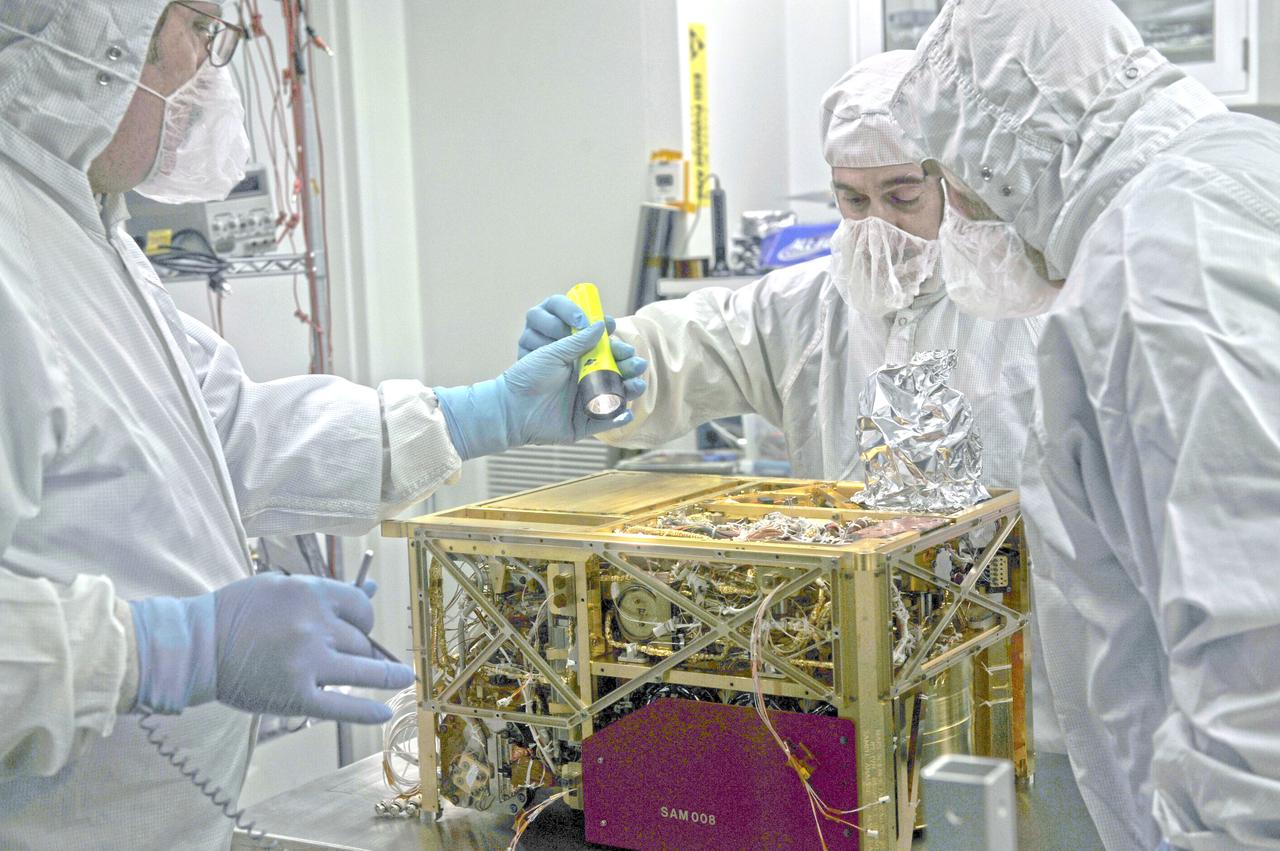
On Saturday, November 26, NASA is scheduled to launch the Mars Science Laboratory (MSL) mission featuring Curiosity, the largest and most advanced rover ever sent to the Red Planet.   The Curiosity rover bristles with multiple cameras and instruments, including Goddard's Sample Analysis at Mars (SAM) instrument suite. By looking for evidence of water, carbon, and other important building blocks of life in the Martian soil and atmosphere, SAM will help discover whether Mars ever had the potential to support life. Curiosity will be delivered to Gale crater, a 96-mile-wide crater that contains a record of environmental changes in its sedimentary rock, in August 2012.  -----  NASA image November 18, 2010  The Sample Analysis at Mars (SAM) instrument is considered one of the most complicated instruments ever to land on the surface of another planet. Equipped with a gas chromatograph, a quadruple mass spectrometer, and a tunable laser spectrometer, SAM will carry out the initial search for organic compounds when the Mars Science Laboratory (MSL) rover lands in 2012.  Credit: NASA/GSFC/Ed Campion  <b><a href="http://www.nasa.gov/audience/formedia/features/MP_Photo_Guidelines.html" rel="nofollow">NASA image use policy.</a></b>  <b><a href="http://www.nasa.gov/centers/goddard/home/index.html" rel="nofollow">NASA Goddard Space Flight Center</a></b> enables NASA’s mission through four scientific endeavors: Earth Science, Heliophysics, Solar System Exploration, and Astrophysics. Goddard plays a leading role in NASA’s accomplishments by contributing compelling scientific knowledge to advance the Agency’s mission.  <b>Follow us on <a href="http://twitter.com/NASA_GoddardPix" rel="nofollow">Twitter</a></b>  <b>Like us on <a href="http://www.facebook.com/pages/Greenbelt-MD/NASA-Goddard/395013845897?ref=tsd" rel="nofollow">Facebook</a></b>  <b>Find us on <a href="http://instagrid.me/nasagoddard/?vm=grid" rel="nofollow">Instagram</a></b>
Sample Analysis at Mars (SAM) Media Day
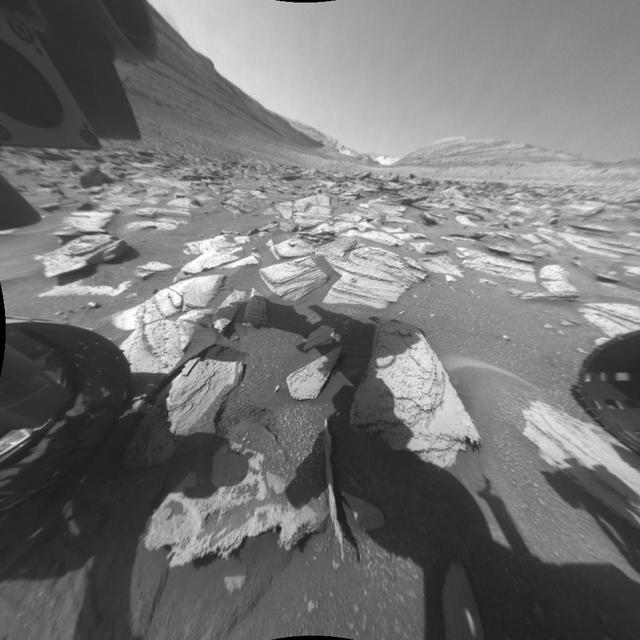
NASA's Curiosity Mars rover recorded two 25-frame videos showing the passage of 12 hours on Nov. 8, 2023, the 4,002nd Martian day, or sol, of the mission. The commands to capture the images that make up these videos were among the last that engineers beamed up to the rover before the start of Mars solar conjunction – a period of several weeks when the Sun is between Earth and Mars. Because the Sun's plasma can interfere with radio communications, NASA's Mars missions stand down from sending commands to their spacecraft during conjunction, bringing the missions to a temporary standstill. (The spacecraft still radio back their health status during this period.)  The images were captured with Curiosity's front and rear Hazard-Avoidance Cameras, or Hazcams. Rover drivers use these black-and-white cameras to plan safe drive routes. A long series of images can be put together to create a video so that scientists can look for passing clouds or dust devils, which teach them more about the Martian environment. The perfect time for doing this type of work is when Curiosity is less active for long stretches, as it was during Mars solar conjunction. The lack of robotic arm motion and driving during conjunction allowed the Hazcams to image for 12 hours of a day – from 5:30 a.m. to 5:30 p.m. local Mars time – for the first time. While these Hazcam videos didn't reveal any clouds or dust activity, they did capture the passage of time as the Sun rose and set.  The main video shows the front Hazcam's view looking southeast along Gediz Vallis, a valley found on Mount Sharp, the base of which Curiosity has been ascending since 2014. The sky brightens during sunrise in the east (left of image), and the shadow of the rover's stationary 7-foot (2-meter) robotic arm moves across the ground like that of a sundial. The rover's two front wheels are visible on each side of the frame; at upper left is a circular calibration target mounted on the shoulder of the robotic arm. Engineers use the target to test the accuracy of the Alpha Particle X-ray Spectrometer, an instrument that detects chemical elements on the Martian surface. In the middle of the day, the camera's autoexposure algorithm settles on exposure times of around one-third of a second; as evening turns to night, that exposure time grows to more than a minute, causing typical sensor noise known as "hot pixels" that appear as snow across the final image.  Video available at https://photojournal.jpl.nasa.gov/catalog/PIA26209
Curiosity's Hazcams Capture a Day on Mars
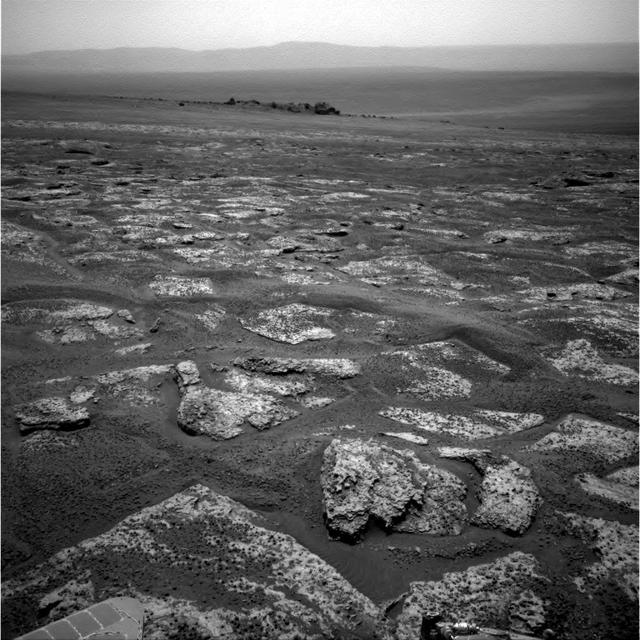
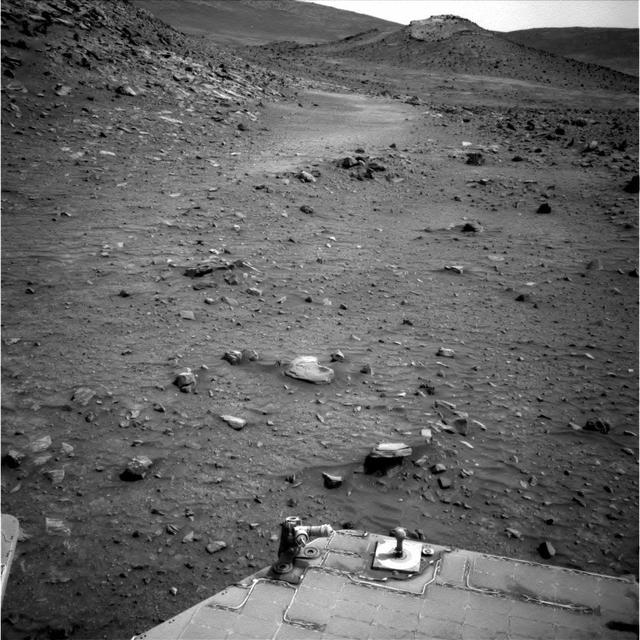
This image from the navigation camera on NASA Mars Exploration Rover Opportunity shows the view ahead on the day before the rover reached the rim of Endeavour crater. It was taken during the 2,680th Martian day, or sol, of the rover work on Mars.
Approaching Endeavour Crater, Sol 2,680
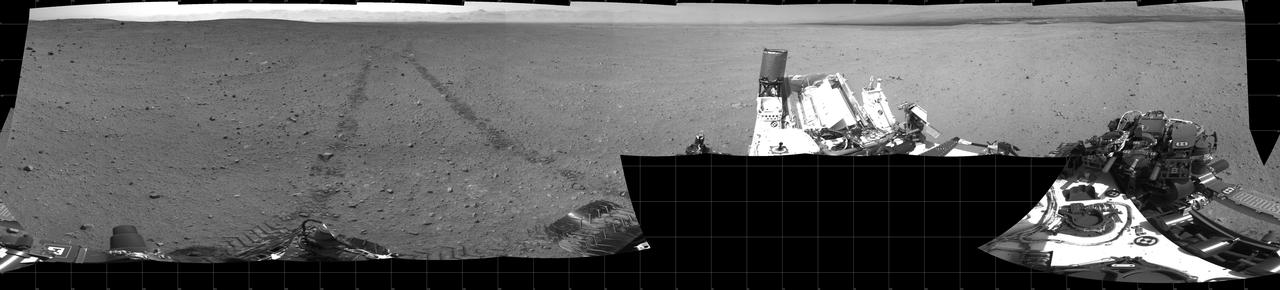
This scene shows the surroundings of the location where NASA Mars rover Curiosity arrived on the 29th Martian day, or sol, of the rover mission on Mars Sept. 4, 2012.
Curiosity Location During Arm Checkouts
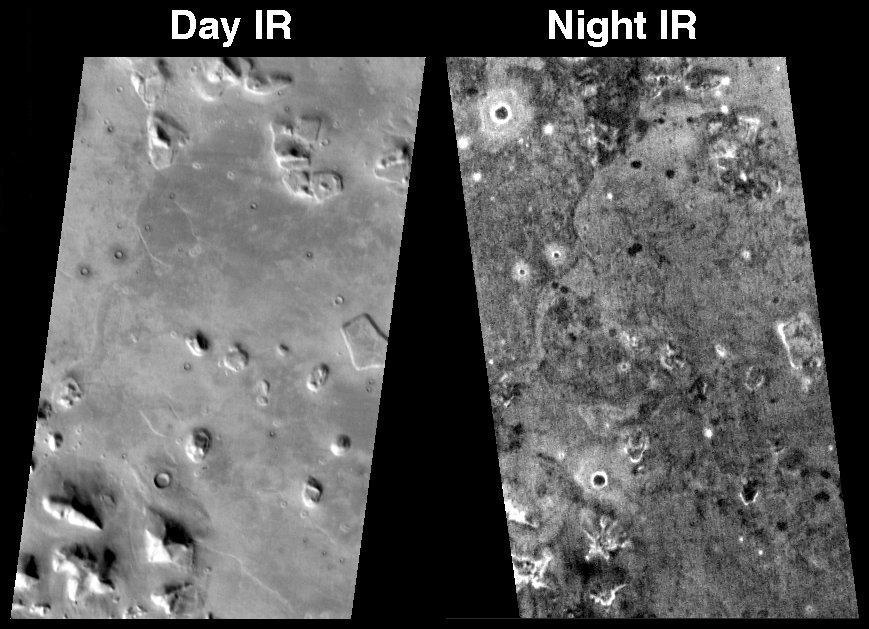
This pair of infrared images from NASA Mars Odyssey spacecraft shows the so-called face on Mars landform viewed during both the day and night.
The So-called Face
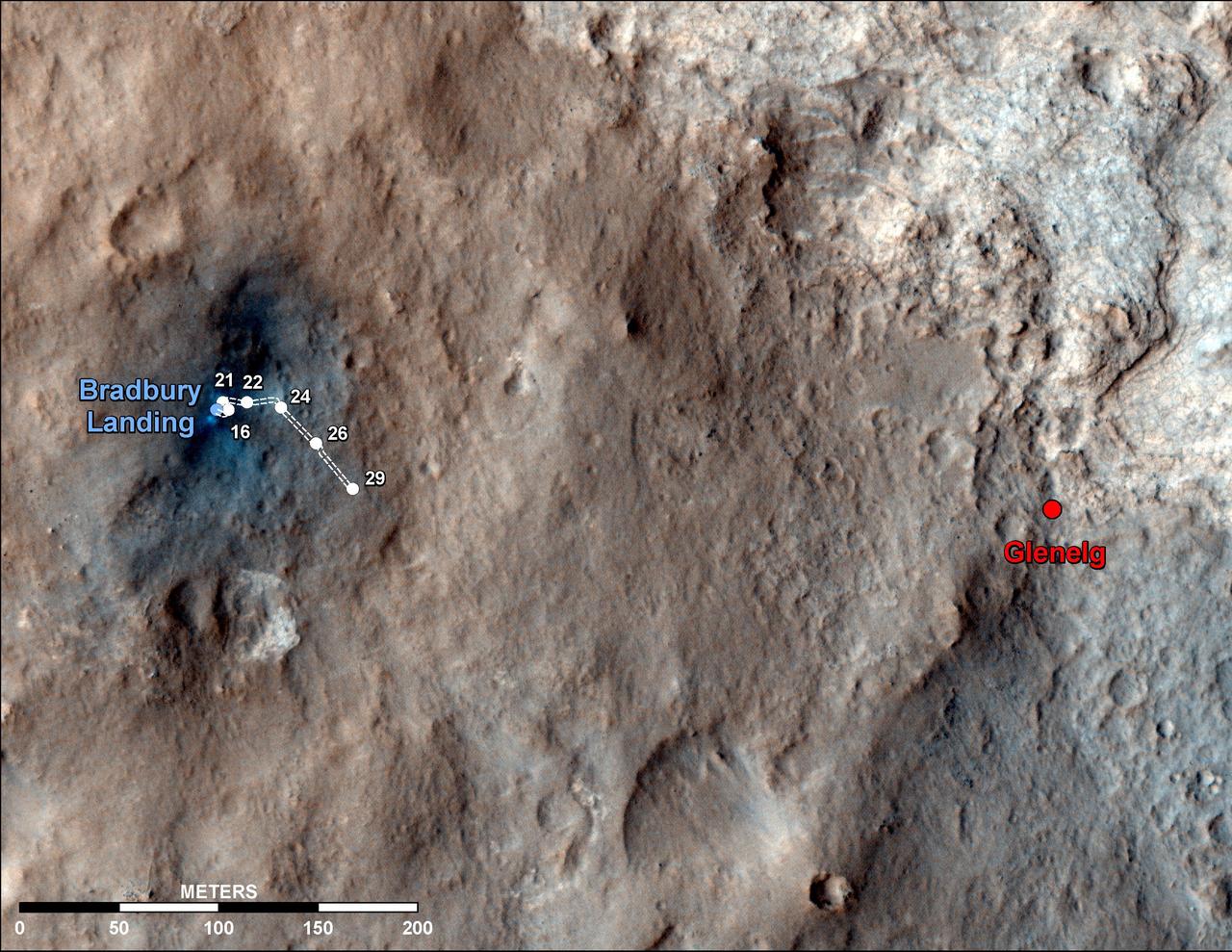
This map shows the route driven by NASA Mars rover Curiosity through the 29th Martian day, or sol, of the rover mission on Mars Sept. 4, 2012.
Curiosity Traverse Map Through Sol 29
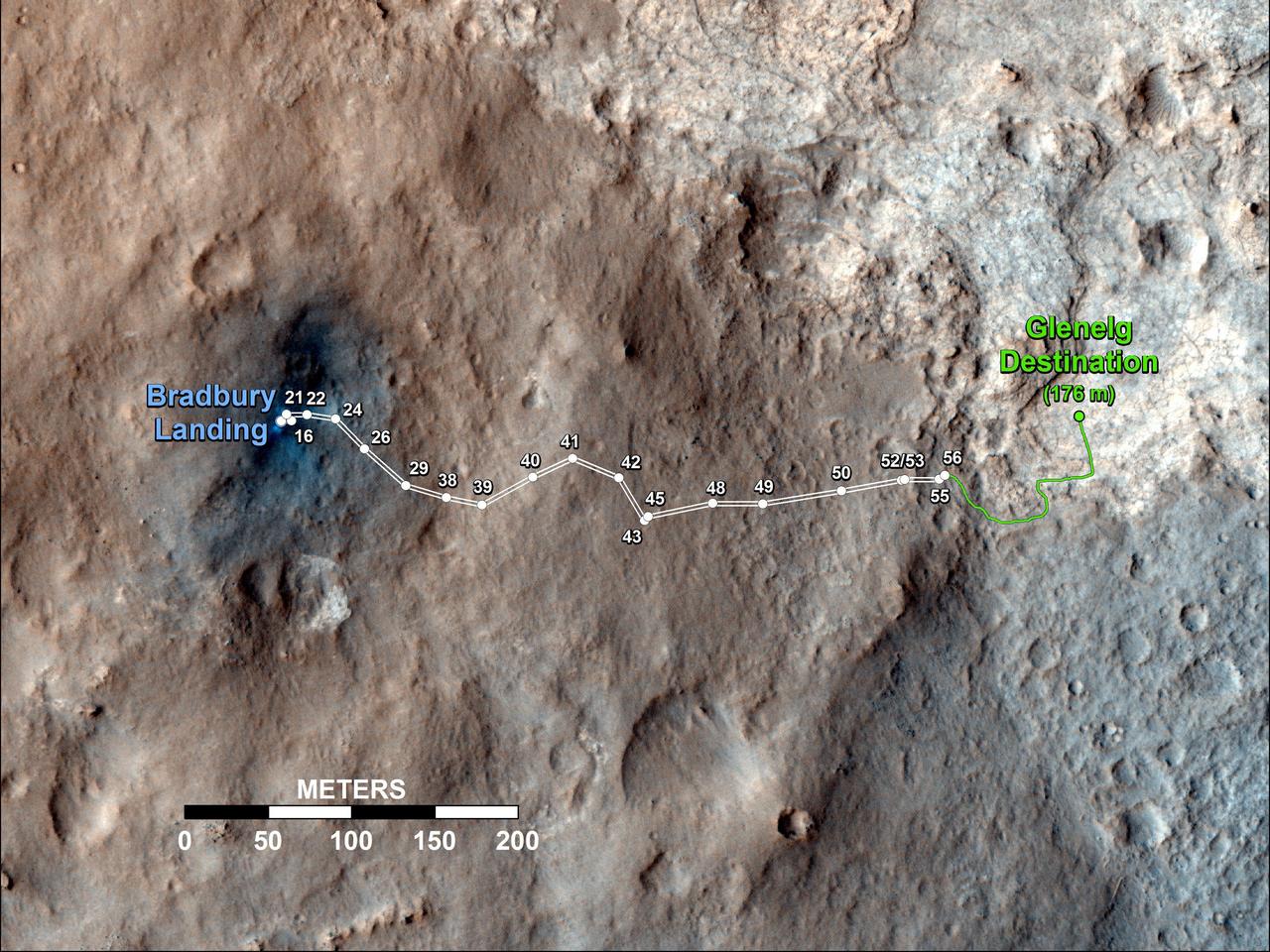
This map shows the route driven by NASA Mars rover Curiosity through the 56th Martian day, or sol, of the rover mission on Mars Oct. 2, 2012.
Curiosity Travels Through Sol 56
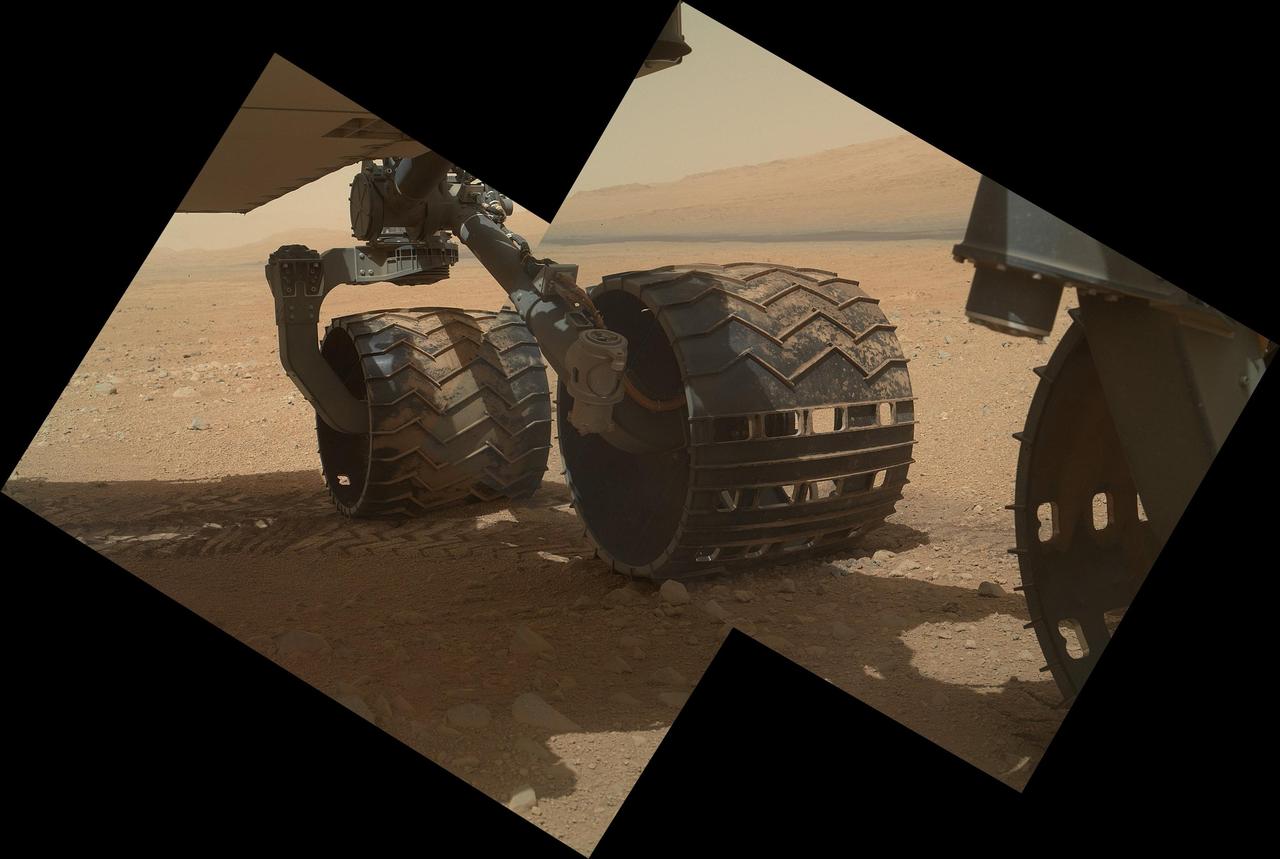
This view of the three left wheels of NASA Mars rover Curiosity combines two images that were taken by the rover Mars Hand Lens Imager MAHLI during the 34th Martian day, or sol, on Mars Sept. 9, 2012.
Wheels and a Destination
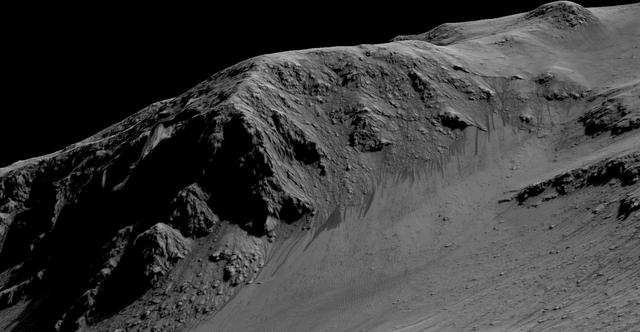
The dark, narrow streaks flowing downhill on Mars at sites such as this portion of Horowitz Crater are inferred to be formed by seasonal flow of water on modern-day Mars in this image from NASA Mars Reconnaissance Orbiter.
Recurring Lineae on Slopes at Horowitz Crater
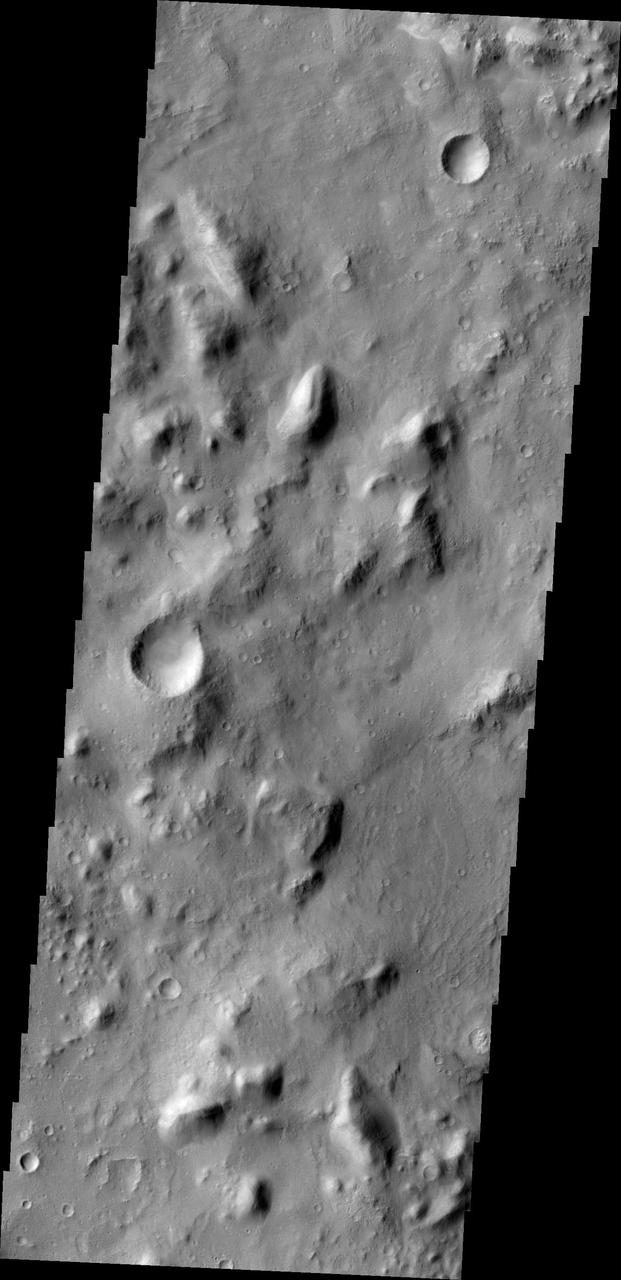
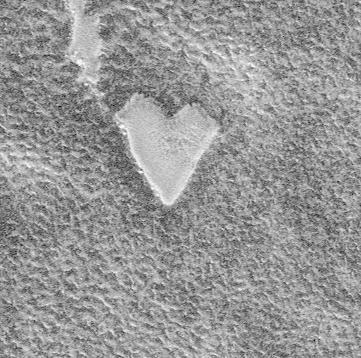
This isolated mesa [lower left center of the image] has an almost  heart-shaped margin. Happy Valentine Day from Mars
Valentine Day
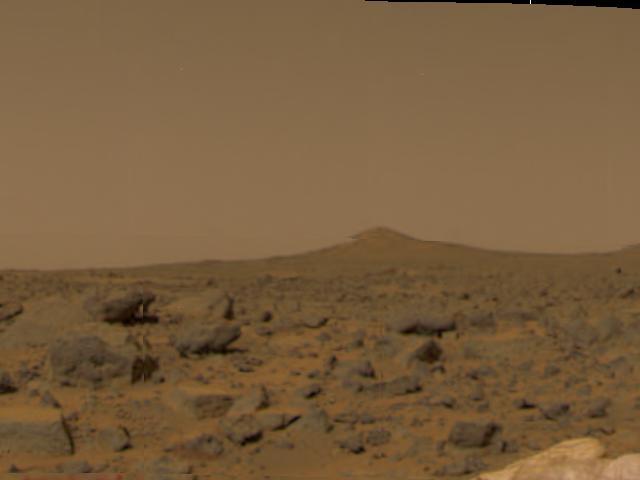
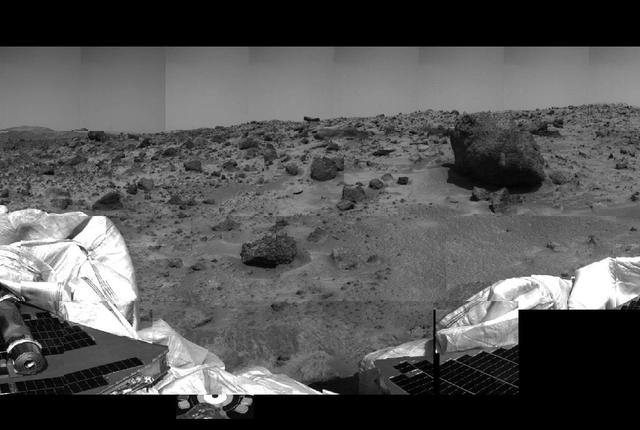
This image of the Martian surface was taken in the afternoon of Mars Pathfinder's first day on Mars. Taken by the Imager for Mars Pathfinder (IMP camera), the image shows a diversity of rocks strewn in the foreground. A hill is visible in the distance (the notch within the hill is an image artifact). Airbags are seen at the lower right.  http://photojournal.jpl.nasa.gov/catalog/PIA00612
Martian Surface & Pathfinder Airbags
A replica of NASA's Curiosity Rover and members of the Mars Science Laboratory (MSL) science team pass the Presidential viewing stand and President Barack Obama during the inaugural parade honoring Obama, Monday Jan. 21, 2013, in Washington. Obama was sworn-in as the nation's 44th President earlier in the day. Photo Credit: (NASA/Bill Ingalls)
2013 Inaugural Parade
A replica of NASA's Curiosity Rover and members of the Mars Science Laboratory (MSL) science team pass the Presidential viewing stand and President Barack Obama during the inaugural parade honoring Obama, Monday Jan. 21, 2013, in Washington. Obama was sworn-in as the nation's 44th President earlier in the day. Photo Credit: (NASA/Bill Ingalls)
2013 Inaugural Parade
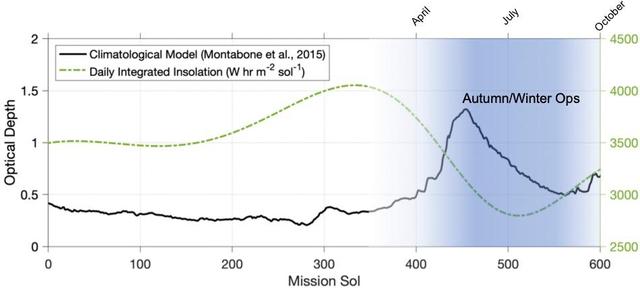
This graphic depicts the environmental conditions at Jezero Crater from the day NASA's Perseverance Mars rover landed there – on Feb. 18, 2021, the first Martian day, or sol, of the mission – through Sol 600.  The black line indicates a climatological model of atmospheric opaqueness (a measurement known as "tau") over a Martian year. The expected daily insolation, or the amount of Sun's rays reaching the solar panel, is illustrated by the green dotted line. While a year on Earth lasts 365 days, on Mars a year lasts 668 sols.  https://photojournal.jpl.nasa.gov/catalog/PIA25322
Environmental Plot at Jezero
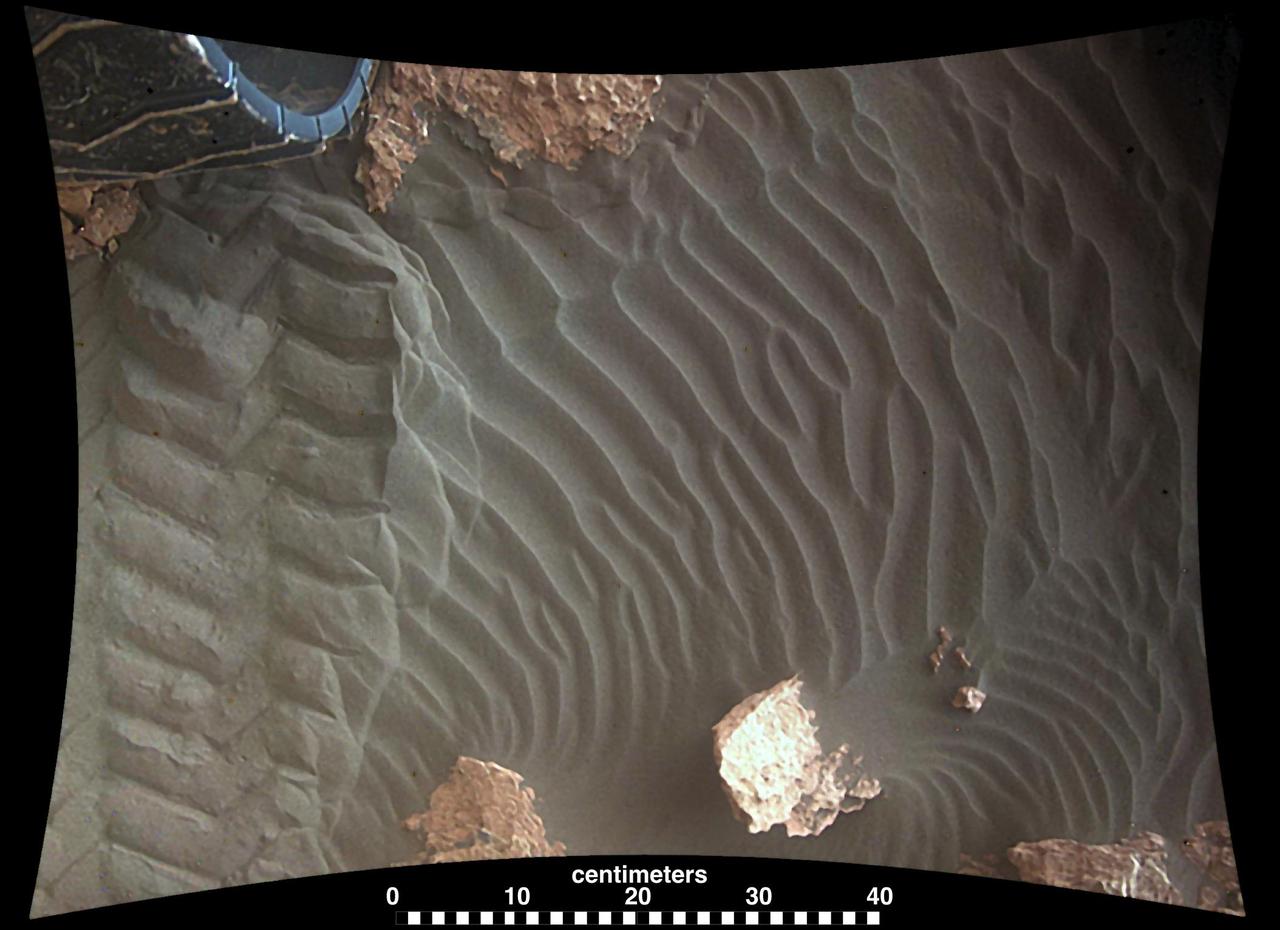
This image from an animation shows wind blowing sand underneath NASA Curiosity Mars rover on a non-driving day for the rover.  Each image was taken just after sundown by the rover's downward-looking Mars Descent Imager (MARDI). The area of ground shown in the images spans about 3 feet (about 1 meter) left-to-right.  The first image was taken on Jan. 23, 2017, during the 1,587th Martian day, or sol, of Curiosity's work on Mars. Figure 1 above is the image with a scale bar in centimeters. The second was taken on Jan. 24, 2017 (Sol 1588). The day-apart images by MARDI were taken as a part of investigation of wind's effects during Martian summer, the windiest time of year in Gale Crater.   An animation is available at http://photojournal.jpl.nasa.gov/catalog/PIA21143
Sand Moving Under Curiosity, One Day to Next
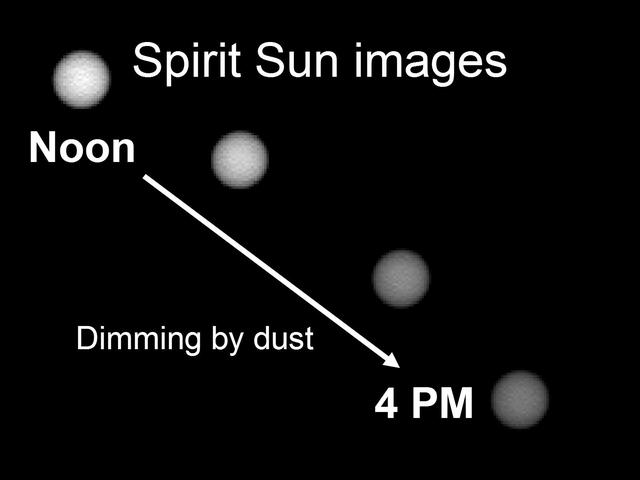
This image shows the Sun as it appears on Mars throughout the day. Scientists monitor the dimming of the setting Sun to assess how much dust is in the martian atmosphere. The pictures were taken by the Mars Exploration Rover Spirit panoramic camera.
Martian Sunsets More Than Just Pretty
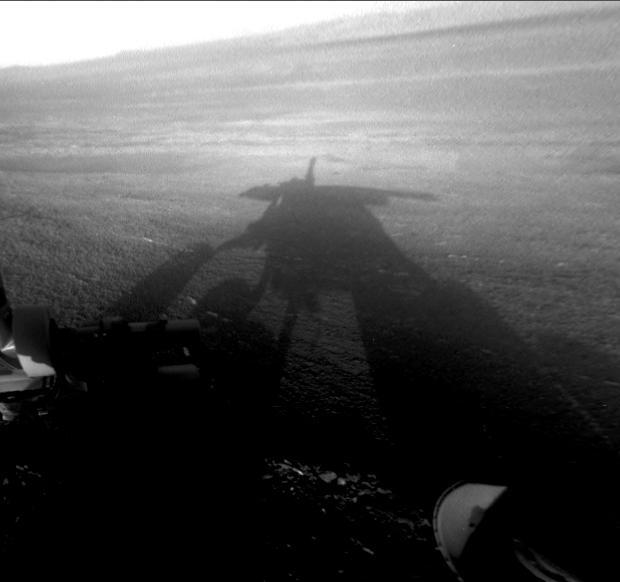
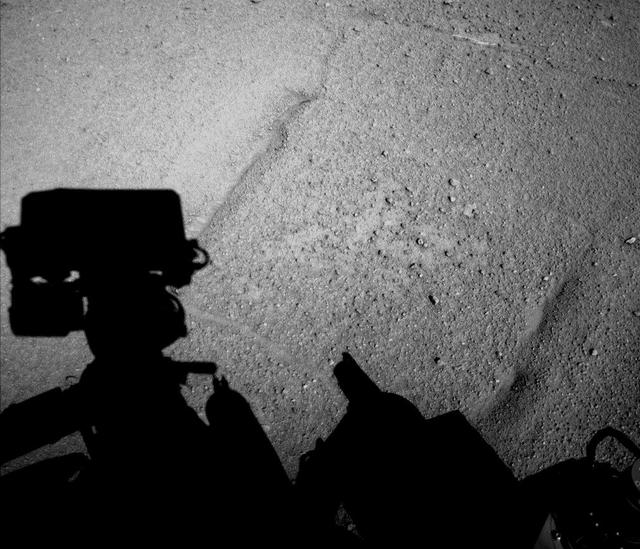
NASA Curiosity Mars rover caught its own shadow in this image taken just after completing a drive of 329 feet 100.3 meters on the 547th Martian day, or sol, of the rover work on Mars Feb. 18, 2014.
Curiosity Mars Rover Shadow After Long Backward Drive
NASA Mars Exploration Rover Opportunity captured this view of its afternoon shadow stretching into Endeavour Crater during the 3,051st Martian day, or sol, of Opportunity work on Mars Aug. 23, 2012.
Shadow Self-Portrait by Opportunity at Endeavour Crater
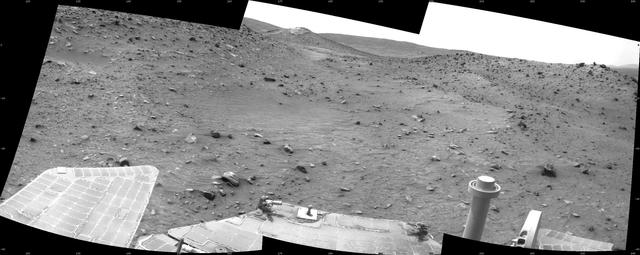
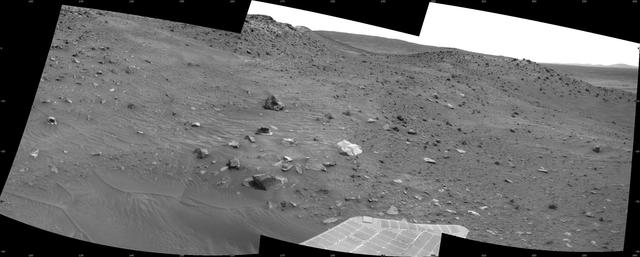
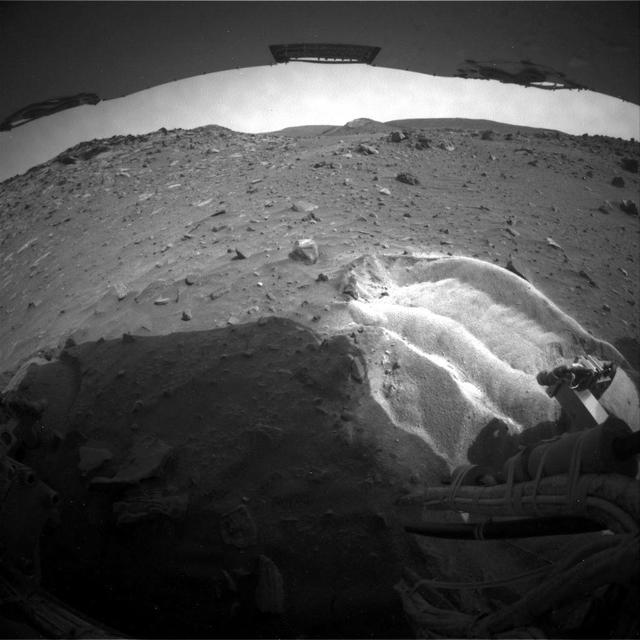
NASA Mars Exploration Rover Spirit used its rear hazard avoidance camera to take this view toward the south during the 1,899th Martian day, or sol,   of Spirit mission on Mars May 6, 2009.
View in Travel Direction, Sol 1870, with Rock Garden
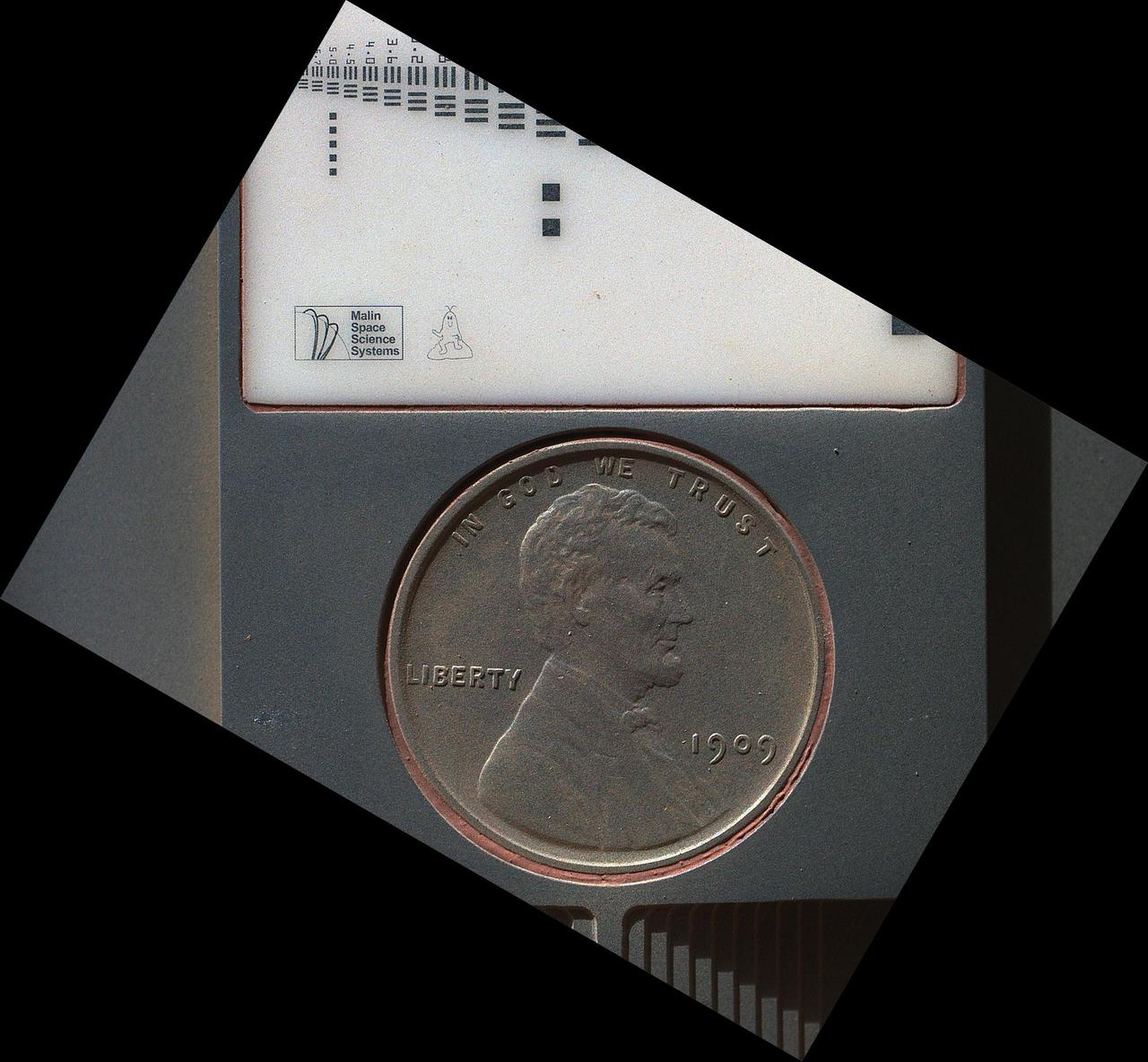
The penny in this image is part of a camera calibration target on NASA Mars rover Curiosity. The MAHLI camera on the rover took this image of the MAHLI calibration target during the 34th Martian day of Curiosity work on Mars, Sept. 9, 2012.
Lincoln Penny on Mars in Camera Calibration Target
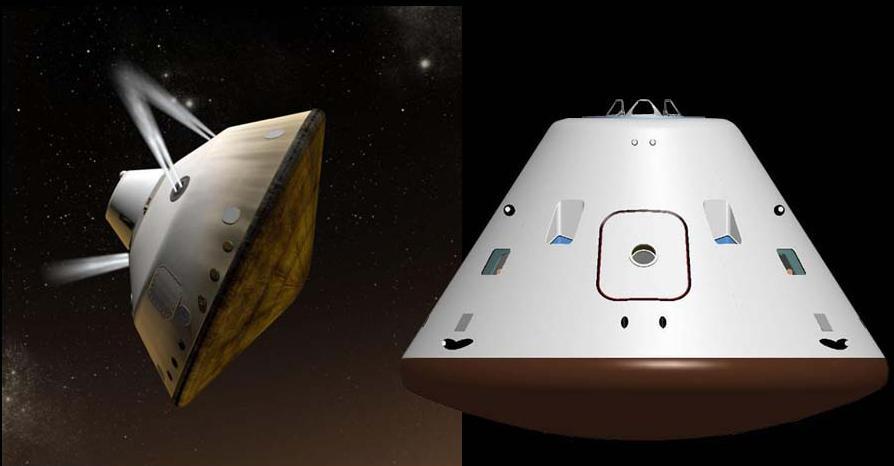
This set of artist concepts shows NASA Mars Science Laboratory cruise capsule and NASA Orion spacecraft, which is being built now at NASA Johnson Space Center and will one day send astronauts to Mars.
Cruise Vehicles Artist Concept
NASA Mars Exploration Rover Spirit used its rear hazard avoidance camera to take this view toward the south during the 1,899th Martian day, or sol,   of Spirit mission on Mars May 6, 2009.
Rear View Southward from Troy
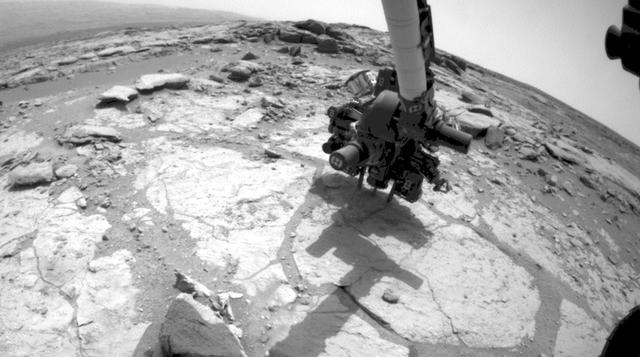
This frame from an animation from NASA Mars rover Curiosity shows the rover drilling into rock target Cumberland. The drilling was performed during the 279th Martian day, or sol, of the Curiosity work on Mars May 19, 2013.
Curiosity Mars Rover Drilling Into Its Second Rock
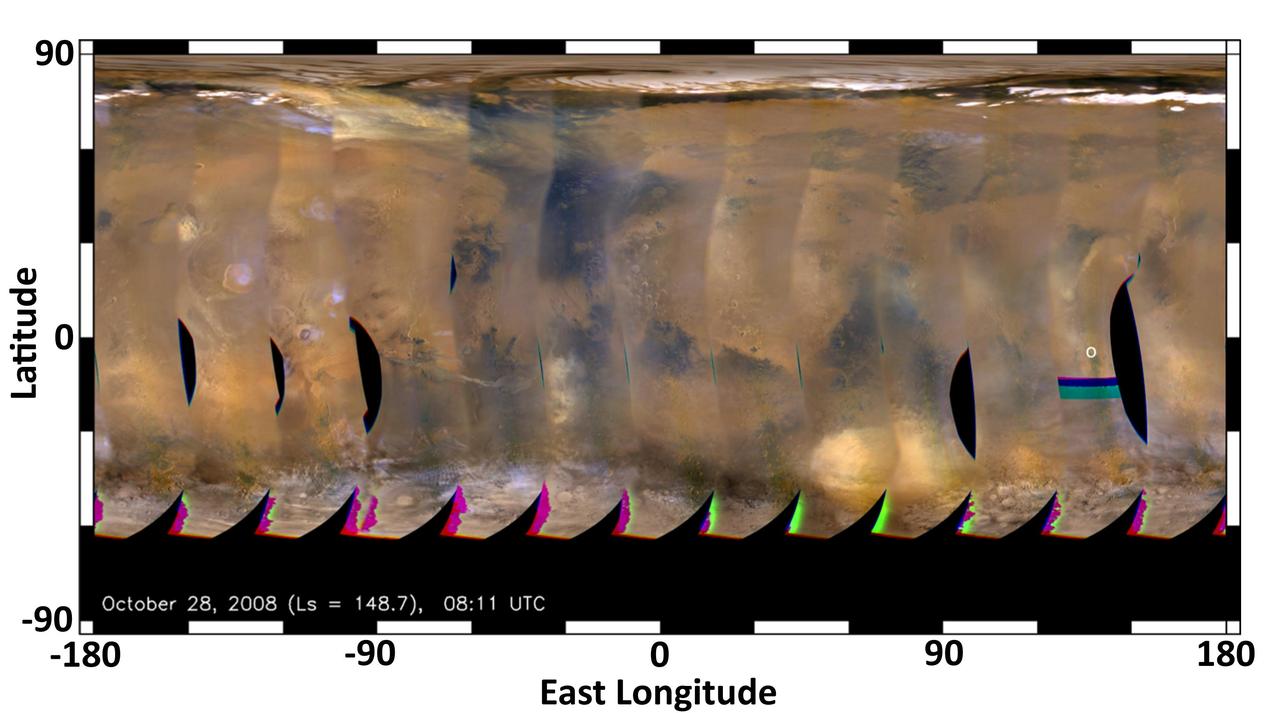
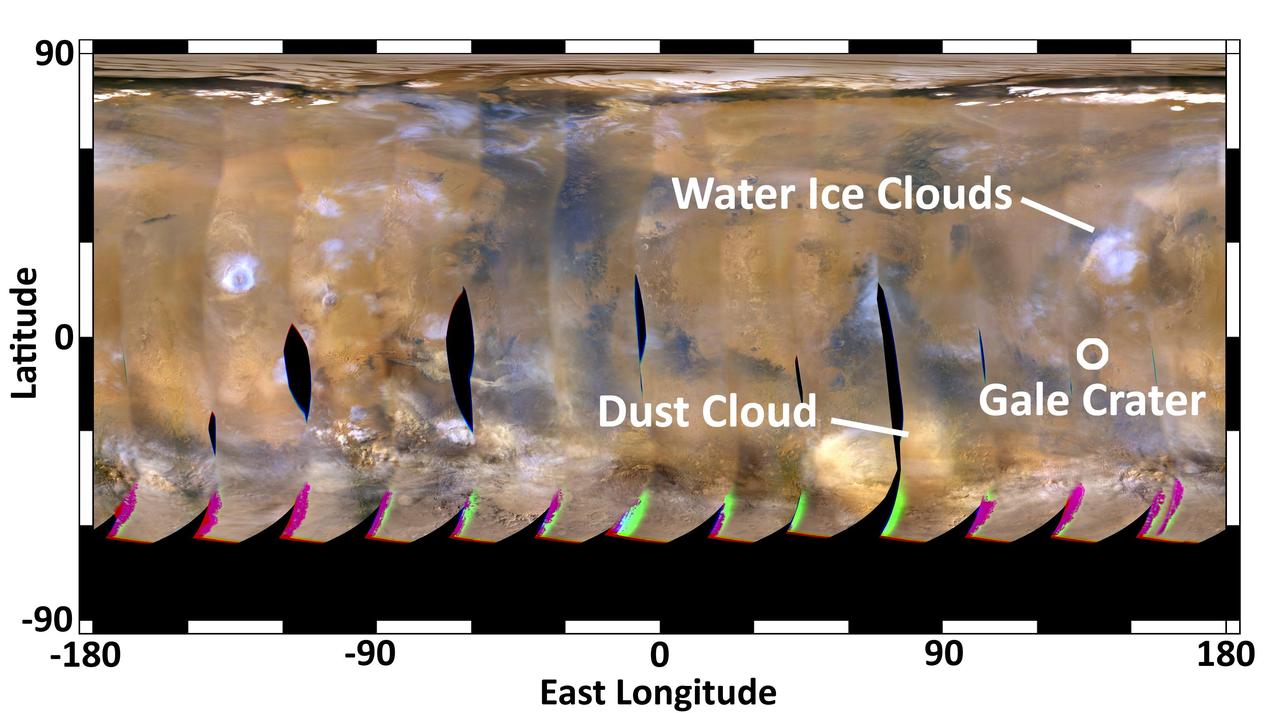
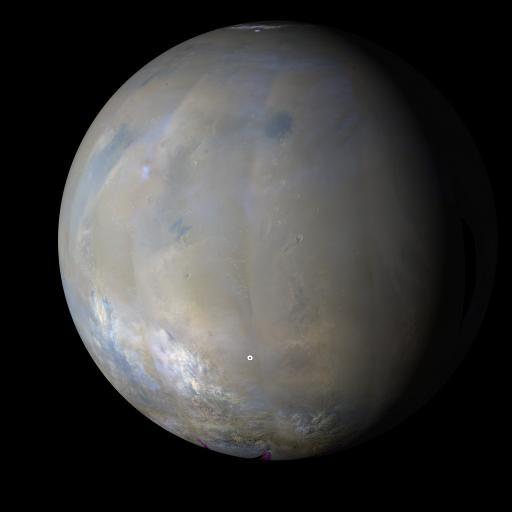
This global map of Mars was acquired on Oct. 28, 2008, by the Mars Color Imager instrument on NASA MRO. One global map is generated each day to forecast weather conditions for the entry, descent and landing of NASA Curiosity rover.
Mars Weather Map, 2008
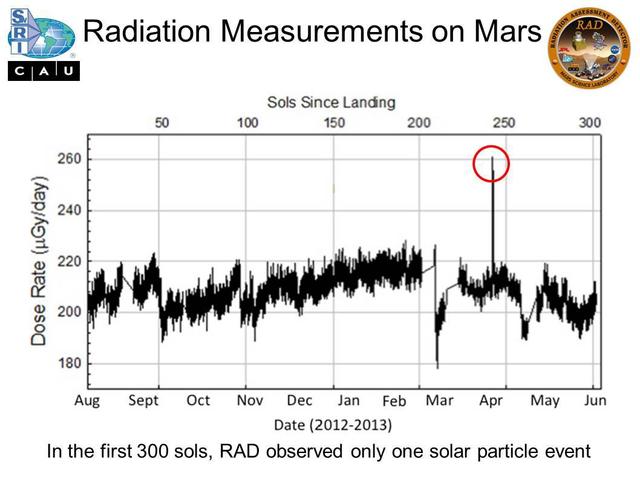
Micrograys are unit of measurement for absorbed radiation dose. The vertical axis is in micrograys per day. The RAD instrument on NASA Curiosity Mars rover monitors the natural radiation environment at the surface of Mars.
Radiation Measurements on Mars
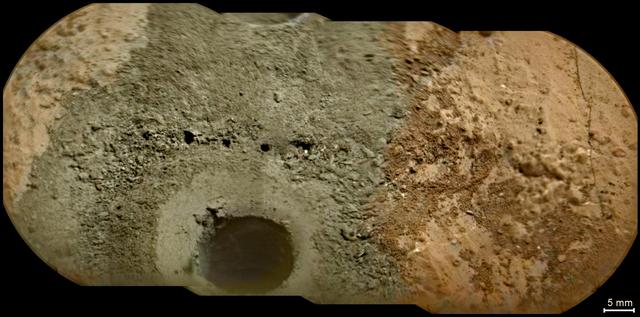
A day after NASA Mars rover Curiosity drilled the first sample-collection hole into a rock on Mars, the rover Chemistry and Camera ChemCam instrument shot laser pulses into the fresh rock powder that the drilling generated.
Laser Hits on Martian Drill Tailings
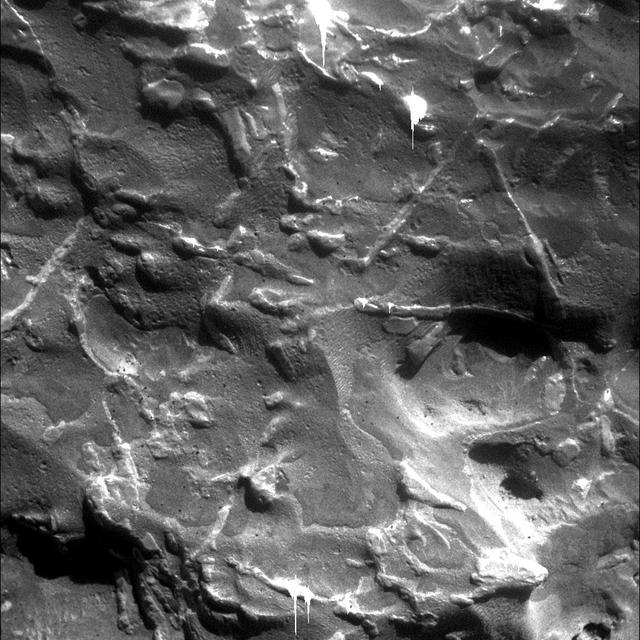
NASA Mars Exploration Rover Opportunity used its microscopic imager to get this view of the surface of a rock called Block Island during the 1,963rd Martian day, or sol, of the rover mission on Mars Aug. 1, 2009.
Magnified Look at a Meteorite on Mars
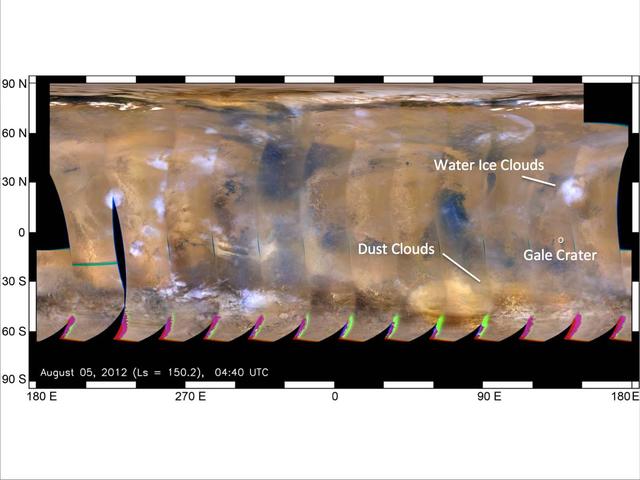
This global map of Mars was acquired on Aug. 5, 2012, by the Mars Color Imager instrument on NASA MRO. One global map is generated each day to forecast weather conditions for the entry, descent and landing of NASA Curiosity rover.
Mars Weather Map, Aug. 5
This image shows Phobos, the larger of Mars two moons, as it transits in front of the sun. This image was taken by NASA Mars Exploration Rover Opportunity during the afternoon of the rover 3,078th Martian day, or sol.
Phobos Transit Viewed by Opportunity on Sol 3078
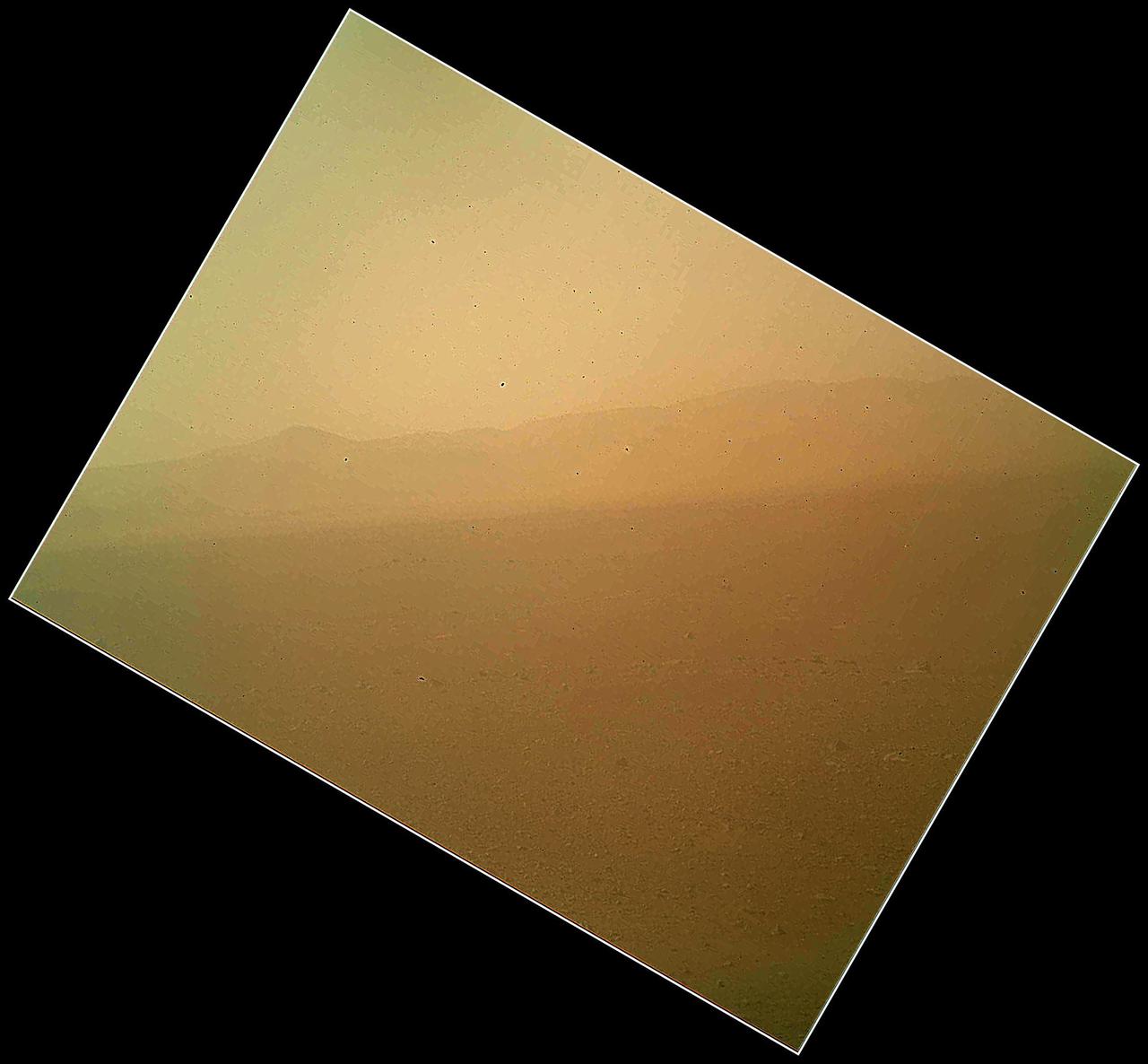
This view of the landscape to the north of NASA Mars rover Curiosity acquired by the Mars Hand Lens Imager on the afternoon of the first day of landing. In the distance, the image shows the north wall and rim of Gale Crater.
First Color Landscape Image of Mars from Curiosity
This scene combines seven frames taken by the navigation camera on NASA Mars Exploration Rover Spirit during the 1,891st Martian day, or sol, of Spirit mission on Mars April 28, 2009.
Spirit View from Troy
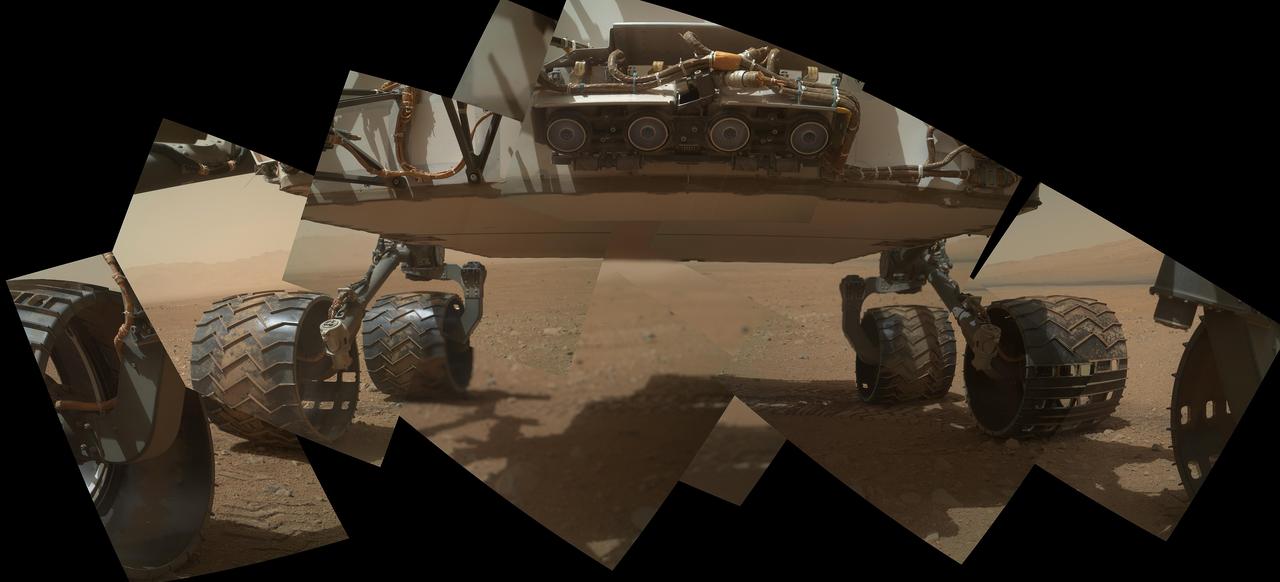
This view of the lower front and underbelly areas of NASA Mars rover Curiosity combines nine images taken by the rover MAHLI camera during the 34th Martian day, or sol, of Curiosity work on Mars.
Panorama of Curiosity Belly Check
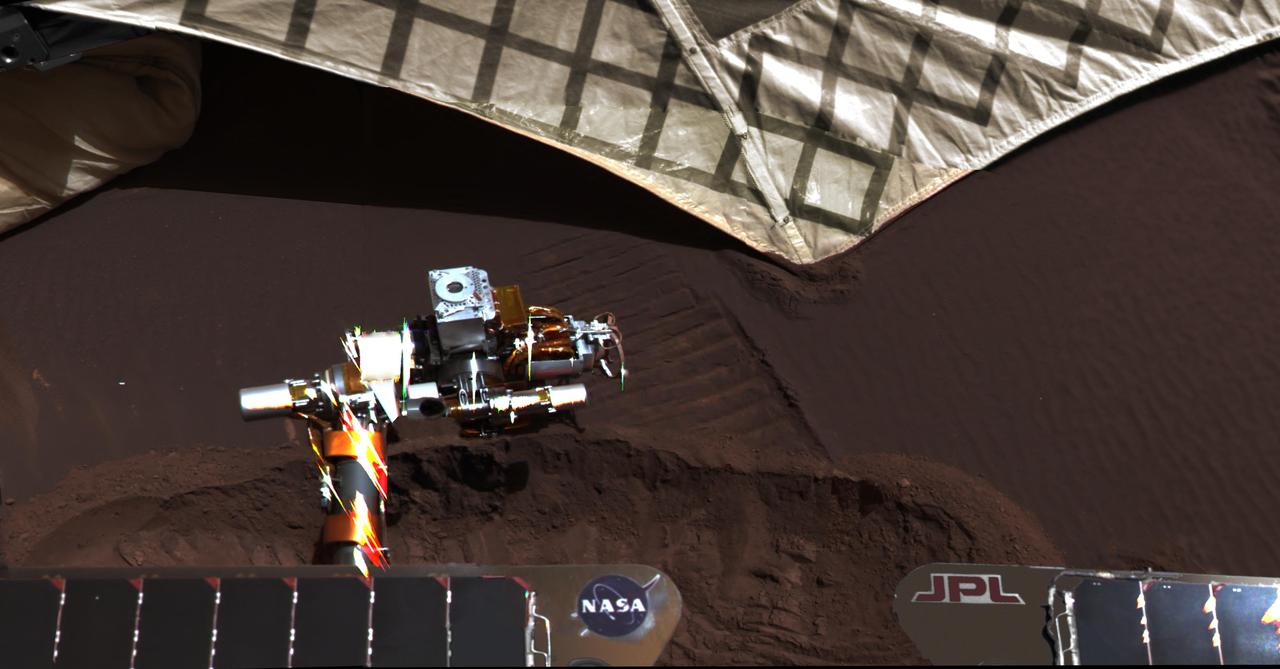
On March 20, 2004, NASA Mars Exploration Rover Opportunity used a wheel to dig a trench revealing subsurface material beside the lander hardware that carried the rover to the surface of Mars 55 Martian days earlier.
Lander Trench Dug by Opportunity
Three days after the Mars Reconnaissance Orbiter Aug. 12, 2005, launch, the spacecraft was pointed toward Earth and the Mars Color Imager camera was powered up to acquire a suite of images of Earth and the Moon.
Calibration View of Earth and the Moon by Mars Color Imager
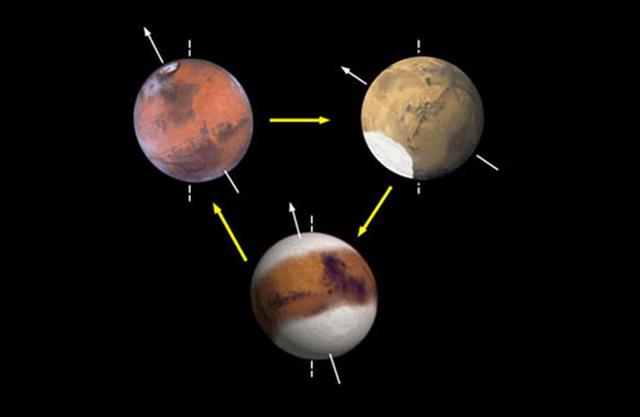
Modern-day Mars experiences cyclical changes in climate and, consequently, ice distribution. Unlike Earth, the obliquity or tilt of Mars changes substantially on timescales of hundreds of thousands to millions of years.
Changes in Tilt of Mars Axis
Three days after the Mars Reconnaissance Orbiter Aug. 12, 2005, launch, the NASA spacecraft was pointed toward Earth and the Mars Color Imager camera was powered up to acquire a suite of color and ultraviolet images of Earth and the Moon.
Calibration Image of Earth by Mars Color Imager
This scene combines three frames taken by the navigation camera on NASA Mars Exploration Rover Spirit during the 1,869th Martian day, or sol, of Spirit mission on Mars April 6, 2009. It spans 120 degrees, with south at the center.
Spirit Look Ahead on Sol 1869
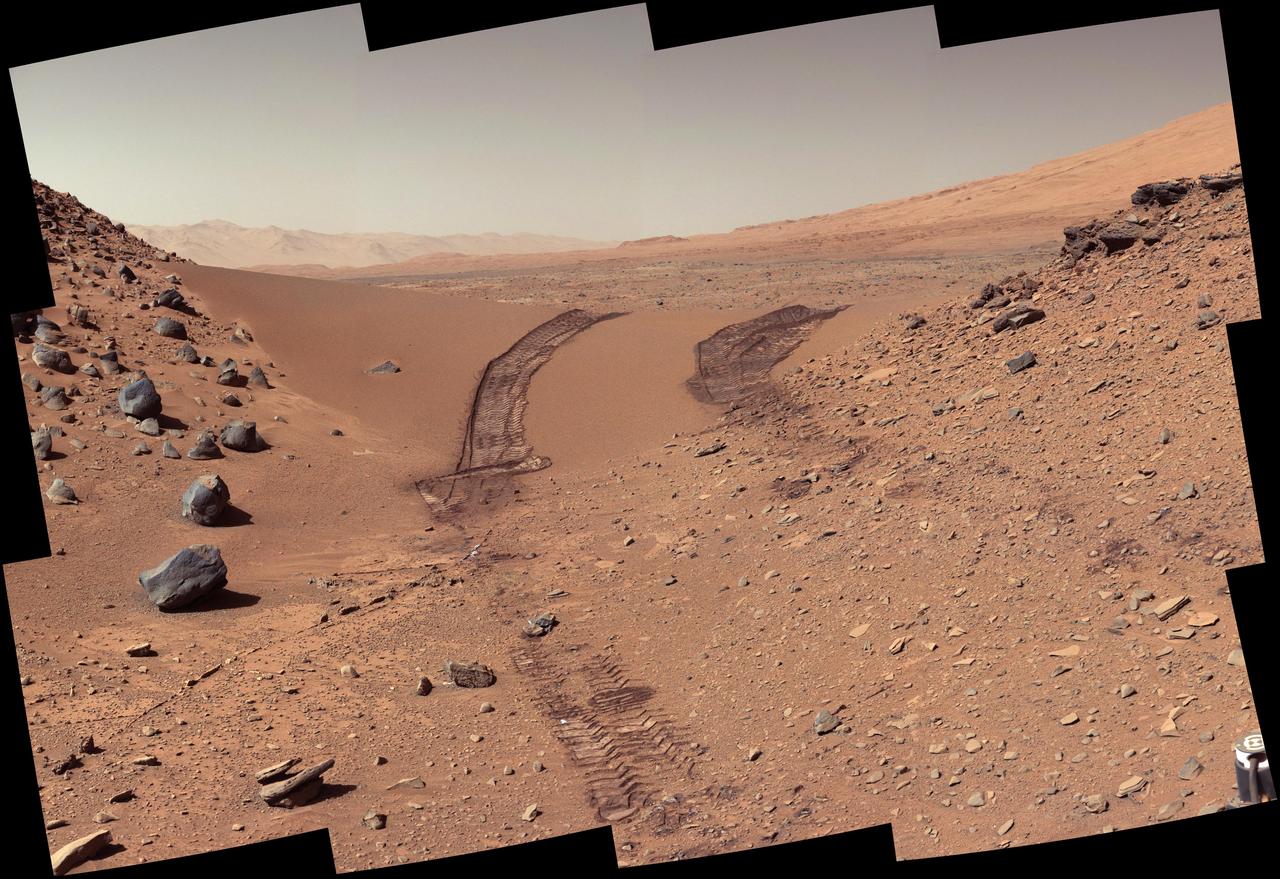
This look back at a dune that NASA Curiosity Mars rover drove across was taken by the rover Mast Camera Mastcam during the 538th Martian day, or sol, of Curiosity work on Mars Feb. 9, 2014.
Curiosity Color View of Martian Dune After Crossing It
This scene combines three frames taken by the navigation camera on NASA Mars Exploration Rover Spirit during the 1,866th Martian day, or sol, of Spirit mission on Mars April 3, 2009. It spans 120 degrees, with south at the center.
Spirit Look Ahead After Sol 1866 Drive
NASA Mars Odyssey spacecraft captured this image on Feb. 19, 2012, 10 years to the day after the camera recorded its first view of Mars. This image covers an area in the Nepenthes Mensae region north of the Martian equator.
Tenth Anniversary Image from Camera on NASA Mars Orbiter
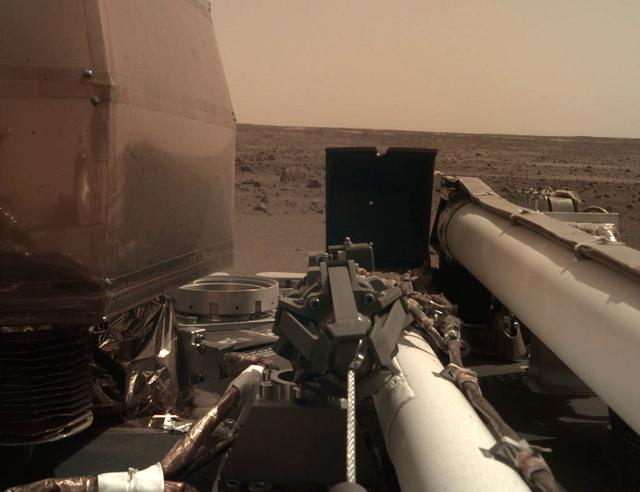
As visible in this image, NASA's InSight spacecraft unlatched its robotic arm on Nov. 27, 2018, the day after it landed on Mars.  Animation available at https://photojournal.jpl.nasa.gov/catalog/PIA22892
Unlatching InSight's Arm
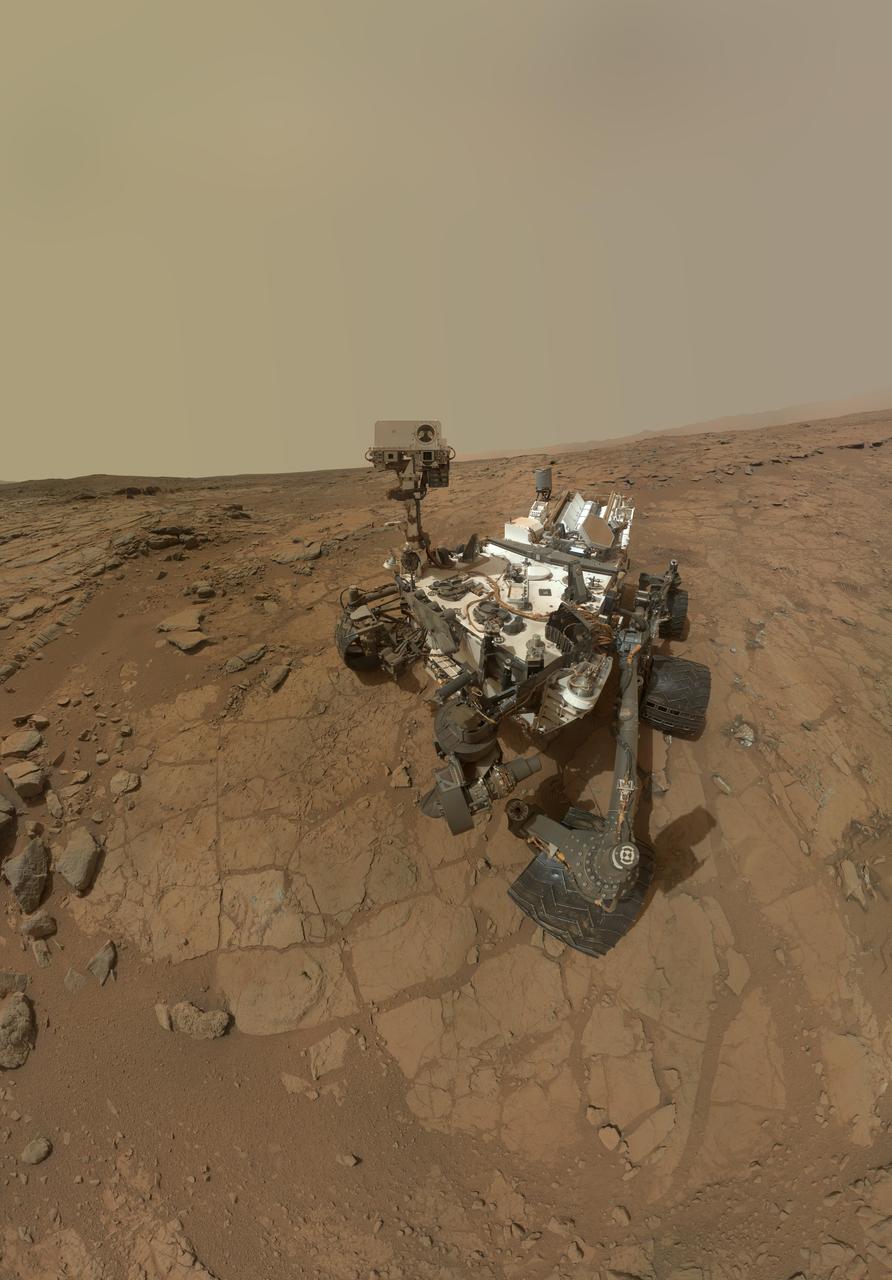
This rectangular version of a self-portrait of NASA Mars rover Curiosity combines dozens of exposures taken by the rover Mars Hand Lens Imager MAHLI during the 177th Martian day, or sol, of Curiosity work on Mars Feb. 3, 2013.
Curiosity Rover Self Portrait at John Klein Drilling Site, Cropped
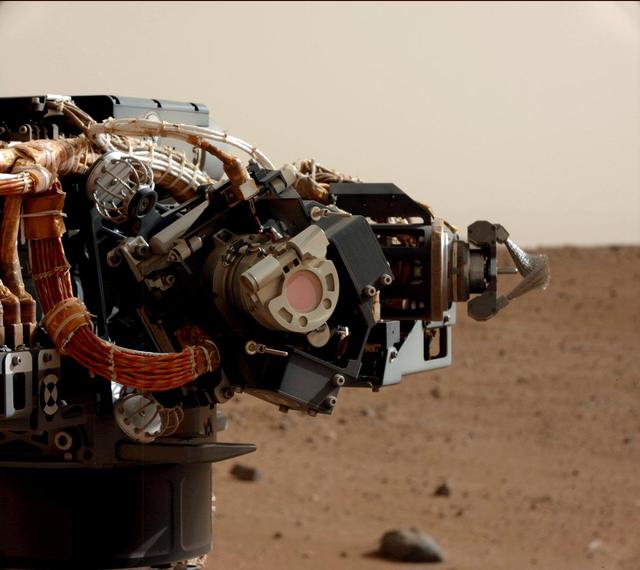
The left eye of the Mast Camera Mastcam on NASA Mars rover Curiosity took this image of the camera on the rover arm, the Mars Hand Lens Imager MAHLI, during the 30th Martian day, or sol, of the rover mission on Mars Sept. 5, 2012.
Camera on Curiosity Arm as Seen by Camera on Mast
This global map of Mars was acquired on Aug. 2, 2012, by the Mars Color Imager instrument on NASA Mars Reconnaissance Orbiter. One global map is generated each day to forecast weather conditions for the entry, descent and landing of NASA Curiosity.
Mars Weather Map, Aug. 2, 2012
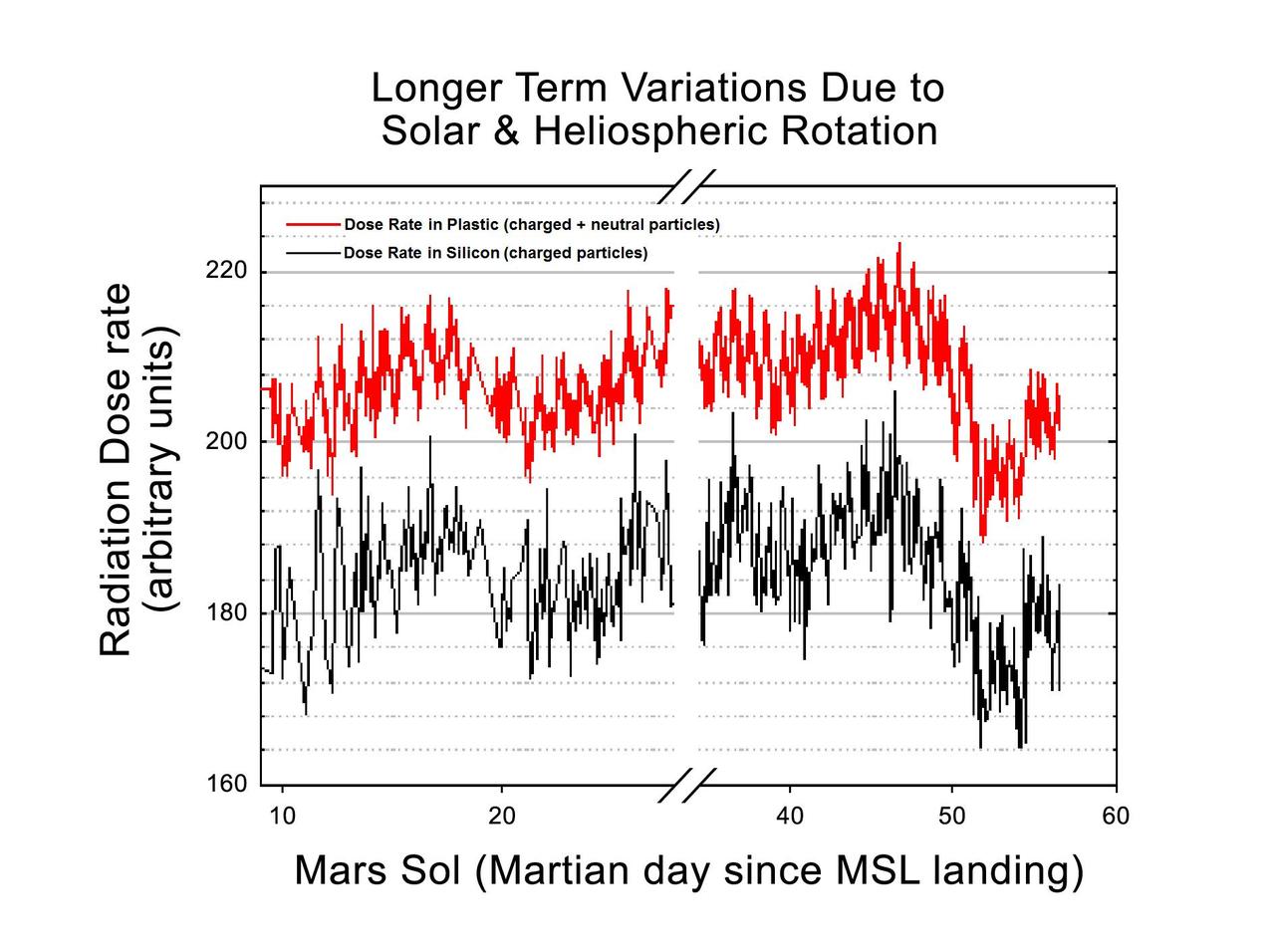
This graphic shows the variation of radiation dose measured by the Radiation Assessment Detector on NASA Curiosity rover over about 50 sols, or Martian days, on Mars.
Longer-Term Radiation Variations at Gale Crater
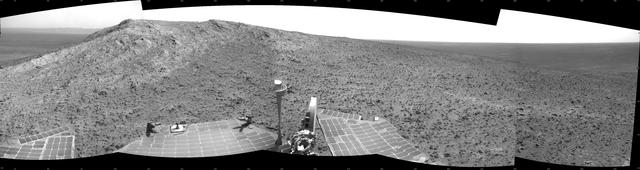
NASA Mars Exploration Rover Opportunity recorded this view of the summit of Cape Tribulation, on the western rim of Endeavour Crater on the day before the rover drove to the top.
Opportunity View from Atop Cape Tribulation
NASA Mars Exploration Rover Opportunity recorded this view of the summit of Cape Tribulation, on the western rim of Endeavour Crater on the day before the rover drove to the top.
Opportunity Approach to Cape Tribulation Summit
NASA MARCI acquires a global view of the red planet and its weather patterns every day. This image was taken on Nov. 3, 2008 by the Mars Reconnaissance Orbiter.
MRO MARCI Weather Report for the week of 3 November 2008 – 9 November 2008
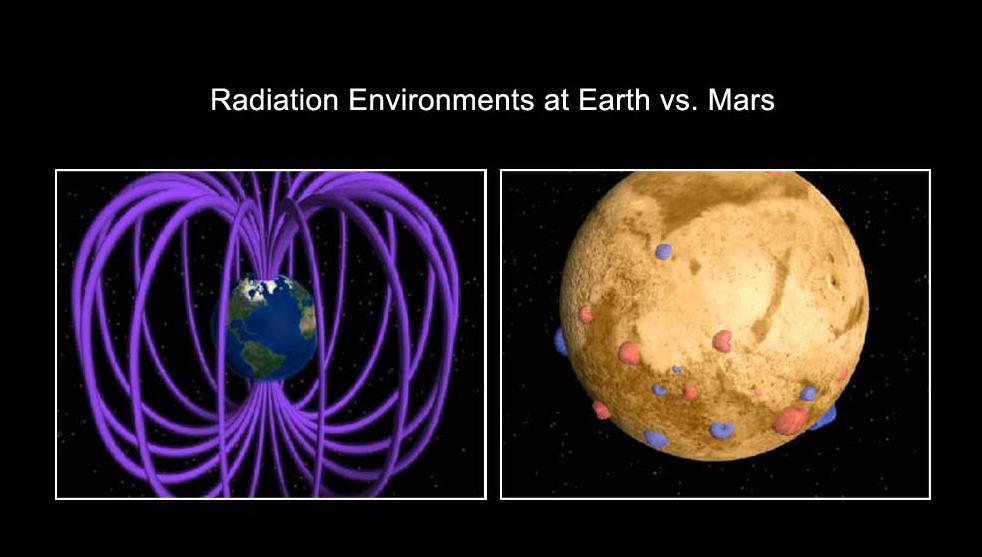
This is an artist concept comparing the present day magnetic fields on Earth and Mars. Earth magnetic field is generated by an active dynamo -- a hot core of molten metal.
Earth and Martian Magnetic Fields Artist Concept
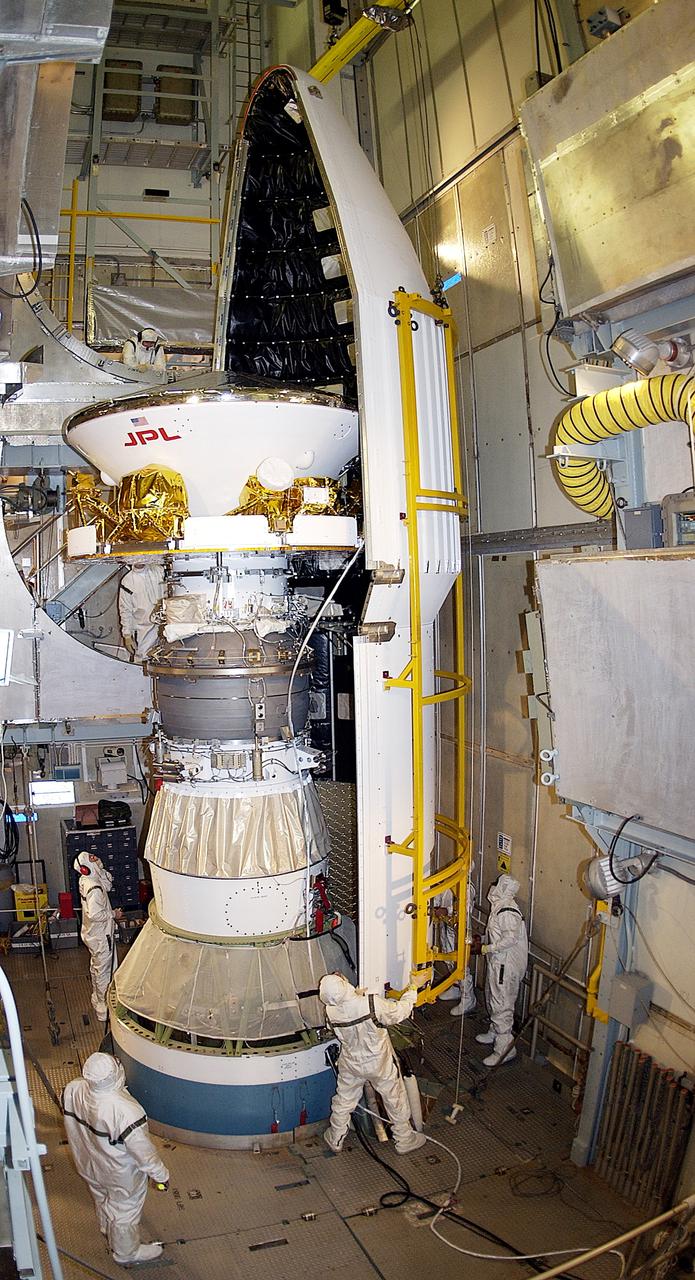
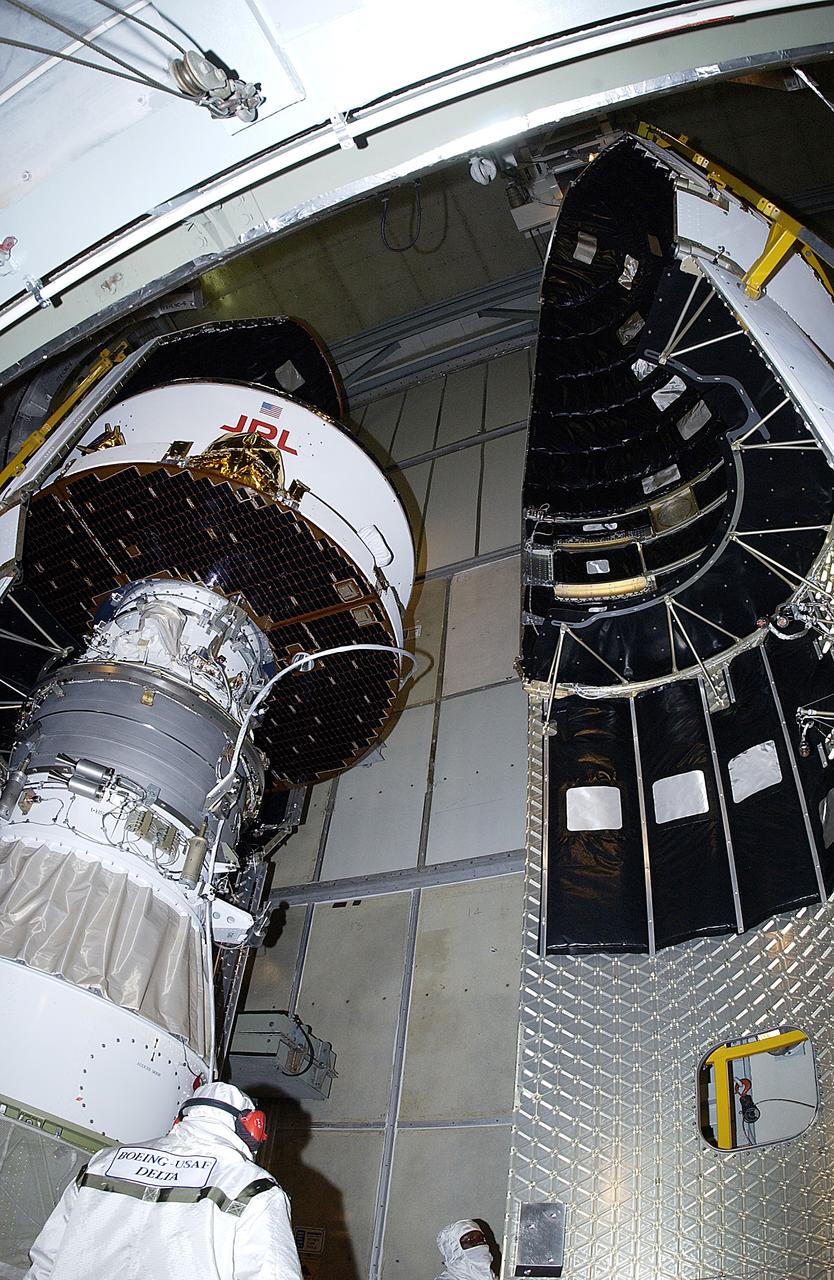
KENNEDY SPACE CENTER, FLA. - At Launch Complex 17-A, Cape Canaveral Air Force Station, the first half of the fairing for the Mars Exploration Rover 2 (MER-2) is installed around the Mars Exploration Rover 2 (MER-2).  MER-2 is one of NASA's twin Mars Exploration Rovers designed to study the history of water on Mars. These robotic geologists are equipped with a robotic arm, a drilling tool, three spectrometers, and four pairs of cameras that allow them to have a human-like, 3D view of the terrain. Each rover could travel as far as 100 meters in one day to act as Mars scientists' eyes and hands, exploring an environment where humans can't yet go.  MER-2 is scheduled to launch no earlier than June 8 as MER-A, with two launch opportunities each day during the launch period that closes on June 19.
KENNEDY SPACE CENTER, FLA. - At Launch Complex 17-A, Cape Canaveral Air Force Station, the first half of the fairing for the Mars Exploration Rover 2 (MER-2) is installed around the Mars Exploration Rover 2 (MER-2). MER-2 is one of NASA's twin Mars Exploration Rovers designed to study the history of water on Mars. These robotic geologists are equipped with a robotic arm, a drilling tool, three spectrometers, and four pairs of cameras that allow them to have a human-like, 3D view of the terrain. Each rover could travel as far as 100 meters in one day to act as Mars scientists' eyes and hands, exploring an environment where humans can't yet go. MER-2 is scheduled to launch no earlier than June 8 as MER-A, with two launch opportunities each day during the launch period that closes on June 19.
KENNEDY SPACE CENTER, FLA. - At Launch Complex 17-A, Cape Canaveral Air Force Station, the first half of the fairing for the Mars Exploration Rover 2 (MER-2) is installed around the Mars Exploration Rover 2 (MER-2).  MER-2 is one of NASA's twin Mars Exploration Rovers designed to study the history of water on Mars. These robotic geologists are equipped with a robotic arm, a drilling tool, three spectrometers, and four pairs of cameras that allow them to have a human-like, 3D view of the terrain. Each rover could travel as far as 100 meters in one day to act as Mars scientists' eyes and hands, exploring an environment where humans can't yet go.  MER-2 is scheduled to launch no earlier than June 8 as MER-A, with two launch opportunities each day during the launch period that closes on June 19.
KENNEDY SPACE CENTER, FLA. - At Launch Complex 17-A, Cape Canaveral Air Force Station, the first half of the fairing for the Mars Exploration Rover 2 (MER-2) is installed around the Mars Exploration Rover 2 (MER-2). MER-2 is one of NASA's twin Mars Exploration Rovers designed to study the history of water on Mars. These robotic geologists are equipped with a robotic arm, a drilling tool, three spectrometers, and four pairs of cameras that allow them to have a human-like, 3D view of the terrain. Each rover could travel as far as 100 meters in one day to act as Mars scientists' eyes and hands, exploring an environment where humans can't yet go. MER-2 is scheduled to launch no earlier than June 8 as MER-A, with two launch opportunities each day during the launch period that closes on June 19.
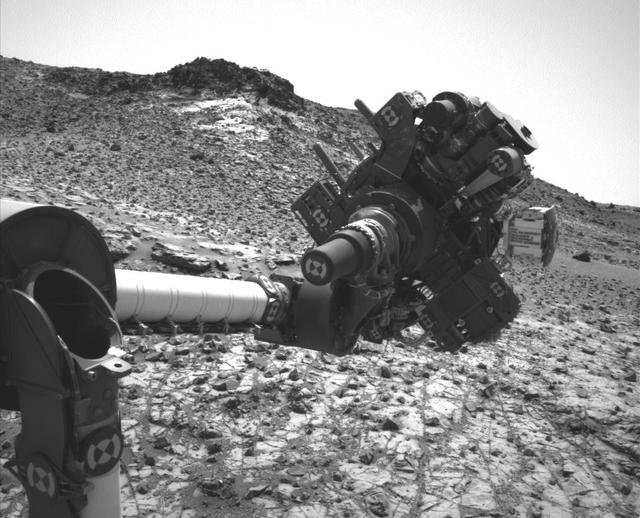
This image from the Navigation Camera (Navcam) on NASA's Curiosity Mars rover shows the position in which the rover held its arm for several days after a transient short circuit triggered onboard fault-protection programming to halt arm activities on Feb. 27, 2015, the 911th Martian day, or sol, of the rover's work on Mars.  The rover team chose to hold the arm in the same position for several days of tests to diagnose the underlying cause of the Sol 911 event. Observations with instruments on the rover's mast continued during this period. The Navcam took this image on March 4, 2015, during Sol 915.  http://photojournal.jpl.nasa.gov/catalog/PIA19147
Curiosity Arm Holding Steady, Sol 915
This image of the Martian surface was taken by the Imager for Mars Pathfinder (IMP) before sunset on July 4, 1997 (Sol 1), the spacecraft's first day on Mars. The airbags have been partially retracted, and portions the petal holding the undeployed rover Sojourner can be seen at lower left. The rock in the center of the image may be a future target for chemical analysis. The soil in the foreground has been disturbed by the movement of the airbags as they retracted.  http://photojournal.jpl.nasa.gov/catalog/PIA00619
Rover, Airbags, & Surrounding Rocks
Splotchy water ice clouds obscure the surface in this image from NASA Mars Odyssey spacecraft, however, most of Mars was in a relatively clear period when this image was acquired.
A Cloudy Day on Mars
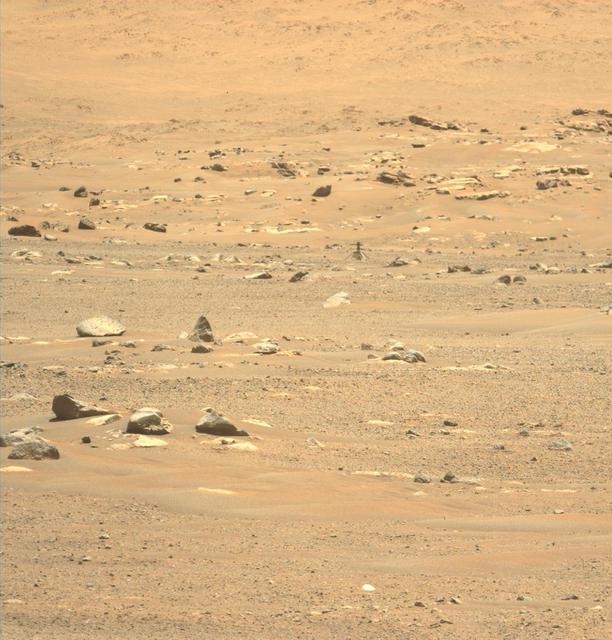
One of the Navcam imagers aboard NASA's Perseverance Mars rover captured the Ingenuity Mars Helicopter on Feb. 26, 2023, the 719th Martian day, or sol, of the mission. The helicopter is visible in the upper left of image. Ingenuity had landed there, at "Airfield Theta," on the previous sol at the conclusion of its 46th flight on Mars. At the time this enhanced image was taken, the helicopter was approximately 490 feet (150 meters) from the rover.  Figure A is the same enhanced image annotated to indicate the location of the Mars Helicopter in the distance.  A key objective for Perseverance's mission on Mars is astrobiology, including the search for signs of ancient microbial life. The rover will characterize the planet's geology and past climate, pave the way for human exploration of the Red Planet, and be the first mission to collect and cache Martian rock and regolith (broken rock and dust).  Subsequent NASA missions, in cooperation with ESA (European Space Agency), would send spacecraft to Mars to collect these sealed samples from the surface and return them to Earth for in-depth analysis.  The Mars 2020 Perseverance mission is part of NASA's Moon to Mars exploration approach, which includes Artemis missions to the Moon that will help prepare for human exploration of the Red Planet.NASA's Jet Propulsion Laboratory, which is managed for the agency by Caltech in Pasadena, California, built and manages operations of the Perseverance rover.  https://photojournal.jpl.nasa.gov/catalog/PIA25685
Perseverance's Navcam Captures Ingenuity
This image of Ingenuity was taken on May 23, 2021 – the day after its sixth flight – by the Mastcam-Z instrument aboard the Perseverance Mars rover.  https://photojournal.jpl.nasa.gov/catalog/PIA24599
Ingenuity at Third Airfield
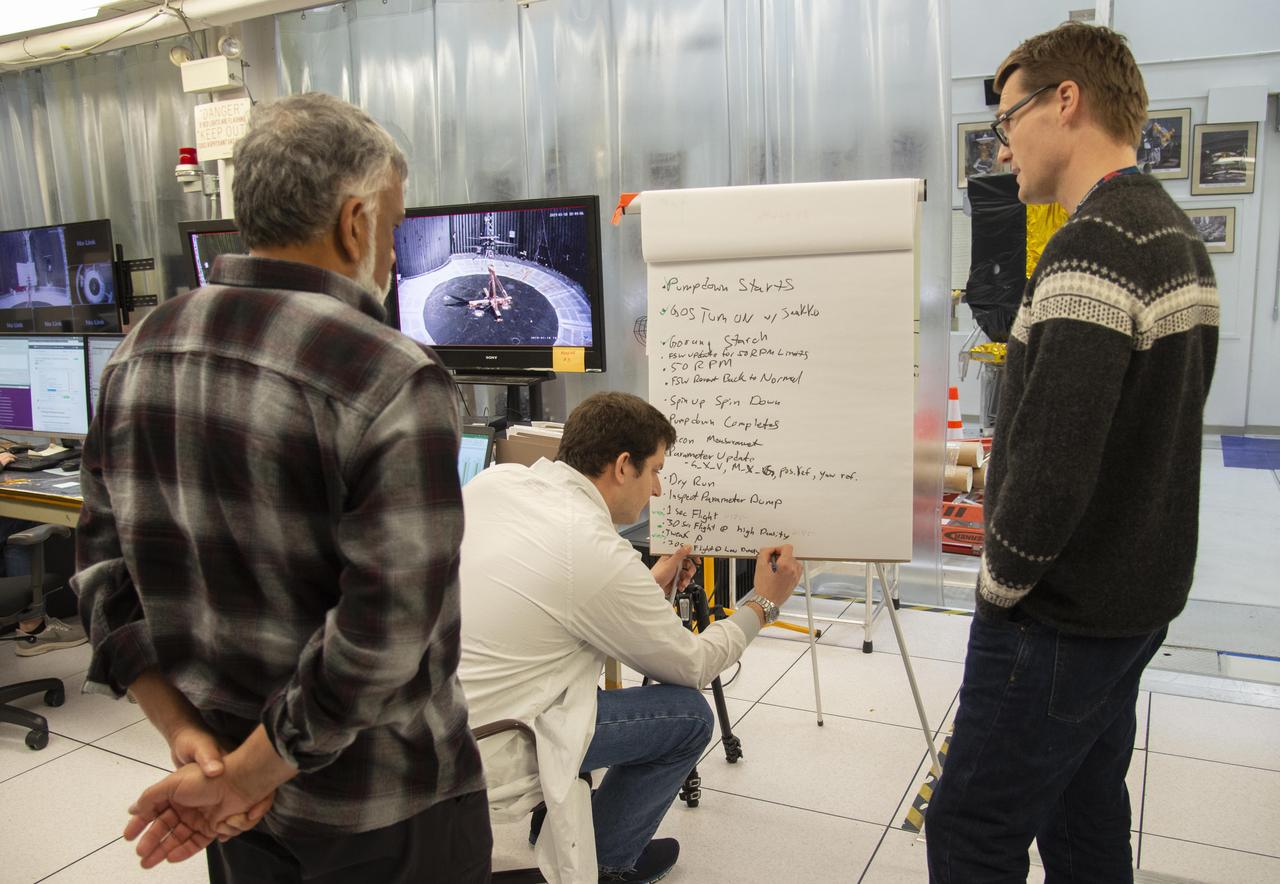
Bob Balaram, Teddy Tzanetos and Havard Grip from the NASA Mars Helicopter project discuss the sequence of events for the day's flight testing. The image was taken Jan. 18, 2019.  https://photojournal.jpl.nasa.gov/catalog/PIA23162
Prepping for a Mars Helicopter Test
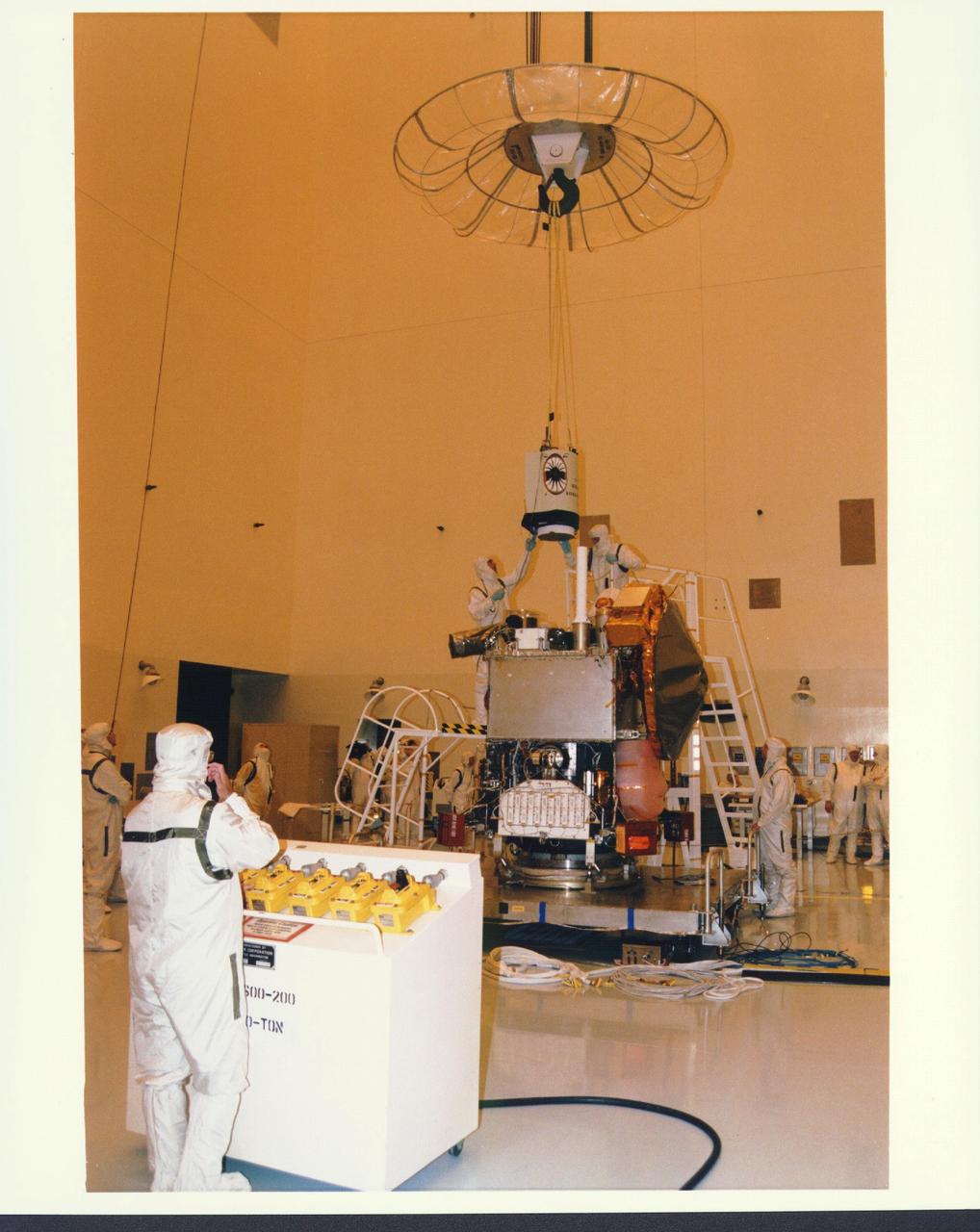
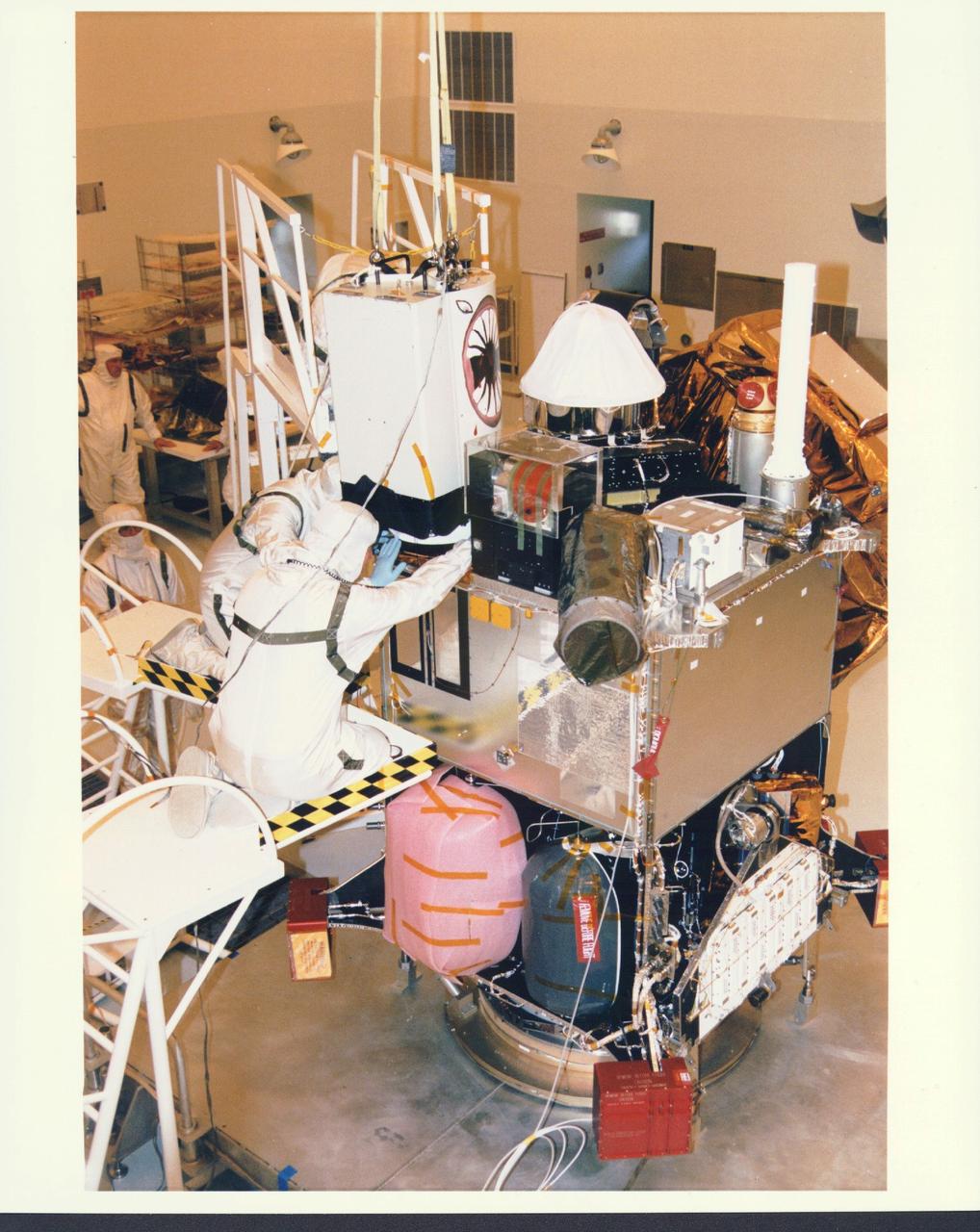
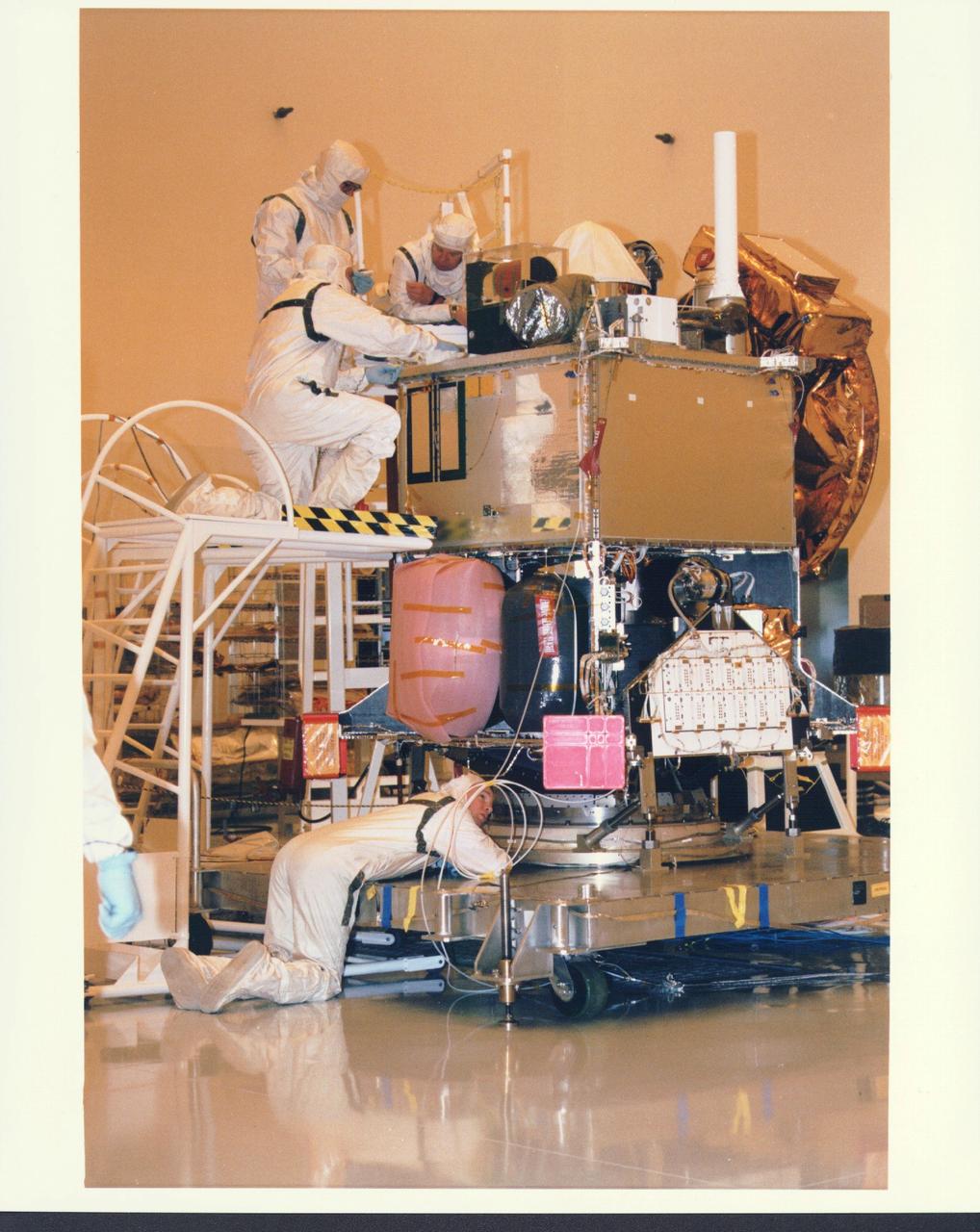
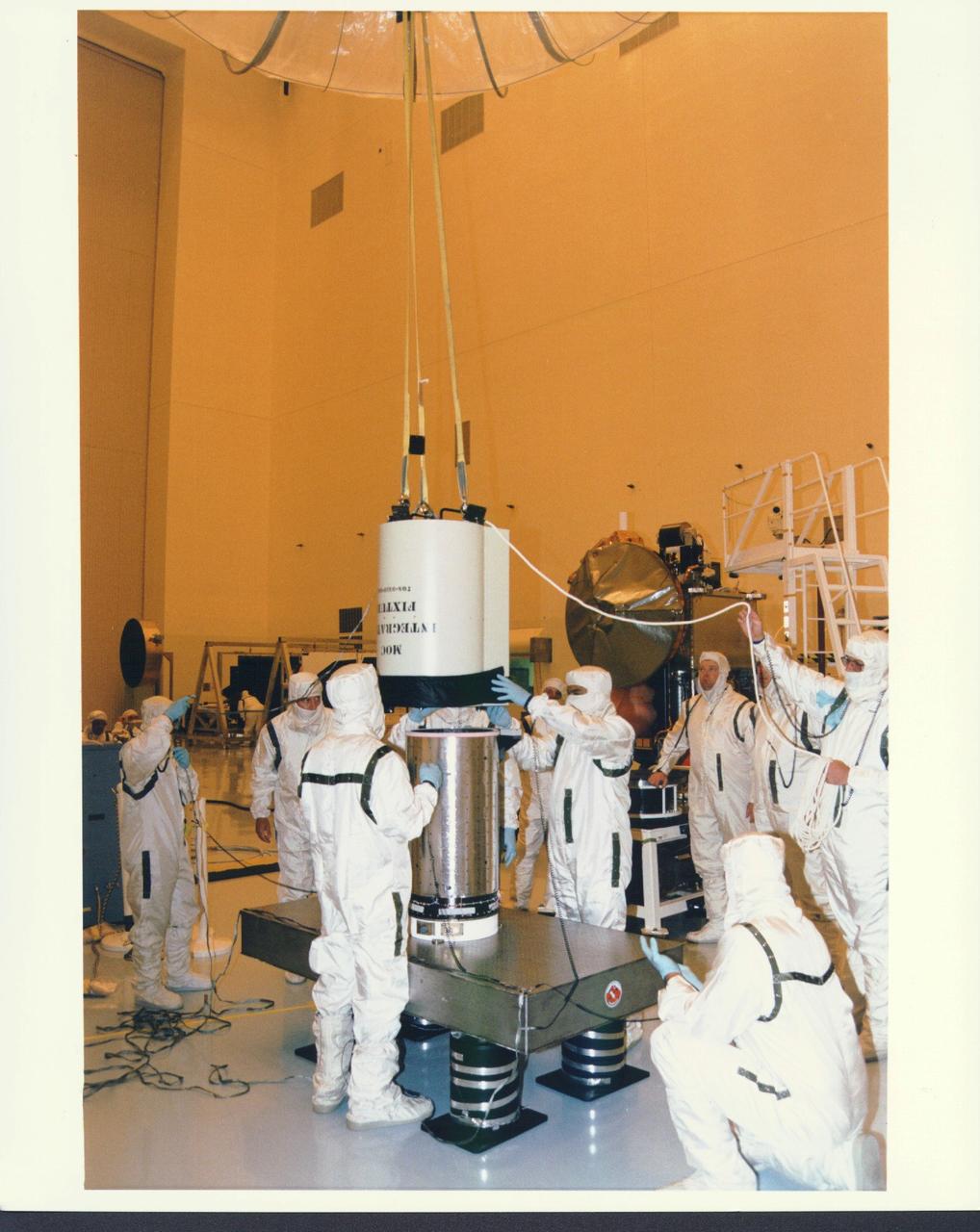
KENNEDY SPACE CENTER, FLA. -  In the Payload Hazardous Servicing Facility at KSC, installation is under way of the Mars Orbiter Camera (MOC) on the Mars Global Surveyor spacecraft.  The MOC is one of a suite of six scientific instruments that will gather data about Martian topography, mineral distribution and weather during a two-year period.  The Mars Global Surveyor is slated for launch aboard a Delta II expendable launch vehicle on Nov. 6, the beginning of a 20-day launch period.
KENNEDY SPACE CENTER, FLA. - In the Payload Hazardous Servicing Facility at KSC, installation is under way of the Mars Orbiter Camera (MOC) on the Mars Global Surveyor spacecraft. The MOC is one of a suite of six scientific instruments that will gather data about Martian topography, mineral distribution and weather during a two-year period. The Mars Global Surveyor is slated for launch aboard a Delta II expendable launch vehicle on Nov. 6, the beginning of a 20-day launch period.
KENNEDY SPACE CENTER, FLA. -  In the Payload Hazardous Servicing Facility at KSC, installation is under way of the Mars Orbiter Camera (MOC) on the Mars Global Surveyor spacecraft.  The MOC is one of a suite of six scientific instruments that will gather data about Martian topography, mineral distribution and weather during a two-year period.  The Mars Global Surveyor is slated for launch aboard a Delta II expendable launch vehicle on Nov. 6, the beginning of a 20-day launch period.
KENNEDY SPACE CENTER, FLA. - In the Payload Hazardous Servicing Facility at KSC, installation is under way of the Mars Orbiter Camera (MOC) on the Mars Global Surveyor spacecraft. The MOC is one of a suite of six scientific instruments that will gather data about Martian topography, mineral distribution and weather during a two-year period. The Mars Global Surveyor is slated for launch aboard a Delta II expendable launch vehicle on Nov. 6, the beginning of a 20-day launch period.
KENNEDY SPACE CENTER, FLA. -  In the Payload Hazardous Servicing Facility at KSC, installation is under way of the Mars Orbiter Camera (MOC) on the Mars Global Surveyor spacecraft.  The MOC is one of a suite of six scientific instruments that will gather data about Martian topography, mineral distribution and weather during a two-year period.  The Mars Global Surveyor is slated for launch aboard a Delta II expendable launch vehicle on Nov. 6, the beginning of a 20-day launch period.
KENNEDY SPACE CENTER, FLA. - In the Payload Hazardous Servicing Facility at KSC, installation is under way of the Mars Orbiter Camera (MOC) on the Mars Global Surveyor spacecraft. The MOC is one of a suite of six scientific instruments that will gather data about Martian topography, mineral distribution and weather during a two-year period. The Mars Global Surveyor is slated for launch aboard a Delta II expendable launch vehicle on Nov. 6, the beginning of a 20-day launch period.
KENNEDY SPACE CENTER, FLA. -  In the Payload Hazardous Servicing Facility at KSC, installation is under way of the Mars Orbiter Camera (MOC) on the Mars Global Surveyor spacecraft.  The MOC is one of a suite of six scientific instruments that will gather data about Martian topography, mineral distribution and weather during a two-year period.  The Mars Global Surveyor is slated for launch aboard a Delta II expendable launch vehicle on Nov. 6, the beginning of a 20-day launch period.
KENNEDY SPACE CENTER, FLA. - In the Payload Hazardous Servicing Facility at KSC, installation is under way of the Mars Orbiter Camera (MOC) on the Mars Global Surveyor spacecraft. The MOC is one of a suite of six scientific instruments that will gather data about Martian topography, mineral distribution and weather during a two-year period. The Mars Global Surveyor is slated for launch aboard a Delta II expendable launch vehicle on Nov. 6, the beginning of a 20-day launch period.
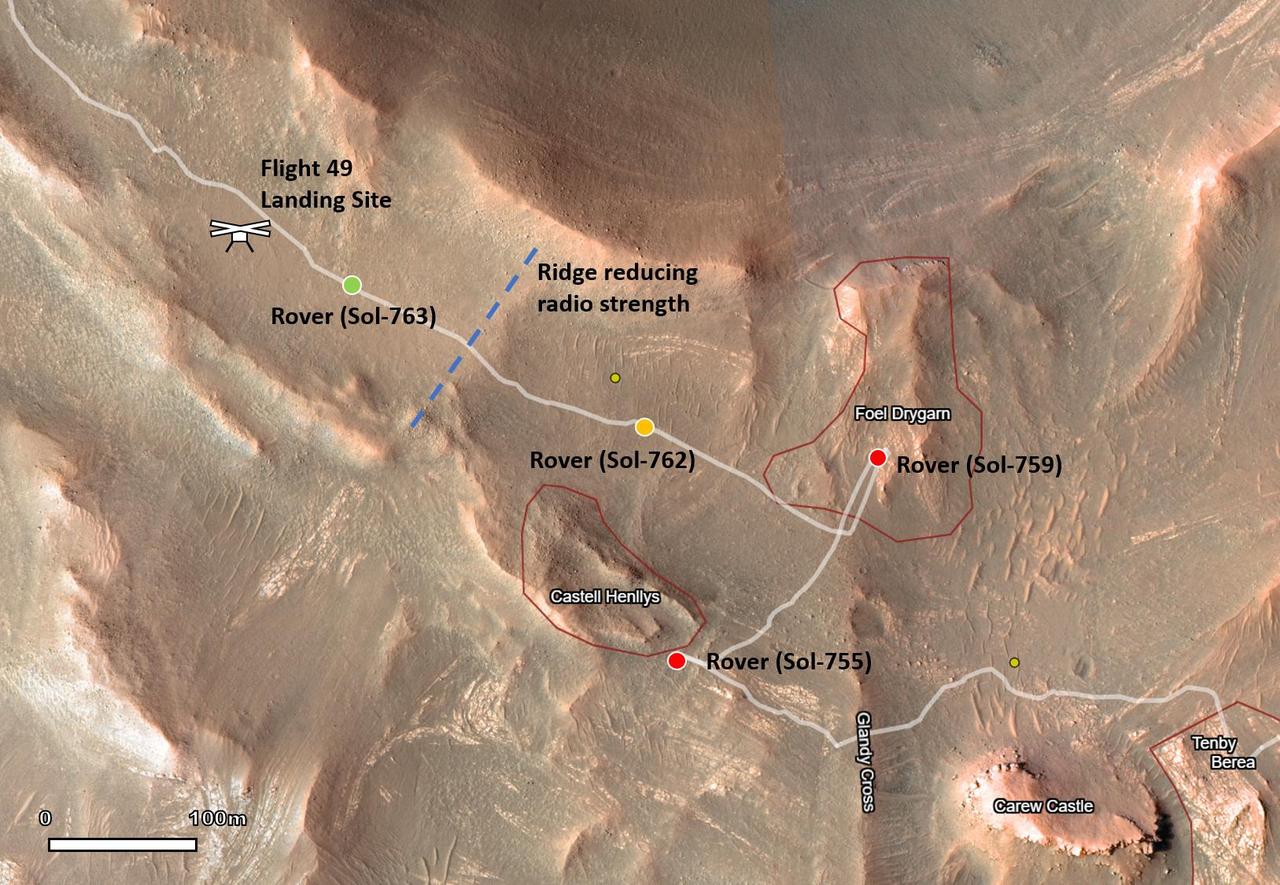
This map shows the locations of NASA's Perseverance Mars rover and its Ingenuity Mars Helicopter in the sols (Martian days) leading up to the helicopter's 50th flight. The helicopter icon can be seen in the upper left. The rover is shown with a red dot in places where communications with the helicopter were impossible. The rover is shown with a yellow dot at its location when the Flight 50 prep sequence was transferred from rover to helicopter. The rover is shown with a green dot at its nearest point to the helicopter before Flight 50 was executed.  Ingenuity's 49th flight occurred on April 2, 2023, the 752nd Martian day, or sol, of the rover's mission. The 50th flight occurred April 13, 2023, the 763rd Martian sol of the mission.  https://photojournal.jpl.nasa.gov/catalog/PIA25961
Leading Up to Flight 50
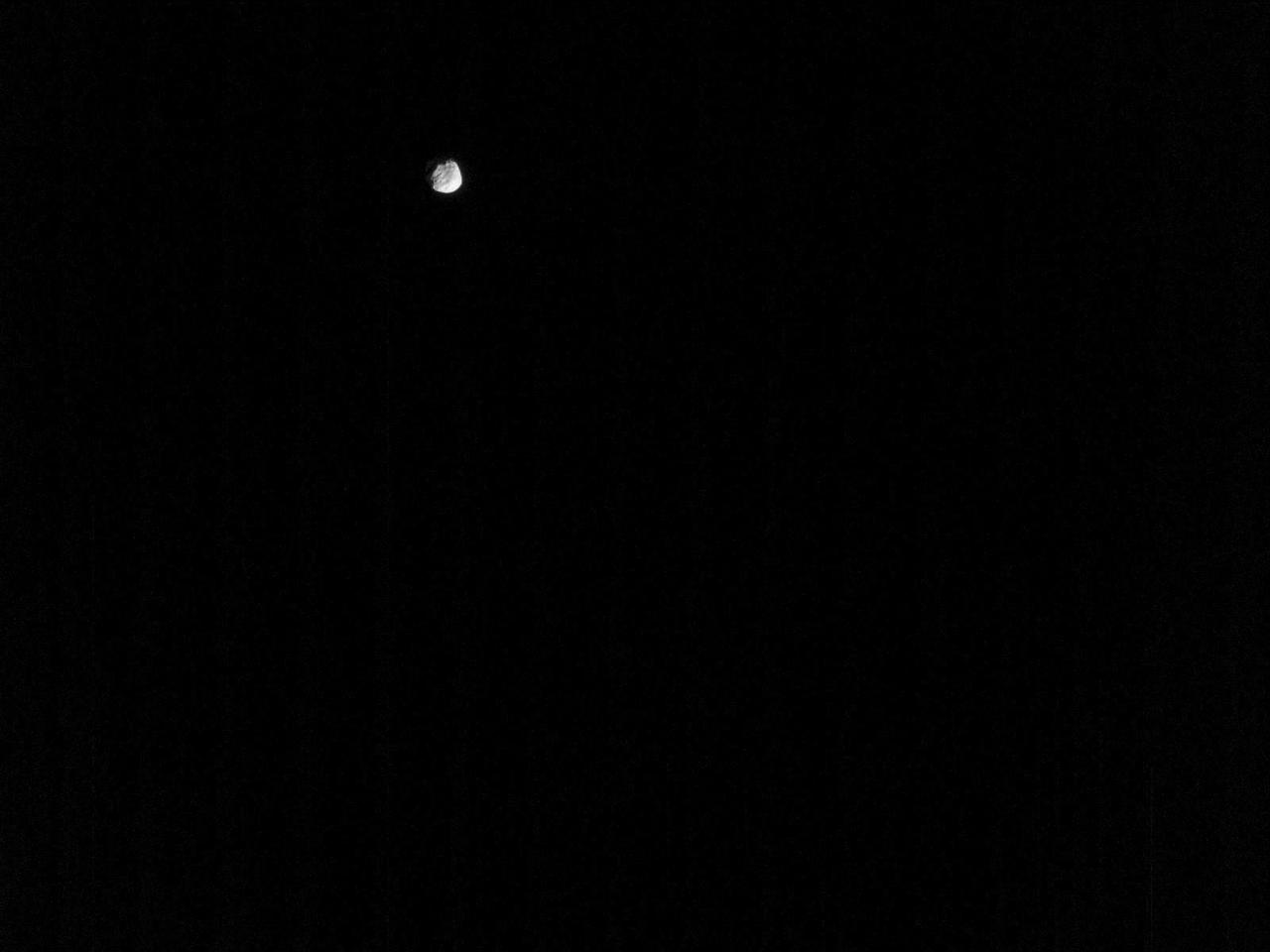
NASA's Perseverance Mars rover used its Mastcam-Z camera to view Phobos, one of Mars' two moons, on Jan. 12, 2022, the 319th Martian day, or sol, of the mission. The Perseverance team took this image to measure the amount of dust in the planet's nighttime atmosphere, which can be compared to similar measurements made by imaging the Sun during the day.  A key objective for Perseverance's mission on Mars is astrobiology, including the search for signs of ancient microbial life. The rover will characterize the planet's geology and past climate, pave the way for human exploration of the Red Planet, and be the first mission to collect and cache Martian rock and regolith (broken rock and dust).  Subsequent NASA missions, in cooperation with ESA (European Space Agency), would send spacecraft to Mars to collect these sealed samples from the surface and return them to Earth for in-depth analysis.  The Mars 2020 Perseverance mission is part of NASA's Moon to Mars exploration approach, which includes Artemis missions to the Moon that will help prepare for human exploration of the Red Planet.  https://photojournal.jpl.nasa.gov/catalog/PIA25419
Perseverance Views Phobos
KENNEDY SPACE CENTER, FLA. - At Launch Complex 17-A, Cape Canaveral Air Force Station, the first half of the fairing for the Mars Exploration Rover 2 (MER-2) closes in on the spacecraft.  MER-2 is one of NASA's twin Mars Exploration Rovers designed to study the history of water on Mars. These robotic geologists are equipped with a robotic arm, a drilling tool, three spectrometers, and four pairs of cameras that allow them to have a human-like, 3D view of the terrain. Each rover could travel as far as 100 meters in one day to act as Mars scientists' eyes and hands, exploring an environment where humans can't yet go.  MER-2 is scheduled to launch no earlier than June 8 as MER-A, with two launch opportunities each day during the launch period that closes on June 19.
KENNEDY SPACE CENTER, FLA. - At Launch Complex 17-A, Cape Canaveral Air Force Station, the first half of the fairing for the Mars Exploration Rover 2 (MER-2) closes in on the spacecraft. MER-2 is one of NASA's twin Mars Exploration Rovers designed to study the history of water on Mars. These robotic geologists are equipped with a robotic arm, a drilling tool, three spectrometers, and four pairs of cameras that allow them to have a human-like, 3D view of the terrain. Each rover could travel as far as 100 meters in one day to act as Mars scientists' eyes and hands, exploring an environment where humans can't yet go. MER-2 is scheduled to launch no earlier than June 8 as MER-A, with two launch opportunities each day during the launch period that closes on June 19.
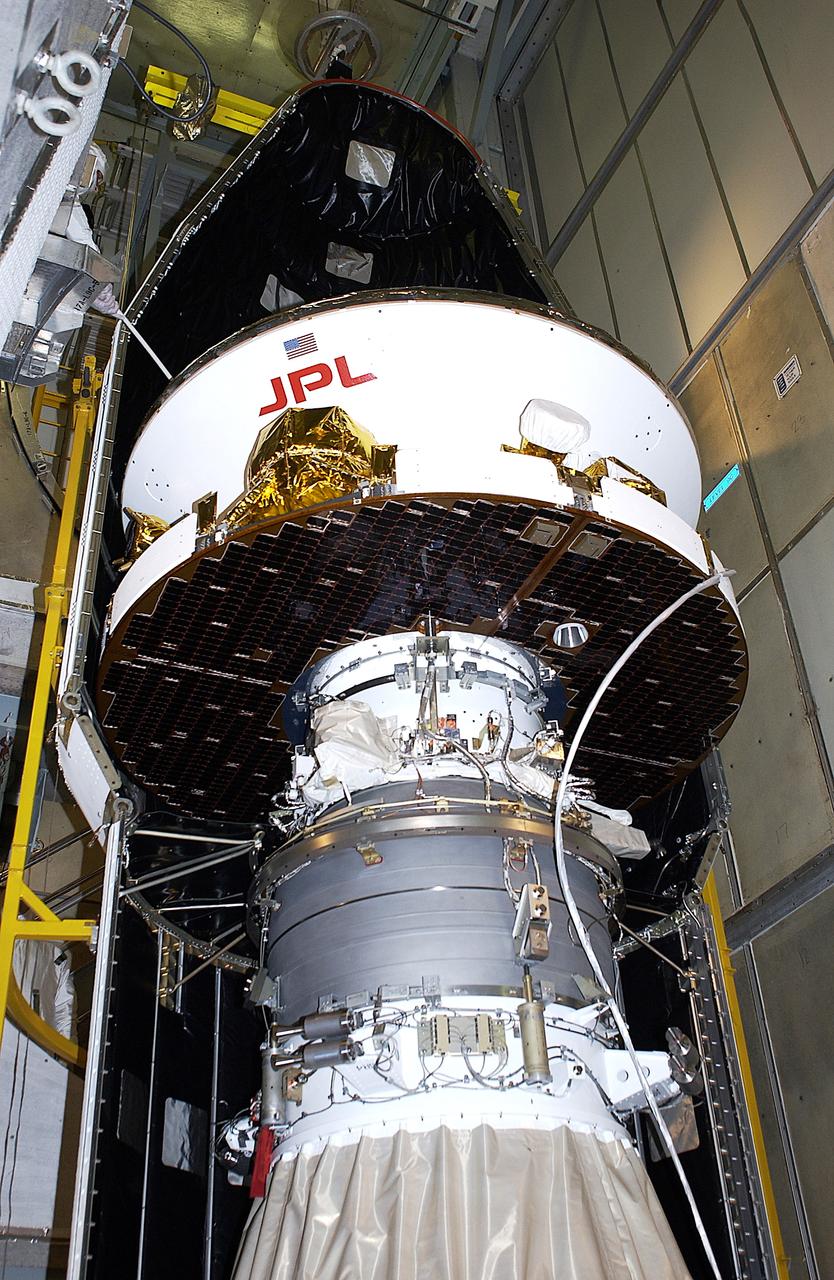
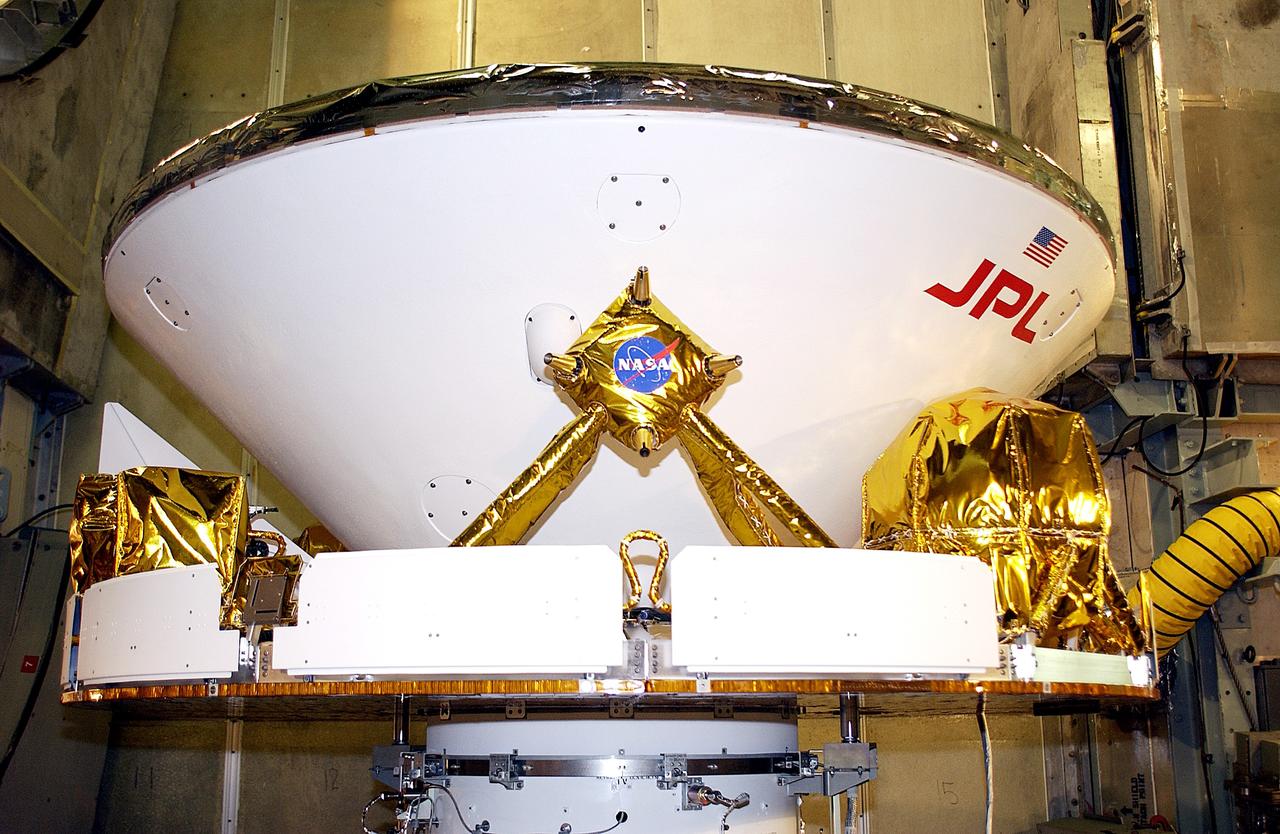
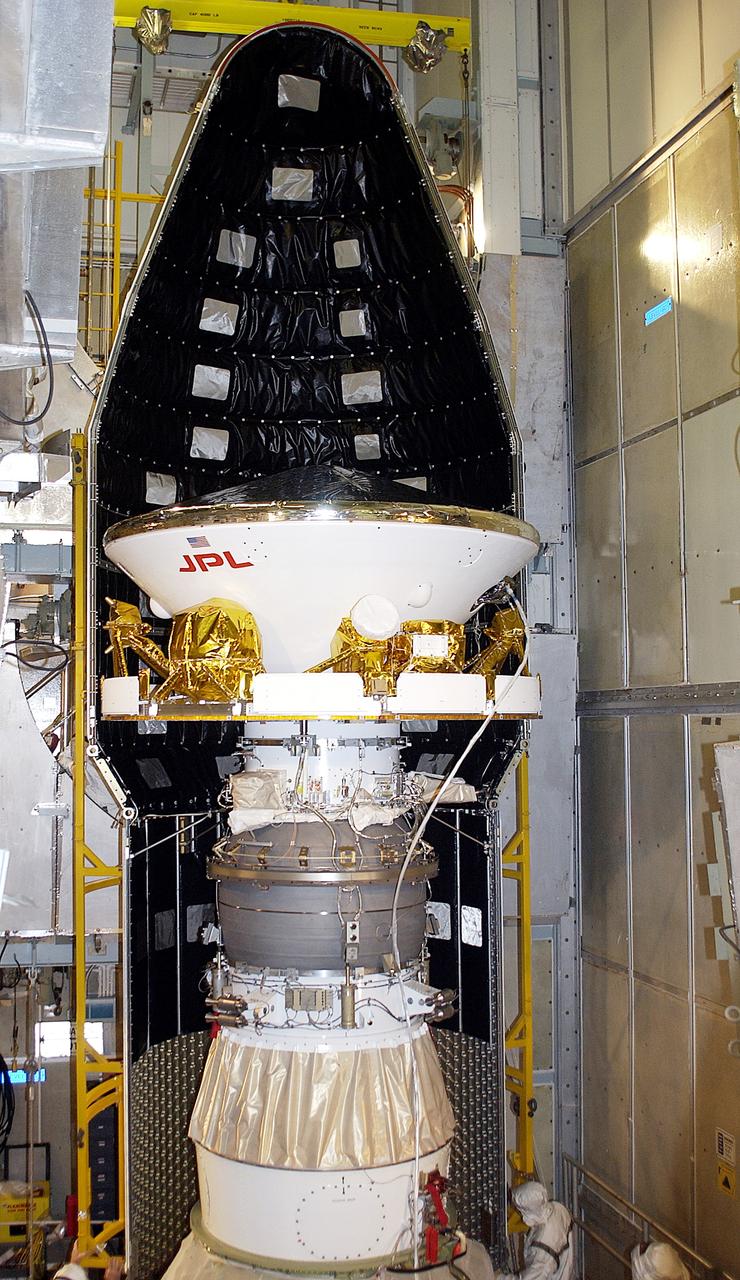
KENNEDY SPACE CENTER, FLA. - At Launch Complex 17-A, Cape Canaveral Air Force Station, the Mars Exploration Rover 2 (MER-2) is ready for installation of the fairing that will enclose it for launch. It is seen here already mated to the second stage of the Delta II rocket.  MER-2 is one of NASA's twin Mars Exploration Rovers designed to study the history of water on Mars. These robotic geologists are equipped with a robotic arm, a drilling tool, three spectrometers, and four pairs of cameras that allow them to have a human-like, 3D view of the terrain. Each rover could travel as far as 100 meters in one day to act as Mars scientists' eyes and hands, exploring an environment where humans can't yet go.  MER-2 is scheduled to launch no earlier than June 8 as MER-A, with two launch opportunities each day during the launch period that closes on June 19.
KENNEDY SPACE CENTER, FLA. - At Launch Complex 17-A, Cape Canaveral Air Force Station, the Mars Exploration Rover 2 (MER-2) is ready for installation of the fairing that will enclose it for launch. It is seen here already mated to the second stage of the Delta II rocket. MER-2 is one of NASA's twin Mars Exploration Rovers designed to study the history of water on Mars. These robotic geologists are equipped with a robotic arm, a drilling tool, three spectrometers, and four pairs of cameras that allow them to have a human-like, 3D view of the terrain. Each rover could travel as far as 100 meters in one day to act as Mars scientists' eyes and hands, exploring an environment where humans can't yet go. MER-2 is scheduled to launch no earlier than June 8 as MER-A, with two launch opportunities each day during the launch period that closes on June 19.
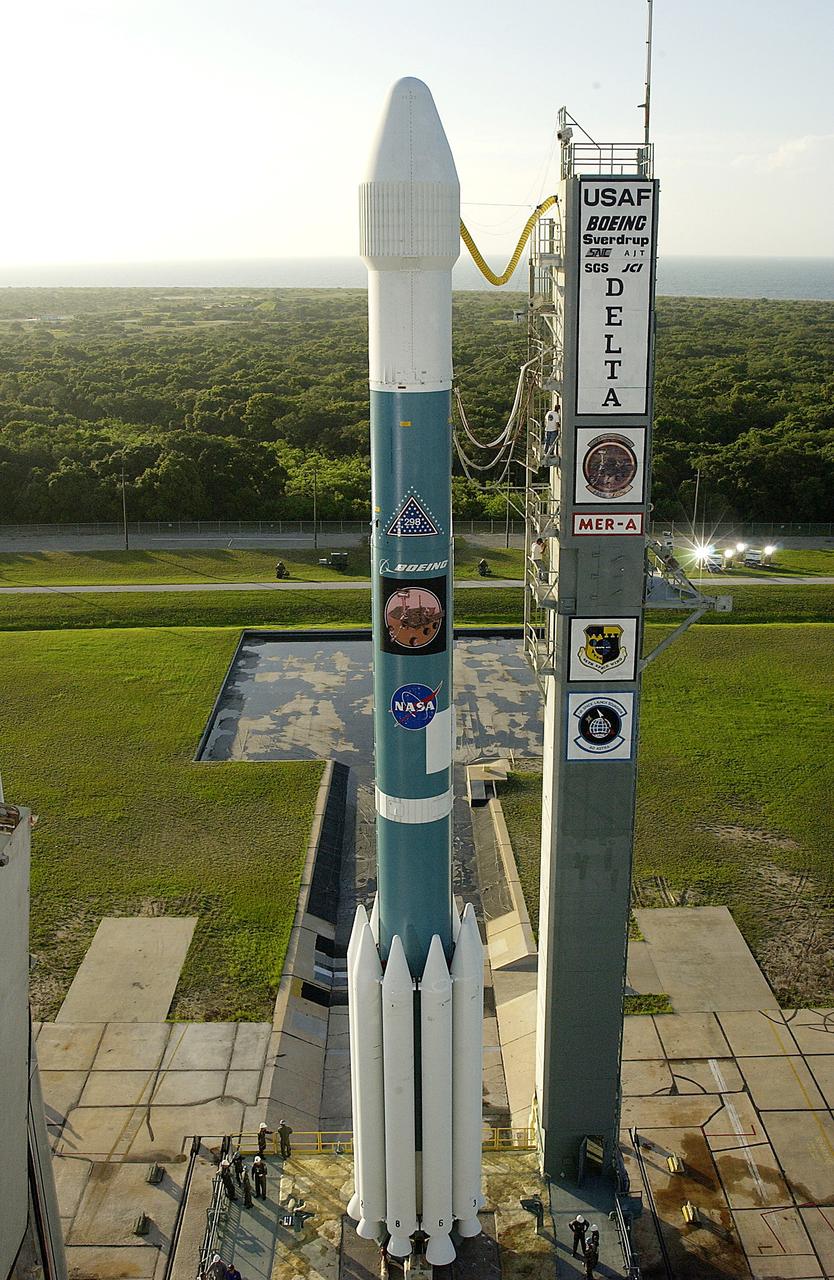
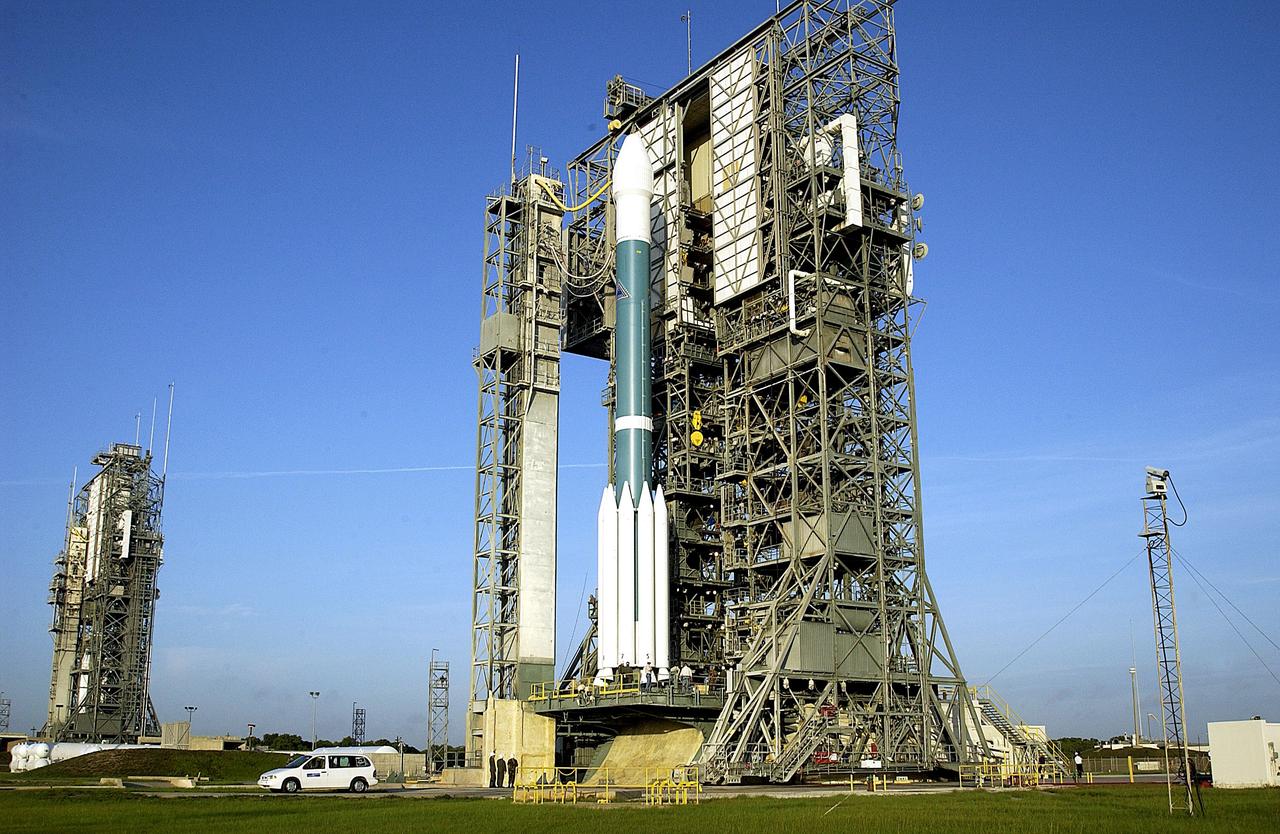
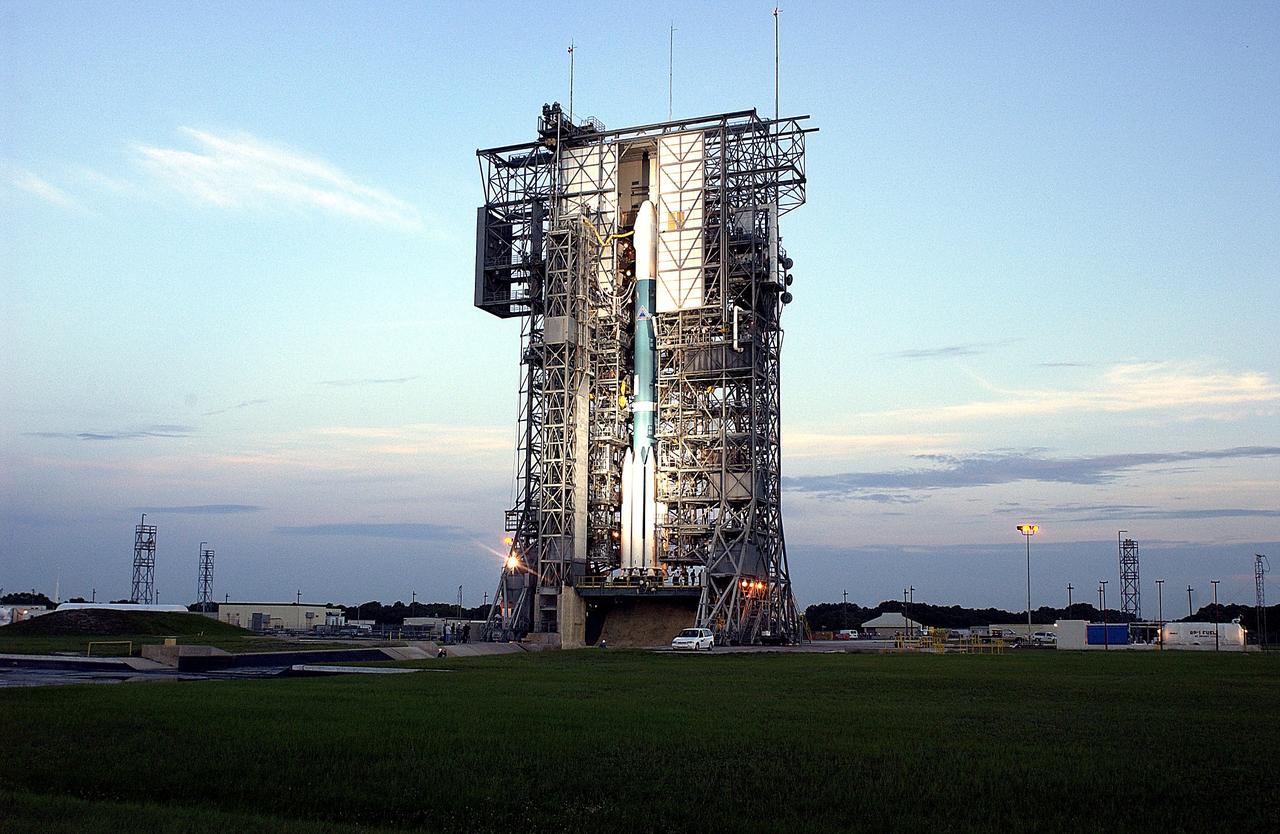
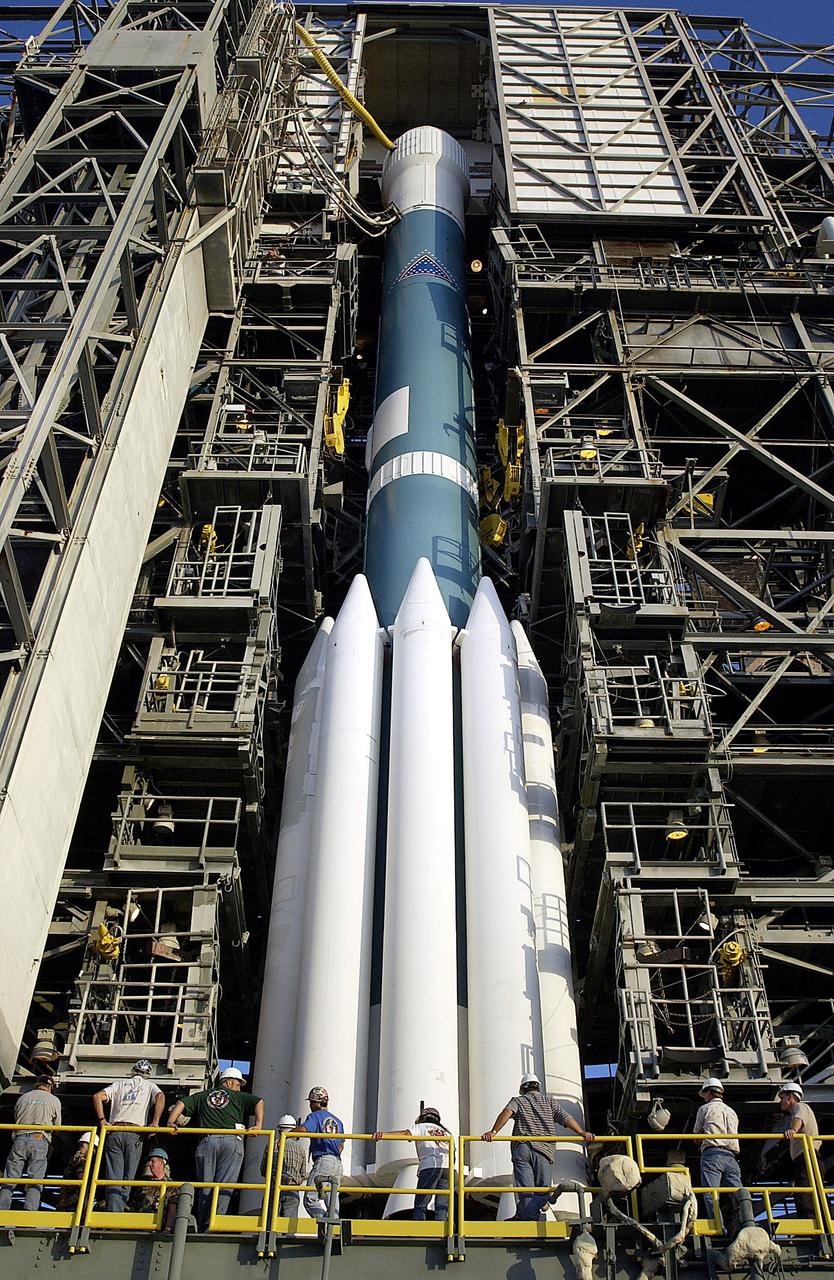
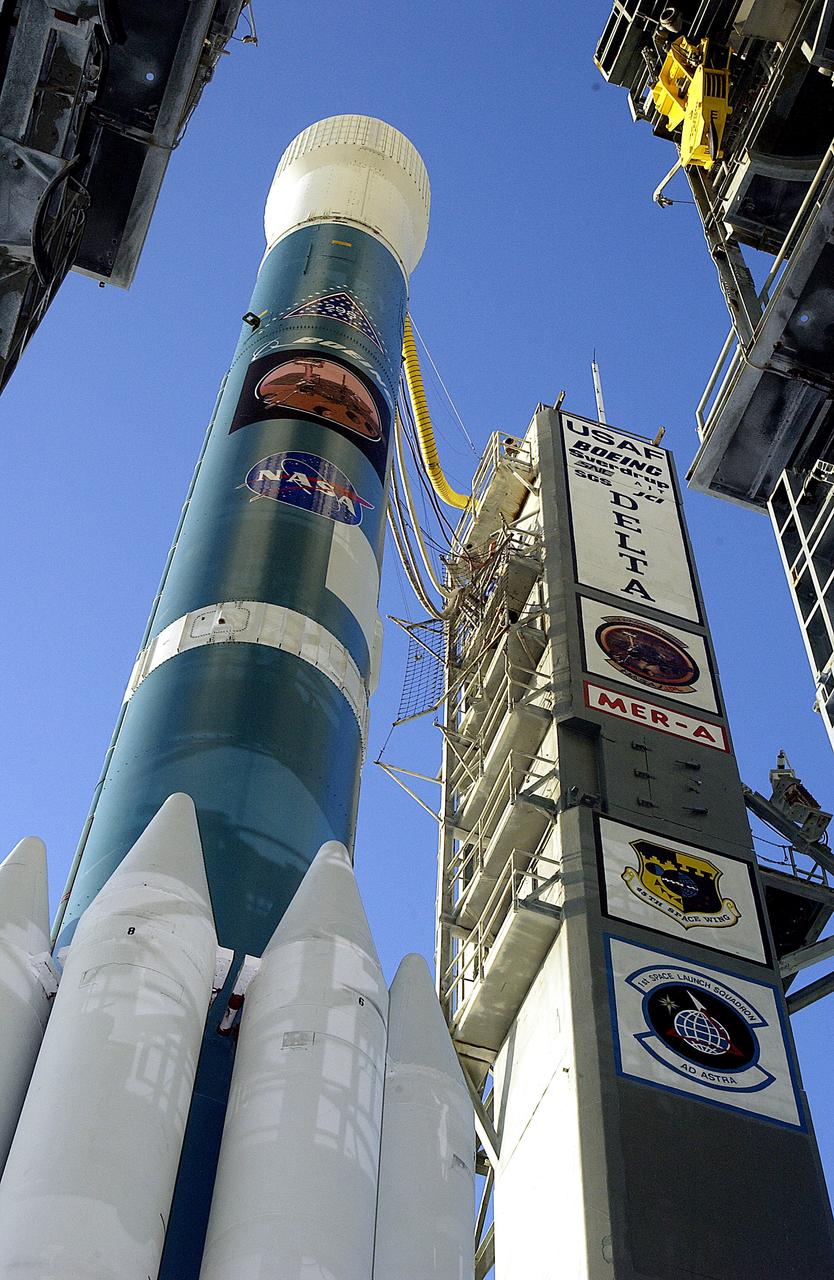
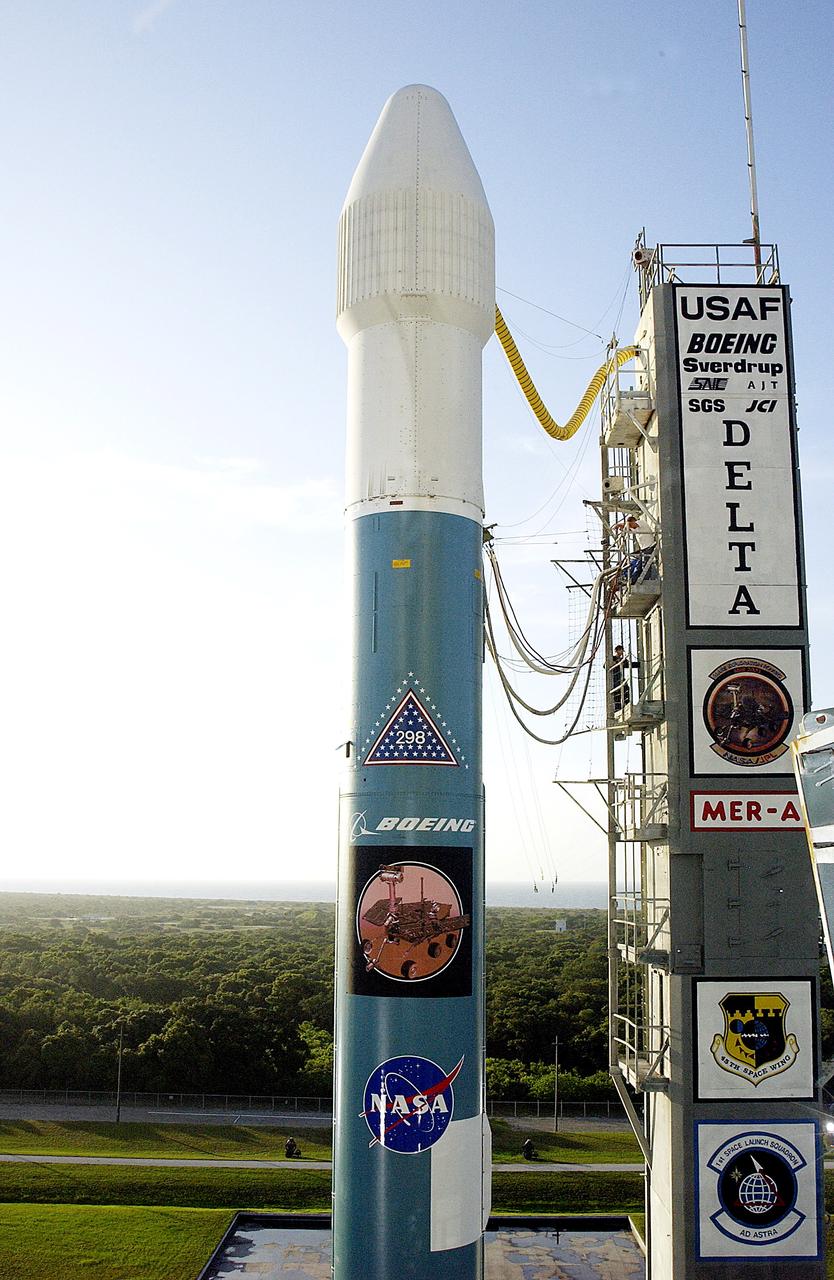
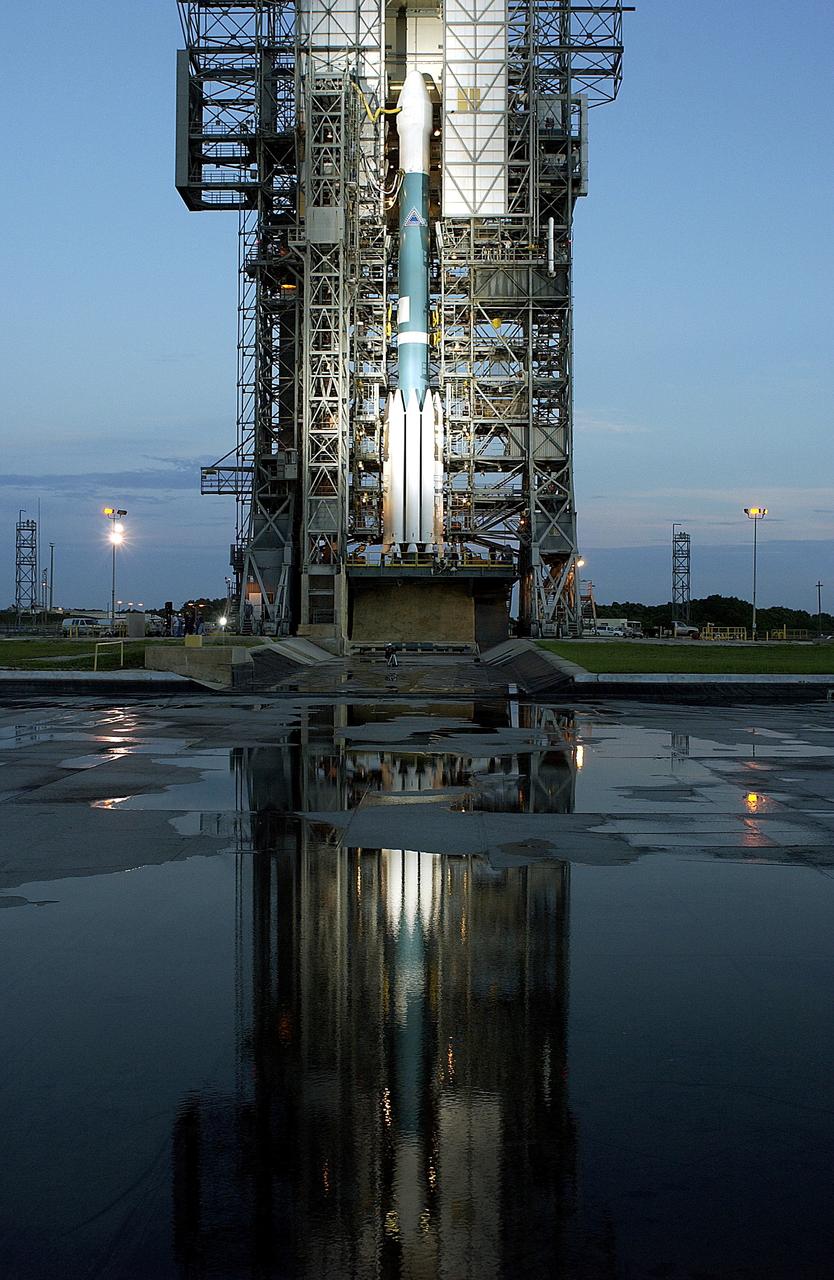
KENNEDY SPACE CENTER, FLA. -  The Mobile Service Tower is rolled back at Launch Complex 17A to reveal a Delta II rocket ready to launch the Mars Exploration Rover-A mission.  NASA's twin Mars Exploration Rovers are designed to study the history of water on Mars. These robotic geologists are equipped with a robotic arm, a drilling tool, three spectrometers, and four pairs of cameras that allow them to have a human-like, 3D view of the terrain. Each rover could travel as far as 100 meters in one day to act as Mars scientists' eyes and hands, exploring an environment where humans are not yet able to go. MER-A, with the rover Spirit aboard, is scheduled to launch on June 8 at 2:06 p.m. EDT, with two launch opportunities each day during a launch period that closes on June 24.
KENNEDY SPACE CENTER, FLA. - The Mobile Service Tower is rolled back at Launch Complex 17A to reveal a Delta II rocket ready to launch the Mars Exploration Rover-A mission. NASA's twin Mars Exploration Rovers are designed to study the history of water on Mars. These robotic geologists are equipped with a robotic arm, a drilling tool, three spectrometers, and four pairs of cameras that allow them to have a human-like, 3D view of the terrain. Each rover could travel as far as 100 meters in one day to act as Mars scientists' eyes and hands, exploring an environment where humans are not yet able to go. MER-A, with the rover Spirit aboard, is scheduled to launch on June 8 at 2:06 p.m. EDT, with two launch opportunities each day during a launch period that closes on June 24.
KENNEDY SPACE CENTER, FLA. -  The Mobile Service Tower is rolled back at Launch Complex 17A to reveal a Delta II rocket ready to launch the Mars Exploration Rover-A mission.  NASA's twin Mars Exploration Rovers are designed to study the history of water on Mars. These robotic geologists are equipped with a robotic arm, a drilling tool, three spectrometers, and four pairs of cameras that allow them to have a human-like, 3D view of the terrain. Each rover could travel as far as 100 meters in one day to act as Mars scientists' eyes and hands, exploring an environment where humans are not yet able to go. MER-A, with the rover Spirit aboard, is scheduled to launch on June 8 at 2:06 p.m. EDT, with two launch opportunities each day during a launch period that closes on June 24.
KENNEDY SPACE CENTER, FLA. - The Mobile Service Tower is rolled back at Launch Complex 17A to reveal a Delta II rocket ready to launch the Mars Exploration Rover-A mission. NASA's twin Mars Exploration Rovers are designed to study the history of water on Mars. These robotic geologists are equipped with a robotic arm, a drilling tool, three spectrometers, and four pairs of cameras that allow them to have a human-like, 3D view of the terrain. Each rover could travel as far as 100 meters in one day to act as Mars scientists' eyes and hands, exploring an environment where humans are not yet able to go. MER-A, with the rover Spirit aboard, is scheduled to launch on June 8 at 2:06 p.m. EDT, with two launch opportunities each day during a launch period that closes on June 24.
KENNEDY SPACE CENTER, FLA. -  The Mobile Service Tower is rolled back at Launch Complex 17A to reveal a Delta II rocket ready to launch the Mars Exploration Rover-A mission.  NASA's twin Mars Exploration Rovers are designed to study the history of water on Mars. These robotic geologists are equipped with a robotic arm, a drilling tool, three spectrometers, and four pairs of cameras that allow them to have a human-like, 3D view of the terrain. Each rover could travel as far as 100 meters in one day to act as Mars scientists' eyes and hands, exploring an environment where humans are not yet able to go. MER-A, with the rover Spirit aboard, is scheduled to launch on June 8 at 2:06 p.m. EDT, with two launch opportunities each day during a launch period that closes on June 24.
KENNEDY SPACE CENTER, FLA. - The Mobile Service Tower is rolled back at Launch Complex 17A to reveal a Delta II rocket ready to launch the Mars Exploration Rover-A mission. NASA's twin Mars Exploration Rovers are designed to study the history of water on Mars. These robotic geologists are equipped with a robotic arm, a drilling tool, three spectrometers, and four pairs of cameras that allow them to have a human-like, 3D view of the terrain. Each rover could travel as far as 100 meters in one day to act as Mars scientists' eyes and hands, exploring an environment where humans are not yet able to go. MER-A, with the rover Spirit aboard, is scheduled to launch on June 8 at 2:06 p.m. EDT, with two launch opportunities each day during a launch period that closes on June 24.
KENNEDY SPACE CENTER, FLA. -  The Mobile Service Tower is rolled back at Launch Complex 17A to reveal a Delta II rocket ready to launch the Mars Exploration Rover-A mission.  NASA's twin Mars Exploration Rovers are designed to study the history of water on Mars. These robotic geologists are equipped with a robotic arm, a drilling tool, three spectrometers, and four pairs of cameras that allow them to have a human-like, 3D view of the terrain. Each rover could travel as far as 100 meters in one day to act as Mars scientists' eyes and hands, exploring an environment where humans are not yet able to go. MER-A, with the rover Spirit aboard, is scheduled to launch on June 8 at 2:06 p.m. EDT, with two launch opportunities each day during a launch period that closes on June 24.
KENNEDY SPACE CENTER, FLA. - The Mobile Service Tower is rolled back at Launch Complex 17A to reveal a Delta II rocket ready to launch the Mars Exploration Rover-A mission. NASA's twin Mars Exploration Rovers are designed to study the history of water on Mars. These robotic geologists are equipped with a robotic arm, a drilling tool, three spectrometers, and four pairs of cameras that allow them to have a human-like, 3D view of the terrain. Each rover could travel as far as 100 meters in one day to act as Mars scientists' eyes and hands, exploring an environment where humans are not yet able to go. MER-A, with the rover Spirit aboard, is scheduled to launch on June 8 at 2:06 p.m. EDT, with two launch opportunities each day during a launch period that closes on June 24.
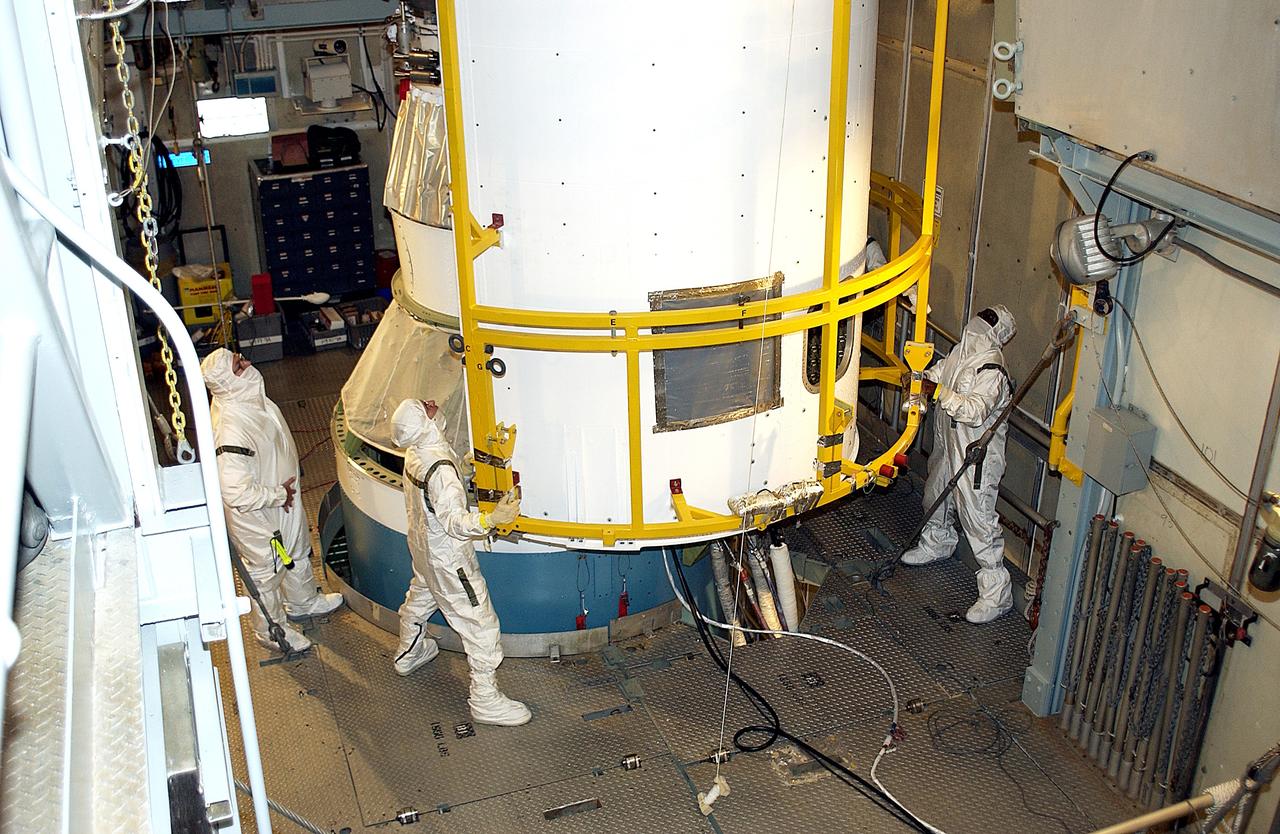
KENNEDY SPACE CENTER, FLA. -  The second half of the fairing is moved toward the Mars Exploration Rover 2 (MER-2) on Launch Complex 17-A, Cape Canaveral Air Force Station.  MER-2 is one of NASA's twin Mars Exploration Rovers designed to study the history of water on Mars. These robotic geologists are equipped with a robotic arm, a drilling tool, three spectrometers, and four pairs of cameras that allow them to have a human-like, 3D view of the terrain. Each rover could travel as far as 100 meters in one day to act as Mars scientists' eyes and hands, exploring an environment where humans can't yet go.  MER-2 is scheduled to launch no earlier than June 8 as MER-A, with two launch opportunities each day during the launch period that closes on June 19.
KENNEDY SPACE CENTER, FLA. - The second half of the fairing is moved toward the Mars Exploration Rover 2 (MER-2) on Launch Complex 17-A, Cape Canaveral Air Force Station. MER-2 is one of NASA's twin Mars Exploration Rovers designed to study the history of water on Mars. These robotic geologists are equipped with a robotic arm, a drilling tool, three spectrometers, and four pairs of cameras that allow them to have a human-like, 3D view of the terrain. Each rover could travel as far as 100 meters in one day to act as Mars scientists' eyes and hands, exploring an environment where humans can't yet go. MER-2 is scheduled to launch no earlier than June 8 as MER-A, with two launch opportunities each day during the launch period that closes on June 19.
KENNEDY SPACE CENTER, FLA. - The second half of the fairing is moved toward the Mars Exploration Rover 2 (MER-2) on Launch Complex 17-A, Cape Canaveral Air Force Station.  MER-2 is one of NASA's twin Mars Exploration Rovers designed to study the history of water on Mars. These robotic geologists are equipped with a robotic arm, a drilling tool, three spectrometers, and four pairs of cameras that allow them to have a human-like, 3D view of the terrain. Each rover could travel as far as 100 meters in one day to act as Mars scientists' eyes and hands, exploring an environment where humans can't yet go.  MER-2 is scheduled to launch no earlier than June 8 as MER-A, with two launch opportunities each day during the launch period that closes on June 19.
KENNEDY SPACE CENTER, FLA. - The second half of the fairing is moved toward the Mars Exploration Rover 2 (MER-2) on Launch Complex 17-A, Cape Canaveral Air Force Station. MER-2 is one of NASA's twin Mars Exploration Rovers designed to study the history of water on Mars. These robotic geologists are equipped with a robotic arm, a drilling tool, three spectrometers, and four pairs of cameras that allow them to have a human-like, 3D view of the terrain. Each rover could travel as far as 100 meters in one day to act as Mars scientists' eyes and hands, exploring an environment where humans can't yet go. MER-2 is scheduled to launch no earlier than June 8 as MER-A, with two launch opportunities each day during the launch period that closes on June 19.
KENNEDY SPACE CENTER, FLA. -  The Mobile Service Tower is rolled back at Launch Complex 17A to reveal a Delta II rocket ready to launch the Mars Exploration Rover-A mission.  NASA's twin Mars Exploration Rovers are designed to study the history of water on Mars. These robotic geologists are equipped with a robotic arm, a drilling tool, three spectrometers, and four pairs of cameras that allow them to have a human-like, 3D view of the terrain. Each rover could travel as far as 100 meters in one day to act as Mars scientists' eyes and hands, exploring an environment where humans are not yet able to go. MER-A, with the rover Spirit aboard, is scheduled to launch on June 8 at 2:06 p.m. EDT, with two launch opportunities each day during a launch period that closes on June 24.
KENNEDY SPACE CENTER, FLA. - The Mobile Service Tower is rolled back at Launch Complex 17A to reveal a Delta II rocket ready to launch the Mars Exploration Rover-A mission. NASA's twin Mars Exploration Rovers are designed to study the history of water on Mars. These robotic geologists are equipped with a robotic arm, a drilling tool, three spectrometers, and four pairs of cameras that allow them to have a human-like, 3D view of the terrain. Each rover could travel as far as 100 meters in one day to act as Mars scientists' eyes and hands, exploring an environment where humans are not yet able to go. MER-A, with the rover Spirit aboard, is scheduled to launch on June 8 at 2:06 p.m. EDT, with two launch opportunities each day during a launch period that closes on June 24.
KENNEDY SPACE CENTER, FLA. -  The Mobile Service Tower is rolled back at Launch Complex 17A to reveal a Delta II rocket ready to launch the Mars Exploration Rover-A mission.  NASA's twin Mars Exploration Rovers are designed to study the history of water on Mars. These robotic geologists are equipped with a robotic arm, a drilling tool, three spectrometers, and four pairs of cameras that allow them to have a human-like, 3D view of the terrain. Each rover could travel as far as 100 meters in one day to act as Mars scientists' eyes and hands, exploring an environment where humans are not yet able to go. MER-A, with the rover Spirit aboard, is scheduled to launch on June 8 at 2:06 p.m. EDT, with two launch opportunities each day during a launch period that closes on June 24.
KENNEDY SPACE CENTER, FLA. - The Mobile Service Tower is rolled back at Launch Complex 17A to reveal a Delta II rocket ready to launch the Mars Exploration Rover-A mission. NASA's twin Mars Exploration Rovers are designed to study the history of water on Mars. These robotic geologists are equipped with a robotic arm, a drilling tool, three spectrometers, and four pairs of cameras that allow them to have a human-like, 3D view of the terrain. Each rover could travel as far as 100 meters in one day to act as Mars scientists' eyes and hands, exploring an environment where humans are not yet able to go. MER-A, with the rover Spirit aboard, is scheduled to launch on June 8 at 2:06 p.m. EDT, with two launch opportunities each day during a launch period that closes on June 24.
KENNEDY SPACE CENTER, FLA. - At Launch Complex 17-A, Cape Canaveral Air Force Station, the first half of the fairing for the Mars Exploration Rover 2 (MER-2) closes in on the spacecraft.  MER-2 is one of NASA's twin Mars Exploration Rovers designed to study the history of water on Mars. These robotic geologists are equipped with a robotic arm, a drilling tool, three spectrometers, and four pairs of cameras that allow them to have a human-like, 3D view of the terrain. Each rover could travel as far as 100 meters in one day to act as Mars scientists' eyes and hands, exploring an environment where humans can't yet go.  MER-2 is scheduled to launch no earlier than June 8 as MER-A, with two launch opportunities each day during the launch period that closes on June 19.
KENNEDY SPACE CENTER, FLA. - At Launch Complex 17-A, Cape Canaveral Air Force Station, the first half of the fairing for the Mars Exploration Rover 2 (MER-2) closes in on the spacecraft. MER-2 is one of NASA's twin Mars Exploration Rovers designed to study the history of water on Mars. These robotic geologists are equipped with a robotic arm, a drilling tool, three spectrometers, and four pairs of cameras that allow them to have a human-like, 3D view of the terrain. Each rover could travel as far as 100 meters in one day to act as Mars scientists' eyes and hands, exploring an environment where humans can't yet go. MER-2 is scheduled to launch no earlier than June 8 as MER-A, with two launch opportunities each day during the launch period that closes on June 19.
KENNEDY SPACE CENTER, FLA. - At Launch Complex 17-A, Cape Canaveral Air Force Station, the Mars Exploration Rover 2 (MER-2) is ready for installation of the fairing that will enclose it for launch.  MER-2 is one of NASA's twin Mars Exploration Rovers designed to study the history of water on Mars. These robotic geologists are equipped with a robotic arm, a drilling tool, three spectrometers, and four pairs of cameras that allow them to have a human-like, 3D view of the terrain. Each rover could travel as far as 100 meters in one day to act as Mars scientists' eyes and hands, exploring an environment where humans can't yet go.  MER-2 is scheduled to launch no earlier than June 8 as MER-A, with two launch opportunities each day during the launch period that closes on June 19.
KENNEDY SPACE CENTER, FLA. - At Launch Complex 17-A, Cape Canaveral Air Force Station, the Mars Exploration Rover 2 (MER-2) is ready for installation of the fairing that will enclose it for launch. MER-2 is one of NASA's twin Mars Exploration Rovers designed to study the history of water on Mars. These robotic geologists are equipped with a robotic arm, a drilling tool, three spectrometers, and four pairs of cameras that allow them to have a human-like, 3D view of the terrain. Each rover could travel as far as 100 meters in one day to act as Mars scientists' eyes and hands, exploring an environment where humans can't yet go. MER-2 is scheduled to launch no earlier than June 8 as MER-A, with two launch opportunities each day during the launch period that closes on June 19.
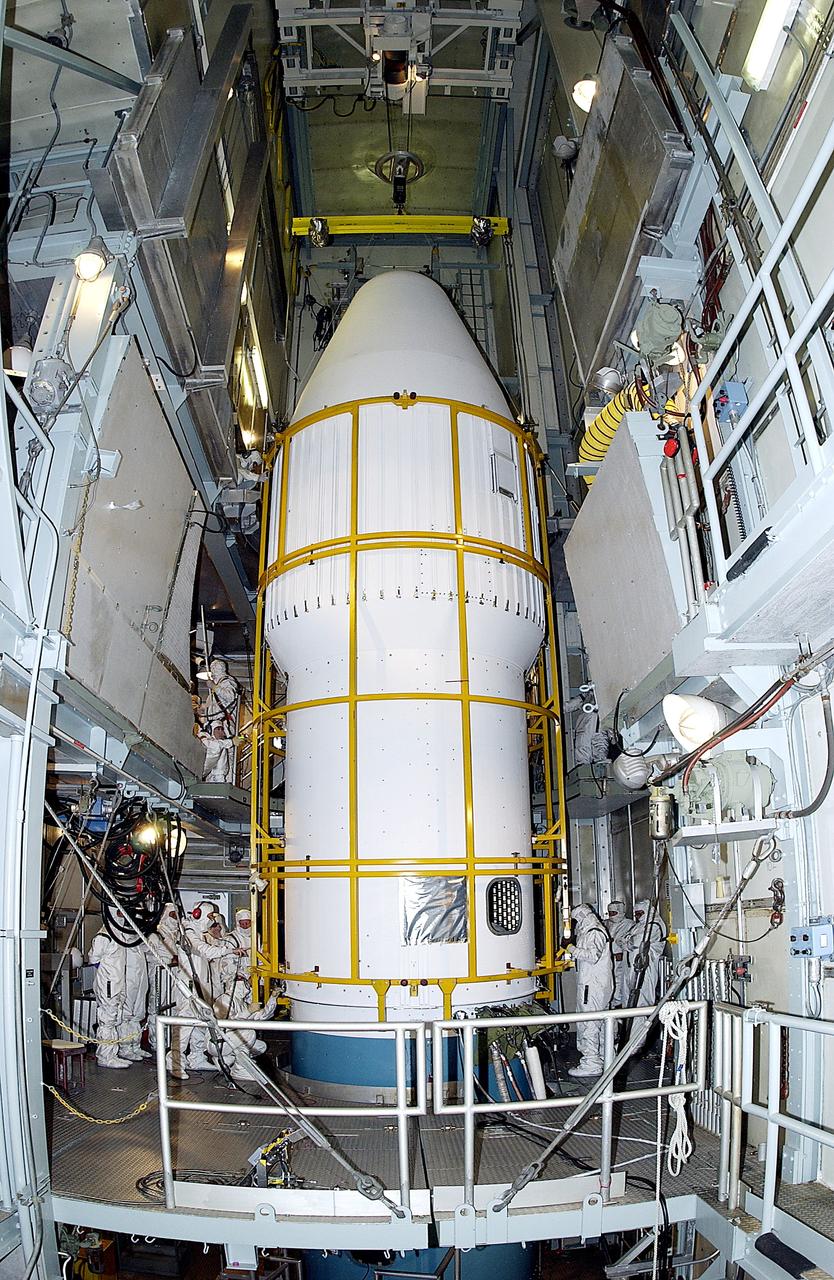
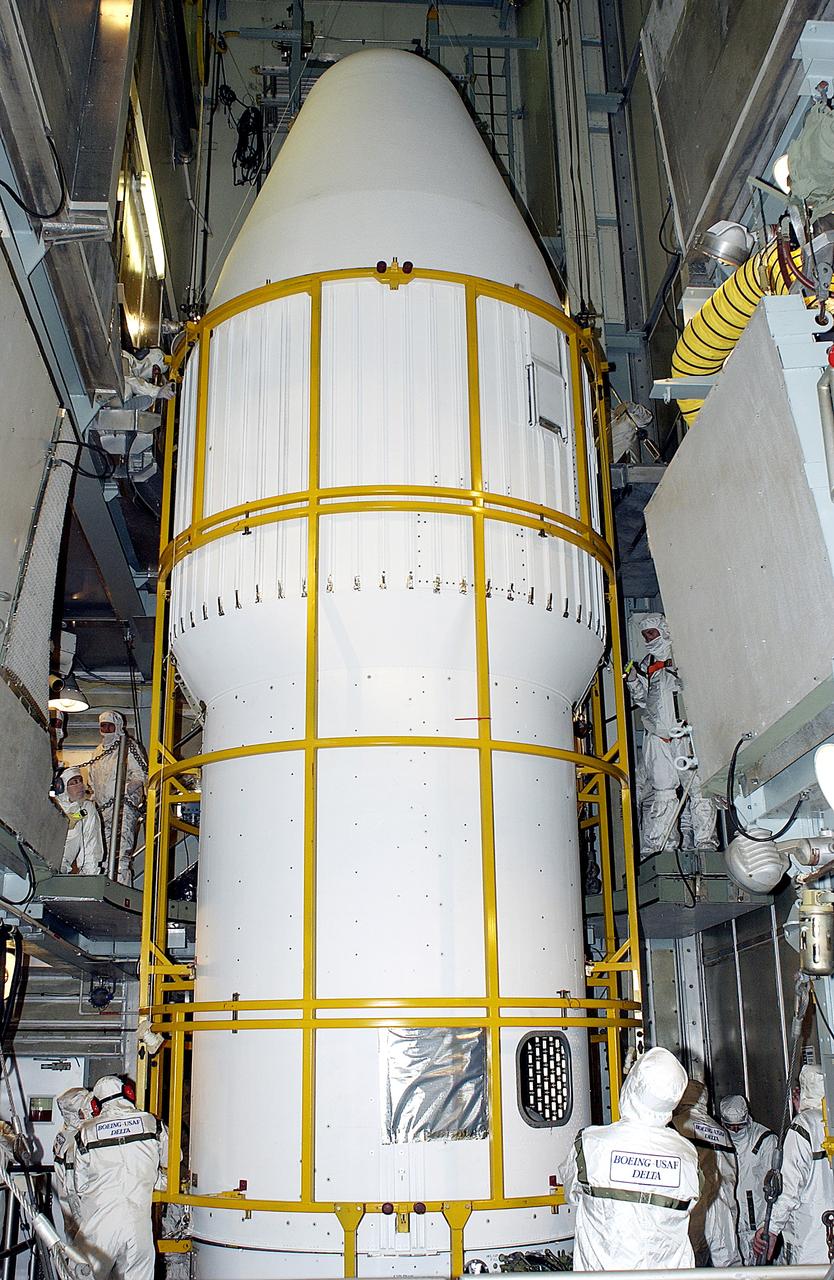
KENNEDY SPACE CENTER, FLA. - The installation of the fairing around the Mars Exploration Rover 2 (MER-2) is complete on Launch Complex 17-A, Cape Canaveral Air Force Station.  MER-2 is one of NASA's twin Mars Exploration Rovers designed to study the history of water on Mars. These robotic geologists are equipped with a robotic arm, a drilling tool, three spectrometers, and four pairs of cameras that allow them to have a human-like, 3D view of the terrain. Each rover could travel as far as 100 meters in one day to act as Mars scientists' eyes and hands, exploring an environment where humans can't yet go.  MER-2 is scheduled to launch no earlier than June 8 as MER-A, with two launch opportunities each day during the launch period that closes on June 19.
KENNEDY SPACE CENTER, FLA. - The installation of the fairing around the Mars Exploration Rover 2 (MER-2) is complete on Launch Complex 17-A, Cape Canaveral Air Force Station. MER-2 is one of NASA's twin Mars Exploration Rovers designed to study the history of water on Mars. These robotic geologists are equipped with a robotic arm, a drilling tool, three spectrometers, and four pairs of cameras that allow them to have a human-like, 3D view of the terrain. Each rover could travel as far as 100 meters in one day to act as Mars scientists' eyes and hands, exploring an environment where humans can't yet go. MER-2 is scheduled to launch no earlier than June 8 as MER-A, with two launch opportunities each day during the launch period that closes on June 19.
KENNEDY SPACE CENTER, FLA. - The second half of the fairing closes in around the Mars Exploration Rover 2 (MER-2) on Launch Complex 17-A, Cape Canaveral Air Force Station.  MER-2 is one of NASA's twin Mars Exploration Rovers designed to study the history of water on Mars. These robotic geologists are equipped with a robotic arm, a drilling tool, three spectrometers, and four pairs of cameras that allow them to have a human-like, 3D view of the terrain. Each rover could travel as far as 100 meters in one day to act as Mars scientists' eyes and hands, exploring an environment where humans can't yet go.  MER-2 is scheduled to launch no earlier than June 8 as MER-A, with two launch opportunities each day during the launch period that closes on June 19.
KENNEDY SPACE CENTER, FLA. - The second half of the fairing closes in around the Mars Exploration Rover 2 (MER-2) on Launch Complex 17-A, Cape Canaveral Air Force Station. MER-2 is one of NASA's twin Mars Exploration Rovers designed to study the history of water on Mars. These robotic geologists are equipped with a robotic arm, a drilling tool, three spectrometers, and four pairs of cameras that allow them to have a human-like, 3D view of the terrain. Each rover could travel as far as 100 meters in one day to act as Mars scientists' eyes and hands, exploring an environment where humans can't yet go. MER-2 is scheduled to launch no earlier than June 8 as MER-A, with two launch opportunities each day during the launch period that closes on June 19.
KENNEDY SPACE CENTER, FLA. -  The Mobile Service Tower is rolled back at Launch Complex 17A to reveal a Delta II rocket ready to launch the Mars Exploration Rover-A mission.  NASA's twin Mars Exploration Rovers are designed to study the history of water on Mars. These robotic geologists are equipped with a robotic arm, a drilling tool, three spectrometers, and four pairs of cameras that allow them to have a human-like, 3D view of the terrain. Each rover could travel as far as 100 meters in one day to act as Mars scientists' eyes and hands, exploring an environment where humans are not yet able to go. MER-A, with the rover Spirit aboard, is scheduled to launch on June 8 at 2:06 p.m. EDT, with two launch opportunities each day during a launch period that closes on June 24.
KENNEDY SPACE CENTER, FLA. - The Mobile Service Tower is rolled back at Launch Complex 17A to reveal a Delta II rocket ready to launch the Mars Exploration Rover-A mission. NASA's twin Mars Exploration Rovers are designed to study the history of water on Mars. These robotic geologists are equipped with a robotic arm, a drilling tool, three spectrometers, and four pairs of cameras that allow them to have a human-like, 3D view of the terrain. Each rover could travel as far as 100 meters in one day to act as Mars scientists' eyes and hands, exploring an environment where humans are not yet able to go. MER-A, with the rover Spirit aboard, is scheduled to launch on June 8 at 2:06 p.m. EDT, with two launch opportunities each day during a launch period that closes on June 24.
KENNEDY SPACE CENTER, FLA. -  The two halves of the fairing come together around the Mars Exploration Rover 2 (MER-2) on Launch Complex 17-A, Cape Canaveral Air Force Station.  MER-2 is one of NASA's twin Mars Exploration Rovers designed to study the history of water on Mars. These robotic geologists are equipped with a robotic arm, a drilling tool, three spectrometers, and four pairs of cameras that allow them to have a human-like, 3D view of the terrain. Each rover could travel as far as 100 meters in one day to act as Mars scientists' eyes and hands, exploring an environment where humans can't yet go.  MER-2 is scheduled to launch no earlier than June 8, 2003, as MER-A, with two launch opportunities each day during the launch period that closes on June 19.
KENNEDY SPACE CENTER, FLA. - The two halves of the fairing come together around the Mars Exploration Rover 2 (MER-2) on Launch Complex 17-A, Cape Canaveral Air Force Station. MER-2 is one of NASA's twin Mars Exploration Rovers designed to study the history of water on Mars. These robotic geologists are equipped with a robotic arm, a drilling tool, three spectrometers, and four pairs of cameras that allow them to have a human-like, 3D view of the terrain. Each rover could travel as far as 100 meters in one day to act as Mars scientists' eyes and hands, exploring an environment where humans can't yet go. MER-2 is scheduled to launch no earlier than June 8, 2003, as MER-A, with two launch opportunities each day during the launch period that closes on June 19.
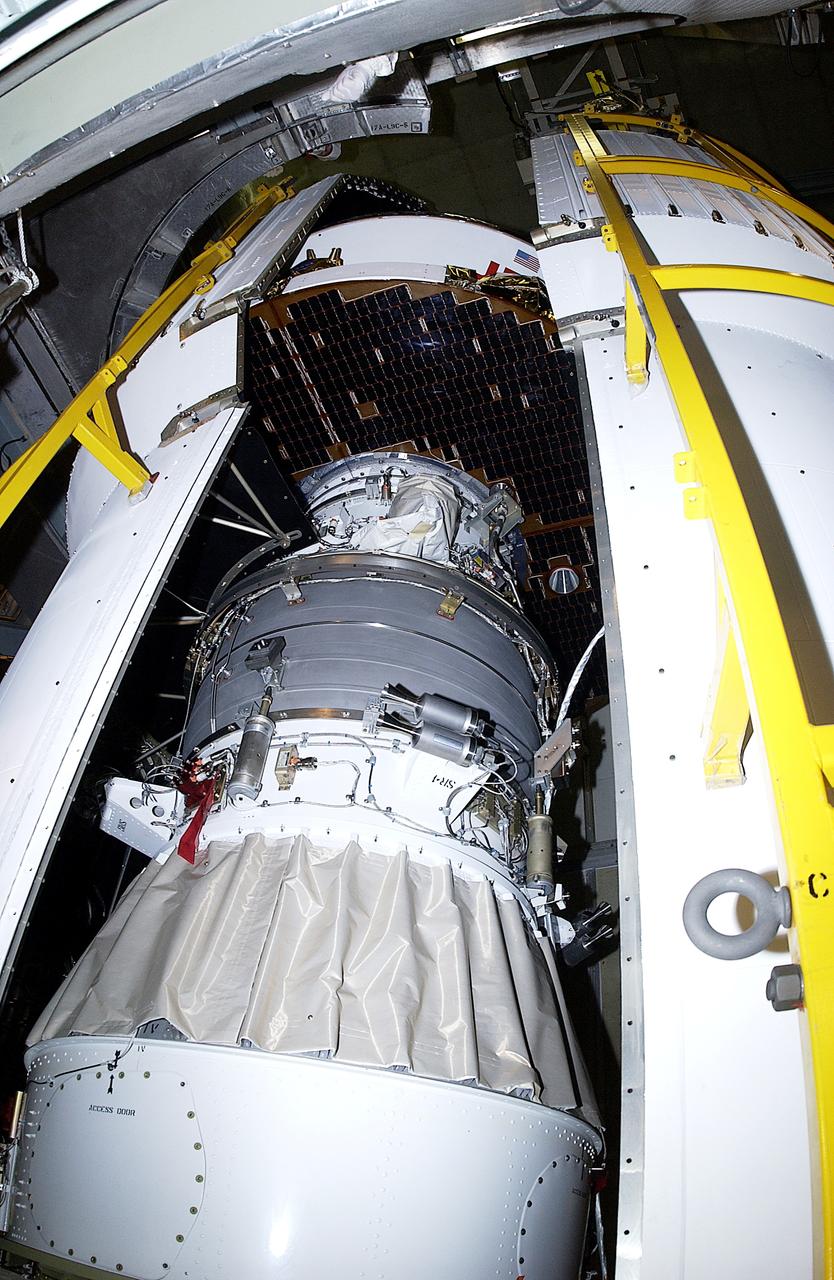
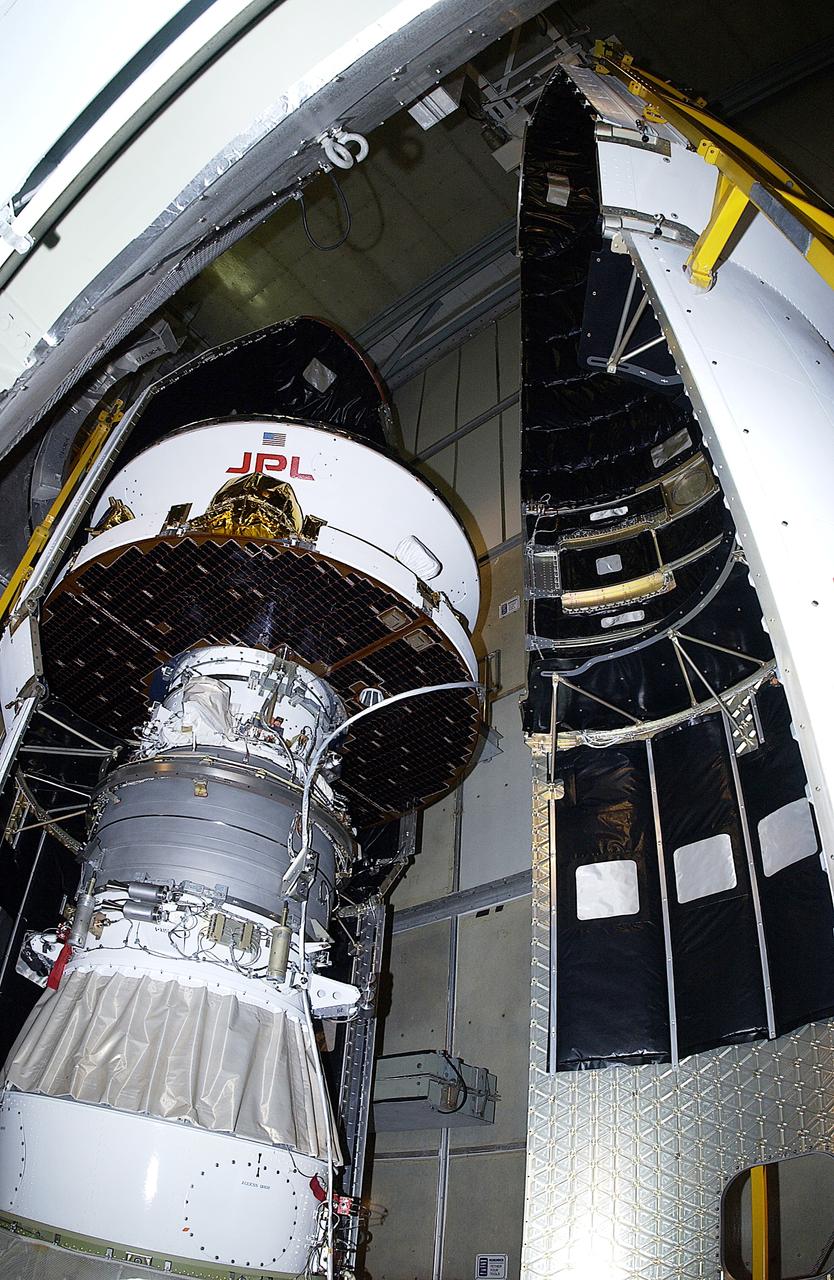
KENNEDY SPACE CENTER, FLA. - At Launch Complex 17-A, Cape Canaveral Air Force Station, the first half of the fairing for the Mars Exploration Rover 2 (MER-2) is seen behind the spacecraft.  MER-2 is one of NASA's twin Mars Exploration Rovers designed to study the history of water on Mars. These robotic geologists are equipped with a robotic arm, a drilling tool, three spectrometers, and four pairs of cameras that allow them to have a human-like, 3D view of the terrain. Each rover could travel as far as 100 meters in one day to act as Mars scientists' eyes and hands, exploring an environment where humans can't yet go.  MER-2 is scheduled to launch no earlier than June 8 as MER-A, with two launch opportunities each day during the launch period that closes on June 19.
KENNEDY SPACE CENTER, FLA. - At Launch Complex 17-A, Cape Canaveral Air Force Station, the first half of the fairing for the Mars Exploration Rover 2 (MER-2) is seen behind the spacecraft. MER-2 is one of NASA's twin Mars Exploration Rovers designed to study the history of water on Mars. These robotic geologists are equipped with a robotic arm, a drilling tool, three spectrometers, and four pairs of cameras that allow them to have a human-like, 3D view of the terrain. Each rover could travel as far as 100 meters in one day to act as Mars scientists' eyes and hands, exploring an environment where humans can't yet go. MER-2 is scheduled to launch no earlier than June 8 as MER-A, with two launch opportunities each day during the launch period that closes on June 19.
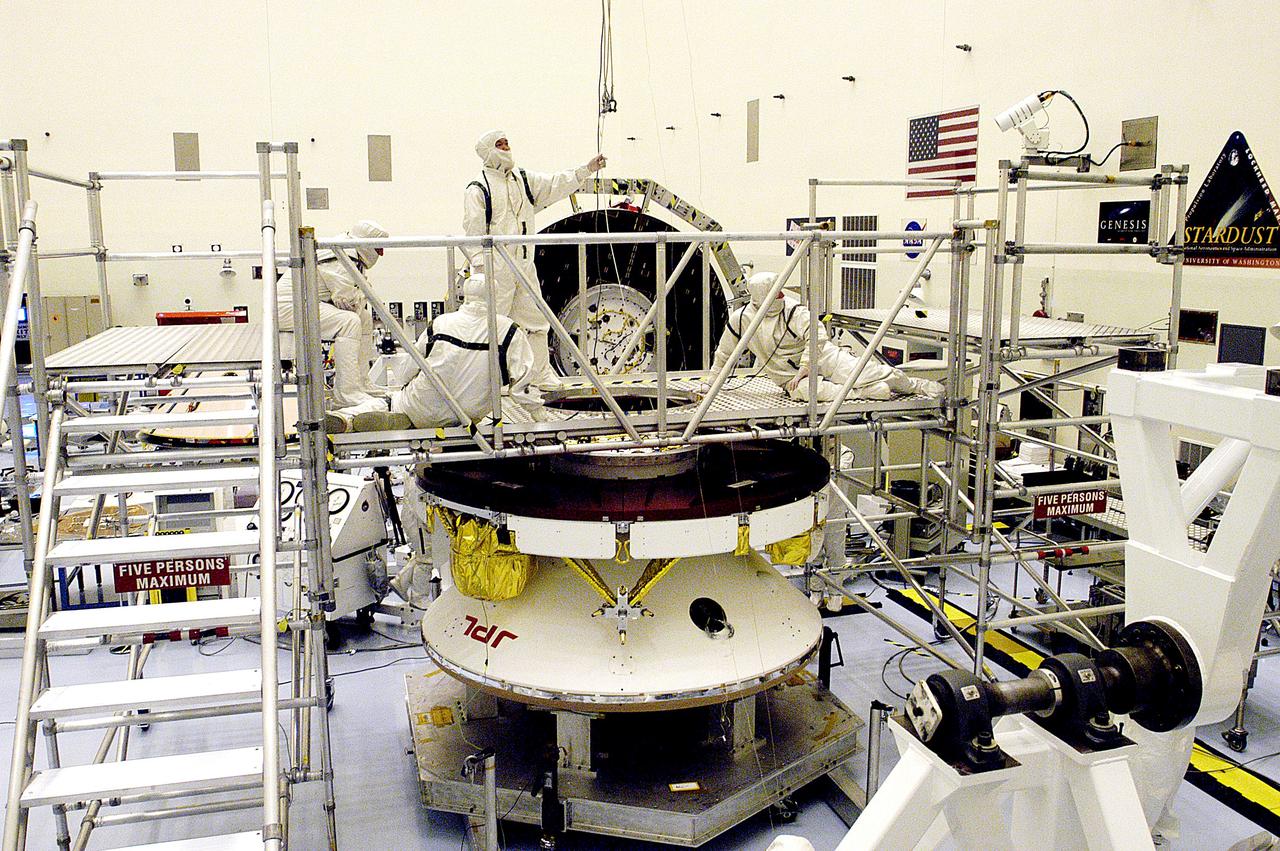
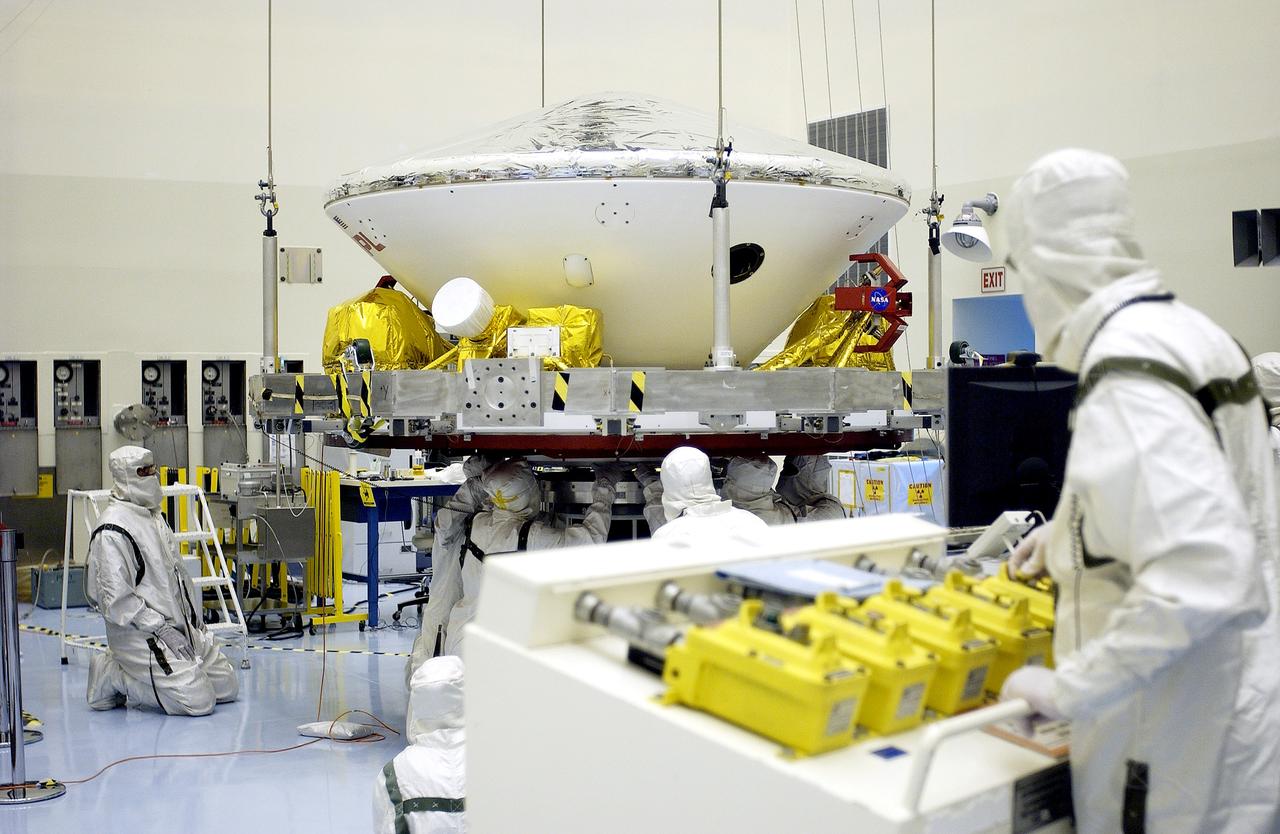
KENNEDY SPACE CENTER, FLA. - Workers in the Payload Hazardous Servicing Facility prepare the Mars Exploration Rover 2 (MER-2) for a weight and center of gravity determination.  NASA's twin Mars Exploration Rovers are designed to study the history of water on Mars. These robotic geologists are equipped with a robotic arm, a drilling tool, three spectrometers, and four pairs of cameras that allow them to have a human-like, 3D view of the terrain. Each rover could travel as far as 100 meters in one day to act as Mars scientists' eyes and hands, exploring an environment where humans can't yet go.  Launch of MER-2 is scheduled for June 5 from Cape Canaveral Air Force Station.
KENNEDY SPACE CENTER, FLA. - Workers in the Payload Hazardous Servicing Facility prepare the Mars Exploration Rover 2 (MER-2) for a weight and center of gravity determination. NASA's twin Mars Exploration Rovers are designed to study the history of water on Mars. These robotic geologists are equipped with a robotic arm, a drilling tool, three spectrometers, and four pairs of cameras that allow them to have a human-like, 3D view of the terrain. Each rover could travel as far as 100 meters in one day to act as Mars scientists' eyes and hands, exploring an environment where humans can't yet go. Launch of MER-2 is scheduled for June 5 from Cape Canaveral Air Force Station.
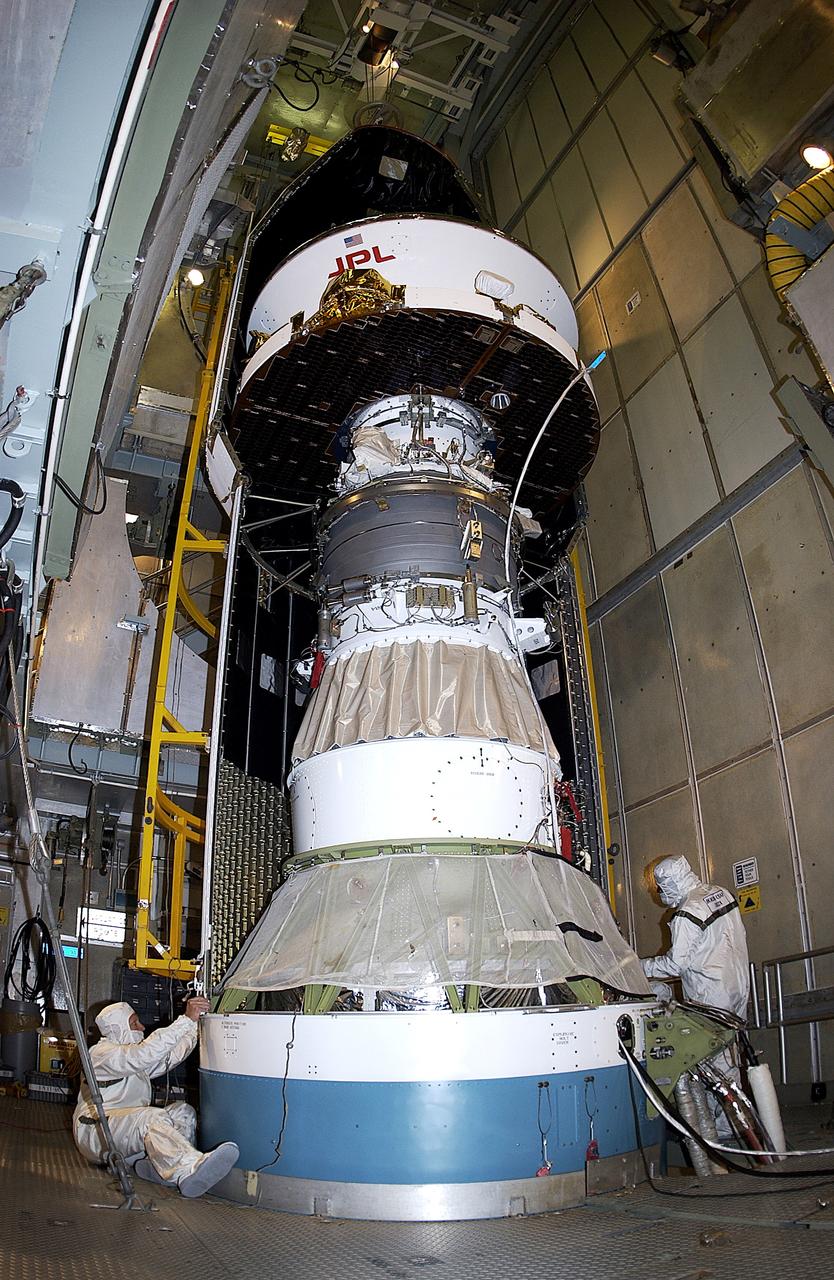
KENNEDY SPACE CENTER, FLA. -  In the Payload Hazardous Servicing Facility, workers mate the Mars Exploration Rover-2 (MER-2) to the third stage of a Delta II rocket for launch on June 5.  NASA’s twin Mars Exploration Rovers are designed to study the history of water on Mars. These robotic geologists are equipped with a robotic arm, a drilling tool, three spectrometers, and four pairs of cameras that allow them to have a human-like, 3D view of the terrain. Each rover could travel as far as 100 meters in one day to act as Mars scientists' eyes and hands, exploring an environment where humans can’t yet go.  MER-1 (MER-B) will launch June 25.
KENNEDY SPACE CENTER, FLA. - In the Payload Hazardous Servicing Facility, workers mate the Mars Exploration Rover-2 (MER-2) to the third stage of a Delta II rocket for launch on June 5. NASA’s twin Mars Exploration Rovers are designed to study the history of water on Mars. These robotic geologists are equipped with a robotic arm, a drilling tool, three spectrometers, and four pairs of cameras that allow them to have a human-like, 3D view of the terrain. Each rover could travel as far as 100 meters in one day to act as Mars scientists' eyes and hands, exploring an environment where humans can’t yet go. MER-1 (MER-B) will launch June 25.