
NASA's 2001 Mars Odyssey orbiter arrived at Mars on Oct. 24, 2001. Over the past two decades, the mission has mapped the composition of the Martian surface, providing a window to the past so scientists could piece together how the planet evolved. It has also served as a vital asset in relaying communications between landers and rovers at the Red Planet and the mission teams back on Earth. Here are some of the highlights of the last 20 years: Mars Odyssey has completed 80,000 orbits. Mars Odyssey has taken more than 1.2 million images. Mars Odyssey has returned 16 terabits of total science data to Earth, including 1 terabit of data relayed from Mars surface missions. Mars Odyssey has provided communications relay for six Mars surface missions: the Phoenix and InSight landers, as well as the Spirit, Opportunity, Curiosity, and Perseverance rovers. https://photojournal.jpl.nasa.gov/catalog/PIA24915
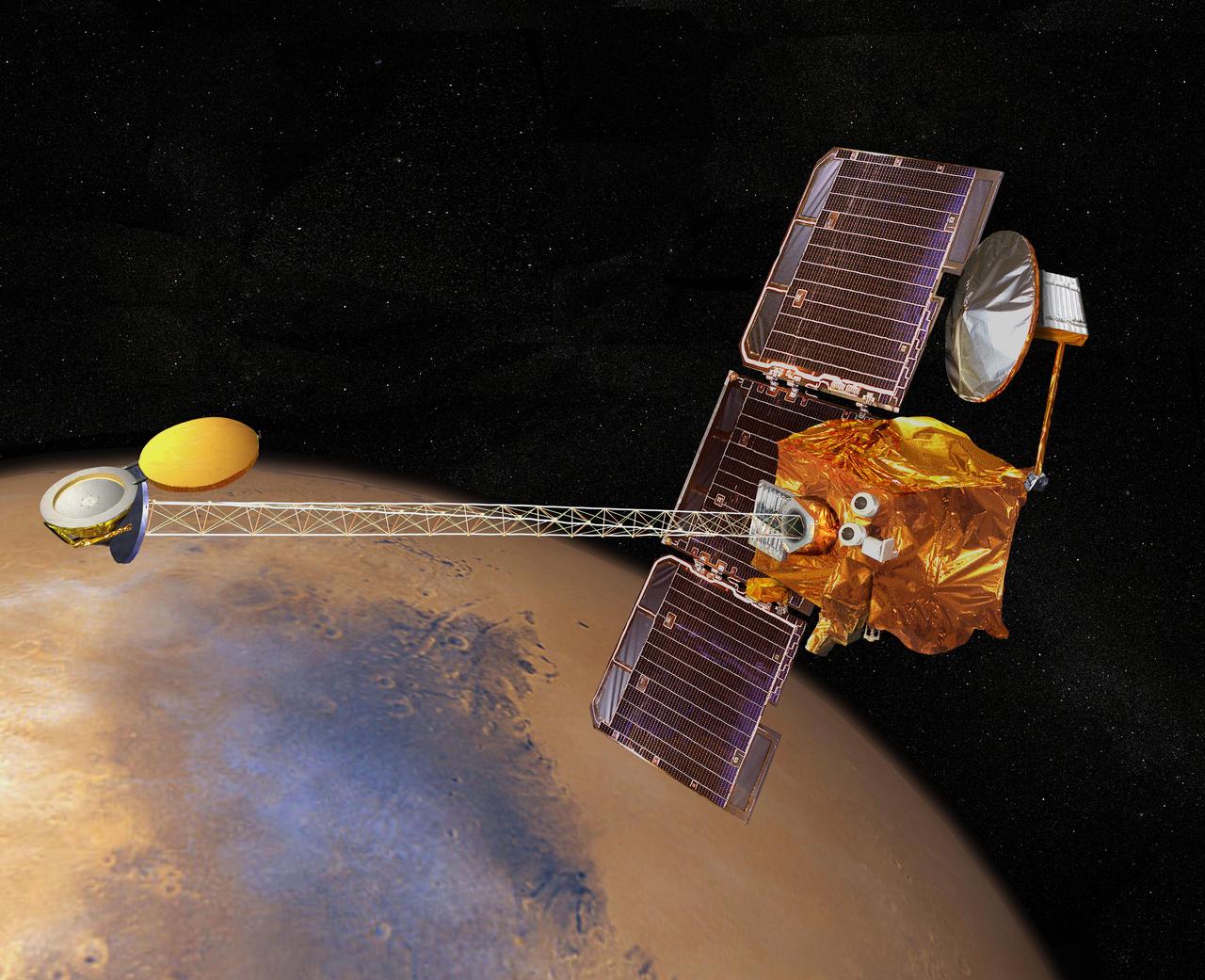
Artist concept of NASA's 2001 Mars Odyssey spacecraft. http://photojournal.jpl.nasa.gov/catalog/PIA04244
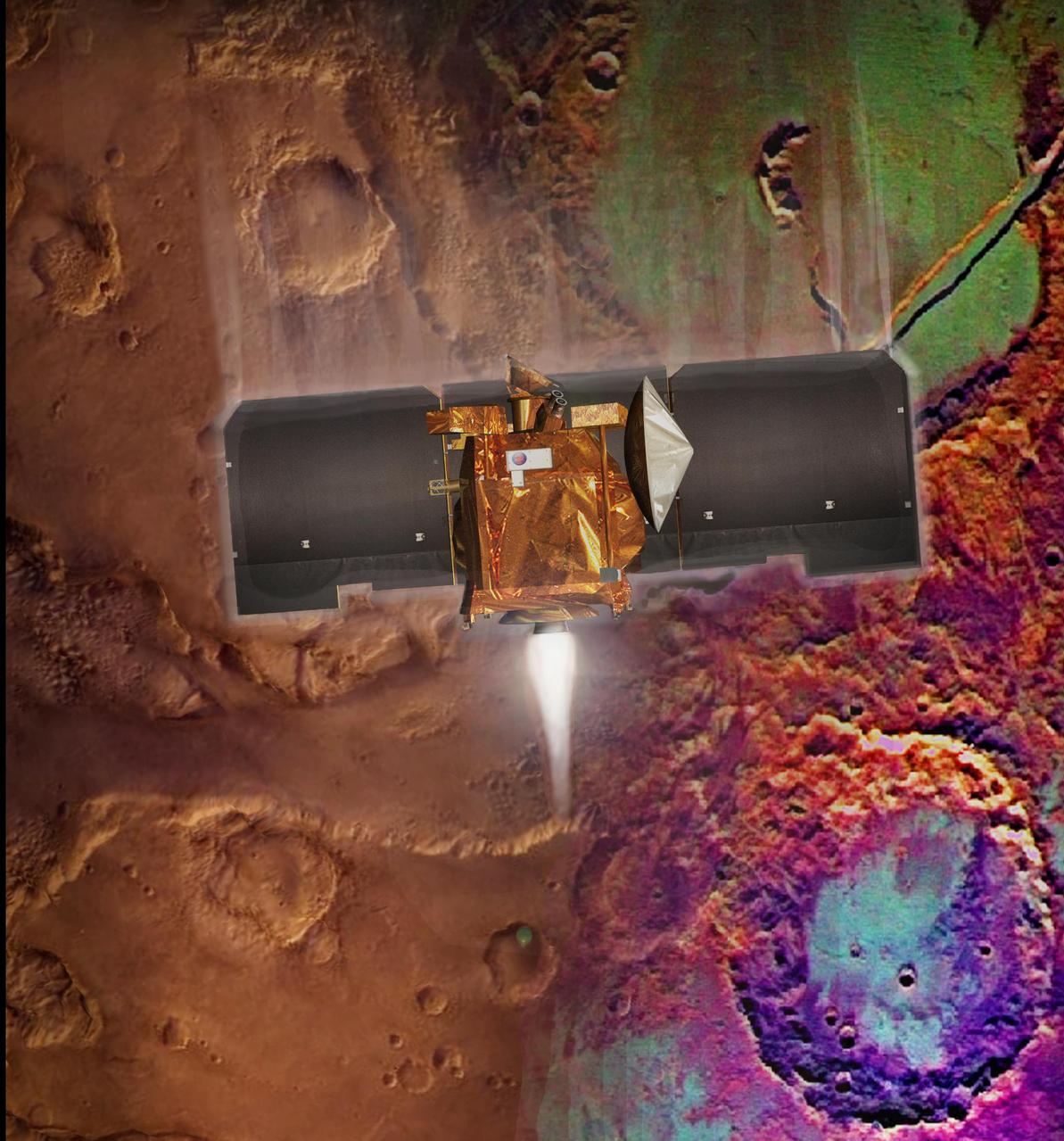
Artist concept of Mars Odyssey orbit insertion. http://photojournal.jpl.nasa.gov/catalog/PIA04246
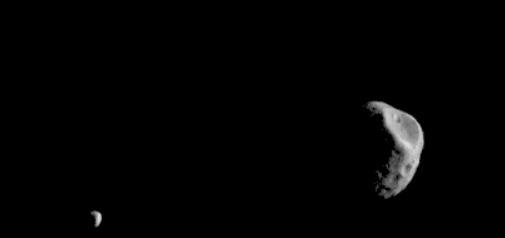
Phobos and Deimos, the moons of Mars, are seen by the Mars Odyssey orbiter's Thermal Emission Imaging System, or THEMIS, camera. The images were taken in visible-wavelength light. THEMIS also recorded thermal-infrared imagery in the same scan. The apparent motion is due to progression of the camera's pointing during the 17-second span of the February 15, 2018, observation, not from motion of the two moons. This was the second observation of Phobos by Mars Odyssey; the first was on September 29, 2017. Researchers have been using THEMIS to examine Mars since early 2002, but the maneuver turning the orbiter around to point the camera at Phobos was developed only recently. The distance to Phobos from Odyssey during the observation was about 3,489 miles (5,615 kilometers). The distance to Deimos from Odyssey during the observation was about 12,222 miles (19,670 kilometers). An animation is available at https://photojournal.jpl.nasa.gov/catalog/PIA22248
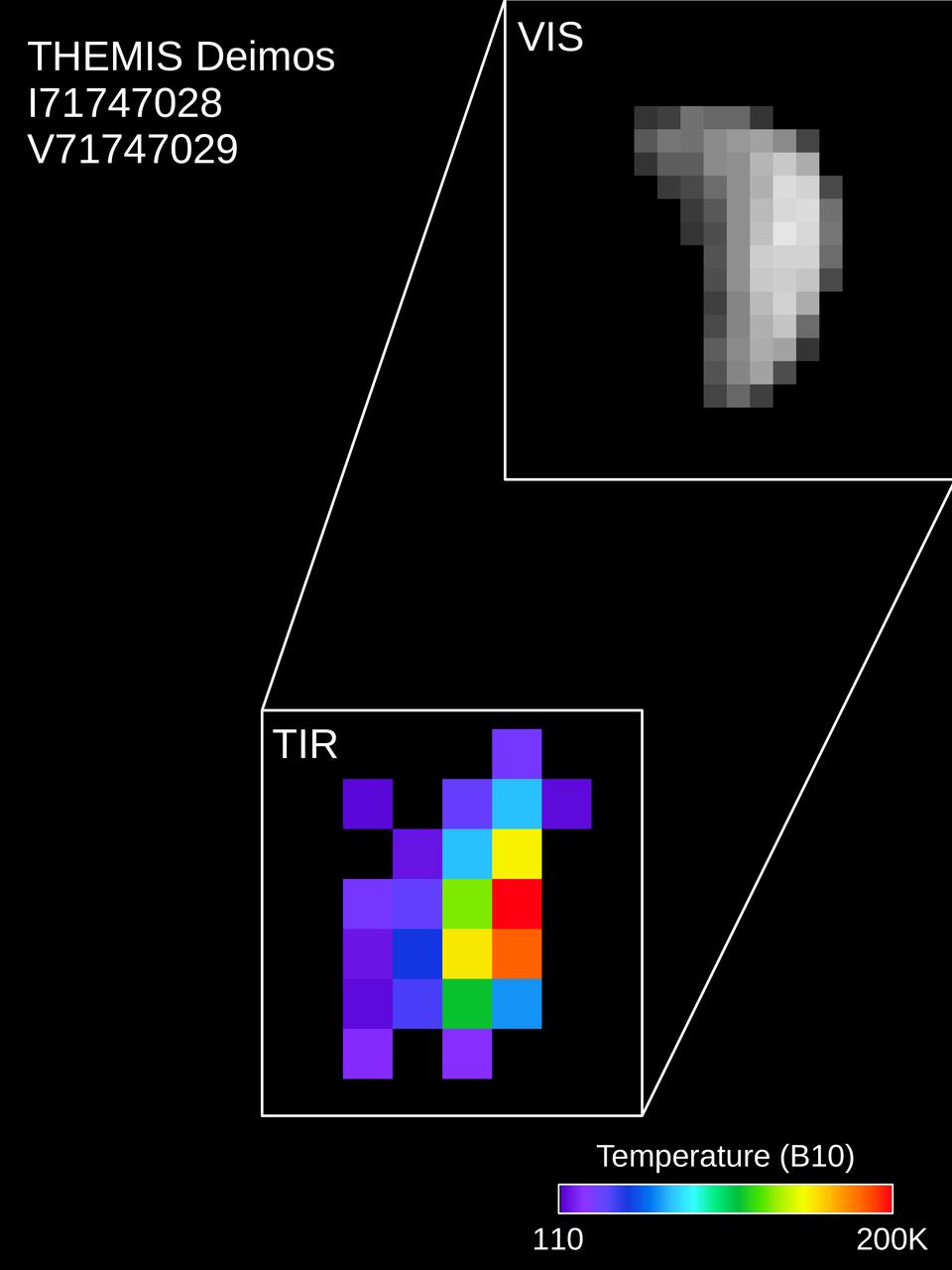
Colors in this image of the Martian moon Deimos indicate a range of surface temperatures detected by observing the moon on February 15, 2018, with the Thermal Emission Imaging System (THEMIS) camera on NASA's Mars Odyssey orbiter. The left edge of the small moon is in darkness, and the right edge in sunlight. Temperature information was derived from thermal-infrared imaging such as the grayscale image shown smaller at lower left with the moon in the same orientation. The color-coding merges information from THEMIS observations made in 10 thermal-infrared wavelength bands. This was the first observation of Deimos by Mars Odyssey; the spacecraft first imaged Mars' other moon, Phobos, on September 29, 2017. Researchers have been using THEMIS to examine Mars since early 2002, but the maneuver turning the orbiter around to point the camera at Phobos was developed only recently. https://photojournal.jpl.nasa.gov/catalog/PIA22250
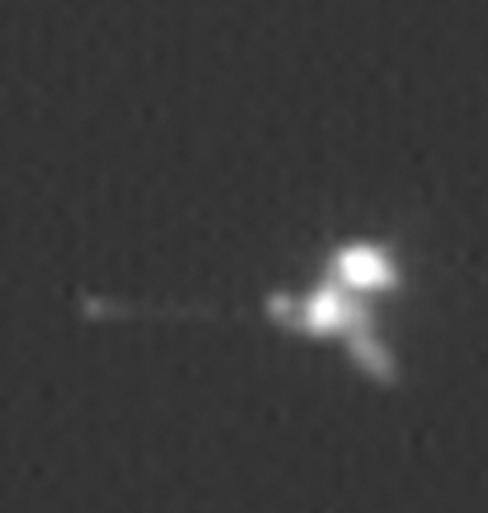
This view is an enlargement of an image of NASA Mars Odyssey spacecraft taken by the Mars Orbiter Camera aboard NASA Mars Global Surveyor while the two spacecraft were about 90 kilometers 56 miles apart.
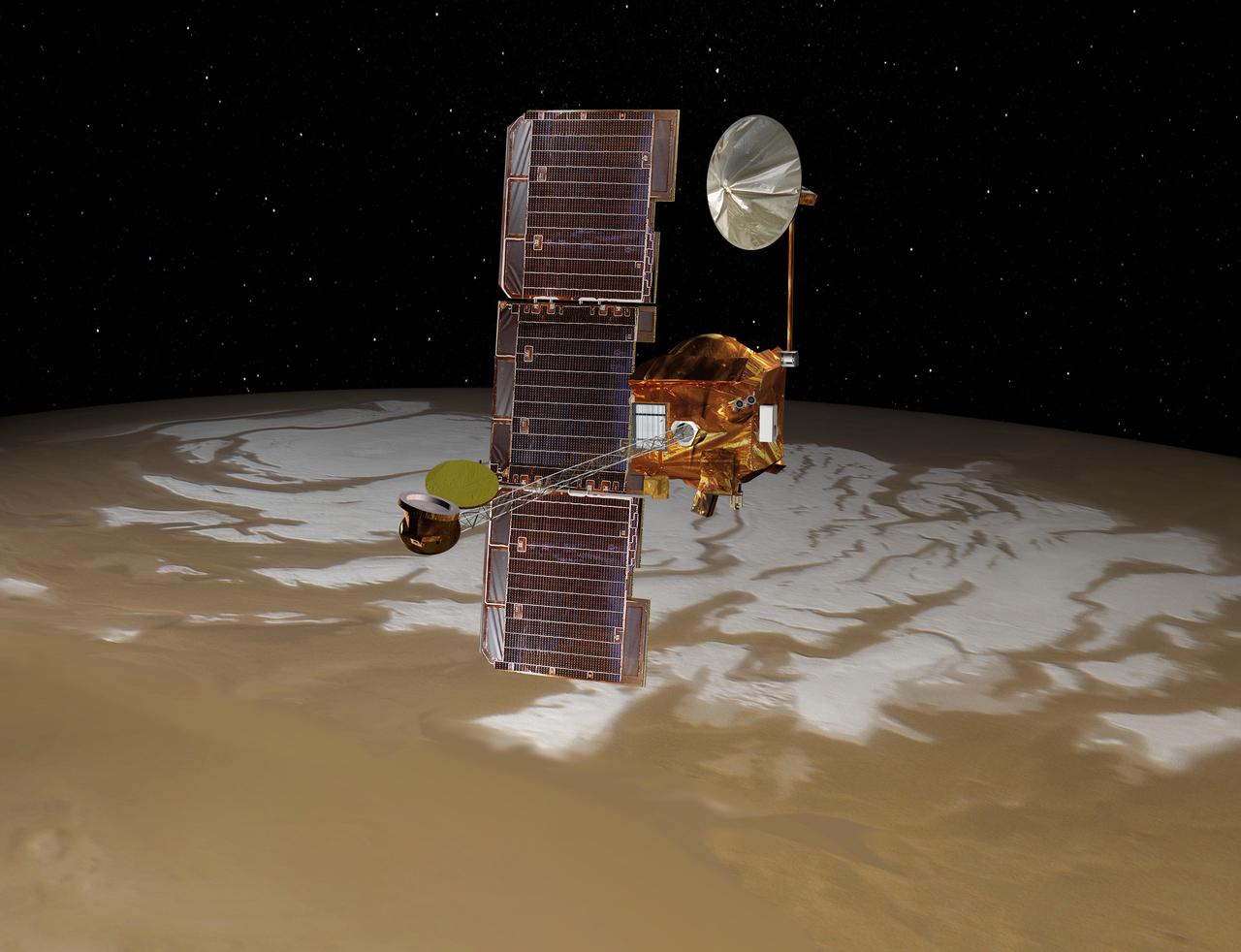
NASA Mars Odyssey spacecraft passes above Mars south pole in this artist concept illustration. The spacecraft has been orbiting Mars since October 24, 2001.
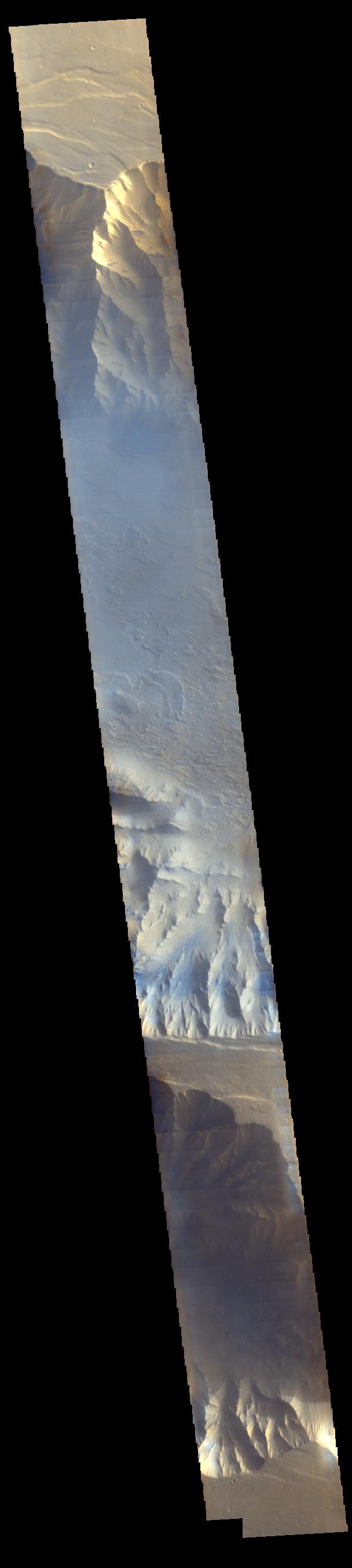
Light blue clouds fill Coprates Chasma on Mars, part of Valles Marineris, the vast Grand Canyon of Mars. The clouds are mostly ice crystals and they appear blue in color in this image from NASA Mars Odyssey.

Chasma Boreale is a long, flat-floored valley that cuts deep into Mars north polar icecap. This image is part of an All Star set marking the occasion of NASA Mars Odyssey as the longest-working Mars spacecraft in history.
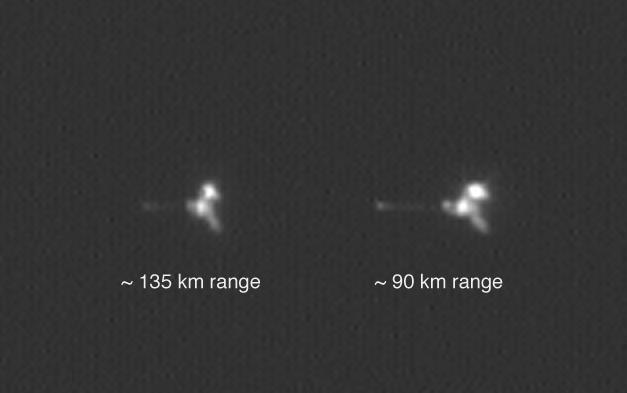
NASA Mars Odyssey spacecraft appears twice in the same frame in this image from the Mars Orbiter Camera aboard NASA Mars Global Surveyor.

Colors in this image of the Martian moon Phobos indicate a range of surface temperatures detected by observing the moon on February 15, 2018, with the Thermal Emission Imaging System (THEMIS) camera on NASA's Mars Odyssey orbiter. The left edge of the small moon is in darkness, and the right edge in sunlight. Phobos has an oblong shape with average diameter of about 14 miles (22 kilometers). Temperature information was derived from thermal-infrared imaging such as the grayscale image shown smaller at lower left with the moon in the same orientation. The color-coding merges information from THEMIS observations made in 10 thermal-infrared wavelength bands. This was the second observation of Phobos by Mars Odyssey; the first was on September 29, 2017. Researchers have been using THEMIS to examine Mars since early 2002, but the maneuver turning the orbiter around to point the camera at Phobos was developed only recently. https://photojournal.jpl.nasa.gov/catalog/PIA22249
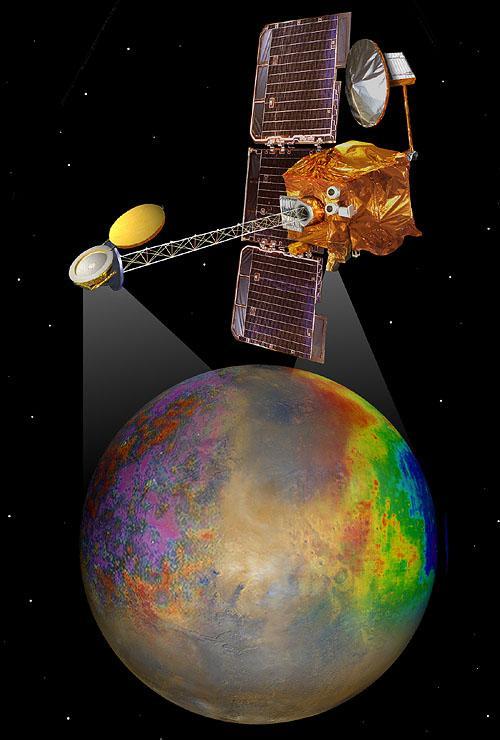
Artist concept of Mars Odyssey mapping mission. http://photojournal.jpl.nasa.gov/catalog/PIA04245
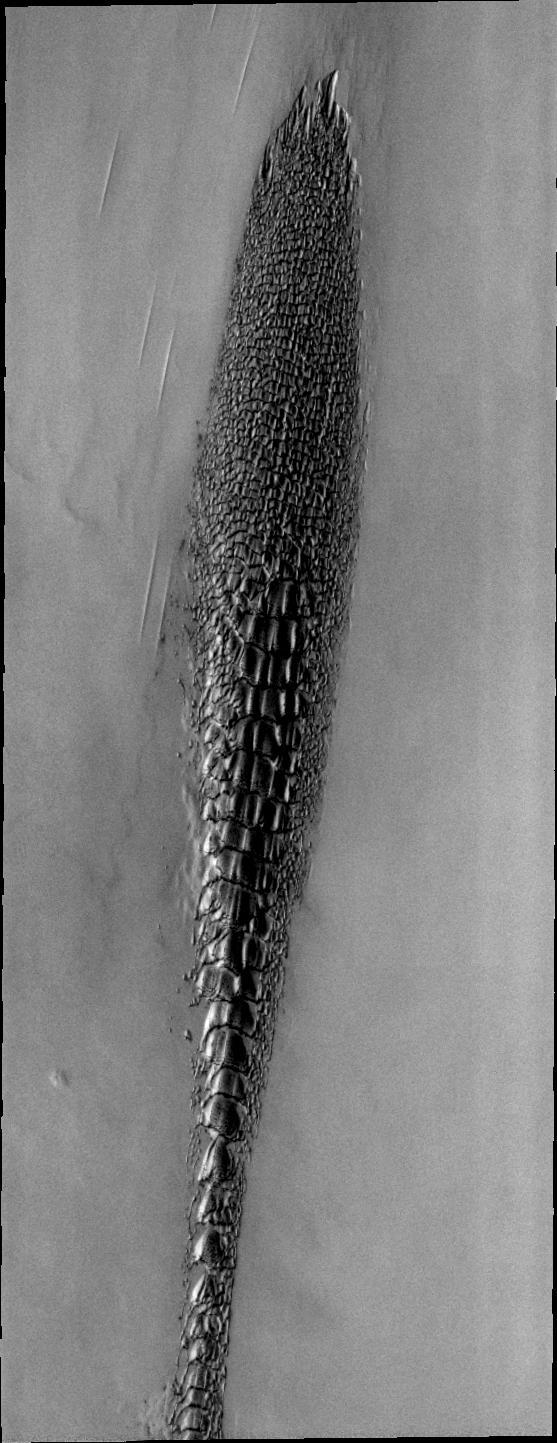
Although this may look like a hostile alien life form, it actually a complex line of sand dunes near the northern ice cap of Mars. This image is from NASA Mars Odyssey, one of an All Star set.
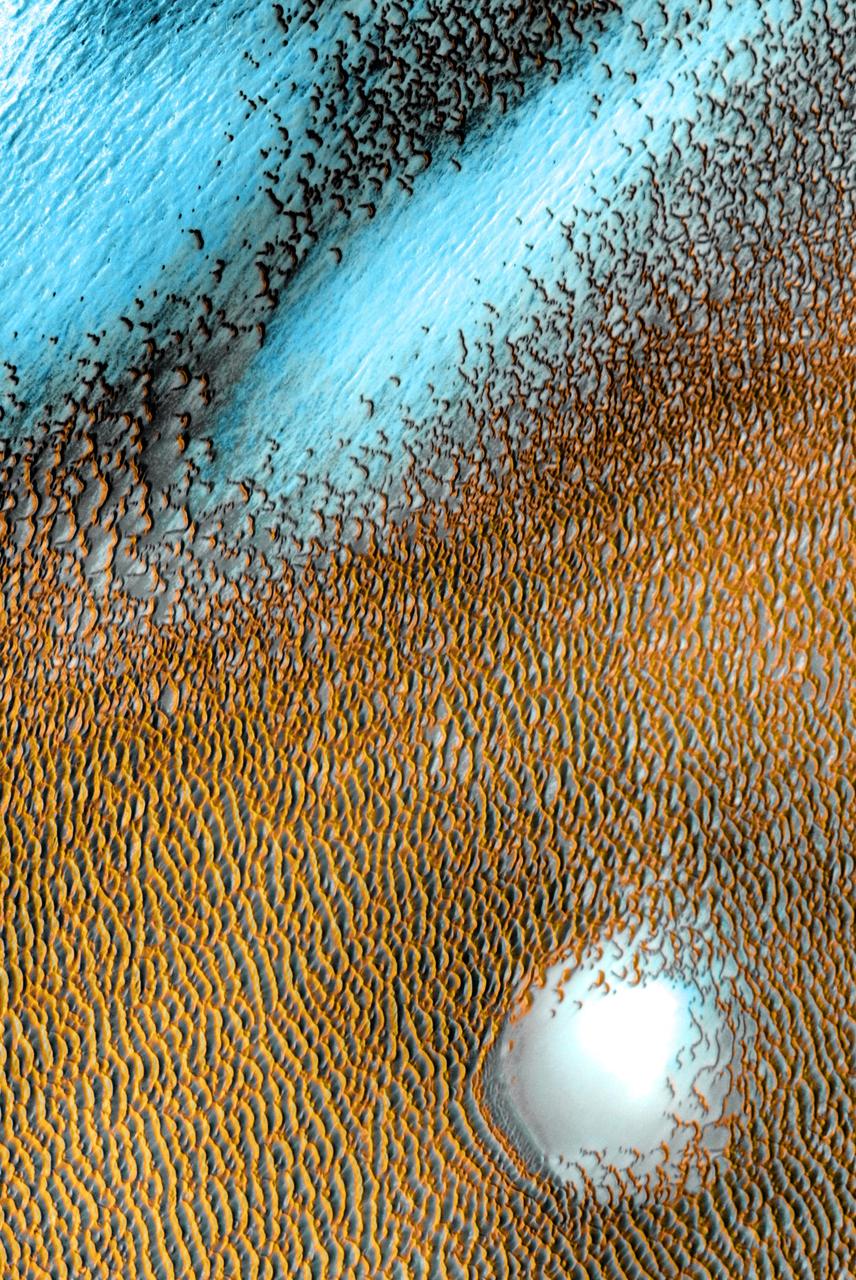
A sea of dark dunes, sculpted by the wind into long lines, surrounds the northern polar cap covering an area as big as Texas in this false-color image from NASA Mars Odyssey, the longest-working Mars spacecraft in history.
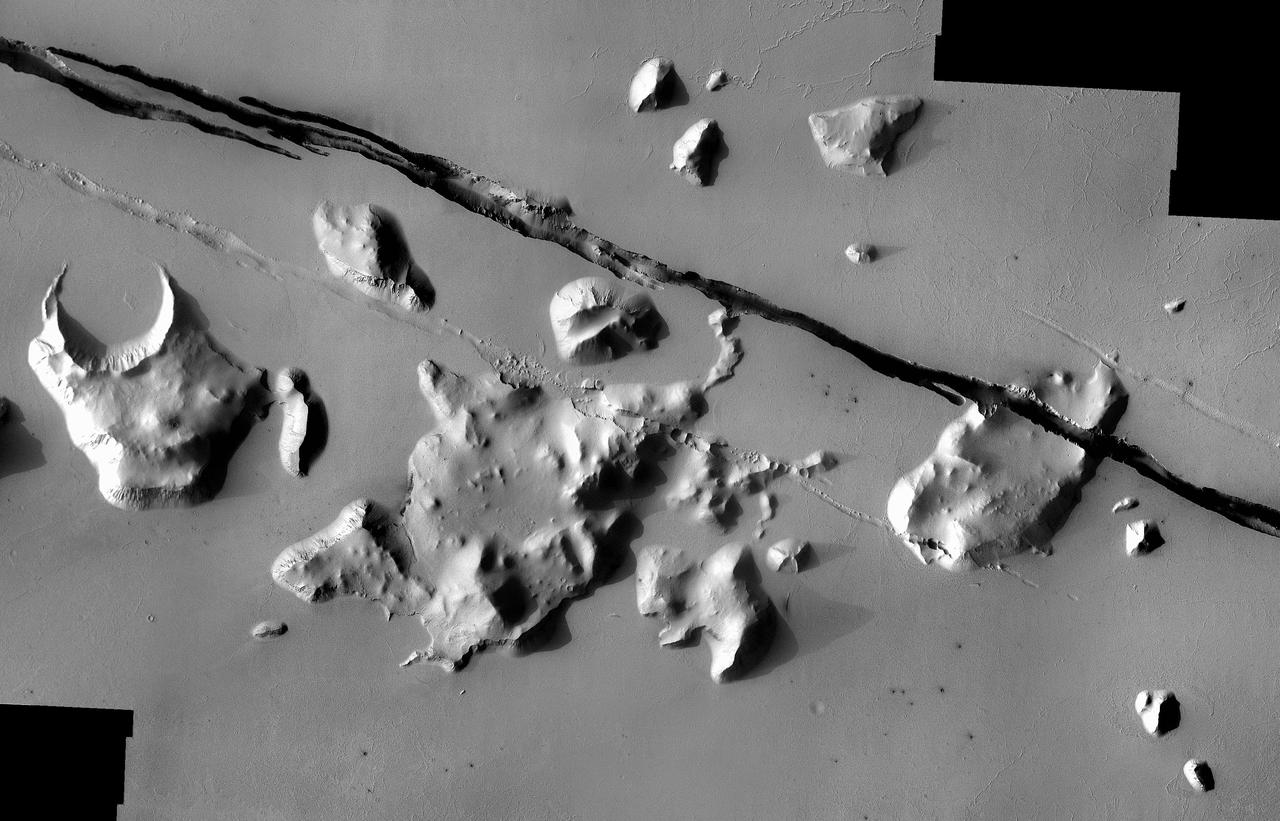
Geological faulting has opened cracks in the Cerberus region that slice through flat plains and mesas alike. This image is part of an All Star set marking the occasion of NASA Mars Odyssey as the longest-working Mars spacecraft in history.
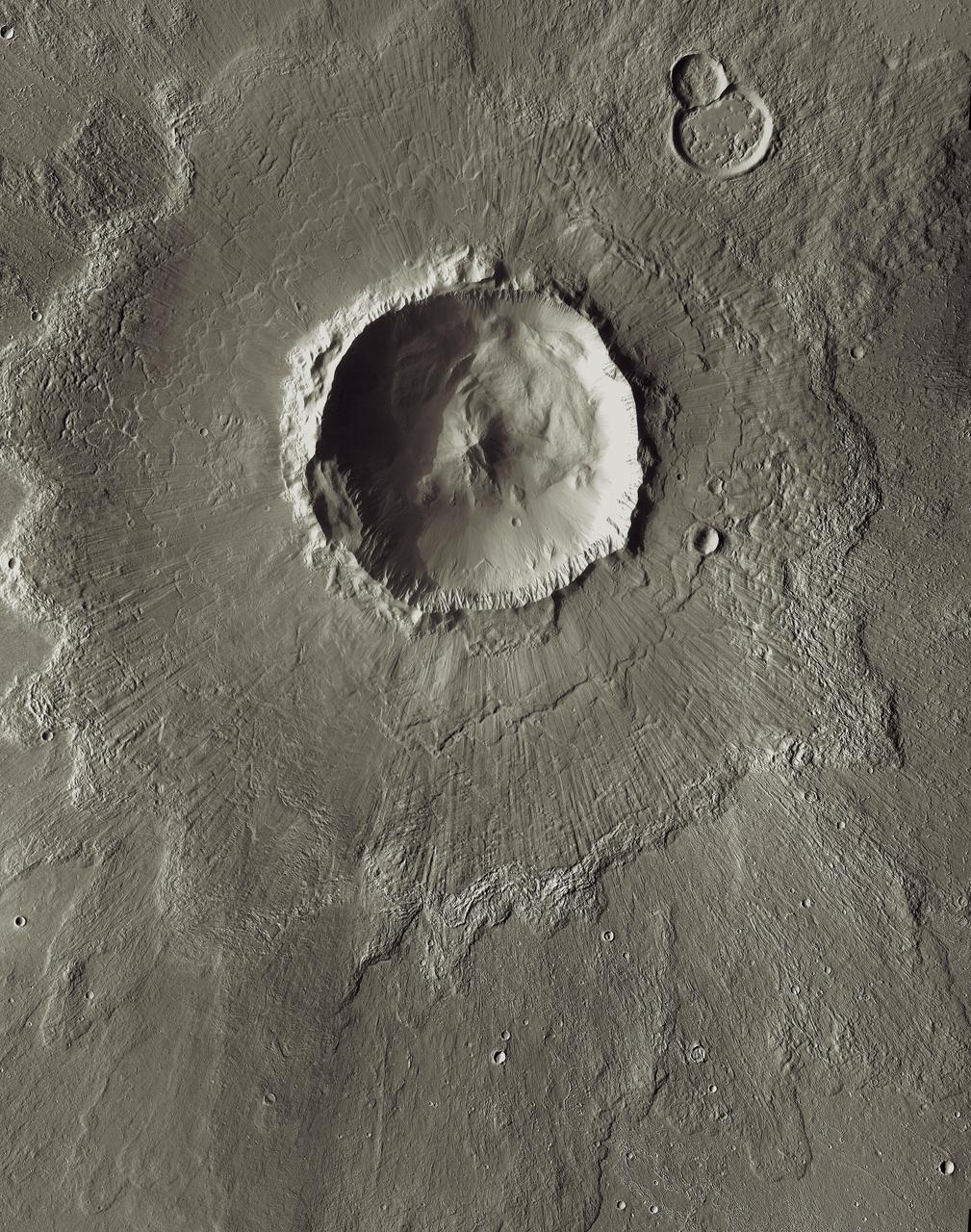
Bacolor Crater is a magnificent impact feature about 20 kilometers 12 miles wide. This image is part of an All Star set marking the occasion of NASA Mars Odyssey as the longest-working Mars spacecraft in history.
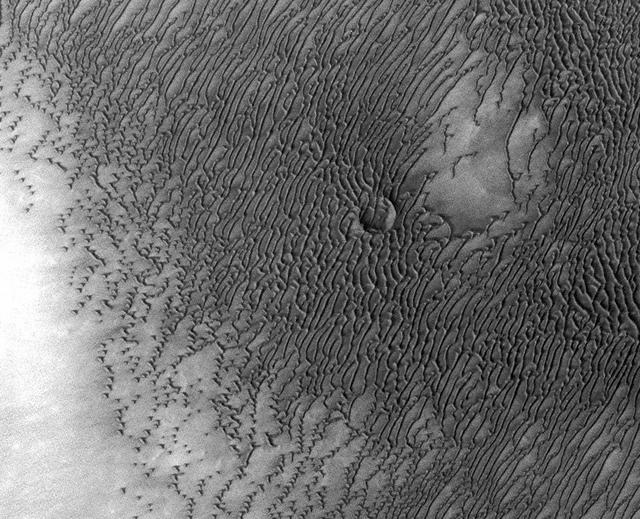
A vast dune field lies near the northern polar cap of Mars. Seen here in summer, the dunes have partially buried an impact crater about 1,000 3,300 feet wide. This image is from NASA Mars Odyssey.

NASA Mars Odyssey spacecraft took this portrait of the Earth and its companion Moon. It was taken at a distance of 3,563,735 kilometers more than 2 million miles on April 19, 2001 as the 2001 Mars Odyssey spacecraft left the Earth.
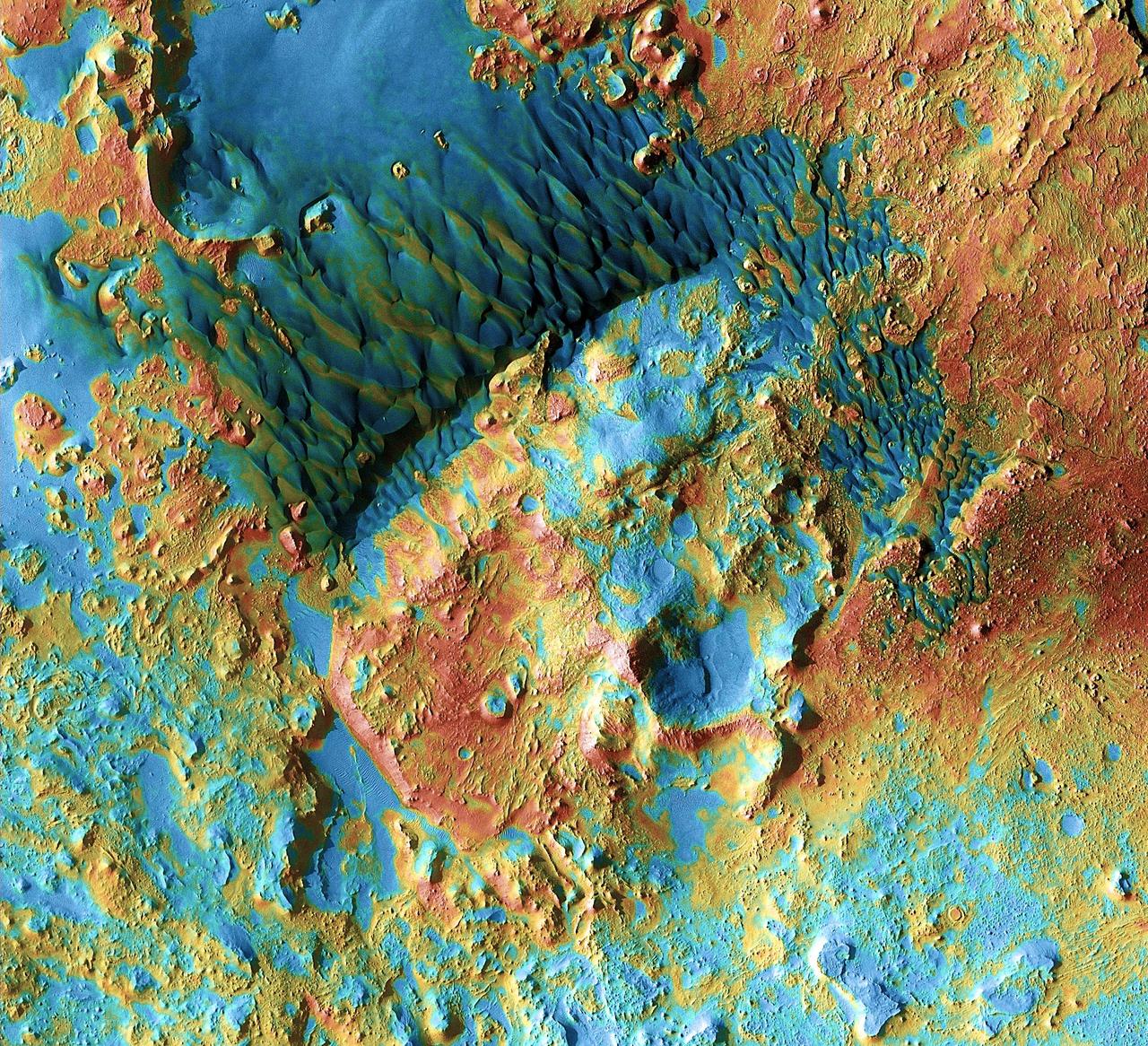
Sand dunes shaped like blue-black flames lie next to a central hill within an unnamed crater in eastern Arabia on Mars. This image is part of an All Star set marking the occasion of NASA Mars Odyssey as the longest-working Mars spacecraft in history.
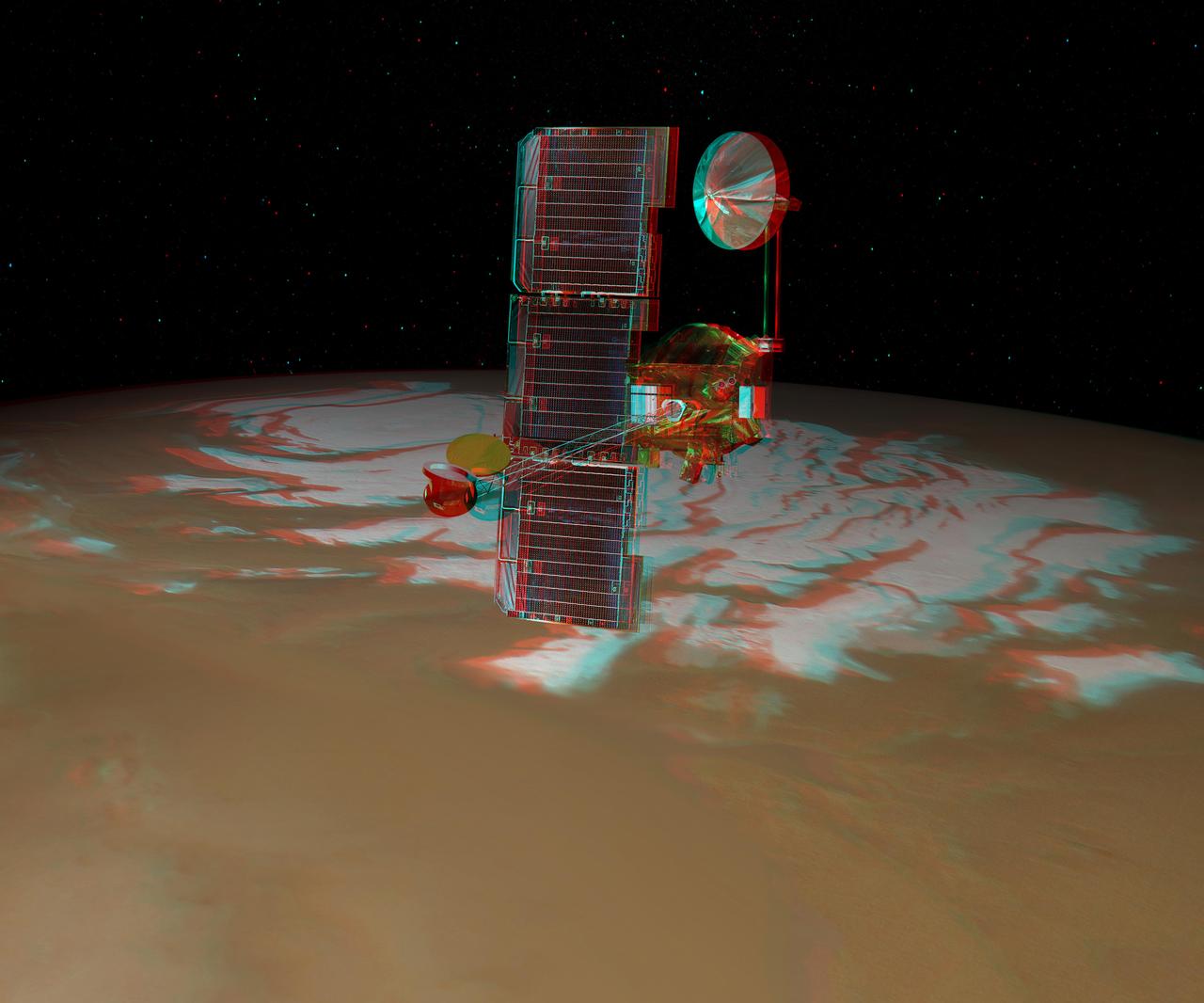
NASA Mars Odyssey spacecraft passes above Mars south pole in this artist concept illustration. 3D glasses are necessary to view this image.
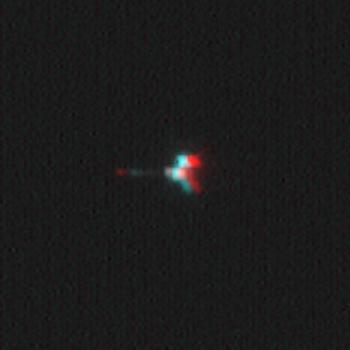
This stereoscopic picture of NASA Mars Odyssey spacecraft was created from two views of that spacecraft taken by the Mars Orbiter Camera on NASA Mars Global Surveyor. 3D glasses are necessary to view this image.
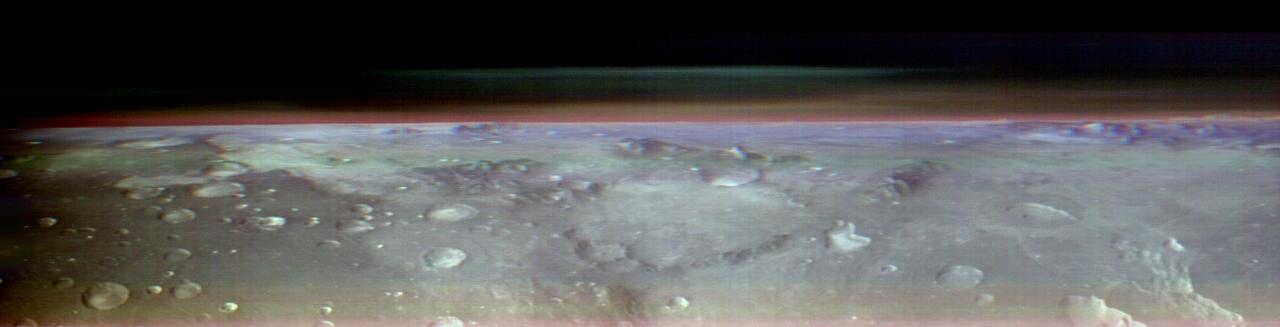
This view of Mars was captured by NASA's Odyssey orbiter using its Thermal Emission Imaging System, or THEMIS, camera. This image is a false color composite, made by combining three channels of infrared data that highlight water-ice clouds and dust in the atmosphere. This panorama was one of 10 captured on May 9, 2023, from an altitude of roughly 250 miles (400 kilometers) above the Martian surface – about the same altitude at which the International Space Station flies over Earth. The 10 panoramas of the Martian horizon were taken to capture a one-of-a-kind view of the Martian atmosphere as Odyssey circled the planet during its two-hour orbit. The reason why the view is so uncommon is because of the challenges involved in creating it. Engineers at NASA's Jet Propulsion Laboratory in Southern California (which leads the Odyssey mission) and Lockheed Martin Space (which built Odyssey and co-leads day-to-day operations) spent three months planning the observations. THEMIS' sensitivity to warmth enables it to map ice, rock, sand, and dust, along with temperature changes, on the planet's surface. It can also measure how much water ice or dust is in the atmosphere, but only in a narrow column directly below the spacecraft. That's because THEMIS is fixed in place on the orbiter; it usually points straight down. Mission scientists wanted a more expansive view of the atmosphere. Seeing where those layers of water-ice clouds and dust are in relation to each other – whether there's one layer or several stacked on top of each other – helps them improve models of Mars' atmosphere. Because THEMIS can't pivot, adjusting the angle of the camera requires adjusting the position of the whole spacecraft. In this case, the team needed to rotate the orbiter almost 90 degrees while making sure the Sun would still shine on the spacecraft's solar panels but not on sensitive equipment that could overheat. The easiest orientation turned out to be one where the orbiter's antenna pointed away from Earth. That meant the team was out of communication with Odyssey for several hours until the operation was completed. https://photojournal.jpl.nasa.gov/catalog/PIA26203

NASA 2001 Mars Odyssey Thermal Emission Imaging System THEMIS acquired these images of the Earth using its visible and infrared cameras as it left the Earth.
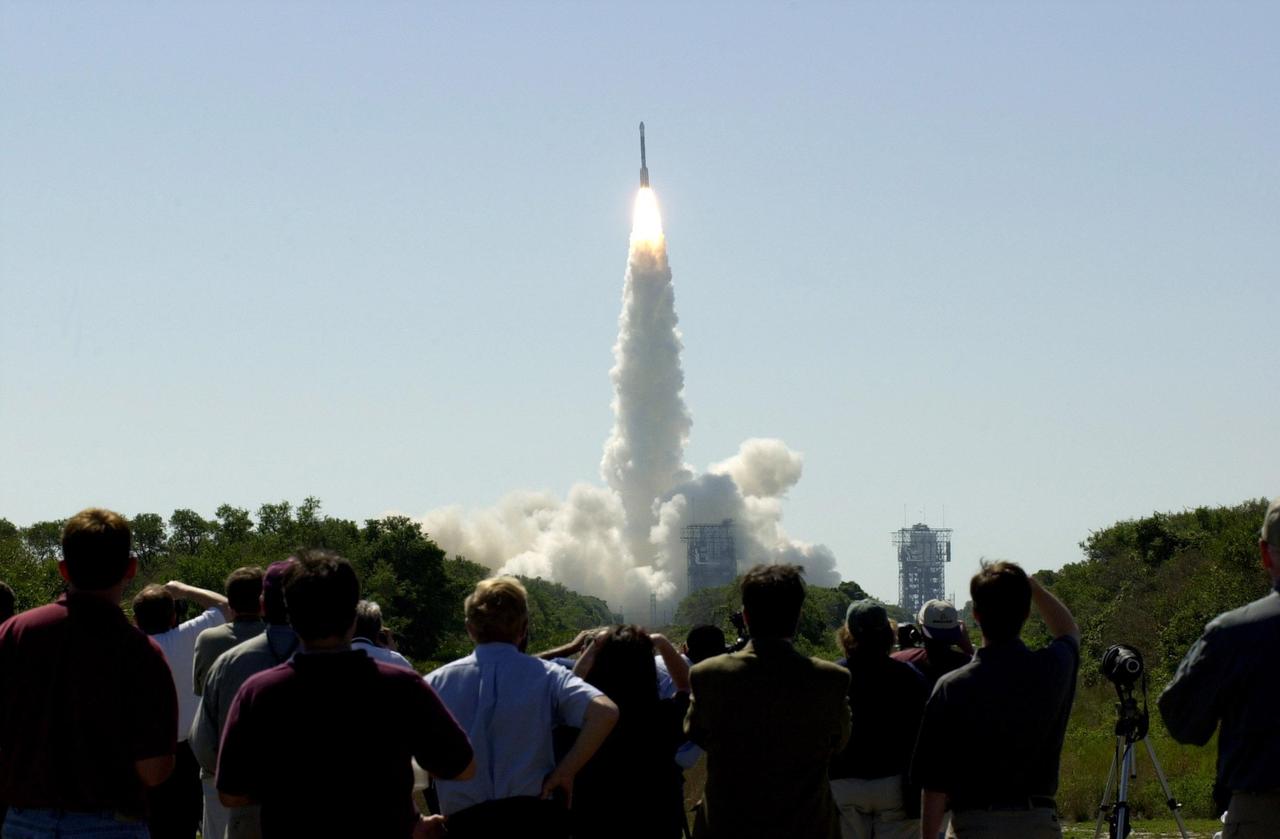
At 11:02 a.m. EDT on April 7, 2001, crowds watch a Boeing Delta II rocket lift off from Cape Canaveral Air Force Station, Florida, carrying NASA 2001 Mars Odyssey spacecraft into space on its seven-month journey to Mars.
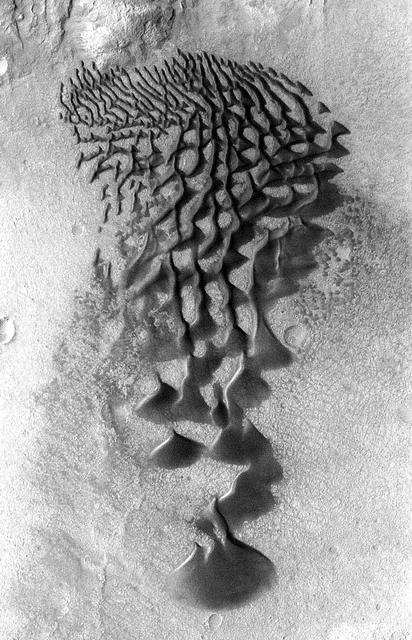
Fans and ribbons of dark sand dunes creep across the floor of Bunge Crater in response to winds blowing from the direction at the top of the picture. This image is from NASA Mars Odyssey, one of an All Star set.
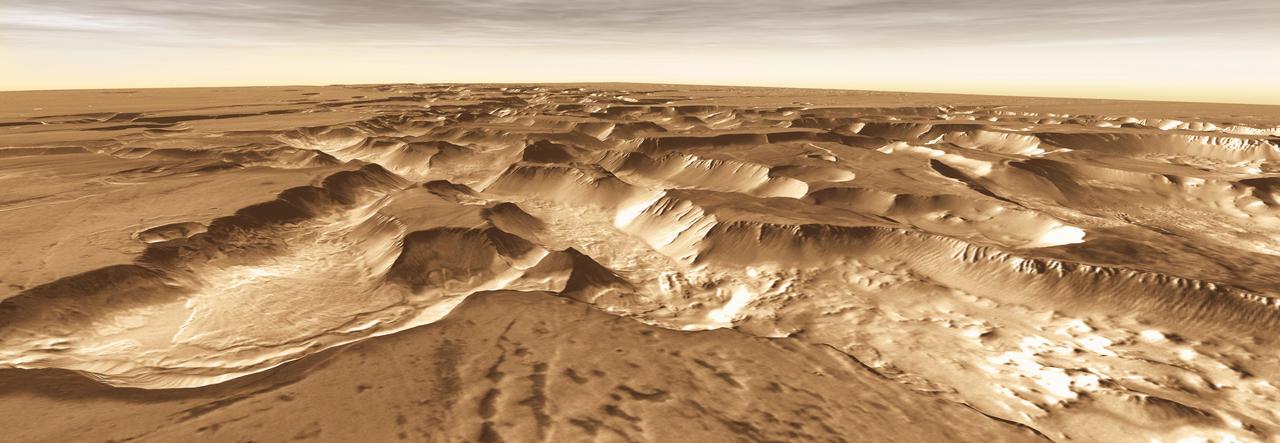
West of Valles Marineris lies a checkerboard named Noctis Labyrinthus, which formed when the Martian crust stretched and fractured. This image is from NASA Mars Odyssey, one of an All Star set.
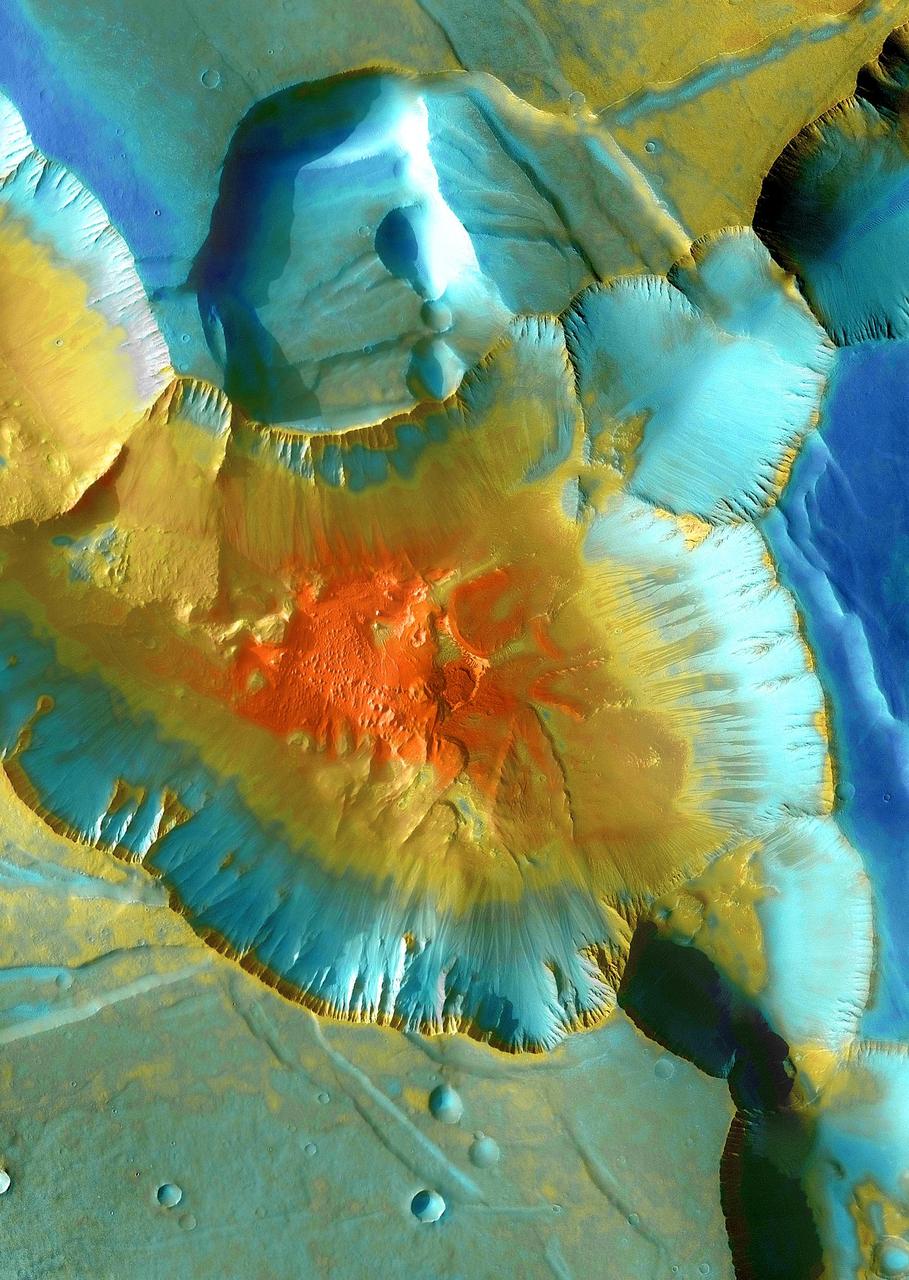
This false-color mosaic focuses on one junction in Noctis Labyrinthus where canyons meet to form a depression 4,000 meters 13,000 feet deep. This image is from NASA Mars Odyssey, one of an All Star set.
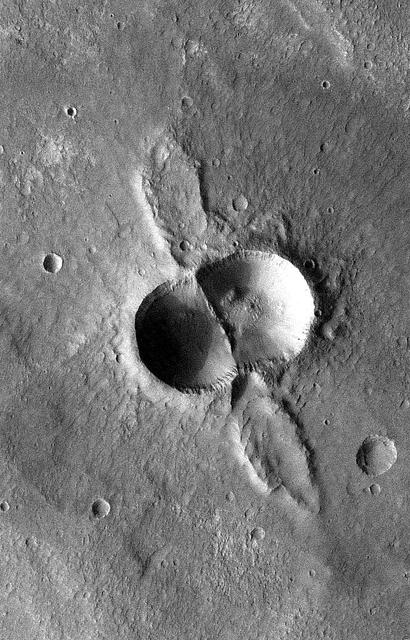
If a meteorite breaks in two shortly before hitting the ground, the typical bowl shape of a single impact crater becomes doubled. This image is from NASA Mars Odyssey, one of an All Star set.
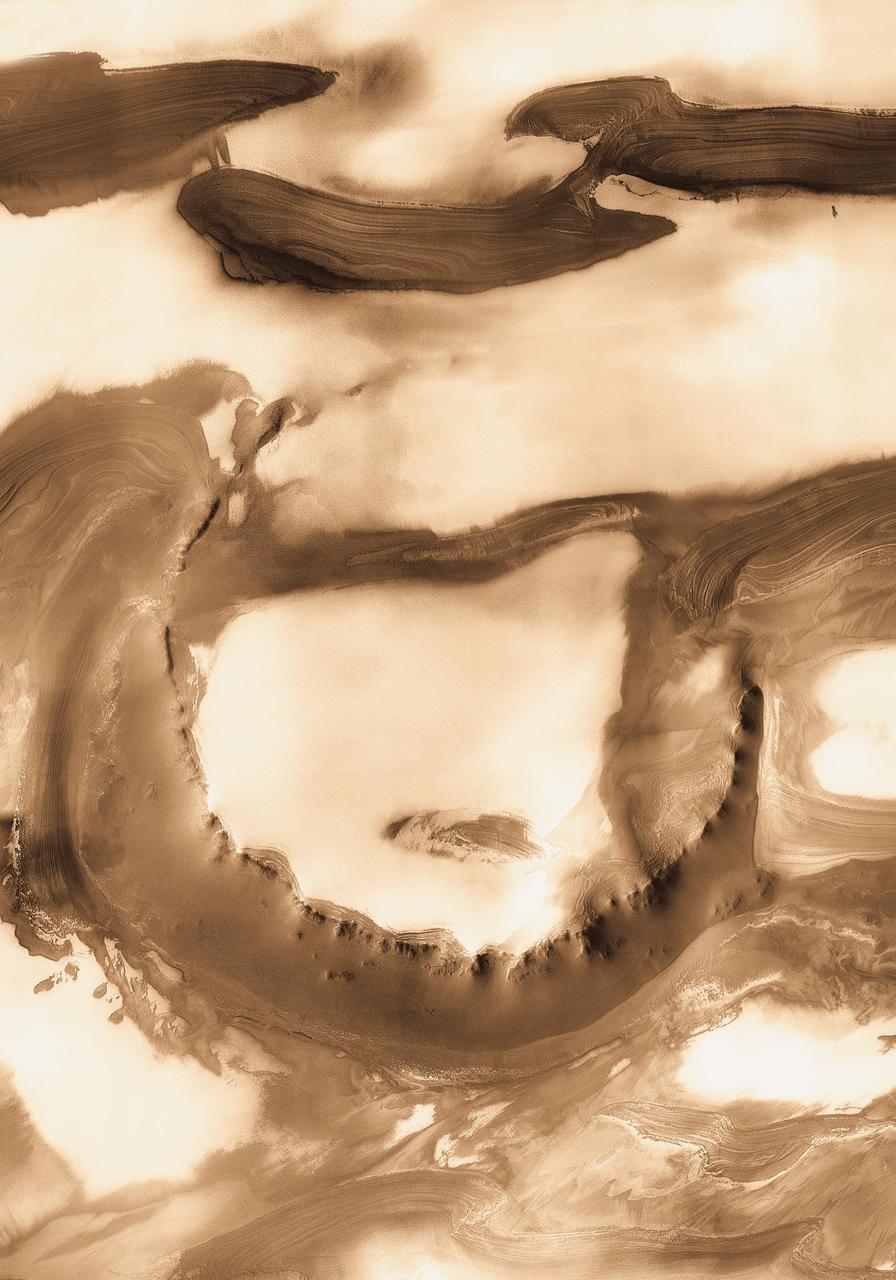
Although it is 45 kilometers 28 miles wide, countless layers of ice and dust have all but buried Udzha Crater. Udzha lies near the edge of the northern polar cap. This image is from NASA Mars Odyssey, one of an All Star set.
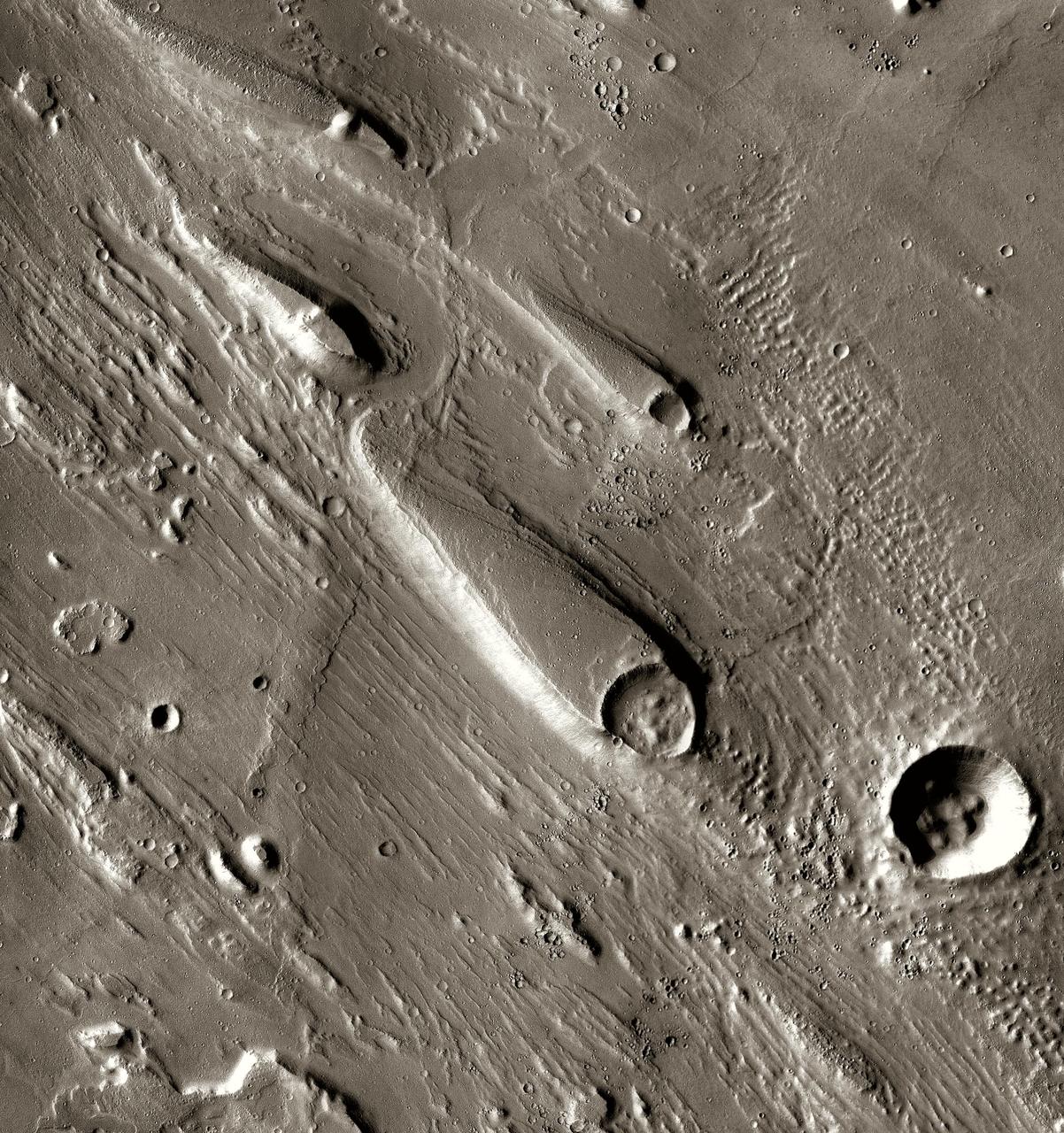
In Ares Vallis, teardrop mesas extend like pennants behind impact craters, where the raised rocky rims diverted the floods and protected the ground from erosion. This image is from NASA Mars Odyssey, one of an All Star set.
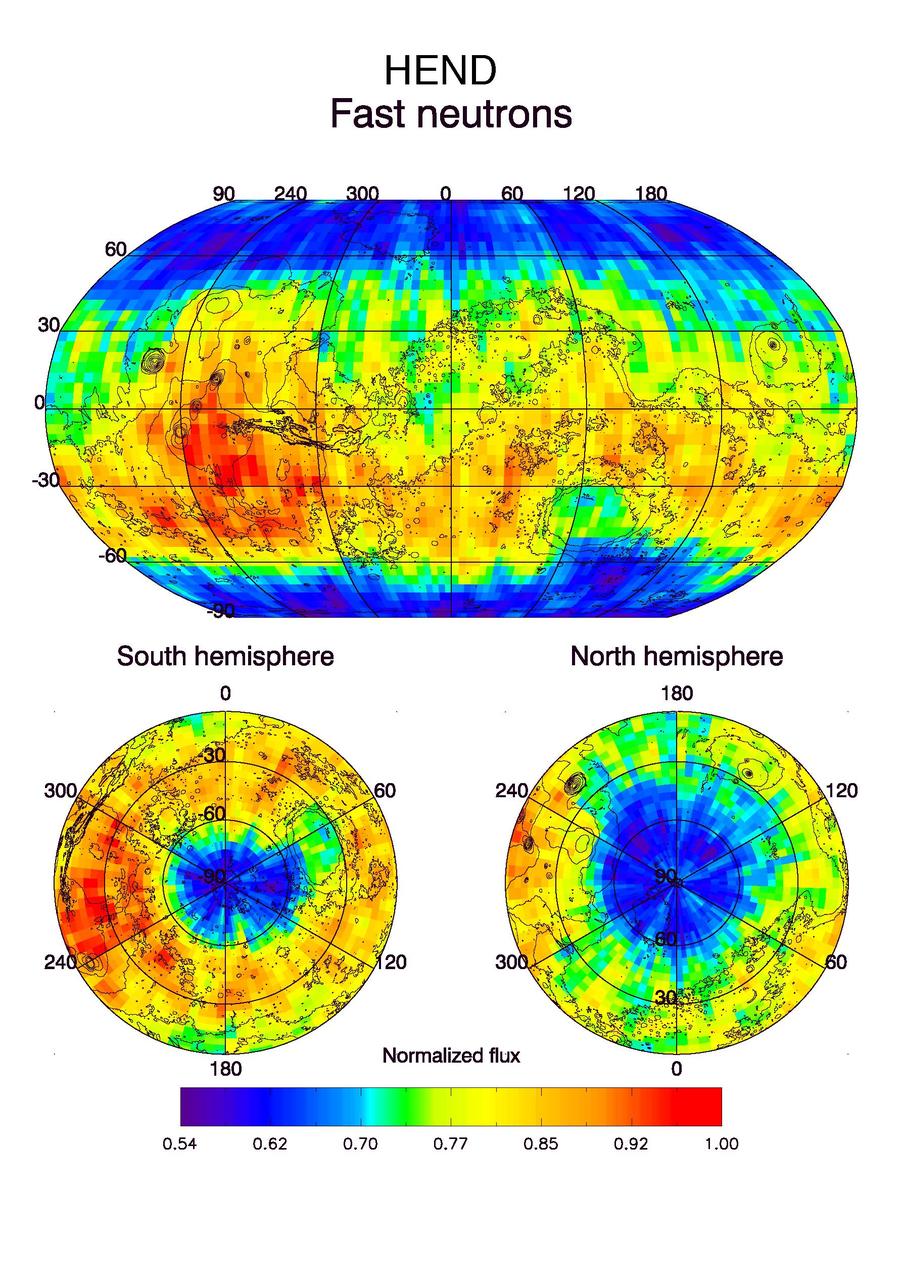
Observations by NASA Mars Odyssey spacecraft show a global view of Mars in high-energy, or fast, neutrons.
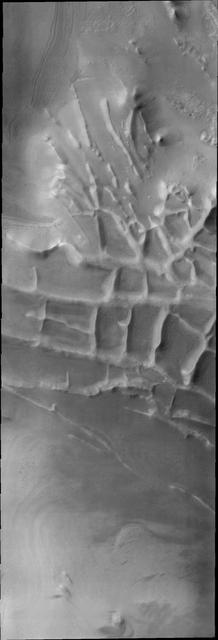
The orthogonal ridges in this image captured by NASA 2001 Mars Odyssey spacecraft are located near the south polar cap of Mars.
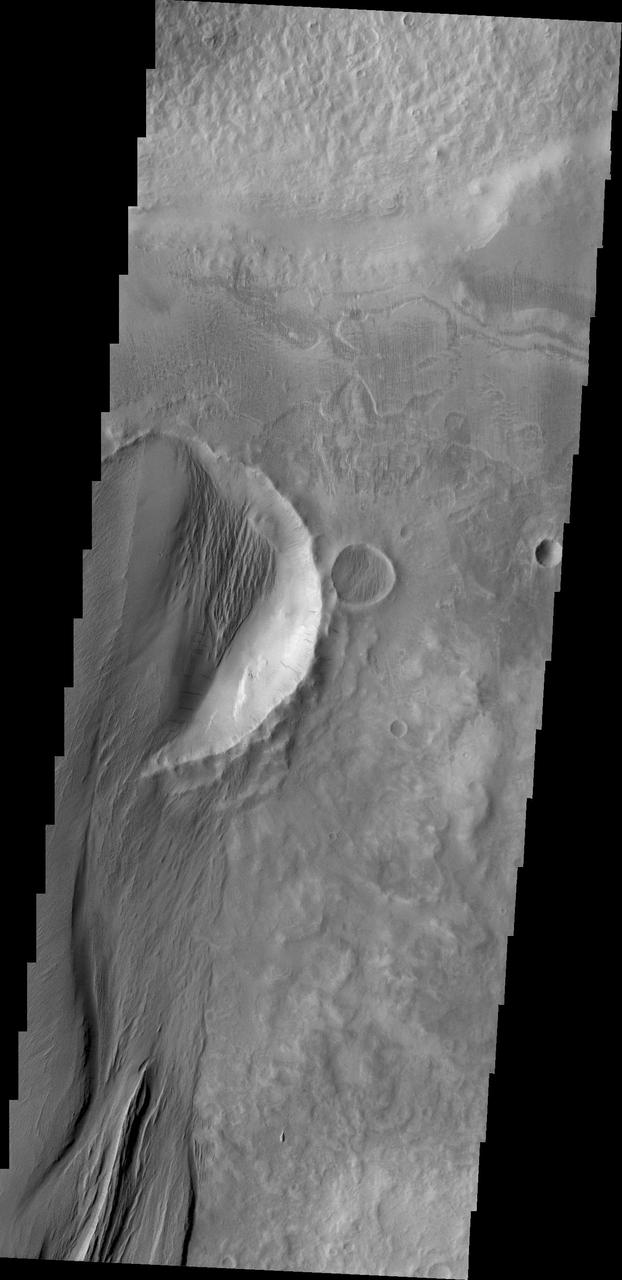
The power of the wind is undeniable in this image of the surface of Mars as seen by NASA 2001 Mars Odyssey spacecraft.
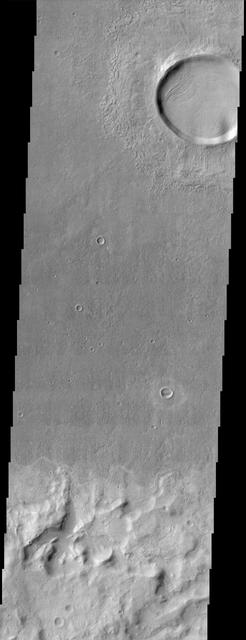
This scene from NASA Mars Odyssey spacecraft shows several interesting geologic features associated with impact craters on Mars.
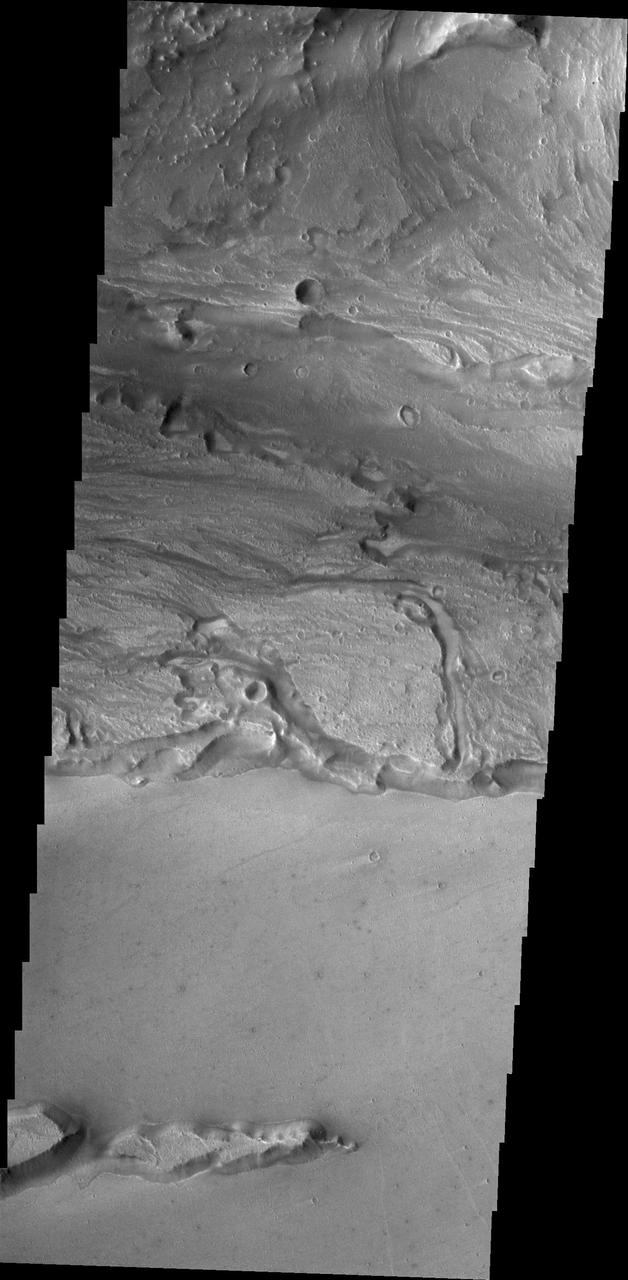
This image from NASA 2001 Mars Odyssey spacecraftshows a small portion of Kasei Valles, one of the largest channel systems on Mars.
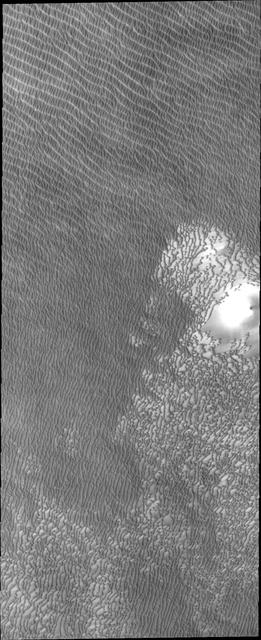
This image from NASA Mars Odyssey show regions of densely coalesced dunes, common around the North Polar cap of Mars.
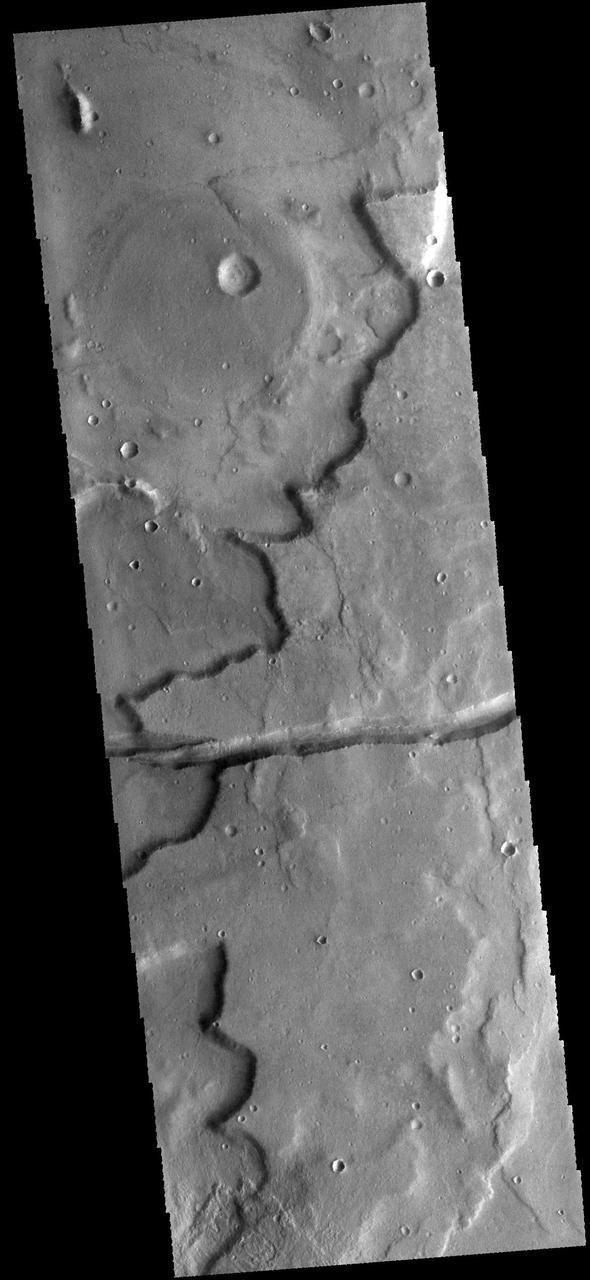
The linear depression in this image from NASA 2001 Mars Odyssey spacecraft is a graben. The graben in this area of Mars are called Sirenum Fossae.
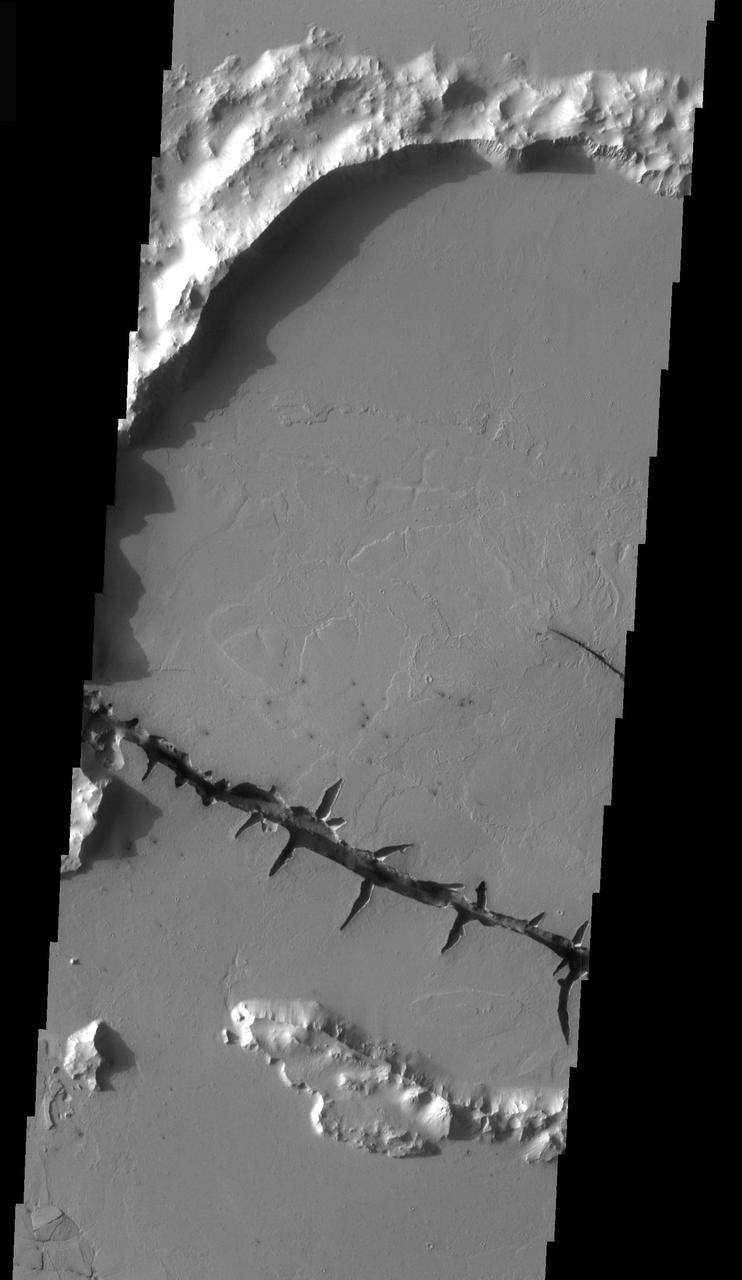
This image from NASA Mars Odyssey spacecraft shows a barbed wire-like feature on the surface of Mars.
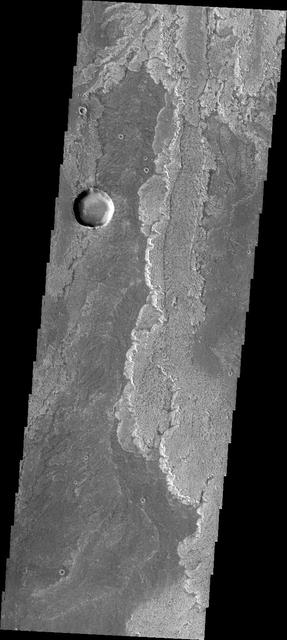
Some of the most pristine volcanic flows on Mars are from Arsia Mons as shown in this image captured by NASA Mars Odyssey.

This global view of Mars in intermediate-energy, or epithermal, neutrons was created from observations by NASA Mars Odyssey spacecraft.
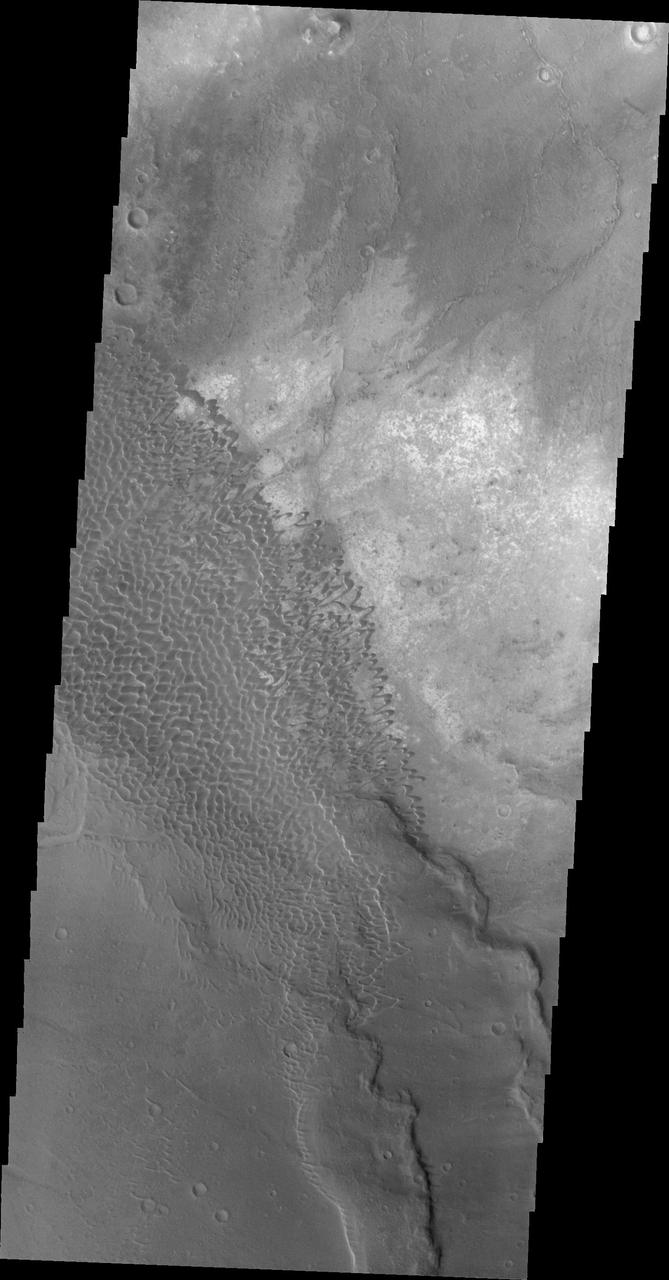
This 2001 Mars Odyssey image shows the dune field in Nili Patera.
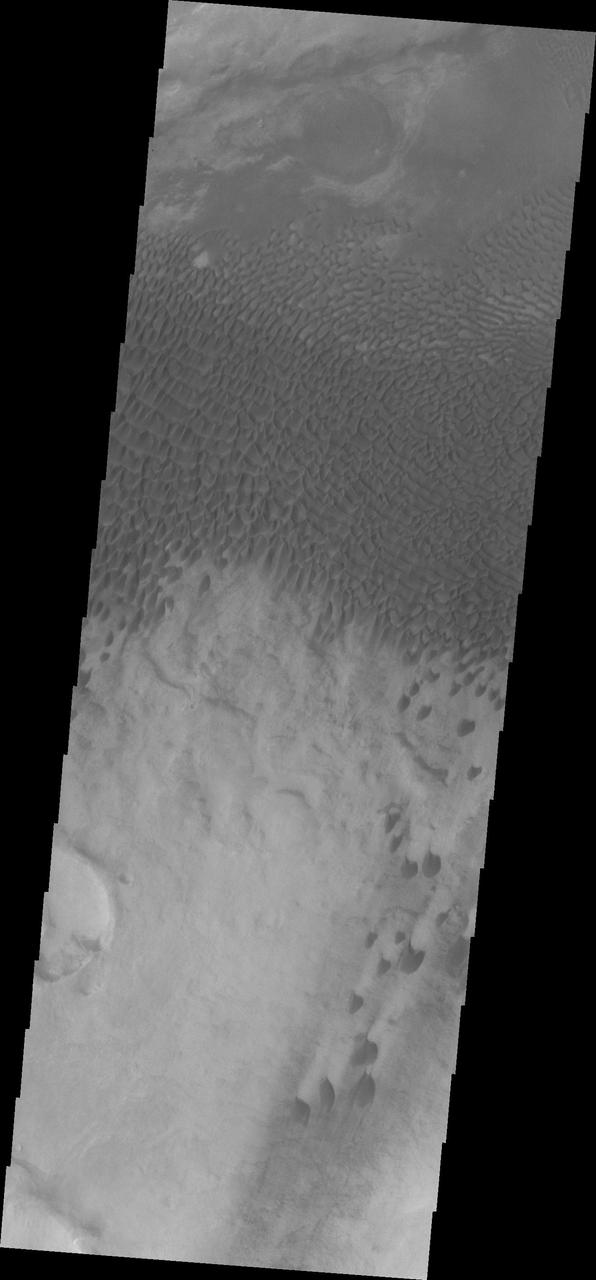
NASA Mars Odyssey spacecraft captured this image of dunes located in Aonia Terra.
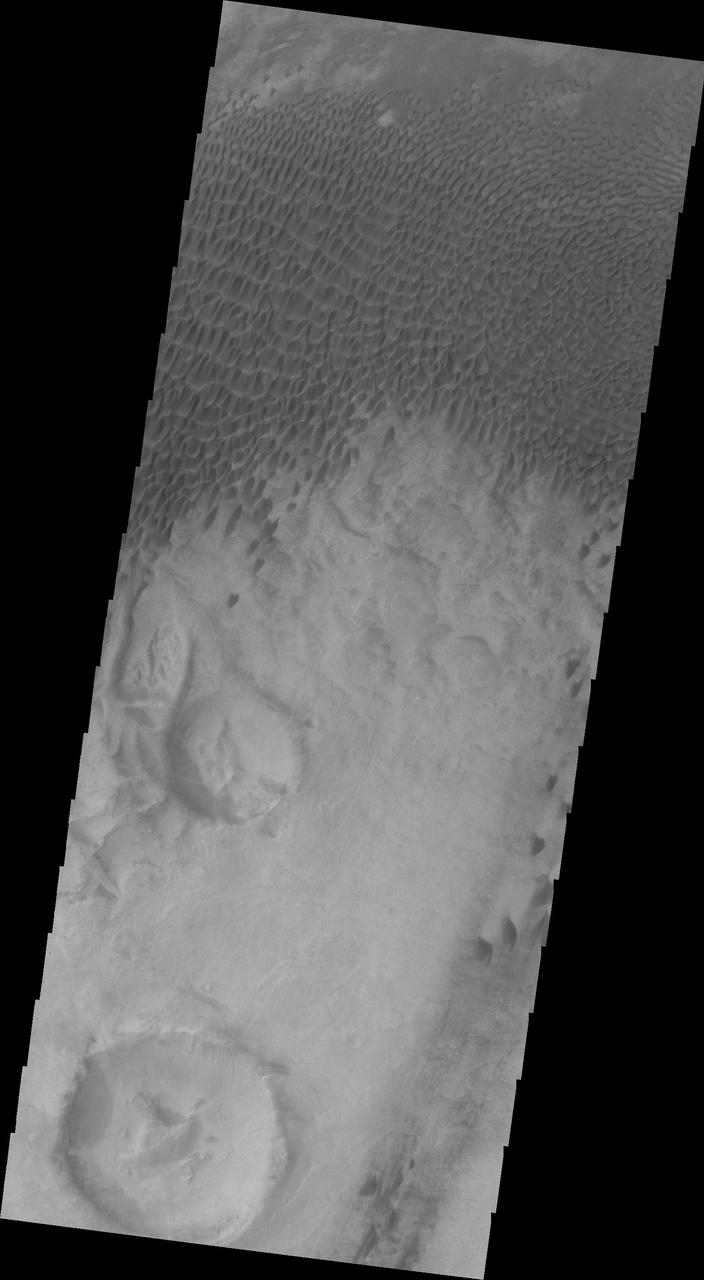
This 2001 Mars Odyssey image shows dunes in Aonia Terra.
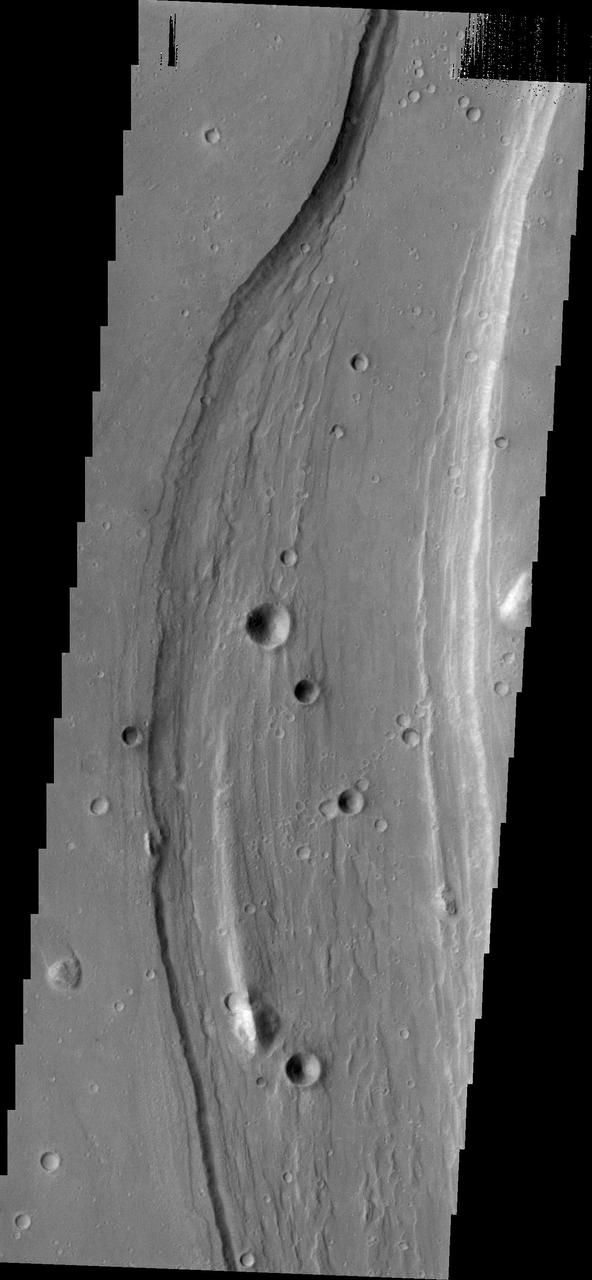
Shalbatana Vallis dominates this image captured by NASA 2001 Mars Odyssey spacecraft.
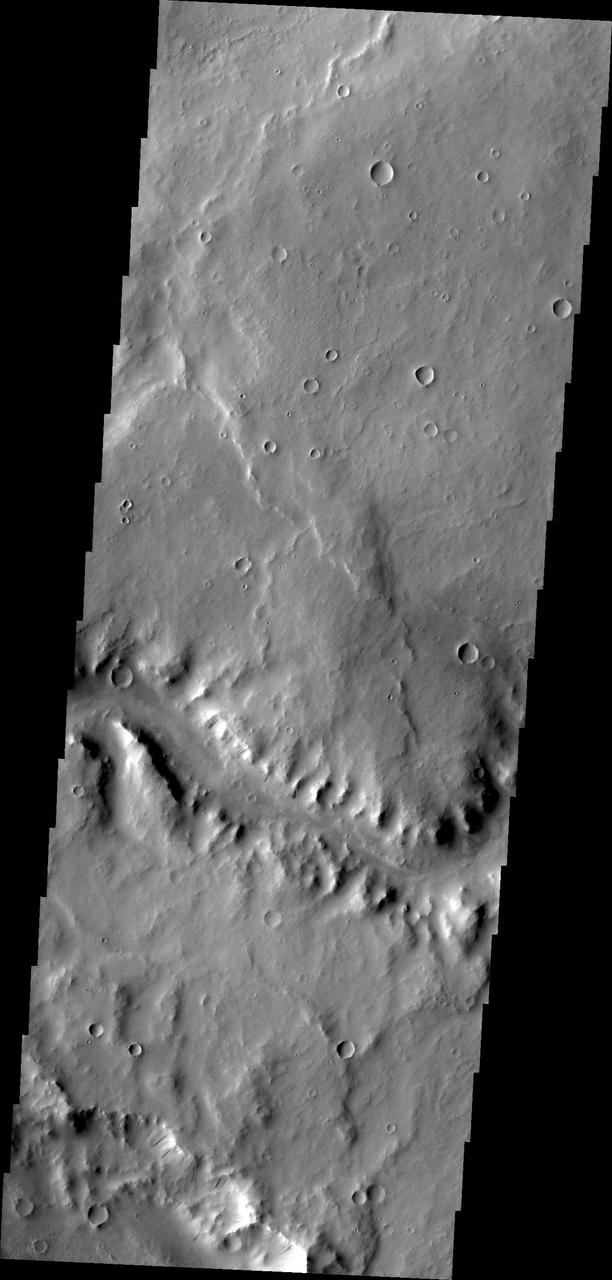
This image from NASA Mars Odyssey shows a short section of Naktong Vallis.
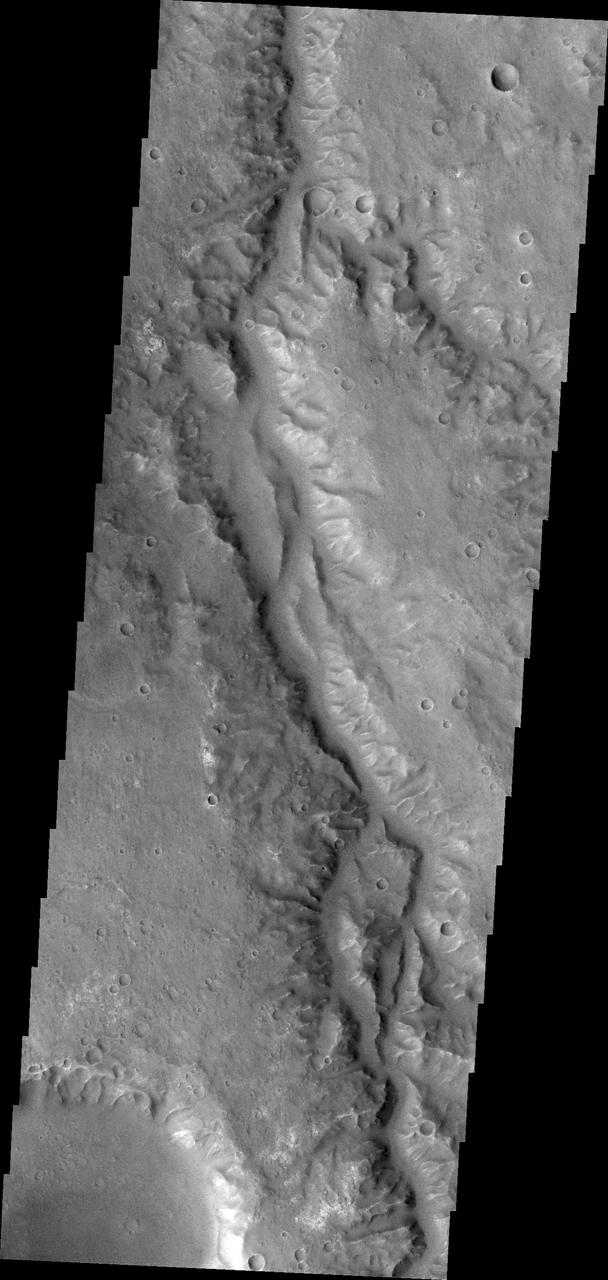
This image from NASA Mars Odyssey is of an unnamed channel in Margaritifer Terra.
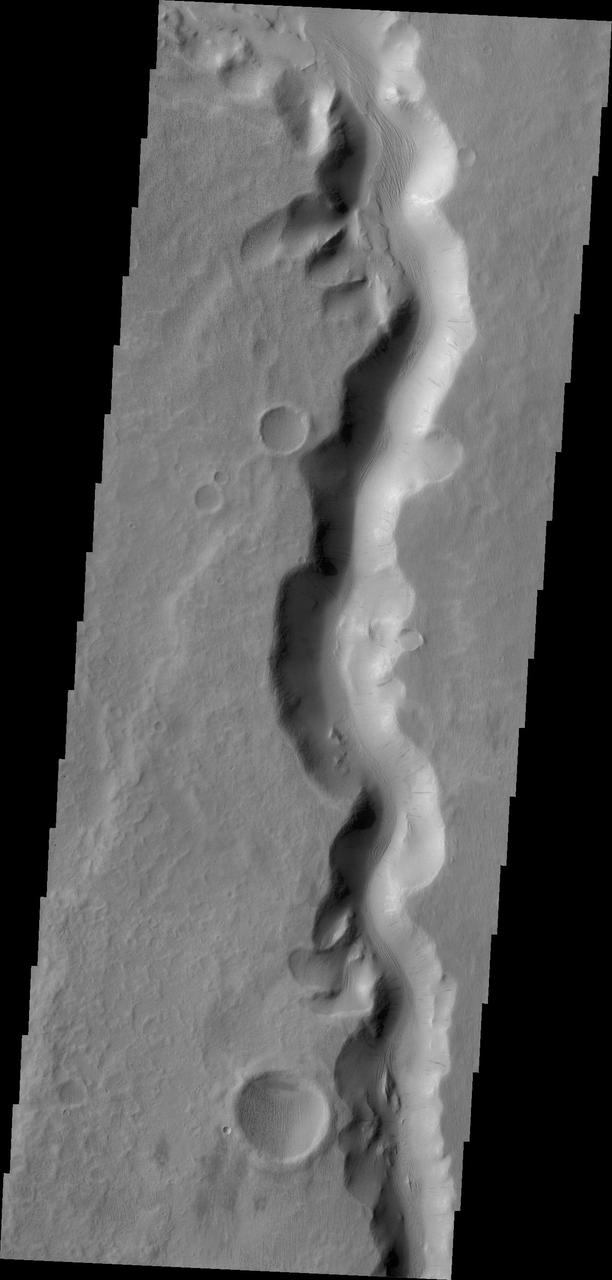
This image from NASA 2001 Mars Odyssey shows a section of Sabis Vallis.
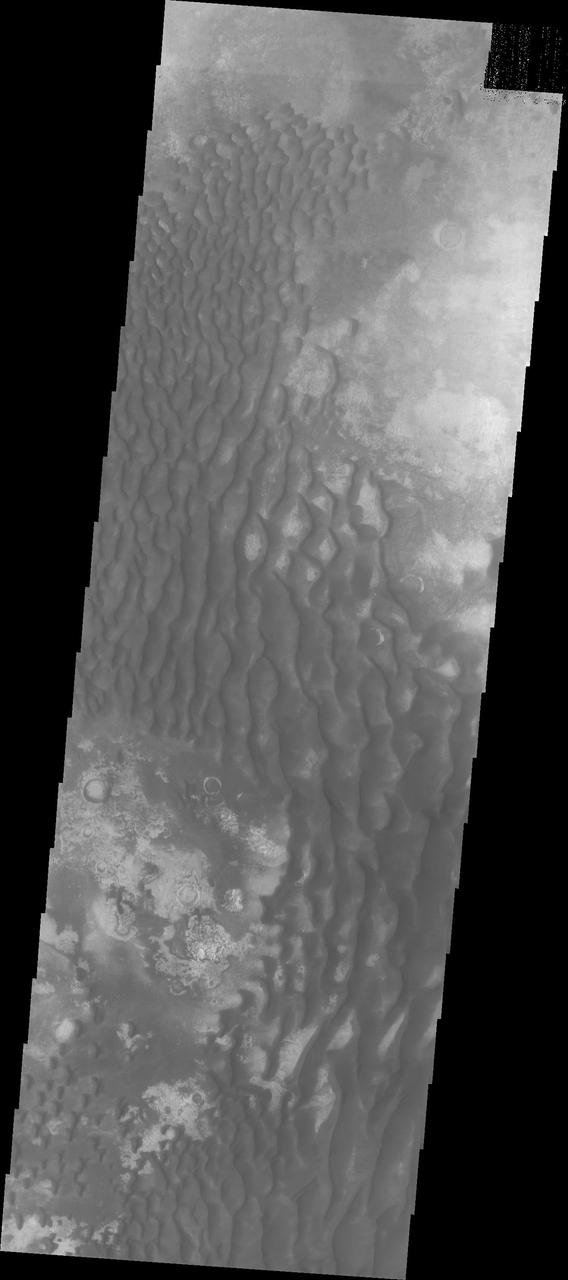
The dunes in this image captured by NASA Mars Odyssey are located on the floor of Kaiser Crater.
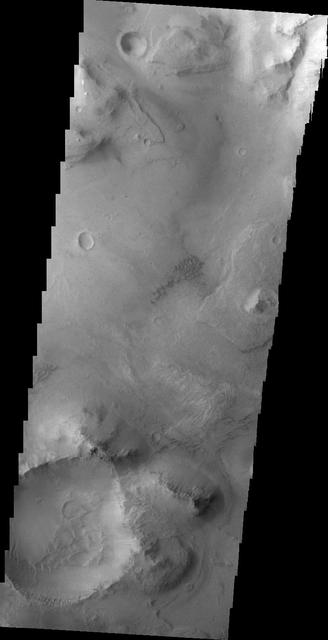
This NASA 2001 Mars Odyssey image shows part of the floor of Coprates Chasma.
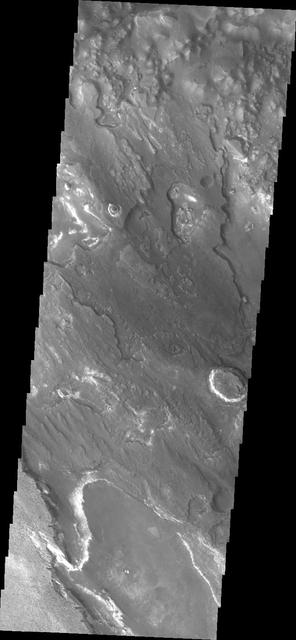
This image captured by NASA 2001 Mars Odyssey shows a portion of Aram Chaos.
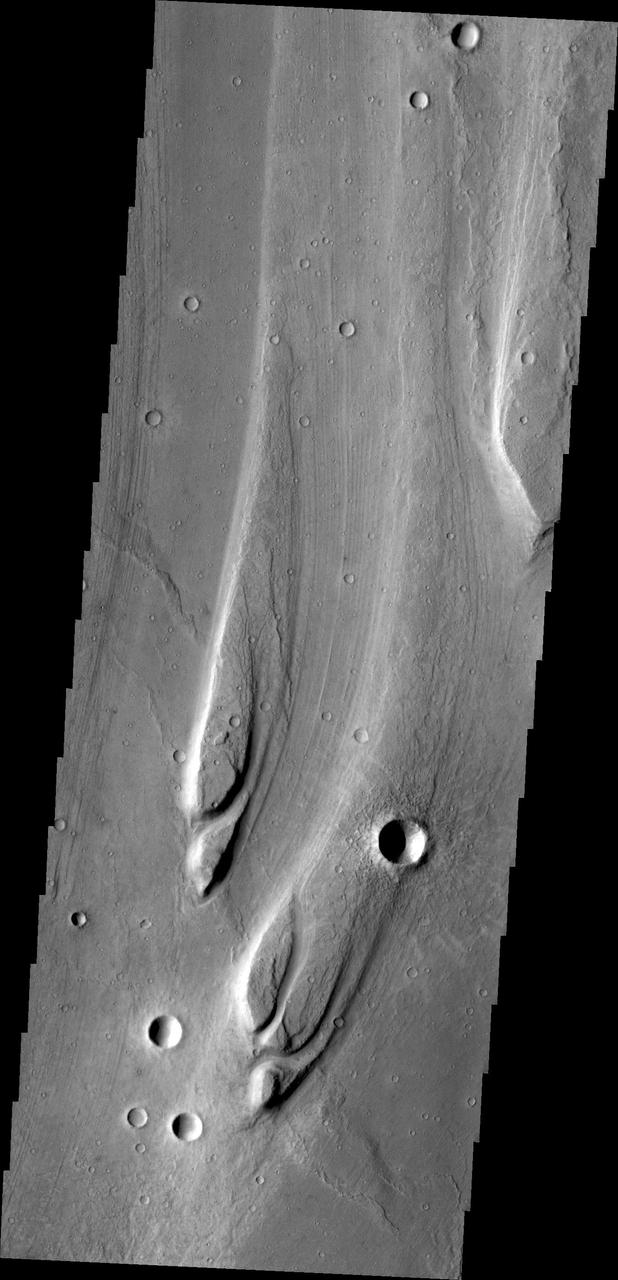
The streamlined islands in this image from NASA Mars Odyssey are located in Maja Valles.
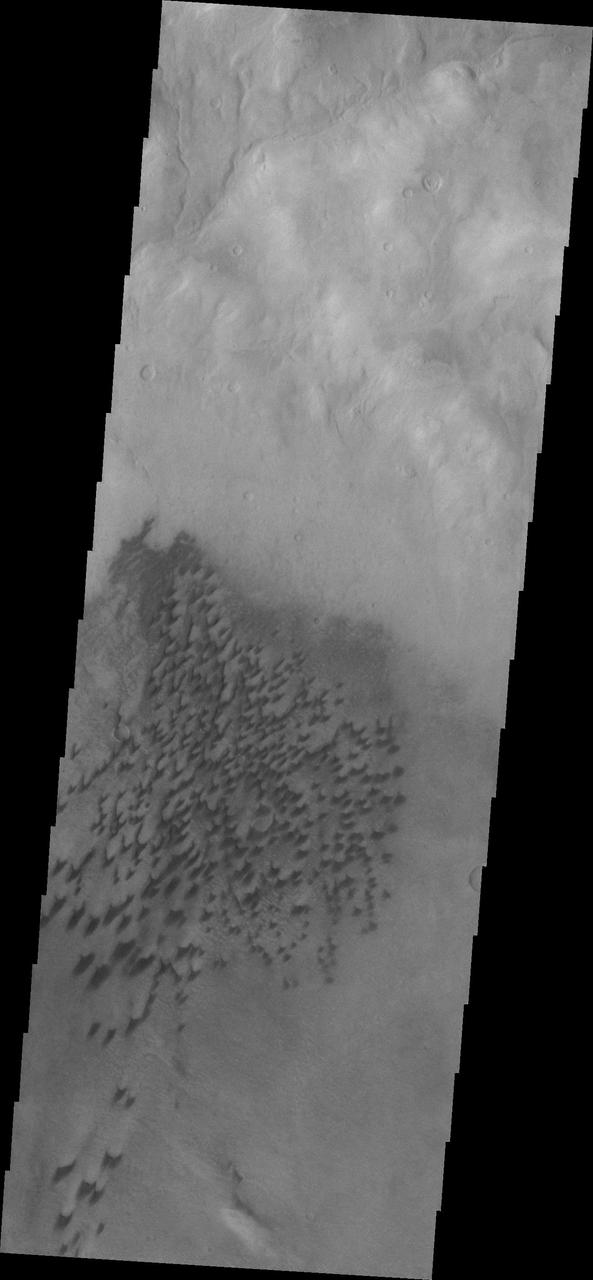
The dunes in this image from NASA Mars Odyssey are located on the floor of Arkhangelsky Crater.
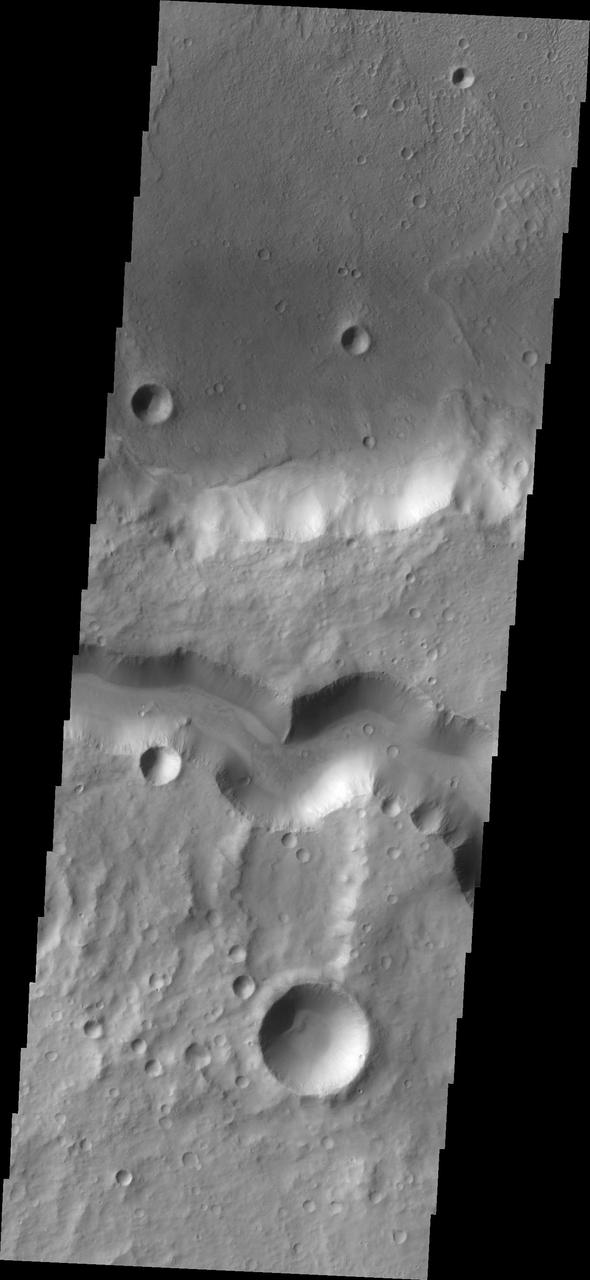
The wide channel in this image captured by NASA Mars Odyssey is Tinto Vallis.
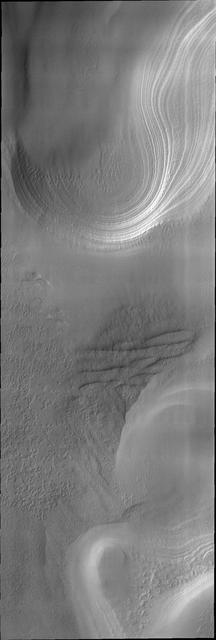
This image captured by NASA Mars Odyssey shows layering in the south polar cap.
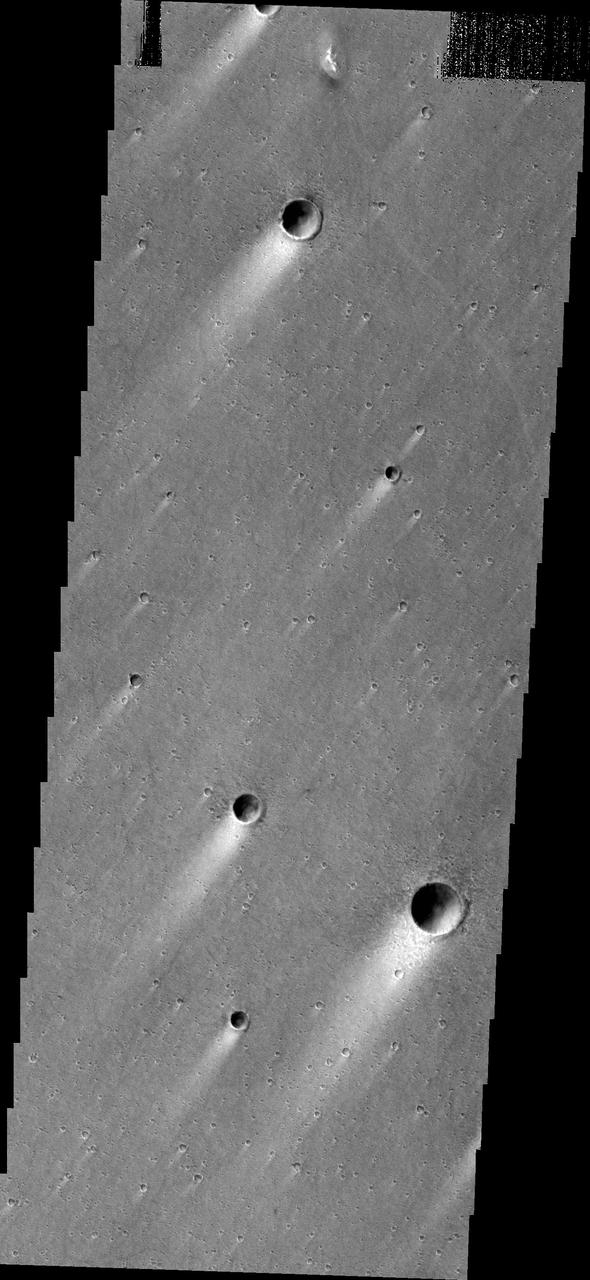
Windstreaks located in Chryse Planitia as seen by NASA 2001 Mars Odyssey spacecraft.
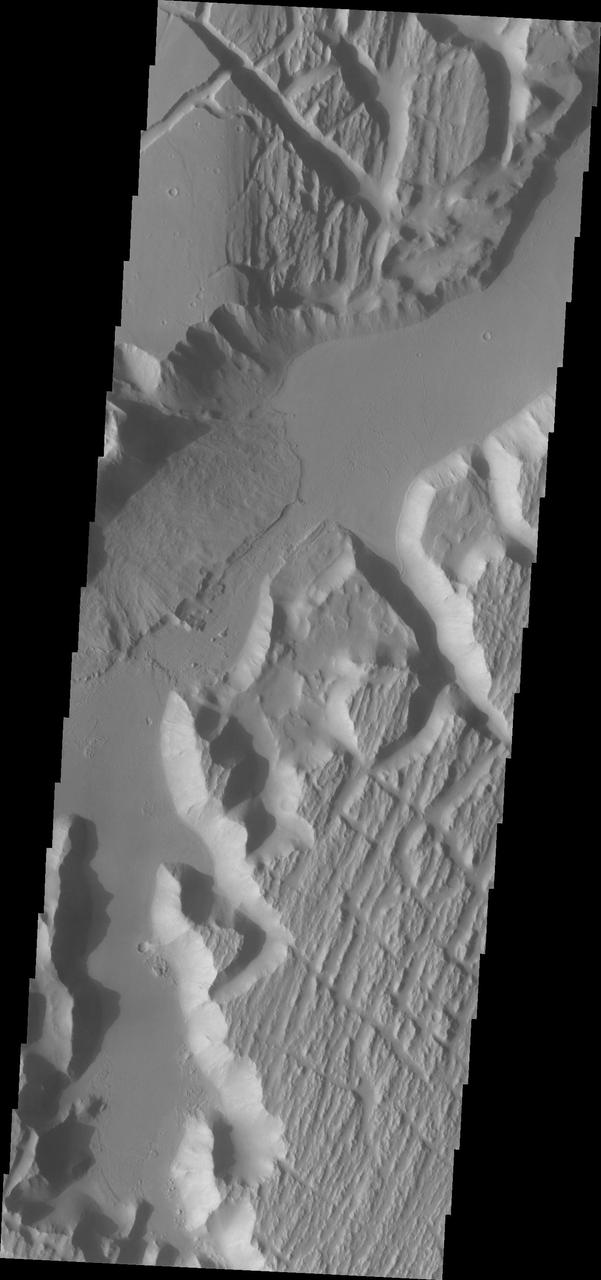
This image captured by NASA Mars Odyssey shows the southwestern part of Kasei Valles.
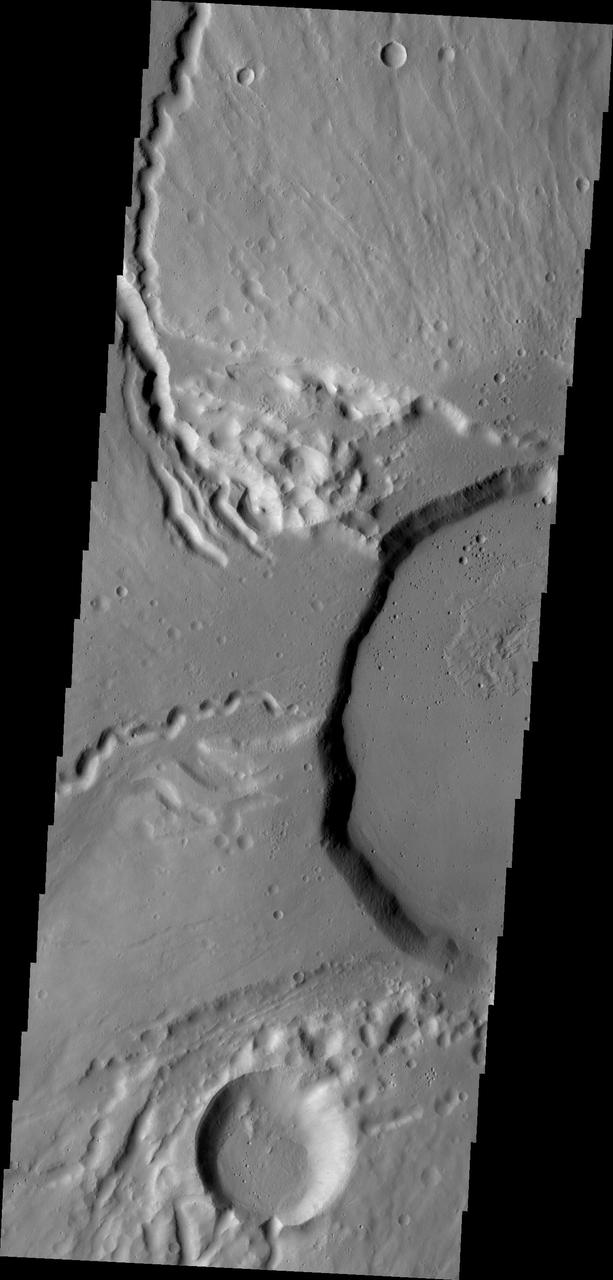
This image from NASA Mars Odyssey shows part of the summit of Ceraunius Tholus.
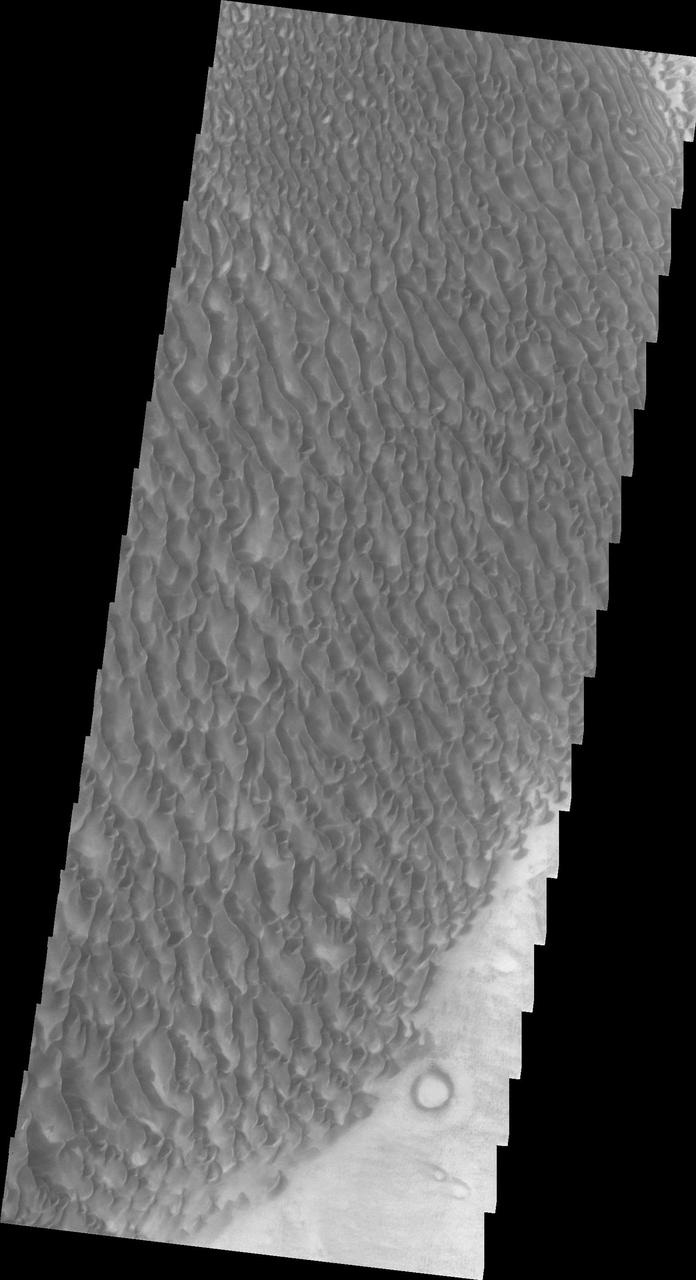
This Mars Odyssey image shows the eastern part of the Proctor Crater dune field.
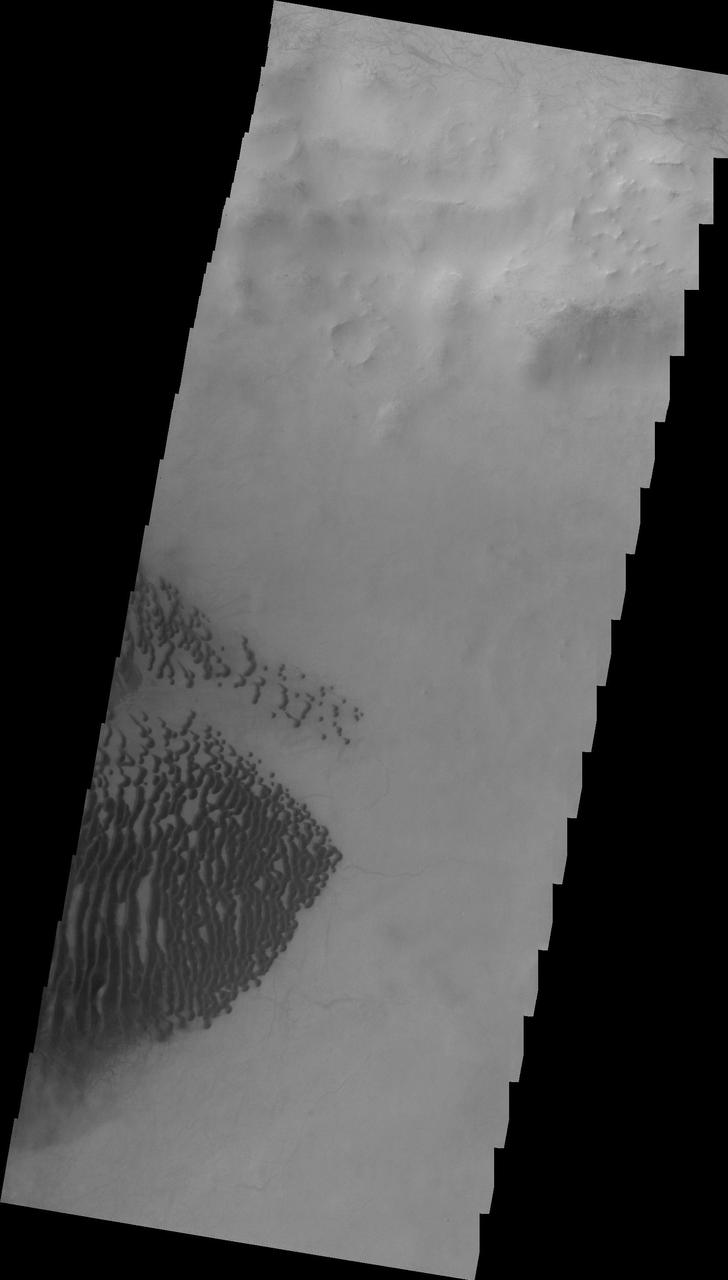
This 2001 Mars Odyssey image shows dark dunes on the floor of Lamont Crater.
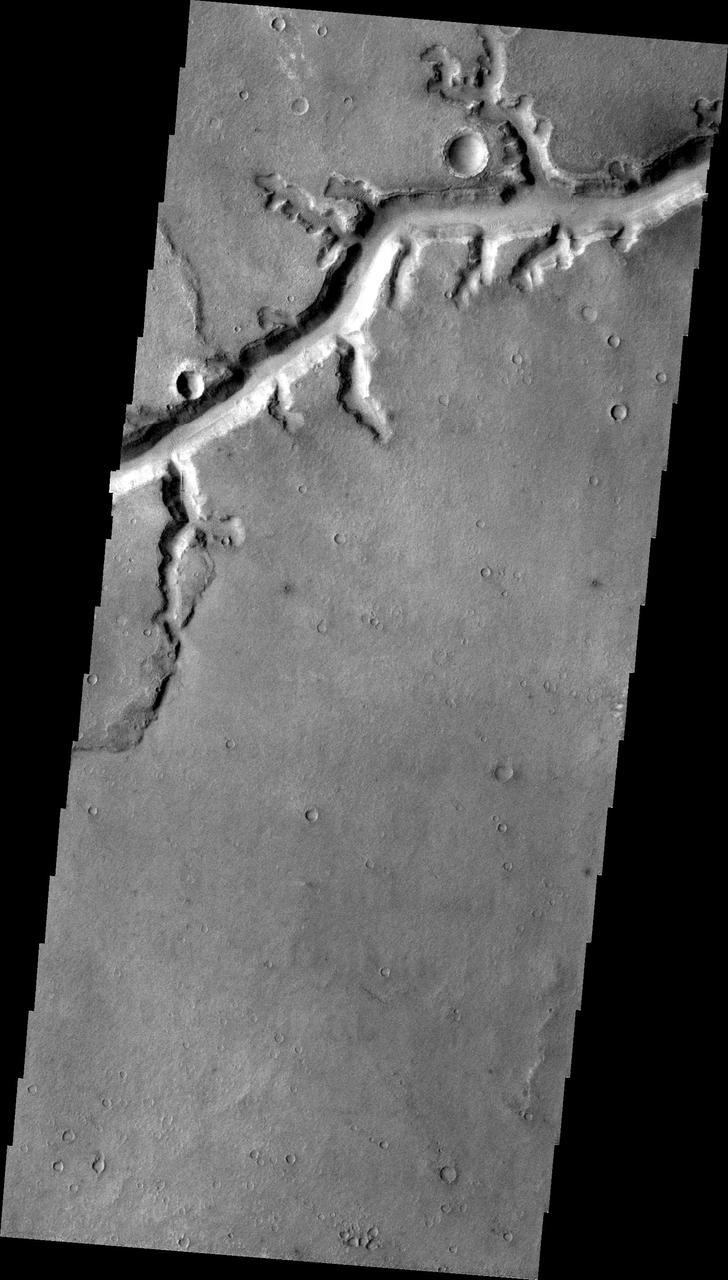
NASA 2001 Mars Odyssey image shows a portion of Nirgal Vallis.
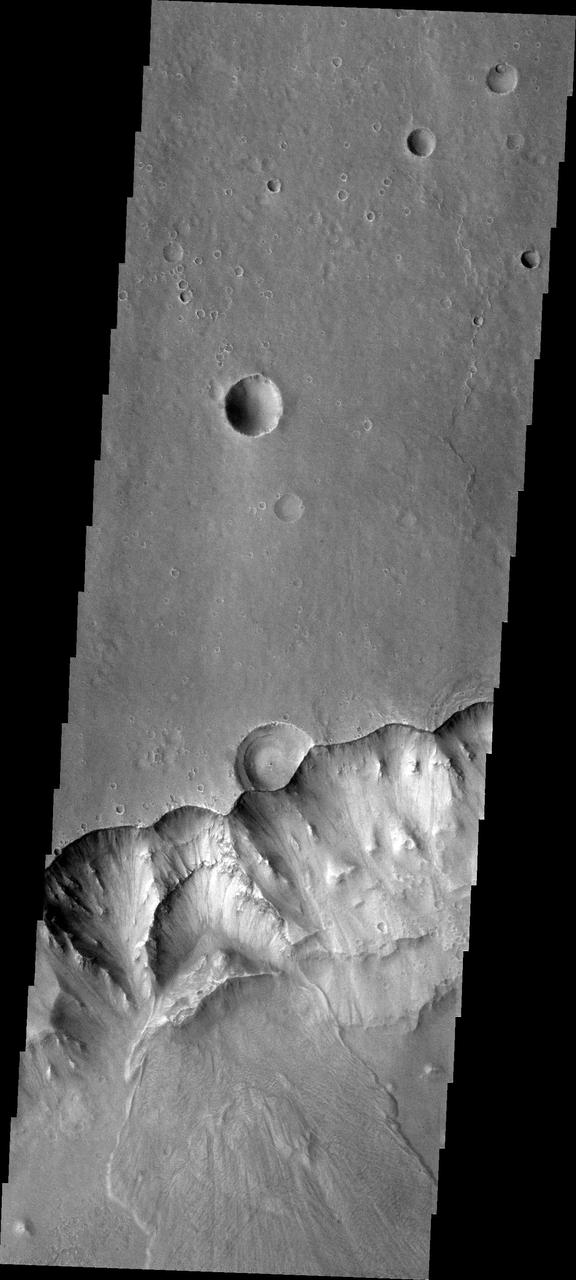
This 2001 Mars Odyssey THEMIS VIS image shows a landslide in Capri Chasma.
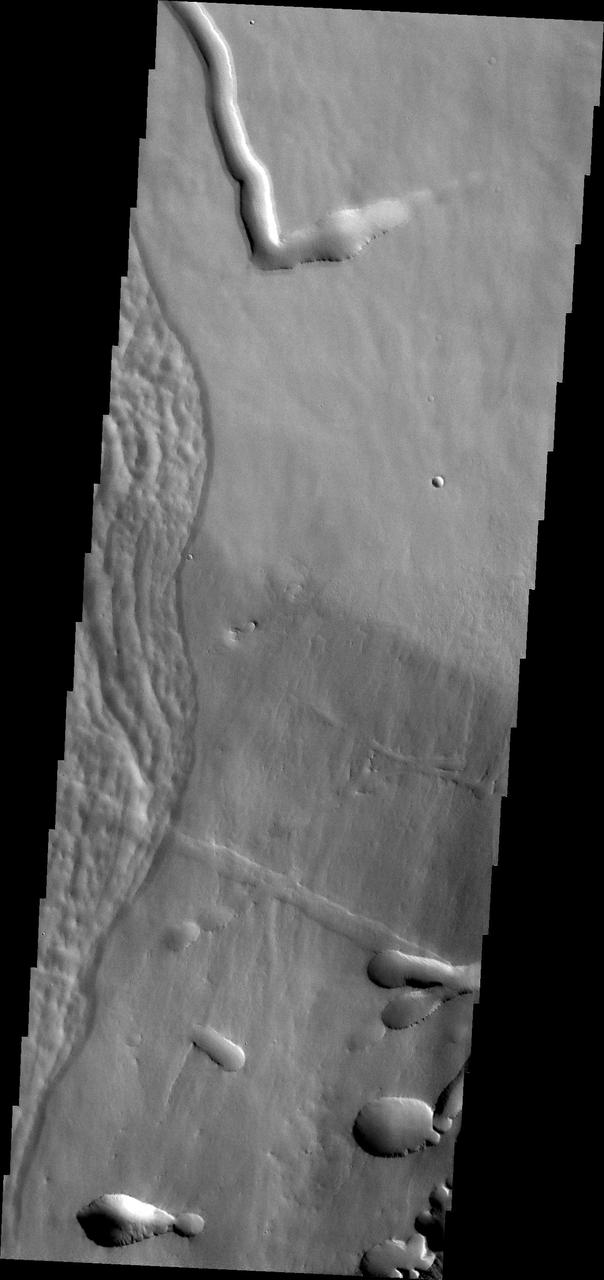
This image captured by NASA Mars Odyssey shows a portion of the flank of Pavonis Mons.
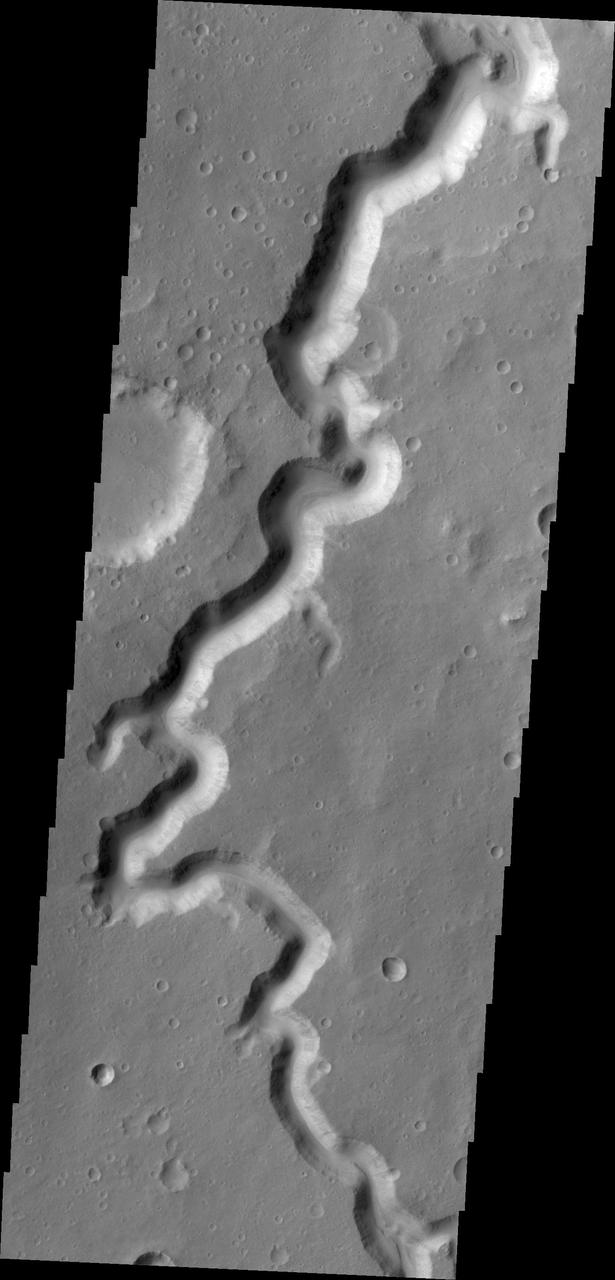
A section of Nanedi Valles is shown in this image captured by NASA 2001 Mars Odyssey.
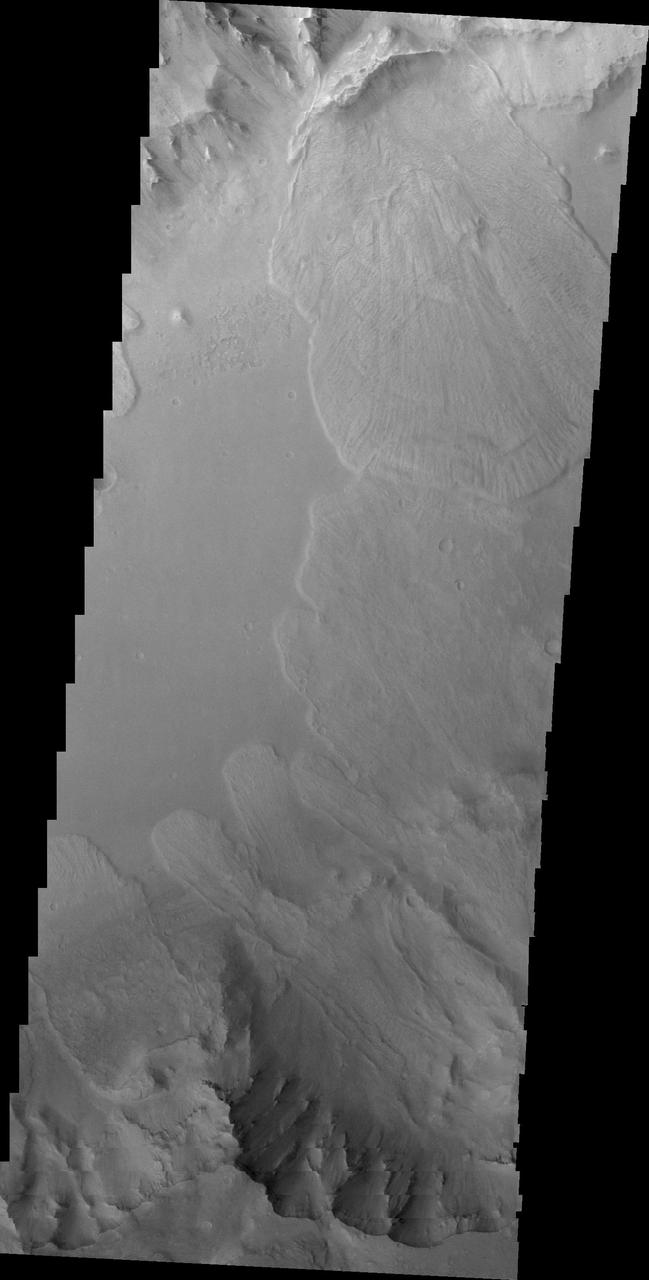
This 2001 Mars Odyssey image of Capri Chasma shows multiple landslide deposits.

This image captured by NASA 2001 Mars Odyssey spacecraft spans Candor Chasma.
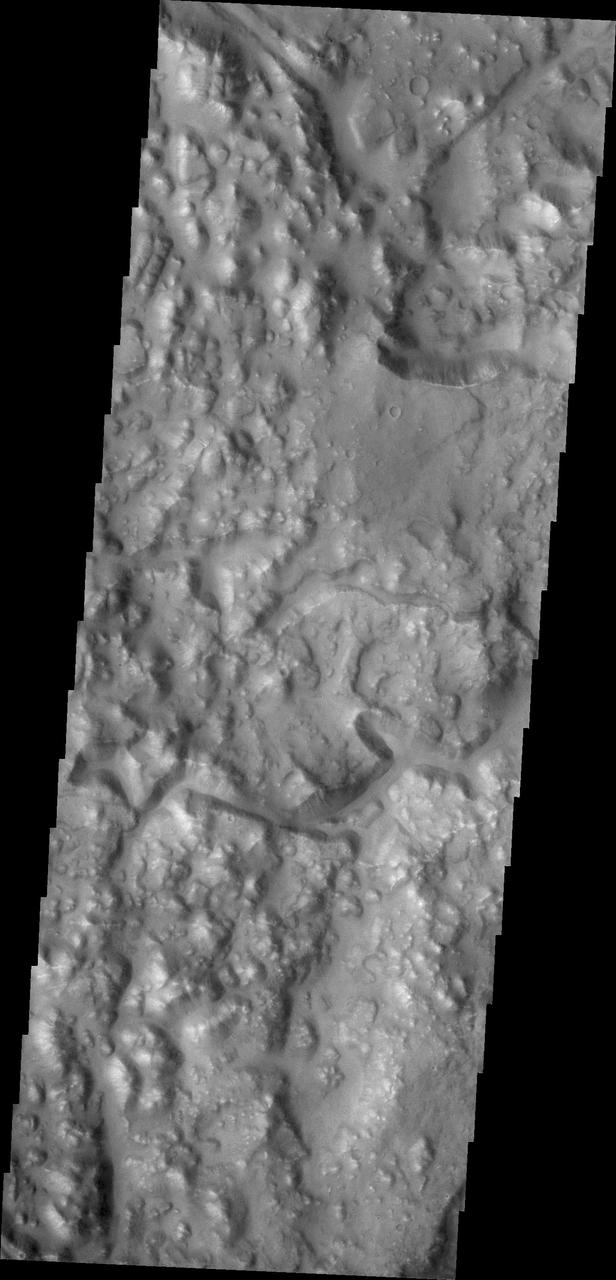
This image captured by NASA 2001 Mars Odyssey shows a portion of Iani Chaos.
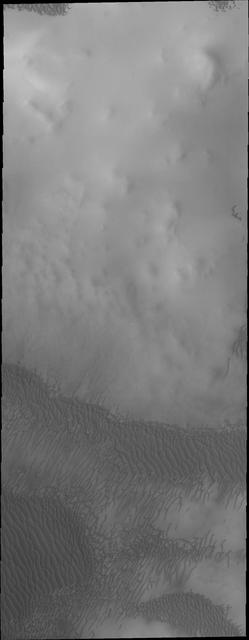
The dunes in this image captured by NASA Mars Odyssey are near the north polar cap.
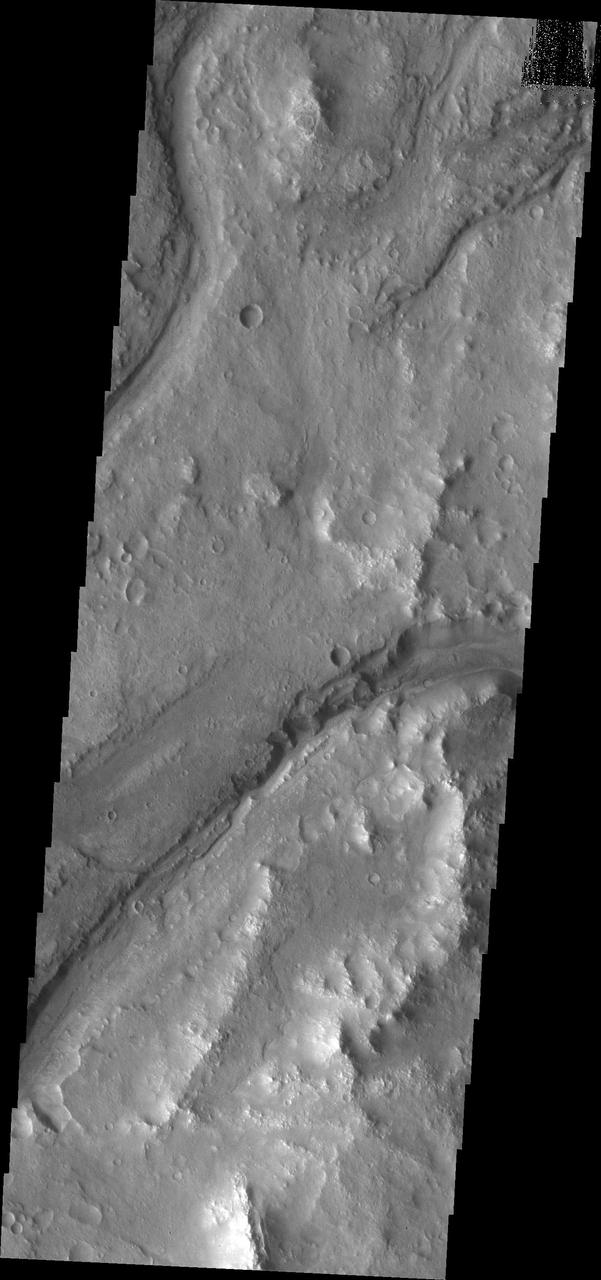
Maumee Valles is the main channel visible in this image captured by NASA Mars Odyssey.
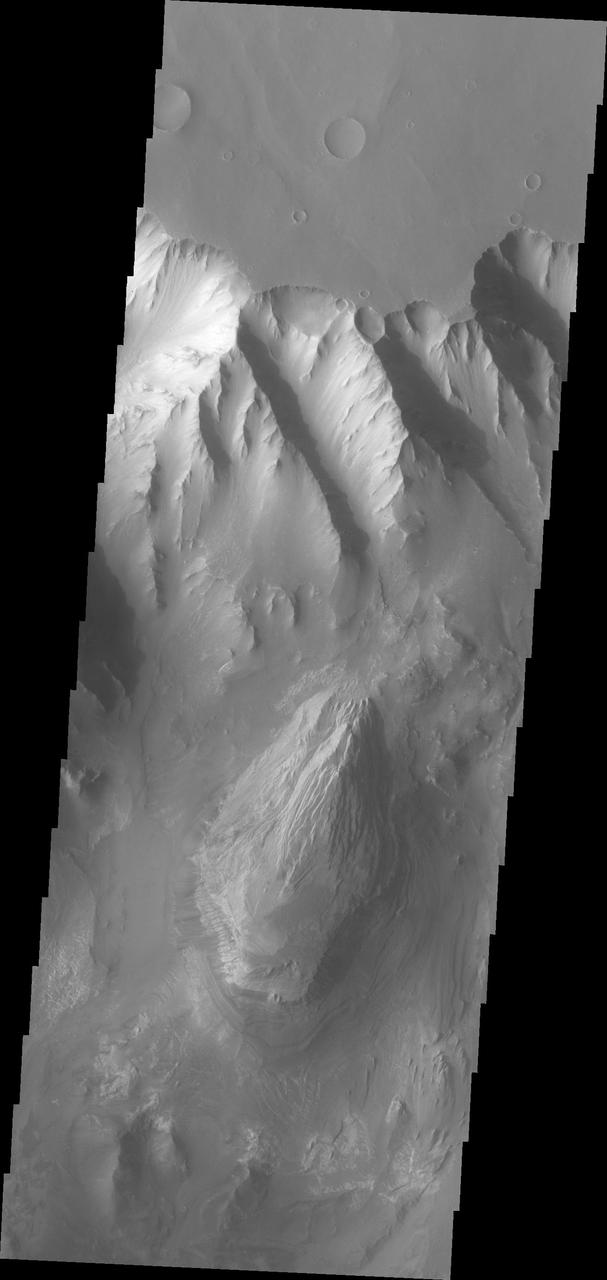
This image from NASA Mars Odyssey shows the northern sidewall of Melas Chasma.
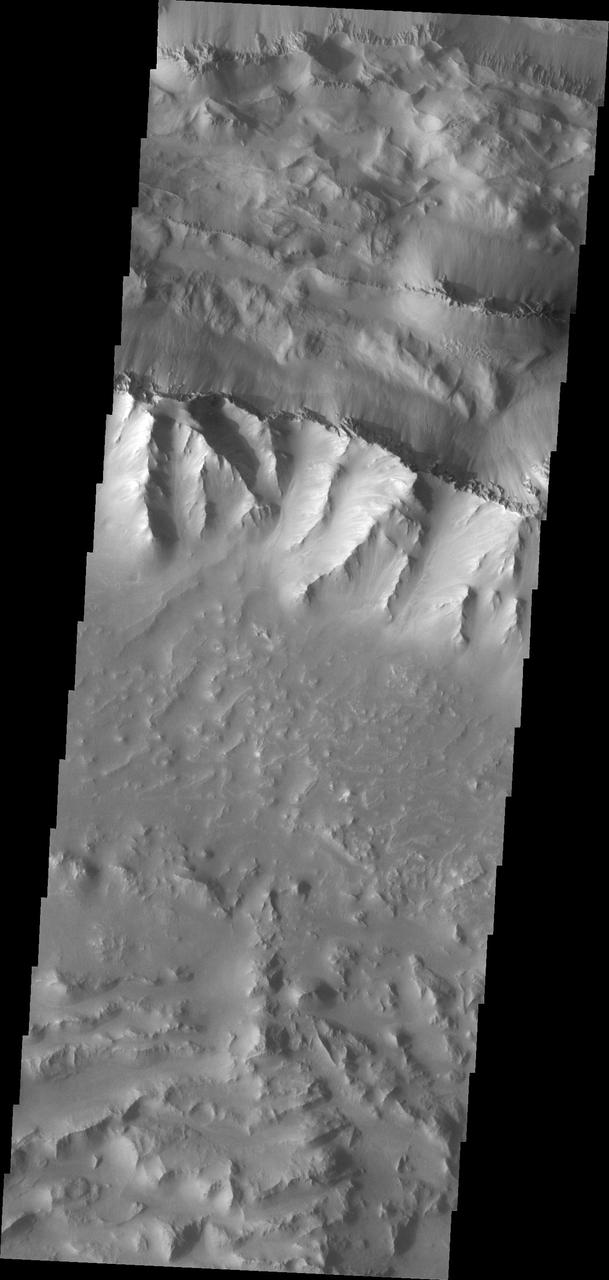
This image captured by NASA Mars Odyssey shows a portion of Coprates Chasma.
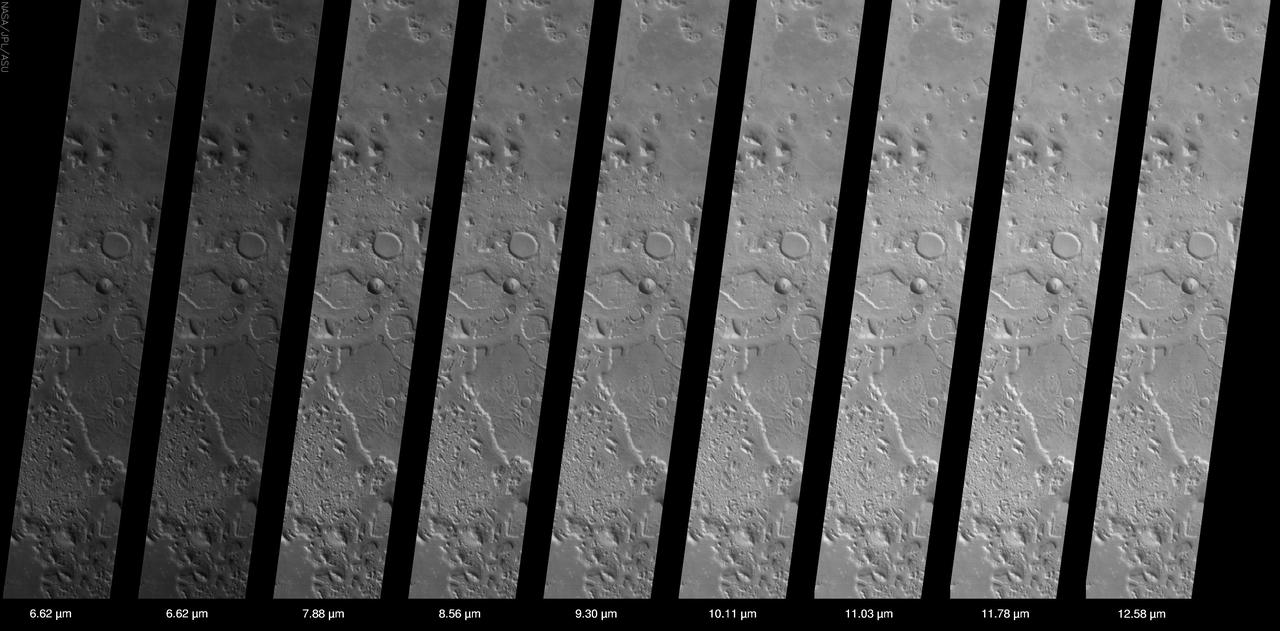
This set of images from NASA Mars Odyssey spacecraft shows the so-called face on Mars landform located in the northern plains of Mars.
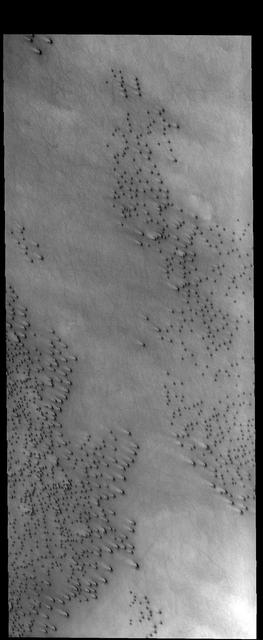
NASA's 2001 Mars Odyssey spies what looks likNASA's 2001 Mars Odyssey spies what looks like a barrage of bullets headed its way.e a barrage of bullets headed its way. https://photojournal.jpl.nasa.gov/catalog/PIA21688
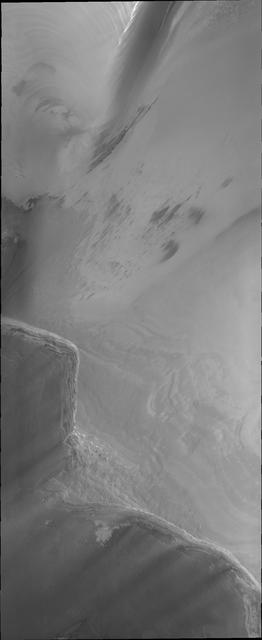
Both polar caps on Mars are composed of many layers of ice and dust. This image from NASA Mars Odyssey clearly shows the layering of the North polar cap.
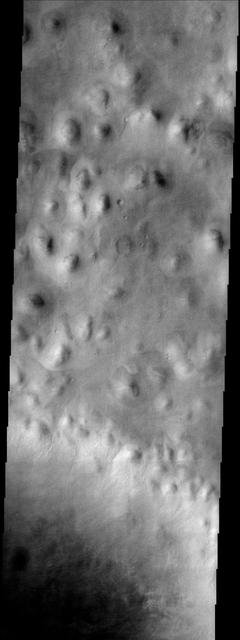
Hills abound in this portion of Mars imaged by NASA Mars Odyssey spacecraft and located in the Vastitas Borealis region of the high northern plains. These hills are part of Scandia Colles.
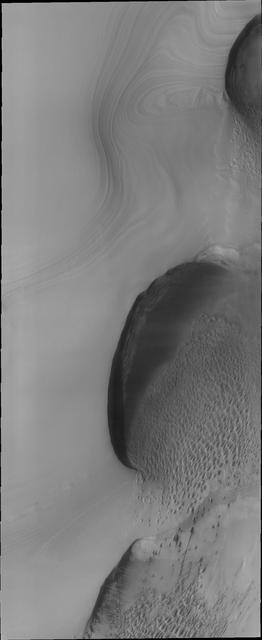
Dunes are common at both poles of Mars. These northern pole dunes are still covered in frost, as it is early springtime when this image was acquired by NASA 2001 Mars Odyssey.
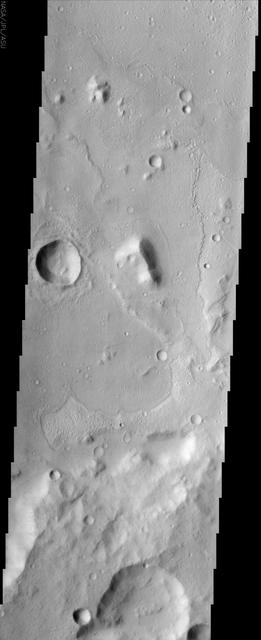
The floor of a 75 km diameter crater in the Amenthes region of Mars displays lobate flow features in the center of this image from NASA Mars Odyssey spacecraft.
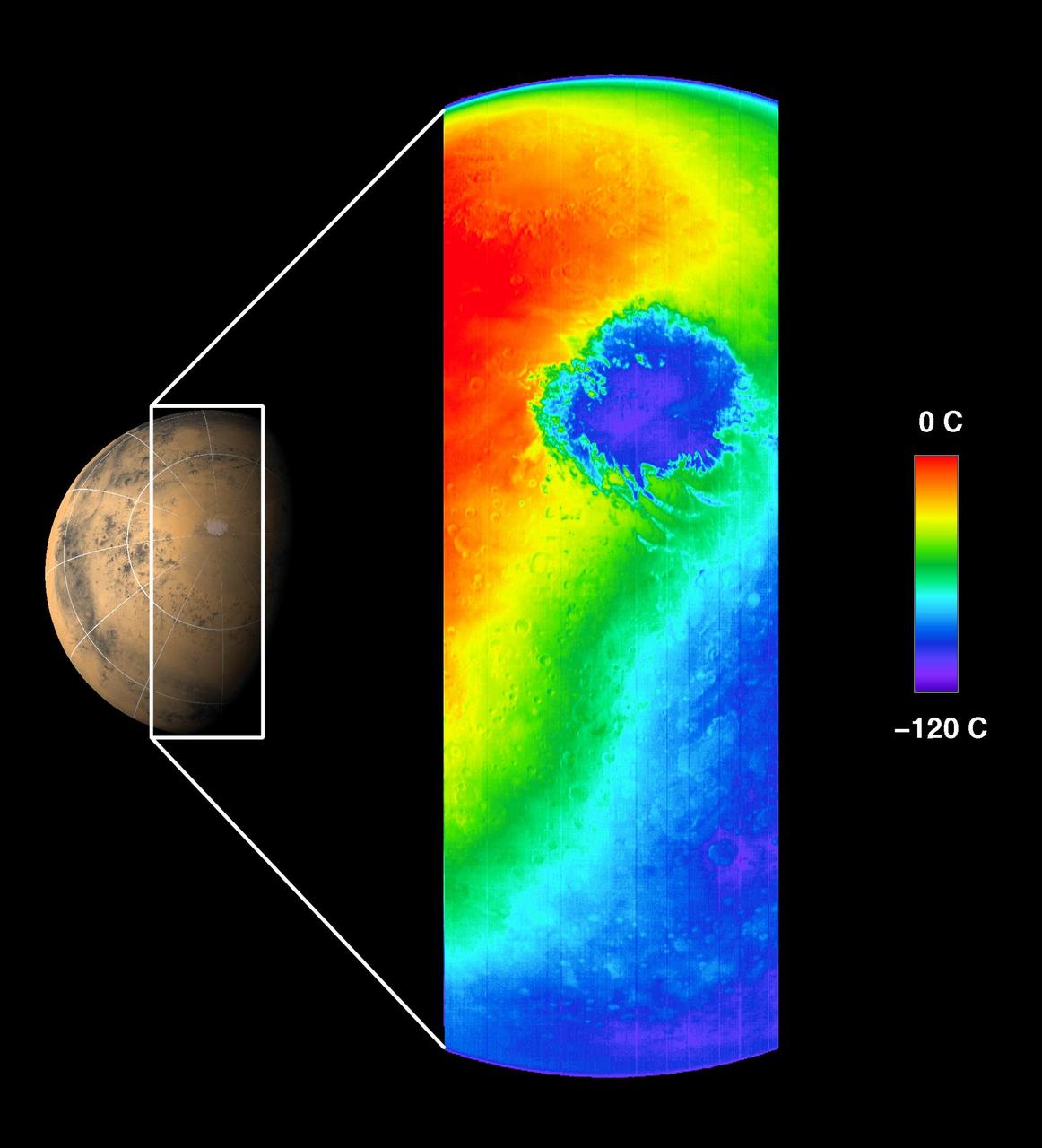
This thermal infrared image was acquired by NASA Mars Odyssey spacecraft on October 30, 2001, as the spacecraft orbited Mars on its ninth revolution around the planet.
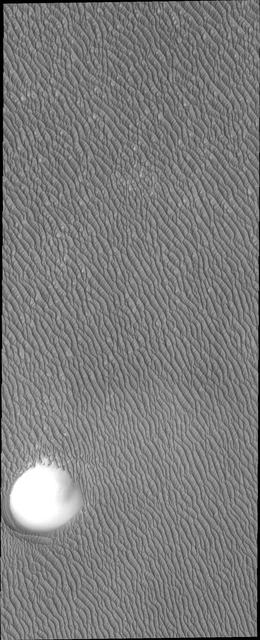
The dunes in this image captured by NASA Mars Odyssey spacecraft are just a small portion of the dune field that encircles part of the north pole of Mars.
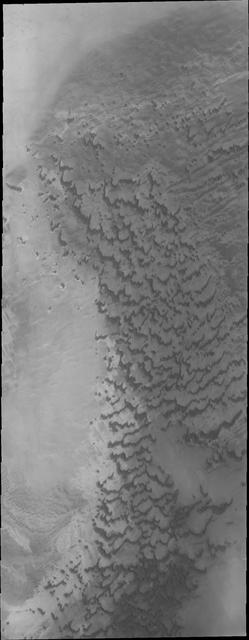
In this image from NASA Mars Odyssey of dunes near the north pole of Mars it appears that small individual dunes are coalescing into larger dune forms.
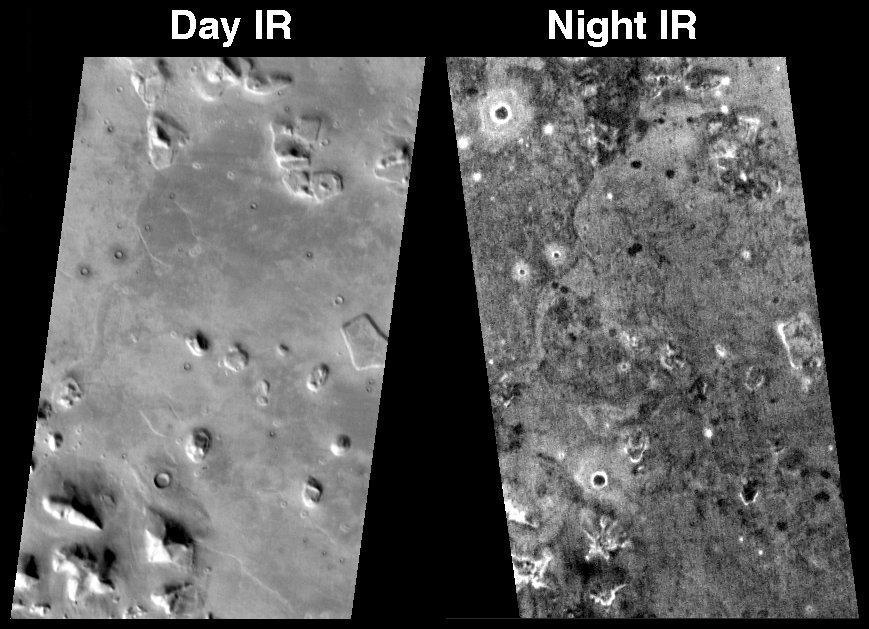
This pair of infrared images from NASA Mars Odyssey spacecraft shows the so-called face on Mars landform viewed during both the day and night.
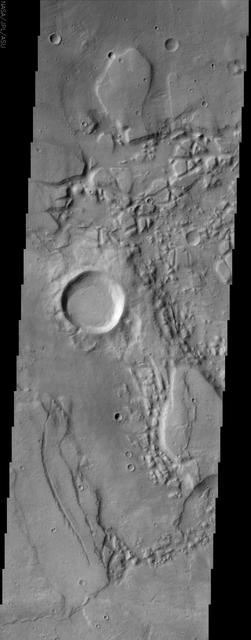
The jumbled, chaotic terrain in this NASA Mars Odyssey image may represent a source region for the Reull Vallis, one of the larger channel systems in the southern hemisphere of Mars.

This low resolution VIS image from NASA 2001 Mars Odyssey spacecraft shows a large portion of etched terrain near the south pole of Mars.
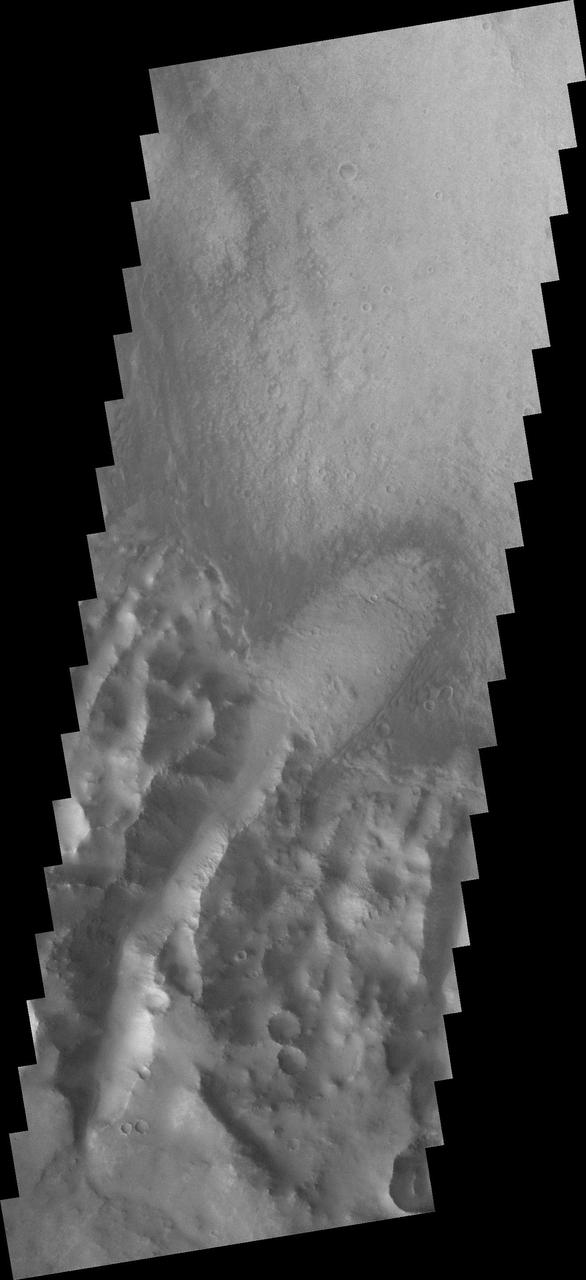
This low resolution VIS image from NASA 2001 Mars Odyssey spacecraft shows a large portion of etched terrain near the south pole of Mars.
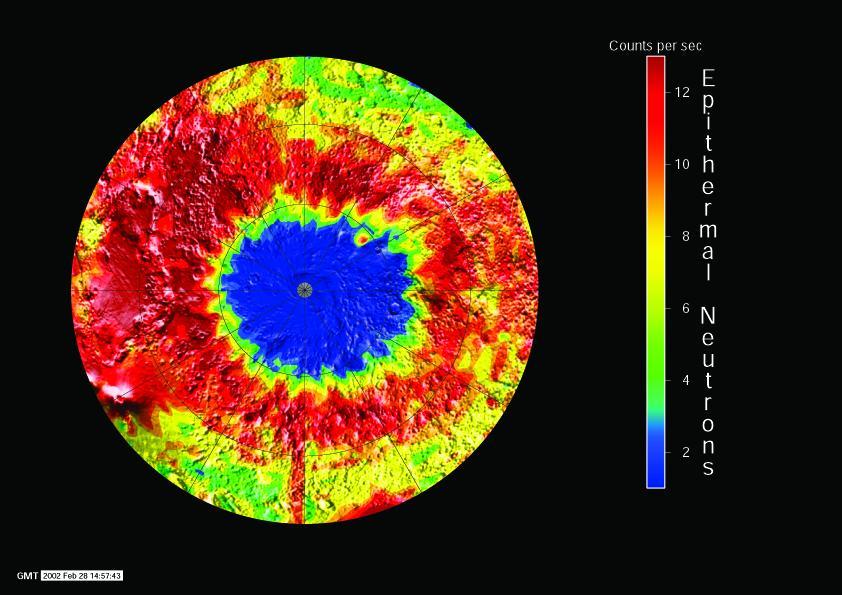
The deep blue colors on this map of the south pole of Mars from NASA Mars Odyssey spacecraft show where a low intensity of epithermal neutrons is found.
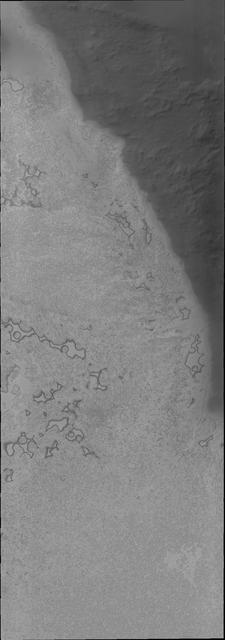
With southern summer drawing to a close, the surface of the polar ice cap will begin to frost over on Mars as seen by NASA 2001 Mars Odyssey spacecraft.
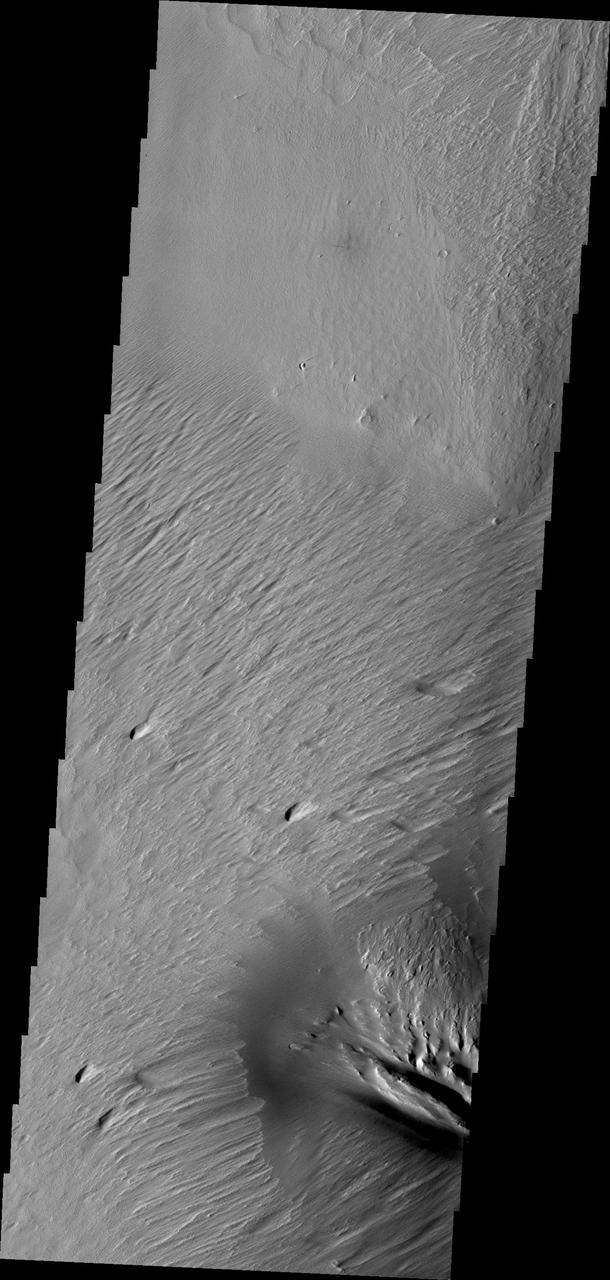
Constant sand-blasting by the winds on Mars have eroded and sculpted the surface in the equatorial region around Medusae Fossae in this image captured by NASA Mars Odyssey.
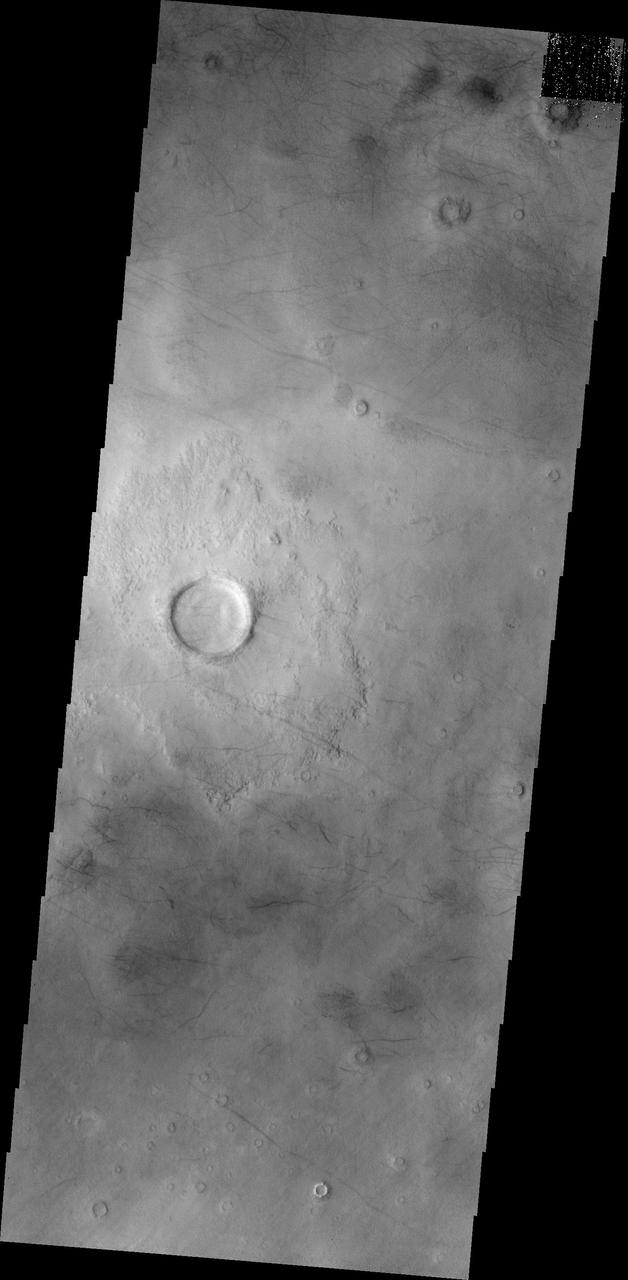
This image from NASA 2001 Mars Odyssey of central Utopia Planitia shows some dust devil tracks. These features are common in this region of Mars.
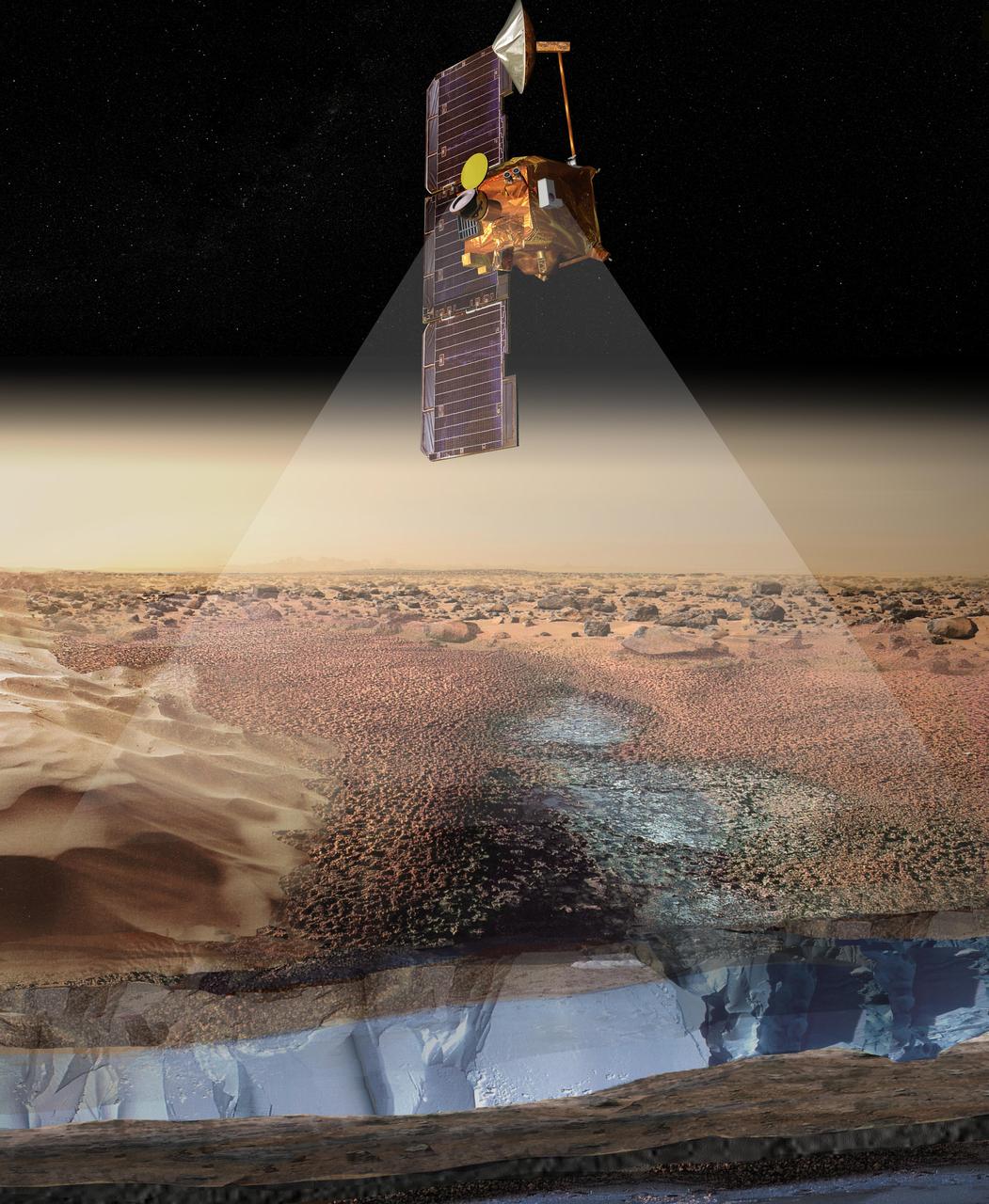
This artist rendering portrays ice-rich layers in the soils of Mars being detected by instruments aboard NASA 2001 Mars Odyssey spacecraft.
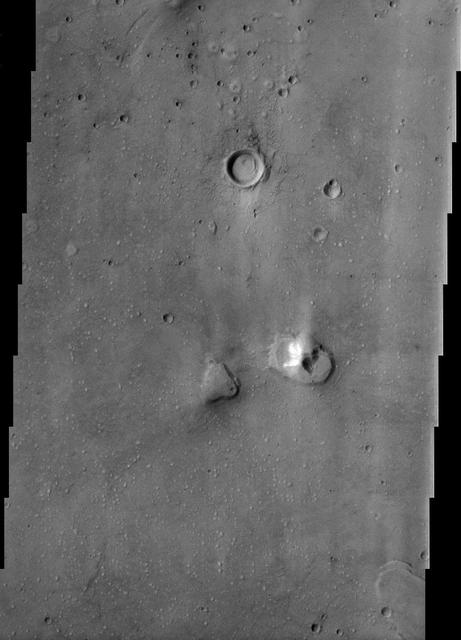
This image from NASA Mars Odyssey spacecraft of the northern plains of Mars shows a surface texture of hundreds of small mounds and numerous small impact craters.
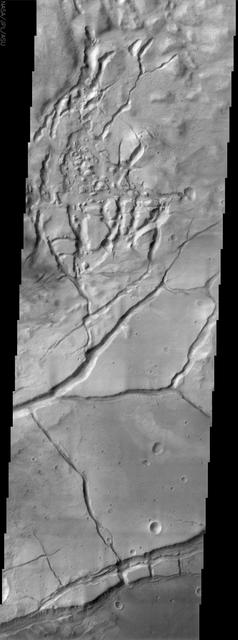
The fractured surface shown in this image from NASA Mars Odyssey spacecraft belongs to a portion of a region called Gorgonum Chaos located in the southern hemisphere of Mars.
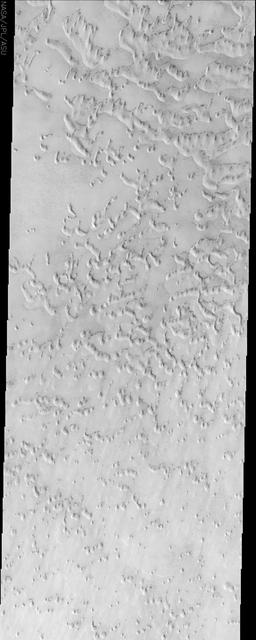
This image from NASA Mars Odyssey spacecraft displays sand dunes covered in CO2 frost. This is a region of Mars that contains circumpolar sand seas.
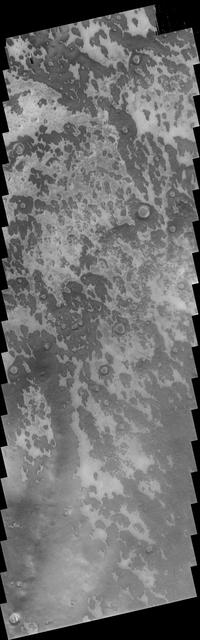
This VIS image captured by NASA 2001 Mars Odyssey spacecraft shows a small area just off the margin of Mars southern polar cap.
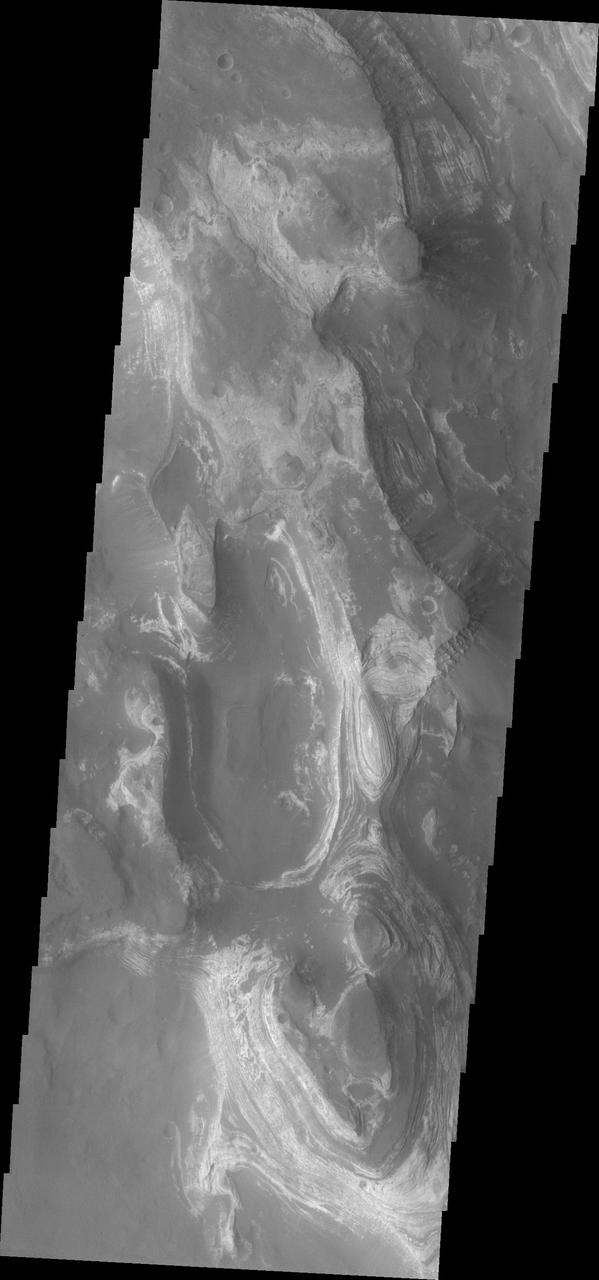
This image from NASA 2001 Mars Odyssey shows a huge ridge of sand in Russell Crater that makes its dune field one of the most unusual on Mars.
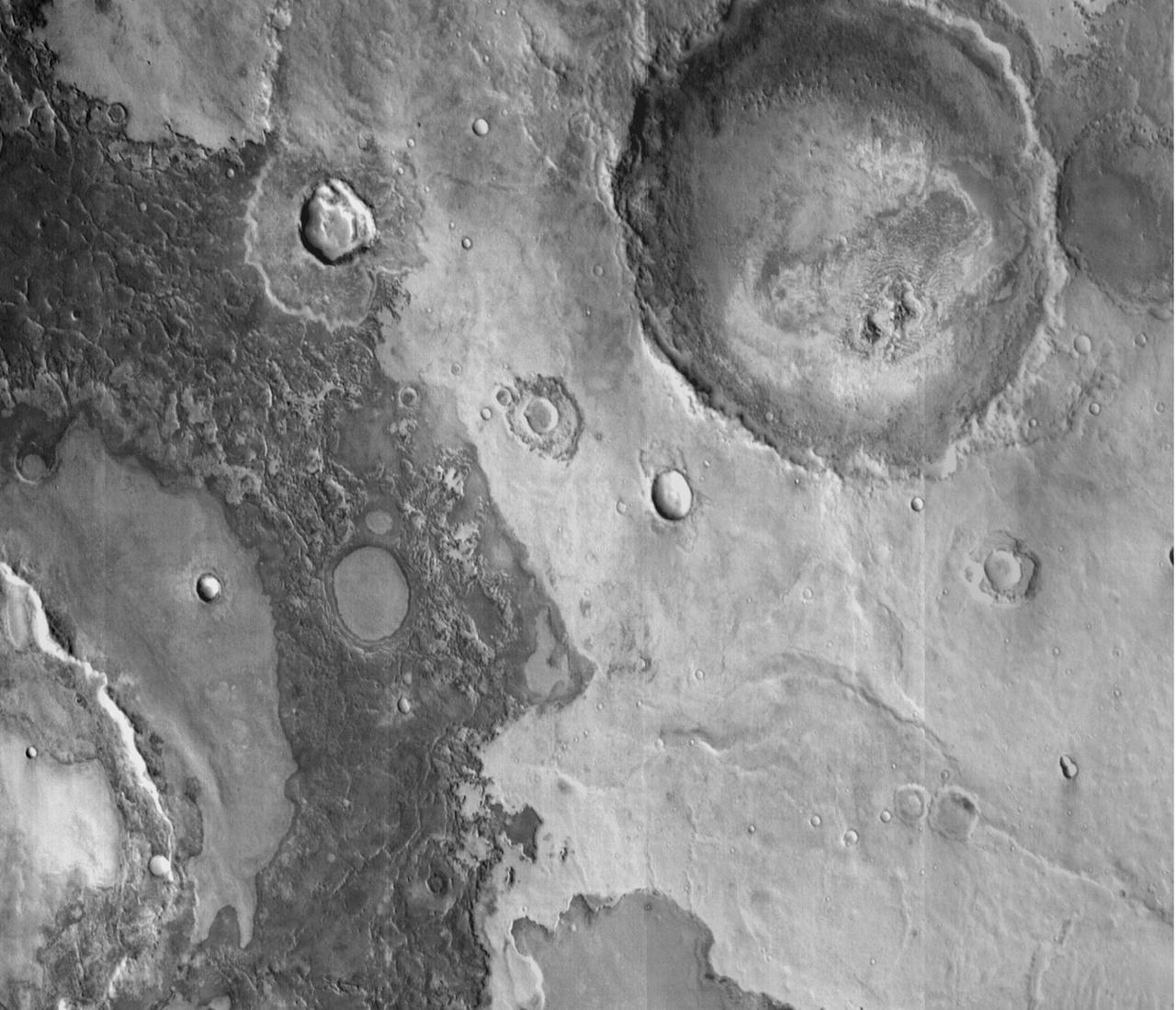
Infrared imaging from NASA Mars Odyssey spacecraft shows signs of layering exposed at the surface in a region of Mars called Terra Meridiani.
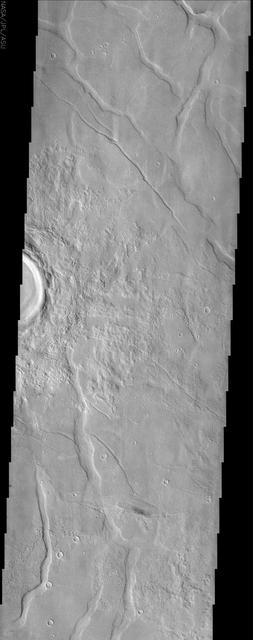
This image by NASA Mars Odyssey spacecraft shows Utopia Planitia, a large plain in the northern hemisphere of Mars. It is believed that this basin is the result of a large impact.
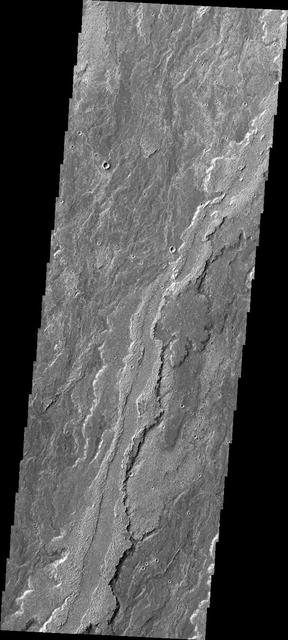
Some of the youngest volcanic flows on Mars are from Arsia Mons. This image captured by NASA 2001 Mars Odyssey of Daedalia Planum shows some of these flows.

This image is a single frame from a computer animation, which begins with a global view of the planet Mars compiled with images from NASA Mars Odyssey spacecraft.
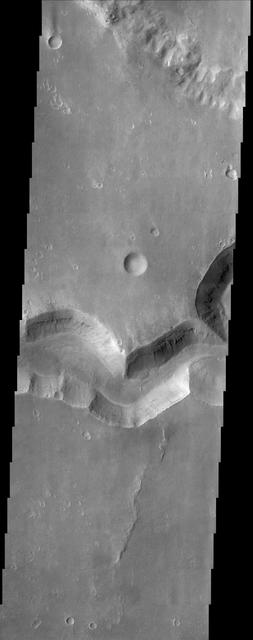
This image from NASA Mars Odyssey spacecraft shows a sinuous valley network channel with sharp bends cutting across the cratered highlands of the southern hemisphere of Mars.
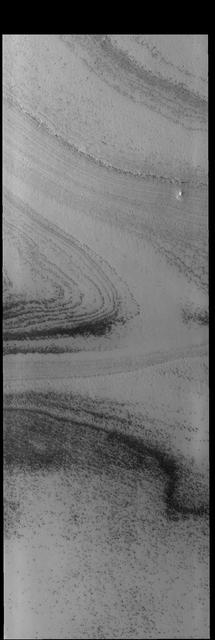
Spring has arrived at the south pole of Mars. The multitude of layers that make up the cap are readily visible in this image from NASA 2001 Mars Odyssey spacecraft.

A high content of hydrogen in Mars southern polar region is apparent in this global map of high-energy neutrons measured by NASA Mars Odyssey spacecraft.