
Pathfinder on Mars

Mars Pathfinder Landing Site

Pathfinder Landers - In Test and On Mars

Mars Pathfinder Landing Ellipses
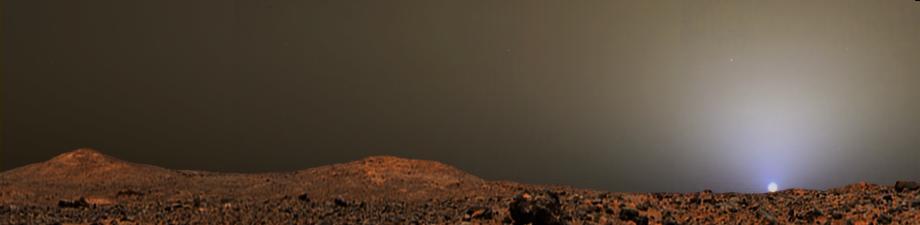
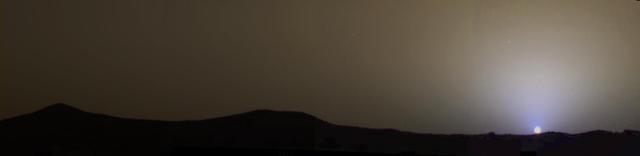
Sunset on Mars from Pathfinder Images
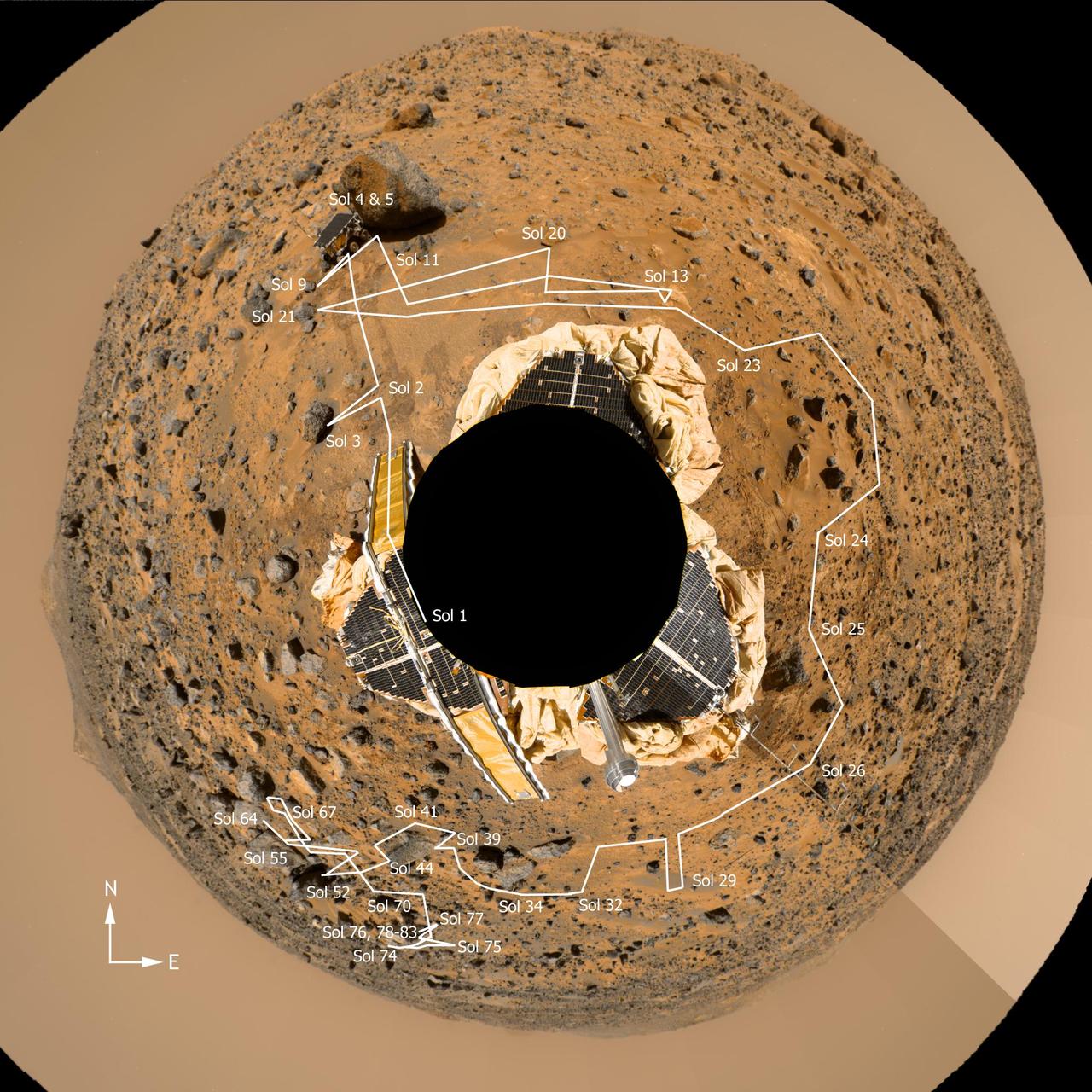
Mars PathFinder Rover Traverse Image
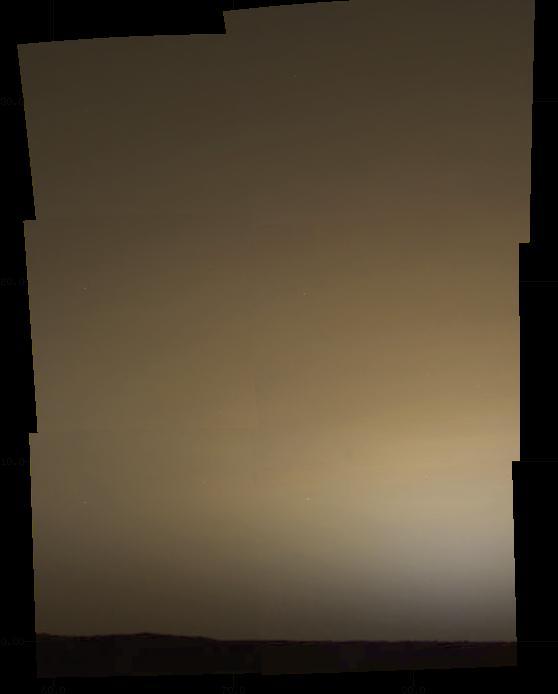
True Color of Mars - Pathfinder Sol 39 Sunrise
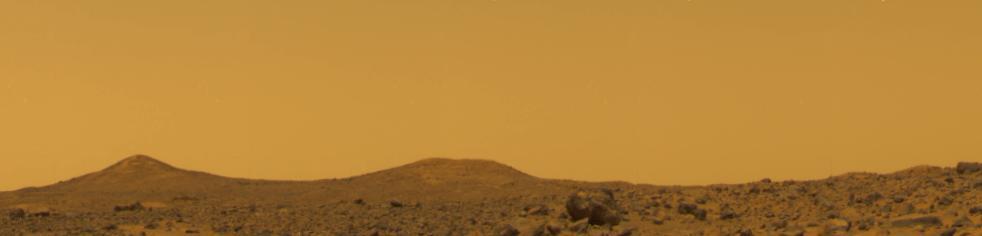
True Color of Mars - Pathfinder Sol 10 at Noon
True Color of Mars - Pathfinder Sol 24 at 4 PM
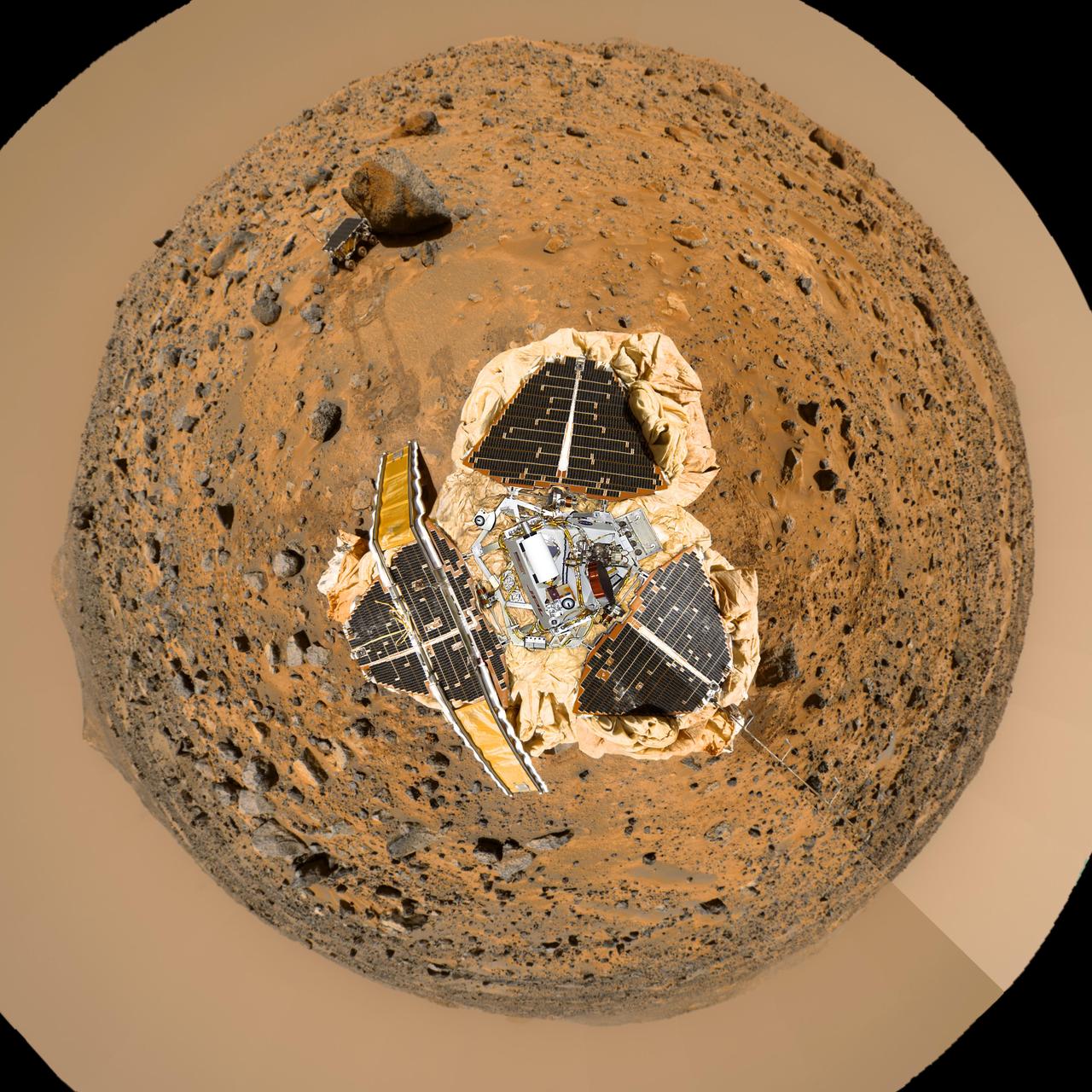
Mars Pathfinder Filled
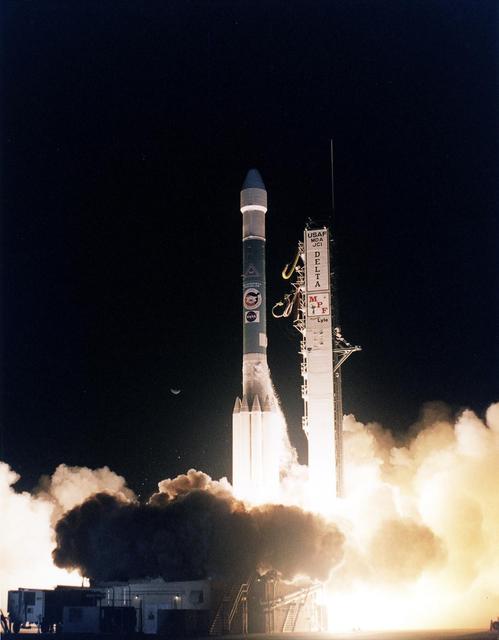
NASA Mars Pathfinder was launched on a Delta Launch Vehicle at 1:56 am on 4 December 1996 from Cape Canaveral Spaceflight Center. http://photojournal.jpl.nasa.gov/catalog/PIA04754

Mars Polar Lander and Mars Pathfinder Sites Compared

Mars Pathfinder Landing Site and Surroundings
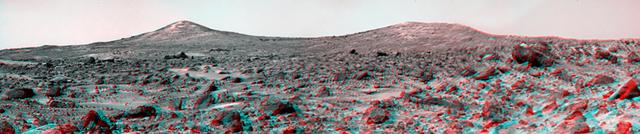
Twin Peaks are modest-size hills to the southwest of NASA Mars Pathfinder landing site. They were discovered on the first panoramas taken by the IMP camera on the 4th of July, 1997. 3D glasses are necessary to identify surface detail.
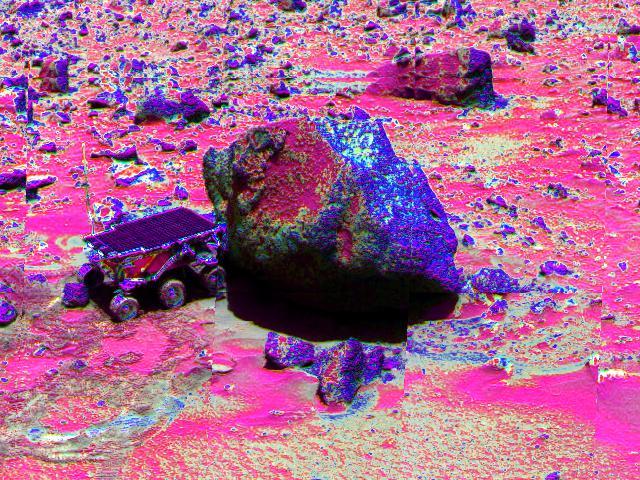
NASA Mars Pathfinder Lander, Sojourner, made contact with the rock Yogi in this false-color image from 1997, taken with the Imager for Mars Pathfinder IMP.
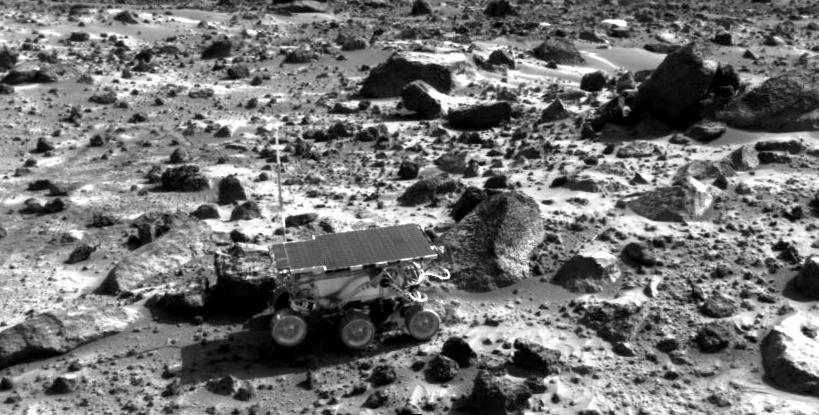
The Mars Pathfinder Rover Sojourner images by the Imager for Mars Pathfinder as it nears the rock "Wedge." Part of the Rock Garden is visible in the upper right of the image. http://photojournal.jpl.nasa.gov/catalog/PIA04318
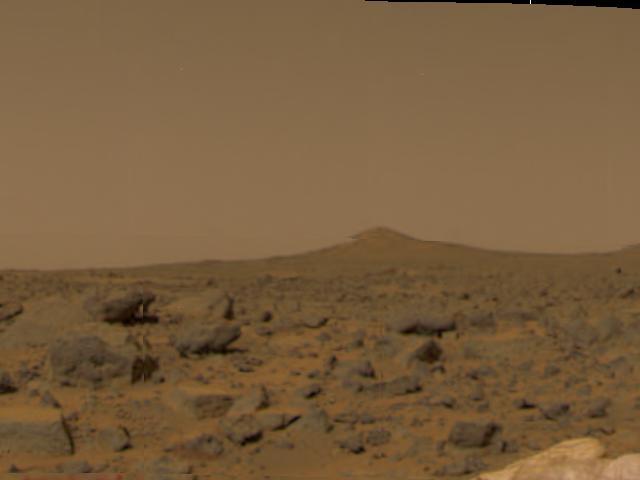
This image of the Martian surface was taken in the afternoon of Mars Pathfinder's first day on Mars. Taken by the Imager for Mars Pathfinder (IMP camera), the image shows a diversity of rocks strewn in the foreground. A hill is visible in the distance (the notch within the hill is an image artifact). Airbags are seen at the lower right. http://photojournal.jpl.nasa.gov/catalog/PIA00612
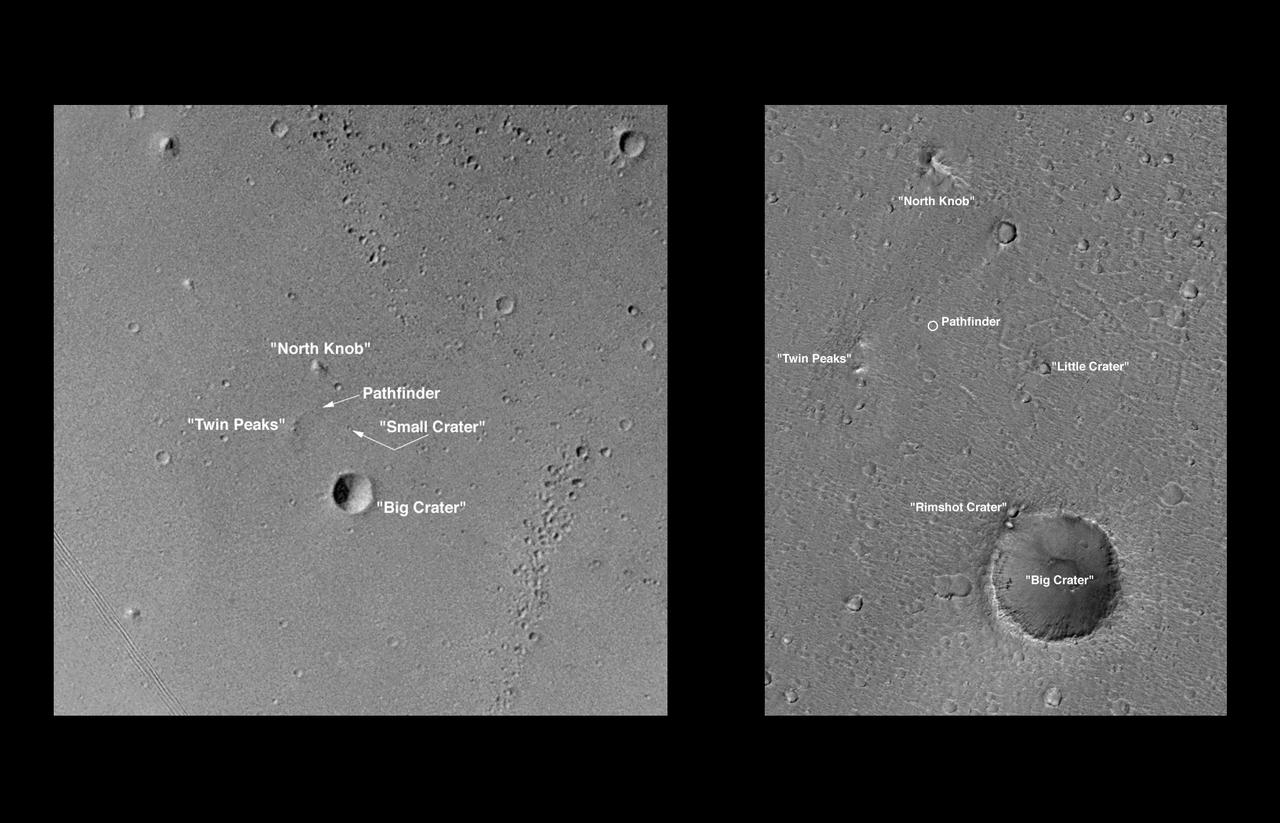
Pathfinder Landing Site Observed by Mars Orbiter Camera

A Closer Hubble Encounter With Mars - Pathfinder Landing Site
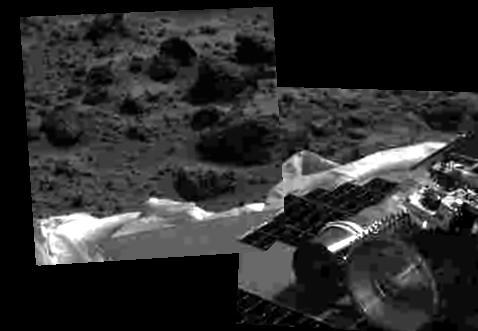
This image shows that the Mars Pathfinder airbags have been successfully retracted, allowing safe deployment of the rover ramps. The Sojourner rover is at lower right, and rocks are visible in the background. Mars Pathfinder landed successfully on the surface of Mars today at 10:07 a.m. PDT. http://photojournal.jpl.nasa.gov/catalog/PIA00618
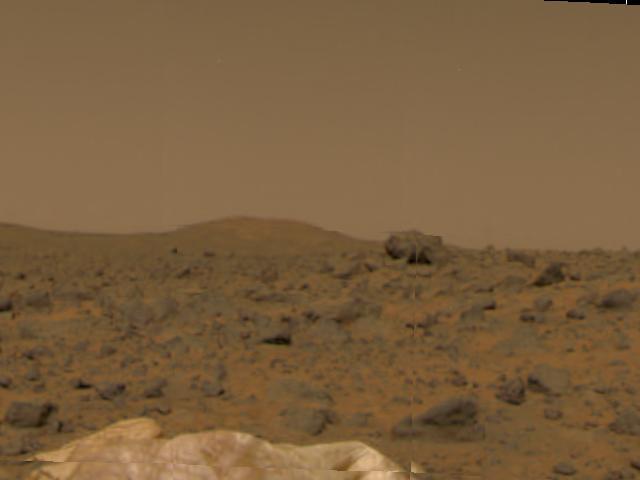
Portions of Mars Pathfinder's deflated airbags (seen in the foreground), a large rock in mid-field, and a hill in the background were taken by the Imager for Mars Pathfinder (IMP) aboard Mars Pathfinder during the spacecraft's first day on the Red Planet. Pathfinder successfully landed on Mars at 10:07 a.m. PDT earlier today. The IMP is a stereo imaging system with color capability provided by 24 selectable filters -- twelve filters per "eye." It stands 1.8 meters above the Martian surface, and has a resolution of two millimeters at a range of two meters. http://photojournal.jpl.nasa.gov/catalog/PIA00615
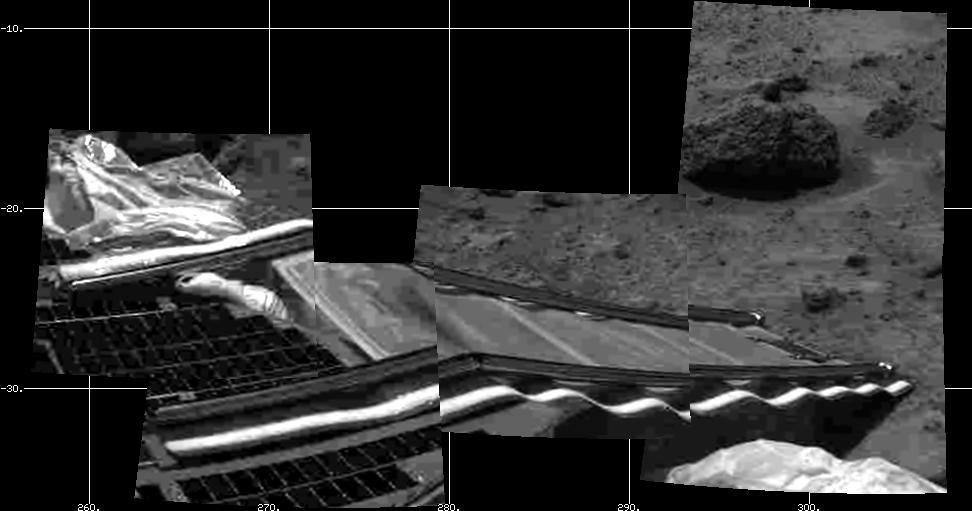
NASA's Mars Pathfinder's rear rover ramp can be seen successfully unfurled in this image, taken at the end of Sol 2 by the Imager for Mars Pathfinder (IMP). This ramp was later used for the deployment of the microrover Sojourner, which occurred at the end of Sol 2. Areas of a lander petal and deflated airbag are visible at left. The image helped Pathfinder scientists determine that the rear ramp was the one to use for rover deployment. At upper right is the rock dubbed "Barnacle Bill," which Sojourner will later study. http://photojournal.jpl.nasa.gov/catalog/PIA00627
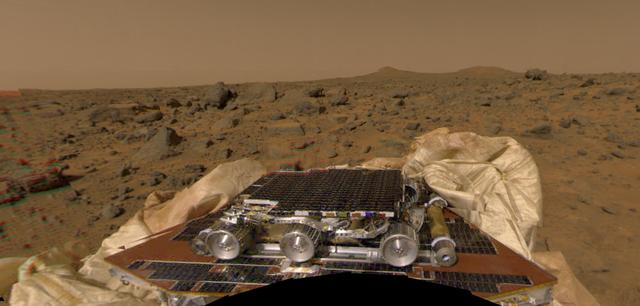
NASA's Sojourner rover and undeployed ramps onboard the Mars Pathfinder spacecraft can be seen in this image, by the Imager for Mars Pathfinder (IMP) on July 4 (Sol 1). This image has been corrected for the curvature created by parallax. The microrover Sojourner is latched to the petal, and has not yet been deployed. The ramps are a pair of deployable metal reels which will provide a track for the rover as it slowly rolls off the lander, over the spacecraft's deflated airbags, and onto the surface of Mars. Pathfinder scientists will use this image to determine whether it is safe to deploy the ramps. One or both of the ramps will be unfurled, and then scientists will decide whether the rover will use either the forward or backward ramp for its descent. http://photojournal.jpl.nasa.gov/catalog/PIA00621
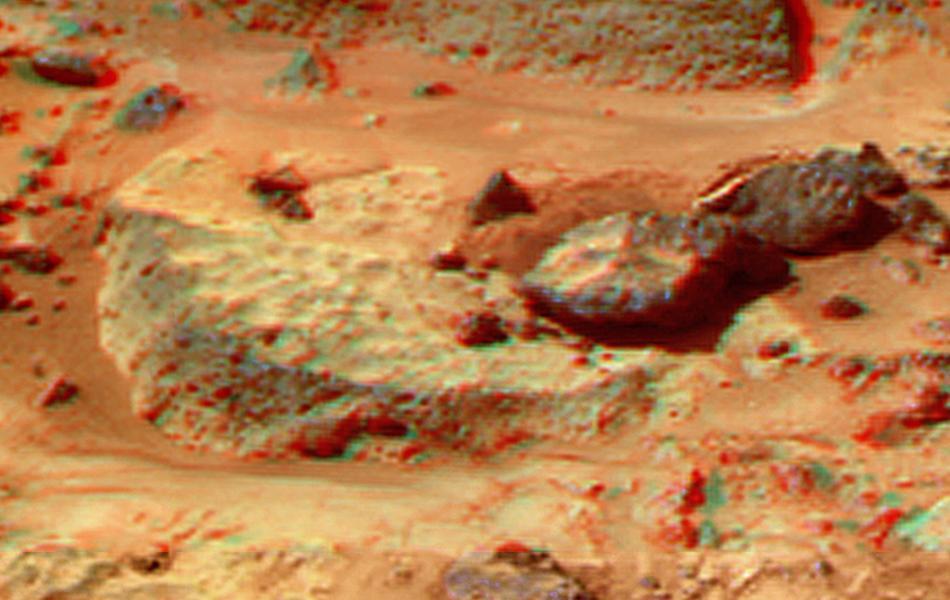
This anaglyph view of Flute Top was produced by NASA Mars Pathfinder Imager camera. 3D glasses are necessary to identify surface detail.
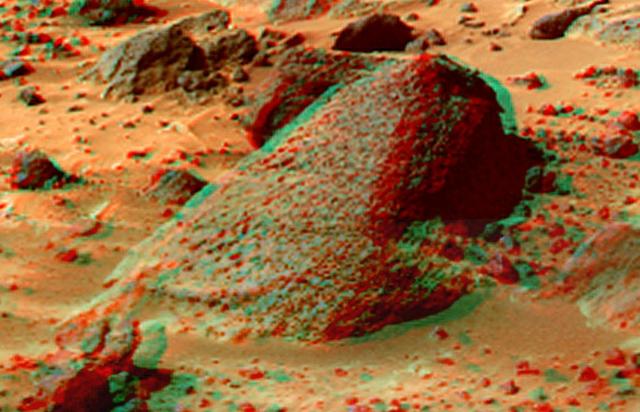
This anaglyph view of Wedge was produced by NASA Mars Pathfinder Imager camera. 3D glasses are necessary to identify surface detail.
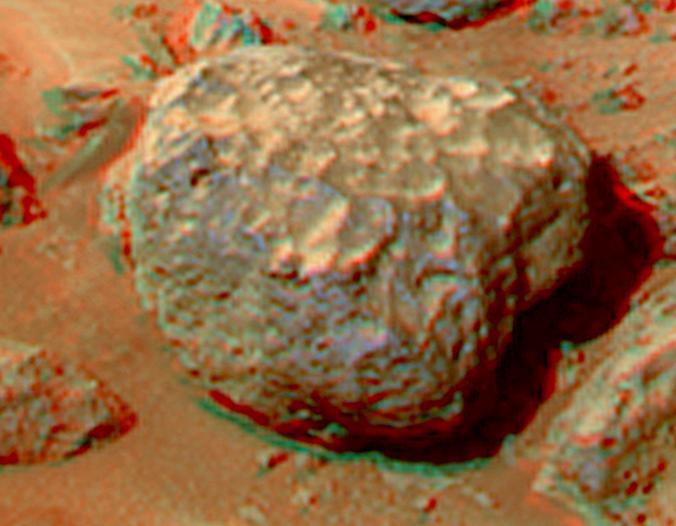
This anaglyph view of Grommit was produced by NASA Mars Pathfinder Imager camera. 3D glasses are necessary to identify surface detail.
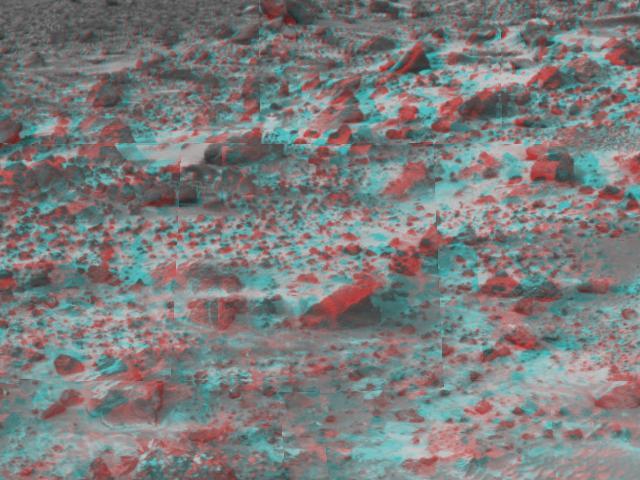
This area of terrain near the Sagan Memorial Station was taken by NASA Mars Pathfinder. 3D glasses are necessary to identify surface detail.

This anaglyph view of Half Dome was produced by NASA Mars Pathfinder Imager camera. 3D glasses are necessary to identify surface detail.
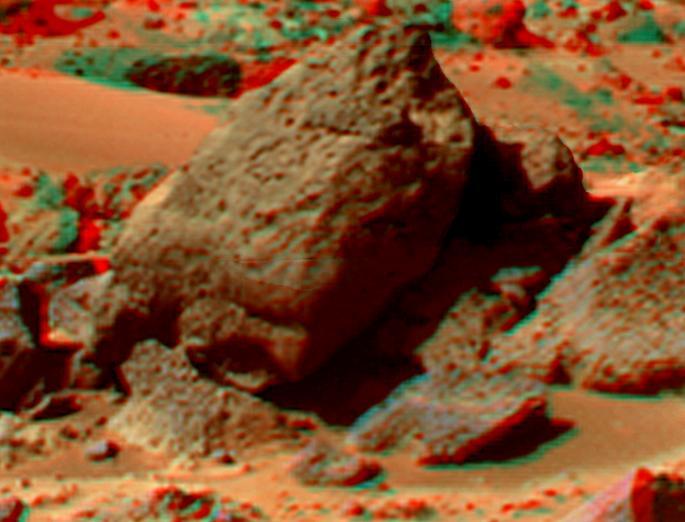
This anaglyph view of Shark was produced by NASA Mars Pathfinder Imager camera. 3D glasses are necessary to identify surface detail.
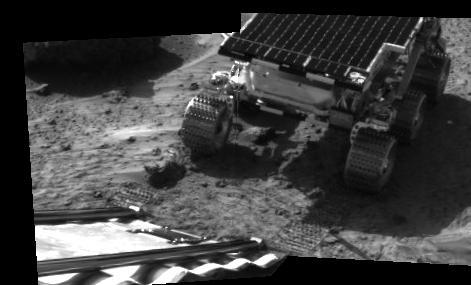
This picture taken by the IMP (Imager for Mars Pathfinder) aboard the Mars Pathfinder spacecraft depicts the rover Sojourner's position after driving onto the Martian surface. Sojourner has become the first autonomous robot ever to traverse the surface of Mars. This image reflects the success of Pathfinder's principle objective -- to place a payload on Mars in a safe, operational configuration. The primary mission of Sojourner, scheduled to last seven days, will be to use its Alpha Proton X-ray Spectrometer (APXS) instrument to determine the elements that make up the rocks and soil on Mars. A full study using the APXS takes approximately ten hours, and can measure all elements except hydrogen at any time of the Martian day or night. The APXS will conduct its studies by bombarding rocks and soil samples with alpha particle radiation -- charged particles equivalent to the nucleus of a helium atom, consisting of two protons and two neutrons. http://photojournal.jpl.nasa.gov/catalog/PIA00623
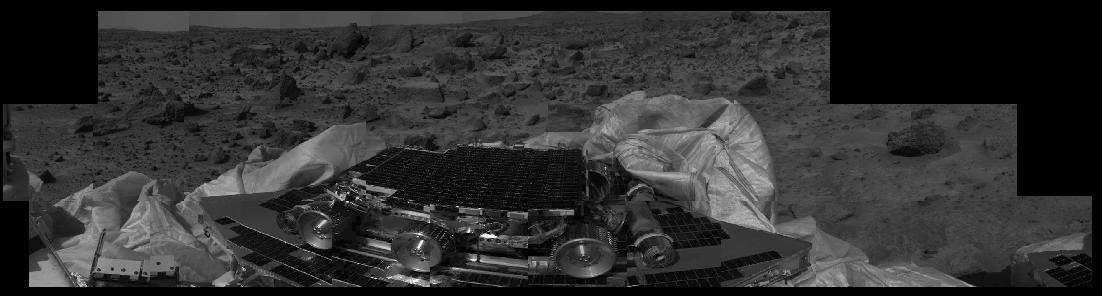
This image shows that the Mars Pathfinder airbags have been successfully retracted, allowing safe deployment of the rover ramps. The Sojourner rover, still in its deployed position, is at center image, and rocks are visible in the background. Mars Pathfinder landed successfully on the surface of Mars today at 10:07 a.m. PDT. http://photojournal.jpl.nasa.gov/catalog/PIA00617
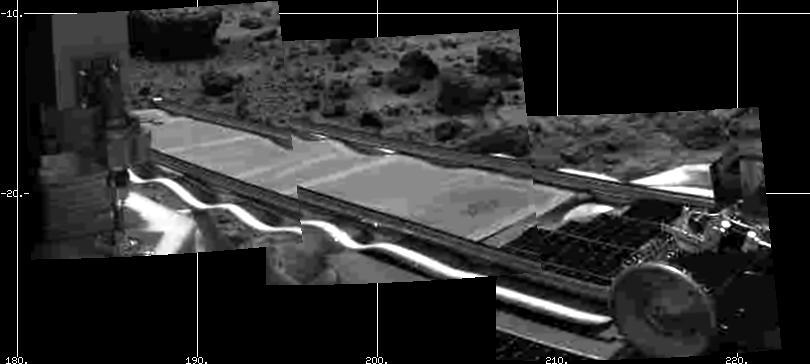
Mars Pathfinder's forward rover ramp can be seen successfully unfurled in this image, taken at the end of Sol 2 by the Imager for Mars Pathfinder (IMP). This ramp was not used for the deployment of the microrover Sojourner, which occurred at the end of Sol 2. Sojourner can be seen still latched to one of the lander's petals, waiting for the command sequence that would execute its descent off of the lander's petal. The imager helped Pathfinder scientists determine whether to deploy the rover using the forward or backward ramps and the nature of the first rover traverse. http://photojournal.jpl.nasa.gov/catalog/PIA00628
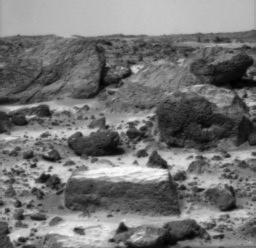
A close-up of the rectangular rock called "Flat Top" from NASA's Mars Pathfinder (MPF) rover Sojourner in July, 1997. http://photojournal.jpl.nasa.gov/catalog/PIA00626
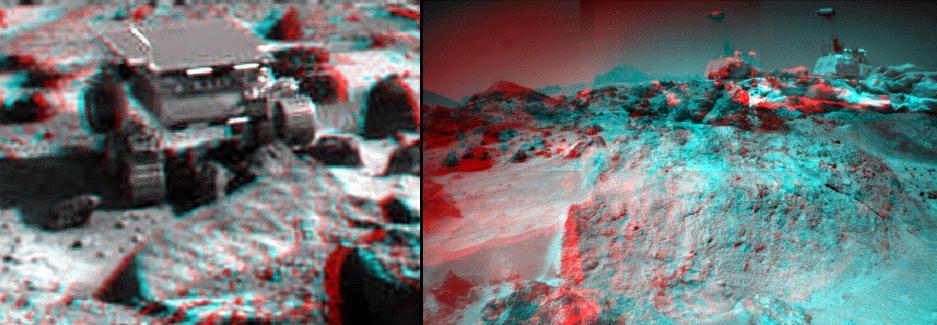
This anaglyph view of Ender, due south of the lander, was produced by NASA Mars Pathfinder Imager camera. 3D glasses are necessary to identify surface detail.
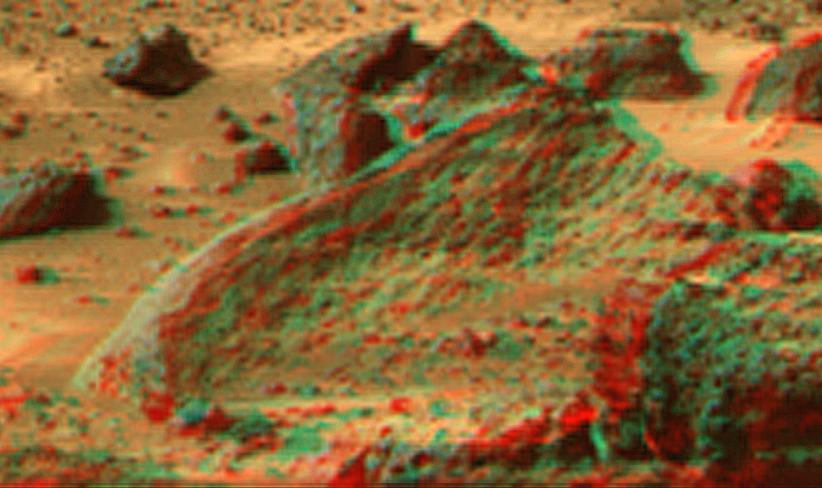
This anaglyph view of Ender, due south of the lander, was produced by NASA Mars Pathfinder Imager camera. 3D glasses are necessary to identify surface detail.
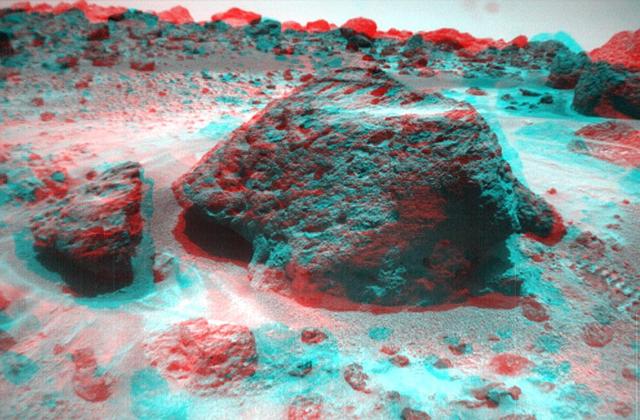
This anaglyph view of Souffle, to the left of Yogi, was produced by NASA Mars Pathfinder Imager camera. 3D glasses are necessary to identify surface detail.
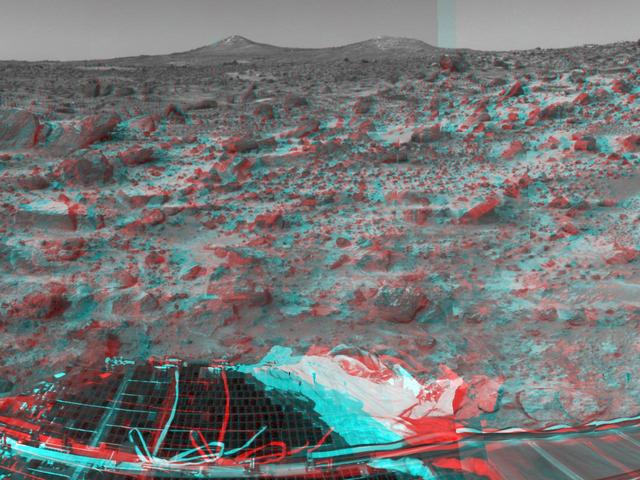
The two hills in the distance in this stereo image from NASA Mars Pathfinder have been dubbed the Twin Peaks. 3D glasses are necessary to identify surface detail.
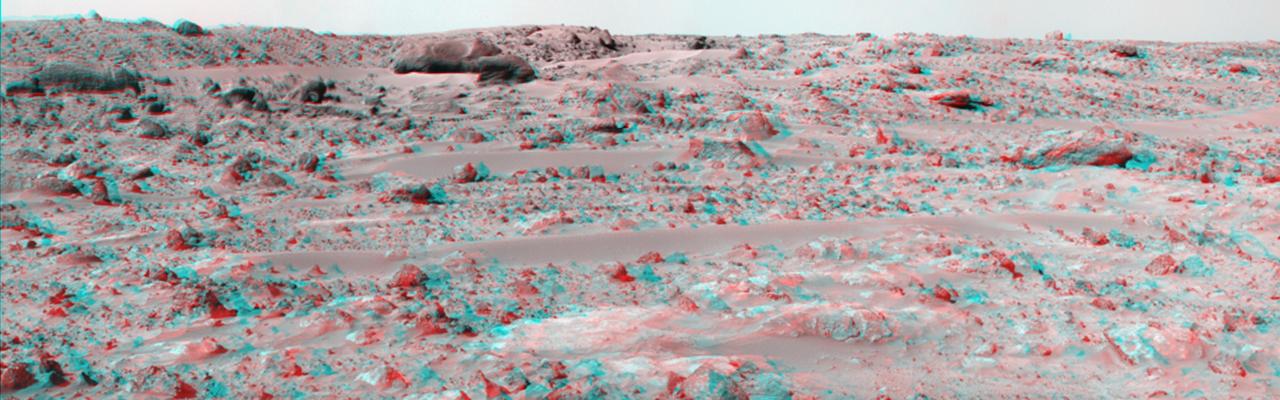
The large, elongated rock left of center in the middle distance is Zaphod is seen in this image from NASA Mars Pathfinder. 3D glasses are necessary to identify surface detail.
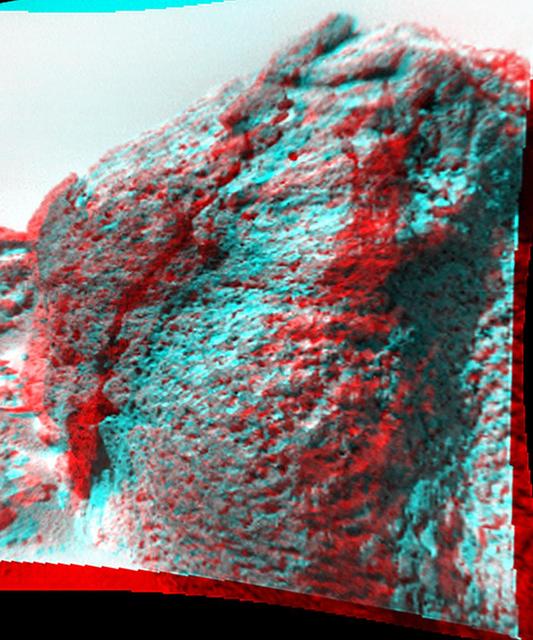
This anaglyph view of Chimp, south southwest of the lander, was produced by NASA Mars Pathfinder Imager camera. 3D glasses are necessary to identify surface detail.

This anaglyph view of Chimp, south southwest of the lander, was produced by NASA Mars Pathfinder Imager camera. 3D glasses are necessary to identify surface detail.
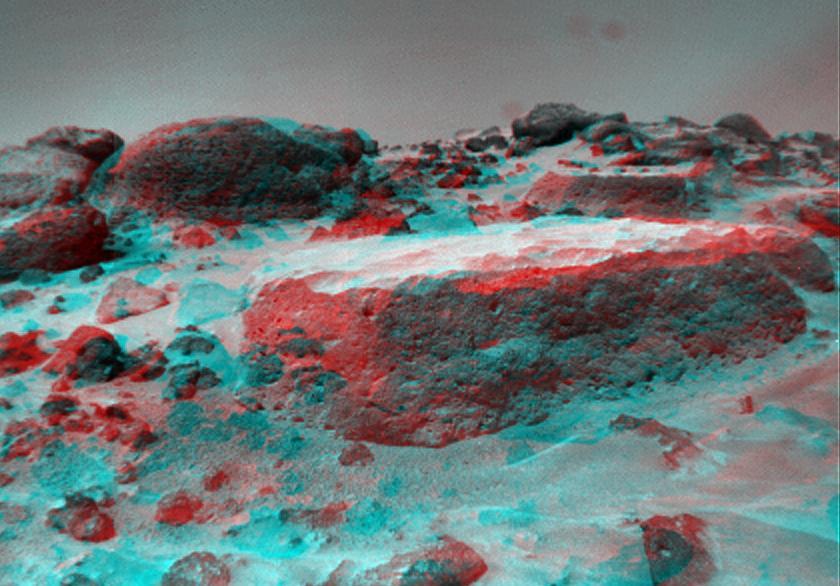
This anaglyph view of Flat Top, due south of the lander, was produced by NASA Mars Pathfinder Imager camera. 3D glasses are necessary to identify surface detail.

This area of terrain near the Sagan Memorial Station was taken by NASA Mars Pathfinder. The curved rock dubbed Couch. 3D glasses are necessary to identify surface detail.
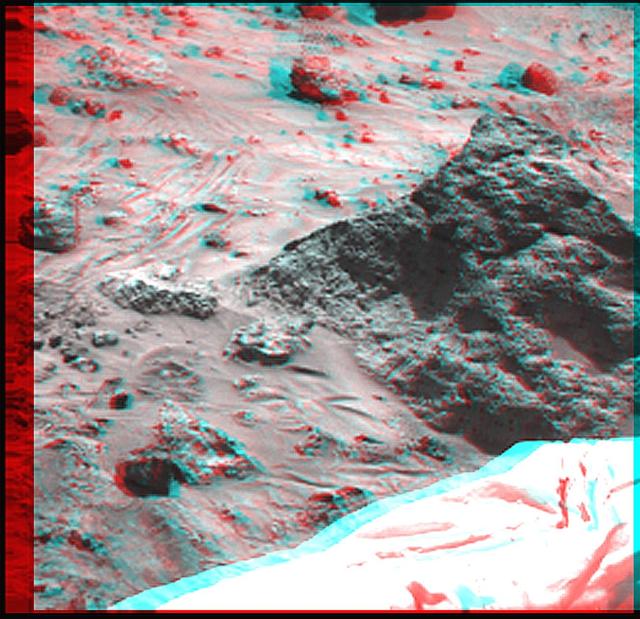
The Mini Matterhorn is a 3/4 meter rock immediately east-southeast of NASA Mars Pathfinder lander. 3D glasses are necessary to identify surface detail.
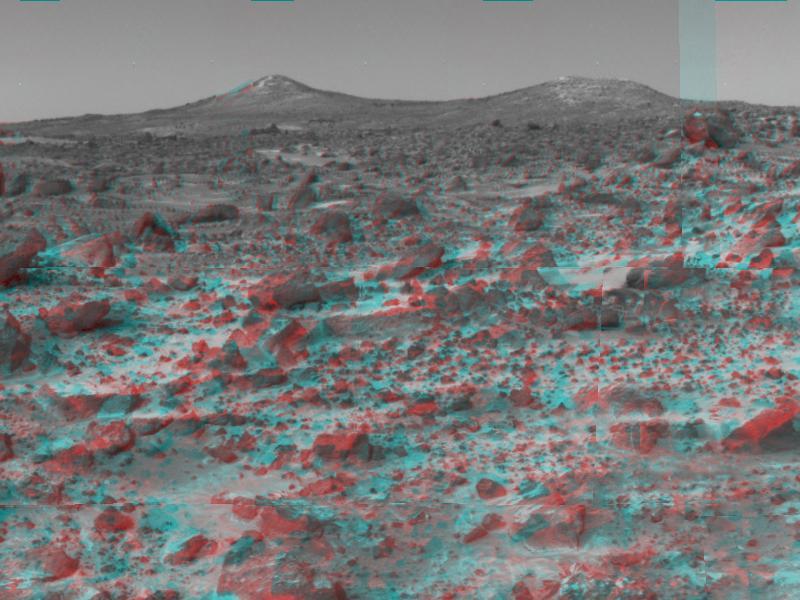
The two hills in the distance in this stereo image from NASA Mars Pathfinder have been dubbed the Twin Peaks. 3D glasses are necessary to identify surface detail.
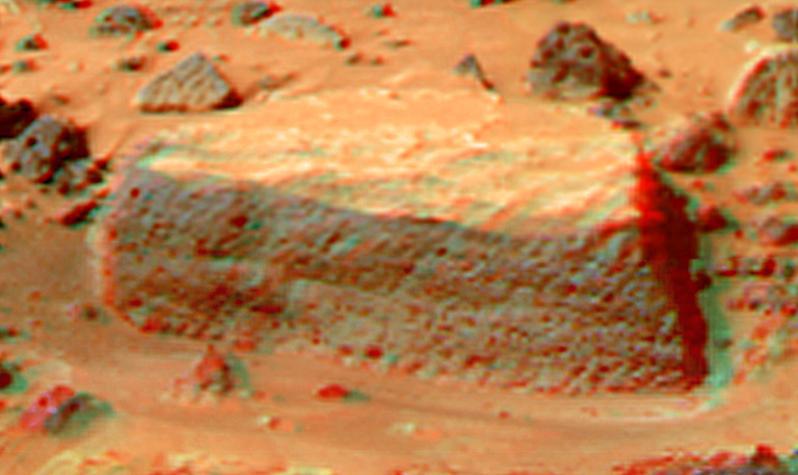
This anaglyph view of Flat Top, due south of the lander, was produced by NASA Mars Pathfinder Imager camera. 3D glasses are necessary to identify surface detail.
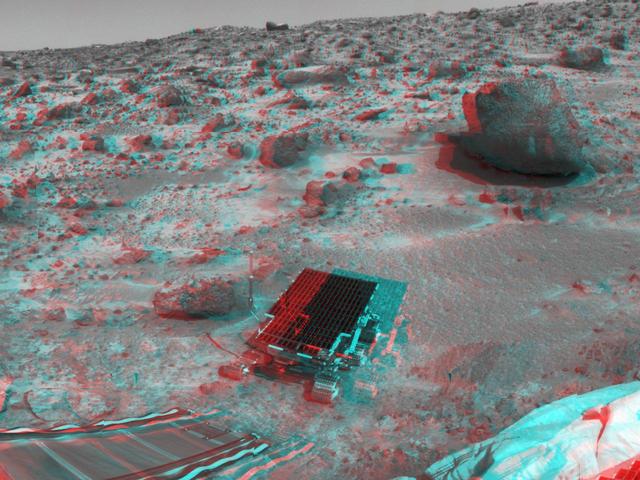
This area of terrain near the Sagan Memorial Station was taken by NASA Mars Pathfinder. The curved rock dubbed Couch. 3D glasses are necessary to identify surface detail.

Big Crater is actually a relatively small Martian crater to the southeast of NASA Mars Pathfinder landing site. 3D glasses are necessary to identify surface detail.
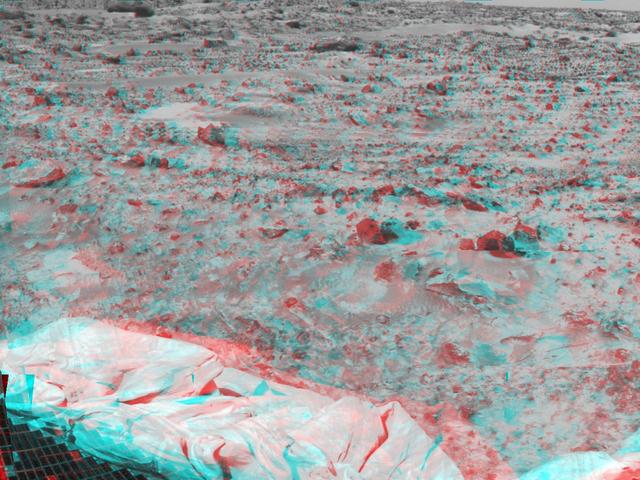
Portions of the lander deflated airbags and a petal are at lower left in this image from NASA Mars Pathfinder. 3D glasses are necessary to identify surface detail.
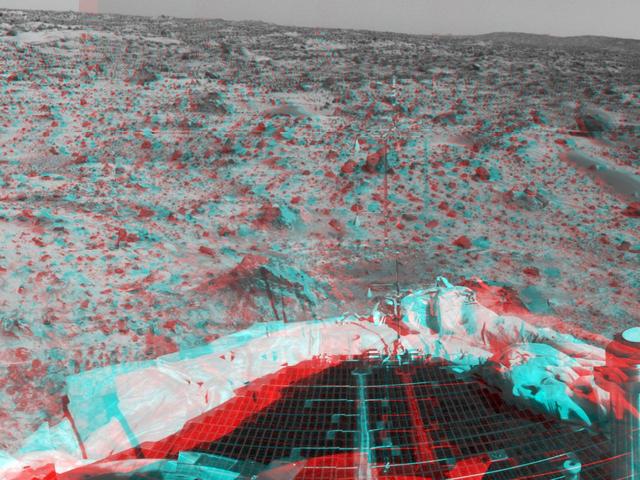
Portions of the lander deflated airbags and a petal are at lower left in this image from NASA Mars Pathfinder. 3D glasses are necessary to identify surface detail.

This 360-degree panorama was taken by NASA Mars Pathfinder. Three petals and the perimeter of the deflated airbags are seen in the foreground. 3D glasses are necessary to identify surface detail.
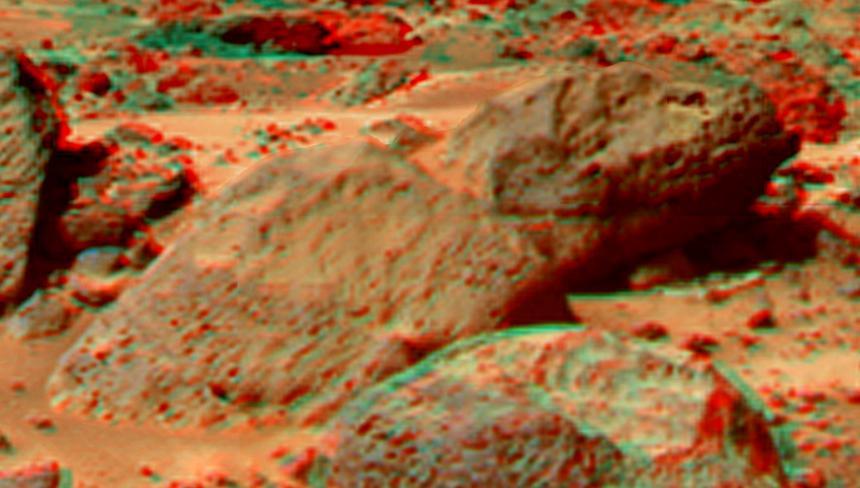
This is a stereo view of Moe & Pumpkin, part of the Bookshelf at the back of the Rock Garden to the southwest of NASA Mars Pathfinder lander. 3D glasses are necessary to identify surface detail.

Mini Matterhorn is a 3/4 meter rock immediately east-southeast of NASA Mars Pathfinder lander. 3D glasses are necessary to identify surface detail.
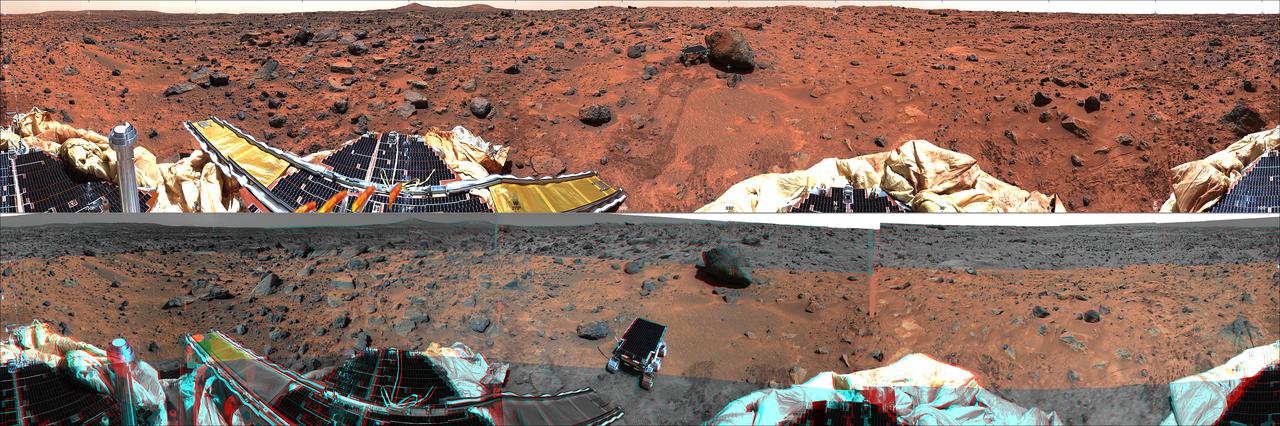
This panoramic view taken by NASA Mars Pathfinder is a controlled mosaic of approximately 300 IMP images. 3D glasses are necessary to identify surface detail.
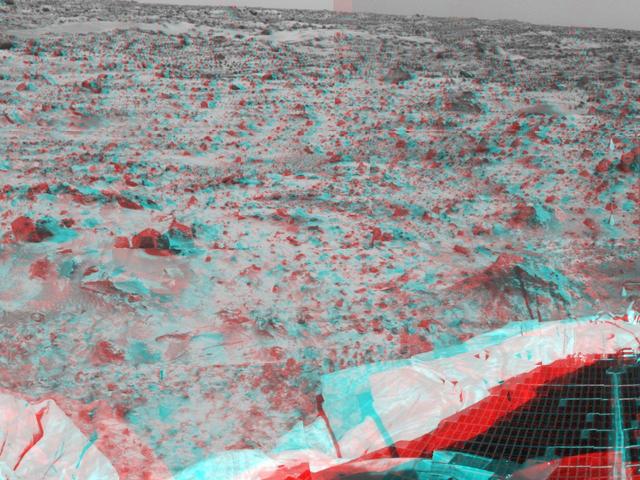
Portions of the lander deflated airbags and a petal are at lower left in this image from NASA Mars Pathfinder. 3D glasses are necessary to identify surface detail.
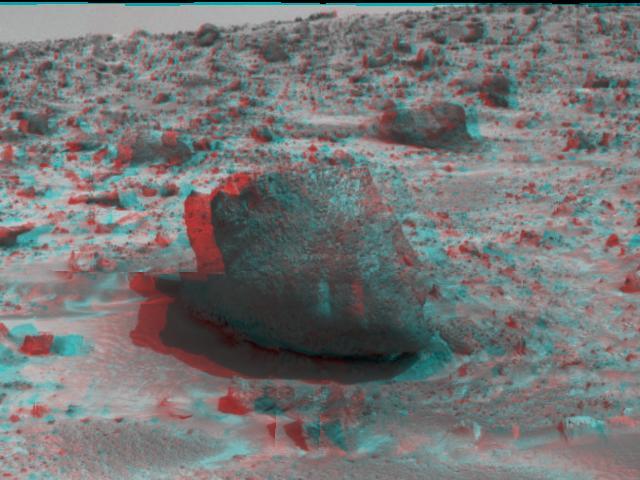
Yogi, a rock taller than NASA rover Sojourner taken in stereo by NASA Mars Pathfinder. 3D glasses are necessary to identify surface detail.
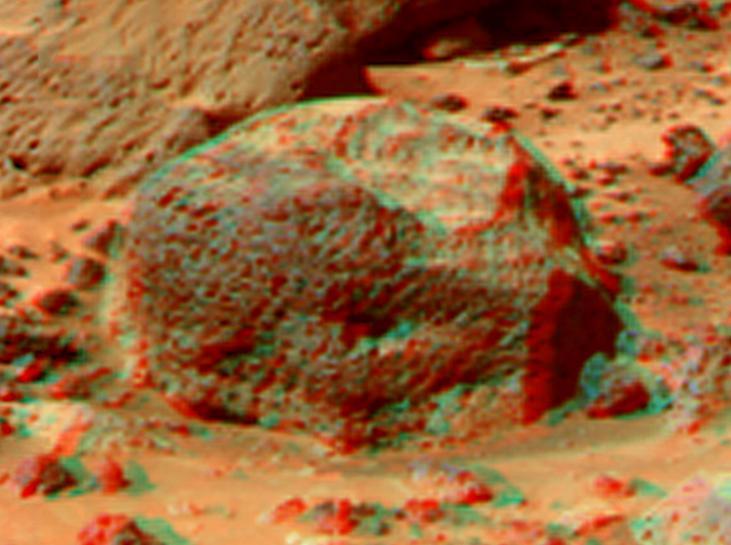
This anaglyph view of Stimpy, in the Rock Garden, was produced by NASA Mars Pathfinder Imager camera. 3D glasses are necessary to identify surface detail.
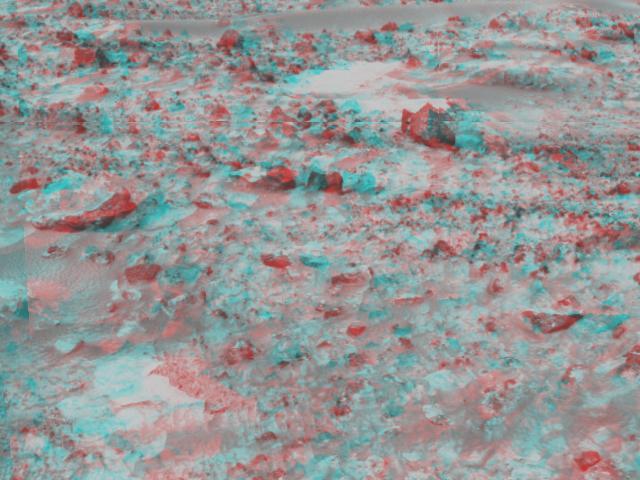
This area of rocky terrain near the Sagan Memorial Station was taken by NASA Mars Pathfinder. 3D glasses are necessary to identify surface detail.
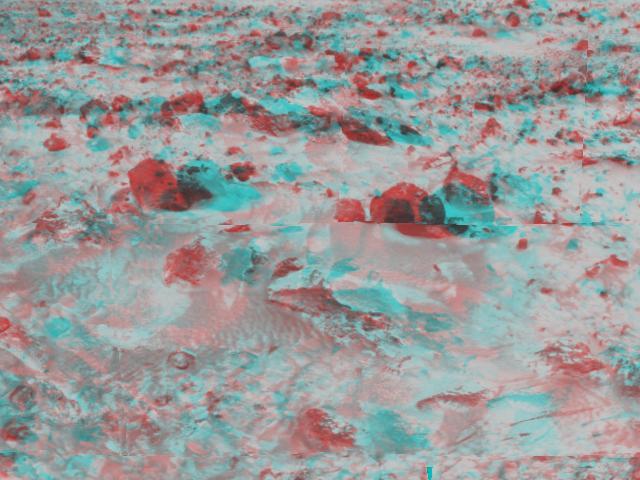
This area of rocky terrain near the Sagan Memorial Station was taken by NASA Mars Pathfinder. 3D glasses are necessary to identify surface detail.
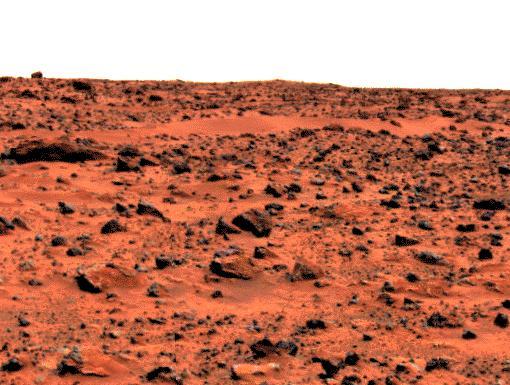
This enhanced color image of the Pathfinder landing site shows the eastern horizon. The elongated, reddish, low contrast region in the distance is "Roadrunner Flats." This image was taken by the Imager for Mars Pathfinder (IMP). Sojourner spent 83 days of a planned seven-day mission exploring the Martian terrain, acquiring images, and taking chemical, atmospheric and other measurements. The final data transmission received from Pathfinder was at 10:23 UTC on September 27, 1997. Although mission managers tried to restore full communications during the following five months, the successful mission was terminated on March 10, 1998. http://photojournal.jpl.nasa.gov/catalog/PIA00979
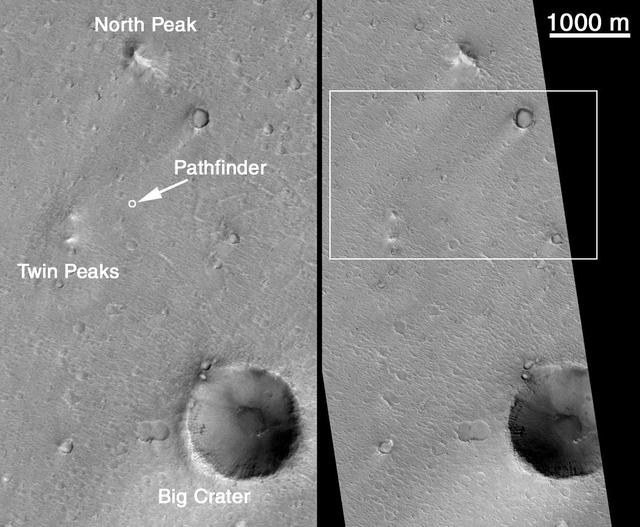
MOC Highest Resolution View of Mars Pathfinder Landing Site
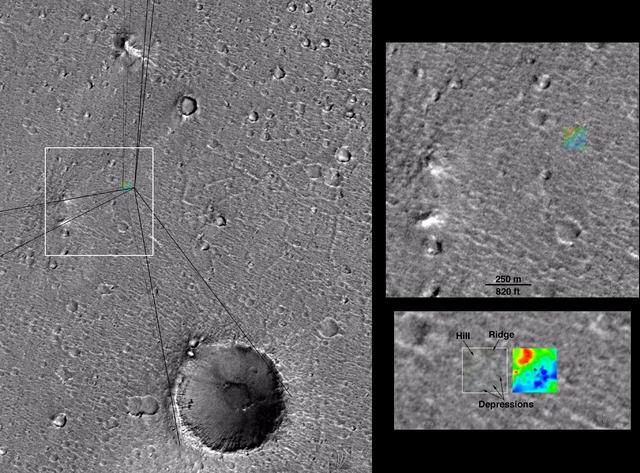
Mars Pathfinder First Anniversary Special -- Refined Landing Site Location

Every several days, Mars Pathfinder will image the sunrise and sunset on Mars. Future images will show a larger area -- we have a higher data rate than we expected when we planned this image, so we can get more information. Images taken at sunset, like this, and up to two hours later, will be used to investigate the distribution of dust within the Martian atmosphere. Already, we can see some dust layers in the images. By seeing how the twilight fades with time -- it lasts for over two hours -- we can determine that the dust extends high into the atmosphere. Sojourner spent 83 days of a planned seven-day mission exploring the Martian terrain, acquiring images, and taking chemical, atmospheric and other measurements. The final data transmission received from Pathfinder was at 10:23 UTC on September 27, 1997. Although mission managers tried to restore full communications during the following five months, the successful mission was terminated on March 10, 1998. http://photojournal.jpl.nasa.gov/catalog/PIA00696
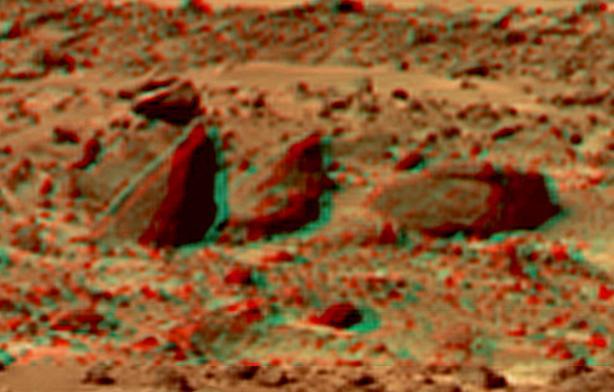
This view of Bookshelf Two was produced by combining the Super Panorama frames from the IMP camera from NASA Mars Pathfinder lander. 3D glasses are necessary to identify surface detail.
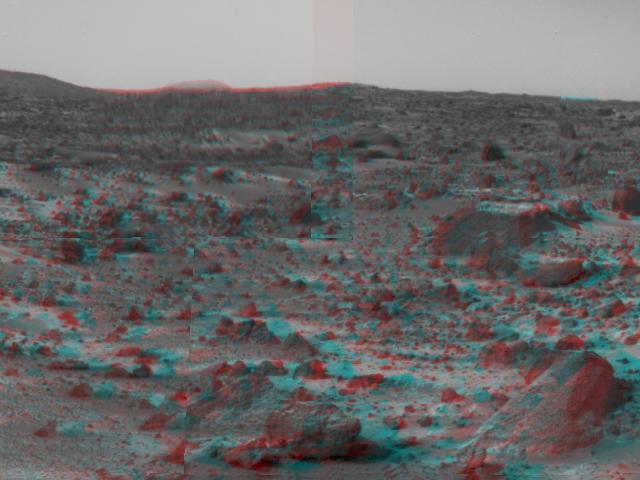
NASA Mars Pathfinder forward rover ramp can be seen successfully unfurled in this image, taken in stereo by the Imager camera. The large rock dubbed Wedge is at lower right. 3-D glasses are necessary to identify surface detail.
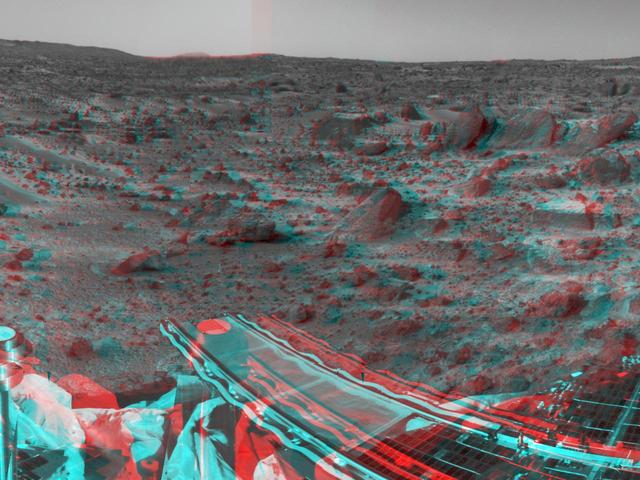
NASA Mars Pathfinder forward rover ramp can be seen successfully unfurled in this image, taken in stereo by the Imager camera. 3-D glasses are necessary to identify surface detail.
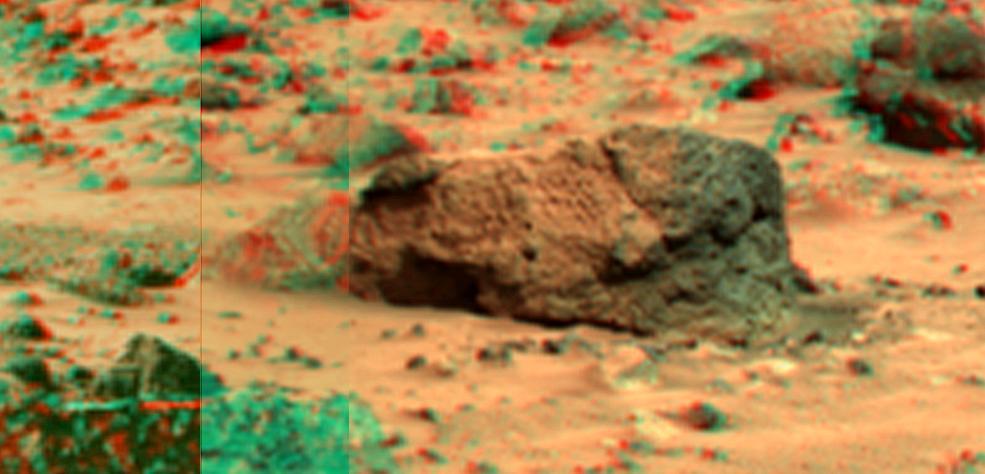
This view of Boo Boo was produced by combining the Super Panorama frames from the IMP camera from NASA Mars Pathfinder lander. 3D glasses are necessary to identify surface detail.
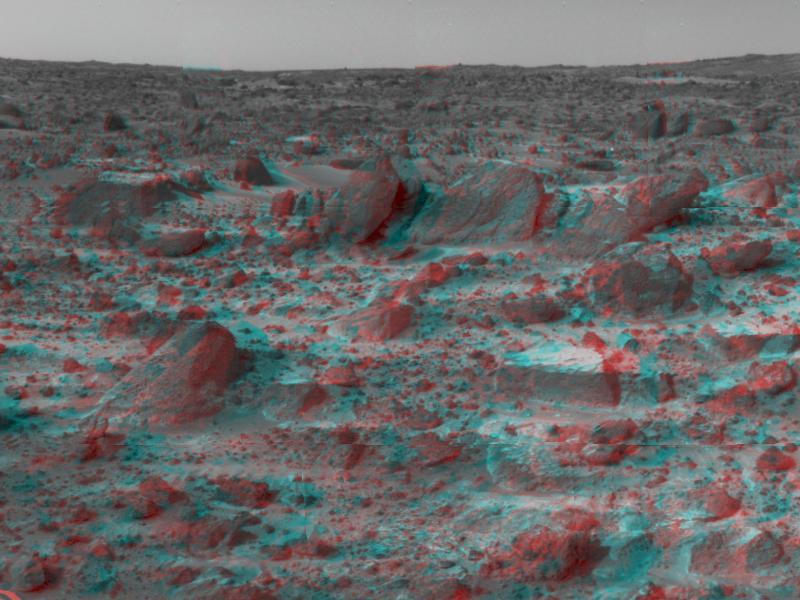
Many prominent rocks near the Sagan Memorial Station are featured in this image, from NASA Mars Pathfinder. Wedge is at lower left; Shark, Half-Dome, and Pumpkin are at center. 3-D glasses are necessary to identify surface detail.
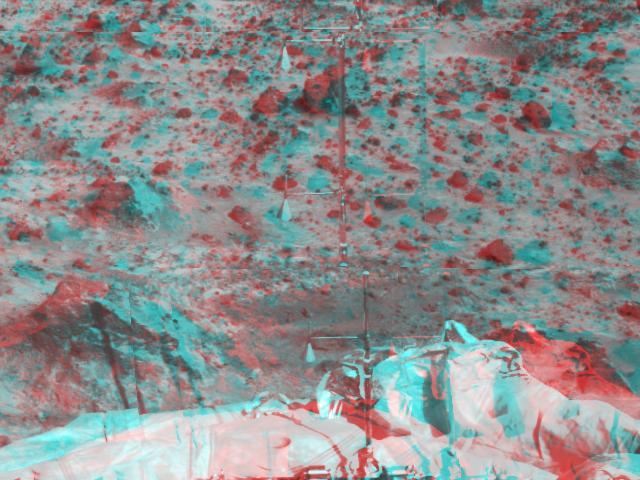
The Atmospheric Structure Instrument/Meteorology Package ASI/MET is the mast and windsocks at the center of this stereo image from NASA Mars Pathfinder. 3D glasses are necessary to identify surface detail.
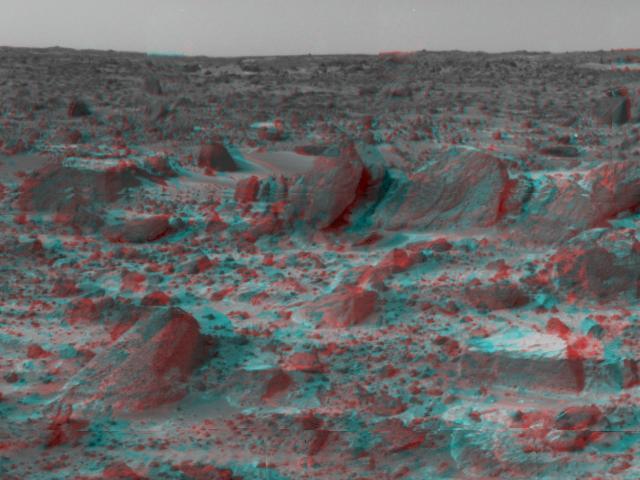
Many prominent rocks near the Sagan Memorial Station are featured in this image from NASA Mars Pathfinder. Shark, Half-Dome, and Pumpkin are at center 3D glasses are necessary to identify surface detail.
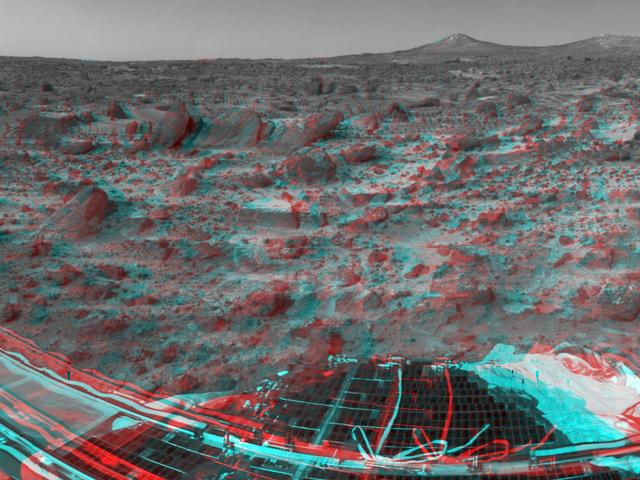
Many prominent rocks near the Sagan Memorial Station are featured in this image, from NASA Mars Pathfinder. Flat Top and Little Flat Top are at center. 3-D glasses are necessary to identify surface detail.
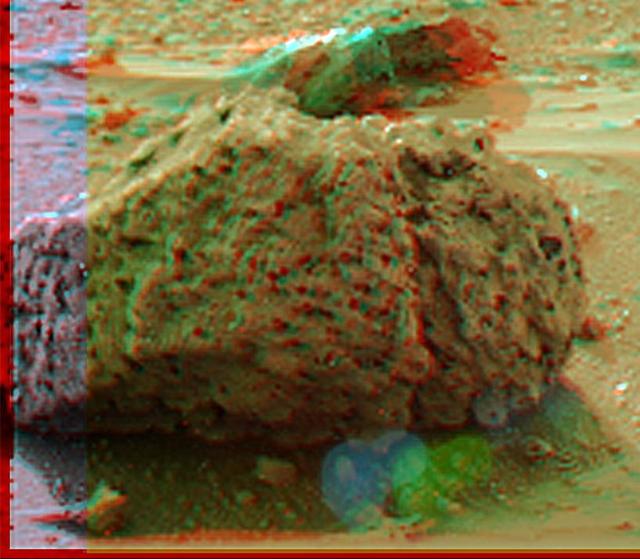
Barnacle Bill is a small rock immediately west-northwest of NASA Mars Pathfinder lander and was the first rock visited by the rover Sojourner. 3D glasses are necessary to identify surface detail.
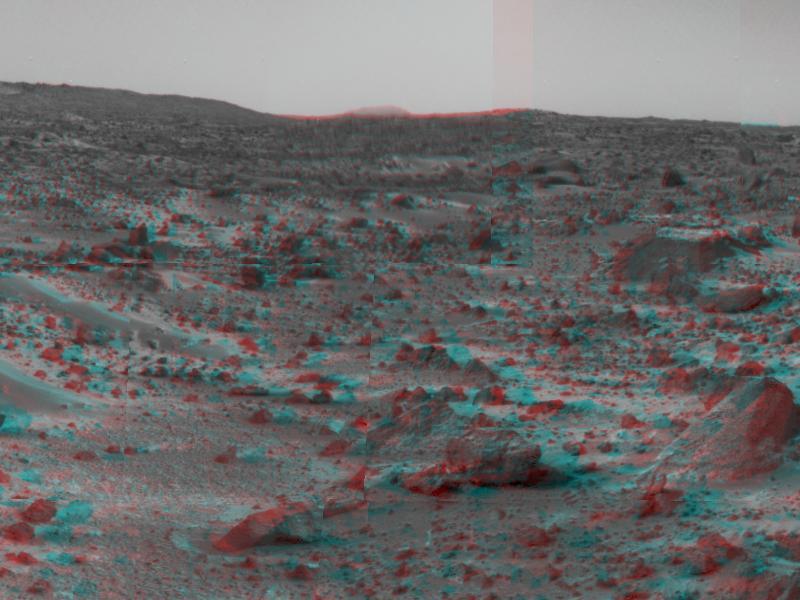
NASA Mars Pathfinder forward rover ramp can be seen successfully unfurled in this image, taken in stereo by the Imager camera. The large rock dubbed Wedge is at lower right. 3-D glasses are necessary to identify surface detail.
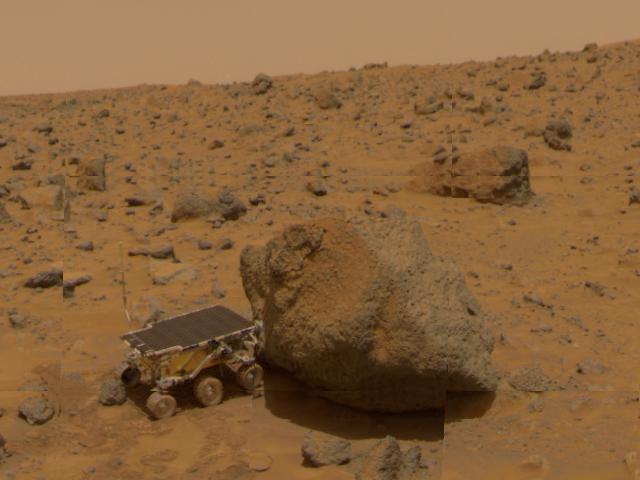
This 1997 image from NASA Mars Pathfinder shows a close up of Sojourner as it placed its Alpha Proton X-Ray Spectrometer APXS upon the surface of the rock Yogi.
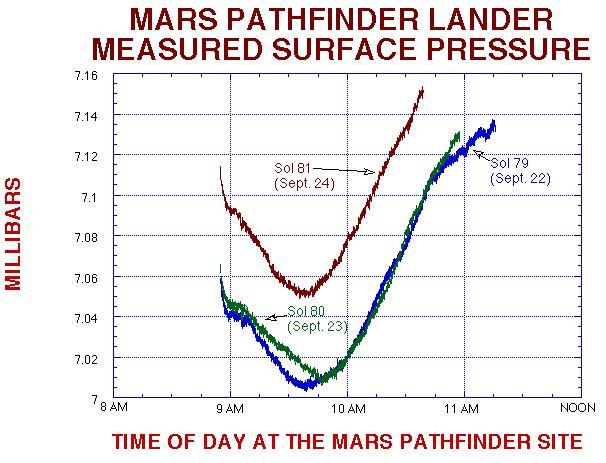
In this figure from NASA's Mars Pathfinder, you can see a significant increase in pressure on Sol 81, Sept. 25 1997. This is an indication of a frontal system has moved across the landing sight. http://photojournal.jpl.nasa.gov/catalog/PIA00977
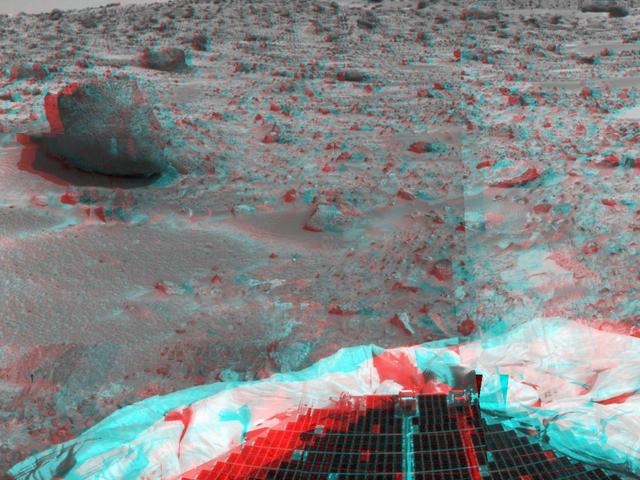
This image from NASA Mars Pathfinder shows the large rock nicknamed Yogi. Portions of a petal and deflated airbag are in the foreground. 3D glasses are necessary to identify surface detail.
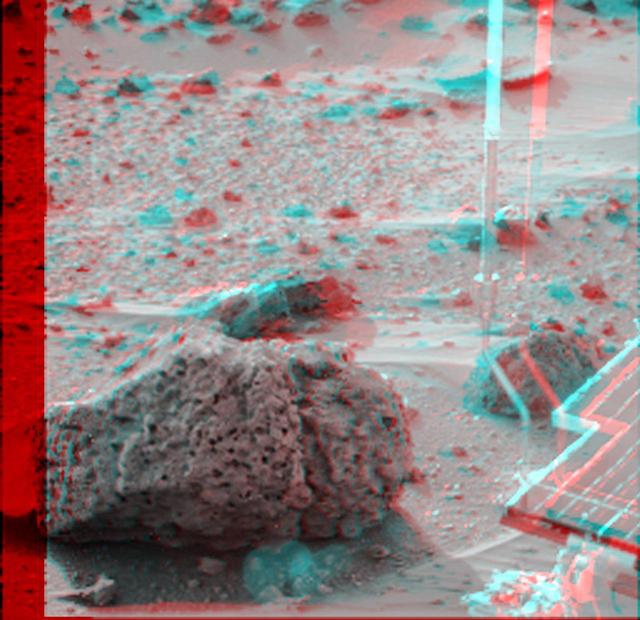
Barnacle Bill is a small rock immediately west-northwest of NASA Mars Pathfinder lander and was the first rock visited by the rover Sojourner. 3D glasses are necessary to identify surface detail.
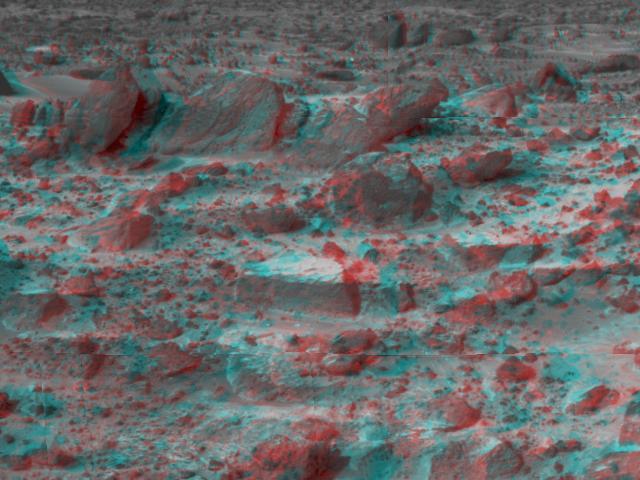
Many prominent rocks near the Sagan Memorial Station are featured in this image, from NASA Mars Pathfinder. Shark, Half-Dome, and Pumpkin, Flat Top and Frog are at center 3D glasses are necessary to identify surface detail.
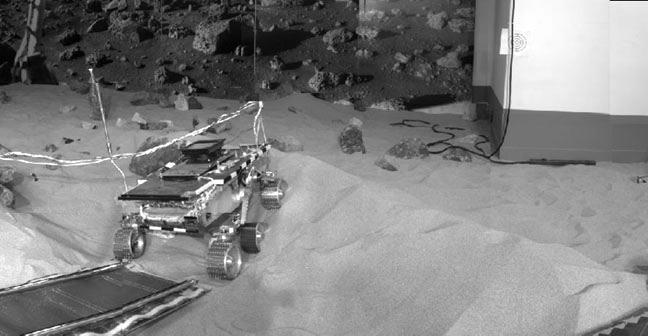
Marie Curie rover drives down the rear ramp during Operational Readiness Test ORT 4. NASA Pathfinder, a low-cost Discovery mission, is the first of a new fleet of spacecraft that are planned to explore Mars.
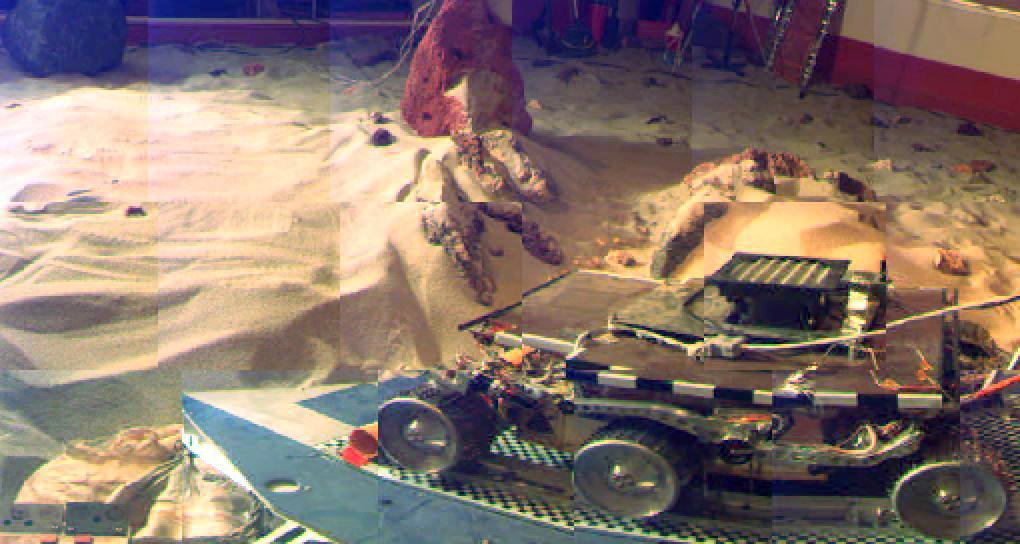
Marie Curie sits on the lander petal prior to deployment during the pre-launch Operations Readiness Test ORT 6. NASA Pathfinder, a low-cost Discovery mission, is the first of a new fleet of spacecraft that are planned to explore Mars.
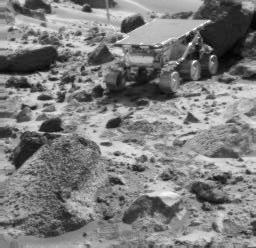
NASA's Sojourner rover is seen next to the rock "Shark," in this image taken by the Imager for Mars Pathfinder (IMP) near the end of daytime operations on Sol 52. The rover's Alpha Proton X-Ray Spectrometer is deployed against the rock. The rock "Wedge" is in the foreground. The Sojourner rover is seen next to the rock "Shark," in this image taken by the Imager for Mars Pathfinder (IMP) near the end of daytime operations on Sol 52. The rover's Alpha Proton X-Ray Spectrometer is deployed against the rock. The rock "Wedge" is in the foreground.
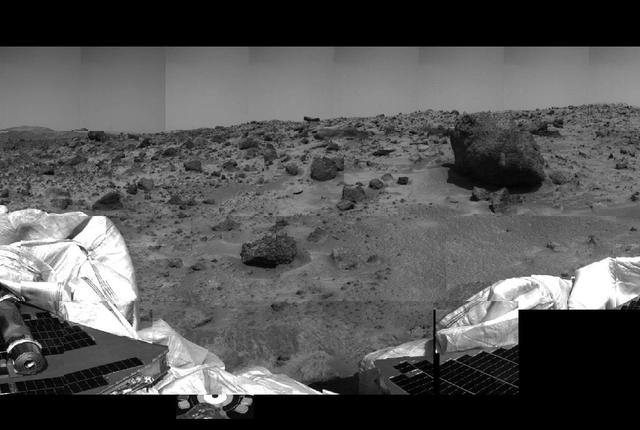
This image of the Martian surface was taken by the Imager for Mars Pathfinder (IMP) before sunset on July 4, 1997 (Sol 1), the spacecraft's first day on Mars. The airbags have been partially retracted, and portions the petal holding the undeployed rover Sojourner can be seen at lower left. The rock in the center of the image may be a future target for chemical analysis. The soil in the foreground has been disturbed by the movement of the airbags as they retracted. http://photojournal.jpl.nasa.gov/catalog/PIA00619
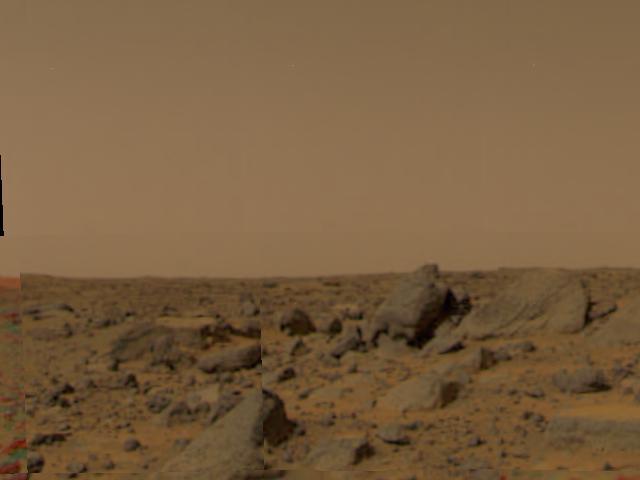
Large boulders are visible in this enlargement of pictures taken by the Imager for Mars Pathfinder (IMP) lander camera on July 4, 1997. The landing site is in the dry flood channel named Ares Valles. The boulders probably represent deposits from one of the catastrophic floods that carved the ancient channel. Between the rocks is brownish windblown soil. The gray-tan sky results from dust particles in the atmosphere. http://photojournal.jpl.nasa.gov/catalog/PIA00609
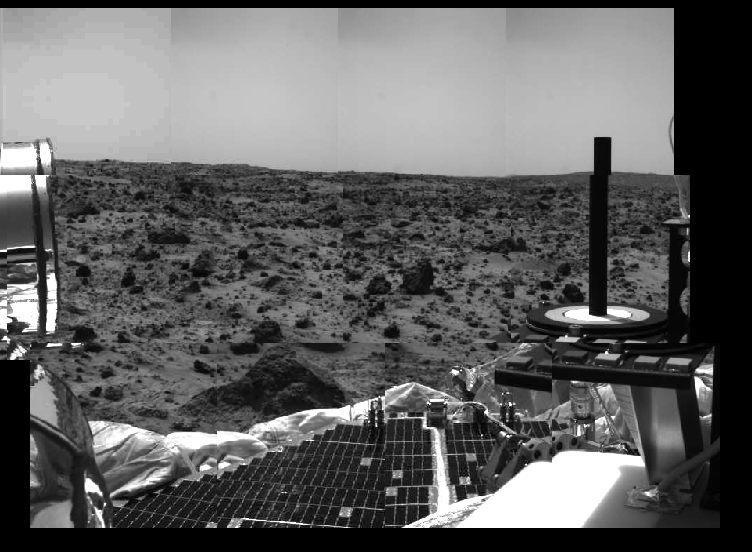
Several prominent features of Mars Pathfinder and surrounding terrain are seen in this image, taken by the Imager for Mars Pathfinder on July 4 (Sol 1), the spacecraft's first day on the Red Planet. Portions of a lander petal are at the lower part of the image. At the left, the mechanism for the high-gain antenna can be seen. The dark area along the right side of the image represents a portion of the low-gain antenna. The radiation calibration target is at the right. The calibration target is made up of a number of materials with well-characterized colors. The known colors of the calibration targets allow scientists to determine the true colors of the rocks and soils of Mars. Three bull's-eye rings provide a wide range of brightness for the camera, similar to a photographer's grayscale chart. In the middle of the bull's-eye is a 5-inch tall post that casts a shadow, which is distorted in this image due to its location with respect to the lander camera. A large rock is located at the near center of the image. Smaller rocks and areas of soil are strewn across the Martian terrain up to the horizon line. http://photojournal.jpl.nasa.gov/catalog/PIA00620
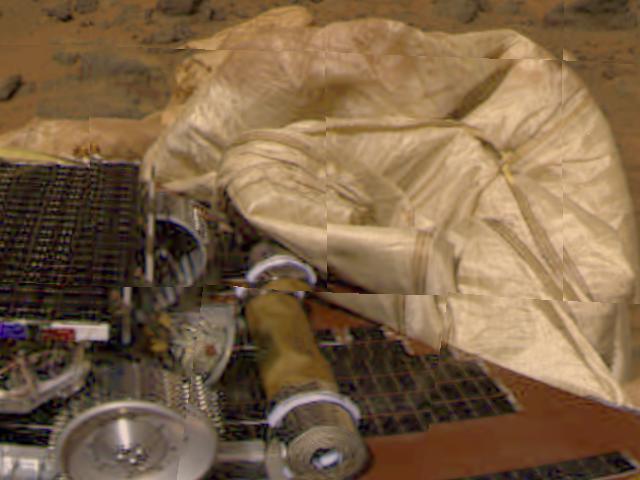
This image from the Imager for Mars Pathfinder (IMP) camera shows the rear part of the Sojourner rover, the rolled-up rear ramp, and portions of the partially deflated airbags. The Alpha Proton X-ray Spectrometer instrument is protruding from the rear (right side) of the rover. The airbags behind the rover are presently blocking the ramp from being safely unfurled. The ramps are a pair of deployable metal reels that will provide a track for the rover as it slowly rolls off the lander, and onto the surface of Mars, once Pathfinder scientists determine it is safe to do so. http://photojournal.jpl.nasa.gov/catalog/PIA00614
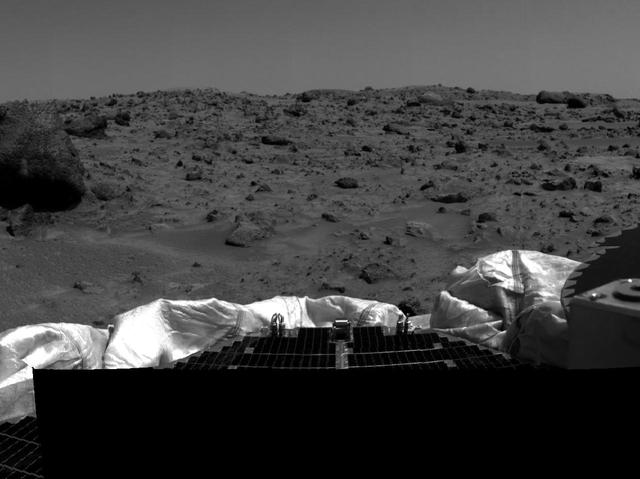
The left portion of this image, taken by the Imager for Mars Pathfinder (IMP) on July 5, 1997 (Sol 2), shows a portion of the large rock nicknamed "Yogi." Portions of a petal and deflated airbag are in the foreground. The dark circular object at right is a portion of the lander's high-gain antenna. http://photojournal.jpl.nasa.gov/catalog/PIA00630

The interior of Mars is simply modeled as a core and mantle with a thin crust, similar to Earth. Mars' size and total mass have been determined by previous missions. Given four parameters, the core size and mass, and mantle size and mass can be determined. The combination of Pathfinder Doppler data with earlier data from the Viking landers has determined a third parameter, the moment of inertia, through measurement of Mars' precession rate. A fourth measurement is needed to complete the interior model. This may be achieved through future Doppler tracking of Pathfinder, since the presence of a fluid core may be detectable through its effect on Mars' nutation. The determination of the moment of inertia is a significant constraint on possible models for Mars' interior. If the core is as dense as possible (i.e. completely iron) and the mantle is similar to Earth's (or similar to the SNC meteorites thought to originate on Mars) then the minimum core radius is about 1300 km. If the core is made of less-dense material (i.e. a mixture of iron and sulfur) then the core radius is probably no more than 2000 km. Sojourner spent 83 days of a planned seven-day mission exploring the Martian terrain, acquiring images, and taking chemical, atmospheric and other measurements. The final data transmission received from Pathfinder was at 10:23 UTC on September 27, 1997. Although mission managers tried to restore full communications during the following five months, the successful mission was terminated on March 10, 1998. http://photojournal.jpl.nasa.gov/catalog/PIA00974

The Rotation and Orbit Dynamics experiment is based on measuring the Doppler range to Pathfinder using the radio link. Mars rotation about it's pole causes a signature in the data with a daily minimum when the lander is closest to the Earth. Changes in the daily signature reveal information about the planetary interior, through its effect on Mars' precession and nutation. The signature also is sensitive to variations in Mars' rotation rate as the mass of the atmosphere increases and decreases as the polar caps are formed in winter and evaporate in spring. Long term signatures in the range to the lander are caused by asteroids perturbing Mars' orbit. Analysis of these perturbations allows the determination of the masses of asteroids. Sojourner spent 83 days of a planned seven-day mission exploring the Martian terrain, acquiring images, and taking chemical, atmospheric and other measurements. The final data transmission received from Pathfinder was at 10:23 UTC on September 27, 1997. Although mission managers tried to restore full communications during the following five months, the successful mission was terminated on March 10, 1998. http://photojournal.jpl.nasa.gov/catalog/PIA00975
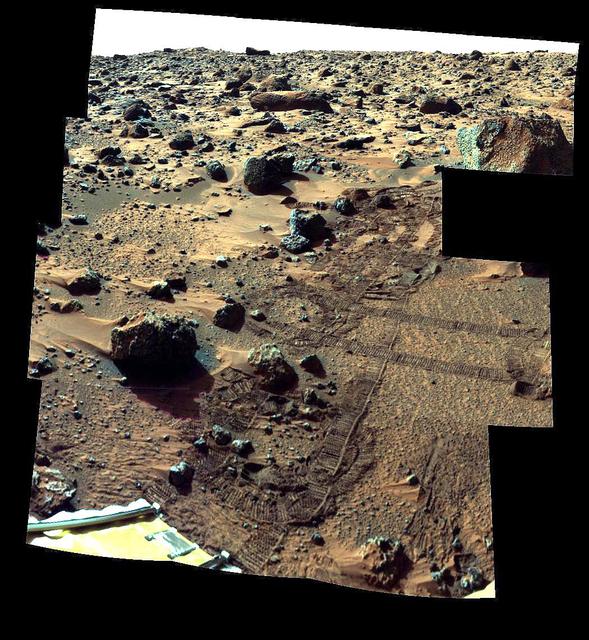
This is an image from the super-pan sequence. Of importance are some of the features around the rock nicknamed Barnacle Bill in the left foreground. The rock shows a "streamlined tail" composed of particles deposited by wind on the leeward (downwind) side of the rock. Also seen is a "moat" around the opposite (windward) side of the rock where either erosion (or non-deposition) of fine sediment has occurred. Mars Pathfinder scientist believe that the wind blowing over and around rocks like Barnacle Bill creates an airflow pattern wherein a buffer zone is formed immediately upwind of the rock and airflow patterns keep sediment from being deposited directly upwind of Barnacle Bill. On the downwind side, however, the airflow is complex and a small wake and tapered "dead air zone" form. Sediment can be deposited within this region, the shape of the formed deposit corresponds to the airflow patterns that exist behind the rock. Similar features have been observed at the Viking landing sites, and are thought to form under high wind conditions during the autumn and winter seasons in the northern hemisphere. This image mosaic was processed by the U.S. Geological Survey in support of the NASA/JPL Mars Pathfinder Mars Mission. Sojourner spent 83 days of a planned seven-day mission exploring the Martian terrain, acquiring images, and taking chemical, atmospheric and other measurements. The final data transmission received from Pathfinder was at 10:23 UTC on September 27, 1997. Although mission managers tried to restore full communications during the following five months, the successful mission was terminated on March 10, 1998. http://photojournal.jpl.nasa.gov/catalog/PIA00982
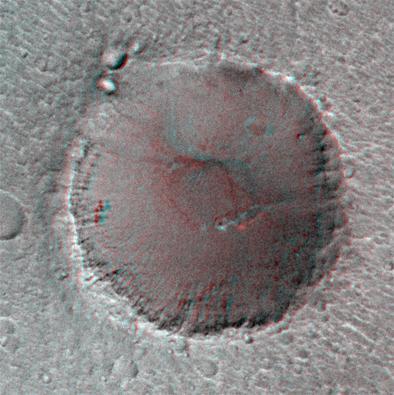
On its 256th orbit of Mars, the camera on-board NASA Mars Global Surveyor spacecraft successfully observed the vicinity of the Mars Pathfinder landing site. 3D glasses are necessary to identify surface detail.
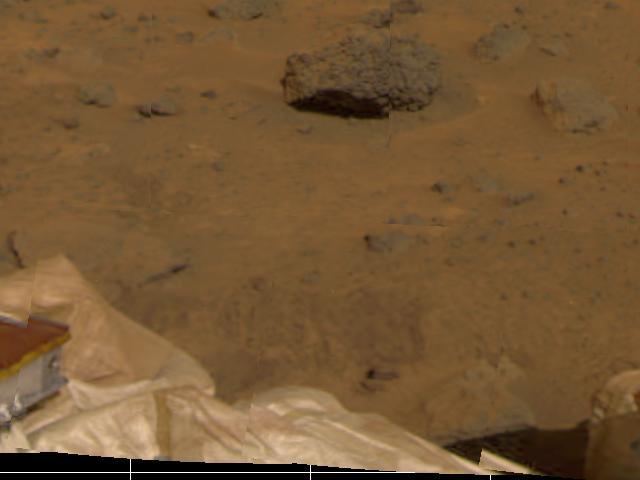
Several objects have been imaged by the Imager for Mars Pathfinder (IMP) during the spacecraft's first day on Mars. Portions of the deflated airbags, part of one the lander's petals, soil, and several rocks are visible. The furrows in the soil were artificially produced by the retraction of the airbags after landing, which occurred at 10:07 a.m. PDT. http://photojournal.jpl.nasa.gov/catalog/PIA00616

This is the first color image ever taken from the surface of Mars of an overcast sky. Featured are pink stratus clouds coming from the northeast at about 15 miles per hour (6.7 meters/second) at an approximate height of ten miles (16 kilometers) above the surface. The clouds consist of water ice condensed on reddish dust particles suspended in the atmosphere. Clouds on Mars are sometimes localized and can sometimes cover entire regions, but have not yet been observed to cover the entire planet. The image was taken about an hour and forty minutes before sunrise by the Imager for Mars Pathfinder (IMP) on Sol 16 at about ten degrees up from the eastern Martian horizon. Sojourner spent 83 days of a planned seven-day mission exploring the Martian terrain, acquiring images, and taking chemical, atmospheric and other measurements. The final data transmission received from Pathfinder was at 10:23 UTC on September 27, 1997. Although mission managers tried to restore full communications during the following five months, the successful mission was terminated on March 10, 1998. http://photojournal.jpl.nasa.gov/catalog/PIA00796
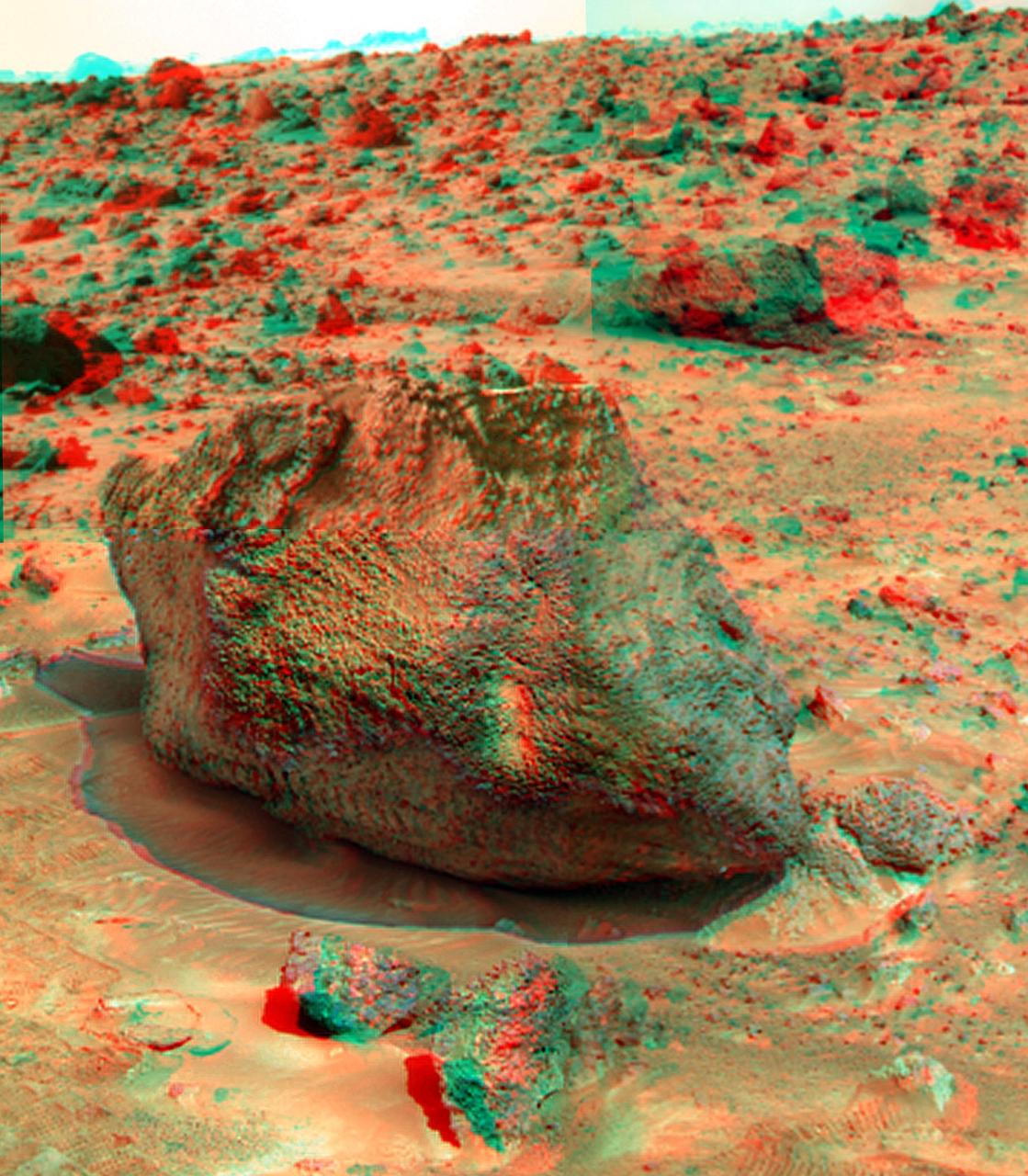
Yogi is a meter-size rock about 5 meters northwest of NASA Mars Pathfinder lander and was the second rock visited by the Sojourner Rover alpha proton X-ray spectrometer APXS instrument. 3D glasses are necessary to identify surface detail.

The Mars Pathfinder began the journey to Mars with liftoff atop a Delta II expendable launch vehicle from launch Complex 17B on Cape Canaveral Air Station. The Mars Pathfinder traveled on a direct trajectory to Mars, and arrived there in July 1997. Mars Pathfinder sent a lander and small robotic rover, Sojourner, to the surface of Mars. The primary objective of the mission was to demonstrate a low-cost way of delivering a science package to the surface of Mars using a direct entry, descent and landing with the aid of small rocket engines, a parachute, airbags and other techniques. In addition, landers and rovers of the future will share the heritage of Mars Pathfinder designs and technologies first tested in this mission. Pathfinder also collected invaluable data about the Martian surface.
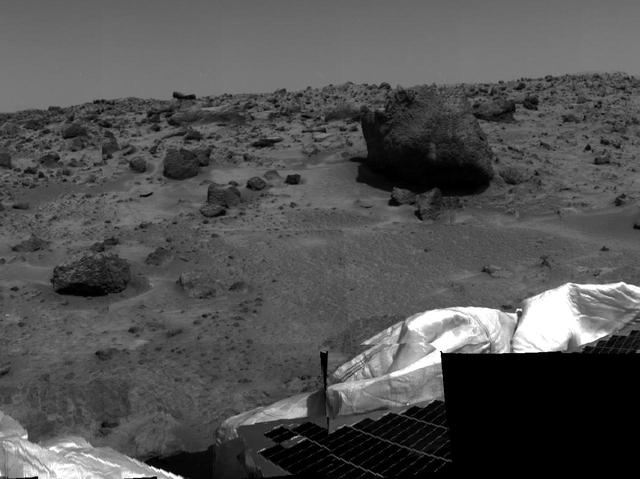
Several possible targets of study for rover Sojourner's Alpha Proton X-Ray Spectrometer (APXS) instrument are seen in this image, taken by the Imager for Mars Pathfinder (IMP) on Sol 2. The smaller rock at left has been dubbed "Barnacle Bill," while the larger rock at right, approximately 3-4 meters from the lander, is now nicknamed "Yogi." Barnacle Bill is scheduled to be the first object of study for the APXS. Portions of a petal and deflated airbag are also visible at lower right. http://photojournal.jpl.nasa.gov/catalog/PIA00629
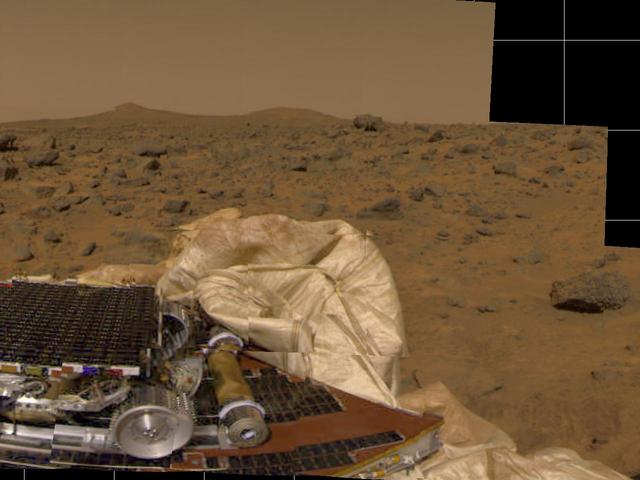
The Imager for Mars Pathfinder (IMP) took this image of surrounding terrain in the mid-morning on Mars (2:30 PM Pacific Daylight Time) earlier today. Part of the small rover, Sojourner, is visible on the left side of the picture. The tan cylinder to the right of the rover is one of two rolled-up ramps by which the rover will descend to the ground. The white, billowy material in the center of the picture is part of the airbag system. Many rocks of different shapes and sizes are visible between the lander and the horizon. Two hills are visible on the horizon. The notch on the left side of the leftmost conical hill is an artifact of the processing of this picture. http://photojournal.jpl.nasa.gov/catalog/PIA00613

These are more wispy blue clouds from Sol 39 as seen by the Imager for Mars Pathfinder. The bright clouds near the bottom are about 30 degrees above the horizon. The clouds are believed to be at an altitude of 10 to 15 km, and are thought to be made of small water ice particles. The picture was taken about 35 minutes before sunrise. Sojourner spent 83 days of a planned seven-day mission exploring the Martian terrain, acquiring images, and taking chemical, atmospheric and other measurements. The final data transmission received from Pathfinder was at 10:23 UTC on September 27, 1997. Although mission managers tried to restore full communications during the following five months, the successful mission was terminated on March 10, 1998. http://photojournal.jpl.nasa.gov/catalog/PIA00919

Hubble Look at Mars Shows Canyon Dust Storm, Cloudy Conditions for Pathfinder Landing

This 360 degree "monster" panorama was taken by the deployed Imager for Mars Pathfinder (IMP) on Sol 3. All three petals, the perimeter of the deflated airbags, deployed rover Sojourner, forward and backward ramps and prominent surface features are visible. The IMP stands 1.8 meters over the Martian surface. The curvature and misalignment of several sections are due to image parallax. http://photojournal.jpl.nasa.gov/catalog/PIA00662
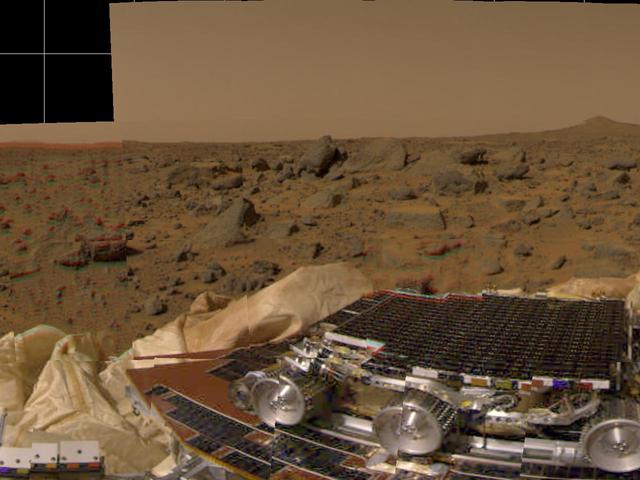
This picture from Mars Pathfinder was taken at 9:30 AM in the martian morning (2:30 PM Pacific Daylight Time), after the spacecraft landed earlier today (July 4, 1997). The Sojourner rover is perched on one of three solar panels. The rover is 65 cm (26 inches) long by 18 cm (7 inches) tall; each of its wheels is about 13 cm (5 inches) high. The white material to the left of the front of the rover is part of the airbag system used to cushion the landing. Many rocks of different of different sizes can be seen, set in a background of reddish soil. The landing site is in the mouth of an ancient channel carved by water. The rocks may be primarily flood debris. The horizon is seen towards the top of the picture. The light brown hue of the sky results from suspended dust. Pathfinder, a low-cost Discovery mission, is the first of a new fleet of spacecraft that are planned to explore Mars over the next ten years. Mars Global Surveyor, already en route, arrives at Mars on September 11 to begin a two year orbital reconnaissance of the planet's composition, topography, and climate. Additional orbiters and landers will follow every 26 months. http://photojournal.jpl.nasa.gov/catalog/PIA00608
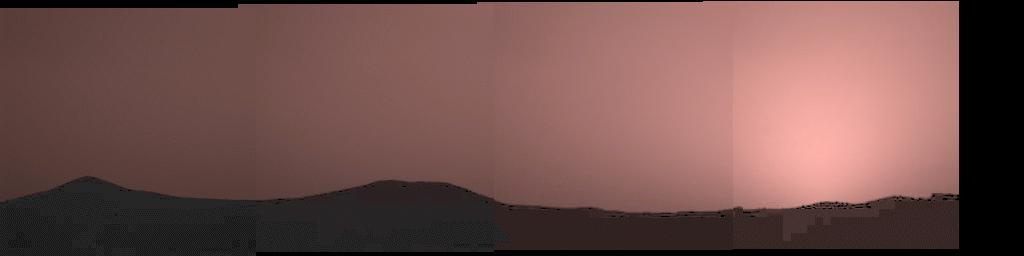
This image was taken by the Imager for Mars Pathfinder (IMP) about one minute after sunset on Mars on Sol 21. The prominent hills dubbed "Twin Peaks" form a dark silhouette at the horizon, while the setting sun casts a pink glow over the darkening sky. The image was taken as part of a twilight study which indicates how the brightness of the sky fades with time after sunset. Scientists found that the sky stays bright for up to two hours after sunset, indicating that Martian dust extends very high into the atmosphere. http://photojournal.jpl.nasa.gov/catalog/PIA00783