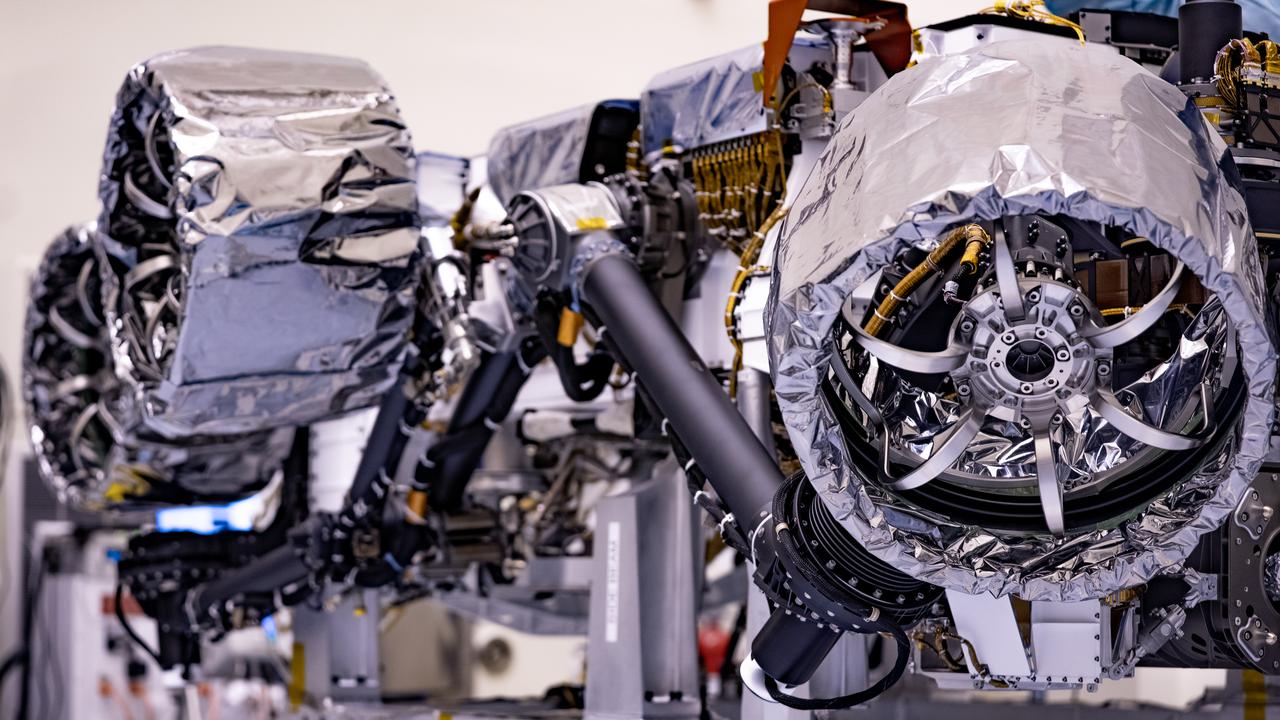
Wheels are installed on NASA’s Mars Perseverance rover inside Kennedy Space Center’s Payload Hazardous Servicing Facility on March 30, 2020. Perseverance will liftoff aboard a United Launch Alliance Atlas V 541 rocket from Cape Canaveral Air Force Station in July 2020. NASA’s Launch Services Program based at Kennedy is managing the launch. The rover will land on Mars on Feb. 18, 2021.
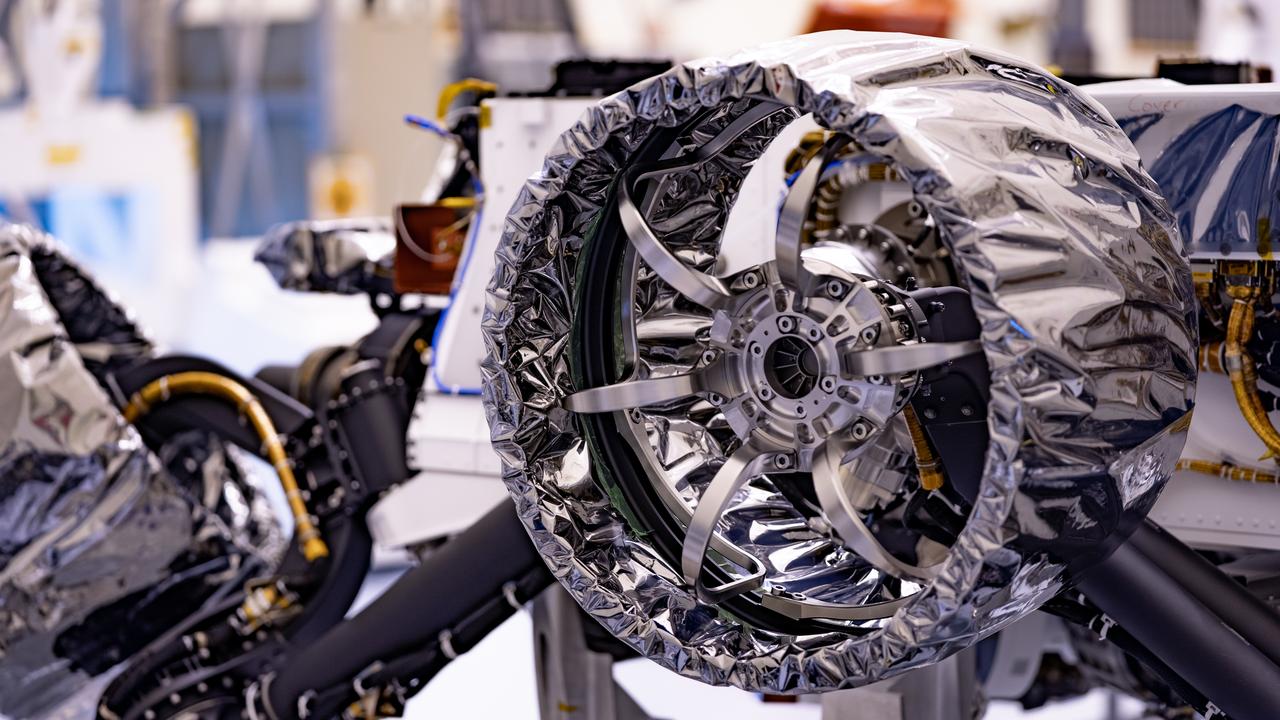
Wheels are installed on NASA’s Mars Perseverance rover inside Kennedy Space Center’s Payload Hazardous Servicing Facility on March 30, 2020. Perseverance will liftoff aboard a United Launch Alliance Atlas V 541 rocket from Cape Canaveral Air Force Station in July 2020. NASA’s Launch Services Program based at Kennedy is managing the launch. The rover will land on Mars on Feb. 18, 2021.
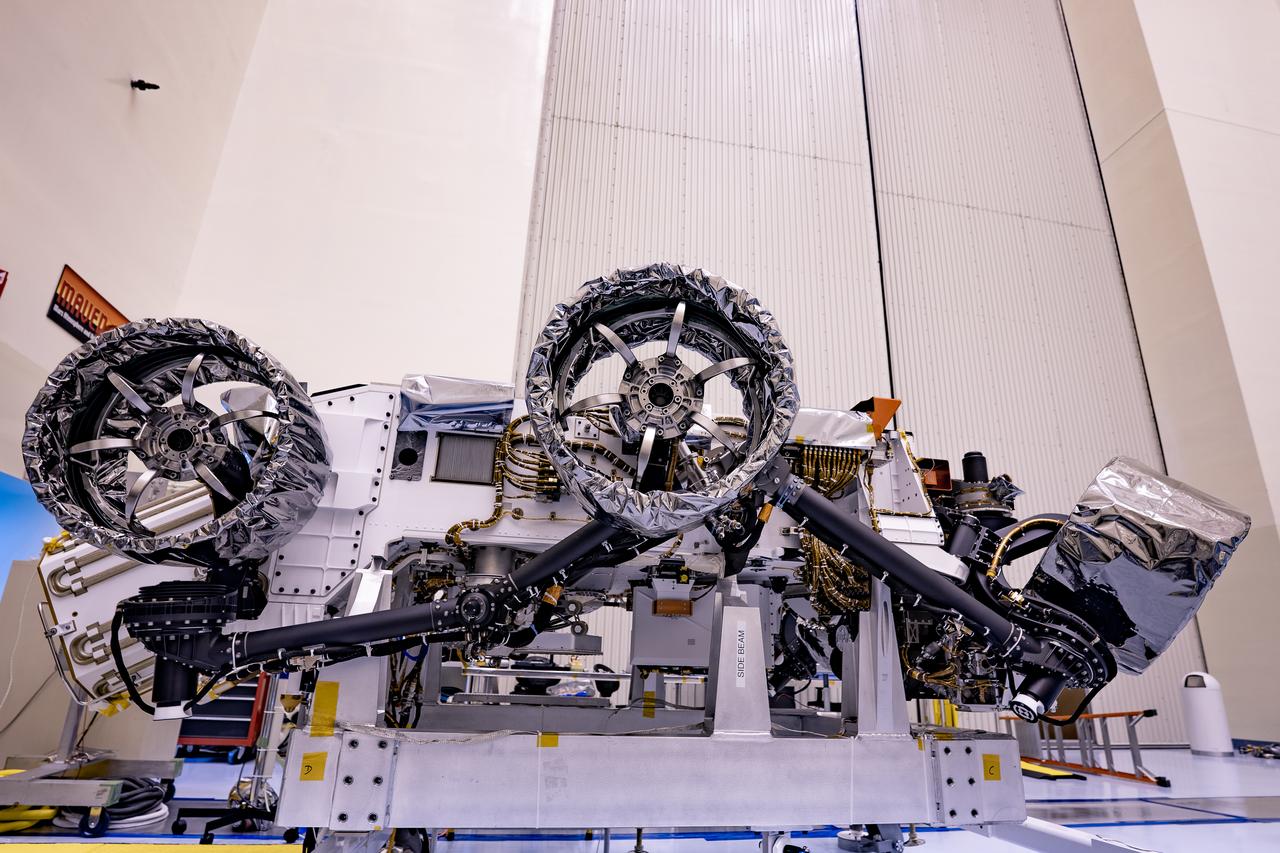
Wheels are installed on NASA’s Mars Perseverance rover inside Kennedy Space Center’s Payload Hazardous Servicing Facility on March 30, 2020. Perseverance will liftoff aboard a United Launch Alliance Atlas V 541 rocket from Cape Canaveral Air Force Station in July 2020. NASA’s Launch Services Program based at Kennedy is managing the launch. The rover will land on Mars on Feb. 18, 2021.

An illustration of the planet Mars, highlighting NASA's Mars Perseverance rover mission. https://photojournal.jpl.nasa.gov/catalog/PIA24348
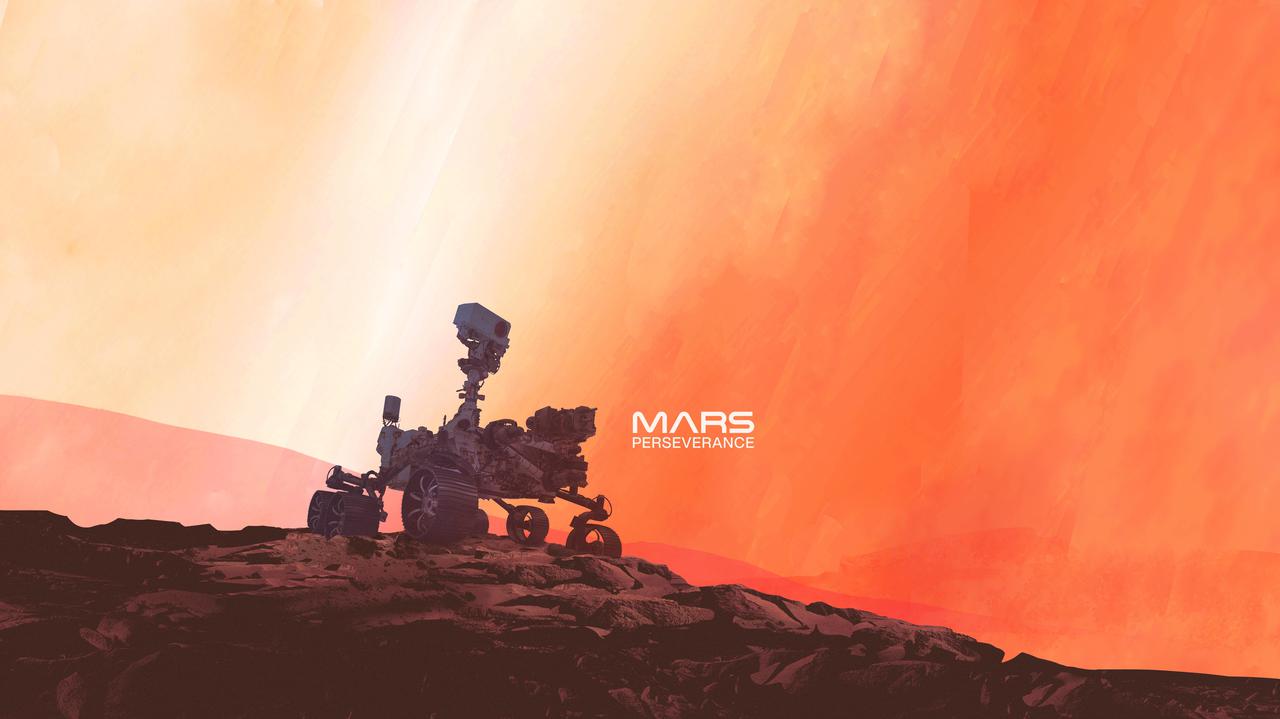
This illustration shows NASA's Mars Perseverance rover on the surface of the Red Planet. Perseverance will search for signs of ancient microbial life. It will also characterize the planet's climate and geology, collect samples for future return to Earth and pave the way for human exploration of the Red Planet. https://photojournal.jpl.nasa.gov/catalog/PIA24343
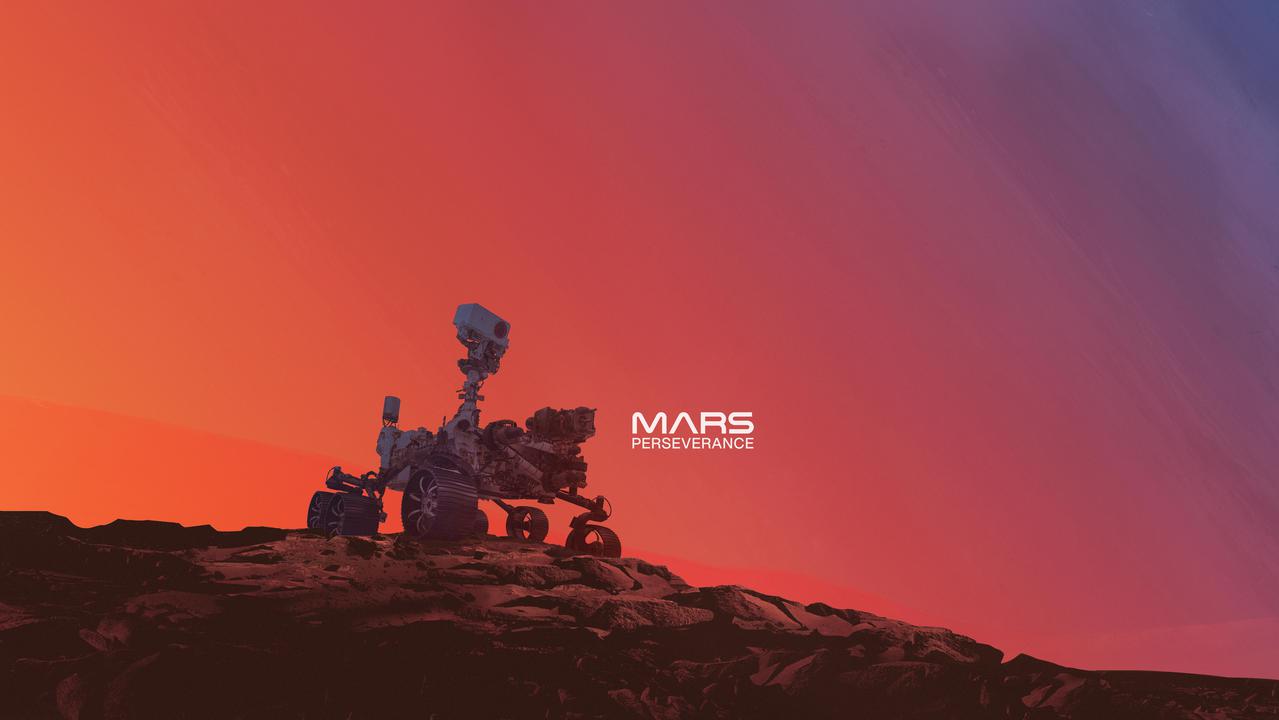
This illustration shows NASA's Mars Perseverance rover on the surface of the Red Planet. Perseverance will search for signs of ancient microbial life. It will also characterize the planet's climate and geology, collect samples for future return to Earth and pave the way for human exploration of the Red Planet. https://photojournal.jpl.nasa.gov/catalog/PIA24346

An illustration of the planet Mars, highlighting NASA's Mars Perseverance rover and future human explorers. https://photojournal.jpl.nasa.gov/catalog/PIA24347
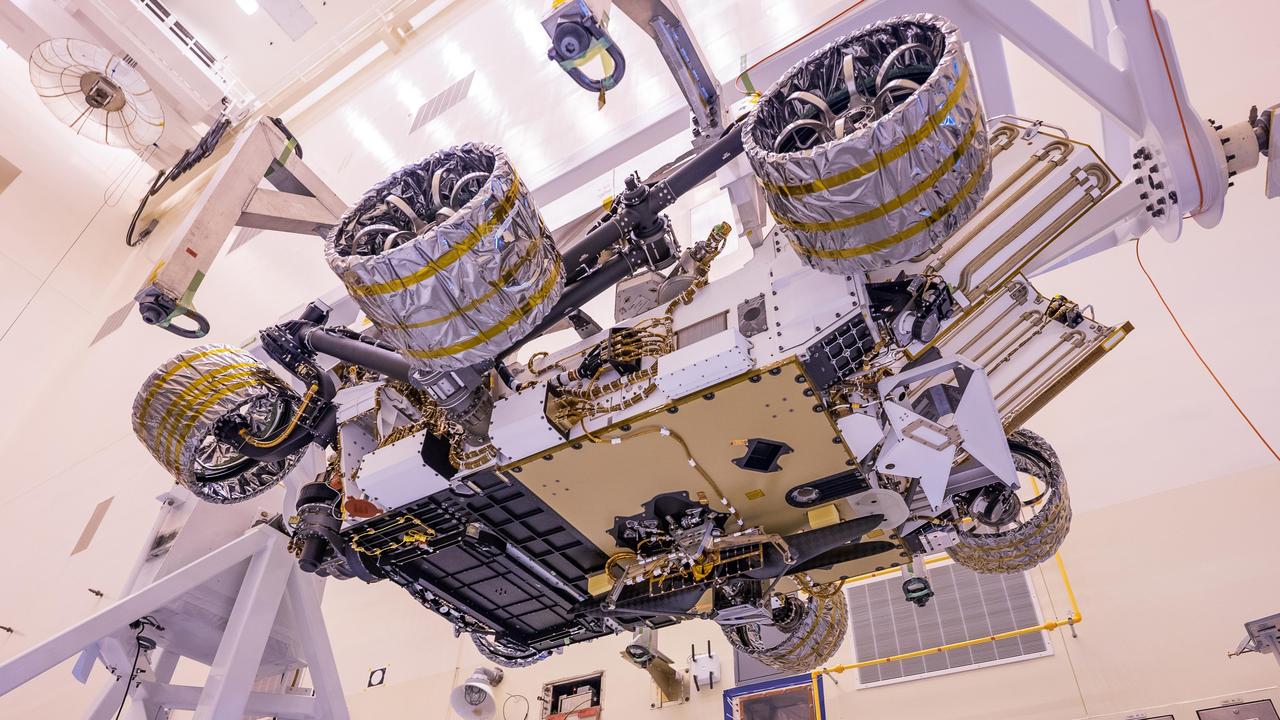
The Mars Helicopter, visible in lower center of the image, was attached to the belly of NASA's Perseverance rover at Kennedy Space Center on April 6, 2020. The helicopter will be deployed onto the Martian surface about two-and-a-half months after Perseverance lands. https://photojournal.jpl.nasa.gov/catalog/PIA23824
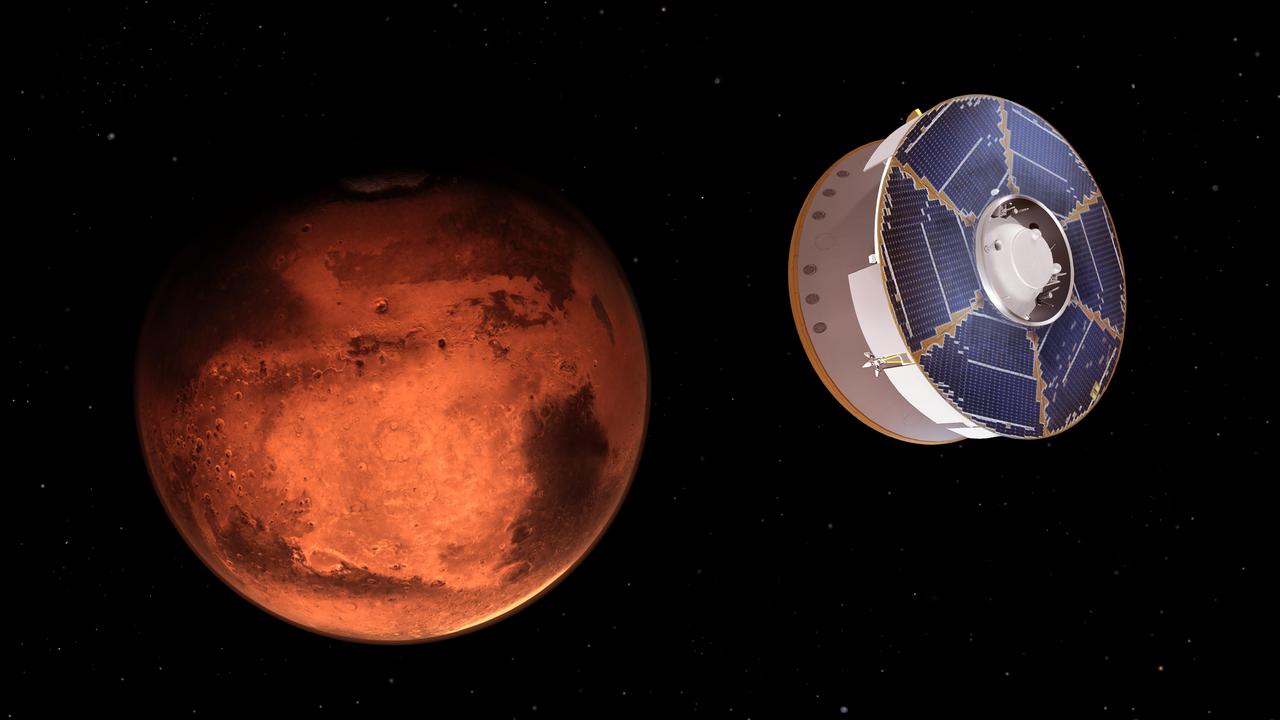
This illustration shows NASA's Mars 2020 spacecraft carrying the Perseverance rover as it approaches Mars. Hundreds of critical events must execute perfectly and exactly on time for the rover to land on Mars safely on Feb. 18, 2021. Solar panels powering the spacecraft are visible on the cruise state at the top. The cruise stage is attached to the aeroshell, which encloses the rover and descent stage. Entry, Descent, and Landing, or "EDL," begins when the aeroshell reaches the top of the Martian atmosphere, traveling nearly 12,500 mph (20,000 kph). It ends about seven minutes later, with Perseverance stationary on the Martian surface. https://photojournal.jpl.nasa.gov/catalog/PIA24311

February 17, 2021, The Terminal Tower is illuminated in red to commemorate the Landing of NASA’s Perseverance Rover on the surface of Mars, February 18, 2021. Terminal Tower is a 52-story, (771 ft), landmark skyscraper located on Public Square in downtown Cleveland, Ohio. Cleveland is also the home of the NASA Glenn Research Center.
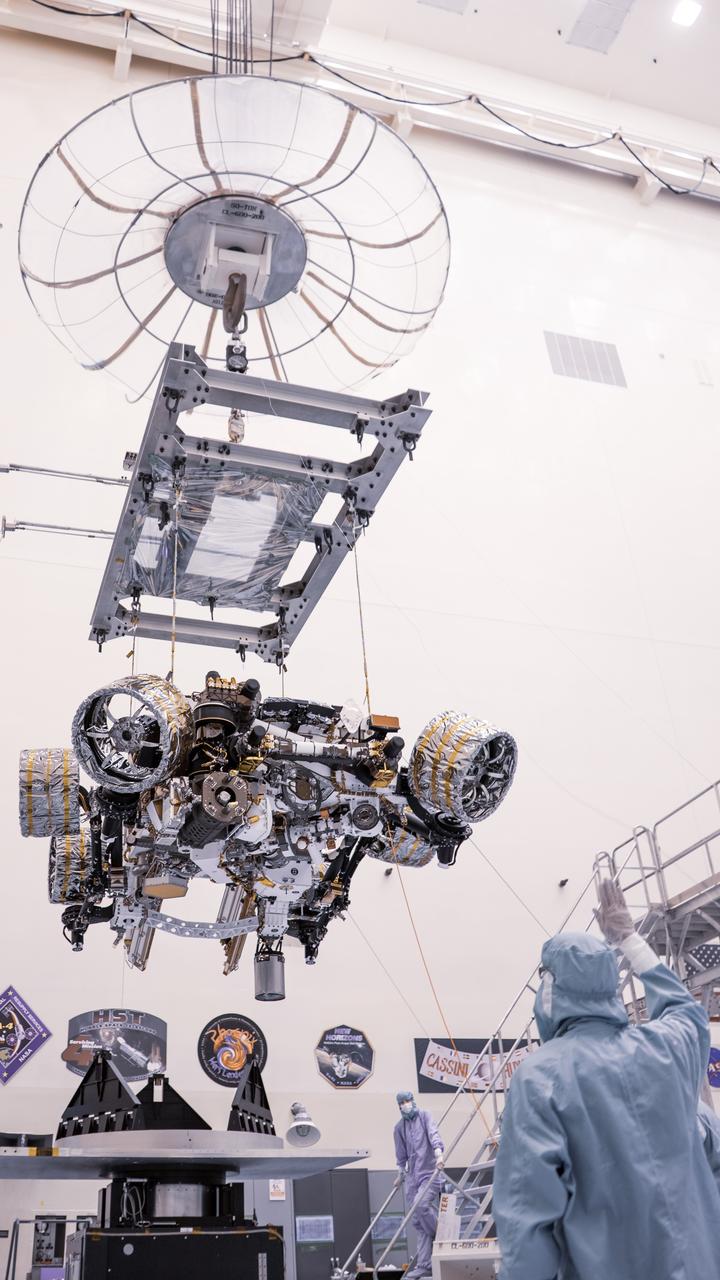
Engineers perform mass properties testing on NASA’s Mars Perseverance rover inside Kennedy Space Center’s Payload Hazardous Servicing Facility on April 7, 2020. The rover was rotated clockwise and counterclockwise on a spin table to determine the center of gravity, or the point at which weight is evenly dispersed on all sides. Establishing the rover’s center of gravity will help ensure the spacecraft will land on Mars as calculated. Perseverance will touch down on the Red Planet on Feb. 18, 2021. Liftoff aboard a United Launch Alliance Atlas V 541 rocket is targeted between July 17 and Aug. 5 from Cape Canaveral Air Force Station. NASA’s Launch Services Program based at Kennedy is managing the launch.
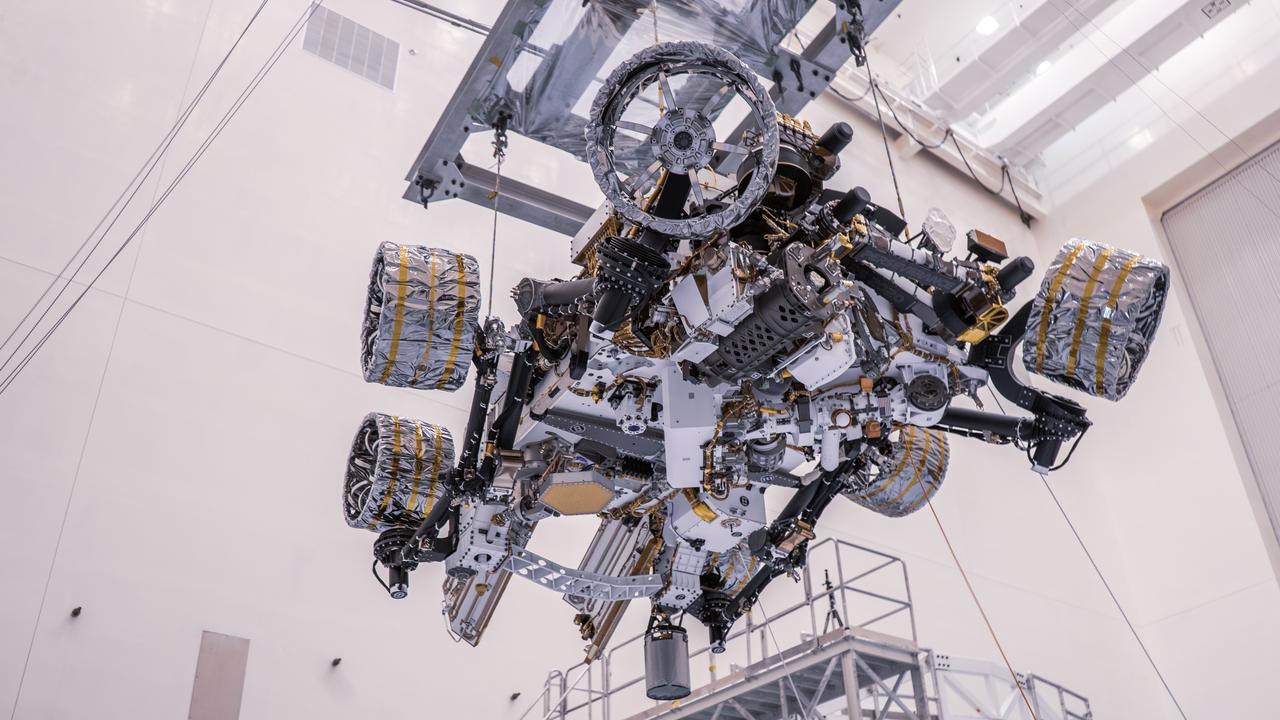
Engineers perform mass properties testing on NASA’s Mars Perseverance rover inside Kennedy Space Center’s Payload Hazardous Servicing Facility on April 7, 2020. The rover was rotated clockwise and counterclockwise on a spin table to determine the center of gravity, or the point at which weight is evenly dispersed on all sides. Establishing the rover’s center of gravity will help ensure the spacecraft will land on Mars as calculated. Perseverance will touch down on the Red Planet on Feb. 18, 2021. Liftoff aboard a United Launch Alliance Atlas V 541 rocket is targeted between July 17 and Aug. 5 from Cape Canaveral Air Force Station. NASA’s Launch Services Program based at Kennedy is managing the launch.
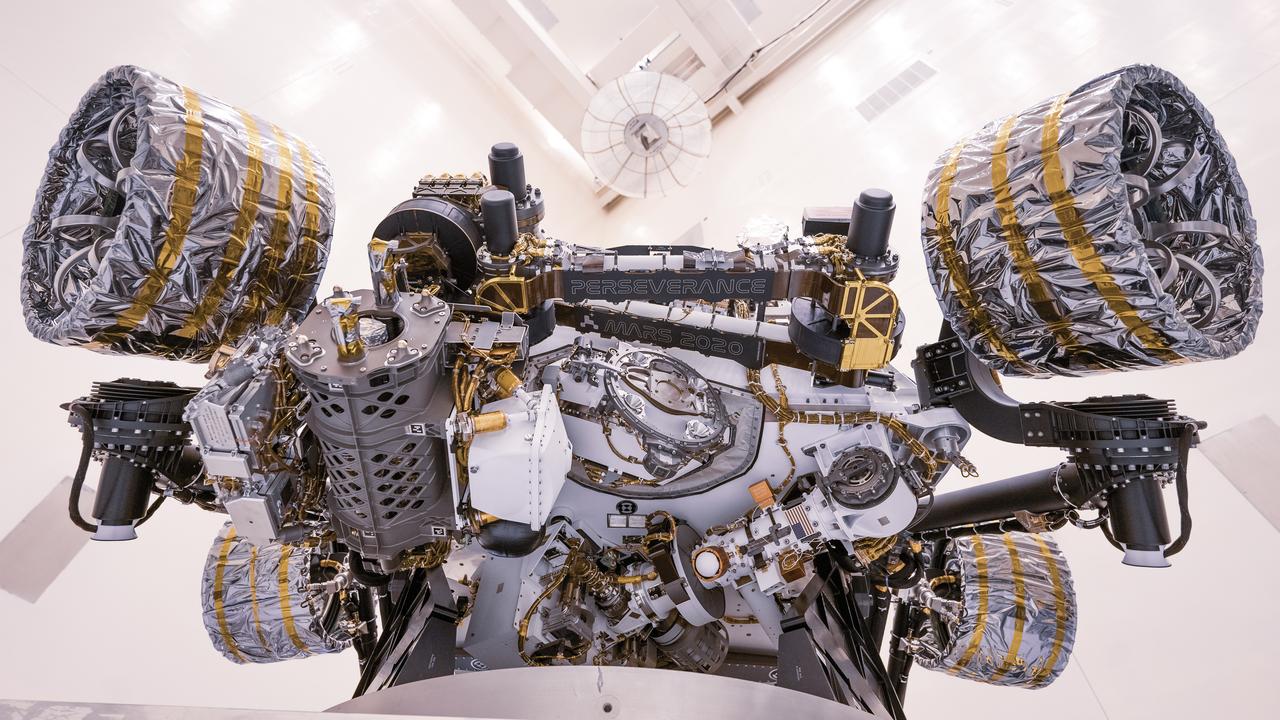
Engineers perform mass properties testing on NASA’s Mars Perseverance rover inside Kennedy Space Center’s Payload Hazardous Servicing Facility on April 7, 2020. The rover was rotated clockwise and counterclockwise on a spin table to determine the center of gravity, or the point at which weight is evenly dispersed on all sides. Establishing the rover’s center of gravity will help ensure the spacecraft will land on Mars as calculated. Perseverance will touch down on the Red Planet on Feb. 18, 2021. Liftoff aboard a United Launch Alliance Atlas V 541 rocket is targeted between July 17 and Aug. 5 from Cape Canaveral Air Force Station. NASA’s Launch Services Program based at Kennedy is managing the launch.
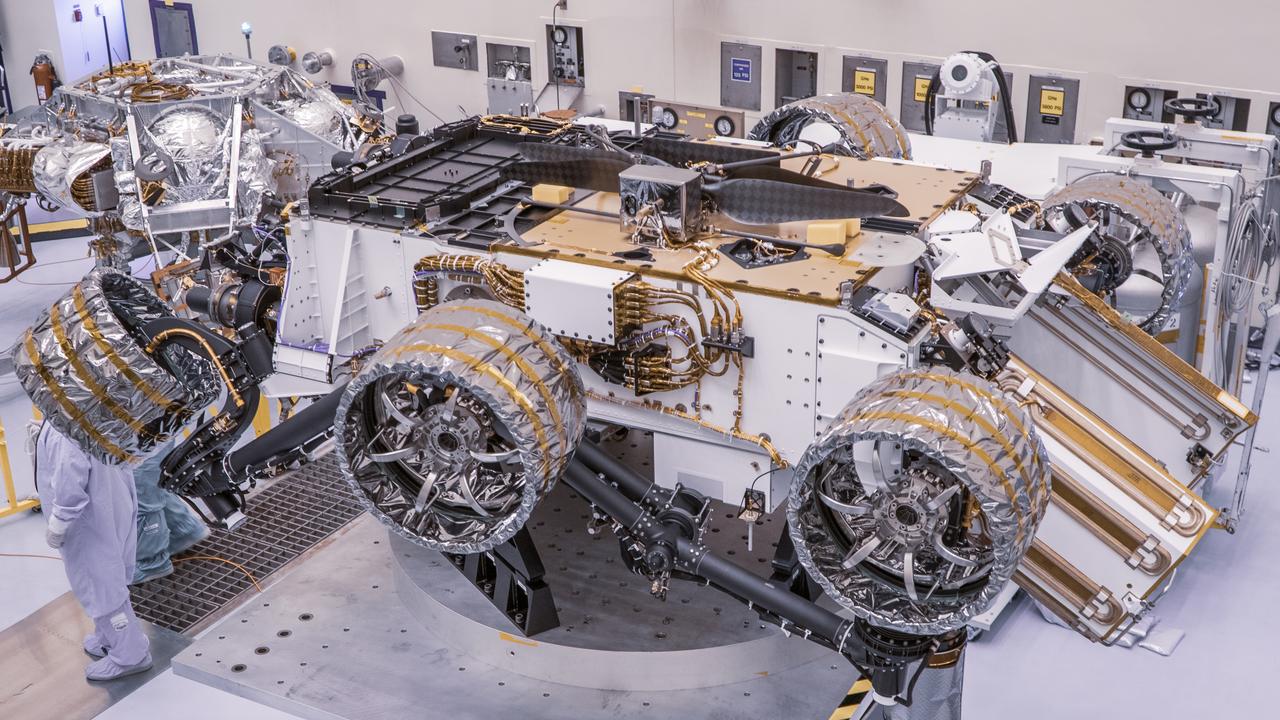
Engineers perform mass properties testing on NASA’s Mars Perseverance rover inside Kennedy Space Center’s Payload Hazardous Servicing Facility on April 7, 2020. The rover was rotated clockwise and counterclockwise on a spin table to determine the center of gravity, or the point at which weight is evenly dispersed on all sides. Establishing the rover’s center of gravity will help ensure the spacecraft will land on Mars as calculated. Perseverance will touch down on the Red Planet on Feb. 18, 2021. Liftoff aboard a United Launch Alliance Atlas V 541 rocket is targeted between July 17 and Aug. 5 from Cape Canaveral Air Force Station. NASA’s Launch Services Program based at Kennedy is managing the launch.
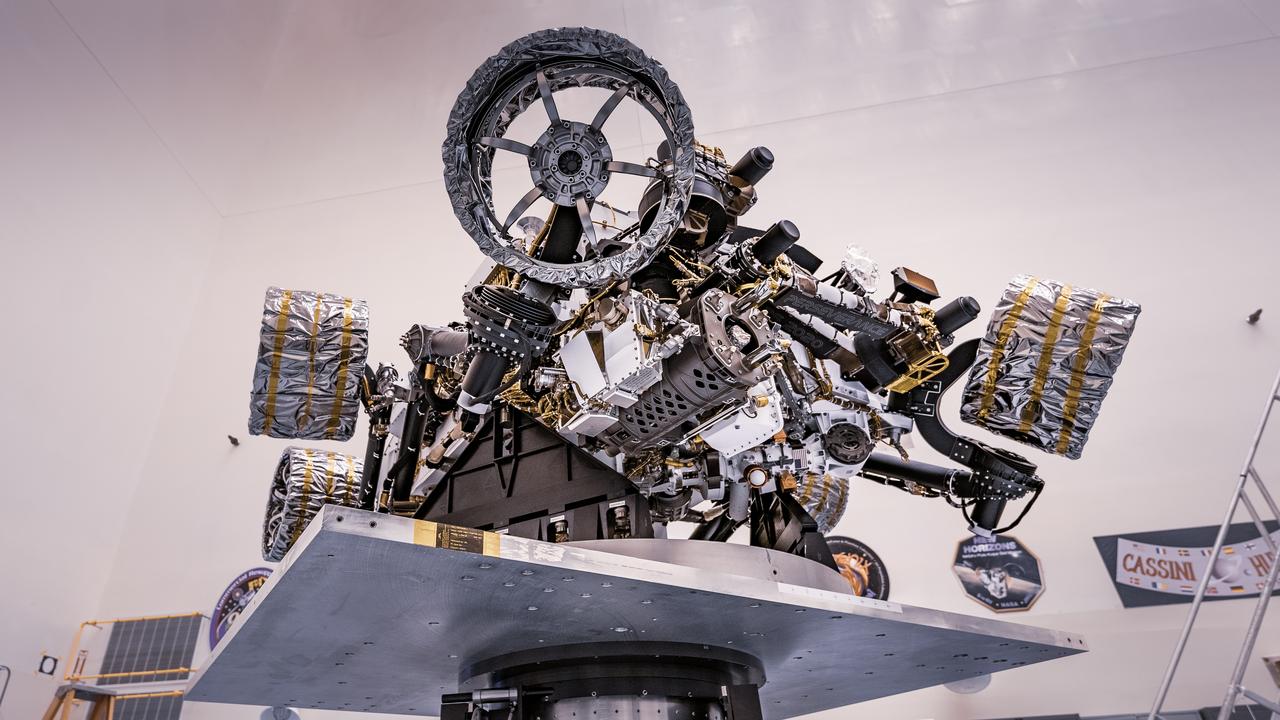
Engineers perform mass properties testing on NASA’s Mars Perseverance rover inside Kennedy Space Center’s Payload Hazardous Servicing Facility on April 7, 2020. The rover was rotated clockwise and counterclockwise on a spin table to determine the center of gravity, or the point at which weight is evenly dispersed on all sides. Establishing the rover’s center of gravity will help ensure the spacecraft will land on Mars as calculated. Perseverance will touch down on the Red Planet on Feb. 18, 2021. Liftoff aboard a United Launch Alliance Atlas V 541 rocket is targeted between July 17 and Aug. 5 from Cape Canaveral Air Force Station. NASA’s Launch Services Program based at Kennedy is managing the launch.
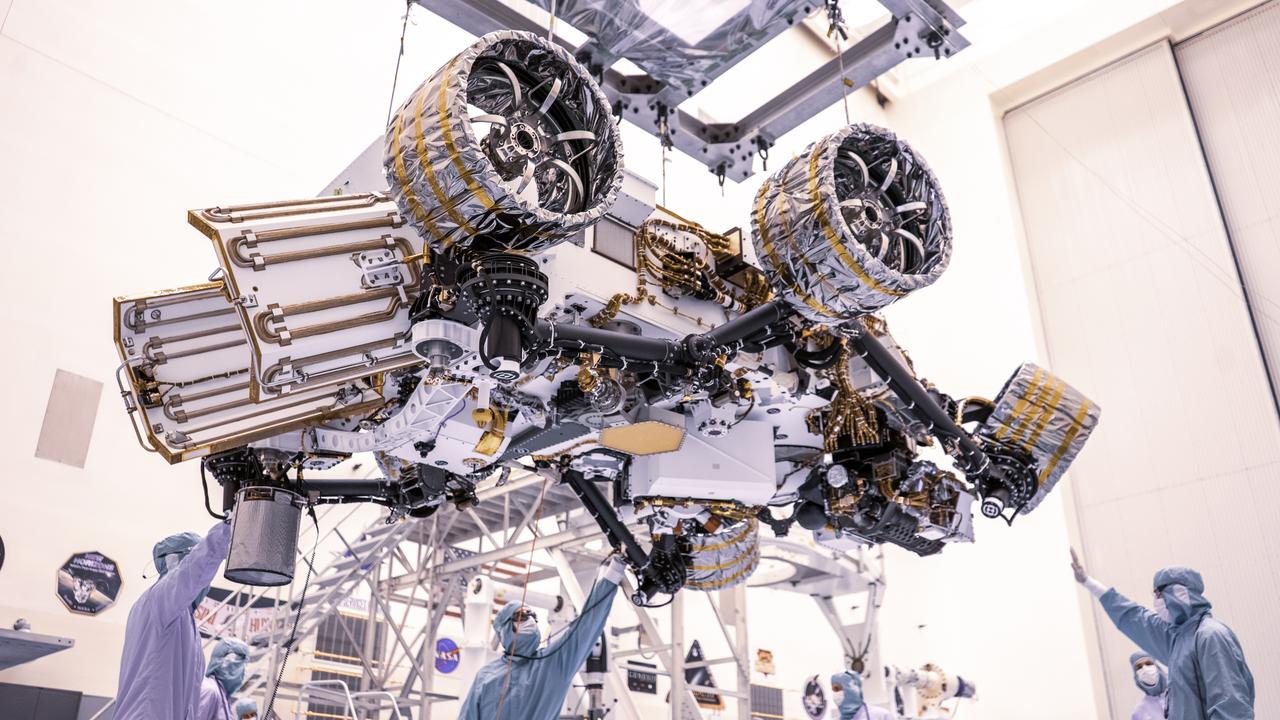
Engineers perform mass properties testing on NASA’s Mars Perseverance rover inside Kennedy Space Center’s Payload Hazardous Servicing Facility on April 7, 2020. The rover was rotated clockwise and counterclockwise on a spin table to determine the center of gravity, or the point at which weight is evenly dispersed on all sides. Establishing the rover’s center of gravity will help ensure the spacecraft will land on Mars as calculated. Perseverance will touch down on the Red Planet on Feb. 18, 2021. Liftoff aboard a United Launch Alliance Atlas V 541 rocket is targeted between July 17 and Aug. 5 from Cape Canaveral Air Force Station. NASA’s Launch Services Program based at Kennedy is managing the launch.
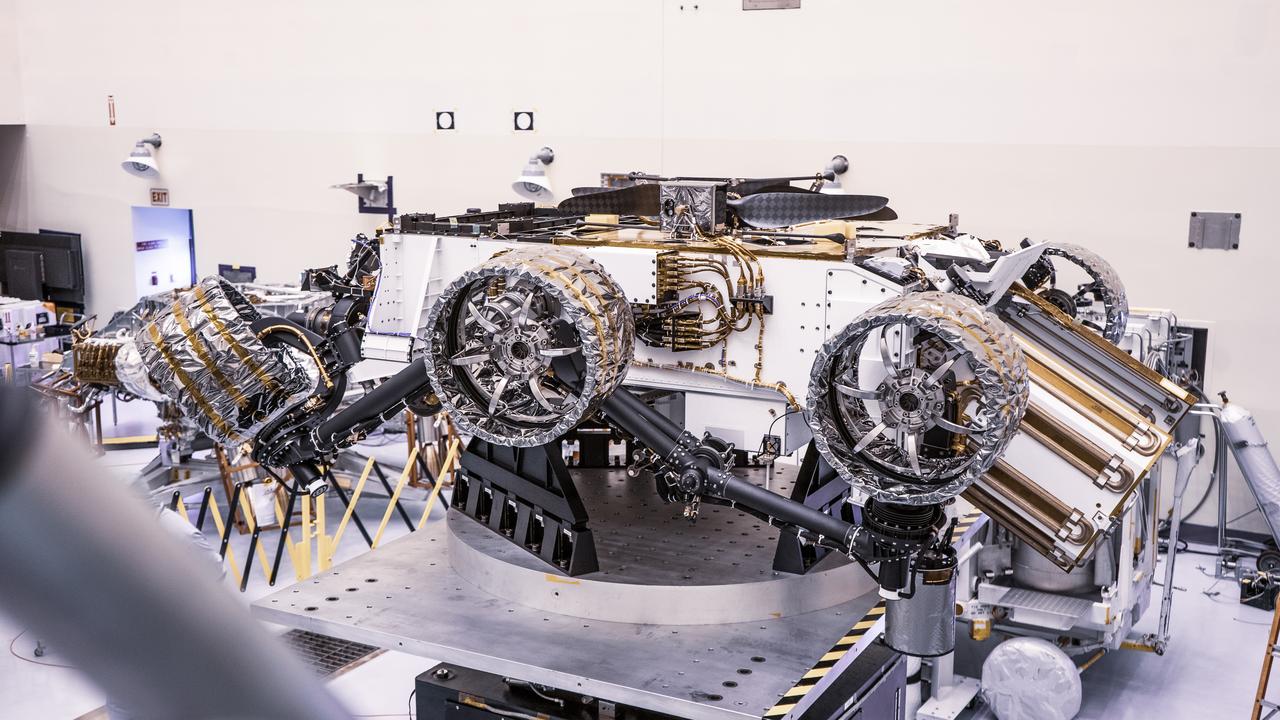
Engineers perform mass properties testing on NASA’s Mars Perseverance rover inside Kennedy Space Center’s Payload Hazardous Servicing Facility on April 7, 2020. The rover was rotated clockwise and counterclockwise on a spin table to determine the center of gravity, or the point at which weight is evenly dispersed on all sides. Establishing the rover’s center of gravity will help ensure the spacecraft will land on Mars as calculated. Perseverance will touch down on the Red Planet on Feb. 18, 2021. Liftoff aboard a United Launch Alliance Atlas V 541 rocket is targeted between July 17 and Aug. 5 from Cape Canaveral Air Force Station. NASA’s Launch Services Program based at Kennedy is managing the launch.
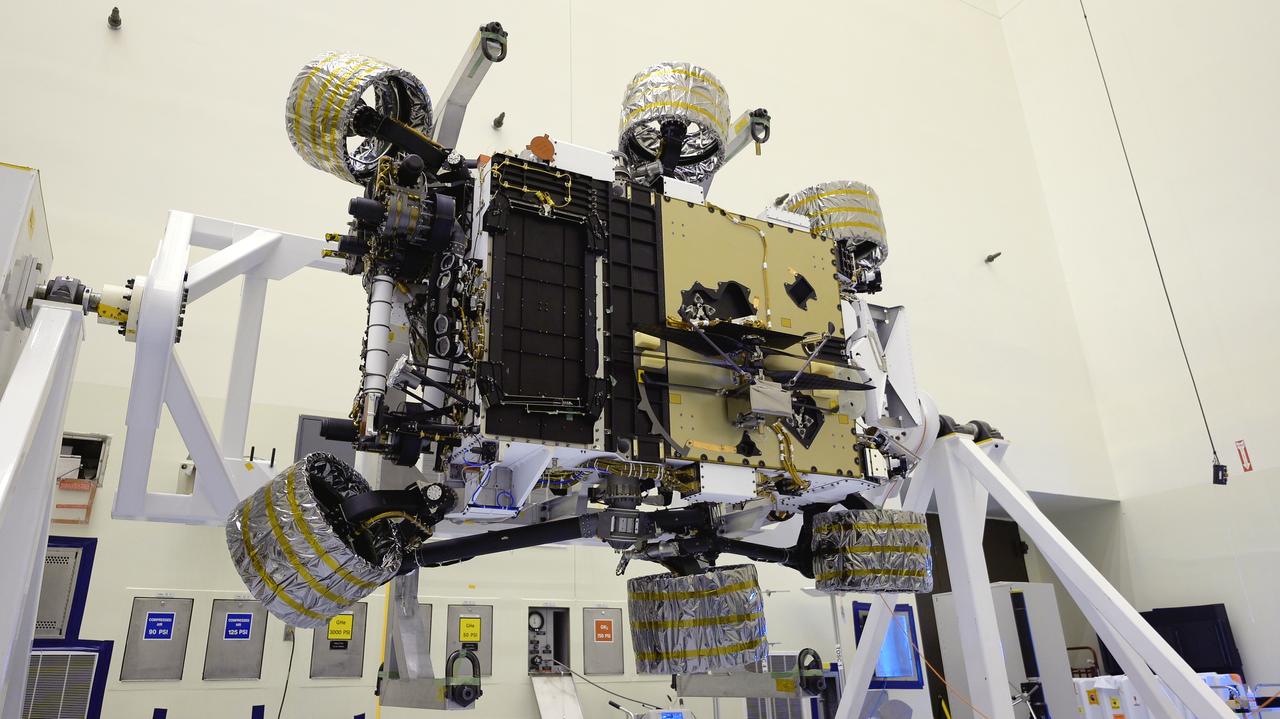
NASA’s Mars Helicopter is installed on the agency’s Mars Perseverance rover inside the Payload Hazardous Servicing Facility at Florida’s Kennedy Space Center on April 6, 2020. Perseverance safely lands on Mars, the helicopter will be released to perform the first in a series of flight tests that will take place during a period of about 30 days. The helicopter will be the first aircraft to fly on another planet. Perseverance, carrying the helicopter, will touch down on the Red Planet on Feb. 18, 2021. Liftoff aboard a United Launch Alliance Atlas V 541 rocket is targeted between July 17 and Aug. 5 from Cape Canaveral Air Force Station.

February 17, 2021, The Terminal Tower is illuminated in red to commemorate the Landing of NASA’s Perseverance Rover on the surface of Mars, February 18, 2021. Terminal Tower is a 52-story, (771 ft), landmark skyscraper located on Public Square in downtown Cleveland, Ohio. Cleveland is also the home of the NASA Glenn Research Center.

February 17, 2021, The Terminal Tower is illuminated in red to commemorate the Landing of NASA’s Perseverance Rover on the surface of Mars, February 18, 2021. Terminal Tower is a 52-story, (771 ft), landmark skyscraper located on Public Square in downtown Cleveland, Ohio. Cleveland is also the home of the NASA Glenn Research Center.

February 17, 2021, The Terminal Tower is illuminated in red to commemorate the Landing of NASA’s Perseverance Rover on the surface of Mars, February 18, 2021. Terminal Tower is a 52-story, (771 ft), landmark skyscraper located on Public Square in downtown Cleveland, Ohio. Cleveland is also the home of the NASA Glenn Research Center.

February 17, 2021, The Terminal Tower is illuminated in red to commemorate the Landing of NASA’s Perseverance Rover on the surface of Mars, February 18, 2021. Terminal Tower is a 52-story, (771 ft), landmark skyscraper located on Public Square in downtown Cleveland, Ohio. Cleveland is also the home of the NASA Glenn Research Center.
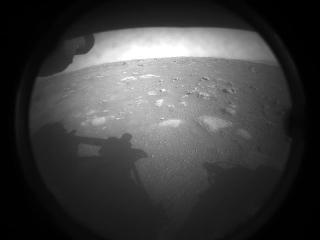
This is one of the first images NASA's Perseverance rover sent back after touching down on Mars on Feb. 18, 2021. The view, from one of Perseverance's Hazard Cameras, is partially obscured by a dust cover. The rover's shadow can be seen at left. A key objective for Perseverance's mission on Mars is astrobiology, including the search for signs of ancient microbial life. The rover will characterize the planet's geology and past climate, pave the way for human exploration of the Red Planet, and be the first mission to collect and cache Martian rock and regolith. Subsequent missions, currently under consideration by NASA in cooperation with ESA (European Space Agency), would send spacecraft to Mars to collect these cached samples from the surface and return them to Earth for in-depth analysis. https://photojournal.jpl.nasa.gov/catalog/PIA24268

Perseverance flight director Magdy Bareh and other members of NASA’s Perseverance Mars rover team study data on monitors in mission control, Thursday, Feb. 18, 2021, at NASA's Jet Propulsion Laboratory in Pasadena, California. A key objective for Perseverance’s mission on Mars is astrobiology, including the search for signs of ancient microbial life. The rover will characterize the planet’s geology and past climate, pave the way for human exploration of the Red Planet, and be the first mission to collect and cache Martian rock and regolith. Photo Credit: (NASA/Bill Ingalls)

Perseverance mission manager Keith Comeaux takes a selfie as the NASA’s Perseverance Mars rover team begins to settle in to track landing in mission control, Thursday, Feb. 18, 2021, at NASA's Jet Propulsion Laboratory in Pasadena, California. A key objective for Perseverance’s mission on Mars is astrobiology, including the search for signs of ancient microbial life. The rover will characterize the planet’s geology and past climate, pave the way for human exploration of the Red Planet, and be the first mission to collect and cache Martian rock and regolith. Photo Credit: (NASA/Bill Ingalls)
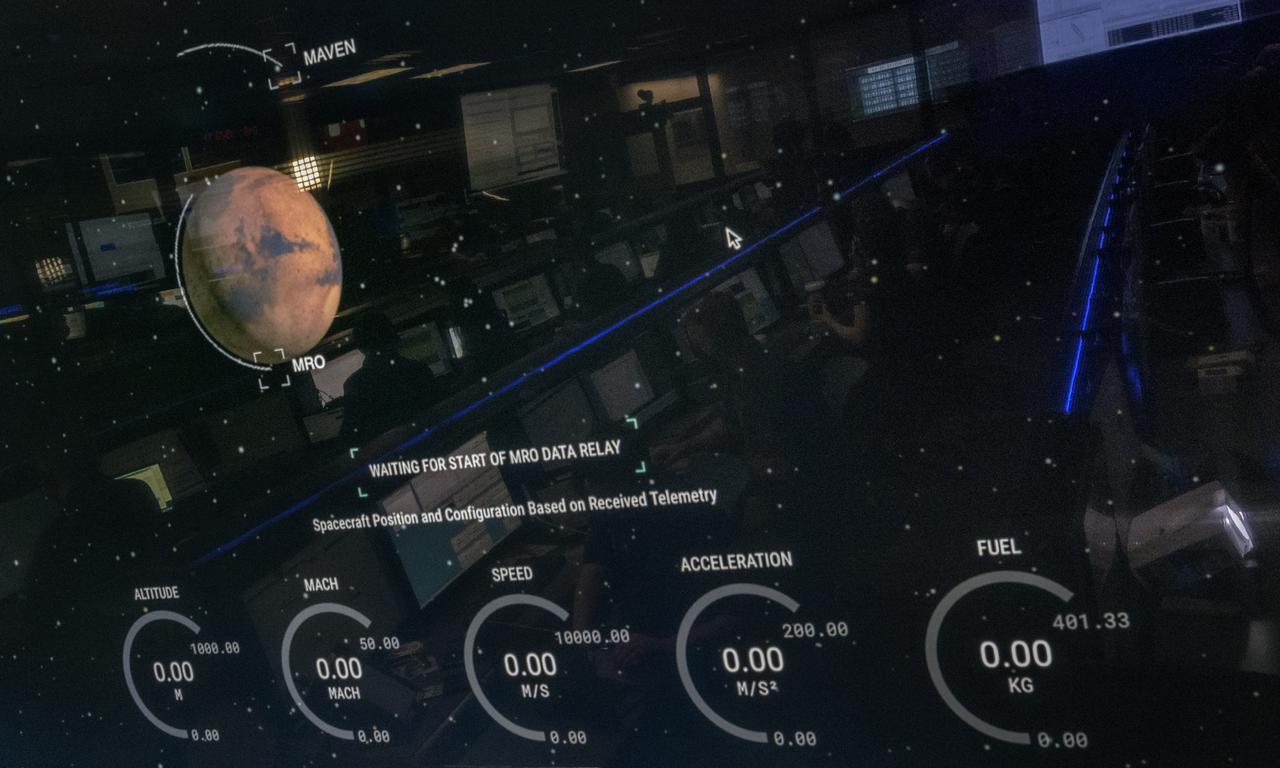
Members of NASA’s Perseverance Mars rover team are seen reflected in a monitor in mission control as they await the spacecraft’s landing on Mars, Thursday, Feb. 18, 2021, at NASA's Jet Propulsion Laboratory in Pasadena, California. A key objective for Perseverance’s mission on Mars is astrobiology, including the search for signs of ancient microbial life. The rover will characterize the planet’s geology and past climate, pave the way for human exploration of the Red Planet, and be the first mission to collect and cache Martian rock and regolith. Photo Credit: (NASA/Bill Ingalls)

A jar with an Earth sticker and one marble inside and a jar with a Mars sticker full of marbles are seen on a conference room table of the Mission Support Area (MSA)on Wednesday, Feb. 17, 2021, at NASA's Jet Propulsion Laboratory in Pasadena, California. The Perseverance Mars rover team has been moving one marble a day since launch from jar to jar. The Perseverance Mars rover is due to land on Mars Thursday, Feb. 18, 2021. A key objective for Perseverance’s mission on Mars is astrobiology, including the search for signs of ancient microbial life. The rover will characterize the planet’s geology and past climate, pave the way for human exploration of the Red Planet, and be the first mission to collect and cache Martian rock and regolith. Photo Credit: (NASA/Bill Ingalls)

NASA’s Perseverance Mars rover mission commentator and guidance, navigation, and controls operations Lead Swati Mohan studies data in mission control, Thursday, Feb. 18, 2021, at NASA's Jet Propulsion Laboratory in Pasadena, California. A key objective for Perseverance’s mission on Mars is astrobiology, including the search for signs of ancient microbial life. The rover will characterize the planet’s geology and past climate, pave the way for human exploration of the Red Planet, and be the first mission to collect and cache Martian rock and regolith. Photo Credit: (NASA/Bill Ingalls)
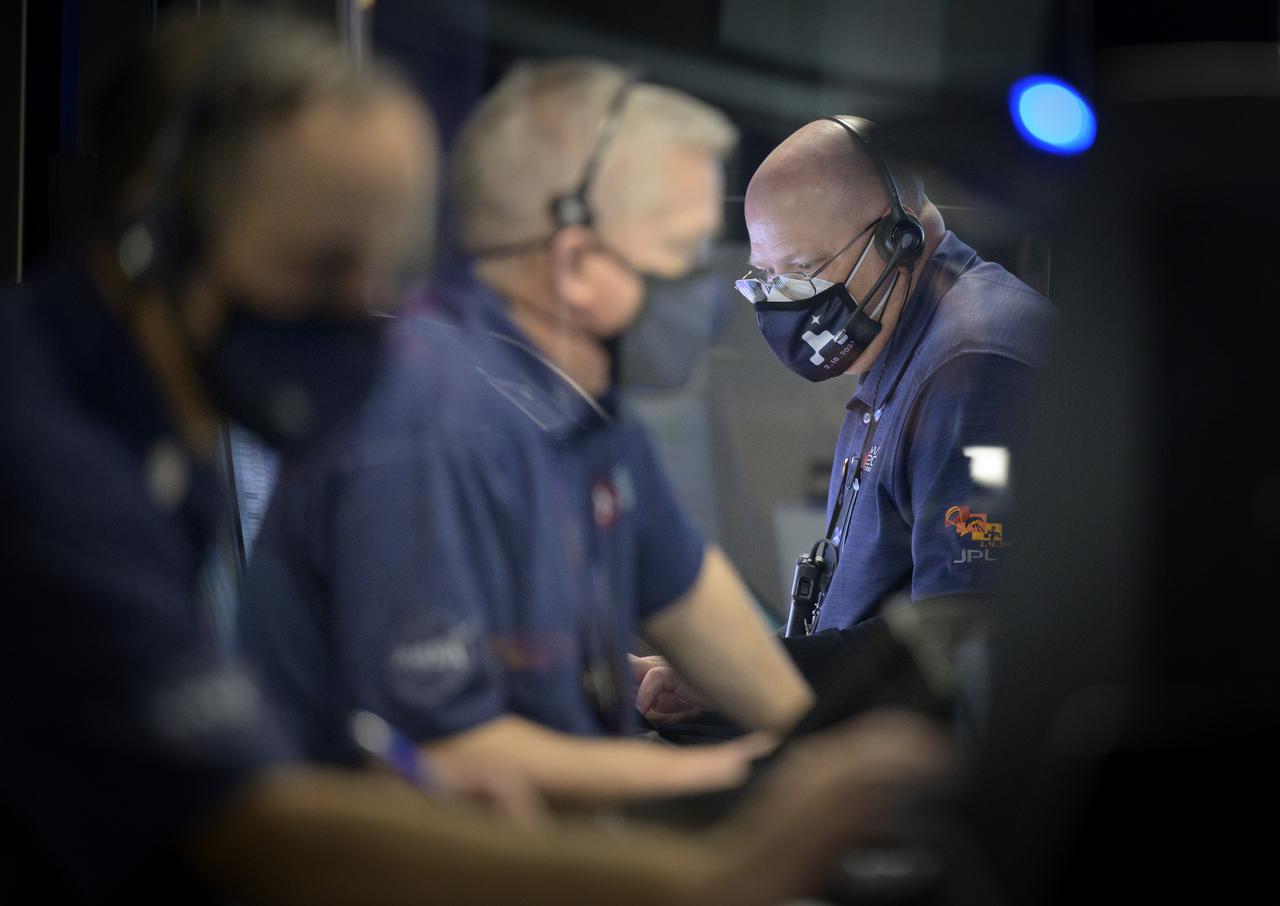
Bob Lineaweaver, right, and other members of NASA’s Perseverance Mars rover team study data on monitors in mission control, Thursday, Feb. 18, 2021, at NASA's Jet Propulsion Laboratory in Pasadena, California. A key objective for Perseverance’s mission on Mars is astrobiology, including the search for signs of ancient microbial life. The rover will characterize the planet’s geology and past climate, pave the way for human exploration of the Red Planet, and be the first mission to collect and cache Martian rock and regolith. Photo Credit: (NASA/Bill Ingalls)

Members of NASA’s Perseverance rover team react in mission control after receiving confirmation the spacecraft successfully touched down on Mars, Thursday, Feb. 18, 2021, at NASA's Jet Propulsion Laboratory in Pasadena, California. A key objective for Perseverance’s mission on Mars is astrobiology, including the search for signs of ancient microbial life. The rover will characterize the planet’s geology and past climate, pave the way for human exploration of the Red Planet, and be the first mission to collect and cache Martian rock and regolith. Photo Credit: (NASA/Bill Ingalls)

Members of NASA’s Perseverance Mars rover team study data on monitors in mission control, Thursday, Feb. 18, 2021, at NASA's Jet Propulsion Laboratory in Pasadena, California. A key objective for Perseverance’s mission on Mars is astrobiology, including the search for signs of ancient microbial life. The rover will characterize the planet’s geology and past climate, pave the way for human exploration of the Red Planet, and be the first mission to collect and cache Martian rock and regolith. Photo Credit: (NASA/Bill Ingalls)

Members of NASA’s Perseverance Mars rover team study data on monitors in mission control, Thursday, Feb. 18, 2021, at NASA's Jet Propulsion Laboratory in Pasadena, California. A key objective for Perseverance’s mission on Mars is astrobiology, including the search for signs of ancient microbial life. The rover will characterize the planet’s geology and past climate, pave the way for human exploration of the Red Planet, and be the first mission to collect and cache Martian rock and regolith. Photo Credit: (NASA/Bill Ingalls)

Members of NASA’s Perseverance rover team react in mission control after receiving confirmation the spacecraft successfully touched down on Mars, Thursday, Feb. 18, 2021, at NASA's Jet Propulsion Laboratory in Pasadena, California. A key objective for Perseverance’s mission on Mars is astrobiology, including the search for signs of ancient microbial life. The rover will characterize the planet’s geology and past climate, pave the way for human exploration of the Red Planet, and be the first mission to collect and cache Martian rock and regolith. Photo Credit: (NASA/Bill Ingalls)

Members of NASA’s Perseverance rover team react in mission control after receiving confirmation the spacecraft successfully touched down on Mars, Thursday, Feb. 18, 2021, at NASA's Jet Propulsion Laboratory in Pasadena, California. A key objective for Perseverance’s mission on Mars is astrobiology, including the search for signs of ancient microbial life. The rover will characterize the planet’s geology and past climate, pave the way for human exploration of the Red Planet, and be the first mission to collect and cache Martian rock and regolith. Photo Credit: (NASA/Bill Ingalls)

Members of NASA’s Perseverance Mars rover team study data on monitors in mission control, Thursday, Feb. 18, 2021, at NASA's Jet Propulsion Laboratory in Pasadena, California. A key objective for Perseverance’s mission on Mars is astrobiology, including the search for signs of ancient microbial life. The rover will characterize the planet’s geology and past climate, pave the way for human exploration of the Red Planet, and be the first mission to collect and cache Martian rock and regolith. Photo Credit: (NASA/Bill Ingalls)
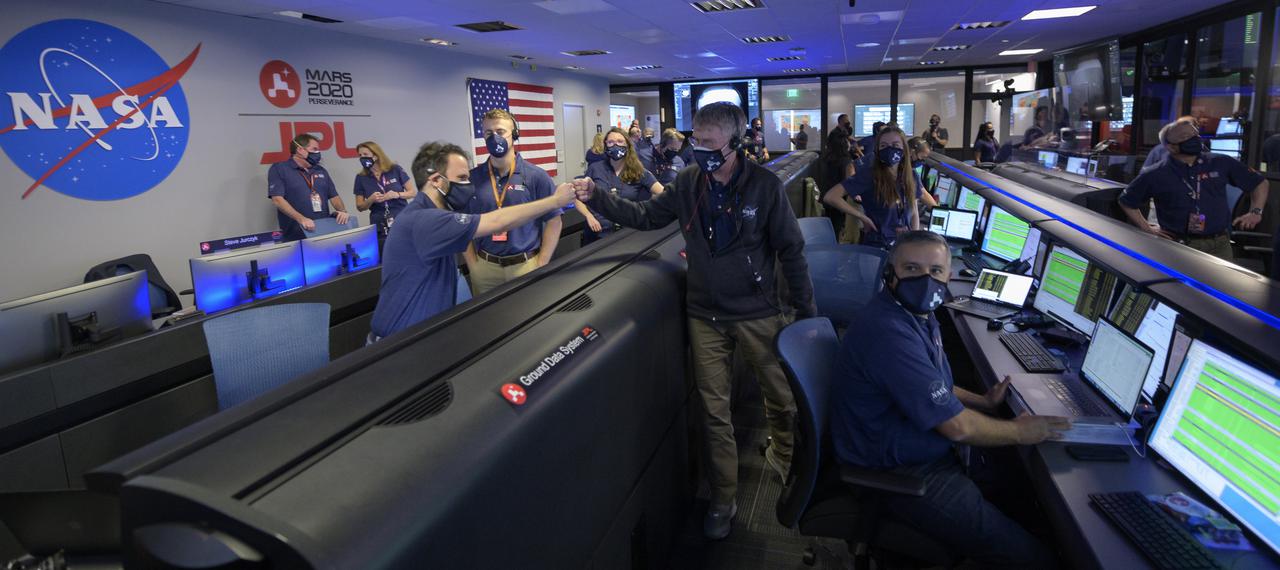
Members of NASA’s Perseverance rover team react in mission control after receiving confirmation the spacecraft successfully touched down on Mars, Thursday, Feb. 18, 2021, at NASA's Jet Propulsion Laboratory in Pasadena, California. A key objective for Perseverance’s mission on Mars is astrobiology, including the search for signs of ancient microbial life. The rover will characterize the planet’s geology and past climate, pave the way for human exploration of the Red Planet, and be the first mission to collect and cache Martian rock and regolith. Photo Credit: (NASA/Bill Ingalls)

Members of NASA’s Perseverance Mars rover team study data on monitors in mission control, Thursday, Feb. 18, 2021, at NASA's Jet Propulsion Laboratory in Pasadena, California. A key objective for Perseverance’s mission on Mars is astrobiology, including the search for signs of ancient microbial life. The rover will characterize the planet’s geology and past climate, pave the way for human exploration of the Red Planet, and be the first mission to collect and cache Martian rock and regolith. Photo Credit: (NASA/Bill Ingalls)

Members of NASA’s Perseverance Mars rover team confer and study data on monitors in mission control, Thursday, Feb. 18, 2021, at NASA's Jet Propulsion Laboratory in Pasadena, California. A key objective for Perseverance’s mission on Mars is astrobiology, including the search for signs of ancient microbial life. The rover will characterize the planet’s geology and past climate, pave the way for human exploration of the Red Planet, and be the first mission to collect and cache Martian rock and regolith. Photo Credit: (NASA/Bill Ingalls)

Members of NASA’s Perseverance Mars rover team study data on monitors in mission control, Thursday, Feb. 18, 2021, at NASA's Jet Propulsion Laboratory in Pasadena, California. A key objective for Perseverance’s mission on Mars is astrobiology, including the search for signs of ancient microbial life. The rover will characterize the planet’s geology and past climate, pave the way for human exploration of the Red Planet, and be the first mission to collect and cache Martian rock and regolith. Photo Credit: (NASA/Bill Ingalls)
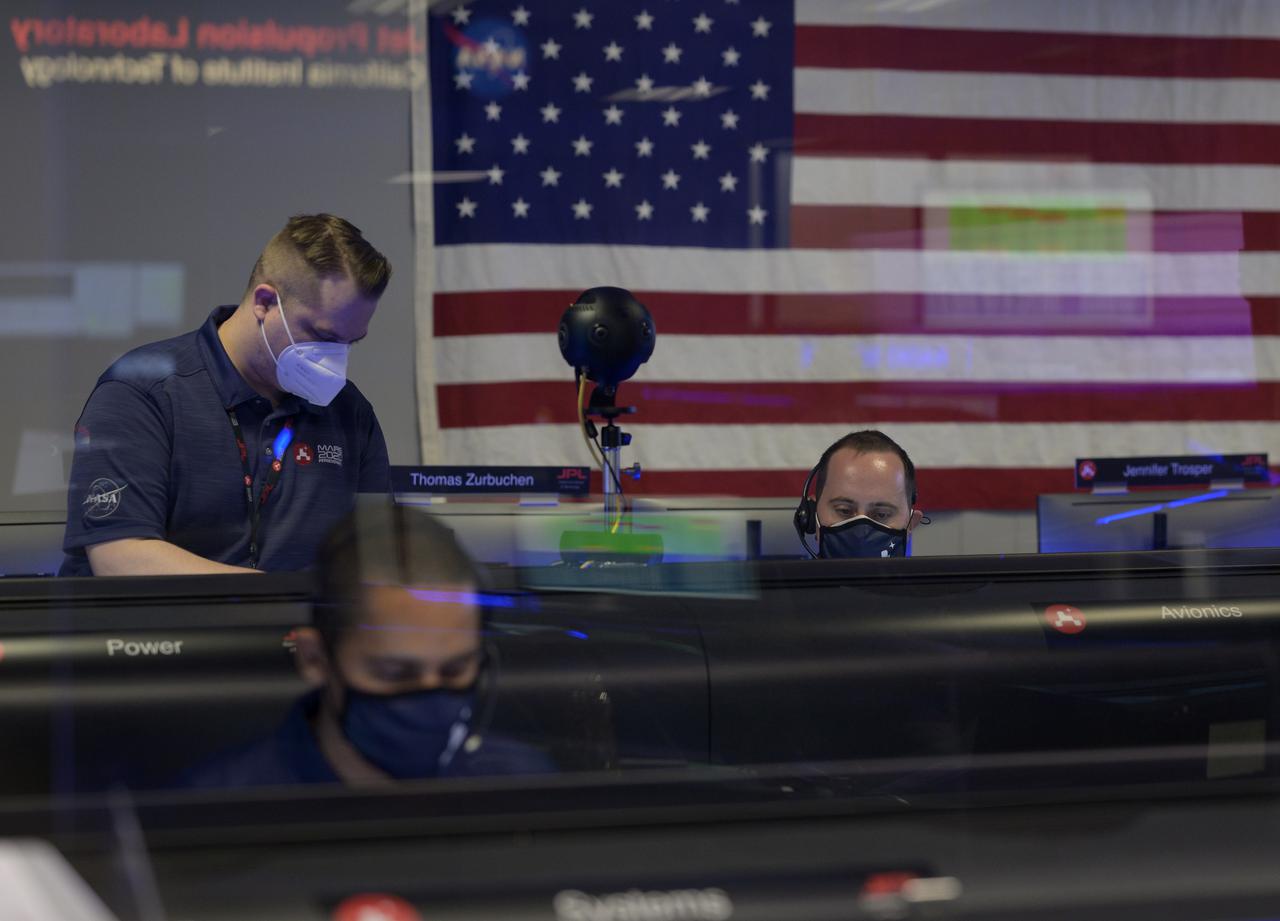
Members of NASA’s Perseverance Mars rover team study data on monitors in mission control, Thursday, Feb. 18, 2021, at NASA's Jet Propulsion Laboratory in Pasadena, California. A key objective for Perseverance’s mission on Mars is astrobiology, including the search for signs of ancient microbial life. The rover will characterize the planet’s geology and past climate, pave the way for human exploration of the Red Planet, and be the first mission to collect and cache Martian rock and regolith. Photo Credit: (NASA/Bill Ingalls)

Members of NASA’s Perseverance Mars rover team study data on monitors in mission control, Thursday, Feb. 18, 2021, at NASA's Jet Propulsion Laboratory in Pasadena, California. A key objective for Perseverance’s mission on Mars is astrobiology, including the search for signs of ancient microbial life. The rover will characterize the planet’s geology and past climate, pave the way for human exploration of the Red Planet, and be the first mission to collect and cache Martian rock and regolith. Photo Credit: (NASA/Bill Ingalls)

Members of NASA’s Perseverance Mars rover team study data on monitors in mission control, Thursday, Feb. 18, 2021, at NASA's Jet Propulsion Laboratory in Pasadena, California. A key objective for Perseverance’s mission on Mars is astrobiology, including the search for signs of ancient microbial life. The rover will characterize the planet’s geology and past climate, pave the way for human exploration of the Red Planet, and be the first mission to collect and cache Martian rock and regolith. Photo Credit: (NASA/Bill Ingalls)

Members of NASA’s Perseverance Mars rover team confer and study data on monitors in mission control, Thursday, Feb. 18, 2021, at NASA's Jet Propulsion Laboratory in Pasadena, California. A key objective for Perseverance’s mission on Mars is astrobiology, including the search for signs of ancient microbial life. The rover will characterize the planet’s geology and past climate, pave the way for human exploration of the Red Planet, and be the first mission to collect and cache Martian rock and regolith. Photo Credit: (NASA/Bill Ingalls)

Members of NASA’s Perseverance rover team react in mission control after receiving confirmation the spacecraft successfully touched down on Mars, Thursday, Feb. 18, 2021, at NASA's Jet Propulsion Laboratory in Pasadena, California. A key objective for Perseverance’s mission on Mars is astrobiology, including the search for signs of ancient microbial life. The rover will characterize the planet’s geology and past climate, pave the way for human exploration of the Red Planet, and be the first mission to collect and cache Martian rock and regolith. Photo Credit: (NASA/Bill Ingalls)

Perseverance entry, descent, and landing phase lead Allen Chen and Members of NASA’s Perseverance rover team react in mission control after receiving confirmation the spacecraft successfully touched down on Mars, Thursday, Feb. 18, 2021, at NASA's Jet Propulsion Laboratory in Pasadena, California. A key objective for Perseverance’s mission on Mars is astrobiology, including the search for signs of ancient microbial life. The rover will characterize the planet’s geology and past climate, pave the way for human exploration of the Red Planet, and be the first mission to collect and cache Martian rock and regolith. Photo Credit: (NASA/Bill Ingalls)

Perseverance flight director Magdy Bareh and Members of NASA’s Perseverance rover team react in mission control after receiving confirmation the spacecraft successfully touched down on Mars, Thursday, Feb. 18, 2021, at NASA's Jet Propulsion Laboratory in Pasadena, California. A key objective for Perseverance’s mission on Mars is astrobiology, including the search for signs of ancient microbial life. The rover will characterize the planet’s geology and past climate, pave the way for human exploration of the Red Planet, and be the first mission to collect and cache Martian rock and regolith. Photo Credit: (NASA/Bill Ingalls)

Members of NASA’s Perseverance Mars rover team watch in mission control as the first images arrive moments after the spacecraft successfully touched down on Mars, Thursday, Feb. 18, 2021, at NASA's Jet Propulsion Laboratory in Pasadena, California. A key objective for Perseverance’s mission on Mars is astrobiology, including the search for signs of ancient microbial life. The rover will characterize the planet’s geology and past climate, pave the way for human exploration of the Red Planet, and be the first mission to collect and cache Martian rock and regolith. Photo Credit: (NASA/Bill Ingalls)
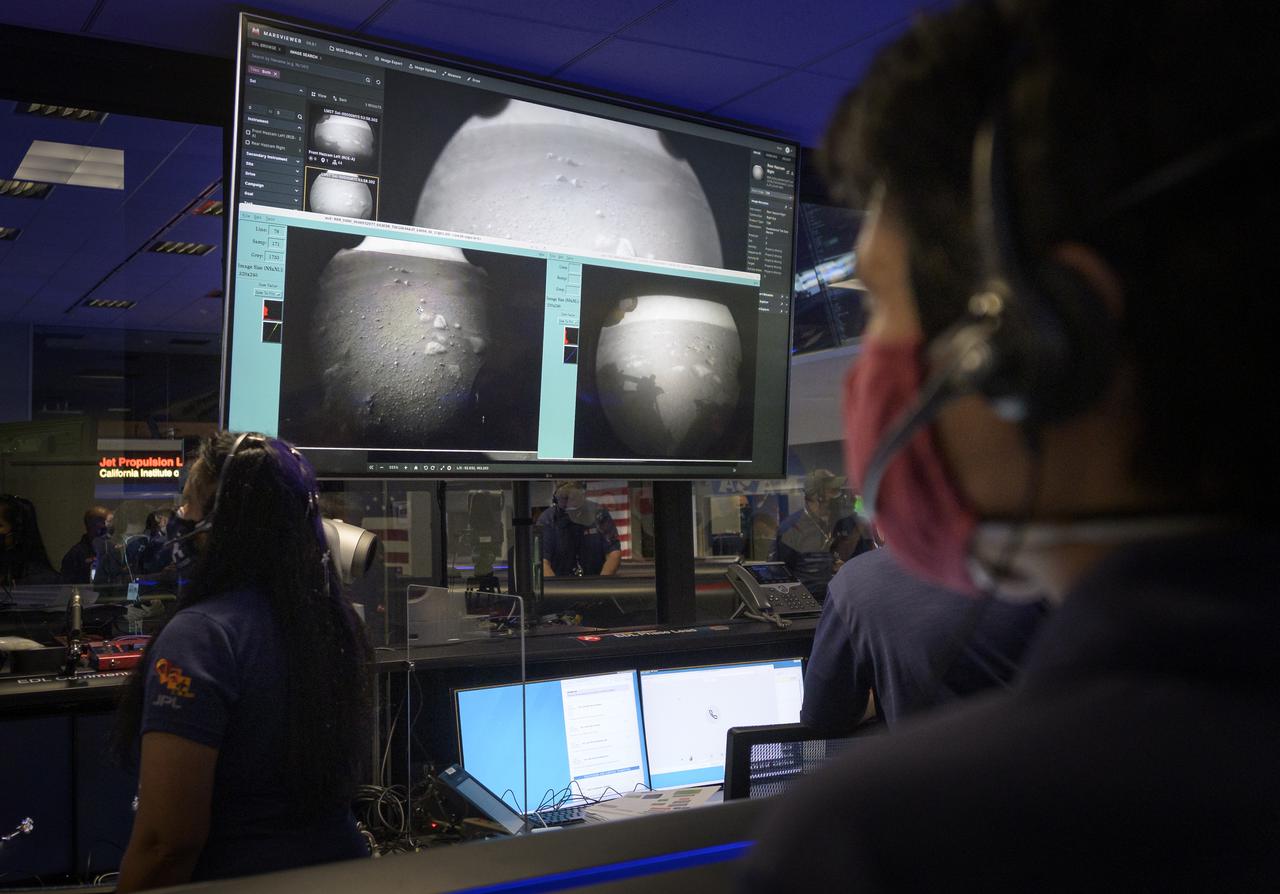
Members of NASA’s Perseverance Mars rover team watch in mission control as the first images arrive moments after the spacecraft successfully touched down on Mars, Thursday, Feb. 18, 2021, at NASA's Jet Propulsion Laboratory in Pasadena, California. A key objective for Perseverance’s mission on Mars is astrobiology, including the search for signs of ancient microbial life. The rover will characterize the planet’s geology and past climate, pave the way for human exploration of the Red Planet, and be the first mission to collect and cache Martian rock and regolith. Photo Credit: (NASA/Bill Ingalls)

Members of NASA’s Perseverance Mars rover team watch in mission control as the first images arrive moments after the spacecraft successfully touched down on Mars, Thursday, Feb. 18, 2021, at NASA's Jet Propulsion Laboratory in Pasadena, California. A key objective for Perseverance’s mission on Mars is astrobiology, including the search for signs of ancient microbial life. The rover will characterize the planet’s geology and past climate, pave the way for human exploration of the Red Planet, and be the first mission to collect and cache Martian rock and regolith. Photo Credit: (NASA/Bill Ingalls)

Members of NASA’s Perseverance Mars rover team watch in mission control as the first images arrive moments after the spacecraft successfully touched down on Mars, Thursday, Feb. 18, 2021, at NASA's Jet Propulsion Laboratory in Pasadena, California. A key objective for Perseverance’s mission on Mars is astrobiology, including the search for signs of ancient microbial life. The rover will characterize the planet’s geology and past climate, pave the way for human exploration of the Red Planet, and be the first mission to collect and cache Martian rock and regolith. Photo Credit: (NASA/Bill Ingalls)
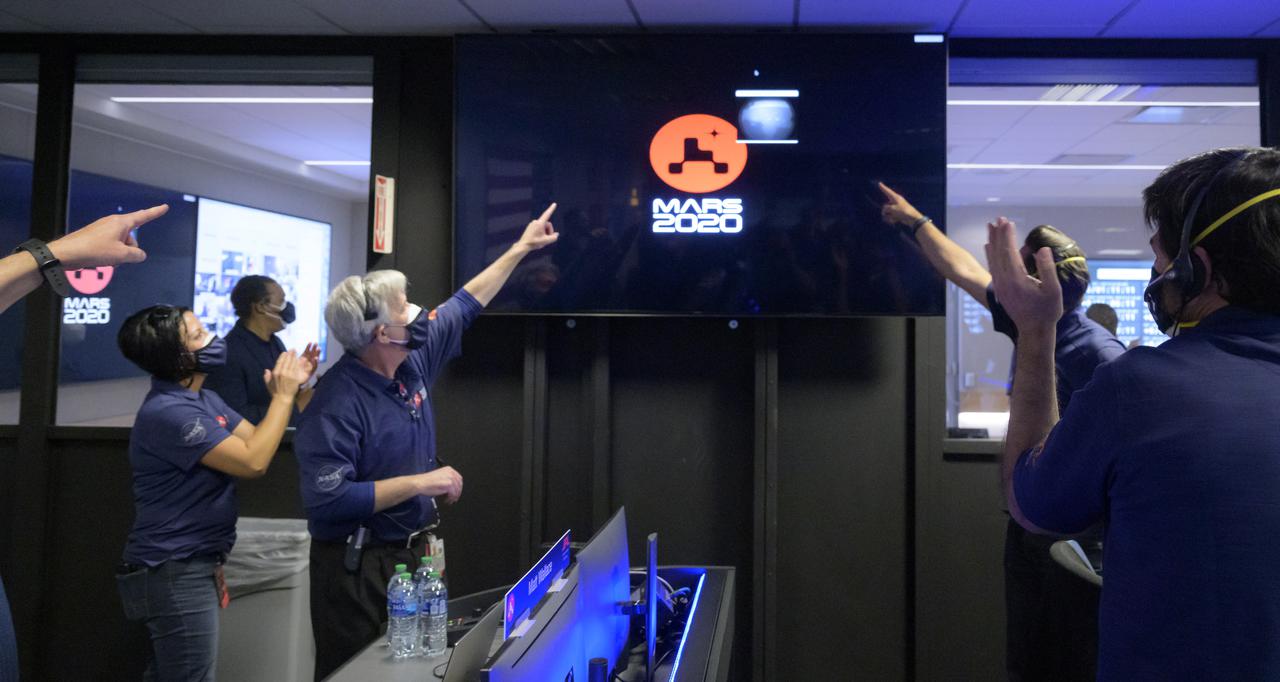
Members of NASA’s Perseverance Mars rover team watch in mission control as the first images arrive moments after the spacecraft successfully touched down on Mars, Thursday, Feb. 18, 2021, at NASA's Jet Propulsion Laboratory in Pasadena, California. A key objective for Perseverance’s mission on Mars is astrobiology, including the search for signs of ancient microbial life. The rover will characterize the planet’s geology and past climate, pave the way for human exploration of the Red Planet, and be the first mission to collect and cache Martian rock and regolith. Photo Credit: (NASA/Bill Ingalls)
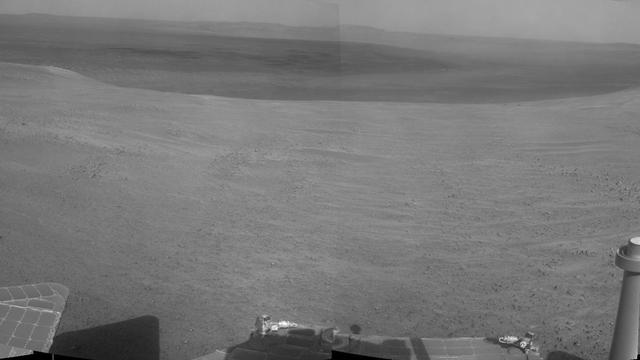
"Perseverance Valley" lies just on the other side of the dip in the crater rim visible in the left half of this 360-degree panorama from the Navigation Camera (Navcam) on NASA's Mars Exploration Rover Opportunity. As the rover arrived at this area in early May 2017, researchers began looking for clues about what process carved the valley. The rover team plans to drive Opportunity all the way down the valley into the interior of Endeavour Crater. The foreground and the area to the right are on the plain just outside of Endeavour Crater. The high point near the center of the image is called "Winnemucca," part of an Endeavour rim segment called "Cape Byron." Endeavour's interior and distant eastern rim are visible at upper left, above the notched portion of the western rim that sits directly above Perseverance Valley. The rover's Navcam took the component images of this scene on May 2 and May 3, 2017, during the 4,718th and 4,719th Martian days, or sols, of Opportunity's work on Mars, two days before a drive that brought Opportunity to the head of the valley. https://photojournal.jpl.nasa.gov/catalog/PIA21495

Perseverance mission manager Keith Comeaux is seen in mission control as he and the Perseverance Mars river team monitor the spa crafts approach and landing on Mars, Thursday, Feb. 18, 2021, at NASA's Jet Propulsion Laboratory in Pasadena, California. A key objective for Perseverance’s mission on Mars is astrobiology, including the search for signs of ancient microbial life. The rover will characterize the planet’s geology and past climate, pave the way for human exploration of the Red Planet, and be the first mission to collect and cache Martian rock and regolith. Photo Credit: (NASA/Bill Ingalls)

JPL Director Michael Watkins, left, talks with Director of NASA's Science Mission Directorate’s Planetary Science Division, Lori Glaze, as they and the NASA Perseverance Mars rover team await the landing of the spacecraft in mission control, Thursday, Feb. 18, 2021, at NASA's Jet Propulsion Laboratory in Pasadena, California. A key objective for Perseverance’s mission on Mars is astrobiology, including the search for signs of ancient microbial life. The rover will characterize the planet’s geology and past climate, pave the way for human exploration of the Red Planet, and be the first mission to collect and cache Martian rock and regolith. Photo Credit: (NASA/Bill Ingalls)

JPL Director Michael Watkins, right, talks with Acting NASA Administrator Steve Jurczyk as they and the NASA Perseverance Mars rover team await the landing of the spacecraft in mission control, Thursday, Feb. 18, 2021, at NASA's Jet Propulsion Laboratory in Pasadena, California. A key objective for Perseverance’s mission on Mars is astrobiology, including the search for signs of ancient microbial life. The rover will characterize the planet’s geology and past climate, pave the way for human exploration of the Red Planet, and be the first mission to collect and cache Martian rock and regolith. Photo Credit: (NASA/Bill Ingalls)
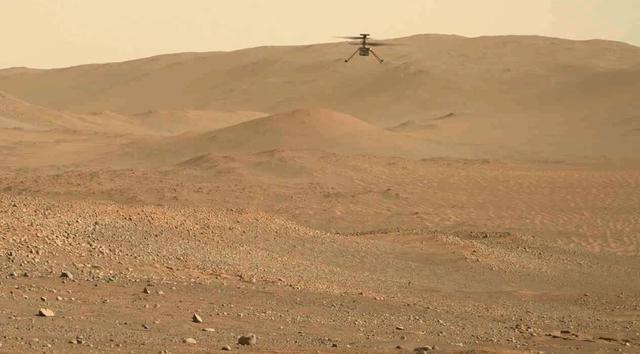
NASA's Perseverance Mars rover captured this video of the Ingenuity Mars Helicopter's 54th flight on Aug. 3, 2023. After performing a preflight "wiggle check" with its rotors, the helicopter takes off, hovers at an altitude of 16 feet (5 meters), and rotates to the left, before touching back down. The mission conducted the short pop-up flight to check Ingenuity's navigation system. The video was captured by the rover's Mastcam-Z imager from a distance of about 180 feet (55 meters). Arizona State University in Tempe leads the operations of the Mastcam-Z instrument, working in collaboration with Malin Space Science Systems in San Diego, on the design, fabrication, testing, and operation of the cameras, and in collaboration with the Niels Bohr Institute of the University of Copenhagen on the design, fabrication, and testing of the calibration targets. A key objective for Perseverance's mission on Mars is astrobiology, including the search for signs of ancient microbial life. The rover will characterize the planet's geology and past climate, pave the way for human exploration of the Red Planet, and be the first mission to collect and cache Martian rock and regolith (broken rock and dust). Subsequent NASA missions, in cooperation with ESA (European Space Agency), would send spacecraft to Mars to collect these sealed samples from the surface and return them to Earth for in-depth analysis. The Mars 2020 Perseverance mission is part of NASA's Moon to Mars exploration approach, which includes Artemis missions to the Moon that will help prepare for human exploration of the Red Planet. Movie available at https://photojournal.jpl.nasa.gov/catalog/PIA25970
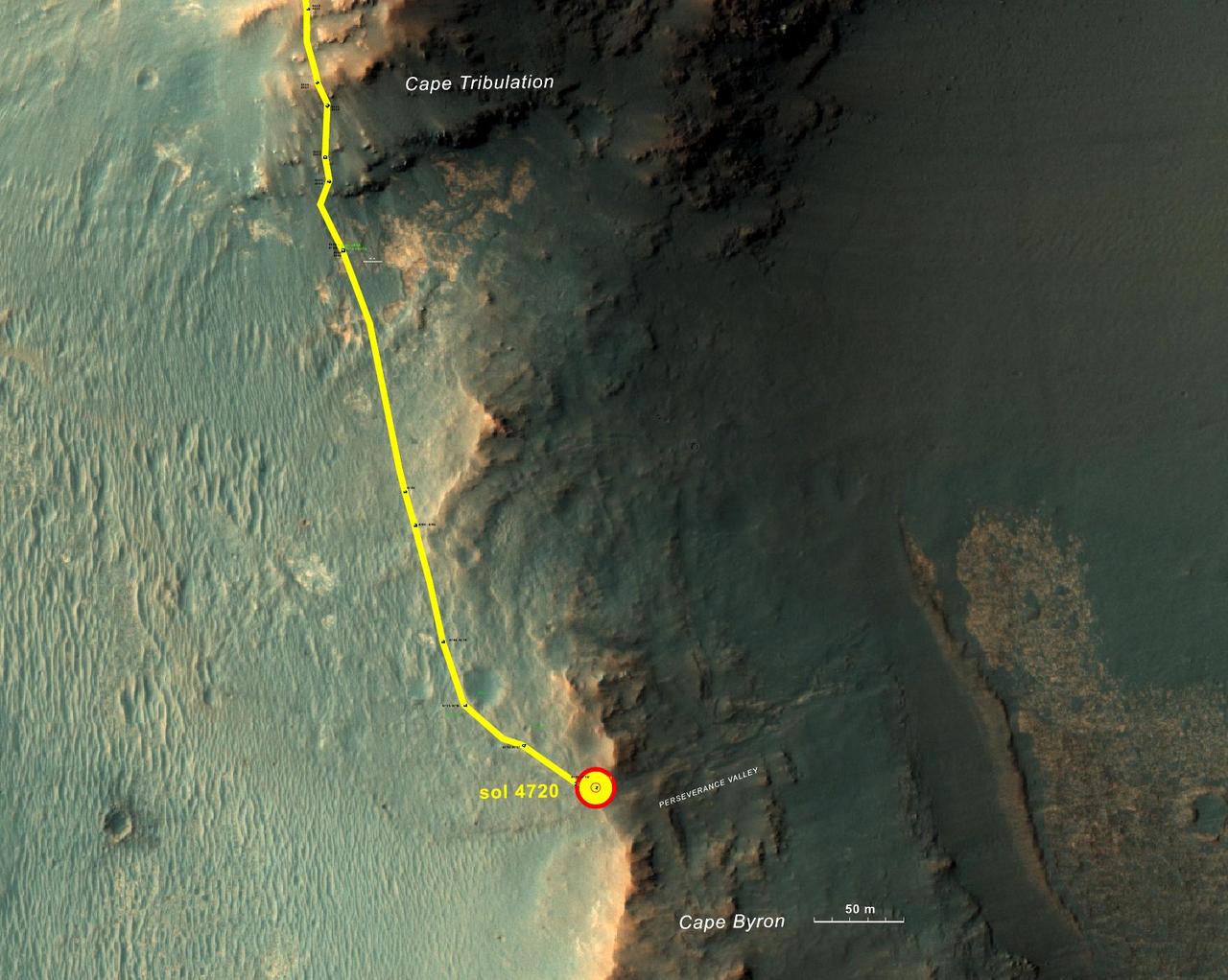
This graphic shows the route that NASA's Mars Exploration Rover Opportunity drove in its final approach to 'Perseverance Valley' on the western rim of Endeavour Crater. The map covers an area about four-tenths of a mile (two-thirds of a kilometer) wide, with the interior of the crater on the right. Opportunity entered this mapped area from the north along the gold traverse line on March 21, 2017, approaching the southern tip of the "Cape Tribulation" segment of Endeavour's rim. It reached the top of "Perseverance Valley" with a drive on Sol 4720 (the 4,720th Martian day) of the mission, on May 4, 2017. https://photojournal.jpl.nasa.gov/catalog/PIA21496
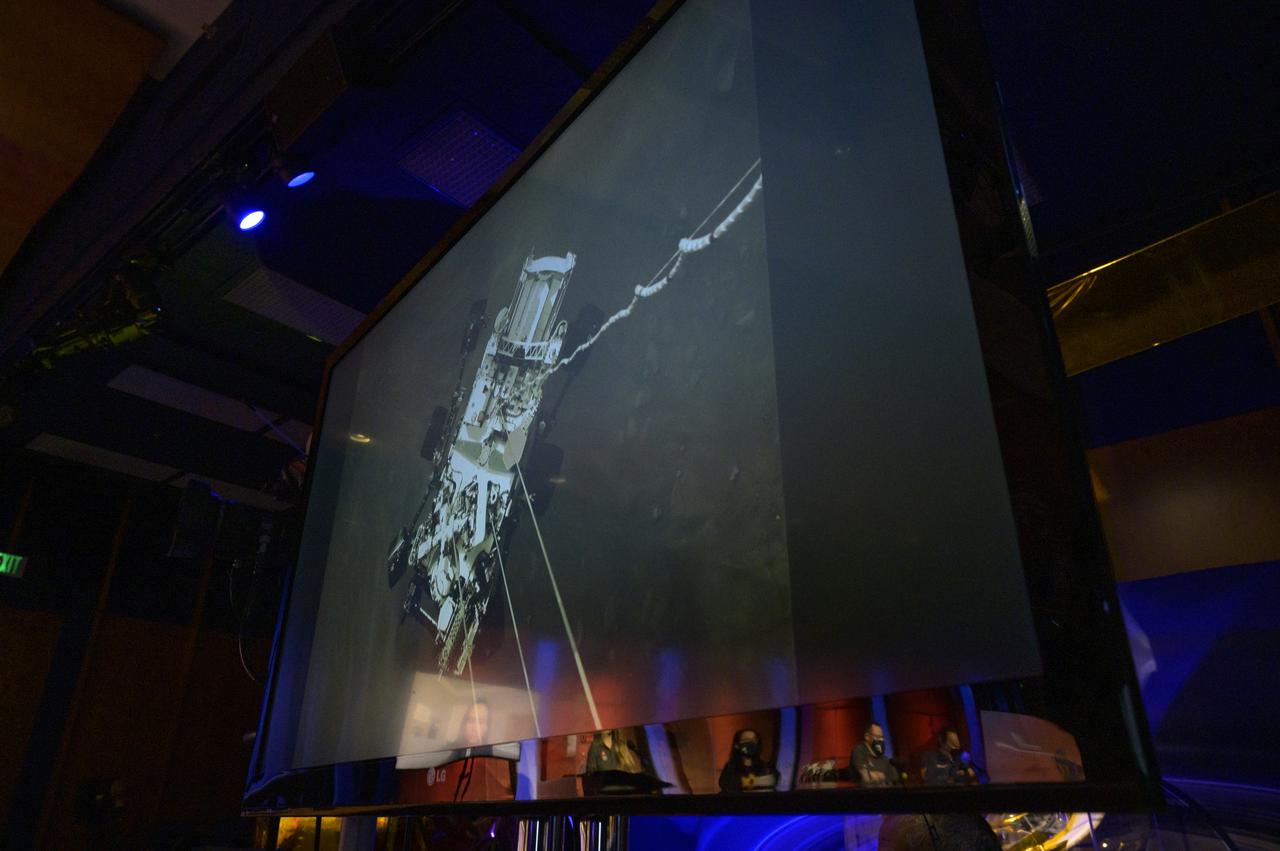
A high-resolution still image captured from cameras aboard the descent stage as NASA’s Perseverance rover touched down on Mars Feb. 18, 2021, is shown during a NASA Perseverance rover initial surface checkout briefing, Friday Feb. 19, 2021, at NASA's Jet Propulsion Laboratory in Pasadena, California. A key objective for Perseverance’s mission on Mars is astrobiology, including the search for signs of ancient microbial life. The rover will characterize the planet’s geology and past climate, pave the way for human exploration of the Red Planet, and be the first mission to collect and cache Martian rock and regolith. Photo Credit: (NASA/Bill Ingalls)
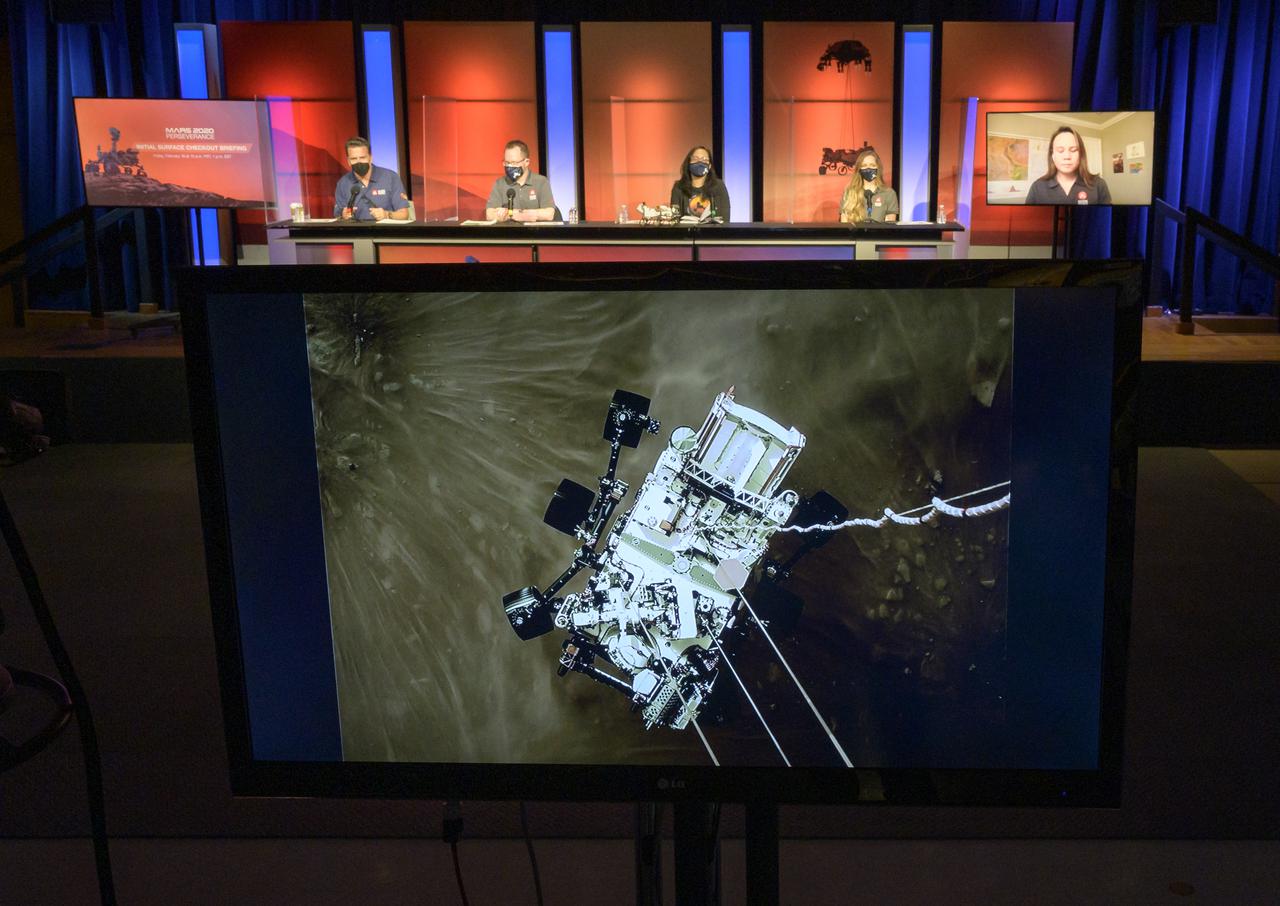
A high-resolution still image captured from cameras aboard the descent stage as NASA’s Perseverance rover touched down on Mars Feb. 18, 2021, is shown during a NASA Perseverance rover initial surface checkout briefing, Friday Feb. 19, 2021, at NASA's Jet Propulsion Laboratory in Pasadena, California. A key objective for Perseverance’s mission on Mars is astrobiology, including the search for signs of ancient microbial life. The rover will characterize the planet’s geology and past climate, pave the way for human exploration of the Red Planet, and be the first mission to collect and cache Martian rock and regolith. Photo Credit: (NASA/Bill Ingalls)

A full-scale mockup of NASA’s Mars 2020 Perseverance rover is on display at the News Center at the agency’s Kennedy Space Center in Florida on July 29, 2020. A Mars 2020 NASA Social is in progress featuring, right to left, Kennedy Space Center Deputy Director Janet Petro, NASA Deputy Administrator Jim Morhard, NASA astronaut Zena Cardman, and NASA Administrator Jim Bridenstine. The Mars Perseverance rover and Ingenuity helicopter are scheduled to launch July 30, on a United Launch Alliance Atlas V 541 rocket from Space Launch Complex 41 at nearby Cape Canaveral Air Force Station. The rover is part of NASA’s Mars Exploration Program, a long-term effort of robotic exploration of the Red Planet. The rover will search for habitable conditions in the ancient past and signs of past microbial life on Mars. The Launch Services Program at Kennedy is responsible for launch management.

The engineering models of both the Curiosity Mars rover (foreground) and the Perseverance Mars rover share space in the recently expanded garage at the Mars Yard. Curiosity's Earthy double is called MAGGIE, short for Mars Automated Giant Gizmo for Integrated Engineering; Perseverance's double goes by OPTIMISM (Operational Perseverance Twin for Integration of Mechanisms and Instruments Sent to Mars). The Mars Yard simulates Martian terrain and has served as a testing ground for many fully-engineered rover twins – from the very first, tiny Sojourner that landed on Mars in 1997 to the Spirit and Opportunity missions that began in 2004 to the Curiosity and Perseverance rovers exploring Mars today. Each is generically referred to as a vehicle system test bed. A key objective for Perseverance's mission on Mars is astrobiology, including the search for signs of ancient microbial life. The rover will characterize the planet's geology and past climate, pave the way for human exploration of the Red Planet, and be the first mission to collect and cache Martian rock and regolith (broken rock and dust). Subsequent NASA missions, in cooperation with ESA (European Space Agency), would send spacecraft to Mars to collect these sealed samples from the surface and return them to Earth for in-depth analysis. The Mars 2020 Perseverance mission is part of NASA's Moon to Mars exploration approach, which includes Artemis missions to the Moon that will help prepare for human exploration of the Red Planet. https://photojournal.jpl.nasa.gov/catalog/PIA24525
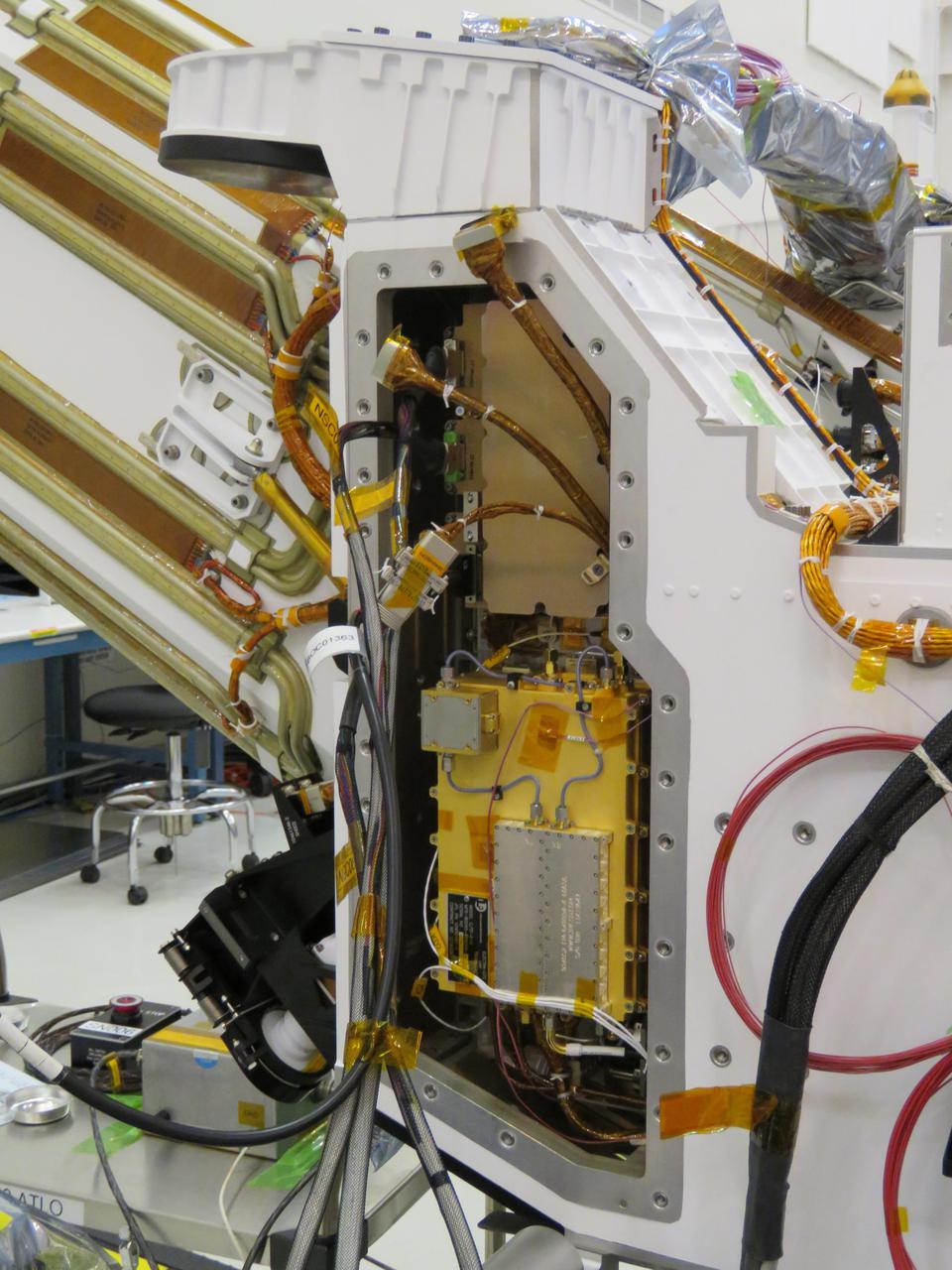
The Mars Helicopter Base Station, seen here as the upper, gold-colored box near the back of NASA's Perseverance rover, stores and routes communications between NASA's Ingenuity Mars Helicopter and mission controllers on Earth. (An annotated version of the image circles the base station in blue.) Ingenuity will attempt the first powered, controlled flight at Mars. https://photojournal.jpl.nasa.gov/catalog/PIA23968
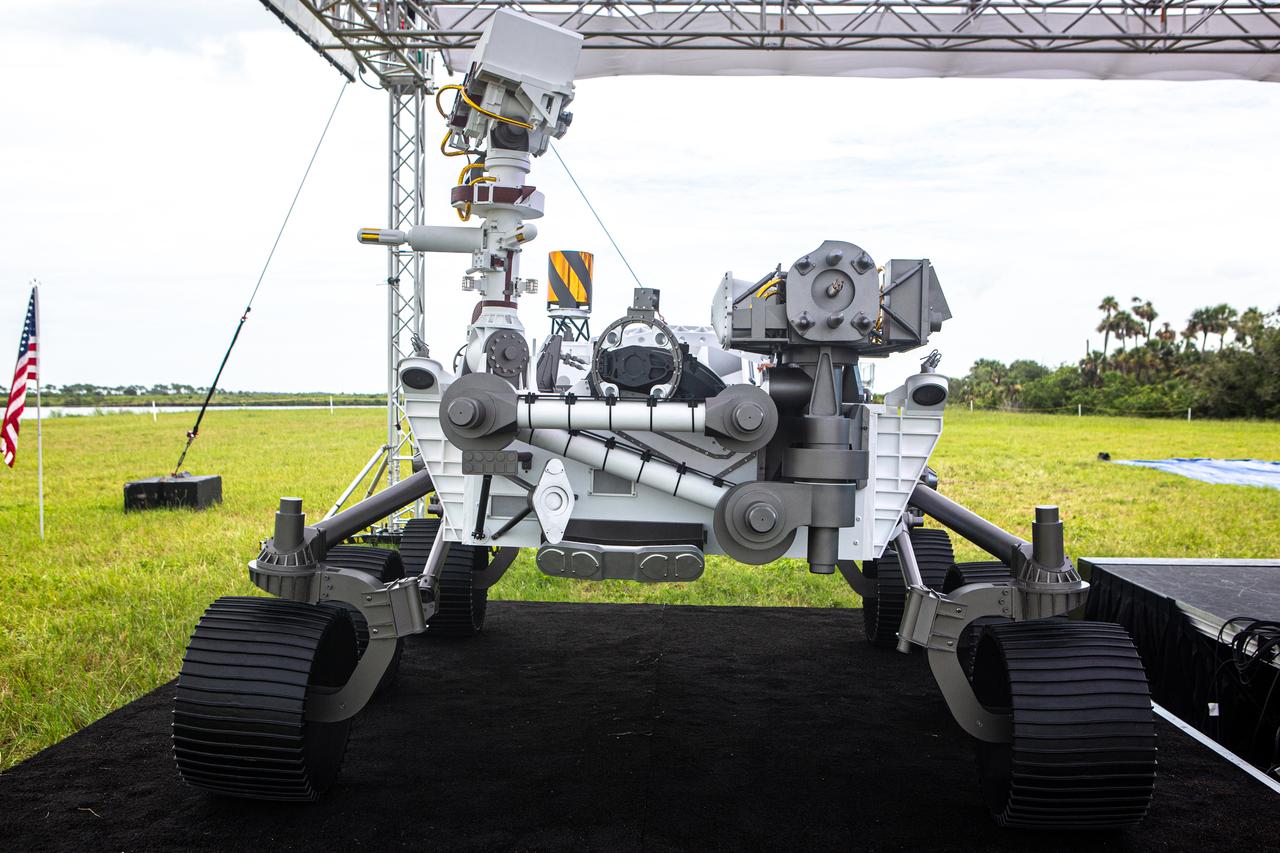
A full-scale mockup of NASA’s Mars 2020 Perseverance rover is on display at the News Center at the agency’s Kennedy Space Center in Florida on July 29, 2020. The rover and Ingenuity helicopter are scheduled to launch July 30, on a United Launch Alliance Atlas V 541 rocket from Space Launch Complex 41 at nearby Cape Canaveral Air Force Station. The rover is part of NASA’s Mars Exploration Program, a long-term effort of robotic exploration of the Red Planet. The rover will search for habitable conditions in the ancient past and signs of past microbial life on Mars. The Launch Services Program at Kennedy is responsible for launch management.
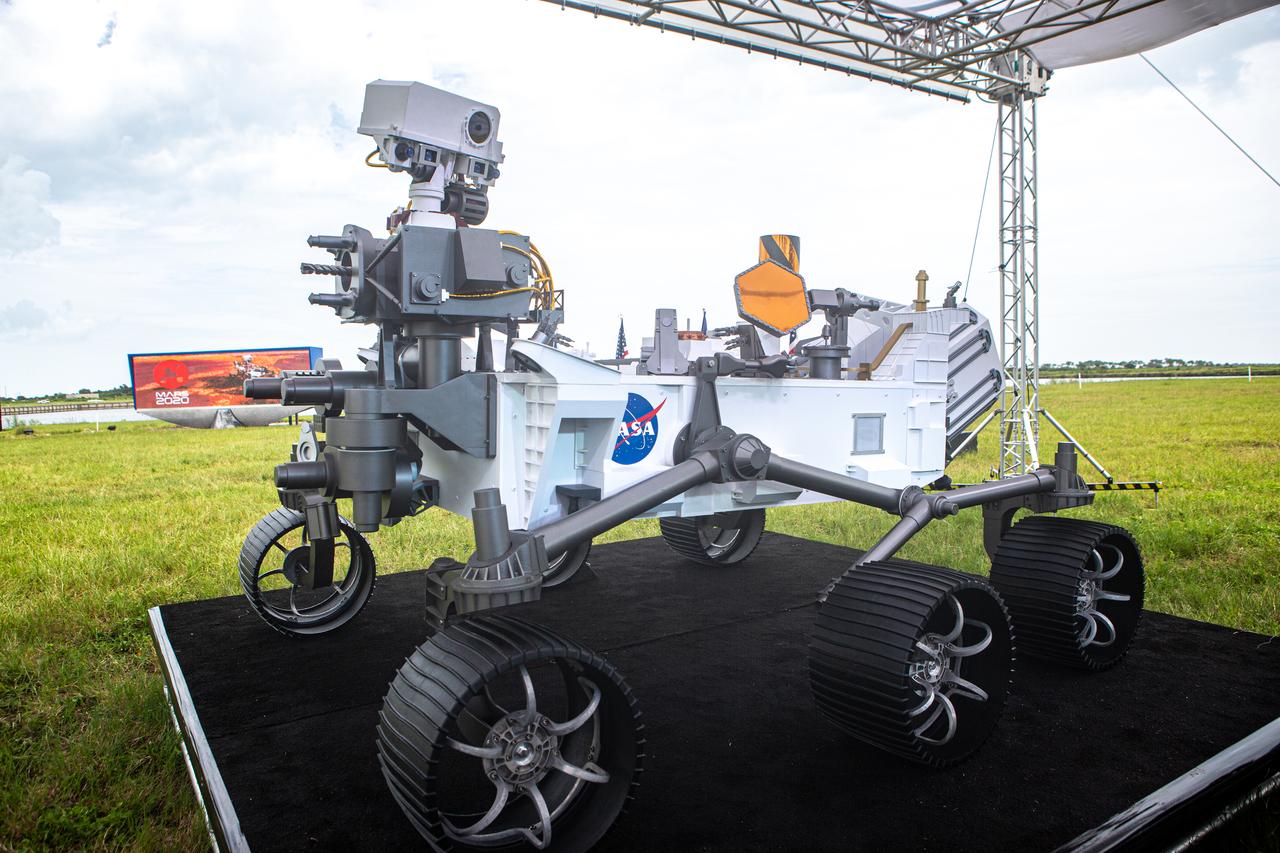
A full-scale mockup of NASA’s Mars 2020 Perseverance rover is on display at the News Center at the agency’s Kennedy Space Center in Florida on July 29, 2020. The rover and Ingenuity helicopter are scheduled to launch July 30, on a United Launch Alliance Atlas V 541 rocket from Space Launch Complex 41 at nearby Cape Canaveral Air Force Station. The rover is part of NASA’s Mars Exploration Program, a long-term effort of robotic exploration of the Red Planet. The rover will search for habitable conditions in the ancient past and signs of past microbial life on Mars. The Launch Services Program at Kennedy is responsible for launch management.
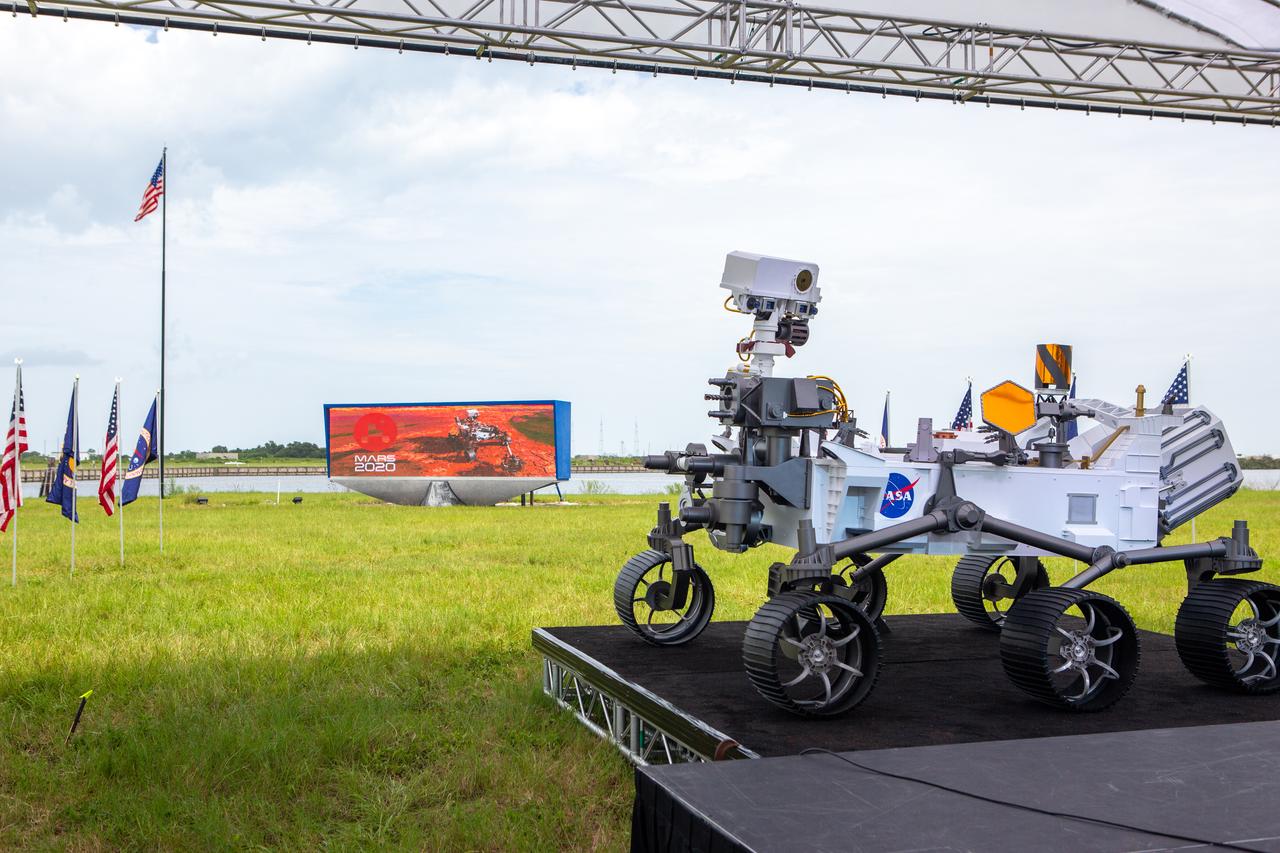
A full-scale mockup of NASA’s Mars 2020 Perseverance rover is on display near the countdown clock at the News Center at the agency’s Kennedy Space Center in Florida on July 29, 2020. The rover and Ingenuity helicopter are scheduled to launch July 30, on a United Launch Alliance Atlas V 541 rocket from Space Launch Complex 41 at nearby Cape Canaveral Air Force Station. The rover is part of NASA’s Mars Exploration Program, a long-term effort of robotic exploration of the Red Planet. The rover will search for habitable conditions in the ancient past and signs of past microbial life on Mars. The Launch Services Program at Kennedy is responsible for launch management.
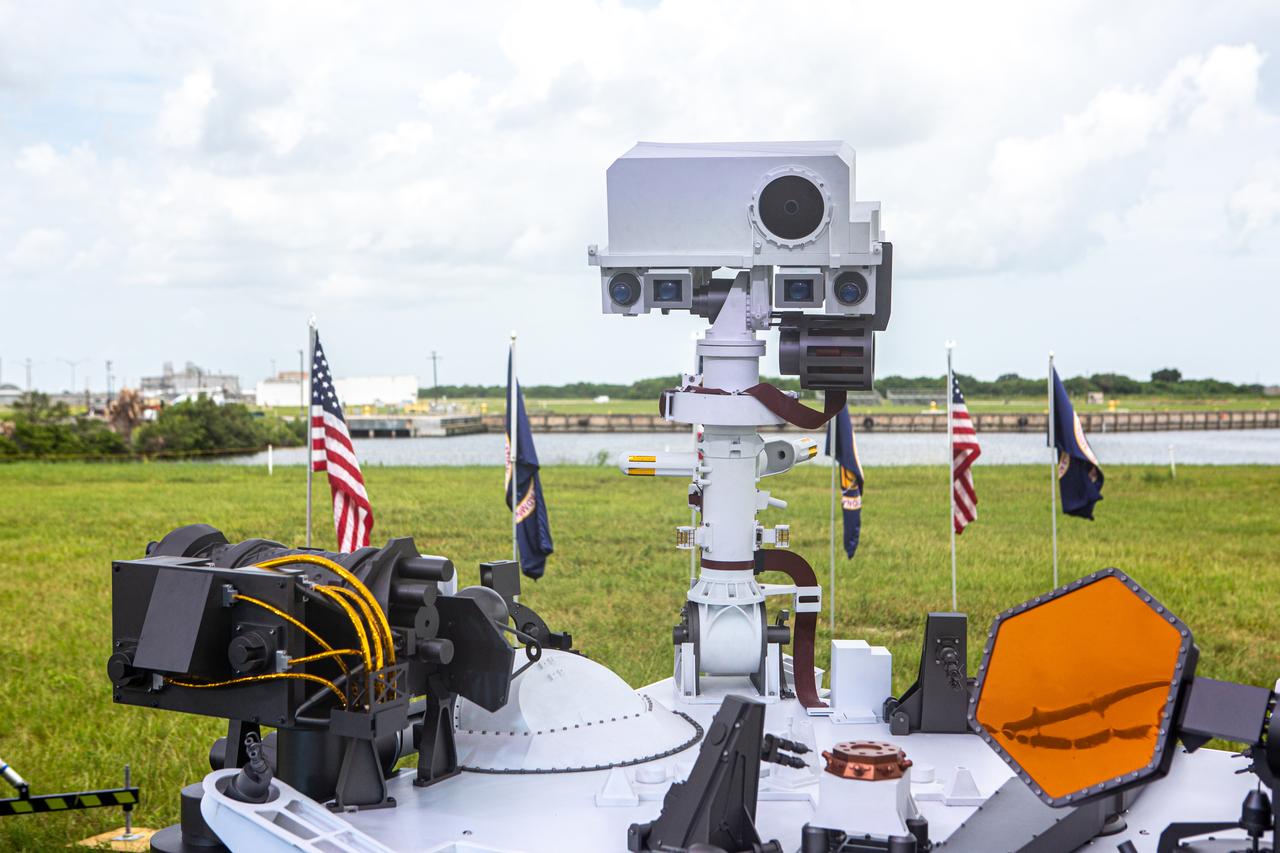
A full-scale mockup of NASA’s Mars 2020 Perseverance rover is on display at the News Center at the agency’s Kennedy Space Center in Florida on July 29, 2020. The rover and Ingenuity helicopter are scheduled to launch July 30, on a United Launch Alliance Atlas V 541 rocket from Space Launch Complex 41 at nearby Cape Canaveral Air Force Station. The rover is part of NASA’s Mars Exploration Program, a long-term effort of robotic exploration of the Red Planet. The rover will search for habitable conditions in the ancient past and signs of past microbial life on Mars. The Launch Services Program at Kennedy is responsible for launch management.

An illustration of NASA's Perseverance rover landing on Mars. Hundreds of critical events must execute perfectly and exactly on time for the rover to land safely on Feb. 18, 2021. https://photojournal.jpl.nasa.gov/catalog/PIA24345

An illustration of NASA's Perseverance rover landing on Mars. Hundreds of critical events must execute perfectly and exactly on time for the rover to land safely on Feb. 18, 2021. https://photojournal.jpl.nasa.gov/catalog/PIA24342

NASA Deputy Administrator Jim Morhard answers questions during a Mars 2020 NASA Social at Kennedy Space Center’s News Center in Florida on July 29, 2020. The Mars Perseverance rover and Ingenuity helicopter are scheduled to launch July 30, on a United Launch Alliance Atlas V 541 rocket from Space Launch Complex 41 at nearby Cape Canaveral Air Force Station. The rover is part of NASA’s Mars Exploration Program, a long-term effort of robotic exploration of the Red Planet. The rover will search for habitable conditions in the ancient past and signs of past microbial life on Mars. The Launch Services Program at Kennedy is responsible for launch management.
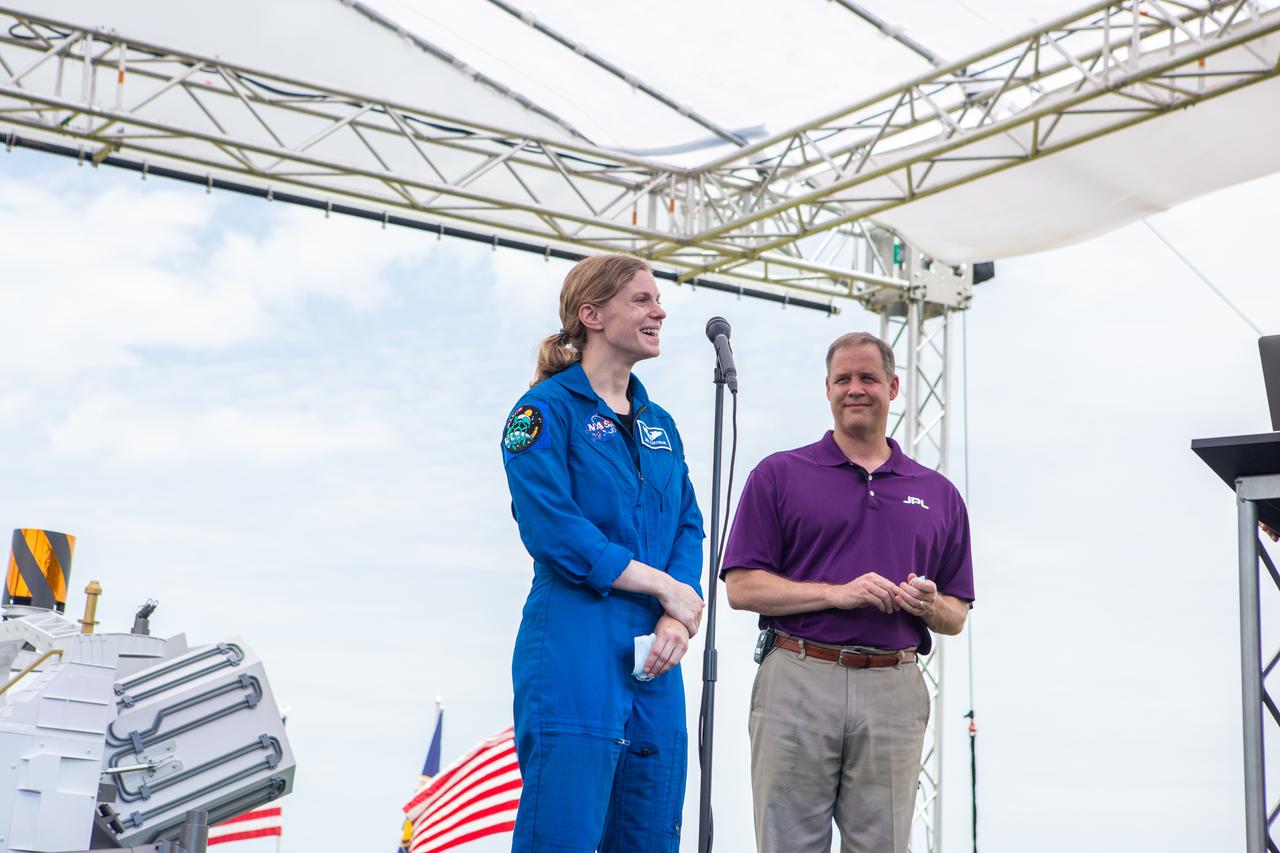
NASA astronaut Zena Cardman answers a question during a Mars 2020 NASA Social at Kennedy Space Center’s News Center in Florida on July 29, 2020. At right is NASA Administrator Jim Bridenstine. The Mars Perseverance rover and Ingenuity helicopter are scheduled to launch July 30, on a United Launch Alliance Atlas V 541 rocket from Space Launch Complex 41 at nearby Cape Canaveral Air Force Station. The rover is part of NASA’s Mars Exploration Program, a long-term effort of robotic exploration of the Red Planet. The rover will search for habitable conditions in the ancient past and signs of past microbial life on Mars. The Launch Services Program at Kennedy is responsible for launch management.

NASA Administrator Jim Bridenstine answers a question during a Mars 2020 NASA Social at Kennedy Space Center’s News Center in Florida on July 29, 2020. At left is NASA astronaut Zena Cardman. The Mars Perseverance rover and Ingenuity helicopter are scheduled to launch July 30, on a United Launch Alliance Atlas V 541 rocket from Space Launch Complex 41 at nearby Cape Canaveral Air Force Station. The rover is part of NASA’s Mars Exploration Program, a long-term effort of robotic exploration of the Red Planet. The rover will search for habitable conditions in the ancient past and signs of past microbial life on Mars. The Launch Services Program at Kennedy is responsible for launch management.
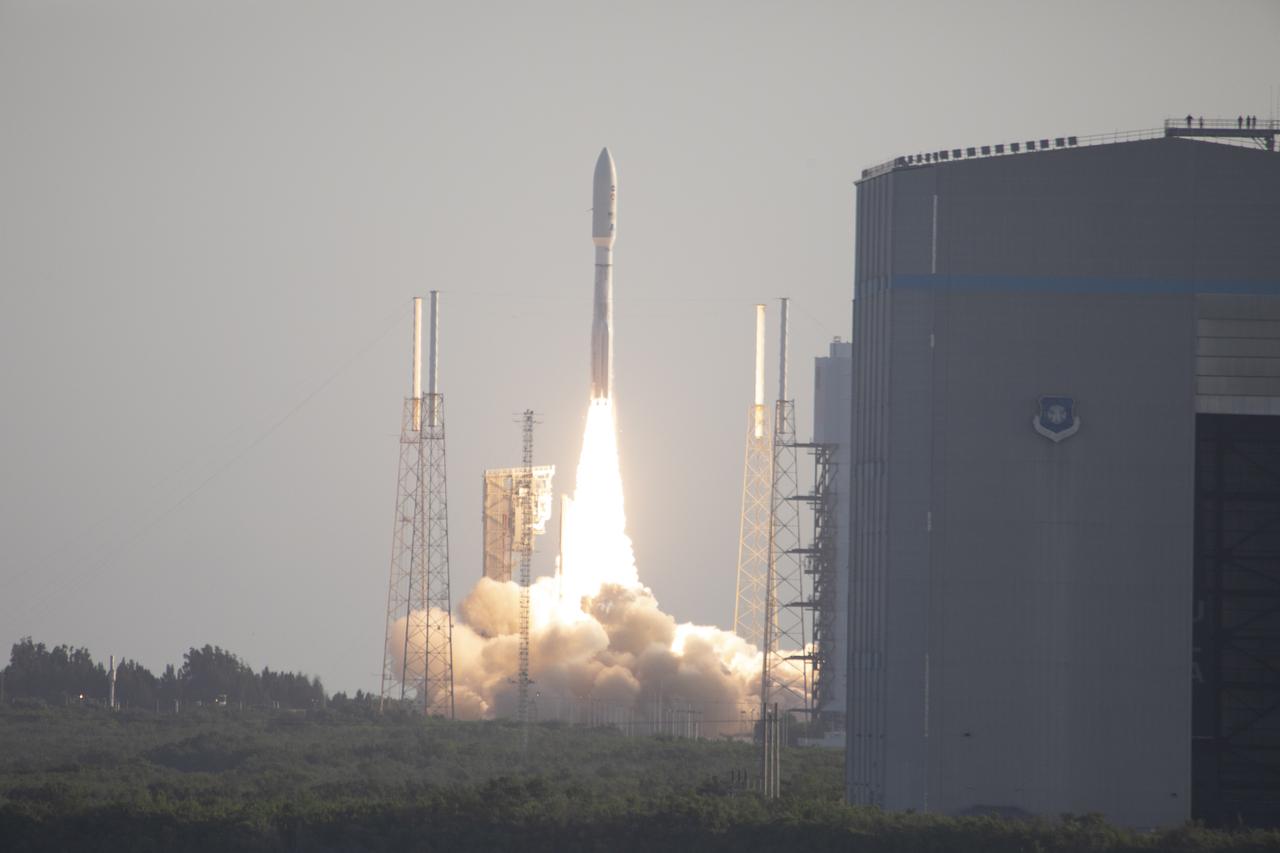
A view from the Atlas Space Operations Center of the launch of the United Launch Alliance Atlas V 541 rocket from Space Launch Complex 41 at Cape Canaveral Air Force Station in Florida on July 30, 2020. The Atlas V carried NASA’s Mars Perseverance rover and Ingenuity helicopter for its mission to Mars. Liftoff was at 7:50 a.m. EDT. The Perseverance rover is part of NASA’s Mars Exploration Program, a long-term effort of robotic exploration of the Red Planet. The rover’s seven instruments will search for habitable conditions in the ancient past and signs of past microbial life on Mars. The Launch Services Program at Kennedy is responsible for launch management.
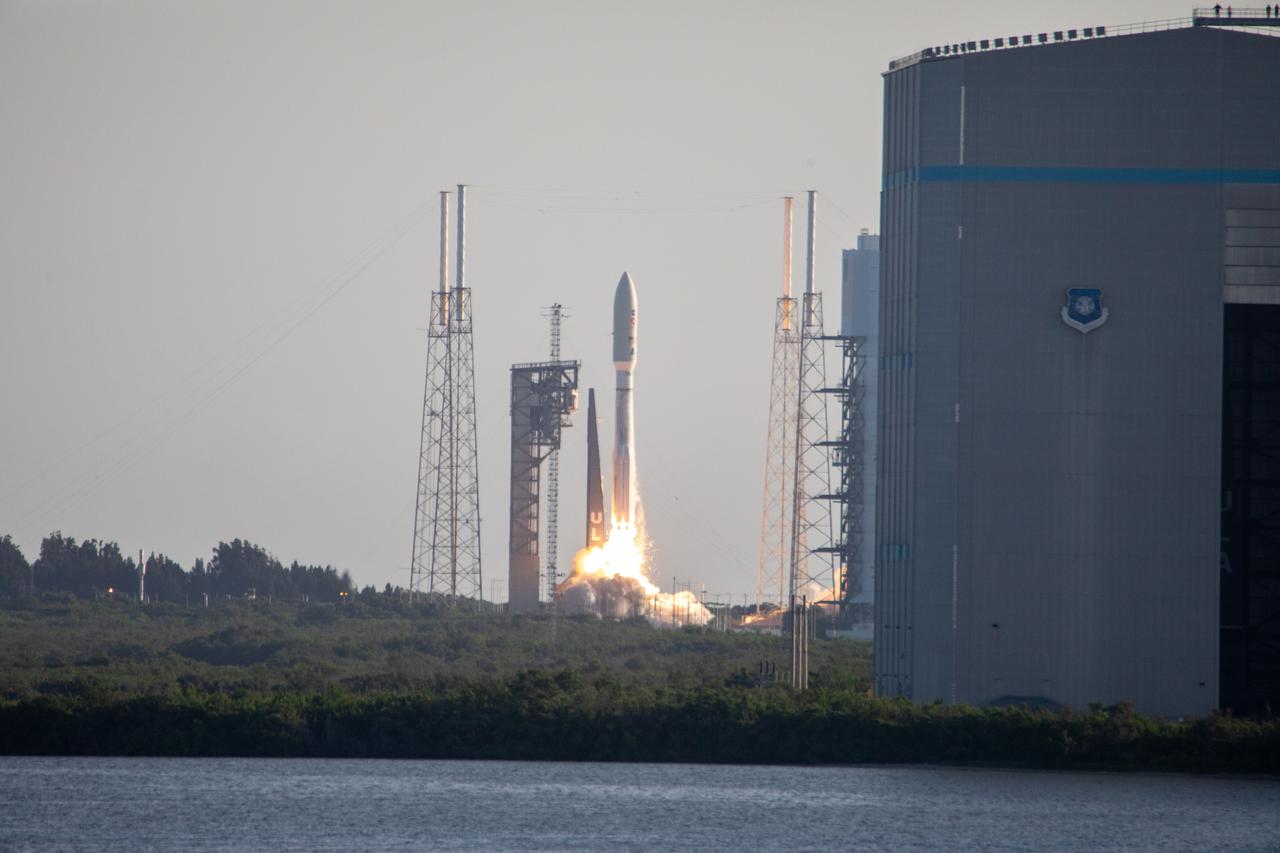
A view from the Atlas Space Operations Center of the launch of the United Launch Alliance Atlas V 541 rocket from Space Launch Complex 41 at Cape Canaveral Air Force Station in Florida on July 30, 2020. The Atlas V carried NASA’s Mars Perseverance rover and Ingenuity helicopter for its mission to Mars. Liftoff was at 7:50 a.m. EDT. The Perseverance rover is part of NASA’s Mars Exploration Program, a long-term effort of robotic exploration of the Red Planet. The rover’s seven instruments will search for habitable conditions in the ancient past and signs of past microbial life on Mars. The Launch Services Program at Kennedy is responsible for launch management.
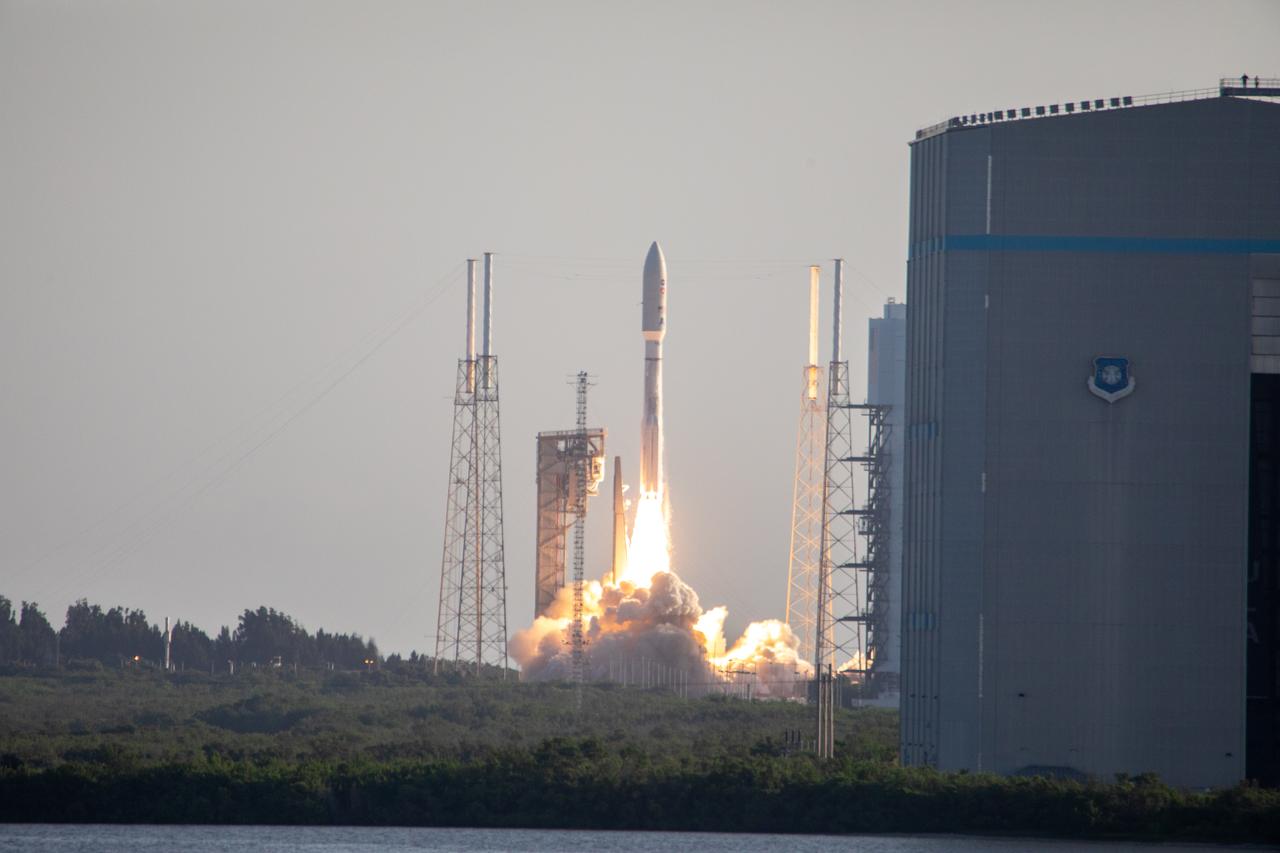
A view from the Atlas Space Operations Center of the launch of the United Launch Alliance Atlas V 541 rocket from Space Launch Complex 41 at Cape Canaveral Air Force Station in Florida on July 30, 2020. The Atlas V carried NASA’s Mars Perseverance rover and Ingenuity helicopter for its mission to Mars. Liftoff was at 7:50 a.m. EDT. The Perseverance rover is part of NASA’s Mars Exploration Program, a long-term effort of robotic exploration of the Red Planet. The rover’s seven instruments will search for habitable conditions in the ancient past and signs of past microbial life on Mars. The Launch Services Program at Kennedy is responsible for launch management.
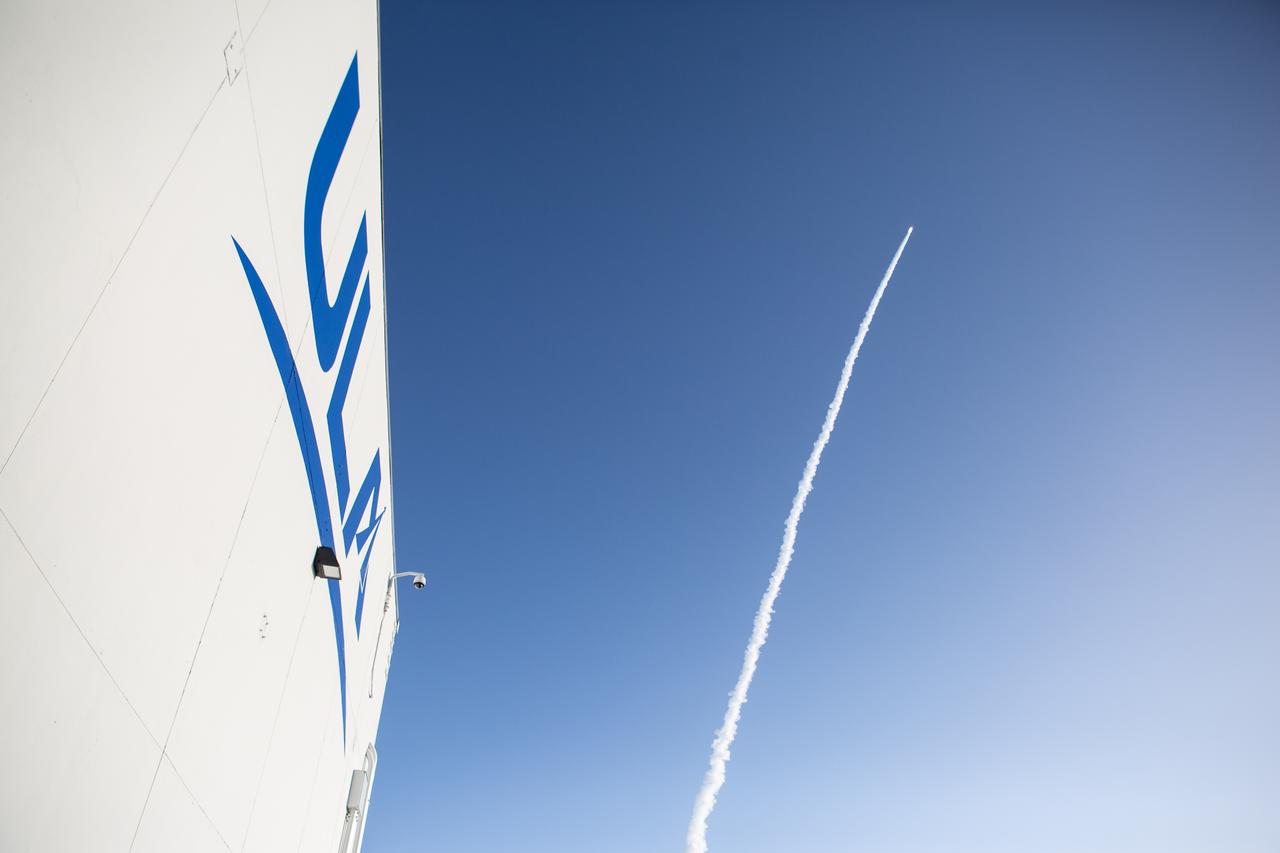
A view from the Atlas Space Operations Center of the launch of the United Launch Alliance Atlas V 541 rocket from Space Launch Complex 41 at Cape Canaveral Air Force Station in Florida on July 30, 2020. The Atlas V carried NASA’s Mars Perseverance rover and Ingenuity helicopter for its mission to Mars. Liftoff was at 7:50 a.m. EDT. The Perseverance rover is part of NASA’s Mars Exploration Program, a long-term effort of robotic exploration of the Red Planet. The rover’s seven instruments will search for habitable conditions in the ancient past and signs of past microbial life on Mars. The Launch Services Program at Kennedy is responsible for launch management.

The Sun rises on the Space Coast as NASA’s Kennedy Space Center in Florida prepares for the launch of a United Launch Alliance Atlas V rocket, carrying the agency’s Mars Perseverance rover and Ingenuity helicopter, on July 30, 2020. Liftoff is targeted for 7:50 a.m. EDT. The Perseverance rover is part of NASA’s Mars Exploration Program, a long-term effort of robotic exploration of the Red Planet. The rover’s seven instruments will search for habitable conditions in the ancient past and signs of past microbial life on Mars. The Launch Services Program at Kennedy is responsible for launch management.

Cleveland’s Terminal Tower as seen from Public Square was lit up “Mars Red” leading up the Perseverance Rover’s arrival on Mars Wednesday night February 18th and Thursday morning.

Cleveland’s Terminal Tower as seen from Voinovich Bicentennial Park was lit up “Mars Red” leading up the Perseverance Rover’s arrival on Mars Wednesday night February 18th and Thursday morning.

The Mars 2020 Perseverance rover's astrobiology mission will search for signs of ancient microbial life. It will also characterize the planet's climate and geology, collect samples for future return to Earth and pave the way for human exploration of the Red Planet. The mission is part of a larger program that includes missions to the Moon as a way to prepare for human exploration of the Red Planet. Charged with returning astronauts to the Moon by 2024, NASA will establish a sustained human presence on and around the Moon by 2028 through NASA's Artemis lunar exploration plans. https://photojournal.jpl.nasa.gov/catalog/PIA23920
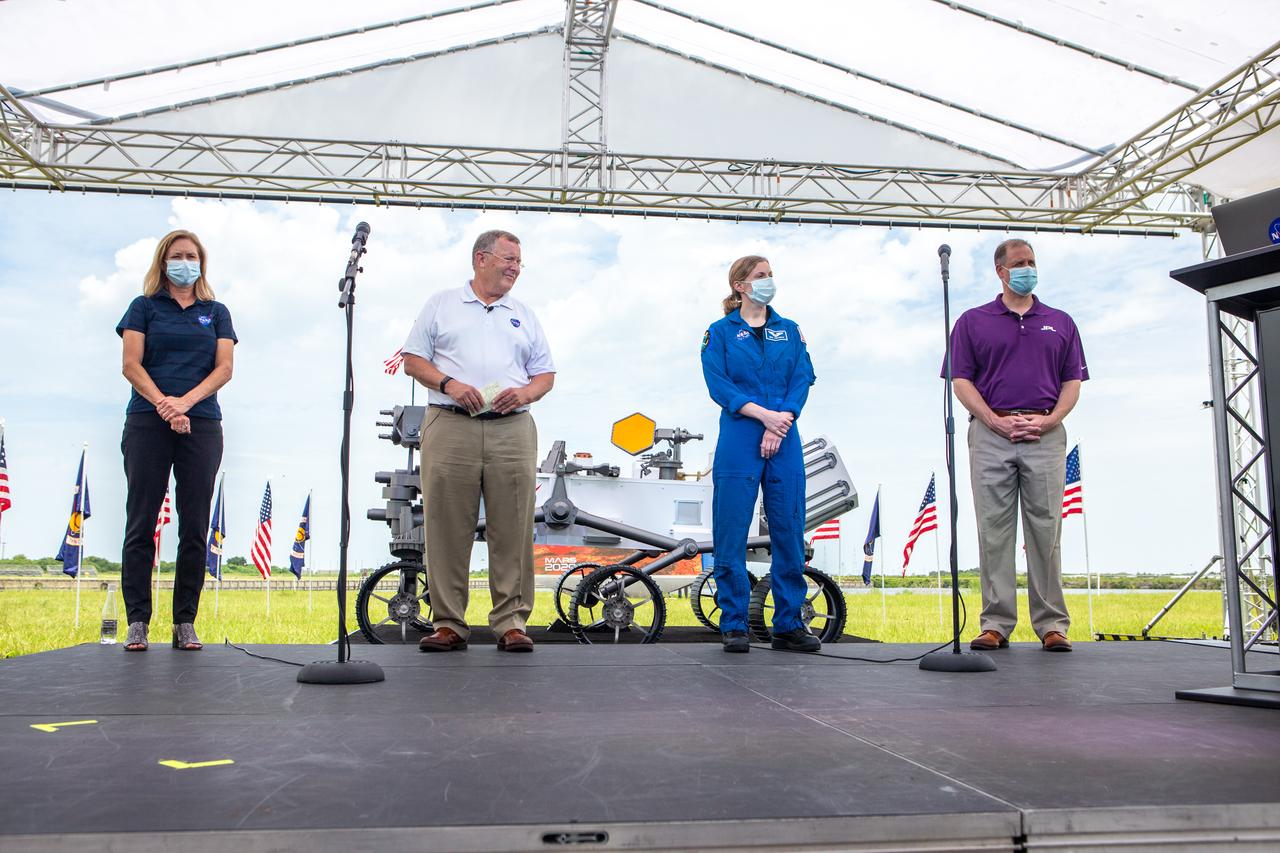
A Mars 2020 NASA Social is held at Kennedy Space Center’s News Center in Florida on July 29, 2020. Participants from left are Kennedy Deputy Director Janet Petro, NASA Deputy Administrator Jim Morhard, NASA astronaut Zena Cardman, and NASA Administrator Jim Bridenstine. The Mars Perseverance rover and Ingenuity helicopter are scheduled to launch July 30, on a United Launch Alliance Atlas V 541 rocket from Space Launch Complex 41 at nearby Cape Canaveral Air Force Station. The rover is part of NASA’s Mars Exploration Program, a long-term effort of robotic exploration of the Red Planet. The rover will search for habitable conditions in the ancient past and signs of past microbial life on Mars. The Launch Services Program at Kennedy is responsible for launch management.

Joshua Santora, at the podium, NASA Communications, moderates a Mars 2020 NASA Social at Kennedy Space Center’s News Center in Florida on July 29, 2020. Participants from left are Kennedy Deputy Director Janet Petro, NASA Deputy Administrator Jim Morhard, NASA astronaut Zena Cardman, and NASA Administrator Jim Bridenstine. The Mars Perseverance rover and Ingenuity helicopter are scheduled to launch July 30, on a United Launch Alliance Atlas V 541 rocket from Space Launch Complex 41 at nearby Cape Canaveral Air Force Station. The rover is part of NASA’s Mars Exploration Program, a long-term effort of robotic exploration of the Red Planet. The rover will search for habitable conditions in the ancient past and signs of past microbial life on Mars. The Launch Services Program at Kennedy is responsible for launch management.
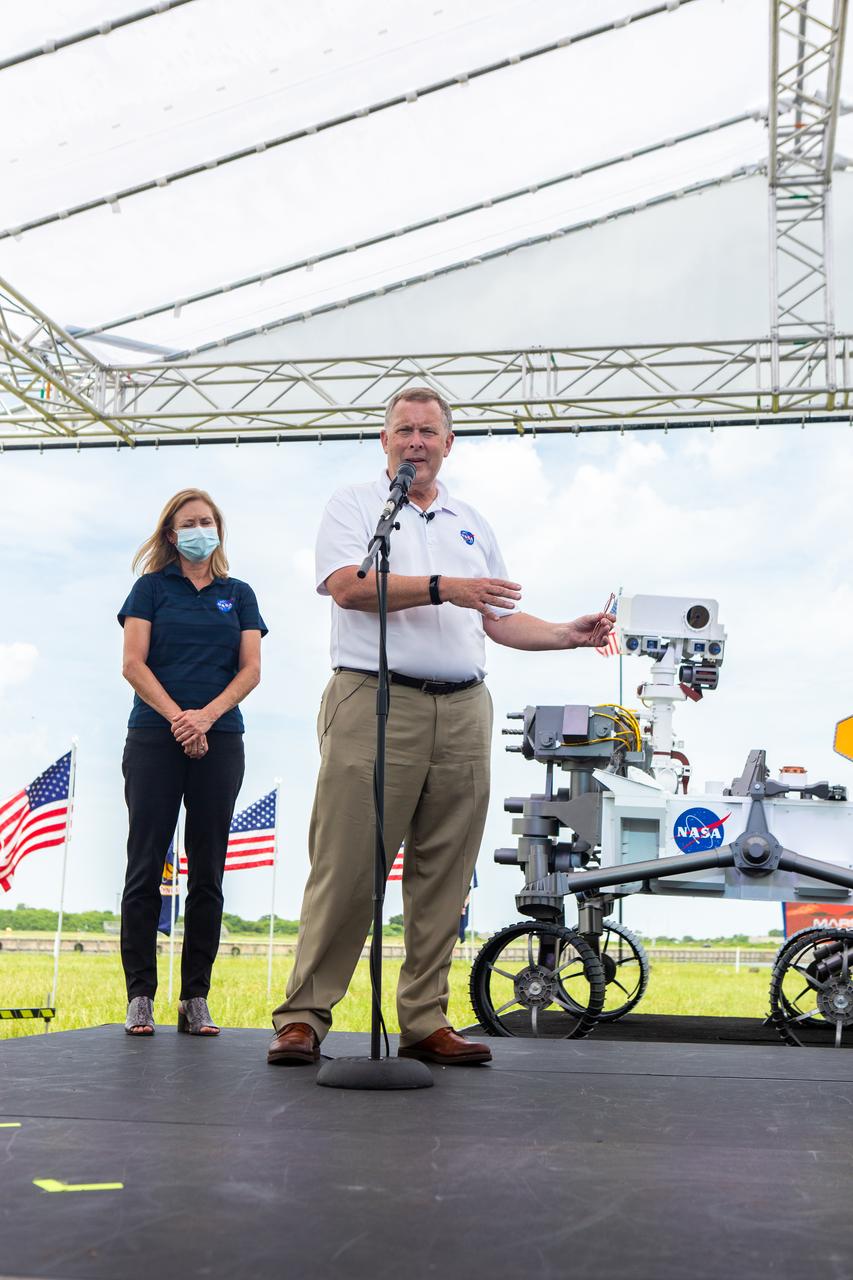
NASA Deputy Administrator Jim Morhard answers questions during a Mars 2020 NASA Social at Kennedy Space Center’s News Center in Florida on July 29, 2020. Standing behind him is Kennedy Deputy Director Janet Petro. The Mars Perseverance rover and Ingenuity helicopter are scheduled to launch July 30, on a United Launch Alliance Atlas V 541 rocket from Space Launch Complex 41 at nearby Cape Canaveral Air Force Station. The rover is part of NASA’s Mars Exploration Program, a long-term effort of robotic exploration of the Red Planet. The rover will search for habitable conditions in the ancient past and signs of past microbial life on Mars. The Launch Services Program at Kennedy is responsible for launch management.

Joshua Santora, at the podium, NASA Communications, moderates a Mars 2020 NASA Social at Kennedy Space Center’s News Center in Florida on July 29, 2020. Participants from left are Kennedy Deputy Director Janet Petro, NASA Deputy Administrator Jim Morhard, NASA astronaut Zena Cardman, and NASA Administrator Jim Bridenstine. The Mars Perseverance rover and Ingenuity helicopter are scheduled to launch July 30, on a United Launch Alliance Atlas V 541 rocket from Space Launch Complex 41 at nearby Cape Canaveral Air Force Station. The rover is part of NASA’s Mars Exploration Program, a long-term effort of robotic exploration of the Red Planet. The rover will search for habitable conditions in the ancient past and signs of past microbial life on Mars. The Launch Services Program at Kennedy is responsible for launch management.

Kennedy Space Center Deputy Director Janet Petro answers questions during a Mars 2020 NASA Social at the center’s News Center in Florida on July 29, 2020. At right is NASA Deputy Administrator Jim Morhard. The Mars Perseverance rover and Ingenuity helicopter are scheduled to launch July 30, on a United Launch Alliance Atlas V 541 rocket from Space Launch Complex 41 at nearby Cape Canaveral Air Force Station. The rover is part of NASA’s Mars Exploration Program, a long-term effort of robotic exploration of the Red Planet. The rover will search for habitable conditions in the ancient past and signs of past microbial life on Mars. The Launch Services Program at Kennedy is responsible for launch management.
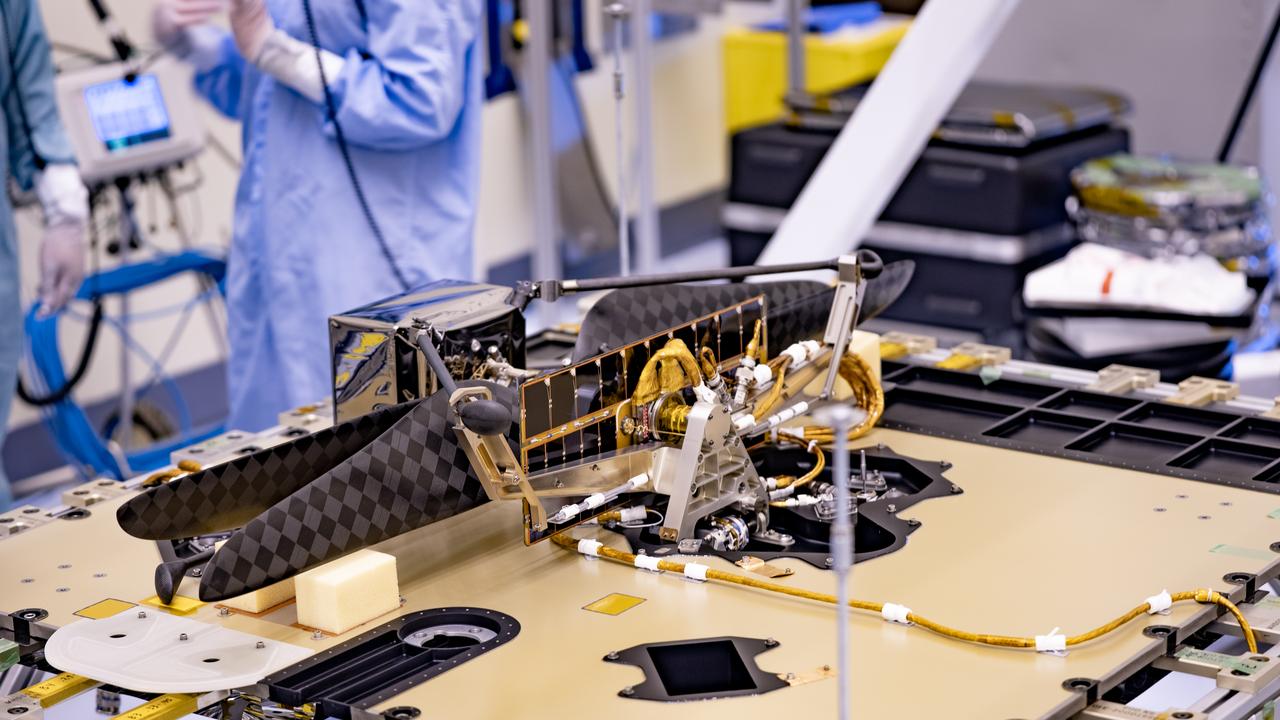
NASA’s Mars Helicopter is installed on the agency’s Mars Perseverance rover inside the Payload Hazardous Servicing Facility at Florida’s Kennedy Space Center on April 6, 2020. Perseverance safely lands on Mars, the helicopter will be released to perform the first in a series of flight tests that will take place during a period of about 30 days. The helicopter will be the first aircraft to fly on another planet. Perseverance, carrying the helicopter, will touch down on the Red Planet on Feb. 18, 2021. Liftoff aboard a United Launch Alliance Atlas V 541 rocket is targeted between July 17 and Aug. 5 from Cape Canaveral Air Force Station.
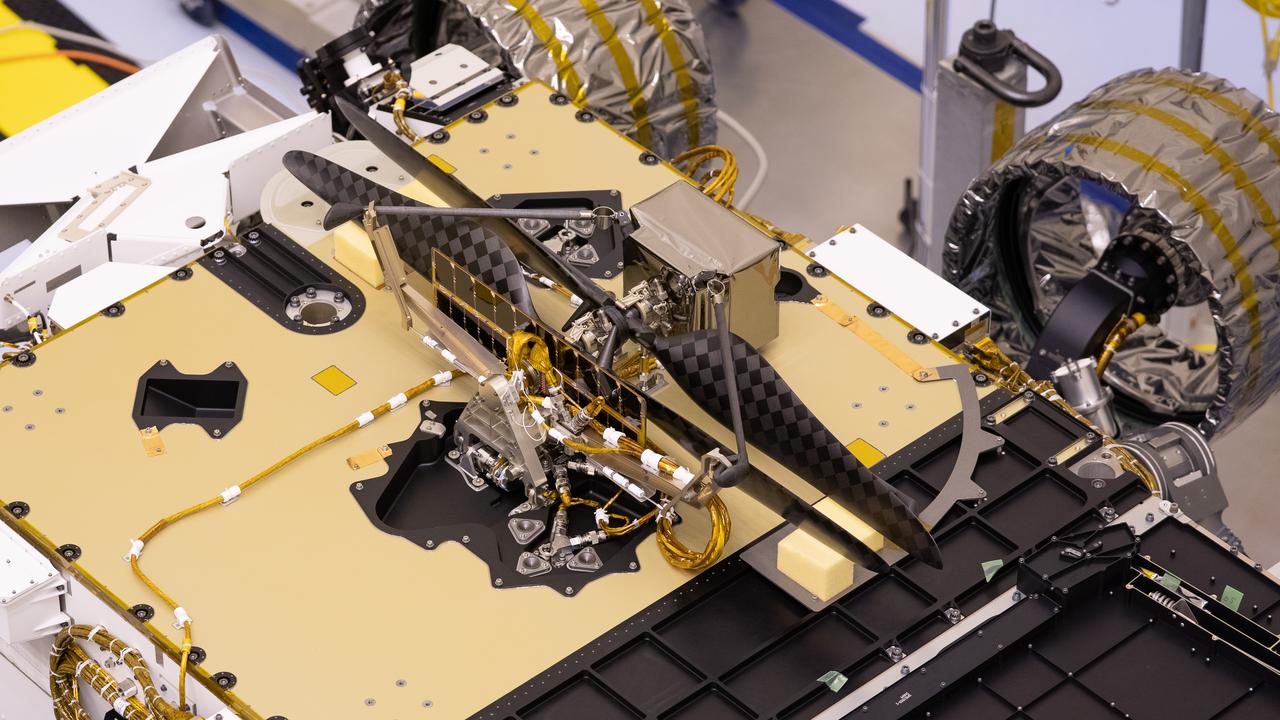
NASA’s Mars Helicopter is installed on the agency’s Mars Perseverance rover inside the Payload Hazardous Servicing Facility at Florida’s Kennedy Space Center on April 6, 2020. Perseverance safely lands on Mars, the helicopter will be released to perform the first in a series of flight tests that will take place during a period of about 30 days. The helicopter will be the first aircraft to fly on another planet. Perseverance, carrying the helicopter, will touch down on the Red Planet on Feb. 18, 2021. Liftoff aboard a United Launch Alliance Atlas V 541 rocket is targeted between July 17 and Aug. 5 from Cape Canaveral Air Force Station.
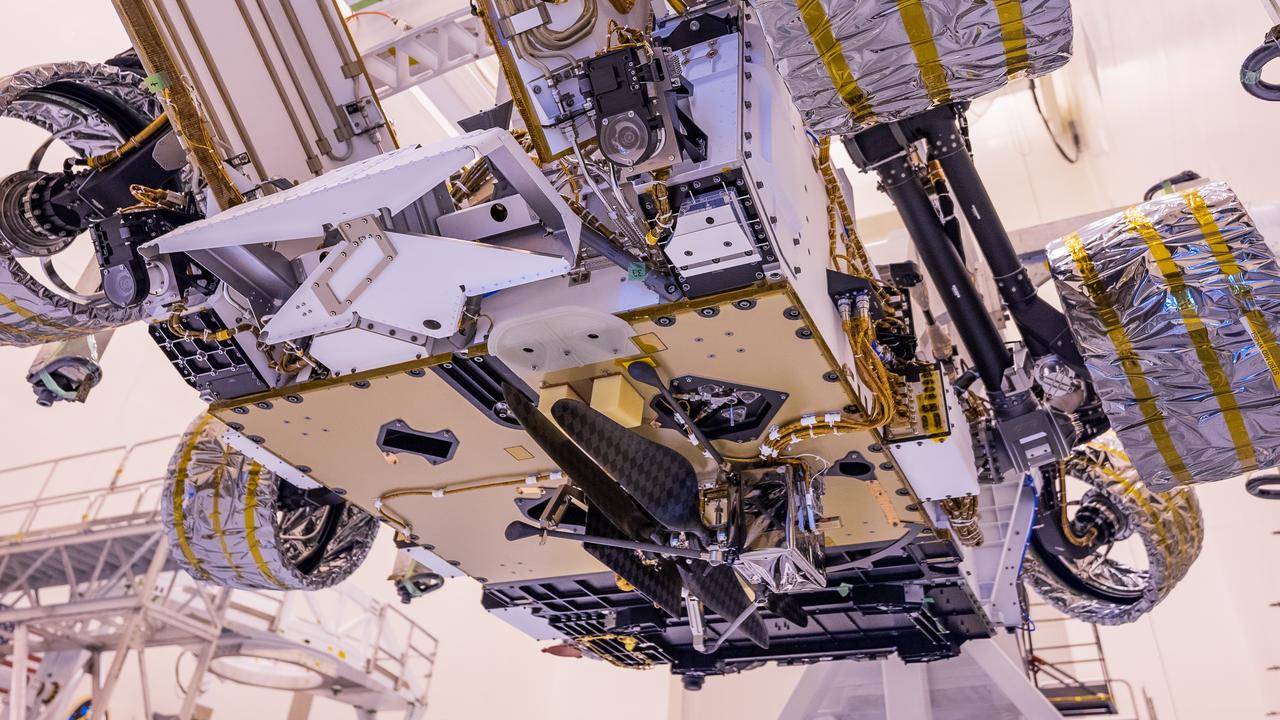
NASA’s Mars Helicopter is installed on the agency’s Mars Perseverance rover inside the Payload Hazardous Servicing Facility at Florida’s Kennedy Space Center on April 6, 2020. Perseverance safely lands on Mars, the helicopter will be released to perform the first in a series of flight tests that will take place during a period of about 30 days. The helicopter will be the first aircraft to fly on another planet. Perseverance, carrying the helicopter, will touch down on the Red Planet on Feb. 18, 2021. Liftoff aboard a United Launch Alliance Atlas V 541 rocket is targeted between July 17 and Aug. 5 from Cape Canaveral Air Force Station.
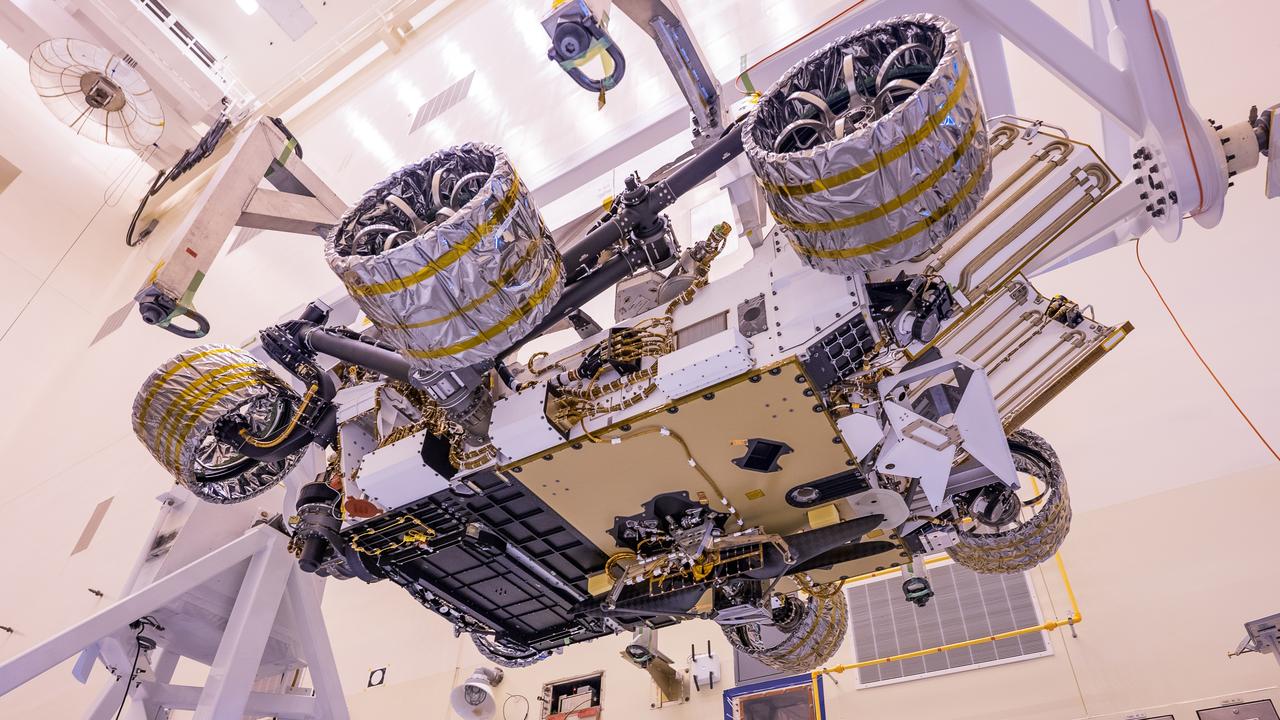
NASA’s Mars Helicopter is installed on the agency’s Mars Perseverance rover inside the Payload Hazardous Servicing Facility at Florida’s Kennedy Space Center on April 6, 2020. Perseverance safely lands on Mars, the helicopter will be released to perform the first in a series of flight tests that will take place during a period of about 30 days. The helicopter will be the first aircraft to fly on another planet. Perseverance, carrying the helicopter, will touch down on the Red Planet on Feb. 18, 2021. Liftoff aboard a United Launch Alliance Atlas V 541 rocket is targeted between July 17 and Aug. 5 from Cape Canaveral Air Force Station.

Jia-Rui Cook with NASA’s Jet Propulsion Laboratory moderates a Mars 2020 Sample Return briefing at NASA’s Kennedy Space Center in Florida on July 28, 2020. The Mars Perseverance rover is scheduled to launch on July 30, on a United Launch Alliance Atlas V 541 rocket from Space Launch Complex 41 at nearby Cape Canaveral Air Force Station. The rover is part of NASA’s Mars Exploration Program, a long-term effort of robotic exploration of the Red Planet. The rover will search for habitable conditions in the ancient past and signs of past microbial life on Mars. The Launch Services Program at Kennedy is responsible for launch management.
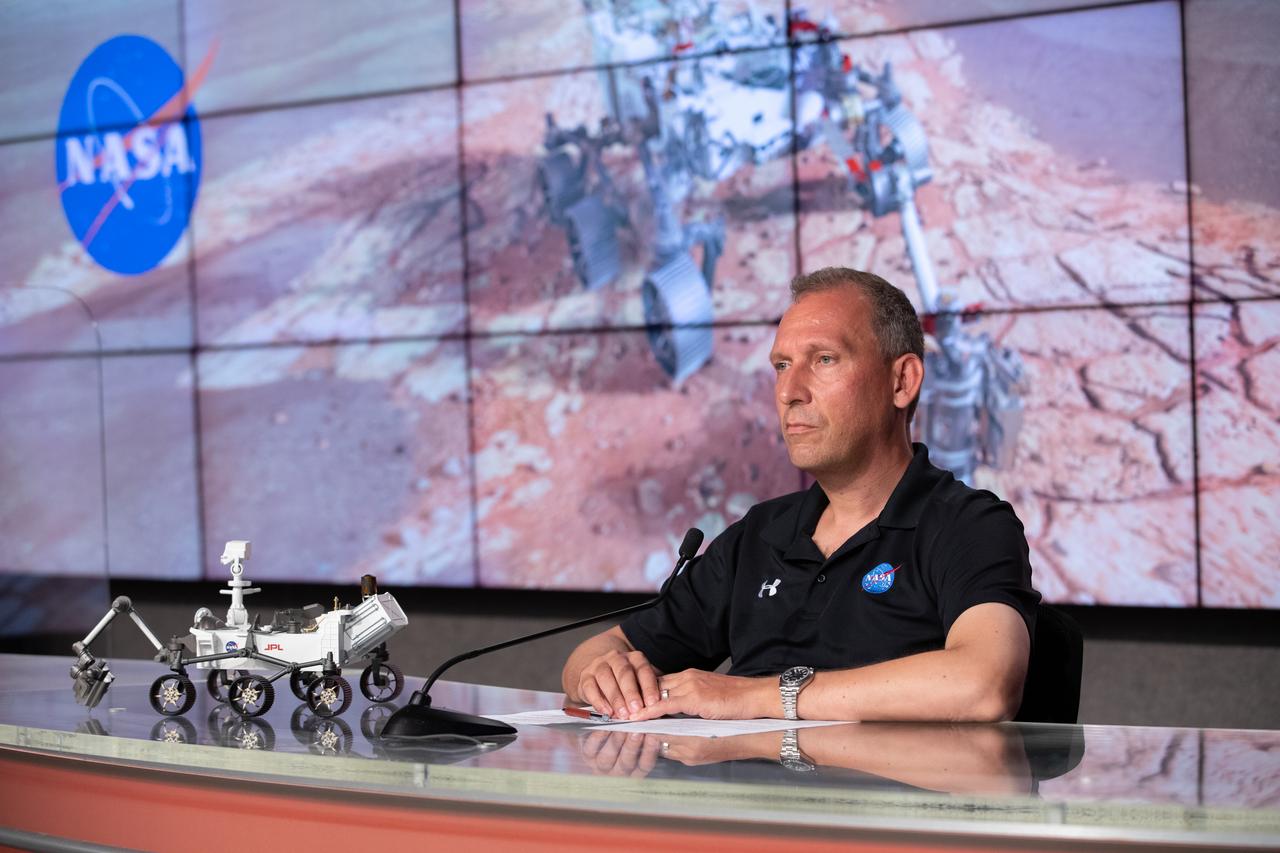
Thomas Zurbuchen, NASA associate administrator, Science Mission Directorate, participates in a Mars 2020 Sample Return briefing at NASA’s Kennedy Space Center in Florida on July 28, 2020. The Mars Perseverance rover is scheduled to launch on July 30, on a United Launch Alliance Atlas V 541 rocket from Space Launch Complex 41 at nearby Cape Canaveral Air Force Station. The rover is part of NASA’s Mars Exploration Program, a long-term effort of robotic exploration of the Red Planet. The rover will search for habitable conditions in the ancient past and signs of past microbial life on Mars. The Launch Services Program at Kennedy is responsible for launch management.
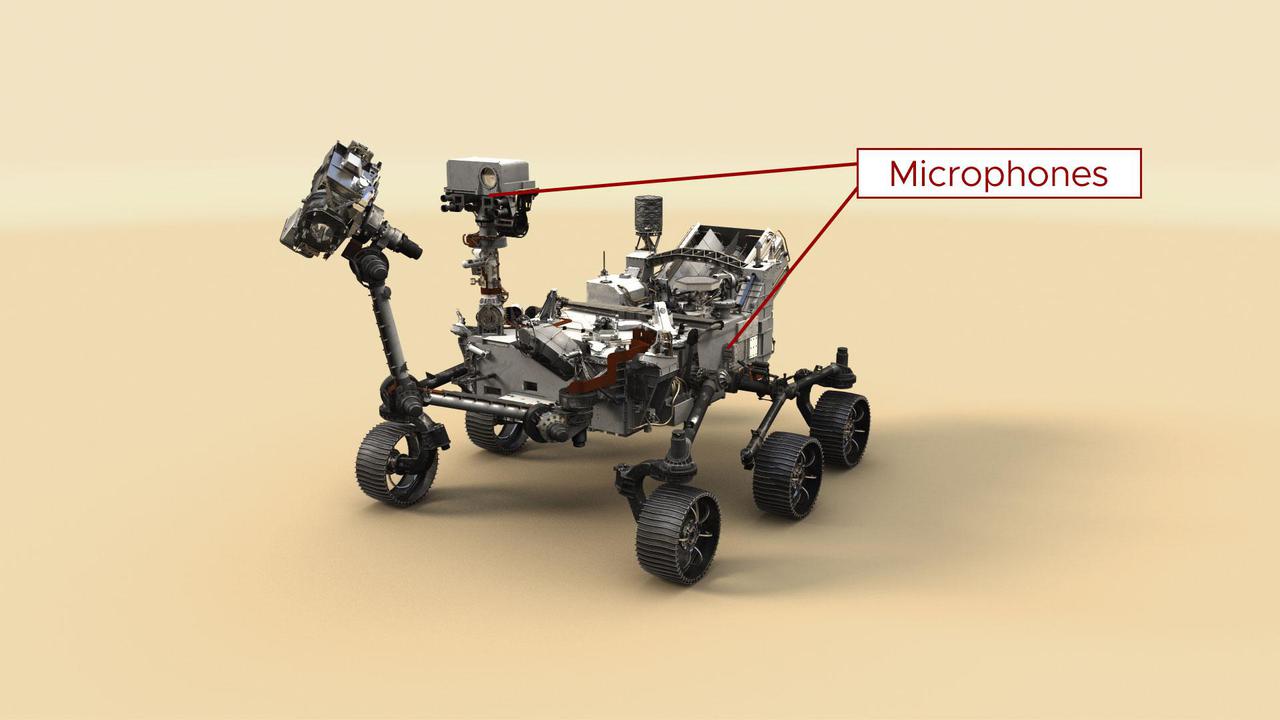
This illustration of NASA's Perseverance Mars rover indicates the placement of the spacecraft's two microphones. The microphone on the mast is part of the SuperCam science instrument. The microphone on the side of the rover was intended to capture the sounds of entry, descent, and landing for public engagement. A key objective for Perseverance's mission on Mars is astrobiology, including the search for signs of ancient microbial life. The rover will characterize the planet's geology and past climate, pave the way for human exploration of the Red Planet, and be the first mission to collect and cache Martian rock and regolith (broken rock and dust). Subsequent NASA missions, in cooperation with ESA (European Space Agency), would send spacecraft to Mars to collect these sealed samples from the surface and return them to Earth for in-depth analysis. The Mars 2020 Perseverance mission is part of NASA's Moon to Mars exploration approach, which includes Artemis missions to the Moon that will help prepare for human exploration of the Red Planet. https://photojournal.jpl.nasa.gov/catalog/PIA24931
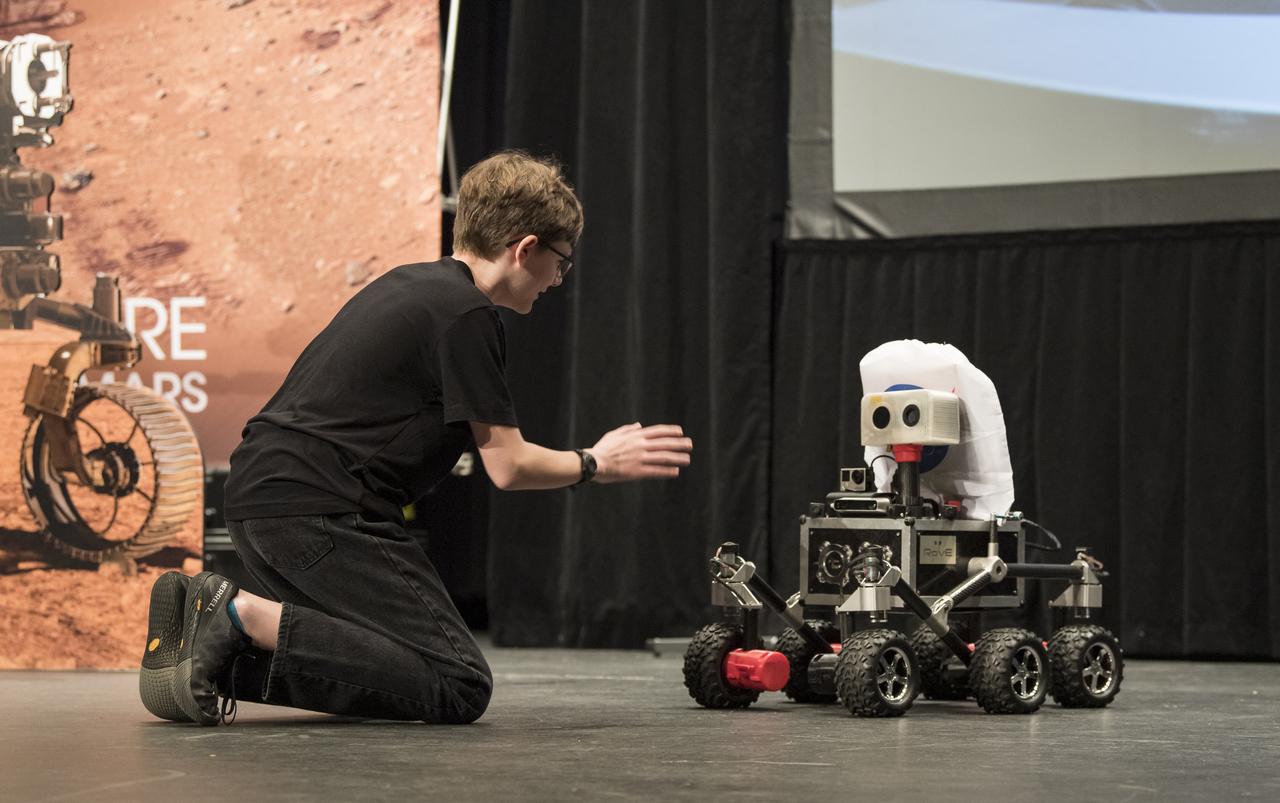
ROV-E, a new Mars outreach rover, rolls toward Alex Mather, the student whose submission, Perseverance, was chosen as the official name of the Mars 2020 rover, with NASA handouts at an event to announce the official name of the rover, Thursday, March 5, 2020, at Lake Braddock Secondary School in Burke, Va. The final selection of the new name, Perseverance, was made by Associate Administrator of NASA's Science Mission Directorate, Thomas Zurbuchen, following a nationwide naming contest conducted in 2019 that drew more than 28,000 essays by K-12 students from every U.S. state and territory. The rover is currently at NASA's Kennedy Space Center in Florida being prepared for launch this summer. Photo Credit: (NASA/Aubrey Gemignani)
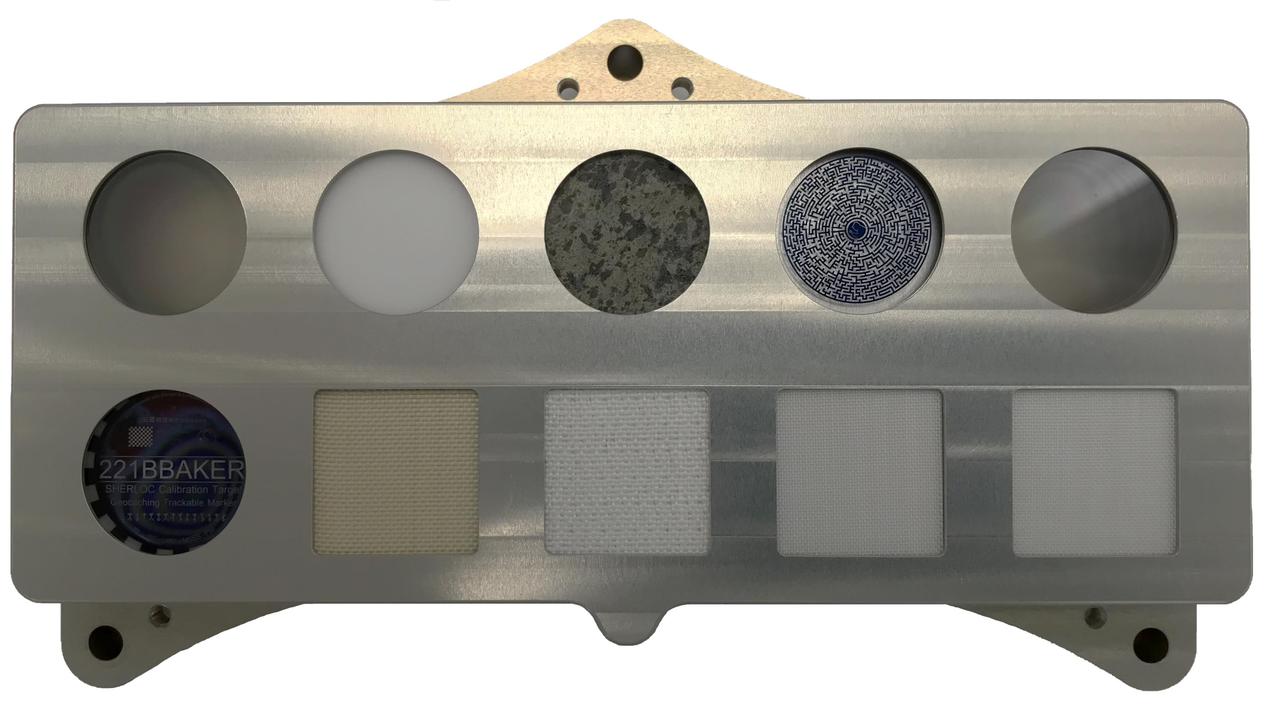
The calibration target for SHERLOC (Scanning Habitable Environments with Raman & Luminescence for Organics & Chemicals) an instrument on the end of the Perseverance Mars rover's 7-foot-long (3-meter-long) robotic arm, includes a geocaching target, spacesuit materials, and a slice of a Martian meteorite. Scientists rely on calibration targets to fine-tune instrument settings using materials with known properties. The bottom row of this target features spacesuit materials that scientists will observe to see how they react over time to the irradiated Martian atmosphere. The first sample at left is polycarbonate for use in a helmet visor; inscribed with the address of the fictional detective Sherlock Holmes, it doubles as a geochache for the public. Other materials in the bottom row, from left: Vectran; Ortho-Fabric; Teflon; coated Teflon. Top row, from left: aluminum gallium nitride on sapphire; a quartz diffuser; a slice of Martian meteorite; a maze for testing laser intensity; a separate aluminum gallium nitride on sapphire with different properties. https://photojournal.jpl.nasa.gov/catalog/PIA24261

DC Agle, with NASA’s Jet Propulsion Laboratory, moderates a Mars 2020 Mission Engineering and Science Briefing at NASA’s Kennedy Space Center in Florida on July 27, 2020. The Mars Perseverance rover is scheduled to launch July 30, on a United Launch Alliance Atlas V 541 rocket from Space Launch Complex 41 at nearby Cape Canaveral Air Force Station. The rover is part of NASA’s Mars Exploration Program, a long-term effort of robotic exploration of the Red Planet. The rover will search for habitable conditions in the ancient past and signs of past microbial life on Mars. The Launch Services Program at Kennedy is responsible for launch management.
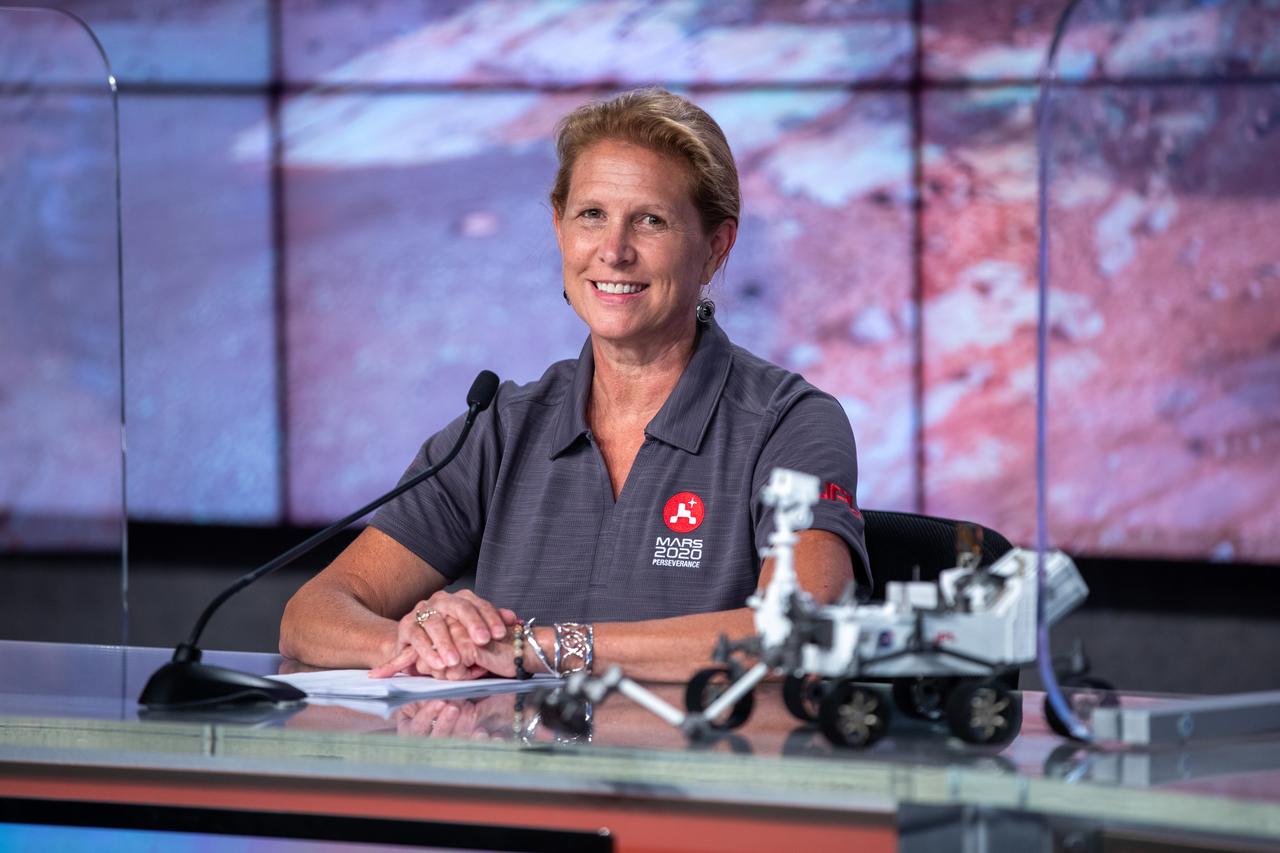
Lori Glaze, Planetary Science Division director, NASA Headquarters, participates in a Mars 2020 Mission Engineering and Science Briefing at NASA’s Kennedy Space Center in Florida on July 27, 2020. The Mars Perseverance rover is scheduled to launch July 30, on a United Launch Alliance Atlas V 541 rocket from Space Launch Complex 41 at nearby Cape Canaveral Air Force Station. The rover is part of NASA’s Mars Exploration Program, a long-term effort of robotic exploration of the Red Planet. The rover will search for habitable conditions in the ancient past and signs of past microbial life on Mars. The Launch Services Program at Kennedy is responsible for launch management.

Ken Farley, project scientist, California Institute of Technology, participates in a Mars 2020 Mission Engineering and Science Briefing at NASA’s Kennedy Space Center in Florida on July 27, 2020. The Mars Perseverance rover is scheduled to launch July 30, on a United Launch Alliance Atlas V 541 rocket from Space Launch Complex 41 at nearby Cape Canaveral Air Force Station. The rover is part of NASA’s Mars Exploration Program, a long-term effort of robotic exploration of the Red Planet. The rover will search for habitable conditions in the ancient past and signs of past microbial life on Mars. The Launch Services Program at Kennedy is responsible for launch management.
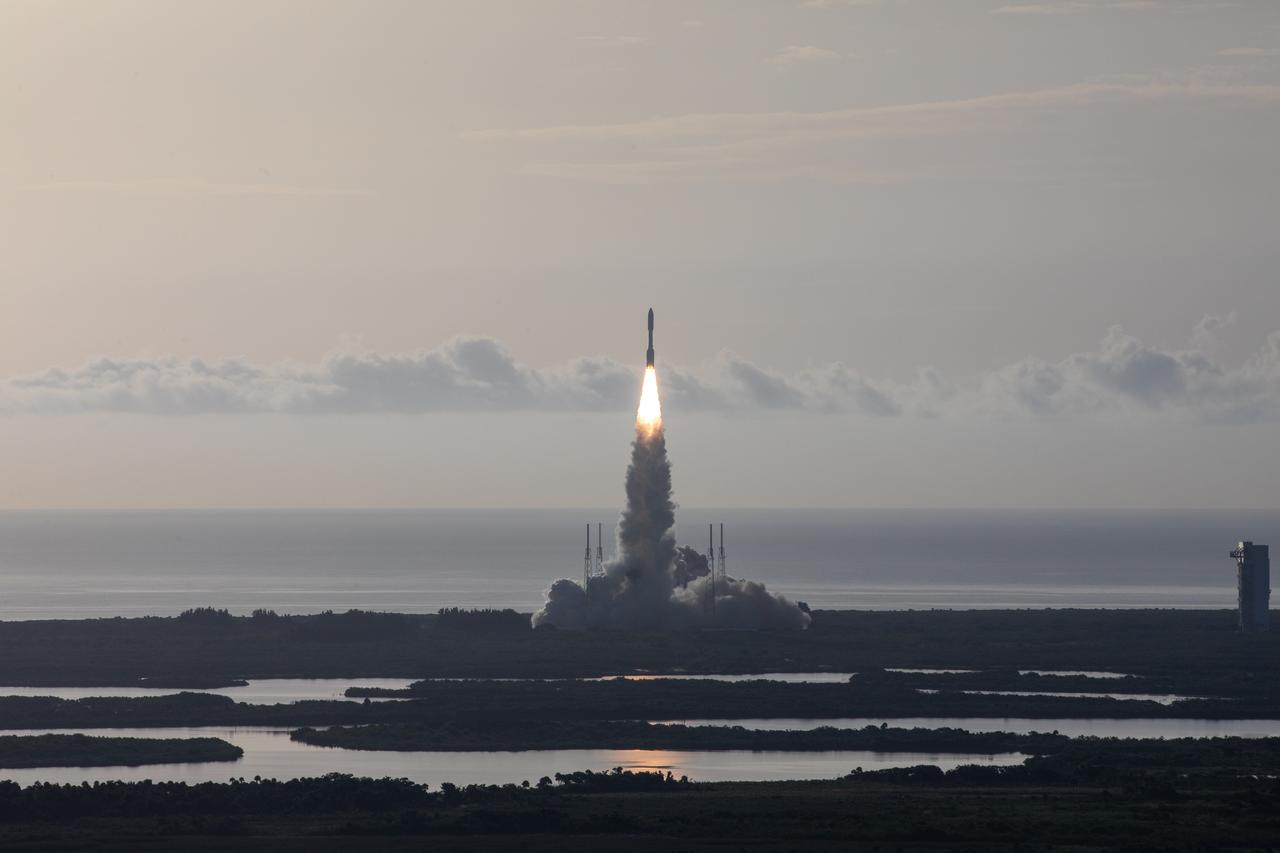
A United Launch Alliance Atlas V 541 rocket climbs upward after lifting off from Space Launch Complex 41 at Cape Canaveral Air Force Station in Florida on July 30, 2020, at 7:50 a.m. EDT, carrying NASA’s Mars Perseverance rover and Ingenuity helicopter. The rover is part of NASA’s Mars Exploration Program, a long-term effort of robotic exploration of the Red Planet. The rover’s seven instruments will search for habitable conditions in the ancient past and signs of past microbial life on Mars. The Launch Services Program at Kennedy is responsible for launch management.
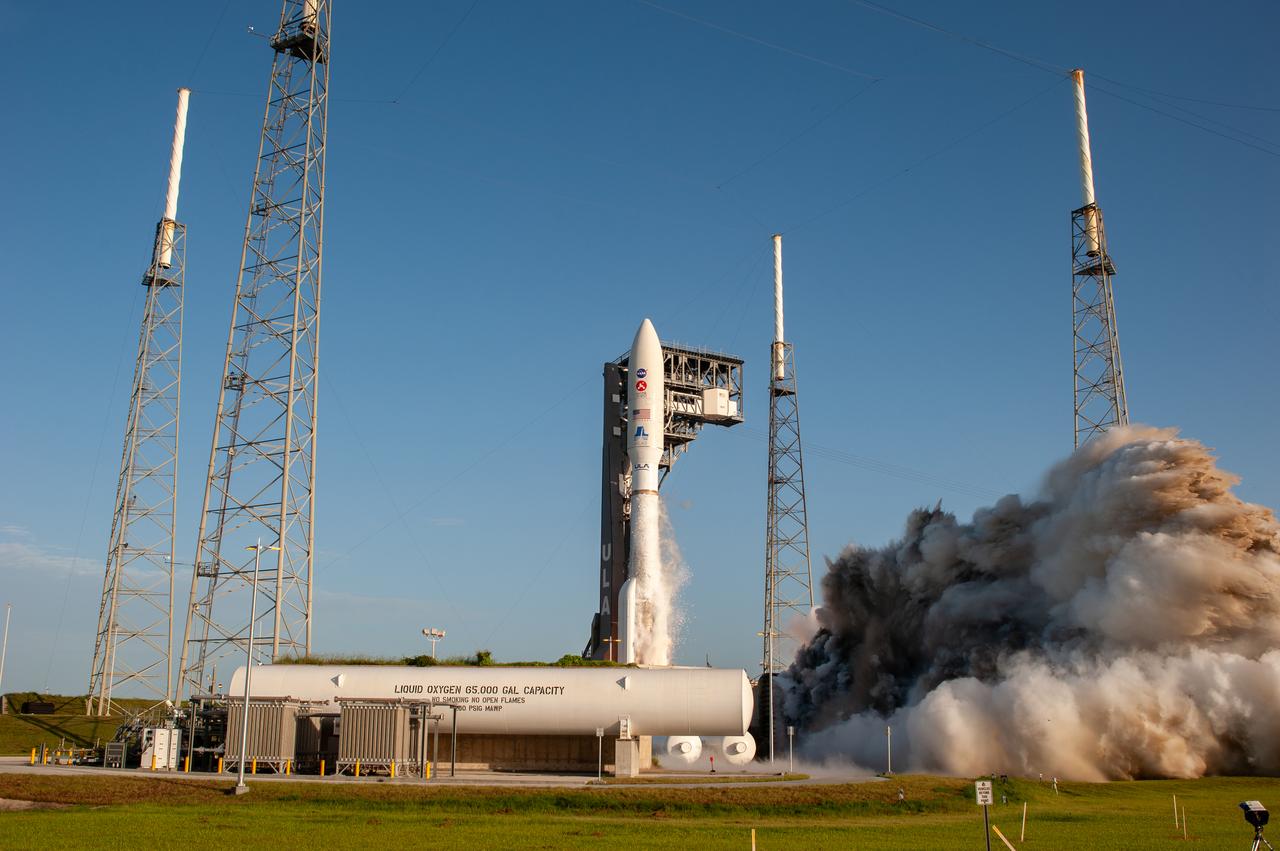
With blue sky as a backdrop, a United Launch Alliance Atlas V 541 rocket lifts off from Space Launch Complex 41 at Cape Canaveral Air Force Station in Florida on July 30, 2020, at 7:50 a.m. EDT, carrying NASA’s Mars Perseverance rover and Ingenuity helicopter. The rover is part of NASA’s Mars Exploration Program, a long-term effort of robotic exploration of the Red Planet. The rover’s seven instruments will search for habitable conditions in the ancient past and signs of past microbial life on Mars. The Launch Services Program at Kennedy is responsible for launch management.
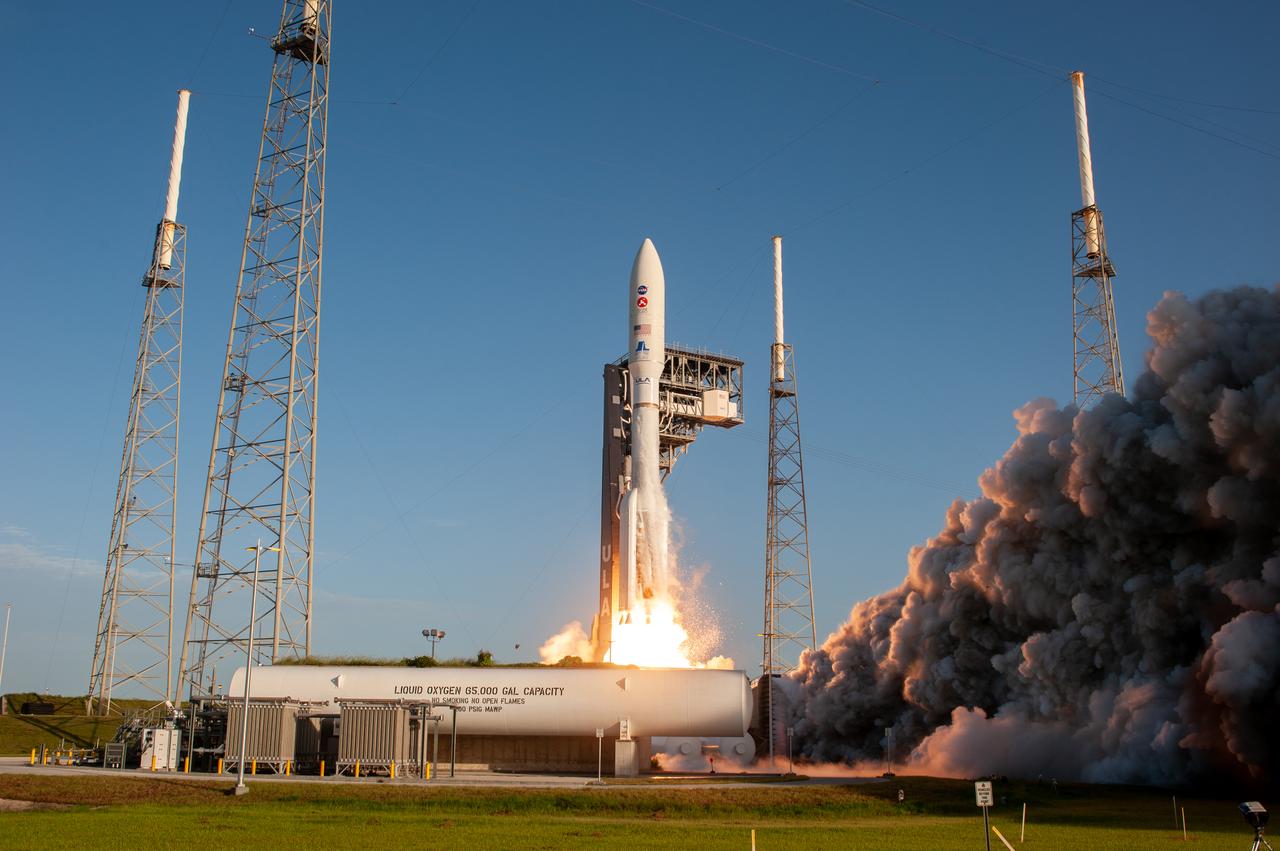
With blue sky as a backdrop, a United Launch Alliance Atlas V 541 rocket lifts off from Space Launch Complex 41 at Cape Canaveral Air Force Station in Florida on July 30, 2020, at 7:50 a.m. EDT, carrying NASA’s Mars Perseverance rover and Ingenuity helicopter. The rover is part of NASA’s Mars Exploration Program, a long-term effort of robotic exploration of the Red Planet. The rover’s seven instruments will search for habitable conditions in the ancient past and signs of past microbial life on Mars. The Launch Services Program at Kennedy is responsible for launch management.
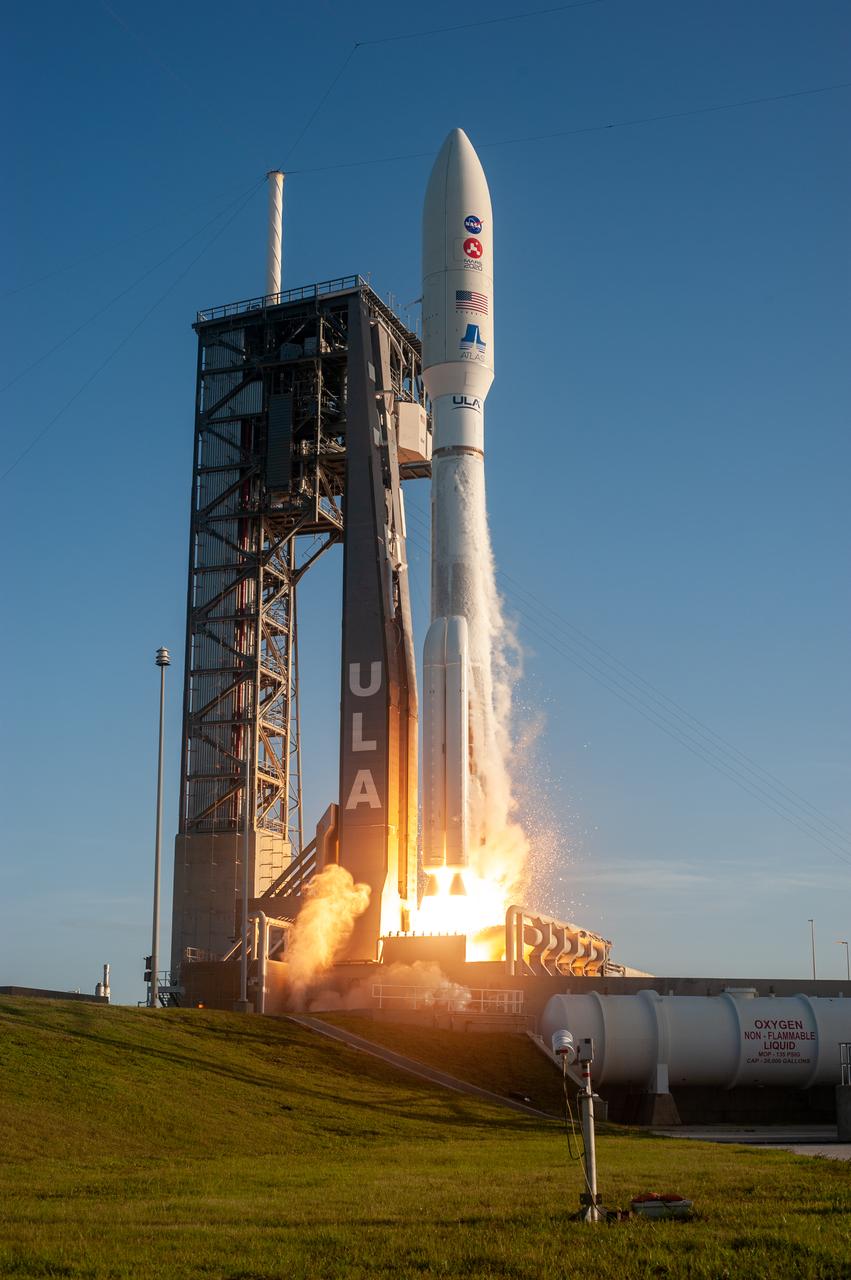
A United Launch Alliance Atlas V 541 rocket lifts off from Space Launch Complex 41 at Cape Canaveral Air Force Station in Florida on July 30, 2020, at 7:50 a.m. EDT, carrying NASA’s Mars Perseverance rover and Ingenuity helicopter. The rover is part of NASA’s Mars Exploration Program, a long-term effort of robotic exploration of the Red Planet. The rover’s seven instruments will search for habitable conditions in the ancient past and signs of past microbial life on Mars. The Launch Services Program at Kennedy is responsible for launch management.