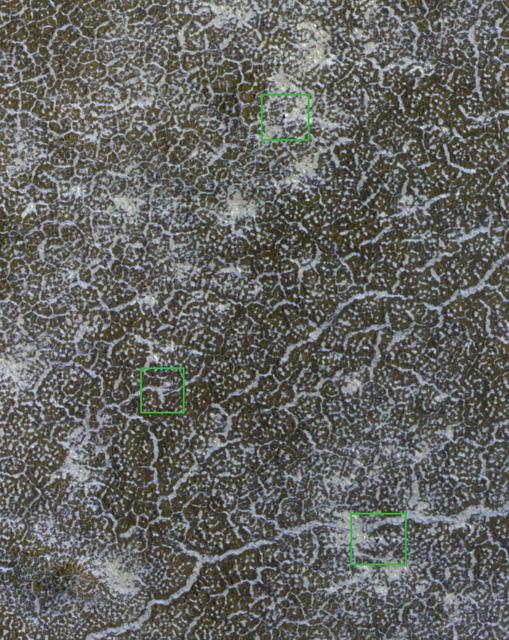
NASA Phoenix Mars Lander, its backshell and heatshield visible within this enhanced-color image of the Phoenix landing site taken on Jan. 6, 2010 by the High Resolution Imaging Science Experiment HiRISE camera on NASA Mars Reconnaissance Orbiter.
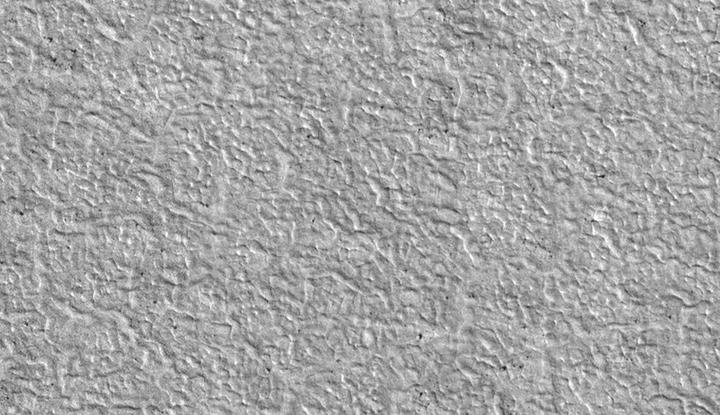
This view shows the texture of the ground in the area that was favored as a landing site for NASA Phoenix Mars Lander mission. The pattern resembles permafrost terrain on Earth, where cycles of thawing and freezing cause cracking into polygon shapes.
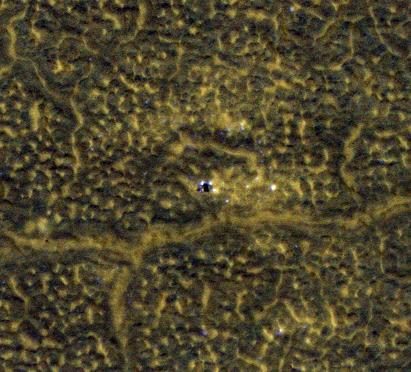
This image, taken Jan. 26, 2012, shows NASA no-longer-active Phoenix Mars Lander spacecraft after its second Martian arctic winter.
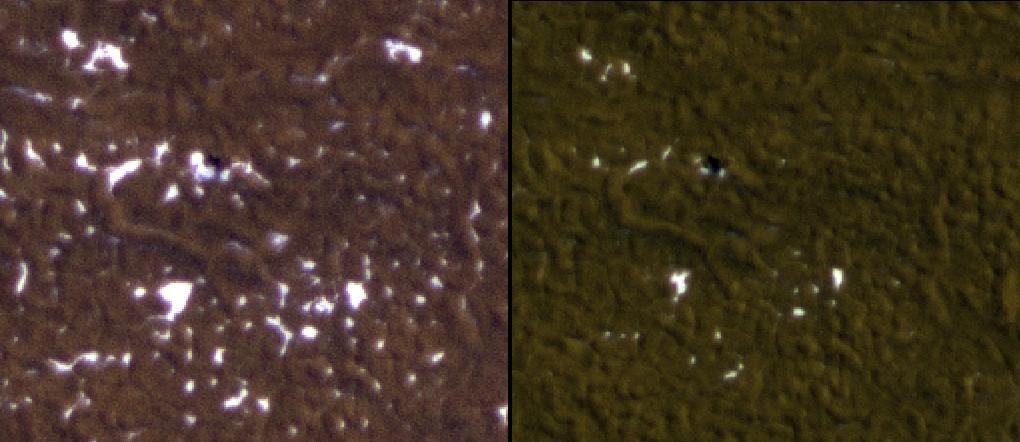
Stages in the seasonal disappearance of surface ice from the ground around the Phoenix Mars Lander are visible in these images taken by NASA Mars Reconnaissance Rover on 2-8-2010 and 2-25-2010, during springtime on northern Mars.
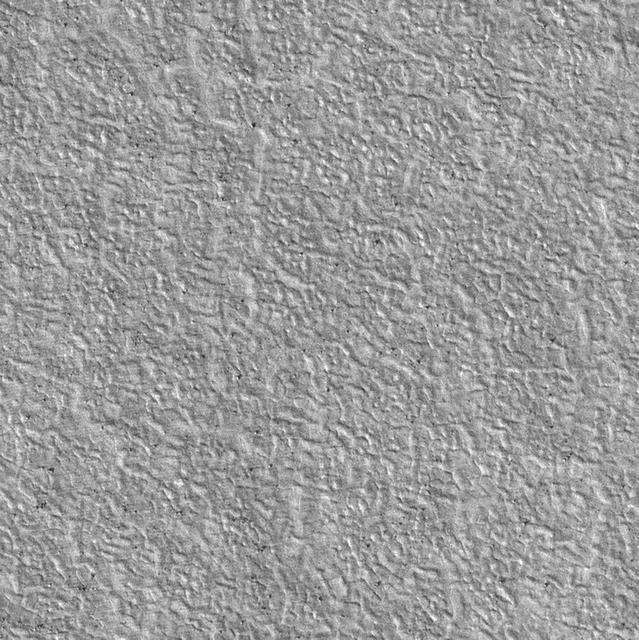
Sweet Spot for Landing on Mars
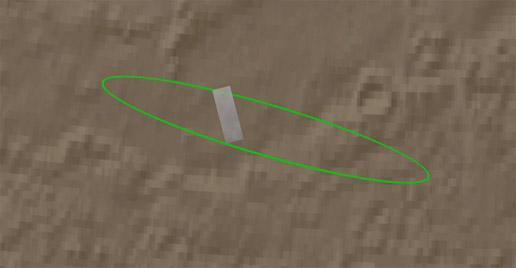
This animation zooms in on the area on Mars where NASA Phoenix Mars Lander will touchdown on May 25, 2008. The image was taken by the High Resolution Imaging Science Experiment HiRISE camera on NASA Mars Reconnaissance Orbiter.
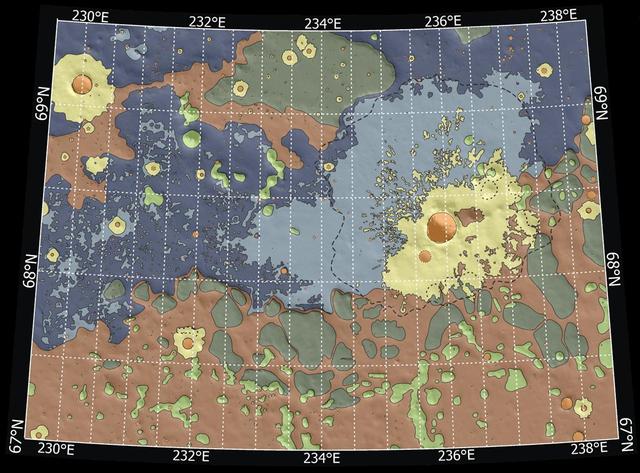
Launch date makes a difference in the orientation of ellipses marking where NASA Phoenix Mars Lander would have a high probability of landing, given the planned targeting for the spring 2008 landing site.
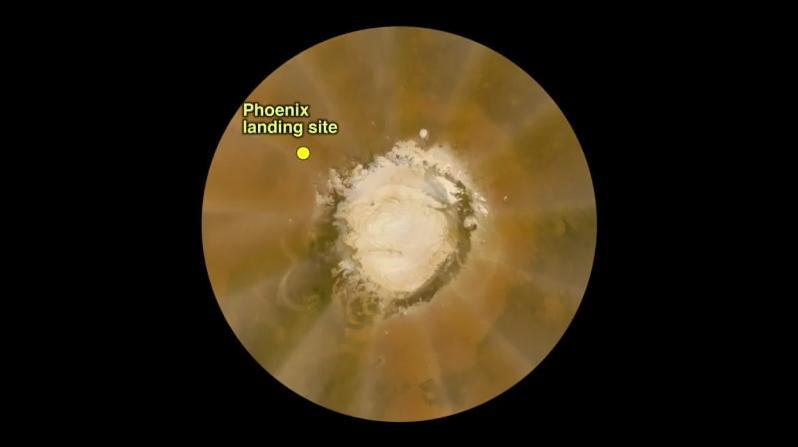
Scientists were anticipating clear skies when NASA Phoenix Mars Lander arrives on the north polar plains of the Red Planet Sunday, May 25, 2008.
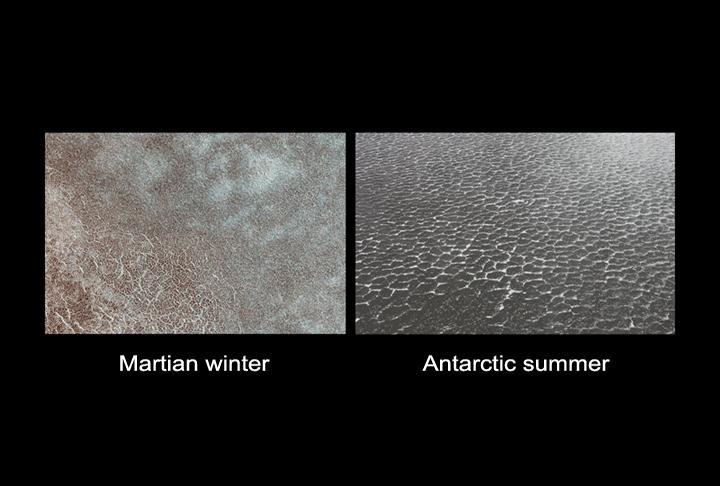
Polygon Patterned Ground on Mars and on Earth

Late-summer Martian Dust Storm
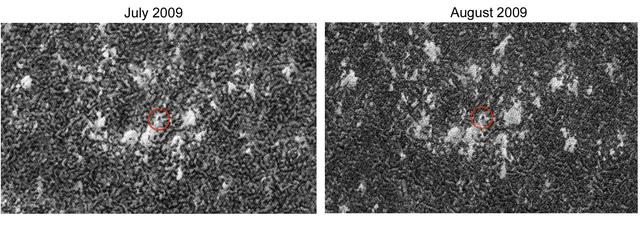
The High Resolution Imaging Science Experiment camera on NASA Mars Reconnaissance Orbiter captured winter images of NASA Phoenix Mars Lander surrounded by dry-ice frost on Mars.
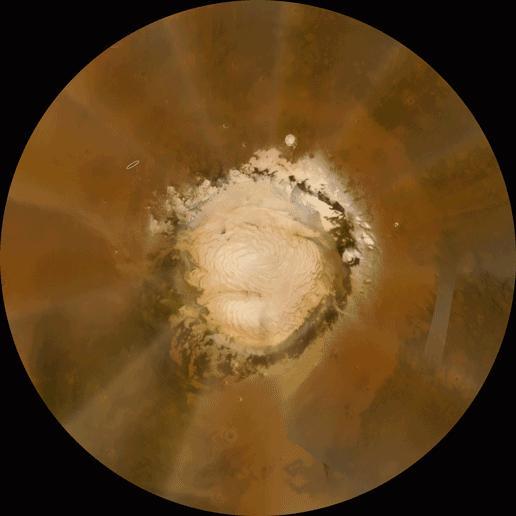
This false-color polar map was generated from images obtained by the Mars Reconnaissance Orbiter Mars Color Imager MARCI. It shows a large local dust storm that researchers were monitoring on May 25, 2008.
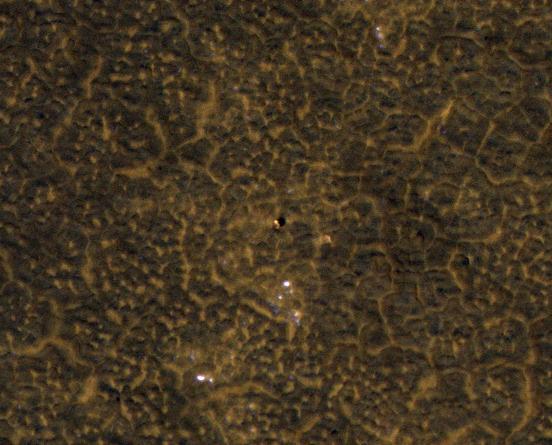
This image, taken Jan. 26, 2012, shows the back shell of NASA Phoenix Mars Lander spacecraft after its second Martian arctic winter.
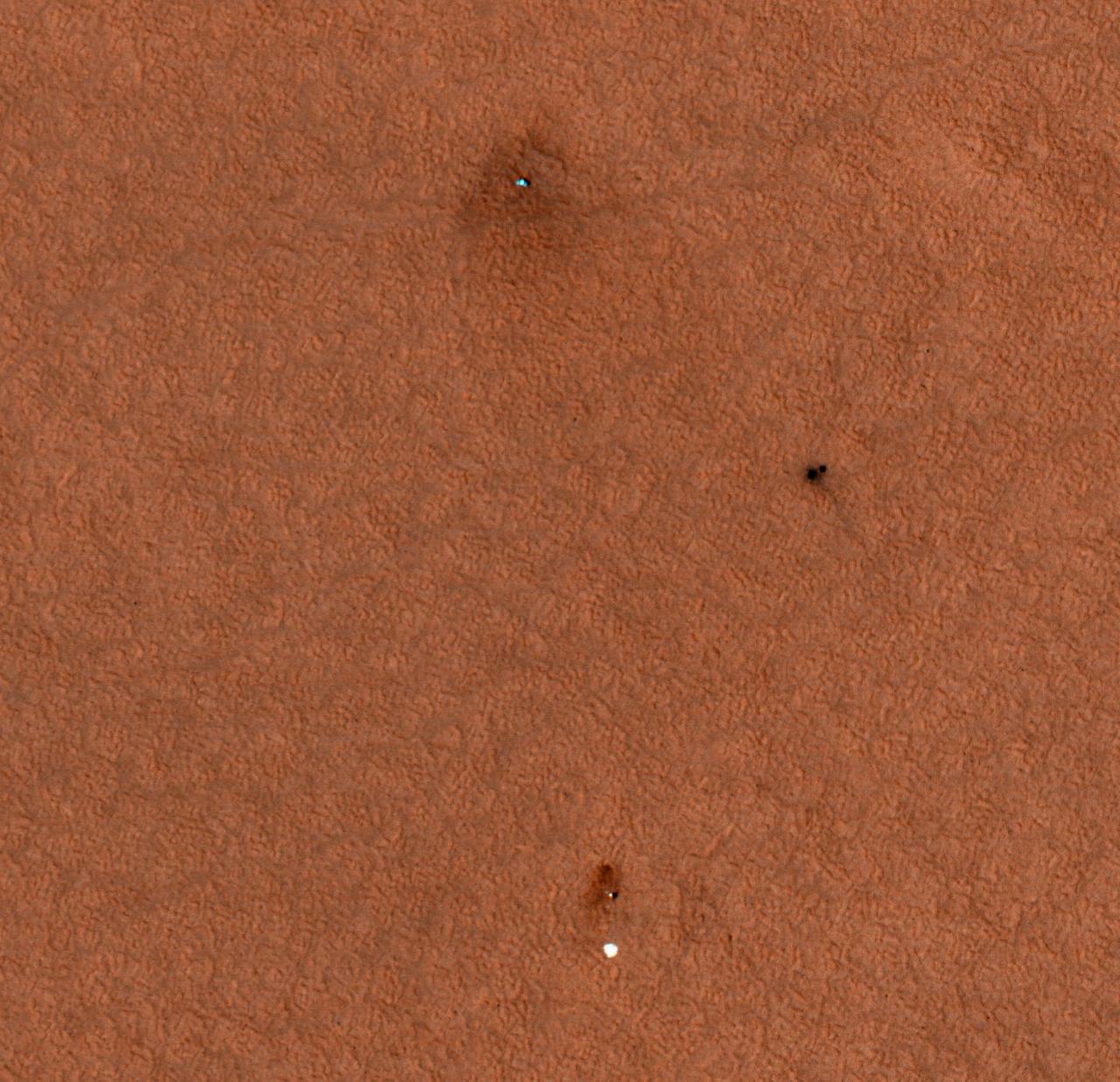
Connecting the Dots: Lander, Heat Shield, Parachute
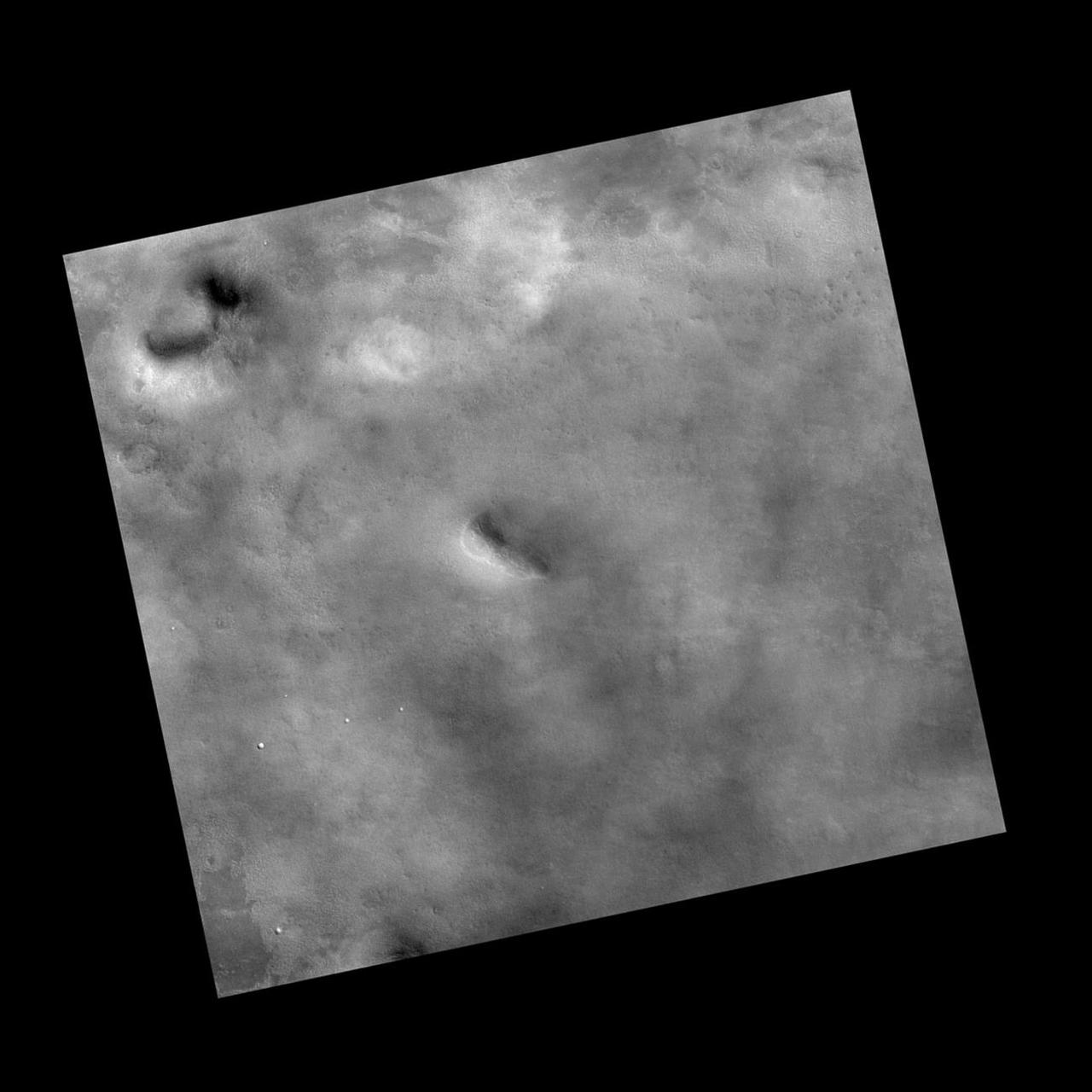
This view covers an area within the planned landing area for NASA Phoenix Mars Lander. It was taken by the Context Camera on NASA Mars Reconnaissance Orbiter.
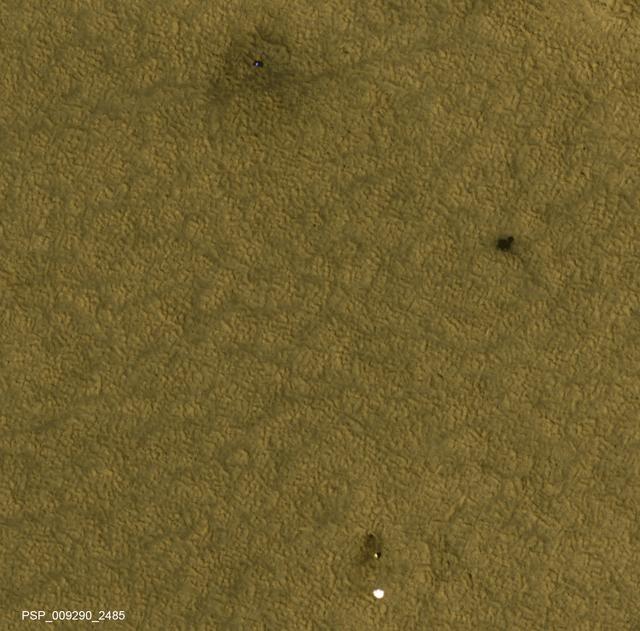
This is one of two images taken nearly a decade apart of NASA's Mars Phoenix Lander and related hardware around the mission's May 25, 2008, landing site on far-northern Mars. By late 2017, dust had obscured much of what was visible two months after the landing. Both images were taken by the High Resolution Imaging Science Experiment (HiRISE) camera on NASA's Mars Reconnaissance Orbiter. The one with three patches of darker ground -- where landing events removed dust -- was taken on July 20, 2008. It is Fig. 1, an excerpt of HiRISE observation PSP_009290_2485. The one with a more even coating of pale dust throughout the area was taken on Dec. 21, 2017. It is Fig. 2, an excerpt of HiRISE observation ESP_053451_2485. Both cover an area roughly 300 meters wide at 68 degrees north latitude, 234 degrees east longitude, and the two are closely matched in viewing and illumination geometry, from about five Martian years apart in northern hemisphere summers. An animation comparing the two images shows a number of changes between mid-2008 and late 2017. The lander (top) appears darker, and is now covered by dust. The dark spot created by the heat shield impact (right) is brighter, again due to dust deposition. The back shell and parachute (bottom) shows a darker parachute and brighter area of impact disturbance, thanks again to deposits of dust. We also see that the parachute has shifted in the wind, moving to the east. In August 2008, Phoenix completed its three-month mission studying Martian ice, soil and atmosphere. The lander worked for two additional months before reduced sunlight caused energy to become insufficient to keep the lander functioning. The solar-powered robot was not designed to survive through the dark and cold conditions of a Martian arctic winter. An animation and both images are available at https://photojournal.jpl.nasa.gov/catalog/PIA22223