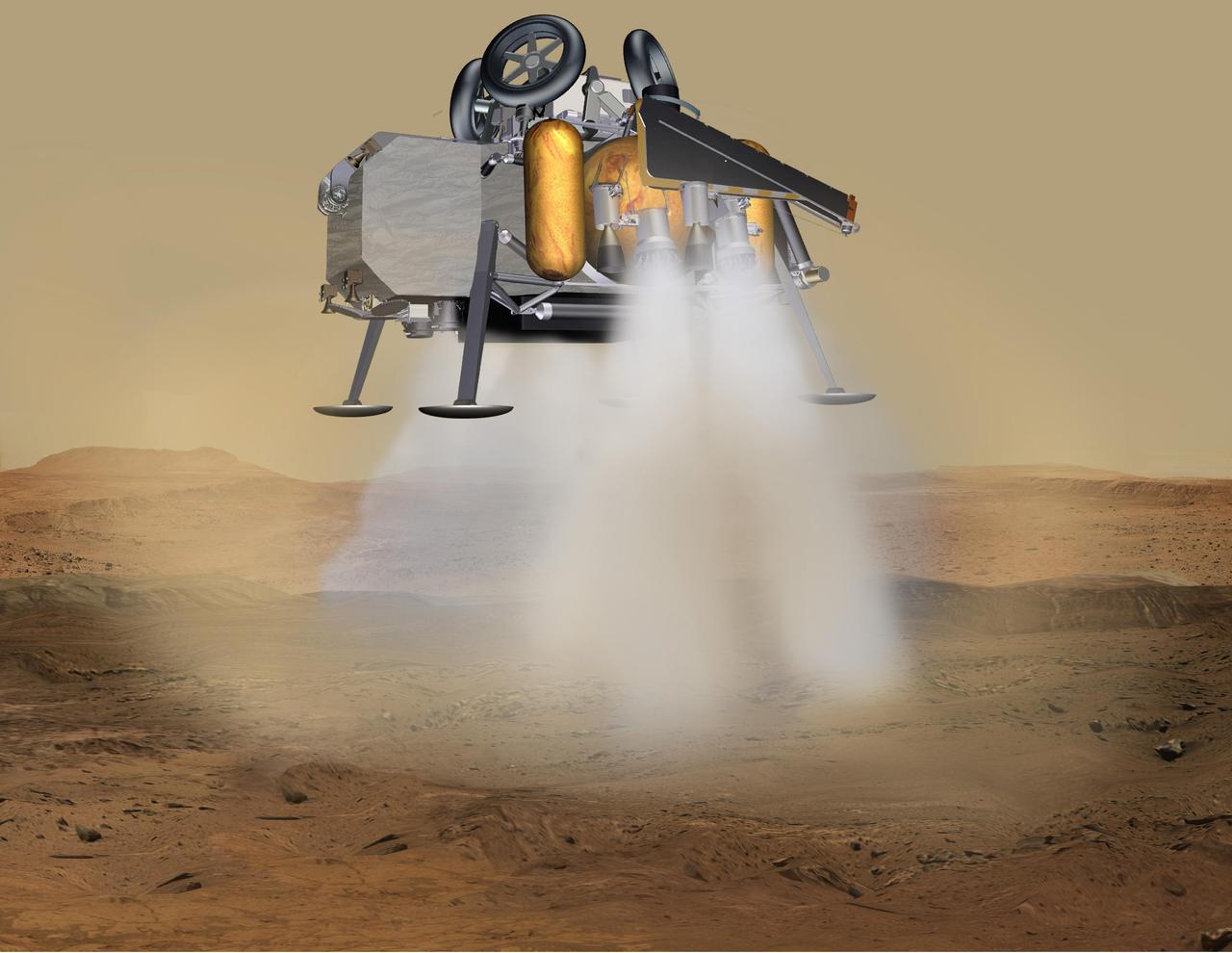
In this illustration of a Mars sample return mission concept, a lander carrying a fetch rover touches down on the surface of Mars. NASA and the European Space Agency (ESA) are solidifying concepts for a Mars sample return mission after NASA's Mars 2020 rover collects rock and soil samples, storing them in sealed tubes on the planet's surface for future return to Earth. NASA will deliver a Mars lander in the vicinity of Jezero Crater, where Mars 2020 will have collected and cached samples. The lander will carry a NASA rocket (the Mars Ascent Vehicle), along with ESA's Sample Fetch Rover that is roughly the size of NASA's Opportunity Mars rover. The fetch rover will gather the cached samples and carry them back to the lander for transfer to the ascent vehicle; additional samples could also be delivered directly by Mars 2020. The ascent vehicle will then launch a special container holding the samples into Mars orbit. ESA will put a spacecraft in orbit around Mars before the ascent vehicle launches. This spacecraft will rendezvous with and capture the orbiting samples before returning them to Earth. NASA will provide the payload module for the orbiter. https://photojournal.jpl.nasa.gov/catalog/PIA23494
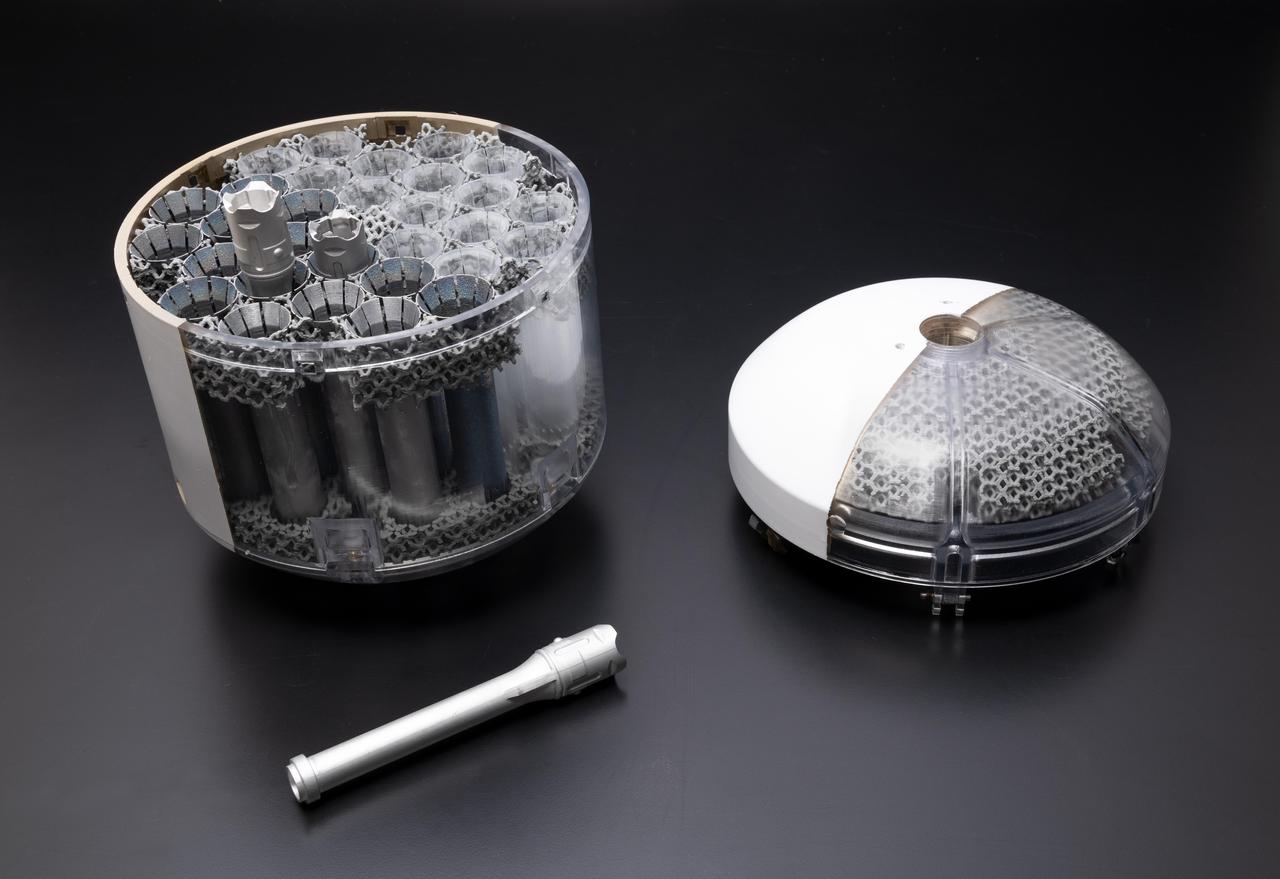
This image shows a concept model of NASA's orbiting sample container, which will hold tubes of Martian rock and soil samples that will be returned to Earth through a Mars sample return campaign. At right is the lid; bottom left sits a model of the sample-holding tube. The sample container will help keep contents at less than about 86 degrees Fahrenheit (30 degrees Celsius) to help preserve the Mars material in its most natural state. NASA and the European Space Agency (ESA) are solidifying concepts for a Mars sample return mission after NASA's Mars 2020 rover collects rock and soil samples and stores them in sealed tubes on the planet's surface for future return to Earth. In the new campaign, NASA will deliver a Mars lander in the vicinity of Jezero Crater, where Mars 2020 will have collected and cached samples. The lander will carry a NASA rocket (the Mars Ascent Vehicle) along with an ESA Sample Fetch Rover that is roughly the size of NASA's Opportunity Mars rover. The fetch rover will gather the cached samples and carry them back to the lander for transfer to an orbiting sample container embedded in the ascent vehicle; additional samples could also be delivered directly by Mars 2020. The ascent vehicle will then launch the container holding the samples into Mars orbit. ESA will put a spacecraft in orbit around Mars before the ascent vehicle launches. This spacecraft will rendezvous with the orbiting sample container and also carry a NASA payload that can capture and contain the sample container before returning the samples to Earth. https://photojournal.jpl.nasa.gov/catalog/PIA23712
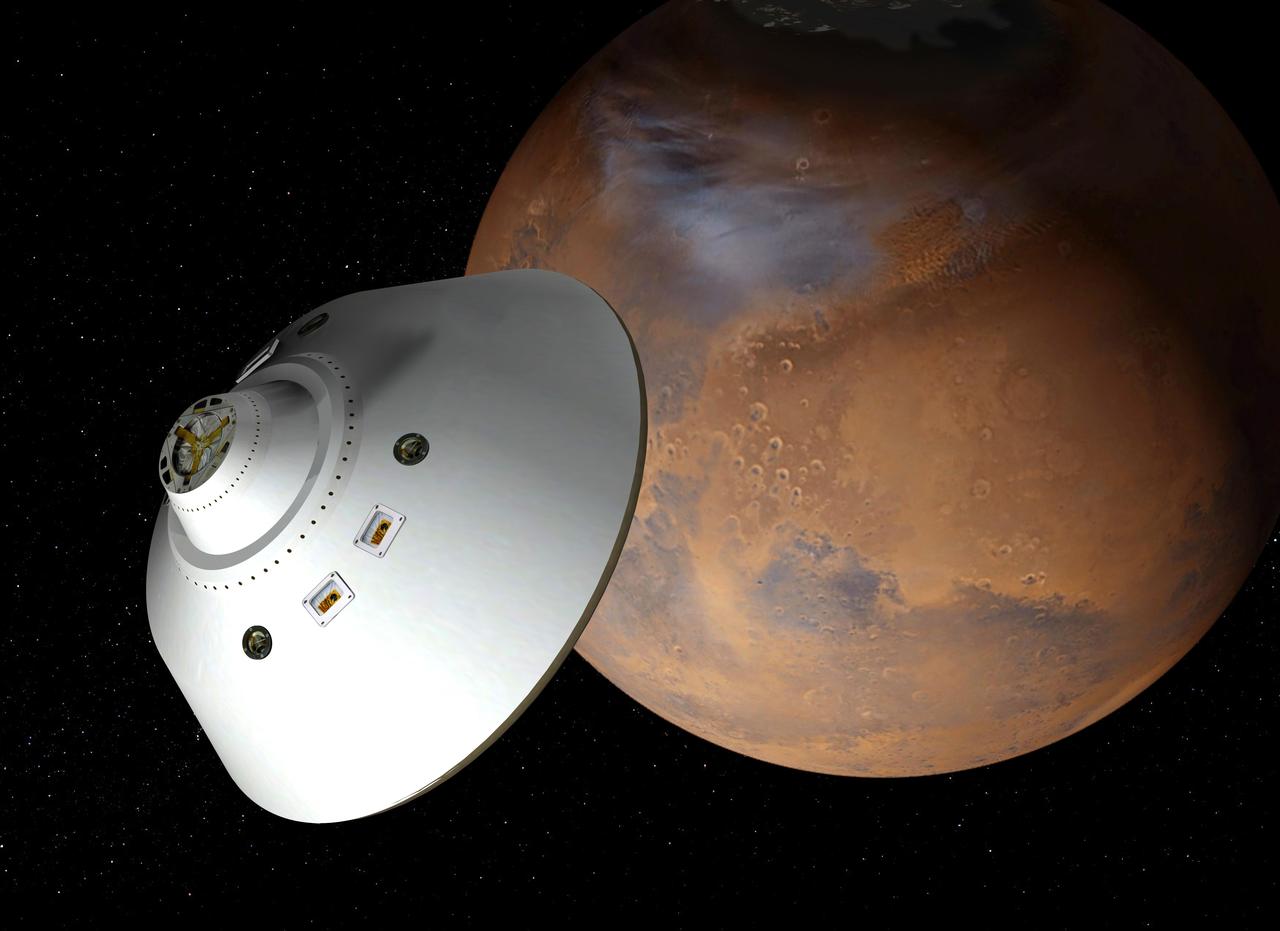
This artist concept of a proposed Mars sample return mission portrays an aeroshell-encased spacecraft approaching Mars. This spacecraft would put a sample-retrieving rover and an ascent vehicle onto the surface of Mars.

This artist's concept shows Mars Sample Return Earth Entry System. The vehicle would bring curated Martian samples collected by NASA's Perseverance Rover on the final leg of their journey from Mars to Earth. The illustration shows the Earth Entry System, a capsule about 4 feet (1.25 meters) in diameter, on its final approach to Earth, after being ejected from the Earth Return Orbiter. Once in Earth's atmosphere, it would take the vehicle about six minutes to land at the U.S. Air Force's Utah Test and Training Range in west-central Utah. Velocity at time of touchdown for the parachute-less capsule is expected to be about 90 mph (40 meters per second). The Earth Entry System is part of the multi-mission Mars Sample Return program being planned by NASA and ESA (European Space Agency). https://photojournal.jpl.nasa.gov/catalog/PIA25986
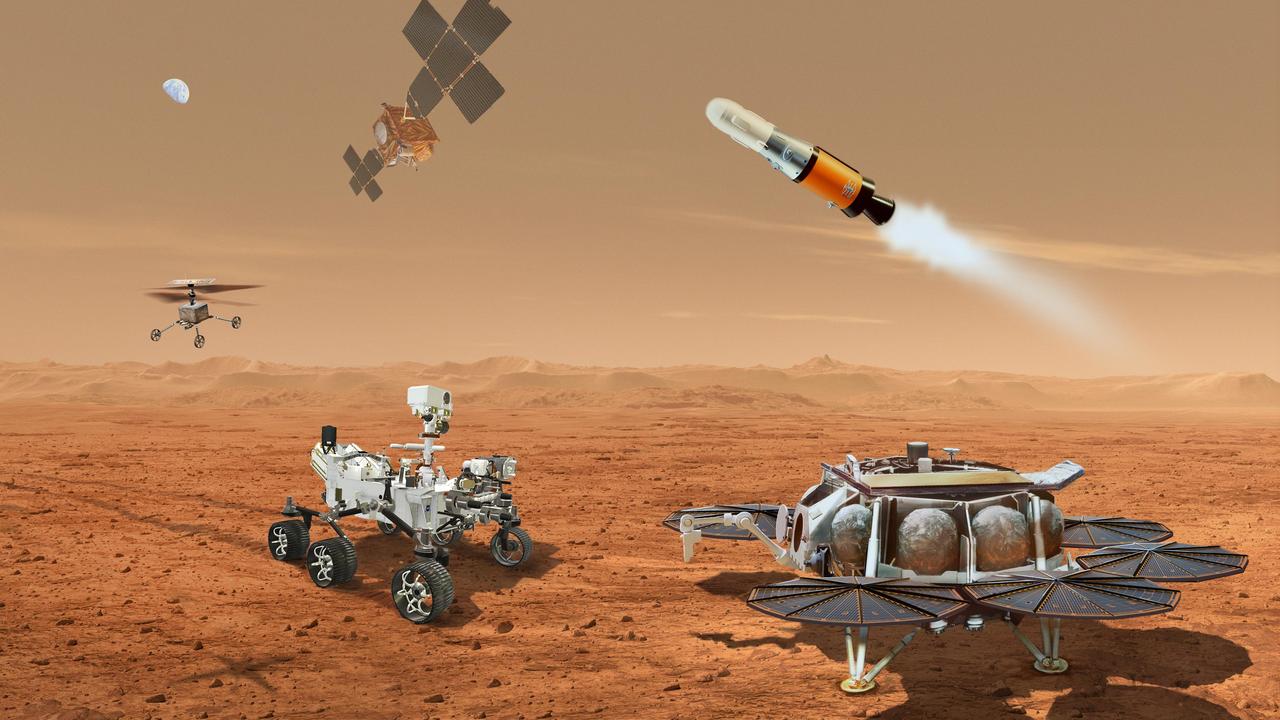
This illustration shows a concept for multiple robots that would team up to ferry to Earth samples of rocks and soil being collected from the Martian surface by NASA's Mars Perseverance rover. NASA and ESA (European Space Agency) are developing concepts for the Mars Sample Return program, designed to retrieve the rock and soil samples Perseverance has collected and stored in sealed tubes. In the future, the samples would be returned to Earth for detailed laboratory analysis. The current concept envisions delivering a Mars lander near Jezero Crater, where Perseverance (far left) collects samples. A NASA-provided Sample Retrieval Lander (far right) would carry a NASA rocket (the Mars Ascent Vehicle). Perseverance would gather sample tubes it has cached on the Mars surface and transport them to the Sample Retrieval Lander, where they would then be transferred by a Sample Transfer Arm provided by ESA onto the Mars Ascent Vehicle. The arm is based on a human arm, with an elbow, shoulder, and wrist. The Mars Ascent Vehicle would launch a container with the sample tubes inside into orbit. Waiting in Mars orbit would be an ESA-provided Earth Return Obiter, which would rendezvous with and capture the Orbiting Sample Container using a NASA-provided Capture, Containment, and Return System. This system would capture and orient the container, then prepare it for return to Earth inside the Earth Entry System. Also depicted is one of two Sample Recovery Helicopters NASA will develop to be transported to Mars on the Sample Retrieval Lander, just as the Ingenuity helicopter was carried on the Perseverance rover. The helicopters would serve as backups to Perseverance in transporting sample tubes to the Lander. https://photojournal.jpl.nasa.gov/catalog/PIA25326
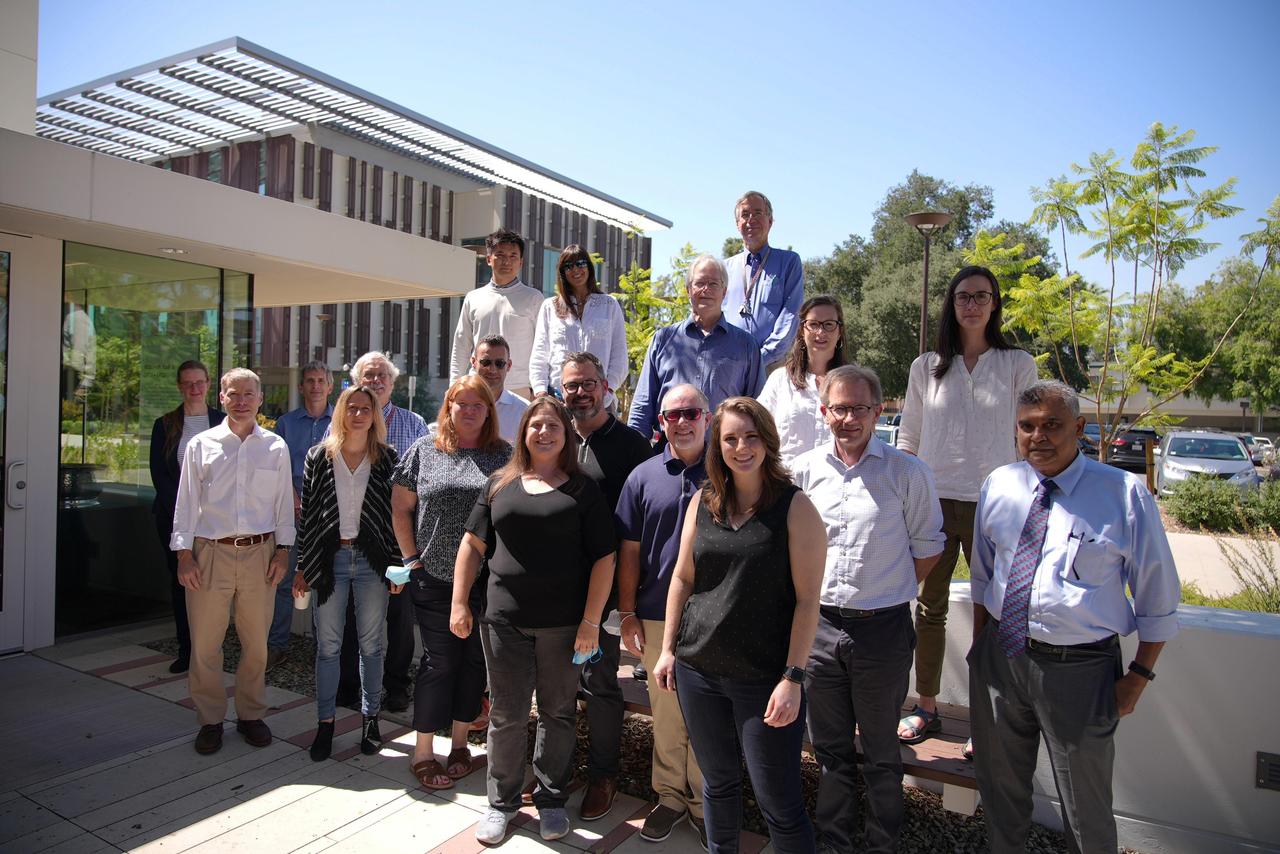
The Mars Sample Return Campaign Science Group gathered at the Keck Institute for Space Studies at Caltech for an initial meeting on June 28-29, 2022. This June 28 photo includes team members who attended in person; several others attended virtually or were not able to participate. The committee will provide oversight with the goal of maximizing the scientific potential of Mars rock and sediment samples that would be returned to Earth for in-depth analysis, as part of the Campaign. https://photojournal.jpl.nasa.gov/catalog/PIA25442

The Mars Sample Return Campaign Science Group gathered for their first meeting, at the Keck Institute for Space Studies at Caltech, and took a group photo. This June 28 photo includes team members who attended in person; several others attended virtually or were not able to participate. The committee will provide oversight with the goal of maximizing the scientific potential of Mars rock and sediment samples that would be returned to Earth for in-depth analysis, as part of the Campaign. https://photojournal.jpl.nasa.gov/catalog/PIA25443

This illustration shows the proposed Capture, Containment, and Return System, a NASA payload on the European Space Agency's Earth Return Orbiter. As part of the Mars Sample Return Campaign, samples collected by NASA's Mars Perseverance Rover would be launched into Mars orbit within sealed tubes inside an Orbiting Sample container. The Earth Return Orbiter would then rendezvous with this container, and the Capture, Containment, and Return System would be tasked with capturing the Orbiting Sample container, orienting it, sterilizing its exterior, and transferring it into a clean zone for secondary containment, toward safe return to Earth. The Capture, Containment, and Return System is part of the multi-mission Mars Sample Return program being planned by NASA and European Space Agency (ESA). https://photojournal.jpl.nasa.gov/catalog/PIA25860
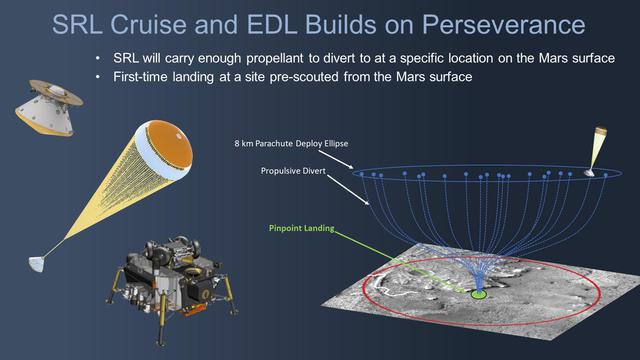
During the NASA Mars 2020 Perseverance rover mission, pristine samples of Mars rock and regolith (broken rock and dust) will be collected and sealed inside collection tubes. At strategic locations during the rover's drive, these tubes will be deposited onto the Martian surface to create collection points, or "depots." This marks the first phase of the Mars Sample Return campaign, which will be followed by the Sample Retrieval Lander mission in the late 2020s. Tasked with collecting these containers for their eventual return to Earth, the Sample Retrieval Lander will be the first Mars mission to land at a specific location already scouted out from the surface. As such, to enable such a precise landing close to one of these depots, the lander will carry enough fuel make a propulsive divert maneuver (powered by its rocket thrusters) after being slowed down sufficiently by its parachute on entering the Martian atmosphere. https://photojournal.jpl.nasa.gov/catalog/PIA24164
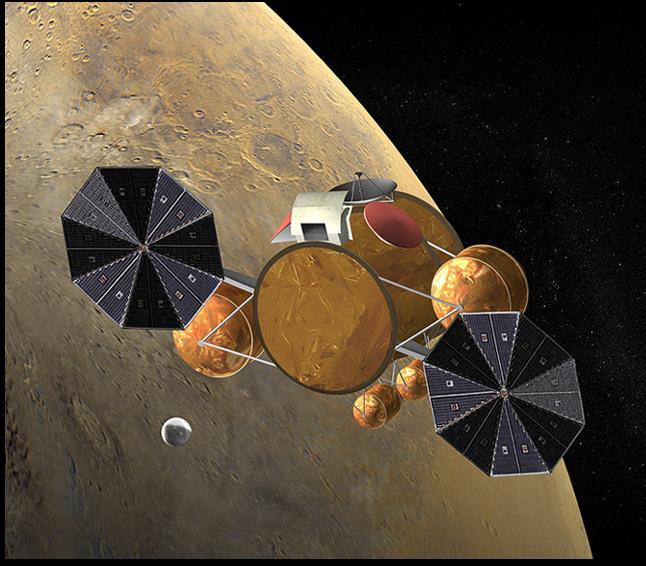
This artist concept of the proposed NASA Mars Sample Return mission shows rendezvous of the orbiting sample container with the Earth return vehicle.
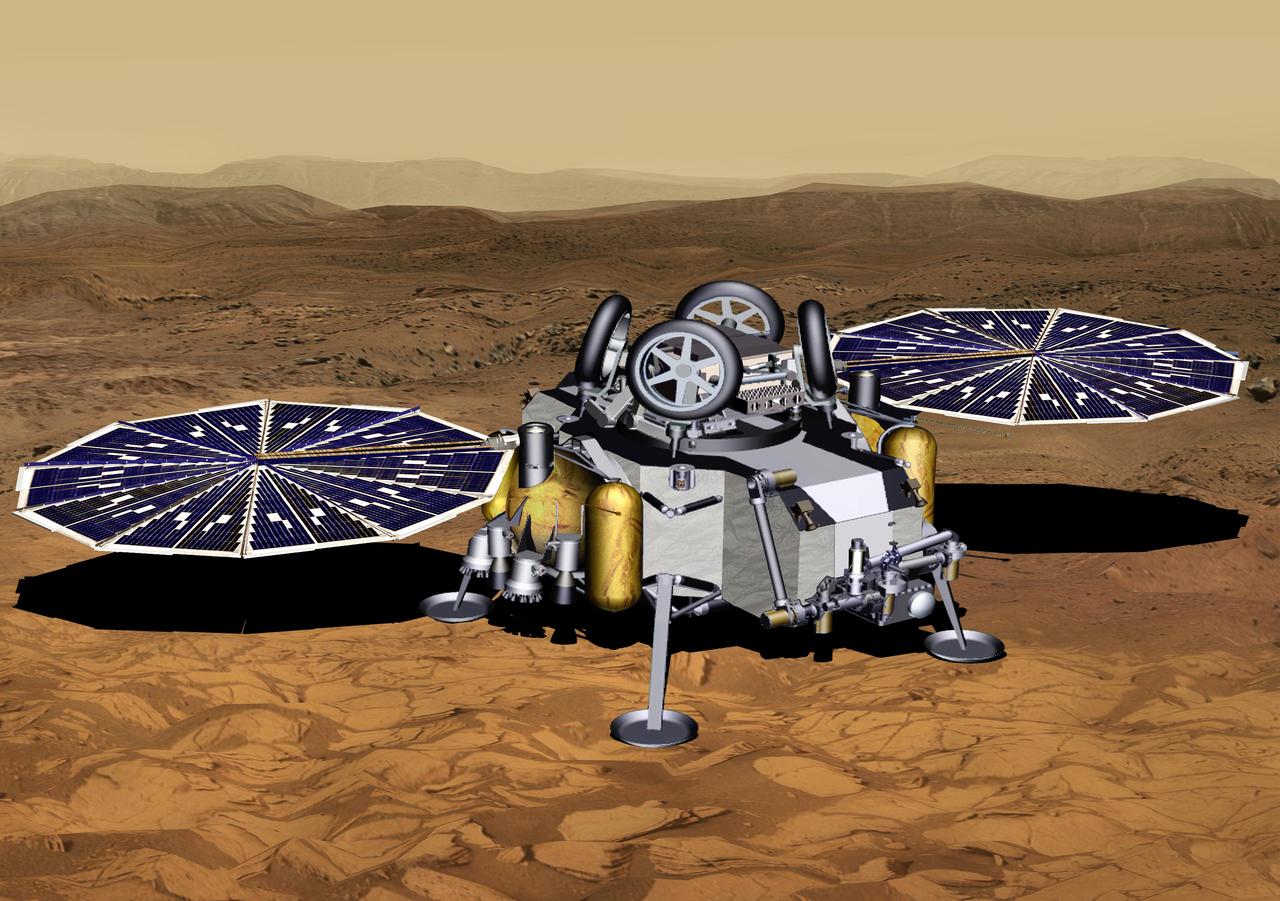
This illustration of a Mars sample return mission's lander concept shows a spacecraft after touchdown on the Red Planet. With its solar planels fully deployed, the spacecraft is ready to begin surface operations. NASA and the European Space Agency are solidifying concepts for a Mars sample return mission after NASA's Mars 2020 rover collects rock and soil samples and stores them in sealed tubes on the planet's surface for potential future return to Earth. NASA will deliver a Mars lander in the vicinity of Jezero Crater, where Mars 2020 will have collected and cached samples. The lander will carry a NASA rocket (the Mars Ascent Vehicle) along with ESA's Sample Fetch Rover that is roughly the size of NASA's Opportunity Mars rover. The fetch rover will gather the cached samples and carry them back to the lander for transfer to the ascent vehicle; additional samples could also be delivered directly by Mars 2020. The ascent vehicle will then launch from the surface and deploy a special container holding the samples into Mars orbit. ESA will put a spacecraft in orbit around Mars before the ascent vehicle launches. This spacecraft will rendezvous with and capture the orbiting samples before returning them to Earth. NASA will provide the payload module for the orbiter. https://photojournal.jpl.nasa.gov/catalog/PIA23711
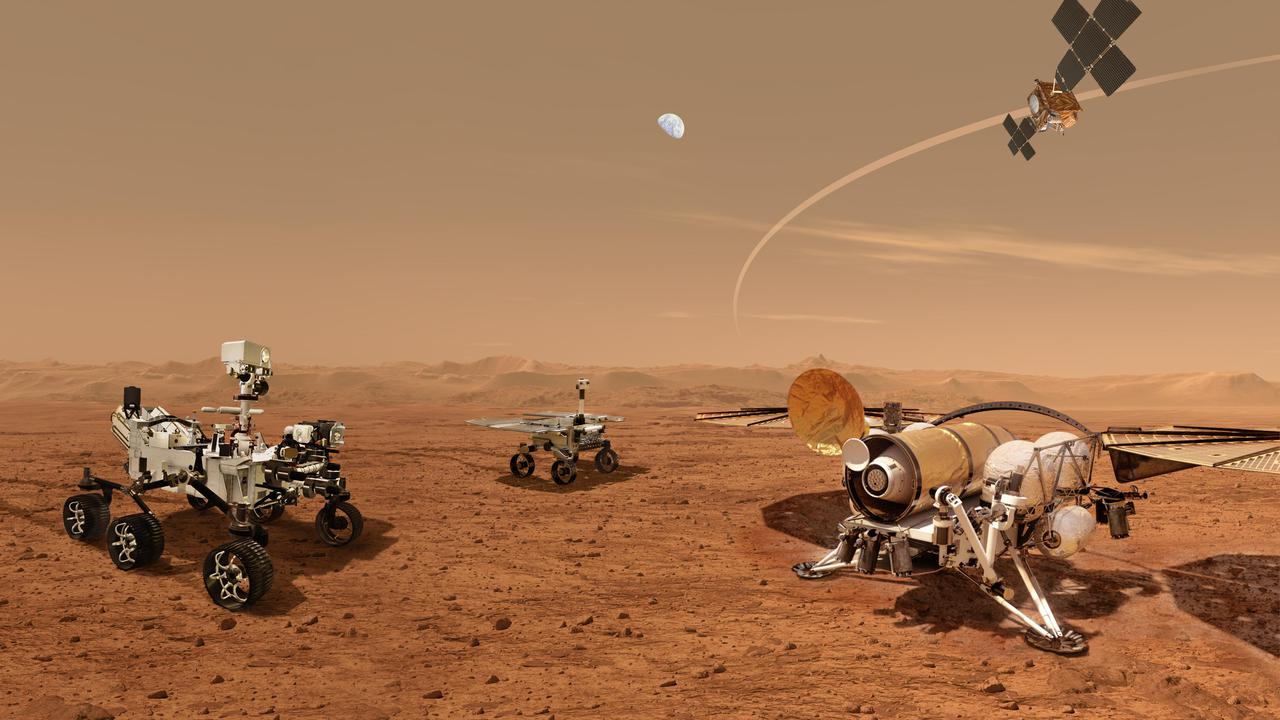
This illustration shows a concept for a set of future robots working together to ferry back samples from the surface of Mars collected by NASA's Mars Perseverance rover. NASA and the European Space Agency (ESA) are solidifying concepts for a Mars sample return mission that would seek to take the samples of Martian rocks and other materials being collected and stored in sealed tubes by NASA's Mars Perseverance rover and return the sealed tubes to Earth. According to the current concept, NASA would deliver a Mars lander in the vicinity of Jezero Crater, where Perseverance (left) will have collected and cached samples. The Sample Retrieval Lander (right) would carry a NASA rocket (the Mars Ascent Vehicle), along with ESA's Sample Fetch Rover (center) that is roughly the size of the Opportunity Mars rover. The fetch rover would gather the cached samples and carry them back to the lander for transfer to the ascent vehicle; additional samples could also be delivered directly by Perseverance. The ascent vehicle would then launch a special container holding the samples into Mars orbit. ESA would put a spacecraft in orbit around Mars before the ascent vehicle launches. This spacecraft would rendezvous with and capture the orbiting samples before returning them to Earth. NASA would provide the capture and containment payload module for the orbiter. https://photojournal.jpl.nasa.gov/catalog/PIA24870
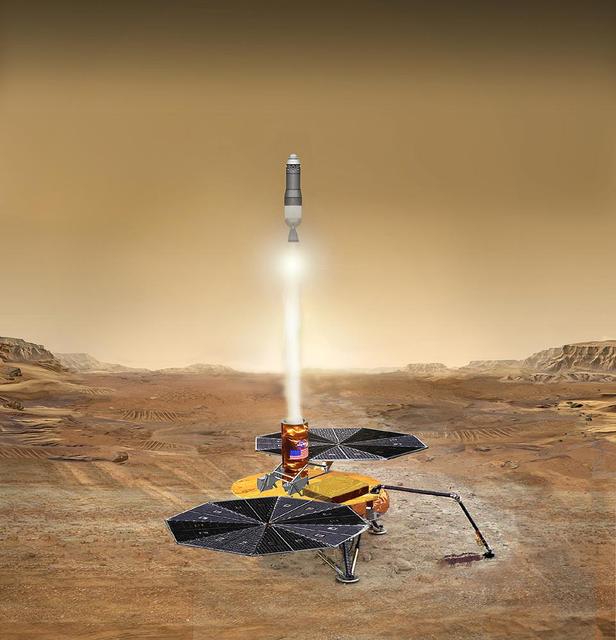
This artist concept of the proposed NASA Mars Sample Return mission shows the launch of the martian sample back toward Earth.
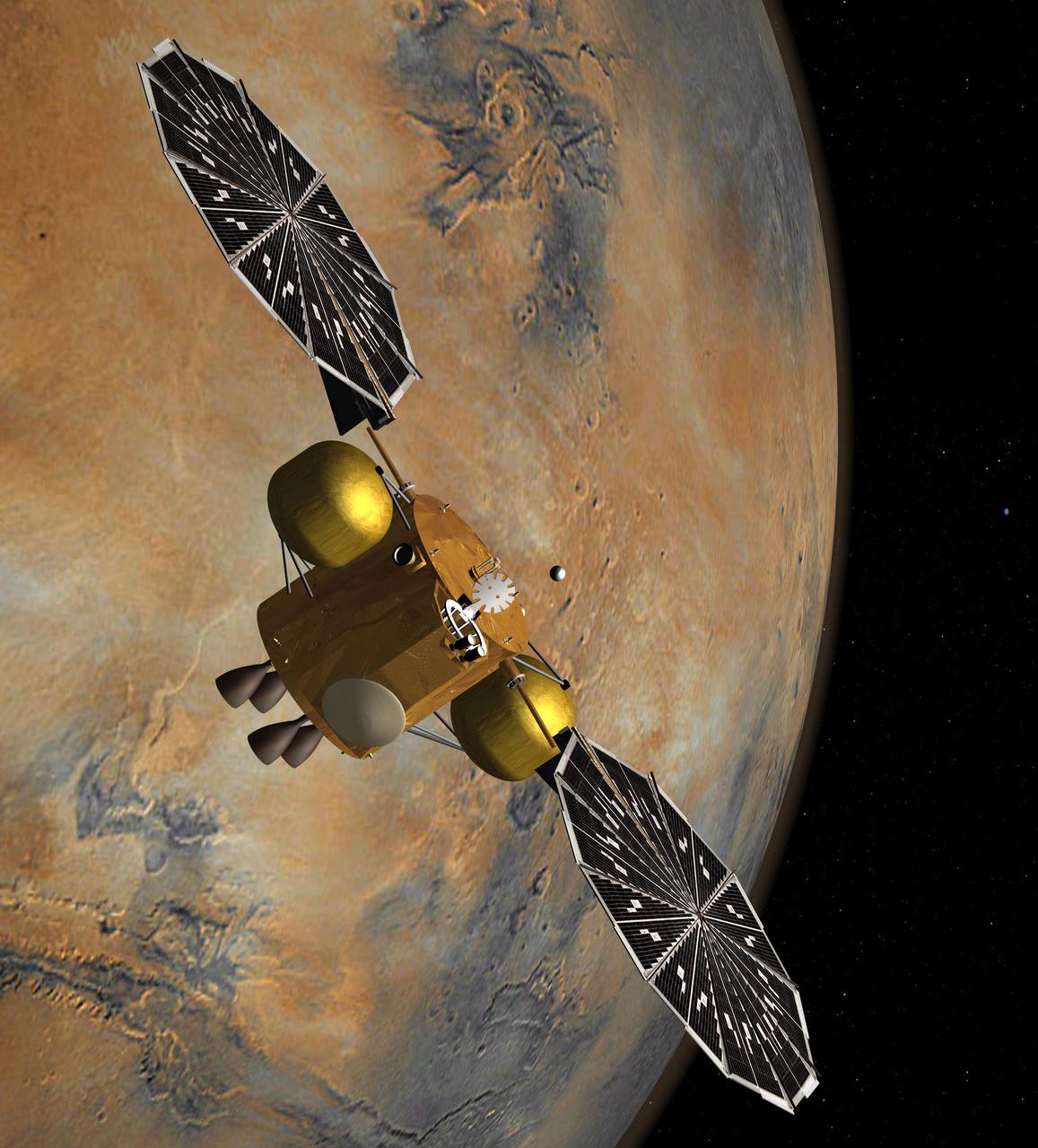
This artist concept of a proposed Mars sample return mission portrays the capture of a collection of Martian samples by a spacecraft orbiting Mars. The samples would have been collected on Mars by a rover and lifted to orbit by an ascent vehicle.
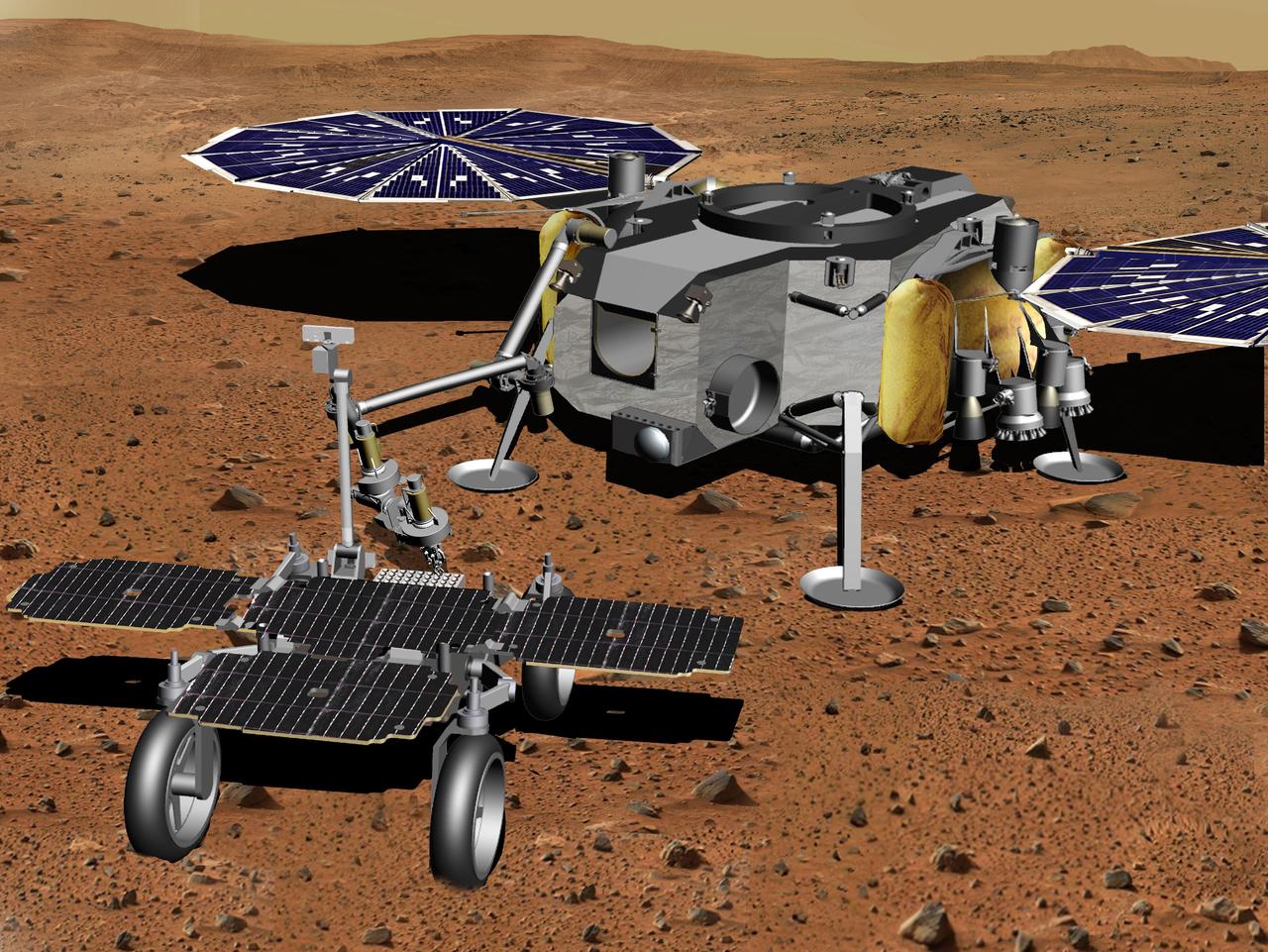
In this illustration of a Mars sample return mission concept, a robotic arm transfers samples of Martian rock and soil from a fetch rover onto a lander. NASA and the European Space Agency are solidifying concepts for a Mars sample return mission after NASA's Mars 2020 rover collects rock and soil samples and stores them in sealed tubes on the planet's surface for potential future return to Earth. NASA will deliver a Mars lander in the vicinity of Jezero Crater, where Mars 2020 will have collected and cached samples. The lander will carry a NASA rocket (the Mars Ascent Vehicle) along with ESA's Sample Fetch Rover that is roughly the size of NASA's Opportunity Mars rover. The fetch rover will gather the cached samples and carry them back to the lander for transfer to the ascent vehicle; additional samples could also be delivered directly by Mars 2020. The ascent vehicle will then launch from the surface and deploy a special container holding the samples into Mars orbit. ESA will put a spacecraft in orbit around Mars before the ascent vehicle launches. This spacecraft will rendezvous with and capture the orbiting samples before returning them to Earth. NASA will provide the payload module for the orbiter. https://photojournal.jpl.nasa.gov/catalog/PIA23495
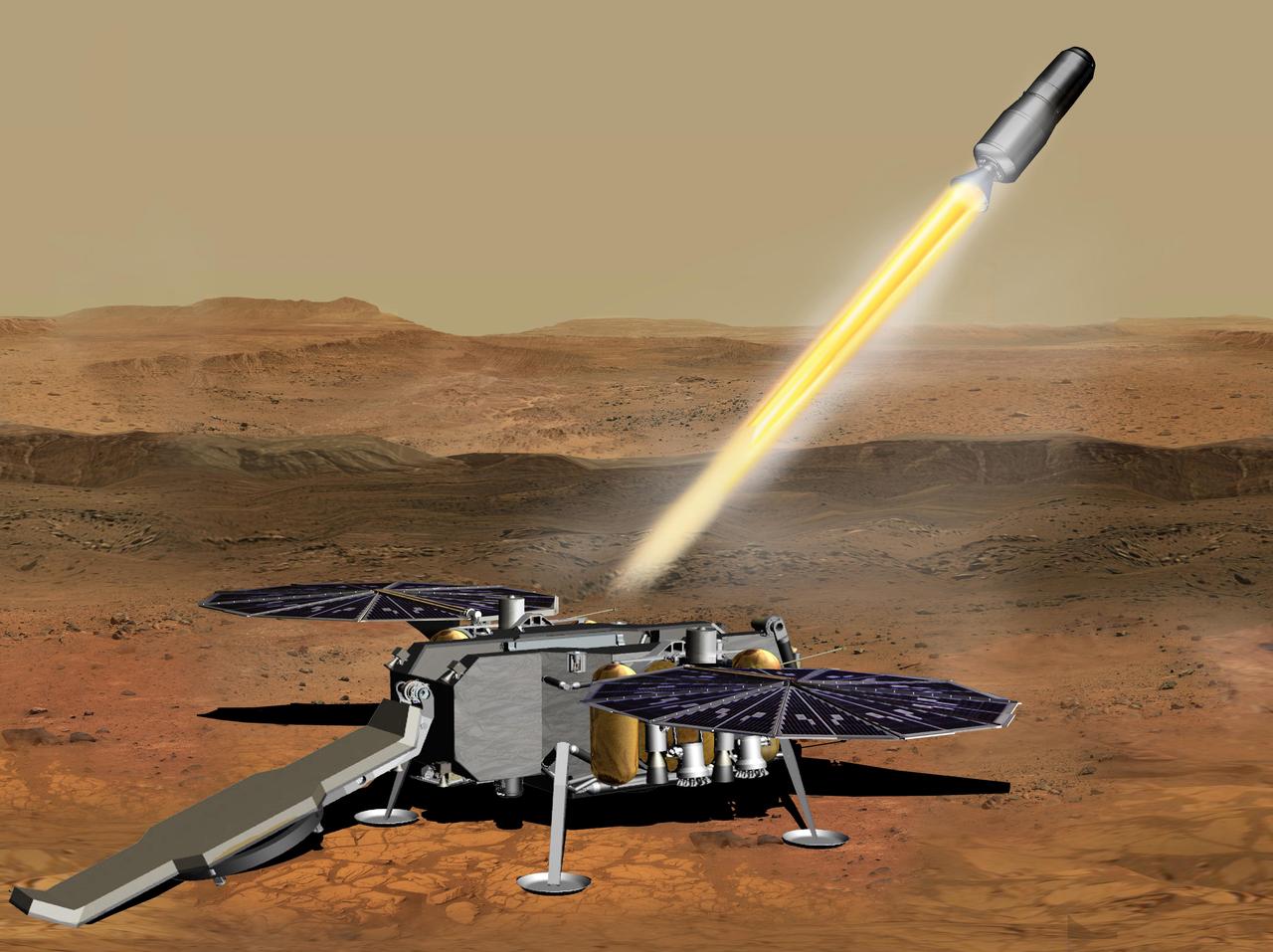
This illustration shows a concept of how the NASA Mars Ascent Vehicle, carrying tubes containing rock and soil samples, could be launched from the surface of Mars in one step of the Mars sample return mission. NASA and the European Space Agency are solidifying concepts for a Mars sample return mission after NASA's Mars 2020 rover collects rock and soil samples and stores them in sealed tubes on the planet's surface for potential future return to Earth. NASA will deliver a Mars lander in the vicinity of Jezero Crater, where Mars 2020 will have collected and cached samples. The lander will carry the ascent vehicle along with an ESA Sample Fetch Rover that is roughly the size of NASA's Opportunity Mars rover. The fetch rover will gather the cached samples and carry them back to the lander for transfer to the ascent vehicle; additional samples could be delivered directly by Mars 2020. The ascent vehicle will then launch from the surface and deploy a special container holding the samples into Mars orbit. ESA will put a spacecraft in orbit around Mars before the ascent vehicle launches. This spacecraft will rendezvous with and capture the orbiting samples before returning them to Earth. NASA will provide the payload module for the orbiter. https://photojournal.jpl.nasa.gov/catalog/PIA23496
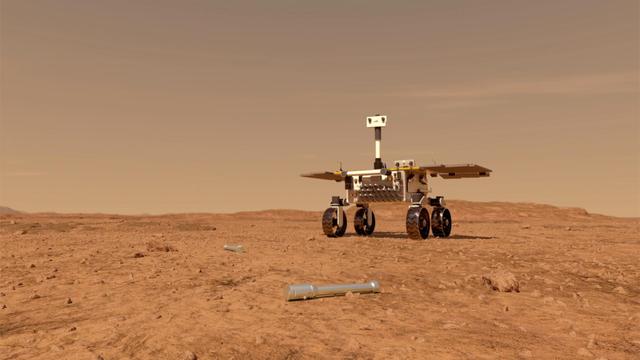
This illustration shows a concept of what a rover fetching rock and soil samples on Mars for return to Earth could look like. The sample tube in this image would have been left on the surface by a previous mission, NASA's Mars 2020 rover. NASA and the European Space Agency (ESA) are solidifying concepts for a Mars sample return mission to return Mars 2020 samples to Earth for scientific investigation. NASA will deliver a Mars lander in the vicinity of Jezero Crater, where the Mars 2020 rover will have collected and cached samples. The lander will carry a NASA rocket (the Mars Ascent Vehicle) along with ESA's Sample Fetch Rover that is roughly the size of NASA's Opportunity Mars rover. The fetch rover will gather the cached samples and carry them back to the lander for transfer to the ascent vehicle; additional samples could also be delivered directly by Mars 2020. The ascent vehicle will then launch a special container holding the samples into Mars orbit. ESA will put a spacecraft in orbit around Mars before the ascent vehicle launches. This spacecraft will rendezvous with and capture the orbiting samples before returning them to Earth. NASA will provide the payload module for the orbiter. https://photojournal.jpl.nasa.gov/catalog/PIA23493
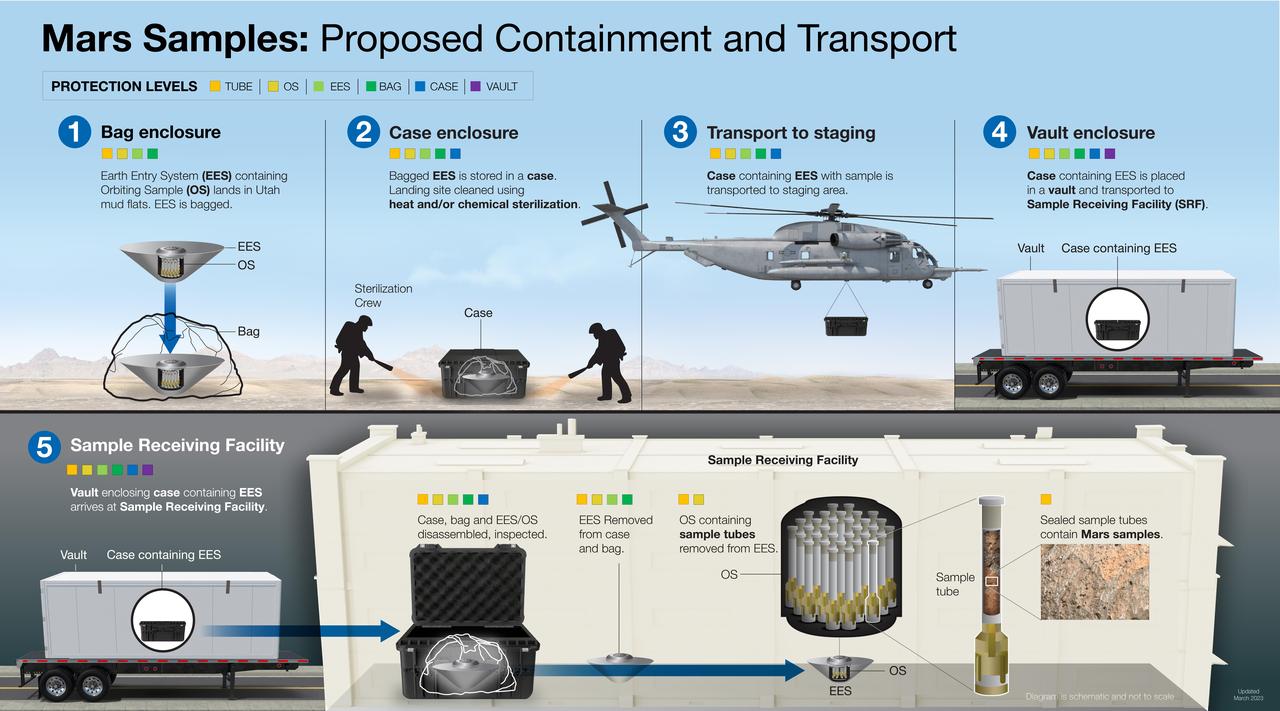
This illustration shows the proposed process for safely recovering, containing, and transporting Mars samples gathered by NASA's Perseverance Mars rover after they are returned to Earth as part of the joint NASA/ESA (European Space Agency) Mars Sample Return Campaign. The process of carefully containing and handling the samples would begin long before they arrive on Earth. Every phase of the Mars Sample Return campaign from collection and sealing to launch, transfer, and landing has been developed with a "safety first" approach. Sample handling and curation experts would be involved in planning for the round trip at each phase of the campaign. After its journey back to Earth from Mars on the ESA-provided Earth Return Orbiter, the capsule containing the samples would land at the Utah Test and Training Range in west-central Utah. NASA would securely transport the capsule and its contents to a Sample Return Facility at a location to be determined. Once at the facility, the samples would undergo a rigorous process to assess whether they are safe for release for detailed analysis by scientists from around the world. https://photojournal.jpl.nasa.gov/catalog/PIA25857
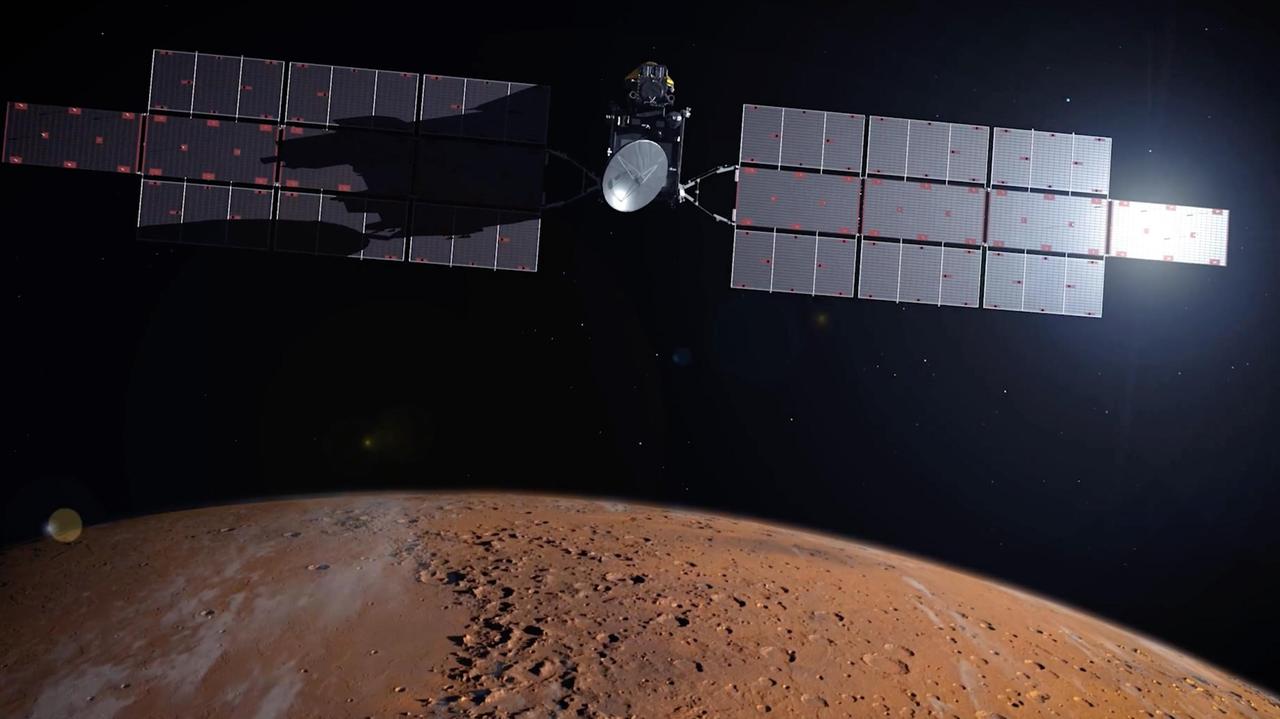
The Earth Return Orbiter (ERO) is one of the flight missions making up the Mars Sample Return campaign to bring martian rock and atmospheric samples back to Earth. This European Space Agency (ESA) orbiter would be the first interplanetary spacecraft to capture samples in orbit and make a return trip between Earth and Mars. ERO would also be the largest spacecraft to orbit the Red Planet. In addition to the rendezvous and return mission, ERO would provide critical Mars-Earth communications coverage for NASA's Perseverance rover and the Sample Retrieval Lander to deliver the martian samples. The Earth Return Orbiter is part of the multi-mission Mars Sample Return campaign being planned by NASA and the European Space Agency (ESA). https://photojournal.jpl.nasa.gov/catalog/PIA25891
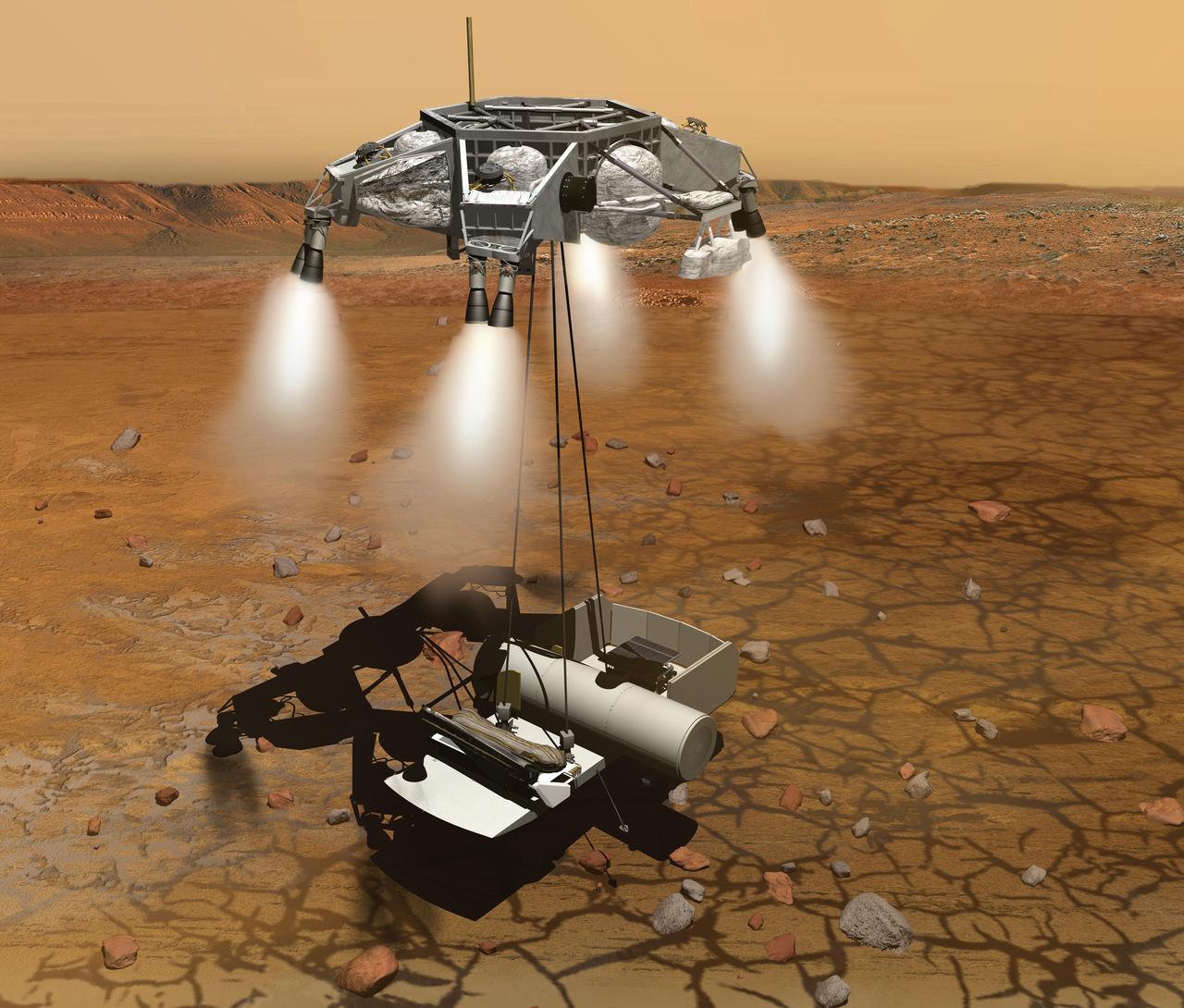
This artist concept of a proposed Mars sample return mission portrays a rocket-powered descent stage lowering a sample-retrieving rover and an ascent vehicle to the surface.

Engineers at NASA's Jet Propulsion Laboratory dropped this prototype to learn how a future Sample Return Lander could safely touch down on Mars. The lander would be part of the Mars Sample Return campaign. NASA's Mars Sample Return will revolutionize our understanding of Mars by returning scientifically-selected samples for study using the most sophisticated instruments around the world. The mission will fulfill a solar system exploration goal, a high priority since 1980 and the last two National Academy of Sciences Planetary Decadal Surveys. This strategic partnership of NASA and ESA (European Space Agency) will be the first mission to return samples from another planet, including the first launch and return from the surface of another planet. These samples collected by Perseverance during its exploration of an ancient river-delta are thought to be the best opportunity to reveal the early evolution of Mars, including the potential for life. Movie available at https://photojournal.jpl.nasa.gov/catalog/PIA24766
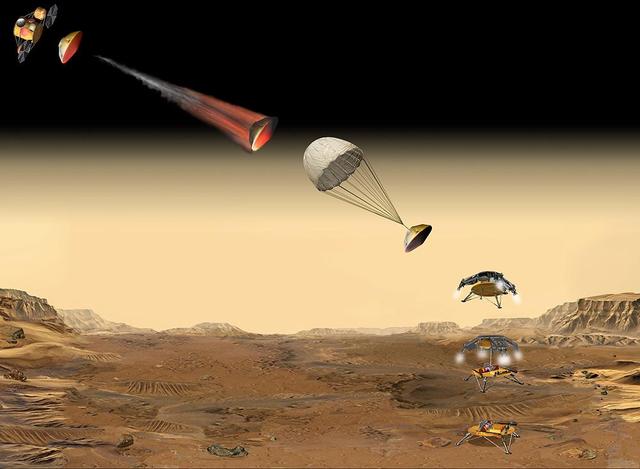
This artist concept of the proposed NASA Mars Sample Return mission shows the entry, descent and landing sequence the lander would undergo on its way to Mars.

The Earth Return Orbiter (ERO) is one of the flight missions making up the Mars Sample Return campaign to bring martian rock and atmospheric samples back to Earth. The ESA orbiter would be the first interplanetary spacecraft to capture samples in orbit and make a return trip between Earth and Mars. The primary mission of the European spacecraft would be to find, fly to, and capture a volleyball-sized capsule called the Orbiting Sample (OS) container launched from the surface of Mars by NASA's Mars Ascent System and carrying a carefully selected set of samples previously collected on the surface of Mars by NASA's Perseverance rover. Having already spent three years to reach Mars and perform its rendezvous and capture mission, ERO would take a further two years to fly from its operational orbit around Mars up to escape altitude and make its way back to Earth. When ERO is about three days from Earth, the Earth Entry System (EES) carrying the OS would separate from the spacecraft and be placed on a precision trajectory for Earth entry and landing. The Earth Return Orbiter is part of the multi-mission Mars Sample Return campaign being planned by NASA and the European Space Agency (ESA). https://photojournal.jpl.nasa.gov/catalog/PIA25893

This illustration depicts the Mars Earth Entry System for the Mars Sample Return campaign. The system would contain the orbiting sample inside a disk-shaped vehicle with a heat shield for safe entry through the Earth's atmosphere. NASA's Mars Sample Return (MSR) will revolutionize our understanding of Mars by returning scientifically-selected samples for study using the most sophisticated instruments around the world. The mission will fulfill a solar system exploration goal as identified by the National Academy of Sciences. This strategic partnership with the European Space Agency (ESA) will be the first mission to return samples from another planet, including the first launch from the surface of another planet. These samples collected by Perseverance during its exploration of an ancient river-delta are thought to be the best opportunity to reveal the early evolution of Mars, including the potential for life. https://photojournal.jpl.nasa.gov/catalog/PIA25336
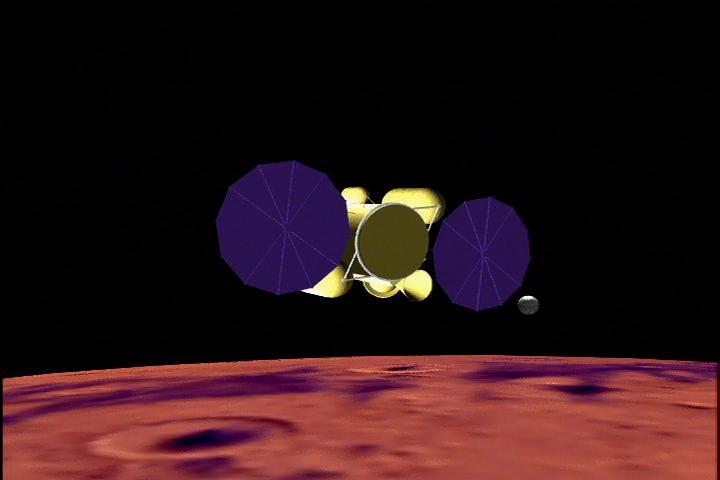
This artist concept shows the proposed NASA Mars sample return mission above the red planet.
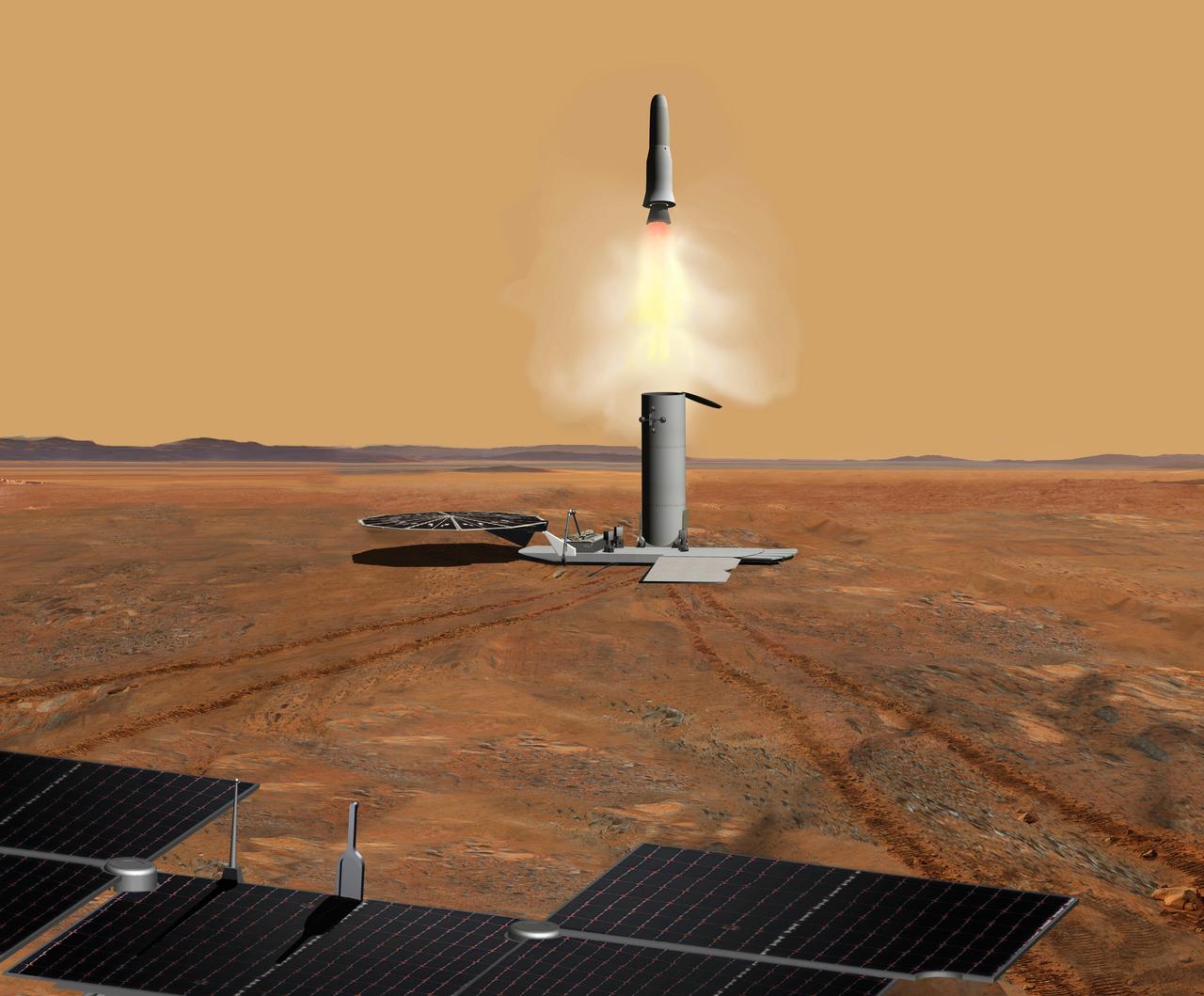
This artist concept of a proposed Mars sample return mission portrays the launch of an ascent vehicle. The solar panels in the foreground are part of a rover.
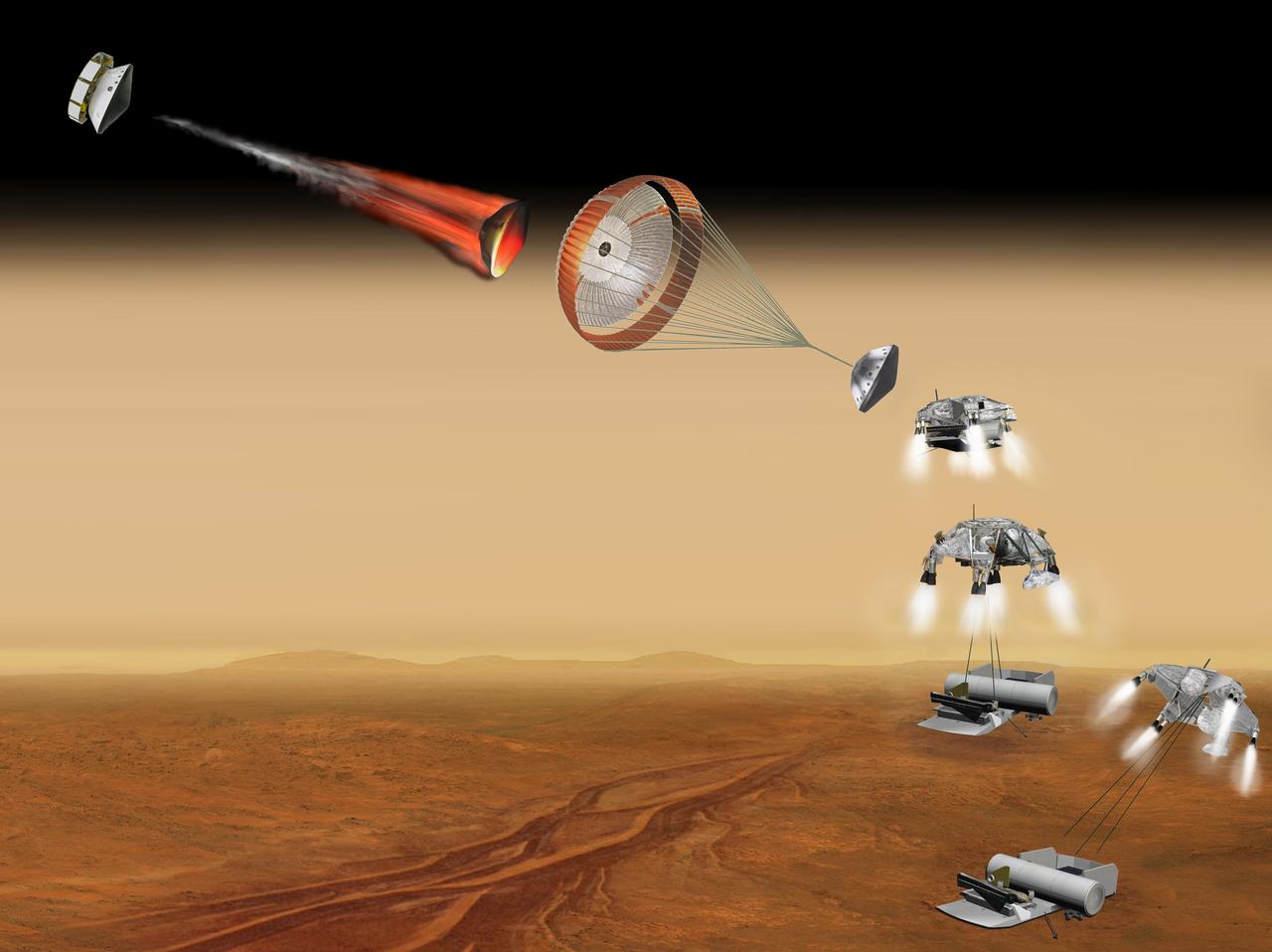
This artist concept of a proposed NASA and European Space Agency collaboration on proposals for a Mars sample return mission portrays a series of six steps in the spacecraft landing on Mars.
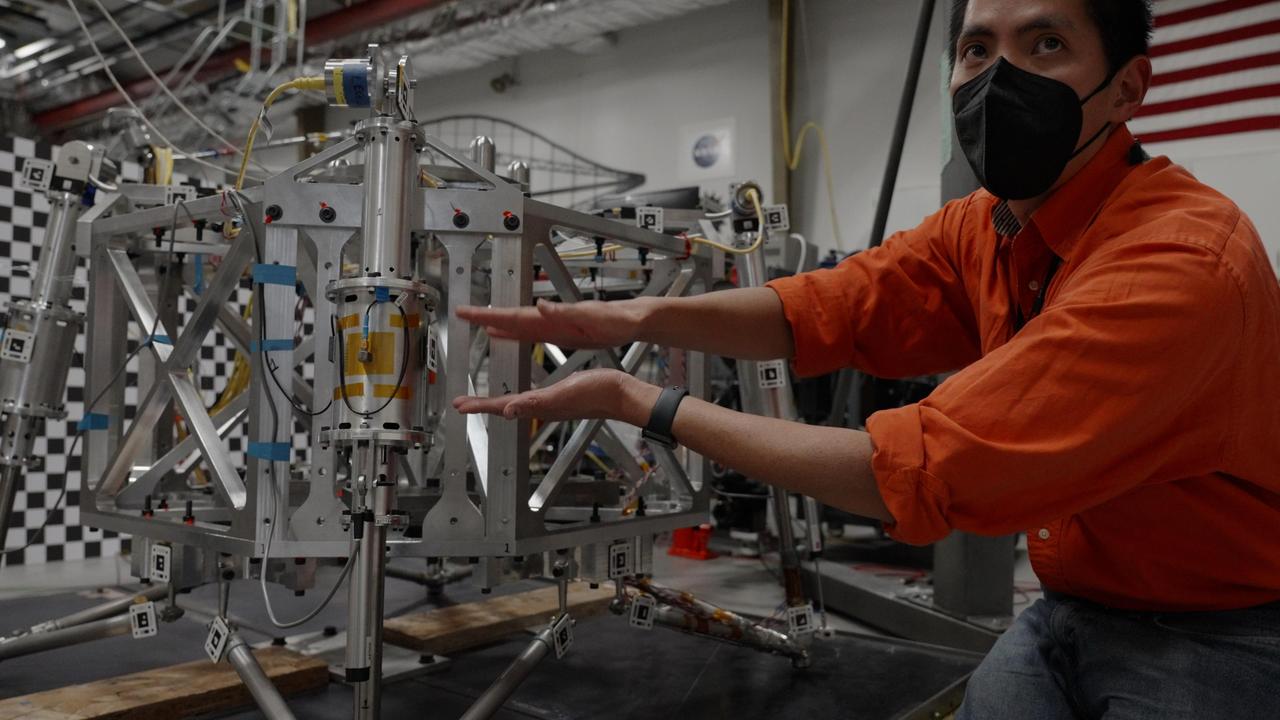
Engineer Abel Dizon explains how drop tests are conducted for a prototype lander being designed by NASA's Jet Propulsion Laboratory for the planned Mars Sample Return campaign. The Sample Retrieval Lander, estimated to weigh as much as 5,016 pounds (2,275 kilograms), would be the heaviest spacecraft ever to land on the Red Planet. To study the physics involved in landing such a massive spacecraft, engineers have been testing a lander prototype that's about one-third the size it would be on Mars. Mars Sample Return will revolutionize our understanding of Mars by bringing scientifically selected samples to Earth for study using the most sophisticated instrumentation around the world. NASA's planned Mars Sample Return (MSR) campaign would fulfill one of the highest priority solar system exploration goals identified by the National Academies of Sciences, Engineering and Medicine in the past three decadal surveys. This strategic partnership with the ESA (European Space Agency) features the first mission to return samples from another planet, including the first launch from the surface of another planet. The samples being collected by NASA's Perseverance rover during its exploration of an ancient river delta are thought to be the best opportunity to reveal the early evolution of Mars, including the potential for ancient life. https://photojournal.jpl.nasa.gov/catalog/PIA25822
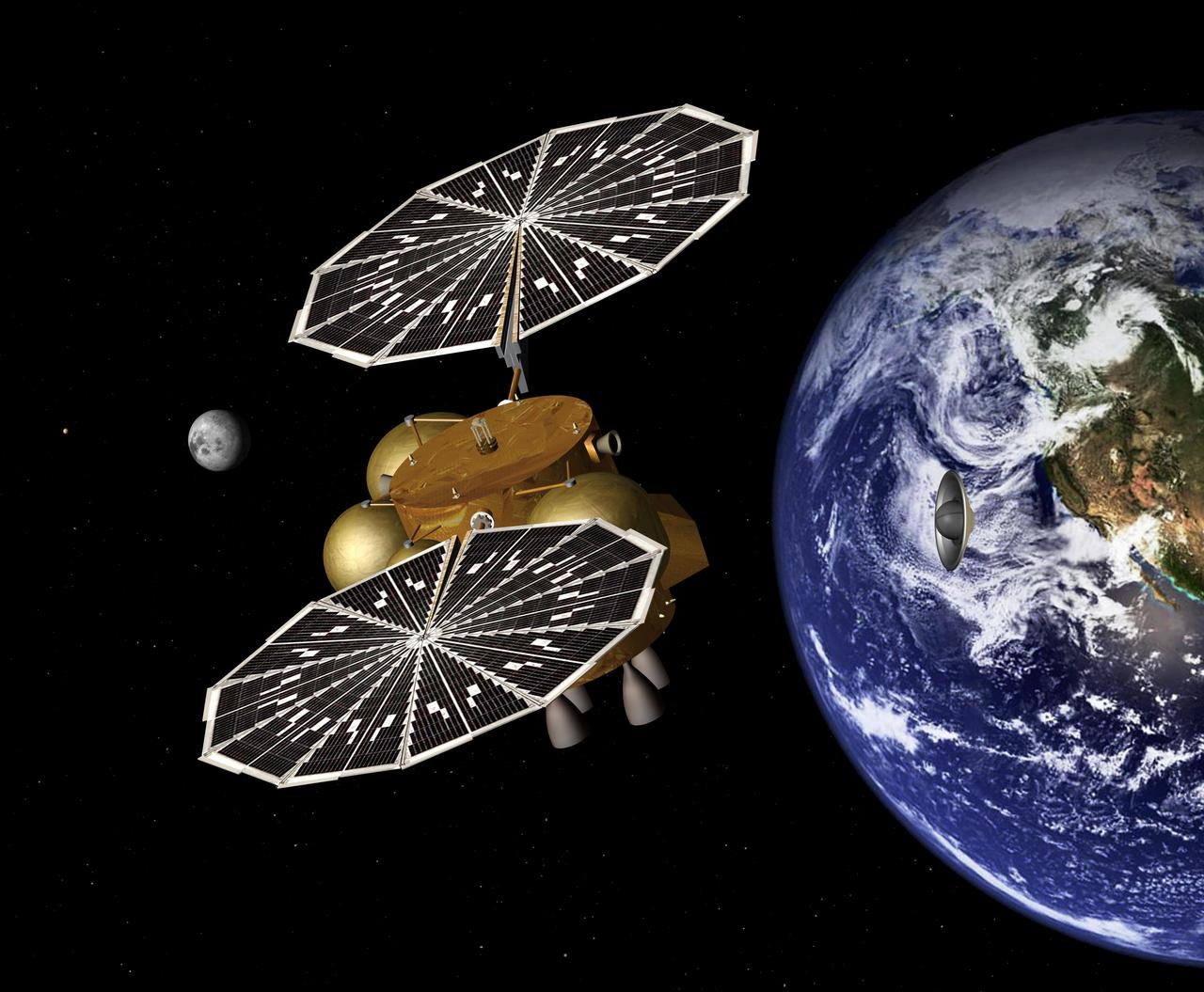
This artist concept of a proposed Mars sample return mission portrays the separation of an Earth entry vehicle, bearing a container of Martian rock samples, from the main spacecraft that would have carried it from Martian orbit nearly to Earth.
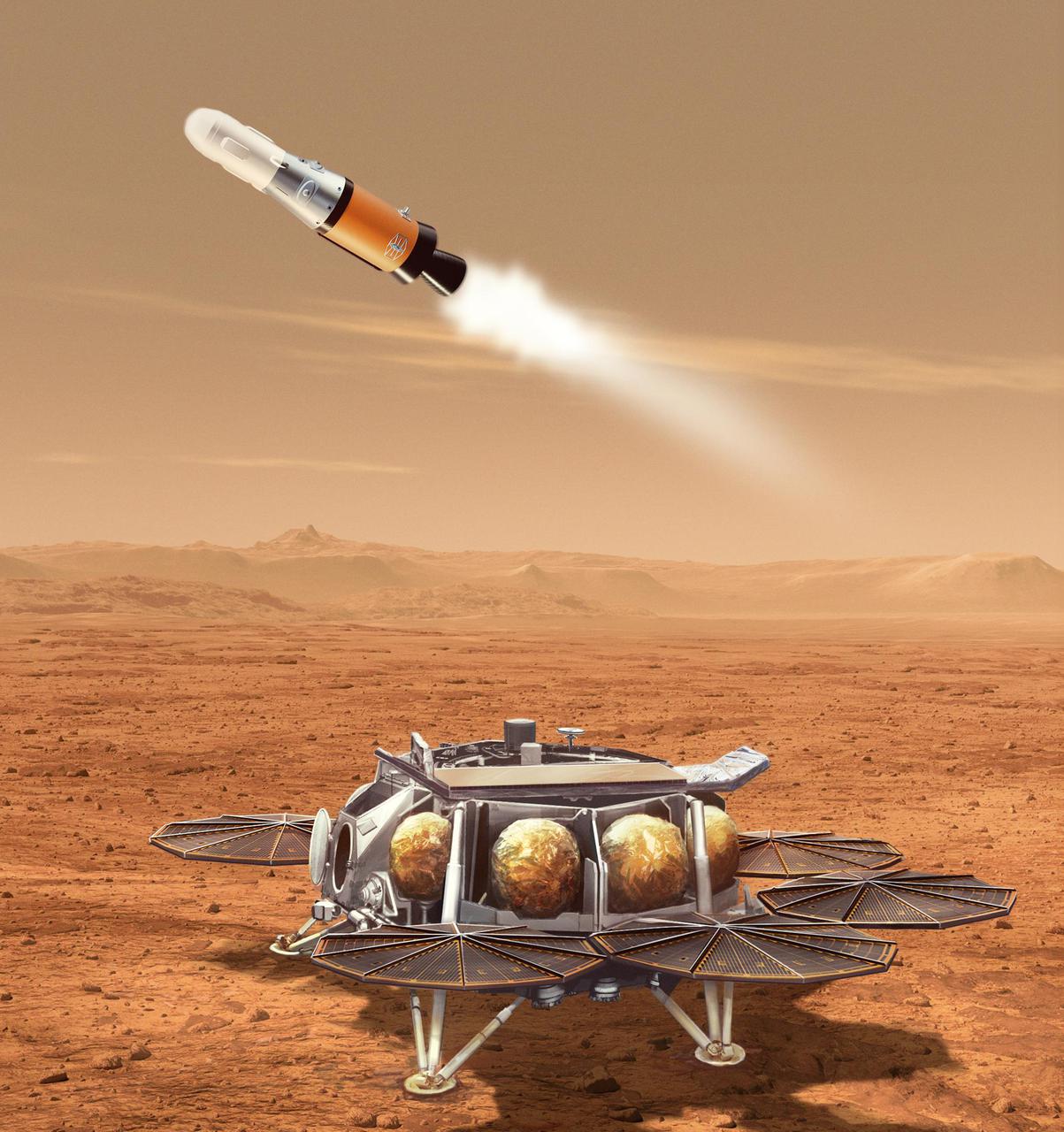
This illustration shows a concept for a proposed NASA Mars lander-and-rocket combination that would play a key role in returning to Earth samples of Mars material collected by the Perseverance rover. This Sample Retrieval Lander would carry a small rocket (about 10 feet, or 3 meters, tall) called the Mars Ascent Vehicle to the Martian surface. After using a robotic arm to load the rover's sealed sample tubes into a container in the nose cone of the rocket, the lander would launch the Mars Ascent Vehicle into orbit around the Red Planet. The lander and rocket are part of the multimission Mars Sample Return program being planned by NASA and ESA (European Space Agency). The program would use multiple robotic vehicles to pick up and ferry sealed tubes containing Mars samples already collected by NASA's Perseverance rover, for transport to laboratories on Earth. https://photojournal.jpl.nasa.gov/catalog/PIA25278

Jia-Rui Cook with NASA’s Jet Propulsion Laboratory moderates a Mars 2020 Sample Return briefing at NASA’s Kennedy Space Center in Florida on July 28, 2020. The Mars Perseverance rover is scheduled to launch on July 30, on a United Launch Alliance Atlas V 541 rocket from Space Launch Complex 41 at nearby Cape Canaveral Air Force Station. The rover is part of NASA’s Mars Exploration Program, a long-term effort of robotic exploration of the Red Planet. The rover will search for habitable conditions in the ancient past and signs of past microbial life on Mars. The Launch Services Program at Kennedy is responsible for launch management.
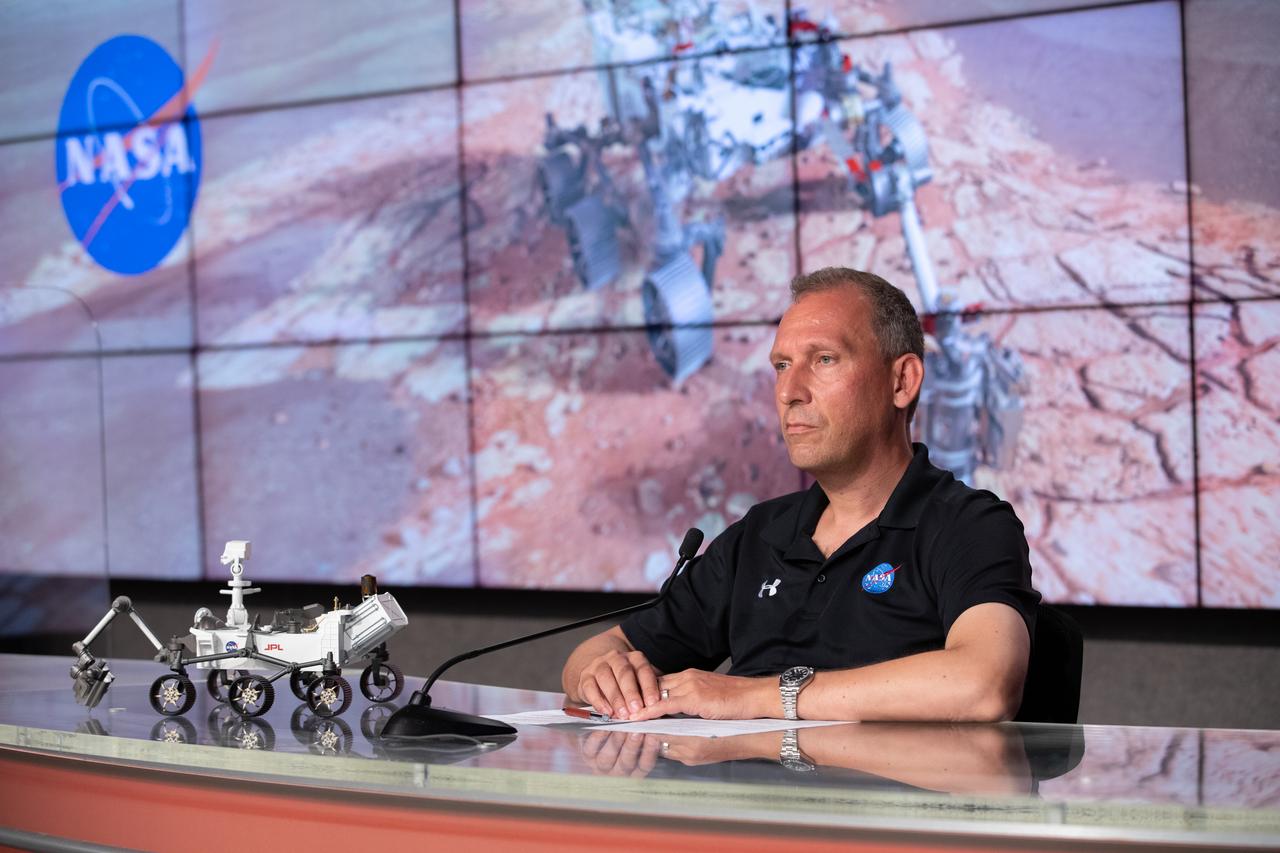
Thomas Zurbuchen, NASA associate administrator, Science Mission Directorate, participates in a Mars 2020 Sample Return briefing at NASA’s Kennedy Space Center in Florida on July 28, 2020. The Mars Perseverance rover is scheduled to launch on July 30, on a United Launch Alliance Atlas V 541 rocket from Space Launch Complex 41 at nearby Cape Canaveral Air Force Station. The rover is part of NASA’s Mars Exploration Program, a long-term effort of robotic exploration of the Red Planet. The rover will search for habitable conditions in the ancient past and signs of past microbial life on Mars. The Launch Services Program at Kennedy is responsible for launch management.
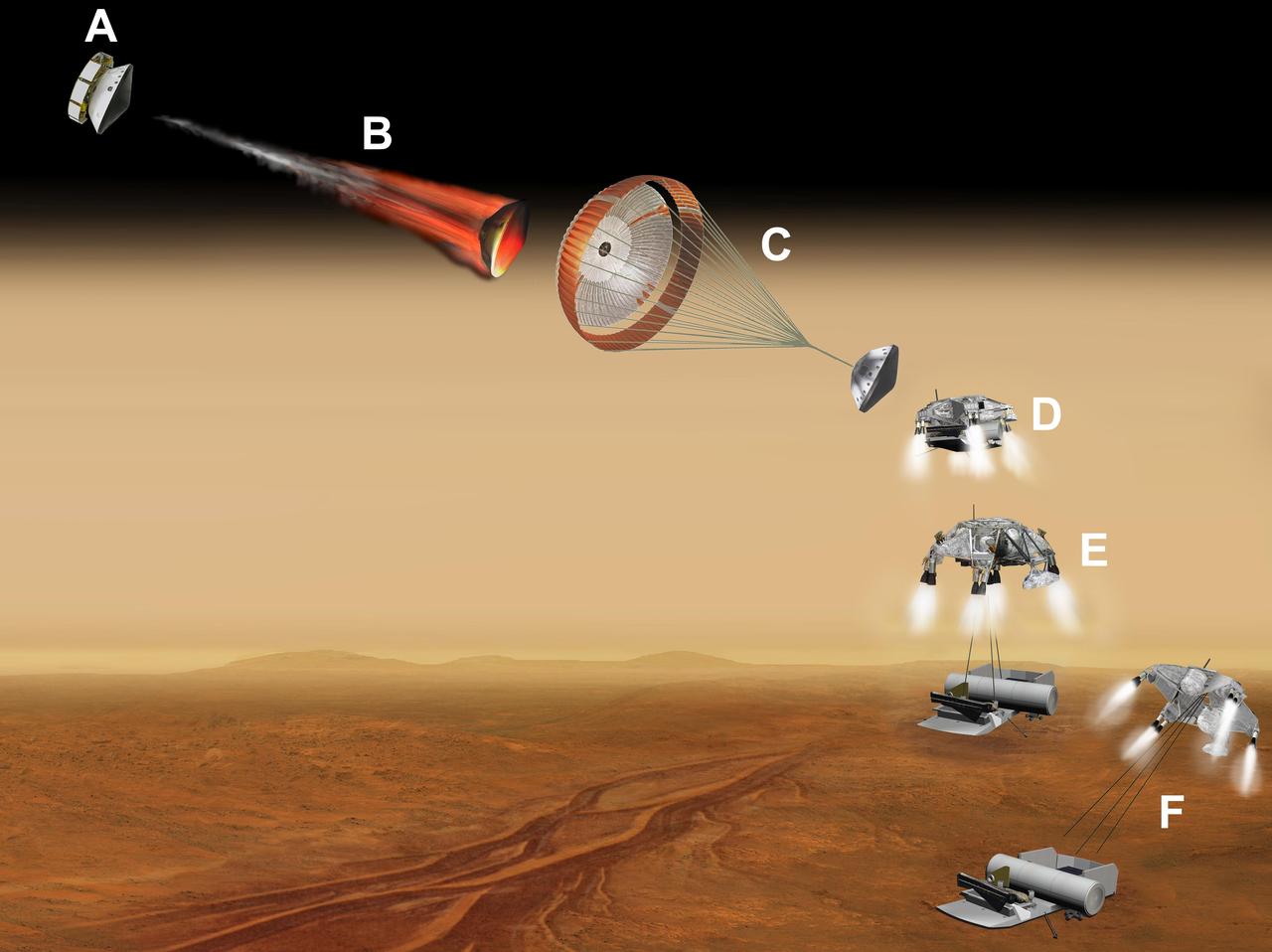
This artist concept of a proposed NASA and European Space Agency collaboration on proposals for a Mars sample return mission portrays a series of six steps A through F in the spacecraft landing on Mars.
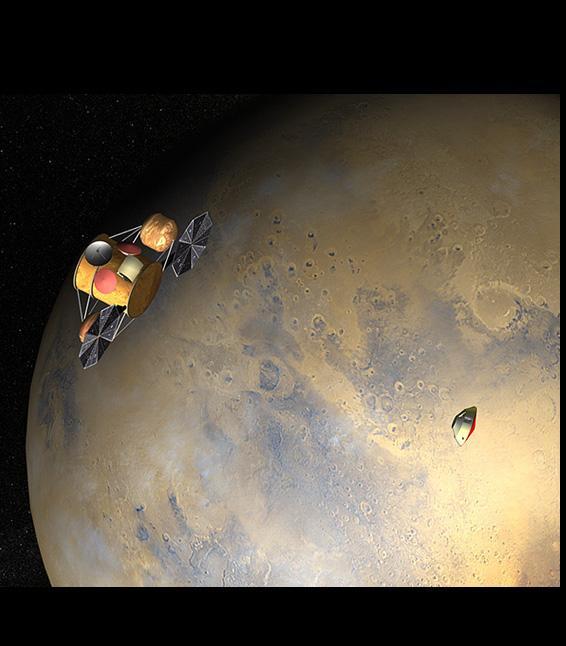
This artist concept of the proposed NASA Mars Sample Return mission shows the orbiter and lander, just after the orbiter would release the lander to descend through the martian atmosphere.
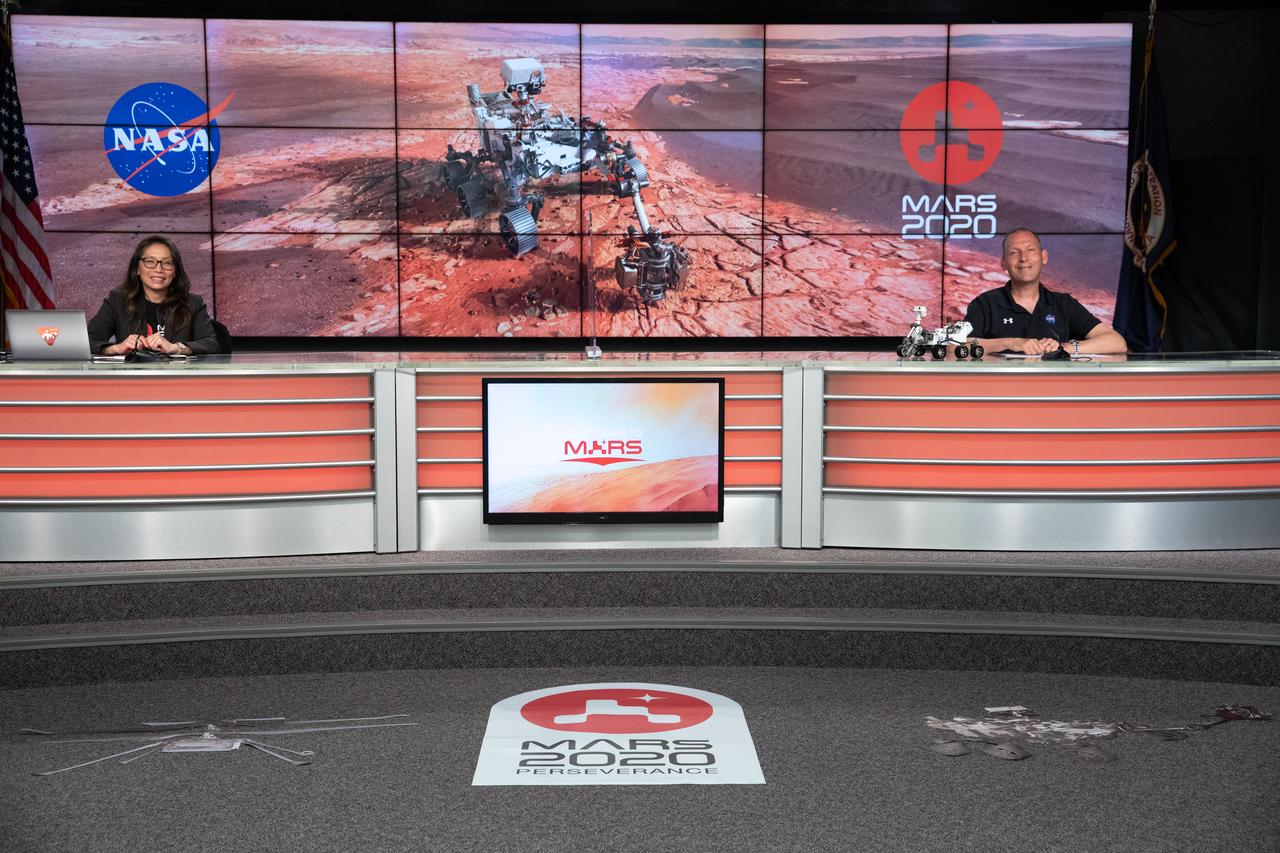
A Mars 2020 Sample Return briefing is held at NASA’s Kennedy Space Center in Florida on July 28, 2020. Participating in the briefing, from left, are Moderator Jia-Rui Cook, NASA’s Jet Propulsion Laboratory; and Thomas Zurbuchen, NASA associate administrator, Science Mission Directorate, The Mars Perseverance rover is scheduled to launch July 30, on a United Launch Alliance Atlas V 541 rocket from Space Launch Complex 41 at nearby Cape Canaveral Air Force Station. The rover is part of NASA’s Mars Exploration Program, a long-term effort of robotic exploration of the Red Planet. The rover will search for habitable conditions in the ancient past and signs of past microbial life on Mars. The Launch Services Program at Kennedy is responsible for launch management.
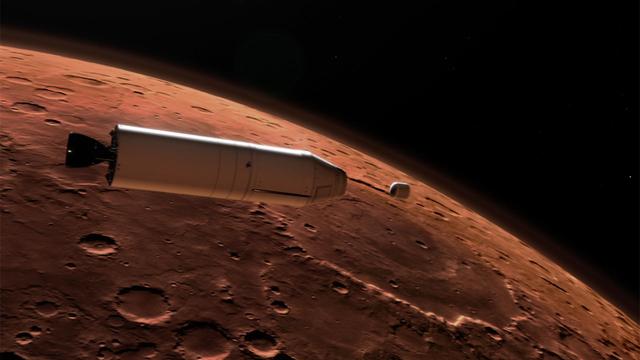
As part of a Mars sample return mission, a rocket will carry a container of sample tubes with Martian rock and soil samples into orbit around Mars and release it for pick up by another spacecraft. This illustration shows a concept for a Mars Ascent Vehicle (left) releasing a sample container (right) high above the Martian surface. NASA and the European Space Agency are solidifying concepts for a Mars sample return mission after NASA's Mars 2020 rover collects rock and soil samples and stores them in sealed tubes on the planet's surface for potential future return to Earth. NASA will deliver a Mars lander in the vicinity of Jezero Crater, where Mars 2020 will have collected and cached samples. The lander will carry a NASA rocket (the Mars Ascent Vehicle) along with an ESA Sample Fetch Rover that is roughly the size of NASA's Opportunity Mars rover. The fetch rover will gather the cached samples and carry them back to the lander for transfer to the ascent vehicle; additional samples could also be delivered directly by Mars 2020. The ascent vehicle will then launch from the surface and deploy a special container holding the samples into Mars orbit. ESA will put a spacecraft in orbit around Mars before the ascent vehicle launches. This spacecraft will rendezvous with and capture the orbiting samples before returning them to Earth. NASA will provide the payload module for the orbiter. https://photojournal.jpl.nasa.gov/catalog/PIA23500
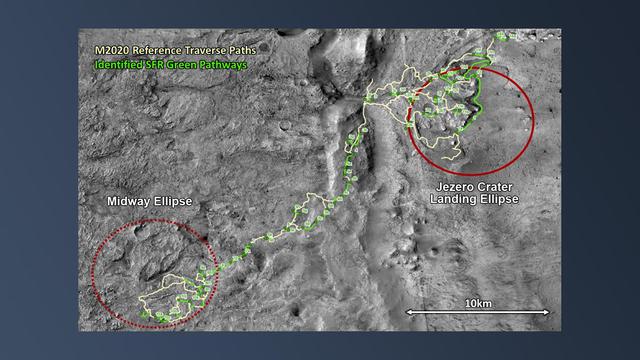
After the NASA Mars 2020 Perseverance rover mission has collected pristine samples of Mars rock and regolith (broken rock and dust) and deposited them inside collection tubes, they will be dropped off at strategic locations (called "depots") along the rover's driving route. This will be the first phase of the Mars Sample Return campaign. In the late 2020's, NASA and ESA (European Space Agency) will send the Sample Retrieval Lander (SRL) mission to Mars to collect those sample tubes from the surface. To accomplish this, the lander will make a pinpoint landing near Perseverance's driving route and dispatch its Sample Fetch Rover (SFR) that will then drive to retrieve the sample tubes. This map shows possible driving routes (yellow lines) for Perseverance at Jezero Crater and the potential locations where the depots might be located. The green lines show possible Sample Fetch Rover pathways that can access these depot locations. The large number of possible SRL landing locations and SFR traverse pathways is indicative of the high degree of resiliency inherent in the overall Mars Sample Return architecture. https://photojournal.jpl.nasa.gov/catalog/PIA24165
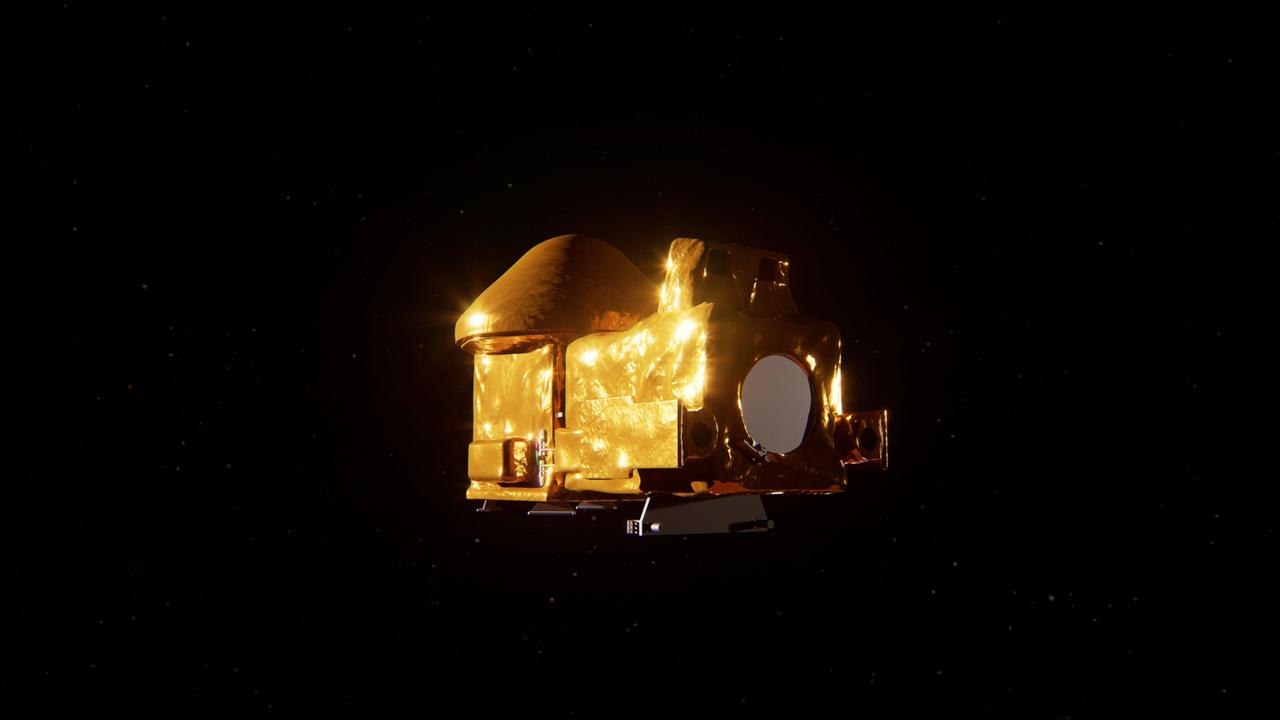
This artist's concept shows the proposed Capture, Containment, and Return System, a NASA payload on the European Space Agency's Earth Return Orbiter. The payload is tasked with capturing the Orbiting Sample container, orienting it, sterilizing its exterior, and transferring it into a clean zone for secondary containment, toward safe return to Earth. The Capture, Containment, and Return System is part of the multi-mission Mars Sample Return program being planned by NASA and European Space Agency (ESA). https://photojournal.jpl.nasa.gov/catalog/PIA25894
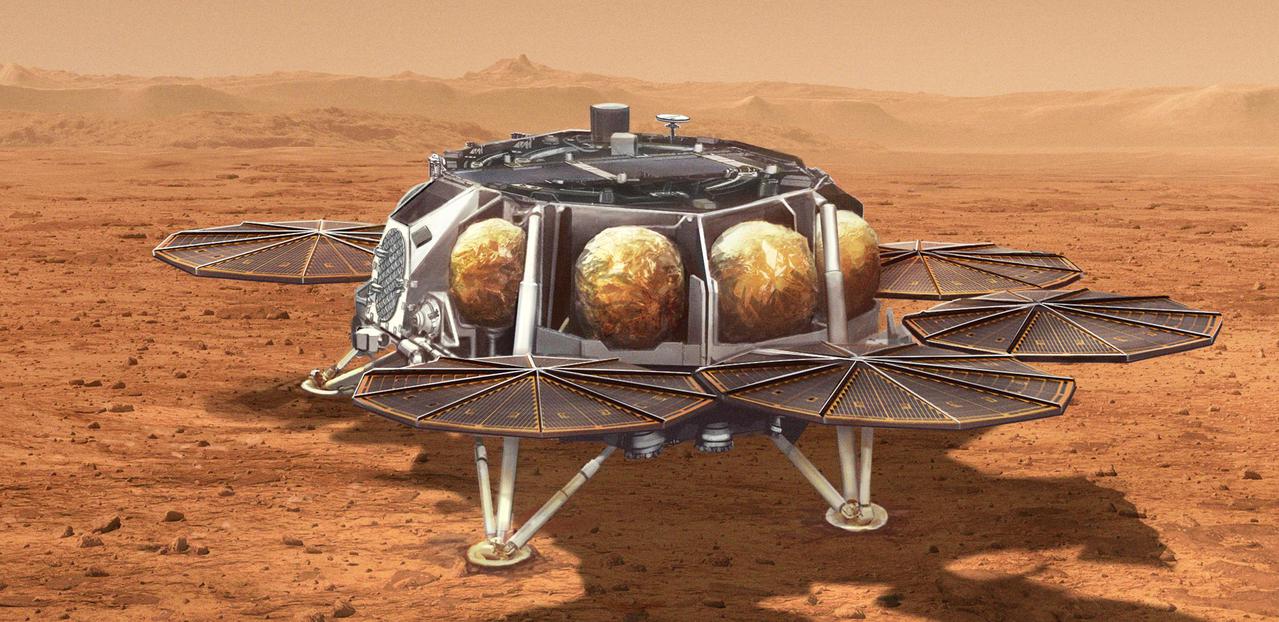
This illustration shows a concept for a proposed NASA Sample Retrieval Lander that would carry a small rocket (about 10 feet, or 3 meters, tall) called the Mars Ascent Vehicle to the Martian surface. After being loaded with sealed tubes containing samples of Martian rocks and soil collected by NASA's Perseverance rover, the rocket would launch into Mars orbit. The samples would then be ferried to Earth for detailed analysis. The lander is part of the multi-mission Mars Sample Return program being planned by NASA and ESA (European Space Agency). https://photojournal.jpl.nasa.gov/catalog/PIA25277
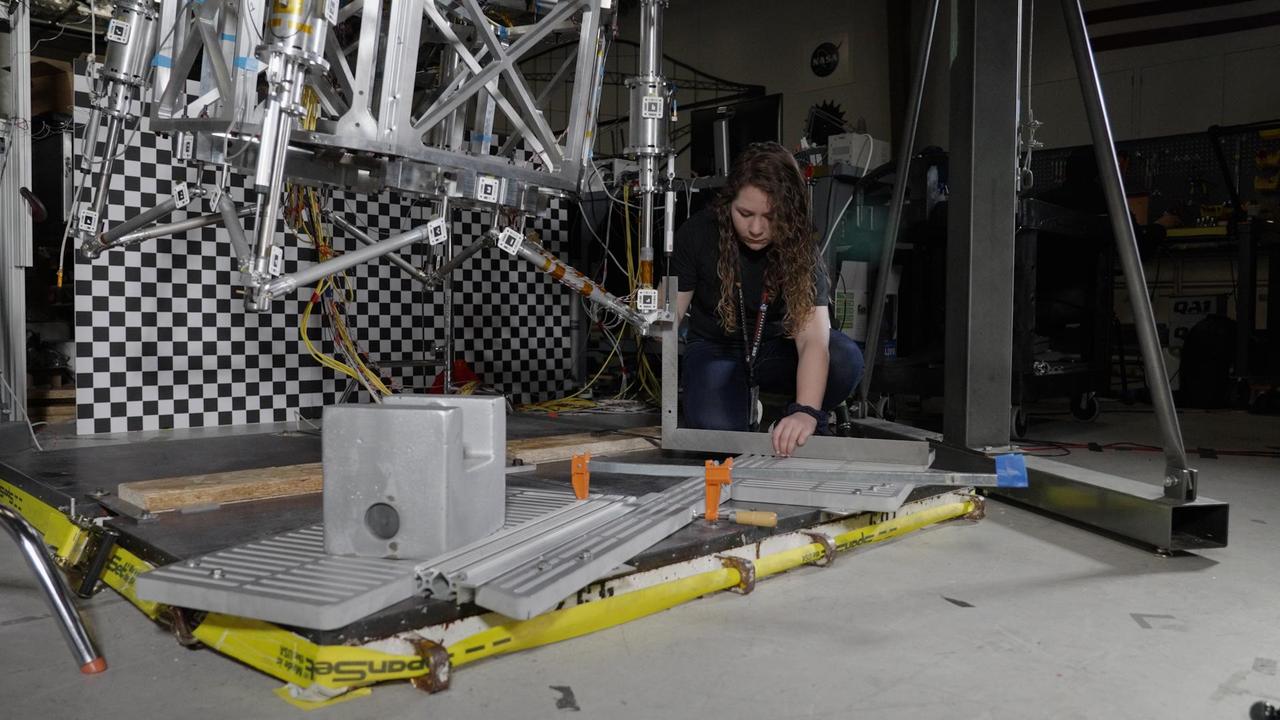
Morgan Montalvo, an engineer at NASA's Jet Propulsion Laboratory, sets guardrails on the floor below a prototype of the lander being designed for the agency's Mars Sample Return campaign. These guardrails were used to test a scenario where the lander would "stub a toe" against a rock while touching down on Mars. The Sample Retrieval Lander, estimated to weigh as much as 5,016 pounds (2,275 kilograms), would be the heaviest spacecraft ever to land on the Red Planet. To study the physics involved in landing such a massive spacecraft, engineers have been testing a lander prototype that's about one-third the size it would be on Mars. Mars Sample Return will revolutionize our understanding of Mars by bringing scientifically selected samples to Earth for study using the most sophisticated instrumentation around the world. NASA's planned Mars Sample Return (MSR) campaign would fulfill one of the highest priority solar system exploration goals identified by the National Academies of Sciences, Engineering and Medicine in the past three decadal surveys. This strategic partnership with the ESA (European Space Agency) features the first mission to return samples from another planet, including the first launch from the surface of another planet. The samples being collected by NASA's Perseverance rover during its exploration of an ancient river delta are thought to be the best opportunity to reveal the early evolution of Mars, including the potential for ancient life. https://photojournal.jpl.nasa.gov/catalog/PIA25823
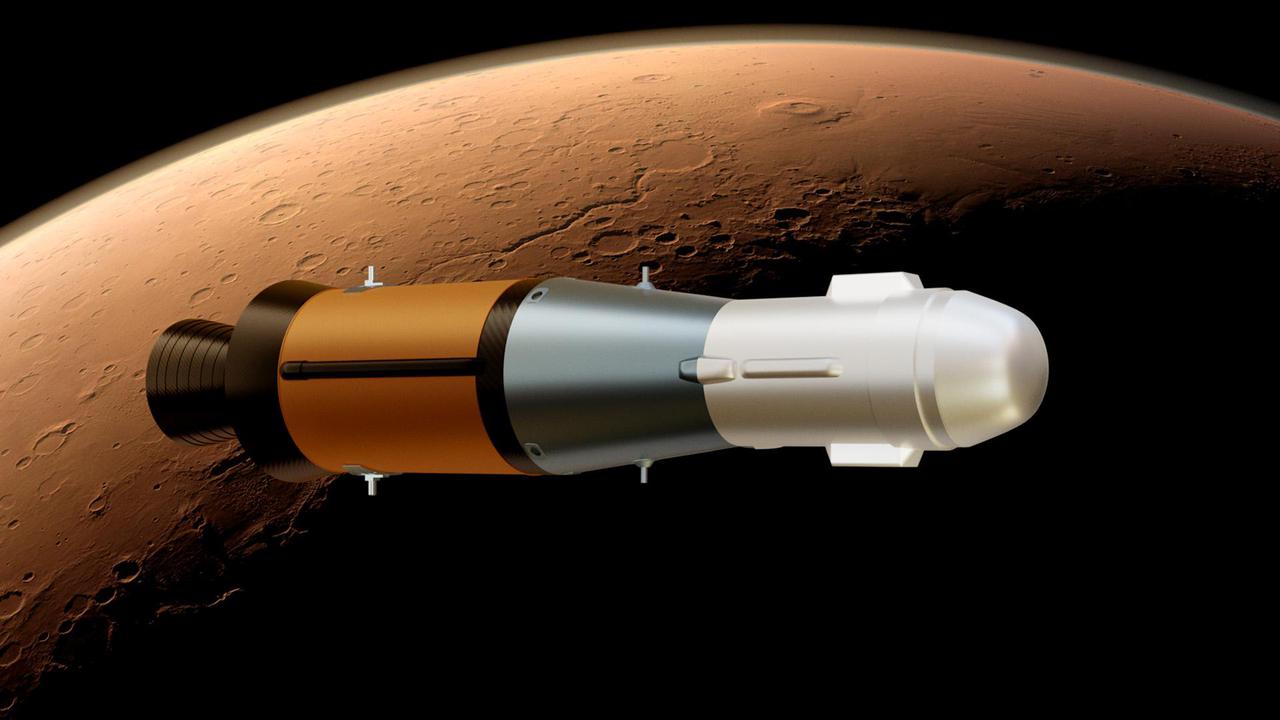
This illustration shows NASA's Mars Ascent Vehicle (MAV), which will carry tubes containing Martian rock and soil samples into orbit around Mars, where ESA's Earth Return Orbiter spacecraft will enclose them in a highly secure containment capsule and deliver them to Earth. https://photojournal.jpl.nasa.gov/catalog/PIA25078
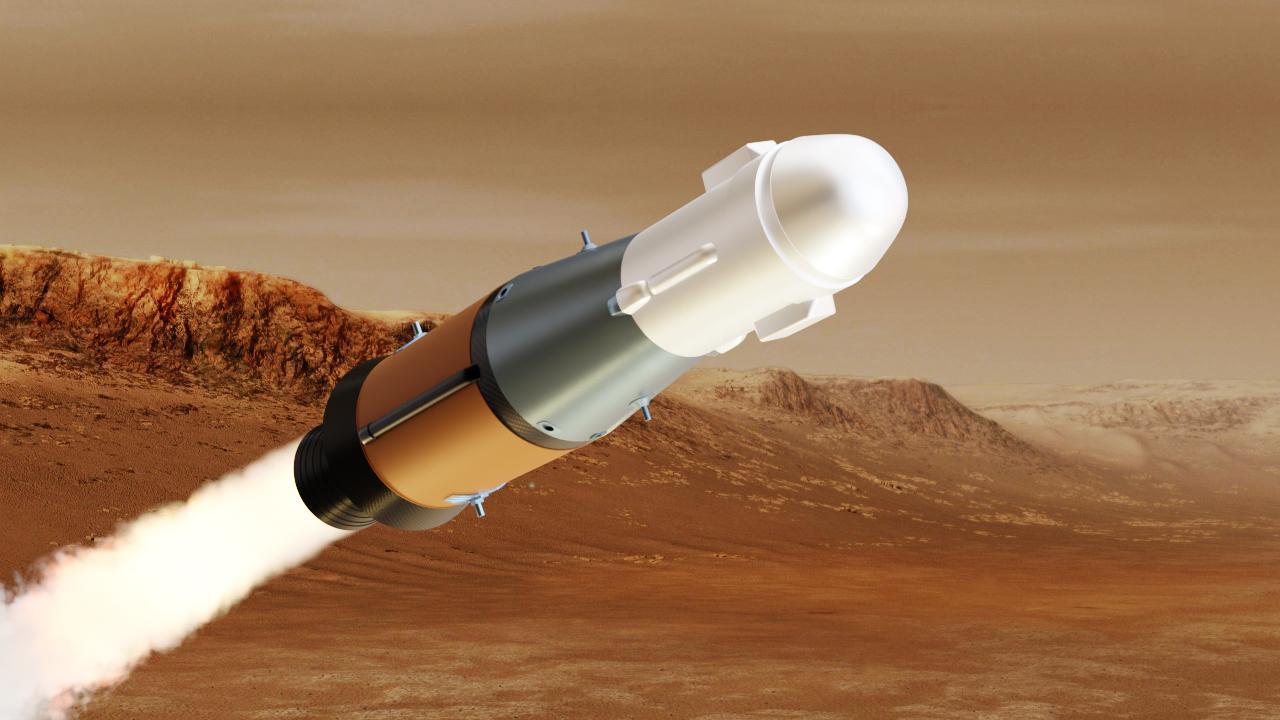
This illustration shows NASA's Mars Ascent Vehicle (MAV) in powered flight. The MAV will carry tubes containing Martian rock and soil samples into orbit around Mars, where ESA's Earth Return Orbiter spacecraft will enclose them in a highly secure containment capsule and deliver them to Earth. https://photojournal.jpl.nasa.gov/catalog/PIA25076
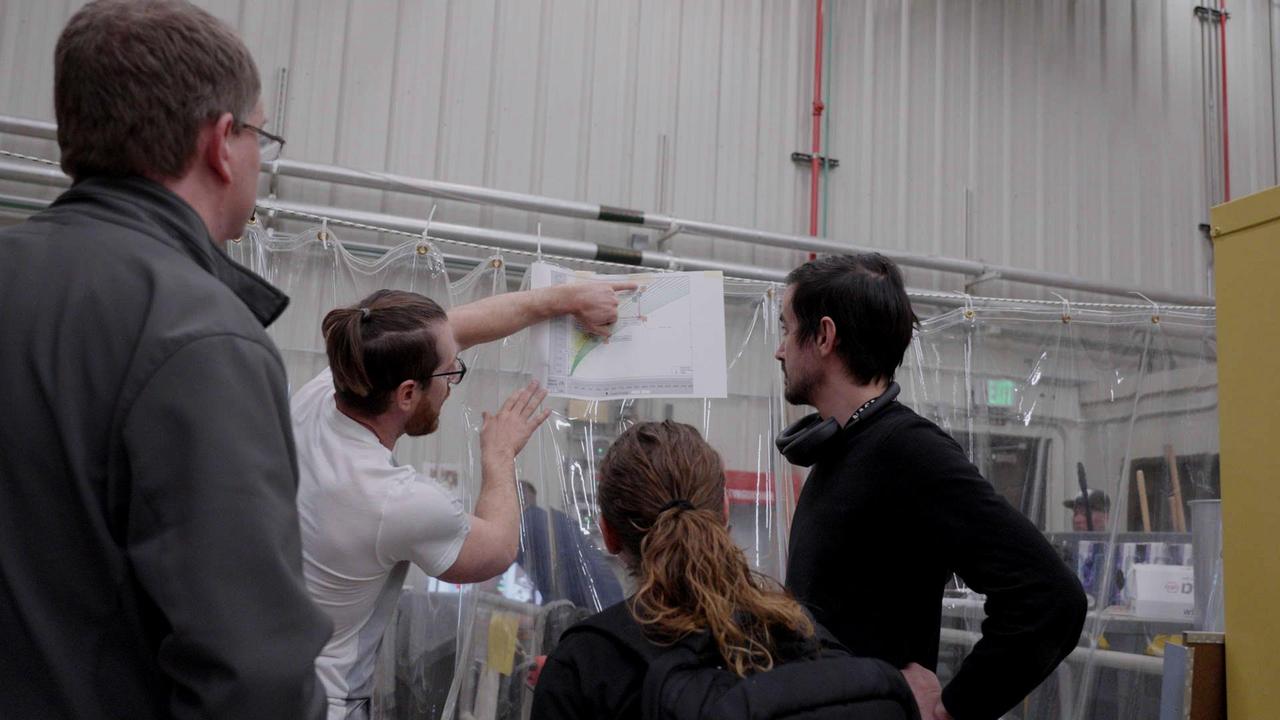
Patrick DeGrosse and fellow engineers at NASA's Jet Propulsion Laboratory review data from a recent test of a full-size footpad for a future Mars lander. The 16-inch-diameter (40-centimeter-diameter) footpad was plunged into a test bed filled with 10,000 pounds (4,536 kilograms) of simulated Martian soil in order to see how deep it would sink – too far, and the lander's belly could scrape against the ground during touchdown, damaging it. The Sample Retrieval Lander, which would be central to NASA's Mars Sample Return campaign, is estimated to weigh as much as 5,016 pounds (2,275 kilograms). It would be the heaviest spacecraft ever to land on the Red Planet. In order to understand how energy would be absorbed during the landing of such a massive spacecraft, JPL engineers have been conducting these footpad drop tests. Mars Sample Return will revolutionize our understanding of Mars by bringing scientifically selected samples to Earth for study using the most sophisticated instrumentation around the world. NASA's planned Mars Sample Return (MSR) campaign would fulfill one of the highest priority solar system exploration goals identified by the National Academies of Sciences, Engineering and Medicine in the past three decadal surveys. This strategic partnership with the ESA (European Space Agency) features the first mission to return samples from another planet, including the first launch from the surface of another planet. The samples being collected by NASA's Perseverance rover during its exploration of an ancient river delta are thought to be the best opportunity to reveal the early evolution of Mars, including the potential for ancient life. https://photojournal.jpl.nasa.gov/catalog/PIA25826
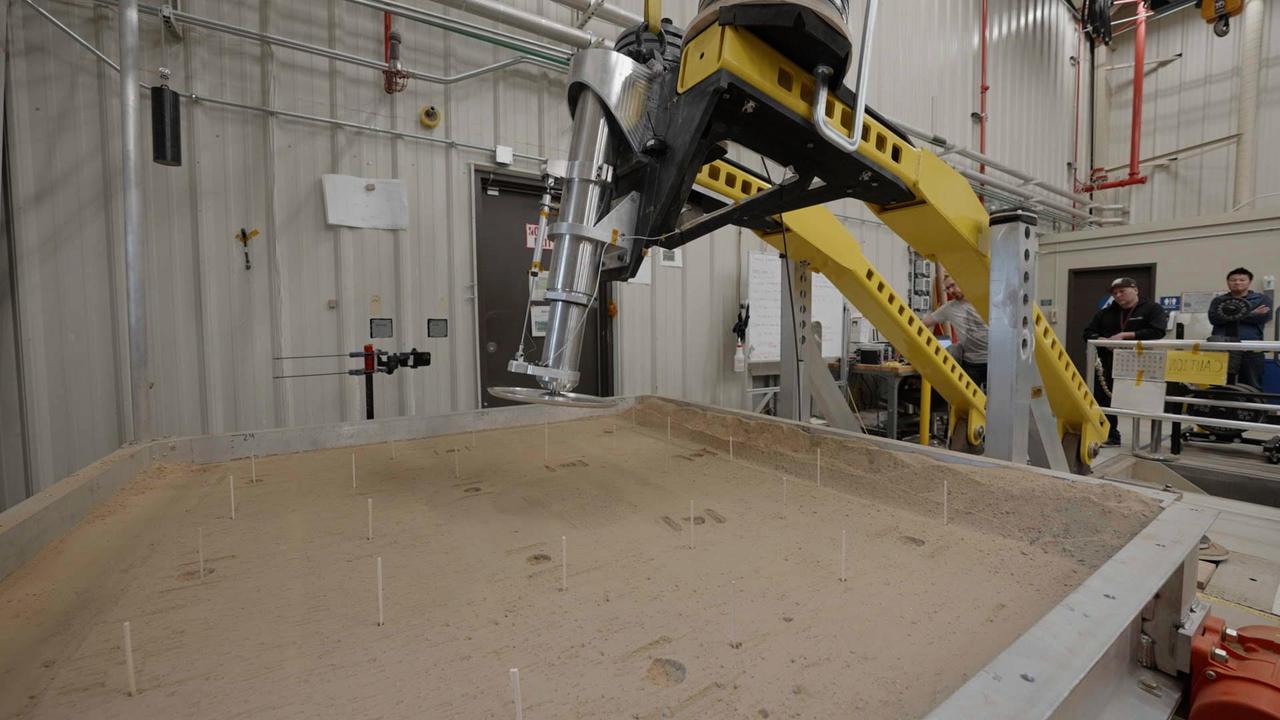
This setup is being used at NASA's Jet Propulsion Laboratory to test a 16-inch-diameter (40-centimeter-diameter) footpad for a future Mars lander. The footpad was plunged into a test bed filled with 10,000 pounds (4,536 kilograms) of simulated Martian soil in order to see how deep it would sink – too far, and the lander's belly could scrape against the ground during touchdown, damaging it. The Sample Retrieval Lander, which would be central to NASA's Mars Sample Return campaign, is estimated to weigh as much as 5,016 pounds (2,275 kilograms). It would be the heaviest spacecraft ever to land on the Red Planet. In order to understand how energy would be absorbed during the landing of such a massive spacecraft, JPL engineers have been conducting drop tests of a full-size footpad. Mars Sample Return will revolutionize our understanding of Mars by bringing scientifically selected samples to Earth for study using the most sophisticated instrumentation around the world. NASA's planned Mars Sample Return (MSR) campaign would fulfill one of the highest priority solar system exploration goals identified by the National Academies of Sciences, Engineering and Medicine in the past three decadal surveys. This strategic partnership with the ESA (European Space Agency) features the first mission to return samples from another planet, including the first launch from the surface of another planet. The samples being collected by NASA's Perseverance rover during its exploration of an ancient river delta are thought to be the best opportunity to reveal the early evolution of Mars, including the potential for ancient life. https://photojournal.jpl.nasa.gov/catalog/PIA25824
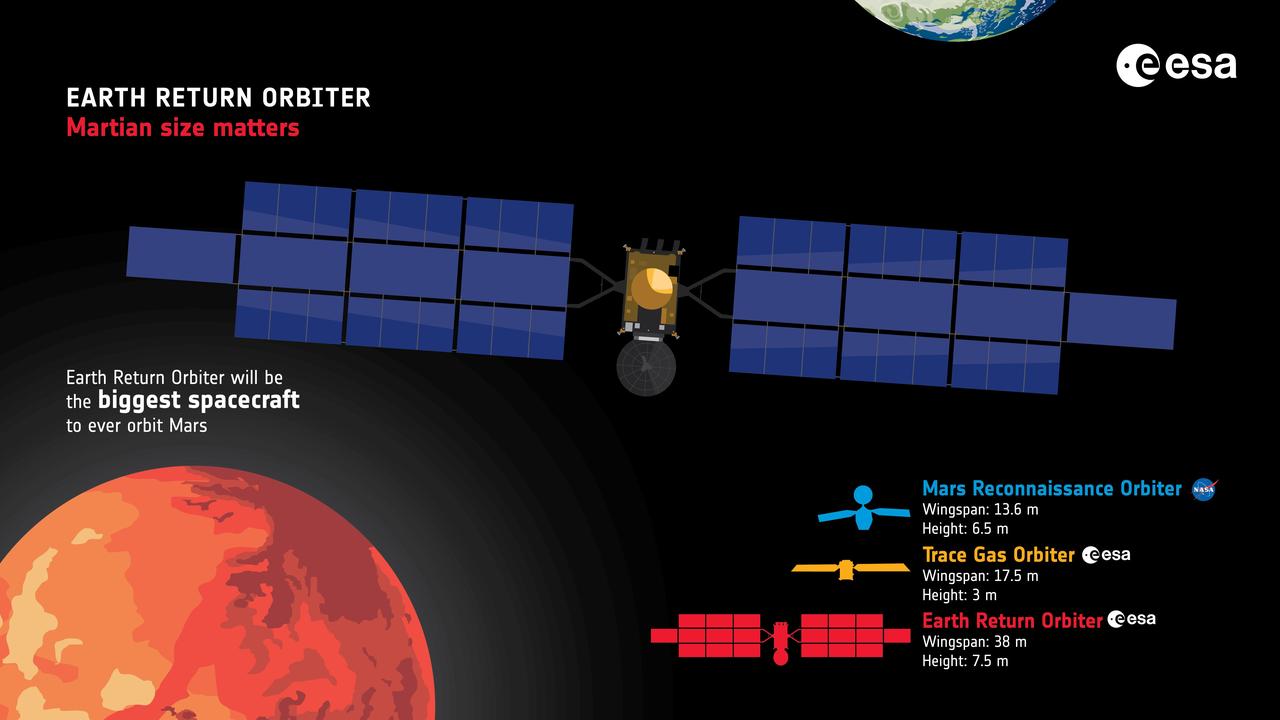
The European Space Agency's (ESA) Earth Return Orbiter (ERO) would be the biggest spacecraft to ever orbit Mars. The spacecraft would also be the first interplanetary spacecraft to rendezvous and capture hardware launched from another planet and return it to the Earth's surface, making a full round trip to Mars and back. ERO would be a multi-stage modular spacecraft equipped with both chemical and solar electric propulsion. The electric propulsion system would be the most powerful ever flown on any previous planetary mission. ERO would carry a radiation monitor to measure the total radiation dose experienced by the spacecraft throughout the entire mission, which in addition to monitoring the health of the ERO, should provide important information on how to design systems for future human explorers. Launch is planned in 2027, entering into Mars orbit in 2029. The Earth Return Orbiter is part of the multi-mission Mars Sample Return campaign being planned by NASA and the European Space Agency (ESA). https://photojournal.jpl.nasa.gov/catalog/PIA25892
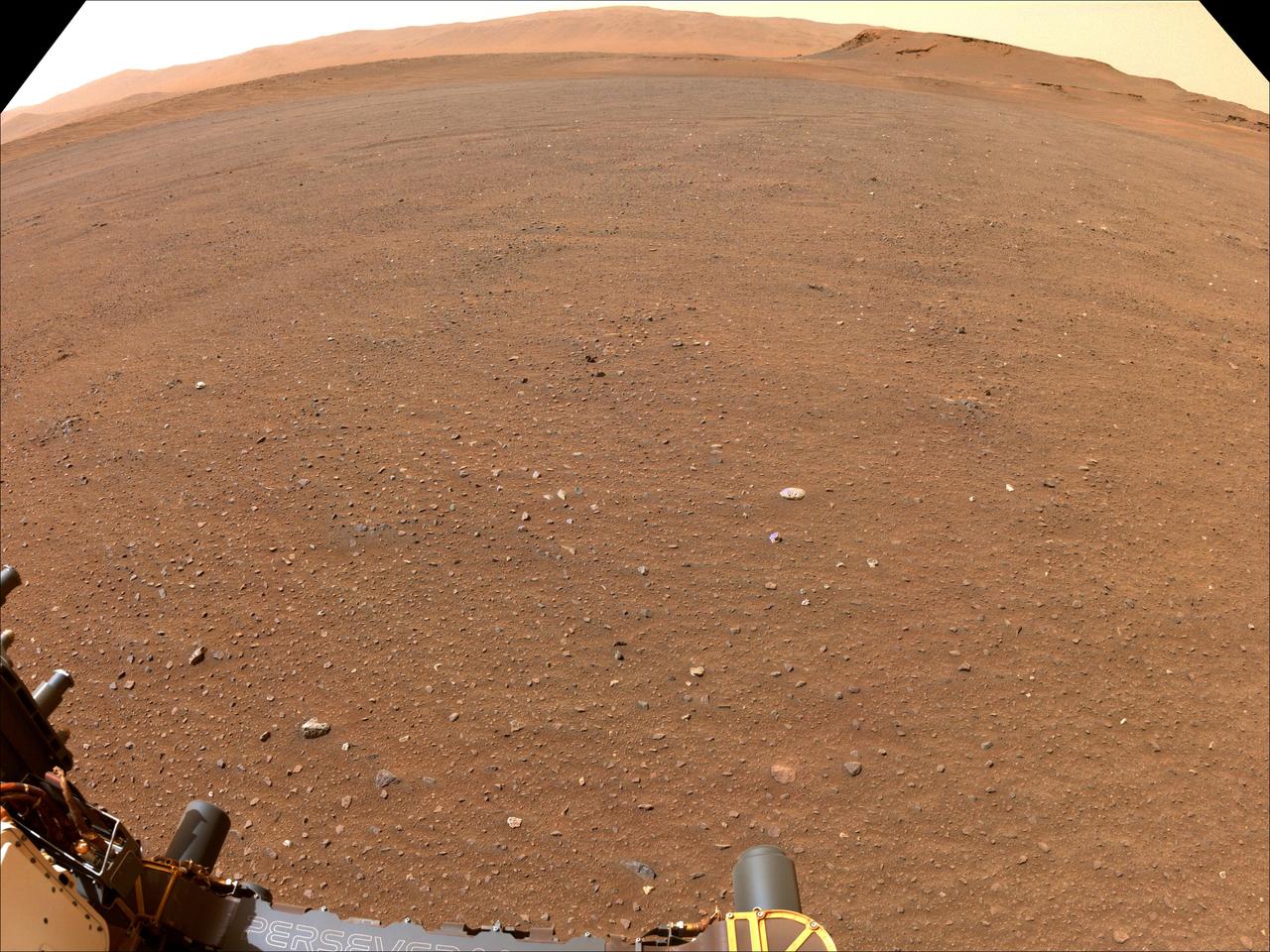
NASA's Perseverance Mars rover used one of its navigation cameras to take this image of flat terrain in Jezero Crater. This is one possible site that NASA may consider for a Mars Sample Return lander that would collect Perseverance's samples of Mars rock and sediment in the future. The lander would serve as the launch platform for a Mars Ascent Vehicle that would blast off from Mars, delivering the samples to an orbiter as part of their journey to Earth for intensive study. Choosing an area that lacks large rocks (especially those over 7 1/2 inches, or 19 centimeters, in diameter), sand dunes, and steeply angled terrain would go a long way toward easing the path for an MSR recovery vehicle to efficiently grab tubes before heading to the lander. A key objective for Perseverance's mission on Mars is astrobiology, including the search for signs of ancient microbial life. The rover will characterize the planet's geology and past climate, pave the way for human exploration of the Red Planet, and be the first mission to collect and cache Martian rock and regolith (broken rock and dust). Subsequent NASA missions, in cooperation with ESA (European Space Agency), would send spacecraft to Mars to collect these sealed samples from the surface and return them to Earth for in-depth analysis. The Mars 2020 Perseverance mission is part of NASA's Moon to Mars exploration approach, which includes Artemis missions to the Moon that will help prepare for human exploration of the Red Planet. https://photojournal.jpl.nasa.gov/catalog/PIA25370
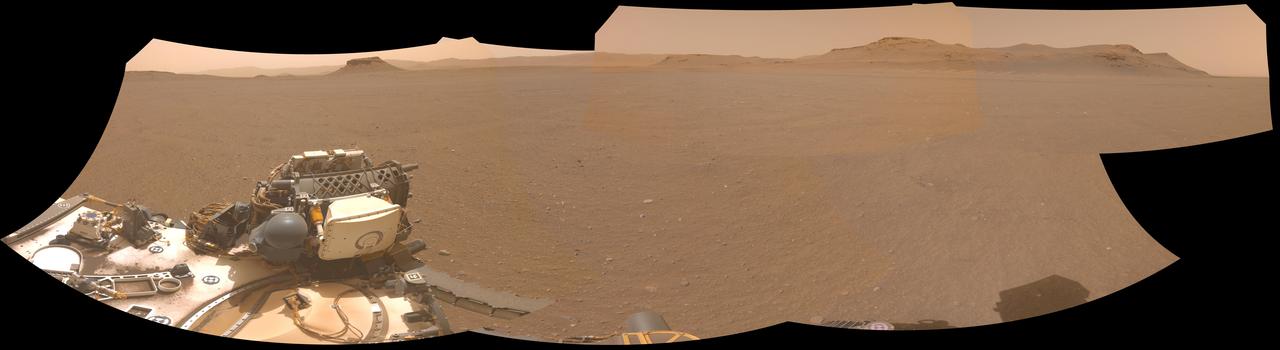
NASA's Perseverance Mars rover used one of its navigation cameras to take this panorama of a proposed landing site for the Mars Sample Return lander. The lander would collect rock and sediment samples that Perseverance has taken and would also serve as the launch platform for a Mars Ascent Vehicle that would blast off from Mars, delivering the samples to an orbiter as part of their journey to Earth for intensive study. Choosing an area that lacks large rocks (especially those over 7 1/2 inches, or 19 centimeters, in diameter), sand dunes, and steeply angled terrain would go a long way toward easing the path for an MSR recovery vehicle to efficiently grab tubes before heading to the lander. This panorama is made up of five images taken on April 14, 2022 (the 409th Martian day, or sol, of the mission) and stitched together back on Earth. The color has been adjusted to match the lighting conditions as the human eye would perceive them on Earth. A key objective for Perseverance's mission on Mars is astrobiology, including the search for signs of ancient microbial life. The rover will characterize the planet's geology and past climate, pave the way for human exploration of the Red Planet, and be the first mission to collect and cache Martian rock and regolith (broken rock and dust). Subsequent NASA missions, in cooperation with ESA (European Space Agency), would send spacecraft to Mars to collect these sealed samples from the surface and return them to Earth for in-depth analysis. The Mars 2020 Perseverance mission is part of NASA's Moon to Mars exploration approach, which includes Artemis missions to the Moon that will help prepare for human exploration of the Red Planet. https://photojournal.jpl.nasa.gov/catalog/PIA25406
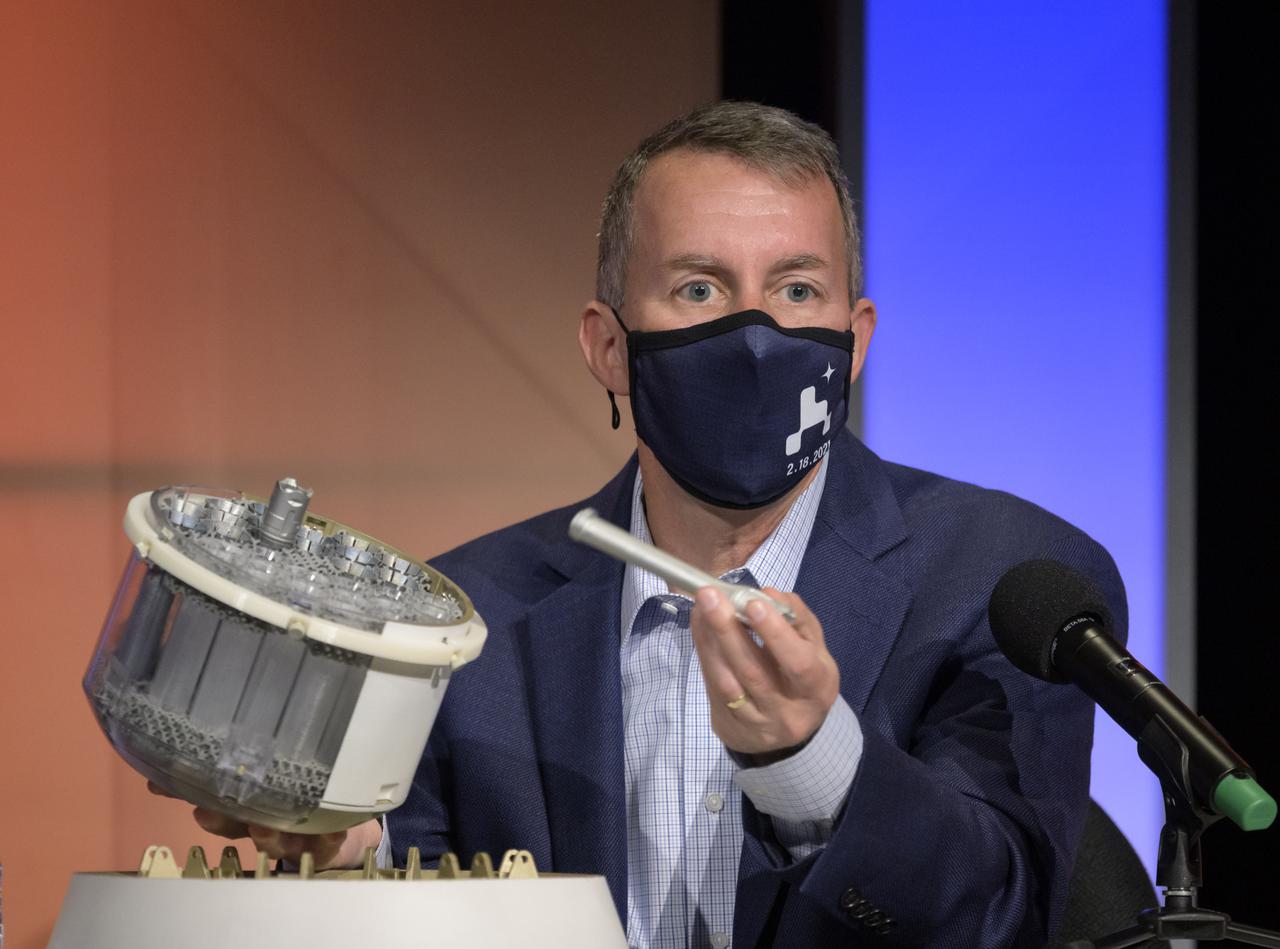
Mars Sample Return program manager, JPL, Bobby Braun, shows a concept model of NASA's orbiting sample container, which will hold tubes of Martian rock and soil samples that will be returned to Earth through a Mars sample return campaign during a NASA Perseverance rover press briefing about the search for ancient life at Mars and about samples to be brought back to Earth on a future mission, Wednesday, Feb. 17, 2021, at NASA's Jet Propulsion Laboratory in Pasadena, California. The Perseverance Mars rover is due to land on Mars Thursday, Feb. 18, 2021. A key objective for Perseverance’s mission on Mars is astrobiology, including the search for signs of ancient microbial life. The rover will characterize the planet’s geology and past climate, pave the way for human exploration of the Red Planet, and be the first mission to collect and cache Martian rock and regolith. Photo Credit: (NASA/Bill Ingalls)

Mars Sample Return program manager, JPL, Bobby Braun, shows a concept model of NASA's orbiting sample container, which will hold tubes of Martian rock and soil samples that will be returned to Earth through a Mars sample return campaign during a NASA Perseverance rover press briefing about the search for ancient life at Mars and about samples to be brought back to Earth on a future mission, Wednesday, Feb. 17, 2021, at NASA's Jet Propulsion Laboratory in Pasadena, California. The Perseverance Mars rover is due to land on Mars Thursday, Feb. 18, 2021. A key objective for Perseverance’s mission on Mars is astrobiology, including the search for signs of ancient microbial life. The rover will characterize the planet’s geology and past climate, pave the way for human exploration of the Red Planet, and be the first mission to collect and cache Martian rock and regolith. Photo Credit: (NASA/Bill Ingalls)
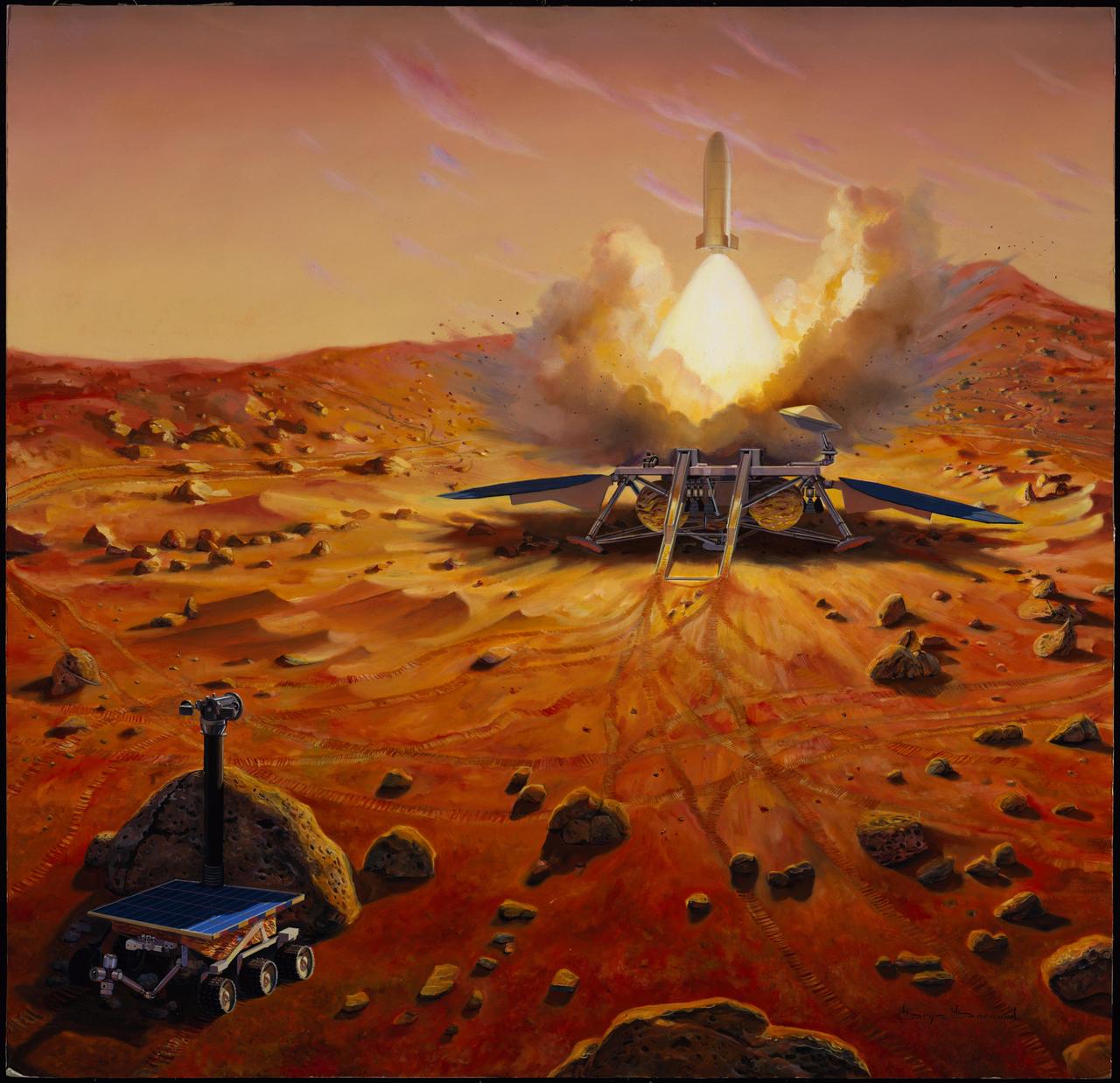
One crucial step in NASA Mars sample return mission would be to launch the collected sample away from the surface of Mars. This artist concept depicts a Mars ascent vehicle for starting a sample of Mars rocks on their trip to Earth.

Mars Sample Return program manager, JPL, Bobby Braun, gives remarks during a NASA Perseverance rover press briefing about the search for ancient life at Mars and about samples to be brought back to Earth on a future mission, Wednesday, Feb. 17, 2021, at NASA's Jet Propulsion Laboratory in Pasadena, California. The Perseverance Mars rover is due to land on Mars Thursday, Feb. 18, 2021. A key objective for Perseverance’s mission on Mars is astrobiology, including the search for signs of ancient microbial life. The rover will characterize the planet’s geology and past climate, pave the way for human exploration of the Red Planet, and be the first mission to collect and cache Martian rock and regolith. Photo Credit: (NASA/Bill Ingalls)

The Oregon State University Mars Rover Team's robot is seen during level one competition at the 2014 NASA Centennial Challenges Sample Return Robot Challenge, Wednesday, June 11, 2014, at the Worcester Polytechnic Institute (WPI) in Worcester, Mass. Eighteen teams are competing for a $1.5 million NASA prize purse. Teams will be required to demonstrate autonomous robots that can locate and collect samples from a wide and varied terrain, operating without human control. The objective of this NASA-WPI Centennial Challenge is to encourage innovations in autonomous navigation and robotics technologies. Innovations stemming from the challenge may improve NASA's capability to explore a variety of destinations in space, as well as enhance the nation's robotic technology for use in industries and applications on Earth. Photo Credit: (NASA/Joel Kowsky)

The Oregon State University Mars Rover Team's robot is seen during level one competition at the 2014 NASA Centennial Challenges Sample Return Robot Challenge, Wednesday, June 11, 2014, at the Worcester Polytechnic Institute (WPI) in Worcester, Mass. Eighteen teams are competing for a $1.5 million NASA prize purse. Teams will be required to demonstrate autonomous robots that can locate and collect samples from a wide and varied terrain, operating without human control. The objective of this NASA-WPI Centennial Challenge is to encourage innovations in autonomous navigation and robotics technologies. Innovations stemming from the challenge may improve NASA's capability to explore a variety of destinations in space, as well as enhance the nation's robotic technology for use in industries and applications on Earth. Photo Credit: (NASA/Joel Kowsky)

Members of the Oregon State University Mars Rover Team prepare their robot to attempt the level one competition at the 2014 NASA Centennial Challenges Sample Return Robot Challenge, Wednesday, June 11, 2014, at the Worcester Polytechnic Institute (WPI) in Worcester, Mass. Eighteen teams are competing for a $1.5 million NASA prize purse. Teams will be required to demonstrate autonomous robots that can locate and collect samples from a wide and varied terrain, operating without human control. The objective of this NASA-WPI Centennial Challenge is to encourage innovations in autonomous navigation and robotics technologies. Innovations stemming from the challenge may improve NASA's capability to explore a variety of destinations in space, as well as enhance the nation's robotic technology for use in industries and applications on Earth. Photo Credit: (NASA/Joel Kowsky)
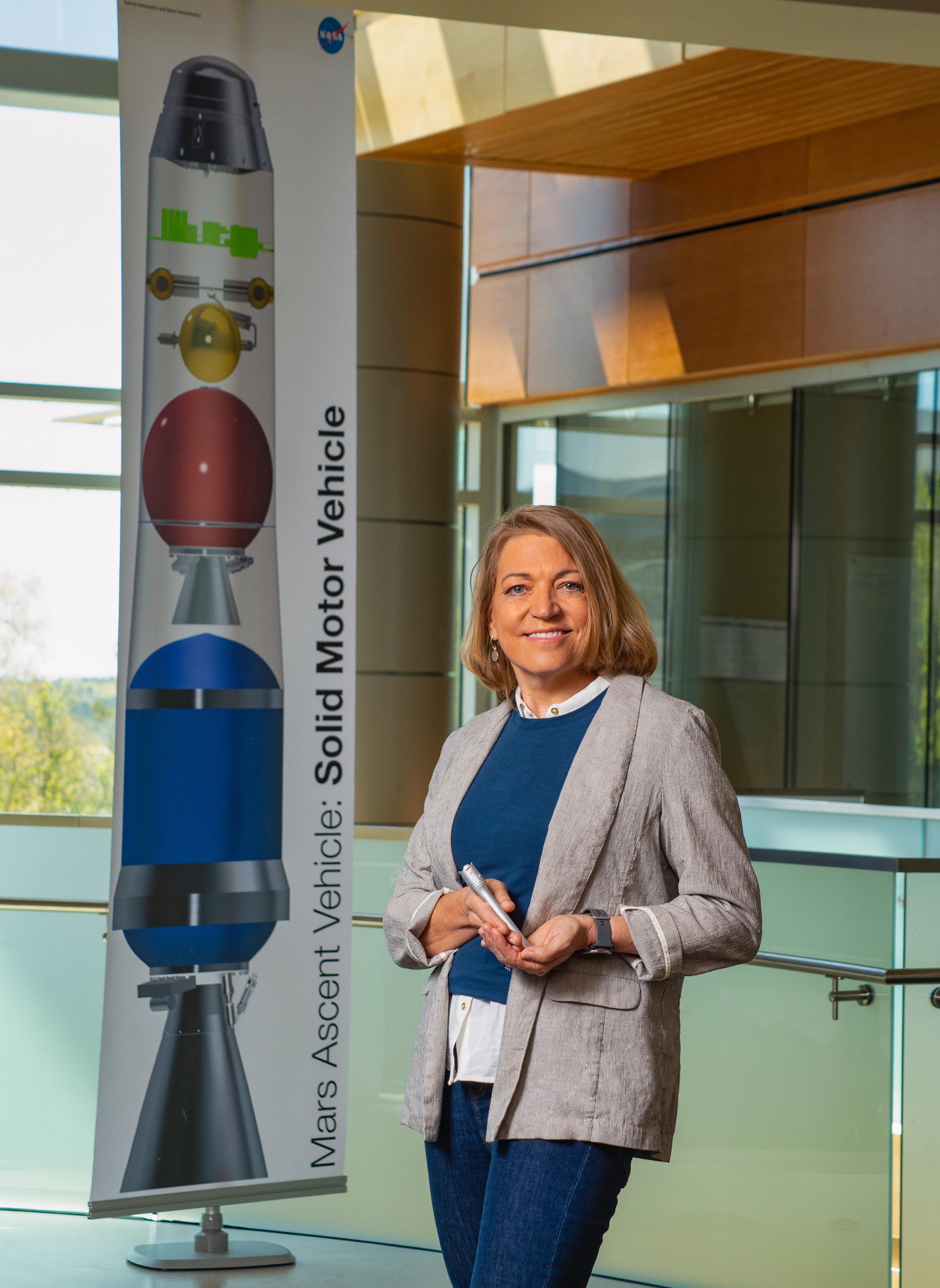
Angie Jackman, manager of the Mars Ascent Vehicle (MAV) project, holds a 3D-printed model of the tubes NASA's Perseverance rover is already filling with Martian rock and soil samples. Set to be the first rocket to launch from another planet, the MAV is designed to carry the sealed samples into orbit around Mars. https://photojournal.jpl.nasa.gov/catalog/PIA25074
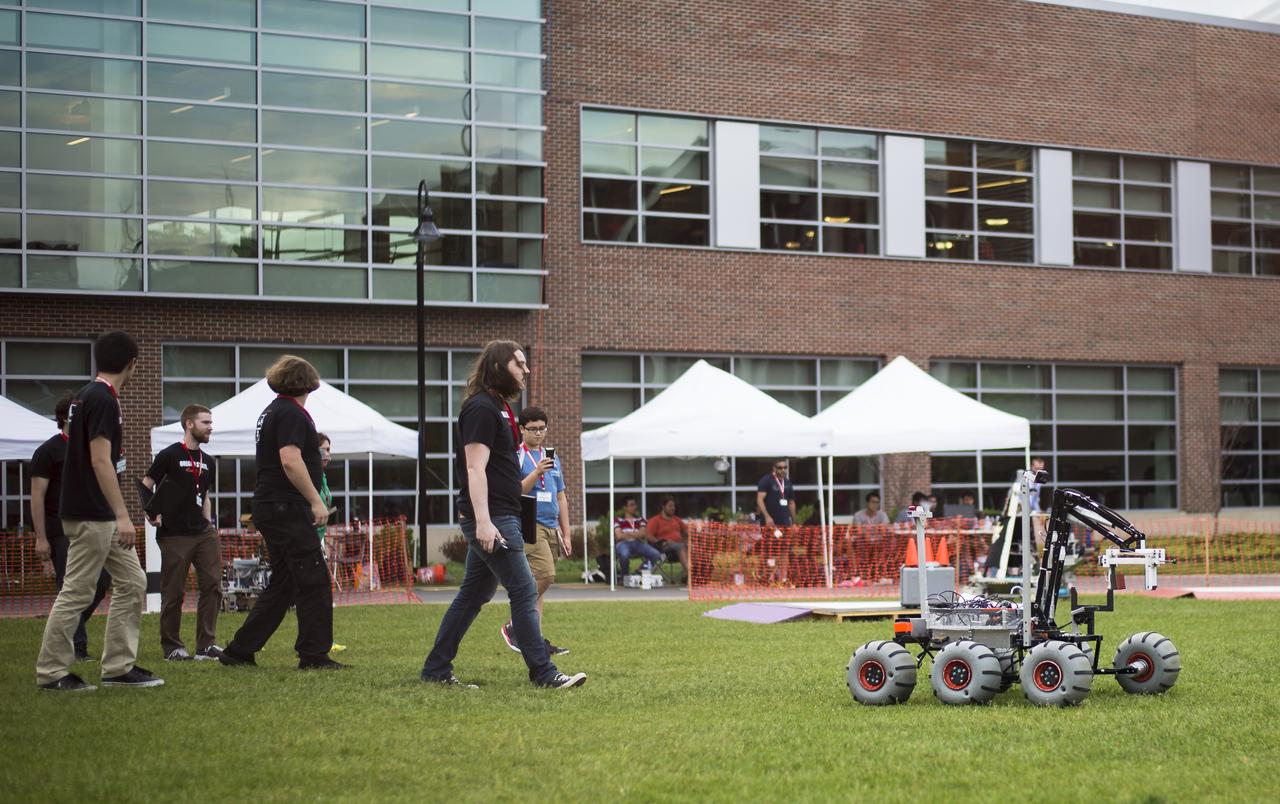
The Oregon State University Mars Rover Team, from Corvallis, Oregon, follows their robot on the practice field during the 2014 NASA Centennial Challenges Sample Return Robot Challenge, Tuesday, June 10, 2014, at the Worcester Polytechnic Institute (WPI) in Worcester, Mass. The Oregon State University Mars Rover Team is one of eighteen teams competing for a $1.5 million NASA prize purse. Teams will be required to demonstrate autonomous robots that can locate and collect samples from a wide and varied terrain, operating without human control. The objective of this NASA-WPI Centennial Challenge is to encourage innovations in autonomous navigation and robotics technologies. Innovations stemming from the challenge may improve NASA's capability to explore a variety of destinations in space, as well as enhance the nation's robotic technology for use in industries and applications on Earth. Photo Credit: (NASA/Joel Kowsky)
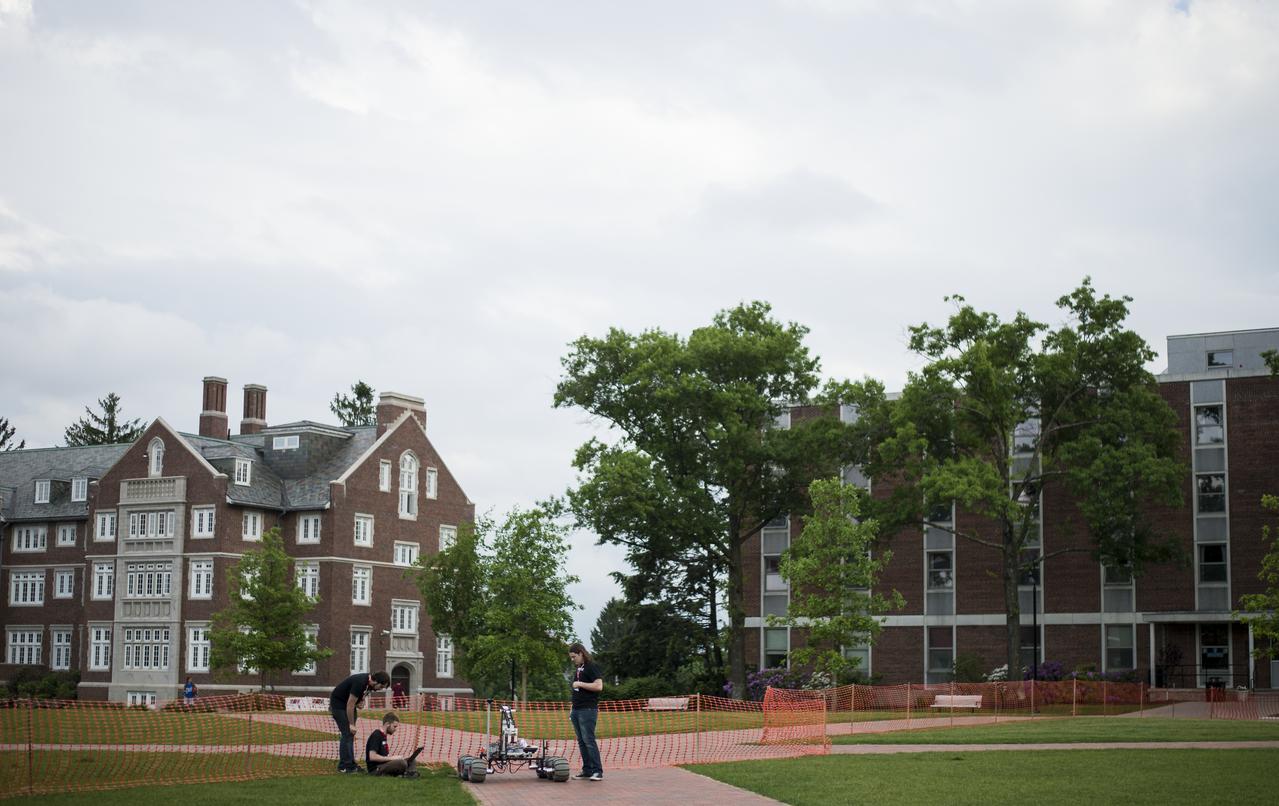
The Oregon State University Mars Rover Team follows their robot on the practice field during the 2014 NASA Centennial Challenges Sample Return Robot Challenge, Tuesday, June 10, 2014, at the Worcester Polytechnic Institute (WPI) in Worcester, Mass. The Oregon State University Mars Rover Team is one of eighteen teams competing for a $1.5 million NASA prize purse. Teams will be required to demonstrate autonomous robots that can locate and collect samples from a wide and varied terrain, operating without human control. The objective of this NASA-WPI Centennial Challenge is to encourage innovations in autonomous navigation and robotics technologies. Innovations stemming from the challenge may improve NASA's capability to explore a variety of destinations in space, as well as enhance the nation's robotic technology for use in industries and applications on Earth. Photo Credit: (NASA/Joel Kowsky)

The Oregon State University Mars Rover Team poses for a picture with their robot following their attempt at the level one challenge during the 2014 NASA Centennial Challenges Sample Return Robot Challenge, Wednesday, June 11, 2014, at the Worcester Polytechnic Institute (WPI) in Worcester, Mass. is one of eighteen teams competing for a $1.5 million NASA prize purse. Teams will be required to demonstrate autonomous robots that can locate and collect samples from a wide and varied terrain, operating without human control. The objective of this NASA-WPI Centennial Challenge is to encourage innovations in autonomous navigation and robotics technologies. Innovations stemming from the challenge may improve NASA's capability to explore a variety of destinations in space, as well as enhance the nation's robotic technology for use in industries and applications on Earth. Photo Credit: (NASA/Joel Kowsky)
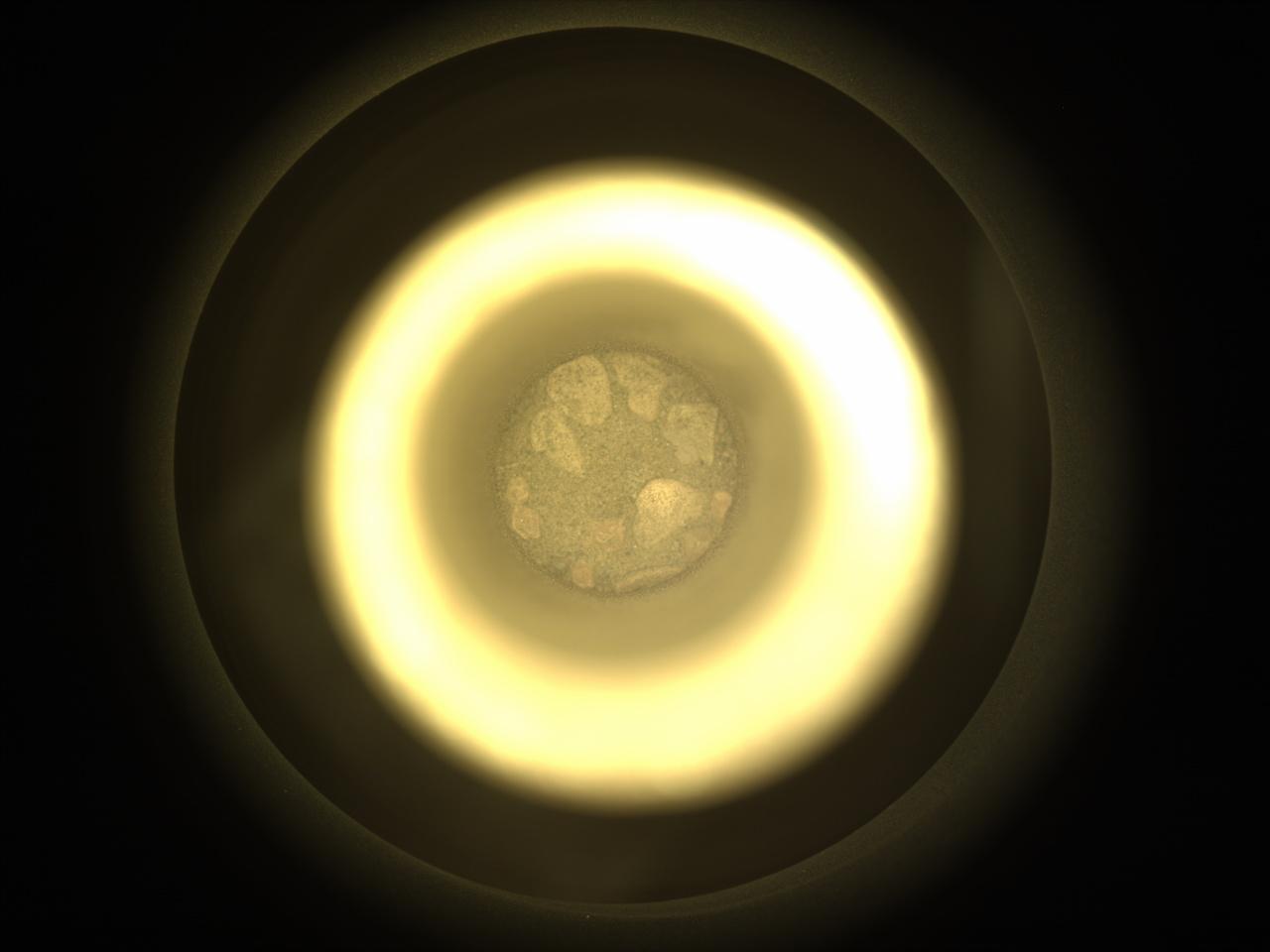
This image of Martian regolith – broken rock and dust – was captured Dec. 2, 2022, by the Sampling and Caching System Camera (known as CacheCam) on NASA's Perseverance Mars rover. The regolith, contained inside a metal tube, is one of two samples that will be considered for deposit on the Martian surface this month as part of the Mars Sample Return campaign. The sample was collected in Mars' Jezero Crater from a pile of wind-blown sand and dust called a "mega-ripple" – a feature similar to but smaller than a dune. Studying regolith with powerful lab equipment back on Earth will allow scientists to better understand the processes that have shaped the surface of Mars and help engineers design future missions as well as equipment used by future Martian astronauts. A key objective for Perseverance's mission on Mars is astrobiology, including the search for signs of ancient microbial life. The rover will characterize the planet's geology and past climate, pave the way for human exploration of the Red Planet, and be the first mission to collect and cache Martian rock and regolith. Subsequent NASA missions, in cooperation with ESA (European Space Agency), would send spacecraft to Mars to collect these sealed samples from the surface and return them to Earth for in-depth analysis. The Mars 2020 Perseverance mission is part of NASA's Moon to Mars exploration approach, which includes Artemis missions to the Moon that will help prepare for human exploration of the Red Planet. https://photojournal.jpl.nasa.gov/catalog/PIA25588
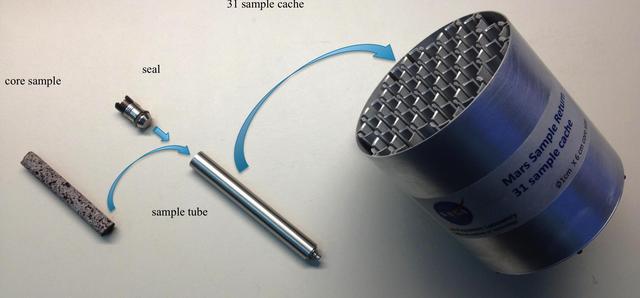
This picture shows one prototype for hardware to cache samples of cores drilled from Martian rocks for possible future return to Earth; a major objective for NASA Mars 2020 rover.
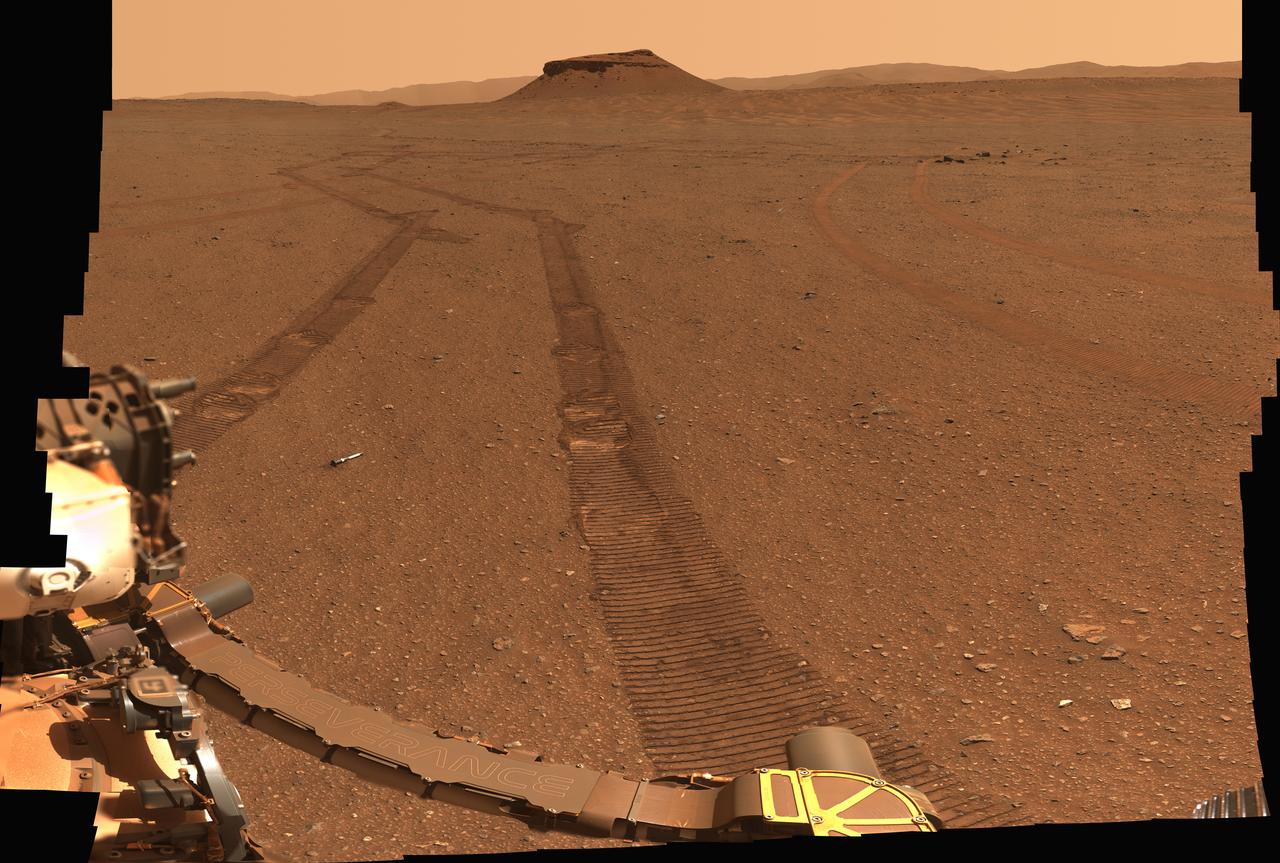
NASA's Perseverance Mars rover captured this portrait of its recently completed sample depot using its Mastcam-Z camera on Jan. 31, 2023, the 693rd Martian day, or sol, of the mission. This panorama is made up of 368 individual images that were stitched together after being sent back to Earth. The color in the scene has been adjusted to show the Martian surface as it would look to the human eye. Each sample tube is approximately 7 inches (18 centimeters) long and .8 inches (2 centimeters) in diameter. The "Amalik" sample closest to the rover was approximately 10 feet (3 meters) away from the camera at the time the image was taken. The "Atsah" and "Skyland" samples were approximately 66 feet (20 meters) away. "Bearwallow," "Coulettes," "Montdenier," "Crosswind Lake," and "Roubion" were approximately 115 to 164 feet (35 to 50 meters) away. "Mageik" and "Malay" were approximately 197 feet (60 meters) away. This is a natural-color view of the scene, showing the surface as it would appear to a human observer. Throughout its science campaigns, the rover has been taking a pair of samples from rocks the mission team deems scientifically significant. One sample from each pair taken so far now sits in the depot – along with one atmospheric sample and one "witness" tube – for a total of 10 tubes that were carefully arranged on the surface in a zigzag pattern. The depot is a crucial milestone in the NASA-ESA (European Space Agency) Mars Sample Return campaign, which aims to bring Mars samples to Earth for closer study. The Perseverance rover will be the primary means to hand off the collected samples to a future robotic lander as part of the campaign. The lander would, in turn, use a robotic arm to place the samples in a containment capsule aboard a small rocket that would blast off to Mars orbit, where another spacecraft would capture the sample container and return it safely to Earth. Hosting a duplicate set, the depot will serve as a backup if Perseverance can't deliver its samples. Perseverance built the depot at "Three Forks," a location within Mars' Jezero Crater. Billions of years ago, this crater was filled by a lake and delta. Sediment that built up in the delta formed a steep mound that Perseverance will be driving up in the months ahead to arrive at the top of the delta. Arizona State University leads the operations of the Mastcam-Z instrument, working in collaboration with Malin Space Science Systems in San Diego, on the design, fabrication, testing, and operation of the cameras, and in collaboration with the Neils Bohr Institute of the University of Copenhagen on the design, fabrication, and testing of the calibration targets. A key objective for Perseverance's mission on Mars is astrobiology, including the search for signs of ancient microbial life. The rover will characterize the planet's geology and past climate, pave the way for human exploration of the Red Planet, and be the first mission to collect and cache Martian rock and regolith (broken rock and dust). Subsequent NASA missions, in cooperation with ESA (European Space Agency), would send spacecraft to Mars to collect these sealed samples from the surface and return them to Earth for in-depth analysis. The Mars 2020 Perseverance mission is part of NASA's Moon to Mars exploration approach, which includes Artemis missions to the Moon that will help prepare for human exploration of the Red Planet. https://photojournal.jpl.nasa.gov/catalog/PIA25736
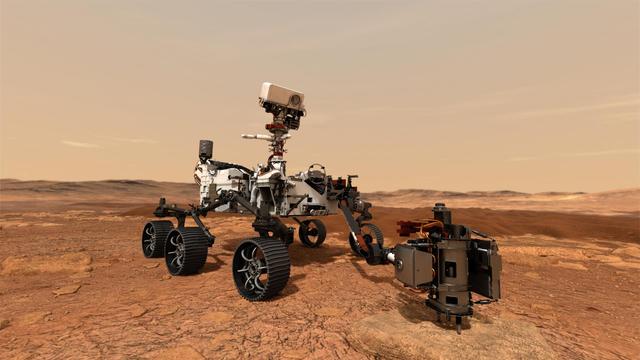
In this illustration, NASA's Mars 2020 rover uses its drill to core a rock sample on Mars. Scheduled to launch in July 2020, the Mars 2020 rover represents the first leg of humanity's first round trip to another planet. The rover will collect and store rock and soil samples on the planet's surface that future missions will retrieve and return to Earth. NASA and the European Space Agency are solidifying concepts for a Mars sample return mission. https://photojournal.jpl.nasa.gov/catalog/PIA23491
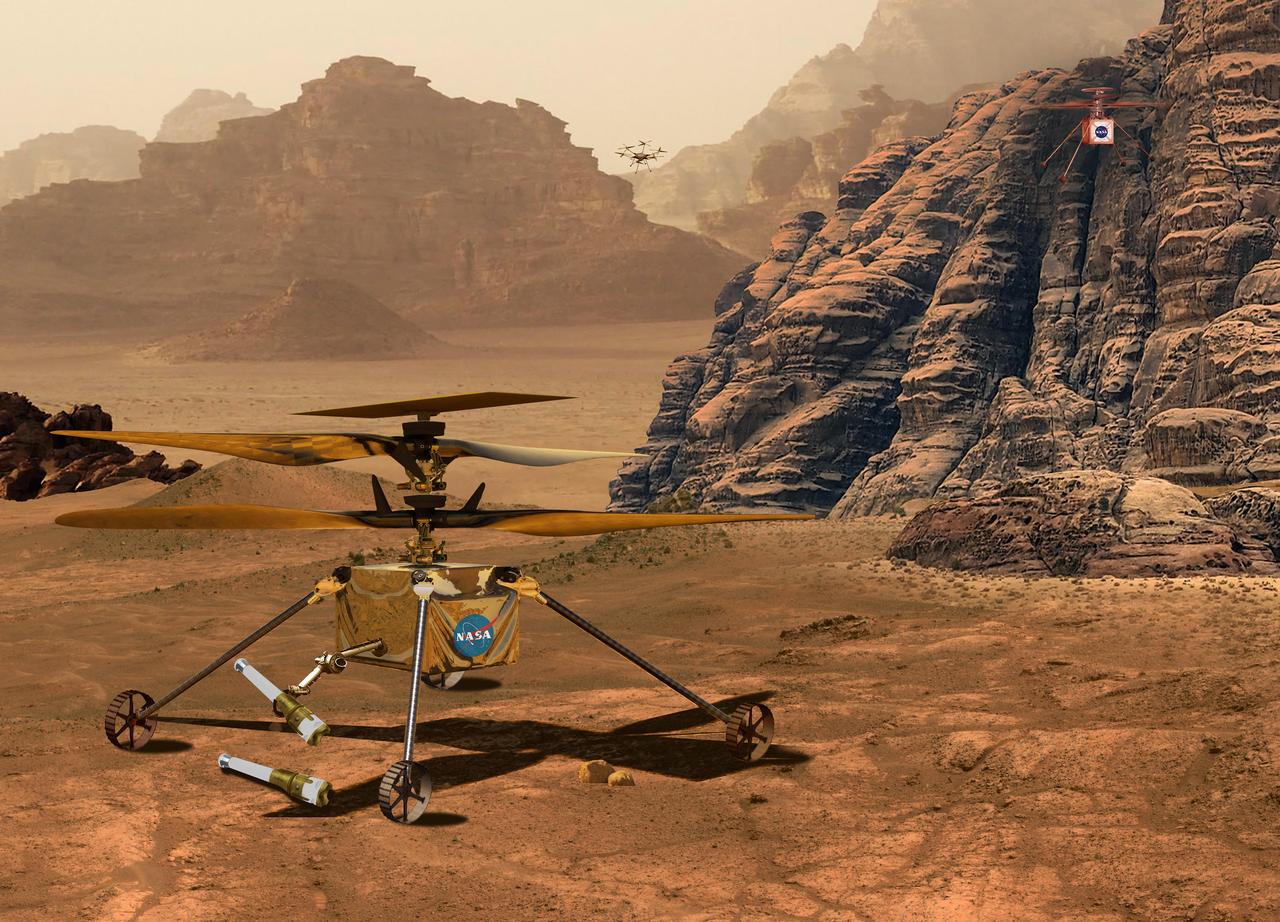
This illustration depicts three different of models of NASA's solar-powered Mars helicopter. In the upper right is the Ingenuity Mars Helicopter, currently operating at Jezero Crater. Depicted in the foreground is one of two Sample Recovery Helicopters slated to fly to Mars as part of the Mars Sample Return Campaign. NASA is developing the Sample Recovery Helicopters to serve as backups to the agency's Perseverance rover in transporting sample tubes to the Sample Return Lander. In the upper center of image is the Mars Science Helicopter concept. A proposed follow-on to Ingenuity, the six-rotor Mars Science Helicopter could be used during future Mars missions to serve as an aerial scout and carry between 4.5 and 11 pounds (2 to 5 kilograms) of payload, including science instruments, to study terrain that rovers can't reach. https://photojournal.jpl.nasa.gov/catalog/PIA25338
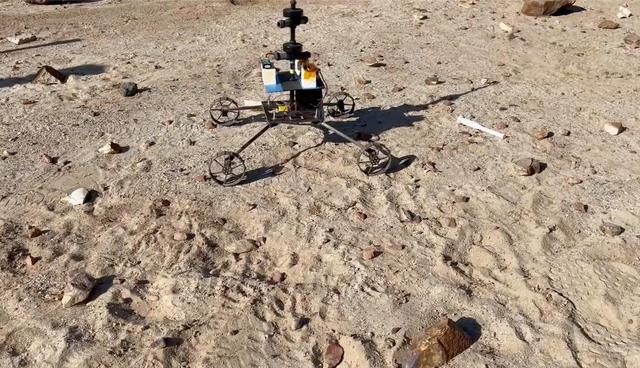
A model Sample Recovery Helicopter drives and positions itself over a sample tube during a test in the Mars Yard at NASA's Jet Propulsion Laboratory in Southern California. Two Sample Recovery Helicopters are slated to fly to Mars as part of the Mars Sample Return campaign. NASA is developing the Sample Recovery Helicopters to serve as backups to the agency's Perseverance rover in transporting sample tubes to the Sample Retrieval Lander. These helicopters are follow-ons to NASA's Ingenuity Mars Helicopter, which arrived at the Red Planet in the belly of Perseverance in February 2021. The Sample Recovery Helicopters have wheels instead of feet, as well as a small manipulator arm with a two-fingered gripper capable of carrying precious sample tubes. Testing of the Sample Recovery Helicopters is ongoing. The testbed was made by AeroVironment Inc. Movie available at https://photojournal.jpl.nasa.gov/catalog/PIA25320
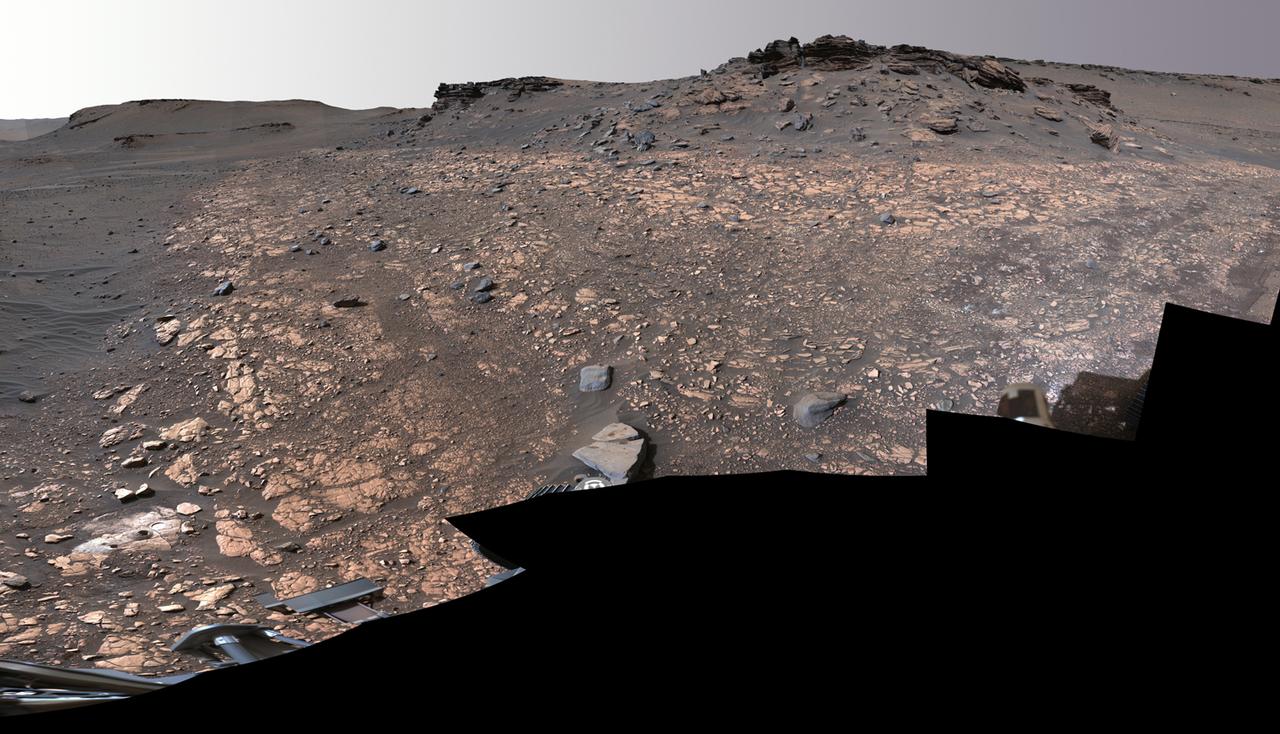
This image shows two locations in Mars's Jezero Crater where NASA's Perseverance rover collected rock samples for possible return to Earth in the future: "Wildcat Ridge" (lower left) and "Skinner Ridge" (upper right). These two outcrops are within about 70 feet (20 meters) of each other. The rover cored two cylinders of rock the size of classroom chalk (about 0.5 inches, or 13 millimeters, in diameter and 2.4 inches, or 60 millimeters, long) from each location. The two sites are in the delta, a fan-shaped area where, billions of years ago, a river once flowed into a lake in Jezero Crater and deposited rocks and sediment. Scientists consider the sedimentary rocks preserved in the delta one of the best places on Mars to search for potential signs of ancient microbial life. The verification of ancient life on Mars carries an enormous burden of proof. A light-colored, circular patch of abraded rock can be seen in the lower-left corner of the image, next to areas where Perseverance used its drill to extract the rock-core samples. The abrasion patch to the right of one of the holes is about 2 inches (5 centimeters) in diameter. The samples taken from these areas were sealed inside ultra-clean sample tubes, which are currently stored inside Perseverance. The multiple images that make up this mosaic were acquired by Perseverance's Mastcam-Z instrument on Aug. 4, 2022, the 518st Martian day, or sol, of the rover's mission. The color bands of the image have been processed to improve visual contrast and accentuate color differences. A key objective for Perseverance's mission on Mars is astrobiology, including the search for signs of ancient microbial life. The rover will characterize the planet's geology and past climate, pave the way for human exploration of the Red Planet, and be the first mission to collect and cache Martian rock and regolith (broken rock and dust). Subsequent NASA missions, in cooperation with ESA (European Space Agency), would send spacecraft to Mars to collect these sealed samples from the surface and return them to Earth for in-depth analysis. The Mars 2020 Perseverance mission is part of NASA's Moon to Mars exploration approach, which includes Artemis missions to the Moon that will help prepare for human exploration of the Red Planet. https://photojournal.jpl.nasa.gov/catalog/PIA24924
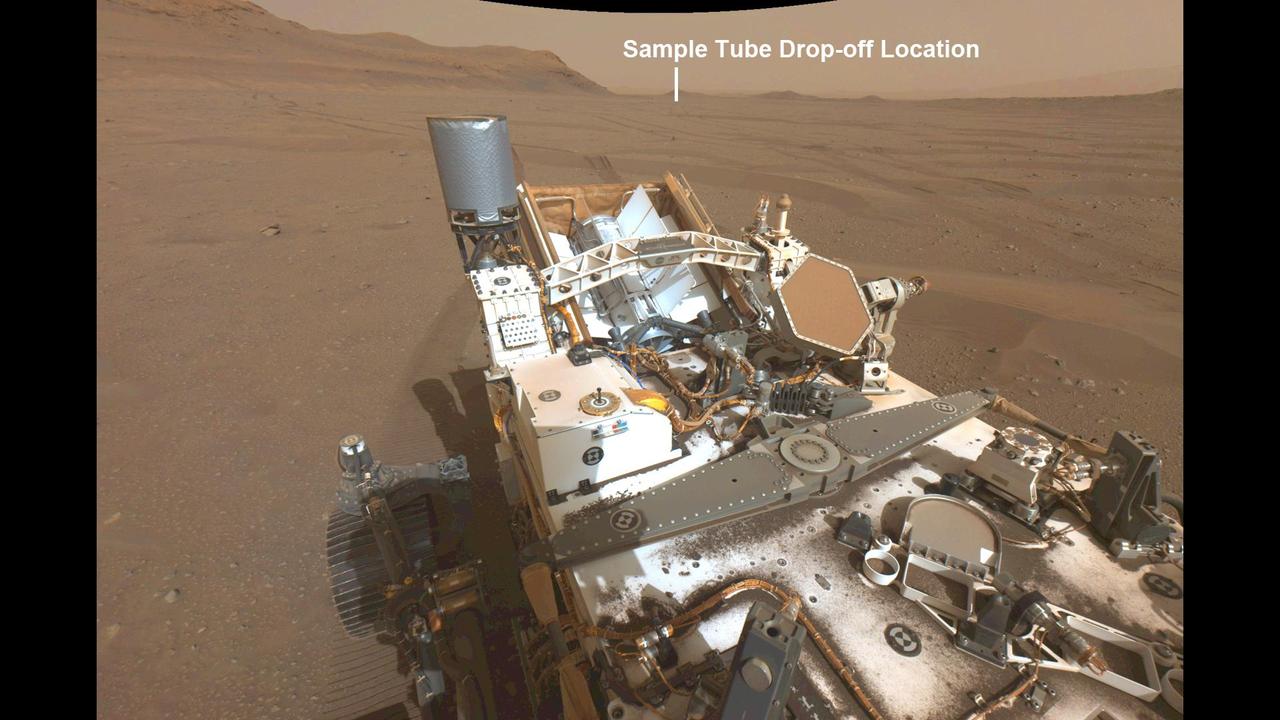
This annotated image from NASA's Perseverance Mars rover shows its wheel tracks in Jezero Crater and a distant view of the first potential location it could deposit a group of sample tubes for possible future return to Earth. The image was taken on Aug. 29, 2022, the 542nd Martian day, or sol, of the rover's mission, by Perseverance's navigation camera. Sample tubes already filled with rock are currently stored in the rover's Sampling and Caching System. Perseverance will deposit select samples in designated locations. Subsequent NASA missions, in cooperation with ESA (European Space Agency), would collect these sealed samples from the surface and return them to Earth for in-depth analysis as part of the Mars Sample Return campaign. This image has been linearized to remove optical lens distortion effects. A key objective for Perseverance's mission on Mars is astrobiology, including the search for signs of ancient microbial life. The rover will characterize the planet's geology and past climate, pave the way for human exploration of the Red Planet, and be the first mission to collect and cache Martian rock and regolith (broken rock and dust). The Mars 2020 Perseverance mission is part of NASA's Moon to Mars exploration approach, which includes Artemis missions to the Moon that will help prepare for human exploration of the Red Planet. https://photojournal.jpl.nasa.gov/catalog/PIA25243
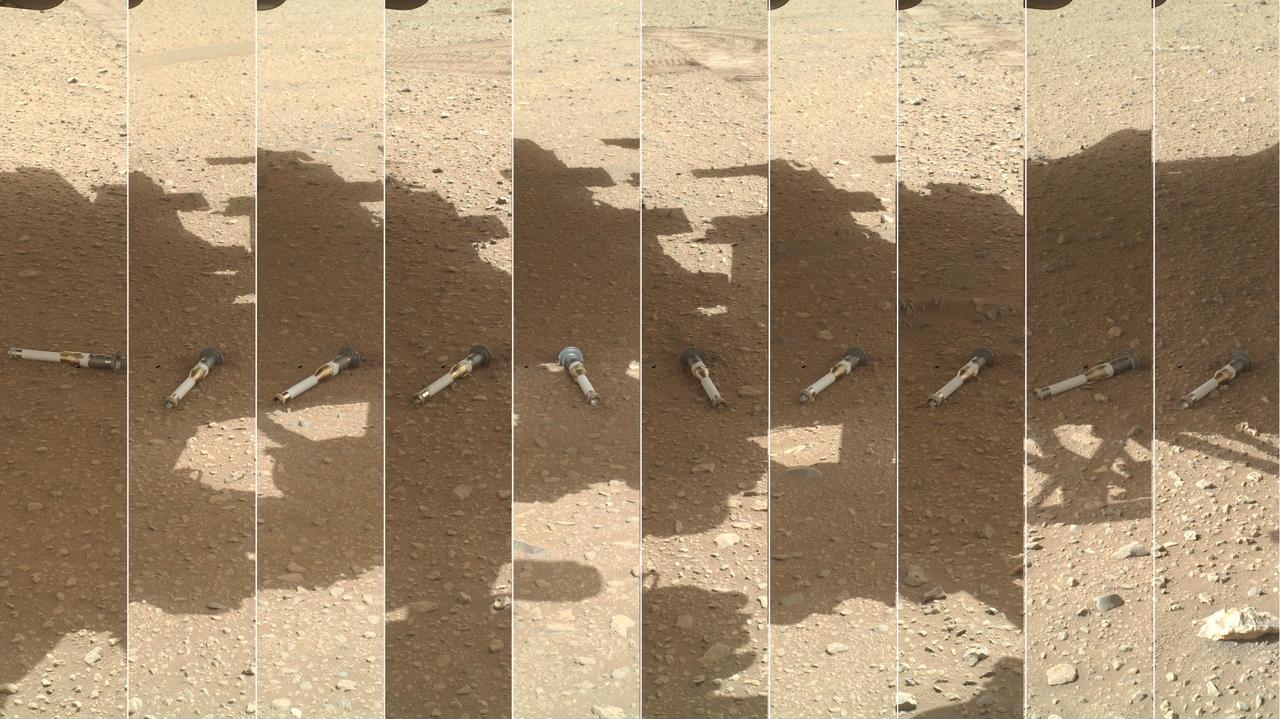
This photomontage shows each of the sample tubes shortly after they were deposited onto the surface by NASA's Perseverance Mars rover, as viewed by the WATSON (Wide Angle Topographic Sensor for Operations and eNgineering) camera on the end of the rover's 7-foot-long (2-meter-long) robotic arm. Shown, from left, are "Malay," "Mageik," "Crosswind Lake," "Roubion," "Coulettes," "Montdenier," "Bearwallow," "Skyland," "Atsah," and "Amalik." Deposited from Dec. 21, 2022, to Jan. 28, 2023, these samples make up the sample depot Perseverance built at "Three Forks," a location within Mars' Jezero Crater. Perseverance's sample depot is a collection of 10 sample tubes left on the Martian surface in a zig-zag pattern. These tubes represent a backup collection of rock cores and regolith (broken rock and dust) that could be recovered in the future by the NASA-ESA (European Space Agency) Mars Sample Return campaign, which aims to bring Mars samples to Earth for closer study. Perseverance will be collecting more samples on its journey that will be considered the primary samples for return, but the mission team wants to make sure backups are available in case anything happens to the rover. A key objective for Perseverance's mission on Mars is astrobiology, including the search for signs of ancient microbial life. The rover will characterize the planet's geology and past climate, pave the way for human exploration of the Red Planet, and be the first mission to collect and cache Martian rock and regolith (broken rock and dust). Subsequent NASA missions, in cooperation with ESA (European Space Agency), would send spacecraft to Mars to collect these sealed samples from the surface and return them to Earth for in-depth analysis. The Mars 2020 Perseverance mission is part of NASA's Moon to Mars exploration approach, which includes Artemis missions to the Moon that will help prepare for human exploration of the Red Planet. https://photojournal.jpl.nasa.gov/catalog/PIA25738
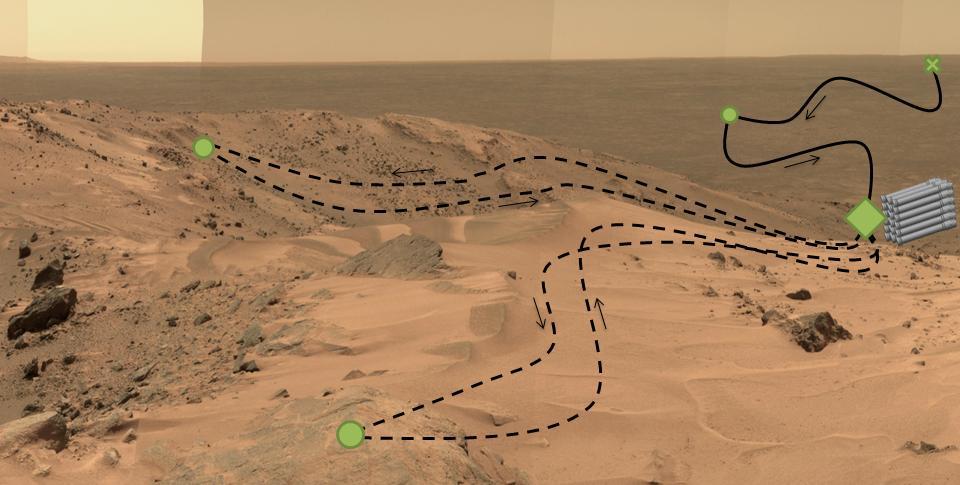
This diagram, superimposed on a photo of Martian landscape, illustrates a concept called "adaptive caching," which is in development for NASA's 2020 Mars rover mission. In addition to the investigations that the Mars 2020 rover will conduct on Mars, the rover will collect carefully selected samples of Mars rock and soil and cache them to be available for possible return to Earth if a Mars sample-return mission is scheduled and flown. Each sample will be stored in a sealed tube. Adaptive caching would result in a set of samples, up to the maximum number of tubes carried on the rover, being placed on the surface at the discretion of the mission operators. The tubes holding the collected samples would not go into a surrounding container. In this illustration, green dots indicate "regions of interest," where samples might be collected. The green diamond indicates one region of interest serving as the depot for the cache. The green X at upper right represents the landing site. The solid black line indicates the rover's route during its prime mission, and the dashed black line indicates its route during an extension of the mission. The base image is a portion of the "Everest Panorama" taken by the panoramic camera on NASA's Mars Exploration Rover Spirit at the top of Husband Hill in 2005. http://photojournal.jpl.nasa.gov/catalog/PIA19150
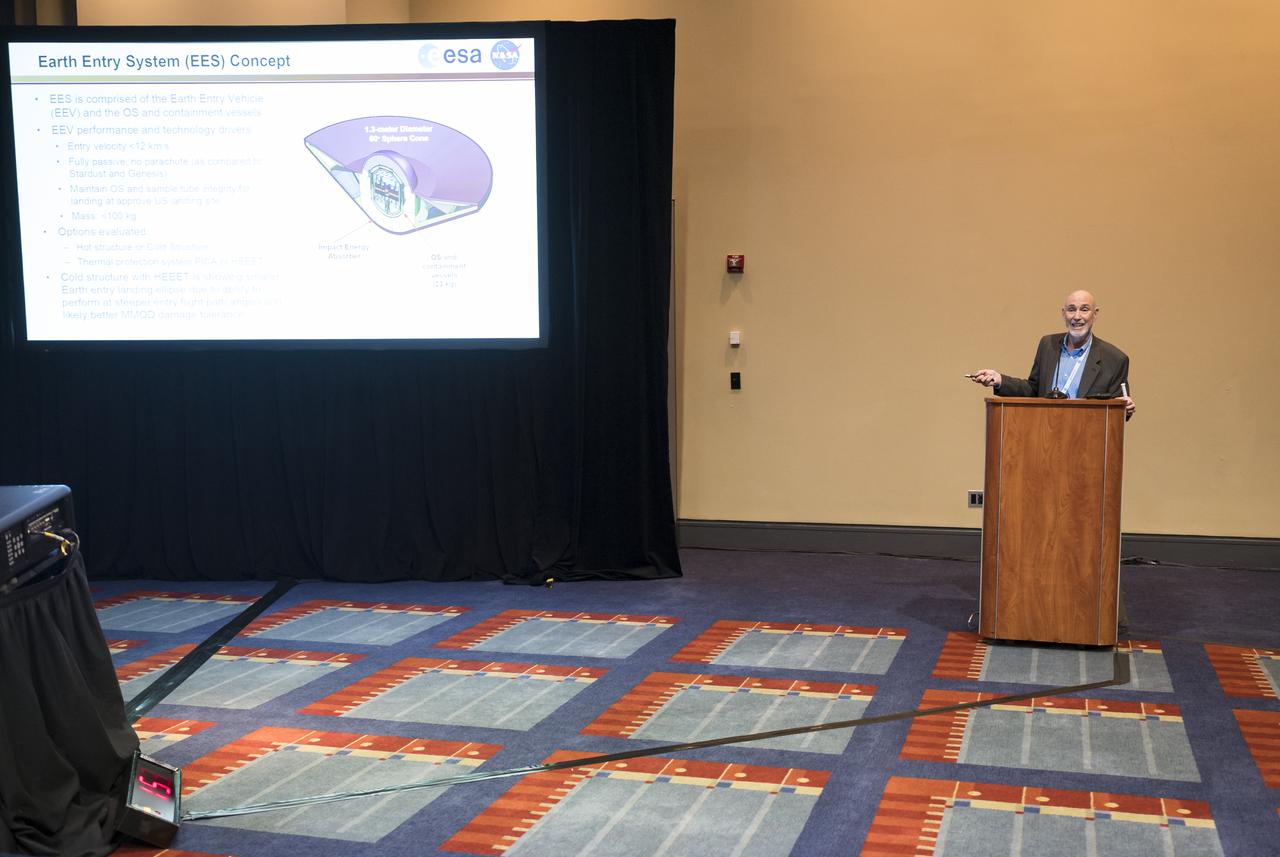
Brian Muirhead, Pre-project Manager of Mars Sample Return at NASA’s Jet Propulsion Laboratory is seen during a keynote titled “Mars Sample Return Mission Concept Status” at the 70th International Astronautical Congress, Wednesday, Oct. 23, 2019 at the Walter E. Washington Convention Center in Washington. Photo Credit: (NASA/Aubrey Gemignani)

Brian Muirhead, Pre-project Manager of Mars Sample Return at NASA’s Jet Propulsion Laboratory is seen during a keynote titled “Mars Sample Return Mission Concept Status” at the 70th International Astronautical Congress, Wednesday, Oct. 23, 2019 at the Walter E. Washington Convention Center in Washington. Photo Credit: (NASA/Aubrey Gemignani)

Brian Muirhead, Pre-project Manager of Mars Sample Return at NASA’s Jet Propulsion Laboratory answers a question by NASA Chief Scientist, Jim Green, after giving a keynote titled “Mars Sample Return Mission Concept Status” at the 70th International Astronautical Congress, Wednesday, Oct. 23, 2019 at the Walter E. Washington Convention Center in Washington. Photo Credit: (NASA/Aubrey Gemignani)

NASA Chief Scientist, Jim Green, asks Brian Muirhead, Pre-project Manager of Mars Sample Return at NASA’s Jet Propulsion Laboratory a question after he gave a keynote titled “Mars Sample Return Mission Concept Status” at the 70th International Astronautical Congress, Wednesday, Oct. 23, 2019 at the Walter E. Washington Convention Center in Washington. Photo Credit: (NASA/Aubrey Gemignani)

An audience member asks Brian Muirhead, Pre-project Manager of Mars Sample Return at NASA’s Jet Propulsion Laboratory a question after he gave a keynote titled “Mars Sample Return Mission Concept Status” at the 70th International Astronautical Congress, Wednesday, Oct. 23, 2019 at the Walter E. Washington Convention Center in Washington. Photo Credit: (NASA/Aubrey Gemignani)
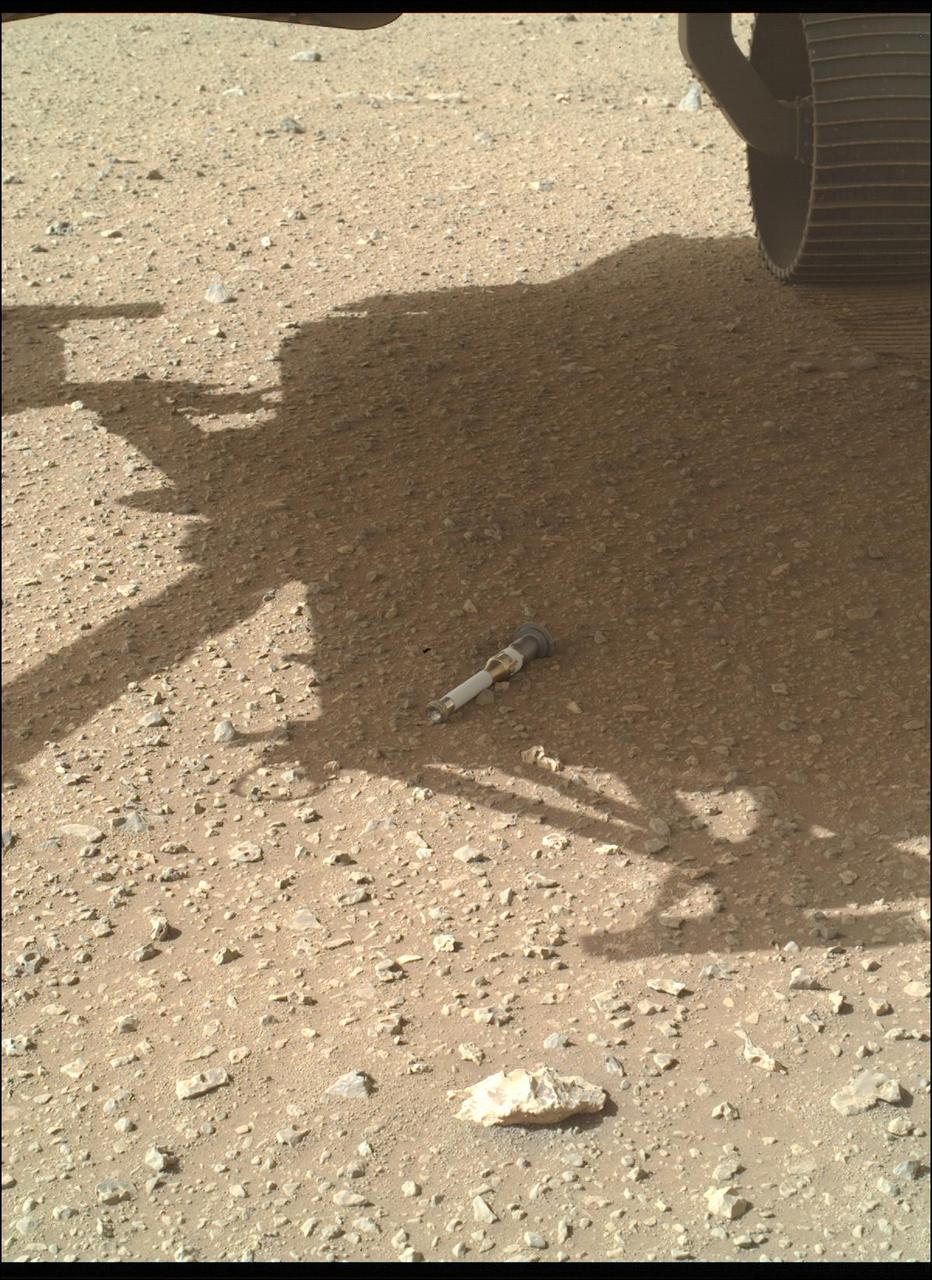
NASA's Perseverance Mars rover dropped the last of 10 tubes at the "Three Forks" sample depot on Jan. 28, 2023, the 690th Martian day, or sol, of the mission. This image of the 10th tube was taken by the WATSON (Wide Angle Topographic Sensor for Operations and eNgineering) camera on the end of the rover's 7-foot-long (2-meter-long) robotic arm. This final sample is what's called a "witness" tube – one of three collected by the rover so far and the only one deposited at the depot. Witness tubes are similar to the sample tubes that hold Martian rock and sediment, except they have been preloaded with a variety of materials that can capture molecular and particulate contaminants. They are opened on the Martian surface to "witness" the ambient environment near sample collection sites. With samples returned to Earth in the future, the witness tubes would be used to determine if samples being collected might be contaminated with materials that traveled with the rover from Earth. The Three Forks depot, the first sample depot on another world, is a crucial milestone in the NASA-ESA (European Space Agency) Mars Sample Return campaign, which aims to bring Mars samples to Earth for closer study. The Perseverance rover will be the primary means to convey the collected samples to a future robotic lander as part of the campaign. The lander would, in turn, use a robotic arm to place the samples in a containment capsule aboard a small rocket that would blast off to Mars orbit, where another spacecraft would capture the sample container and return it safely to Earth. Hosting the duplicate set, the Three Forks depot will serve as a backup if Perseverance can't deliver its samples. A key objective for Perseverance's mission on Mars is astrobiology, including the search for signs of ancient microbial life. The rover will characterize the planet's geology and past climate, pave the way for human exploration of the Red Planet, and be the first mission to collect and cache Martian rock and regolith (broken rock and dust). Subsequent NASA missions, in cooperation with ESA (European Space Agency), would send spacecraft to Mars to collect these sealed samples from the surface and return them to Earth for in-depth analysis. The Mars 2020 Perseverance mission is part of NASA's Moon to Mars exploration approach, which includes Artemis missions to the Moon that will help prepare for human exploration of the Red Planet. https://photojournal.jpl.nasa.gov/catalog/PIA25340
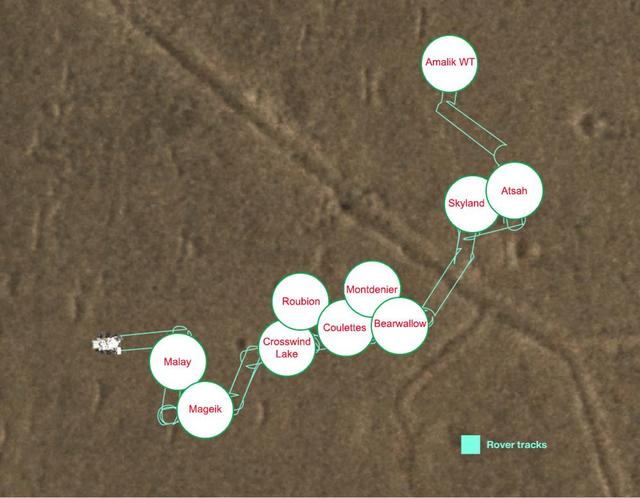
This map shows where NASA's Perseverance Mars dropped each of its 10 samples so that a future mission could pick them up from a sample depot the rover created at a location dubbed "Three Forks" in Jezero Crater. The center of each circle is the location where that sample was deployed, and the red text within that circle indicates the name of the sample as designated by Perseverance's science team. The tubes were deposited on the surface in an intricate zigzag pattern, with each sample about 15 to 50 feet (5 to 15 meters) apart from one another to ensure they could be safely recovered. The Perseverance team precisely mapped the location of each 7-inch-long (18.6-centimeter-long) tube and glove (adapter) combination so that the samples could be found even if covered with dust. The depot is on flat ground near the base of the raised, fan-shaped ancient river delta that formed long ago when a river flowed into a lake there. The first sample in the depot was dropped Dec. 21, 2022, the 653rd day, or sol, of the mission; the final sample was deposited Jan. 28, 2023, the 690th day of the mission. The Three Forks depot, the first sample depot on another world, is a crucial milestone in the NASA-ESA (European Space Agency) Mars Sample Return campaign, which aims to bring Mars samples to Earth for closer study. The Perseverance rover will be the primary means to convey the collected samples to a future robotic lander as part of the campaign. The lander would, in turn, use a robotic arm to place the samples in a containment capsule aboard a small rocket that would blast off to Mars orbit, where another spacecraft would capture the sample container and return it safely to Earth. Hosting the duplicate set, the Three Forks depot will serve as a backup if Perseverance can't deliver its samples. A key objective for Perseverance's mission on Mars is astrobiology, including the search for signs of ancient microbial life. The rover will characterize the planet's geology and past climate, pave the way for human exploration of the Red Planet, and be the first mission to collect and cache Martian rock and regolith (broken rock and dust). Subsequent NASA missions, in cooperation with ESA (European Space Agency), would send spacecraft to Mars to collect these sealed samples from the surface and return them to Earth for in-depth analysis. The Mars 2020 Perseverance mission is part of NASA's Moon to Mars exploration approach, which includes Artemis missions to the Moon that will help prepare for human exploration of the Red Planet. https://photojournal.jpl.nasa.gov/catalog/PIA25682
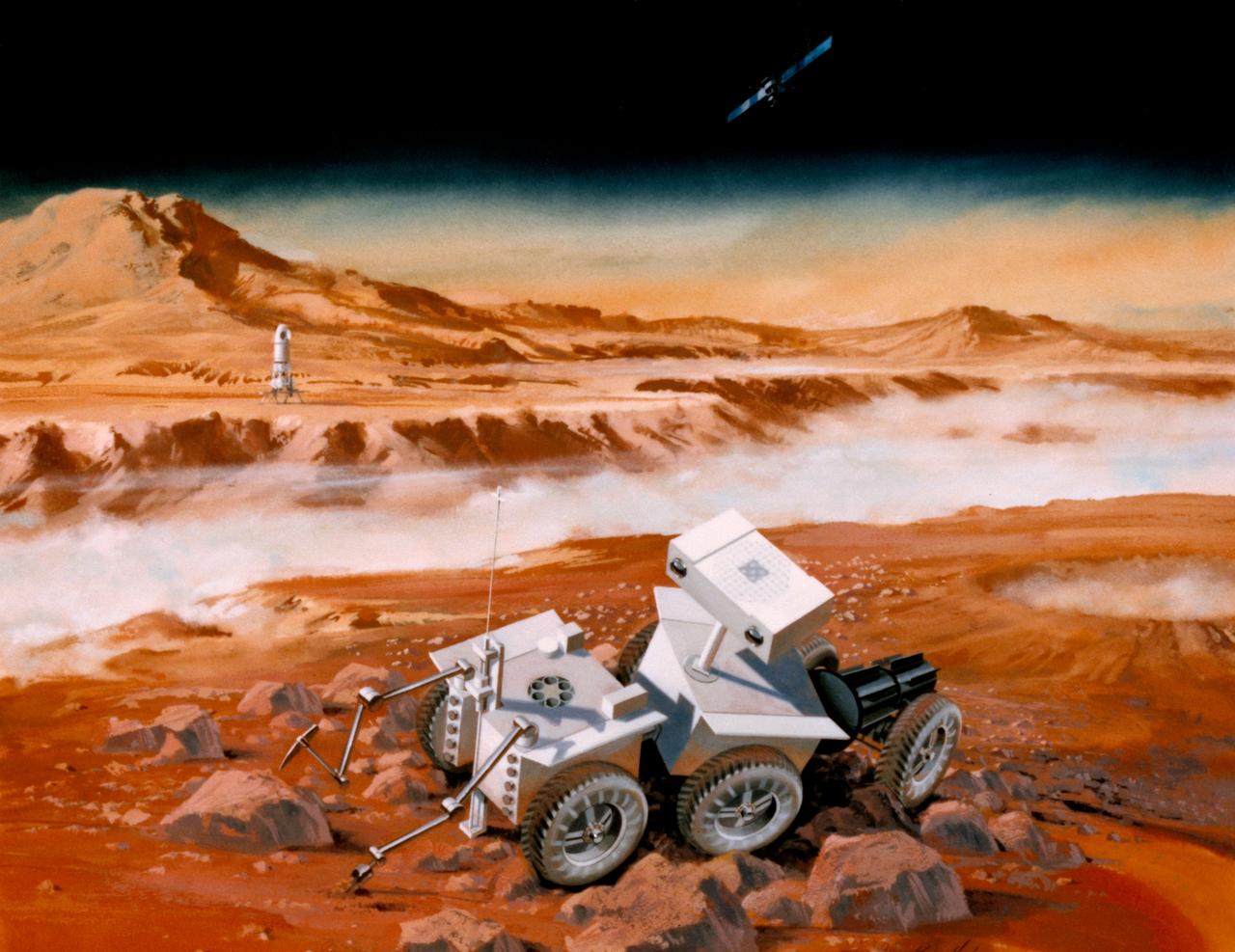
S87-35313 (15 May 1987)--- This artist's rendering illustrates a Mars Sample Return mission under study at Jet Propulsion Laboratory (JPL) and the NASA Johnson Space Center (JSC). As currently envisioned, the spacecraft would be launched in the mid to late 1990's into Earth-orbit by a space shuttle, released from the shuttle's cargo bay and propelled toward Mars by an upper-stage engine. A lander (left background) would separate from an orbiting vehicle (upper right) and descend to the planet's surface. The lander's payload would include a robotic rover (foreground), which would spend a year moving about the Martian terrain collecting scientifically significant rock and soil samples. The rover would then return to the lander and transfer its samples to a small rocket that would carry them into orbit and rendezvous with the orbiter for a return to Earth. As depicted here the rover consists of three two-wheeled cabs, and is fitted with a stereo camera vision system and tool-equipped arms for sample collection. The Mars Sample Return studies are funded by NASA's Office of Space Science and Applications.
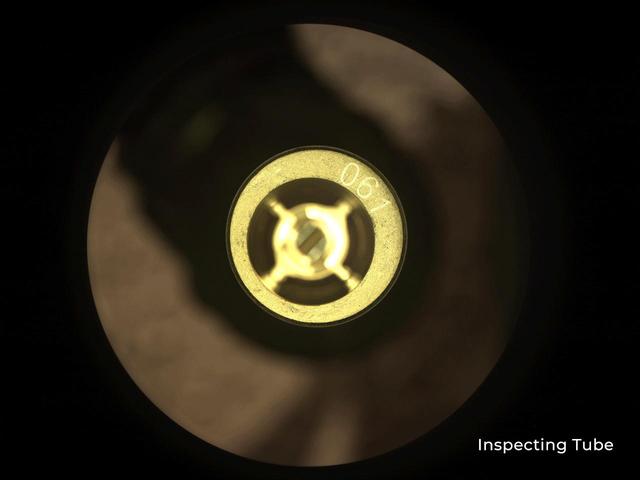
As part of its search for signs of ancient life on Mars, Perseverance is the first rover to bring a sample caching system to the Red Planet that will package promising samples for return to Earth by a future mission. This series of images shows NASA's Perseverance rover inspecting and sealing a "witness" sample tube on June 21, 2021 (the 120th sol, or Martian day, of the mission), as it prepares to collect its first sample of Martian rock and sediment. Witness tubes are similar to the sample tubes that will hold Martian rock and sediment, except they have been preloaded with a variety of materials that can capture molecular and particulate contaminants. They are opened on the Martian surface to "witness" the ambient environment near sample collection sites. With samples returned to Earth in the future, the witness tubes would show whether Earth contaminants were present during sample collection. Such information would help scientists tell which materials in the Martian samples may be of Earth origin. The sampling system's dedicated camera, the Cachecam, captured these images. A key objective for Perseverance's mission on Mars is astrobiology, including the search for signs of ancient microbial life. The rover will characterize the planet's geology and past climate, pave the way for human exploration of the Red Planet, and be the first mission to collect and cache Martian rock and regolith (broken rock and dust). Subsequent NASA missions, in cooperation with ESA (European Space Agency), would send spacecraft to Mars to collect these sealed samples from the surface and return them to Earth for in-depth analysis. The Mars 2020 Perseverance mission is part of NASA's Moon to Mars exploration approach, which includes Artemis missions to the Moon that will help prepare for human exploration of the Red Planet. Animation available at https://photojournal.jpl.nasa.gov/catalog/PIA24751
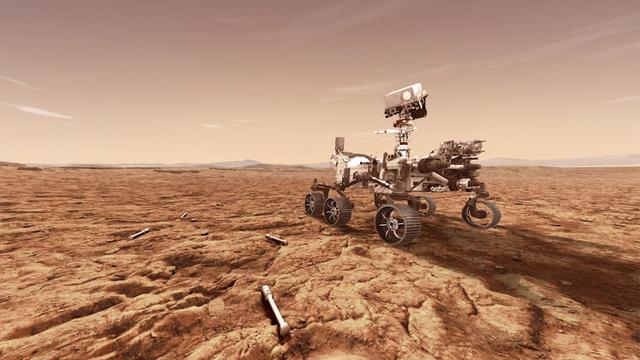
NASA's Mars 2020 rover will store rock and soil samples in sealed tubes on the planet's surface for future missions to retrieve, as seen in this illustration. The Mars 2020 rover, scheduled to launch in July 2020, represents the first leg of humanity's first planned round trip to another planet. NASA and the European Space Agency are solidifying concepts for a Mars sample return mission. https://photojournal.jpl.nasa.gov/catalog/PIA23492
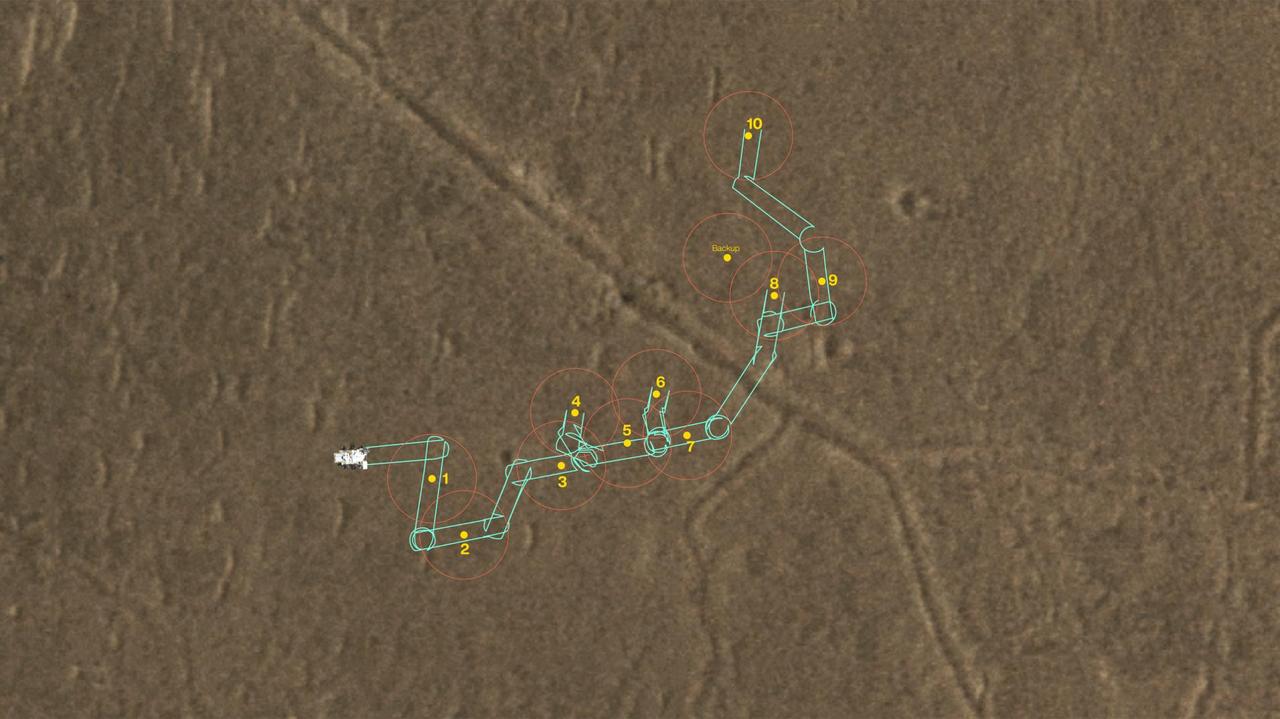
This map shows where NASA's Perseverance Mars rover will be dropping 10 samples that a future mission could pick up. The orange circles represent areas where a Sample Recovery Helicopter could safely operate to acquire the sample tubes. A key objective for Perseverance's mission on Mars is astrobiology, including the search for signs of ancient microbial life. The rover will characterize the planet's geology and past climate, pave the way for human exploration of the Red Planet, and be the first mission to collect and cache Martian rock and regolith (broken rock and dust). Subsequent NASA missions, in cooperation with ESA (European Space Agency), would send spacecraft to Mars to collect these sealed samples from the surface and return them to Earth for in-depth analysis. The Mars 2020 Perseverance mission is part of NASA's Moon to Mars exploration approach, which includes Artemis missions to the Moon that will help prepare for human exploration of the Red Planet. https://photojournal.jpl.nasa.gov/catalog/PIA25678
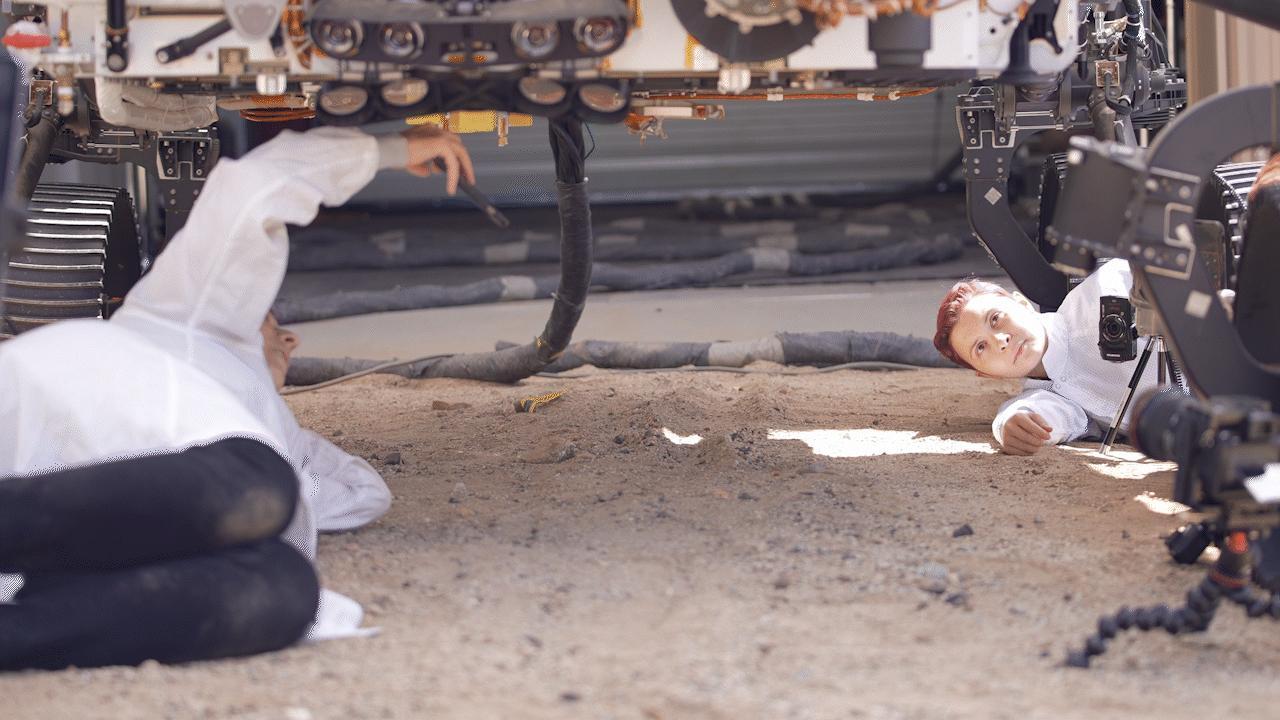
Engineers react with surprise while testing how NASA's Perseverance rover will deposit its sample tubes on the Martian surface. Less than 5% of the time, a flat end on the sample tube caused it to land straight up after dropping. This test was conducted using OPTIMISM, a full-scale replica of Perseverance, in the Mars Yard at NASA's Jet Propulsion Laboratory in Southern California. Perseverance has been taking duplicate samples from each rock target the mission selects. After depositing one sample on the surface Dec. 21, 2022, the rover has 17 samples in its belly, including one atmospheric sample. Based on the architecture of the Mars Sample Return campaign, the rover would deliver samples to a robotic lander carrying a small rocket that would blast them off to space. The depot will serve as a backup if Perseverance can't deliver its samples. In that case, a pair of Sample Recovery Helicopters would be called upon to pick up the sample tubes and deliver them to the lander. A key objective for Perseverance's mission on Mars is astrobiology, including the search for signs of ancient microbial life. The rover will characterize the planet's geology and past climate, pave the way for human exploration of the Red Planet, and be the first mission to collect and cache Martian rock and regolith (broken rock and dust). Subsequent NASA missions, in cooperation with ESA (European Space Agency), would send spacecraft to Mars to collect these sealed samples from the surface and return them to Earth for in-depth analysis. The Mars 2020 Perseverance mission is part of NASA's Moon to Mars exploration approach, which includes Artemis missions to the Moon that will help prepare for human exploration of the Red Planet. Movie available at https://photojournal.jpl.nasa.gov/catalog/PIA25677
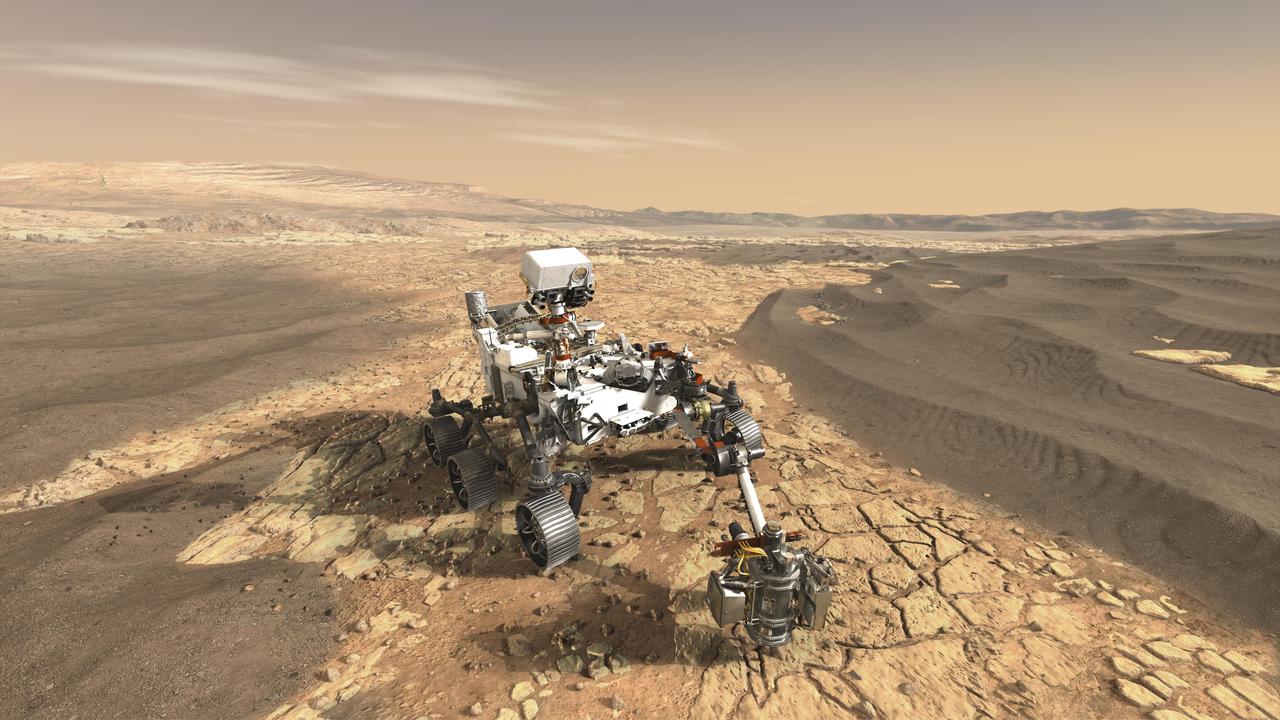
This artist's concept depicts NASA's Mars 2020 rover on the surface of Mars. The mission takes the next step by not only seeking signs of habitable conditions on Mars in the ancient past, but also searching for signs of past microbial life itself. The Mars 2020 rover introduces a drill that can collect core samples of the most promising rocks and soils and set them aside on the surface of Mars. A future mission could potentially return these samples to Earth. Mars 2020 is targeted for launch in July/August 2020 aboard an Atlas V 541 rocket from Space Launch Complex 41 at Cape Canaveral Air Force Station in Florida. https://photojournal.jpl.nasa.gov/catalog/PIA21635

NASA's Perseverance rover deposited the first of several sample tubes onto the Martian surface on Dec. 21, 2022, the 653rd Martian day, or sol, of the mission. This composite image of the tube, filled with a sample of igneous rock, is made up of a series of stitched-together images taken by a camera called WATSON (Wide Angle Topographic Sensor for Operations and eNgineering) on the end of the rover's 7-foot-long (2-meter-long) robotic arm. Perseverance has been taking duplicate samples from each rock target the mission selects. After having dropped its first sample on the surface, the rover now has 17 samples in its belly, including one atmospheric sample. Based on the architecture of the Mars Sample Return campaign, the rover would deliver samples to a robotic lander carrying a small rocket that would blast them off to space. The depot will serve as a backup if Perseverance can't deliver its samples. In that case, a pair of Sample Recovery Helicopters would be called upon to pick up the sample tubes and deliver them to the lander. A key objective for Perseverance's mission on Mars is astrobiology, including the search for signs of ancient microbial life. The rover will characterize the planet's geology and past climate, pave the way for human exploration of the Red Planet, and be the first mission to collect and cache Martian rock and regolith (broken rock and dust). Subsequent NASA missions, in cooperation with ESA (European Space Agency), would send spacecraft to Mars to collect these sealed samples from the surface and return them to Earth for in-depth analysis. The Mars 2020 Perseverance mission is part of NASA's Moon to Mars exploration approach, which includes Artemis missions to the Moon that will help prepare for human exploration of the Red Planet. https://photojournal.jpl.nasa.gov/catalog/PIA25663

NASA's Perseverance rover used its Mastcam-Z camera to capture this enhanced color view of the eroded eastern edge of the delta within Mars' Jezero Crater on April 7, 2022, the 402nd Martian day, or sol, of the mission. A deposit of boulders, at the edge of the delta, may have been moved there by high-energy floods in the ancient past. Perseverance will be exploring and sampling boulder deposits like this one in 2023 after dropping off its first cache of samples at a site called Three Forks as part of the Mars Sample Return campaign. A key objective for Perseverance's mission on Mars is astrobiology, including the search for signs of ancient microbial life. The rover will characterize the planet's geology and past climate, pave the way for human exploration of the Red Planet, and be the first mission to collect and cache Martian rock and regolith (broken rock and dust). Subsequent NASA missions, in cooperation with ESA (European Space Agency), would send spacecraft to Mars to collect these sealed samples from the surface and return them to Earth for in-depth analysis. The Mars 2020 Perseverance mission is part of NASA's Moon to Mars exploration approach, which includes Artemis missions to the Moon that will help prepare for human exploration of the Red Planet. Movie available at https://photojournal.jpl.nasa.gov/catalog/PIA25671
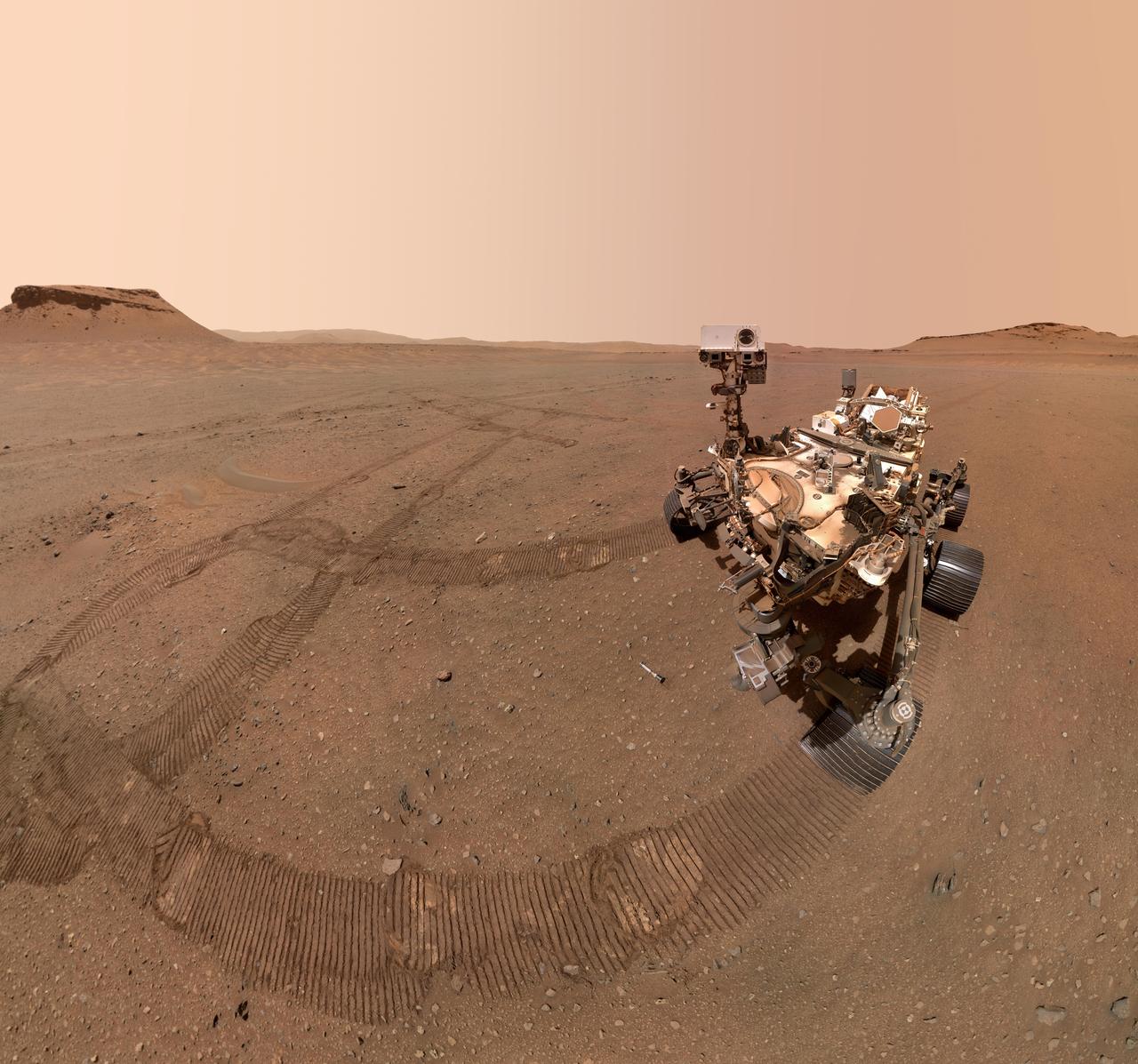
NASA's Perseverance Mars rover took a selfie with several of the 10 sample tubes it deposited at a sample depot it is creating within an area of Jezero Crater nicknamed "Three Forks." The image was taken by the WATSON (Wide Angle Topographic Sensor for Operations and eNgineering) camera on the end of the rover's robotic arm on Jan. 22, 2023, the 684th Martian day, or sol, of the mission. The ninth tube dropped during the construction of the depot, containing the sample the science team refers to as "Atsah," can be seen in front of the rover. Other sample tubes are visible in the background. In an animated GIF, the rover looks down at the "Atsah" sample then back at the camera. The selfie is composed of 59 individual WATSON images that were stitched together once they were sent back to Earth. The Curiosity rover takes similar selfies using a camera on its robotic arm; videos explaining how the rovers take their selfies can be found here. The depot marks a crucial milestone in the NASA-ESA (European Space Agency) Mars Sample Return campaign that aims to bring Mars samples to Earth for closer study. The depot will serve as a backup if Perseverance can't deliver its samples to a future robotic lander. A key objective for Perseverance's mission on Mars is astrobiology, including the search for signs of ancient microbial life. The rover will characterize the planet's geology and past climate, pave the way for human exploration of the Red Planet, and be the first mission to collect and cache Martian rock and regolith (broken rock and dust). Subsequent NASA missions, in cooperation with ESA (European Space Agency), would send spacecraft to Mars to collect these sealed samples from the surface and return them to Earth for in-depth analysis. The Mars 2020 Perseverance mission is part of NASA's Moon to Mars exploration approach, which includes Artemis missions to the Moon that will help prepare for human exploration of the Red Planet. Animation available at https://photojournal.jpl.nasa.gov/catalog/PIA25681
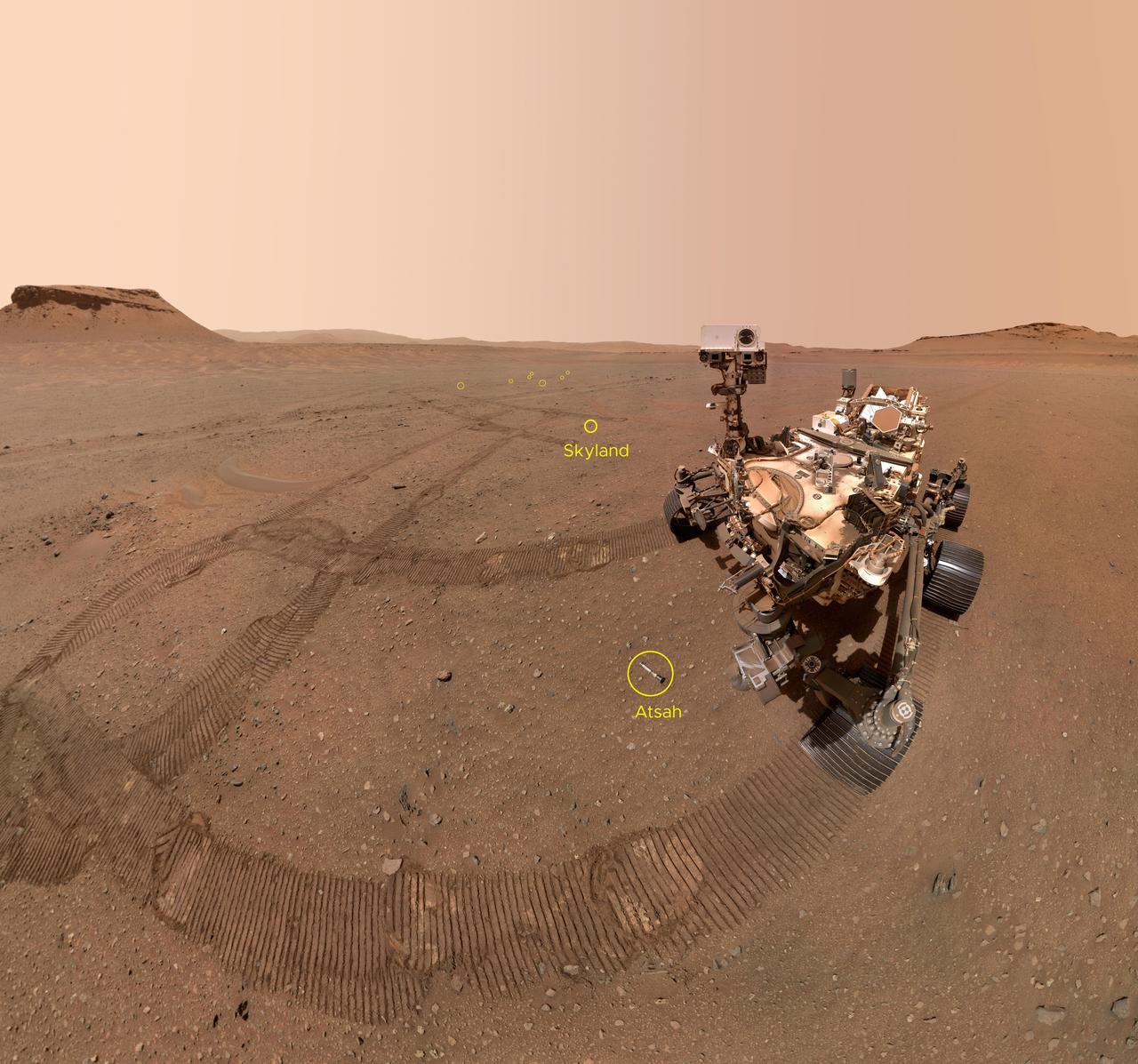
NASA's Perseverance Mars rover took a selfie with nine of the 10 sample tubes it deposited at a sample depot created within an area of Jezero Crater nicknamed "Three Forks." This annotated version of the selfie points out the estimated locations of those nine tubes. The ninth tube dropped during the construction of the depot, containing the sample the science team refers to as "Atsah," can be seen in front of the rover. Other sample tubes are visible in the background, including "Skyland," which is labeled. The image was taken by the WATSON (Wide Angle Topographic Sensor for Operations and eNgineering) camera on the end of the rover's robotic arm on Jan. 22, 2023, the 684th Martian day, or sol, of the mission. The selfie is composed of 59 individual WATSON images that were stitched together once they were sent back to Earth. The Curiosity rover takes similar selfies using a camera on its robotic arm; videos explaining how the rovers take their selfies can be found here. The depot marks a crucial milestone in the NASA-ESA (European Space Agency) Mars Sample Return campaign that aims to bring Mars samples to Earth for closer study. The depot – completed when the 10th tube was dropped on Jan. 29, 2023 – will serve as a backup if Perseverance can't deliver its samples to a future robotic lander. A key objective for Perseverance's mission on Mars is astrobiology, including the search for signs of ancient microbial life. The rover will characterize the planet's geology and past climate, pave the way for human exploration of the Red Planet, and be the first mission to collect and cache Martian rock and regolith (broken rock and dust). Subsequent NASA missions, in cooperation with ESA (European Space Agency), would send spacecraft to Mars to collect these sealed samples from the surface and return them to Earth for in-depth analysis. The Mars 2020 Perseverance mission is part of NASA's Moon to Mars exploration approach, which includes Artemis missions to the Moon that will help prepare for human exploration of the Red Planet. https://photojournal.jpl.nasa.gov/catalog/PIA25735
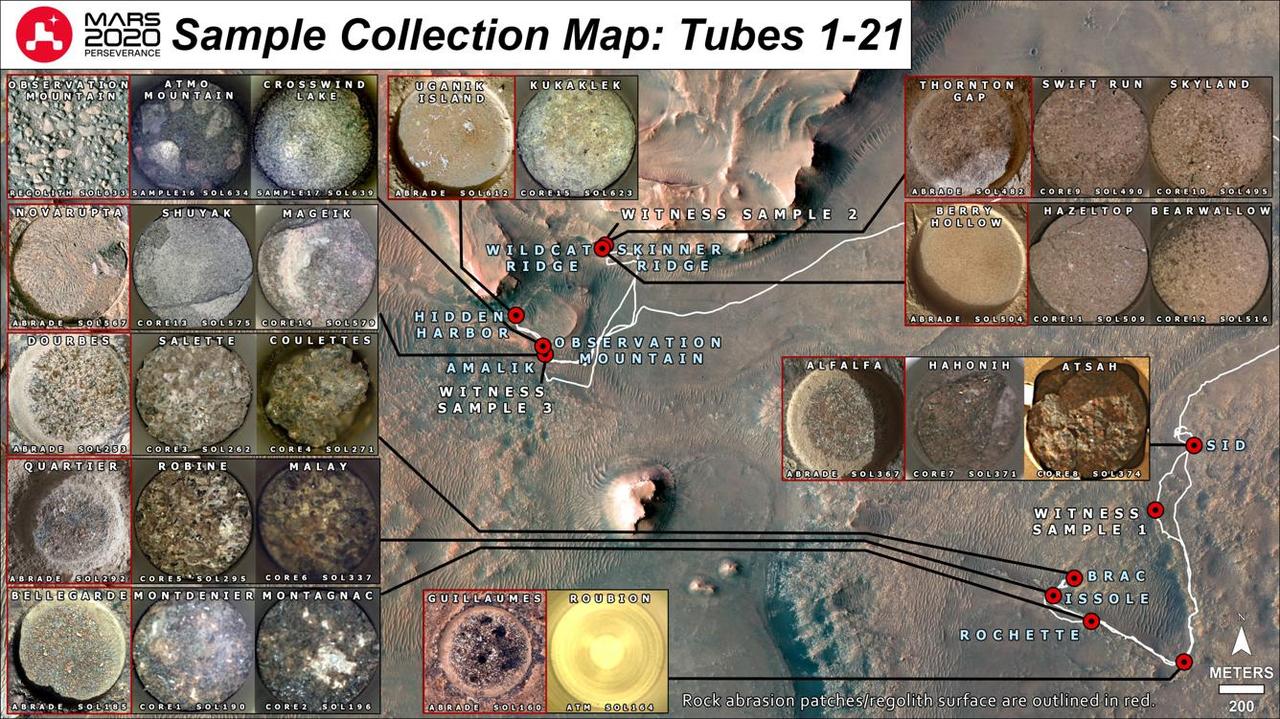
Shown here is a representation of the 21 sample tubes (containing rock, regolith, atmosphere, and witness materials) that have been sealed to date by NASA's Perseverance Mars rover. Red dots indicate the locations where each sample was collected. Squares outlined in red show the texture of an area about 2 inches (5 centimeters) across on a particular rock sample after it was worn down by the rover's abrasion tool (with the exception of "Observation Mountain," which is an image of the surface of a pile of regolith, or broken rock and dust). The one or two squares immediately to the right of each red-outlined square shows an image of the top of each sample tube after the sample was acquired. A key objective for Perseverance's mission on Mars is astrobiology, including the search for signs of ancient microbial life. The rover will characterize the planet's geology and past climate, pave the way for human exploration of the Red Planet, and be the first mission to collect and cache Martian rock and regolith (broken rock and dust). Subsequent NASA missions, in cooperation with ESA (European Space Agency), would send spacecraft to Mars to collect these sealed samples from the surface and return them to Earth for in-depth analysis. The Mars 2020 Perseverance mission is part of NASA's Moon to Mars exploration approach, which includes Artemis missions to the Moon that will help prepare for human exploration of the Red Planet. https://photojournal.jpl.nasa.gov/catalog/PIA25674
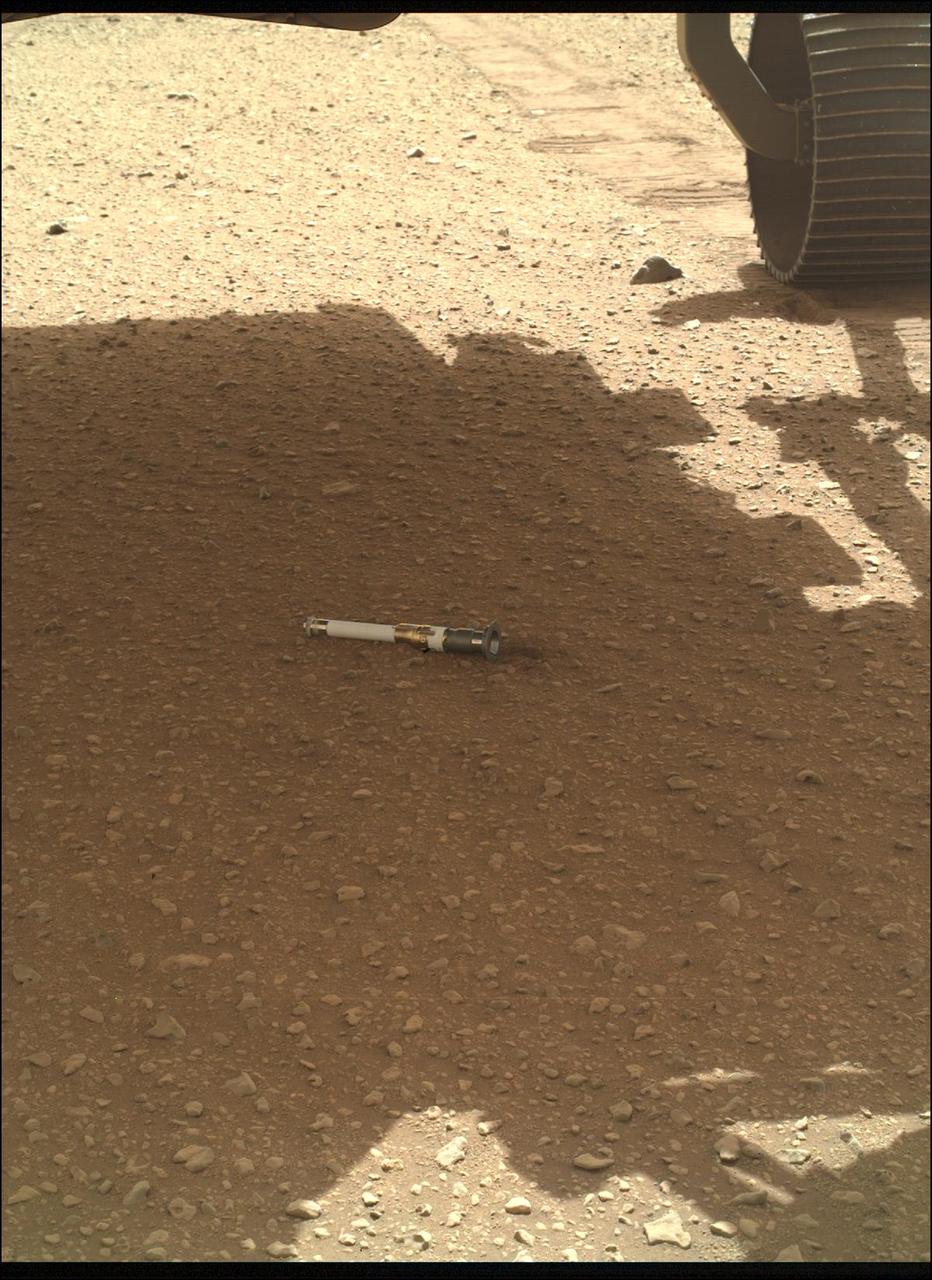
NASA's Perseverance rover deposited the first of several samples onto the Martian surface on Dec. 21, 2022, the 653rd Martian day, or sol, of the mission. Perseverance has been taking duplicate samples from each rock target the mission selects. The rover currently has 17 samples in its belly, including one atmospheric sample. Based on the architecture of the Mars Sample Return campaign, the rover would deliver samples to a robotic lander carrying a small rocket that would blast them off to space. The depot will serve as a backup if Perseverance can't deliver its samples. In that case, a pair of Sample Recovery Helicopters would be called upon to pick up the sample tubes and deliver them to the lander. A key objective for Perseverance's mission on Mars is astrobiology, including the search for signs of ancient microbial life. The rover will characterize the planet's geology and past climate, pave the way for human exploration of the Red Planet, and be the first mission to collect and cache Martian rock and regolith (broken rock and dust). Subsequent NASA missions, in cooperation with ESA (European Space Agency), would send spacecraft to Mars to collect these sealed samples from the surface and return them to Earth for in-depth analysis. The Mars 2020 Perseverance mission is part of NASA's Moon to Mars exploration approach, which includes Artemis missions to the Moon that will help prepare for human exploration of the Red Planet. https://photojournal.jpl.nasa.gov/catalog/PIA25652

iss070e005393 (12/182023) --- NASA astronaut Jasmin Moghbeli is shown performing steps to extract and amplify DNA from a water sample for later sequencing. The EHS BioMole Facility demonstrates technology for monitoring the microbial environment onboard a spacecraft. As part of a Crew Health Care System (CHeCS), this technology could support missions such as Gateway and Mars transit that do not have the capability to return samples to Earth for analysis. The investigation evaluates the ability of the EHS BioMole Facility to accurately analyze potable water samples on the space station.
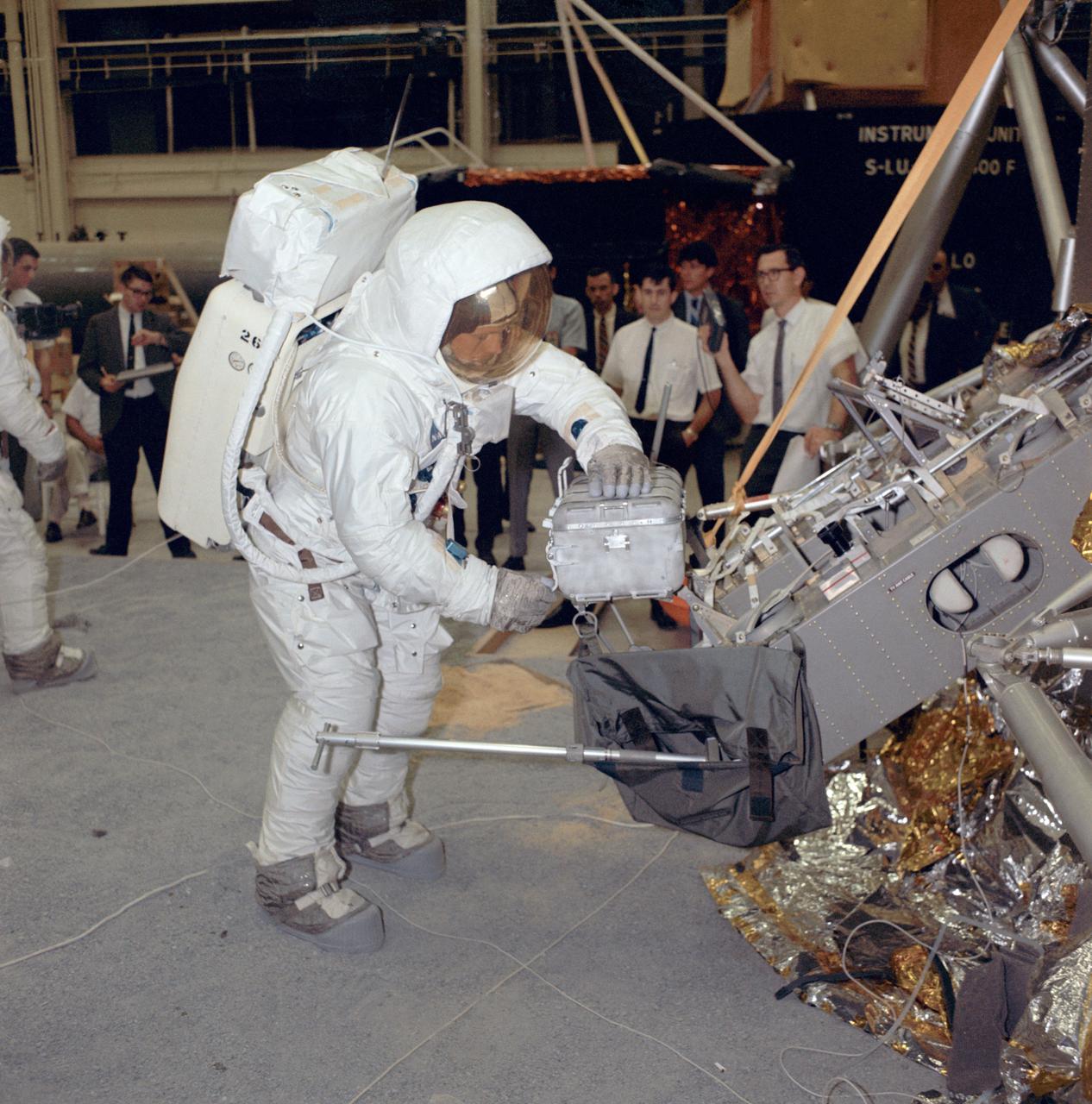
Apollo 11 commander Neil Armstrong works with an Apollo Lunar Sample Return Container during a two-and-a-half-hour lunar surface simulation training exercise. The image was taken on Apr. 18, 1969, in Building 9 at the Manned Spacecraft Center in Houston, Texas. The sample tubes carried by NASA's Mars 2020 Perseverance rover are destined to carry the first samples in history from another planet back to Earth. Future scientists will use these carefully selected representatives of Martian rock and regolith (broken rock and dust), to look for evidence of potential microbial life present in Mars' ancient past and to answer other key questions about Mars and its history. Perseverance will land at Mars' Jezero Crater on Feb. 18, 2021. https://photojournal.jpl.nasa.gov/catalog/PIA24297
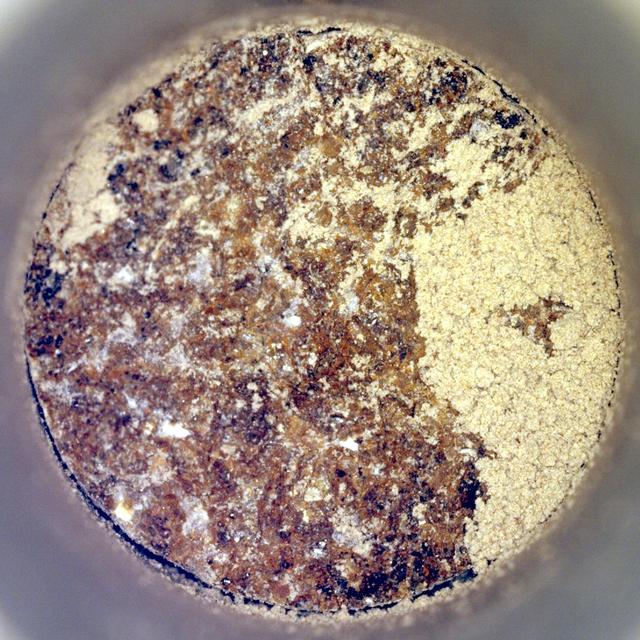
NASA's Perseverance Mars rover captured this image of a sample cored from a rock called "Bunsen Peak" on March 12, 2024, the 1,088th Martian day, or sol, of the rover's mission. The image shows the bottom of the core. The image was taken by Perseverance's Sampling and Caching System Camera, or CacheCam, located inside the rover's underbelly. The camera looks down into the top of sample tubes to take close-up pictures of the sampled material and the tubes as they are prepared for sealing and storage. A key objective for Perseverance's mission on Mars is astrobiology, including the search for signs of ancient microbial life. The rover will characterize the planet's geology and past climate, pave the way for human exploration of the Red Planet, and be the first mission to collect and cache Martian rock and regolith. Subsequent NASA missions, in cooperation with ESA (European Space Agency), would send spacecraft to Mars to collect these sealed samples from the surface and return them to Earth for in-depth analysis. The Mars 2020 Perseverance mission is part of NASA's Moon to Mars exploration approach, which includes Artemis missions to the Moon that will help prepare for human exploration of the Red Planet. https://photojournal.jpl.nasa.gov/catalog/PIA26313
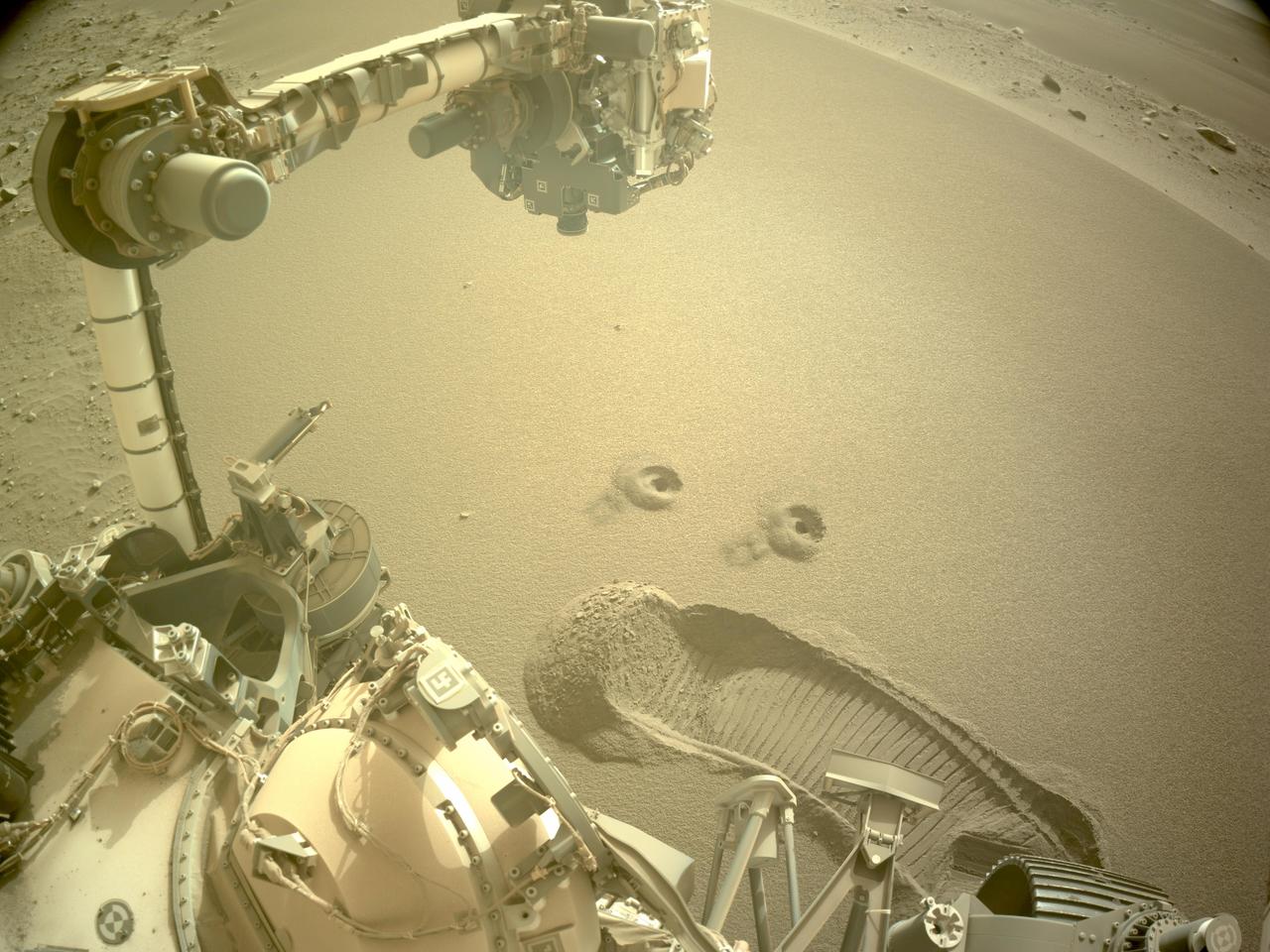
NASA's Perseverance Mars rover snagged two samples of regolith – broken rock and dust – on Dec. 2 and 6, 2022. This set of images, taken by the rover's left navigation camera, shows Perseverance's robotic arm over the two holes left after the samples were collected. The samples were taken in Mars' Jezero Crater from a pile of wind-blown sand and dust called a "mega-ripple" – a feature similar to but smaller than a dune. One of the two regolith samples will be considered for deposit on the Martian surface this month as part of the Mars Sample Return campaign. Studying regolith with powerful lab equipment back on Earth will allow scientists to better understand the processes that have shaped the surface of Mars and help engineers design future missions as well as equipment used by future Martian astronauts. A key objective for Perseverance's mission on Mars is astrobiology, including the search for signs of ancient microbial life. The rover will characterize the planet's geology and past climate, pave the way for human exploration of the Red Planet, and be the first mission to collect and cache Martian rock and regolith. Subsequent NASA missions, in cooperation with ESA (European Space Agency), would send spacecraft to Mars to collect these sealed samples from the surface and return them to Earth for in-depth analysis. The Mars 2020 Perseverance mission is part of NASA's Moon to Mars exploration approach, which includes Artemis missions to the Moon that will help prepare for human exploration of the Red Planet. https://photojournal.jpl.nasa.gov/catalog/PIA25589
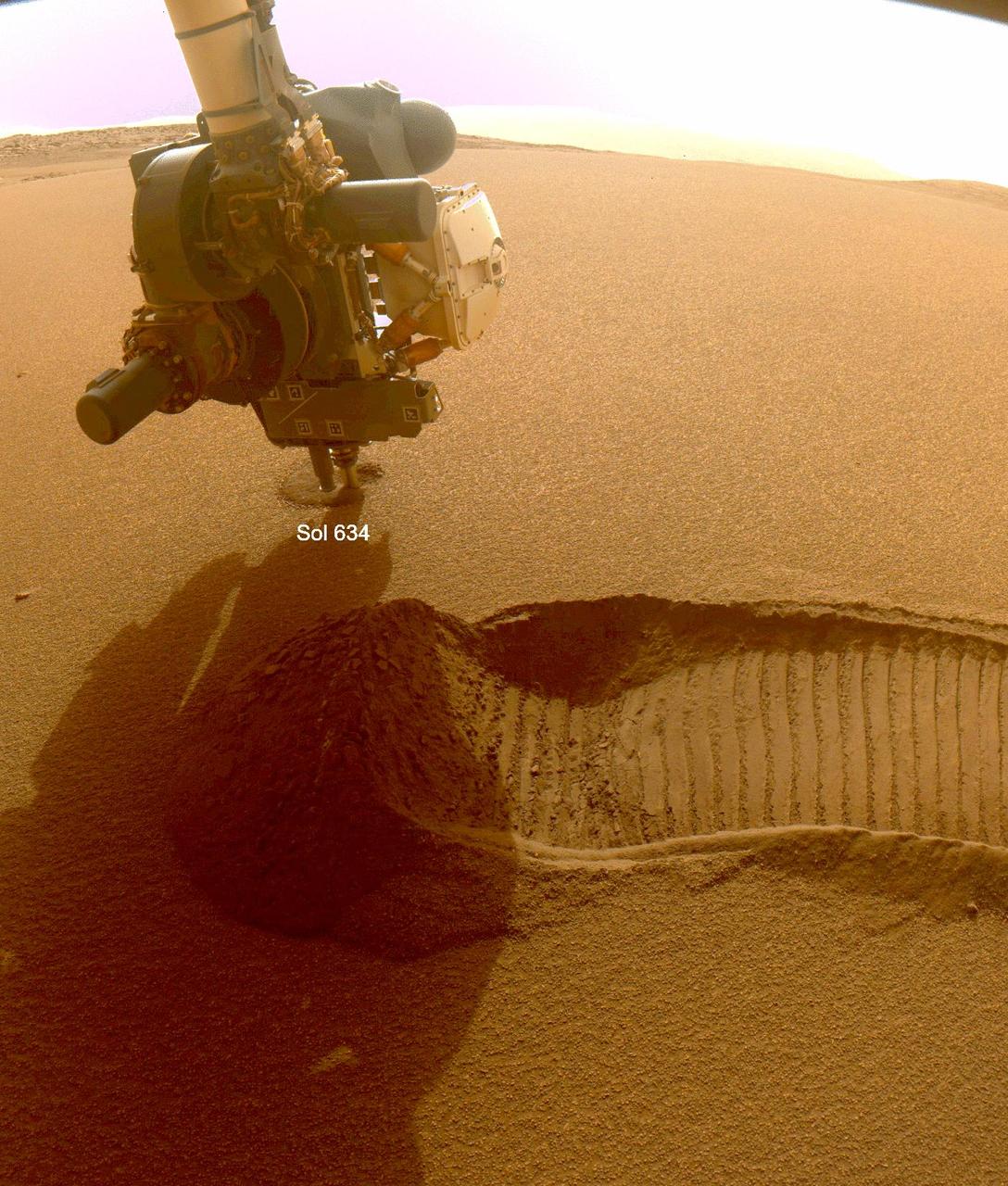
This GIF shows NASA's Perseverance Mars rover collecting two samples of regolith – broken rock and dust – with a regolith sampling bit on the end of its robotic arm. The samples were collected on Dec. 2 and 6, 2022, the 634th and 639th Martian days, or sols, of the mission. The images were taken by one of the rover's front hazard cameras. One of the two regolith samples will be considered for deposit on the Martian surface in coming weeks as part of the Mars Sample Return campaign. Studying regolith with powerful lab equipment back on Earth will allow scientists to better understand the processes that have shaped the surface of Mars and help engineers design future missions as well as equipment used by future Martian astronauts. A key objective for Perseverance's mission on Mars is astrobiology, including the search for signs of ancient microbial life. The rover will characterize the planet's geology and past climate, pave the way for human exploration of the Red Planet, and be the first mission to collect and cache Martian rock and regolith (broken rock and dust). Subsequent NASA missions, in cooperation with ESA (European Space Agency), would send spacecraft to Mars to collect these sealed samples from the surface and return them to Earth for in-depth analysis. The Mars 2020 Perseverance mission is part of NASA's Moon to Mars exploration approach, which includes Artemis missions to the Moon that will help prepare for human exploration of the Red Planet. Movie available at https://photojournal.jpl.nasa.gov/catalog/PIA25654
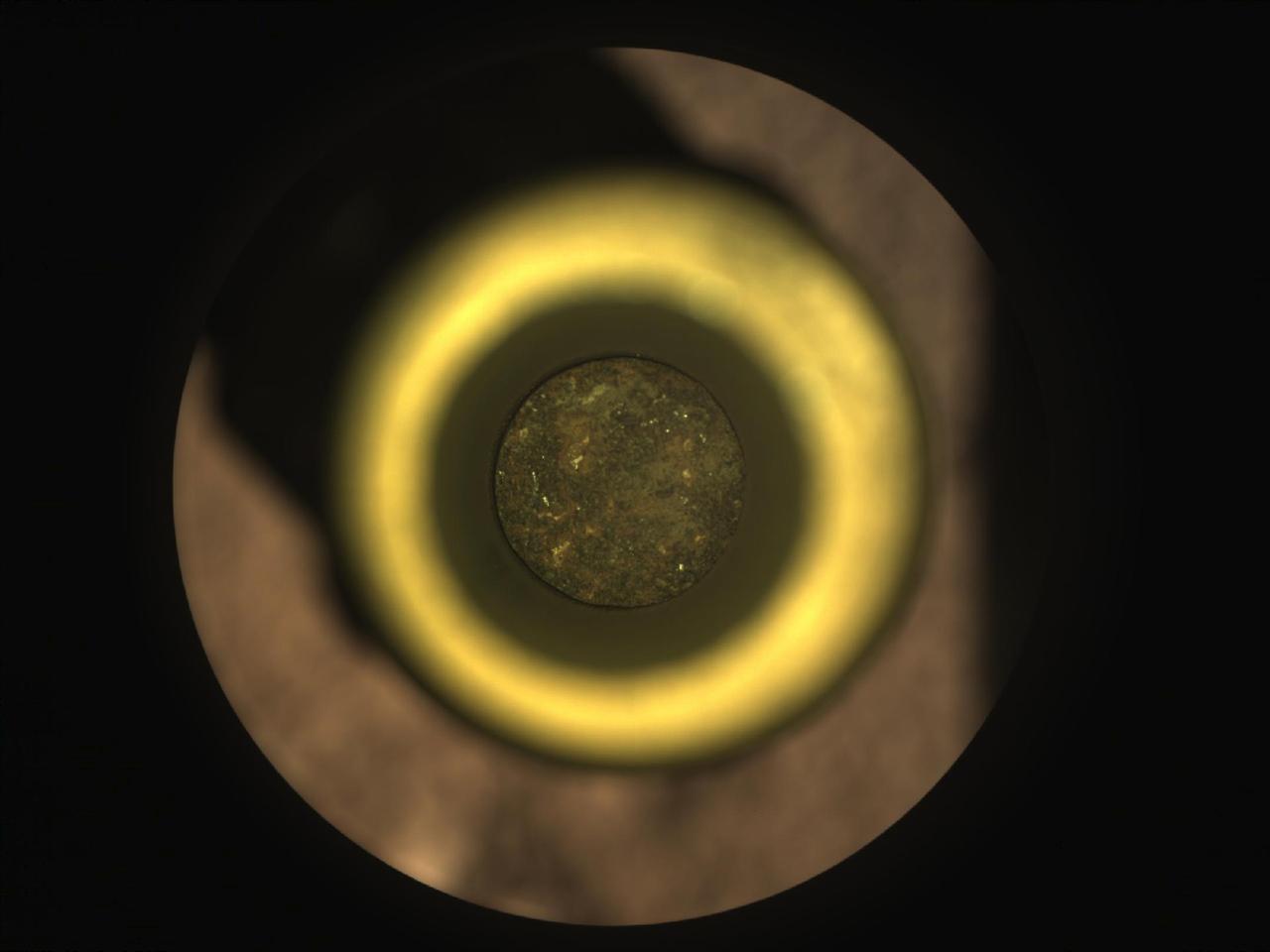
The first cored sample of Mars rock is visible (at center) inside a titanium sample collection tube in this from the Sampling and Caching System Camera (known as CacheCam) of NASA's Perseverance rover. The image was taken on Sept. 6, 2021 (the 194th sol, or Martian day, of the mission), prior to the system attaching and sealing a metal cap onto the tube. The image was taken so the cored-rock sample would be in focus. The seemingly dark ring surrounding the sample is a portion of the sample tube's inner wall. The bright gold-colored ring surrounding the tube and sample is the "bearing race," an asymmetrical flange that assists in shearing off a sample once the coring drill has bored into a rock. The outermost, mottled-brown disc in this image is a portion of the sample handling arm inside the rover's adaptive caching assembly. An additional set of images shows the tube and its cored sample during CacheCam imaging inspection. A key objective for Perseverance's mission on Mars is astrobiology, including the search for signs of ancient microbial life. The rover will characterize the planet's geology and past climate, pave the way for human exploration of the Red Planet, and be the first mission to collect and cache Martian rock and regolith (broken rock and dust). Subsequent NASA missions, in cooperation with ESA (European Space Agency), would send spacecraft to Mars to collect these sealed samples from the surface and return them to Earth for in-depth analysis. The Mars 2020 Perseverance mission is part of NASA's Moon to Mars exploration approach, which includes Artemis missions to the Moon that will help prepare for human exploration of the Red Planet. Movie available at https://photojournal.jpl.nasa.gov/catalog/PIA24806
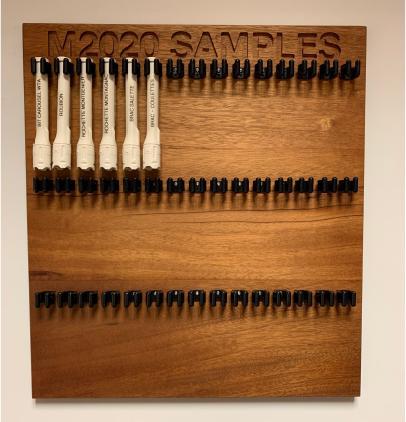
Six facsimile sample tubes hang on the sample tube board in the offices of NASA's Perseverance Mars rover mission at NASA's Jet Propulsion Laboratory in Southern California. Each 3D-printed tube represents actual sample tubes the rover has filled on Mars, either with rock or atmosphere, and they are labeled with the names of the target from which they came. The board was handmade by Perseverance's deputy project manager, Rick Welch. A key objective for Perseverance's mission on Mars is astrobiology, including the search for signs of ancient microbial life. The rover will characterize the planet's geology and past climate, pave the way for human exploration of the Red Planet, and be the first mission to collect and cache Martian rock and regolith (broken rock and dust). Subsequent NASA missions, in cooperation with ESA (European Space Agency), would send spacecraft to Mars to collect these sealed samples from the surface and return them to Earth for in-depth analysis. The Mars 2020 Perseverance mission is part of NASA's Moon to Mars exploration approach, which includes Artemis missions to the Moon that will help prepare for human exploration of the Red Planet. https://photojournal.jpl.nasa.gov/catalog/PIA25026
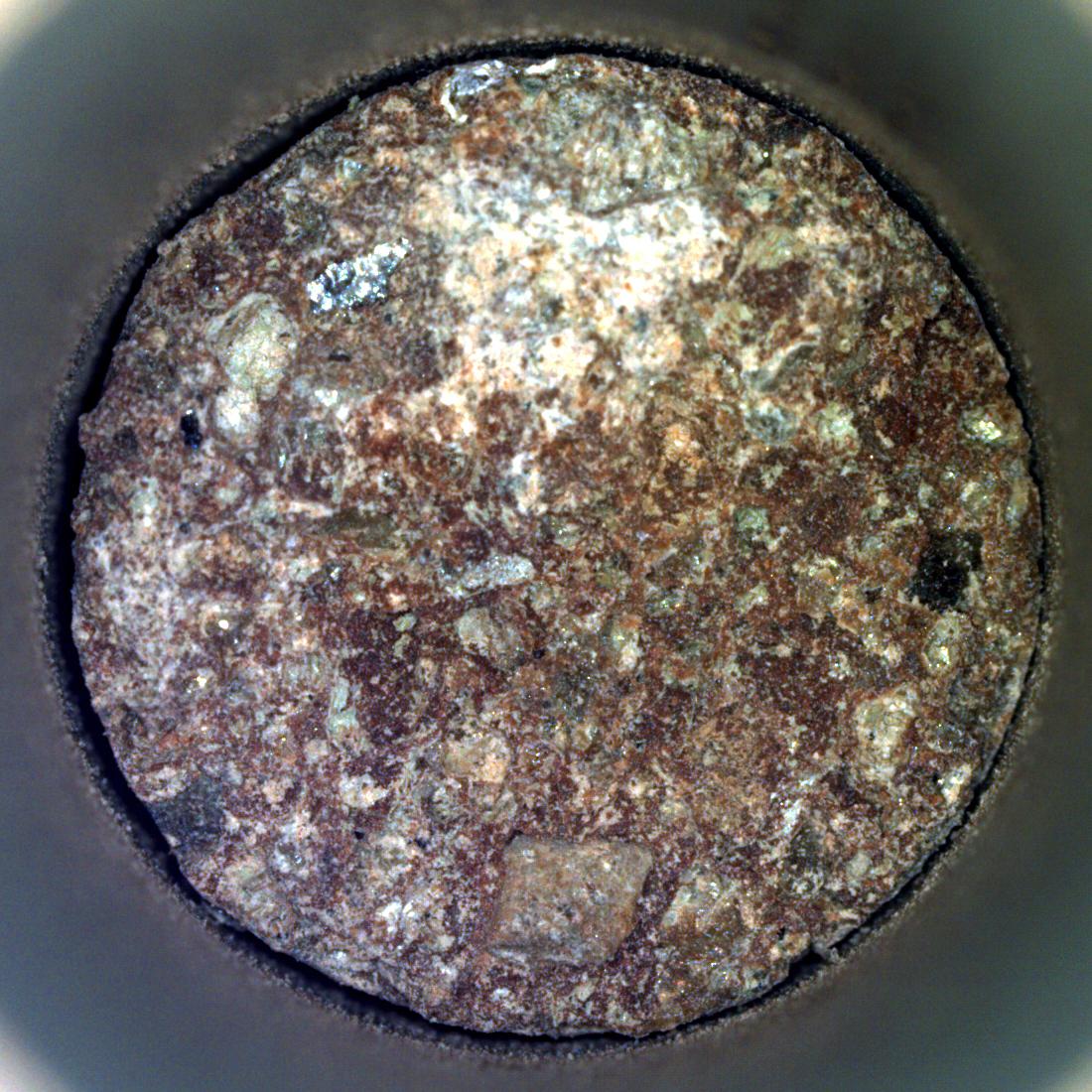
NASA's Perseverance Mars rover captured this image of a rock core nicknamed "Otis Peak" on June 12, 2023, the 822nd day, or sol, of the mission. The image shows the bottom of the Otis Peak core, which was collected from a conglomerate rock called "Emerald Lake." The distinctly colored areas are individual minerals (or rock fragments) transported by the river that once flowed into Mars' Jezero Crater. The image was taken by Perseverance's Sampling and Caching System Camera, or CacheCam, located inside the rover underbelly. The camera looks down into the top of a sample tube to take close-up pictures of the sampled material and the tube as it's prepared for sealing and storage. A key objective for Perseverance's mission on Mars is astrobiology, including the search for signs of ancient microbial life. The rover will characterize the planet's geology and past climate, pave the way for human exploration of the Red Planet, and be the first mission to collect and cache Martian rock and regolith (broken rock and dust). Subsequent NASA missions, in cooperation with ESA (European Space Agency), would send spacecraft to Mars to collect these sealed samples from the surface and return them to Earth for in-depth analysis. The Mars 2020 Perseverance mission is part of NASA's Moon to Mars exploration approach, which includes Artemis missions to the Moon that will help prepare for human exploration of the Red Planet. https://photojournal.jpl.nasa.gov/catalog/PIA25962
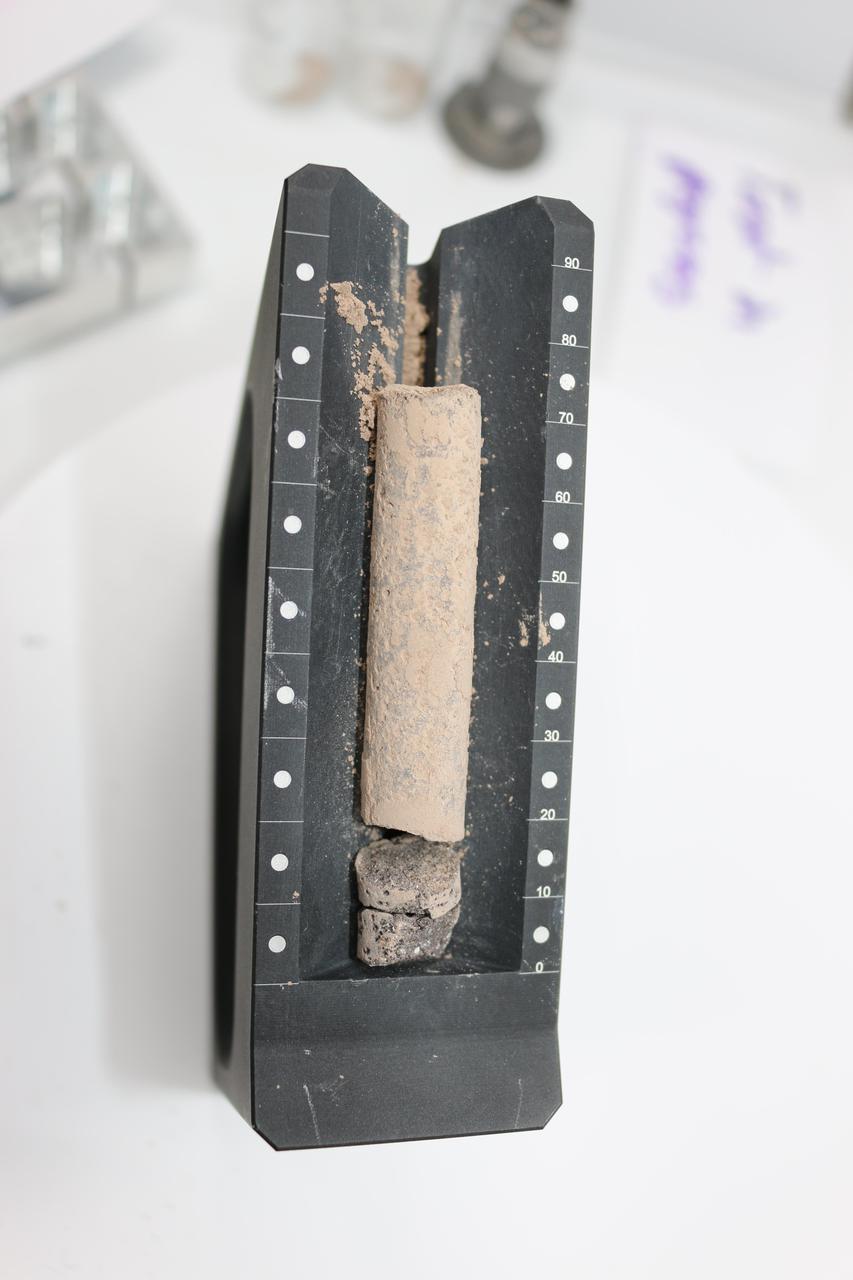
This image shows a core, about 2.8 inches (71.1 millimeters) in length, collected from a basaltic rock during a test of the Perseverance rover's Sampling and Caching System at NASA's Jet Propulsion Laboratory in Southern California. After a sampling test is completed, engineers carefully remove the core from its sample tube and place it in a sample tray, as they've done here, to document the result. A key objective for Perseverance's mission on Mars is astrobiology, including the search for signs of ancient microbial life. The rover will characterize the planet's geology and past climate, pave the way for human exploration of the Red Planet, and be the first mission to collect and cache Martian rock and regolith (broken rock and dust). Subsequent NASA missions, in cooperation with ESA (European Space Agency), would send spacecraft to Mars to collect these sealed samples from the surface and return them to Earth for in-depth analysis. The Mars 2020 Perseverance mission is part of NASA's Moon to Mars exploration approach, which includes Artemis missions to the Moon that will help prepare for human exploration of the Red Planet. https://photojournal.jpl.nasa.gov/catalog/PIA24809
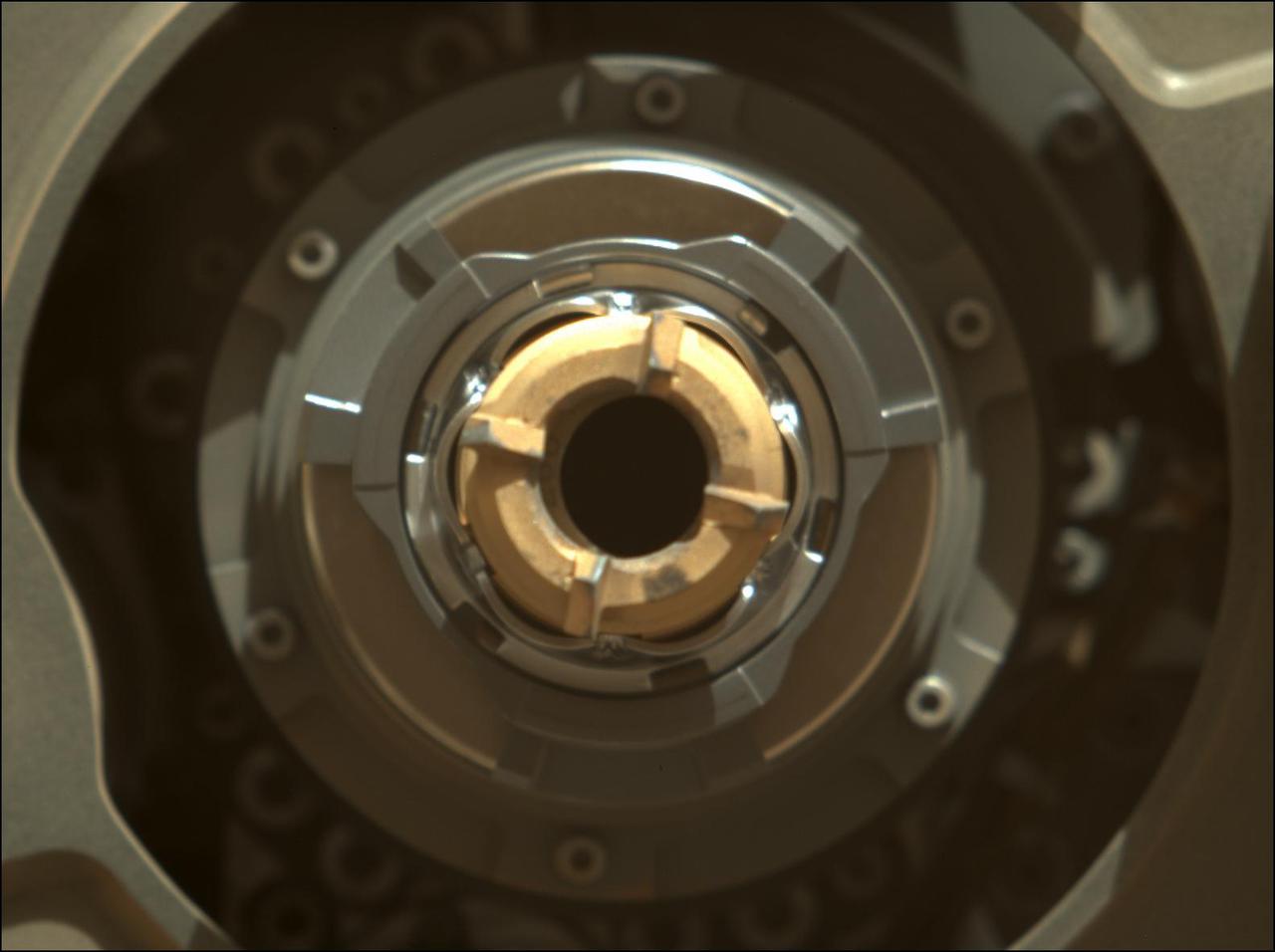
This Mastcam-Z image shows Perseverance's drill with no cored-rock sample evident in the sample tube. The image was taken on Sept. 1, 2021 (the 190th sol, or Martian day, of the mission), after coring – and after a cleaning operation was performed to clear the sample tube's lip of any residual material. The bronze-colored ring is the coring bit. The half-moon inside the bit is the open end of the sample tube. A portion of the tube's serial number – 266 – can be seen on the left side of tube's rim. Arizona State University in Tempe leads the operations of the Mastcam-Z instrument, working in collaboration with Malin Space Science Systems in San Diego. A key objective for Perseverance's mission on Mars is astrobiology, including the search for signs of ancient microbial life. The rover will characterize the planet's geology and past climate, pave the way for human exploration of the Red Planet, and be the first mission to collect and cache Martian rock and regolith (broken rock and dust). Subsequent NASA missions, in cooperation with ESA (European Space Agency), would send spacecraft to Mars to collect these sealed samples from the surface and return them to Earth for in-depth analysis. The Mars 2020 Perseverance mission is part of NASA's Moon to Mars exploration approach, which includes Artemis missions to the Moon that will help prepare for human exploration of the Red Planet. https://photojournal.jpl.nasa.gov/catalog/PIA24803
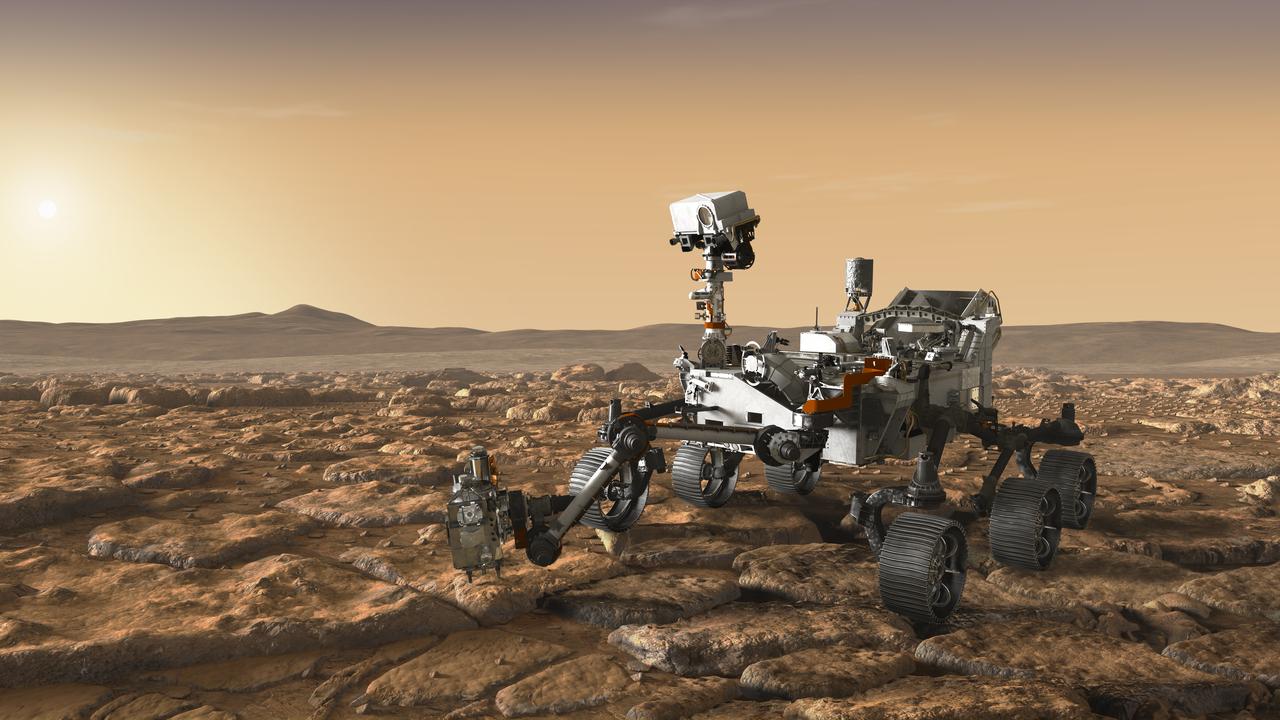
This artist's concept depicts NASA's Mars 2020 rover exploring Mars. The mission will not only seek out and study an area likely to have been habitable in the distant past, but it will take the next, bold step in robotic exploration of the Red Planet by seeking signs of past microbial life itself. Mars 2020 will use powerful instruments to investigate rocks on Mars down to the microscopic scale of variations in texture and composition. It will also acquire and store samples of the most promising rocks and soils that it encounters, and set them aside on the surface of Mars. A future mission could potentially return these samples to Earth. Mars 2020 is targeted for launch in July/August 2020 aboard an Atlas V-541 rocket from Space Launch Complex 41 at Cape Canaveral Air Force Station in Florida. https://photojournal.jpl.nasa.gov/catalog/PIA22107
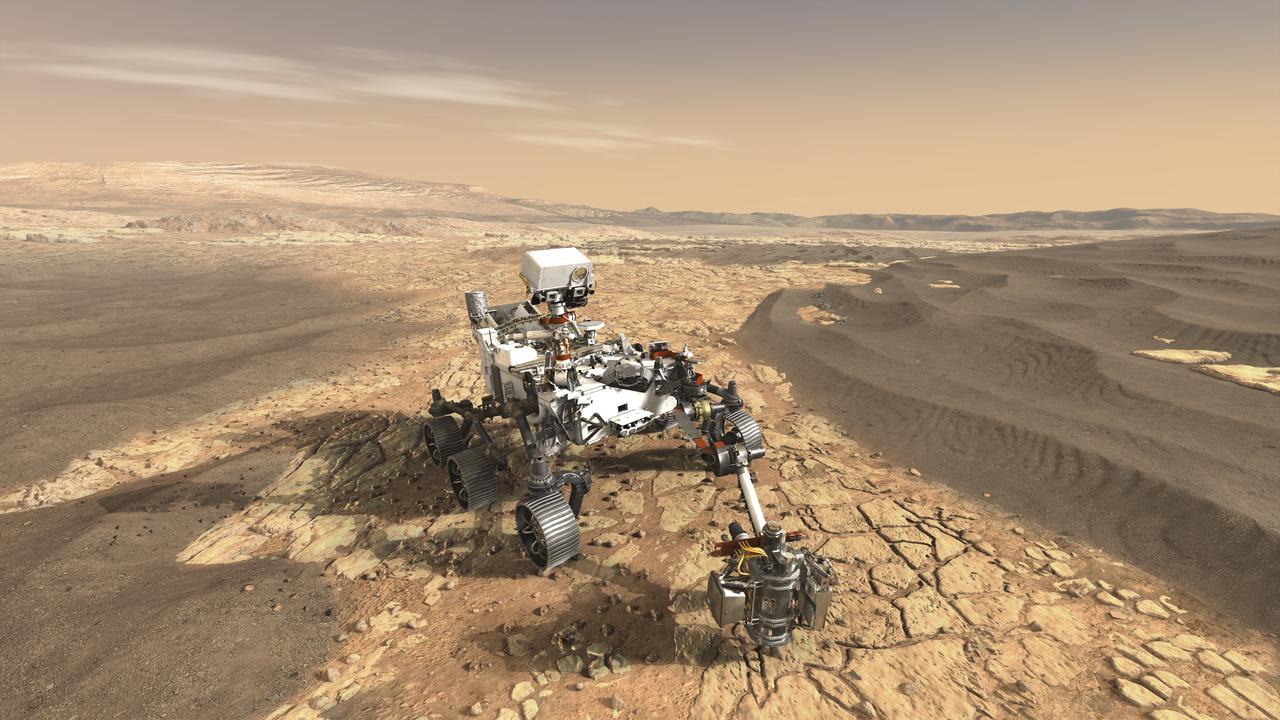
This artist's concept depicts NASA's Mars 2020 rover exploring Mars. The mission will not only seek out and study an area likely to have been habitable in the distant past, but it will take the next, bold step in robotic exploration of the Red Planet by seeking signs of past microbial life itself. Mars 2020 will use powerful instruments to investigate rocks on Mars down to the microscopic scale of variations in texture and composition. It will also acquire and store samples of the most promising rocks and soils that it encounters, and set them aside on the surface of Mars. A future mission could potentially return these samples to Earth. Mars 2020 is targeted for launch in July/August 2020 aboard an Atlas V-541 rocket from Space Launch Complex 41 at Cape Canaveral Air Force Station in Florida. https://photojournal.jpl.nasa.gov/catalog/PIA22111
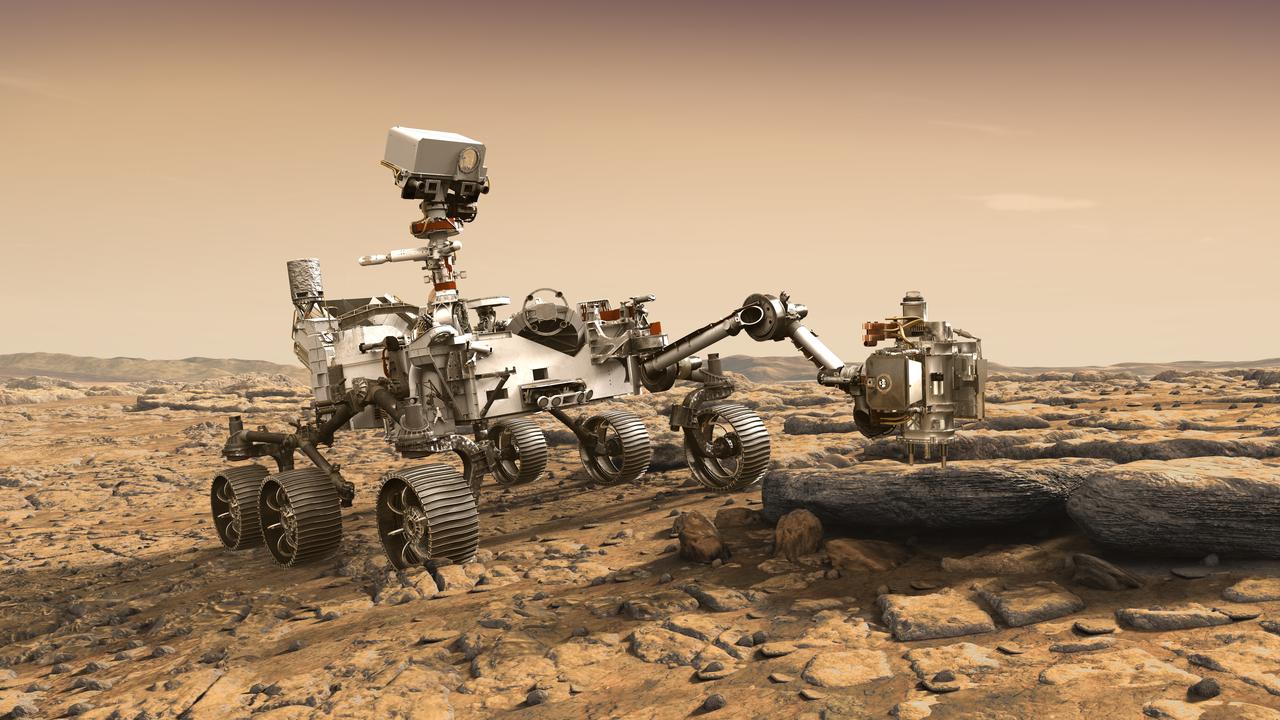
This artist's rendition depicts NASA's Mars 2020 rover studying a Mars rock outrcrop. The mission will not only seek out and study an area likely to have been habitable in the distant past, but it will take the next, bold step in robotic exploration of the Red Planet by seeking signs of past microbial life itself. Mars 2020 will use powerful instruments to investigate rocks on Mars down to the microscopic scale of variations in texture and composition. It will also acquire and store samples of the most promising rocks and soils that it encounters, and set them aside on the surface of Mars. A future mission could potentially return these samples to Earth. Mars 2020 is targeted for launch in July/August 2020 aboard an Atlas V-541 rocket from Space Launch Complex 41 at Cape Canaveral Air Force Station in Florida. https://photojournal.jpl.nasa.gov/catalog/PIA22105