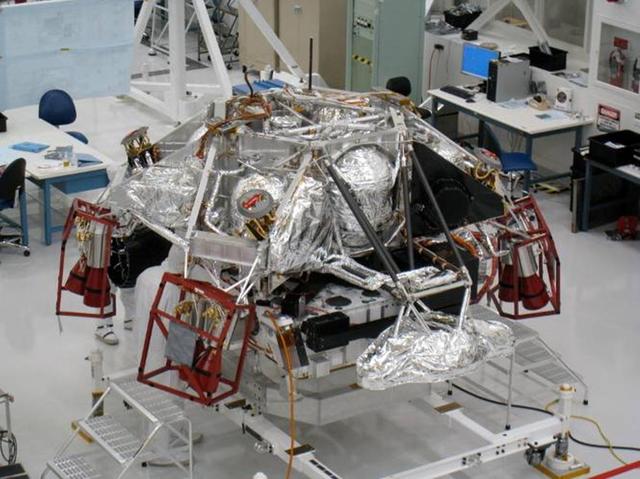
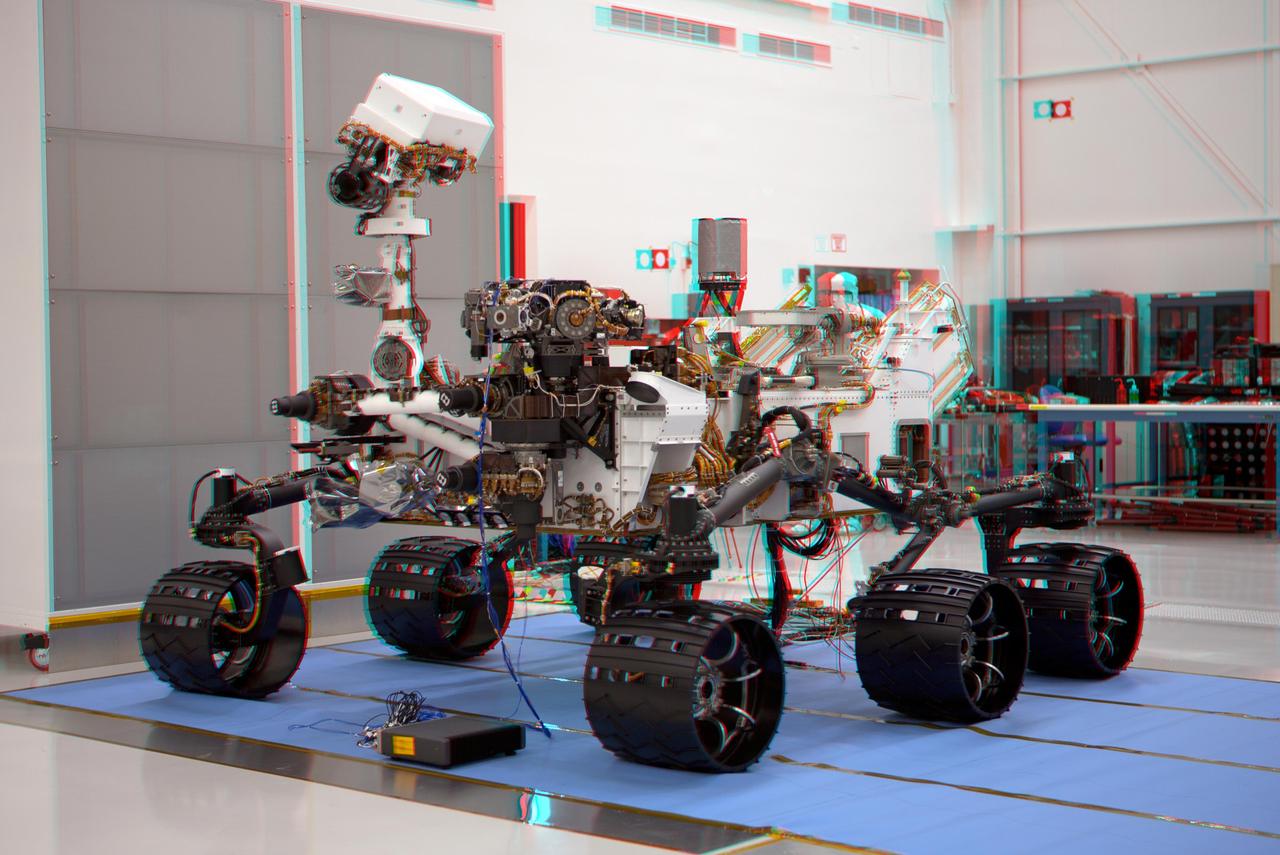
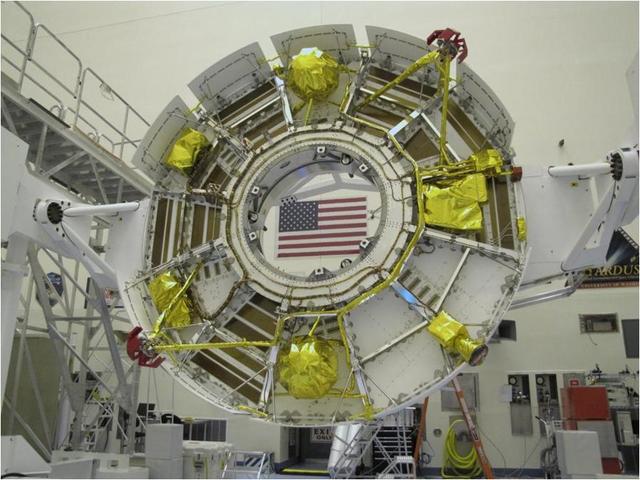
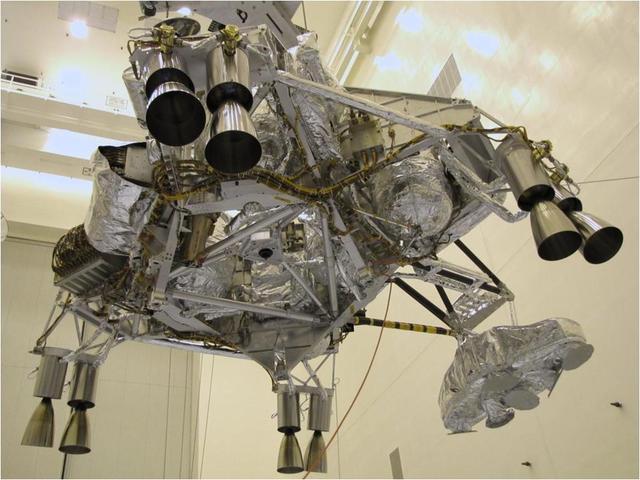
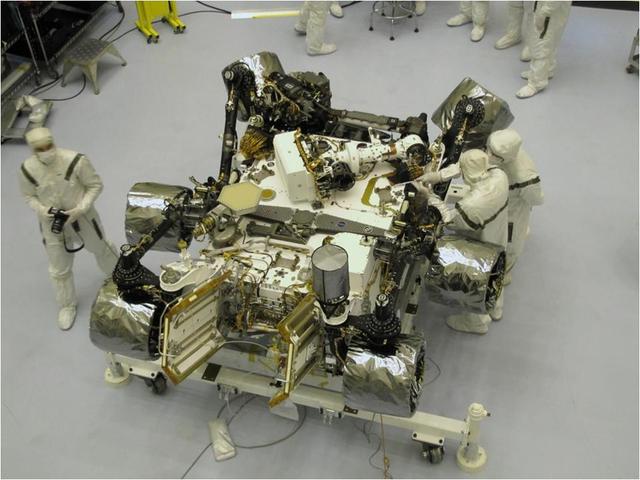
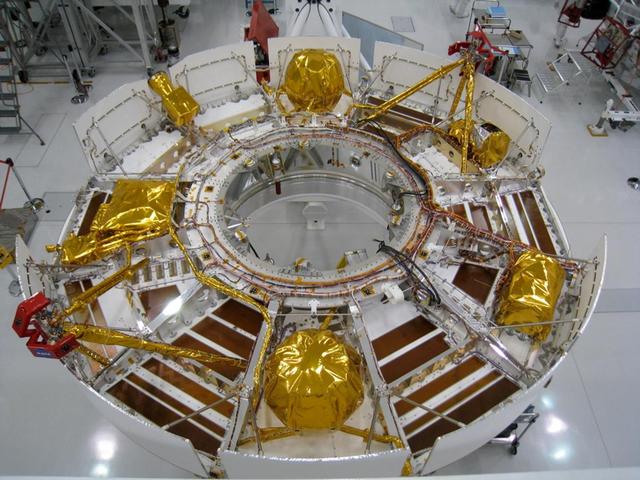
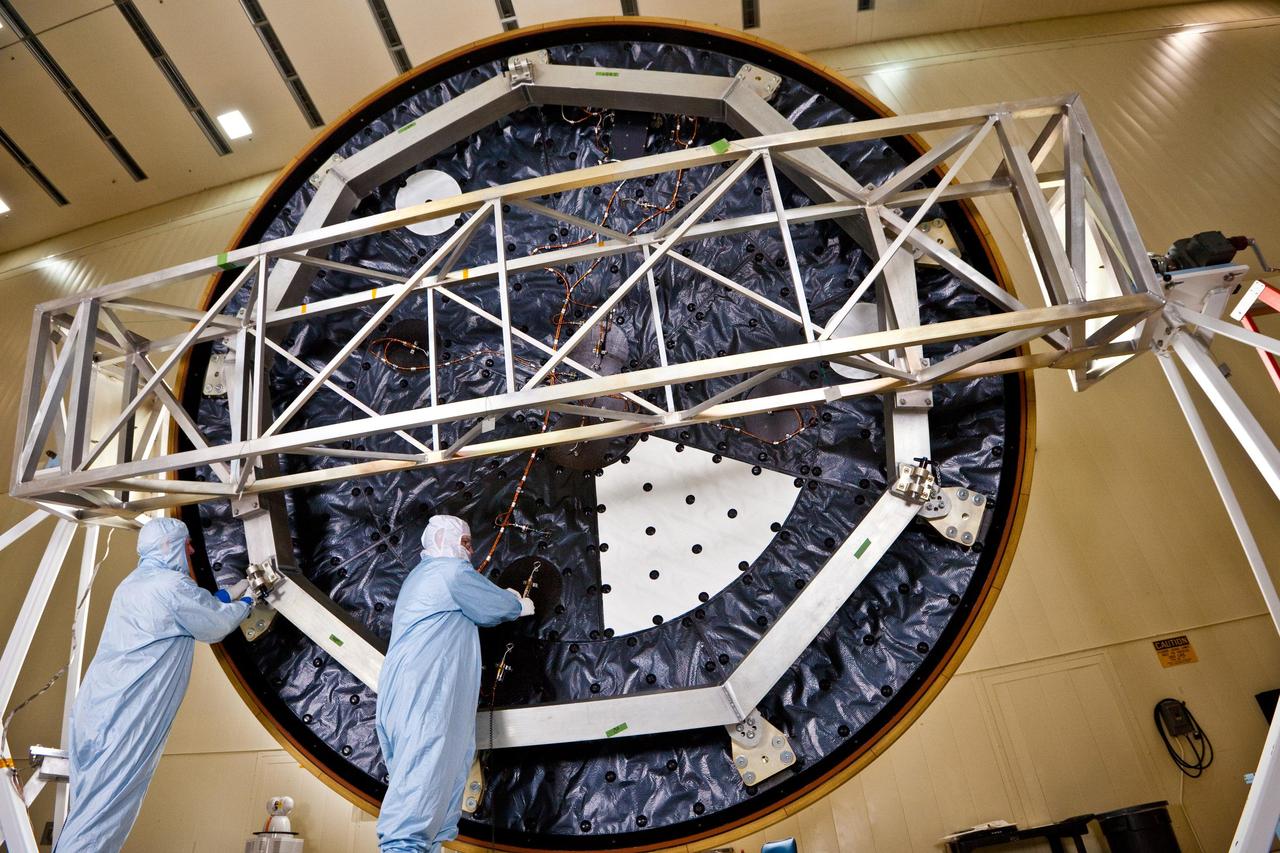
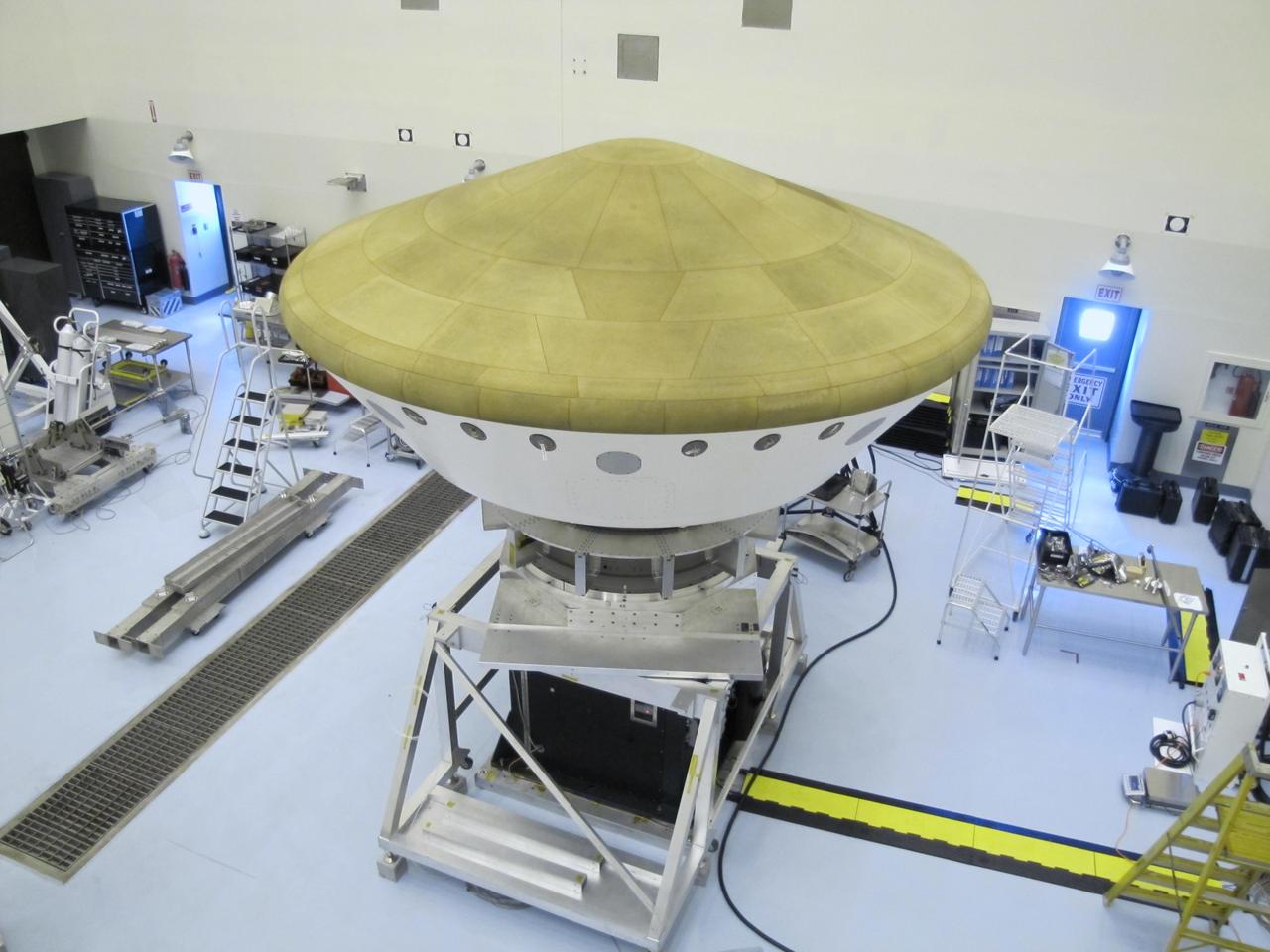
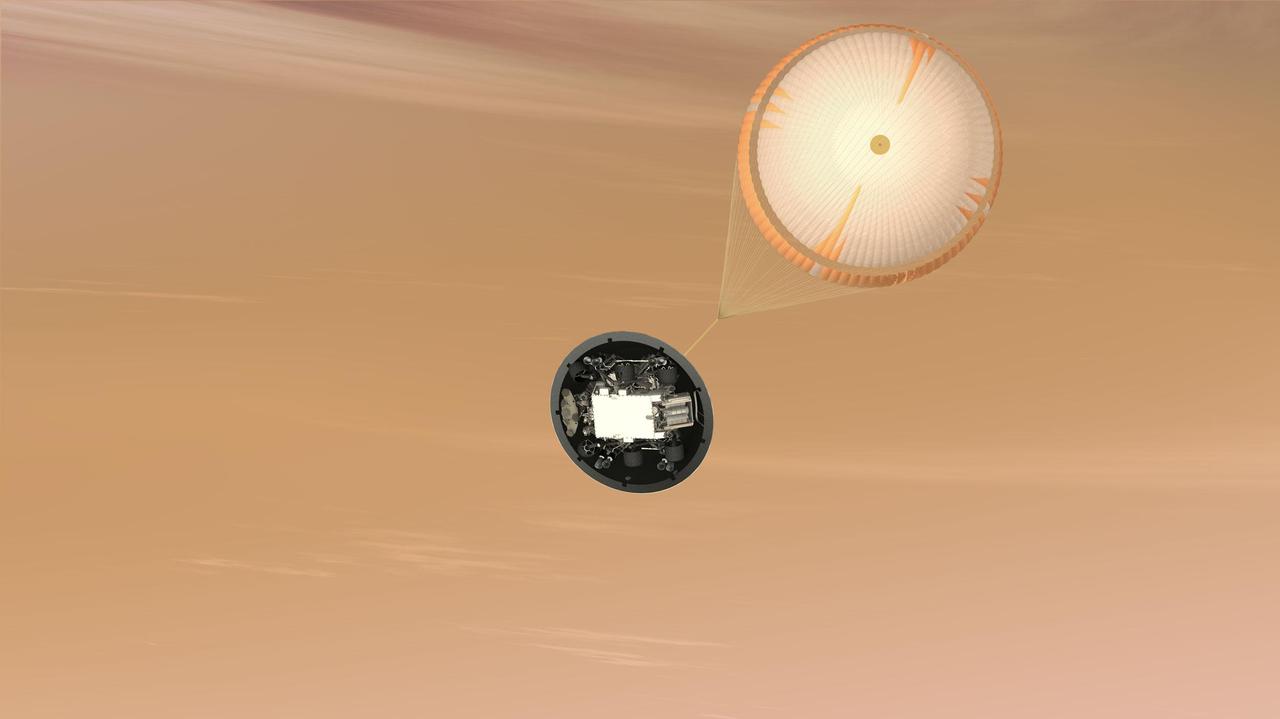
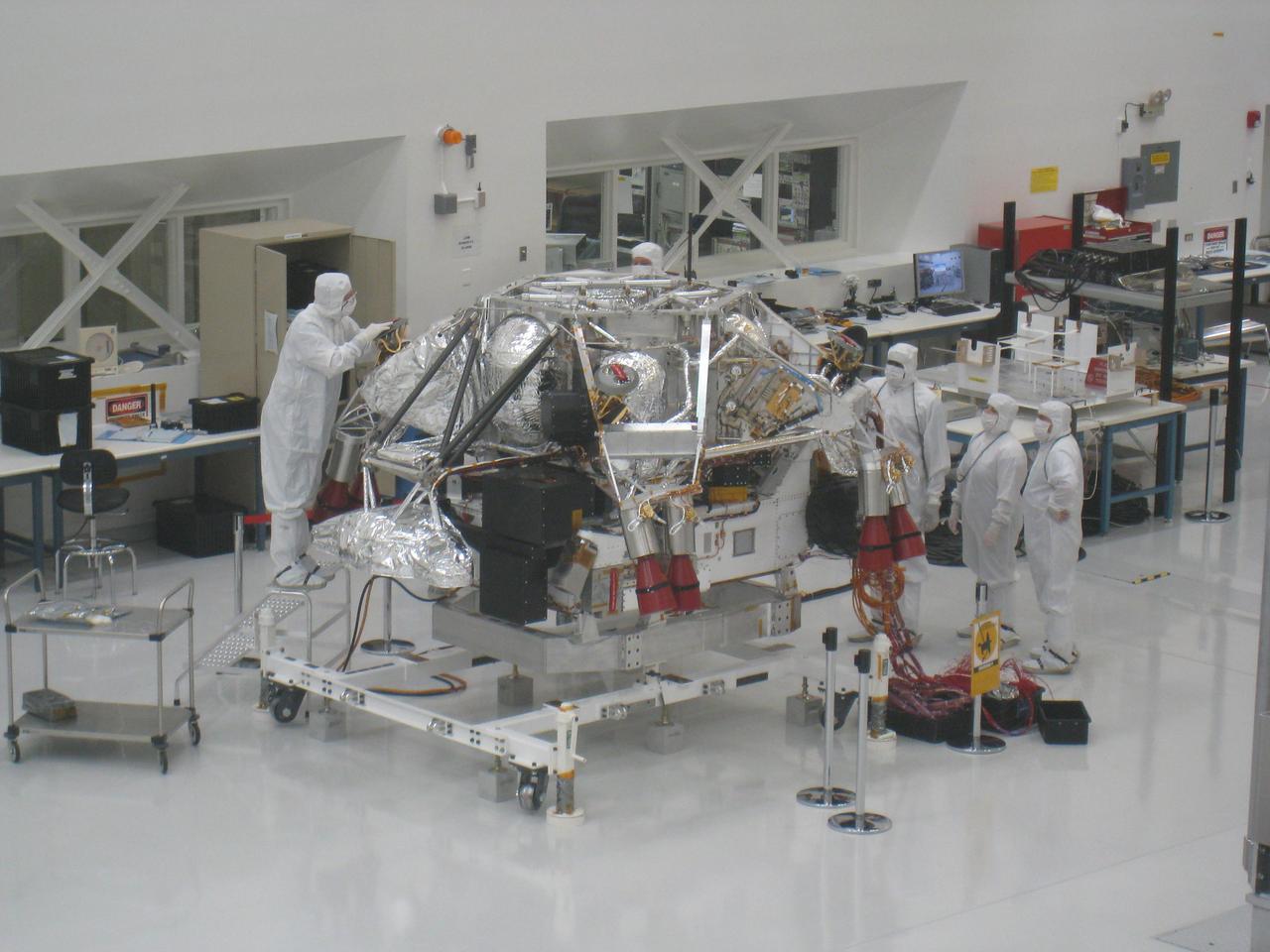
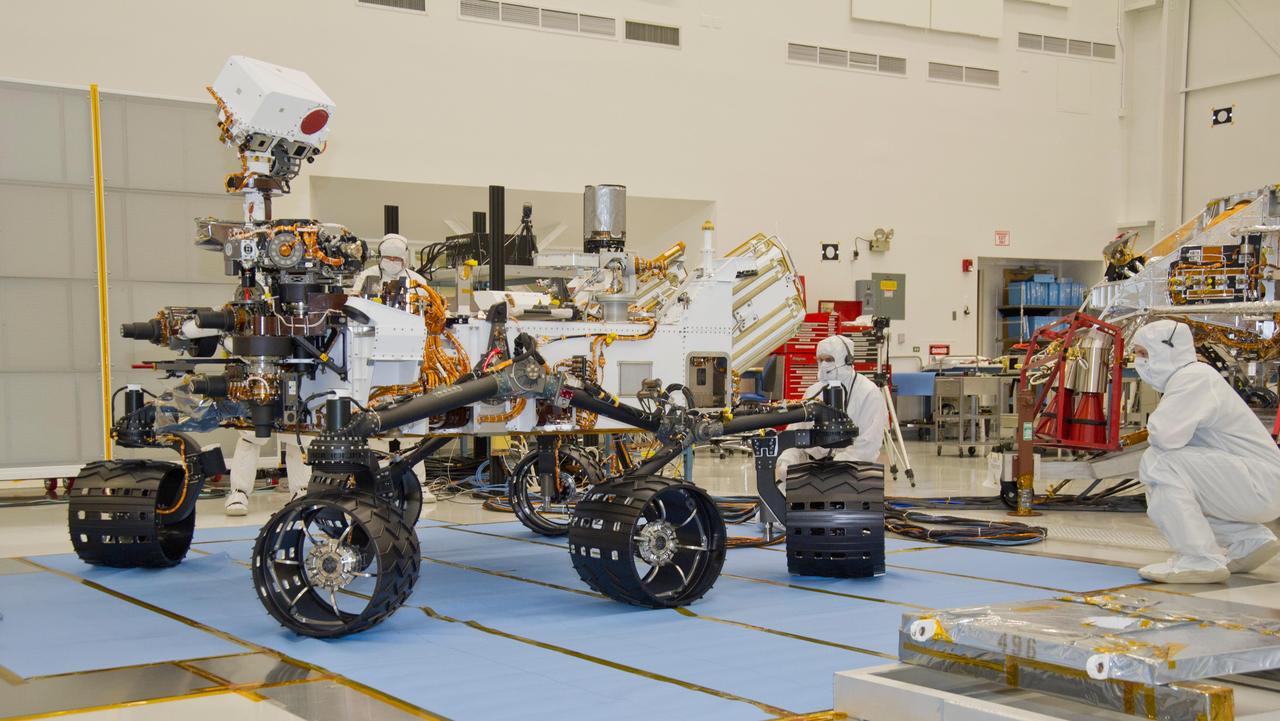
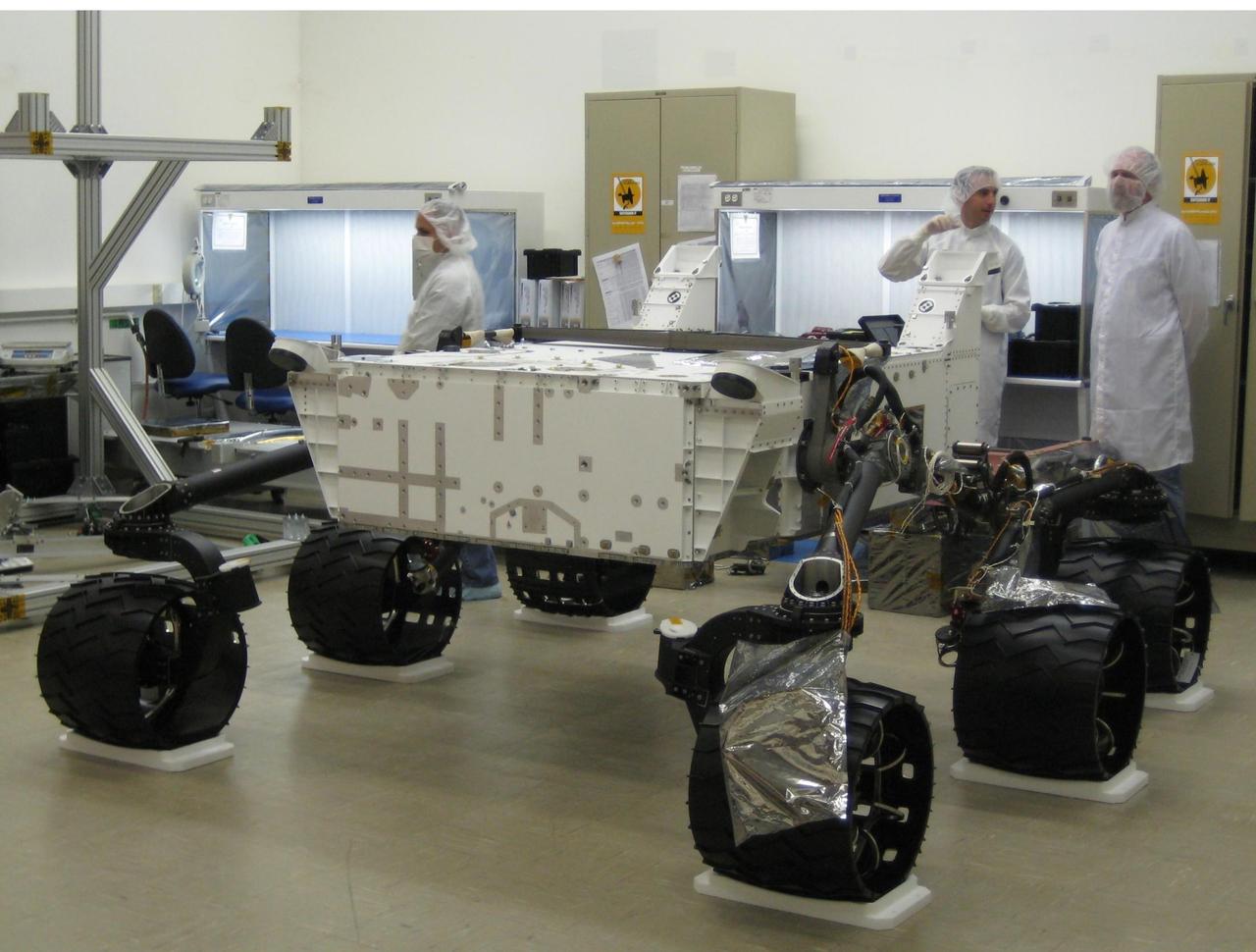
Spacecraft specialists test the descent stage and rover of the Mars Science Laboratory in this scene from the Spacecraft Assembly Facility at NASA Jet Propulsion Laboratory, Pasadena, Calif.
Testing for Mars Science Laboratory Descent
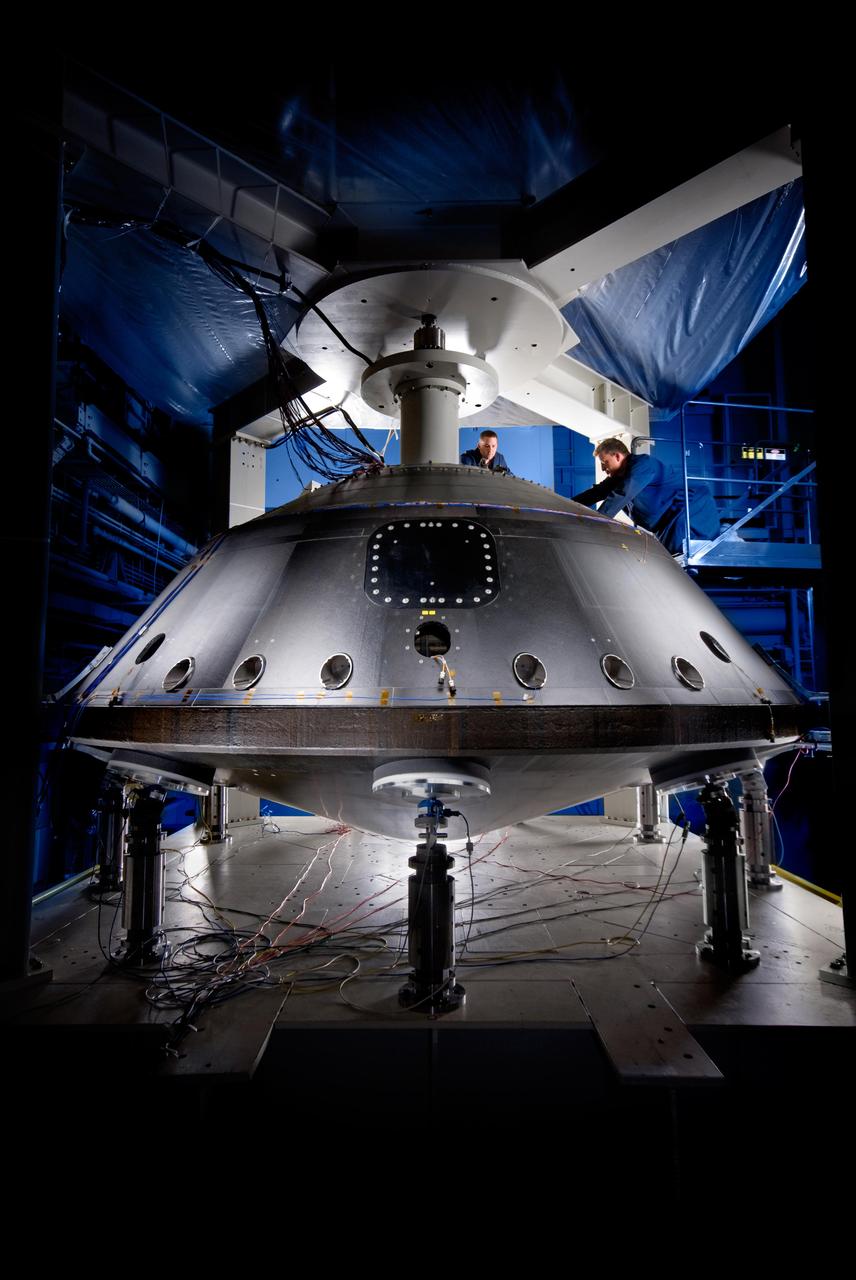
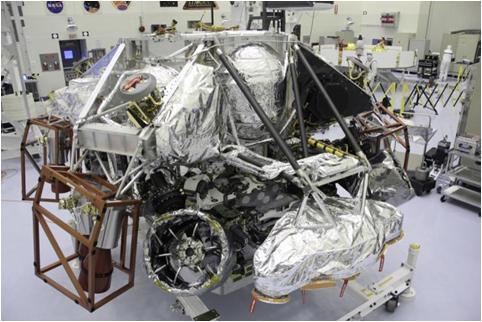
This portion of NASA Mars Science Laboratory, called the descent stage, does its main work during the final few minutes before touchdown on Mars.
Mars Science Laboratory Descent Stage
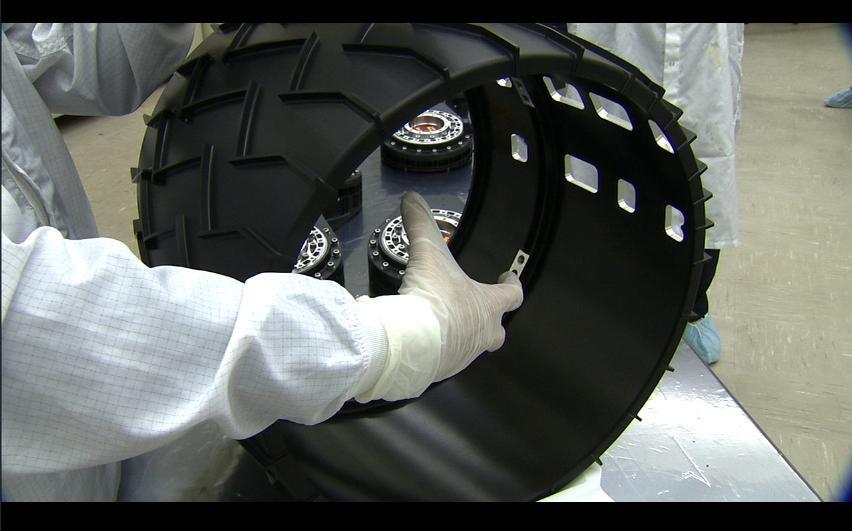
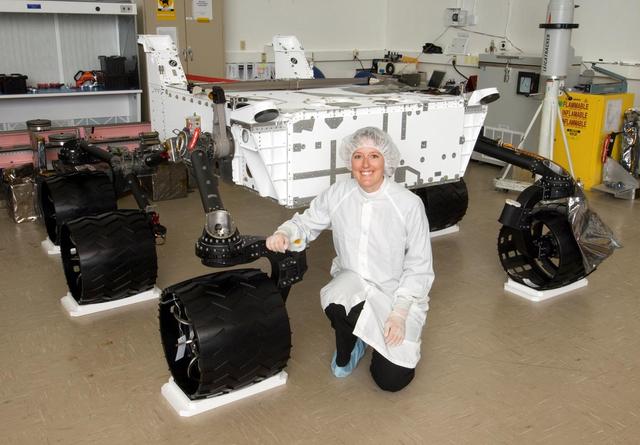
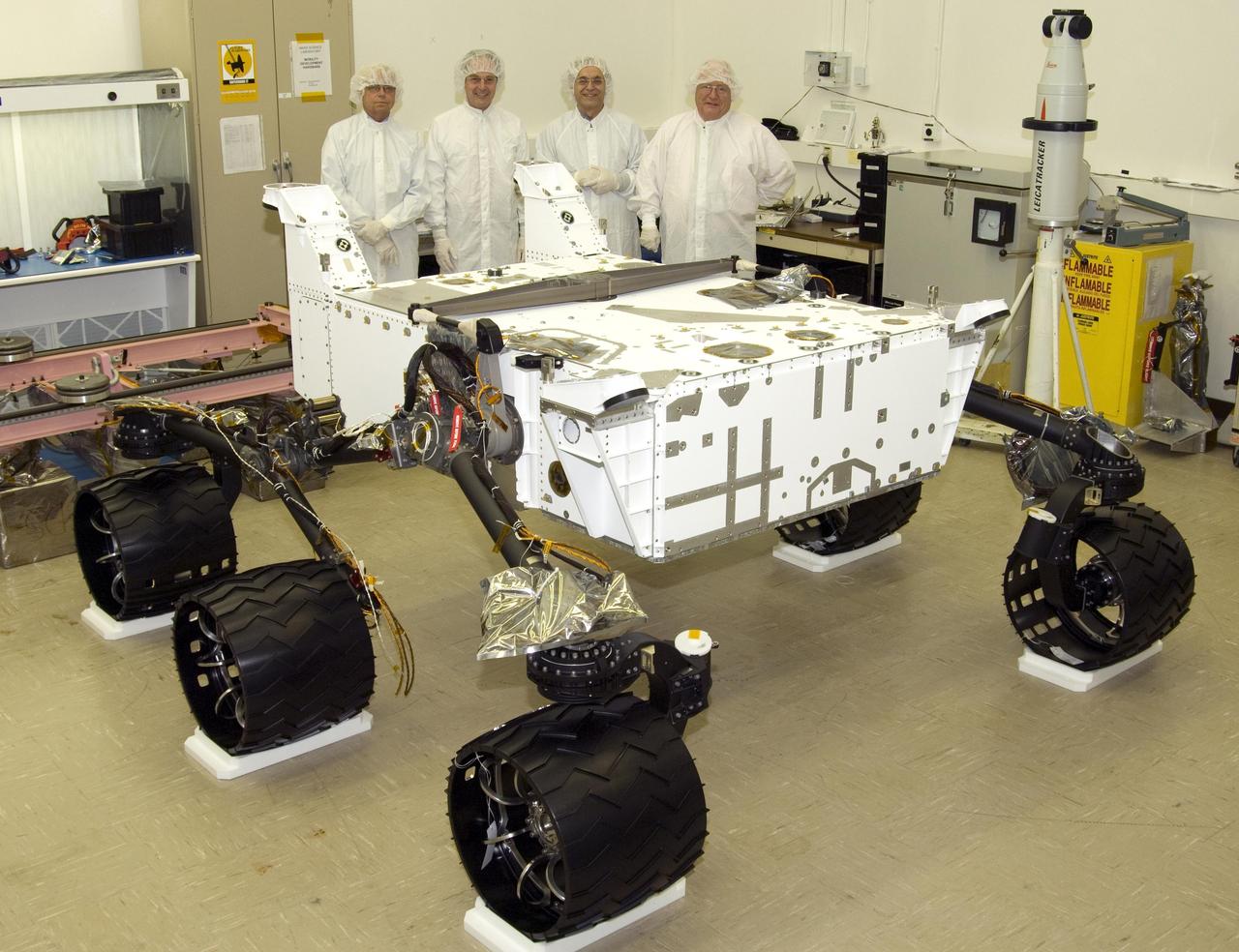
Each of the six wheels for NASA Mars Science Laboratory rover is about half a meter 20 inches in diameter.
Wheel for Mars Science Laboratory Rover
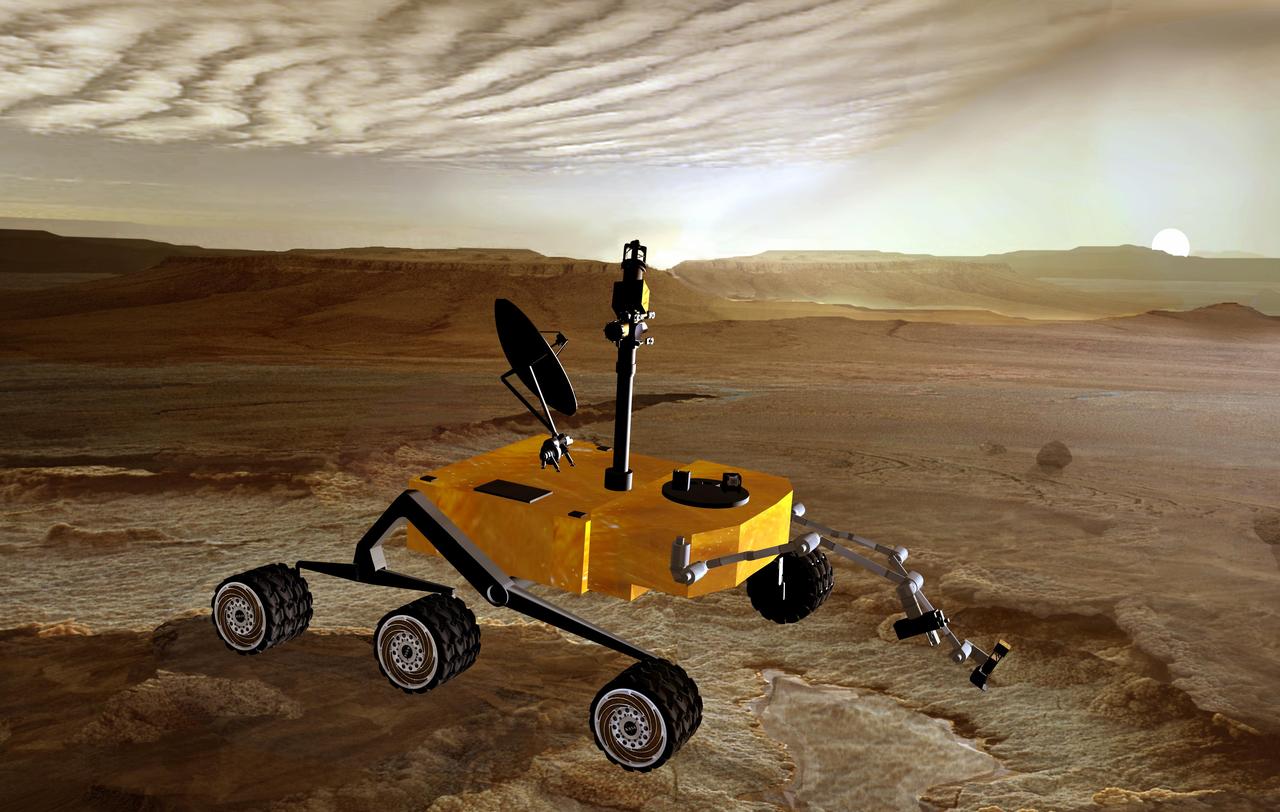
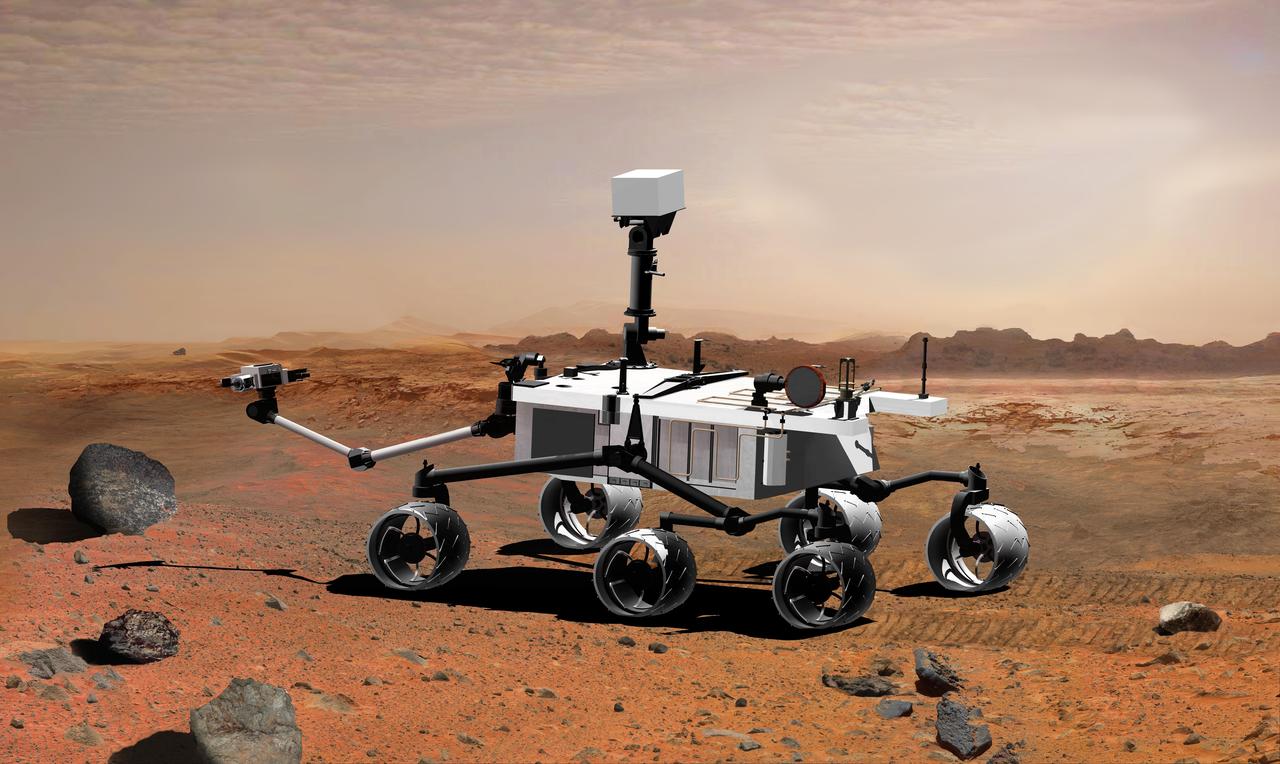
Sunset on Mars catches NASA Mars Science Laboratory in the foreground in this artist concept. The mission is under development for launch in 2009 and a precision landing on Mars in 2010.
Mars Science Laboratory at Sunset Artist Concept
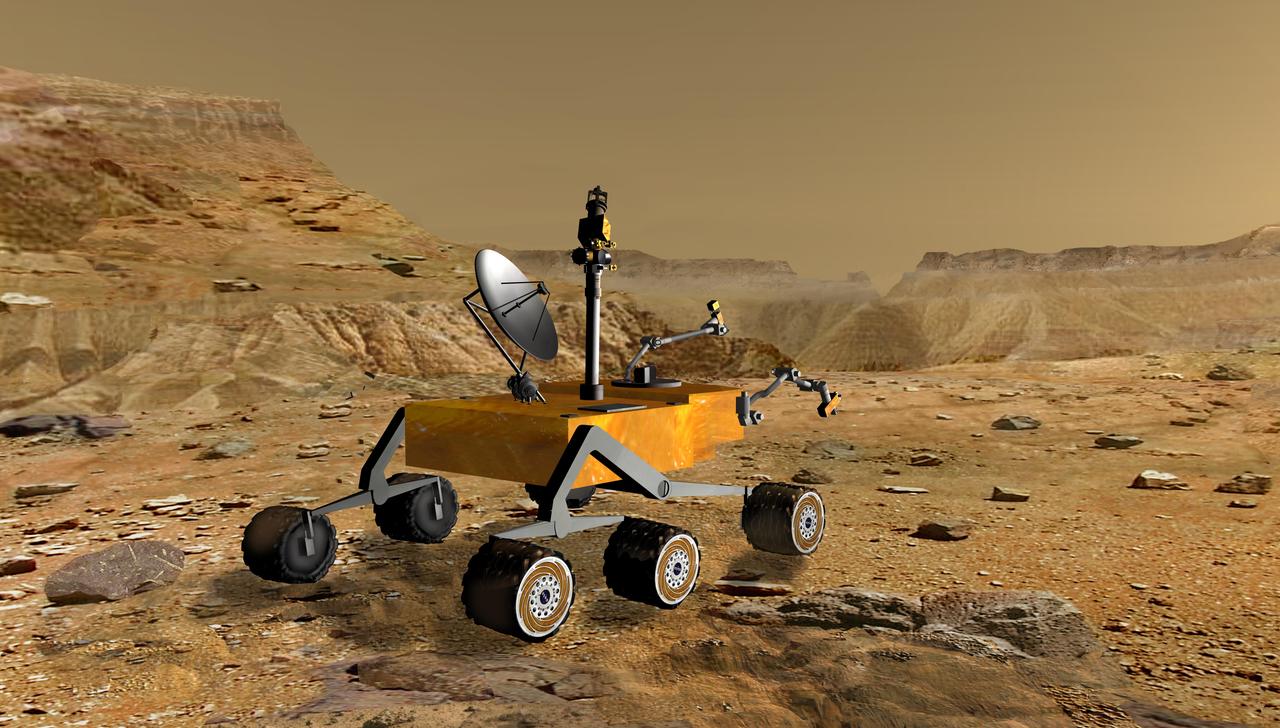
NASA Mars Science Laboratory travels near a canyon on Mars in this artist concept. The mission is under development for launch in 2009 and a precision landing on Mars in 2010.
Mars Science Laboratory at Canyon Artist Concept
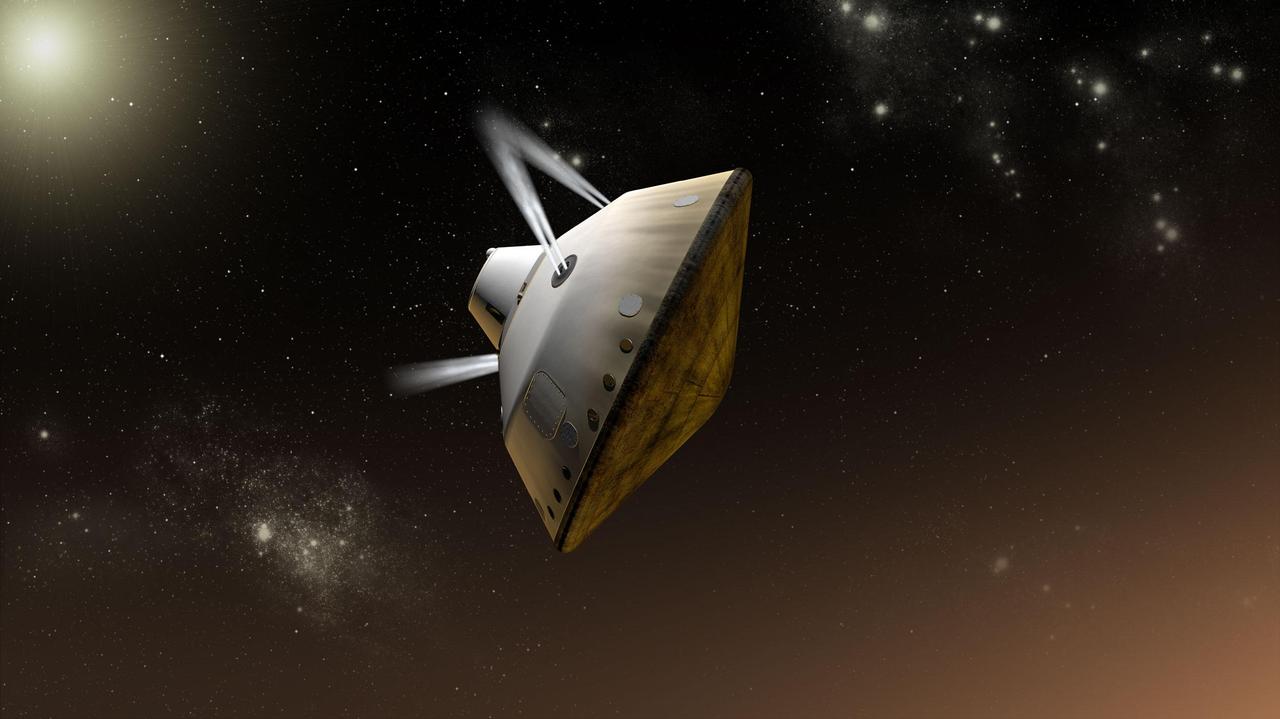
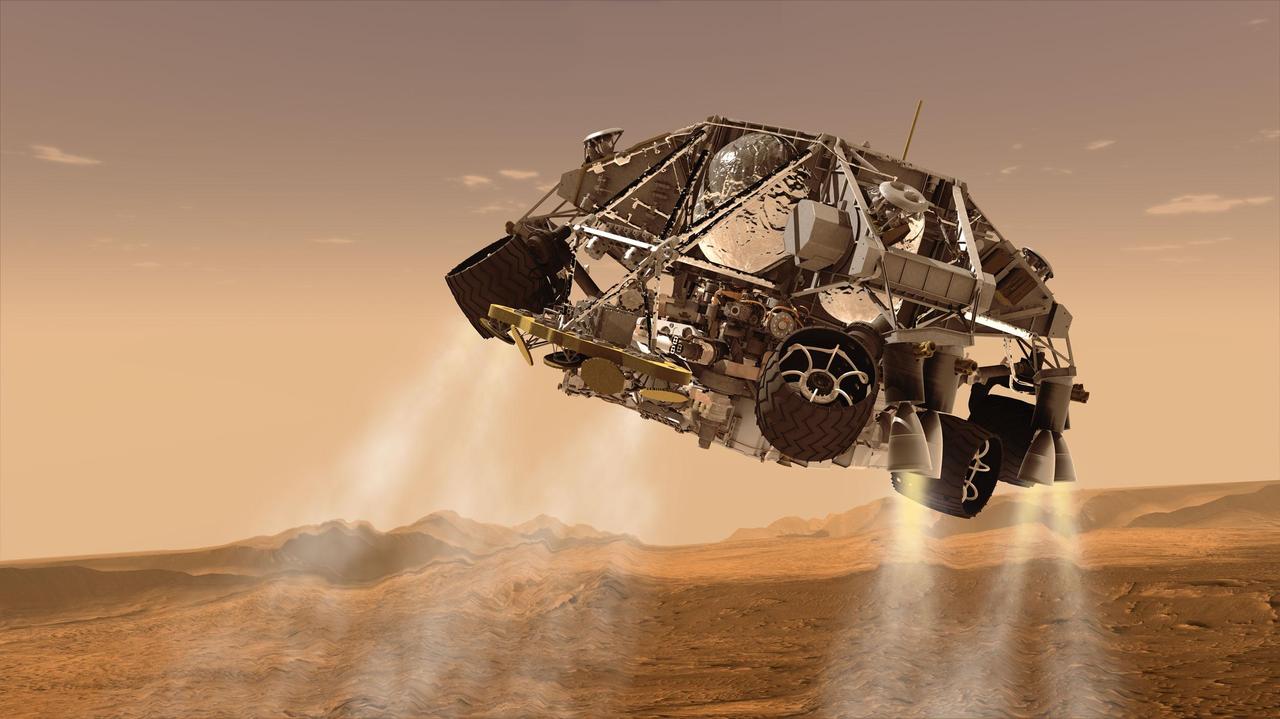
This artist concept shows thrusters firing during the entry, descent and landing phase for NASA Mars Science Laboratory mission to Mars.
Mars Science Laboratory Guided Entry at Mars, Artist Concept
This image from July 2008 shows the aeroshell for NASA Mars Science Laboratory while it was being worked on by spacecraft technicians at Lockheed Martin Space Systems Company near Denver.
Aeroshell for Mars Science Laboratory
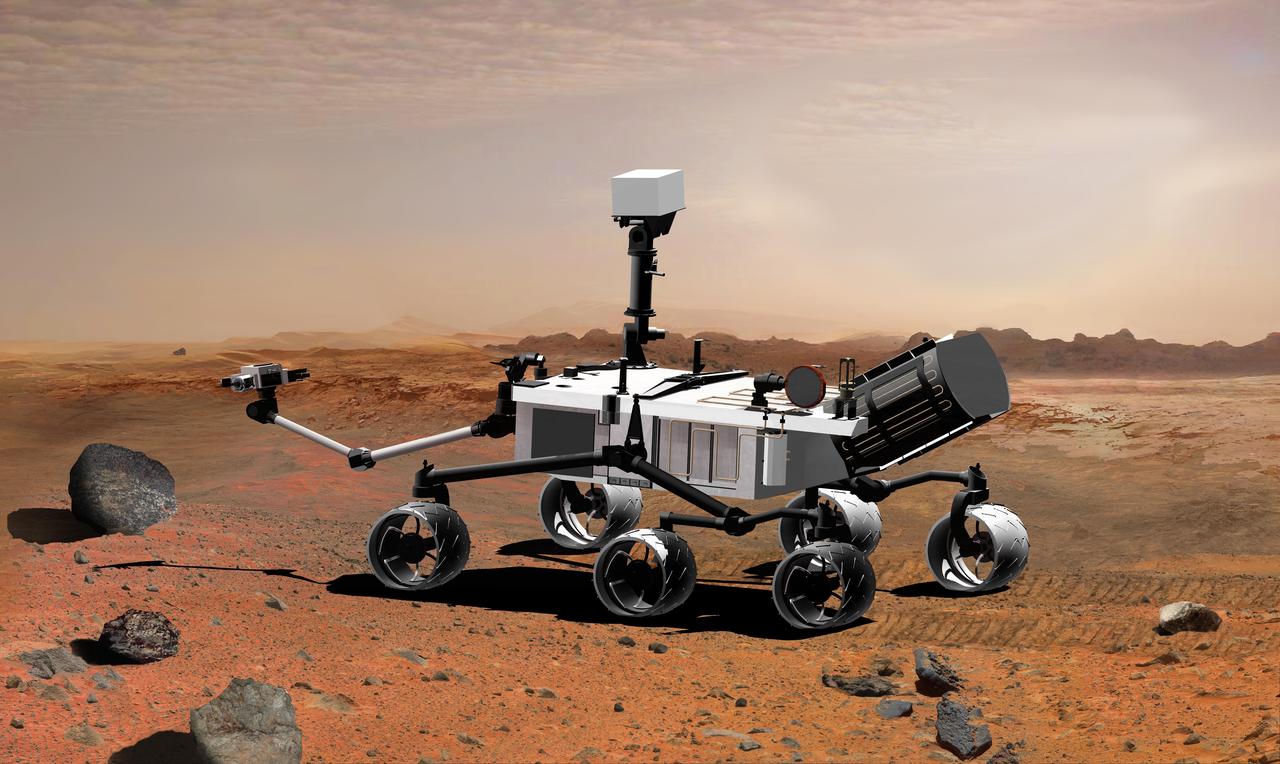
NASA Mars Science Laboratory, a mobile robot for investigating Mars past or present ability to sustain microbial life, is in development for a launch opportunity in 2011 previously 2009.
Mars Science Laboratory with Arm Extended, Artist Concept
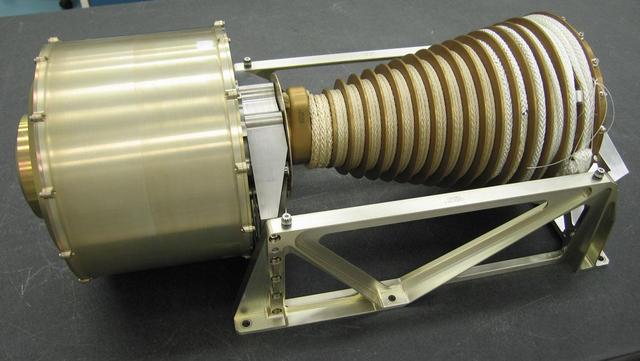
This is hardware for controlling the final lowering of NASA Mars Science Laboratory rover to the surface of Mars from the spacecraft hovering, rocket-powered descent stage.
Device for Lowering Mars Science Laboratory Rover to the Surface
The Mars Science Laboratory mission powered descent vehicle is the integrated combination of the spacecraft descent stage and the rover Curiosity.
Mars Science Laboratory Powered Descent Vehicle
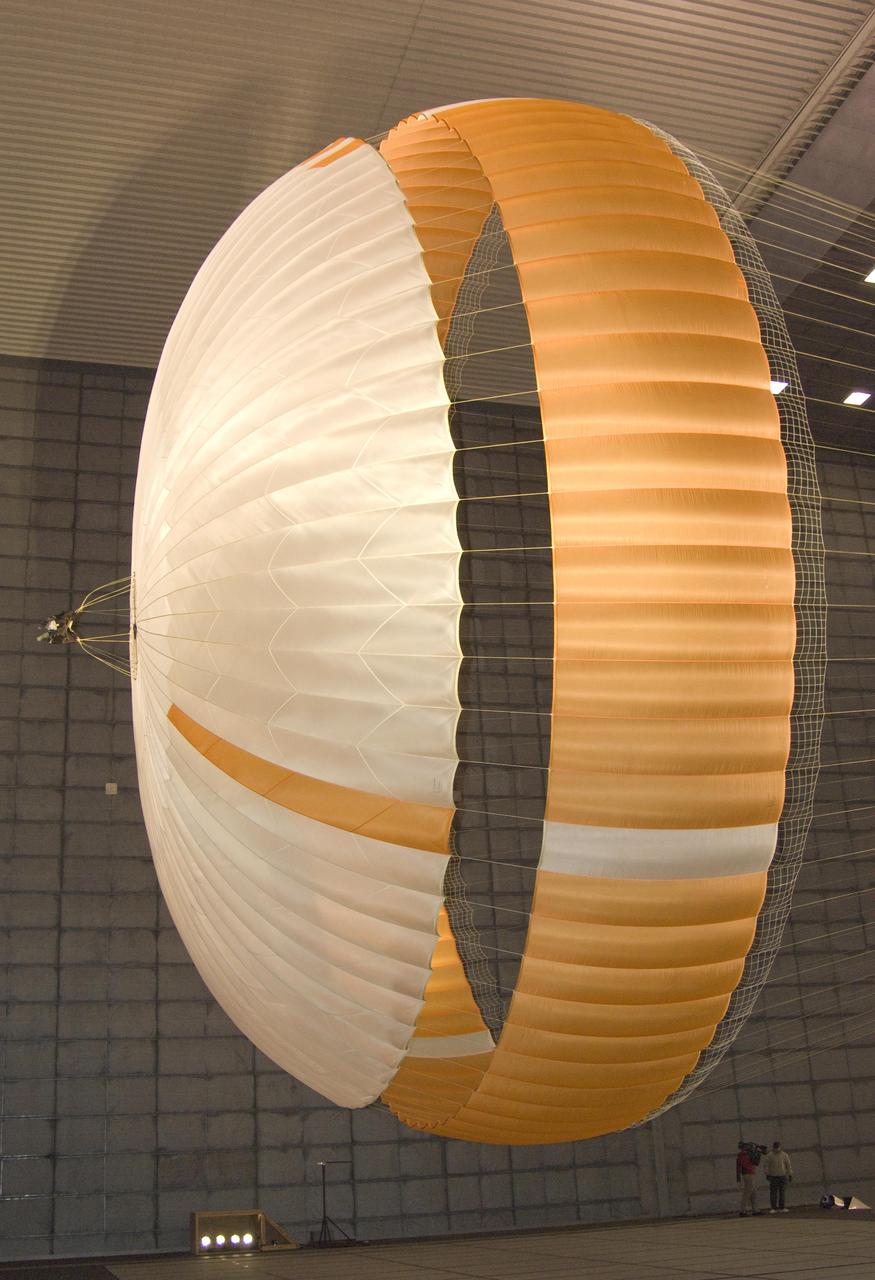
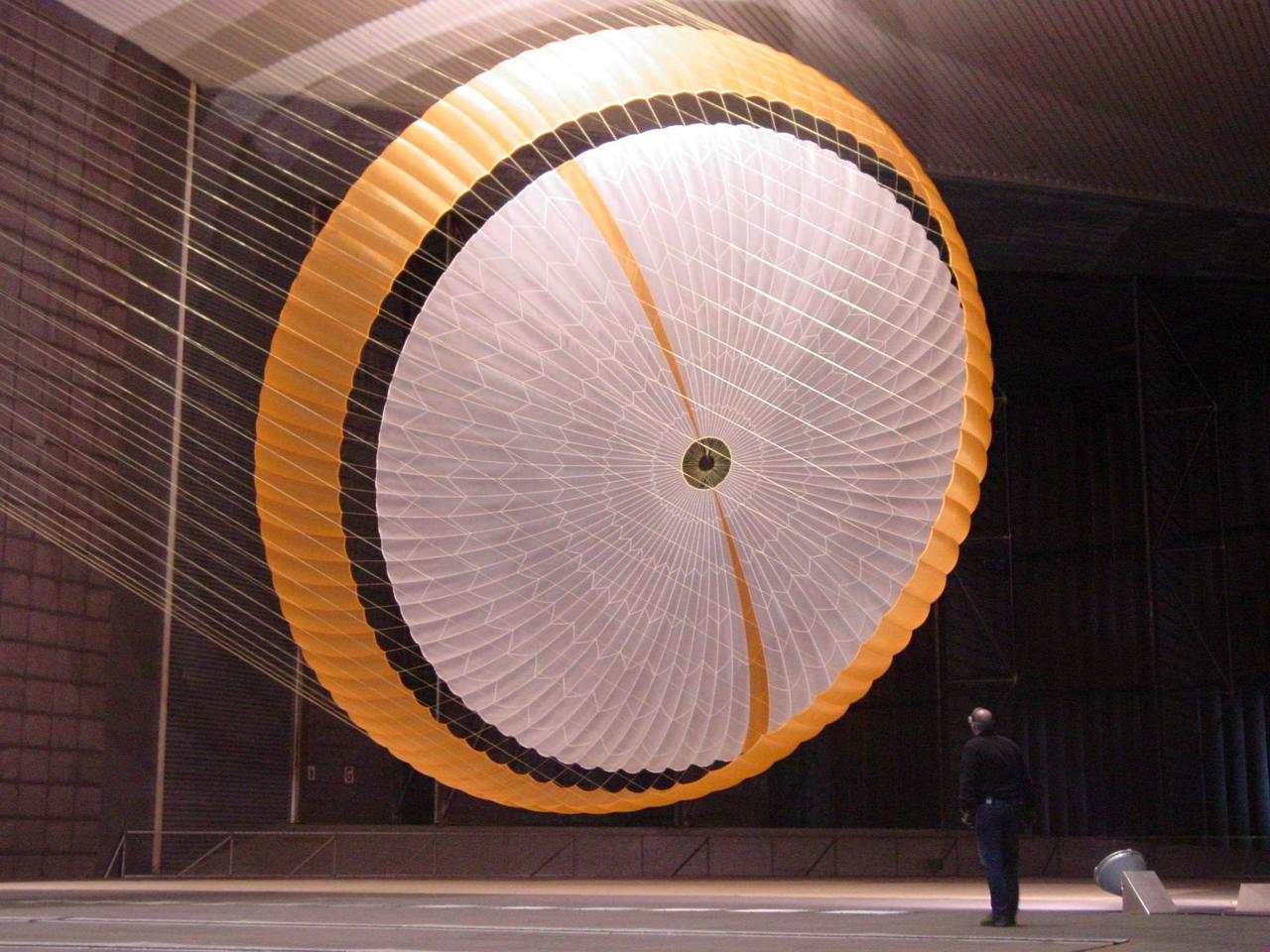
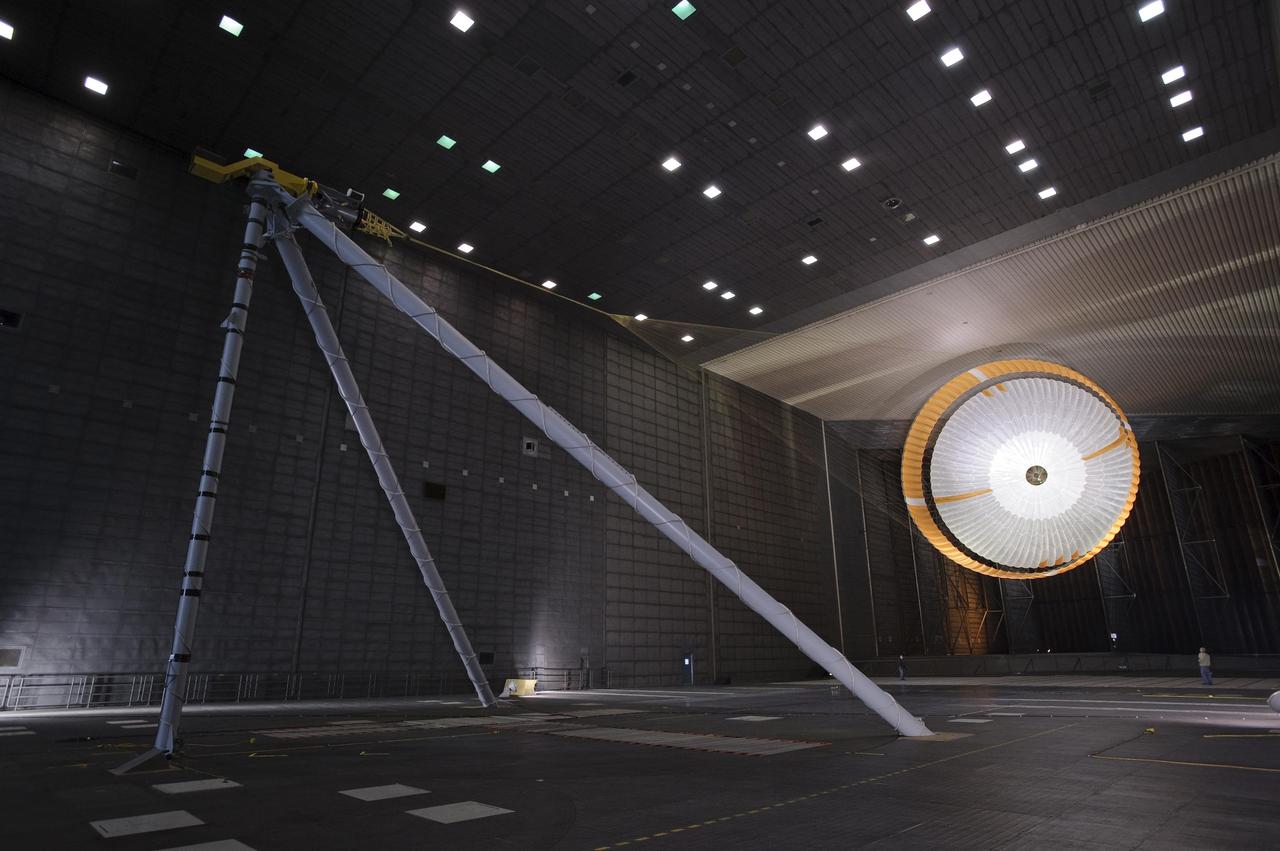
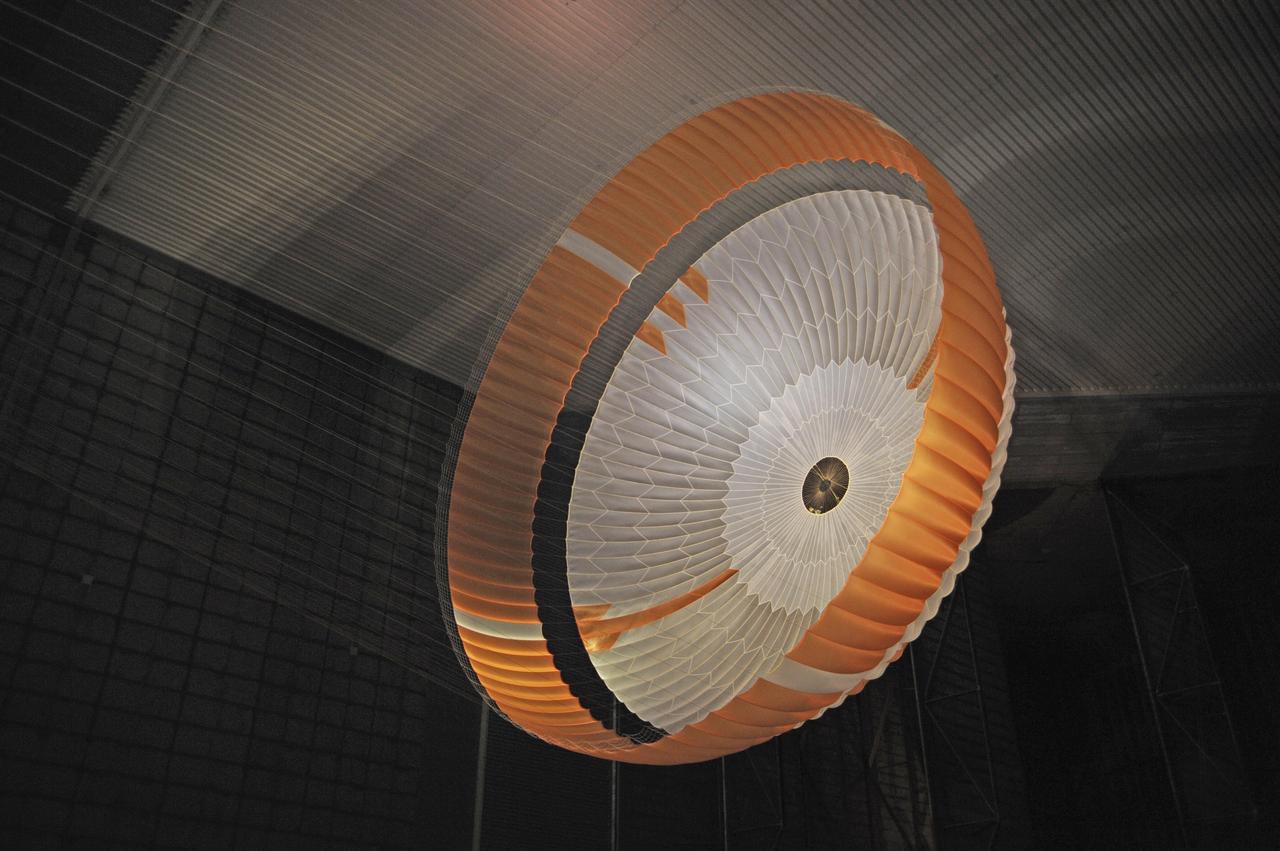
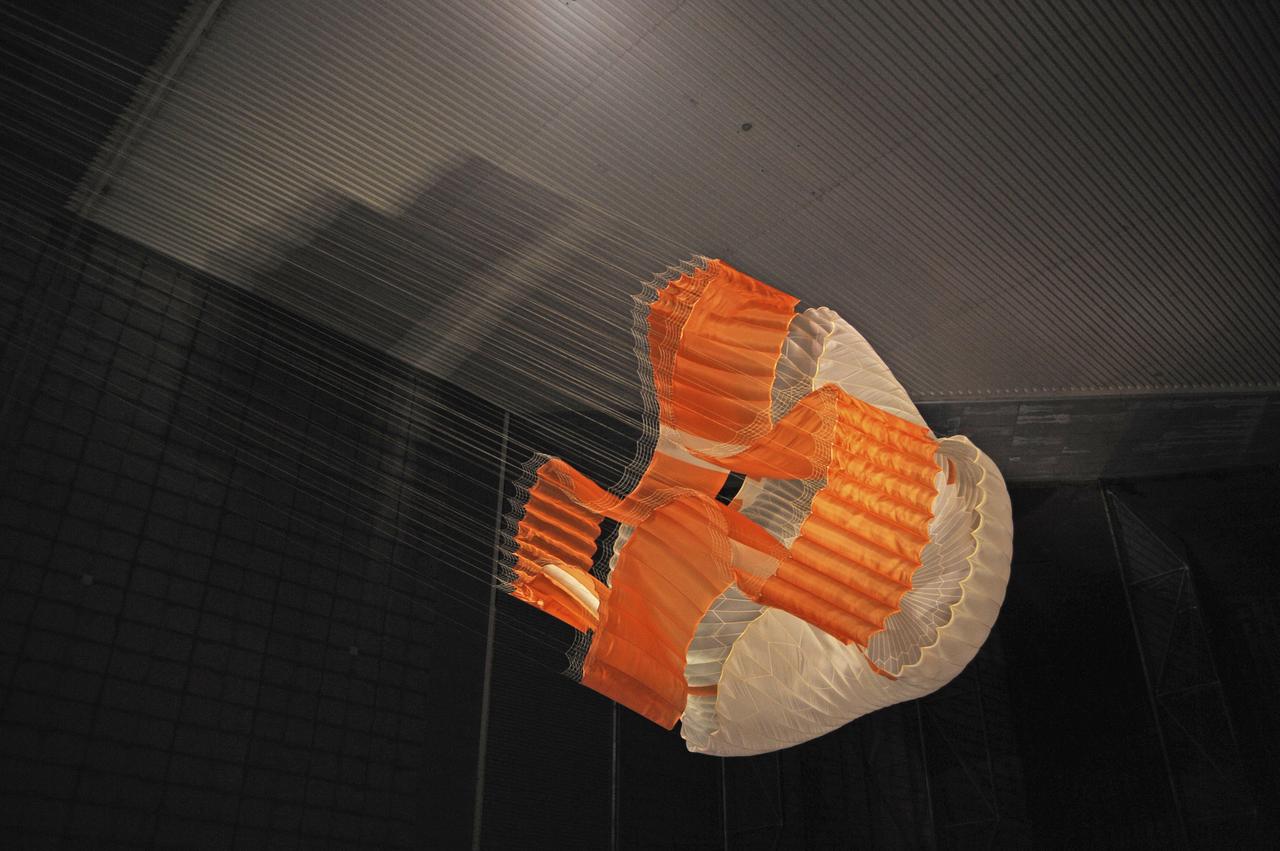
The parachute for NASA Mars Science Laboratory mission opens to a diameter of nearly 16 meters 51 feet.  This image shows a duplicate qualification-test parachute inside the world's largest wind tunnel, at NASA Ames Research Center, Moffett Field, Calif.  The Mars Science Laboratory will be launched in 2011 for a landing on Mars in 2012. Its parachute is the largest ever built to fly on an extraterrestrial mission.  The parachute uses a configuration called disk-gap-band, with 80 suspension lines. Most of the orange and white fabric is nylon, though a small disk of heavier polyester is used near the vent in the apex of the canopy due to higher stresses there.  http://photojournal.jpl.nasa.gov/catalog/PIA11994
Large Parachute for NASA Mars Science Laboratory
This stereo image of NASA Mars Science Laboratory Curiosity Rovert was taken May 26, 2011, in Spacecraft Assembly Facility at NASA Jet Propulsion Laboratory in Pasadena, Calif. 3D glasses are necessary to view this image.
Mars Science Laboratory Mission Curiosity Rover Stereo
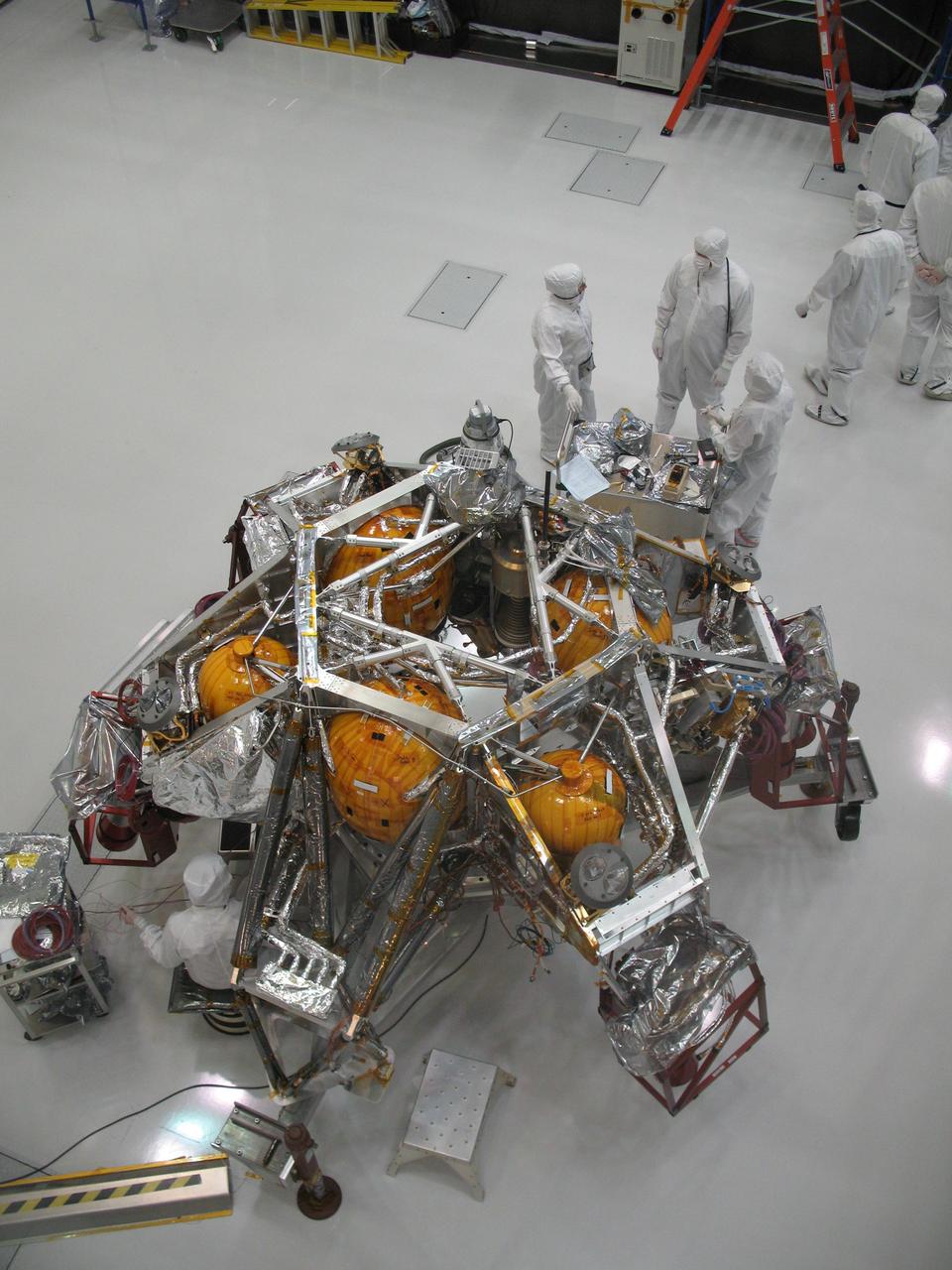
This image from early October 2008 shows personnel working on the descent stage of NASA Mars Science Laboratory inside the Spacecraft Assembly Facility at NASA Jet Propulsion Laboratory, Pasadena, Calif.
Descent Stage of Mars Science Laboratory During Assembly
This image from August 2008 shows NASA Mars Science Laboratory rover in the course of its assembly, before additions of its arm, mast, laboratory instruments and other equipment.
Wheels and Suspension on Mars Science Laboratory Rover
The descent stage of NASA Mars Science Laboratory spacecraft is being lifted during assembly of the spacecraft in this photograph taken inside the Payload Hazardous Servicing Facility at NASA Kennedy Space Center, Fla.
Mars Science Laboratory Descent Stage
The team developing the landing system for NASA Mars Science Laboratory tested the deployment of an early parachute design in mid-October 2007 inside the world largest wind tunnel, at NASA Ames Research Center, Moffett Field, California.
Parachute Testing for Mars Science Laboratory
NASA Mars Science Laboratory spacecraft has been fully stacked for flight in this photograph from inside the Payload Hazardous Servicing Facility at NASA Kennedy Space Center, Fla., in October 2011.
Mars Science Laboratory Stacked Spacecraft
The cruise stage of NASA Mars Science Laboratory spacecraft is being prepared for final stacking of the spacecraft in this photograph from inside the Payload Hazardous Servicing Facility at NASA Kennedy Space Center, Fla.
Mars Science Laboratory Cruise Stage
The Mars Science Laboratory mission rover, Curiosity, is prepared for final integration into the complete NASA spacecraft in this photograph taken inside the Payload Hazardous Servicing Facility at NASA Kennedy Space Center, Fla.
Mars Science Laboratory Rover Closeout
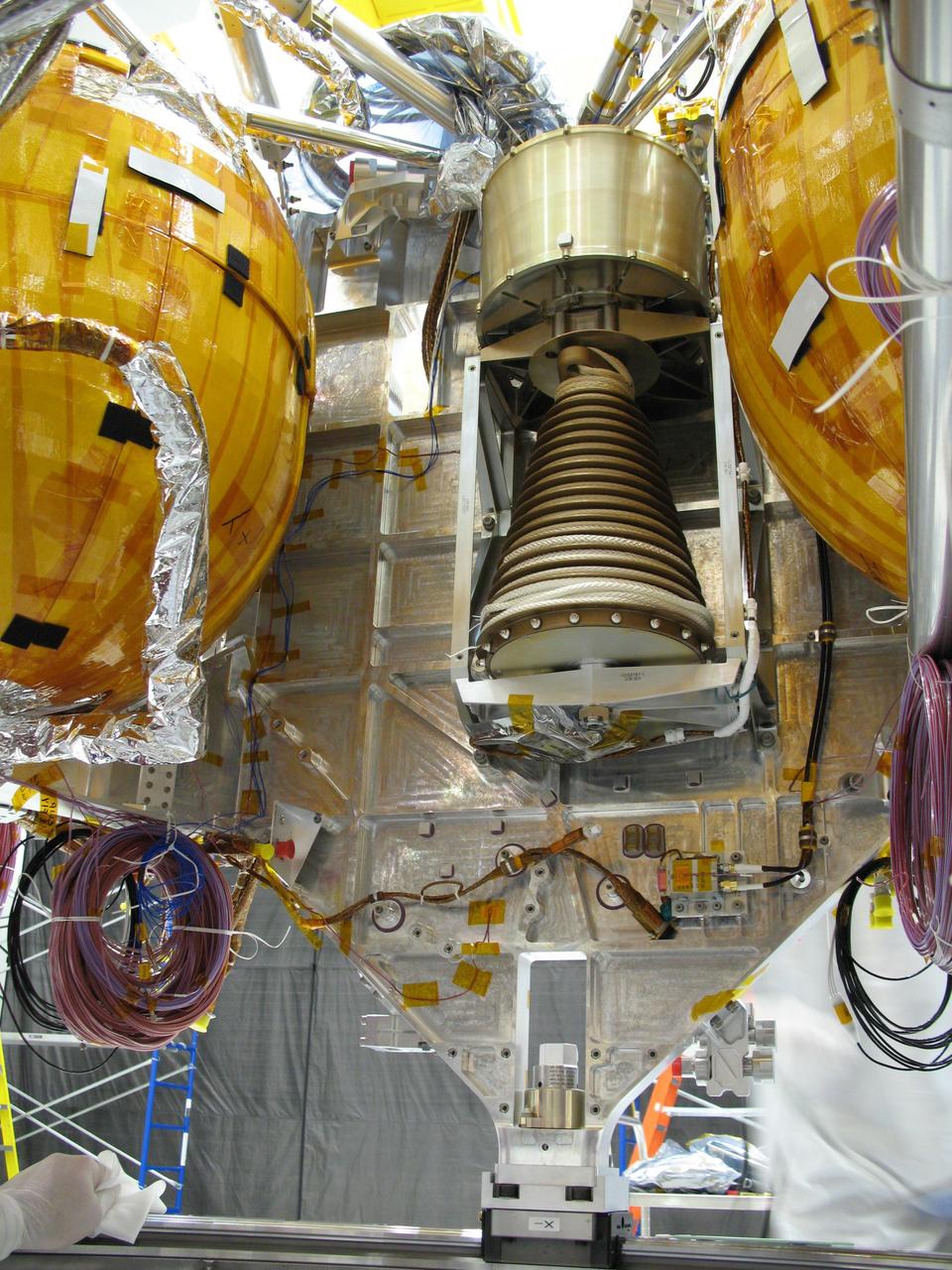
This view of a portion of the descent stage of NASA Mars Science Laboratory shows two of the stage three spherical fuel tanks flanking the bridle device assembly.
Bridle Device in Mars Science Laboratory Descent Stage
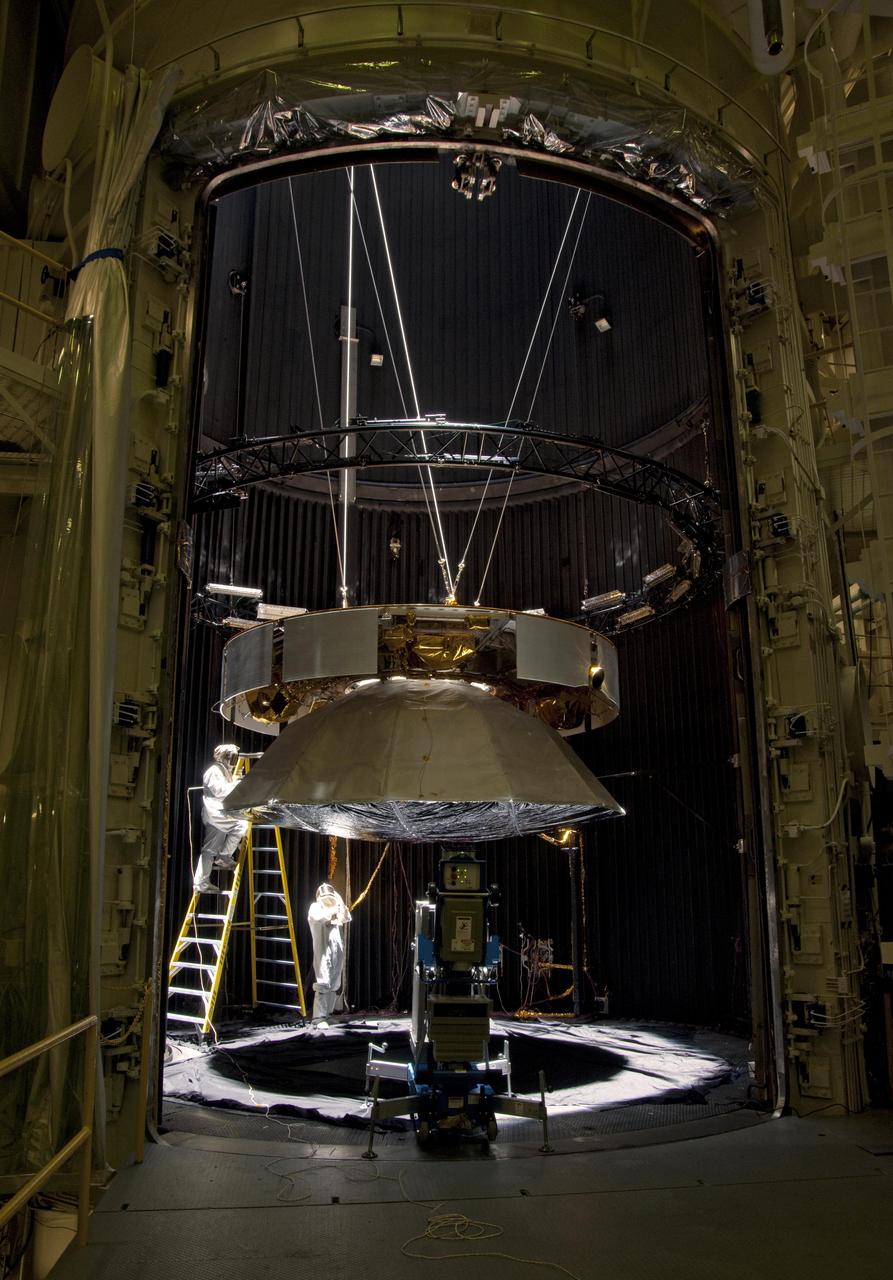
Testing of the cruise stage for NASA Mars Science Laboratory in August 2010 included a session in a facility that simulates the environment found in interplanetary space.
Mars Science Laboratory Cruise Stage in Test Chamber
This portion of NASA Mars Science Laboratory spacecraft, called the cruise stage, will do its work during the flight between Earth and Mars after launch in the fall of 2011.
Cruise Stage of NASA Mars Science Laboratory
An artist concept of NASA Mars Science Laboratory left serves to  compare it with Spirit, one of NASA twin Mars Exploration Rovers
Size Comparison, Mars Science Laboratory and Mars Exploration Rover Artist Concept
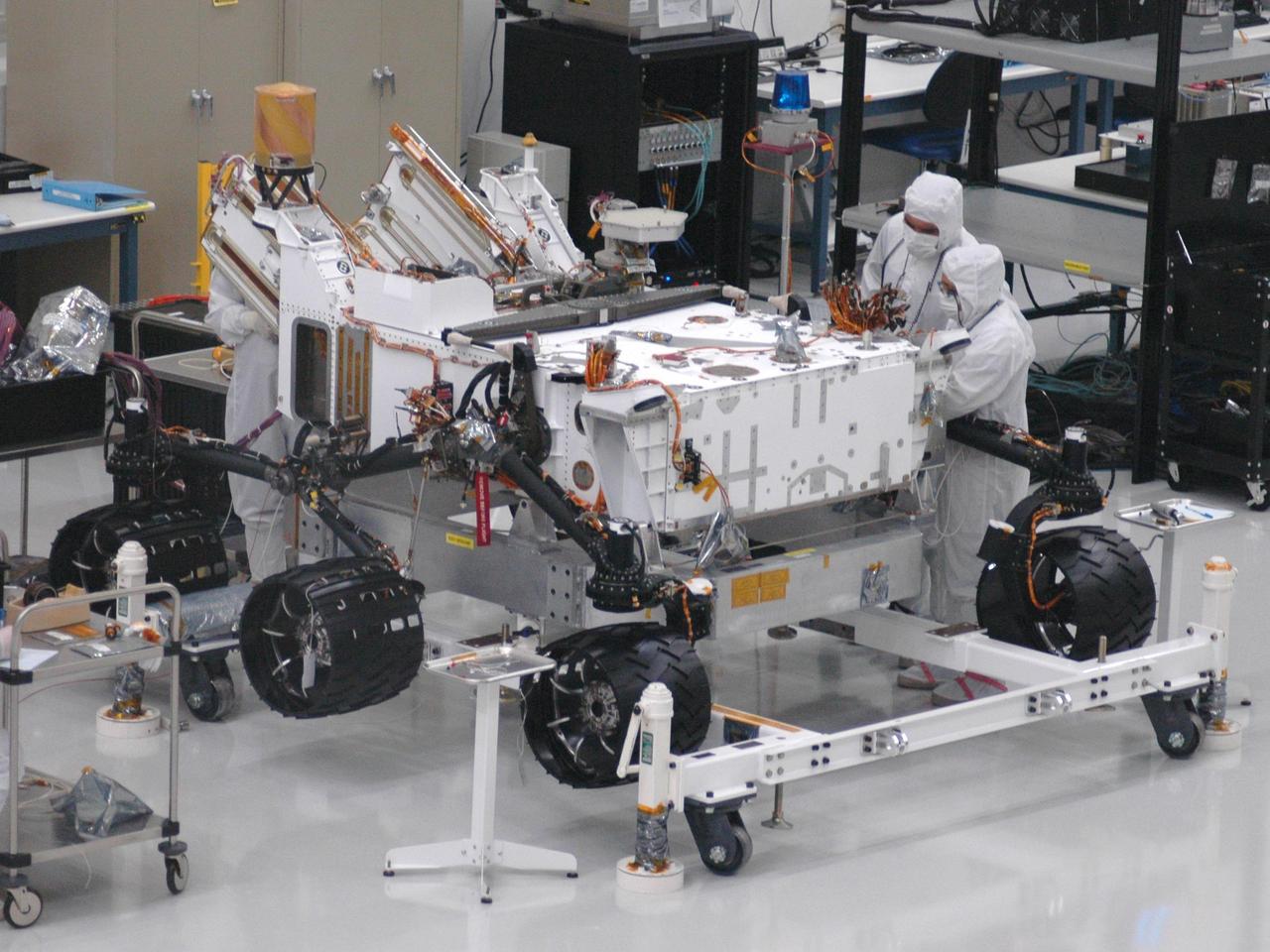
 This image taken in August 2008 in a clean room at NASA JPL, Pasadena, Calif., shows NASA next Mars rover, the Mars Science Laboratory, in the course of its assembly, before additions of its arm, mast, laboratory instruments and other equipment.
Mars Science Laboratory Rover Taking Shape
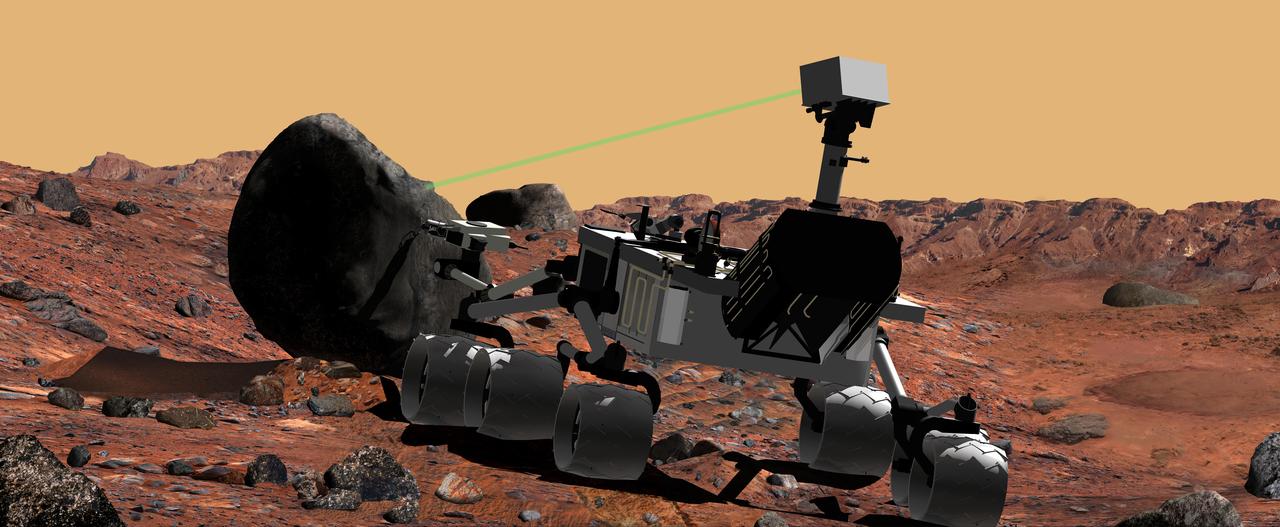
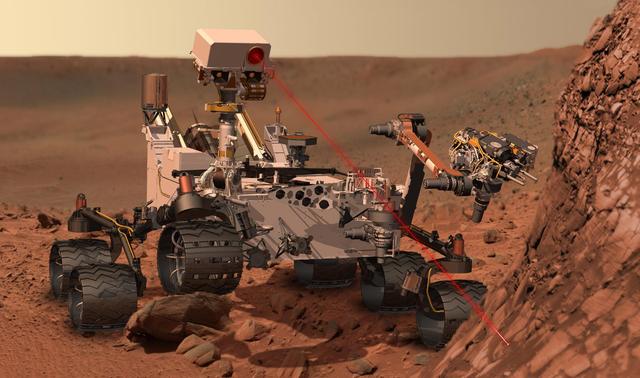
This artist conception of NASA Mars Science Laboratory portrays use of the rover ChemCam instrument to identify the chemical composition of a rock sample on the surface of Mars.
Mars Science Laboratory Using Laser Instrument, Artist Concept
NASA Mars Science Laboratory, a mobile robot for investigating Mars past or present ability to sustain microbial life, is in development for a launch opportunity in 2011 previously 2009.
Mars Science Laboratory with Power Source and Extended Arm, Artist Concept
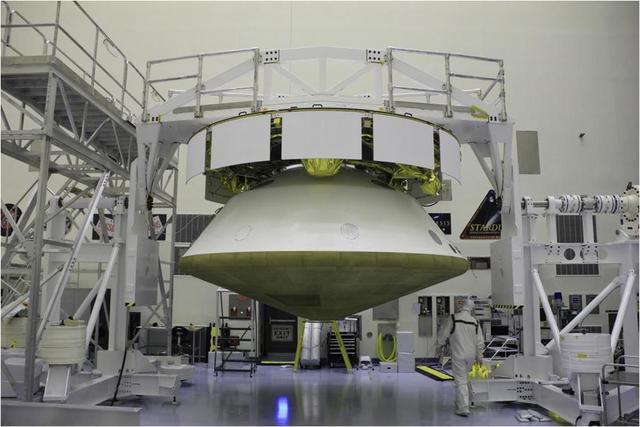
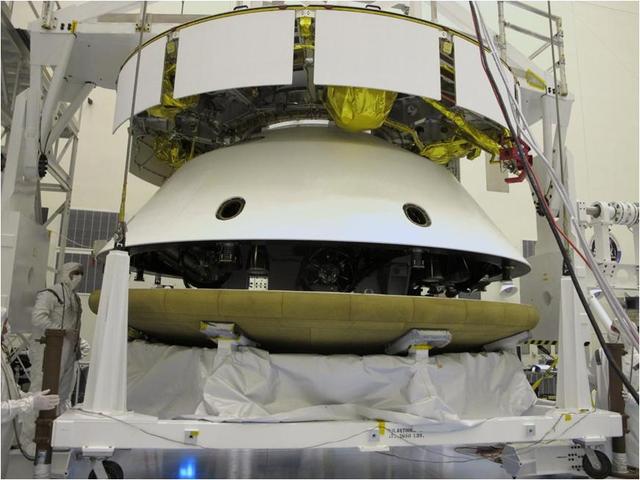
At the Payload Hazardous Servicing Facility at NASA Kennedy Space Center in Florida, the Mars Science Laboratory rover, Curiosity, and the spacecraft descent stage have been enclosed inside the spacecraft aeroshell.
Mars Science Laboratory Aeroshell with Curiosity Inside
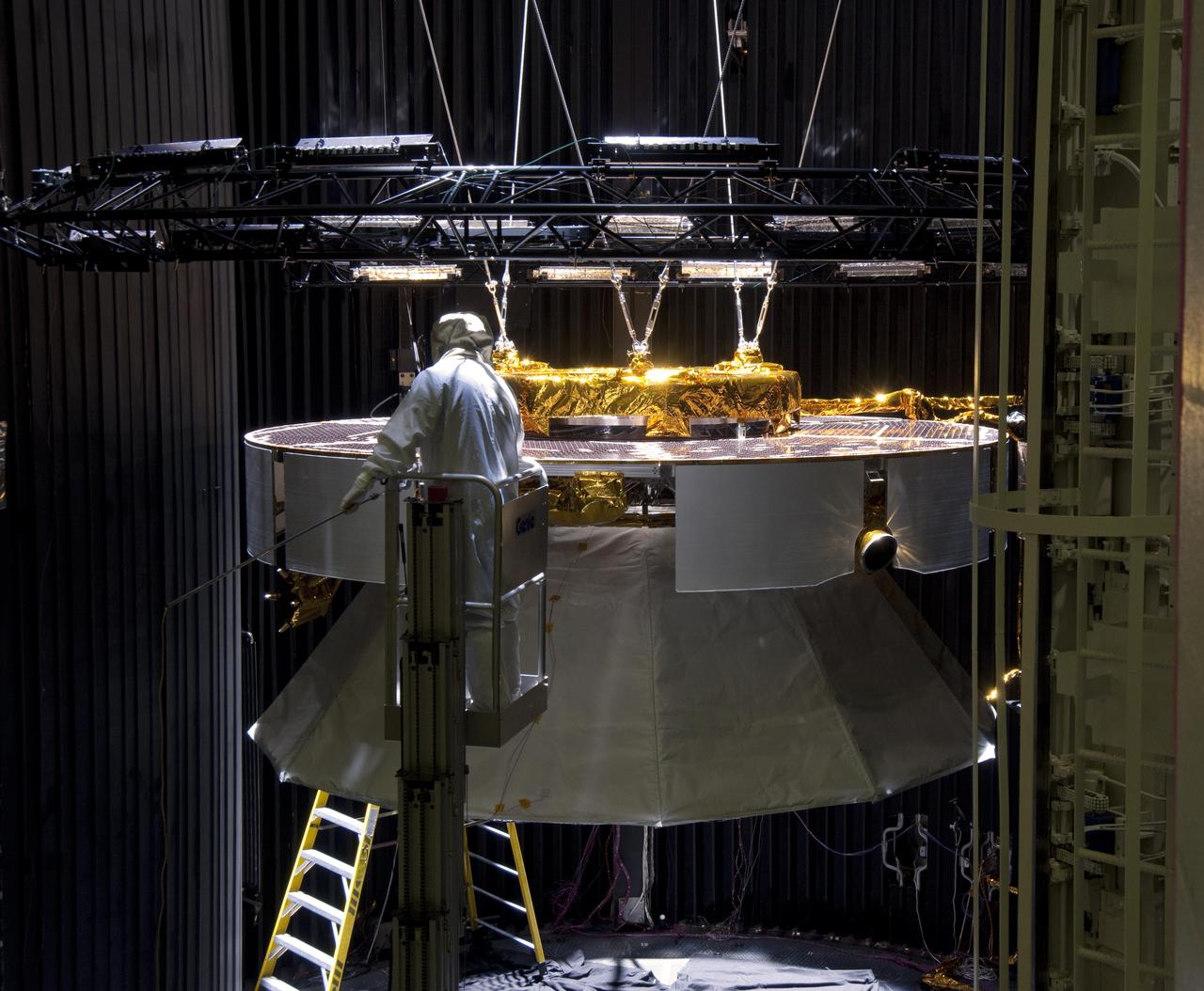
Testing of the cruise stage for NASA Mars Science Laboratory in August 2010 included a session in a facility that simulates the environment found in interplanetary space. Spacecraft technicians at JPL prepare a space-simulation test.
Cruise Stage Testing for Mars Science Laboratory
During final stacking of NASA Mars Science Laboratory spacecraft, the heat shield is positioned for integration with the rest of the spacecraft in this photograph from inside the Payload Hazardous Servicing Facility at NASA Kennedy Space Center, Fla.
Mars Science Laboratory Heat Shield Integration for Flight
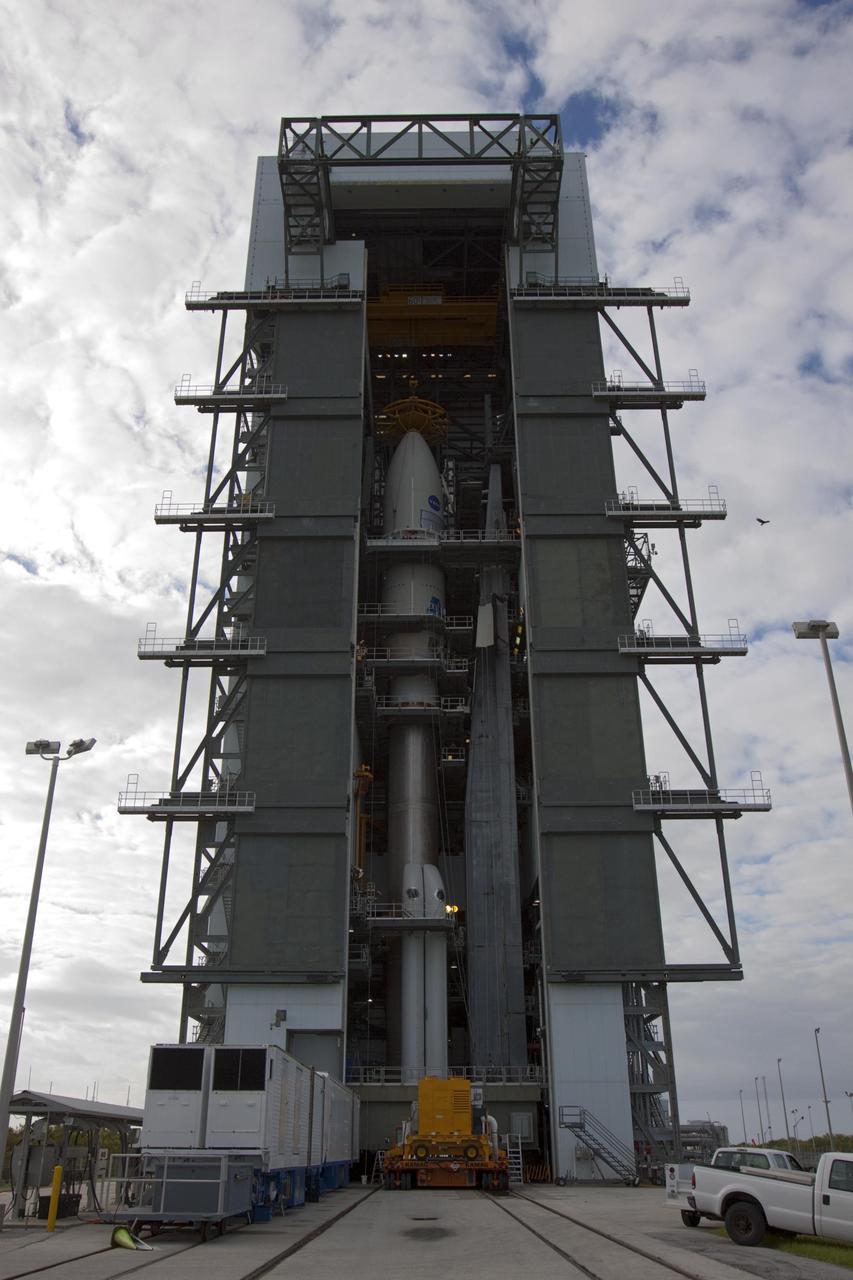
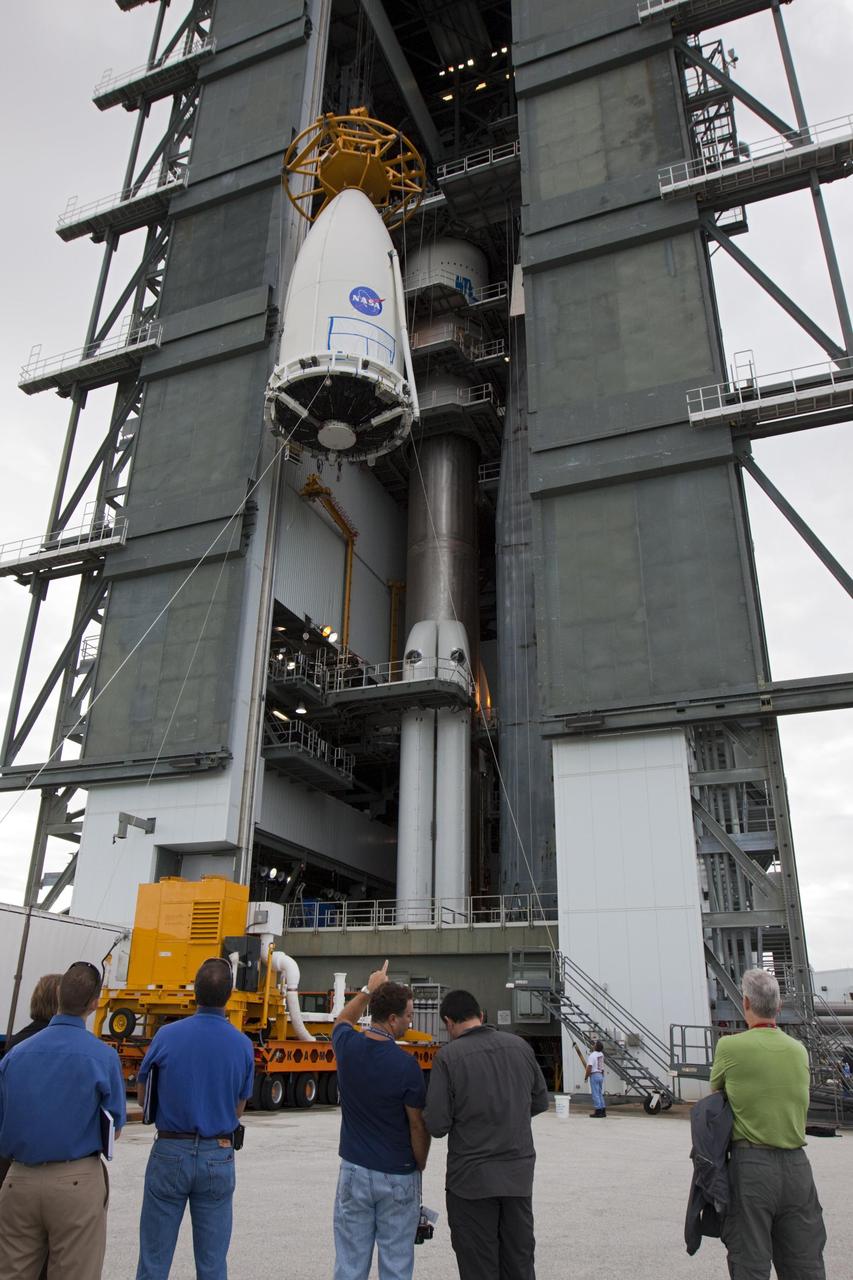
In the Vertical Integration Facility at Space Launch Complex 41, the payload fairing containing NASA Mars Science Laboratory spacecraft was attached to its Atlas V rocket on Nov. 3, 2011.
Mars Science Laboratory Atop Its Atlas V
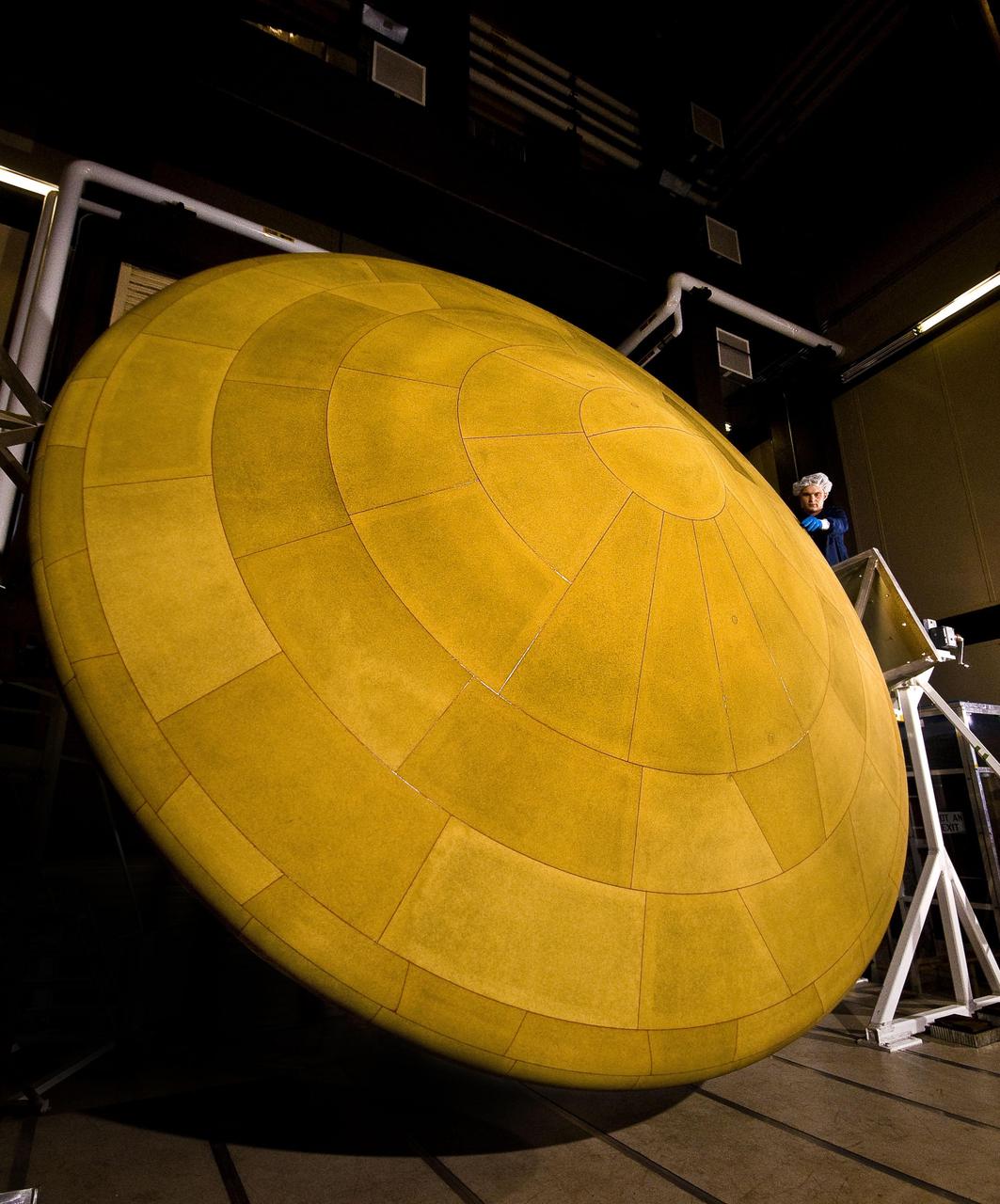
Technicians at Lockheed Martin Space Systems, Denver, prepare the heat shield for NASA Mars Science Laboratory. With a diameter of 4.5 meters nearly 15 feet, this heat shield is the largest ever built for a planetary mission.
Preparing Mars Science Laboratory Heat Shield
The parachute for NASA Mars Science Laboratory passed flight-qualification testing in March and April 2009 inside the world largest wind tunnel, at NASA Ames Research Center, Moffett Field, Calif.
Mars Science Laboratory Parachute Qualification Testing
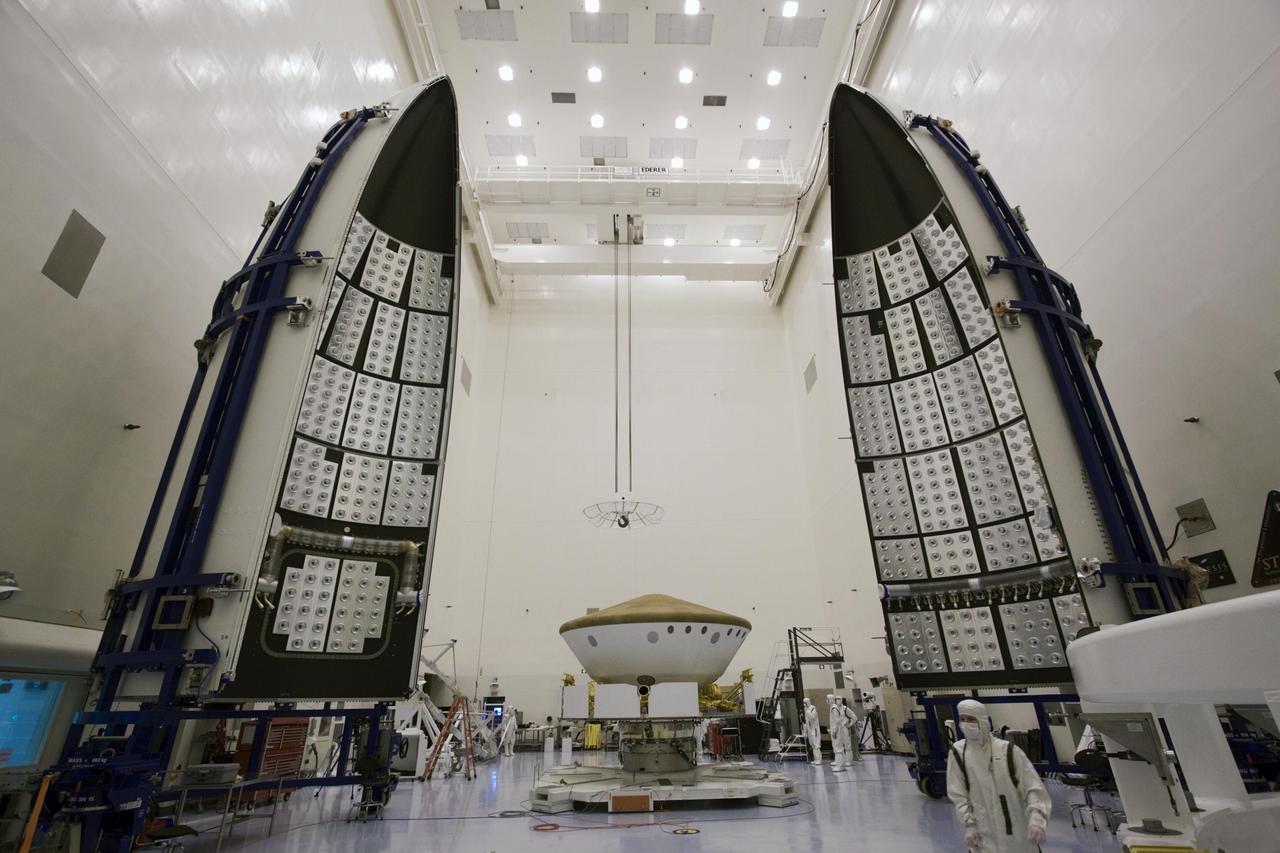
Preparations are under way to enclose NASA Mars Science Laboratory in an Atlas V rocket payload fairing. The fairing protects the spacecraft from the impact of aerodynamic pressure and heating during ascent.
Mars Science Laboratory and Its Payload Fairing
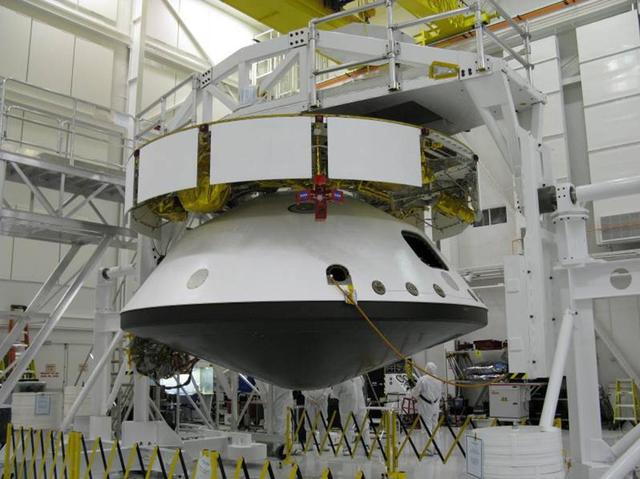
The major components of NASA Mars Science Laboratory spacecraft -- cruise stage atop the aeroshell, which has the descent stage and rover inside -- were connected together in October 2008 for several weeks of system testing.
Mars Science Laboratory Spacecraft Assembled for Testing
This artist concept is of NASA Mars Science Laboratory MSL Curiosity rover parachute system; the largest parachute ever built to fly on a planetary mission. The parachute is attached to the top of the backshell portion of the spacecraft aeroshell.
Mars Science Laboratory Parachute, Artist Concept
In this February 17, 2009, image, NASA Mars Science Laboratory rover is attached to the spacecraft descent stage. The image was taken inside the Spacecraft Assembly Facility at NASA JPL, Pasadena, Calif.
Mars Science Laboratory Rover and Descent Stage
This image shows NASA Mars Science Laboratory heat shield, and a spacecraft worker at Lockheed Martin Space Systems, Denver. It is the largest heat shield ever built for descending through the atmosphere of any planet.
Large Heat Shield for Mars Science Laboratory
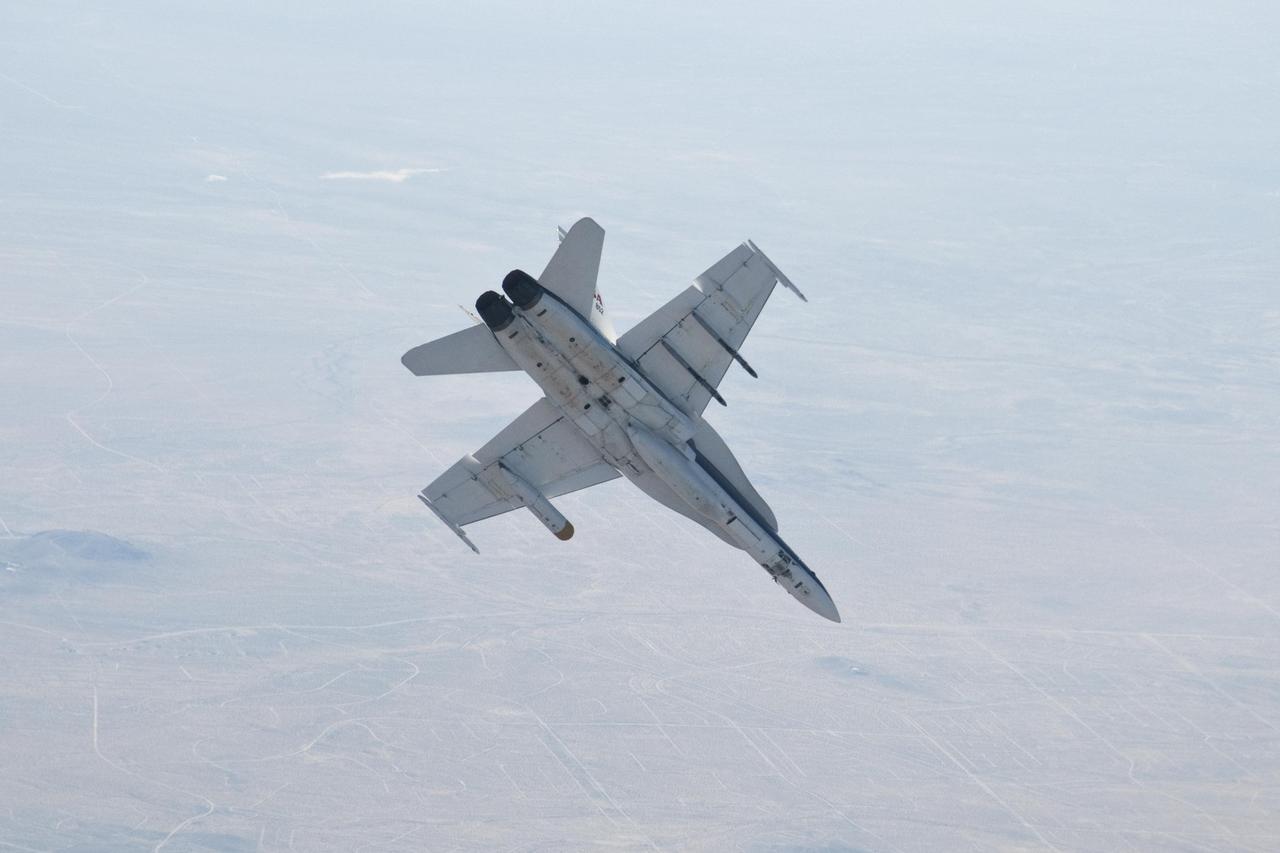
A NASA Dryden Flight Research Center F/A-18 852 aircraft performs a roll during June 2011 flight tests of a Mars landing radar. A test model of the landing radar for NASA Mars Science Laboratory mission is inside a pod under the aircraft left wing.
Flight Testing the Landing Radar for Mars Science Laboratory
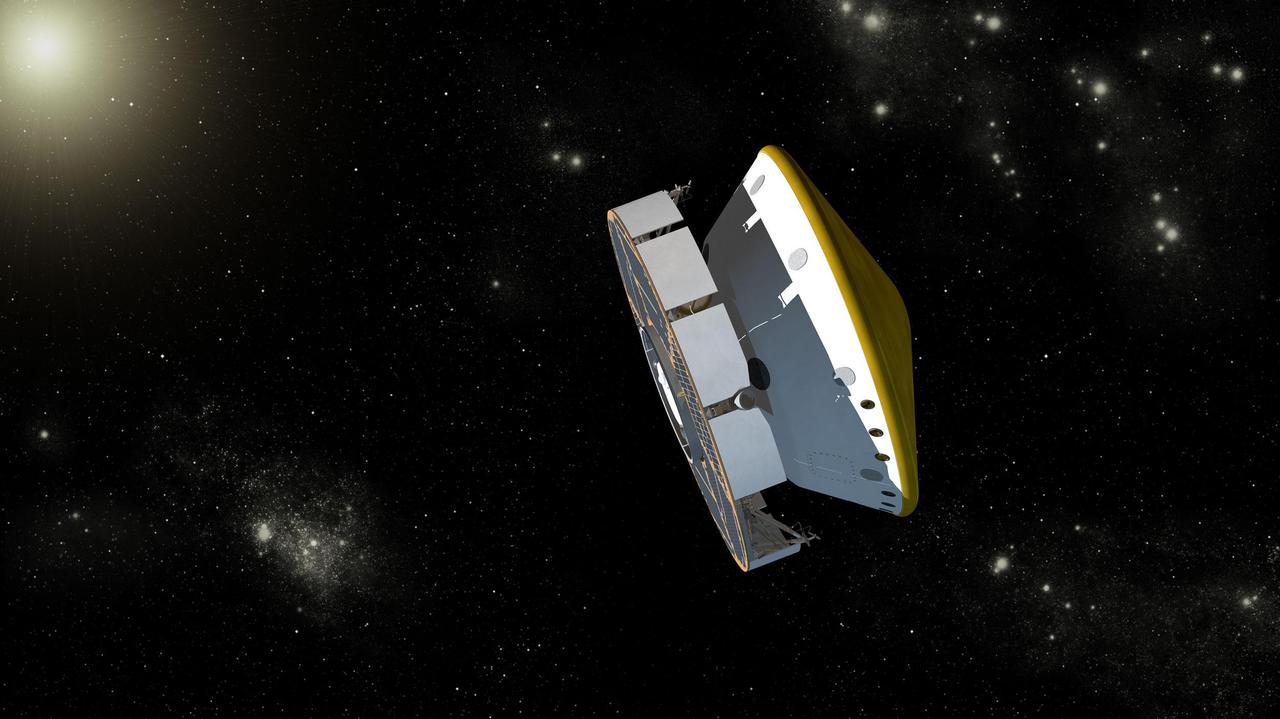
This is an artist concept of NASA Mars Science Laboratory spacecraft during its cruise phase between launch and final approach to Mars. The spacecraft includes a disc-shaped cruise stage on the left attached to the aeroshell.
Mars Science Laboratory Spacecraft During Cruise, Artist Concept
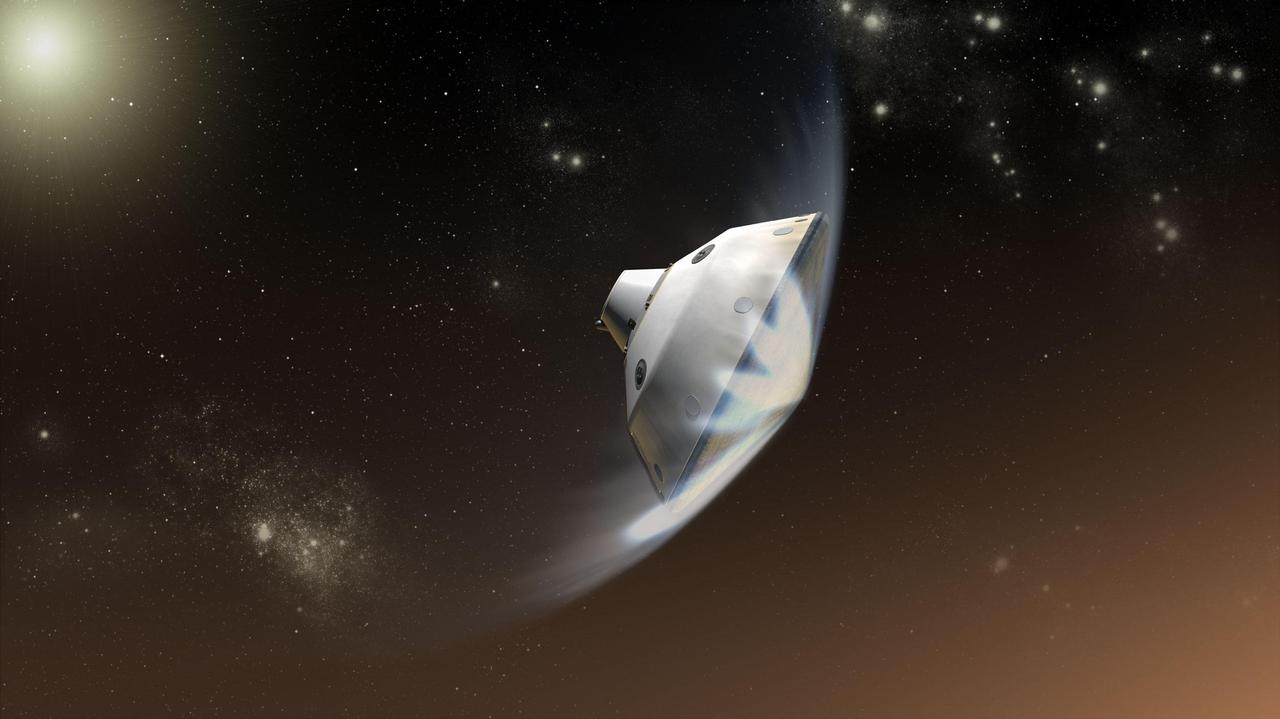
This artist concept depicts the interaction of NASA Mars Science Laboratory spacecraft with the upper atmosphere of Mars during the entry, descent and landing of the Curiosity rover onto the Martian surface.
Deceleration of Mars Science Laboratory in Martian Atmosphere, Artist Concept
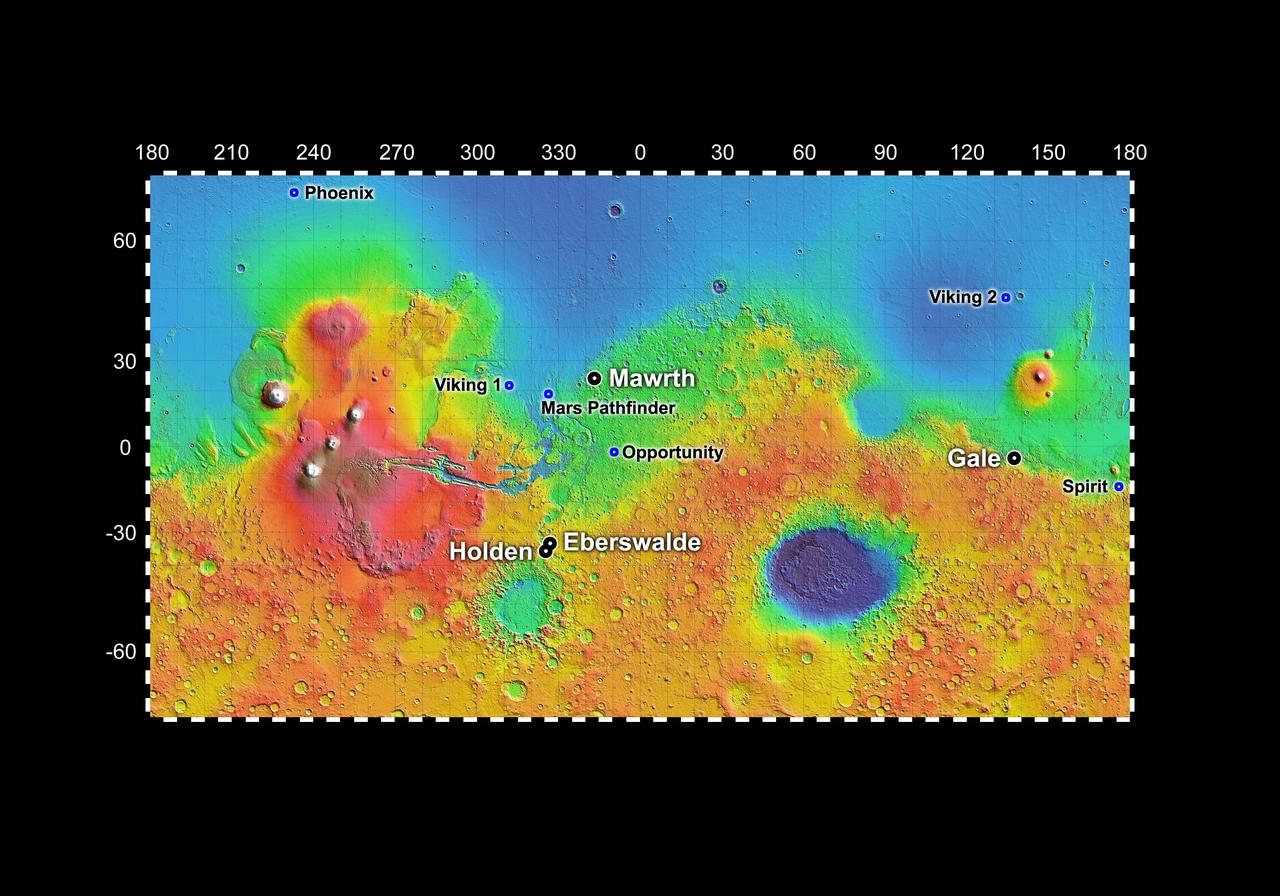
Out of more than 30 sites considered as possible landing targets for NASA Mars Science Laboratory mission, by November 2008 four of the most intriguing places on Mars rose to the final round of the site-selection process.
Four Finalist Landing Site Candidates for Mars Science Laboratory
Employees at Space Launch Complex 41 of Cape Canaveral Air Force Station, Fla., keep watch as the payload fairing containing NASA Mars Science Laboratory spacecraft is lifted up the side of the Vertical Integration Facility on Nov. 3, 2011.
Hoisting NASA Mars Science Laboratory Onto Its Atlas V
Testing during March and April 2009 inside the world largest wind tunnel, at NASA Ames Research Center, Moffett Field, Calif., qualified the parachute for NASA next Mars rover.  The parachute for NASA's Mars Science Laboratory mission, to be launched in 2011 and land on Mars in 2012, is the largest ever built to fly on an extraterrestrial mission.  This image shows the qualification-test parachute beginning to open a few seconds after it was launched from a mortar into an 80-mile-per-hour (36-meter-per-second) wind.  The parachute uses a configuration called disk-gap-band. It has 80 suspension lines, measures more than 50 meters (165 feet) in length, and opens to a diameter of nearly 16 meters (51 feet). Most of the orange and white fabric is nylon, though a small disk of heavier polyester is used near the vent in the apex of the canopy due to higher stresses there.  http://photojournal.jpl.nasa.gov/catalog/PIA11993
Parachute Opening During Tests for Mars Science Laboratory
Testing during March and April 2009 inside the world largest wind tunnel, at NASA Ames Research Center, Moffett Field, Calif., qualified the parachute for NASA next Mars rover.  The parachute for NASA's Mars Science Laboratory mission, to be launched in 2011 and land on Mars in 2012, is the largest ever built to fly on an extraterrestrial mission.  This image shows the qualification-test parachute beginning to open a few seconds after it was launched from a mortar into an 80-mile-per-hour (36-meter-per-second) wind.  The parachute uses a configuration called disk-gap-band. It has 80 suspension lines, measures more than 50 meters (165 feet) in length, and opens to a diameter of nearly 16 meters (51 feet). Most of the orange and white fabric is nylon, though a small disk of heavier polyester is used near the vent in the apex of the canopy due to higher stresses there.  http://photojournal.jpl.nasa.gov/catalog/PIA11992
Parachute Opening During Tests for Mars Science Laboratory
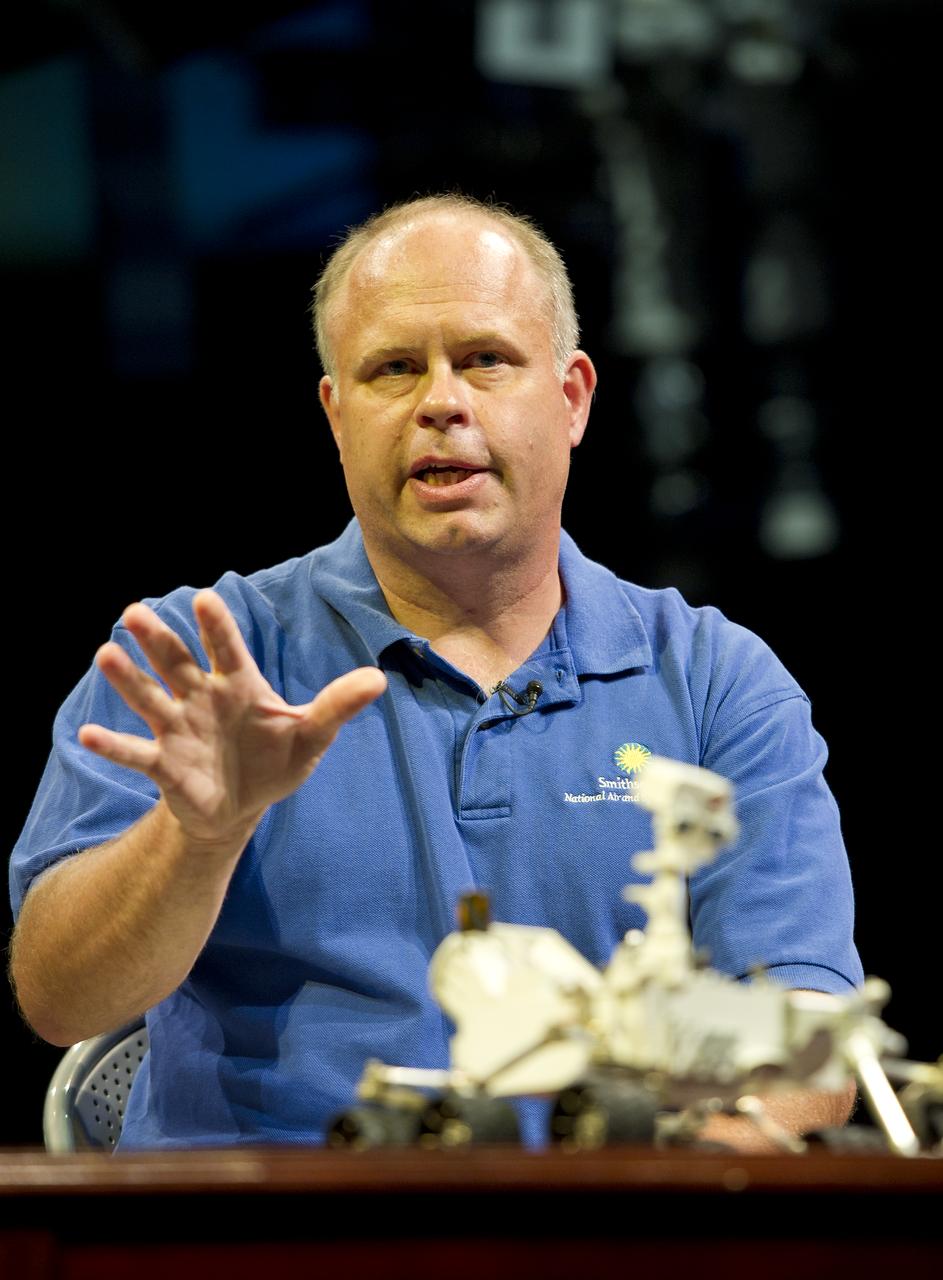
John Grant, geologist, Smithsonian National Air and Space Museum in Washington, speaks at a Mars Science Laboratory (MSL) press conference at the Smithsonian's National Air and Space Museum on Friday, July 22, 2011 in Washington.  The Mars Science Laboratory (MSL), or Curiosity, is scheduled to launch late this year from NASA's Kennedy Space Center in Florida and land in August 2012.  Curiosity is twice as long and more than five times as heavy as previous Mars rovers.  The rover will study whether the landing region at Gale crater had favorable environmental conditions for supporting microbial life and for preserving clues about whether life ever existed.  Photo Credit:  (NASA/Carla Cioffi)
Mars Science Laboratory Press Conference
NASA chief scientist, Dr. Waleed Abdalati, speaks at a Mars Science Laboratory (MSL) press conference at the Smithsonian's National Air and Space Museum on Friday, July 22, 2011 in Washington.  The Mars Science Laboratory (MSL), or Curiosity, is scheduled to launch late this year from NASA's Kennedy Space Center in Florida and land in August 2012.  Curiosity is twice as long and more than five times as heavy as previous Mars rovers.  The rover will study whether the landing region at Gale crater had favorable environmental conditions for supporting microbial life and for preserving clues about whether life ever existed.  Photo Credit:  (NASA/Carla Cioffi)
Mars Science Laboratory Press Conference
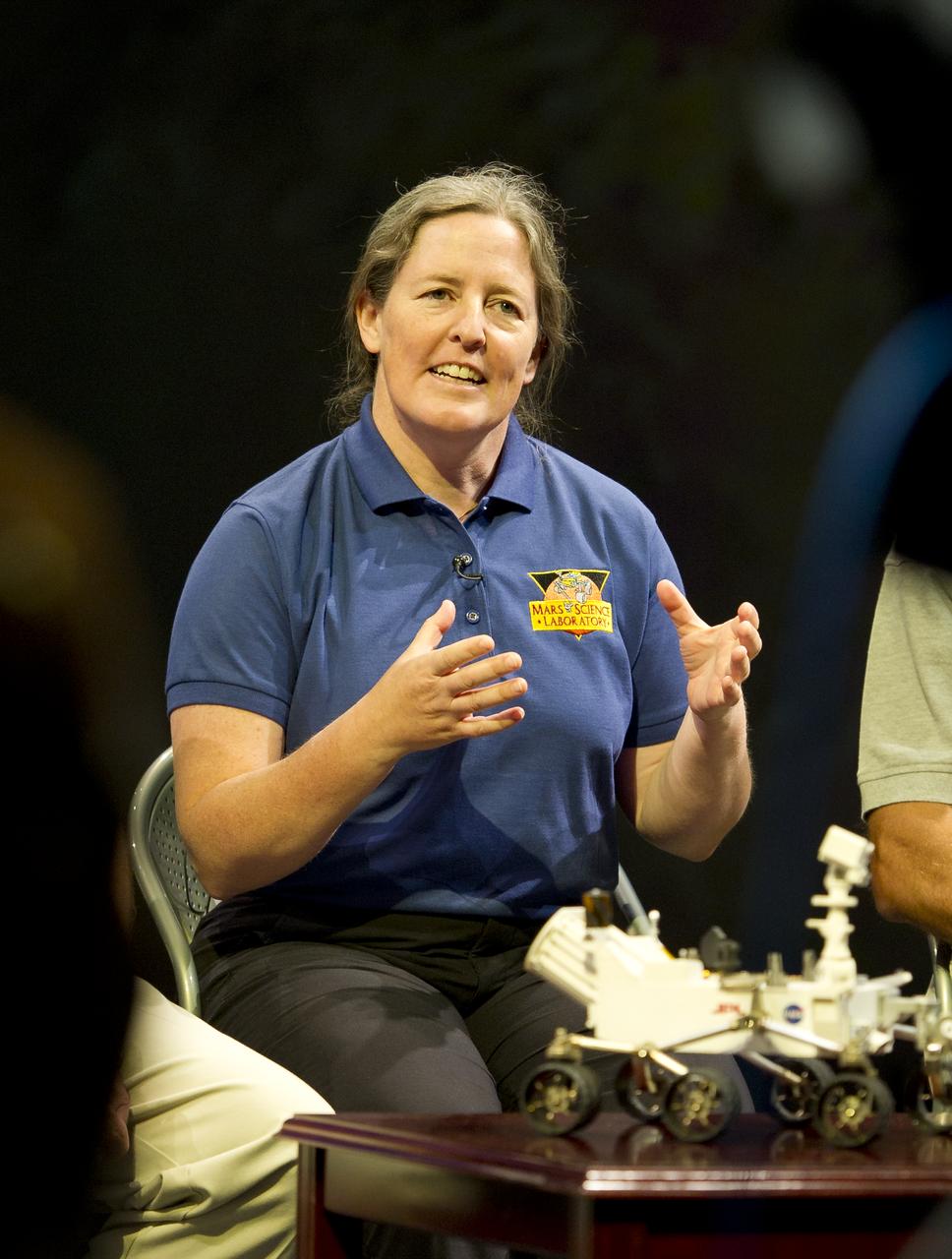
Dawn Sumner, geologist, University of California, Davis speaks at a Mars Science Laboratory (MSL) press conference at the Smithsonian's National Air and Space Museum on Friday, July 22, 2011 in Washington.  The Mars Science Laboratory (MSL), or Curiosity, is scheduled to launch late this year from NASA's Kennedy Space Center in Florida and land in August 2012.  Curiosity is twice as long and more than five times as heavy as previous Mars rovers.  The rover will study whether the landing region at Gale crater had favorable environmental conditions for supporting microbial life and for preserving clues about whether life ever existed.  Photo Credit:  (NASA/Carla Cioffi)
Mars Science Laboratory Press Conference
Mars Science Laboratory (MSL) Flexible Canopy Testing in the Glenn Research Center, 10x10 Supersonic Wind Tunnel
Mars Science Laboratory (MSL) Flexible Canopy Test
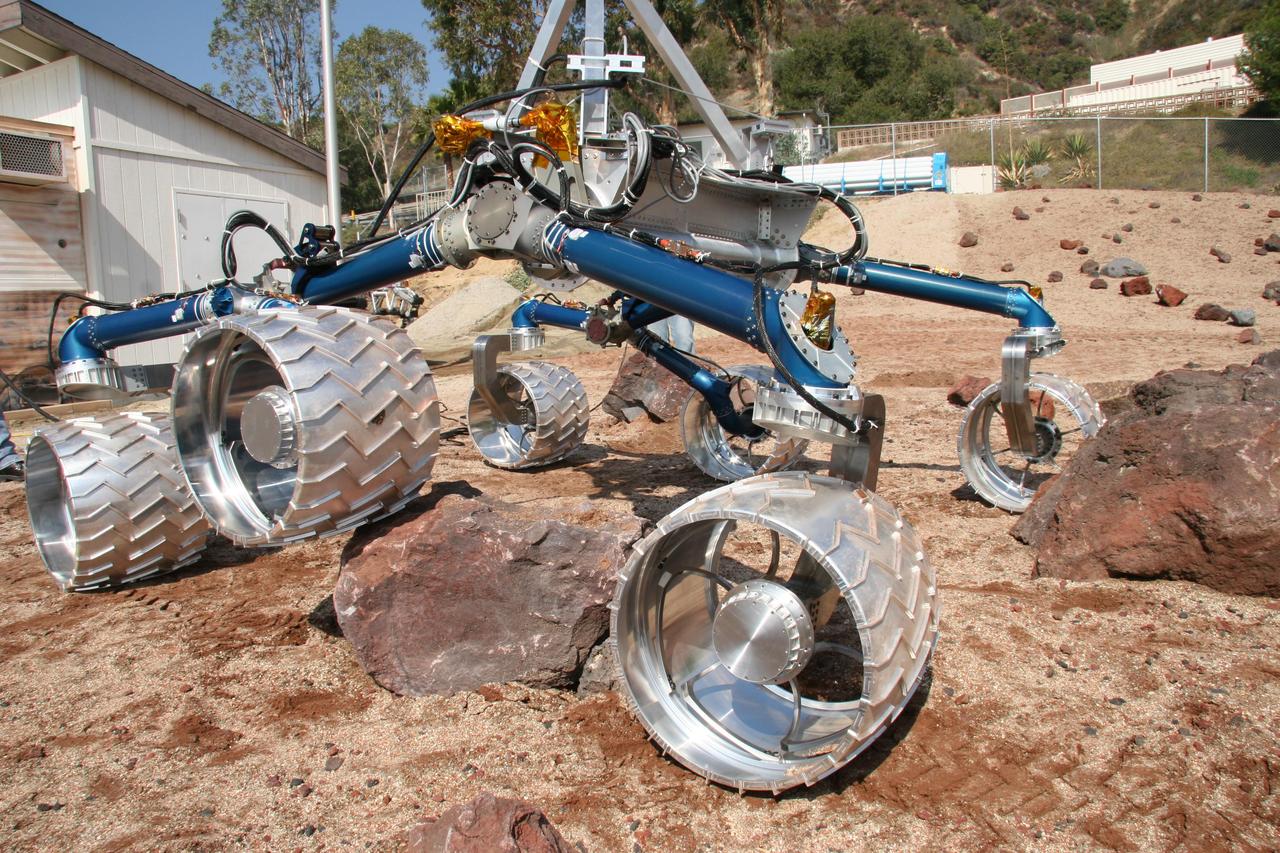
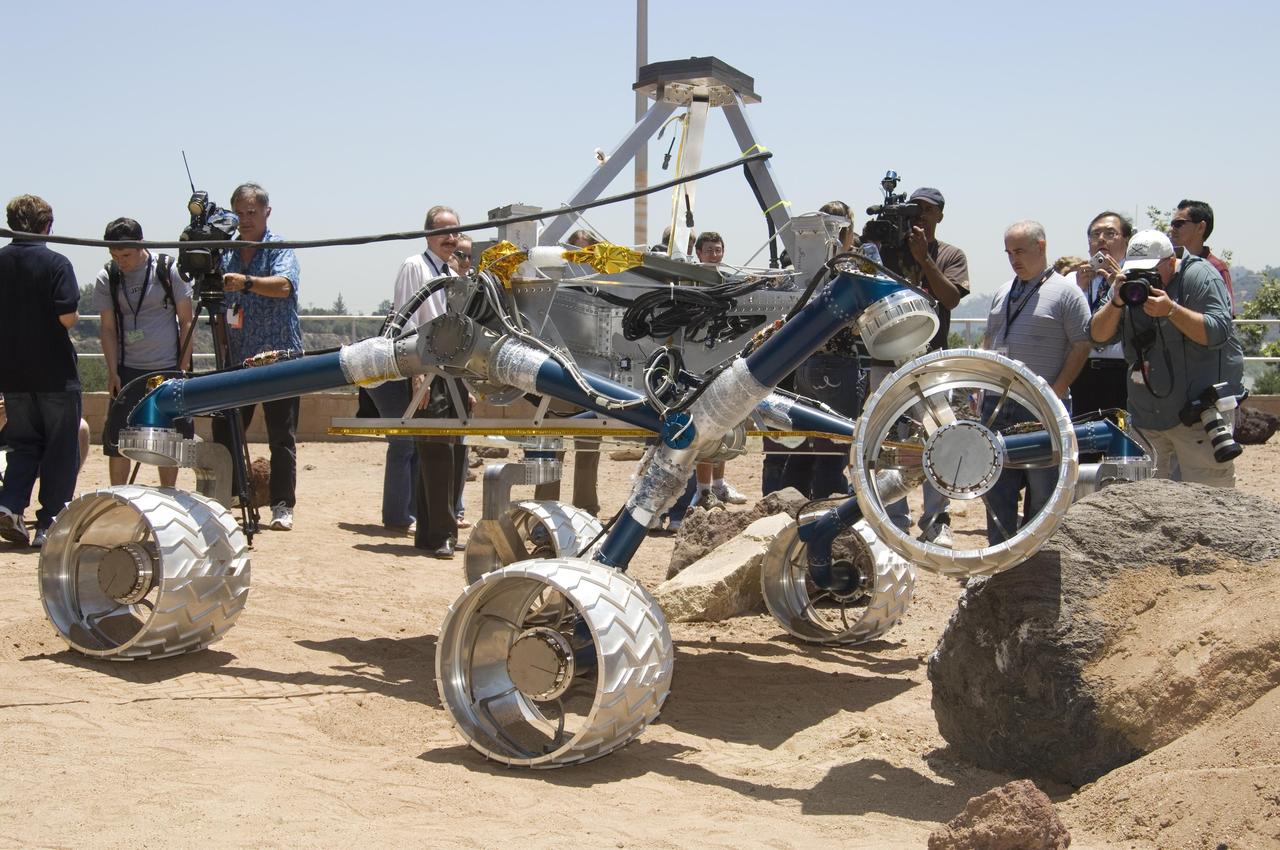
Scarecrow, a mobility-testing model for NASA Mars Science Laboratory, easily traverses large rocks in the Mars Yard testing area at NASA Jet Propulsion Laboratory.
Scarecrow Climbs Rocks
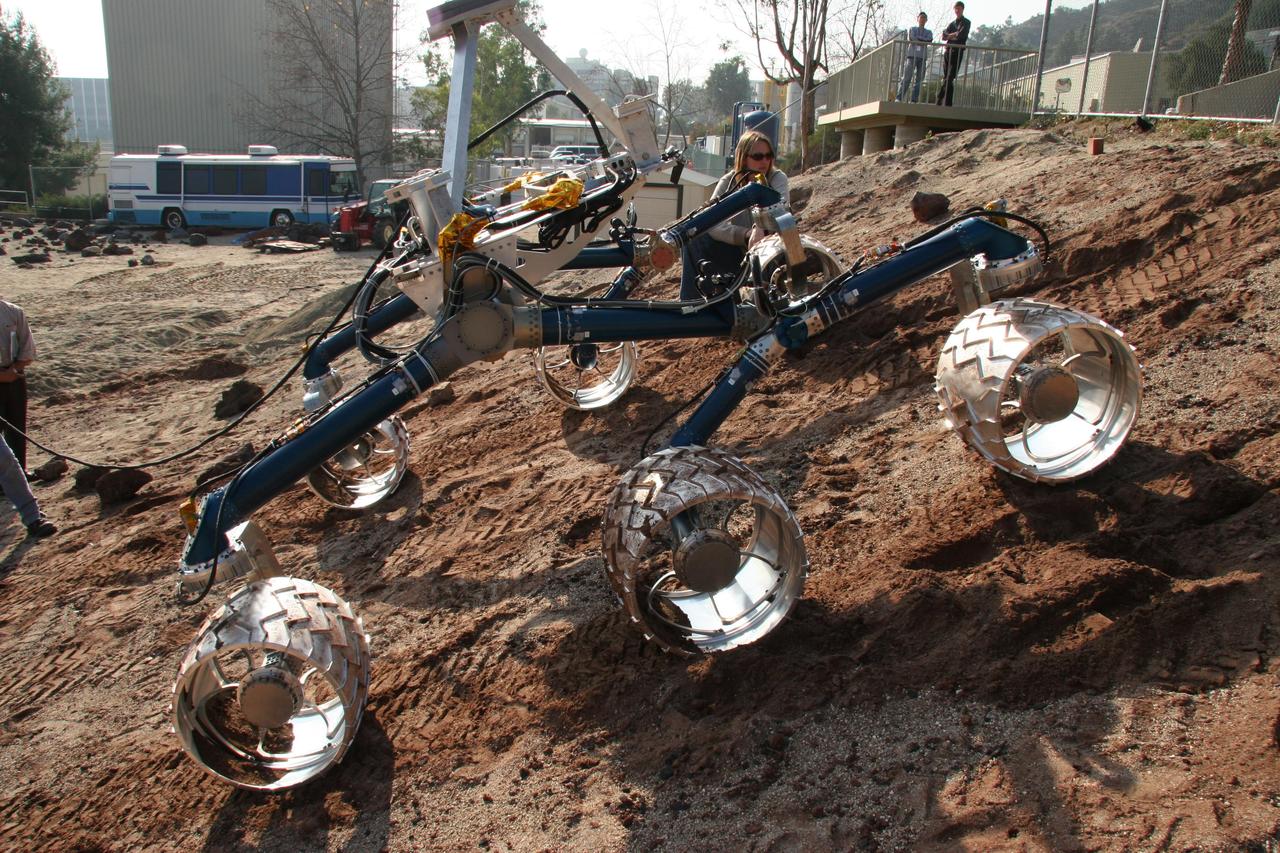
An engineering model for NASA Mars Science Laboratory makes its way up a hill in the Mars Yard testing area at NASA Jet Propulsion Laboratory.
Scarecrow Descends Hill
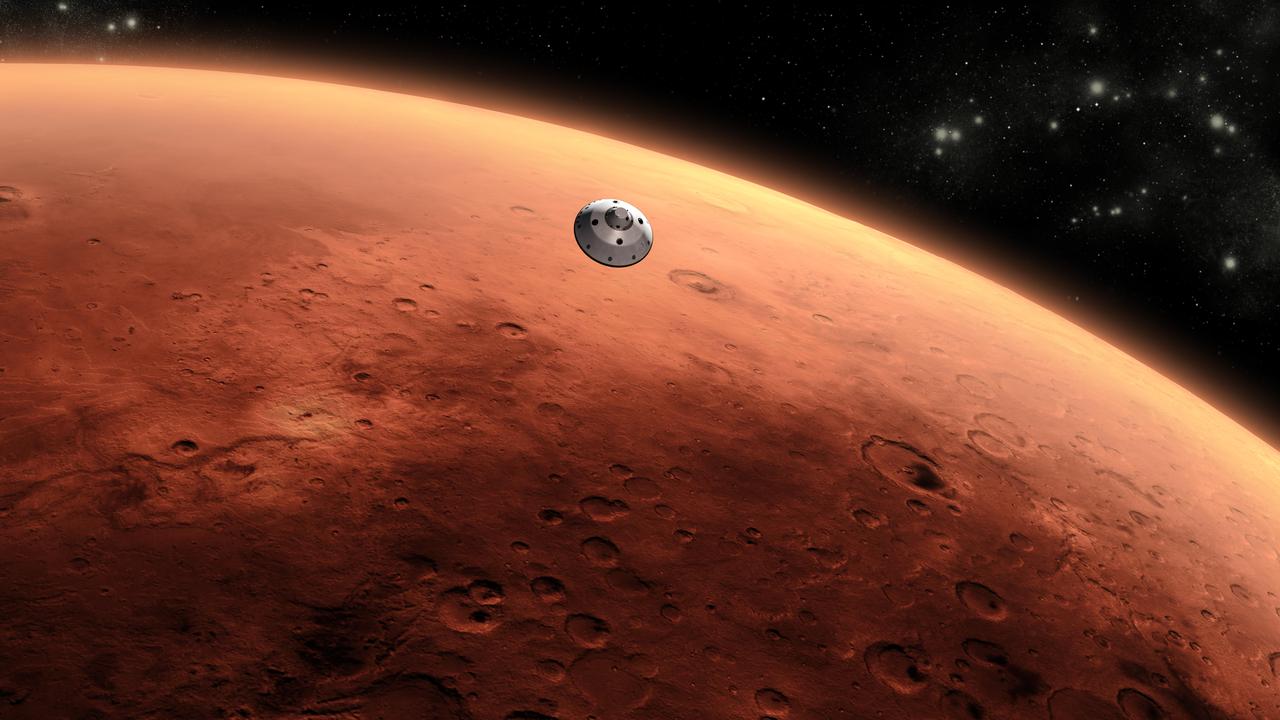
This is an artist concept of NASA Mars Science Laboratory spacecraft approaching Mars. The Curiosity rover is safely tucked inside the spacecraft aeroshell.
Curiosity Approaching Mars, Artist Concept
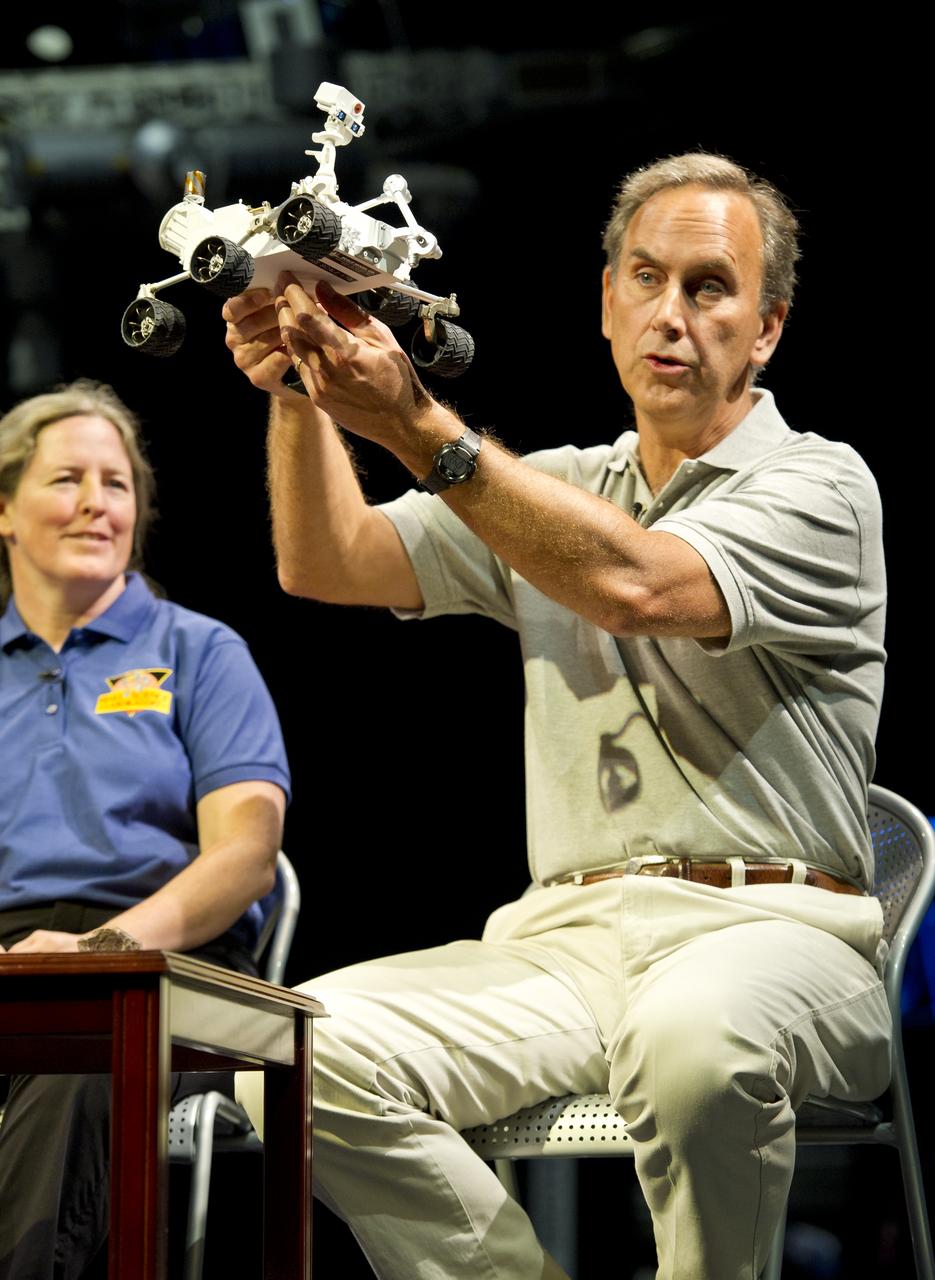
John Grotzinger, Mars Science Laboratory (MSL) project scientist, Jet Propulsion Lab (JPL), Pasadena, Calif., holds up a model of the MSL, or Curiosity, at a press conference at the Smithsonian's National Air and Space Museum on Friday, July 22, 2011 in Washington.  The MSL is scheduled to launch late this year from NASA's Kennedy Space Center in Florida and land in August 2012.  Curiosity is twice as long and more than five times as heavy as previous Mars rovers.  The rover will study whether the landing region at Gale crater had favorable environmental conditions for supporting microbial life and for preserving clues about whether life ever existed.  Photo Credit:  (NASA/Carla Cioffi)
Mars Science Laboratory Press Conference
John Grotzinger, Mars Science Laboratory (MSL) project scientist, Jet Propulsion Lab (JPL), Pasadena, Calif., answers a reporter's question at a press conference at the Smithsonian's National Air and Space Museum on Friday, July 22, 2011 in Washington.  The MSL is scheduled to launch late this year from NASA's Kennedy Space Center in Florida and land in August 2012.  Curiosity is twice as long and more than five times as heavy as previous Mars rovers.  The rover will study whether the landing region at Gale crater had favorable environmental conditions for supporting microbial life and for preserving clues about whether life ever existed.  Photo Credit:  (NASA/Carla Cioffi)
Mars Science Laboratory Press Conference
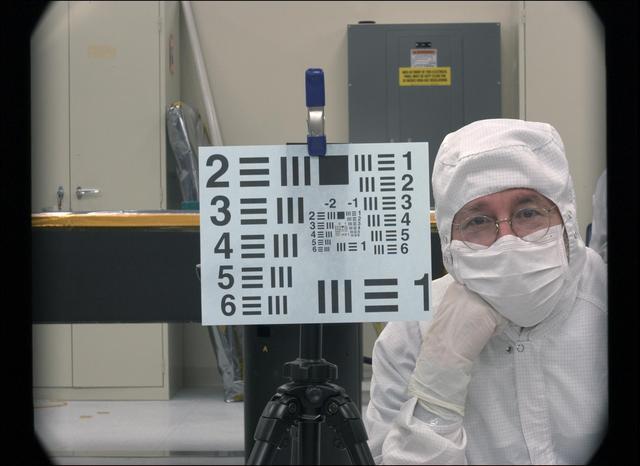
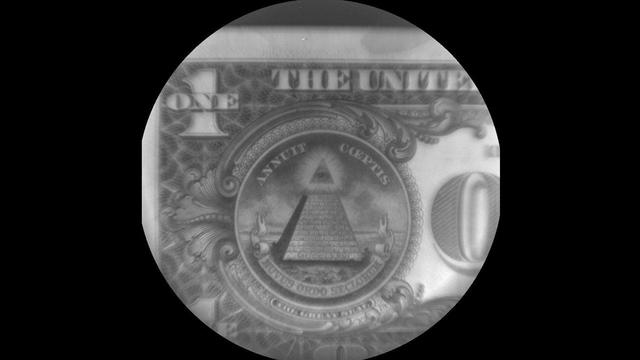
Malin Space Science Systems, San Diego, delivered the two cameras for the Mast Camera Mastcam instrument of NASA Mars Science Laboratory rover to NASA Jet Propulsion Laboratory, Pasadena, Calif., in March 2011.
Sample Image Through Camera Built for Next Mars Rover
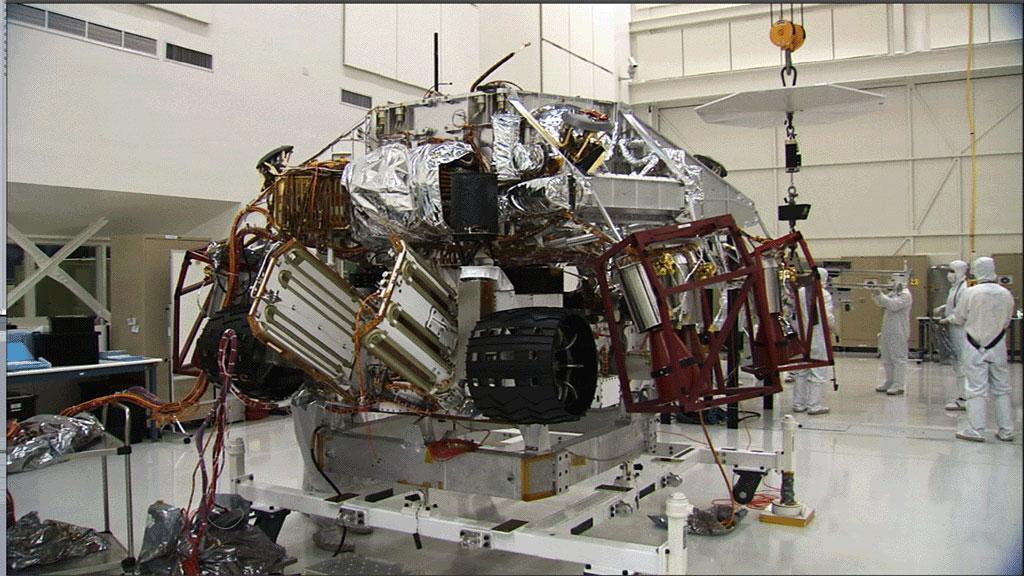
These three images show the progression of tacking NASA Mars Science Laboratory rover and its descent stage in one of NASA Jet Propulsion Laboratory’s clean room.
So Happy Together
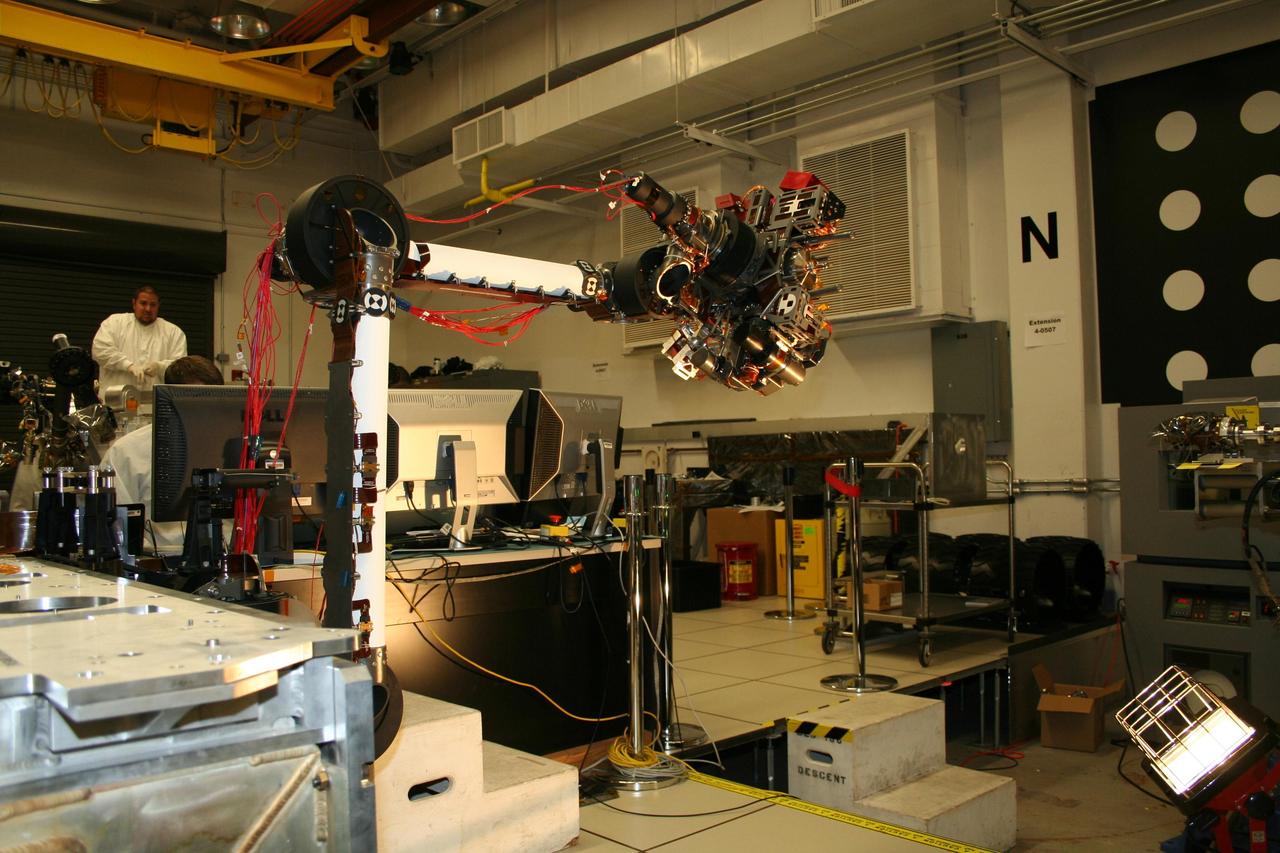
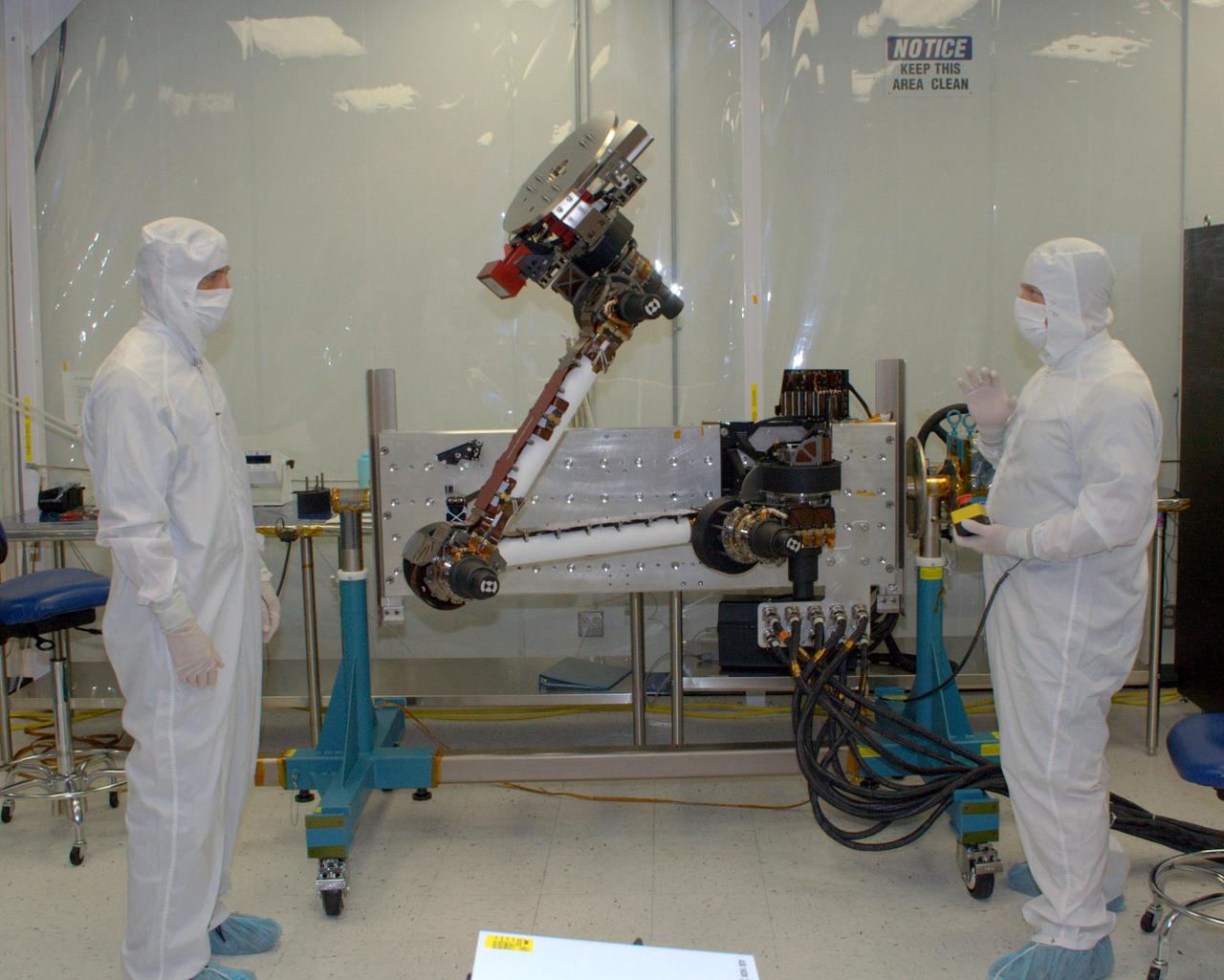
Engineers from NASA Jet Propulsion Laboratory and Alliance Spacesystems are testing the range of motion of the Mars Science Laboratory rover’s robotic arm joints.
The Rover Gets Strong-Armed
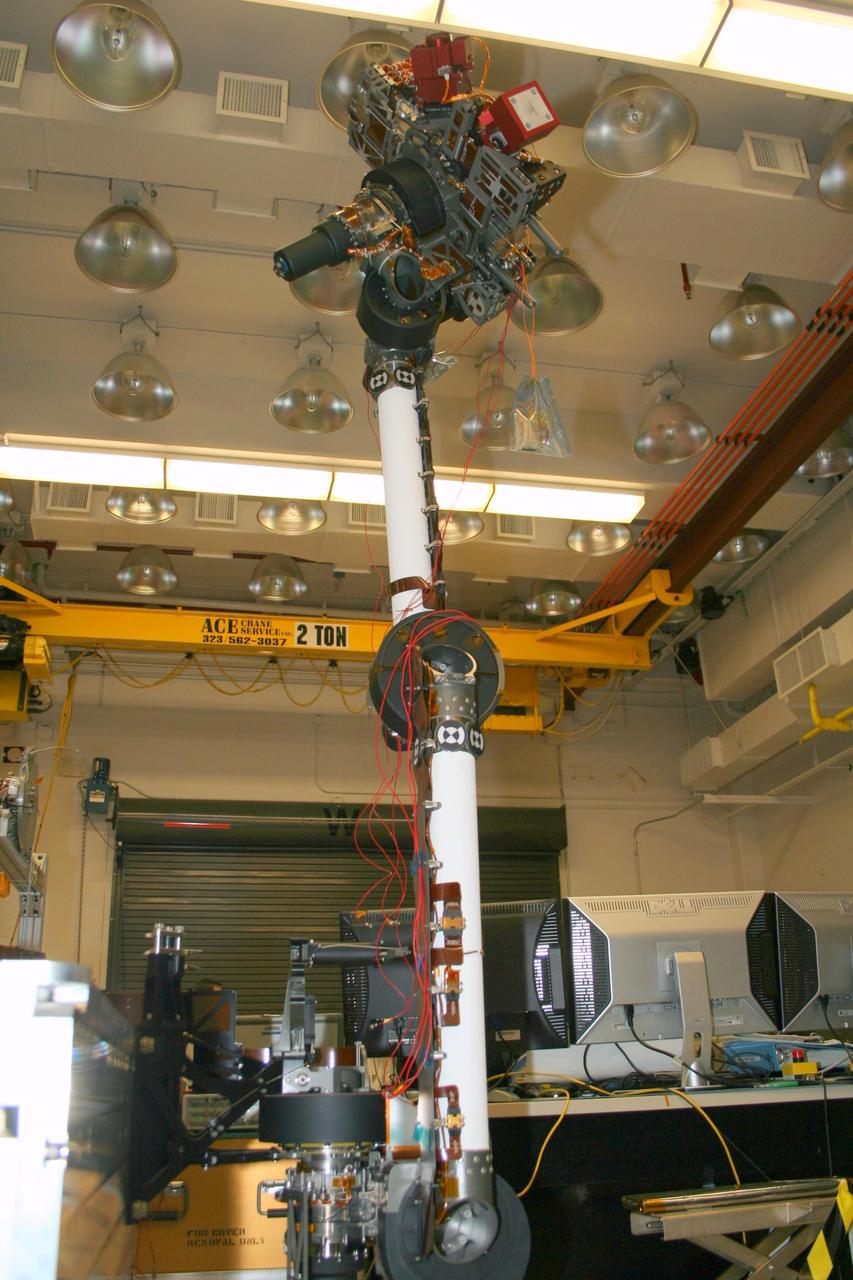
In the middle of this image taken at the Jet Propulsion Laboratory, the long robotic arm of NASA Mars Science Laboratory is bent at nearly a 90-degree angle.
Curiosity Robotic Arm Bent at Nearly a 90-degree Angle
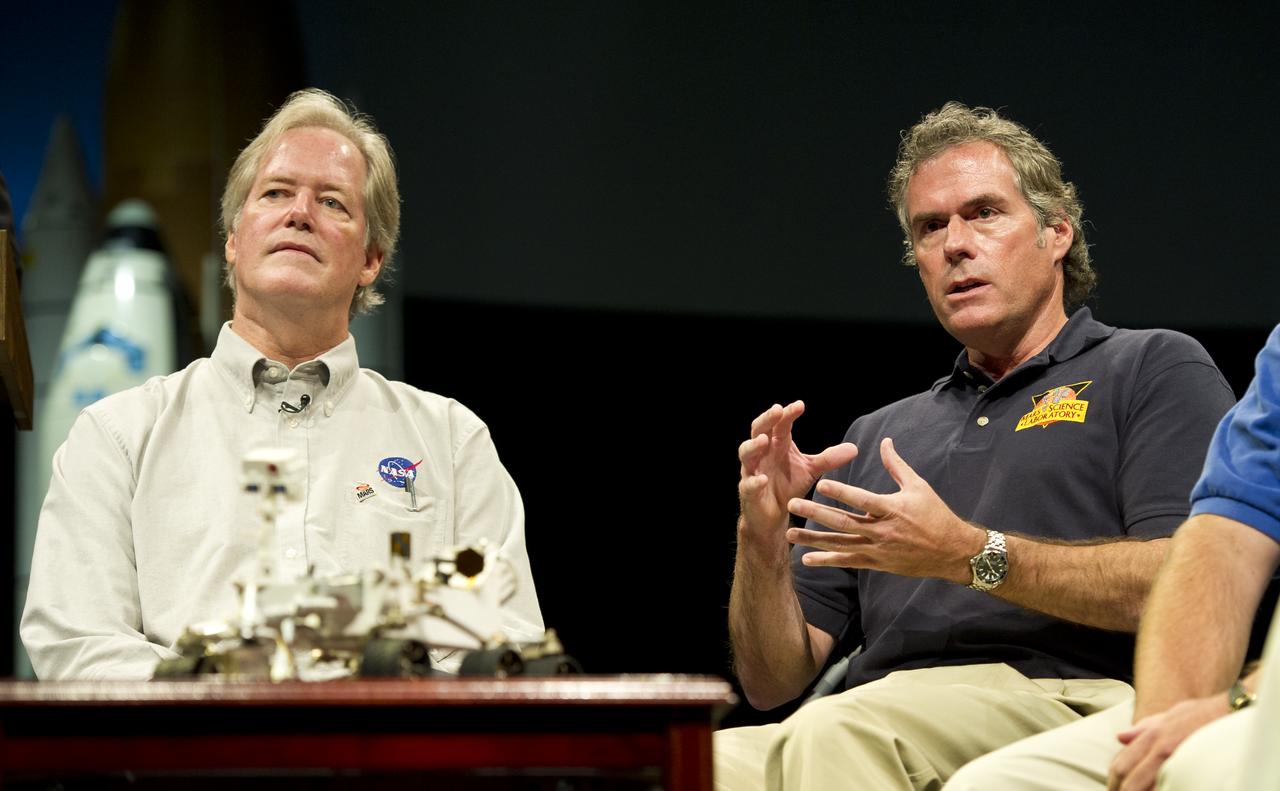
Michael Watkins (right), mission manager and Mars Science Laboratory (MSL) engineer, Jet Propulsion Lab, Pasadena, Calif., speaks at a press conference, as Michael Meyer, Mars Exploration Program lead scientist looks on, at the Smithsonian's National Air and Space Museum on Friday, July 22, 2011 in Washington.  The MSL, or Curiosity, is scheduled to launch late this year from NASA's Kennedy Space Center in Florida and land in August 2012.  Curiosity is twice as long and more than five times as heavy as previous Mars rovers.  The rover will study whether the landing region at Gale crater had favorable environmental conditions for supporting microbial life and for preserving clues about whether life ever existed.  Photo Credit:  (NASA/Carla Cioffi)
Mars Science Laboratory Press Conference
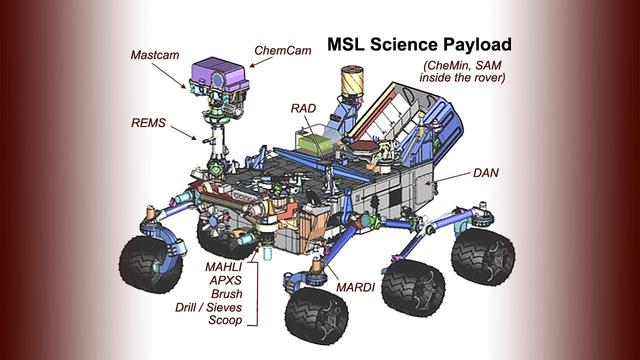
This drawing of the Mars Science Laboratory mission rover, Curiosity, indicates the location of science instruments and some other tools on the car-size rover.
Diverse Science Payload on Mars Rover Curiosity
Onlookers watch as Scarecrow, a mobility-testing model for NASA Mars Science Laboratory, easily conquers boulders in the Mars Yard testing area at NASA Jet Propulsion Laboratory.
Shutterbugs Shoot Scarecrow
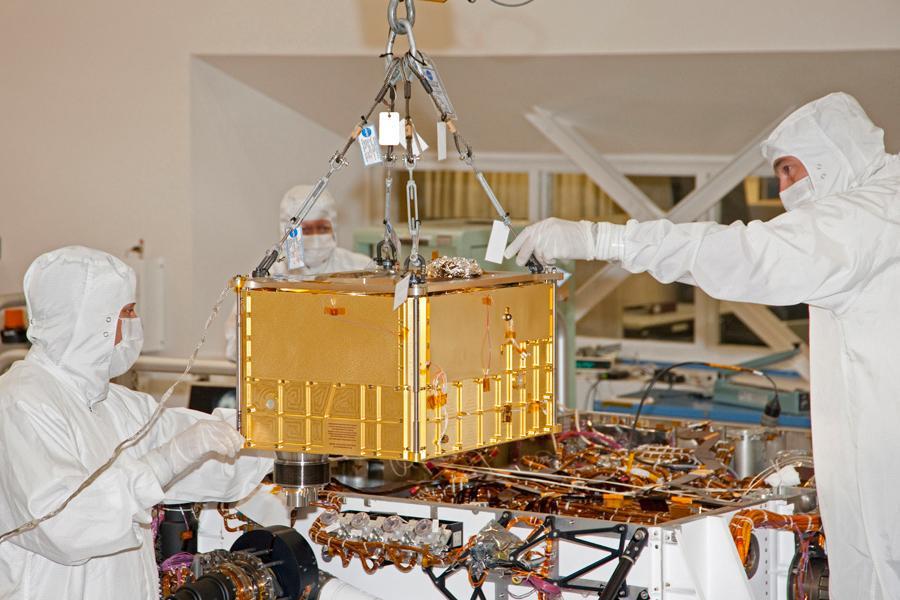
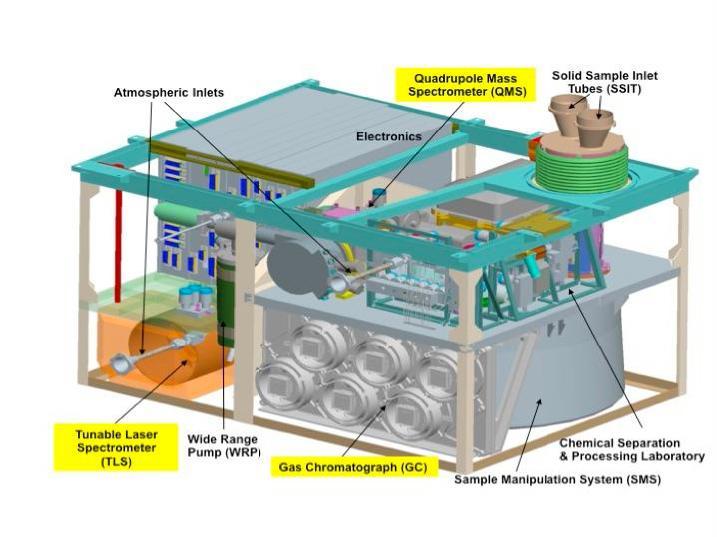
NASA Sample Analysis at Mars SAM instrument, largest of the 10 science instruments for NASA Mars Science Laboratory mission, will examine samples of Martian rocks, soil and atmosphere for information about chemicals that are important to life.
Lifting SAM Instrument for Installation into Mars Rover
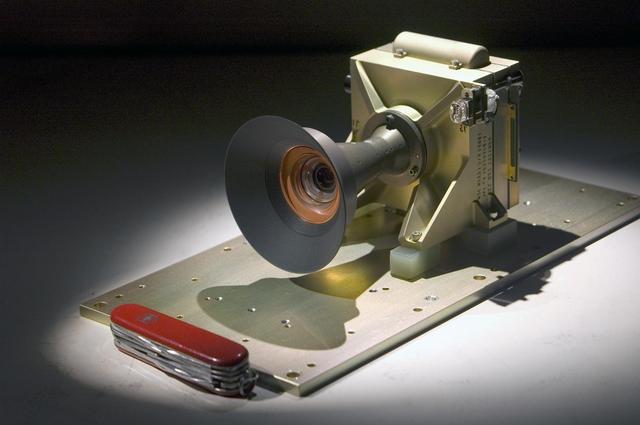
A pocketknife provides scale for this image of the Mars Descent Imager camera; the camera will fly on the Curiosity rover of NASA Mars Science Laboratory mission. Malin Space Science Systems, San Diego, Calif., supplied the camera for the mission.
Mars Descent Imager for Curiosity
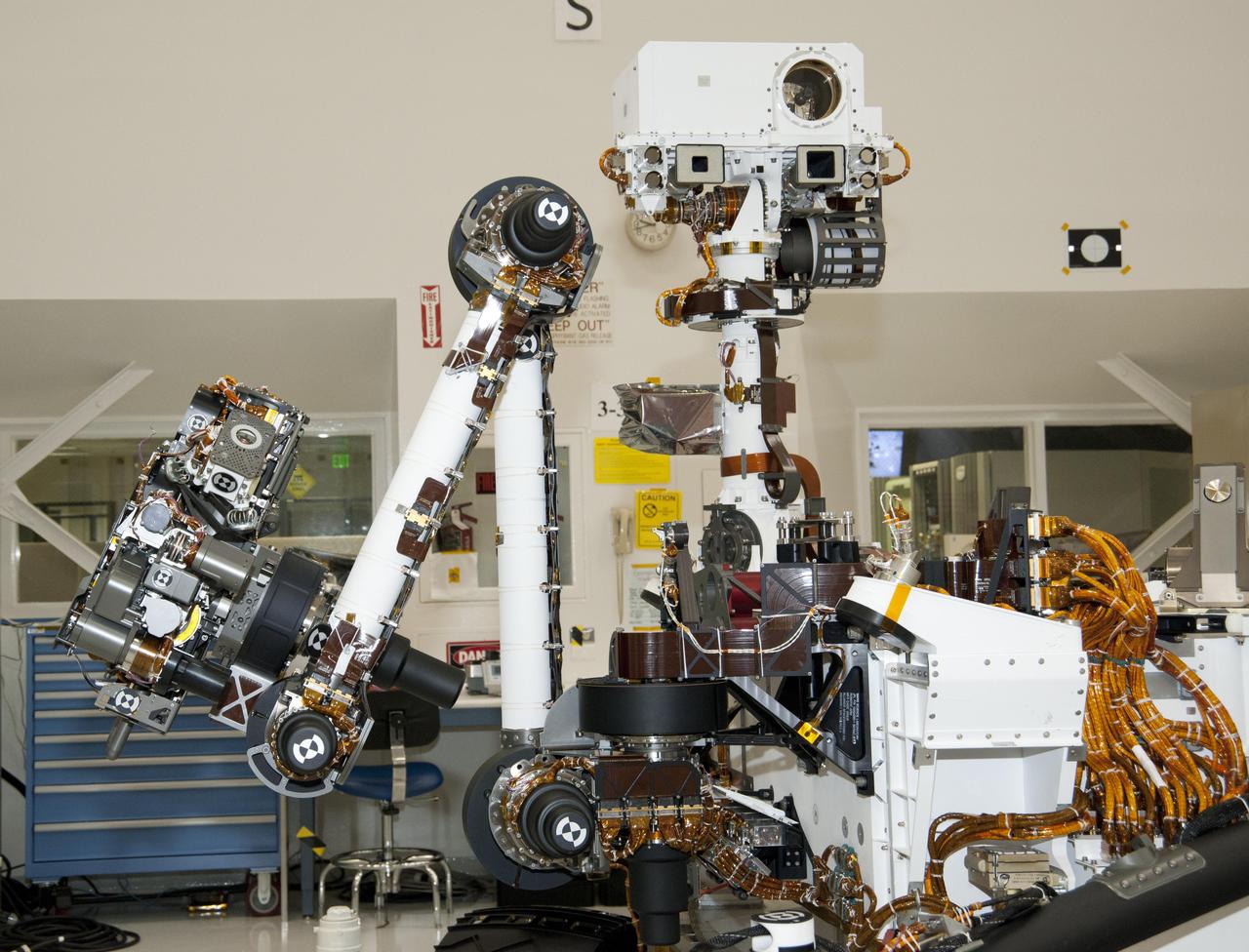
The arm and the remote sensing mast of the Mars rover Curiosity each carry science instruments and other tools for NASA Mars Science Laboratory mission. This image shows the arm on the left and the mast just right of center.
Arm and Mast of NASA Mars Rover Curiosity
Mars rover Curiosity, the centerpiece of NASA Mars Science Laboratory mission, is coming together for extensive testing prior to its late 2011 launch.
Mars rover Curiosity with Newly Installed Wheels
This is an artist concept of the rover and descent stage for NASA Mars Science Laboratory spacecraft during the final minute before the rover, Curiosity, touches down on the surface of Mars.
Curiosity and Descent Stage, Artist Concept
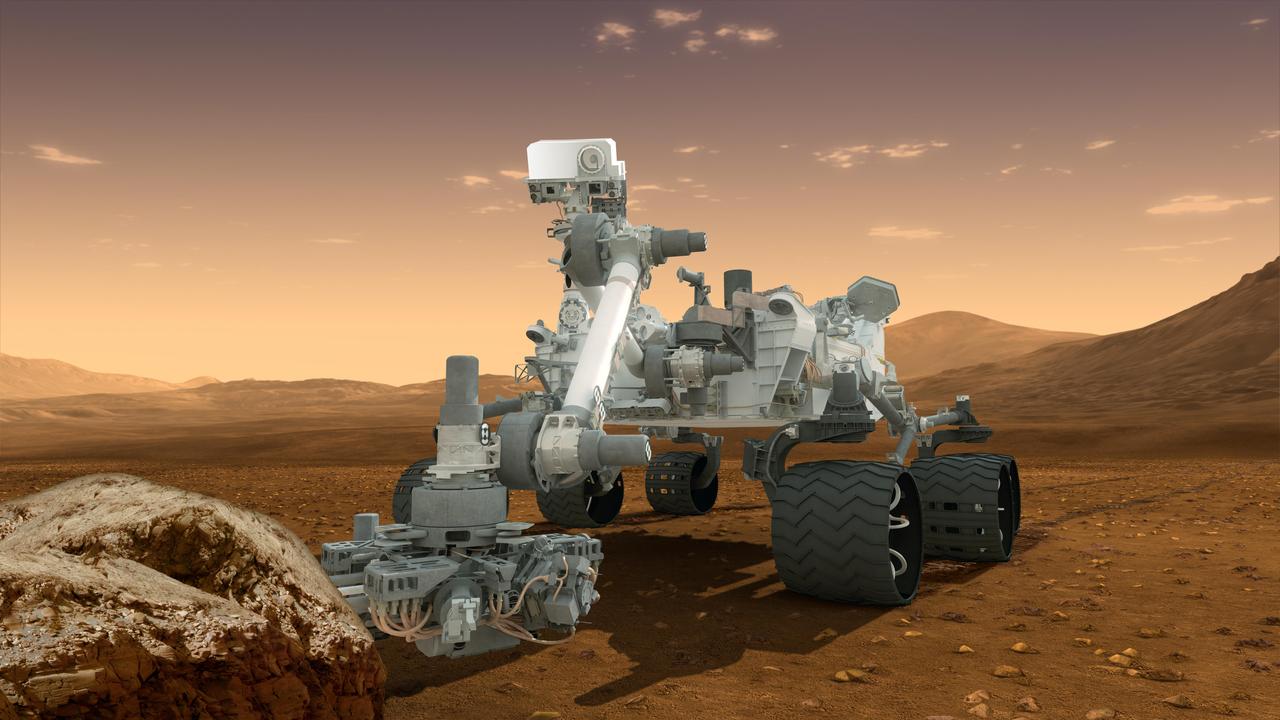
This artist concept features NASA Mars Science Laboratory Curiosity rover, a mobile robot for investigating Mars past or present ability to sustain microbial life.
Curiosity -- Robot Geologist and Chemist in One! Artist Concept
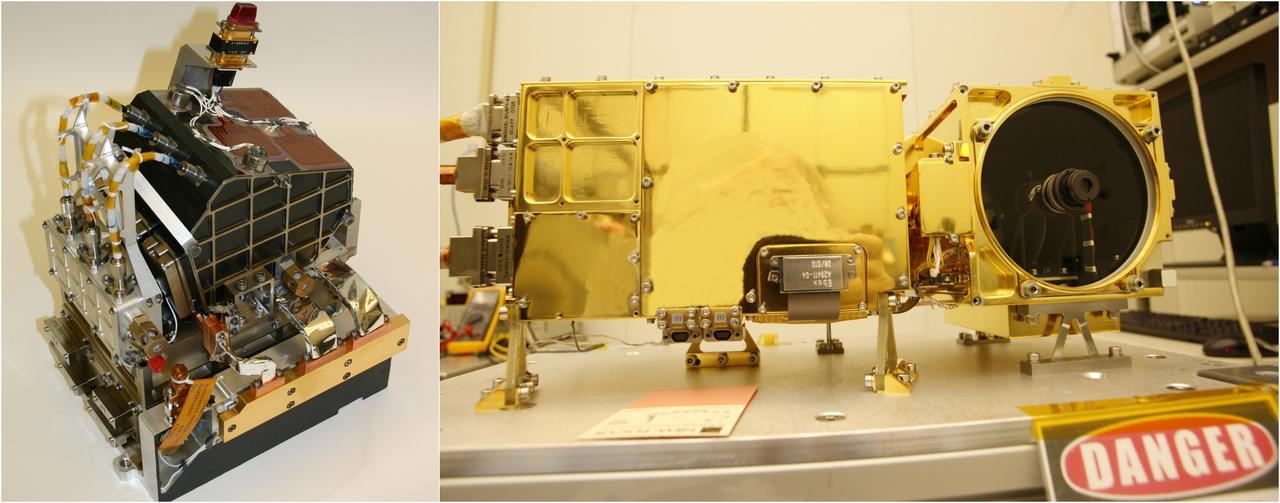
The two main parts of the ChemCam laser instrument for NASA Mars Science Laboratory mission are shown in this combined image.
Body and Mast Units of ChemCam Instrument for Mars Rover
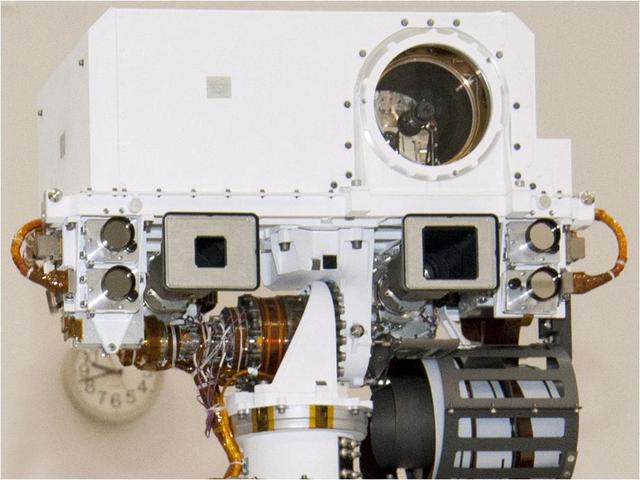
This view of the head of the remote sensing mast on the Mars Science Laboratory mission rover, Curiosity, shows seven of the 17 cameras on the rover.
Head of Mast on Mars Rover Curiosity
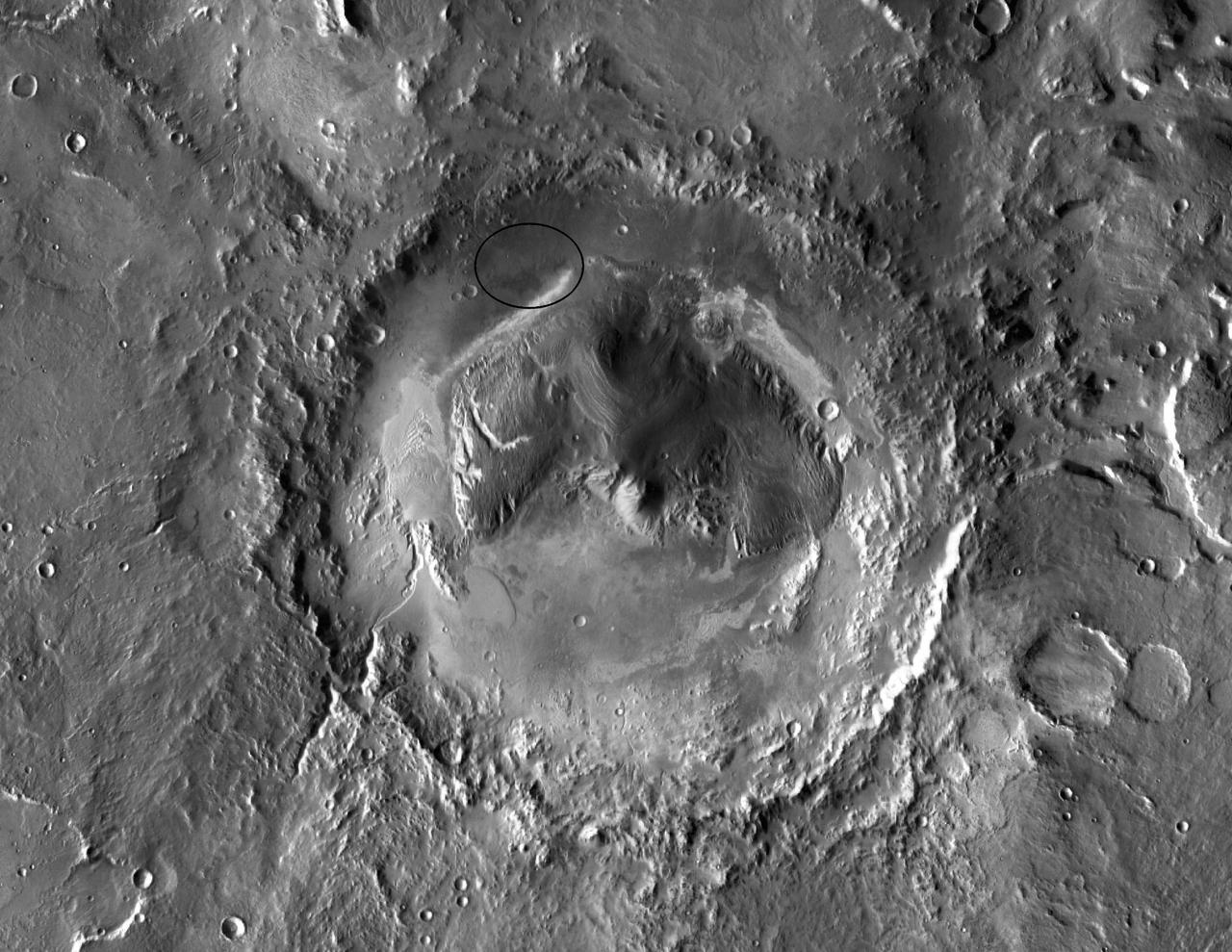
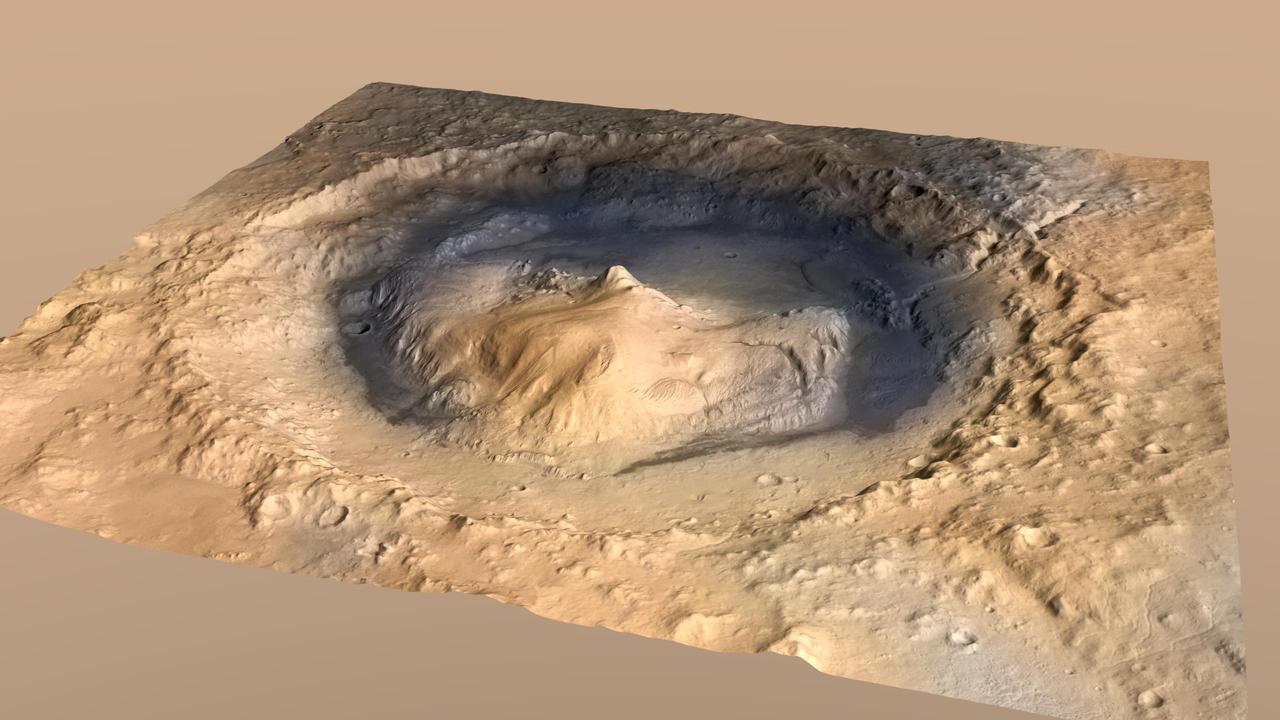
NASA has selected Gale crater as the landing site for the Mars Science Laboratory mission. This view of Gale is a mosaic of observations from NASA Mars Odyssey orbiter.
Gale Crater: Future Home of Mars Rover Curiosity
This imagery is being released in association with NASA Mars Science Laboratory mission. This is a temporary caption to be replaced as soon as more information is available.
Rover Takes Its First Steps
This imagery is being released in association with NASA Mars Science Laboratory mission. This is a temporary caption to be replaced as soon as more information is available.
Nailing Down Curiosity Landing Site
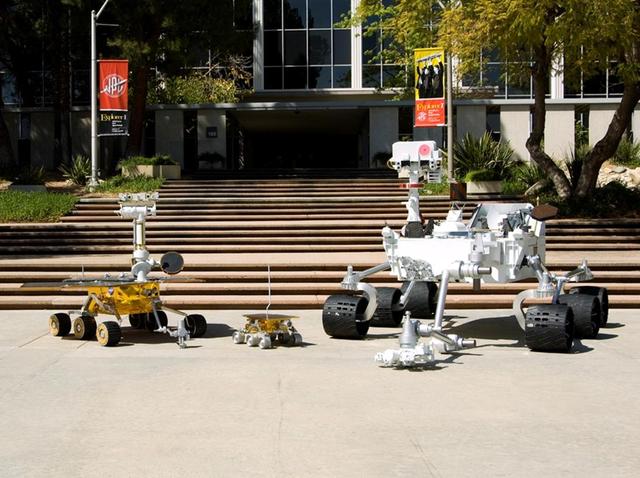
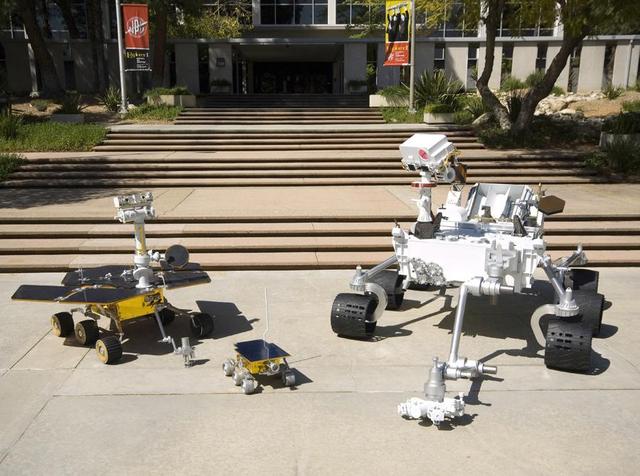
Full-scale models of three generations of NASA Mars rovers show the increase in size from the Sojourner rover of the Mars Pathfinder project, to the twin Mars Exploration Rovers Spirit and Opportunity, to the Mars Science Laboratory rover.
Size Comparison: Three Generations of Mars Rovers
Full-scale models of three generations of NASA Mars rovers show the increase in size from the Sojourner rover of the Mars Pathfinder project, to the twin Mars Exploration Rovers Spirit and Opportunity, to the Mars Science Laboratory rover.
Newest is Biggest: Three Generations of NASA Mars Rovers
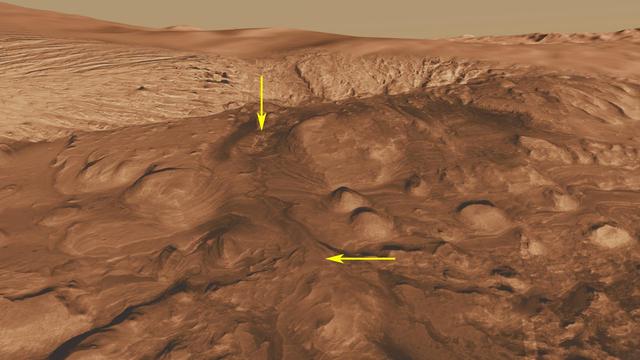
This oblique view of the mound in Gale crater shows several different rock types of interest to the Mars Science Laboratory mission. The Mars Science Laboratory rover, Curiosity, will use its full instrument suite to study these minerals and how they form
Rock Types in Gale Crater
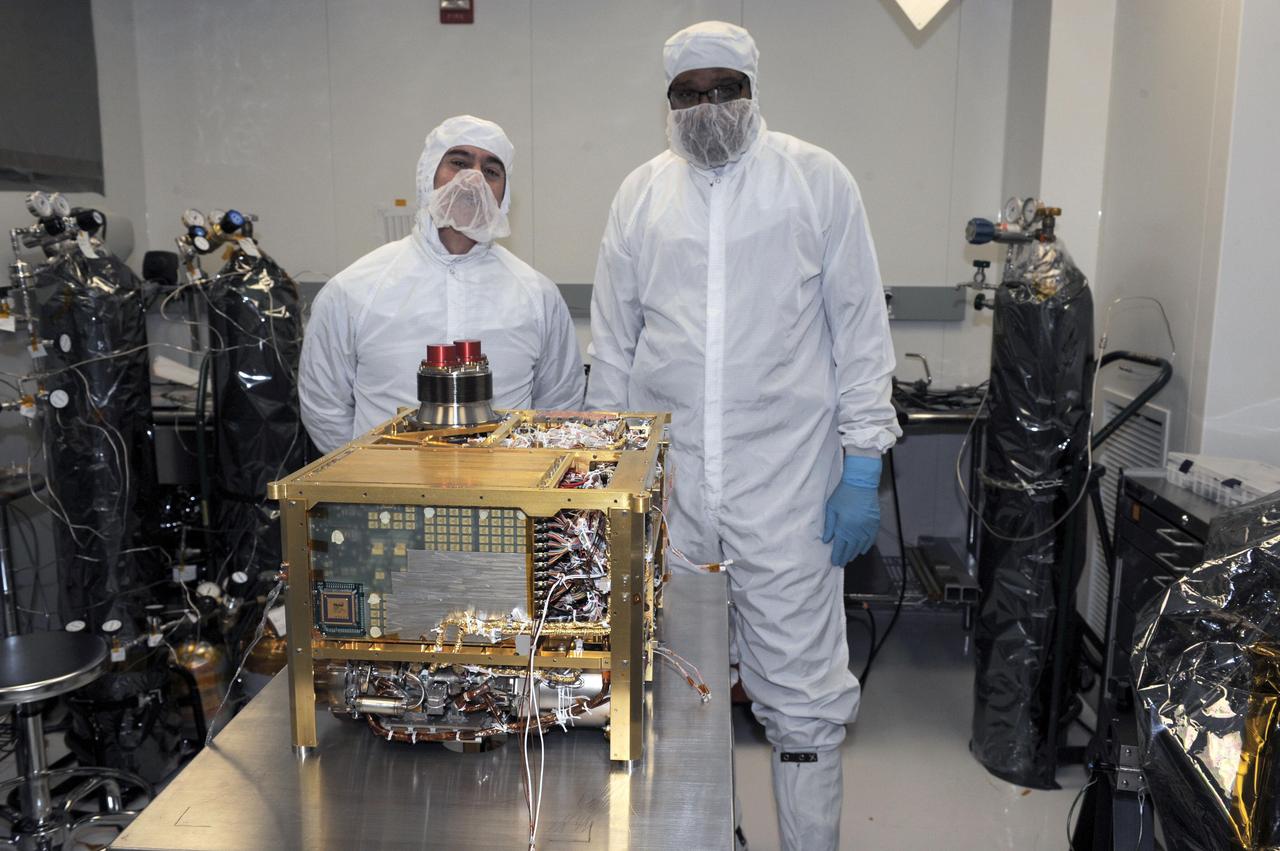
The Sample Analysis at Mars SAM instrument for NASA Mars Science Laboratory mission will study chemistry of rocks, soil and air as the mission rover, Curiosity, investigates Gale Crater on Mars.
SAM Instrument at NASA Goddard Space Flight Center
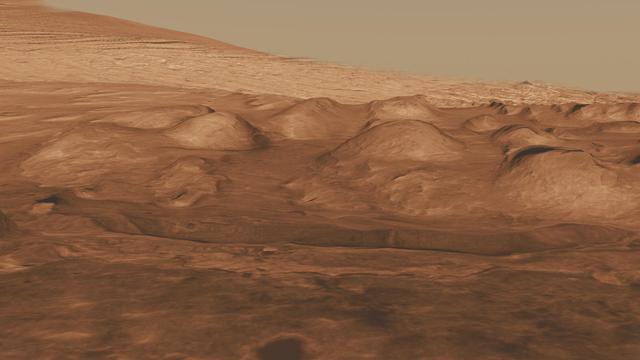
Mars scientists have several important hypotheses about how these minerals may reflect changes in the amount of water on the surface of Mars. The Mars Science Laboratory rover, Curiosity, will use its full suite of instruments to study these minerals.
Rock Layers in Lower Mound in Gale Crater
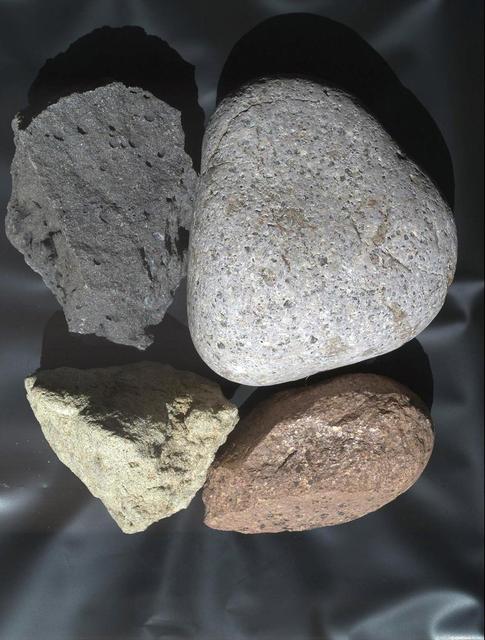
This view of terrestrial rocks was taken by a testing twin -- the life test unit -- of Mars Hand Lens Imager MAHLI camera on NASA Mars Science Laboratory.
Test Image of Earth Rocks by Mars Camera
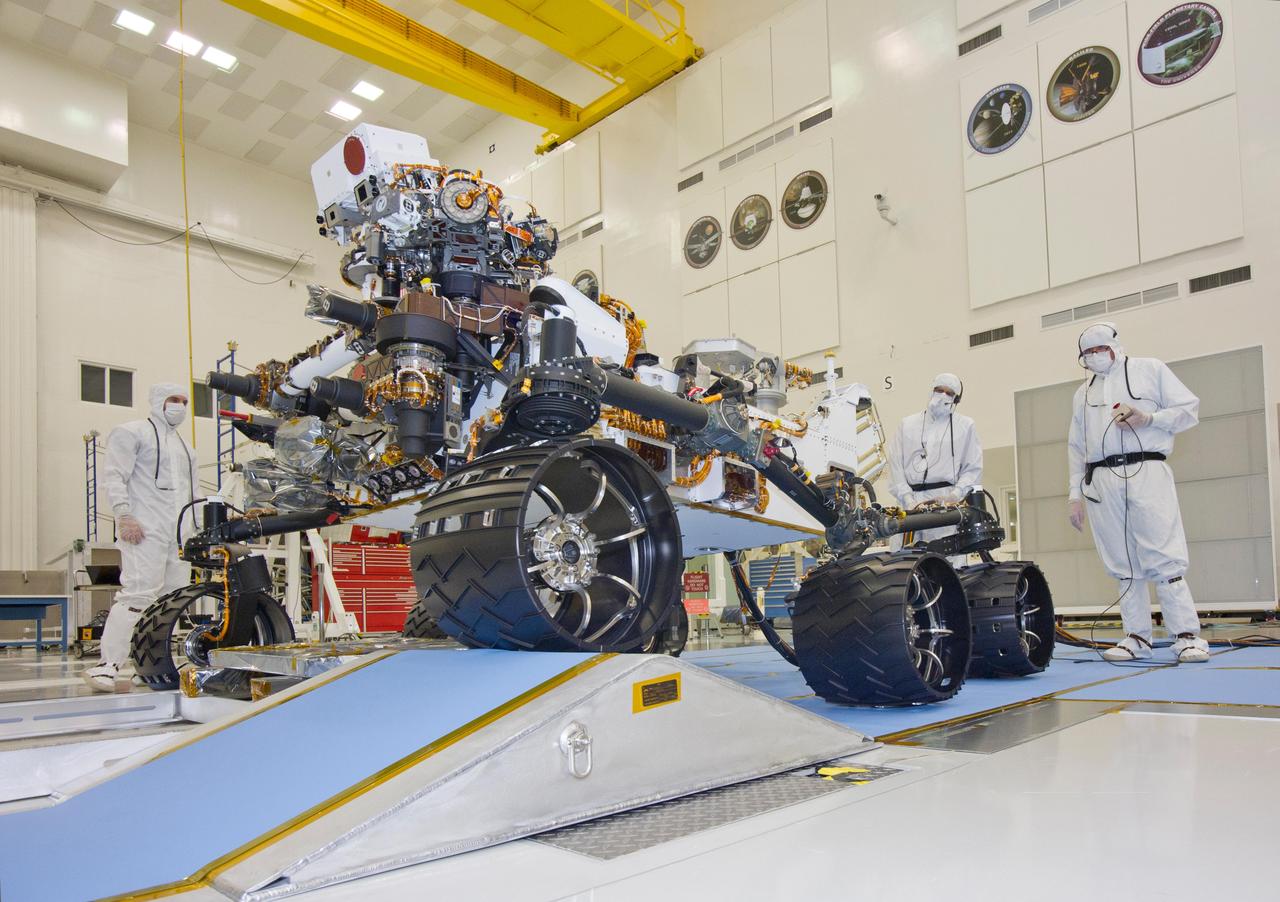
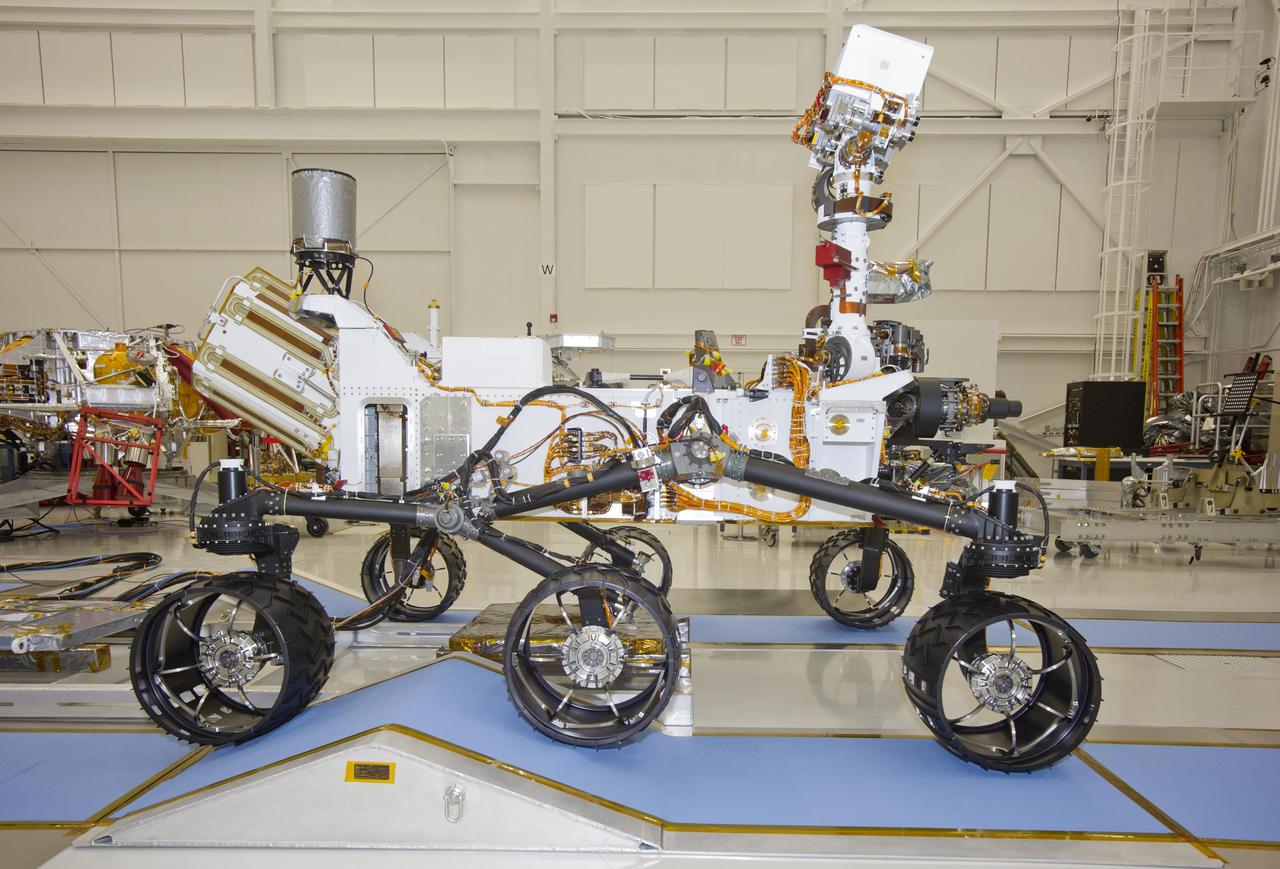
This photograph of the NASA Mars Science Laboratory rover, Curiosity, was taken during mobility testing on June 3, 2011. The location is inside the Spacecraft Assembly Facility at NASA Jet Propulsion Laboratory, Pasadena, Calif.
Mars Rover Curiosity with Wheel on Ramp
In the middle of this image taken at the Jet Propulsion Laboratory, the long robotic arm of NASA Mars Science Laboratory rises straight up toward the ceiling of the lab where it is being tested.
Engineers Flex Curiosity Robotic Arm and Tools
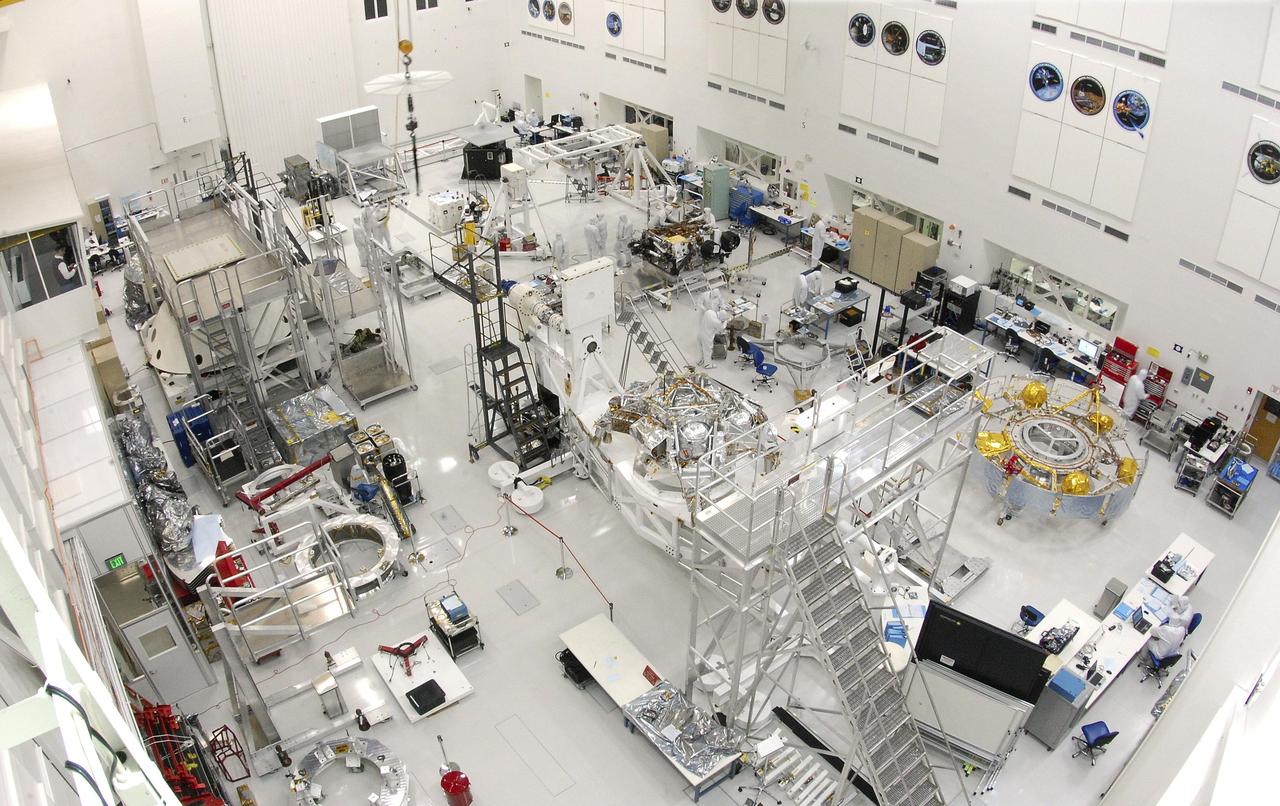
This wide-angle view shows the High Bay 1 cleanroom inside the Spacecraft Assembly Facility at NASA Jet Propulsion Laboratory, Pasadena, Calif. Specialists are working on components of NASA Mars Science Laboratory spacecraft.
Working on Curiosity in JPL Spacecraft Assembly Facility
This photograph of the NASA Mars Science Laboratory rover, Curiosity, was taken during mobility testing on June 3, 2011. The location is inside the Spacecraft Assembly Facility at NASA Jet Propulsion Laboratory, Pasadena, Calif.
Mars Rover Curiosity, Right Side View
This photograph of the NASA Mars Science Laboratory rover, Curiosity, was taken during mobility testing on June 3, 2011. The location is inside the Spacecraft Assembly Facility at NASA Jet Propulsion Laboratory, Pasadena, Calif.
Mars Rover Curiosity, Turning in Place
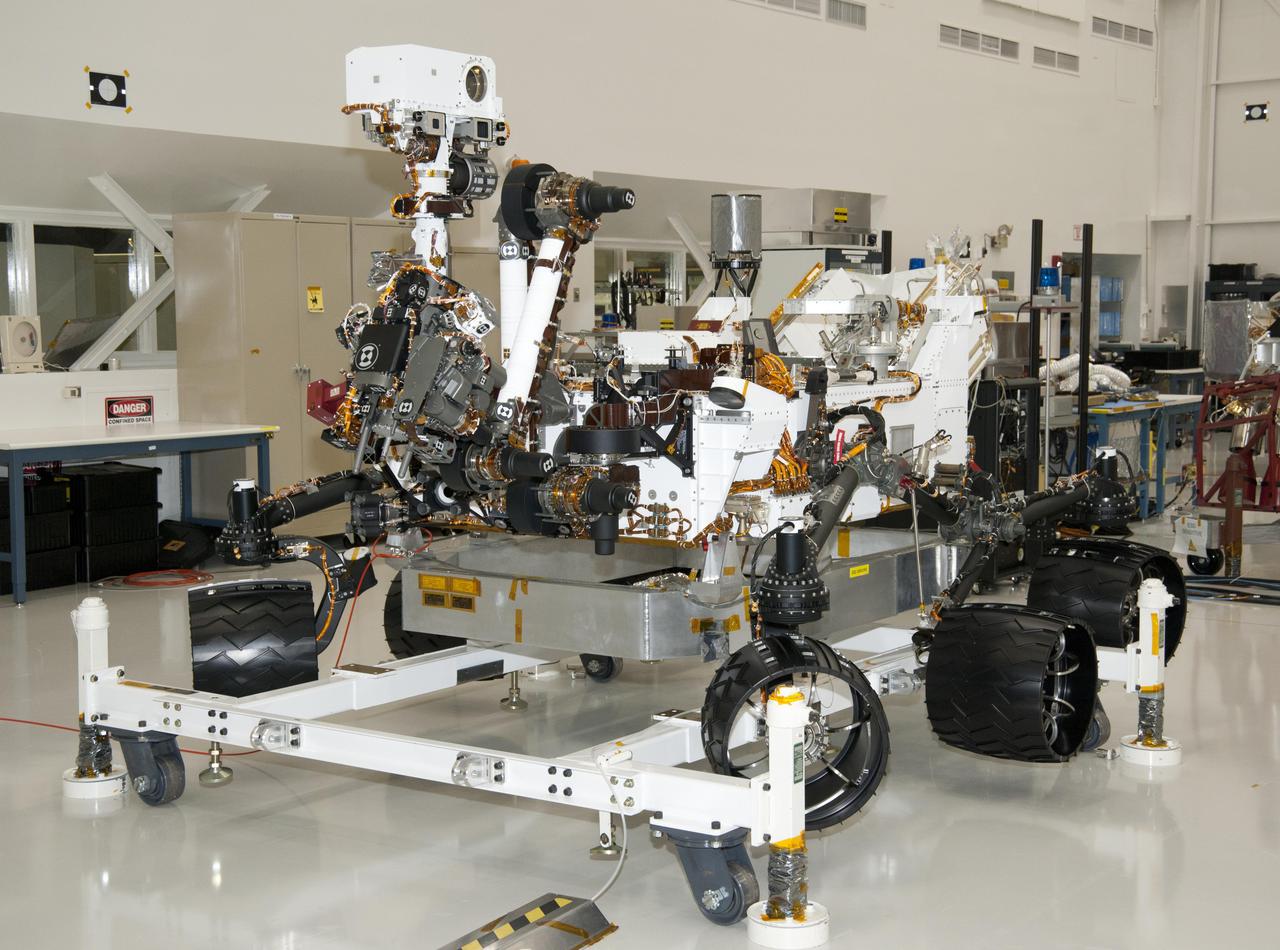
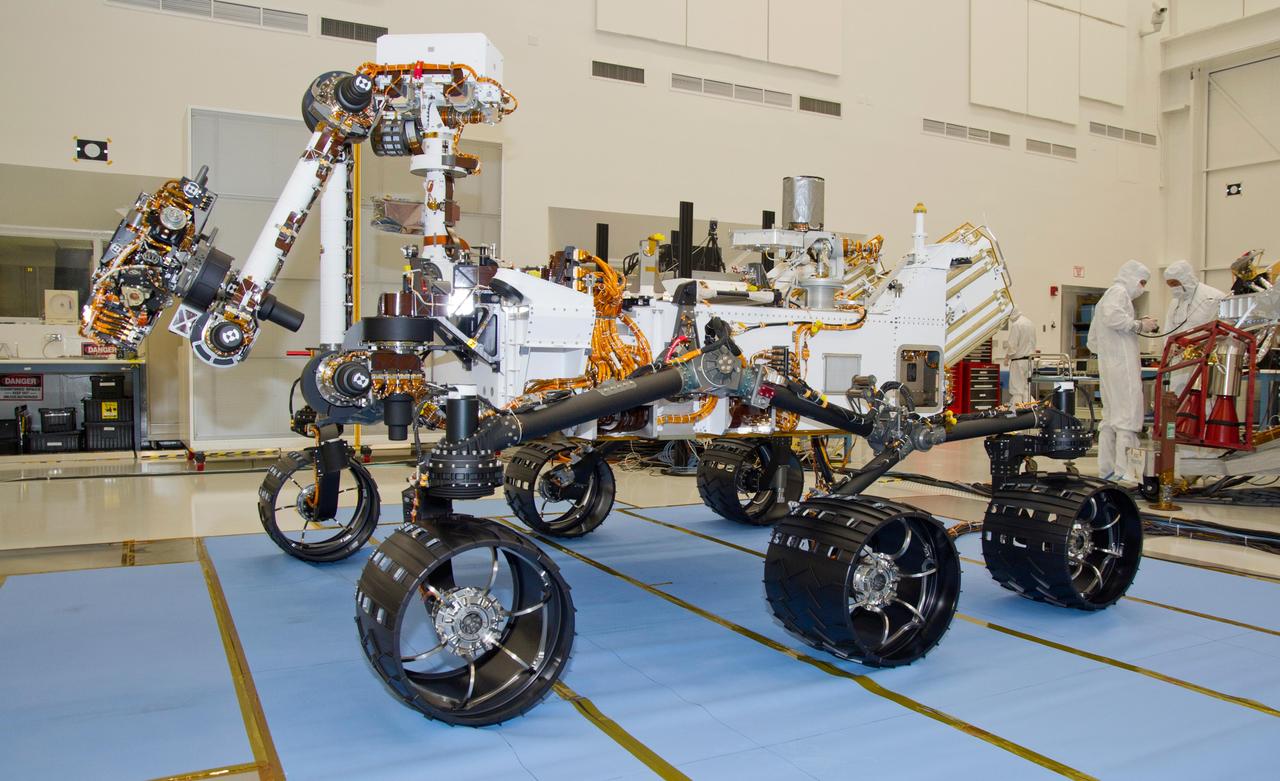
The rover for NASA Mars Science Laboratory mission, named Curiosity, is seen here inside the Spacecraft Assembly Facility at NASA Jet Propulsion Laboratory, Pasadena, Calif. Support equipment is holding the rover slightly off the floor.
NASA Mars Rover Curiosity at JPL, View from Front Left Corner
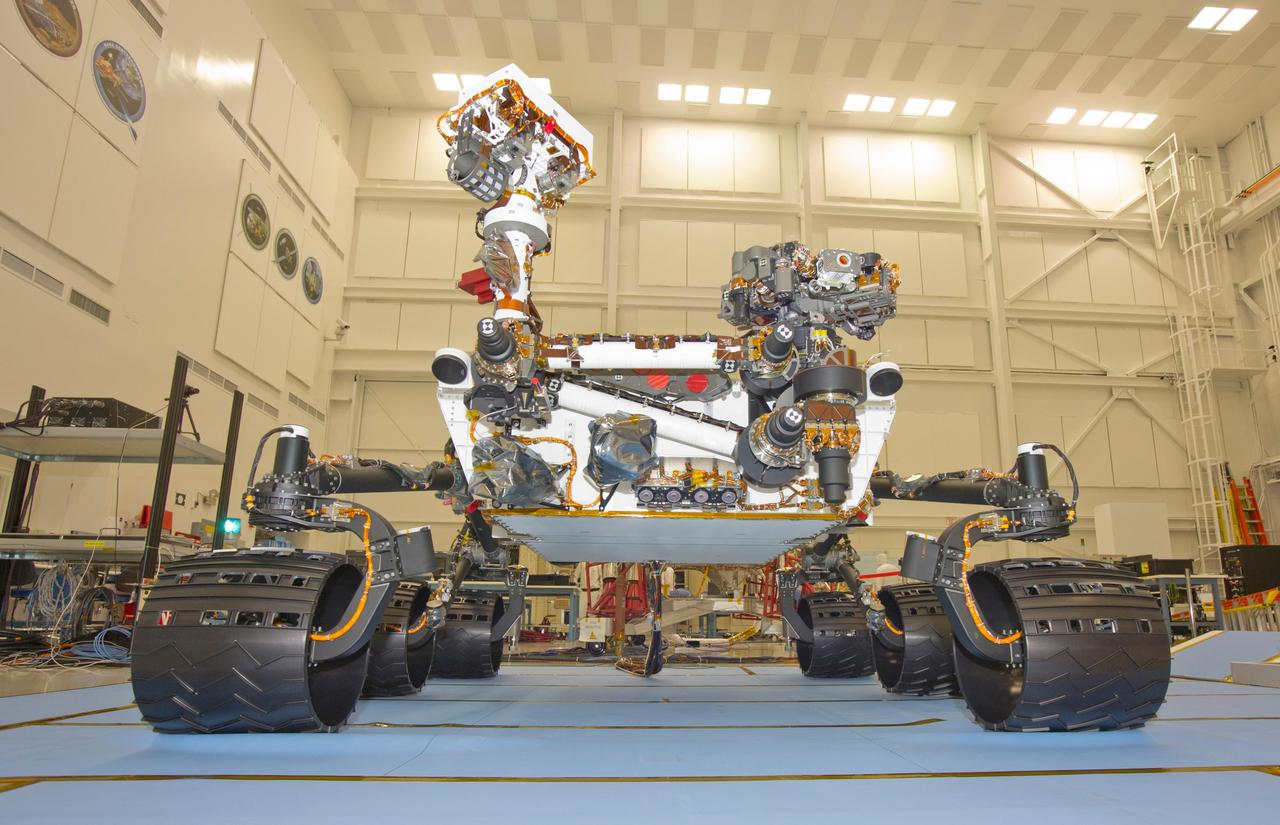
This photograph of the NASA Mars Science Laboratory rover, Curiosity, was taken during mobility testing on June 3, 2011. The location is inside the Spacecraft Assembly Facility at NASA Jet Propulsion Laboratory, Pasadena, Calif.
Mars Rover Curiosity, Front View
This photograph of the NASA Mars Science Laboratory rover, Curiosity, was taken during mobility testing on June 3, 2011. The location is inside the Spacecraft Assembly Facility at NASA Jet Propulsion Laboratory, Pasadena, Calif.
Mars Rover Curiosity, Left Side View
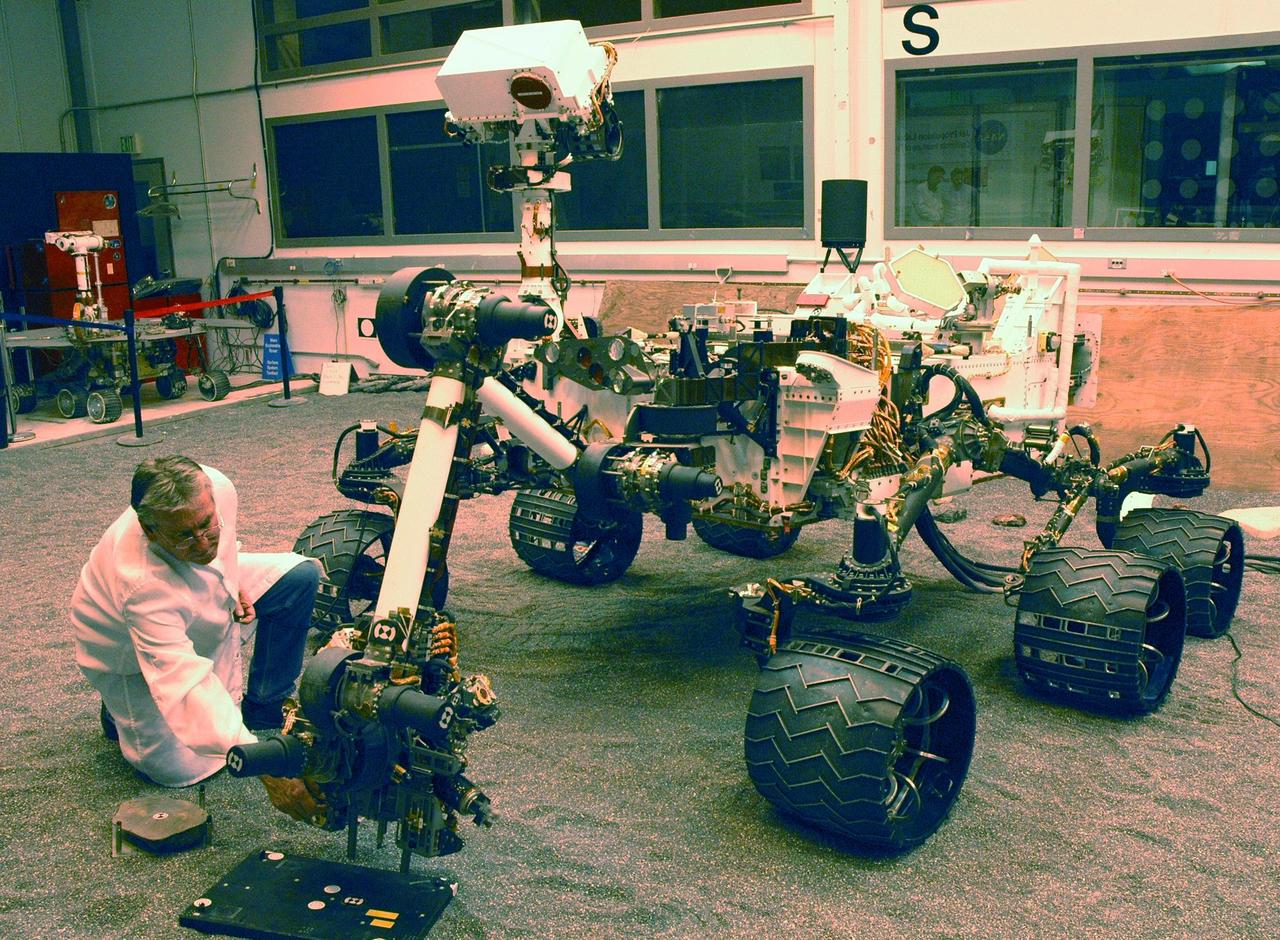
A NASA Mars Science Laboratory test rover called the Vehicle System Test Bed, or VSTB, at NASA Jet Propulsion Laboratory, Pasadena, CA serves as the closest double for Curiosity in evaluations of the mission hardware and software.
Testing Precision of Movement of Curiosity Robotic Arm
Wheels were first attached to NASA Mars Science Laboratory rover in August 2008. The rover and its descent stage and cruise stage were assembled and tested at NASA Jet Propulsion Laboratory, Pasadena, Calif., for launch in 2009.
Next NASA Mars Rover Gets Its Wheels
Curiosity, the big rover of NASA Mars Science Laboratory mission, will land in August 2012 near the foot of a mountain inside Gale Crater. The mission project science group is calling the mountain Mount Sharp.
Mount Sharp Inside Gale Crater, Mars
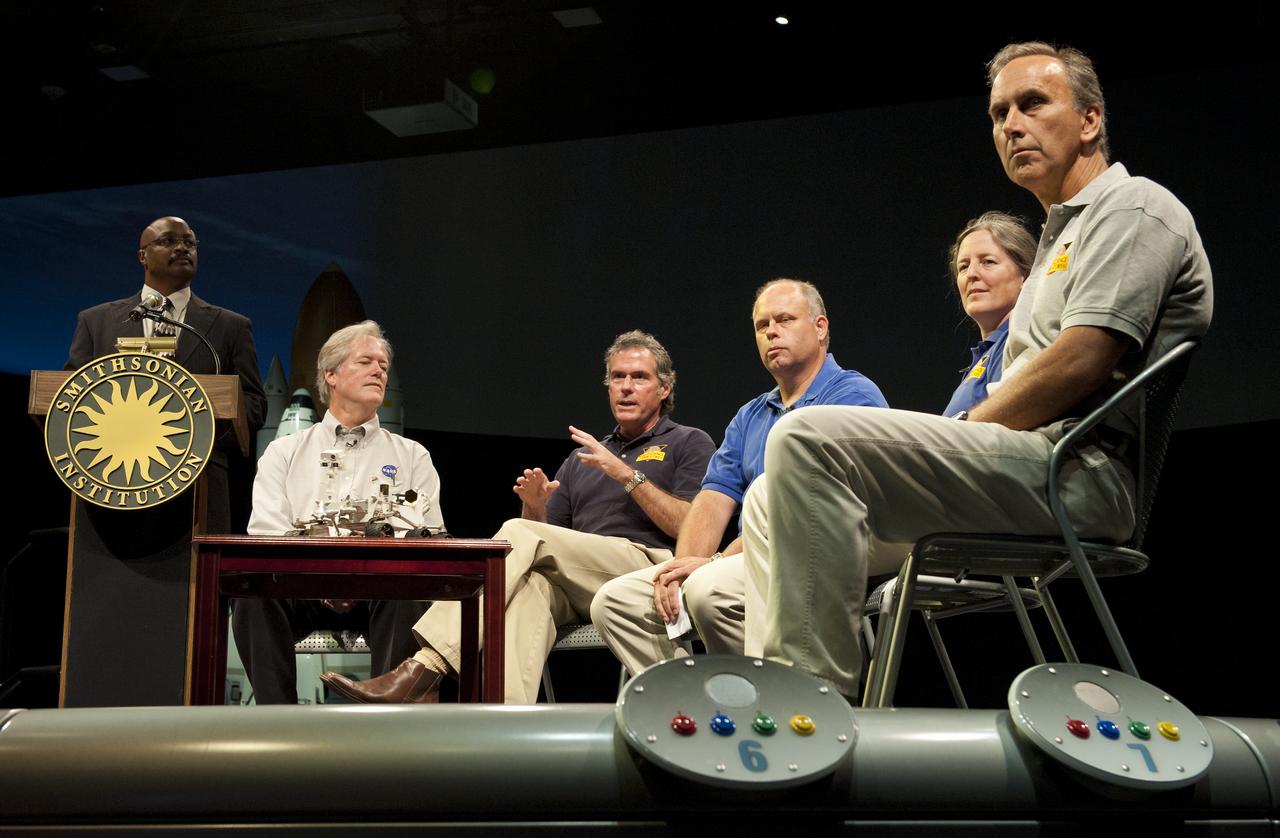
Michael Watkins (third from left), mission manager and project engineer, Mars Science Laboratory (MSL), Jet Propulsion Lab, Pasadena, Calif., speaks at a press conference at the Smithsonian's National Air and Space Museum on Friday, July 22, 2011 in Washington.  From left to right, Watkins is joined by Dwayne Brown, NASA Headquarters public affairs officer; Michael Meyer, lead scientist Mars Exploration Program, NASA Headquarters; Watkins; John Grant, geologist, Smithsonian National Air and Space Museum in Washington; Dawn Sumner, geologist, University of California, Davis and John Grotzinger, MSL project scientist, JPL.  Photo Credit:  (NASA/Carla Cioffi)
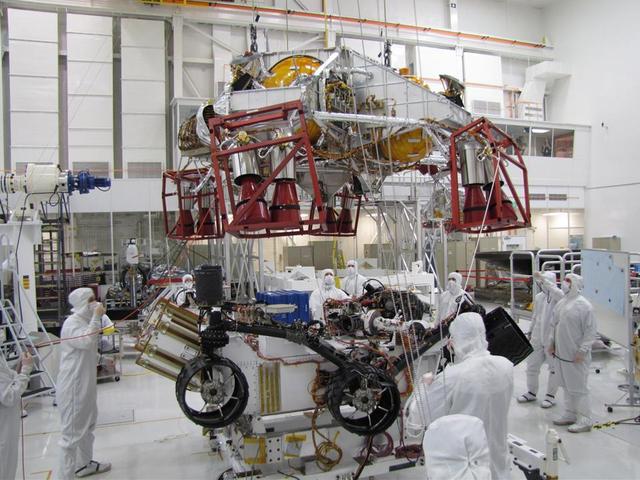
Mars Science Laboratory Press Conference
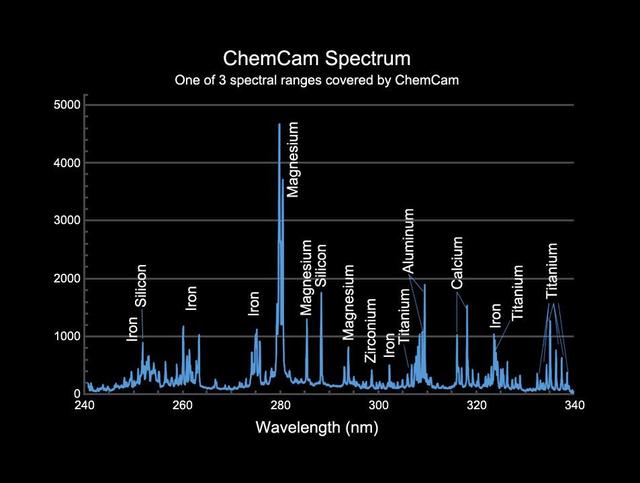
This image provides an example of the type of data collected by the Chemistry and Camera ChemCam instrument on NASA Mars Science Laboratory mission Curiosity rover.
Example of a Spectrum from Curiosity ChemCam Instrument
This artist concept depicts the rover Curiosity, of NASA Mars Science Laboratory mission, as it uses its Chemistry and Camera ChemCam instrument to investigate the composition of a rock surface.
Curiosity at Work on Mars Artist Concept
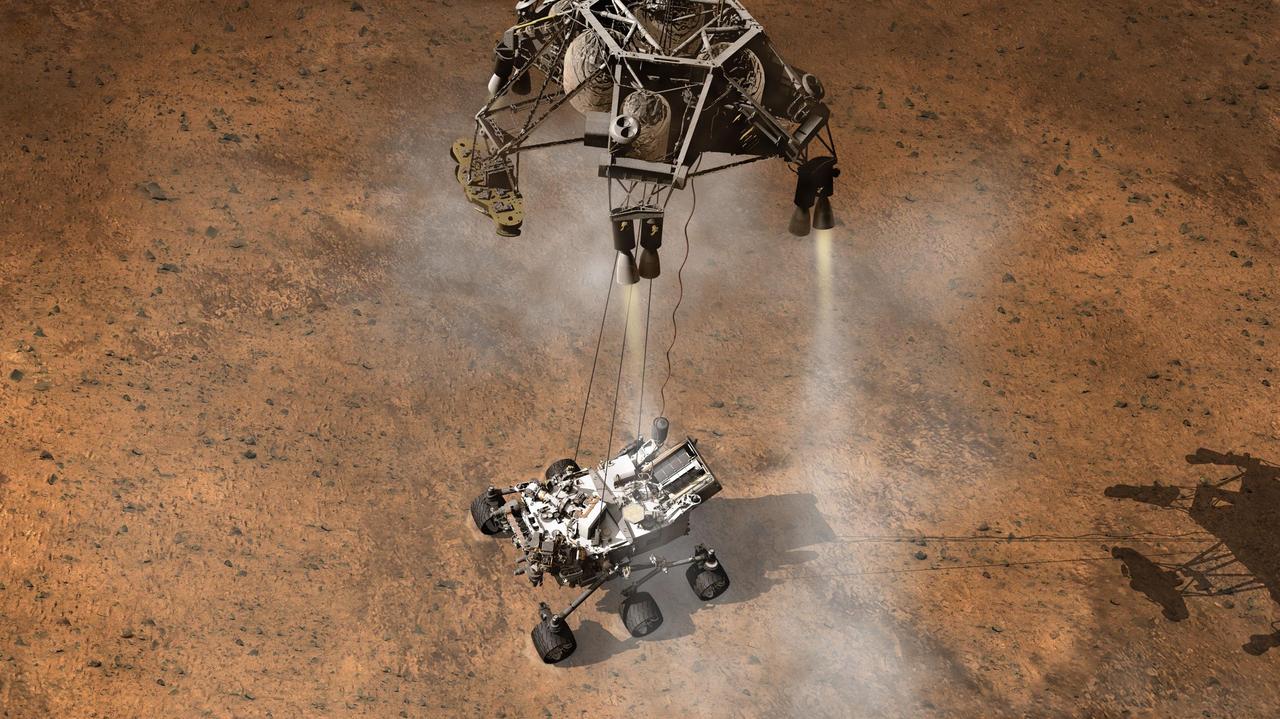
This artist concept depicts the moment that NASA Curiosity rover touches down onto the Martian surface. The Mars Science Laboratory will use the sky crane touchdown system.
Curiosity Touching Down, Artist Concept
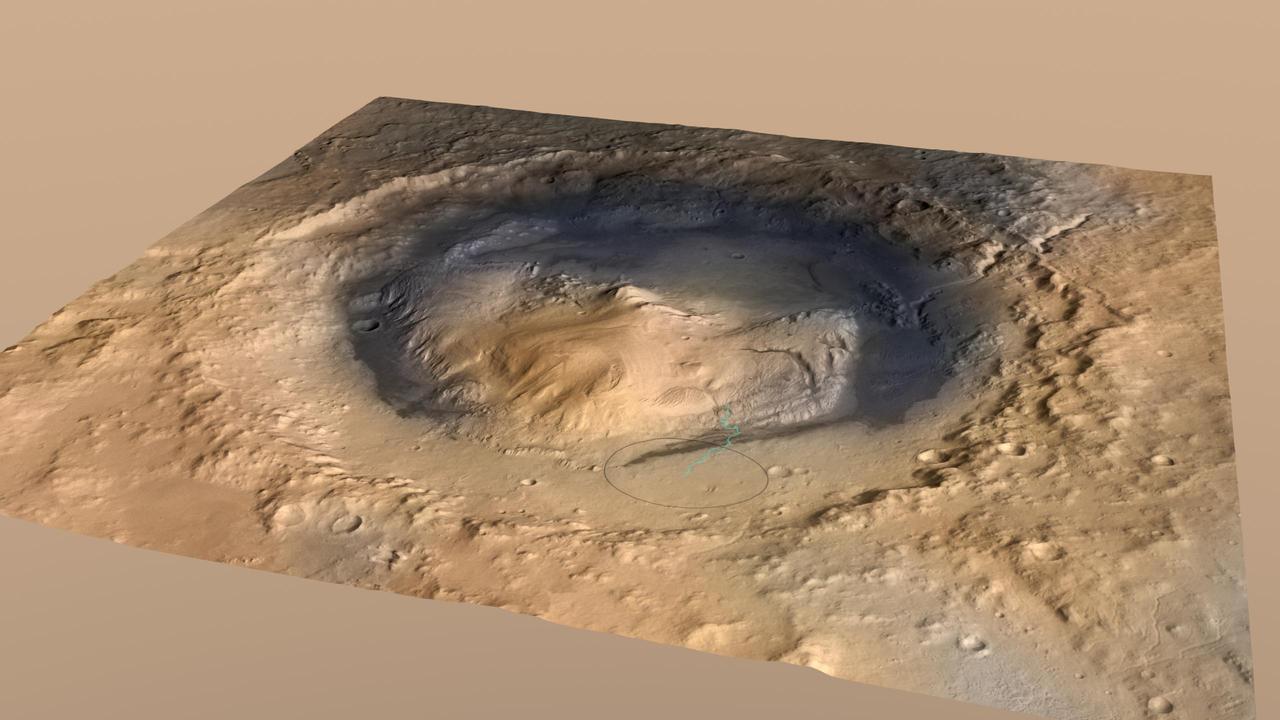
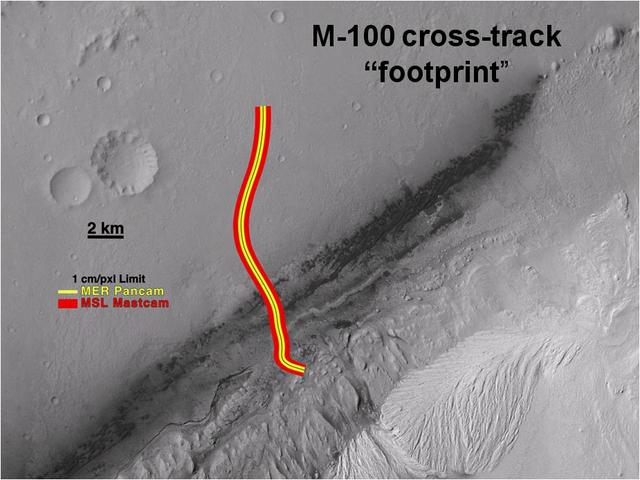
A section of NASA Mars Science Laboratory Gale Crater landing site is shown, with a representative path from the landing location toward the layered mound to the south.
Studying a Wider Swath
This image displays the type of detail discernable with the telescopic camera of the Chemistry and Camera ChemCam instrument on the Mars Science Laboratory mission Curiosity rover.
Detail Observed from 10 Feet away with Curiosity ChemCam
The area in and near the landing site selected for landing of NASA Mars Science Laboratory offers a diversity of possible targets for examination by the mission rover, Curiosity.
Attractions for Study in and near Curiosity Selected Landing Site
Gale Crater, where the rover Curiosity of NASA Mars Science Laboratory mission will land in August 2012, contains a mountain rising from the crater floor.
Oblique View of Gale Crater, Mars, with Vertical Exaggeration
An in-flight camera check produced this out-of-focus image when NASA Mars Science Laboratory spacecraft turned on illumination sources that are part of the Curiosity rover Mars Hand Lens Imager MAHLI instrument.
Camera Test on Curiosity During Flight to Mars
This set of artist concepts shows NASA Mars Science Laboratory cruise capsule and NASA Orion spacecraft, which is being built now at NASA Johnson Space Center and will one day send astronauts to Mars.
Cruise Vehicles Artist Concept
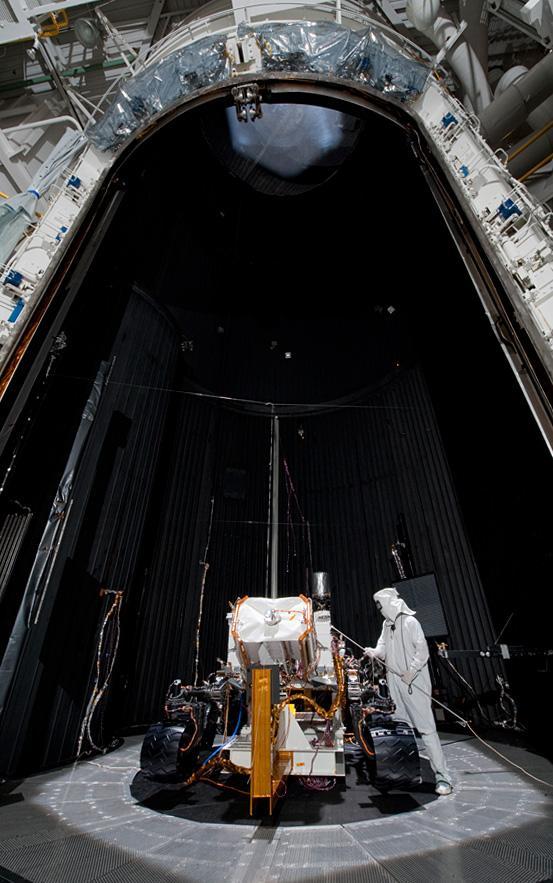
This image shows preparation for March 2011 testing of the Mars Science Laboratory rover, Curiosity, in a space-simulation chamber; the rover will go through operational sequences in environmental conditions similar to what it will experience on Mars.
Preparing for Solar and Thermal Testing of Curiosity Mars Rover
This artist concept features NASA Mars Science Laboratory Curiosity rover, a mobile robot for investigating Mars past or present ability to sustain microbial life. Curiosity is being tested in preparation for launch in the fall of 2011.
Mars Rover Curiosity in Artist Concept, Wide