
Mars Science Laboratory (MSL) Flexible Canopy Testing in the Glenn Research Center, 10x10 Supersonic Wind Tunnel
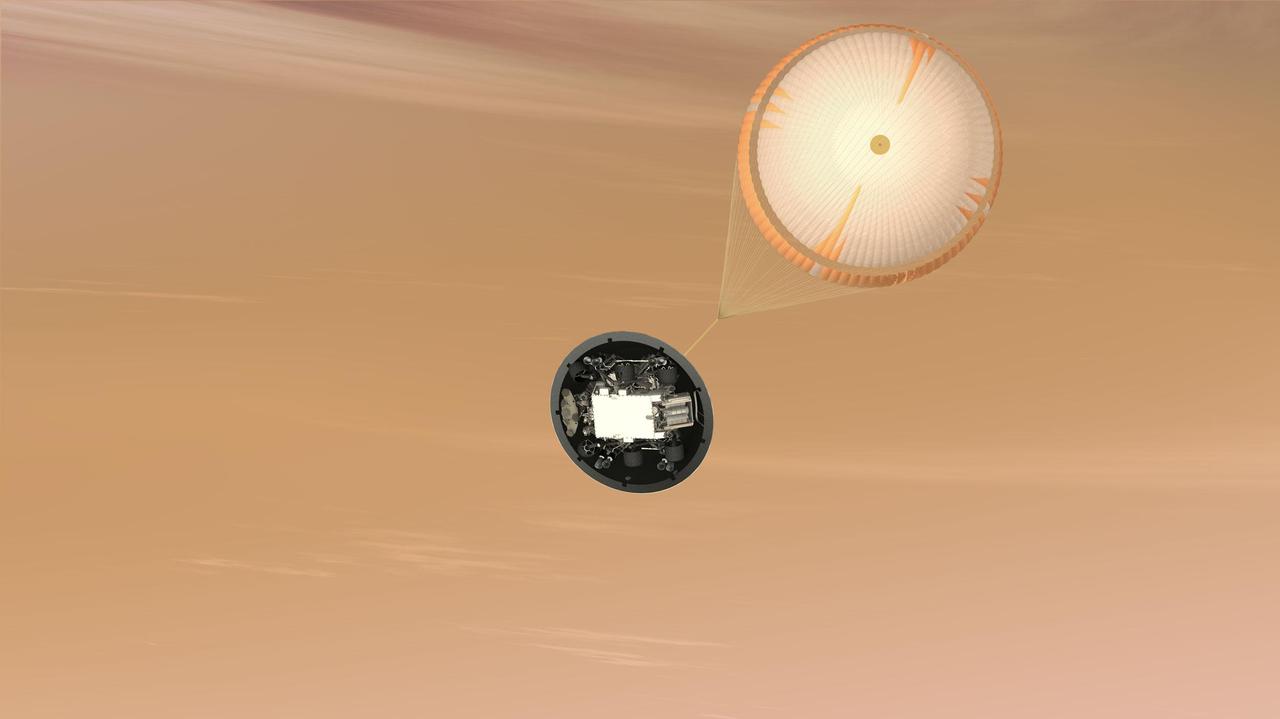
This artist concept is of NASA Mars Science Laboratory MSL Curiosity rover parachute system; the largest parachute ever built to fly on a planetary mission. The parachute is attached to the top of the backshell portion of the spacecraft aeroshell.
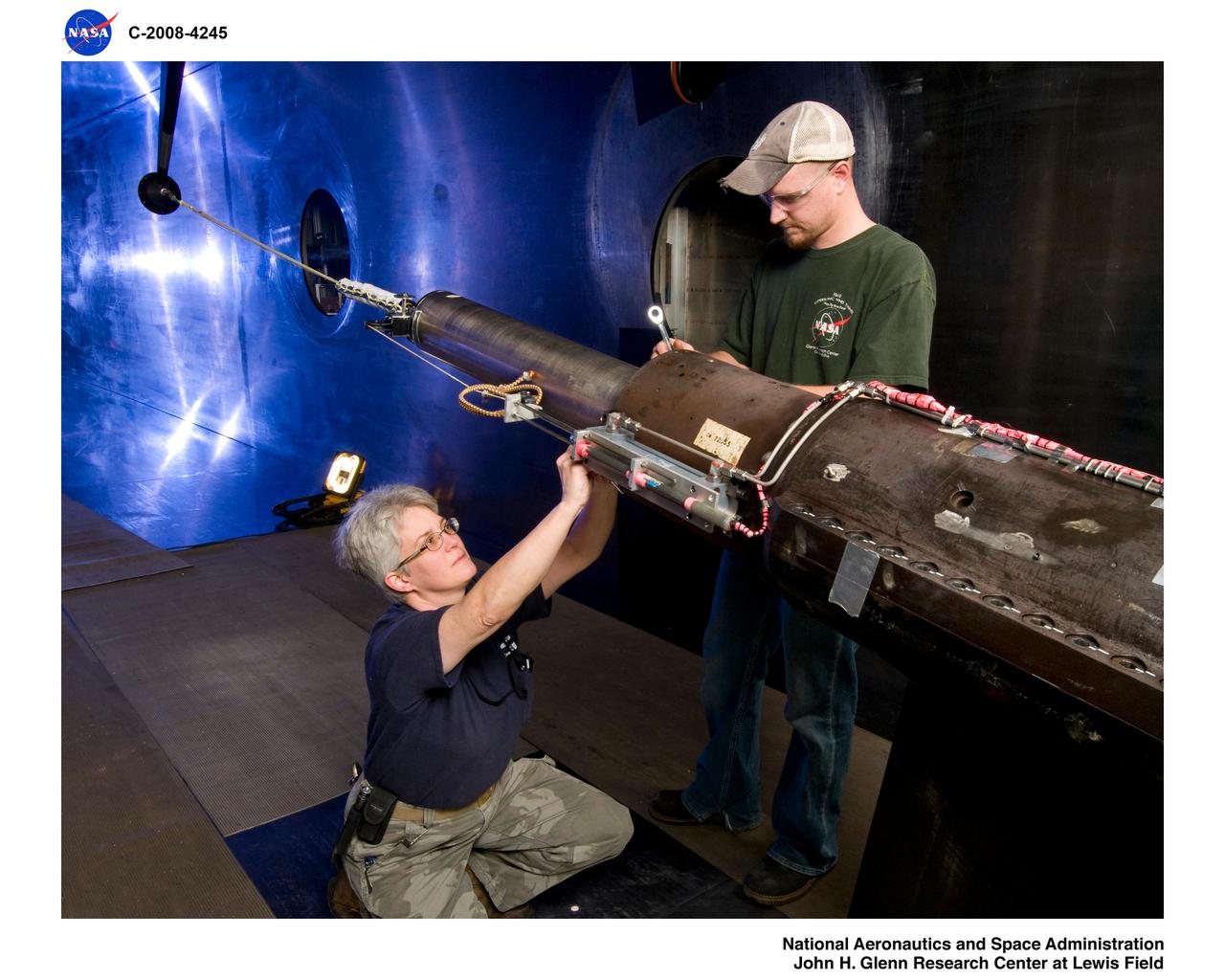
Mars Science Laboratory (MSL) Flexible Canopy Test
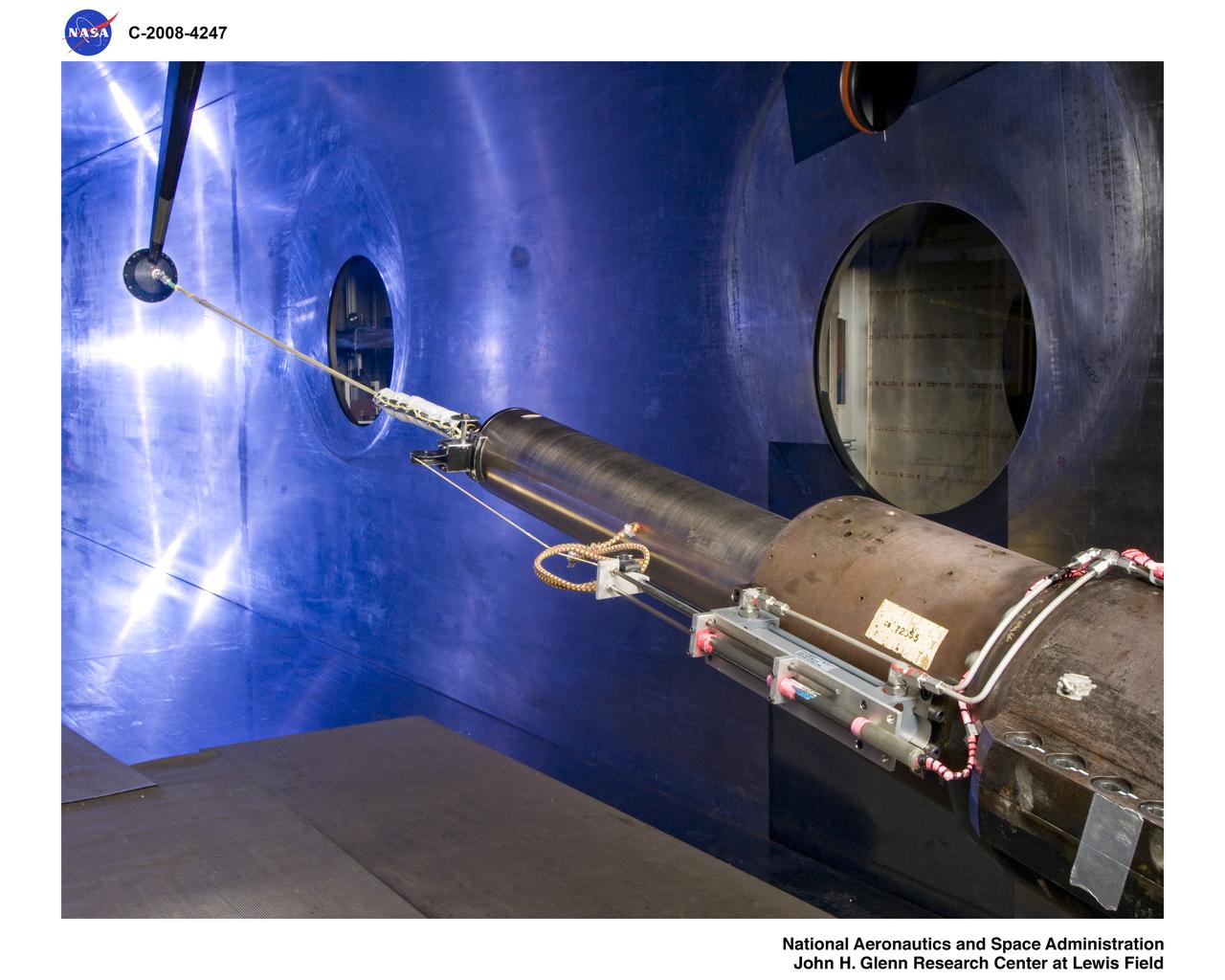
Mars Science Laboratory (MSL) Flexible Canopy Test
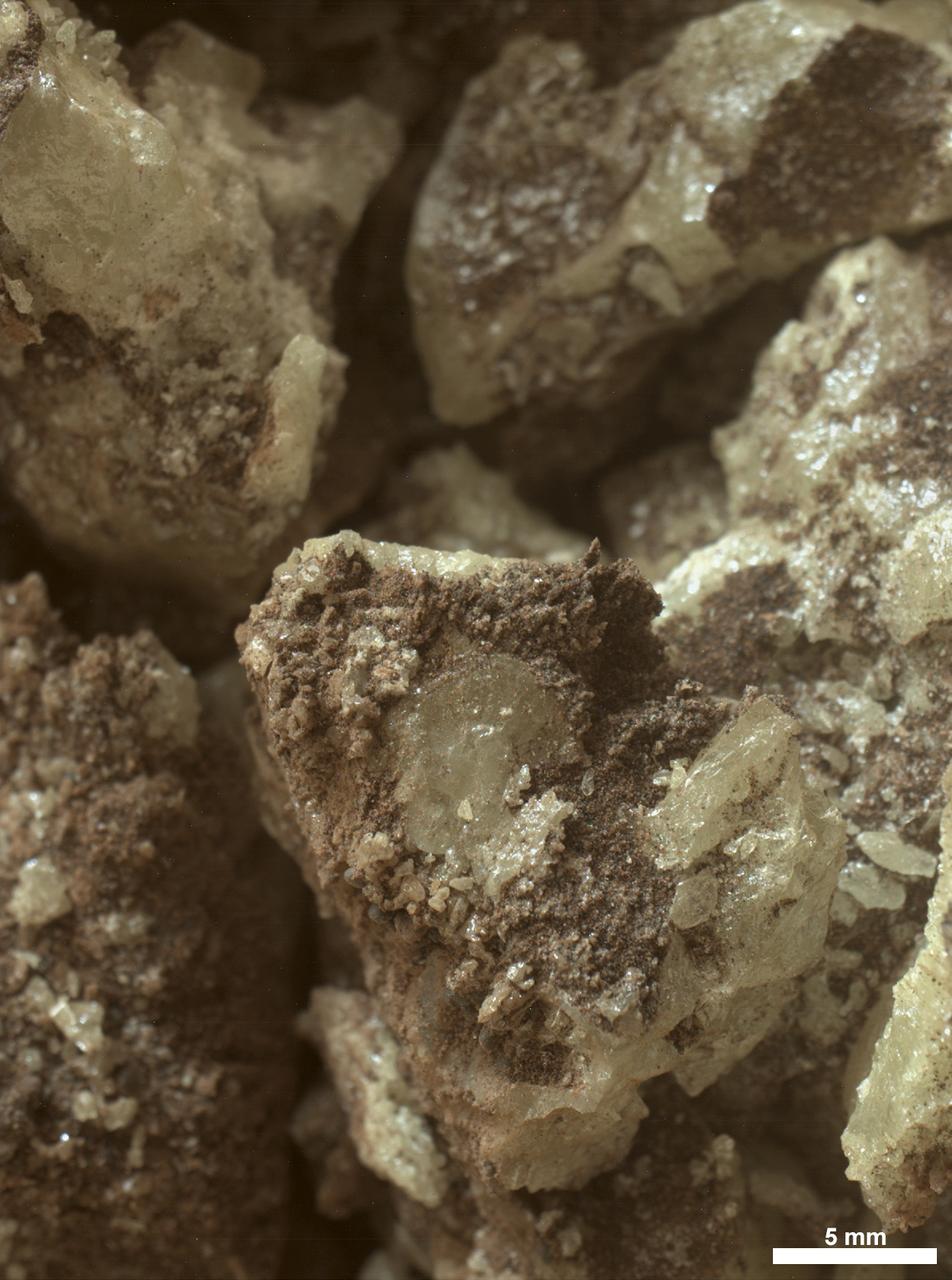
These sulfur crystals were found inside a rock after NASA’s Curiosity Mars rover happened to drive over it and crush it on May 30, 2024, the 4,200th Martian day, or sol, of the mission. The image was captured by Curiosity’s Mars Hand Lens Imager (MAHLI), a camera on the end of its robotic arm, on June 4, 2024, Sol 4,205. This rock was nicknamed “Convict Lake” after a location in California’s Sierra Nevada. Curiosity’s Alpha Particle X-Ray Spectrometer (APXS) found that the crystalline material is elemental sulfur. Curiosity was built by NASA’s Jet Propulsion Laboratory, which is managed by Caltech in Pasadena, California. JPL leads the mission on behalf of NASA’s Science Mission Directorate in Washington. MAHLI was built by Malin Space Science Systems in San Diego. For more about Curiosity, visit: https://science.nasa.gov/mission/msl-curiosity.
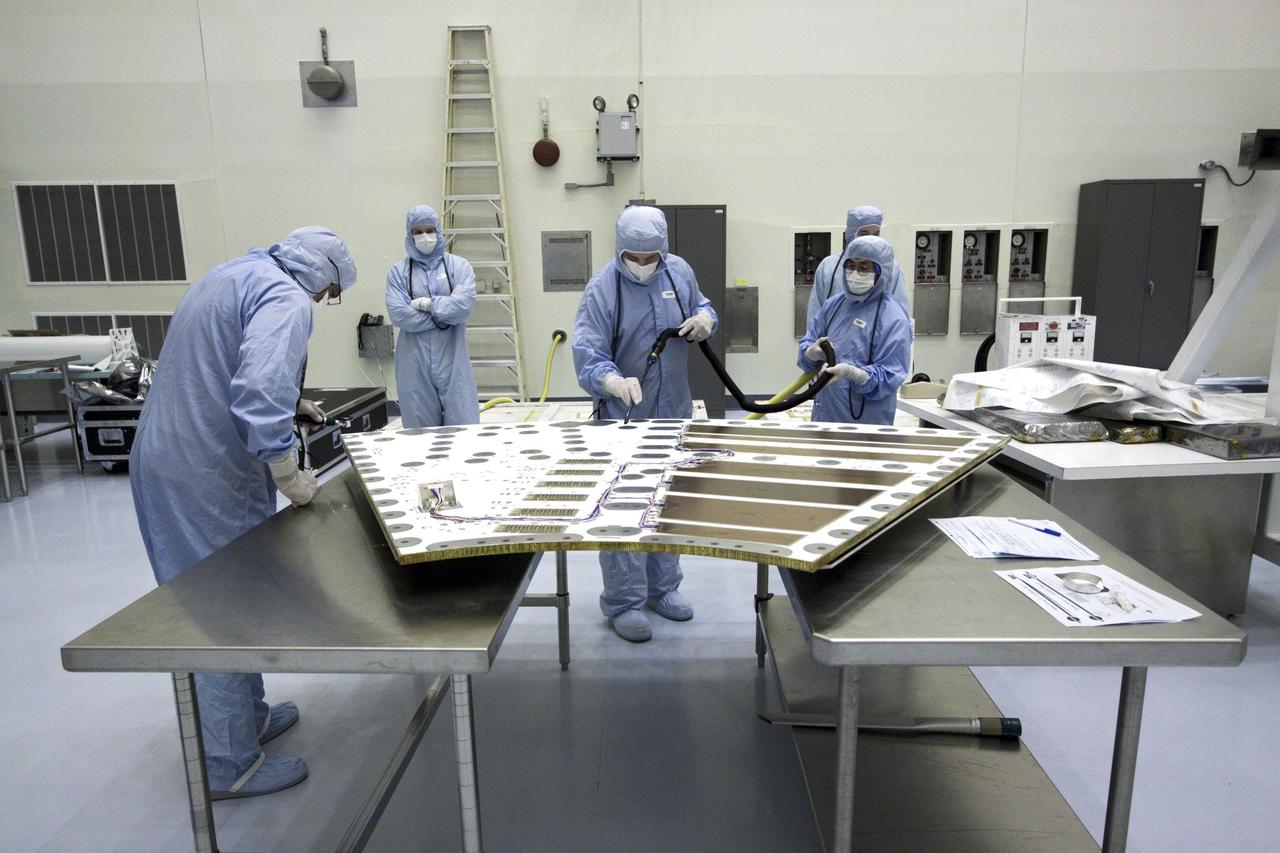
Cape Canaveral, Fla. -- At the Payload Hazardous Servicing Facility at NASA's Kennedy Space Center in Florida, technicians are preparing a solar array panel for installation to the cruise stage of NASA's Mars Science Laboratory (MSL). MSL's components include a compact car-sized rover, Curiosity, which has 10 science instruments designed to search for evidence on whether Mars has had environments favorable to microbial life, including chemical ingredients for life. The unique rover will use a laser to look inside rocks and release its gasses so that the rover’s spectrometer can analyze and send the data back to Earth. Launch of MSL aboard a United Launch Alliance Atlas V rocket is scheduled for Nov. 25 from Space Launch Complex 41 on Cape Canaveral Air Force Station in Florida. For more information, visit http://www.nasa.gov/msl. Photo credit: NASA/Jack Pfaller
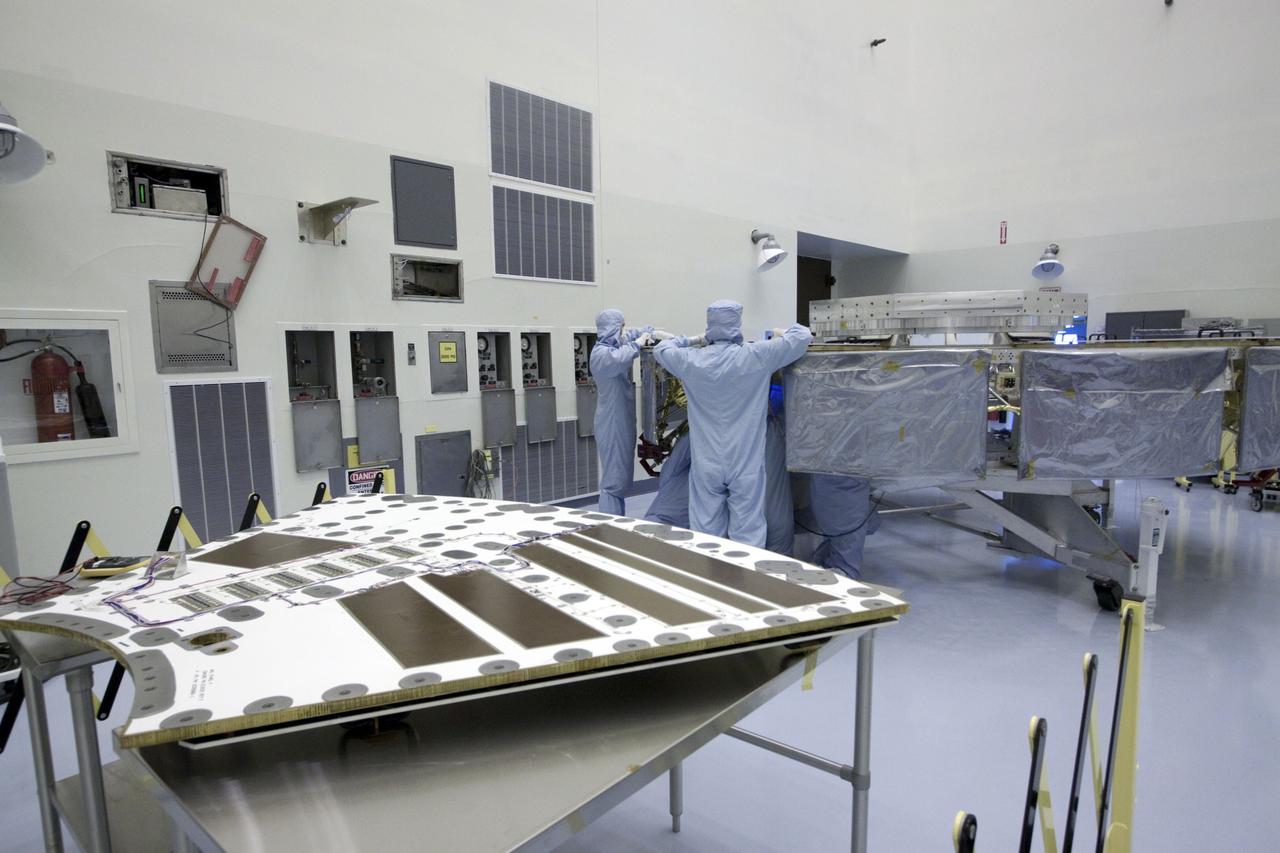
Cape Canaveral, Fla. -- At the Payload Hazardous Servicing Facility at NASA's Kennedy Space Center in Florida, technicians are installing a solar array panel to the cruise stage of NASA's Mars Science Laboratory (MSL). MSL's components include a compact car-sized rover, Curiosity, which has 10 science instruments designed to search for evidence on whether Mars has had environments favorable to microbial life, including chemical ingredients for life. The unique rover will use a laser to look inside rocks and release its gasses so that the rover’s spectrometer can analyze and send the data back to Earth. Launch of MSL aboard a United Launch Alliance Atlas V rocket is scheduled for Nov. 25 from Space Launch Complex 41 on Cape Canaveral Air Force Station in Florida. For more information, visit http://www.nasa.gov/msl. Photo credit: NASA/Jack Pfaller
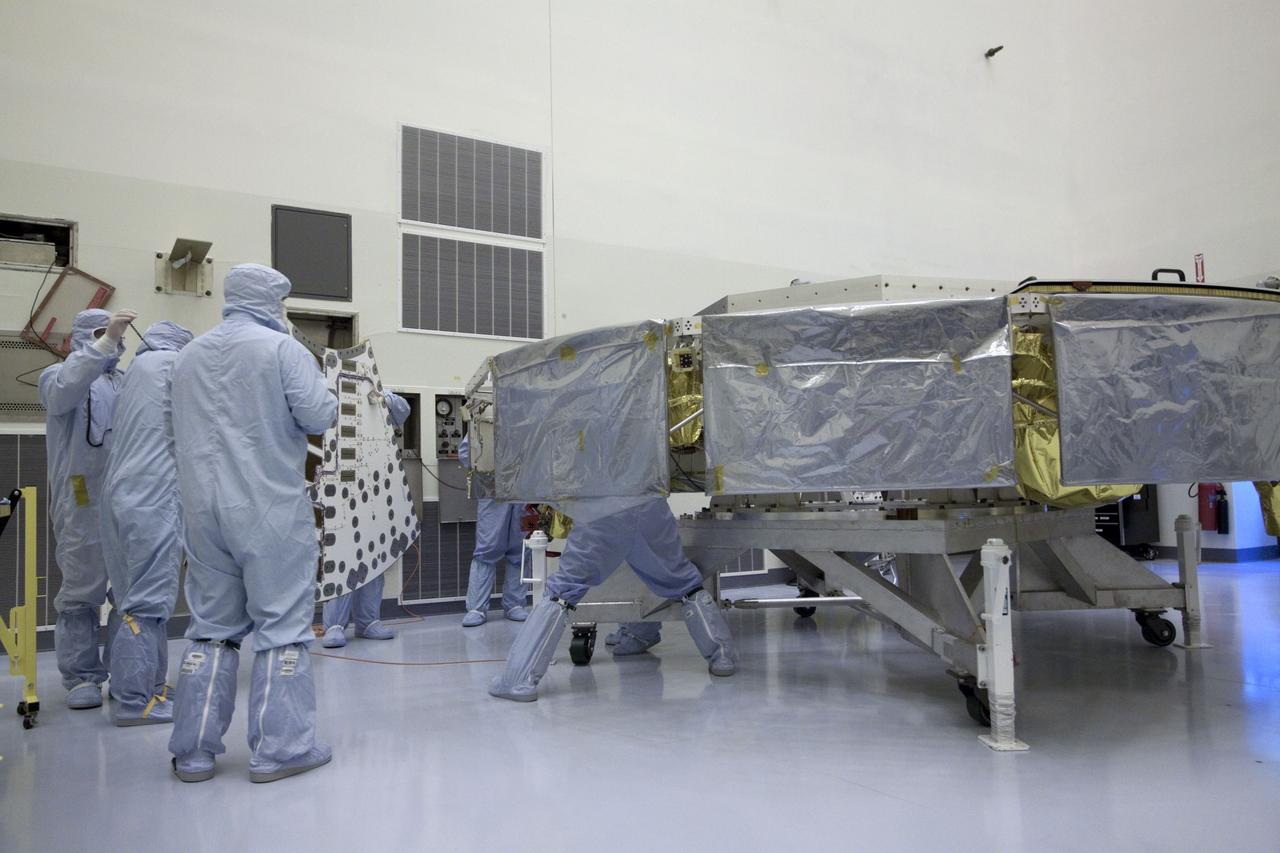
Cape Canaveral, Fla. -- At the Payload Hazardous Servicing Facility at NASA's Kennedy Space Center in Florida, technicians are installing a solar array panel to the cruise stage of NASA's Mars Science Laboratory (MSL). MSL's components include a compact car-sized rover, Curiosity, which has 10 science instruments designed to search for evidence on whether Mars has had environments favorable to microbial life, including chemical ingredients for life. The unique rover will use a laser to look inside rocks and release its gasses so that the rover’s spectrometer can analyze and send the data back to Earth. Launch of MSL aboard a United Launch Alliance Atlas V rocket is scheduled for Nov. 25 from Space Launch Complex 41 on Cape Canaveral Air Force Station in Florida. For more information, visit http://www.nasa.gov/msl. Photo credit: NASA/Jack Pfaller
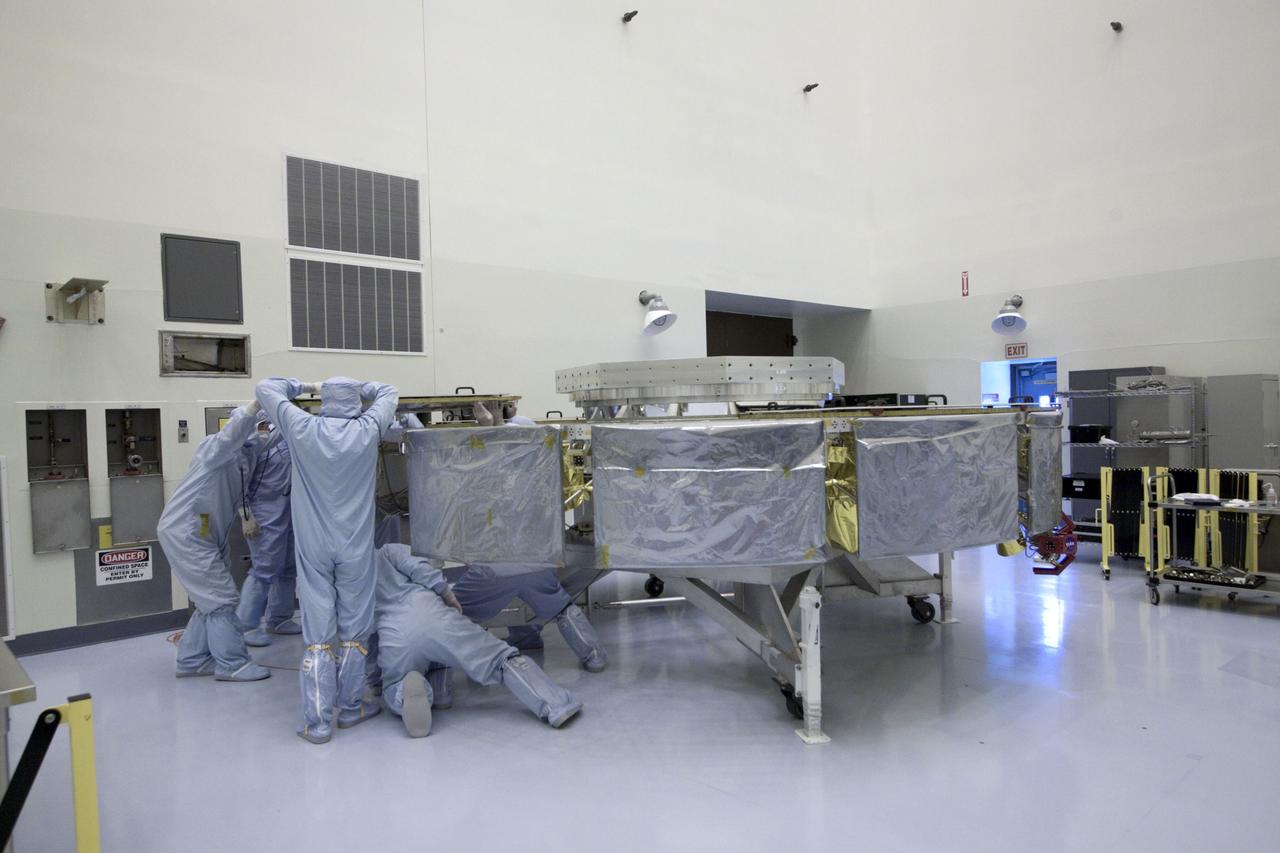
Cape Canaveral, Fla. -- At the Payload Hazardous Servicing Facility at NASA's Kennedy Space Center in Florida, technicians are installing a solar array panel to the cruise stage of NASA's Mars Science Laboratory (MSL). MSL's components include a compact car-sized rover, Curiosity, which has 10 science instruments designed to search for evidence on whether Mars has had environments favorable to microbial life, including chemical ingredients for life. The unique rover will use a laser to look inside rocks and release its gasses so that the rover’s spectrometer can analyze and send the data back to Earth. Launch of MSL aboard a United Launch Alliance Atlas V rocket is scheduled for Nov. 25 from Space Launch Complex 41 on Cape Canaveral Air Force Station in Florida. For more information, visit http://www.nasa.gov/msl. Photo credit: NASA/Jack Pfaller
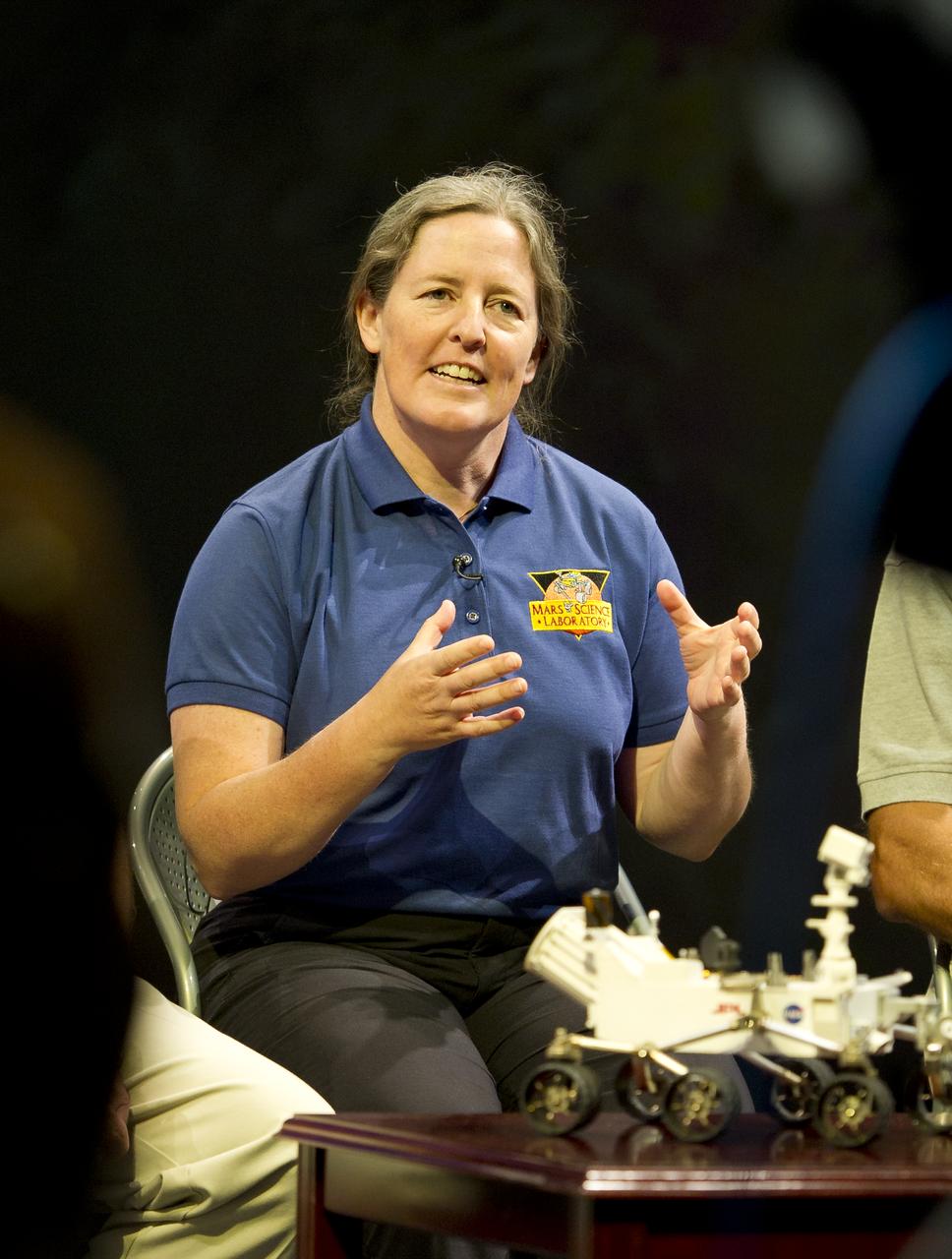
Dawn Sumner, geologist, University of California, Davis speaks at a Mars Science Laboratory (MSL) press conference at the Smithsonian's National Air and Space Museum on Friday, July 22, 2011 in Washington. The Mars Science Laboratory (MSL), or Curiosity, is scheduled to launch late this year from NASA's Kennedy Space Center in Florida and land in August 2012. Curiosity is twice as long and more than five times as heavy as previous Mars rovers. The rover will study whether the landing region at Gale crater had favorable environmental conditions for supporting microbial life and for preserving clues about whether life ever existed. Photo Credit: (NASA/Carla Cioffi)
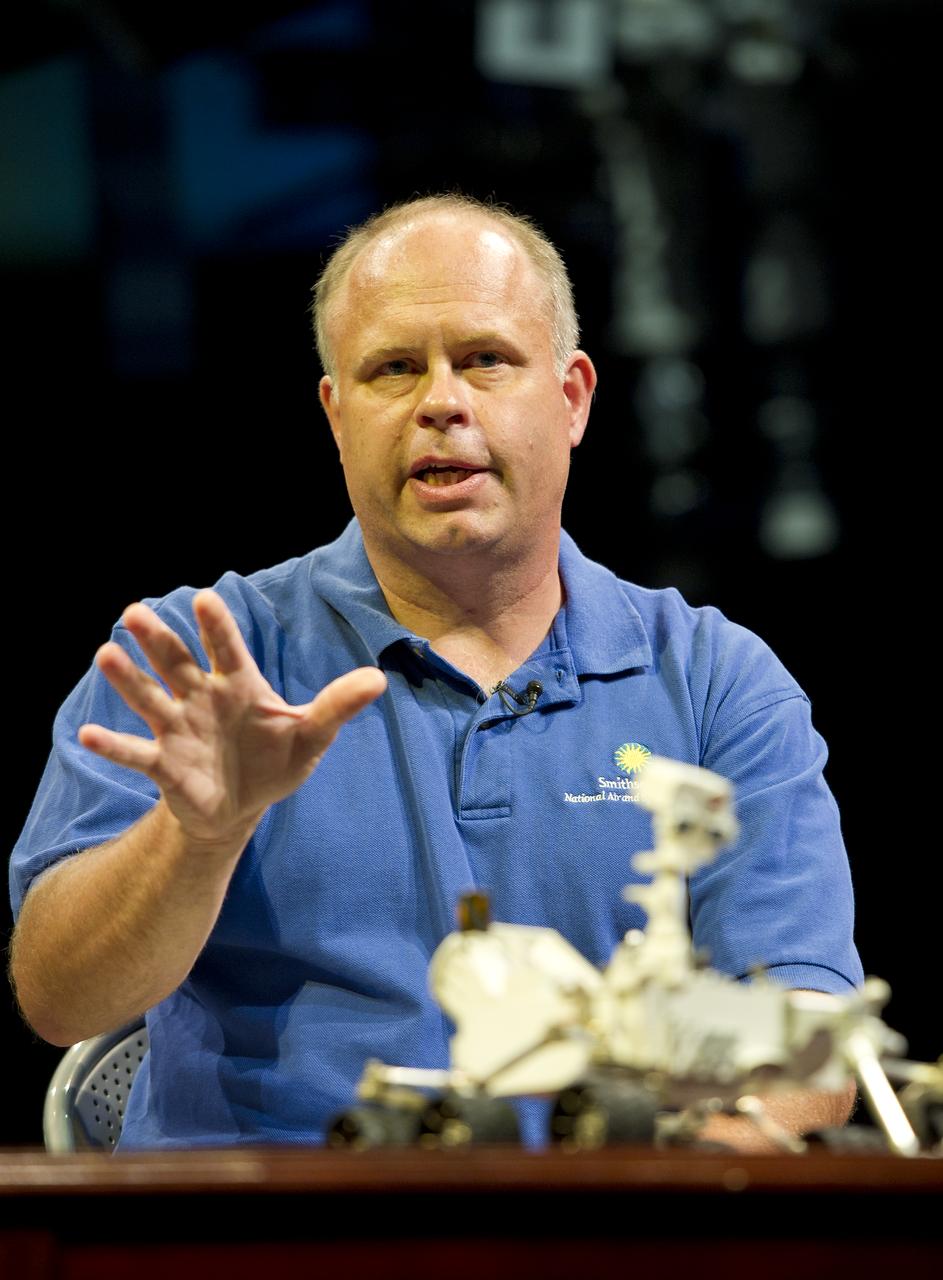
John Grant, geologist, Smithsonian National Air and Space Museum in Washington, speaks at a Mars Science Laboratory (MSL) press conference at the Smithsonian's National Air and Space Museum on Friday, July 22, 2011 in Washington. The Mars Science Laboratory (MSL), or Curiosity, is scheduled to launch late this year from NASA's Kennedy Space Center in Florida and land in August 2012. Curiosity is twice as long and more than five times as heavy as previous Mars rovers. The rover will study whether the landing region at Gale crater had favorable environmental conditions for supporting microbial life and for preserving clues about whether life ever existed. Photo Credit: (NASA/Carla Cioffi)
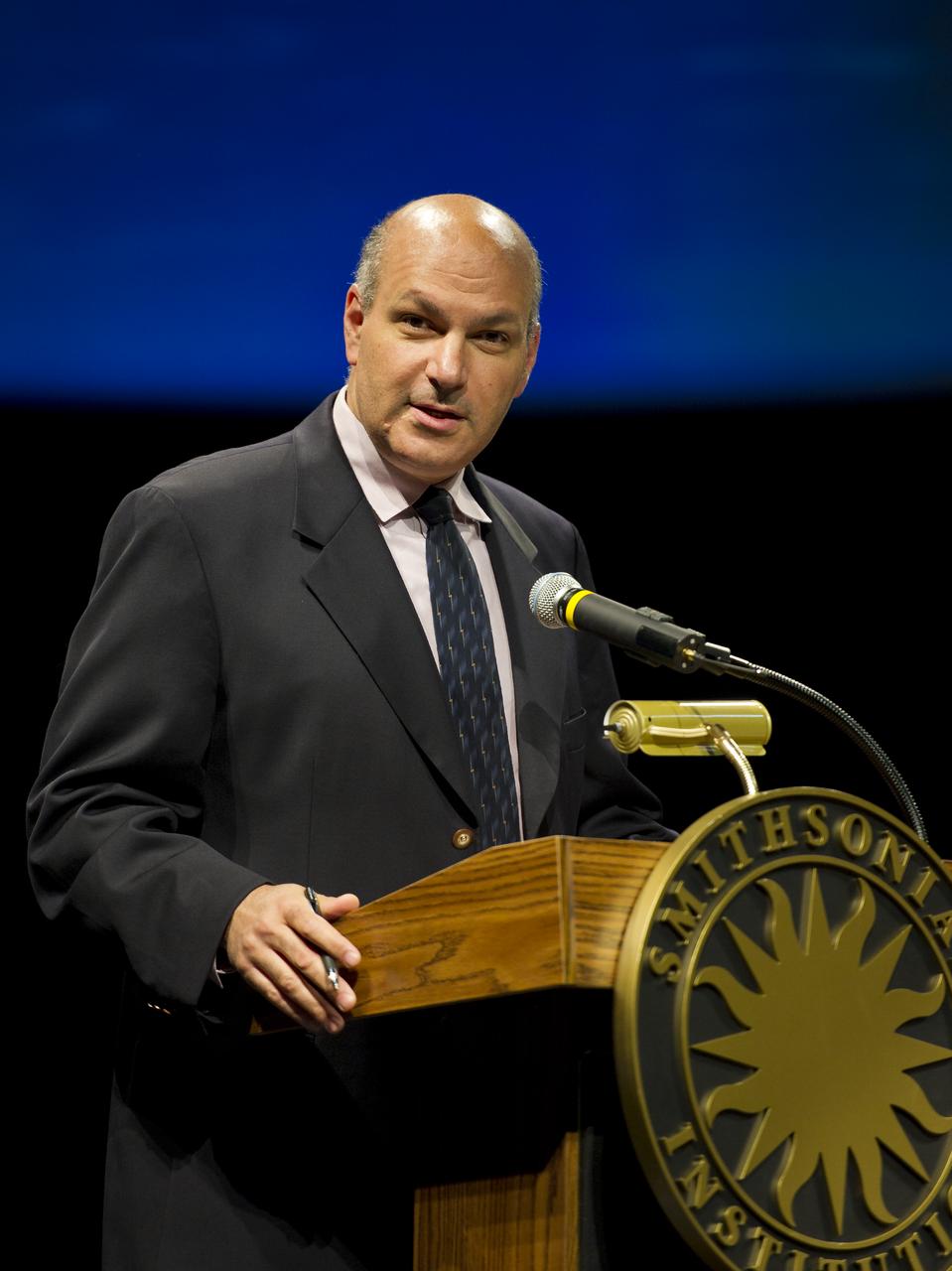
NASA chief scientist, Dr. Waleed Abdalati, speaks at a Mars Science Laboratory (MSL) press conference at the Smithsonian's National Air and Space Museum on Friday, July 22, 2011 in Washington. The Mars Science Laboratory (MSL), or Curiosity, is scheduled to launch late this year from NASA's Kennedy Space Center in Florida and land in August 2012. Curiosity is twice as long and more than five times as heavy as previous Mars rovers. The rover will study whether the landing region at Gale crater had favorable environmental conditions for supporting microbial life and for preserving clues about whether life ever existed. Photo Credit: (NASA/Carla Cioffi)

Mars Science Laboratory (MSL) Flexible Canopy Test
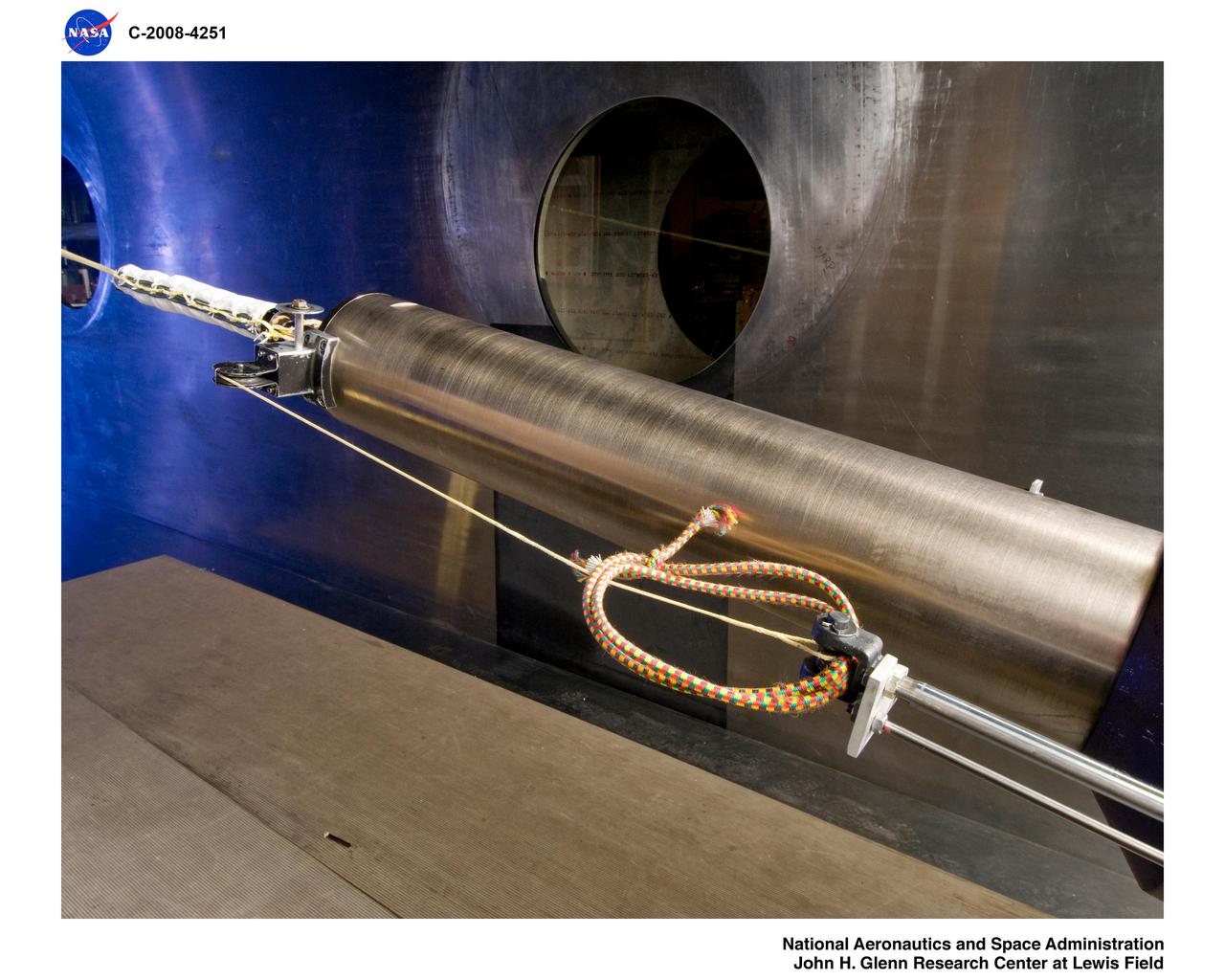
Mars Science Laboratory, MSL Flexible Canopy Test
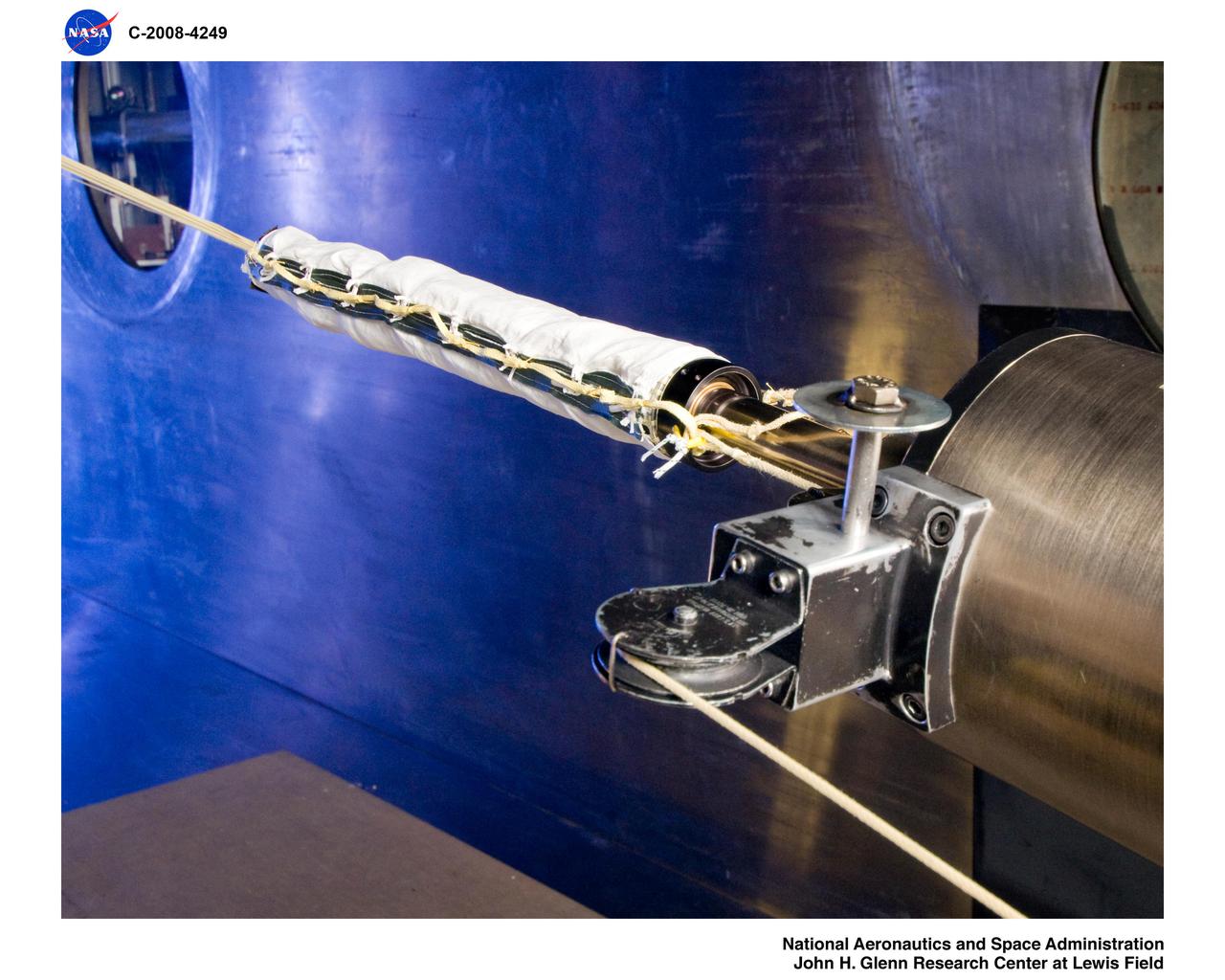
Mars Science Laboratory, MSL Flexible Canopy Test
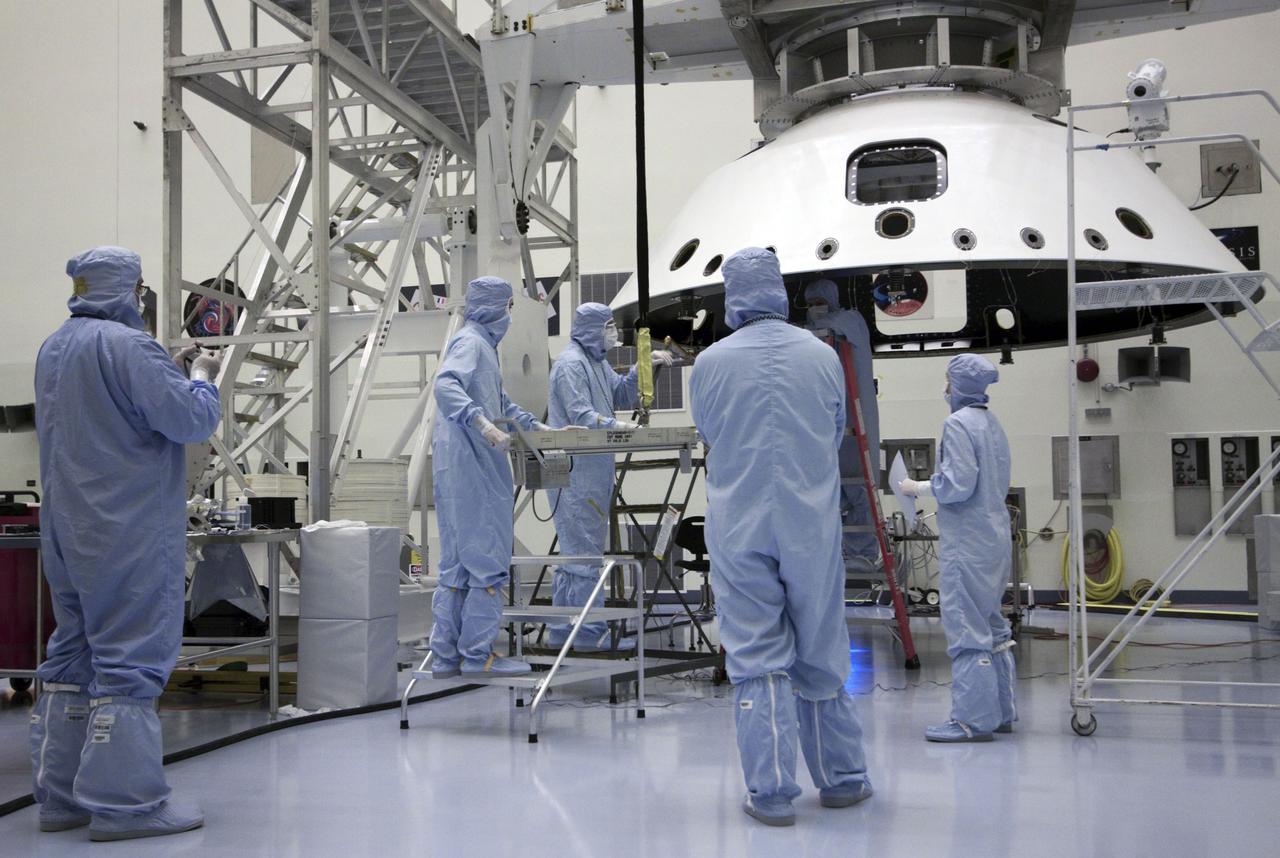
Cape Canaveral, Fla. -- At the Payload Hazardous Servicing Facility at NASA's Kennedy Space Center in Florida, technicians process the backshell for NASA's Mars Science Laboratory (MSL). The backshell carries the parachute and several components used during later stages of entry, descent and landing, and is one part of the spacecraft's heat shield which, when both are integrated is called an aeroshell. A United Launch Alliance Atlas V-541 configuration will be used to loft MSL into space. Curiosity’s 10 science instruments are designed to search for evidence on whether Mars has had environments favorable to microbial life, including chemical ingredients for life. The unique rover will use a laser to look inside rocks and release its gasses so that the rover’s spectrometer can analyze and send the data back to Earth. MSL is scheduled to launch from Cape Canaveral Air Force Station in Florida Nov. 25 with a window extending to Dec. 18 and arrival at Mars Aug. 2012. For more information, visit http://www.nasa.gov/msl. Photo credit: NASA/Jack Pfaller
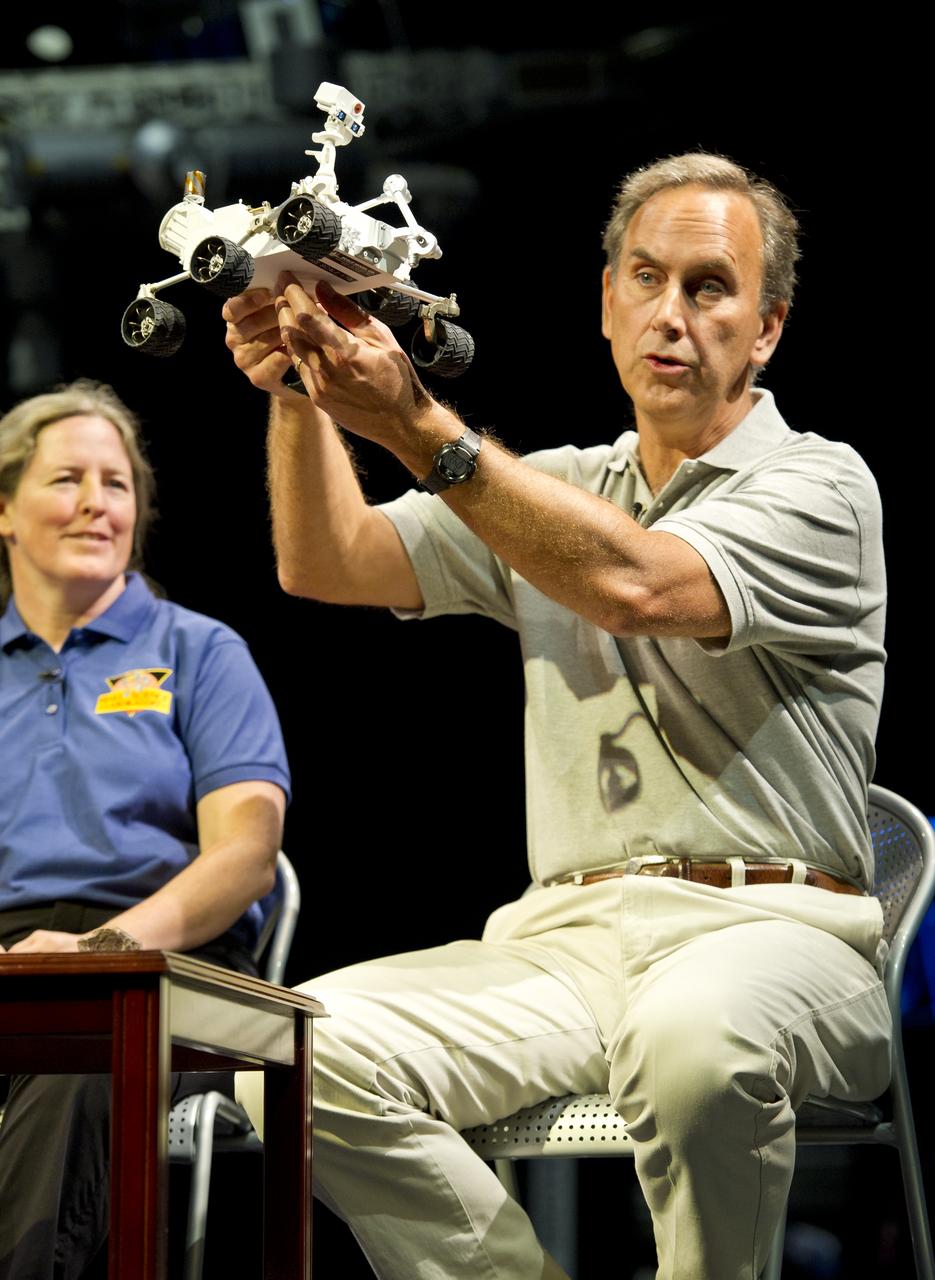
John Grotzinger, Mars Science Laboratory (MSL) project scientist, Jet Propulsion Lab (JPL), Pasadena, Calif., holds up a model of the MSL, or Curiosity, at a press conference at the Smithsonian's National Air and Space Museum on Friday, July 22, 2011 in Washington. The MSL is scheduled to launch late this year from NASA's Kennedy Space Center in Florida and land in August 2012. Curiosity is twice as long and more than five times as heavy as previous Mars rovers. The rover will study whether the landing region at Gale crater had favorable environmental conditions for supporting microbial life and for preserving clues about whether life ever existed. Photo Credit: (NASA/Carla Cioffi)
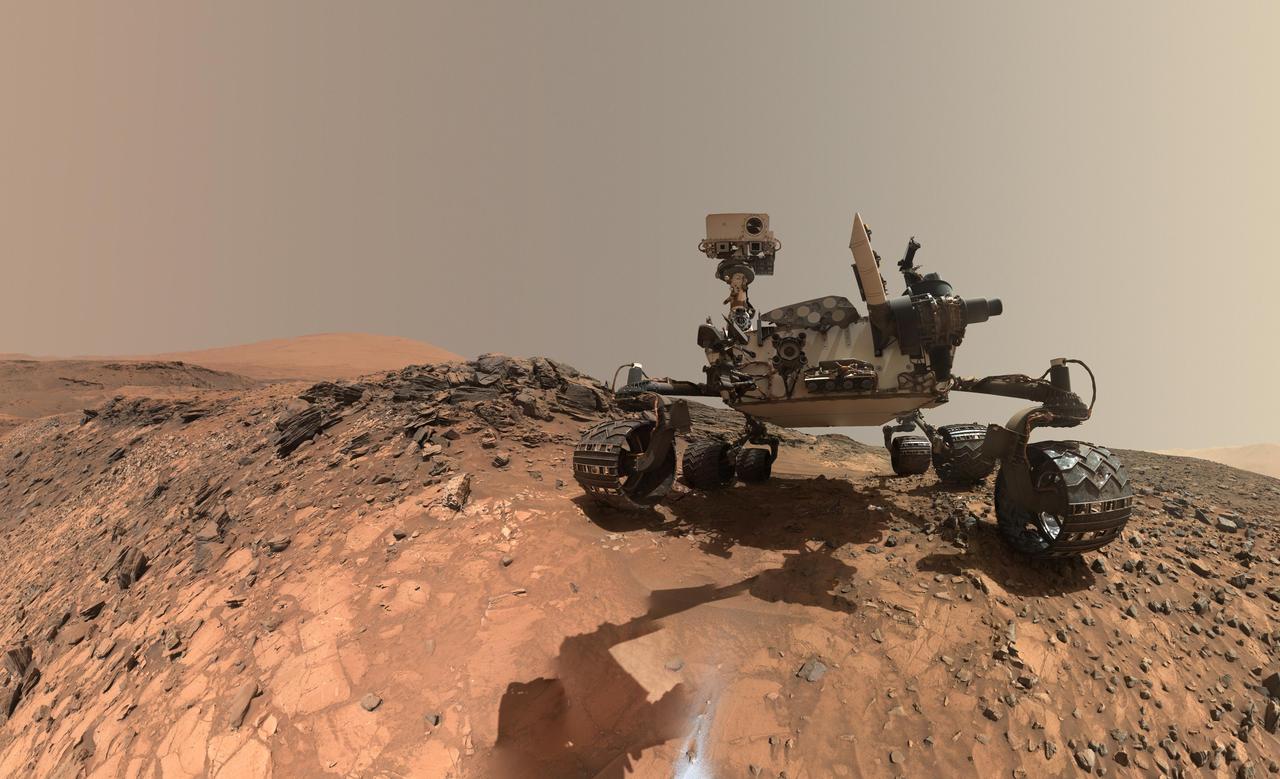
This low-angle self-portrait of NASA's Curiosity Mars rover shows the vehicle at the site from which it reached down to drill into a rock target called "Buckskin" on lower Mount Sharp. The selfie combines several component images taken by Curiosity's Mars Hand Lens Imager (MAHLI) on Aug. 5, 2015, during the 1,065th Martian day, or sol, of the rover's work on Mars. For scale, the rover's wheels are 20 inches (50 centimeters) in diameter and about 16 inches (40 centimeters) wide. This view is a portion of a larger panorama available at PIA19807. A close look reveals a small rock stuck onto Curiosity's left middle wheel (on the right in this head-on view). The rock had been seen previously during periodic monitoring of wheel condition about three weeks earlier, in the MAHLI raw image at http://mars.nasa.gov/msl/multimedia/raw/?rawid=1046MH0002640000400290E01_DXXX&s=1046. MAHLI is mounted at the end of the rover's robotic arm. For this self-portrait, the rover team positioned the camera lower in relation to the rover body than for any previous full self-portrait of Curiosity. This yielded a view that includes the rover's "belly," as in a partial self-portrait (/catalog/PIA16137) taken about five weeks after Curiosity's August 2012 landing inside Mars' Gale Crater. The selfie at Buckskin does not include the rover's robotic arm beyond a portion of the upper arm held nearly vertical from the shoulder joint. With the wrist motions and turret rotations used in pointing the camera for the component images, the arm was positioned out of the shot in the frames or portions of frames used in this mosaic. This process was used previously in acquiring and assembling Curiosity self-portraits taken at sample-collection sites "Rocknest" (PIA16468), "John Klein" (PIA16937), "Windjana" (PIA18390) and "Mojave" (PIA19142). MAHLI was built by Malin Space Science Systems, San Diego. NASA's Jet Propulsion Laboratory, a division of the California Institute of Technology in Pasadena, manages the Mars Science Laboratory Project for the NASA Science Mission Directorate, Washington. JPL designed and built the project's Curiosity rover. MAHLI was built by Malin Space Science Systems, San Diego. NASA's Jet Propulsion Laboratory, a division of the California Institute of Technology in Pasadena, manages the Mars Science Laboratory Project for the NASA Science Mission Directorate, Washington. JPL designed and built the project's Curiosity rover. http://photojournal.jpl.nasa.gov/catalog/PIA19808
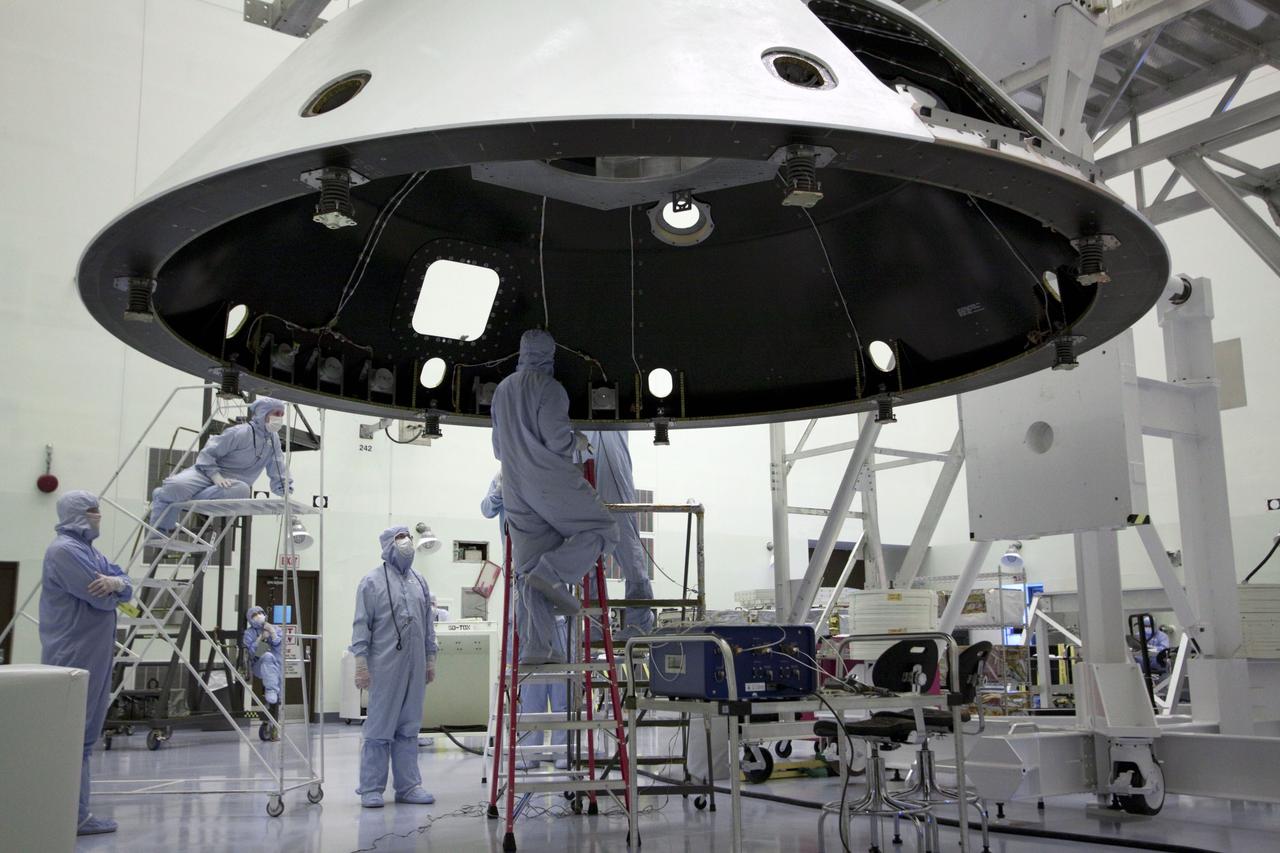
Cape Canaveral, Fla. -- At the Payload Hazardous Servicing Facility at NASA's Kennedy Space Center in Florida, technicians process the backshell for NASA's Mars Science Laboratory (MSL). The backshell carries the parachute and several components used during later stages of entry, descent and landing, and is one part of the spacecraft's heat shield which, when both are integrated is called an aeroshell. MSL's components include a compact car-sized rover, Curiosity, which has 10 science instruments designed to search for evidence on whether Mars has had environments favorable to microbial life, including chemical ingredients for life. The unique rover will use a laser to look inside rocks and release its gasses so that the rover’s spectrometer can analyze and send the data back to Earth. Launch of MSL aboard a United Launch Alliance Atlas V rocket is scheduled for Nov. 25 from Space Launch Complex 41 on Cape Canaveral Air Force Station in Florida. For more information, visit http://www.nasa.gov/msl. Photo credit: NASA/Jack Pfaller
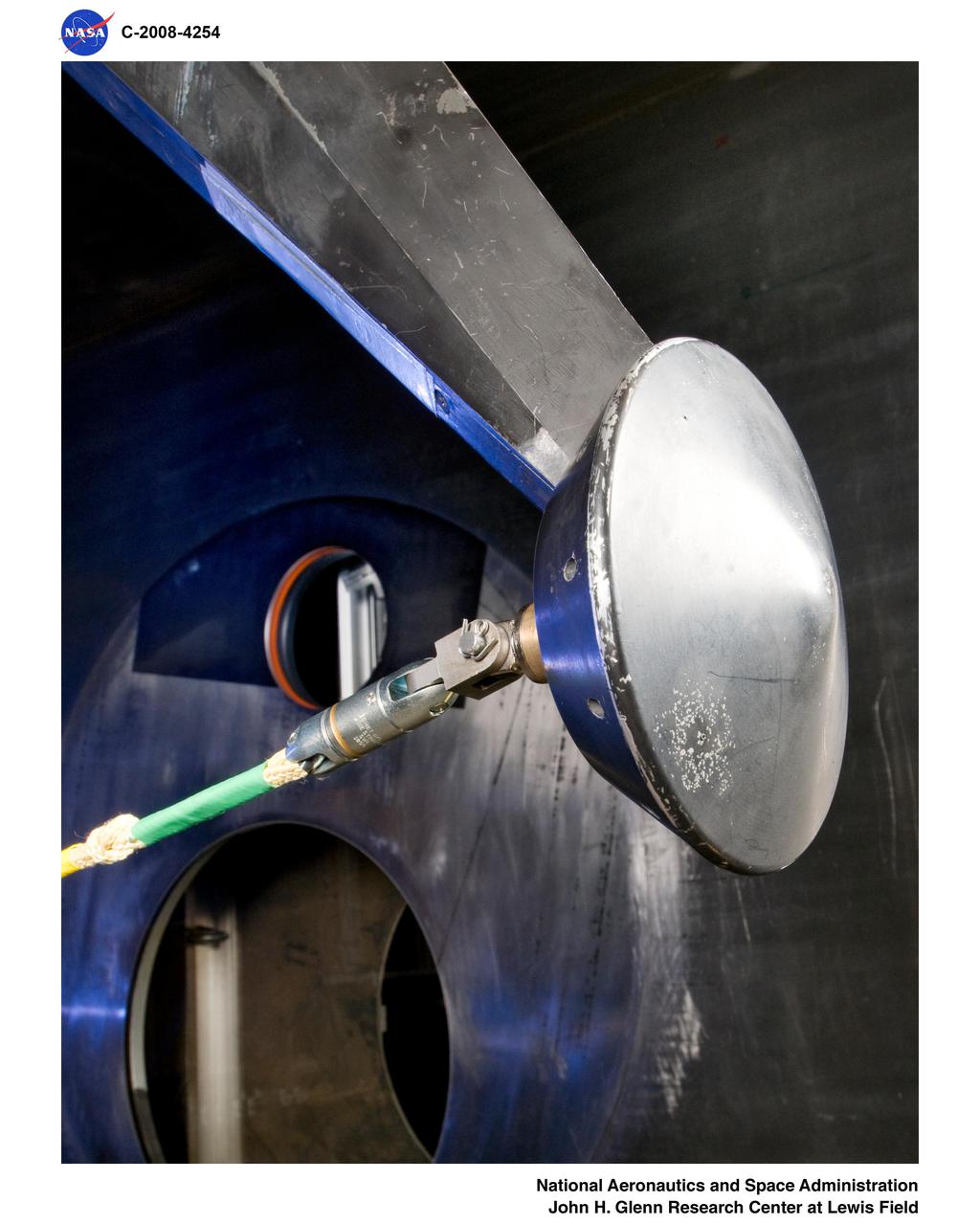
Mars Science Laboratory, MSL Flexible Canopy Test in the Glenn Research Center, 10x10 Supersonic Wind Tunnel
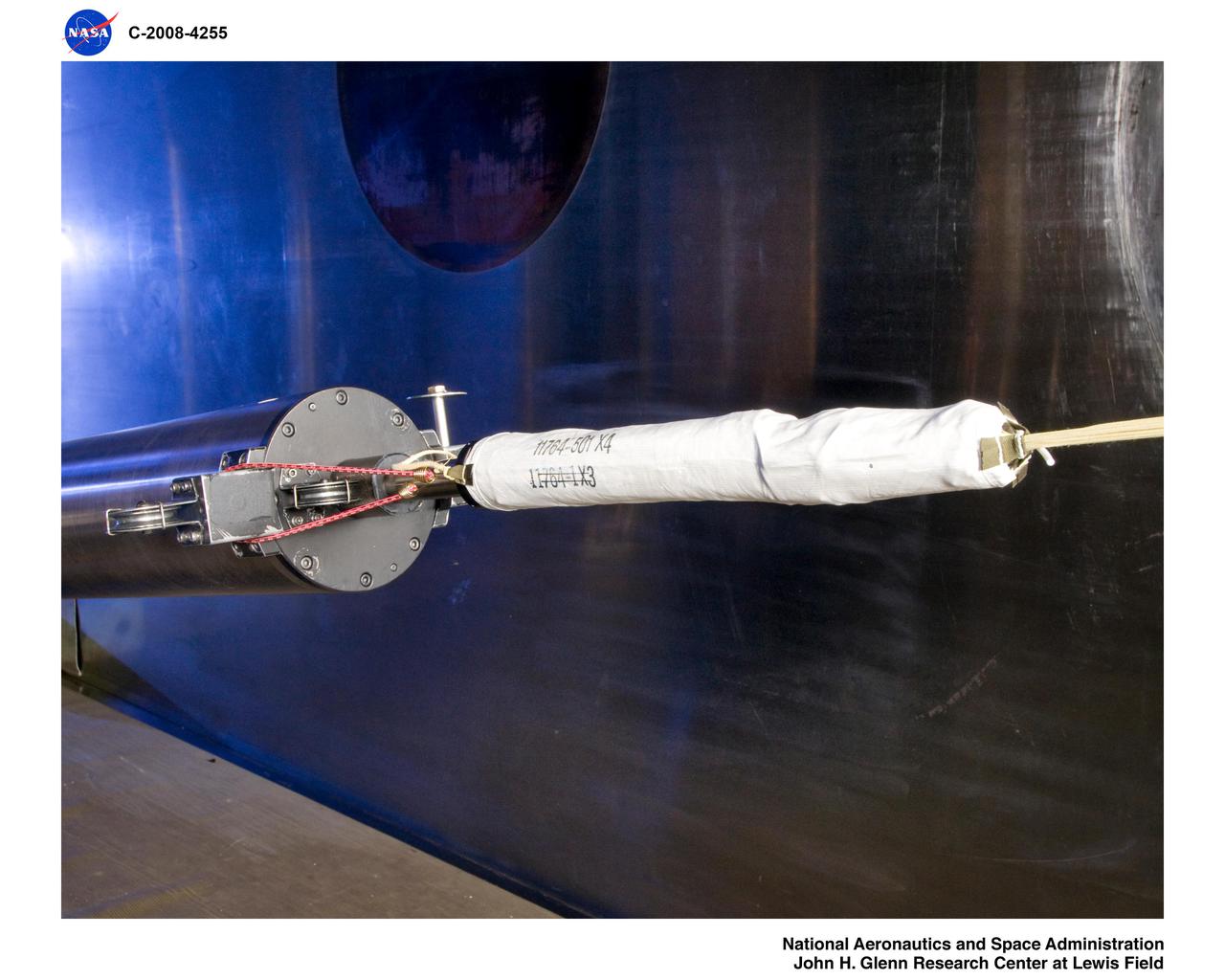
Mars Science Laboratory, MSL Flexible Canopy Test in the Glenn Research Center, 10x10 Supersonic Wind Tunnel
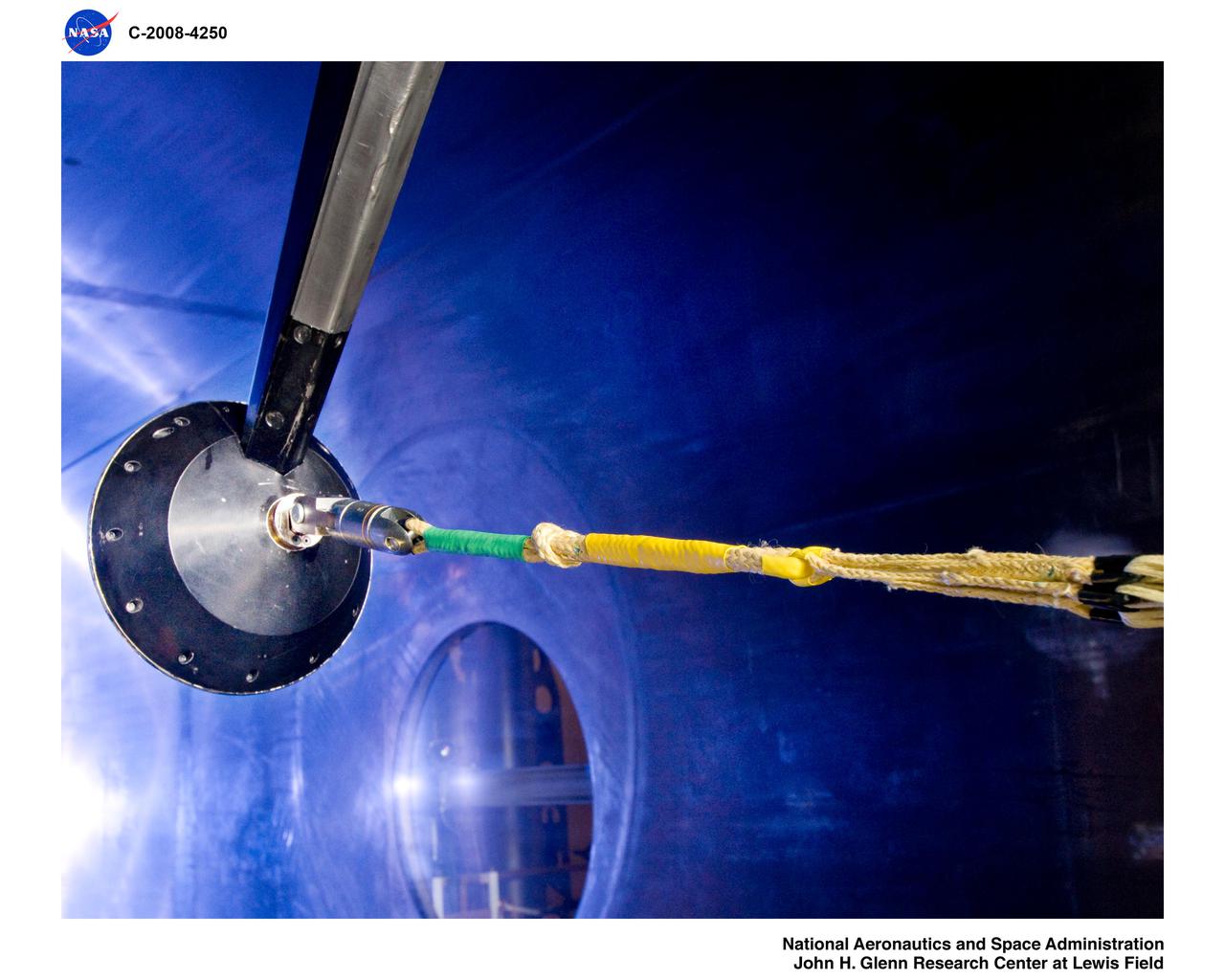
Mars Science Laboratory, MSL Flexible Canopy Test in the Glenn Research Center, 10x10 Supersonic Wind Tunnel
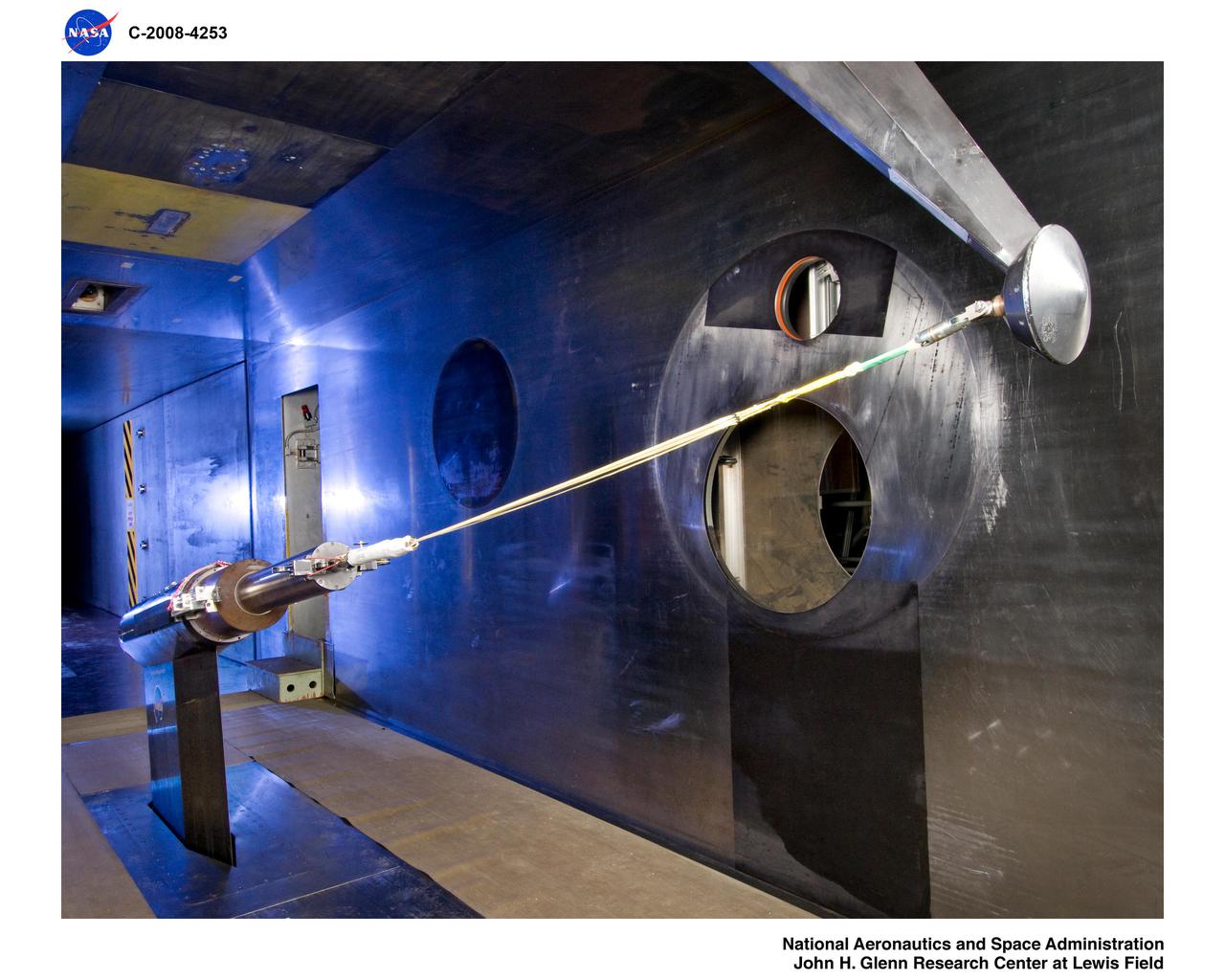
Mars Science Laboratory, MSL Flexible Canopy Test in the Glenn Research Center, 10x10 Supersonic Wind Tunnel
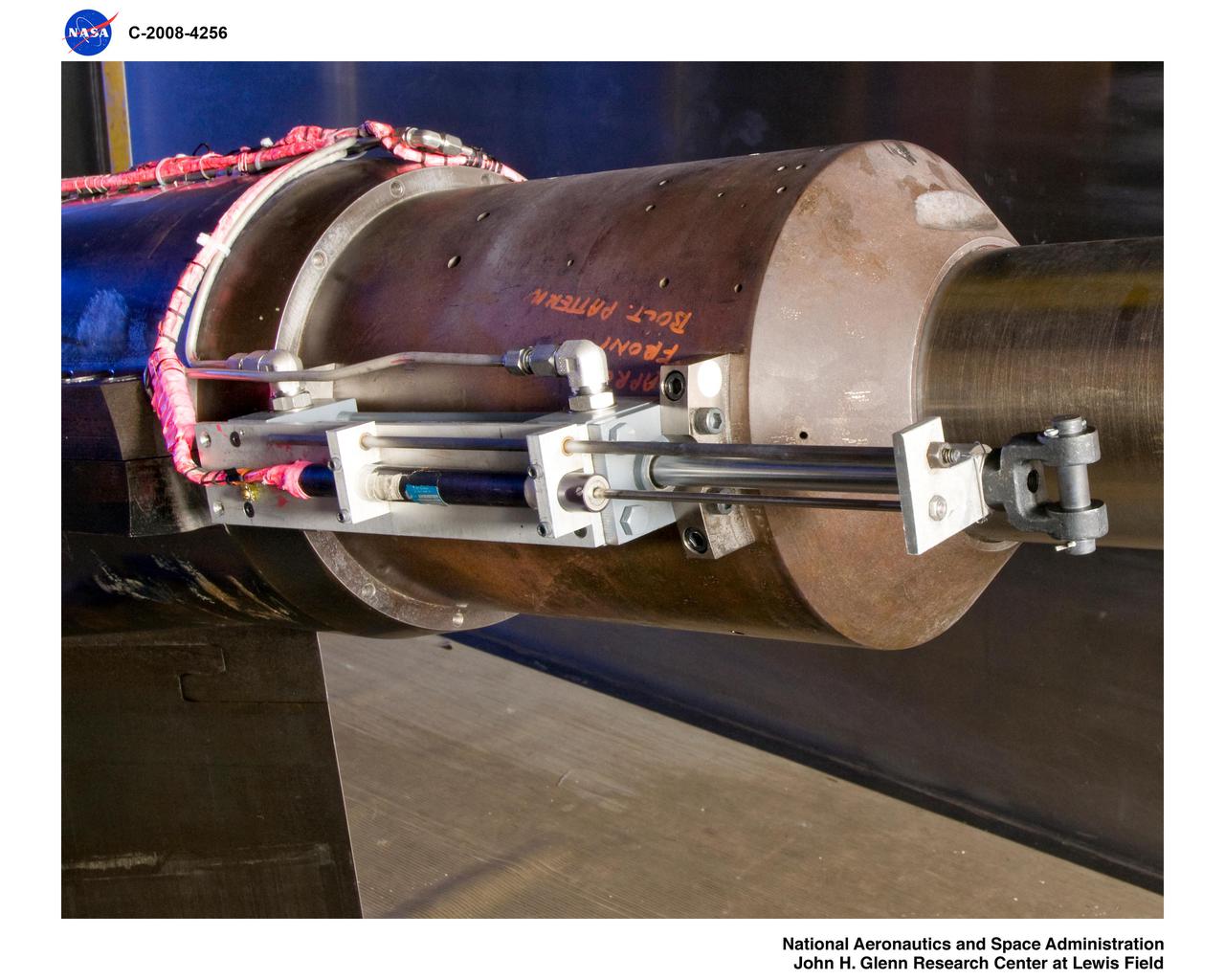
Mars Science Laboratory, MSL Flexible Canopy Test in the Glenn Research Center, 10x10 Supersonic Wind Tunnel
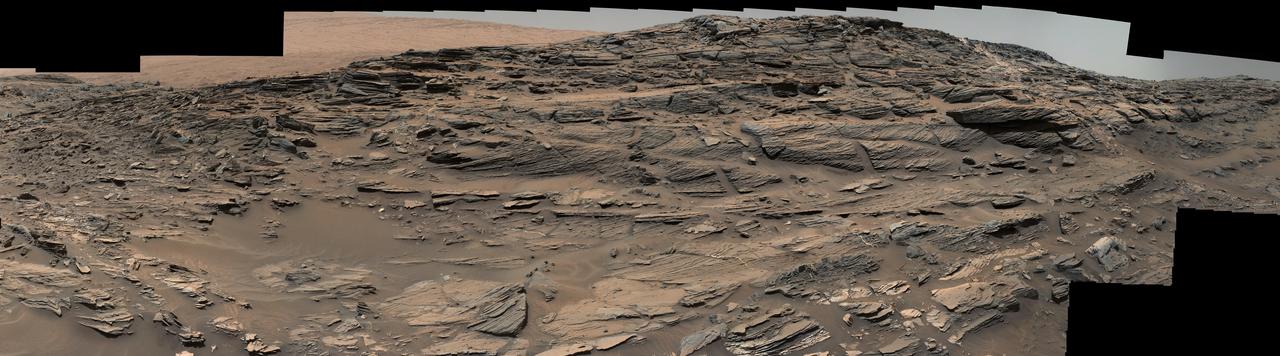
Large-scale crossbedding in the sandstone of this ridge on a lower slope of Mars' Mount Sharp is common in petrified sand dunes. The scene combines multiple images taken with both cameras of the Mast Camera (Mastcam) on Curiosity on Aug. 27, 2015, during the 1,087th Martian day, or sol of the rover's work on Mars. It spans from east, at left, to south-southwest. Figure 1 includes a scale bar of 200 centimeters (about 6.6 feet). Sets of bedding laminations lie at angles to each other. Such crossbedding is common in wind-deposited sandstone of the U.S. Southwest. An example from Utah is pictured at http://3dparks.wr.usgs.gov/zion/html2/3d153.html. The sandstone in the image from Mars is part of the Stimson unit on Mount Sharp. The color of the Mastcam mosaic has been approximately white-balanced to resemble how the scene would appear under daytime lighting conditions on Earth. The component images in the center and upper portion of the mosaic are from Mastcam's right-eye camera, which is equipped with a 100-millimeter-focal-length telephoto lens. Images used in the foreground and at far left and right were taken with Mastcam's left-eye camera, using a wider-angle, 34-millimeter lens. Malin Space Science Systems, San Diego, built and operates Curiosity's Mastcam. NASA's Jet Propulsion Laboratory, a division of the California Institute of Technology, Pasadena, built the rover and manages the project for NASA's Science Mission Directorate, Washington. For more information about Curiosity, visit http://www.nasa.gov/msl and http://mars.jpl.nasa.gov/msl . http://photojournal.jpl.nasa.gov/catalog/PIA19818
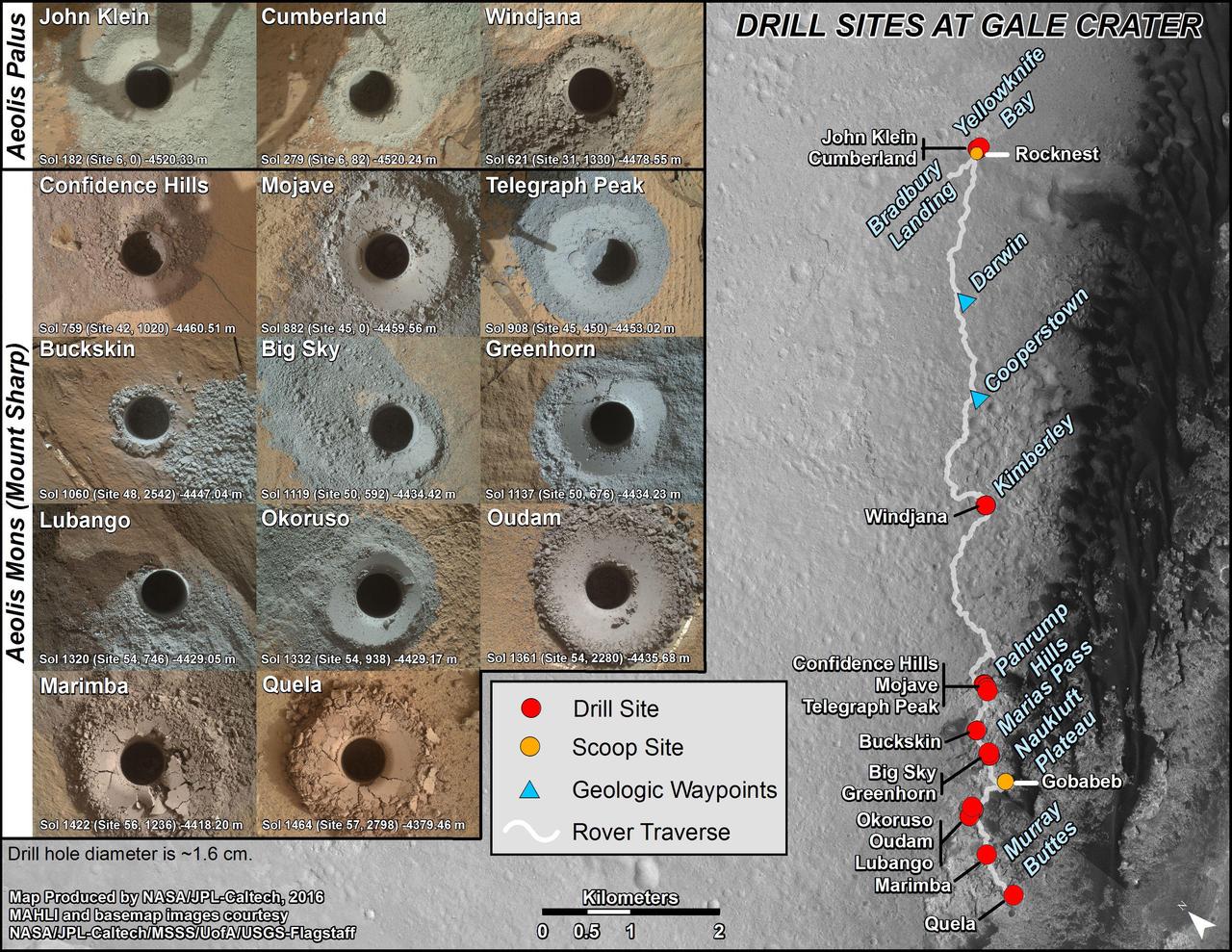
This graphic maps locations of the sites where NASA's Curiosity Mars rover collected its first 18 rock or soil samples for analysis by laboratory instruments inside the vehicle. It also presents images of the drilled holes where 14 rock-powder samples were acquired. Curiosity scooped two soil samples at each of the other two sites: Rocknest and Gobabeb. The diameter of each drill hole is about 0.6 inch (1.6 centimeters), slightly smaller than a U.S. dime. The images used here are raw color, as recorded by the rover's Mars Hand Lens Imager (MAHLI) camera. Notice the differences in color of the material at different drilling sites. For the map, north is toward upper left corner. The scale bar represents 2 kilometers (1.2 miles). The base map is from the High Resolution Imaging Science Experiment (HiRISE) camera on NASA's Mars Reconnaissance Orbiter. The latest sample site included is "Quela,"where Curiosity drilled into bedrock of the Murray formation on Sept. 18, 2016, during the 1,464th Martian day, or sol, of the mission. Curiosity landed in August 2012 on the plain (named Aeolis Palus) near Mount Sharp (or Aeolis Mons). More drilling samples collected by MSL are available at http://photojournal.jpl.nasa.gov/catalog/PIA20845
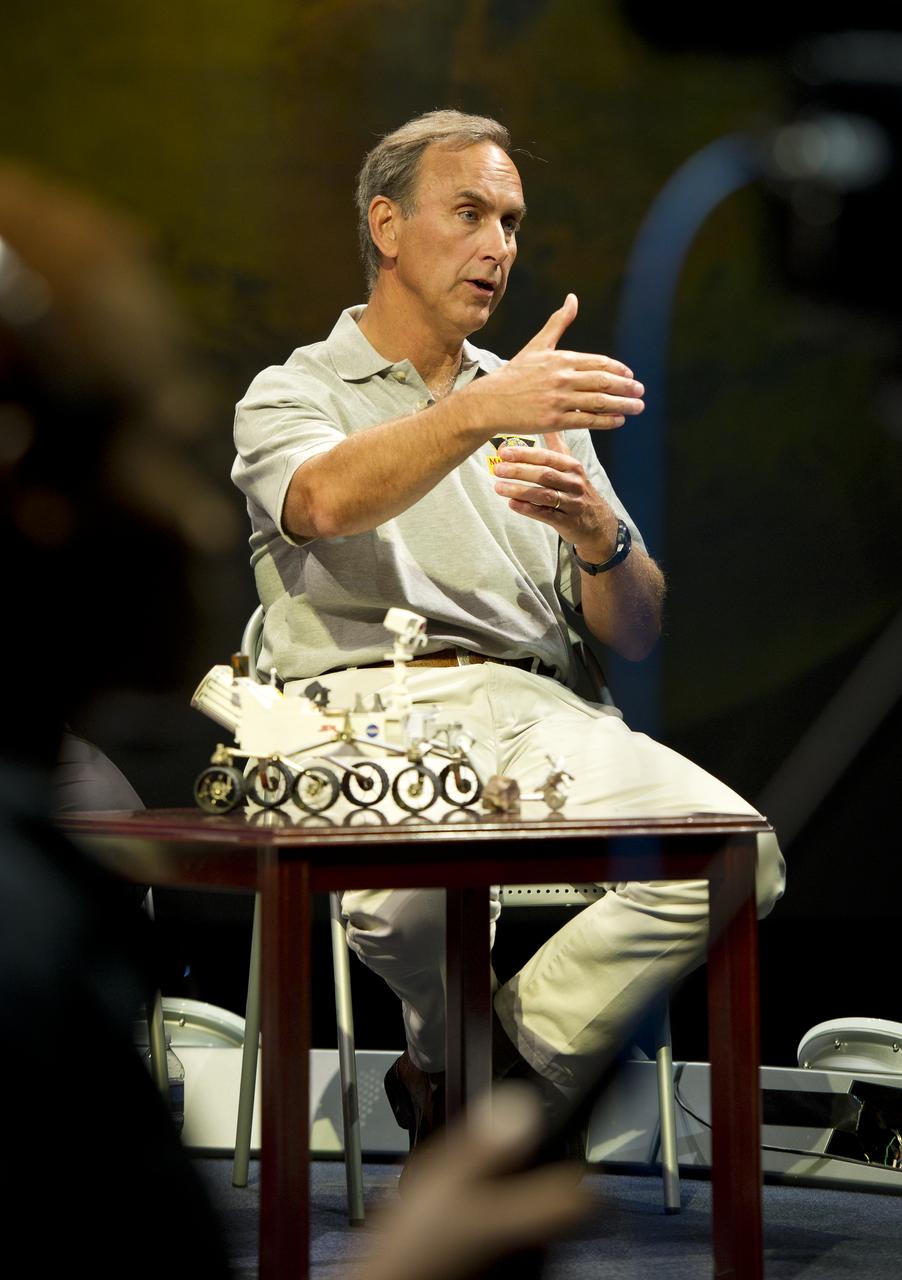
John Grotzinger, Mars Science Laboratory (MSL) project scientist, Jet Propulsion Lab (JPL), Pasadena, Calif., answers a reporter's question at a press conference at the Smithsonian's National Air and Space Museum on Friday, July 22, 2011 in Washington. The MSL is scheduled to launch late this year from NASA's Kennedy Space Center in Florida and land in August 2012. Curiosity is twice as long and more than five times as heavy as previous Mars rovers. The rover will study whether the landing region at Gale crater had favorable environmental conditions for supporting microbial life and for preserving clues about whether life ever existed. Photo Credit: (NASA/Carla Cioffi)
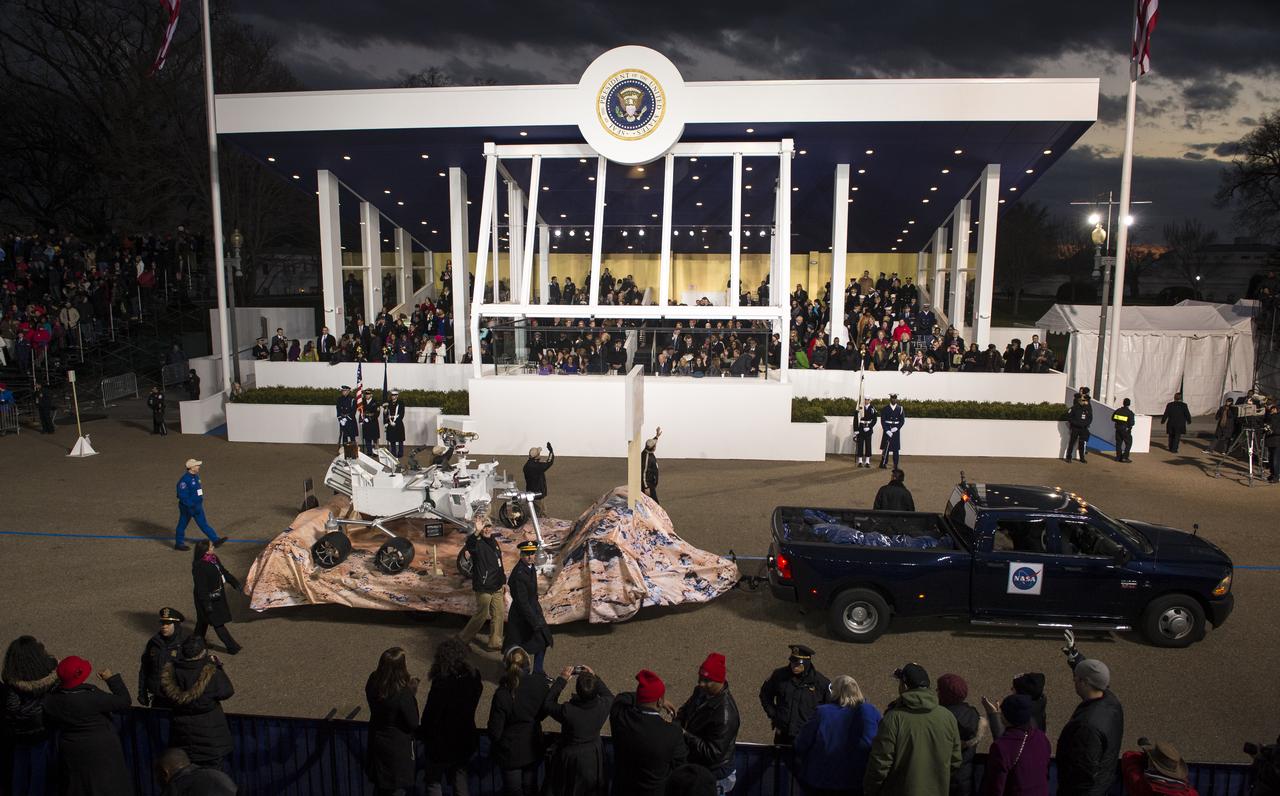
A replica of NASA's Curiosity Rover and members of the Mars Science Laboratory (MSL) science team pass the Presidential viewing stand and President Barack Obama during the inaugural parade honoring Obama, Monday Jan. 21, 2013, in Washington. Obama was sworn-in as the nation's 44th President earlier in the day. Photo Credit: (NASA/Bill Ingalls)
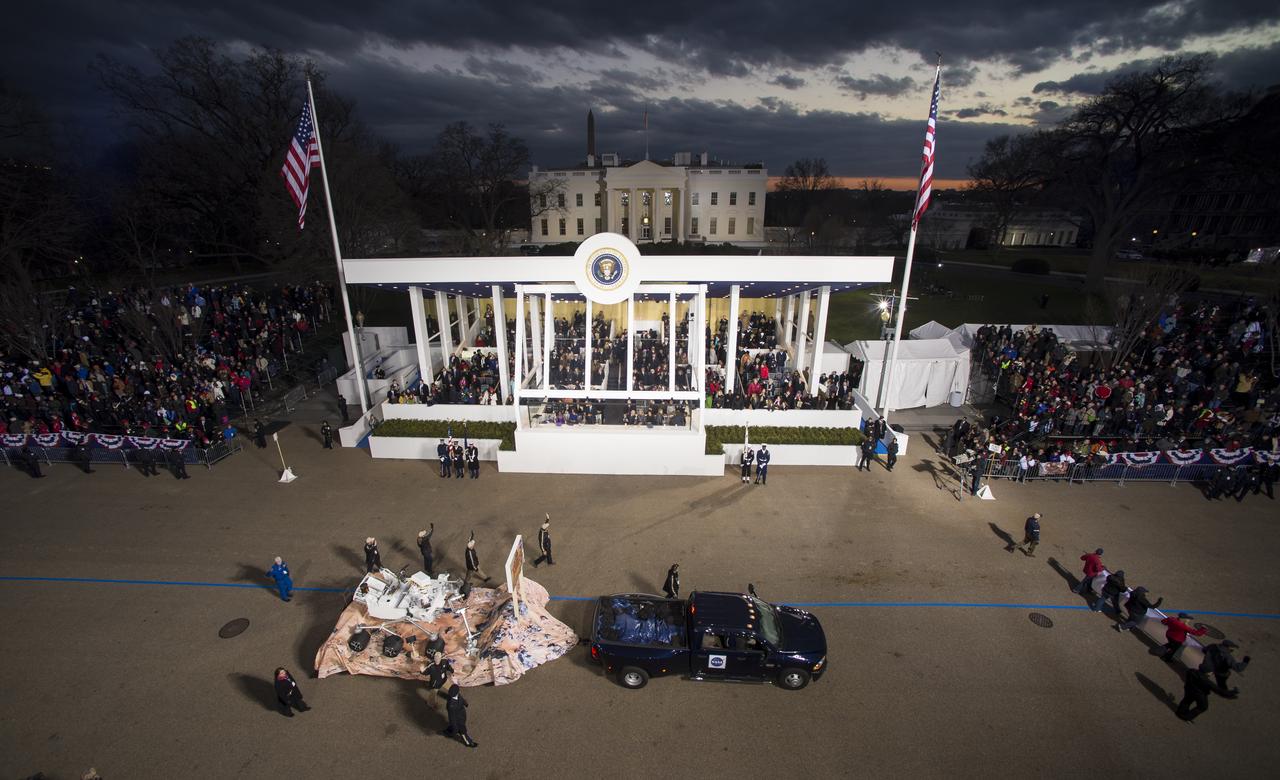
A replica of NASA's Curiosity Rover and members of the Mars Science Laboratory (MSL) science team pass the Presidential viewing stand and President Barack Obama during the inaugural parade honoring Obama, Monday Jan. 21, 2013, in Washington. Obama was sworn-in as the nation's 44th President earlier in the day. Photo Credit: (NASA/Bill Ingalls)
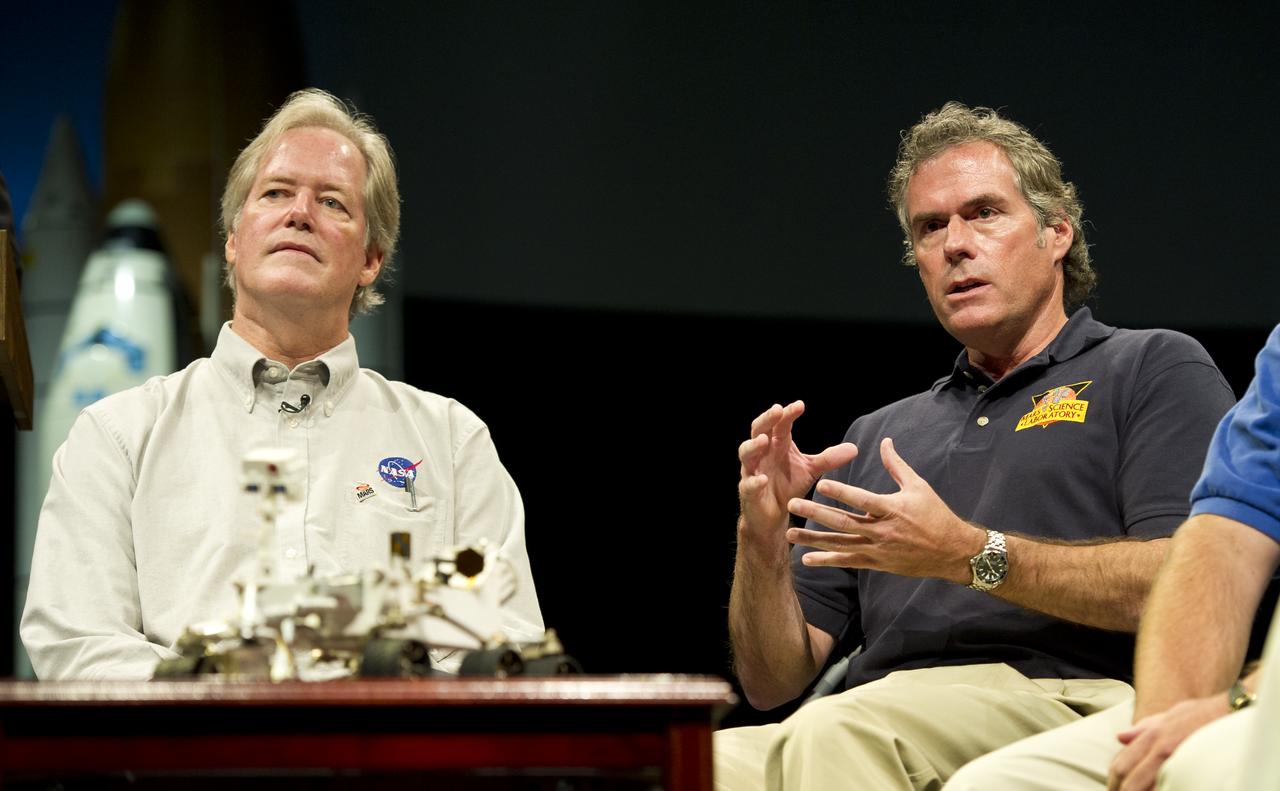
Michael Watkins (right), mission manager and Mars Science Laboratory (MSL) engineer, Jet Propulsion Lab, Pasadena, Calif., speaks at a press conference, as Michael Meyer, Mars Exploration Program lead scientist looks on, at the Smithsonian's National Air and Space Museum on Friday, July 22, 2011 in Washington. The MSL, or Curiosity, is scheduled to launch late this year from NASA's Kennedy Space Center in Florida and land in August 2012. Curiosity is twice as long and more than five times as heavy as previous Mars rovers. The rover will study whether the landing region at Gale crater had favorable environmental conditions for supporting microbial life and for preserving clues about whether life ever existed. Photo Credit: (NASA/Carla Cioffi)
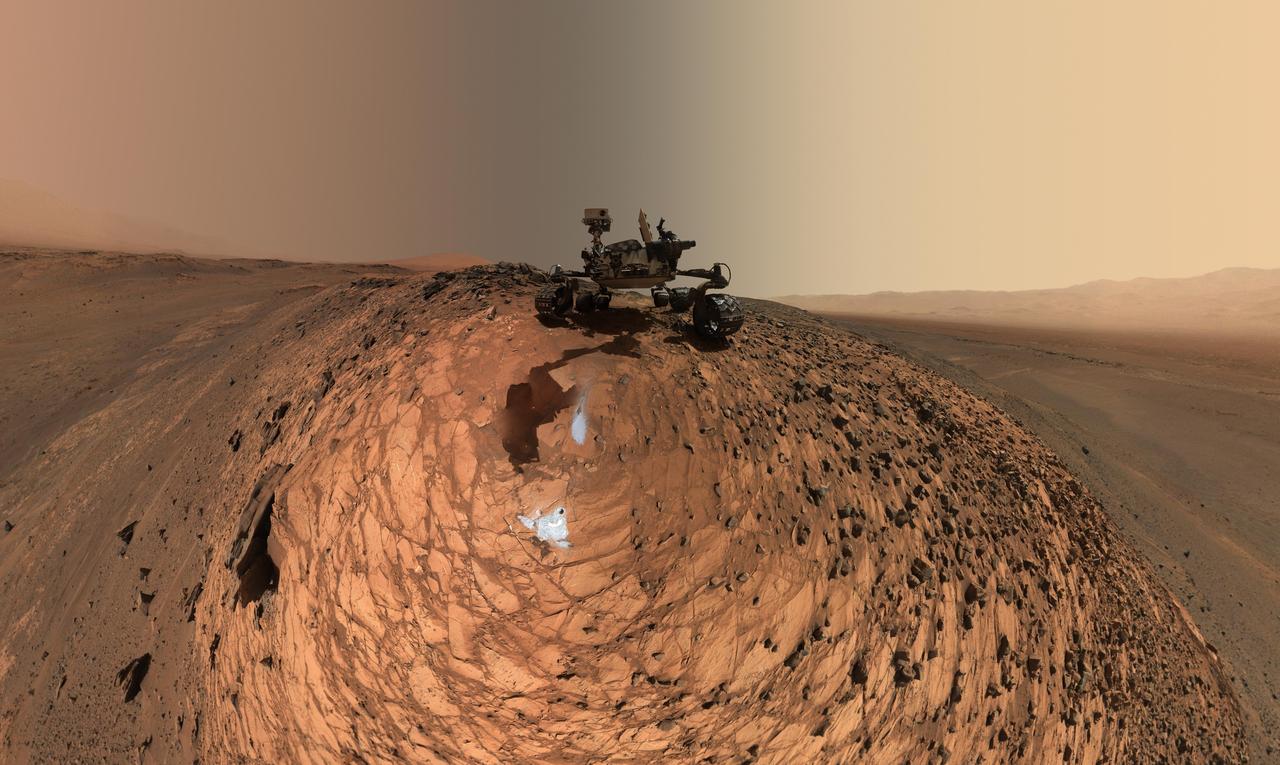
This low-angle self-portrait of NASA's Curiosity Mars rover shows the vehicle above the "Buckskin" rock target, where the mission collected its seventh drilled sample. The site is in the "Marias Pass" area of lower Mount Sharp. The scene combines dozens of images taken by Curiosity's Mars Hand Lens Imager (MAHLI) on Aug. 5, 2015, during the 1,065th Martian day, or sol, of the rover's work on Mars. The 92 component images are among MAHLI Sol 1065 raw images at http://mars.nasa.gov/msl/multimedia/raw/?s=1065&camera=MAHLI. For scale, the rover's wheels are 20 inches (50 centimeters) in diameter and about 16 inches (40 centimeters) wide. Curiosity drilled the hole at Buckskin during Sol 1060 (July 30, 2015). Two patches of pale, powdered rock material pulled from Buckskin are visible in this scene, in front of the rover. The patch closer to the rover is where the sample-handling mechanism on Curiosity's robotic arm dumped collected material that did not pass through a sieve in the mechanism. Sieved sample material was delivered to laboratory instruments inside the rover. The patch farther in front of the rover, roughly triangular in shape, shows where fresh tailings spread downhill from the drilling process. The drilled hole, 0.63 inch (1.6 centimeters) in diameter, is at the upper point of the tailings. The rover is facing northeast, looking out over the plains from the crest of a 20-foot (6-meter) hill that it climbed to reach the Marias Pass area. The upper levels of Mount Sharp are visible behind the rover, while Gale Crater's northern rim dominates the horizon on the left and right of the mosaic. A portion of this selfie cropped tighter around the rover is at PIA19808. Another version of the wide view, presented in a projection that shows the horizon as a circle, is at PIA19806. MAHLI is mounted at the end of the rover's robotic arm. For this self-portrait, the rover team positioned the camera lower in relation to the rover body than for any previous full self-portrait of Curiosity. This yielded a view that includes the rover's "belly," as in a partial self-portrait (PIA16137) taken about five weeks after Curiosity's August 2012 landing inside Mars' Gale Crater. Before sending Curiosity the arm-positioning commands for this Buckskin belly panorama, the team previewed the low-angle sequence of camera pointings on a test rover in California. A mosaic from that test is at PIA19810. This selfie at Buckskin does not include the rover's robotic arm beyond a portion of the upper arm held nearly vertical from the shoulder joint. Shadows from the rest of the arm and the turret of tools at the end of the arm are visible on the ground. With the wrist motions and turret rotations used in pointing the camera for the component images, the arm was positioned out of the shot in the frames or portions of frames used in this mosaic. This process was used previously in acquiring and assembling Curiosity self-portraits taken at sample-collection sites "Rocknest" (PIA16468), "John Klein" (PIA16937), "Windjana" (PIA18390) and "Mojave" (PIA19142). MAHLI was built by Malin Space Science Systems, San Diego. NASA's Jet Propulsion Laboratory, a division of the California Institute of Technology in Pasadena, manages the Mars Science Laboratory Project for the NASA Science Mission Directorate, Washington. JPL designed and built the project's Curiosity rover. http://photojournal.jpl.nasa.gov/catalog/PIA19807
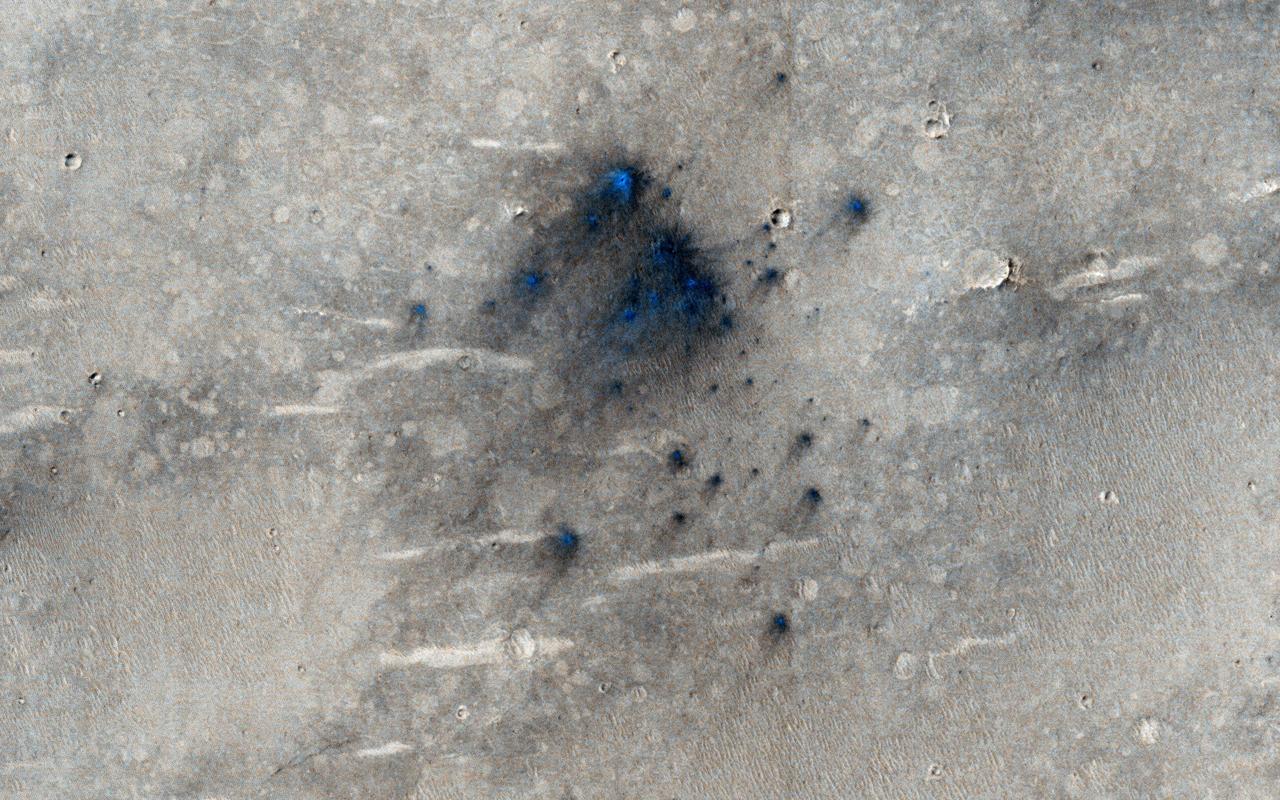
This cluster of small impact craters was spotted by the Context Camera on Mars Reconnaissance Orbiter in the region northwest of Gale Crater, the landing site of the Mars Science Laboratory MSL rover, Curiosity.
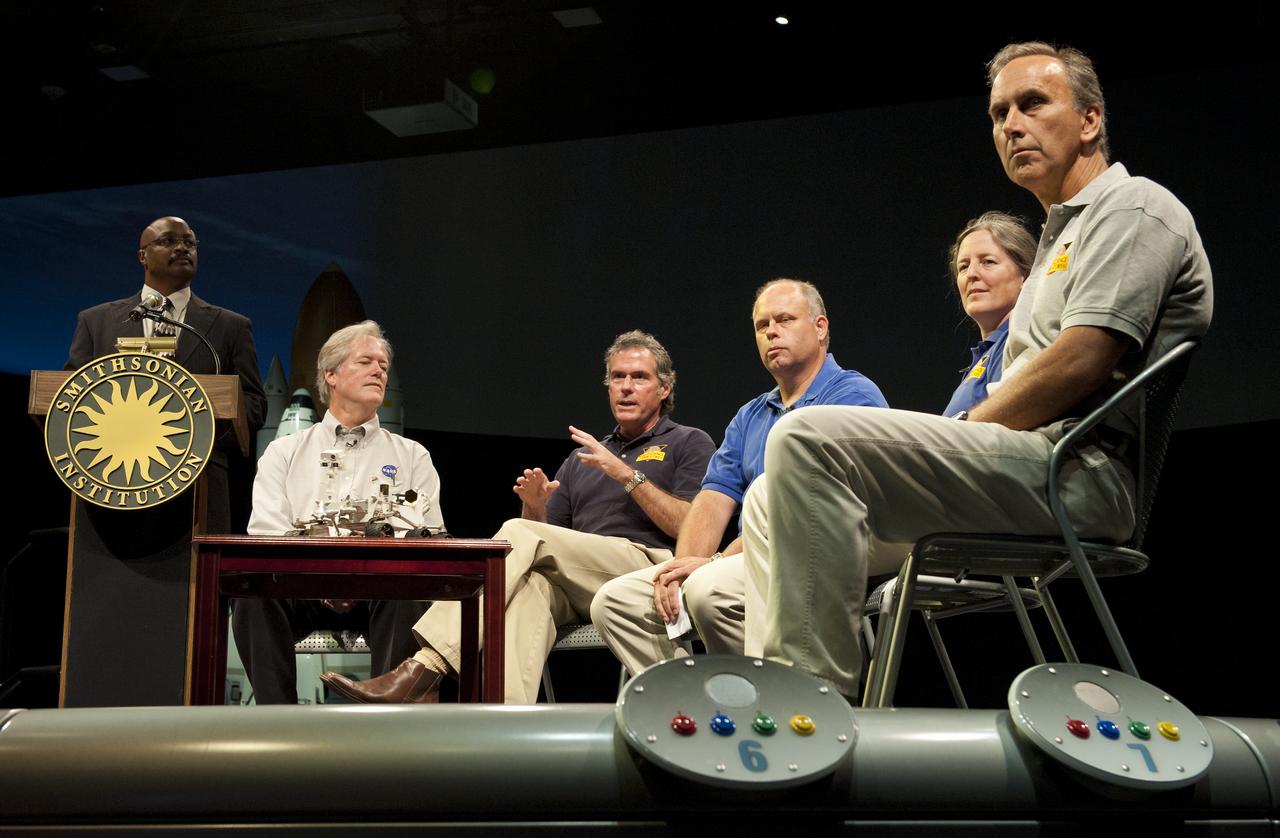
Michael Watkins (third from left), mission manager and project engineer, Mars Science Laboratory (MSL), Jet Propulsion Lab, Pasadena, Calif., speaks at a press conference at the Smithsonian's National Air and Space Museum on Friday, July 22, 2011 in Washington. From left to right, Watkins is joined by Dwayne Brown, NASA Headquarters public affairs officer; Michael Meyer, lead scientist Mars Exploration Program, NASA Headquarters; Watkins; John Grant, geologist, Smithsonian National Air and Space Museum in Washington; Dawn Sumner, geologist, University of California, Davis and John Grotzinger, MSL project scientist, JPL. Photo Credit: (NASA/Carla Cioffi)
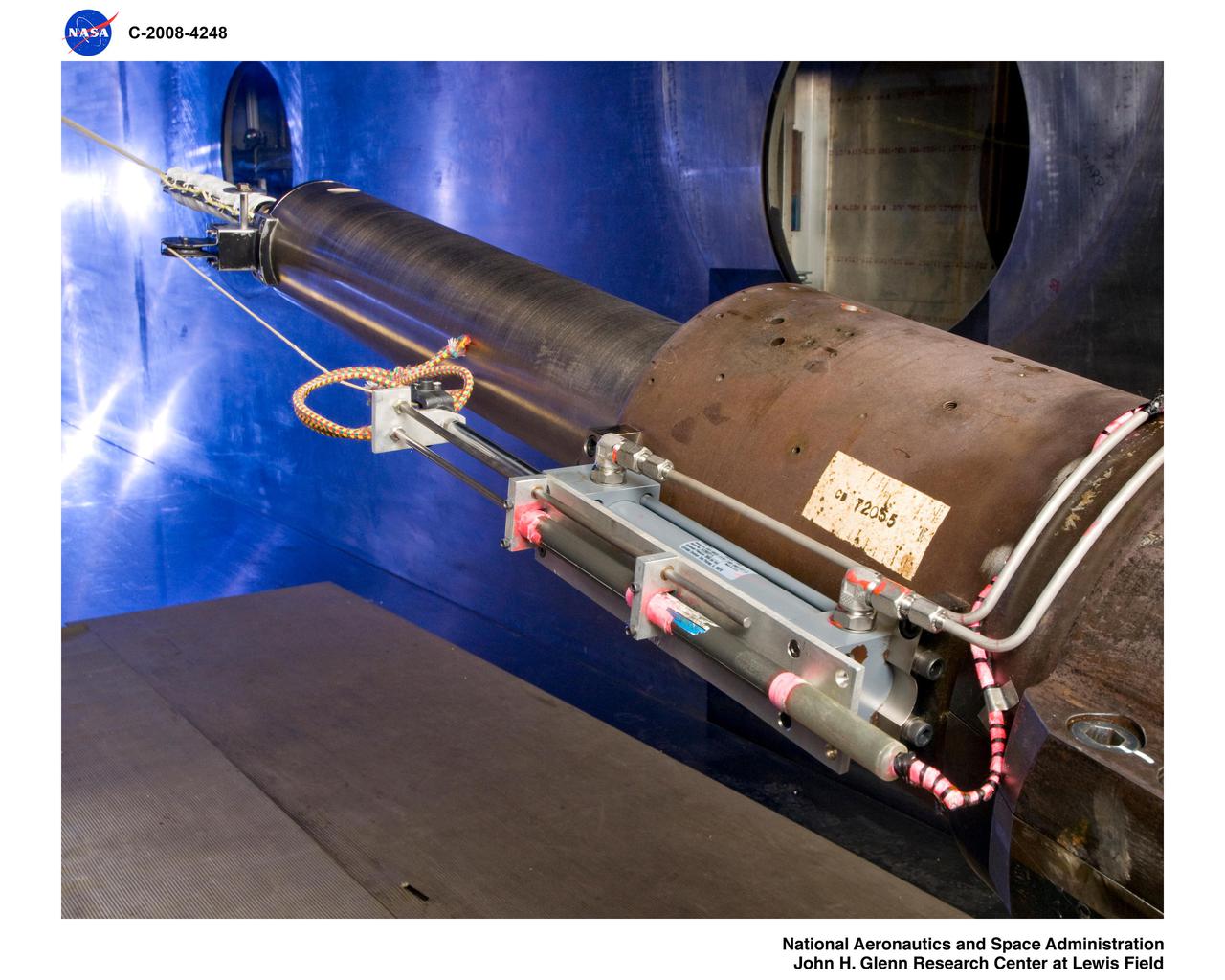
Mars Science Laboratory, MSL Flexible Canopy Test
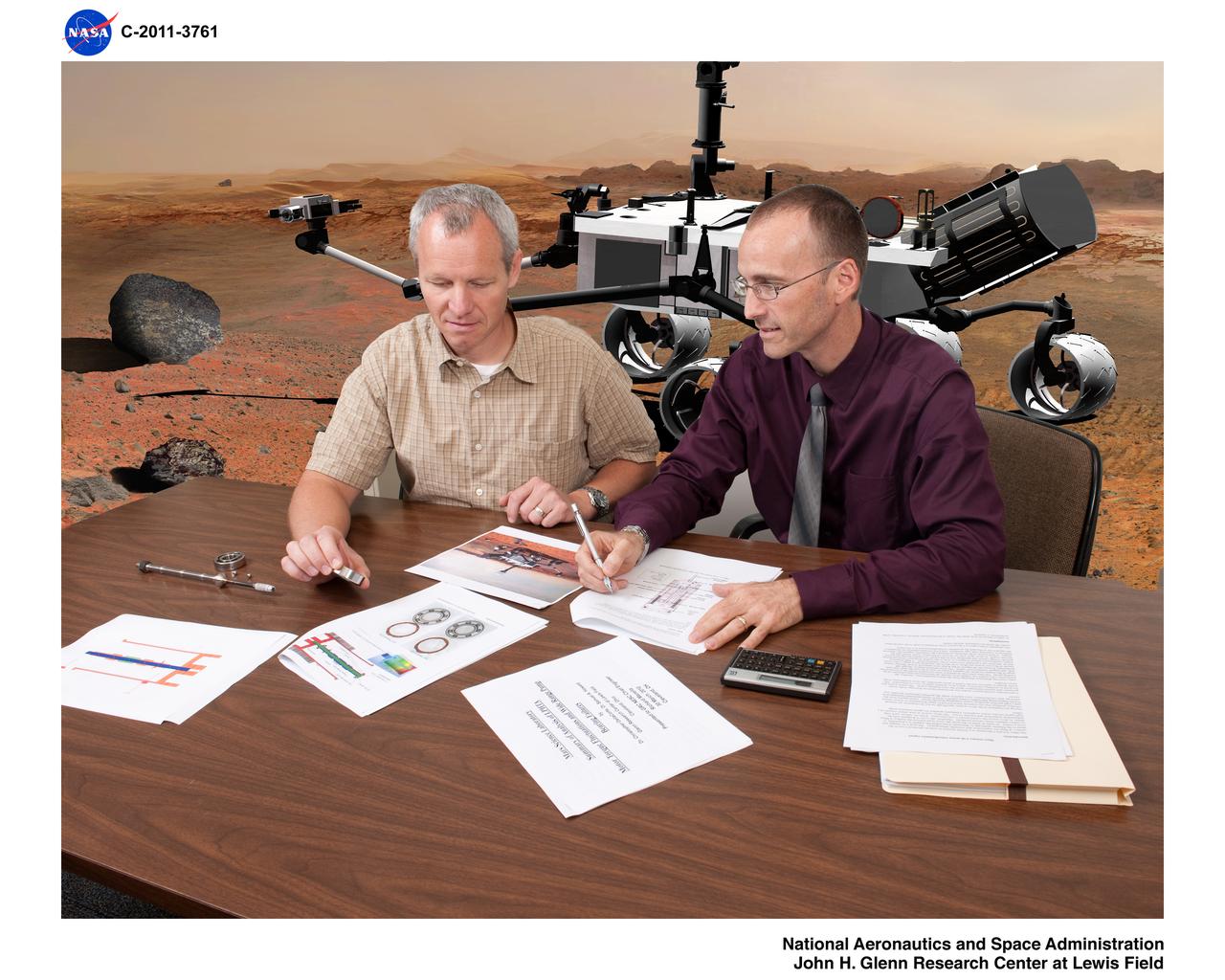
Mars Science Laboratory, MSL, Rotor Dynamics Model Analysis
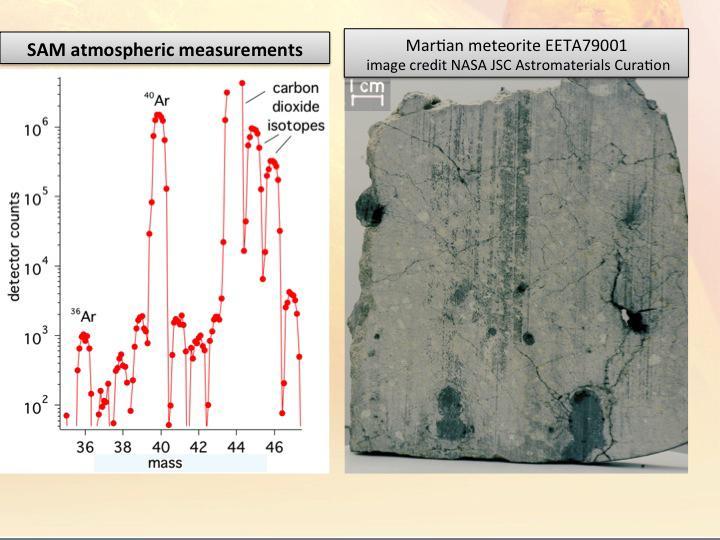
New results from the Sample Analysis at Mars, or SAM, instrument on NASA Curiosity rover detected about 2,000 times as much argon-40 as argon-36, which weighs less, confirming the connection between Mars and Martian meteorites found on Earth.
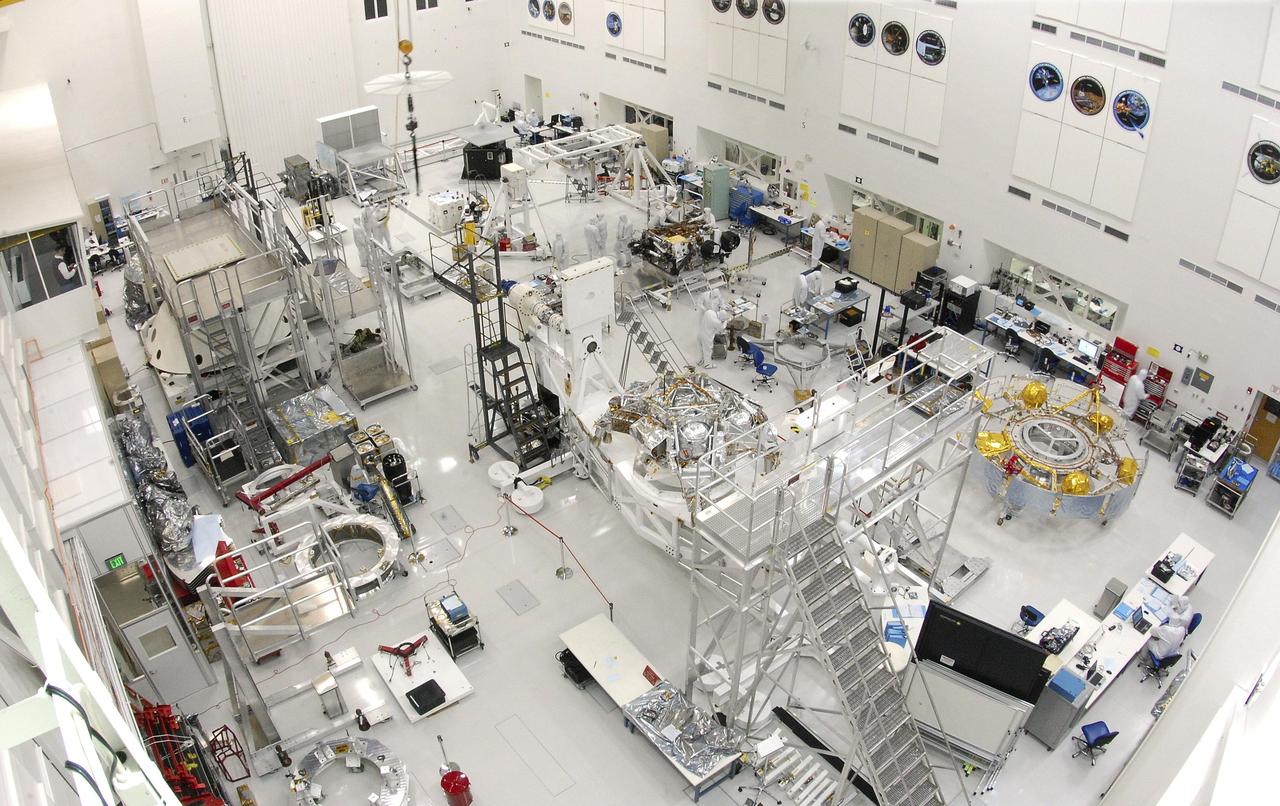
This wide-angle view shows the High Bay 1 cleanroom inside the Spacecraft Assembly Facility at NASA Jet Propulsion Laboratory, Pasadena, Calif. Specialists are working on components of NASA Mars Science Laboratory spacecraft.
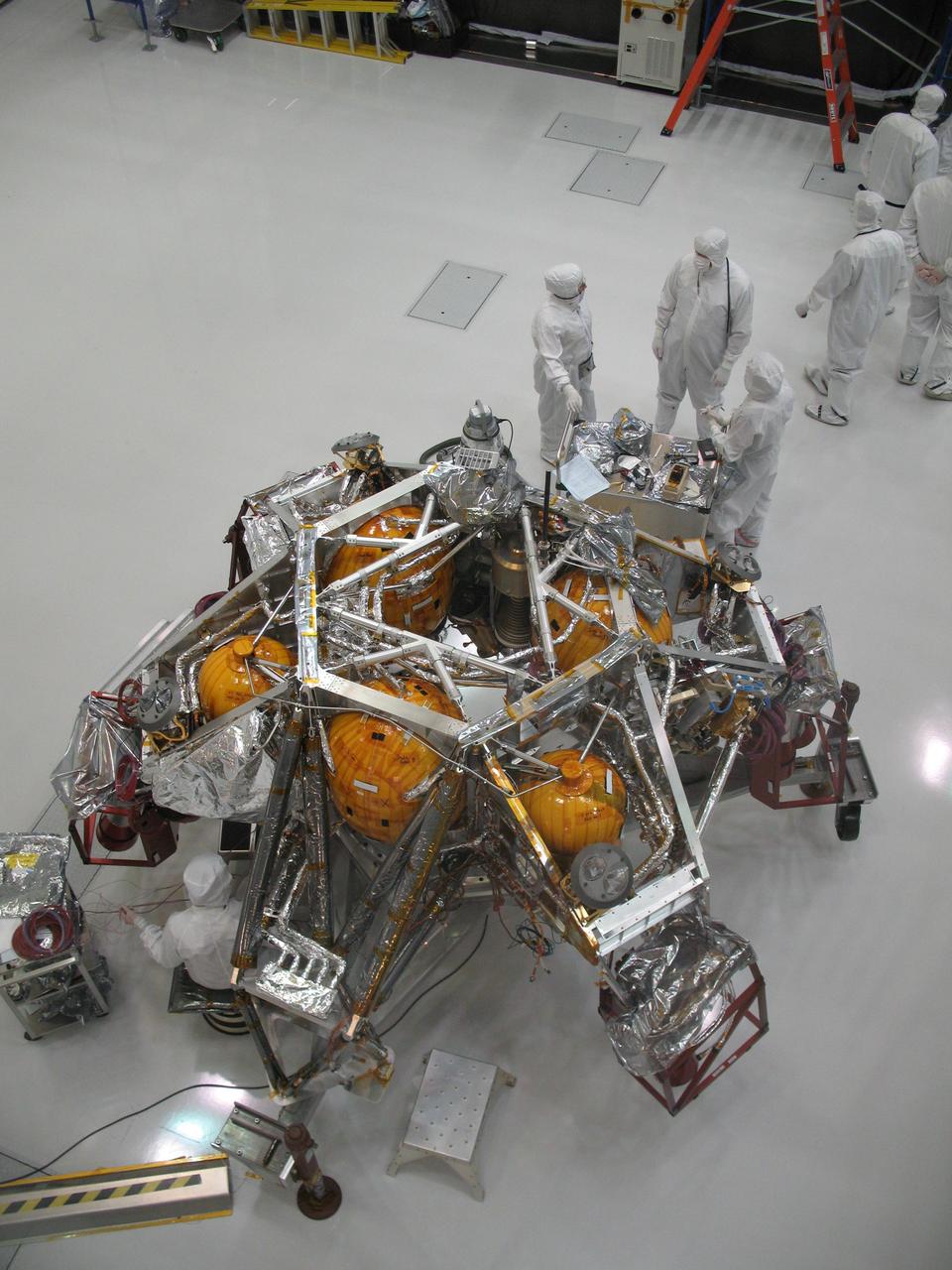
This image from early October 2008 shows personnel working on the descent stage of NASA Mars Science Laboratory inside the Spacecraft Assembly Facility at NASA Jet Propulsion Laboratory, Pasadena, Calif.
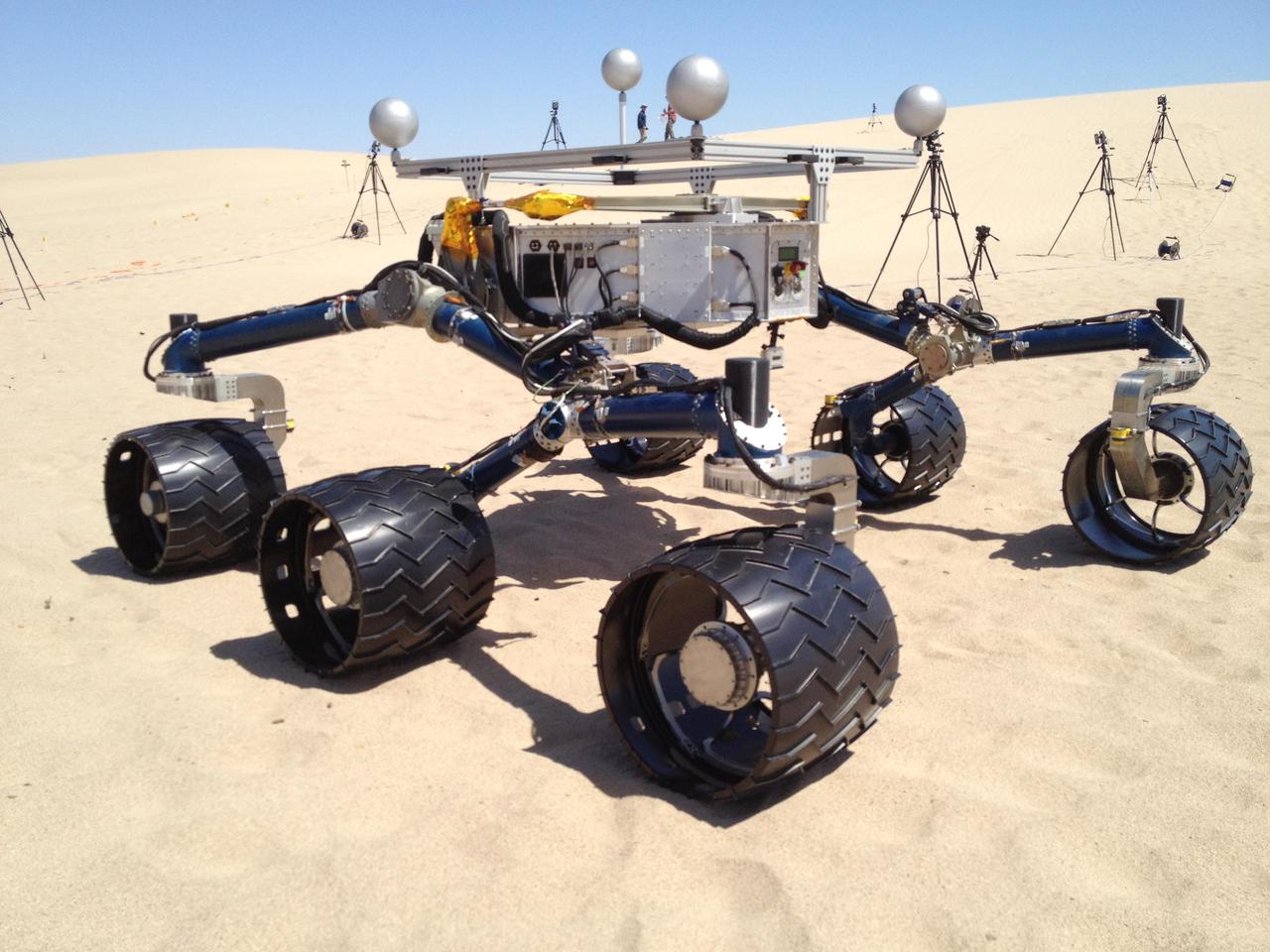
NASA Mars Science Laboratory mission team members ran mobility tests on the test rover called Scarecrow on sand dunes near Death Valley, Ca. in early May 2012 in preparation for operating the Curiosity rover, currently en route to Mars.
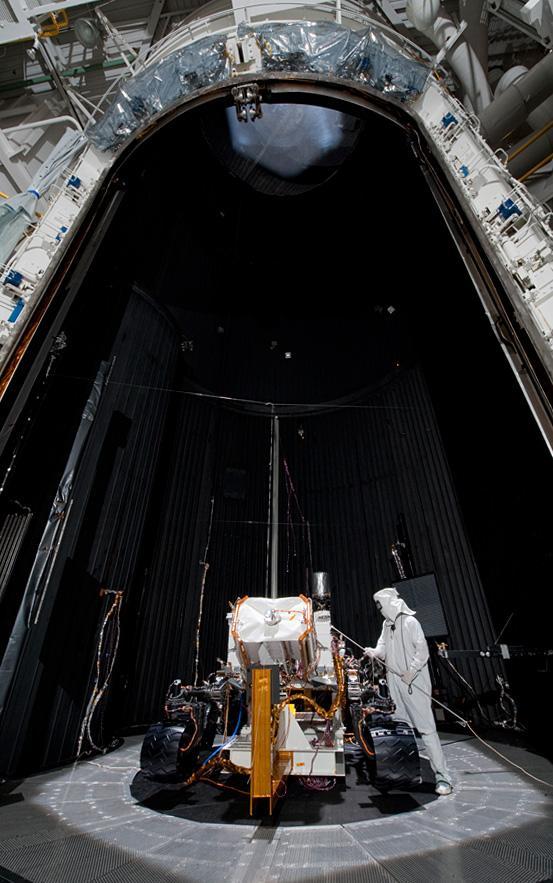
This image shows preparation for March 2011 testing of the Mars Science Laboratory rover, Curiosity, in a space-simulation chamber; the rover will go through operational sequences in environmental conditions similar to what it will experience on Mars.
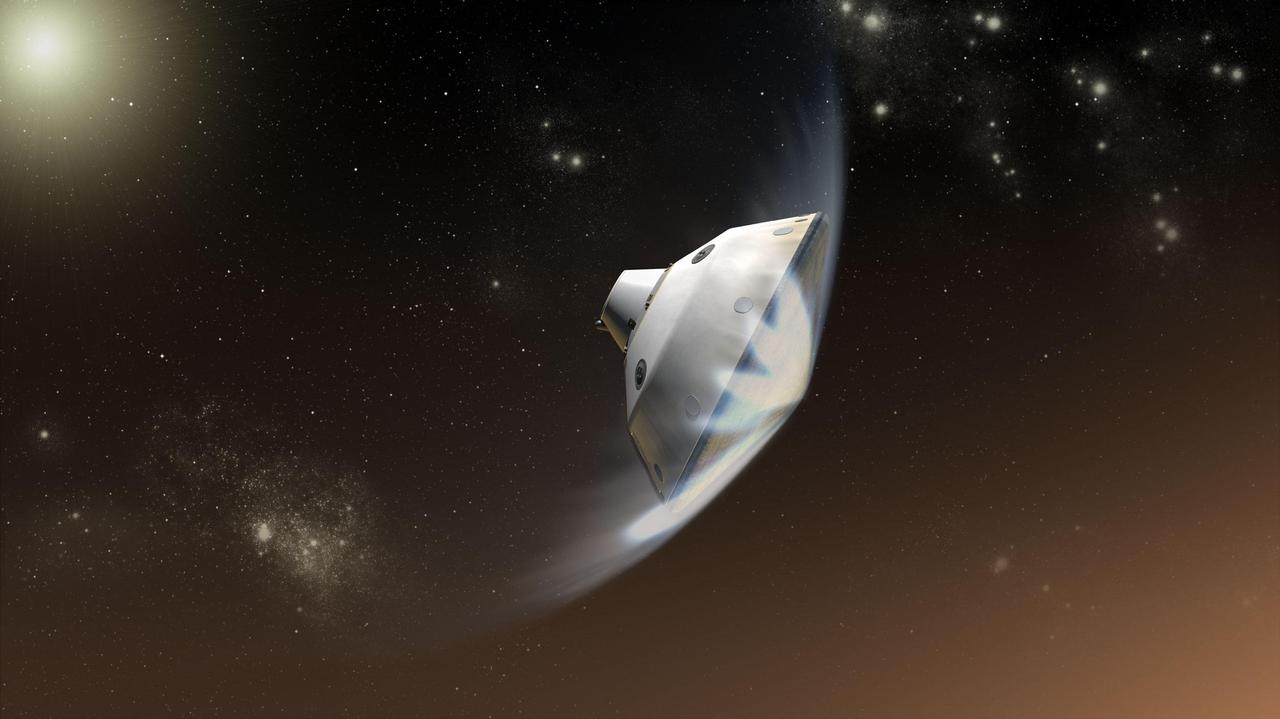
This artist concept depicts the interaction of NASA Mars Science Laboratory spacecraft with the upper atmosphere of Mars during the entry, descent and landing of the Curiosity rover onto the Martian surface.
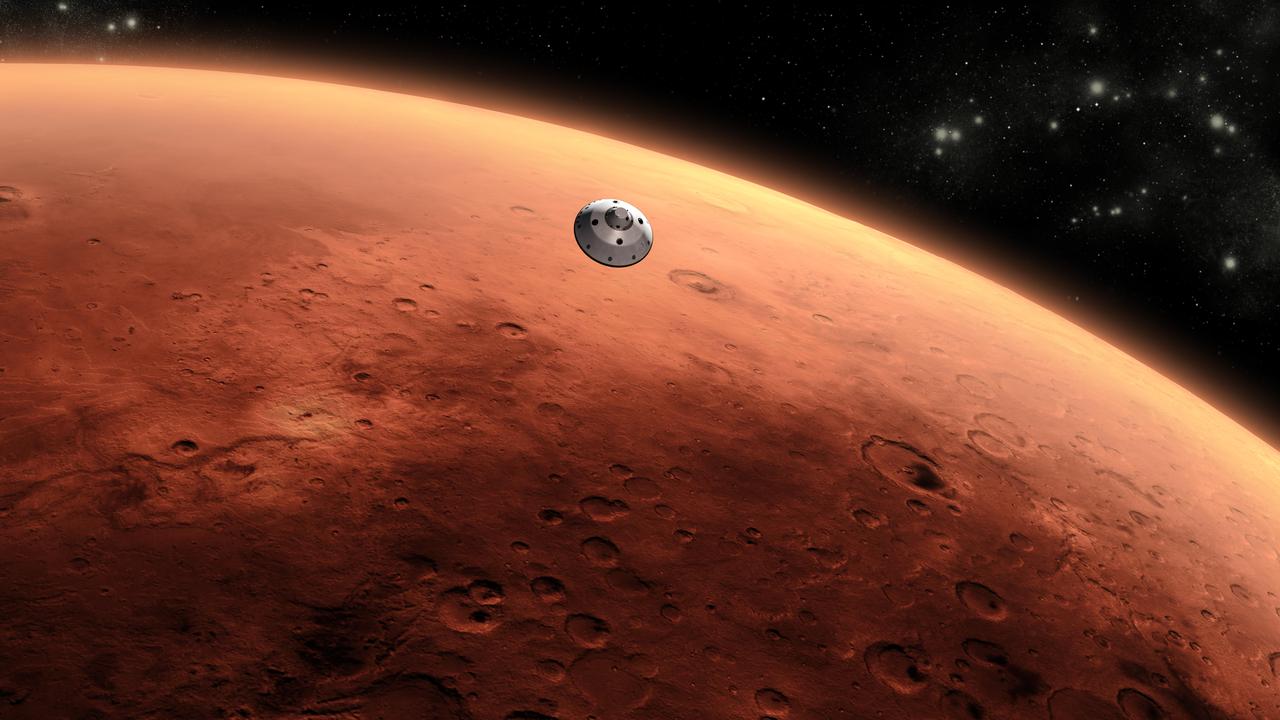
This is an artist concept of NASA Mars Science Laboratory spacecraft approaching Mars. The Curiosity rover is safely tucked inside the spacecraft aeroshell.
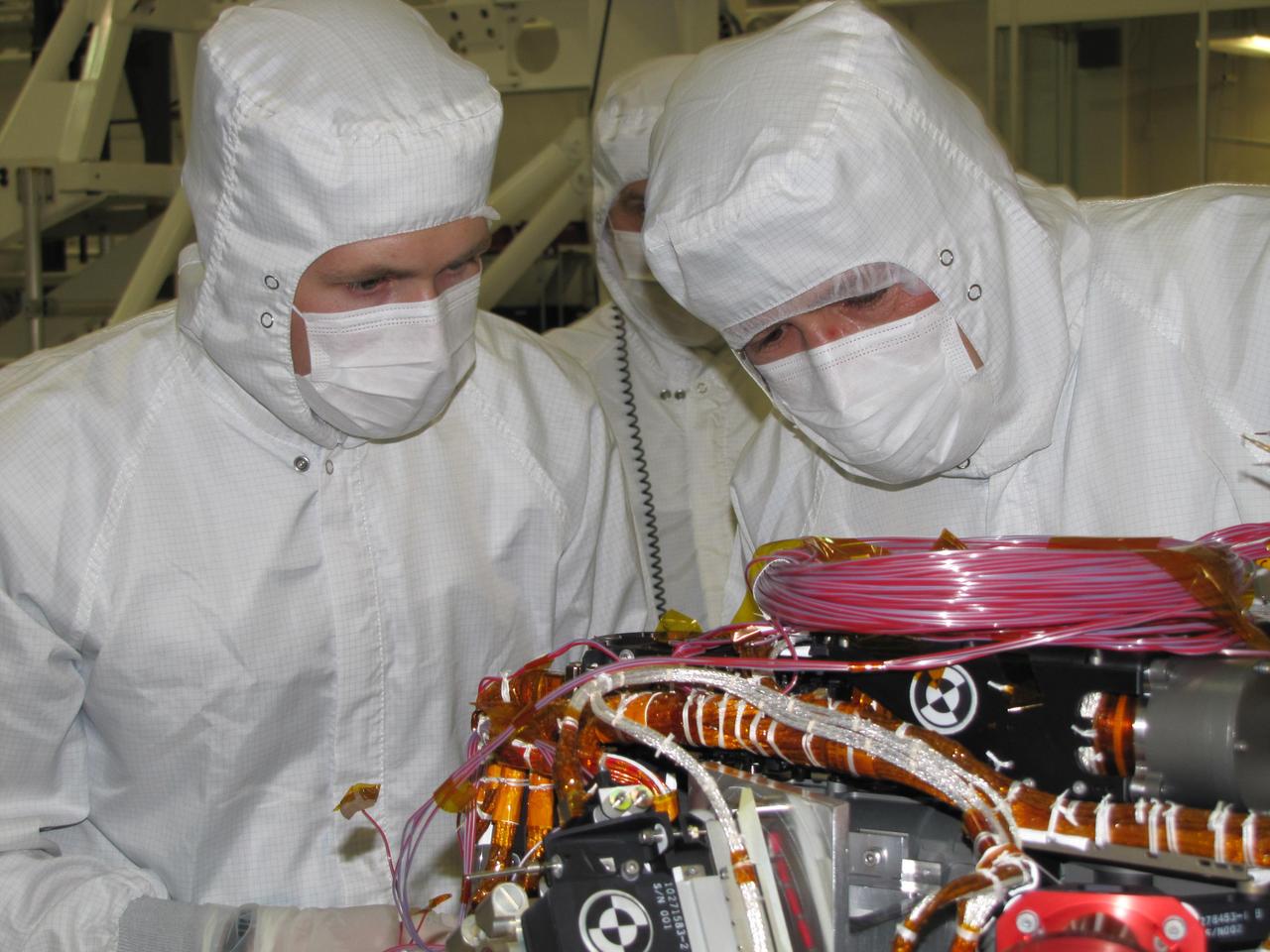
Grad student Nicholas Boyd left and Principal Investigator Ralf Gellert, both of the University of Guelph, Ontario, Canada, prepare for the installation of the Alpha Particle X-ray Spectrometer sensor head during testing at NASA JPL.
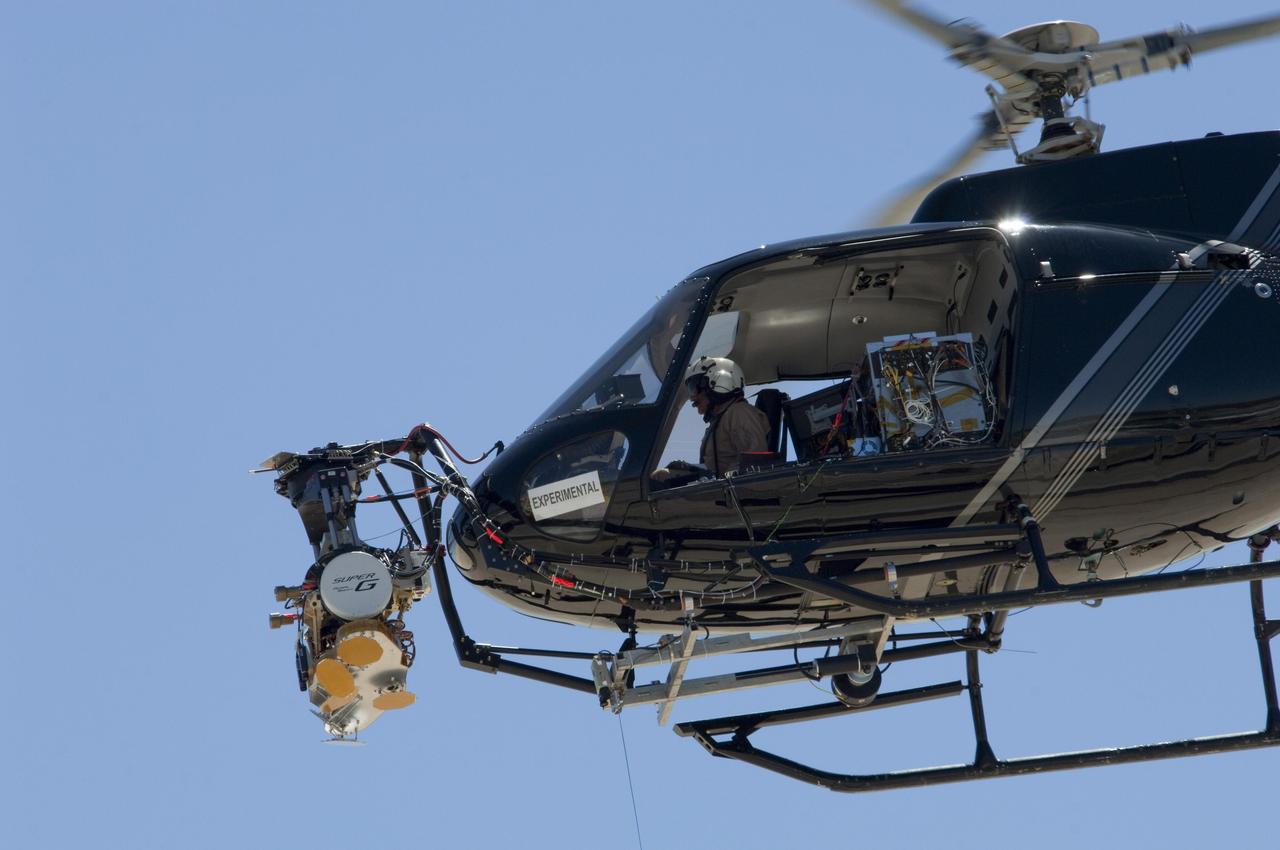
The engineering test model for the radar system that will be used during the next landing on Mars is shown here mounted onto a helicopter nose gimbal during a May 12, 2010, test at NASA Dryden Flight Research Center, Edwards, Calif.
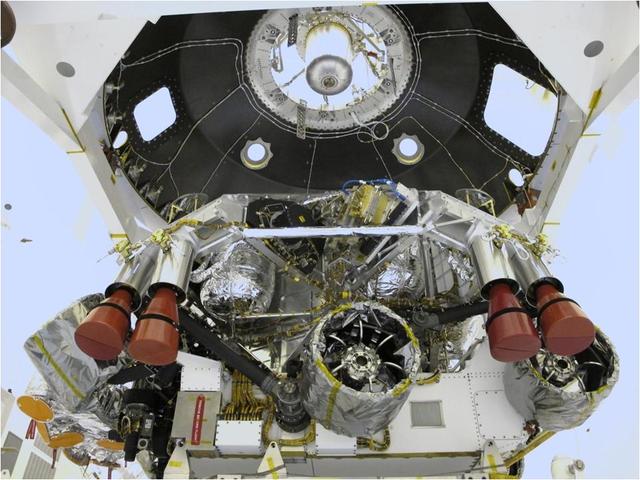
The powered descent vehicle of NASA Mars Science Laboratory spacecraft is being prepared for final integration into the spacecraft back shell in this photograph from inside the Payload Hazardous Servicing Facility at NASA Kennedy Space Center, Fla.
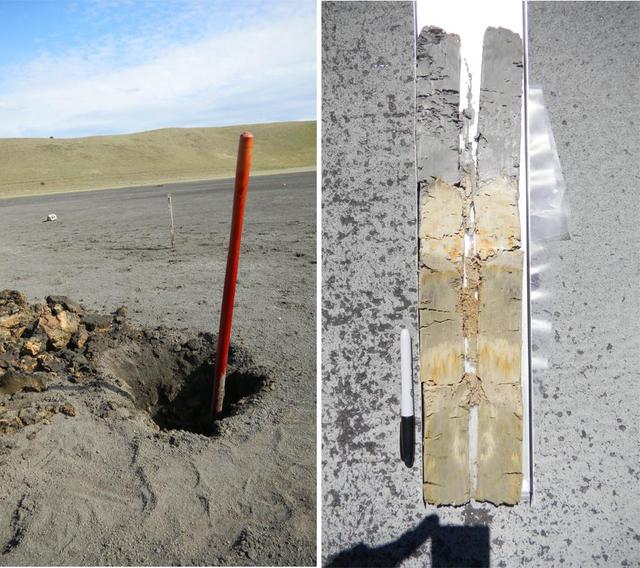
A sampling pit exposing clay-bearing lake sediments, deposited in a basaltic basin in southern Australia -- a modern terrestrial analog to the Yellowknife Bay area that NASA Curiosity rover is exploring.
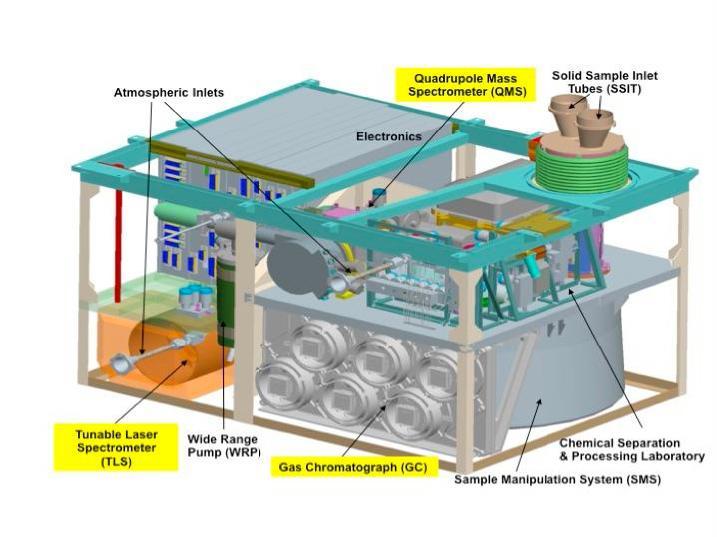
This schematic illustration for NASA Mars Science Laboratory Sample Analysis at Mars SAM instrument shows major components of the microwave-oven-size instrument, which will examine samples of Martian rocks, soil and atmosphere.
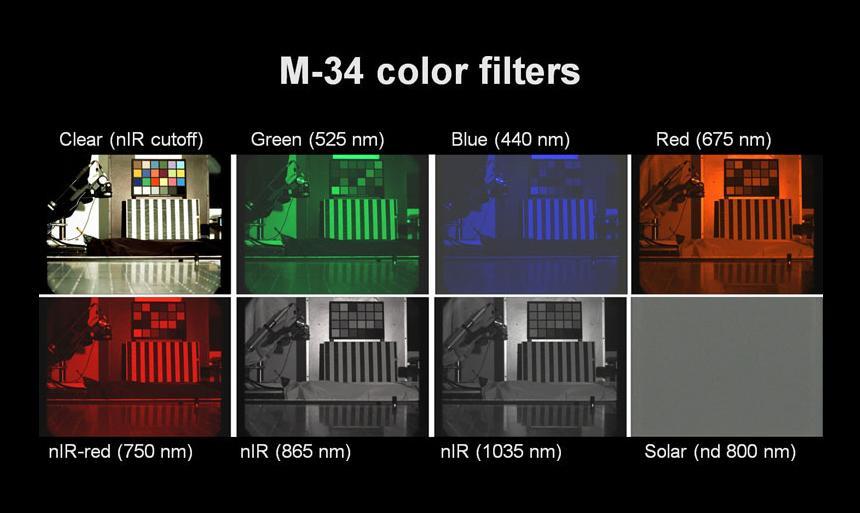
This figure shows images acquired through each of the eight filters in the filter wheel of the 34-millimeter-focal-length Mast Camera Mastcam-34 on NASA Mars rover Curiosity.
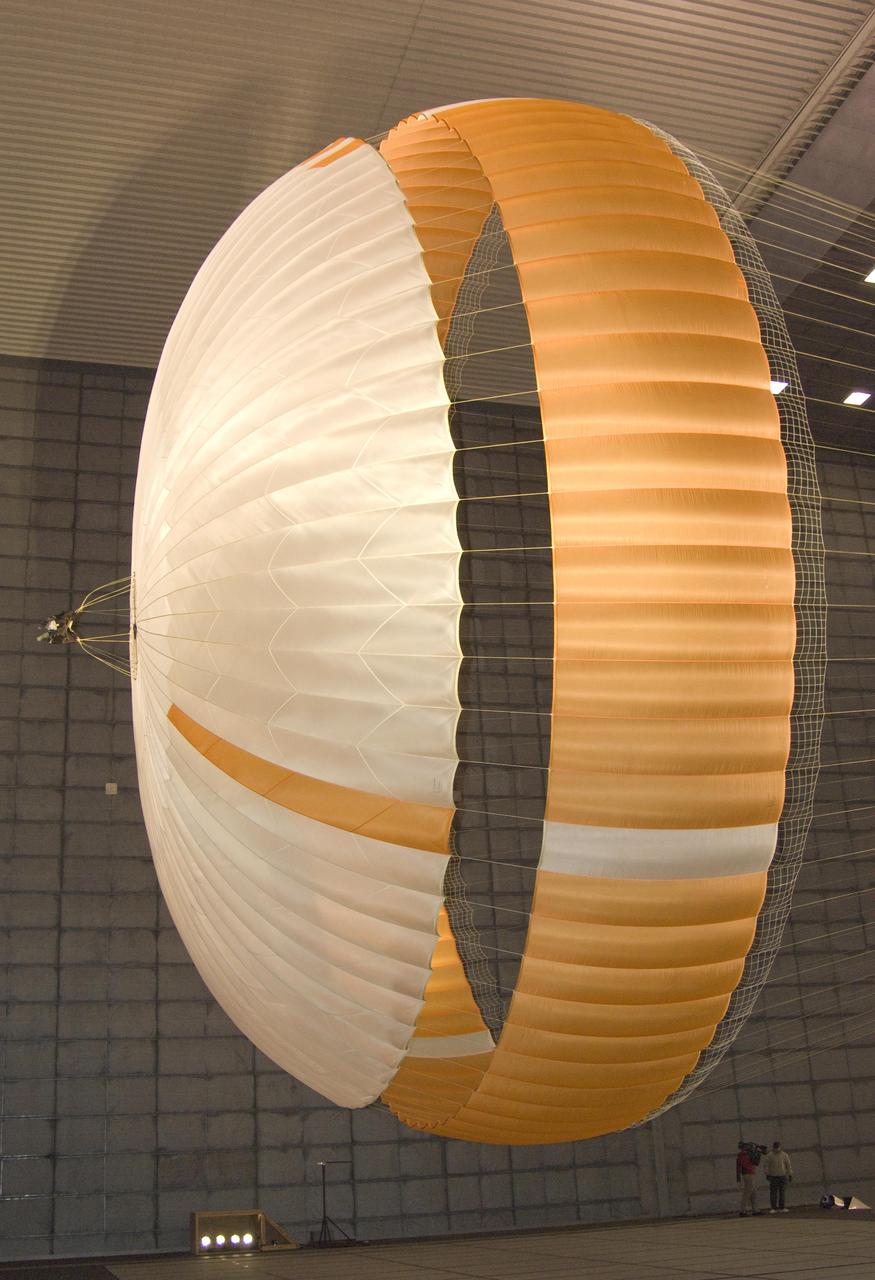
The parachute for NASA Mars Science Laboratory mission opens to a diameter of nearly 16 meters 51 feet. This image shows a duplicate qualification-test parachute inside the world's largest wind tunnel, at NASA Ames Research Center, Moffett Field, Calif. The Mars Science Laboratory will be launched in 2011 for a landing on Mars in 2012. Its parachute is the largest ever built to fly on an extraterrestrial mission. The parachute uses a configuration called disk-gap-band, with 80 suspension lines. Most of the orange and white fabric is nylon, though a small disk of heavier polyester is used near the vent in the apex of the canopy due to higher stresses there. http://photojournal.jpl.nasa.gov/catalog/PIA11994
An in-flight camera check produced this out-of-focus image when NASA Mars Science Laboratory spacecraft turned on illumination sources that are part of the Curiosity rover Mars Hand Lens Imager MAHLI instrument.
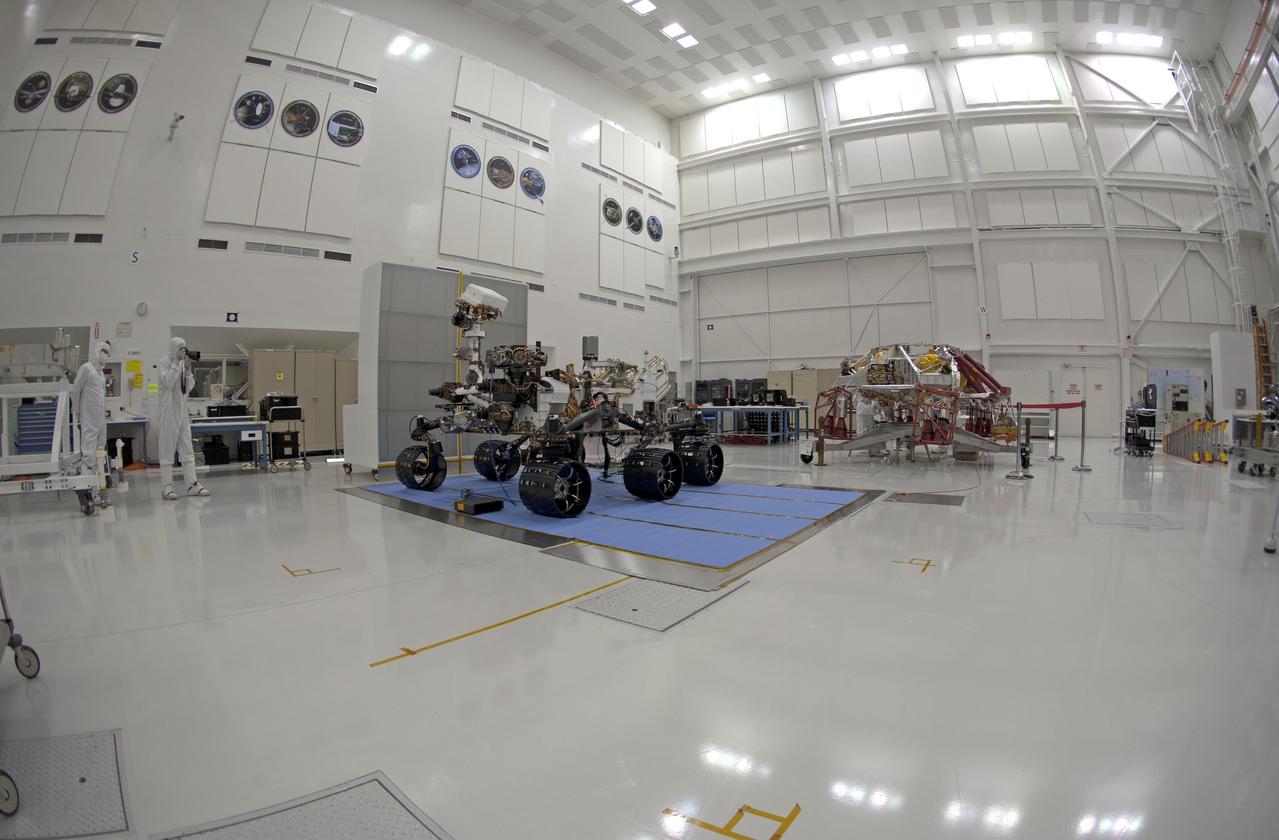
Left-eye view of NASA Curiosity rover and its powered descent vehicle pose for photographs prior to being integrated for launch at JPL Spacecraft Assembly Facility.
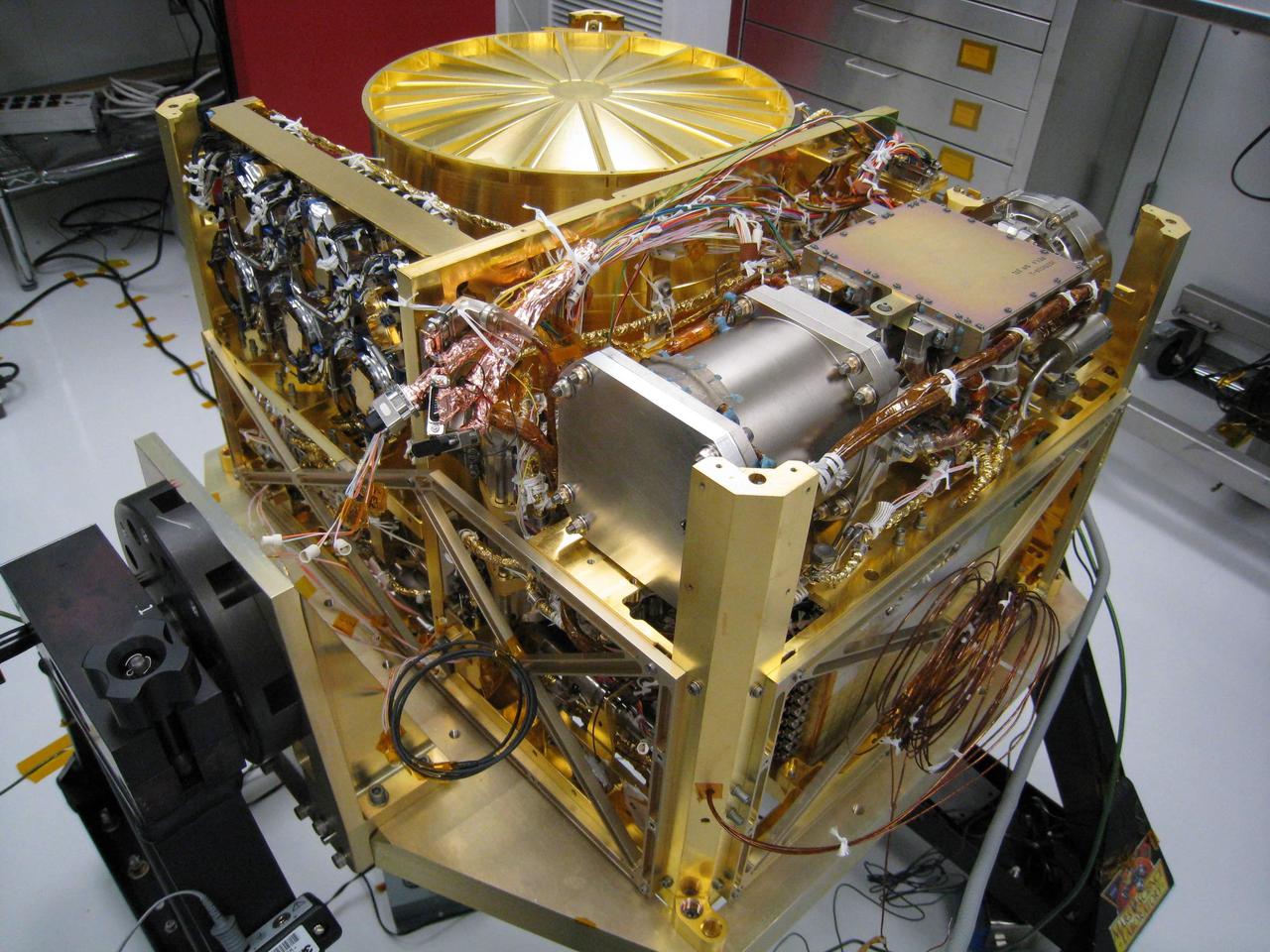
The Sample Analysis at Mars SAM instrument will analyze samples of Martian rock and soil collected by the rover arm to assess carbon chemistry through a search for organic compounds, and to look for clues about planetary change.
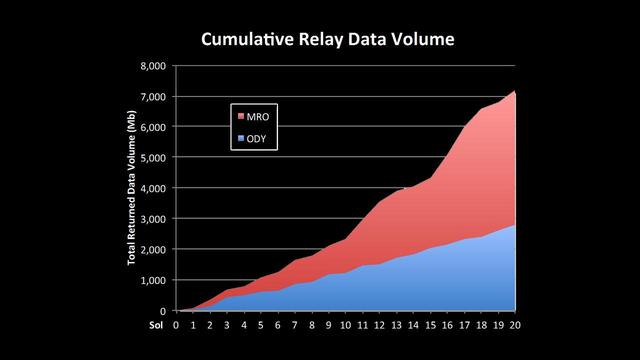
This chart shows increases in the volume of data coming back from NASA Mars Curiosity over recent sols. New capabilities of the Electra relay-radios on MRO and Curiosity have greatly increased the volume of data the rover is sending back from Mars.
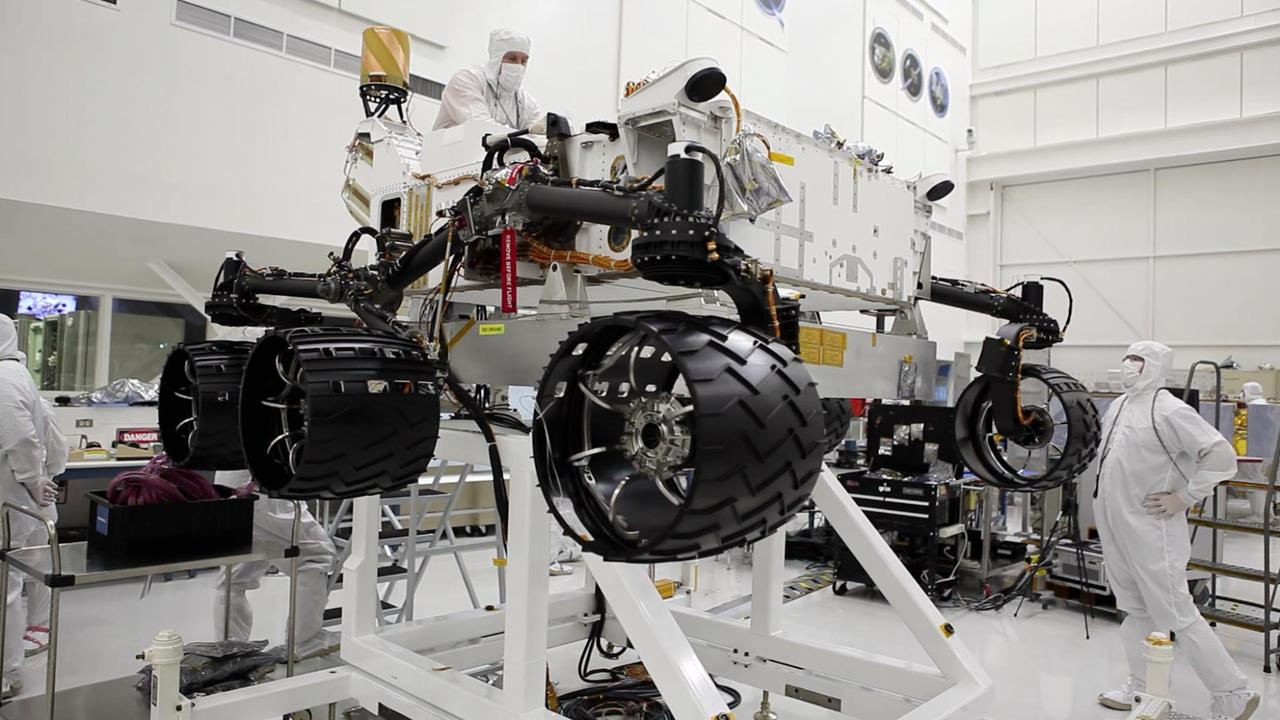
This image was taken in the cleanroom where NASA Curiosity rover is being assembled. It shows the rover, which is about the size of an SUV, hoisted on a white lift, with its black wheels suspended in the air.
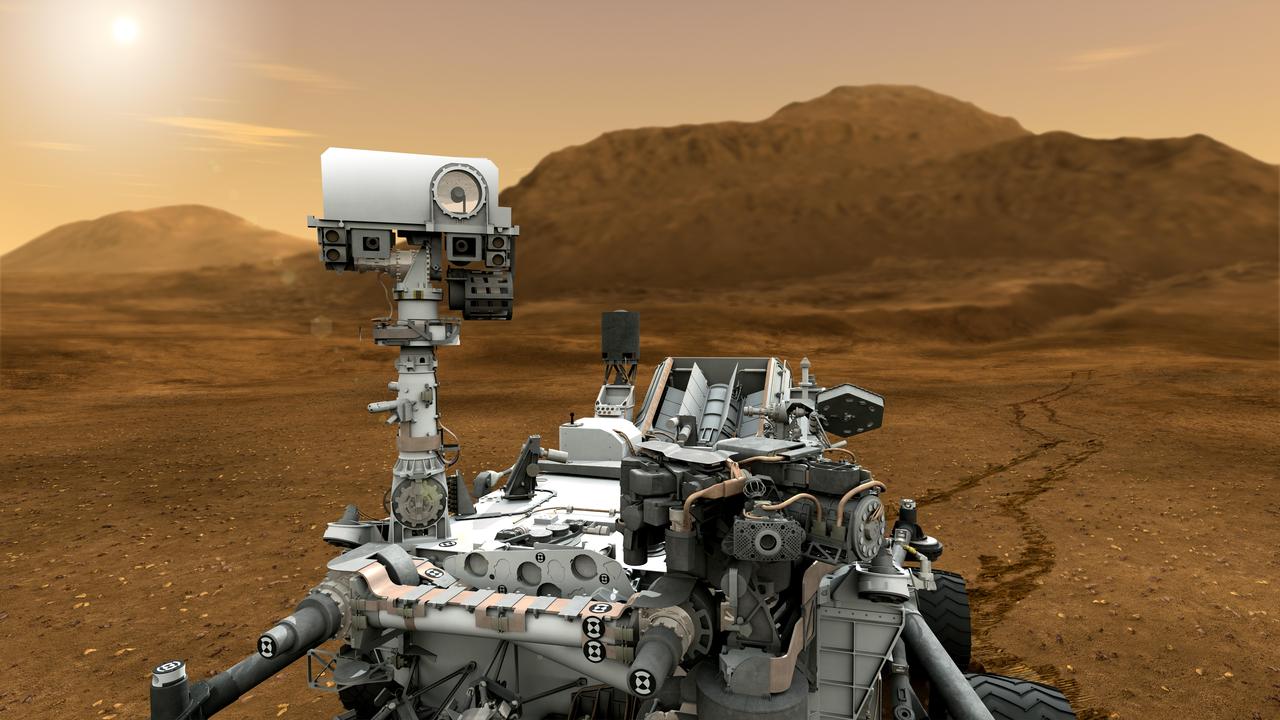
This artist concept features NASA Mars Science Laboratory Curiosity rover. The mast, or rover head, rises to about 2.1 meters 6.9 feet above ground level, about as tall as a basketball player.
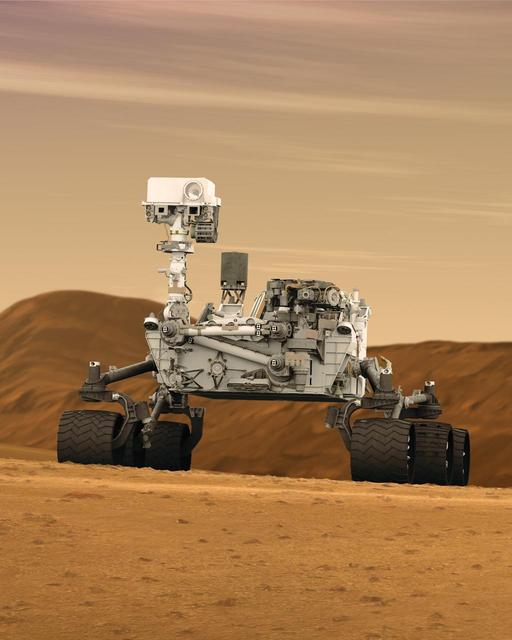
This artist concept features NASA Mars Science Laboratory Curiosity rover, a mobile robot for investigating Mars past or present ability to sustain microbial life. Curiosity is being tested in preparation for launch in the fall of 2011.
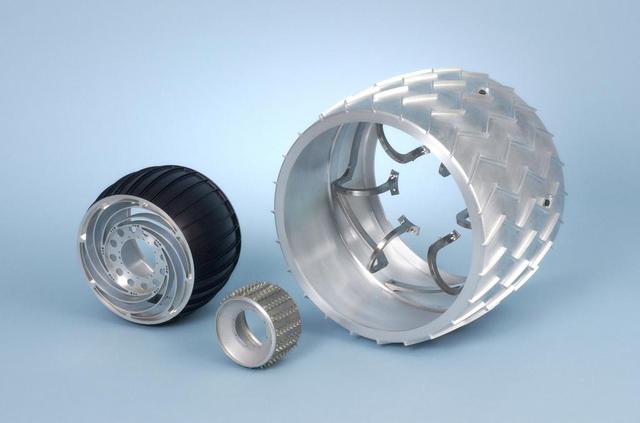
NASA Mars rovers keep getting bigger. This photo provides a comparison of the wheel sizes for three generations of them.
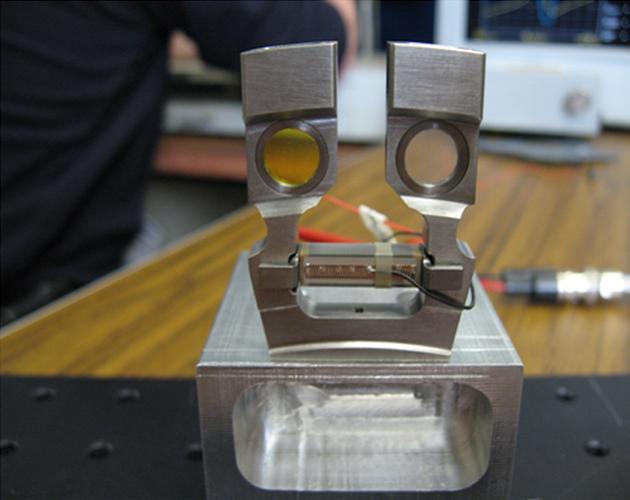
This image shows the cells that hold the soil samples that are vibrated by the Chemistry and Mineralogy CheMin instrument on NASA Curiosity rover.
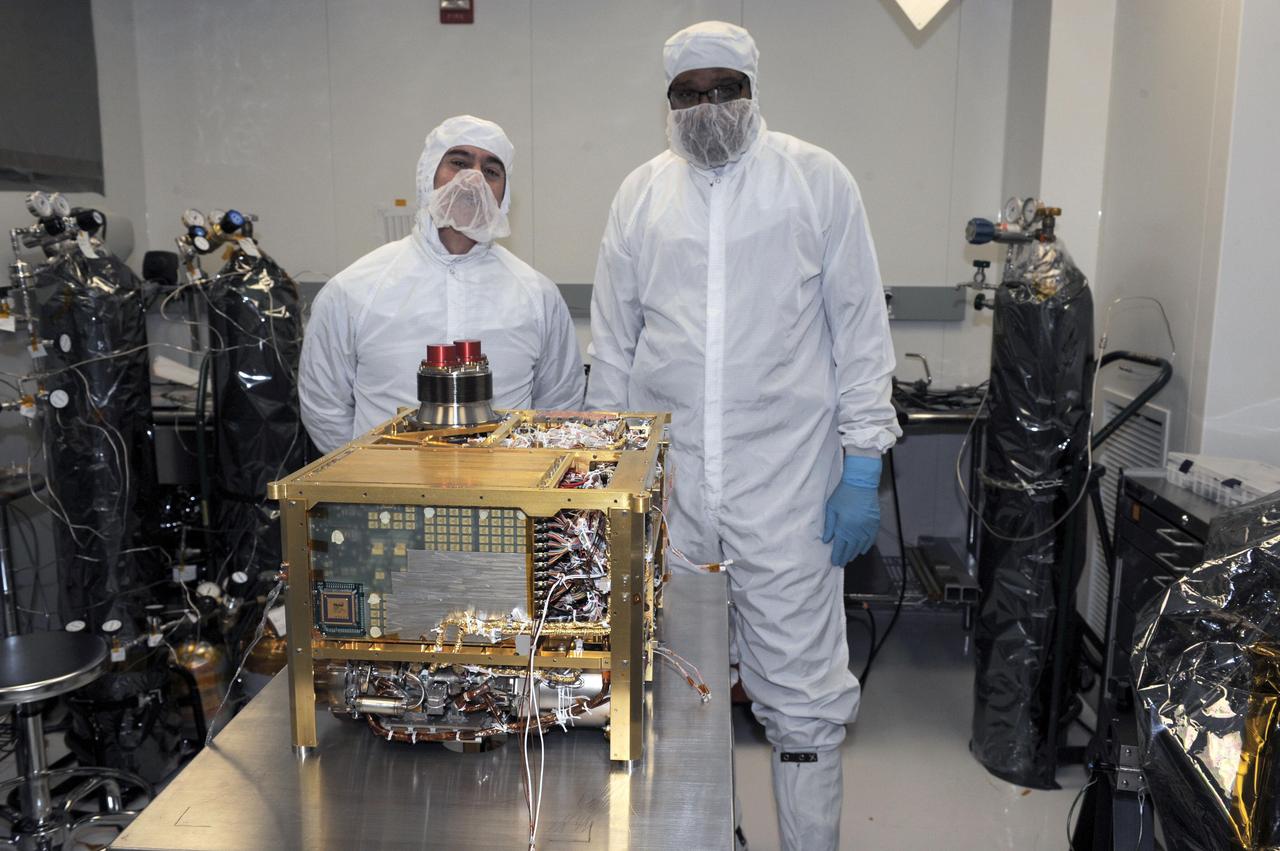
The Sample Analysis at Mars SAM instrument for NASA Mars Science Laboratory mission will study chemistry of rocks, soil and air as the mission rover, Curiosity, investigates Gale Crater on Mars.
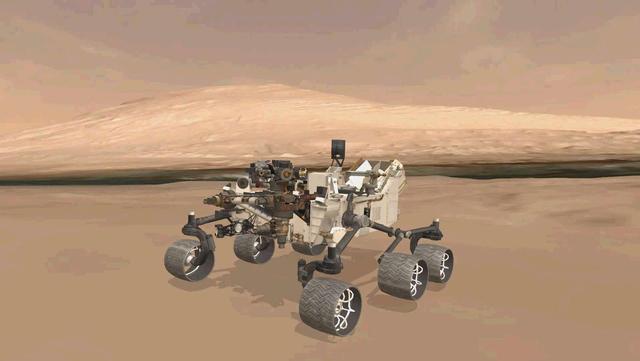
This image shows the approximate true position of NASA Curiosity rover on Mars. A 3-D virtual model of Curiosity is shown inside Gale Crater, near Mount Sharp, Curiosity ultimate destination.
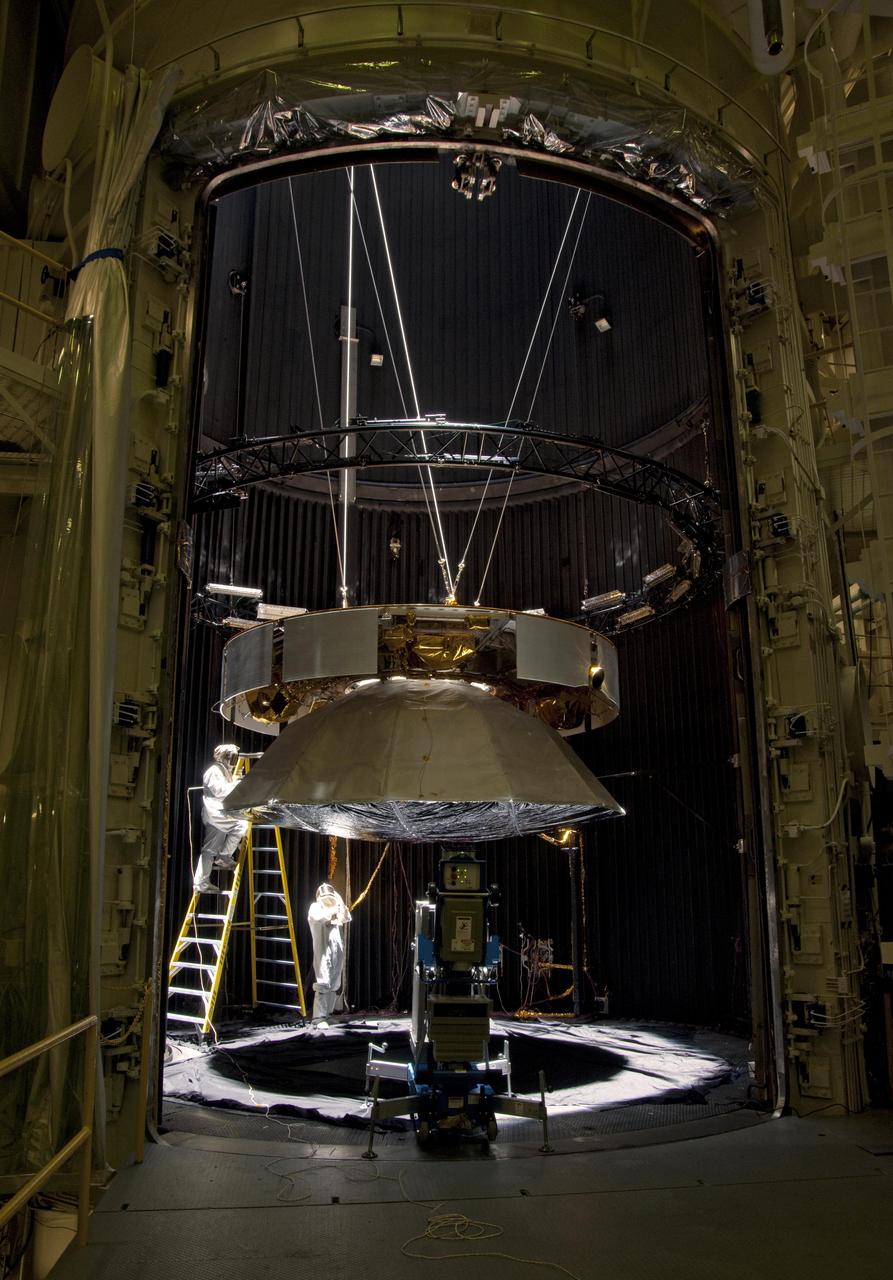
Testing of the cruise stage for NASA Mars Science Laboratory in August 2010 included a session in a facility that simulates the environment found in interplanetary space. Spacecraft technicians at JPL prepare a space-simulation test.
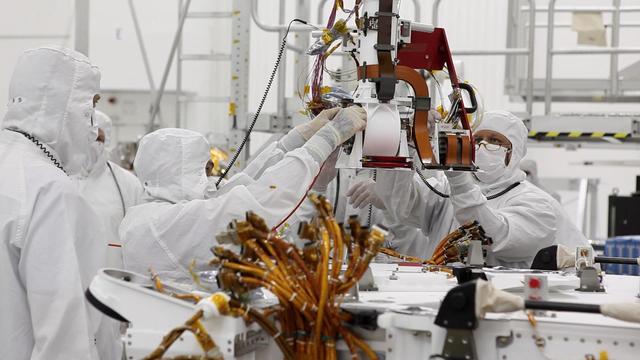
Engineers at NASA Jet Propulsion Laboratory are dressed head to toe in bunny suits only their eyes and foreheads can be seen. They are huddled around the base of the rover Curiosity neck its Mast.
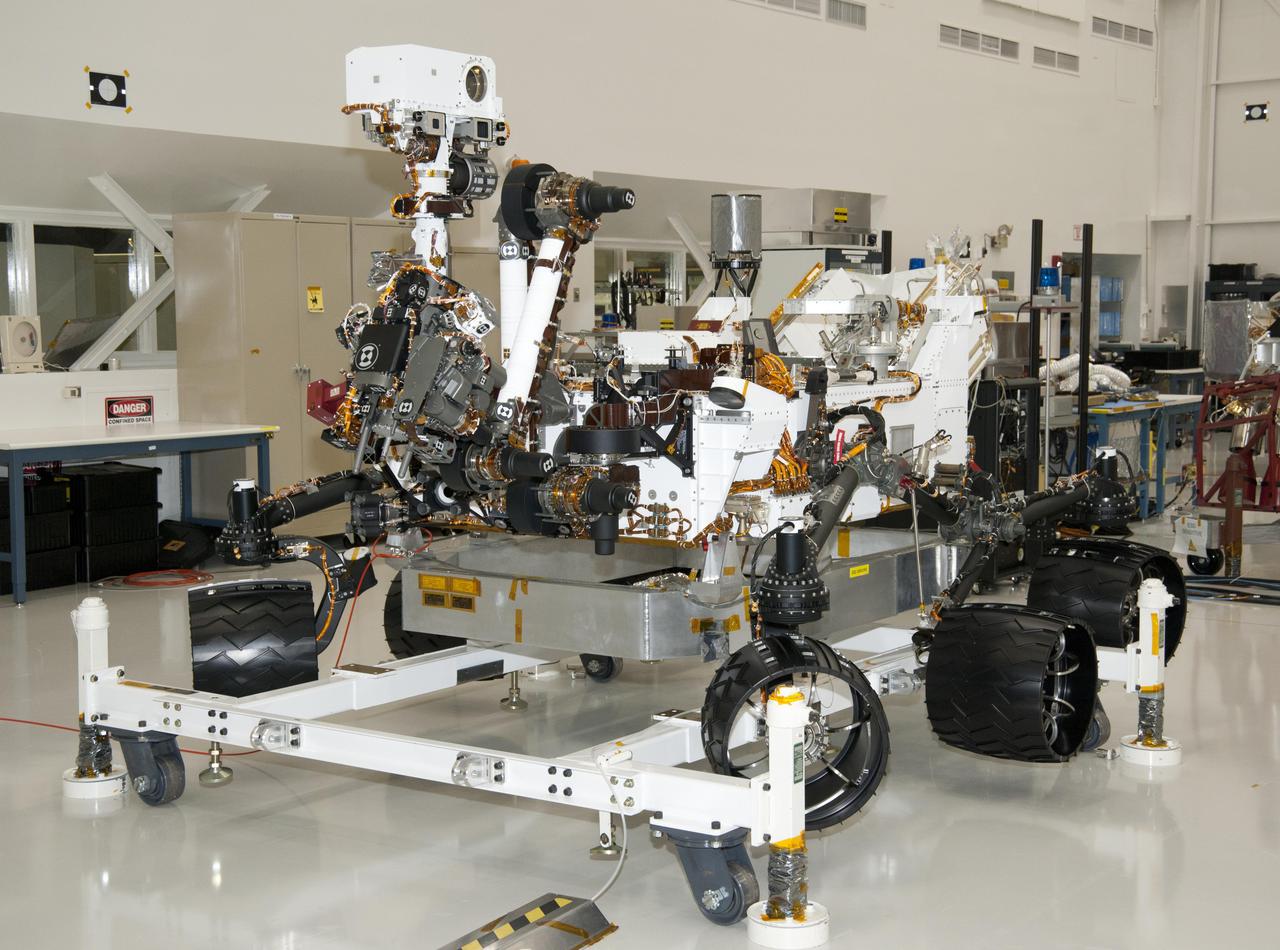
The rover for NASA Mars Science Laboratory mission, named Curiosity, is seen here inside the Spacecraft Assembly Facility at NASA Jet Propulsion Laboratory, Pasadena, Calif. Support equipment is holding the rover slightly off the floor.
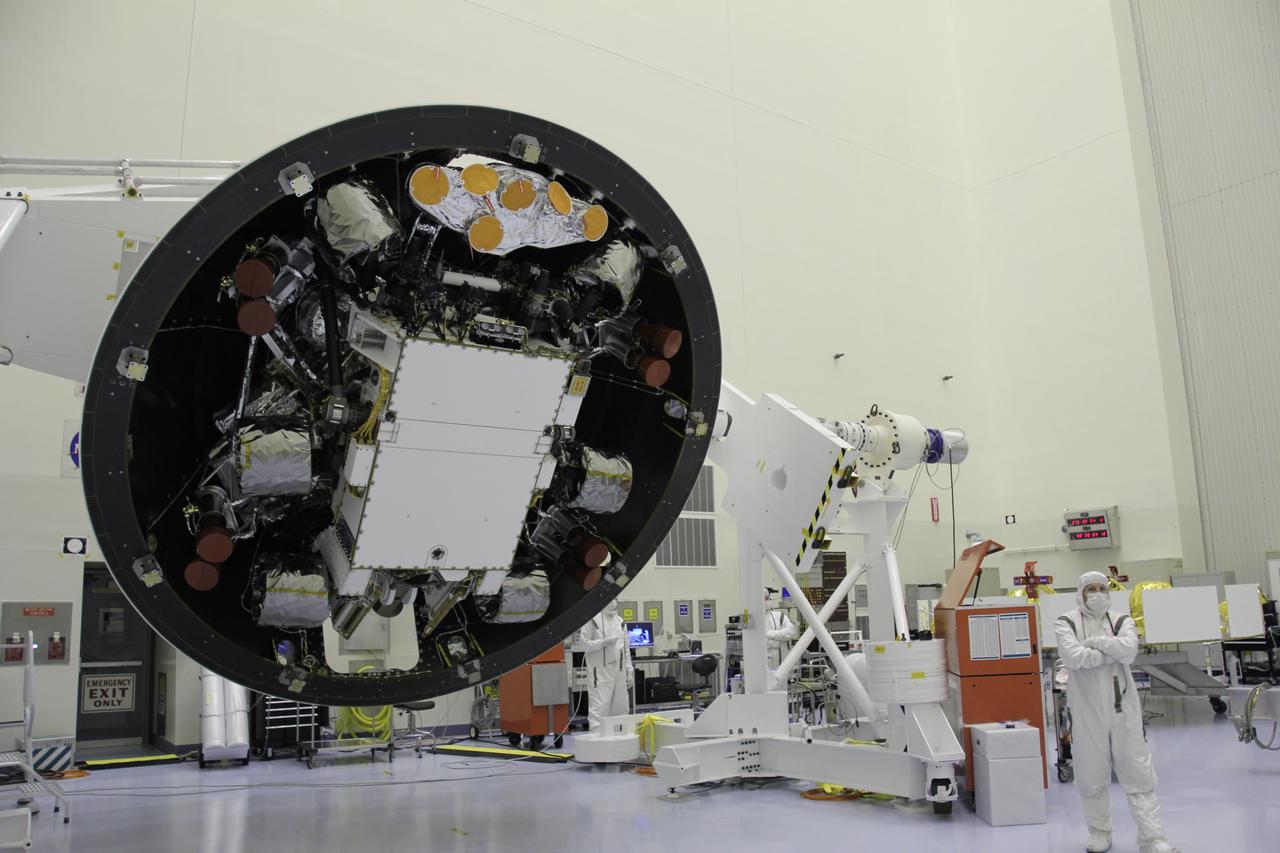
At the Payload Hazardous Servicing Facility at NASA Kennedy Space Center in Florida, the back shell powered descent vehicle configuration of NASA Mars Science Laboratory is being rotated for final closeout actions.
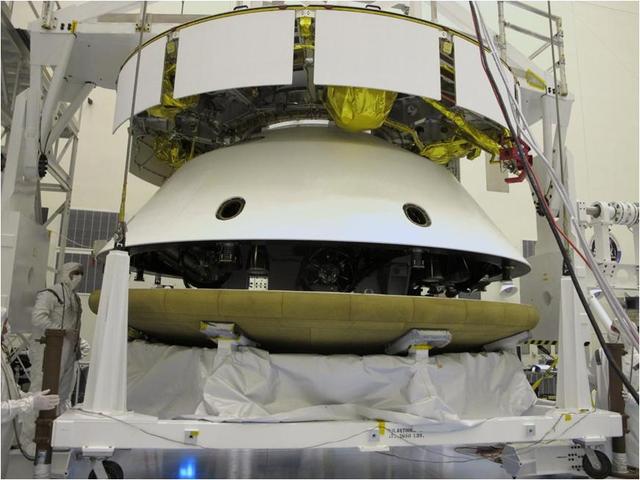
During final stacking of NASA Mars Science Laboratory spacecraft, the heat shield is positioned for integration with the rest of the spacecraft in this photograph from inside the Payload Hazardous Servicing Facility at NASA Kennedy Space Center, Fla.
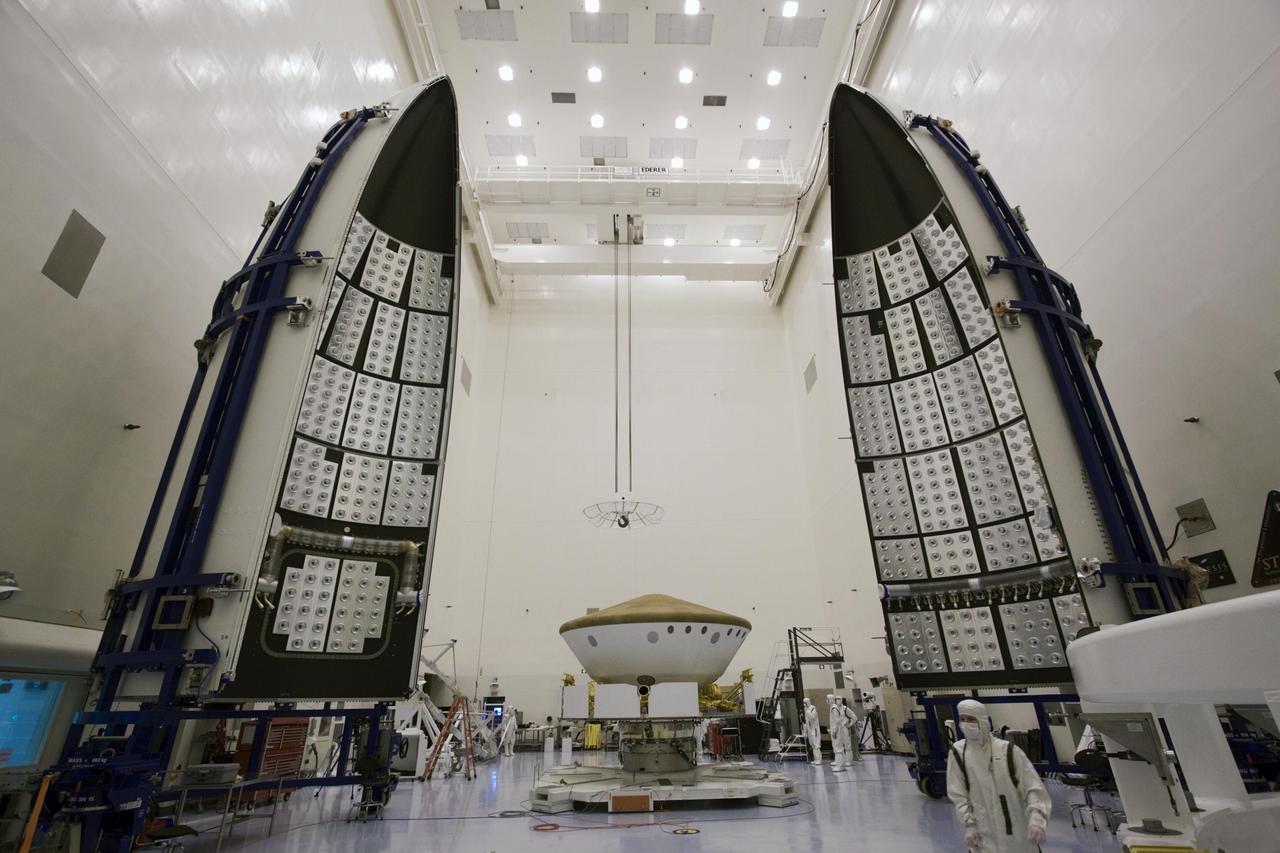
Preparations are under way to enclose NASA Mars Science Laboratory in an Atlas V rocket payload fairing. The fairing protects the spacecraft from the impact of aerodynamic pressure and heating during ascent.
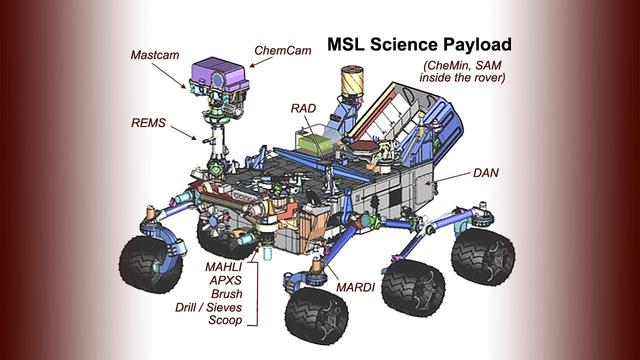
This drawing of the Mars Science Laboratory mission rover, Curiosity, indicates the location of science instruments and some other tools on the car-size rover.
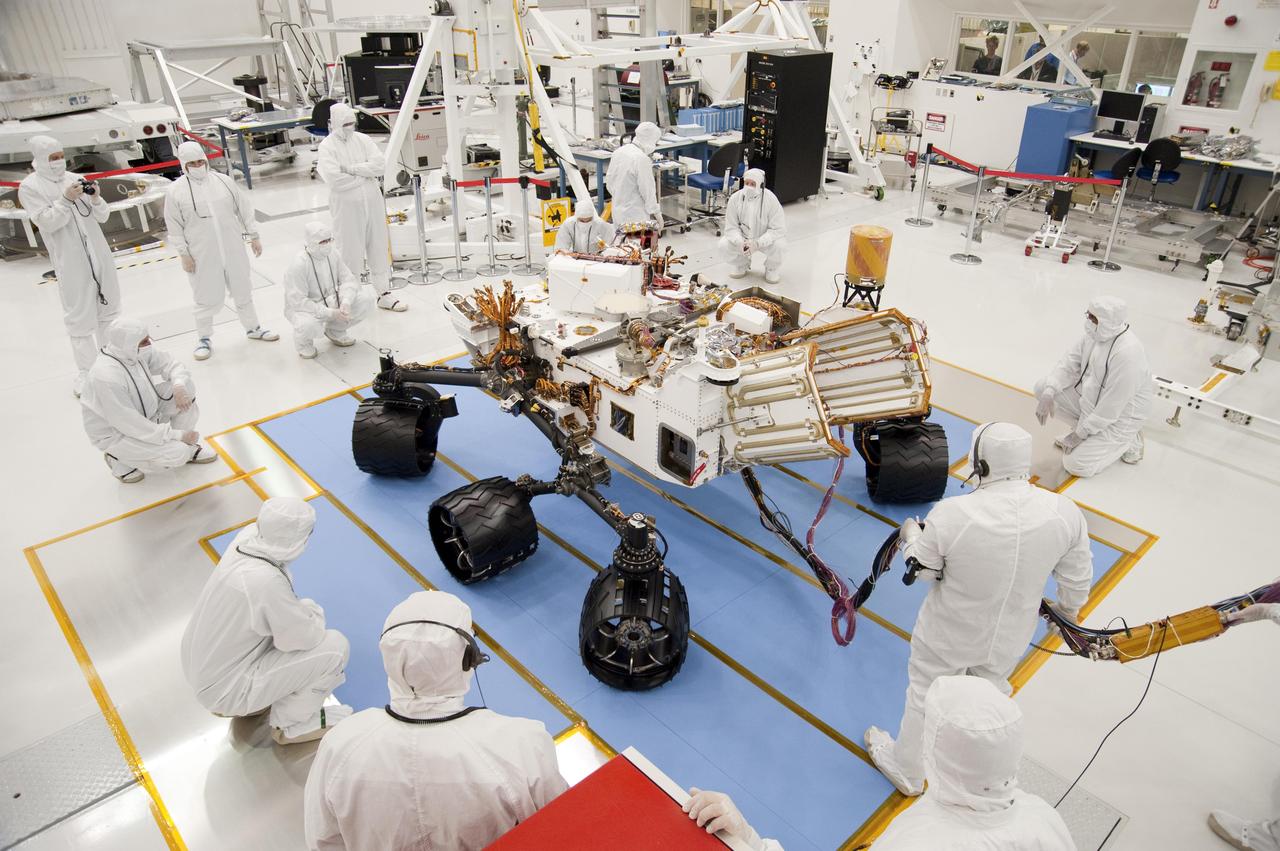
Technicians and engineers in clean-room garb monitor the first drive test of NASA Curiosity rover, on July 23, 2010. Technicians and engineers conducted the drive test at the Jet Propulsion Laboratory in Pasadena, Calif.
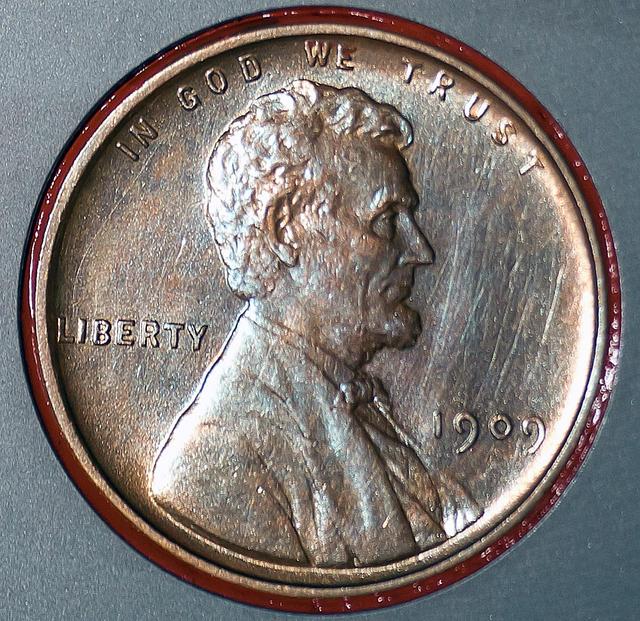
The Lincoln penny in this photograph is part of a camera calibration target attached to NASA Mars rover Curiosity.
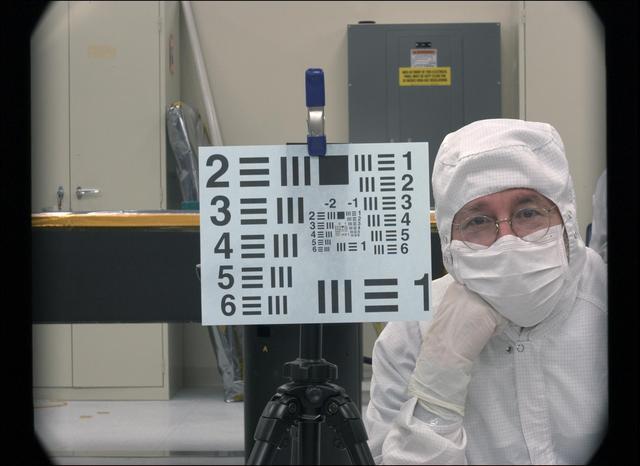
Malin Space Science Systems, San Diego, delivered the two cameras for the Mast Camera Mastcam instrument of NASA Mars Science Laboratory rover to NASA Jet Propulsion Laboratory, Pasadena, Calif., in March 2011.
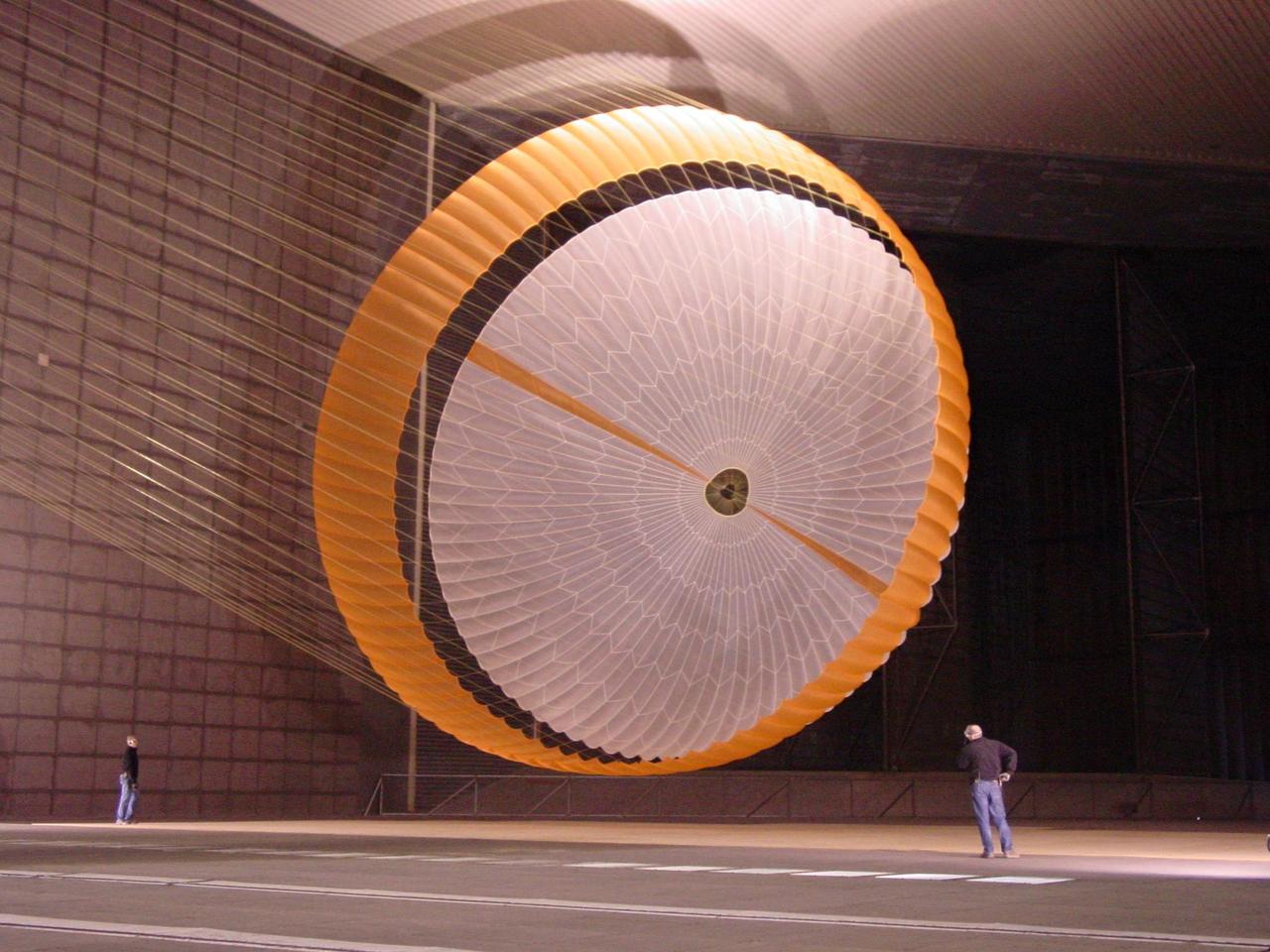
The team developing the landing system for NASA Mars Science Laboratory tested the deployment of an early parachute design in mid-October 2007 inside the world largest wind tunnel, at NASA Ames Research Center, Moffett Field, California.
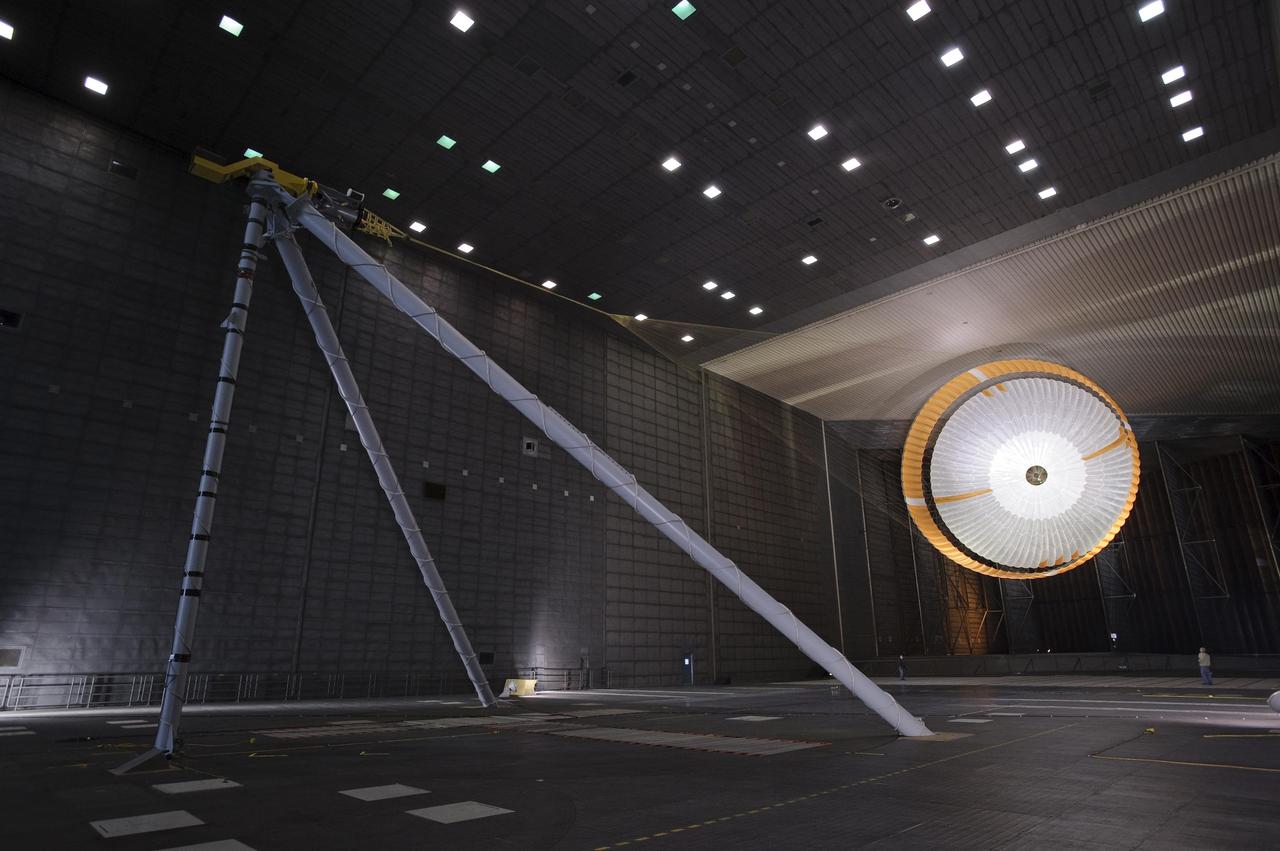
The parachute for NASA Mars Science Laboratory passed flight-qualification testing in March and April 2009 inside the world largest wind tunnel, at NASA Ames Research Center, Moffett Field, Calif.
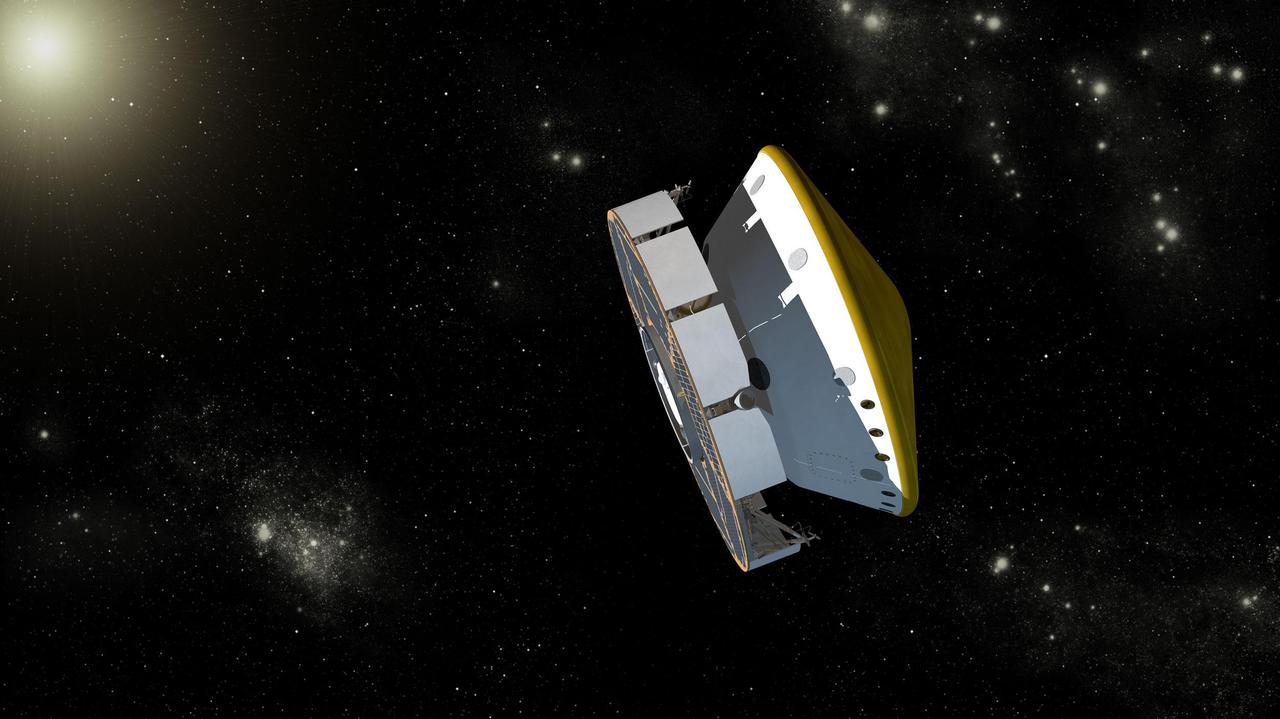
This is an artist concept of NASA Mars Science Laboratory spacecraft during its cruise phase between launch and final approach to Mars. The spacecraft includes a disc-shaped cruise stage on the left attached to the aeroshell.
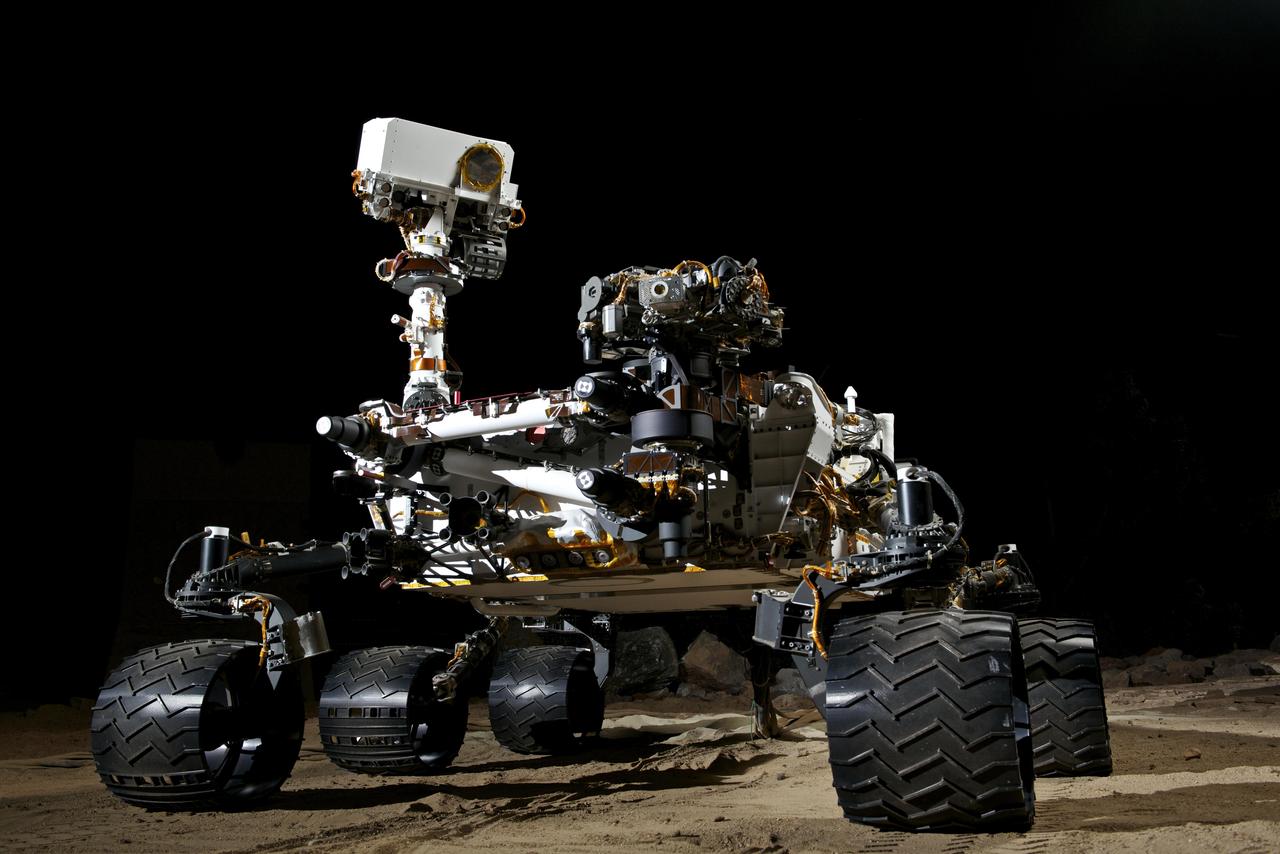
This photograph shows the Vehicle System Test Bed VSTB rover, a nearly identical copy to NASA Curiosity rover on Mars.

This picture is an artist concept portraying what the advanced rover would look like when examining a rock outcrop on Mars
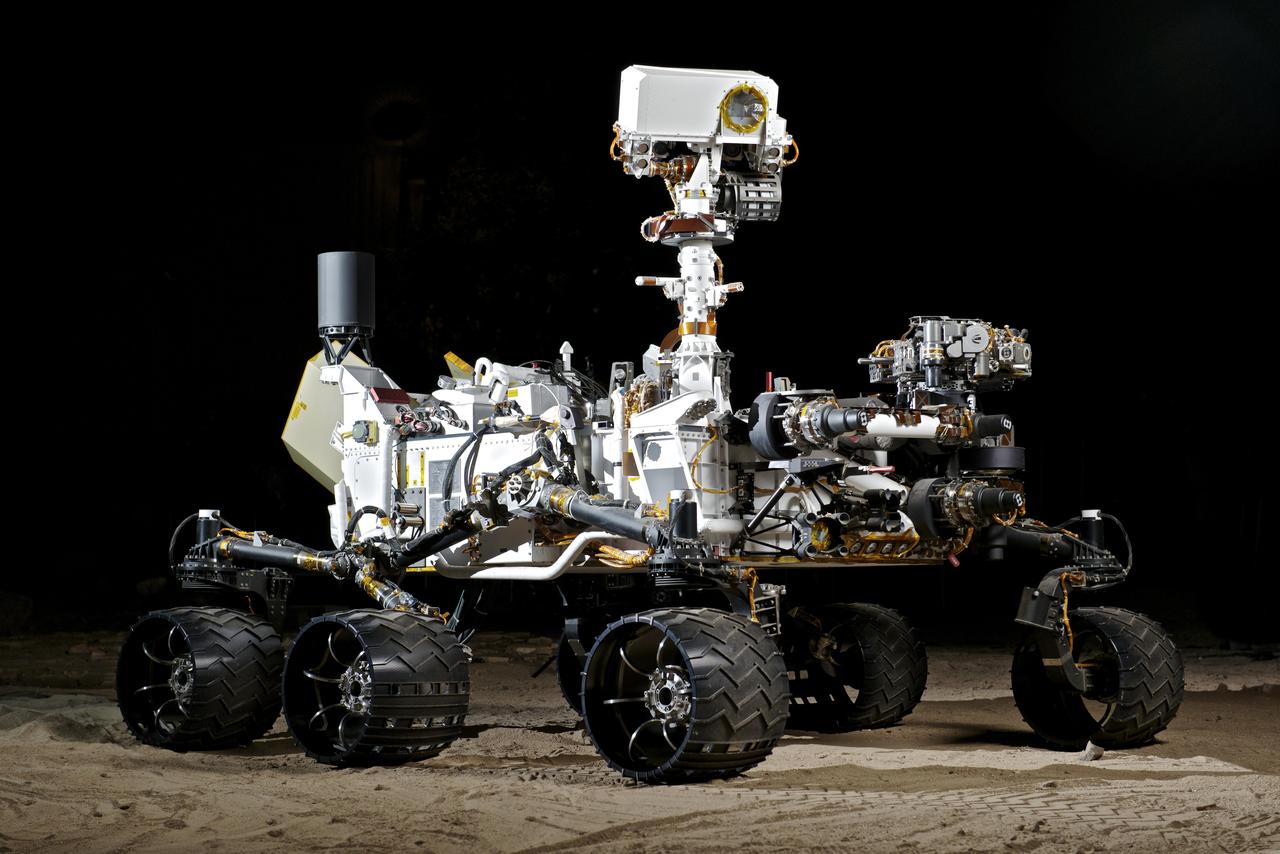
This photograph shows the Vehicle System Test Bed VSTB rover, a nearly identical copy to NASA Curiosity rover on Mars.
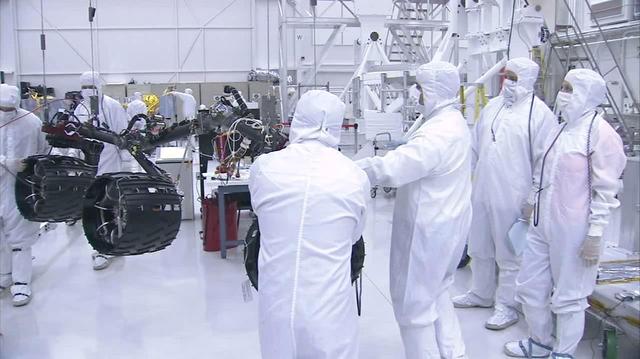
In this image taken from a video clip, NASA Curiosity rover wheels are shown hoisted on a pink crane and moving closer to the rover body. Video is available at the Photojournal.
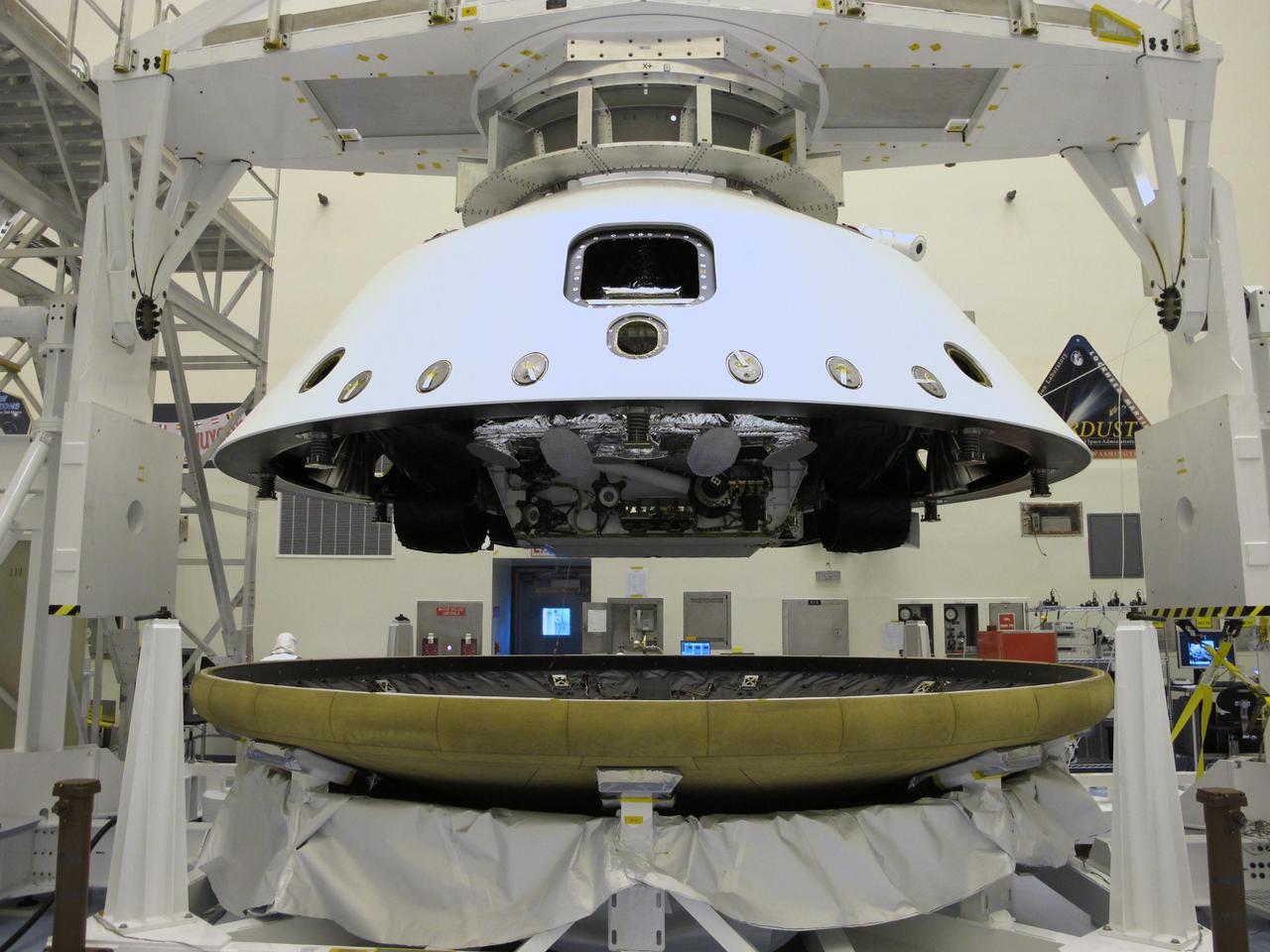
At the Payload Hazardous Servicing Facility at NASA Kennedy Space Center in Florida, the back shell powered descent vehicle configuration, containing NASA Mars Science Laboratory rover, Curiosity, is being placed on the spacecraft heat shield.
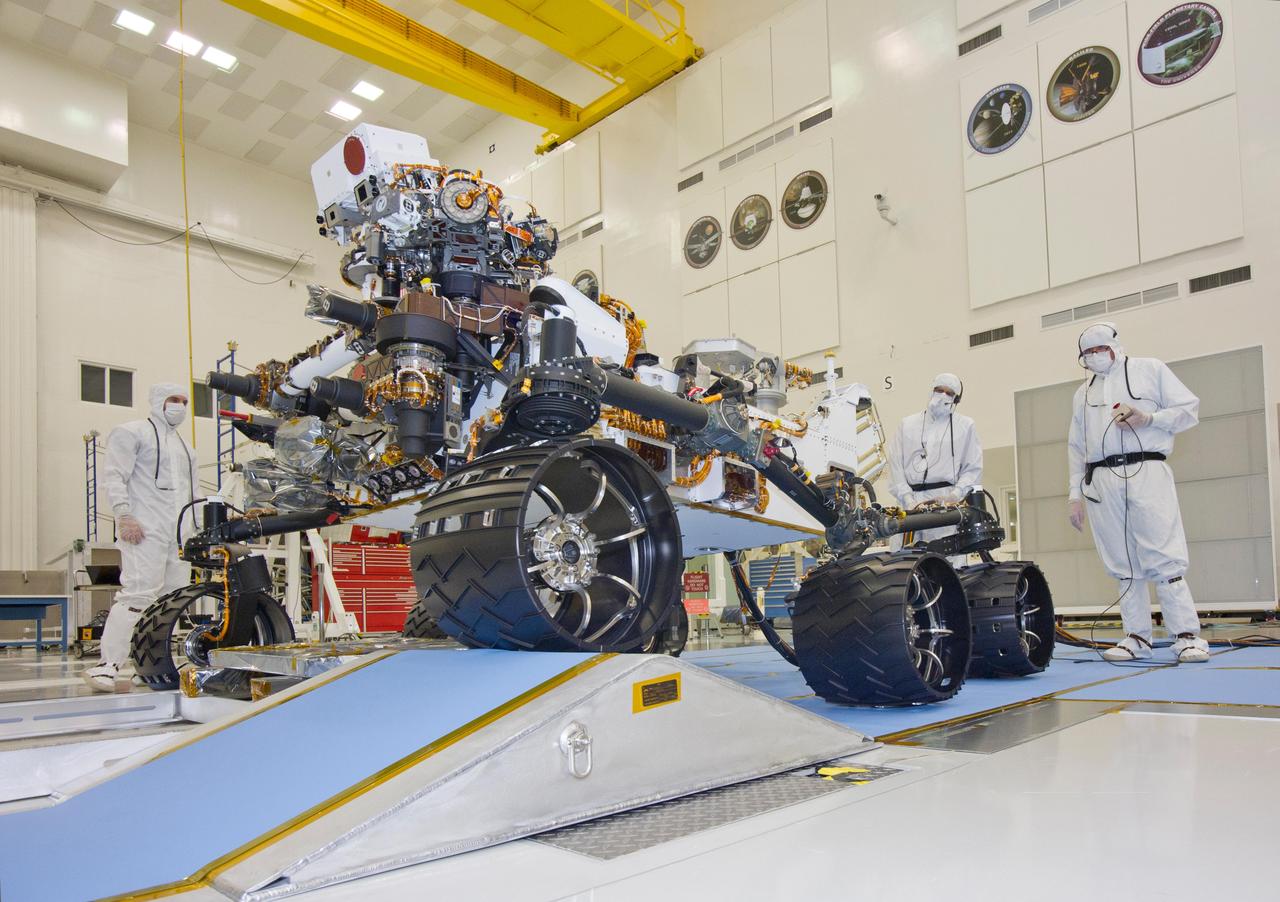
This photograph of the NASA Mars Science Laboratory rover, Curiosity, was taken during mobility testing on June 3, 2011. The location is inside the Spacecraft Assembly Facility at NASA Jet Propulsion Laboratory, Pasadena, Calif.
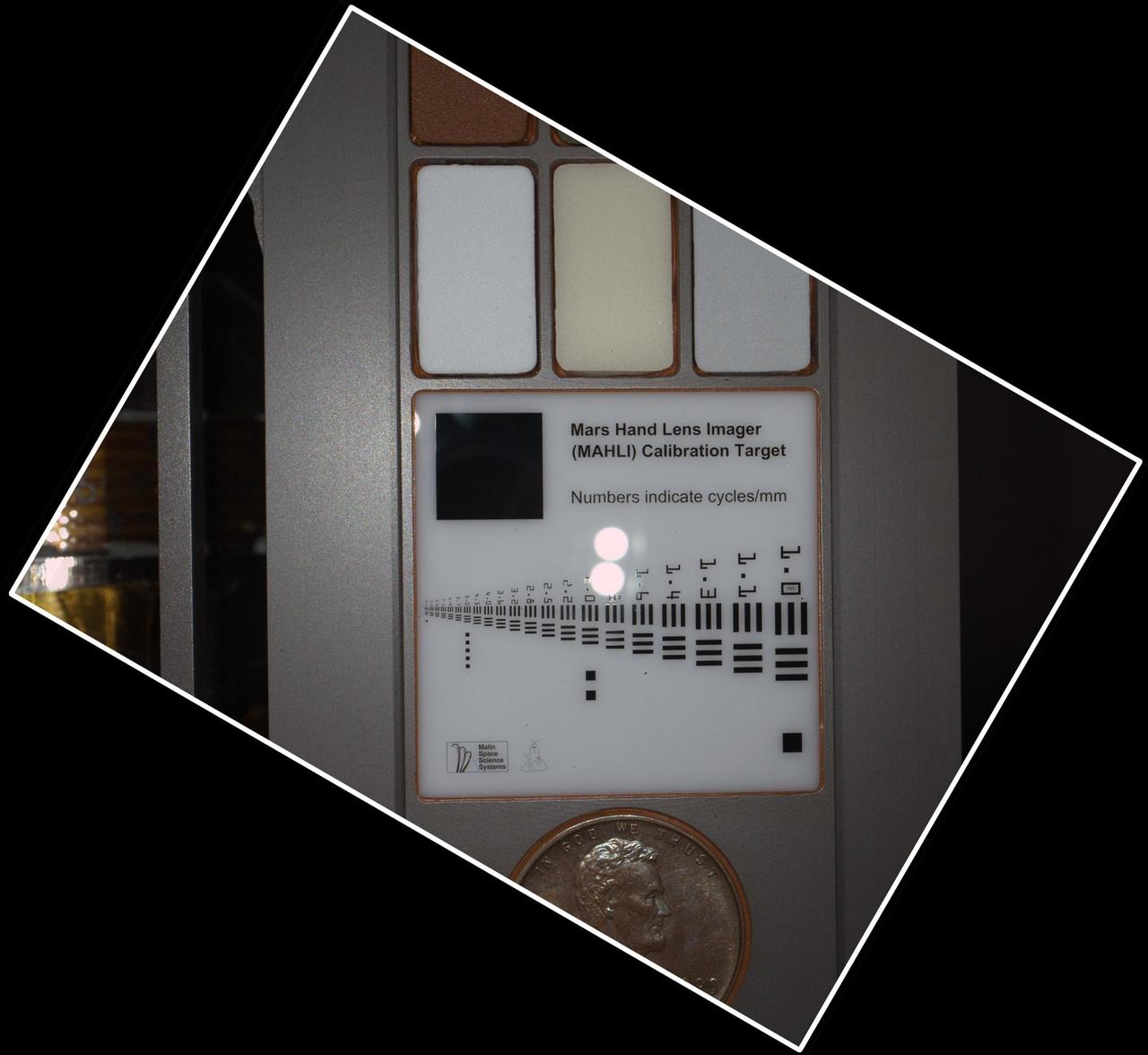
During pre-flight testing, the Mars Hand Lens Imager MAHLI camera on NASA Mars rover Curiosity took this image of the MAHLI calibration target from a distance of 3.94 inches 10 centimeters away from the target.

During pre-flight testing in March 2011, the Mars Hand Lens Imager MAHLI camera on NASA Mars rover Curiosity took this image of the MAHLI calibration target under illumination from MAHLI two ultraviolet LEDs light emitting diodes.
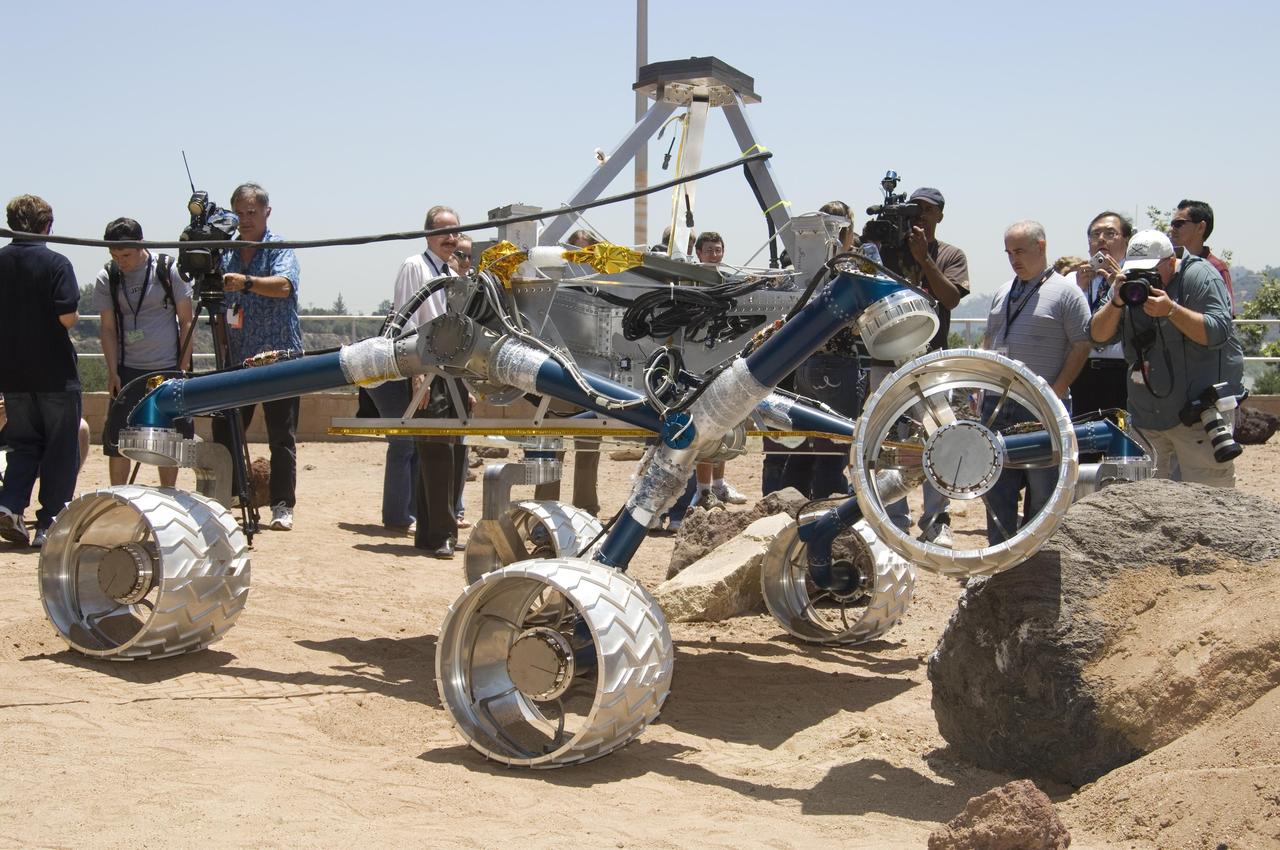
Onlookers watch as Scarecrow, a mobility-testing model for NASA Mars Science Laboratory, easily conquers boulders in the Mars Yard testing area at NASA Jet Propulsion Laboratory.
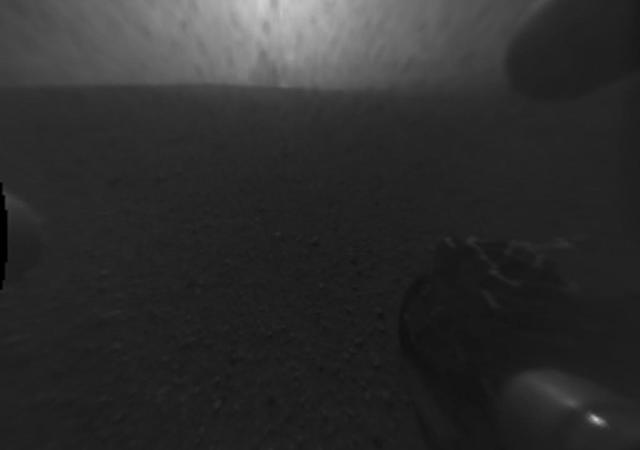
This image was taken by the Hazard-Avoidance cameras on NASA Curiosity rover to show evidence for an impact plume created when the rover sky crane fell to the Martian surface.
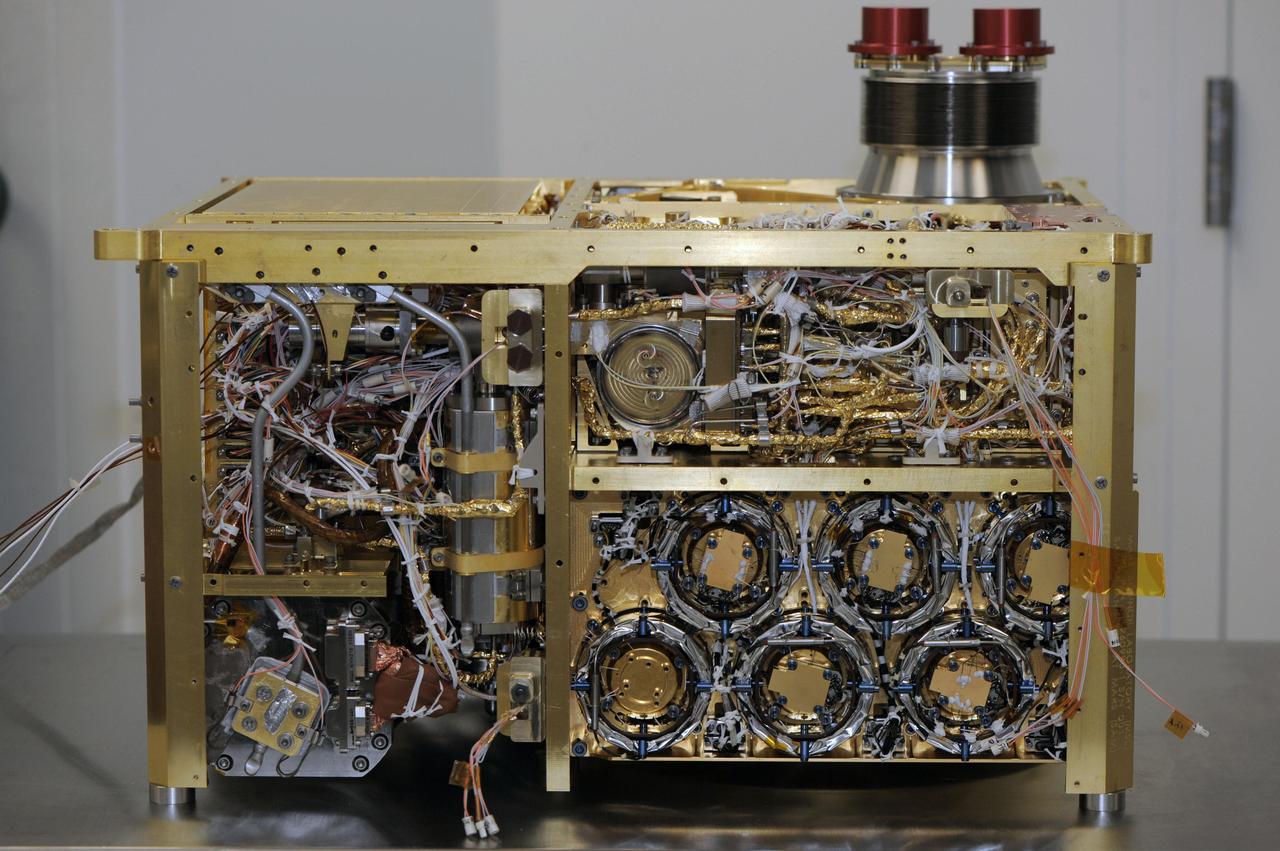
An instrument suite that will analyze the chemical ingredients in samples of Martian atmosphere, rocks and soil during the mission of NASA Mars rover Curiosity, is shown here during assembly at NASA Goddard Space Flight Center, Greenbelt, Md., in 2010.
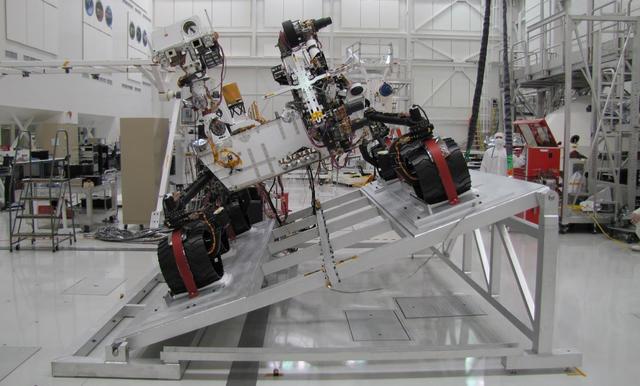
The Mast Camera Mastcam on NASA Mars rover Curiosity has two rectangular eyes near the top of the rover remote sensing mast. This image shows Curiosity on a tilt table NASA Jet Propulsion Laboratory, Pasadena, California.
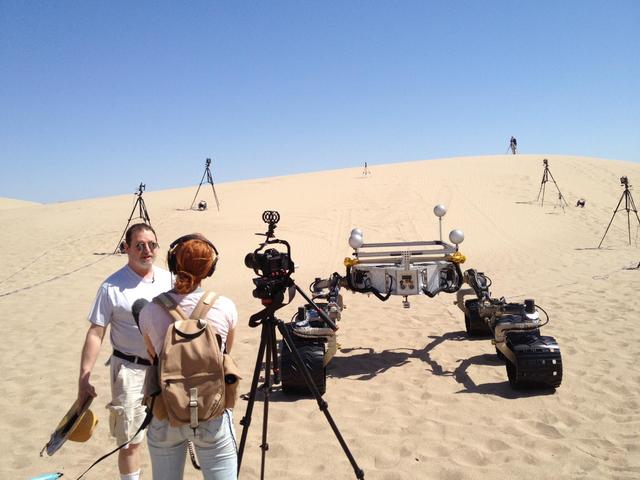
Michael Malin, left, principal investigator for three science cameras on NASA Curiosity Mars rover, comments to a news reporter during tests with Curiosity mobility-test stand-in, Scarecrow, on Dumont Dunes in California Mojave Desert.
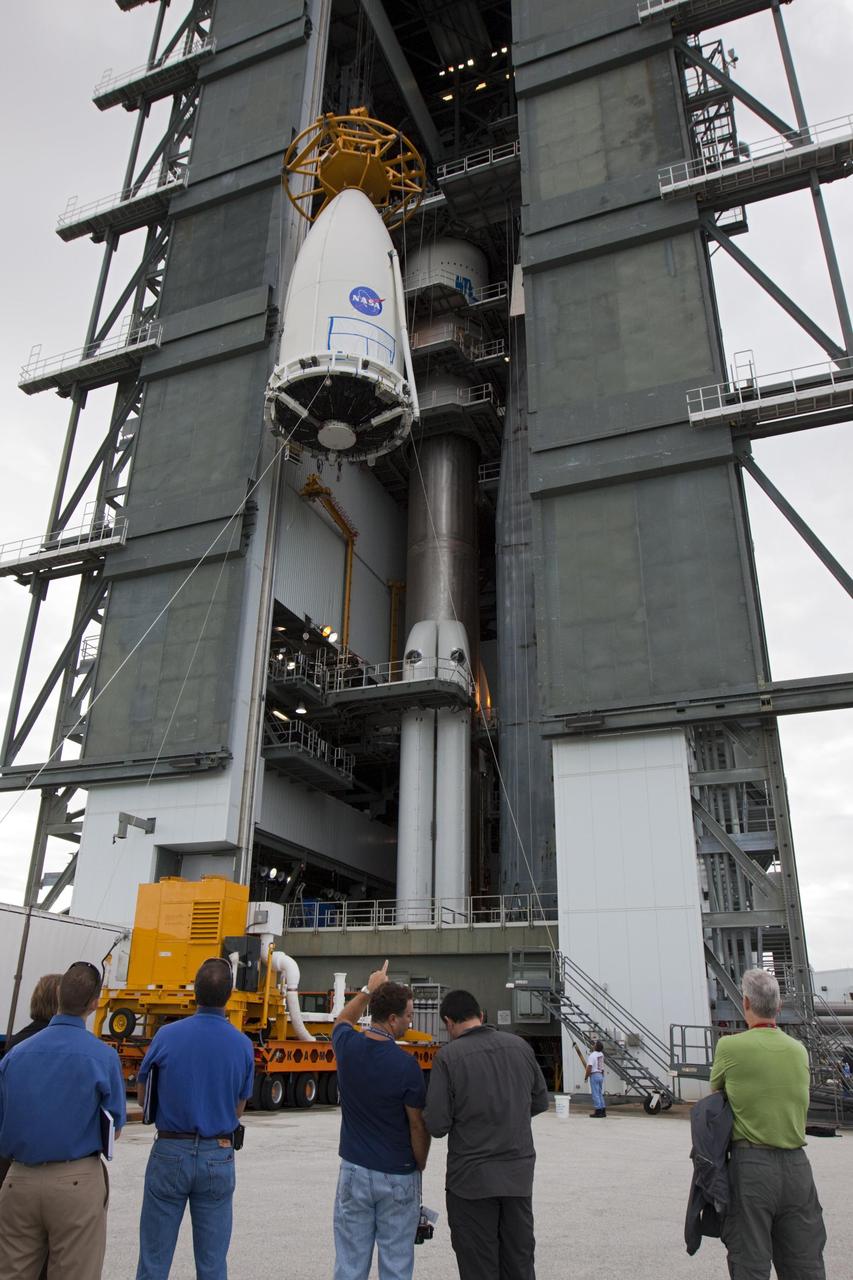
Employees at Space Launch Complex 41 of Cape Canaveral Air Force Station, Fla., keep watch as the payload fairing containing NASA Mars Science Laboratory spacecraft is lifted up the side of the Vertical Integration Facility on Nov. 3, 2011.
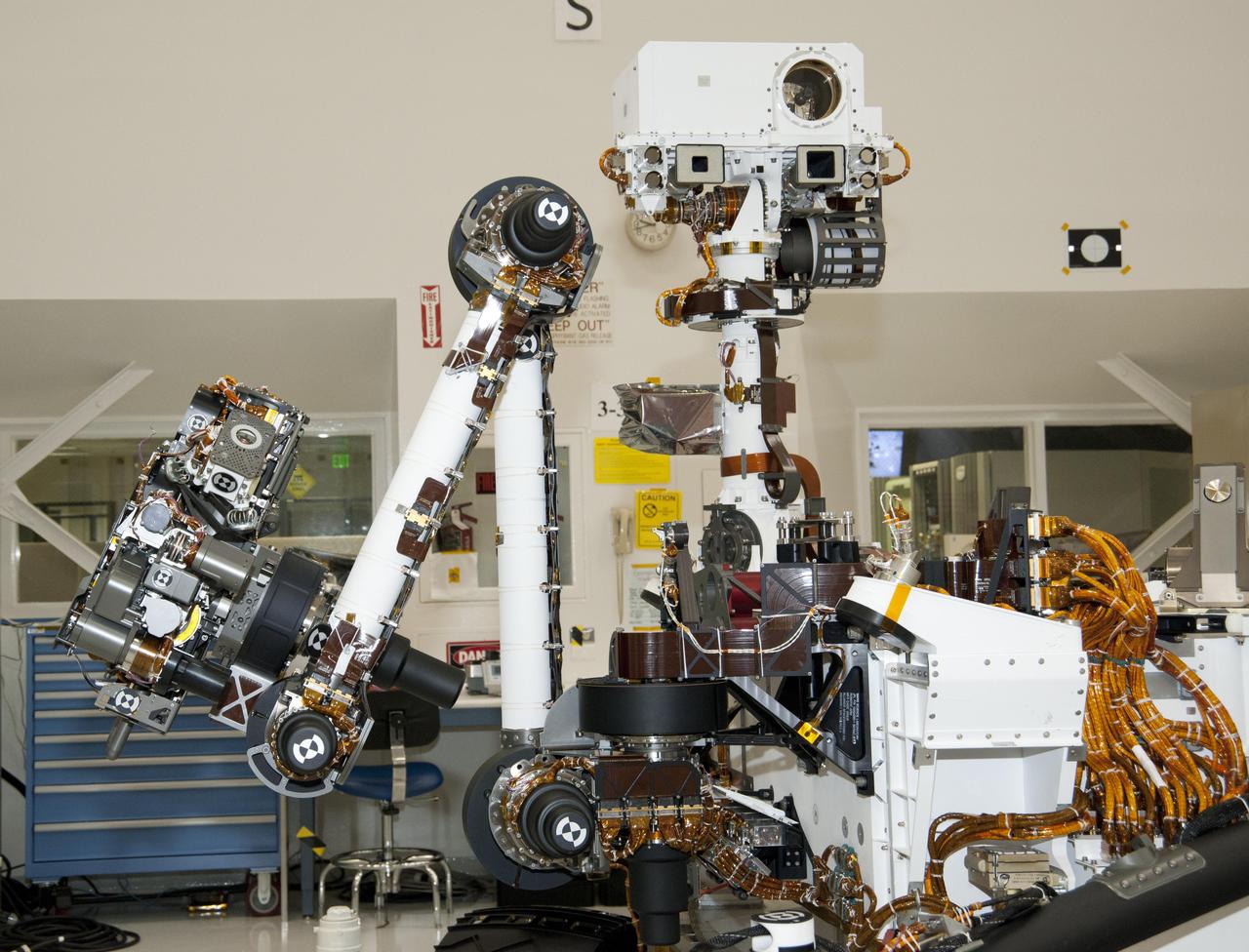
The arm and the remote sensing mast of the Mars rover Curiosity each carry science instruments and other tools for NASA Mars Science Laboratory mission. This image shows the arm on the left and the mast just right of center.
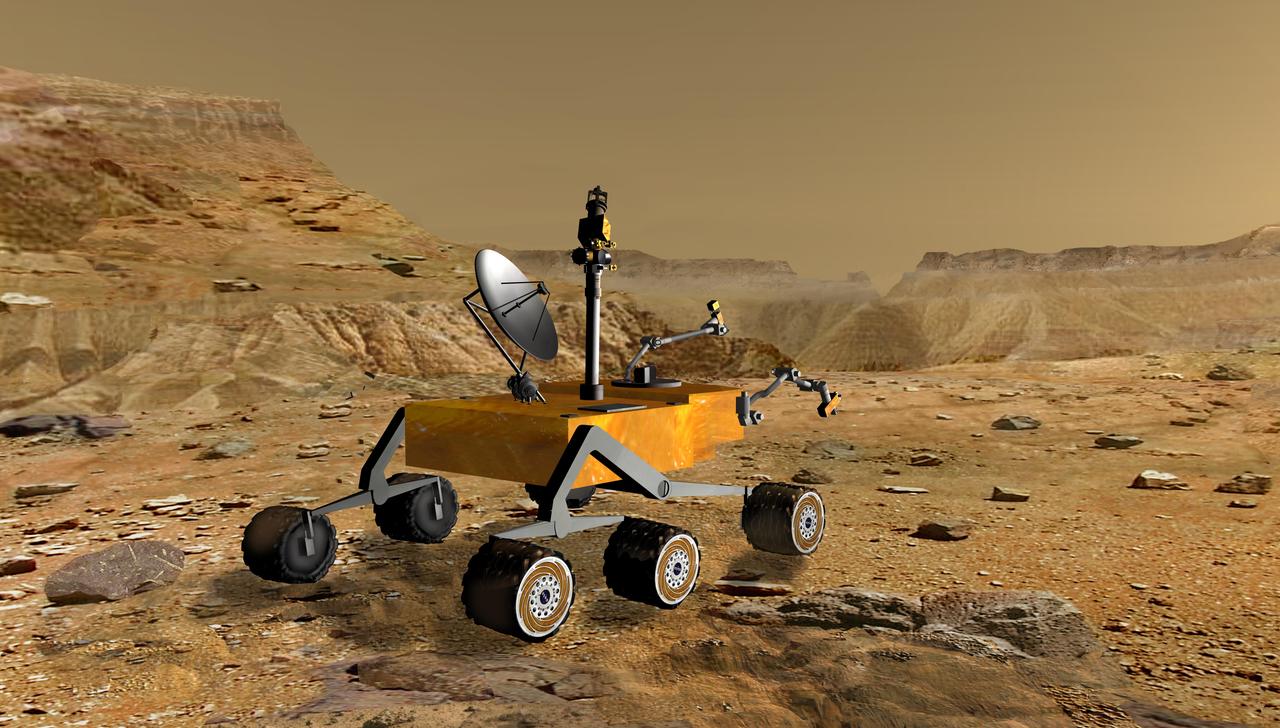
NASA Mars Science Laboratory travels near a canyon on Mars in this artist concept. The mission is under development for launch in 2009 and a precision landing on Mars in 2010.
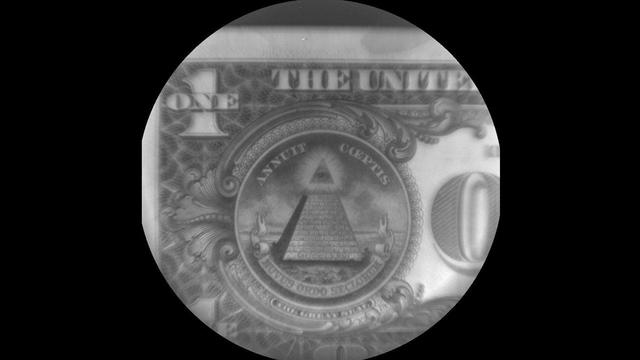
This image displays the type of detail discernable with the telescopic camera of the Chemistry and Camera ChemCam instrument on the Mars Science Laboratory mission Curiosity rover.
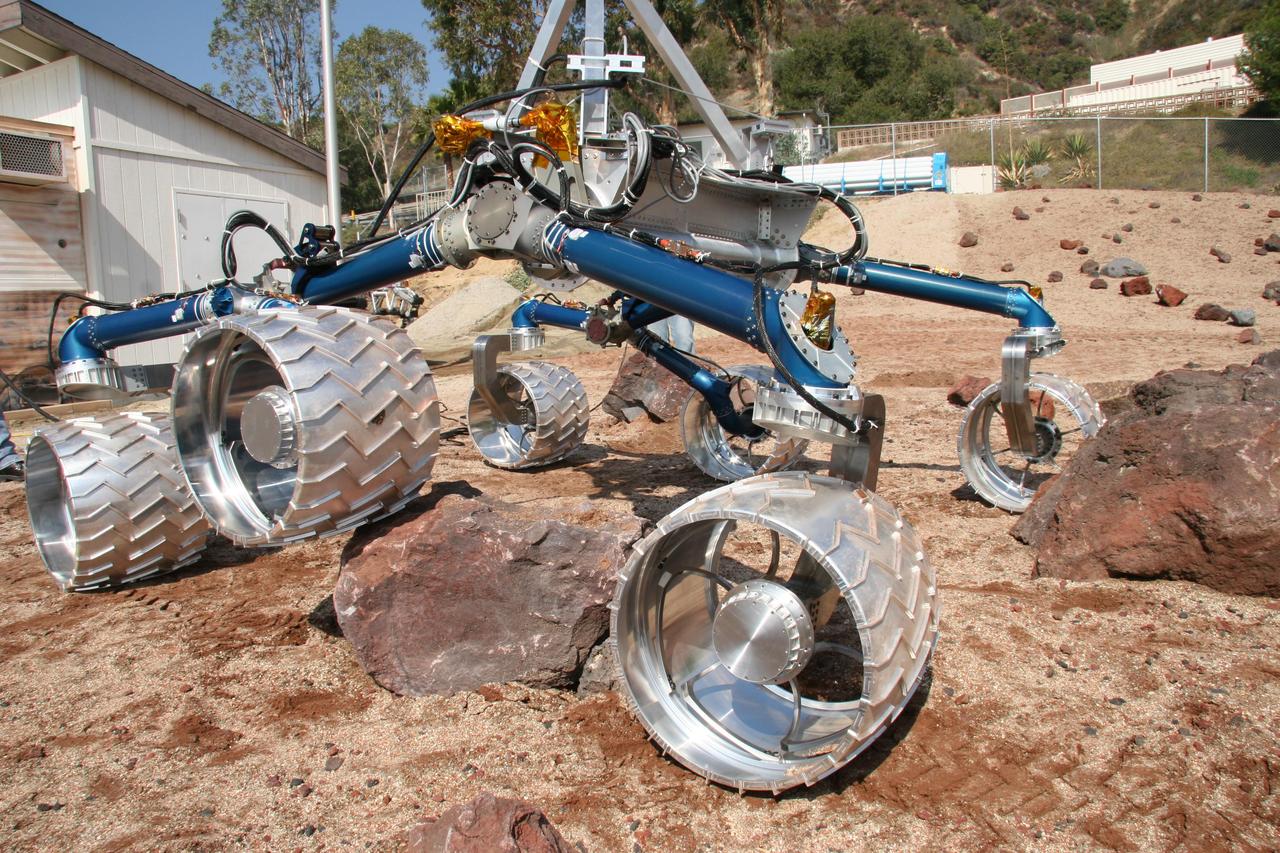
Scarecrow, a mobility-testing model for NASA Mars Science Laboratory, easily traverses large rocks in the Mars Yard testing area at NASA Jet Propulsion Laboratory.
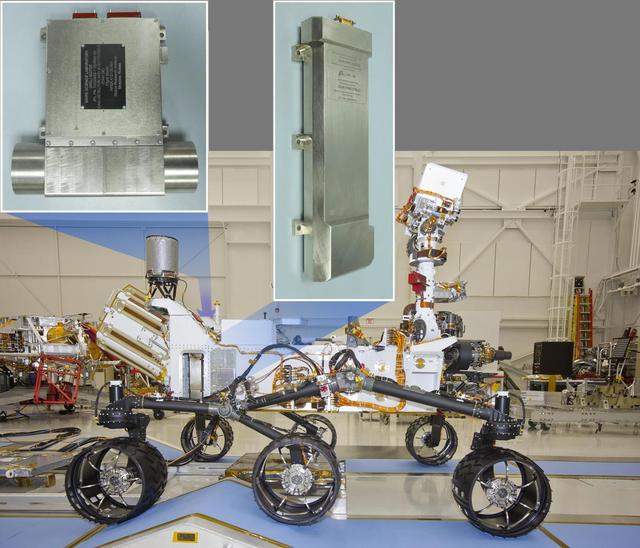
This image of NASA Curiosity rover shows the location of the two components of the Dynamic Albedo of Neutrons instrument. The neutron generator is mounted on the right hip and the detectors are on the opposite hip.
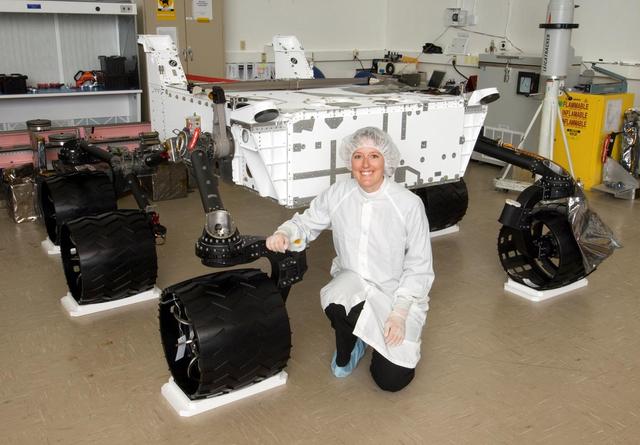
This image from August 2008 shows NASA Mars Science Laboratory rover in the course of its assembly, before additions of its arm, mast, laboratory instruments and other equipment.
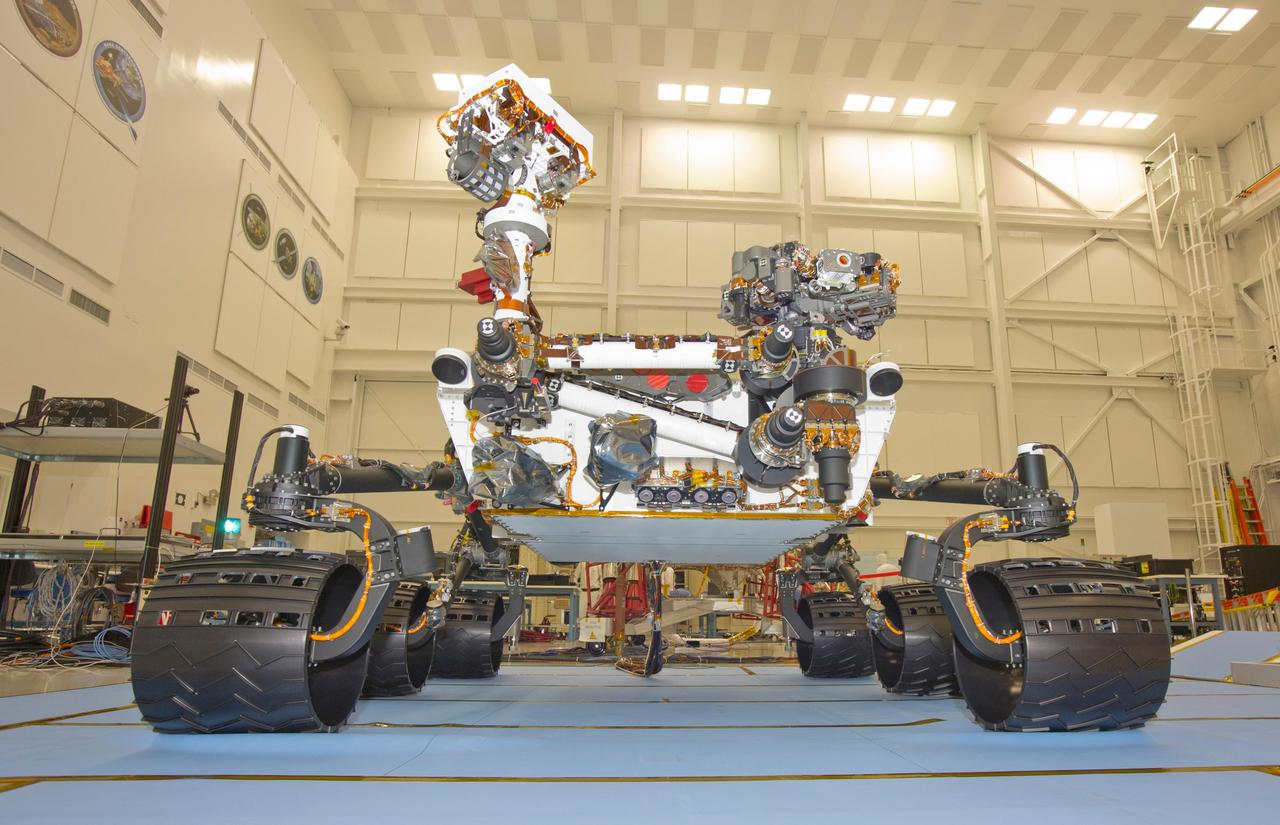
This photograph of the NASA Mars Science Laboratory rover, Curiosity, was taken during mobility testing on June 3, 2011. The location is inside the Spacecraft Assembly Facility at NASA Jet Propulsion Laboratory, Pasadena, Calif.
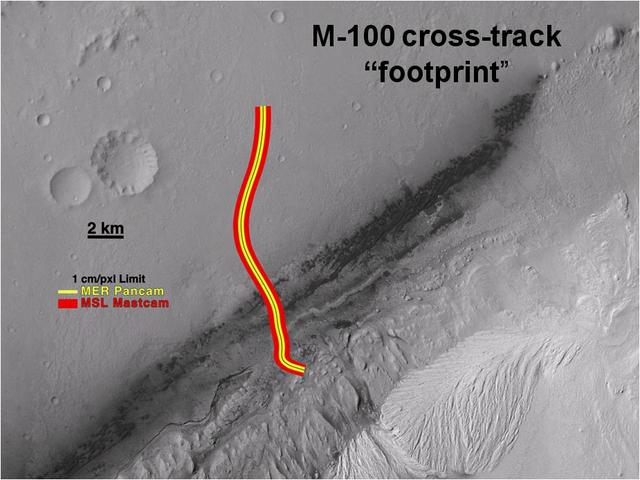
A section of NASA Mars Science Laboratory Gale Crater landing site is shown, with a representative path from the landing location toward the layered mound to the south.
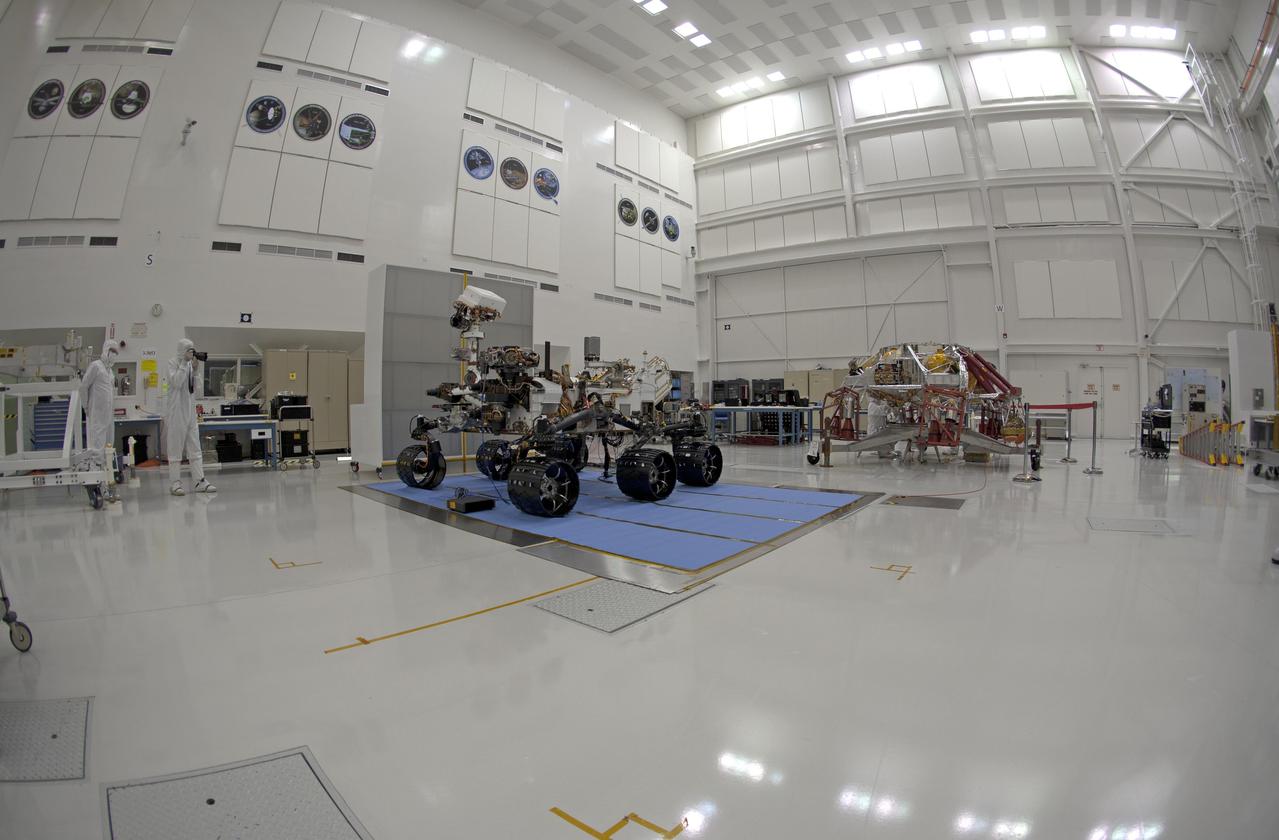
Right-eye view of NASA Curiosity rover and its powered descent vehicle pose for photographs prior to being integrated for launch at JPL Spacecraft Assembly Facility.
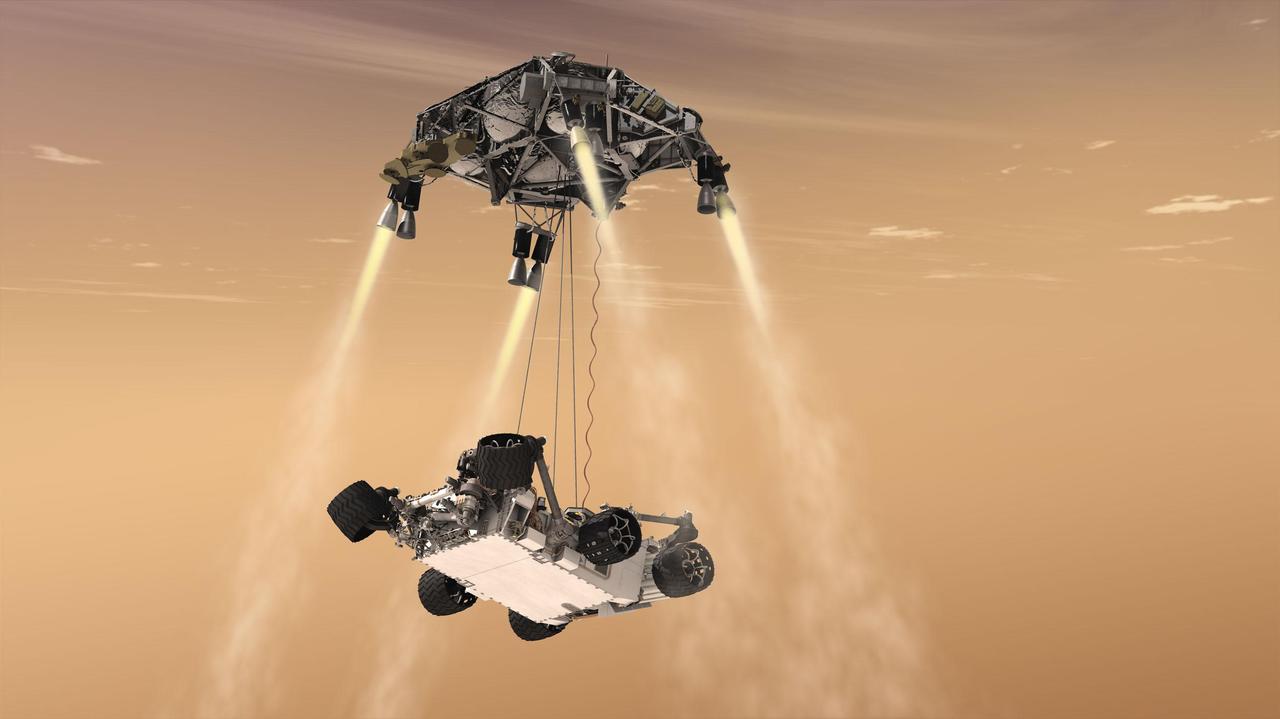
This artist concept shows the sky crane maneuver during the descent of NASA Curiosity rover to the Martian surface. The sheer size of the rover over one ton, or 900 kilograms would preclude it from taking advantage of an airbag-assisted landing.
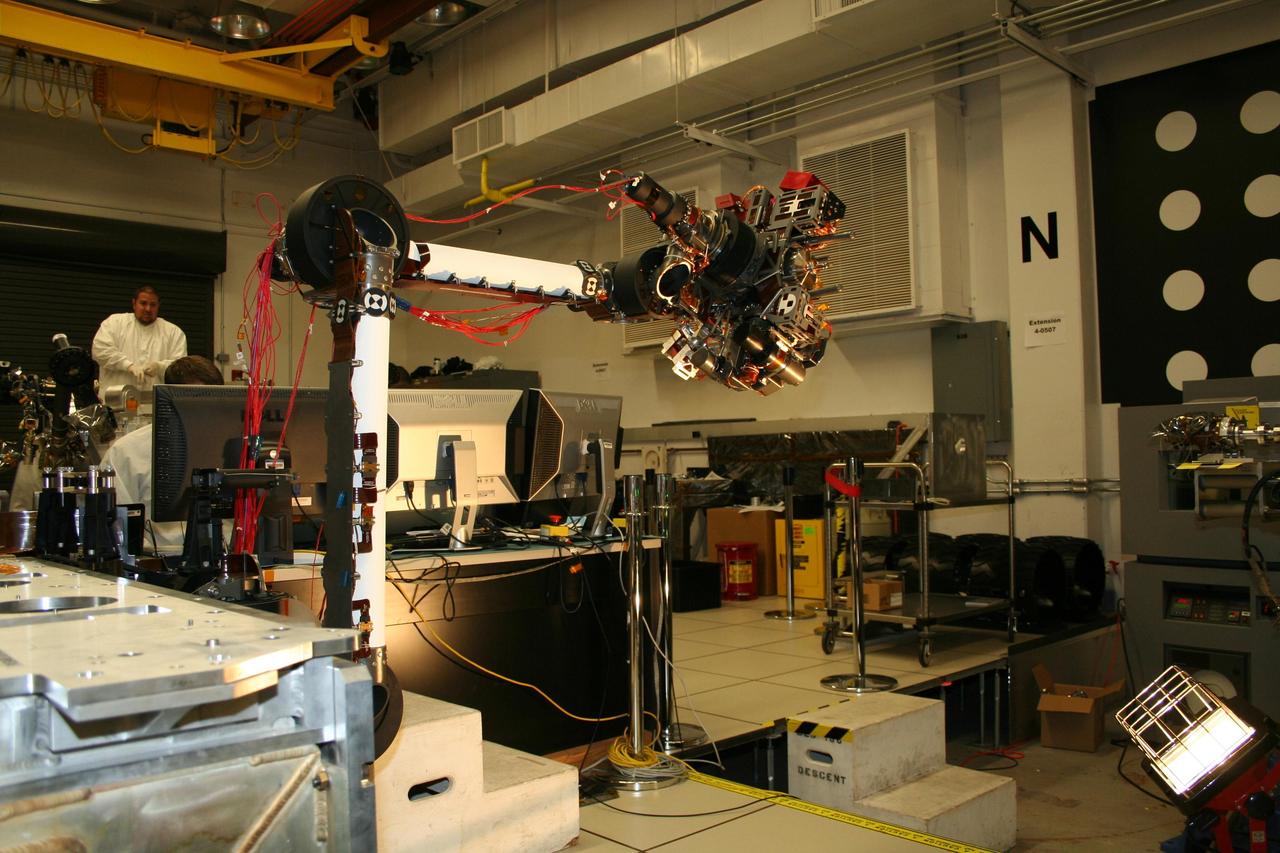
In the middle of this image taken at the Jet Propulsion Laboratory, the long robotic arm of NASA Mars Science Laboratory is bent at nearly a 90-degree angle.
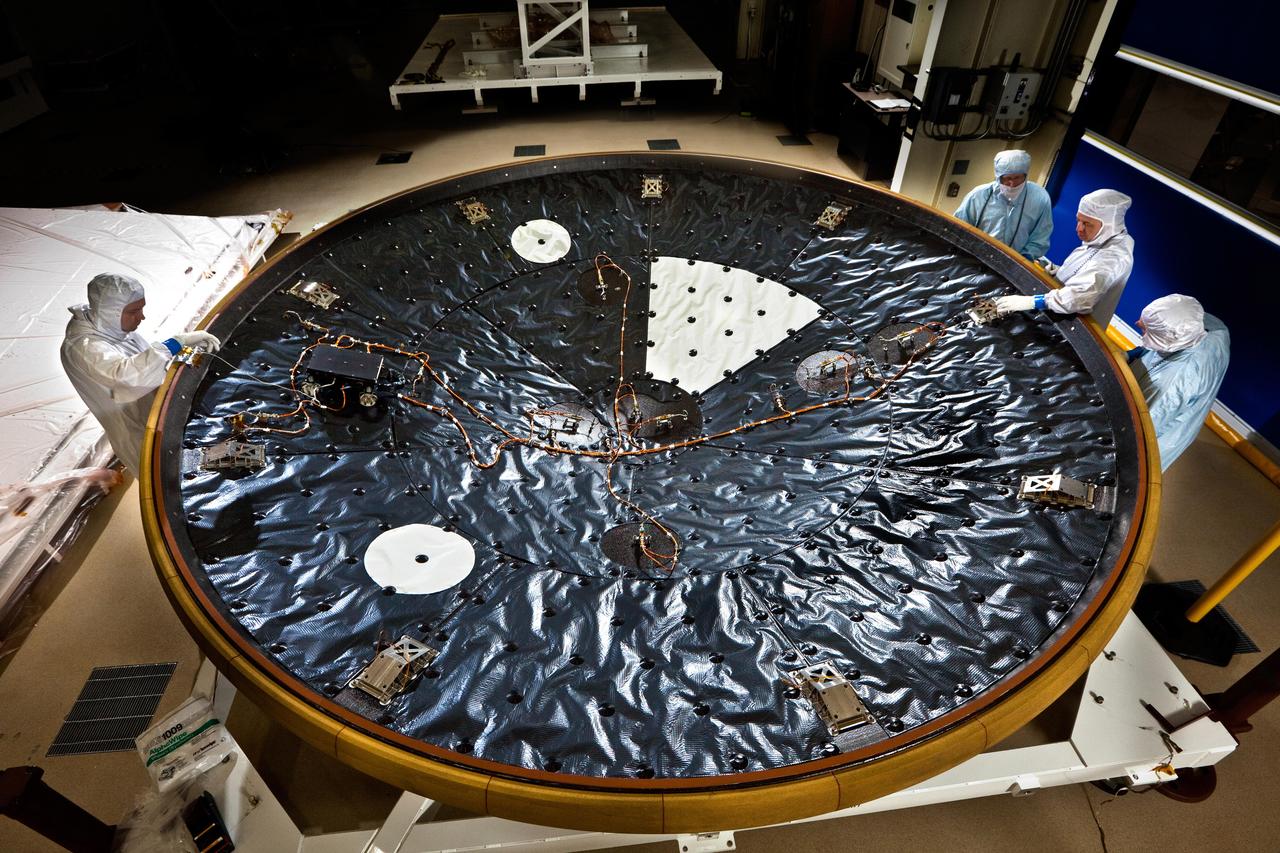
The heat shield for NASA Mars Science Laboratory is the largest ever built for a planetary mission. This image shows the heat shield being prepared at Lockheed Martin Space Systems, Denver, in April 2011.
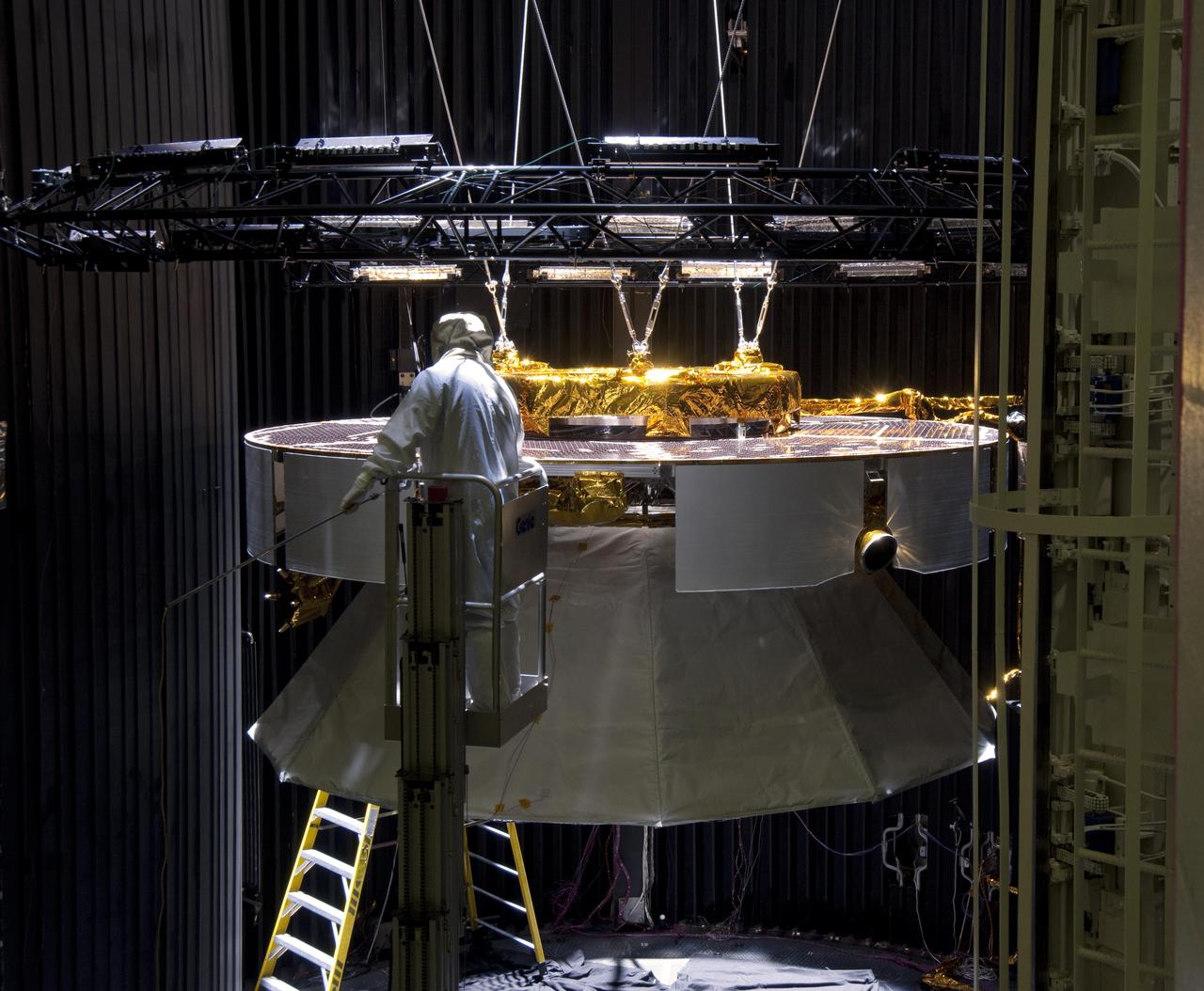
Testing of the cruise stage for NASA Mars Science Laboratory in August 2010 included a session in a facility that simulates the environment found in interplanetary space.