
Artist John J. Olson's conception for the future of space exploration: A base on Mars.
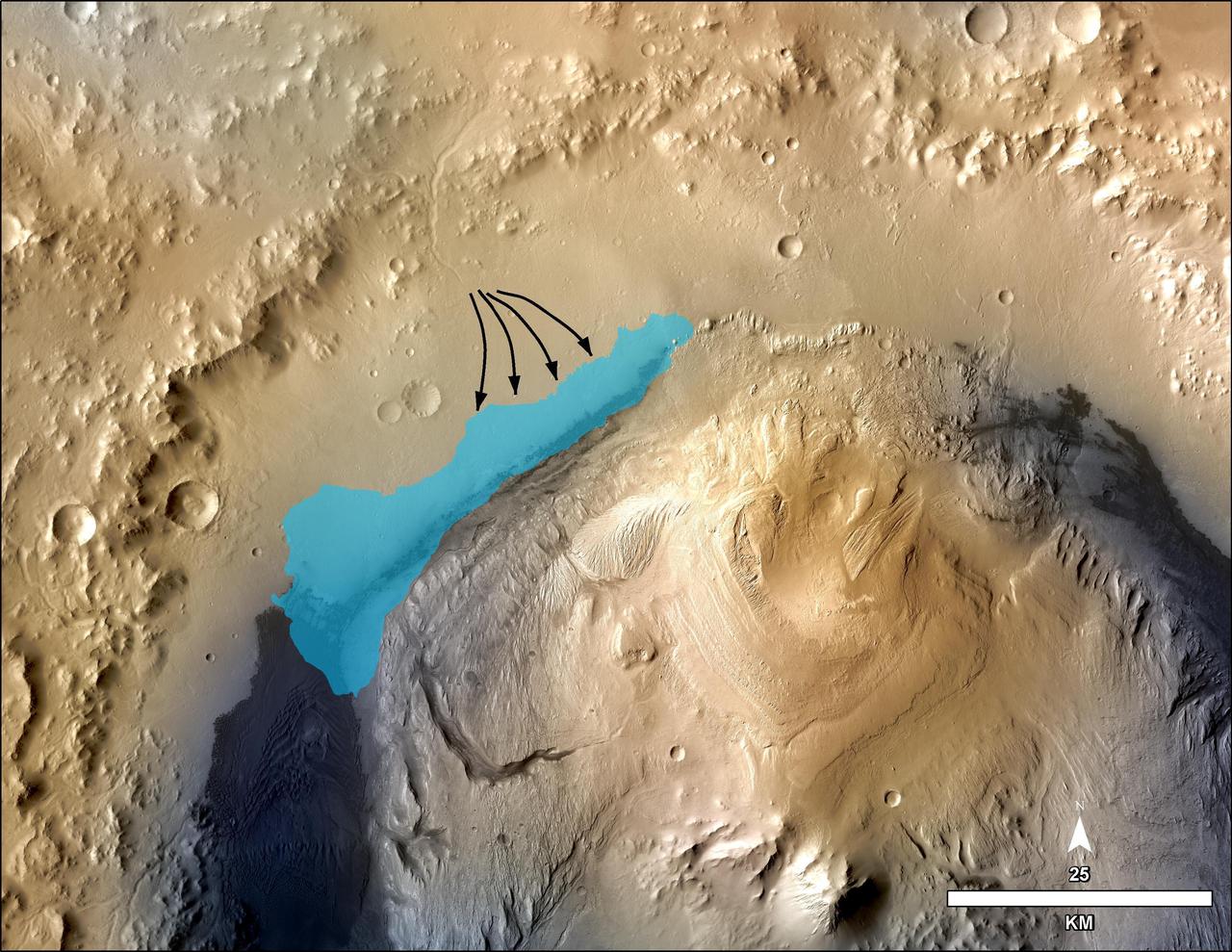
This illustration depicts a concept for the possible extent of an ancient lake inside Gale Crater. The base map combines image data from the Context Camera on NASA Mars Reconnaissance Orbiter and color information from Viking Orbiter imagery.
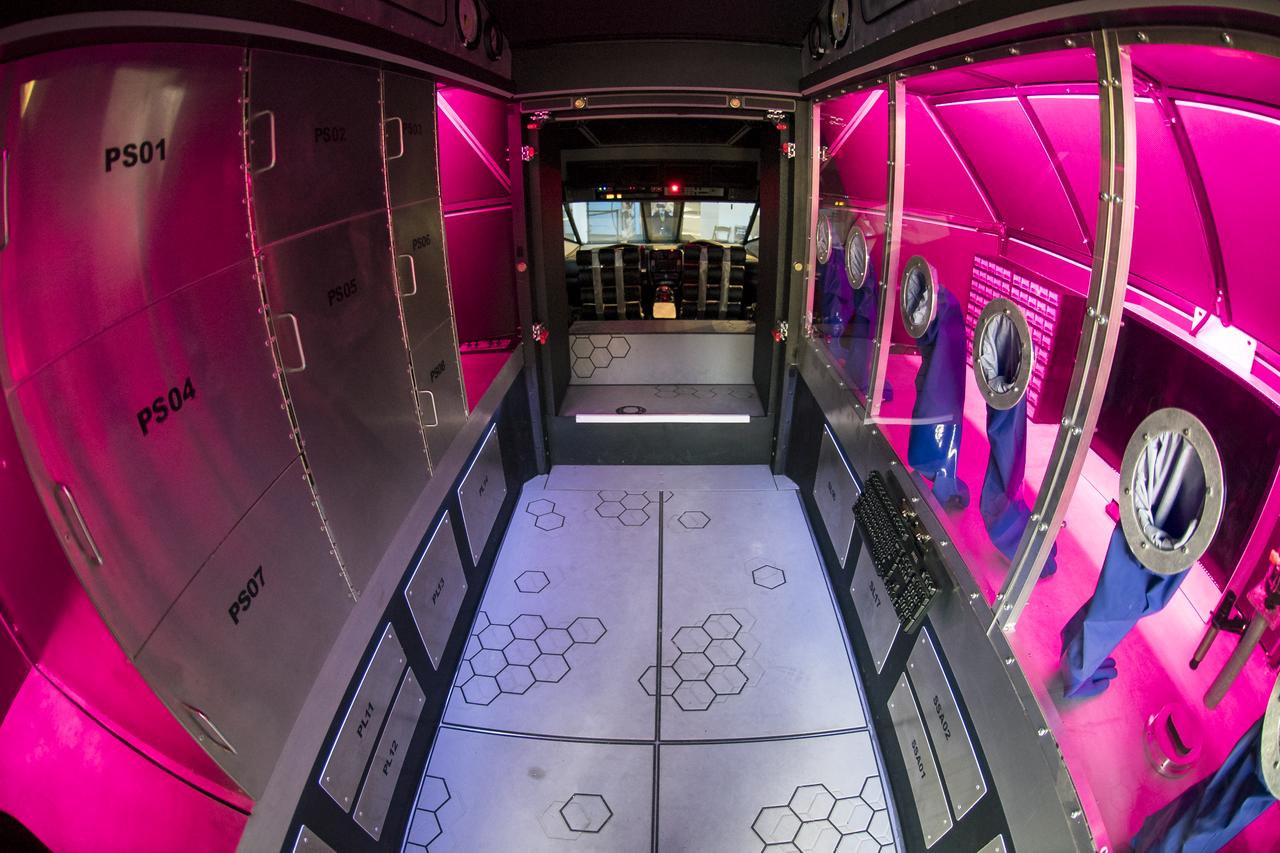
A view of the inside of the Mars rover concept, developed by vehicle designers, the Parker Brothers, with advice from NASA, is seen here during the Smithsonian Institution’s National Air and Space Museum’s Mars Day, an annual event celebrating the Red Planet with exhibits, speakers, and educational activities, Friday, July 21, 2017 in Washington. The Mars rover concept is currently on an East Coast tour from its home base at the Kennedy Space Center Visitor’s Center in Florida, and is designed to engage and educate the public by demonstrating the types of features and equipment a future human exploration vehicle may need. Photo Credit: (NASA/Aubrey Gemignani)
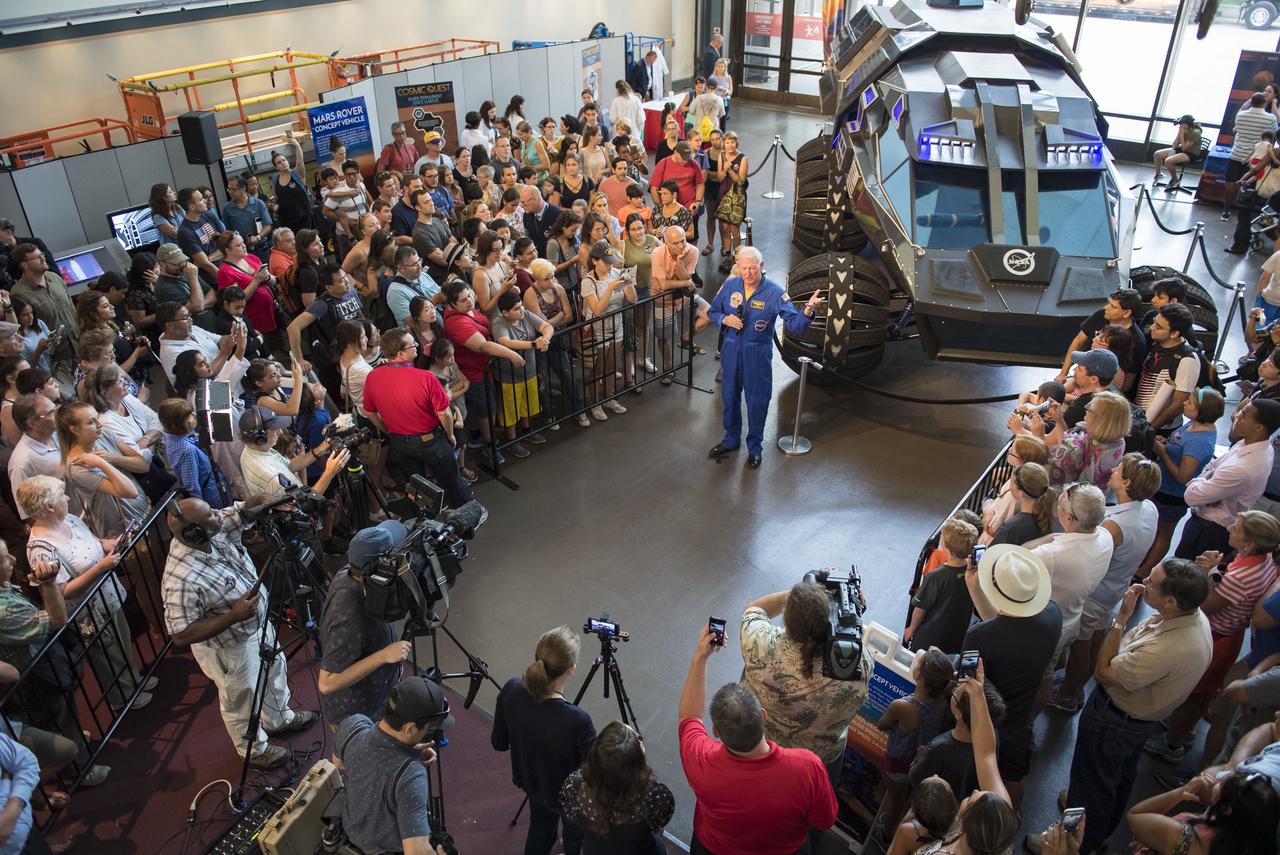
Jon McBride, retired NASA astronaut, speaks to visitors in front of the Mars rover concept, developed by vehicle designers, the Parker Brothers, with advice from NASA, during the Smithsonian Institution’s National Air and Space Museum Mars Day, Friday, July 21, 2017 in Washington. The Mars rover concept is currently on an East Coast tour from its home base at the Kennedy Space Center Visitor’s Center in Florida, and is designed to engage and educate the public by demonstrating the types of features and equipment a future human exploration vehicle may need. Photo Credit: (NASA/Aubrey Gemignani)
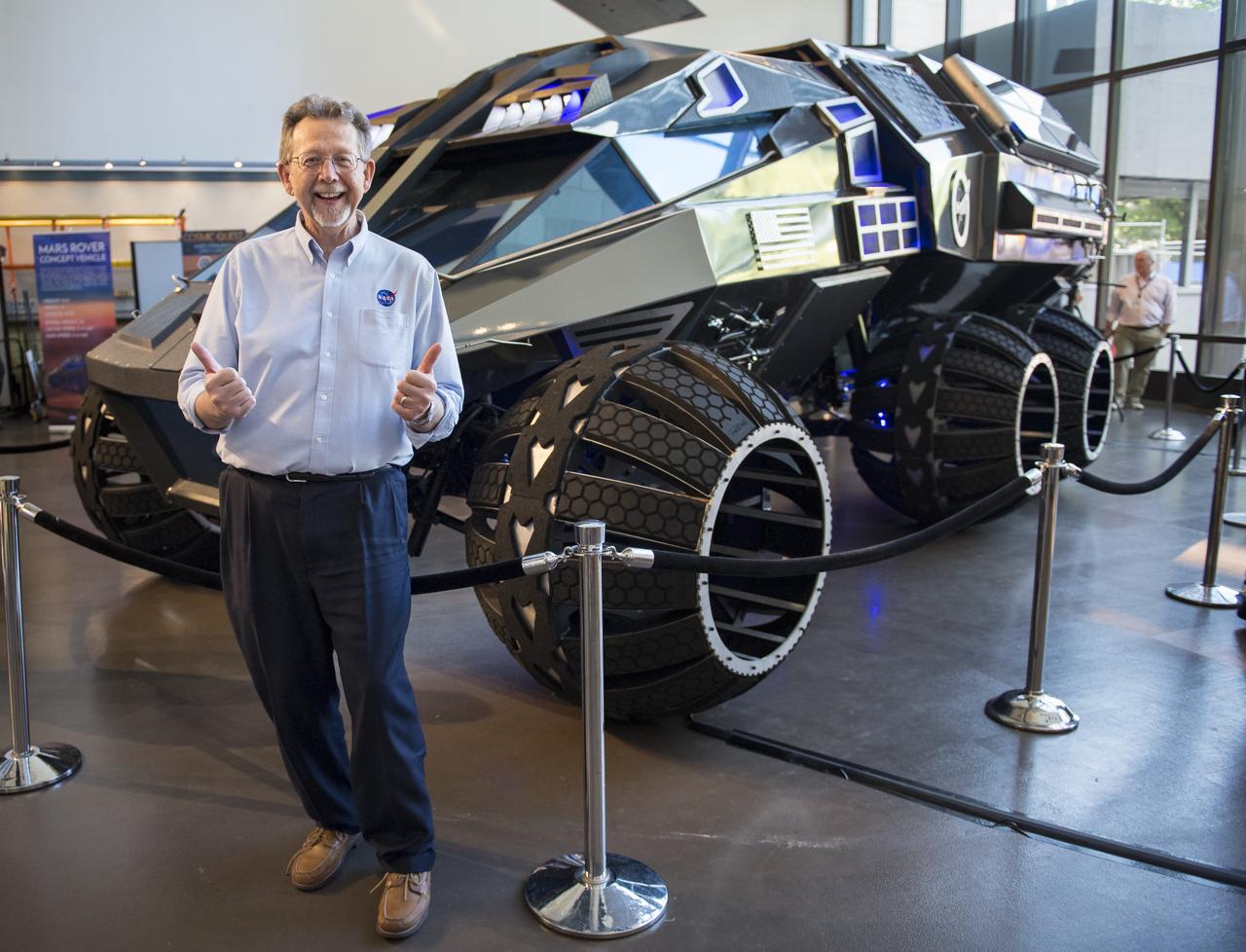
Jim Green, director of NASA’s Planetary Science Division, poses for a photo with the Mars rover concept, developed by vehicle designers, the Parker Brothers, with advice from NASA, during the Smithsonian Institution’s National Air and Space Museum’s Mars Day, Friday, July 21, 2017 in Washington. The Mars rover concept is currently on an East Coast tour from its home base at the Kennedy Space Center Visitor’s Center in Florida, and is designed to engage and educate the public by demonstrating the types of features and equipment a future human exploration vehicle may need. Photo Credit: (NASA/Aubrey Gemignani)
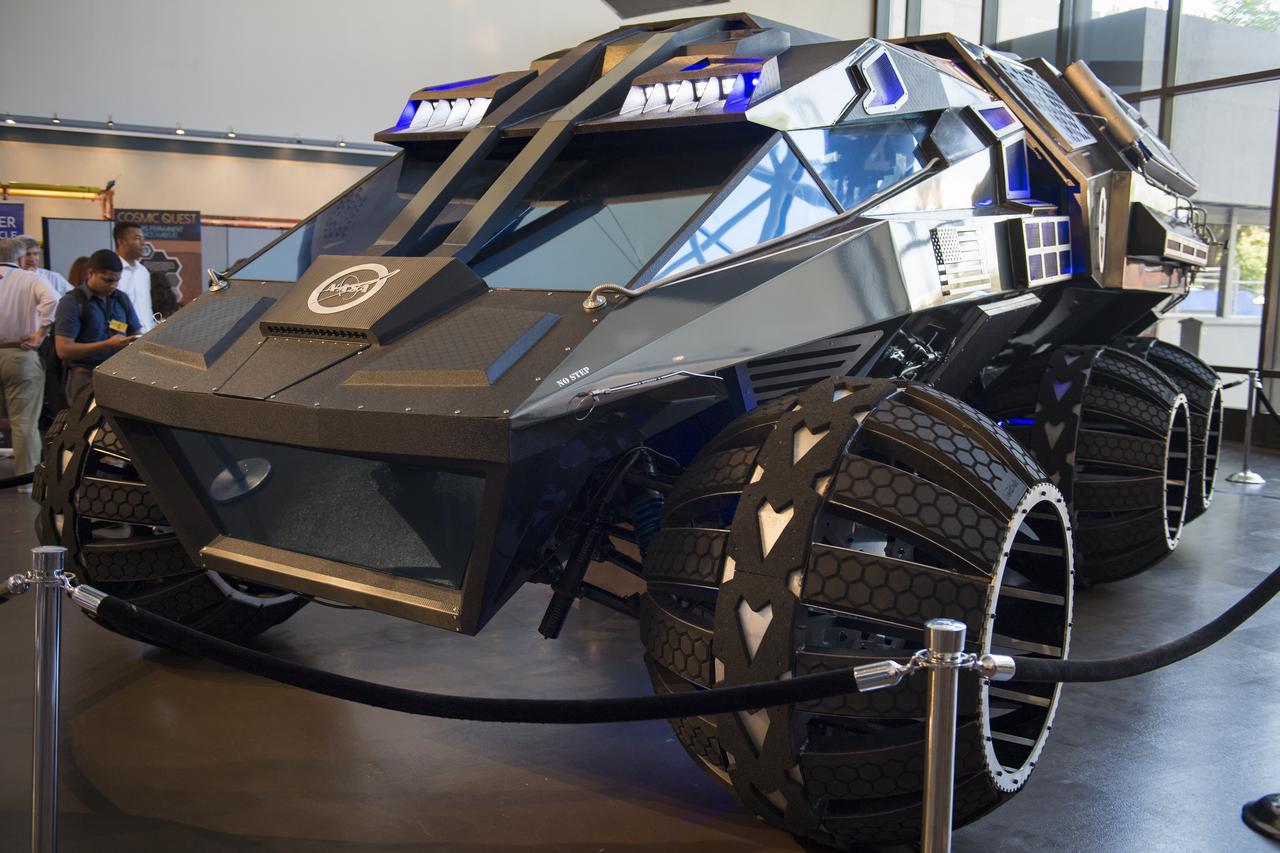
A view of the Mars rover concept, developed by vehicle designers, the Parker Brothers, with advice from NASA, is seen here during the Smithsonian Institution’s National Air and Space Museum’s Mars Day, an annual event celebrating the Red Planet with exhibits, speakers, and educational activities, Friday, July 21, 2017 in Washington. The Mars rover concept is currently on an East Coast tour from its home base at the Kennedy Space Center Visitor’s Center in Florida, and is designed to engage and educate the public by demonstrating the types of features and equipment a future human exploration vehicle may need. Photo Credit: (NASA/Aubrey Gemignani)

A view of the controls of the Mars rover concept, developed by vehicle designers, the Parker Brothers, with advice from NASA, is seen here during the Smithsonian Institution’s National Air and Space Museum’s Mars Day, an annual event celebrating the Red Planet with exhibits, speakers, and educational activities, Friday, July 21, 2017 in Washington. The Mars rover concept is currently on an East Coast tour from its home base at the Kennedy Space Center Visitor’s Center in Florida, and is designed to engage and educate the public by demonstrating the types of features and equipment a future human exploration vehicle may need. Photo Credit: (NASA/Aubrey Gemignani)

Jon McBride, retired NASA astronaut, is interviewed in front of the Mars rover concept, developed by vehicle designers, the Parker Brothers, with advice from NASA, during the Smithsonian Institution’s National Air and Space Museum’s Mars Day, Friday, July 21, 2017 in Washington. The Mars rover concept is currently on an East Coast tour from its home base at the Kennedy Space Center Visitor’s Center in Florida, and is designed to engage and educate the public by demonstrating the types of features and equipment a future human exploration vehicle may need. Photo Credit: (NASA/Aubrey Gemignani)
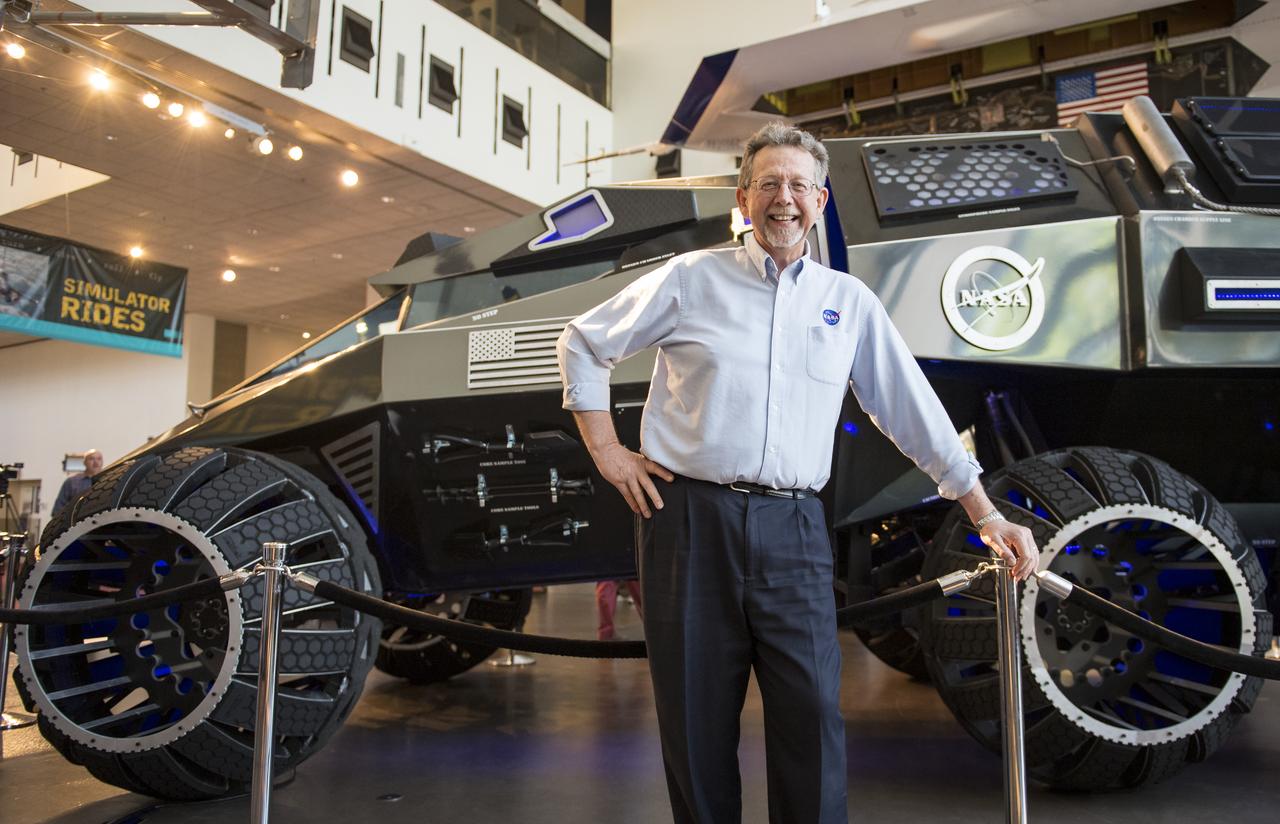
Jim Green, director of NASA’s Planetary Science Division, poses for a photo with the Mars rover concept, developed by vehicle designers, the Parker Brothers, with advice from NASA, during the Smithsonian Institution’s National Air and Space Museum’s Mars Day, Friday, July 21, 2017 in Washington. The Mars rover concept is currently on an East Coast tour from its home base at the Kennedy Space Center Visitor’s Center in Florida, and is designed to engage and educate the public by demonstrating the types of features and equipment a future human exploration vehicle may need. Photo Credit: (NASA/Aubrey Gemignani)
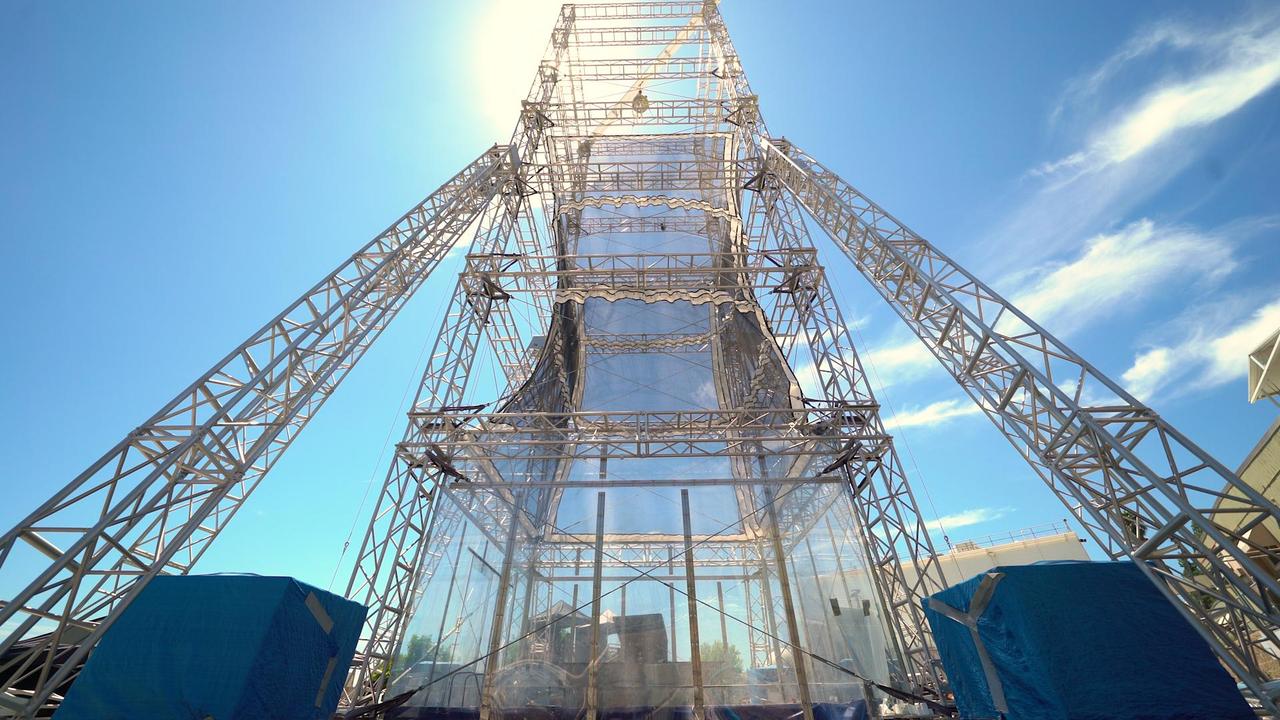
This drop tower at NASA's Jet Propulsion Laboratory in Southern California includes a bow launch system, which can hurl test articles 110 mph into the ground, re-creating the forces they would experience during a Mars landing. The drop tower was used for testing the collapsible-base of a prototype Mars lander design called SHIELD (Simplified High Impact Energy Landing Device) on Aug. 12, 2022. The SHIELD concept could one day allow lower-cost missions to reach the Martian surface. In this image, the SHIELD base prototype can be seen being lifted up to the top of the tower. https://photojournal.jpl.nasa.gov/catalog/PIA25581
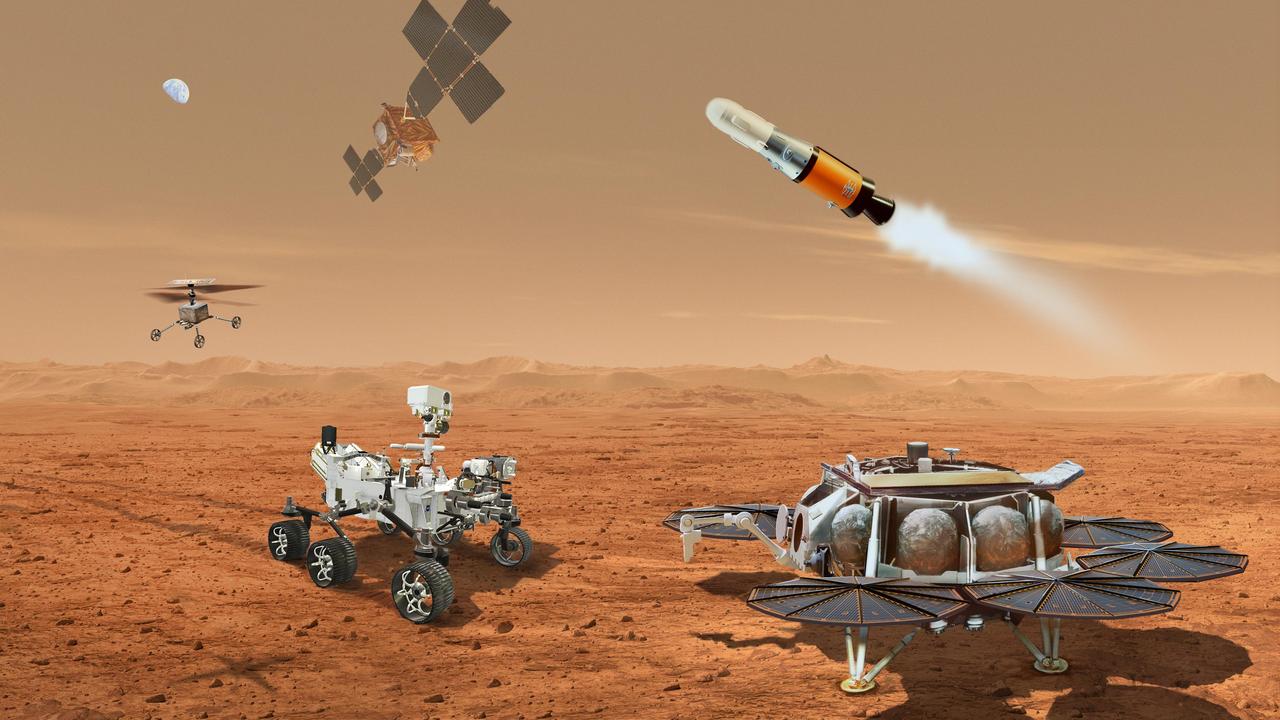
This illustration shows a concept for multiple robots that would team up to ferry to Earth samples of rocks and soil being collected from the Martian surface by NASA's Mars Perseverance rover. NASA and ESA (European Space Agency) are developing concepts for the Mars Sample Return program, designed to retrieve the rock and soil samples Perseverance has collected and stored in sealed tubes. In the future, the samples would be returned to Earth for detailed laboratory analysis. The current concept envisions delivering a Mars lander near Jezero Crater, where Perseverance (far left) collects samples. A NASA-provided Sample Retrieval Lander (far right) would carry a NASA rocket (the Mars Ascent Vehicle). Perseverance would gather sample tubes it has cached on the Mars surface and transport them to the Sample Retrieval Lander, where they would then be transferred by a Sample Transfer Arm provided by ESA onto the Mars Ascent Vehicle. The arm is based on a human arm, with an elbow, shoulder, and wrist. The Mars Ascent Vehicle would launch a container with the sample tubes inside into orbit. Waiting in Mars orbit would be an ESA-provided Earth Return Obiter, which would rendezvous with and capture the Orbiting Sample Container using a NASA-provided Capture, Containment, and Return System. This system would capture and orient the container, then prepare it for return to Earth inside the Earth Entry System. Also depicted is one of two Sample Recovery Helicopters NASA will develop to be transported to Mars on the Sample Retrieval Lander, just as the Ingenuity helicopter was carried on the Perseverance rover. The helicopters would serve as backups to Perseverance in transporting sample tubes to the Lander. https://photojournal.jpl.nasa.gov/catalog/PIA25326
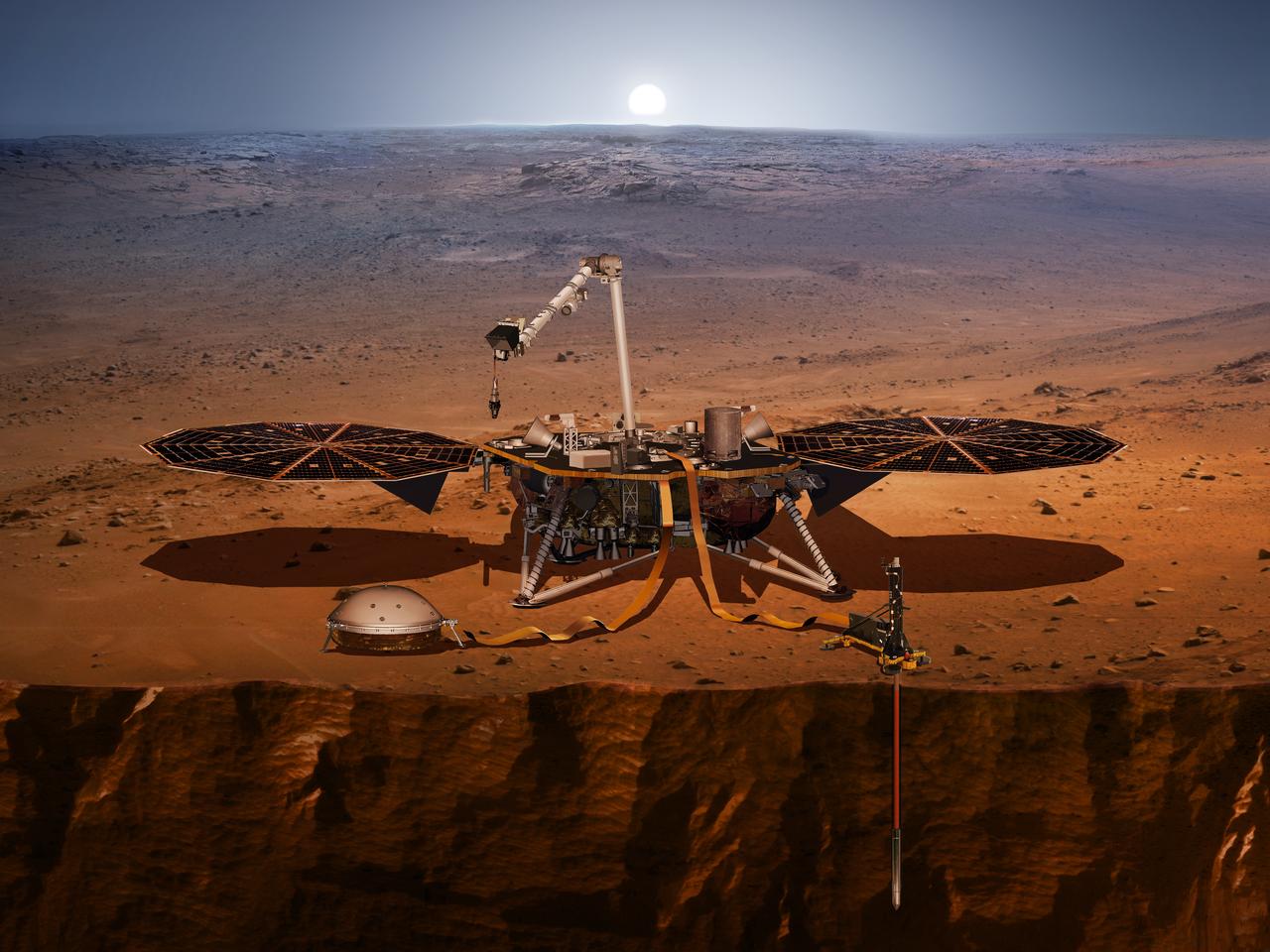
This artist's concept shows the InSight lander, its sensors, cameras and instruments. InSight is will take the first-ever-in-depth look at Mars' "inner space." InSight stands for Interior Exploration using Seismic Investigations, Geodesy and Heat Transport. Its three instruments are a seismometer, a heat flow probe, and a radio science experiment. These instruments will shed light on how warm and geologically active Mars still is, study its reflexes as it whips about in its orbit around the sun, and provide essential clues on the evolution of the rocky planets of our solar system. So while InSight is a Mars mission, it's also more than a Mars mission. InSight will launch between May 5 through June 8, 2018 from Vandenberg Air Force Base in California. https://photojournal.jpl.nasa.gov/catalog/PIA22227

This chart shows, on the top row, artist concepts of the seven planets of TRAPPIST-1 with their orbital periods, distances from their star, radii and masses as compared to those of Earth. On the bottom row, the same numbers are displayed for the bodies of our inner solar system: Mercury, Venus, Earth and Mars. The TRAPPIST-1 planets orbit their star extremely closely, with periods ranging from 1.5 to only about 20 days. This is much shorter than the period of Mercury, which orbits our sun in about 88 days. The artist concepts show what the TRAPPIST-1 planetary system may look like, based on available data about their diameters, masses and distances from the host star. The system has been revealed through observations from NASA's Spitzer Space Telescope and the ground-based TRAPPIST (TRAnsiting Planets and PlanetesImals Small Telescope) telescope, as well as other ground-based observatories. The system was named for the TRAPPIST telescope. The seven planets of TRAPPIST-1 are all Earth-sized and terrestrial, according to research published in 2017 in the journal Nature. TRAPPIST-1 is an ultra-cool dwarf star in the constellation Aquarius, and its planets orbit very close to it. http://photojournal.jpl.nasa.gov/catalog/PIA21425
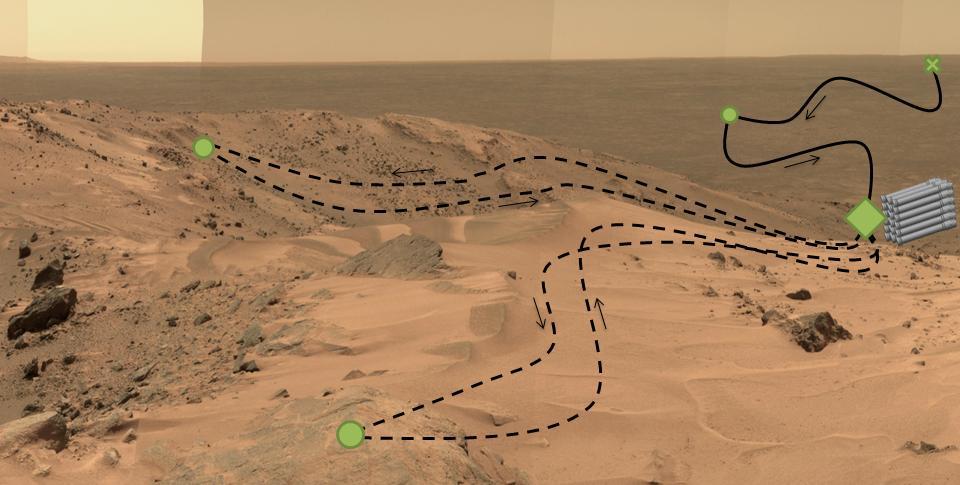
This diagram, superimposed on a photo of Martian landscape, illustrates a concept called "adaptive caching," which is in development for NASA's 2020 Mars rover mission. In addition to the investigations that the Mars 2020 rover will conduct on Mars, the rover will collect carefully selected samples of Mars rock and soil and cache them to be available for possible return to Earth if a Mars sample-return mission is scheduled and flown. Each sample will be stored in a sealed tube. Adaptive caching would result in a set of samples, up to the maximum number of tubes carried on the rover, being placed on the surface at the discretion of the mission operators. The tubes holding the collected samples would not go into a surrounding container. In this illustration, green dots indicate "regions of interest," where samples might be collected. The green diamond indicates one region of interest serving as the depot for the cache. The green X at upper right represents the landing site. The solid black line indicates the rover's route during its prime mission, and the dashed black line indicates its route during an extension of the mission. The base image is a portion of the "Everest Panorama" taken by the panoramic camera on NASA's Mars Exploration Rover Spirit at the top of Husband Hill in 2005. http://photojournal.jpl.nasa.gov/catalog/PIA19150
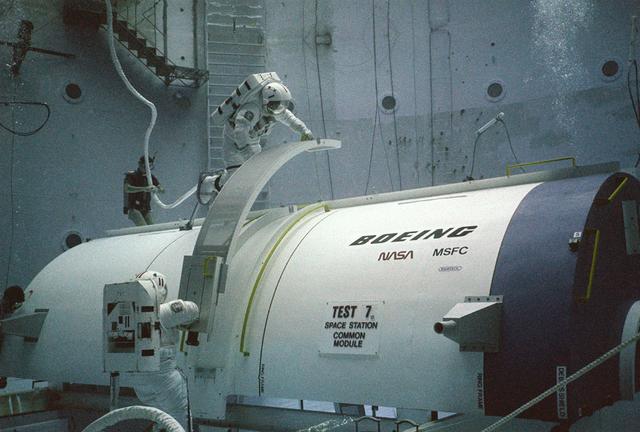
Skylab's success proved that scientific experimentation in a low gravity environment was essential to scientific progress. A more permanent structure was needed to provide this space laboratory. President Ronald Reagan, on January 25, 1984, during his State of the Union address, claimed that the United States should exploit the new frontier of space, and directed NASA to build a permanent marned space station within a decade. The idea was that the space station would not only be used as a laboratory for the advancement of science and medicine, but would also provide a staging area for building a lunar base and manned expeditions to Mars and elsewhere in the solar system. President Reagan invited the international community to join with the United States in this endeavour. NASA and several countries moved forward with this concept. By December 1985, the first phase of the space station was well underway with the design concept for the crew compartments and laboratories. Pictured are two NASA astronauts, at Marshall Space Flight Center's (MSFC) Neutral Buoyancy Simulator (NBS), practicing construction techniques they later used to construct the space station after it was deployed.
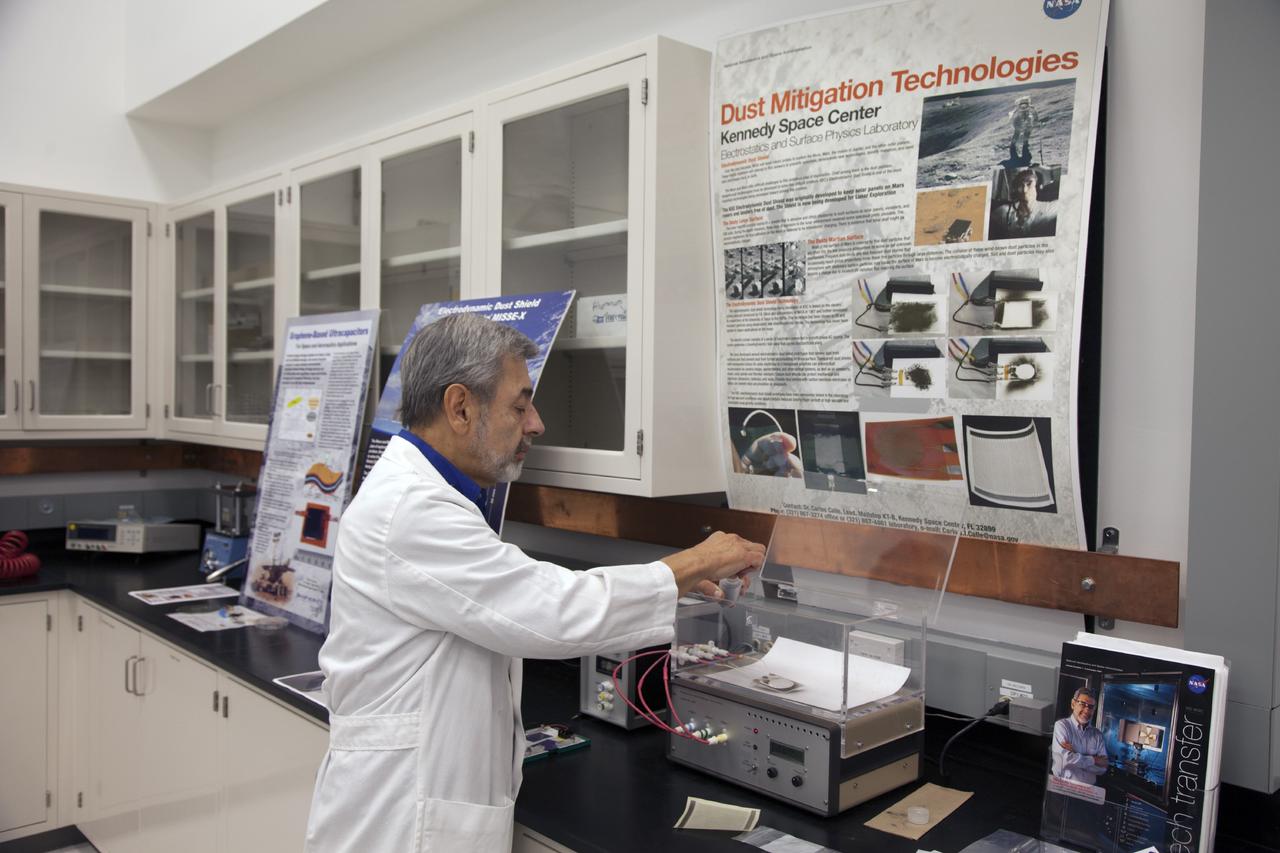
CAPE CANAVERAL, Fla. -- Dr. Carlos Calle, senior research scientist on the Electrodynamic Dust Shield for Dust Mitigation project, demonstrates equipment used in his experiments in the Electrostatics and Surface Physics Laboratory in the SwampWorks at NASA's Kennedy Space Center in Florida. Electrodynamic dust shield, or EDS, technology is based on concepts originally developed by NASA as early as 1967 and later by the University of Tokyo. In 2003, NASA, in collaboration with the University of Arkansas at Little Rock, started development of the EDS for dust particle removal from solar panels to be used on future missions to the moon, an asteroid or Mars. A flight experiment to expose the dust shields to the space environment currently is under development. For more information, visit: http://www.nasa.gov/content/scientists-developing-ways-to-mitigate-dust-problem-for-explorers/ Photo credit: NASA/Dan Casper
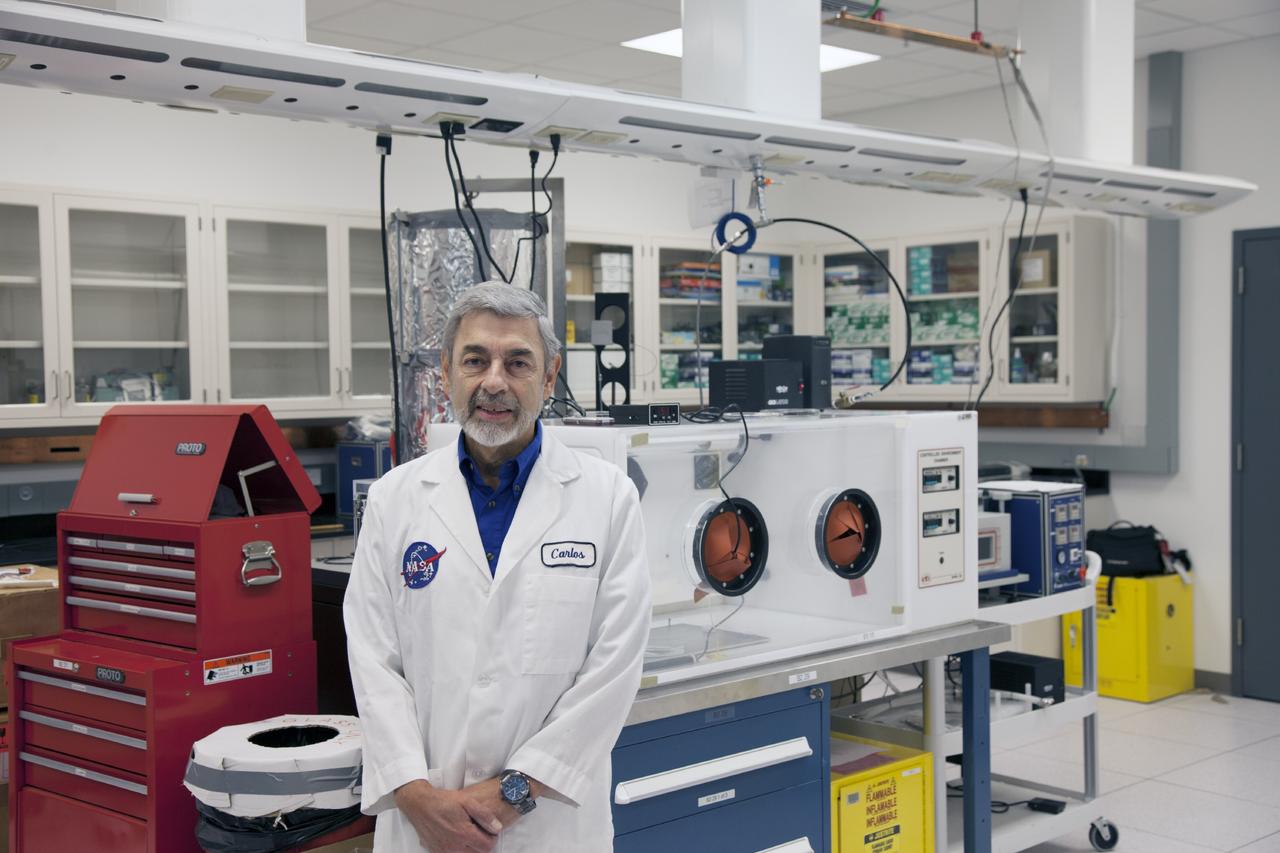
CAPE CANAVERAL, Fla. -- Dr. Carlos Calle, senior research scientist on the Electrodynamic Dust Shield for Dust Mitigation project, manages the Electrostatics and Surface Physics Laboratory in the SwampWorks at NASA's Kennedy Space Center in Florida. Electrodynamic dust shield, or EDS, technology is based on concepts originally developed by NASA as early as 1967 and later by the University of Tokyo. In 2003, NASA, in collaboration with the University of Arkansas at Little Rock, started development of the EDS for dust particle removal from solar panels to be used on future missions to the moon, an asteroid or Mars. A flight experiment to expose the dust shields to the space environment currently is under development. For more information, visit: http://www.nasa.gov/content/scientists-developing-ways-to-mitigate-dust-problem-for-explorers/ Photo credit: NASA/Dan Casper
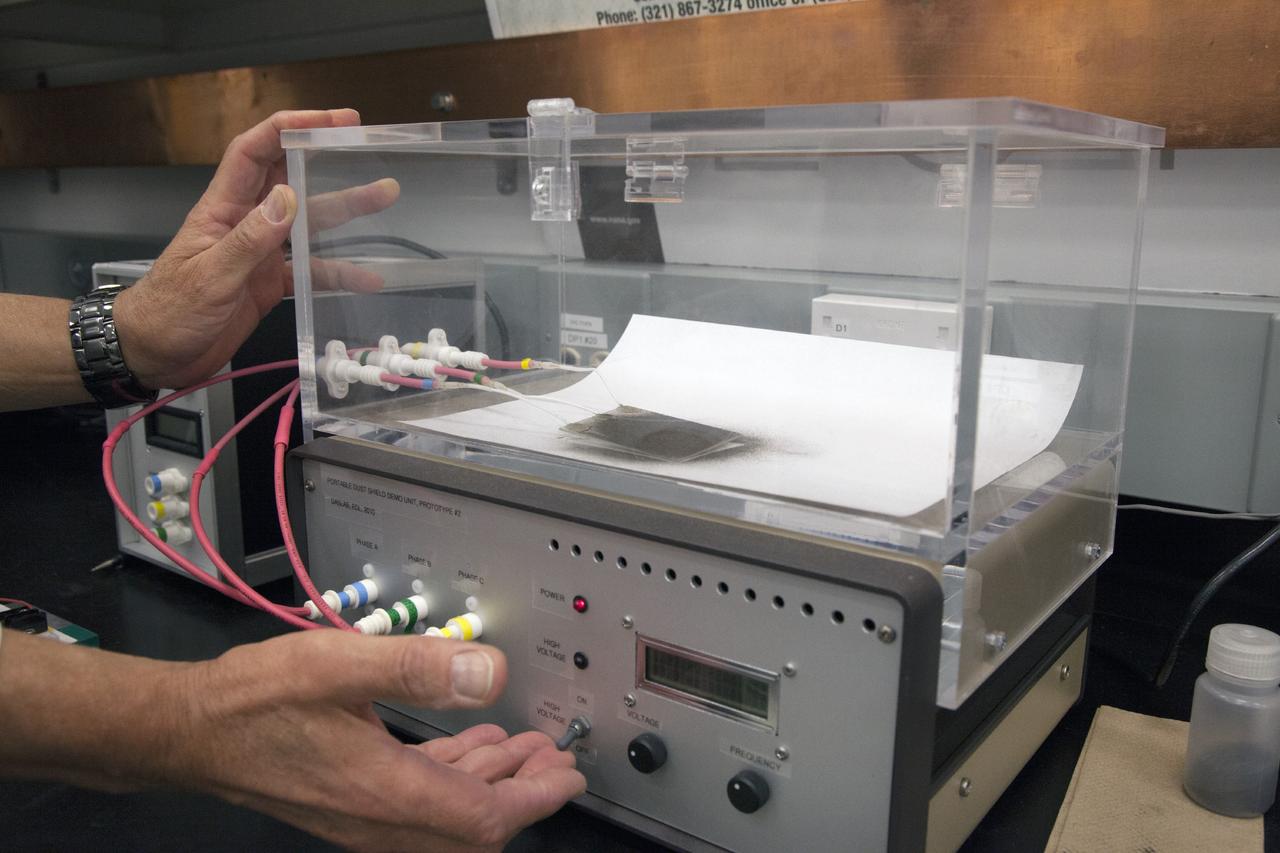
CAPE CANAVERAL, Fla. -- Dr. Carlos Calle, senior research scientist on the Electrodynamic Dust Shield for Dust Mitigation project, demonstrates a dust particle experiment in the Electrostatics and Surface Physics Laboratory in the SwampWorks at NASA's Kennedy Space Center in Florida. The technology works by creating an electric field that propagates out like the ripples on a pond. This could prevent dust accumulation on spacesuits, thermal radiators, solar panels, optical instruments and view ports for future lunar and Mars exploration activities. Electrodynamic dust shield, or EDS, technology is based on concepts originally developed by NASA as early as 1967 and later by the University of Tokyo. In 2003, NASA, in collaboration with the University of Arkansas at Little Rock, started development of the EDS for dust particle removal from solar panels to be used on future missions to the moon, an asteroid or Mars. A flight experiment to expose the dust shields to the space environment currently is under development. For more information, visit: http://www.nasa.gov/content/scientists-developing-ways-to-mitigate-dust-problem-for-explorers/ Photo credit: NASA/Dan Casper
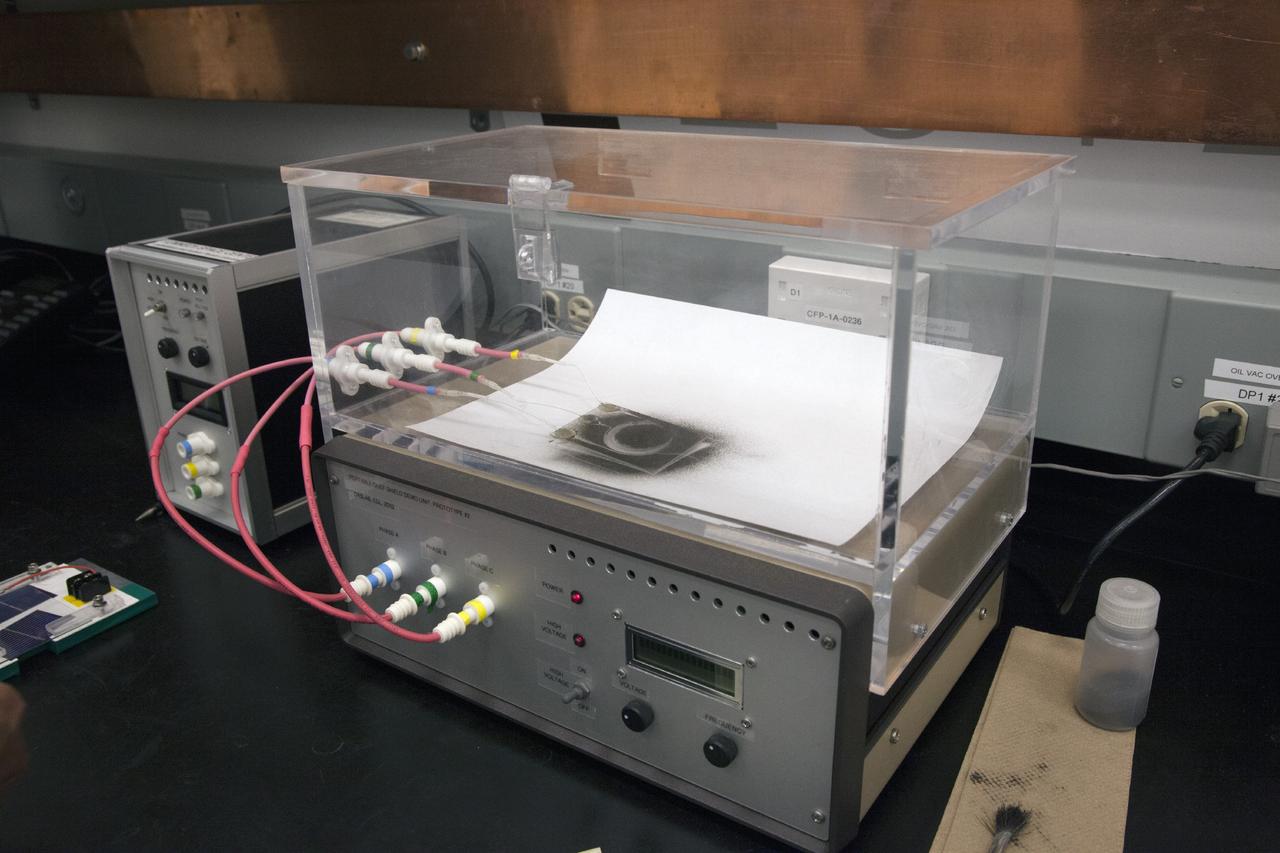
CAPE CANAVERAL, Fla. -- Dust particle experiments are conducted for Electrodynamic Dust Shield for Dust Mitigation project in the Electrostatics and Surface Physics Laboratory in the SwampWorks at NASA's Kennedy Space Center in Florida. The technology works by creating an electric field that propagates out like the ripples on a pond. This could prevent dust accumulation on spacesuits, thermal radiators, solar panels, optical instruments and view ports for future lunar and Mars exploration activities. Electrodynamic dust shield, or EDS, technology is based on concepts originally developed by NASA as early as 1967 and later by the University of Tokyo. In 2003, NASA, in collaboration with the University of Arkansas at Little Rock, started development of the EDS for dust particle removal from solar panels to be used on future missions to the moon, an asteroid or Mars. A flight experiment to expose the dust shields to the space environment currently is under development. For more information, visit: http://www.nasa.gov/content/scientists-developing-ways-to-mitigate-dust-problem-for-explorers/ Photo credit: NASA/Dan Casper
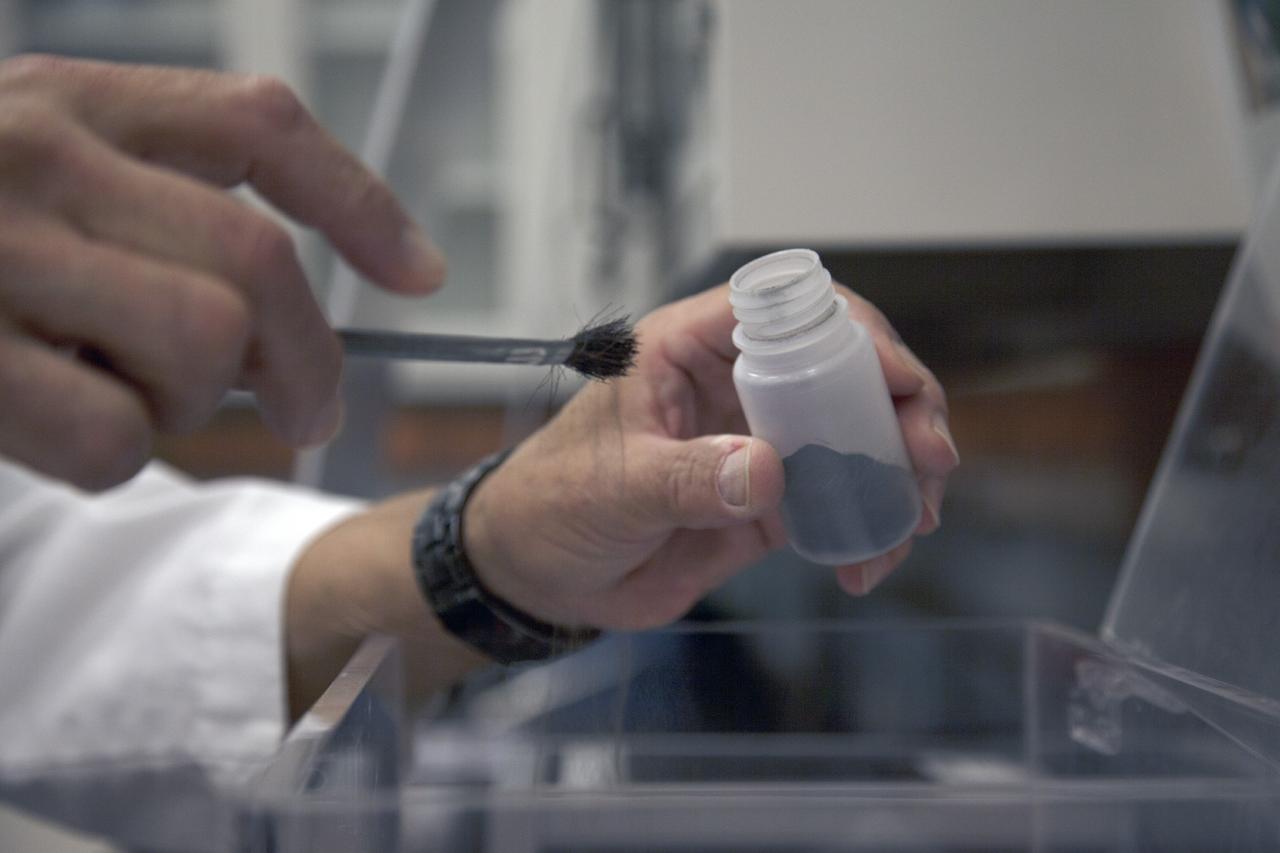
CAPE CANAVERAL, Fla. -- Dr. Carlos Calle, senior research scientist on the Electrodynamic Dust Shield for Dust Mitigation project, works with dust fabricated for use in his experiments in the Electrostatics and Surface Physics Laboratory in the SwampWorks at NASA's Kennedy Space Center in Florida. The fabricated material is designed to mimic the dust on the lunar surface. The technology works by creating an electric field that propagates out like the ripples on a pond. This could prevent dust accumulation on spacesuits, thermal radiators, solar panels, optical instruments and view ports for future lunar and Mars exploration activities. Electrodynamic dust shield, or EDS, technology is based on concepts originally developed by NASA as early as 1967 and later by the University of Tokyo. In 2003, NASA, in collaboration with the University of Arkansas at Little Rock, started development of the EDS for dust particle removal from solar panels to be used on future missions to the moon, an asteroid or Mars. A flight experiment to expose the dust shields to the space environment currently is under development. For more information, visit: http://www.nasa.gov/content/scientists-developing-ways-to-mitigate-dust-problem-for-explorers/ Photo credit: NASA/Dan Casper
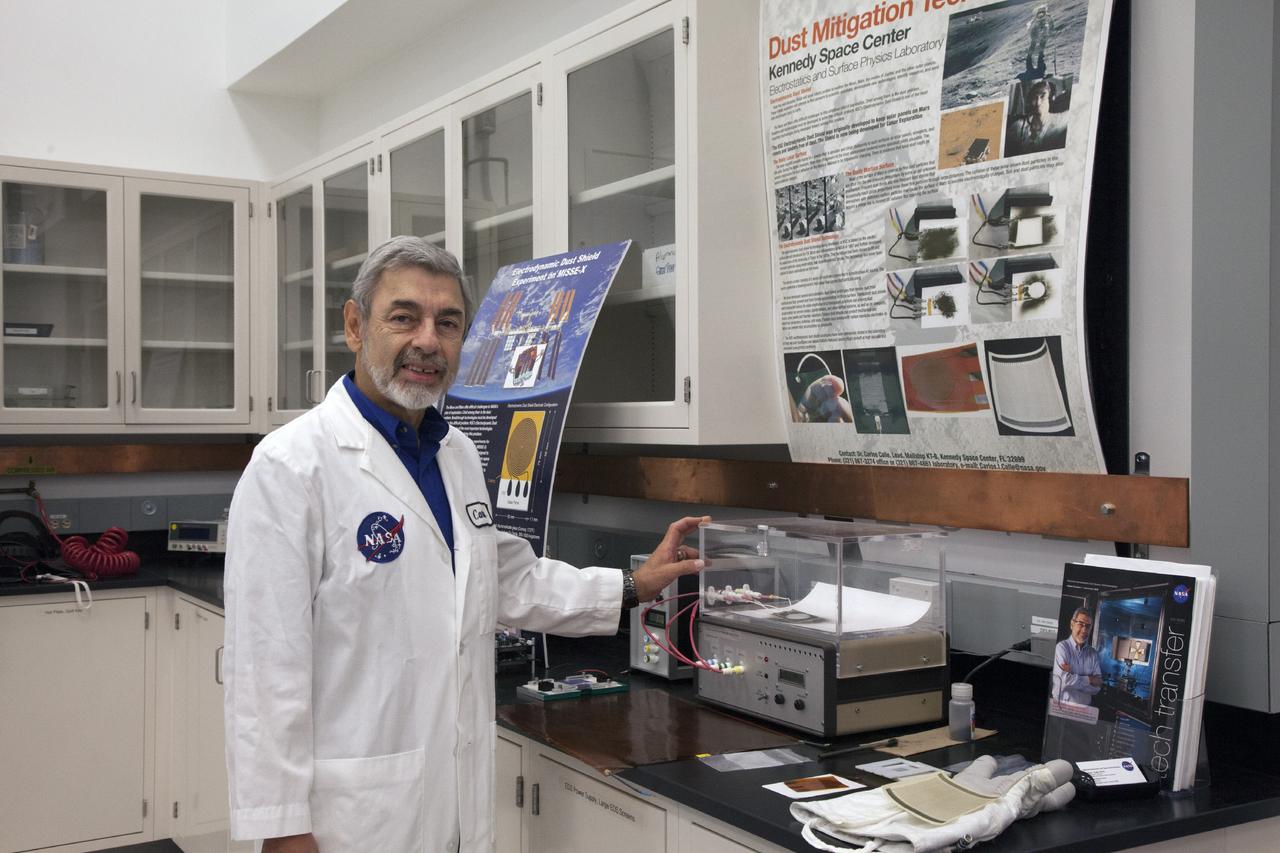
CAPE CANAVERAL, Fla. -- Dr. Carlos Calle, senior research scientist on the Electrodynamic Dust Shield for Dust Mitigation project, demonstrates a dust particle experiment in the Electrostatics and Surface Physics Laboratory in the SwampWorks at NASA's Kennedy Space Center in Florida. The technology works by creating an electric field that propagates out like the ripples on a pond. This could prevent dust accumulation on spacesuits, thermal radiators, solar panels, optical instruments and view ports for future lunar and Mars exploration activities. Electrodynamic dust shield, or EDS, technology is based on concepts originally developed by NASA as early as 1967 and later by the University of Tokyo. In 2003, NASA, in collaboration with the University of Arkansas at Little Rock, started development of the EDS for dust particle removal from solar panels to be used on future missions to the moon, an asteroid or Mars. A flight experiment to expose the dust shields to the space environment currently is under development. For more information, visit: http://www.nasa.gov/content/scientists-developing-ways-to-mitigate-dust-problem-for-explorers/ Photo credit: NASA/Dan Casper
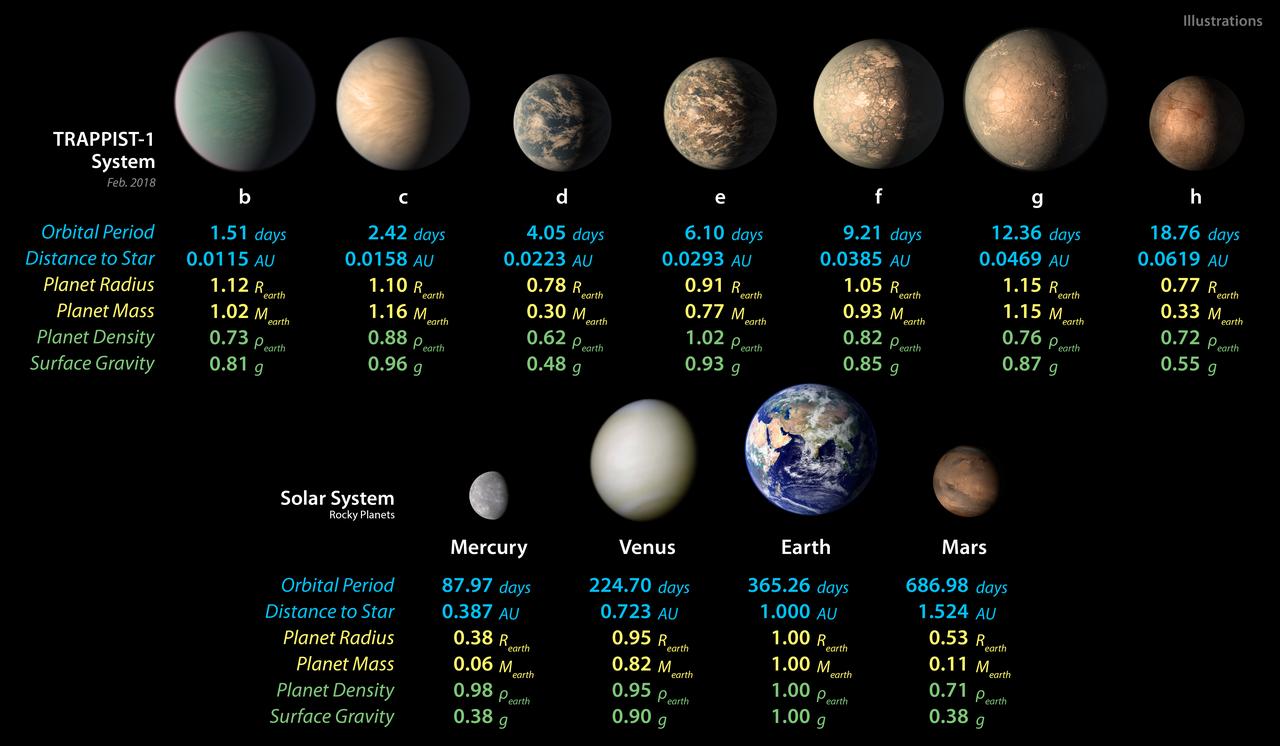
This chart shows, on the top row, artist concepts of the seven planets of TRAPPIST-1 with their orbital periods, distances from their star, radii, masses, densities and surface gravity as compared to those of Earth. These numbers are current as of February 2018. On the bottom row, the same numbers are displayed for the bodies of our inner solar system: Mercury, Venus, Earth and Mars. The TRAPPIST-1 planets orbit their star extremely closely, with periods ranging from 1.5 to only about 20 days. This is much shorter than the period of Mercury, which orbits our sun in about 88 days. The masses and densities of the TRAPPIST-1 planets were determined by careful measurements of slight variations in the timings of their orbits using extensive observations made by NASA's Spitzer and Kepler space telescopes, in combination with data from Hubble and a number of ground-based telescopes. These measurements are the most precise to date for any system of exoplanets. In this illustration, the relative sizes of the planets are all shown to scale. https://photojournal.jpl.nasa.gov/catalog/PIA22094

Mamers Valles is a long sinuous canyon beginning in Arabia Terra and ending in the Northern lowlands of Deuteronilus Mensae. This image from NASA Mars Reconnaissance Orbiter features the southern facing slope of the canyon wall. The northern half (top) has a rough, pitted texture with numerous impact craters, while the middle section shows the steep canyon wall. Streaks of slightly different colors show slope material eroding onto the canyon floor. Though the canyon itself was formed long ago, the material deposited on the canyon floor has been laid down over time, creating a much younger surface. The difference in age of the surfaces can also be indicated by the presence or absence of impact craters. The longer a surface has been exposed, the more impact craters it will accumulate. Counting craters to determine age estimates of planetary surfaces has been used throughout the solar system. This method is based on the assumption that the youngest, freshly formed surfaces will have no impact craters, and as time progresses crater impacts will accumulate at a predictable rate. This concept has been calibrated using crater counts on the Moon and the measured age of the rocks brought back by the Apollo missions. https://photojournal.jpl.nasa.gov/catalog/PIA21603