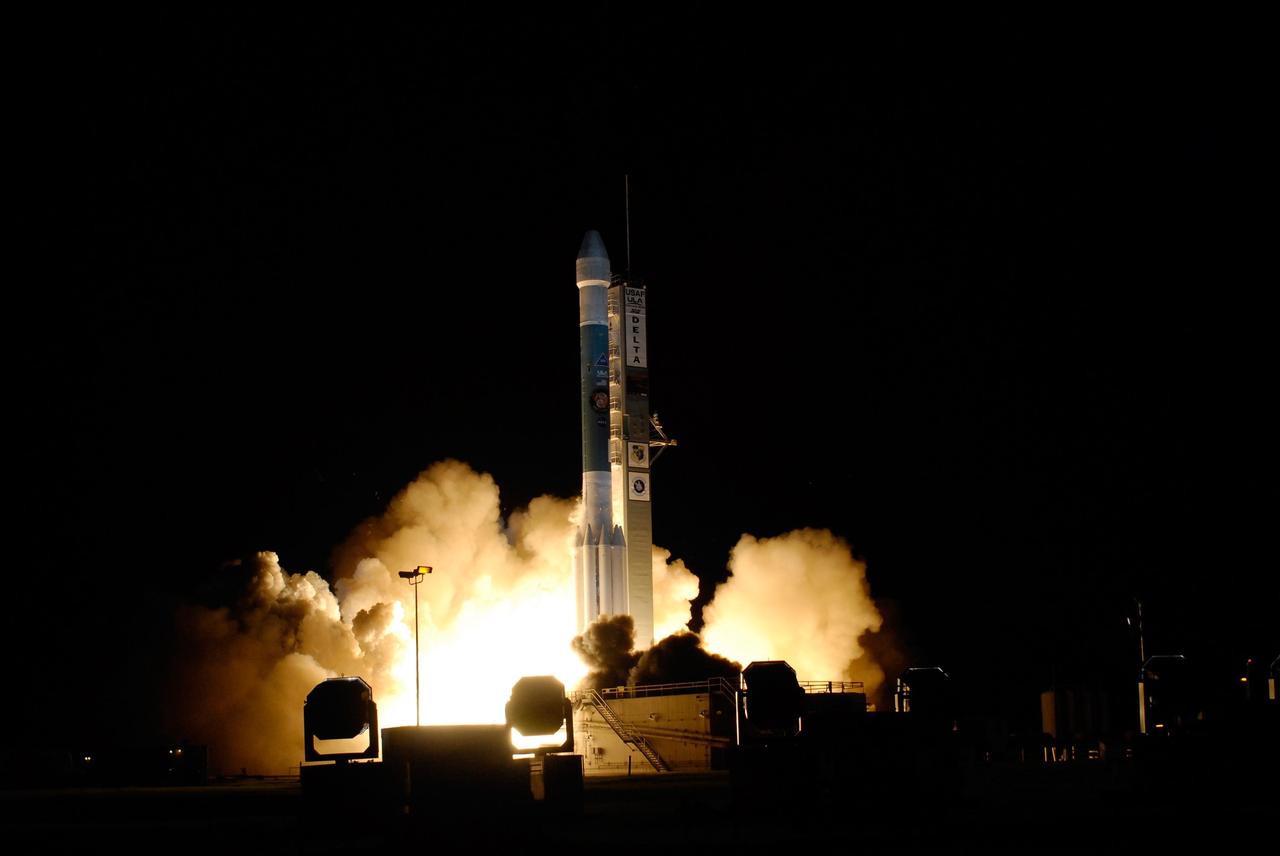
KENNEDY SPACE CENTER, FLA. - NASA's Phoenix Mars lander lifts off from Pad 17A aboard a Delta II 7925 rocket at 5:26 a.m. EDT, illuminating the pad at Cape Canaveral Air Force Station. Phoenix will land in icy soils near the north polar, permanent ice cap of Mars and explore the history of the water in these soils and any associated rocks, while monitoring polar climate. Landing on Mars is planned in May 2008 on arctic ground where a mission currently in orbit, Mars Odyssey, has detected high concentrations of ice just beneath the top layer of soil. Photo credit: NASA/Regina Mitchell-Ryall and Jerry Cannon
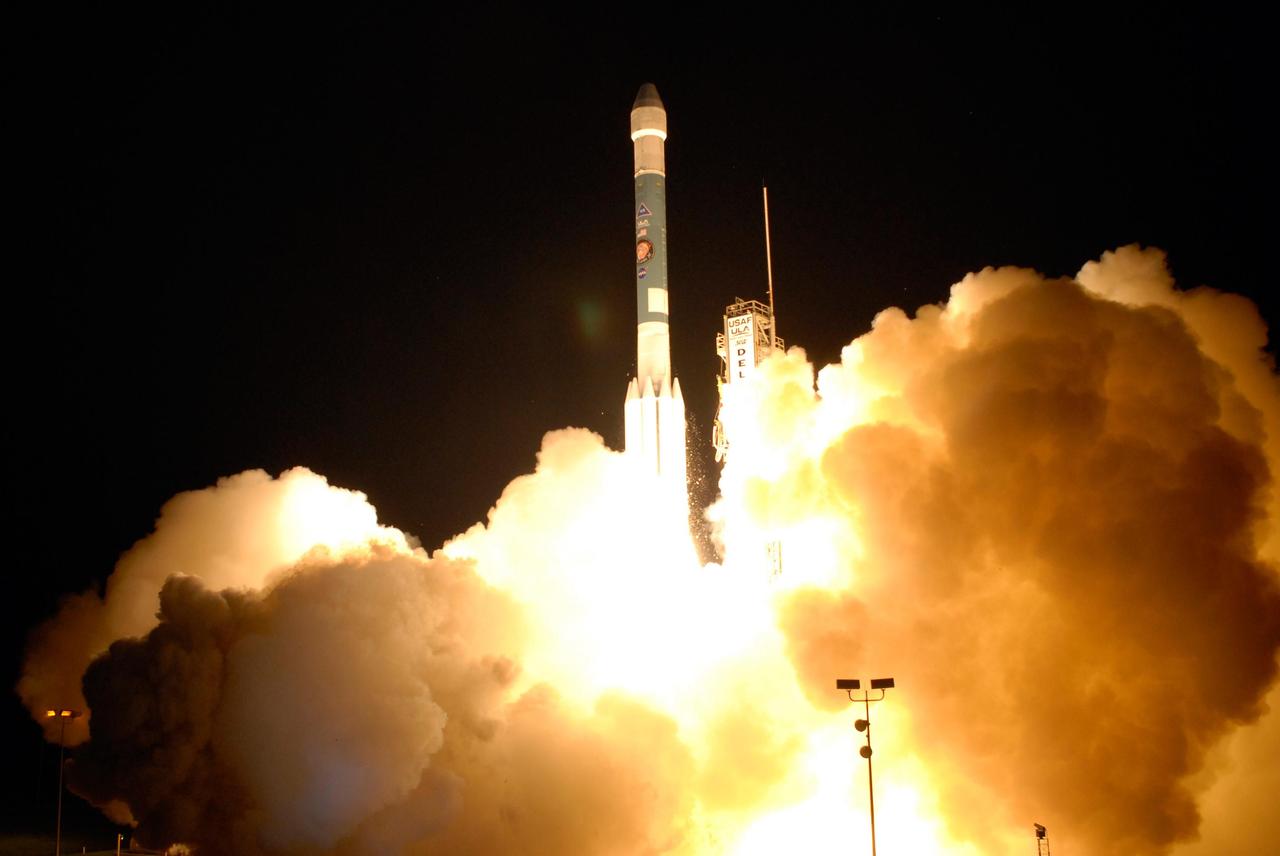
KENNEDY SPACE CENTER, FLA. - NASA's Phoenix Mars lander lifts off from Pad 17A aboard a Delta II 7925 rocket at 5:26 a.m. EDT, illuminating the night sky over Cape Canaveral Air Force Station. Phoenix will land in icy soils near the north polar, permanent ice cap of Mars and explore the history of the water in these soils and any associated rocks, while monitoring polar climate. Landing on Mars is planned in May 2008 on arctic ground where a mission currently in orbit, Mars Odyssey, has detected high concentrations of ice just beneath the top layer of soil. Photo credit: NASA/Regina Mitchell-Ryall and Jerry Cannon
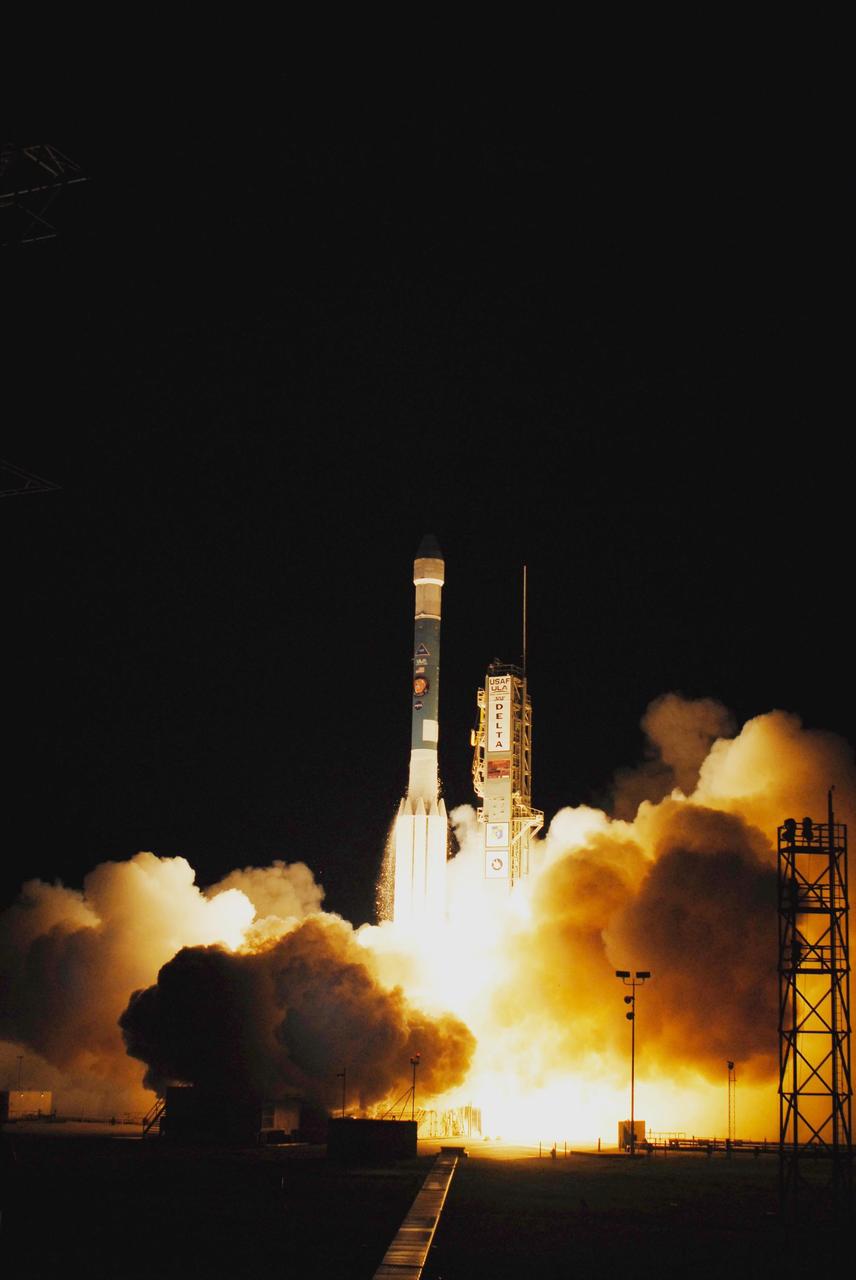
KENNEDY SPACE CENTER, FLA. - The Delta II 7925 rocket carrying NASA's Phoenix Mars lander roars off Pad 17A on Cape Canaveral Air Force Station at 5:26 a.m. EDT. Phoenix will land in icy soils near the north polar, permanent ice cap of Mars and explore the history of the water in these soils and any associated rocks, while monitoring polar climate. Landing on Mars is planned in May 2008 on arctic ground where a mission currently in orbit, Mars Odyssey, has detected high concentrations of ice just beneath the top layer of soil. Photo credit: NASA/Sandra Joseph and John Kechele
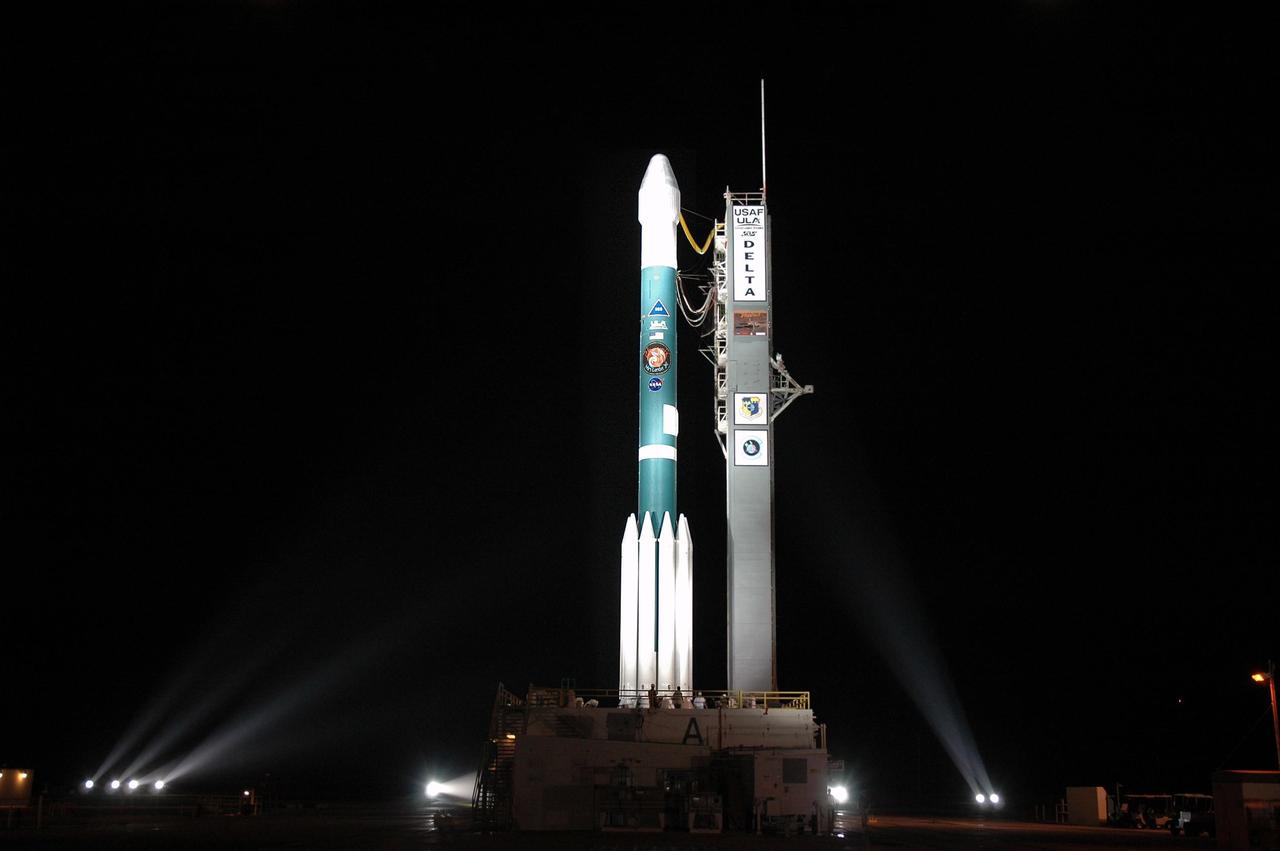
KENNEDY SPACE CENTER, FLA. -- Rollback of the mobile service tower, or gantry, from around the Delta II 7925 rocket is complete on Launch Pad 17A at Cape Canaveral Air Force Station. Equipped with three stages and nine strap-on solid rocket motors, the Delta II rocket packs plenty of punch for sending the Phoenix spacecraft on its way toward Mars. Launch is targeted for Aug. 4 during one of two opportunities for liftoff: 5:26 or 6:02 a.m. EDT. Phoenix will land in icy soils near the north polar, permanent ice cap of Mars and explore the history of the water in these soils and any associated rocks, while monitoring polar climate. Landing on Mars is planned in May 2008 on arctic ground where a mission currently in orbit, Mars Odyssey, has detected high concentrations of ice just beneath the top layer of soil. Photo credit: NASA/Jim Grossmann
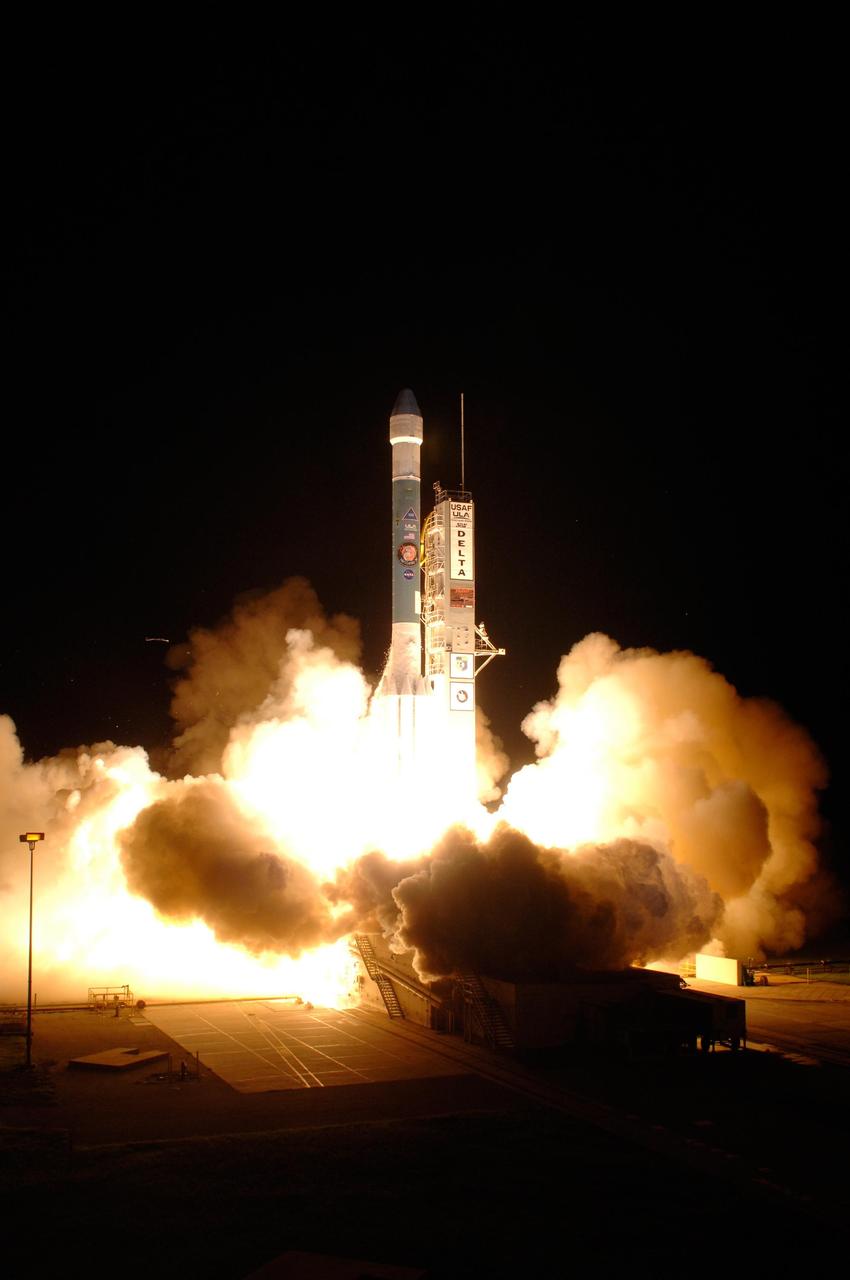
KENNEDY SPACE CENTER, FLA. - NASA's Phoenix spacecraft begins its journey to Mars aboard a Delta II 7925 rocket at 5:26 a.m. EDT from Pad 17A at Cape Canaveral Air Force Station. Phoenix will land in icy soils near the north polar, permanent ice cap of Mars and explore the history of the water in these soils and any associated rocks, while monitoring polar climate. Landing on Mars is planned in May 2008 on arctic ground where a mission currently in orbit, Mars Odyssey, has detected high concentrations of ice just beneath the top layer of soil. Photo credit: NASA/Tony Gray and Robert Murray

KENNEDY SPACE CENTER, FLA. - NASA's Phoenix Mars lander illuminates Launch Pad 17A as it lifts off aboard a Delta II 7925 rocket at 5:26 a.m. EDT from Cape Canaveral Air Force Station. Phoenix will land in icy soils near the north polar, permanent ice cap of Mars and explore the history of the water in these soils and any associated rocks, while monitoring polar climate. Landing on Mars is planned in May 2008 on arctic ground where a mission currently in orbit, Mars Odyssey, has detected high concentrations of ice just beneath the top layer of soil. Photo credit: NASA/Tony Gray and Robert Murray
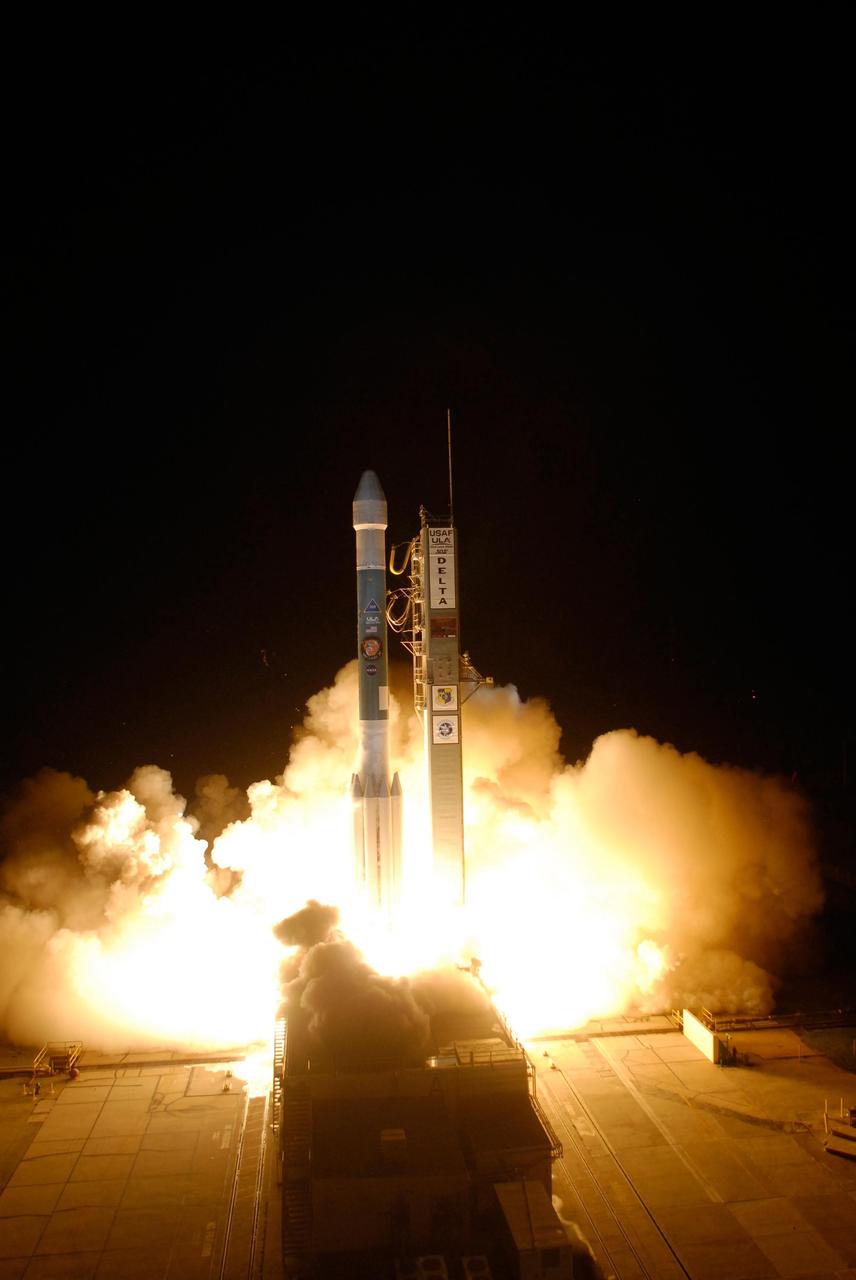
KENNEDY SPACE CENTER, FLA. - The Delta II 7925 rocket carrying NASA's Phoenix Mars lander lifts off at 5:26 a.m. EDT amid billows of smoke on Pad 17A at Cape Canaveral Air Force Station. Phoenix will land in icy soils near the north polar, permanent ice cap of Mars and explore the history of the water in these soils and any associated rocks, while monitoring polar climate. Landing on Mars is planned in May 2008 on arctic ground where a mission currently in orbit, Mars Odyssey, has detected high concentrations of ice just beneath the top layer of soil. Photo credit: NASA/Tony Gray and Robert Murray
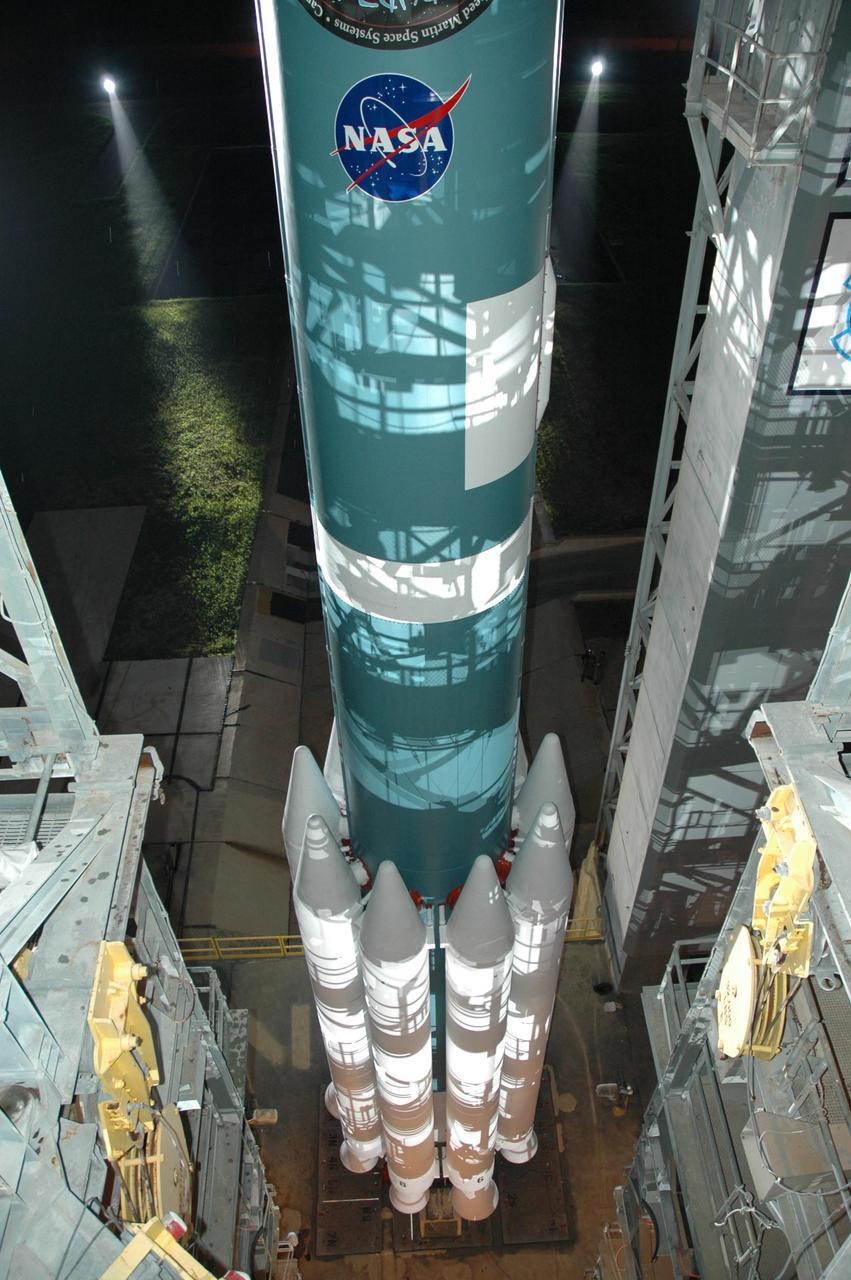
KENNEDY SPACE CENTER, FLA. -- The Delta II 7925 rocket is revealed as the mobile service tower, or gantry, rolls back on Launch Pad 17A at Cape Canaveral Air Force Station. Equipped with three stages and nine strap-on solid rocket motors, the Delta II rocket packs plenty of punch for sending the Phoenix spacecraft on its way toward Mars. Launch is targeted for Aug. 4 during one of two opportunities for liftoff: 5:26 or 6:02 a.m. EDT. Phoenix will land in icy soils near the north polar, permanent ice cap of Mars and explore the history of the water in these soils and any associated rocks, while monitoring polar climate. Landing on Mars is planned in May 2008 on arctic ground where a mission currently in orbit, Mars Odyssey, has detected high concentrations of ice just beneath the top layer of soil. Photo credit: NASA/Jim Grossmann
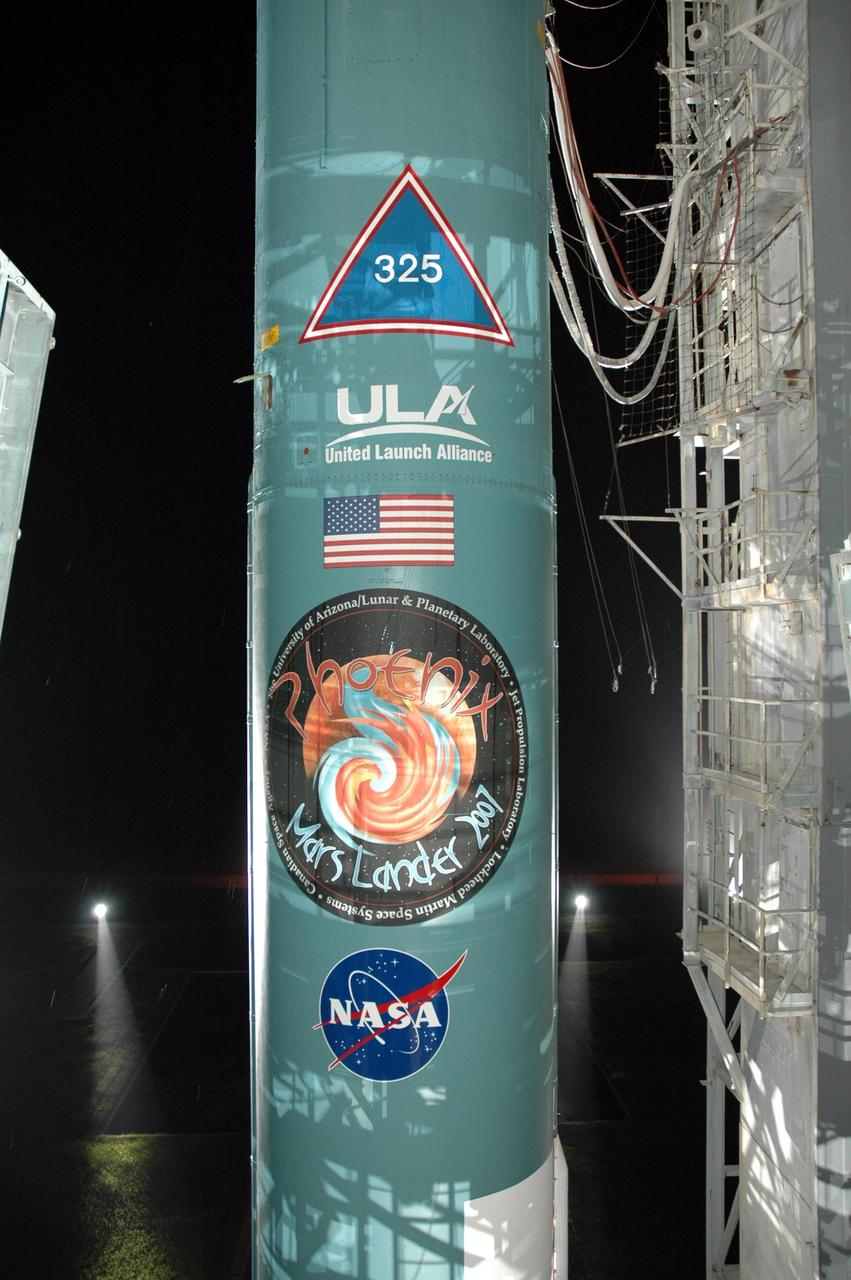
KENNEDY SPACE CENTER, FLA. -- The Delta II 7925 rocket is revealed as the mobile service tower, or gantry, is retracted on Launch Pad 17A at Cape Canaveral Air Force Station. Equipped with three stages and nine strap-on solid rocket motors, the Delta II rocket packs plenty of punch for sending the Phoenix spacecraft on its way toward Mars. Launch is targeted for Aug. 4 during one of two opportunities for liftoff: 5:26 or 6:02 a.m. EDT. Phoenix will land in icy soils near the north polar, permanent ice cap of Mars and explore the history of the water in these soils and any associated rocks, while monitoring polar climate. Landing on Mars is planned in May 2008 on arctic ground where a mission currently in orbit, Mars Odyssey, has detected high concentrations of ice just beneath the top layer of soil. Photo credit: NASA/Jim Grossmann
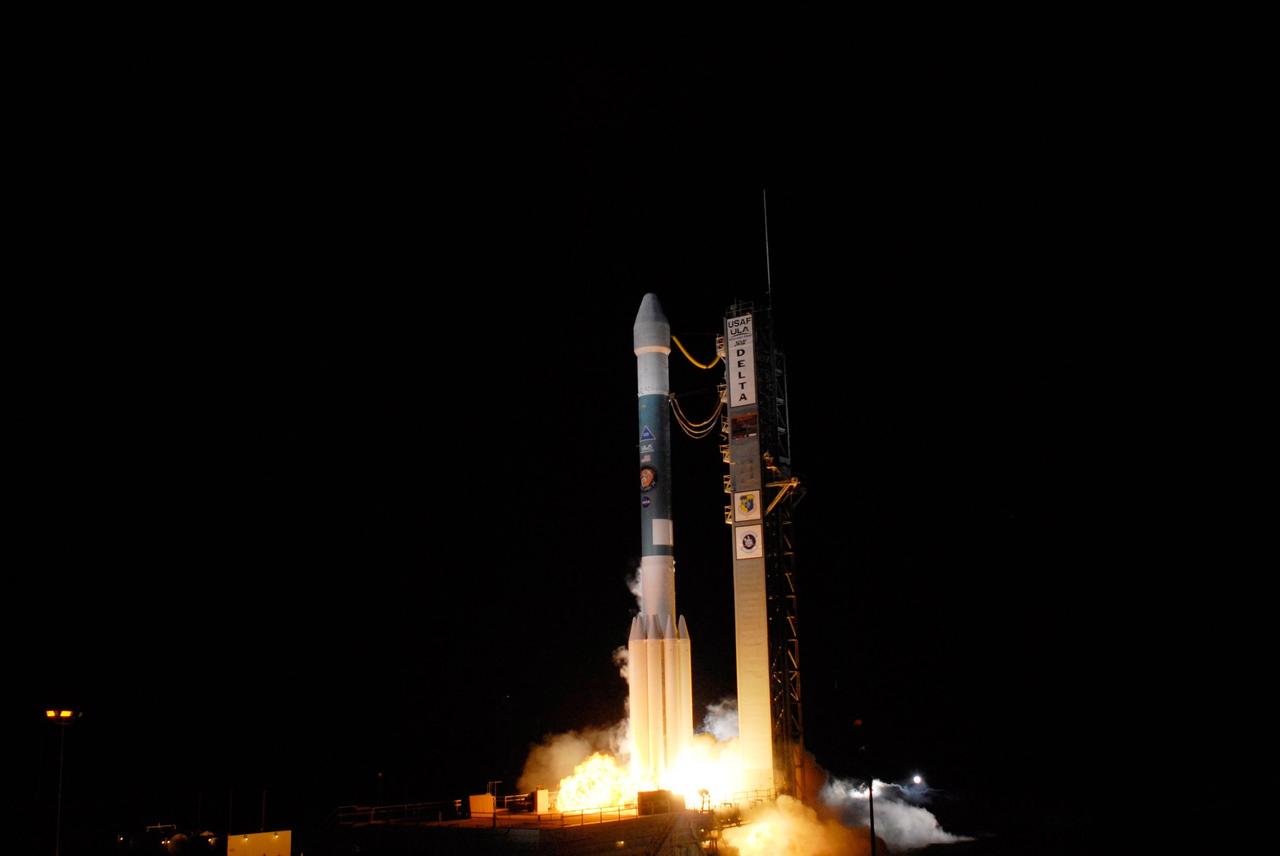
KENNEDY SPACE CENTER, FLA. - NASA's Phoenix Mars lander lifts off from Pad 17A aboard a Delta II 7925 rocket at Cape Canaveral Air Force Station at 5:26 a.m. EDT. Phoenix will land in icy soils near the north polar, permanent ice cap of Mars and explore the history of the water in these soils and any associated rocks, while monitoring polar climate. Landing on Mars is planned in May 2008 on arctic ground where a mission currently in orbit, Mars Odyssey, has detected high concentrations of ice just beneath the top layer of soil. Photo credit: NASA/Regina Mitchell-Ryall and Jerry Cannon
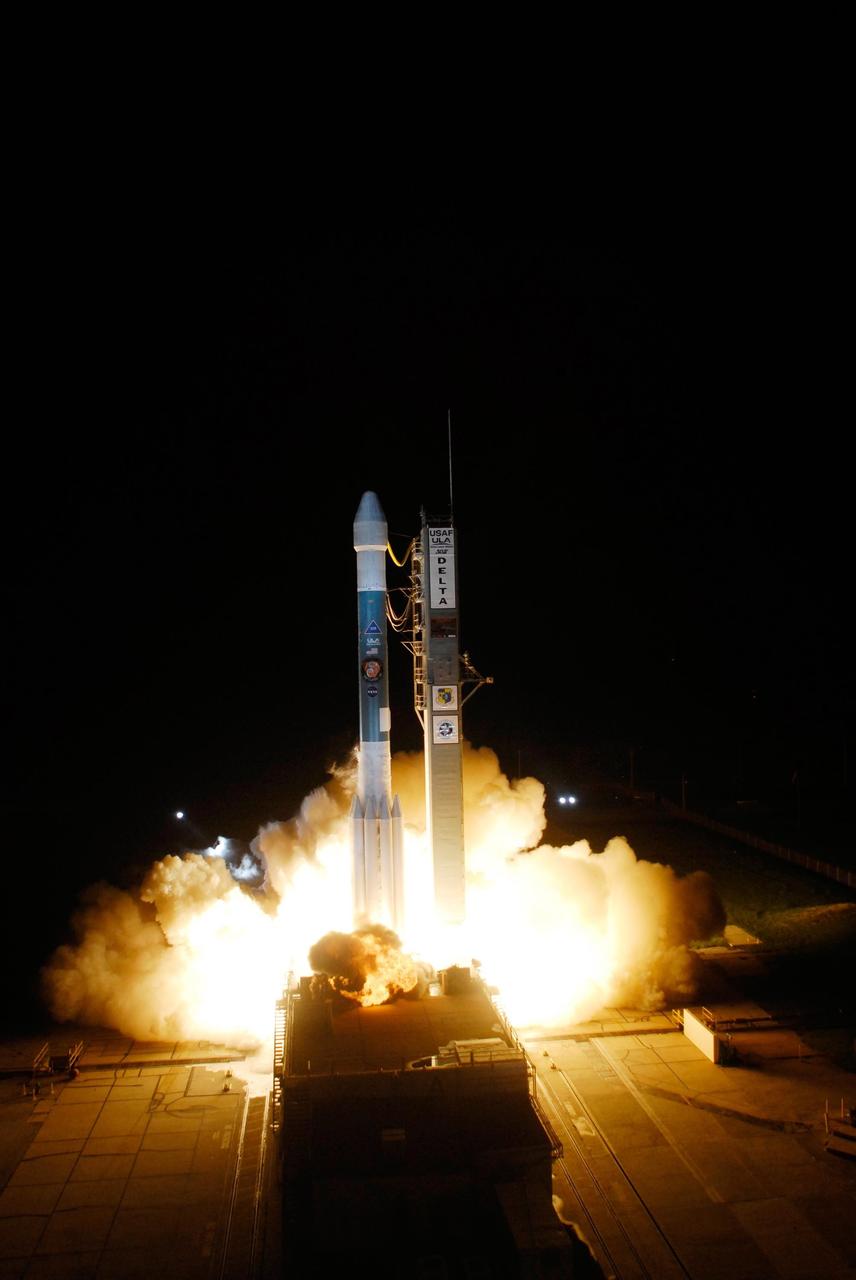
KENNEDY SPACE CENTER, FLA. - NASA's Phoenix spacecraft makes an auspicious start on its journey to Mars aboard a Delta II 7925 rocket at 5:26 a.m. EDT from Pad 17A at Cape Canaveral Air Force Station. Phoenix will land in icy soils near the north polar, permanent ice cap of Mars and explore the history of the water in these soils and any associated rocks, while monitoring polar climate. Landing on Mars is planned in May 2008 on arctic ground where a mission currently in orbit, Mars Odyssey, has detected high concentrations of ice just beneath the top layer of soil. Photo credit: NASA/Tony Gray and Robert Murray
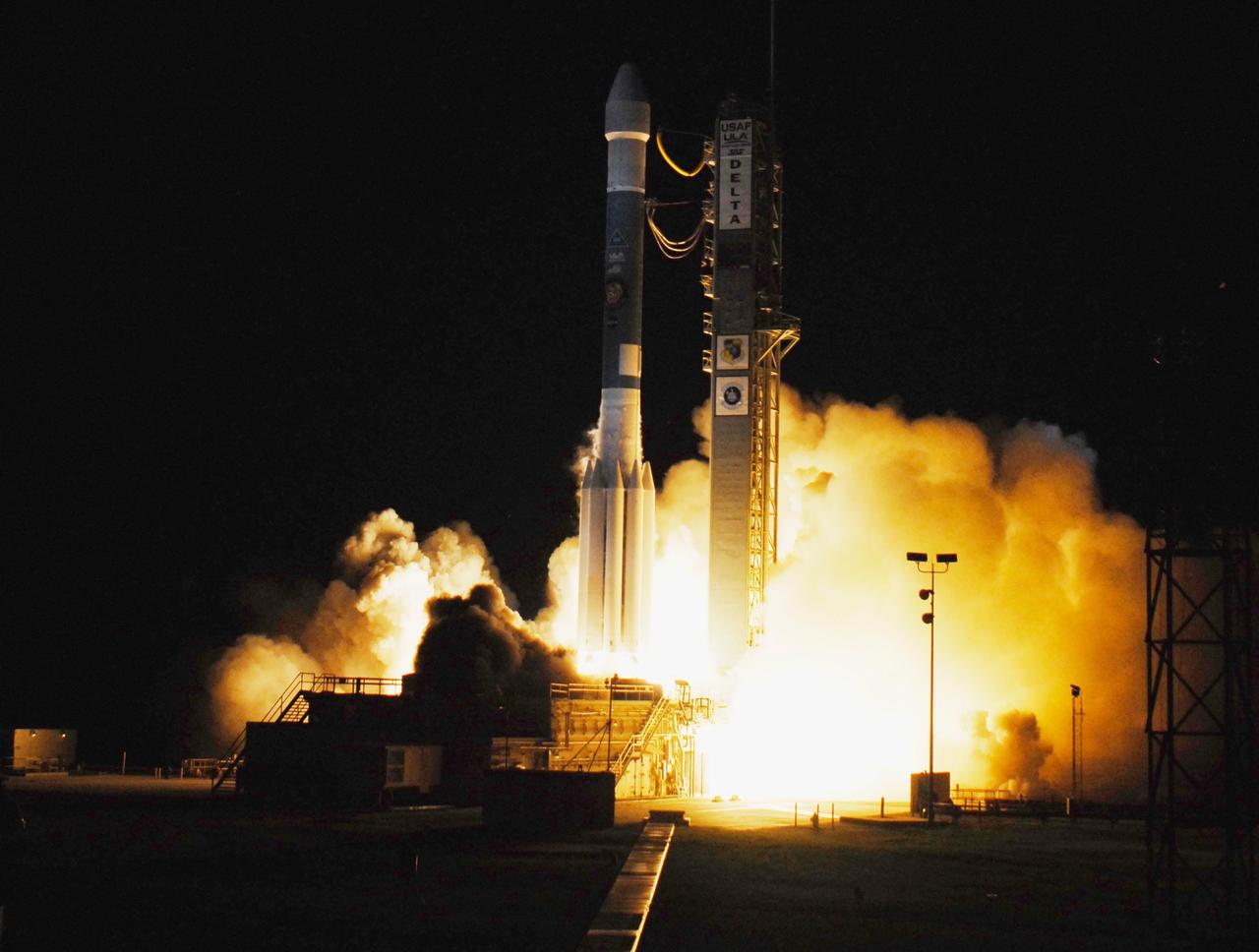
KENNEDY SPACE CENTER, FLA. - The Delta II 7925 rocket carrying NASA's Phoenix Mars lander thunders to life at 5:26 a.m. EDT at Pad 17A on Cape Canaveral Air Force Station. Phoenix will land in icy soils near the north polar, permanent ice cap of Mars and explore the history of the water in these soils and any associated rocks, while monitoring polar climate. Landing on Mars is planned in May 2008 on arctic ground where a mission currently in orbit, Mars Odyssey, has detected high concentrations of ice just beneath the top layer of soil. Photo credit: NASA/Sandra Joseph and John Kechele
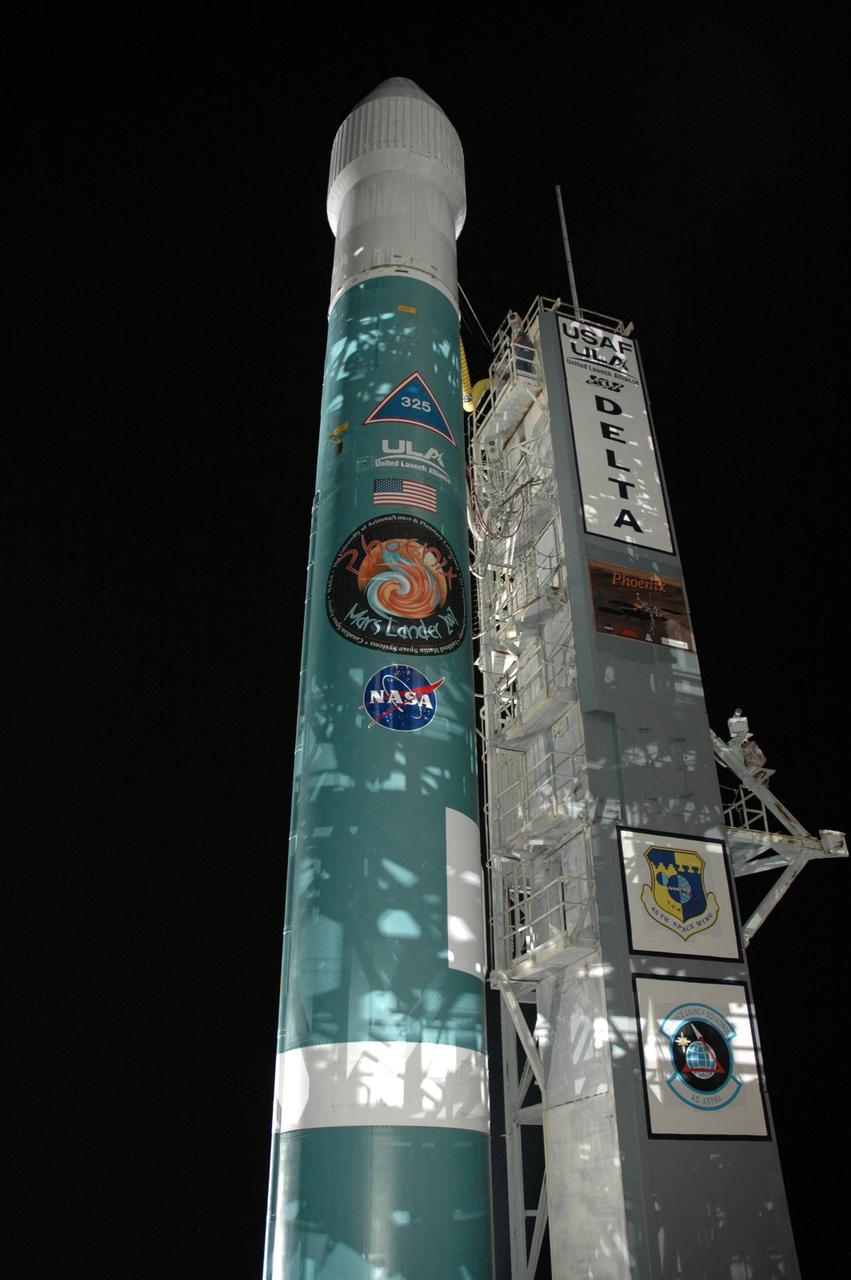
KENNEDY SPACE CENTER, FLA. -- The Delta II 7925 rocket stands ready for launch following rollback of the mobile service tower, or gantry, on Launch Pad 17A at Cape Canaveral Air Force Station. Equipped with three stages and nine strap-on solid rocket motors, the Delta II rocket packs plenty of punch for sending the Phoenix spacecraft on its way toward Mars. Launch is targeted for Aug. 4 during one of two opportunities for liftoff: 5:26 or 6:02 a.m. EDT. Phoenix will land in icy soils near the north polar, permanent ice cap of Mars and explore the history of the water in these soils and any associated rocks, while monitoring polar climate. Landing on Mars is planned in May 2008 on arctic ground where a mission currently in orbit, Mars Odyssey, has detected high concentrations of ice just beneath the top layer of soil. Photo credit: NASA/Jim Grossmann
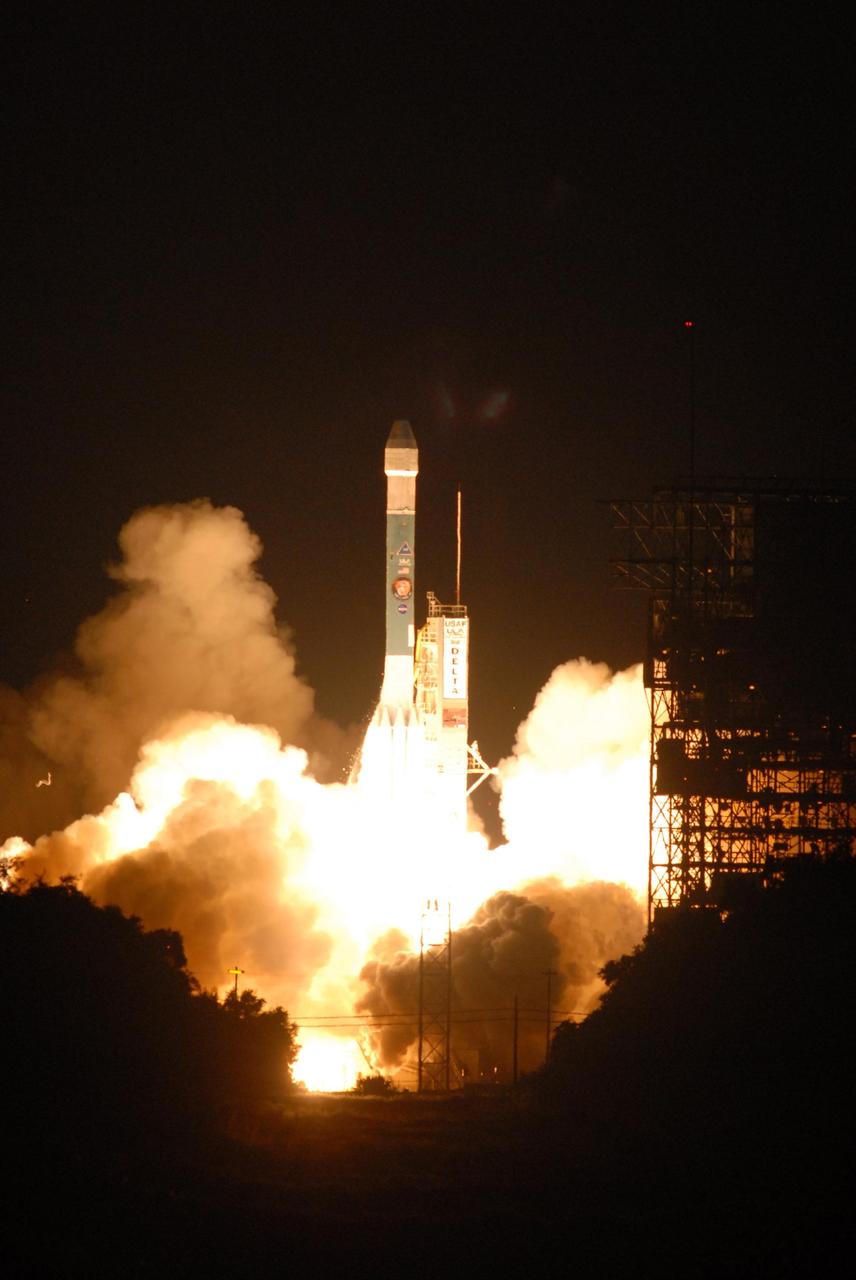
KENNEDY SPACE CENTER, FLA. -- The Delta II 7925 rocket carrying NASA's Phoenix Mars lander lifts off amid billows of smoke from Pad 17A at Cape Canaveral Air Force Station at 5:26 a.m. EDT. Phoenix will land in icy soils near the north polar, permanent ice cap of Mars and explore the history of the water in these soils and any associated rocks, while monitoring polar climate. Landing on Mars is planned in May 2008 on arctic ground where a mission currently in orbit, Mars Odyssey, has detected high concentrations of ice just beneath the top layer of soil. Photo credit: NASA/George Shelton
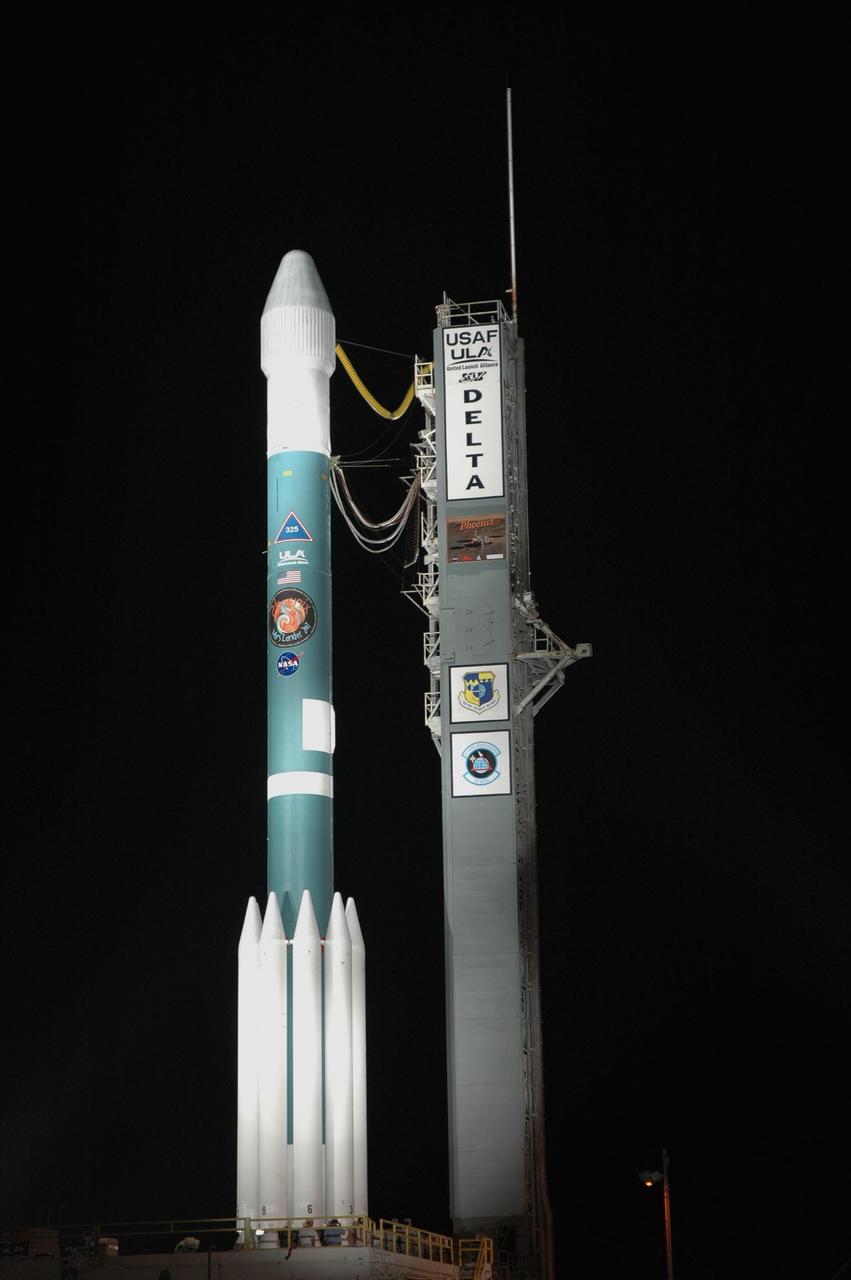
KENNEDY SPACE CENTER, FLA. -- Rollback of the mobile service tower, or gantry, from around the Delta II 7925 rocket is complete on Launch Pad 17A at Cape Canaveral Air Force Station. Equipped with three stages and nine strap-on solid rocket motors, the Delta II rocket packs plenty of punch for sending the Phoenix spacecraft on its way toward Mars. Launch is targeted for Aug. 4 during one of two opportunities for liftoff: 5:26 or 6:02 a.m. EDT. Phoenix will land in icy soils near the north polar, permanent ice cap of Mars and explore the history of the water in these soils and any associated rocks, while monitoring polar climate. Landing on Mars is planned in May 2008 on arctic ground where a mission currently in orbit, Mars Odyssey, has detected high concentrations of ice just beneath the top layer of soil. Photo credit: NASA/Jim Grossmann
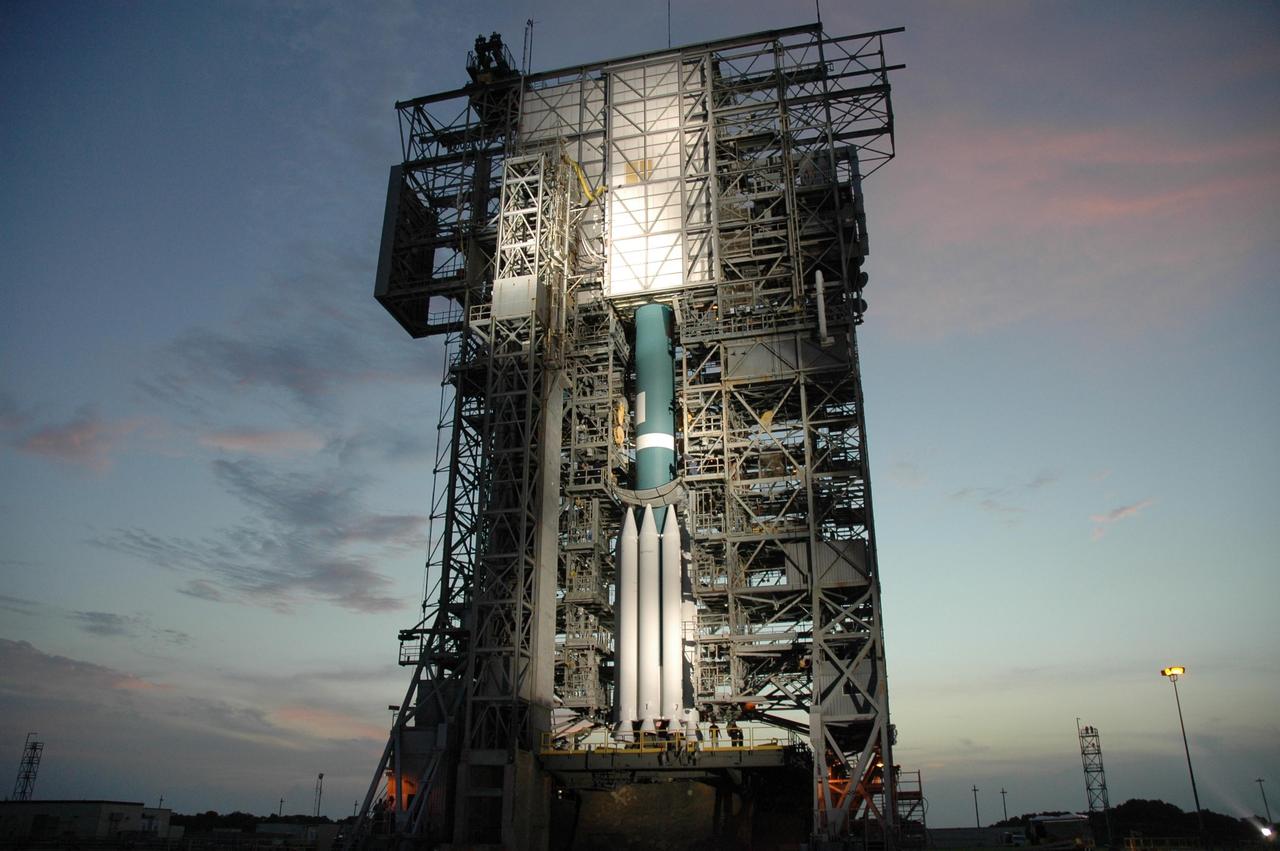
KENNEDY SPACE CENTER, FLA. -- Preparations to move the mobile service tower, or gantry, from around the Delta II 7925 rocket are under way under the lights on Launch Pad 17A at Cape Canaveral Air Force Station. Equipped with three stages and nine strap-on solid rocket motors, the Delta II rocket packs plenty of punch for sending the Phoenix spacecraft on its way toward Mars. Launch is targeted for Aug. 4 during one of two opportunities for liftoff: 5:26 or 6:02 a.m. EDT. Phoenix will land in icy soils near the north polar, permanent ice cap of Mars and explore the history of the water in these soils and any associated rocks, while monitoring polar climate. Landing on Mars is planned in May 2008 on arctic ground where a mission currently in orbit, Mars Odyssey, has detected high concentrations of ice just beneath the top layer of soil. Photo credit: NASA/Jim Grossmann
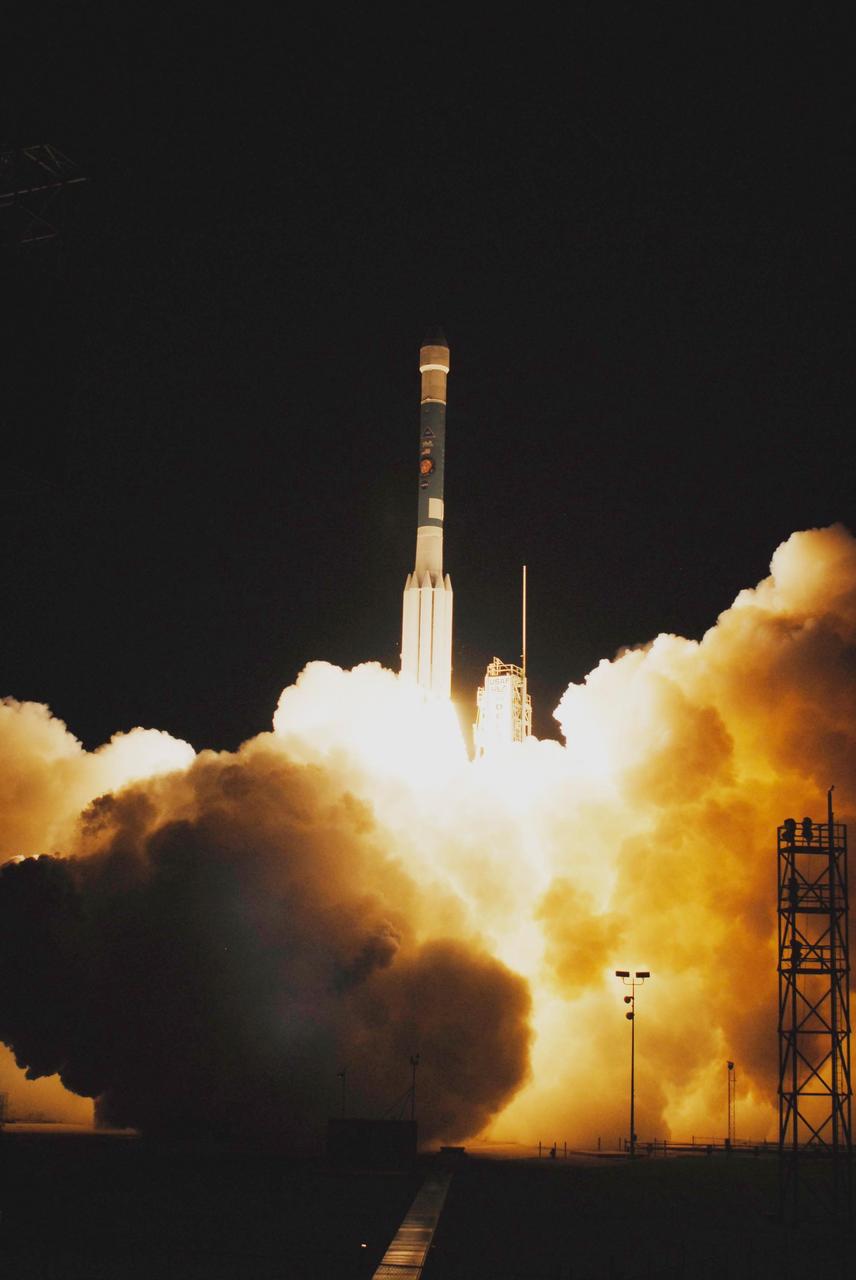
KENNEDY SPACE CENTER, FLA. - The Delta II 7925 rocket carrying NASA's Phoenix Mars lander bounds off Pad 17A on Cape Canaveral Air Force Station at 5:26 a.m. EDT. Phoenix will land in icy soils near the north polar, permanent ice cap of Mars and explore the history of the water in these soils and any associated rocks, while monitoring polar climate. Landing on Mars is planned in May 2008 on arctic ground where a mission currently in orbit, Mars Odyssey, has detected high concentrations of ice just beneath the top layer of soil. Photo credit: NASA/Sandra Joseph and John Kechele
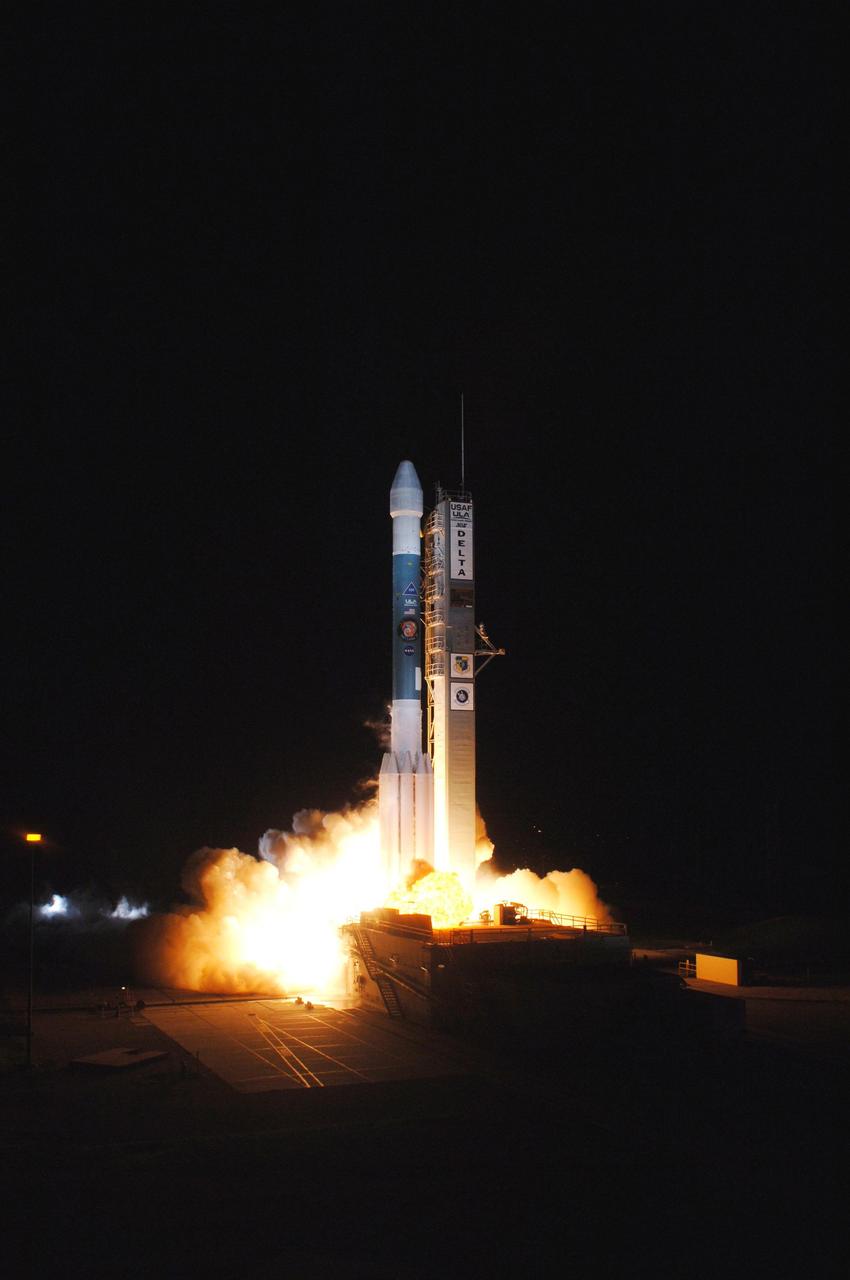
KENNEDY SPACE CENTER, FLA. - NASA's Phoenix spacecraft makes a dramatic start on its mission to Mars aboard a Delta II 7925 rocket at 5:26 a.m. EDT from Pad 17A at Cape Canaveral Air Force Station. Phoenix will land in icy soils near the north polar, permanent ice cap of Mars and explore the history of the water in these soils and any associated rocks, while monitoring polar climate. Landing on Mars is planned in May 2008 on arctic ground where a mission currently in orbit, Mars Odyssey, has detected high concentrations of ice just beneath the top layer of soil. Photo credit: NASA/Tony Gray and Robert Murray
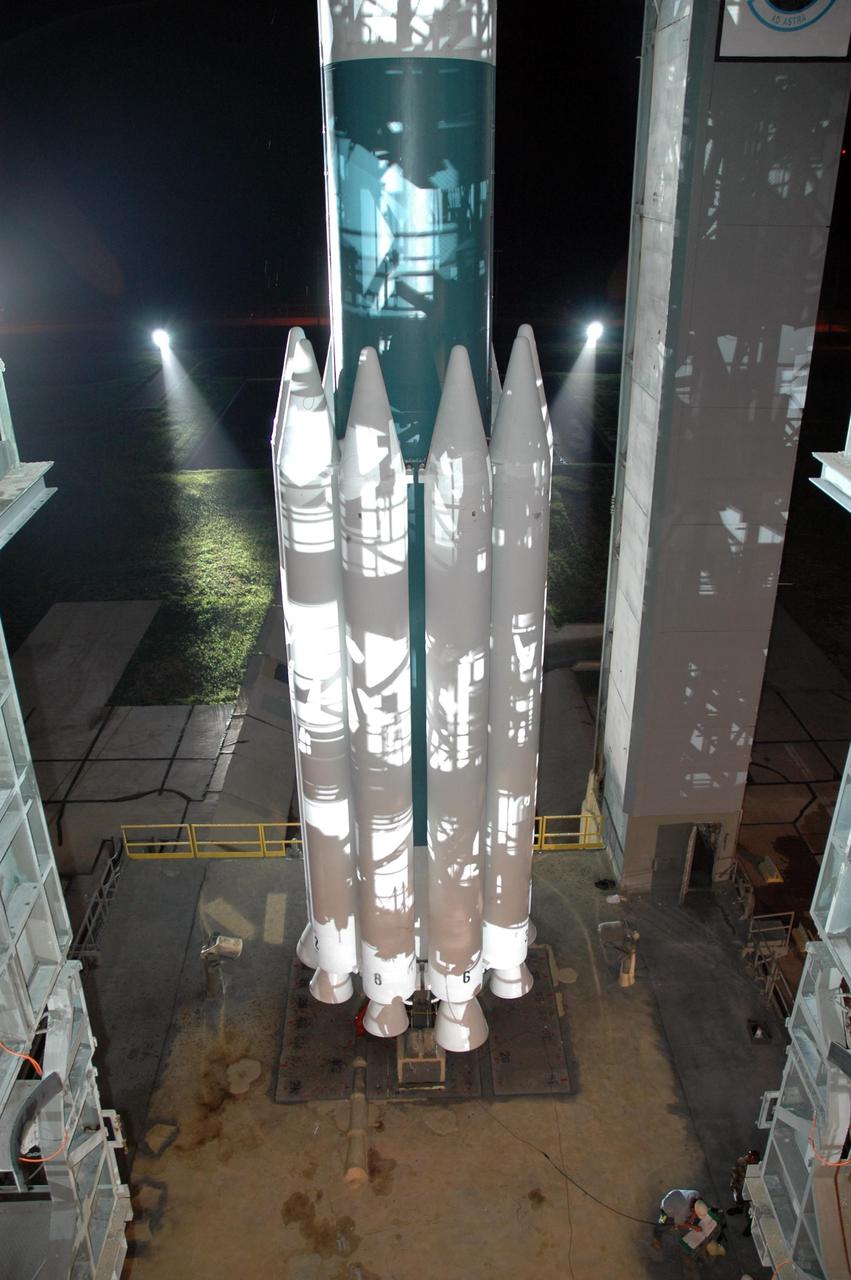
KENNEDY SPACE CENTER, FLA. -- The solid rocket boosters on the Delta II 7925 rocket are revealed following the retraction of the mobile service tower, or gantry, on Launch Pad 17A at Cape Canaveral Air Force Station. Equipped with three stages and nine strap-on solid rocket motors, the Delta II rocket packs plenty of punch for sending the Phoenix spacecraft on its way toward Mars. Launch is targeted for Aug. 4 during one of two opportunities for liftoff: 5:26 or 6:02 a.m. EDT. Phoenix will land in icy soils near the north polar, permanent ice cap of Mars and explore the history of the water in these soils and any associated rocks, while monitoring polar climate. Landing on Mars is planned in May 2008 on arctic ground where a mission currently in orbit, Mars Odyssey, has detected high concentrations of ice just beneath the top layer of soil. Photo credit: NASA/Jim Grossmann
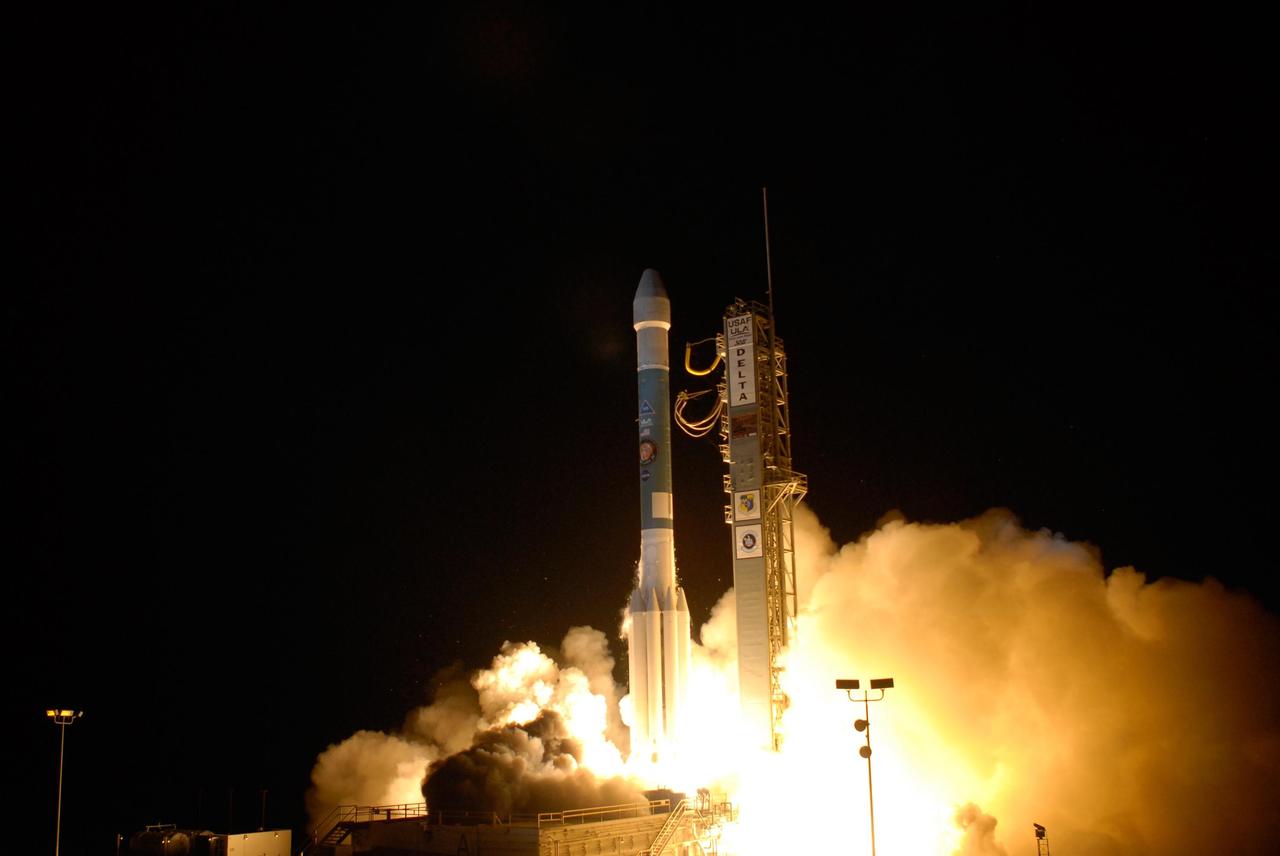
KENNEDY SPACE CENTER, FLA. - NASA's Phoenix Mars lander lifts off from Pad 17A aboard a Delta II 7925 rocket amid billows of smoke at Cape Canaveral Air Force Station at 5:26 a.m. EDT. Phoenix will land in icy soils near the north polar, permanent ice cap of Mars and explore the history of the water in these soils and any associated rocks, while monitoring polar climate. Landing on Mars is planned in May 2008 on arctic ground where a mission currently in orbit, Mars Odyssey, has detected high concentrations of ice just beneath the top layer of soil. Photo credit: NASA/Regina Mitchell-Ryall and Jerry Cannon