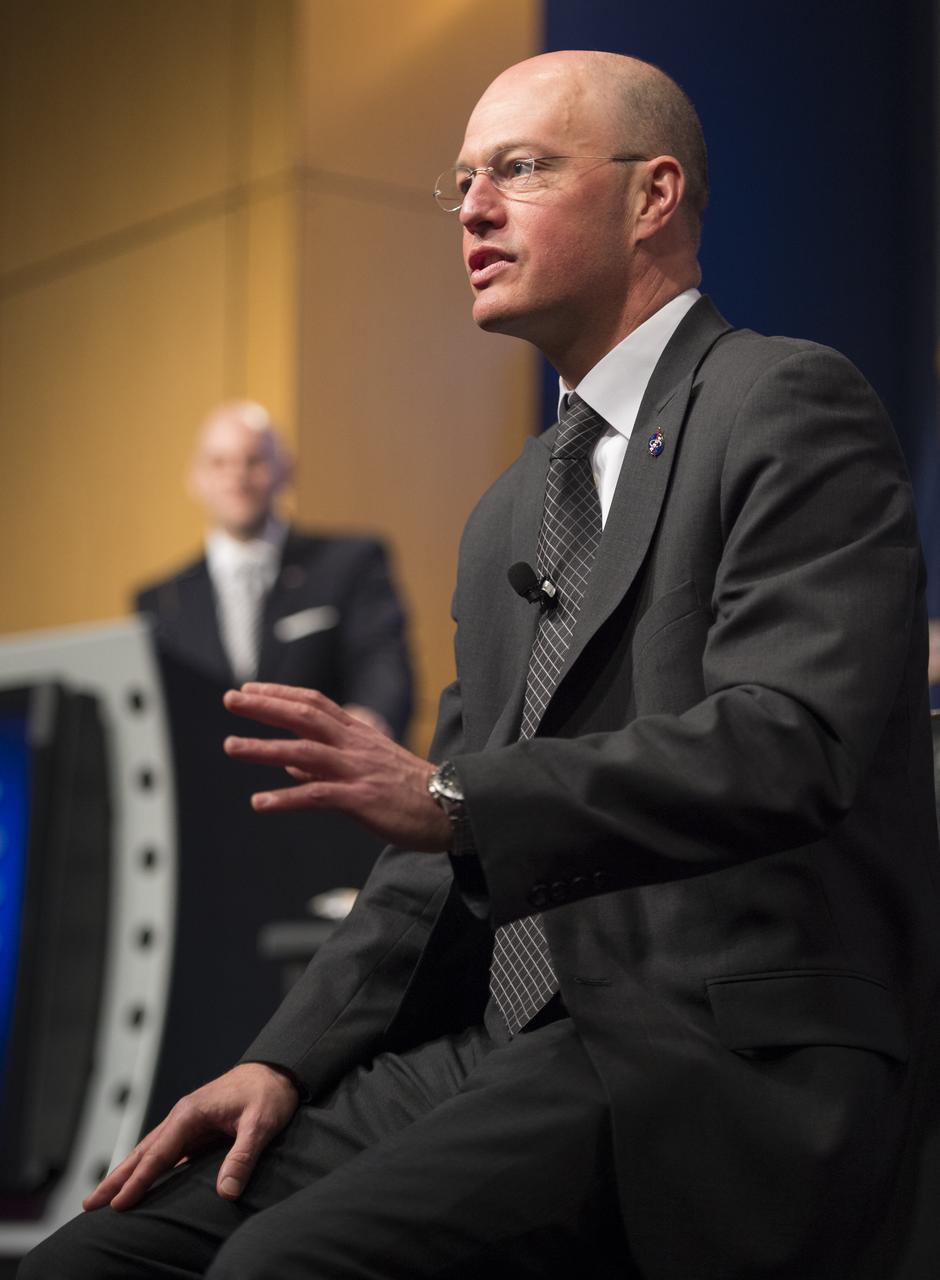
Marshall Porterfield, Life and Physical Sciences Division Director at NASA Headquarters, talks about the human body in microgravity and other life sciences at a NASA Social exploring science on the ISS at NASA Headquarters, Wednesday, Feb. 20, 2013 in Washington. Photo Credit: (NASA/Carla Cioffi)
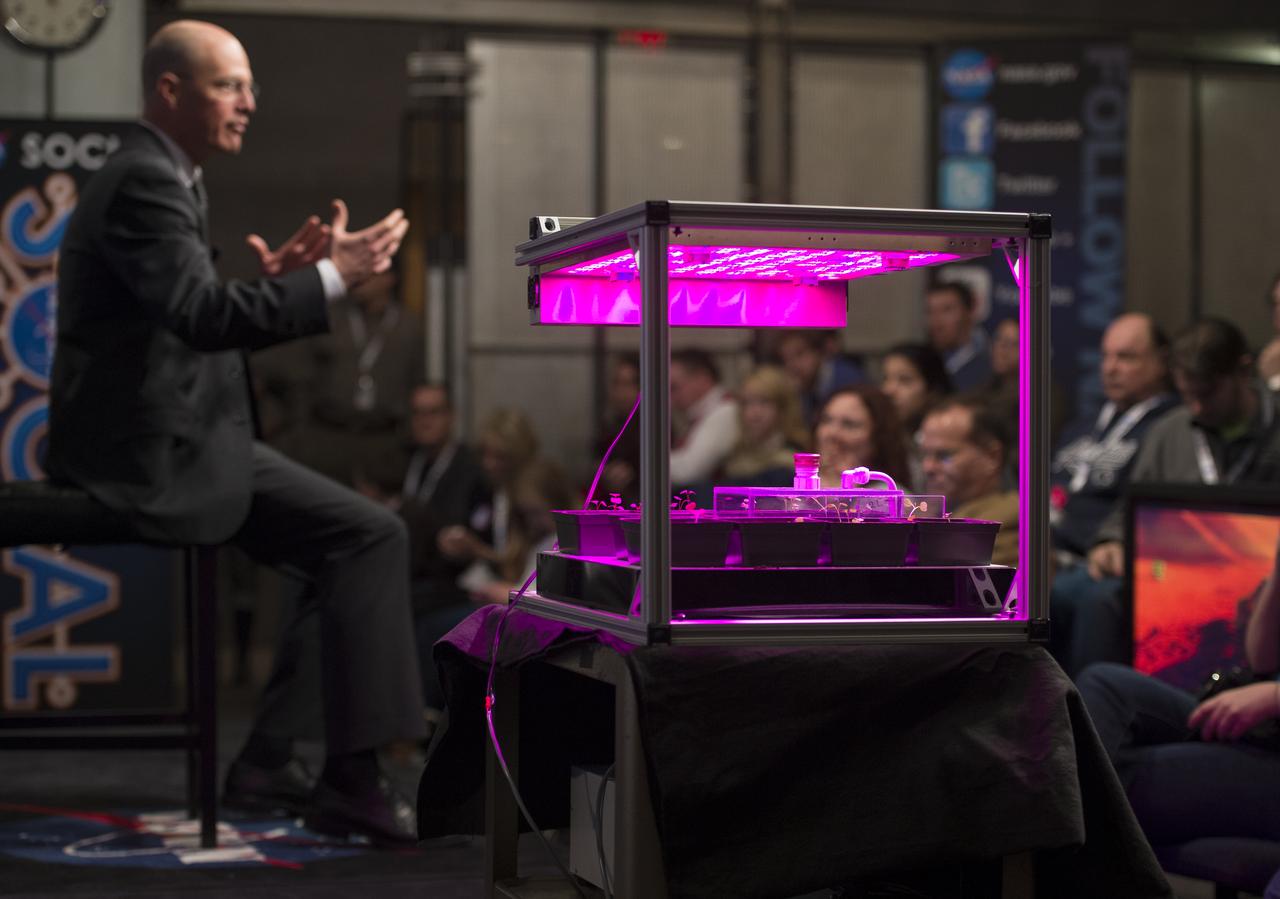
Marshall Porterfield, Life and Physical Sciences Division Director at NASA Headquarters, talks about the human body in microgravity and other life sciences at a NASA Social exploring science on the ISS at NASA Headquarters, Wednesday, Feb. 20, 2013 in Washington. In the foreground is pictured Veggie, a container used for growing plants on the ISS. Photo Credit: (NASA/Carla Cioffi)

CAPE CANAVERAL, Fla. – Marshall Porterfield, division director, Space Life and Physical Sciences, HEOMD, briefs media representatives in Kennedy Space Center’s Press Site auditorium in preparation for the launch of the SpaceX CRS-4 mission to resupply the International Space Station. Porterfield is a member of the ISS Science Panel on Model Organisms. The mission is the fourth of 12 SpaceX flights NASA contracted with the company to resupply the space station. It will be the fifth trip by a Dragon spacecraft to the orbiting laboratory. The spacecraft’s 2.5 tons of supplies, science experiments, and technology demonstrations include critical materials to support 255 science and research investigations that will occur during the station's Expeditions 41 and 42. Liftoff is targeted for an instantaneous window at 2:14 a.m. EDT. To learn more about the mission, visit http://www.nasa.gov/mission_pages/station/structure/launch/index.html. Photo credit: NASA/Jim Grossmann
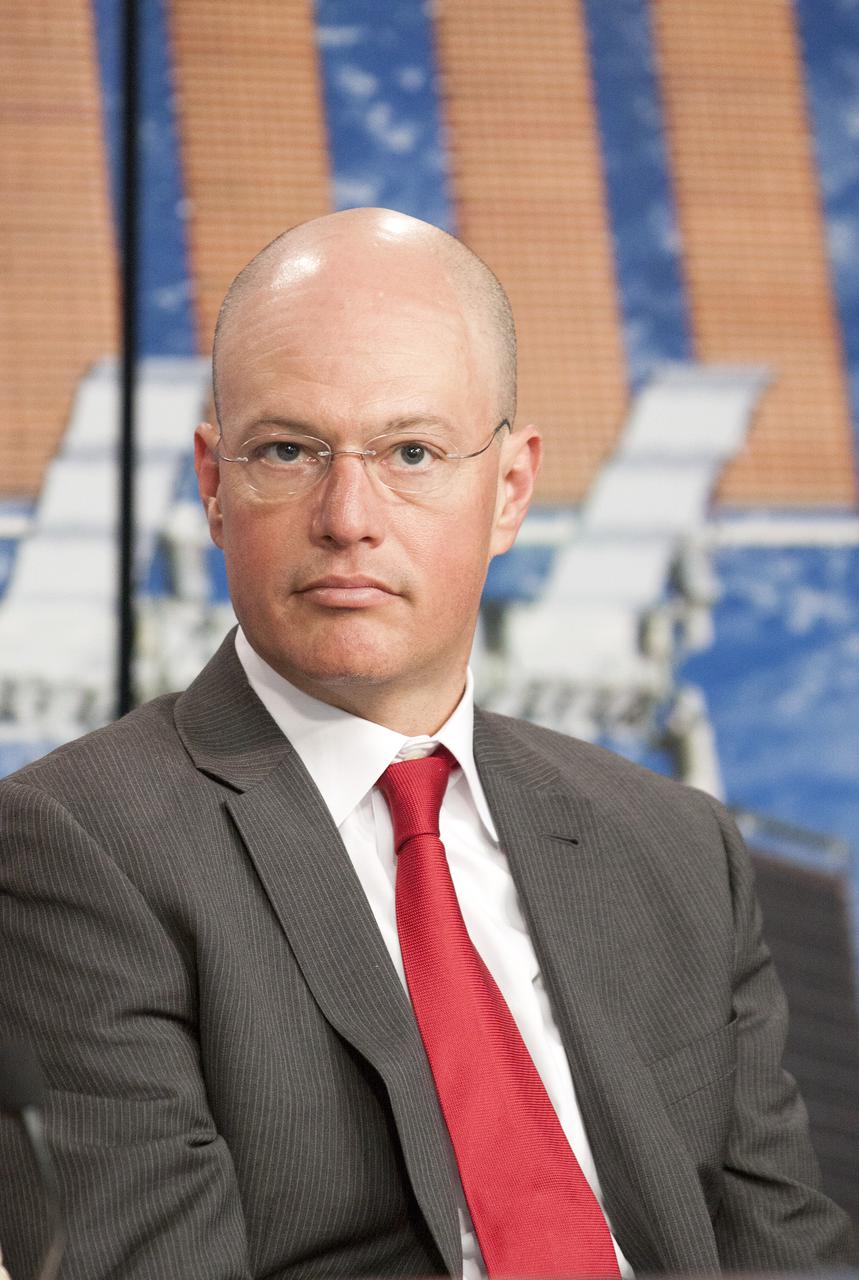
CAPE CANAVERAL, Fla. - Media attending a pre-launch news conference at the Kennedy Space Center, Fla. heard from Marshall Porterfield, division director of the Life and Physical Sciences at NASA Headquarters. Scheduled for launch March 1 atop a Falcon 9 rocket, the SpaceX Dragon capsule will be making its third trip to the space station. The mission is the second of 12 SpaceX flights contracted by NASA to resupply the orbiting laboratory. For more information, visit http:__www.nasa.gov_mission_pages_station_structure_launch_spacex2-feature.html Photo credit: NASA_Kim Shiflett
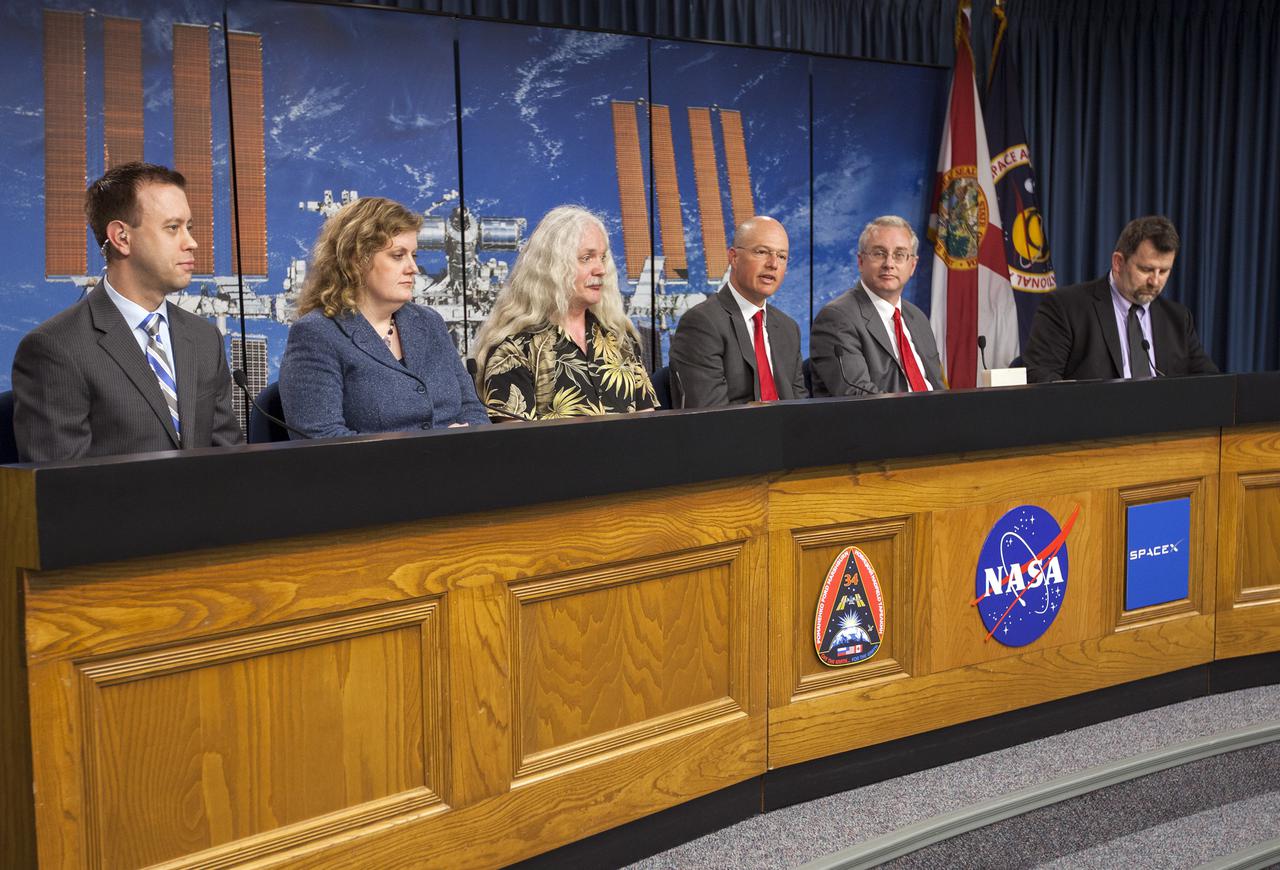
CAPE CANAVERAL, Fla. - Media attending a pre-launch news conference at the Kennedy Space Center, Fla. heard from officials who discussed payloads to be launched aboard a SpaceX Dragon capsule. From the left are: Josh Byerly of NASA Public Affairs at the Johnson Space Center, Julie Robinson, NASA program scientist for the International Space Station, Simon Gilroy, Ph.D., BRIC-17 Lead Investigator from the University of Wisconsin, Marshall Porterfield, division director of the Life and Physical Sciences at NASA Headquarters, Michael Johnson, chief technical officer for NanoRacks, and Michael Roberts, research scientist with the Center for Advancement of Science in Space. Scheduled for launch March 1 atop a Falcon 9 rocket, the SpaceX Dragon capsule will be making its third trip to the space station. The mission is the second of 12 SpaceX flights contracted by NASA to resupply the orbiting laboratory. For more information, visit http:__www.nasa.gov_mission_pages_station_structure_launch_spacex2-feature.html Photo credit: NASA_Kim Shiflett
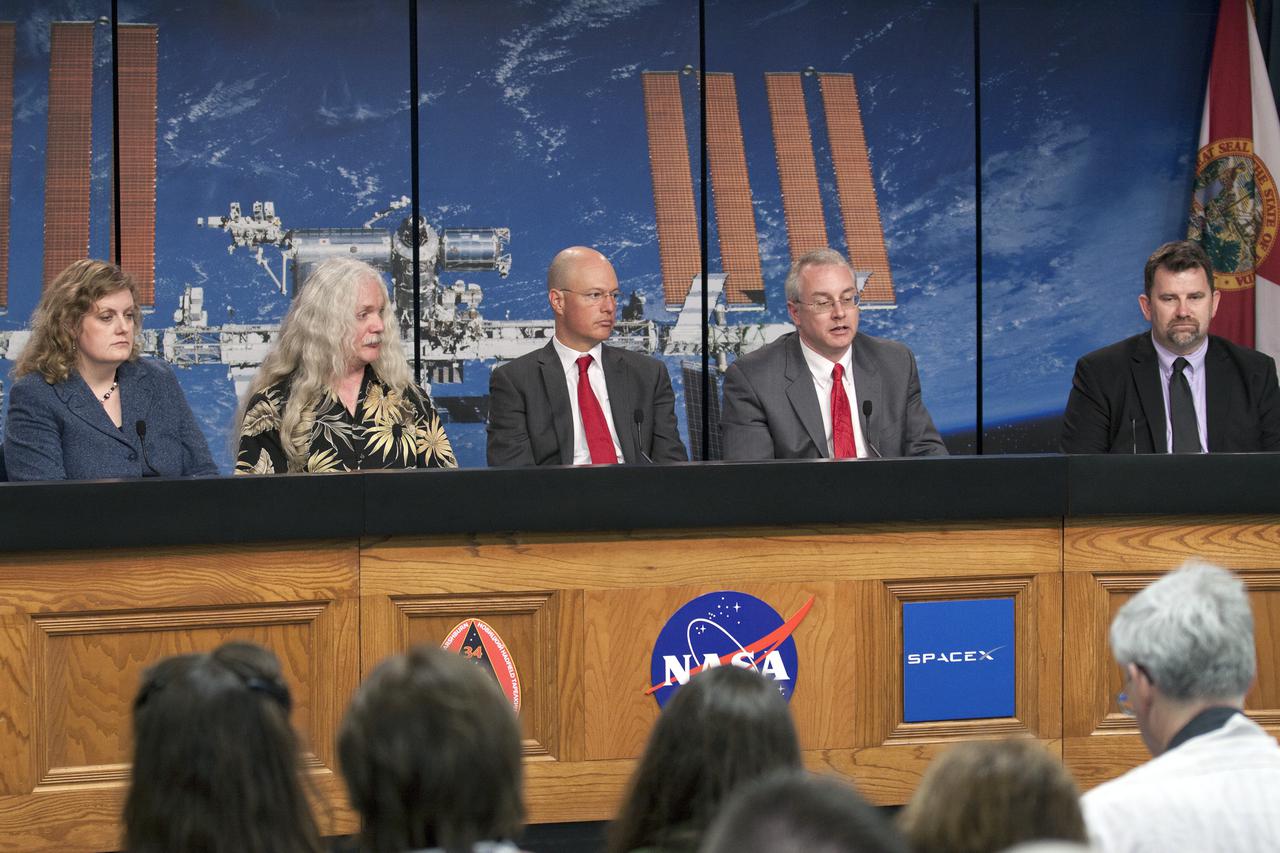
CAPE CANAVERAL, Fla. - Media attending a pre-launch news conference at the Kennedy Space Center, Fla. heard from officials who discussed payloads to be launched aboard a SpaceX Dragon capsule. From the left are: Julie Robinson, NASA program scientist for the International Space Station, Simon Gilroy, Ph.D., BRIC-17 Lead Investigator from the University of Wisconsin, Marshall Porterfield, division director of the Life and Physical Sciences at NASA Headquarters, Michael Johnson, chief technical officer for NanoRacks, and Michael Roberts, research scientist with the Center for Advancement of Science in Space. Scheduled for launch March 1 atop a Falcon 9 rocket, the SpaceX Dragon capsule will be making its third trip to the space station. The mission is the second of 12 SpaceX flights contracted by NASA to resupply the orbiting laboratory. For more information, visit http:__www.nasa.gov_mission_pages_station_structure_launch_spacex2-feature.html Photo credit: NASA_Kim Shiflett
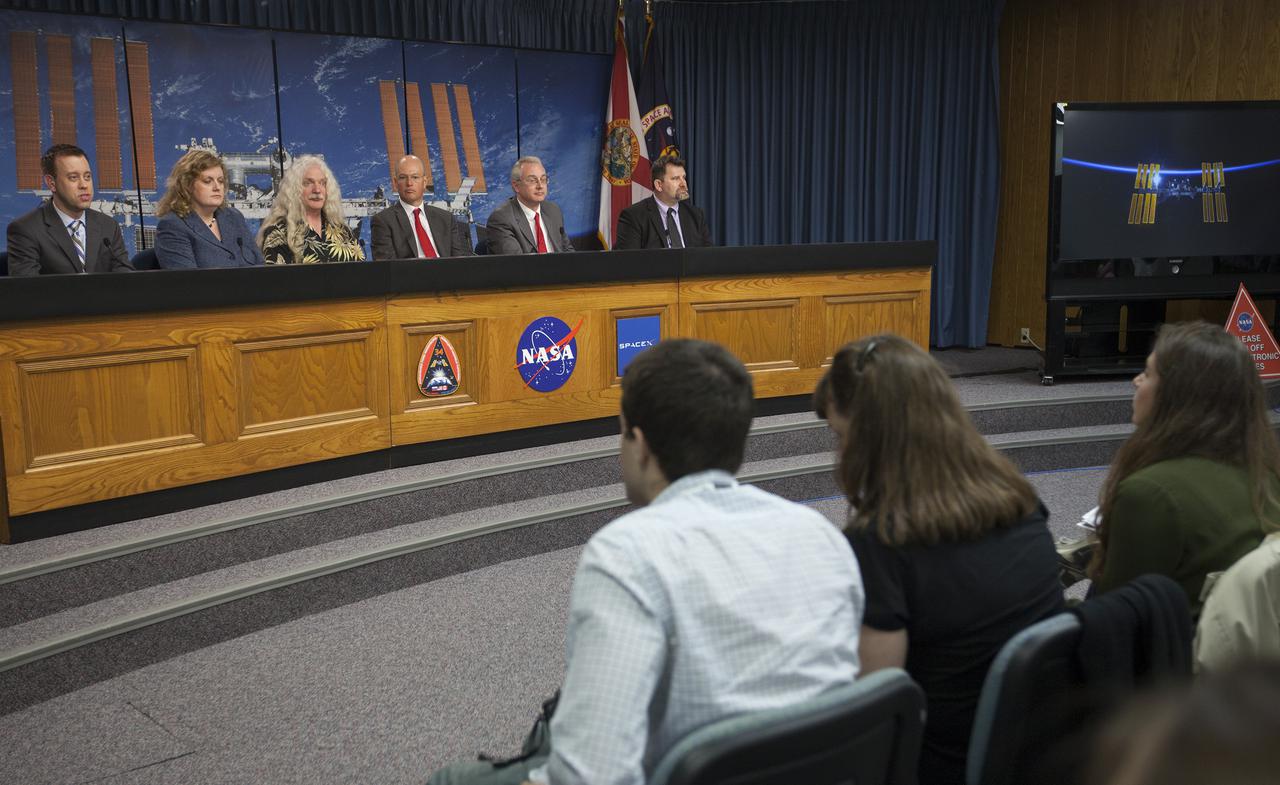
CAPE CANAVERAL, Fla. - Media attending a pre-launch news conference at the Kennedy Space Center, Fla. heard from officials who discussed payloads to be launched aboard a SpaceX Dragon capsule. From the left are: Josh Byerly of NASA Public Affairs at the Johnson Space Center, Julie Robinson, NASA program scientist for the International Space Station, Simon Gilroy, Ph.D., BRIC-17 Lead Investigator from the University of Wisconsin, Marshall Porterfield, division director of the Life and Physical Sciences at NASA Headquarters, Michael Johnson, chief technical officer for NanoRacks, and Michael Roberts, research scientist with the Center for Advancement of Science in Space. Scheduled for launch March 1 atop a Falcon 9 rocket, the SpaceX Dragon capsule will be making its third trip to the space station. The mission is the second of 12 SpaceX flights contracted by NASA to resupply the orbiting laboratory. For more information, visit http:__www.nasa.gov_mission_pages_station_structure_launch_spacex2-feature.html Photo credit: NASA_Kim Shiflett
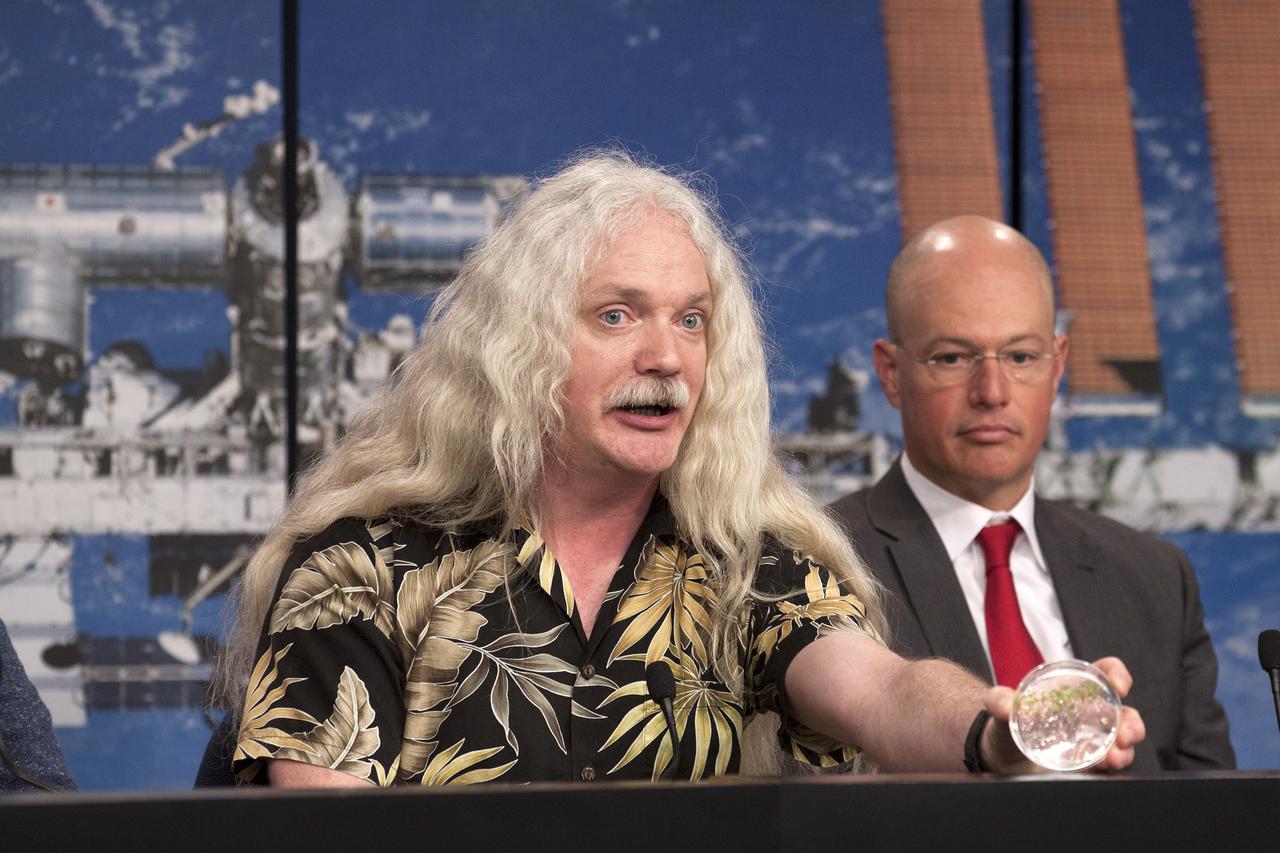
CAPE CANAVERAL, Fla. - Simon Gilroy, Ph.D., BRIC-17 Lead Investigator from the University of Wisconsin, describes a Petri dish similar to those that will be used to study plant development in a weightless environment. The briefing was for news media representatives attending a pre-launch news conference at the Kennedy Space Center, Fla. Looking on from the right is Marshall Porterfield, division director of the Life and Physical Sciences at NASA Headquarters. Scheduled for launch March 1 atop a Falcon 9 rocket, the SpaceX Dragon capsule will be making its third trip to the space station. The mission is the second of 12 SpaceX flights contracted by NASA to resupply the orbiting laboratory. For more information, visit http:__www.nasa.gov_mission_pages_station_structure_launch_spacex2-feature.html Photo credit: NASA_Kim Shiflett
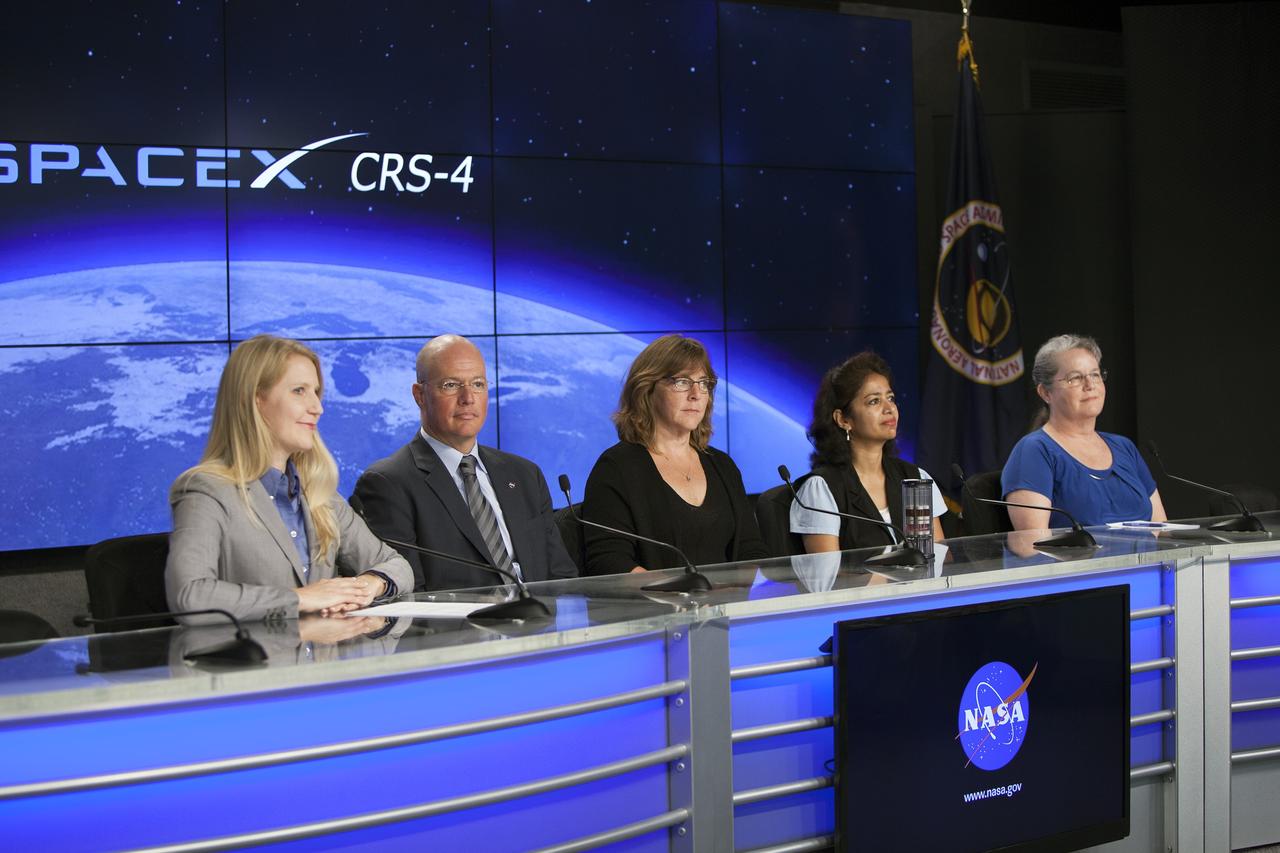
CAPE CANAVERAL, Fla. – Members of an ISS Science Panel on Model Organisms brief media representatives in Kennedy Space Center’s Press Site auditorium in preparation for the launch of the SpaceX CRS-4 mission to resupply the International Space Station. From left are Stephanie Schierholz, NASA Public Affairs, Marshall Porterfield, division director, Space Life and Physical Sciences, HEOMD, Shiela Neilsen, principal investigator, Micro-8, University of Montana, Sharmila Bhattacharya, principal investigator, Ames Student Fruit-Fly Experiment, NASA Ames Research Center, and Ruth Globus, project scientist, Rodent Habitat/Rodent Research-1, NASA Ames. The mission is the fourth of 12 SpaceX flights NASA contracted with the company to resupply the space station. It will be the fifth trip by a Dragon spacecraft to the orbiting laboratory. The spacecraft’s 2.5 tons of supplies, science experiments, and technology demonstrations include critical materials to support 255 science and research investigations that will occur during the station's Expeditions 41 and 42. Liftoff is targeted for an instantaneous window at 2:14 a.m. EDT. To learn more about the mission, visit http://www.nasa.gov/mission_pages/station/structure/launch/index.html. Photo credit: NASA/Jim Grossmann
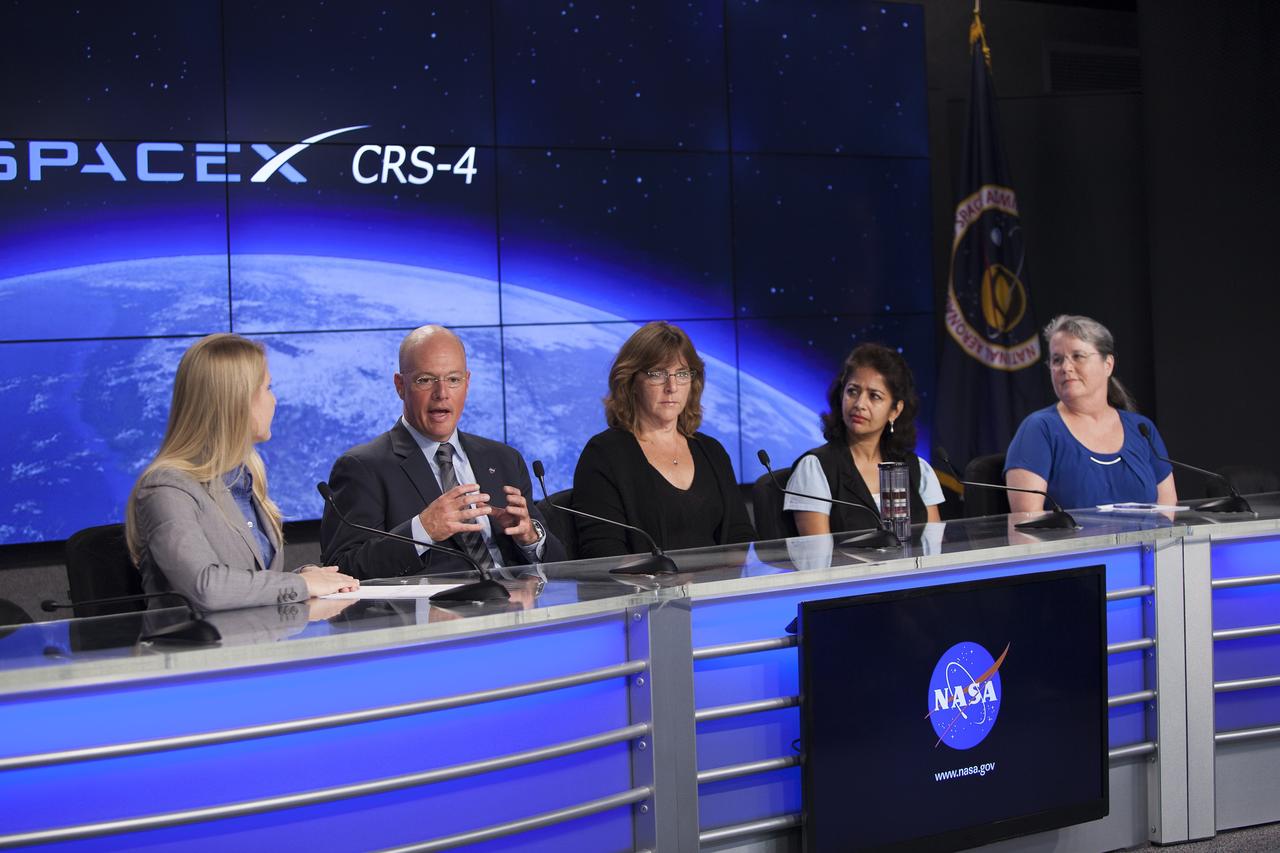
CAPE CANAVERAL, Fla. – Members of an ISS Science Panel on Model Organisms brief media representatives in Kennedy Space Center’s Press Site auditorium in preparation for the launch of the SpaceX CRS-4 mission to resupply the International Space Station. From left are Stephanie Schierholz, NASA Public Affairs, Marshall Porterfield, division director, Space Life and Physical Sciences, HEOMD, Shiela Neilsen, principal investigator, Micro-8, University of Montana, Sharmila Bhattacharya, principal investigator, Ames Student Fruit-Fly Experiment, NASA Ames Research Center, and Ruth Globus, project scientist, Rodent Habitat/Rodent Research-1, NASA Ames. The mission is the fourth of 12 SpaceX flights NASA contracted with the company to resupply the space station. It will be the fifth trip by a Dragon spacecraft to the orbiting laboratory. The spacecraft’s 2.5 tons of supplies, science experiments, and technology demonstrations include critical materials to support 255 science and research investigations that will occur during the station's Expeditions 41 and 42. Liftoff is targeted for an instantaneous window at 2:14 a.m. EDT. To learn more about the mission, visit http://www.nasa.gov/mission_pages/station/structure/launch/index.html. Photo credit: NASA/Jim Grossmann