
Voyager 2 was the first spacecraft to observe the planet Neptune and its two satellites: Triton, the largest, and Nereid. The most obvious feature of the planet is its blue color, the result of methane in the atmosphere. Research continues on Neptune's two largest satellites and the additional six that were discovered by Voyager 2's investigation. These images represent the most complete set of full disk Neptune images that the spacecraft will acquire.
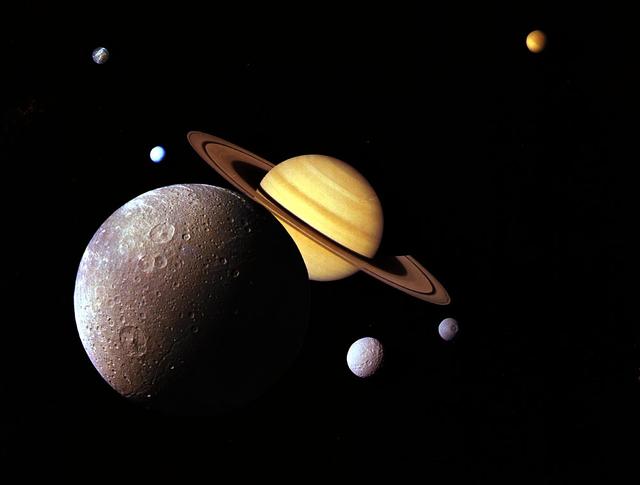
Voyager 1 passed the Saturnian system in November 1980; nine months later Voyager 2 passed through this same system. The ensuing scientific discoveries were unprecedented with regards to the rings around Saturn and its satellite's chemical makeup. Pictured are: Saturn (shown with rings), Dione (forefront), Tethys and Mimas (lower right), Enceladus and Rhea (upper left) and Titan in distant orbit (upper right).

On February 5, 1979, Voyager 1 made its closest approach to Jupiter since early 1974 and 1975 when Pioneers 10 and 11 made their voyages to Jupiter and beyond. Voyager 1 completed its Jupiter encounter in early April, after taking almost 19,000 pictures and recording many other scientific measurements. Although astronomers had studied Jupiter from Earth for several centuries, scientists were surprised by many of Voyager 1 and 2's findings. They now understand that important physical, geological, and atmospheric processes go on that they had never observed from Earth. Discovery of active volcanism on the satellite Io was probably the greatest surprise. It was the first time active volcanoes had been seen on another body in the solar system. Voyager also discovered a ring around Jupiter. Thus Jupiter joins Saturn, Uranus, and Neptune as a ringed planet -- although each ring system is unique and distinct from the others.
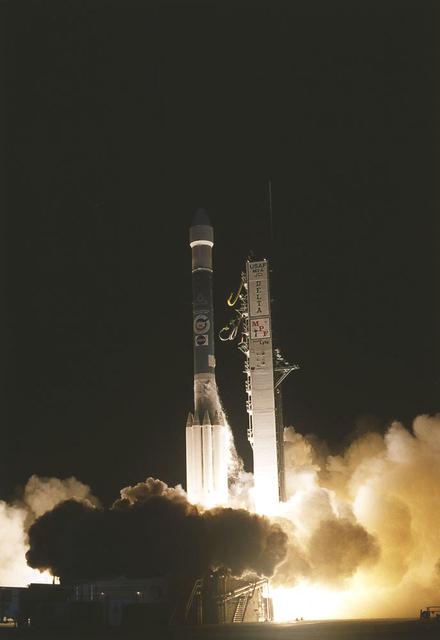
The Mars Pathfinder began the journey to Mars with liftoff atop a Delta II expendable launch vehicle from launch Complex 17B on Cape Canaveral Air Station. The Mars Pathfinder traveled on a direct trajectory to Mars, and arrived there in July 1997. Mars Pathfinder sent a lander and small robotic rover, Sojourner, to the surface of Mars. The primary objective of the mission was to demonstrate a low-cost way of delivering a science package to the surface of Mars using a direct entry, descent and landing with the aid of small rocket engines, a parachute, airbags and other techniques. In addition, landers and rovers of the future will share the heritage of Mars Pathfinder designs and technologies first tested in this mission. Pathfinder also collected invaluable data about the Martian surface.
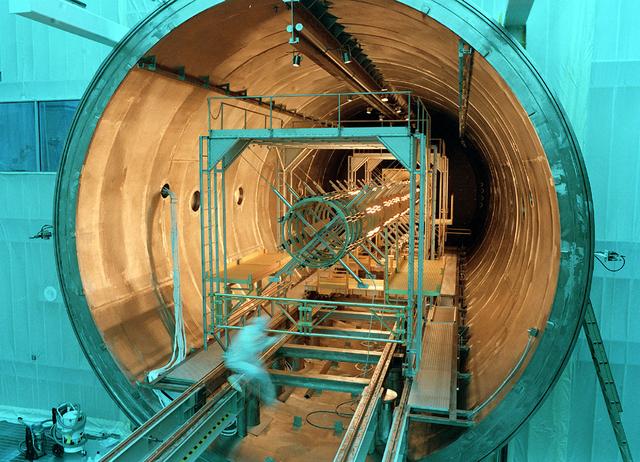
Marshall scientists testing a Lamp array at the X-Ray Calibration Facility (XRCF).
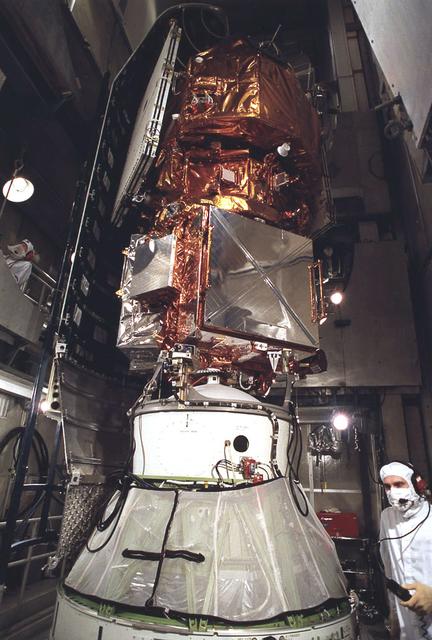
At Launch Complex 17 Pad A, Kennedy Space Center (KSC) workers are installing the payload fairing around the Extreme Ultraviolet Explorer (EUVE) mated to a Delta II rocket. The EUVE spacecraft is designed to study the extreme ultraviolet portion of the spectrum.

Building 4200 of Marshall’s administrative complex is prepared for demolition in the fall of 2022. Building 4200 was Marshall’s administrative headquarters from 1963 until 2020. The project will make way for a newer, more energy-efficient facilities, providing worksites for new generations of engineers, scientists, and support teams.
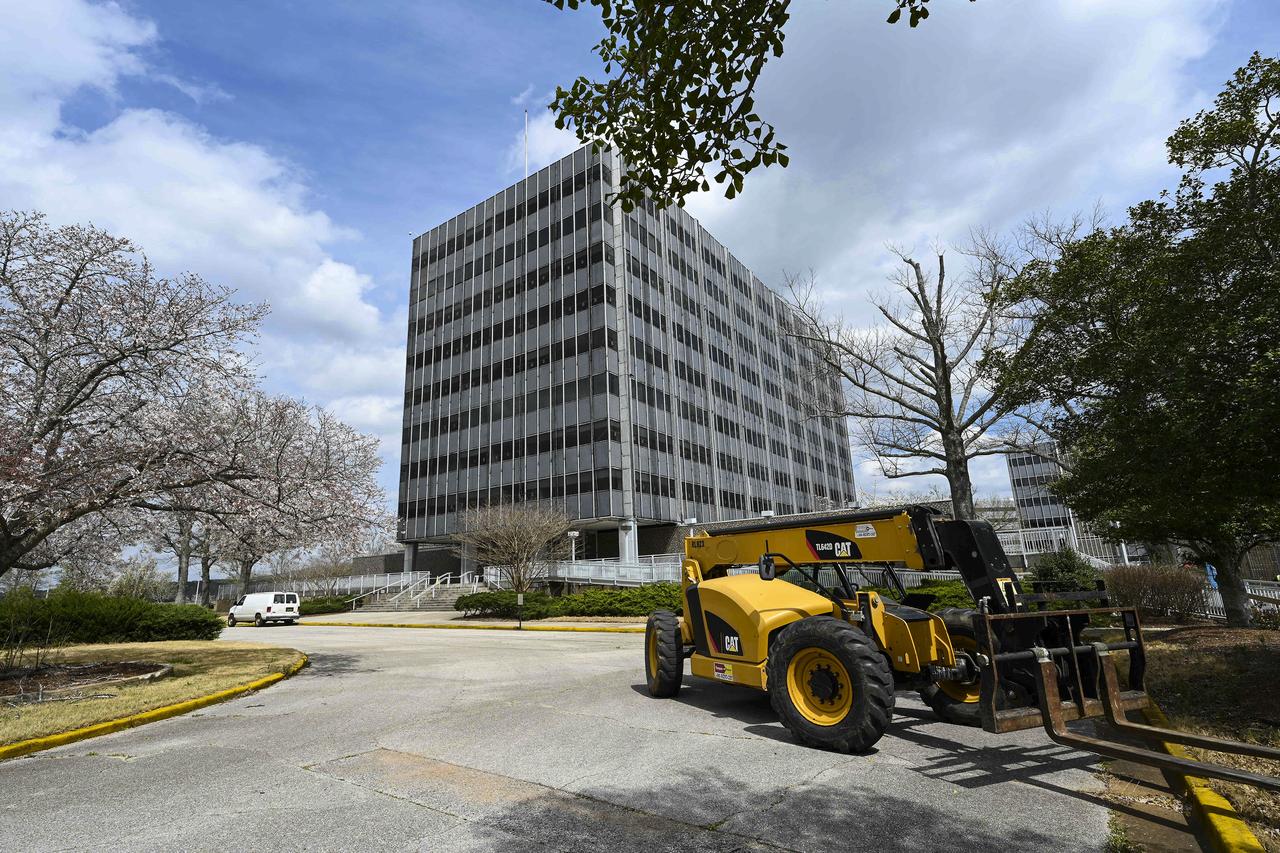
Building 4200 of Marshall’s administrative complex is prepared for demolition in the fall of 2022. Building 4200 was Marshall’s administrative headquarters from 1963 until 2020. The project will make way for a newer, more energy-efficient facilities, providing worksites for new generations of engineers, scientists, and support teams.
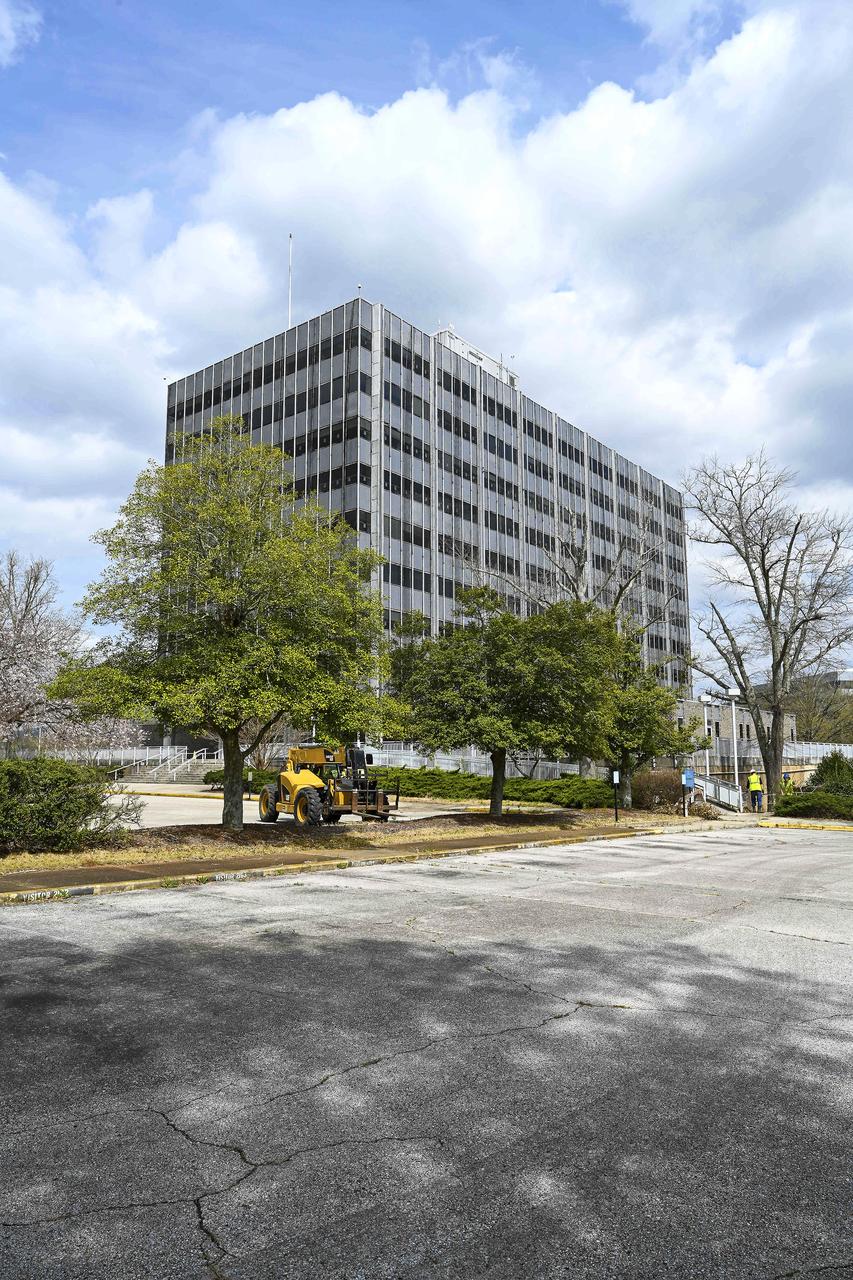
Building 4200 of Marshall’s administrative complex is prepared for demolition in the fall of 2022. Building 4200 was Marshall’s administrative headquarters from 1963 until 2020. The project will make way for a newer, more energy-efficient facilities, providing worksites for new generations of engineers, scientists, and support teams.
Building 4200 of Marshall’s administrative complex is prepared for demolition in the fall of 2022. Building 4200 was Marshall’s administrative headquarters from 1963 until 2020. The project will make way for a newer, more energy-efficient facilities, providing worksites for new generations of engineers, scientists, and support teams.
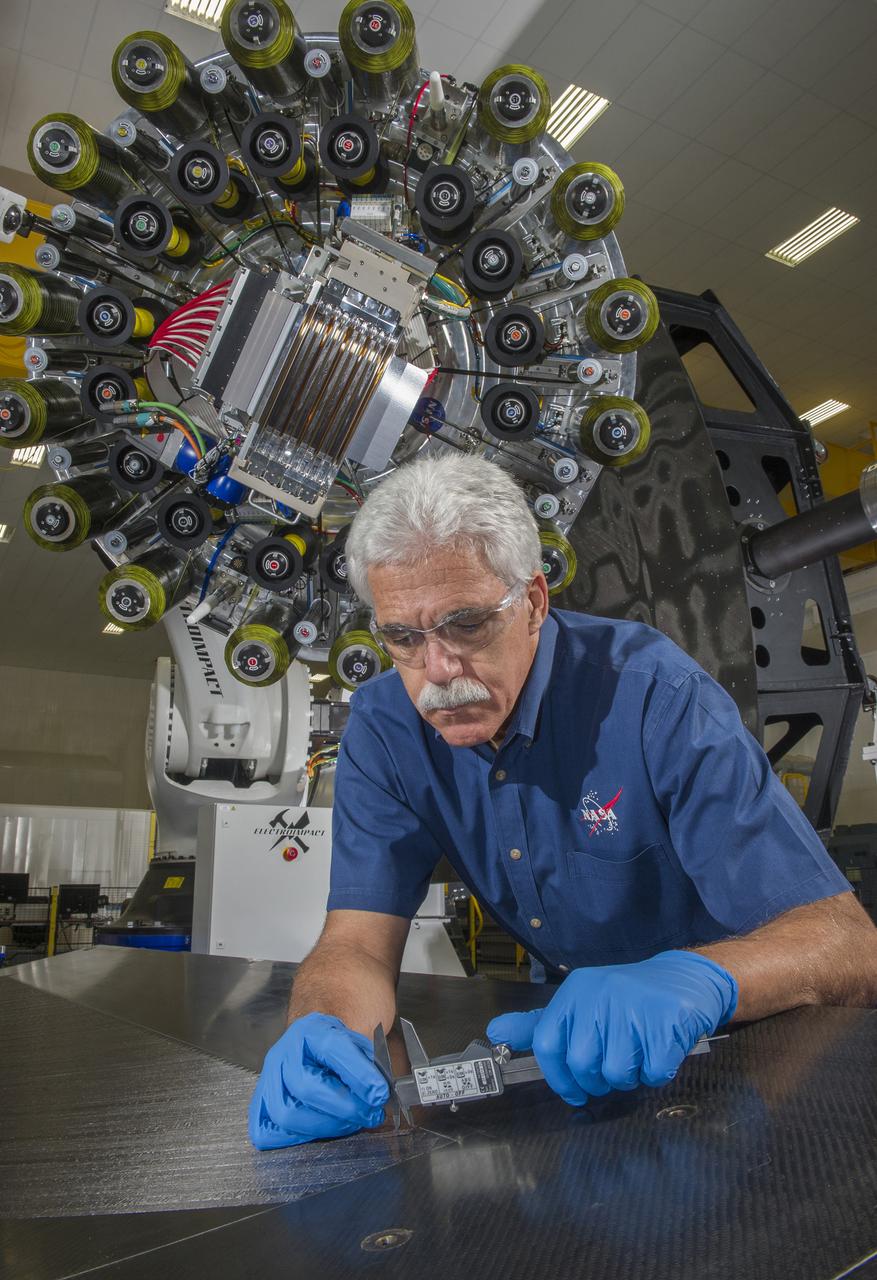
MATERIALS ENGINEER LARRY PELHAM OF NASA’S MARSHALL SPACE FLIGHT CENTER IN HUNTSVILLE, ALABAMA, OPERATES THE CEUS AUTOMATED FIBER PLACEMENT CYLINDRICAL MANUFACTURING TOOL IN BUILDING 4707. THE TOOL WILL BE USED BY THE COMPOSITES FOR EXPLORATION UPPER STAGE PROJECT AT MARSHALL, WHICH IS ANALYZING COMPOSITE MATERIALS TO SUPPORT FUTURE HARDWARE FOR NASA’S SPACE LAUNCH SYSTEM AND OTHER NEXT-GENERATION SPACECRAFT…
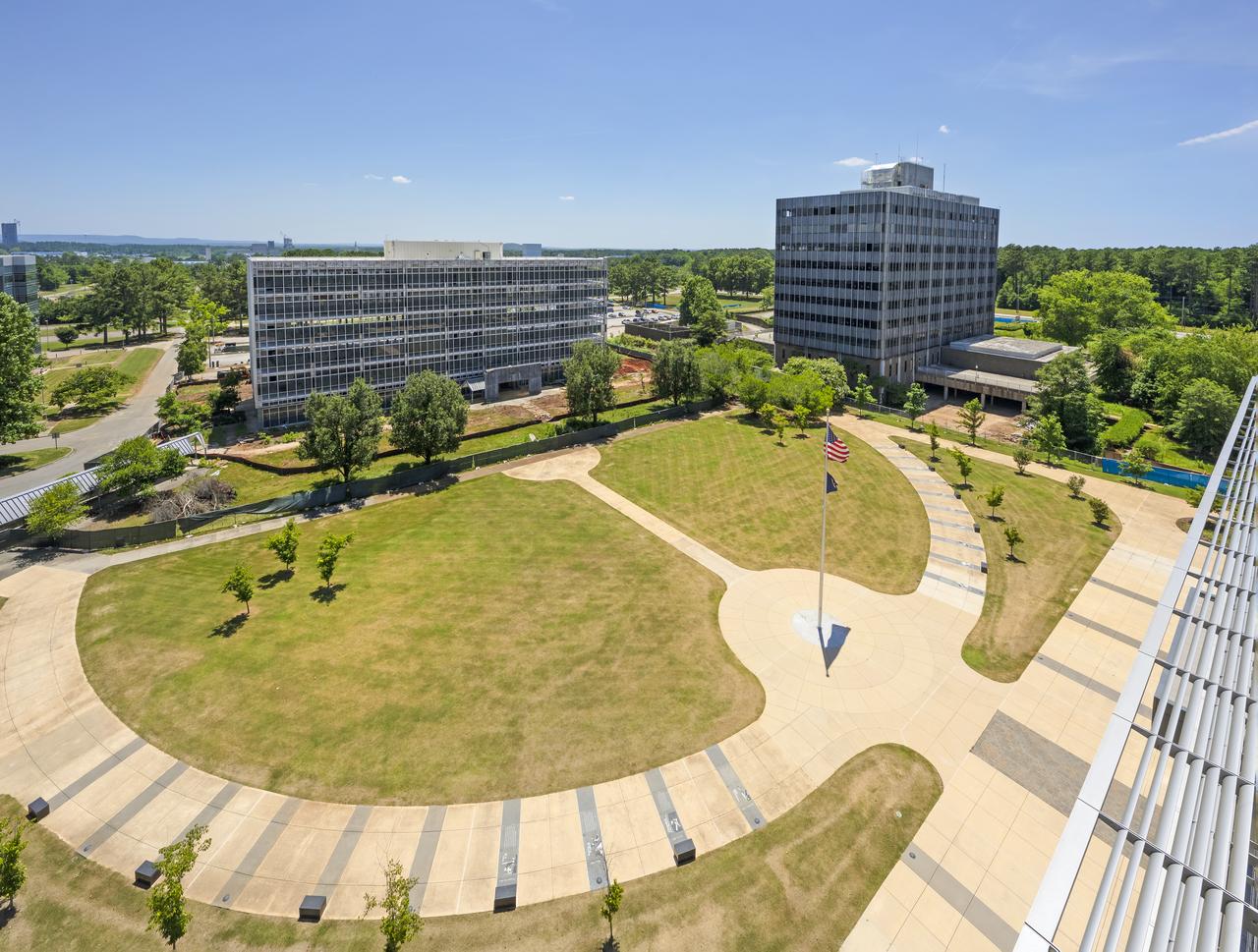
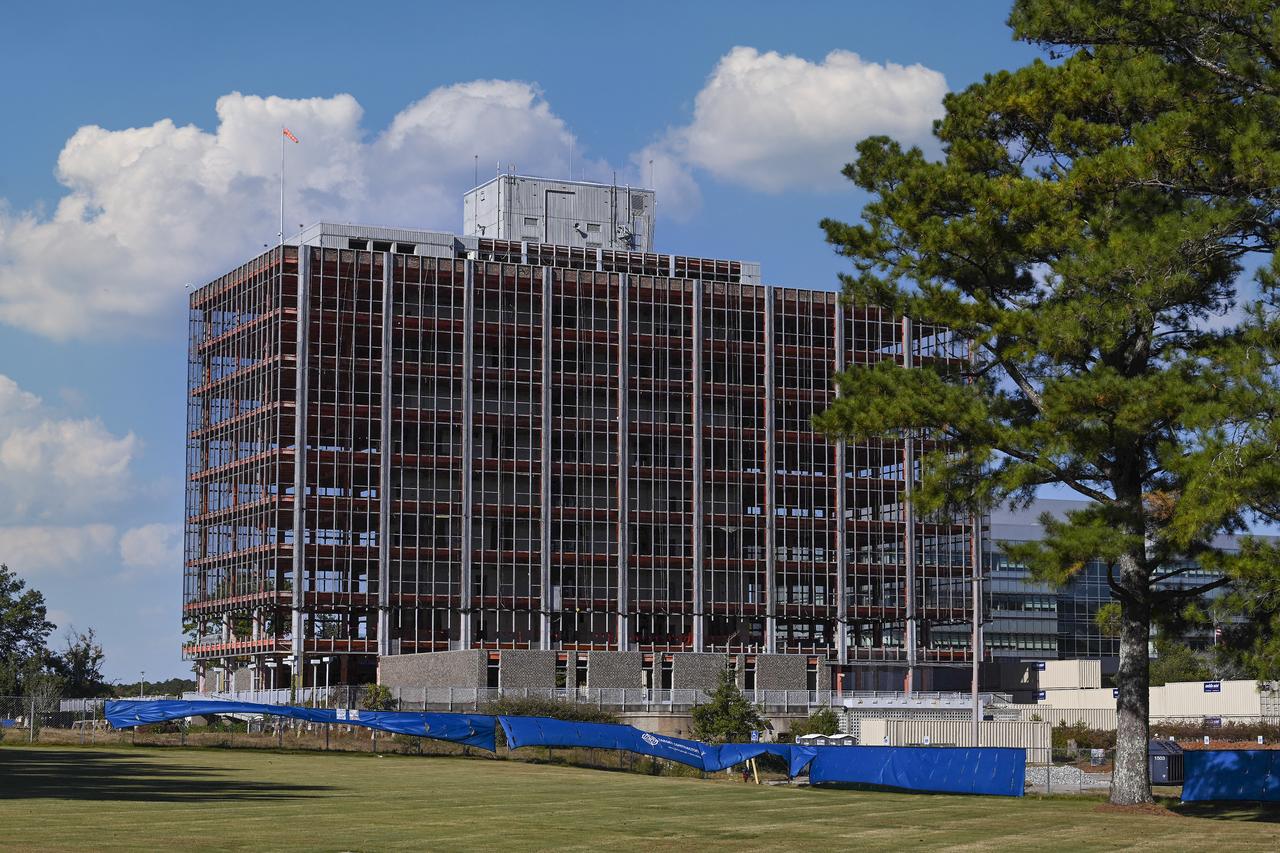
Buildings 4201 (left) and 4200 (right) of Marshall’s administrative complex are seen in September 2022 as they were being prepared for demolition. Building 4200 was Marshall’s administrative headquarters from 1963 until 2020. The projects will make way for a series of newer, more energy-efficient facilities, providing worksites for new generations of engineers, scientists, and support teams.
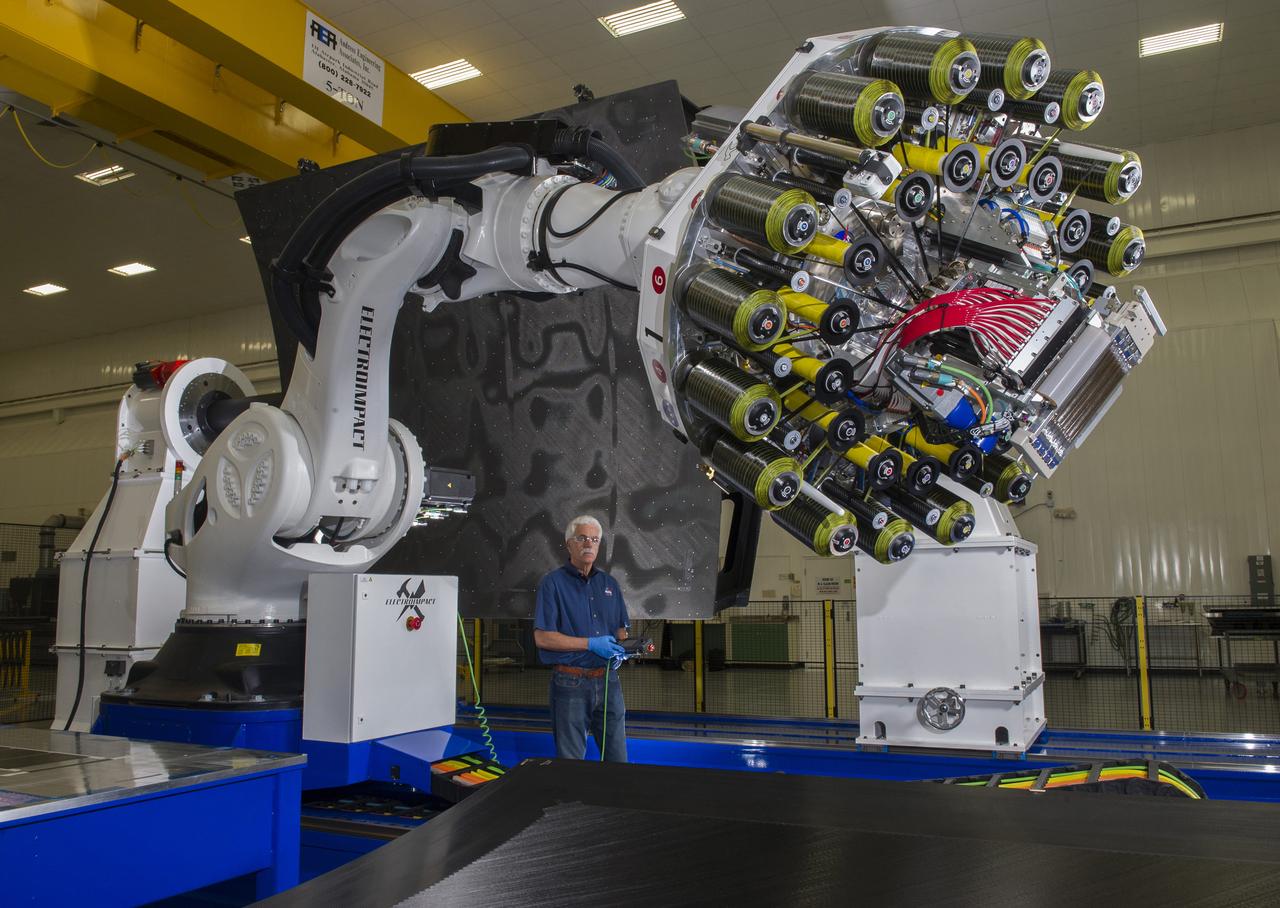
MATERIALS ENGINEER LARRY PELHAM OF NASA’S MARSHALL SPACE FLIGHT CENTER IN HUNTSVILLE, ALABAMA, OPERATES THE CEUS AUTOMATED FIBER PLACEMENT CYLINDRICAL MANUFACTURING TOOL IN BUILDING 4707. THE TOOL WILL BE USED BY THE COMPOSITES FOR EXPLORATION UPPER STAGE PROJECT AT MARSHALL, WHICH IS ANALYZING COMPOSITE MATERIALS TO SUPPORT FUTURE HARDWARE FOR NASA’S SPACE LAUNCH SYSTEM AND OTHER NEXT-GENERATION SPACECRAFT…

Buildings 4201 (left) and 4200 (right) of Marshall’s administrative complex are seen in September 2022 as they were being prepared for demolition. Building 4200 was Marshall’s administrative headquarters from 1963 until 2020. The projects will make way for a series of newer, more energy-efficient facilities, providing worksites for new generations of engineers, scientists, and support teams.
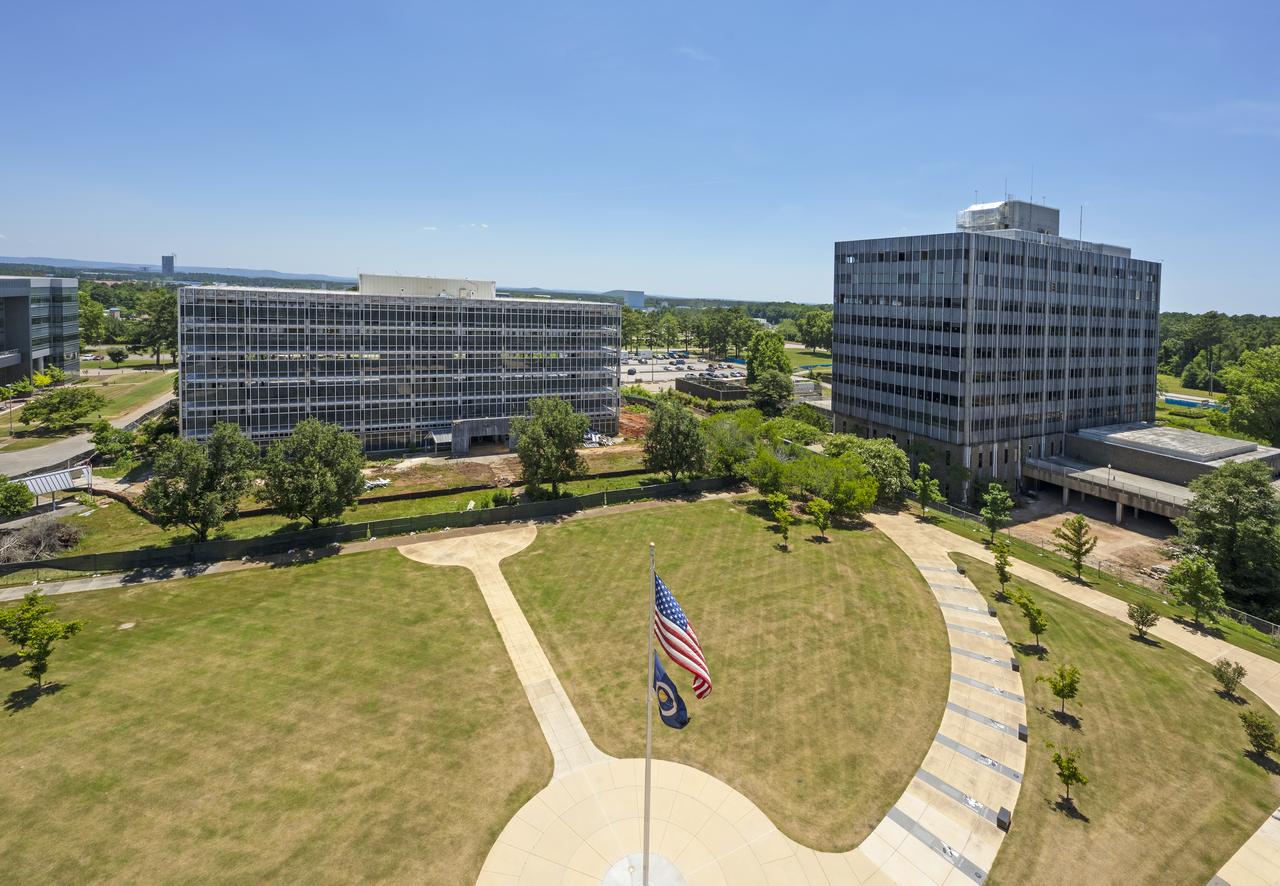
Buildings 4201 (left) and 4200 (right) of Marshall’s administrative complex are seen in September 2022 as they were being prepared for demolition. Building 4200 was Marshall’s administrative headquarters from 1963 until 2020. The projects will make way for a series of newer, more energy-efficient facilities, providing worksites for new generations of engineers, scientists, and support teams.

The Electrostatic Levitator (ESL) Facility established at Marshall Space Flight Center (MSFC) supports NASA's Microgravity Materials Science Research Program. NASA materials science investigations include ground-based, flight definition and flight projects. Flight definition projects, with demanding science concept review schedules, receive highest priority for scheduling experiment time in the Electrostatic Levitator (ESL) Facility.
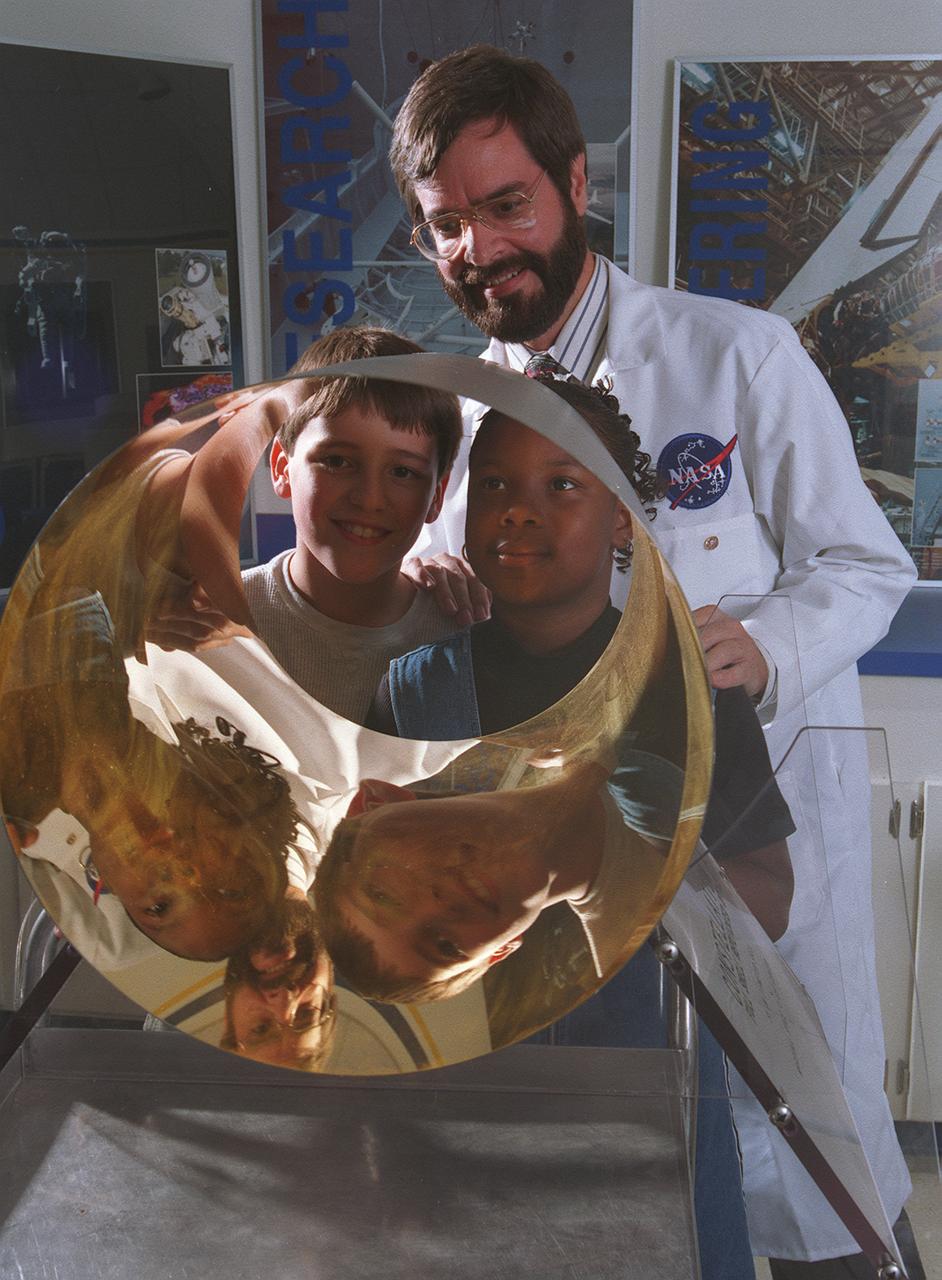
Through Marshall Space Flight Center (MSFC) Education Department, over 400 MSFC employees have volunteered to support educational program during regular work hours. Project LASER (Learning About Science, Engineering, and Research) provides support for mentor/tutor requests, education tours, classroom presentations, and curriculum development. This program is available to teachers and students living within commuting distance of the NASA/MSFC in Huntsville, Alabama (approximately 50-miles radius). This image depicts students viewing their reflections in an x-ray mirror with Marshall optic engineer Vince Huegele at the Discovery Laboratory, which is an onsite MSFC laboratory facility that provides hands-on educational workshop sessions for teachers and students learning activities.
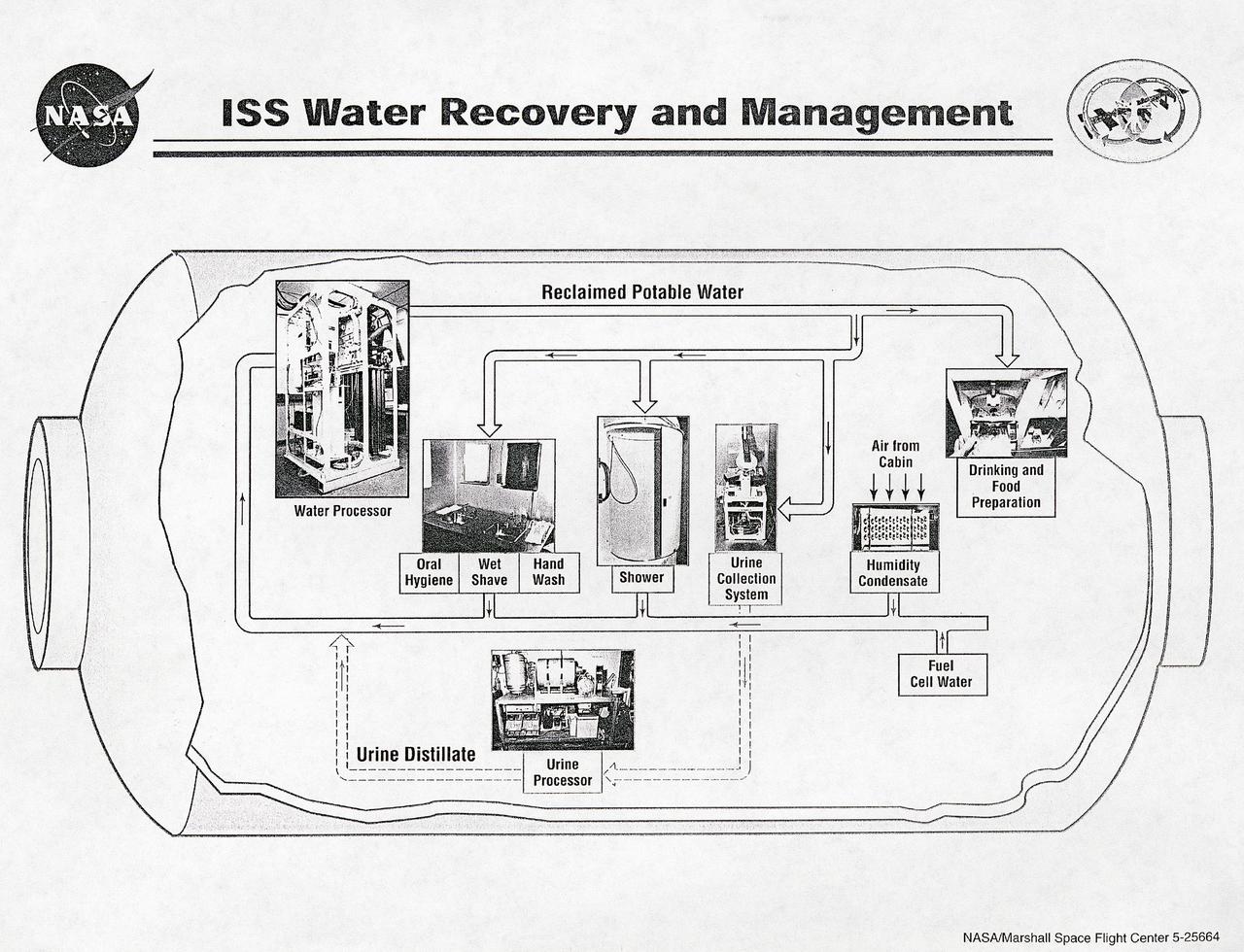
This diagram shows the flow of water recovery and management in the International Space Station (ISS). The Environmental Control and Life Support System (ECLSS) Group of the Flight Projects Directorate at the Marshall Space Flight Center is responsible for the regenerative ECLSS hardware, as well as providing technical support for the rest of the system. The regenerative ECLSS, whose main components are the Water Recovery System (WRS), and the Oxygen Generation System (OGS), reclaims and recycles water oxygen. The ECLSS maintains a pressurized habitation environment, provides water recovery and storage, maintains and provides fire detection/ suppression, and provides breathable air and a comfortable atmosphere in which to live and work within the ISS. The ECLSS hardware will be located in the Node 3 module of the ISS.
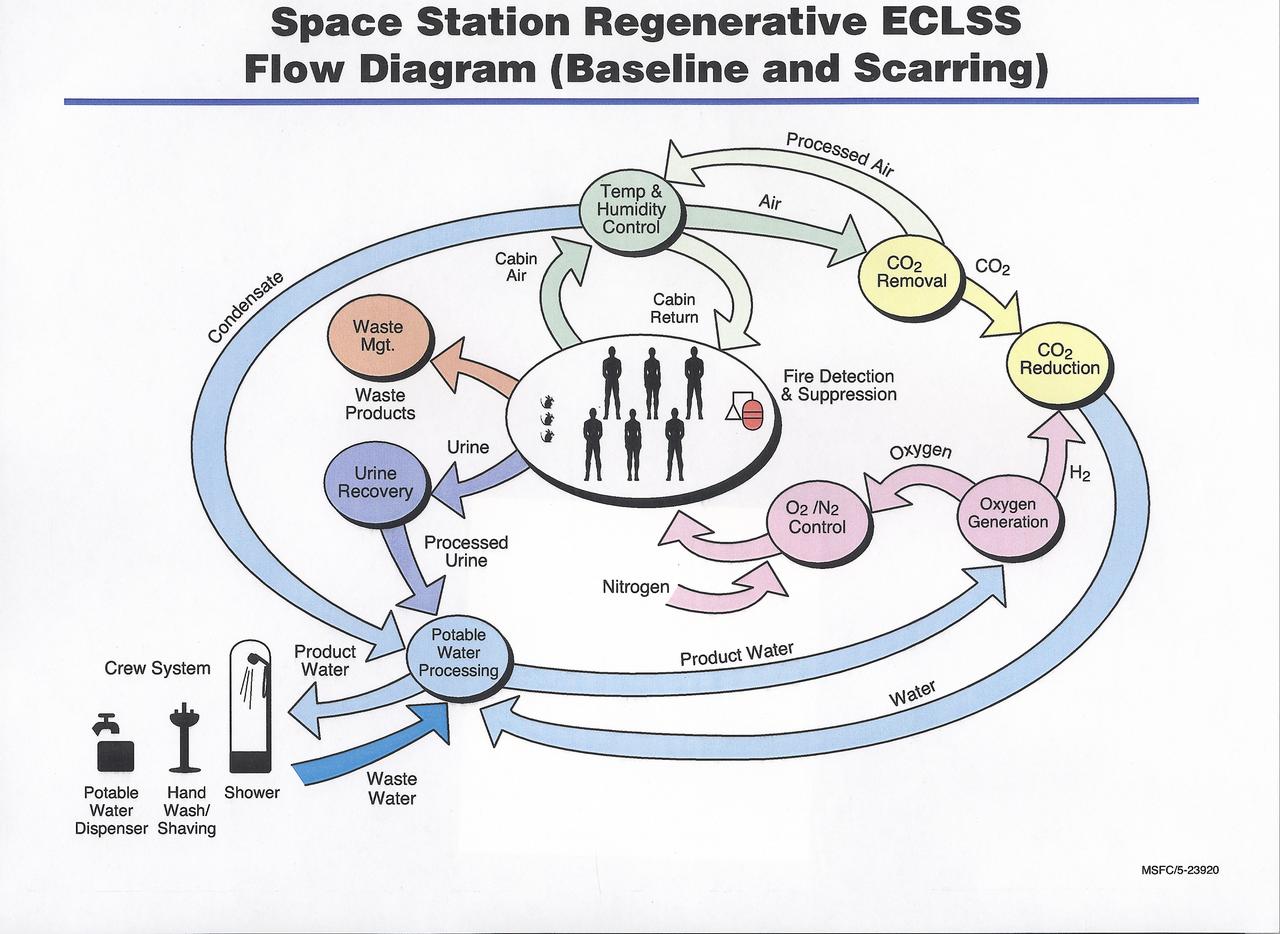
This diagram shows the flow of recyclable resources in the International Space Station (ISS). The Environmental Control and Life Support System (ECLSS) Group of the Flight Projects Directorate at the Marshall Space Flight Center is responsible for the regenerative ECLSS hardware, as well as providing technical support for the rest of the system. The regenerative ECLSS, whose main components are the Water Recovery System (WRS), and the Oxygen Generation System (OGS), reclaims and recycles water and oxygen. The ECLSS maintains a pressurized habitation environment, provides water recovery and storage, maintains and provides fire detection / suppression, and provides breathable air and a comfortable atmosphere in which to live and work within the ISS. The ECLSS hardware will be located in the Node 3 module of the ISS.
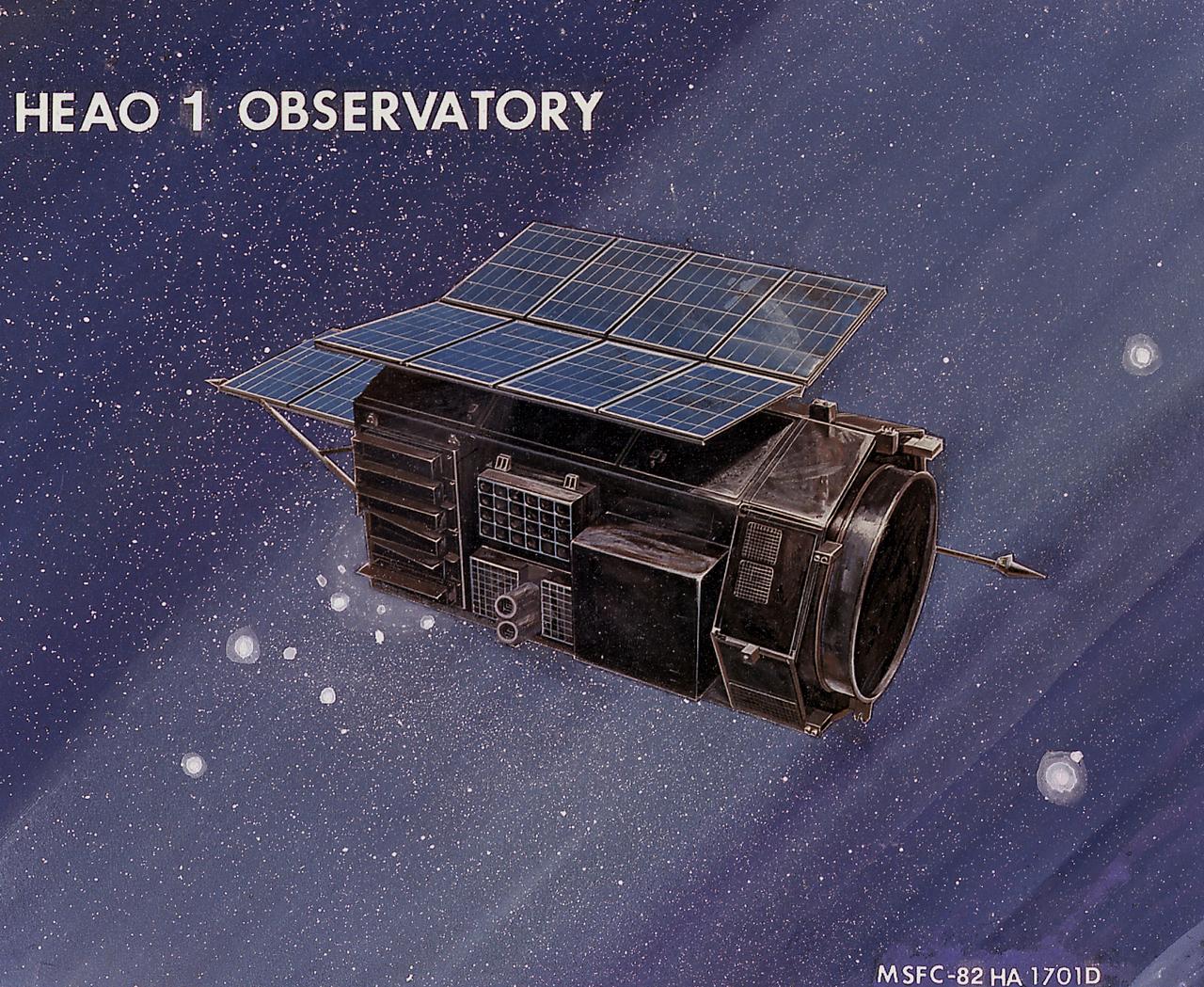
This artist's conception depicts the High Energy Astronomy Observatory (HEAO)-1 in orbit. The first observatory, designated HEAO-1, was launched on August 12, 1977 aboard an Atlas/Centaur launch vehicle and was designed to survey the sky for additional x-ray and gamma-ray sources as well as pinpointing their positions. The HEAO-1 was originally identified as HEAO-A but the designation was changed once the spacecraft achieved orbit. The HEAO project involved the launching of three unmarned scientific observatories into low Earth orbit between 1977 and 1979 to study some of the most intriguing mysteries of the universe; pulsars, black holes, neutron stars, and super nova. Hardware support for the imaging instruments was provided by American Science and Engineeing. The HEAO spacecraft were built by TRW, Inc. under project management of the Marshall Space Flight Center.
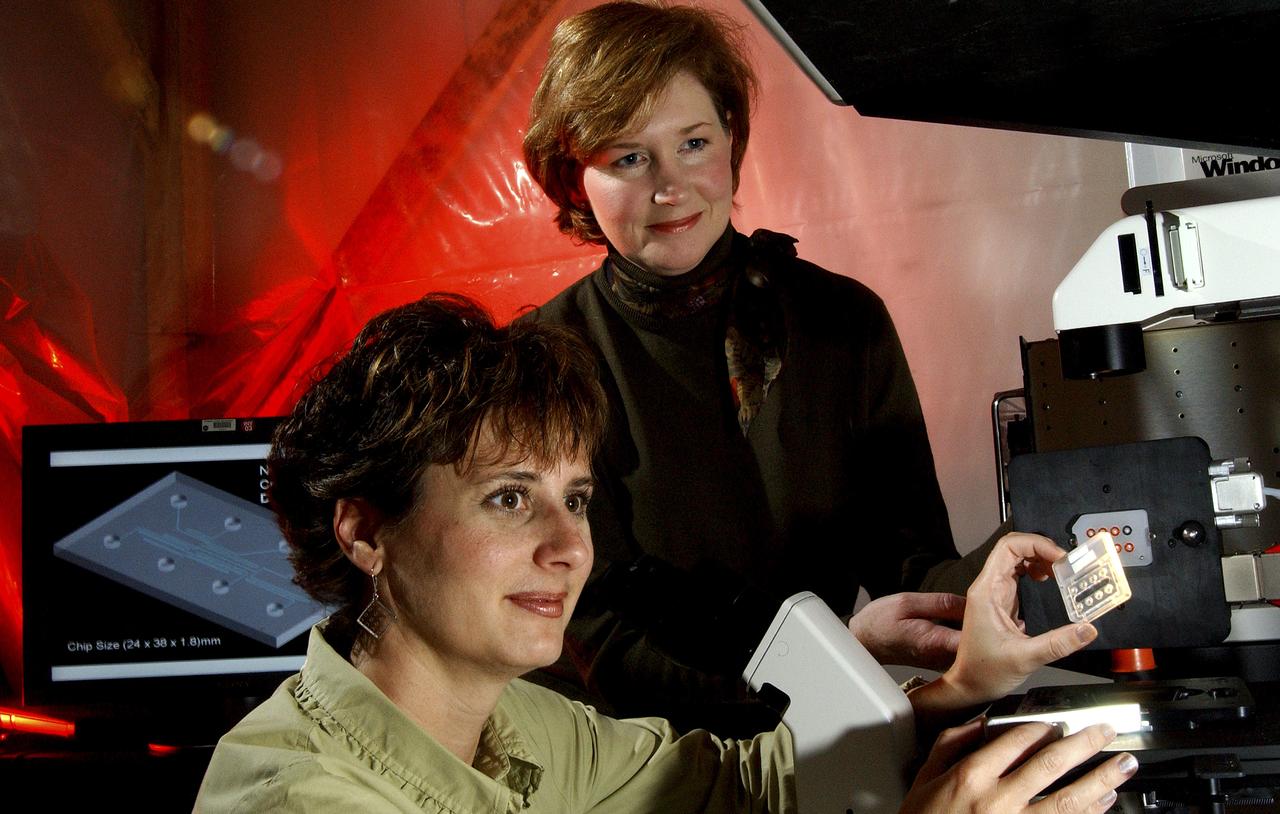
Helen Cole, the project manager for the Lab-on-a-Chip Applications Development program, and Lisa Monaco, the project scientist for the program, insert a lab on a chip into the Caliper 42 which is specialized equipment that controls processes on commercial chips to support development of lab-on-a-chip applications. The system has special microscopes and imaging systems, so scientists can process and study different types of fluid, chemical, and medical tests conducted on chips. For example, researchers have examined fluorescent bacteria as it flows through the chips' fluid channels or microfluidic capillaries. Researchers at NASA's Marshall Space Flight Center (MSFC) in Huntsville, Alabama, have been studying how the lab-on-a-chip technology can be used for microbial detection, water quality monitoring, and detecting biosignatures of past or present life on Mars. The Marshall Center team is also collaborating with scientists at other NASA centers and at universities to develop custom chip designs for not only space applications, but for many Earth applications, such as for detecting deadly microbes in heating and air systems. (NASA/MSFC/D.Stoffer)
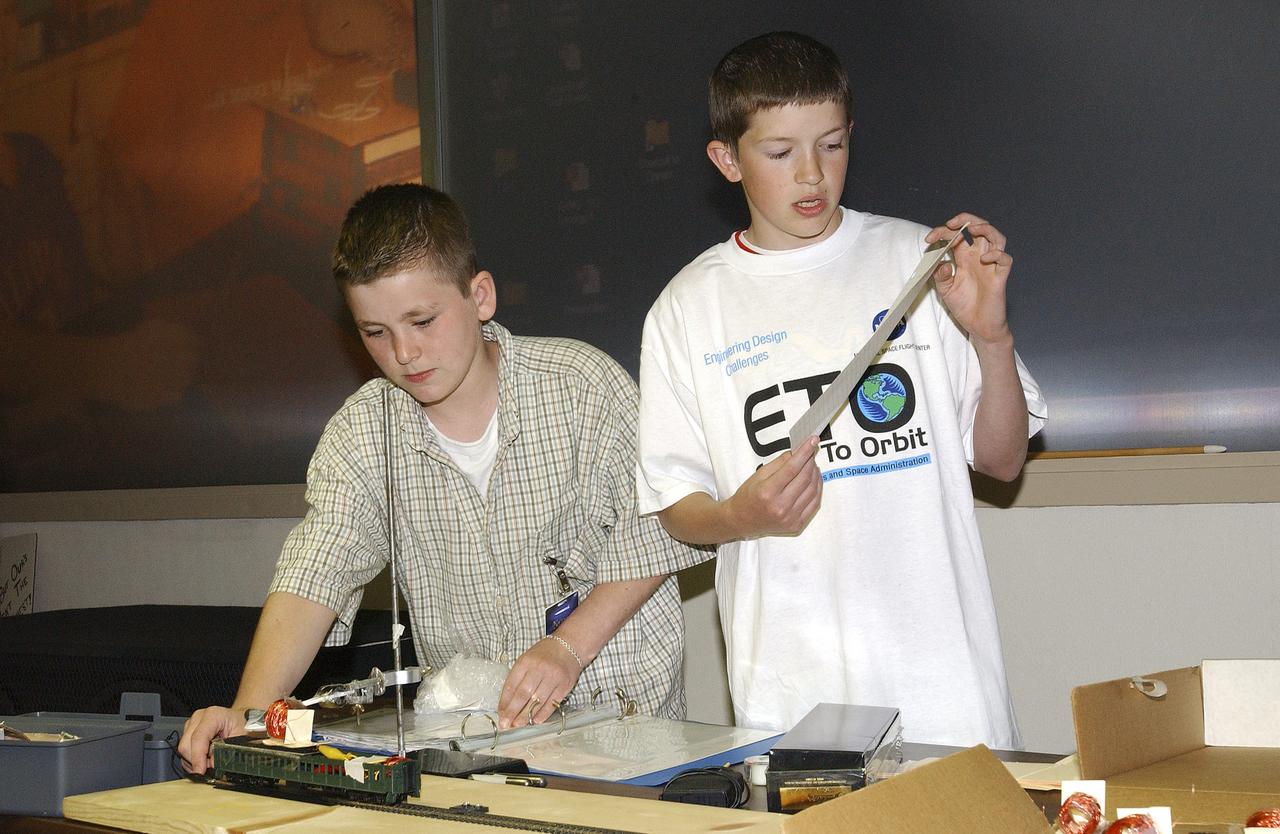
In this photograph, Jeff Alden (left) and Justin O'Cornor, two middle school students at Lane Middle School in Portland, Oregon are demonstrating their Earth-to-Orbit (ETO) Design Challenge project at NASA Marshall Space Flight Center (MSFC) in Huntsville, Alabama. Jeff and Justin, who are just a couple of "typical teens," have been spending their time tackling some of the same challenges NASA engineers face when designing propulsion systems at MSFC. The ETO Design Challenge is a hands-on educational program, targeted to middle school students, in which students are assigned a project engaging in related design challenges in their classrooms under the supervision of their teachers. The project is valuable because it can be used by any student and any teacher, even those without technical backgrounds. Students in 12 states: Alabama, Arkansas, California, Colorado, Illinois, Missouri, Montana, New York, Ohio, Tennessee, Virginia, and Washington, are taking part in the MSFC's Earth-to-Orbit program. NASA uses such programs to support educational excellence while participating in educational outreach programs through centers around the country. The Oregon students' teacher, Joanne Fluvog, commented, "the biggest change I've seen is in the students' motivation and their belief in their ability to think." Both Justin and Jeff said being involved in a real engineering project has made them realize that "science is cool."
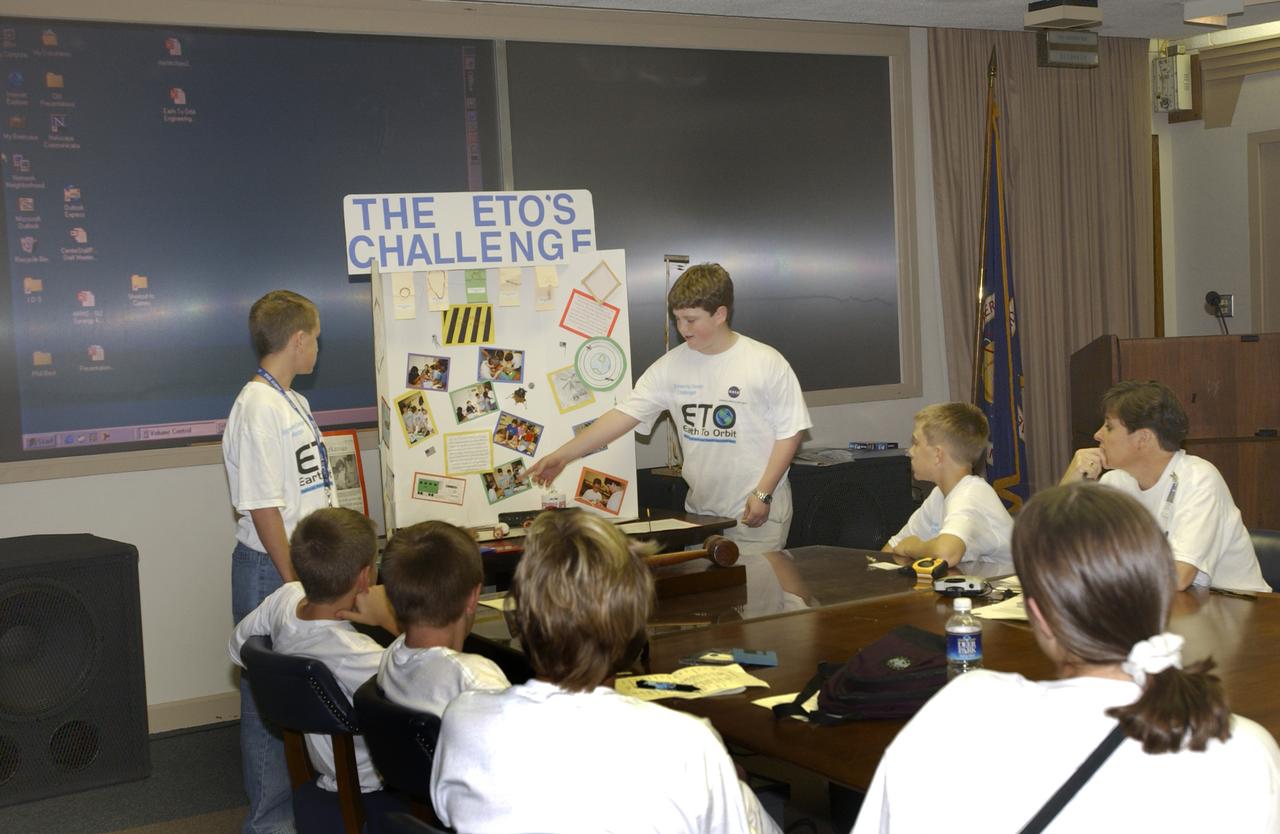
In this photograph, students from all over the country gathered and discussed their Earth-to-Orbit (ETO) Design Challenge project at NASA Marshall Space Flight Center in Huntsville, Alabama. These students who are just "typical teens," have been spending their time tackling some of the same challenges NASA engineers face when designing propulsion systems at MSFC. The ETO Design Challenge is a hands-on educational program, targeted to middle school students, in which students are assigned a project engaging in related design challenges in their classrooms under the supervision of their teachers. The project is valuable because it can be used by any student, and any teacher, even those without technical backgrounds. Student in 12 states: Alabama, Arkansas, California, Colorado, Illinois, Missouri, Montana, New York, Ohio, Ternessee, Virginia, and Washington, are taking part in MSFC's Earth-to-Orbit program. NASA uses such programs to support educational excellence while participating in educational outreach programs through centers around the country. One of the students' teachers, Joanne Fluvog, commented, "the biggest change I've seen is in the students' motivation and their belief in their ability to think." Justin O'Connor and Jeff Alden, students of Lane Middle School in Portland, Oregon, participated in the ETO program and said being involved in a real engineering project has made them realize that "science is cool."
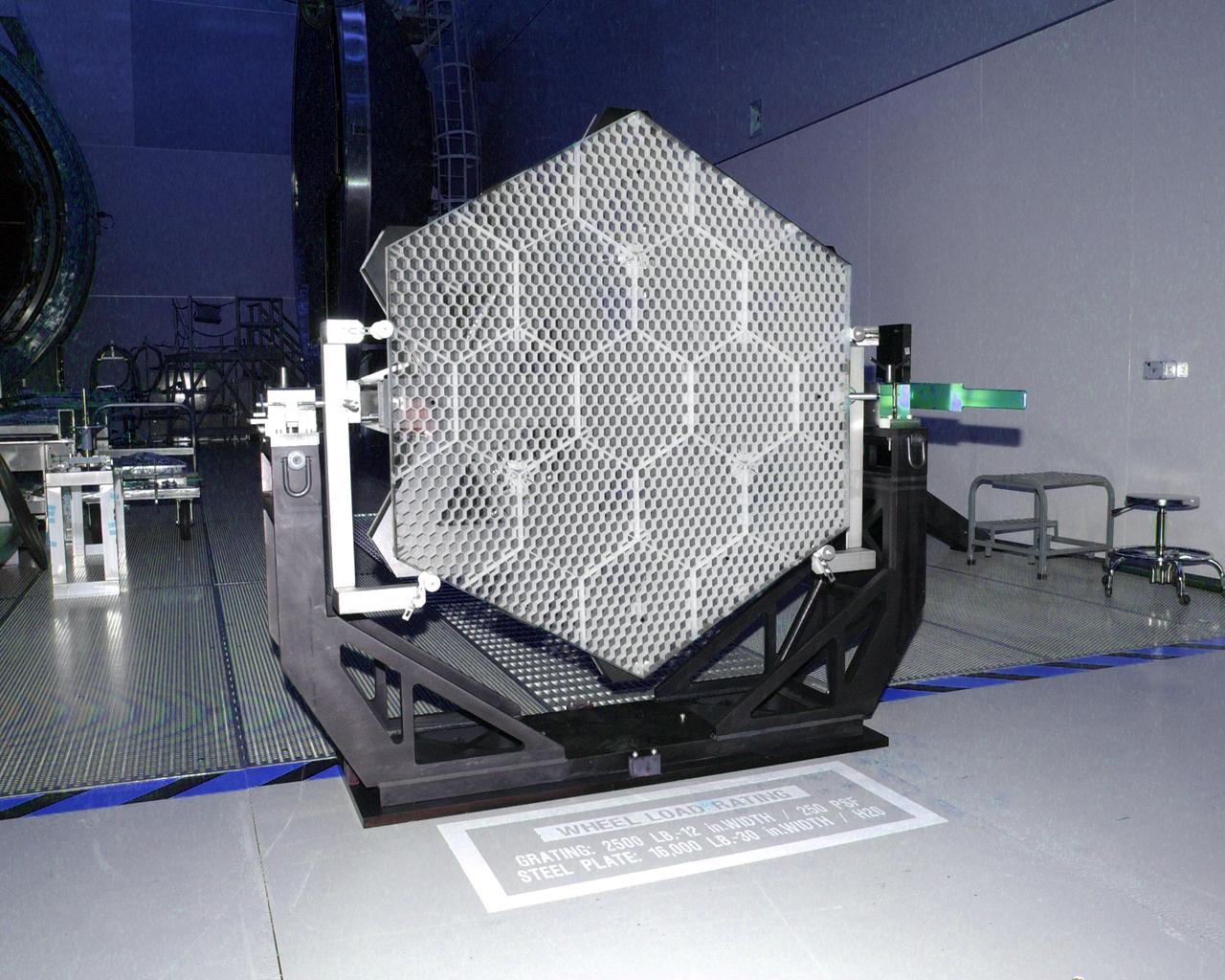
This photo (a frontal view) is of one of many segments of the Eastman-Kodak mirror assembly being tested for the James Webb Space Telescope (JWST) project at the X-Ray Calibration Facility at Marshall Space Flight Center (MSFC). MSFC is supporting Goddard Space Flight Center (GSFC) in developing the JWST by taking numerous measurements to predict its future performance. The tests are conducted in a vacuum chamber cooled to approximate the super cold temperatures found in space. During its 27 years of operation, the facility has performed testing in support of a wide array of projects, including the Hubble Space Telescope (HST), Solar A, Chandra technology development, Chandra High Resolution Mirror Assembly and science instruments, Constellation X-Ray Mission, and Solar X-Ray Imager, currently operating on a Geostationary Operational Environment Satellite. The JWST is NASA's next generation space telescope, a successor to the Hubble Space Telescope, named in honor of NASA's second administrator, James E. Webb. It is scheduled for launch in 2010 aboard an expendable launch vehicle. It will take about 3 months for the spacecraft to reach its destination, an orbit of 940,000 miles in space.
The Eastman-Kodak mirror assembly is being tested for the James Webb Space Telescope (JWST) project at the X-Ray Calibration Facility at Marshall Space Flight Center (MSFC). In this photo, one of many segments of the mirror assembly is being set up inside the 24-ft vacuum chamber where it will undergo x-ray calibration tests. MSFC is supporting Goddard Space Flight Center (GSFC) in developing the JWST by taking numerous measurements to predict its future performance. The tests are conducted in a vacuum chamber cooled to approximate the super cold temperatures found in space. During its 27 years of operation, the facility has performed testing in support of a wide array of projects, including the Hubble Space Telescope (HST), Solar A, Chandra technology development, Chandra High Resolution Mirror Assembly and science instruments, Constellation X-Ray Mission, and Solar X-Ray Imager, currently operating on a Geostationary Operational Environment Satellite. The JWST is NASA's next generation space telescope, a successor to the Hubble Space Telescope, named in honor of NASA's second administrator, James E. Webb. It is scheduled for launch in 2010 aboard an expendable launch vehicle. It will take about 3 months for the spacecraft to reach its destination, an orbit of 940,000 miles in space.
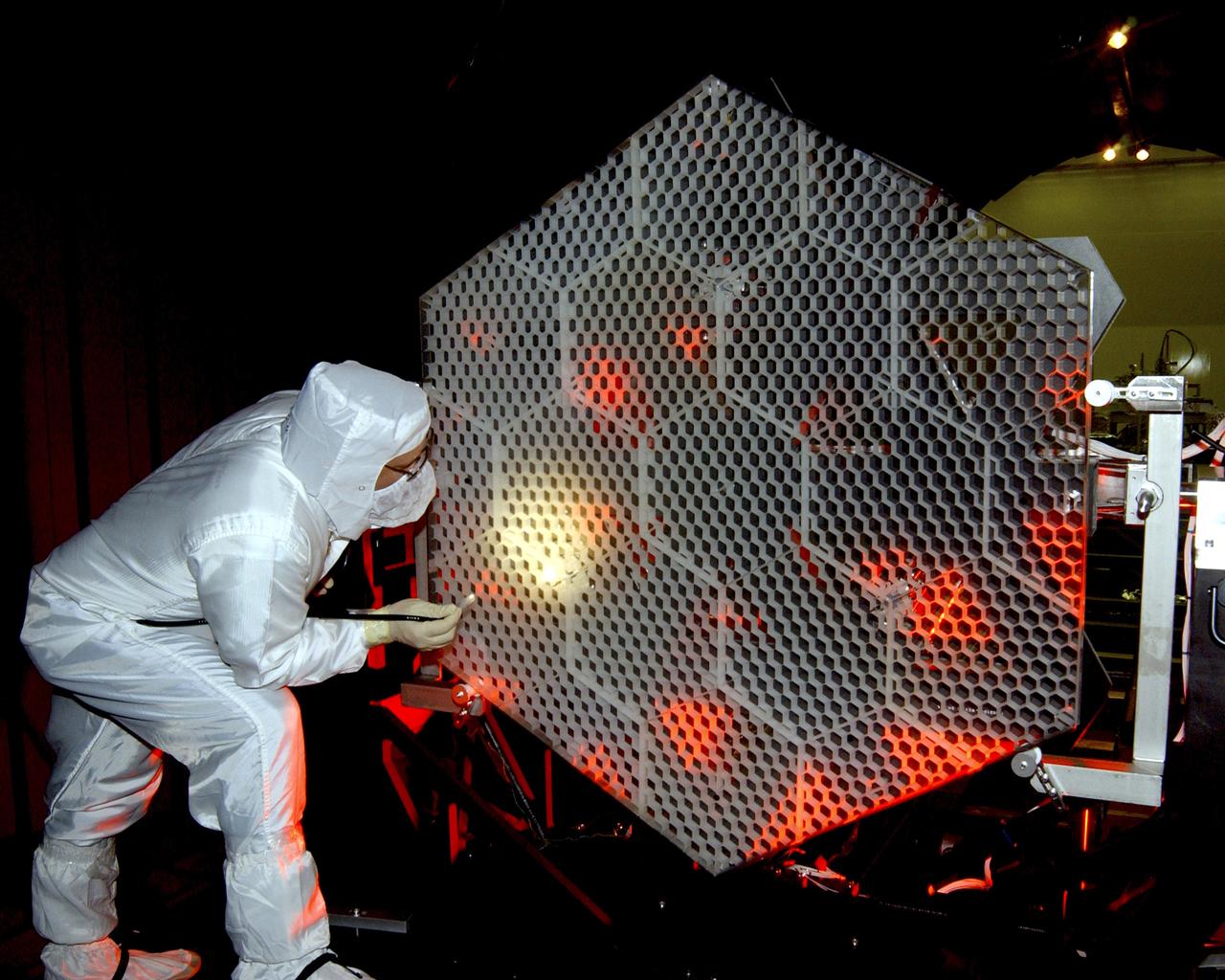
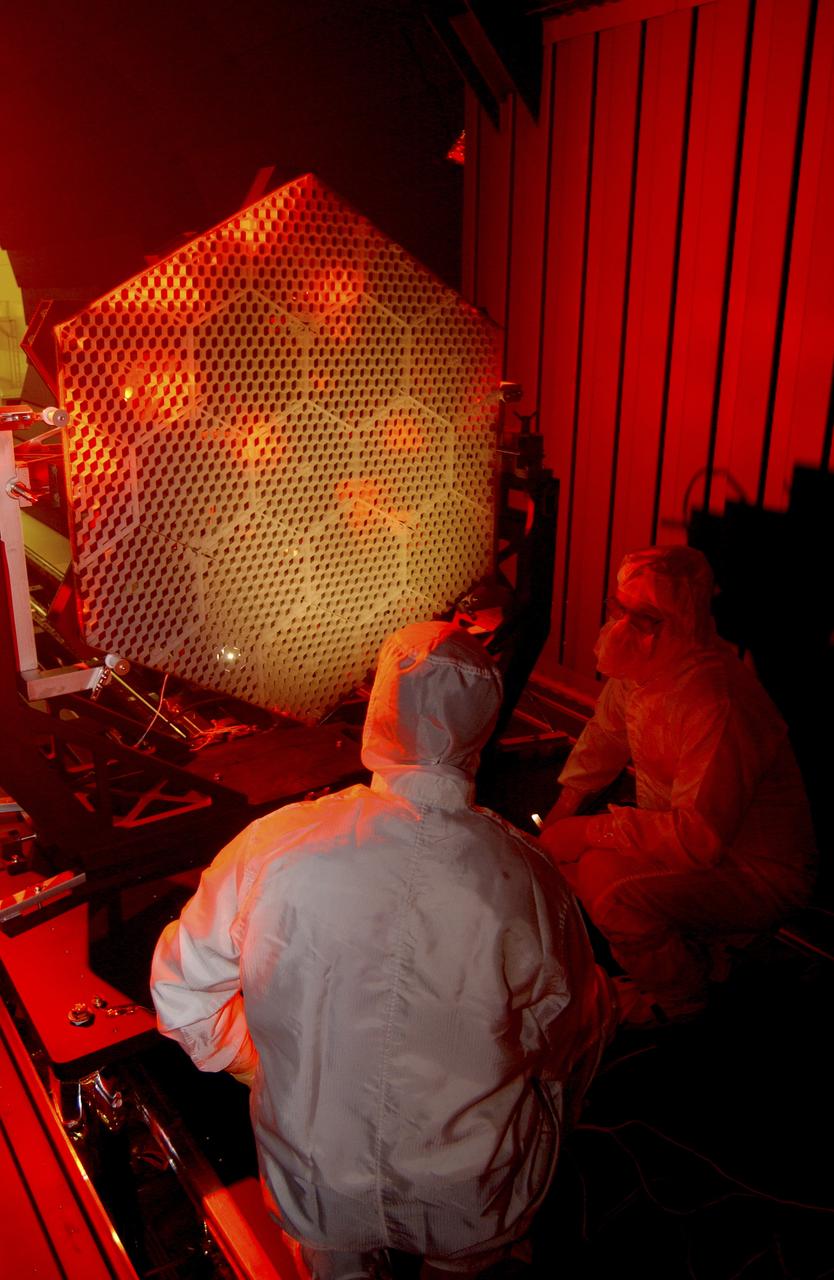
The Eastman-Kodak mirror assembly is being tested for the James Webb Space Telescope (JWST) project at the X-Ray Calibration Facility at Marshall Space Flight Center (MSFC). In this photo, an MSFC employee is inspecting one of many segments of the mirror assembly for flaws. MSFC is supporting Goddard Space Flight Center (GSFC) in developing the JWST by taking numerous measurements to predict its future performance. The tests are conducted in a vacuum chamber cooled to approximate the super cold temperatures found in space. During its 27 years of operation, the facility has performed testing in support of a wide array of projects, including the Hubble Space Telescope (HST), Solar A, Chandra technology development, Chandra High Resolution Mirror Assembly and science instruments, Constellation X-Ray Mission, and Solar X-Ray Imager, currently operating on a Geostationary Operational Environment Satellite. The JWST is NASA's next generation space telescope, a successor to the Hubble Space Telescope, named in honor of NASA's second administrator, James E. Webb. It is scheduled for launch in 2010 aboard an expendable launch vehicle. It will take about 3 months for the spacecraft to reach its destination, an orbit of 940,000 miles in space.
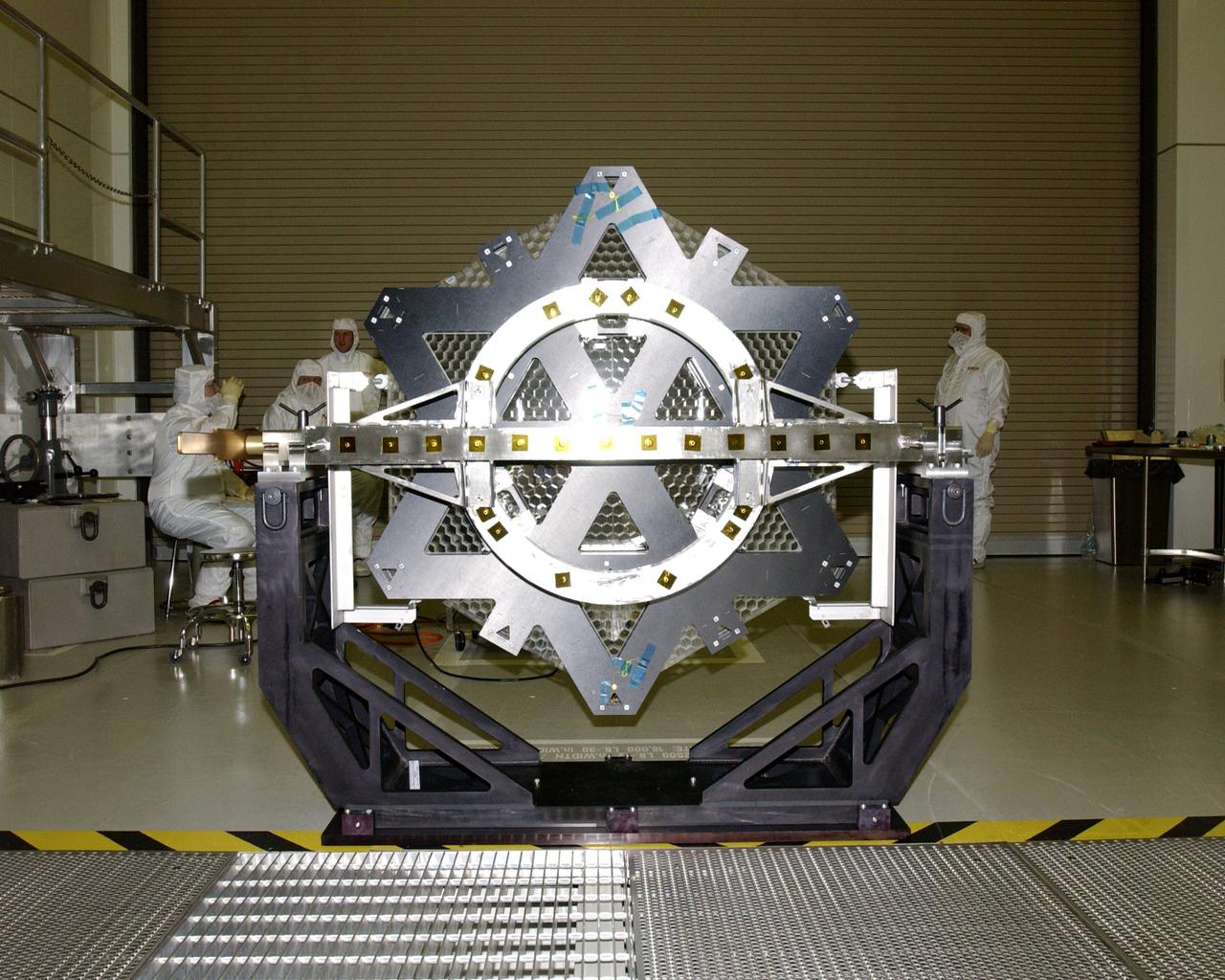
This photo (rear view) is of one of many segments of the Eastman-Kodak mirror assembly being tested for the James Webb Space Telescope (JWST) project at the X-Ray Calibration Facility at Marshall Space Flight Center (MSFC). MSFC is supporting Goddard Space Flight Center (GSFC) in developing the JWST by taking numerous measurements to predict its future performance. The tests are conducted in a vacuum chamber cooled to approximate the super cold temperatures found in space. During its 27 years of operation, the facility has performed testing in support of a wide array of projects, including the Hubble Space Telescope (HST), Solar A, Chandra technology development, Chandra High Resolution Mirror Assembly and science instruments, Constellation X-Ray Mission, and Solar X-Ray Imager, currently operating on a Geostationary Operational Environment Satellite. The JWST is NASA's next generation space telescope, a successor to the Hubble Space Telescope, named in honor of NASA's second administrator, James E. Webb. It is scheduled for launch in 2010 aboard an expendable launch vehicle. It will take about 3 months for the spacecraft to reach its destination, an orbit of 940,000 miles in space.

Ronnie Rigney (r), chief of the Propulsion Test Office in the Project Directorate at Stennis Space Center, stands with agency colleagues to receive the prestigious American Institute of Aeronautics and Astronautics George M. Low Space Transportation Award on Sept. 12. Rigney accepted the award on behalf of the NASA and contractor team at Stennis for their support of the Space Shuttle Program that ended last summer. From 1975 to 2009, Stennis Space Center tested every main engine used to power 135 space shuttle missions. Stennis continued to provide flight support services through the end of the Space Shuttle Program in July 2011. The center also supported transition and retirement of shuttle hardware and assets through September 2012. The 2012 award was presented to the space shuttle team 'for excellence in the conception, development, test, operation and retirement of the world's first and only reusable space transportation system.' Joining Rigney for the award ceremony at the 2012 AIAA Conference in Pasadena, Calif., were: (l to r) Allison Zuniga, NASA Headquarters; Michael Griffin, former NASA administrator; Don Noah, Johnson Space Center in Houston; Steve Cash, Marshall Space Flight Center in Huntsville, Ala.; and Pete Nickolenko, Kennedy Space Center in Florida.

Ronnie Rigney (r), chief of the Propulsion Test Office in the Project Directorate at Stennis Space Center, stands with agency colleagues to receive the prestigious American Institute of Aeronautics and Astronautics George M. Low Space Transportation Award on Sept. 12. Rigney accepted the award on behalf of the NASA and contractor team at Stennis for their support of the Space Shuttle Program that ended last summer. From 1975 to 2009, Stennis Space Center tested every main engine used to power 135 space shuttle missions. Stennis continued to provide flight support services through the end of the Space Shuttle Program in July 2011. The center also supported transition and retirement of shuttle hardware and assets through September 2012. The 2012 award was presented to the space shuttle team 'for excellence in the conception, development, test, operation and retirement of the world's first and only reusable space transportation system.' Joining Rigney for the award ceremony at the 2012 AIAA Conference in Pasadena, Calif., were: (l to r) Allison Zuniga, NASA Headquarters; Michael Griffin, former NASA administrator; Don Noah, Johnson Space Center in Houston; Steve Cash, Marshall Space Flight Center in Huntsville, Ala.; and Pete Nickolenko, Kennedy Space Center in Florida.
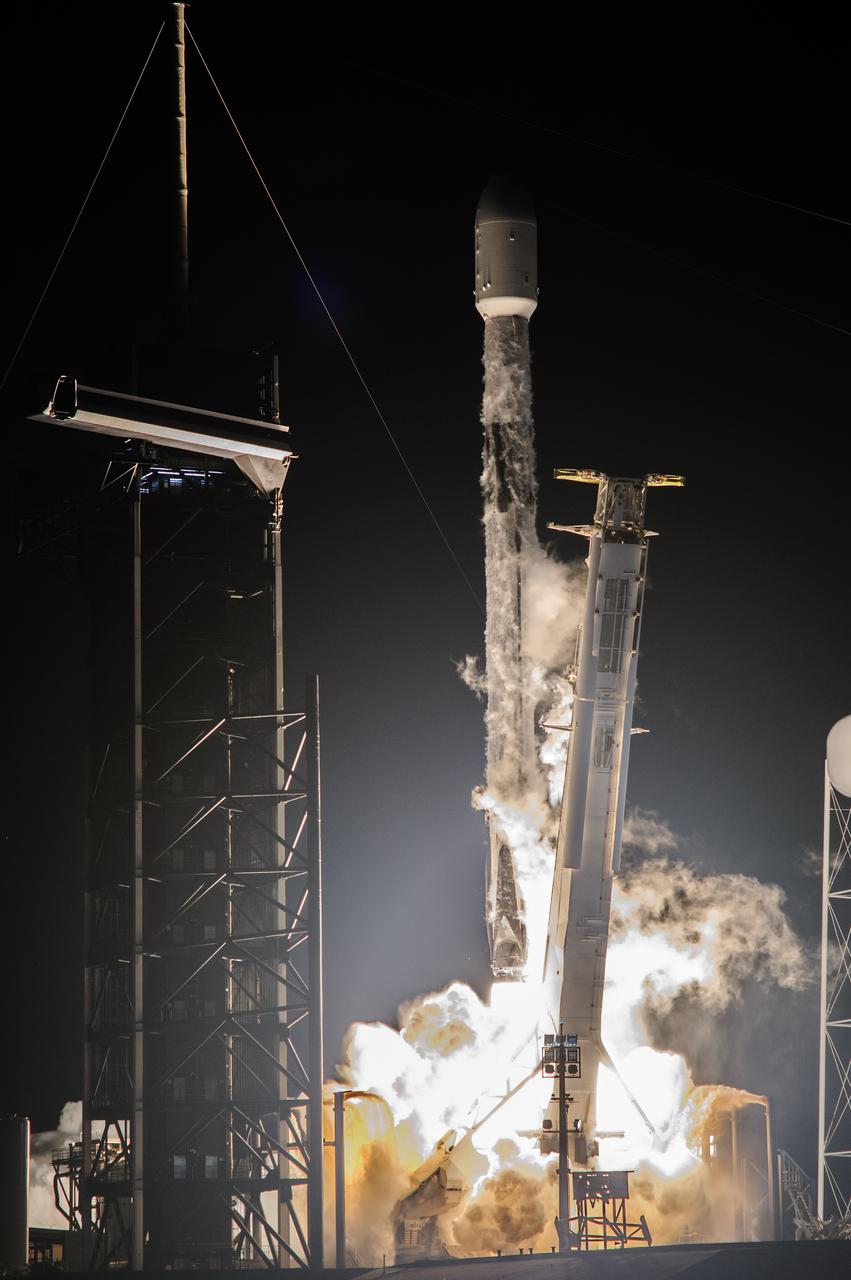
A SpaceX Falcon 9 rocket roars off the launch pad at Launch Complex 39A at NASA’s Kennedy Space Center in Florida at 1 a.m. EST on Thursday, Dec. 9, 2021, carrying NASA’s Imaging X-ray Polarimetry Explorer (IXPE) spacecraft. NASA’s Launch Services Program managed this launch. NASA’s Marshall Space Flight Center in Huntsville, Alabama, manages the IXPE mission. Ball Aerospace, headquartered in Broomfield, Colorado, manages spacecraft operations with support from the University of Colorado at Boulder. NASA’s Goddard Space Flight Center in Greenbelt, Maryland, manages the Explorers Program for the agency’s Science Mission Directorate in Washington. The IXPE spacecraft includes three space telescopes with sensitive detectors capable of measuring the polarization of cosmic X-rays, allowing scientists to answer fundamental questions about extremely complex environments in space where gravitational, electric, and magnetic fields are at their limits. The project is a collaboration between NASA and the Italian Space Agency.
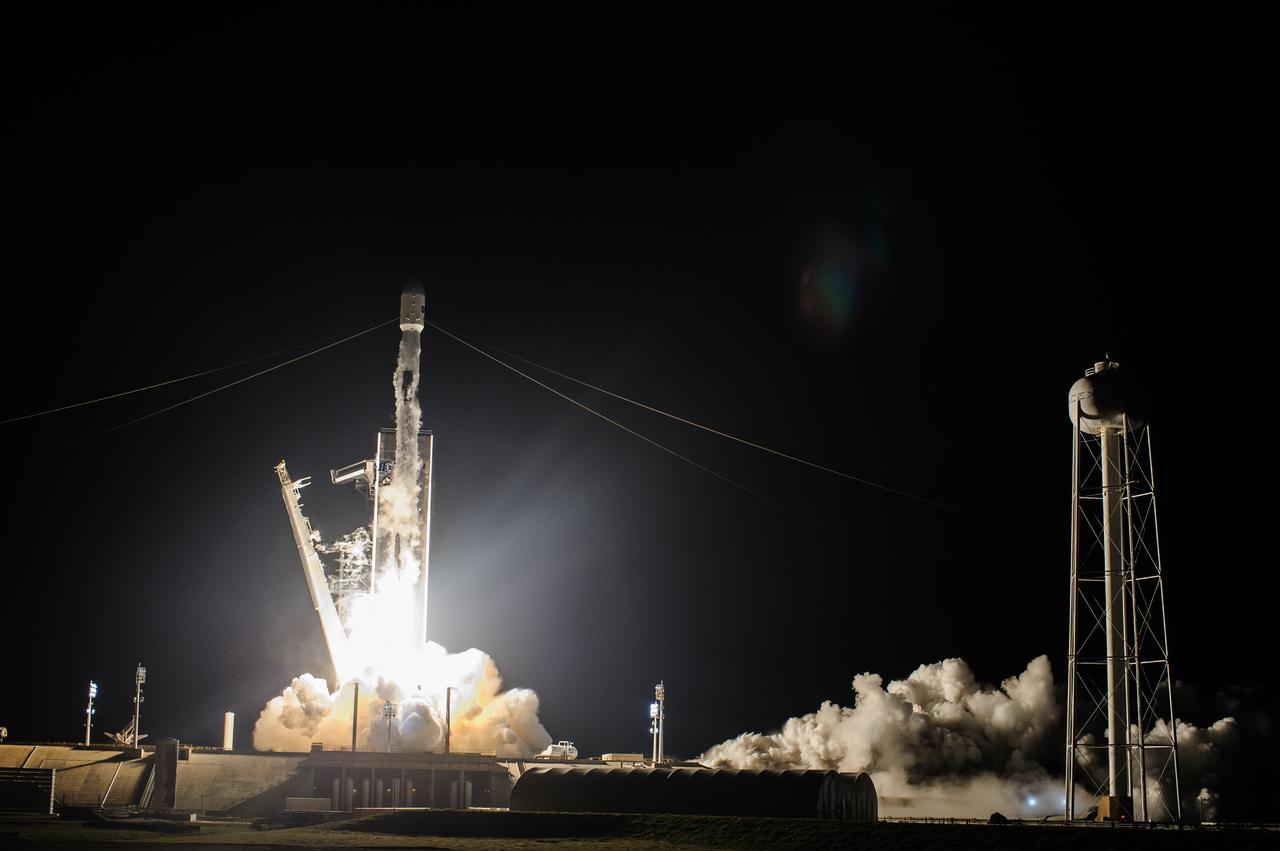
A SpaceX Falcon 9 rocket roars off the launch pad at Launch Complex 39A at NASA’s Kennedy Space Center in Florida at 1 a.m. EST on Thursday, Dec. 9, 2021, carrying NASA’s Imaging X-ray Polarimetry Explorer (IXPE) spacecraft. NASA’s Launch Services Program managed this launch. NASA’s Marshall Space Flight Center in Huntsville, Alabama, manages the IXPE mission. Ball Aerospace, headquartered in Broomfield, Colorado, manages spacecraft operations with support from the University of Colorado at Boulder. NASA’s Goddard Space Flight Center in Greenbelt, Maryland, manages the Explorers Program for the agency’s Science Mission Directorate in Washington. The IXPE spacecraft includes three space telescopes with sensitive detectors capable of measuring the polarization of cosmic X-rays, allowing scientists to answer fundamental questions about extremely complex environments in space where gravitational, electric, and magnetic fields are at their limits. The project is a collaboration between NASA and the Italian Space Agency.
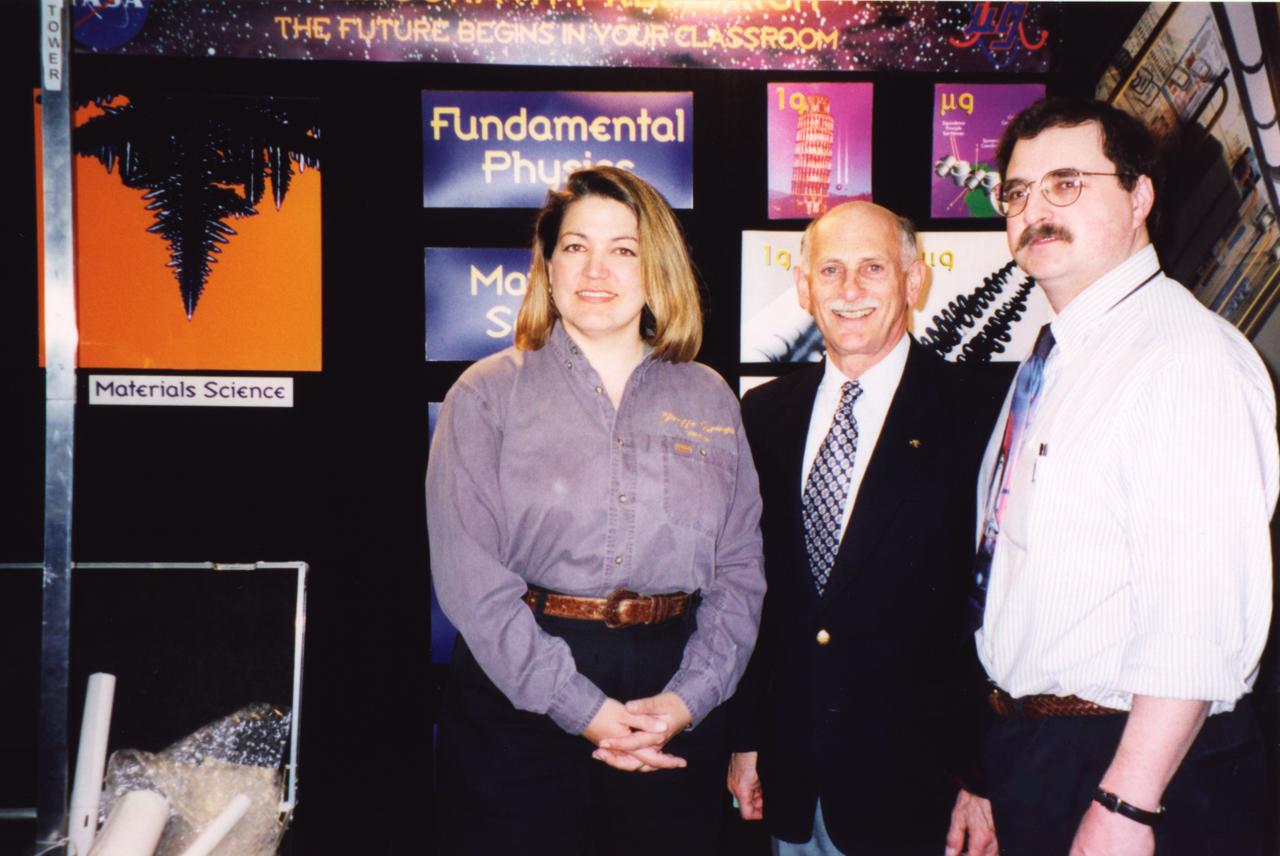
Representatives of NASA materials science experiments supported the NASA exhibit at the Rernselaer Polytechnic Institute's Space Week activities, April 5 through 11, 1999. From left to right are: Angie Jackman, project manager at NASA's Marshall Space Flight Center for dendritic growth experiments; Dr. Martin Glicksman of Rennselaer Polytechnic Instutute, Troy, NY, principal investigator on the Isothermal Dendritic Growth Experiment (IDGE) that flew three times on the Space Shuttle; and Dr. Matthew Koss of College of the Holy Cross in Worcester, MA, a co-investigator on the IDGE and now principal investigator on the Transient Dendritic Solidification Experiment being developed for the International Space Station (ISS). The image at far left is a dendrite grown in Glicksman's IDGE tests aboard the Shuttle. Glicksman is also principal investigator for the Evolution of Local Microstructures: Spatial Instabilities of Coarsening Clusters.
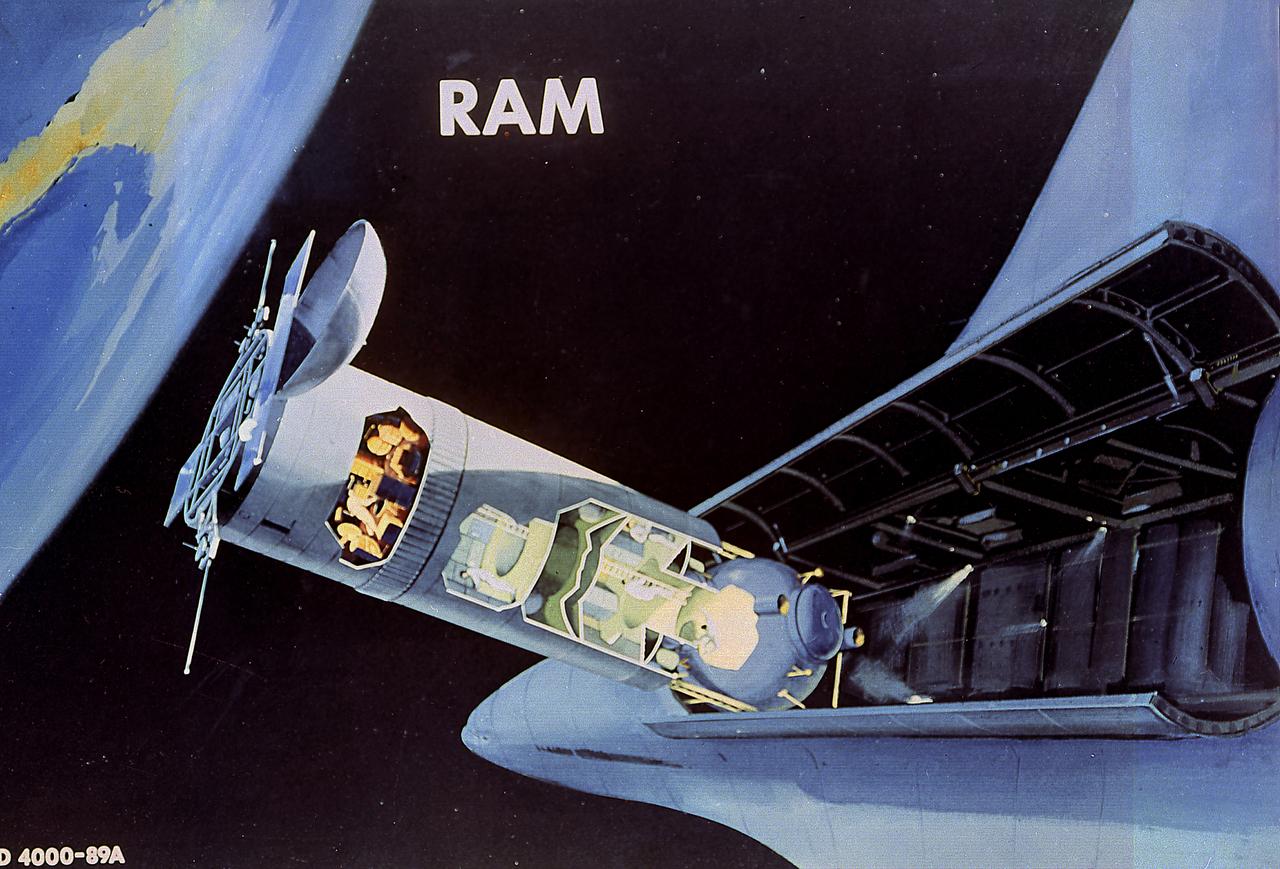
This is an artist's concept of the Research and Applications Modules (RAM). Evolutionary growth was an important consideration in space station plarning, and another project was undertaken in 1971 to facilitate such growth. The RAM study, conducted through a Marshall Space Flight Center contract with General Dynamics Convair Aerospace, resulted in the conceptualization of a series of RAM payload carrier-sortie laboratories, pallets, free-flyers, and payload and support modules. The study considered two basic manned systems. The first would use RAM hardware for sortie mission, where laboratories were carried into space and remained attached to the Shuttle for operational periods up to 7 days. The second envisioned a modular space station capability that could be evolved by mating RAM modules to the space station core configuration. The RAM hardware was to be built by Europeans, thus fostering international participation in the space program.
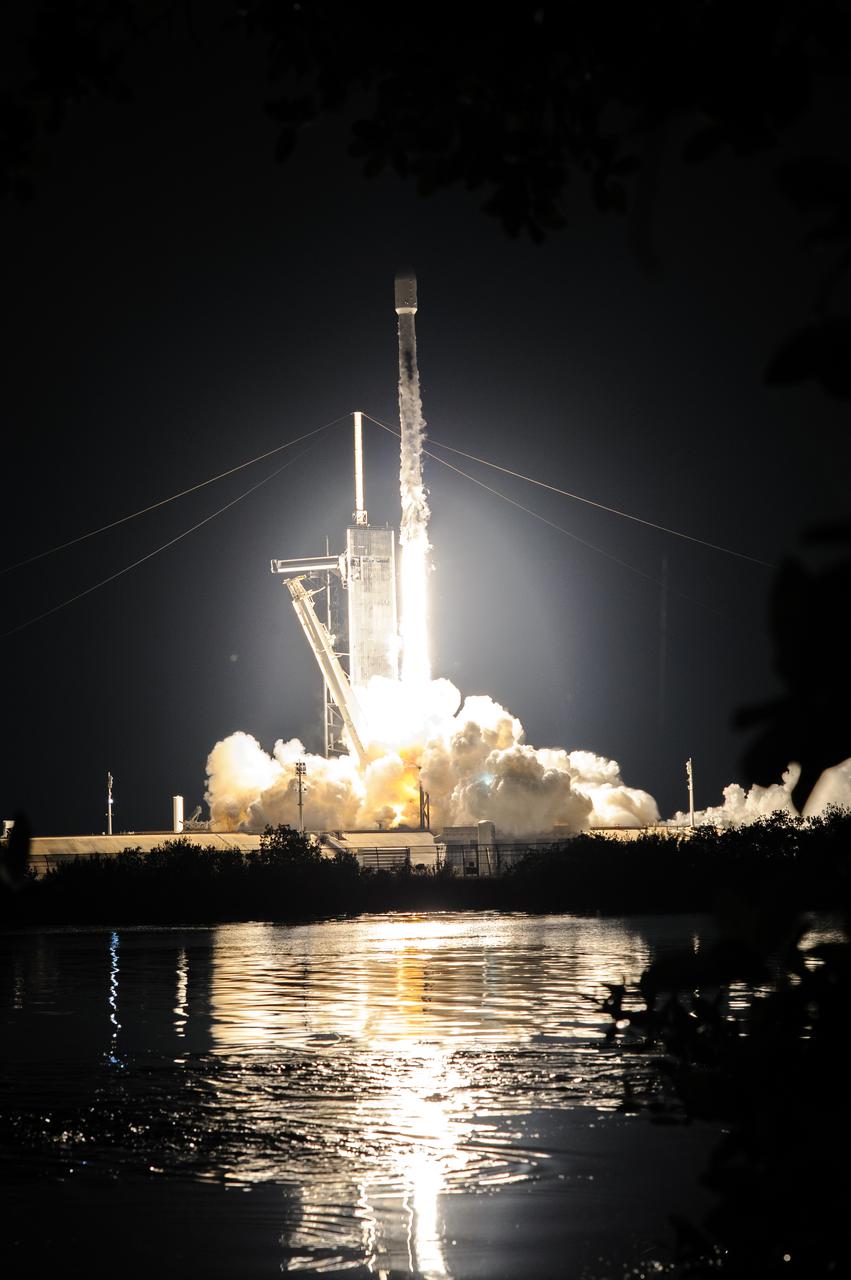
A SpaceX Falcon 9 rocket roars off the launch pad at Launch Complex 39A at NASA’s Kennedy Space Center in Florida at 1 a.m. EST on Thursday, Dec. 9, 2021, carrying NASA’s Imaging X-ray Polarimetry Explorer (IXPE) spacecraft. NASA’s Launch Services Program managed this launch. NASA’s Marshall Space Flight Center in Huntsville, Alabama, manages the IXPE mission. Ball Aerospace, headquartered in Broomfield, Colorado, manages spacecraft operations with support from the University of Colorado at Boulder. NASA’s Goddard Space Flight Center in Greenbelt, Maryland, manages the Explorers Program for the agency’s Science Mission Directorate in Washington. The IXPE spacecraft includes three space telescopes with sensitive detectors capable of measuring the polarization of cosmic X-rays, allowing scientists to answer fundamental questions about extremely complex environments in space where gravitational, electric, and magnetic fields are at their limits. The project is a collaboration between NASA and the Italian Space Agency.
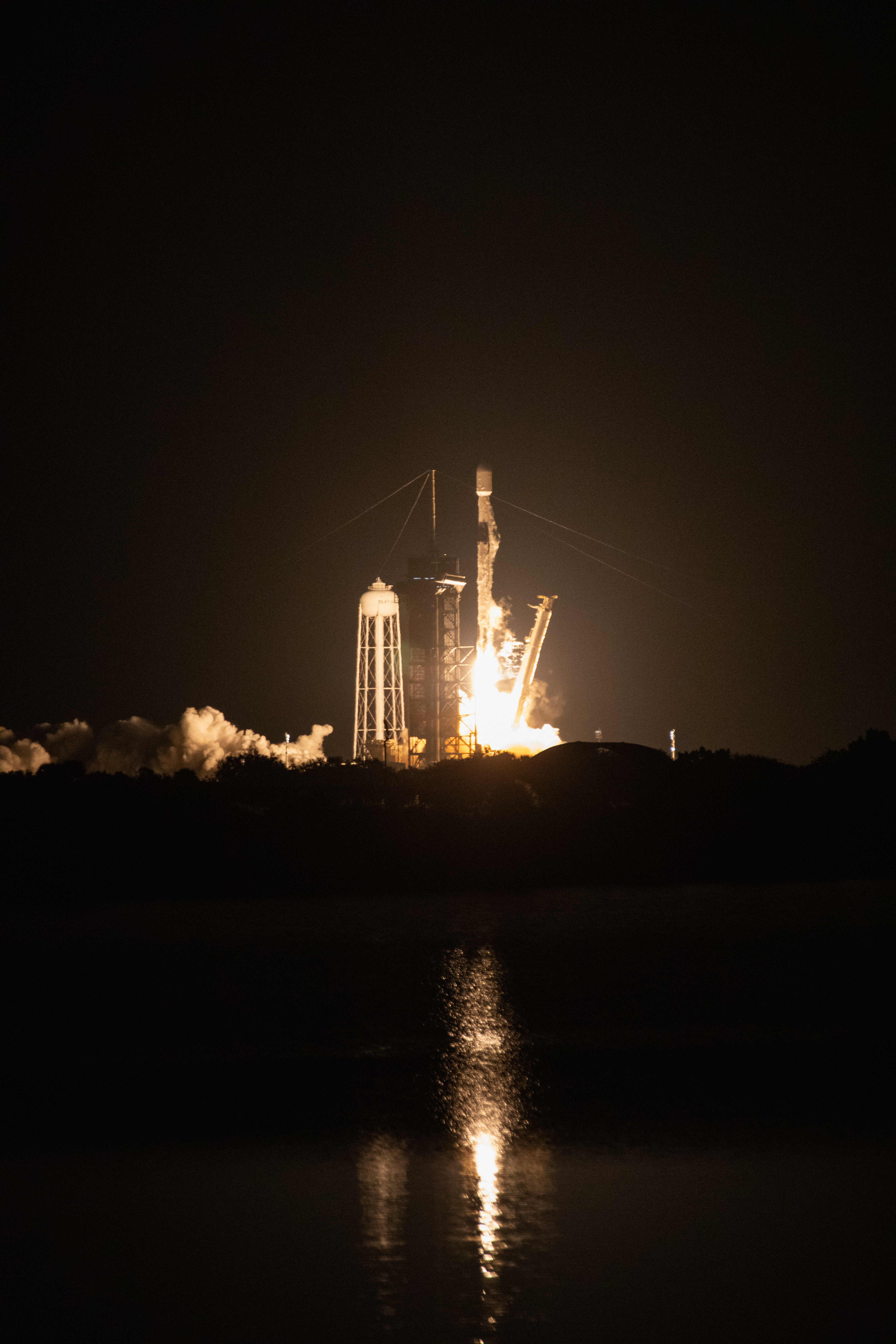
A SpaceX Falcon 9 rocket roars off the launch pad at Launch Complex 39A at NASA’s Kennedy Space Center in Florida at 1 a.m. EST on Thursday, Dec. 9, 2021, carrying NASA’s Imaging X-ray Polarimetry Explorer (IXPE) spacecraft. NASA’s Launch Services Program managed this launch. NASA’s Marshall Space Flight Center in Huntsville, Alabama, manages the IXPE mission. Ball Aerospace, headquartered in Broomfield, Colorado, manages spacecraft operations with support from the University of Colorado at Boulder. NASA’s Goddard Space Flight Center in Greenbelt, Maryland, manages the Explorers Program for the agency’s Science Mission Directorate in Washington. The IXPE spacecraft includes three space telescopes with sensitive detectors capable of measuring the polarization of cosmic X-rays, allowing scientists to answer fundamental questions about extremely complex environments in space where gravitational, electric, and magnetic fields are at their limits. The project is a collaboration between NASA and the Italian Space Agency.
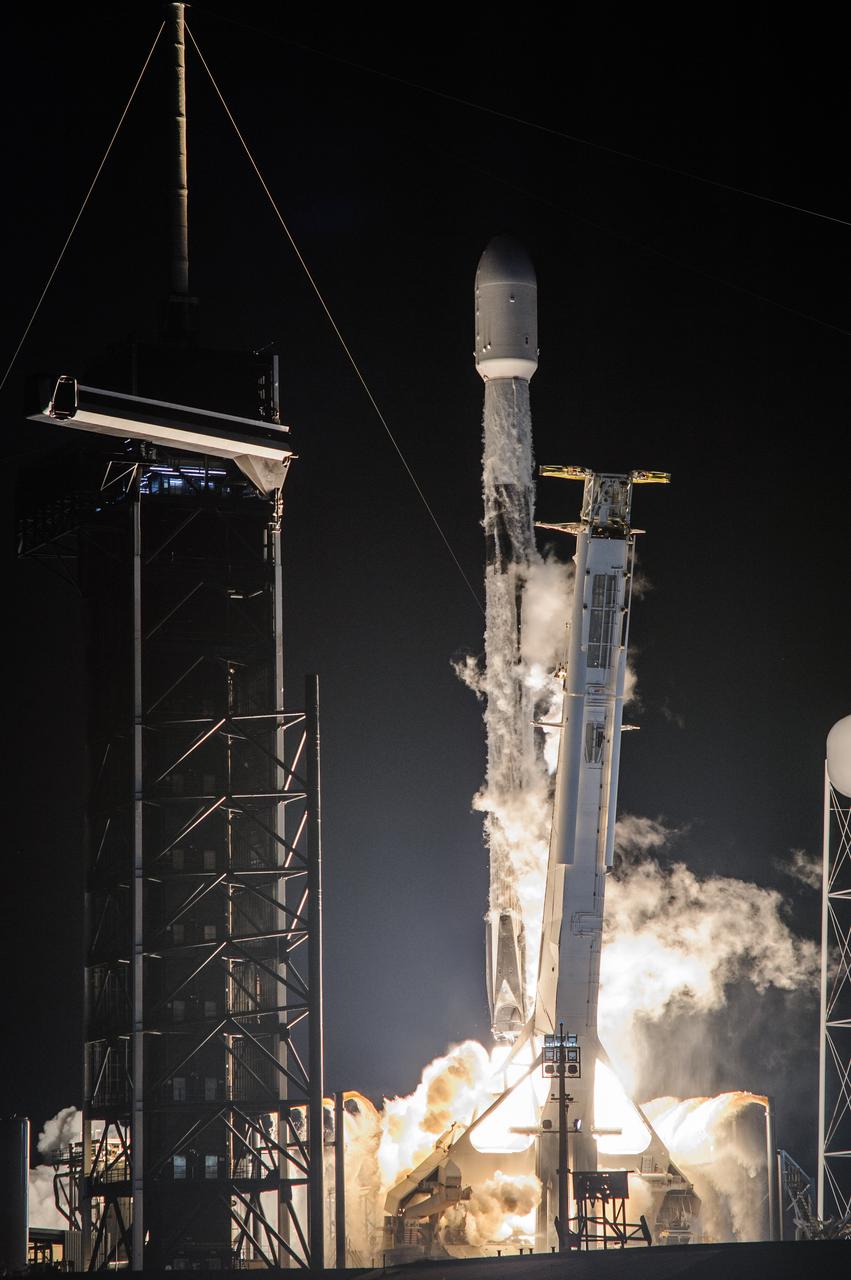
A SpaceX Falcon 9 rocket roars off the launch pad at Launch Complex 39A at NASA’s Kennedy Space Center in Florida at 1 a.m. EST on Thursday, Dec. 9, 2021, carrying NASA’s Imaging X-ray Polarimetry Explorer (IXPE) spacecraft. NASA’s Launch Services Program managed this launch. NASA’s Marshall Space Flight Center in Huntsville, Alabama, manages the IXPE mission. Ball Aerospace, headquartered in Broomfield, Colorado, manages spacecraft operations with support from the University of Colorado at Boulder. NASA’s Goddard Space Flight Center in Greenbelt, Maryland, manages the Explorers Program for the agency’s Science Mission Directorate in Washington. The IXPE spacecraft includes three space telescopes with sensitive detectors capable of measuring the polarization of cosmic X-rays, allowing scientists to answer fundamental questions about extremely complex environments in space where gravitational, electric, and magnetic fields are at their limits. The project is a collaboration between NASA and the Italian Space Agency.
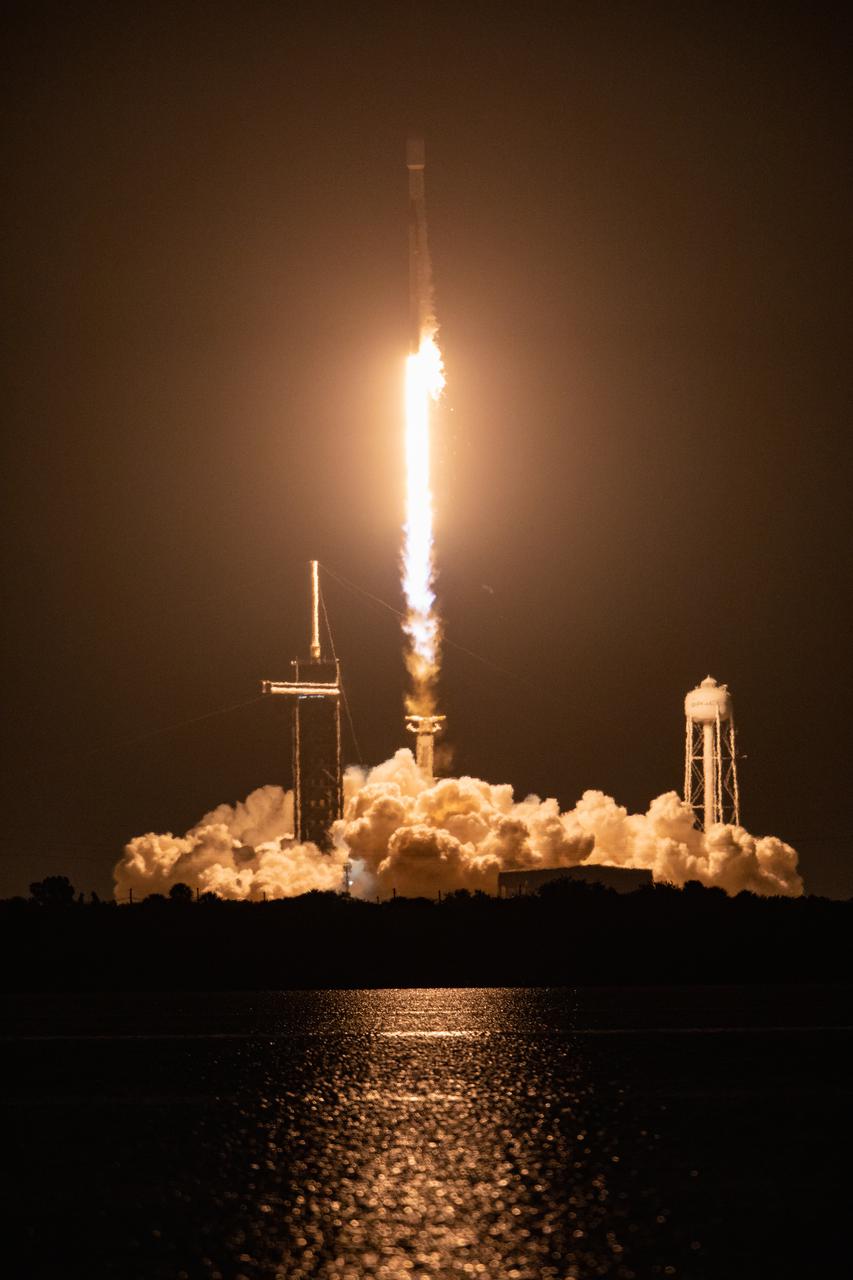
A SpaceX Falcon 9 rocket roars off the launch pad at Launch Complex 39A at NASA’s Kennedy Space Center in Florida at 1 a.m. EST on Thursday, Dec. 9, 2021, carrying NASA’s Imaging X-ray Polarimetry Explorer (IXPE) spacecraft. NASA’s Launch Services Program managed this launch. NASA’s Marshall Space Flight Center in Huntsville, Alabama, manages the IXPE mission. Ball Aerospace, headquartered in Broomfield, Colorado, manages spacecraft operations with support from the University of Colorado at Boulder. NASA’s Goddard Space Flight Center in Greenbelt, Maryland, manages the Explorers Program for the agency’s Science Mission Directorate in Washington. The IXPE spacecraft includes three space telescopes with sensitive detectors capable of measuring the polarization of cosmic X-rays, allowing scientists to answer fundamental questions about extremely complex environments in space where gravitational, electric, and magnetic fields are at their limits. The project is a collaboration between NASA and the Italian Space Agency.
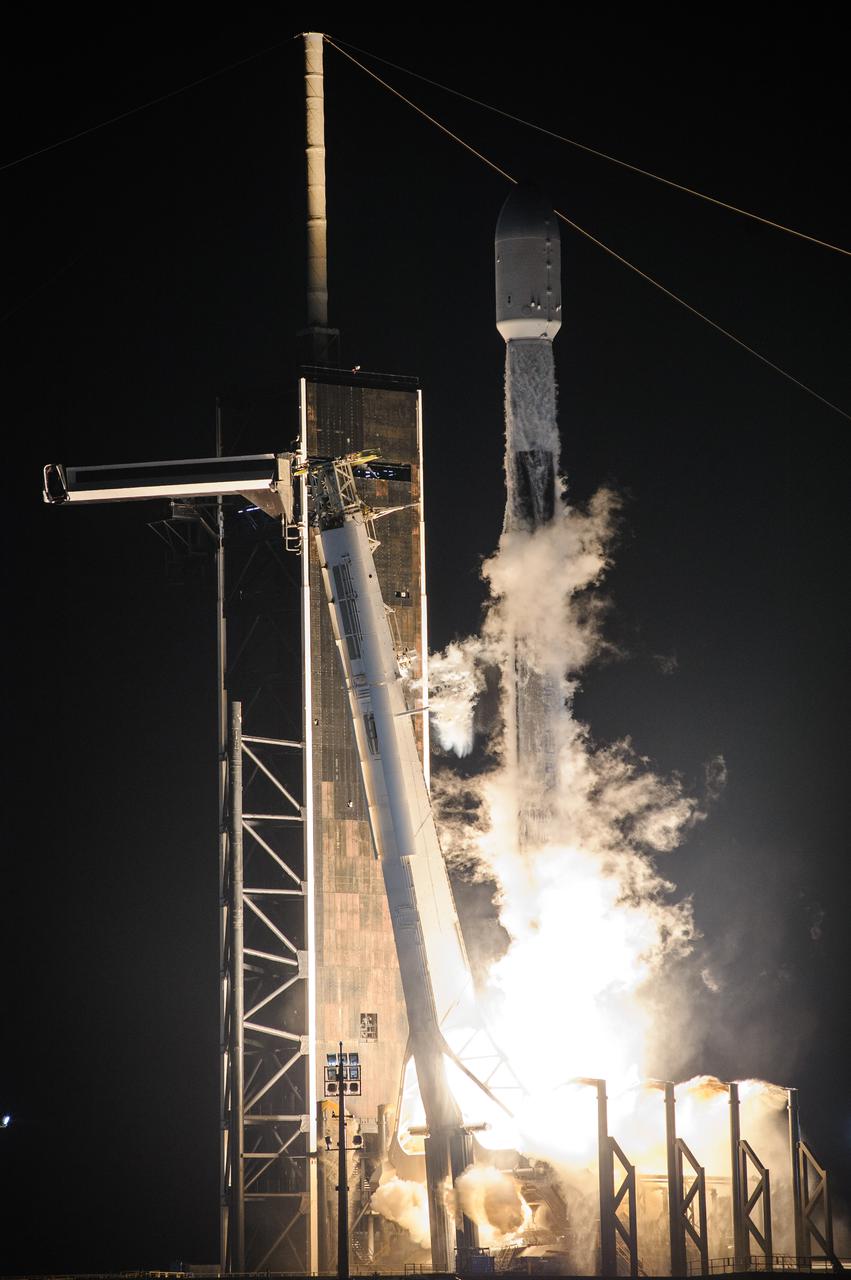
A SpaceX Falcon 9 rocket roars off the launch pad at Launch Complex 39A at NASA’s Kennedy Space Center in Florida at 1 a.m. EST on Thursday, Dec. 9, 2021, carrying NASA’s Imaging X-ray Polarimetry Explorer (IXPE) spacecraft. NASA’s Launch Services Program managed this launch. NASA’s Marshall Space Flight Center in Huntsville, Alabama, manages the IXPE mission. Ball Aerospace, headquartered in Broomfield, Colorado, manages spacecraft operations with support from the University of Colorado at Boulder. NASA’s Goddard Space Flight Center in Greenbelt, Maryland, manages the Explorers Program for the agency’s Science Mission Directorate in Washington. The IXPE spacecraft includes three space telescopes with sensitive detectors capable of measuring the polarization of cosmic X-rays, allowing scientists to answer fundamental questions about extremely complex environments in space where gravitational, electric, and magnetic fields are at their limits. The project is a collaboration between NASA and the Italian Space Agency.
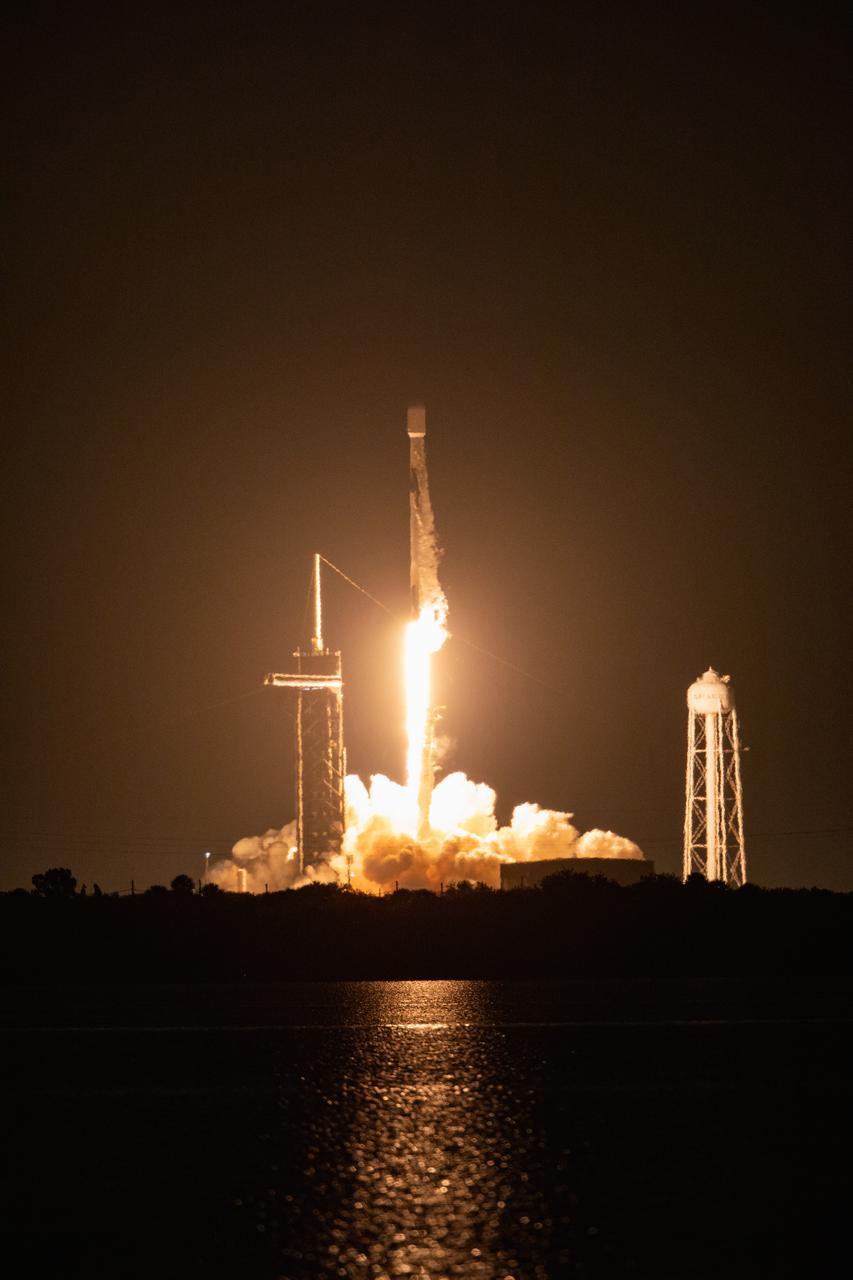
A SpaceX Falcon 9 rocket roars off the launch pad at Launch Complex 39A at NASA’s Kennedy Space Center in Florida at 1 a.m. EST on Thursday, Dec. 9, 2021, carrying NASA’s Imaging X-ray Polarimetry Explorer (IXPE) spacecraft. NASA’s Launch Services Program managed this launch. NASA’s Marshall Space Flight Center in Huntsville, Alabama, manages the IXPE mission. Ball Aerospace, headquartered in Broomfield, Colorado, manages spacecraft operations with support from the University of Colorado at Boulder. NASA’s Goddard Space Flight Center in Greenbelt, Maryland, manages the Explorers Program for the agency’s Science Mission Directorate in Washington. The IXPE spacecraft includes three space telescopes with sensitive detectors capable of measuring the polarization of cosmic X-rays, allowing scientists to answer fundamental questions about extremely complex environments in space where gravitational, electric, and magnetic fields are at their limits. The project is a collaboration between NASA and the Italian Space Agency.
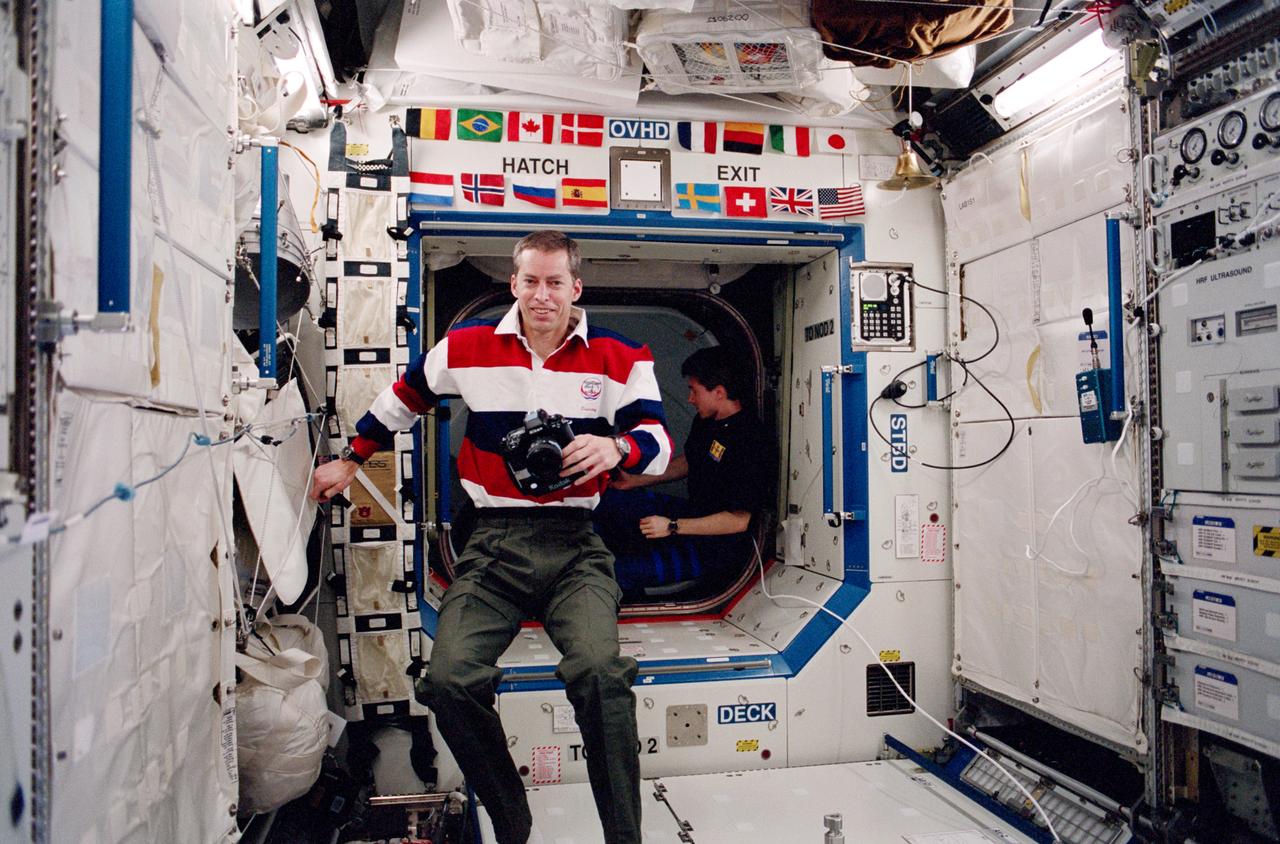
In this Space Shuttle STS-102 mission image, the Payload Equipment Restraint System H-Strap is shown at the left side of the U.S. Laboratory hatch and behind Astronaut James D. Weatherbee, mission specialist. PERS is an integrated modular system of components designed to assist the crew of the International Space Station (ISS) in restraining and carrying necessary payload equipment and tools in a microgravity environment. The Operations Development Group, Flight Projects Directorate at the Marshall Space Flight Center (MSFC), while providing operation support to the ISS Materials Science Research Facility (MSRF), recognized the need for an on-orbit restraint system to facilitate control of lose objects, payloads, and tools. The PERS is the offspring of that need and it helps the ISS crew manage tools and rack components that would otherwise float away in the near-zero gravity environment aboard the Space Station. The system combines Kevlar straps, mesh pockets, Velcro and a variety of cornecting devices into a portable, adjustable system. The system includes the Single Strap, the H-Strap, the Belly Pack, the Laptop Restraint Belt, and the Tool Page Case. The Single Strap and the H-Strap were flown on this mission. The PERS concept was developed by industrial design students at Auburn University and the MSFC Flight Projects Directorate.
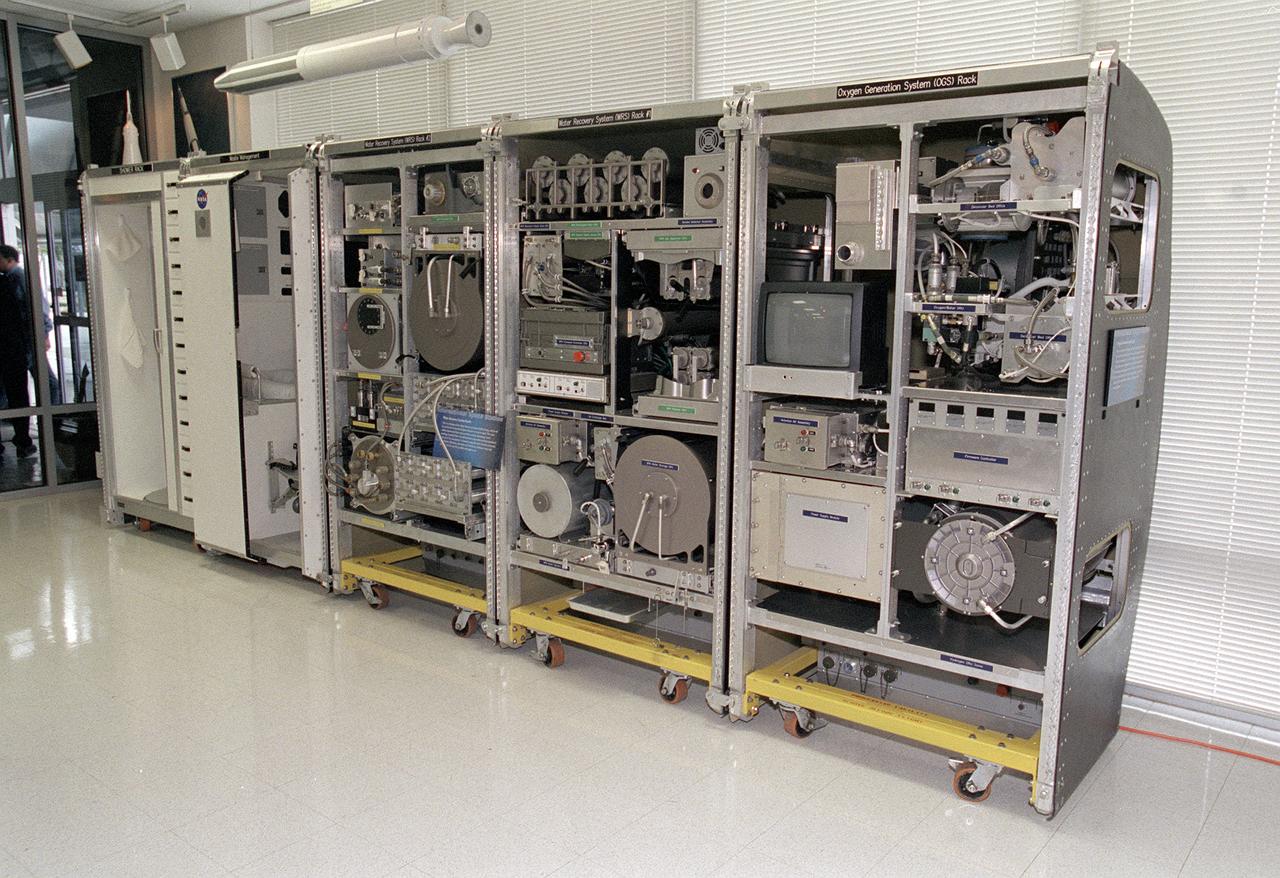
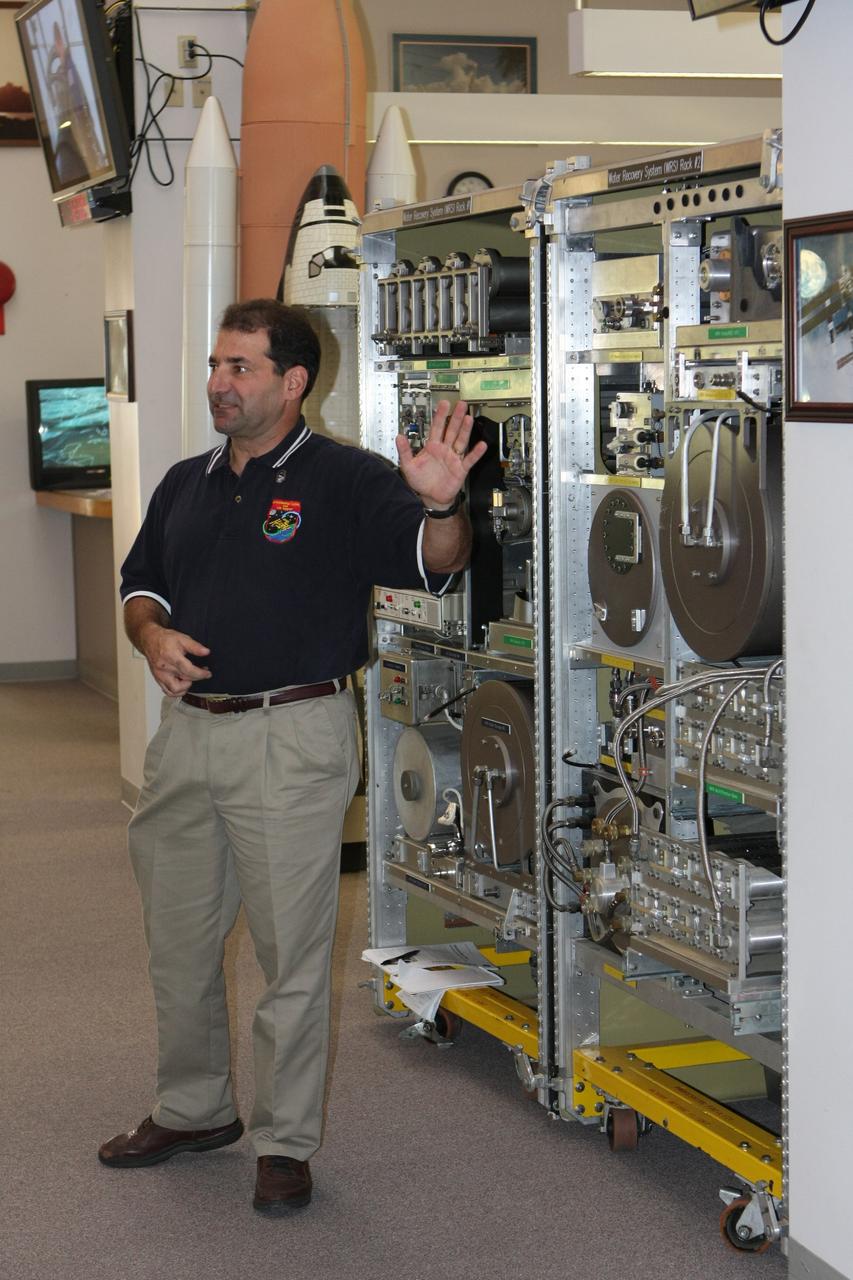
The Environmental Control and Life Support System (ECLSS) Group of the Flight Projects Directorate at the Marshall Space Flight Center in Huntsville, Alabama, is responsible for designing and building the life support systems that will provide the crew of the International Space Station (ISS) a comfortable environment in which to live and work. This photograph shows the mockup of the the ECLSS to be installed in the Node 3 module of the ISS. From left to right, shower rack, waste management rack, Water Recovery System (WRS) Rack #2, WRS Rack #1, and Oxygen Generation System (OGS) rack are shown. The WRS provides clean water through the reclamation of wastewaters and is comprised of a Urine Processor Assembly (UPA) and a Water Processor Assembly (WPA). The UPA accepts and processes pretreated crewmember urine to allow it to be processed along with other wastewaters in the WPA. The WPA removes free gas, organic, and nonorganic constituents before the water goes through a series of multifiltration beds for further purification. The OGS produces oxygen for breathing air for the crew and laboratory animals, as well as for replacing oxygen loss. The OGS is comprised of a cell stack, which electrolyzes (breaks apart the hydrogen and oxygen molecules) some of the clean water provided by the WRS, and the separators that remove the gases from the water after electrolysis.
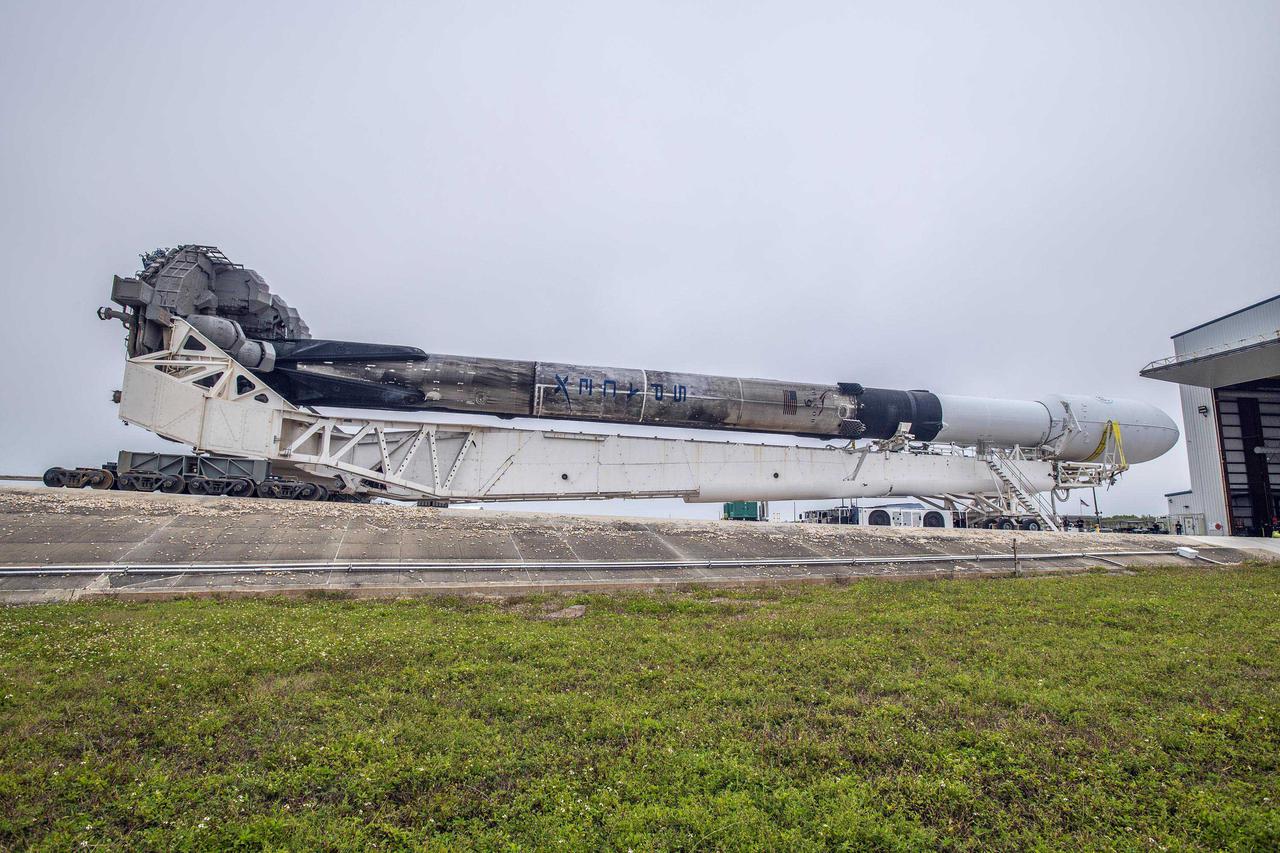
A SpaceX Falcon 9 rocket with NASA’s Imaging X-ray Polarimetry Explorer (IXPE) spacecraft, rolls out to Launch Complex 39A at NASA’s Kennedy Space Center in Florida on Dec. 7, 2021. IXPE is scheduled to launch no earlier than 1 a.m. EST Thursday, Dec. 9. NASA’s Launch Services Program is managing this launch. NASA’s Marshall Space Flight Center in Huntsville, Alabama, manages the IXPE mission. Ball Aerospace, headquartered in Broomfield, Colorado, manages spacecraft operations with support from the University of Colorado at Boulder. NASA’s Goddard Space Flight Center in Greenbelt, Maryland, manages the Explorers Program for the agency’s Science Mission Directorate in Washington. The U.S. Space Force’s Space Launch Delta 45 provides range support for this launch. SpaceX is providing the launch vehicle for this mission. The IXPE spacecraft includes three space telescopes with sensitive detectors capable of measuring the polarization of cosmic X-rays, allowing scientists to answer fundamental questions about extremely complex environments in space where gravitational, electric, and magnetic fields are at their limits. The project is a collaboration between NASA and the Italian Space Agency.
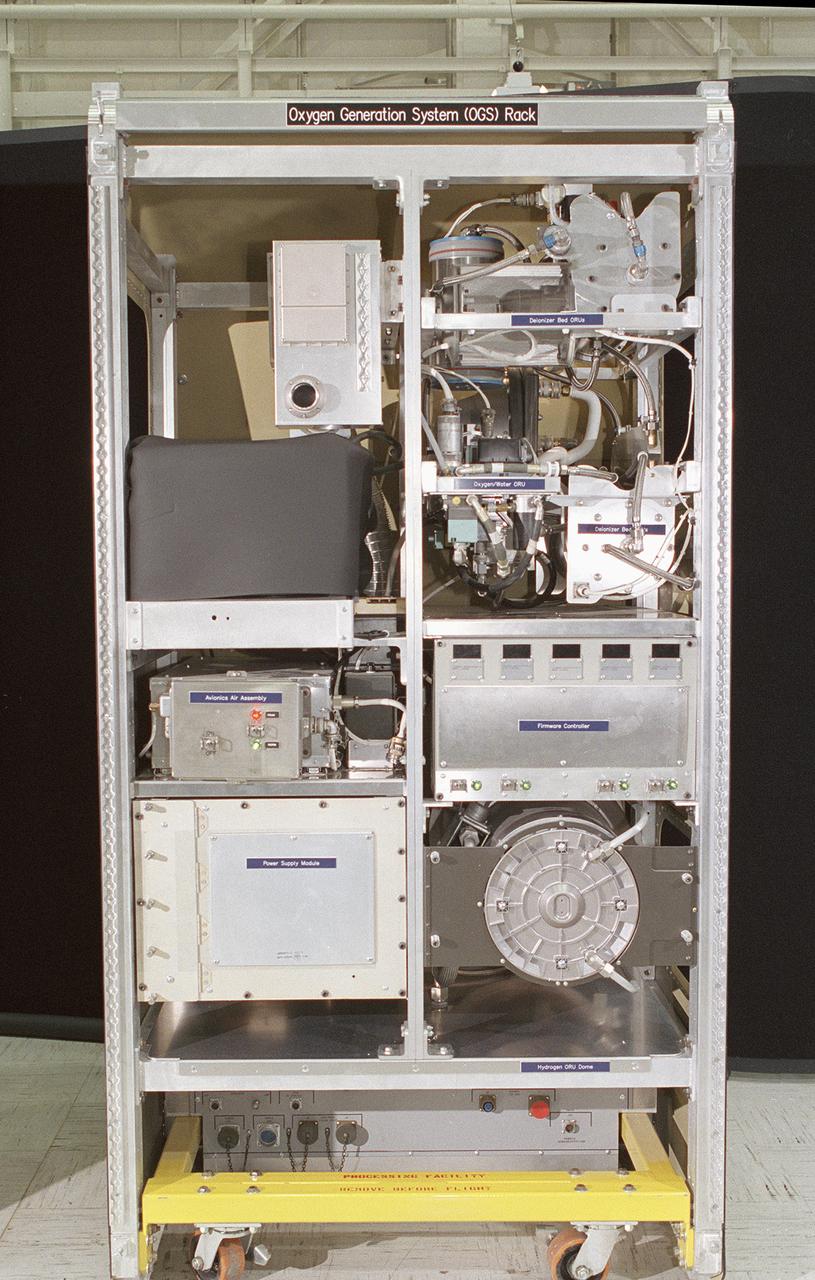
The Environmental Control and Life Support System (ECLSS) Group of the Flight Projects Directorate at the Marshall Space Flight Center (MSFC) in Huntsville, Alabama, is responsible for designing and building the life support systems that will provide the crew of the International Space Station (ISS) a comfortable environment in which to live and work. This is a close-up view of ECLSS Oxygen Generation System (OGS) rack. The ECLSS Group at the MSFC oversees the development of the OGS, which produces oxygen for breathing air for the crew and laboratory animals, as well as for replacing oxygen lost due to experiment use, airlock depressurization, module leakage, and carbon dioxide venting. The OGS consists primarily of the Oxygen Generator Assembly (OGA), provided by the prime contractor, the Hamilton Sundstrand Space Systems, International (HSSSI) in Windsor Locks, Cornecticut and a Power Supply Module (PSM), supplied by the MSFC. The OGA is comprised of a cell stack that electrolyzes (breaks apart the hydrogen and oxygen molecules) some of the clean water provided by the Water Recovery System and the separators that remove the gases from water after electrolysis. The PSM provides the high power to the OGA needed to electrolyze the water.
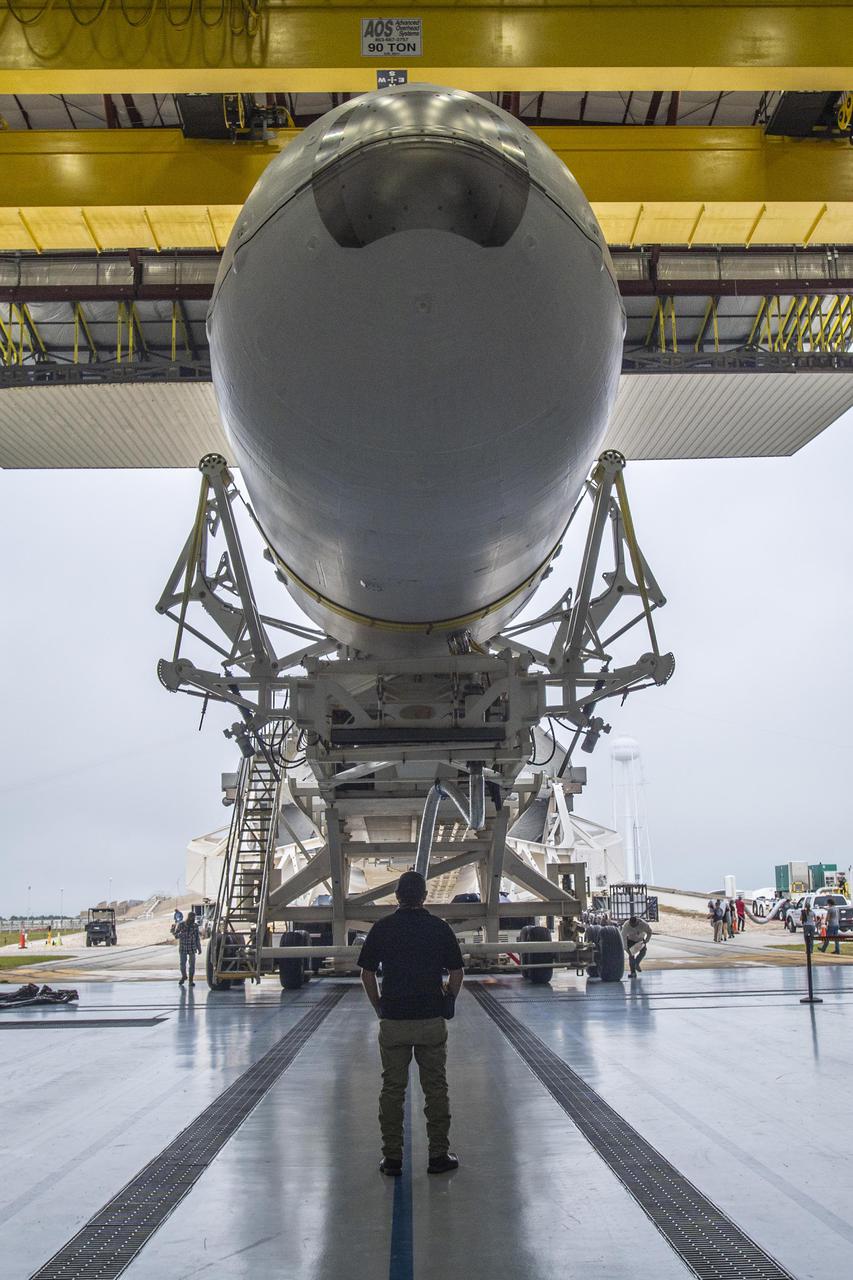
A SpaceX Falcon 9 rocket with NASA’s Imaging X-ray Polarimetry Explorer (IXPE) spacecraft, begins rollout to Launch Complex 39A at NASA’s Kennedy Space Center in Florida on Dec. 7, 2021. IXPE is scheduled to launch no earlier than 1 a.m. EST Thursday, Dec. 9. NASA’s Launch Services Program is managing this launch. NASA’s Marshall Space Flight Center in Huntsville, Alabama, manages the IXPE mission. Ball Aerospace, headquartered in Broomfield, Colorado, manages spacecraft operations with support from the University of Colorado at Boulder. NASA’s Goddard Space Flight Center in Greenbelt, Maryland, manages the Explorers Program for the agency’s Science Mission Directorate in Washington. The U.S. Space Force’s Space Launch Delta 45 provides range support for this launch. SpaceX is providing the launch vehicle for this mission. The IXPE spacecraft includes three space telescopes with sensitive detectors capable of measuring the polarization of cosmic X-rays, allowing scientists to answer fundamental questions about extremely complex environments in space where gravitational, electric, and magnetic fields are at their limits. The project is a collaboration between NASA and the Italian Space Agency.
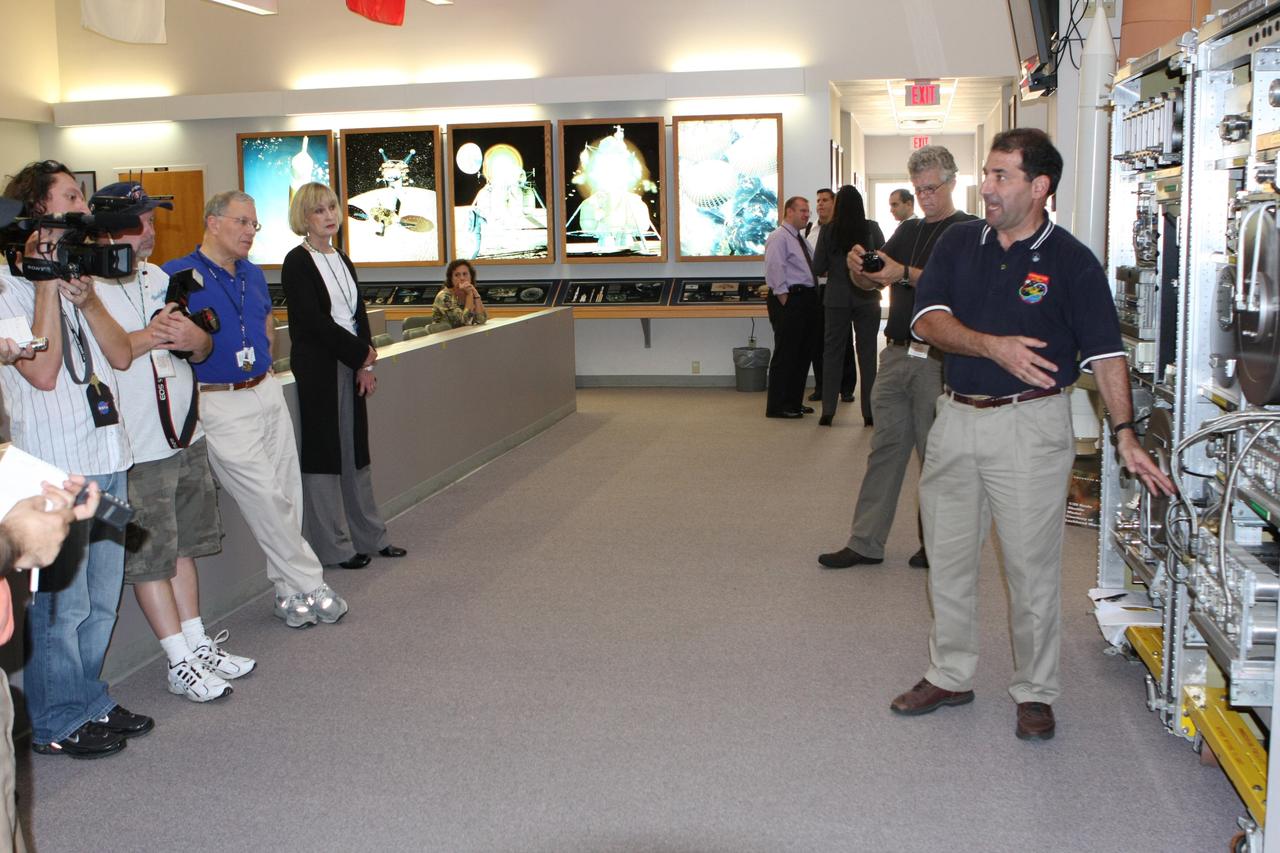
CAPE CANAVERAL, Fla. – In In the News Center at NASA's Kennedy Space Center in Florida, Bob Bagdigian (right) talks to the media about the Water Recovery System being delivered to the International Space Station on space shuttle Endeavour's STS-126 mission. Bagdigian is a project manager with NASA's Regenerative Environmental Control and Life Support System at Marshall Space Flight Center in Huntsville, Ala. Behind Bagdigian is a mockup of the two racks that will be used. The two units of the Water Recovery System are designed to provide drinking-quality water through the reclamation of wastewater, including urine and hygiene wastes. The water that’s produced will be used to support the crew and work aboard the station. STS-126 is the 124th space shuttle flight and the 27th flight to the International Space Station. The mission will feature four spacewalks and work that will prepare the space station to house six crew members for long- duration missions. Liftoff is scheduled for 7:55 p.m. EST Nov. 14. Photo credit: NASA/Dimitri Gerondidakis
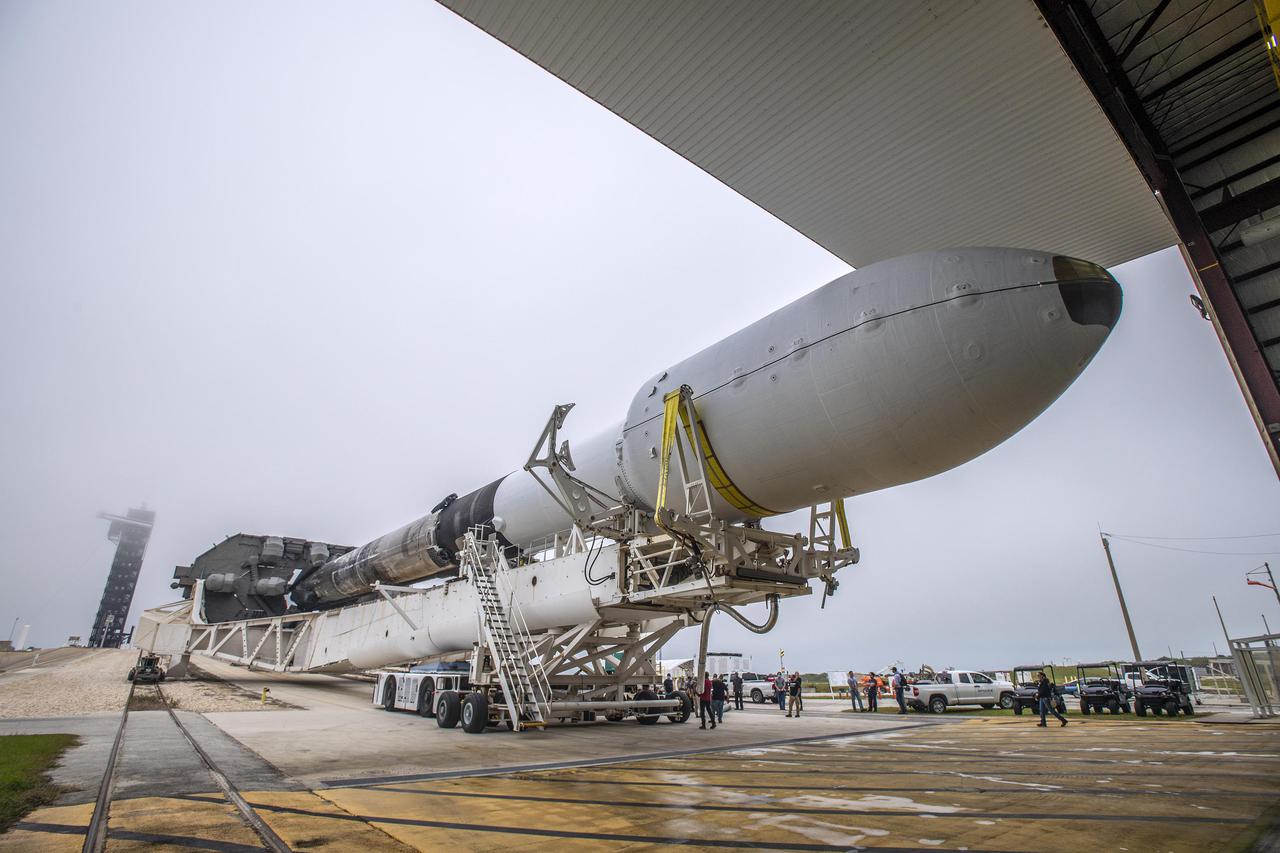
A SpaceX Falcon 9 rocket with NASA’s Imaging X-ray Polarimetry Explorer (IXPE) spacecraft, rolls out to Launch Complex 39A at NASA’s Kennedy Space Center in Florida on Dec. 7, 2021. IXPE is scheduled to launch no earlier than 1 a.m. EST Thursday, Dec. 9. NASA’s Launch Services Program is managing this launch. NASA’s Marshall Space Flight Center in Huntsville, Alabama, manages the IXPE mission. Ball Aerospace, headquartered in Broomfield, Colorado, manages spacecraft operations with support from the University of Colorado at Boulder. NASA’s Goddard Space Flight Center in Greenbelt, Maryland, manages the Explorers Program for the agency’s Science Mission Directorate in Washington. The U.S. Space Force’s Space Launch Delta 45 provides range support for this launch. SpaceX is providing the launch vehicle for this mission. The IXPE spacecraft includes three space telescopes with sensitive detectors capable of measuring the polarization of cosmic X-rays, allowing scientists to answer fundamental questions about extremely complex environments in space where gravitational, electric, and magnetic fields are at their limits. The project is a collaboration between NASA and the Italian Space Agency.
CAPE CANAVERAL, Fla. – In the News Center at NASA's Kennedy Space Center in Florida, Bob Bagdigian talks to the media about the Water Recovery System being delivered to the International Space Station on space shuttle Endeavour's STS-126 mission. Bagdigian is a project manager with NASA's Regenerative Environmental Control and Life Support System at Marshall Space Flight Center in Huntsville, Ala. Behind Bagdigian is a mockup of the two racks that will be used. The two units of the Water Recovery System are designed to provide drinking-quality water through the reclamation of wastewater, including urine and hygiene wastes. The water that’s produced will be used to support the crew and work aboard the station. STS-126 is the 124th space shuttle flight and the 27th flight to the International Space Station. The mission will feature four spacewalks and work that will prepare the space station to house six crew members for long- duration missions. Liftoff is scheduled for 7:55 p.m. EST Nov. 14. Photo credit: NASA/Dimitri Gerondidakis

CAPE CANAVERAL, Fla. – In the News Center at NASA's Kennedy Space Center in Florida, Bob Bagdigian talks to the media about the Water Recovery System being delivered to the International Space Station on space shuttle Endeavour's STS-126 mission. Bagdigian is a project manager with NASA's Regenerative Environmental Control and Life Support System at Marshall Space Flight Center in Huntsville, Ala. Behind Bagdigian is a mockup of the two racks that will be used. The two units of the Water Recovery System are designed to provide drinking-quality water through the reclamation of wastewater, including urine and hygiene wastes. The water that’s produced will be used to support the crew and work aboard the station. STS-126 is the 124th space shuttle flight and the 27th flight to the International Space Station. The mission will feature four spacewalks and work that will prepare the space station to house six crew members for long- duration missions. Liftoff is scheduled for 7:55 p.m. EST Nov. 14. Photo credit: NASA/Dimitri Gerondidakis
A SpaceX Falcon 9 rocket with NASA’s Imaging X-ray Polarimetry Explorer (IXPE) spacecraft, begins rollout to Launch Complex 39A at NASA’s Kennedy Space Center in Florida on Dec. 7, 2021. IXPE is scheduled to launch no earlier than 1 a.m. EST Thursday, Dec. 9. NASA’s Launch Services Program is managing this launch. NASA’s Marshall Space Flight Center in Huntsville, Alabama, manages the IXPE mission. Ball Aerospace, headquartered in Broomfield, Colorado, manages spacecraft operations with support from the University of Colorado at Boulder. NASA’s Goddard Space Flight Center in Greenbelt, Maryland, manages the Explorers Program for the agency’s Science Mission Directorate in Washington. The U.S. Space Force’s Space Launch Delta 45 provides range support for this launch. SpaceX is providing the launch vehicle for this mission. The IXPE spacecraft includes three space telescopes with sensitive detectors capable of measuring the polarization of cosmic X-rays, allowing scientists to answer fundamental questions about extremely complex environments in space where gravitational, electric, and magnetic fields are at their limits. The project is a collaboration between NASA and the Italian Space Agency.
Under the goals of the Vision for Space Exploration, Ares I is a chief component of the cost-effective space transportation infrastructure being developed by NASA's Constellation Program. This transportation system will safely and reliably carry human explorers back to the moon, and then onward to Mars and other destinations in the solar system. The Ares I effort includes multiple project element teams at NASA centers and contract organizations around the nation, and is managed by the Exploration Launch Projects Office at NASA's Marshall Space Flight Center (MFSC). ATK Launch Systems near Brigham City, Utah, is the prime contractor for the first stage booster. ATK's subcontractor, United Space Alliance of Houston, is designing, developing and testing the parachutes at its facilities at NASA's Kennedy Space Center in Florida. NASA's Johnson Space Center in Houston hosts the Constellation Program and Orion Crew Capsule Project Office and provides test instrumentation and support personnel. Together, these teams are developing vehicle hardware, evolving proven technologies, and testing components and systems. Their work builds on powerful, reliable space shuttle propulsion elements and nearly a half-century of NASA space flight experience and technological advances. Ares I is an inline, two-stage rocket configuration topped by the Crew Exploration Vehicle, its service module, and a launch abort system. In this HD video image, an Ares I x-test involves the upper stage separating from the first stage. This particular test was conducted at the NASA Langley Research Center in July 2007. (Highest resolution available)
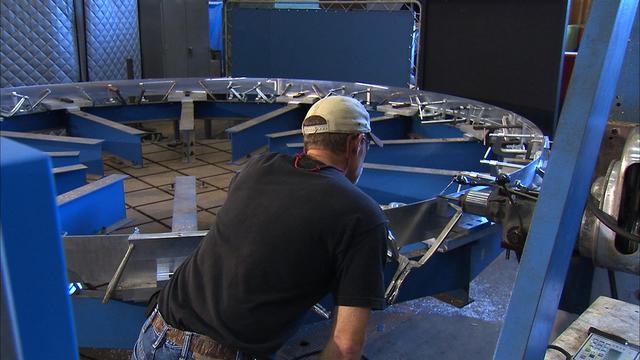
Under the goals of the Vision for Space Exploration, Ares I is a chief component of the cost-effective space transportation infrastructure being developed by NASA's Constellation Program. This transportation system will safely and reliably carry human explorers back to the moon, and then onward to Mars and other destinations in the solar system. The Ares I effort includes multiple project element teams at NASA centers and contract organizations around the nation, and is managed by the Exploration Launch Projects Office at NASA's Marshall Space Flight Center (MFSC). ATK Launch Systems near Brigham City, Utah, is the prime contractor for the first stage booster. ATK's subcontractor, United Space Alliance of Houston, is designing, developing and testing the parachutes at its facilities at NASA's Kennedy Space Center in Florida. NASA's Johnson Space Center in Houston hosts the Constellation Program and Orion Crew Capsule Project Office and provides test instrumentation and support personnel. Together, these teams are developing vehicle hardware, evolving proven technologies, and testing components and systems. Their work builds on powerful, reliable space shuttle propulsion elements and nearly a half-century of NASA space flight experience and technological advances. Ares I is an inline, two-stage rocket configuration topped by the Crew Exploration Vehicle, its service module, and a launch abort system. This HD video image depicts the preparation and placement of a confidence ring for friction stir welding used in manufacturing aluminum panels that will fabricate the Ares I upper stage barrel. The aluminum panels are manufactured and subjected to confidence tests during which the bent aluminum is stressed to breaking point and thoroughly examined. The panels are manufactured by AMRO Manufacturing located in El Monte, California. (Highest resolution available)
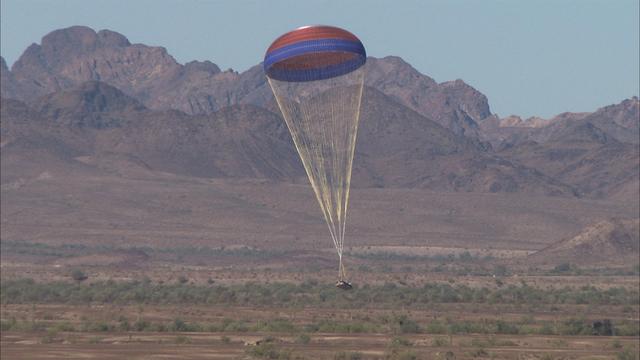
Under the goals of the Vision for Space Exploration, Ares I is a chief component of the cost-effective space transportation infrastructure being developed by NASA's Constellation Program. This transportation system will safely and reliably carry human explorers back to the moon, and then onward to Mars and other destinations in the solar system. The Ares I effort includes multiple project element teams at NASA centers and contract organizations around the nation, and is managed by the Exploration Launch Projects Office at NASA's Marshall Space Flight Center (MFSC). ATK Launch Systems near Brigham City, Utah, is the prime contractor for the first stage booster. ATK's subcontractor, United Space Alliance of Houston, is designing, developing and testing the parachutes at its facilities at NASA's Kennedy Space Center in Florida. NASA's Johnson Space Center in Houston hosts the Constellation Program and Orion Crew Capsule Project Office and provides test instrumentation and support personnel. Together, these teams are developing vehicle hardware, evolving proven technologies, and testing components and systems. Their work builds on powerful, reliable space shuttle propulsion elements and nearly a half-century of NASA space flight experience and technological advances. Ares I is an inline, two-stage rocket configuration topped by the Crew Exploration Vehicle, its service module, and a launch abort system. In this HD video image, the first stage reentry parachute drop test is conducted at the Yuma, Arizona proving ground. The parachute tests demonstrated a three-stage deployment sequence that included the use of an Orbiter drag chute to properly stage the unfurling of the main chute. The parachute recovery system for Orion will be similar to the system used for Apollo command module landings and include two drogue, three pilot, and three main parachutes. (Highest resolution available)
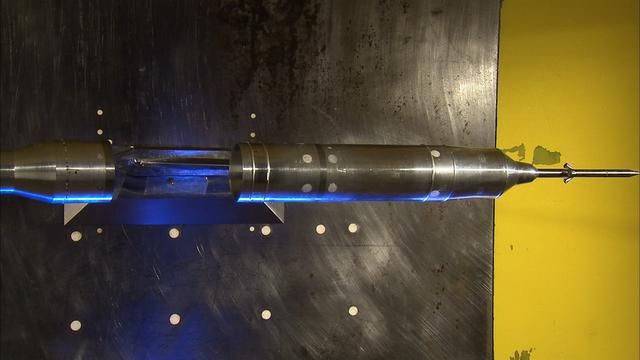
Under the goals of the Vision for Space Exploration, Ares I is a chief component of the cost-effective space transportation infrastructure being developed by NASA's Constellation Program. This transportation system will safely and reliably carry human explorers back to the moon, and then onward to Mars and other destinations in the solar system. The Ares I effort includes multiple project element teams at NASA centers and contract organizations around the nation, and is managed by the Exploration Launch Projects Office at NASA's Marshall Space Flight Center (MFSC). ATK Launch Systems near Brigham City, Utah, is the prime contractor for the first stage booster. ATK's subcontractor, United Space Alliance of Houston, is designing, developing and testing the parachutes at its facilities at NASA's Kennedy Space Center in Florida. NASA's Johnson Space Center in Houston hosts the Constellation Program and Orion Crew Capsule Project Office and provides test instrumentation and support personnel. Together, these teams are developing vehicle hardware, evolving proven technologies, and testing components and systems. Their work builds on powerful, reliable space shuttle propulsion elements and nearly a half-century of NASA space flight experience and technological advances. Ares I is an inline, two-stage rocket configuration topped by the Crew Exploration Vehicle, its service module, and a launch abort system. In this HD video image, an Ares I x-test involves the upper stage separating from the first stage. This particular test was conducted at the NASA Langley Research Center in July 2007. (Highest resolution available)
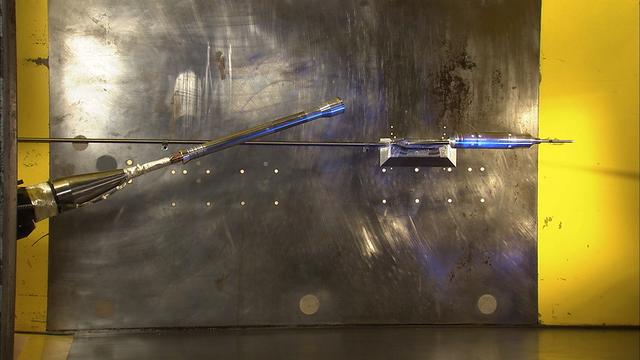
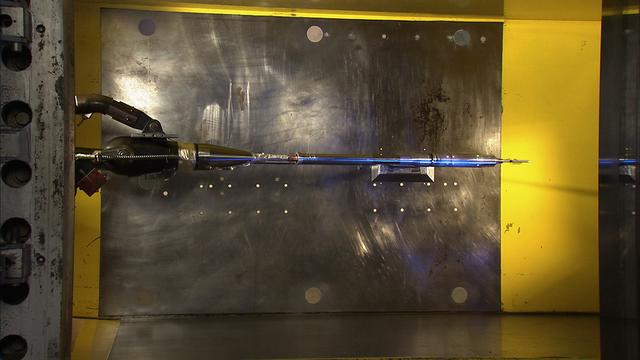
Under the goals of the Vision for Space Exploration, Ares I is a chief component of the cost-effective space transportation infrastructure being developed by NASA's Constellation Program. This transportation system will safely and reliably carry human explorers back to the moon, and then onward to Mars and other destinations in the solar system. The Ares I effort includes multiple project element teams at NASA centers and contract organizations around the nation, and is managed by the Exploration Launch Projects Office at NASA's Marshall Space Flight Center (MFSC). ATK Launch Systems near Brigham City, Utah, is the prime contractor for the first stage booster. ATK's subcontractor, United Space Alliance of Houston, is designing, developing and testing the parachutes at its facilities at NASA's Kennedy Space Center in Florida. NASA's Johnson Space Center in Houston hosts the Constellation Program and Orion Crew Capsule Project Office and provides test instrumentation and support personnel. Together, these teams are developing vehicle hardware, evolving proven technologies, and testing components and systems. Their work builds on powerful, reliable space shuttle propulsion elements and nearly a half-century of NASA space flight experience and technological advances. Ares I is an inline, two-stage rocket configuration topped by the Crew Exploration Vehicle, its service module, and a launch abort system. In this HD video image, the first stage reentry 1/2% model is undergoing pressure measurements inside the wind tunnel testing facility at MSFC. (Highest resolution available)
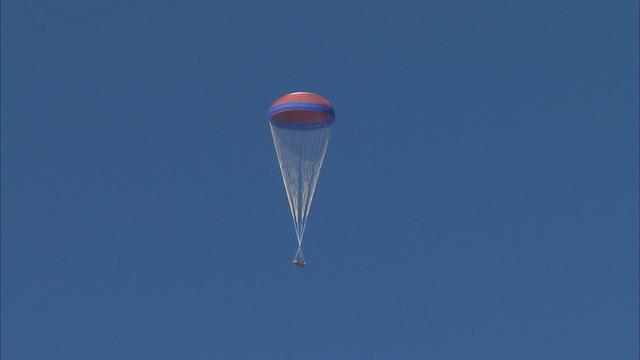
Under the goals of the Vision for Space Exploration, Ares I is a chief component of the cost-effective space transportation infrastructure being developed by NASA's Constellation Program. This transportation system will safely and reliably carry human explorers back to the moon, and then onward to Mars and other destinations in the solar system. The Ares I effort includes multiple project element teams at NASA centers and contract organizations around the nation, and is managed by the Exploration Launch Projects Office at NASA's Marshall Space Flight Center (MFSC). ATK Launch Systems near Brigham City, Utah, is the prime contractor for the first stage booster. ATK's subcontractor, United Space Alliance of Houston, is designing, developing and testing the parachutes at its facilities at NASA's Kennedy Space Center in Florida. NASA's Johnson Space Center in Houston hosts the Constellation Program and Orion Crew Capsule Project Office and provides test instrumentation and support personnel. Together, these teams are developing vehicle hardware, evolving proven technologies, and testing components and systems. Their work builds on powerful, reliable space shuttle propulsion elements and nearly a half-century of NASA space flight experience and technological advances. Ares I is an inline, two-stage rocket configuration topped by the Crew Exploration Vehicle, its service module, and a launch abort system. In this HD video image, the first stage reentry parachute drop test is conducted at the Yuma, Arizona proving ground. The parachute tests demonstrated a three-stage deployment sequence that included the use of an Orbiter drag chute to properly stage the unfurling of the main chute. The parachute recovery system for Orion will be similar to the system used for Apollo command module landings and include two drogue, three pilot, and three main parachutes. (Highest resolution available)
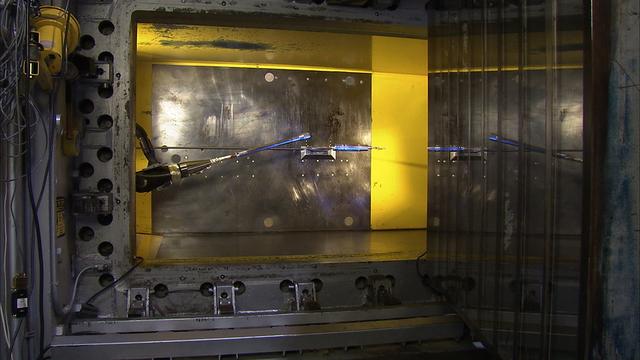
Under the goals of the Vision for Space Exploration, Ares I is a chief component of the cost-effective space transportation infrastructure being developed by NASA's Constellation Program. This transportation system will safely and reliably carry human explorers back to the moon, and then onward to Mars and other destinations in the solar system. The Ares I effort includes multiple project element teams at NASA centers and contract organizations around the nation, and is managed by the Exploration Launch Projects Office at NASA's Marshall Space Flight Center (MFSC). ATK Launch Systems near Brigham City, Utah, is the prime contractor for the first stage booster. ATK's subcontractor, United Space Alliance of Houston, is designing, developing and testing the parachutes at its facilities at NASA's Kennedy Space Center in Florida. NASA's Johnson Space Center in Houston hosts the Constellation Program and Orion Crew Capsule Project Office and provides test instrumentation and support personnel. Together, these teams are developing vehicle hardware, evolving proven technologies, and testing components and systems. Their work builds on powerful, reliable space shuttle propulsion elements and nearly a half-century of NASA space flight experience and technological advances. Ares I is an inline, two-stage rocket configuration topped by the Crew Exploration Vehicle, its service module, and a launch abort system. In this HD video image, the first stage reentry 1/2% model is undergoing pressure measurements inside the wind tunnel testing facility at MSFC. (Highest resolution available)
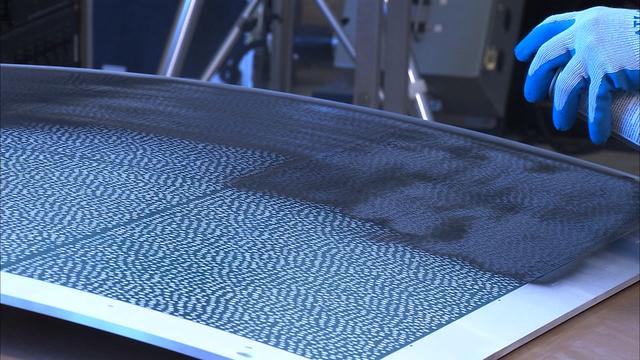
Under the goals of the Vision for Space Exploration, Ares I is a chief component of the cost-effective space transportation infrastructure being developed by NASA's Constellation Program. This transportation system will safely and reliably carry human explorers back to the moon, and then onward to Mars and other destinations in the solar system. The Ares I effort includes multiple project element teams at NASA centers and contract organizations around the nation, and is managed by the Exploration Launch Projects Office at NASA's Marshall Space Flight Center (MFSC). ATK Launch Systems near Brigham City, Utah, is the prime contractor for the first stage booster. ATK's subcontractor, United Space Alliance of Houston, is designing, developing and testing the parachutes at its facilities at NASA's Kennedy Space Center in Florida. NASA's Johnson Space Center in Houston hosts the Constellation Program and Orion Crew Capsule Project Office and provides test instrumentation and support personnel. Together, these teams are developing vehicle hardware, evolving proven technologies, and testing components and systems. Their work builds on powerful, reliable space shuttle propulsion elements and nearly a half-century of NASA space flight experience and technological advances. Ares I is an inline, two-stage rocket configuration topped by the Crew Exploration Vehicle, its service module, and a launch abort system. This HD video image depicts a manufactured aluminum panel, that will fabricate the Ares I upper stage barrel, undergoing a confidence panel test. In this test, the bent aluminum is stressed to breaking point and thoroughly examined. The panels are manufactured by AMRO Manufacturing located in El Monte, California. (Highest resolution available)
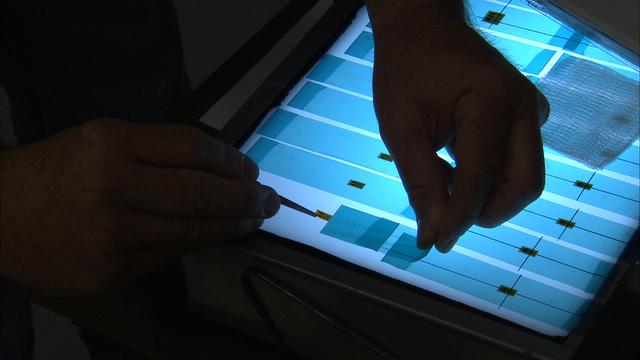
Under the goals of the Vision for Space Exploration, Ares I is a chief component of the cost-effective space transportation infrastructure being developed by NASA's Constellation Program. This transportation system will safely and reliably carry human explorers back to the moon, and then onward to Mars and other destinations in the solar system. The Ares I effort includes multiple project element teams at NASA centers and contract organizations around the nation, and is managed by the Exploration Launch Projects Office at NASA's Marshall Space Flight Center (MFSC). ATK Launch Systems near Brigham City, Utah, is the prime contractor for the first stage booster. ATK's subcontractor, United Space Alliance of Houston, is designing, developing and testing the parachutes at its facilities at NASA's Kennedy Space Center in Florida. NASA's Johnson Space Center in Houston hosts the Constellation Program and Orion Crew Capsule Project Office and provides test instrumentation and support personnel. Together, these teams are developing vehicle hardware, evolving proven technologies, and testing components and systems. Their work builds on powerful, reliable space shuttle propulsion elements and nearly a half-century of NASA space flight experience and technological advances. Ares I is an inline, two-stage rocket configuration topped by the Crew Exploration Vehicle, its service module, and a launch abort system. This HD video image depicts a manufactured aluminum panel, that will fabricate the Ares I upper stage barrel, undergoing a confidence panel test. In this test, bent aluminum is stressed to breaking point and thoroughly examined. The panels are manufactured by AMRO Manufacturing located in El Monte, California. (Highest resolution available)
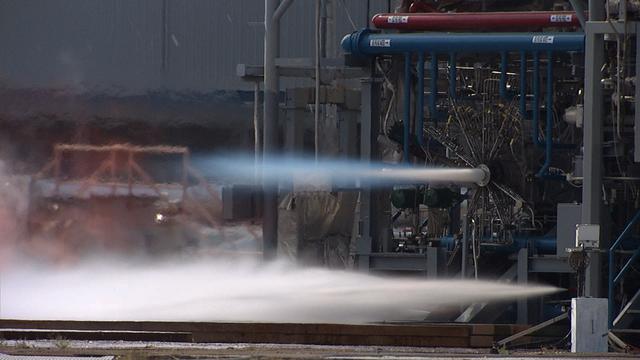
Under the goals of the Vision for Space Exploration, Ares I is a chief component of the cost-effective space transportation infrastructure being developed by NASA's Constellation Program. This transportation system will safely and reliably carry human explorers back to the moon, and then onward to Mars and other destinations in the solar system. The Ares I effort includes multiple project element teams at NASA centers and contract organizations around the nation, and is managed by the Exploration Launch Projects Office at NASA's Marshall Space Flight Center (MFSC). ATK Launch Systems near Brigham City, Utah, is the prime contractor for the first stage booster. ATK's subcontractor, United Space Alliance of Houston, is designing, developing and testing the parachutes at its facilities at NASA's Kennedy Space Center in Florida. NASA's Johnson Space Center in Houston hosts the Constellation Program and Orion Crew Capsule Project Office and provides test instrumentation and support personnel. Together, these teams are developing vehicle hardware, evolving proven technologies, and testing components and systems. Their work builds on powerful, reliable space shuttle propulsion elements and nearly a half-century of NASA space flight experience and technological advances. Ares I is an inline, two-stage rocket configuration topped by the Crew Exploration Vehicle, its service module, and a launch abort system. The launch vehicle's first stage is a single, five-segment reusable solid rocket booster derived from the Space Shuttle Program's reusable solid rocket motor that burns a specially formulated and shaped solid propellant called polybutadiene acrylonitrile (PBAN). The second or upper stage will be propelled by a J-2X main engine fueled with liquid oxygen and liquid hydrogen. This HD video image depicts a test firing of a 40k subscale J2X injector at MSFC's test stand 115. (Highest resolution available)
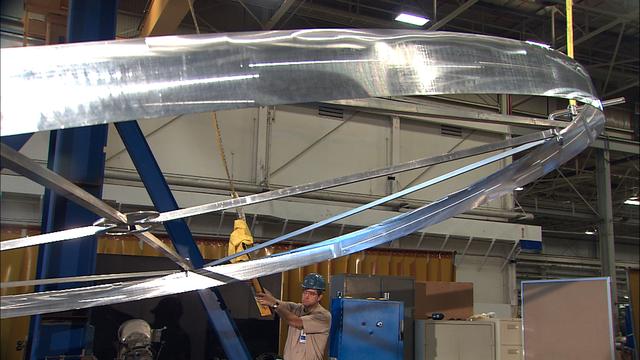
Under the goals of the Vision for Space Exploration, Ares I is a chief component of the cost-effective space transportation infrastructure being developed by NASA's Constellation Program. This transportation system will safely and reliably carry human explorers back to the moon, and then onward to Mars and other destinations in the solar system. The Ares I effort includes multiple project element teams at NASA centers and contract organizations around the nation, and is managed by the Exploration Launch Projects Office at NASA's Marshall Space Flight Center (MFSC). ATK Launch Systems near Brigham City, Utah, is the prime contractor for the first stage booster. ATK's subcontractor, United Space Alliance of Houston, is designing, developing and testing the parachutes at its facilities at NASA's Kennedy Space Center in Florida. NASA's Johnson Space Center in Houston hosts the Constellation Program and Orion Crew Capsule Project Office and provides test instrumentation and support personnel. Together, these teams are developing vehicle hardware, evolving proven technologies, and testing components and systems. Their work builds on powerful, reliable space shuttle propulsion elements and nearly a half-century of NASA space flight experience and technological advances. Ares I is an inline, two-stage rocket configuration topped by the Crew Exploration Vehicle, its service module, and a launch abort system. This HD video image depicts friction stir welding used in manufacturing aluminum panels that will fabricate the Ares I upper stage barrel. The aluminum panels are subjected to confidence panel tests during which the bent aluminum is stressed to breaking point and thoroughly examined. The panels are manufactured by AMRO Manufacturing located in El Monte, California. (Highest resolution available)
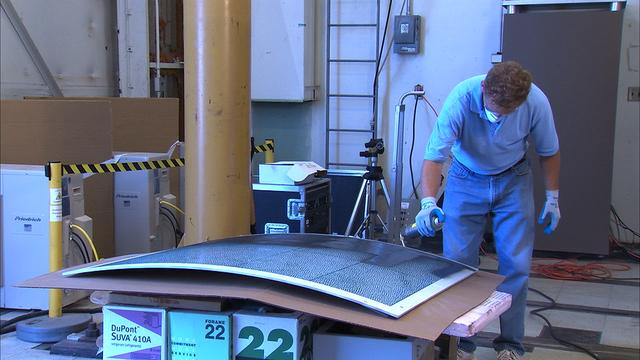
Under the goals of the Vision for Space Exploration, Ares I is a chief component of the cost-effective space transportation infrastructure being developed by NASA's Constellation Program. This transportation system will safely and reliably carry human explorers back to the moon, and then onward to Mars and other destinations in the solar system. The Ares I effort includes multiple project element teams at NASA centers and contract organizations around the nation, and is managed by the Exploration Launch Projects Office at NASA's Marshall Space Flight Center (MFSC). ATK Launch Systems near Brigham City, Utah, is the prime contractor for the first stage booster. ATK's subcontractor, United Space Alliance of Houston, is designing, developing and testing the parachutes at its facilities at NASA's Kennedy Space Center in Florida. NASA's Johnson Space Center in Houston hosts the Constellation Program and Orion Crew Capsule Project Office and provides test instrumentation and support personnel. Together, these teams are developing vehicle hardware, evolving proven technologies, and testing components and systems. Their work builds on powerful, reliable space shuttle propulsion elements and nearly a half-century of NASA space flight experience and technological advances. Ares I is an inline, two-stage rocket configuration topped by the Crew Exploration Vehicle, its service module, and a launch abort system. This HD video image depicts a manufactured aluminum panel that will be used to fabricate the Ares I upper stage barrel, undergoing a confidence panel test. In this test, the bent aluminum is stressed to breaking point and thoroughly examined. The panels are manufactured by AMRO Manufacturing located in El Monte, California.
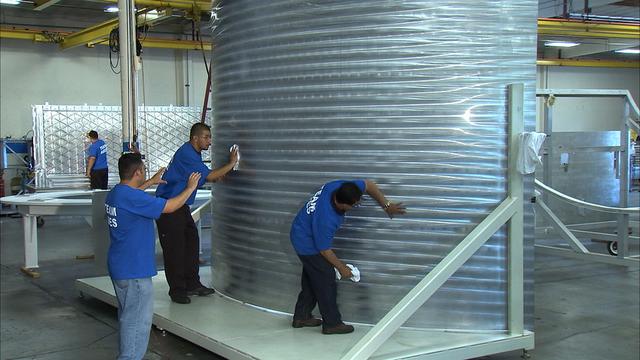
Under the goals of the Vision for Space Exploration, Ares I is a chief component of the cost-effective space transportation infrastructure being developed by NASA's Constellation Program. This transportation system will safely and reliably carry human explorers back to the moon, and then onward to Mars and other destinations in the solar system. The Ares I effort includes multiple project element teams at NASA centers and contract organizations around the nation, and is managed by the Exploration Launch Projects Office at NASA's Marshall Space Flight Center (MFSC). ATK Launch Systems near Brigham City, Utah, is the prime contractor for the first stage booster. ATK's subcontractor, United Space Alliance of Houston, is designing, developing and testing the parachutes at its facilities at NASA's Kennedy Space Center in Florida. NASA's Johnson Space Center in Houston hosts the Constellation Program and Orion Crew Capsule Project Office and provides test instrumentation and support personnel. Together, these teams are developing vehicle hardware, evolving proven technologies, and testing components and systems. Their work builds on powerful, reliable space shuttle propulsion elements and nearly a half-century of NASA space flight experience and technological advances. Ares I is an inline, two-stage rocket configuration topped by the Crew Exploration Vehicle, its service module, and a launch abort system. This HD video image depicts the manufacturing of aluminum panels that will be used to form the Ares I barrel. The panels are manufacturing process demonstration articles that will undergo testing until perfected. The panels are built by AMRO Manufacturing located in El Monte, California. (Highest resolution available)
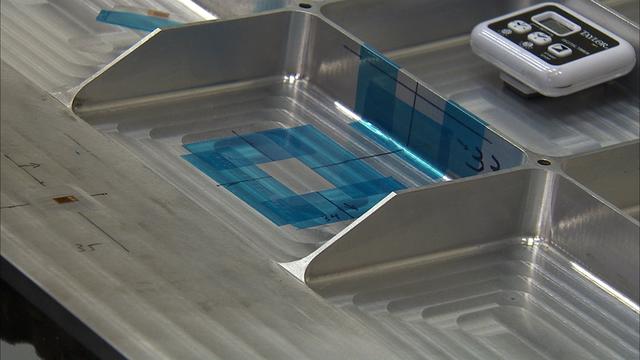
Under the goals of the Vision for Space Exploration, Ares I is a chief component of the cost-effective space transportation infrastructure being developed by NASA's Constellation Program. This transportation system will safely and reliably carry human explorers back to the moon, and then onward to Mars and other destinations in the solar system. The Ares I effort includes multiple project element teams at NASA centers and contract organizations around the nation, and is managed by the Exploration Launch Projects Office at NASA's Marshall Space Flight Center (MFSC). ATK Launch Systems near Brigham City, Utah, is the prime contractor for the first stage booster. ATK's subcontractor, United Space Alliance of Houston, is designing, developing and testing the parachutes at its facilities at NASA's Kennedy Space Center in Florida. NASA's Johnson Space Center in Houston hosts the Constellation Program and Orion Crew Capsule Project Office and provides test instrumentation and support personnel. Together, these teams are developing vehicle hardware, evolving proven technologies, and testing components and systems. Their work builds on powerful, reliable space shuttle propulsion elements and nearly a half-century of NASA space flight experience and technological advances. Ares I is an inline, two-stage rocket configuration topped by the Crew Exploration Vehicle, its service module, and a launch abort system. This HD video image depicts confidence testing of a manufactured aluminum panel that will fabricate the Ares I upper stage barrel. In this test, bent aluminum is stressed to breaking point and thoroughly examined. The panels are manufactured by AMRO Manufacturing located in El Monte, California. (Highest resolution available)
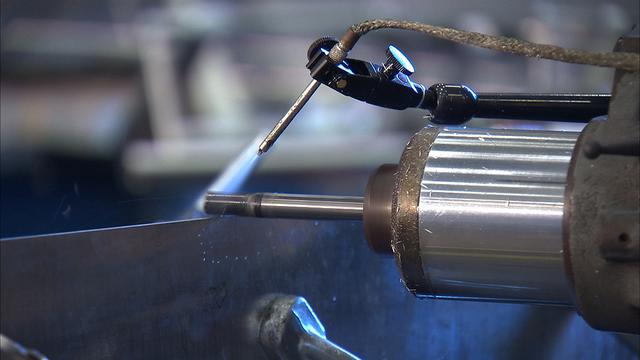
Under the goals of the Vision for Space Exploration, Ares I is a chief component of the cost-effective space transportation infrastructure being developed by NASA's Constellation Program. This transportation system will safely and reliably carry human explorers back to the moon, and then onward to Mars and other destinations in the solar system. The Ares I effort includes multiple project element teams at NASA centers and contract organizations around the nation, and is managed by the Exploration Launch Projects Office at NASA's Marshall Space Flight Center (MFSC). ATK Launch Systems near Brigham City, Utah, is the prime contractor for the first stage booster. ATK's subcontractor, United Space Alliance of Houston, is designing, developing and testing the parachutes at its facilities at NASA's Kennedy Space Center in Florida. NASA's Johnson Space Center in Houston hosts the Constellation Program and Orion Crew Capsule Project Office and provides test instrumentation and support personnel. Together, these teams are developing vehicle hardware, evolving proven technologies, and testing components and systems. Their work builds on powerful, reliable space shuttle propulsion elements and nearly a half-century of NASA space flight experience and technological advances. Ares I is an inline, two-stage rocket configuration topped by the Crew Exploration Vehicle, its service module, and a launch abort system. This HD video image depicts friction stir welding used in manufacturing aluminum panels that will fabricate the Ares I upper stage barrel. The panels are subjected to confidence tests in which the bent aluminum is stressed to breaking point and thoroughly examined. The panels are manufactured by AMRO Manufacturing located in El Monte, California. (Highest resolution available)
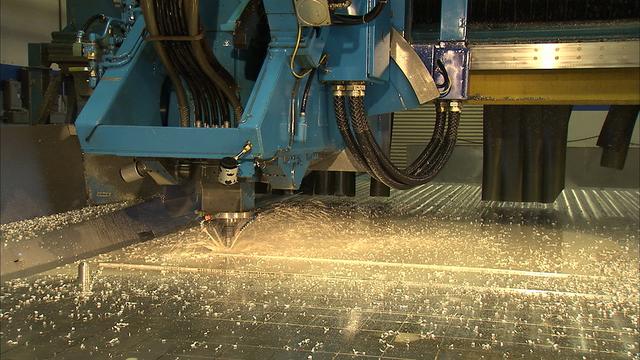
Under the goals of the Vision for Space Exploration, Ares I is a chief component of the cost-effective space transportation infrastructure being developed by NASA's Constellation Program. This transportation system will safely and reliably carry human explorers back to the moon, and then onward to Mars and other destinations in the solar system. The Ares I effort includes multiple project element teams at NASA centers and contract organizations around the nation, and is managed by the Exploration Launch Projects Office at NASA's Marshall Space Flight Center (MFSC). ATK Launch Systems near Brigham City, Utah, is the prime contractor for the first stage booster. ATK's subcontractor, United Space Alliance of Houston, is designing, developing and testing the parachutes at its facilities at NASA's Kennedy Space Center in Florida. NASA's Johnson Space Center in Houston hosts the Constellation Program and Orion Crew Capsule Project Office and provides test instrumentation and support personnel. Together, these teams are developing vehicle hardware, evolving proven technologies, and testing components and systems. Their work builds on powerful, reliable space shuttle propulsion elements and nearly a half-century of NASA space flight experience and technological advances. Ares I is an inline, two-stage rocket configuration topped by the Crew Exploration Vehicle, its service module, and a launch abort system. In this HD video image, processes for upper stage barrel fabrication are talking place. Aluminum panels are manufacturing process demonstration articles that will undergo testing until perfected. The panels are built by AMRO Manufacturing located in El Monte, California. (Largest resolution available)
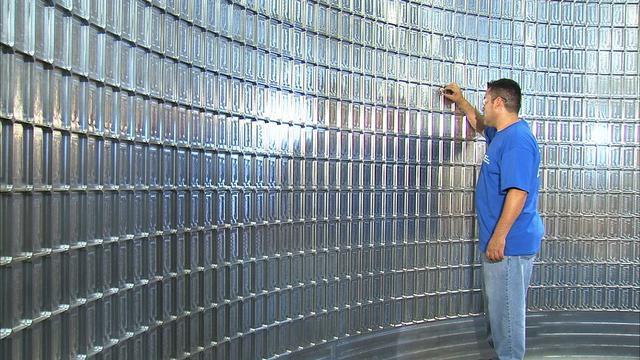
Under the goals of the Vision for Space Exploration, Ares I is a chief component of the cost-effective space transportation infrastructure being developed by NASA's Constellation Program. This transportation system will safely and reliably carry human explorers back to the moon, and then onward to Mars and other destinations in the solar system. The Ares I effort includes multiple project element teams at NASA centers and contract organizations around the nation, and is managed by the Exploration Launch Projects Office at NASA's Marshall Space Flight Center (MFSC). ATK Launch Systems near Brigham City, Utah, is the prime contractor for the first stage booster. ATK's subcontractor, United Space Alliance of Houston, is designing, developing and testing the parachutes at its facilities at NASA's Kennedy Space Center in Florida. NASA's Johnson Space Center in Houston hosts the Constellation Program and Orion Crew Capsule Project Office and provides test instrumentation and support personnel. Together, these teams are developing vehicle hardware, evolving proven technologies, and testing components and systems. Their work builds on powerful, reliable space shuttle propulsion elements and nearly a half-century of NASA space flight experience and technological advances. Ares I is an inline, two-stage rocket configuration topped by the Crew Exploration Vehicle, its service module, and a launch abort system. This HD video image depicts a manufactured panel that will be used for the Ares I upper stage barrel fabrication. The aluminum panels are manufacturing process demonstration articles that will undergo testing until perfected. The panels are built by AMRO Manufacturing located in El Monte, California. (Highest resolution available)
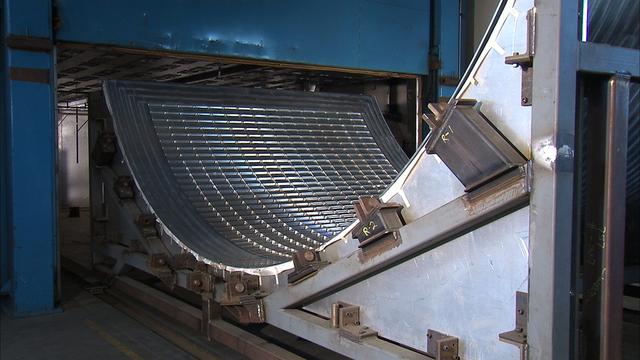
Under the goals of the Vision for Space Exploration, Ares I is a chief component of the cost-effective space transportation infrastructure being developed by NASA's Constellation Program. This transportation system will safely and reliably carry human explorers back to the moon, and then onward to Mars and other destinations in the solar system. The Ares I effort includes multiple project element teams at NASA centers and contract organizations around the nation, and is managed by the Exploration Launch Projects Office at NASA's Marshall Space Flight Center (MFSC). ATK Launch Systems near Brigham City, Utah, is the prime contractor for the first stage booster. ATK's subcontractor, United Space Alliance of Houston, is designing, developing and testing the parachutes at its facilities at NASA's Kennedy Space Center in Florida. NASA's Johnson Space Center in Houston hosts the Constellation Program and Orion Crew Capsule Project Office and provides test instrumentation and support personnel. Together, these teams are developing vehicle hardware, evolving proven technologies, and testing components and systems. Their work builds on powerful, reliable space shuttle propulsion elements and nearly a half-century of NASA space flight experience and technological advances. Ares I is an inline, two-stage rocket configuration topped by the Crew Exploration Vehicle, its service module, and a launch abort system. This HD video image depicts a manufactured aluminum panel that will be used to fabricate the Ares I upper stage barrel, undergoing a confidence panel test. In this test, the bent aluminum is stressed to breaking point and thoroughly examined. The panels are manufactured by AMRO Manufacturing located in El Monte, California. (Highest resolution available)
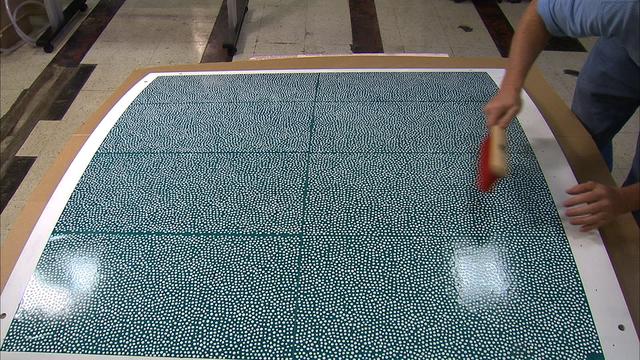
Under the goals of the Vision for Space Exploration, Ares I is a chief component of the cost-effective space transportation infrastructure being developed by NASA's Constellation Program. This transportation system will safely and reliably carry human explorers back to the moon, and then onward to Mars and other destinations in the solar system. The Ares I effort includes multiple project element teams at NASA centers and contract organizations around the nation, and is managed by the Exploration Launch Projects Office at NASA's Marshall Space Flight Center (MFSC). ATK Launch Systems near Brigham City, Utah, is the prime contractor for the first stage booster. ATK's subcontractor, United Space Alliance of Houston, is designing, developing and testing the parachutes at its facilities at NASA's Kennedy Space Center in Florida. NASA's Johnson Space Center in Houston hosts the Constellation Program and Orion Crew Capsule Project Office and provides test instrumentation and support personnel. Together, these teams are developing vehicle hardware, evolving proven technologies, and testing components and systems. Their work builds on powerful, reliable space shuttle propulsion elements and nearly a half-century of NASA space flight experience and technological advances. Ares I is an inline, two-stage rocket configuration topped by the Crew Exploration Vehicle, its service module, and a launch abort system. This HD video image, depicts a manufactured aluminum panel, that will be used to fabricate the Ares I upper stage barrel, undergoing a confidence panel test. In this test, the bent aluminum is stressed to breaking point and thoroughly examined. The panels are manufactured by AMRO Manufacturing located in El Monte, California. (Highest resolution available)
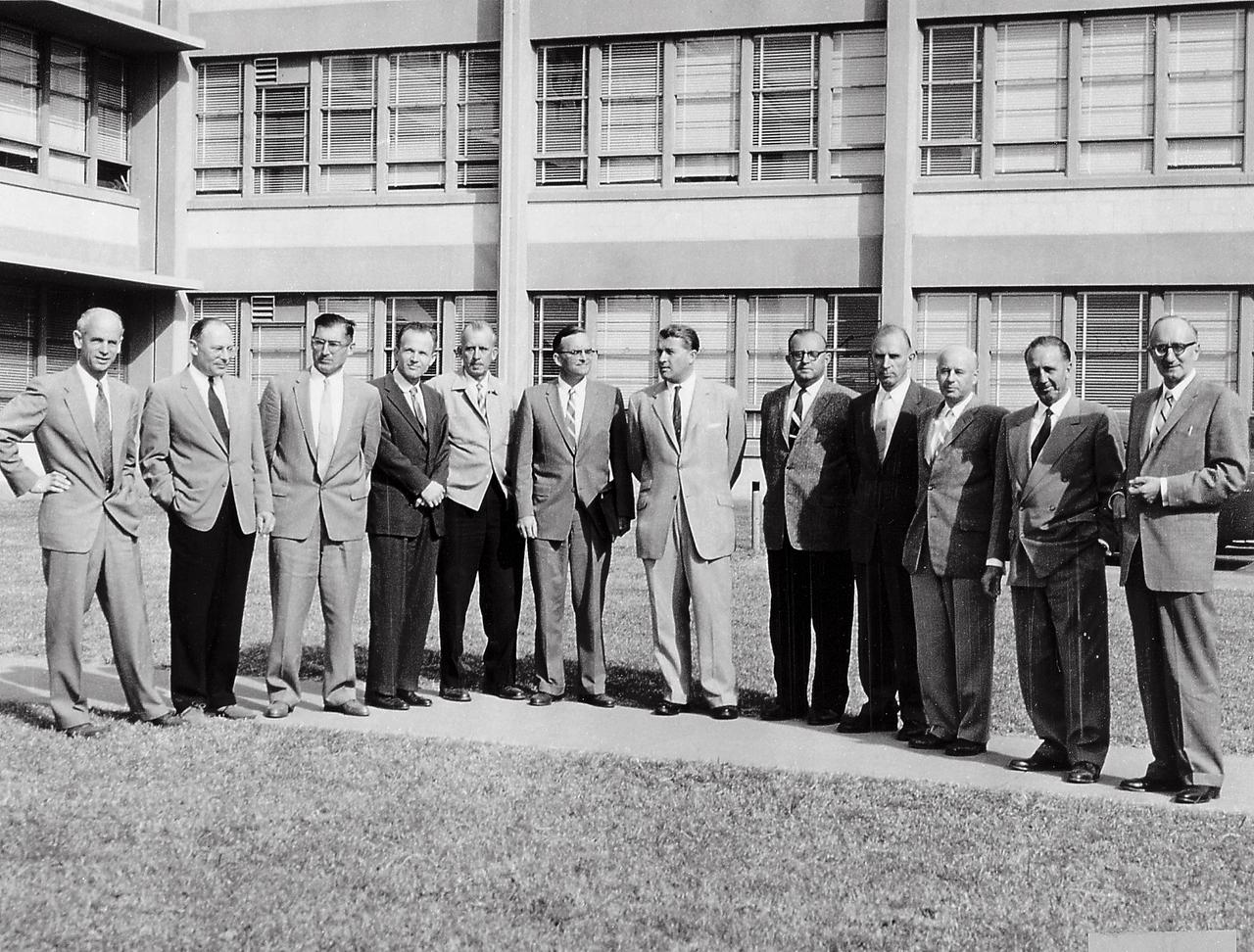
Twelve scientific specialists of the Peenemuende team at the front of Building 4488, Redstone Arsenal, Huntsville, Alabama. They led the Army's space efforts at ABMA before transfer of the team to National Aeronautic and Space Administration (NASA), George C. Marshall Space Flight Center (MSFC). (Left to right) Dr. Ernst Stuhlinger, Director, Research Projects Office; Dr. Helmut Hoelzer, Director, Computation Laboratory: Karl L. Heimburg, Director, Test Laboratory; Dr. Ernst Geissler, Director, Aeroballistics Laboratory; Erich W. Neubert, Director, Systems Analysis Reliability Laboratory; Dr. Walter Haeussermarn, Director, Guidance and Control Laboratory; Dr. Wernher von Braun, Director Development Operations Division; William A. Mrazek, Director, Structures and Mechanics Laboratory; Hans Hueter, Director, System Support Equipment Laboratory;Eberhard Rees, Deputy Director, Development Operations Division; Dr. Kurt Debus, Director Missile Firing Laboratory; Hans H. Maus, Director, Fabrication and Assembly Engineering Laboratory
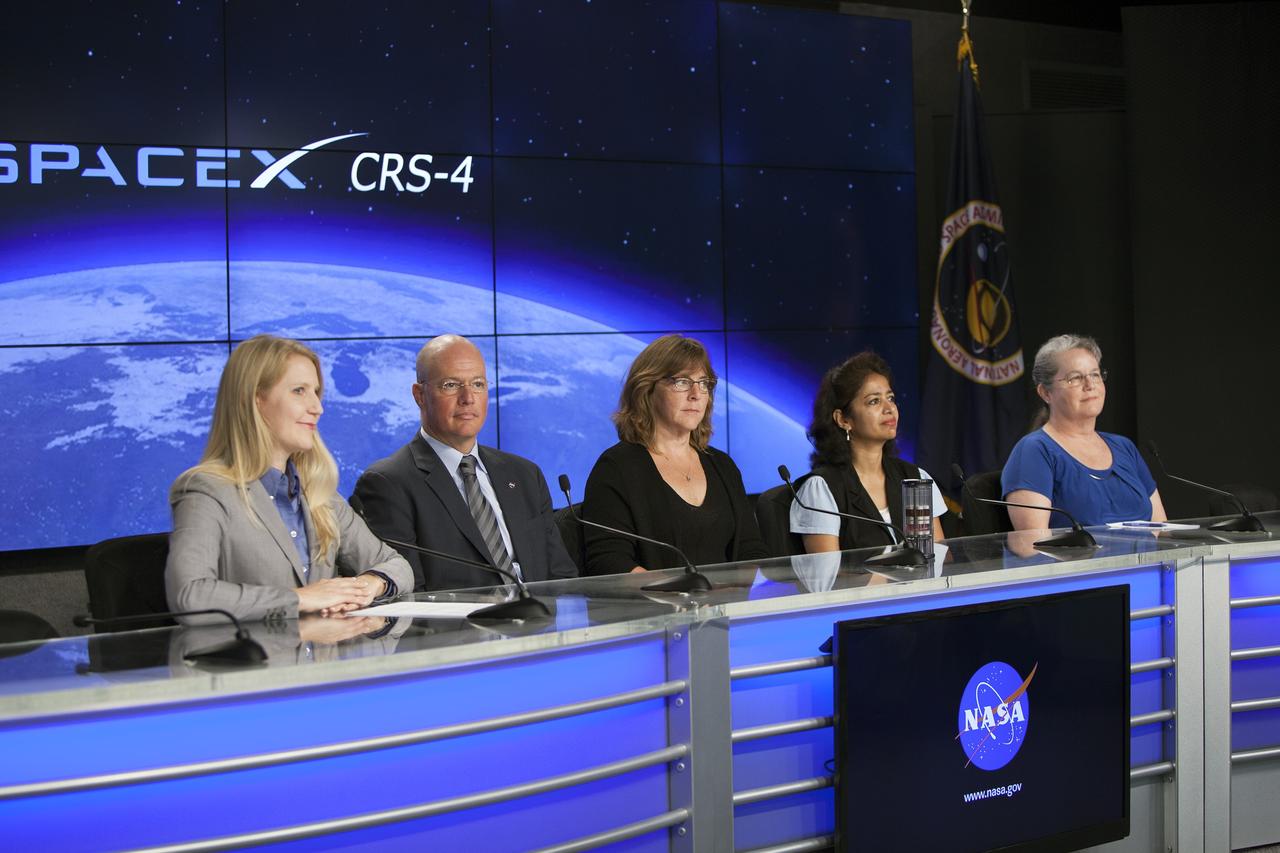
CAPE CANAVERAL, Fla. – Members of an ISS Science Panel on Model Organisms brief media representatives in Kennedy Space Center’s Press Site auditorium in preparation for the launch of the SpaceX CRS-4 mission to resupply the International Space Station. From left are Stephanie Schierholz, NASA Public Affairs, Marshall Porterfield, division director, Space Life and Physical Sciences, HEOMD, Shiela Neilsen, principal investigator, Micro-8, University of Montana, Sharmila Bhattacharya, principal investigator, Ames Student Fruit-Fly Experiment, NASA Ames Research Center, and Ruth Globus, project scientist, Rodent Habitat/Rodent Research-1, NASA Ames. The mission is the fourth of 12 SpaceX flights NASA contracted with the company to resupply the space station. It will be the fifth trip by a Dragon spacecraft to the orbiting laboratory. The spacecraft’s 2.5 tons of supplies, science experiments, and technology demonstrations include critical materials to support 255 science and research investigations that will occur during the station's Expeditions 41 and 42. Liftoff is targeted for an instantaneous window at 2:14 a.m. EDT. To learn more about the mission, visit http://www.nasa.gov/mission_pages/station/structure/launch/index.html. Photo credit: NASA/Jim Grossmann
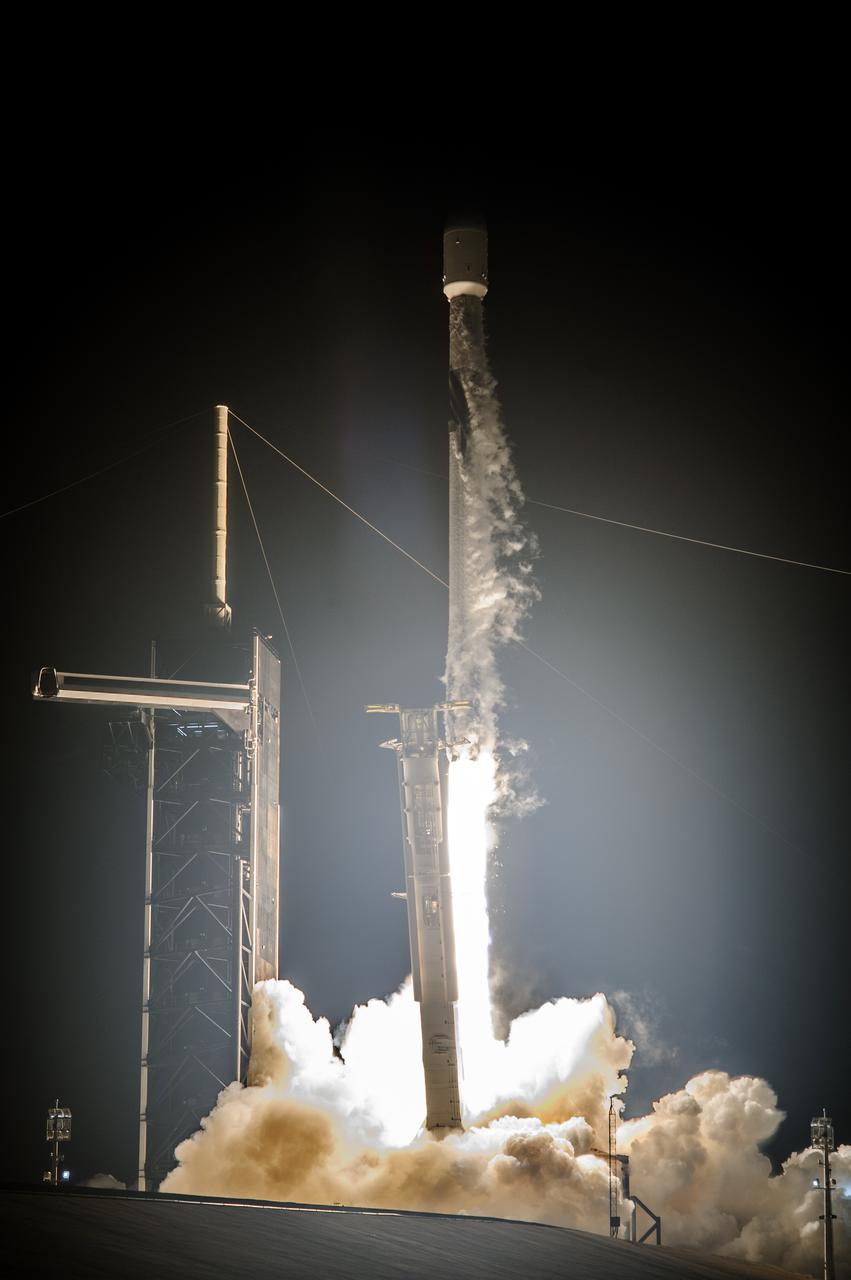
A SpaceX Falcon 9 rocket soars upward after liftoff from the launch pad at Launch Complex 39A at NASA’s Kennedy Space Center in Florida at 1 a.m. EST on Thursday, Dec. 9, 2021. The Falcon 9 carries NASA’s Imaging X-ray Polarimetry Explorer (IXPE) spacecraft. NASA’s Launch Services Program managed this launch. NASA’s Marshall Space Flight Center in Huntsville, Alabama, manages the IXPE mission. Ball Aerospace, headquartered in Broomfield, Colorado, manages spacecraft operations with support from the University of Colorado at Boulder. NASA’s Goddard Space Flight Center in Greenbelt, Maryland, manages the Explorers Program for the agency’s Science Mission Directorate in Washington. The IXPE spacecraft includes three space telescopes with sensitive detectors capable of measuring the polarization of cosmic X-rays, allowing scientists to answer fundamental questions about extremely complex environments in space where gravitational, electric, and magnetic fields are at their limits. The project is a collaboration between NASA and the Italian Space Agency.
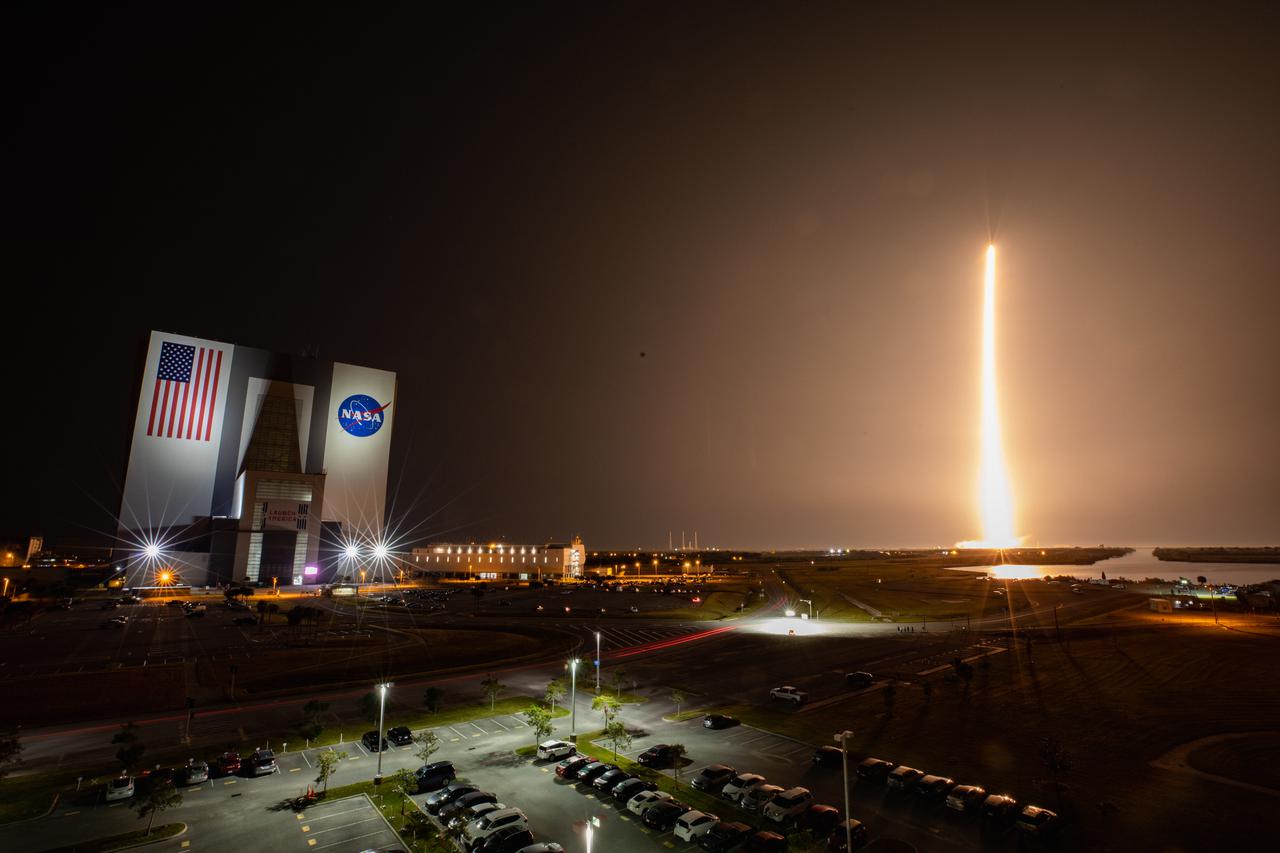
A SpaceX Falcon 9 rocket soars upward after liftoff from the launch pad at Launch Complex 39A at NASA’s Kennedy Space Center in Florida at 1 a.m. EST on Thursday, Dec. 9, 2021. The Falcon 9 carries NASA’s Imaging X-ray Polarimetry Explorer (IXPE) spacecraft. NASA’s Launch Services Program managed this launch. NASA’s Marshall Space Flight Center in Huntsville, Alabama, manages the IXPE mission. Ball Aerospace, headquartered in Broomfield, Colorado, manages spacecraft operations with support from the University of Colorado at Boulder. NASA’s Goddard Space Flight Center in Greenbelt, Maryland, manages the Explorers Program for the agency’s Science Mission Directorate in Washington. The IXPE spacecraft includes three space telescopes with sensitive detectors capable of measuring the polarization of cosmic X-rays, allowing scientists to answer fundamental questions about extremely complex environments in space where gravitational, electric, and magnetic fields are at their limits. The project is a collaboration between NASA and the Italian Space Agency.
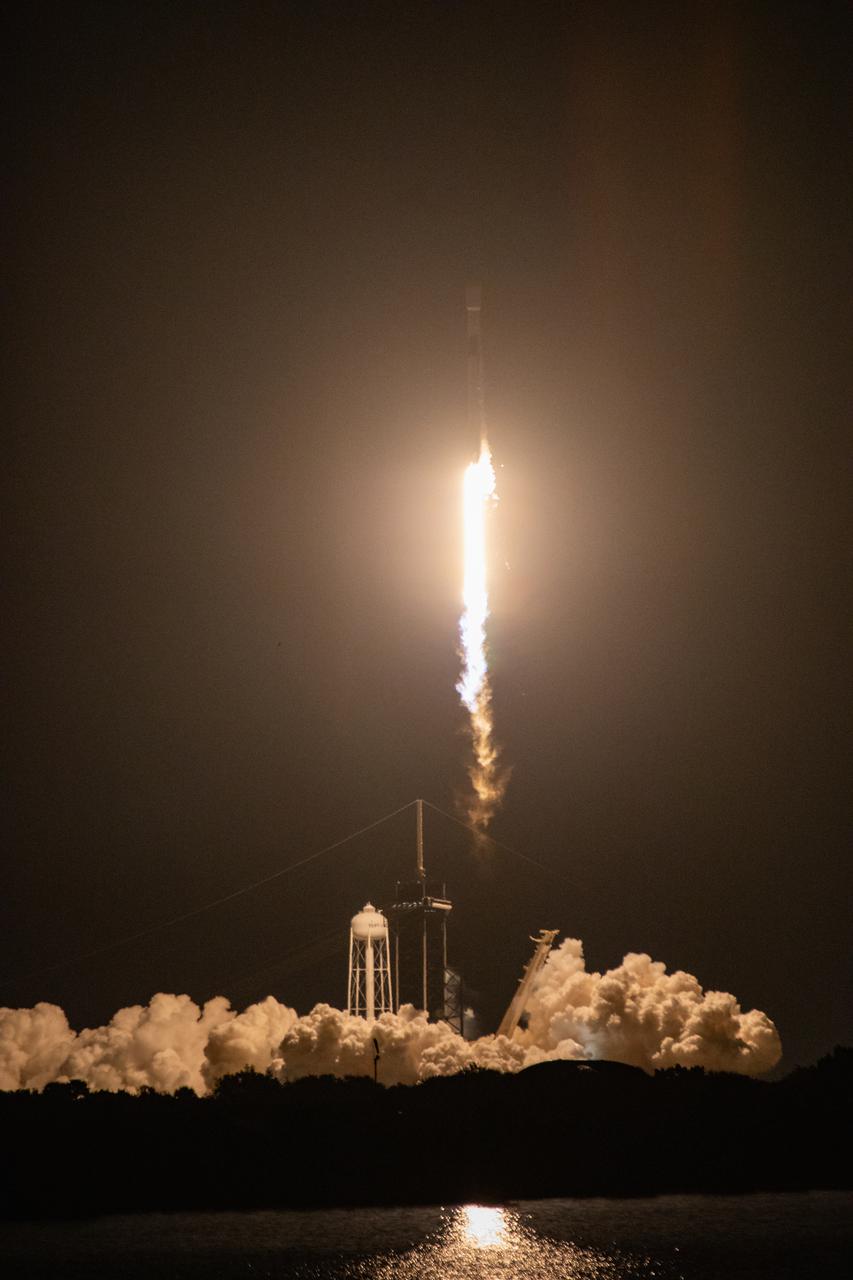
A SpaceX Falcon 9 rocket soars upward after liftoff from the launch pad at Launch Complex 39A at NASA’s Kennedy Space Center in Florida at 1 a.m. EST on Thursday, Dec. 9, 2021. The Falcon 9 carries NASA’s Imaging X-ray Polarimetry Explorer (IXPE) spacecraft. NASA’s Launch Services Program managed this launch. NASA’s Marshall Space Flight Center in Huntsville, Alabama, manages the IXPE mission. Ball Aerospace, headquartered in Broomfield, Colorado, manages spacecraft operations with support from the University of Colorado at Boulder. NASA’s Goddard Space Flight Center in Greenbelt, Maryland, manages the Explorers Program for the agency’s Science Mission Directorate in Washington. The IXPE spacecraft includes three space telescopes with sensitive detectors capable of measuring the polarization of cosmic X-rays, allowing scientists to answer fundamental questions about extremely complex environments in space where gravitational, electric, and magnetic fields are at their limits. The project is a collaboration between NASA and the Italian Space Agency.
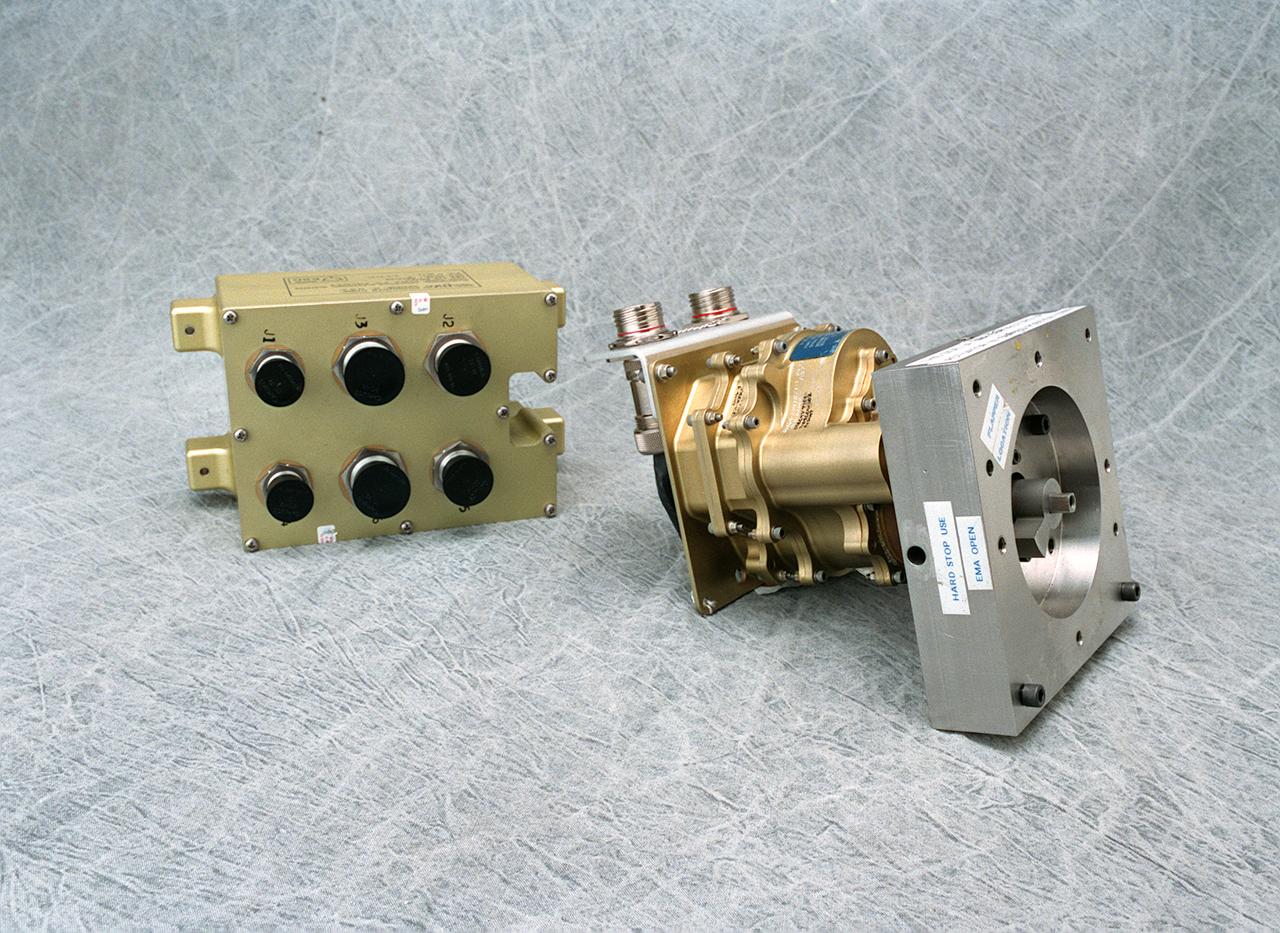
The electro-mechanical actuator, a new electronics technology, is an electronic system that provides the force needed to move valves that control the flow of propellant to the engine. It is proving to be advantageous for the main propulsion system plarned for a second generation reusable launch vehicle. Hydraulic actuators have been used successfully in rocket propulsion systems. However, they can leak when high pressure is exerted on such a fluid-filled hydraulic system. Also, hydraulic systems require significant maintenance and support equipment. The electro-mechanical actuator is proving to be low maintenance and the system weighs less than a hydraulic system. The electronic controller is a separate unit powering the actuator. Each actuator has its own control box. If a problem is detected, it can be replaced by simply removing one defective unit. The hydraulic systems must sustain significant hydraulic pressures in a rocket engine regardless of demand. The electro-mechanical actuator utilizes power only when needed. A goal of the Second Generation Reusable Launch Vehicle Program is to substantially improve safety and reliability while reducing the high cost of space travel. The electro-mechanical actuator was developed by the Propulsion Projects Office of the Second Generation Reusable Launch Vehicle Program at the Marshall Space Flight Center.
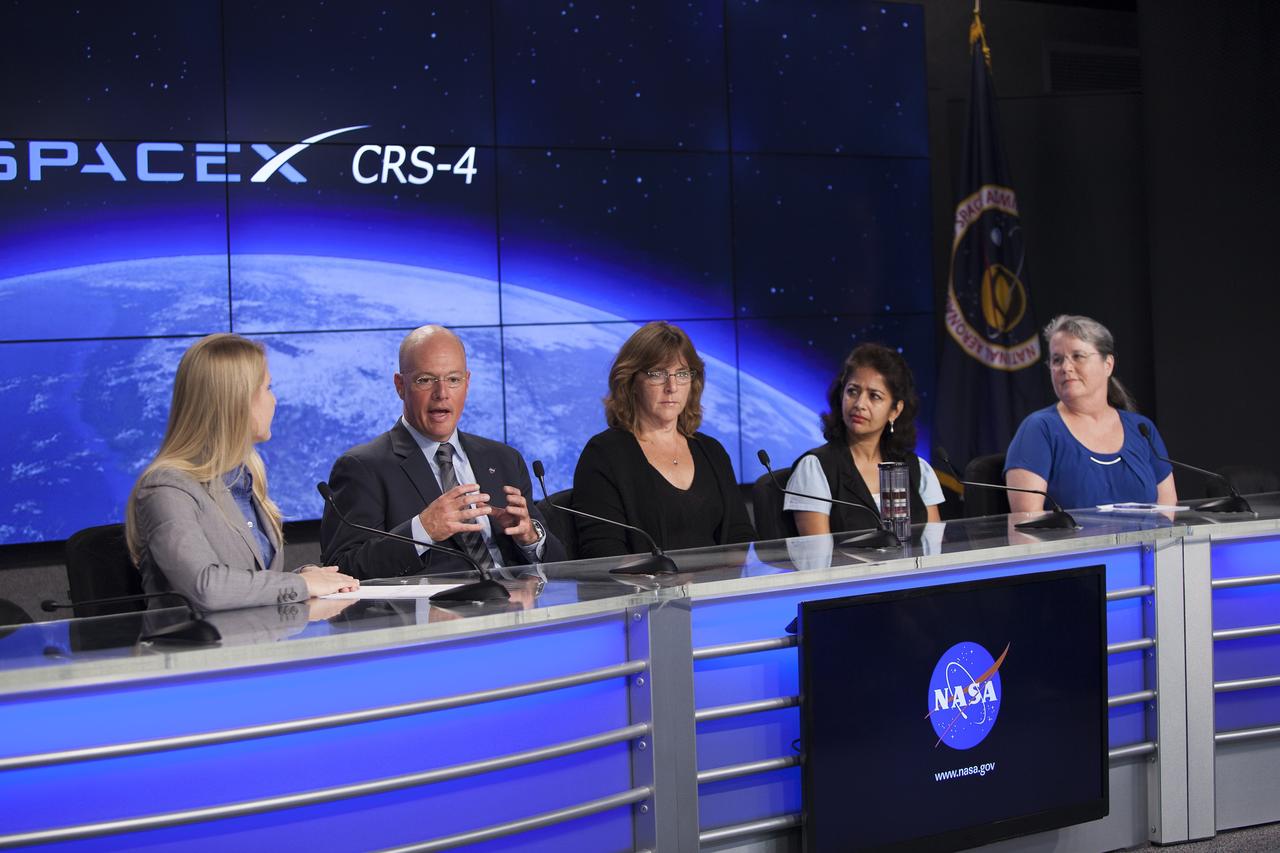
CAPE CANAVERAL, Fla. – Members of an ISS Science Panel on Model Organisms brief media representatives in Kennedy Space Center’s Press Site auditorium in preparation for the launch of the SpaceX CRS-4 mission to resupply the International Space Station. From left are Stephanie Schierholz, NASA Public Affairs, Marshall Porterfield, division director, Space Life and Physical Sciences, HEOMD, Shiela Neilsen, principal investigator, Micro-8, University of Montana, Sharmila Bhattacharya, principal investigator, Ames Student Fruit-Fly Experiment, NASA Ames Research Center, and Ruth Globus, project scientist, Rodent Habitat/Rodent Research-1, NASA Ames. The mission is the fourth of 12 SpaceX flights NASA contracted with the company to resupply the space station. It will be the fifth trip by a Dragon spacecraft to the orbiting laboratory. The spacecraft’s 2.5 tons of supplies, science experiments, and technology demonstrations include critical materials to support 255 science and research investigations that will occur during the station's Expeditions 41 and 42. Liftoff is targeted for an instantaneous window at 2:14 a.m. EDT. To learn more about the mission, visit http://www.nasa.gov/mission_pages/station/structure/launch/index.html. Photo credit: NASA/Jim Grossmann
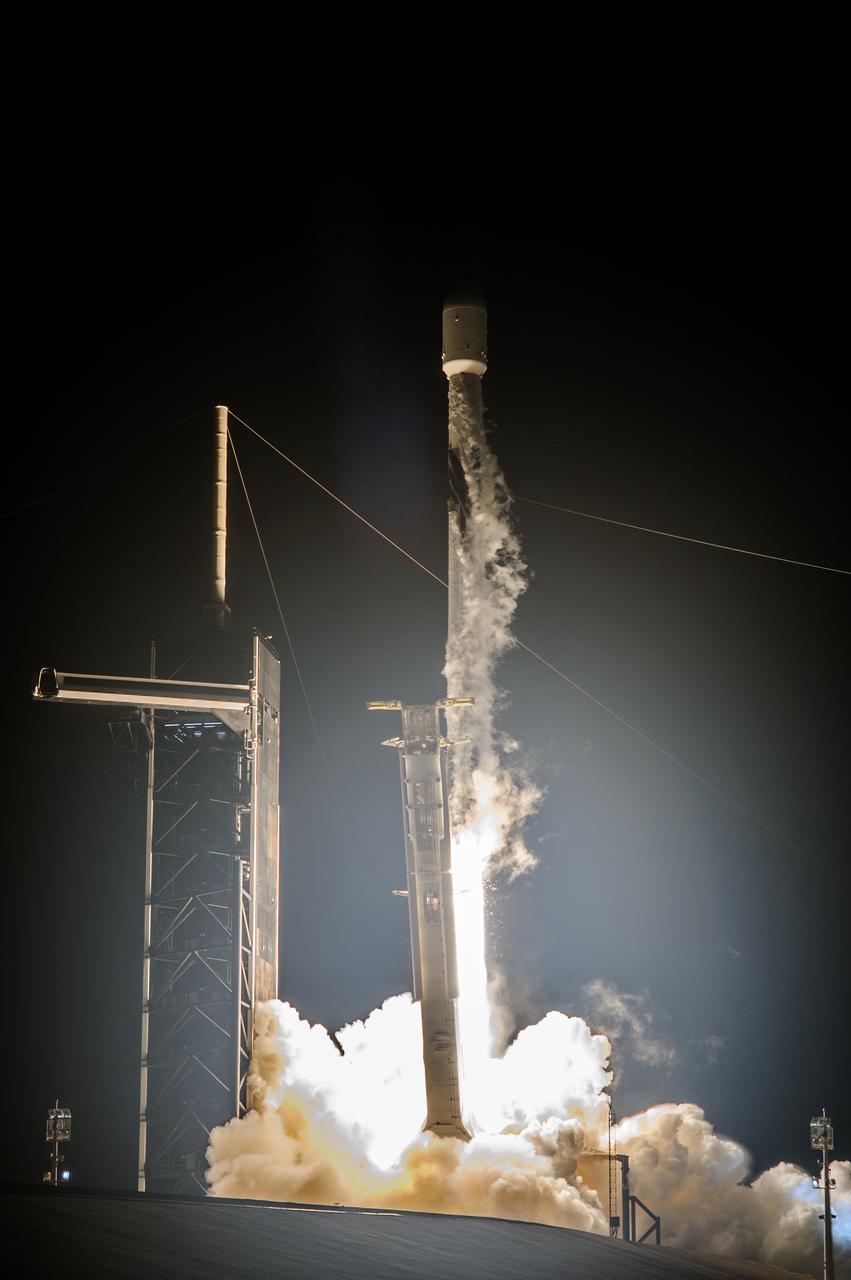
A SpaceX Falcon 9 rocket soars upward after liftoff from the launch pad at Launch Complex 39A at NASA’s Kennedy Space Center in Florida at 1 a.m. EST on Thursday, Dec. 9, 2021. The Falcon 9 carries NASA’s Imaging X-ray Polarimetry Explorer (IXPE) spacecraft. NASA’s Launch Services Program managed this launch. NASA’s Marshall Space Flight Center in Huntsville, Alabama, manages the IXPE mission. Ball Aerospace, headquartered in Broomfield, Colorado, manages spacecraft operations with support from the University of Colorado at Boulder. NASA’s Goddard Space Flight Center in Greenbelt, Maryland, manages the Explorers Program for the agency’s Science Mission Directorate in Washington. The IXPE spacecraft includes three space telescopes with sensitive detectors capable of measuring the polarization of cosmic X-rays, allowing scientists to answer fundamental questions about extremely complex environments in space where gravitational, electric, and magnetic fields are at their limits. The project is a collaboration between NASA and the Italian Space Agency.
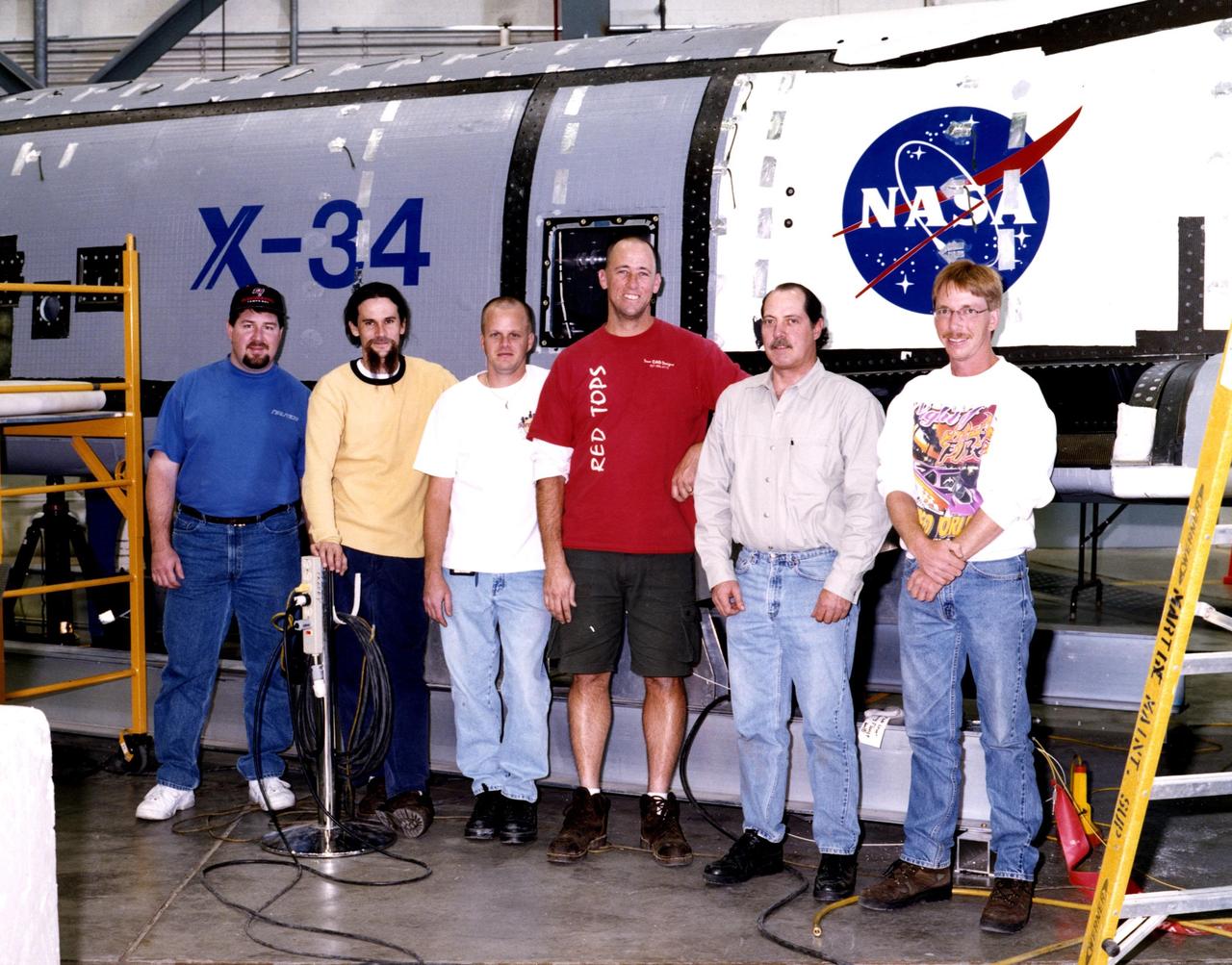
Six of the KSC workers who supported recent X-34 modifications pose in front of the modified A-1A vehicle at Edwards Air Force Base, Calif. From left are Mike Lane, Roger Cartier, Dave Rowell, Mike Dininny, Bryan Taylor and James Niehoff Jr. Not shown are Kevin Boughner and Jerry Moscoso. Since September, the eight NASA engineering technicians from KSC's Engineering Prototype Lab have assisted Orbital Sciences Corporation and NASA's Dryden Flight Research Center in the complex process of converting the X-34 A-1 vehicle from captive carry status to unpowered flight status, known as A-1A. The X-34 is 58.3 feet long, 27.7 feet wide from wing tip to wing tip, and 11.5 feet tall from the bottom of the fuselage to the top of the tail. The autonomously operated technology demonstrator will be air-launched from an L-1011 airplane and should be capable of flying eight times the speed of sound, reaching an altitude of 250,000 feet. The X-34 Project is managed by NASA's Marshall Space Flight Center in Huntsville, Ala
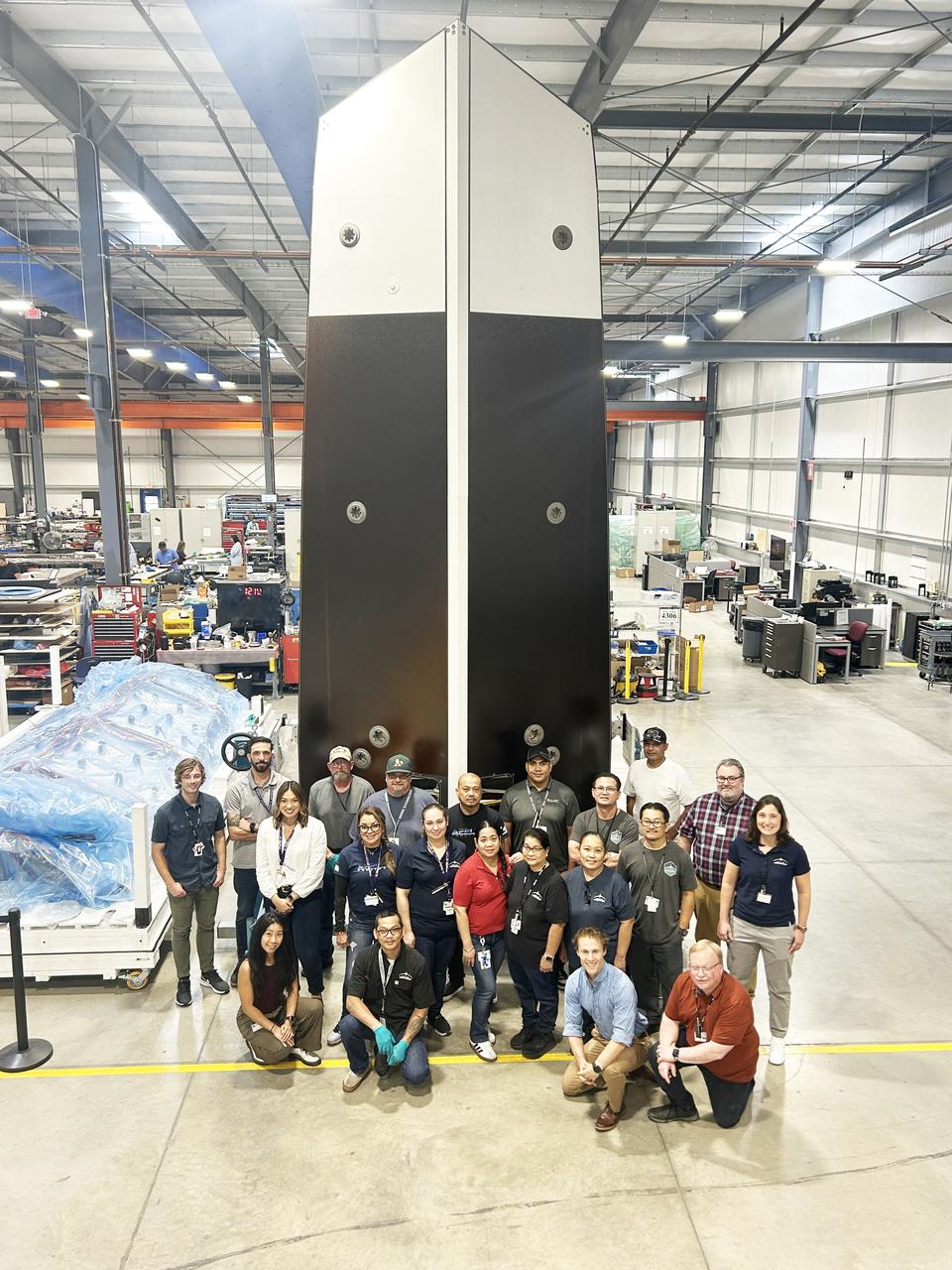
The sunshade for NASA’s Near-Earth Object (NEO) Surveyor mission towers above a fixture at supplier Applied Aerospace in Stockton, California, in September 2025. Standing at over 20 feet (6 meters) high, the sunshade is the largest component of spacecraft. The structure was next shipped to BAE Systems in Boulder, Colorado, for a “fit check” with the spacecraft bus. For scale, technicians and engineers from the project in front of the sunshade. The sunshade’s Sun-facing surface (visible here) will next be fitted with solar panels that will generate power for the spacecraft after launch. The spacecraft’s instrument enclosure, which houses the telescope and sensitive infrared cameras, will be located behind the sunshade, allowing the spacecraft to detect and track near-Earth objects that would otherwise be hidden by the Sun’s glare. Targeting launch in late 2027, the NEO Surveyor mission is led by Professor Amy Mainzer at the University of California, Los Angeles for NASA’s Planetary Defense Coordination Office and is being managed by the agency’s Jet Propulsion Laboratory in Southern California for the Planetary Missions Program Office at NASA’s Marshall Space Flight Center in Huntsville, Alabama. BAE Systems and the Space Dynamics Laboratory in Logan, Utah, and Teledyne are among the companies that were contracted to build the spacecraft and its instrumentation. The Laboratory for Atmospheric and Space Physics at the University of Colorado Boulder will support operations, and IPAC at Caltech in Pasadena, California, is responsible for producing some of the mission’s data products. Caltech manages JPL for NASA. More information about NEO Surveyor is available at: https://science.nasa.gov/mission/neo-surveyor/

In this illustration showing NEO Surveyor, NASA's next-generation near-Earth object hunter, the spacecraft floats in an infrared starfield containing stars, star clusters, gas, and dust. More than 100 asteroids can be seen as red dots, with some of them visible in a track that shows how they were captured at different times as they marched across the sky. This starfield was observed by NASA's Wide-field Infrared Survey Explorer, or WISE, during its primary all-sky survey in March 2010 before it was put into hibernation a year later. In December 2013, the space telescope was reactivated to search for more asteroids as the NEOWISE mission. NASA's NEO Surveyor will build upon the successes of NEOWISE as the first space mission built specifically to find large numbers of hazardous asteroids and comets. The space telescope will launch to a region of gravitational stability between the Earth and the Sun called the L1 Lagrange point, where the spacecraft will orbit during its five-year primary mission. From this location, the space telescope will view the solar system in infrared wavelengths &ndash light that is invisible to the human eye. Because those wavelengths are mostly blocked by Earth's atmosphere, larger ground-based observatories may miss near-Earth objects that NEO Surveyor will be able to spot from space by using its modest light-collecting aperture of nearly 20 inches (50 centimeters). NEO Surveyor's cutting-edge detectors are designed to observe two heat-sensitive infrared bands that were chosen specifically so the spacecraft can track the most challenging-to-find near-Earth objects, such as dark asteroids and comets that don't reflect much visible light. In the infrared wavelengths to which NEO Surveyor is sensitive, these objects glow as they are heated by sunlight. In addition, NEO Surveyor will be able to find asteroids that approach Earth from the direction of the Sun, as well as those that lead and trail our planet's orbit, where they are typically obscured by the glare of sunlight – objects known as Earth Trojans. The mission is tasked by NASA's Planetary Science Division within the Science Mission Directorate; program oversight is provided by the PDCO, which was established in 2016 to manage the agency's ongoing efforts in planetary defense. NASA's Planetary Missions Program Office at Marshall Space Flight Center provides program management for NEO Surveyor. The project is being developed by JPL and is led by survey director Amy Mainzer at the University of Arizona. Established aerospace and engineering companies have been contracted to build the spacecraft and its instrumentation, including Ball Aerospace , Space Dynamics Laboratory, and Teledyne. The Laboratory for Atmospheric and Space Physics at the University of Colorado, Boulder will support operations, and IPAC-Caltech in Pasadena, California, is responsible for processing survey data and producing the mission's data products. Caltech manages JPL for NASA. https://photojournal.jpl.nasa.gov/catalog/PIA25253