
CAPE CANAVERAL, Fla. -- In the Thermal Protection System Facility NASA's Kennedy Space Center in Florida, agency astronaut candidates are briefed on tiles being manufactured for the agency's Orion spacecraft. TPSF manager, Martin Wilson of Jacobs Technology, has just placed a tile sample in an oven to demonstrate its ability to protect a spacecraft during the heat of reentry. Plans call for the Lockheed Martin-built Orion to launch atop a United Launch Alliance Delta IV Heavy rocket from Cape Canaveral Air Force Station on Exploration Flight Test EFT-1 later this year. The astronaut class of 2013 was selected by NASA after an extensive year-and-a-half search. The new group will help the agency push the boundaries of exploration and travel to new destinations in the solar system. To learn more about the astronaut class of 2013, visit: http://www.nasa.gov/astronauts/2013astroclass.html Photo credit: NASA/Kim Shiflett
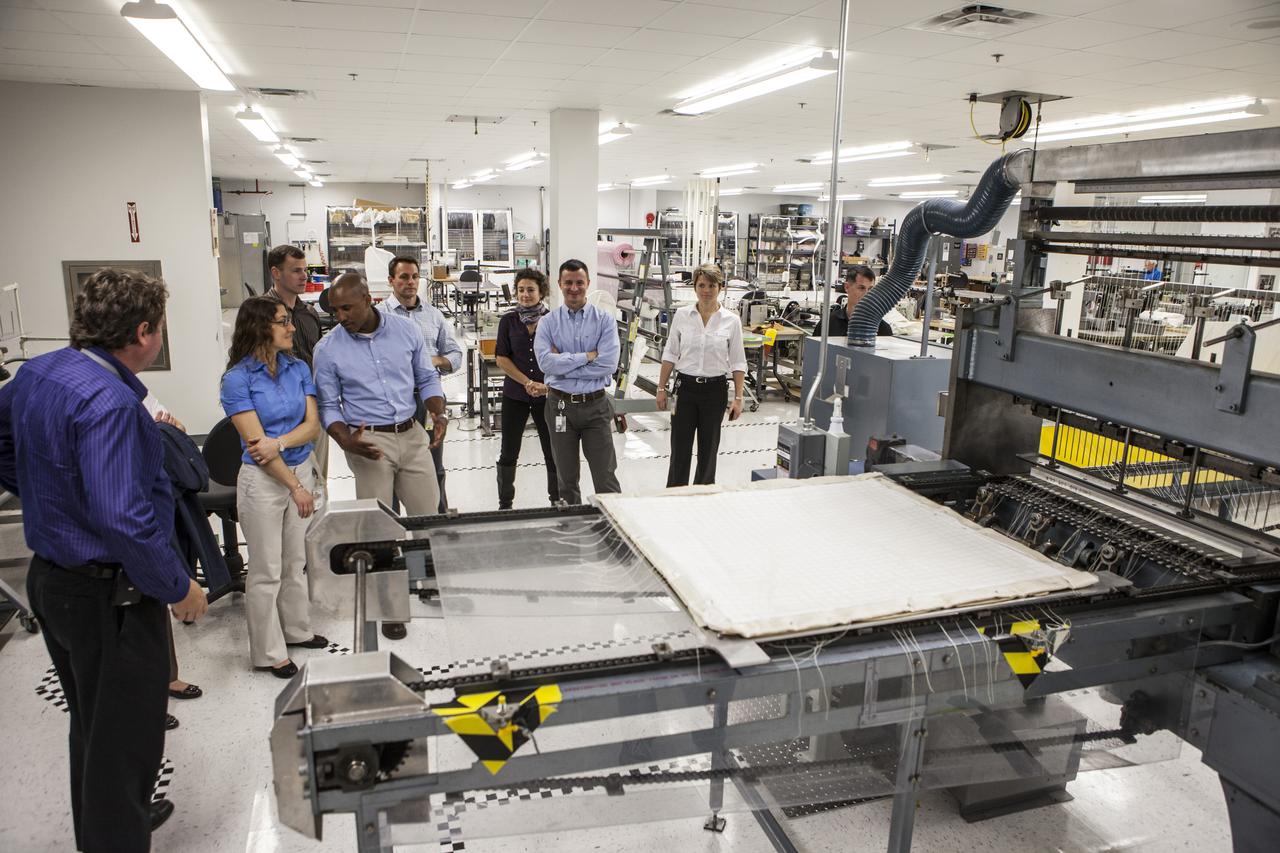
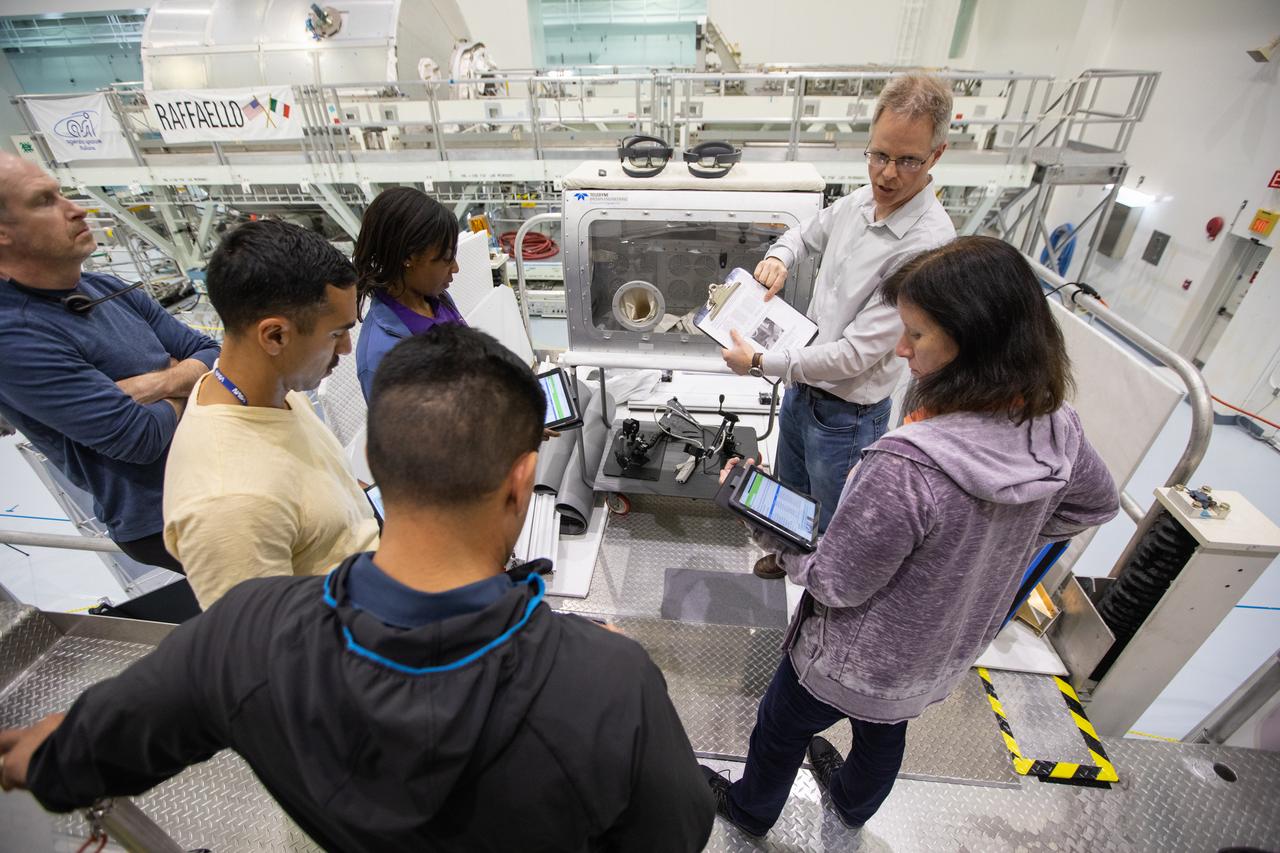
CAPE CANAVERAL, Fla. -- In the Thermal Protection System Facility NASA's Kennedy Space Center in Florida, agency astronaut candidates are briefed on thermal blankets being manufactured for agency spacecraft by TPSF manager, Martin Wilson of Jacobs Technology, far left. Participating in the briefing, from the left, are Christina Hammock, Tyler ‘Nick’ Hague, Victor Glover, John Cassada, Jessica Meir, Andrew Morgan and Anne McClain. Plans call for the Lockheed Martin-built Orion to launch atop a United Launch Alliance Delta IV Heavy rocket from Cape Canaveral Air Force Station on Exploration Flight Test EFT-1 later this year. The astronaut class of 2013 was selected by NASA after an extensive year-and-a-half search. The new group will help the agency push the boundaries of exploration and travel to new destinations in the solar system. To learn more about the astronaut class of 2013, visit: http://www.nasa.gov/astronauts/2013astroclass.html Photo credit: NASA/Kim Shiflett
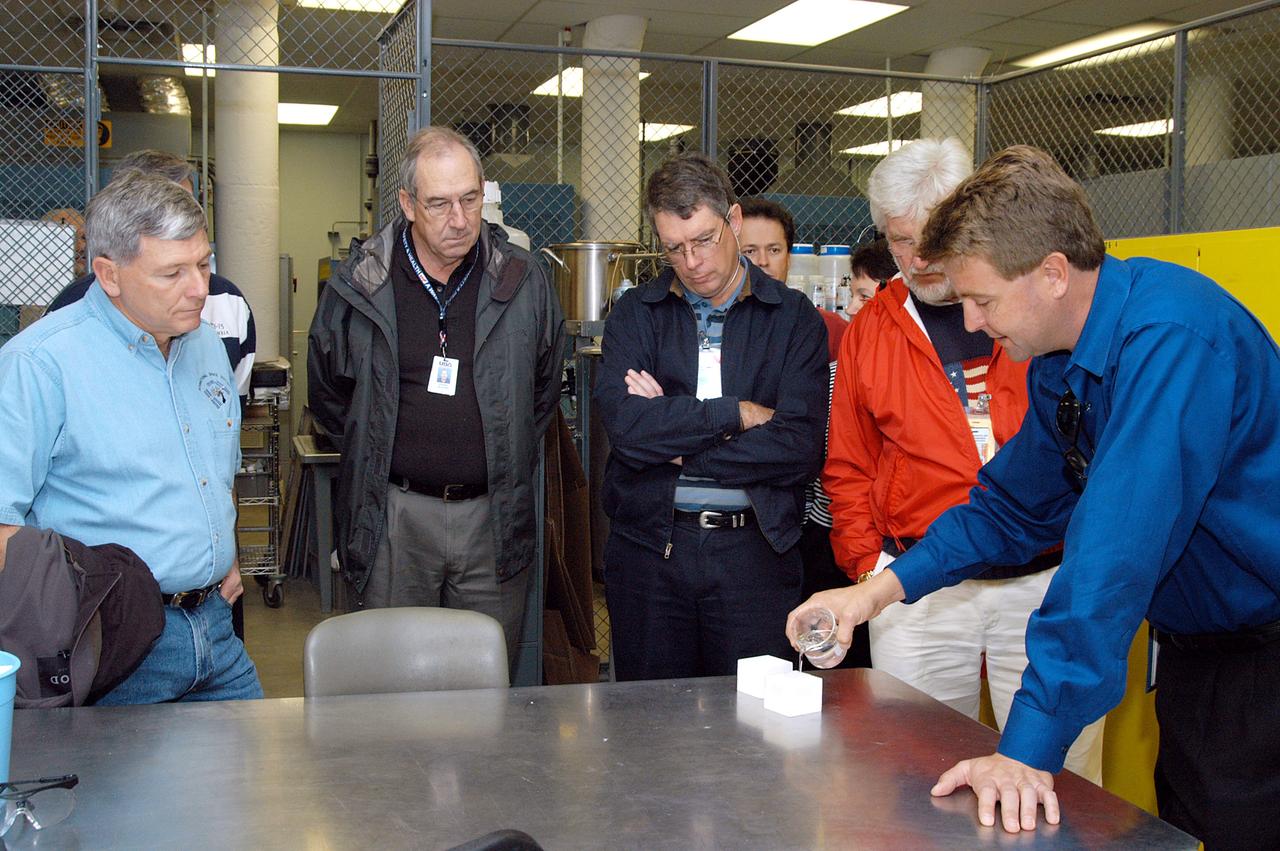
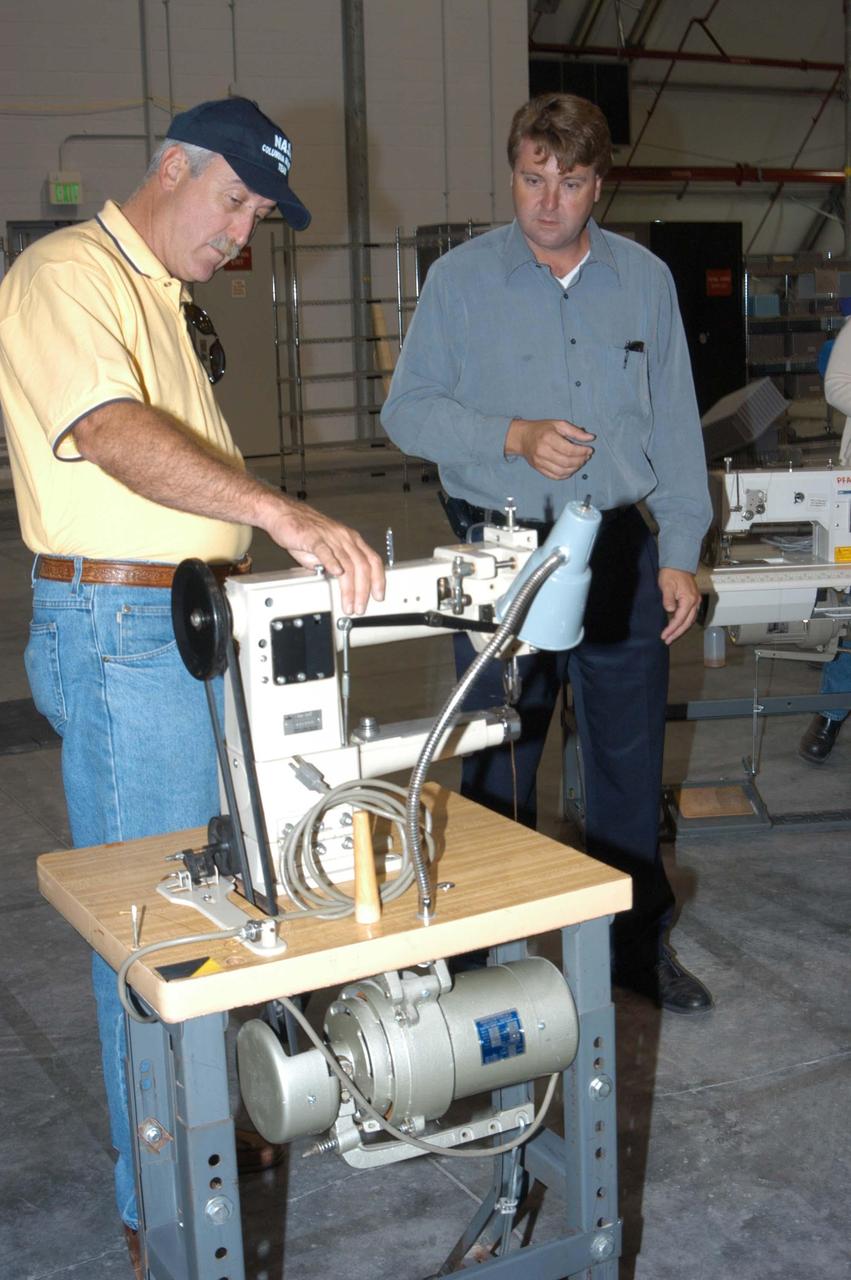
KENNEDY SPACE CENTER, FLA. -- From left, NASA Deputy Associate Administrator for Space Station and Shuttle Programs Michael Kostelnik and United Space Alliance (USA) Vice President and Space Shuttle Program Manager Howard DeCastro are briefed on the properties of the tile used in the Shuttle's Thermal Protection System (TPS) by USA Manager of the TPS Facility Martin Wilson (right). NASA and USA Space Shuttle program management are participating in a leadership workday. The day is intended to provide management with an in-depth, hands-on look at Shuttle processing activities at KSC.
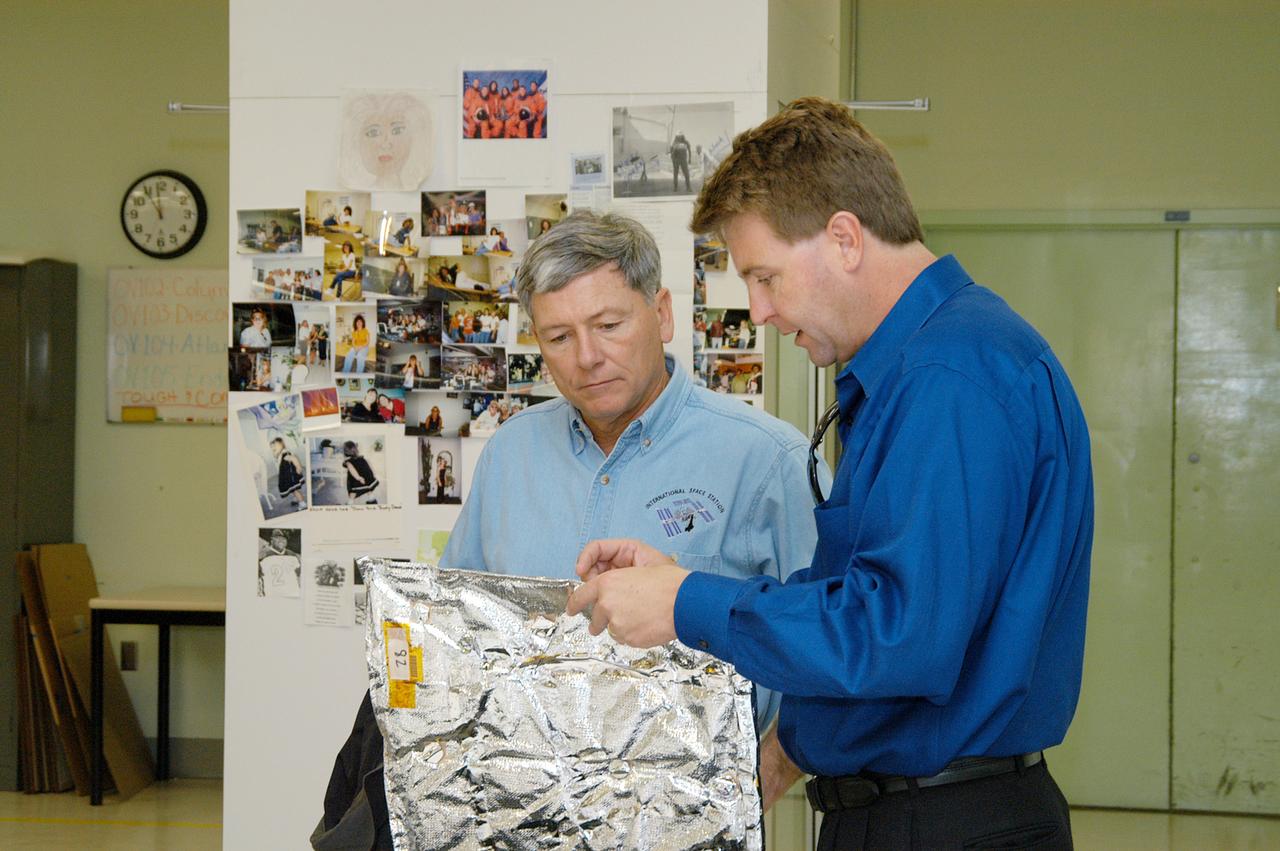
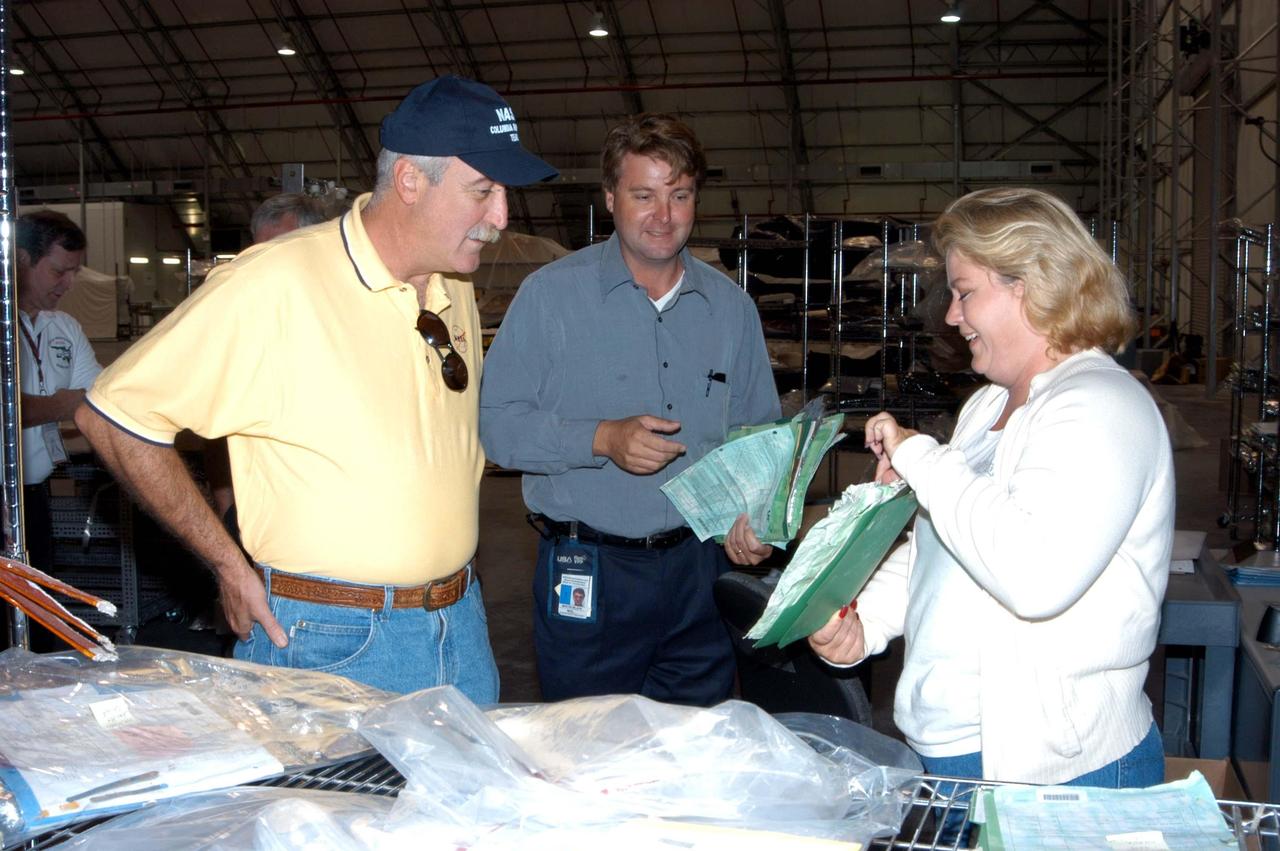
KENNEDY SPACE CENTER, FLA. -- United Space Alliance (USA) Manager of the Thermal Protection System (TPS) Facility Martin Wilson (right) briefs NASA Deputy Associate Administrator for Space Station and Shuttle Programs Michael Kostelnik (left) on the properties of a thermal blanket used in the Shuttle's TPS. NASA and USA Space Shuttle program management are participating in a leadership workday. The day is intended to provide management with an in-depth, hands-on look at Shuttle processing activities at KSC.
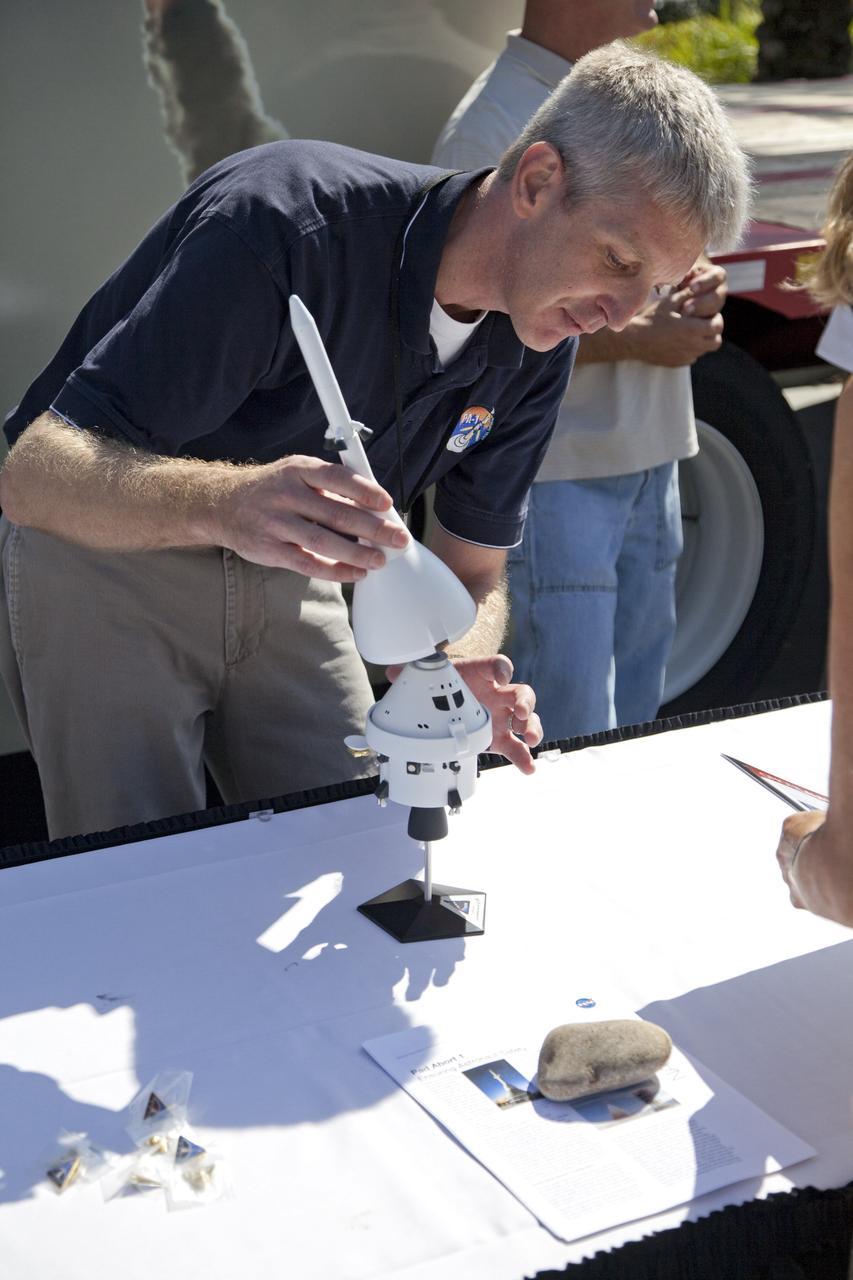
CAPE CANAVERAL, Fla. -- At the Kennedy Space Center Visitor Complex in Florida, NASA Orion Production Manager Scott Wilson shows tourists how an Orion crew exploration vehicle and its launch abort system would be stacked for launch. For information on NASA's future plans, visit www.nasa.gov. Photo credit: NASA/Frankie Martin

CAPE CANAVERAL, Fla. – Charles Bolden, NASA administrator, center, is shown the high bay at the Operations and Checkout Building at NASA's Kennedy Space Center in Florida by NASA's Scott Wilson, left, and Lockheed Martin's Jules Schneider, right. Lockheed Martin is processing an Orion spacecraft that will make an uncrewed flight test in 2014. Photo credit: NASA/Kim Shifflett
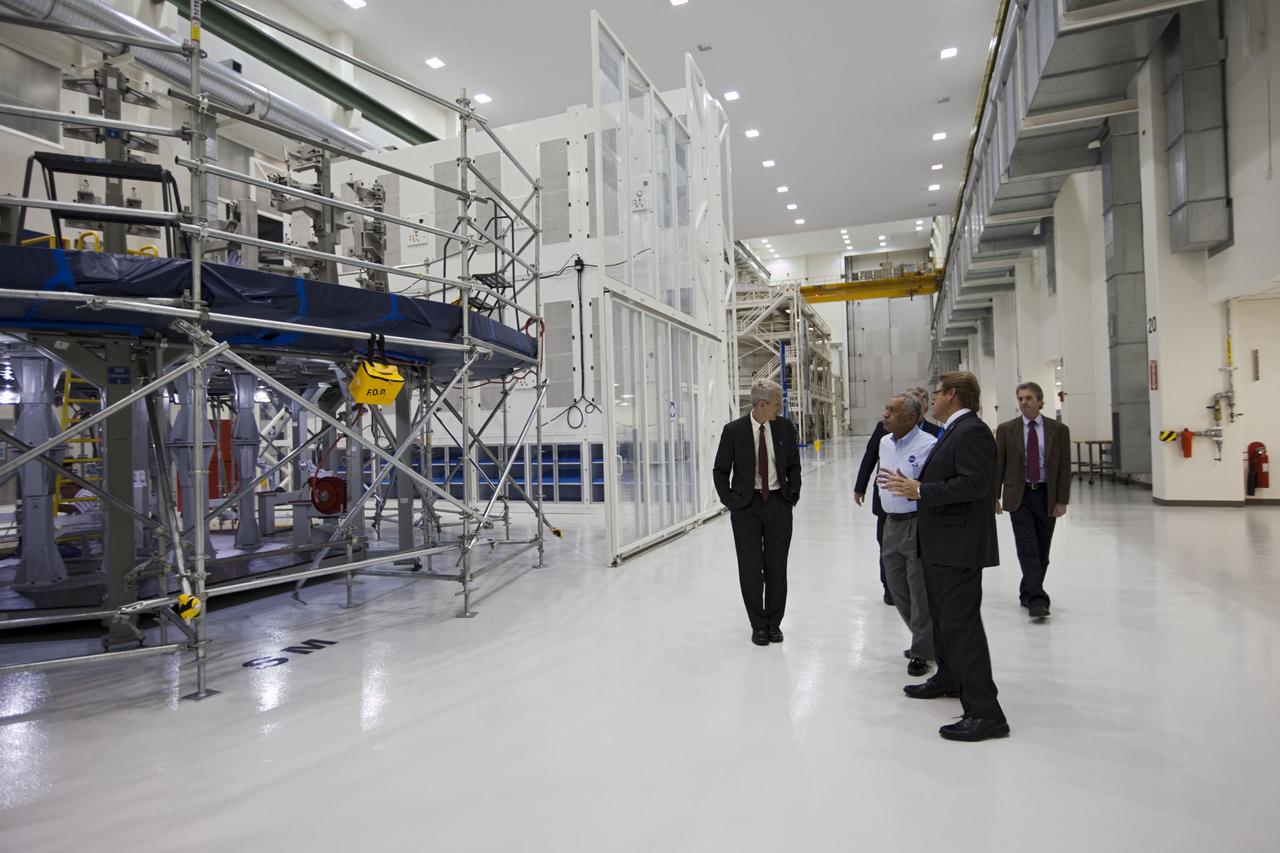
CAPE CANAVERAL, Fla. – Charles Bolden, NASA administrator, center, is shown the high bay at the Operations and Checkout Building at NASA's Kennedy Space Center in Florida by NASA's Scott Wilson, left, and Lockheed Martin's Jules Schneider, foreground. Lockheed Martin is processing an Orion spacecraft that will make an uncrewed flight test in 2014. Photo credit: NASA/Kim Shifflett
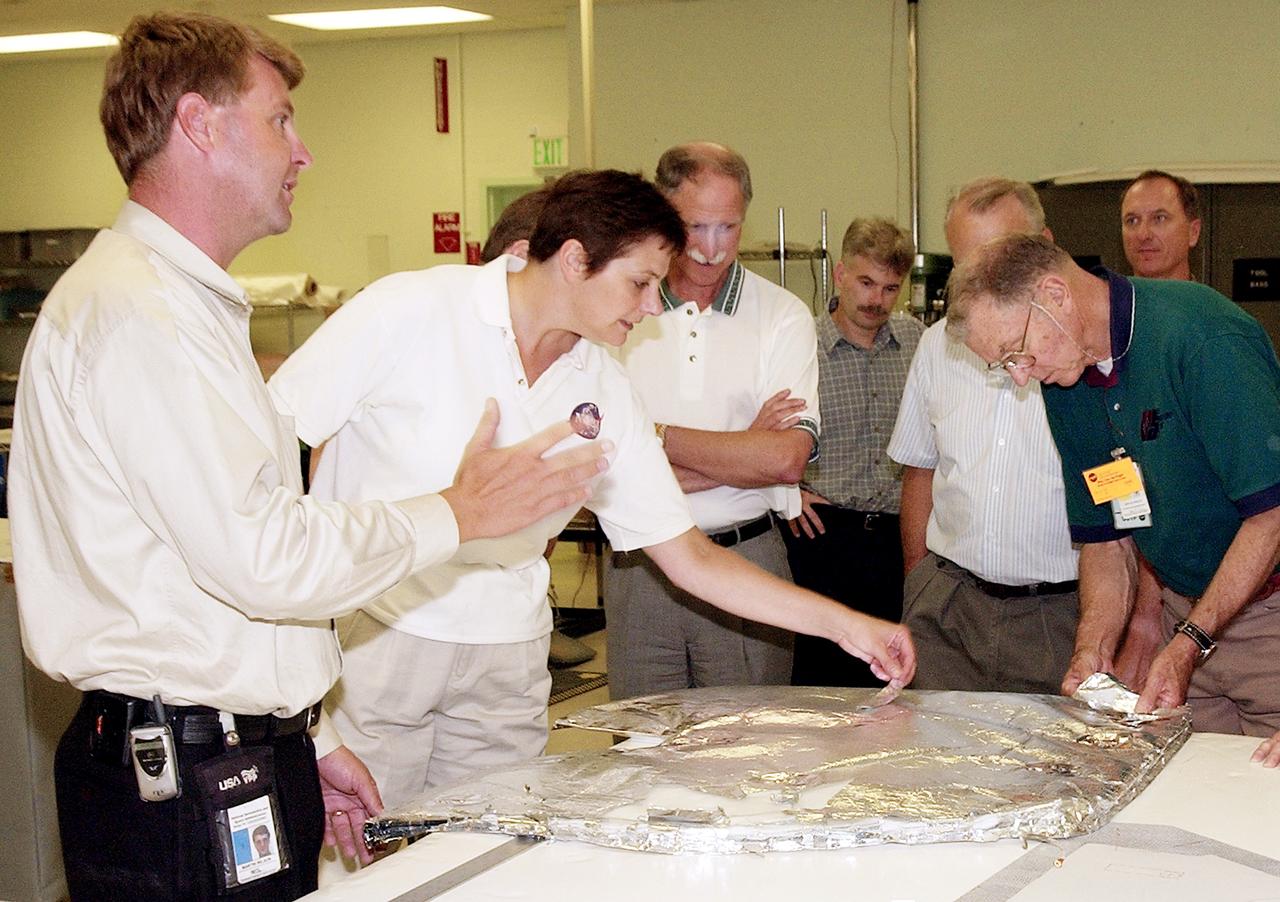
KENNEDY SPACE CENTER, FLA. - Martin Wilson, with United Space Alliance, describes an orbiter’s Thermal Protection System for members of the Stafford-Covey Return to Flight Task Group (SCTG). Handling some of the blanket insulation are Dr. Kathryn Clark and Joe Engle. Third from left is Richard Covey, former Space Shuttle commander, who is co-chair of the SCTG, along with Thomas P. Stafford, Apollo commander. Chartered by NASA Administrator Sean O’Keefe, the task group will perform an independent assessment of NASA’s implementation of the final recommendations by the Columbia Accident Investigation Board.
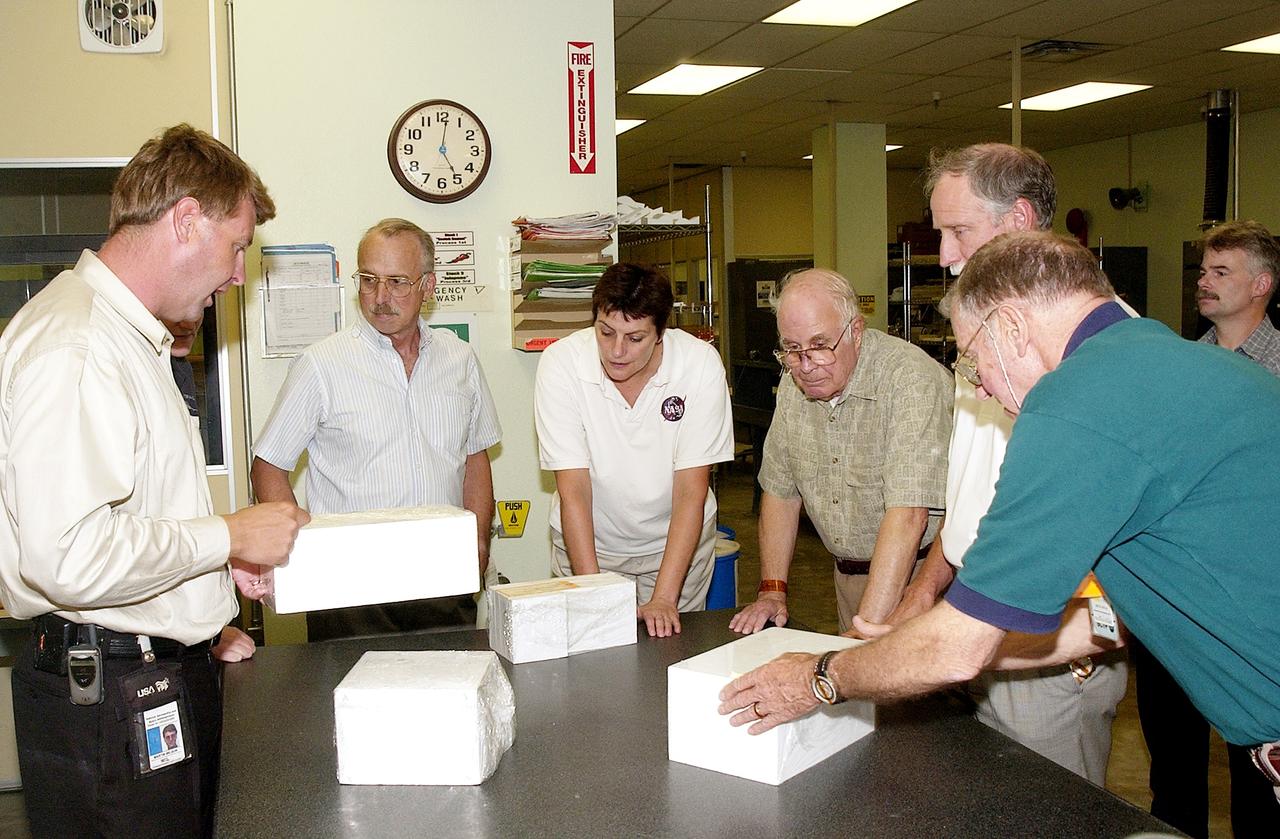
KENNEDY SPACE CENTER, FLA. - On a tour of the Tile Shop, members of the Stafford-Covey Return to Flight Task Group (SCTG) learn about PU-tiles, part of an orbiter’s Thermal Protection System. At left is Martin Wilson, with United Space Alliance. Others (left to right) around the table are James Adamson, Dr. Kathryn Clark, William Wegner, Richard Covey and Joe Engle. Covey, former Space Shuttle commander, is co-chair of the SCTG, along with Thomas P. Stafford, Apollo commander. Chartered by NASA Administrator Sean O’Keefe, the task group will perform an independent assessment of NASA’s implementation of the final recommendations by the Columbia Accident Investigation Board.
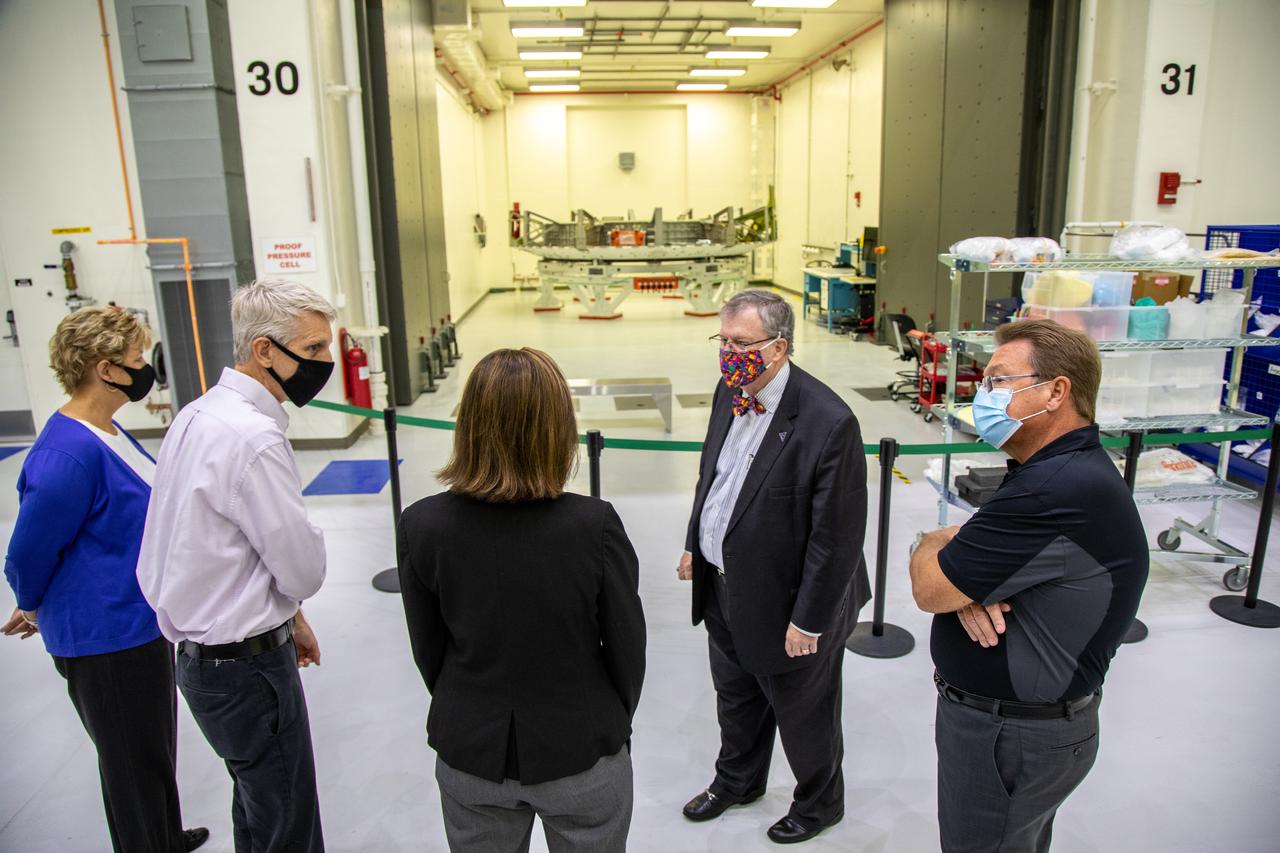
Catherine Koerner, in the center, NASA Orion Program manager, along with senior managers from Orion and Lockheed Martin, tours the Neil Armstrong Operations and Checkout Building at NASA’s Kennedy Space Center in Florida on Oct. 6, 2020. Accompanying her, from left are Annette Hasbrook, Orion Program assistant manager; Scott Wilson, NASA Kennedy Orion Production Operations manager, Mike Hawes, Lockheed Martin vice president and Orion Program manager; and Jules Schneider, Lockheed Martin Assembly, Test and Launch Operations director with Lockheed Martin. Koerner viewed the Orion spacecraft for the Artemis I and II missions. They are shown with the crew module adapter for the Orion Artemis II mission. The first in a series of increasingly complex missions, Artemis I will test the Orion spacecraft and Space Launch System as an integrated system ahead of crewed flights to the Moon. Under the Artemis program, NASA will land the first woman and the next man on the Moon in 2024.
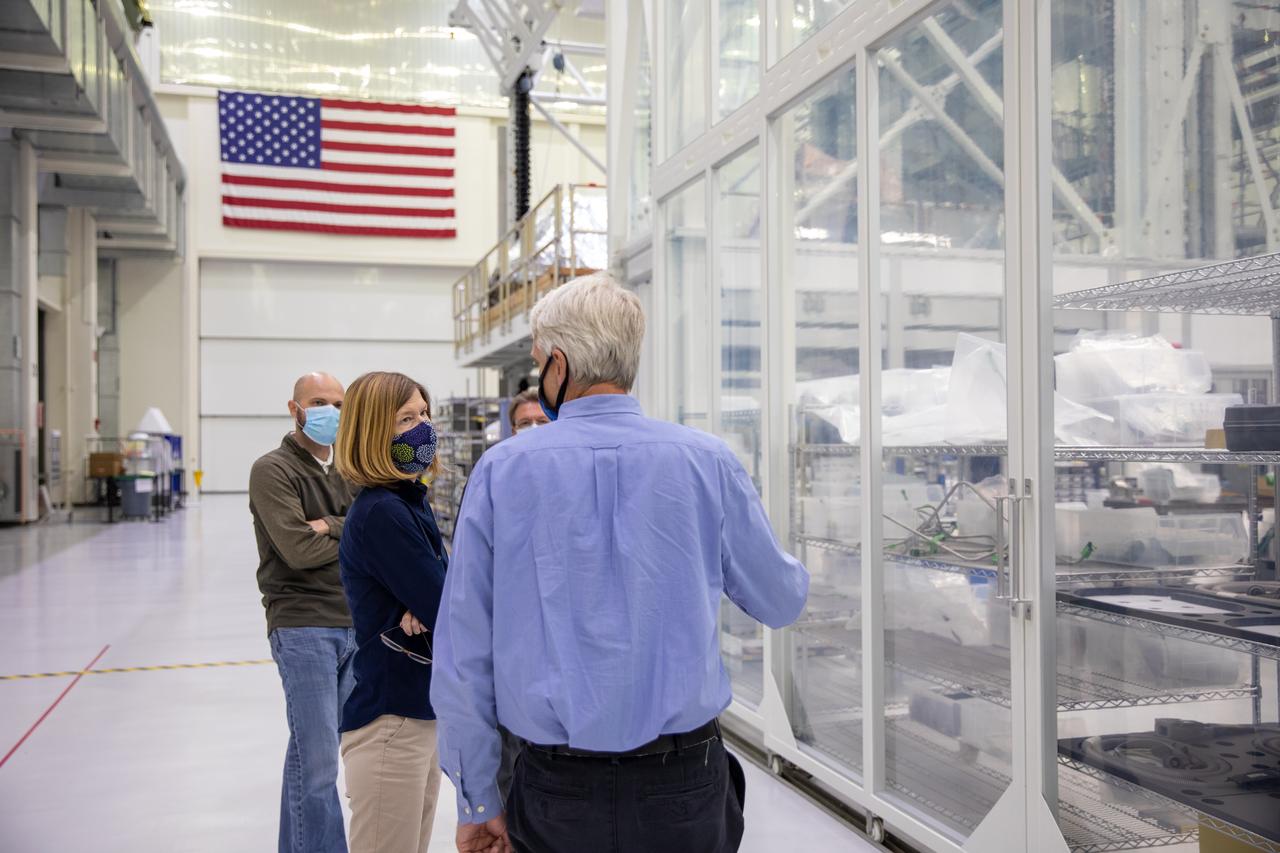
Senior managers from Orion, NASA, and Lockheed Martin view the Artemis II crew module inside a clean room during a visit to the Neil Armstrong Operations and Checkout Building high bay at NASA’s Kennedy Space Center in Florida on Nov. 5, 2020. From left are Jim Skaggs, senior manager of Kennedy Operations for Lockheed Martin; Kathy Lueders, associate administrator of NASA’s Human Exploration and Operations Mission Directorate; and Scott Wilson, manager, Orion Production Office. Artemis II will be the first crewed flight test of the Space Launch System rocket and the Orion spacecraft. Under the Artemis program, NASA is planning to land the first woman and the next man on the lunar surface by 2024.
Senior managers from Orion, NASA, and Lockheed Martin view the Artemis I spacecraft during a visit to the Neil Armstrong Operations and Checkout Building high bay at NASA’s Kennedy Space Center in Florida on Nov. 5, 2020. From left are Scott Wilson, manager, Orion Production Office; Kathy Lueders, associate administrator of NASA’s Human Exploration and Operations Mission Directorate; Jules Schneider, director of Assembly, Test, and Launch Operations for Lockheed Martin; and Jim Skaggs, senior manager of Kennedy Operations for Lockheed Martin. The first in a series of increasingly complex missions, Artemis I will test the Space Launch System rocket and Orion spacecraft as an integrated system prior to crewed flights to the Moon. Under the Artemis program, NASA is planning to land the first woman and the next man on the lunar surface by 2024.
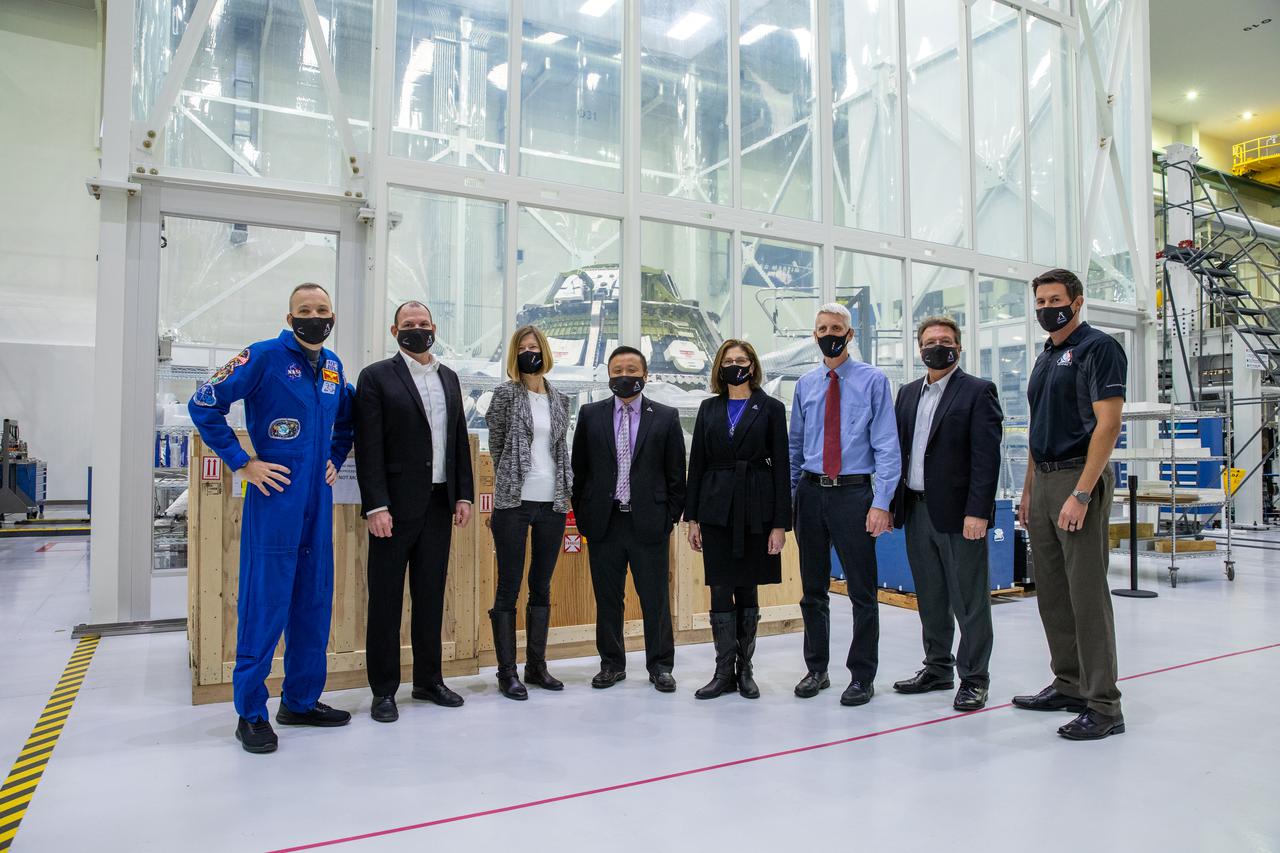
Kathy Lueders, third from left, associate administrator of the Human Exploration and Operations Mission Directorate, tours the Neil Armstrong Operations and Checkout Building high bay at NASA’s Kennedy Space Center in Florida on Jan. 14, 2021. In the background is the Orion crew module for the Artemis II mission. From left are NASA astronaut Randy Bresnik; Tony Antonelli, Lockheed Martin Orion Program director and Artemis II Mission director; Howard Hu, Orion deputy program manager; Cathy Koerner, Orion Program manager; Scott Wilson, Orion Production Operations manager; Jules Schneider, Lockheed Martin director of Orion Assembly, Test and Launch Operations at Kennedy; and Nathan Varn, Lockheed Martin Production Control director. The group also viewed the Orion spacecraft for Artemis I as it was lowered onto a transporter for the move to the Multi-Payload Processing Facility to begin ground processing by the Exploration Ground Systems and Jacobs teams.
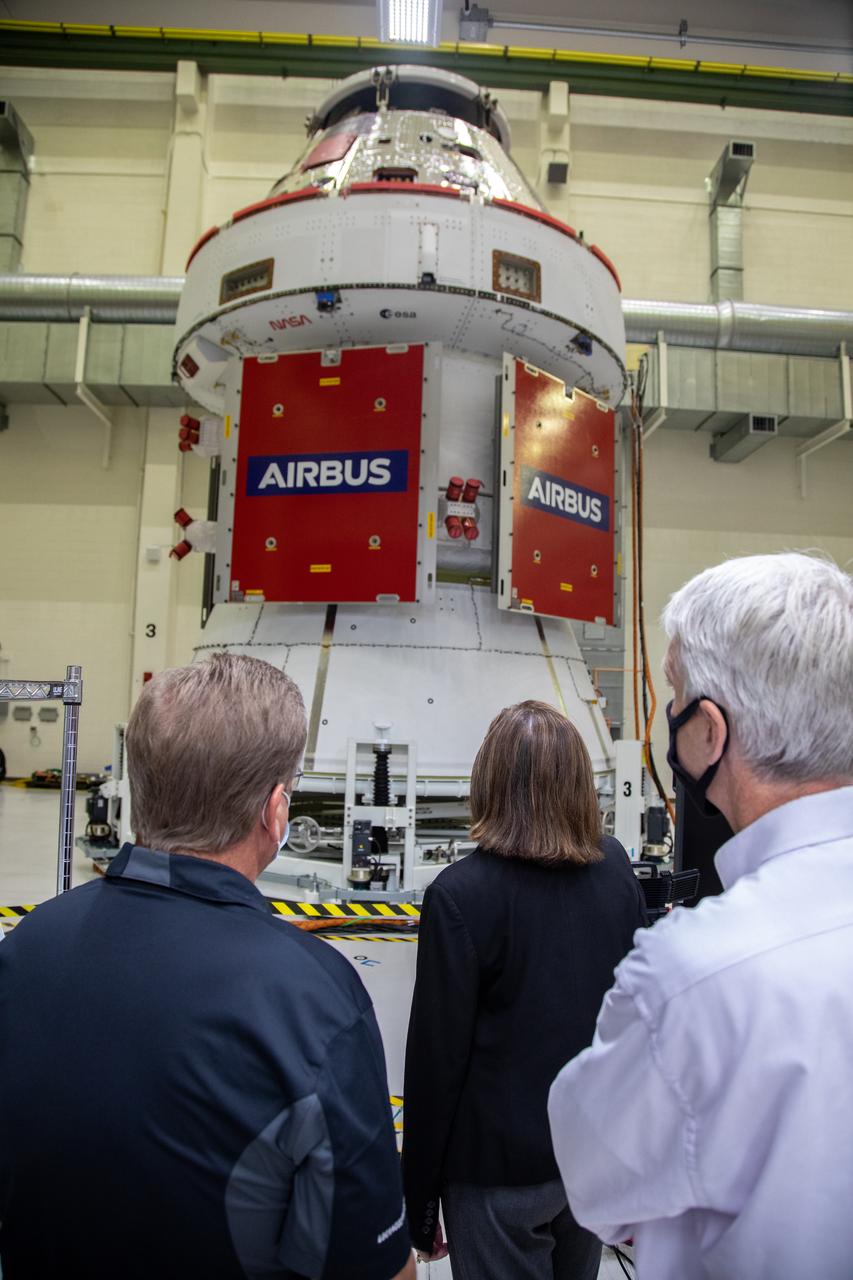
Catherine Koerner, in the center, NASA Orion Program manager, along with senior managers from Orion and Lockheed Martin, tour the Neil Armstrong Operations and Checkout Building at NASA’s Kennedy Space Center in Florida on Oct. 6, 2020. Accompanying her, at right is Scott Wilson, NASA Kennedy Orion Production Operations manager. At left is Jules Schneider, Lockheed Martin Assembly, Test and Launch Operations director with Lockheed Martin. Koerner viewed Orion spacecraft for the Artemis I and II missions. In view is the Orion spacecraft for Artemis I with its solar arrays installed and protective covers secured over them. The first in a series of increasingly complex missions, Artemis I will test the Orion spacecraft and Space Launch System as an integrated system ahead of crewed flights to the Moon. Under the Artemis program, NASA will land the first woman and the next man on the Moon in 2024.
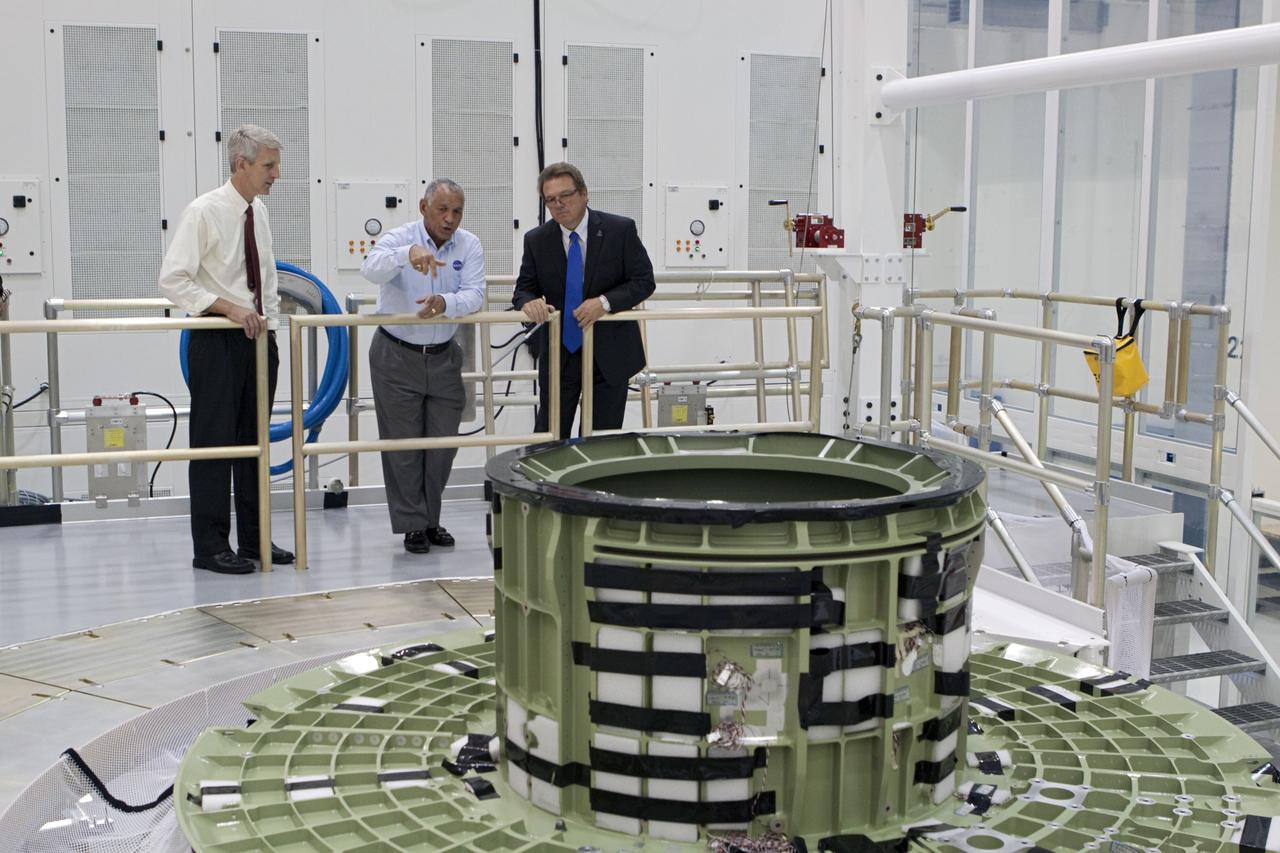
CAPE CANAVERAL, Fla. – Lockheed Martin's Jules Schneider, right, shows the upper portion of the Orion capsule to Charles Bolden, NASA administrator, center, as NASA's Scott Wilson looks on. The Orion capsule will make an uncrewed flight test in 2014. The spacecraft is in the high bay at the Operations and Checkout Building at NASA's Kennedy Space Center in Florida. Photo credit: NASA/Kim Shifflett
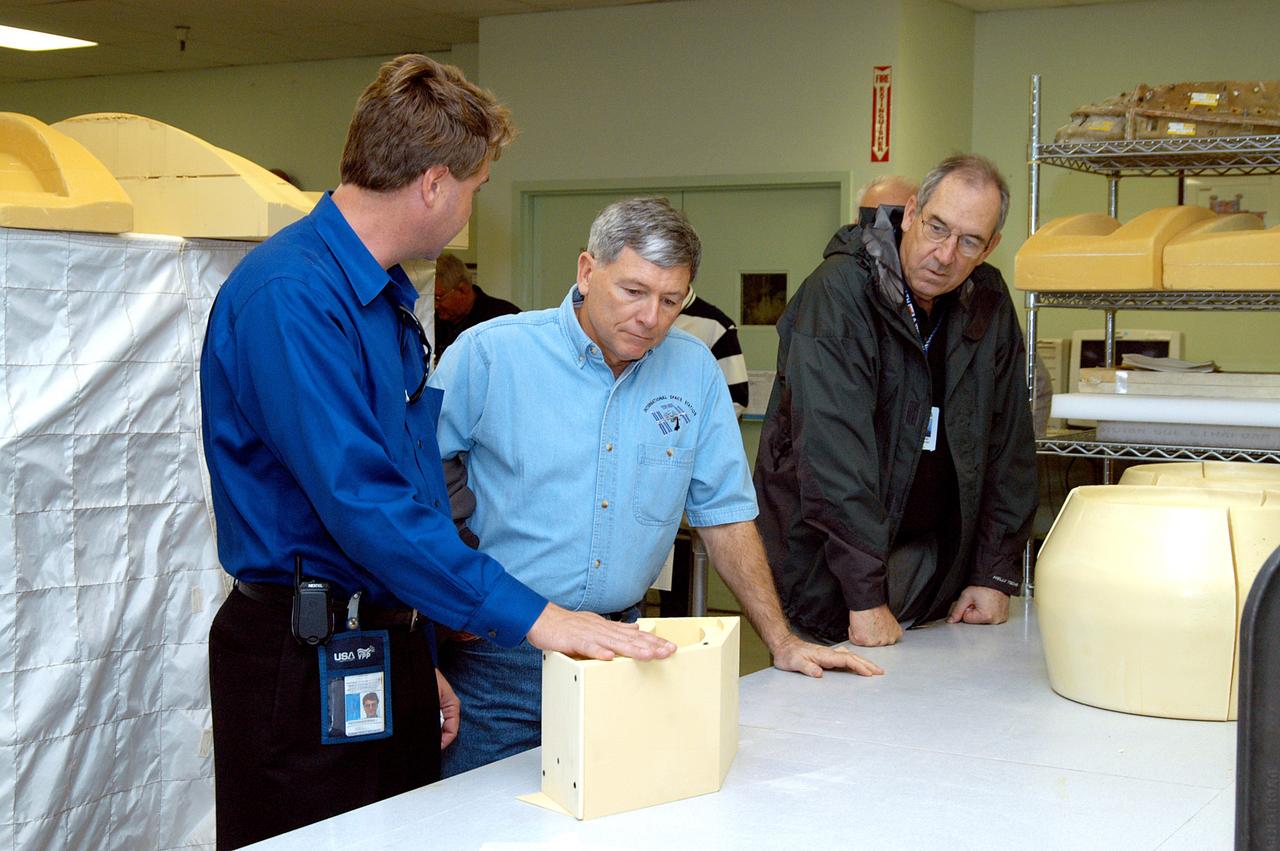
KENNEDY SPACE CENTER, FLA. -- From left, United Space Alliance (USA) Manager of the Thermal Protection System (TPS) Facility Martin Wilson briefs NASA Deputy Associate Administrator for Space Station and Shuttle Programs Michael Kostelnik and USA Vice President and Space Shuttle Program Manager Howard DeCastro on aspects of creating the tile used in the Shuttle's TPS. NASA and USA Space Shuttle program management are participating in a leadership workday. The day is intended to provide management with an in-depth, hands-on look at Shuttle processing activities at KSC.
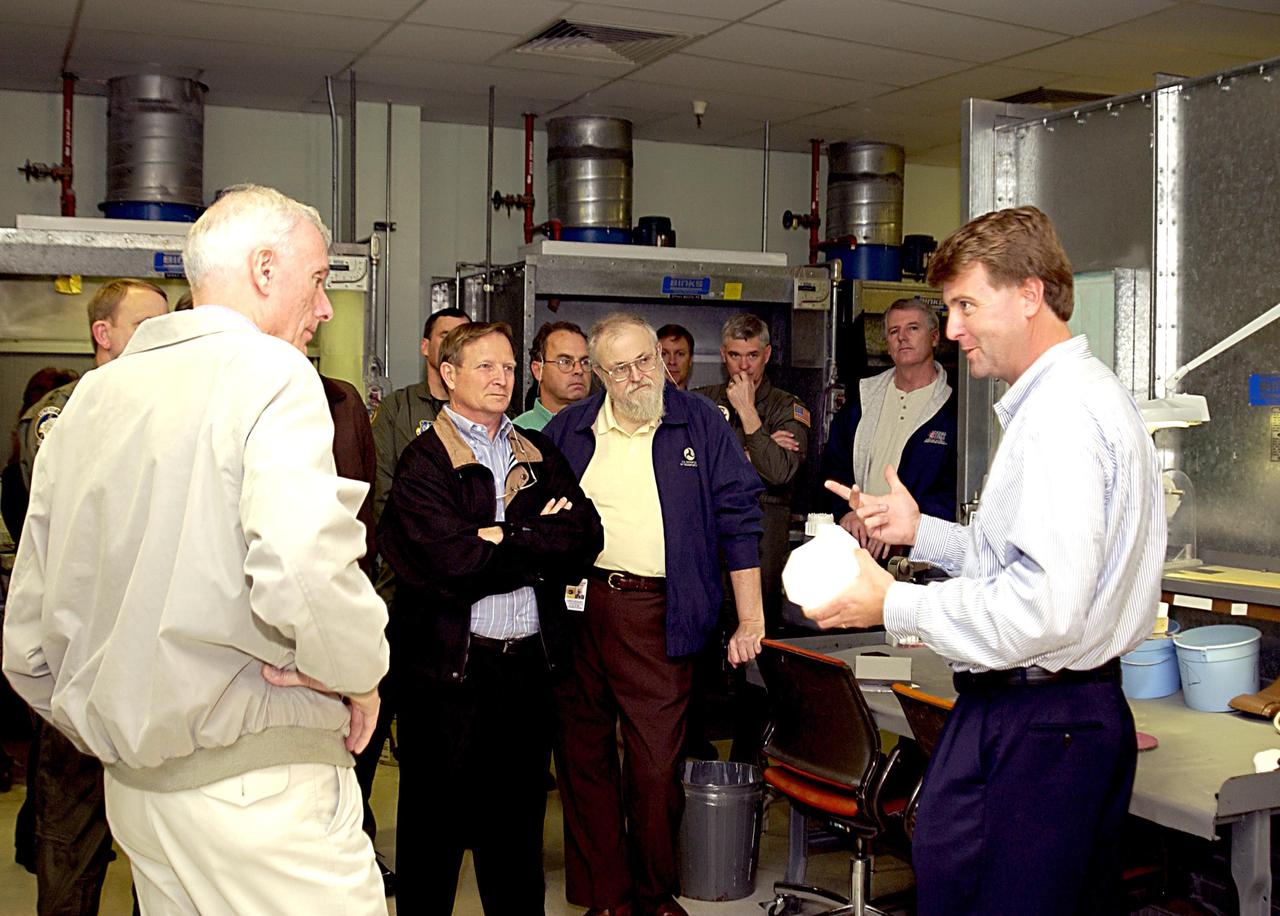
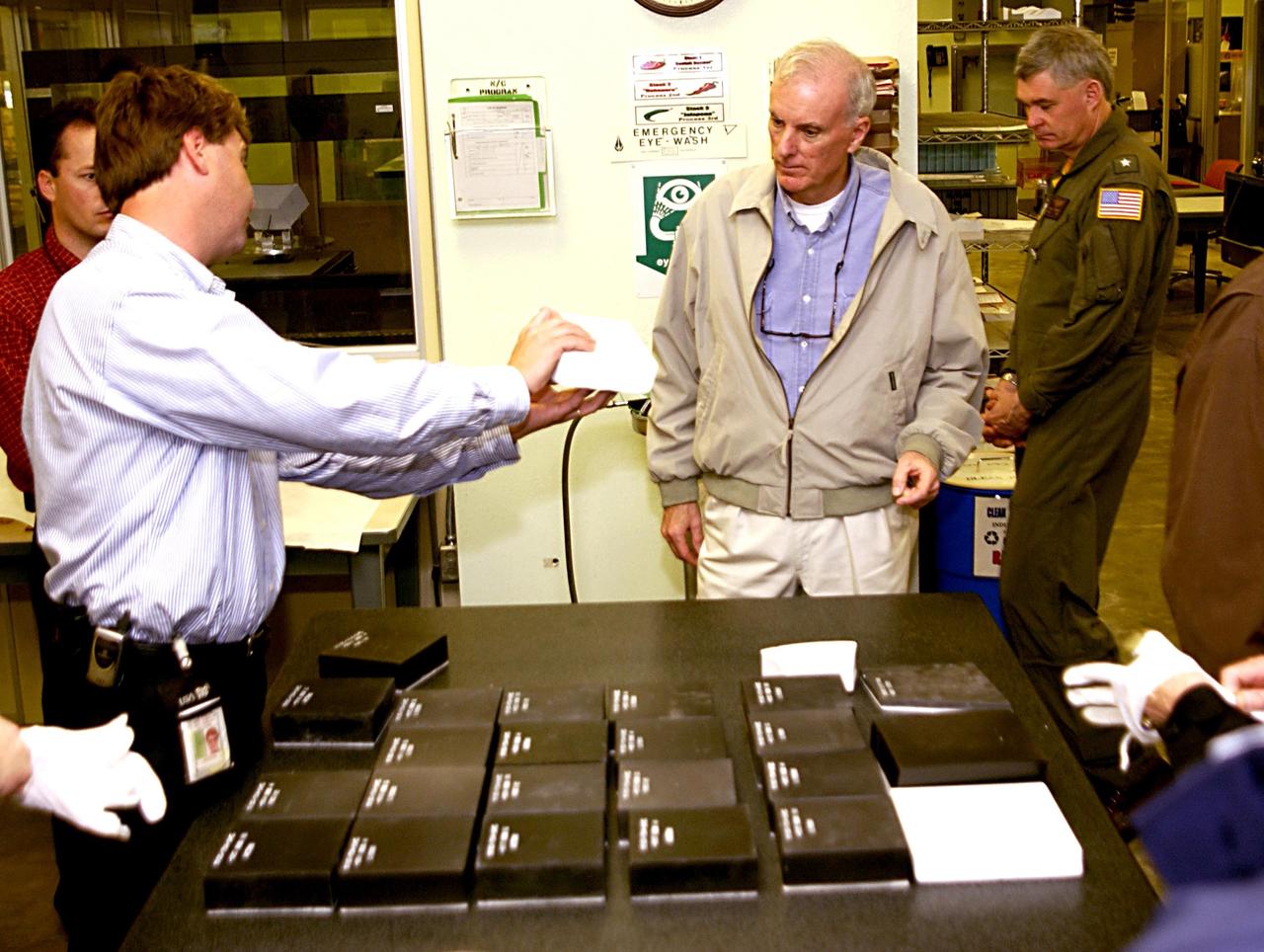
KENNEDY SPACE CENTER, FLA. - Retired Navy Admiral Harold W. Gehman Jr. (left), chairman of the Columbia Accident Investigation Board, visits the Thermal Protection System shop and is briefed by Martin Wilson (right), the shop manager. Gehman and other members of the board are visiting sites at KSC to become familiar with the Shuttle launch process. The independent board is charged with determining what caused the destruction of the Space Shuttle Columbia and the loss of its seven-member crew on Feb. 1 during reentry.
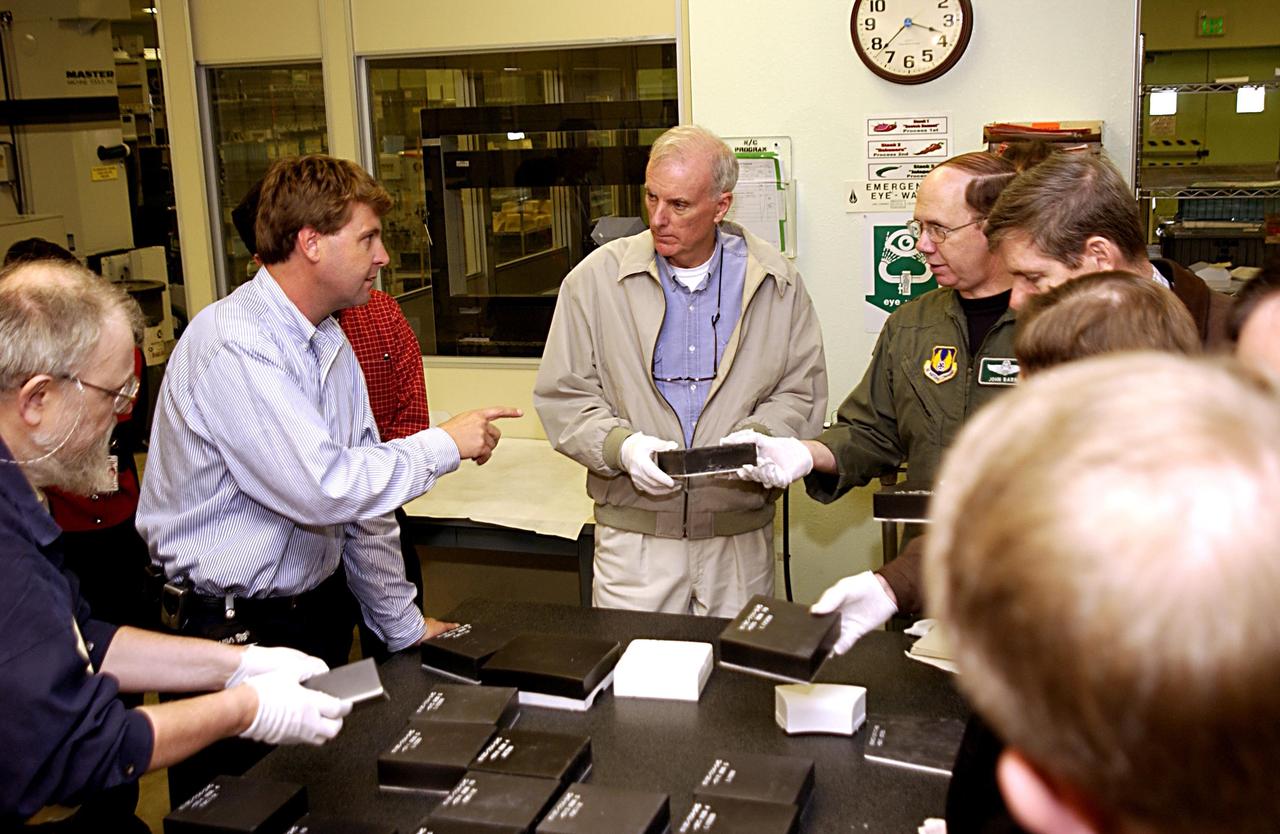
KENNEDY SPACE CENTER, FLA. - Retired Navy Admiral Harold W. Gehman Jr. (center), chairman of the Columbia Accident Investigation Board, visits the Thermal Protection System shop and is briefed by Martin Wilson (pointing), the shop manager. Gehman and other members of the board are visiting sites at KSC to become familiar with the Shuttle launch process. The independent board is charged with determining what caused the destruction of the Space Shuttle Columbia and the loss of its seven-member crew on Feb. 1 during reentry.
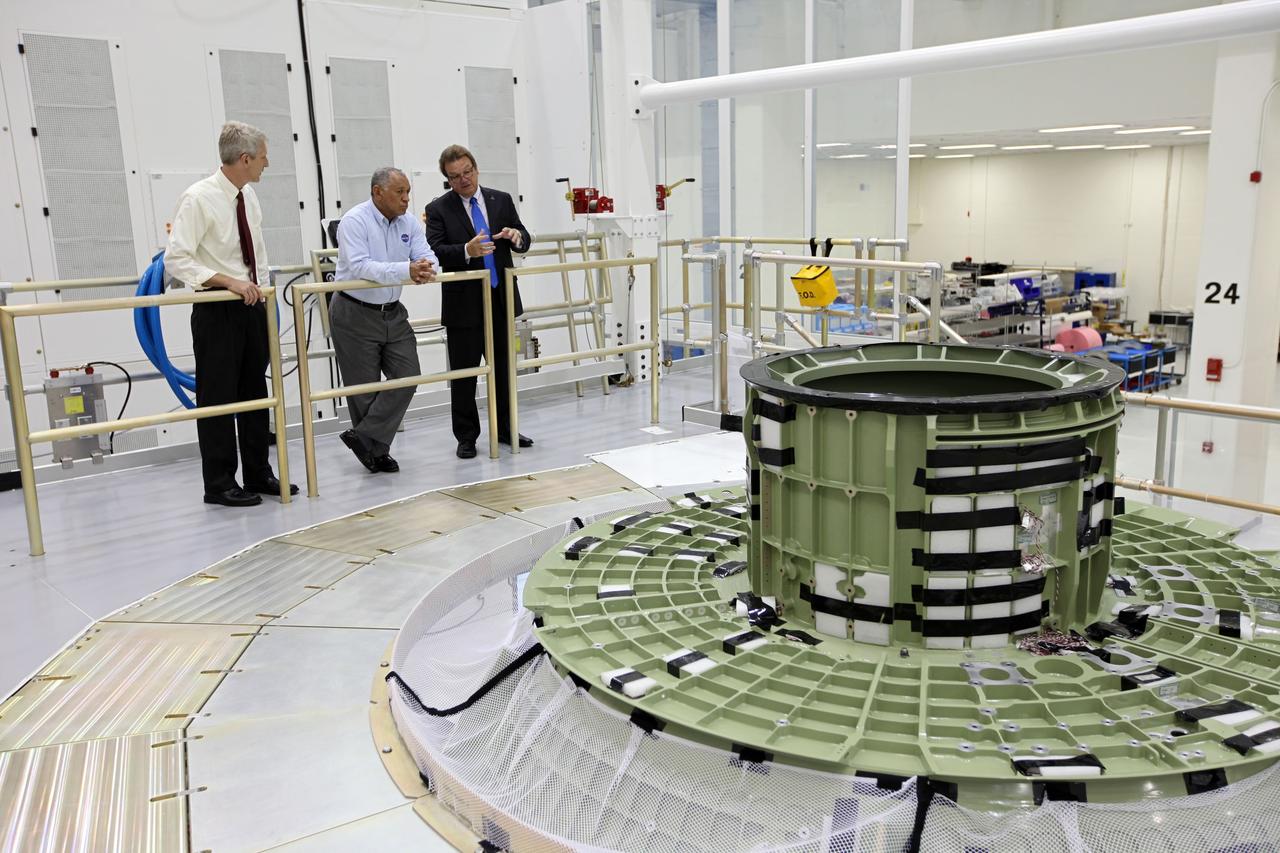
CAPE CANAVERAL, Fla. – Lockheed Martin's Jules Schneider, right, shows the upper portion of the Orion capsule to Charles Bolden, NASA administrator, center, as NASA's Scott Wilson looks on. The Orion capsule will make an uncrewed flight test in 2014. The spacecraft is in the high bay at the Operations and Checkout Building at NASA's Kennedy Space Center in Florida. Photo credit: NASA/Kim Shifflett
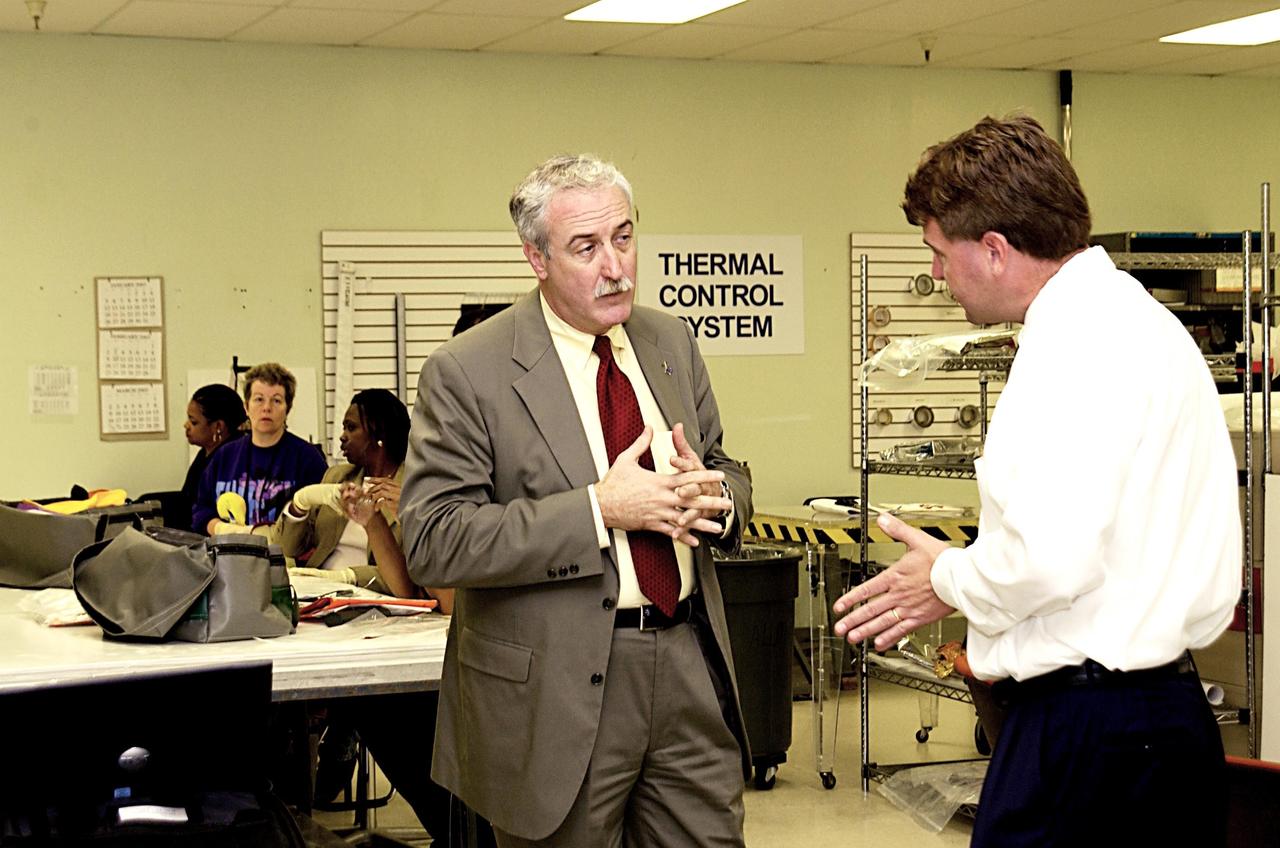
KENNEDY SPACE CENTER, FLA. -- In the Thermal Protection System Facility, NASA Administrator Sean O'Keefe (left) talks to Martin Wilson, project manager. O'Keefe is visiting the site to learn more about the TPS products and process in protecting orbiters from the intense heat of launch and re-entry. TPS tiles have been discussed in the investigation into the Columbia tragedy that destroyed the orbiter and claimed the lives of seven astronauts.

KENNEDY SPACE CENTER, FLA. -- United Space Alliance (USA) Manager of the Thermal Protection System (TPS) Facility Martin Wilson (right) briefs USA Associate Program Manager of Ground Operations Andy Allen (left) and NASA Deputy Associate Administrator for Space Station and Shuttle Programs Michael Kostelnik (center) on the properties of the components used in the Shuttle's TPS. NASA and USA Space Shuttle program management are participating in a leadership workday. The day is intended to provide management with an in-depth, hands-on look at Shuttle processing activities at KSC.
KENNEDY SPACE CENTER, FLA. - Retired Navy Admiral Harold W. Gehman Jr. (second from right), chairman of the Columbia Accident Investigation Board, visits the Thermal Protection System shop and is briefed by Martin Wilson (left), the shop manager. Gehman and other members of the board are visiting sites at KSC to become familiar with the Shuttle launch process. The independent board is charged with determining what caused the destruction of the Space Shuttle Columbia and the loss of its seven-member crew on Feb. 1 during reentry.
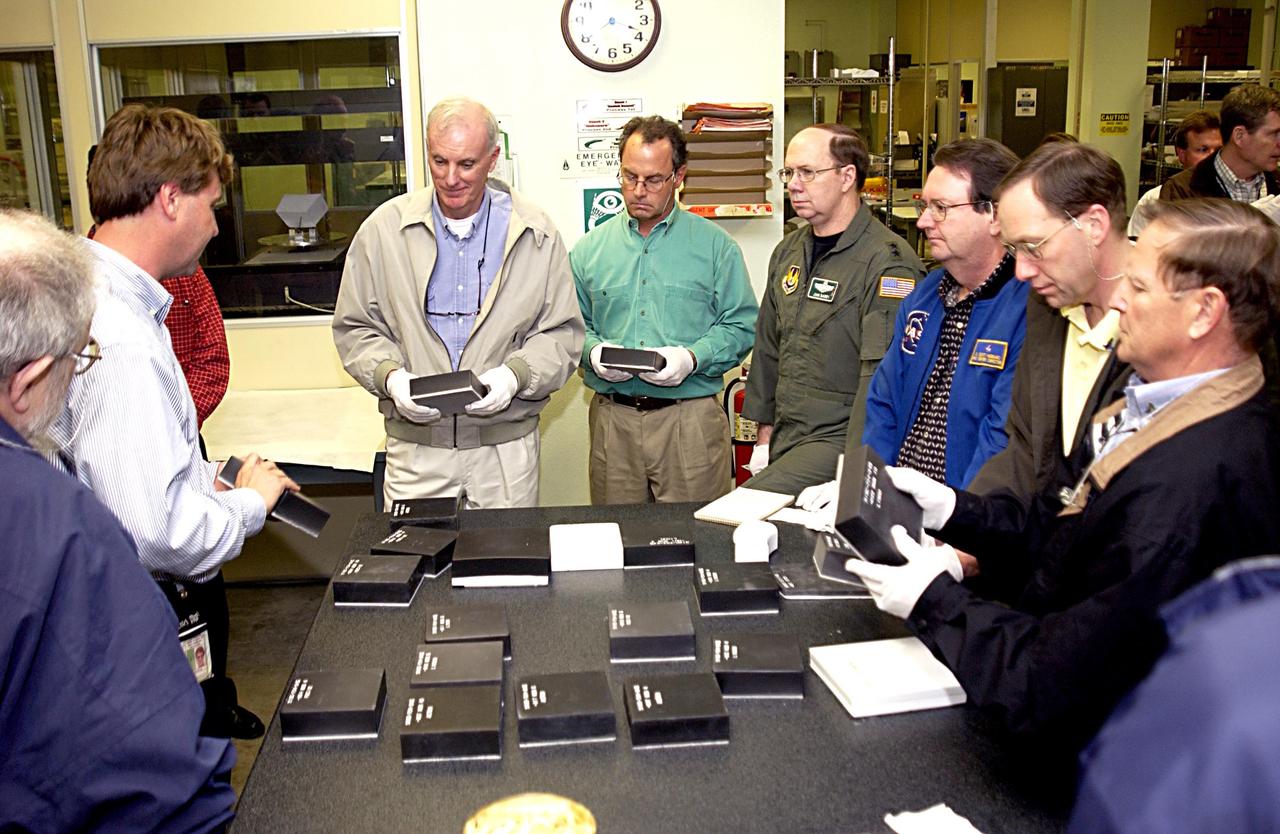
KENNEDY SPACE CENTER, FLA. - Retired Navy Admiral Harold W. Gehman Jr. (third from left), chairman of the Columbia Accident Investigation Board, visits the Thermal Protection System shop and is briefed by Martin Wilson (second from left), the shop manager. Gehman and other members of the board are visiting sites at KSC to become familiar with the Shuttle launch process. The independent board is charged with determining what caused the destruction of the Space Shuttle Columbia and the loss of its seven-member crew on Feb. 1 during reentry.
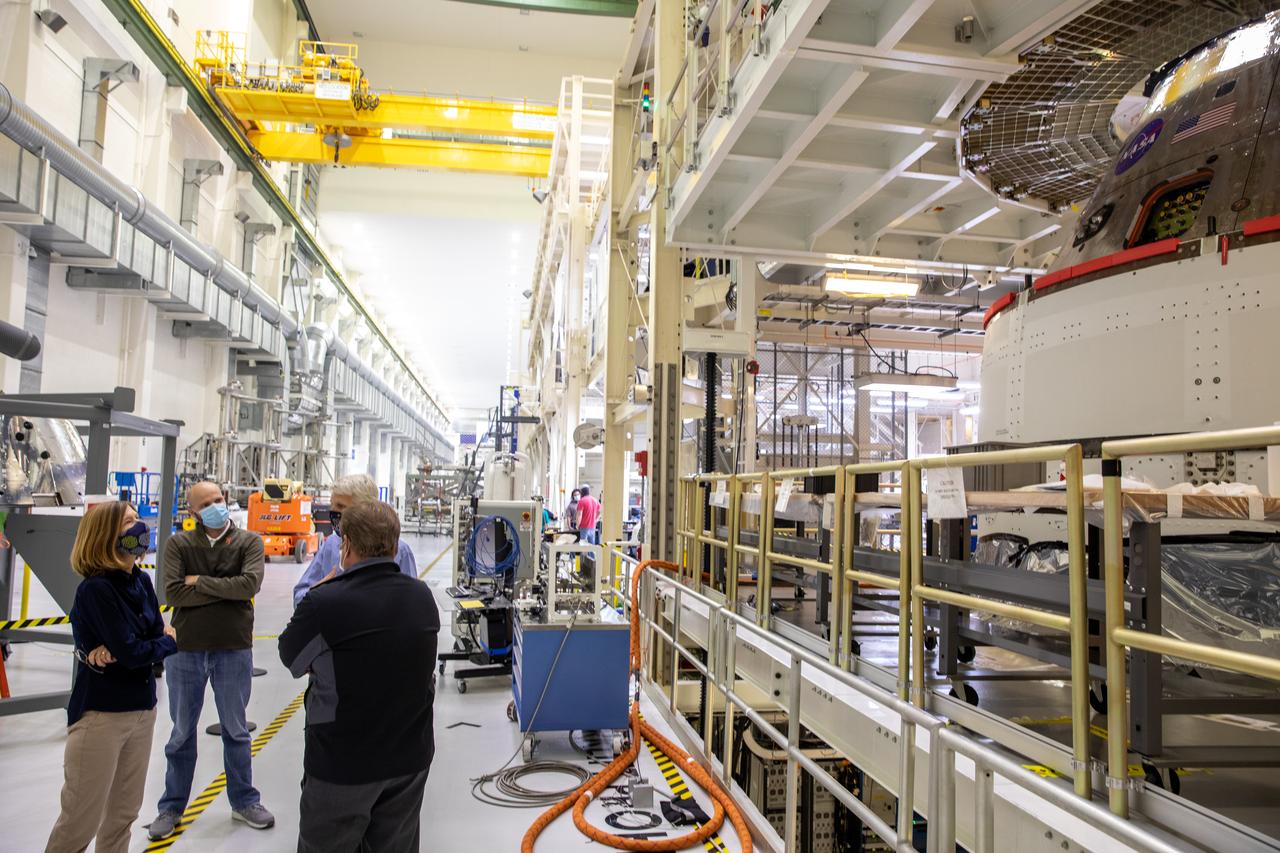
Kathy Lueders, far left, associate administrator of NASA’s Human Exploration and Operations Mission Directorate, views the Artemis I spacecraft during a visit to the Neil Armstrong Operations and Checkout Building high bay at the agency’s Kennedy Space Center in Florida on Nov. 5, 2020. To her right is Jules Schneider, director of Assembly, Test, and Launch Operations for Lockheed Martin; and to her left is Jim Skaggs, senior manager of Kennedy Operations for Lockheed Martin. In between Schneider and Skaggs is Scott Wilson, manager of the Orion Production Office at Kennedy. The first in a series of increasingly complex missions, Artemis I will test the Space Launch System rocket and Orion spacecraft as an integrated system prior to crewed flights to the Moon. Under the Artemis program, NASA is planning to land the first woman and the next man on the lunar surface by 2024.
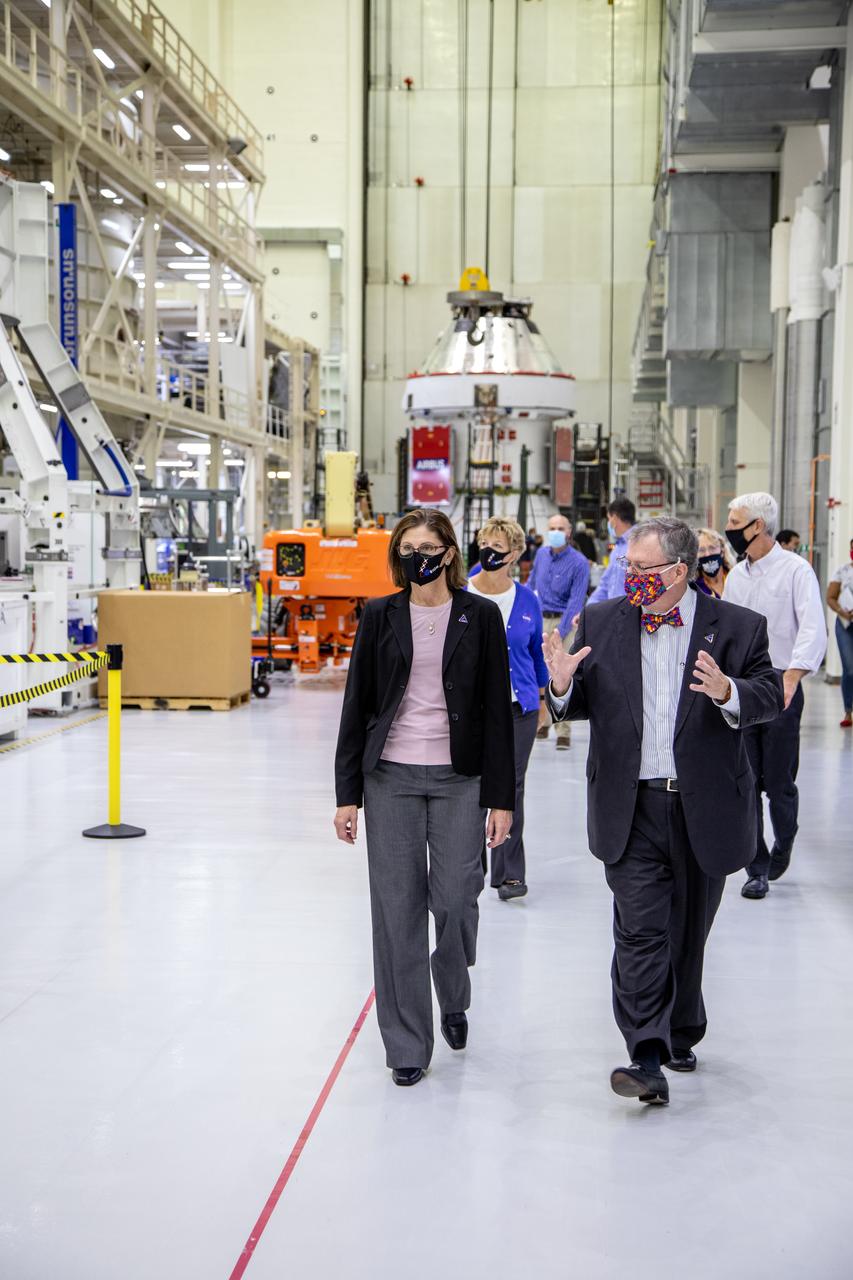
Catherine Koerner, in front at left, NASA Orion Program manager, along with senior managers from Orion and Lockheed Martin, tour the Neil Armstrong Operations and Checkout Building at NASA’s Kennedy Space Center in Florida on Oct. 6, 2020. Accompanying her, in front at right is Mike Hawes, Lockheed Martin vice president and Orion Program manager. In view behind Koerner is Annette Hasbrook, Orion Program assistant manager. In view behind Hawes is Scott Wilson, NASA Kennedy Orion Production Operations manager. Koerner viewed Orion spacecraft for the Artemis I, shown in the background, and II missions. The first in a series of increasingly complex missions, Artemis I will test the Orion spacecraft and Space Launch System as an integrated system ahead of crewed flights to the Moon. Under the Artemis program, NASA will land the first woman and the next man on the Moon in 2024.
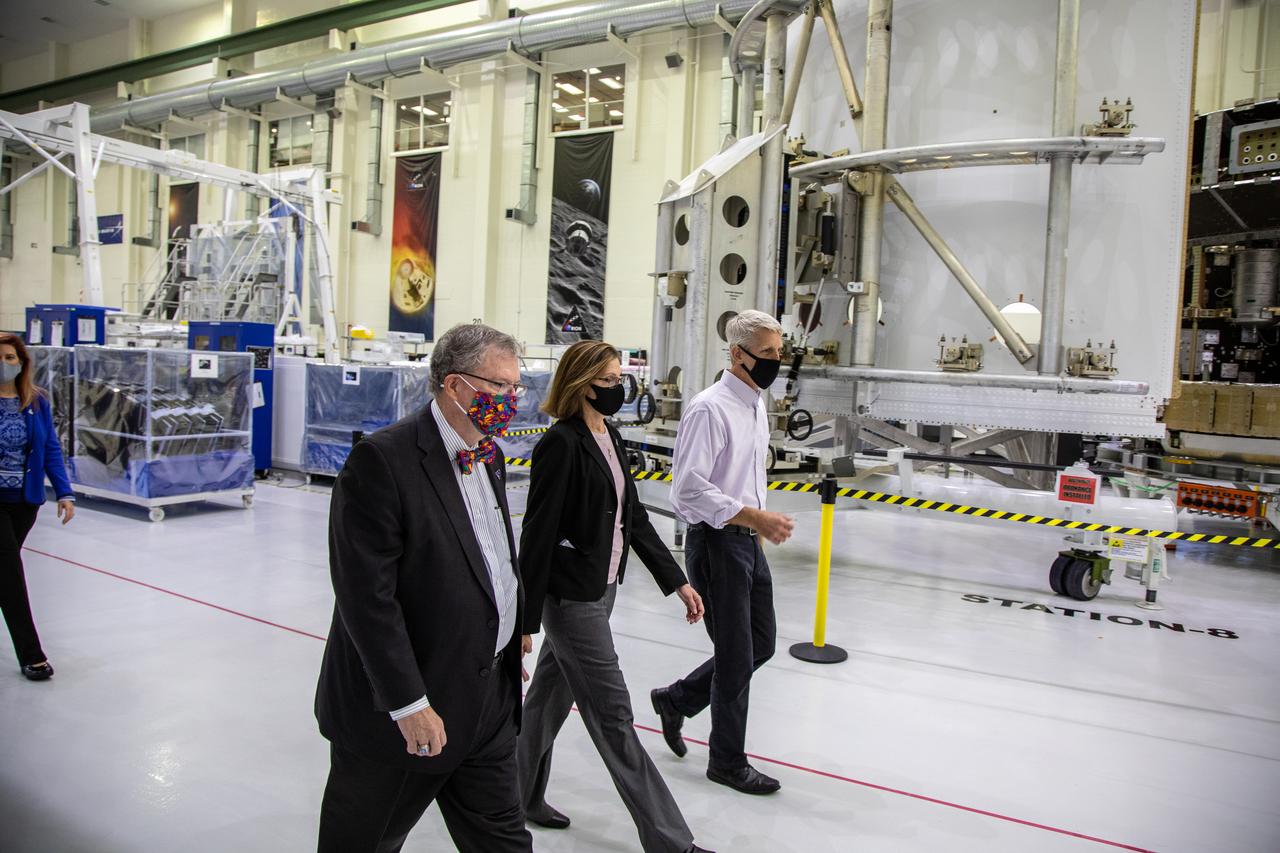
Catherine Koerner, in the center, NASA Orion Program manager, along with senior managers from Orion and Lockheed Martin, tours the Neil Armstrong Operations and Checkout Building at NASA’s Kennedy Space Center in Florida on Oct. 6, 2020. Accompanying her, at left is Mike Hawes, Lockheed Martin vice president and Orion Program manager; and at right is Scott Wilson, NASA Kennedy Orion Production Operations manager. Koerner viewed the Orion spacecraft for the Artemis I and II missions. They are shown with one of the space adapter jettison fairing panels that will be installed on Orion for the Artemis I mission. The first in a series of increasingly complex missions, Artemis I will test the Orion spacecraft and Space Launch System as an integrated system ahead of crewed flights to the Moon. Under the Artemis program, NASA will land the first woman and the next man on the Moon in 2024.
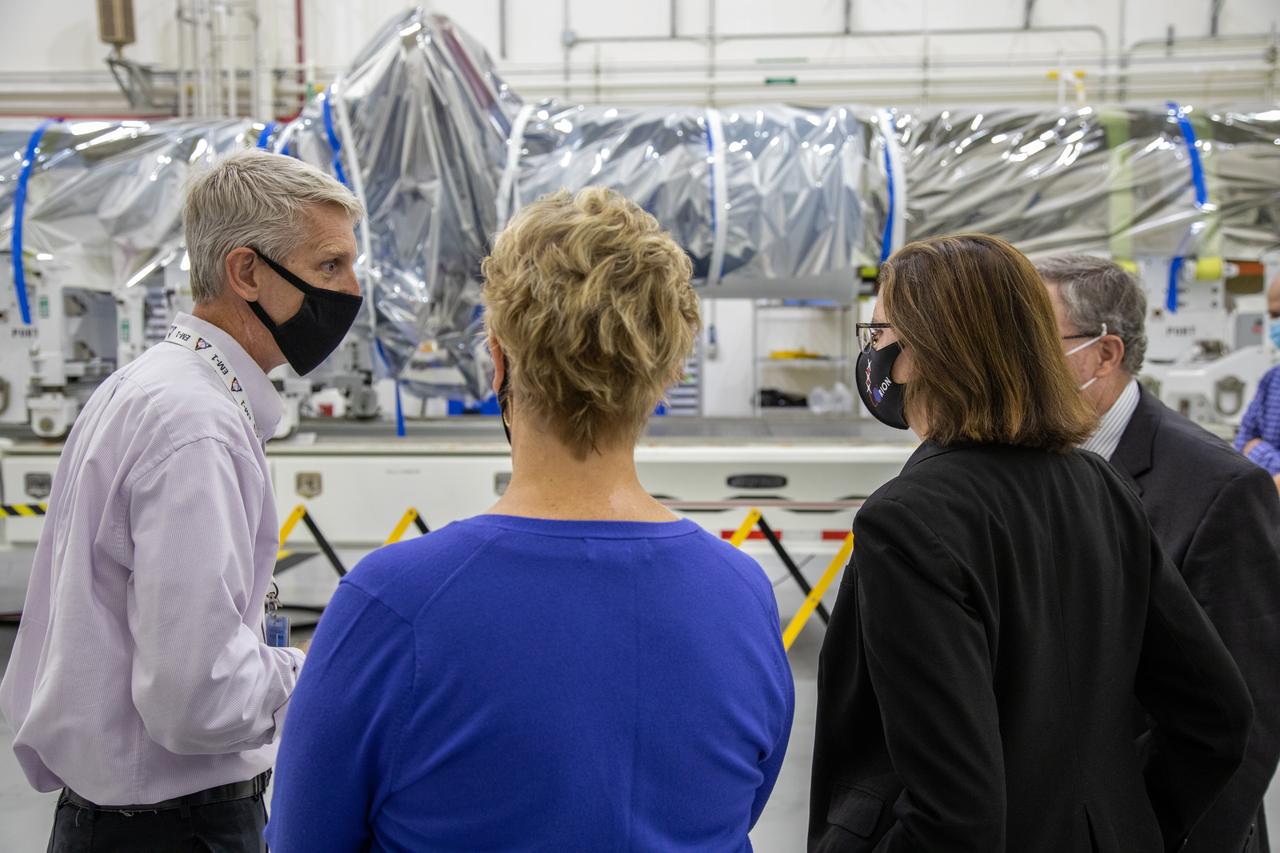
Catherine Koerner, second from right, NASA Orion Program manager, along with senior managers from Orion and Lockheed Martin, tour the Launch Abort System Facility at NASA’s Kennedy Space Center in Florida on Oct. 6, 2020. Accompanying her from left, are Scott Wilson, NASA Kennedy Orion Production Operations manager; Annette Hasbrook, Orion Program assistant manager; and Mike Hawes, Lockheed Martin vice president and Orion Program manager. They are viewing the launch abort system for the Artemis II mission. Koerner also viewed the Orion spacecraft for the Artemis I and II missions in the Neil Armstrong Operations and Checkout Building. The first in a series of increasingly complex missions, Artemis I will test the Orion spacecraft and Space Launch System as an integrated system ahead of crewed flights to the Moon. Under the Artemis program, NASA will land the first woman and the next man on the Moon in 2024.
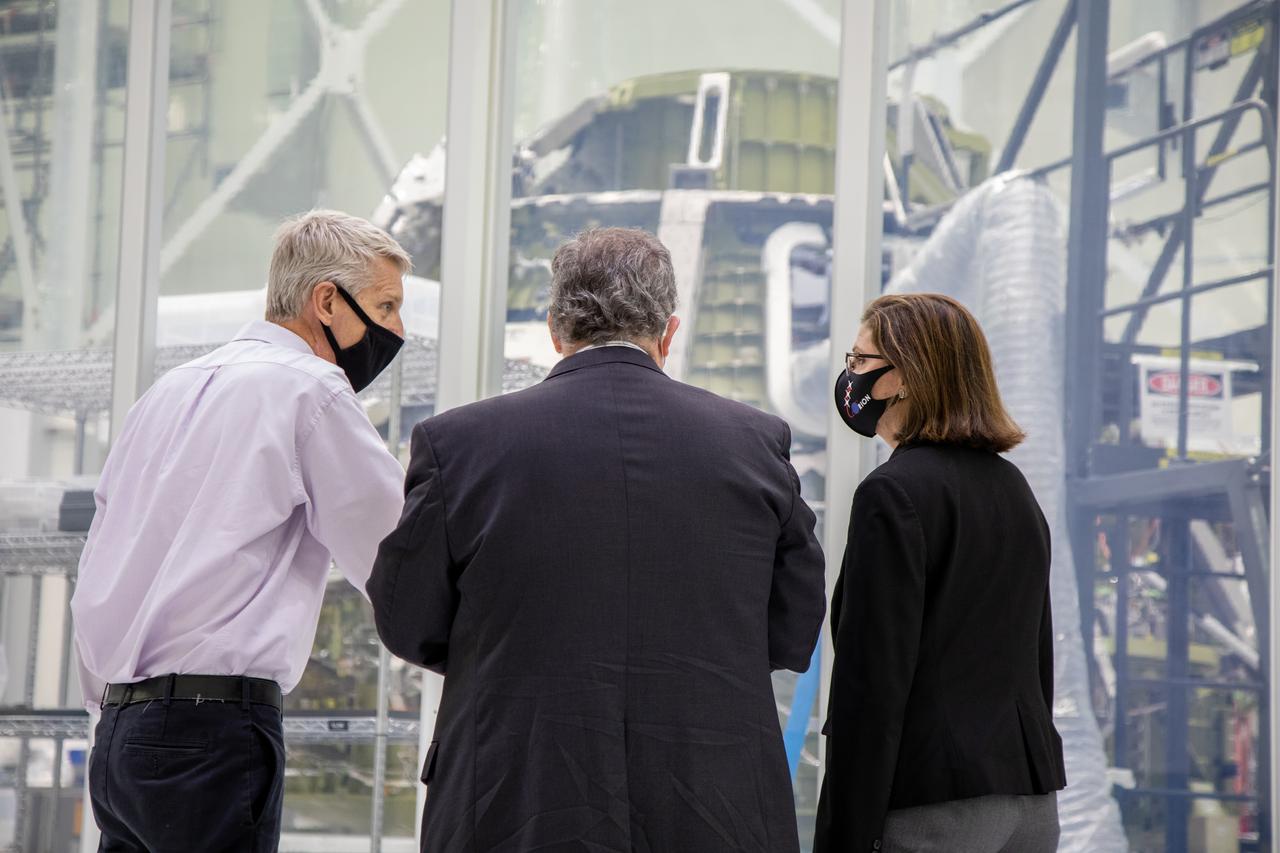
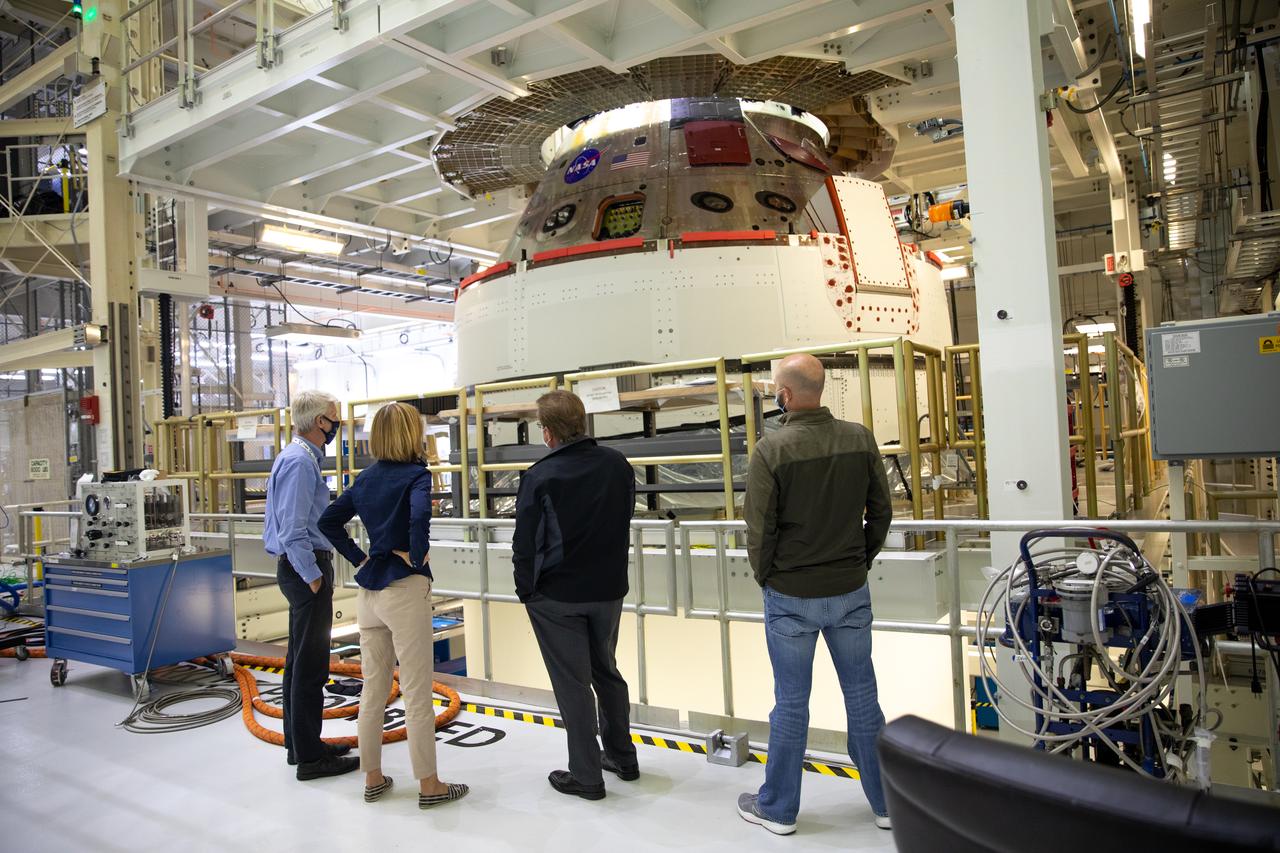
Catherine Koerner, at far right, NASA Orion Program manager, along with senior managers from Orion and Lockheed Martin, tours the Neil Armstrong Operations and Checkout Building at NASA’s Kennedy Space Center in Florida on Oct. 6, 2020. Accompanying her, from left are Scott Wilson, NASA Kennedy Orion Production Operations manager, and Mike Hawes, Lockheed Martin vice president and Orion Program manager. They are pictured viewing the Orion crew module for the Artemis II mission, and also viewed the Orion spacecraft with its solar array wings installed for Artemis I. The first in a series of increasingly complex missions, Artemis I will test the Orion spacecraft and Space Launch System as an integrated system ahead of crewed flights to the Moon. Under the Artemis program, NASA will land the first woman and the next man on the Moon in 2024.
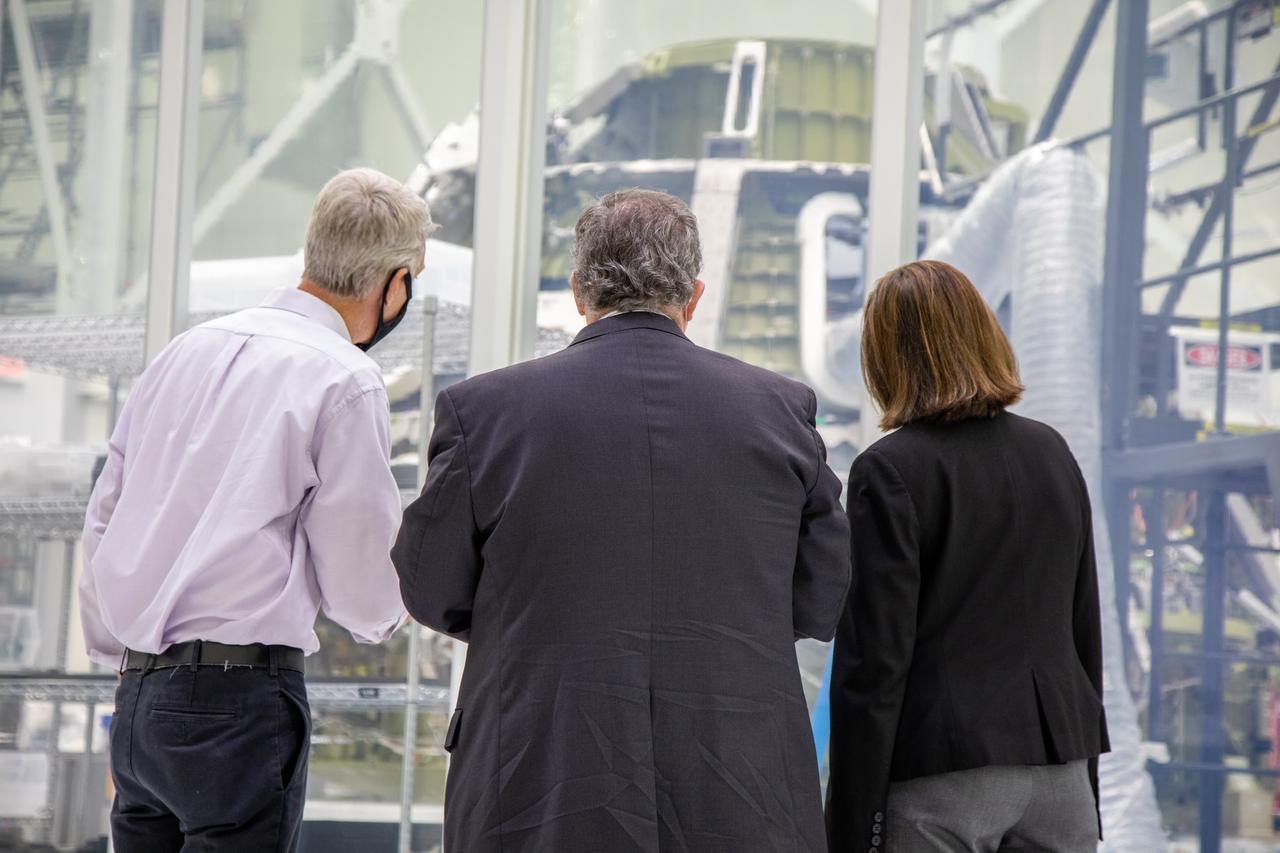
Catherine Koerner, at far right, NASA Orion Program manager, along with senior managers from Orion and Lockheed Martin, tours the Neil Armstrong Operations and Checkout Building at NASA’s Kennedy Space Center in Florida on Oct. 6, 2020. Accompanying her, from left are Scott Wilson, NASA Kennedy Orion Production Operations manager, and Mike Hawes, Lockheed Martin vice president and Orion Program manager. They are pictured viewing the Orion crew module for the Artemis II mission, and also viewed the Orion spacecraft with its solar array wings installed for Artemis I. The first in a series of increasingly complex missions, Artemis I will test the Orion spacecraft and Space Launch System as an integrated system ahead of crewed flights to the Moon. Under the Artemis program, NASA will land the first woman and the next man on the Moon in 2024.
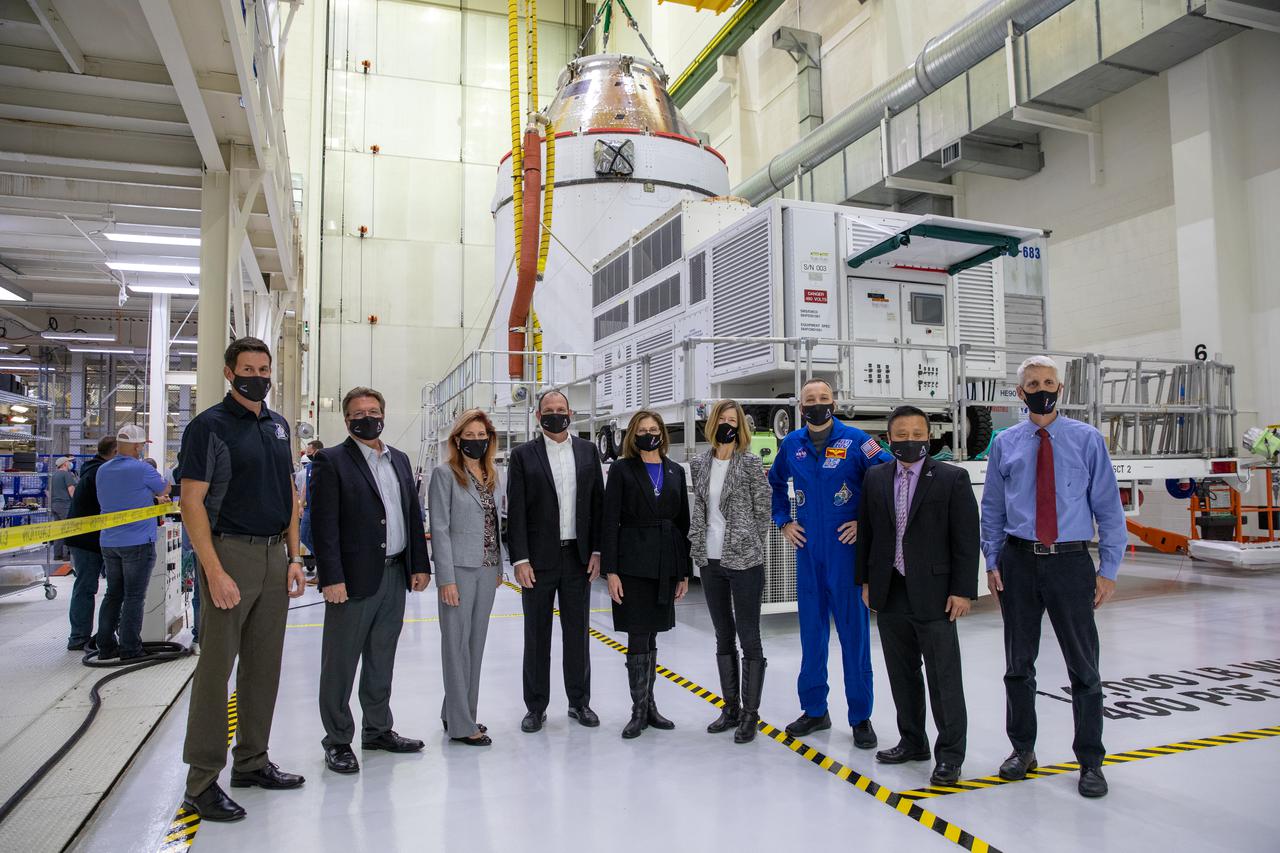
Orion is revealed for one of the final times on Jan. 14, as it is moved by crane to its transport pallet inside the Neil Armstrong Operations and Checkout Building at NASA’s Kennedy Space Center in Florida, along its path to the pad ahead of the Artemis I launch. Standing near Orion, from left, are Nathan Varn, Lockheed Martin Production Control director; Jules Schneider, Lockheed Martin Director of Orion Assembly, Test and Launch at Kennedy; Kelly DeFazio, Lockheed Martin Orion Program director for production operations; Tony Antonelli, Lockheed Martin Orion Program director and Artemis II mission director; Cathy Koerner, Orion Program manager; Kathy Lueders, associate administrator of the Human Exploration and Operations Mission Directorate; NASA astronaut Randy Bresnik; Howard Hu Orion Program deputy manager; and Scott Wilson, Orion Production Office manager. Teams across the globe have worked tirelessly to assemble the spacecraft, which will receive a protective covering prior to departing for the Multi-Payload Processing Facility to begin ground processing by the Exploration Ground Systems and Jacobs teams.
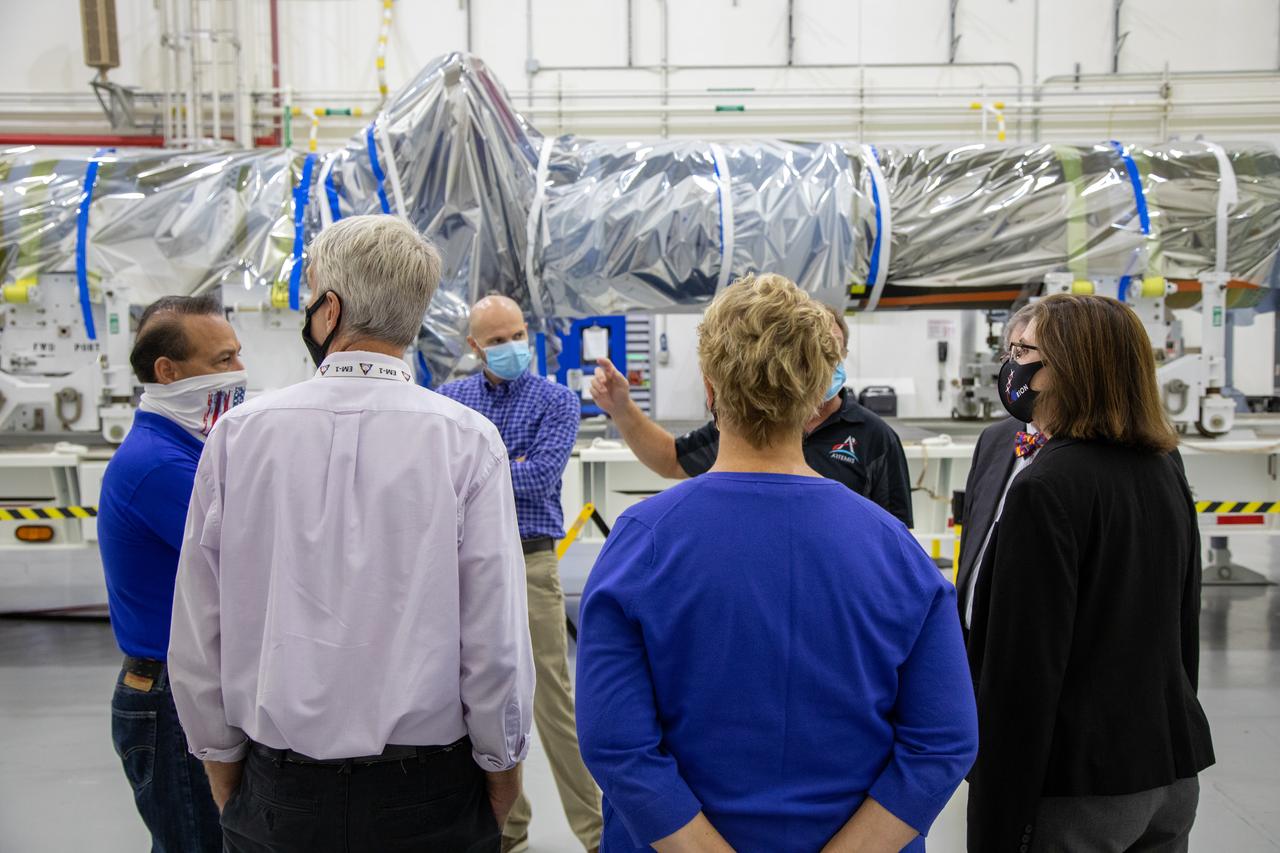
Catherine Koerner, far right, NASA Orion Program manager, along with senior managers from Orion and Lockheed Martin, tour the Launch Abort System Facility at NASA’s Kennedy Space Center in Florida on Oct. 6, 2020. Accompanying her from left, are Carlos Garcia, NASA Kennedy Launch Abort System Assembly, Integration and Test lead and Resident office manager; Scott Wilson, NASA Kennedy Orion Production Operations manager; Jim Skaggs, Kennedy Operations senior manager with Lockheed Martin; Jules Schneider, Kennedy Assembly, Test and Launch Operations director with Lockheed Martin; Mike Hawes, Lockheed Martin vice president and Orion Program manager; and Annette Hasbrook, Orion Program assistant manager. They are viewing the launch abort system for the Artemis II mission. Koerner also viewed the Orion spacecraft for the Artemis I and II missions in the Neil Armstrong Operations and Checkout Building. The first in a series of increasingly complex missions, Artemis I will test the Orion spacecraft and Space Launch System as an integrated system ahead of crewed flights to the Moon. Under the Artemis program, NASA will land the first woman and the next man on the Moon in 2024.
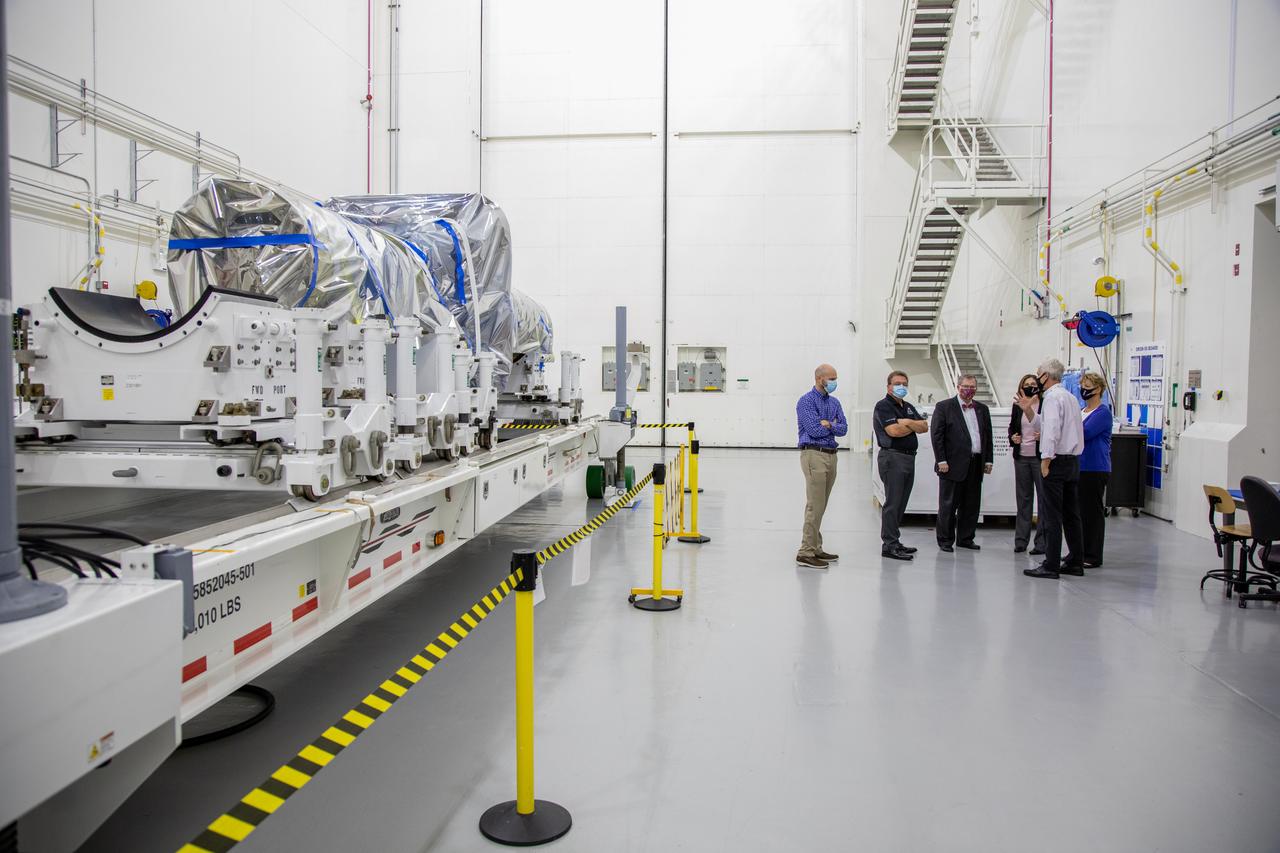
Catherine Koerner, third from right, NASA Orion Program manager, along with senior managers from Orion and Lockheed Martin, tour the Launch Abort System Facility at NASA’s Kennedy Space Center in Florida on Oct. 6, 2020. Accompanying her from left, are Jim Skaggs, Kennedy Operations senior manager with Lockheed Martin; Jules Schneider, Kennedy Assembly, Test and Launch Operations director with Lockheed Martin; Mike Hawes, Lockheed Martin vice president and Orion Program manager; Scott Wilson, NASA Kennedy Orion Production Operations manager; and Annette Hasbrook, Orion Program assistant manager. They are viewing the launch abort system for the Artemis II mission. Koerner also viewed the Orion spacecraft for the Artemis I and II missions in the Neil Armstrong Operations and Checkout Building. The first in a series of increasingly complex missions, Artemis I will test the Orion spacecraft and Space Launch System as an integrated system ahead of crewed flights to the Moon. Under the Artemis program, NASA will land the first woman and the next man on the Moon in 2024.
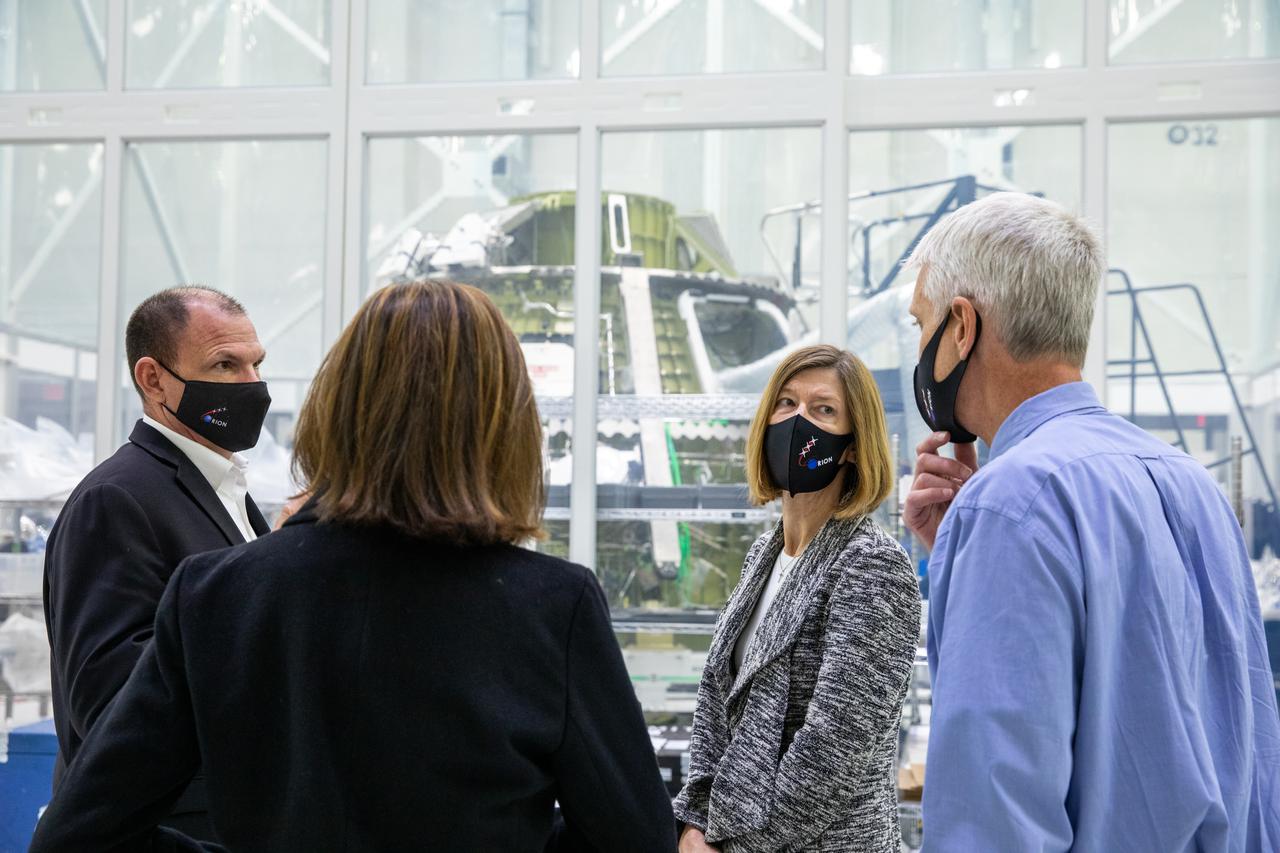
Kathy Lueders, second from right, associate administrator of the Human Exploration and Operations Mission Directorate, tours the Neil Armstrong Operations and Checkout Building high bay at NASA’s Kennedy Space Center in Florida on Jan. 14, 2021. In the background is the Orion crew module for the Artemis II mission. From left are Tony Antonelli, Lockheed Martin Orion Program director and Artemis II Mission director; Cathy Koerner, Orion Program manager; and Scott Wilson, Orion Production Operations manager. The group also viewed the Orion spacecraft for Artemis I as it was lowered onto a transporter for the move to the Multi-Payload Processing Facility to begin ground processing by the Exploration Ground Systems and Jacobs teams.
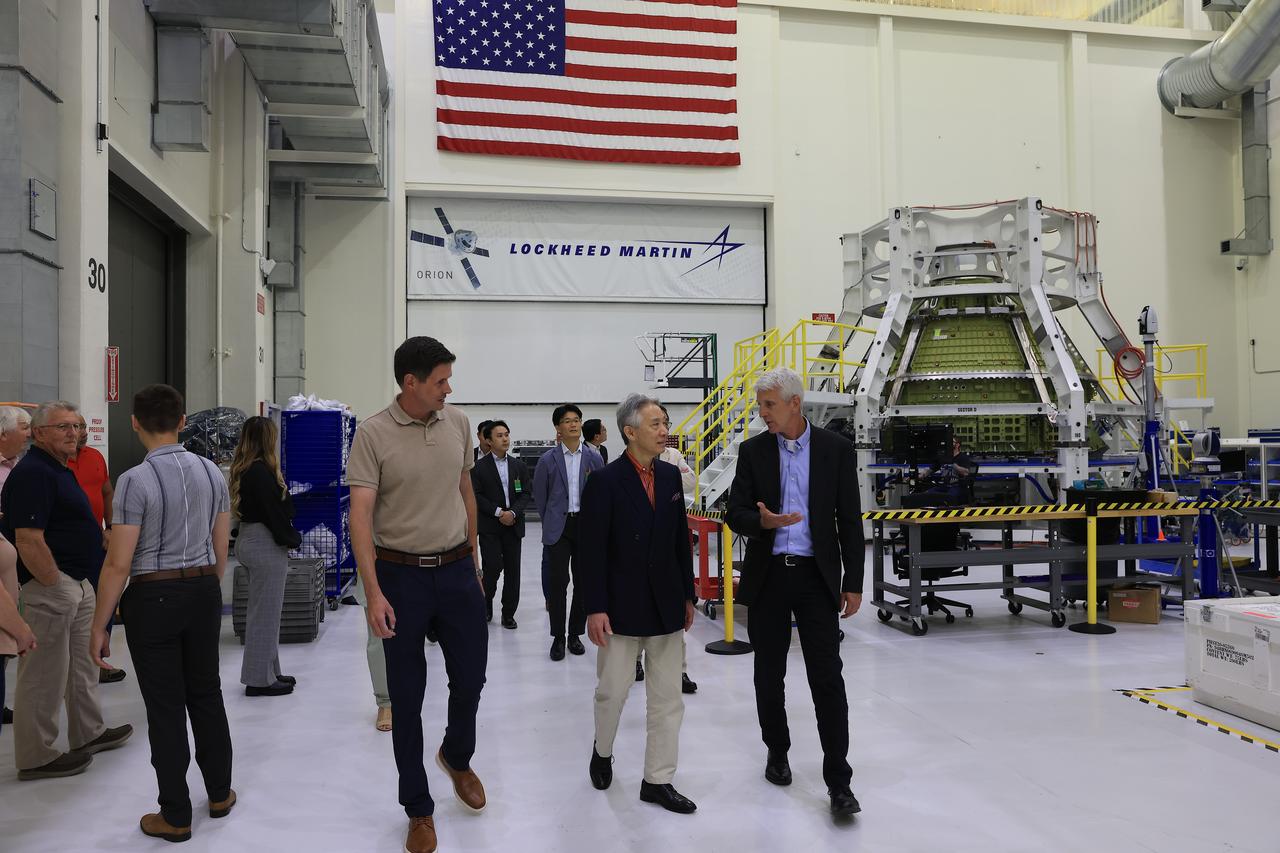
Nathan Varn, Program Director Orion Productions for Lockheed Martin, left, and Scott Wilson, NASA’s Division Chief, Orion Production Operations Office, right, lead a tour of the Neil A. Armstrong Operations and Checkout Building at NASA’s Kennedy Space Center in Florida, for Japanese Minister of Education, Culture, Sports, Science and Technology (MEXT) Masahito Moriyama on Friday, April 12, 2024. Moriyama’s visit included viewing the Orion crew modules for upcoming Artemis missions, which will land the first woman, first person of color, and NASA’s first international partner astronaut on the Moon.
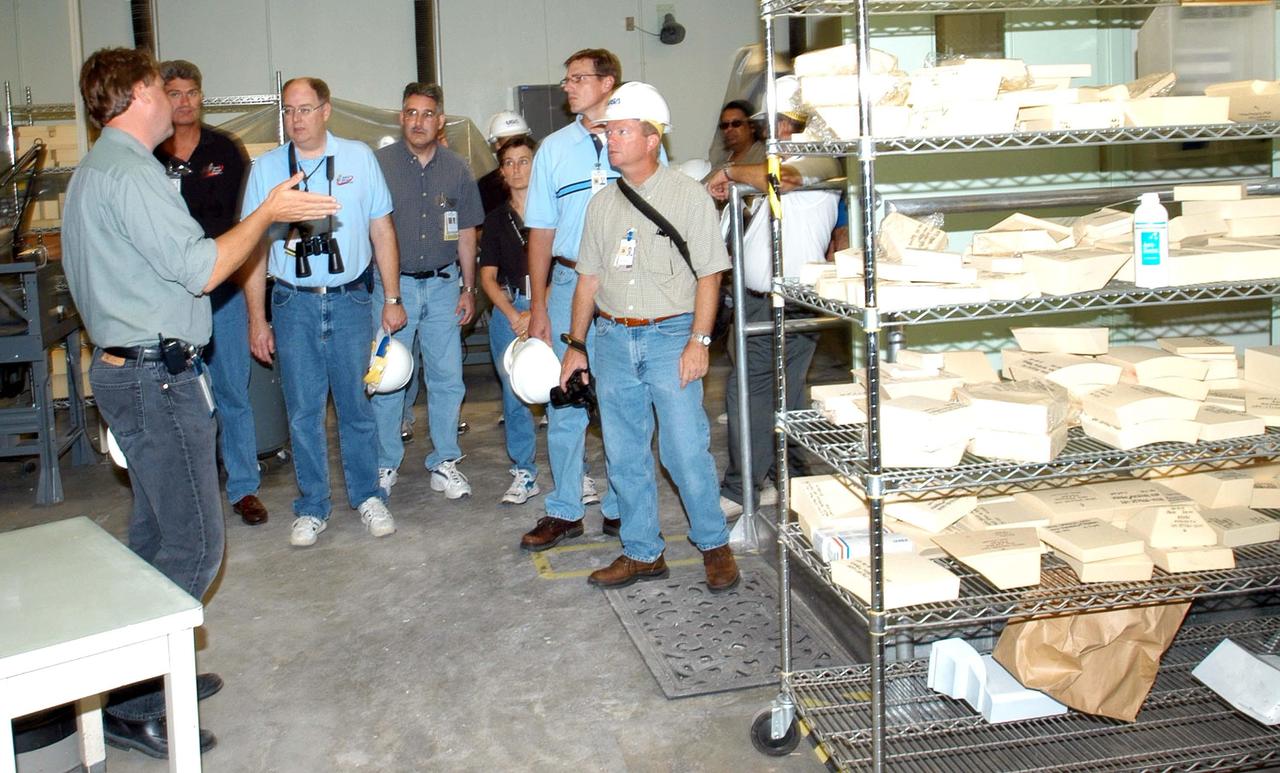
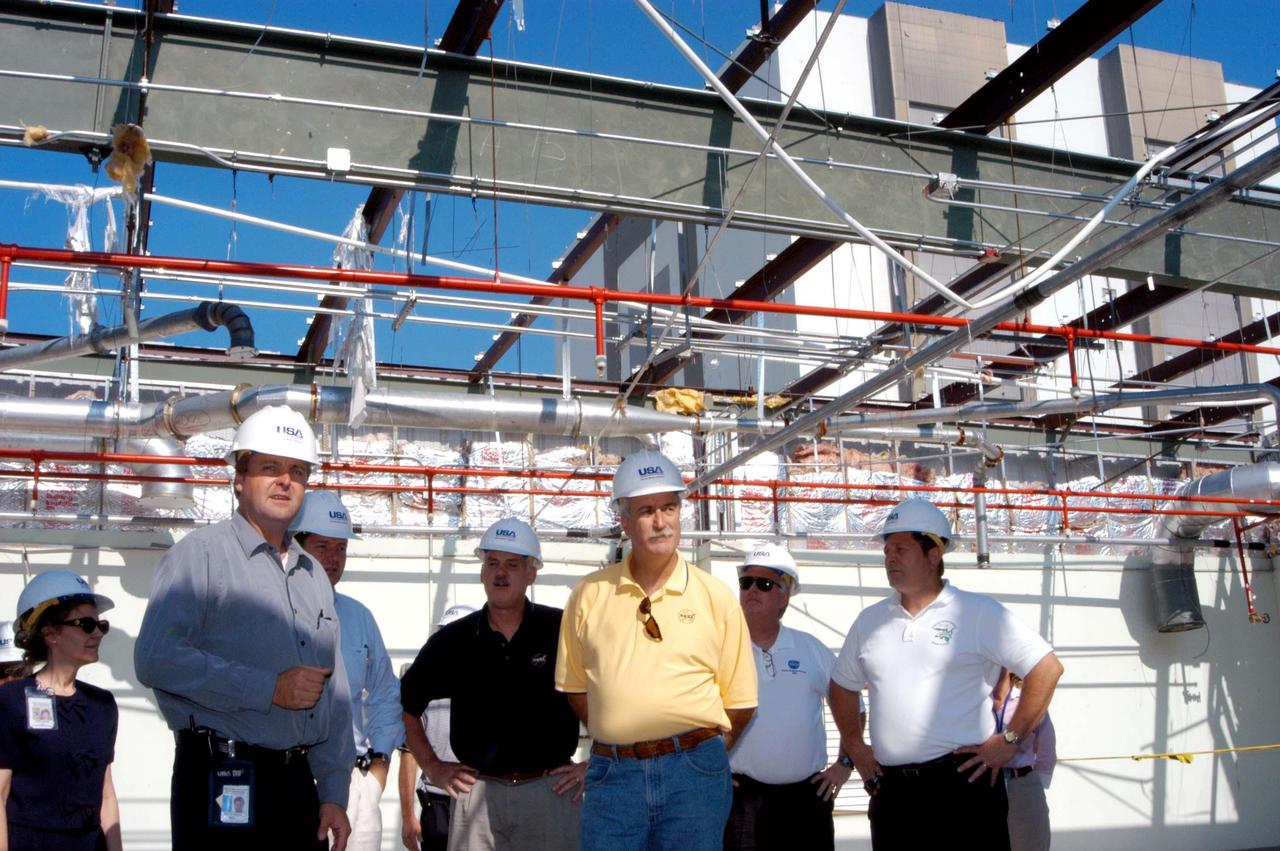
KENNEDY SPACE CENTER, FLA. - Members of a hurricane assessment team from Johnson Space Center and Marshall Space Flight Center tour the Thermal Protection System (TPS) Facility at KSC after Hurricane Frances hit the east coast of Central Florida and Kennedy Space Center. At left is Martin Wilson, manager of the TPS operations. The facility, which creates the TPS tiles, blankets and all the internal thermal control systems for the Space Shuttles, is almost totally unserviceable at this time after losing approximately 35 percent of its roof. Equipment and materials that survived the storm have been relocated to the RLV hangar near the KSC Shuttle Landing Facility.
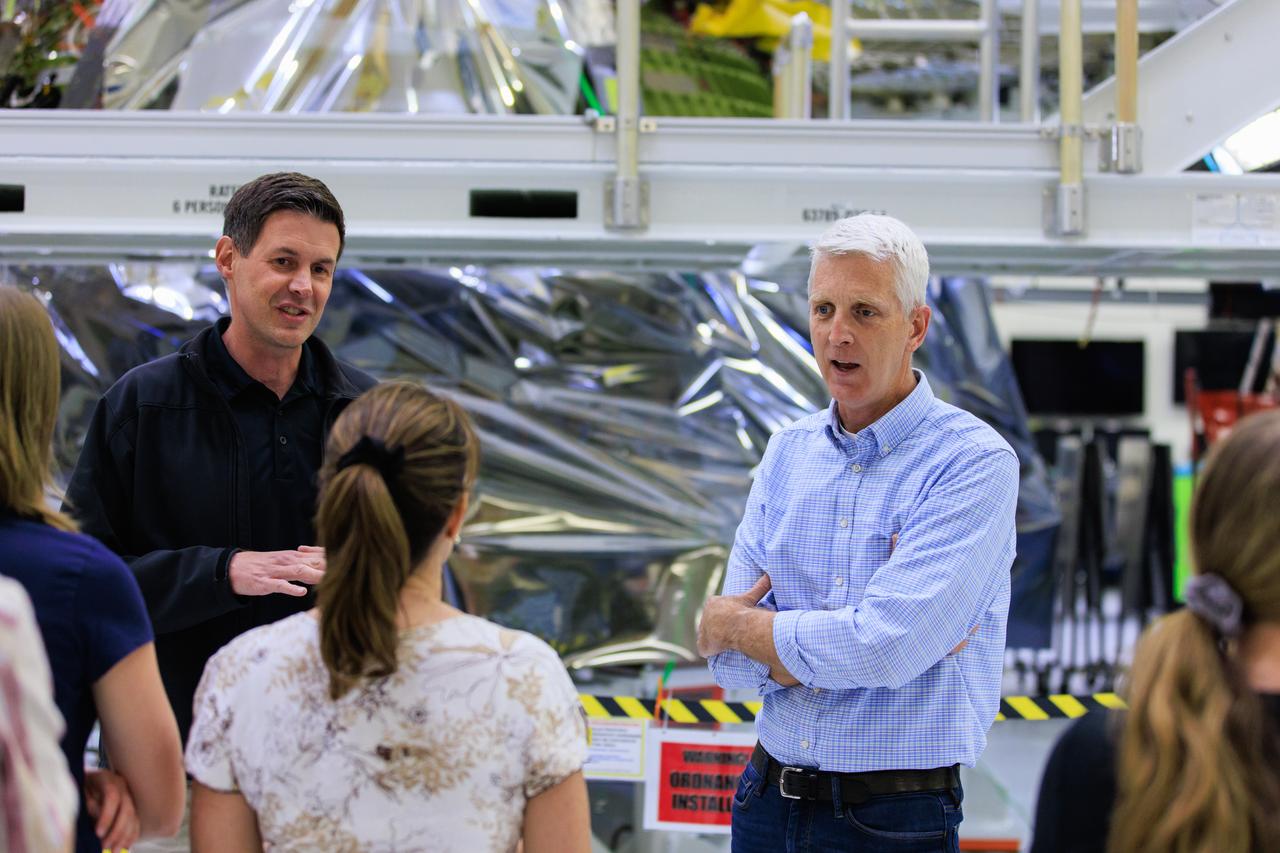
Nathan Varn, Program Director Orion Productions for Lockheed Martin, left, and Scott Wilson, NASA’s Division Chief, Orion Production Operations Office, lead a tour for Artemis II crew members and their families of the Neil A. Armstrong Operations and Checkout Building at NASA’s Kennedy Space Center in Florida, on Friday, March 15, 2024. Artemis II Commander Reid Wiseman and Artemis II Mission Specialist Jeremy Hansen toured the facility with their families and viewed the Orion crew modules, including the spacecraft that will take them, along with Artemis II Pilot Victor Glover and Artemis II Mission Specialist Christina Hammock Koch, around the Moon and back during the Artemis II mission.
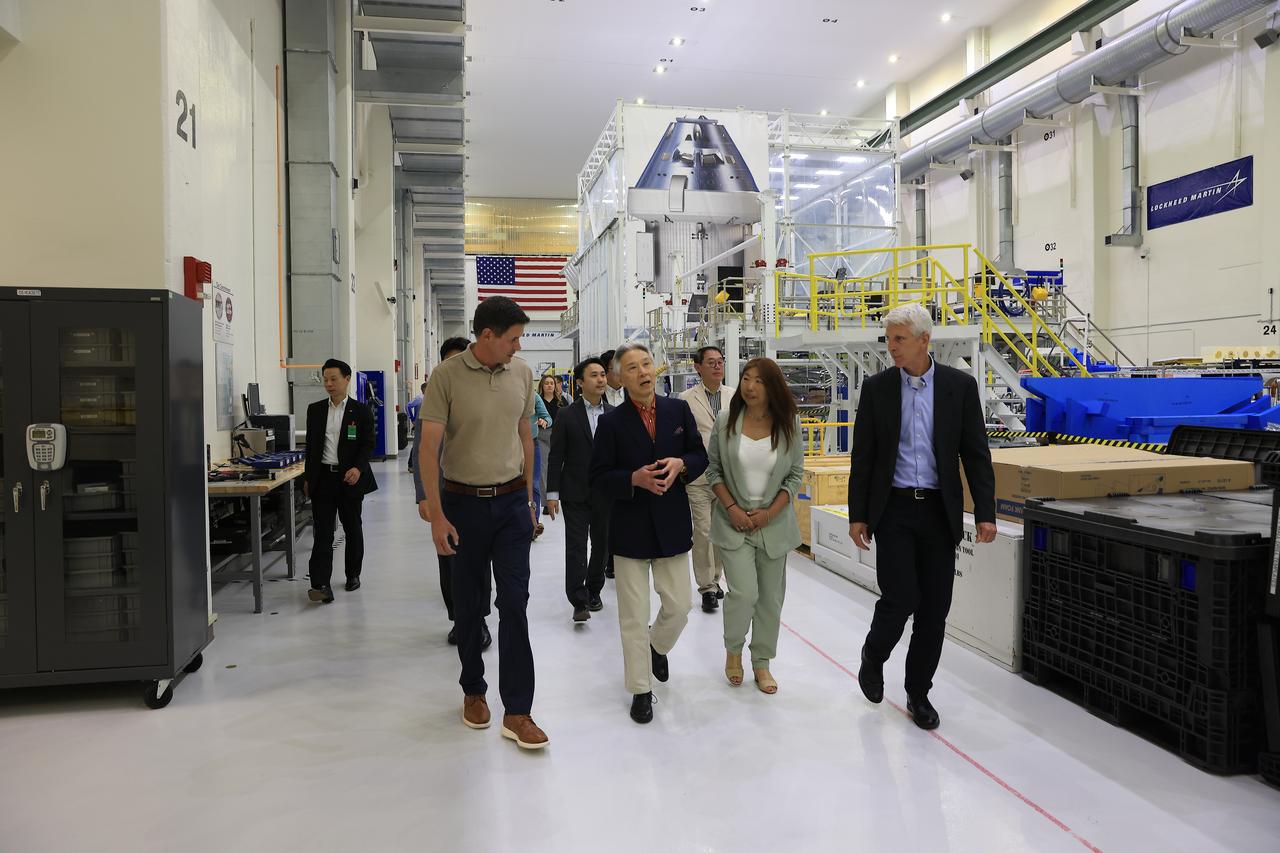
Nathan Varn, Program Director Orion Productions for Lockheed Martin, left, and Scott Wilson, NASA’s Division Chief, Orion Production Operations Office, right, lead a tour of the Neil A. Armstrong Operations and Checkout Building at NASA’s Kennedy Space Center in Florida, for Japanese Minister of Education, Culture, Sports, Science and Technology (MEXT) Masahito Moriyama on Friday, April 12, 2024. Moriyama’s visit included viewing the Orion crew modules for upcoming Artemis missions, which will land the first woman, first person of color, and NASA’s first international partner astronaut on the Moon.
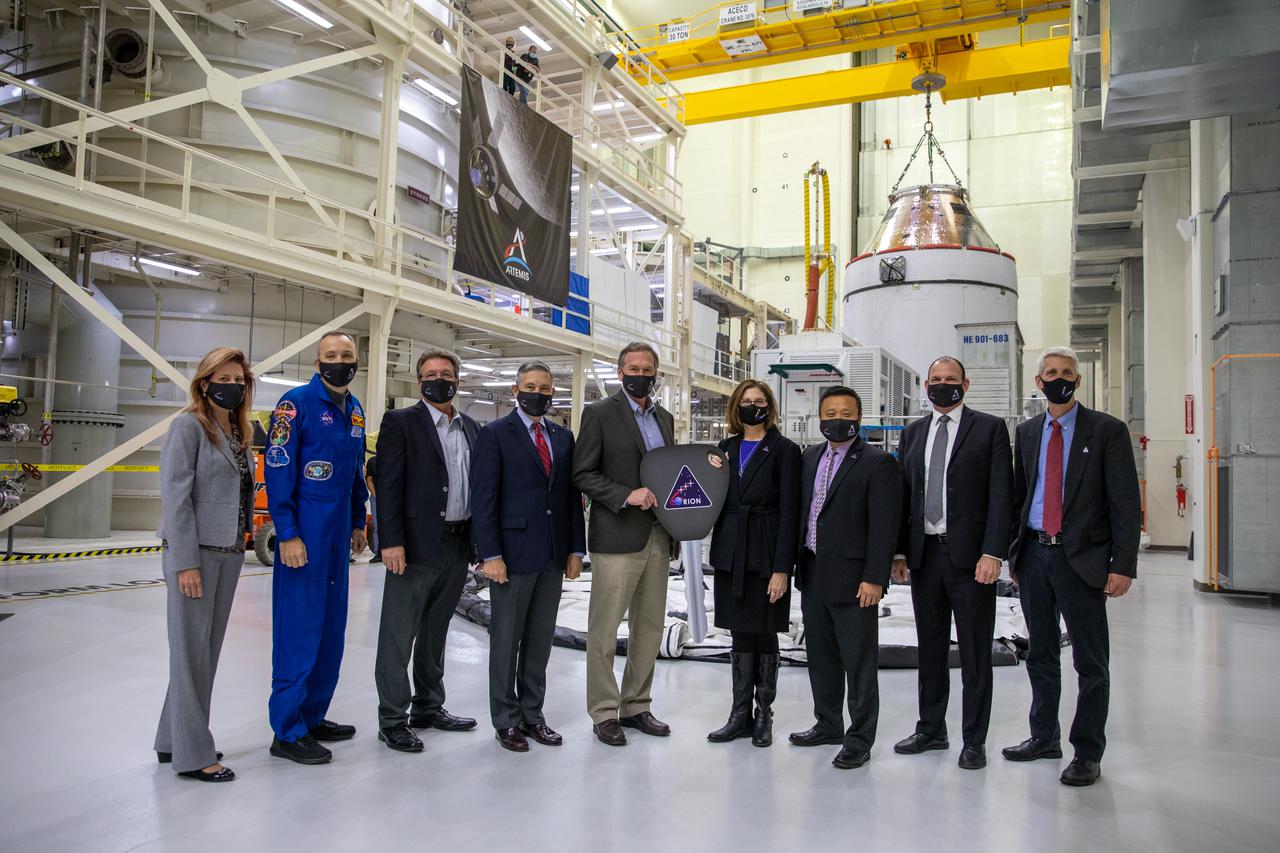
Orion is revealed for one of the final times on Jan. 14, as it is readied atop its transport pallet from the Neil Armstrong Operations and Checkout Building at NASA’s Kennedy Space Center in Florida, along its path to the pad ahead of the Artemis I launch. Standing in front of Orion, from left, are Kelly DeFazio, Lockheed Martin Orion Program director for production; NASA astronaut Randy Bresnik; Jules Schneider, Lockheed Martin director of Orion Assembly, Test & Launch at Kennedy; Kennedy Space Center Director Bob Cabana; Mike Bolger, Exploration Ground Systems (EGS) manager; Cathy Koerner, Orion Program manager; Howard Hu, Orion Program deputy manager; Tony Antonelli, Lockheed Martin Orion Program director and Artemis II mission director; and Scott Wilson, Orion Production Office manager. Teams across the globe have worked tirelessly to assemble the spacecraft, which will receive a protective covering prior to departing for the Multi-Payload Processing Facility to begin ground processing by the EGS and Jacobs teams.
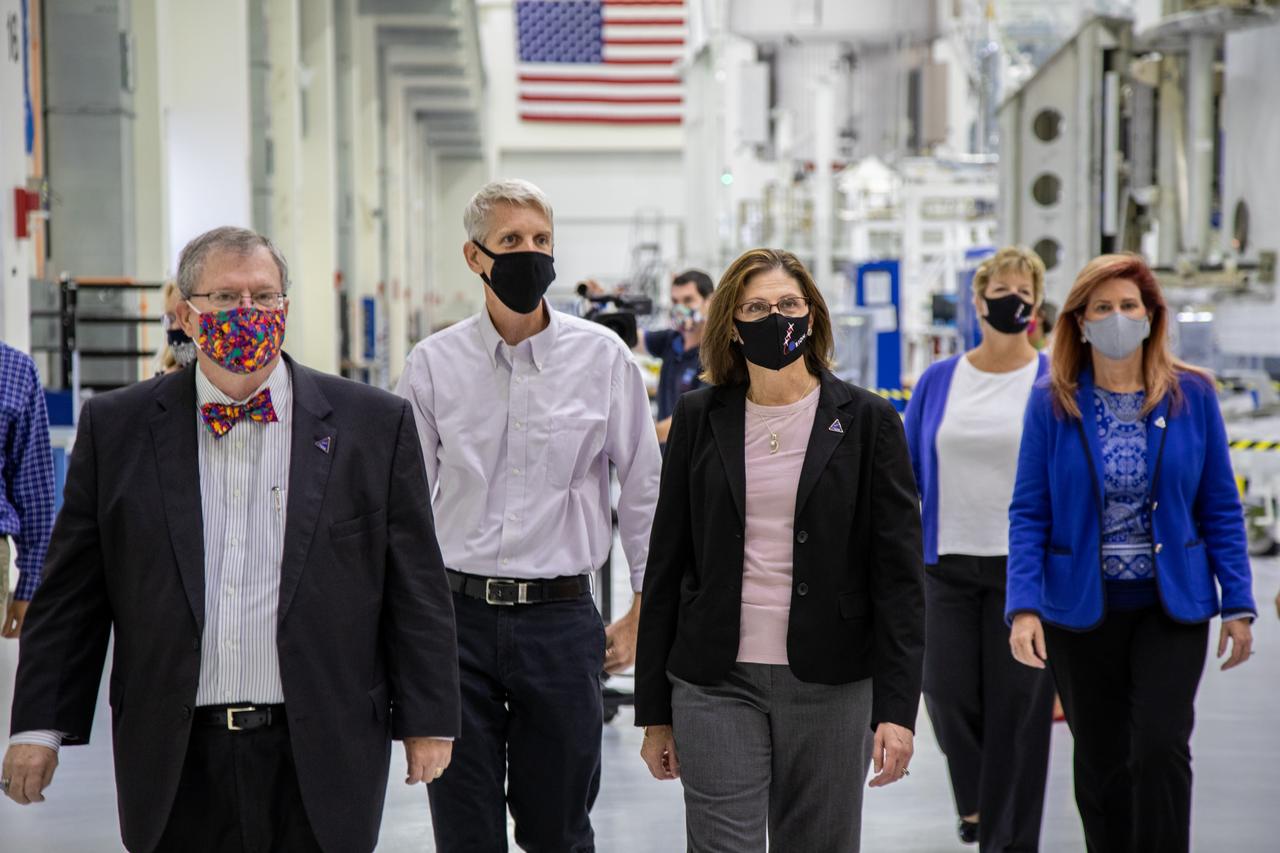
Catherine Koerner, in the center, NASA Orion Program manager, along with senior managers from Orion and Lockheed Martin, tour the Neil Armstrong Operations and Checkout Building at NASA’s Kennedy Space Center in Florida on Oct. 6, 2020. Accompanying her, from left are Mike Hawes, Lockheed Martin vice president and Orion Program manager; Scott Wilson, NASA Kennedy Orion Production Operations manager; Annette Hasbrook, Orion Program assistant manager; and Kelly DeFazio, Lockheed Martin vehicle production director on the Orion Production Operations Contract. Koerner viewed Orion spacecraft for the Artemis I and II missions. In view in the background, at right, is one of three Spacecraft Adapter Jettison fairing panels to be installed on the spacecraft. The first in a series of increasingly complex missions, Artemis I will test the Orion spacecraft and Space Launch System as an integrated system ahead of crewed flights to the Moon. Under the Artemis program, NASA will land the first woman and the next man on the Moon in 2024.
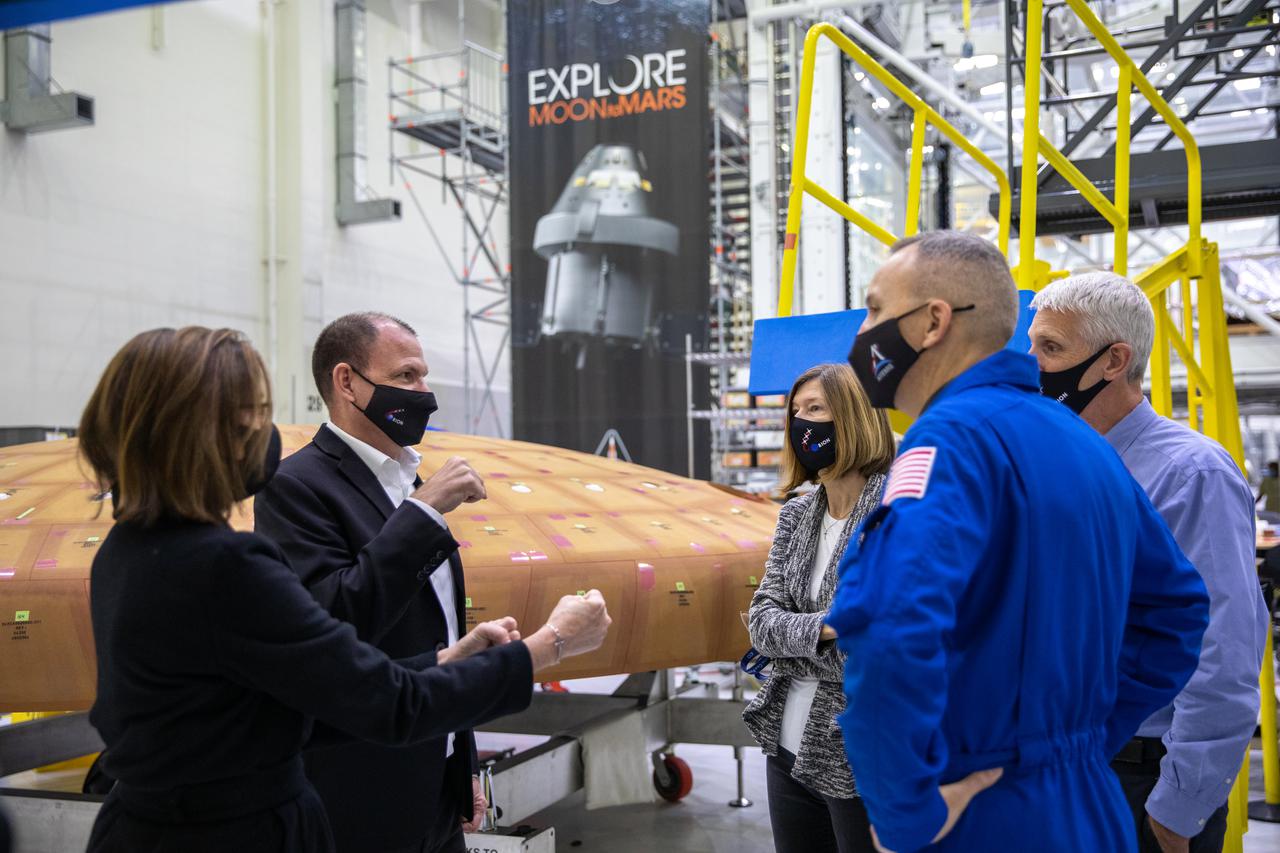
Kathy Lueders, third from right, associate administrator of the Human Exploration and Operations Mission Directorate, tours the Neil Armstrong Operations and Checkout Building high bay at NASA’s Kennedy Space Center in Florida on Jan. 14, 2021. In the background is the heat shield for the Orion crew module for the Artemis II mission. From left are Cathy Koerner, Orion Program manager; Tony Antonelli, Lockheed Martin Orion Program director and Artemis II Mission director; NASA astronaut Randy Bresnik; and Scott Wilson, Orion Production Operations manager. The group also viewed the Orion spacecraft for Artemis I as it was lowered onto a transporter for the move to the Multi-Payload Processing Facility to begin ground processing by the Exploration Ground Systems and Jacobs teams.
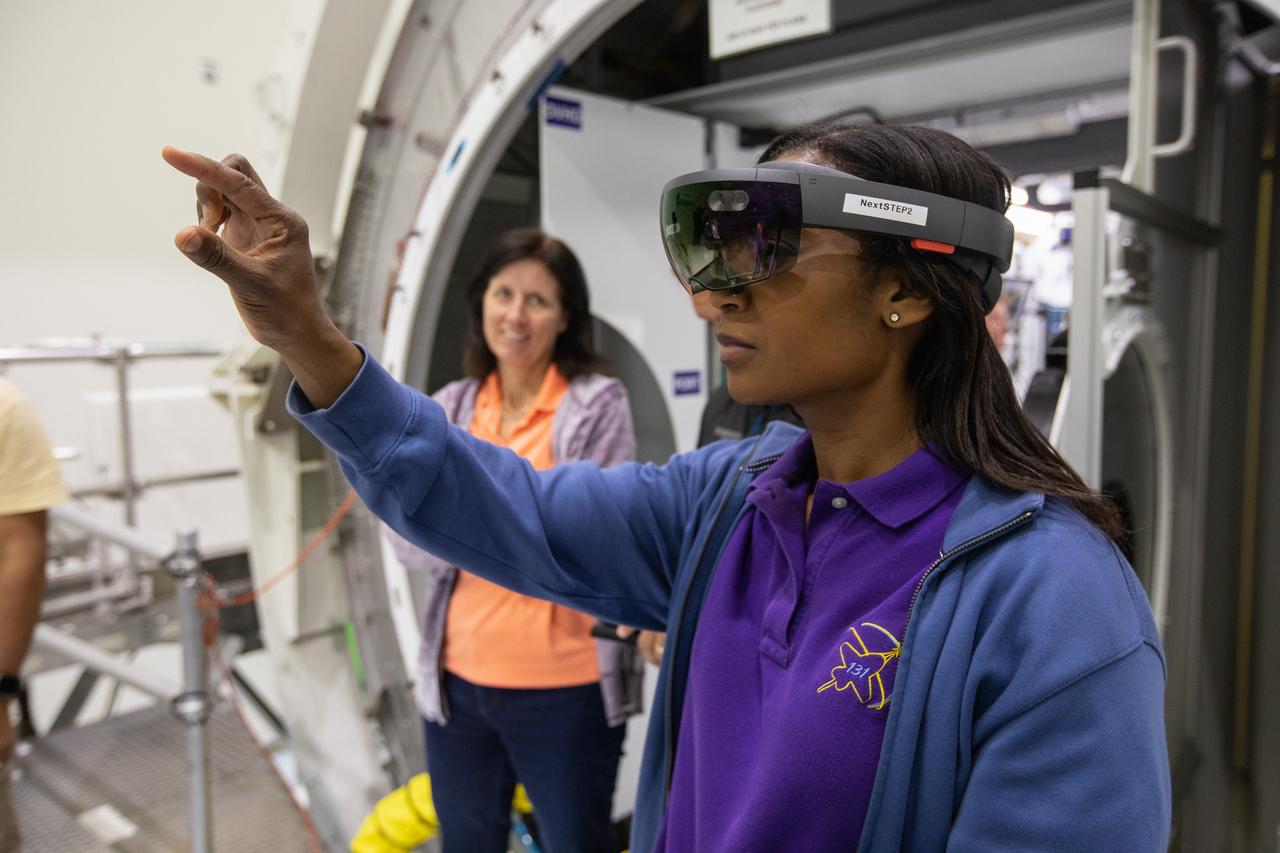
NASA began evaluating five habitat prototypes developed through NASA’s Next Space Exploration for Technologies Partnerships, or NextSTEP, to help engineers refine requirements for the design of an American-made deep space habitat for the Gateway. Lockheed Martin turned over its prototype to NASA, and testing began with crew on March 25, 2019, at Kennedy Space Center in Florida. Pictured inside the Space Station Processing Facility on March 26, 2019, from left are astronauts Shannon Walker and Stephanie Wilson. Astronauts are participating in the evaluations to provide their perspectives as those who may one day live aboard the lunar outpost, which would be located about 250,000 miles from Earth. Ground prototypes developed by Bigelow Aerospace, Boeing, Northrop Grumman, and Sierra Nevada Corporation will be tested in the future at various facilities across the country. A sixth company, NanoRacks, plans to develop a prototype as well.
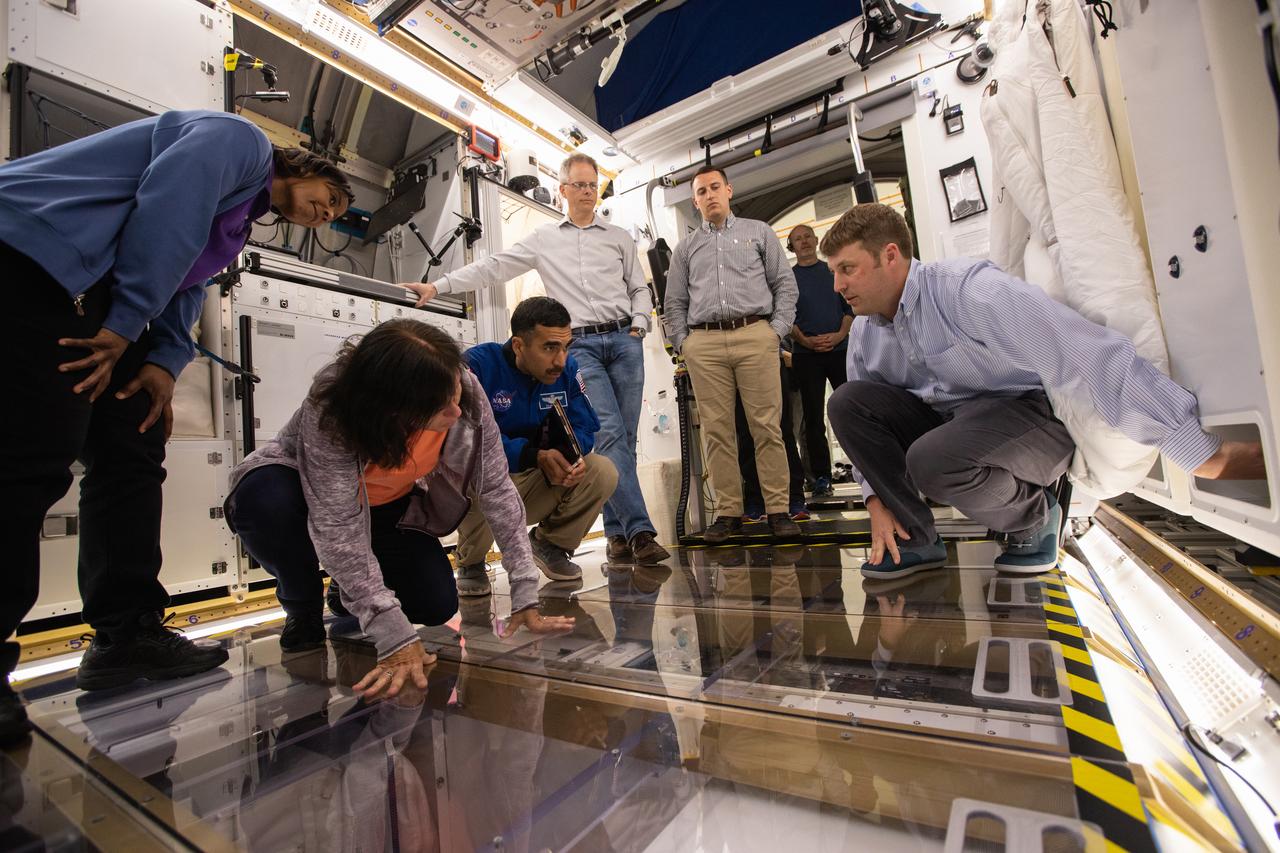
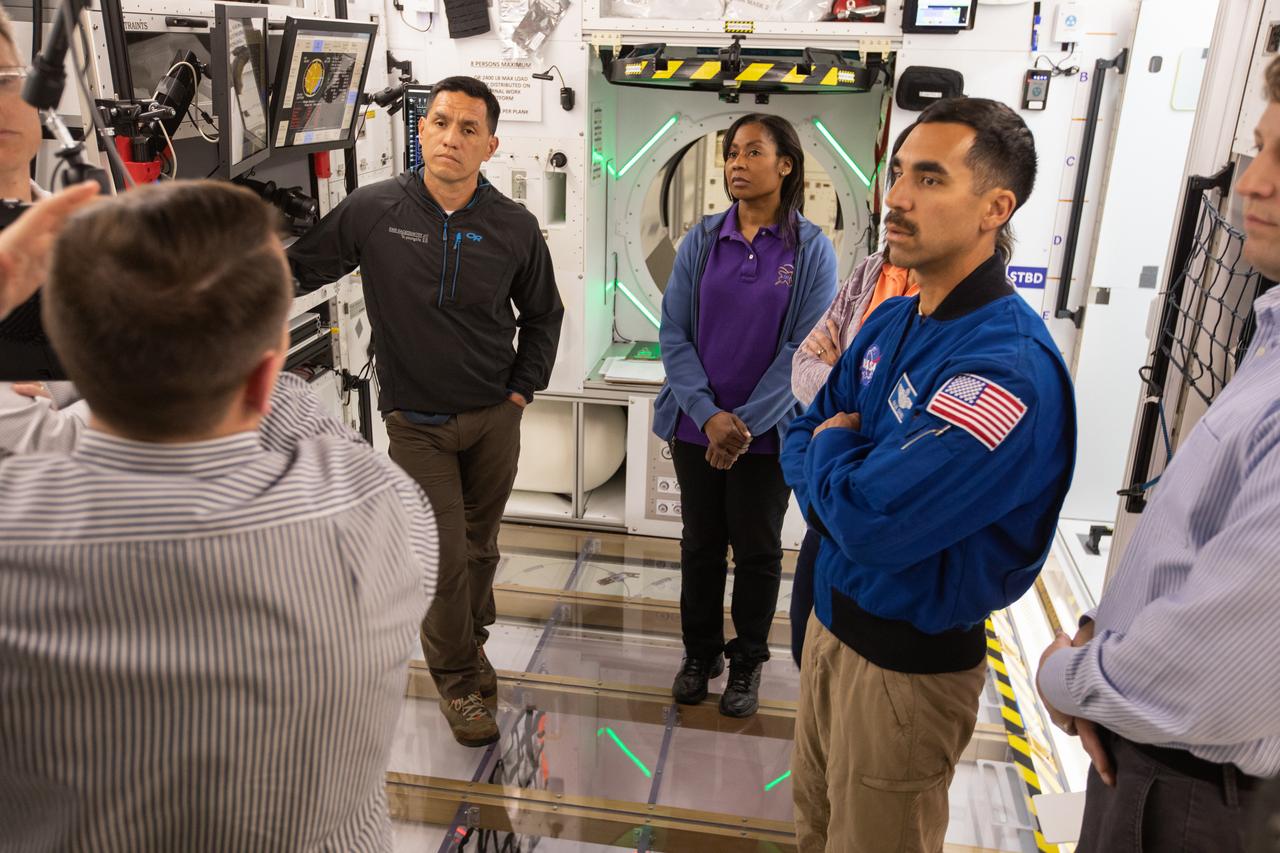
NASA began evaluating five habitat prototypes developed through NASA’s Next Space Exploration for Technologies Partnerships, or NextSTEP, to help engineers refine requirements for the design of an American-made deep space habitat for the Gateway. Lockheed Martin turned over its prototype to NASA, and testing began with crew on March 25, 2019, at Kennedy Space Center in Florida. Pictured inside the habitat prototype on March 26, 2019, from left are astronauts Stephanie Wilson, Shannon Walker and Raja Chari. Astronauts are participating in the evaluations to provide their perspectives as those who may one day live aboard the lunar outpost, which would be located about 250,000 miles from Earth. Ground prototypes developed by Bigelow Aerospace, Boeing, Northrop Grumman, and Sierra Nevada Corporation will be tested in the future at various facilities across the country. A sixth company, NanoRacks, plans to develop a prototype as well.
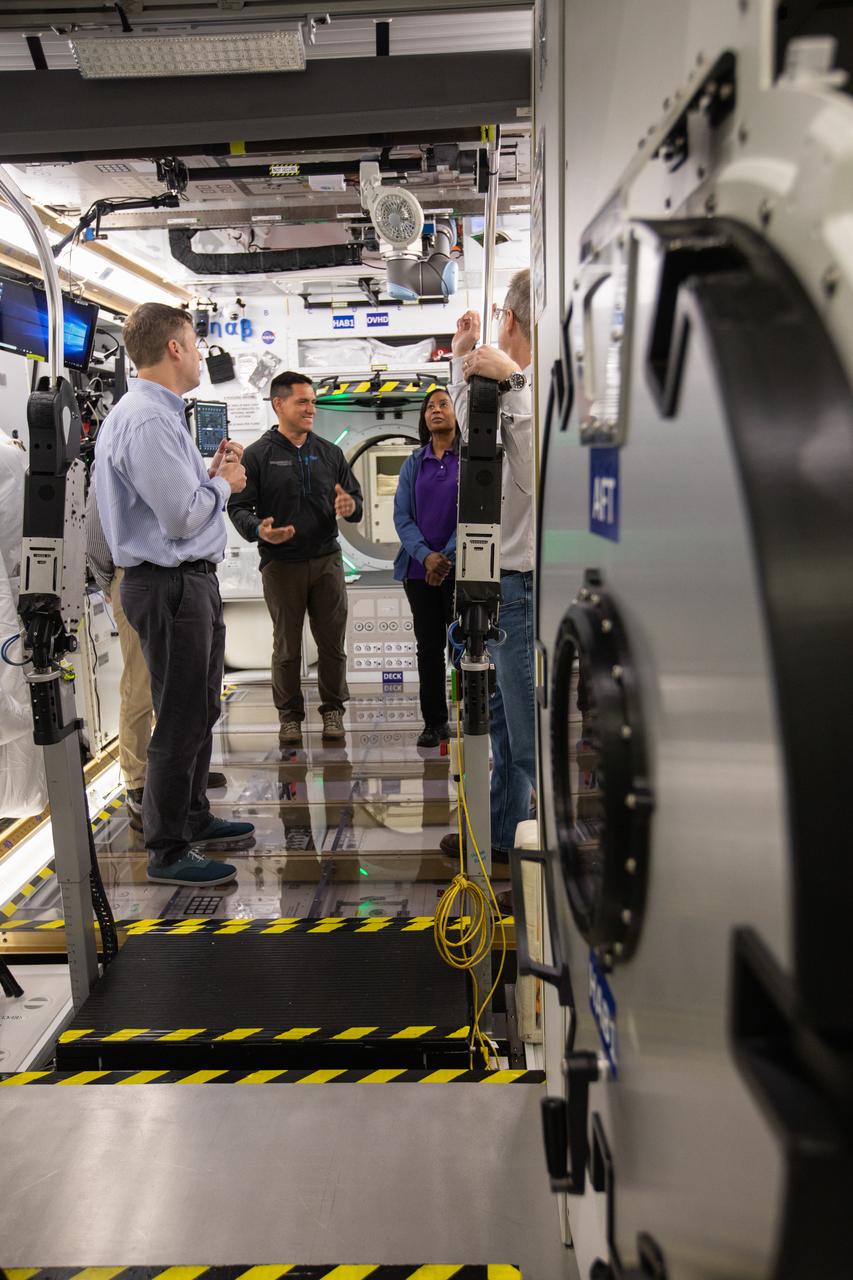
NASA began evaluating five habitat prototypes developed through NASA’s Next Space Exploration for Technologies Partnerships, or NextSTEP, to help engineers refine requirements for the design of an American-made deep space habitat for the Gateway. Lockheed Martin turned over its prototype to NASA, and testing began with crew on March 25, 2019, at Kennedy Space Center in Florida. Pictured inside the habitat prototype on March 26, 2019, second from left is astronaut Frank Rubio. Next to him is astronaut Stephanie Wilson. Astronauts are participating in the evaluations to provide their perspectives as those who may one day live aboard the lunar outpost, which would be located about 250,000 miles from Earth. Ground prototypes developed by Bigelow Aerospace, Boeing, Northrop Grumman, and Sierra Nevada Corporation will be tested in the future at various facilities across the country. A sixth company, NanoRacks, plans to develop a prototype as well.
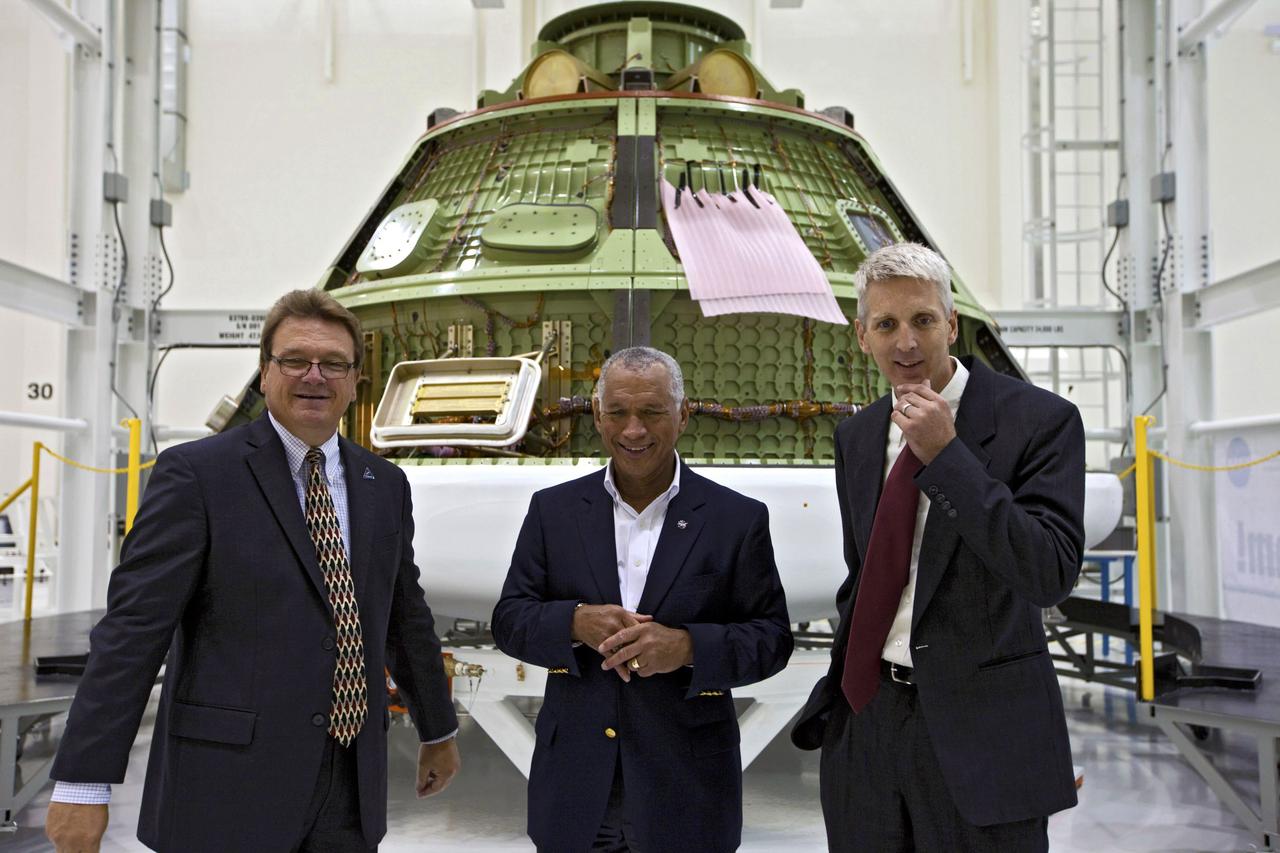
CAPE CANAVERAL, Fla. - In the Operations and Checkout Building at the Kennedy Space Center in Florida, NASA Administrator Charles Bolden, center, addresses news media in front of the Orion EFT-1 spacecraft. Also participating are Jules Schneider, senior manager of Project Engineering for the Lockheed Martin Orion Program at Kennedy, left, and Scott Wilson, NASA's manager of Production Operations for the Orion Program. Bolden took a few dozen members of the news media on a tour of the space agency's Kennedy Space Center and adjacent Cape Canaveral Air Force Station on Aug. 23, 2012 to show the progress being made for future government and commercial space endeavors that will begin from Florida's Space Coast. For more information, visit: http://www.nasa.gov/centers/kennedy/news/kennedy-bolden-tour.html Photo credit: NASA/Kim Shiflett
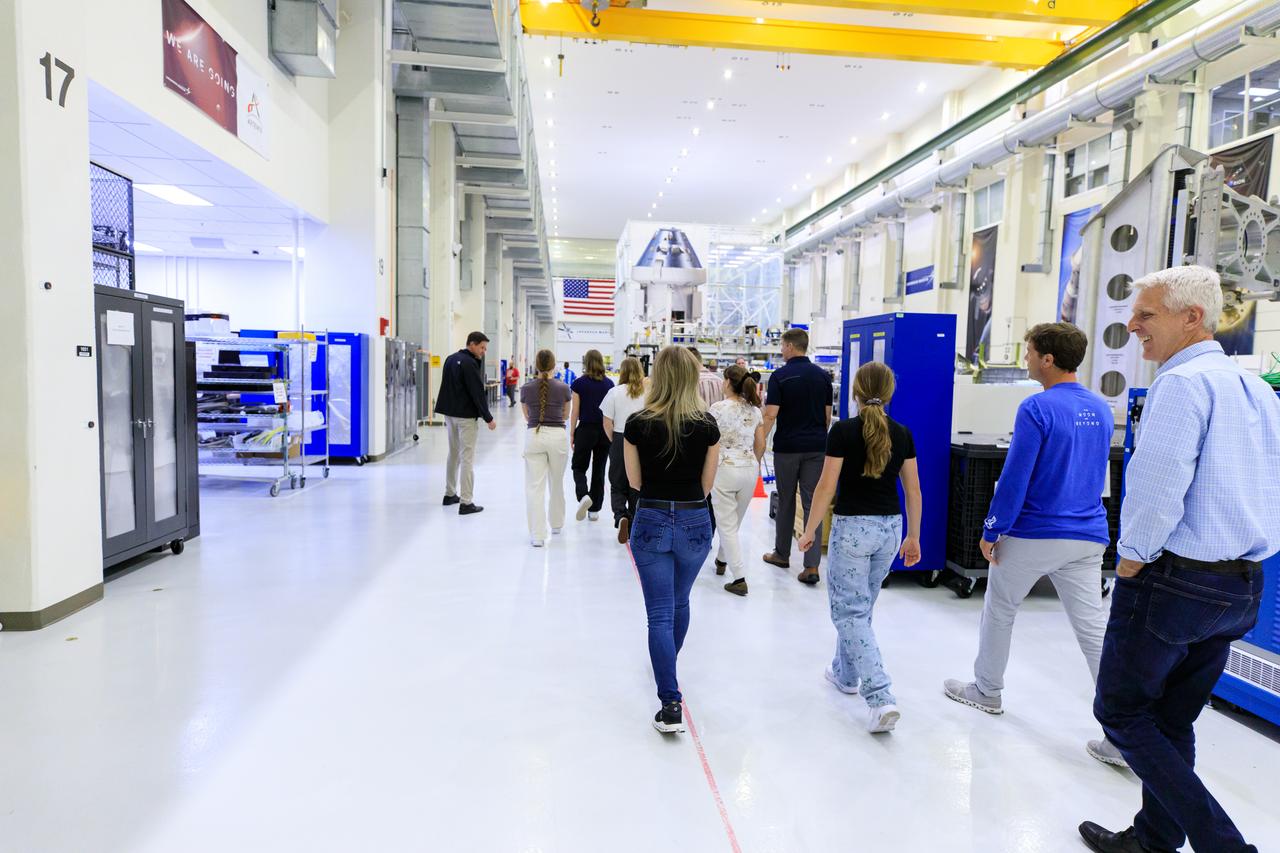
Nathan Varn, far left, Program Director Orion Productions for Lockheed Martin, and Scott Wilson, far right, NASA’s Division Chief, Orion Production Operations Office, lead a tour for Artemis II crew members and their families of the Neil A. Armstrong Operations and Checkout Building at NASA’s Kennedy Space Center in Florida, on Friday, March 15, 2024. Artemis II Commander Reid Wiseman and Artemis II Mission Specialist Jeremy Hansen toured the facility with their families and viewed the Orion crew modules, including the spacecraft that will take them, along with Artemis II Pilot Victor Glover and Artemis II Mission Specialist Christina Hammock Koch, around the Moon and back during the Artemis II mission.
NASA began evaluating five habitat prototypes developed through NASA’s Next Space Exploration for Technologies Partnerships, or NextSTEP, to help engineers refine requirements for the design of an American-made deep space habitat for the Gateway. Lockheed Martin turned over its prototype to NASA, and testing began with crew on March 25, 2019, at Kennedy Space Center in Florida. Pictured inside the habitat prototype on March 26, 2019, from left are astronauts Frank Rubio, Stephanie Wilson and Raja Chari. Partially in view next to Chari is astronaut Shannon Walker. Astronauts are participating in the evaluations to provide their perspectives as those who may one day live aboard the lunar outpost, which would be located about 250,000 miles from Earth. Ground prototypes developed by Bigelow Aerospace, Boeing, Northrop Grumman, and Sierra Nevada Corporation will be tested in the future at various facilities across the country. A sixth company, NanoRacks, plans to develop a prototype as well.
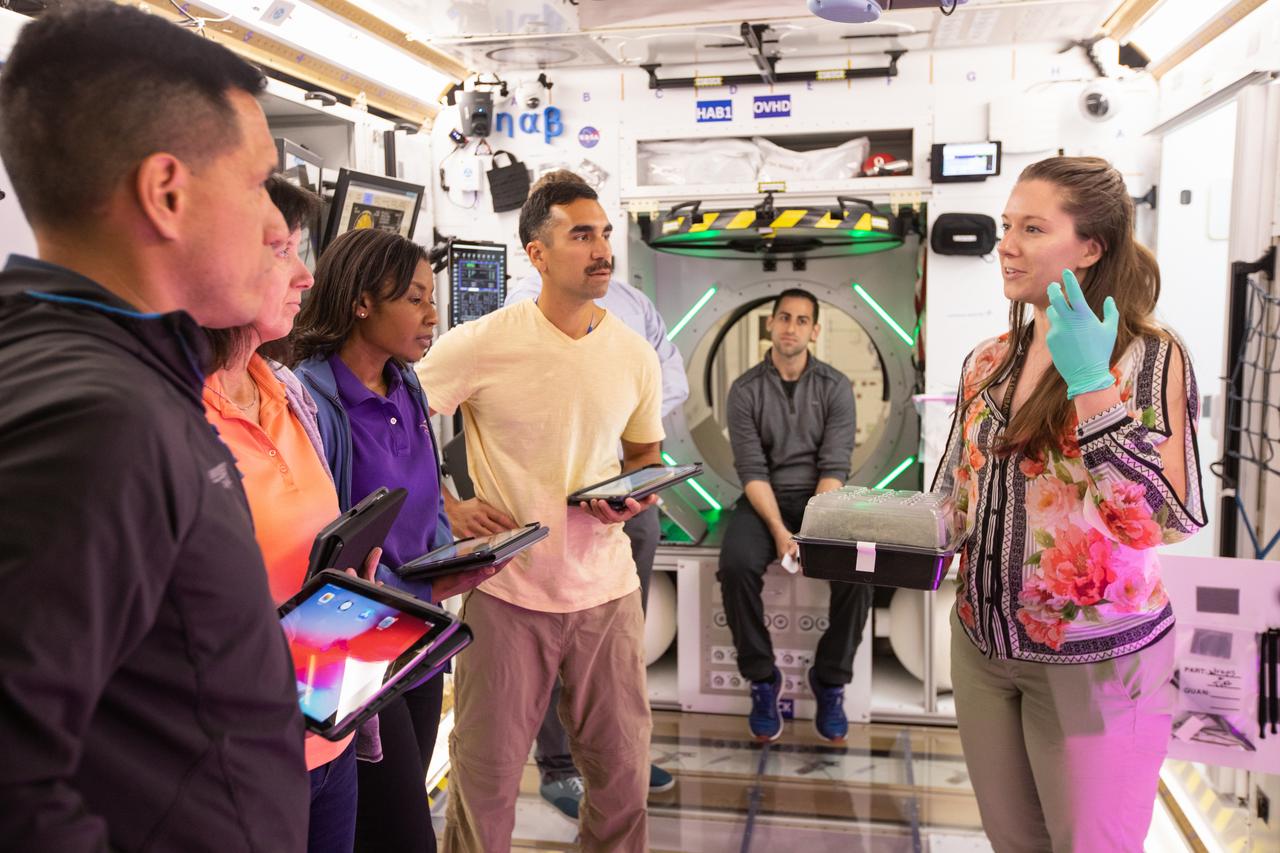
NASA began evaluating five habitat prototypes developed through NASA’s Next Space Exploration for Technologies Partnerships, or NextSTEP, to help engineers refine requirements for the design of an American-made deep space habitat for the Gateway. Lockheed Martin turned over its prototype to NASA, and testing began with crew on March 25, 2019, at Kennedy Space Center in Florida. Pictured inside the habitat prototype on March 26, 2019, from far left are astronauts Frank Rubio, Shannon Walker, Stephanie Wilson and Raja Chari. Astronauts are participating in the evaluations to provide their perspectives as those who may one day live aboard the lunar outpost, which would be located about 250,000 miles from Earth. Ground prototypes developed by Bigelow Aerospace, Boeing, Northrop Grumman, and Sierra Nevada Corporation will be tested in the future at various facilities across the country. A sixth company, NanoRacks, plans to develop a prototype as well.
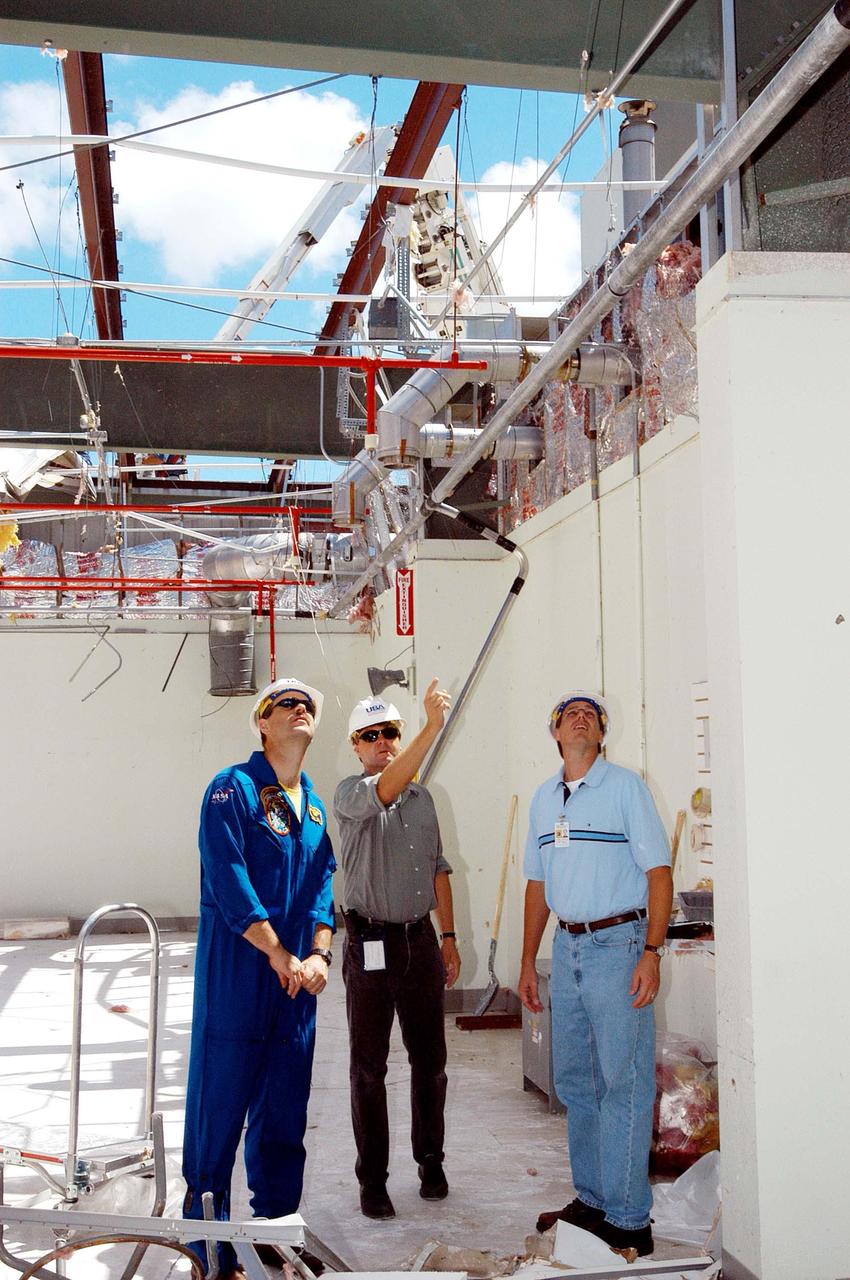
KENNEDY SPACE CENTER, FLA. - Members of a hurricane assessment team from Johnson Space Center and Marshall Space Flight Center observe the damage to the roof of the Thermal Protection System (TPS) Facility at KSC after Hurricane Frances hit the east coast of Central Florida and Kennedy Space Center. At left is astronaut Scott Altmann, a member of the team, and at center is Martin Wilson, manager of the TPS operations. The facility, which creates the TPS tiles, blankets and all the internal thermal control systems for the Space Shuttles, is almost totally unserviceable at this time after losing approximately 35 percent of its roof. Equipment and materials that survived the storm have been relocated to the RLV hangar near the KSC Shuttle Landing Facility.
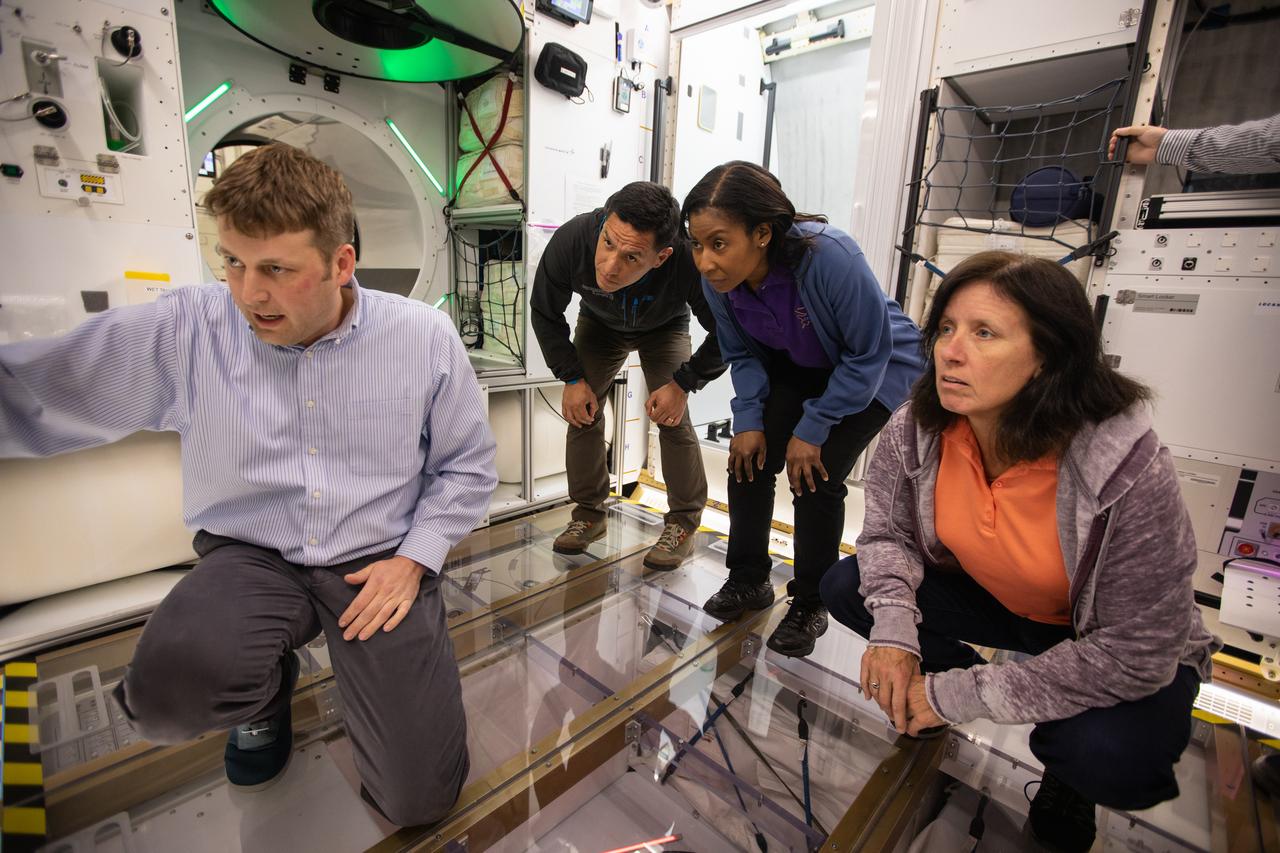
NASA began evaluating five habitat prototypes developed through NASA’s Next Space Exploration for Technologies Partnerships, or NextSTEP, to help engineers refine requirements for the design of an American-made deep space habitat for the Gateway. Lockheed Martin turned over its prototype to NASA, and testing began with crew on March 25, 2019, at Kennedy Space Center in Florida. Pictured inside the habitat prototype on March 26, 2019, in back from left are astronauts Frank Rubio, Stephanie Wilson and Shannon Walker. Astronauts are participating in the evaluations to provide their perspectives as those who may one day live aboard the lunar outpost, which would be located about 250,000 miles from Earth. Ground prototypes developed by Bigelow Aerospace, Boeing, Northrop Grumman, and Sierra Nevada Corporation will be tested in the future at various facilities across the country. A sixth company, NanoRacks, plans to develop a prototype as well.
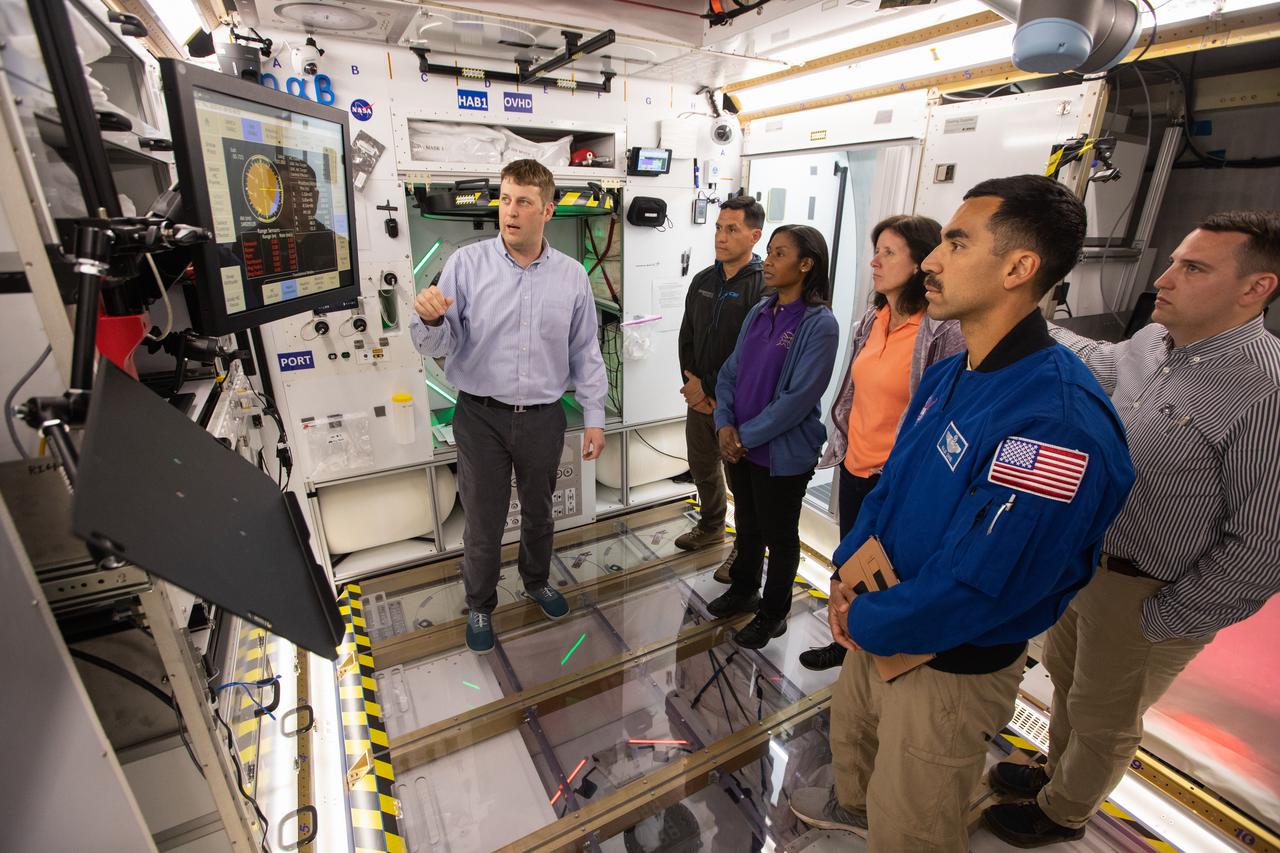
NASA began evaluating five habitat prototypes developed through NASA’s Next Space Exploration for Technologies Partnerships, or NextSTEP, to help engineers refine requirements for the design of an American-made deep space habitat for the Gateway. Lockheed Martin turned over its prototype to NASA, and testing began with crew on March 25, 2019, at Kennedy Space Center in Florida. Pictured inside the habitat prototype on March 26, 2019, beginning second from left are astronauts Frank Rubio, Raja Shari, Stephanie Wilson and Shannon Walker. Astronauts are participating in the evaluations to provide their perspectives as those who may one day live aboard the lunar outpost, which would be located about 250,000 miles from Earth. Ground prototypes developed by Bigelow Aerospace, Boeing, Northrop Grumman, and Sierra Nevada Corporation will be tested in the future at various facilities across the country. A sixth company, NanoRacks, plans to develop a prototype as well.
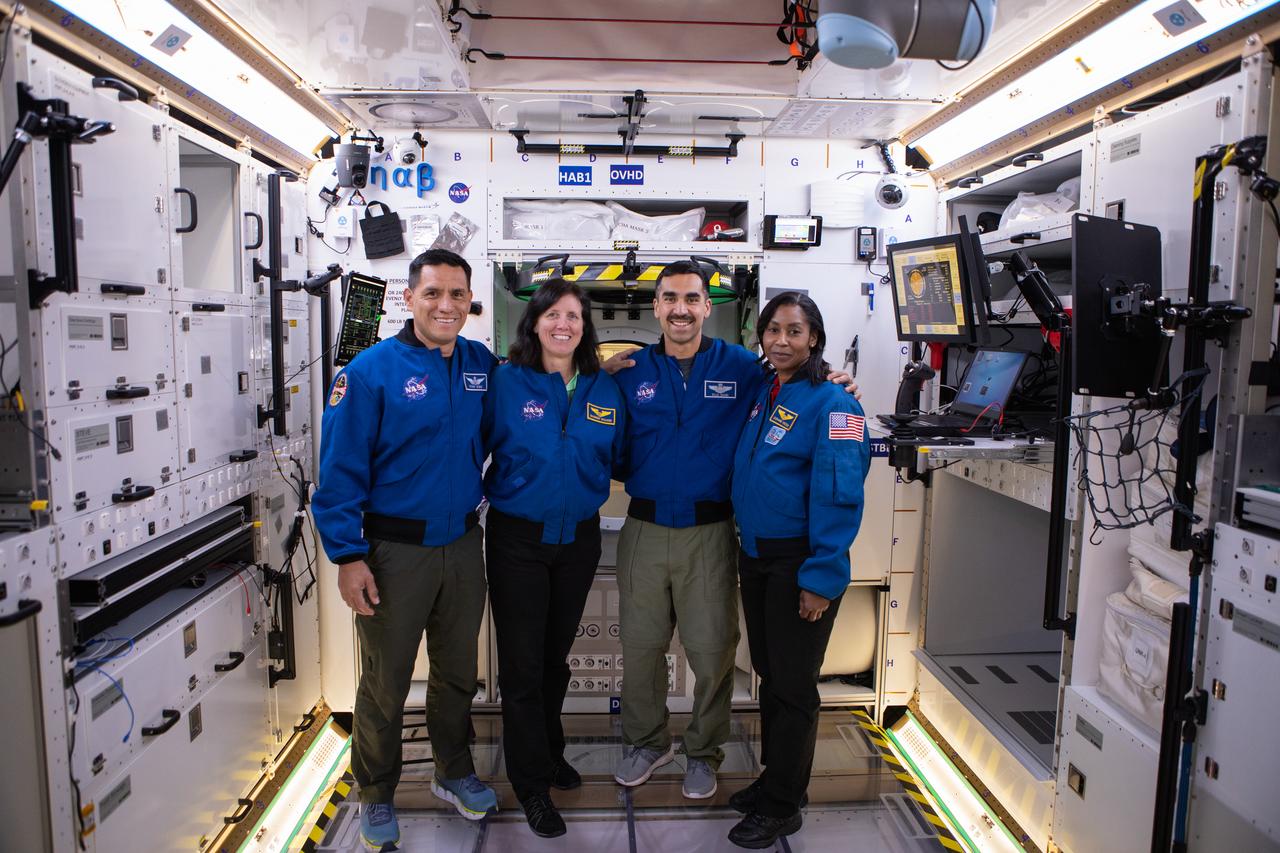
NASA began evaluating five habitat prototypes developed through NASA’s Next Space Exploration for Technologies Partnerships, or NextSTEP, to help engineers refine requirements for the design of an American-made deep space habitat for the Gateway. Lockheed Martin turned over its prototype to NASA, and testing began with crew on March 25, 2019, at Kennedy Space Center in Florida. Pictured, from left are astronauts Frank Rubio, Shannon Walker, Raja Chari and Stephanie Wilson. Astronauts are participating in the evaluations to provide their perspectives as those who may one day live aboard the lunar outpost, which would be located about 250,000 miles from Earth. Ground prototypes developed by Bigelow Aerospace, Boeing, Northrop Grumman, and Sierra Nevada Corporation will be tested in the future at various facilities across the country. A sixth company, NanoRacks, plans to develop a prototype as well.
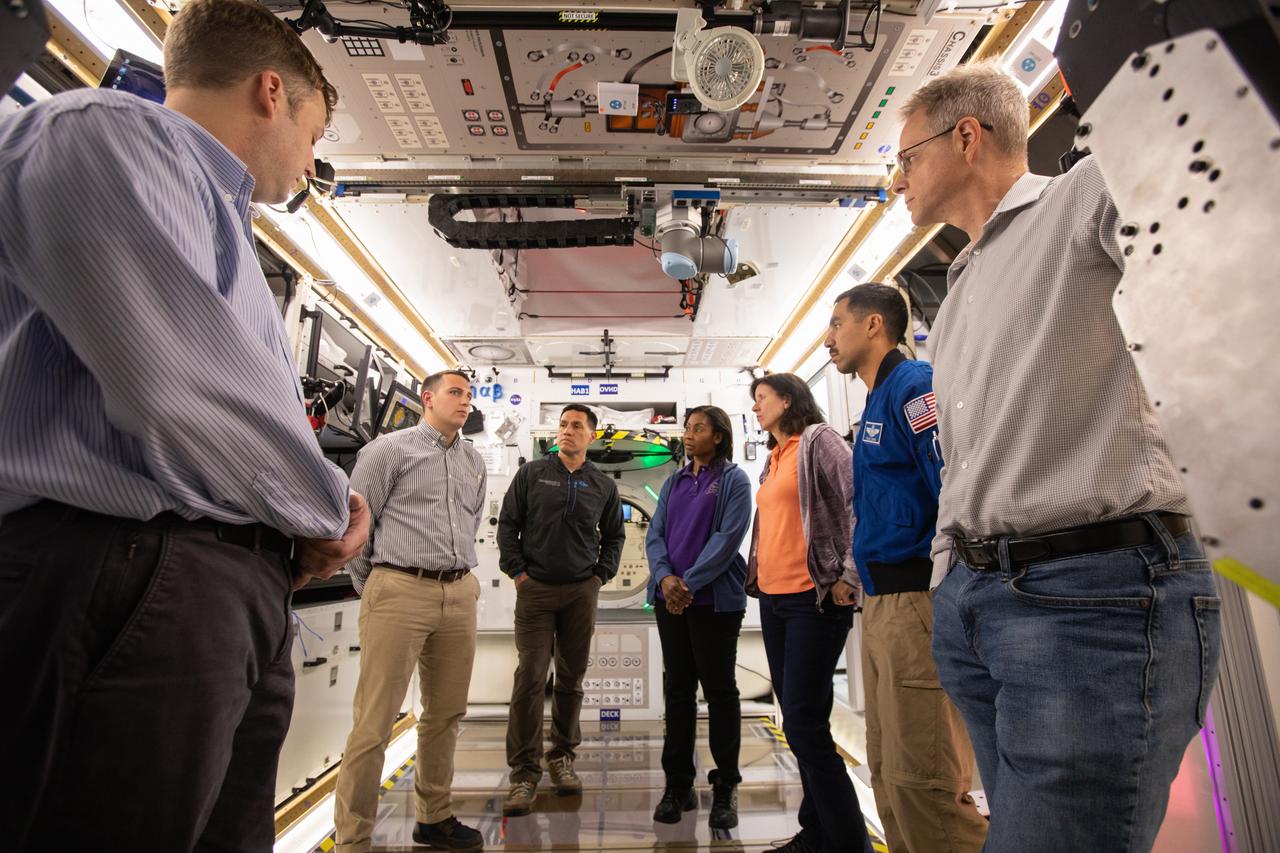
NASA began evaluating five habitat prototypes developed through NASA’s Next Space Exploration for Technologies Partnerships, or NextSTEP, to help engineers refine requirements for the design of an American-made deep space habitat for the Gateway. Lockheed Martin turned over its prototype to NASA, and testing began with crew on March 25, 2019, at Kennedy Space Center in Florida. Pictured inside the habitat prototype on March 26, 2019, beginning third from left are astronauts Frank Rubio, Stephanie Wilson, Shannon Walker and Raja Chari. Astronauts are participating in the evaluations to provide their perspectives as those who may one day live aboard the lunar outpost, which would be located about 250,000 miles from Earth. Ground prototypes developed by Bigelow Aerospace, Boeing, Northrop Grumman, and Sierra Nevada Corporation will be tested in the future at various facilities across the country. A sixth company, NanoRacks, plans to develop a prototype as well.
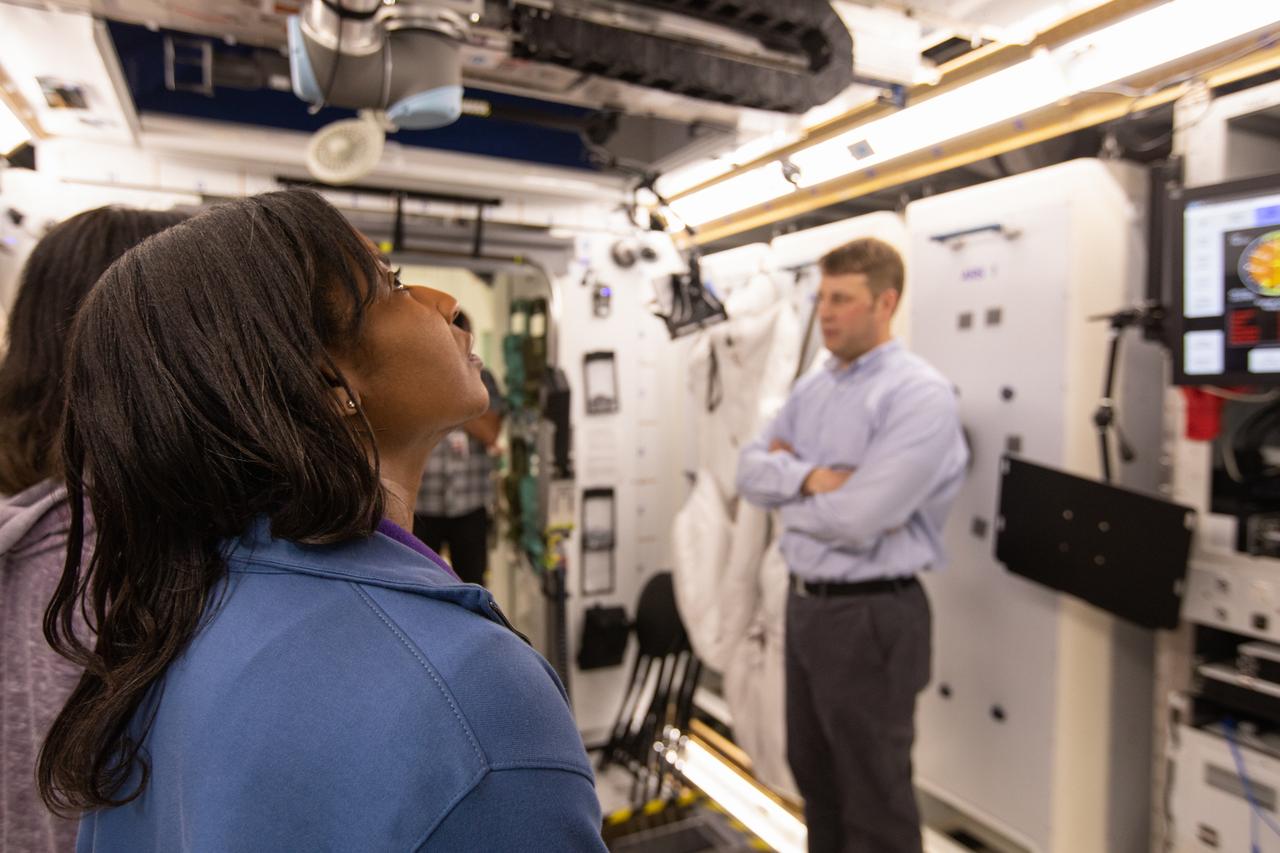
NASA began evaluating five habitat prototypes developed through NASA’s Next Space Exploration for Technologies Partnerships, or NextSTEP, to help engineers refine requirements for the design of an American-made deep space habitat for the Gateway. Lockheed Martin turned over its prototype to NASA, and testing began with crew on March 25, 2019, at Kennedy Space Center in Florida. Pictured inside the habitat prototype on March 26, 2019, at left is astronaut Stephanie Wilson. To her left, partially hidden is astronaut Shannon Walker. Astronauts are participating in the evaluations to provide their perspectives as those who may one day live aboard the lunar outpost, which would be located about 250,000 miles from Earth. Ground prototypes developed by Bigelow Aerospace, Boeing, Northrop Grumman, and Sierra Nevada Corporation will be tested in the future at various facilities across the country. A sixth company, NanoRacks, plans to develop a prototype as well.
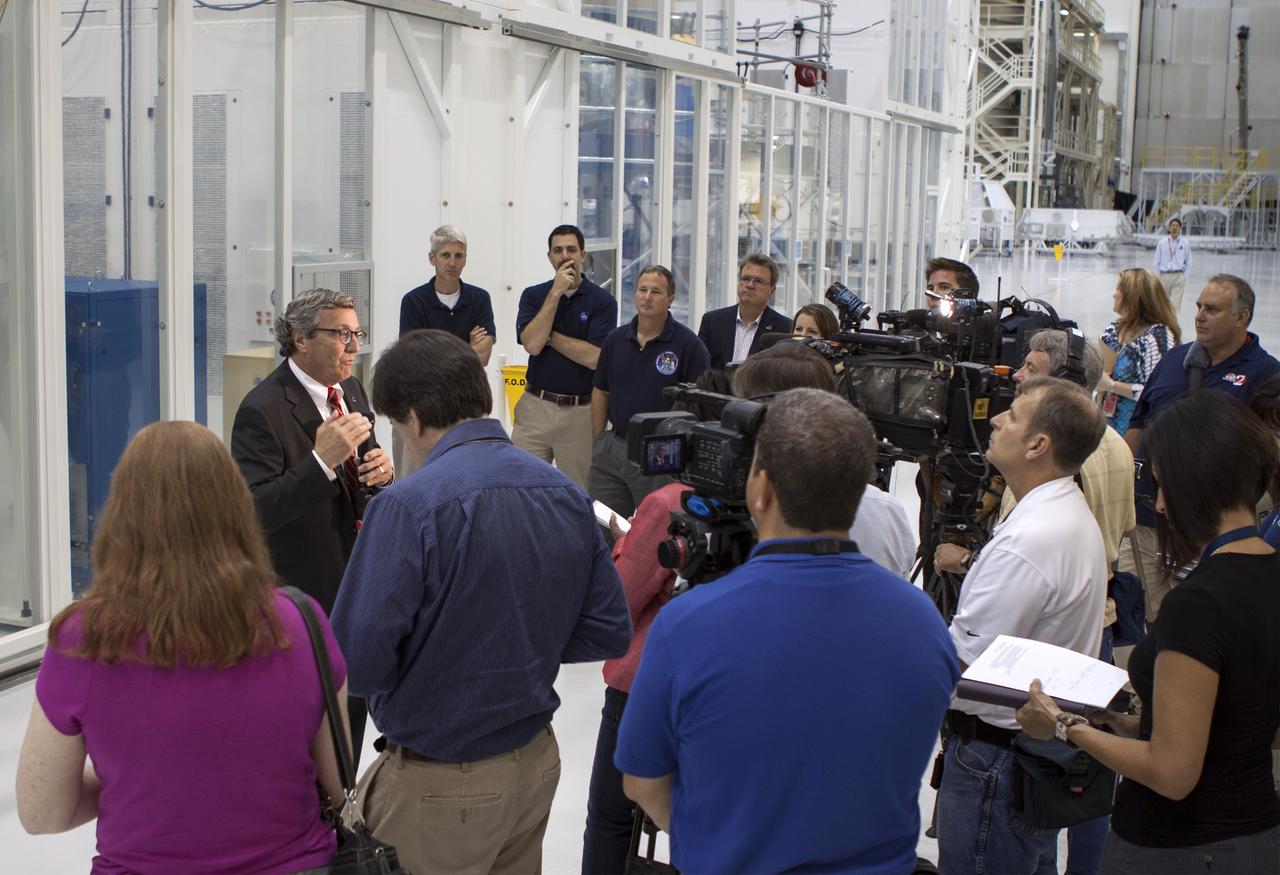
CAPE CANAVERAL, Fla. – Inside the Operations and Checkout Building high bay at NASA’s Kennedy Space Center in Florida, members of the media receive an on activities in NASA’s Ground Systems Development and Operations, or GSDO, Program, Space Launch System and Orion crew module for Exploration Test Flight 1. Speaking to the media is Larry Price, Lockheed Martin deputy program manager for Orion. In the background, from left are Scott Wilson, manager of Orion Production Operations at Kennedy Jeremy Parsons, chief of the GSDO Operations Integration Office at Kennedy Tom Erdman, from Marshall Space Flight Center’s Kennedy resident office and Jules Schneider, Lockheed Martin manager of Orion Production Operations. Orion is the exploration spacecraft designed to carry crews to space beyond low Earth orbit. It will provide emergency abort capability, sustain the crew during the space travel and provide safe re-entry from deep space return velocities. Orion’s first unpiloted test flight is scheduled to launch in 2014 atop a Delta IV rocket. A second uncrewed flight test is scheduled for 2017 on NASA’s Space Launch System rocket. For more information, visit http://www.nasa.gov/orion. Photo credit: NASA/Jim Grossmann
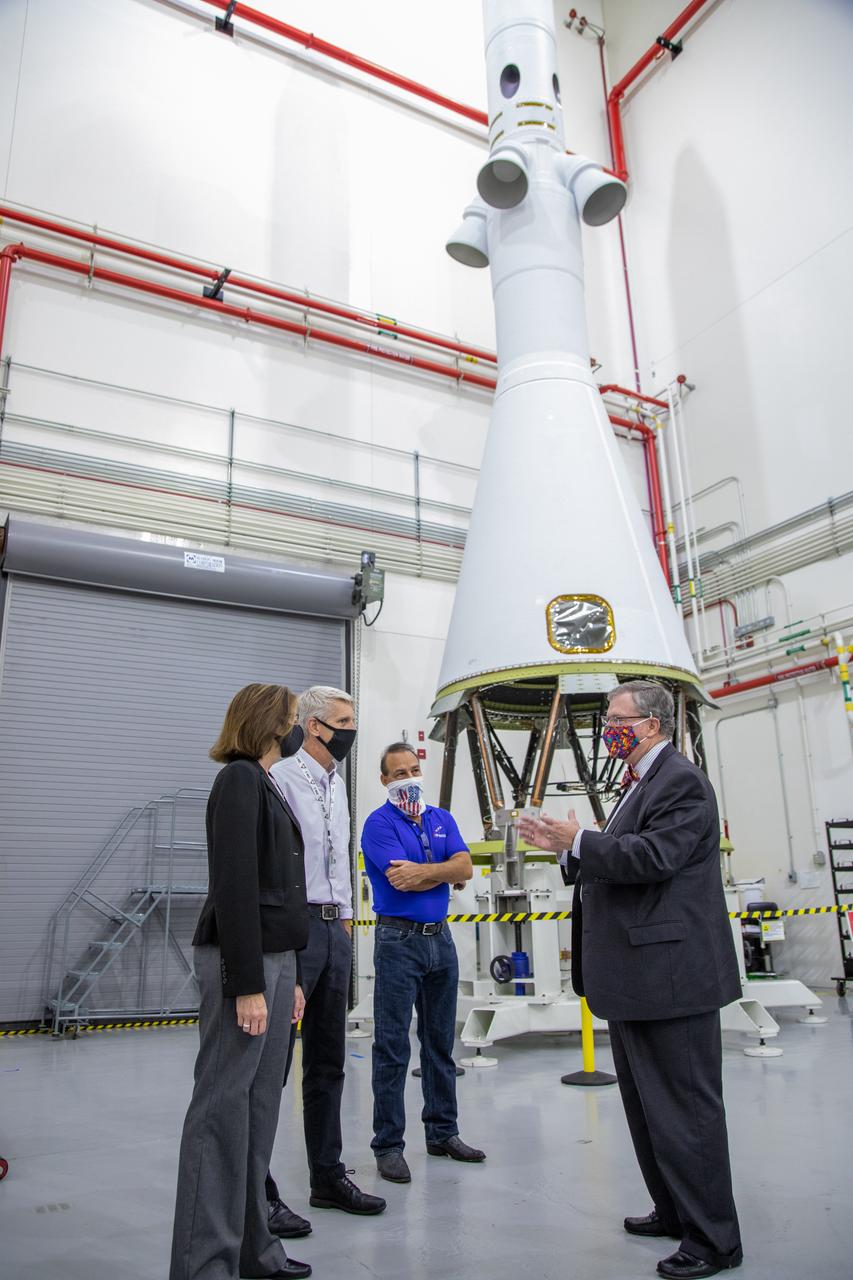
Catherine Koerner, far left, NASA Orion Program manager, along with senior managers from Orion and Lockheed Martin, tour the Launch Abort System Facility at NASA’s Kennedy Space Center in Florida on Oct. 6, 2020. Accompanying her from left, are Scott Wilson, NASA Kennedy Orion Production Operations manager; Carlos Garcia, NASA Kennedy Launch Abort System Assembly, Integration and Test lead and Resident office manager; and Mike Hawes, Lockheed Martin vice president and Orion Program manager. They are viewing the launch abort system for the Artemis I mission. Koerner also viewed the Orion spacecraft for the Artemis I and II missions in the Neil Armstrong Operations and Checkout Building. The first in a series of increasingly complex missions, Artemis I will test the Orion spacecraft and Space Launch System as an integrated system ahead of crewed flights to the Moon. Under the Artemis program, NASA will land the first woman and the next man on the Moon in 2024.
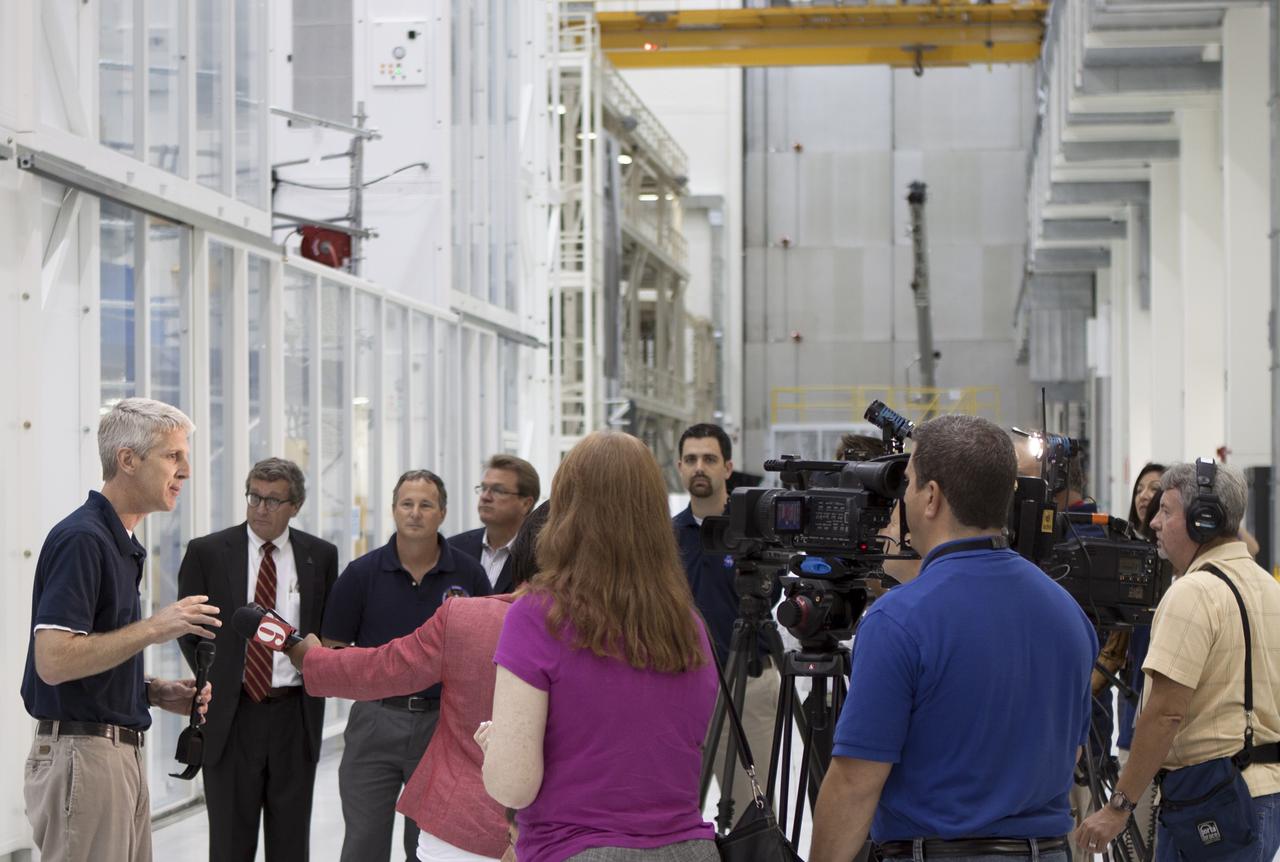
CAPE CANAVERAL, Fla. – Inside the Operations and Checkout Building high bay at NASA’s Kennedy Space Center in Florida, members of the media receive an on activities in NASA’s Ground Systems Development and Operations, or GSDO, Program, Space Launch System and Orion crew module for Exploration Test Flight 1. Speaking to the media, from left are Scott Wilson, manager of Orion Production Operations at Kennedy Larry Price, Lockheed Martin deputy program manager for Orion Tom Erdman, from Marshall Space Flight Center’s Kennedy resident office Jules Schneider, Lockheed Martin manager of Orion Production Operations and Jeremy Parsons, chief of the GSDO Operations Integration Office at Kennedy. Orion is the exploration spacecraft designed to carry crews to space beyond low Earth orbit. It will provide emergency abort capability, sustain the crew during the space travel and provide safe re-entry from deep space return velocities. Orion’s first unpiloted test flight is scheduled to launch in 2014 atop a Delta IV rocket. A second uncrewed flight test is scheduled for 2017 on NASA’s Space Launch System rocket. For more information, visit http://www.nasa.gov/orion. Photo credit: NASA/Jim Grossmann
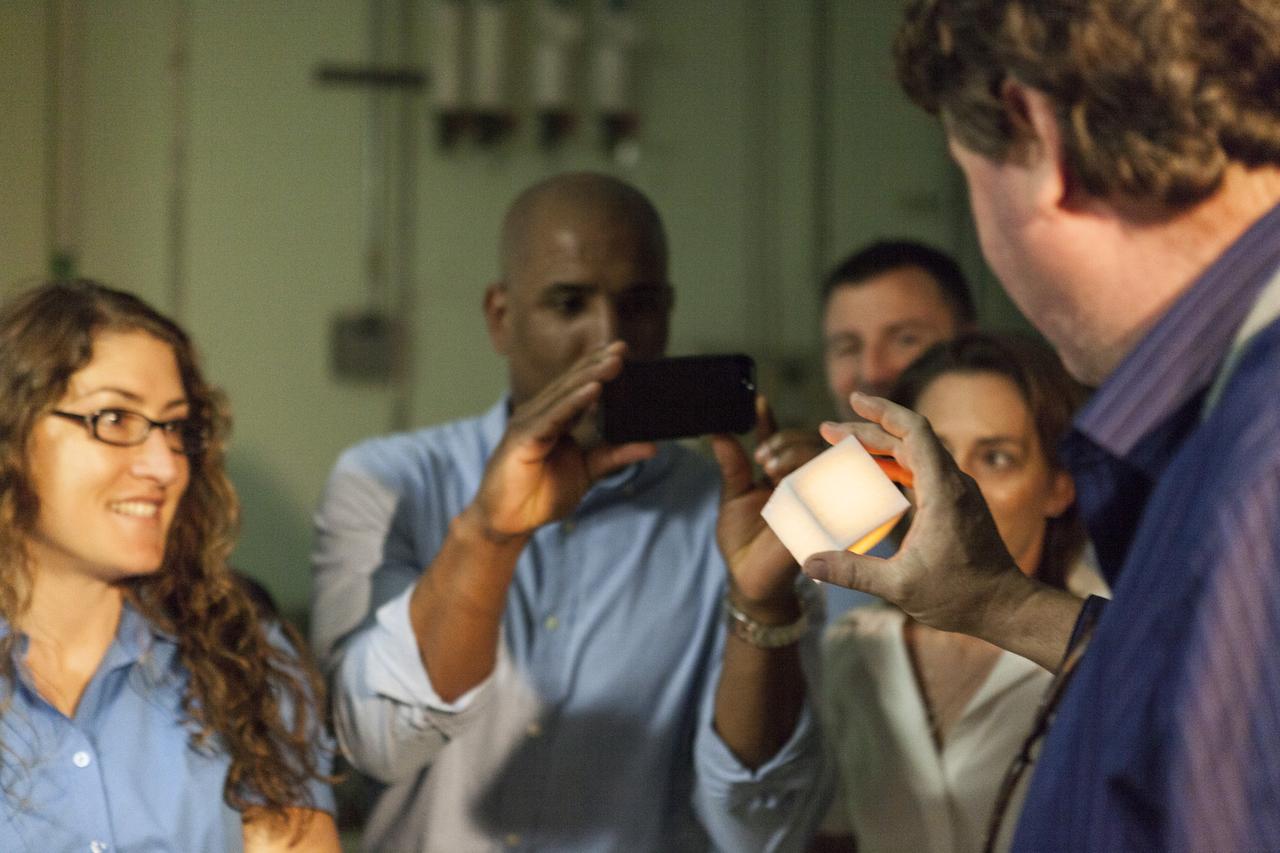
CAPE CANAVERAL, Fla. -- In the Thermal Protection System Facility NASA's Kennedy Space Center in Florida, agency astronaut candidates are briefed on tiles being manufactured for the agency's Orion spacecraft. TPSF manager, Martin Wilson of Jacobs Technology, holds a heated tile sample demonstrating its ability to protect a spacecraft during the heat of reentry. Looking on, from the left, are Christina Hammock, Victor Glover and Nicole Mann. Plans call for the Lockheed Martin-built Orion to launch atop a United Launch Alliance Delta IV Heavy rocket from Cape Canaveral Air Force Station on Exploration Flight Test EFT-1 later this year. The astronaut class of 2013 was selected by NASA after an extensive year-and-a-half search. The new group will help the agency push the boundaries of exploration and travel to new destinations in the solar system. To learn more about the astronaut class of 2013, visit: http://www.nasa.gov/astronauts/2013astroclass.html Photo credit: NASA/Kim Shiflett
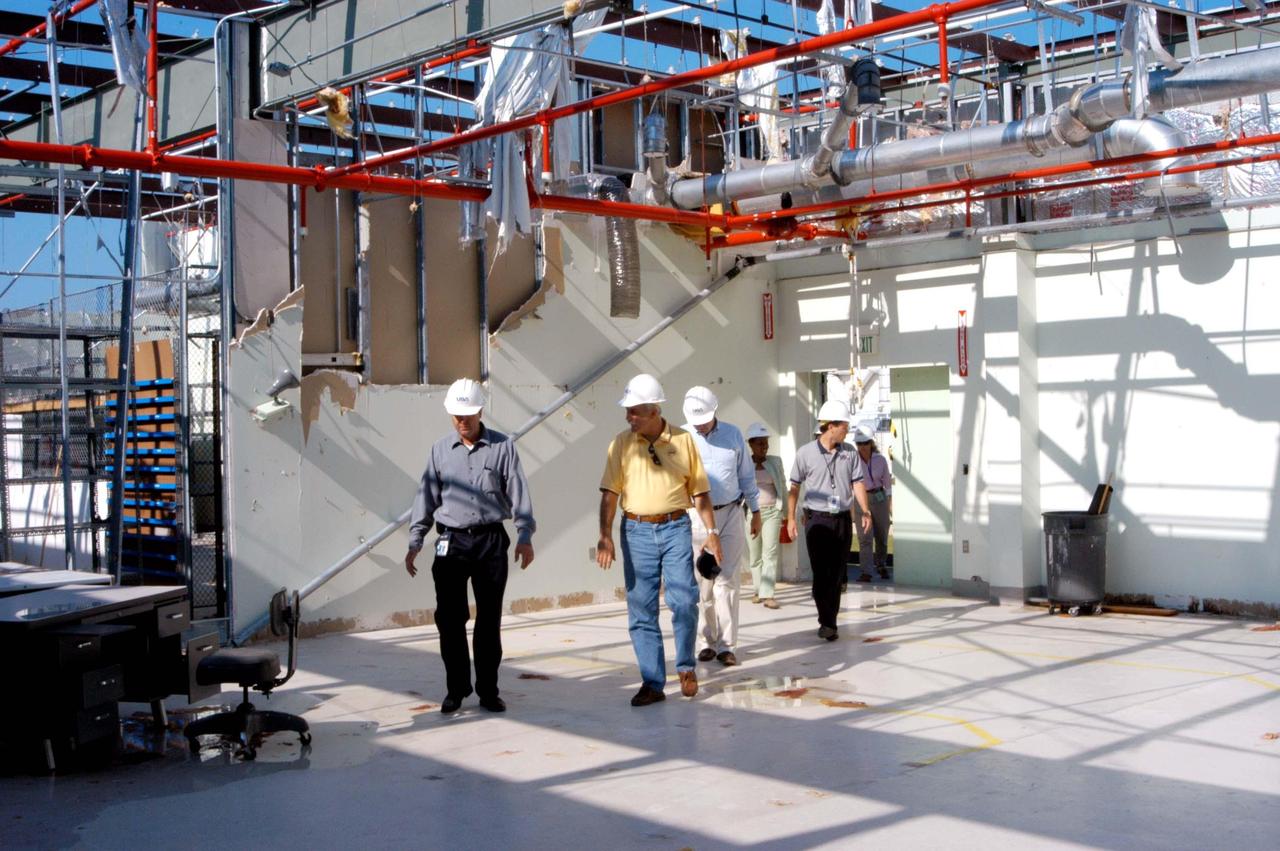
KENNEDY SPACE CENTER, FLA. - Martin Wilson (far left), manager of Thermal Protection System (TPS) operations for United Space Alliance (USA), leads NASA Administrator Sean O’Keefe (second from left) on a tour of the hurricane-ravaged Thermal Protection System Facility. The TPSF, which creates the TPS tiles, blankets and all the internal thermal control systems for the Space Shuttles, is almost totally unserviceable at this time after losing approximately 35 percent of its roof in the storm, which blew across Central Florida Sept. 4-5. Undamaged equipment was removed from the TPSF and stored in the RLV hangar. O’Keefe and NASA Associate Administrator of Space Operations Mission Directorate William Readdy are visiting KSC to survey the damage sustained by KSC facilities from the hurricane. The Labor Day storm also caused significant damage to the Vehicle Assembly Building and Processing Control Center. Additionally, the Operations and Checkout Building, Vertical Processing Facility, Hangar AE, Hangar S and Hangar AF Small Parts Facility each received substantial damage. However, well-protected and unharmed were NASA’s three Space Shuttle orbiters - Discovery, Atlantis and Endeavour - along with the Shuttle launch pads, all of the critical flight hardware for the orbiters and the International Space Station, and NASA’s Swift spacecraft that is awaiting launch in October.
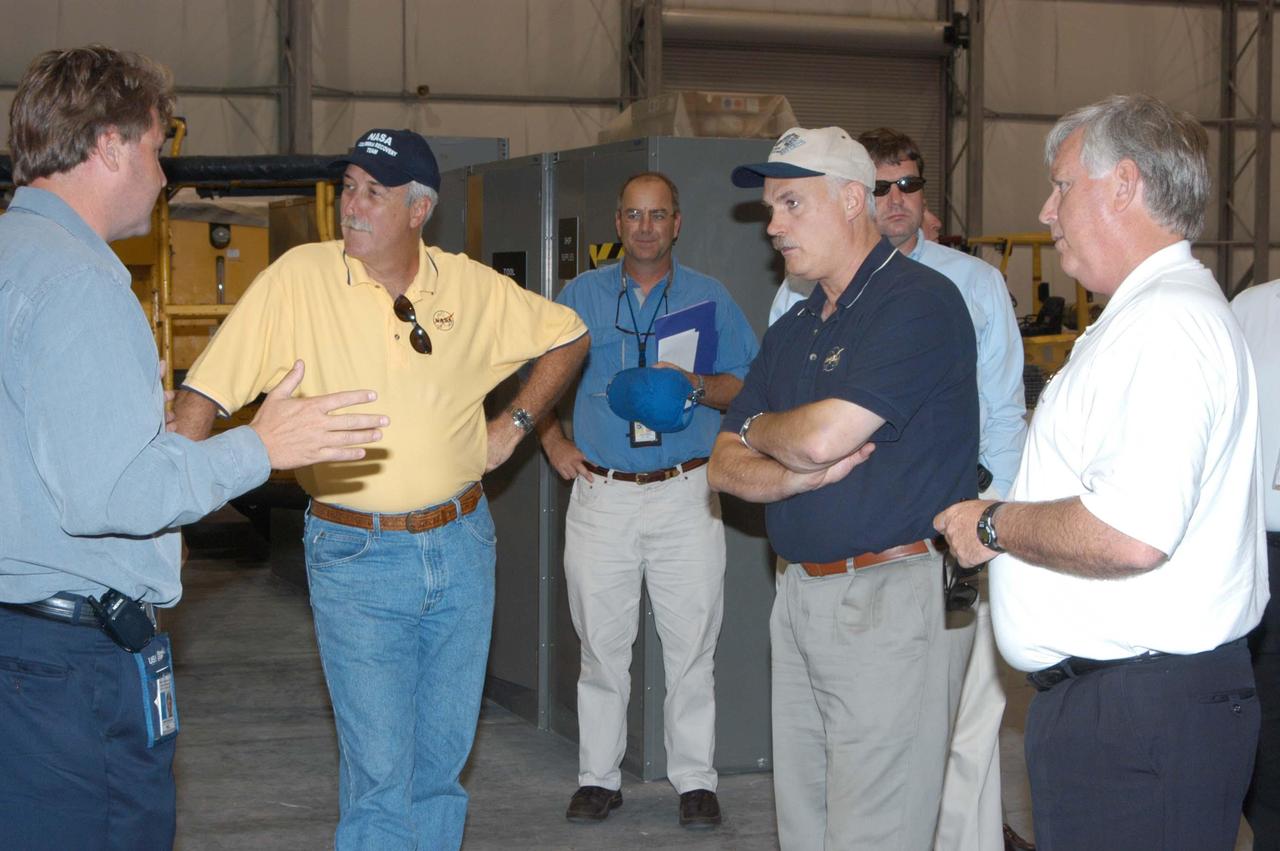
KENNEDY SPACE CENTER, FLA. - From left, Martin Wilson, manager of Thermal Protection System (TPS) operations for United Space Alliance, briefs NASA Administrator Sean O’Keefe, KSC Director of the Spaceport Services Scott Kerr, NASA Associate Administrator of the Space Operations Mission Directorate William Readdy, and Center Director James Kennedy (right) on the temporary tile shop set up in the RLV hangar. O’Keefe and Readdy are visiting KSC to survey the damage sustained by KSC facilities from Hurricane Frances. The Thermal Protection System Facility (TPSF), which creates the TPS tiles, blankets and all the internal thermal control systems for the Space Shuttles, is almost totally unserviceable at this time after losing approximately 35 percent of its roof in the storm, which blew across Central Florida Sept. 4-5. Undamaged equipment was removed from the TPSF and stored in the hangar. NASA’s three Space Shuttle orbiters -- Discovery, Atlantis and Endeavour - along with the Shuttle launch pads, all of the critical flight hardware for the orbiters and the International Space Station, and NASA’s Swift spacecraft, awaiting launch in October, were well protected and unharmed.
KENNEDY SPACE CENTER, FLA. - - United Space Alliance technician Shelly Kipp (right) shows some of the material salvaged from the storm-ravaged Thermal Protection System Facility (TPSF) to NASA Administrator Sean O’Keefe (left). Martin Wilson (center), manager of TPS operations for USA, looks on. The TPSF, which creates the TPS tiles, blankets and all the internal thermal control systems for the Space Shuttles, is almost totally unserviceable at this time after losing approximately 35 percent of its roof during Hurricane Frances, which blew across Central Florida Sept. 4-5. O’Keefe and NASA Associate Administrator of Space Operations Mission Directorate William Readdy are visiting KSC to survey the damage sustained by KSC facilities from the hurricane. Undamaged equipment was removed from the TPSF and stored in the RLV hangar. The Labor Day storm also caused significant damage to the Vehicle Assembly Building and Processing Control Center. Additionally, the Operations and Checkout Building, Vertical Processing Facility, Hangar AE, Hangar S and Hangar AF Small Parts Facility each received substantial damage. However, well-protected and unharmed were NASA’s three Space Shuttle orbiters -- Discovery, Atlantis and Endeavour - along with the Shuttle launch pads, all of the critical flight hardware for the orbiters and the International Space Station, and NASA’s Swift spacecraft that is awaiting launch in October.
KENNEDY SPACE CENTER, FLA. - NASA Administrator Sean O’Keefe looks at equipment moved from the Thermal Protection System Facility to the RLV Hangar. AT right is Martin Wilson, manager of TPS operations for United Space Alliance. O’Keefe and NASA Associate Administrator of Space Operations Mission Directorate William Readdy are visiting KSC to survey the damage sustained by KSC facilities from Hurricane Frances. The Thermal Protection System Facility (TPSF), which creates the TPS tiles, blankets and all the internal thermal control systems for the Space Shuttles, is almost totally unserviceable at this time after losing approximately 35 percent of its roof in the storm, which blew across Central Florida Sept. 4-5. Undamaged equipment was removed from the TPSF and stored in the hangar. The Labor Day storm also caused significant damage to the Vehicle Assembly Building and Processing Control Center. Additionally, the Operations and Checkout Building, Vertical Processing Facility, Hangar AE, Hangar S and Hangar AF Small Parts Facility each received substantial damage. However, well-protected and unharmed were NASA’s three Space Shuttle orbiters -- Discovery, Atlantis and Endeavour - along with the Shuttle launch pads, all of the critical flight hardware for the orbiters and the International Space Station, and NASA’s Swift spacecraft that is awaiting launch in October.
NASA began evaluating five habitat prototypes developed through NASA’s Next Space Exploration for Technologies Partnerships, or NextSTEP, to help engineers refine requirements for the design of an American-made deep space habitat for the Gateway. Lockheed Martin turned over its prototype to NASA, and testing began with crew on March 25, 2019, at Kennedy Space Center in Florida. Pictured inside the Space Station Processing Facility on March 26, 2019, from far left is astronaut Frank Rubio. In front of him, are Raja Chari and Stephanie Wilson. At right is astronaut Shannon Walker. Astronauts are participating in the evaluations to provide their perspectives as those who may one day live aboard the lunar outpost, which would be located about 250,000 miles from Earth. Ground prototypes developed by Bigelow Aerospace, Boeing, Northrop Grumman, and Sierra Nevada Corporation will be tested in the future at various facilities across the country. A sixth company, NanoRacks, plans to develop a prototype as well.
KENNEDY SPACE CENTER, FLA. - Martin Wilson (left, in foreground), manager of Thermal Protection System (TPS) operations for United Space Alliance (USA), gives a tour of the hurricane-ravaged Thermal Protection System Facility to (from center) NASA Associate Administrator of Space Operations Mission Directorate William Readdy, NASA Administrator Sean O’Keefe, Center Director James Kennedy and Director of Shuttle Processing Michael E. Wetmore. The TPSF, which creates the TPS tiles, blankets and all the internal thermal control systems for the Space Shuttles, is almost totally unserviceable at this time after losing approximately 35 percent of its roof during Hurricane Frances, which blew across Central Florida Sept. 4-5. O’Keefe and Readdy are visiting KSC to survey the damage sustained by KSC facilities from the hurricane. The Labor Day storm also caused significant damage to the Vehicle Assembly Building and Processing Control Center. Additionally, the Operations and Checkout Building, Vertical Processing Facility, Hangar AE, Hangar S and Hangar AF Small Parts Facility each received substantial damage. However, well-protected and unharmed were NASA’s three Space Shuttle orbiters - Discovery, Atlantis and Endeavour - along with the Shuttle launch pads, all of the critical flight hardware for the orbiters and the International Space Station, and NASA’s Swift spacecraft that is awaiting launch in October.
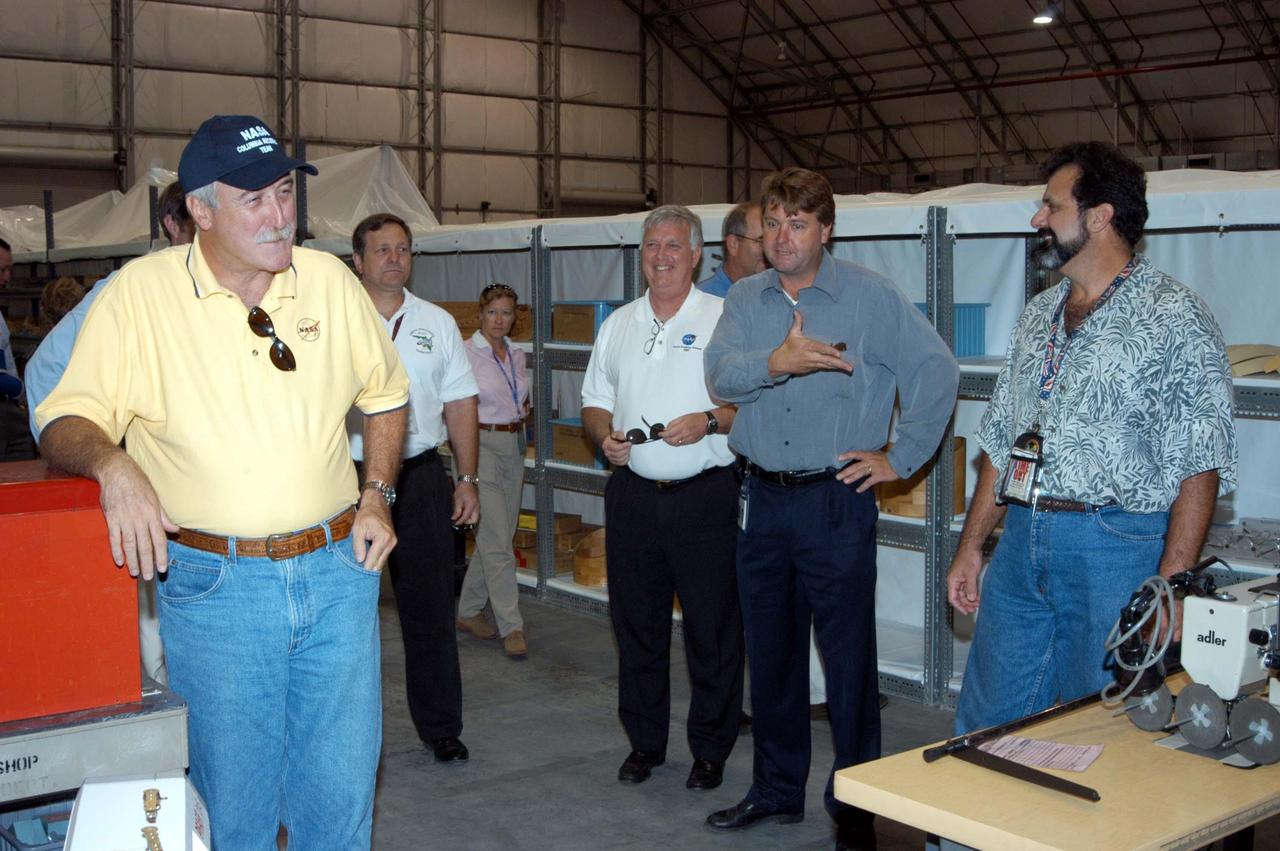
KENNEDY SPACE CENTER, FLA. - Martin Wilson (second from right), manager of Thermal Protection System (TPS) operations for United Space Alliance (USA) , introduces Kevin Harrington, manager of Soft Goods Production in the TPSF, during a briefing to (from left) NASA Administrator Sean O’Keefe, KSC Director of Shuttle Processing Michael E. Wetmore, Center Director James Kennedy and KSC Director of the Spaceport Services Scott Kerr (behind Kennedy), on the temporary tile shop set up in the RLV hangar. O’Keefe and NASA Associate Administrator of Space Operations Mission Directorate William Readdy are visiting KSC to survey the damage sustained by KSC facilities from Hurricane Frances. The Thermal Protection System Facility (TPSF), which creates the TPS tiles, blankets and all the internal thermal control systems for the Space Shuttles, is almost totally unserviceable at this time after losing approximately 35 percent of its roof in the storm, which blew across Central Florida Sept. 4-5. The Labor Day storm also caused significant damage to the Vehicle Assembly Building and Processing Control Center. Additionally, the Operations and Checkout Building, Vertical Processing Facility, Hangar AE, Hangar S and Hangar AF Small Parts Facility each received substantial damage. Undamaged equipment was removed from the TPSF and stored in the hangar. However, well-protected and unharmed were NASA’s three Space Shuttle orbiters -- Discovery, Atlantis and Endeavour - along with the Shuttle launch pads, all of the critical flight hardware for the orbiters and the International Space Station, and NASA’s Swift spacecraft that is awaiting launch in October.

CAPE CANAVERAL, Fla. – During a visit to NASA's Kennedy Space Center in Florida, NASA Associate Administrator Robert Lightfoot tours the Operations and Checkout Building high bay where the first Orion capsule, NASA's multi-purpose crew vehicle, is being prepared for flight on Exploration Flight Test 1, or EFT-1, in 2014. From left are Lockheed Martin's Orion Assembly, Integration and Production Senior Manager Jules Schneider, Kennedy's manager of Orion Production Operations Scott Wilson, Lightfoot, and Kennedy Director Bob Cabana. Orion is NASA's next-generation transport for astronauts to destinations beyond Earth orbit. NASA's FY2014 budget proposal includes a plan to robotically capture a small near-Earth asteroid and redirect it safely to a stable orbit in the Earth-moon system where astronauts can visit and explore it. Performing these elements for the proposed asteroid initiative integrates the best of NASA's science, technology and human exploration capabilities and draws on the innovation of America's brightest scientists and engineers. It uses current and developing capabilities to find both large asteroids that pose a hazard to Earth and small asteroids that could be candidates for the initiative, accelerates our technology development activities in high-powered solar electric propulsion and takes advantage of our hard work on the Space Launch System rocket and Orion spacecraft, helping to keep NASA on target to reach the President's goal of sending humans to Mars in the 2030s. Photo credit: NASA_Jim Grossmann
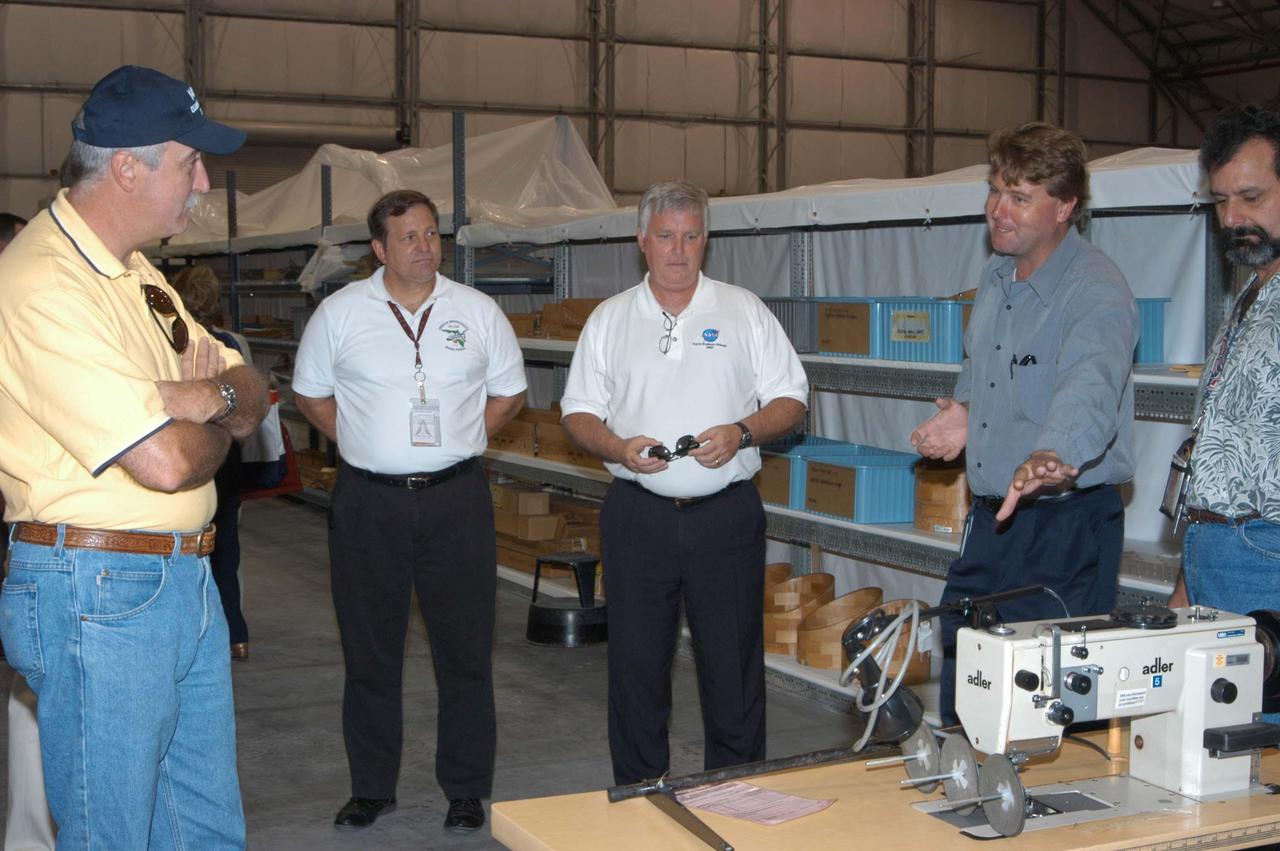
KENNEDY SPACE CENTER, FLA. - Martin Wilson (second from right), manager of Thermal Protection System (TPS) operations for United Space Alliance (USA), briefs NASA Administrator Sean O’Keefe, KSC Director of Shuttle Processing Michael E. Wetmore and Center Director James Kennedy about the temporary tile shop set up in the RLV hangar. At far right is USA Manager of Soft Goods Production in the TPSF, Kevin Harrington. O’Keefe and NASA Associate Administrator of Space Operations Mission Directorate William Readdy are visiting KSC to survey the damage sustained by KSC facilities from Hurricane Frances. The Thermal Protection System Facility (TPSF), which creates the TPS tiles, blankets and all the internal thermal control systems for the Space Shuttles, is almost totally unserviceable at this time after losing approximately 35 percent of its roof in the storm, which blew across Central Florida Sept. 4-5. Undamaged equipment was removed from the TPSF and stored in the hangar. The Labor Day storm also caused significant damage to the Vehicle Assembly Building and Processing Control Center. Additionally, the Operations and Checkout Building, Vertical Processing Facility, Hangar AE, Hangar S and Hangar AF Small Parts Facility each received substantial damage. However, well-protected and unharmed were NASA’s three Space Shuttle orbiters -- Discovery, Atlantis and Endeavour - along with the Shuttle launch pads, all of the critical flight hardware for the orbiters and the International Space Station, and NASA’s Swift spacecraft that is awaiting launch in October.
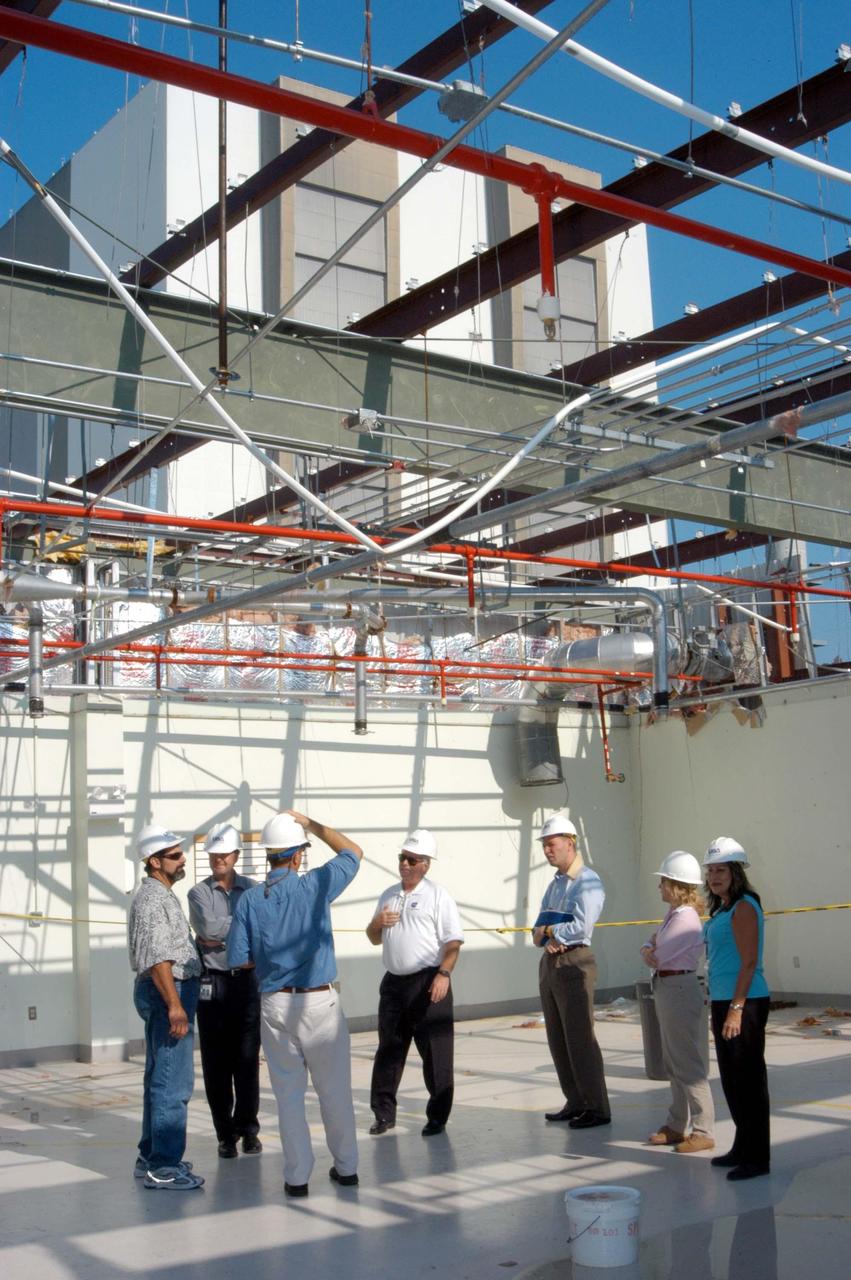
KENNEDY SPACE CENTER, FLA. - Looking at damage on the second floor of the hurricane-ravaged Thermal Protection System Facility (TPSF) are (from left) Kevin Harrington, manager of Soft Goods Production, TPSF ; Martin Wilson, manager of Thermal Protection System operations for USA; Scott Kerr, KSC director of Spaceport Services; and James Kennedy, Center director. The TPSF, which creates the TPS tiles, blankets and all the internal thermal control systems for the Space Shuttles, is almost totally unserviceable at this time after losing approximately 35 percent of its roof during Hurricane Frances, which blew across Central Florida Sept. 4-5. Undamaged equipment was removed from the TPSF and stored in the RLV hangar. NASA Administrator Sean O’Keefe and NASA Associate Administrator of Space Operations Mission Directorate William Readdy are visiting KSC to survey the damage sustained by KSC facilities from the hurricane. The Labor Day storm also caused significant damage to the Vehicle Assembly Building and Processing Control Center. Additionally, the Operations and Checkout Building, Vertical Processing Facility, Hangar AE, Hangar S and Hangar AF Small Parts Facility each received substantial damage. However, well-protected and unharmed were NASA’s three Space Shuttle orbiters - Discovery, Atlantis and Endeavour - along with the Shuttle launch pads, all of the critical flight hardware for the orbiters and the International Space Station, and NASA’s Swift spacecraft that is awaiting launch in October.