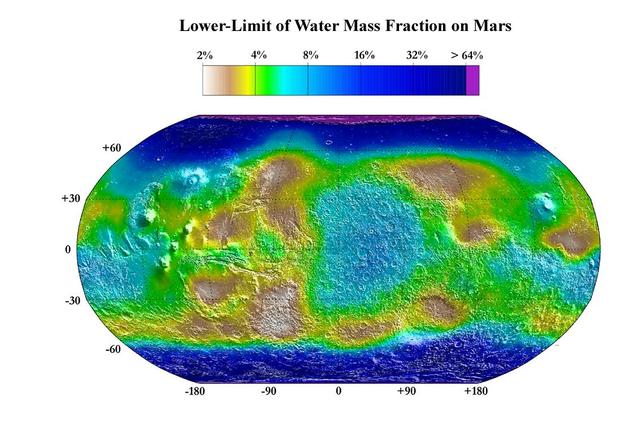
Water Mass Map from Neutron Spectrometer

Glenn's Extreme Environment Rig, GEER Mass Spectrometer
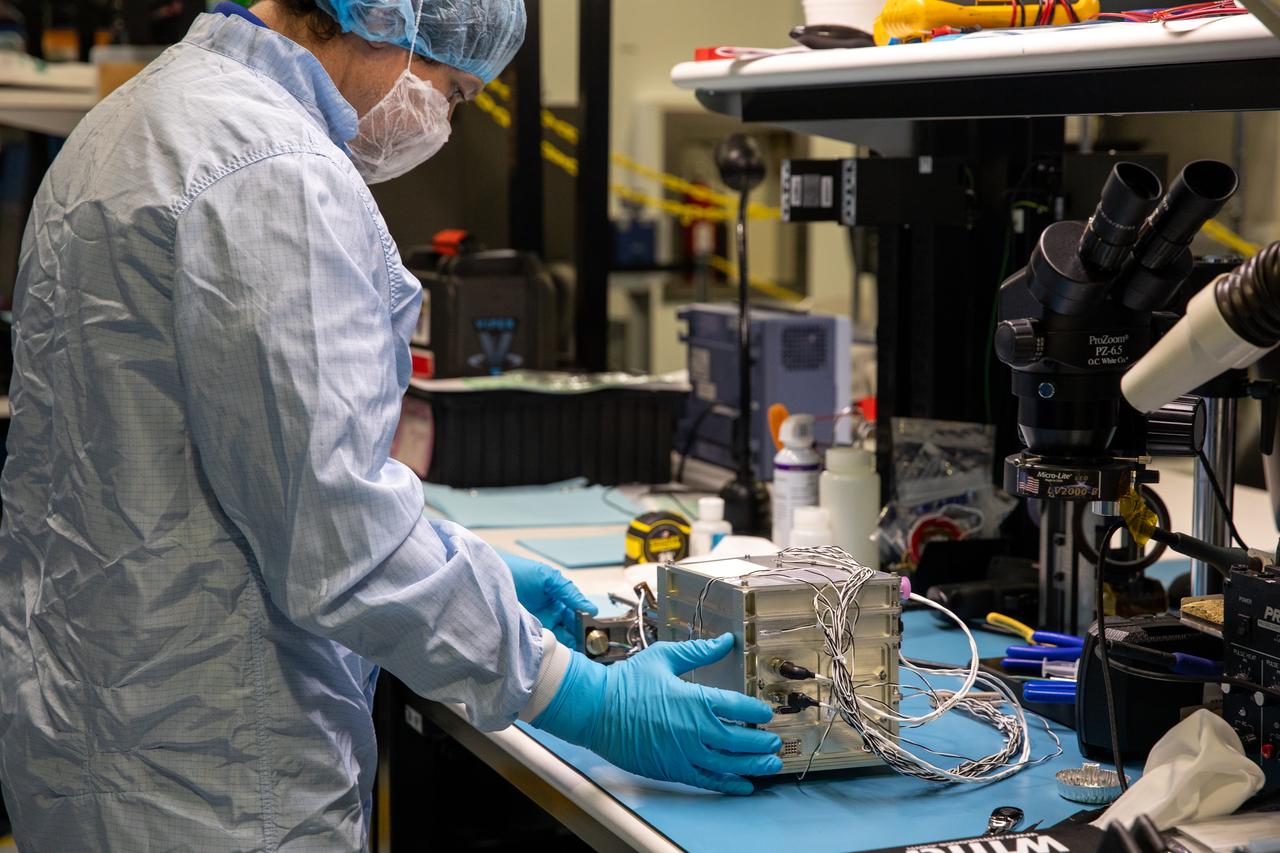
A team of engineers and technicians finished the final assembly step for the MSOLO-2 (Mass Spectrometer Observing Lunar Operations) flight instrument by installing the Calibration Gas System inside of the Space Station Processing Facility at NASA’s Kennedy Space Center in Florida on June 21, 2023. MSOLO is a commercial off-the-shelf mass spectrometer modified to work in space and it will help analyze the chemical makeup of landing sites on the Moon, as well as study water on the lunar surface.

A team of engineers and technicians finished the final assembly step for the MSOLO-2 (Mass Spectrometer Observing Lunar Operations) flight instrument by installing the Calibration Gas System inside of the Space Station Processing Facility at NASA’s Kennedy Space Center in Florida on June 21, 2023. MSOLO is a commercial off-the-shelf mass spectrometer modified to work in space and it will help analyze the chemical makeup of landing sites on the Moon, as well as study water on the lunar surface.
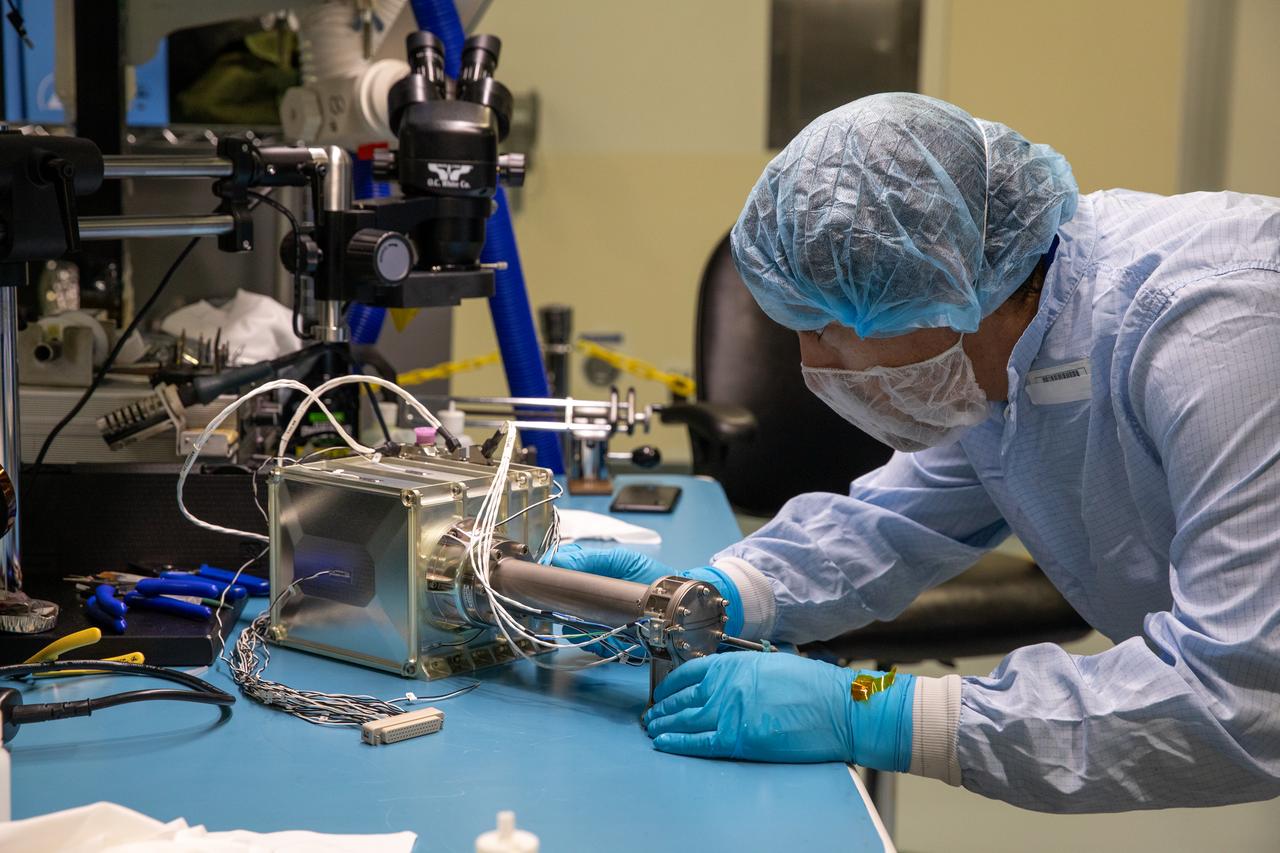
A team of engineers and technicians finished the final assembly step for the MSOLO-2 (Mass Spectrometer Observing Lunar Operations) flight instrument by installing the Calibration Gas System inside of the Space Station Processing Facility at NASA’s Kennedy Space Center in Florida on June 21, 2023. MSOLO is a commercial off-the-shelf mass spectrometer modified to work in space and it will help analyze the chemical makeup of landing sites on the Moon, as well as study water on the lunar surface.
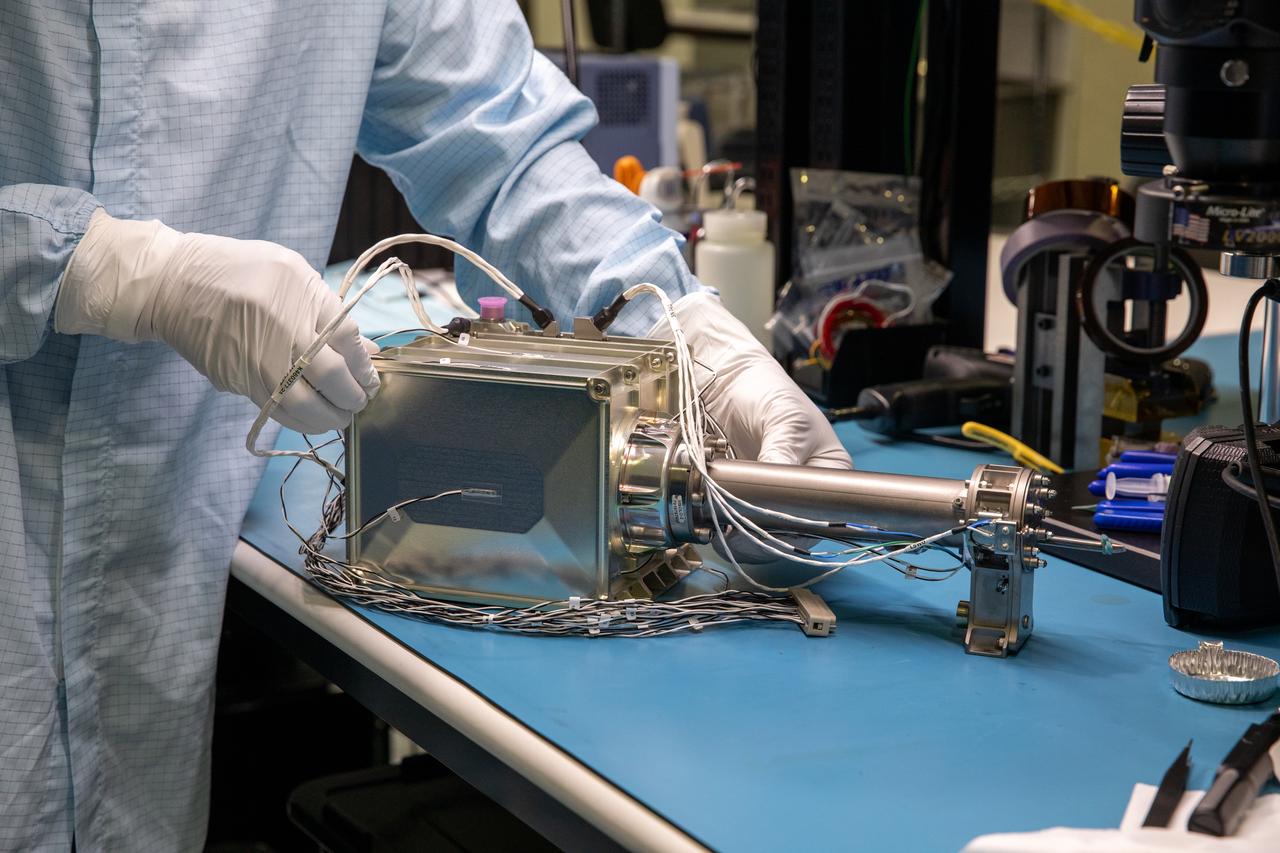
A team of engineers and technicians finished the final assembly step for the MSOLO-2 (Mass Spectrometer Observing Lunar Operations) flight instrument by installing the Calibration Gas System inside of the Space Station Processing Facility at NASA’s Kennedy Space Center in Florida on June 21, 2023. MSOLO is a commercial off-the-shelf mass spectrometer modified to work in space and it will help analyze the chemical makeup of landing sites on the Moon, as well as study water on the lunar surface.
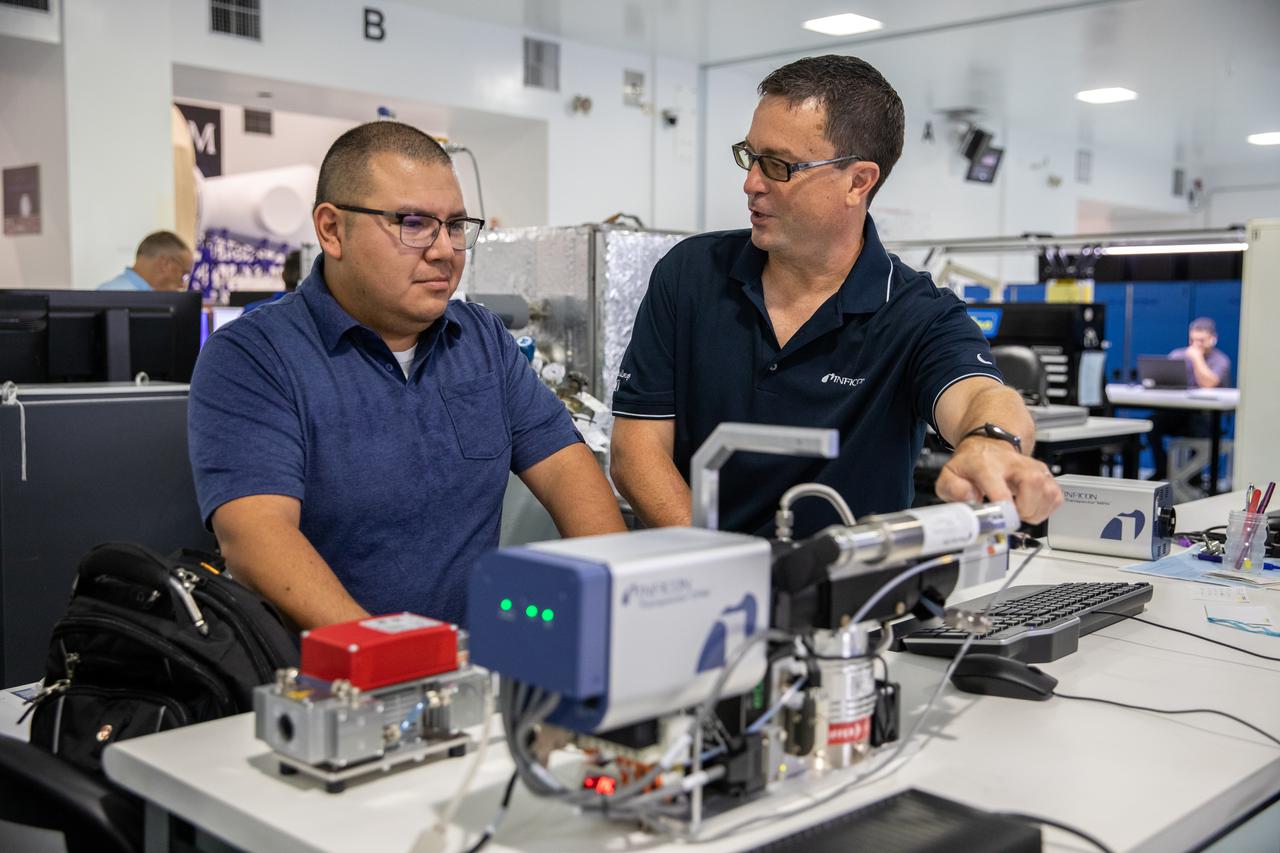
Kennedy Space Center employee Roberto Aguilar Ayala, left, and Ken Wright of INFICON work with MSolo (Mass Spectrometer Observing Lunar Operations) test hardware at Kennedy Space Center in Florida on July 13, 2021. MSolo is a commercial off-the-shelf mass spectrometer modified by the team at Kennedy to work in the harsh, rigorous conditions of the Moon. MSolo is heading to the Moon on four of NASA’s Commercial Lunar Payload Services initiative or CLPS missions, including the Polar Resources Ice Mining Experiment-1 (PRIME-1) and NASA’s Volatiles Investigating Polar Exploration Rover, or VIPER. Kennedy is working in partnership with INFICON, of Syracuse, New York, to develop the mass spectrometer.

Kennedy Space Center employee Chris Johnson, left, and Jamie Winfield of INFICON work with MSolo (Mass Spectrometer Observing Lunar Operations) test hardware at Kennedy Space Center in Florida on July 13, 2021. MSolo is a commercial off-the-shelf mass spectrometer modified by the team at Kennedy to work in the harsh, rigorous conditions of the Moon. MSolo is heading to the Moon on four of NASA’s Commercial Lunar Payload Services initiative or CLPS missions, including the Polar Resources Ice Mining Experiment-1 (PRIME-1) and NASA’s Volatiles Investigating Polar Exploration Rover, or VIPER. Kennedy is working in partnership with INFICON, of Syracuse, New York, to develop the mass spectrometer.
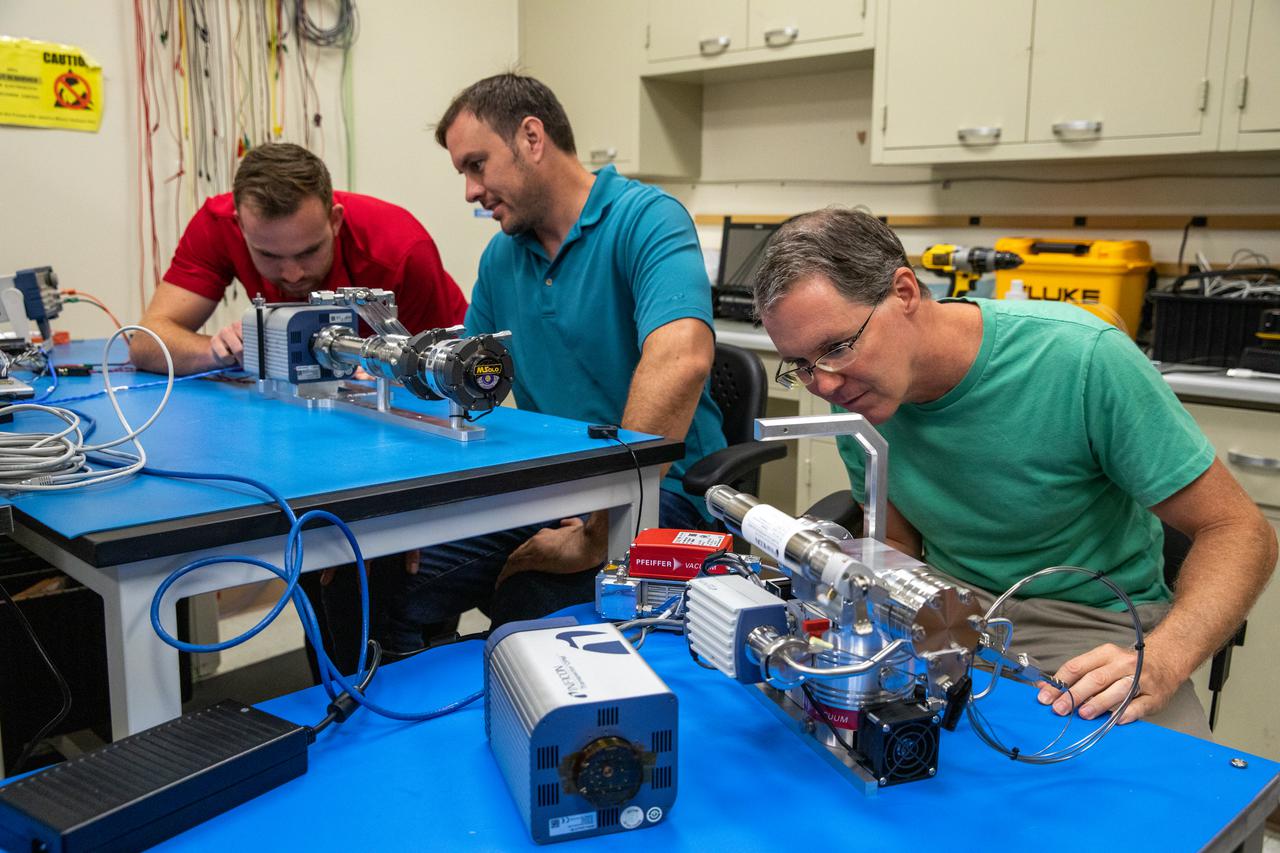
From left to right, Kennedy Space Center employees Stefan Tomovic, Beau Peacock, and Chris Bond work with MSolo (Mass Spectrometer Observing Lunar Operations) test hardware at the Florida spaceport on July 13, 2021. MSolo is a commercial off-the-shelf mass spectrometer modified by the team at Kennedy to work in the harsh, rigorous conditions of the Moon. MSolo is heading to the Moon on four of NASA’s Commercial Lunar Payload Services initiative or CLPS missions, including the Polar Resources Ice Mining Experiment-1 (PRIME-1) and NASA’s Volatiles Investigating Polar Exploration Rover, or VIPER. Kennedy is working in partnership with INFICON, of Syracuse, New York, to develop the mass spectrometer.
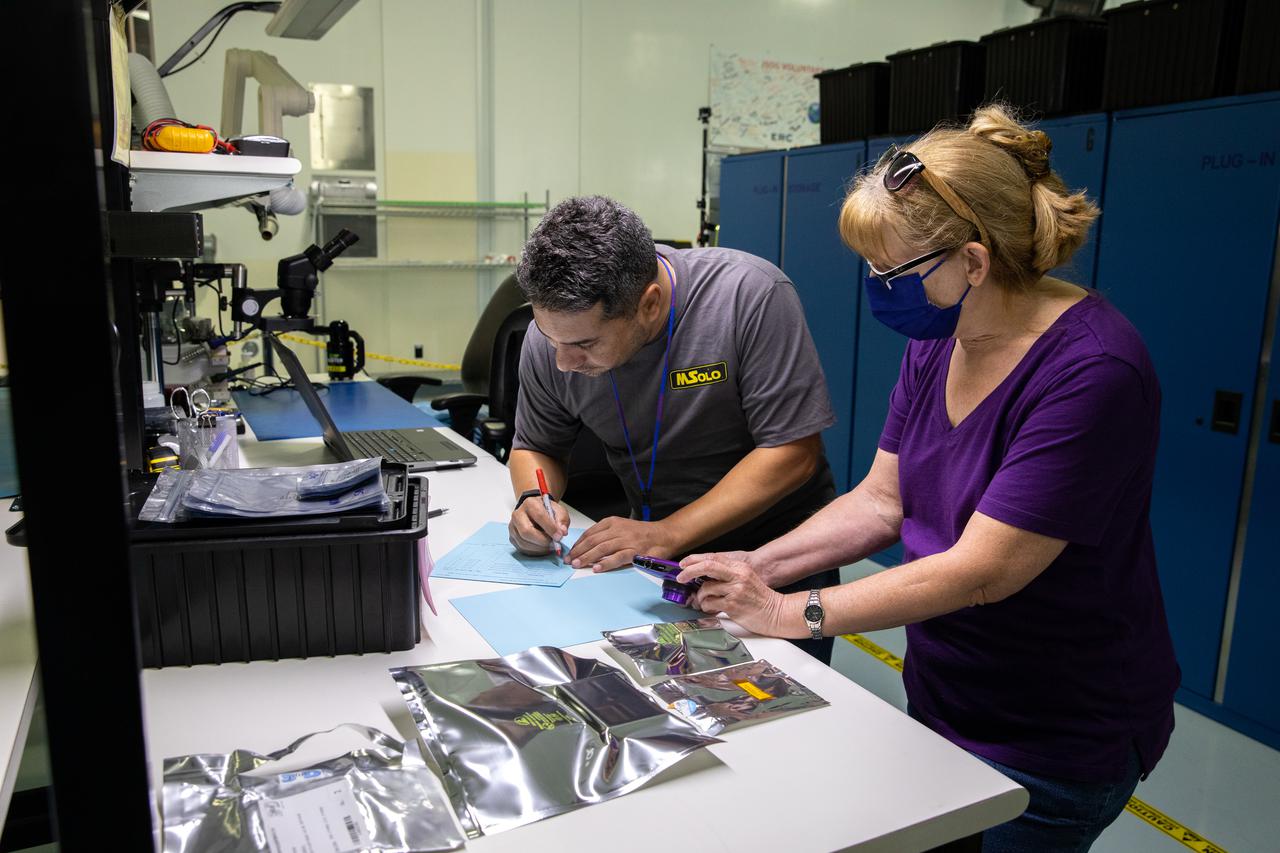
Kennedy Space Center employees Alex Decamargo, left, and JoAnn Robinson work with MSolo (Mass Spectrometer Observing Lunar Operations) flight hardware at the Florida spaceport on July 13, 2021. MSolo is a commercial off-the-shelf mass spectrometer modified by the team at Kennedy to work in the harsh, rigorous conditions of the Moon. MSolo is heading to the Moon on four of NASA’s Commercial Lunar Payload Services initiative or CLPS missions, including the Polar Resources Ice Mining Experiment-1 (PRIME-1) and NASA’s Volatiles Investigating Polar Exploration Rover, or VIPER. Kennedy is working in partnership with INFICON, of Syracuse, New York, to develop the mass spectrometer.
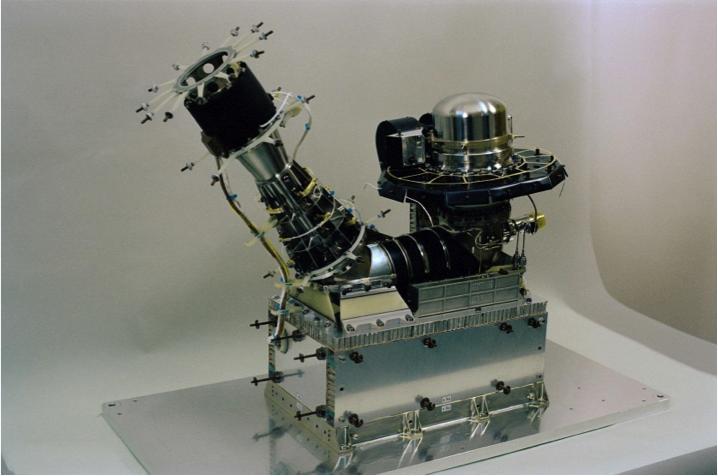
NASA has provided part of the electronics package for an instrument called the Double Focusing Mass Spectrometer, which is part of the Swiss-built Rosetta Orbiter Spectrometer for Ion and Neutral Analysis ROSINA instrument.
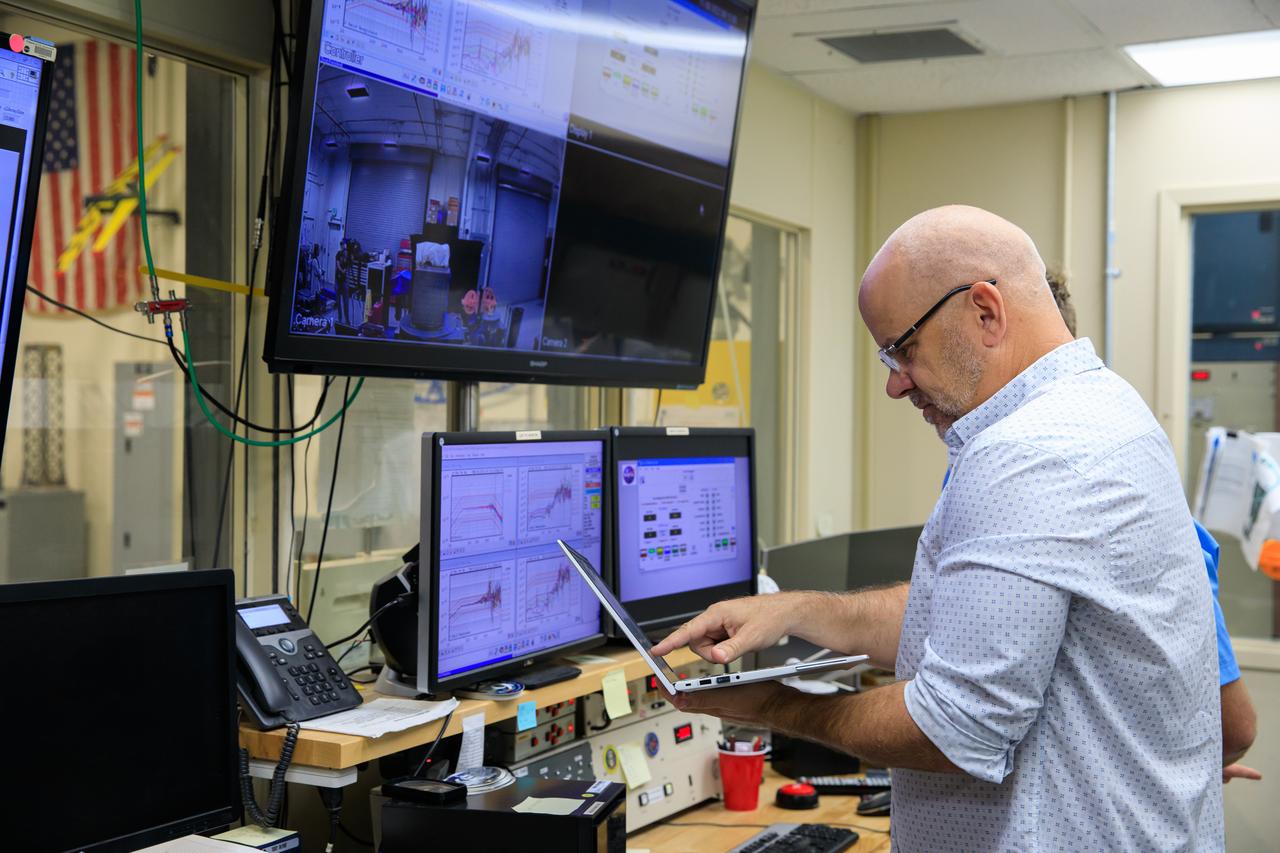
Preparations are underway to conduct a vibration test on the Mass Spectrometer Observing Lunar Operations (MSolo) for NASA’s VIPER mission inside a laboratory in the Neil Armstrong Operations and Checkout Building at NASA’s Kennedy Space Center in Florida on Nov. 8, 2022. Exposing the instrument to vibration environments that it might see during launch helps engineers to find issues prior to liftoff. MSolo is a commercial off-the-shelf mass spectrometer modified to work in space and it will help analyze the chemical makeup of landing sites on the Moon, as well as study water on the lunar surface. MSolo will be part of NASA’s first Commercial Lunar Payload Delivery Service (CLPS) mission where under the Artemis program, commercial deliveries will be used to perform science experiments, test technologies and demonstrate capabilities to help NASA explore the Moon and prepare for human missions.
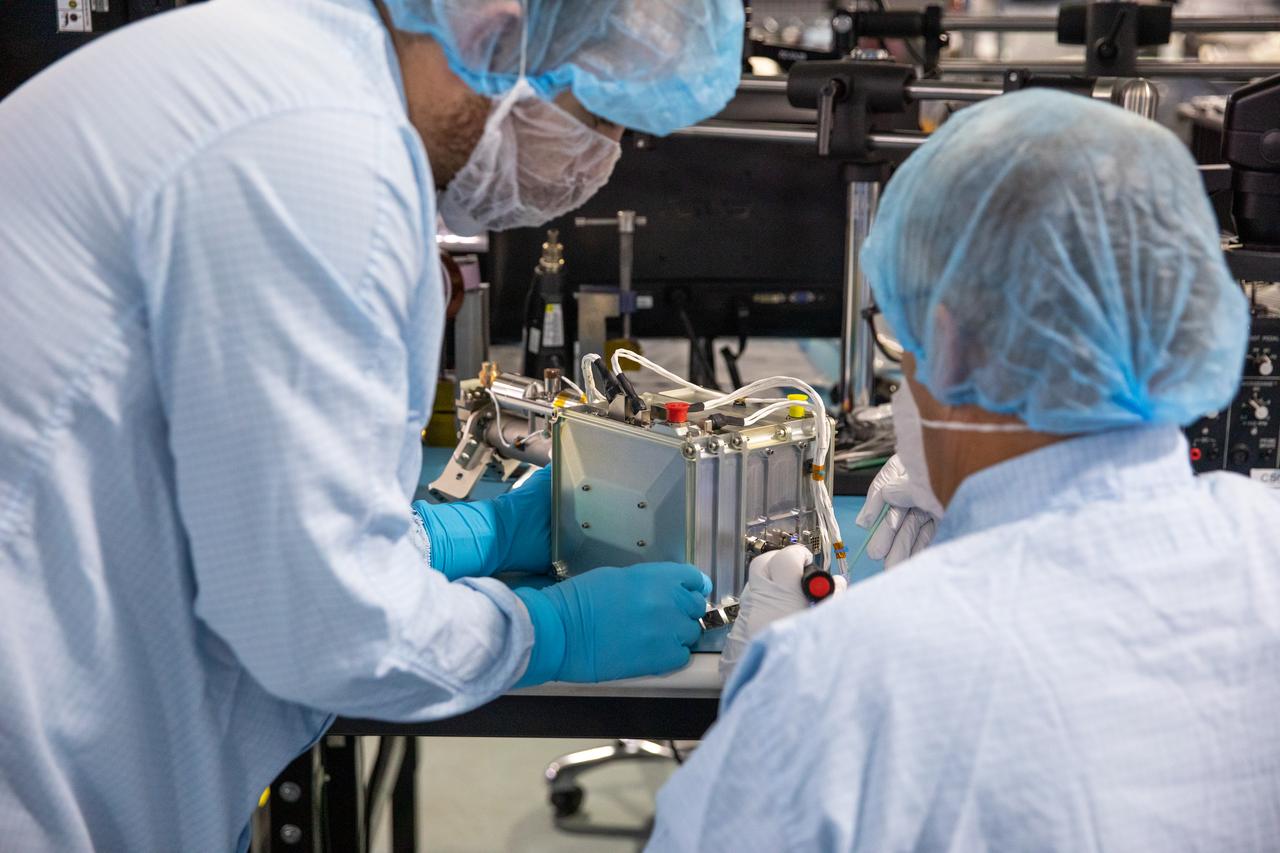
Technicians prepare the Mass Spectrometer Observing Lunar Operations (MSolo) for NASA’s Volatile Investigating Polar Exploration Rover (VIPER) mission for packing inside a laboratory in the Space Station Processing Facility at NASA’s Kennedy Space Center in Florida on Feb. 21, 2023. MSolo will be shipped to Johnson Space Center in Houston for integration into VIPER. MSolo is a commercial off-the-shelf mass spectrometer modified to work in space and it will help analyze the chemical makeup of landing sites on the Moon, as well as study water on the lunar surface. MSolo will be part of NASA’s first Commercial Lunar Payload Delivery Service (CLPS) mission where under the Artemis program, commercial deliveries will be used to perform science experiments, test technologies, and demonstrate capabilities to help NASA explore the Moon and prepare for human missions. VIPER is scheduled to be delivered to the Moon’s South Pole in late 2024 by Astrobotic’s Griffin lander as part of the CLPS initiative.
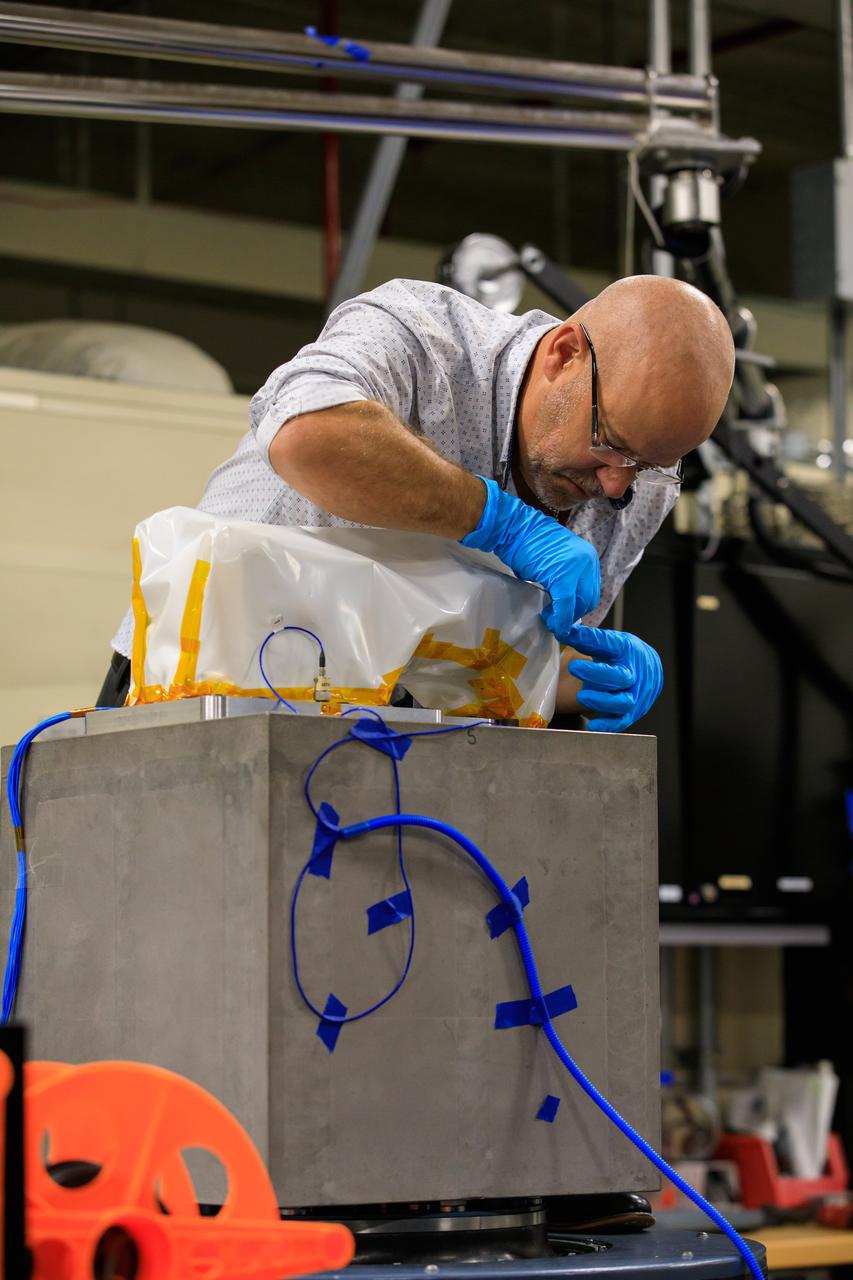
Preparations are underway to conduct a vibration test on the Mass Spectrometer Observing Lunar Operations (MSolo) for NASA’s VIPER mission inside a laboratory in the Neil Armstrong Operations and Checkout Building at NASA’s Kennedy Space Center in Florida on Nov. 8, 2022. Exposing the instrument to vibration environments that it might see during launch helps engineers to find issues prior to liftoff. MSolo is a commercial off-the-shelf mass spectrometer modified to work in space and it will help analyze the chemical makeup of landing sites on the Moon, as well as study water on the lunar surface. MSolo will be part of NASA’s first Commercial Lunar Payload Delivery Service (CLPS) mission where under the Artemis program, commercial deliveries will be used to perform science experiments, test technologies and demonstrate capabilities to help NASA explore the Moon and prepare for human missions.
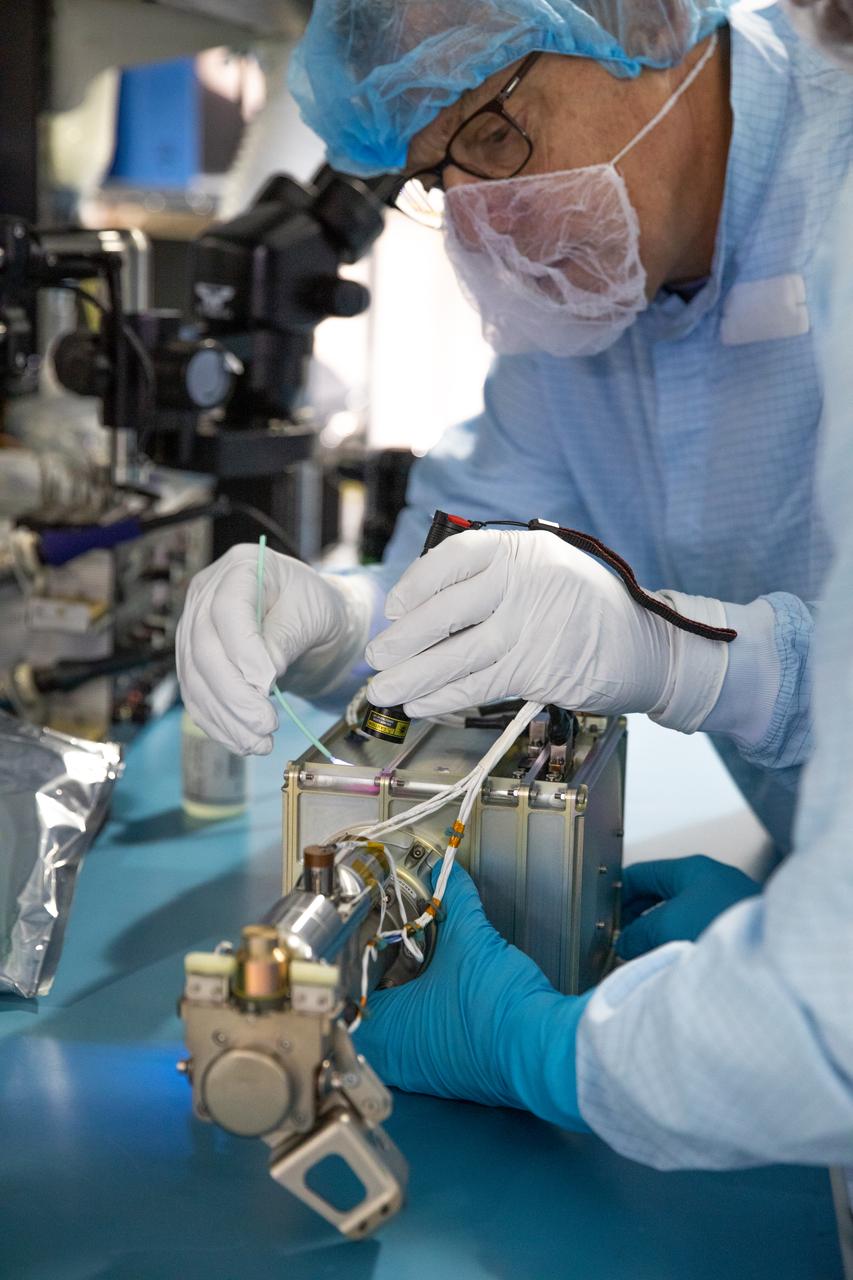
Technicians prepare the Mass Spectrometer Observing Lunar Operations (MSolo) for NASA’s Volatile Investigating Polar Exploration Rover (VIPER) mission for packing inside a laboratory in the Space Station Processing Facility at NASA’s Kennedy Space Center in Florida on Feb. 21, 2023. MSolo will be shipped to Johnson Space Center in Houston for integration into VIPER. MSolo is a commercial off-the-shelf mass spectrometer modified to work in space and it will help analyze the chemical makeup of landing sites on the Moon, as well as study water on the lunar surface. MSolo will be part of NASA’s first Commercial Lunar Payload Delivery Service (CLPS) mission where under the Artemis program, commercial deliveries will be used to perform science experiments, test technologies, and demonstrate capabilities to help NASA explore the Moon and prepare for human missions. VIPER is scheduled to be delivered to the Moon’s South Pole in late 2024 by Astrobotic’s Griffin lander as part of the CLPS initiative.
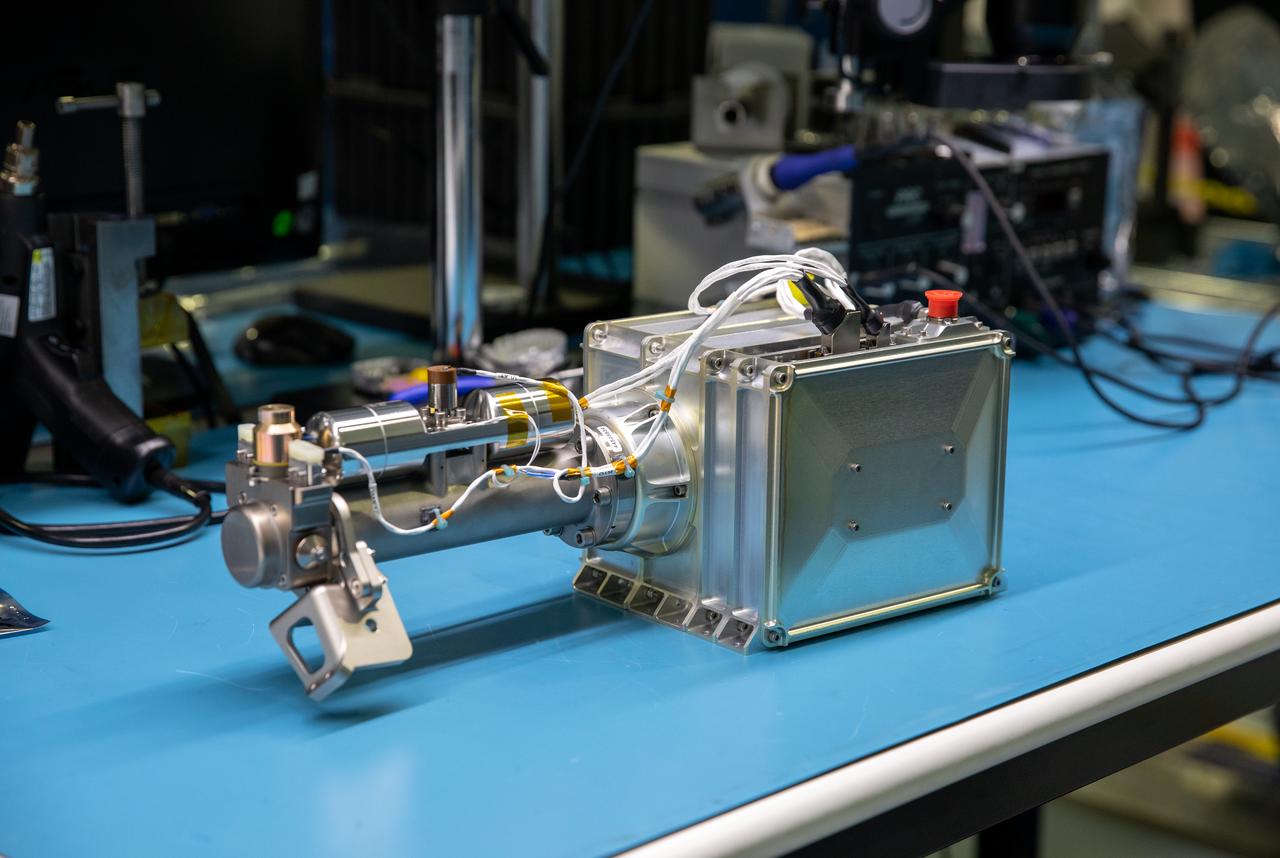
The Mass Spectrometer Observing Lunar Operations (MSolo) for NASA’s Volatile Investigating Polar Exploration Rover (VIPER) mission is prepared for packing inside a laboratory in the Space Station Processing Facility at NASA’s Kennedy Space Center in Florida on Feb. 21, 2023. MSolo will be shipped to Johnson Space Center in Houston for integration into VIPER. MSolo is a commercial off-the-shelf mass spectrometer modified to work in space and it will help analyze the chemical makeup of landing sites on the Moon, as well as study water on the lunar surface. MSolo will be part of NASA’s first Commercial Lunar Payload Delivery Service (CLPS) mission where under the Artemis program, commercial deliveries will be used to perform science experiments, test technologies, and demonstrate capabilities to help NASA explore the Moon and prepare for human missions. VIPER is scheduled to be delivered to the Moon’s South Pole in late 2024 by Astrobotic’s Griffin lander as part of the CLPS initiative.
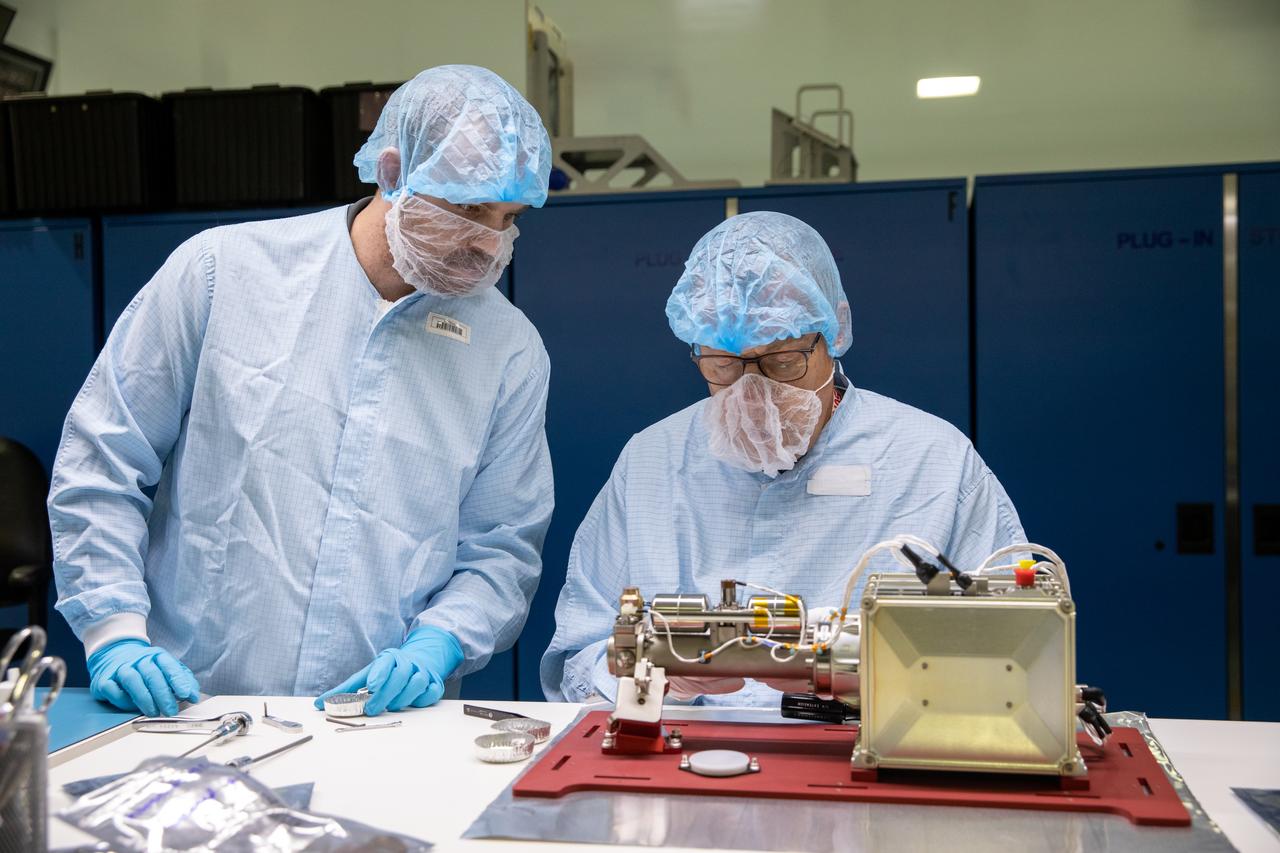
Technicians prepare the Mass Spectrometer Observing Lunar Operations (MSolo) for NASA’s Volatile Investigating Polar Exploration Rover (VIPER) mission for packing inside a laboratory in the Space Station Processing Facility at NASA’s Kennedy Space Center in Florida on Feb. 21, 2023. MSolo will be shipped to Johnson Space Center in Houston for integration into VIPER. MSolo is a commercial off-the-shelf mass spectrometer modified to work in space and it will help analyze the chemical makeup of landing sites on the Moon, as well as study water on the lunar surface. MSolo will be part of NASA’s first Commercial Lunar Payload Delivery Service (CLPS) mission where under the Artemis program, commercial deliveries will be used to perform science experiments, test technologies, and demonstrate capabilities to help NASA explore the Moon and prepare for human missions. VIPER is scheduled to be delivered to the Moon’s South Pole in late 2024 by Astrobotic’s Griffin lander as part of the CLPS initiative.
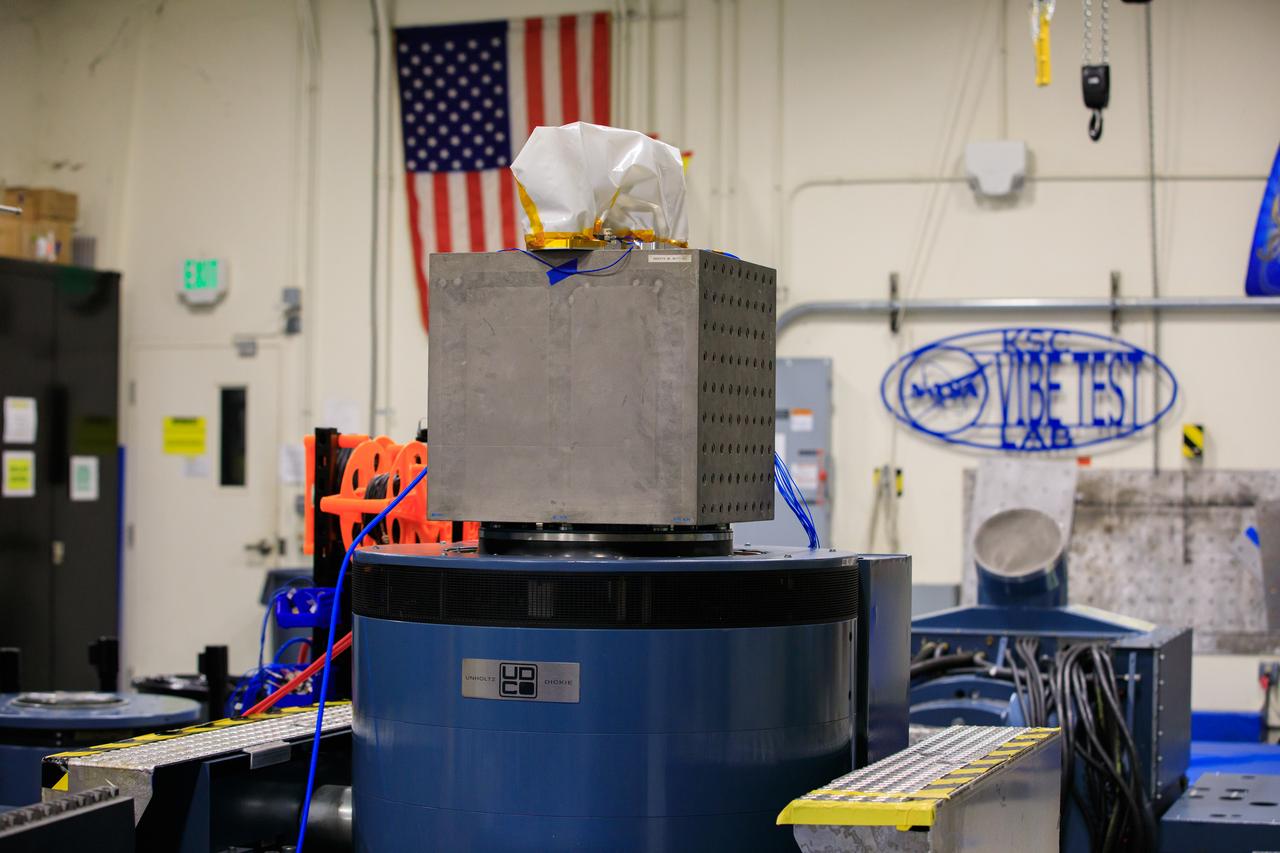
The Mass Spectrometer Observing Lunar Operations (MSolo) for NASA’s VIPER mission is being prepared for a vibration test inside a laboratory in the Neil Armstrong Operations and Checkout Building at NASA’s Kennedy Space Center in Florida on Nov. 8, 2022. Exposing the instrument to vibration environments that it might see during launch helps engineers to find issues prior to liftoff. MSolo is a commercial off-the-shelf mass spectrometer modified to work in space and it will help analyze the chemical makeup of landing sites on the Moon, as well as study water on the lunar surface. MSolo will be part of NASA’s first Commercial Lunar Payload Delivery Service (CLPS) mission where under the Artemis program, commercial deliveries will be used to perform science experiments, test technologies and demonstrate capabilities to help NASA explore the Moon and prepare for human missions.
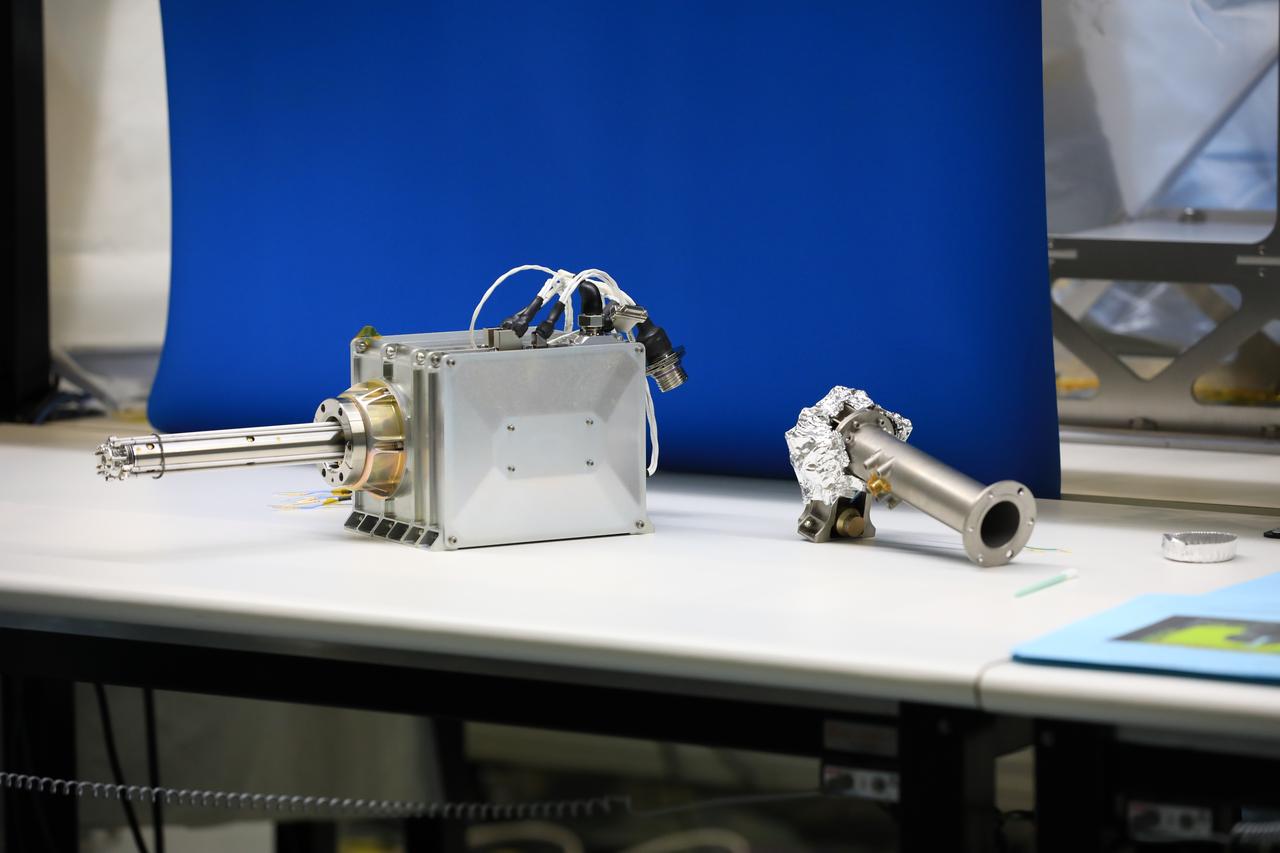
Instruments for the Mass Spectrometer observing lunar operations (MSolo) are in view inside the Space Station Processing Facility at NASA’s Kennedy Space Center in Florida on Sept. 25, 2020. MSolo is a commercial off-the-shelf mass spectrometer modified to work in space and it will help analyze the chemical makeup of landing sites on the Moon, as well as study water on the lunar surface. This work is preparing MSolo hardware for a robotic mission as part of the Commercial Lunar Payload Services (CLPS) launching to exploring Lacus Mortis, a large crater on the near side of the Moon in 2021. A future mission will send a mobile robot named the Volatiles Investigating Polar Exploration Rover (VIPER) to the Moon to prospect for water. VIPER will have several instruments that will allow it to detect and sample water including MSolo, the Neutron Spectrometer System, the Near Infrared Volatiles Spectrometer System and The Regolith and Ice Drill for Exploring New Terrain (TRIDENT).
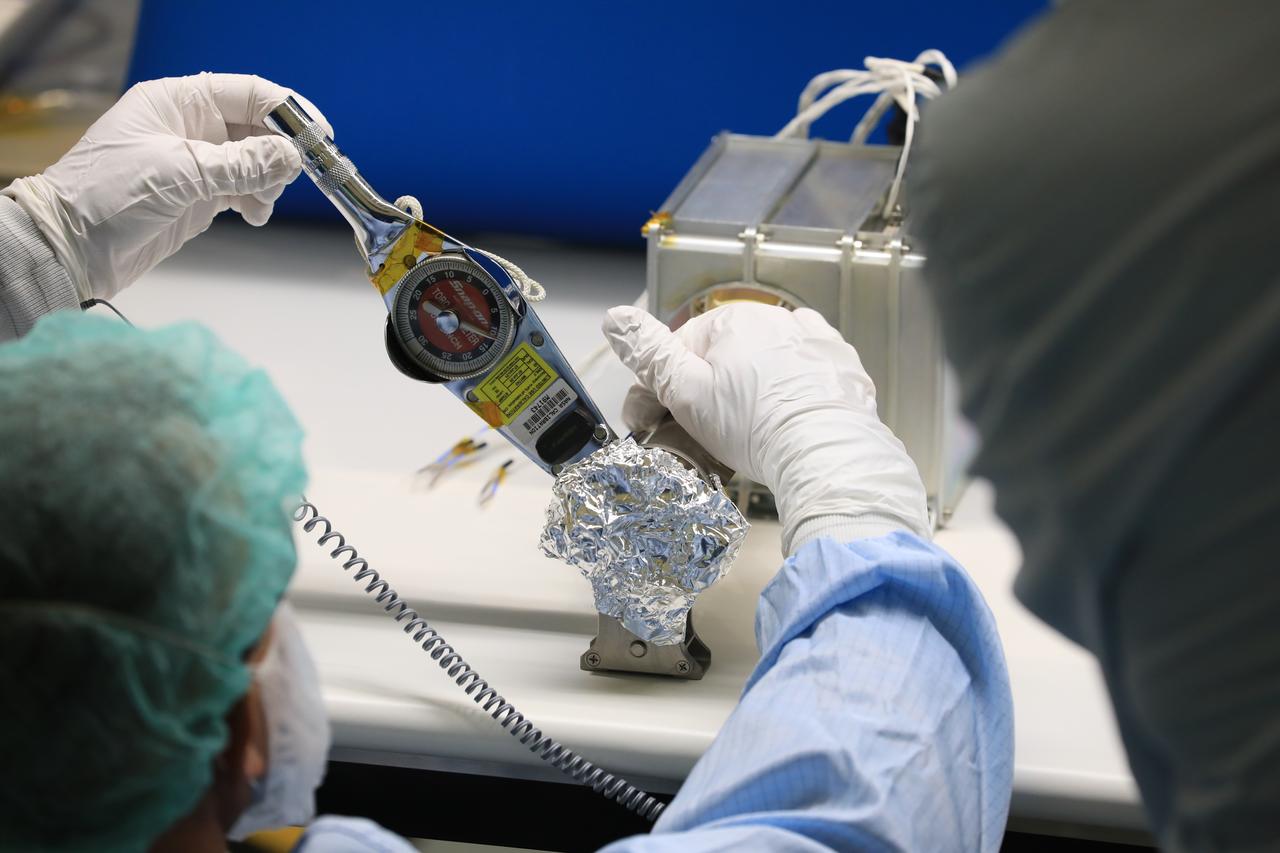
Engineers and technicians at NASA’s Kennedy Space Center in Florida work with instruments for Mass Spectrometer observing lunar operations (MSolo) inside the Space Station Processing on Sept. 25, 2020. MSolo is a commercial off-the-shelf mass spectrometer modified to work in space and it will help analyze the chemical makeup of landing sites on the Moon, as well as study water on the lunar surface. This work is preparing MSolo hardware for a robotic mission as part of the Commercial Lunar Payload Services (CLPS) launching to exploring Lacus Mortis, a large crater on the near side of the Moon in 2021. A future mission will send a mobile robot named the Volatiles Investigating Polar Exploration Rover (VIPER) to the Moon to prospect for water. VIPER will have several instruments that will allow it to detect and sample water including MSolo, the Neutron Spectrometer System, the Near Infrared Volatiles Spectrometer System and The Regolith and Ice Drill for Exploring New Terrain (TRIDENT).
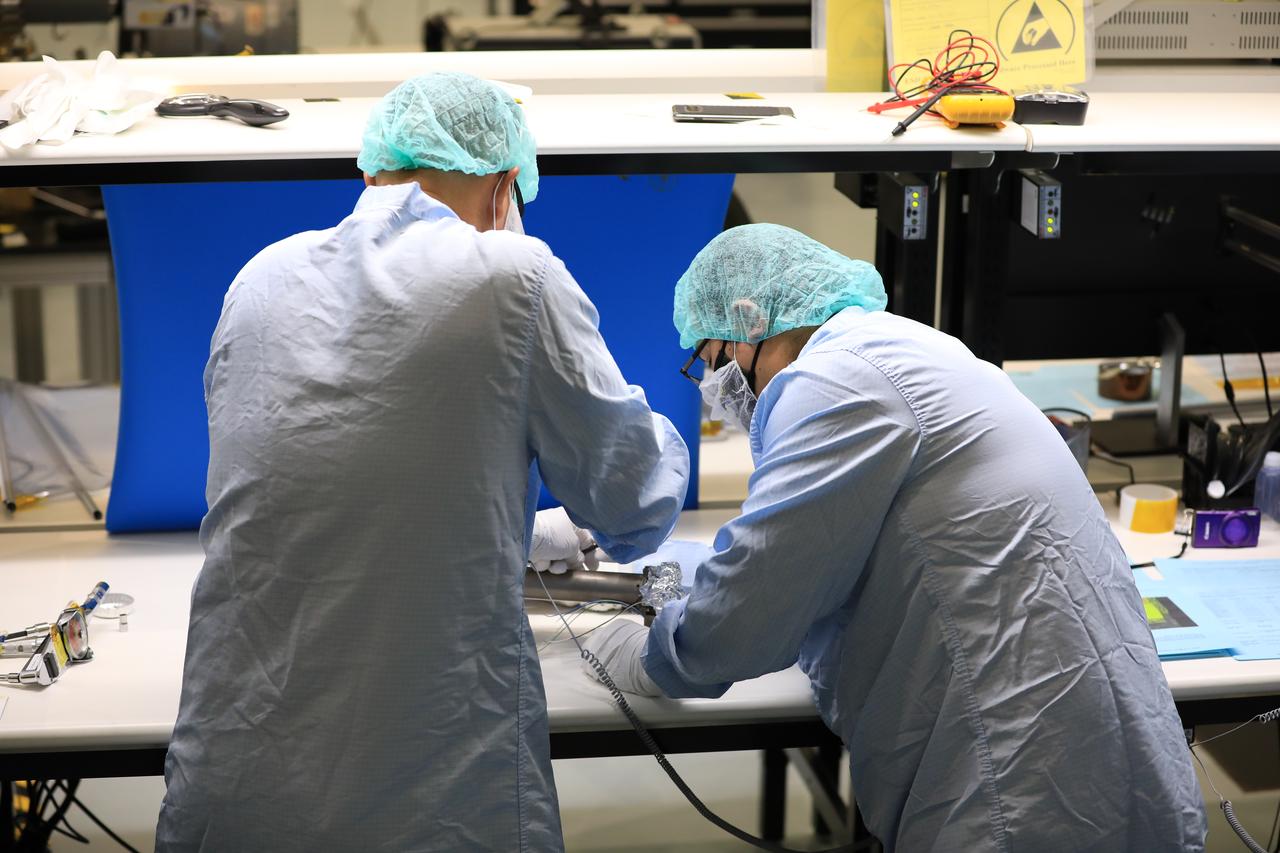
Engineers and technicians at NASA’s Kennedy Space Center in Florida work with instruments for Mass Spectrometer observing lunar operations (MSolo) inside the Space Station Processing on Sept. 25, 2020. MSolo is a commercial off-the-shelf mass spectrometer modified to work in space and it will help analyze the chemical makeup of landing sites on the Moon, as well as study water on the lunar surface. This work is preparing MSolo hardware for a robotic mission as part of the Commercial Lunar Payload Services (CLPS) launching to exploring Lacus Mortis, a large crater on the near side of the Moon in 2021. A future mission will send a mobile robot named the Volatiles Investigating Polar Exploration Rover (VIPER) to the Moon to prospect for water. VIPER will have several instruments that will allow it to detect and sample water including MSolo, the Neutron Spectrometer System, the Near Infrared Volatiles Spectrometer System and The Regolith and Ice Drill for Exploring New Terrain (TRIDENT).
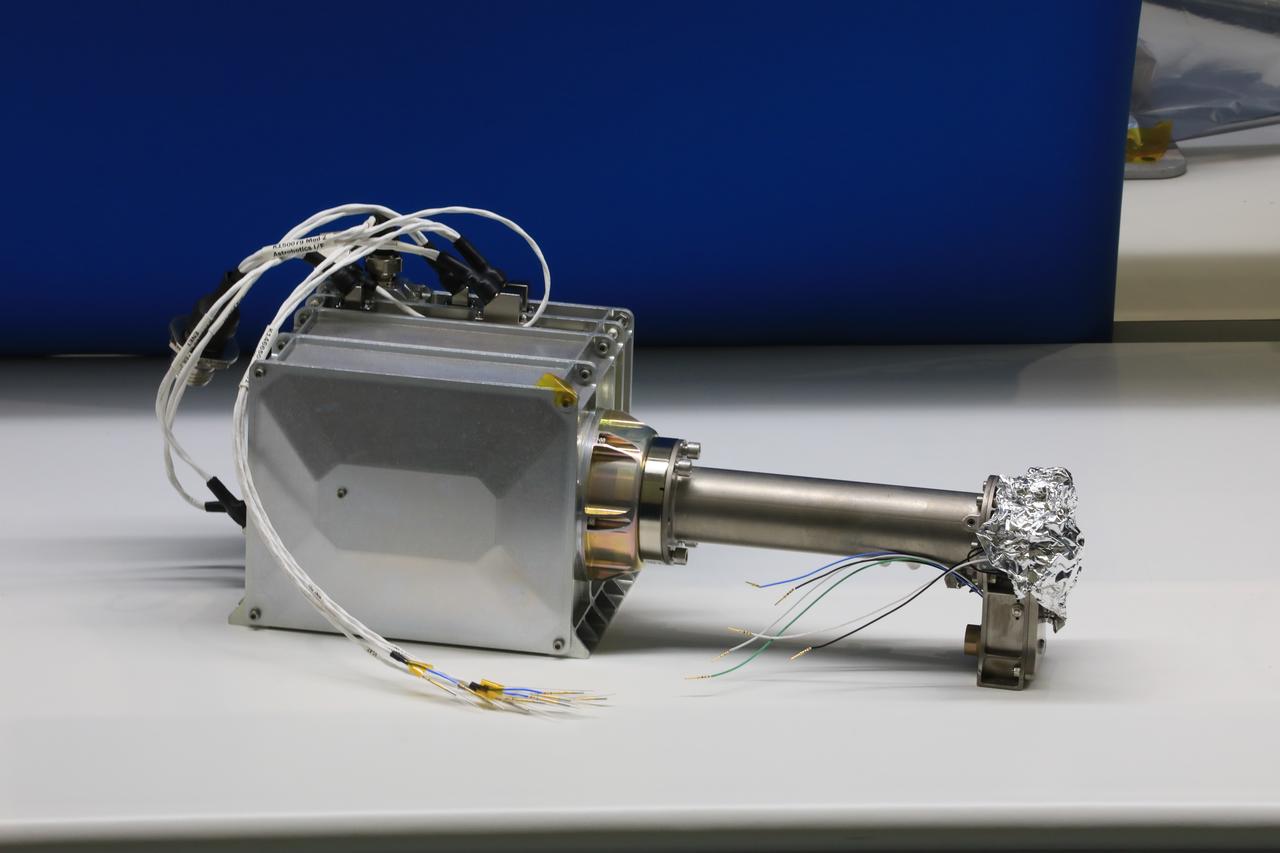
Engineers and technicians at NASA’s Kennedy Space Center in Florida are preparing the Mass Spectrometer observing lunar operations (MSolo) for launch inside the Space Station Processing Facility at NASA’s Kennedy Space Center in Florida on Sept. 25, 2020. MSolo is a commercial off-the-shelf mass spectrometer modified to work in space and it will help analyze the chemical makeup of landing sites on the Moon, as well as study water on the lunar surface. MSolo hardware is a payload for a robotic mission to the Moon as part of the Commercial Lunar Payload Services (CLPS) launching to exploring Lacus Mortis, a large crater on the near side of the Moon in 2021. A future mission will send a mobile robot named the Volatiles Investigating Polar Exploration Rover (VIPER) to the Moon to prospect for water. VIPER will have several instruments that will allow it to detect and sample water including MSolo, the Neutron Spectrometer System, the Near Infrared Volatiles Spectrometer System and The Regolith and Ice Drill for Exploring New Terrain (TRIDENT).
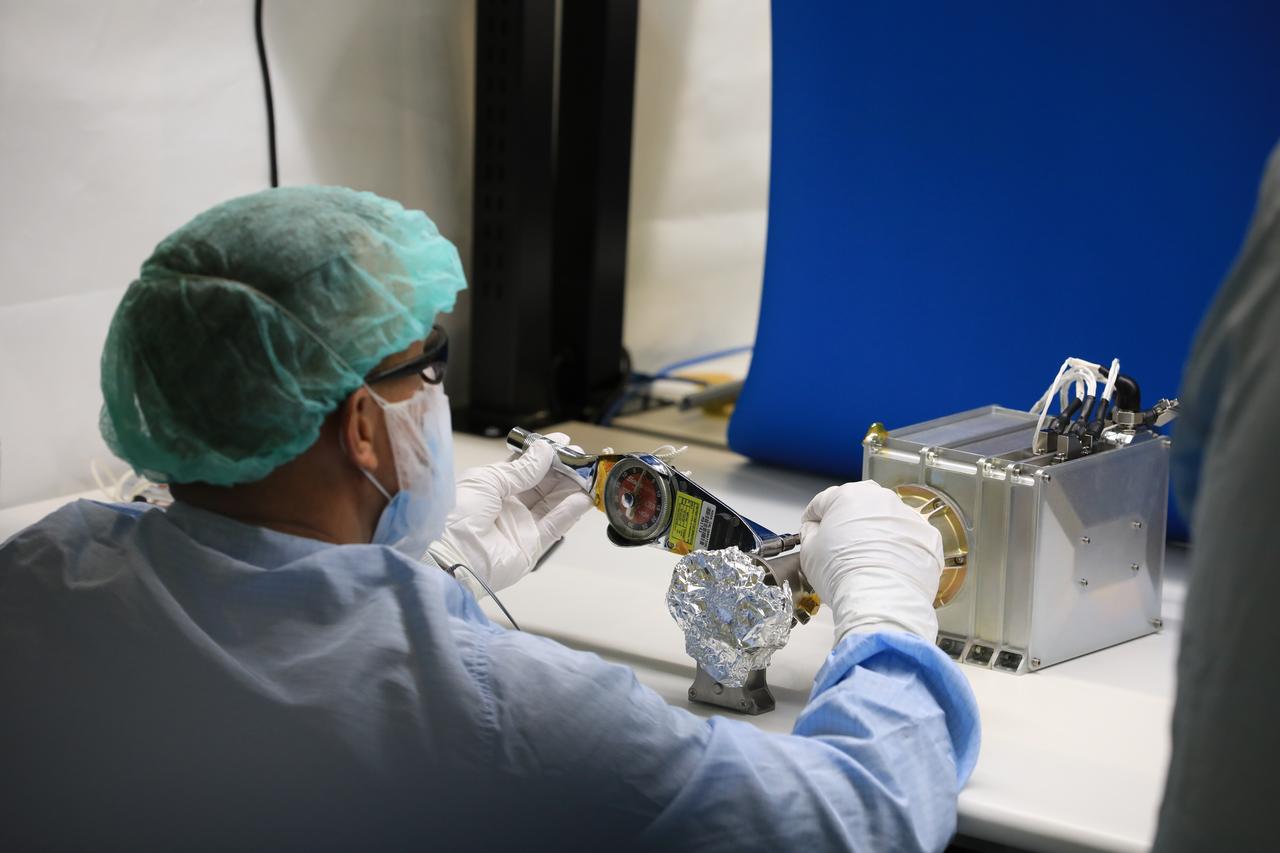
Engineers and technicians at NASA’s Kennedy Space Center in Florida work with instruments for Mass Spectrometer observing lunar operations (MSolo) inside the Space Station Processing on Sept. 25, 2020. MSolo is a commercial off-the-shelf mass spectrometer modified to work in space and it will help analyze the chemical makeup of landing sites on the Moon, as well as study water on the lunar surface. This work is preparing MSolo hardware for a robotic mission as part of the Commercial Lunar Payload Services (CLPS) launching to exploring Lacus Mortis, a large crater on the near side of the Moon in 2021. A future mission will send a mobile robot named the Volatiles Investigating Polar Exploration Rover (VIPER) to the Moon to prospect for water. VIPER will have several instruments that will allow it to detect and sample water including MSolo, the Neutron Spectrometer System, the Near Infrared Volatiles Spectrometer System and The Regolith and Ice Drill for Exploring New Terrain (TRIDENT).
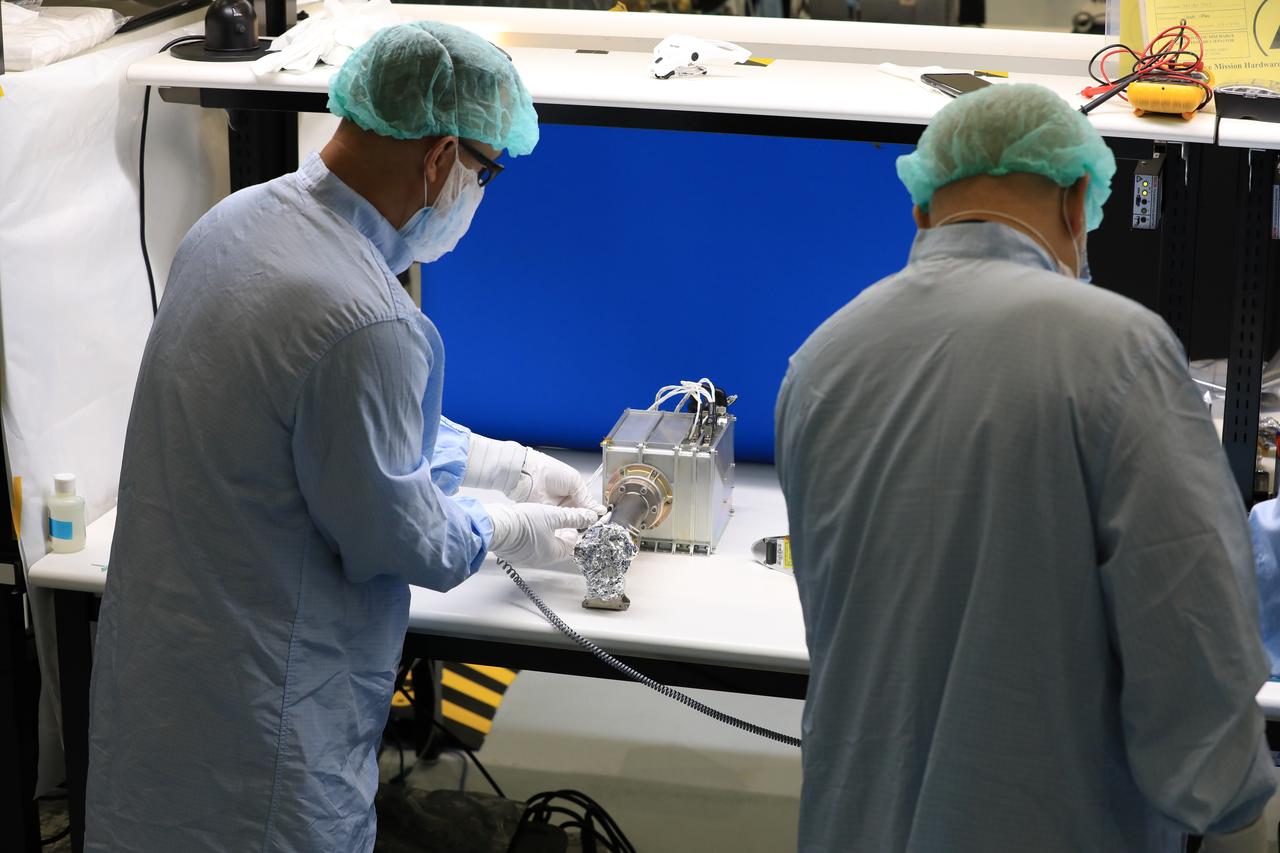
Engineers and technicians at NASA’s Kennedy Space Center in Florida work with instruments for Mass Spectrometer observing lunar operations (MSolo) inside the Space Station Processing on Sept. 25, 2020. MSolo is a commercial off-the-shelf mass spectrometer modified to work in space and it will help analyze the chemical makeup of landing sites on the Moon, as well as study water on the lunar surface. This work is preparing MSolo hardware for a robotic mission as part of the Commercial Lunar Payload Services (CLPS) launching to exploring Lacus Mortis, a large crater on the near side of the Moon in 2021. A future mission will send a mobile robot named the Volatiles Investigating Polar Exploration Rover (VIPER) to the Moon to prospect for water. VIPER will have several instruments that will allow it to detect and sample water including MSolo, the Neutron Spectrometer System, the Near Infrared Volatiles Spectrometer System and The Regolith and Ice Drill for Exploring New Terrain (TRIDENT).
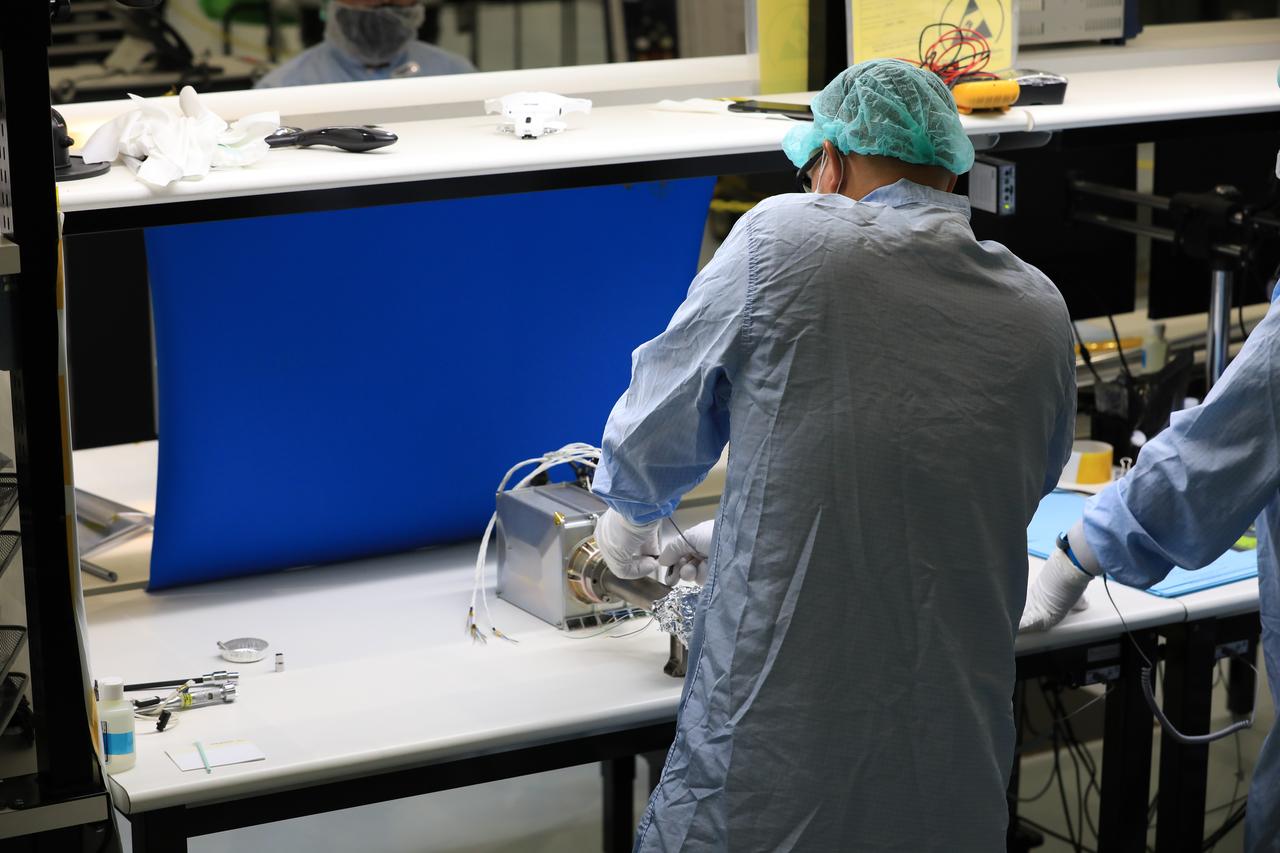
Engineers and technicians at NASA’s Kennedy Space Center in Florida work with instruments for Mass Spectrometer observing lunar operations (MSolo) inside the Space Station Processing on Sept. 25, 2020. MSolo is a commercial off-the-shelf mass spectrometer modified to work in space and it will help analyze the chemical makeup of landing sites on the Moon, as well as study water on the lunar surface. This work is preparing MSolo hardware for a robotic mission as part of the Commercial Lunar Payload Services (CLPS) launching to exploring Lacus Mortis, a large crater on the near side of the Moon in 2021. A future mission will send a mobile robot named the Volatiles Investigating Polar Exploration Rover (VIPER) to the Moon to prospect for water. VIPER will have several instruments that will allow it to detect and sample water including MSolo, the Neutron Spectrometer System, the Near Infrared Volatiles Spectrometer System and The Regolith and Ice Drill for Exploring New Terrain (TRIDENT).
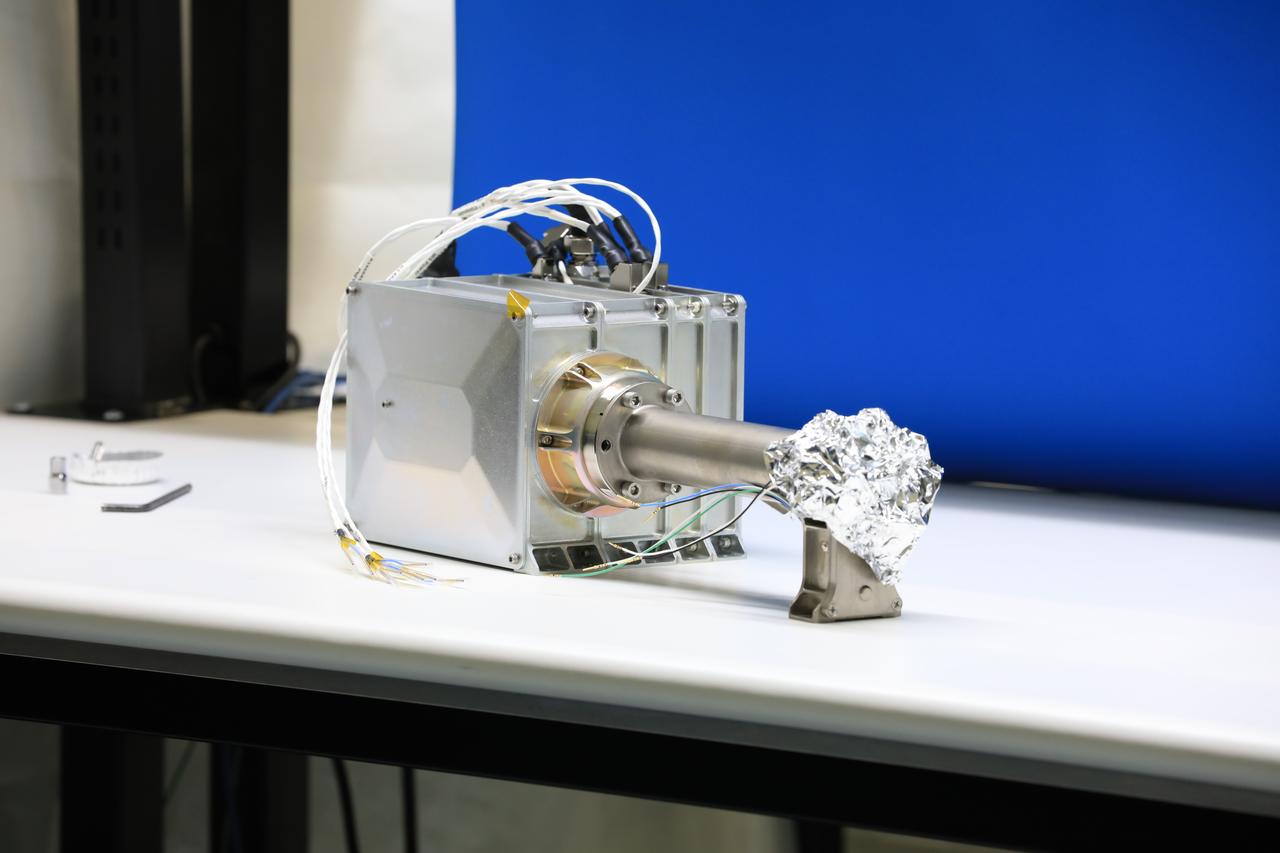
Engineers and technicians at NASA’s Kennedy Space Center in Florida are preparing the Mass Spectrometer observing lunar operations (MSolo) for launch inside the Space Station Processing Facility at NASA’s Kennedy Space Center in Florida on Sept. 25, 2020. MSolo is a commercial off-the-shelf mass spectrometer modified to work in space and it will help analyze the chemical makeup of landing sites on the Moon, as well as study water on the lunar surface. MSolo hardware is a payload for a robotic mission to the Moon as part of the Commercial Lunar Payload Services (CLPS) launching to exploring Lacus Mortis, a large crater on the near side of the Moon in 2021. A future mission will send a mobile robot named the Volatiles Investigating Polar Exploration Rover (VIPER) to the Moon to prospect for water. VIPER will have several instruments that will allow it to detect and sample water including MSolo, the Neutron Spectrometer System, the Near Infrared Volatiles Spectrometer System and The Regolith and Ice Drill for Exploring New Terrain (TRIDENT).
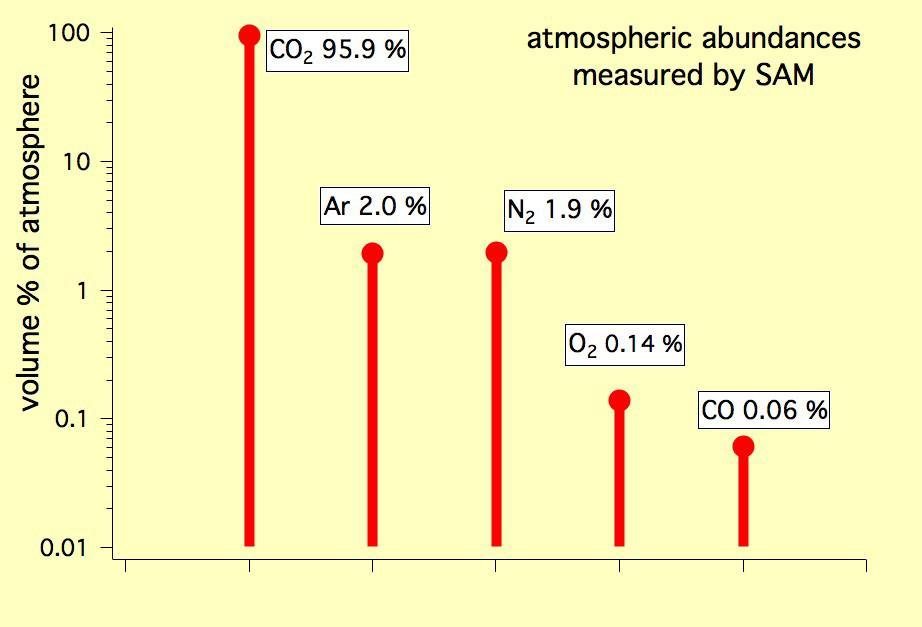
This graph shows the percentage abundance of five gases in the atmosphere of Mars, as measured by the Quadrupole Mass Spectrometer instrument of the SAM instrument suite onboard Curiosity.
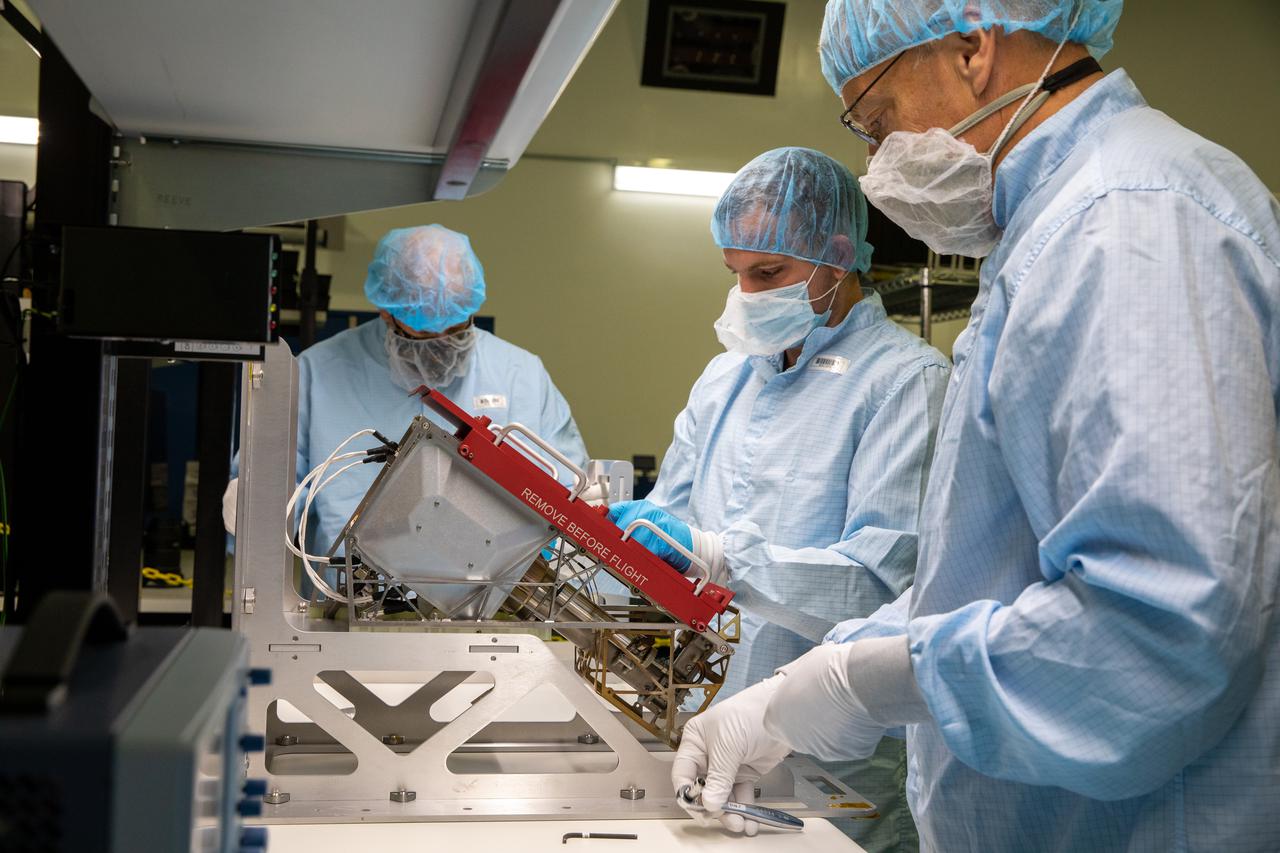
Inside the Space Station Processing Facility at NASA’s Kennedy Space Center in Florida, members of the Mass Spectrometer observing lunar operations (MSolo) team prepare MSolo flight hardware for shipment in preparation for launch in 2022. MSolo is a commercial off-the-shelf mass spectrometer modified to work in space and it will help analyze the chemical makeup of landing sites on the Moon, as well as study water on the lunar surface. MSolo is part of four of the agency’s Commercial Lunar Payload Delivery Service missions where under the Artemis program, commercial deliveries beginning in 2022 will perform science experiments, test technologies and demonstrate capabilities to help NASA explore the Moon and prepare for human missions.
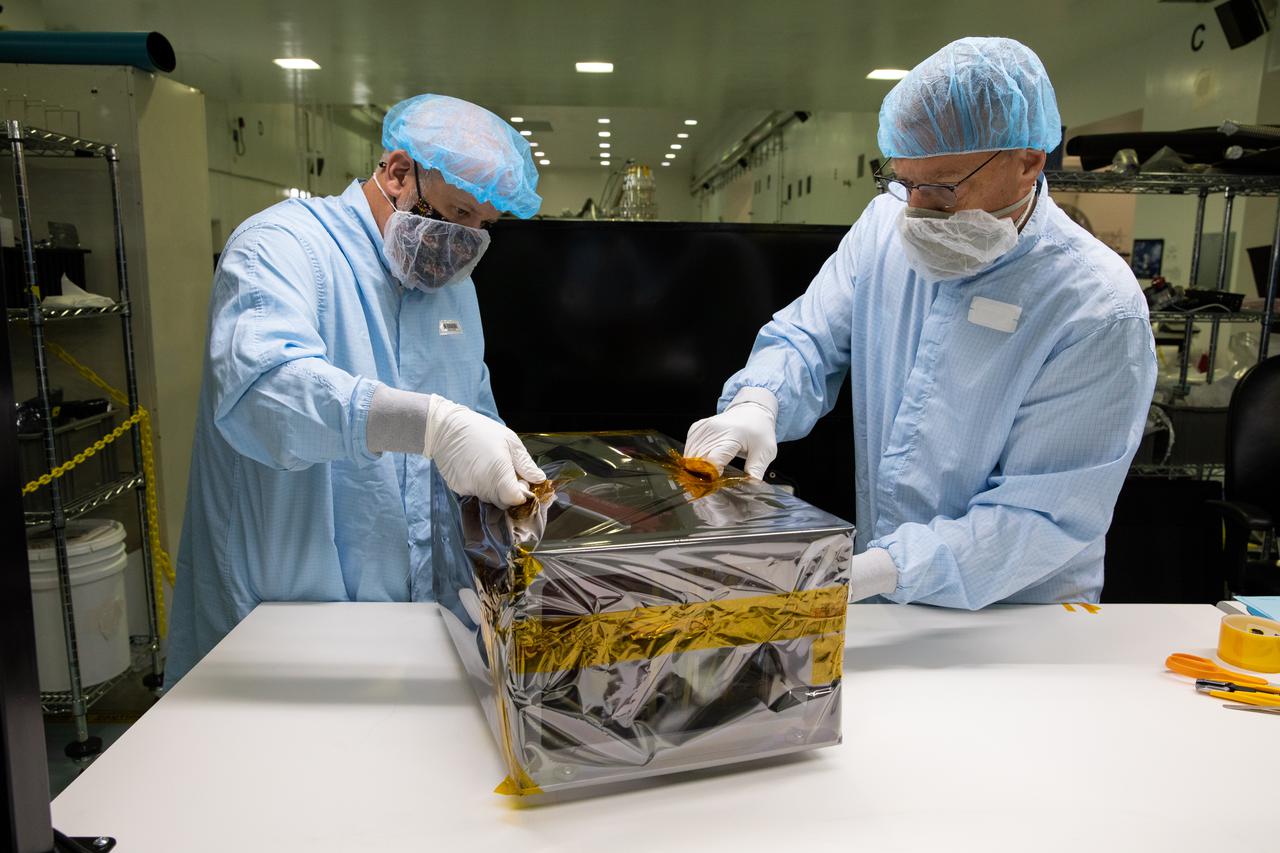
Inside the Space Station Processing Facility at NASA’s Kennedy Space Center in Florida, members of the Mass Spectrometer observing lunar operations (MSolo) team prepare MSolo flight hardware for shipment in preparation for launch in 2022. MSolo is a commercial off-the-shelf mass spectrometer modified to work in space and it will help analyze the chemical makeup of landing sites on the Moon, as well as study water on the lunar surface. MSolo is part of four of the agency’s Commercial Lunar Payload Delivery Service missions where under the Artemis program, commercial deliveries beginning in 2022 will perform science experiments, test technologies and demonstrate capabilities to help NASA explore the Moon and prepare for human missions.
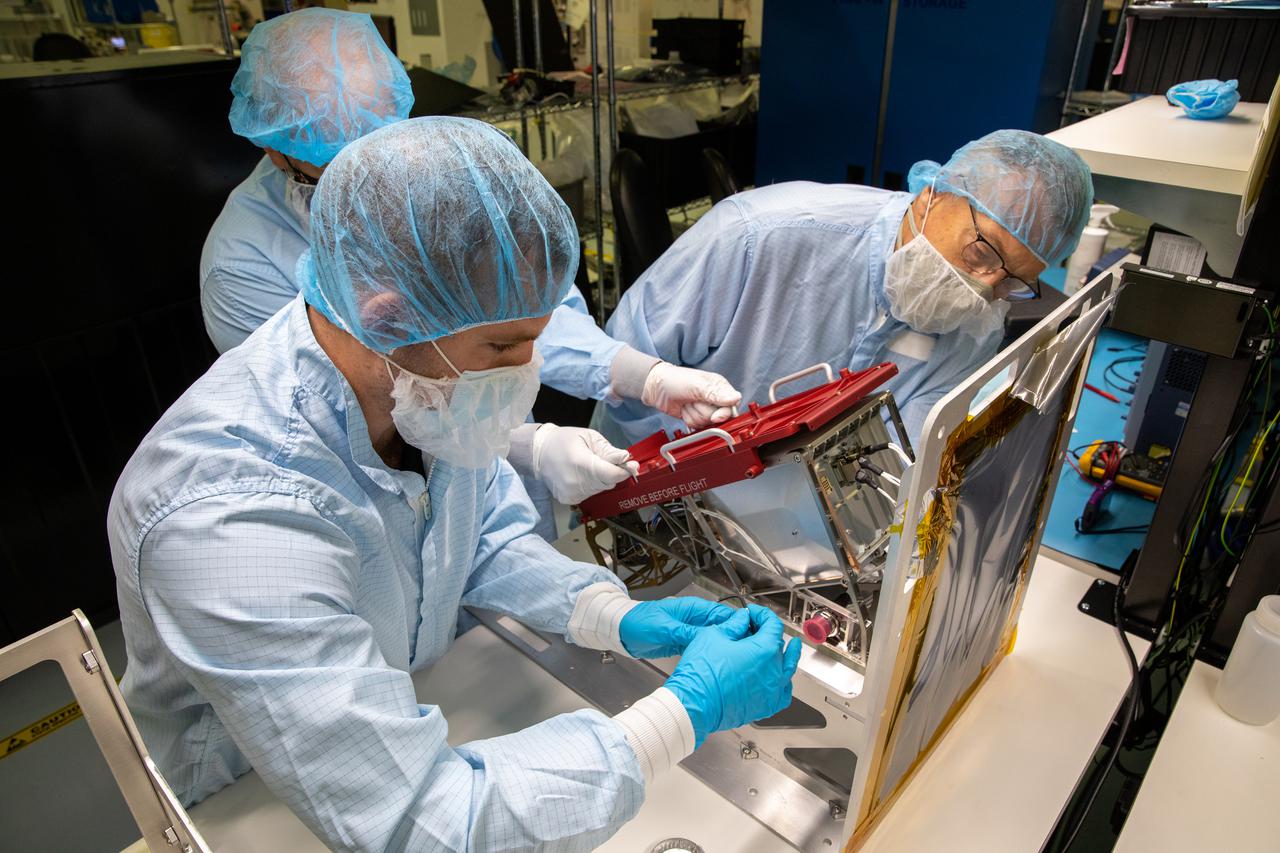
Inside the Space Station Processing Facility at NASA’s Kennedy Space Center in Florida, members of the Mass Spectrometer observing lunar operations (MSolo) team prepare MSolo flight hardware for shipment in preparation for launch in 2022. MSolo is a commercial off-the-shelf mass spectrometer modified to work in space and it will help analyze the chemical makeup of landing sites on the Moon, as well as study water on the lunar surface. MSolo is part of four of the agency’s Commercial Lunar Payload Delivery Service missions where under the Artemis program, commercial deliveries beginning in 2022 will perform science experiments, test technologies and demonstrate capabilities to help NASA explore the Moon and prepare for human missions.
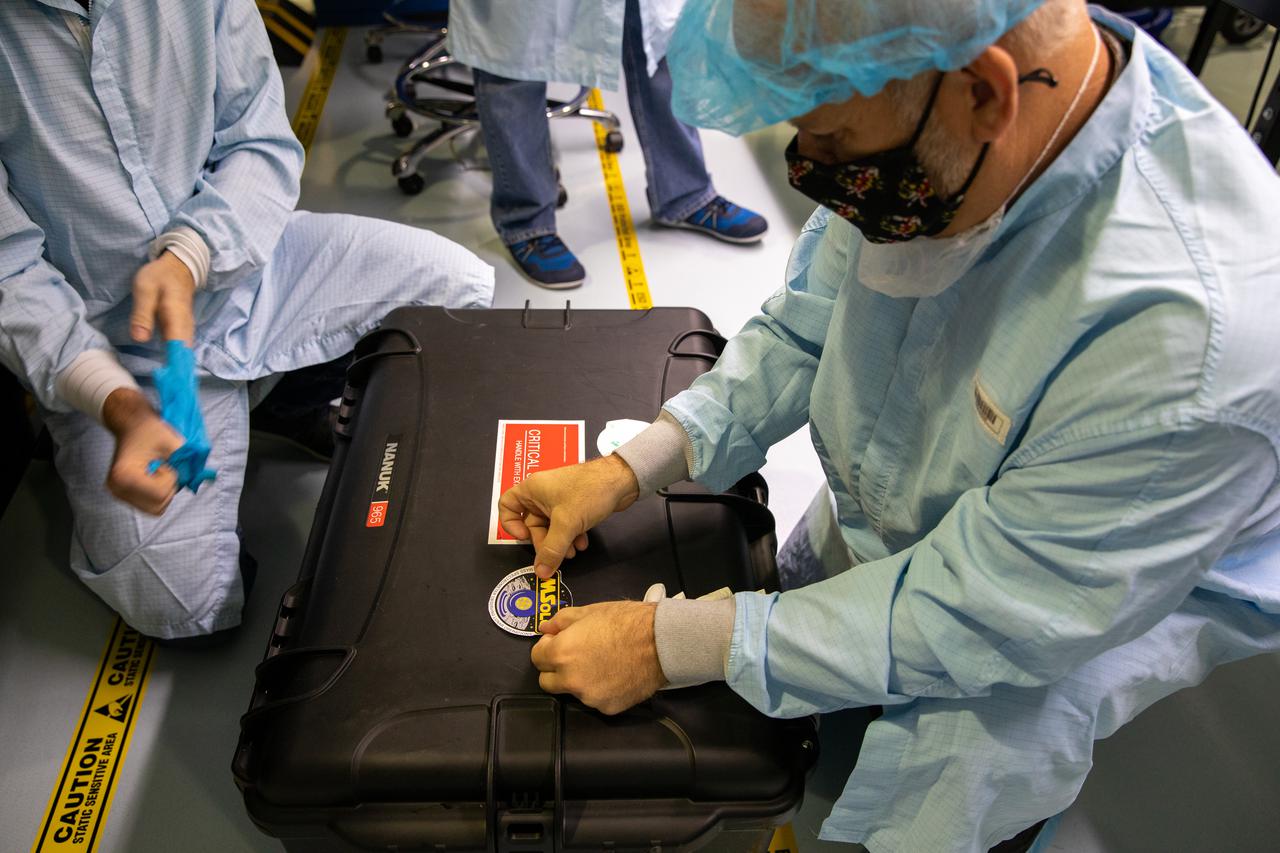
Inside the Space Station Processing Facility at NASA’s Kennedy Space Center in Florida, members of the Mass Spectrometer observing lunar operations (MSolo) team prepare MSolo flight hardware for shipment in preparation for launch in 2022. MSolo is a commercial off-the-shelf mass spectrometer modified to work in space and it will help analyze the chemical makeup of landing sites on the Moon, as well as study water on the lunar surface. MSolo is part of four of the agency’s Commercial Lunar Payload Delivery Service missions where under the Artemis program, commercial deliveries beginning in 2022 will perform science experiments, test technologies and demonstrate capabilities to help NASA explore the Moon and prepare for human missions.
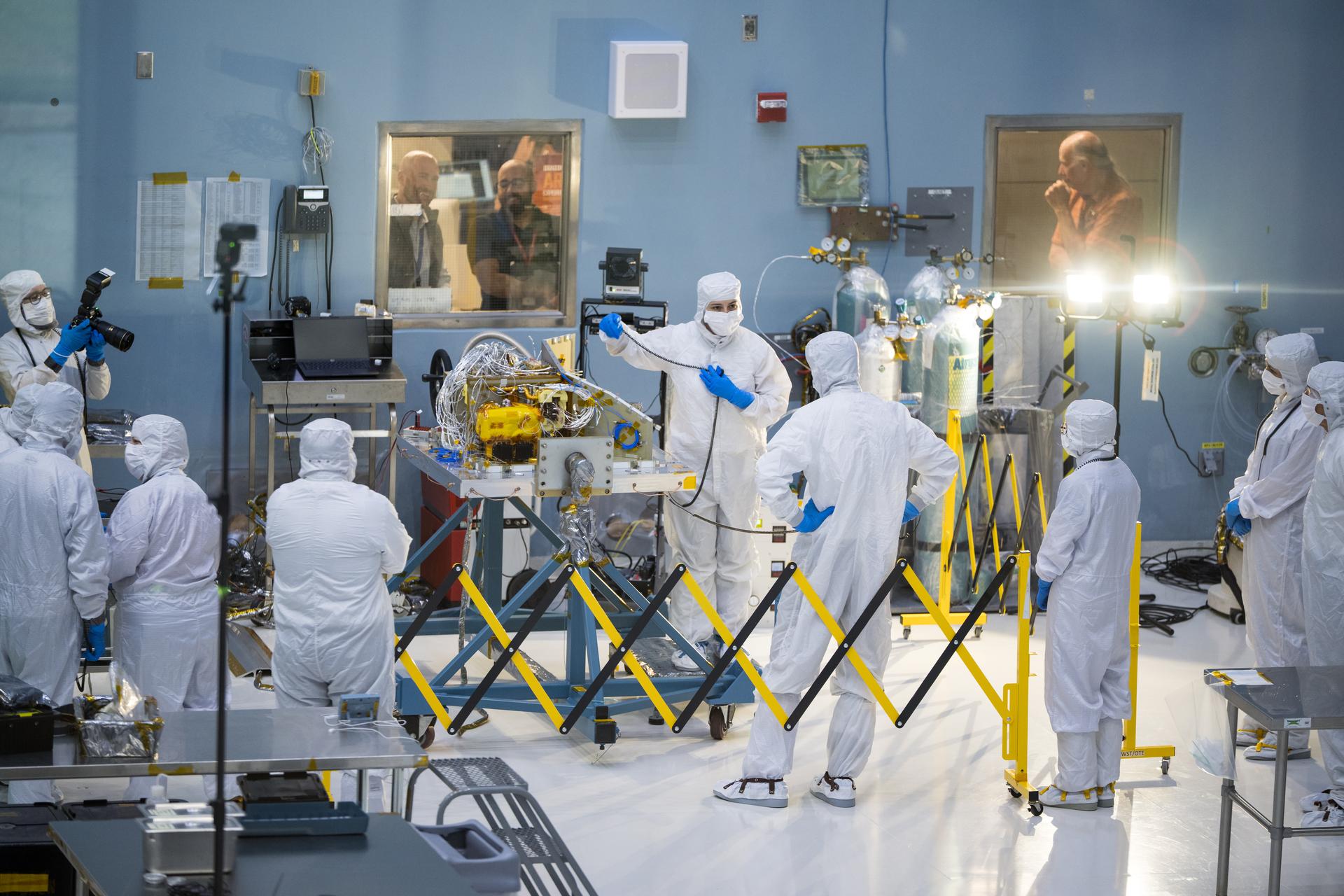
NASA Administrator Jared Isaacman views the Dragonfly mass spectrometer in the Spacecraft Systems Development and Integration Facility during an event held to celebrate the launch of NASA’s Nancy Grace Roman Space Telescope, Tuesday, Sept. 1, 2026, at NASA’s Goddard Space Flight Center in Greenbelt, Maryland. Photo Credit: (NASA/Aubrey Gemignani)
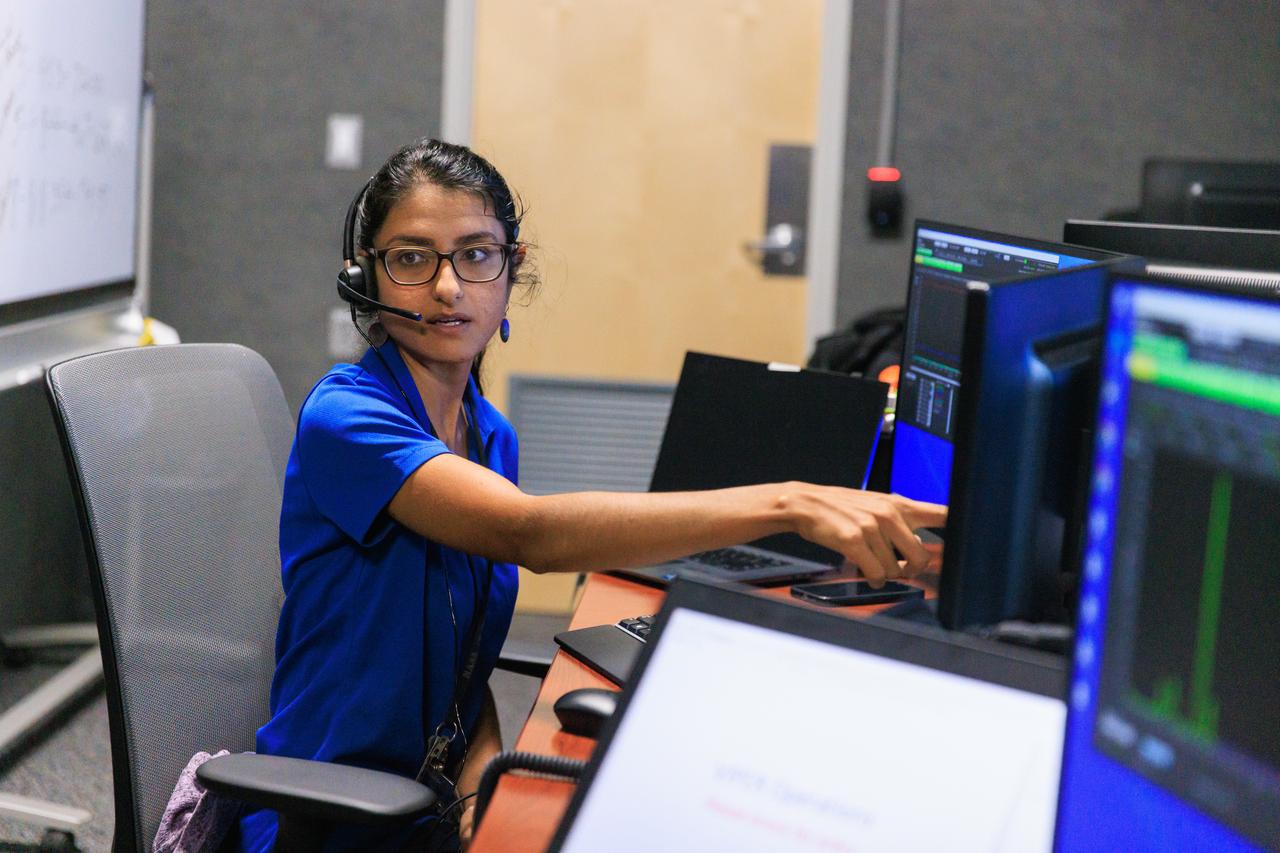
Mass Spectrometer Observing Lunar Operations (MSOLO) Systems Engineer Pri Johnson participates in simulation training at NASA’s Kennedy Space Center in Florida on May 25, 2023, in preparation for the agency’s Volatile Investigating Polar Exploration Rover (VIPER) mission. The purpose of the training was to get the integrated VIPER team – a mix of engineers from Kennedy and NASA’s Ames Research Center in California – accustomed to operating together during phases of the mission where the rover will be driving. MSOLO is a modified commercial off-the-shelf mass spectrometer that will help the agency analyze the chemical makeup of landing sites on the Moon and study water on the lunar surface. MSOLO, as part of VIPER, is scheduled to launch on a SpaceX Falcon Heavy rocket through NASA’s Commercial Lunar Payload Delivery Service (CLPS) initiative in late 2024, landing at the Moon’s South Pole aboard Astrobotic’s Griffin lander. Through Artemis missions, CLPS deliveries will be used to perform science experiments, test technologies, and demonstrate capabilities to help NASA explore the Moon and prepare for human deep space exploration missions.
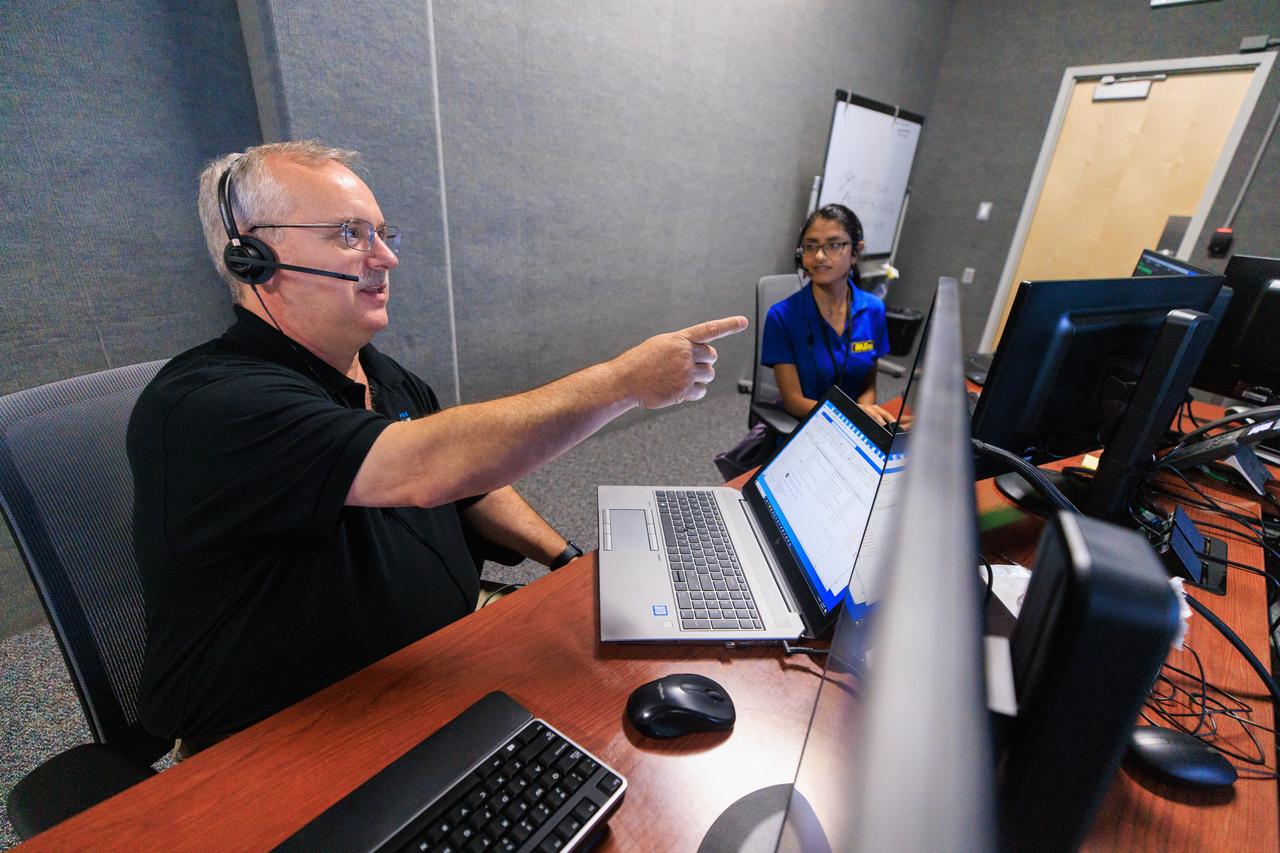
Jim Kania (left), Mass Spectrometer Observing Lunar Operations (MSOLO) software engineering lead, and Pri Johnson, MSOLO systems engineer, participate in simulation training at NASA’s Kennedy Space Center in Florida on May 25, 2023, in preparation for the agency’s Volatile Investigating Polar Exploration Rover (VIPER) mission. The purpose of the training was to get the integrated VIPER team – a mix of engineers from Kennedy and NASA’s Ames Research Center in California – accustomed to operating together during phases of the mission where the rover will be driving. MSOLO is a modified commercial off-the-shelf mass spectrometer that will help the agency analyze the chemical makeup of landing sites on the Moon and study water on the lunar surface. MSOLO, as part of VIPER, is scheduled to launch on a SpaceX Falcon Heavy rocket through NASA’s Commercial Lunar Payload Delivery Service (CLPS) initiative in late 2024, landing at the Moon’s South Pole aboard Astrobotic’s Griffin lander. Through Artemis missions, CLPS deliveries will be used to perform science experiments, test technologies, and demonstrate capabilities to help NASA explore the Moon and prepare for human deep space exploration missions.
Jim Kania (left), Mass Spectrometer Observing Lunar Operations (MSOLO) software engineering lead, and Pri Johnson, MSOLO systems engineer, participate in simulation training at NASA’s Kennedy Space Center in Florida on May 25, 2023, in preparation for the agency’s Volatile Investigating Polar Exploration Rover (VIPER) mission. The purpose of the training was to get the integrated VIPER team – a mix of engineers from Kennedy and NASA’s Ames Research Center in California – accustomed to operating together during phases of the mission where the rover will be driving. MSOLO is a modified commercial off-the-shelf mass spectrometer that will help the agency analyze the chemical makeup of landing sites on the Moon and study water on the lunar surface. MSOLO, as part of VIPER, is scheduled to launch on a SpaceX Falcon Heavy rocket through NASA’s Commercial Lunar Payload Delivery Service (CLPS) initiative in late 2024, landing at the Moon’s South Pole aboard Astrobotic’s Griffin lander. Through Artemis missions, CLPS deliveries will be used to perform science experiments, test technologies, and demonstrate capabilities to help NASA explore the Moon and prepare for human deep space exploration missions.
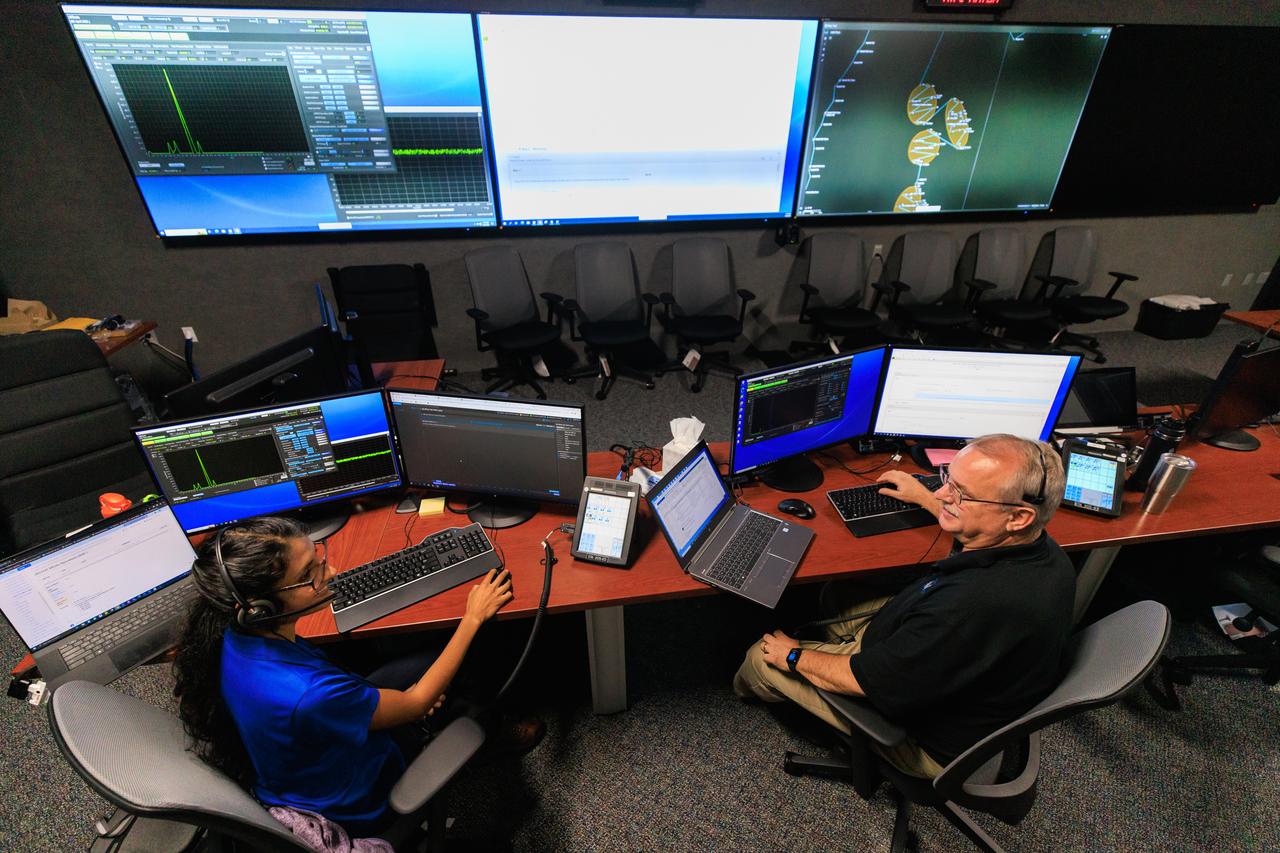
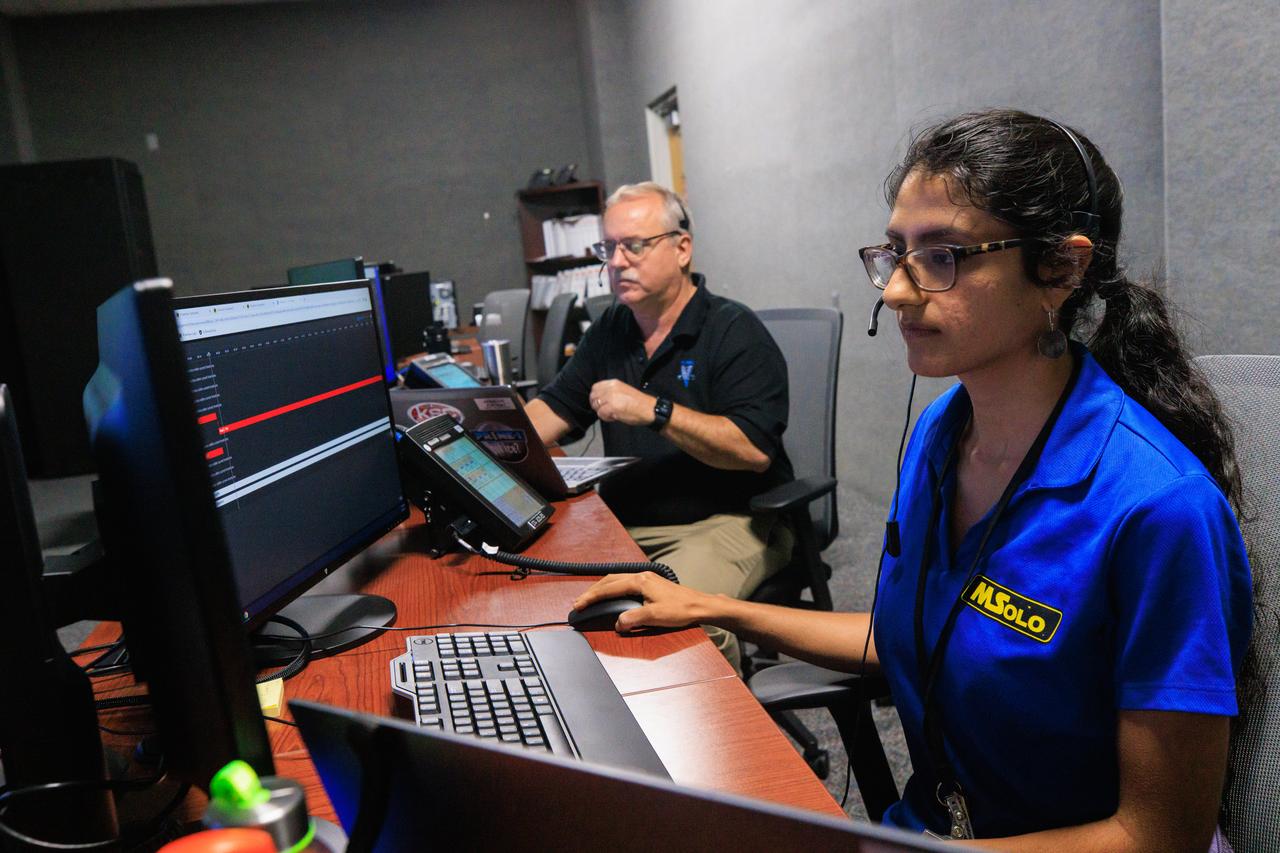
Pri Johnson (left), Mass Spectrometer Observing Lunar Operations (MSOLO) systems engineer, and Jim Kania, MSOLO software engineering lead, participate in simulation training at NASA’s Kennedy Space Center in Florida on May 25, 2023, in preparation for the agency’s Volatile Investigating Polar Exploration Rover (VIPER) mission. The purpose of the training was to get the integrated VIPER team – a mix of engineers from Kennedy and NASA’s Ames Research Center in California – accustomed to operating together during phases of the mission where the rover will be driving. MSOLO is a modified commercial off-the-shelf mass spectrometer that will help the agency analyze the chemical makeup of landing sites on the Moon and study water on the lunar surface. MSOLO, as part of VIPER, is scheduled to launch on a SpaceX Falcon Heavy rocket through NASA’s Commercial Lunar Payload Delivery Service (CLPS) initiative in late 2024, landing at the Moon’s South Pole aboard Astrobotic’s Griffin lander. Through Artemis missions, CLPS deliveries will be used to perform science experiments, test technologies, and demonstrate capabilities to help NASA explore the Moon and prepare for human deep space exploration missions.
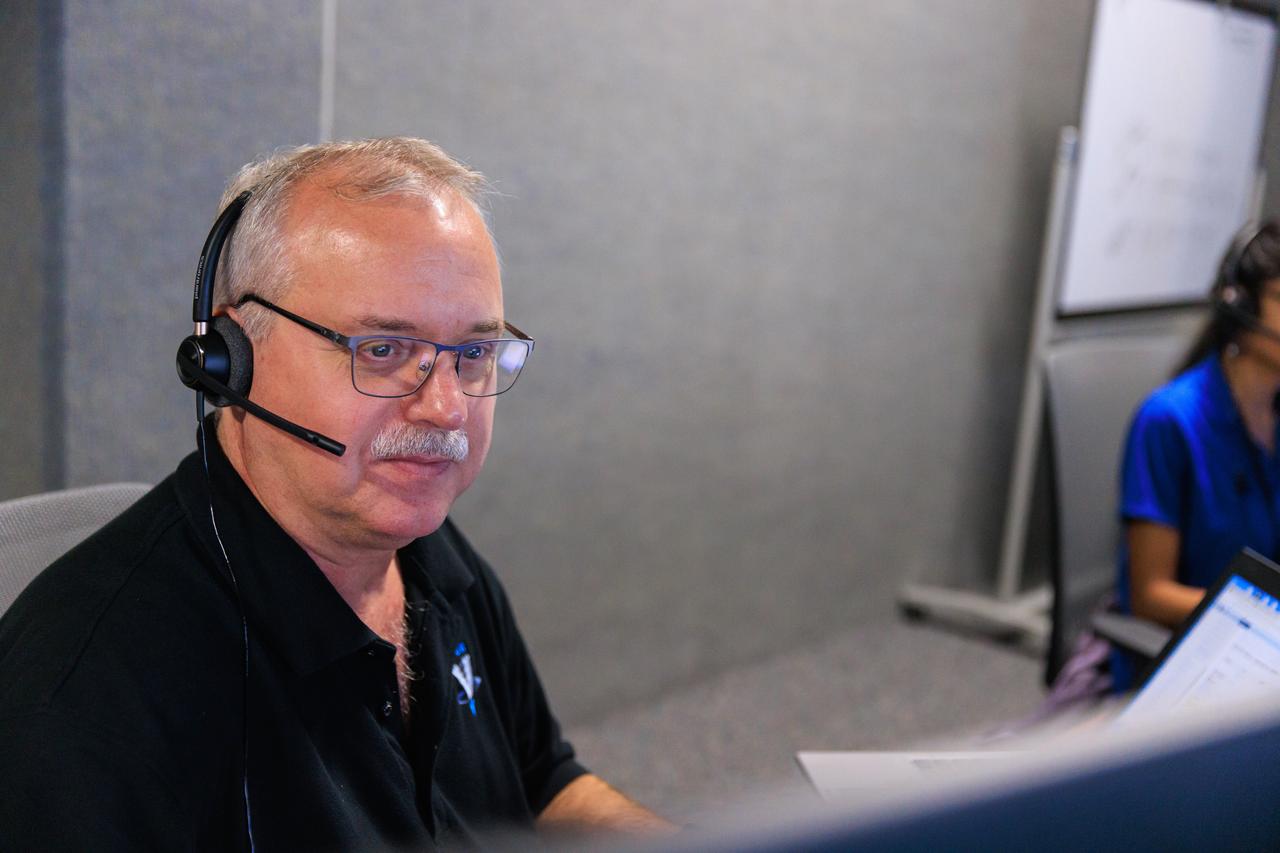
Mass Spectrometer Observing Lunar Operations (MSOLO) Software Engineering Lead Jim Kania participates in simulation training at NASA’s Kennedy Space Center in Florida on May 25, 2023, in preparation for the agency’s Volatile Investigating Polar Exploration Rover (VIPER) mission. The purpose of the training was to get the integrated VIPER team – a mix of engineers from Kennedy and NASA’s Ames Research Center in California – accustomed to operating together during phases of the mission where the rover will be driving. MSOLO is a modified commercial off-the-shelf mass spectrometer that will help the agency analyze the chemical makeup of landing sites on the Moon and study water on the lunar surface. MSOLO, as part of VIPER, is scheduled to launch on a SpaceX Falcon Heavy rocket through NASA’s Commercial Lunar Payload Delivery Service (CLPS) initiative in late 2024, landing at the Moon’s South Pole aboard Astrobotic’s Griffin lander. Through Artemis missions, CLPS deliveries will be used to perform science experiments, test technologies, and demonstrate capabilities to help NASA explore the Moon and prepare for human deep space exploration missions.
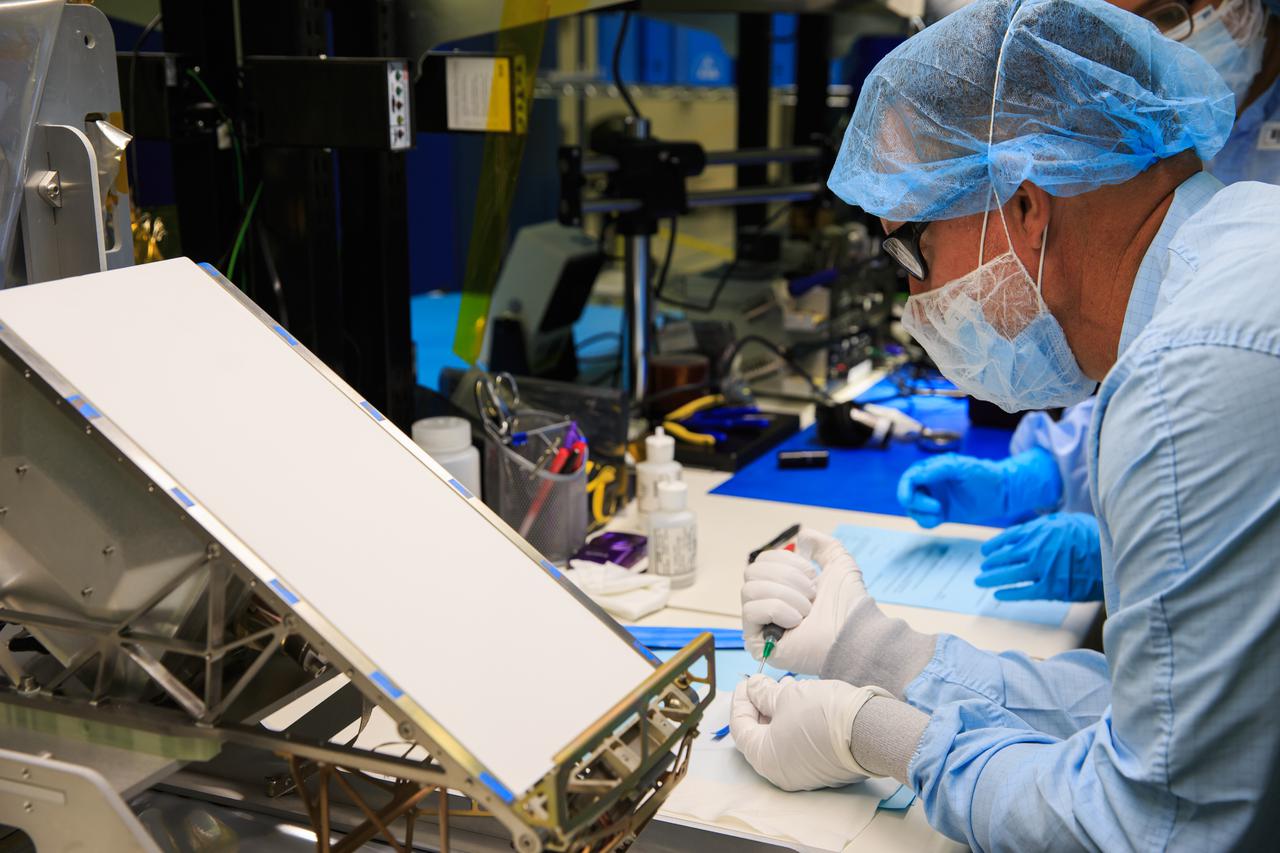
Team members working inside the Space Station Processing Facility at NASA’s Kennedy Space Center in Florida, on Sept. 23, 2021, meticulously assemble ground support equipment that will protect shipment of the Mass Spectrometer observing lunar operations (MSolo) flight hardware for preparations before it launches in 2022. MSolo is a commercial off-the-shelf mass spectrometer modified to work in space and it will help analyze the chemical makeup of landing sites on the Moon, as well as study water on the lunar surface. MSolo, scheduled to first launch in 2022, is part of four of the agency’s Commercial Lunar Payload Delivery Service missions where under the Artemis program, commercial deliveries will include science experiments, testing of technologies and demonstrations of capabilities to help NASA explore the Moon and prepare for human missions.
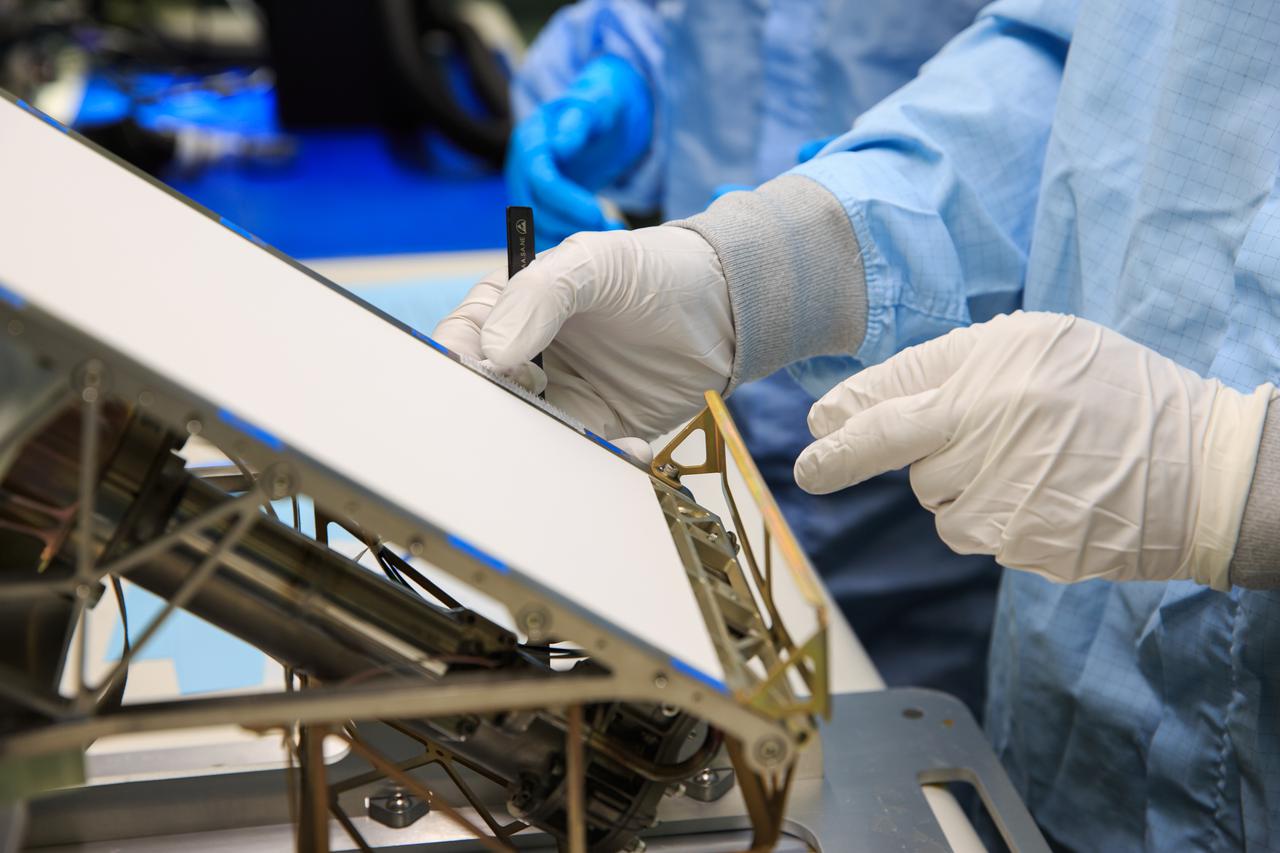
Team members working inside the Space Station Processing Facility at NASA’s Kennedy Space Center in Florida, on Sept. 23, 2021, meticulously assemble ground support equipment that will protect shipment of the Mass Spectrometer observing lunar operations (MSolo) flight hardware for preparations before it launches in 2022. MSolo is a commercial off-the-shelf mass spectrometer modified to work in space and it will help analyze the chemical makeup of landing sites on the Moon, as well as study water on the lunar surface. MSolo, scheduled to first launch in 2022, is part of four of the agency’s Commercial Lunar Payload Delivery Service missions where under the Artemis program, commercial deliveries will include science experiments, testing of technologies and demonstrations of capabilities to help NASA explore the Moon and prepare for human missions.
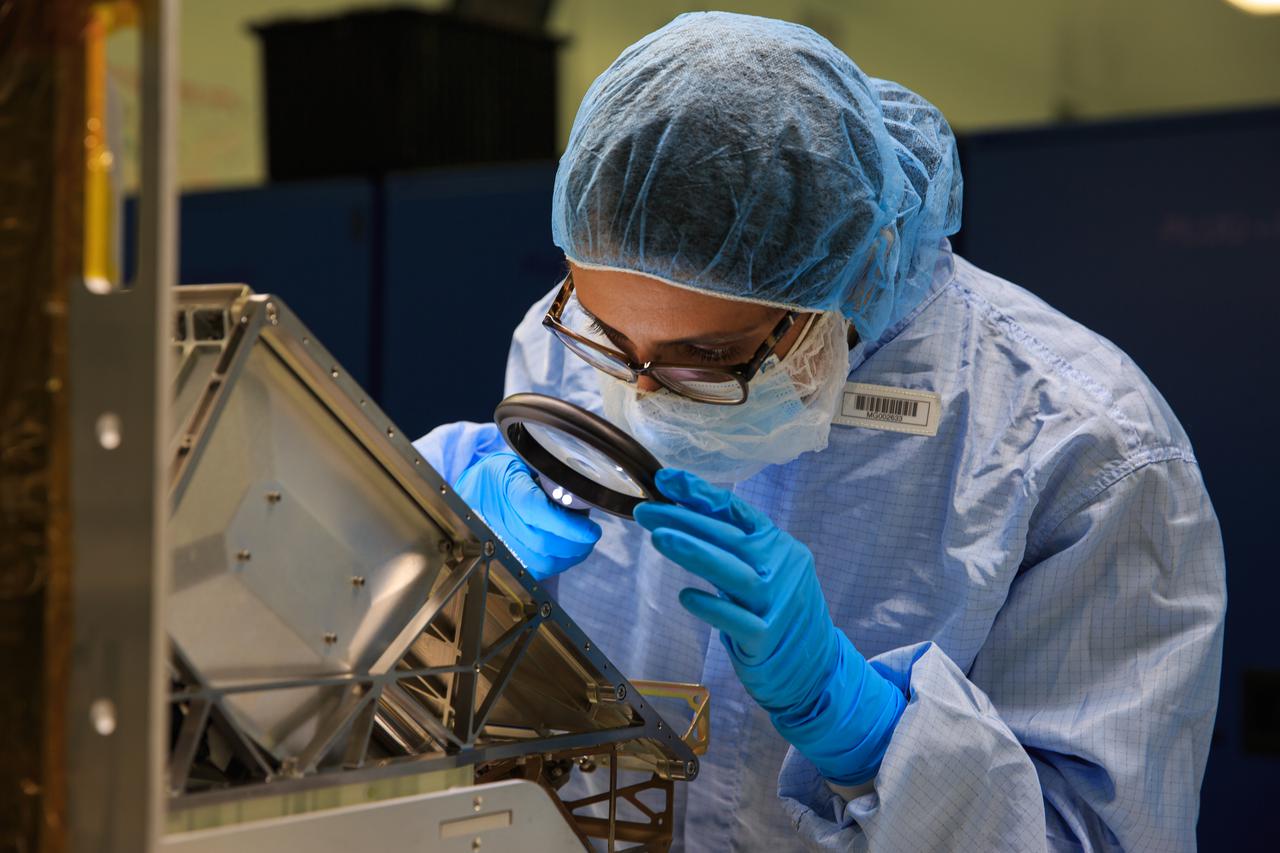
Team members working inside the Space Station Processing Facility at NASA’s Kennedy Space Center in Florida, on Sept. 23, 2021, meticulously assemble ground support equipment that will protect shipment of the Mass Spectrometer observing lunar operations (MSolo) flight hardware for preparations before it launches in 2022. MSolo is a commercial off-the-shelf mass spectrometer modified to work in space and it will help analyze the chemical makeup of landing sites on the Moon, as well as study water on the lunar surface. MSolo, scheduled to first launch in 2022, is part of four of the agency’s Commercial Lunar Payload Delivery Service missions where under the Artemis program, commercial deliveries will include science experiments, testing of technologies and demonstrations of capabilities to help NASA explore the Moon and prepare for human missions.
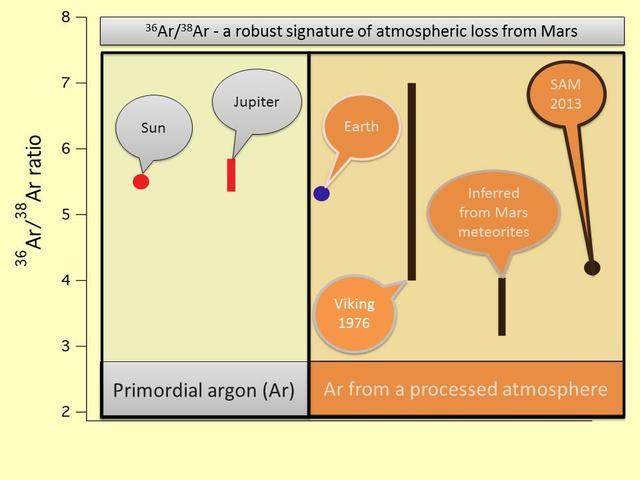
This image, made by the quadrupole mass spectrometer in the SAM suite of instruments in NASA Curiosity Mars rover. shows the ratio of the argon isotope argon-36 to the heavier argon isotope argon-38, in various measurements.
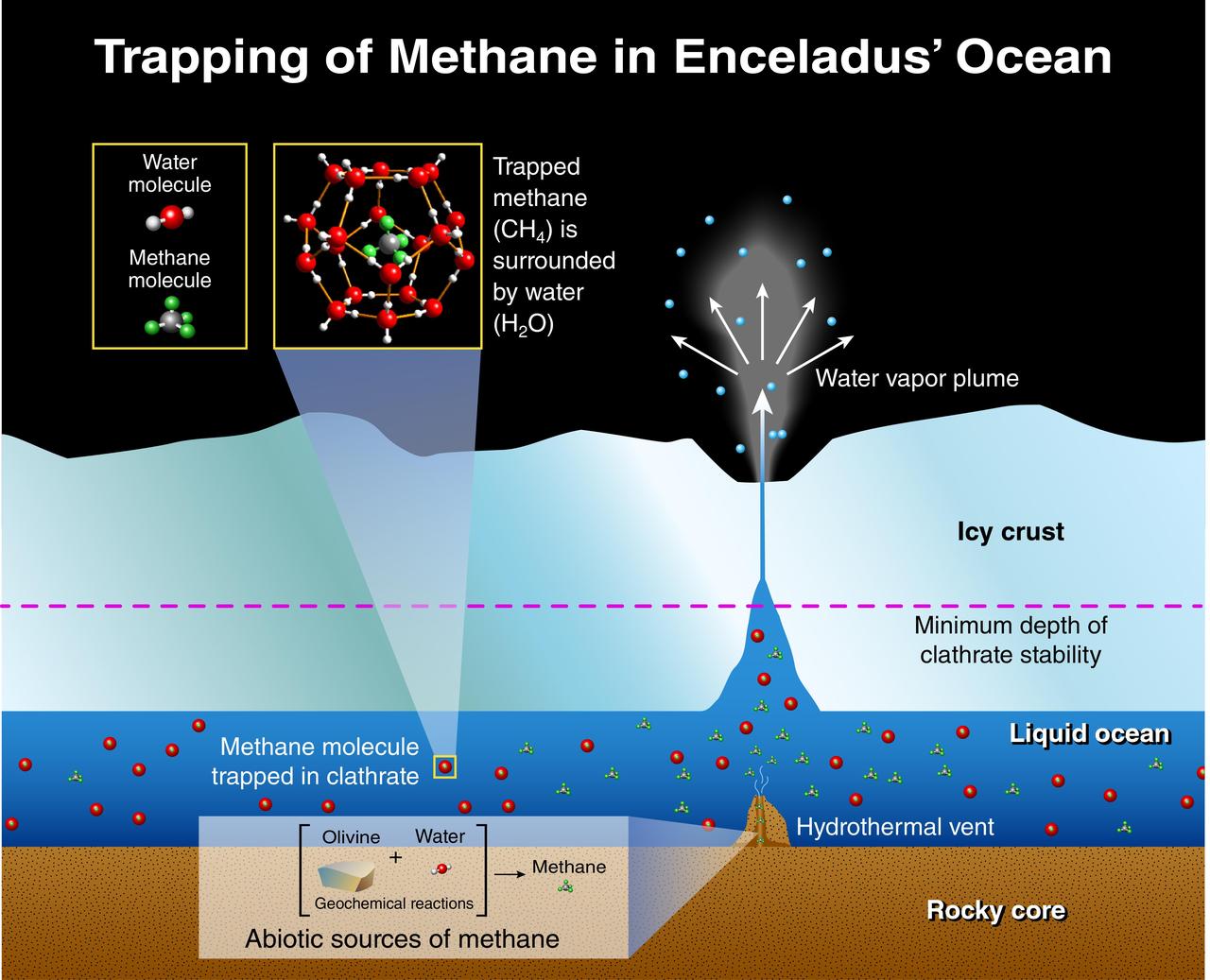
This illustration depicts potential origins of methane found in the plume of gas and ice particles that sprays from Saturn moon, Enceladus, based on research by scientists working with the Ion and Neutral Mass Spectrometer on NASA Cassini mission.

As the Sample Analysis at Mars SAM suite of instruments on NASA Curiosity Mars rover heats a sample, gases are released or evolved from the sample and can be identified using SAM quadrupole mass spectrometer.
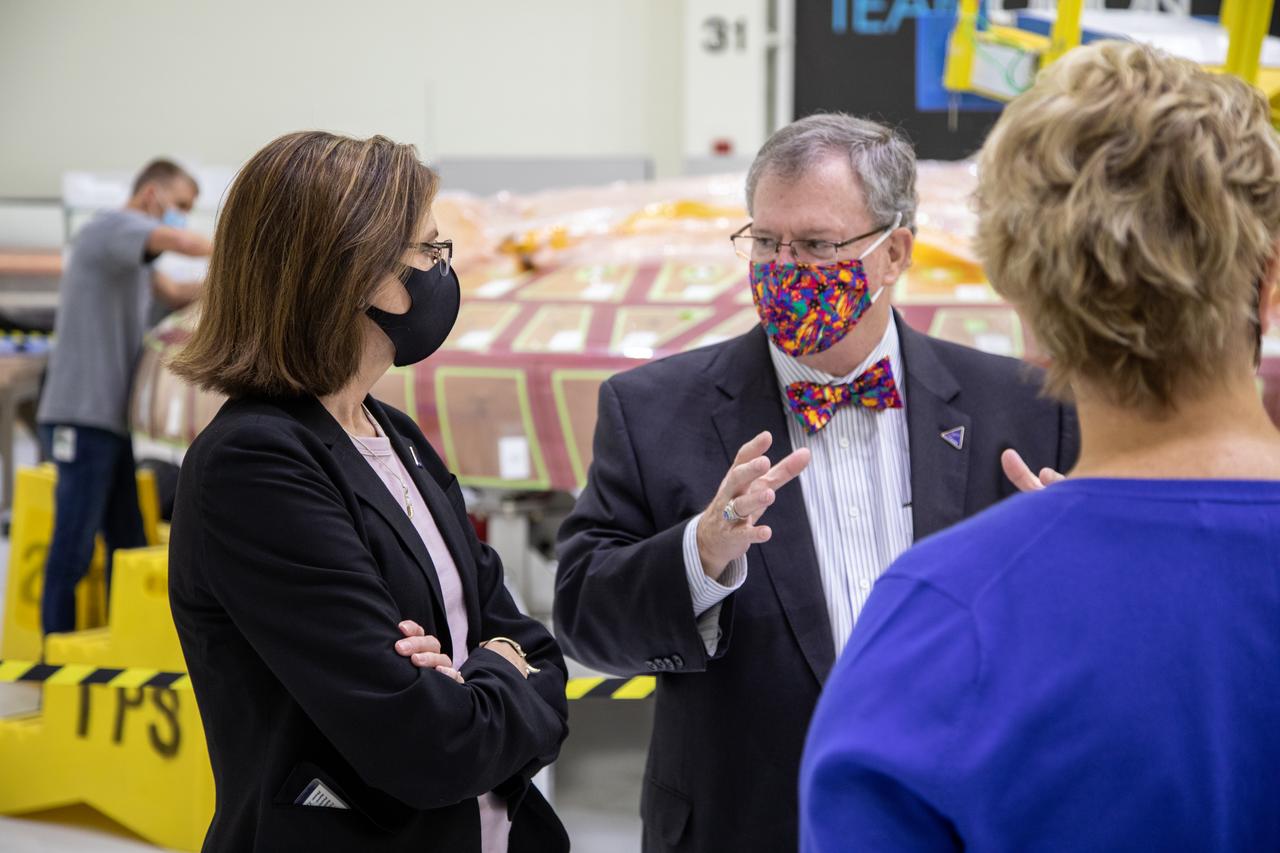
Engineers and technicians are completing assembly work inside the Space Station Processing Facility, on flight hardware for the Mass Spectrometer Observing Lunar Operations. MSolo, is a commercial off-the shelf mass spectrometer modified to work in space and will be an instrument on the agency’s first mission as part of the Commercial Lunar Payload Services.

Principal investigator, Dr. Janine Captain, attaches a mass spectrometer sensor to electronics inside a vacuum chamber in the Space Station Processing Facility high bay at NASA’s Kennedy Space Center on Dec. 12, 2018. The Mass Spectrometer observing lunar operations (MSolo) instrument is a commercial off-the-shelf mass instrument modified to work in space, and can identify molecules at lunar landing sites. These MSolo instruments are part of NASA’s efforts to return to the Moon with the Commercial Lunar Payload Services Landers Program.
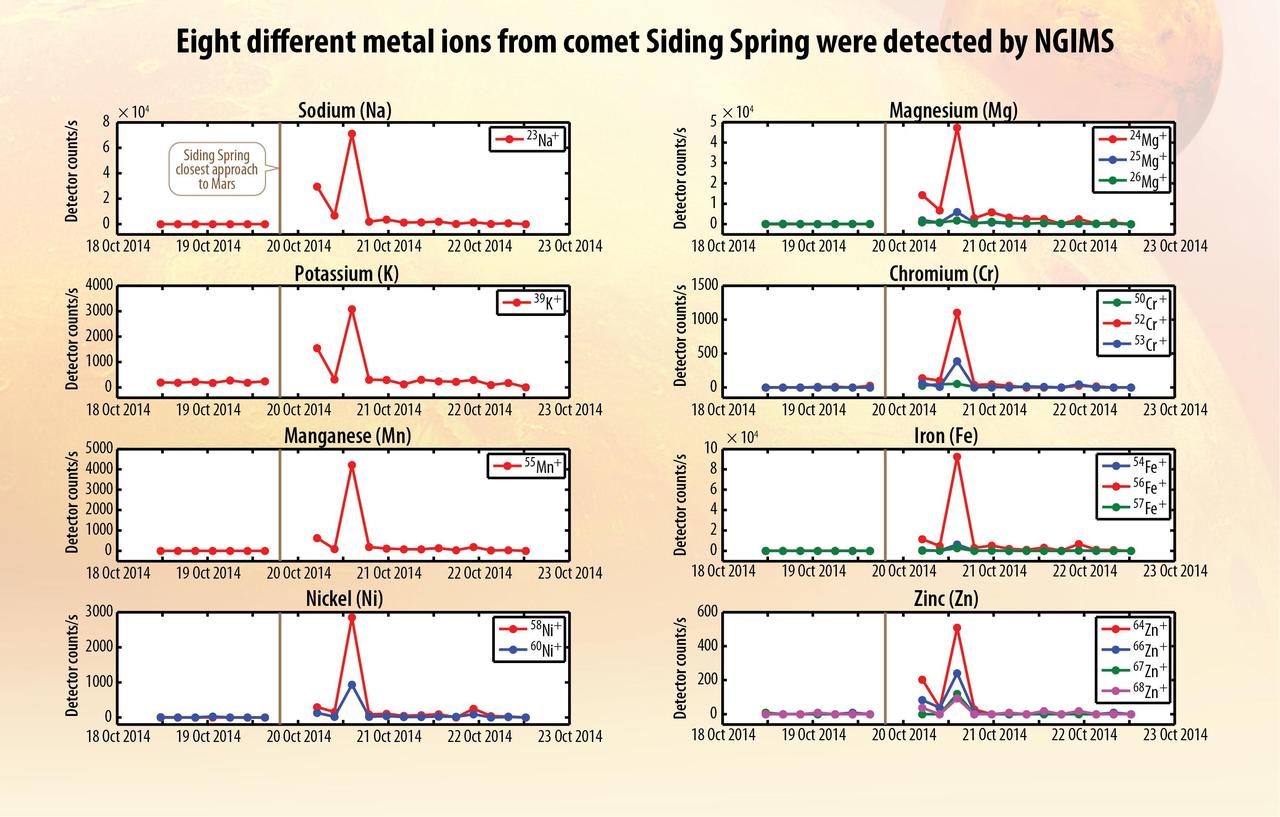
These eight graphs present data from the Neutral Gas and Ion Mass Spectrometer on NASA MAVEN orbiter identifying ions of different metals added to the Martian atmosphere shortly after comet C/2013 A1 Siding Spring sped close to Mars.
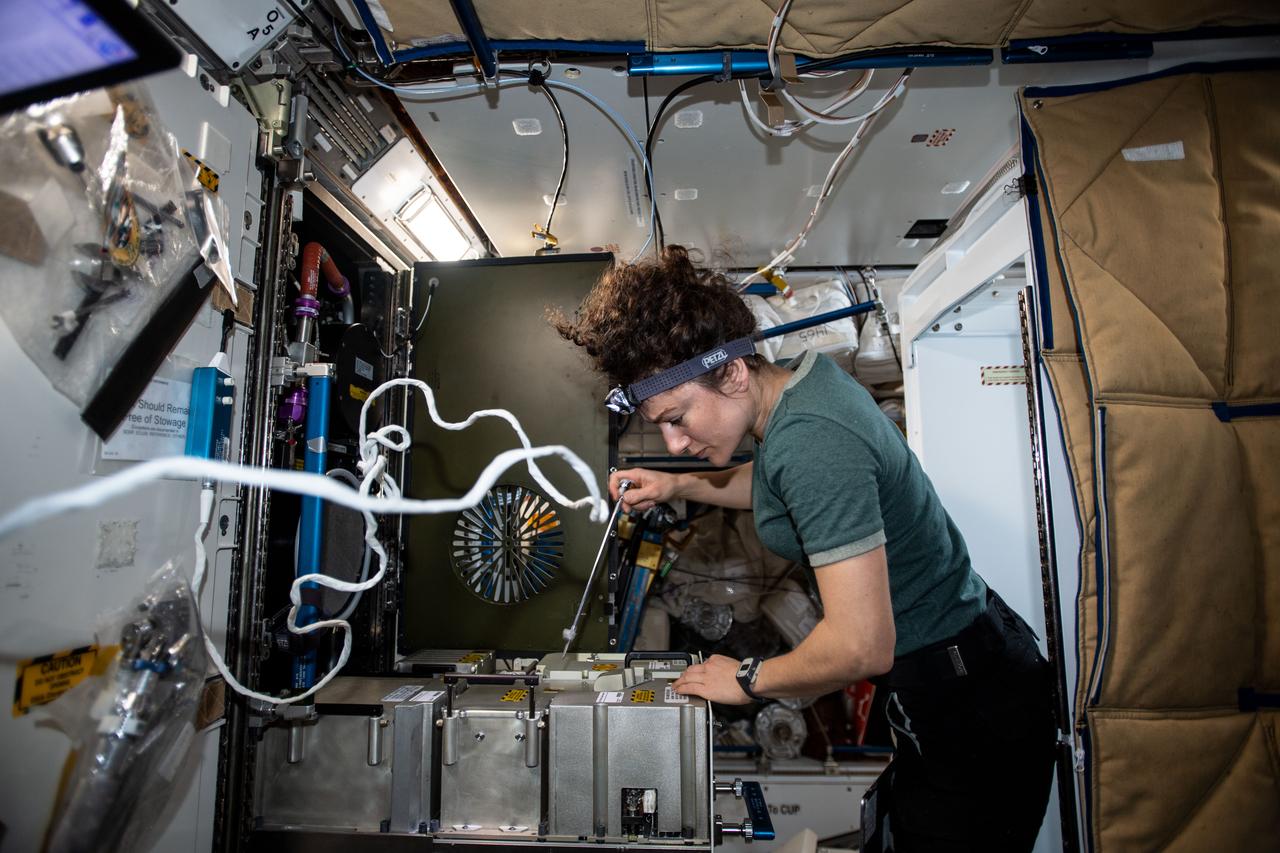
iss062e103552 (March 20, 2020) --- NASA astronaut and Expedition 62 Flight Engineer Jessica Meir works on the Major Constituent Analyzer, a device that measures the orbiting lab’s atmosphere. The life support gear monitors a variety of major constituents, such as nitrogen, carbon dioxide and water vapor to ensure a safe breathing environment for the crew.
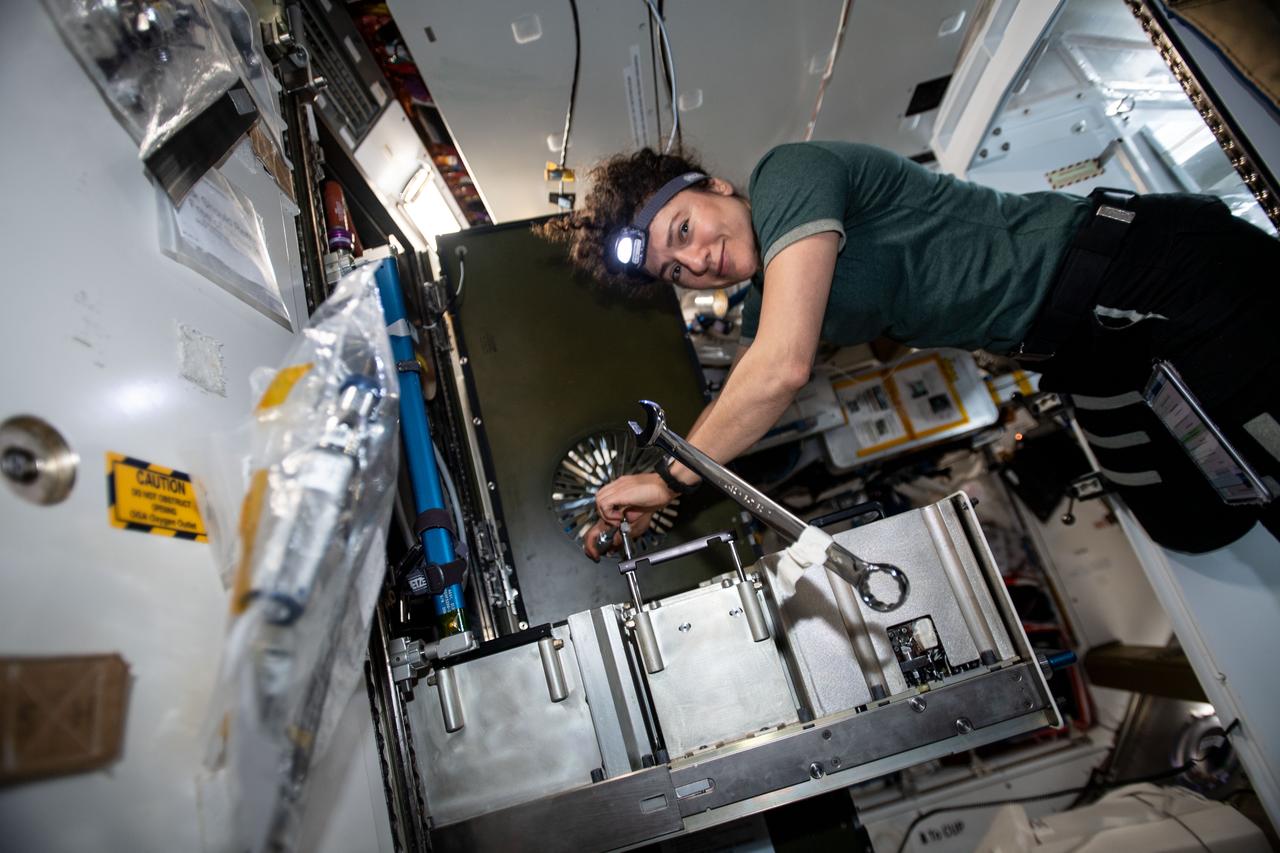
iss062e103558 (March 20, 2020) --- NASA astronaut and Expedition 62 Flight Engineer Jessica Meir works on the Major Constituent Analyzer, a device that measures the orbiting lab’s atmosphere. The life support gear monitors a variety of major constituents, such as nitrogen, carbon dioxide and water vapor to ensure a safe breathing environment for the crew.
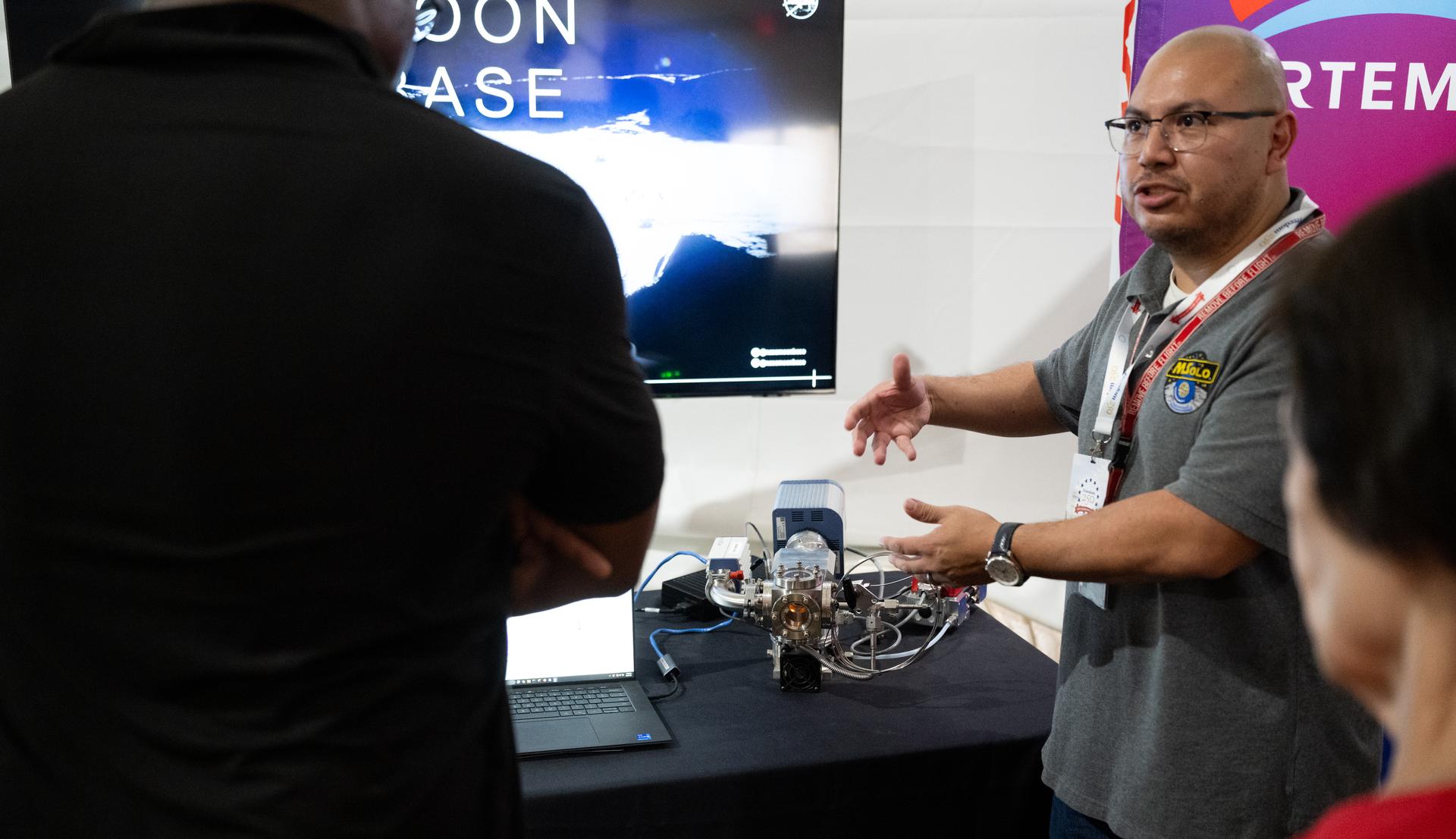
A demonstration model of the Mass Spectrometer observing lunar operations, or MSolo, is seen Great American State Fair as visitors view NASA exhibits in the American Innovation Pavilion, Wednesday, July 8, 2026, on the National Mall in Washington, D.C. MSolo is a modified commercial off-the-shelf mass spectrometer developed at NASA’s Kennedy Space Center to analyze the chemical makeup of the Moon’s surface. Photo Credit: (NASA/Joel Kowsky)
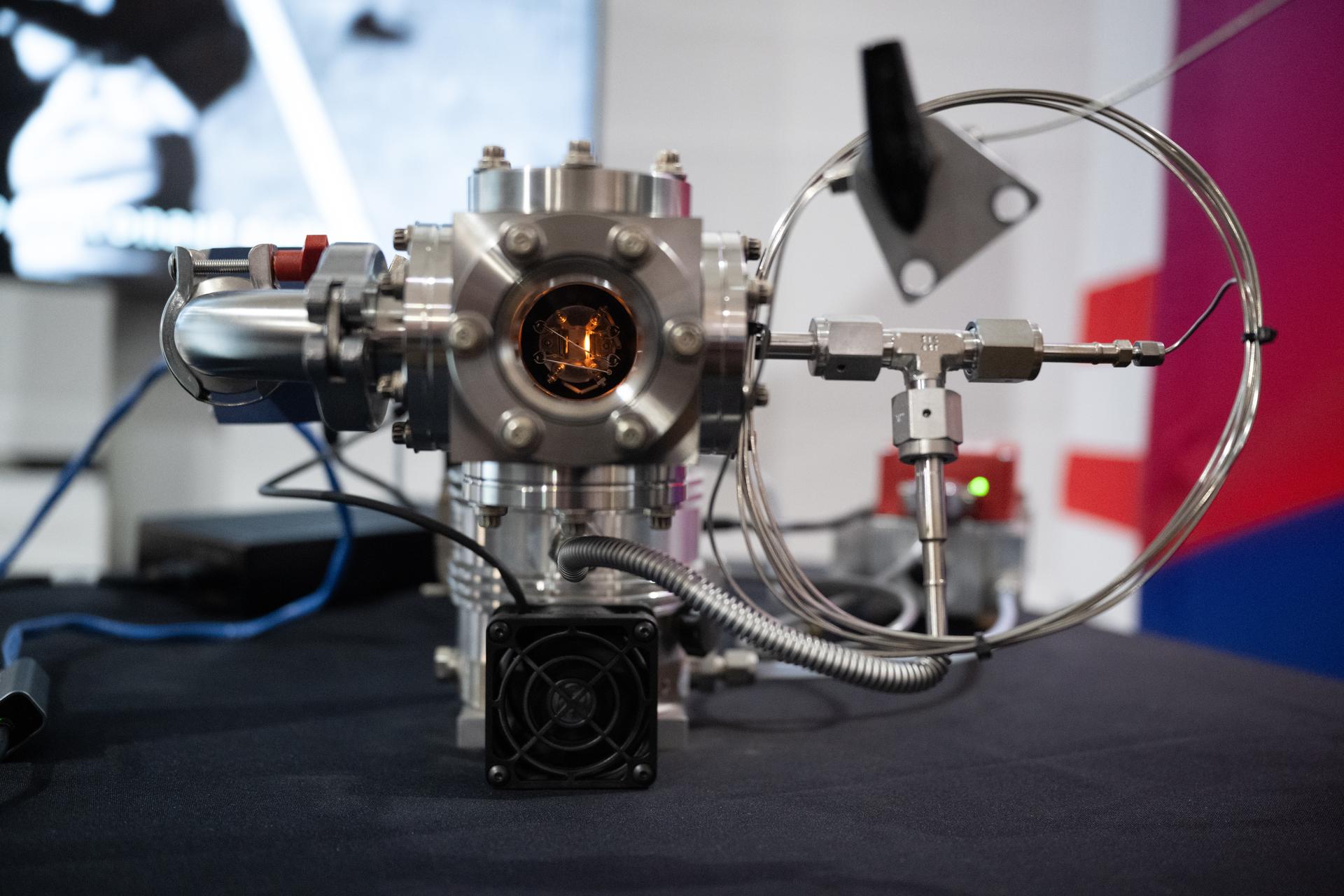
A demonstration model of the Mass Spectrometer observing lunar operations, or MSolo, is seen at the Great American State Fair as visitors view NASA exhibits in the American Innovation Pavilion, Wednesday, July 8, 2026, on the National Mall in Washington, D.C. MSolo is a modified commercial off-the-shelf mass spectrometer developed at NASA’s Kennedy Space Center to analyze the chemical makeup of the Moon’s surface. Photo Credit: (NASA/Joel Kowsky)
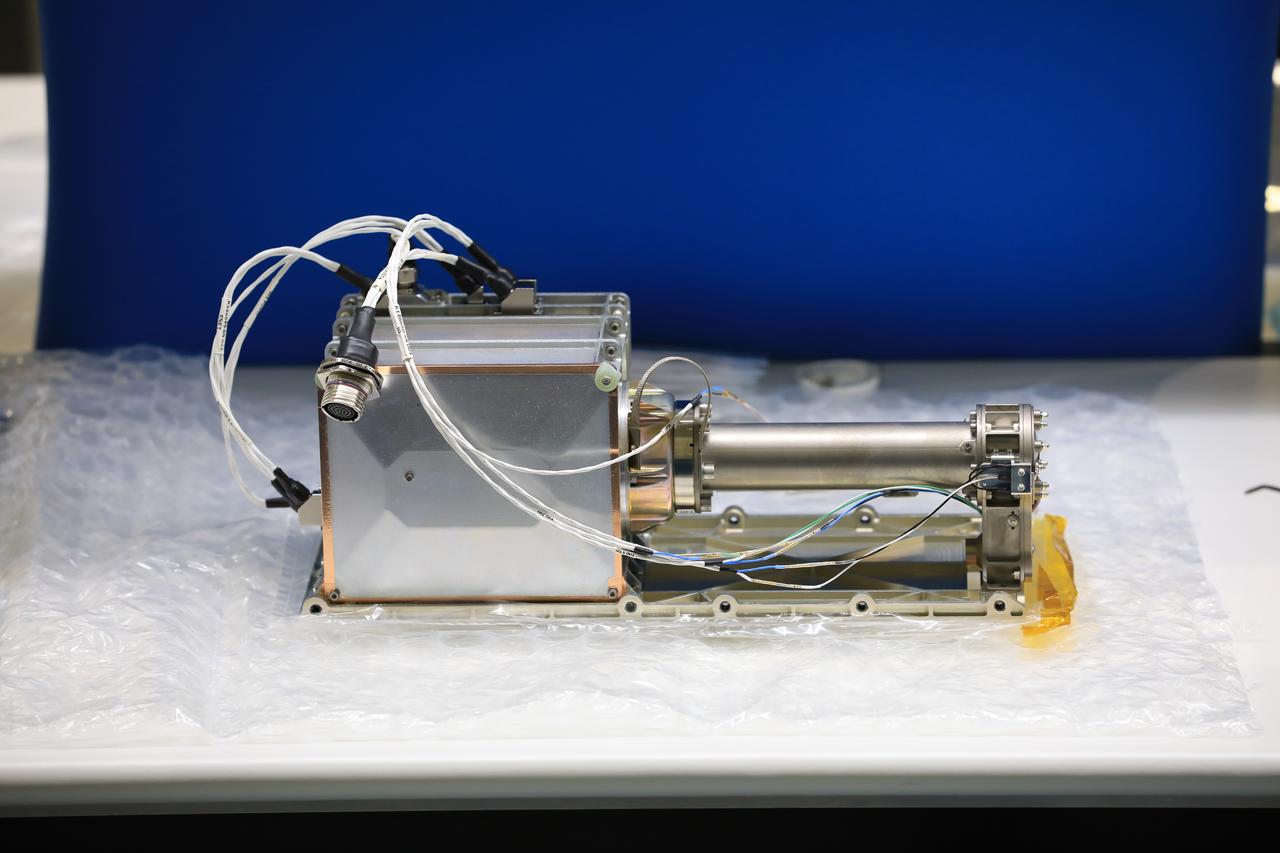
The Mass Spectrometer Observing Lunar Operations (MSolo) instrument is photographed inside the Space Station Processing Facility at NASA’s Kennedy Space Center in Florida following installation of its radiator on Sept. 25, 2020. MSolo will help analyze the chemical makeup of landing sites on the Moon, as well as study water on the lunar surface. The radiator will help keep the instrument’s temperature stable in the extreme heat and cold it will encounter. MSolo instruments are scheduled to launch on multiple robotic missions as part of NASA’s Commercial Lunar Payload Services (CLPS), with the first of these missions exploring Lacus Mortis, a large crater on the near side of the Moon, beginning in 2021. MSolo also will be one of three instruments on the agency’s water-hunting Volatiles Investigating Polar Exploration Rover, VIPER, scheduled to launch to the Moon’s South Pole in late 2023.
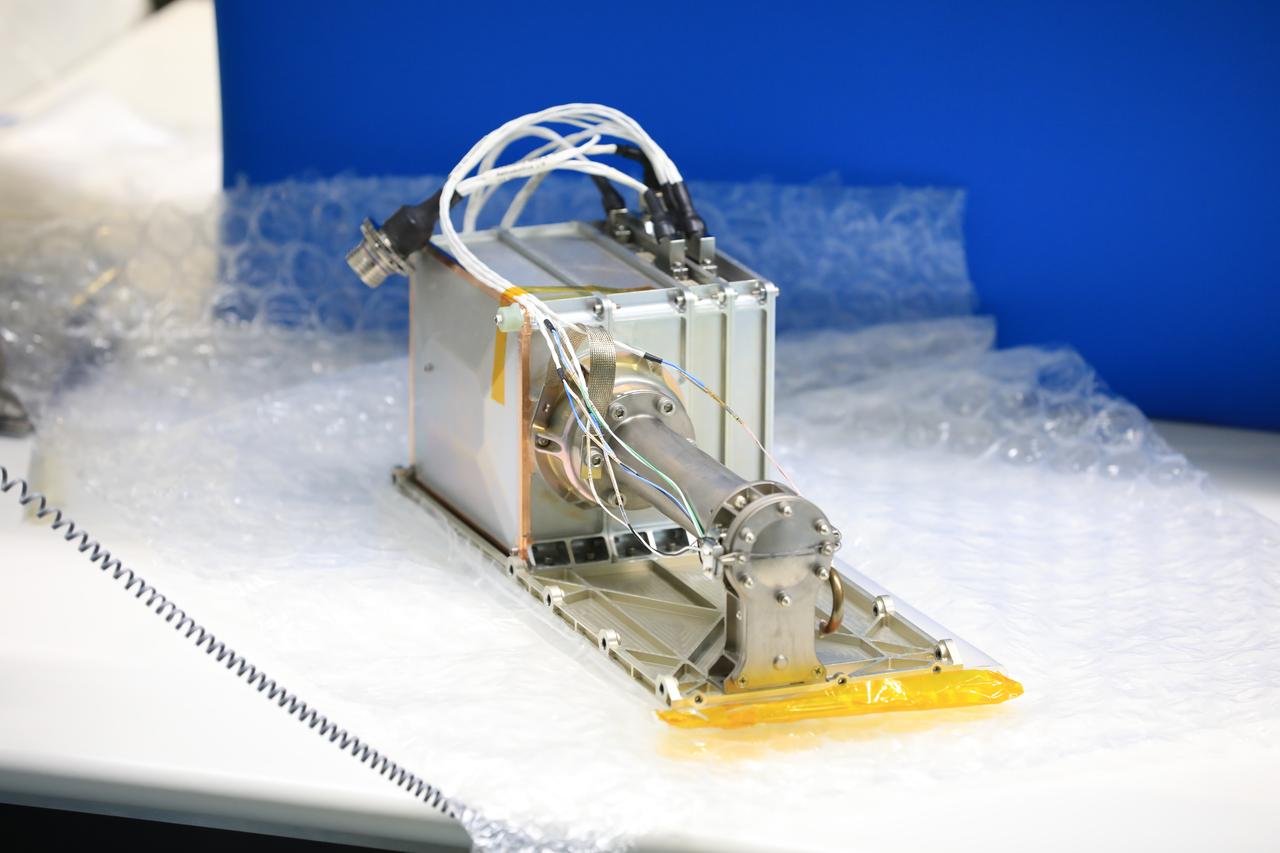
The Mass Spectrometer Observing Lunar Operations (MSolo) instrument is photographed inside the Space Station Processing Facility at NASA’s Kennedy Space Center in Florida following installation of its radiator on Sept. 25, 2020. MSolo will help analyze the chemical makeup of landing sites on the Moon, as well as study water on the lunar surface. The radiator will help keep the instrument’s temperature stable in the extreme heat and cold it will encounter. MSolo instruments are scheduled to launch on multiple robotic missions as part of NASA’s Commercial Lunar Payload Services (CLPS), with the first of these missions exploring Lacus Mortis, a large crater on the near side of the Moon, beginning in 2021. MSolo also will be one of three instruments on the agency’s water-hunting Volatiles Investigating Polar Exploration Rover, VIPER, scheduled to launch to the Moon’s South Pole in late 2023.
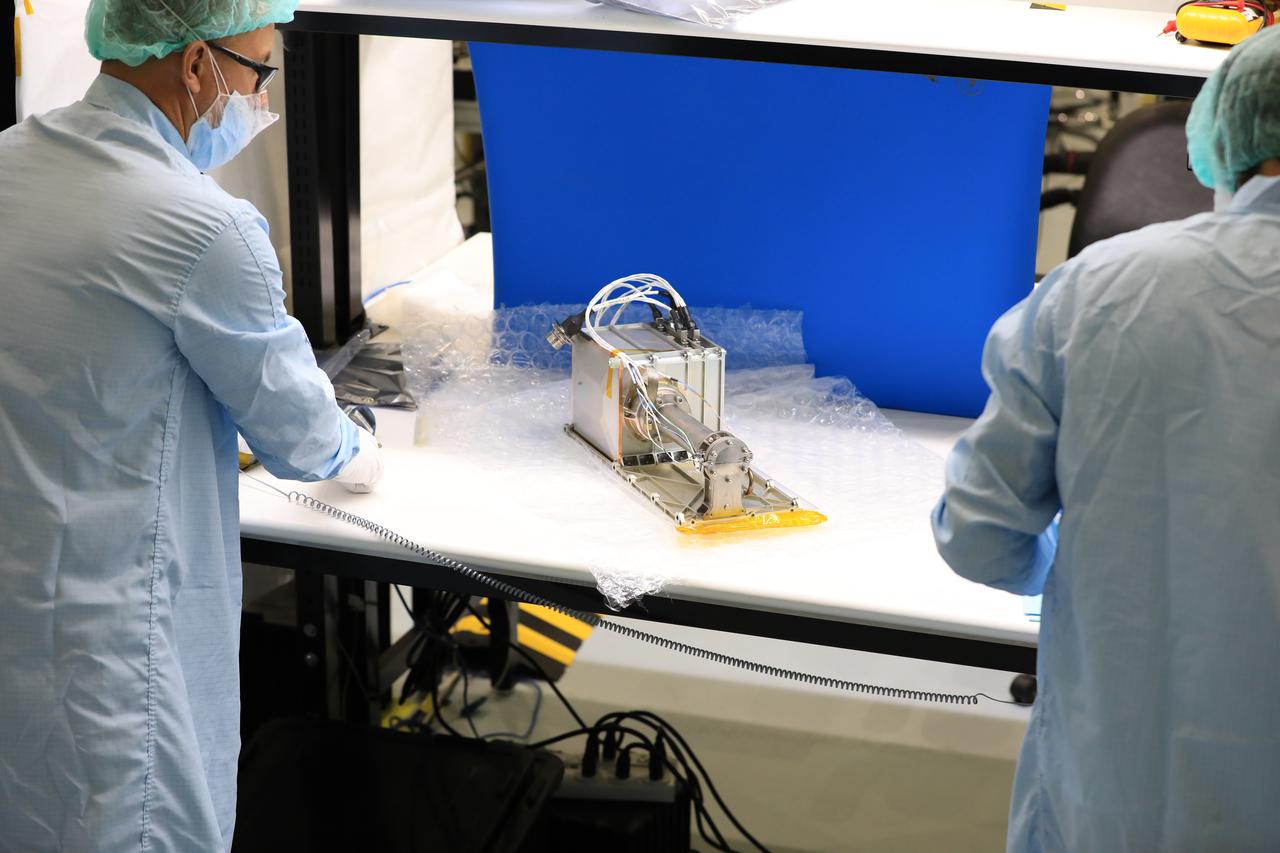
Engineers and technicians at NASA’s Kennedy Space Center in Florida install the radiator for the Mass Spectrometer Observing Lunar Operations (MSolo) instrument inside the Space Station Processing Facility on Sept. 25, 2020. MSolo will help analyze the chemical makeup of landing sites on the Moon, as well as study water on the lunar surface. The radiator will help keep the instrument’s temperature stable in the extreme heat and cold it will encounter. MSolo instruments are scheduled to launch on multiple robotic missions as part of NASA’s Commercial Lunar Payload Services (CLPS), with the first of these missions exploring Lacus Mortis, a large crater on the near side of the Moon, beginning in 2021. MSolo also will be one of three instruments on the agency’s water-hunting Volatiles Investigating Polar Exploration Rover, VIPER, scheduled to launch to the Moon’s South Pole in late 2023.
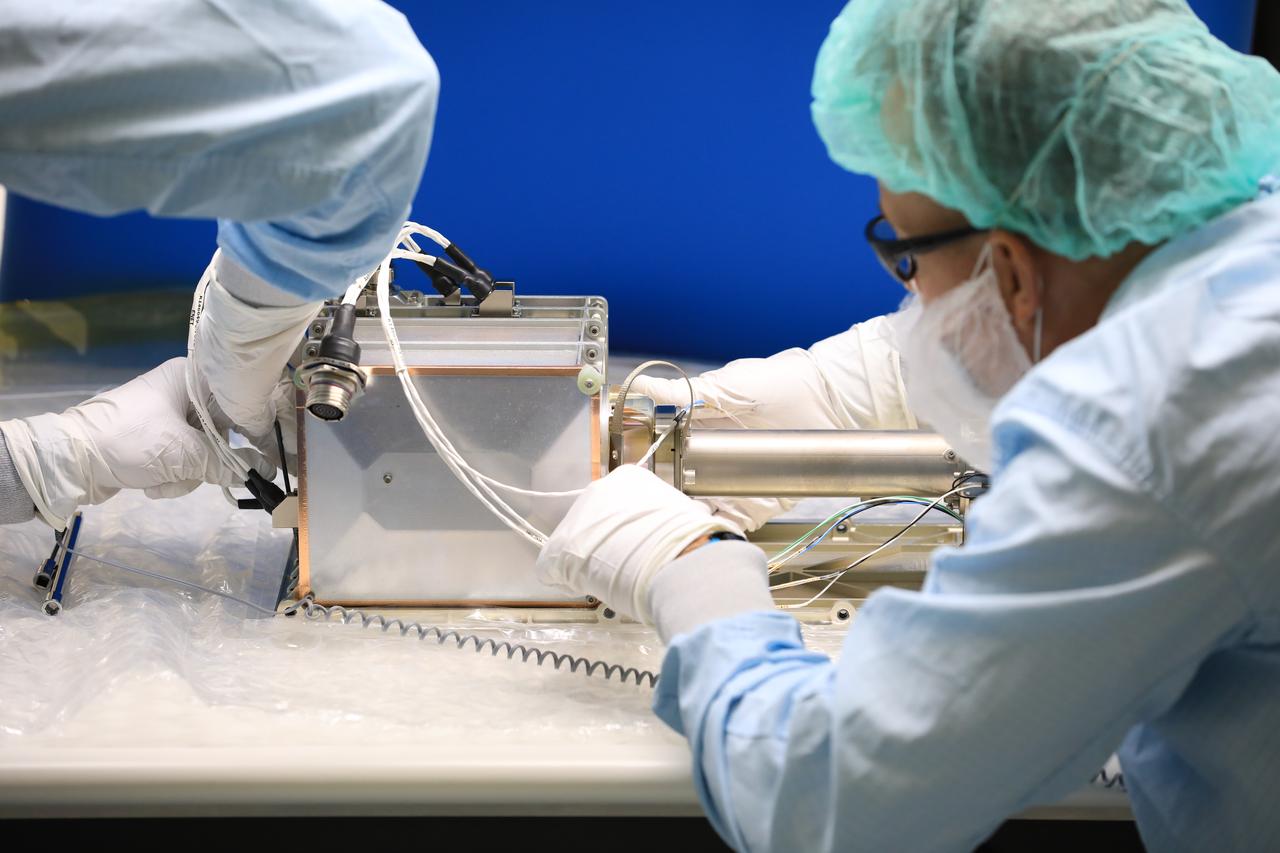
Engineers and technicians at NASA’s Kennedy Space Center in Florida install the radiator for the Mass Spectrometer Observing Lunar Operations (MSolo) instrument inside the Space Station Processing Facility on Sept. 25, 2020. MSolo will help analyze the chemical makeup of landing sites on the Moon, as well as study water on the lunar surface. The radiator will help keep the instrument’s temperature stable in the extreme heat and cold it will encounter. MSolo instruments are scheduled to launch on multiple robotic missions as part of NASA’s Commercial Lunar Payload Services (CLPS), with the first of these missions exploring Lacus Mortis, a large crater on the near side of the Moon, beginning in 2021. MSolo also will be one of three instruments on the agency’s water-hunting Volatiles Investigating Polar Exploration Rover, VIPER, scheduled to launch to the Moon’s South Pole in late 2023.
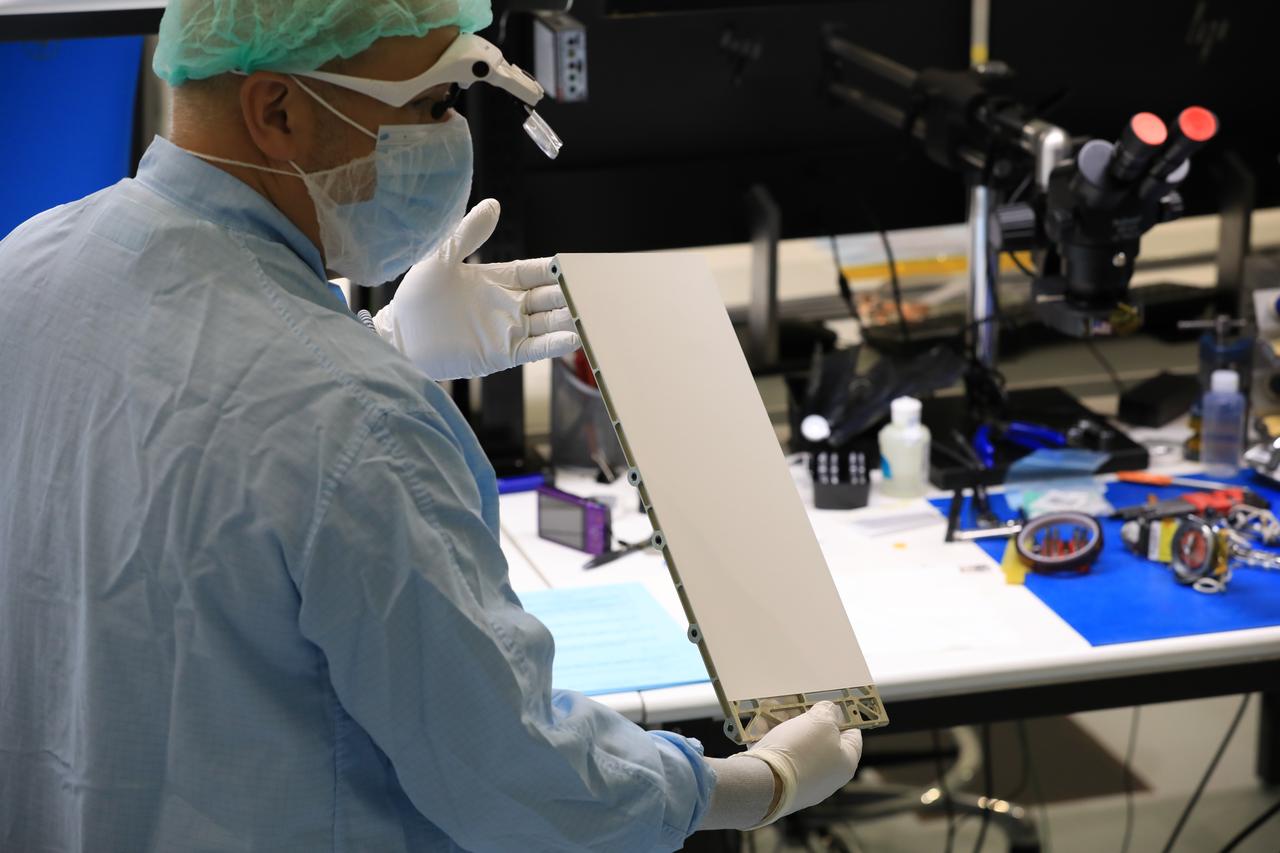
Engineers and technicians at NASA’s Kennedy Space Center in Florida prepare to install the radiator for the Mass Spectrometer Observing Lunar Operations (MSolo) instrument inside the Space Station Processing Facility on Sept. 25, 2020. MSolo will help analyze the chemical makeup of landing sites on the Moon, as well as study water on the lunar surface. The radiator will help keep the instrument’s temperature stable in the extreme heat and cold it will encounter. MSolo instruments are scheduled to launch on multiple robotic missions as part of NASA’s Commercial Lunar Payload Services (CLPS), with the first of these missions exploring Lacus Mortis, a large crater on the near side of the Moon, beginning in 2021. MSolo also will be one of three instruments on the agency’s water-hunting Volatiles Investigating Polar Exploration Rover, VIPER, scheduled to launch to the Moon’s South Pole in late 2023.
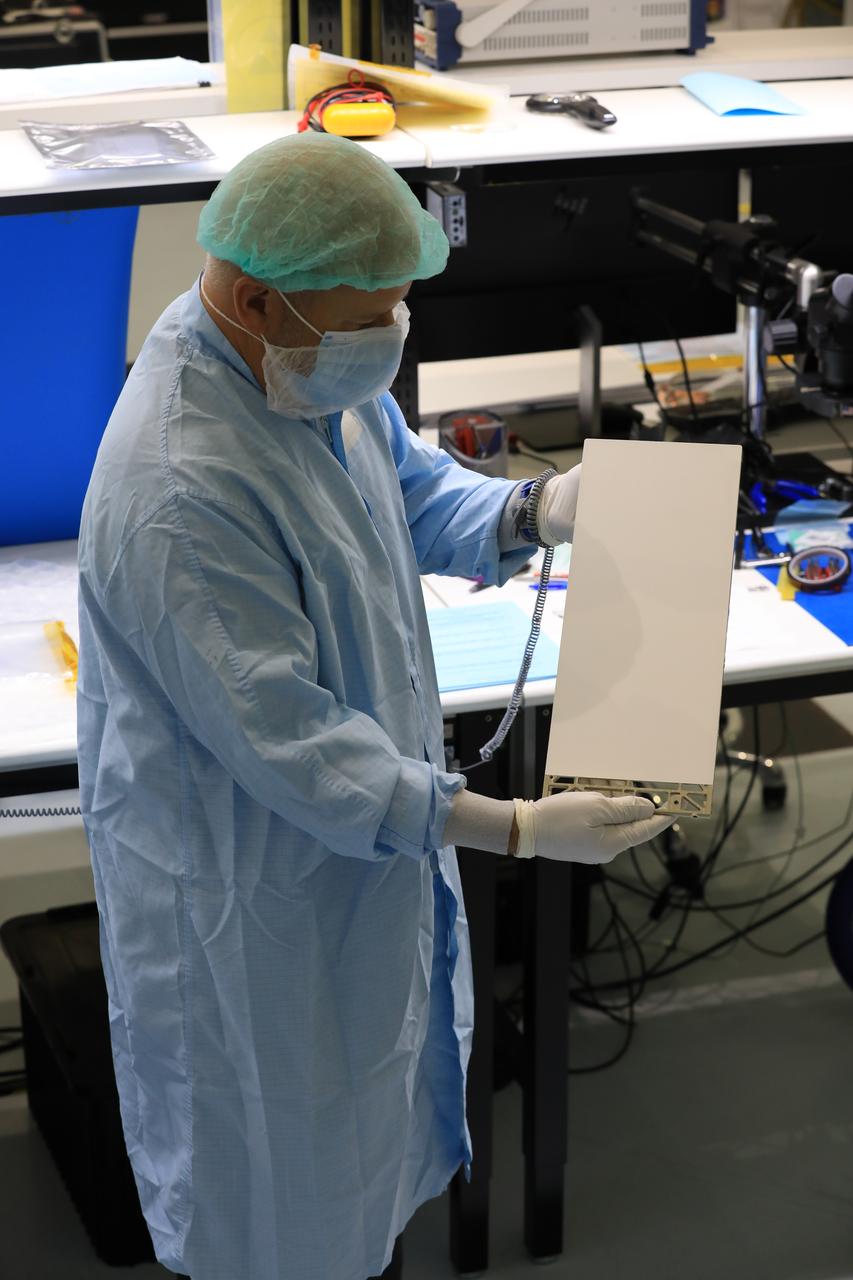
Engineers and technicians at NASA’s Kennedy Space Center in Florida prepare to install the radiator for the Mass Spectrometer Observing Lunar Operations (MSolo) instrument inside the Space Station Processing Facility on Sept. 25, 2020. MSolo will help analyze the chemical makeup of landing sites on the Moon, as well as study water on the lunar surface. The radiator will help keep the instrument’s temperature stable in the extreme heat and cold it will encounter. MSolo instruments are scheduled to launch on multiple robotic missions as part of NASA’s Commercial Lunar Payload Services (CLPS), with the first of these missions exploring Lacus Mortis, a large crater on the near side of the Moon, beginning in 2021. MSolo also will be one of three instruments on the agency’s water-hunting Volatiles Investigating Polar Exploration Rover, VIPER, scheduled to launch to the Moon’s South Pole in late 2023.
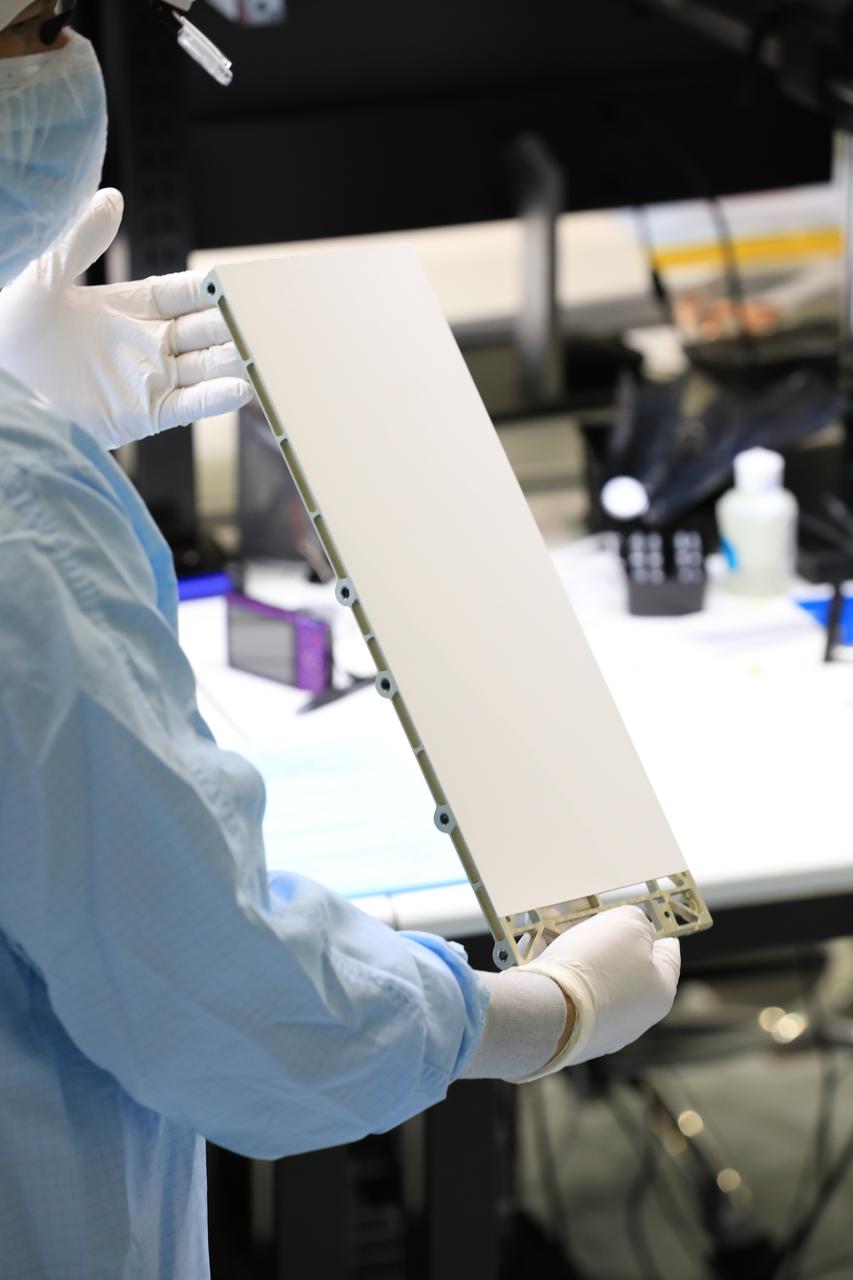
Engineers and technicians at NASA’s Kennedy Space Center in Florida prepare to install the radiator for the Mass Spectrometer Observing Lunar Operations (MSolo) instrument inside the Space Station Processing Facility on Sept. 25, 2020. MSolo will help analyze the chemical makeup of landing sites on the Moon, as well as study water on the lunar surface. The radiator will help keep the instrument’s temperature stable in the extreme heat and cold it will encounter. MSolo instruments are scheduled to launch on multiple robotic missions as part of NASA’s Commercial Lunar Payload Services (CLPS), with the first of these missions exploring Lacus Mortis, a large crater on the near side of the Moon, beginning in 2021. MSolo also will be one of three instruments on the agency’s water-hunting Volatiles Investigating Polar Exploration Rover, VIPER, scheduled to launch to the Moon’s South Pole in late 2023.
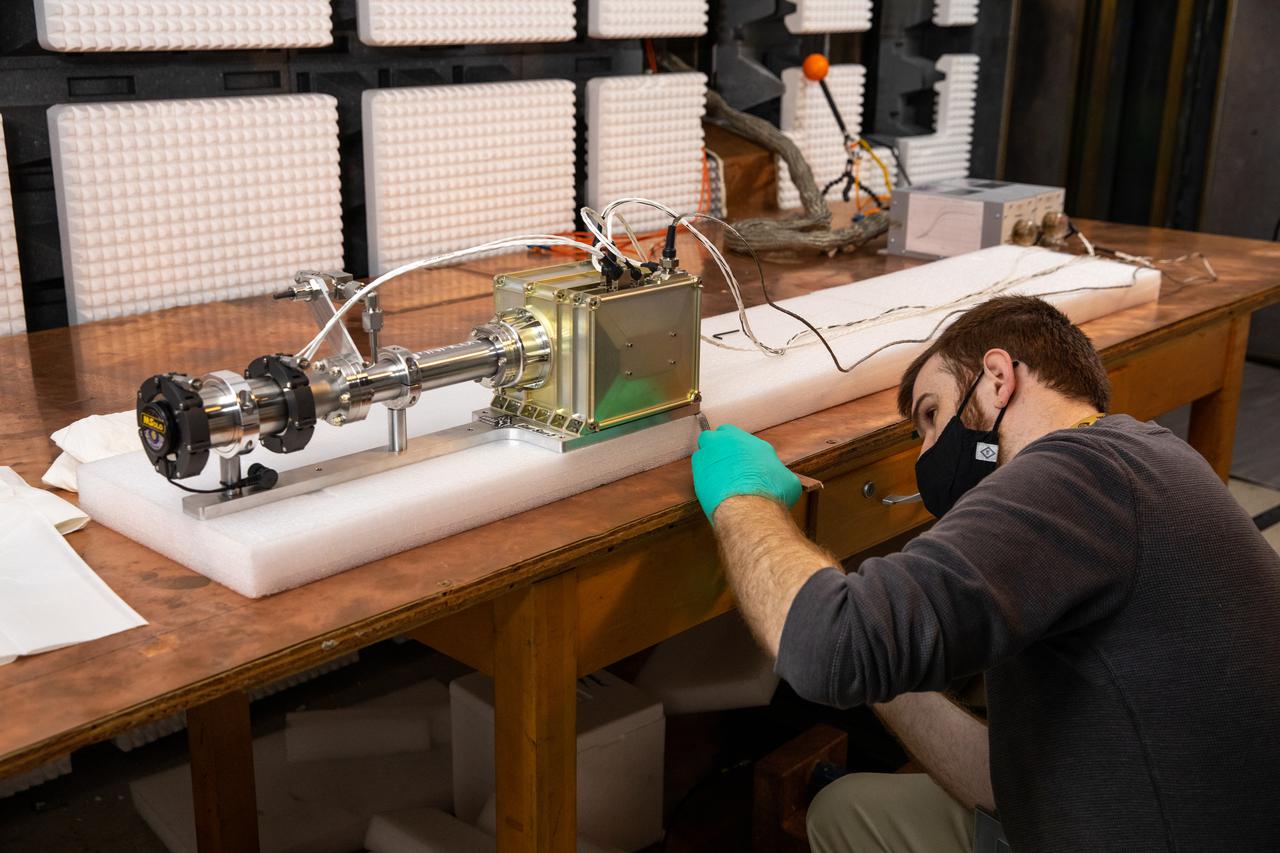
Electronics Engineer and Mass Spectrometer Observing Lunar Operations (MSolo) team member Nate Cain conducts electromagnetic interference (EMI) testing inside the EMI Laboratory at NASA’s Kennedy Space Center in Florida on Feb. 14, 2022. The tests will verify that MSolo can control the emissions it will produce during its missions and meets EMI susceptibility requirements as part of its preparation to operate in the lunar environment. The third MSolo to go through EMI testing, this is an engineering development unit representative of the flight unit manifested to fly to the Moon’s South Pole as a payload on the agency’s Volatiles Investigating Polar Exploration Rover (VIPER) in 2023. Researchers and engineers are preparing MSolo instruments to launch on four robotic missions as part of NASA’s Commercial Lunar Payload Services (CLPS) – the first of which is slated for later this year. MSolo will help analyze the chemical makeup of landing sites on the Moon, with the later missions also studying water on the lunar surface.
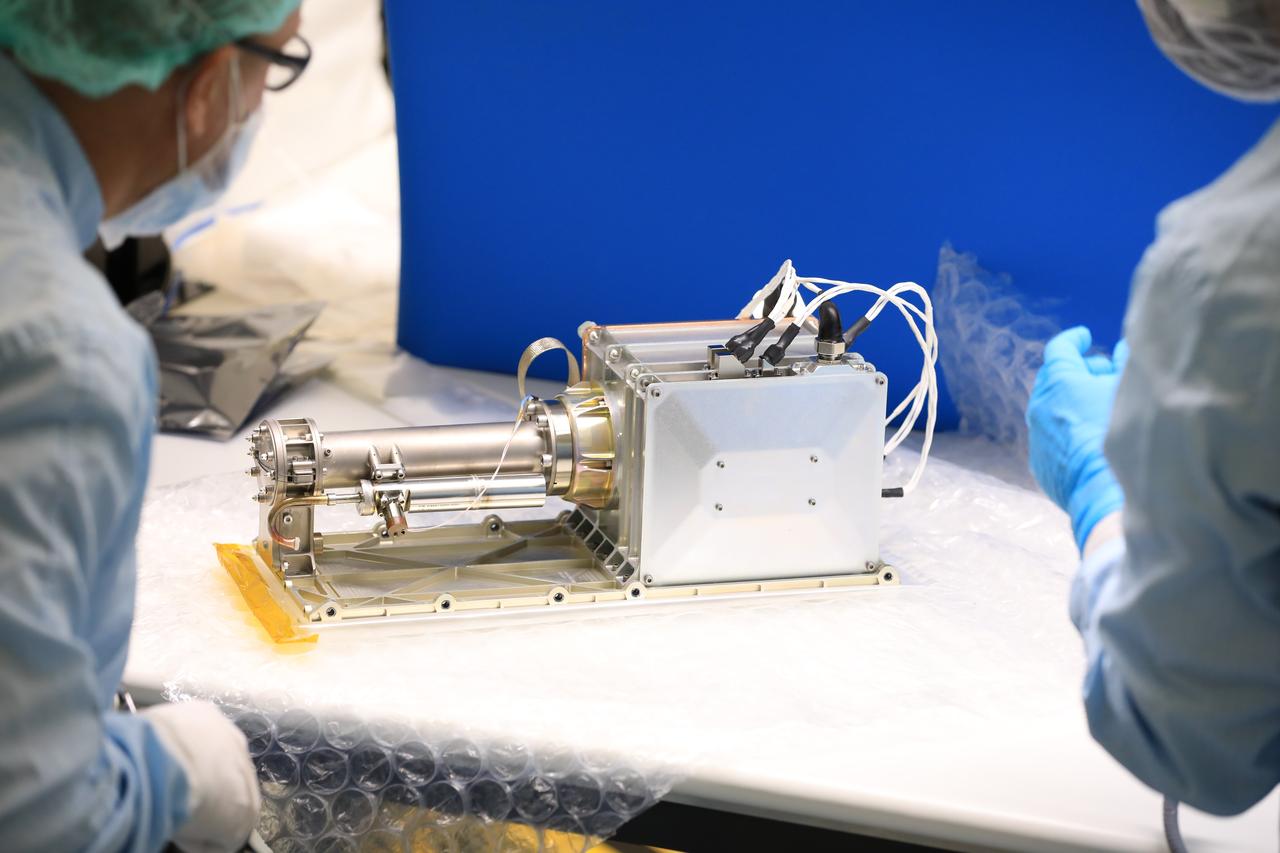
Engineers and technicians at NASA’s Kennedy Space Center in Florida install the radiator for the Mass Spectrometer Observing Lunar Operations (MSolo) instrument inside the Space Station Processing Facility on Sept. 25, 2020. MSolo will help analyze the chemical makeup of landing sites on the Moon, as well as study water on the lunar surface. The radiator will help keep the instrument’s temperature stable in the extreme heat and cold it will encounter. MSolo instruments are scheduled to launch on multiple robotic missions as part of NASA’s Commercial Lunar Payload Services (CLPS), with the first of these missions exploring Lacus Mortis, a large crater on the near side of the Moon, beginning in 2021. MSolo also will be one of three instruments on the agency’s water-hunting Volatiles Investigating Polar Exploration Rover, VIPER, scheduled to launch to the Moon’s South Pole in late 2023.

Engineers and technicians at NASA’s Kennedy Space Center in Florida install the radiator for the Mass Spectrometer Observing Lunar Operations (MSolo) instrument inside the Space Station Processing Facility on Sept. 25, 2020. MSolo will help analyze the chemical makeup of landing sites on the Moon, as well as study water on the lunar surface. The radiator will help keep the instrument’s temperature stable in the extreme heat and cold it will encounter. MSolo instruments are scheduled to launch on multiple robotic missions as part of NASA’s Commercial Lunar Payload Services (CLPS), with the first of these missions exploring Lacus Mortis, a large crater on the near side of the Moon, beginning in 2021. MSolo also will be one of three instruments on the agency’s water-hunting Volatiles Investigating Polar Exploration Rover, VIPER, scheduled to launch to the Moon’s South Pole in late 2023.
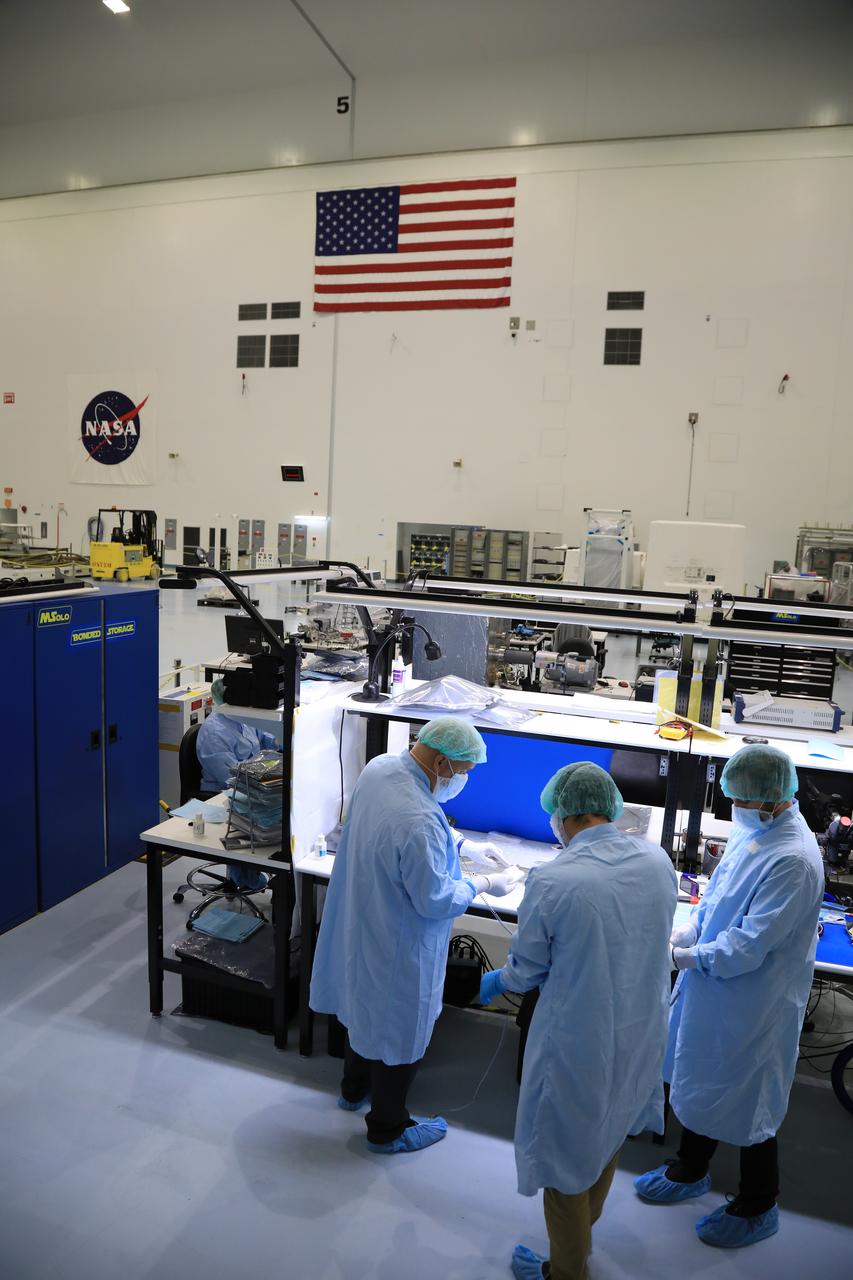
Engineers and technicians at NASA’s Kennedy Space Center in Florida prepare to install the radiator for the Mass Spectrometer Observing Lunar Operations (MSolo) instrument inside the Space Station Processing Facility on Sept. 25, 2020. MSolo will help analyze the chemical makeup of landing sites on the Moon, as well as study water on the lunar surface. The radiator will help keep the instrument’s temperature stable in the extreme heat and cold it will encounter. MSolo instruments are scheduled to launch on multiple robotic missions as part of NASA’s Commercial Lunar Payload Services (CLPS), with the first of these missions exploring Lacus Mortis, a large crater on the near side of the Moon, beginning in 2021. MSolo also will be one of three instruments on the agency’s water-hunting Volatiles Investigating Polar Exploration Rover, VIPER, scheduled to launch to the Moon’s South Pole in late 2023.
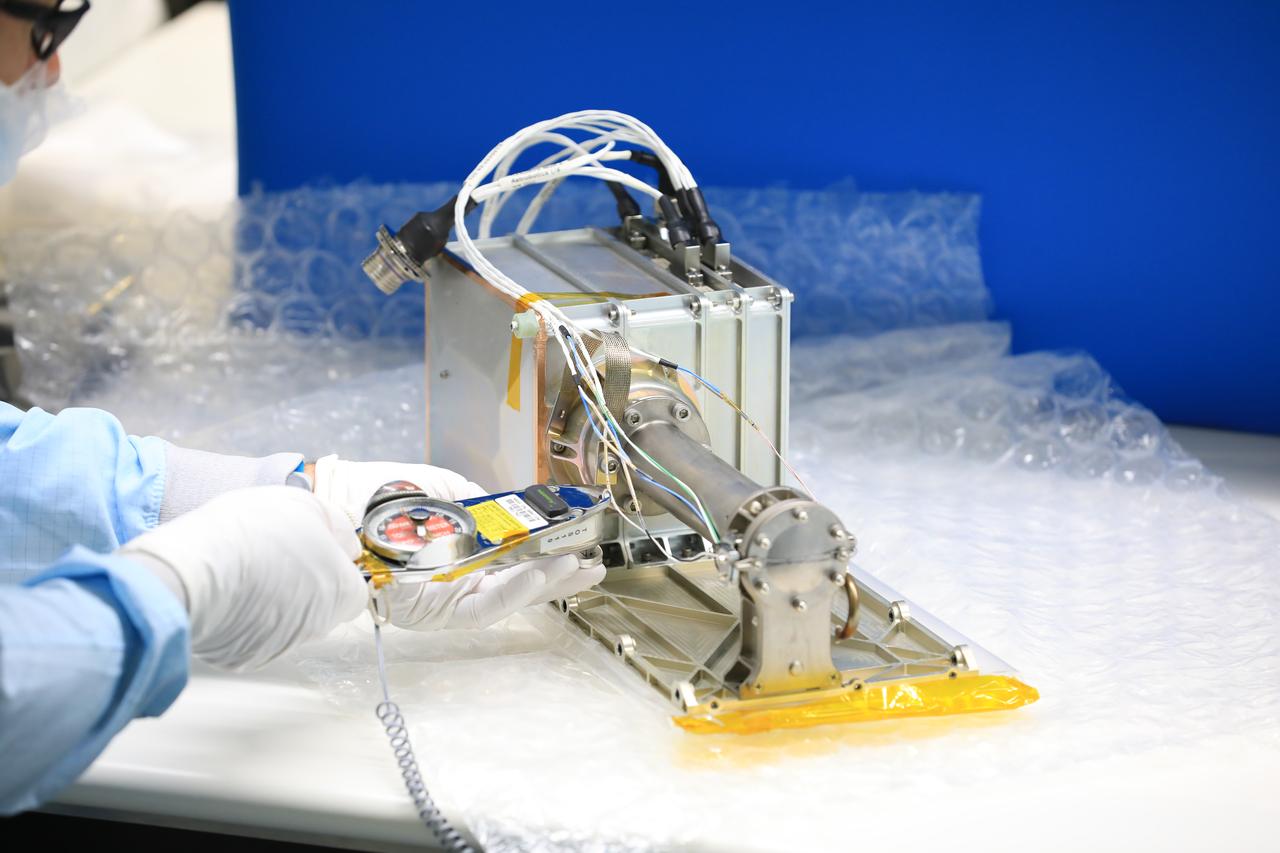
Engineers and technicians at NASA’s Kennedy Space Center in Florida install the radiator for the Mass Spectrometer Observing Lunar Operations (MSolo) instrument inside the Space Station Processing Facility on Sept. 25, 2020. MSolo will help analyze the chemical makeup of landing sites on the Moon, as well as study water on the lunar surface. The radiator will help keep the instrument’s temperature stable in the extreme heat and cold it will encounter. MSolo instruments are scheduled to launch on multiple robotic missions as part of NASA’s Commercial Lunar Payload Services (CLPS), with the first of these missions exploring Lacus Mortis, a large crater on the near side of the Moon, beginning in 2021. MSolo also will be one of three instruments on the agency’s water-hunting Volatiles Investigating Polar Exploration Rover, VIPER, scheduled to launch to the Moon’s South Pole in late 2023.
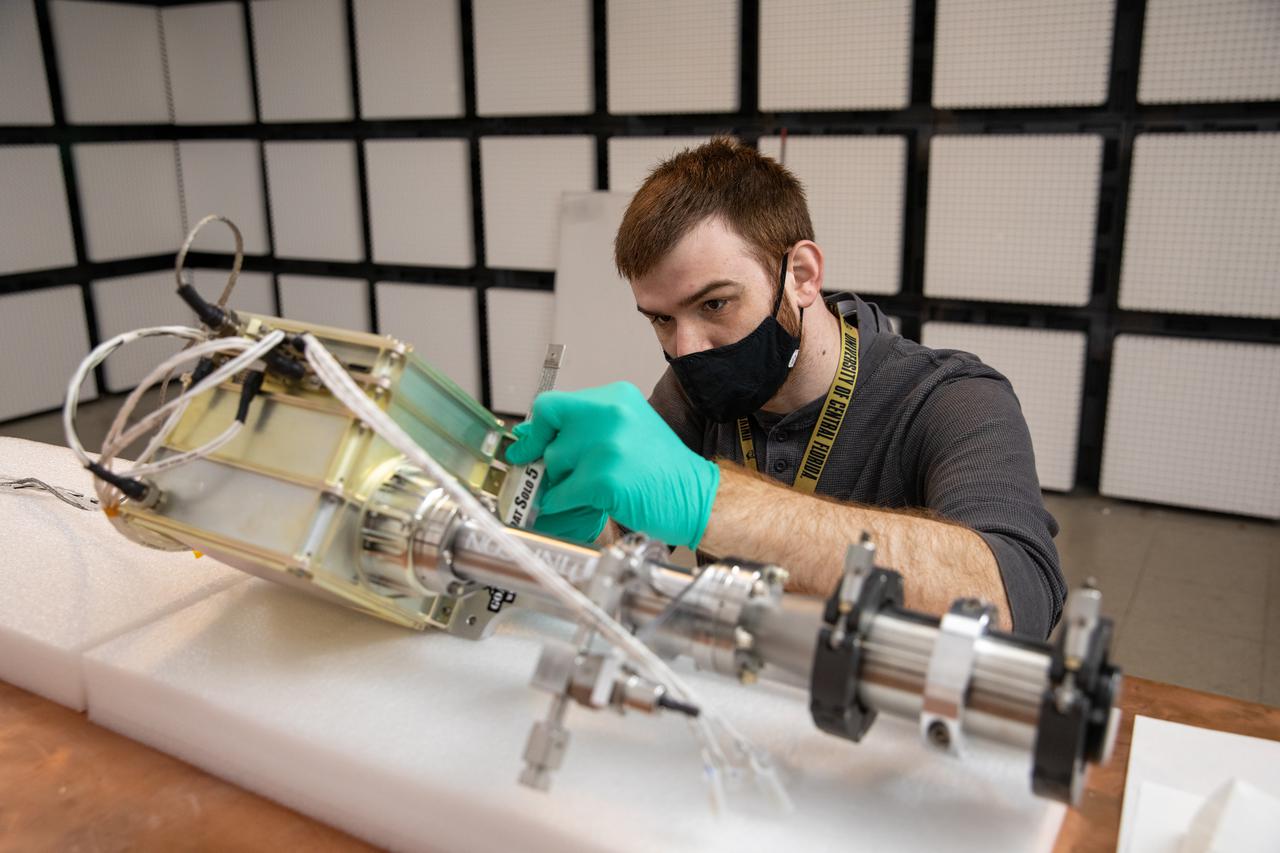
Electronics Engineer and Mass Spectrometer Observing Lunar Operations (MSolo) team member Nate Cain conducts electromagnetic interference (EMI) testing inside the EMI Laboratory at NASA’s Kennedy Space Center in Florida on Feb. 14, 2022. These tests will verify that MSolo can control the emissions it will produce during its missions and meets EMI susceptibility requirements as part of its preparation to operate in the lunar environment. The third MSolo to go through EMI testing, this is an engineering development unit representative of the flight unit manifested to fly to the Moon’s South Pole as a payload on the agency’s Volatiles Investigating Polar Exploration Rover (VIPER) in 2023. Researchers and engineers are preparing MSolo instruments to launch on four robotic missions as part of NASA’s Commercial Lunar Payload Services (CLPS) – the first of which is slated for later this year. MSolo will help analyze the chemical makeup of landing sites on the Moon, with the later missions also studying water on the lunar surface.
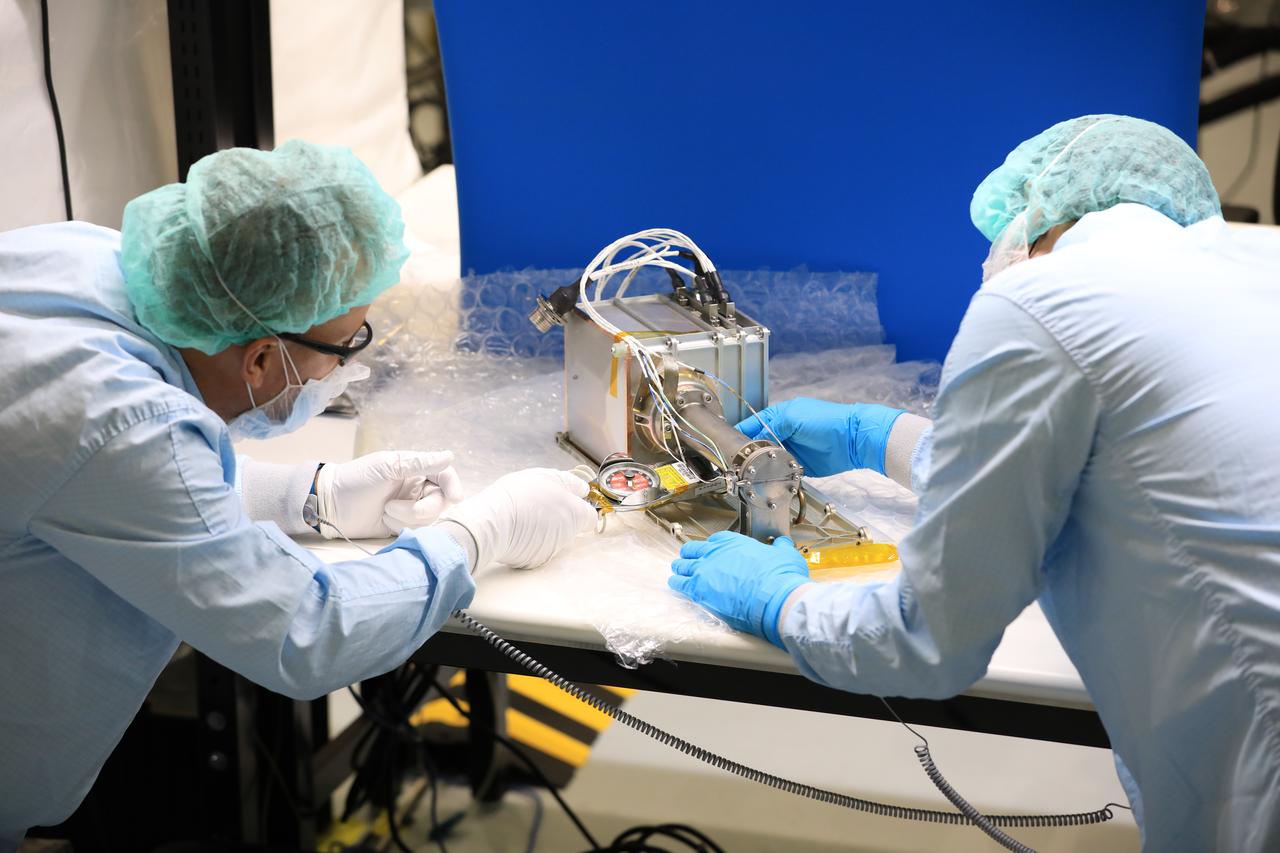
Engineers and technicians at NASA’s Kennedy Space Center in Florida install the radiator for the Mass Spectrometer Observing Lunar Operations (MSolo) instrument inside the Space Station Processing Facility on Sept. 25, 2020. MSolo will help analyze the chemical makeup of landing sites on the Moon, as well as study water on the lunar surface. The radiator will help keep the instrument’s temperature stable in the extreme heat and cold it will encounter. MSolo instruments are scheduled to launch on multiple robotic missions as part of NASA’s Commercial Lunar Payload Services (CLPS), with the first of these missions exploring Lacus Mortis, a large crater on the near side of the Moon, beginning in 2021. MSolo also will be one of three instruments on the agency’s water-hunting Volatiles Investigating Polar Exploration Rover, VIPER, scheduled to launch to the Moon’s South Pole in late 2023.
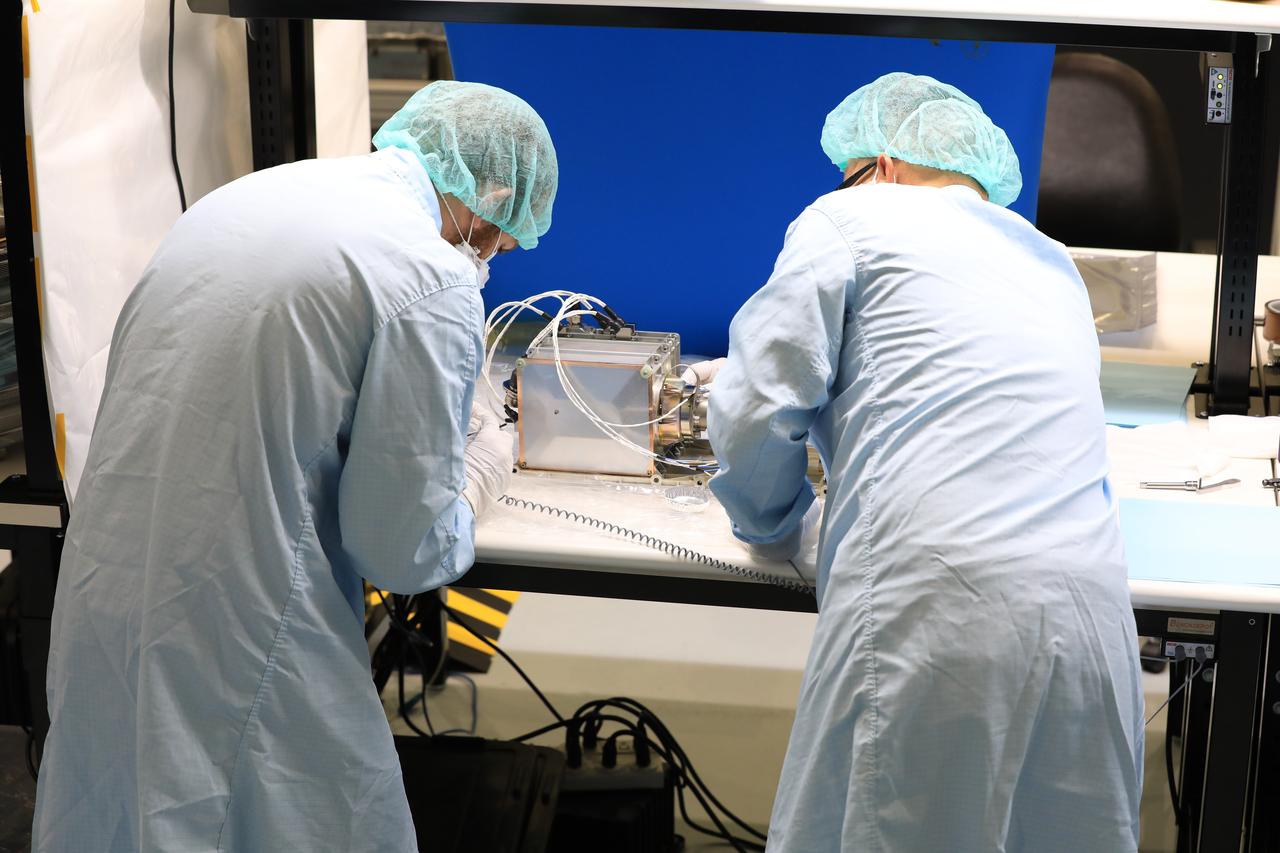
Engineers and technicians at NASA’s Kennedy Space Center in Florida install the radiator for the Mass Spectrometer Observing Lunar Operations (MSolo) instrument inside the Space Station Processing Facility on Sept. 25, 2020. MSolo will help analyze the chemical makeup of landing sites on the Moon, as well as study water on the lunar surface. The radiator will help keep the instrument’s temperature stable in the extreme heat and cold it will encounter. MSolo instruments are scheduled to launch on multiple robotic missions as part of NASA’s Commercial Lunar Payload Services (CLPS), with the first of these missions exploring Lacus Mortis, a large crater on the near side of the Moon, beginning in 2021. MSolo also will be one of three instruments on the agency’s water-hunting Volatiles Investigating Polar Exploration Rover, VIPER, scheduled to launch to the Moon’s South Pole in late 2023.
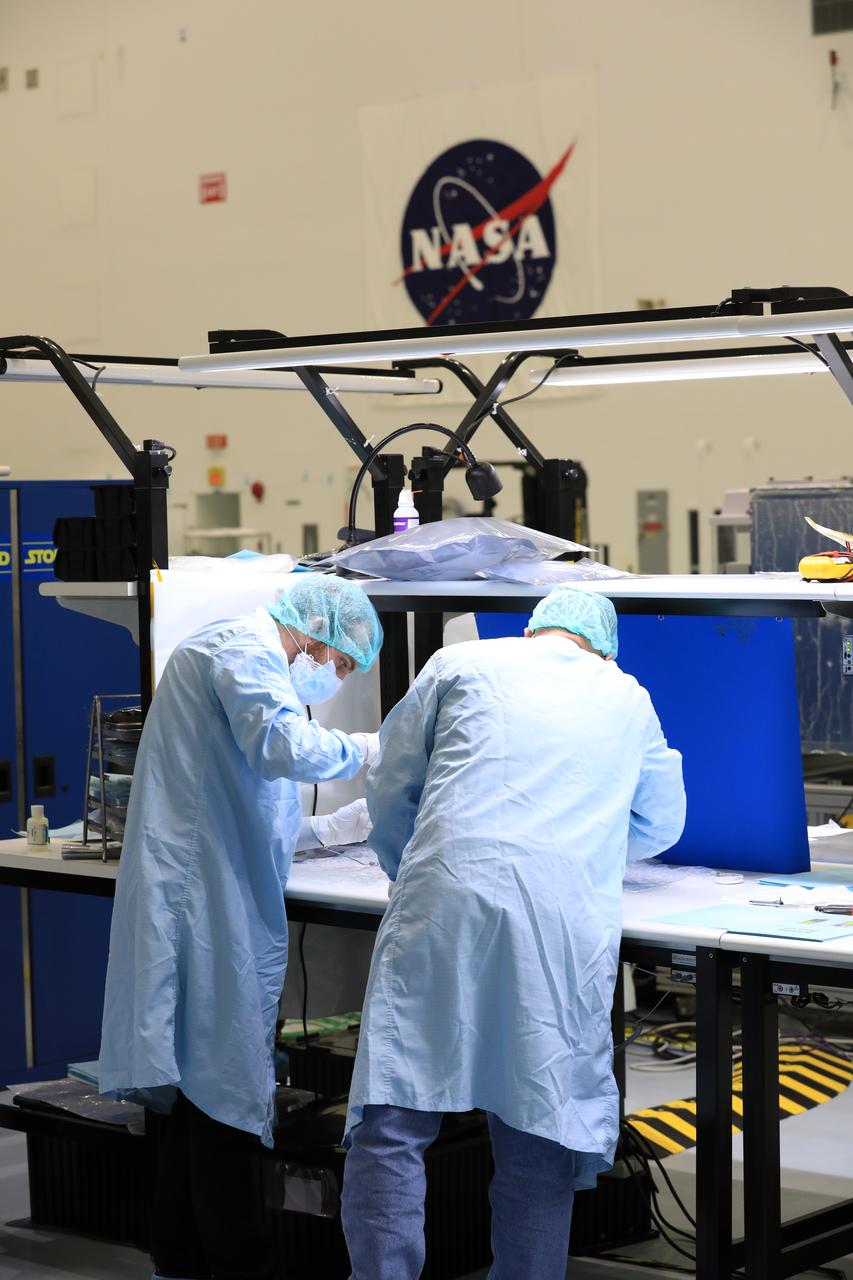
Engineers and technicians at NASA’s Kennedy Space Center in Florida install the radiator for the Mass Spectrometer Observing Lunar Operations (MSolo) instrument inside the Space Station Processing Facility on Sept. 25, 2020. MSolo will help analyze the chemical makeup of landing sites on the Moon, as well as study water on the lunar surface. The radiator will help keep the instrument’s temperature stable in the extreme heat and cold it will encounter. MSolo instruments are scheduled to launch on multiple robotic missions as part of NASA’s Commercial Lunar Payload Services (CLPS), with the first of these missions exploring Lacus Mortis, a large crater on the near side of the Moon, beginning in 2021. MSolo also will be one of three instruments on the agency’s water-hunting Volatiles Investigating Polar Exploration Rover, VIPER, scheduled to launch to the Moon’s South Pole in late 2023.
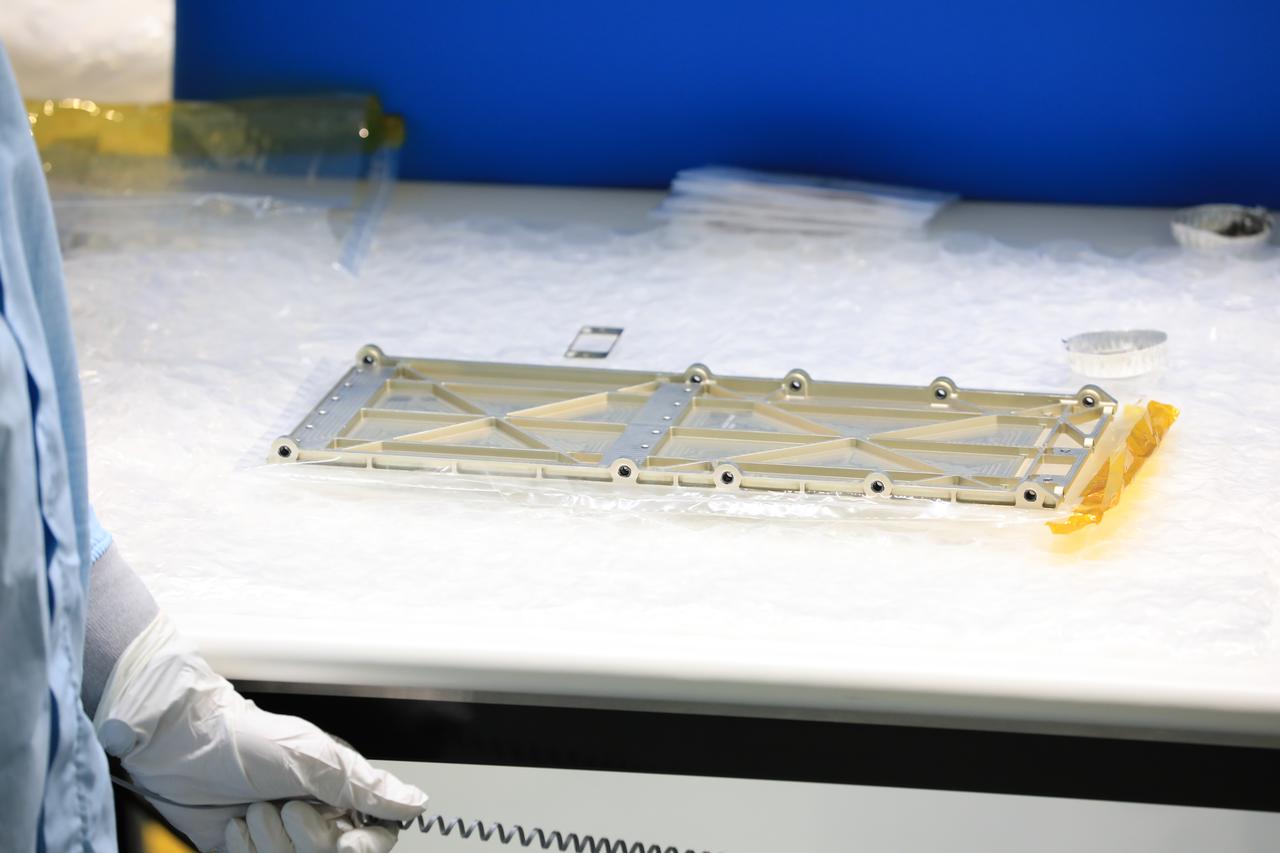
Engineers and technicians at NASA’s Kennedy Space Center in Florida have prepped the Mass Spectrometer Observing Lunar Operations (MSolo) instrument’s radiator for installation inside the Space Station Processing Facility on Sept. 25, 2020. MSolo will help analyze the chemical makeup of landing sites on the Moon, as well as study water on the lunar surface. The radiator will help keep the instrument’s temperature stable in the extreme heat and cold it will encounter. MSolo instruments are scheduled to launch on multiple robotic missions as part of NASA’s Commercial Lunar Payload Services (CLPS), with the first of these missions exploring Lacus Mortis, a large crater on the near side of the Moon, beginning in 2021. MSolo also will be one of three instruments on the agency’s water-hunting Volatiles Investigating Polar Exploration Rover, VIPER, scheduled to launch to the Moon’s South Pole in late 2023.
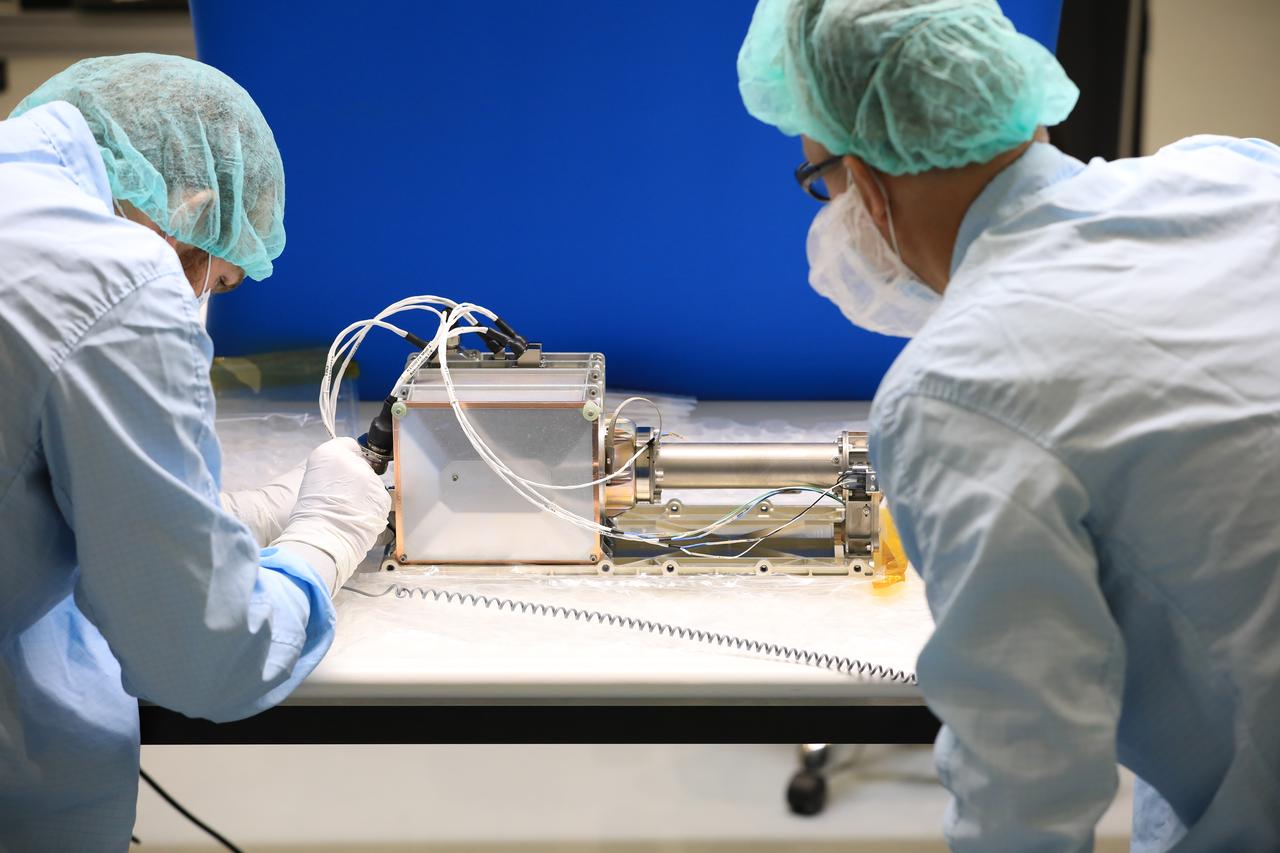
Engineers and technicians at NASA’s Kennedy Space Center in Florida install the radiator for the Mass Spectrometer Observing Lunar Operations (MSolo) instrument inside the Space Station Processing Facility on Sept. 25, 2020. MSolo will help analyze the chemical makeup of landing sites on the Moon, as well as study water on the lunar surface. The radiator will help keep the instrument’s temperature stable in the extreme heat and cold it will encounter. MSolo instruments are scheduled to launch on multiple robotic missions as part of NASA’s Commercial Lunar Payload Services (CLPS), with the first of these missions exploring Lacus Mortis, a large crater on the near side of the Moon, beginning in 2021. MSolo also will be one of three instruments on the agency’s water-hunting Volatiles Investigating Polar Exploration Rover, VIPER, scheduled to launch to the Moon’s South Pole in late 2023.

Electronics Engineer and Mass Spectrometer Observing Lunar Operations (MSolo) team member Nate Cain conducts electromagnetic interference (EMI) testing inside the EMI Laboratory at NASA’s Kennedy Space Center in Florida on Feb. 14, 2022. The tests will verify that MSolo can control the emissions it will produce during its missions and meets EMI susceptibility requirements as part of its preparation to operate in the lunar environment. The third MSolo to go through EMI testing, this is an engineering development unit representative of the flight unit manifested to fly to the Moon’s South Pole as a payload on the agency’s Volatiles Investigating Polar Exploration Rover (VIPER) in 2023. Researchers and engineers are preparing MSolo instruments to launch on four robotic missions as part of NASA’s Commercial Lunar Payload Services (CLPS) – the first of which is slated for later this year. MSolo will help analyze the chemical makeup of landing sites on the Moon, with the later missions also studying water on the lunar surface.
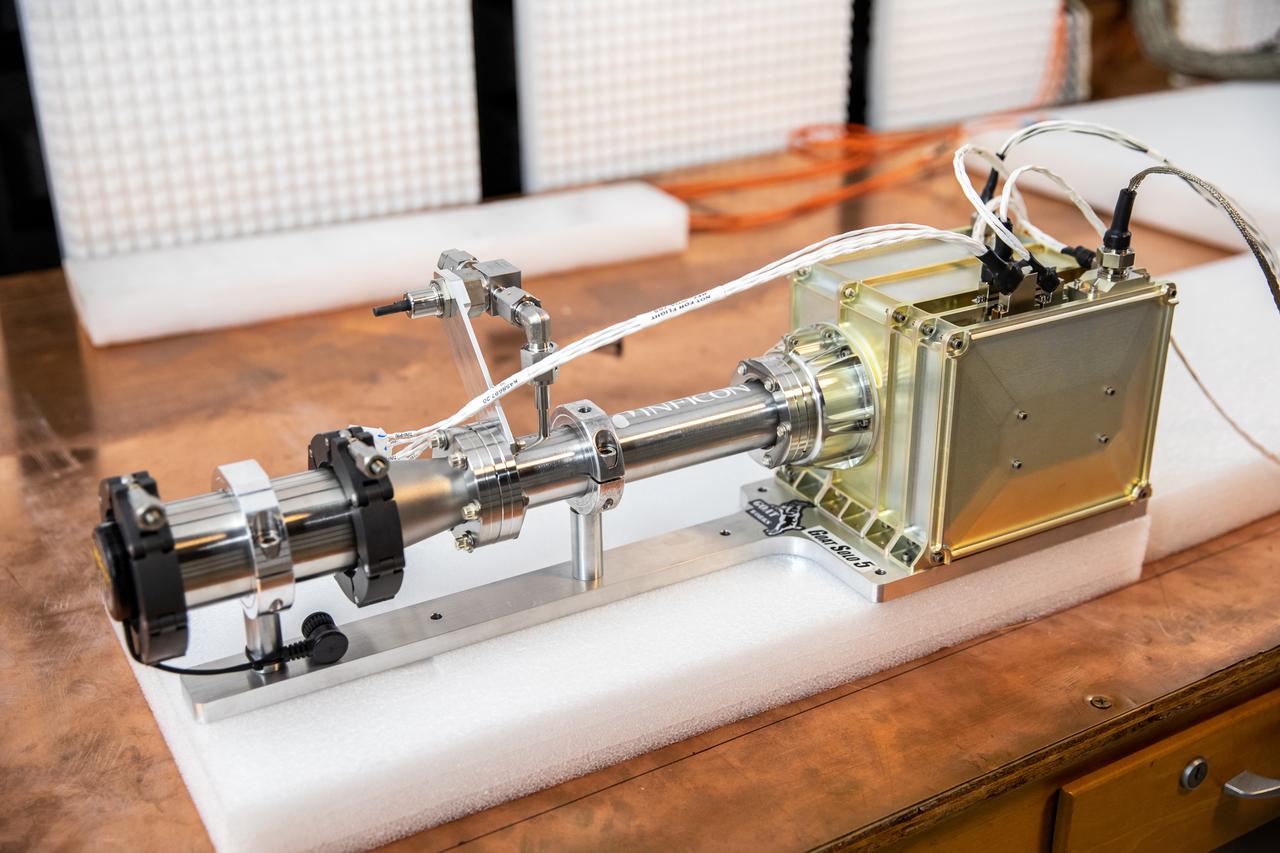
NASA’s Mass Spectrometer Observing Lunar Operations (MSolo) undergoes electromagnetic interference (EMI) testing inside the EMI Laboratory at the agency’s Kennedy Space Center in Florida on Feb. 14, 2022. These tests will verify that MSolo can control the emissions it will produce during its missions and meets EMI susceptibility requirements as part of its preparation to operate in the lunar environment. The third MSolo to go through EMI testing, this is an engineering development unit representative of the flight unit manifested to fly to the Moon’s South Pole as a payload on the agency’s Volatiles Investigating Polar Exploration Rover (VIPER) in 2023. Researchers and engineers are preparing MSolo to launch on four robotic missions as part of NASA’s Commercial Lunar Payload Services (CLPS) – the first of which is slated for later this year. MSolo will help analyze the chemical makeup of landing sites on the Moon, with the later missions also studying water on the lunar surface.

Dr George Cooper analyzes metoritic material by injecting samples into gas chromatograph-mass spectrometer. This instrument separates very complicated molecular mixtures into individual componds that are more easily identified.
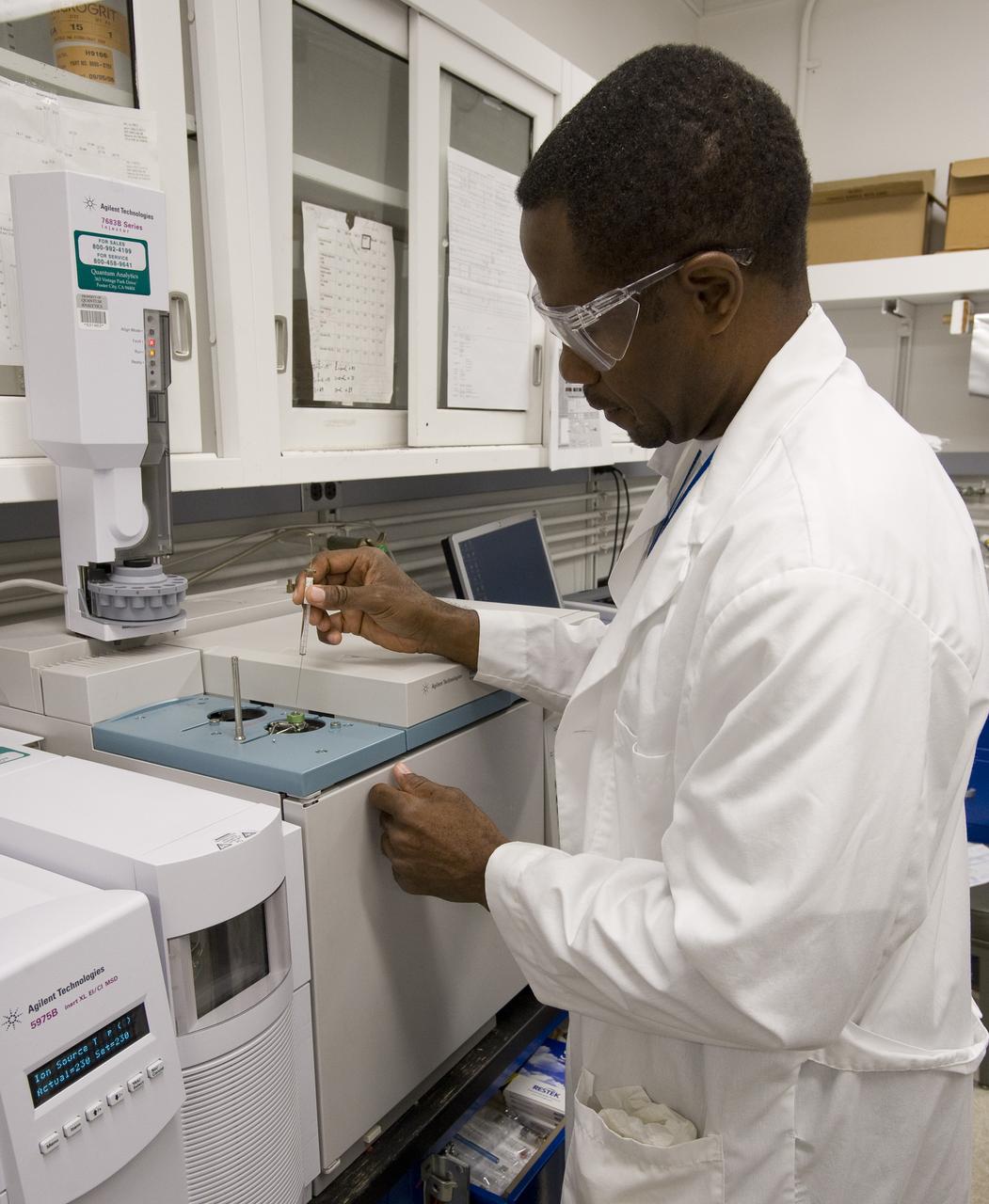
Dr George Cooper analyzes metoritic material by injecting samples into gas chromatograph-mass spectrometer. This instrument separates very complicated molecular mixtures into individual componds that are more easily identified.
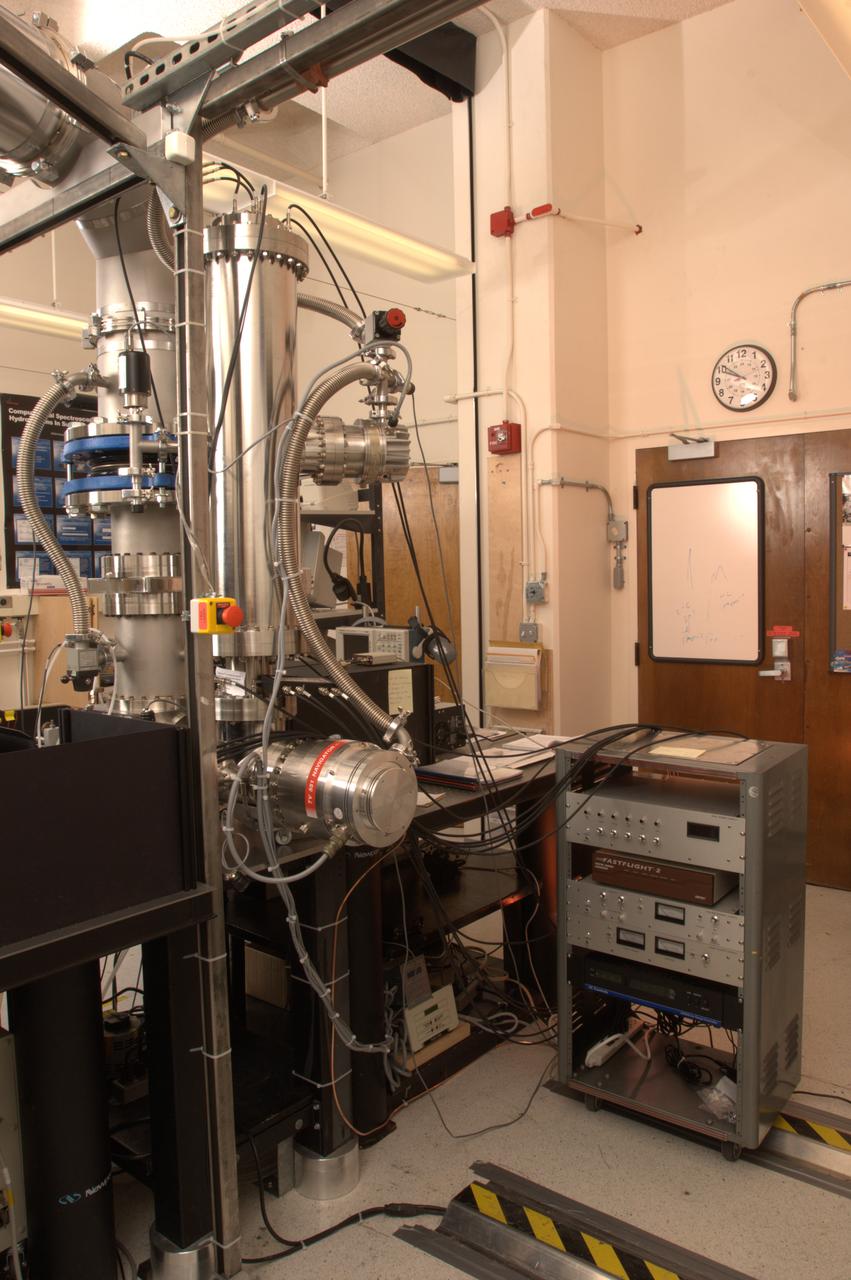
NASA Ames Astrophysics Branch (code-SSA), Pulsed discharge nozzle - Cavity Ring down - Reflection Time of Flight Mass Spectrometer (N-245 rm B-31) (PDN-CRDS-RETOFMS)
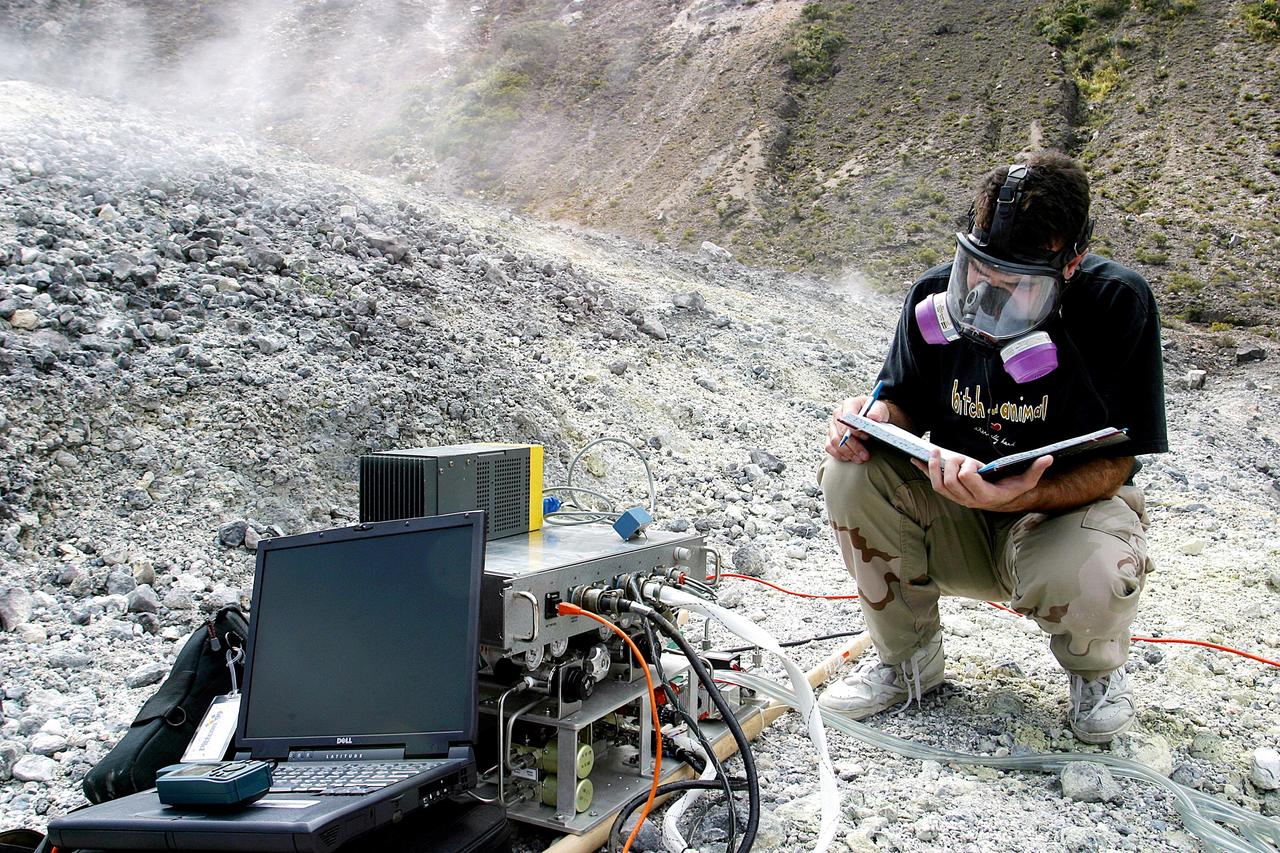
KENNEDY SPACE CENTER, FLA. - Dr. Richard Arkin records data as the hazardous gas detection system AVEMS is used to analyze the toxic gases produced by active vents, called fumaroles, in the Turrialba volcano in Costa Rica. He is using the Aircraft-based Volcanic Emission Mass Spectrometer (AVEMS) that determines the presence and concentration of various chemicals. The AVEMS system has been developed for use in the Space Shuttle program, to detect toxic gas leaks and emissions in the Shuttle’s aft compartment and the crew compartment.
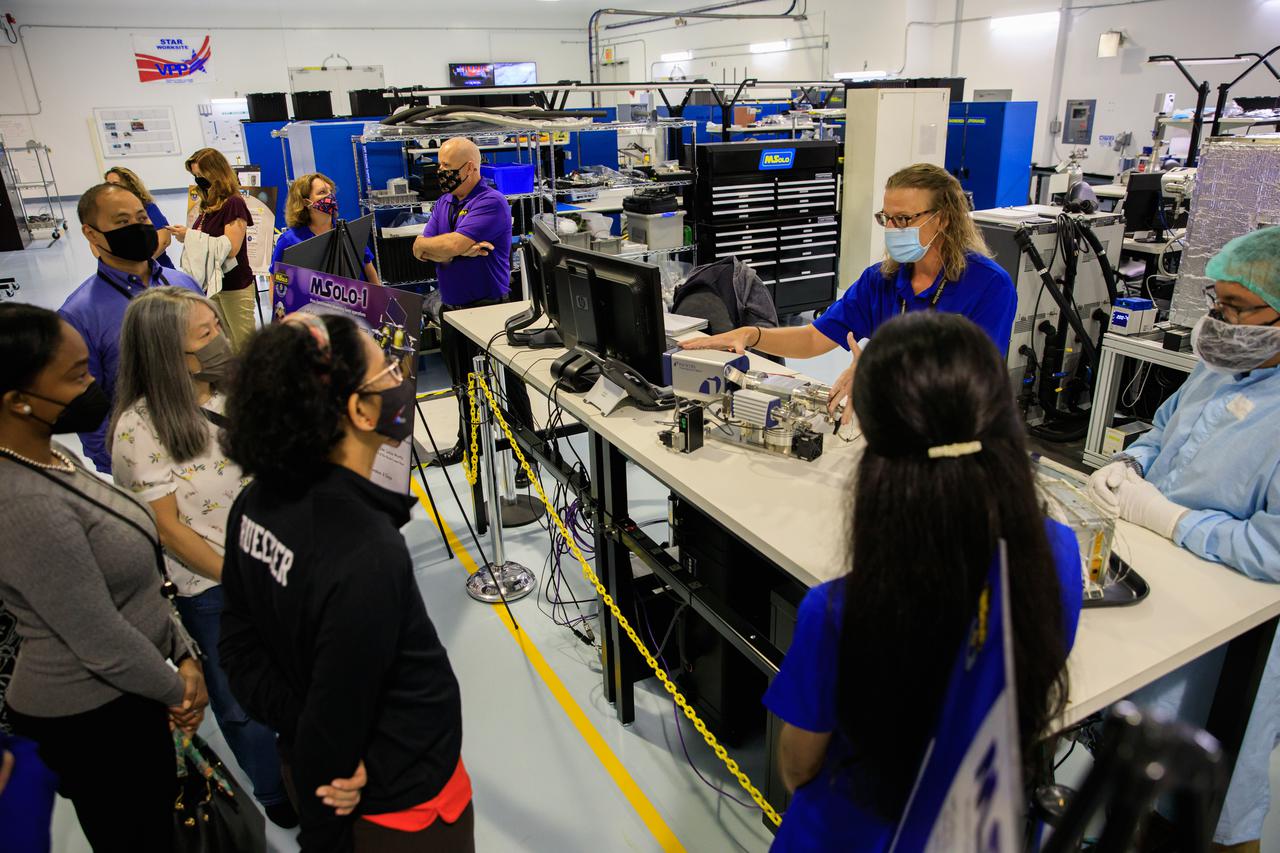
Senior leaders with Kennedy Space Center in Florida, familiarize newly appointed officials from NASA Headquarters with the center’s facilities during a tour on April 19, 2021. The group views research and technology experiments in the Space Station Processing Facility. Janine Captain, the principal investigator for the Mass Spectrometer Observing Lunar Operations, or MSolo, briefs the team about the commercial off the-shelf- mass spectrometer the team at Kennedy has hardened for lunar operations. MSolo will be part of four missions for NASA’s Commercial Lunar Payload Services initiative, including NASA’s Polar Resources Ice Mining Experiment-1 (PRIME-1) and NASA’s Volatiles Investigating Polar Exploration Rover or VIPER.
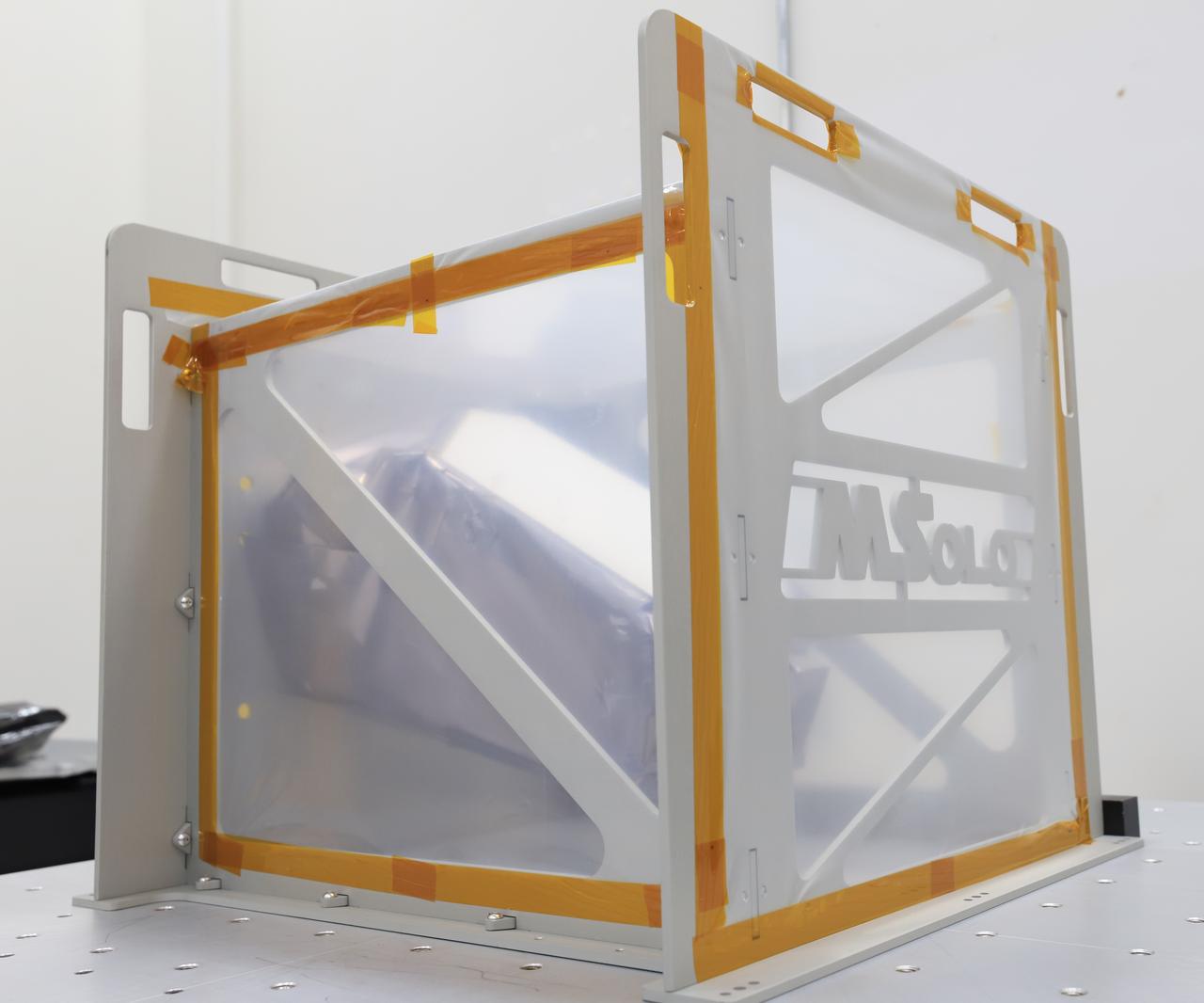
Engineers conduct a mass properties test on the Mass Spectrometer Observing Lunar Operations (MSolo) instrument inside Kennedy Space Center’s Space Station Processing Facility in Florida on Nov. 22, 2022. Mass properties determines the mass and center of gravity of the flight unit. The lander uses this information, from all payloads, to improve stability and performance of the lander – and to a lesser degree, the stability and performance of the rocket. This marks the end of testing at Kennedy for the Polar Resources Ice Mining Experiment-1 (PRIME-1) MSolo instrument. It will soon be shipped to Intuitive Machines in Houston for integration on the NOVA-C landing platform. Launching in 2023, the PRIME-1 mission will be the first in-situ resource utilization demonstration on the Moon.
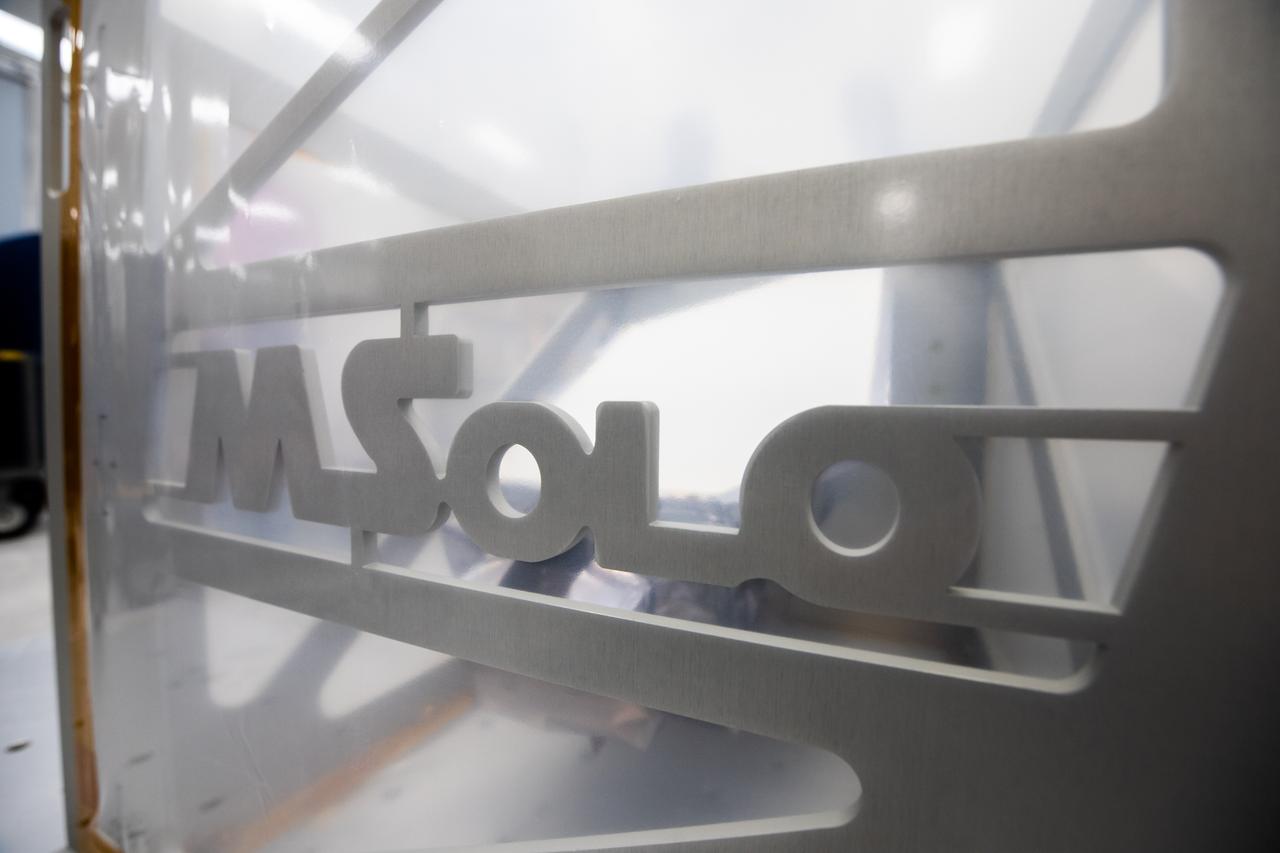
Engineers conduct a mass properties test on the Mass Spectrometer Observing Lunar Operations (MSolo) instrument inside Kennedy Space Center’s Space Station Processing Facility in Florida on Nov. 22, 2022. Mass properties determines the mass and center of gravity of the flight unit. The lander uses this information, from all payloads, to improve stability and performance of the lander – and to a lesser degree, the stability and performance of the rocket. This marks the end of testing at Kennedy for the Polar Resources Ice Mining Experiment-1 (PRIME-1) MSolo instrument. It will soon be shipped to Intuitive Machines in Houston for integration on the NOVA-C landing platform. Launching in 2023, the PRIME-1 mission will be the first in-situ resource utilization demonstration on the Moon.
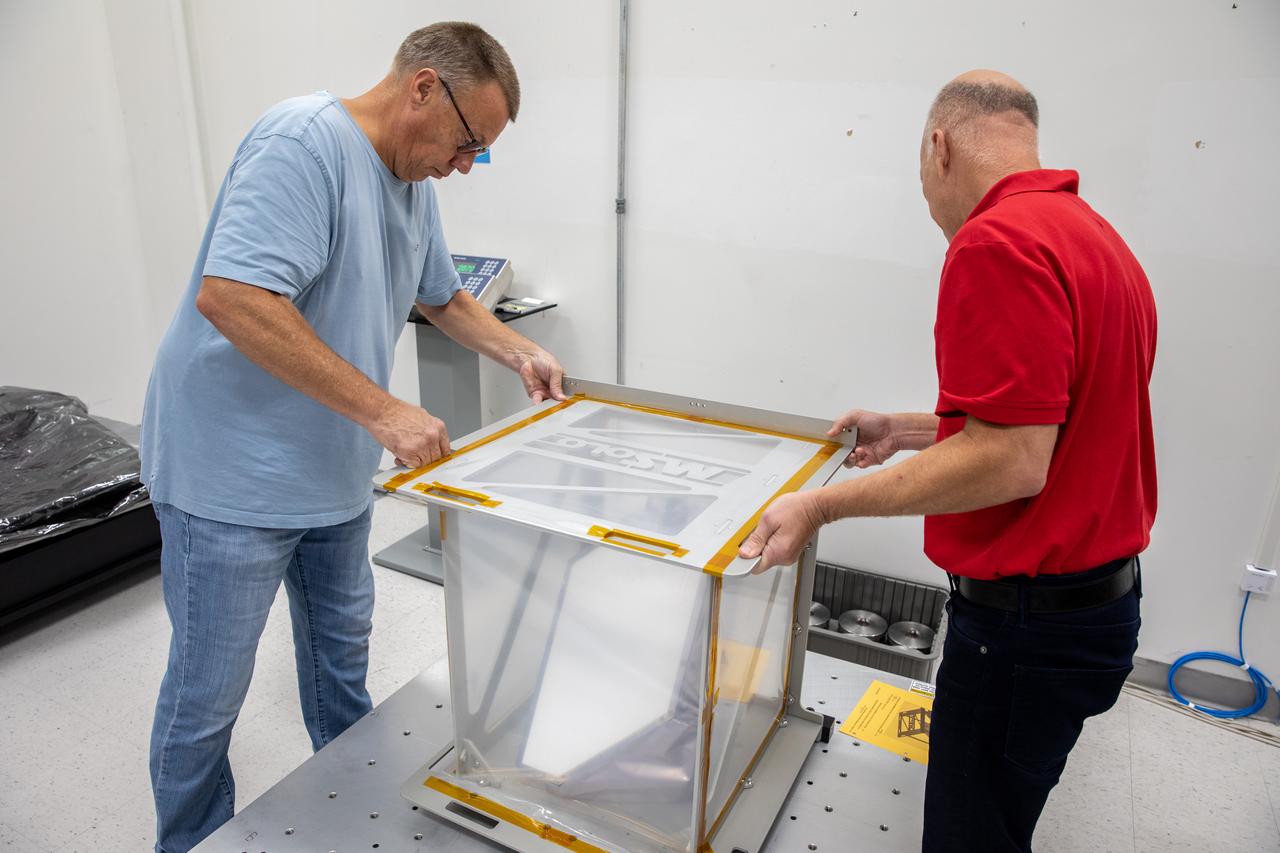
Engineers conduct a mass properties test on the Mass Spectrometer Observing Lunar Operations (MSolo) instrument inside Kennedy Space Center’s Space Station Processing Facility in Florida on Nov. 22, 2022. Mass properties determines the mass and center of gravity of the flight unit. The lander uses this information, from all payloads, to improve stability and performance of the lander – and to a lesser degree, the stability and performance of the rocket. This marks the end of testing at Kennedy for the Polar Resources Ice Mining Experiment-1 (PRIME-1) MSolo instrument. It will soon be shipped to Intuitive Machines in Houston for integration on the NOVA-C landing platform. Launching in 2023, the PRIME-1 mission will be the first in-situ resource utilization demonstration on the Moon.
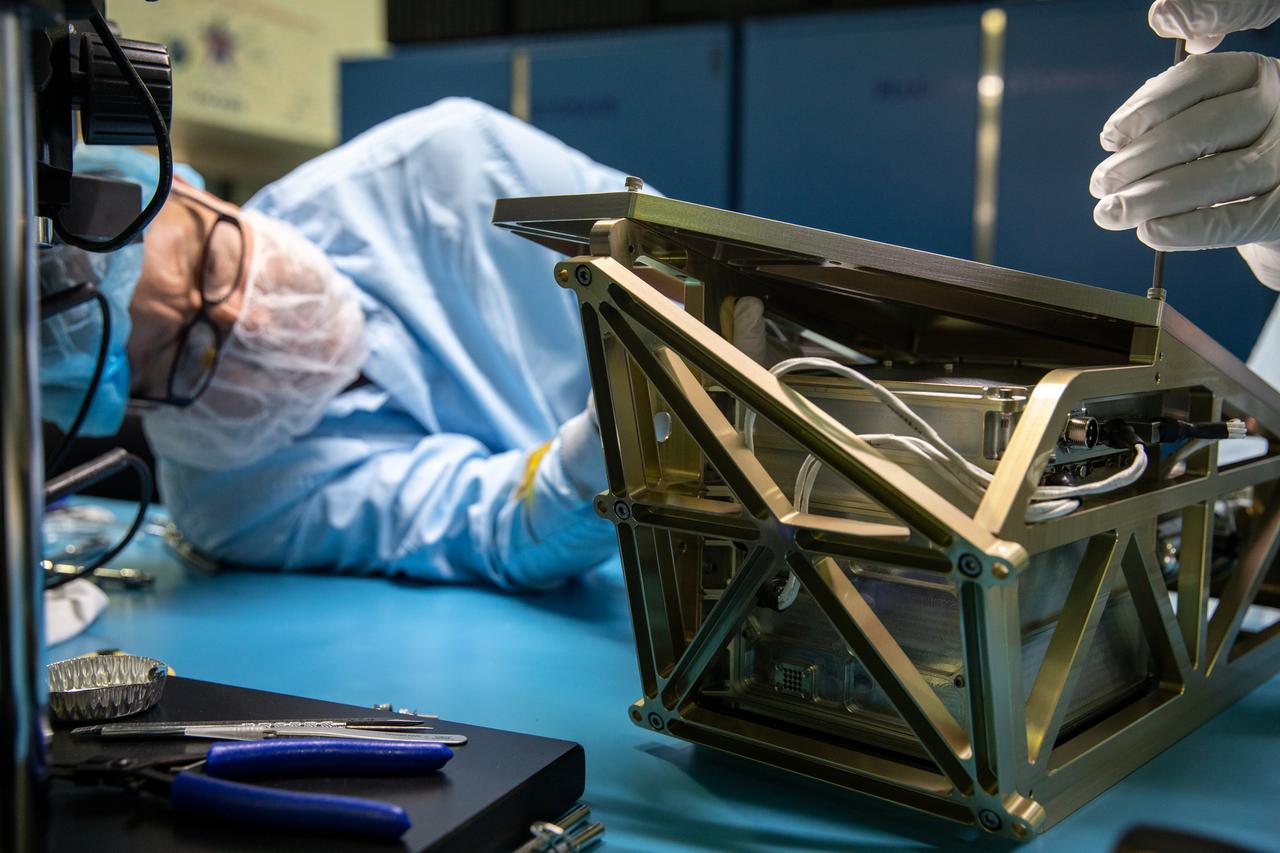
Inside the Space Station Processing Facility at NASA’s Kennedy Space Center in Florida, an engineer installs the Mass Spectrometer observing lunar operations (MSolo) onto its radiator bracket on June 14, 2022. Having successfully completed its thermal vacuum testing, the unit will undergo vibration testing later this month. This spectrometer is part of the PRIME-1 (Polar Resources Ice Mining Experiment-1) payload suite, slated to launch to the Moon in 2023 with Intuitive Machines. MSolo is a commercial off-the-shelf mass spectrometer modified to work in space and it will help analyze the chemical makeup of landing sites on the Moon, as well as study water on the lunar surface. MSolo is manifested to fly on four of the agency’s Commercial Lunar Payload Delivery Service missions where under Artemis, commercial deliveries beginning in 2023 will perform science experiments, test technologies, and demonstrate capabilities to help NASA explore the Moon and prepare for human missions.
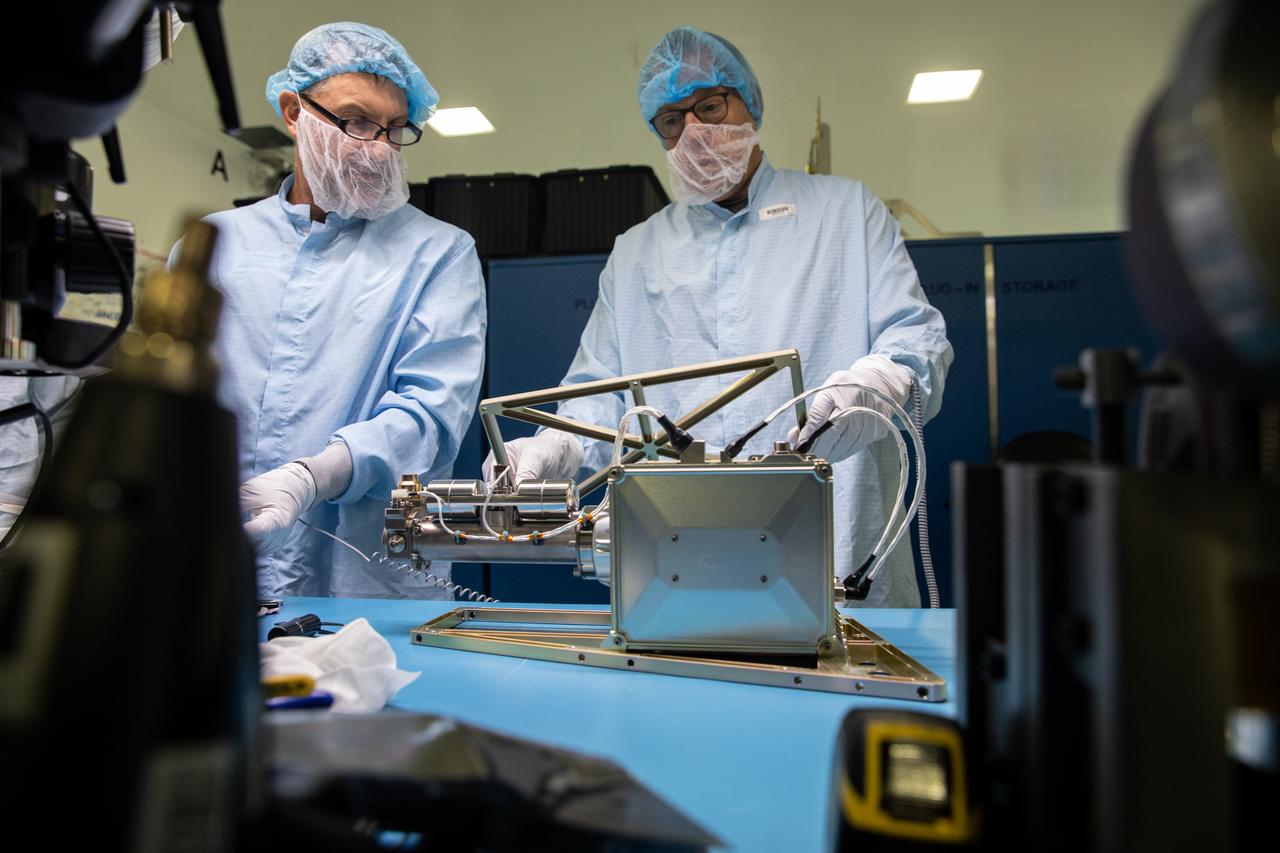
Inside the Space Station Processing Facility at NASA’s Kennedy Space Center in Florida, an engineer installs the Mass Spectrometer observing lunar operations (MSolo) onto its radiator bracket on June 14, 2022. Having successfully completed its thermal vacuum testing, the unit will undergo vibration testing later this month. This spectrometer is part of the PRIME-1 (Polar Resources Ice Mining Experiment-1) payload suite, slated to launch to the Moon in 2023 with Intuitive Machines. MSolo is a commercial off-the-shelf mass spectrometer modified to work in space and it will help analyze the chemical makeup of landing sites on the Moon, as well as study water on the lunar surface. MSolo is manifested to fly on four of the agency’s Commercial Lunar Payload Delivery Service missions where under Artemis, commercial deliveries beginning in 2023 will perform science experiments, test technologies, and demonstrate capabilities to help NASA explore the Moon and prepare for human missions.
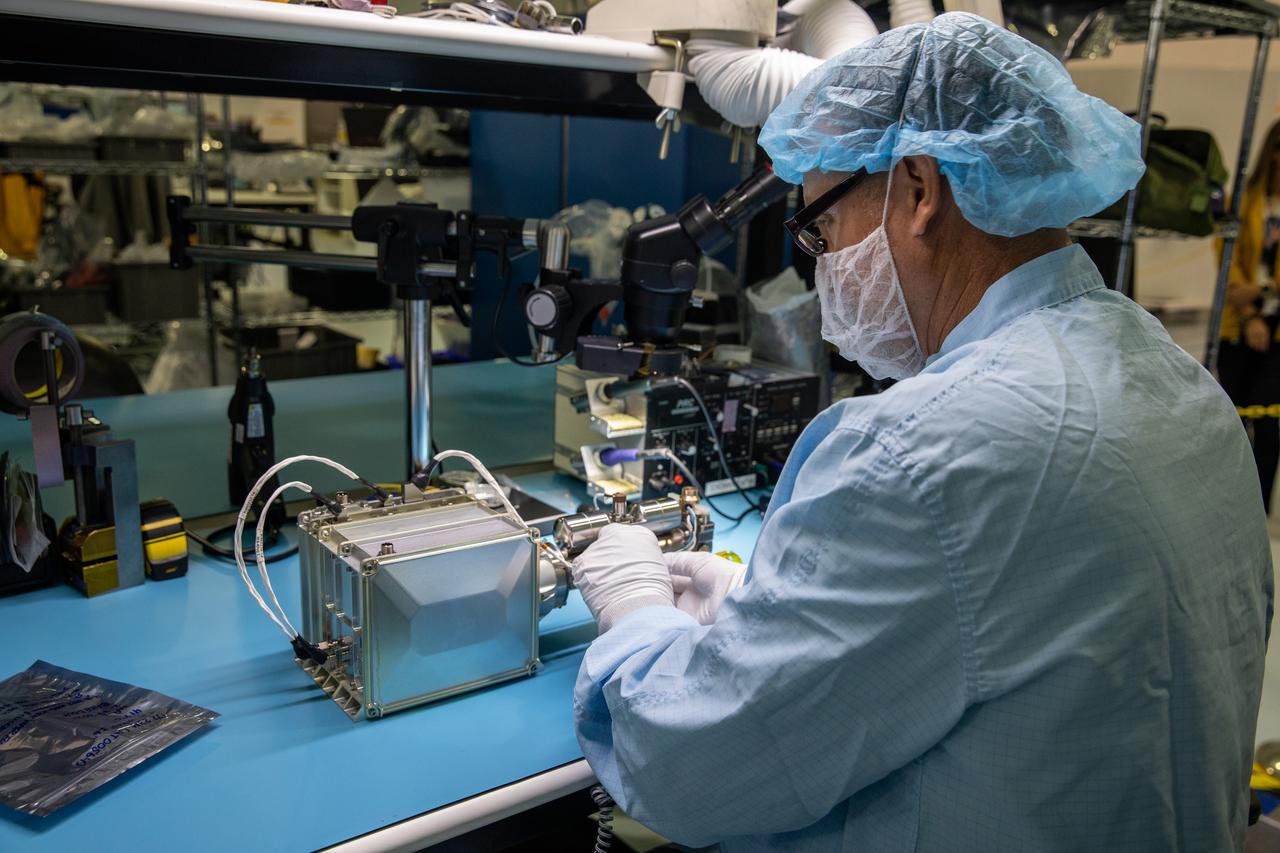
Inside the Space Station Processing Facility at NASA’s Kennedy Space Center in Florida, an engineer installs the Mass Spectrometer observing lunar operations (MSolo) onto its radiator bracket on June 14, 2022. Having successfully completed its thermal vacuum testing, the unit will undergo vibration testing later this month. This spectrometer is part of the PRIME-1 (Polar Resources Ice Mining Experiment-1) payload suite, slated to launch to the Moon in 2023 with Intuitive Machines. MSolo is a commercial off-the-shelf mass spectrometer modified to work in space and it will help analyze the chemical makeup of landing sites on the Moon, as well as study water on the lunar surface. MSolo is manifested to fly on four of the agency’s Commercial Lunar Payload Delivery Service missions where under Artemis, commercial deliveries beginning in 2023 will perform science experiments, test technologies, and demonstrate capabilities to help NASA explore the Moon and prepare for human missions.
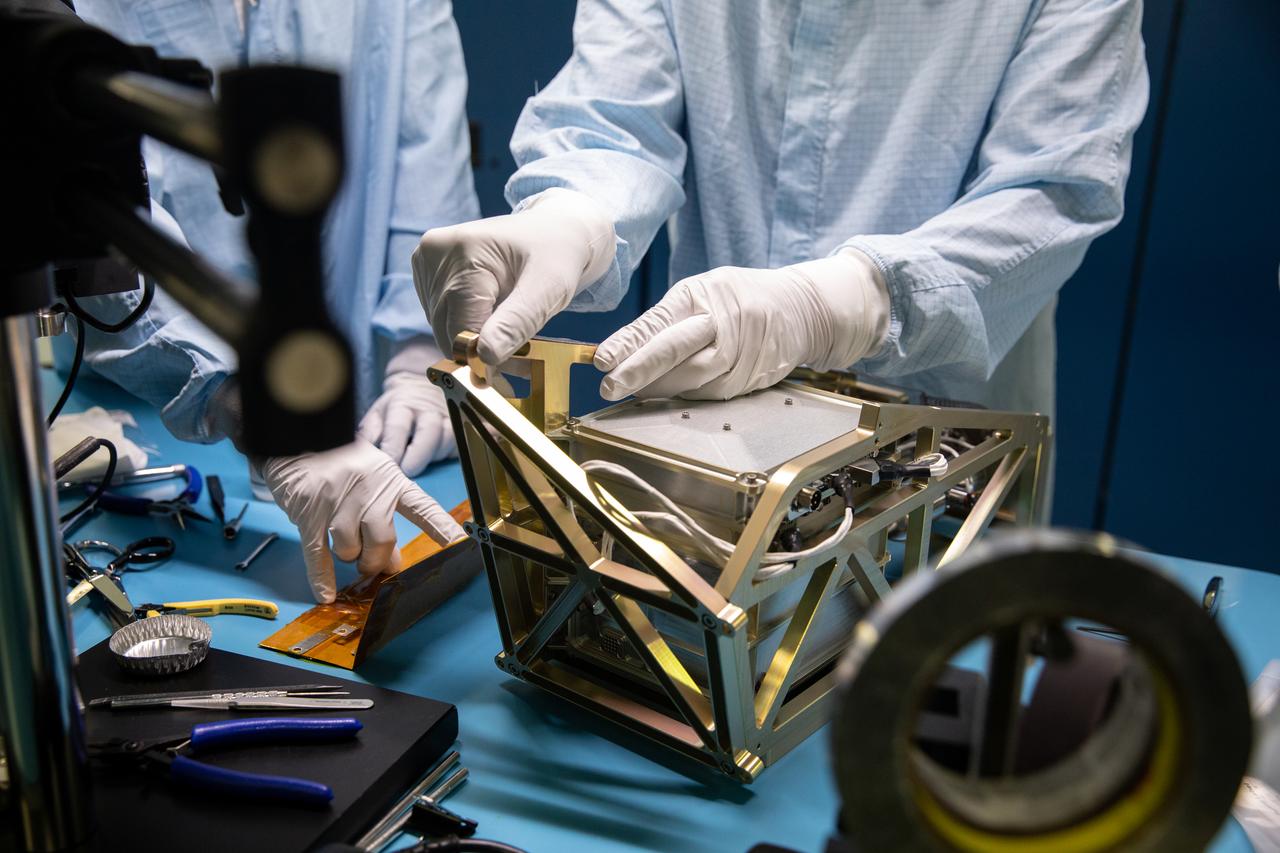
Inside the Space Station Processing Facility at NASA’s Kennedy Space Center in Florida, an engineer installs the Mass Spectrometer observing lunar operations (MSolo) onto its radiator bracket on June 14, 2022. Having successfully completed its thermal vacuum testing, the unit will undergo vibration testing later this month. This spectrometer is part of the PRIME-1 (Polar Resources Ice Mining Experiment-1) payload suite, slated to launch to the Moon in 2023 with Intuitive Machines. MSolo is a commercial off-the-shelf mass spectrometer modified to work in space and it will help analyze the chemical makeup of landing sites on the Moon, as well as study water on the lunar surface. MSolo is manifested to fly on four of the agency’s Commercial Lunar Payload Delivery Service missions where under Artemis, commercial deliveries beginning in 2023 will perform science experiments, test technologies, and demonstrate capabilities to help NASA explore the Moon and prepare for human missions.
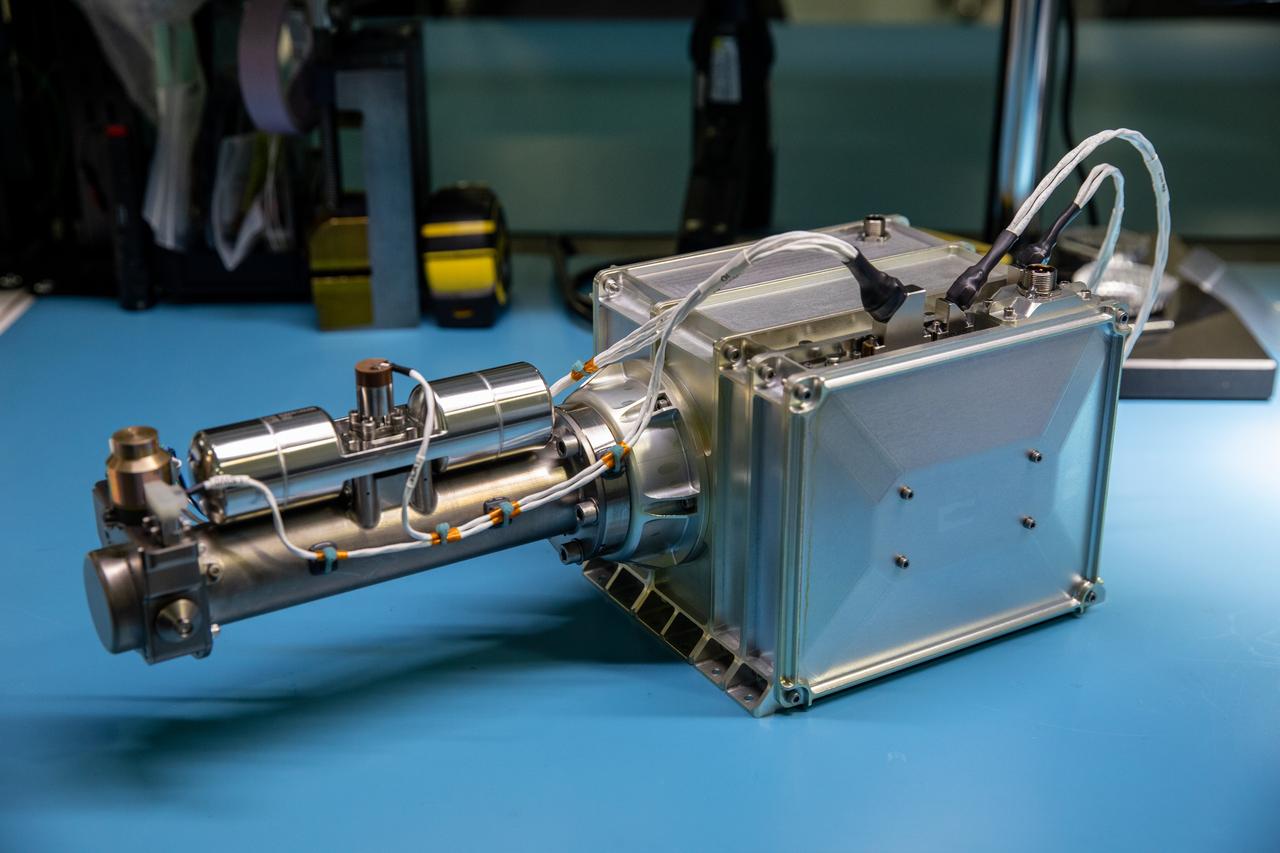
Inside the Space Station Processing Facility at NASA’s Kennedy Space Center in Florida, the Mass Spectrometer observing lunar operations (MSolo) is being installed on a radiator bracket on June 14, 2022. Having successfully completed its thermal vacuum testing, the unit will undergo vibration testing later this month. This spectrometer is part of the PRIME-1 (Polar Resources Ice Mining Experiment-1) payload suite, slated to launch to the Moon in 2023 with Intuitive Machines. MSolo is a commercial off-the-shelf mass spectrometer modified to work in space and it will help analyze the chemical makeup of landing sites on the Moon, as well as study water on the lunar surface. MSolo is manifested to fly on four of the agency’s Commercial Lunar Payload Delivery Service missions where under Artemis, commercial deliveries beginning in 2023 will perform science experiments, test technologies, and demonstrate capabilities to help NASA explore the Moon and prepare for human missions.
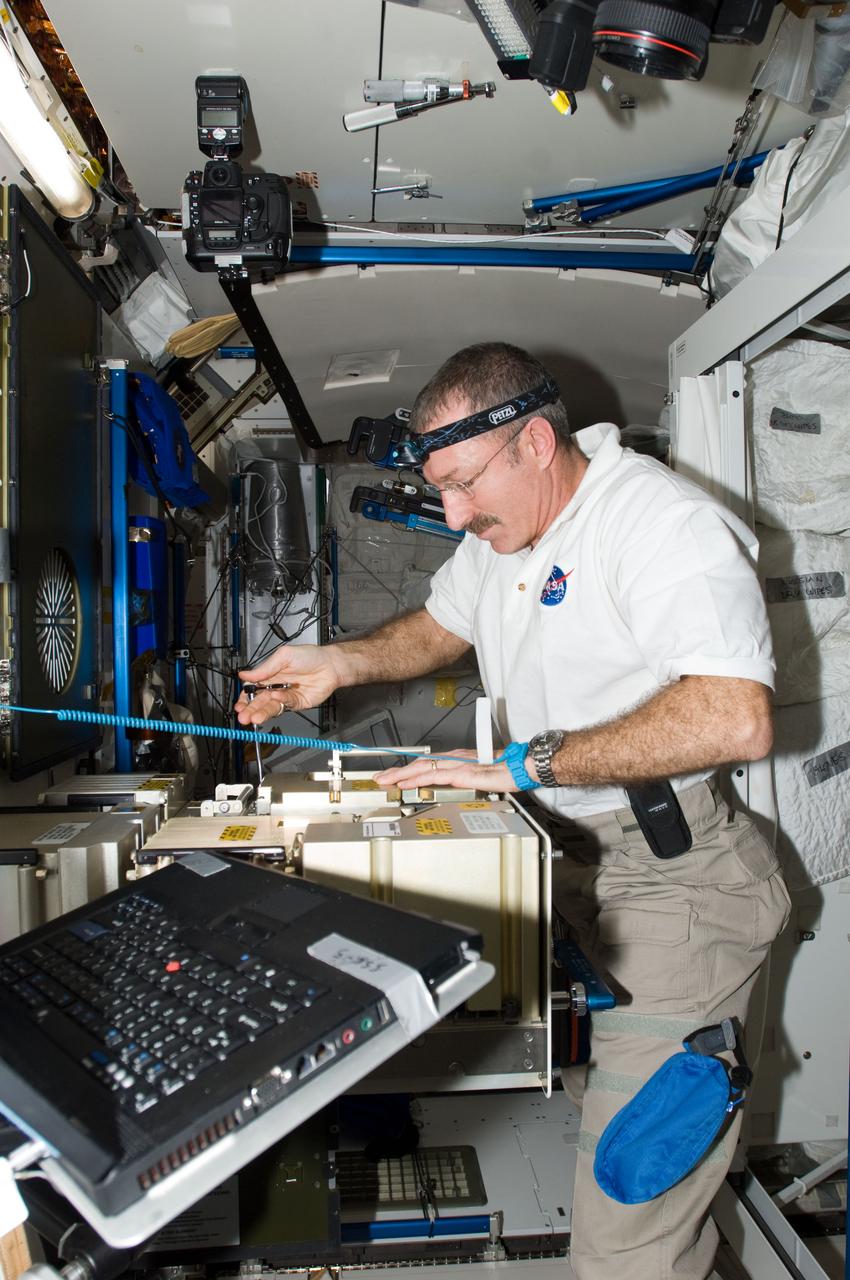
ISS030-E-047173 (23 Jan. 2012) --- NASA astronaut Dan Burbank, Expedition 30 commander, works with the Major Constituent Analyzer Mass Spectrometer Assembly (MCA MSA) of the Atmosphere Revitalization system in the Tranquility node of the International Space Station.
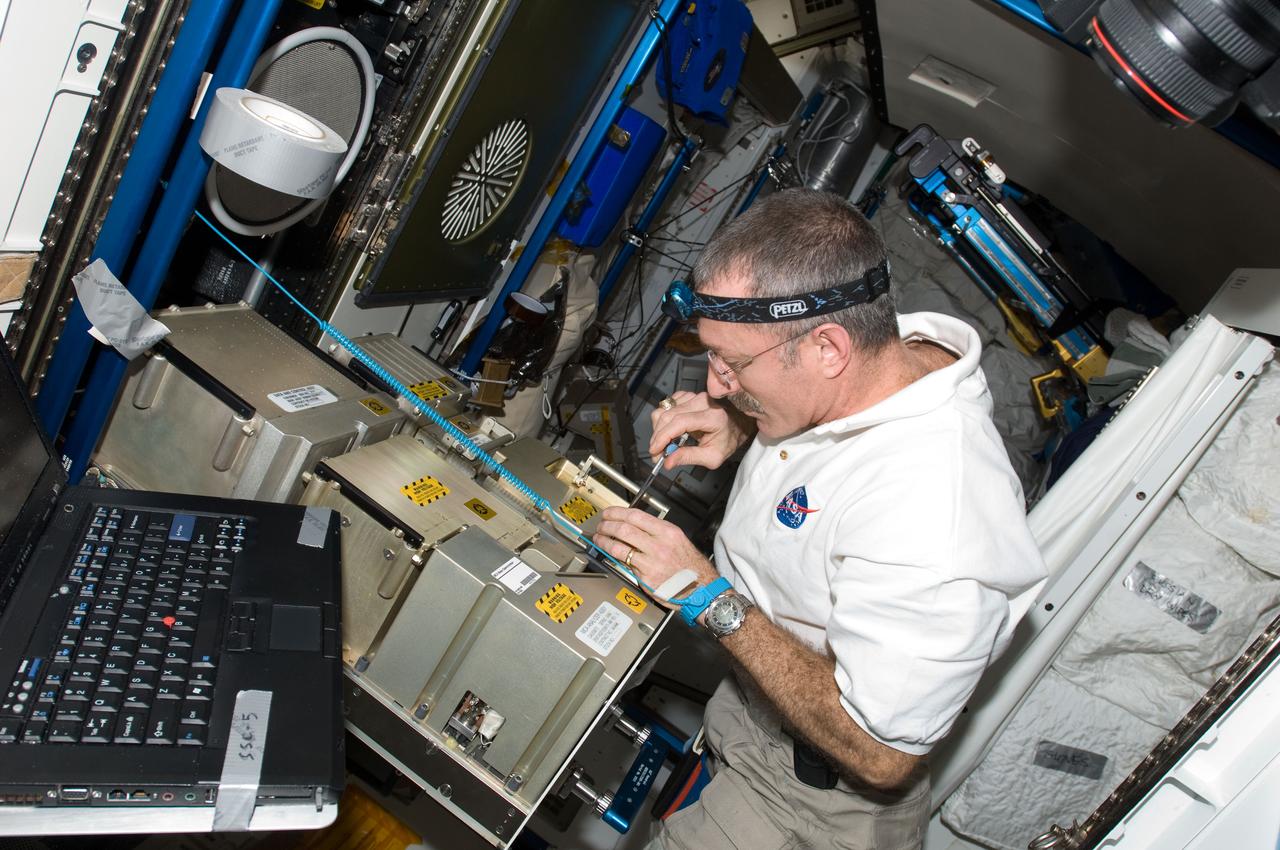
ISS030-E-047174 (23 Jan. 2012) --- NASA astronaut Dan Burbank, Expedition 30 commander, works with the Major Constituent Analyzer Mass Spectrometer Assembly (MCA MSA) of the Atmosphere Revitalization system in the Tranquility node of the International Space Station.
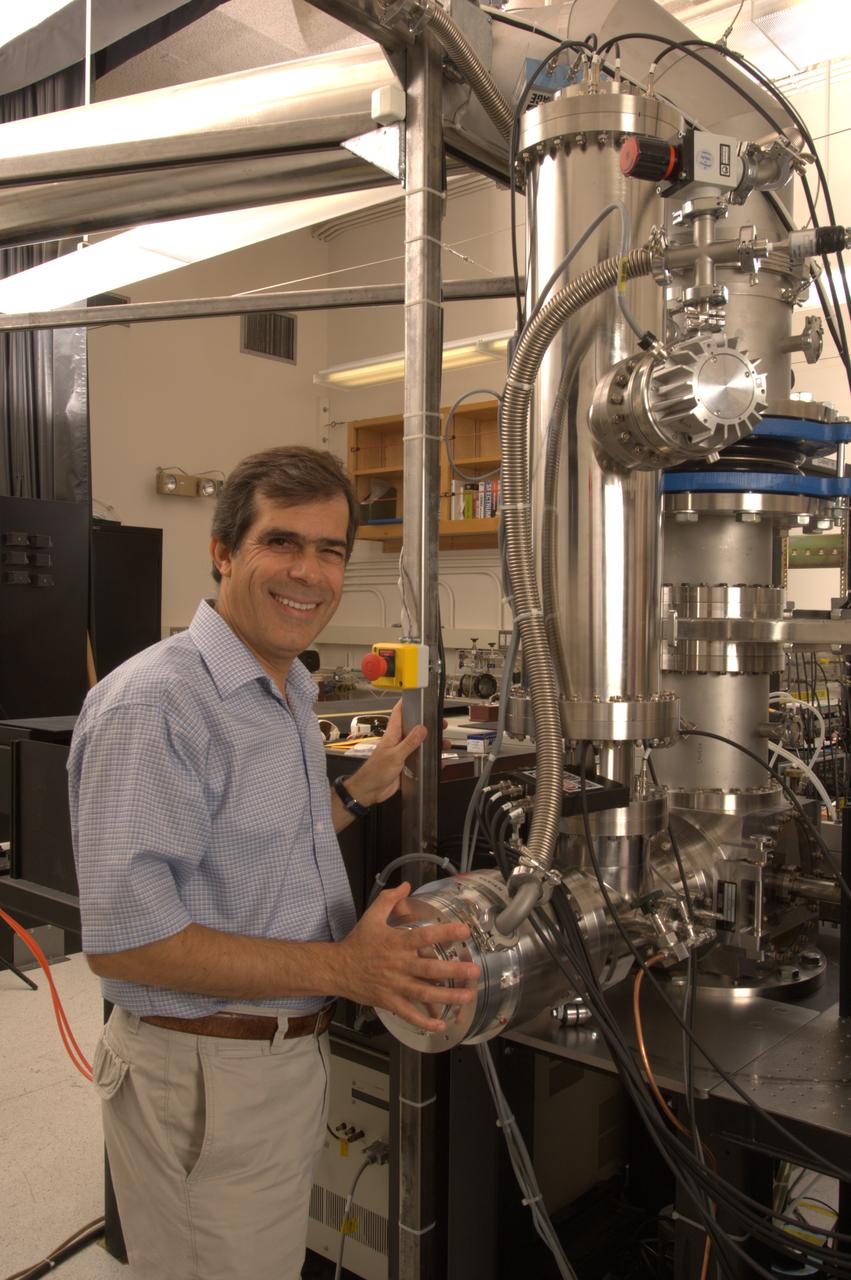
NASA Ames Astrophysics Branch (code-SSA), Pulsed discharge nozzle - Cavity Ring down - Reflection Time of Flight Mass Spectrometer (N-245 rm B-31) (PDN-CRDS-RETOFMS) shown here with Farid Salama

Nate Cain, an electronics engineer with the Advanced Engineering Development Branch at NASA’s Kennedy Space Center in Florida, prepares to conduct electromagnetic interference (EMI) testing for the agency’s Mass Spectrometer Observing Lunar Operations (MSolo) instrument inside the EMI Laboratory on Feb. 14, 2022. These tests will verify that MSolo can control the emissions it will produce during its missions and meets EMI susceptibility requirements as part of its preparation to operate in the lunar environment. The third MSolo to go through EMI testing, this is an engineering development unit representative of the flight unit manifested to fly to the Moon’s South Pole as a payload on the agency’s Volatiles Investigating Polar Exploration Rover (VIPER) in 2023. Researchers and engineers are preparing MSolo instruments to launch on four robotic missions as part of NASA’s Commercial Lunar Payload Services (CLPS) – the first of which is slated for later this year. MSolo will help analyze the chemical makeup of landing sites on the Moon, with the later missions also studying water on the lunar surface.
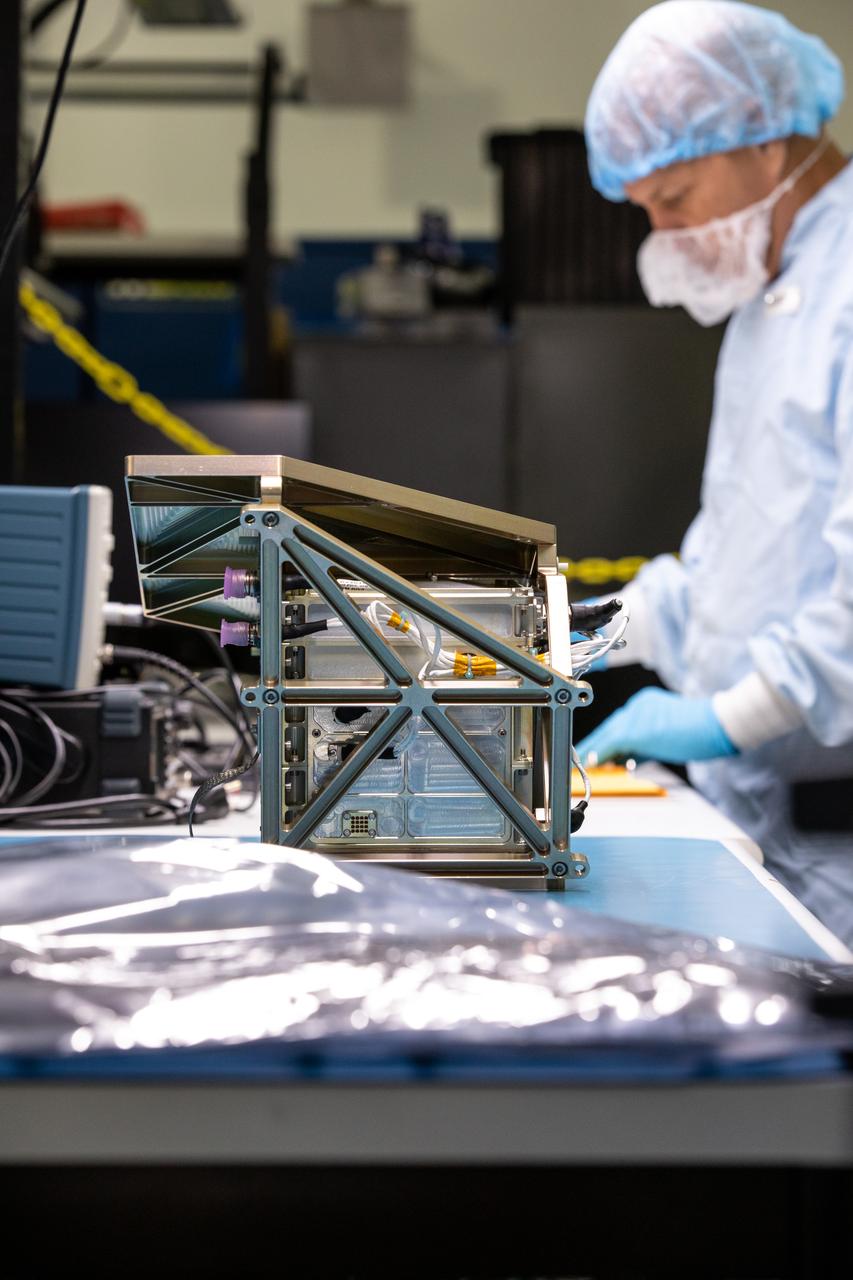
Engineers prepare the Mass Spectrometer Observing Lunar Operations (MSolo) instrument for the multilayer insulation installation inside Kennedy Space Center’s Space Station Processing Facility on Oct. 19, 2022. The activity is in preparation for the Polar Resources Ice Mining Experiment-1 (PRIME-1) mission, which will be the first in-situ resource utilization demonstration on the Moon. MSolo is a commercial off-the-shelf mass spectrometer modified to work in space and will help analyze the chemical makeup of landing sites on the Moon, as well as study water on the lunar surface. Researchers and engineers are preparing MSolo instruments to launch on four robotic missions as part of NASA’s Commercial Lunar Payload Services – commercial deliveries beginning in 2023 that will perform science experiments, test technologies, and demonstrate capabilities to help NASA explore the Moon and prepare for crewed missions to the lunar surface.
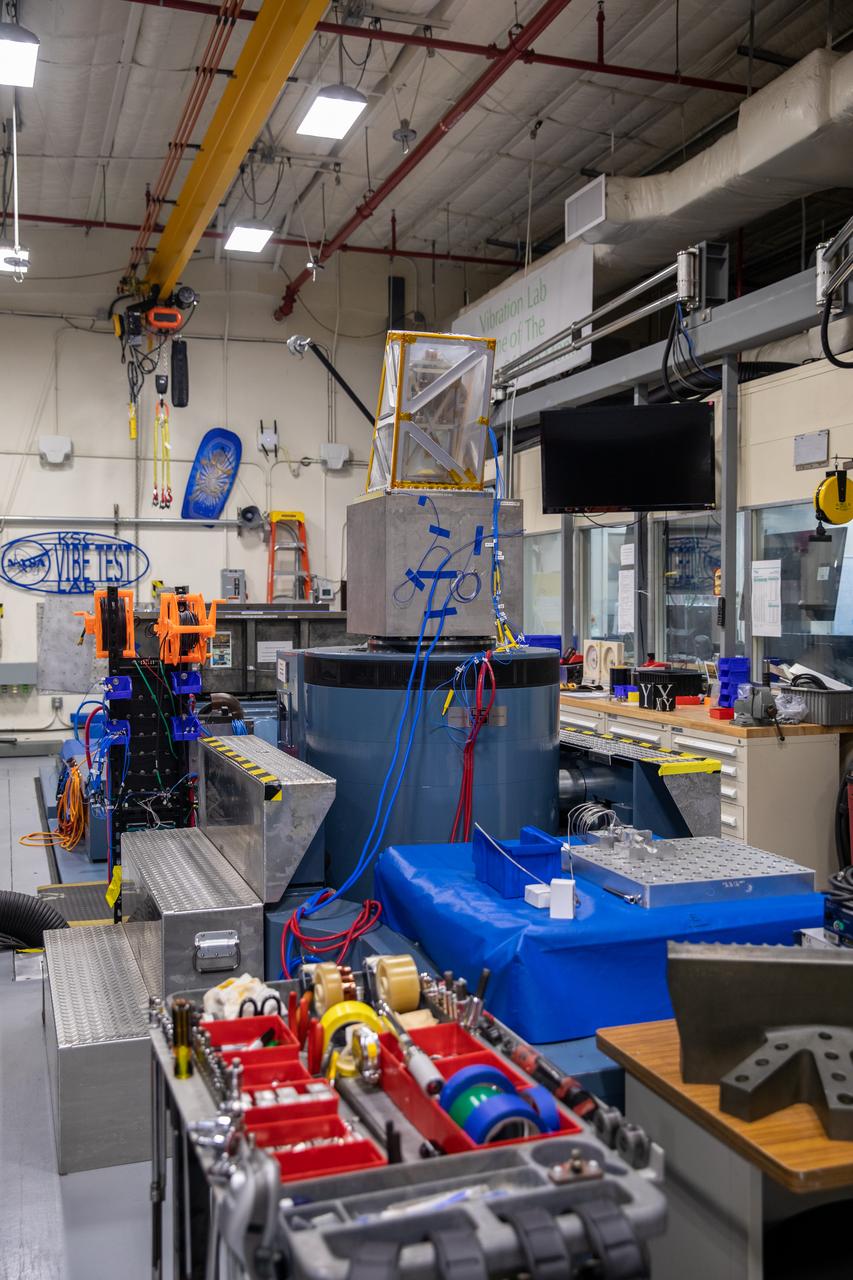
The Mass Spectrometer observing lunar operations (MSolo) instrument undergoes vibration testing inside the Cryogenics Laboratory at NASA’s Kennedy Space Center in Florida on Aug. 3, 2022. MSolo is a commercial off-the-shelf mass spectrometer modified to work in space and will help analyze the chemical makeup of landing sites on the Moon, as well as study water on the lunar surface. Researchers and engineers are preparing MSolo instruments to launch on four robotic missions as part of NASA’s Commercial Lunar Payload Services (CLPS) – commercial deliveries that will perform science experiments, test technologies, and demonstrate capabilities to help NASA explore the Moon and prepare for crewed missions to the lunar surface. This particular MSolo instrument is slated to fly on the agency’s Polar Resources Ice Mining Experiment-1 (PRIME-1) mission – the first in-situ resource utilization demonstration on the Moon – as part of the agency’s CLPS initiative.

Engineers at NASA’s Kennedy Space Center in Florida remove the vibration fixture on the Mass Spectrometer observing lunar operations (MSolo) instrument on Aug. 4, 2022. The activity followed a vibration test in preparation for the Polar Resources Ice Mining Experiment-1 (PRIME-1) mission, which will be the first in-situ resource utilization demonstration on the Moon. MSolo is a commercial off-the-shelf mass spectrometer modified to work in space and will help analyze the chemical makeup of landing sites on the Moon, as well as study water on the lunar surface. Researchers and engineers are preparing MSolo instruments to launch on four robotic missions as part of NASA’s Commercial Lunar Payload Services – commercial deliveries beginning in 2023 that will perform science experiments, test technologies, and demonstrate capabilities to help NASA explore the Moon and prepare for crewed missions to the lunar surface.
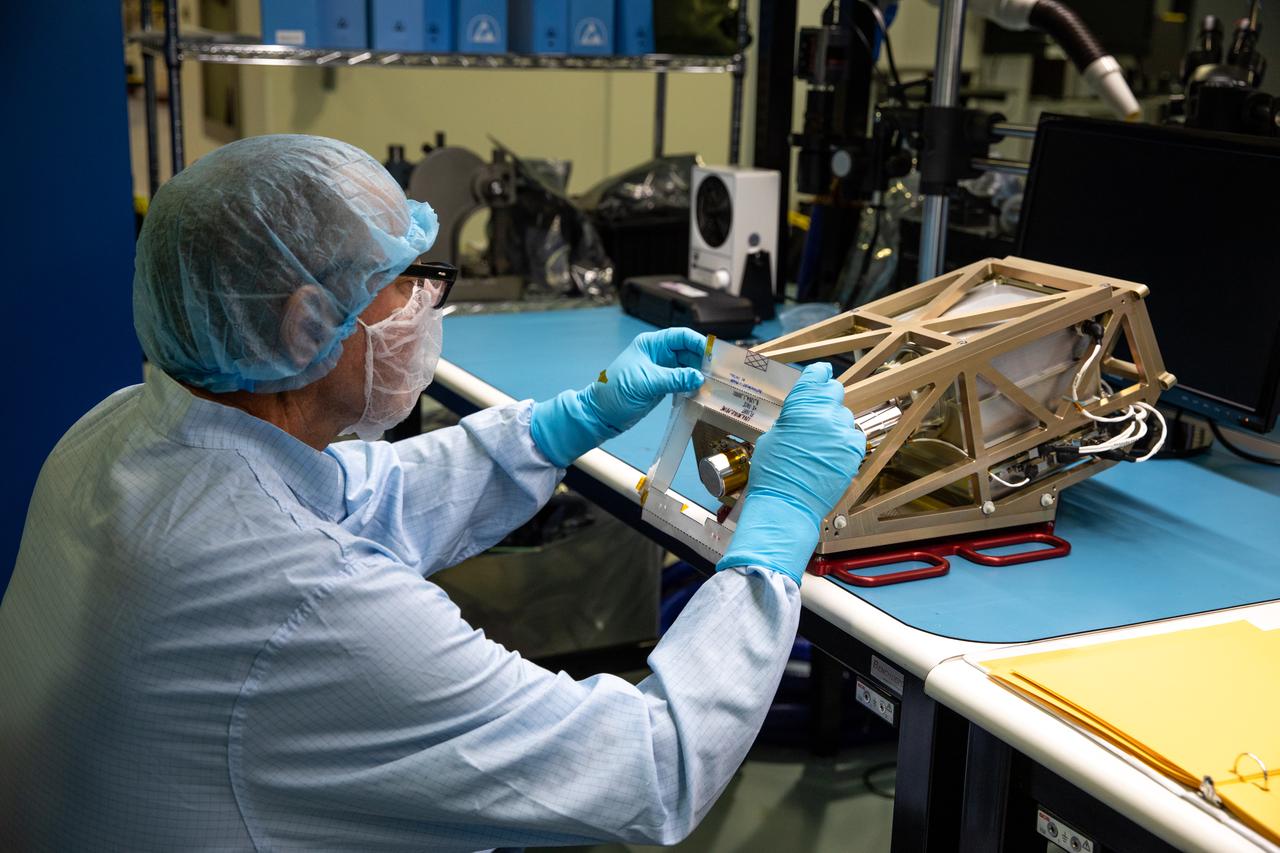
Engineers prepare the Mass Spectrometer Observing Lunar Operations (MSolo) instrument for the multilayer insulation installation inside Kennedy Space Center’s Space Station Processing Facility on Oct. 19, 2022. The activity is in preparation for the Polar Resources Ice Mining Experiment-1 (PRIME-1) mission, which will be the first in-situ resource utilization demonstration on the Moon. MSolo is a commercial off-the-shelf mass spectrometer modified to work in space and will help analyze the chemical makeup of landing sites on the Moon, as well as study water on the lunar surface. Researchers and engineers are preparing MSolo instruments to launch on four robotic missions as part of NASA’s Commercial Lunar Payload Services – commercial deliveries beginning in 2023 that will perform science experiments, test technologies, and demonstrate capabilities to help NASA explore the Moon and prepare for crewed missions to the lunar surface.
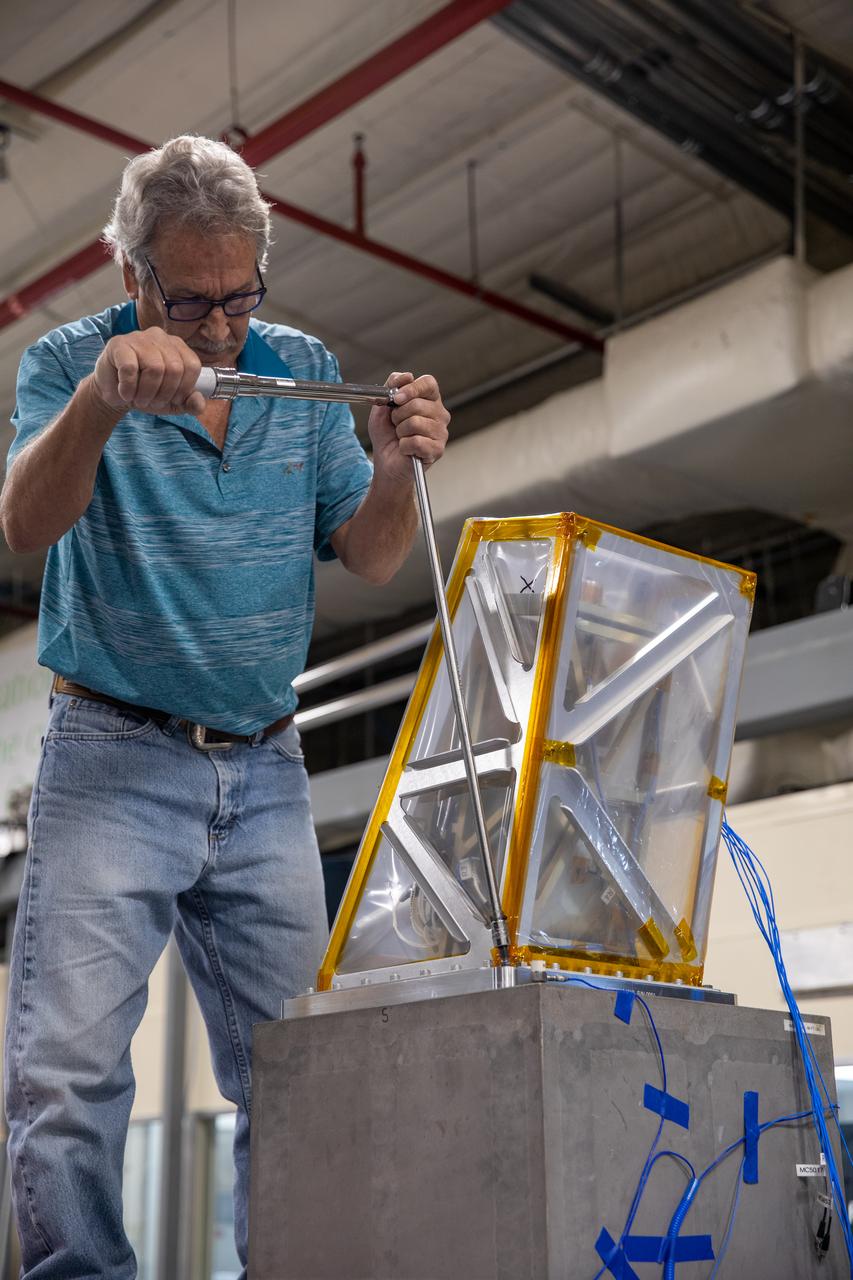
A Kennedy Space Center engineer prepares the Mass Spectrometer observing lunar operations (MSolo) instrument for vibration testing inside the Florida spaceport’s Cryogenics Laboratory on Aug. 3, 2022. MSolo is a commercial off-the-shelf mass spectrometer modified to work in space and will help analyze the chemical makeup of landing sites on the Moon, as well as study water on the lunar surface. Researchers and engineers are preparing MSolo instruments to launch on four robotic missions as part of NASA’s Commercial Lunar Payload Services (CLPS) – commercial deliveries that will perform science experiments, test technologies, and demonstrate capabilities to help NASA explore the Moon and prepare for crewed missions to the lunar surface. This particular MSolo instrument is slated to fly on the agency’s Polar Resources Ice Mining Experiment-1 (PRIME-1) mission – the first in-situ resource utilization demonstration on the Moon – as part of the agency’s CLPS initiative.
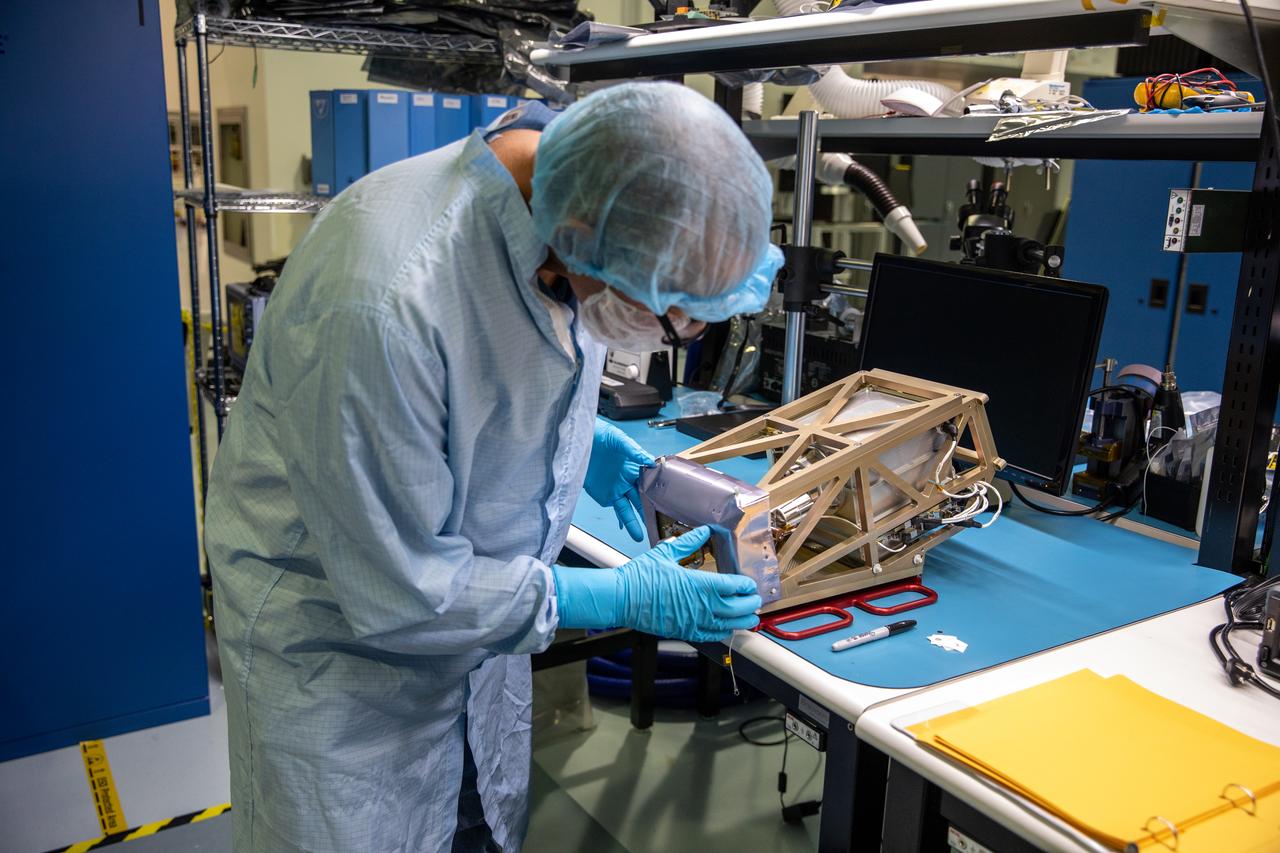
Engineers prepare the Mass Spectrometer Observing Lunar Operations (MSolo) instrument for the multilayer insulation installation inside Kennedy Space Center’s Space Station Processing Facility on Oct. 19, 2022. The activity is in preparation for the Polar Resources Ice Mining Experiment-1 (PRIME-1) mission, which will be the first in-situ resource utilization demonstration on the Moon. MSolo is a commercial off-the-shelf mass spectrometer modified to work in space and will help analyze the chemical makeup of landing sites on the Moon, as well as study water on the lunar surface. Researchers and engineers are preparing MSolo instruments to launch on four robotic missions as part of NASA’s Commercial Lunar Payload Services – commercial deliveries beginning in 2023 that will perform science experiments, test technologies, and demonstrate capabilities to help NASA explore the Moon and prepare for crewed missions to the lunar surface.
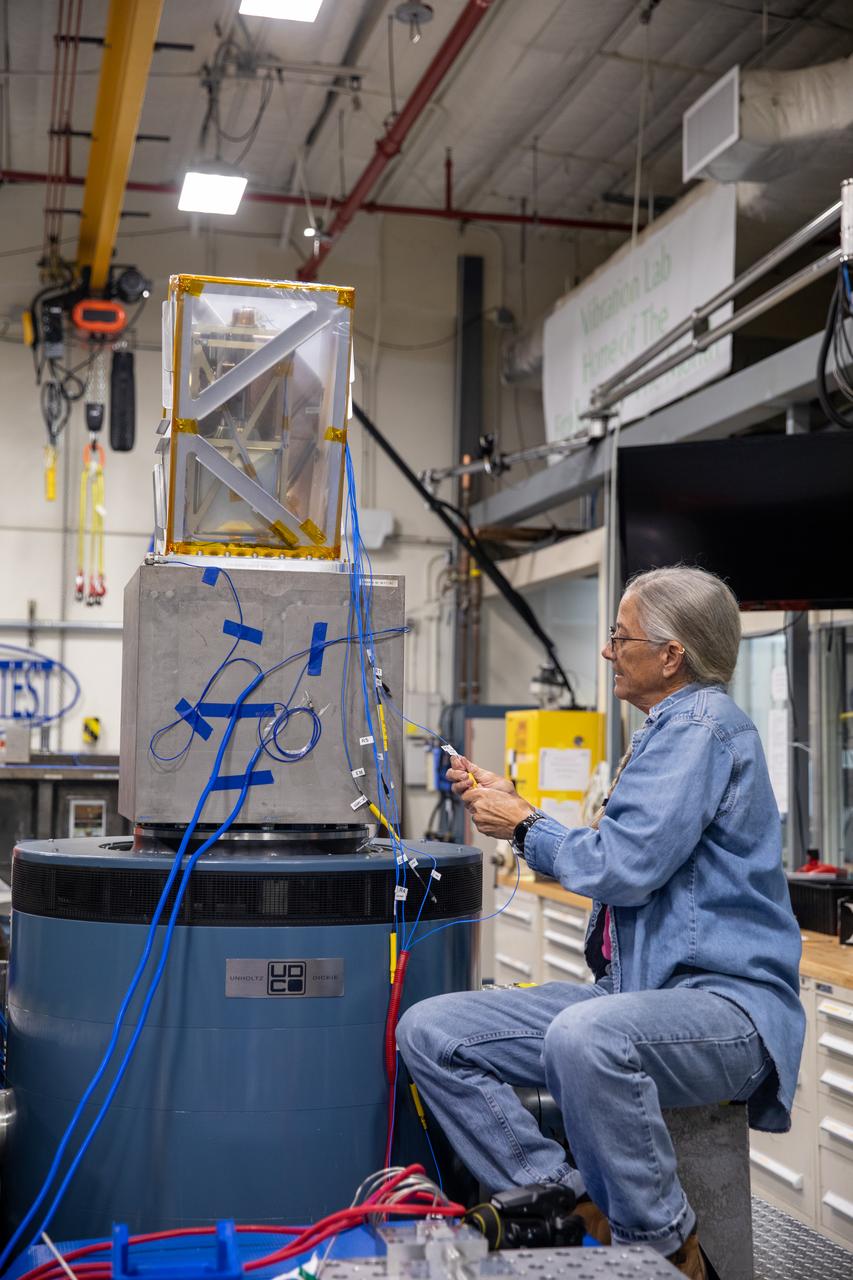
A Kennedy Space Center engineer prepares the Mass Spectrometer observing lunar operations (MSolo) instrument for vibration testing inside the Florida spaceport’s Cryogenics Laboratory on Aug. 3, 2022. MSolo is a commercial off-the-shelf mass spectrometer modified to work in space and will help analyze the chemical makeup of landing sites on the Moon, as well as study water on the lunar surface. Researchers and engineers are preparing MSolo instruments to launch on four robotic missions as part of NASA’s Commercial Lunar Payload Services (CLPS) – commercial deliveries that will perform science experiments, test technologies, and demonstrate capabilities to help NASA explore the Moon and prepare for crewed missions to the lunar surface. This particular MSolo instrument is slated to fly on the agency’s Polar Resources Ice Mining Experiment-1 (PRIME-1) mission – the first in-situ resource utilization demonstration on the Moon – as part of the agency’s CLPS initiative.
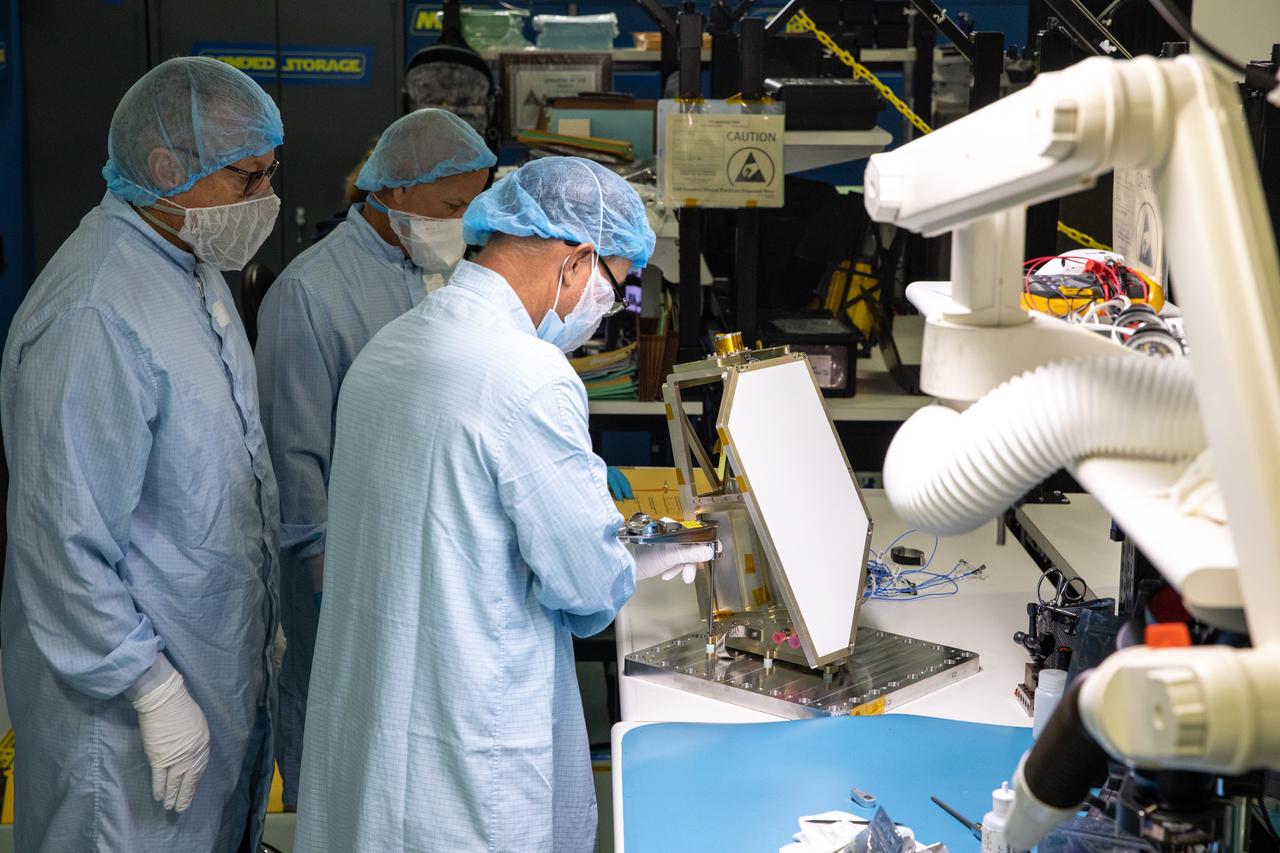
Engineers at NASA’s Kennedy Space Center in Florida remove the vibration fixture on the Mass Spectrometer observing lunar operations (MSolo) instrument on Aug. 4, 2022. The activity followed a vibration test in preparation for the Polar Resources Ice Mining Experiment-1 (PRIME-1) mission, which will be the first in-situ resource utilization demonstration on the Moon. MSolo is a commercial off-the-shelf mass spectrometer modified to work in space and will help analyze the chemical makeup of landing sites on the Moon, as well as study water on the lunar surface. Researchers and engineers are preparing MSolo instruments to launch on four robotic missions as part of NASA’s Commercial Lunar Payload Services – commercial deliveries beginning in 2023 that will perform science experiments, test technologies, and demonstrate capabilities to help NASA explore the Moon and prepare for crewed missions to the lunar surface.
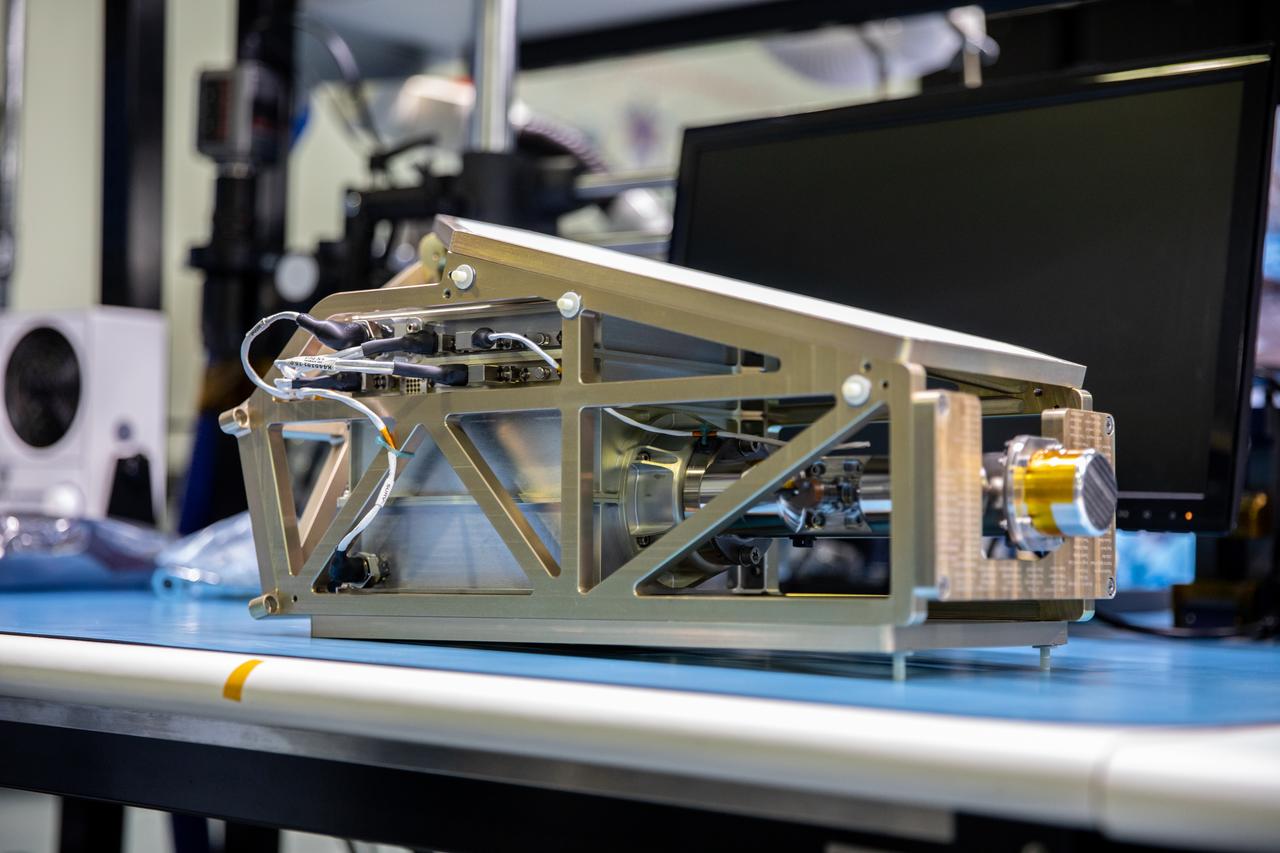
Engineers prepare the Mass Spectrometer Observing Lunar Operations (MSolo) instrument for the multilayer insulation installation inside Kennedy Space Center’s Space Station Processing Facility on Oct. 19, 2022. The activity is in preparation for the Polar Resources Ice Mining Experiment-1 (PRIME-1) mission, which will be the first in-situ resource utilization demonstration on the Moon. MSolo is a commercial off-the-shelf mass spectrometer modified to work in space and will help analyze the chemical makeup of landing sites on the Moon, as well as study water on the lunar surface. Researchers and engineers are preparing MSolo instruments to launch on four robotic missions as part of NASA’s Commercial Lunar Payload Services – commercial deliveries beginning in 2023 that will perform science experiments, test technologies, and demonstrate capabilities to help NASA explore the Moon and prepare for crewed missions to the lunar surface.
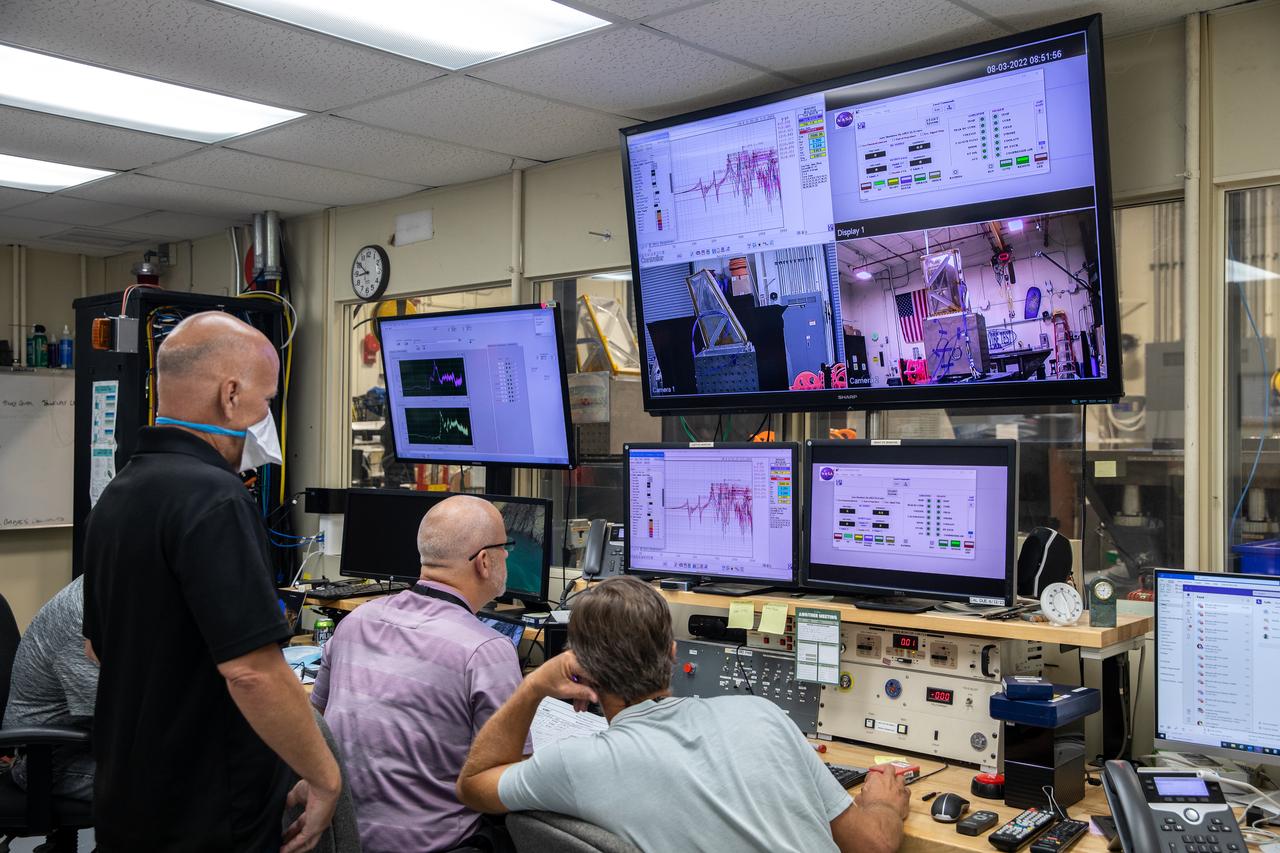
Engineers at NASA’s Kennedy Space Center monitor the Mass Spectrometer observing lunar operations (MSolo) instrument as it undergoes vibration testing inside the Florida spaceport’s Cryogenics Laboratory on Aug. 3, 2022. MSolo is a commercial off-the-shelf mass spectrometer modified to work in space and will help analyze the chemical makeup of landing sites on the Moon, as well as study water on the lunar surface. Researchers and engineers are preparing MSolo instruments to launch on four robotic missions as part of NASA’s Commercial Lunar Payload Services (CLPS) – commercial deliveries that will perform science experiments, test technologies, and demonstrate capabilities to help NASA explore the Moon and prepare for crewed missions to the lunar surface. This particular MSolo instrument is slated to fly on the agency’s Polar Resources Ice Mining Experiment-1 (PRIME-1) mission – the first in-situ resource utilization demonstration on the Moon – as part of the agency’s CLPS initiative.
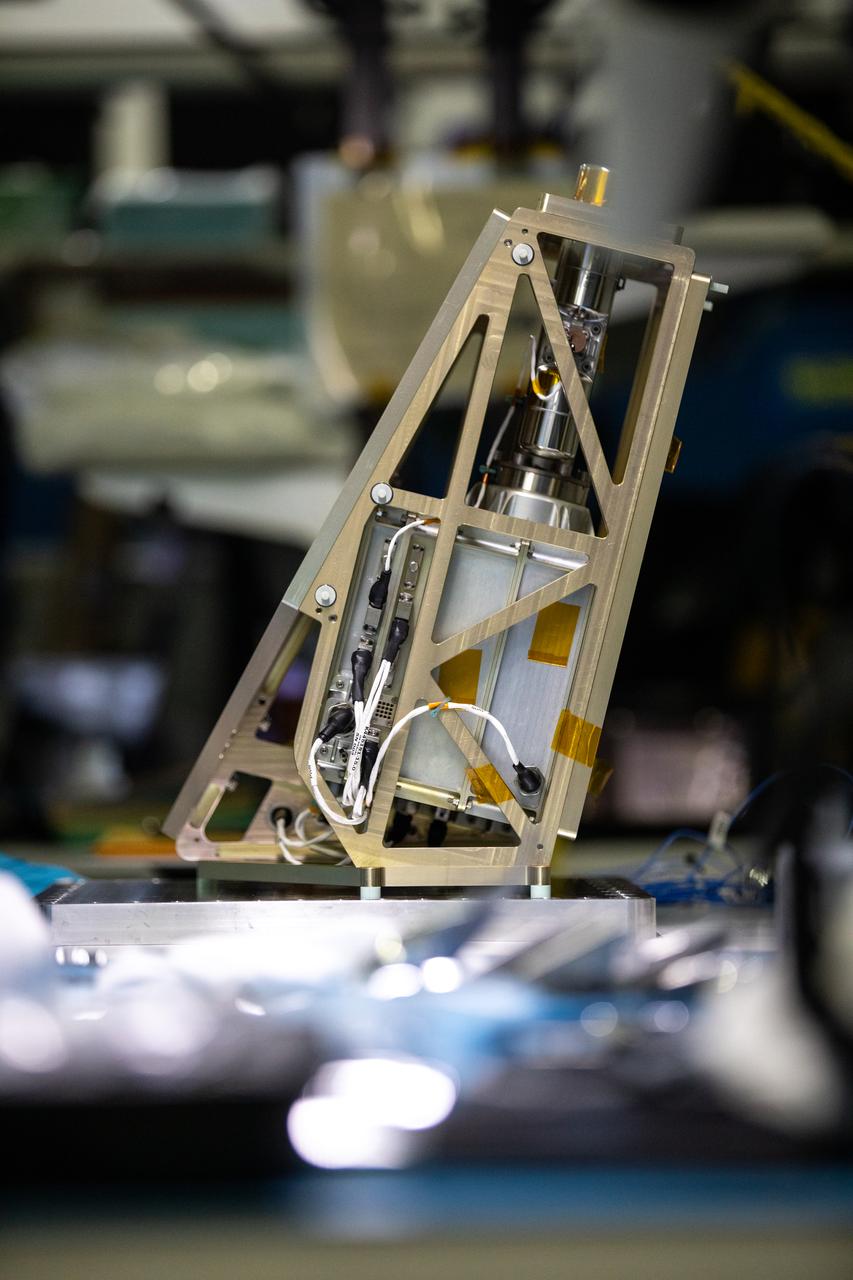
Engineers at NASA’s Kennedy Space Center in Florida remove the vibration fixture on the Mass Spectrometer observing lunar operations (MSolo) instrument on Aug. 4, 2022. The activity followed a vibration test in preparation for the Polar Resources Ice Mining Experiment-1 (PRIME-1) mission, which will be the first in-situ resource utilization demonstration on the Moon. MSolo is a commercial off-the-shelf mass spectrometer modified to work in space and will help analyze the chemical makeup of landing sites on the Moon, as well as study water on the lunar surface. Researchers and engineers are preparing MSolo instruments to launch on four robotic missions as part of NASA’s Commercial Lunar Payload Services – commercial deliveries beginning in 2023 that will perform science experiments, test technologies, and demonstrate capabilities to help NASA explore the Moon and prepare for crewed missions to the lunar surface.
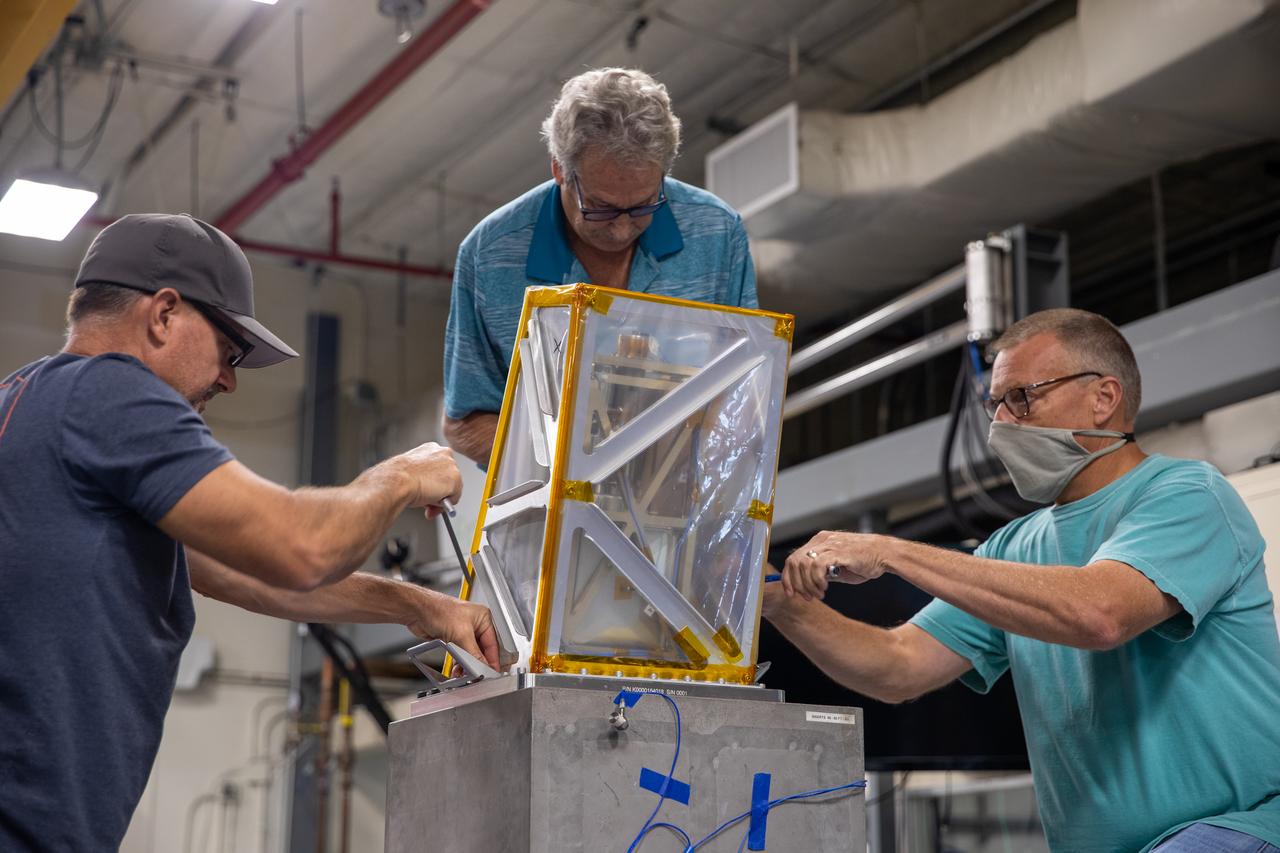
Engineers at NASA’s Kennedy Space Center prepare the Mass Spectrometer observing lunar operations (MSolo) instrument for vibration testing inside the Florida spaceport’s Cryogenics Laboratory on Aug. 3, 2022. MSolo is a commercial off-the-shelf mass spectrometer modified to work in space and will help analyze the chemical makeup of landing sites on the Moon, as well as study water on the lunar surface. Researchers and engineers are preparing MSolo instruments to launch on four robotic missions as part of NASA’s Commercial Lunar Payload Services (CLPS) – commercial deliveries that will perform science experiments, test technologies, and demonstrate capabilities to help NASA explore the Moon and prepare for crewed missions to the lunar surface. This particular MSolo instrument is slated to fly on the agency’s Polar Resources Ice Mining Experiment-1 (PRIME-1) mission – the first in-situ resource utilization demonstration on the Moon – as part of the agency’s CLPS initiative.
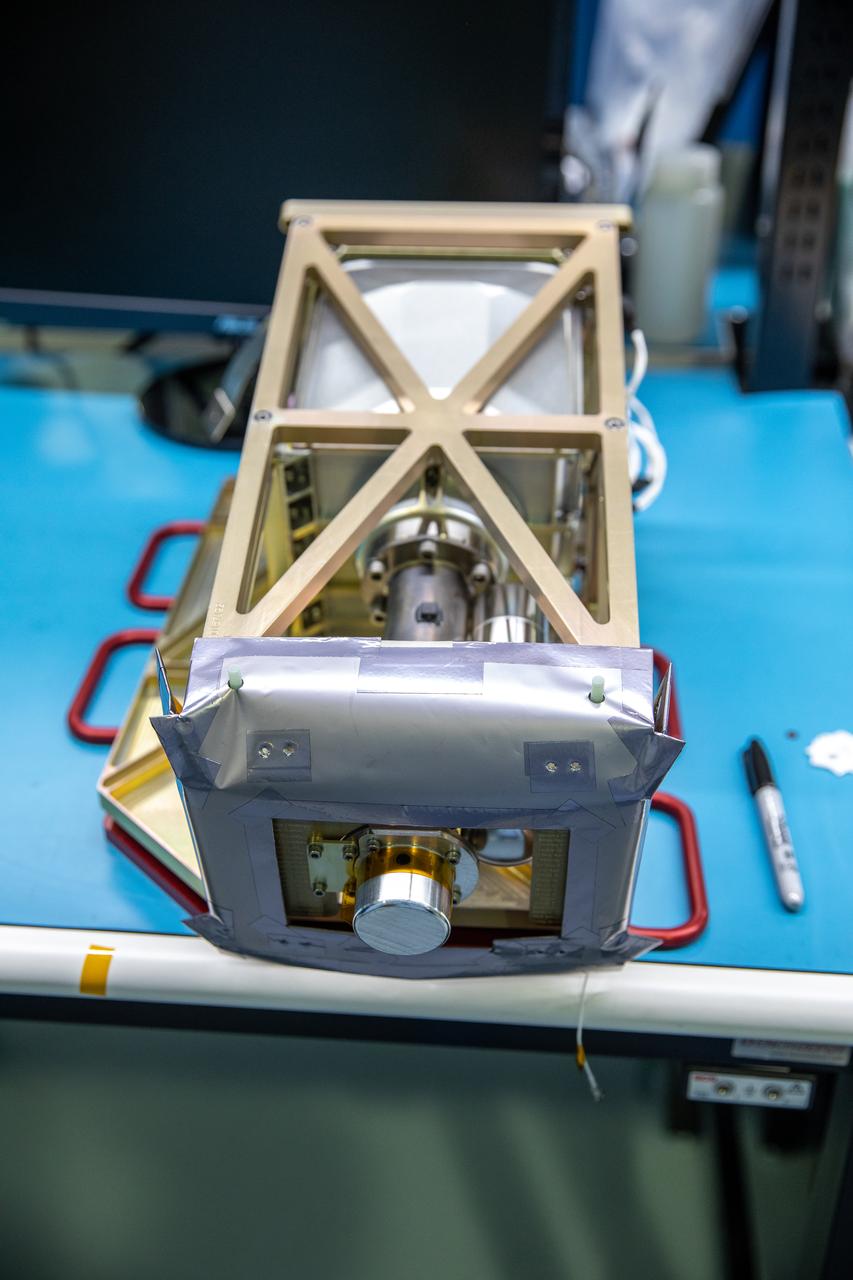
Engineers prepare the Mass Spectrometer Observing Lunar Operations (MSolo) instrument for the multilayer insulation installation inside Kennedy Space Center’s Space Station Processing Facility on Oct. 19, 2022. The activity is in preparation for the Polar Resources Ice Mining Experiment-1 (PRIME-1) mission, which will be the first in-situ resource utilization demonstration on the Moon. MSolo is a commercial off-the-shelf mass spectrometer modified to work in space and will help analyze the chemical makeup of landing sites on the Moon, as well as study water on the lunar surface. Researchers and engineers are preparing MSolo instruments to launch on four robotic missions as part of NASA’s Commercial Lunar Payload Services – commercial deliveries beginning in 2023 that will perform science experiments, test technologies, and demonstrate capabilities to help NASA explore the Moon and prepare for crewed missions to the lunar surface.