
The Space Shuttle Endeavour receives post-flight servicing in the Mate-Demate Device (MDD), following its landing at NASA's Dryden Flight Research Center, Edwards, California, June 19, 2002.

The Space Shuttle Endeavour receives post-flight servicing in the Mate-Demate Device (MDD), following its landing at NASA's Dryden Flight Research Center, Edwards, California, May 1, 2001. Once servicing was complete, one of NASA's two 747 Shuttle Carrier Aircraft, No. 905, was readied to ferry Endeavour back to the Kennedy Space Center, FL.
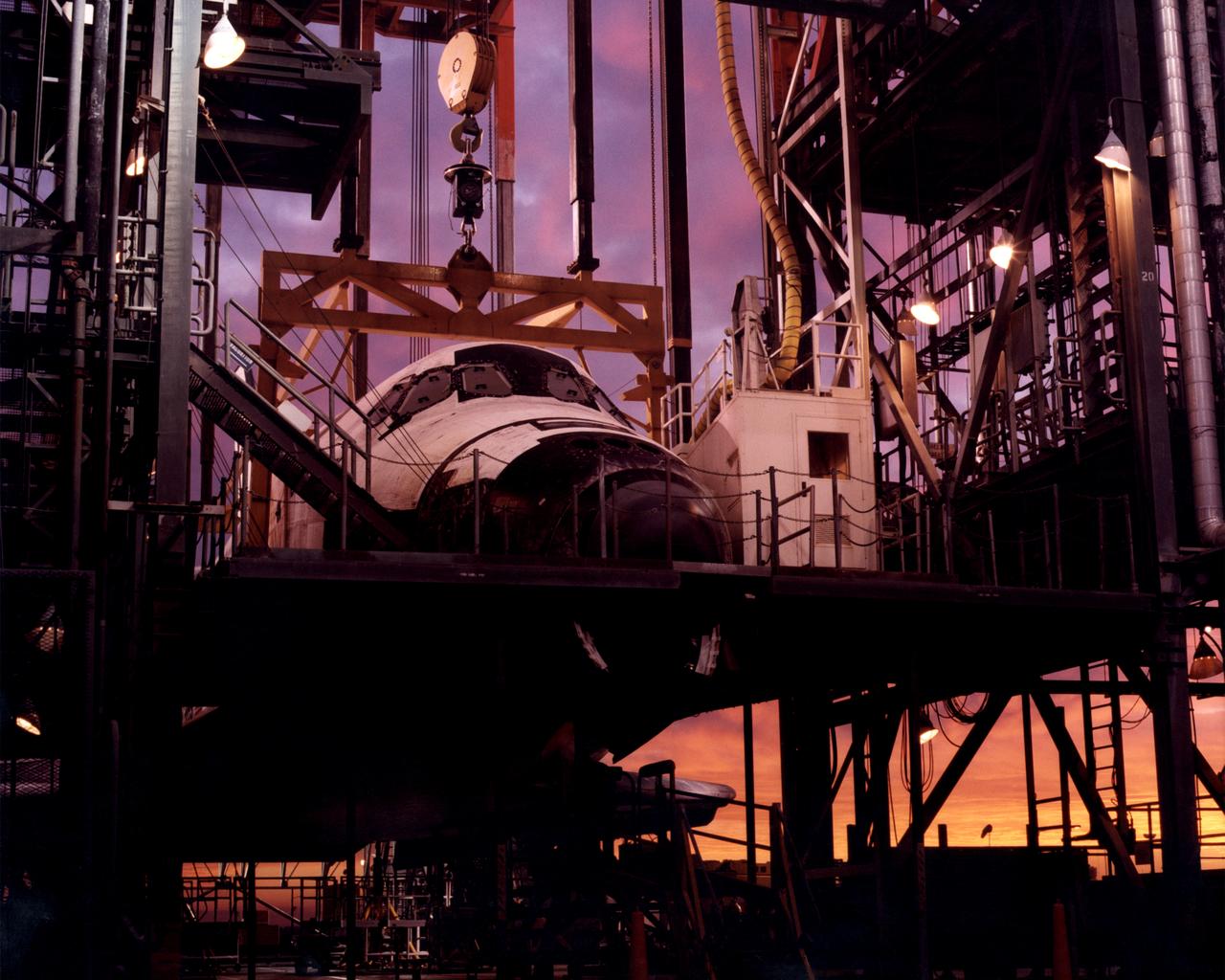
The early-morning Sun bathes the Space Shuttle Discovery in hues of purple, pink and gold as it is encased in the Mate-Demate Device (MDD) at NASA’s Dryden Flight Research Center at Edwards, California. The gantry-like MDD structure is used to prepare the shuttle for its ferry flight back to the Kennedy space Center in Florida, including mounting the shuttle atop NASA’s modified Boeing 747 Shuttle Carrier Aircraft.
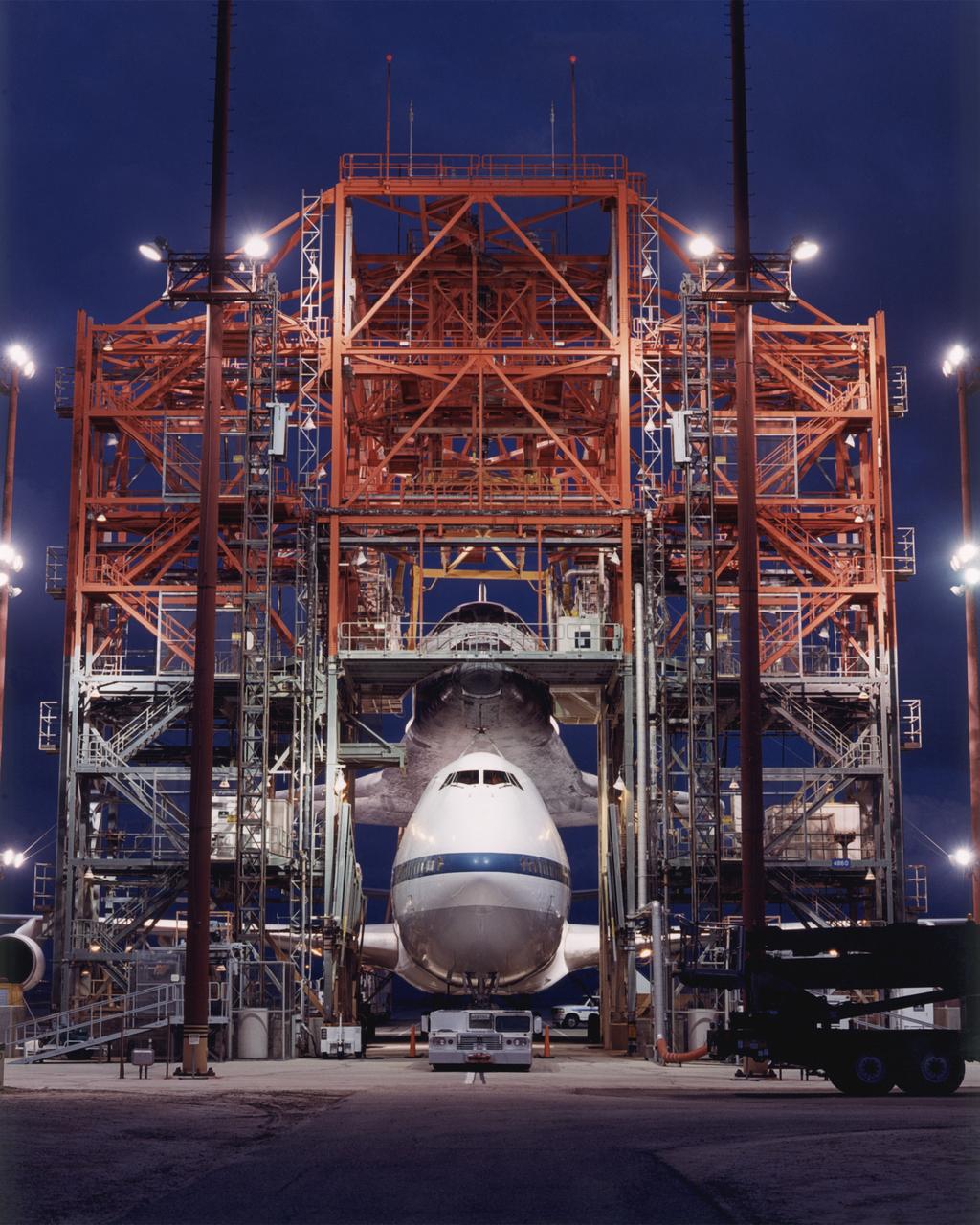
The Space Shuttle Atlantis is centered in the Mate-Demate Device (MDD) at NASA's Dryden Flight Research Center at Edwards, California. The gantry-like MDD structure is used for servicing the shuttle orbiters in preparation for their ferry flight back to the Kennedy Space Center in Florida, including mounting the shuttle atop NASA's modified Boeing 747 Shuttle Carrier Aircraft. Space Shuttle Atlantis landed at 12:33 p.m. February 20, 2001, on the runway at Edwards Air Force Base, California, where NASA's Dryden Flight Research Center is located. The mission, which began February 7, logged 5.3 million miles as the shuttle orbited earth while delivering the Destiny science laboratory to the International Space Station. Inclement weather conditions in Florida prompted the decision to land Atlantis at Edwards. The last time a space shuttle landed at Edwards was Oct. 24, 2000.
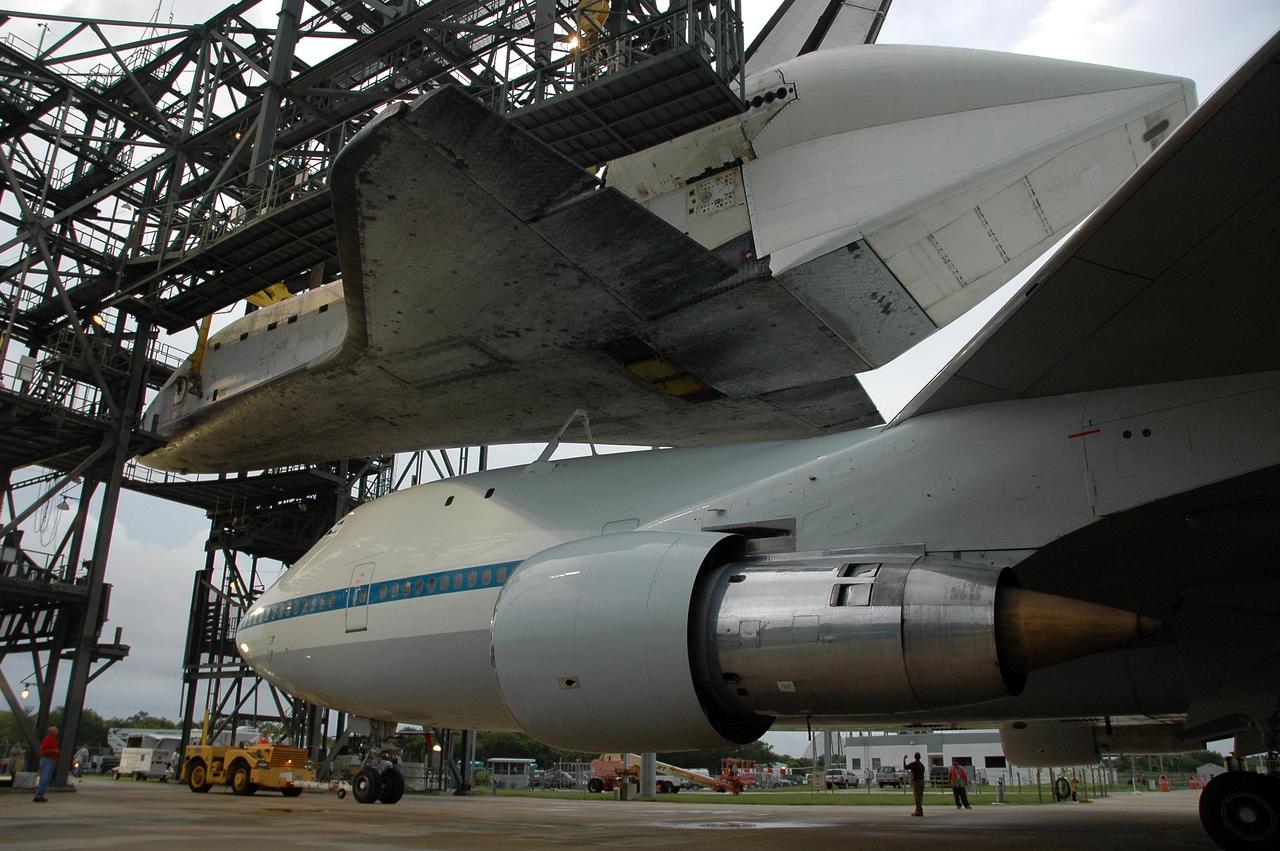
KENNEDY SPACE CENTER, FLA. -- At the mate/demate device at Kennedy Space Center's Shuttle Landing Facility, Atlantis is lifted up from the shuttle carrier aircraft, or SCA. The SCA is backed away from the mate/demate device. Visible on Atlantis is the tail cone that covers and protects the main engines during the ferry flight. The orbiter will be lowered to the ground and then towed to the Orbiter Processing Facility to begin processing for its next launch, mission STS-122 in December. Atlantis arrived at Kennedy Space Center atop the SCA on July 3 after a three-day, cross-country flight due to fuel stops and weather delays. Touchdown was at 8:27 a.m. EDT. Atlantis landed at Edwards Air Force Base in California on June 22 to end mission STS-117. Photo credit: NASA/Jack Pfaller.
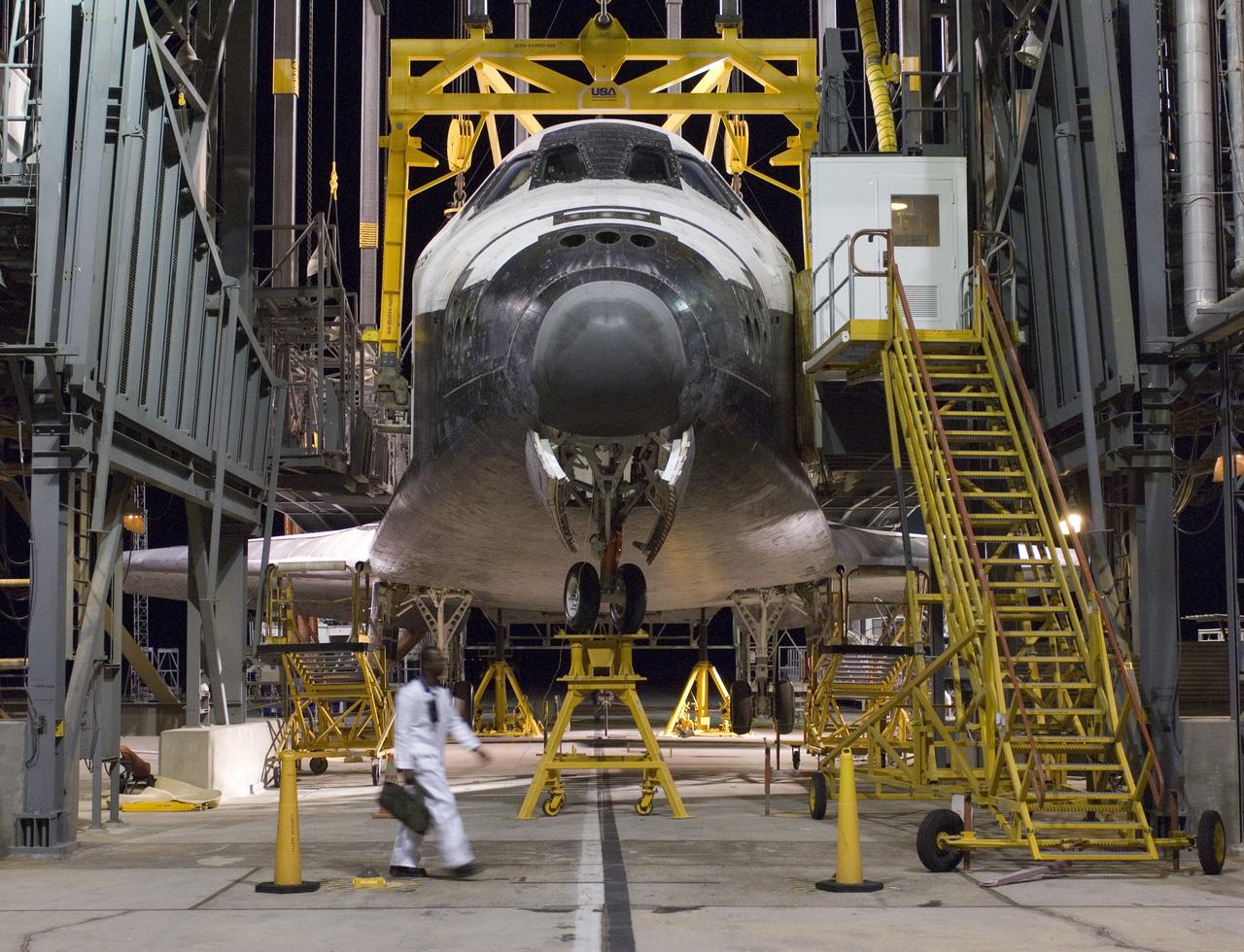
The Space Shuttle Atlantis receives post-flight servicing in the Mate-Demate Device (MDD), following its landing at NASA's Dryden Flight Research Center, Edwards, California, June 22, 2007. The gantry-like MDD structure is used for servicing the shuttle orbiters in preparation for their ferry flight back to the Kennedy Space Center in Florida, including mounting the shuttle atop NASA's modified Boeing 747 Shuttle Carrier Aircraft.

Lit by sunlight filtered through the smoke of a distant forest fire, the Space Shuttle Atlantis receives post-flight servicing in the Mate-Demate Device (MDD), following its landing at NASA's Dryden Flight Research Center, Edwards, California. The gantry-like MDD structure is used for servicing the shuttle orbiters in preparation for their ferry flight back to the Kennedy Space Center in Florida, including mounting the shuttle atop NASA's modified Boeing 747 Shuttle Carrier Aircraft.
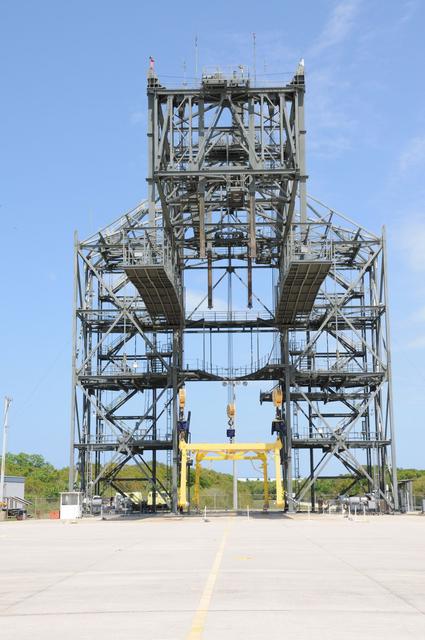
View of the Mate-Demate Device
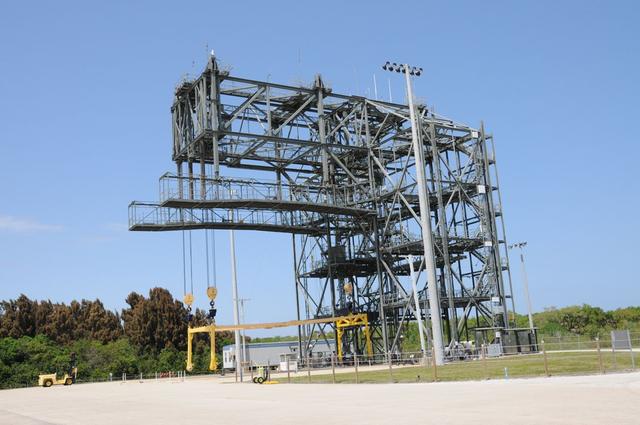
View of the Mate-Demate Device
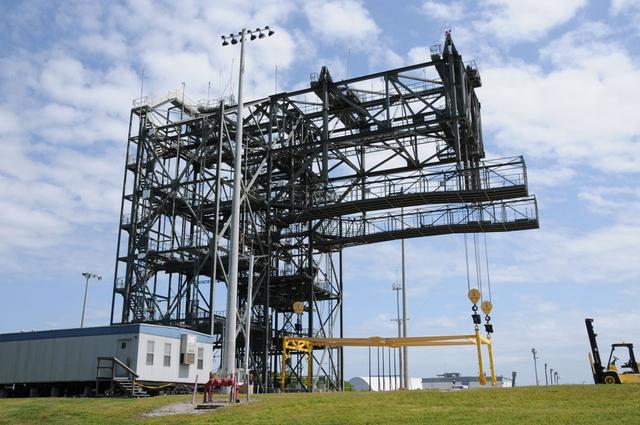
View of the Mate-Demate Device
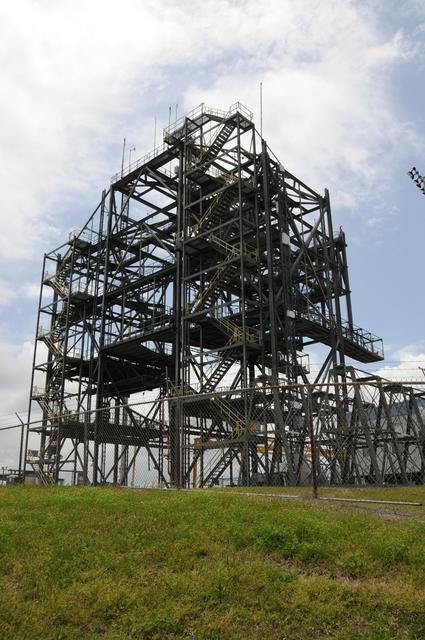
View of the Mate-Demate Device
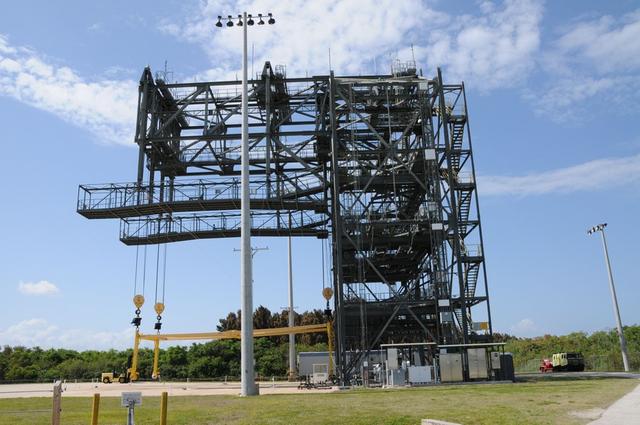
View of the Mate-Demate Device
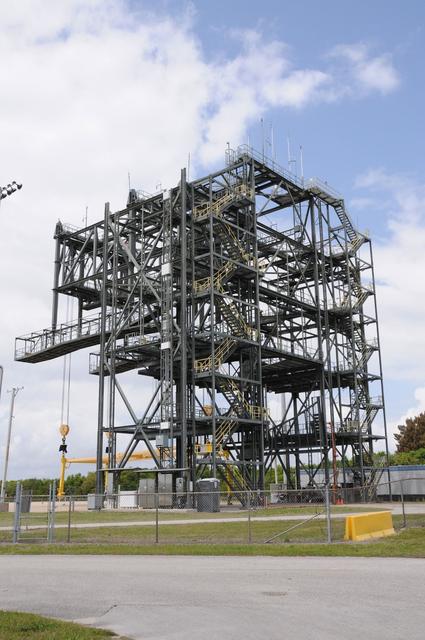
View of the Mate-Demate Device
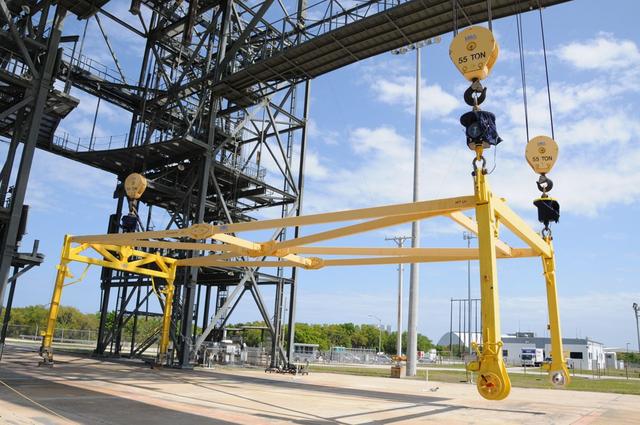
View of the Mate-Demate Device
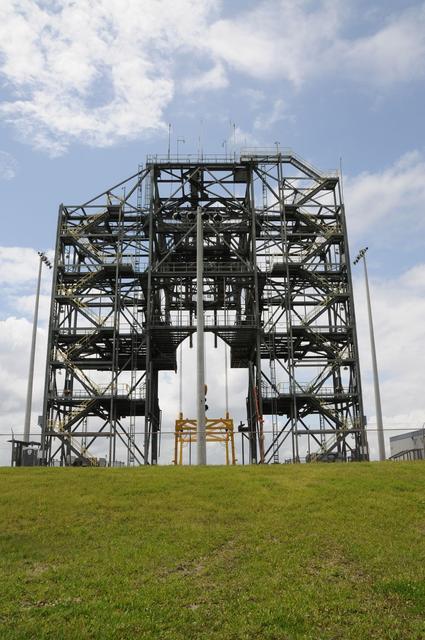
View of the Mate-Demate Device
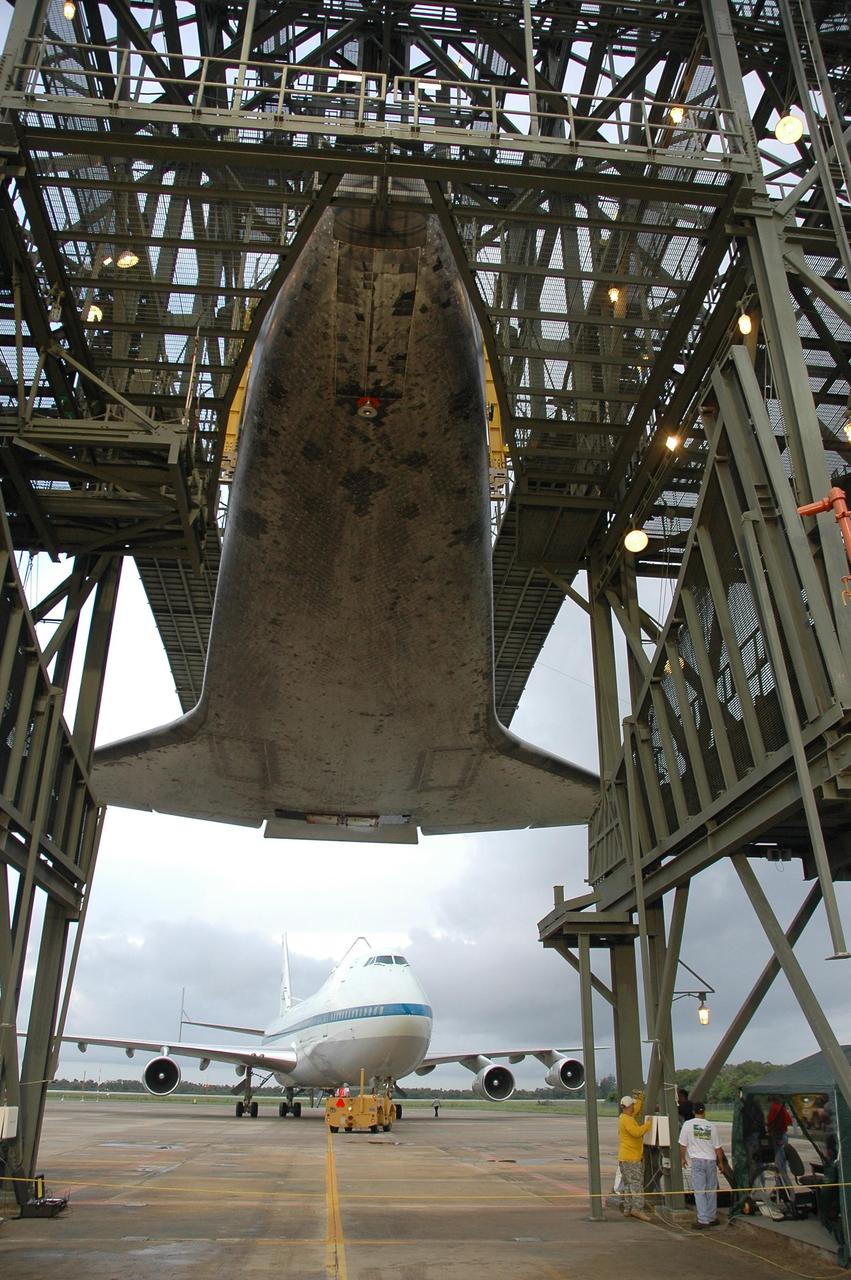
KENNEDY SPACE CENTER, FLA. -- At the mate/demate device at Kennedy Space Center's Shuttle Landing Facility, work begins to lower Atlantis to the ground. In the background, a towing device is used to back the shuttle carrier aircraft, or SCA, away from the device. When the orbiter is lowered to the ground it will be towed to the Orbiter Processing Facility to begin processing for its next launch, mission STS-122 in December. Atlantis arrived at Kennedy Space Center atop the SCA on July 3 after a three-day, cross-country flight due to fuel stops and weather delays. Touchdown was at 8:27 a.m. EDT. Atlantis landed at Edwards Air Force Base in California on June 22 to end mission STS-117. Photo credit: NASA/Jack Pfaller.

KENNEDY SPACE CENTER, FLA. -- At the mate/demate device at Kennedy Space Center's Shuttle Landing Facility, Atlantis is lifted up as the shuttle carrier aircraft, or SCA, begins to back away. The orbiter will be lowered to the ground and then towed to the Orbiter Processing Facility to begin processing for its next launch, mission STS-122 in December. Atlantis arrived at Kennedy Space Center atop the SCA on July 3 after a three-day, cross-country flight due to fuel stops and weather delays. Touchdown was at 8:27 a.m. EDT. Atlantis landed at Edwards Air Force Base in California on June 22 to end mission STS-117. Photo credit: NASA/Jack Pfaller.
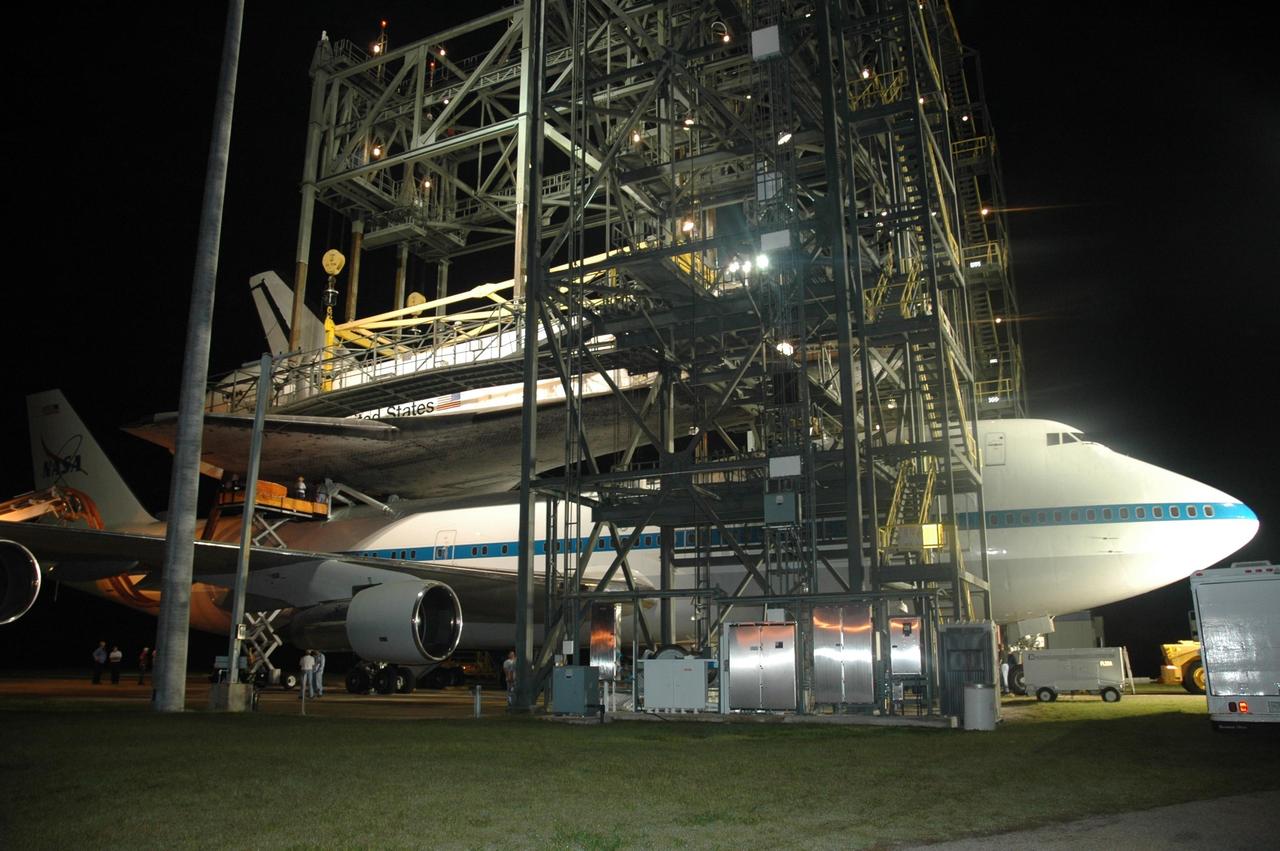
KENNEDY SPACE CENTER, FLA. -- A soft glow surrounds Atlantis as it is lifted up from the shuttle carrier aircraft, or SCA, at the mate/demate device at Kennedy Space Center's Shuttle Landing Facility. The orbiter will be lowered to the ground and then towed to the Orbiter Processing Facility to begin processing for its next launch, mission STS-122 in December. Atlantis arrived at Kennedy Space Center atop the SCA on July 3 after a three-day, cross-country flight due to fuel stops and weather delays. Touchdown was at 8:27 a.m. EDT. Atlantis landed at Edwards Air Force Base in California on June 22 to end mission STS-117. Photo credit: NASA/Jack Pfaller.
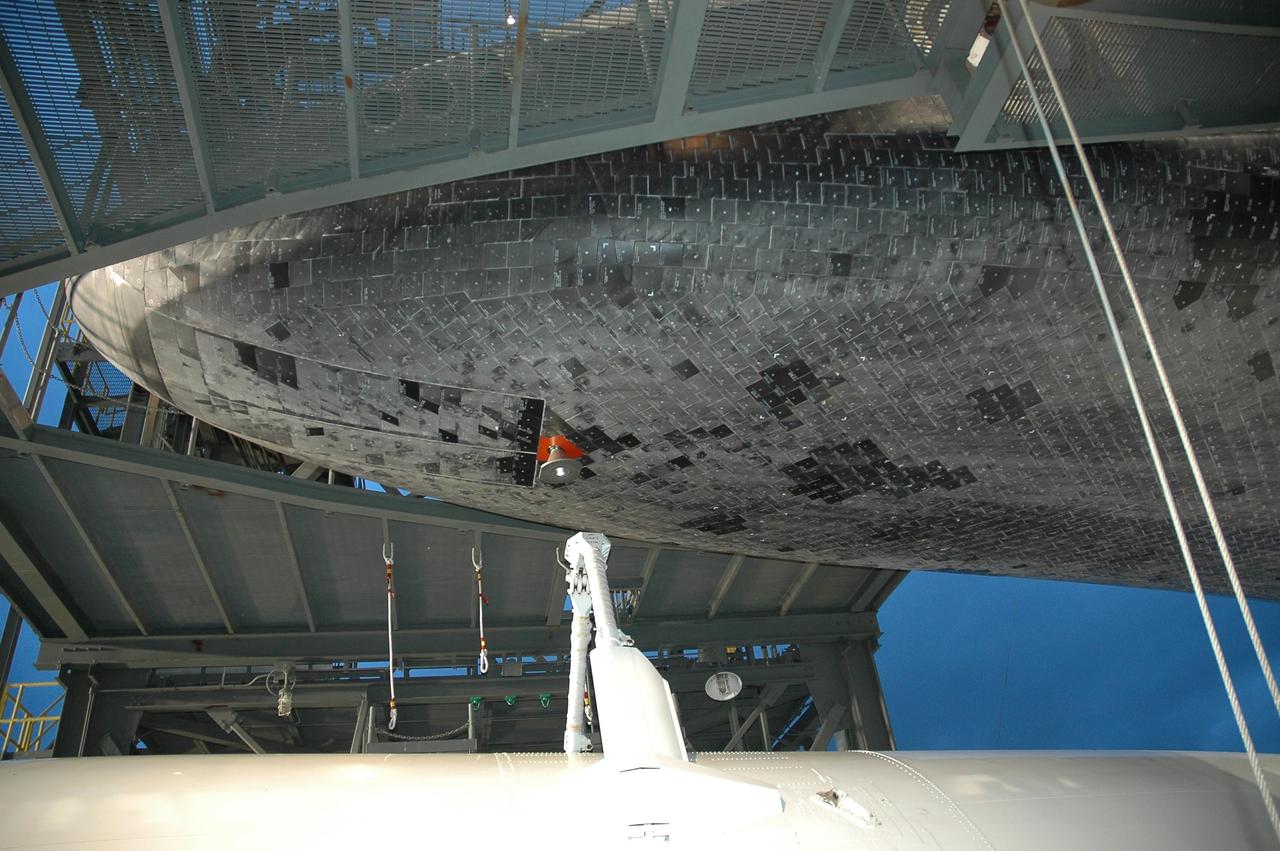
KENNEDY SPACE CENTER, FLA. -- At the mate/demate device at Kennedy Space Center's Shuttle Landing Facility, Atlantis is lifted up from the shuttle carrier aircraft, or SCA, beneath it. The orbiter will be lowered to the ground and then towed to the Orbiter Processing Facility to begin processing for its next launch, mission STS-122 in December. Atlantis arrived at Kennedy Space Center atop the SCA on July 3 after a three-day, cross-country flight due to fuel stops and weather delays. Touchdown was at 8:27 a.m. EDT. Atlantis landed at Edwards Air Force Base in California on June 22 to end mission STS-117. Photo credit: NASA/Jack Pfaller.
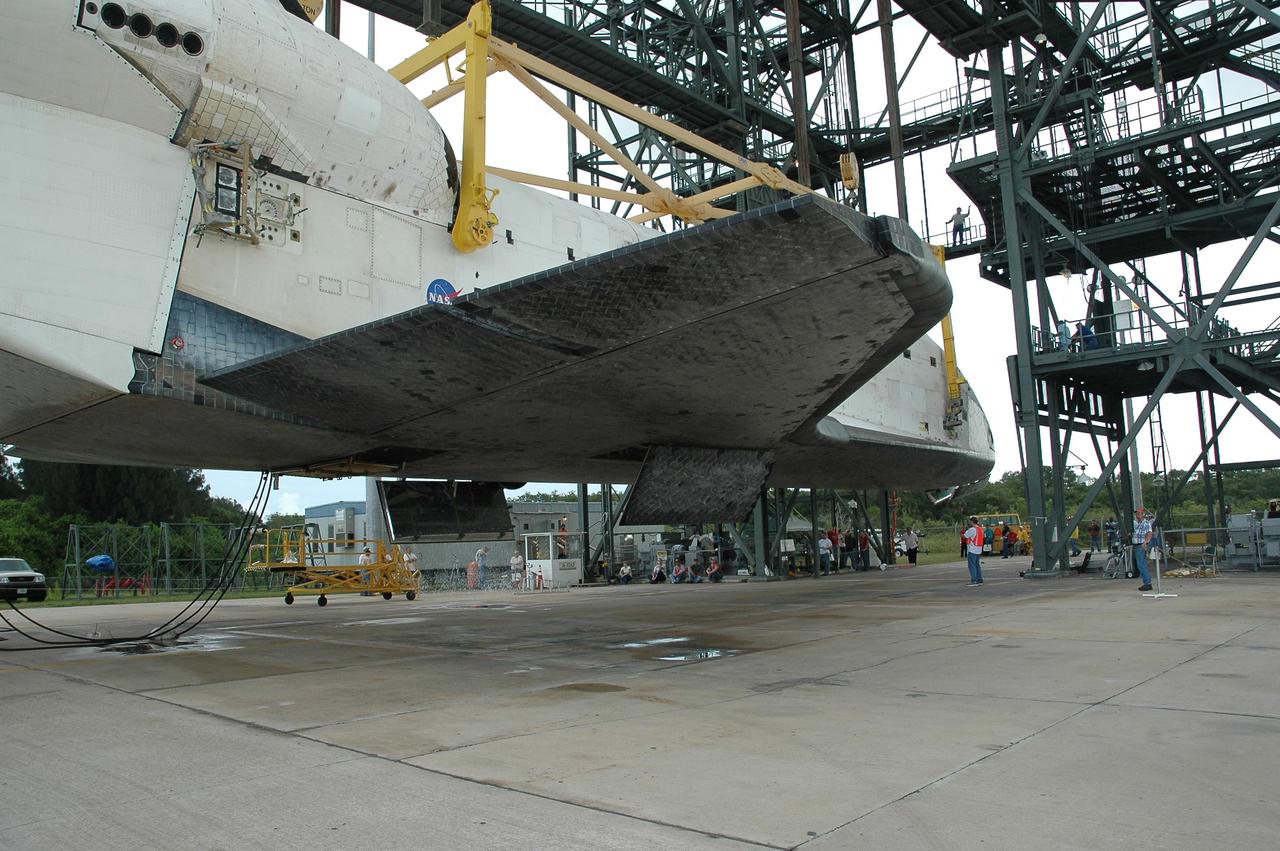
KENNEDY SPACE CENTER, FLA. -- Atlantis is slowly lowered to the ground at the mate/demate device at Kennedy Space Center's Shuttle Landing Facility. The orbiter will be detached from the lifting crane and then towed to the Orbiter Processing Facility to begin processing for its next launch, mission STS-122 in December. Atlantis arrived at Kennedy Space Center atop the SCA on July 3 after a three-day, cross-country flight due to fuel stops and weather delays. Touchdown was at 8:27 a.m. EDT. Atlantis landed at Edwards Air Force Base in California on June 22 to end mission STS-117. Photo credit: NASA/Jack Pfaller.
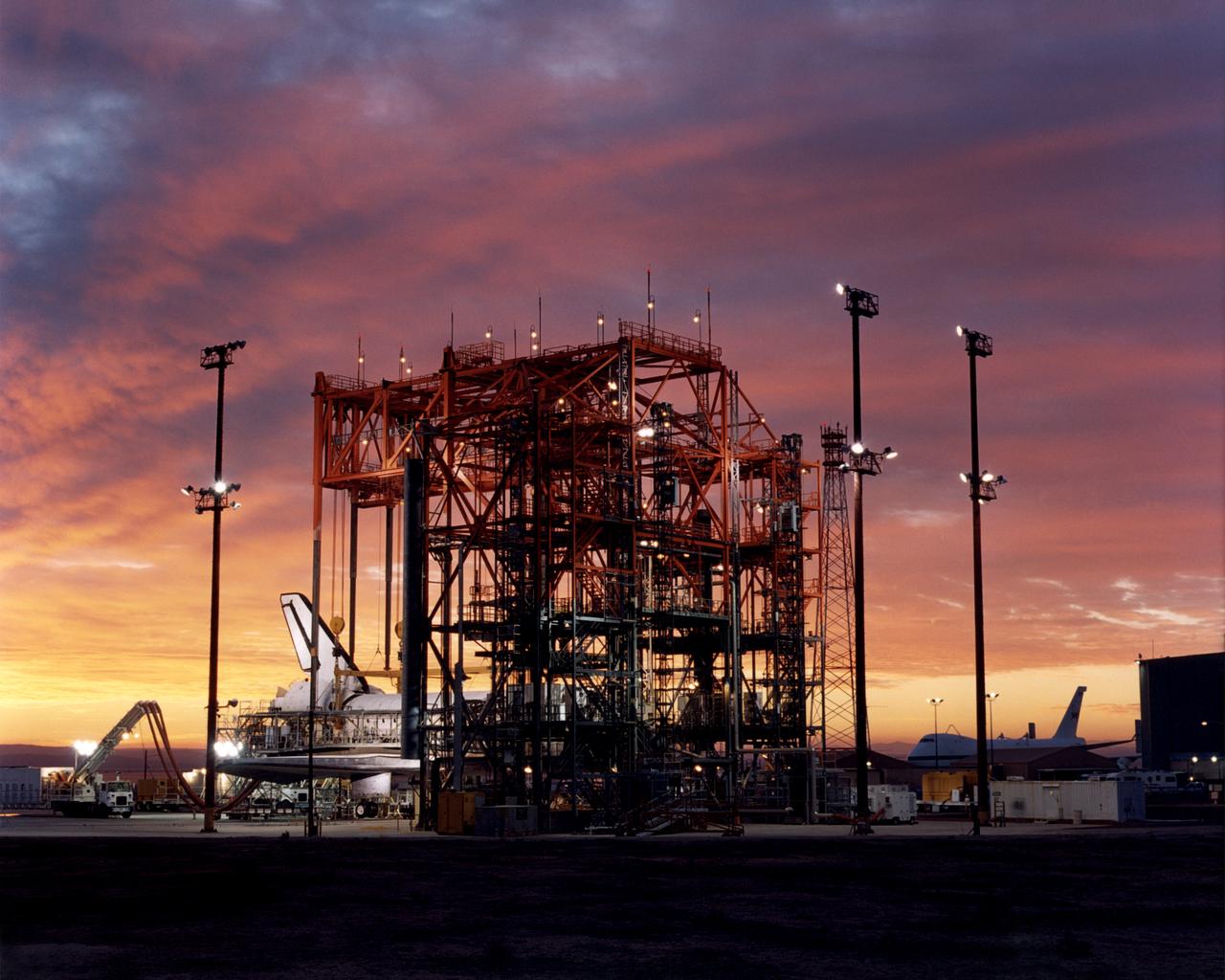
The early-morning Sun bathes the Space Shuttle Discovery in hues of purple, pink and gold as it is encased in the Mate-Demate Device (MDD) at NASA’s Dryden Flight Research Center at Edwards, California. The gantry-like MDD structure is used to prepare the shuttle for its ferry flight back to the Kennedy space Center in Florida, including mounting the shuttle atop NASA’s modified Boeing 747 Shuttle Carrier Aircraft.
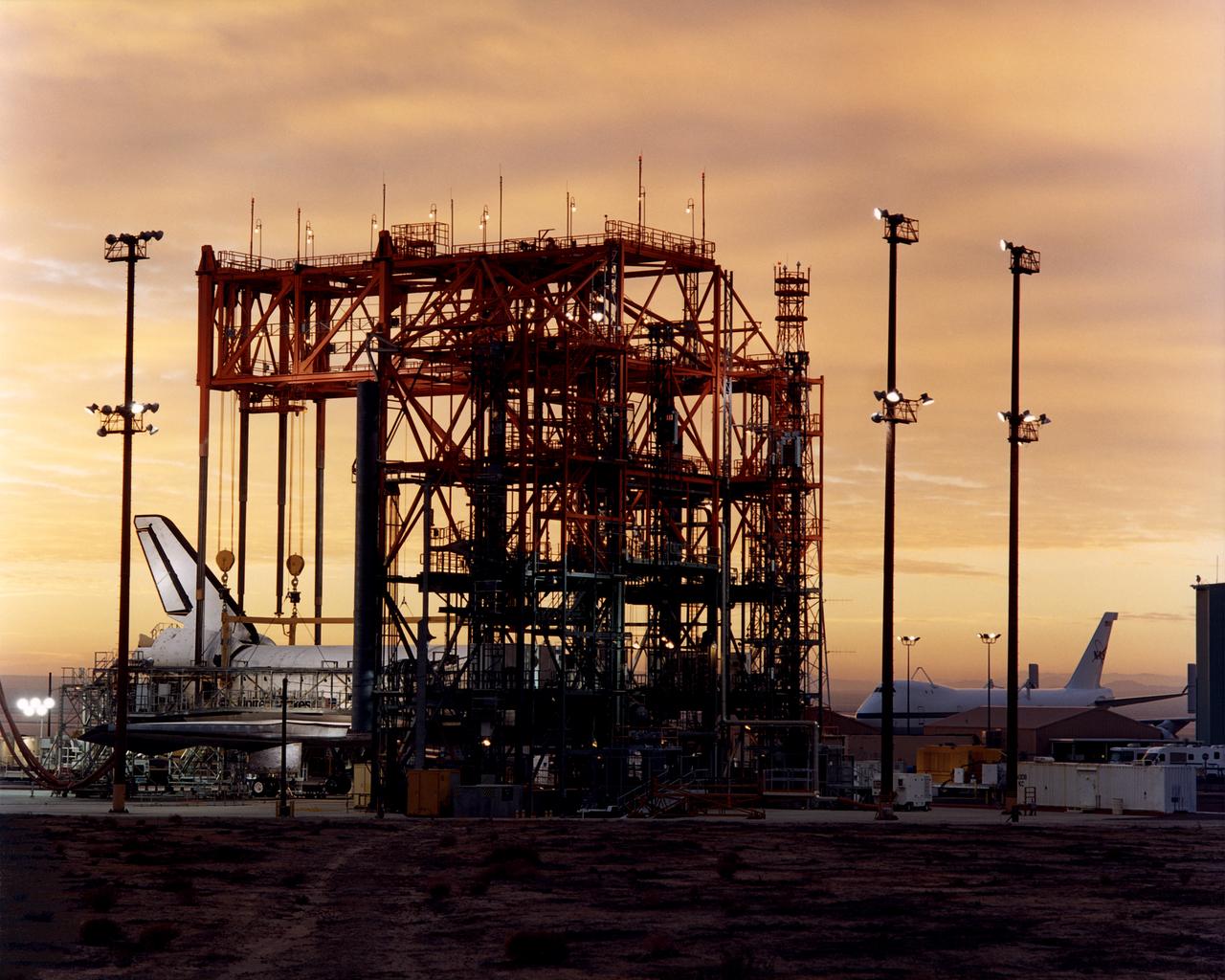
The early-morning Sun provides a golden backdrop to the Space Shuttle Discovery encased in the Mate-Demate Device (MDD) at NASA’s Dryden Flight Research Center at Edwards, California. The gantry-like MDD structure is used to prepare the shuttle for its ferry flight back to the Kennedy Space Center in Florida, including mounting the shuttle atop NASA’s modified Boeing 747 Shuttle Carrier Aircraft.
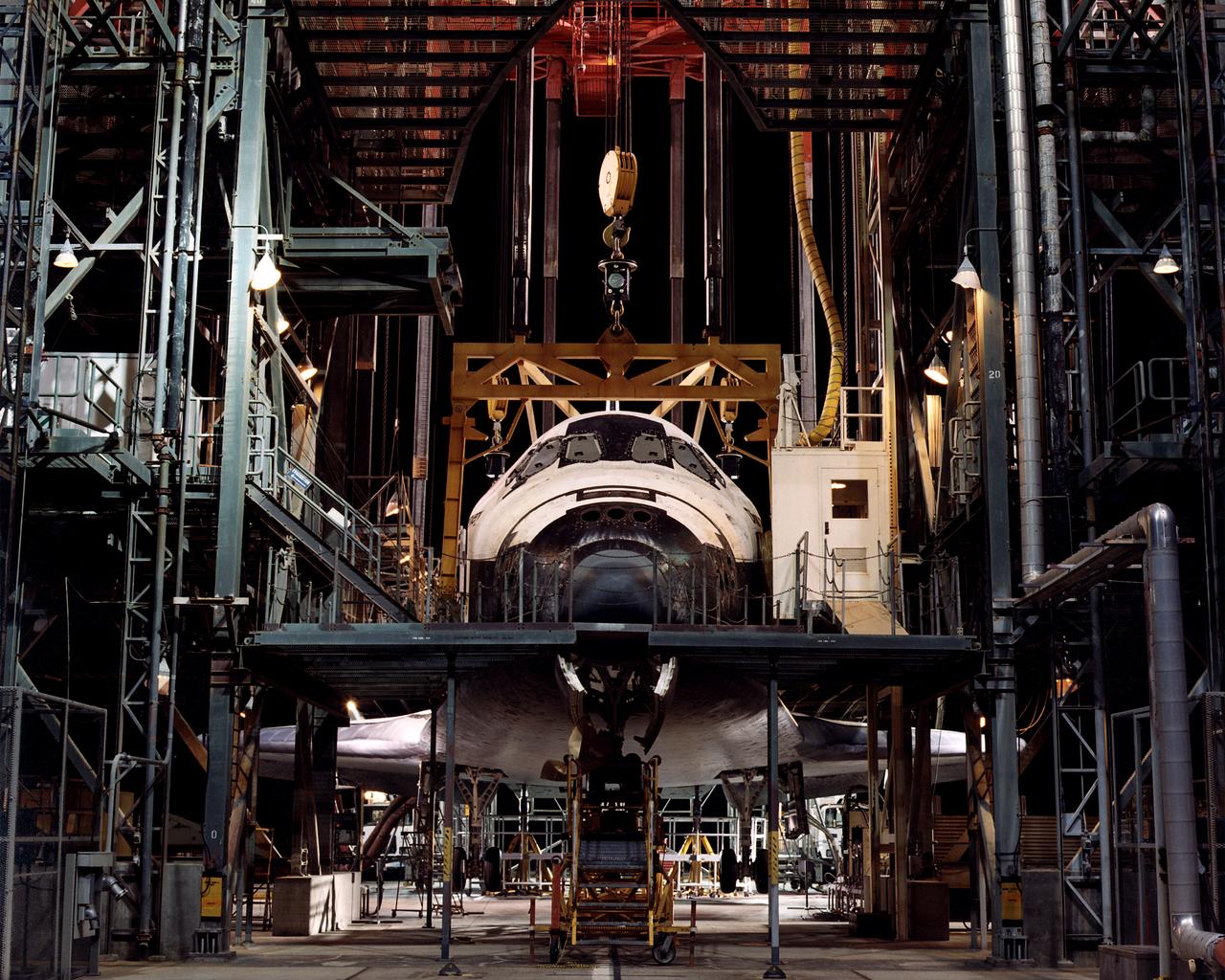
The Space Shuttle Discovery is centered in the Mate-Demate Device (MDD) at NASA’s Dryden Flight Research Center at Edwards, California. The gantry-like MDD structure is used for servicing the shuttle orbiters in preparation for their ferry flight back to the Kennedy Space Center in Florida, including mounting the shuttle atop NASA’s modified Boeing 747 Shuttle Carrier Aircraft.
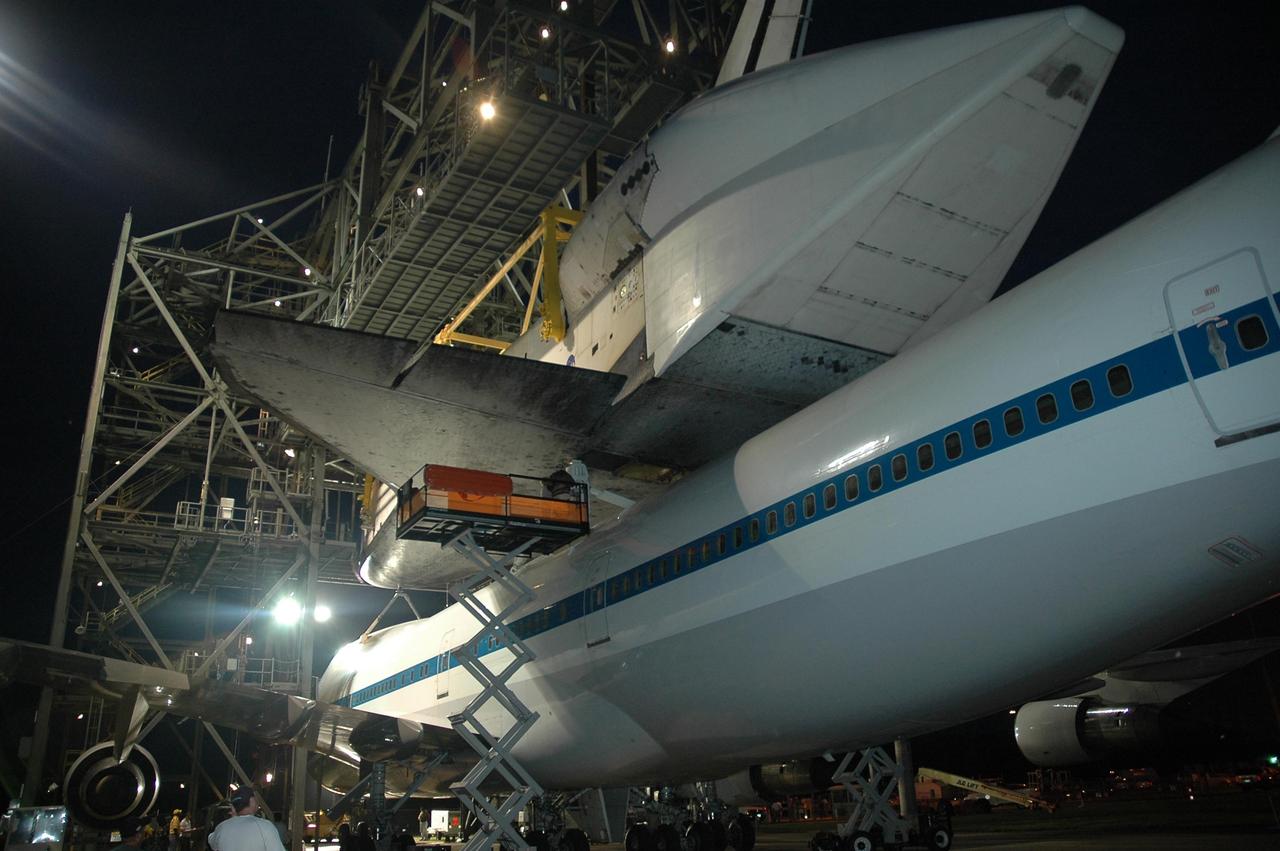
KENNEDY SPACE CENTER, FLA. -- At the mate/demate device at Kennedy Space Center's Shuttle Landing Facility, the lifting crane begins to lift Atlantis up from the shuttle carrier aircraft, or SCA, beneath it. Visible on Atlantis is the tail cone that covers and protects the main engines during the ferry flight. Technicians monitor the lifting process on a raised platform to the left. Atlantis arrived at Kennedy Space Center atop the SCA on July 3 after a three-day, cross-country flight due to fuel stops and weather delays. Touchdown was at 8:27 a.m. EDT. Atlantis landed at Edwards Air Force Base in California on June 22 to end mission STS-117. Photo credit: NASA/Jack Pfaller.
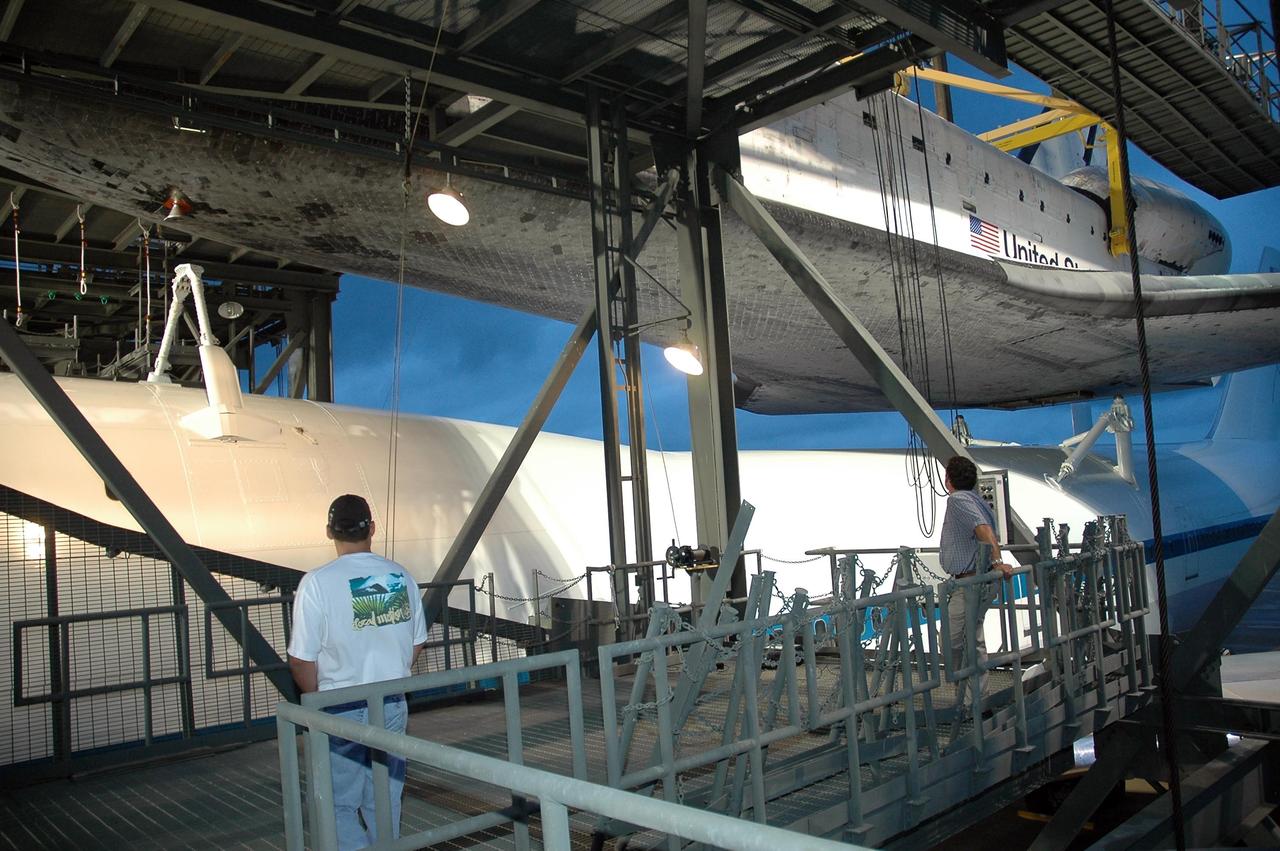
KENNEDY SPACE CENTER, FLA. -- On the mate/demate device at Kennedy Space Center's Shuttle Landing Facility, technicians monitor the progress as Atlantis is lifted up from the shuttle carrier aircraft, or SCA, beneath it. The orbiter will be lowered to the ground and then towed to the Orbiter Processing Facility to begin processing for its next launch, mission STS-122 in December. Atlantis arrived at Kennedy Space Center atop the SCA on July 3 after a three-day, cross-country flight due to fuel stops and weather delays. Touchdown was at 8:27 a.m. EDT. Atlantis landed at Edwards Air Force Base in California on June 22 to end mission STS-117. Photo credit: NASA/Jack Pfaller.
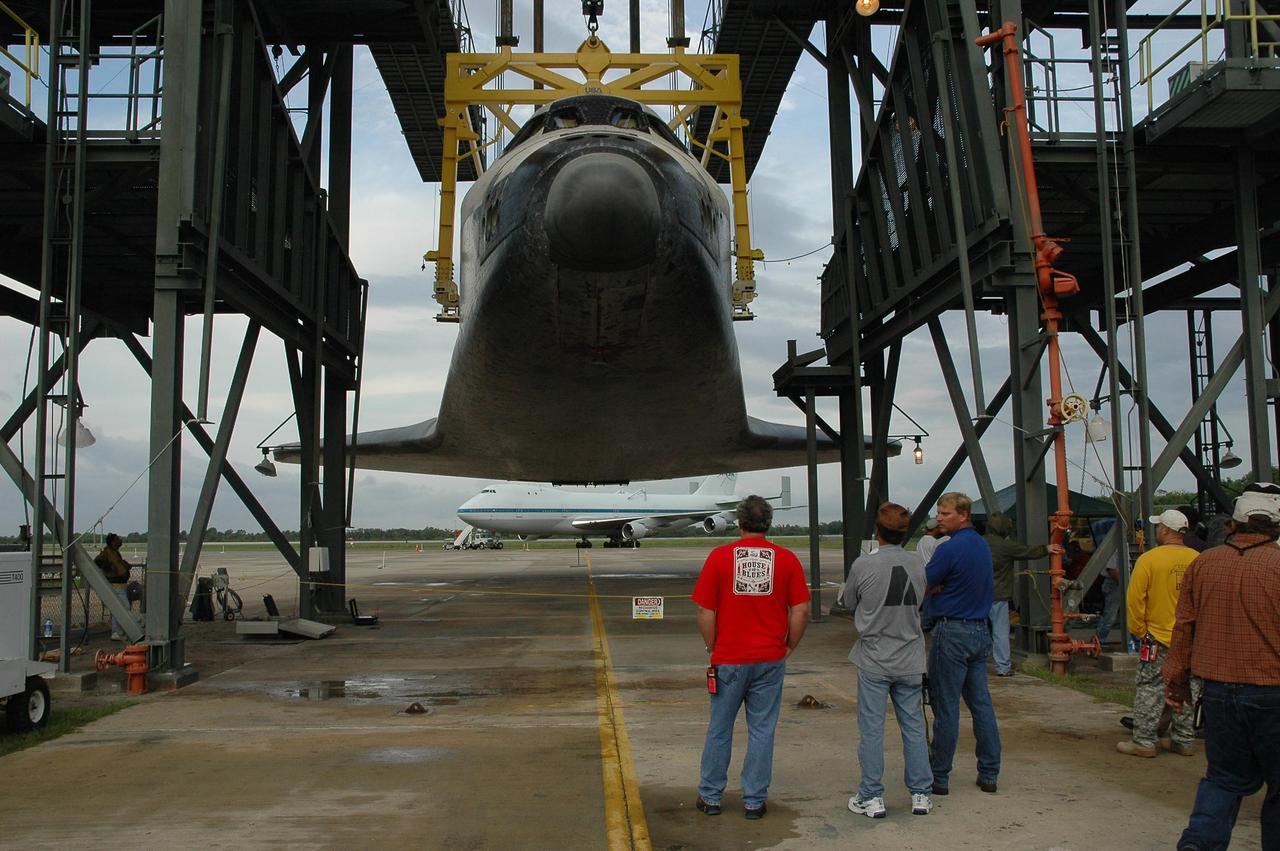
KENNEDY SPACE CENTER, FLA. -- At the mate/demate device at Kennedy Space Center's Shuttle Landing Facility, the crane lowers Atlantis close to the ground. The shuttle carrier aircraft, or SCA, can be seen in the background. Once on the ground, the orbiter will be towed to the Orbiter Processing Facility to begin processing for its next launch, mission STS-122 in December. Atlantis arrived at Kennedy Space Center atop the SCA on July 3 after a three-day, cross-country flight due to fuel stops and weather delays. Touchdown was at 8:27 a.m. EDT. Atlantis landed at Edwards Air Force Base in California on June 22 to end mission STS-117. Photo credit: NASA/Jack Pfaller.

KENNEDY SPACE CENTER, FLA. -- On the mate/demate device at Kennedy Space Center's Shuttle Landing Facility, technicians attach a lifting crane to Atlantis. The orbiter will be lifted up from the shuttle carrier aircraft, or SCA, and lowered to the ground. Then Atlantis will be towed to the Orbiter Processing Facility to begin processing for its next launch, mission STS-122 in December. Atlantis arrived at Kennedy Space Center atop the SCA on July 3 after a three-day, cross-country flight due to fuel stops and weather delays. Touchdown was at 8:27 a.m. EDT. Atlantis landed at Edwards Air Force Base in California on June 22 to end mission STS-117. Photo credit: NASA/Jack Pfaller.
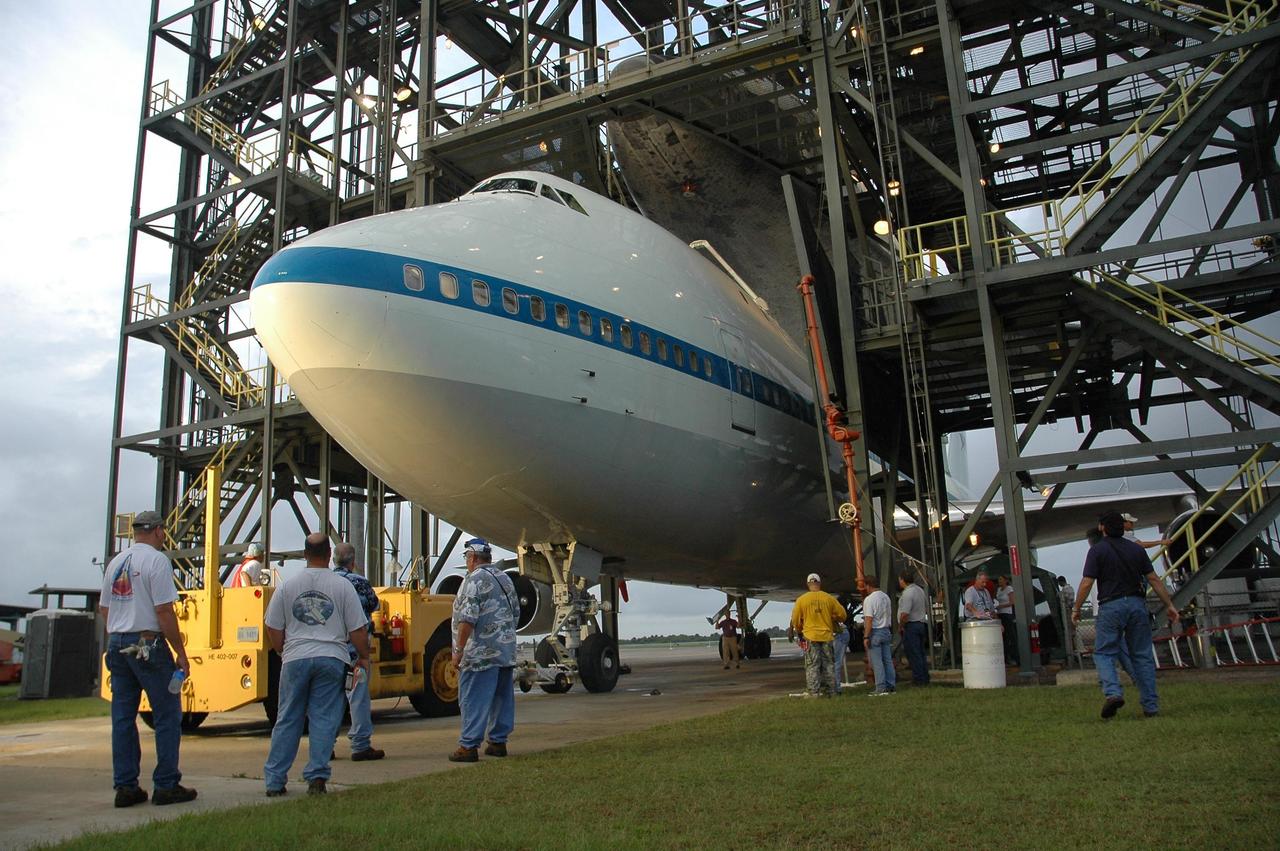
KENNEDY SPACE CENTER, FLA. -- At the mate/demate device at Kennedy Space Center's Shuttle Landing Facility, workers monitor the progress as Atlantis is lifted up from the shuttle carrier aircraft, or SCA. The orbiter will be lowered onto the ground and then towed to the Orbiter Processing Facility to begin processing for its next launch, mission STS-122 in December. Atlantis arrived at Kennedy Space Center atop the SCA on July 3 after a three-day, cross-country flight due to fuel stops and weather delays. Touchdown was at 8:27 a.m. EDT. Atlantis landed at Edwards Air Force Base in California on June 22 to end mission STS-117. Photo credit: NASA/Jack Pfaller.
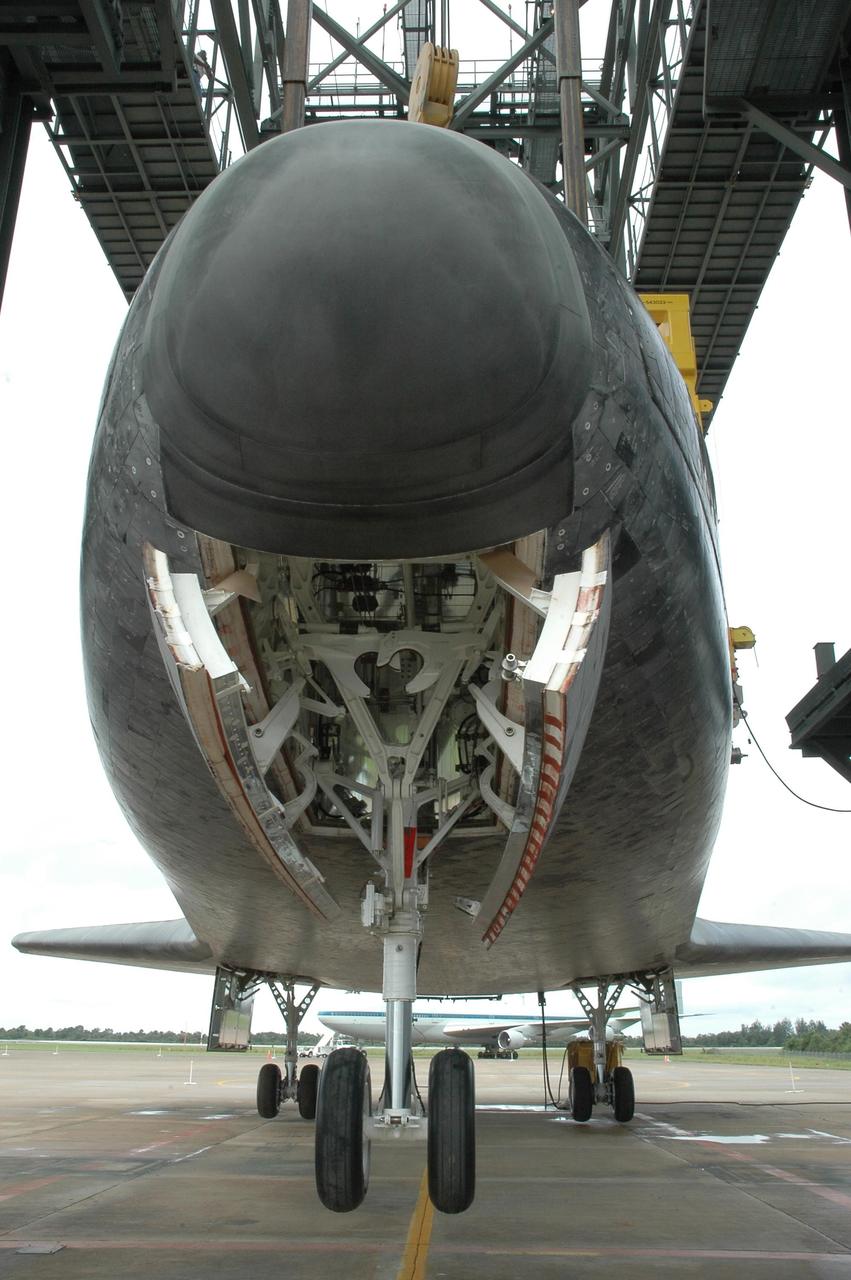
KENNEDY SPACE CENTER, FLA. -- Atlantis is lowered to the ground at the mate/demate device at Kennedy Space Center's Shuttle Landing Facility. In the background the shuttle carrier aircraft, or SCA, can be seen. The orbiter will be detached from the lifting crane and then towed to the Orbiter Processing Facility to begin processing for its next launch, mission STS-122 in December. Atlantis arrived at Kennedy Space Center atop the SCA on July 3 after a three-day, cross-country flight due to fuel stops and weather delays. Touchdown was at 8:27 a.m. EDT. Atlantis landed at Edwards Air Force Base in California on June 22 to end mission STS-117. Photo credit: NASA/Jack Pfaller.
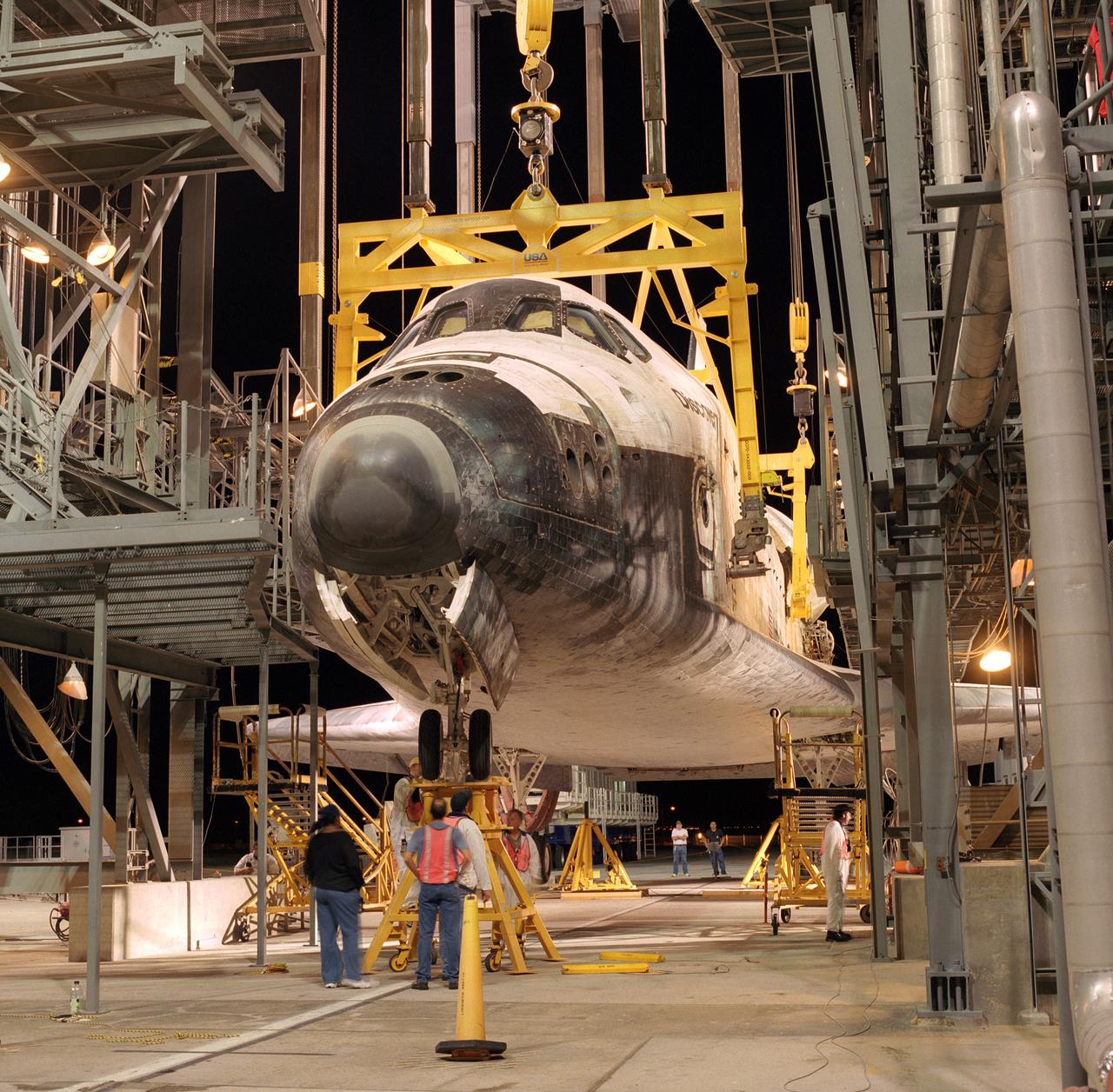
The Space Shuttle Discovery receives post-flight servicing in the Mate-Demate Device (MDD), following its landing at NASA's Dryden Flight Research Center, Edwards, California, August 9, 2005. The gantry-like MDD structure is used for servicing the shuttle orbiters in preparation for their ferry flight back to the Kennedy Space Center in Florida, including mounting the shuttle atop NASA's modified Boeing 747 Shuttle Carrier Aircraft. Space Shuttle Discovery landed safely at NASA's Dryden Flight Research Center at Edwards Air Force Base in California at 5:11:22 a.m. PDT this morning, following the very successful 14-day STS-114 return to flight mission. During their two weeks in space, Commander Eileen Collins and her six crewmates tested out new safety procedures and delivered supplies and equipment the International Space Station. Discovery spent two weeks in space, where the crew demonstrated new methods to inspect and repair the Shuttle in orbit. The crew also delivered supplies, outfitted and performed maintenance on the International Space Station. A number of these tasks were conducted during three spacewalks. In an unprecedented event, spacewalkers were called upon to remove protruding gap fillers from the heat shield on Discovery's underbelly. In other spacewalk activities, astronauts installed an external platform onto the Station's Quest Airlock and replaced one of the orbital outpost's Control Moment Gyroscopes. Inside the Station, the STS-114 crew conducted joint operations with the Expedition 11 crew. They unloaded fresh supplies from the Shuttle and the Raffaello Multi-Purpose Logistics Module. Before Discovery undocked, the crews filled Raffeallo with unneeded items and returned to Shuttle payload bay. Discovery launched on July 26 and spent almost 14 days on orbit.
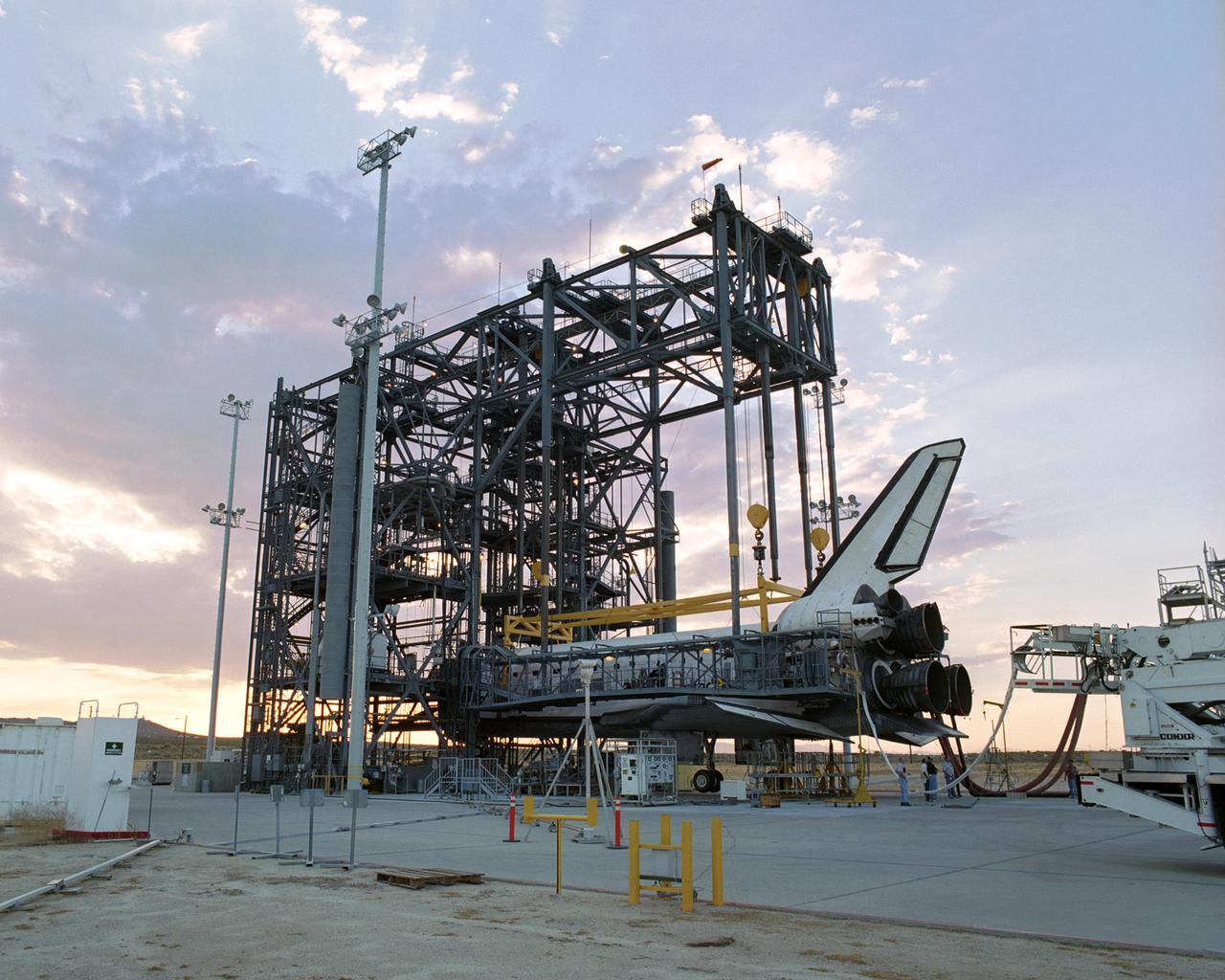
The sun sets on the Space Shuttle Discovery during post-flight processing in the Mate-Demate Device (MDD), following its landing at NASA's Dryden Flight Research Center in California. The gantry-like MDD structure is used for servicing the shuttle orbiters in preparation for their ferry flight back to the Kennedy Space Center in Florida, including mounting the shuttle atop NASA's modified Boeing 747 Shuttle Carrier Aircraft. Space Shuttle Discovery landed safely at NASA's Dryden Flight Research Center at Edwards Air Force Base in California at 5:11:22 a.m. PDT, August 9, 2005, following the very successful 14-day STS-114 return to flight mission. During their two weeks in space, Commander Eileen Collins and her six crewmates tested out new safety procedures and delivered supplies and equipment the International Space Station. Discovery spent two weeks in space, where the crew demonstrated new methods to inspect and repair the Shuttle in orbit. The crew also delivered supplies, outfitted and performed maintenance on the International Space Station. A number of these tasks were conducted during three spacewalks. In an unprecedented event, spacewalkers were called upon to remove protruding gap fillers from the heat shield on Discovery's underbelly. In other spacewalk activities, astronauts installed an external platform onto the Station's Quest Airlock and replaced one of the orbital outpost's Control Moment Gyroscopes. Inside the Station, the STS-114 crew conducted joint operations with the Expedition 11 crew. They unloaded fresh supplies from the Shuttle and the Raffaello Multi-Purpose Logistics Module. Before Discovery undocked, the crews filled Raffeallo with unneeded items and returned to Shuttle payload bay. Discovery launched on July 26 and spent almost 14 days on orbit.
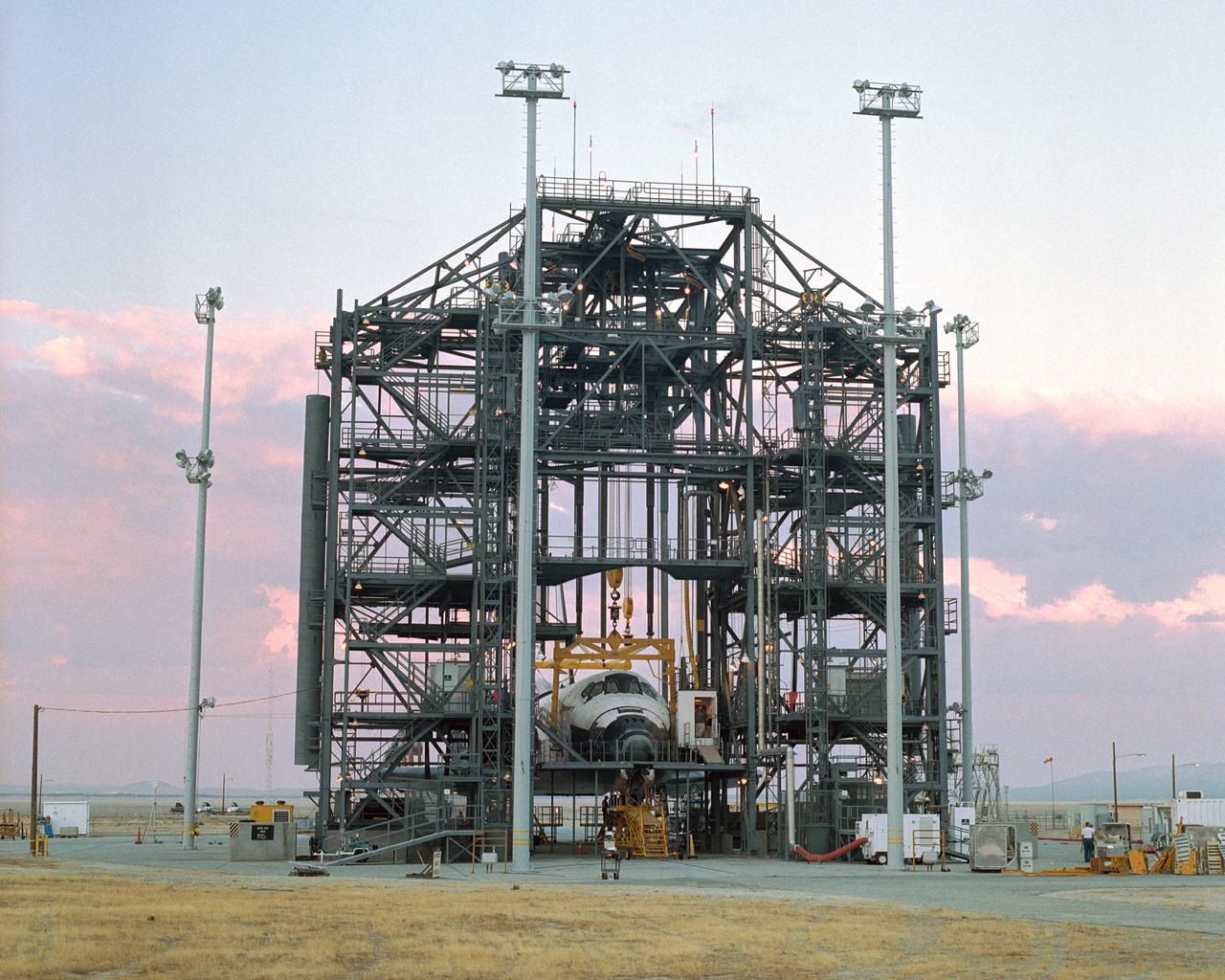
The sun sets on the Space Shuttle Discovery during post-flight processing in the Mate-Demate Device (MDD), following its landing at NASA's Dryden Flight Research Center in California. The gantry-like MDD structure is used for servicing the shuttle orbiters in preparation for their ferry flight back to the Kennedy Space Center in Florida, including mounting the shuttle atop NASA's modified Boeing 747 Shuttle Carrier Aircraft. Space Shuttle Discovery landed safely at NASA's Dryden Flight Research Center at Edwards Air Force Base in California at 5:11:22 a.m. PDT, August 9, 2005, following the very successful 14-day STS-114 return to flight mission. During their two weeks in space, Commander Eileen Collins and her six crewmates tested out new safety procedures and delivered supplies and equipment the International Space Station. Discovery spent two weeks in space, where the crew demonstrated new methods to inspect and repair the Shuttle in orbit. The crew also delivered supplies, outfitted and performed maintenance on the International Space Station. A number of these tasks were conducted during three spacewalks. In an unprecedented event, spacewalkers were called upon to remove protruding gap fillers from the heat shield on Discovery's underbelly. In other spacewalk activities, astronauts installed an external platform onto the Station's Quest Airlock and replaced one of the orbital outpost's Control Moment Gyroscopes. Inside the Station, the STS-114 crew conducted joint operations with the Expedition 11 crew. They unloaded fresh supplies from the Shuttle and the Raffaello Multi-Purpose Logistics Module. Before Discovery undocked, the crews filled Raffeallo with unneeded items and returned to Shuttle payload bay. Discovery launched on July 26 and spent almost 14 days on orbit.
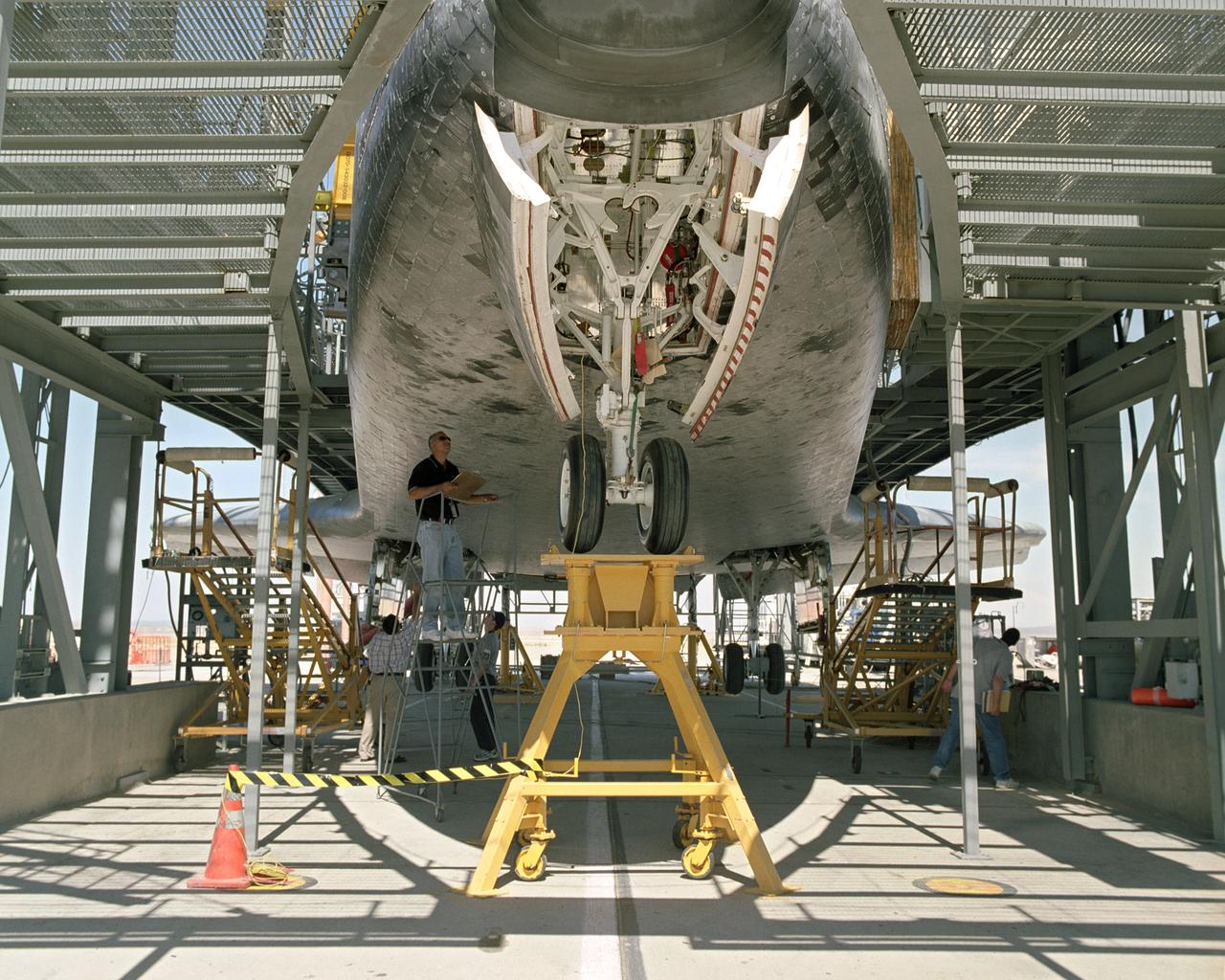
The Space Shuttle Discovery receives post-flight servicing in the Mate-Demate Device (MDD), following its landing at NASA's Dryden Flight Research Center, Edwards, California, August 9, 2005. The gantry-like MDD structure is used for servicing the shuttle orbiters in preparation for their ferry flight back to the Kennedy Space Center in Florida, including mounting the shuttle atop NASA's modified Boeing 747 Shuttle Carrier Aircraft. Space Shuttle Discovery landed safely at NASA's Dryden Flight Research Center at Edwards Air Force Base in California at 5:11:22 a.m. PDT, August 9, 2005, following the very successful 14-day STS-114 return to flight mission. During their two weeks in space, Commander Eileen Collins and her six crewmates tested out new safety procedures and delivered supplies and equipment the International Space Station. Discovery spent two weeks in space, where the crew demonstrated new methods to inspect and repair the Shuttle in orbit. The crew also delivered supplies, outfitted and performed maintenance on the International Space Station. A number of these tasks were conducted during three spacewalks. In an unprecedented event, spacewalkers were called upon to remove protruding gap fillers from the heat shield on Discovery's underbelly. In other spacewalk activities, astronauts installed an external platform onto the Station's Quest Airlock and replaced one of the orbital outpost's Control Moment Gyroscopes. Inside the Station, the STS-114 crew conducted joint operations with the Expedition 11 crew. They unloaded fresh supplies from the Shuttle and the Raffaello Multi-Purpose Logistics Module. Before Discovery undocked, the crews filled Raffeallo with unneeded items and returned to Shuttle payload bay. Discovery launched on July 26 and spent almost 14 days on orbit.
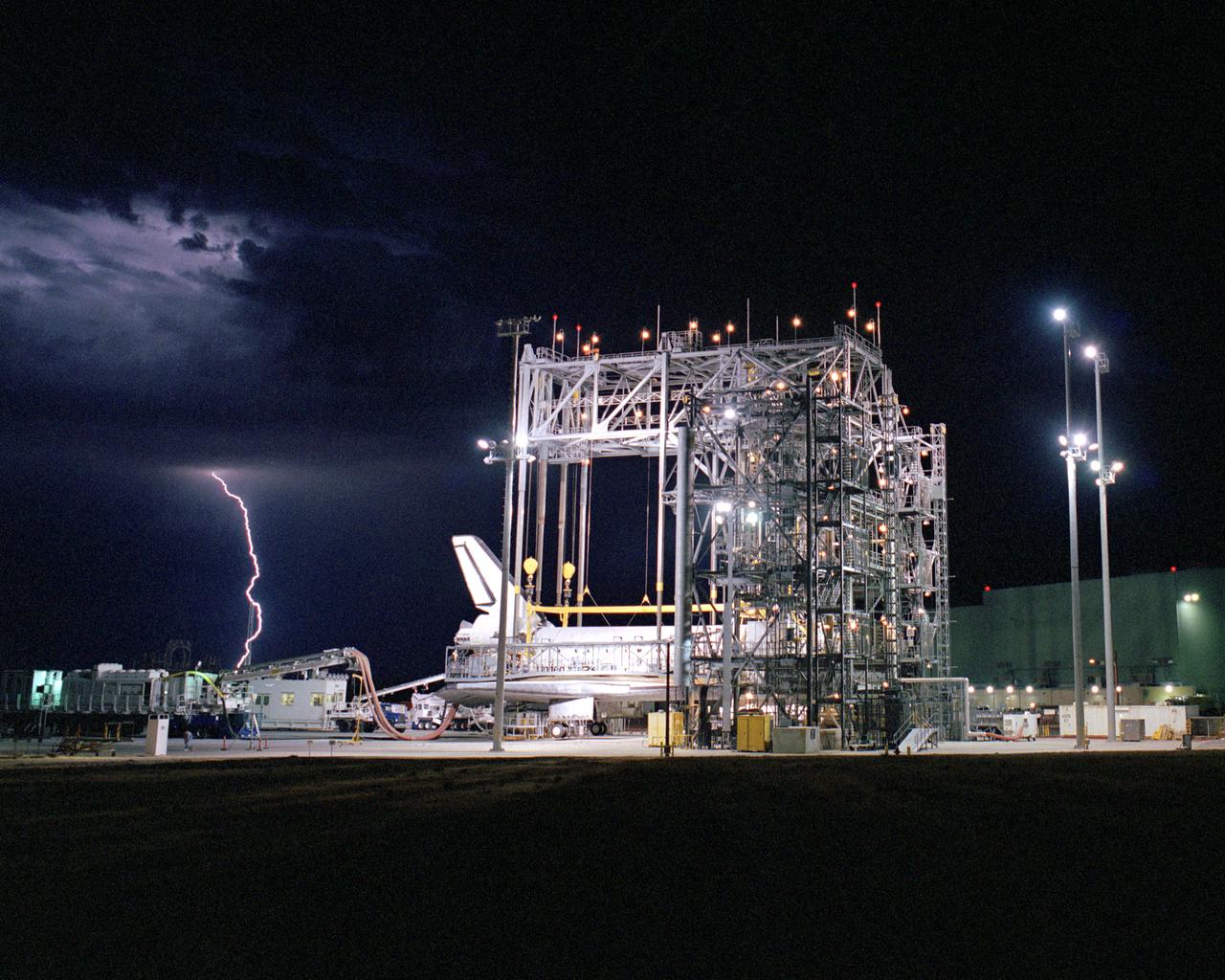
Lightning strikes in the distance as the Space Shuttle Discovery receives post-flight processing in the Mate-Demate Device (MDD), following its landing at NASA's Dryden Flight Research Center in California. The gantry-like MDD structure is used for servicing the shuttle orbiters in preparation for their ferry flight back to the Kennedy Space Center in Florida, including mounting the shuttle atop NASA's modified Boeing 747 Shuttle Carrier Aircraft. Space Shuttle Discovery landed safely at NASA's Dryden Flight Research Center at Edwards Air Force Base in California at 5:11:22 a.m. PDT, August 9, 2005, following the very successful 14-day STS-114 return to flight mission. During their two weeks in space, Commander Eileen Collins and her six crewmates tested out new safety procedures and delivered supplies and equipment the International Space Station. Discovery spent two weeks in space, where the crew demonstrated new methods to inspect and repair the Shuttle in orbit. The crew also delivered supplies, outfitted and performed maintenance on the International Space Station. A number of these tasks were conducted during three spacewalks. In an unprecedented event, spacewalkers were called upon to remove protruding gap fillers from the heat shield on Discovery's underbelly. In other spacewalk activities, astronauts installed an external platform onto the Station's Quest Airlock and replaced one of the orbital outpost's Control Moment Gyroscopes. Inside the Station, the STS-114 crew conducted joint operations with the Expedition 11 crew. They unloaded fresh supplies from the Shuttle and the Raffaello Multi-Purpose Logistics Module. Before Discovery undocked, the crews filled Raffeallo with unneeded items and returned to Shuttle payload bay. Discovery launched on July 26 and spent almost 14 days on orbit.
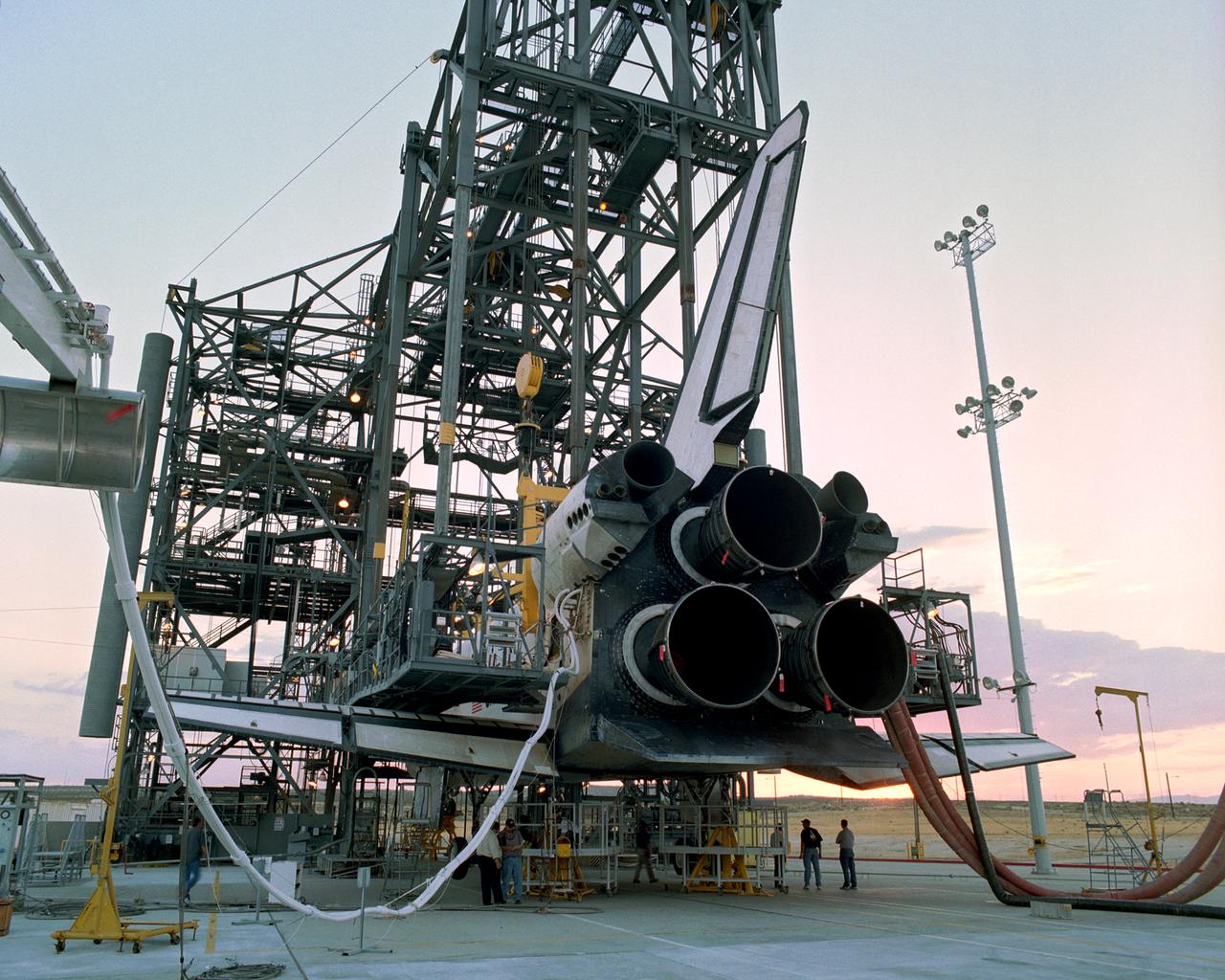
The sun sets on the Space Shuttle Discovery during post-flight processing in the Mate-Demate Device (MDD), following its landing at NASA's Dryden Flight Research Center in California. The gantry-like MDD structure is used for servicing the shuttle orbiters in preparation for their ferry flight back to the Kennedy Space Center in Florida, including mounting the shuttle atop NASA's modified Boeing 747 Shuttle Carrier Aircraft. Space Shuttle Discovery landed safely at NASA's Dryden Flight Research Center at Edwards Air Force Base in California at 5:11:22 a.m. PDT, August 9, 2005, following the very successful 14-day STS-114 return to flight mission. During their two weeks in space, Commander Eileen Collins and her six crewmates tested out new safety procedures and delivered supplies and equipment the International Space Station. Discovery spent two weeks in space, where the crew demonstrated new methods to inspect and repair the Shuttle in orbit. The crew also delivered supplies, outfitted and performed maintenance on the International Space Station. A number of these tasks were conducted during three spacewalks. In an unprecedented event, spacewalkers were called upon to remove protruding gap fillers from the heat shield on Discovery's underbelly. In other spacewalk activities, astronauts installed an external platform onto the Station's Quest Airlock and replaced one of the orbital outpost's Control Moment Gyroscopes. Inside the Station, the STS-114 crew conducted joint operations with the Expedition 11 crew. They unloaded fresh supplies from the Shuttle and the Raffaello Multi-Purpose Logistics Module. Before Discovery undocked, the crews filled Raffeallo with unneeded items and returned to Shuttle payload bay. Discovery launched on July 26 and spent almost 14 days on orbit.
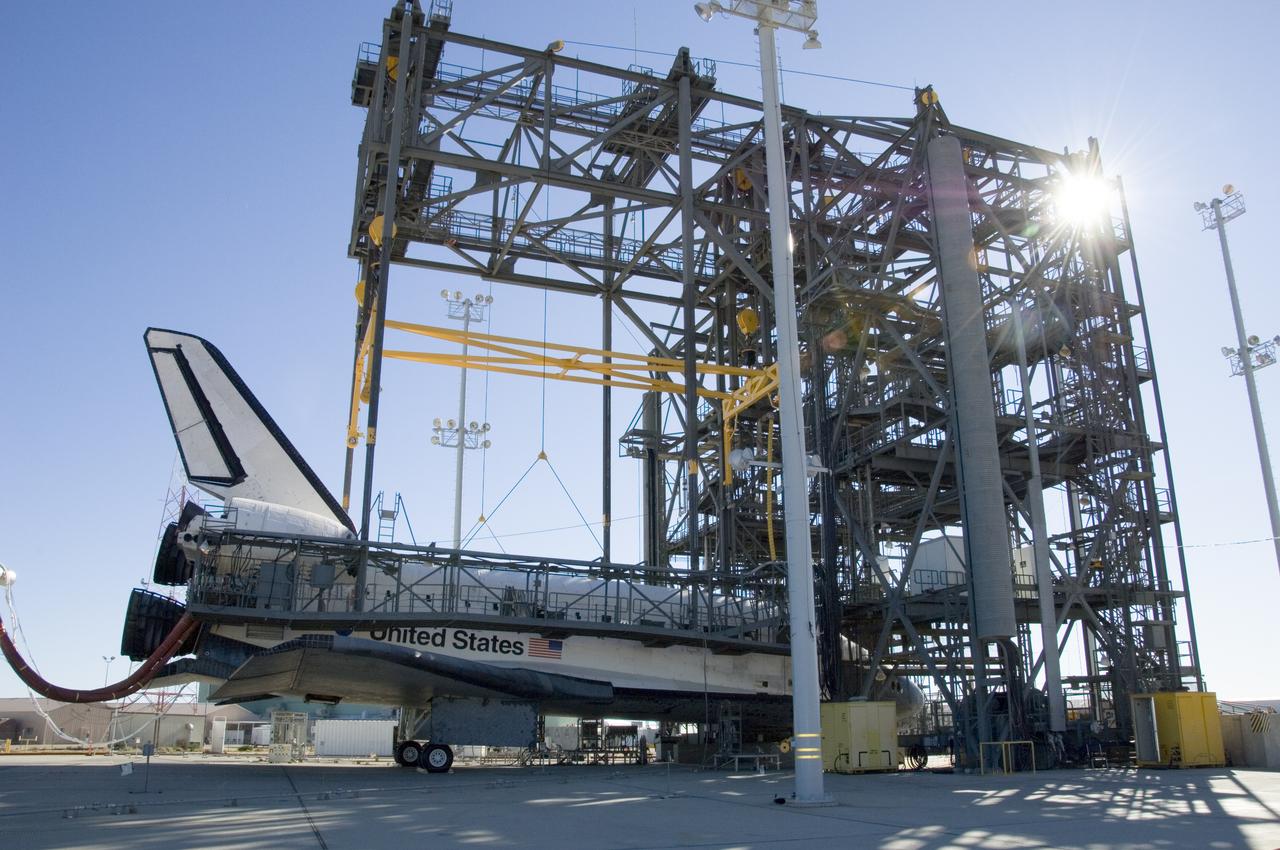
The Space Shuttle Endeavour is nestled in the Mate-DeMate Device at NASA's Dryden Flight Research Center as deservicing and turnaround operations get underway for its ferry flight back to the Kennedy Space Center in Florida.
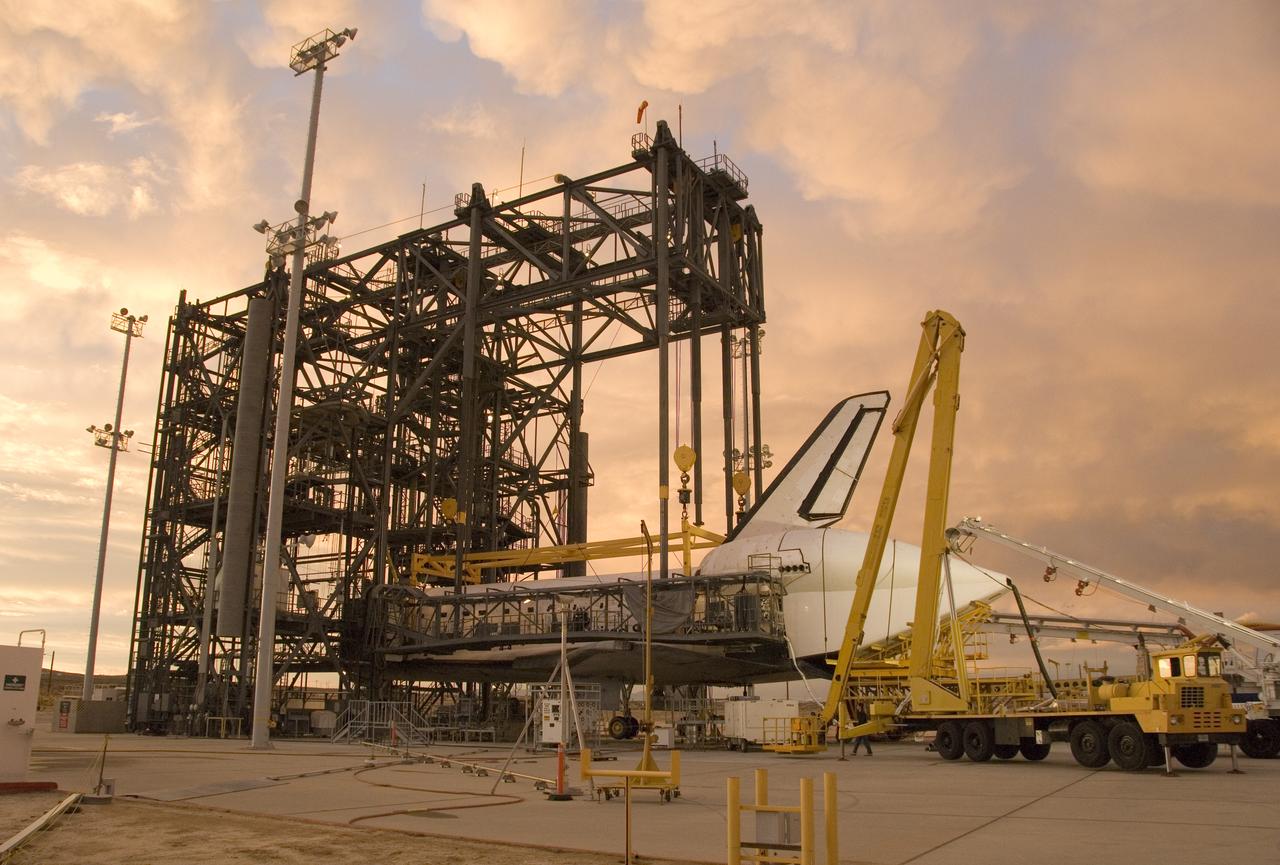
Puffy pink clouds form a canopy over the Space Shuttle Endeavour as processing continues in the Mate-Demate Device at NASA Dryden Flight Research Center in preparation for its ferry flight back to the Kennedy Space Center.
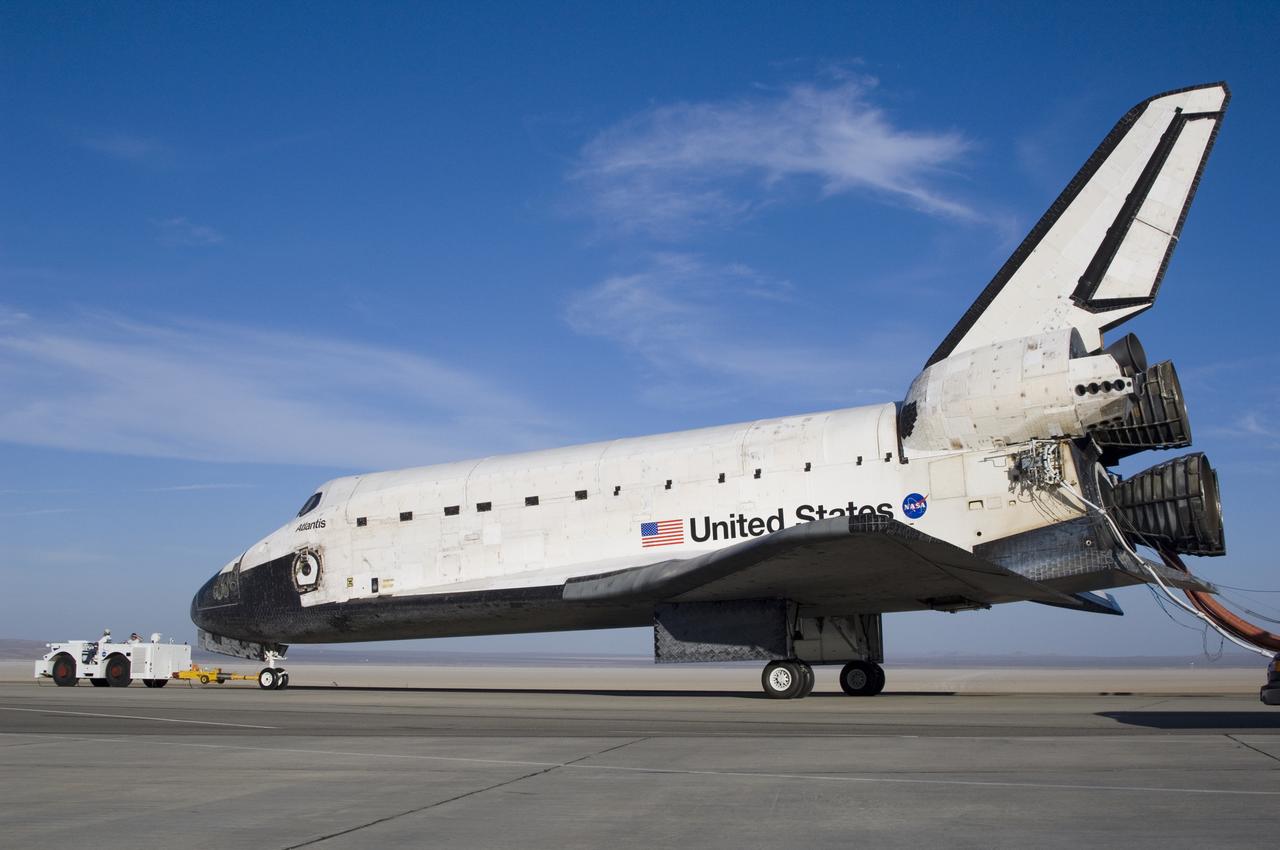
Following its landing on June 22, 2007, the Space Shuttle Atlantis is towed from the runway at Edwards Air Force Base to NASA Dryden's Mate-Demate Device (MDD) for post-flight processing in preparation for its return to the Kennedy Space Center in Florida.

The NASA Dryden 747 Shuttle Carrier Aircraft crew poses in an engine inlet; Standing L to R - aircraft mechanic John Goleno and SCA Team Leader Pete Seidl; Kneeling L to R - aircraft mechanics Todd Weston and Arvid Knutson, and avionics technician Jim Bedard NASA uses two modified Boeing 747 jetliners, originally manufactured for commercial use, as Space Shuttle Carrier Aircraft (SCA). One is a 747-100 model, while the other is designated a 747-100SR (short range). The two aircraft are identical in appearance and in their performance as Shuttle Carrier Aircraft. The 747 series of aircraft are four-engine intercontinental-range swept-wing "jumbo jets" that entered commercial service in 1969. The SCAs are used to ferry space shuttle orbiters from landing sites back to the launch complex at the Kennedy Space Center, and also to and from other locations too distant for the orbiters to be delivered by ground transportation. The orbiters are placed atop the SCAs by Mate-Demate Devices, large gantry-like structures which hoist the orbiters off the ground for post-flight servicing, and then mate them with the SCAs for ferry flights.
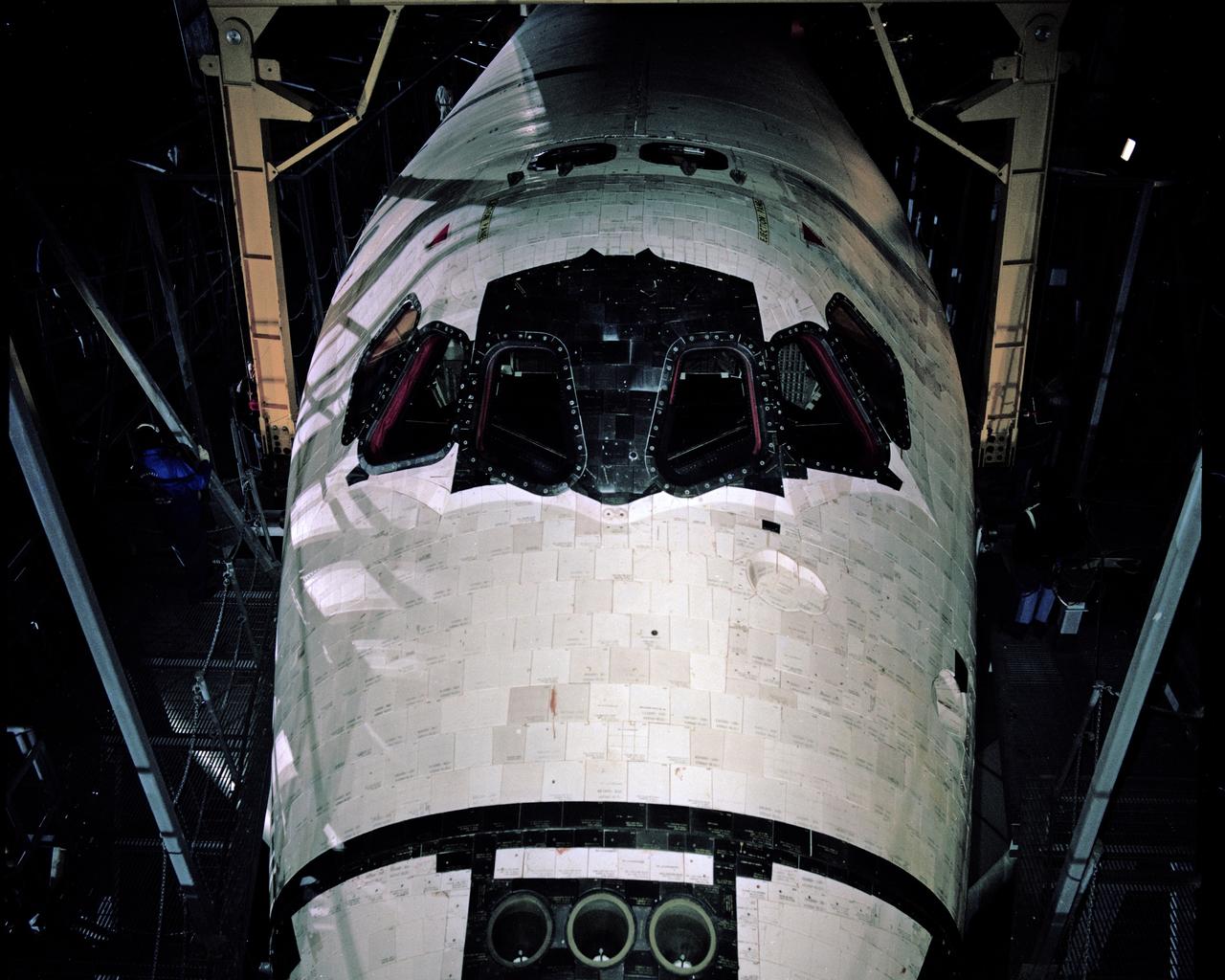
CAPE CANAVERAL, Fla. – Orbiter Columbia is separated from the shuttle carrier aircraft in the mate/demate device at KSC. Photo credit: NASA
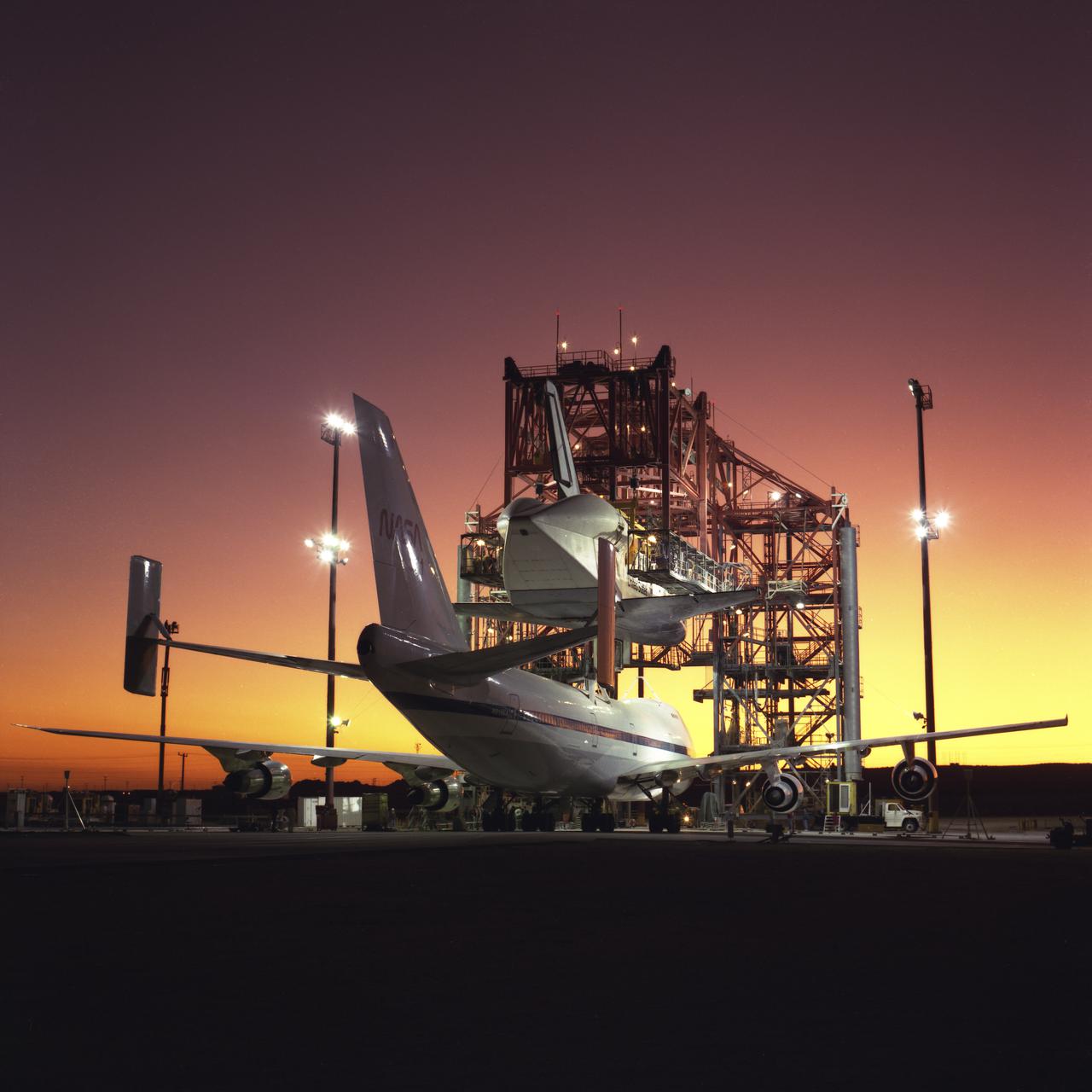
Shuttle Atlantis emerges from the Mate-Demate-Device mounted to Boeing 747 Shuttle Carrier Aircraft for the return flight to Kennedy Space Center in Florida.
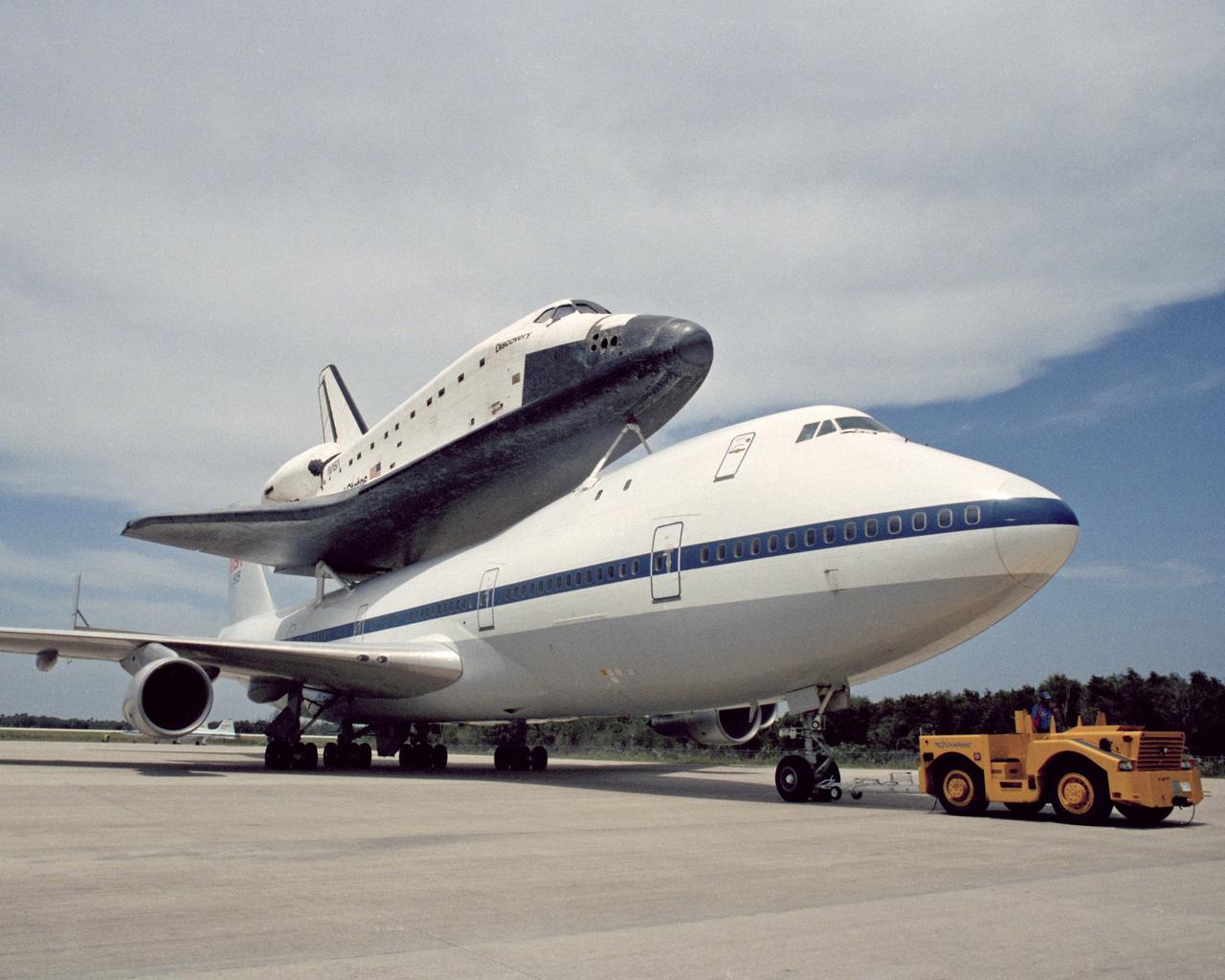
CAPE CANAVERAL, Fla. -- STS-31. Return of the space shuttle Discovery at the SLF and towed into the mate/demate device. Photo credit: NASA
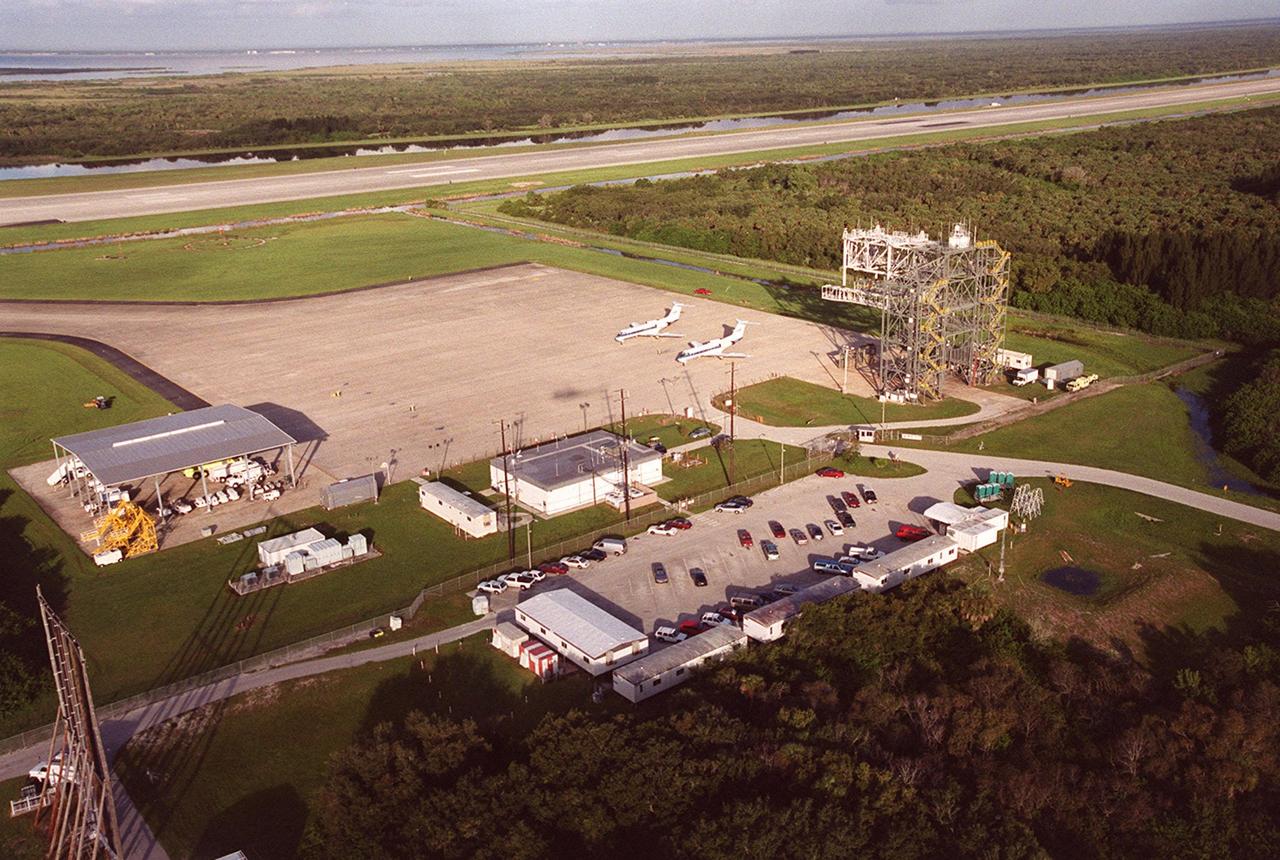
KENNEDY SPACE CENTER, FLA. -- An aerial view of the Shuttle Landing Facility shows the fuel truck shelter (left), administrative building (center) with parking lot behind it (foreground), two Shuttle Training Aircraft (STA) parked on the apron and the mate/demate device (right). In the background is the runway. The STAs are Grumman Gulfstream 2 aircraft with converted cockpits that emulate those in the Shuttles for practice landings at the SLF. The mate/demate device is used to lift the orbiter onto or off a Shuttle Carrier Aircraft when it has to be ferried to or from KSC
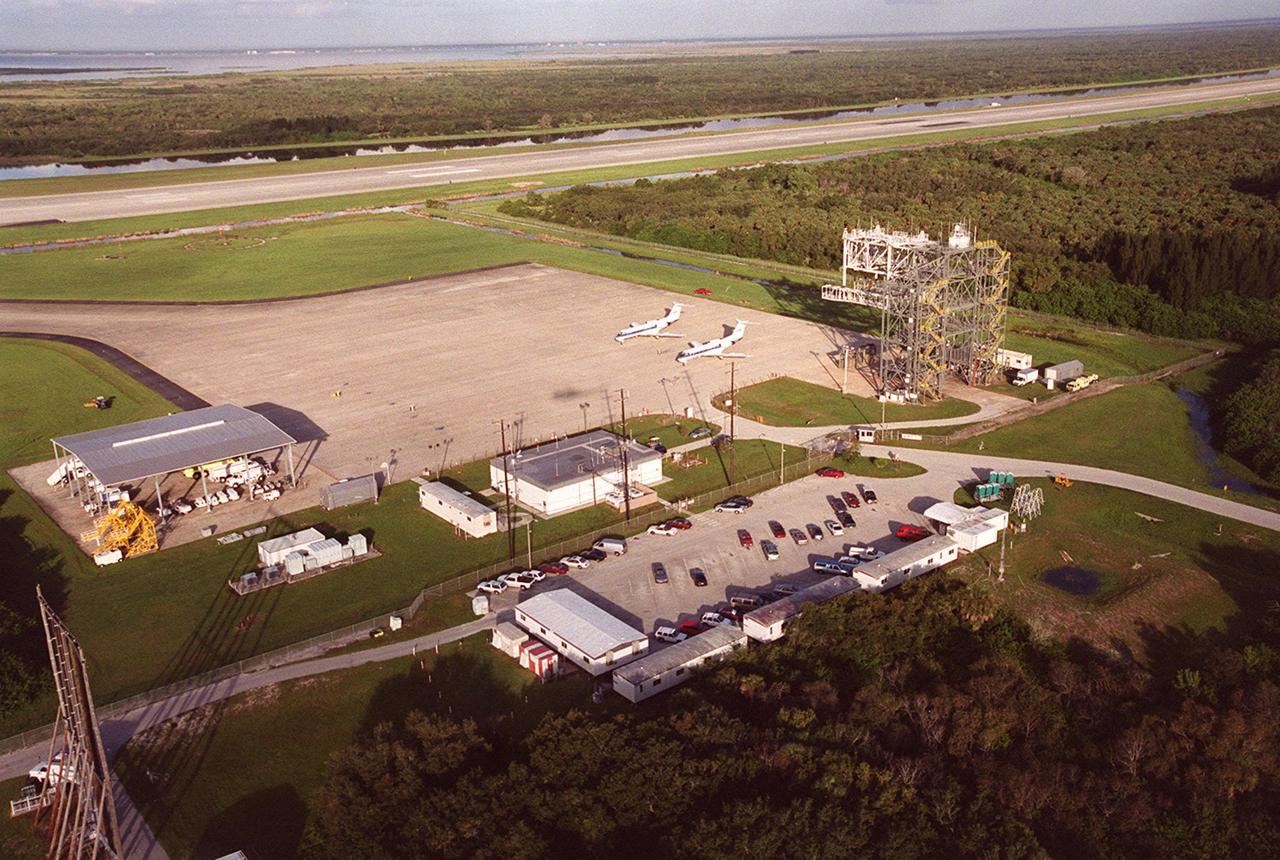
KENNEDY SPACE CENTER, FLA. -- An aerial view of the Shuttle Landing Facility shows the fuel truck shelter (left), administrative building (center) with parking lot behind it (foreground), two Shuttle Training Aircraft (STA) parked on the apron and the mate/demate device (right). In the background is the runway. The STAs are Grumman Gulfstream 2 aircraft with converted cockpits that emulate those in the Shuttles for practice landings at the SLF. The mate/demate device is used to lift the orbiter onto or off a Shuttle Carrier Aircraft when it has to be ferried to or from KSC
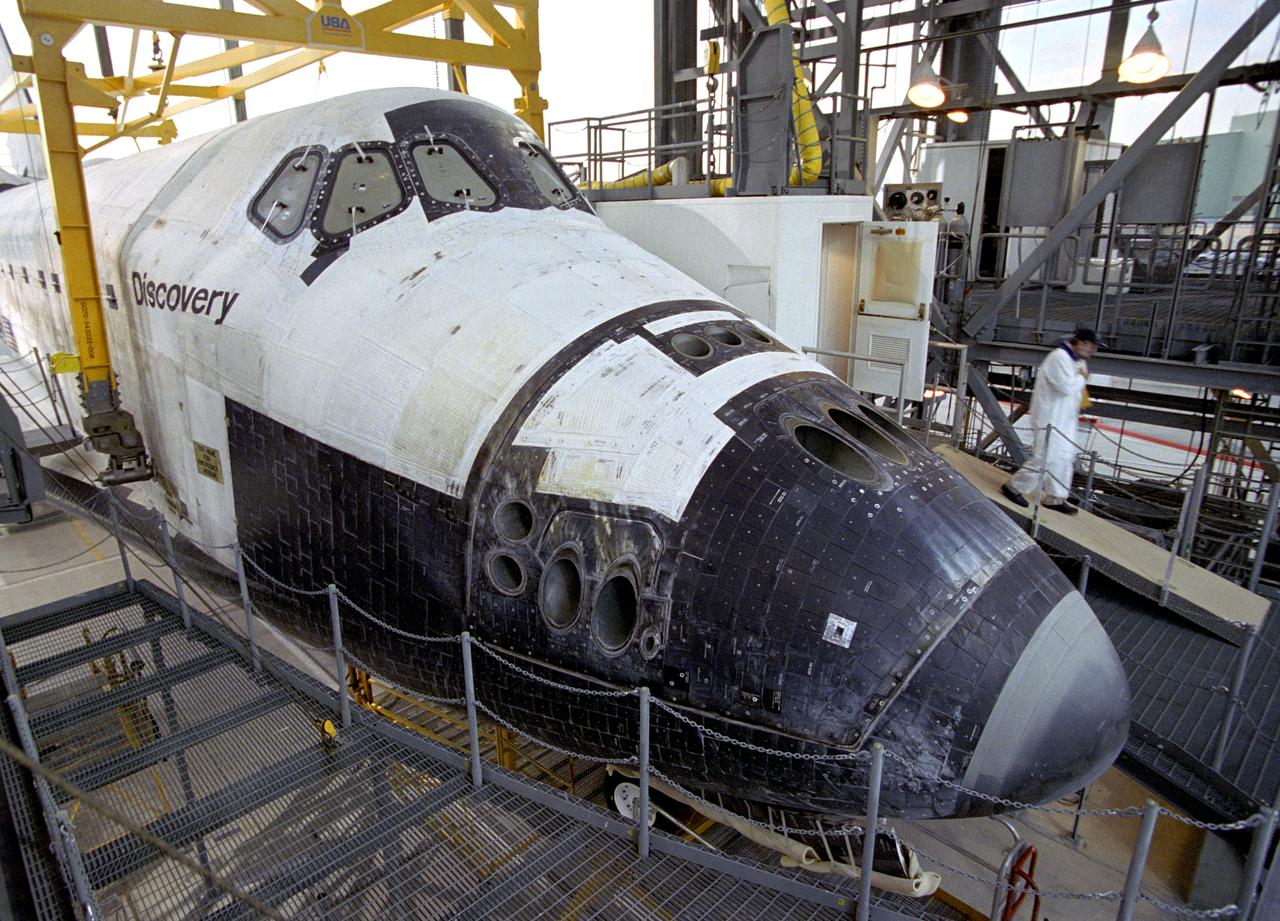
A technician leaves the 'white room', the access point for entering the Space Shuttle Discovery during post-flight processing in the Mate-Demate Device (MDD) at NASA's Dryden Flight Research Center in California. The gantry-like MDD structure is used for servicing the shuttle orbiters in preparation for their ferry flight back to the Kennedy Space Center in Florida, including mounting the shuttle atop NASA's modified Boeing 747 Shuttle Carrier Aircraft. Space Shuttle Discovery landed safely at NASA's Dryden Flight Research Center at Edwards Air Force Base in California at 5:11:22 a.m. PDT, August 9, 2005, following the very successful 14-day STS-114 return to flight mission. During their two weeks in space, Commander Eileen Collins and her six crewmates tested out new safety procedures and delivered supplies and equipment the International Space Station. Discovery spent two weeks in space, where the crew demonstrated new methods to inspect and repair the Shuttle in orbit. The crew also delivered supplies, outfitted and performed maintenance on the International Space Station. A number of these tasks were conducted during three spacewalks. In an unprecedented event, spacewalkers were called upon to remove protruding gap fillers from the heat shield on Discovery's underbelly. In other spacewalk activities, astronauts installed an external platform onto the Station's Quest Airlock and replaced one of the orbital outpost's Control Moment Gyroscopes. Inside the Station, the STS-114 crew conducted joint operations with the Expedition 11 crew. They unloaded fresh supplies from the Shuttle and the Raffaello Multi-Purpose Logistics Module. Before Discovery undocked, the crews filled Raffeallo with unneeded items and returned to Shuttle payload bay. Discovery launched on July 26 and spent almost 14 days on orbit.
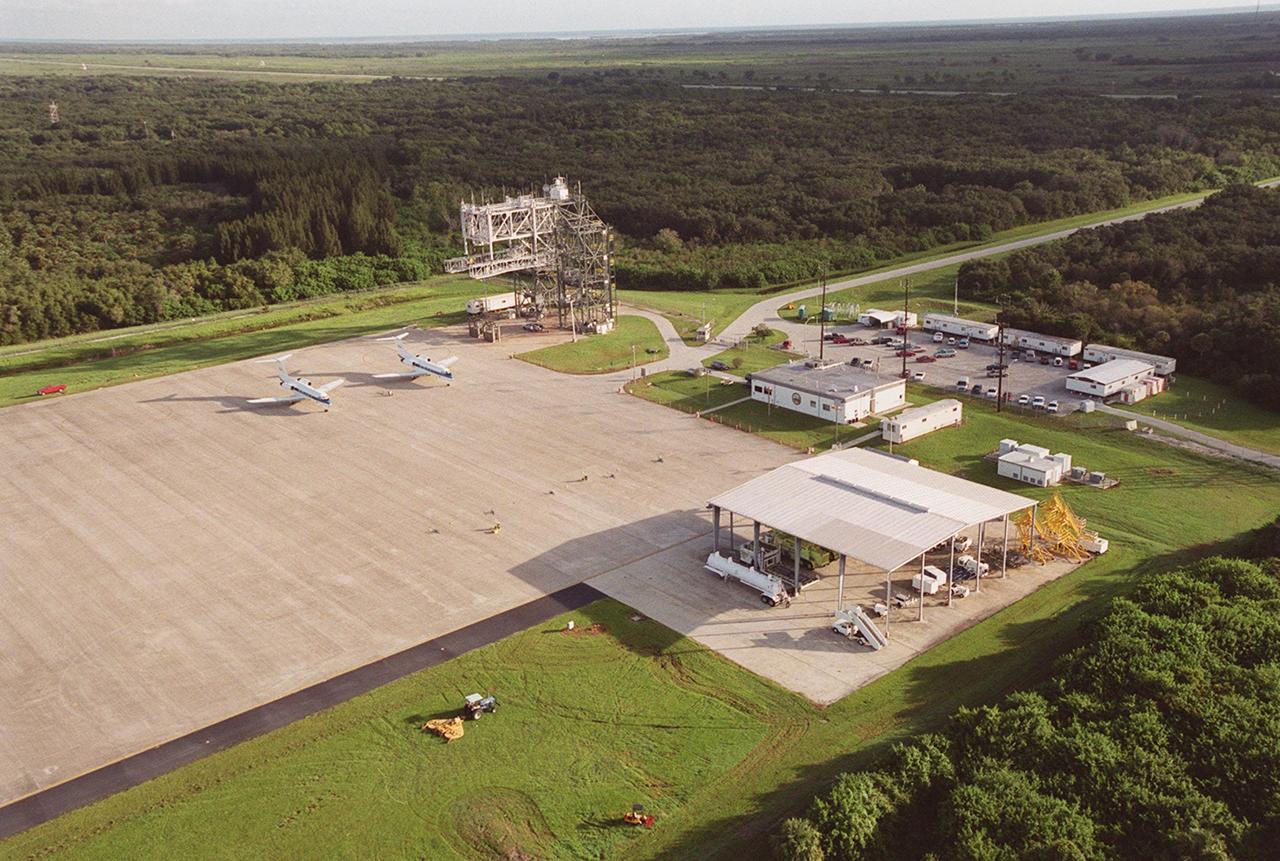
KENNEDY SPACE CENTER, FLA. -- This aerial view of the Shuttle Landing Facility (SLF) faces northeast, with the Atlantic Ocean in the distance. In the center is the apron of the SLF with two Shuttle Training Aircraft (STA) parked there, the mate/demate device behind them, a shelter for fuel trucks (foreground), and an administrative building between. The STAs are Grumman Gulfstream 2 aircraft with converted cockpits that emulate those in the Shuttles for practice landings at the SLF. The mate/demate device is used to lift the orbiter onto or off a Shuttle Carrier Aircraft when it has to be ferried to or from KSC
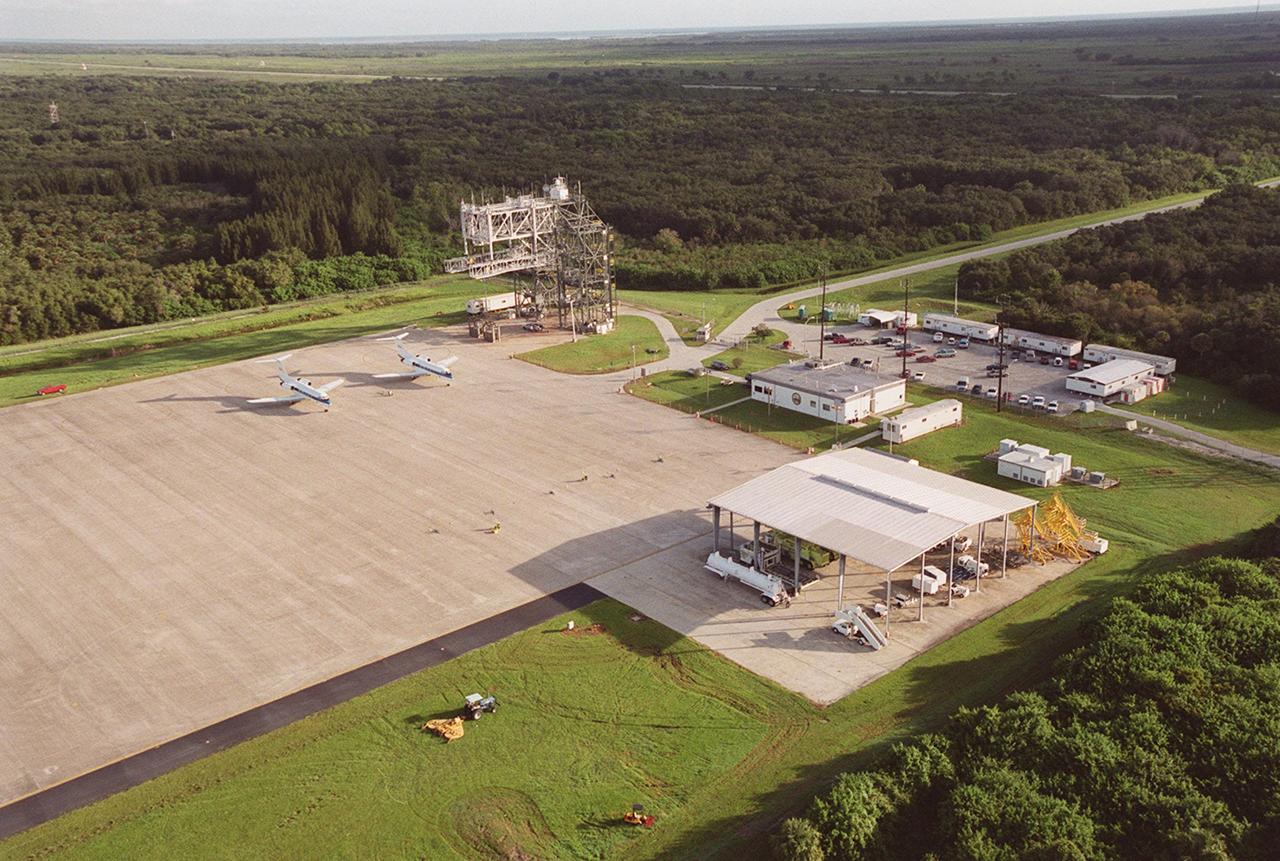
KENNEDY SPACE CENTER, FLA. -- This aerial view of the Shuttle Landing Facility (SLF) faces northeast, with the Atlantic Ocean in the distance. In the center is the apron of the SLF with two Shuttle Training Aircraft (STA) parked there, the mate/demate device behind them, a shelter for fuel trucks (foreground), and an administrative building between. The STAs are Grumman Gulfstream 2 aircraft with converted cockpits that emulate those in the Shuttles for practice landings at the SLF. The mate/demate device is used to lift the orbiter onto or off a Shuttle Carrier Aircraft when it has to be ferried to or from KSC
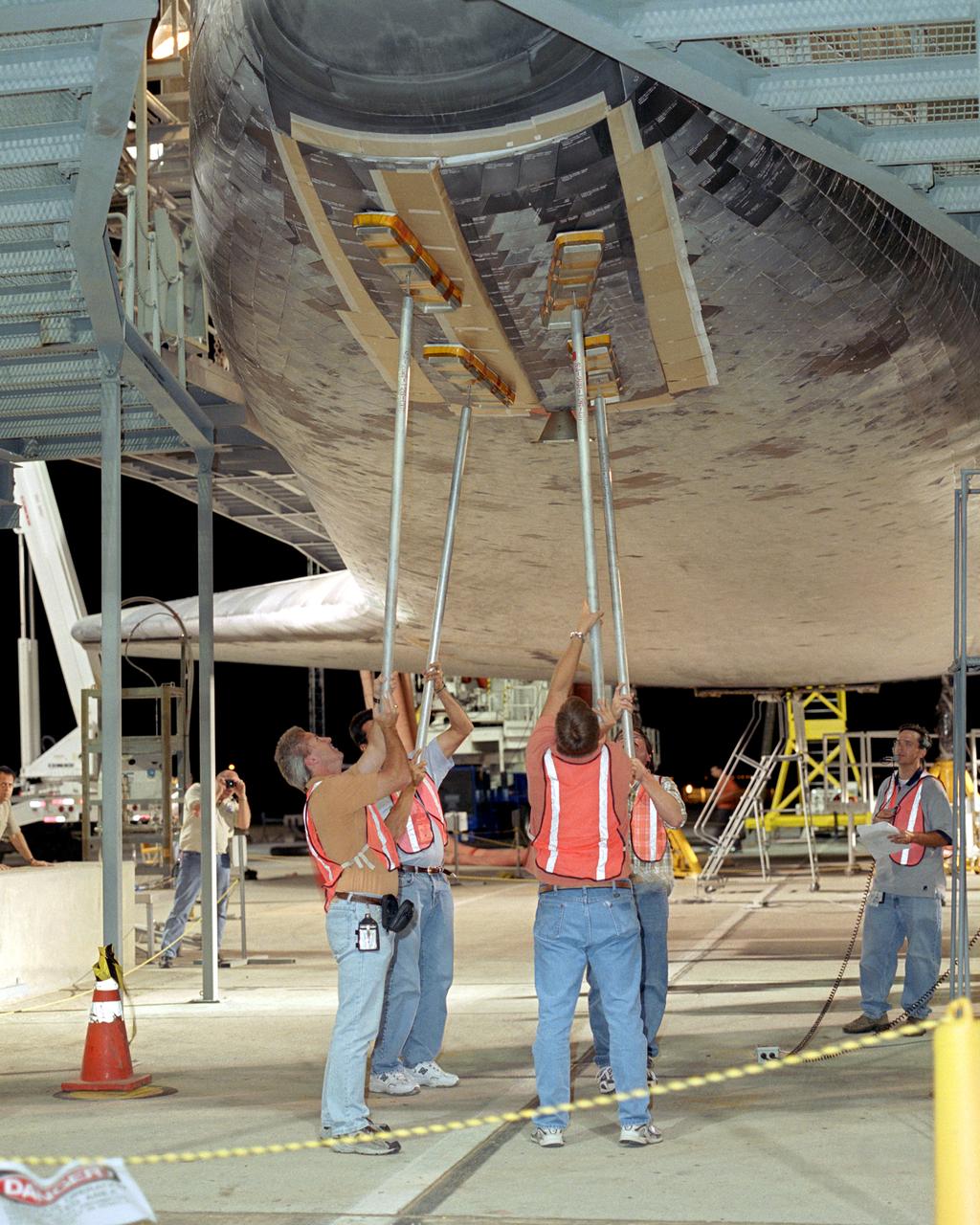
Closing the landing gear doors is one of the final servicing steps before lifting of the Space Shuttle Discovery and mating it to NASA's 747 can begin. After being raised in the gantry-like Mate-Demate Device (MDD), Discovery will be mounted on NASA's modified Boeing 747 Shuttle Carrier Aircraft, or SCA, for the return flight to the Kennedy Space Center in Florida. Space Shuttle Discovery landed safely at NASA's Dryden Flight Research Center at Edwards Air Force Base in California at 5:11:22 a.m. PDT, August 9, 2005, following the very successful 14-day STS-114 return to flight mission. During their two weeks in space, Commander Eileen Collins and her six crewmates tested out new safety procedures and delivered supplies and equipment the International Space Station. Discovery spent two weeks in space, where the crew demonstrated new methods to inspect and repair the Shuttle in orbit. The crew also delivered supplies, outfitted and performed maintenance on the International Space Station. A number of these tasks were conducted during three spacewalks. In an unprecedented event, spacewalkers were called upon to remove protruding gap fillers from the heat shield on Discovery's underbelly. In other spacewalk activities, astronauts installed an external platform onto the Station's Quest Airlock and replaced one of the orbital outpost's Control Moment Gyroscopes. Inside the Station, the STS-114 crew conducted joint operations with the Expedition 11 crew. They unloaded fresh supplies from the Shuttle and the Raffaello Multi-Purpose Logistics Module. Before Discovery undocked, the crews filled Raffeallo with unneeded items and returned to Shuttle payload bay. Discovery launched on July 26 and spent almost 14 days on orbit.
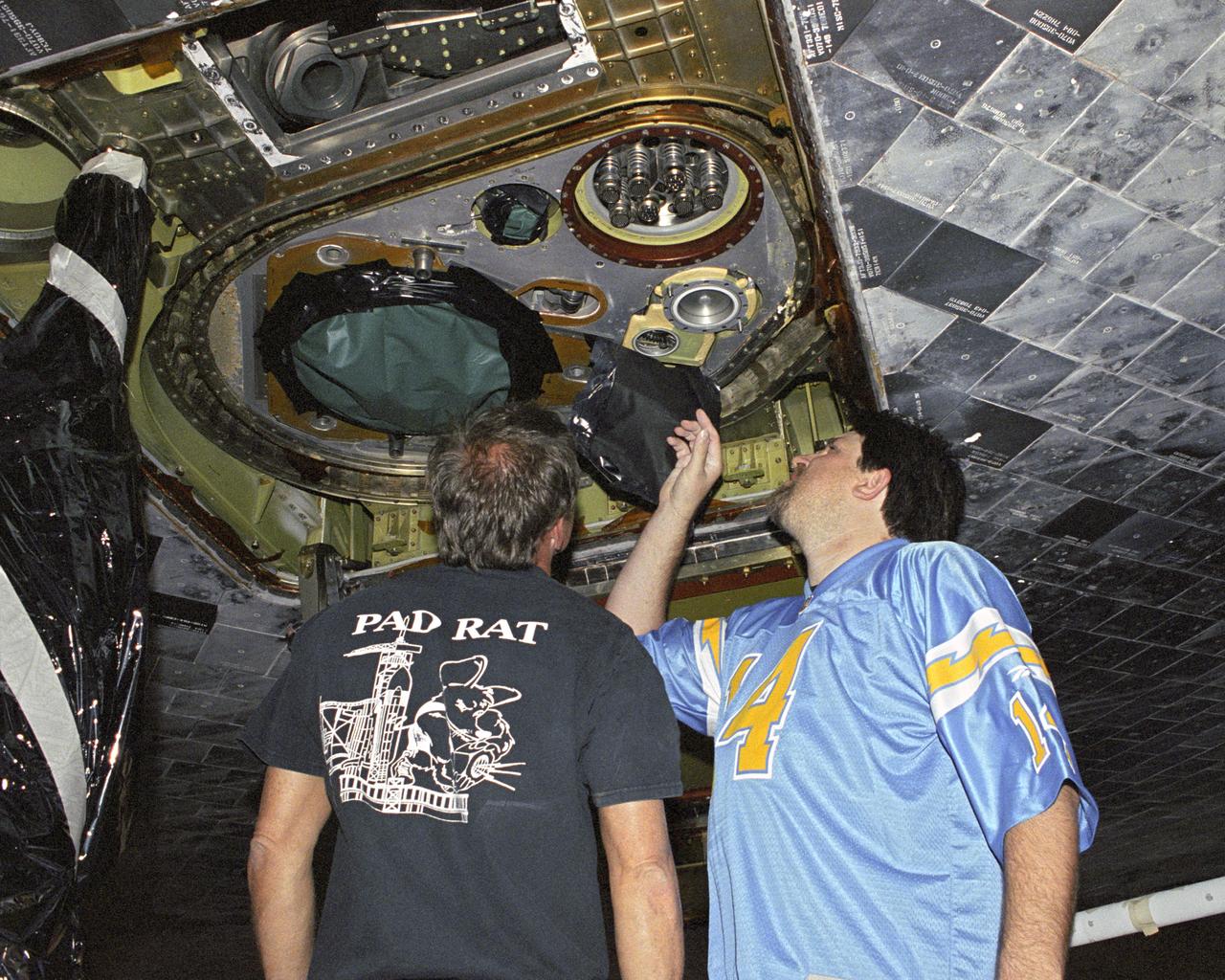
Robert 'Skip' Garrett; main propulsion advanced systems technician, and Chris Jacobs; main propulsion systems engineering technician, inspect external tank attachment fittings on the Space Shuttle Discovery as part of it's post-flight processing at NASA's Dryden Flight Research Center. The Space Shuttles receive post-flight servicing in the Mate-Demate Device (MDD) following landings at NASA's Dryden Flight Research Center, Edwards, California. The gantry-like MDD structure is used for servicing the shuttle orbiters in preparation for their ferry flight back to the Kennedy Space Center in Florida, including mounting the shuttle atop NASA's modified Boeing 747 Shuttle Carrier Aircraft. Space Shuttle Discovery landed safely at NASA's Dryden Flight Research Center at Edwards Air Force Base in California at 5:11:22 a.m. PDT, August 9, 2005, following the very successful 14-day STS-114 return to flight mission. During their two weeks in space, Commander Eileen Collins and her six crewmates tested out new safety procedures and delivered supplies and equipment the International Space Station. Discovery spent two weeks in space, where the crew demonstrated new methods to inspect and repair the Shuttle in orbit. The crew also delivered supplies, outfitted and performed maintenance on the International Space Station. A number of these tasks were conducted during three spacewalks. In an unprecedented event, spacewalkers were called upon to remove protruding gap fillers from the heat shield on Discovery's underbelly. In other spacewalk activities, astronauts installed an external platform onto the Station's Quest Airlock and replaced one of the orbital outpost's Control Moment Gyroscopes. Inside the Station, the STS-114 crew conducted joint operations with the Expedition 11 crew. They unloaded fresh supplies from the Shuttle and the Raffaello Multi-Purpose Logistics Module. Before Discovery undocked, the crews filled Raffeallo with unneeded items and returned to Shuttle pa
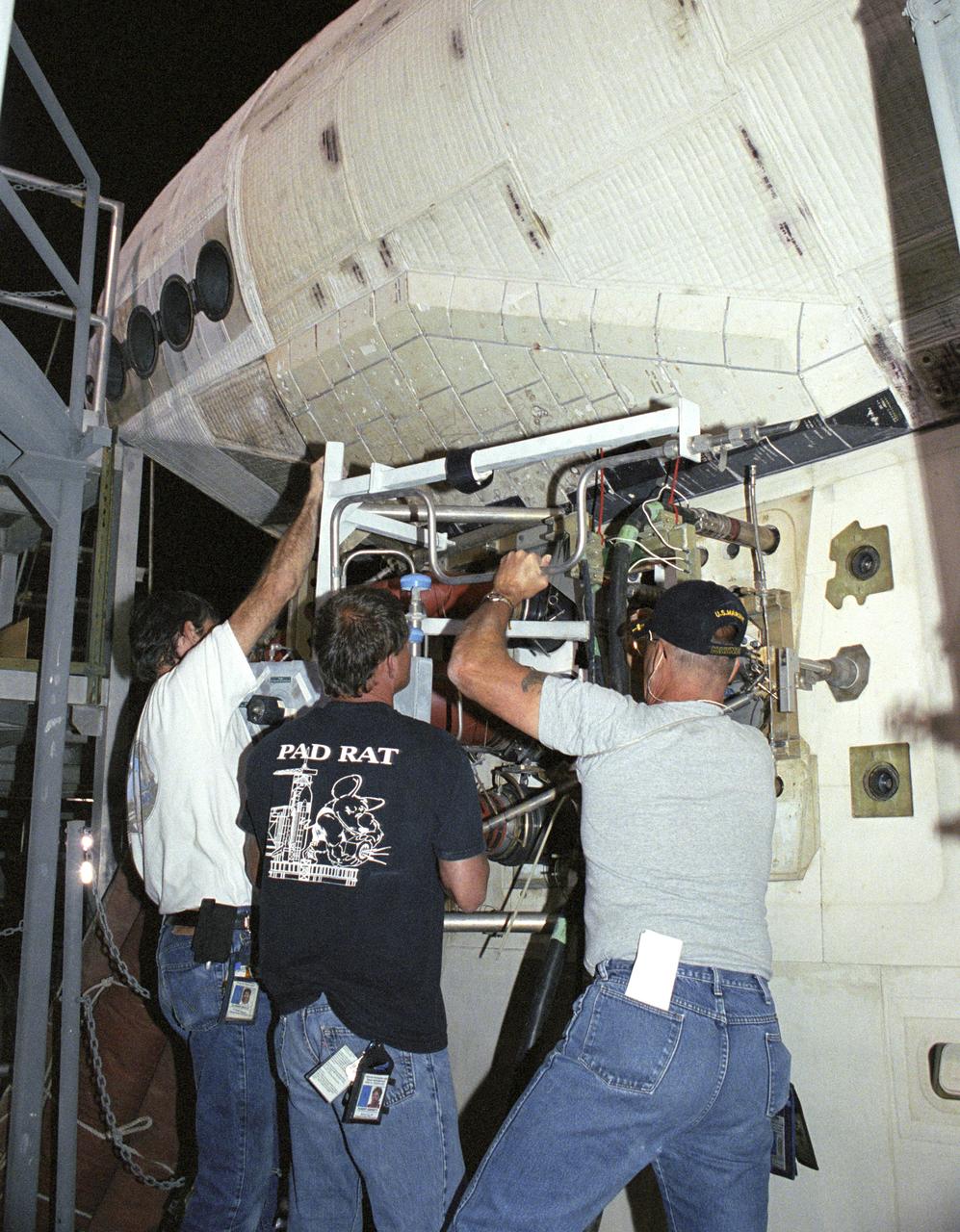
Todd Viddle; APU advanced systems technician, Robert 'Skip' Garrett; main propulsion advanced systems technician, and Dan McGrath; main propulsion systems engineer technician, remove a servicing unit from the Space Shuttle Discovery as part of it's post-flight processing at NASA's Dryden Flight Research Center. The Space Shuttles receive post-flight servicing in the Mate-Demate Device (MDD) following landings at NASA's Dryden Flight Research Center, Edwards, California. The gantry-like MDD structure is used for servicing the shuttle orbiters in preparation for their ferry flight back to the Kennedy Space Center in Florida, including mounting the shuttle atop NASA's modified Boeing 747 Shuttle Carrier Aircraft. Space Shuttle Discovery landed safely at NASA's Dryden Flight Research Center at Edwards Air Force Base in California at 5:11:22 a.m. PDT, August 9, 2005, following the very successful 14-day STS-114 return to flight mission. During their two weeks in space, Commander Eileen Collins and her six crewmates tested out new safety procedures and delivered supplies and equipment the International Space Station. Discovery spent two weeks in space, where the crew demonstrated new methods to inspect and repair the Shuttle in orbit. The crew also delivered supplies, outfitted and performed maintenance on the International Space Station. A number of these tasks were conducted during three spacewalks. In an unprecedented event, spacewalkers were called upon to remove protruding gap fillers from the heat shield on Discovery's underbelly. In other spacewalk activities, astronauts installed an external platform onto the Station's Quest Airlock and replaced one of the orbital outpost's Control Moment Gyroscopes. Inside the Station, the STS-114 crew conducted joint operations with the Expedition 11 crew. They unloaded fresh supplies from the Shuttle and the Raffaello Multi-Purpose Logistics Module. Before Discovery undocked, the crews filled Raffeallo with unneeded items
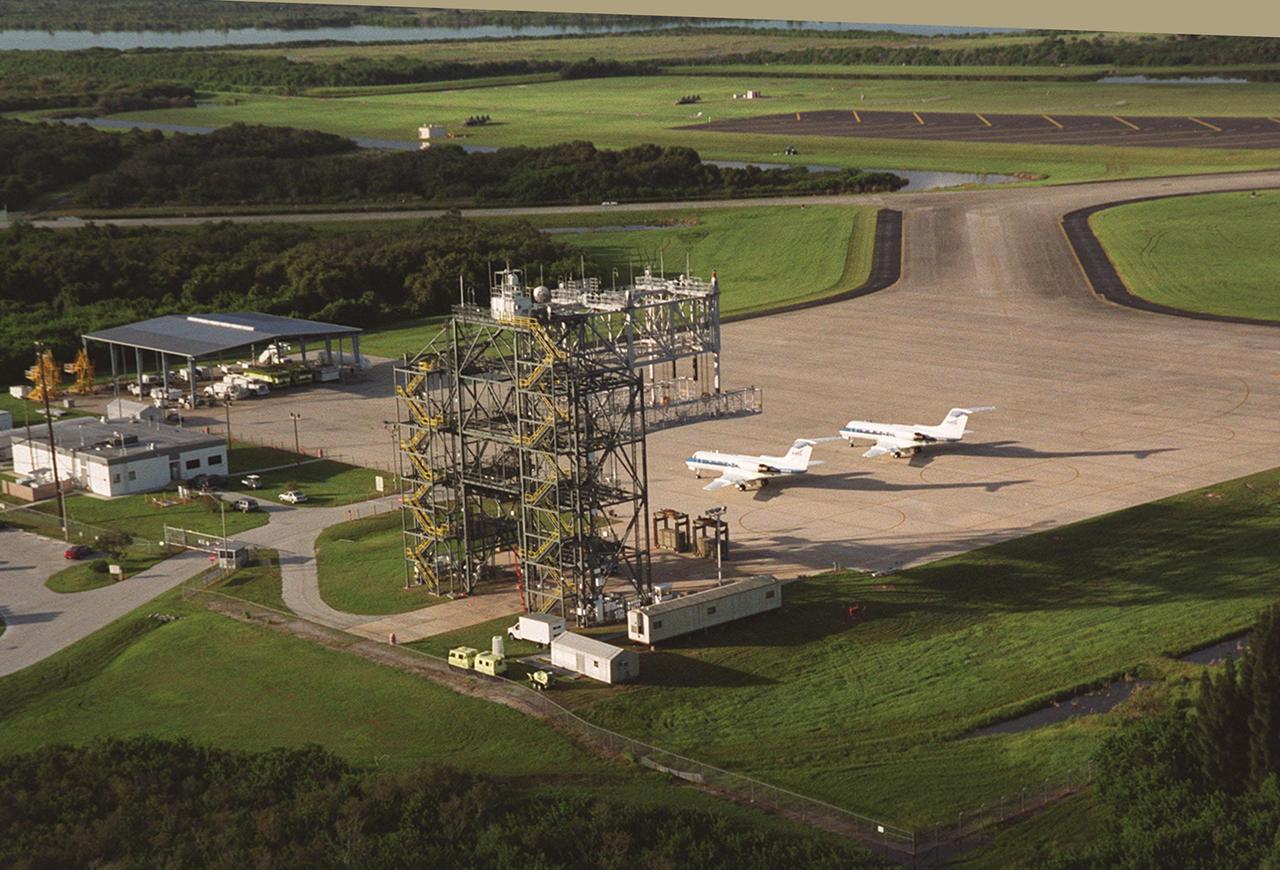
An aerial view of the Shuttle Landing Facility shows the Mate/Demate device in the foreground, with two Shuttle Training Aircraft (STA) on the ground behind it. Visible in the background is the runway and the taxi way leading from the SLF to the right. The STAs are Grumman Gulfstream 2 aircraft with converted cockpits that emulate those in the Shuttles for practice landings at the SLF.
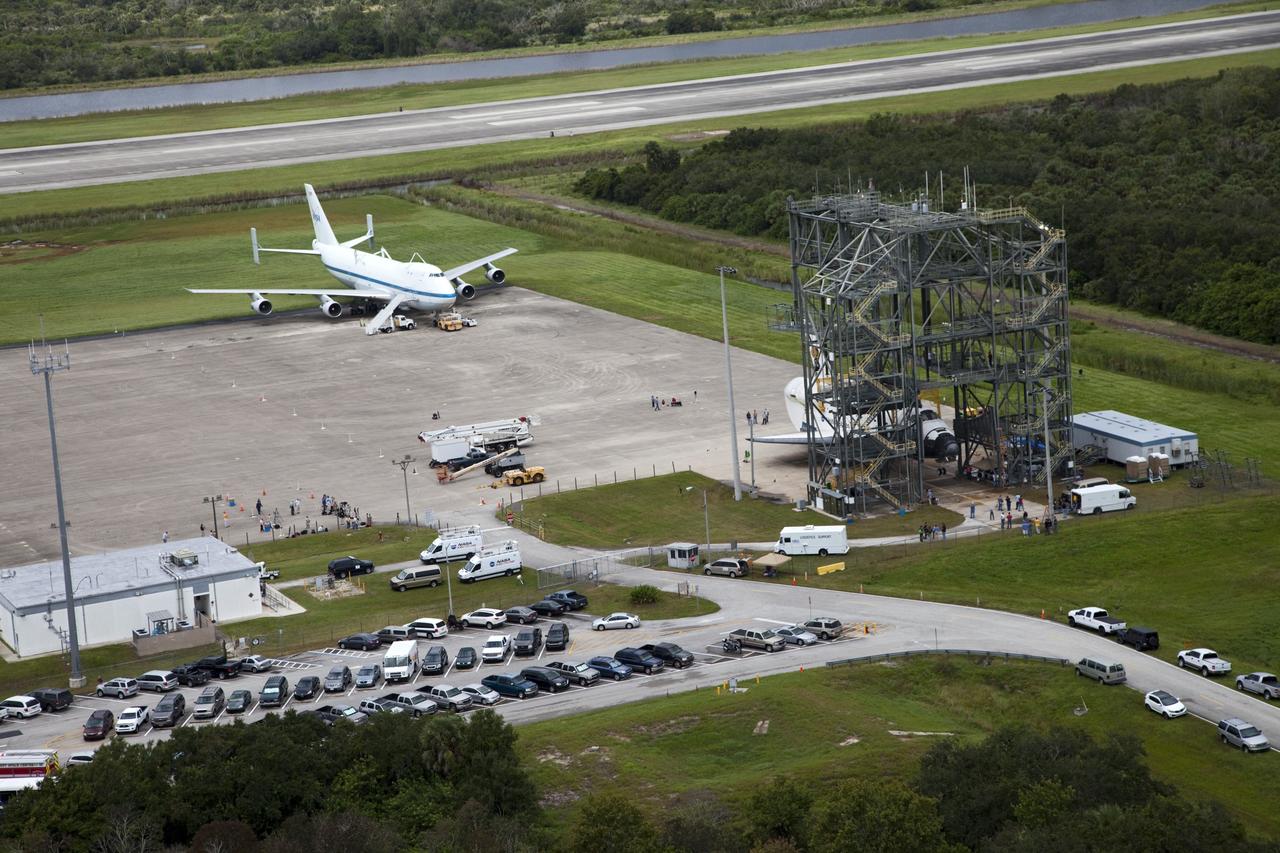
CAPE CANAVERAL, Fla. – Space shuttle Endeavour is seen inside the Mate-Demate Device, or MDD, at the Shuttle Landing Facility at NASA's Kennedy Space Center in Florida. The Shuttle Carrier Aircraft, or SCA, is seen on the ramp. The SCA will carry Endeavour to Los Angeles where it will be placed on public display. Photo credit: NASA/Kim Shiflett
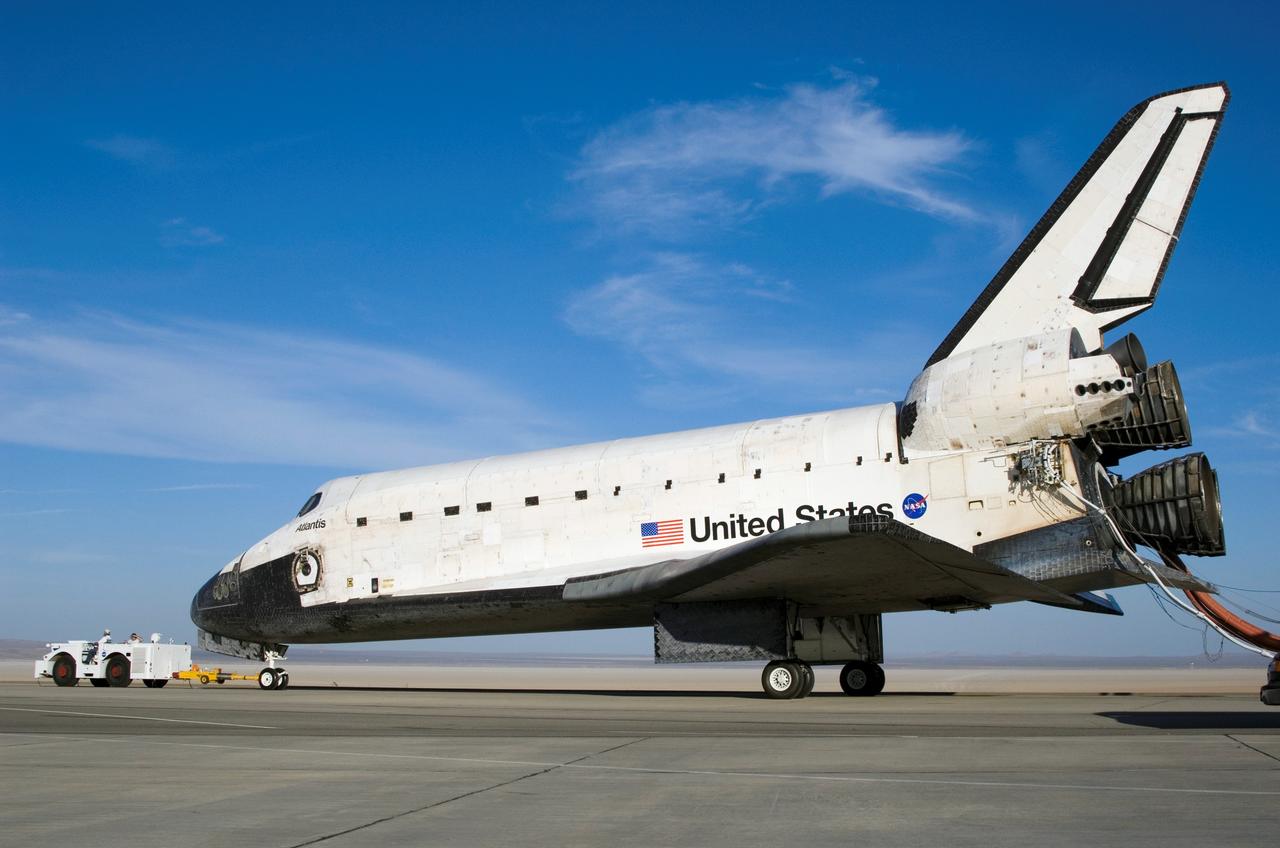
STS117-S-054 (22 June 2007) --- The Space Shuttle Atlantis is towed from the runway at Edwards Air Force Base to NASA Dryden Flight Research Center's Mate-Demate Device (MDD) for post-flight processing after a successful landing at 12:49 p.m. (PDT) on June 22, 2007.
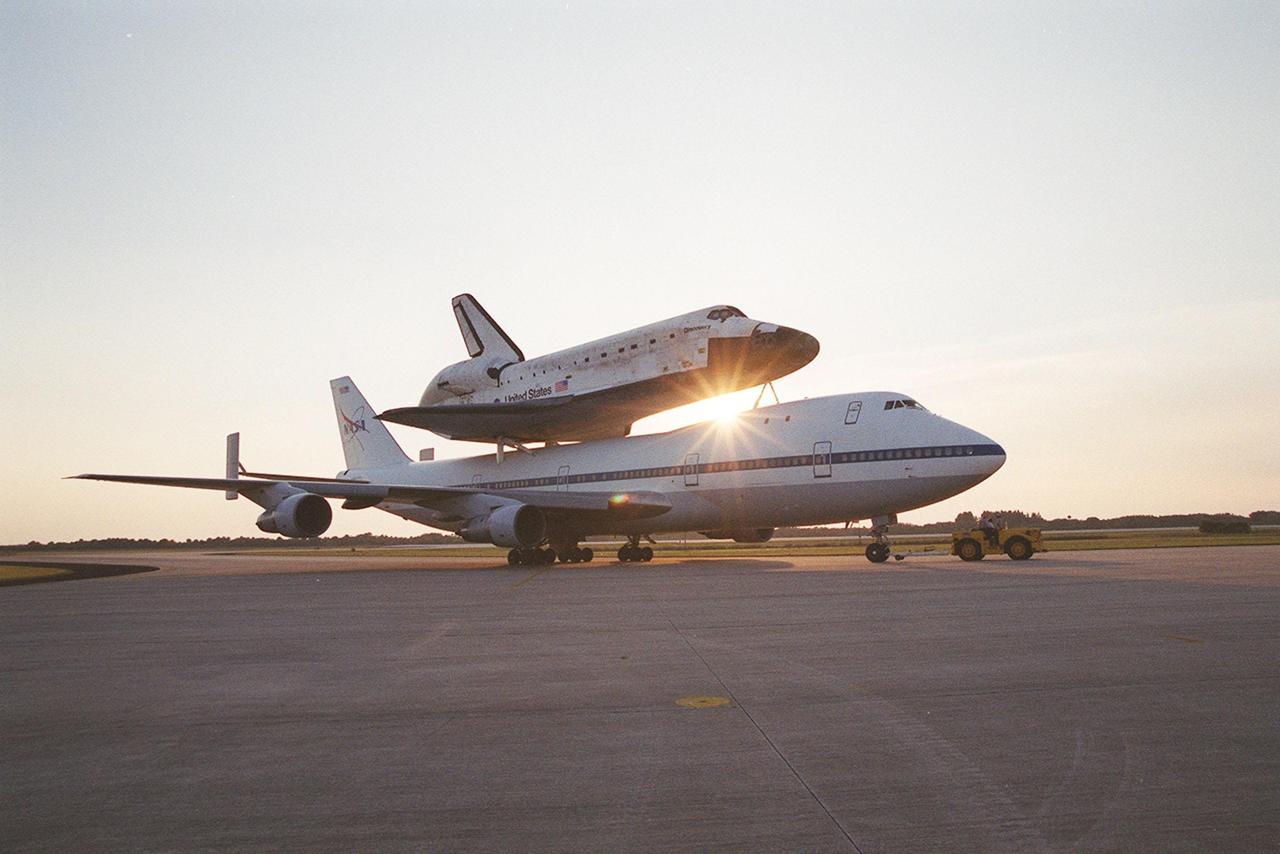
After landing at the Shuttle Landing Facility (SLF), the Shuttle Carrier Aircraft (SCA), with its unique cargo Discovery on top, is towed to the mate/demate device at the SLF. Discovery will be lifted off the SCA and transported to the Orbiter Processing Facility bay 1. There it will undergo preparations for its next launch, STS-102, scheduled for February 2001
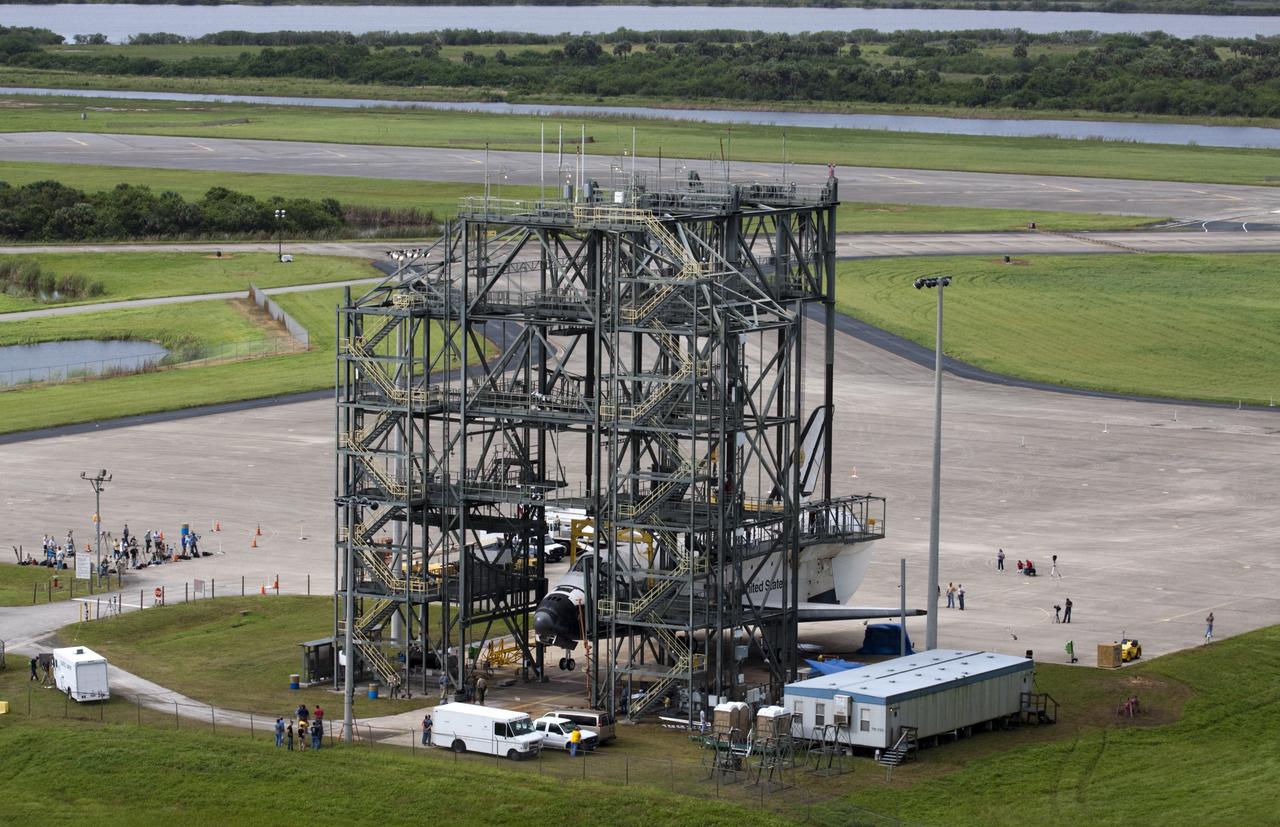
CAPE CANAVERAL, Fla. – Space shuttle Endeavour is seen inside the Mate-Demate Device, or MDD, at the Shuttle Landing Facility at NASA's Kennedy Space Center in Florida. The Shuttle Carrier Aircraft will carry Endeavour to Los Angeles where it will be placed on public display. Photo credit: NASA/Kim Shiflett
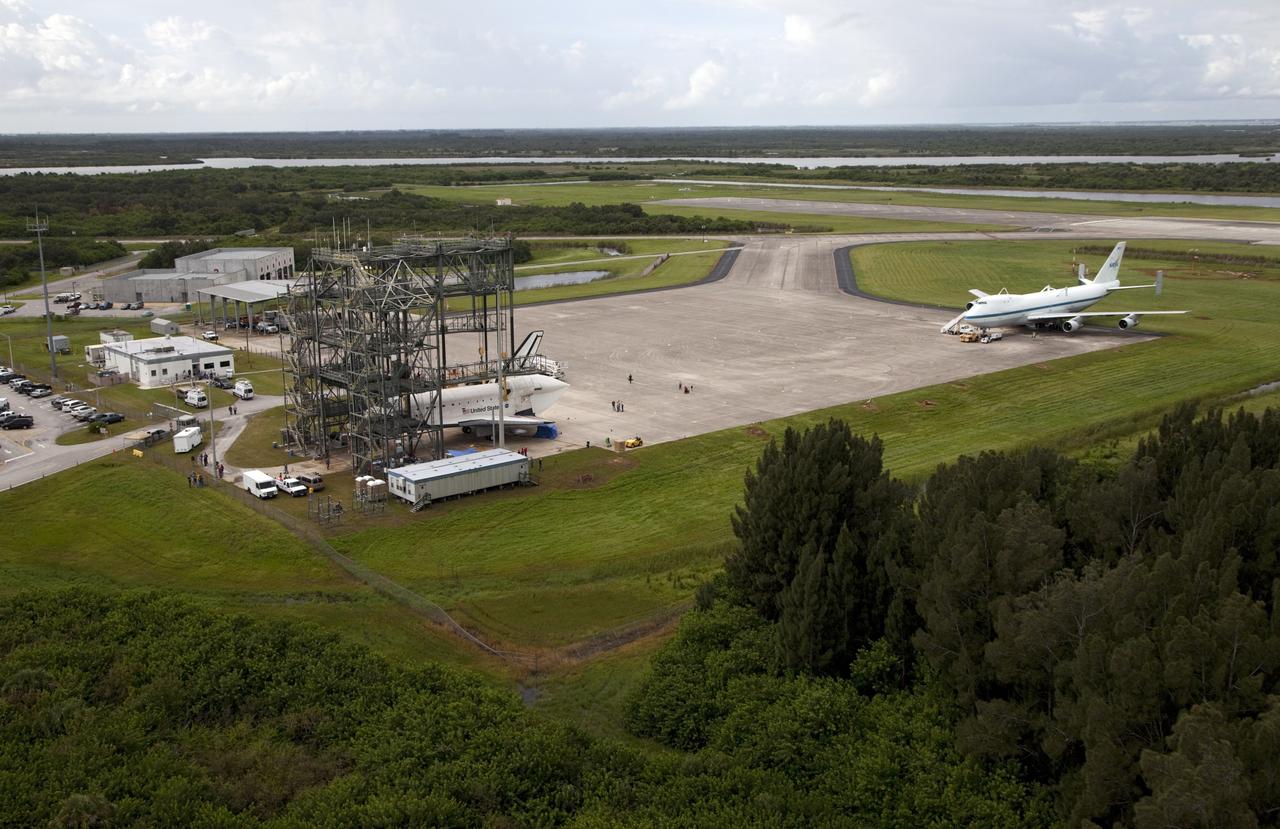
CAPE CANAVERAL, Fla. – Space shuttle Endeavour is seen inside the Mate-Demate Device, or MDD, at the Shuttle Landing Facility at NASA's Kennedy Space Center in Florida. The Shuttle Carrier Aircraft, or SCA, is seen on the ramp. The SCA will carry Endeavour to Los Angeles where it will be placed on public display. Photo credit: NASA/Kim Shiflett
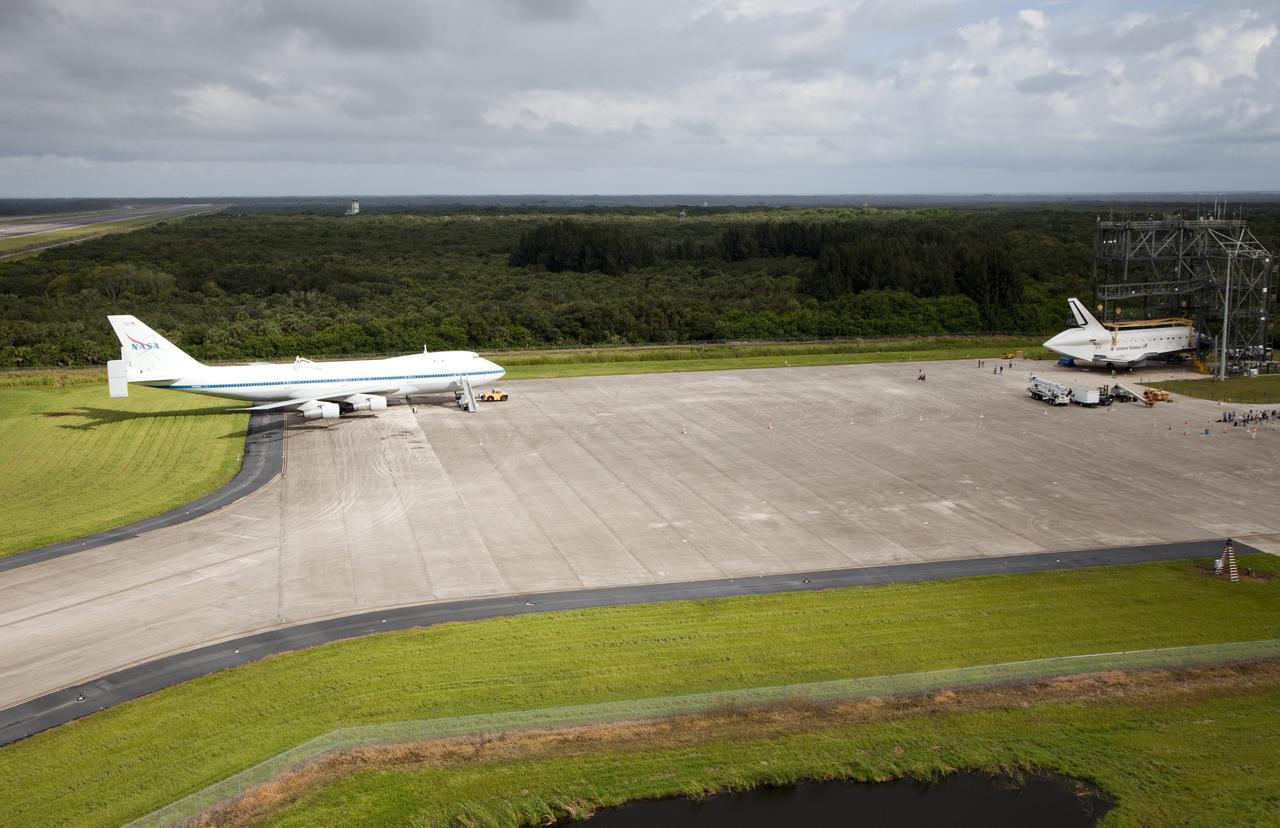
CAPE CANAVERAL, Fla. – Space shuttle Endeavour is seen inside the Mate-Demate Device, or MDD, at the Shuttle Landing Facility at NASA's Kennedy Space Center in Florida. The Shuttle Carrier Aircraft, or SCA, is at the left of the ramp. The SCA will carry Endeavour to Los Angeles where it will be placed on public display. Photo credit: NASA/Kim Shiflett
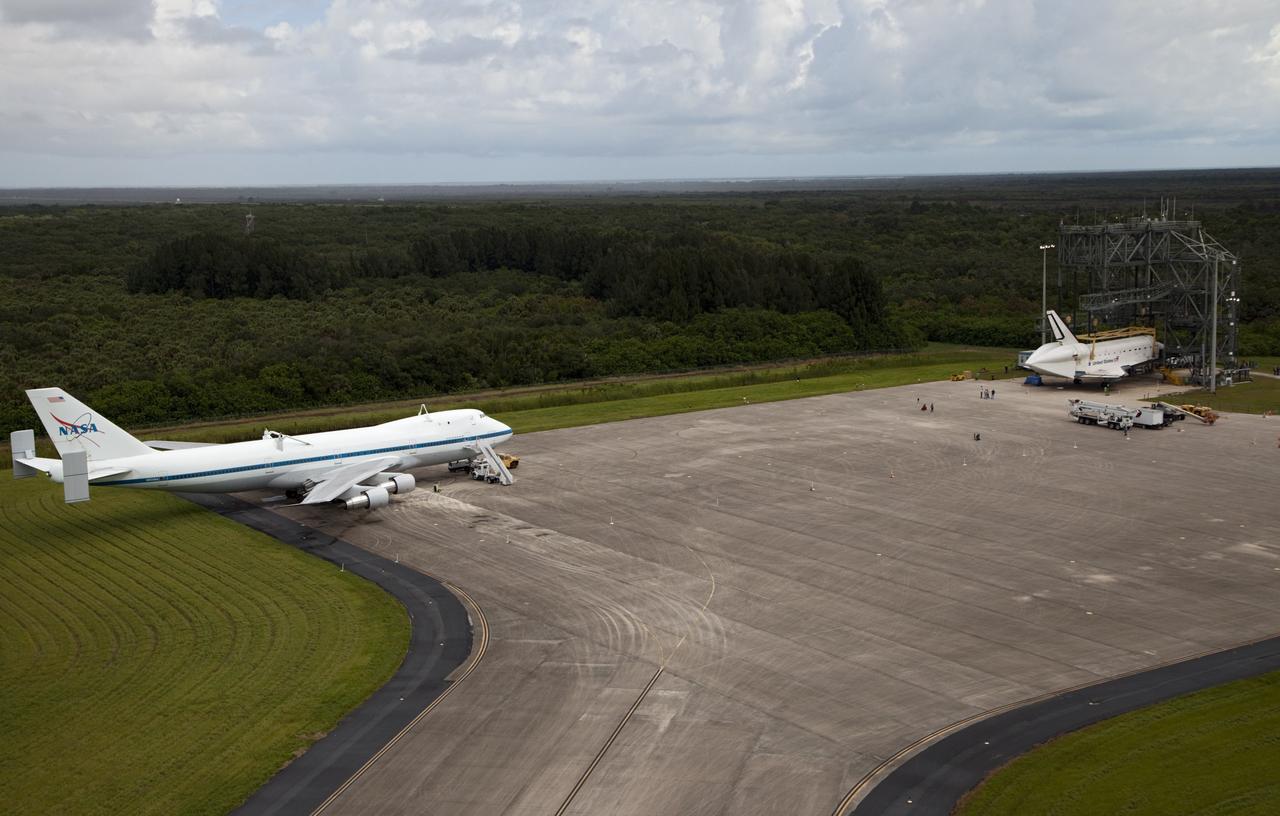
CAPE CANAVERAL, Fla. – Space shuttle Endeavour is seen inside the Mate-Demate Device, or MDD, at the Shuttle Landing Facility at NASA's Kennedy Space Center in Florida. The Shuttle Carrier Aircraft, or SCA, is seen on the ramp. The SCA will carry Endeavour to Los Angeles where it will be placed on public display. Photo credit: NASA/Kim Shiflett
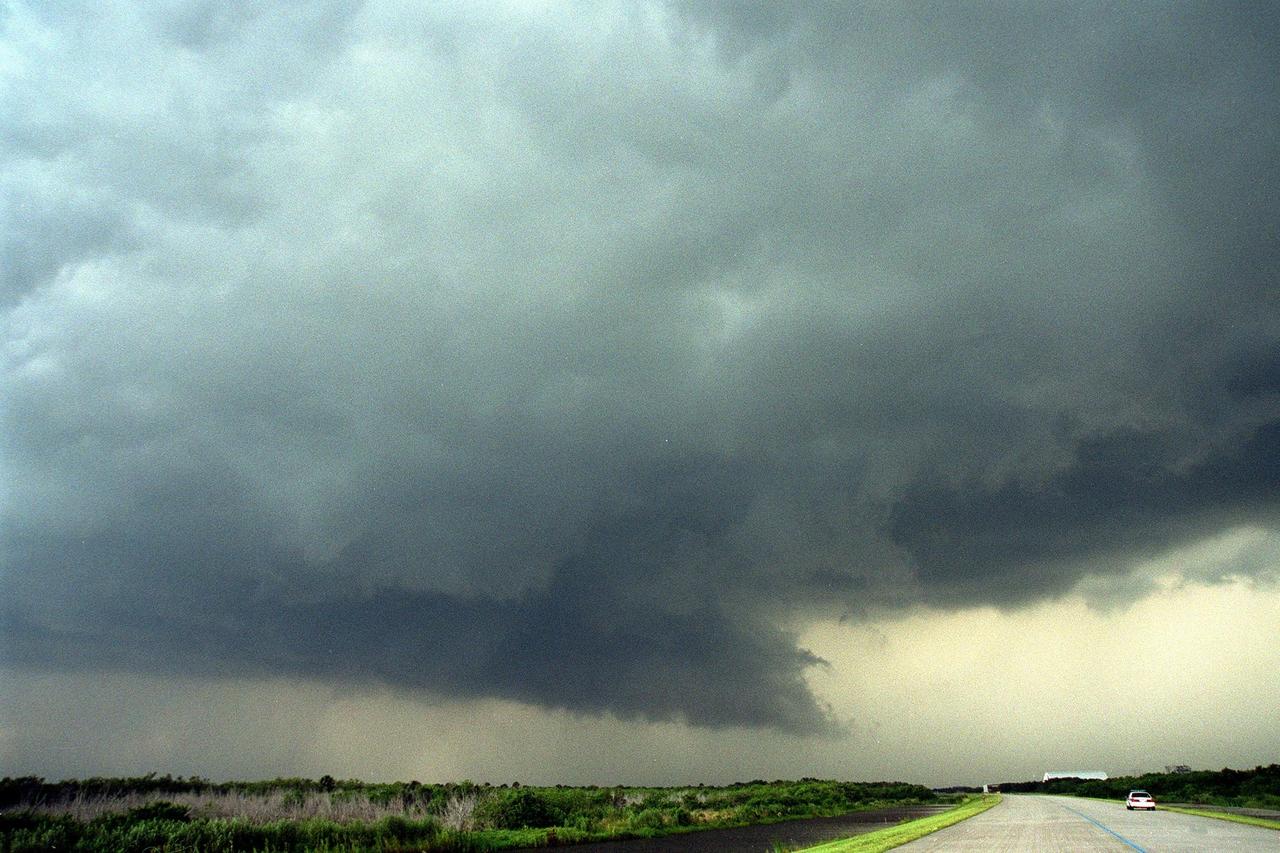
KENNEDY SPACE CENTER, Fla. -- Dark clouds and strong winds seem almost to touch the ground near the tow-way leading from the Shuttle Landing Facility (SLF). In the background (right) can be seen the new hangar at the SLF and the mate/demate device. The cloud formation is proceeding across the SLF towards the Vehicle Assembly Building
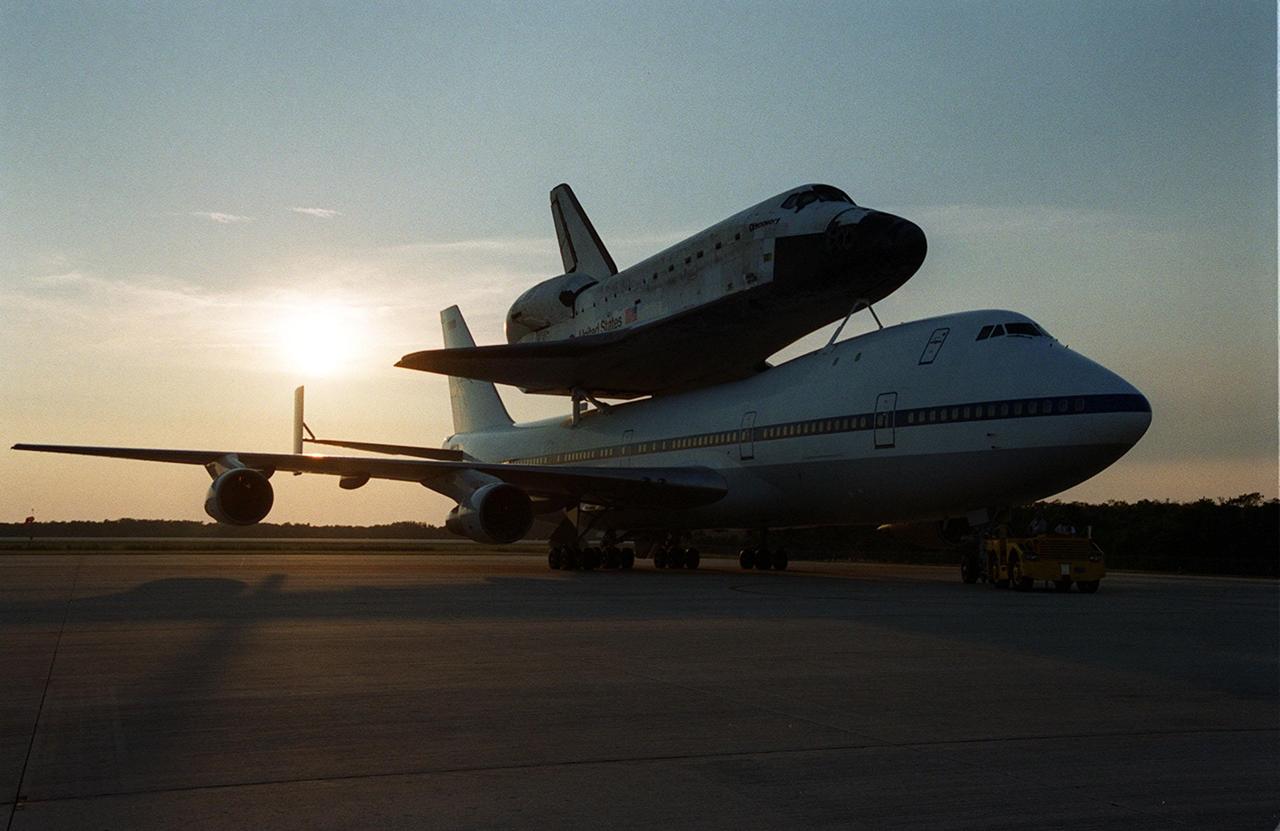
The Shuttle Carrier Aircraft (SCA) and its unique cargo Discovery on top rest in the shadows from the setting sun behind them. Discovery will be lifted off the SCA via the mate/demate device and transported to the Orbiter Processing Facility bay 1. There it will undergo preparations for its next launch, STS-102, scheduled for February 2001
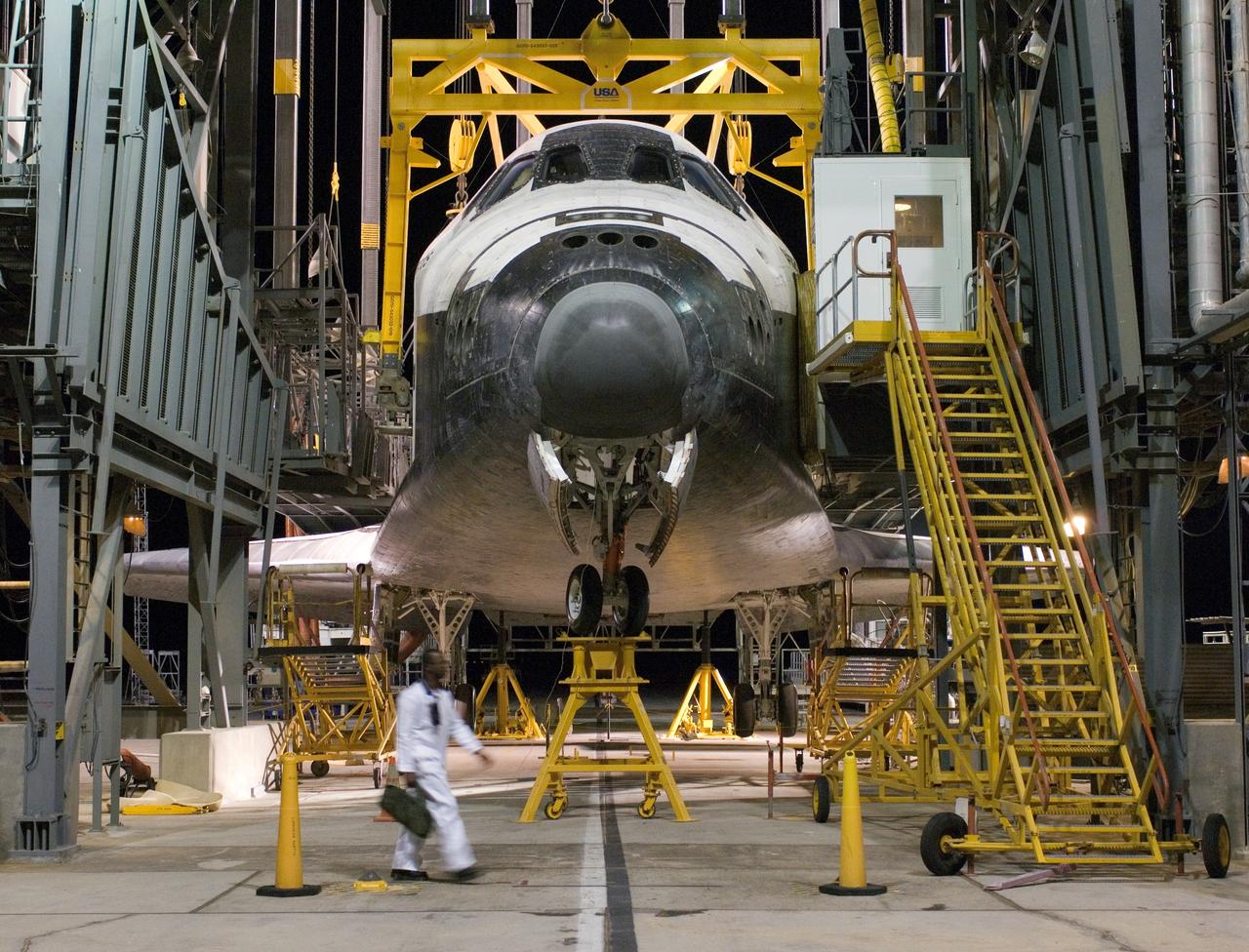
STS117-S-055 (23 June 2007) --- The Space Shuttle Atlantis receives post-flight servicing in the Mate-Demate Device (MDD) at NASA Dryden Flight Research Center after a successful landing at 12:49 p.m. (PDT) on June 22, 2007 at Edwards Air Force Base in California.
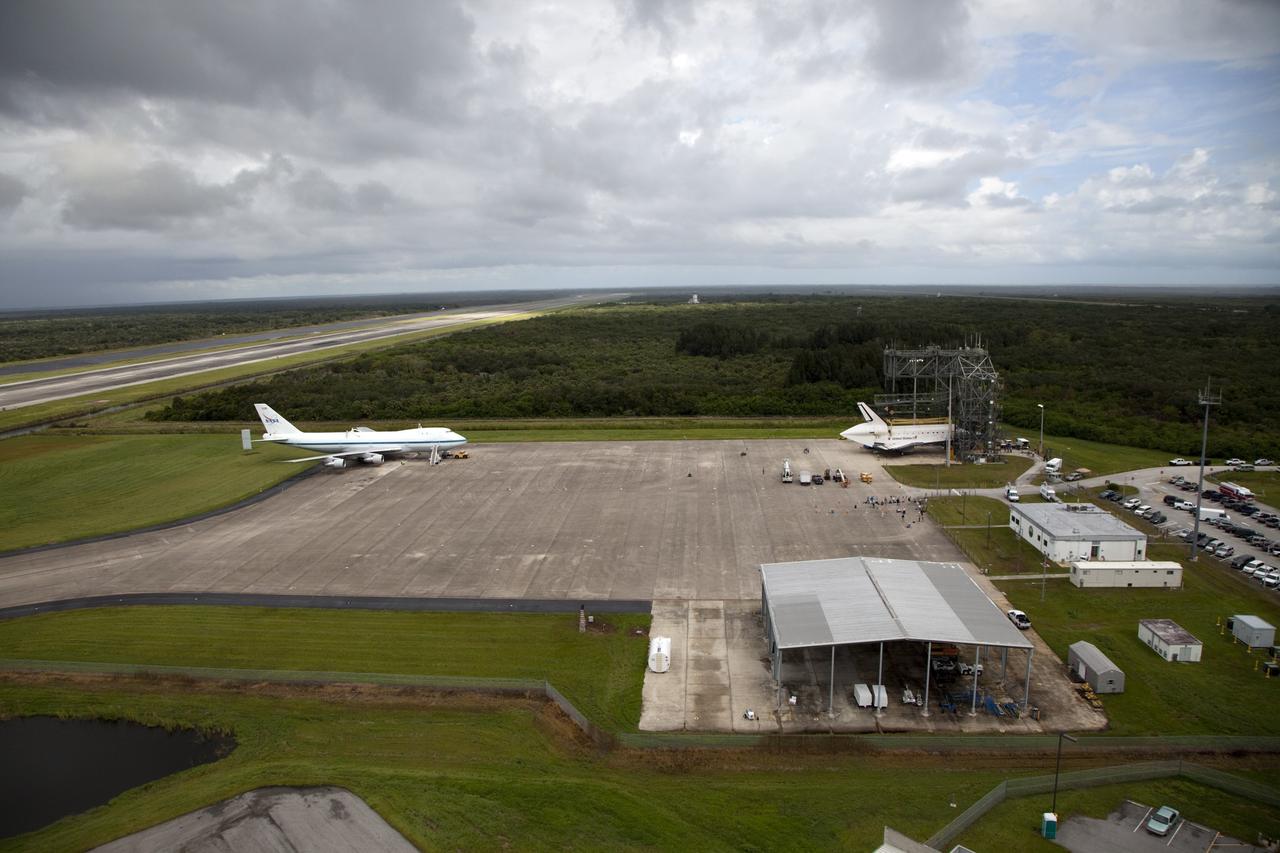
CAPE CANAVERAL, Fla. – Space shuttle Endeavour is seen inside the Mate-Demate Device, or MDD, at the Shuttle Landing Facility at NASA's Kennedy Space Center in Florida. The Shuttle Carrier Aircraft, or SCA, is seen on the ramp. The SCA will carry Endeavour to Los Angeles where it will be placed on public display. Photo credit: NASA/Kim Shiflett
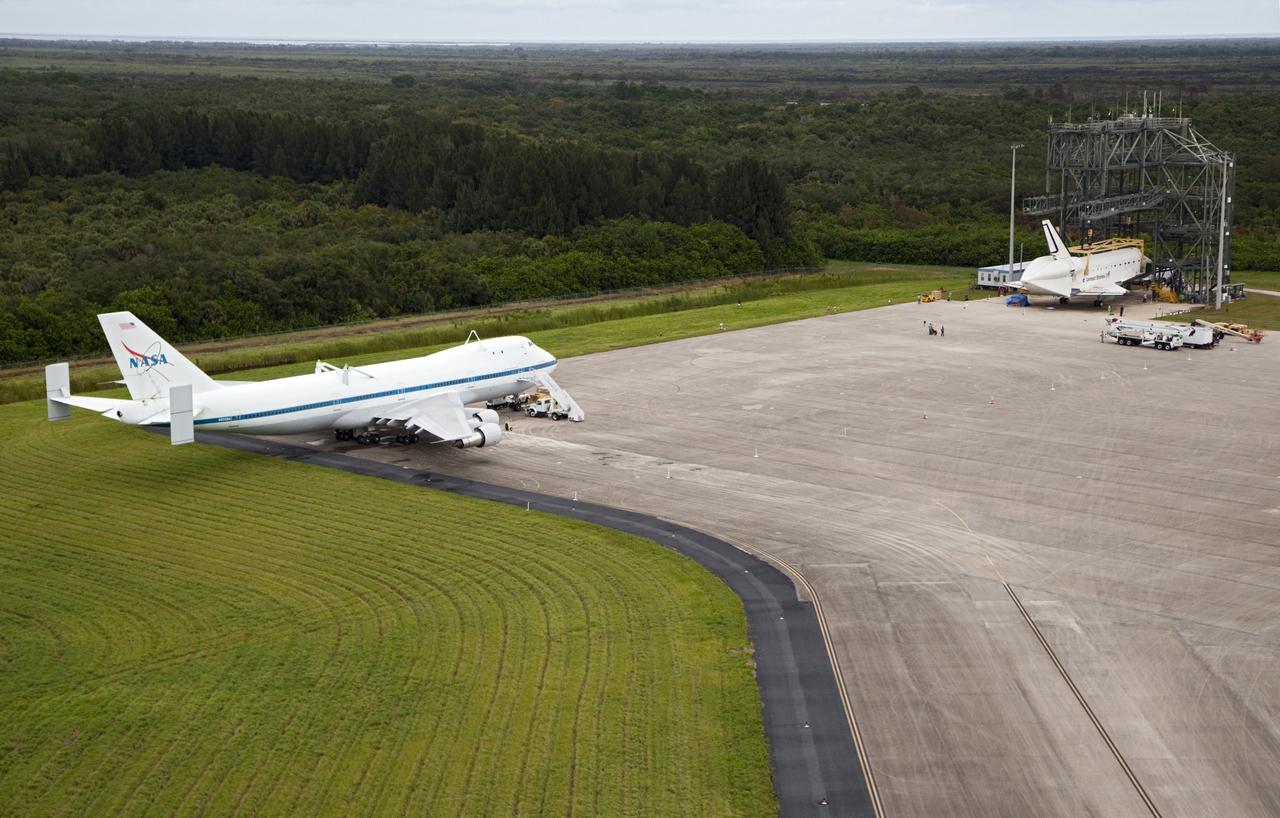
CAPE CANAVERAL, Fla. – Space shuttle Endeavour is seen inside the Mate-Demate Device, or MDD, at the Shuttle Landing Facility at NASA's Kennedy Space Center in Florida. The Shuttle Carrier Aircraft, or SCA, is seen on the ramp. The SCA will carry Endeavour to Los Angeles where it will be placed on public display. Photo credit: NASA/Kim Shiflett
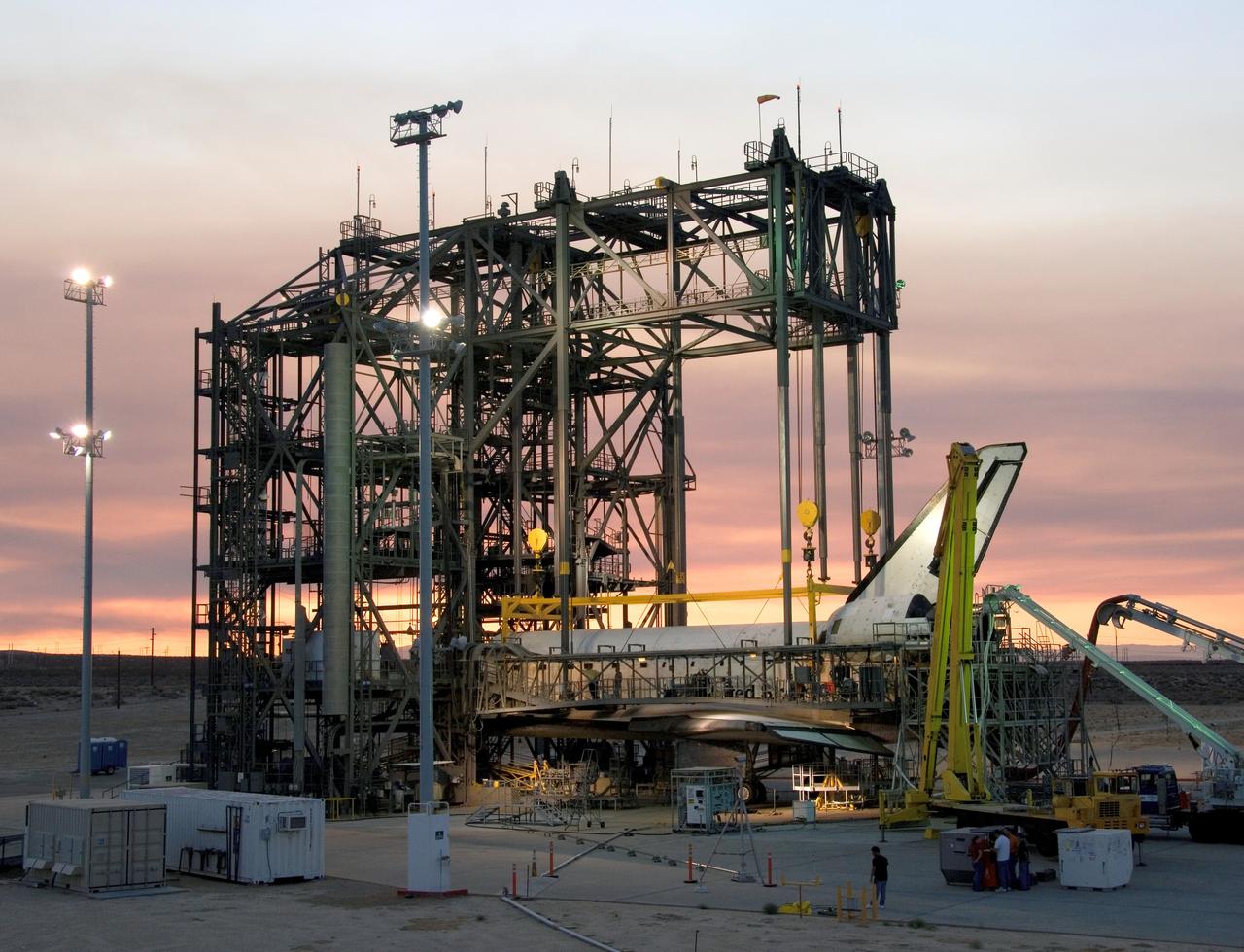
STS117-S-056 (25 June 2007) --- The space shuttle Atlantis receives postflight servicing in the Mate-Demate Device (MDD) at NASA Dryden Flight Research Center after a successful landing at 12:49 p.m. (PDT) on June 22, 2007 at Edwards Air Force Base in California. Photo credit: NASA
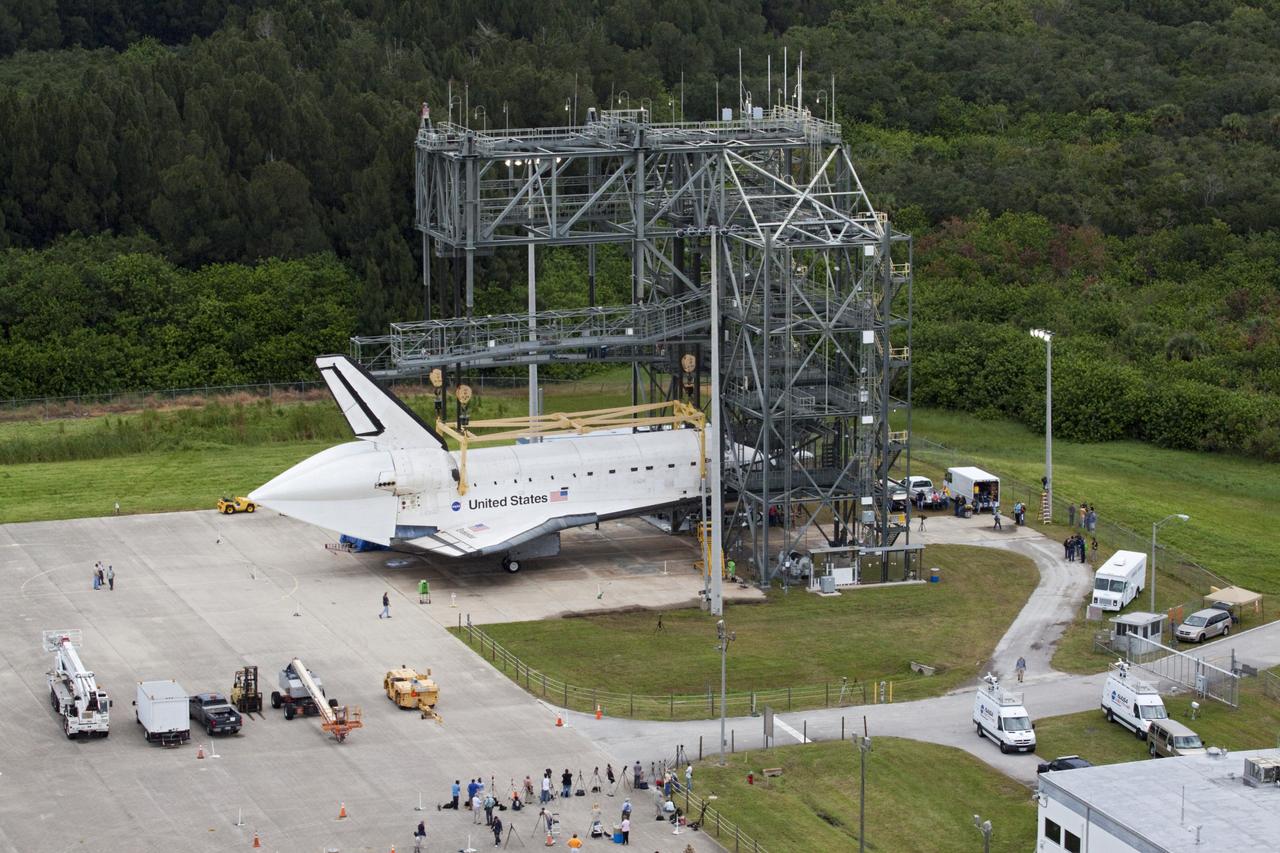
CAPE CANAVERAL, Fla. – Space shuttle Endeavour is seen inside the Mate-Demate Device, or MDD, at the Shuttle Landing Facility at NASA's Kennedy Space Center in Florida. The Shuttle Carrier Aircraft will carry Endeavour to Los Angeles where it will be placed on public display. Photo credit: NASA/Kim Shiflett
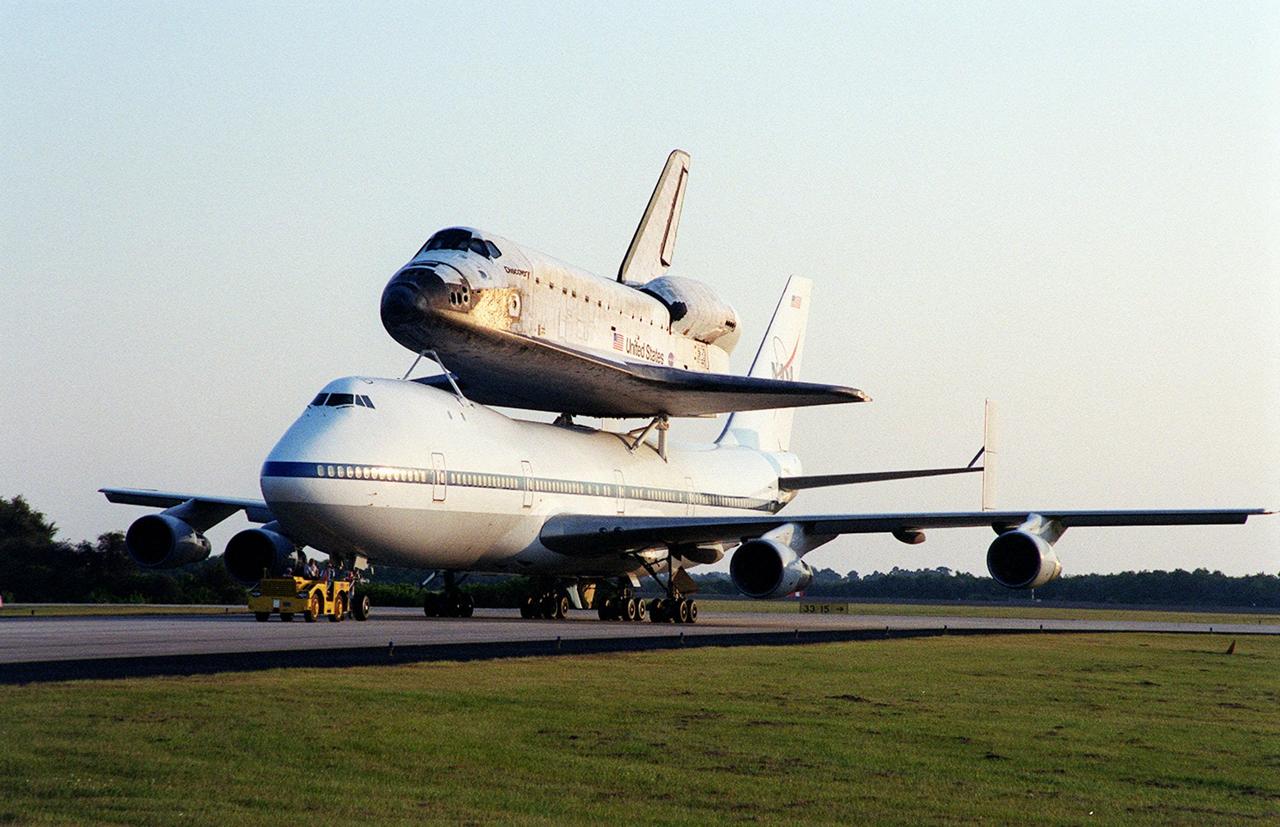
After landing at the Shuttle Landing Facility (SLF), the Shuttle Carrier Aircraft (SCA), with its unique cargo Discovery on top, is towed to the mate/demate device at the SLF. Discovery will be lifted off the SCA and transported to the Orbiter Processing Facility bay 1. There it will undergo preparations for its next launch, STS-102, scheduled for February 2001
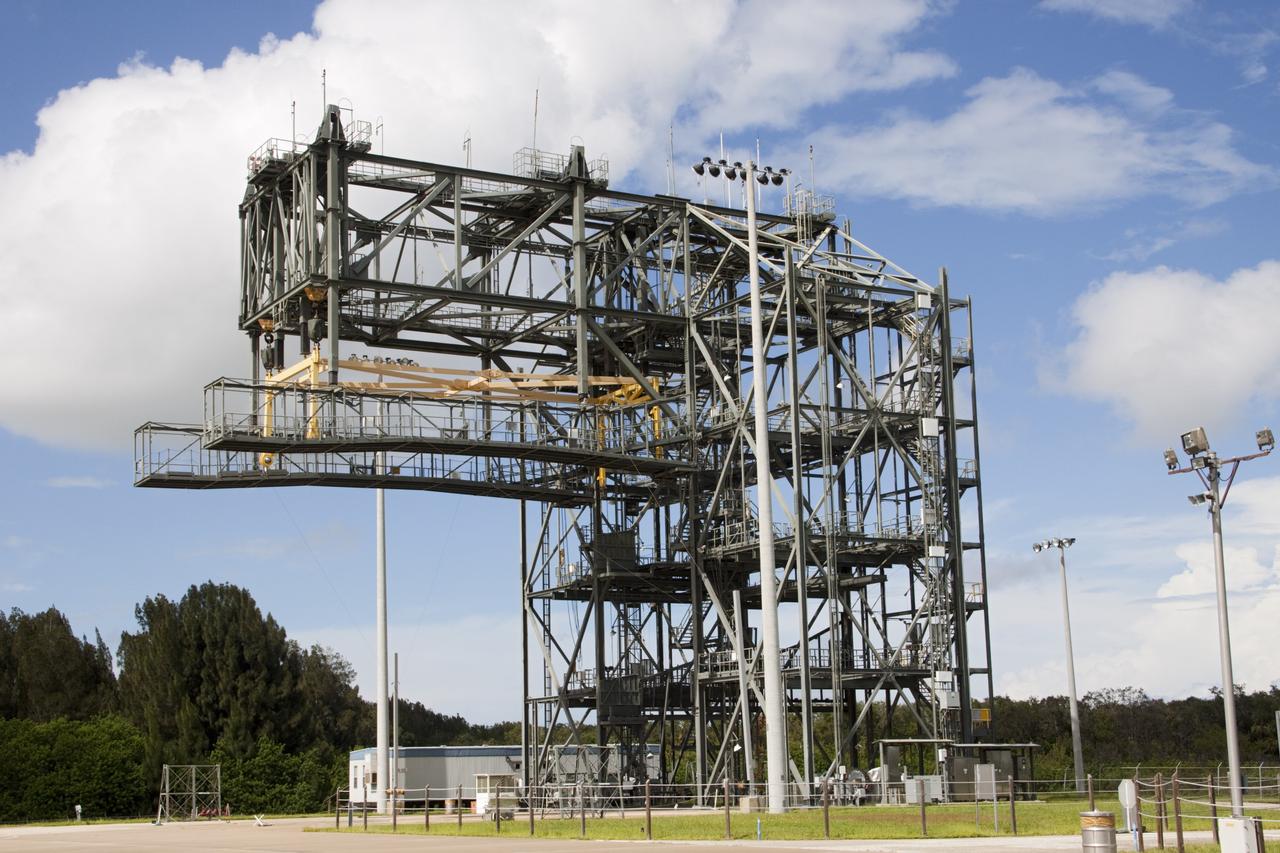
CAPE CANAVERAL, Fla. – – Located at the Shuttle Landing Facility on NASA's Kennedy Space Center in Florida, the space shuttle's mate/demate device is used to raise and lower the space shuttle orbiter from its shuttle carrier aircraft during ferry operations. Photo credit: NASA/Jim Grossmann
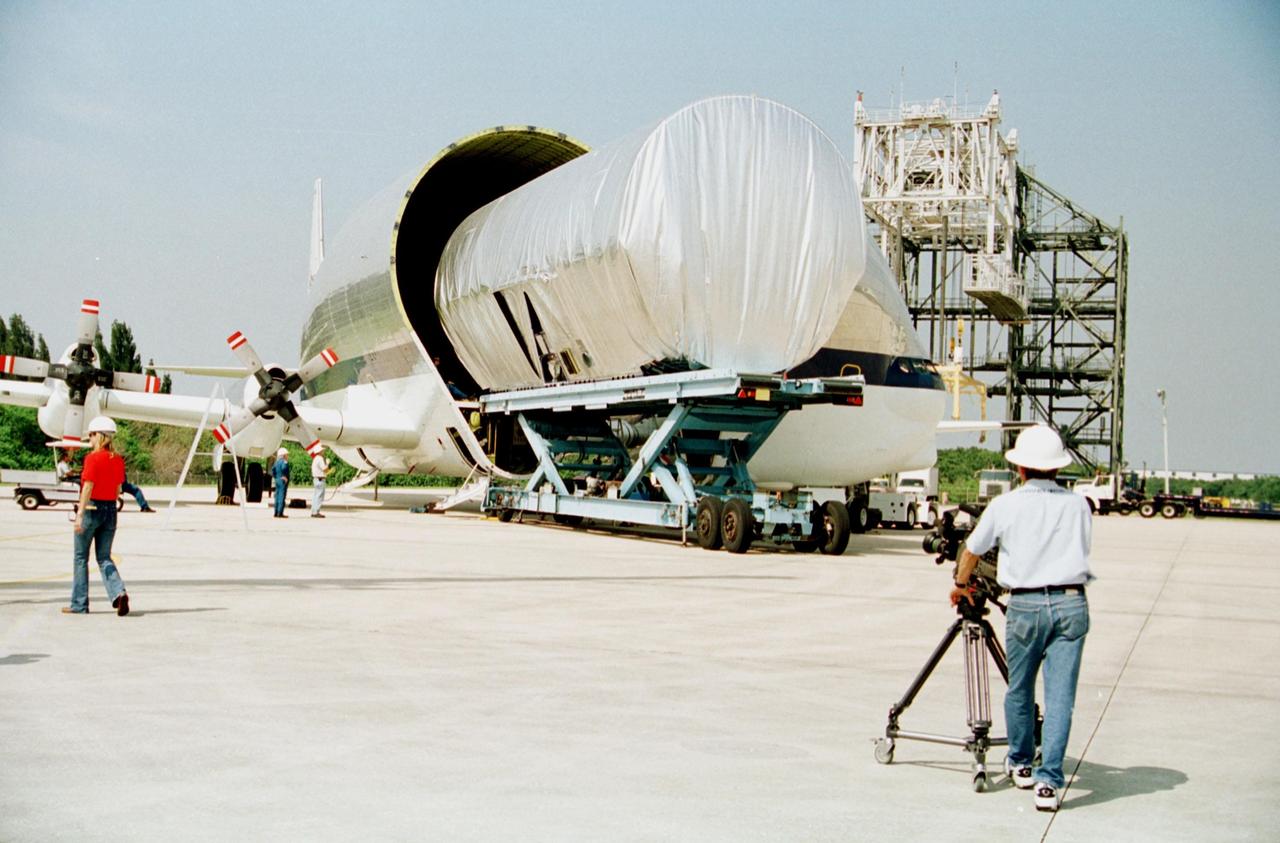
KENNEDY SPACE CENTER, Fla. -- At the KSC Shuttle Landing Facility, near the Mate/Demate Device (backgound), the P5 truss is rolled out from the Super Guppy aircraft that delivered it. The truss will be transported to the Space Station Processing Facility. The P5 is scheduled for delivery to the International Space Station on mission 12A.1 in April 2003.
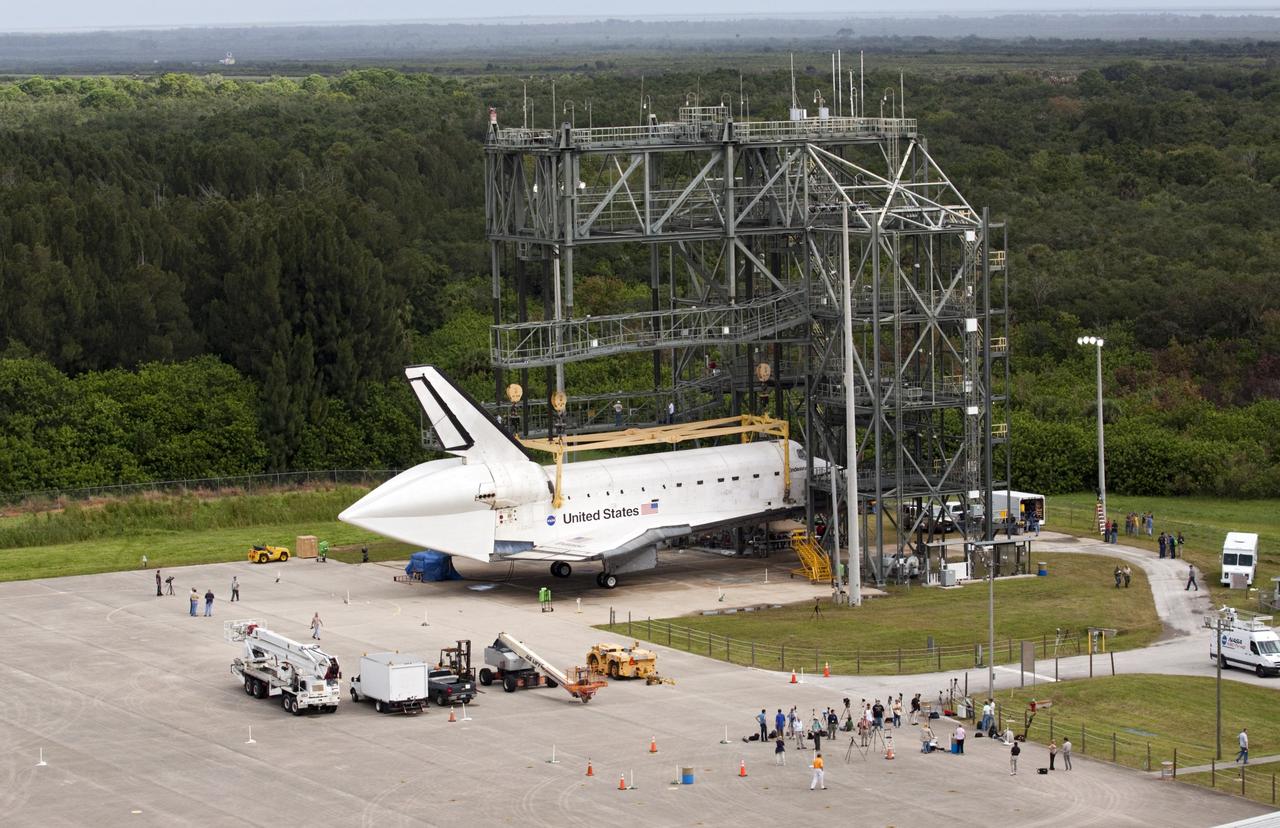
CAPE CANAVERAL, Fla. – Space shuttle Endeavour is seen inside the Mate-Demate Device, or MDD, at the Shuttle Landing Facility at NASA's Kennedy Space Center in Florida. The Shuttle Carrier Aircraft will carry Endeavour to Los Angeles where it will be placed on public display. Photo credit: NASA/Kim Shiflett
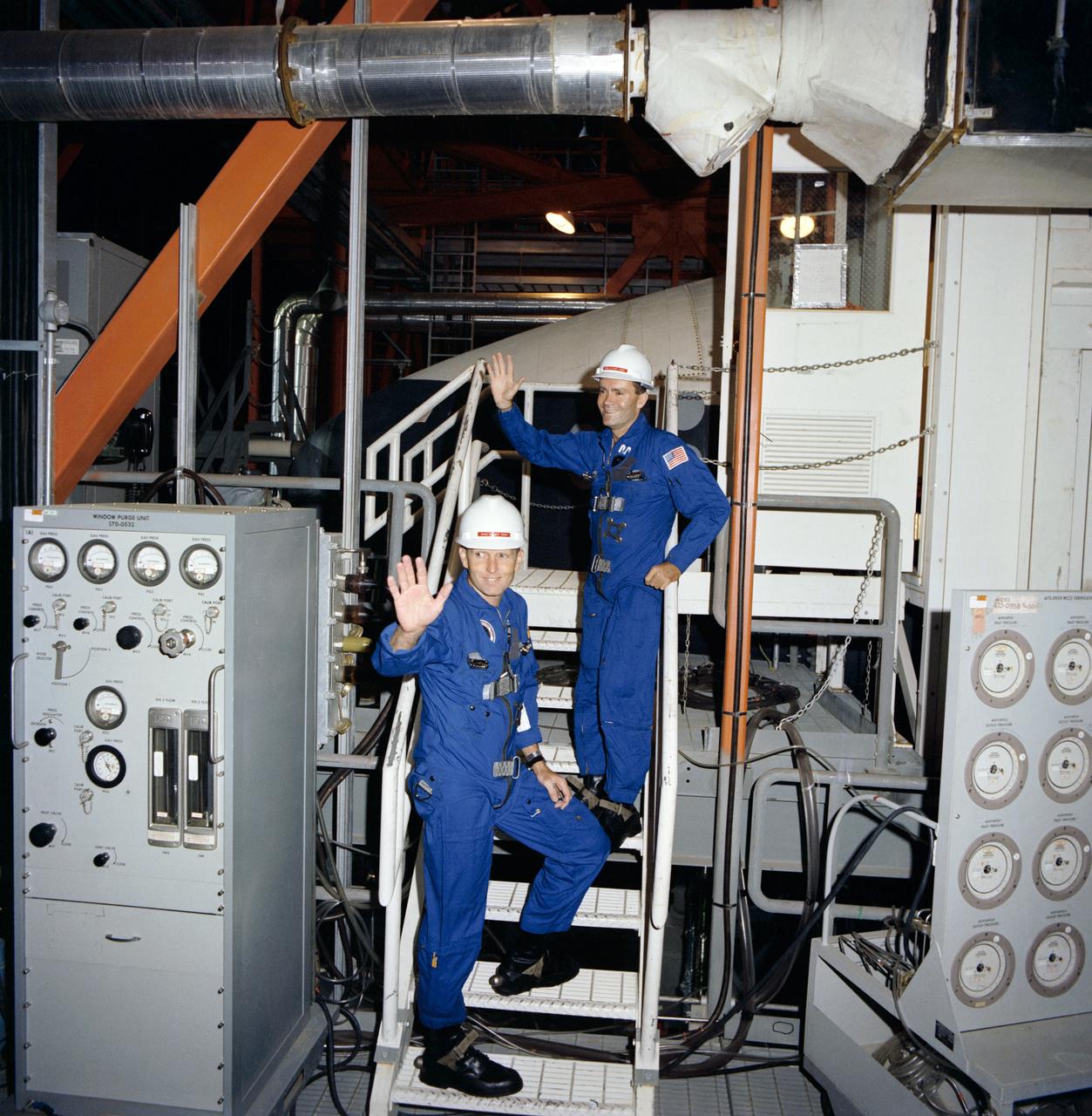
Public Affairs Office (PAO) release print of activity documenting third "free flight" of Shuttle Orbiter 101 Spacecraft at DFRC, Edwards Air Force Base (EAFB), CA. Astronauts Haise and Fullerton arrive at the Mate-Demate Device (MDD) and greet technicians prior to ingress.
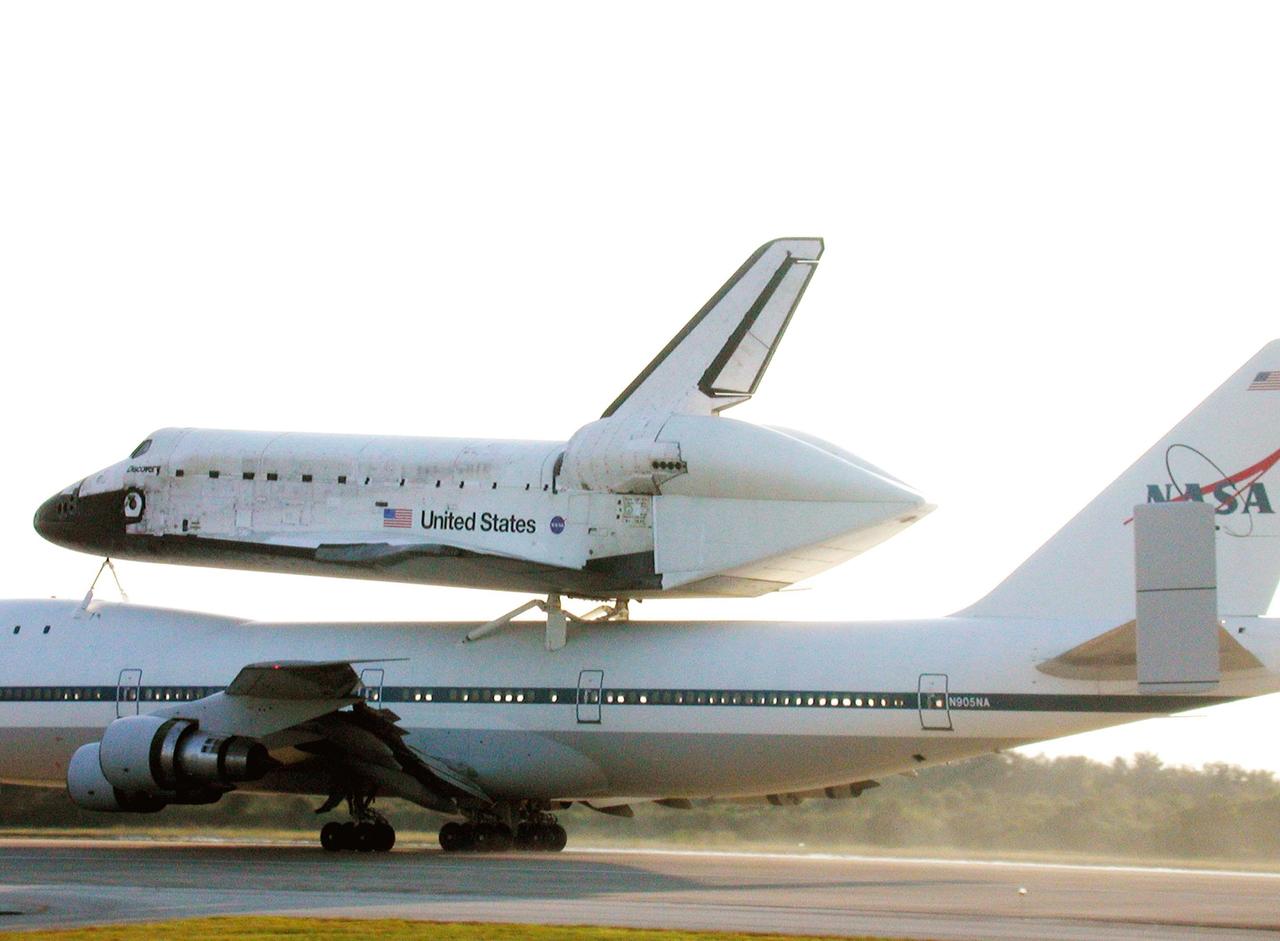
In the glow of a late afternoon sun, the Shuttle Carrier Aircraft (SCA) returns the orbiter Discovery to KSC after the orbiter’s California landing at Edwards Air Force Base at the end of mission STS-92. Discovery wears a tail cone protecting its aft nozzles for the ferry flight. Discovery will be demated from the SCA via the mate/demate device at the SLF and transported to the Orbiter Processing Facility bay 1. There it will undergo preparations for its next launch, STS-102, scheduled for February 2001
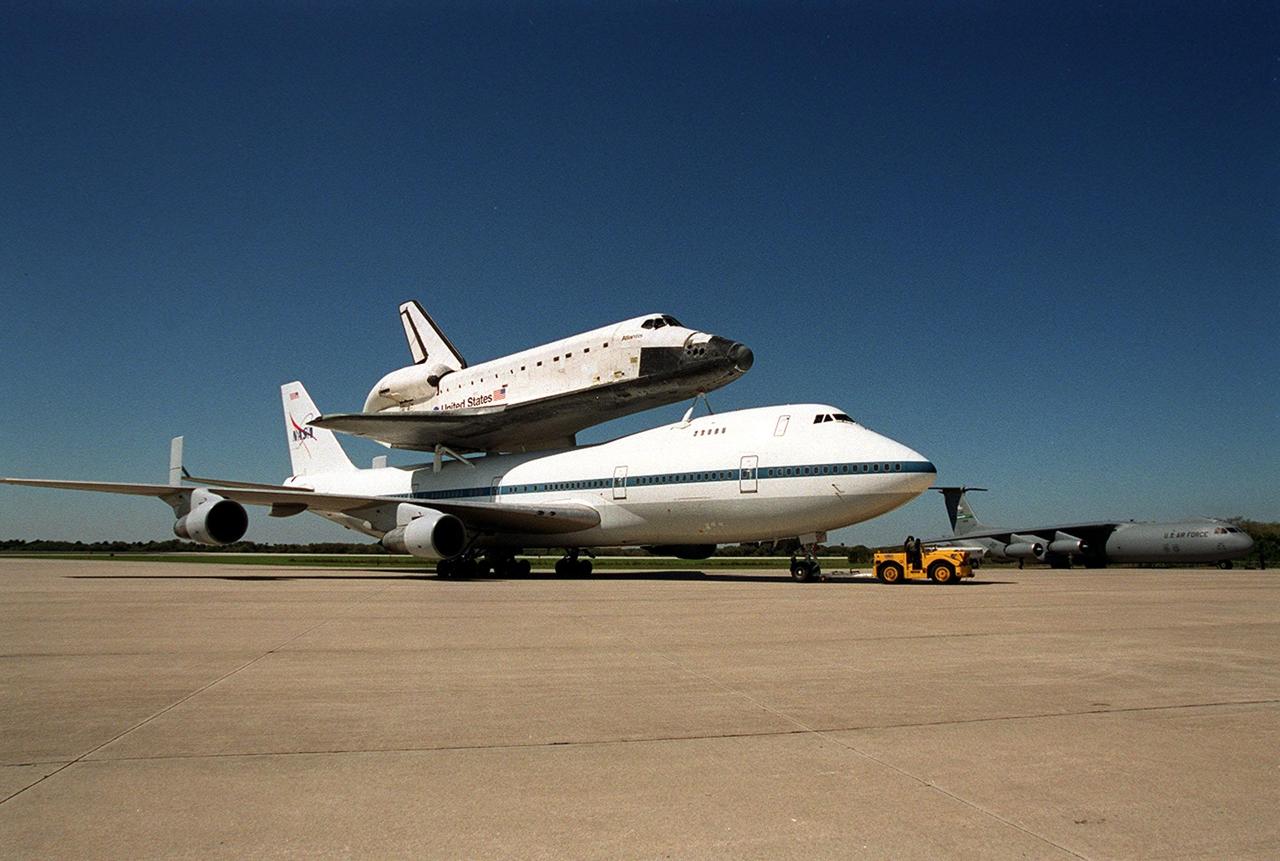
The Shuttle Carrier Aircraft, with its piggyback cargo the orbiter Atlantis, is towed to the parking area at the Shuttle Landing Facility. There it will be demated from the orbiter in the mate/demate device. Atlantis landed in California Feb. 19 concluding mission STS-98. The ferry flight began in California March 1; unfavorable weather conditions kept it on the ground at Altus AFB, Okla., until it could return to Florida. The orbiter will next fly on mission STS-104, the 10th construction flight to the International Space Station, scheduled June 8
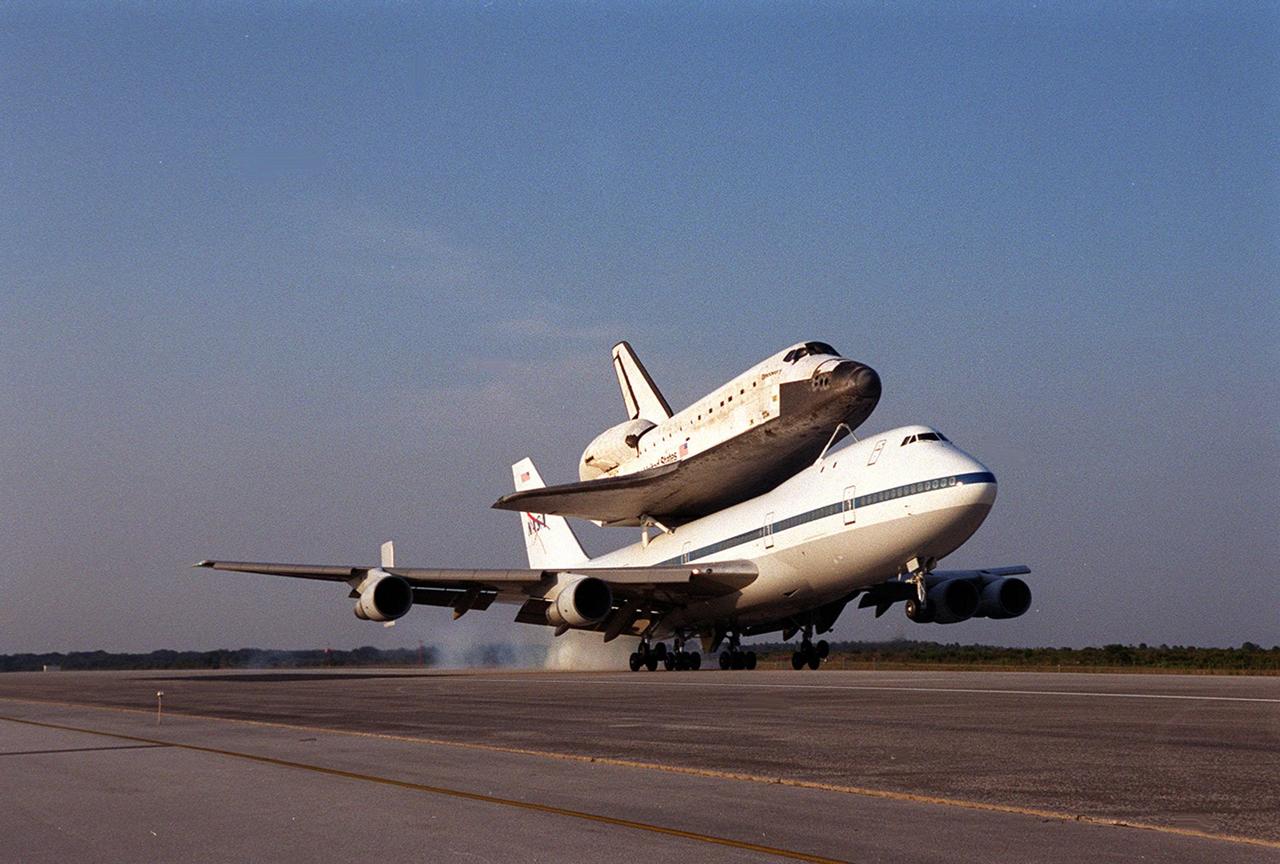
Kicking up dust, the Shuttle Carrier Aircraft, with its unique cargo on top, touches down on runway 33 at the Shuttle Landing Facility. The ferry flight started in California after the orbiter’s landing more than a week ago at Edwards Air Force Base at the end of mission STS-92. Discovery will be demated from the SCA via the mate/demate device at the SLF and transported to the Orbiter Processing Facility bay 1. There it will undergo preparations for its next launch, STS-102, scheduled for February 2001
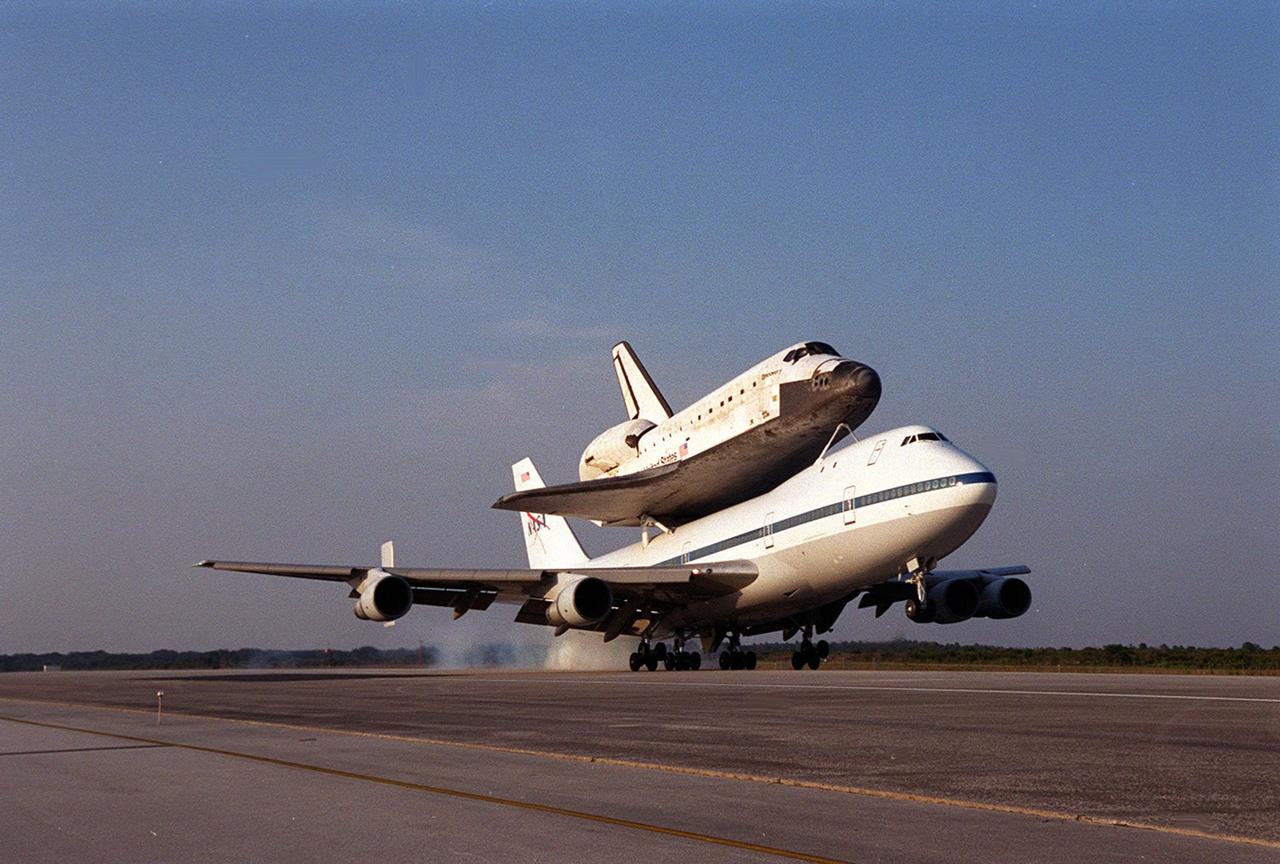
Kicking up dust, the Shuttle Carrier Aircraft, with its unique cargo on top, touches down on runway 33 at the Shuttle Landing Facility. The ferry flight started in California after the orbiter’s landing more than a week ago at Edwards Air Force Base at the end of mission STS-92. Discovery will be demated from the SCA via the mate/demate device at the SLF and transported to the Orbiter Processing Facility bay 1. There it will undergo preparations for its next launch, STS-102, scheduled for February 2001
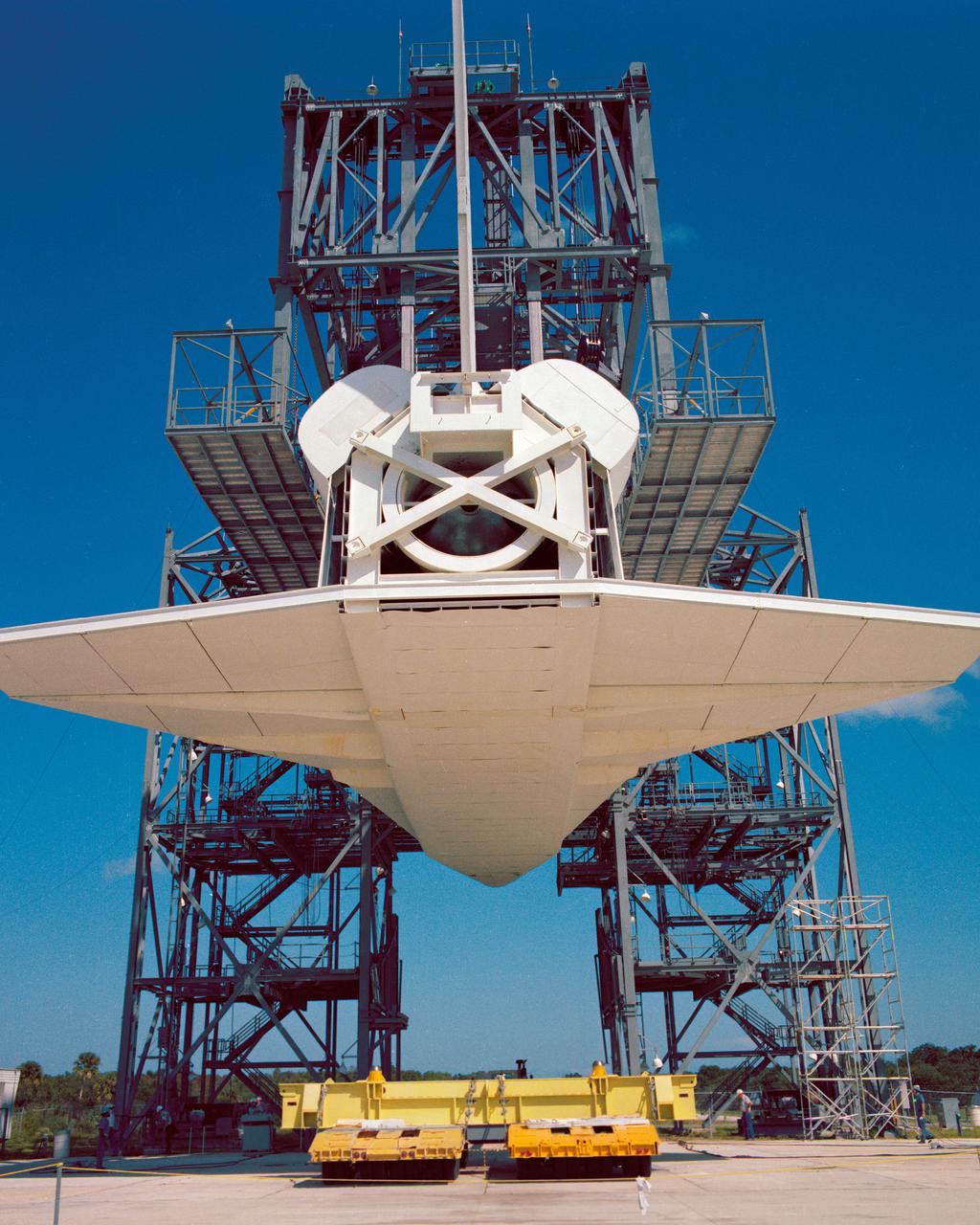
CAPE CANAVERAL, Fla. – At NASA's Kennedy Space Center in Florida, the space shuttle mock-up, dubbed Pathfinder, is attached to the Mate-Demate Device for at fit-check Oct. 19, 1978. The mock-up, constructed at NASA's Marshall Space Flight Center in Huntsville, Ala., possessed the general dimensions, weight and balance of a real space shuttle. It was shipped to Kennedy by barge and then used to fit-check the work platforms of the Mate-Demate Device, orbiter processing facilities and Vehicle Assembly Building, as well as support ground crew training. It also was used to rehearse post-landing procedures at Kennedy's Shuttle Landing Facility. After being on display at the 'Great Space Shuttle Exposition' in Tokyo from June 1983 to August 1984, the mock-up returned to Marshall and now is on permanent display at the U.S. Space and Rocket Center near Huntsville. Photo credit: NASA
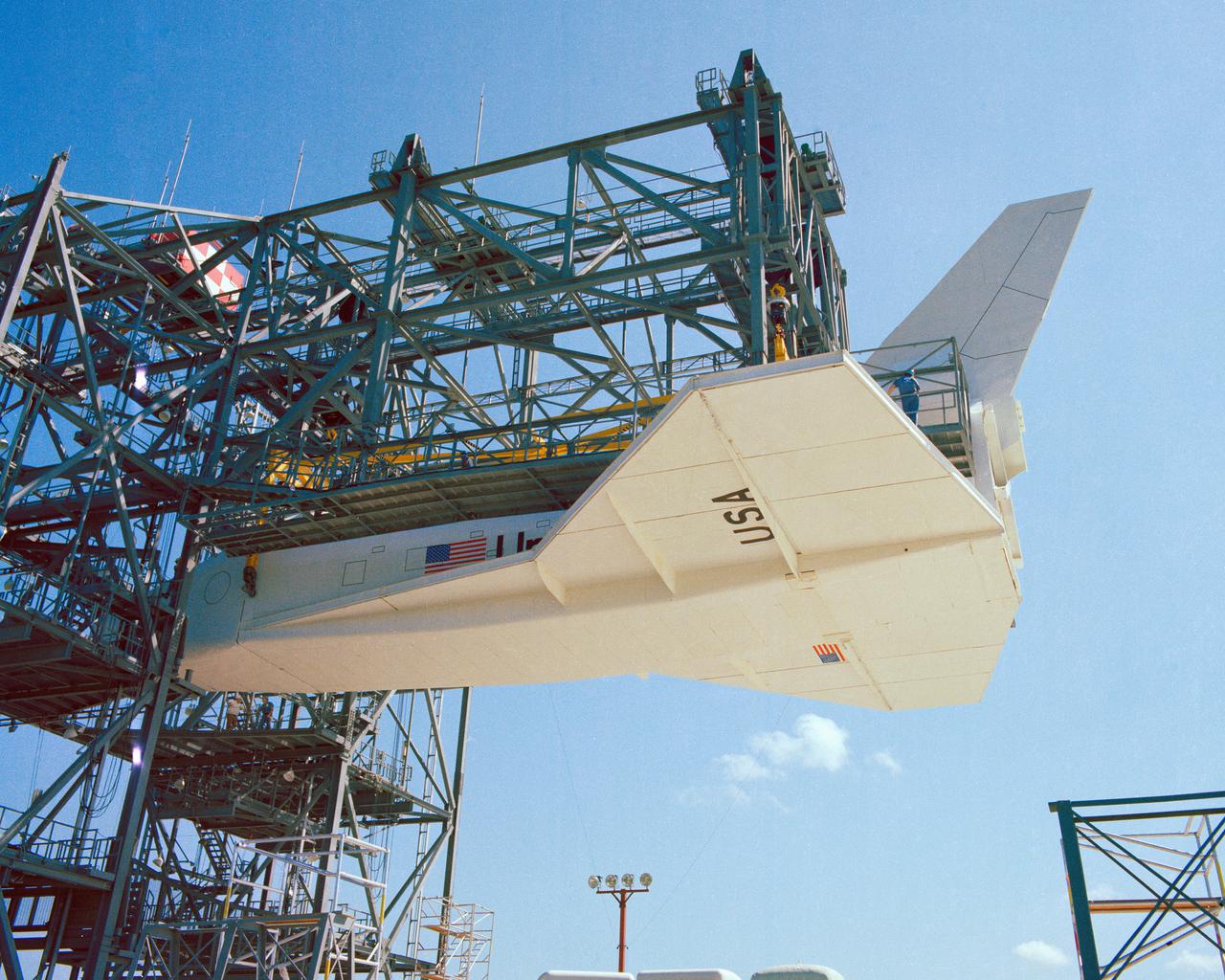
CAPE CANAVERAL, Fla. – At NASA's Kennedy Space Center in Florida, the space shuttle mock-up, dubbed Pathfinder, is attached to the Mate-Demate Device for at fit-check Oct. 19, 1978. The mock-up, constructed at NASA's Marshall Space Flight Center in Huntsville, Ala., possessed the general dimensions, weight and balance of a real space shuttle. It was shipped to Kennedy by barge and then used to fit-check the work platforms of the Mate-Demate Device, orbiter processing facilities and Vehicle Assembly Building, as well as support ground crew training. It also was used to rehearse post-landing procedures at Kennedy's Shuttle Landing Facility. After being on display at the 'Great Space Shuttle Exposition' in Tokyo from June 1983 to August 1984, the mock-up returned to Marshall and now is on permanent display at the U.S. Space and Rocket Center near Huntsville. Photo credit: NASA
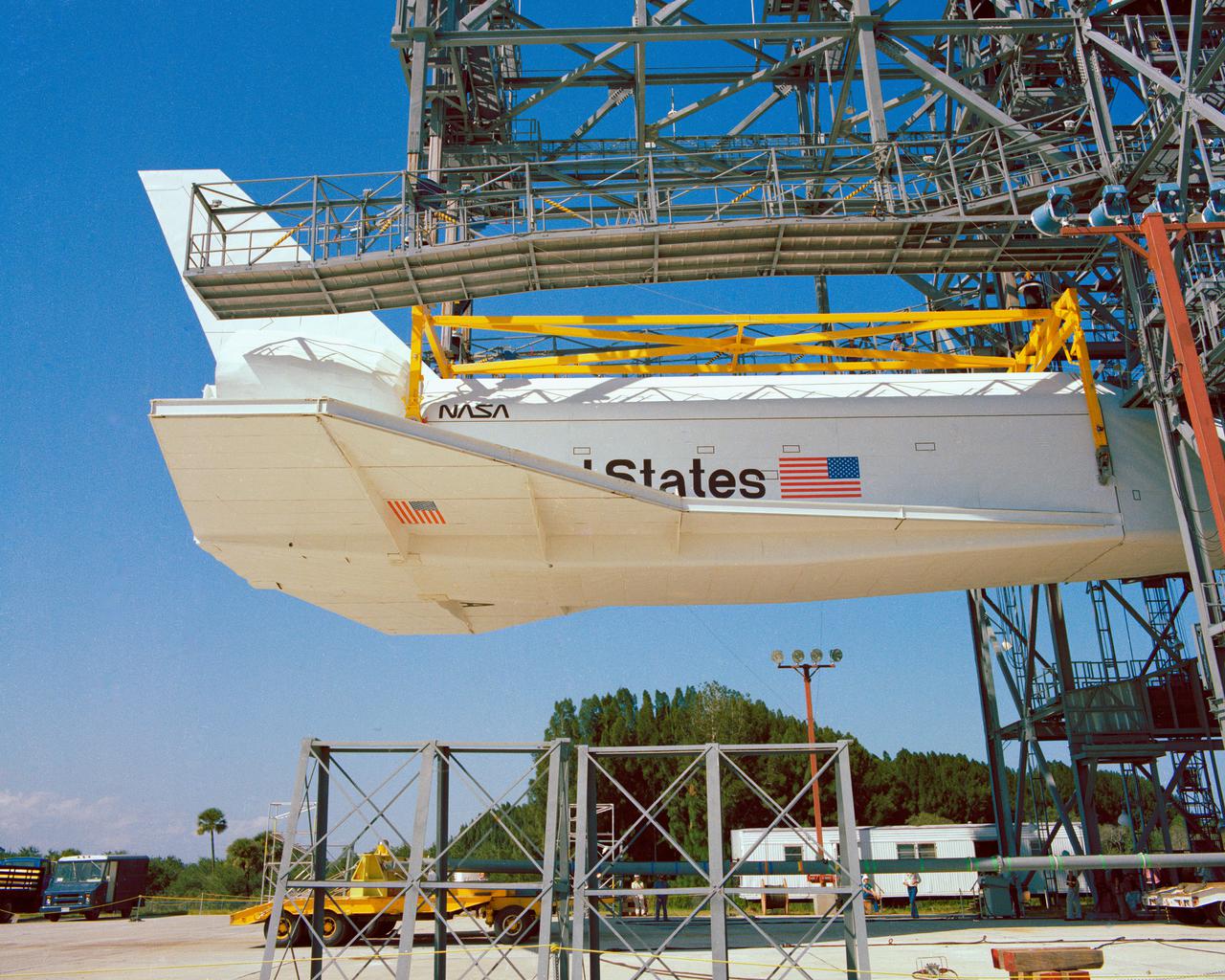
CAPE CANAVERAL, Fla. – At NASA's Kennedy Space Center in Florida, the space shuttle mock-up, dubbed Pathfinder, is attached to the Mate-Demate Device for at fit-check Oct. 19, 1978. The mock-up, constructed at NASA's Marshall Space Flight Center in Huntsville, Ala., possessed the general dimensions, weight and balance of a real space shuttle. It was shipped to Kennedy by barge and then used to fit-check the work platforms of the Mate-Demate Device, orbiter processing facilities and Vehicle Assembly Building, as well as support ground crew training. It also was used to rehearse post-landing procedures at Kennedy's Shuttle Landing Facility. After being on display at the 'Great Space Shuttle Exposition' in Tokyo from June 1983 to August 1984, the mock-up returned to Marshall and now is on permanent display at the U.S. Space and Rocket Center near Huntsville. Photo credit: NASA
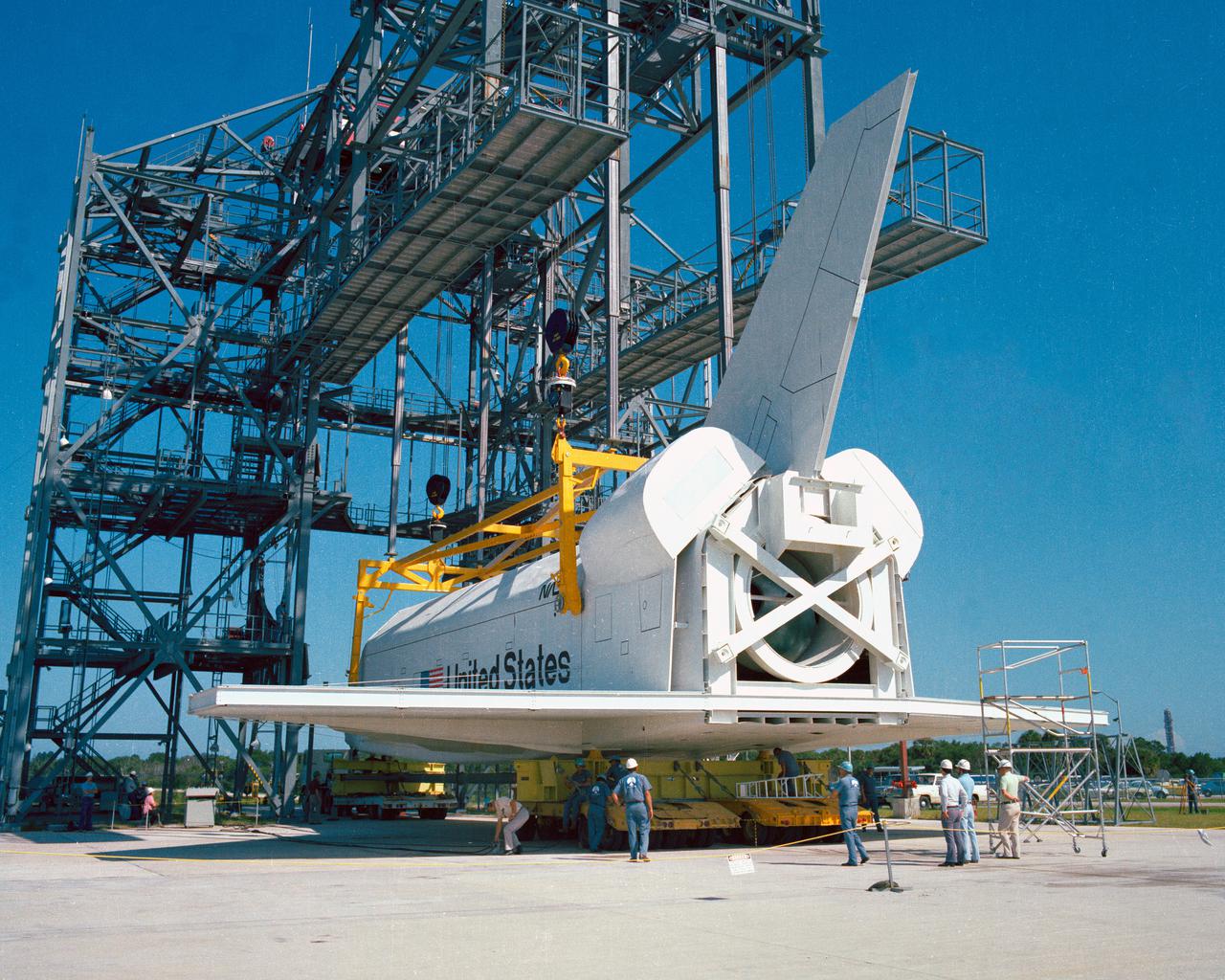
CAPE CANAVERAL, Fla. – At NASA's Kennedy Space Center in Florida, the space shuttle mock-up, dubbed Pathfinder, is attached to the Mate-Demate Device for at fit-check Oct. 19, 1978. The mock-up, constructed at NASA's Marshall Space Flight Center in Huntsville, Ala., possessed the general dimensions, weight and balance of a real space shuttle. It was shipped to Kennedy by barge and then used to fit-check the work platforms of the Mate-Demate Device, orbiter processing facilities and Vehicle Assembly Building, as well as support ground crew training. It also was used to rehearse post-landing procedures at Kennedy's Shuttle Landing Facility. After being on display at the 'Great Space Shuttle Exposition' in Tokyo from June 1983 to August 1984, the mock-up returned to Marshall and now is on permanent display at the U.S. Space and Rocket Center near Huntsville. Photo credit: NASA
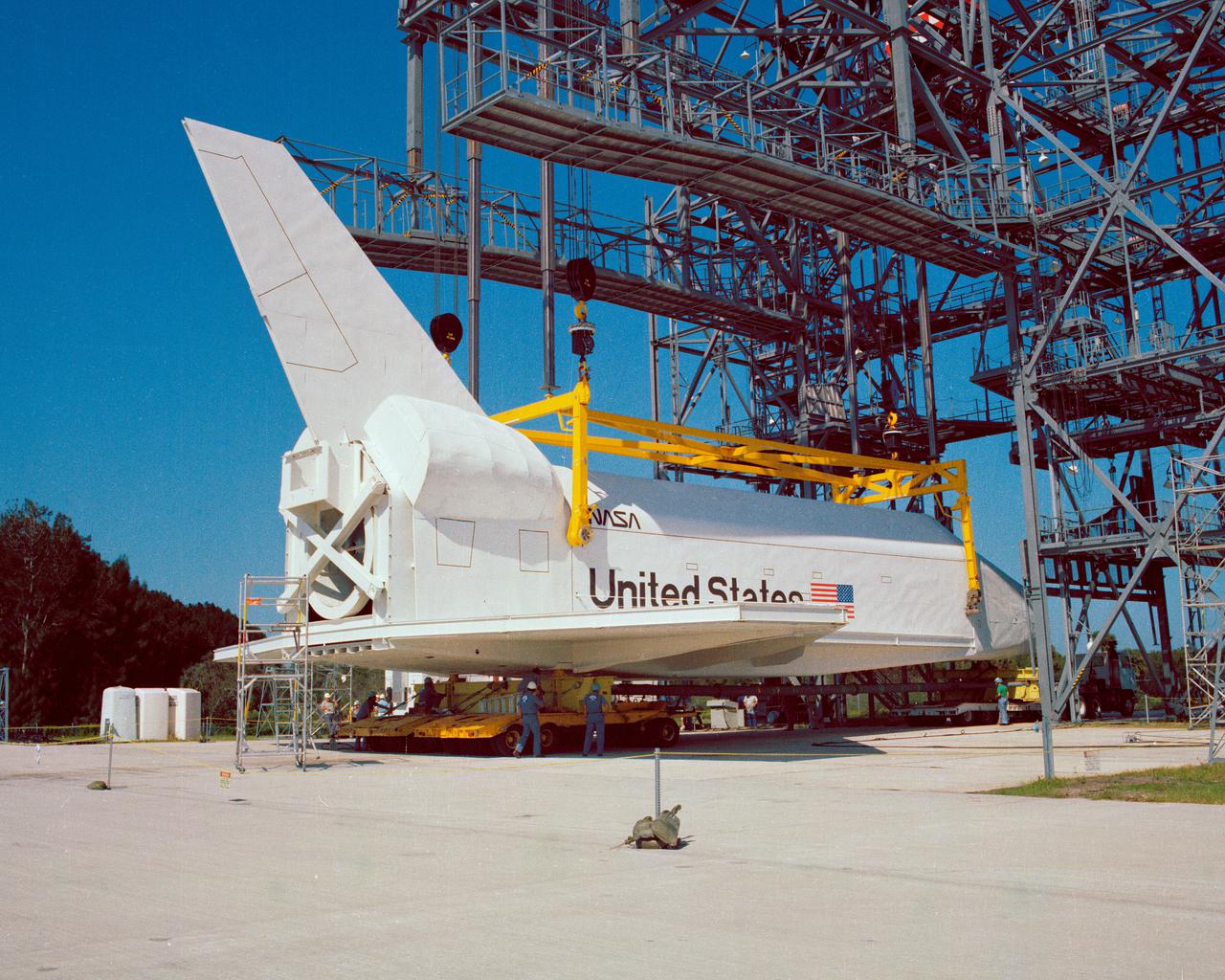
CAPE CANAVERAL, Fla. – At NASA's Kennedy Space Center in Florida, the space shuttle mock-up, dubbed Pathfinder, is attached to the Mate-Demate Device for at fit-check Oct. 19, 1978. The mock-up, constructed at NASA's Marshall Space Flight Center in Huntsville, Ala., possessed the general dimensions, weight and balance of a real space shuttle. It was shipped to Kennedy by barge and then used to fit-check the work platforms of the Mate-Demate Device, orbiter processing facilities and Vehicle Assembly Building, as well as support ground crew training. It also was used to rehearse post-landing procedures at Kennedy's Shuttle Landing Facility. After being on display at the 'Great Space Shuttle Exposition' in Tokyo from June 1983 to August 1984, the mock-up returned to Marshall and now is on permanent display at the U.S. Space and Rocket Center near Huntsville. Photo credit: NASA
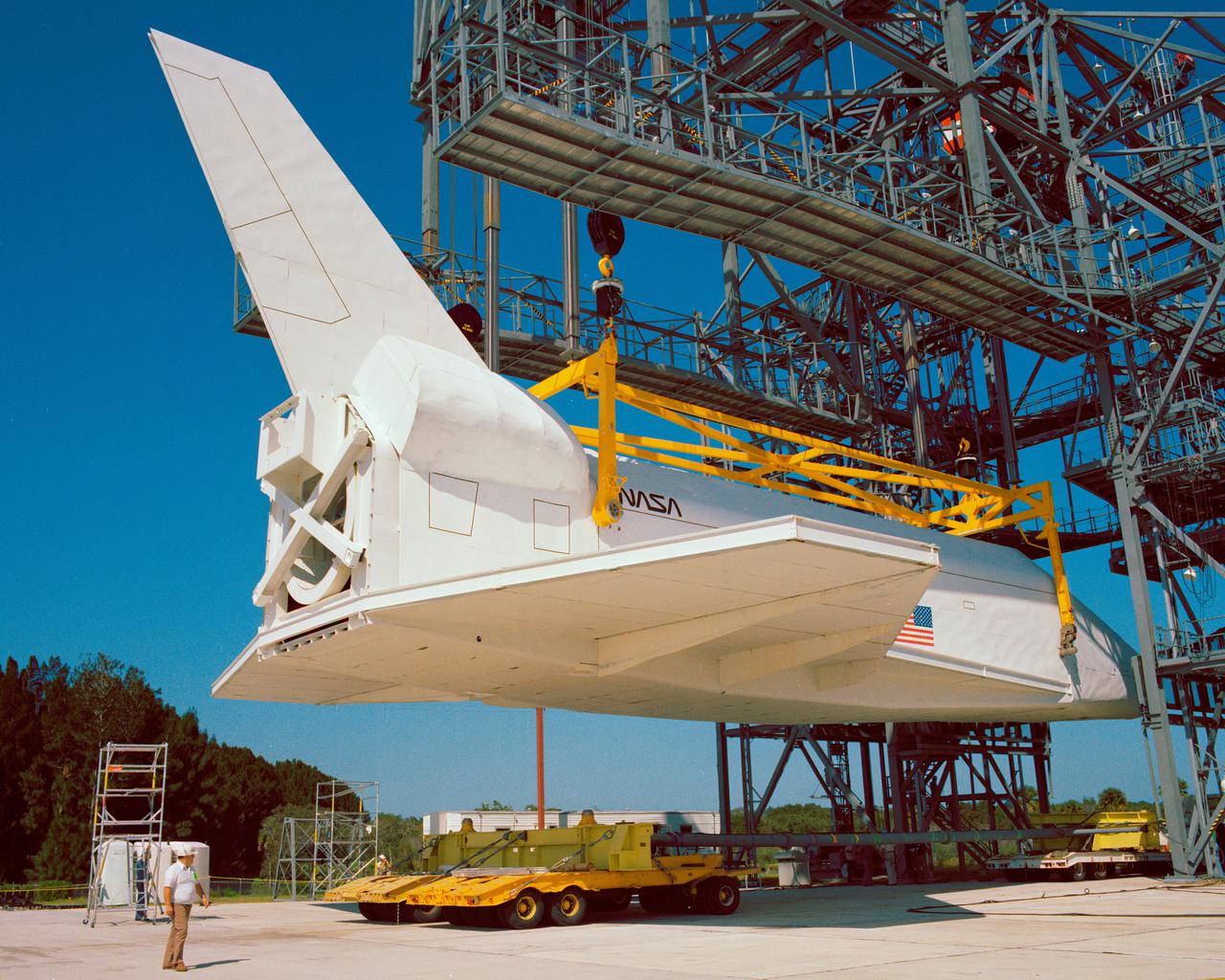
CAPE CANAVERAL, Fla. – At NASA's Kennedy Space Center in Florida, the space shuttle mock-up, dubbed Pathfinder, is attached to the Mate-Demate Device for at fit-check Oct. 19, 1978. The mock-up, constructed at NASA's Marshall Space Flight Center in Huntsville, Ala., possessed the general dimensions, weight and balance of a real space shuttle. It was shipped to Kennedy by barge and then used to fit-check the work platforms of the Mate-Demate Device, orbiter processing facilities and Vehicle Assembly Building, as well as support ground crew training. It also was used to rehearse post-landing procedures at Kennedy's Shuttle Landing Facility. After being on display at the 'Great Space Shuttle Exposition' in Tokyo from June 1983 to August 1984, the mock-up returned to Marshall and now is on permanent display at the U.S. Space and Rocket Center near Huntsville. Photo credit: NASA
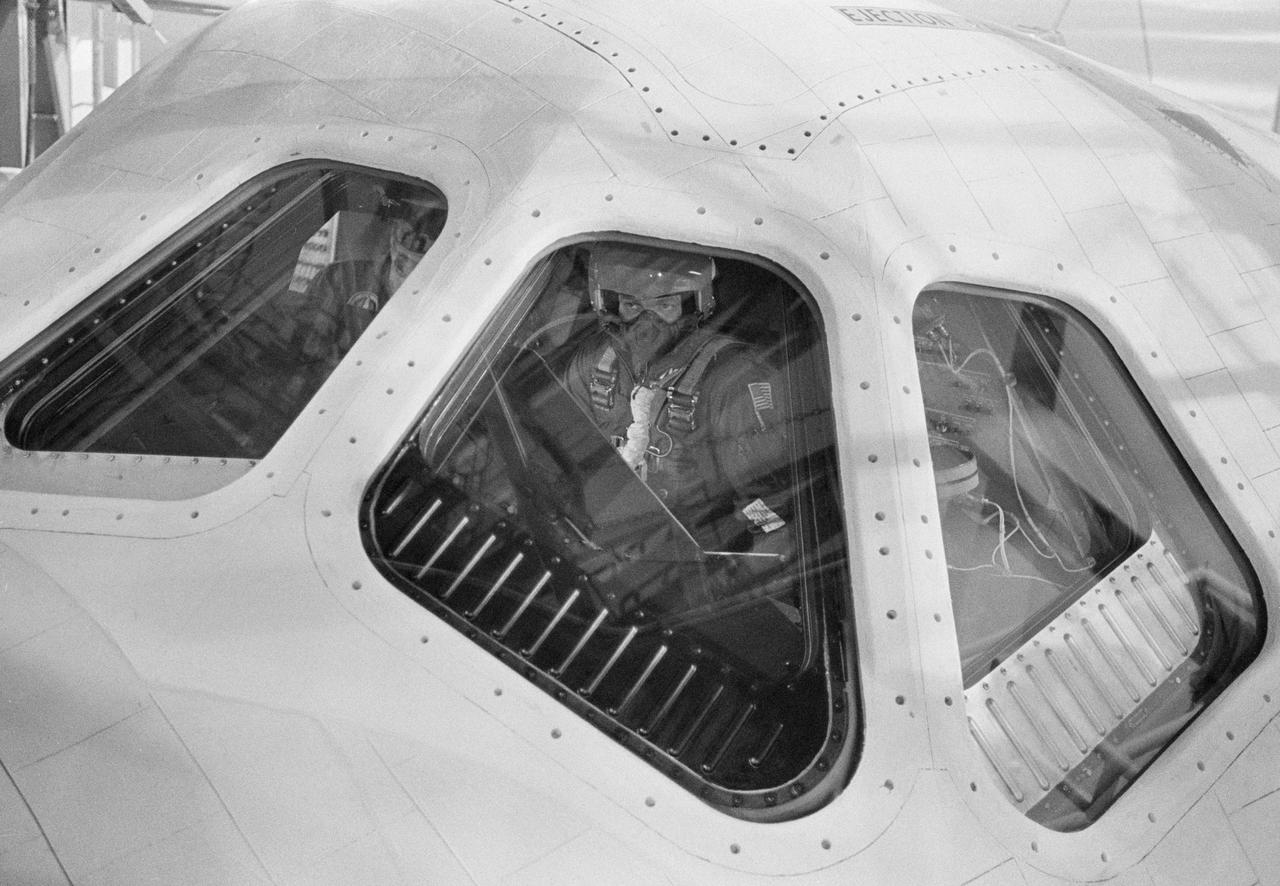
S77-28212 (13 Sept 1977) --- Astronauts Joe H. Engle (right), commander, and Richard H. Truly, pilot, sit in the cockpit of the shuttle Orbiter 101 "Enterprise" at the Dryden Flight Research Center (DFRC) prior to takeoff of the NASA 747 carrier aircraft to which the "Enterprise" was mated. The pair later made a five-minute, 31-second free-flight in the craft, the second in a series of such flights for the Shuttle Approach and Landing Tests (ALT) program. The photograph was made from the Mate-Demate Device (MDD).
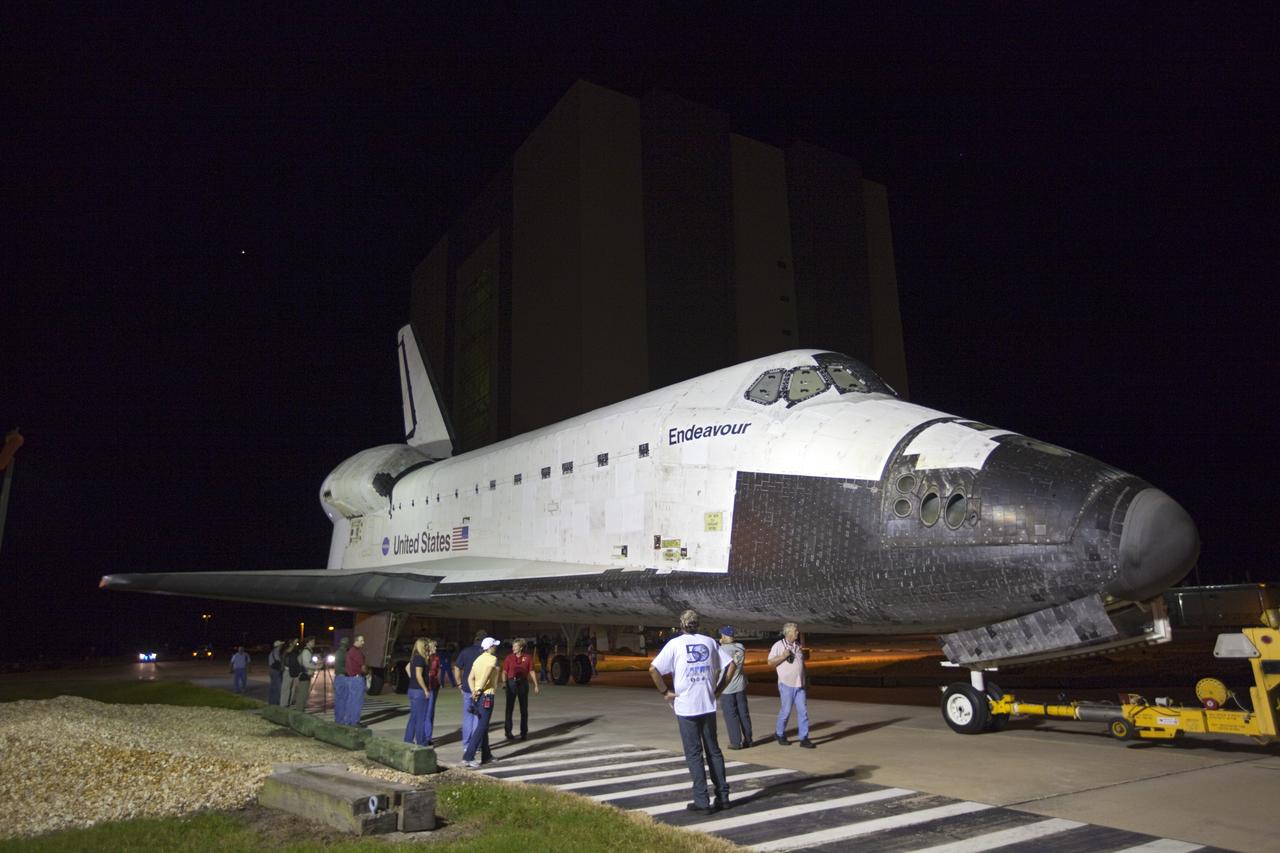
CAPE CANAVERAL, Fla. – Employees line space shuttle Endeavour's path as the spacecraft rolls toward the Shuttle Landing Facility at NASA's Kennedy Space Center in Florida. Endeavour will be lifted in the gantry-like mate Mate-Demate Device and placed atop NASA's modified 747 Shuttle Carrier Aircraft for the final ferry flight of the Space Shuttle Program. Endeavour will be placed on permanent public display at the California Science Center in Los Angeles. Photo credit: NASA/Kim Shiflett
![<i>[Photo courtesy of Boeing photographer Bob Williams.]</i> The orbiter Columbia sits under a mate/demate device at Boeing’s Orbiter Assembly Facility in Palmdale, Calif. It is waiting to be mated to Shuttle Carrier Aircraft no. 905 for its ferry flight to Kennedy Space Center. Columbia has been undergoing modifications and upgrades at the Boeing plant. Ferry preparations and the flight plan are contingent upon weather conditions in California and enroute to Florida](https://images-assets.nasa.gov/image/KSC01padig093/KSC01padig093~medium.jpg)
<i>[Photo courtesy of Boeing photographer Bob Williams.]</i> The orbiter Columbia sits under a mate/demate device at Boeing’s Orbiter Assembly Facility in Palmdale, Calif. It is waiting to be mated to Shuttle Carrier Aircraft no. 905 for its ferry flight to Kennedy Space Center. Columbia has been undergoing modifications and upgrades at the Boeing plant. Ferry preparations and the flight plan are contingent upon weather conditions in California and enroute to Florida
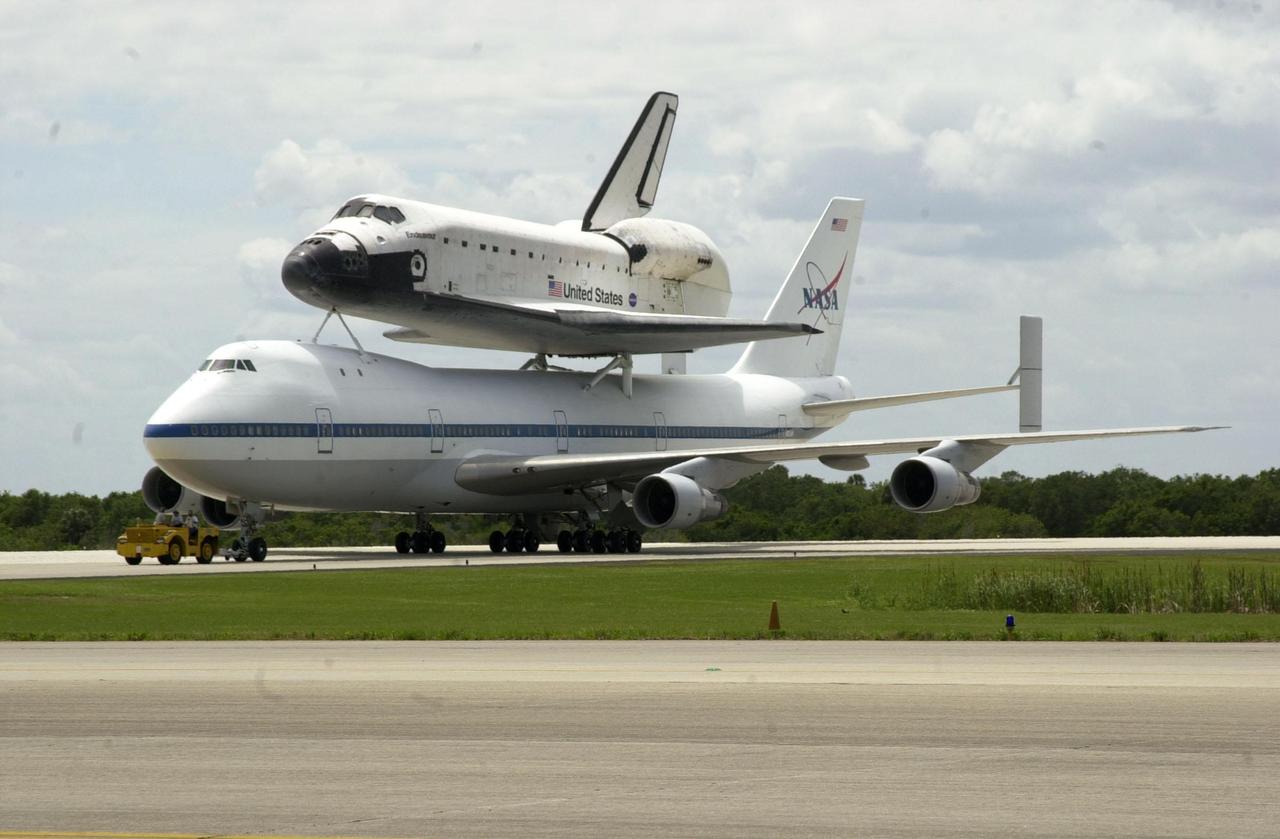
KENNEDY SPACE CENTER, FLA. -- Orbiter Endeavour, mounted atop NASA’s Shuttle Carrier Aircraft, is getting ready to be towed to the mate/demate device after its landing at the Shuttle Landing Facility. The duo completed a two-day transcontinental ferry flight from Edwards Air Force Base, Calif. Endeavour landed at Edwards AFB after a 12-day mission, STS-100, to the International Space Station. Endeavour will be demated from the SCA and towed to the Orbiter Processing Facility bay 1 where it will begin processing for mission STS-108
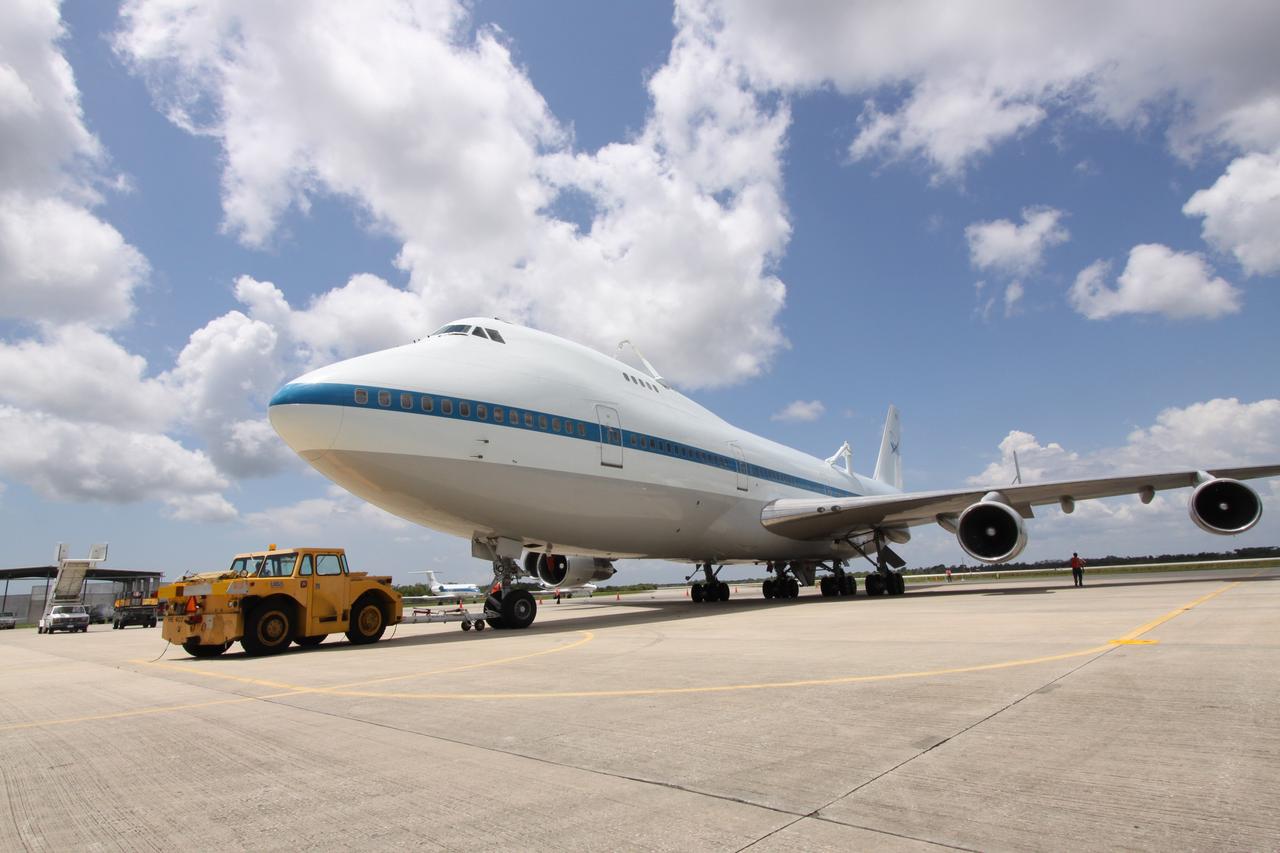
CAPE CANAVERAL, Fla. – On the Shuttle Landing Facility at NASA's Kennedy Space Center in Florida, the Shuttle Carrier Aircraft, or SCA, is towed away from the mate/demate device. The SCA was just demated from the shuttle. Atlantis returned from California atop the SCA, a modified Boeing 747, after its May 24 landing at Edwards Air Force Base, concluding mission STS-125. The ferry flight from Edwards Air Force Base began June 1. Atlantis' next assignment is the STS-129 mission, targeted to launch in November 2009. Photo credit: NASA/Jack Pfaller
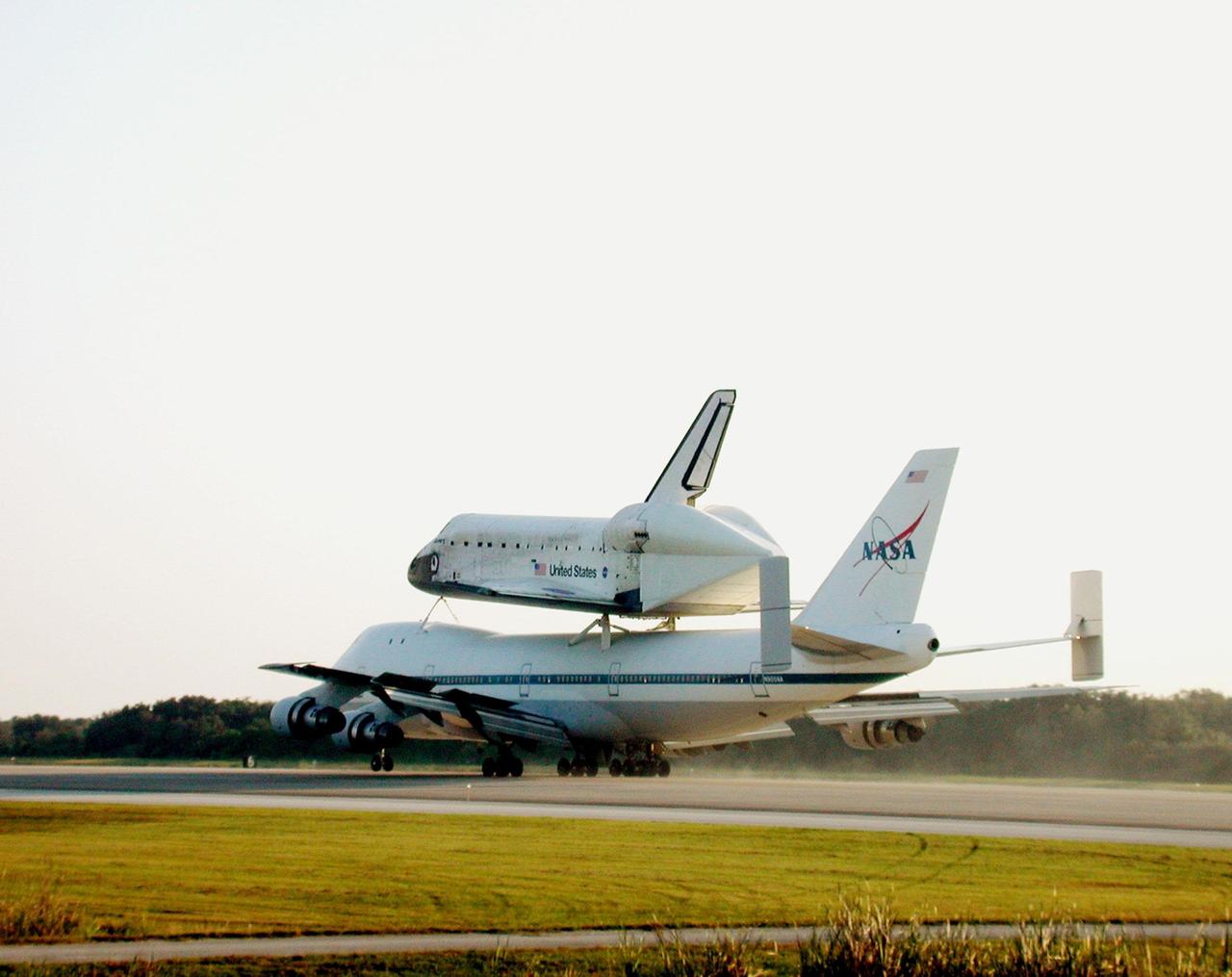
In late afternoon, the Shuttle Carrier Aircraft (SCA) rolls down the runway at the Shuttle Landing Facility as it returns the orbiter Discovery to KSC. The ferry flight started in California where the orbiter landed more than a week ago at Edwards Air Force Base at the end of mission STS-92. Discovery wears a tail cone protecting its aft nozzles for the ferry flight. Discovery will be demated from the SCA via the mate/demate device at the SLF and transported to the Orbiter Processing Facility bay 1. There it will undergo preparations for its next launch, STS-102, scheduled for February 2001
In late afternoon, the Shuttle Carrier Aircraft (SCA) rolls down the runway at the Shuttle Landing Facility as it returns the orbiter Discovery to KSC. The ferry flight started in California where the orbiter landed more than a week ago at Edwards Air Force Base at the end of mission STS-92. Discovery wears a tail cone protecting its aft nozzles for the ferry flight. Discovery will be demated from the SCA via the mate/demate device at the SLF and transported to the Orbiter Processing Facility bay 1. There it will undergo preparations for its next launch, STS-102, scheduled for February 2001
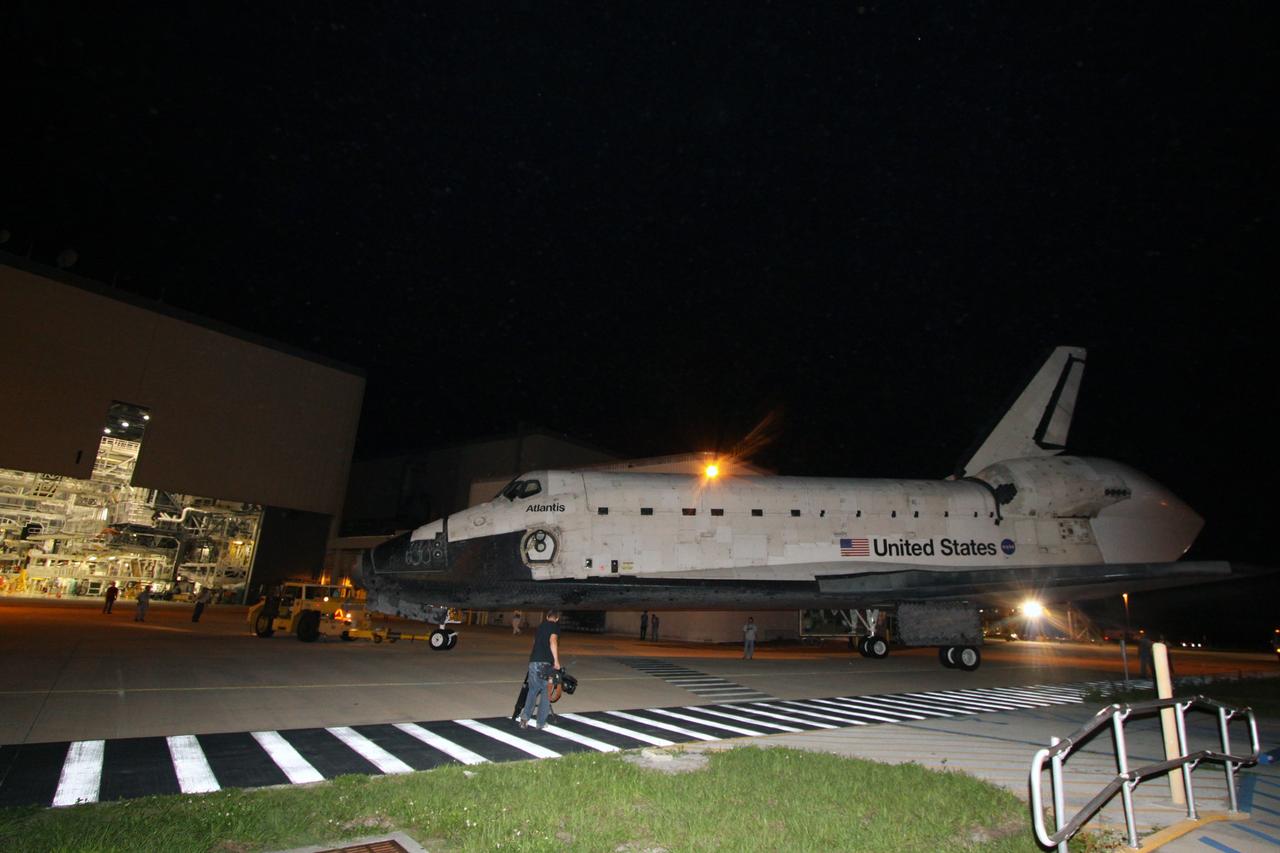
CAPE CANAVERAL, Fla. – At NASA's Kennedy Space Center in Florida, space shuttle Atlantis is towed toward Orbiter Processing Facility 1. Atlantis was demated from the Shuttle Carrier Aircraft, or SCA, via the mate/demate device at the Shuttle Landing Facility. After its May 24 landing at Edwards Air Force Base in California, which concluded its STS-125 mission, the modified Boeing 747 SCA carried the shuttle on a two-day ferry flight from Edwards to Kennedy beginning June 1. Atlantis' next assignment is the STS-129 mission, targeted to launch in November 2009. Photo credit: NASA/Jack Pfaller
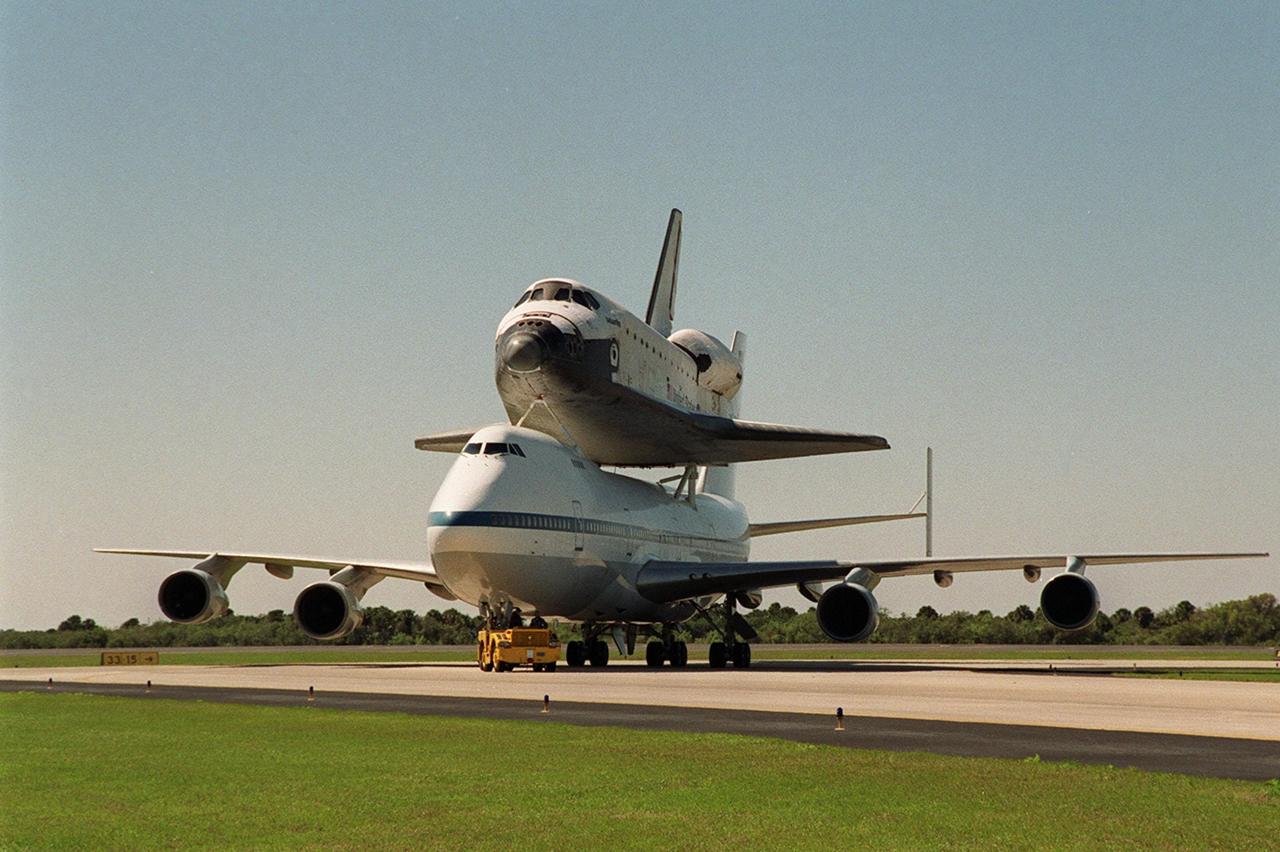
At the Shuttle Landing Facility, the Shuttle Carrier Aircraft, with the orbiter Atlantis on top, is towed around the turn to to the parking area at the Shuttle Landing Facility. There it will be demated from the orbiter in the mate/demate device. Atlantis landed in California Feb. 19 concluding mission STS-98. The ferry flight began in California March 1; unfavorable weather conditions kept it on the ground at Altus AFB, Okla., until it could return to Florida. The orbiter will next fly on mission STS-104, the 10th construction flight to the International Space Station, scheduled June 8

Catching the glow of the late afternoon sun, the Shuttle Carrier Aircraft (SCA) rolls down the runway at the Shuttle Landing Facility as it returns the orbiter Discovery to KSC. The ferry flight started in California after the orbiter’s landing more than a week ago at Edwards Air Force Base at the end of mission STS-92. Discovery wears a tail cone protecting its aft nozzles for the ferry flight. Discovery will be demated from the SCA via the mate/demate device at the SLF and transported to the Orbiter Processing Facility bay 1. There it will undergo preparations for its next launch, STS-102, scheduled for February 2001
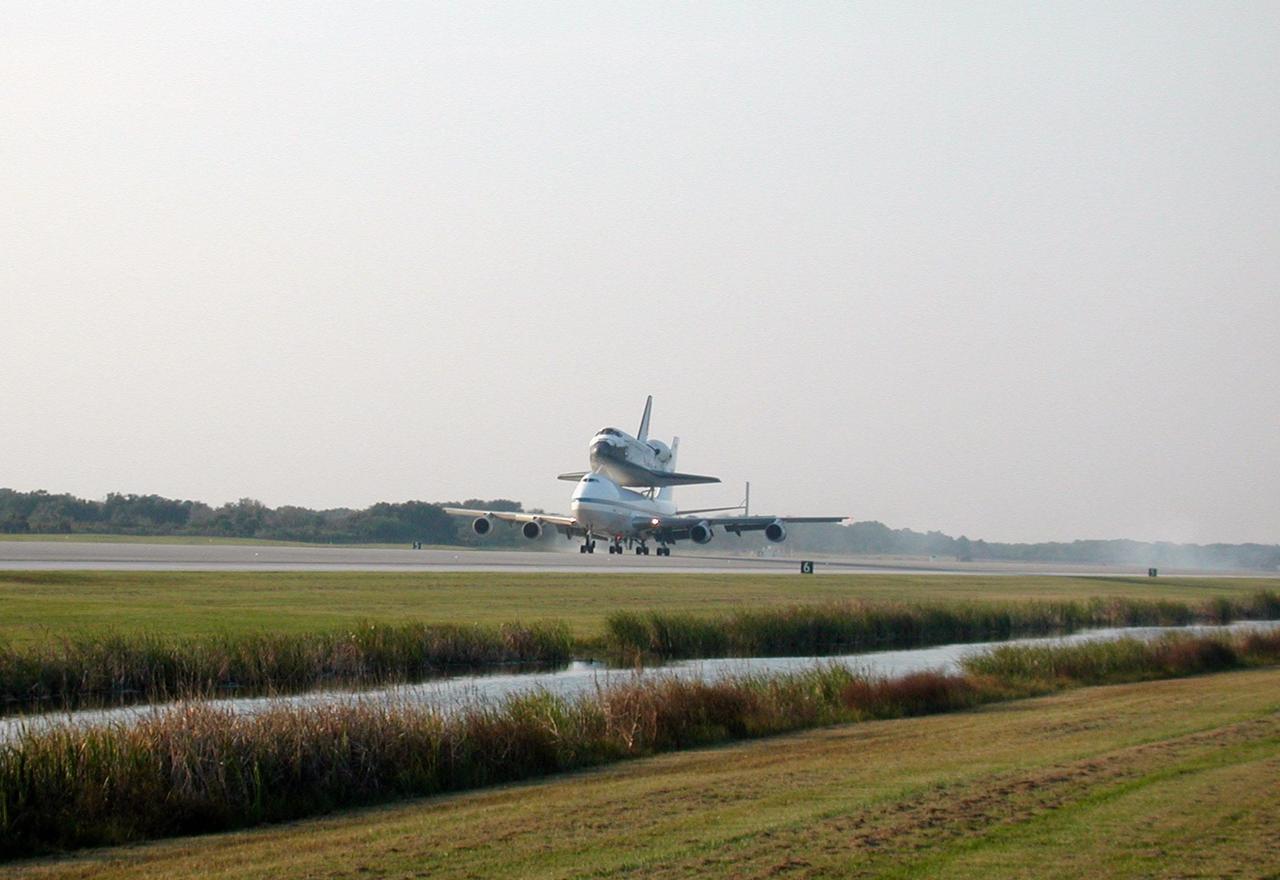
In the soft glow of a soon-to-set sun, the Shuttle Carrier Aircraft (SCA), with its unique orbiter passenger attached to its back, gently touches down on the runway at KSC’s Shuttle Landing Facility. The SCA is returning Discovery to KSC after the orbiter’s California landing at Edwards Air Force Base at the end of mission STS-92. Discovery will be demated from the SCA via the mate/demate device at the SLF and transported to the Orbiter Processing Facility bay 1. There it will undergo preparations for its next launch, STS-102, scheduled for February 2001
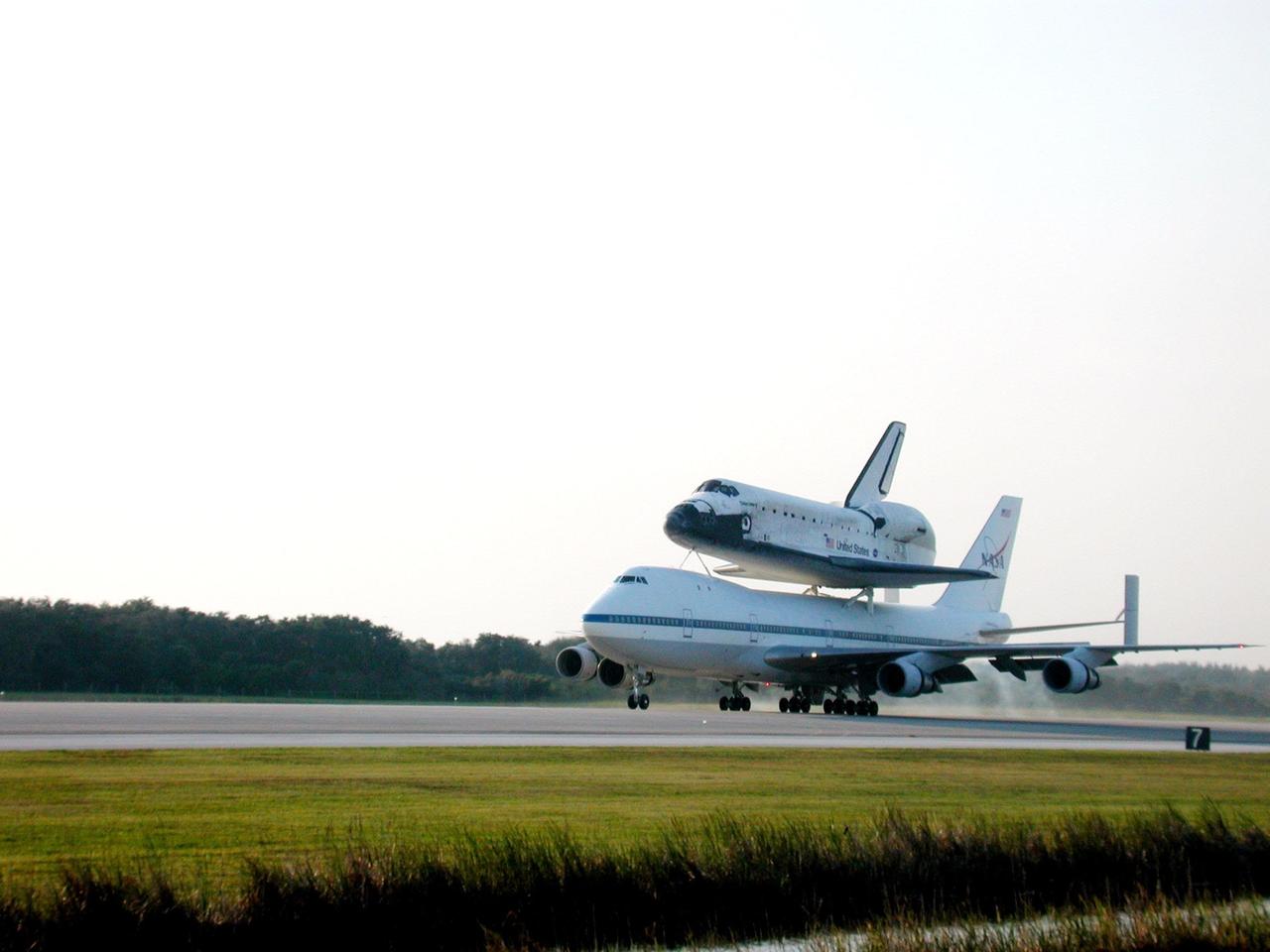
On a warm afternoon, the Shuttle Carrier Aircraft (SCA), with its unique orbiter passenger attached to its back, rolls down the runway at KSC’s Shuttle Landing Facility. The SCA is returning Discovery to KSC after the orbiter’s California landing more than a week ago at Edwards Air Force Base at the end of mission STS-92. Discovery will be demated from the SCA via the mate/demate device at the SLF and transported to the Orbiter Processing Facility bay 1. There it will undergo preparations for its next launch, STS-102, scheduled for February 2001
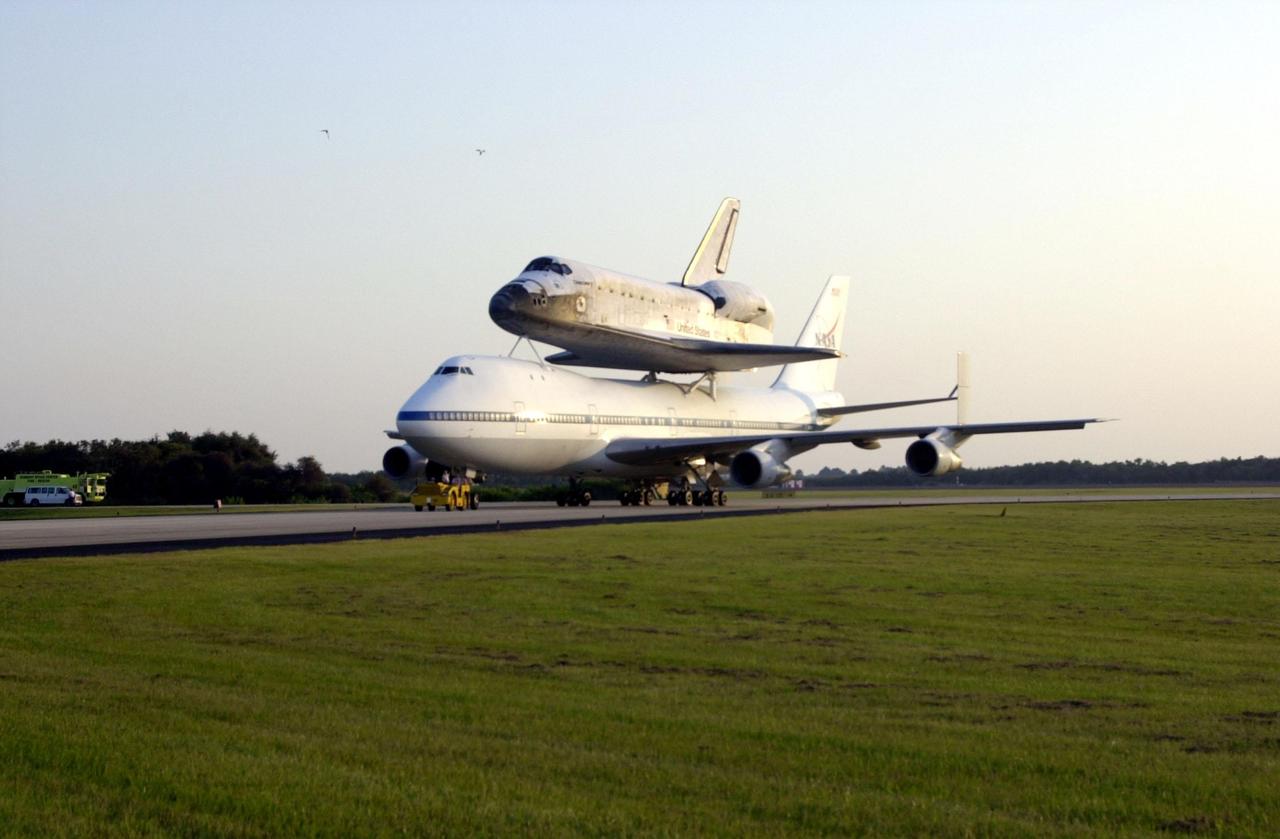
Catching the glow of the late afternoon sun, the Shuttle Carrier Aircraft (SCA) rolls down the runway at the Shuttle Landing Facility as it returns the orbiter Discovery to KSC. The ferry flight started in California after the orbiter’s landing more than a week ago at Edwards Air Force Base at the end of mission STS-92. Discovery wears a tail cone protecting its aft nozzles for the ferry flight. Discovery will be demated from the SCA via the mate/demate device at the SLF and transported to the Orbiter Processing Facility bay 1. There it will undergo preparations for its next launch, STS-102, scheduled for February 2001
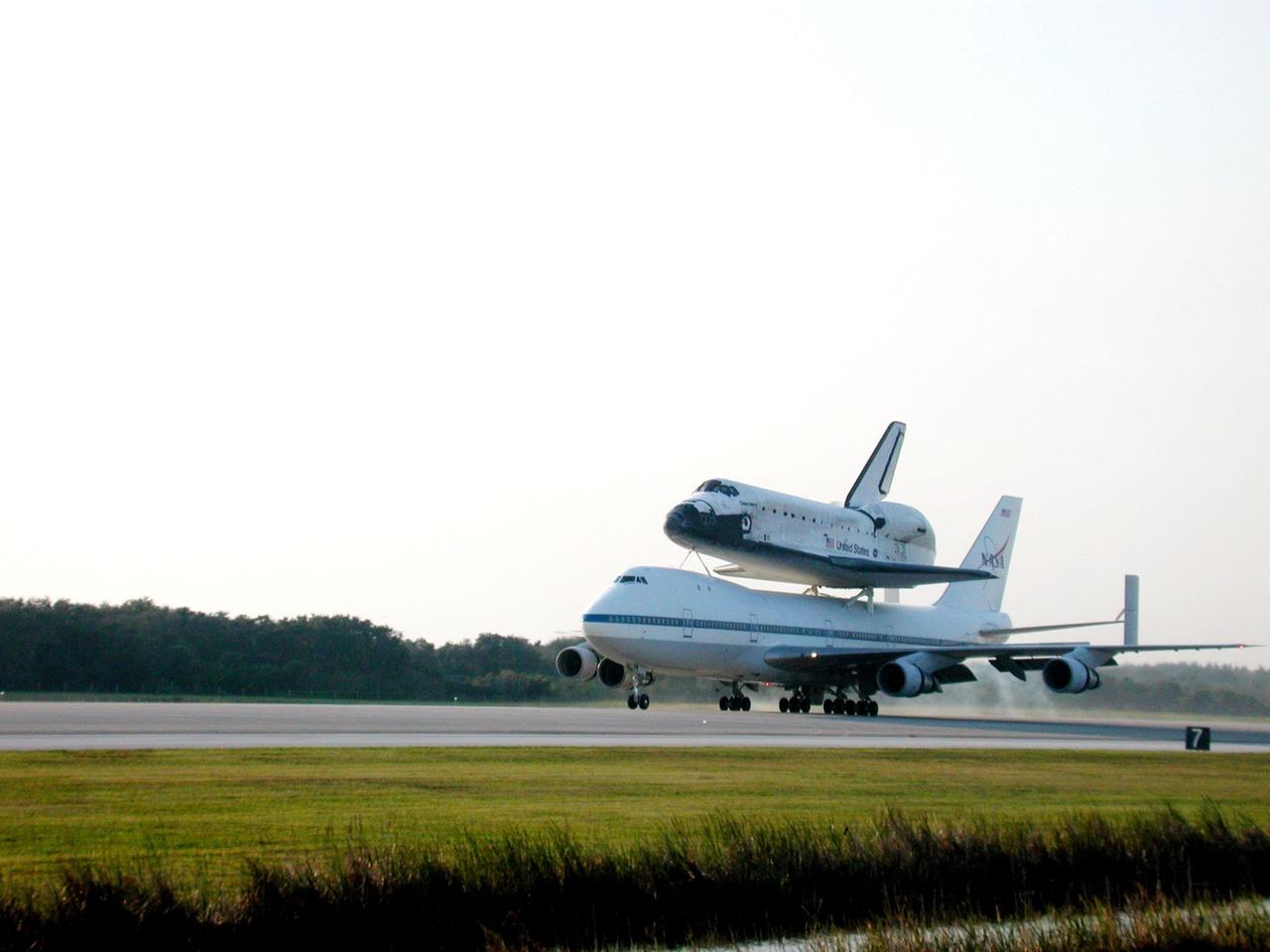
On a warm afternoon, the Shuttle Carrier Aircraft (SCA), with its unique orbiter passenger attached to its back, rolls down the runway at KSC’s Shuttle Landing Facility. The SCA is returning Discovery to KSC after the orbiter’s California landing more than a week ago at Edwards Air Force Base at the end of mission STS-92. Discovery will be demated from the SCA via the mate/demate device at the SLF and transported to the Orbiter Processing Facility bay 1. There it will undergo preparations for its next launch, STS-102, scheduled for February 2001
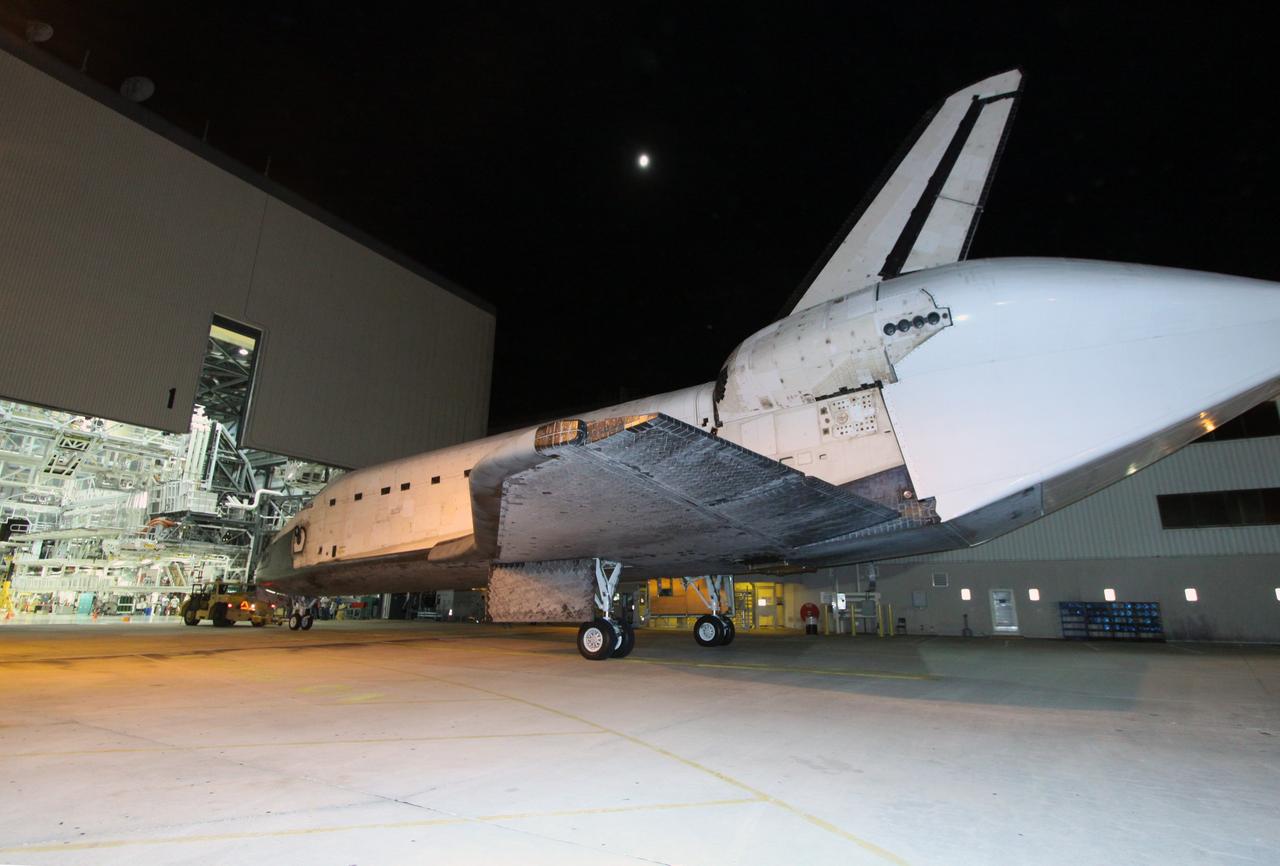
CAPE CANAVERAL, Fla. – At NASA's Kennedy Space Center in Florida, space shuttle Atlantis rolls toward the open doors of Orbiter Processing Facility 1. Atlantis was demated from the Shuttle Carrier Aircraft, or SCA, via the mate/demate device at the Shuttle Landing Facility. After its May 24 landing at Edwards Air Force Base in California, which concluded its STS-125 mission, the modified Boeing 747 SCA carried the shuttle on a two-day ferry flight from Edwards to Kennedy beginning June 1. Atlantis' next assignment is the STS-129 mission, targeted to launch in November 2009. Photo credit: NASA/Jack Pfaller
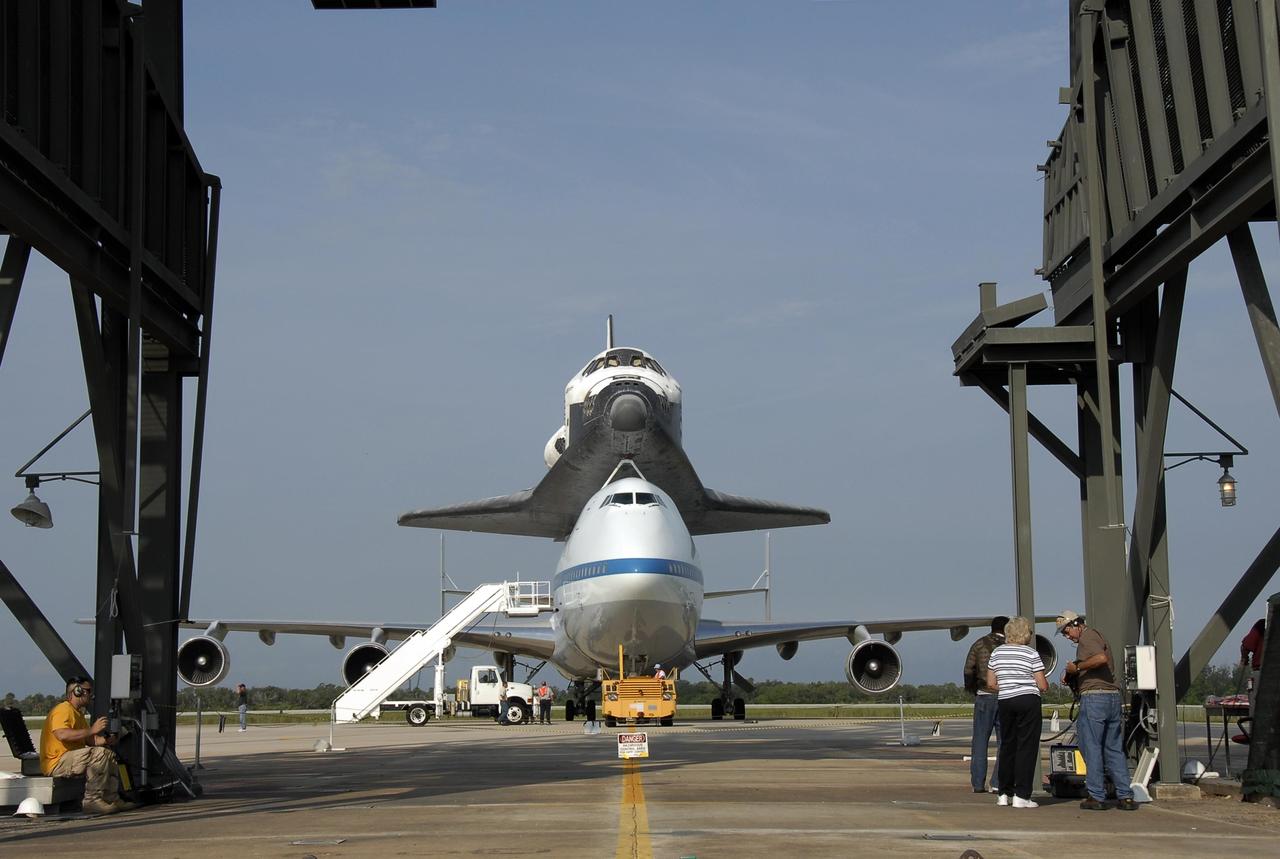
KENNEDY SPACE CENTER, FLA. -- The shuttle carrier aircraft, or SCA, and its piggyback passenger Atlantis are poised to be towed into the mate/demate device, in the foreground. The device will lift the orbiter and put it back on the ground. After a three-day, cross-country trip, the orbiter/SCA duo touched down at 8:27 a.m. EDT. The SCA is a modified Boeing 747 jetliner. Atlantis landed at Edwards Air Force Base in California to end mission STS-117. The return to KSC began July 1 and included several stops across the country for fuel. The last stop was at Ft. Campbell in Kentucky. Weather conditions over the last leg postponed the return trip until July 3. After demate, Atlantis will then be towed to the Orbiter Processing Facility to begin processing for its next launch, mission STS-122 in December. Photo credit: NASA/Kim Shiflett
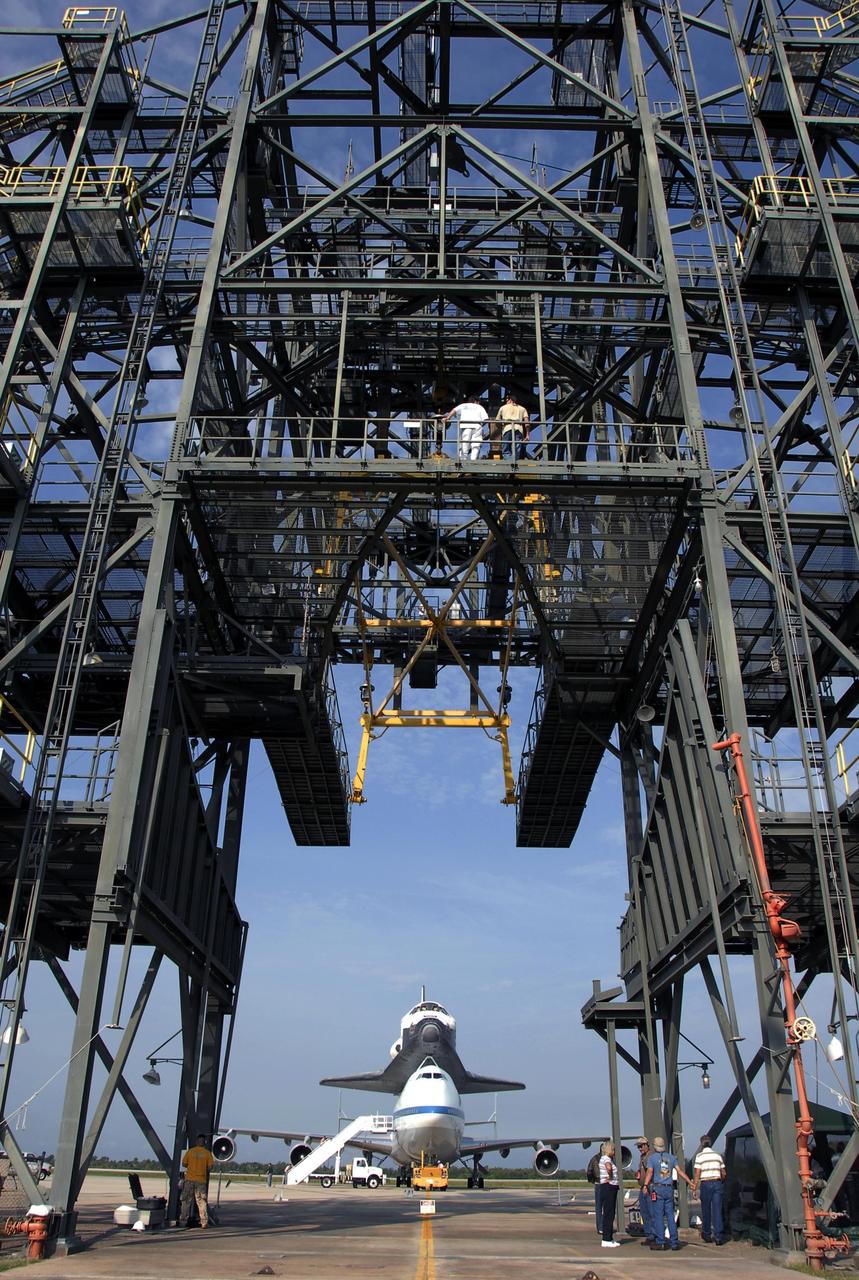
KENNEDY SPACE CENTER, FLA. -- The shuttle carrier aircraft, or SCA, and its piggyback passenger Atlantis are poised to be towed into the mate/demate device, in the foreground. The device will lift the orbiter and put it back on the ground. After a three-day, cross-country trip, the orbiter/SCA duo touched down at 8:27 a.m. EDT. The SCA is a modified Boeing 747 jetliner. Atlantis landed at Edwards Air Force Base in California to end mission STS-117. The return to KSC began July 1 and included several stops across the country for fuel. The last stop was at Ft. Campbell in Kentucky. Weather conditions over the last leg postponed the return trip until July 3. After demate, Atlantis will then be towed to the Orbiter Processing Facility to begin processing for its next launch, mission STS-122 in December. Photo credit: NASA/Kim Shiflett
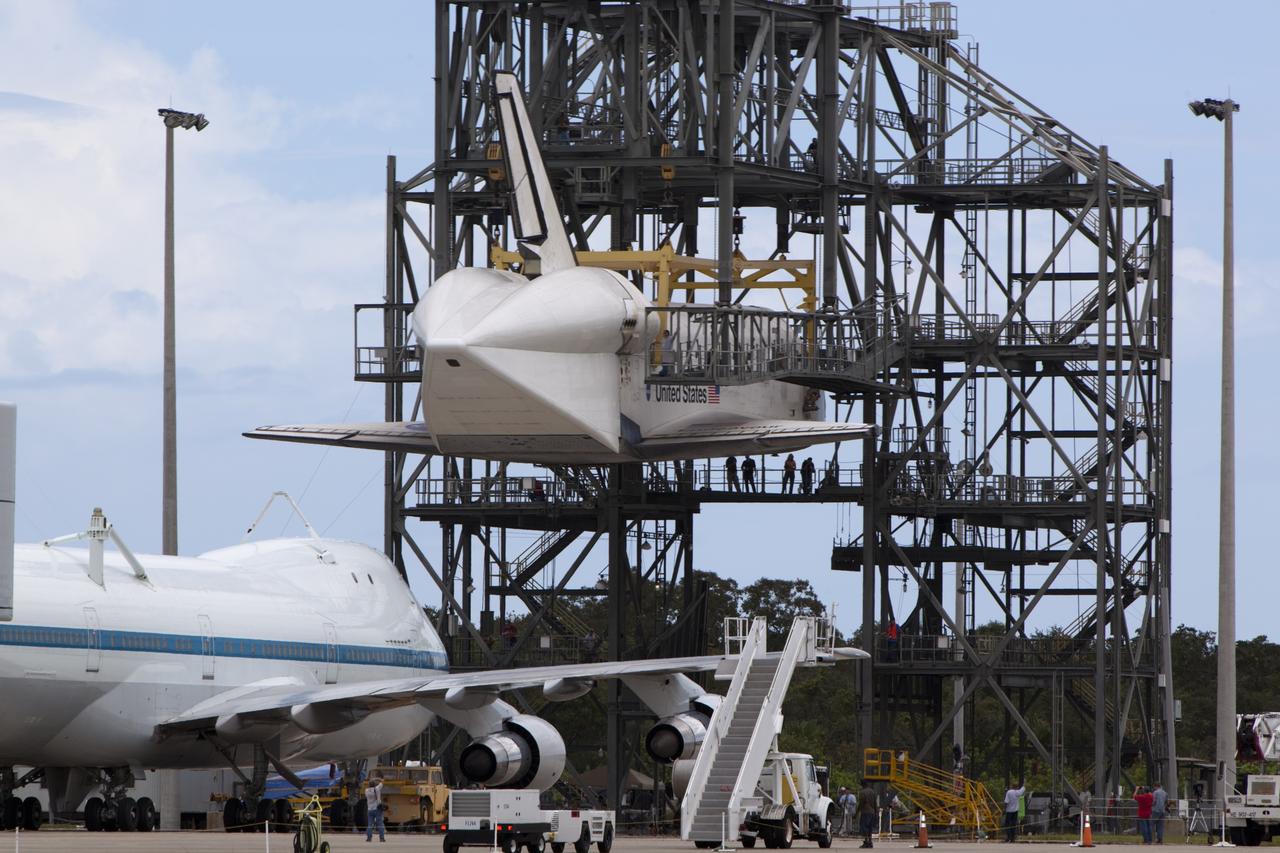
CAPE CANAVERAL, Fla. – NASA's Shuttle Carrier Aircraft, or SCA, rolls beneath space shuttle Endeavour, suspended in the mate-demate device at the Shuttle Landing Facility at NASA's Kennedy Space Center in Florida. The shuttle will be lowered and connected to the top of the SCA with the aid of the device. The shuttle has been fitted with an aerodynamic tailcone for its upcoming ferry flight. The SCA, a modified 747 jetliner, will fly Endeavour to Los Angeles where it will be placed on public display at the California Science Center. This is the final ferry flight scheduled in the Space Shuttle Program era. For more information on the shuttles' transition and retirement, visit http://www.nasa.gov/transition. Photo credit: NASA/Dimitri Gerondidakis
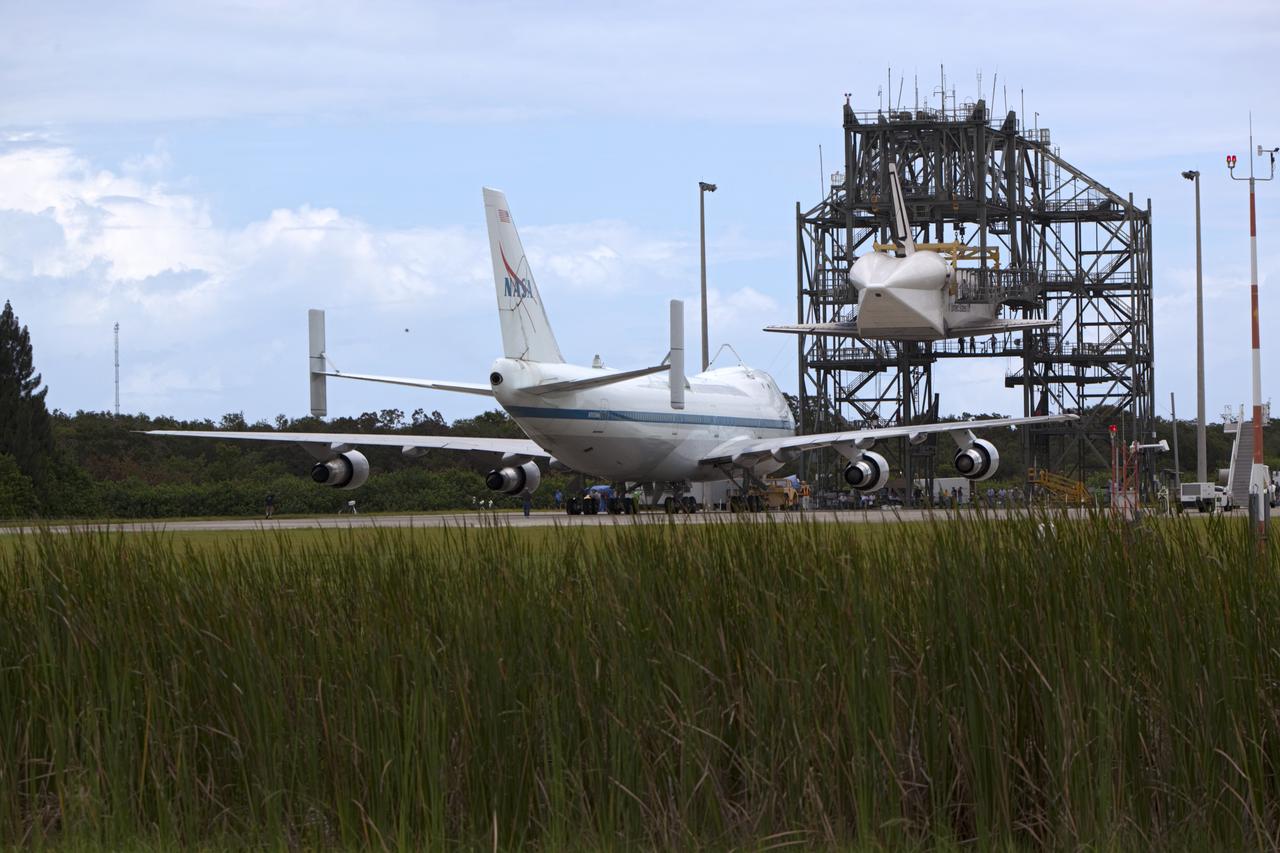
CAPE CANAVERAL, Fla. – NASA's Shuttle Carrier Aircraft, or SCA, rolls toward space shuttle Endeavour, suspended in the mate-demate device at the Shuttle Landing Facility at NASA's Kennedy Space Center in Florida. The shuttle will be lowered and connected to the top of the SCA with the aid of the device. The shuttle has been fitted with an aerodynamic tailcone for its upcoming ferry flight. The SCA, a modified 747 jetliner, will fly Endeavour to Los Angeles where it will be placed on public display at the California Science Center. This is the final ferry flight scheduled in the Space Shuttle Program era. For more information on the shuttles' transition and retirement, visit http://www.nasa.gov/transition. Photo credit: NASA/Dimitri Gerondidakis
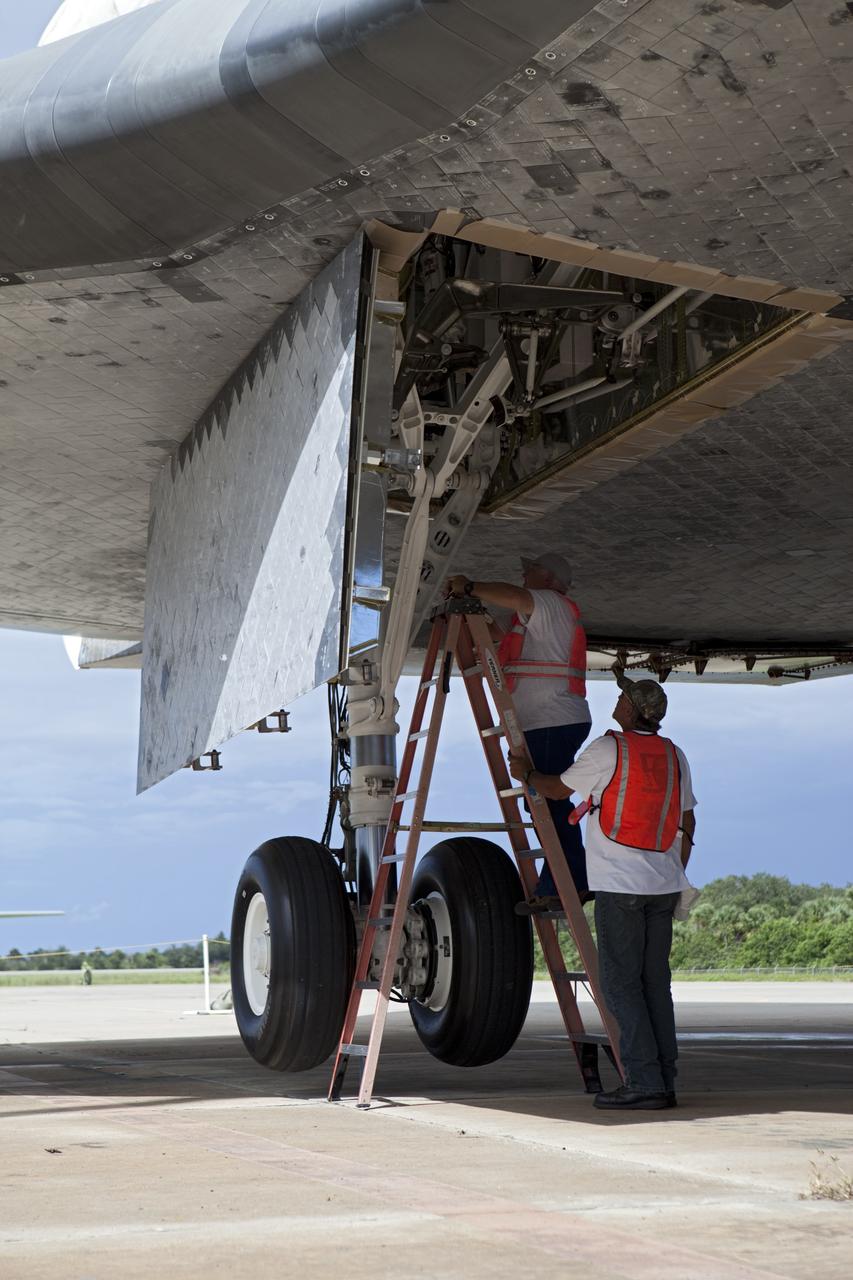
CAPE CANAVERAL, Fla. – United Space Alliance technicians retract the landing gear on space shuttle Endeavour. The shuttle is being lifted into the mate-demate device at the Shuttle Landing Facility at NASA's Kennedy Space Center in Florida. Endeavour will be positioned and connected to the top of NASA's Shuttle Carrier Aircraft with the aid of the device. The SCA, a modified 747 jetliner, will fly Endeavour to Los Angeles where it will be placed on public display at the California Science Center. This is the final ferry flight scheduled in the Space Shuttle Program era. For more information on the shuttles' transition and retirement, visit http://www.nasa.gov/transition. Photo credit: NASA/Dimitri Gerondidakis