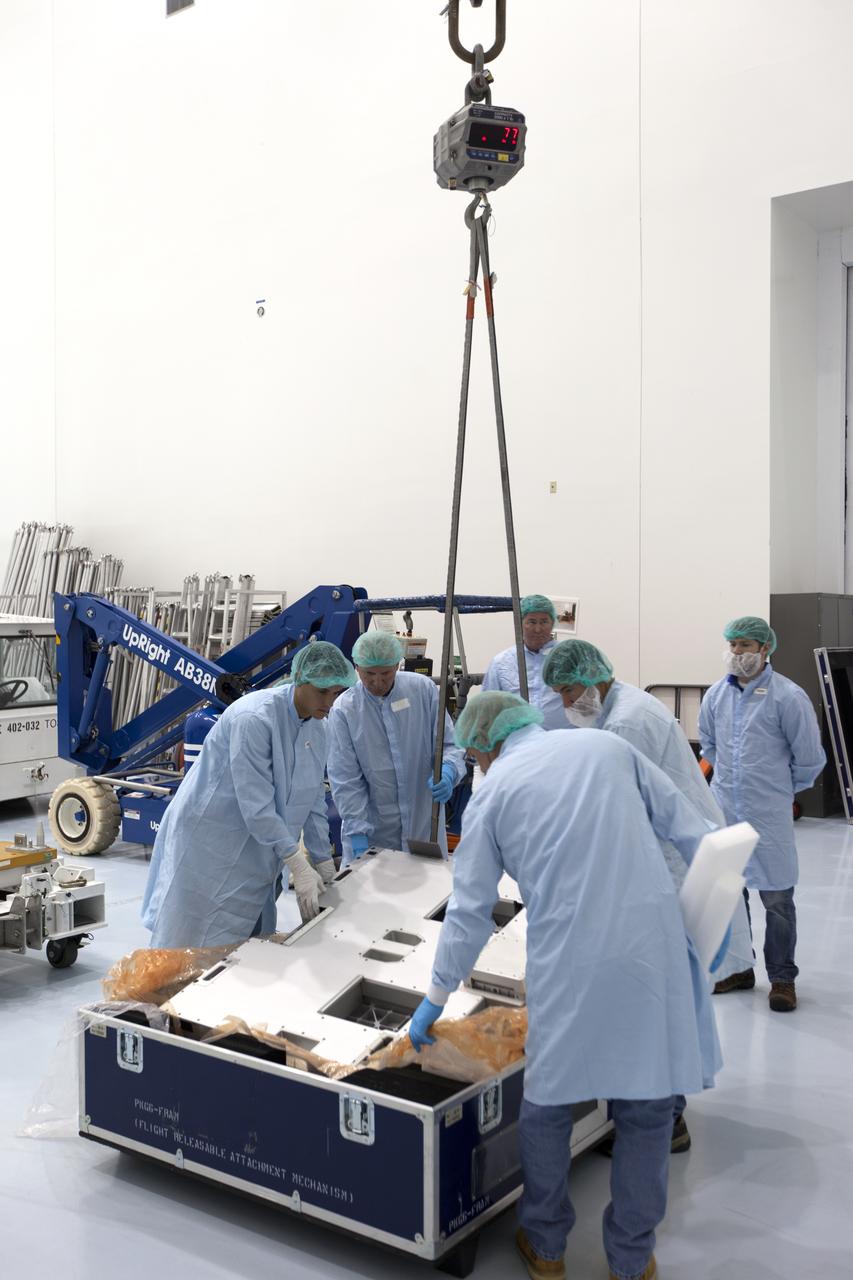
The Materials International Space Station Experiment-Flight Facility, or MISSE-FF, hardware arrived at the Space Station Processing Facility low bay at NASA's Kennedy Space Center in Florida. Technicians attach a crane to MISSE for lifting out of its shipping container. MISSE will be used to test various materials and computing elements on the exterior of the space station. They will be exposed to the harsh environment of low-Earth orbit, including to a vacuum, atomic oxygen, ultraviolet radiation, direct sunlight and extreme heat and cold. The experiment will provide a better understanding of material durability, from coatings to electronic sensors, which could be applied to future spacecraft designs. MISSE will be delivered to the space station on a future commercial resupply mission.
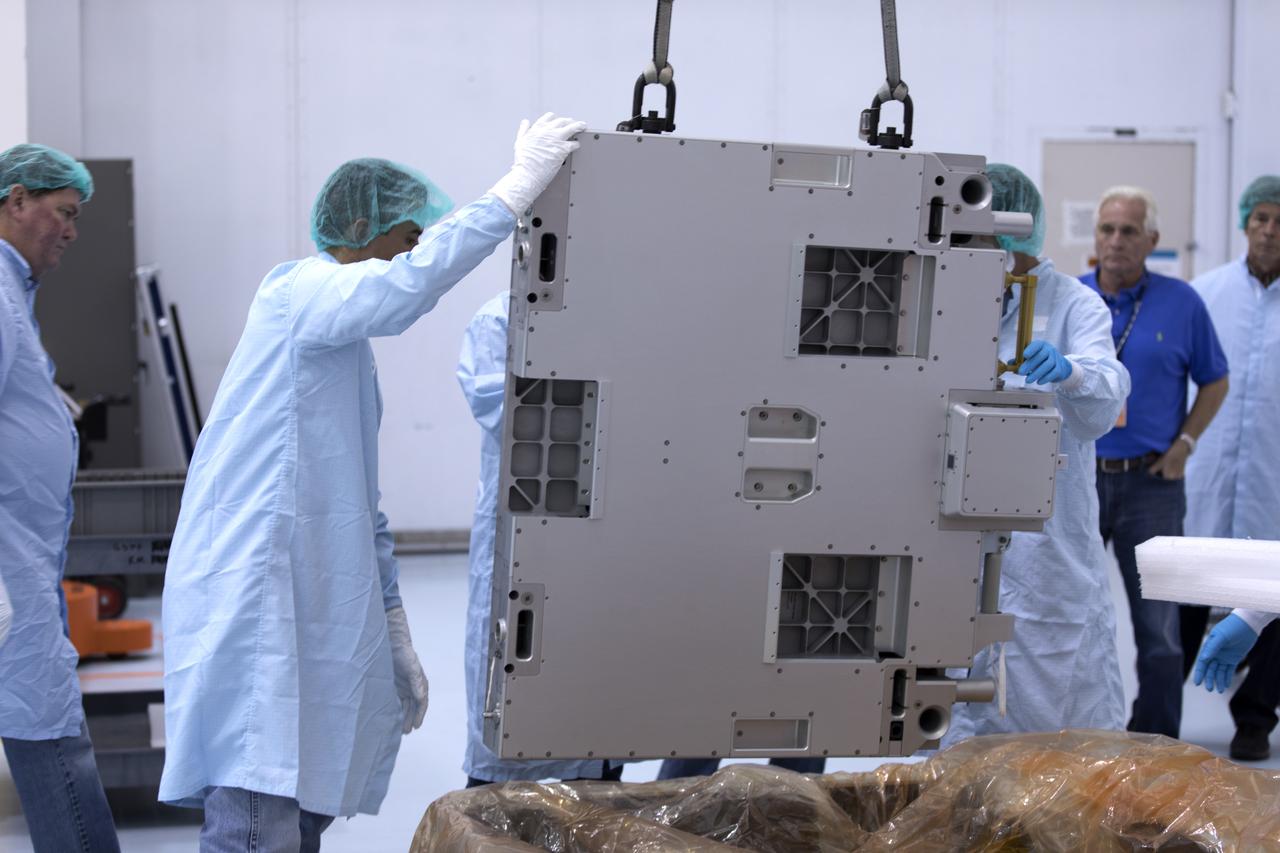
The Materials International Space Station Experiment-Flight Facility, or MISSE-FF, hardware arrived at the Space Station Processing Facility low bay at NASA's Kennedy Space Center in Florida. Technicians assist as a crane is used to lift MISSE out of its shipping container. MISSE will be used to test various materials and computing elements on the exterior of the space station. They will be exposed to the harsh environment of low-Earth orbit, including to a vacuum, atomic oxygen, ultraviolet radiation, direct sunlight and extreme heat and cold. The experiment will provide a better understanding of material durability, from coatings to electronic sensors, which could be applied to future spacecraft designs. MISSE will be delivered to the space station on a future commercial resupply mission.
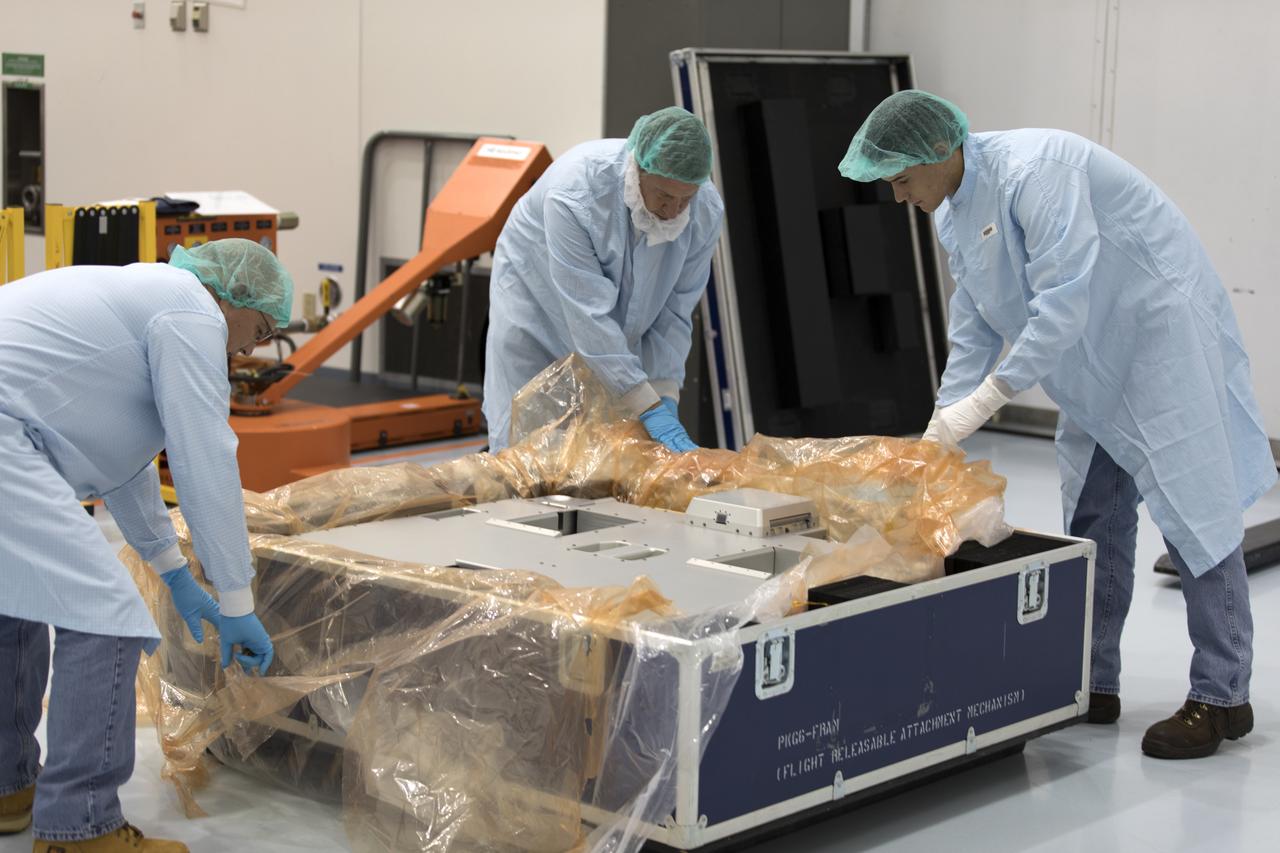
The Materials International Space Station Experiment-Flight Facility, or MISSE-FF, hardware arrived at the Space Station Processing Facility low bay at NASA's Kennedy Space Center in Florida. MISSE will be unpacked for integration and processing. MISSE will be used to test various materials and computing elements on the exterior of the space station. They will be exposed to the harsh environment of low-Earth orbit, including to a vacuum, atomic oxygen, ultraviolet radiation, direct sunlight and extreme heat and cold. The experiment will provide a better understanding of material durability, from coatings to electronic sensors, which could be applied to future spacecraft designs. MISSE will be delivered to the space station on a future commercial resupply mission.
The Materials International Space Station Experiment-Flight Facility, or MISSE-FF, hardware arrived at the Space Station Processing Facility low bay at NASA's Kennedy Space Center in Florida. Technicians assist as MISSE is lifted by crane from its shipping container. MISSE will be used to test various materials and computing elements on the exterior of the space station. They will be exposed to the harsh environment of low-Earth orbit, including to a vacuum, atomic oxygen, ultraviolet radiation, direct sunlight and extreme heat and cold. The experiment will provide a better understanding of material durability, from coatings to electronic sensors, which could be applied to future spacecraft designs. MISSE will be delivered to the space station on a future commercial resupply mission.
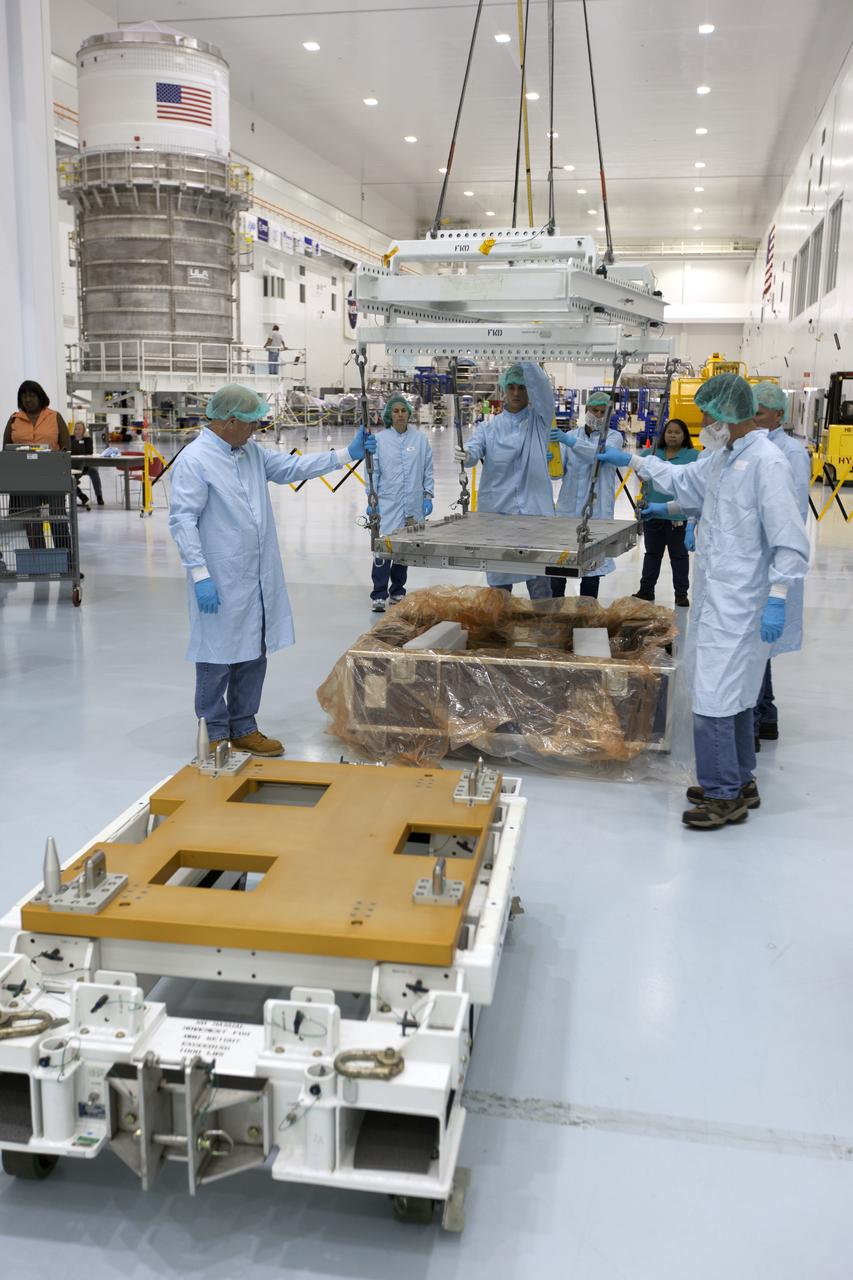
The Materials International Space Station Experiment-Flight Facility, or MISSE-FF, hardware arrived at the Space Station Processing Facility low bay at NASA's Kennedy Space Center in Florida. Technicians assist as MISSE is lifted by crane from its shipping container. MISSE will be used to test various materials and computing elements on the exterior of the space station. They will be exposed to the harsh environment of low-Earth orbit, including to a vacuum, atomic oxygen, ultraviolet radiation, direct sunlight and extreme heat and cold. The experiment will provide a better understanding of material durability, from coatings to electronic sensors, which could be applied to future spacecraft designs. MISSE will be delivered to the space station on a future commercial resupply mission.
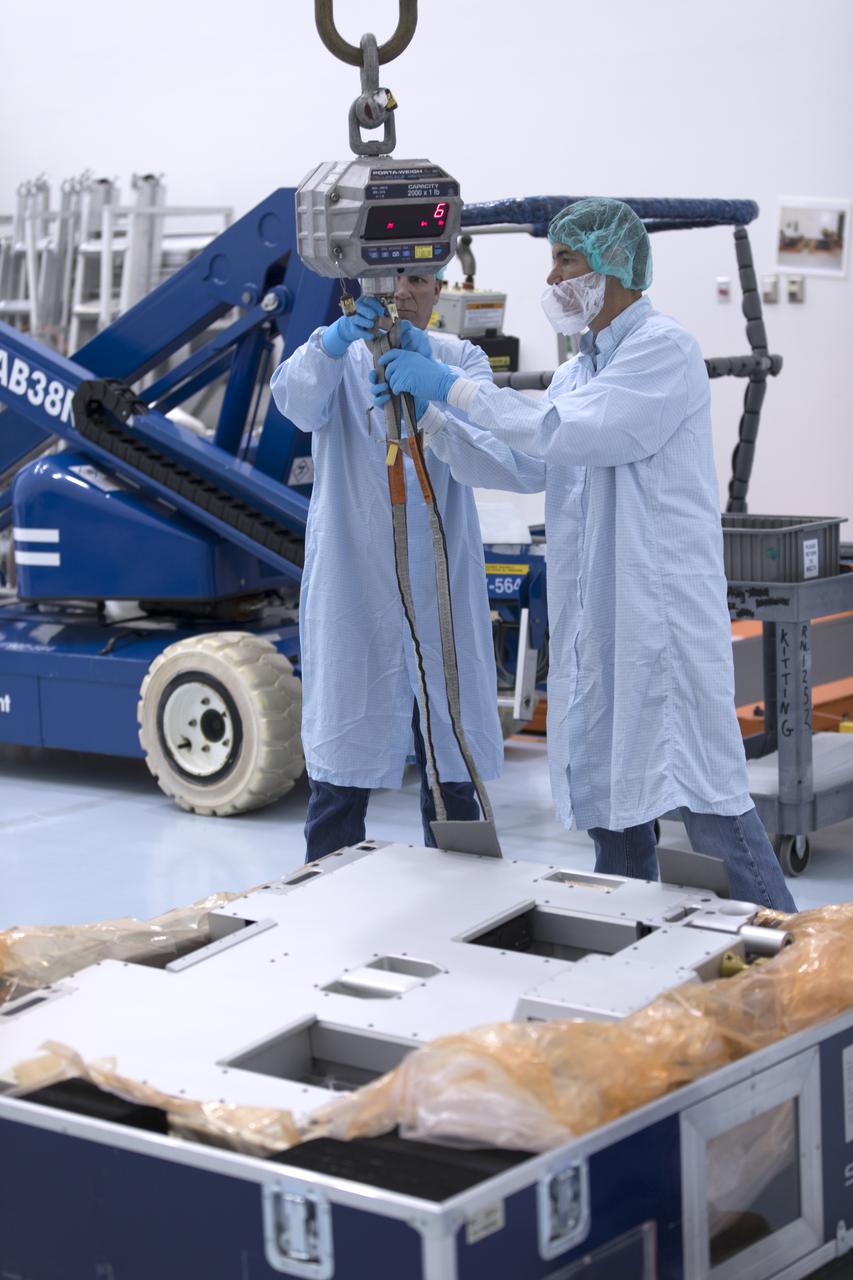
The Materials International Space Station Experiment-Flight Facility, or MISSE-FF, hardware arrived at the Space Station Processing Facility low bay at NASA's Kennedy Space Center in Florida. Technicians work to attach a crane to MISSE for lifting out of its shipping container. MISSE will be used to test various materials and computing elements on the exterior of the space station. They will be exposed to the harsh environment of low-Earth orbit, including to a vacuum, atomic oxygen, ultraviolet radiation, direct sunlight and extreme heat and cold. The experiment will provide a better understanding of material durability, from coatings to electronic sensors, which could be applied to future spacecraft designs. MISSE will be delivered to the space station on a future commercial resupply mission.
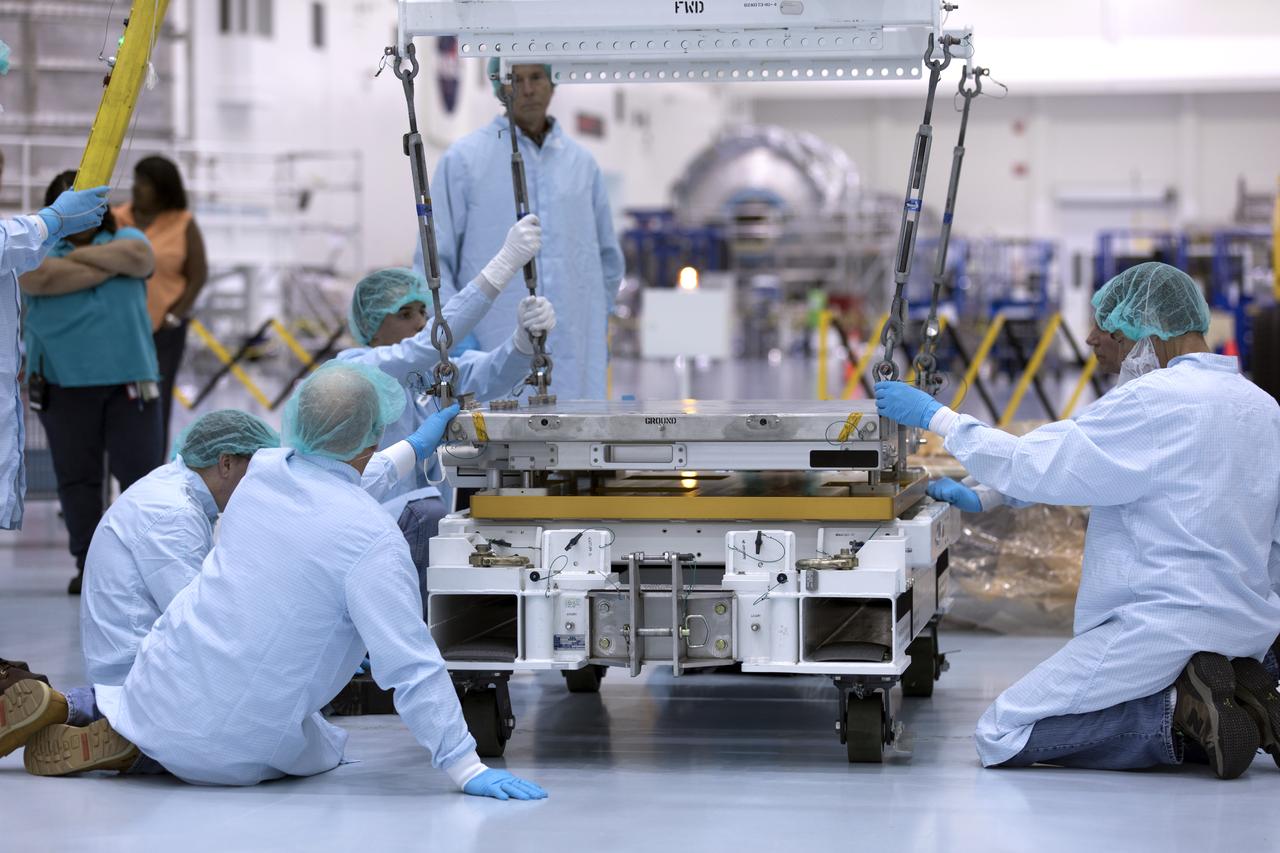
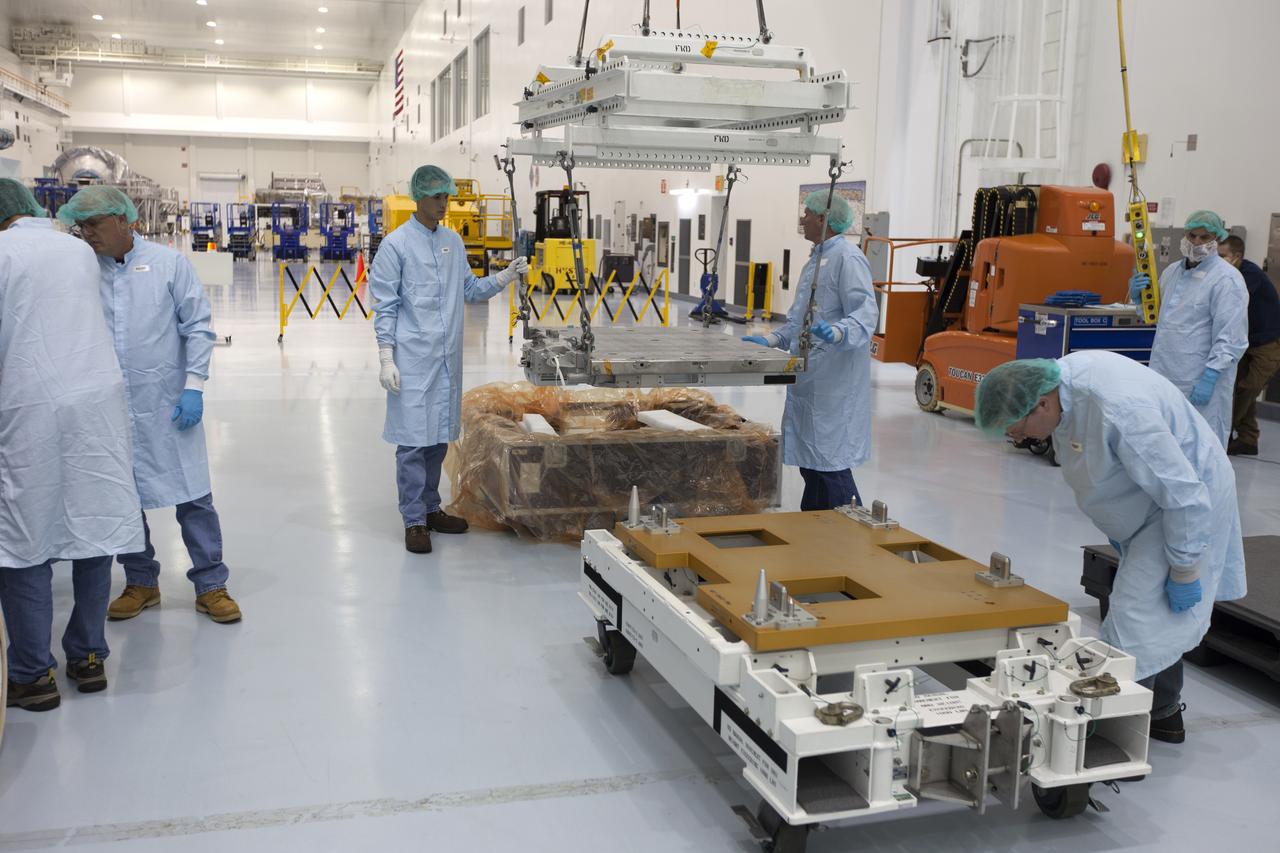
The Materials International Space Station Experiment-Flight Facility, or MISSE-FF, hardware arrived at the Space Station Processing Facility low bay at NASA's Kennedy Space Center in Florida. Technicians assist as one of the components is lowered and secured onto another MISSE component. MISSE will be used to test various materials and computing elements on the exterior of the space station. They will be exposed to the harsh environment of low-Earth orbit, including to a vacuum, atomic oxygen, ultraviolet radiation, direct sunlight and extreme heat and cold. The experiment will provide a better understanding of material durability, from coatings to electronic sensors, which could be applied to future spacecraft designs. MISSE will be delivered to the space station on a future commercial resupply mission.
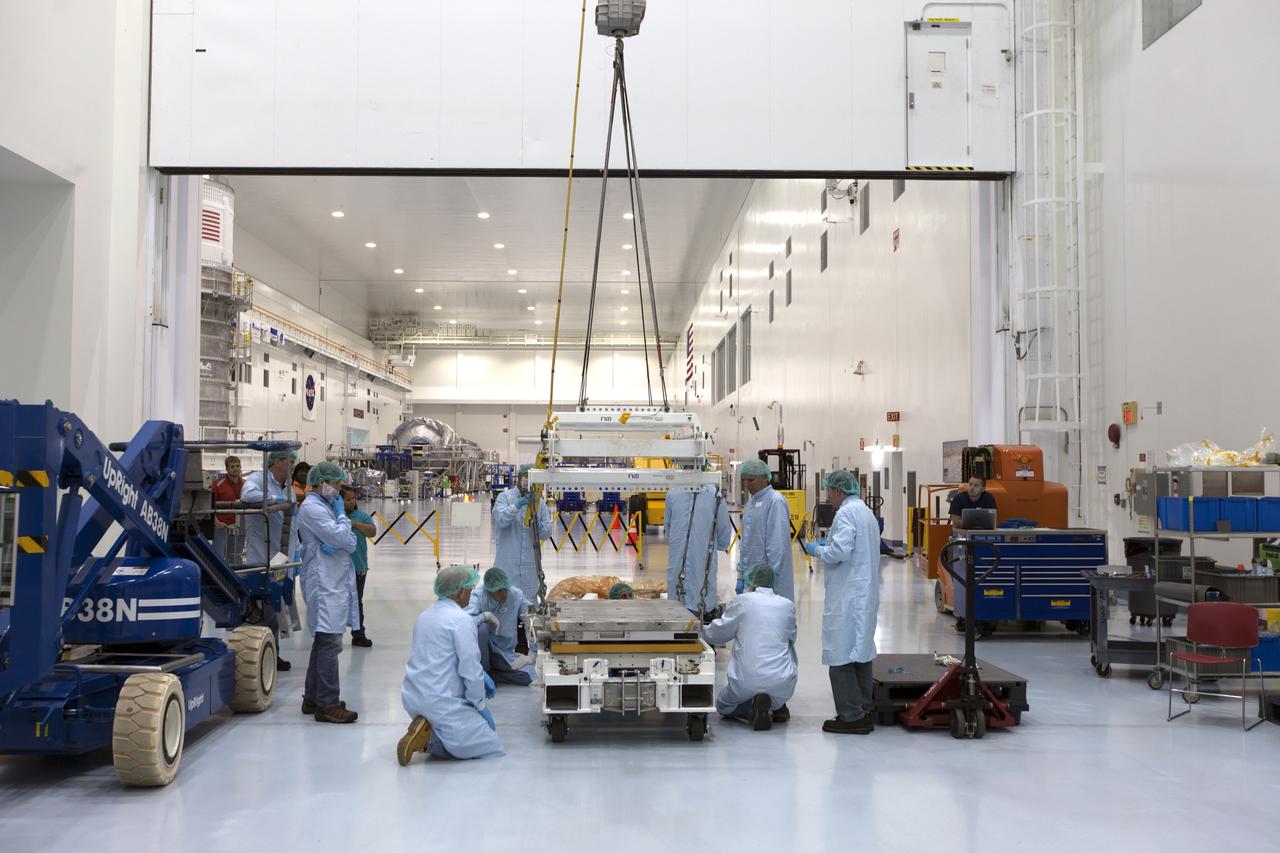
The Materials International Space Station Experiment-Flight Facility, or MISSE-FF, hardware arrived at the Space Station Processing Facility low bay at NASA's Kennedy Space Center in Florida. Technicians assist as one of the components is lowered onto another MISSE component. MISSE will be used to test various materials and computing elements on the exterior of the space station. They will be exposed to the harsh environment of low-Earth orbit, including to a vacuum, atomic oxygen, ultraviolet radiation, direct sunlight and extreme heat and cold. The experiment will provide a better understanding of material durability, from coatings to electronic sensors, which could be applied to future spacecraft designs. MISSE will be delivered to the space station on a future commercial resupply mission.
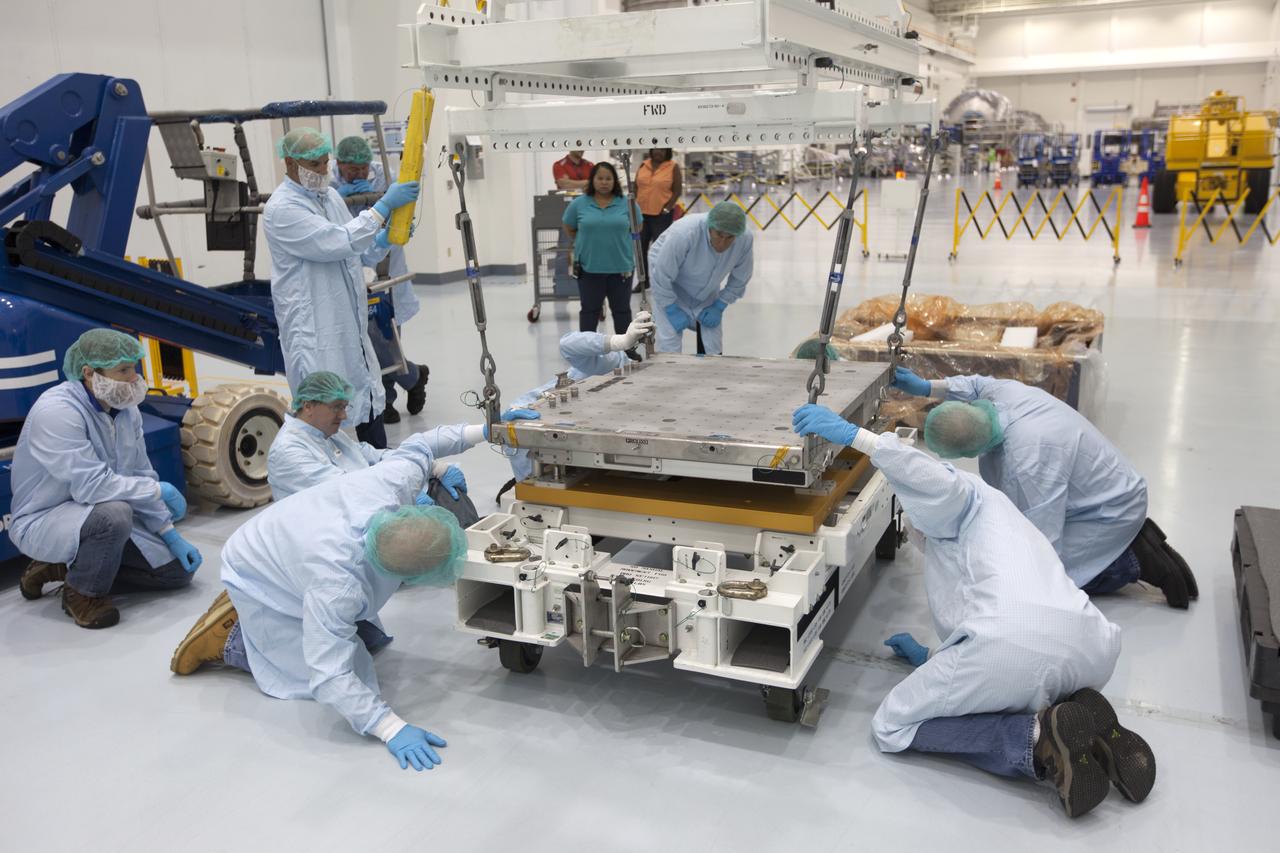
The Materials International Space Station Experiment-Flight Facility, or MISSE-FF, hardware arrived at the Space Station Processing Facility low bay at NASA's Kennedy Space Center in Florida. Technicians assist as one of the components is lowered onto another MISSE component. MISSE will be used to test various materials and computing elements on the exterior of the space station. They will be exposed to the harsh environment of low-Earth orbit, including to a vacuum, atomic oxygen, ultraviolet radiation, direct sunlight and extreme heat and cold. The experiment will provide a better understanding of material durability, from coatings to electronic sensors, which could be applied to future spacecraft designs. MISSE will be delivered to the space station on a future commercial resupply mission.
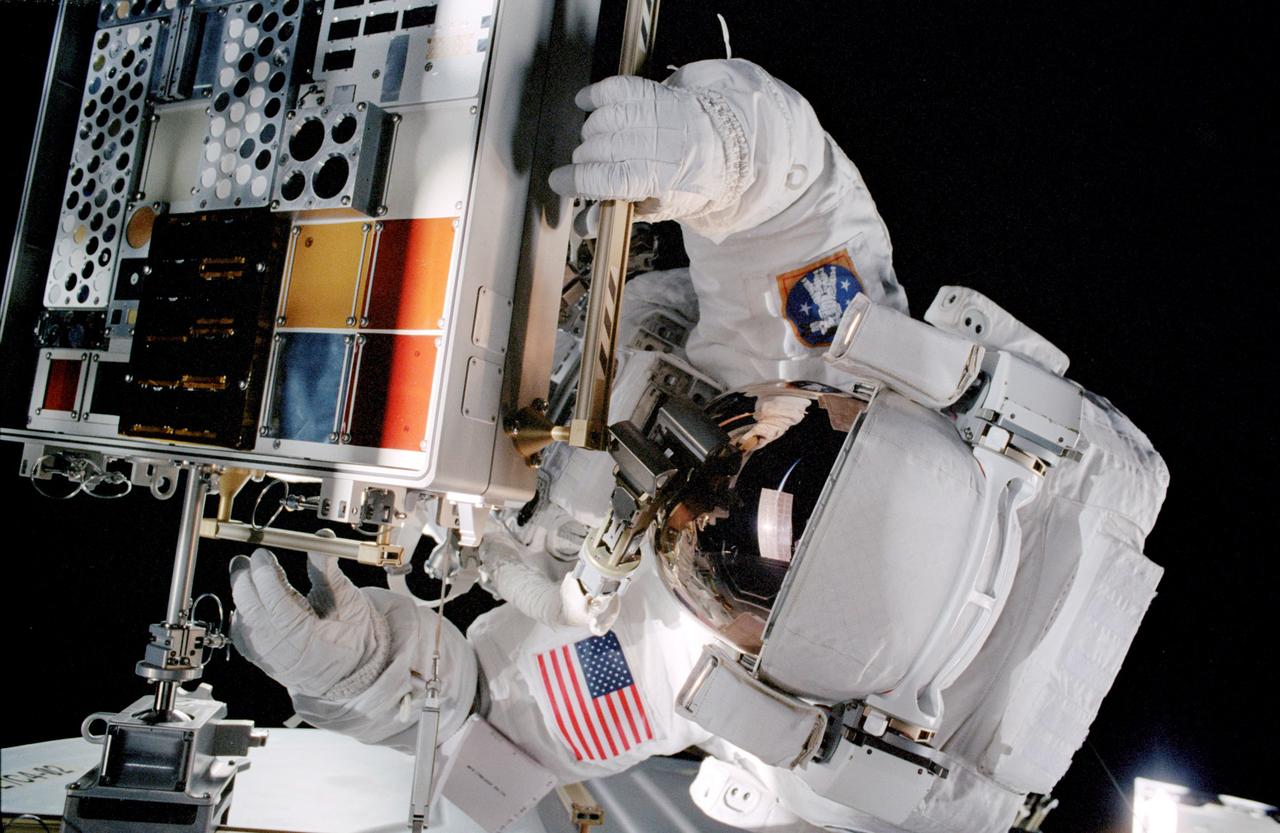
Astronaut Patrick G. Forrester works with the the Materials International Space Station Experiment (MISSE) during extravehicular activity (EVA). MISSE would expose 750 material samples for about 18 months and collect information on how different materials weather the space environment The objective of MISSE is to develop early, low-cost, non-intrusive opportunities to conduct critical space exposure tests of space materials and components plarned for use on future spacecraft. The experiment was the first externally mounted experiment conducted on the International Space Station (ISS) and was installed on the outside of the ISS Quest Airlock. MISSE was launched on August 10, 2001 aboard the Space Shuttle Orbiter Discovery.
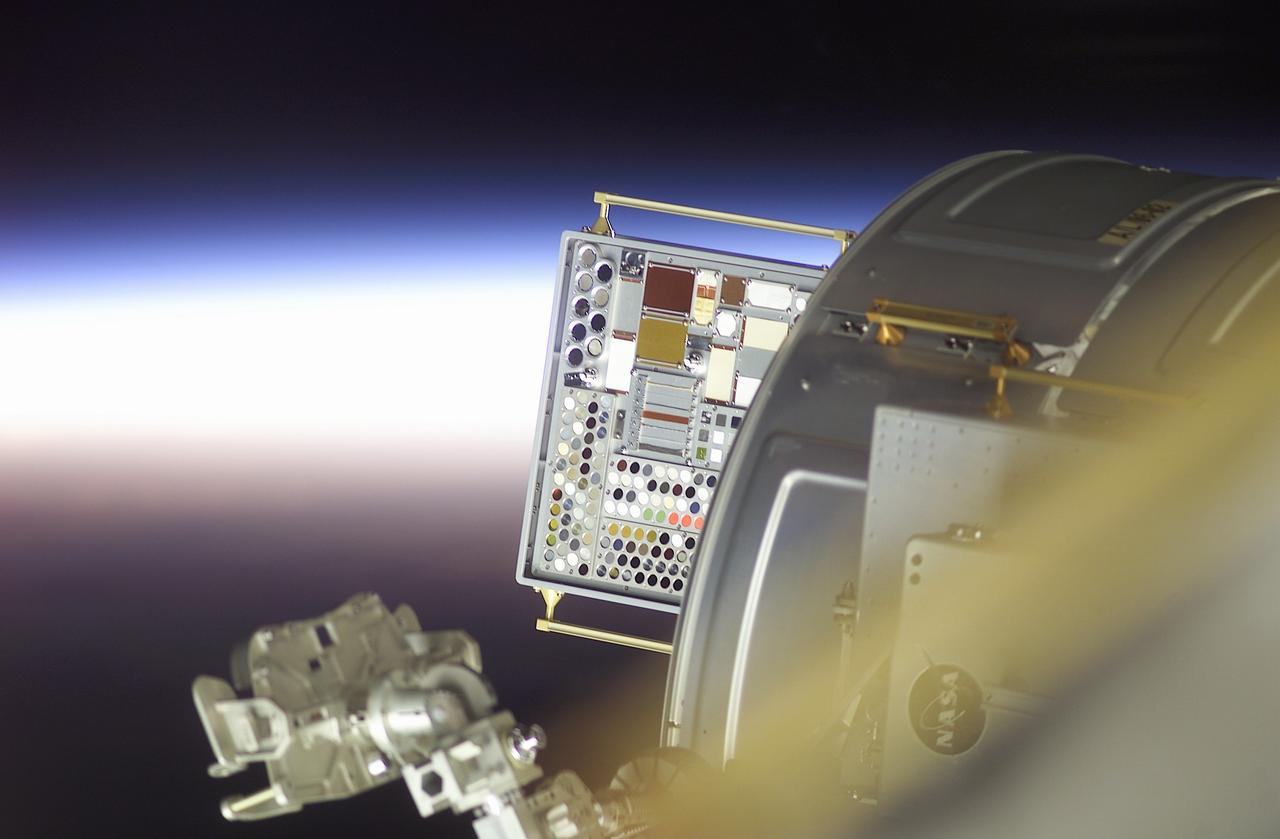
Backdropped by a sunrise, the newly installed Materials International Space Station Experiment (MISSE) is visible on this image. MISSE would expose 750 material samples for about 18 months and collect information on how different materials weather the space environment. The objective of MISSE is to develop early, low-cost, non-intrusive opportunities to conduct critical space exposure tests of space materials and components plarned for use on future spacecraft. The experiment was the first externally mounted experiment conducted on the International Space Station (ISS) and was installed on the outside of the ISS Quest Airlock during extravehicular activity (EVA) of the STS-105 mission. MISSE was launched on August 10, 2001 aboard the Space Shuttle Orbiter Discovery.
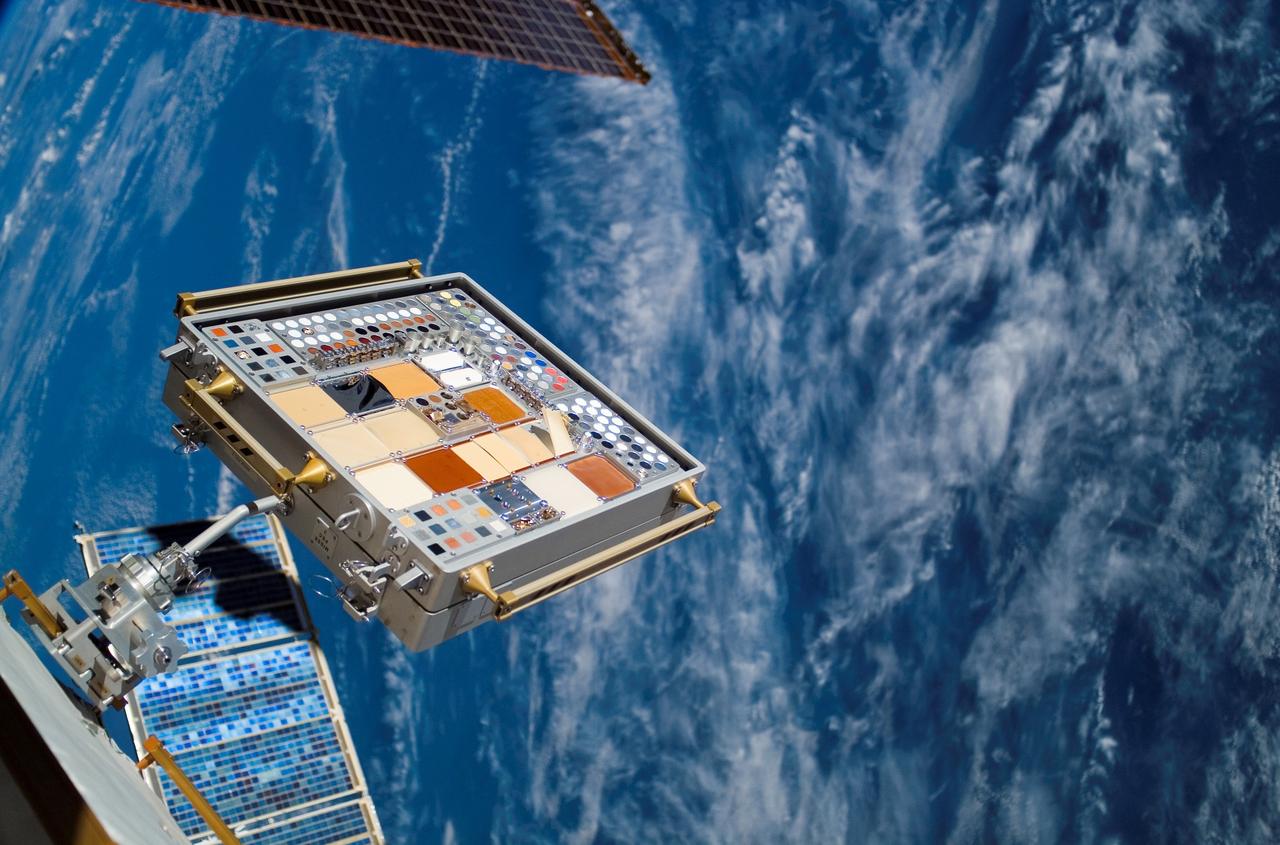
Back dropped by the blue and white Earth is a Materials International Space Station Experiment (MISSE) on the exterior of the Station. The photograph was taken during the second bout of STS-118 Extra Vehicular Activity (EVA). MISSE collects information on how different materials weather in the environment of space.

Miria Finckenor, a researcher at NASA’s Marshall Space Flight Center in Huntsville, Alabama, shows off the 15th Materials International Space Station Experiment, or MISSE, an external science payload berthed on the International Space Station since 2001
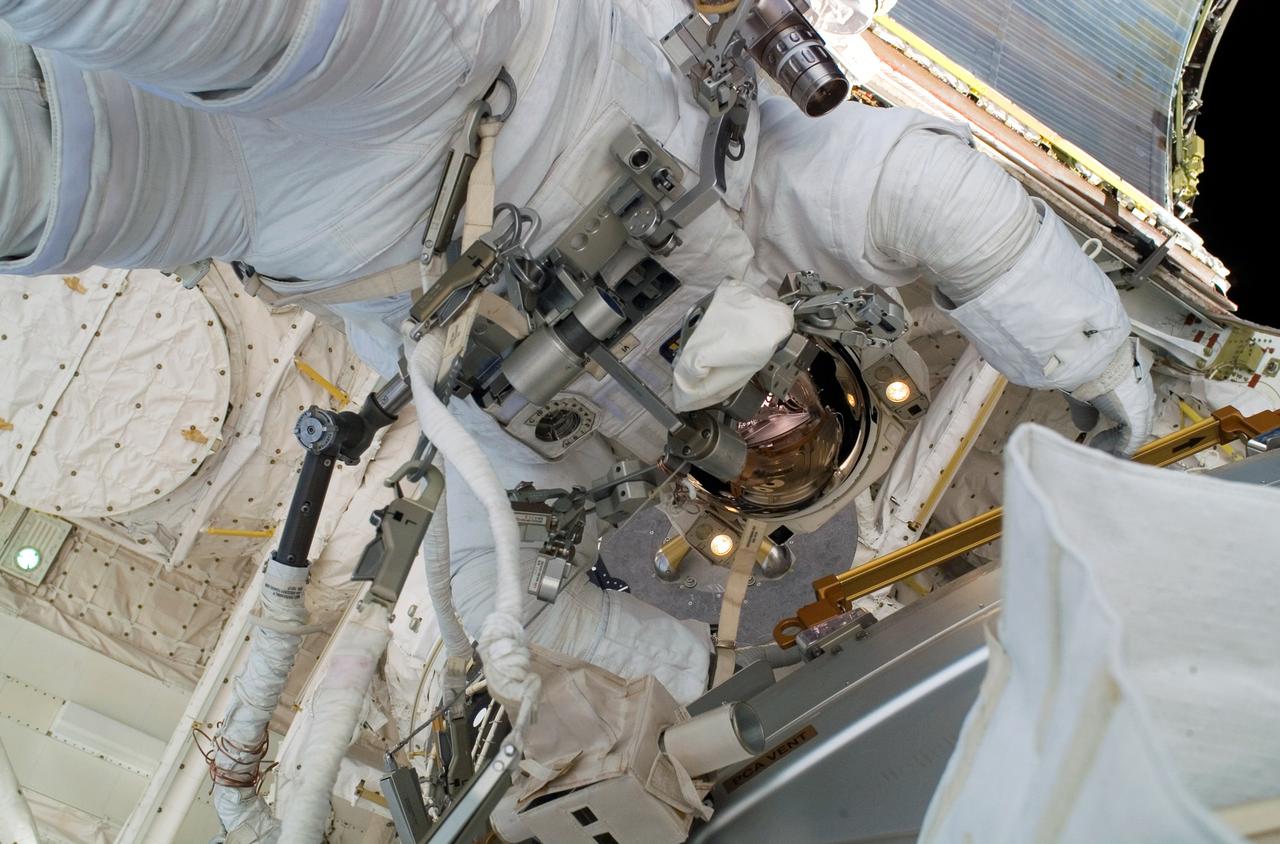
As the construction continued on the International Space Station (ISS), STS-118 Astronaut Dave Williams, representing the Canadian Space Agency, participated in the fourth and final session of Extra Vehicular Activity (EVA). During the 5 hour space walk, Williams and Expedition 15 engineer Clay Anderson (out of frame) installed the External Wireless Instrumentation System Antenna, attached a stand for the shuttle robotic arm extension boom, and retrieved the two Materials International Space Station Experiments (MISSE) for return to Earth. MISSE collects information on how different materials weather in the environment of space.
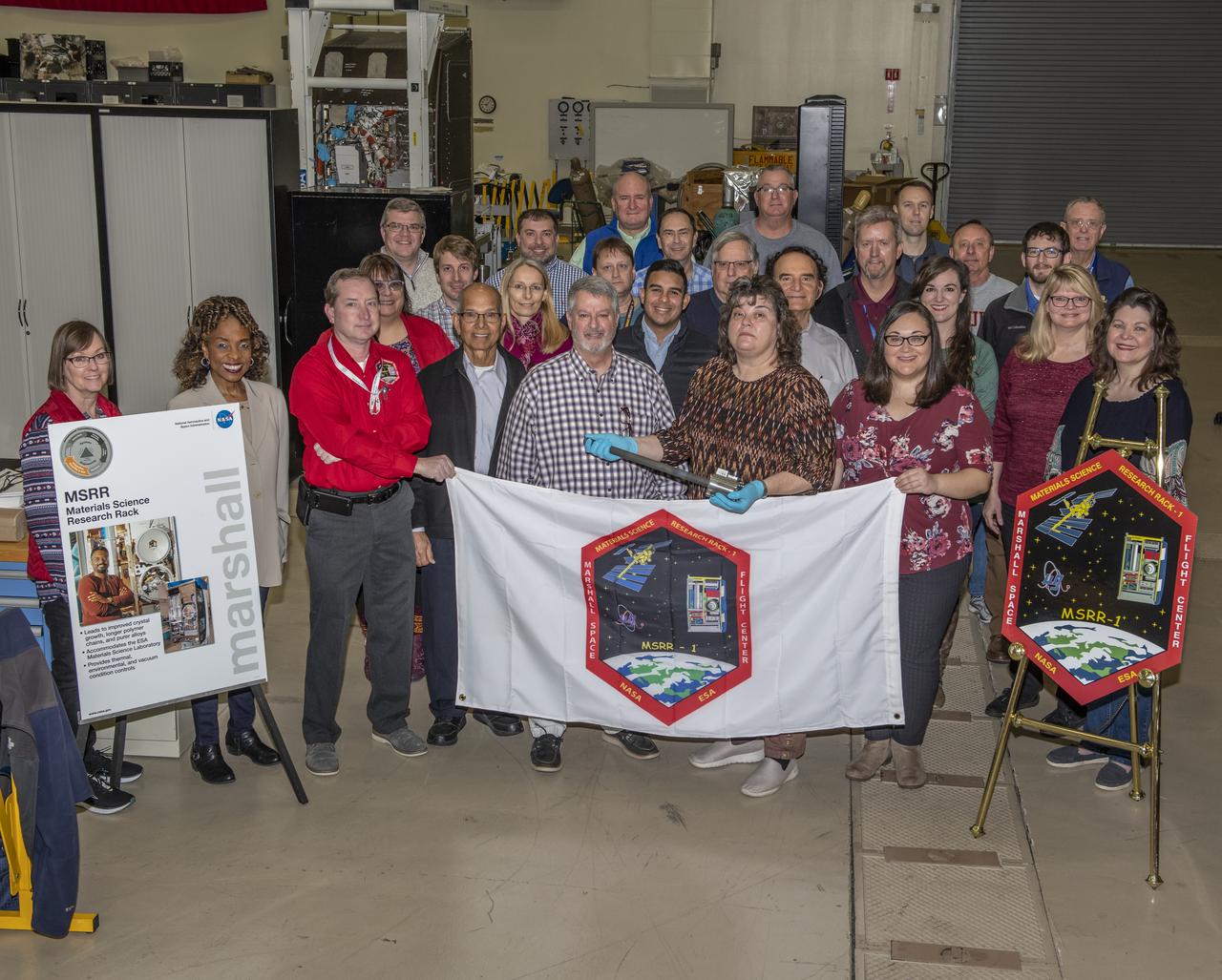
NASA's first Sample Cartridge Assembly (SCA) project designed and validated a payload containing a materials research sample in a sealed environment. The SCA was heated in the European Space Agency's (ESA) Low Gradient Furnace (LGF) that is housed inside the Material Science Research Rack (MSRR) located on the International Space Station (ISS). Sintered metals and crystal growth experiments in microgravity are examples of some of the types of materials research that may be performed with a SCA.

Containers carrying set of seeds for a Materials International Space Station Experiment (MISSE) are shown Feb. 11, 2021, at NASA’s Kennedy Space Center in Florida. The containers will fly aboard Northrop Grumman’s Cygnus spacecraft as part of NG-15, a NASA commercial resupply mission to the orbiting laboratory targeted for Feb. 20, 2021. They will be placed in the MISSE testing facility, located near the space station’s solar arrays, where they will be exposed to the extreme environment of space for six months before returning to Earth for further study.
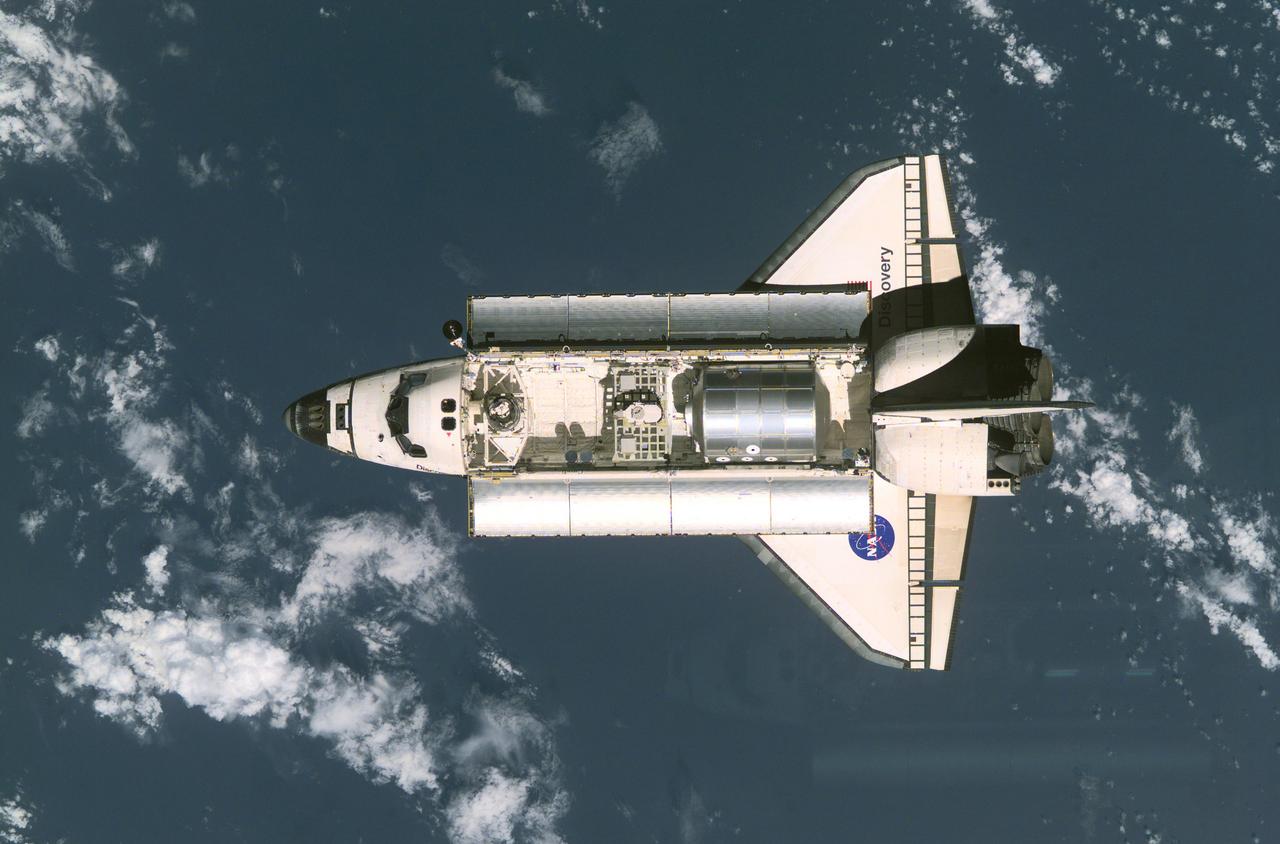
This is a view of the Space Shuttle Discovery as it approaches the International Space Station (ISS) during the STS-105 mission. Visible in the payload bay of Discovery are the Multipurpose Logistics Module (MPLM) Leonardo at right, which stores various supplies and experiments to be transferred into the ISS; at center, the Integrated Cargo Carrier (ICC) which carries the Early Ammonia Servicer (EAS); and two Materials International Space Station Experiment (MISSE) containers at left. Aboard Discovery were the ISS Expedition Three crew, who were to replace the Expedition Two crew that had been living on the ISS for the past five months.
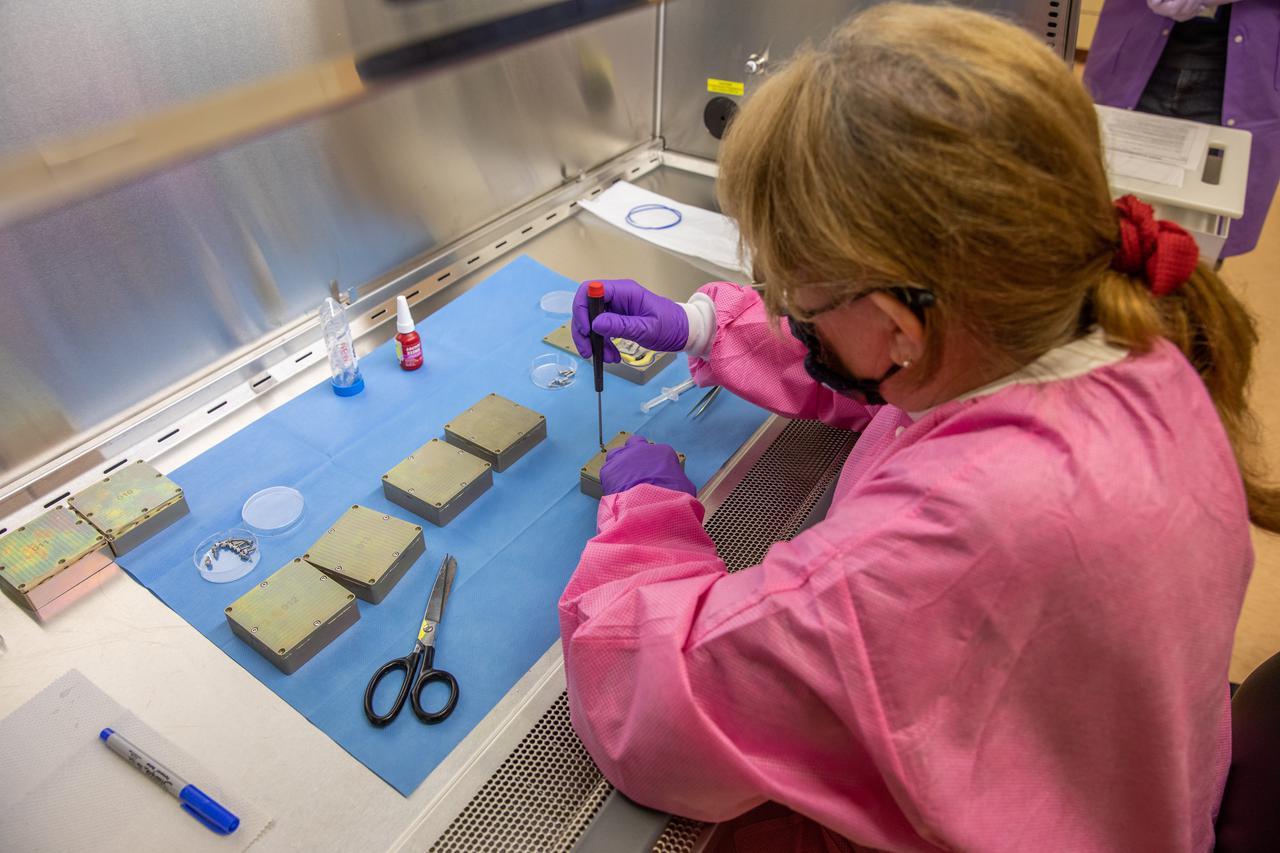
Christina Khodada, a research scientist working with the Exploration Research and Technology Programs, prepares containers Feb. 11, 2021, at NASA’s Kennedy Space Center in Florida for a Materials International Space Station Experiment (MISSE). The containers, carrying sets of seeds, will fly aboard Northrop Grumman’s Cygnus spacecraft as part of NG-15, a NASA commercial resupply mission to the orbiting laboratory targeted for Feb. 20, 2021. They will be placed in the MISSE testing facility, located near the space station’s solar arrays, where they will be exposed to the extreme environment of space for six months before returning to Earth for further study.
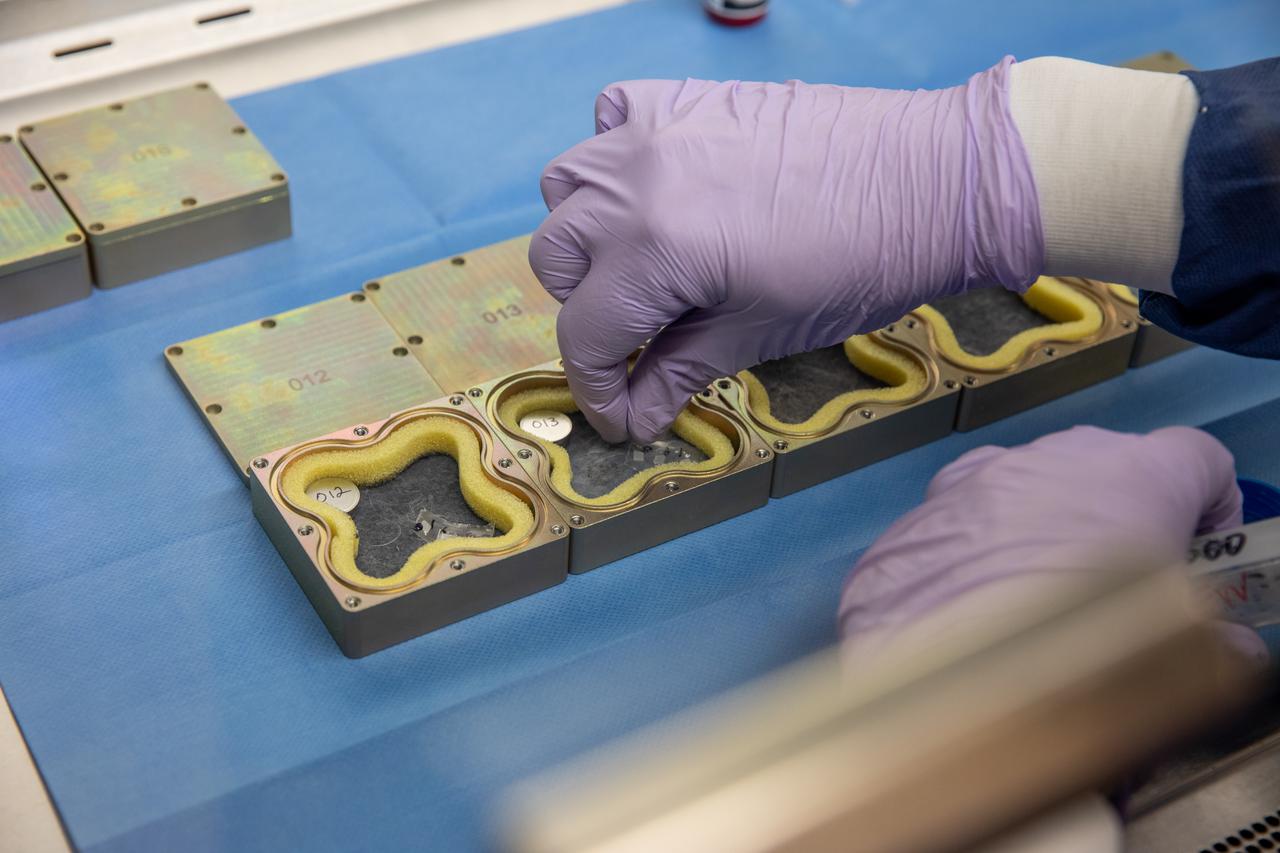
Jeffrey Richards, a project science coordinator working with the Exploration Research and Technology programs at NASA’s Kennedy Space Center in Florida, prepares containers Feb. 11, 2021, for a Materials International Space Station Experiment (MISSE). The containers, carrying sets of seeds, will fly aboard Northrop Grumman’s Cygnus spacecraft as part of NG-15, a NASA commercial resupply mission to the orbiting laboratory targeted for Feb. 20, 2021. They will be placed in the MISSE testing facility, located near the space station’s solar arrays, where they will be exposed to the extreme environment of space for six months before returning to Earth for further study.
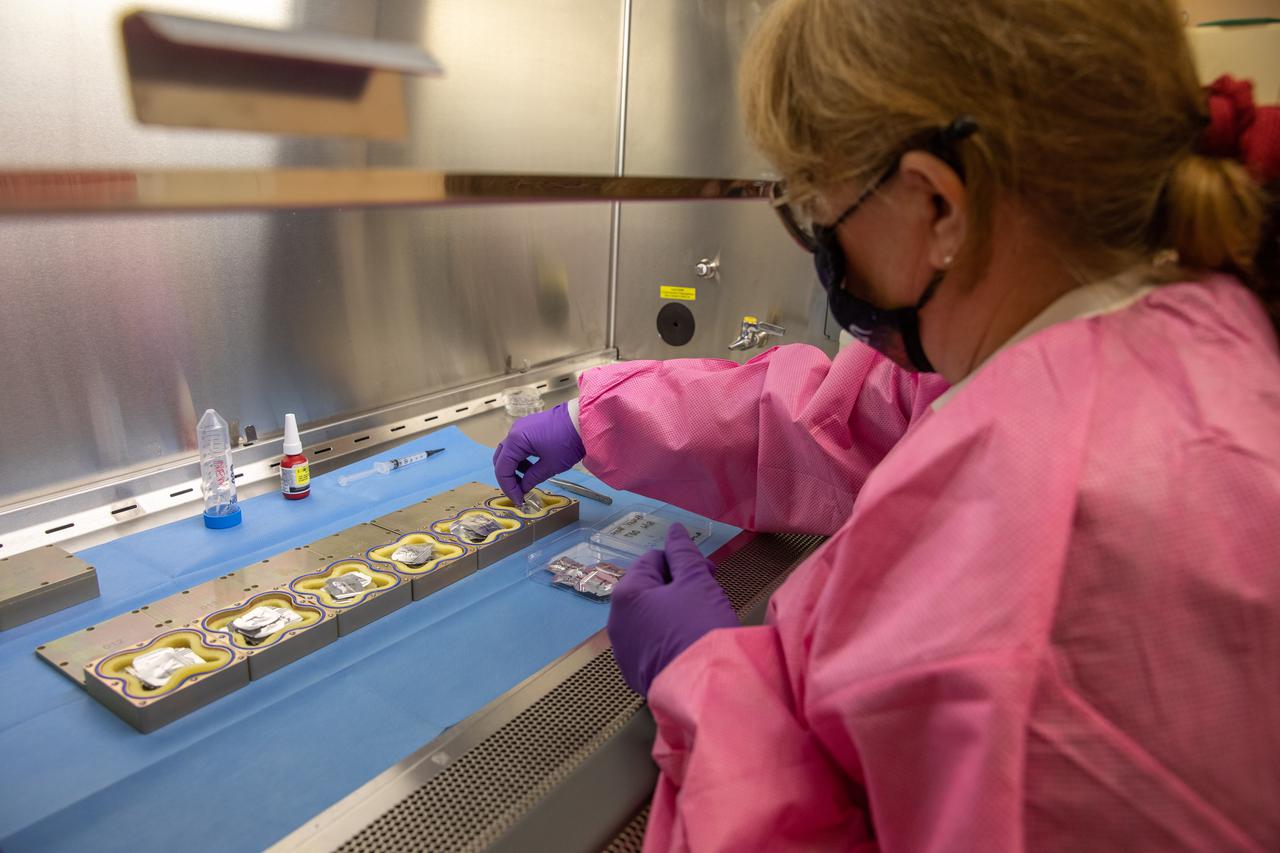
Christina Khodada, a research scientist working with the Exploration Research and Technology Programs, prepares containers Feb. 11, 2021, at NASA’s Kennedy Space Center in Florida for a Materials International Space Station Experiment (MISSE). The containers, carrying sets of seeds, will fly aboard Northrop Grumman’s Cygnus spacecraft as part of NG-15, a NASA commercial resupply mission to the orbiting laboratory targeted for Feb. 20, 2021. They will be placed in the MISSE testing facility, located near the space station’s solar arrays, where they will be exposed to the extreme environment of space for six months before returning to Earth for further study.

Jeffrey Richards, a project science coordinator working with the Exploration Research and Technology programs at NASA’s Kennedy Space Center in Florida, prepares containers Feb. 11, 2021, for a Materials International Space Station Experiment (MISSE). The containers, carrying sets of seeds, will fly aboard Northrop Grumman’s Cygnus spacecraft as part of NG-15, a NASA commercial resupply mission to the orbiting laboratory targeted for Feb. 20, 2021. They will be placed in the MISSE testing facility, located near the space station’s solar arrays, where they will be exposed to the extreme environment of space for six months before returning to Earth for further study.

Jeffrey Richards, a project science coordinator working with the Exploration Research and Technology programs at NASA’s Kennedy Space Center in Florida, prepares containers Feb. 11, 2021, for a Materials International Space Station Experiment (MISSE). The containers, carrying sets of seeds, will fly aboard Northrop Grumman’s Cygnus spacecraft as part of NG-15, a NASA commercial resupply mission to the orbiting laboratory targeted for Feb. 20, 2021. They will be placed in the MISSE testing facility, located near the space station’s solar arrays, where they will be exposed to the extreme environment of space for six months before returning to Earth for further study.
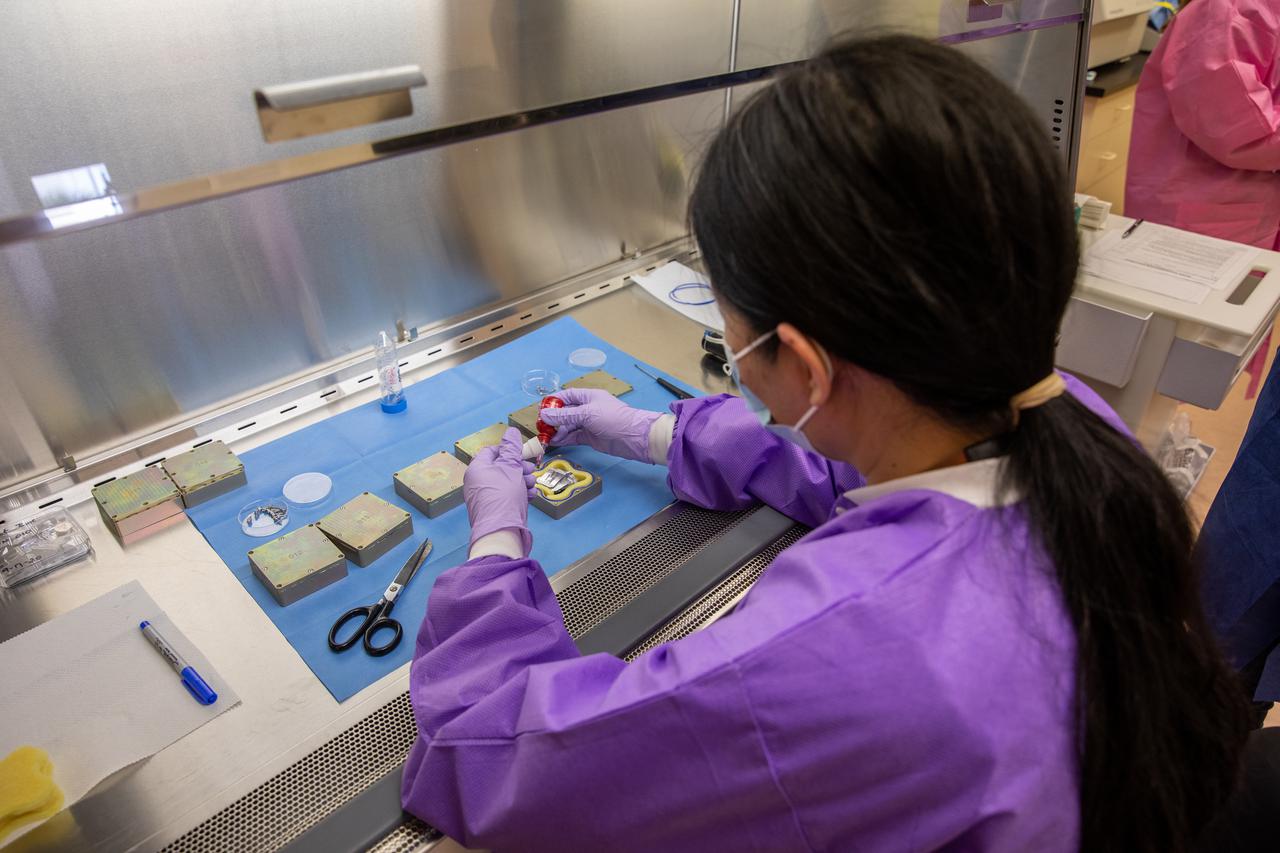
Ye Zhang, project scientist for the Exploration Research and Technology programs at NASA’s Kennedy Space Center in Florida, prepares containers for a Materials International Space Station Experiment (MISSE). The containers, carrying sets of seeds, will fly aboard Northrop Grumman’s Cygnus spacecraft as part of NG-15, a NASA commercial resupply mission to the orbiting laboratory targeted for Feb. 20, 2021. They will be placed in the MISSE testing facility, located near the space station’s solar arrays, where they will be exposed to the extreme environment of space for six months before returning to Earth for further study.
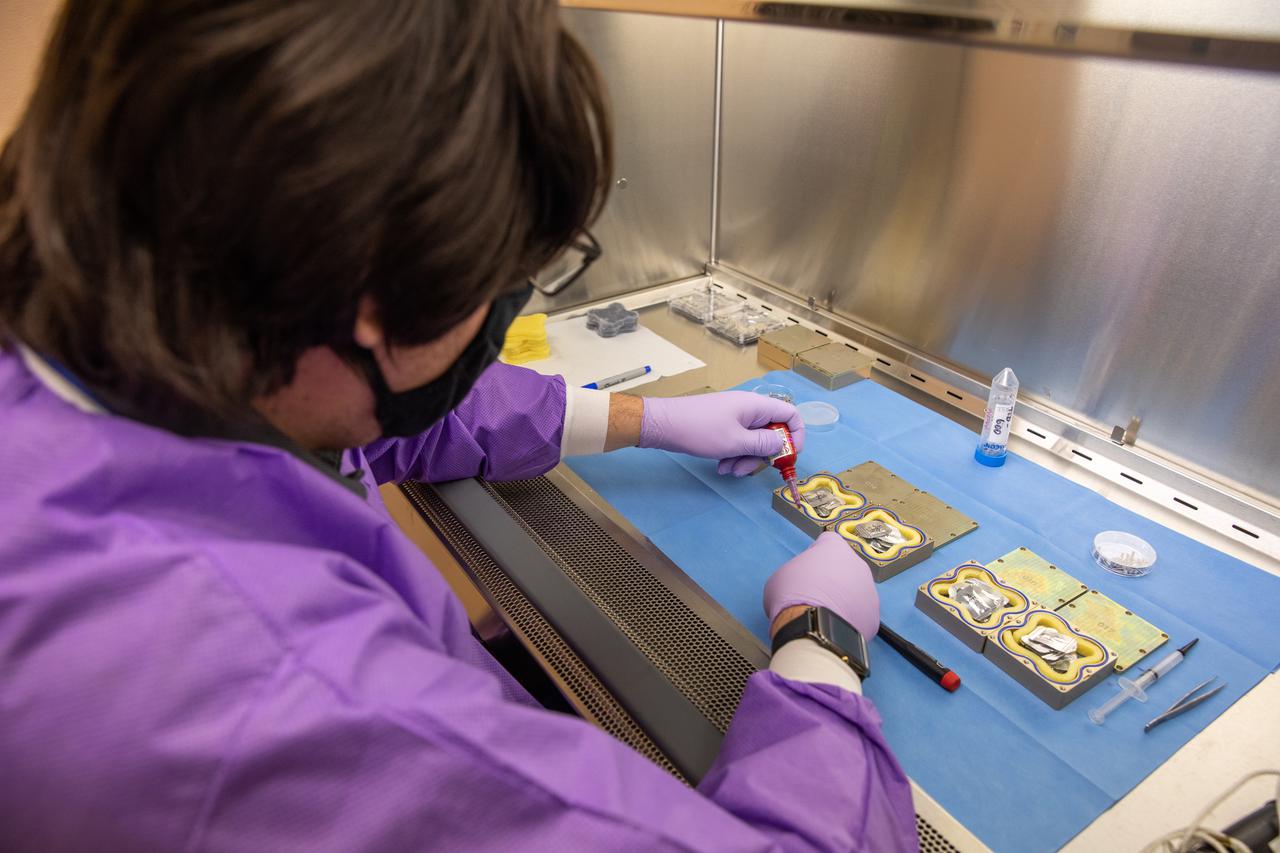
Cory Spern, a research scientist working with the Exploration Research and Technology programs at NASA’s Kennedy Space Center in Florida, prepares containers Feb. 11, 2021, for a Materials International Space Station Experiment (MISSE). The containers, carrying sets of seeds, will fly aboard Northrop Grumman’s Cygnus spacecraft as part of NG-15, a NASA commercial resupply mission to the orbiting laboratory targeted for Feb. 20, 2021. They will be placed in the MISSE testing facility, located near the space station’s solar arrays, where they will be exposed to the extreme environment of space for six months before returning to Earth for further study.

Jeffrey Richards, a project science coordinator working with the Exploration Research and Technology programs at NASA’s Kennedy Space Center in Florida, prepares containers Feb. 11, 2021, for a Materials International Space Station Experiment (MISSE). The containers, carrying sets of seeds, will fly aboard Northrop Grumman’s Cygnus spacecraft as part of NG-15, a NASA commercial resupply mission to the orbiting laboratory targeted for Feb. 20, 2021. They will be placed in the MISSE testing facility, located near the space station’s solar arrays, where they will be exposed to the extreme environment of space for six months before returning to Earth for further study.
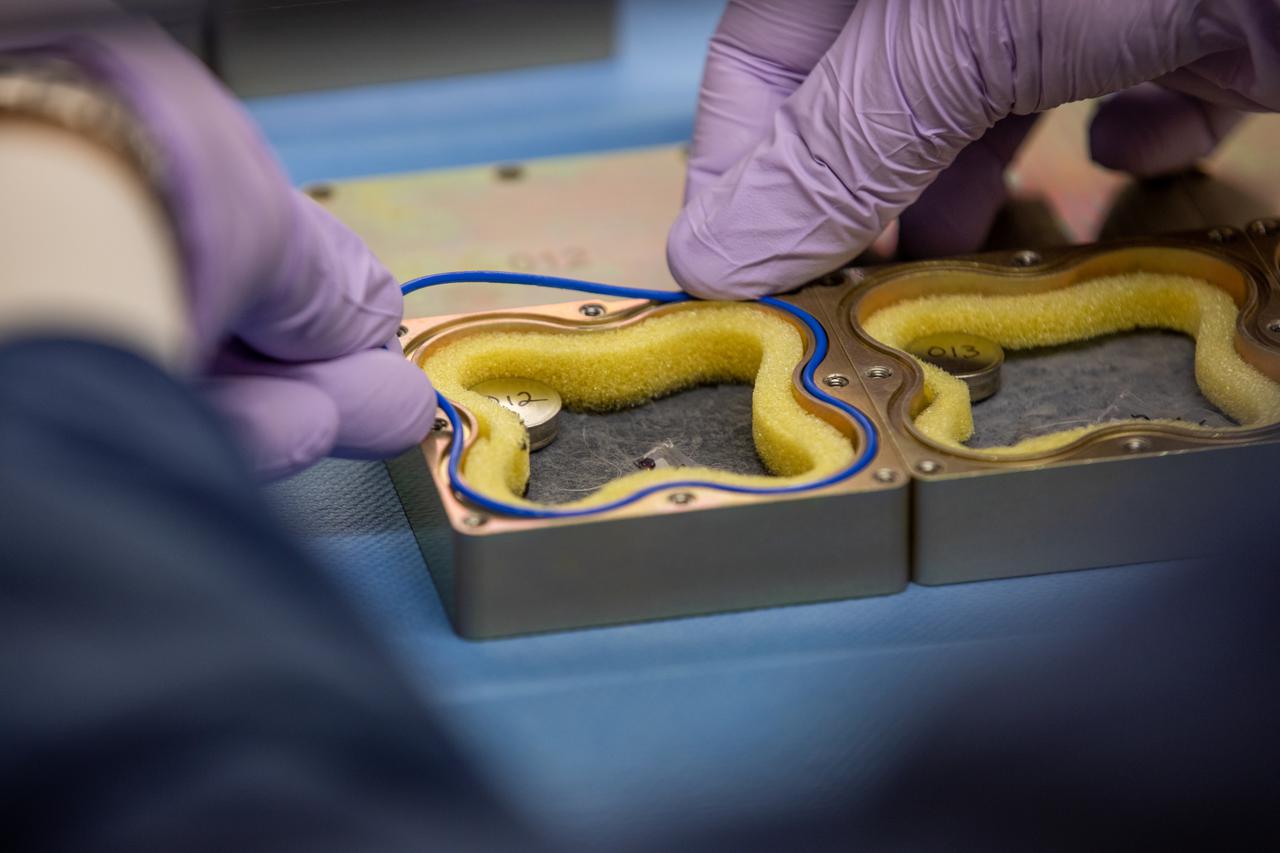
Jeffrey Richards, a project science coordinator working with the Exploration Research and Technology programs at NASA’s Kennedy Space Center in Florida, prepares containers Feb. 11, 2021, for a Materials International Space Station Experiment (MISSE). The containers, carrying sets of seeds, will fly aboard Northrop Grumman’s Cygnus spacecraft as part of NG-15, a NASA commercial resupply mission to the orbiting laboratory targeted for Feb. 20, 2021. They will be placed in the MISSE testing facility, located near the space station’s solar arrays, where they will be exposed to the extreme environment of space for six months before returning to Earth for further study.
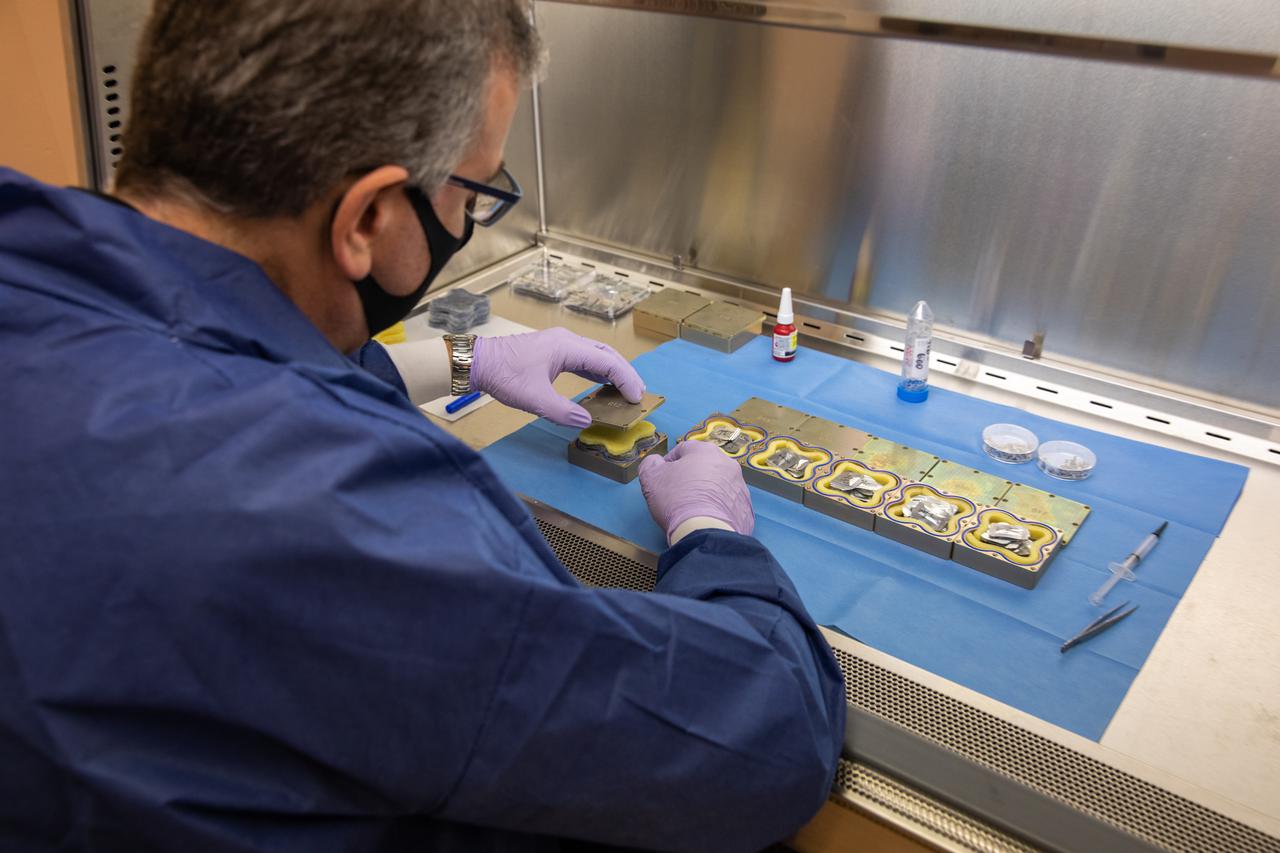
Jeffrey Richards, a project science coordinator working with the Exploration Research and Technology programs at NASA’s Kennedy Space Center in Florida, prepares containers Feb. 11, 2021, for a Materials International Space Station Experiment (MISSE). The containers, carrying sets of seeds, will fly aboard Northrop Grumman’s Cygnus spacecraft as part of NG-15, a NASA commercial resupply mission to the orbiting laboratory targeted for Feb. 20, 2021. They will be placed in the MISSE testing facility, located near the space station’s solar arrays, where they will be exposed to the extreme environment of for six months before returning to Earth for further study.
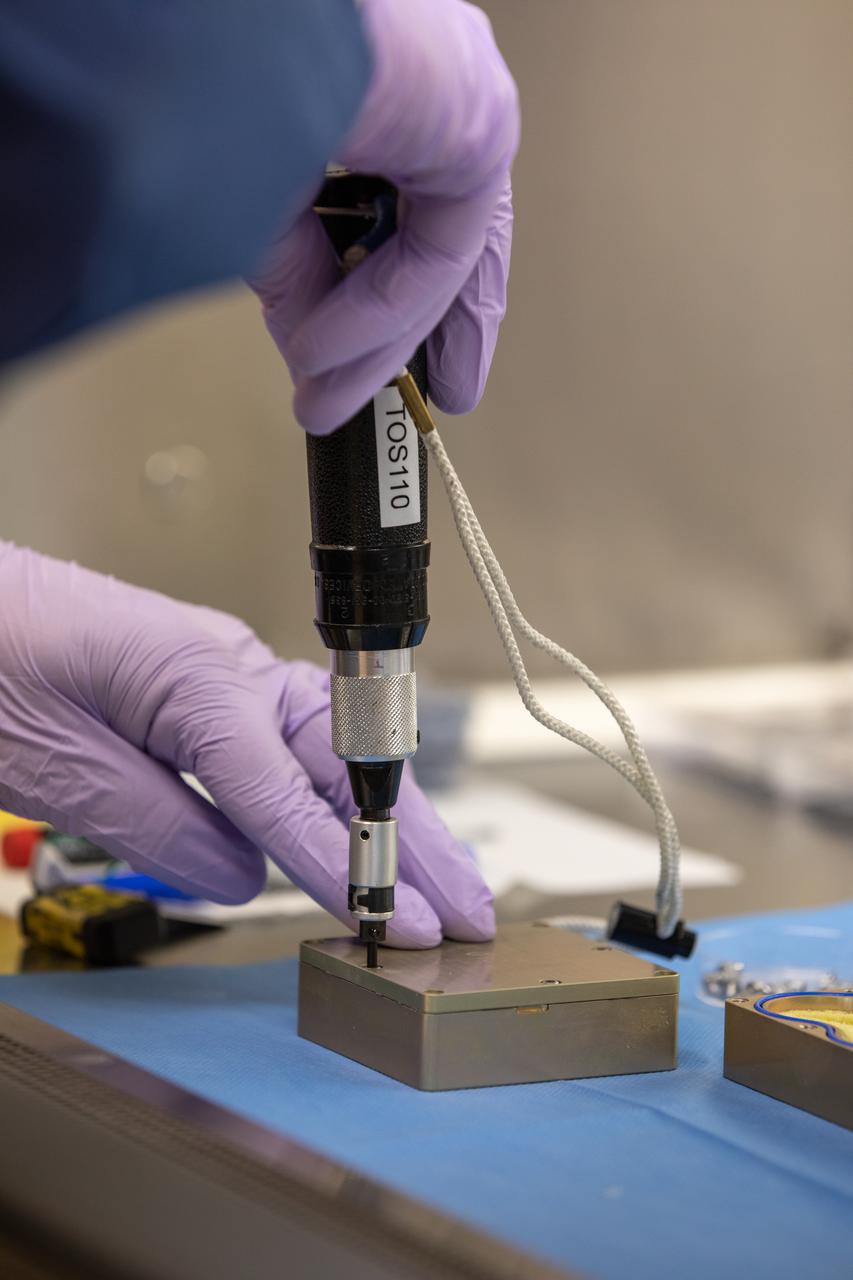
Jeffrey Richards, a project science coordinator working with the Exploration Research and Technology programs at NASA’s Kennedy Space Center in Florida, prepares containers Feb. 11, 2021, for a Materials International Space Station Experiment (MISSE). The containers, carrying sets of seeds, will fly aboard Northrop Grumman’s Cygnus spacecraft as part of NG-15, a NASA commercial resupply mission to the orbiting laboratory targeted for Feb. 20, 2021. They will be placed in the MISSE testing facility, located near the space station’s solar arrays, where they will be exposed to the extreme environment of for six months before returning to Earth for further study.
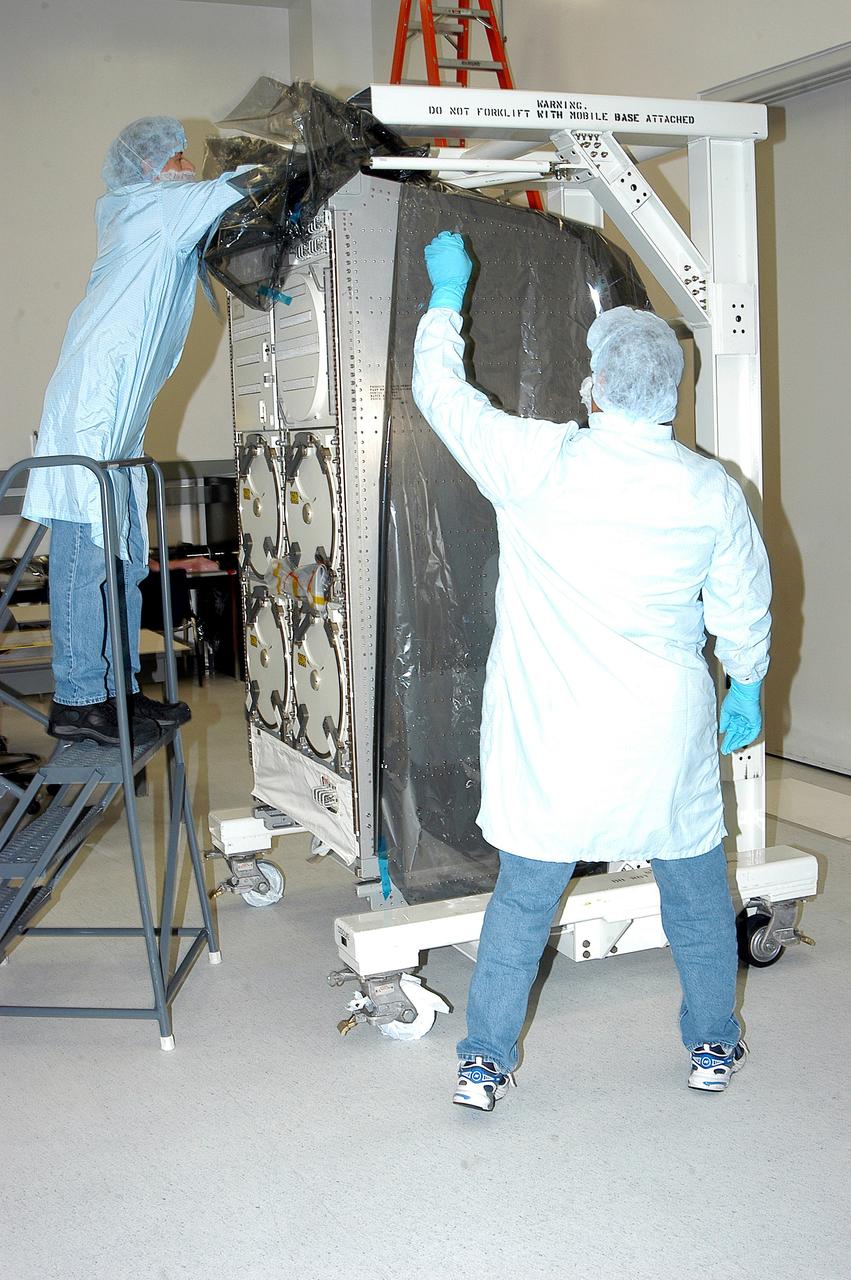
KENNEDY SPACE CENTER, FLA. - In the Space Station Processing Facility, technicians remove the cover from the Minus Eighty Lab Freezer for ISS(MELFI) provided as Laboratory Support Equipment by the European Space Agency for the International Space Station. The lab will provide cooling and storage for reagents, samples and perishable materials in four insulated containers called dewars with independently selectable temperatures of -80°C, -26°C, and +4°C. It also will be used to transport samples to and from the station. The MELFI is planned for launch on the ULF-1 mission.
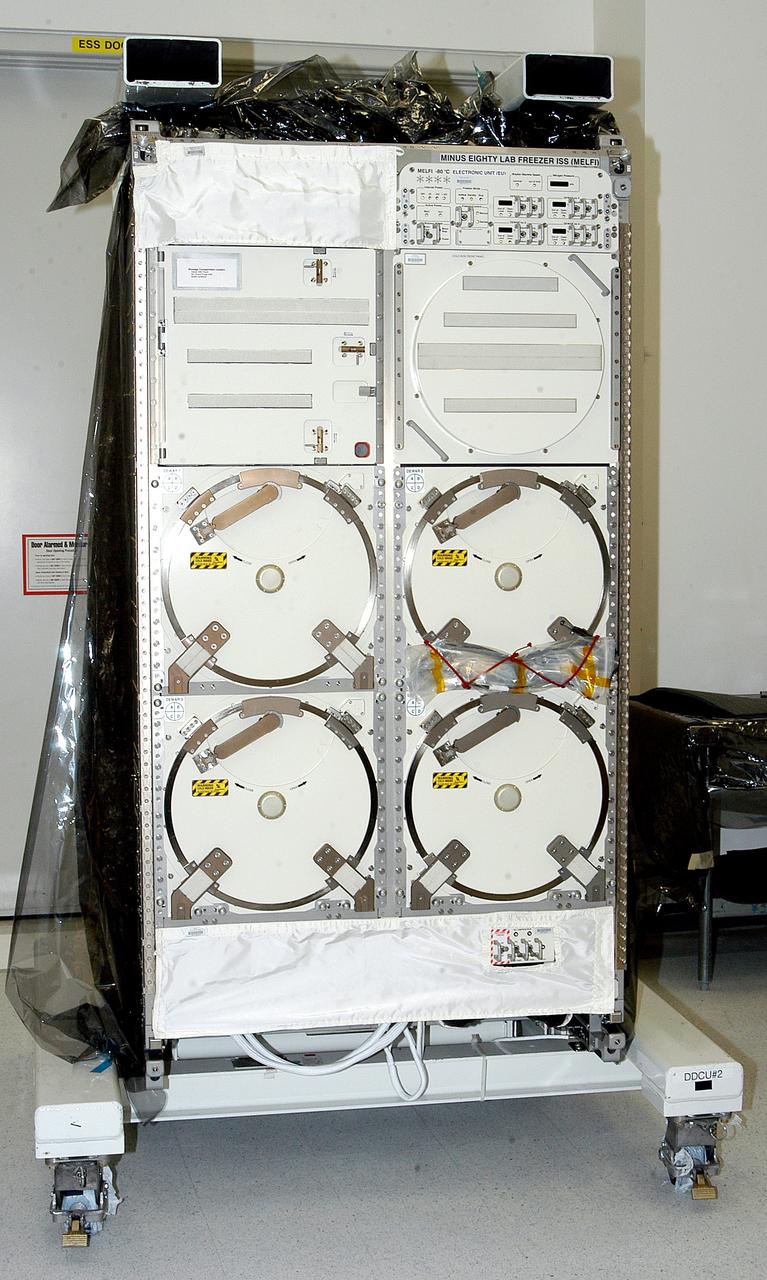
KENNEDY SPACE CENTER, FLA. - The Minus Eighty Lab Freezer for ISS (MELFI), provided as Laboratory Support Equipment by the European Space Agency for the International Space Station, is seen in the Space Station Processing Facility. The lab will provide cooling and storage for reagents, samples and perishable materials in four insulated containers called dewars with independently selectable temperatures of -80°C, -26°C, and +4°C. It also will be used to transport samples to and from the station. The MELFI is planned for launch on the ULF-1 mission.
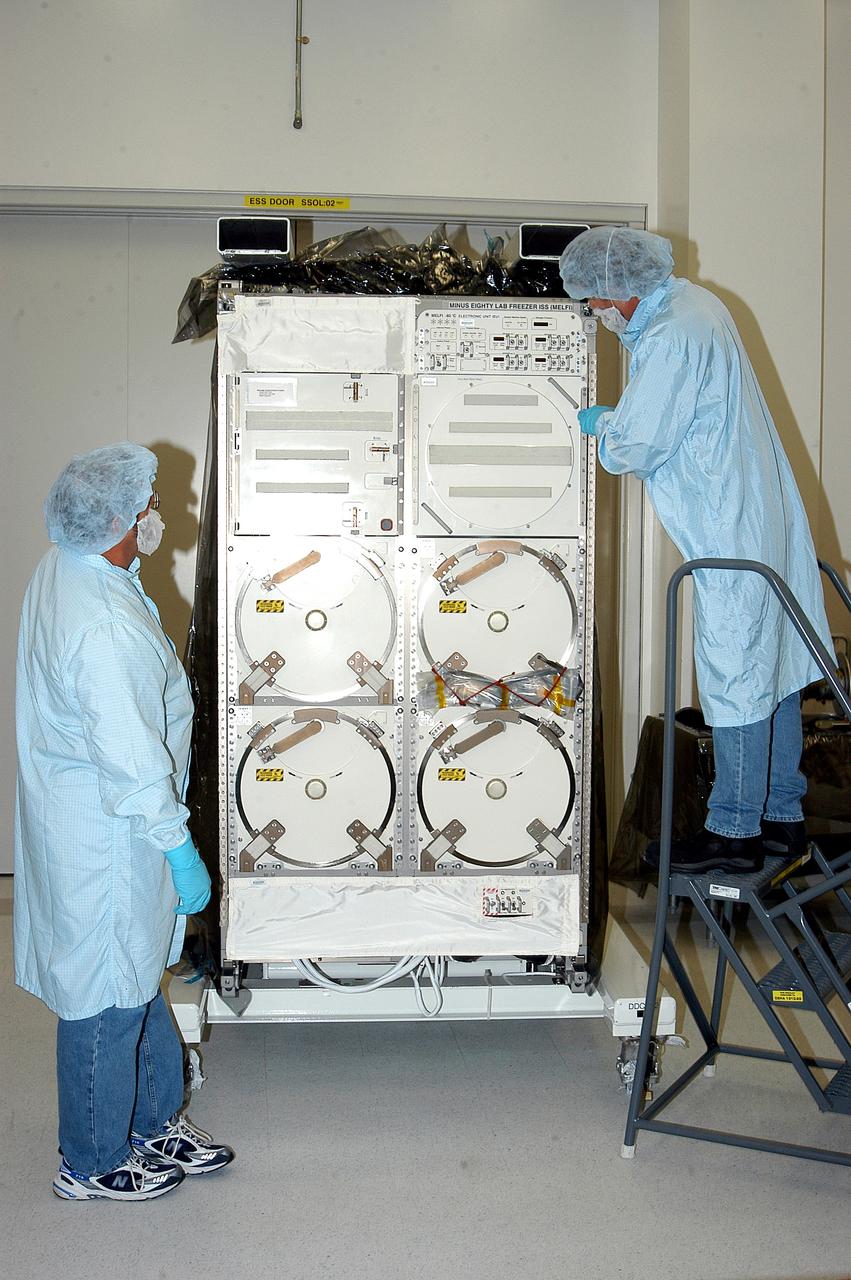
KENNEDY SPACE CENTER, FLA. - After removing its cover, technicians look over the Minus Eighty Lab Freezer for ISS (MELFI), provided as Laboratory Support Equipment by the European Space Agency for the International Space Station. The lab will provide cooling and storage for reagents, samples and perishable materials in four insulated containers called dewars with independently selectable temperatures of -80°C, -26°C, and +4°C. It also will be used to transport samples to and from the station. The MELFI is planned for launch on the ULF-1 mission.
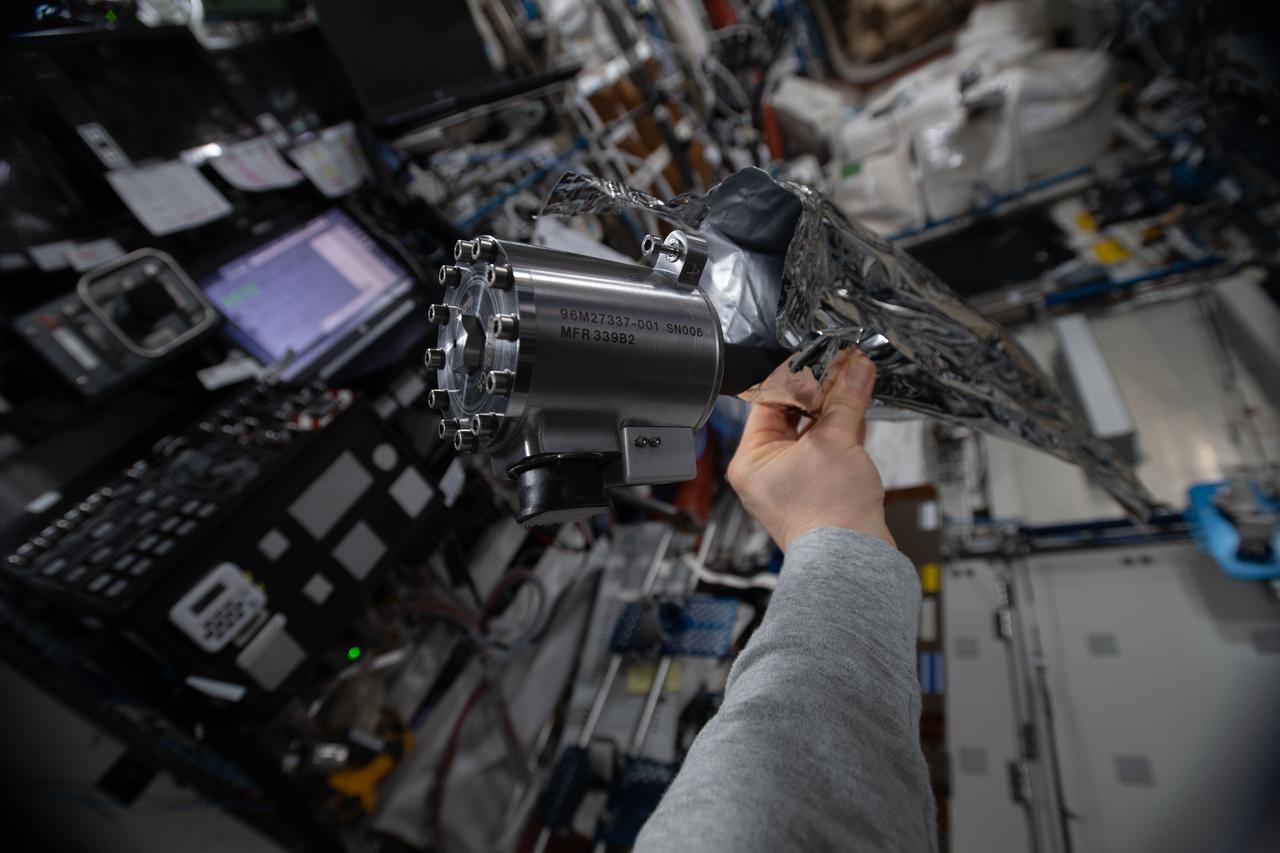
iss061e092274 (12/18/2019) --- A view of the Materials Science Laboratory (MSL) Sample Cartridge Assembly (SCA) in the Destiny module aboard the International Space Station (ISS). The Materials Science Laboratory (MSL) is used for basic materials research in the microgravity environment of the International Space Station (ISS). The MSL can accommodate and support diverse Experiment Modules. In this way many material types, such as metals, alloys, polymers, semiconductors, ceramics, crystals, and glasses, can be studied to discover new applications for existing materials and new or improved materials.
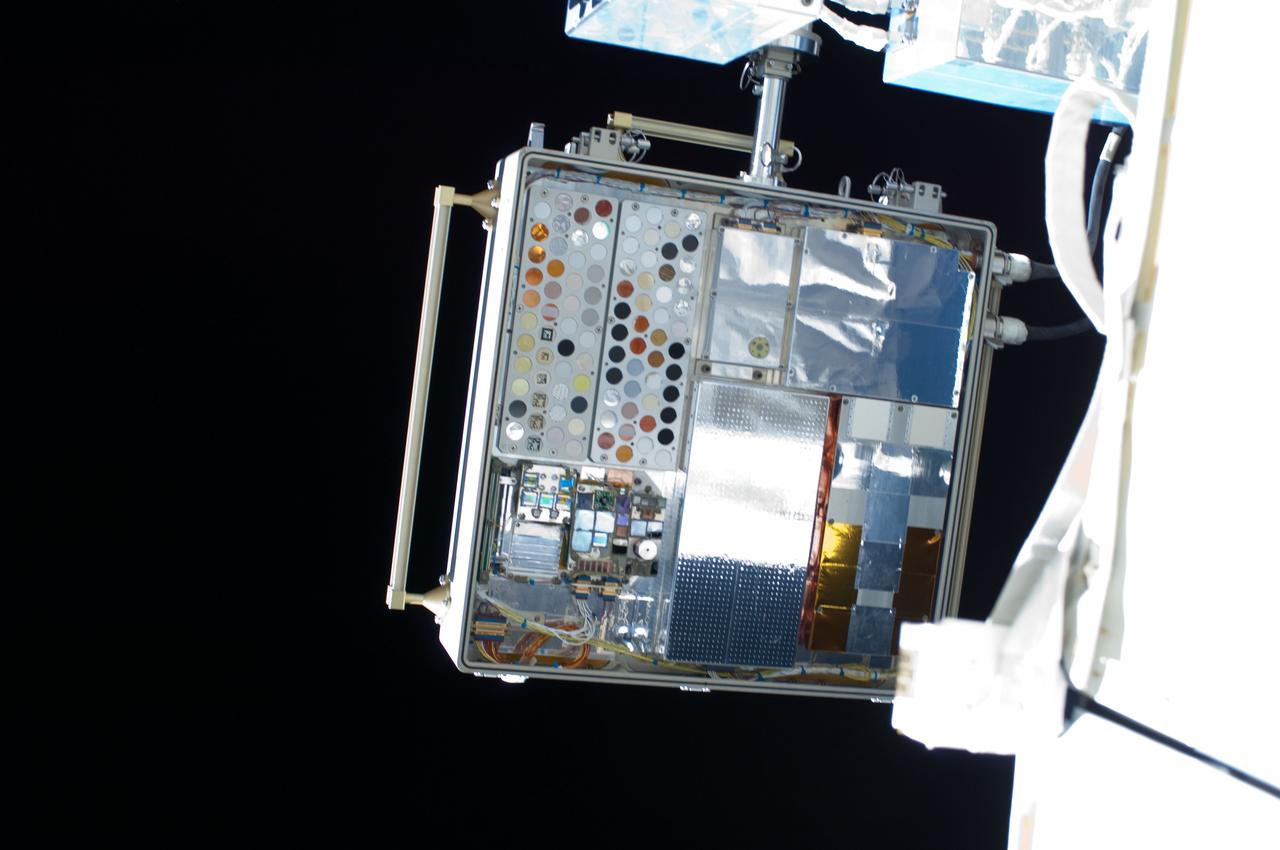
iss028e016106 (7/12/2011) --- View of a Materials on International Space Station Experiment - 8 (MISSE-8) installed on the starboard truss. The Materials on International Space Station Experiment - 8 (MISSE-8) tests various materials and computing elements on the exterior of the space station. The payload container is mounted so one side faces the Earth and the other faces space.
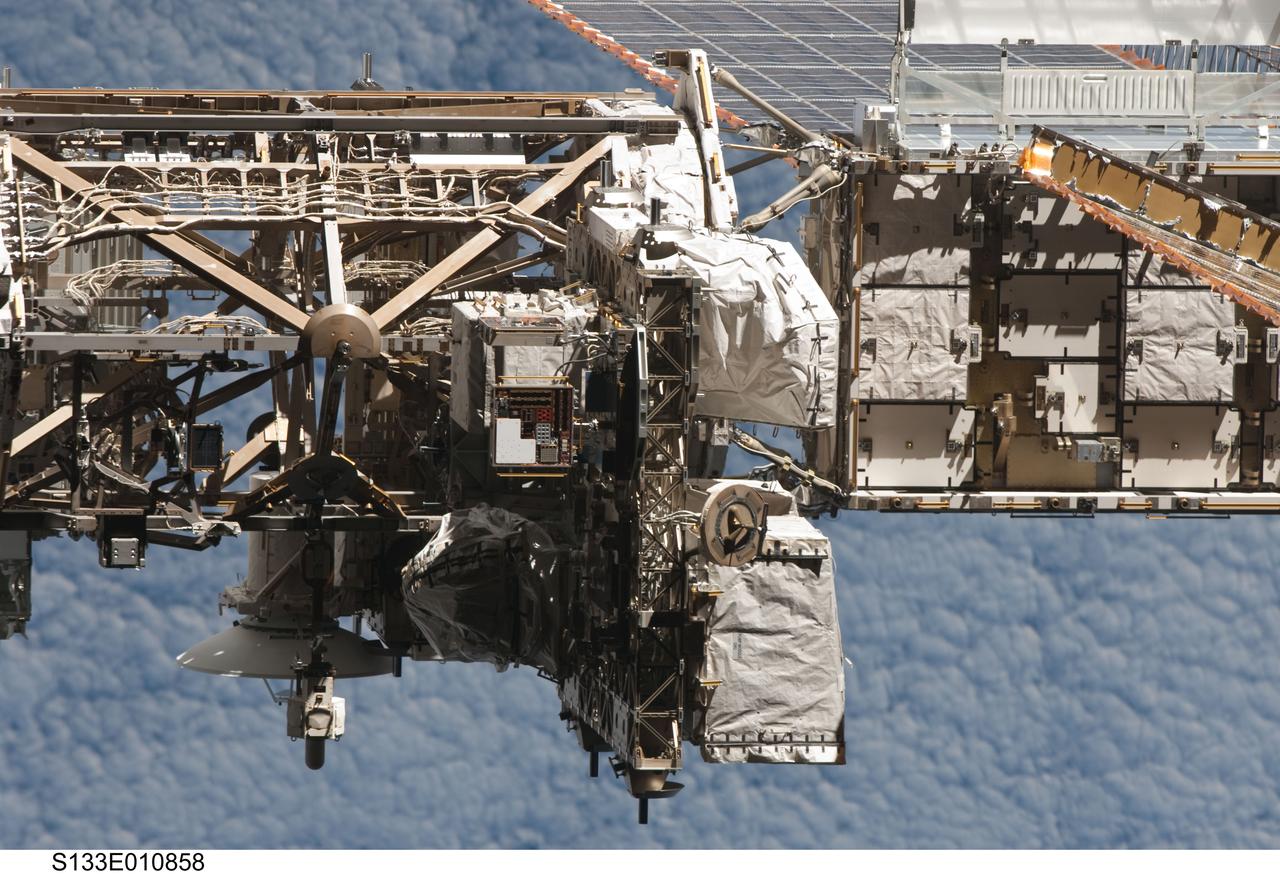
s133e010858 (3/7/2011) --- The Materials International Space Station Experiment-7 (MISSE-7) is a test bed for materials and coatings attached to the outside of the International Space Station being evaluated for the effects of atomic oxygen, ultraviolet, direct sunlight, radiation and extremes of heat and cold.
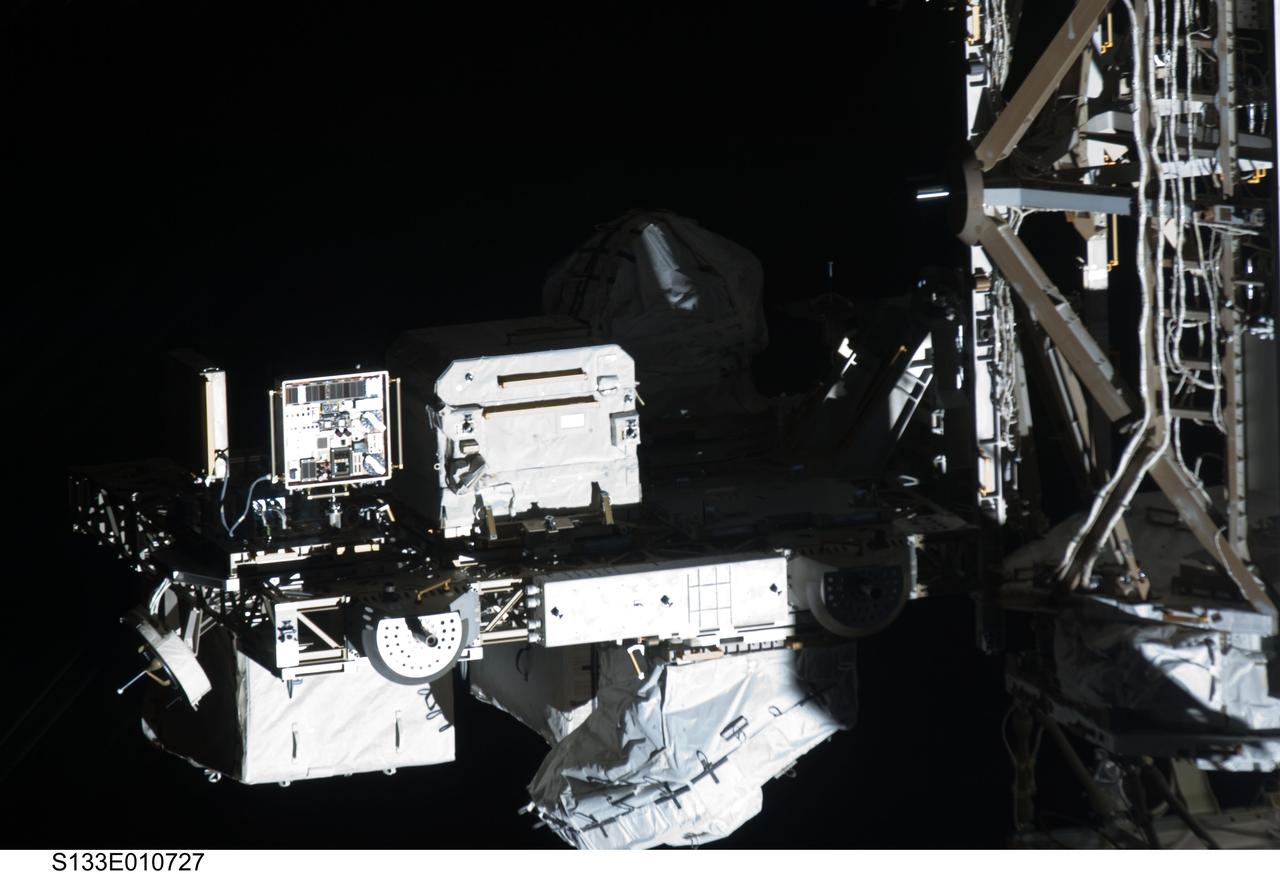
s133e010727 (3/7/2011) --- The Materials International Space Station Experiment-7 (MISSE-7) is a test bed for materials and coatings attached to the outside of the International Space Station being evaluated for the effects of atomic oxygen, ultraviolet, direct sunlight, radiation and extremes of heat and cold.
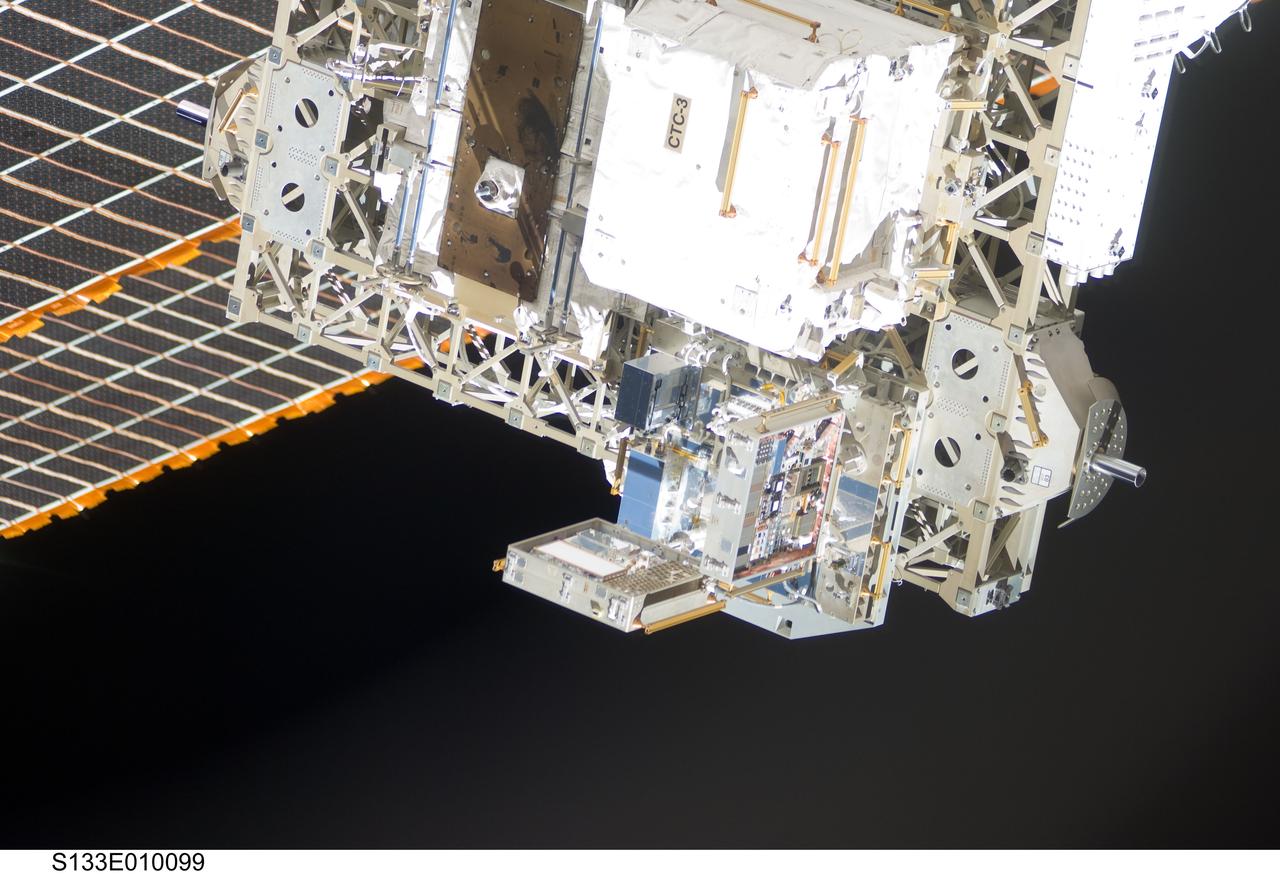
s133e010099 (3/7/2011) --- The Materials International Space Station Experiment-7 (MISSE-7) is a test bed for materials and coatings attached to the outside of the International Space Station being evaluated for the effects of atomic oxygen, ultraviolet, direct sunlight, radiation and extremes of heat and cold.
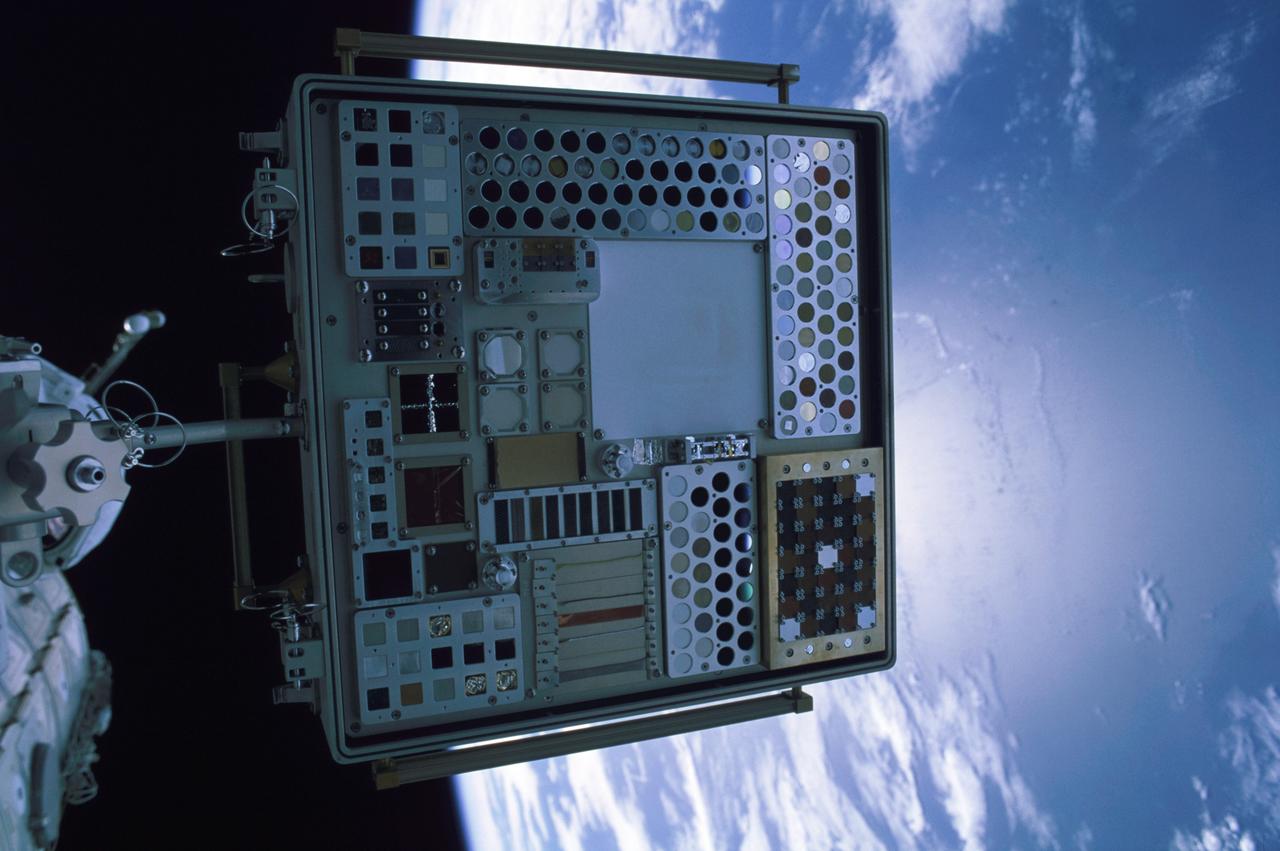
ISS006-348-019 (January 2003) ---- Materials International Space Station Experiment (MISSE), a suitcase-sized experiment attached to the outside of the space station to expose hundreds of potential space construction materials to the environment, leading to stronger, more durable spacecraft construction. Photographed by one of the Expedition 6 crew members with a 35mm camera.
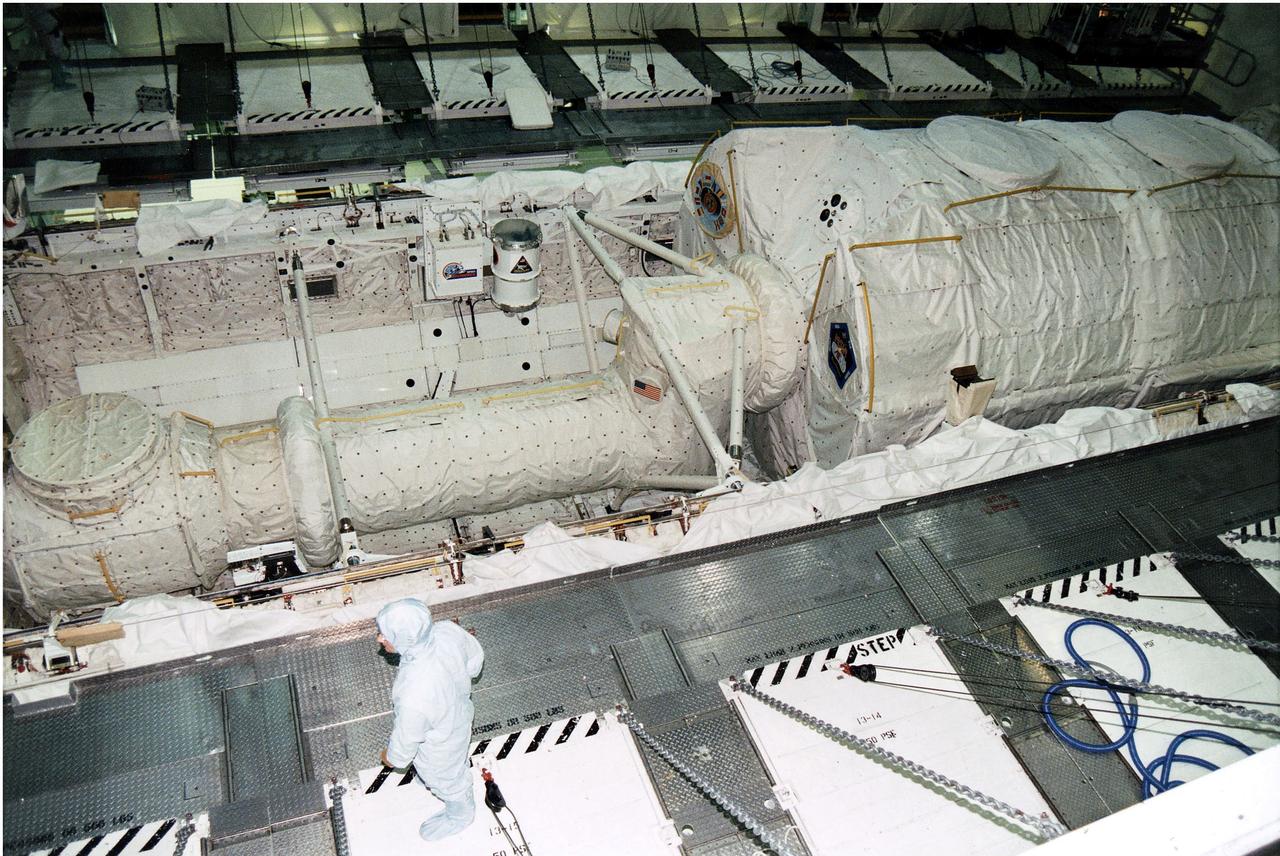
KENNEDY SPACE CENTER, FLA. - The Microgravity Science Laboratory-1 (MSL-1) Spacelab module is installed into the payload bay of the Space Shuttle Orbiter Columbia in Orbiter Processing Facility 1. The Spacelab long crew transfer tunnel that leads from the orbiter's crew airlock to the module is also aboard, as well as the Hitchhiker Cryogenic Flexible Diode (CRYOFD) experiment payload, which is attached to the right side of Columbia's payload bay. During the scheduled 16-day STS-83 mission, the MSL-1 will be used to test some of the hardware, facilities and procedures that are planned for use on the International Space Station while the flight crew conducts combustion, protein crystal growth and materials processing experiments.
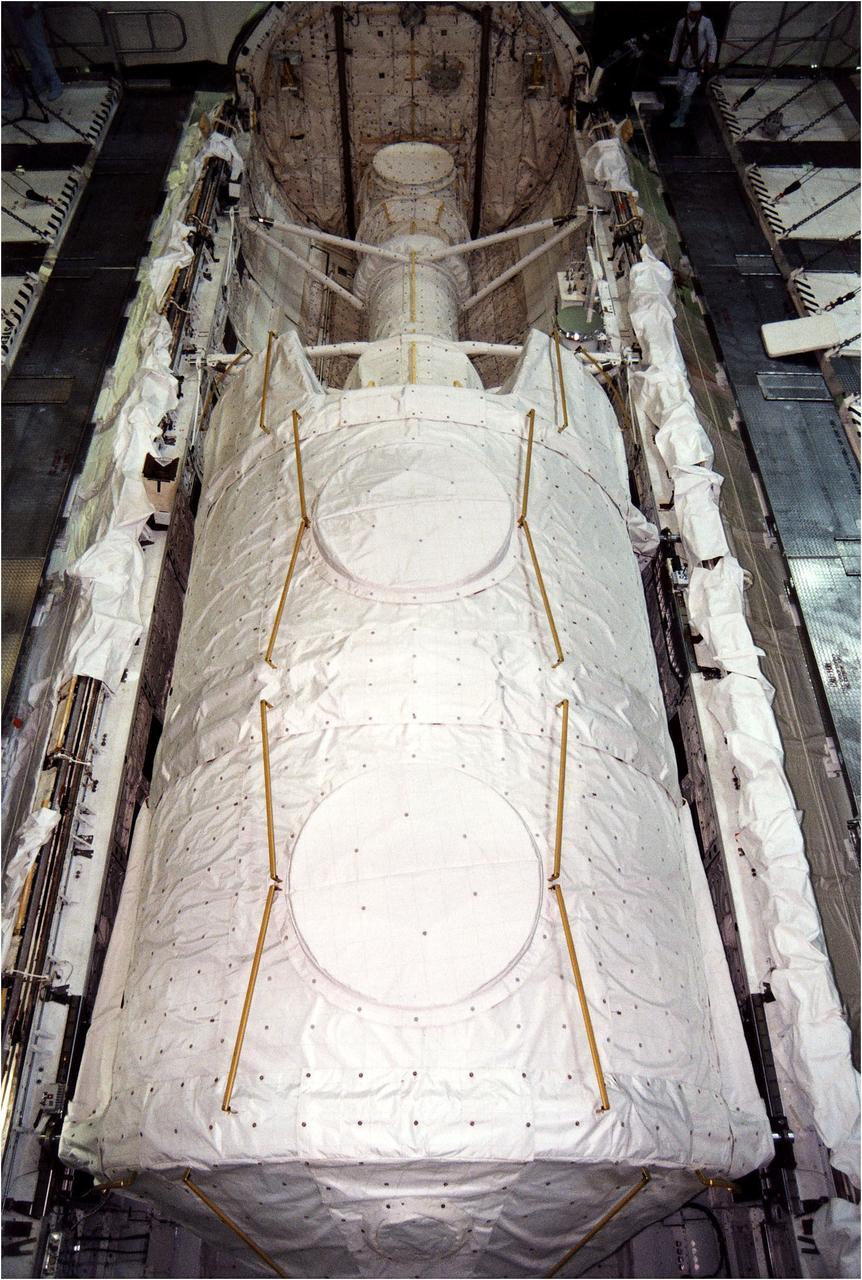
KENNEDY SPACE CENTER, FLA. - The Microgravity Science Laboratory-1 (MSL-1) Spacelab module is installed into the payload bay of the Space Shuttle Orbiter Columbia in Orbiter Processing Facility 1. The Spacelab long crew transfer tunnel that leads from the orbiter's crew airlock to the module is also aboard, as well as the Hitchhiker Cryogenic Flexible Diode (CRYOFD) experiment payload, which is attached to the right side of Columbia's payload bay. During the scheduled 16-day STS-83 mission, the MSL-1 will be used to test some of the hardware, facilities and procedures that are planned for use on the International Space Station while the flight crew conducts combustion, protein crystal growth and materials processing experiments.
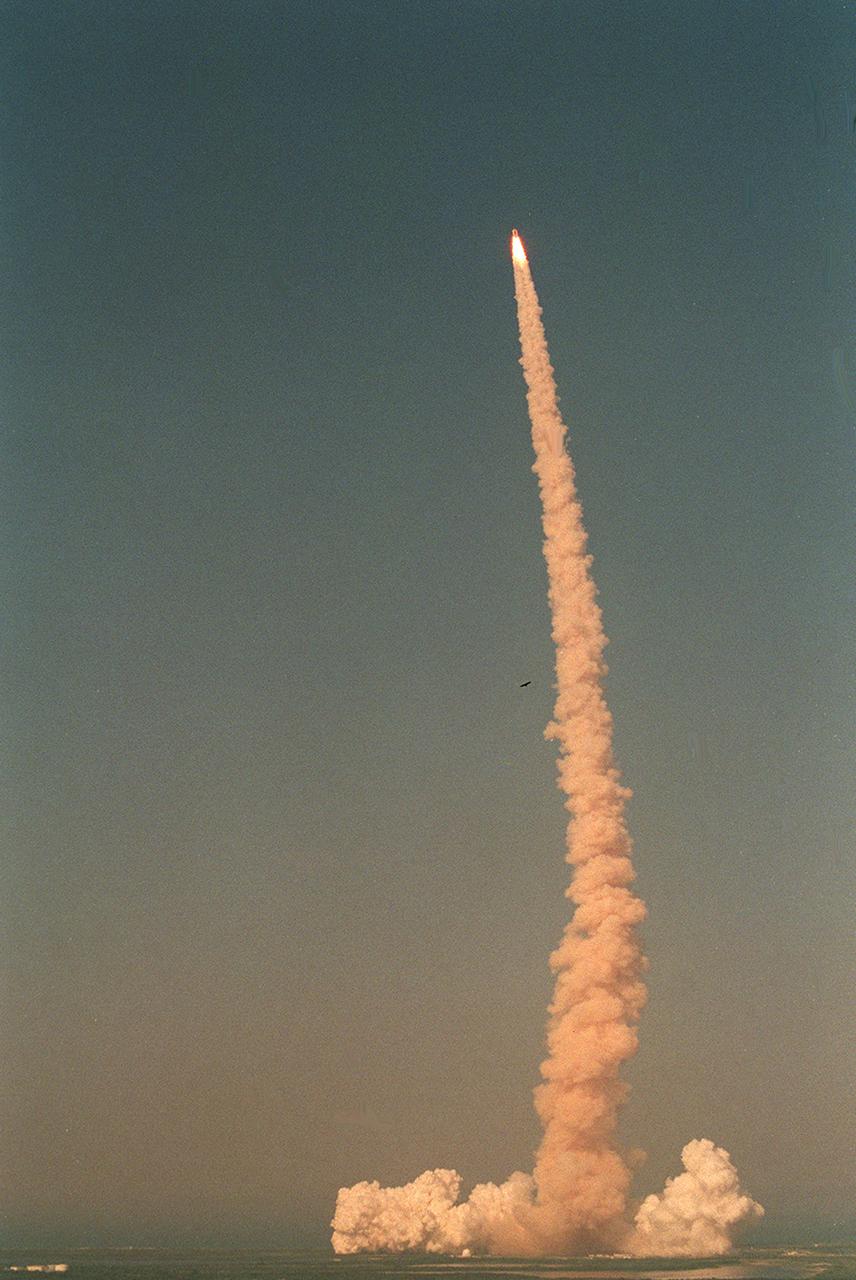
Space Shuttle Orbiter Discovery lifted off for the STS-105 mission on August 10, 2001. The main purpose of the mission was the rotation of the International Space Station (ISS) Expedition Two crew with the Expedition Three crew, and the delivery of supplies utilizing the Italian-built Multipurpose Logistics Module (MPLM) Leonardo. Another payload was the Materials International Space Station Experiment (MISSE). The MISSE experiment was to fly materials and other types of space exposure experiments on the Space Station and was the first externally mounted experiment conducted on the ISS.
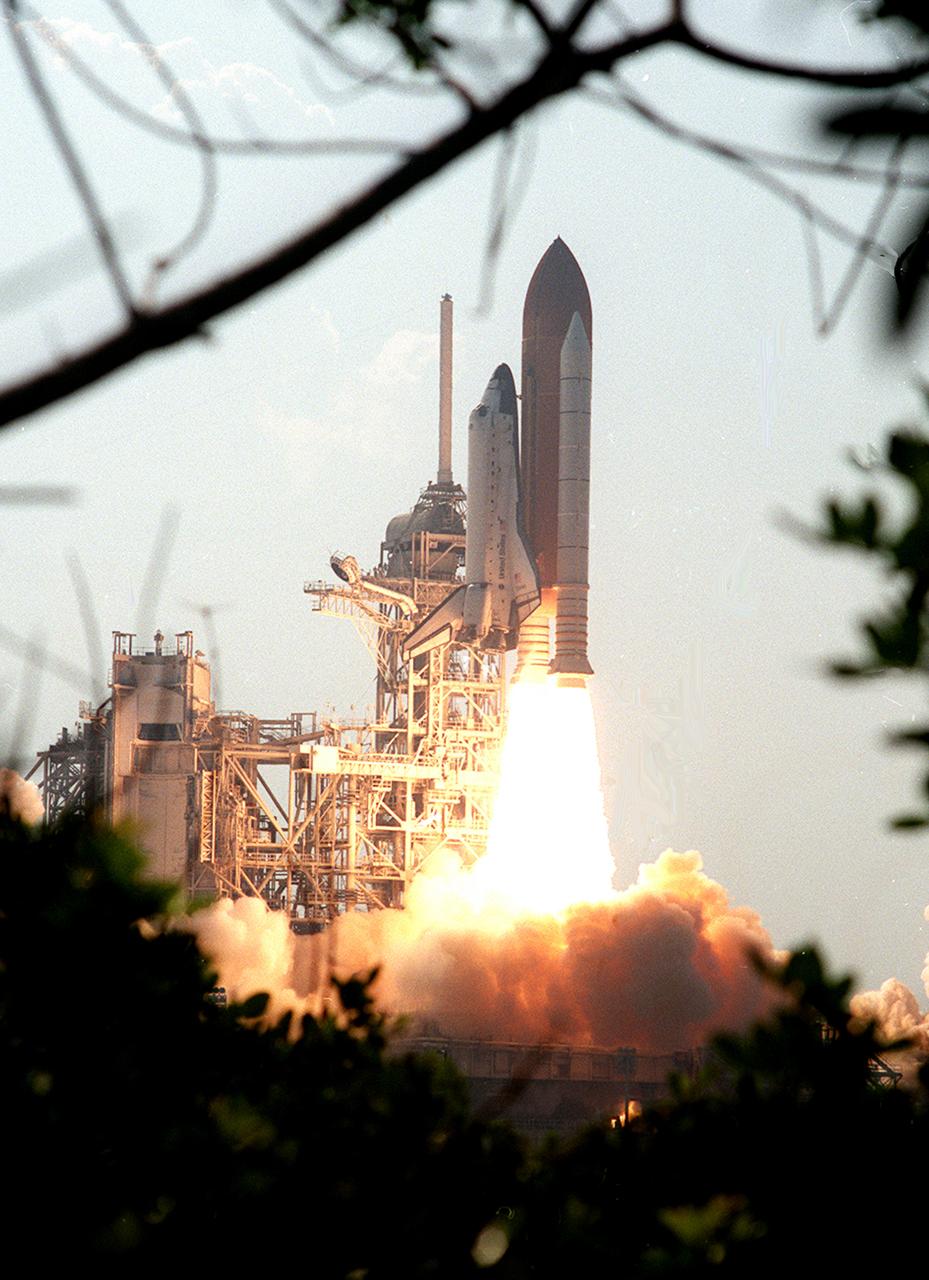
Space Shuttle Orbiter Discovery lifted off for the STS-105 mission on August 10, 2001. The main purpose of the mission was the rotation of the International Space Station (ISS) Expedition Two crew with the Expedition Three crew and the delivery of supplies utilizing the Italian-built Multipurpose Logistics Module (MPLM) Leonardo. Another payload was the Materials International Space Station Experiment (MISSE). The MISSE experiment was to fly materials and other types of space exposure experiments on the Space Station and was the first externally mounted experiment conducted on the ISS.

iss013e63407 (8/3/2006) --- View of a Materials International Space Station Experiment (MISSE) Passive Experiment Container 3 (PEC 3) mounted on the Airlock Crewlock endcone of the International Space Station (ISS). Photo taken during Expedition 13. Materials on the International Space Station Experiment 3 and 4 (MISSE - 3 and 4) are the third and fourth in a series of five suitcase-sized test beds attached to the outside of the space station. The beds were deployed during a spacewalk by the station crew in August 2006. They are exposing hundreds of potential space construction materials and different types of solar cells to the harsh environment of space. Mounted to the space station for about a year, the equipment then will be returned to Earth for study. Investigators will use the resulting data to design stronger, more durable spacecraft.
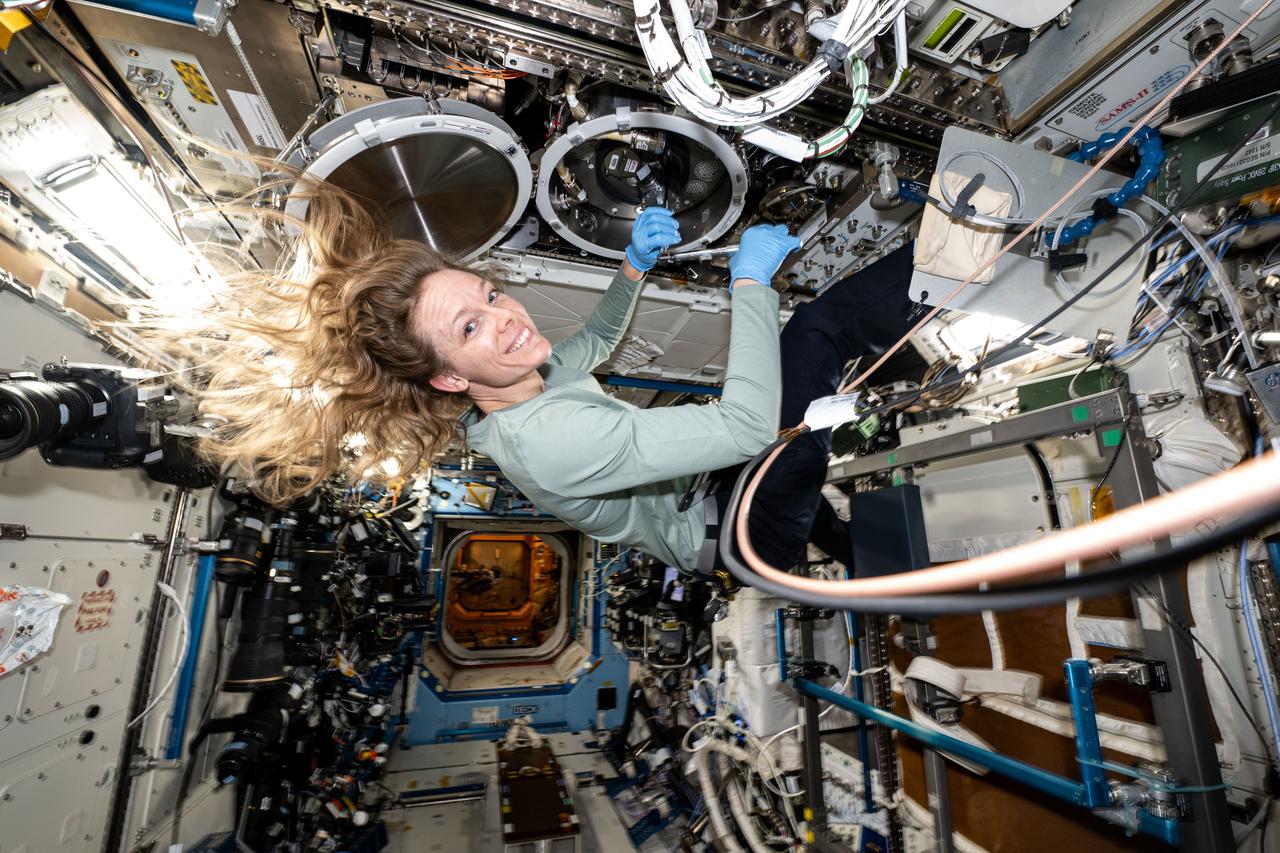
iss073e0071487 (May 15, 2025) --- NASA astronaut and Expedition 73 Flight Engineer Nichole Ayers swaps sample cartridges inside the Material Science Laboratory (MSL) that supports high temperature space physics research using furnaces aboard the International Space Station's Destiny laboratory module. The properties of many types of materials such as metals, alloys, polymers, semiconductors, ceramics, crystals, and glasses, can be studied in the MSL to discover new applications for existing materials and new or improved materials.

KENNEDY SPACE CENTER, FLA. -- In the Orbiter Processing Facility, the second of two Materials International Space Station Experiments, or MISSE, is lowered into space shuttle Endeavour's payload bay for installation. The MISSE is part of the payload onboard Endeavour for mission STS-123. The MISSE project is a NASA/Langley Research Center-managed cooperative endeavor to fly materials and other types of space exposure experiments on the International Space Station. The objective is to develop early, low-cost, non-intrusive opportunities to conduct critical space exposure tests of space materials and components planned for use on future spacecraft. Photo credit: NASA/Kim Shiflett
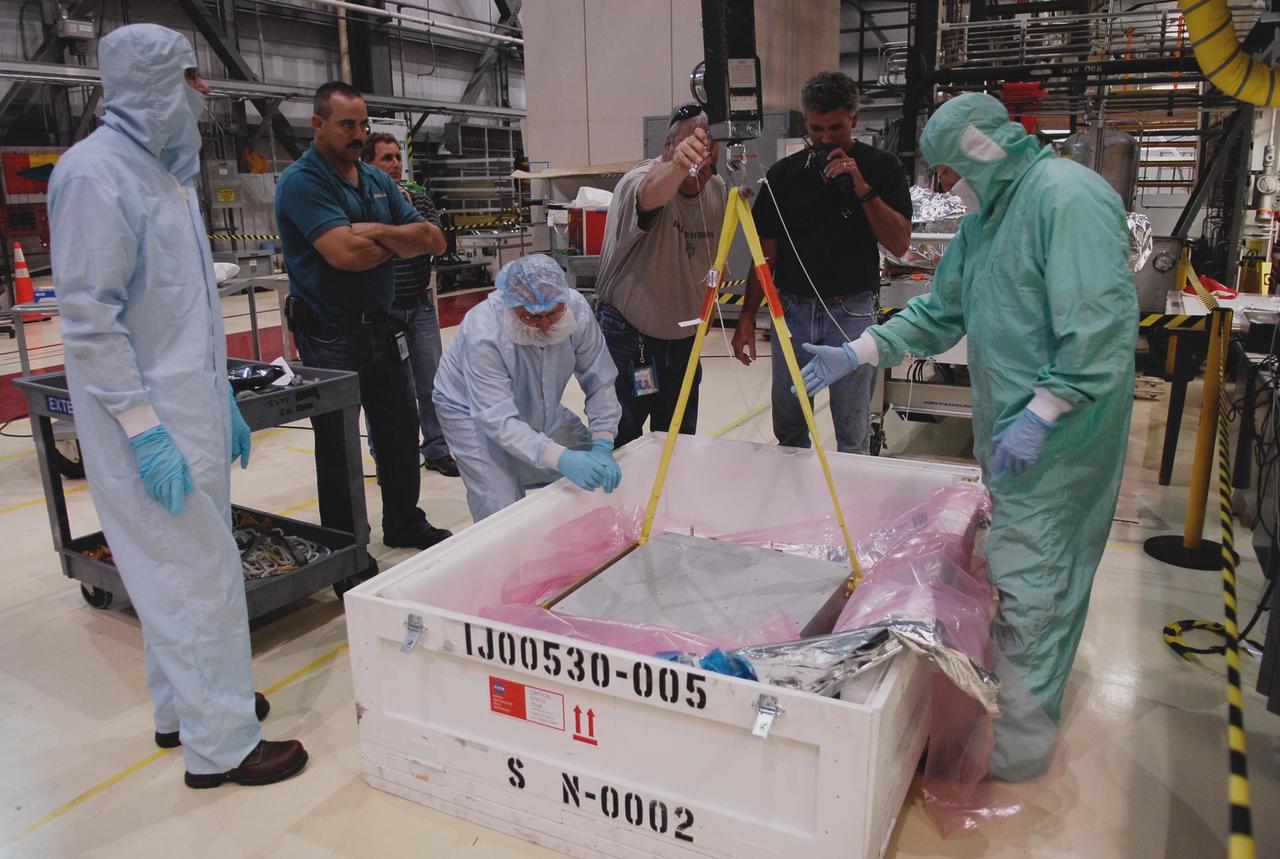
KENNEDY SPACE CENTER, FLA. -- In the Orbiter Processing Facility, technicians get ready to remove one of two Materials International Space Station Experiments, or MISSE, from a shipping container. The MISSE is part of the payload onboard space shuttle Endeavour for mission STS-123. It will be installed in Endeavour's payload bay. The MISSE project is a NASA/Langley Research Center-managed cooperative endeavor to fly materials and other types of space exposure experiments on the International Space Station. The objective is to develop early, low-cost, non-intrusive opportunities to conduct critical space exposure tests of space materials and components planned for use on future spacecraft. Photo credit: NASA/Kim Shiflett
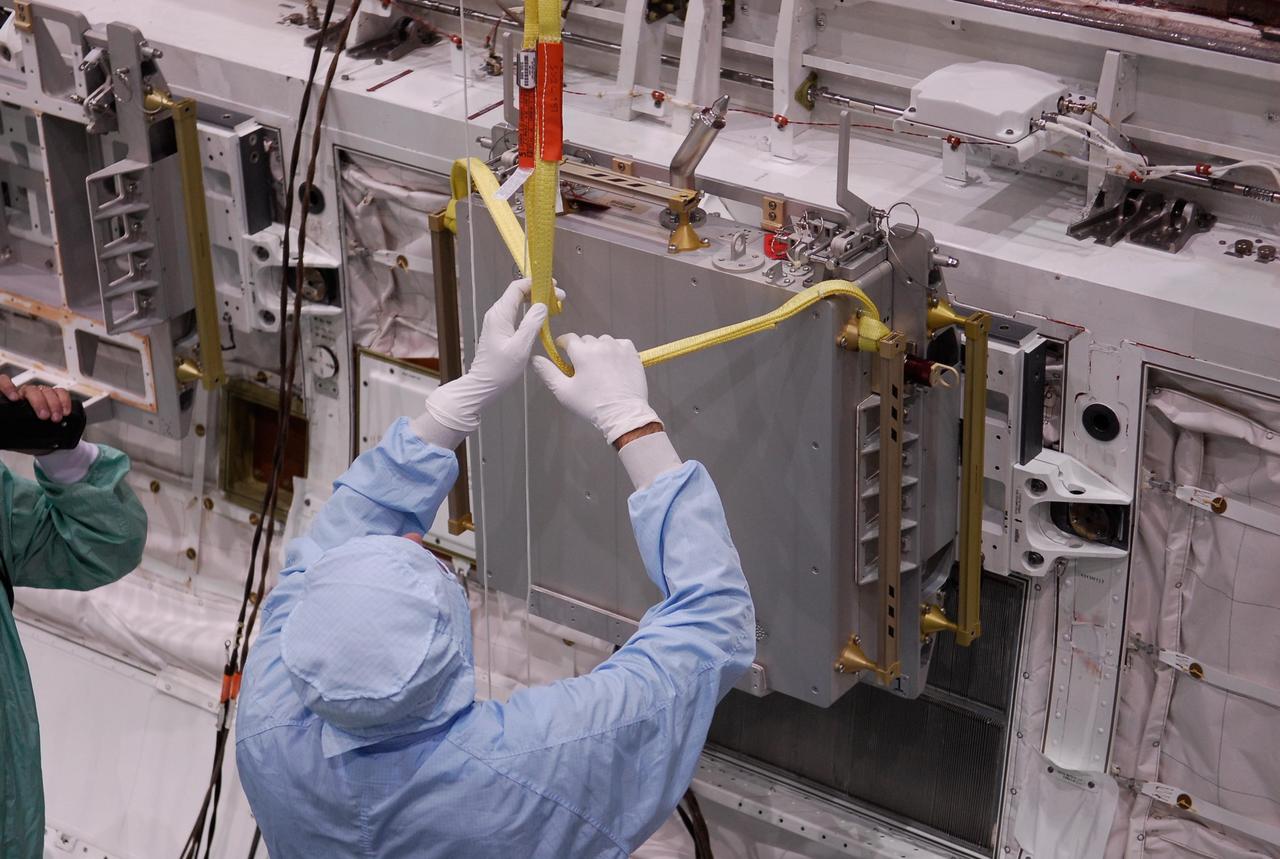
KENNEDY SPACE CENTER, FLA. -- In the Orbiter Processing Facility, one of two Materials International Space Station Experiments, or MISSE, is lowered into space shuttle Endeavour's payload bay for installation. The MISSE is part of the payload onboard Endeavour for mission STS-123. The MISSE project is a NASA/Langley Research Center-managed cooperative endeavor to fly materials and other types of space exposure experiments on the International Space Station. The objective is to develop early, low-cost, non-intrusive opportunities to conduct critical space exposure tests of space materials and components planned for use on future spacecraft. Photo credit: NASA/Kim Shiflett
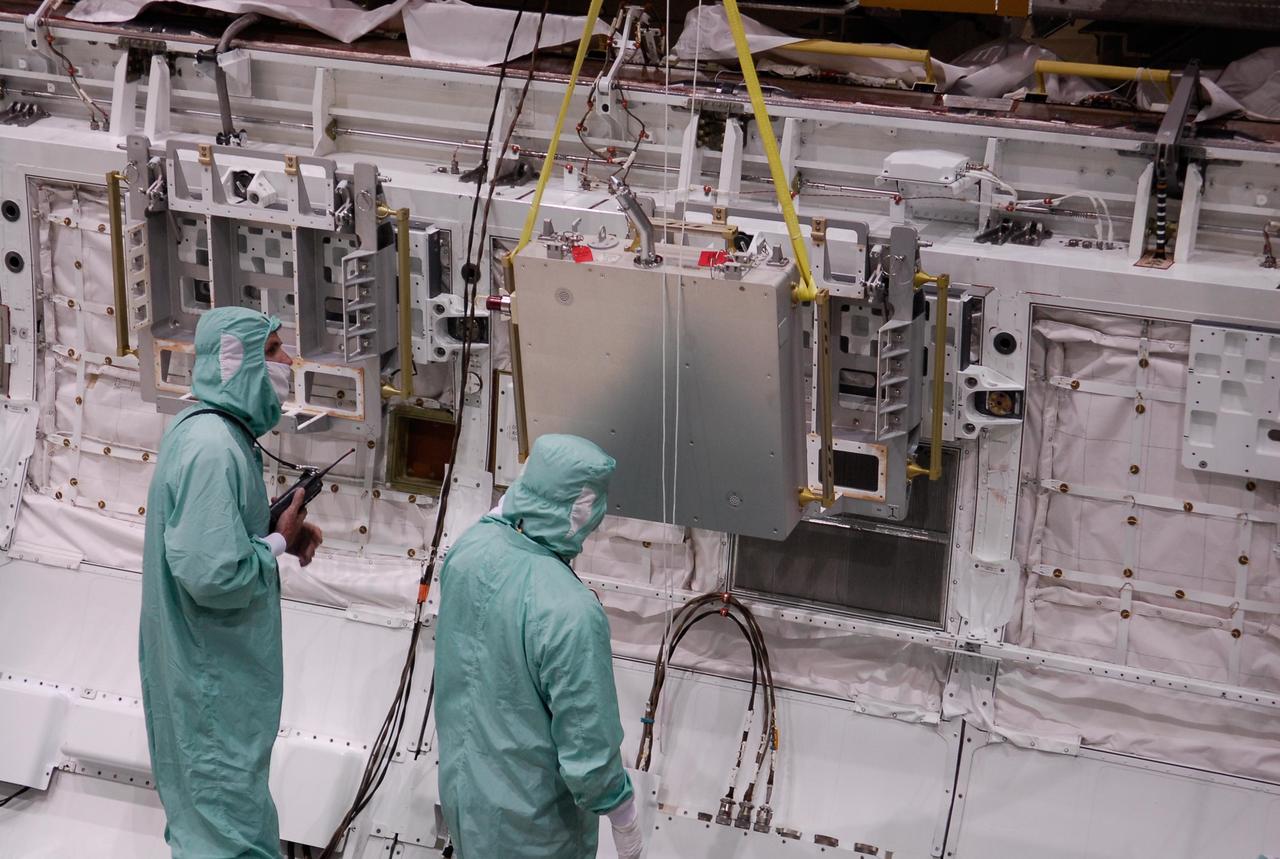
KENNEDY SPACE CENTER, FLA. -- In the Orbiter Processing Facility, one of two Materials International Space Station Experiments, or MISSE, is lowered into space shuttle Endeavour's payload bay for installation. The MISSE is part of the payload onboard Endeavour for mission STS-123. The MISSE project is a NASA/Langley Research Center-managed cooperative endeavor to fly materials and other types of space exposure experiments on the International Space Station. The objective is to develop early, low-cost, non-intrusive opportunities to conduct critical space exposure tests of space materials and components planned for use on future spacecraft. Photo credit: NASA/Kim Shiflett

KENNEDY SPACE CENTER, FLA. -- In the Orbiter Processing Facility, technicians help lift the first of the Materials International Space Station Experiments, or MISSE, from a shipping container. The MISSE is part of the payload onboard space shuttle Endeavour for mission STS-123. It will be installed in Endeavour's payload bay. The MISSE project is a NASA/Langley Research Center-managed cooperative endeavor to fly materials and other types of space exposure experiments on the International Space Station. The objective is to develop early, low-cost, non-intrusive opportunities to conduct critical space exposure tests of space materials and components planned for use on future spacecraft. Photo credit: NASA/Kim Shiflett
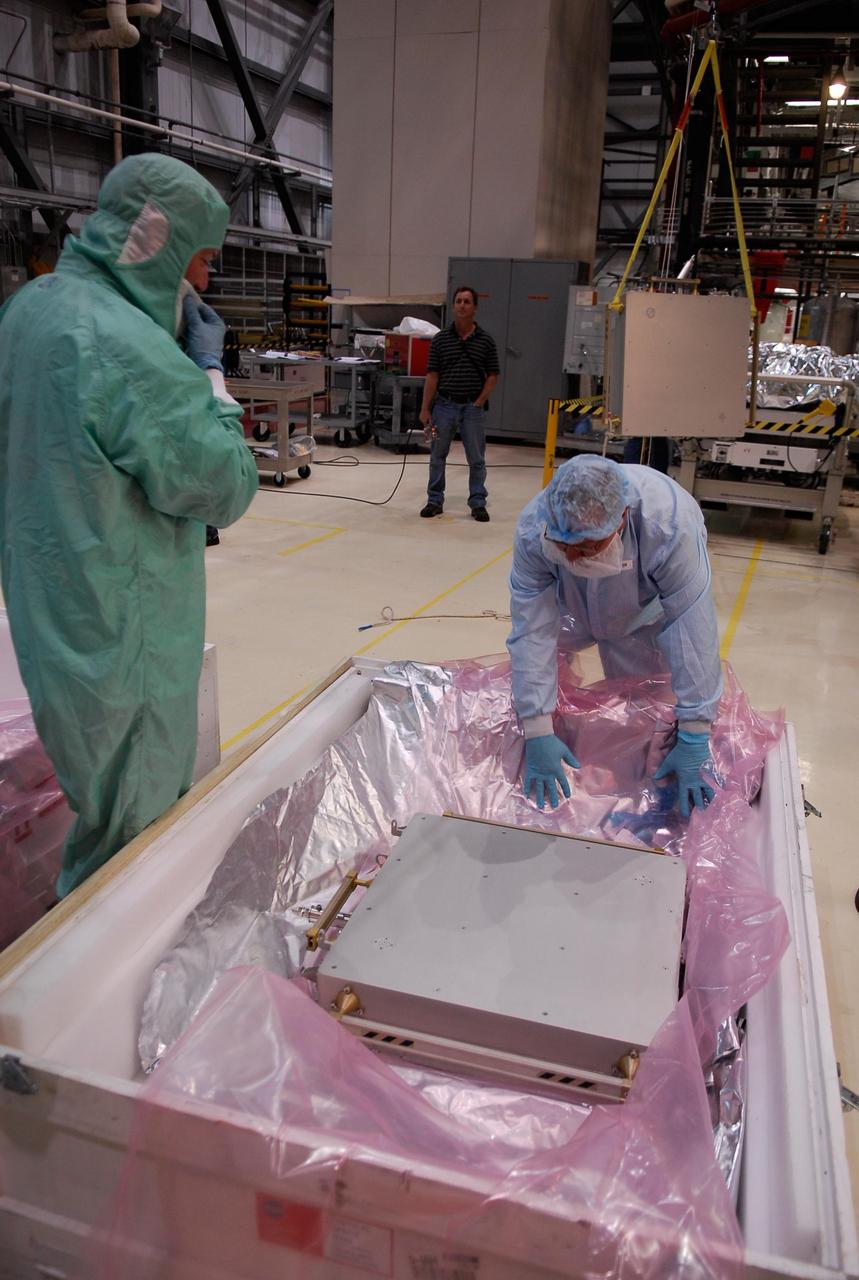
KENNEDY SPACE CENTER, FLA. -- In the Orbiter Processing Facility, technicians get ready to remove another Materials International Space Station Experiments, or MISSE, from a shipping container. The MISSE is part of the payload onboard space shuttle Endeavour for mission STS-123. It will be installed in Endeavour's payload bay. The MISSE project is a NASA/Langley Research Center-managed cooperative endeavor to fly materials and other types of space exposure experiments on the International Space Station. The objective is to develop early, low-cost, non-intrusive opportunities to conduct critical space exposure tests of space materials and components planned for use on future spacecraft. Photo credit: NASA/Kim Shiflett
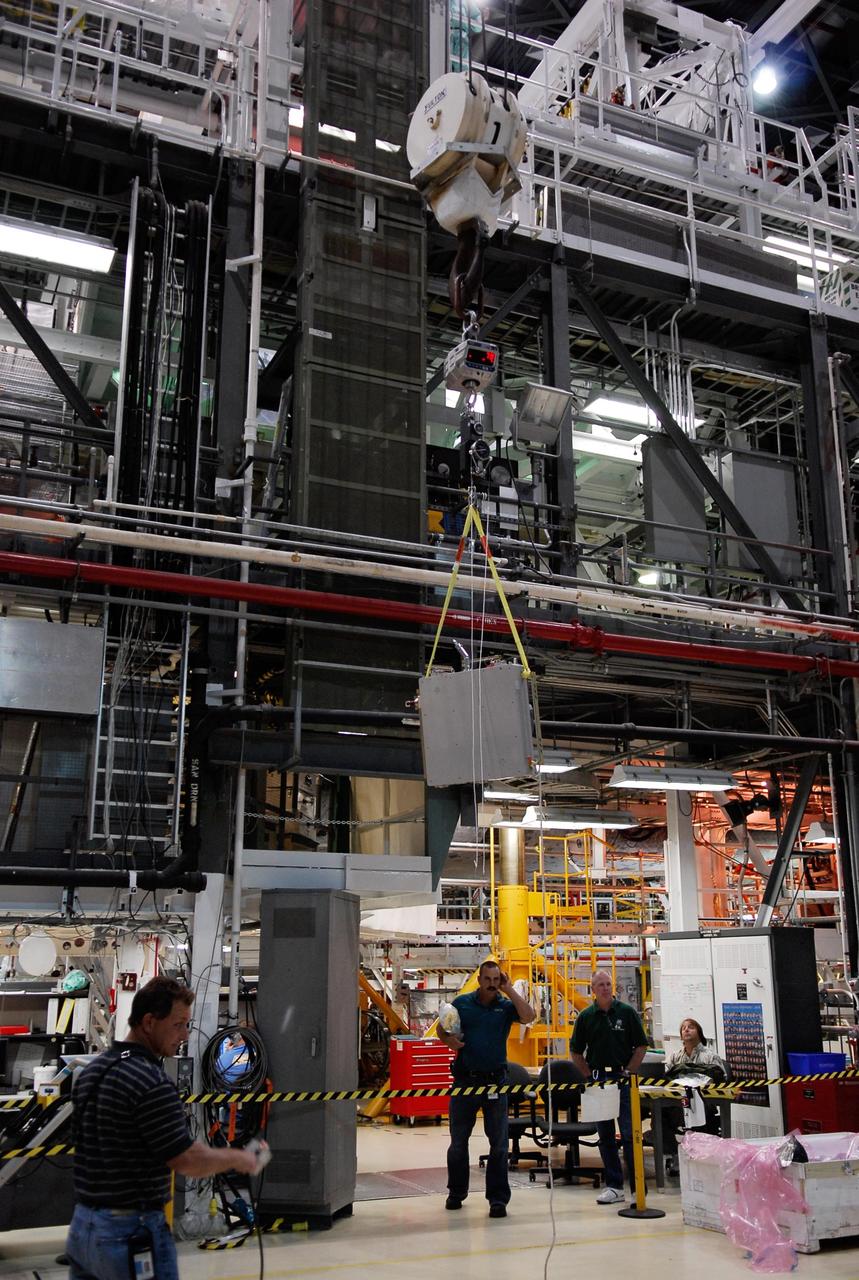
KENNEDY SPACE CENTER, FLA. -- In the Orbiter Processing Facility, one of two Materials International Space Station Experiments, or MISSE, is moved across facility toward space shuttle Endeavour. The MISSE is part of the payload onboard Endeavour for mission STS-123 and will be installed in the payload bay. The MISSE project is a NASA/Langley Research Center-managed cooperative endeavor to fly materials and other types of space exposure experiments on the International Space Station. The objective is to develop early, low-cost, non-intrusive opportunities to conduct critical space exposure tests of space materials and components planned for use on future spacecraft. Photo credit: NASA/Kim Shiflett
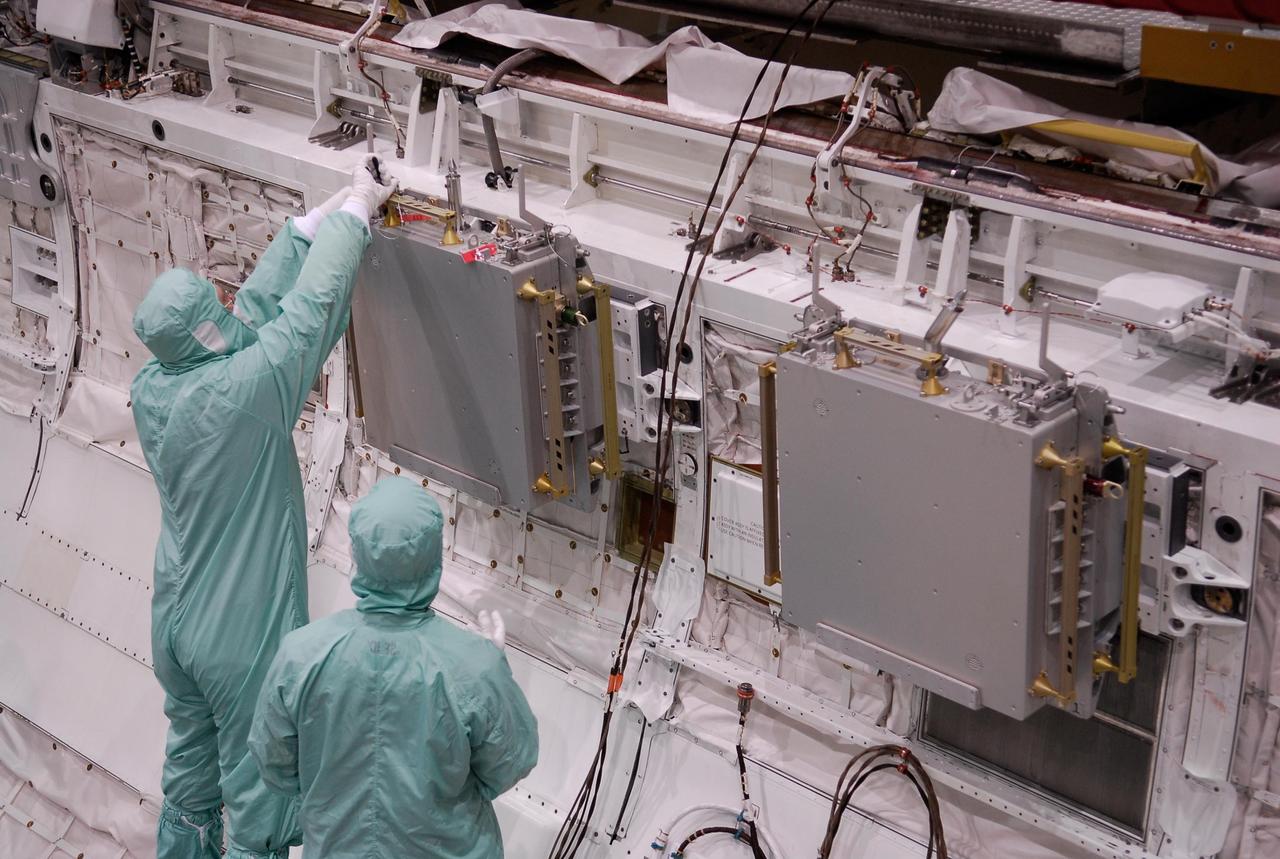
KENNEDY SPACE CENTER, FLA. -- In the Orbiter Processing Facility, technicians install the second Materials International Space Station Experiments, or MISSE, in space shuttle Endeavour's payload bay. The MISSE is part of the payload onboard Endeavour for mission STS-123. The MISSE project is a NASA/Langley Research Center-managed cooperative endeavor to fly materials and other types of space exposure experiments on the International Space Station. The objective is to develop early, low-cost, non-intrusive opportunities to conduct critical space exposure tests of space materials and components planned for use on future spacecraft. Photo credit: NASA/Kim Shiflett
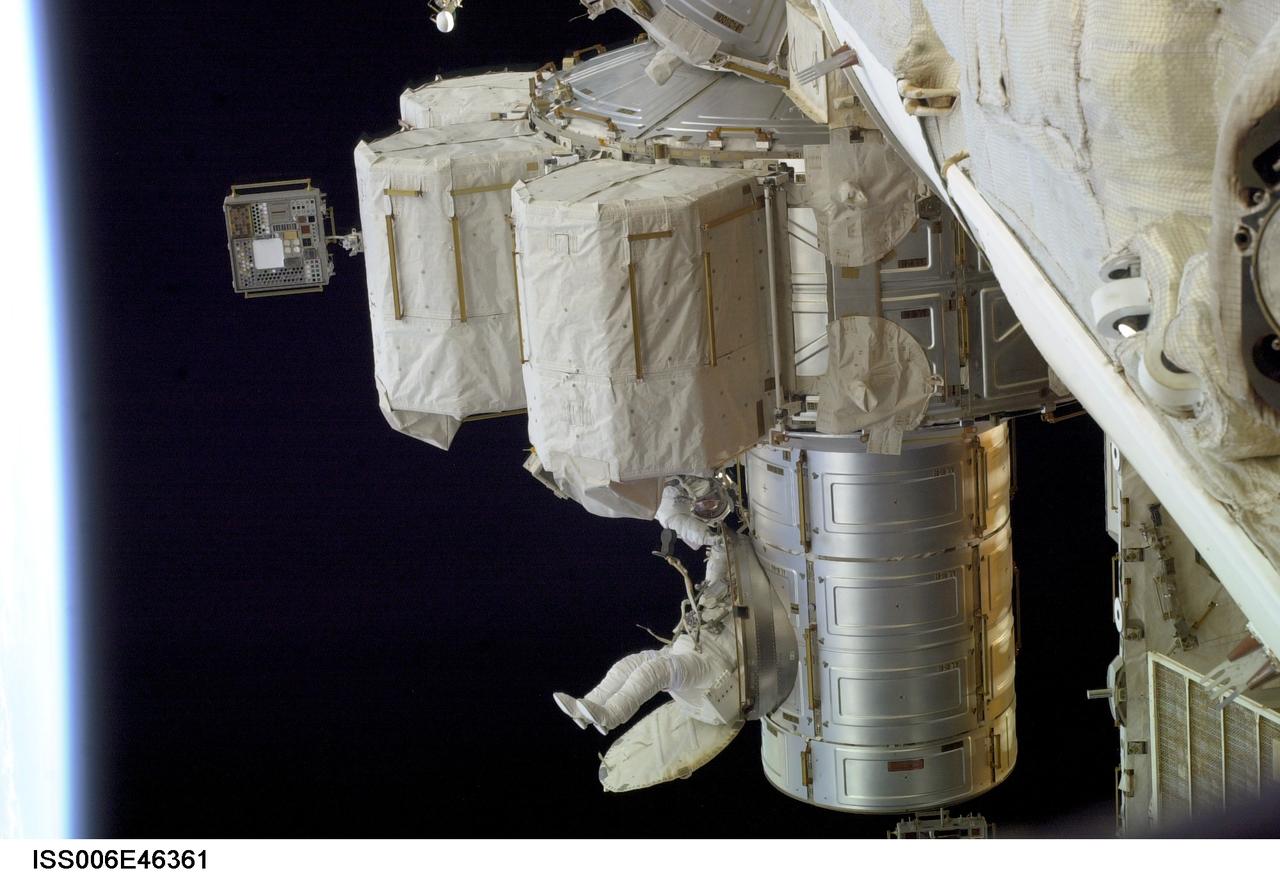
iss006e46361 (4/24/2003) --- A view of NASA astronaut Donald Pettit emerging from the Quest/Airlock (A/L) to perform a variety of maintenance tasks. Bowersox is working in the background. Also in view is Materials International Space Station Experiments (MISSE) attached to A/L. Photo was taken during Expedition Six on the International Space Station (ISS). MISSE-1 and 2 are a test bed for materials and coatings attached to the outside of the ISS is being evaluated for the effects of atomic oxygen, direct sunlight, and extremes of heat and cold. This experiment allows the development and testing of new materials to better withstand the rigors of space environments. Results will provide a better understanding of the durability of various materials when they are exposed to the space environment. Many of the materials may have applications in the design of future spacecraft.
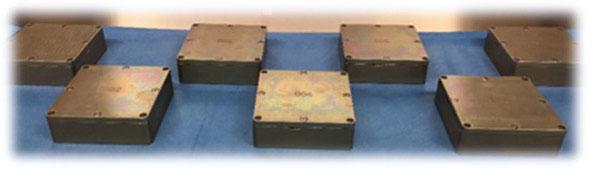
jsc2021e009430 (3/2/2021) --- Materials International Space Station Experiment-14-NASA (MISSE-14-NASA) continues a series of tests by NASA Glenn Research Center on how the harsh environment of space affects the performance and durability of various materials. MISSE-Seed sample containers ready for turnover. Image courtesy of Jeff Richards.
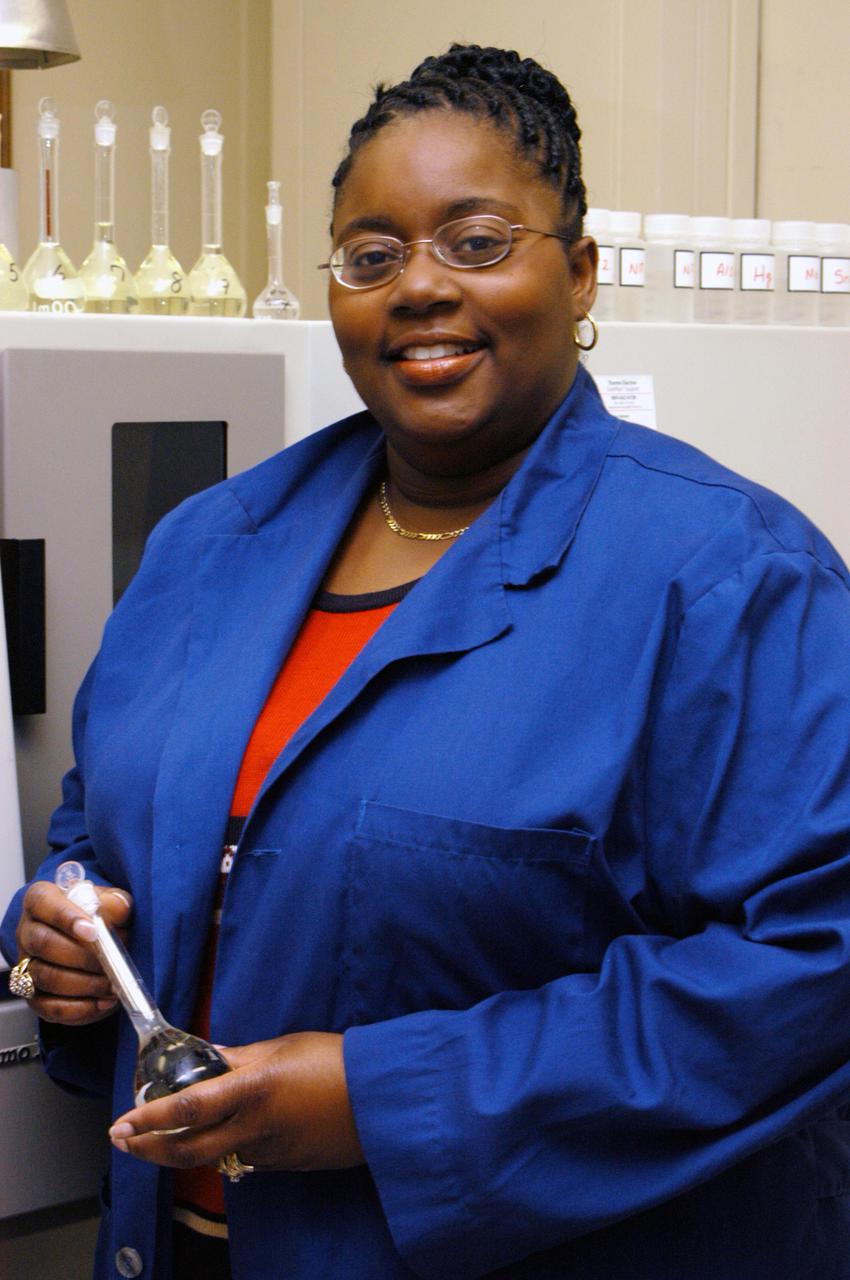
KENNEDY SPACE CENTER, FLA. - Dionne B. Jackson is a Materials Science engineer in the Spaceport Engineering and Technology Directorate. She is responsible for testing and identifying materials and chemicals that are used for the Shuttle Program, International Space Station Program and the Launch Services Program. Jackson has been a permanent NASA KSC employee since 1991.
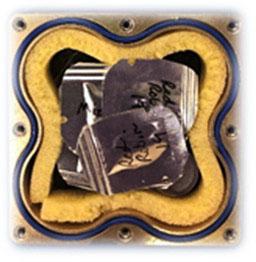
jsc2021e009429 (3/2/2021) --- Materials International Space Station Experiment-14-NASA (MISSE-14-NASA) continues a series of tests by NASA Glenn Research Center on how the harsh environment of space affects the performance and durability of various materials. Seed packets in the Equipment (EUE) container. Image courtesy of Jeff Richards.
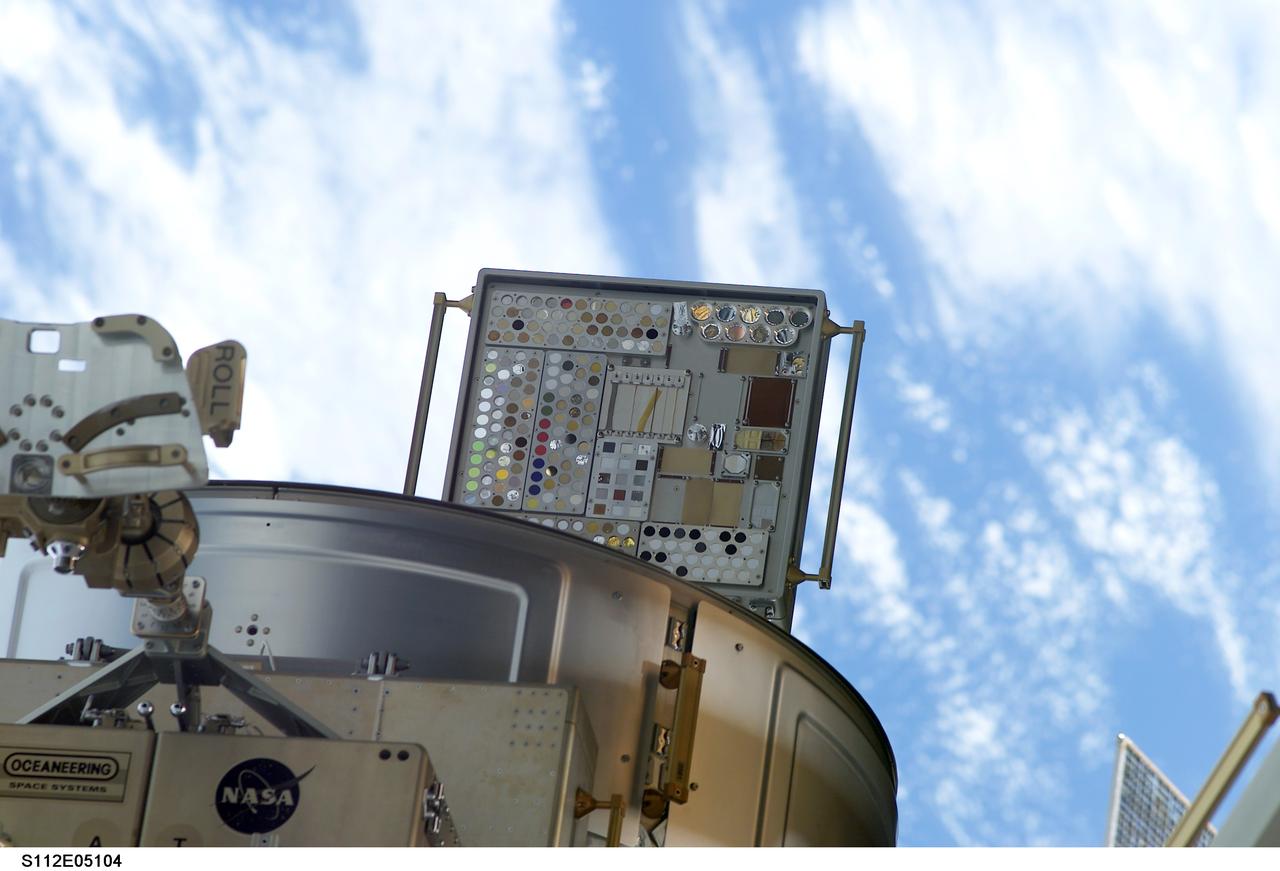
STS112-E-05104 (10 October 2002) --- Backdropped by a blue and white Earth, the Materials International Space Station Experiment (MISSE) and a portion of the Quest Airlock are visible. MISSE collects information on how different materials weather in the environment of space.

iss072e188539 (Nov. 15, 2024) --- NASA astronaut and Expedition 72 Flight Engineer Don Pettit unpacks and gathers research hardware to be placed outside the International Space Station's Kibo laboratory module. The scientific gear known as MISSE, or Materials International Space Station Experiment, places a variety of materials in the vacuum of space exposing them to the extreme thermal environment, different types of radiation, micrometeoroids, and more to promote the space industry.
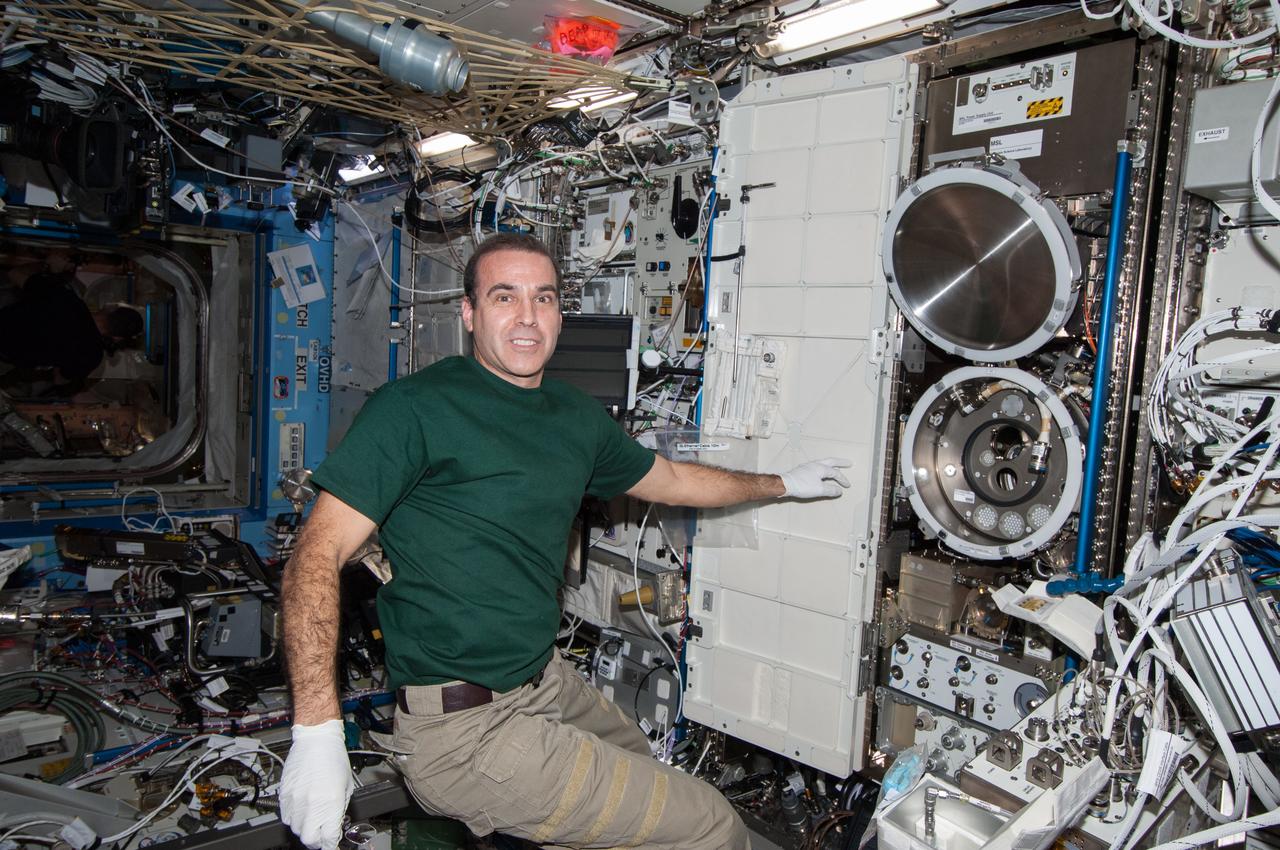
ss038e008298 (11/26/2013) --- A view of NASA astronaut Rick Mastracchio, during the Material Science Laboratory (MSL) Solidification and Quench Furnace (SQF) Sample Cartridge Exchange aboard the International Space Station (ISS). The Materials Science Laboratory (MSL) is used for basic materials research in the microgravity environment of the ISS. The MSL can accommodate and support diverse Experiment Modules. In this way many material types, such as metals, alloys, polymers, semiconductors, ceramics, crystals, and glasses, can be studied to discover new applications for existing materials and new or improved materials.
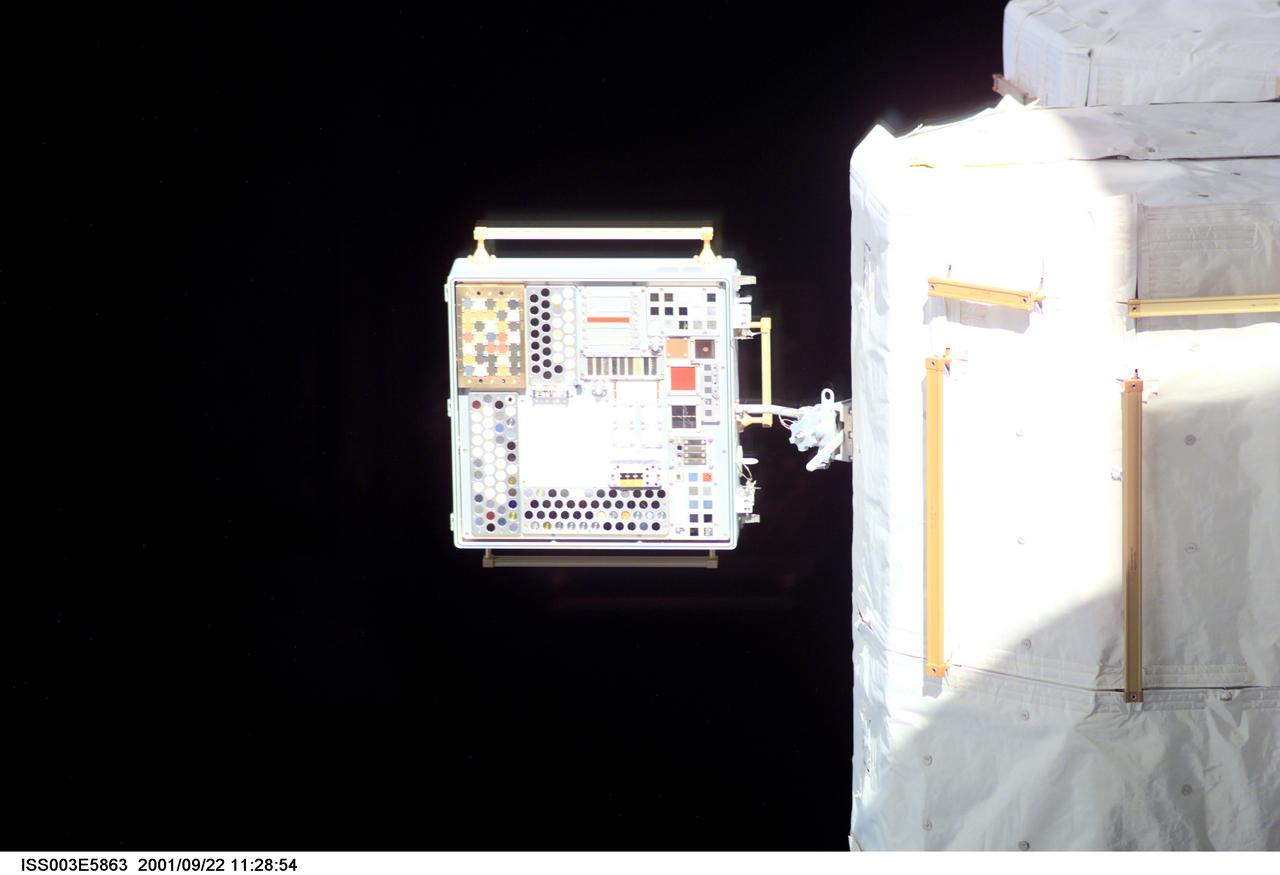
iss003e5863 (9/22/2001) --- A view of the Materials International Space Station Experiment (MISSE) on the Quest / Airlock taken during Expedition 3. MISSE-1 and 2 are a test bed for materials and coatings attached to the outside of the ISS is being evaluated for the effects of atomic oxygen, direct sunlight, and extremes of heat and cold. This experiment allows the development and testing of new materials to better withstand the rigors of space environments. Results will provide a better understanding of the durability of various materials when they are exposed to the space environment. Many of the materials may have applications in the design of future spacecraft.
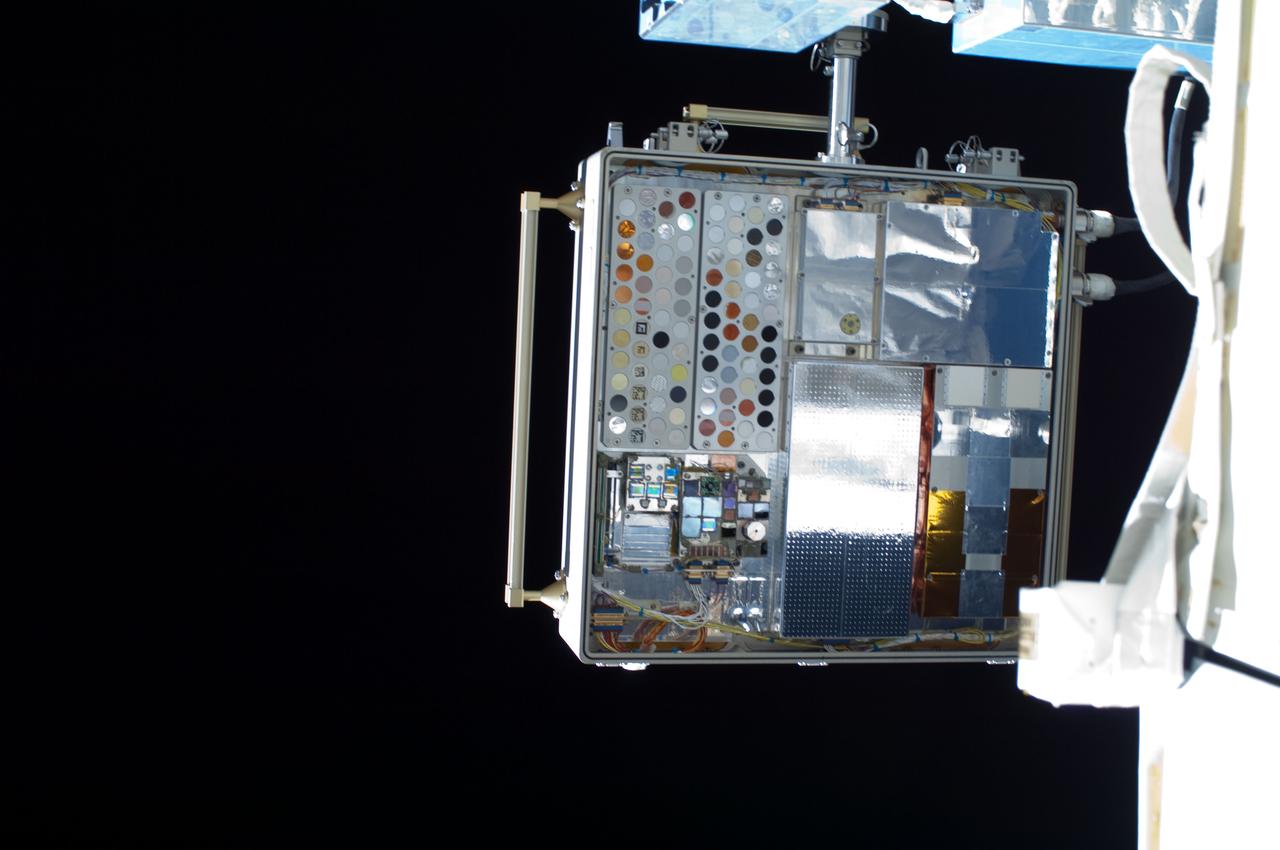
ISS028-E-016107 (12 July 2011) --- This medium close-up image, recorded during a July 12 spacewalk, shows the Materials on International Space Station Experiment - 8 (MISSE-8). The experiment package is a test bed for materials and computing elements attached to the outside of the orbiting complex. These materials and computing elements are being evaluated for the effects of atomic oxygen, ultraviolet, direct sunlight, radiation, and extremes of heat and cold. This experiment allows the development and testing of new materials and computing elements that can better withstand the rigors of space environments. Results will provide a better understanding of the durability of various materials and computing elements when they are exposed to the space environment, with applications in the design of future spacecraft.
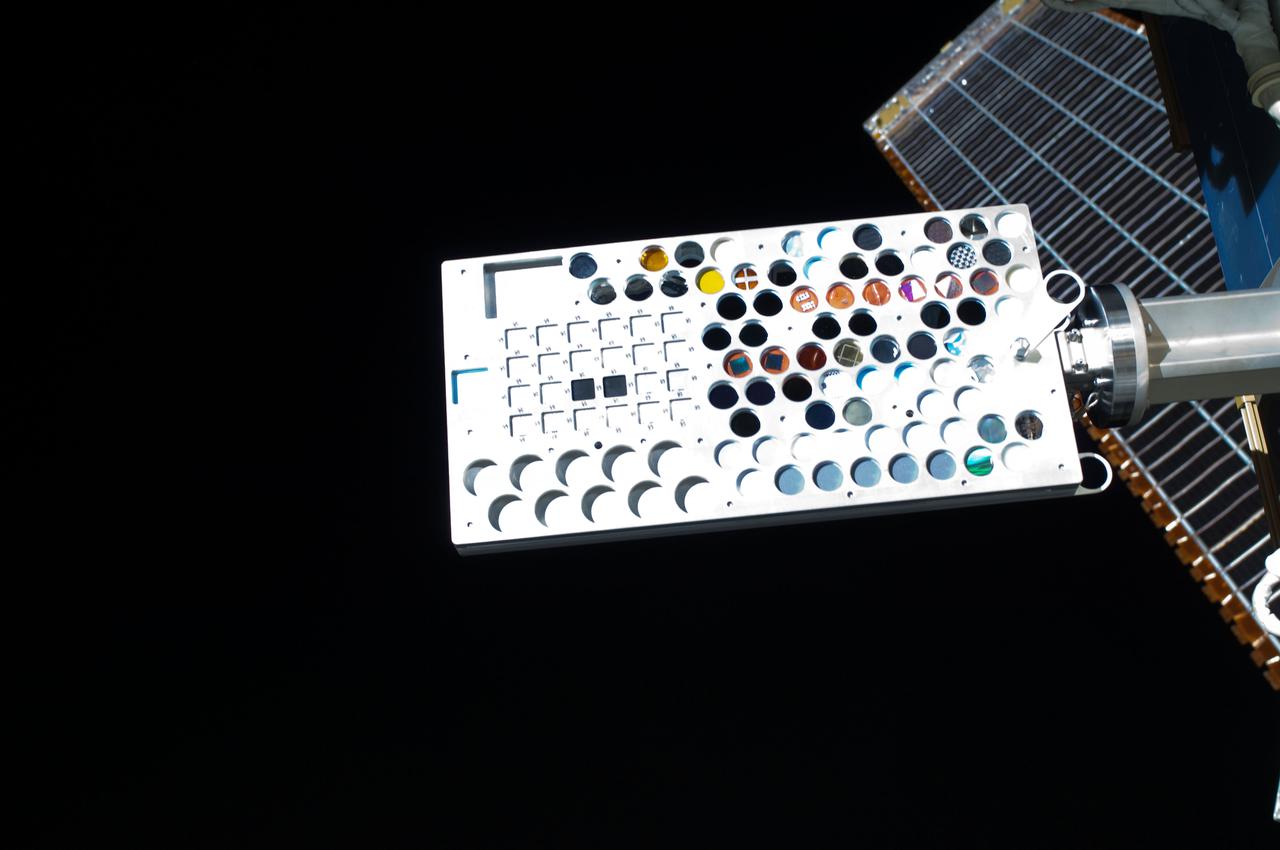
ISS028-E-016111 (12 July 2011) --- This close-up image, recorded during a July 12 spacewalk, shows the Materials on International Space Station Experiment - 8 (MISSE-8). The experiment package is a test bed for materials and computing elements attached to the outside of the orbiting complex. These materials and computing elements are being evaluated for the effects of atomic oxygen, ultraviolet, direct sunlight, radiation, and extremes of heat and cold. This experiment allows the development and testing of new materials and computing elements that can better withstand the rigors of space environments. Results will provide a better understanding of the durability of various materials and computing elements when they are exposed to the space environment, with applications in the design of future spacecraft.
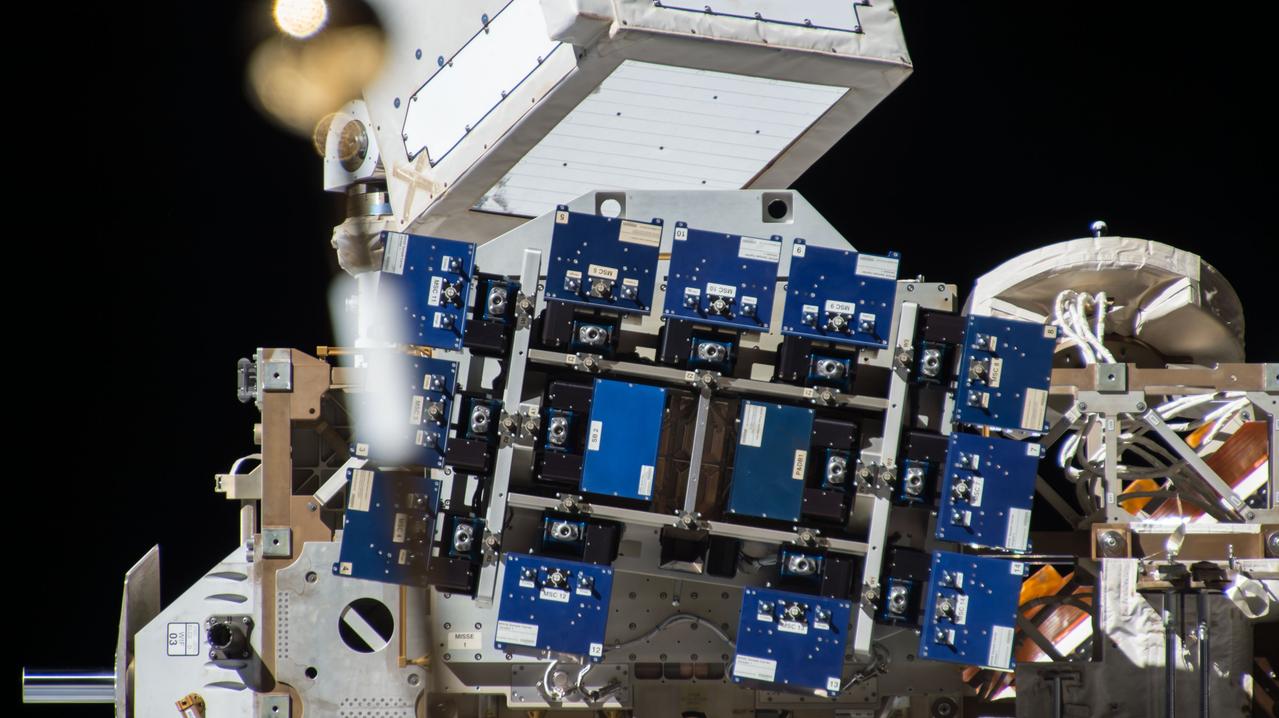
iss058e003972 (1/26/2019) --- Photo documentation of the Materials ISS Experiment Flight Facility (MISSE-FF) platform aboard the International Space Station (ISS).
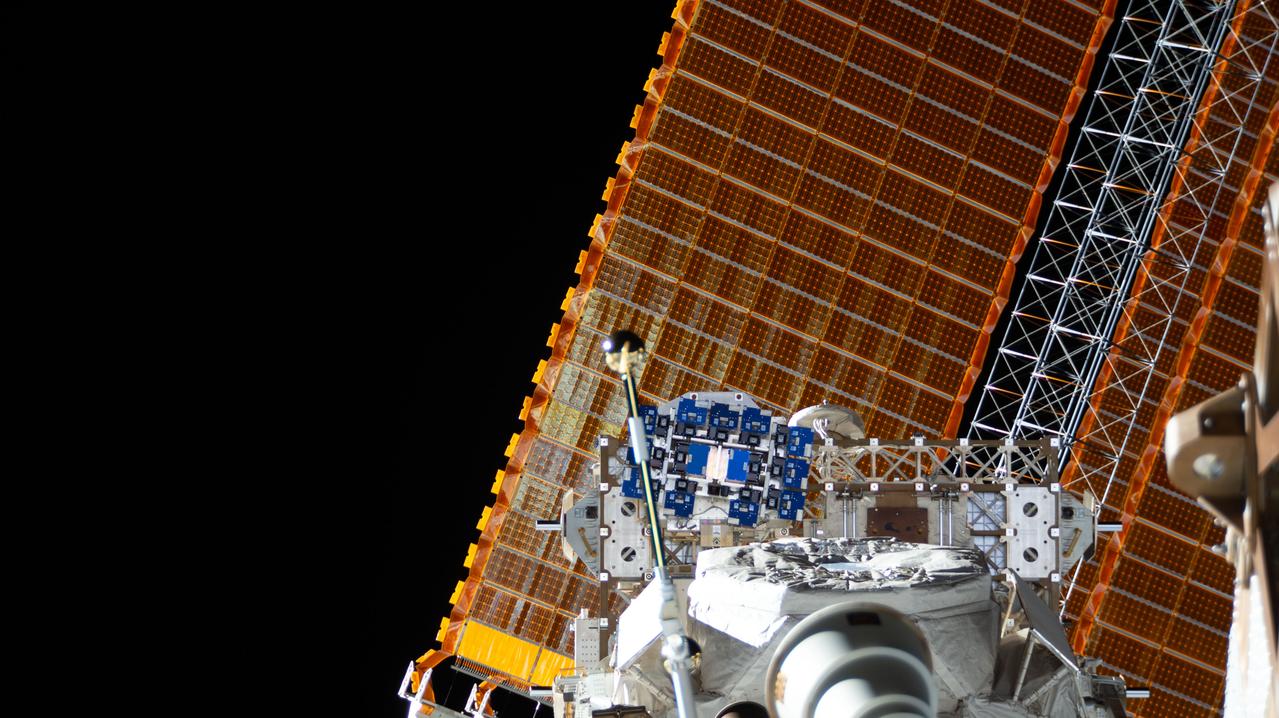
iss059e036747 (4/26/2019) --- --- Photo documentation of the Materials ISS Experiment Flight Facility (MISSE-FF) platform aboard the International Space Station (ISS).
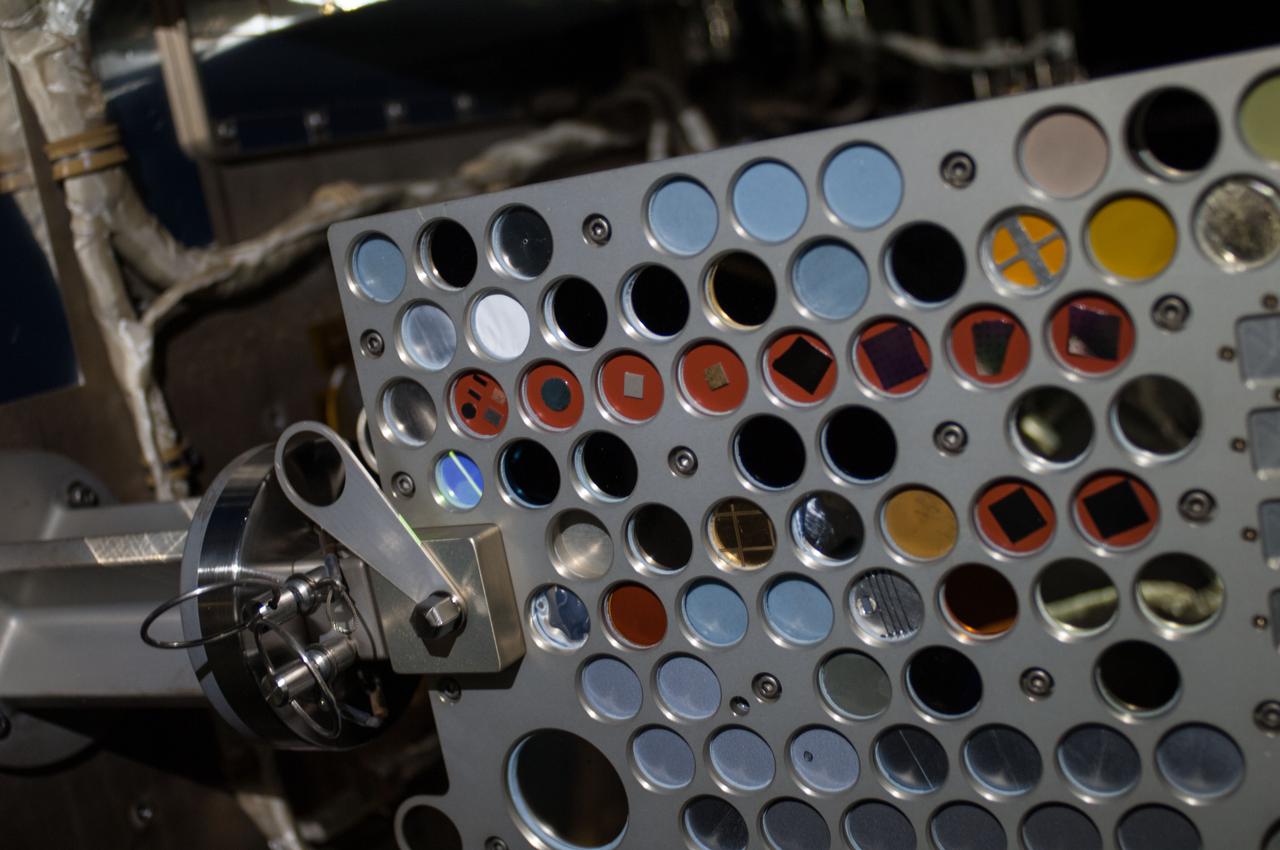
iss036e016736 (7/9/2013) --- Close-up view of the Optical Reflector Materials Experiment III Ram/Wake (ORMatE-III R/W) which is part of the Materials on International Space Station Experiment - 8 (MISSE-8) installed on the starboard truss. View was taken during a session of extravehicular activity (EVA) 22 as work continues on the International Space Station.
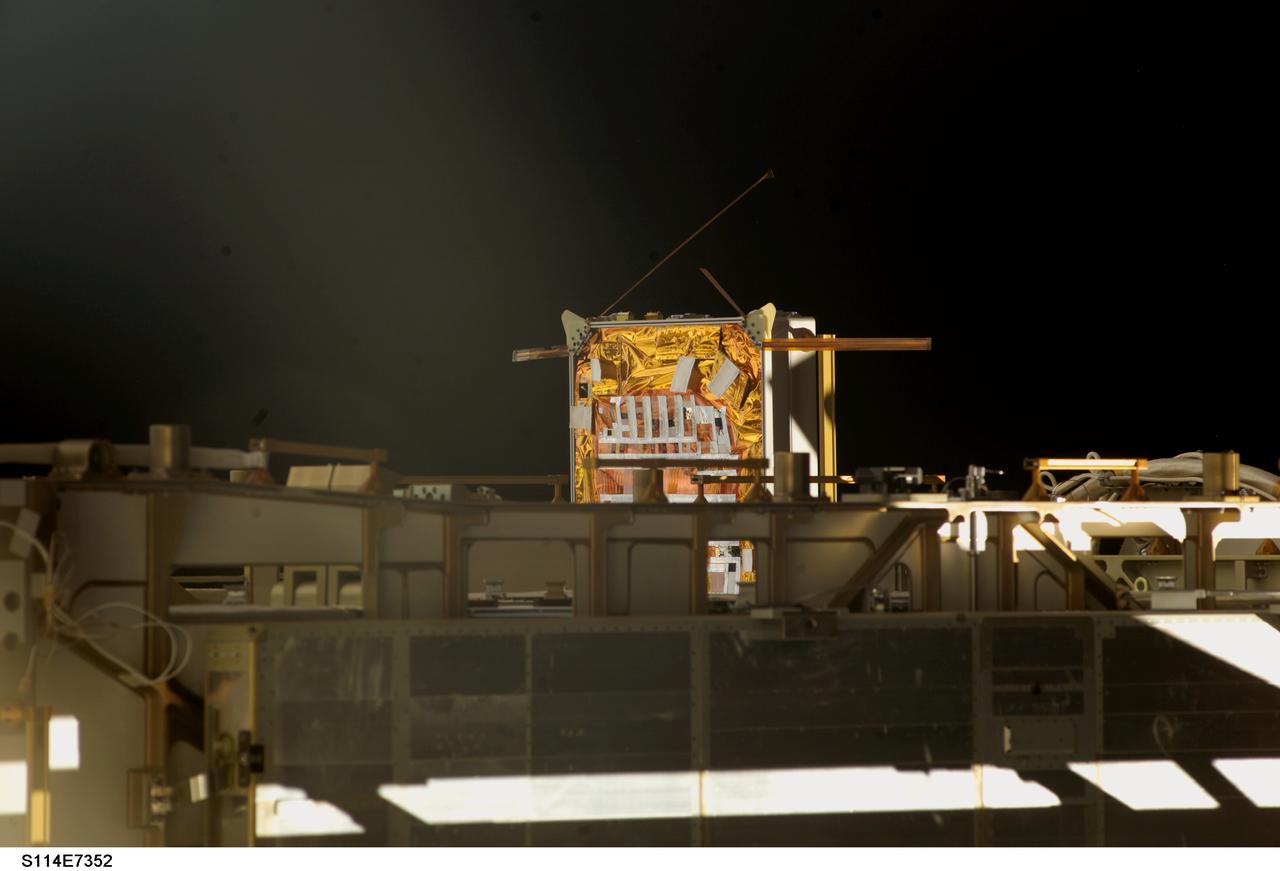
s114e7352 (8/6/2005) --- A view of the Materials International Space Station Experiment (MISSE) 5 Passive Experiment Containter (PEC) mounted on the P6 Truss during one of the STS-114 missions Extravehicular Activities (EVAs). The Materials International Space Station Experiment-5 (MISSE-5) was an external payload that flew on-board the ISS from August 2005 until September 2006. MISSE-5 provided an opportunity for researchers to test a wide range of samples in the Low Earth Orbit (LEO) environment.
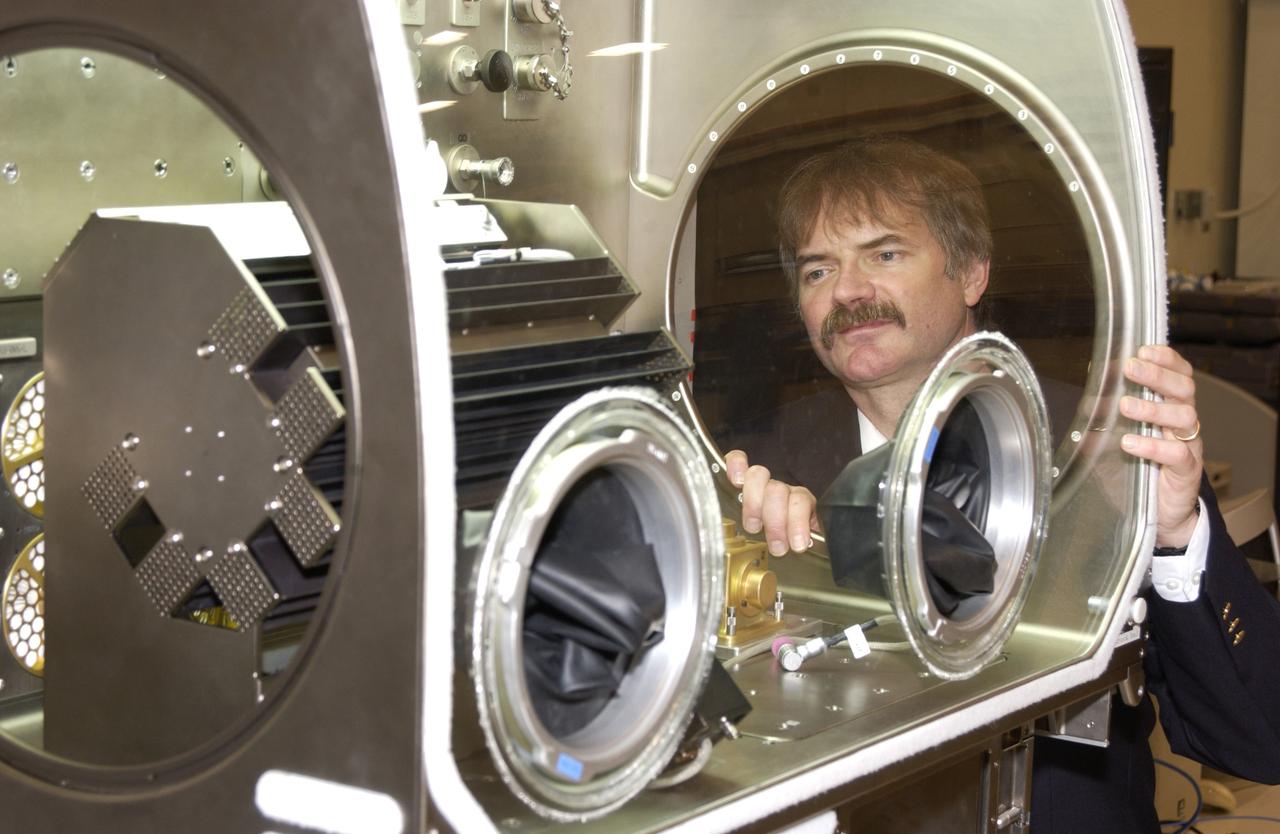
Dr. Richard Grugel, a materials scientist at NASA's Marshall Space Flight in Huntsville, Ala., examines the furnace used to conduct his Pore Formation and Mobility Investigation -- one of the first two materials science experiments to be conducted on the International Space Station. This experiment studies materials processes similar to those used to make components used in jet engines. Grugel's furnace was installed in the Microgravity Science Glovebox through the circular port on the side. In space, crewmembers are able to change out samples using the gloves on the front of the facility's work area.
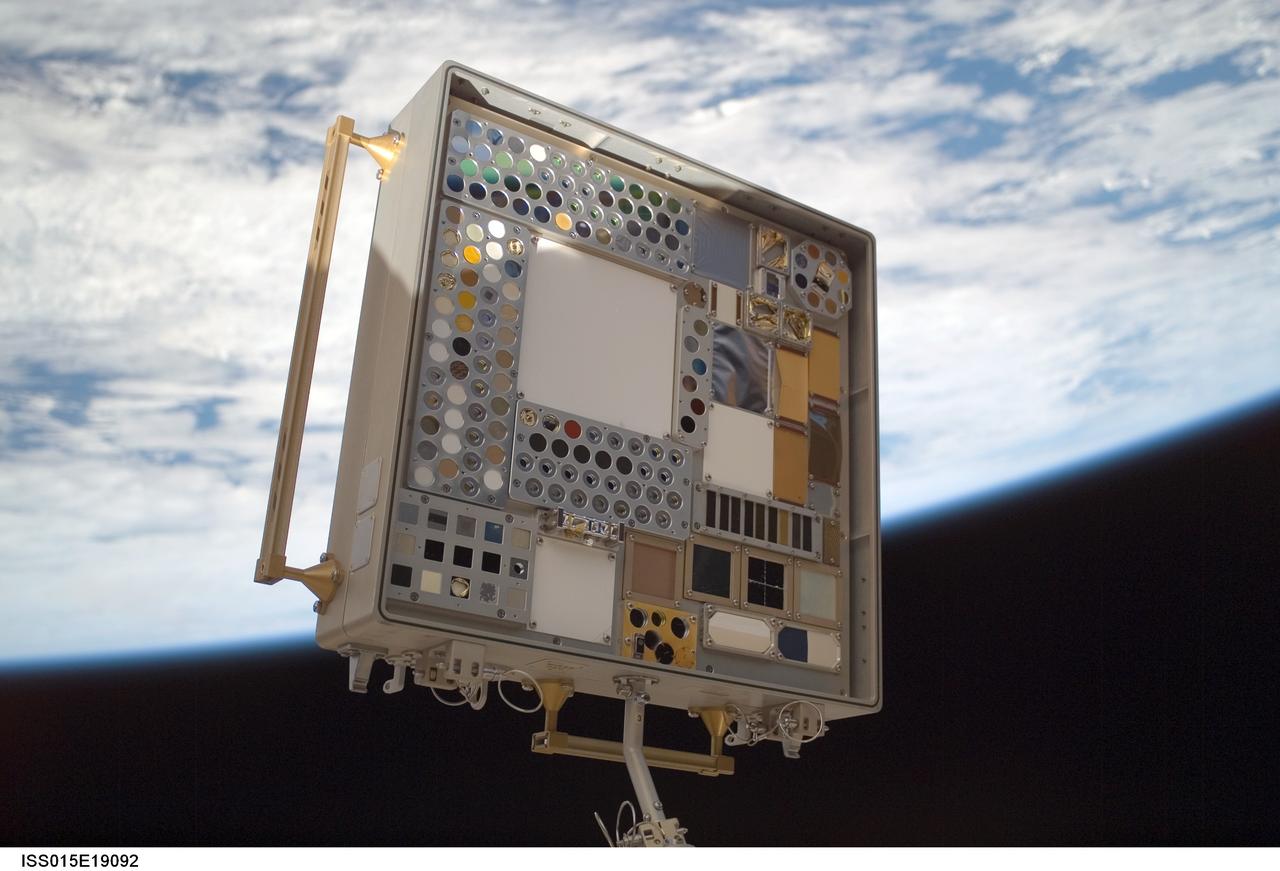
iss015e19092 (7/23/2007) --- View of Materials International Space Station Experiment (MISSE) Passive Experiment Container (PEC) mounted to the exterior of the Quest/Airlock (A/L). Photo taken during a session of Extravehicular Activity (EVA) on Expedition 15. Materials on the International Space Station Experiment 3 and 4 (MISSE - 3 and 4) are the third and fourth in a series of five suitcase-sized test beds attached to the outside of the space station. The beds were deployed during a spacewalk by the station crew in August 2006. They are exposing hundreds of potential space construction materials and different types of solar cells to the harsh environment of space. Mounted to the space station for about a year, the equipment then will be returned to Earth for study. Investigators will use the resulting data to design stronger, more durable spacecraft.
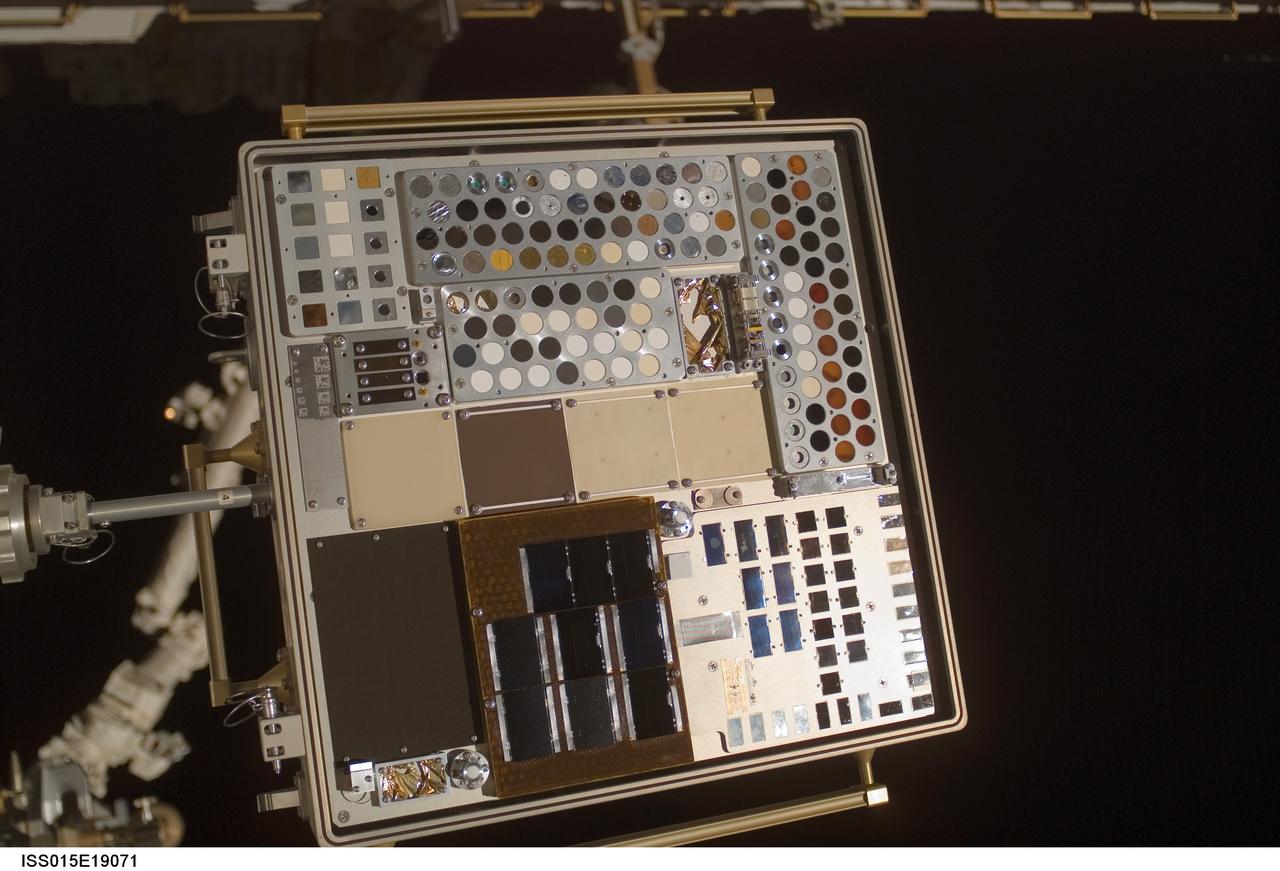
iss015e19071 (7/23/2007) --- View of Materials International Space Station Experiment (MISSE) Passive Experiment Container (PEC) mounted to the exterior of the Quest/Airlock (A/L). Photo taken during a session of Extravehicular Activity (EVA) on Expedition 15. Materials on the International Space Station Experiment 3 and 4 (MISSE - 3 and 4) are the third and fourth in a series of five suitcase-sized test beds attached to the outside of the space station. The beds were deployed during a spacewalk by the station crew in August 2006. They are exposing hundreds of potential space construction materials and different types of solar cells to the harsh environment of space. Mounted to the space station for about a year, the equipment then will be returned to Earth for study. Investigators will use the resulting data to design stronger, more durable spacecraft.
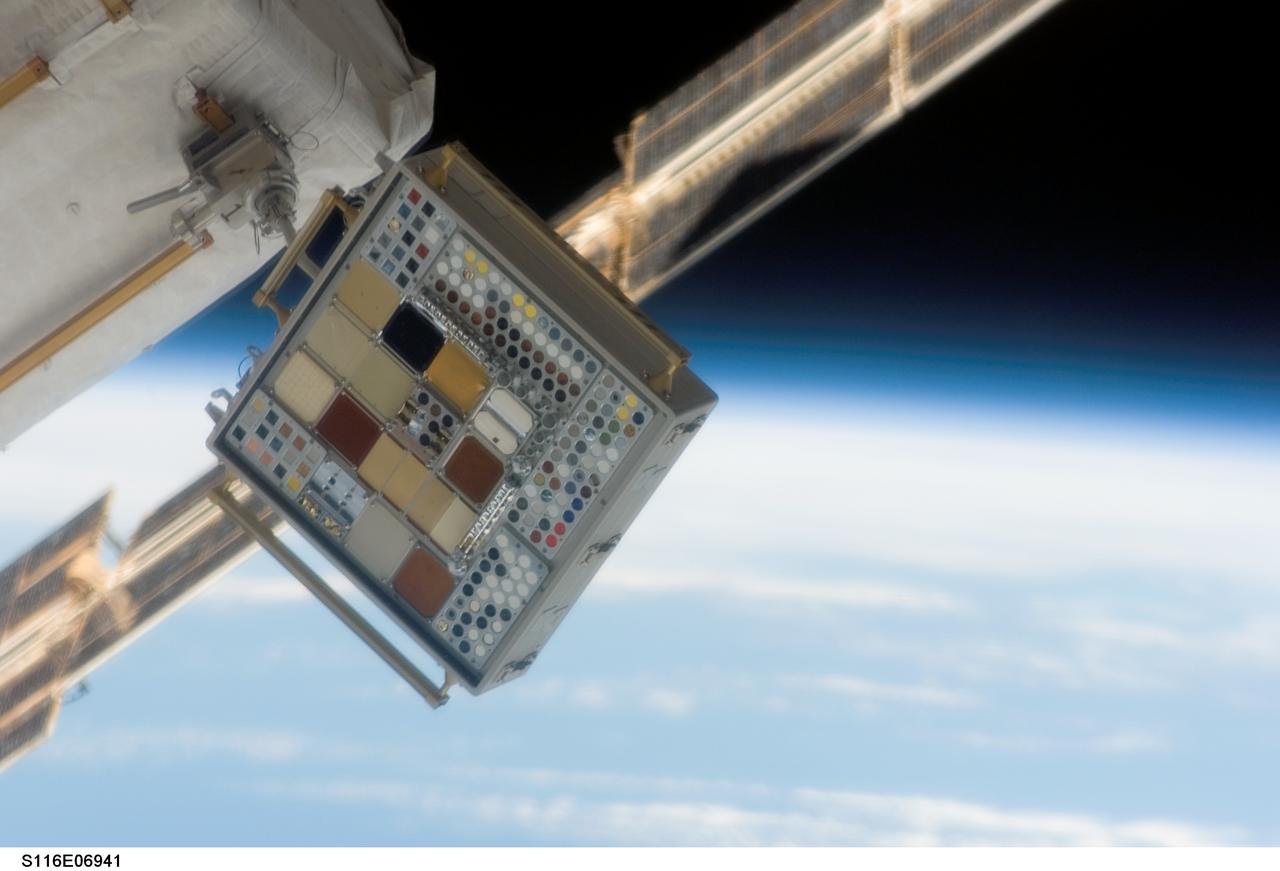
s116e06941 (12/18/2006) --- View of Materials International Space Station Experiment Passive Experiment Container (MISSE PEC) on the Quest/Airlock Crewlock during STS-116 Extravehicular Activity - 4 (EVA-4). Materials on the International Space Station Experiment 3 and 4 (MISSE - 3 and 4) are the third and fourth in a series of five suitcase-sized test beds attached to the outside of the space station. The beds were deployed during a spacewalk by the station crew in August 2006. They are exposing hundreds of potential space construction materials and different types of solar cells to the harsh environment of space. Mounted to the space station for about a year, the equipment then will be returned to Earth for study. Investigators will use the resulting data to design stronger, more durable spacecraft.
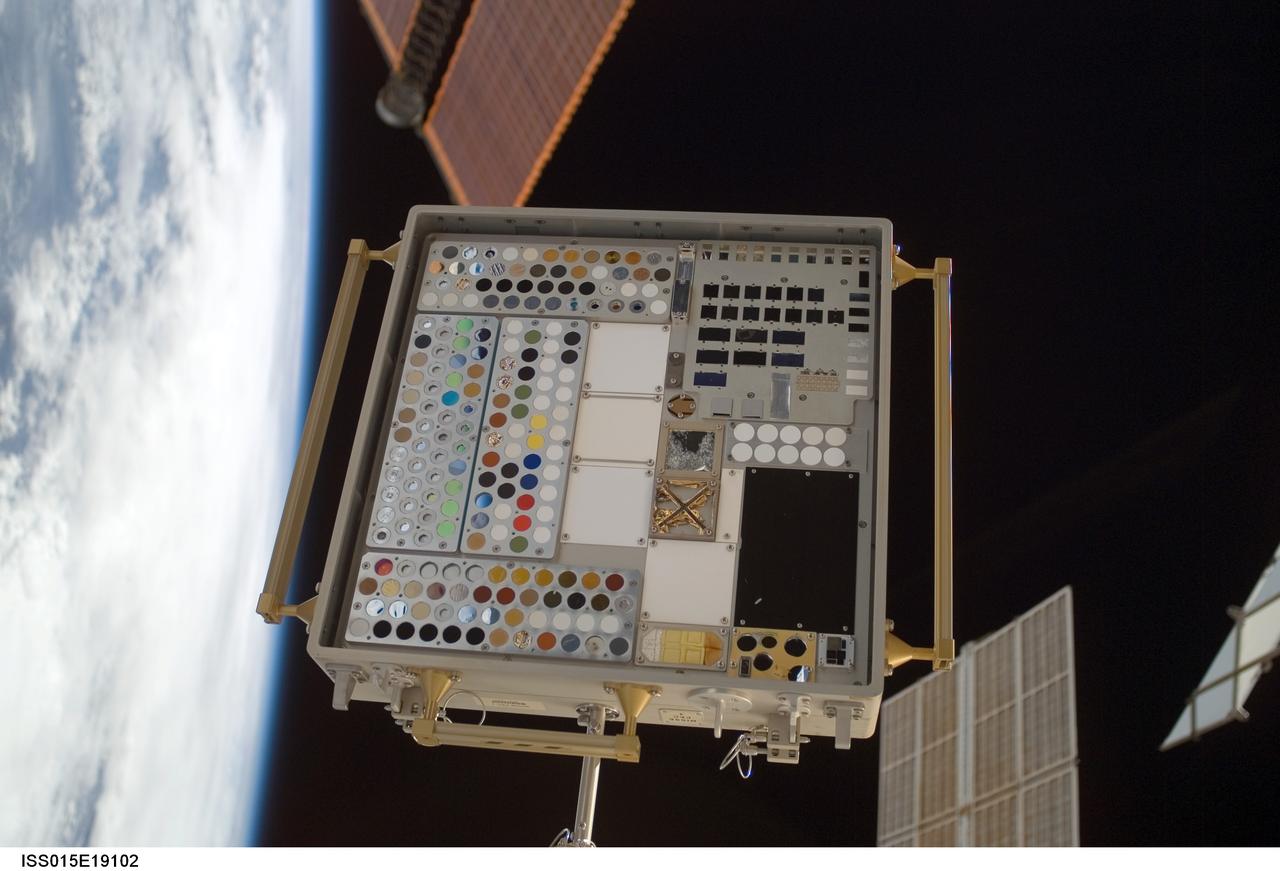
iss015e19102 (7/23/2007) --- View of Materials International Space Station Experiment (MISSE) Passive Experiment Container (PEC) mounted to the exterior of the Quest/Airlock (A/L). Photo taken during a session of Extravehicular Activity (EVA) on Expedition 15. Materials on the International Space Station Experiment 3 and 4 (MISSE - 3 and 4) are the third and fourth in a series of five suitcase-sized test beds attached to the outside of the space station. The beds were deployed during a spacewalk by the station crew in August 2006. They are exposing hundreds of potential space construction materials and different types of solar cells to the harsh environment of space. Mounted to the space station for about a year, the equipment then will be returned to Earth for study. Investigators will use the resulting data to design stronger, more durable spacecraft.
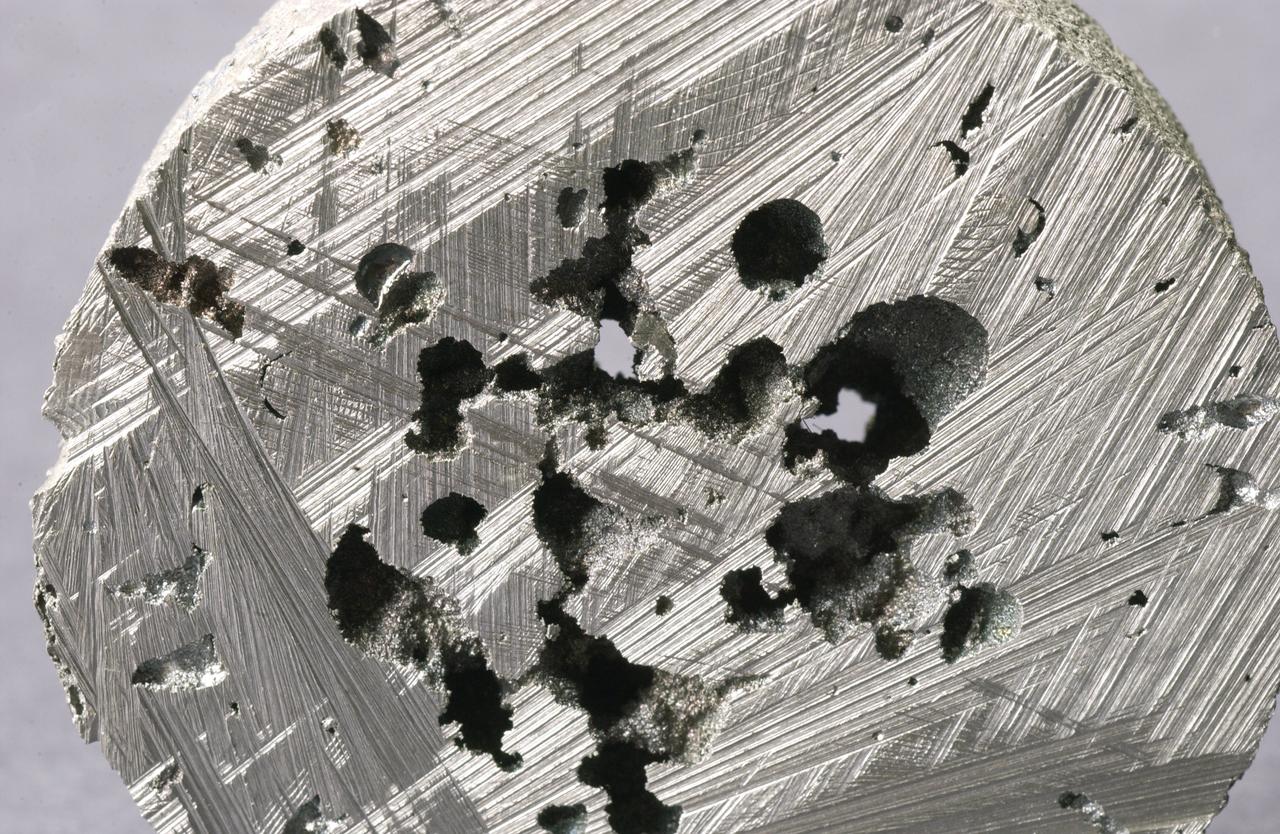
Pores and voids often form in metal castings on Earth (above) making them useless. A transparent material that behaves at a large scale in microgravity the way that metals behave at the microscopic scale on Earth, will help show how voids form and learn how to prevent them. Scientists are using the microgravity environment on the International Space Station to study how these bubbles form, move and interact. The Pore Formation and Mobility Investigation (PFMI) in the Microgravity Science Glovebox aboard the International Space Station uses a transparent material called succinonitrile that behaves like a metal to study this problem. Video images sent to the ground allow scientists to watch the behavior of the bubbles as they control the melting and freezing of the material. The bubbles do not float to the top of the material in microgravity, so they can study their interactions.
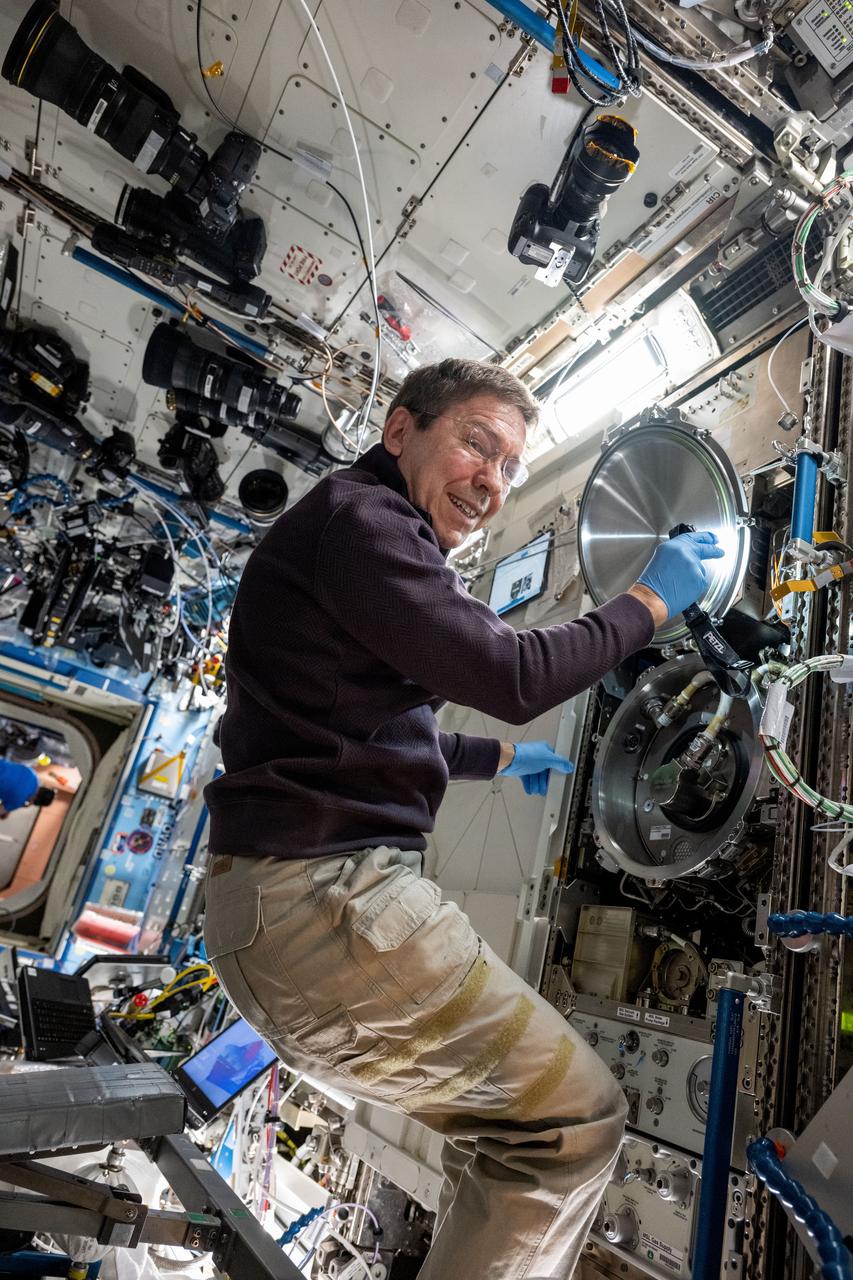
iss071e522745 (Aug. 19, 2024) --- NASA astronaut and Expedition 71 Flight Engineer Mike Barratt swaps sample cartridges inside the Materials Science Laboratory (MSL), a research furnace facilitating discoveries of new and improved materials as well as new uses for existing materials such as metals, alloys, polymers, and more. The MSL is located inside the International Space Station's Destiny laboratory module.
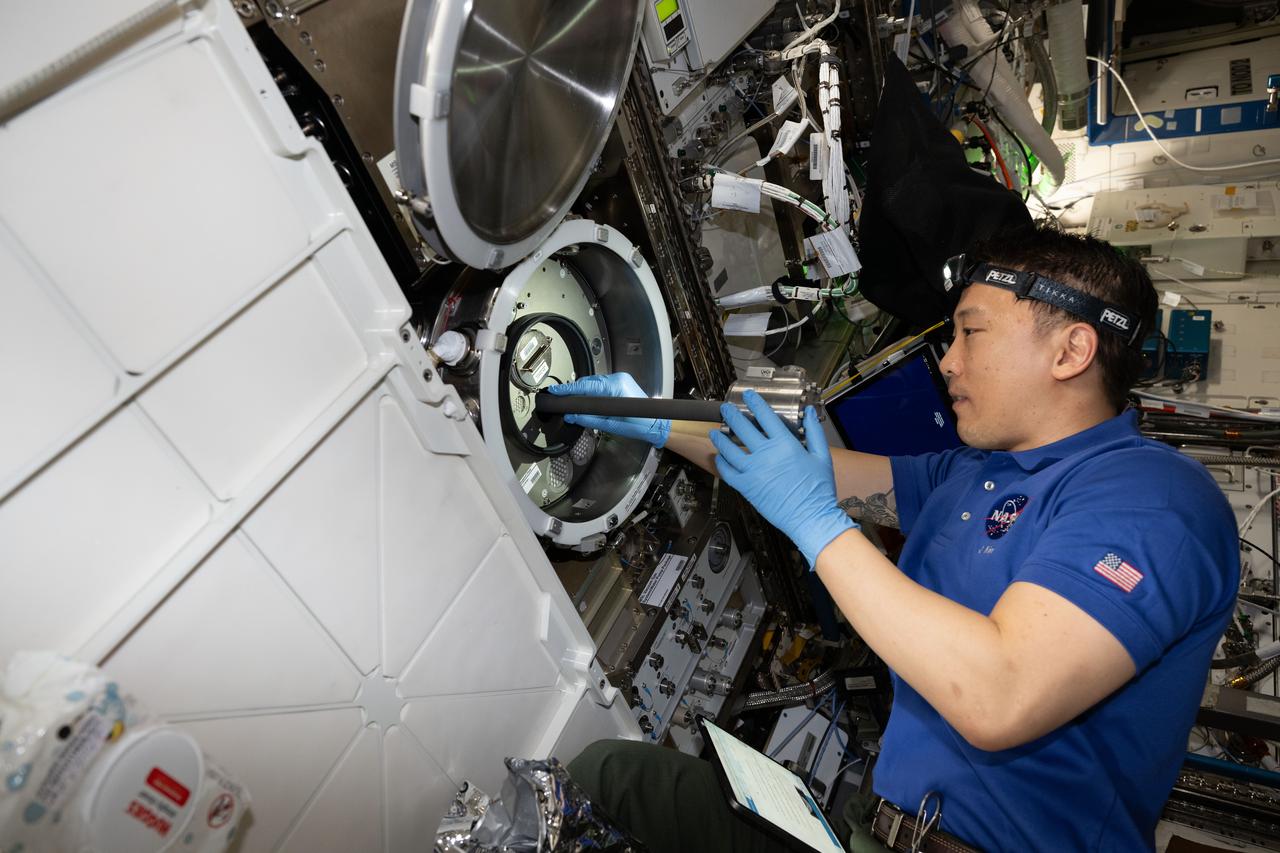
iss073e0222456 (June 27, 2025) --- NASA astronaut and Expedition 73 Flight Engineer Jonny Kim removes research hardware from inside the Materials Science Laboratory (MSL) located inside the International Space Station's Destiny laboratory module. The MSL uses two different furnaces that operate one at a time to discover new applications for existing materials, such as metals, alloys, polymers, and new or improved materials.
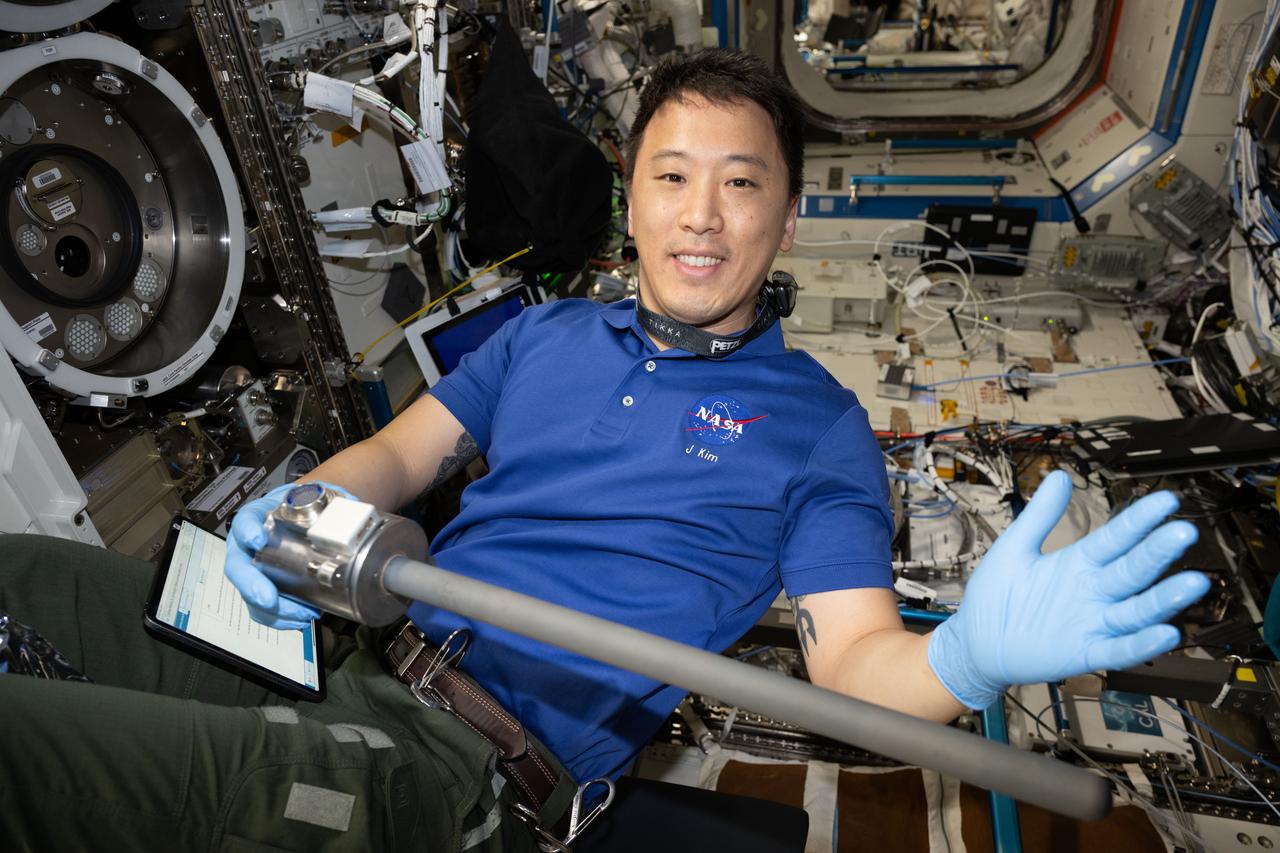
iss073e0222463 (June 16, 2025) --- NASA astronaut and Expedition 73 Flight Engineer Jonny Kim waves for a portrait while removing research hardware from inside the Materials Science Laboratory (MSL) located inside the International Space Station's Destiny laboratory module. The MSL uses two different furnaces that operate one at a time to discover new applications for existing materials, such as metals, alloys, polymers, and new or improved materials.
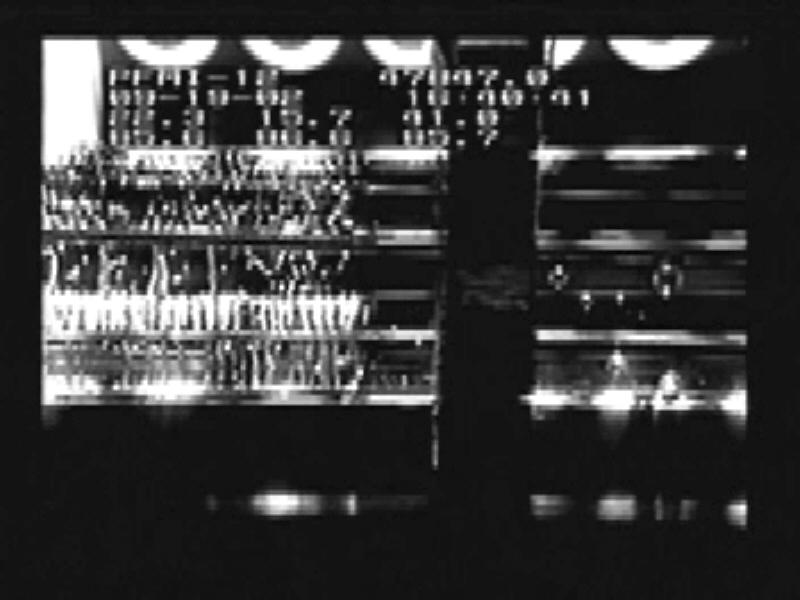
Video images sent to the ground allow scientists to watch the behavior of the bubbles as they control the melting and freezing of the material during the Pore Formation and Mobility Investigation (PFMI) in the Microgravity Science Glovebox aboard the International Space Station. While the investigation studies the way that metals behave at the microscopic scale on Earth -- and how voids form -- the experiment uses a transparent material called succinonitrile that behaves like a metal to study this problem. The bubbles do not float to the top of the material in microgravity, so they can study their interactions.
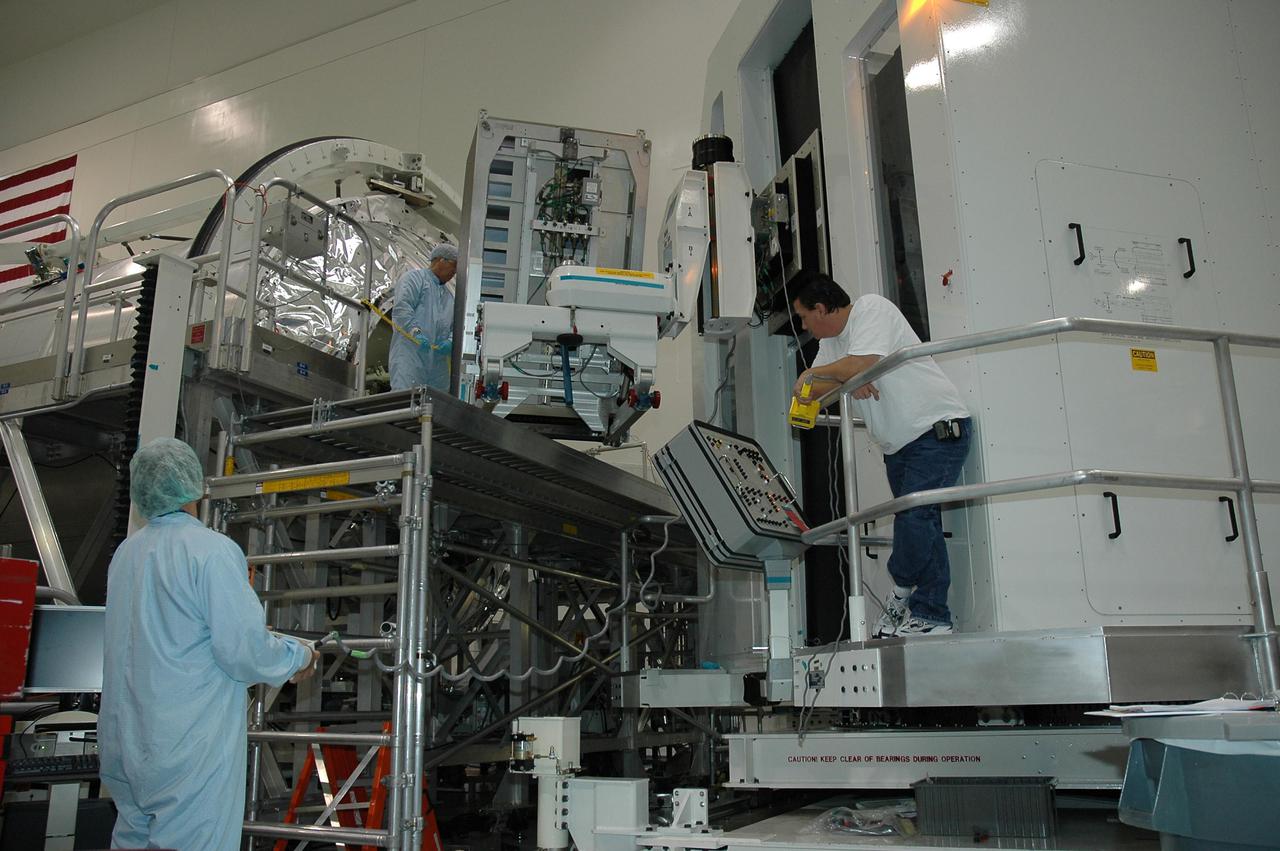
KENNEDY SPACE CENTER, FLA. - In NASA Kennedy Space Center’s Space Station Processing Facility, workers wait for a rack of storage material taken from inside the multi-purpose logistics module Raffaello to be lowered. Raffaello flew on return to flight mission STS-114. During the mission, the crews of Discovery and Expedition 11 transferred more than a ton of material from the International Space Station to be returned to Earth. The workers are unloading the storage racks.
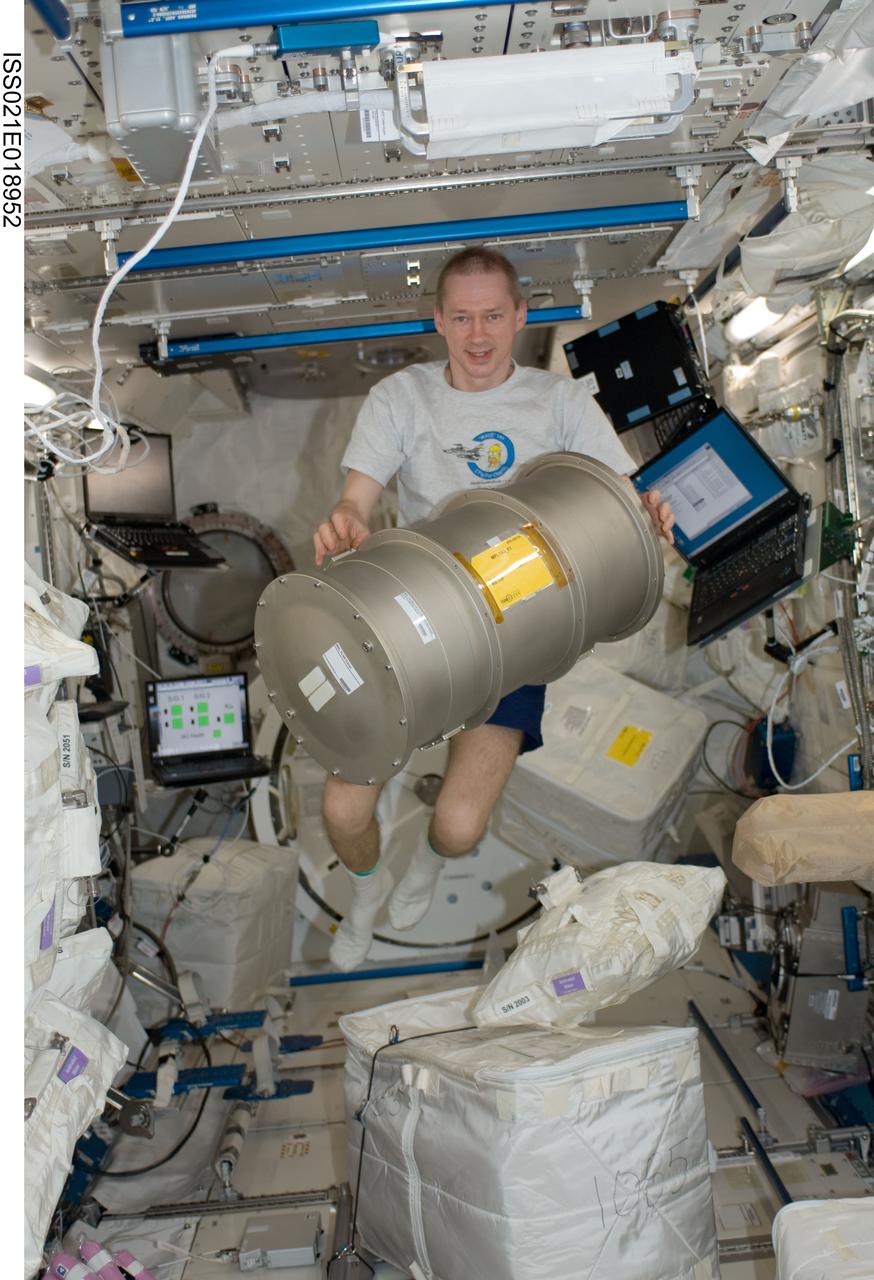
ISS021-E-018952 (14 Oct. 2009) --- European Space Agency astronaut Frank De Winne, Expedition 21 commander, is pictured with Materials Science Laboratory (MSL) hardware in the Kibo laboratory of the International Space Station.
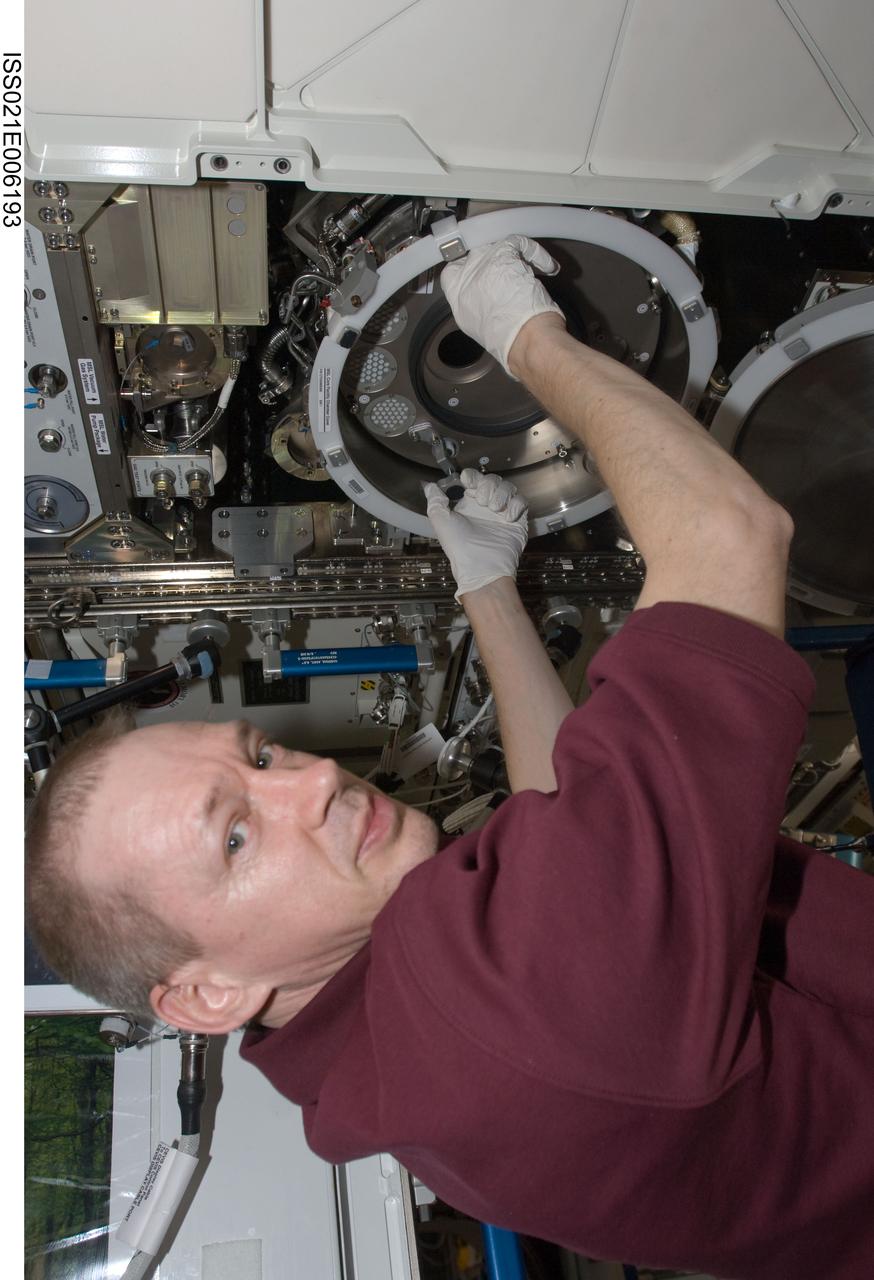
ISS021-E-006193 (14 Oct. 2009) --- European Space Agency astronaut Frank De Winne, Expedition 21 commander, works with a Materials Science Laboratory (MSL) chamber in the Destiny laboratory of the International Space Station.
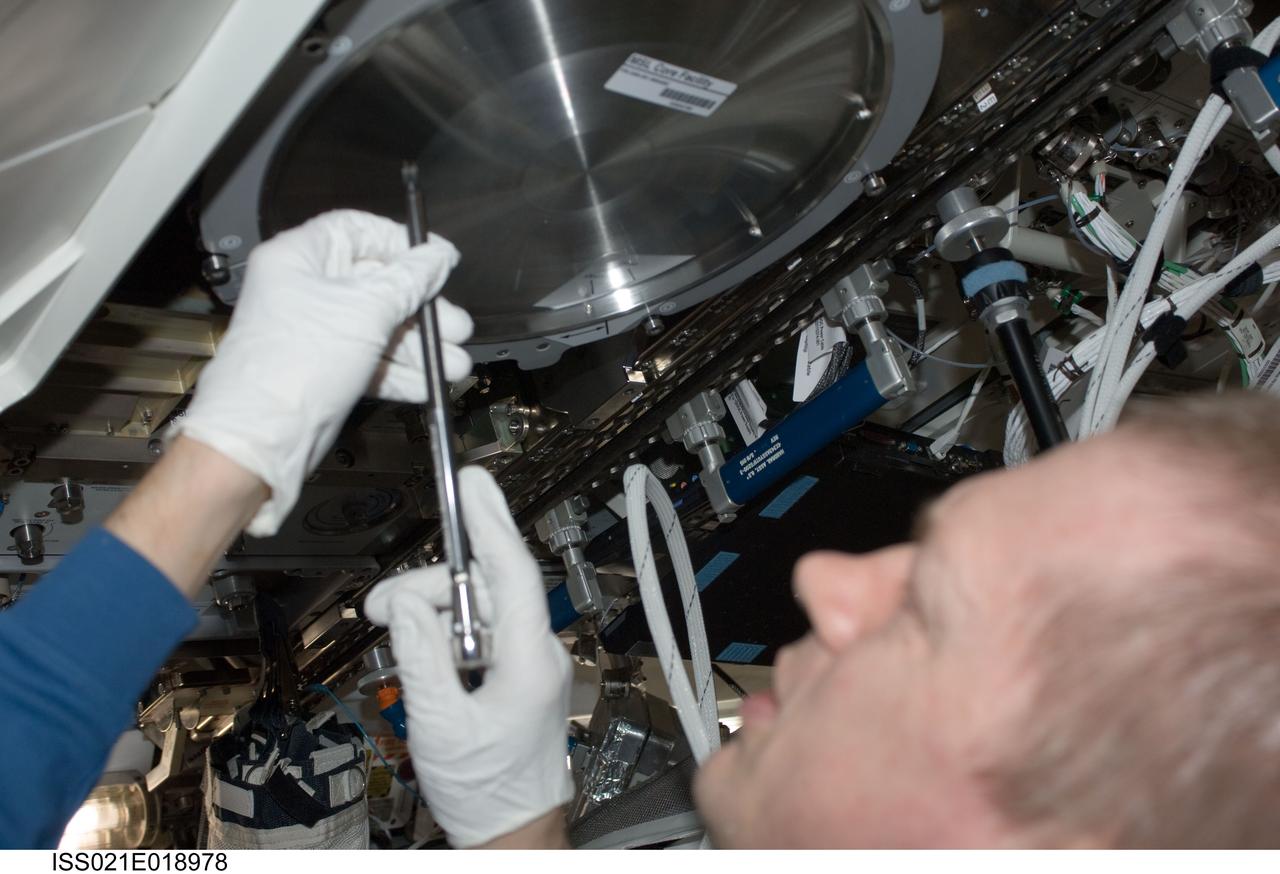
ISS021-E-018978 (2 Nov. 2009) --- European Space Agency astronaut Frank De Winne, Expedition 21 commander, works with Materials Science Laboratory (MSL) hardware in the Destiny laboratory of the International Space Station.
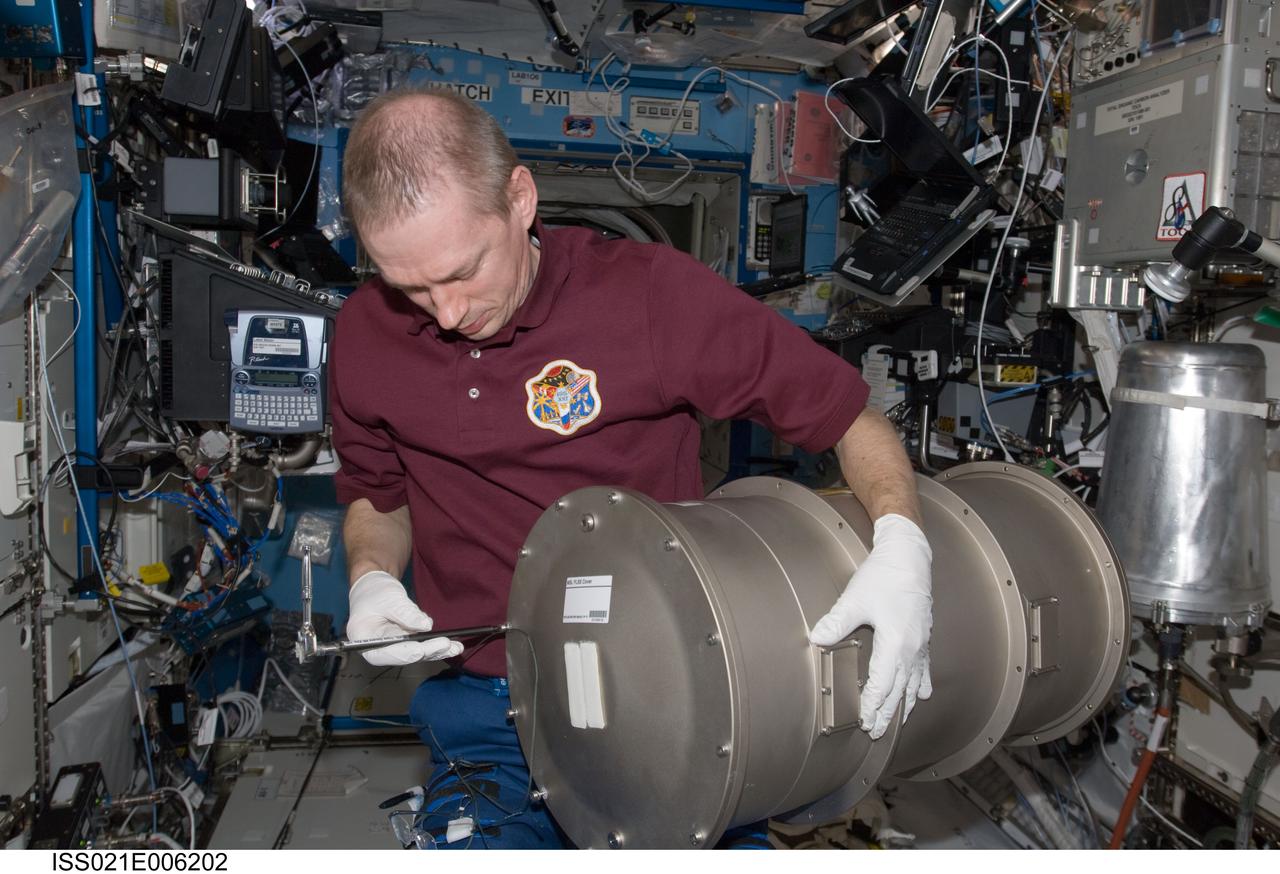
ISS021-E-006202 (14 Oct. 2009) --- European Space Agency astronaut Frank De Winne, Expedition 21 commander, works with Materials Science Laboratory (MSL) hardware in the Destiny laboratory of the International Space Station.
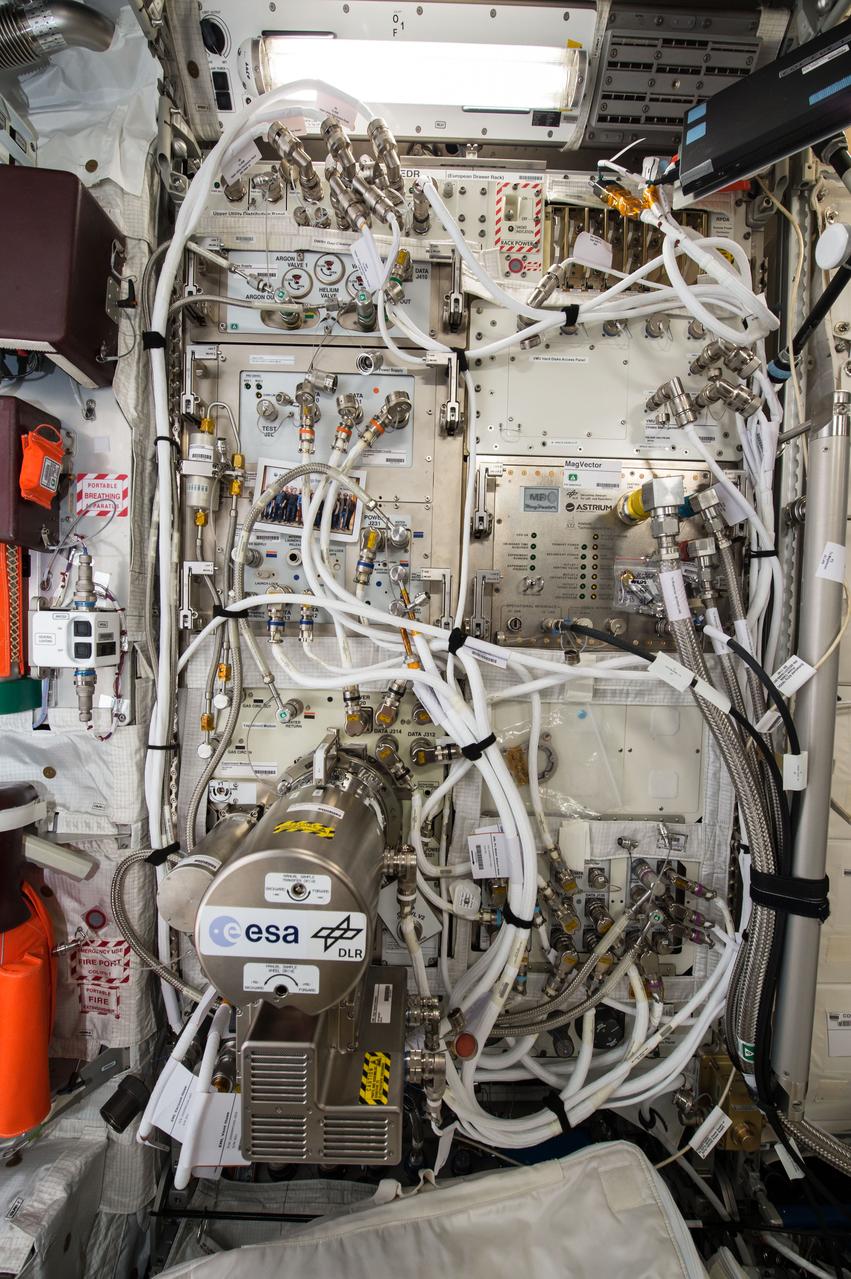
iss041e096097 (10/23/2014) — Photo documentation of the Electromagnetic Levitator (EML) in the Columbus module of the International Space Station (ISS). The EML multi-user facility is designed for containerless materials processing in space.
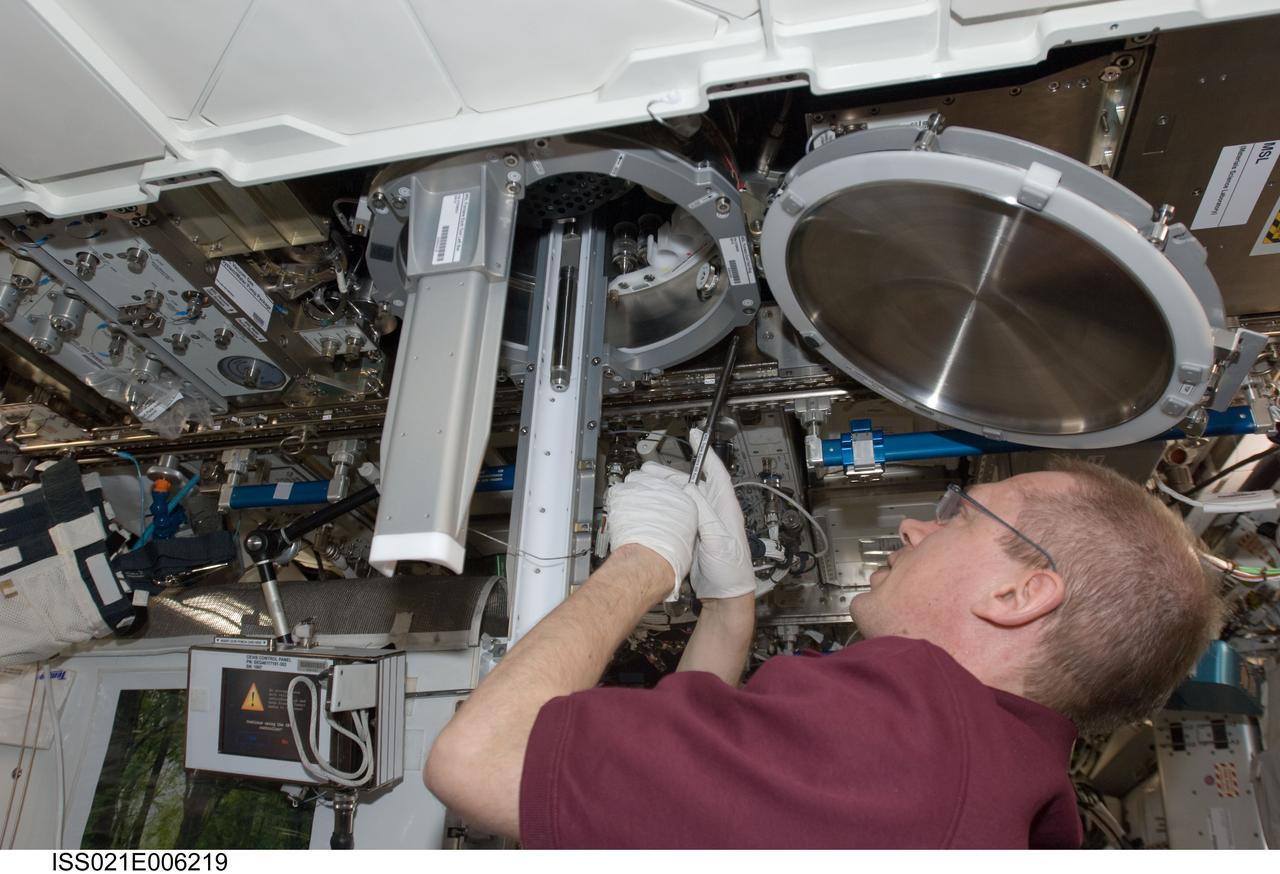
ISS021-E-006219 (14 Oct. 2009) --- European Space Agency astronaut Frank De Winne, Expedition 21 commander, works with Materials Science Laboratory (MSL) hardware in the Destiny laboratory of the International Space Station.
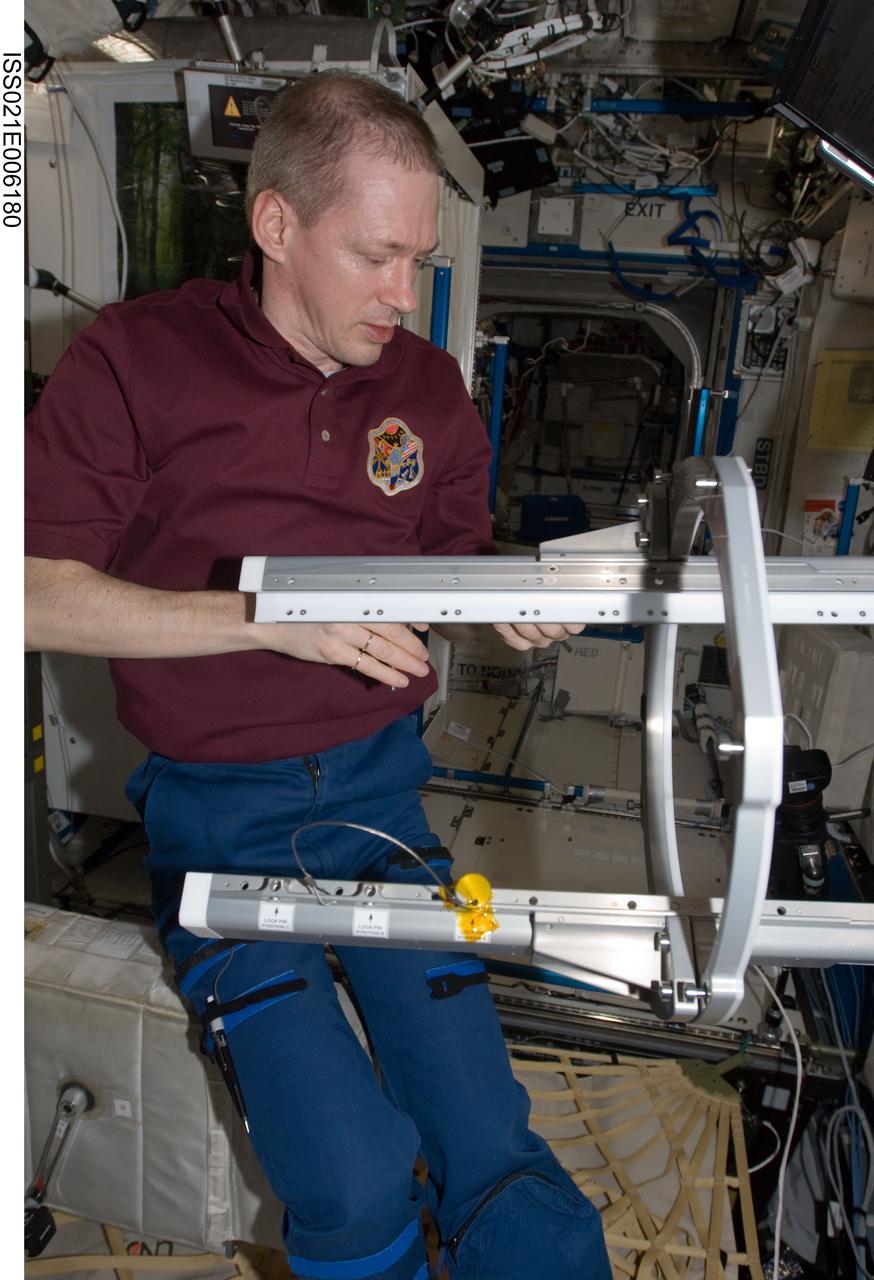
ISS021-E-006180 (14 Oct. 2009) --- European Space Agency astronaut Frank De Winne, Expedition 21 commander, works with Materials Science Laboratory (MSL) hardware in the Destiny laboratory of the International Space Station.
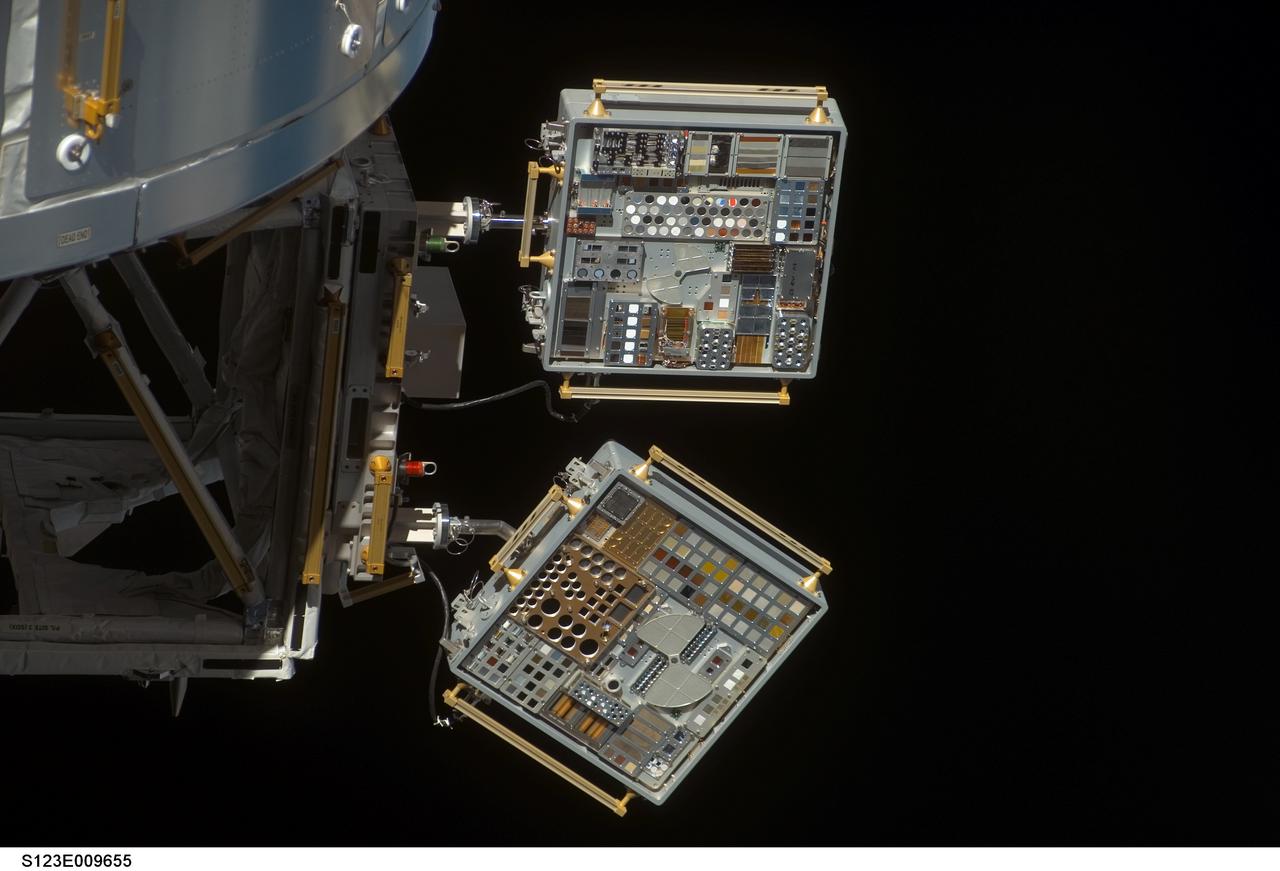
s123e009655 (3/25/2008) --- View of Materials International Space Station Experiment (MISSE) 6 Passive Experiment Container (PEC) on European Laboratory/Columbus. Photo was taken during flyaround of STS-123 Space Shuttle Endeavor.
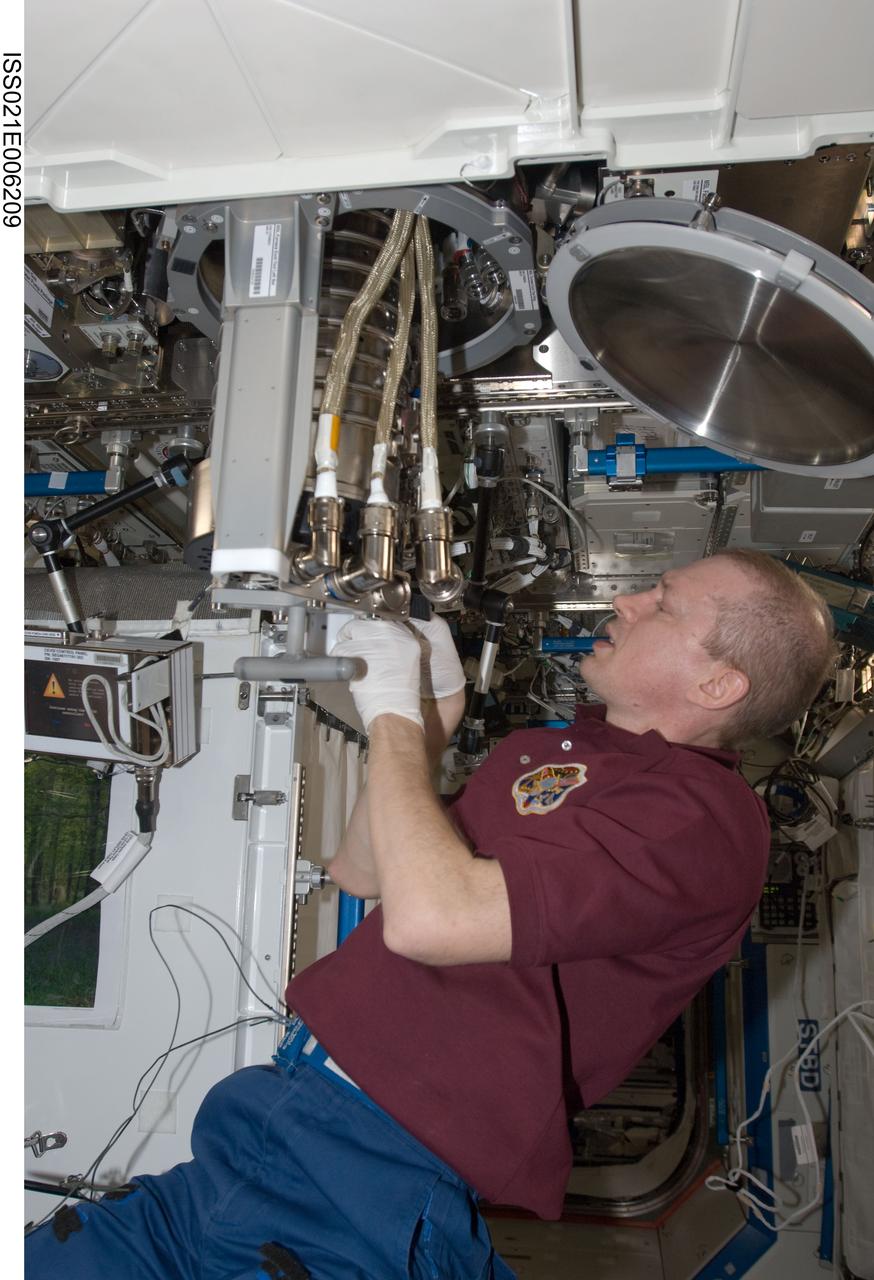
ISS021-E-006209 (14 Oct. 2009) --- European Space Agency astronaut Frank De Winne, Expedition 21 commander, works with Materials Science Laboratory (MSL) hardware in the Destiny laboratory of the International Space Station.

ISS021-E-006196 (14 Oct. 2009) --- European Space Agency astronaut Frank De Winne, Expedition 21 commander, works with Materials Science Laboratory (MSL) hardware in the Destiny laboratory of the International Space Station.
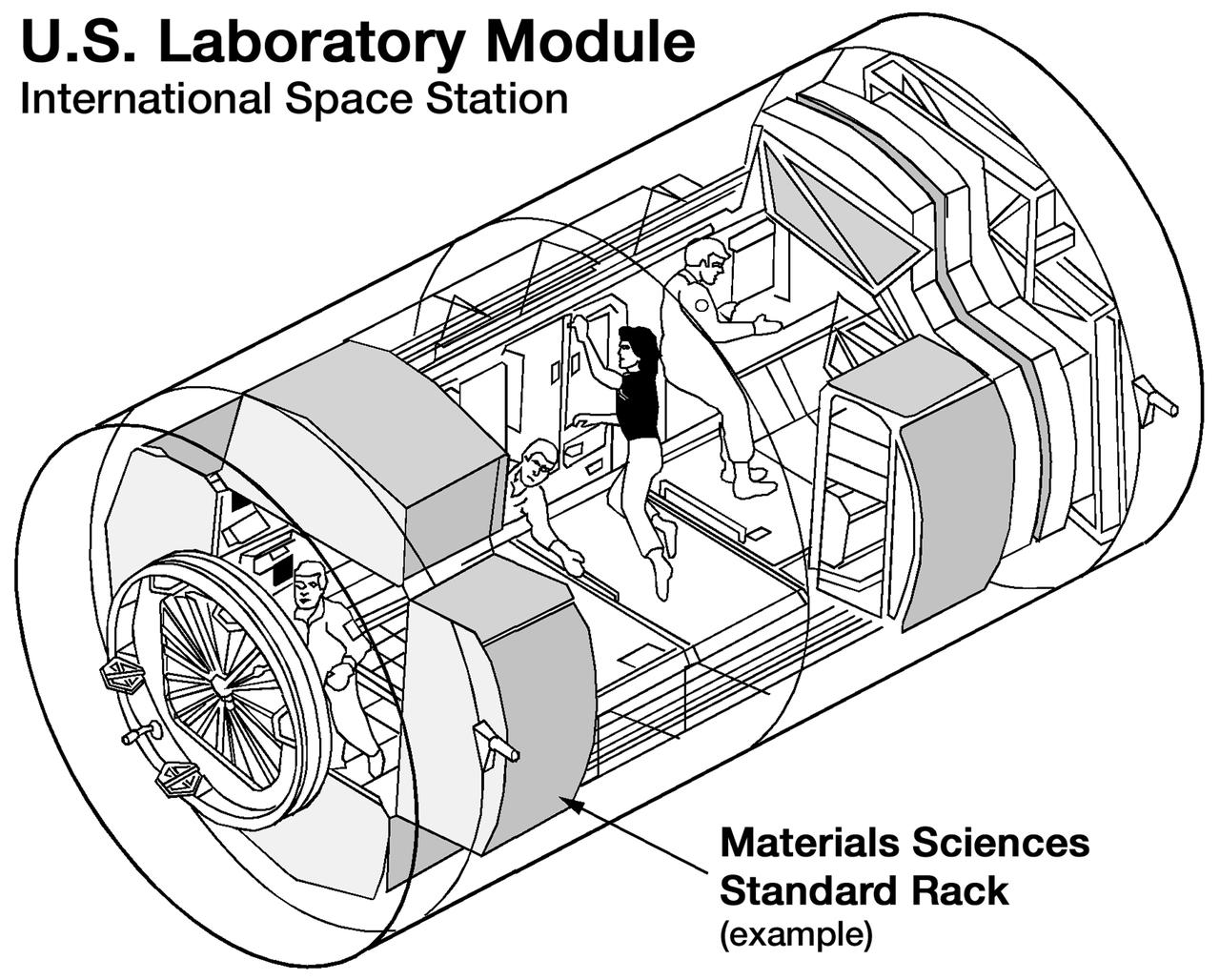
Line drawing depicts the location of one of three racks that will make up the Materials Science Research Facility in the U.S. Destiny laboratory module to be attached to the International Space Station (ISS). Other positions will be occupied by a variety of racks supporting research in combustion, fluids, biotechnology, and human physiology, and racks to support lab and station opertions. The Materials Science Research Facility is managed by NASA's Marshall Space Flight Center. Photo credit: NASA/Marshall Space Flight Center
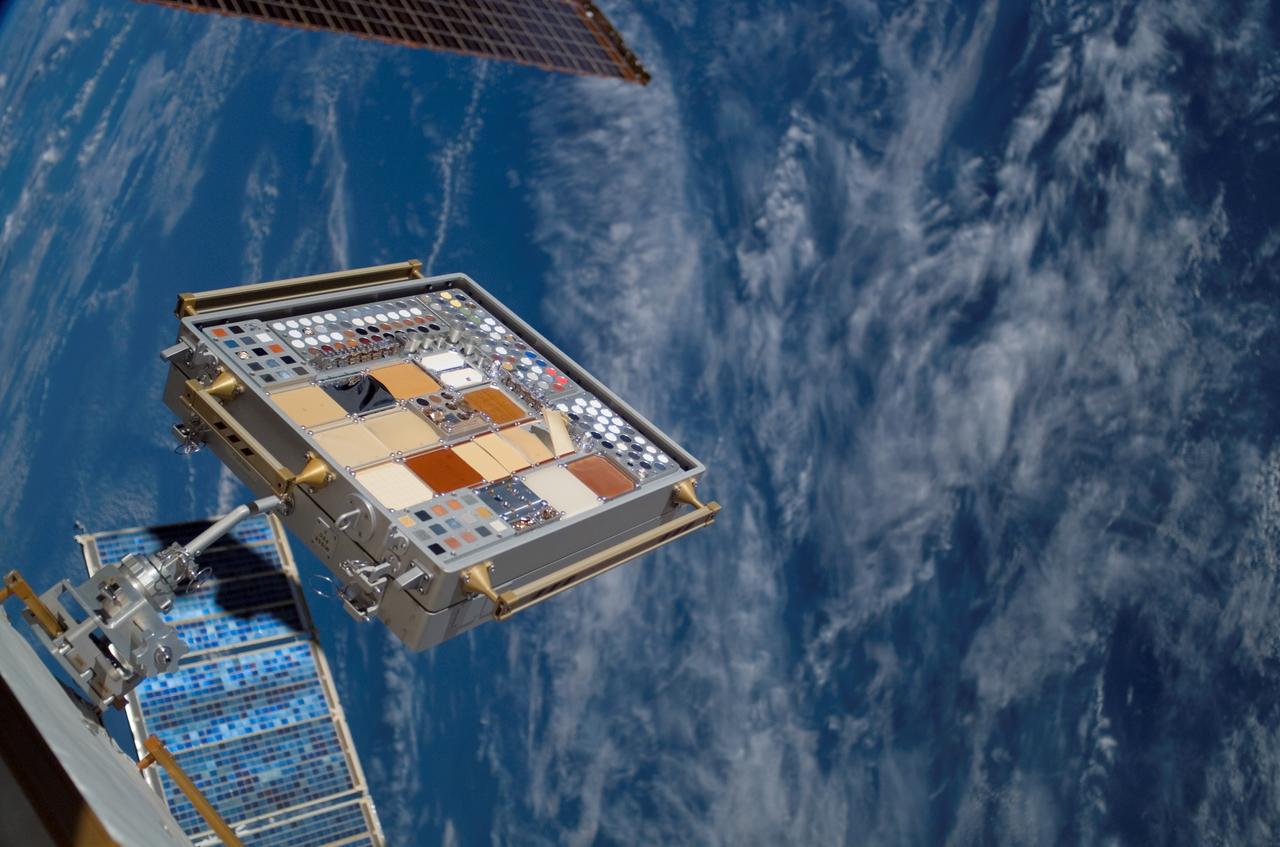
ISS015-E-22410 (13 Aug. 2007) --- Backdropped by a blue and white Earth, a Materials International Space Station Experiment (MISSE) on the exterior of the station is featured in this image photographed by a crewmember during the STS-118 mission's second planned session of extravehicular activity (EVA). MISSE collects information on how different materials weather in the environment of space.
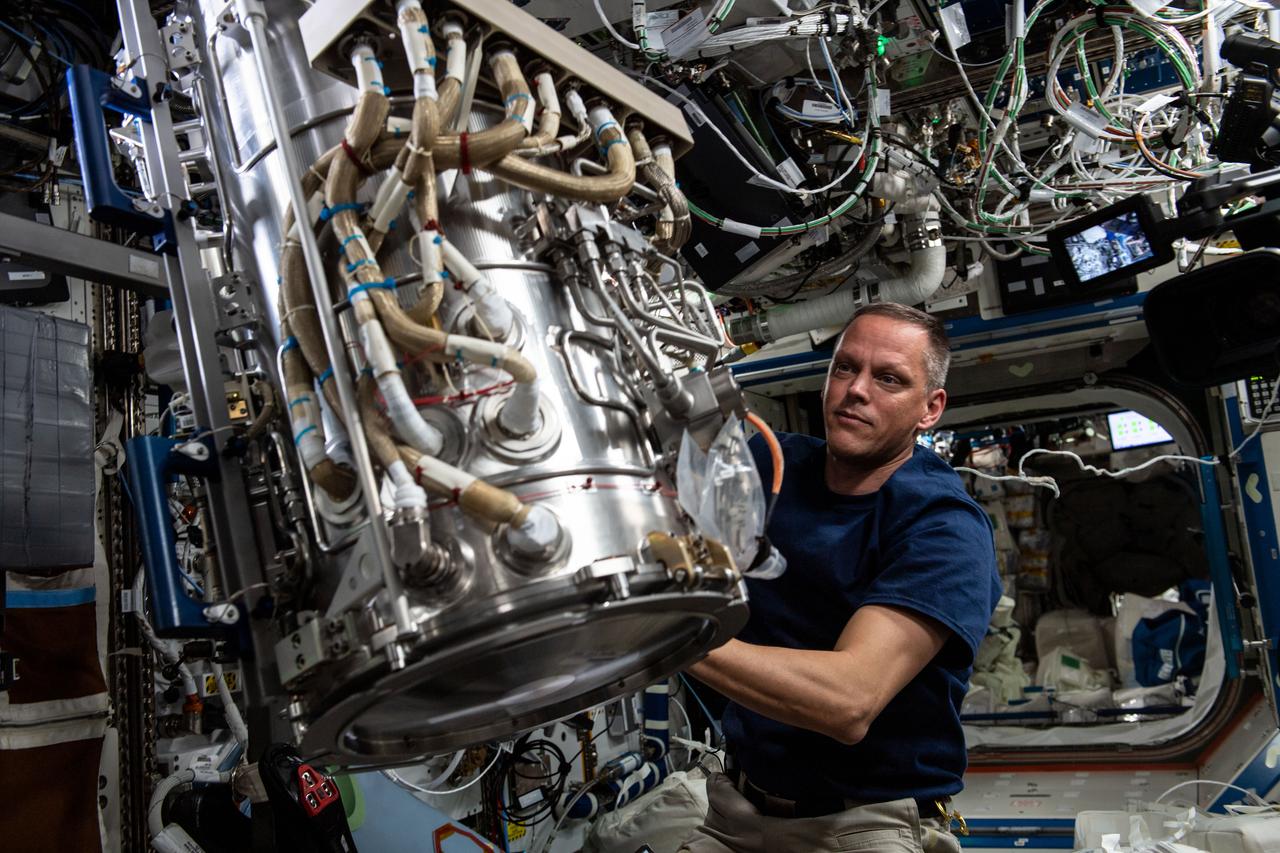
iss067e189903 (July 20, 2022) --- NASA astronaut and Expedition 67 Flight Engineer Bob Hines works to remove and replace the Material Science Laboratory's vacuum sensor inside the International Space Station's U.S. Destiny laboratory module.
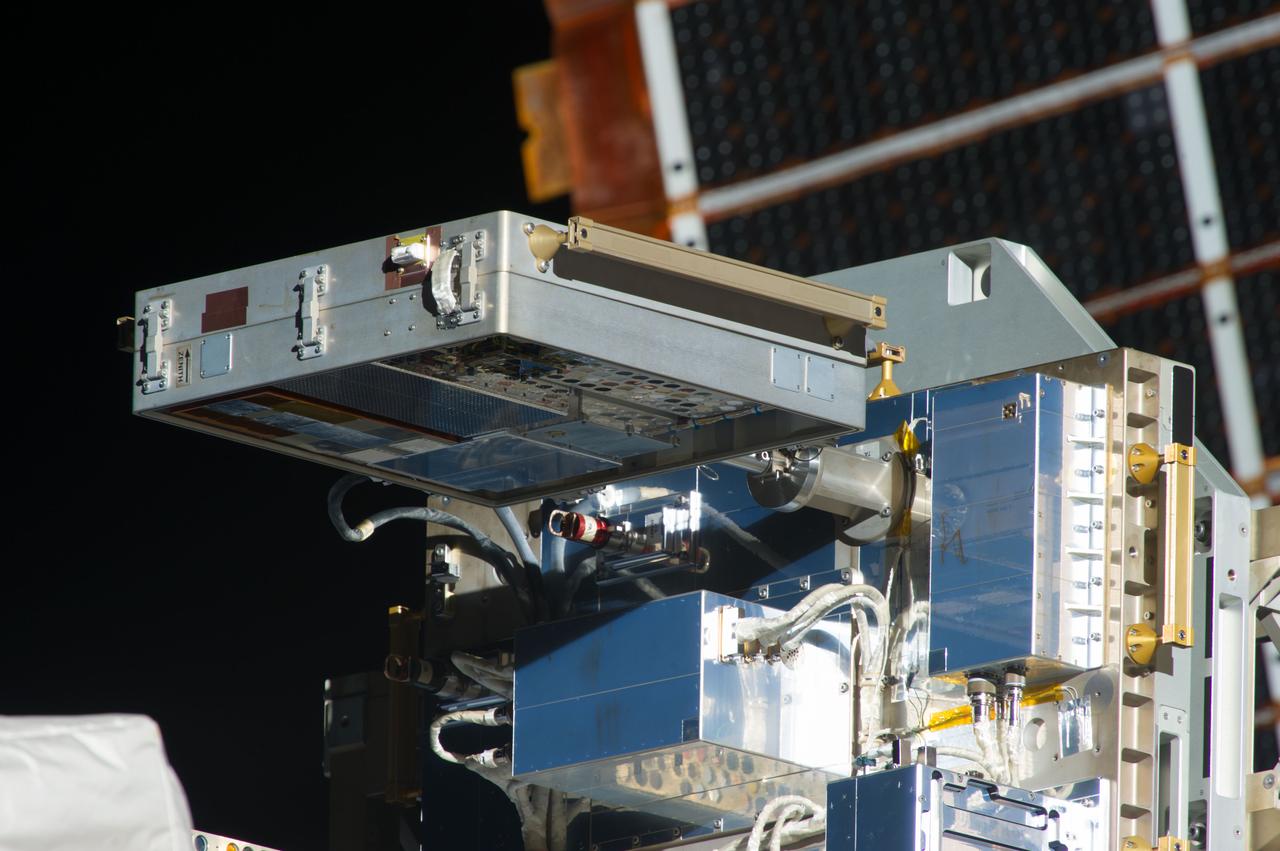
iss036e004042 (5/24/2013) --- View of Materials on International Space Station Experiment - 8 (MISSE-8) which is installed on the ExPRESS Logistics Carrier 2 (ELC-2),located on the S3 Truss Outboard Zenith site.
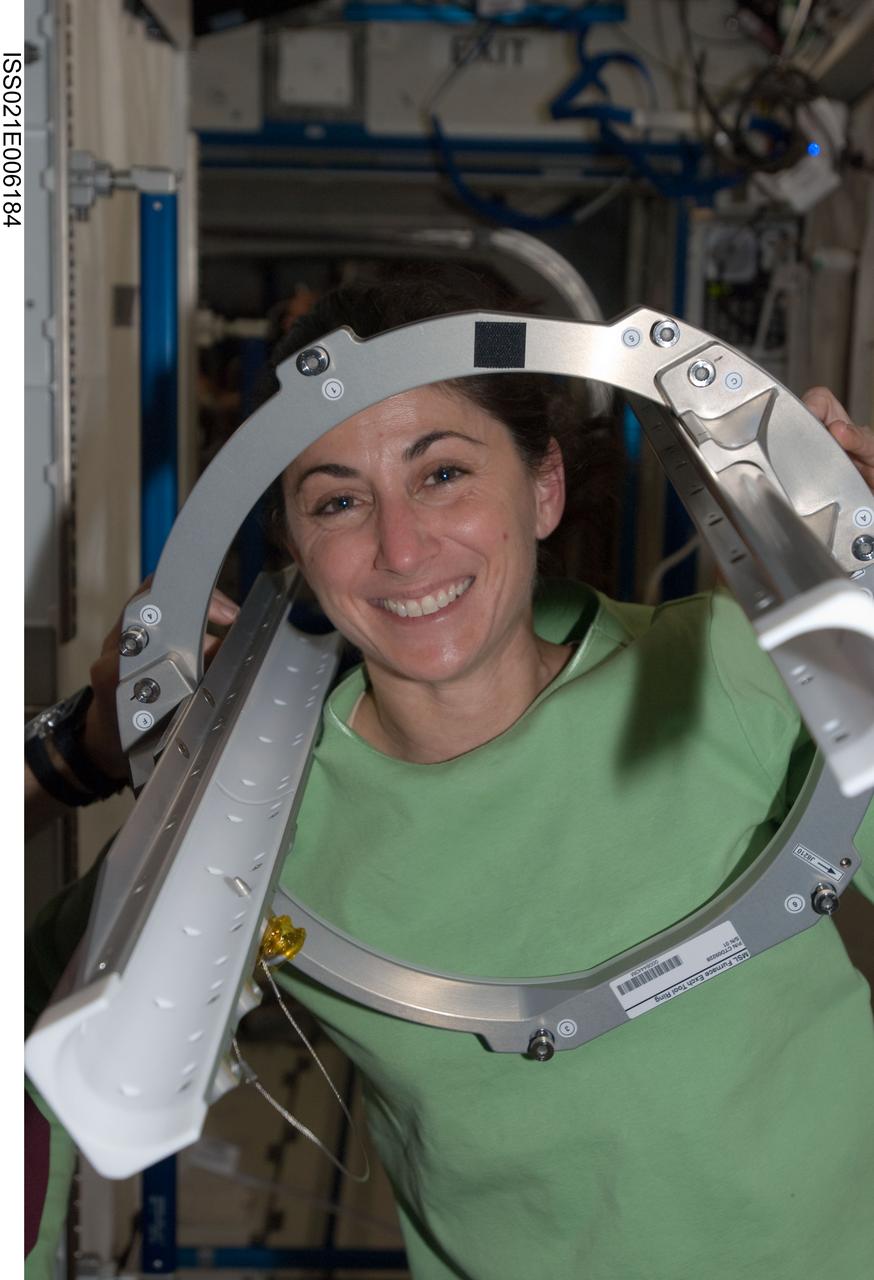
ISS021-E-006184 (14 Oct. 2009) --- NASA astronaut Nicole Stott, Expedition 21 flight engineer, works with Materials Science Laboratory (MSL) hardware in the Destiny laboratory of the International Space Station.
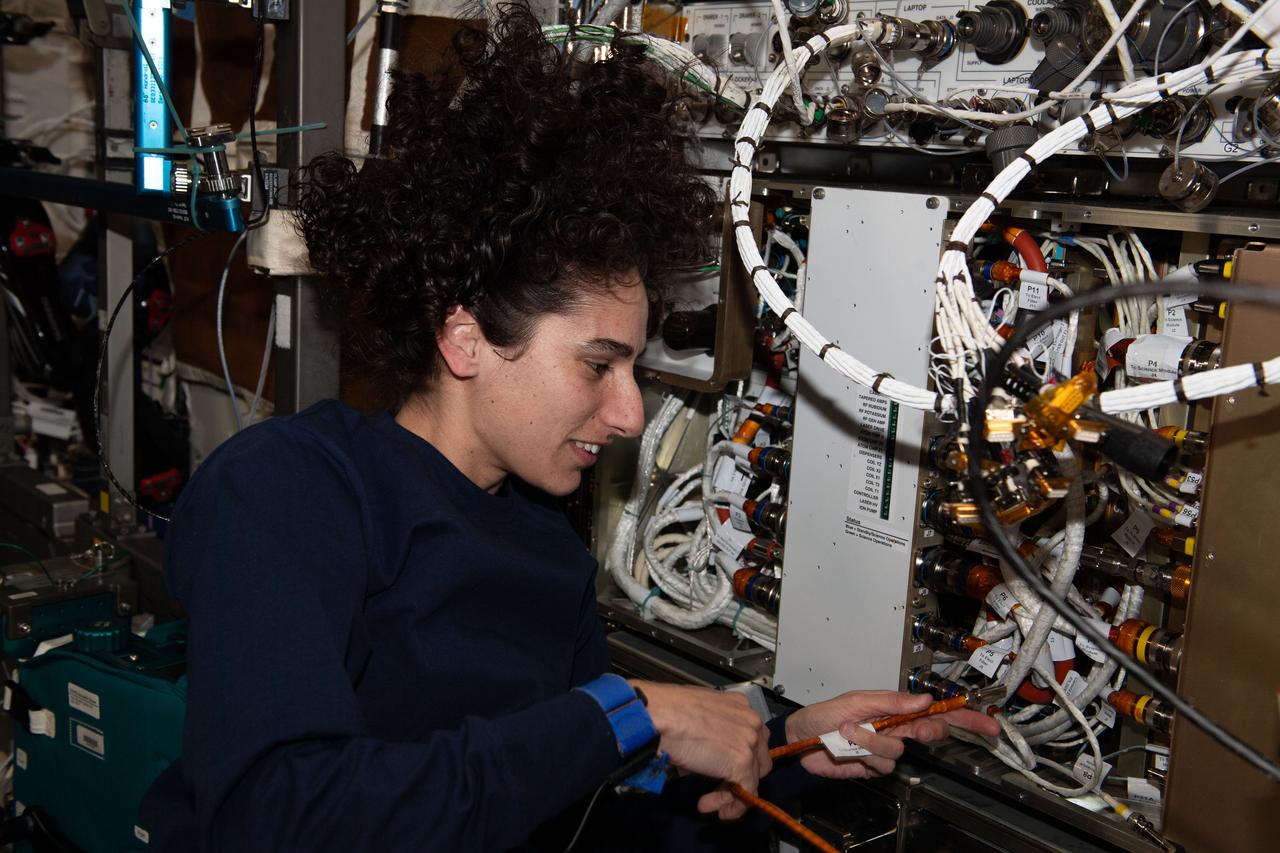
iss070e030810 (Nov. 27, 2023) --- NASA astronaut and Expedition 70 Flight Engineer Jasmin Moghbeli works on the Materials Science Laboratory, a physics research facility, located in the International Space Station's Destiny laboratory module.
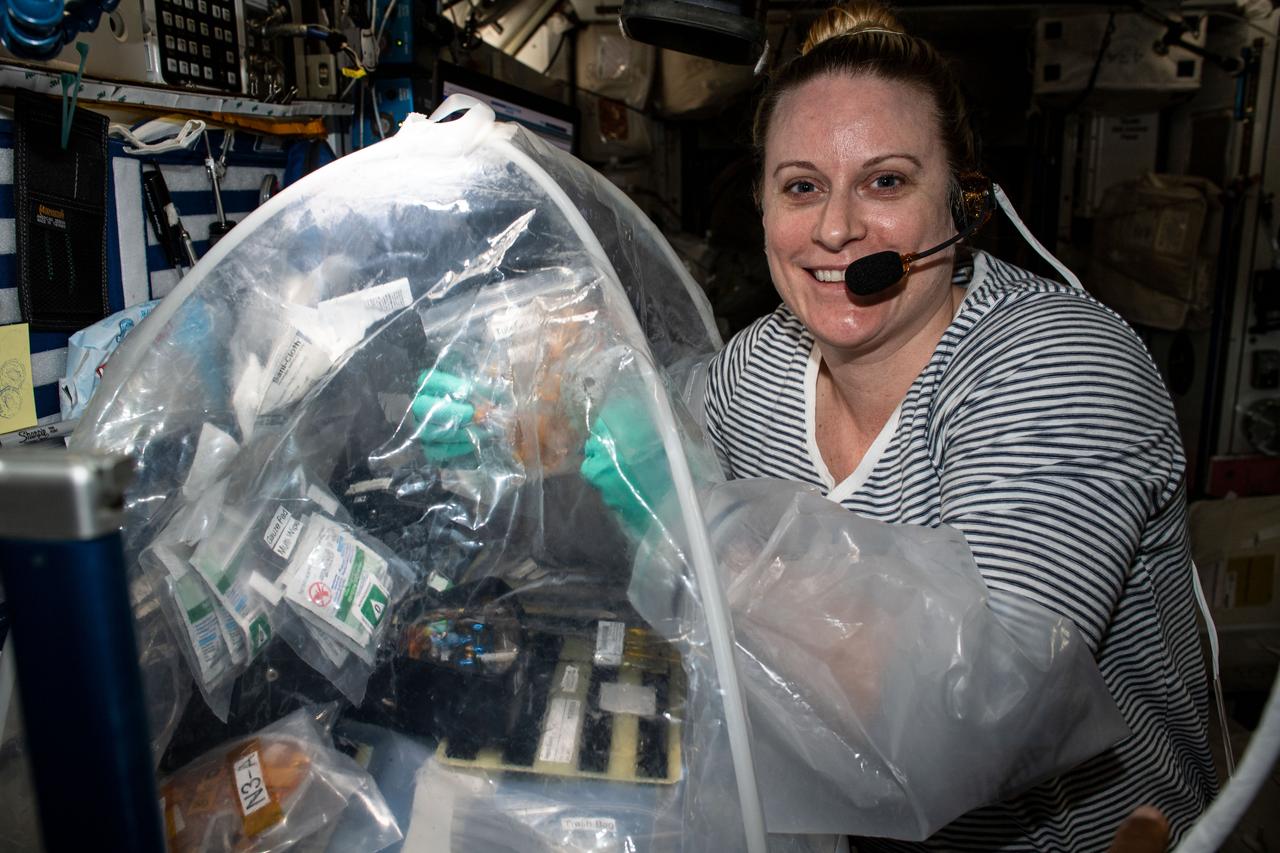
iss064e016824 (Dec. 30, 2020) --- NASA astronaut Kate Rubins is pictured conducting science operations inside the portable glovebox to contain the accidental spillage of materials and prevent exposing the International Space Station's environment to biological samples.
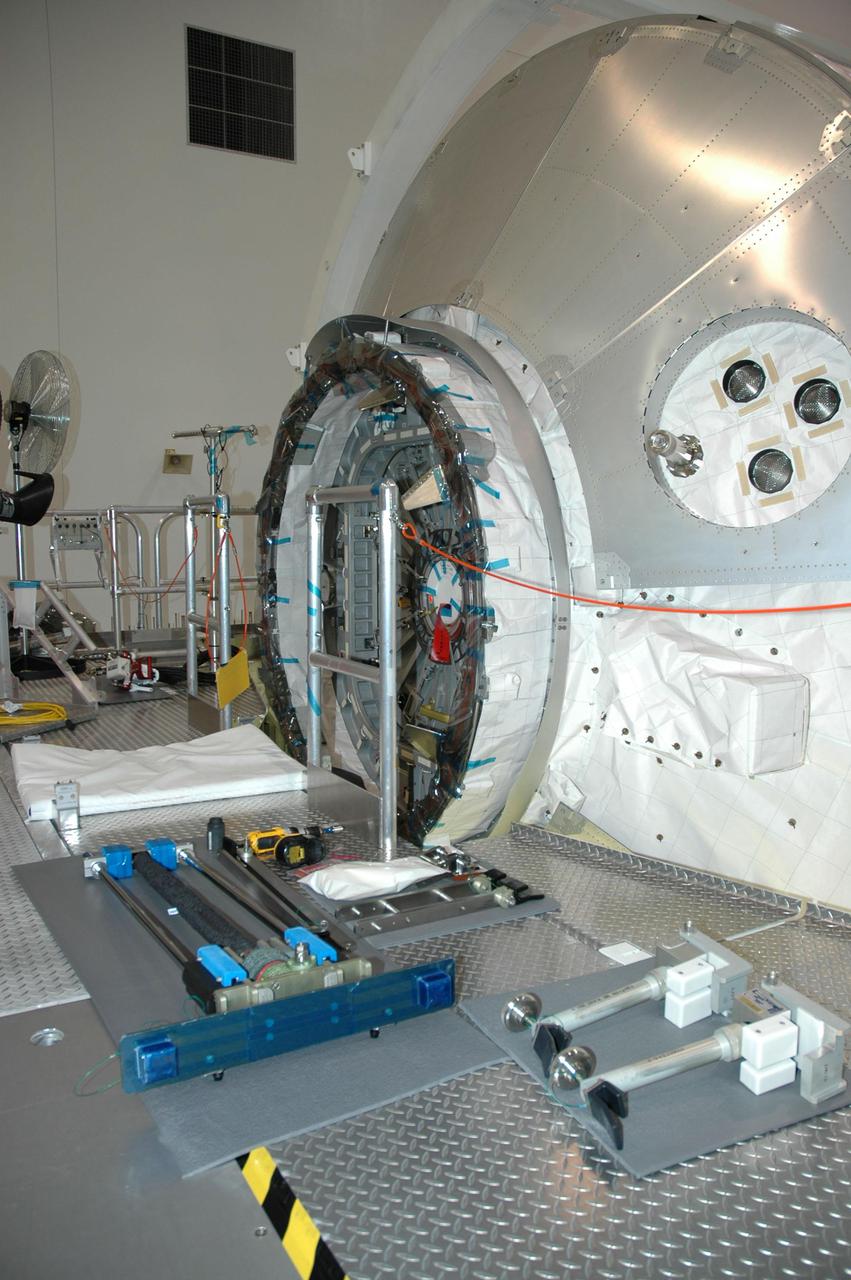
KENNEDY SPACE CENTER, FLA. — In the Space Station Processing Facility at NASA’s Kennedy Space Center, the Multi-Purpose Logistics Module (MPLM) Raffaello sits on a work stand prior to opening of the hatch. Raffaello flew on mission STS-114 to the International Space Station, returning with about 7,000 pounds of Station material. The module will be aired out before workers enter to remove the contents. Three MPLMs were built by the Italian space agency Alenia Aerospazio. The other two are Leonardo and Donatello. The MPLMs are carried in the payload bay of a Shuttle orbiter, and carry materials, supplies and even experiments to the Space Station.
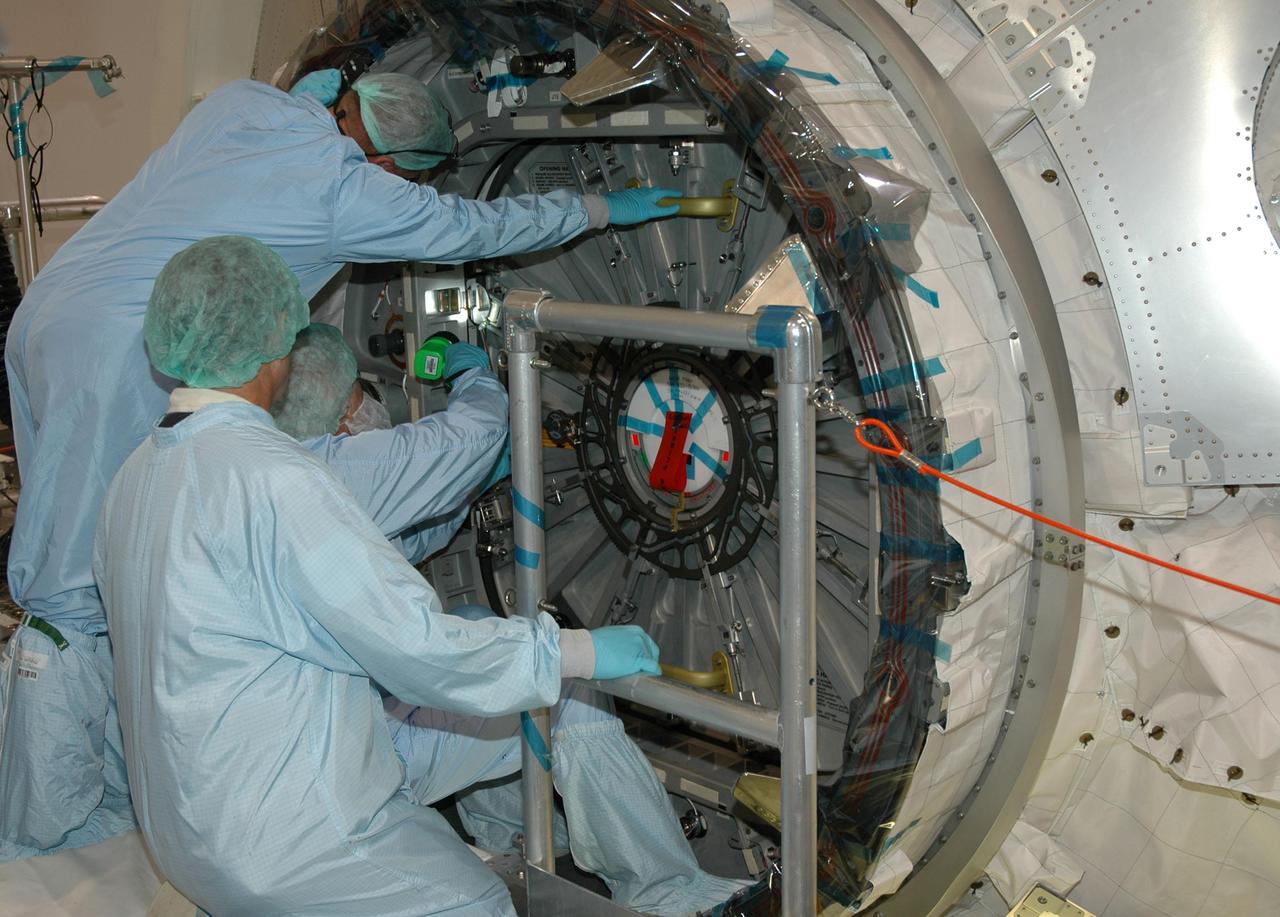
KENNEDY SPACE CENTER, FLA. — In the Space Station Processing Facility at NASA’s Kennedy Space Center, workers begin opening the hatch on the Multi-Purpose Logistics Module (MPLM) Raffaello. The module flew on mission STS-114 to the International Space Station, returning with about 7,000 pounds of Station material. Raffaello will be aired out before workers enter to remove the contents. Three MPLMs were built by the Italian space agency Alenia Aerospazio. The other two are Leonardo and Donatello. The MPLMs are carried in the payload bay of a Shuttle orbiter, and carry materials, supplies and even experiments to the Space Station.

KENNEDY SPACE CENTER, FLA. — In the Space Station Processing Facility at NASA’s Kennedy Space Center, the hatch on the Multi-Purpose Logistics Module (MPLM) Raffaello has been opened. Raffaello flew on mission STS-114 to the International Space Station, returning with about 7,000 pounds of Station material. The module will be aired out before workers enter to remove the contents. Three MPLMs were built by the Italian space agency Alenia Aerospazio. The other two are Leonardo and Donatello. The MPLMs are carried in the payload bay of a Shuttle orbiter, and carry materials, supplies and even experiments to the Space Station.
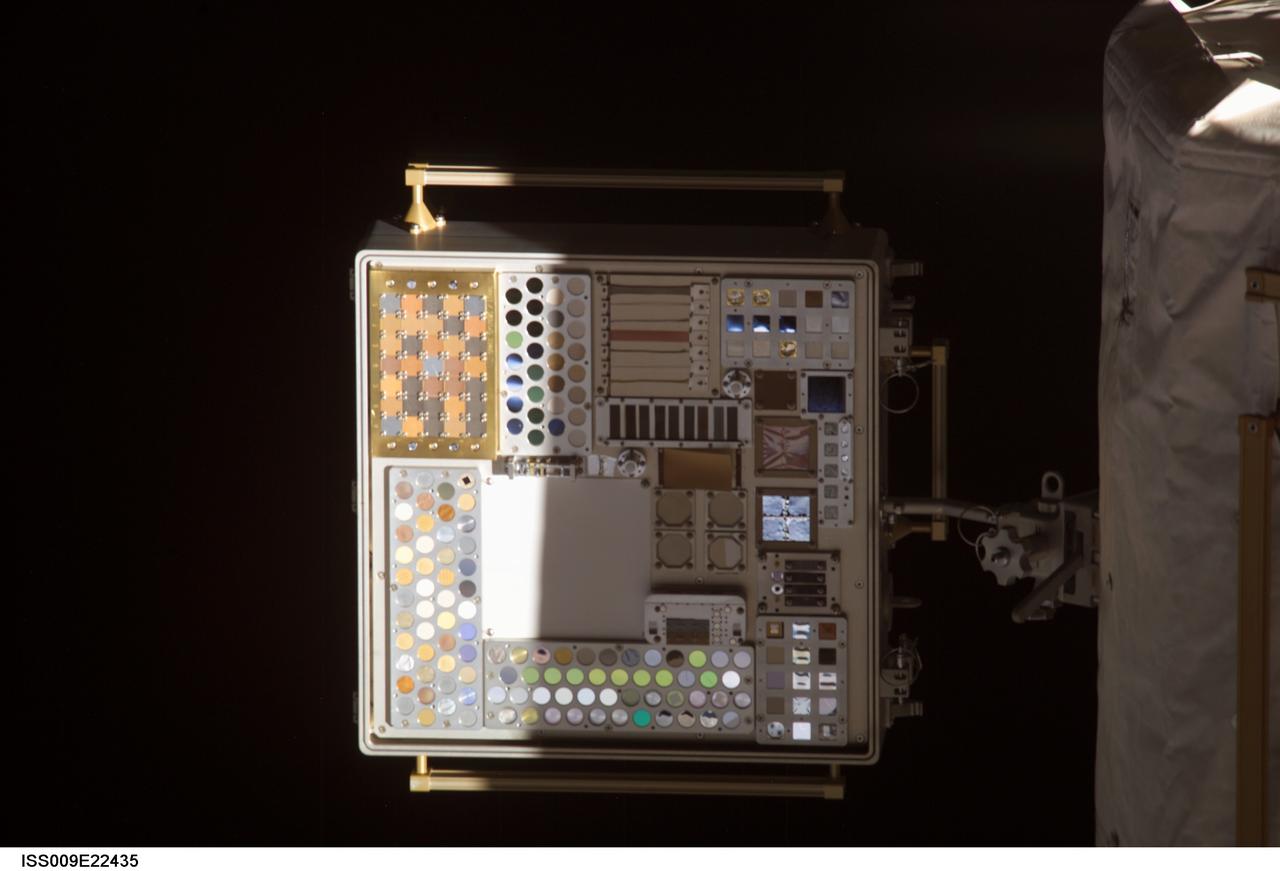
iss009e22435 (9/13/2004) --- A view of the Materials International Space Station Experiment (MISSE) #1,aft side. MISSE is attached to the outside of the Zvezda Service Module (SM). Image taken from the Pirs Docking Compartment forward port window during observation and photography of ISS External Structures on Expedition 9. MISSE-1 and 2 are a test bed for materials and coatings attached to the outside of the ISS is being evaluated for the effects of atomic oxygen, direct sunlight, and extremes of heat and cold. This experiment allows the development and testing of new materials to better withstand the rigors of space environments. Results will provide a better understanding of the durability of various materials when they are exposed to the space environment. Many of the materials may have applications in the design of future spacecraft.
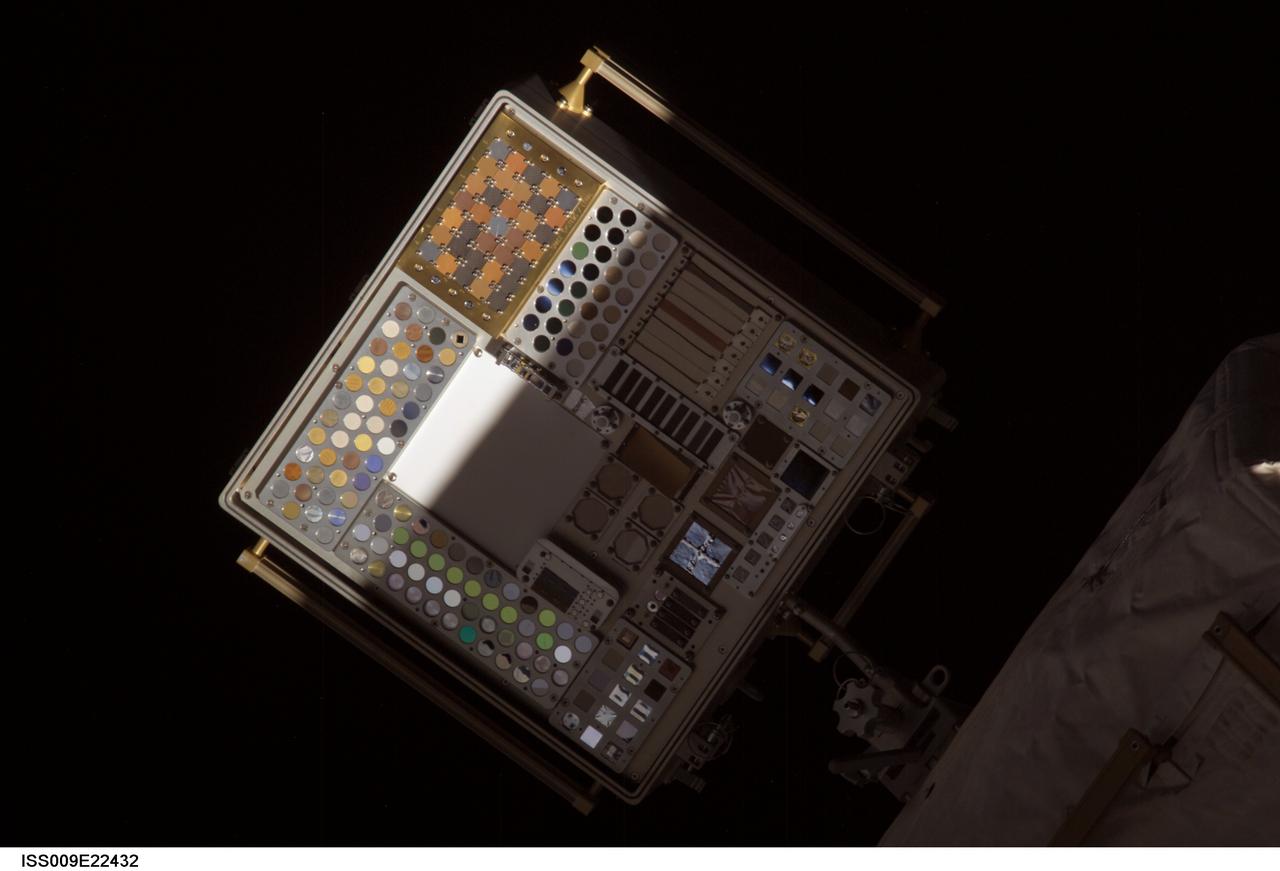
iss009e22432 (9/13/2004) --- A view of the Materials International Space Station Experiment (MISSE) #1, aft side. MISSE is attached to the outside of the Zvezda Service Module (SM). Image taken from the Pirs Docking Compartment forward port window during observation and photography of ISS External Structures on Expedition 9. MISSE-1 and 2 are a test bed for materials and coatings attached to the outside of the ISS is being evaluated for the effects of atomic oxygen, direct sunlight, and extremes of heat and cold. This experiment allows the development and testing of new materials to better withstand the rigors of space environments. Results will provide a better understanding of the durability of various materials when they are exposed to the space environment. Many of the materials may have applications in the design of future spacecraft.
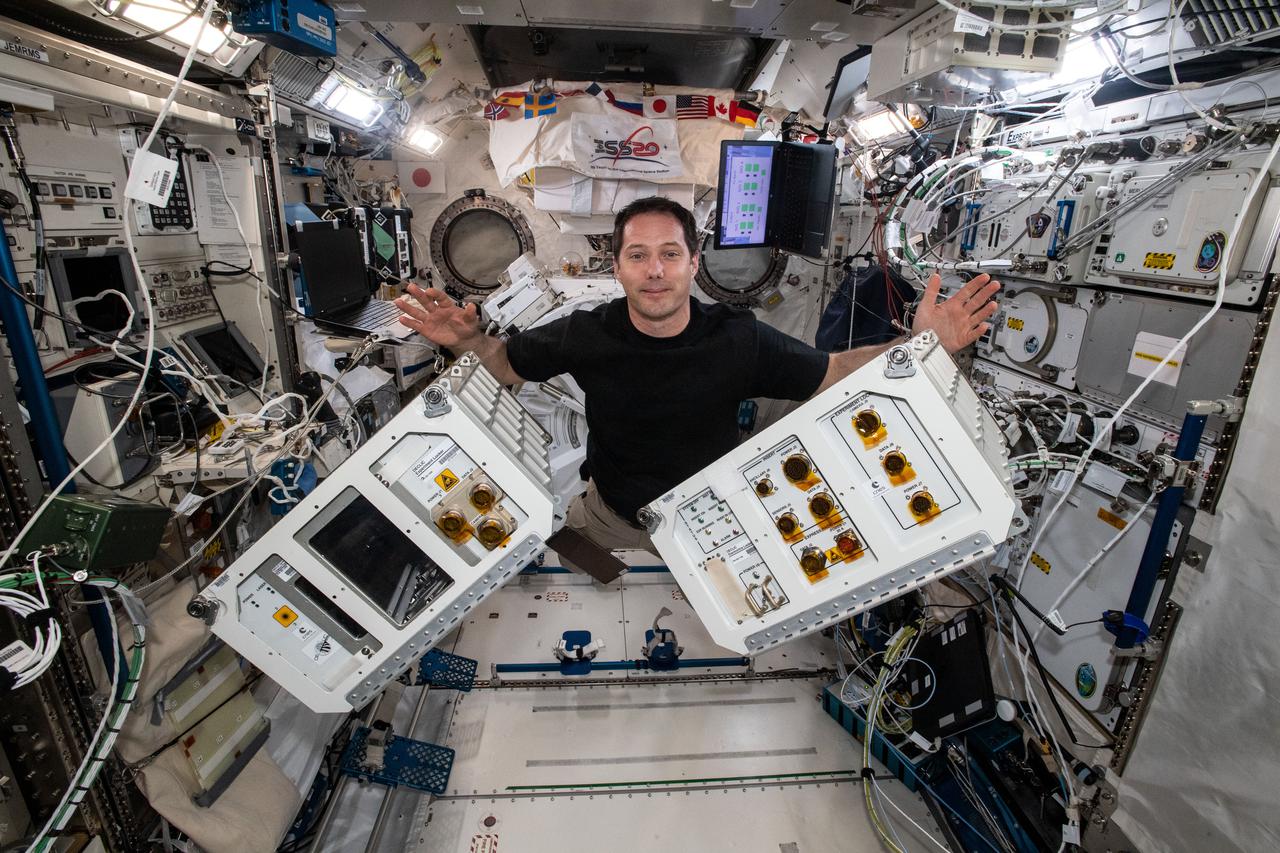
iss065e442803 (10/7/2021) --- European Space Agency (ESA) astronaut Thomas Pesquet gathers fluid physics and materials research hardware inside the International Space Station's Kibo laboratory module. Device for the Study of Critical Liquids and Crystallization (DECLIC) is a multi-user facility developed by the agency Centre National d’Etudes Spatiales (French Space Agency, CNES) and flown in collaboration with NASA. It is designed to support experiments in the fields of fluid physics and materials science. Special inserts allow researchers to study both ambient temperature critical point fluids and high temperature super-critical fluids. Another class of insert studies the dynamics and morphology of the fronts that form as a liquid material solidifies.
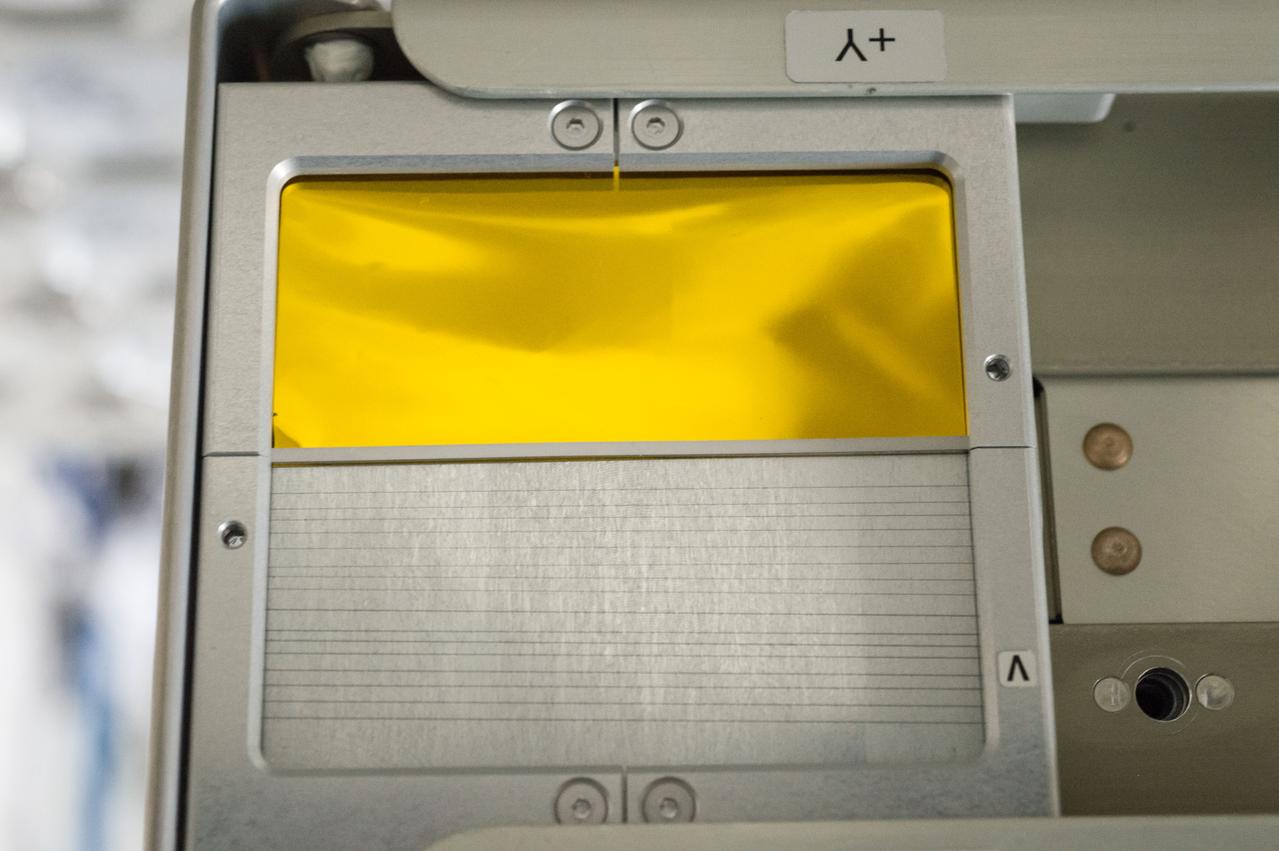
iss045e083552 (10/30/2015) --- Photo documentation of the Carbon Nanotube sample attached to the V position on the Handhold Experiment Platform (HXP) for ExHAM-MDM2 experiment operations aboard the International Space Station (ISS). Space Environment Exposure Experiment of CNT Material for Space Application (Carbon Nanotube) tests an advanced carbon-based material for its ability to withstand the withering radiation of space.