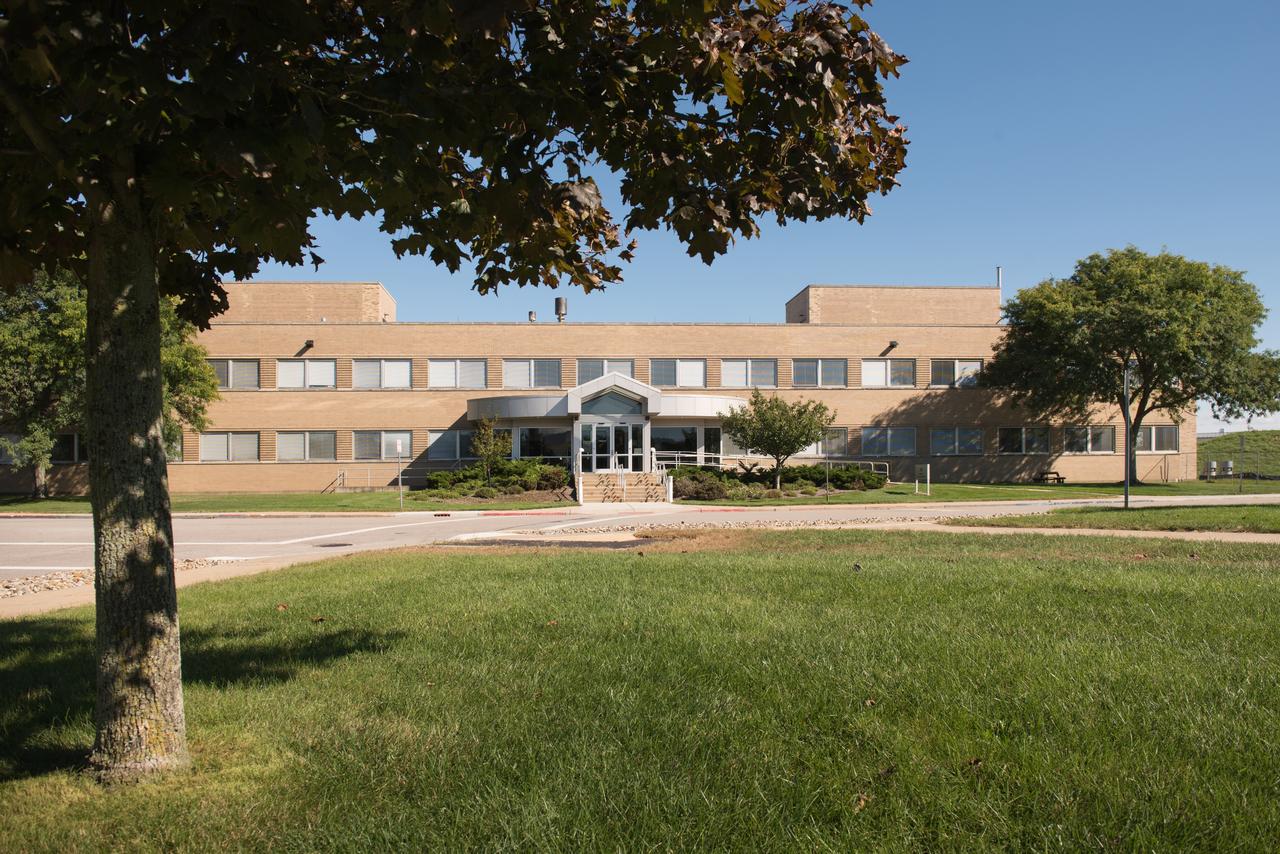
Materials and Structures Laboratory, Building 49
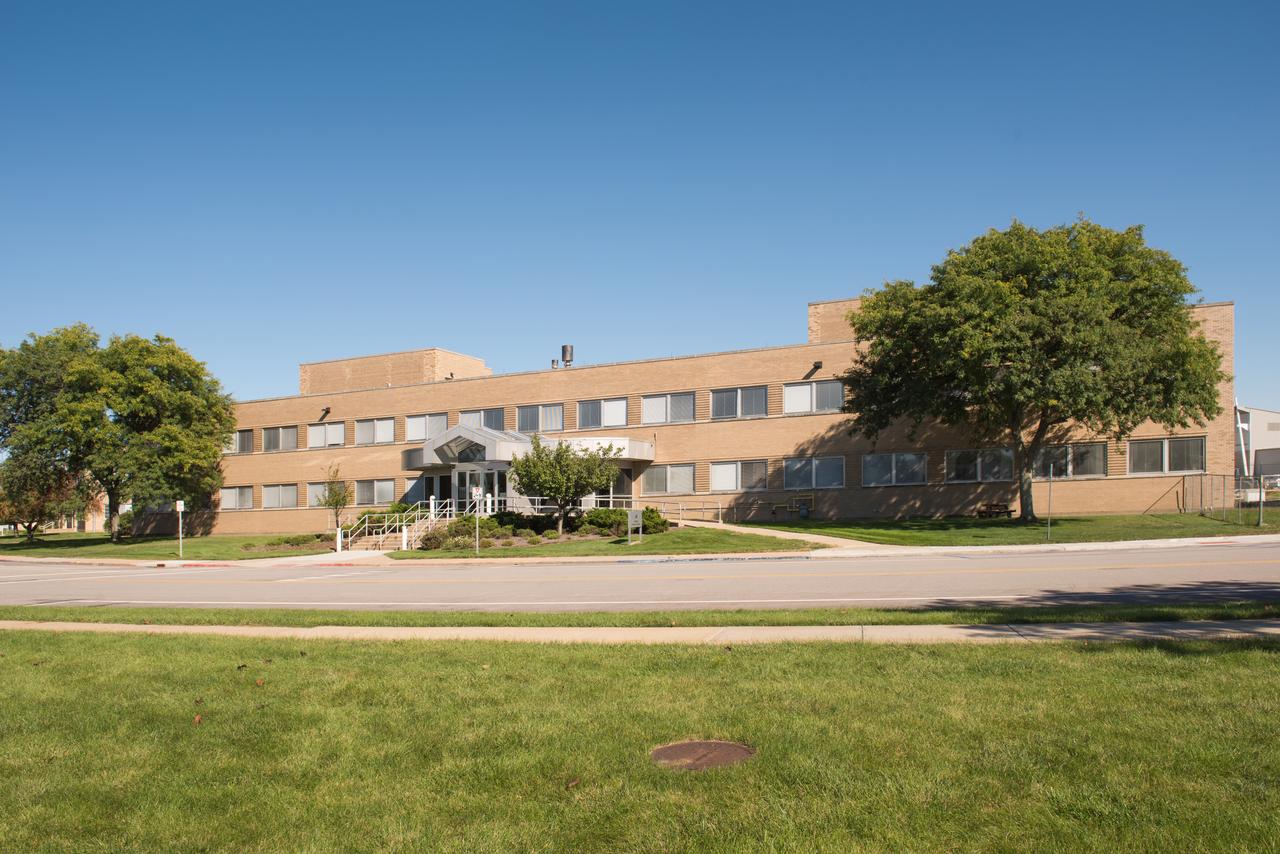
Materials and Structures Laboratory, Building 49
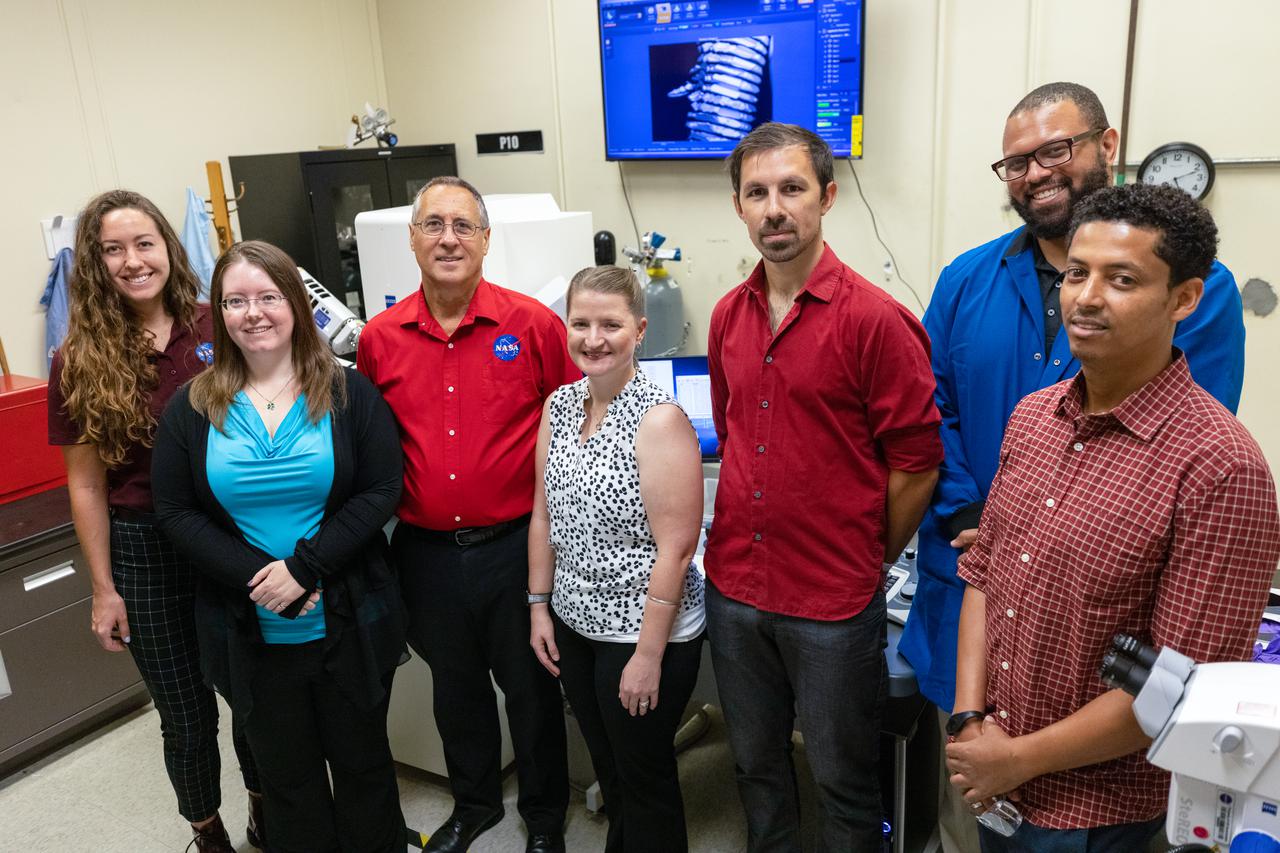
Chemists from NASA Engineering’s Analytical Laboratories at Kennedy Space Center in Florida pose for a photo near a scanning electron microscope on July 7, 2021. From left to right is Macy Mullen, structural materials; Athela Frandsen, structural materials; Philip Howard, lead, structural materials; Janelle Coutts, gas and fluid systems; David Rinderknecht, structural materials; Trey Barnes, Earth biosphere studies; and Misle Tessema, Earth biosphere studies. One of seven branches in the NASA Laboratories, Development, and Testing Division, the Analytical Laboratories branch provides microscopic imagery and analysis through the use of a wide variety of microscopic techniques to identify contaminants and other urgent problems associated with aerospace flight hardware, ground support equipment, and related facilities.
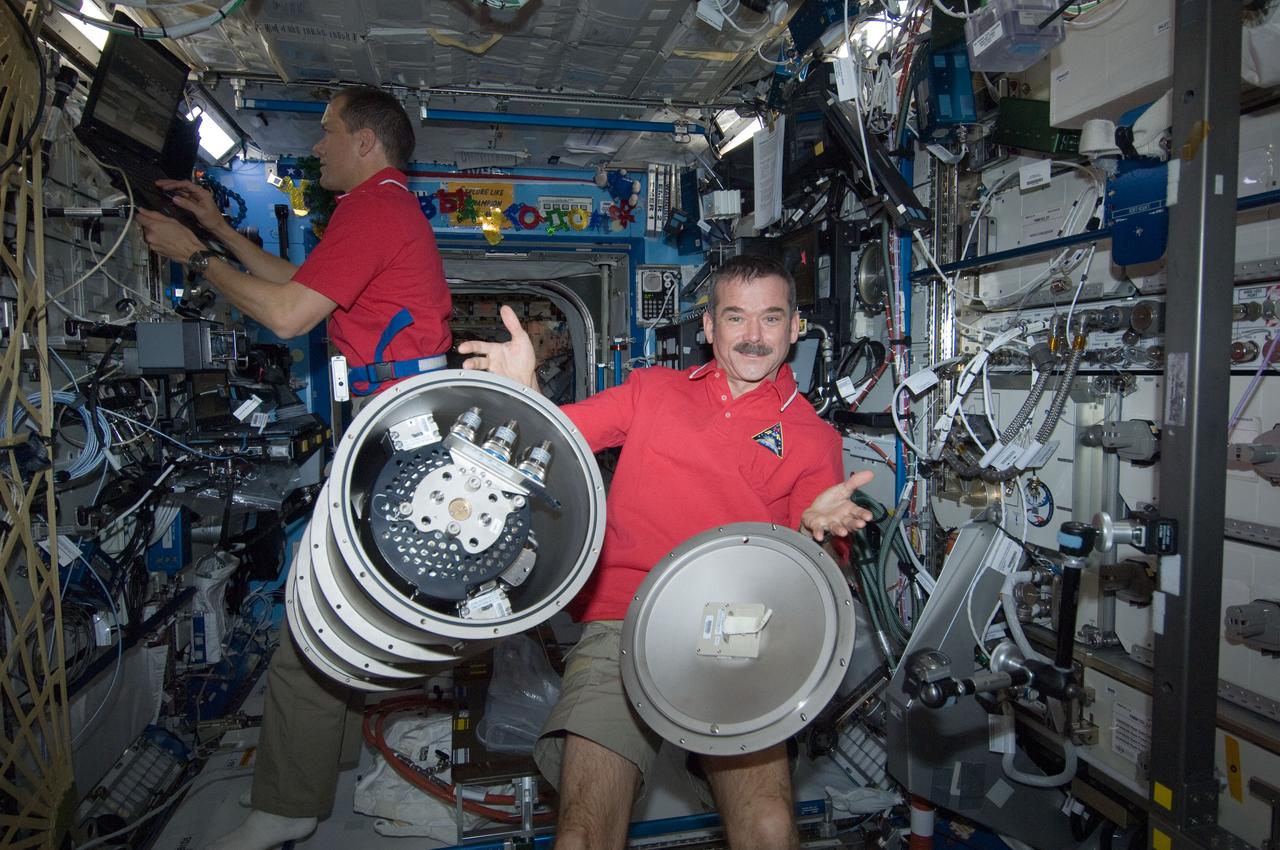
ISS034-E-010603 (28 Dec. 2012) --- Canadian Space Agency astronaut Chris Hadfield, Expedition 34 flight engineer, poses with a Materials Science Laboratory (MSL) Furnace Launch Support Structure (FLSS) in the Destiny laboratory of the International Space Station. NASA astronaut Tom Marshburn, flight engineer, uses a computer in the background.
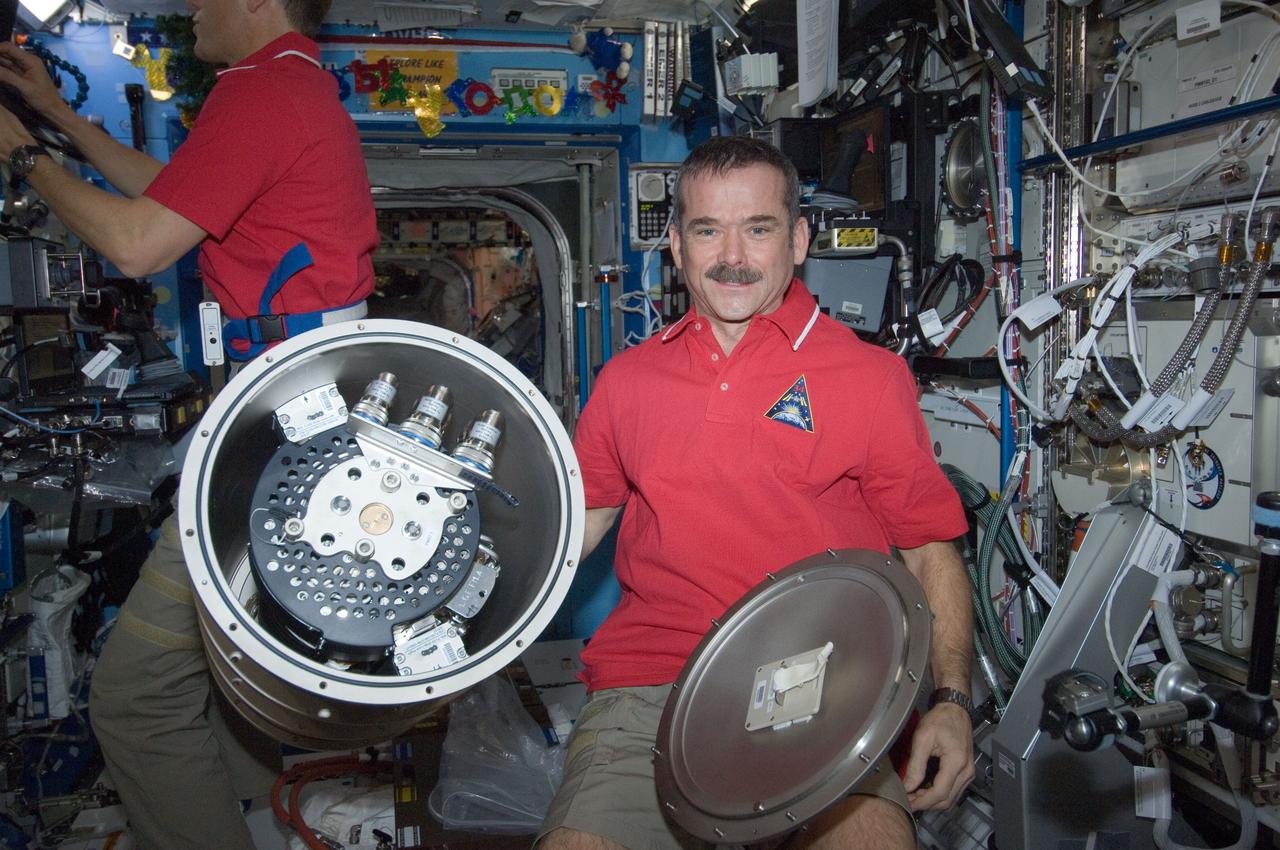
View of Canada Space Agency (CSA) Chris Hadfield, Expedition 34 Flight Engineer (FE), poses with a Materials Science Laboratory (MSL) Furnace Launch Support Structure (FLSS) in the U.S. Laboratory. Tom Marshburn (background), Expedition 34 FE uses laptop computer. Photo was taken during Expedition 34.
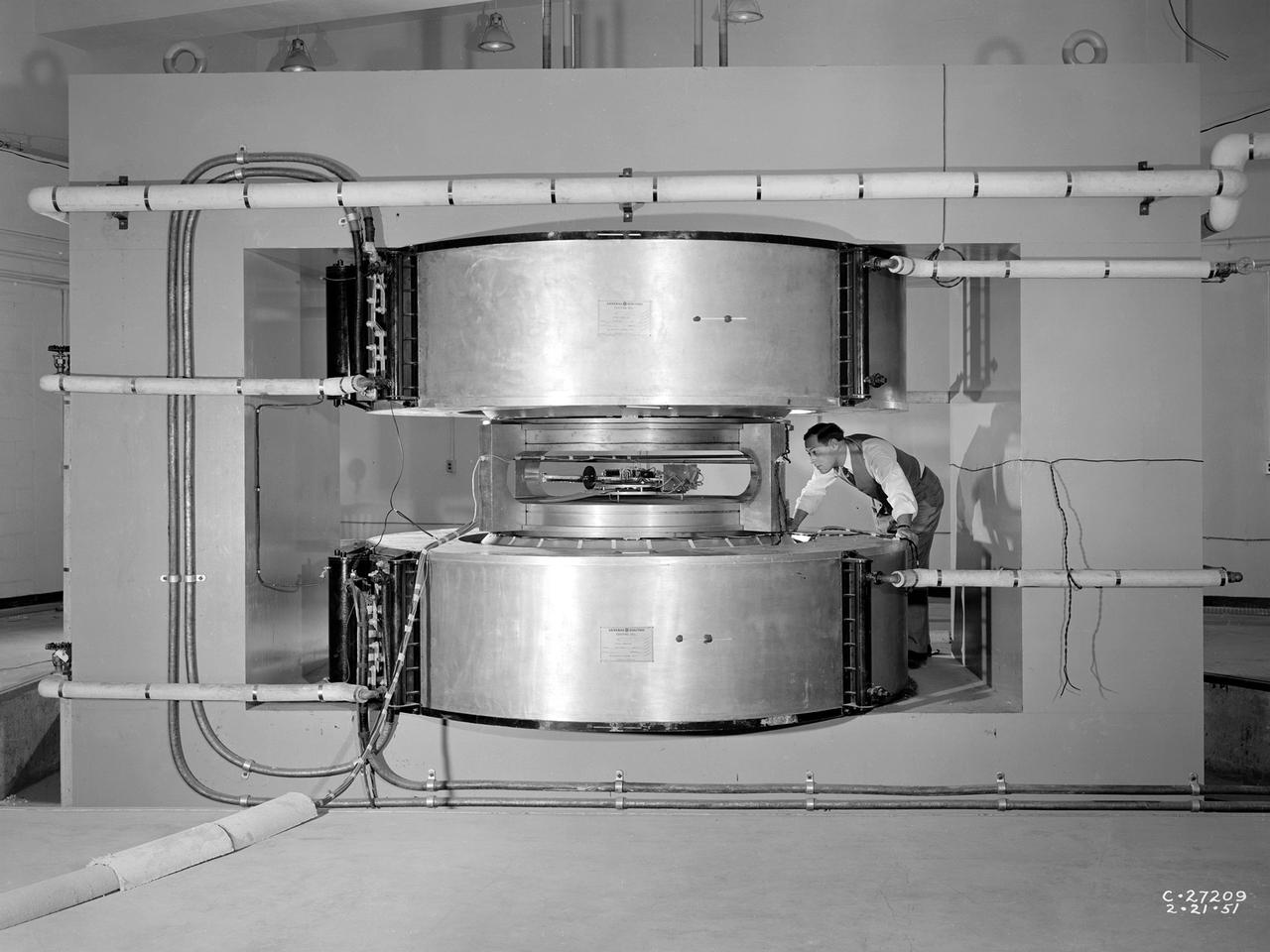
Researcher James Blue examines the new cyclotron at the National Advisory Committee for Aeronautics (NACA) Lewis Flight Propulsion Laboratory. Researchers at NACA Lewis began postulating about the use of atomic power for propulsion immediately after World War II. The NACA concentrated its efforts on the study of high temperature materials and heat transfer since it did not have access to the top secret fission information. The military studied the plausibility of nuclear propulsion for aircraft in the late 1940s. The military program was cancelled after four years without any breakthroughs, but the Atomic Energy Commission took on the effort in 1951. The NACA Lewis laboratory was expanding its nuclear-related research during this period. In 1948, Lewis engineers were assigned to the Oak Ridge National Laboratory to obtain expertise in high temperature heat transfer and advanced materials technology. The following year a new 80-person Nuclear Reactor Division was created, and an in-house nuclear school was established to train these researchers. The cyclotron was built behind the Materials and Structures Laboratory to support thermodynamic and materials research for both nuclear aircraft and nuclear rockets. The original NACA Lewis cyclotron was used to accelerate two kinds of particles. To better match the space radiation environment, the cyclotron was later modified to accelerate particles of the newly-discovered Van Allen radiation belts.
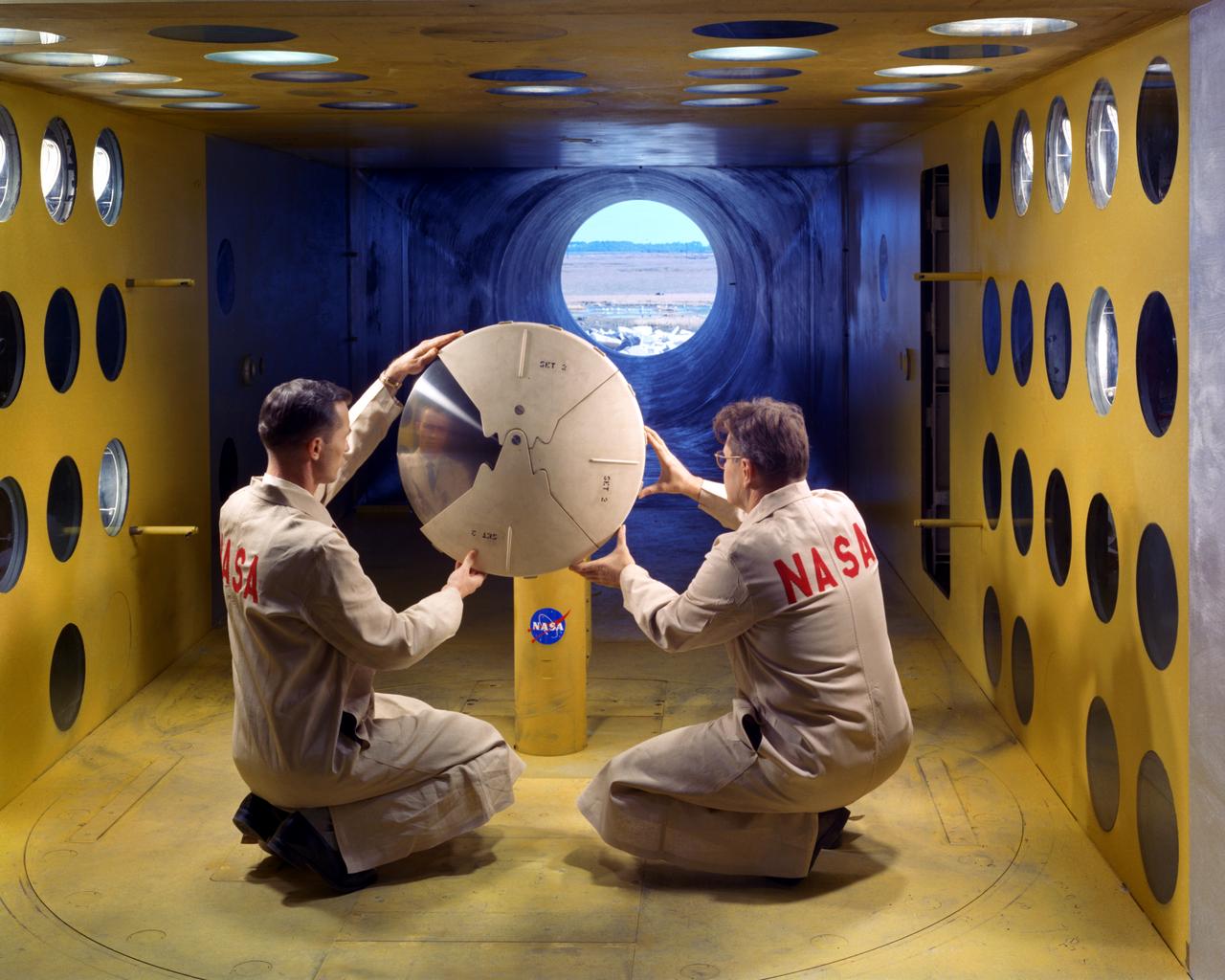
As part of the project FIRE study, technicians ready materials to be subjected to high temperatures that will simulate the effects of re-entry heating. Tests of various space capsule materials for Project FIRE were conducted. Photographed in the 9 X 6 Foot Thermal Structures Tunnel. Photograph published in Winds of Change, 75th Anniversary NASA publication, by James Schultz (page 78). Photograph also published in Engineer in Charge: A History of the Langley Aeronautical Laboratory, 1917-1958 by James R. Hansen (page 476). Also Published in the book " A Century at Langley" by Joseph Chambers. Pg. 92
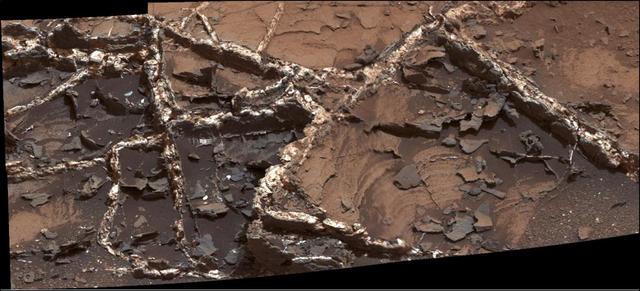
Prominent mineral veins at the "Garden City" site examined by NASA's Curiosity Mars rover vary in thickness and brightness, as seen in this image from Curiosity's Mast Camera (Mastcam). The image covers and area roughly 2 feet (60 centimeters) across. Types of vein material evident in the area include: 1) thin, dark-toned fracture filling material; 2) thick, dark-toned vein material in large fractures; 3) light-toned vein material, which was deposited last. Figure 1 includes annotations identifying each of those three major kinds and a scale bar indicating 10 centimeters (3.9 inches). Researchers used the Mastcam and other instruments on Curiosity in March and April 2015 to study the structure and composition of mineral veins at Garden City, for information about fluids that deposited minerals in fractured rock there. Malin Space Science Systems, San Diego, built and operates Curiosity's Mastcam. NASA's Jet Propulsion Laboratory, a division of the California Institute of Technology, Pasadena, built the rover and manages the project for NASA's Science Mission Directorate, Washington. http://photojournal.jpl.nasa.gov/catalog/PIA19922
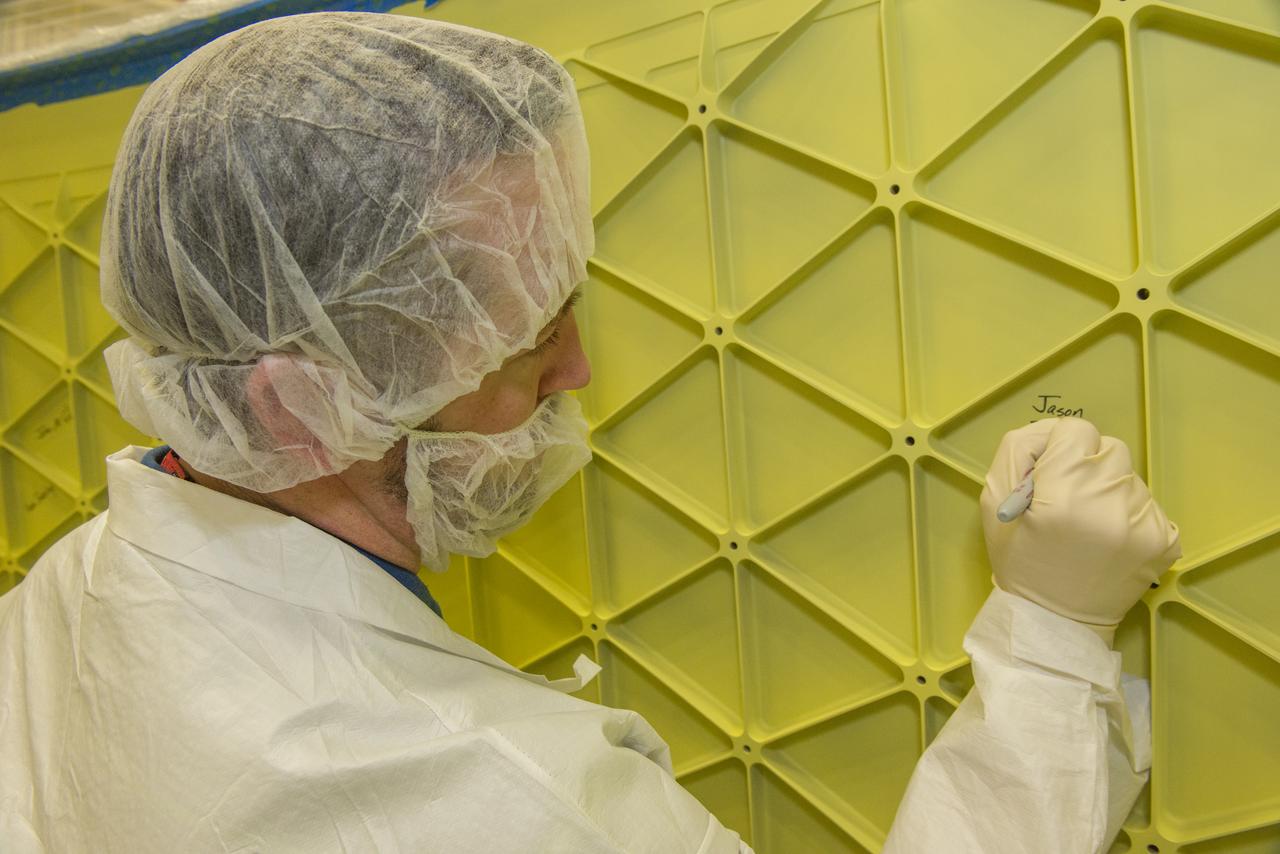
JASON ELDRIDGE, AN ERC INCORPORATED EMPLOYEE SUPPORTING THE MATERIALS & PROCESSES LABORATORY AT NASA'S MARSHALL SPACE FLIGHT CENTER, SIGNS HIS NAME ON THE INTERIOR OF THE ADAPTER THAT WILL CONNECT THE ORION SPACECRAFT TO A UNITED LAUNCH ALLIANCE DELTA IV ROCKET FOR EXPLORATION FLIGHT TEST (EFT)-1. MARSHALL CENTER TEAM MEMBERS WHO WERE INVOLVED IN THE DESIGN, CONSTRUCTION AND TESTING OF THE ADAPTER HAD THE OPPORTUNITY TO AUTOGRAPH IT BEFORE THE HARDWARE IS SHIPPED TO NASA'S KENNEDY SPACE CENTER IN FEBRUARY. ELDRIDGE WAS ON A TEAM THAT PERFORMED ULTRASONIC INSPECTIONS ON THE ADAPTER'S WELDS -- ENSURING THEY ARE STRUCTURALLY SOUND. EFT-1, SCHEDULED FOR 2014, WILL PROVIDE EARLY EXPERIENCE FOR NASA SPACE LAUNCH SYSTEM (SLS) HARDWARE AHEAD OF THE ROCKET'S FIRST FLIGHT IN 2017.
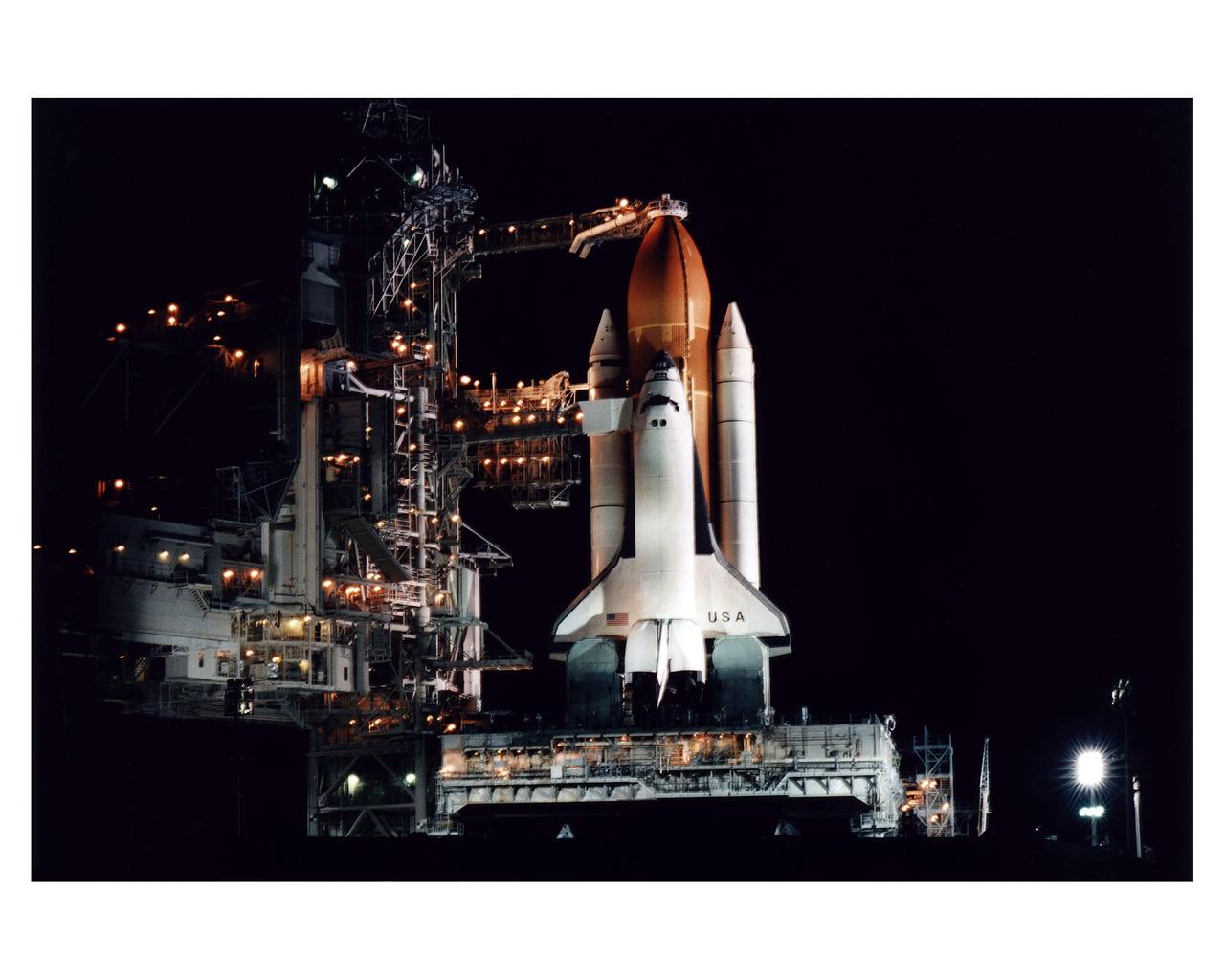
The Space Shuttle Columbia stands poised in the night for the STS-83 Microgravity Science Laboratory-1 (MSL-1) mission after the Rotating Service Structure of Launch Pad 39A has been moved back prior to the start of fueling operations that take place about 12 hours before liftoff. During the scheduled 16-day STS-83 mission, the MSL-1 will be used to test some of the hardware, facilities and procedures that are planned for use on the International Space Station as well as research in combustion, protein crystal growth and materials processing experiments

The Space Shuttle Columbia stands poised in the night for the STS-83 Microgravity Science Laboratory-1 (MSL-1) mission after the Rotating Service Structure of Launch Pad 39A has been moved back prior to the start of fueling operations that take place about 12 hours before liftoff. During the scheduled 16-day STS-83 mission, the MSL-1 will be used to test some of the hardware, facilities and procedures that are planned for use on the International Space Station as well as research in combustion, protein crystal growth and materials processing experiments
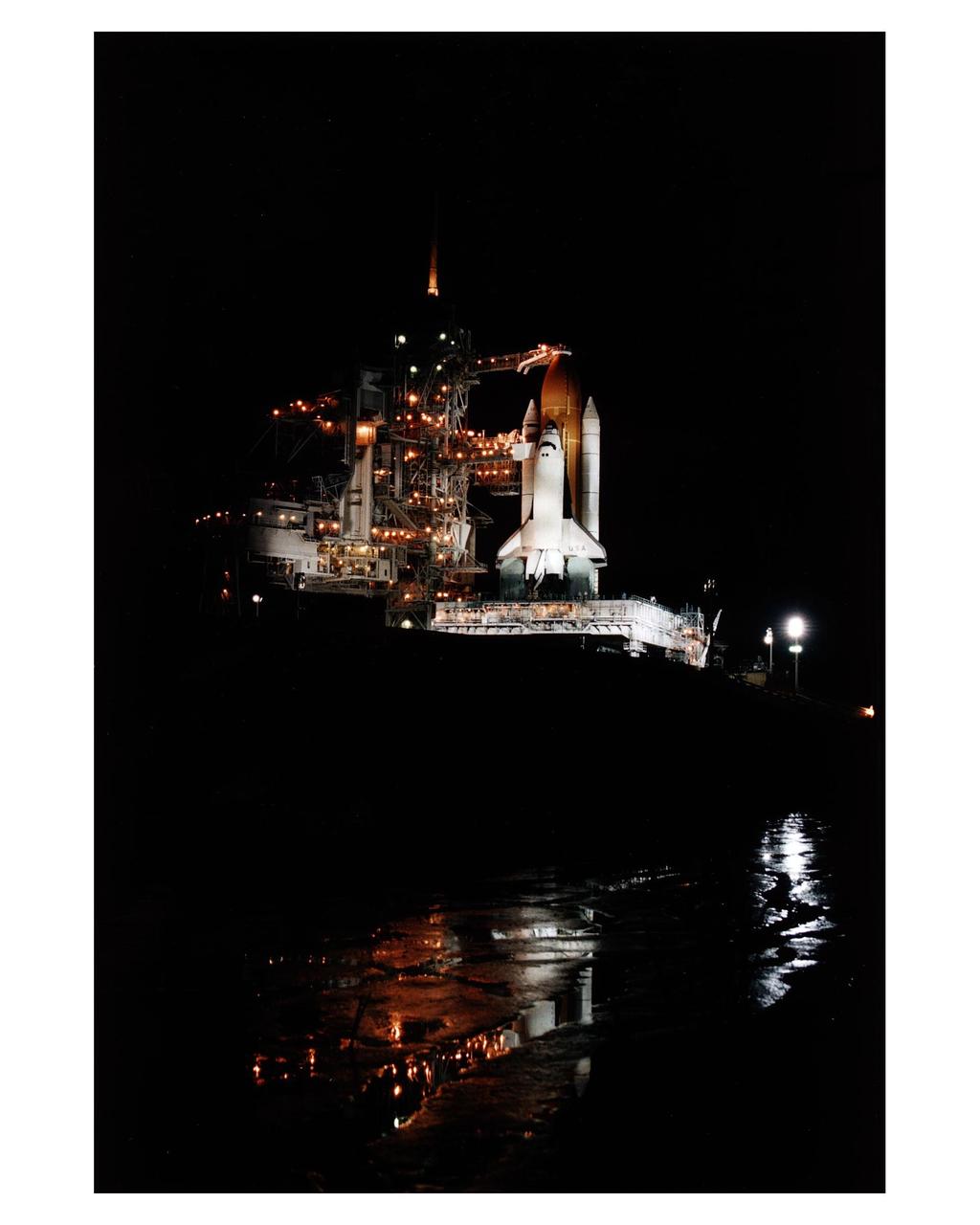
The Space Shuttle Columbia stands poised in the night for the STS-83 Microgravity Science Laboratory-1 (MSL-1) mission after the Rotating Service Structure of Launch Pad 39A has been moved back prior to the start of fueling operations that take place about 12 hours before liftoff. During the scheduled 16-day STS-83 mission, the MSL-1 will be used to test some of the hardware, facilities and procedures that are planned for use on the International Space Station as well as research in combustion, protein crystal growth and materials processing experiments
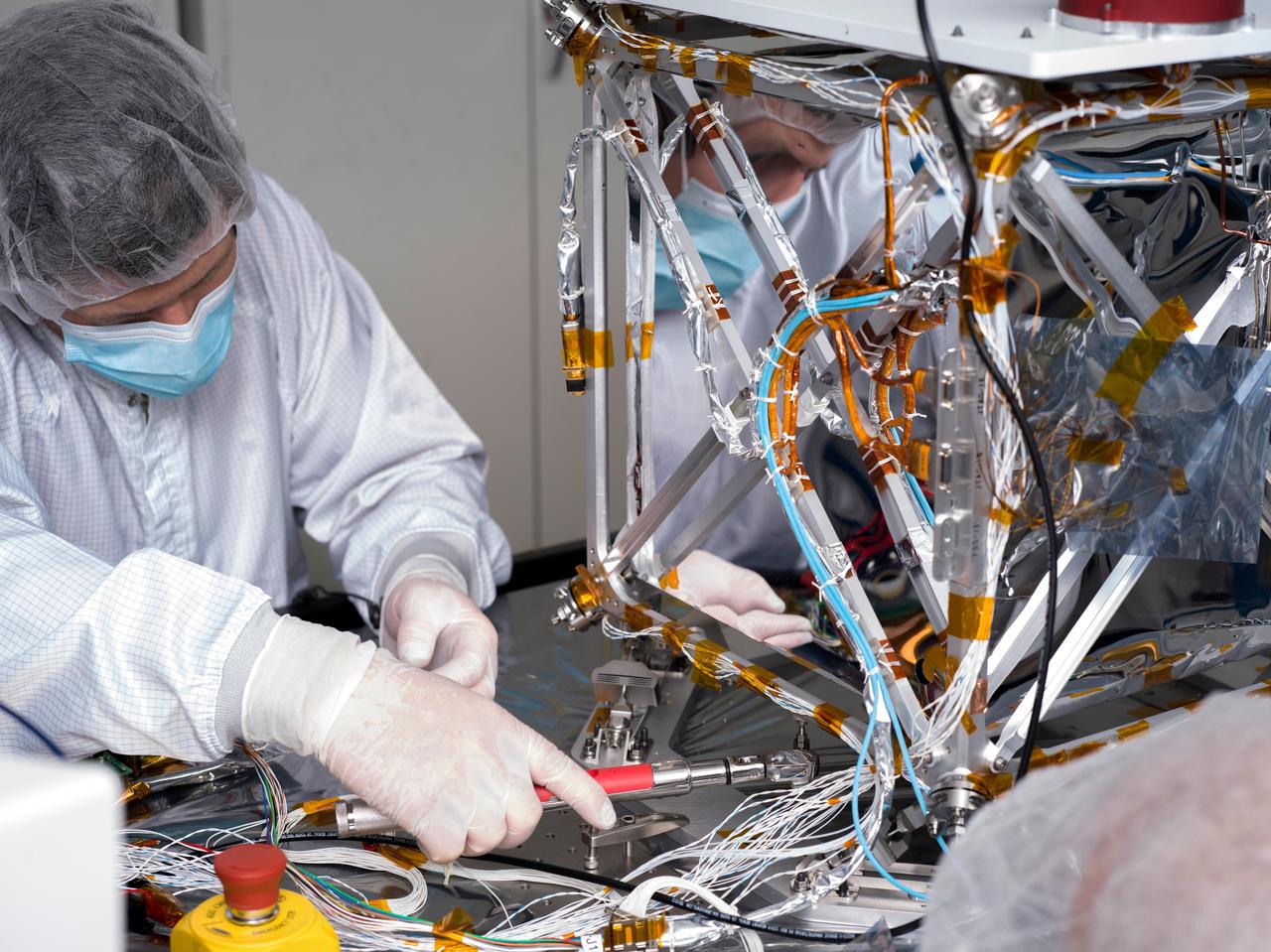
In a clean room at NASA's Jet Propulsion Laboratory in Southern California in March 2024, technician Nik Schwarz prepares the agency's Farside Seismic Suite (FSS) for testing. The cube-shaped payload contains two instruments that will gather NASA's first seismic data from the Moon in nearly 50 years and take the first-ever seismic measurements from the Moon's far side. FSS will operate continuously for at least 4½ months, working through the long, cold lunar nights. The two seismometers are packaged together with a large battery, a computer, and electronics inside a cube structure that's surrounded by several layers of insulation (the shiny, reflective material seen here) and suspended within an outer protective cube, which is in turn covered with a shiny insulating blanket. A technician is here attaching a stiffening brace to the bottom of the FSS outer cube structure. https://photojournal.jpl.nasa.gov/catalog/PIA26341
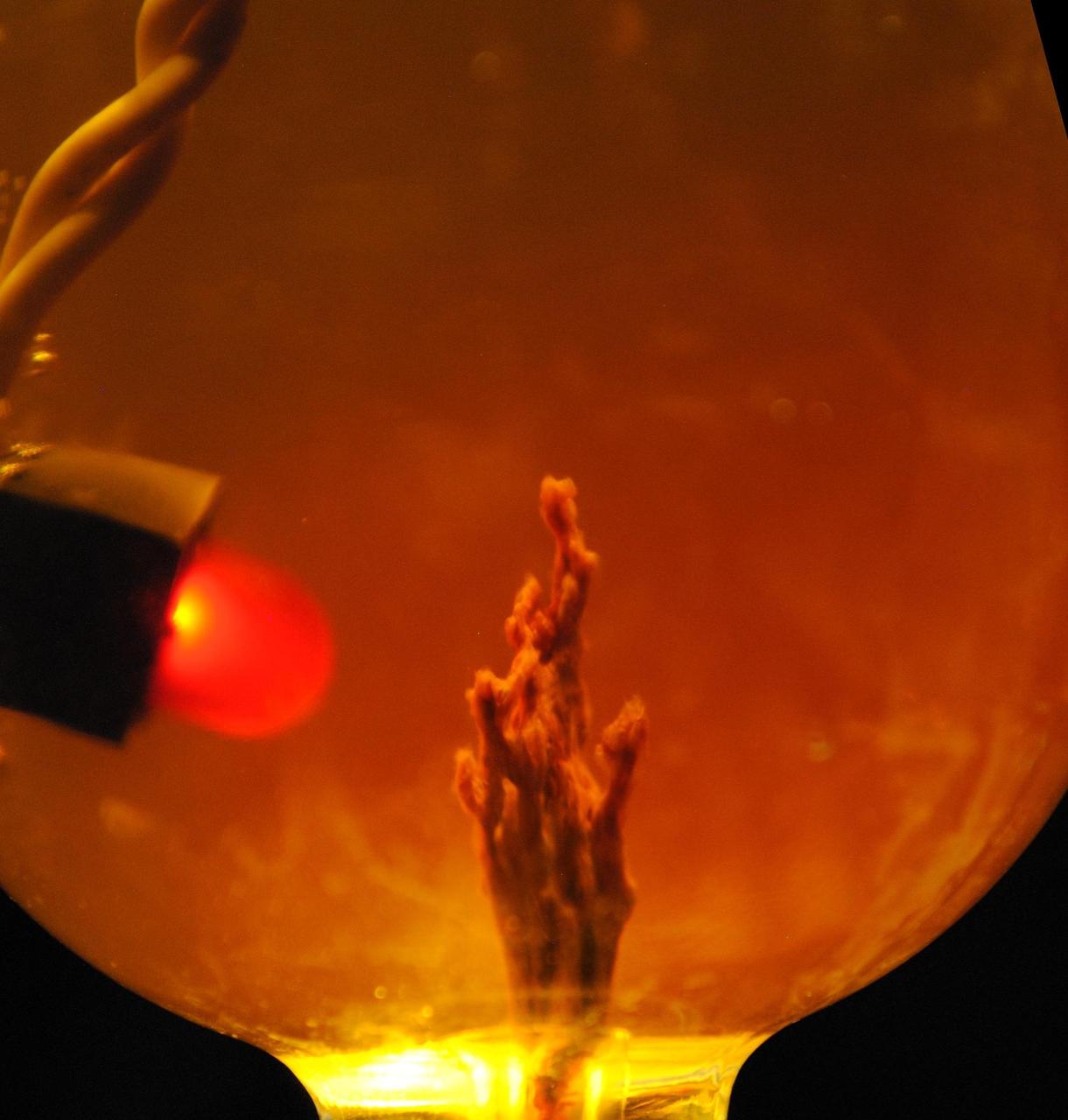
This photo simulation shows a laboratory-created "chemical garden," which is a chimney-like structure found at bubbling vents on the seafloor. Some researchers think life on Earth might have got its start at structures like these billions of years ago, partly due to their ability to transfer electrical currents -- an essential trait of life as we know it. The battery-like property of these chemical gardens was demonstrated by linking several together in series to light an LED (light-emitting diode) bulb. In this photo simulation, the bulb is not really attached to the chimney. The chimney membranes are made of iron sulfides and iron hydroxides, geologic materials that conduct electrons. JPL's research team is part of the Icy Worlds team of the NASA Astrobiology Institute, based at NASA's Ames Research Center in Moffett Field, California. JPL is managed by the California Institute of Technology in Pasadena for NASA. http://photojournal.jpl.nasa.gov/catalog/PIA19834

CAPE CANAVERAL, Fla. – Howard Eisen, ISS RapidScat project manager, NASA Jet Propulsion Laboratory, briefs media representatives in Kennedy Space Center’s Press Site auditorium in preparation for the launch of the SpaceX CRS-4 mission to resupply the International Space Station. Eisen is a member of the ISS Earth Science: Tracking Ocean Winds Panel. The mission is the fourth of 12 SpaceX flights NASA contracted with the company to resupply the space station. It will be the fifth trip by a Dragon spacecraft to the orbiting laboratory. The spacecraft’s 2.5 tons of supplies, science experiments, and technology demonstrations include critical materials to support 255 science and research investigations that will occur during the station's Expeditions 41 and 42. Liftoff is targeted for an instantaneous window at 2:14 a.m. EDT. To learn more about the mission, visit http://www.nasa.gov/mission_pages/station/structure/launch/index.html. Photo credit: NASA/Jim Grossmann
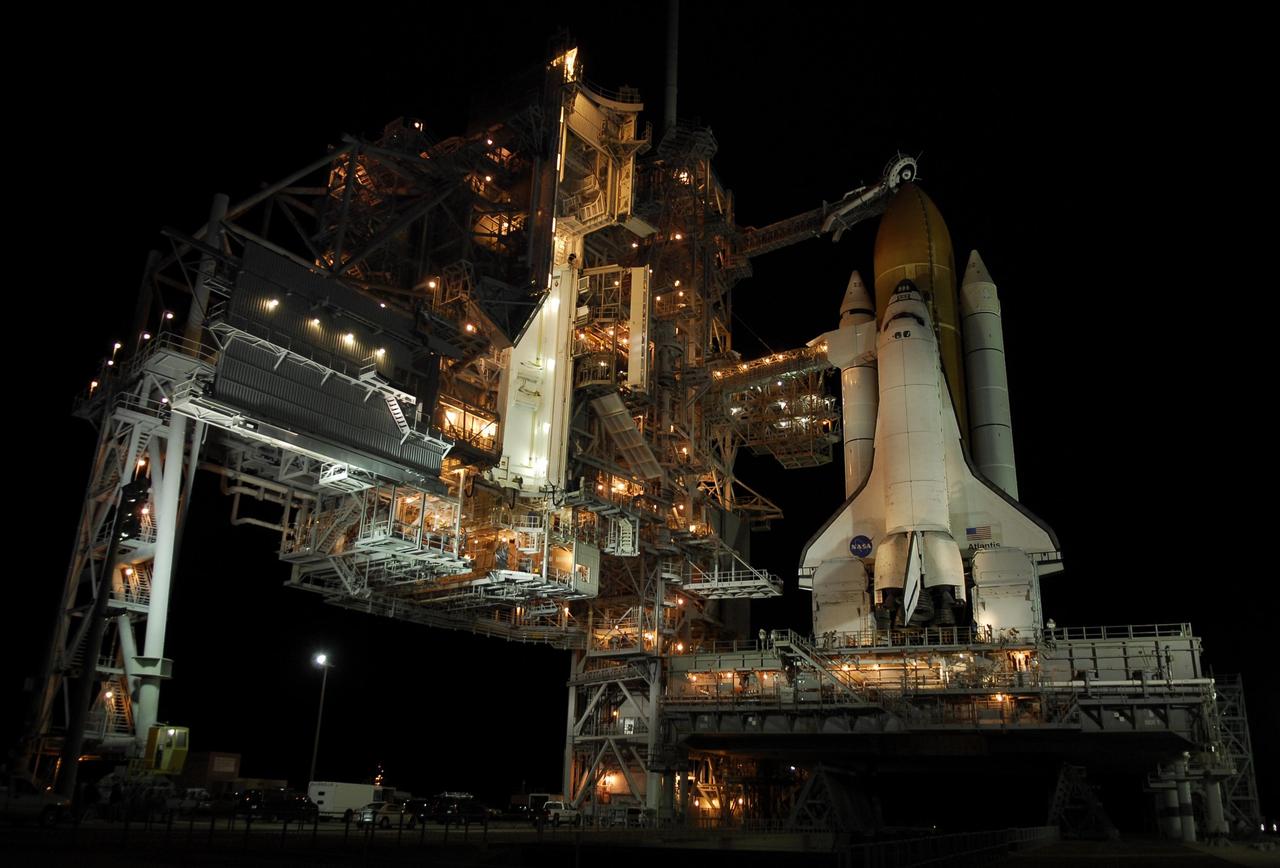
KENNEDY SPACE CENTER, FLA. -- Space shuttle Atlantis is revealed on Launch Pad 39A at NASA's Kennedy Space Center after the rotating service structure, or RSS, at left of the pad is rolled back. Rollback was complete at 8:44 p.m. EST. The RSS provides protected access to the orbiter for crew entry and servicing of payloads at the pad. Rollback of the pad's RSS is one of the milestones in preparation for the launch of mission STS-122, scheduled for 4:31 p.m. EST on Dec. 6. Beneath the shuttle is the mobile launcher platform which supports the shuttle until liftoff. Atlantis will carry the Columbus Laboratory, the European Space Agency's largest contribution to the construction of the International Space Station. It will support scientific and technological research in a microgravity environment. Permanently attached to Node 2 of the space station, the laboratory will carry out experiments in materials science, fluid physics and biosciences, as well as perform a number of technological applications. Photo credit: NASA/Kim Shiflett
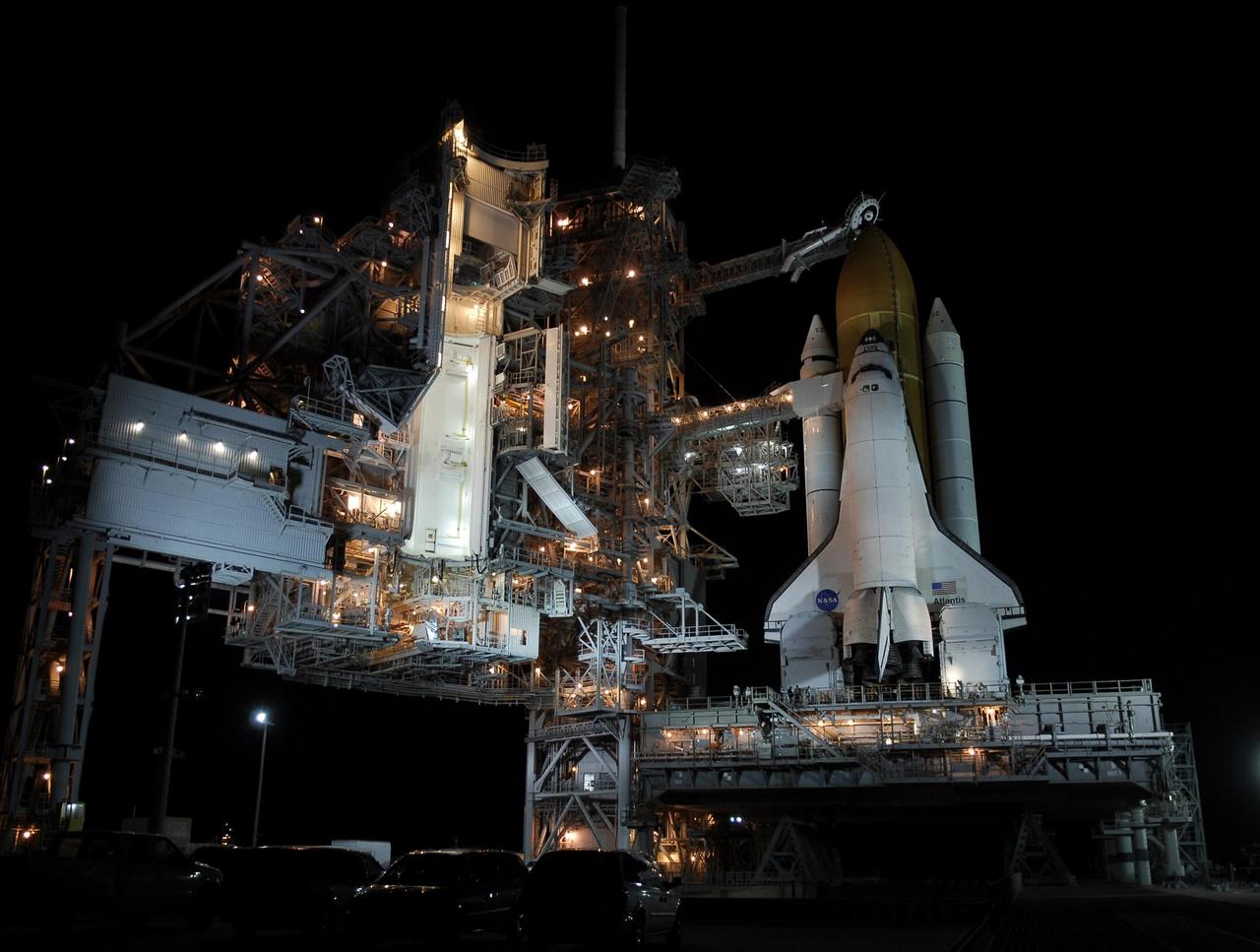
KENNEDY SPACE CENTER, FLA. -- Space shuttle Atlantis is revealed on Launch Pad 39A at NASA's Kennedy Space Center after the rotating service structure, or RSS, at left of the pad is rolled back. Rollback was complete at 8:44 p.m. EST. The RSS provides protected access to the orbiter for crew entry and servicing of payloads at the pad. Rollback of the pad's RSS is one of the milestones in preparation for the launch of mission STS-122, scheduled for 4:31 p.m. EST on Dec. 6. Beneath the shuttle is the mobile launcher platform which supports the shuttle until liftoff. Atlantis will carry the Columbus Laboratory, the European Space Agency's largest contribution to the construction of the International Space Station. It will support scientific and technological research in a microgravity environment. Permanently attached to Node 2 of the space station, the laboratory will carry out experiments in materials science, fluid physics and biosciences, as well as perform a number of technological applications. Photo credit: NASA/Kim Shiflett
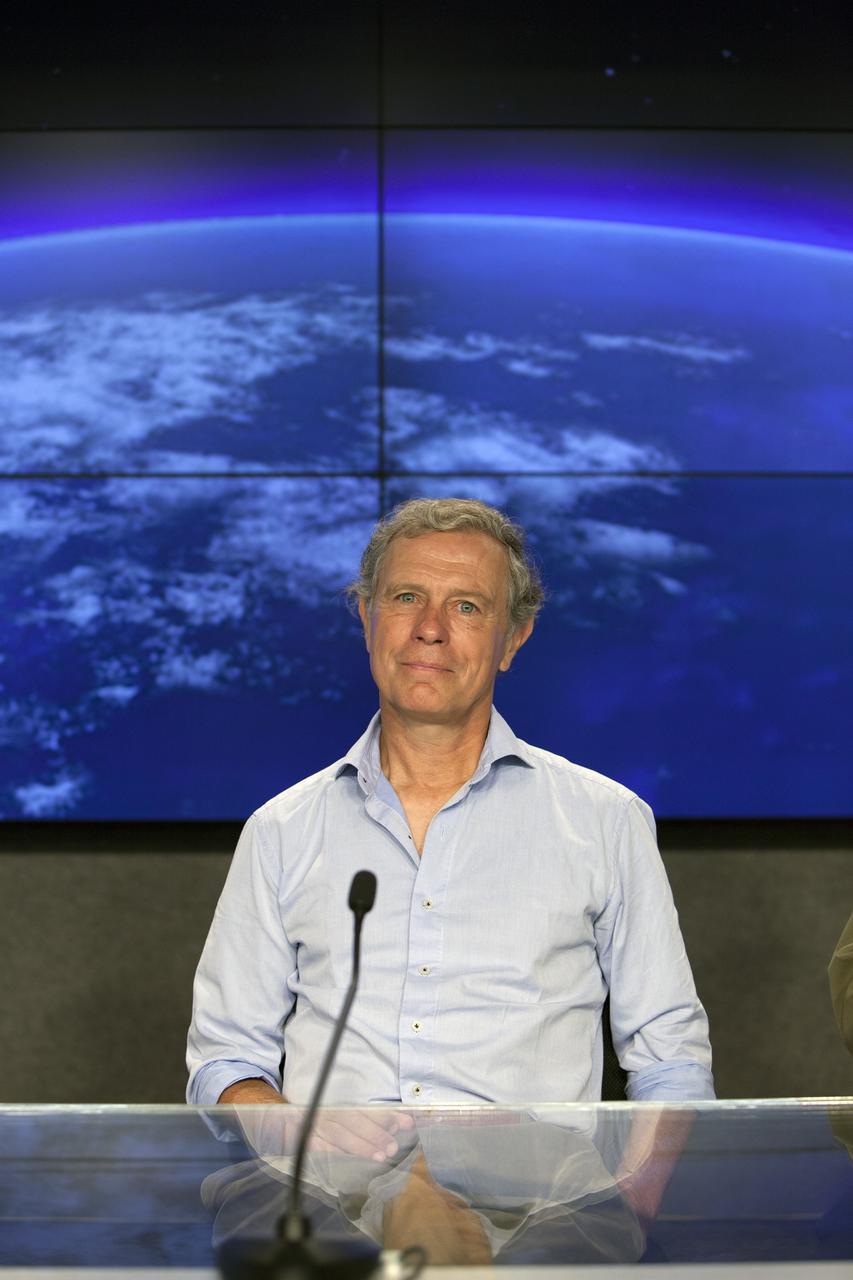
CAPE CANAVERAL, Fla. – Ernesto Rodriquez, ISS RapidScat project scientist, NASA Jet Propulsion Laboratory, briefs media representatives in Kennedy Space Center’s Press Site auditorium in preparation for the launch of the SpaceX CRS-4 mission to resupply the International Space Station. Rodriquez is a member of the ISS Earth Science: Tracking Ocean Winds Panel. The mission is the fourth of 12 SpaceX flights NASA contracted with the company to resupply the space station. It will be the fifth trip by a Dragon spacecraft to the orbiting laboratory. The spacecraft’s 2.5 tons of supplies, science experiments, and technology demonstrations include critical materials to support 255 science and research investigations that will occur during the station's Expeditions 41 and 42. Liftoff is targeted for an instantaneous window at 2:14 a.m. EDT. To learn more about the mission, visit http://www.nasa.gov/mission_pages/station/structure/launch/index.html. Photo credit: NASA/Jim Grossmann
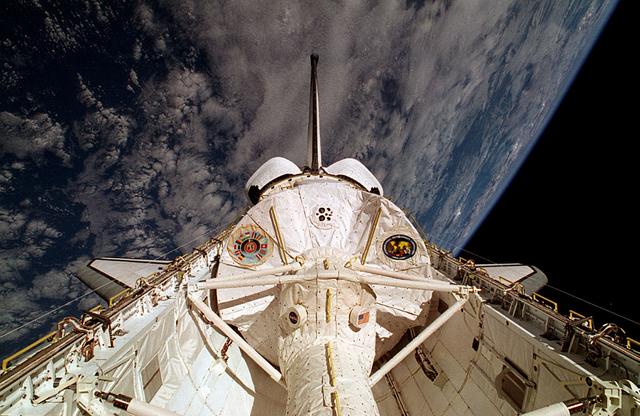
This is a Space Shuttle Columbia (STS-65) onboard photo of the second International Microgravity Laboratory (IML-2) in the cargo bay with Earth in the background. Mission objectives of IML-2 were to conduct science and technology investigations that required the low-gravity environment of space, with emphasis on experiments that studied the effects of microgravity on materials processes and living organisms. Materials science and life sciences are two of the most exciting areas of microgravity research because discoveries in these fields could greatly enhance the quality of life on Earth. If the structure of certain proteins can be determined by examining high-quality protein crystals grown in microgravity, advances can be made to improve the treatment of many human diseases. Electronic materials research in space may help us refine processes and make better products, such as computers, lasers, and other high-tech devices. The 14-nation European Space Agency (ESA), the Canadian Space Agency (SCA), the French National Center for Space Studies (CNES), the German Space Agency and the German Aerospace Research Establishment (DARA/DLR), and the National Space Development Agency of Japan (NASDA) participated in developing hardware and experiments for the IML missions. The missions were managed by NASA's Marshall Space Flight Center. The Orbiter Columbia was launched from the Kennedy Space Center on July 8, 1994 for the IML-2 mission.
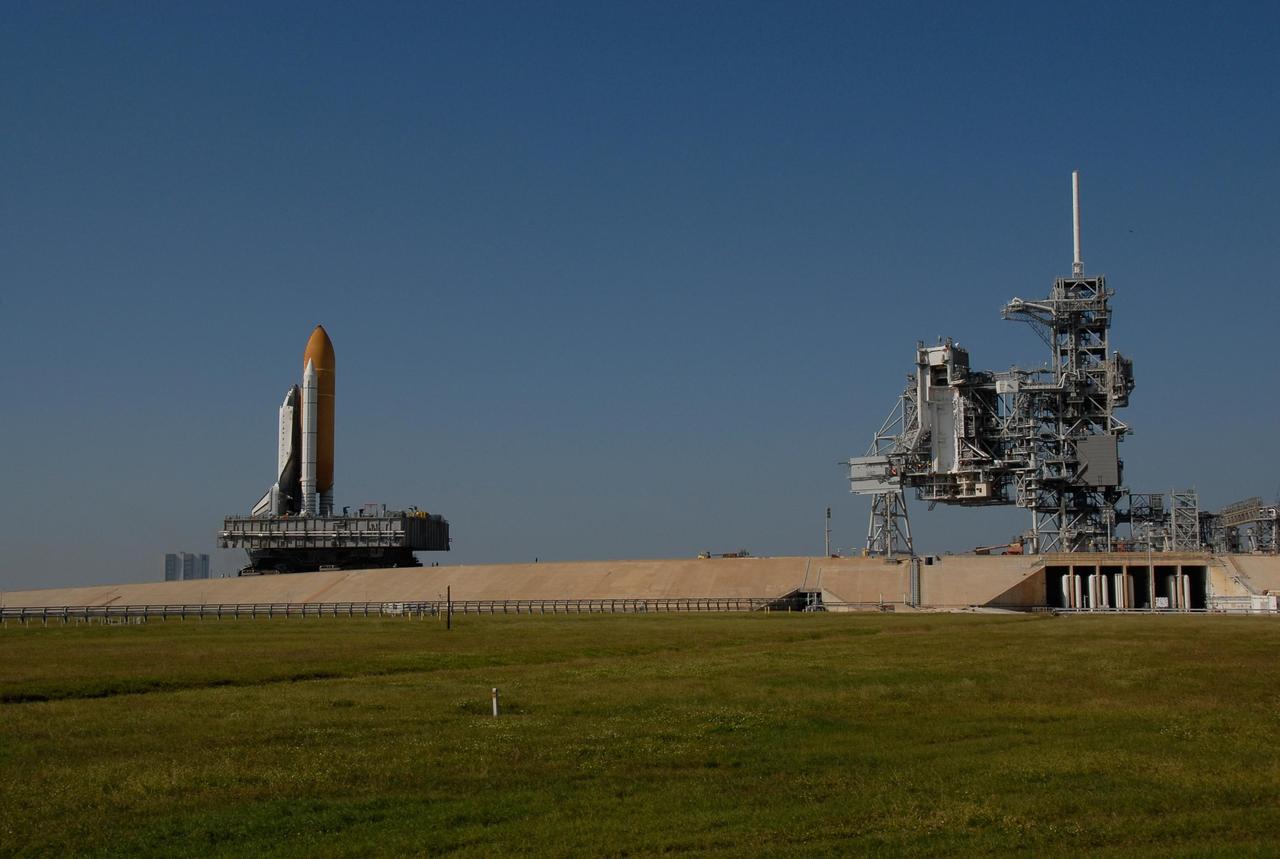
KENNEDY SPACE CENTER, FLA. -- Space Shuttle Atlantis, secured atop a mobile launch platform, ascends the five percent grade to the top of the hardstand on Launch Pad 39A. The rotating service structure, adjoined to the fixed service structure at right, has been rolled back in preparation for the shuttle's arrival. First motion out of the Vehicle Assembly Building was at 4:43 a.m. EST, and the shuttle was hard down on the pad at 11:51 a.m. Rollout is a milestone for Atlantis' launch to the International Space Station on mission STS-122, targeted for Dec. 6. On this mission, Atlantis will deliver the Columbus module to the International Space Station. The European Space Agency's largest contribution to the station, Columbus is a multifunctional, pressurized laboratory that will be permanently attached to U.S. Node 2, called Harmony. The module is approximately 23 feet long and 15 feet wide, allowing it to hold 10 large racks of experiments. The laboratory will expand the research facilities aboard the station, providing crew members and scientists from around the world the ability to conduct a variety of experiments in the physical, materials and life sciences. Photo credit: NASA/Kim Shiflett

KENNEDY SPACE CENTER, FLA. -- Space Shuttle Atlantis, secured atop a mobile launch platform, ascends the five percent grade to the top of the hardstand on Launch Pad 39A. The rotating service structure, adjoined to the fixed service structure at left, has been rolled back in preparation for the shuttle's arrival. First motion out of the Vehicle Assembly Building was at 4:43 a.m. EST, and the shuttle was hard down on the pad at 11:51 a.m. Rollout is a milestone for Atlantis' launch to the International Space Station on mission STS-122, targeted for Dec. 6. On this mission, Atlantis will deliver the Columbus module to the International Space Station. The European Space Agency's largest contribution to the station, Columbus is a multifunctional, pressurized laboratory that will be permanently attached to U.S. Node 2, called Harmony. The module is approximately 23 feet long and 15 feet wide, allowing it to hold 10 large racks of experiments. The laboratory will expand the research facilities aboard the station, providing crew members and scientists from around the world the ability to conduct a variety of experiments in the physical, materials and life sciences. Photo credit: NASA/Kim Shiflett
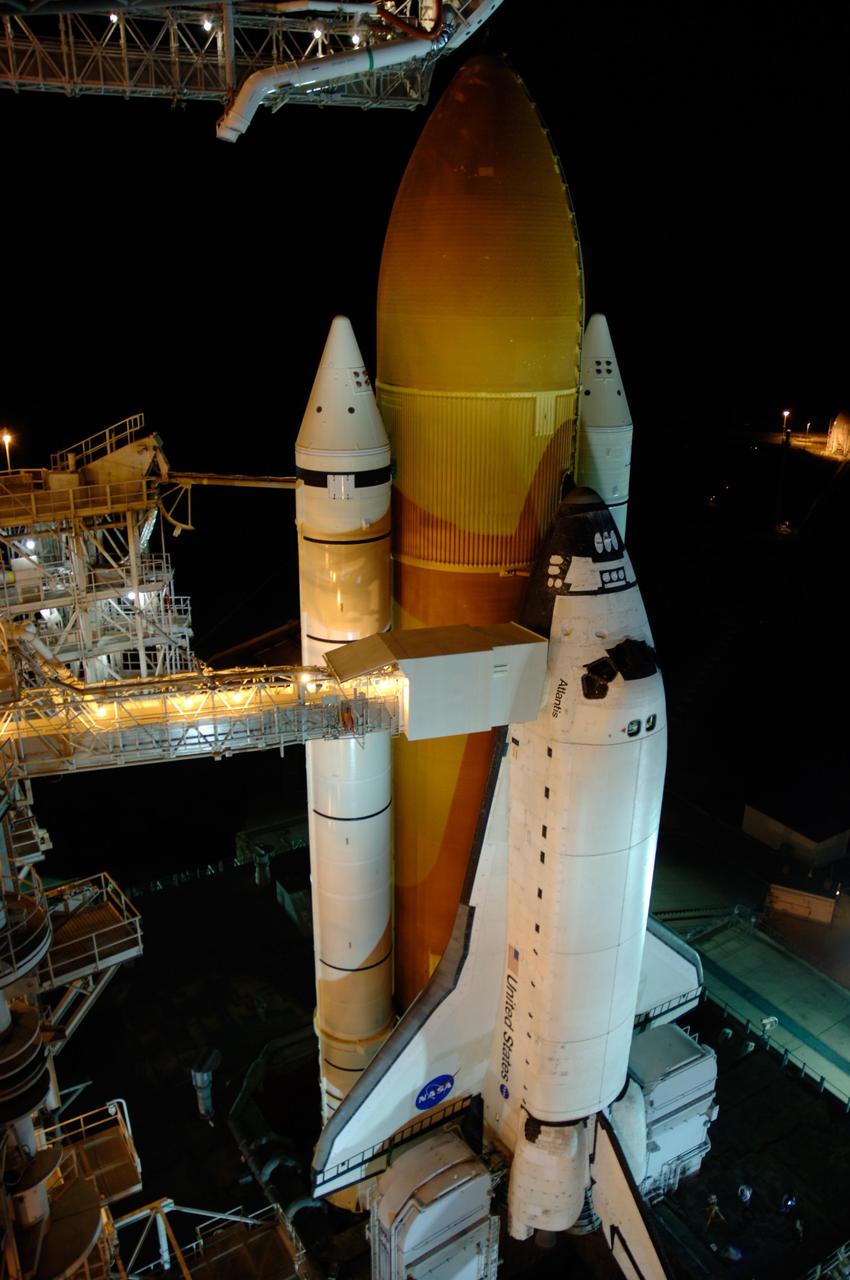
KENNEDY SPACE CENTER, FLA. -- Lights on Launch Pad 39A at NASA's Kennedy Space Center reveal space shuttle Atlantis following the rollback of the rotating service structure, or RSS. Rollback was complete at 9:49 p.m. EST. The orbiter access arm, at left, extends from the structure to a position next to Atlantis' crew compartment. The White Room at the end of the arm provides the crew with an entryway into the orbiter. The RSS also provides protected access to the orbiter for changeout and servicing of payloads at the pad. Rollback of the pad's RSS is one of the milestones in preparation for the launch of mission STS-122. Launch was originally set for Dec. 6 but was rescheduled to 3:21 p.m. Dec. 9. The delay was caused by problems with the external tank's engine cutoff sensor system that arose during tanking on Dec. 6. Atlantis will carry the Columbus Laboratory, the European Space Agency's largest contribution to the construction of the International Space Station. It will support scientific and technological research in a microgravity environment. Permanently attached to the Harmony node of the space station, the laboratory will carry out experiments in materials science, fluid physics and biosciences, as well as perform a number of technological applications. Photo credit: NASA/Amanda Diller
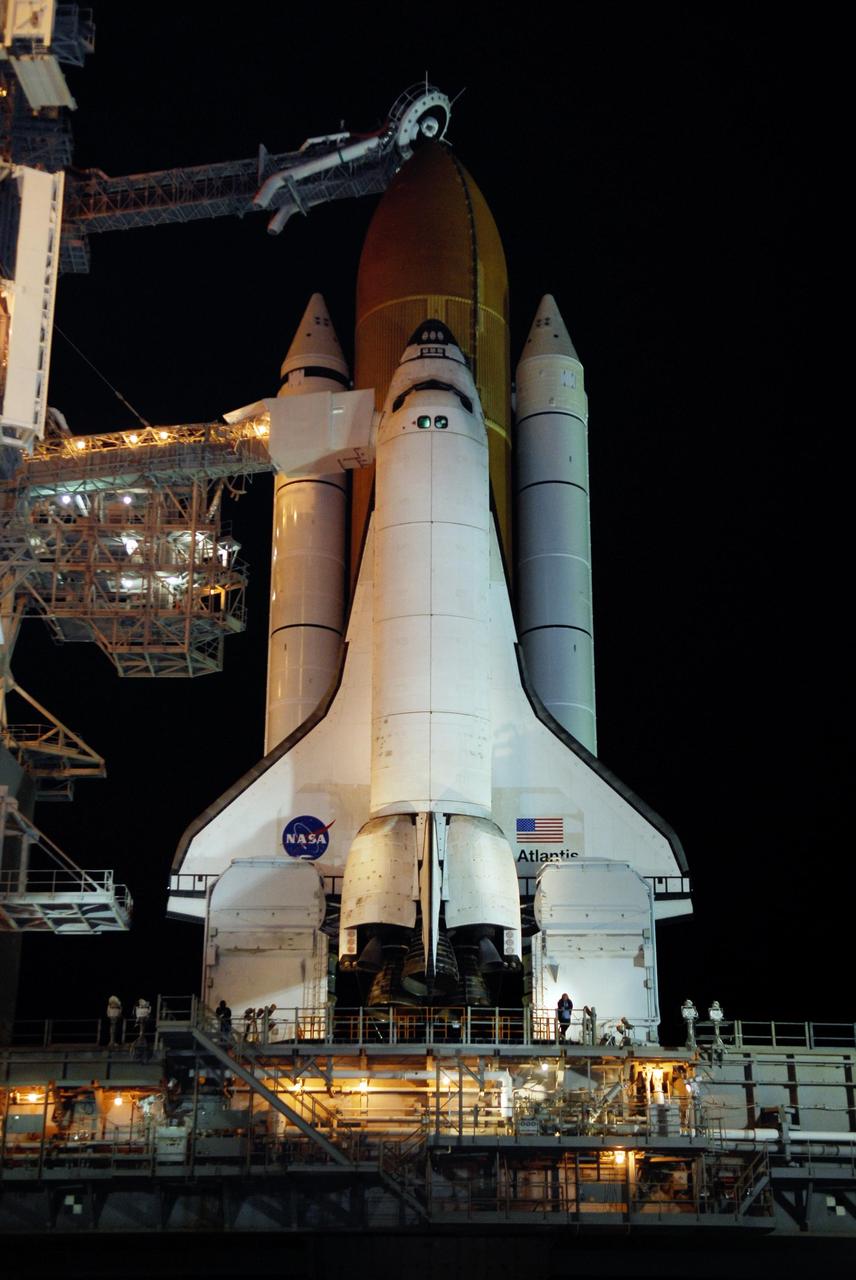
KENNEDY SPACE CENTER, FLA. -- Lights on Launch Pad 39A at NASA's Kennedy Space Center reveal space shuttle Atlantis following the rollback of the rotating service structure, or RSS. Rollback was complete at 8:44 p.m. EST. The orbiter access arm, at left, extends from the structure to a position next to Atlantis' crew compartment. The White Room at the end of the arm provides the crew with an entryway into the orbiter. The RSS also provides protected access to the orbiter for changeout and servicing of payloads at the pad. Rollback of the pad's RSS is one of the milestones in preparation for the launch of mission STS-122, scheduled for 4:31 p.m. EST on Dec. 6. Beneath the shuttle is the mobile launcher platform which supports the shuttle until liftoff. Atlantis will carry the Columbus Laboratory, the European Space Agency's largest contribution to the construction of the International Space Station. It will support scientific and technological research in a microgravity environment. Permanently attached to Node 2 of the space station, the laboratory will carry out experiments in materials science, fluid physics and biosciences, as well as perform a number of technological applications. Photo credit: NASA/Kim Shiflett
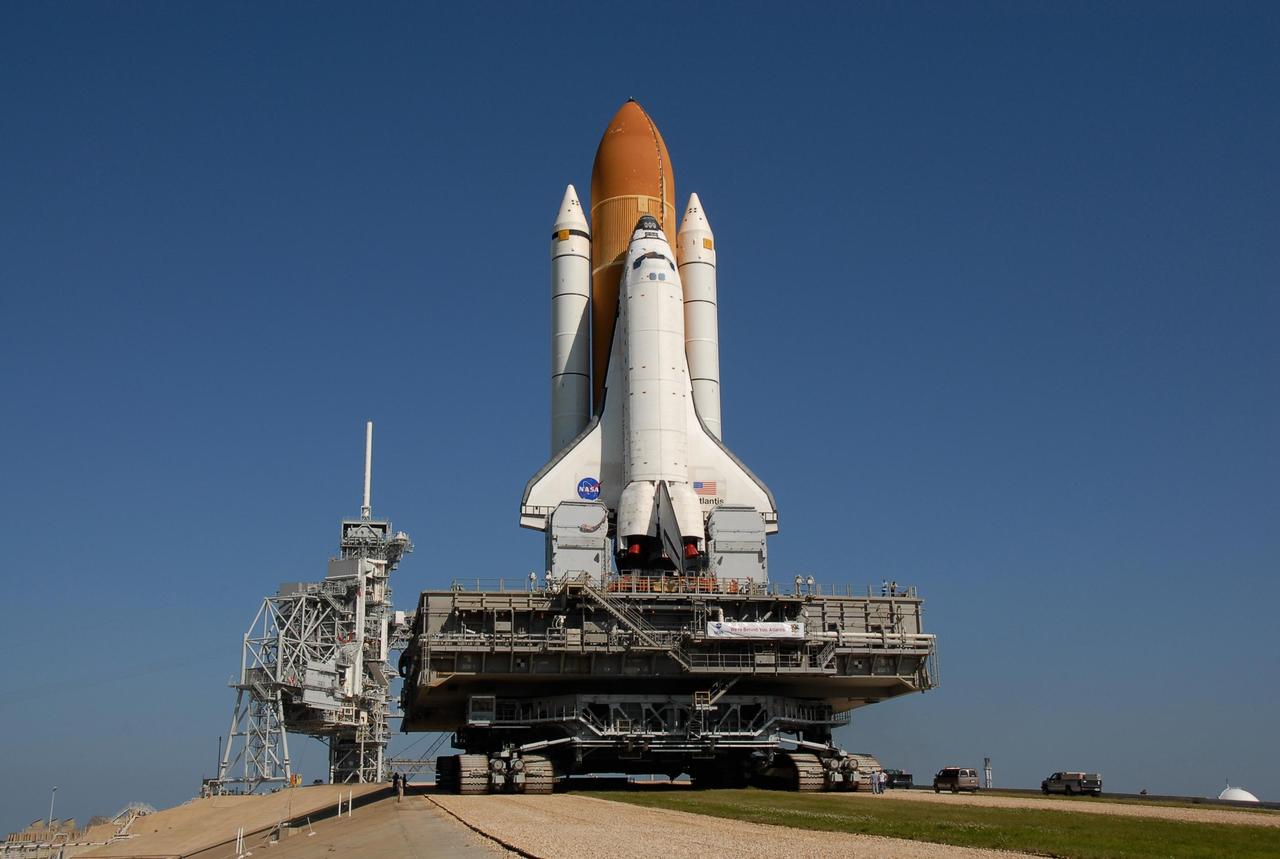
KENNEDY SPACE CENTER, FLA. -- Space Shuttle Atlantis, secured atop a mobile launch platform, is nearing the top of the five percent grade to the top of the hardstand on its final approach to Launch Pad 39A. The rotating service structure, adjoined to the fixed service structure at left, has been rolled back in preparation for the shuttle's arrival. First motion out of the Vehicle Assembly Building was at 4:43 a.m. EST, and the shuttle was hard down on the pad at 11:51 a.m. Rollout is a milestone for Atlantis' launch to the International Space Station on mission STS-122, targeted for Dec. 6. On this mission, Atlantis will deliver the Columbus module to the International Space Station. The European Space Agency's largest contribution to the station, Columbus is a multifunctional, pressurized laboratory that will be permanently attached to U.S. Node 2, called Harmony. The module is approximately 23 feet long and 15 feet wide, allowing it to hold 10 large racks of experiments. The laboratory will expand the research facilities aboard the station, providing crew members and scientists from around the world the ability to conduct a variety of experiments in the physical, materials and life sciences. Photo credit: NASA/Kim Shiflett
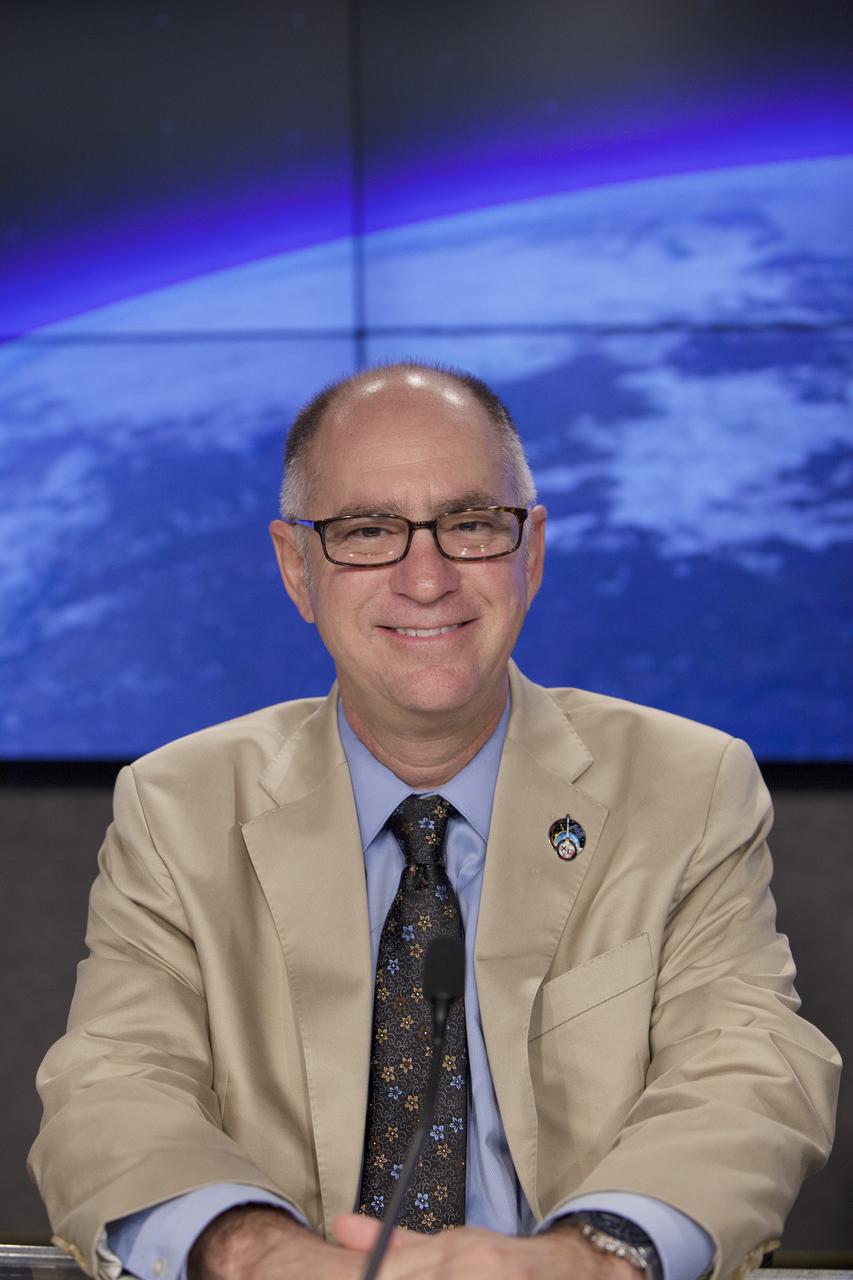
CAPE CANAVERAL, Fla. – Members of NASA’s International Space Station science team brief news media representatives in the Kennedy Space Center’s Press Site auditorium in preparation for the launch of the SpaceX CRS-4 mission to resupply the International Space Station. Sam Scimemi, International Space Station Division director of Human Exploration and Operation Mission Directorate, participated in the briefing. The mission is the fourth of 12 SpaceX flights NASA contracted with the company to resupply the space station. It will be the fifth trip by a Dragon spacecraft to the orbiting laboratory. The spacecraft’s 2.5 tons of supplies, science experiments, and technology demonstrations include critical materials to support 255 science and research investigations that will occur during the station's Expeditions 41 and 42. Liftoff is targeted for an instantaneous window at 2:14 a.m. EDT. To learn more about the mission, visit http://www.nasa.gov/mission_pages/station/structure/launch/index.html Photo credit: NASA/Jim Grossmann

CAPE CANAVERAL, Fla. – The Falcon 9 rocket roars to life at Space Launch Complex 40 on Cape Canaveral Air Force Station in Florida. The SpaceX CRS-4 mission is underway. Liftoff was at 1:52 a.m. EDT. The mission is the fourth of 12 SpaceX flights NASA contracted with the company to resupply the space station. It will be the fifth trip by a Dragon spacecraft to the orbiting laboratory. The spacecraft’s 2.5 tons of supplies, science experiments, and technology demonstrations include critical materials to support 255 science and research investigations that will occur during the station's Expeditions 41 and 42. To learn more about the mission, visit http://www.nasa.gov/mission_pages/station/structure/launch/index.html. Photo credit: NASA/Jim Grossmann

CAPE CANAVERAL, Fla. – The Falcon 9 rocket lifts off Space Launch Complex 40 at Cape Canaveral Air Force Station in Florida, carrying the SpaceX CRS-4 mission to orbit. Liftoff was at 1:52 a.m. EDT. The mission is the fourth of 12 SpaceX flights NASA contracted with the company to resupply the space station. It will be the fifth trip by a Dragon spacecraft to the orbiting laboratory. The spacecraft’s 2.5 tons of supplies, science experiments, and technology demonstrations include critical materials to support 255 science and research investigations that will occur during the station's Expeditions 41 and 42. To learn more about the mission, visit http://www.nasa.gov/mission_pages/station/structure/launch/index.html Photo credit: NASA/Sandy Joseph and Kevin O'Connell
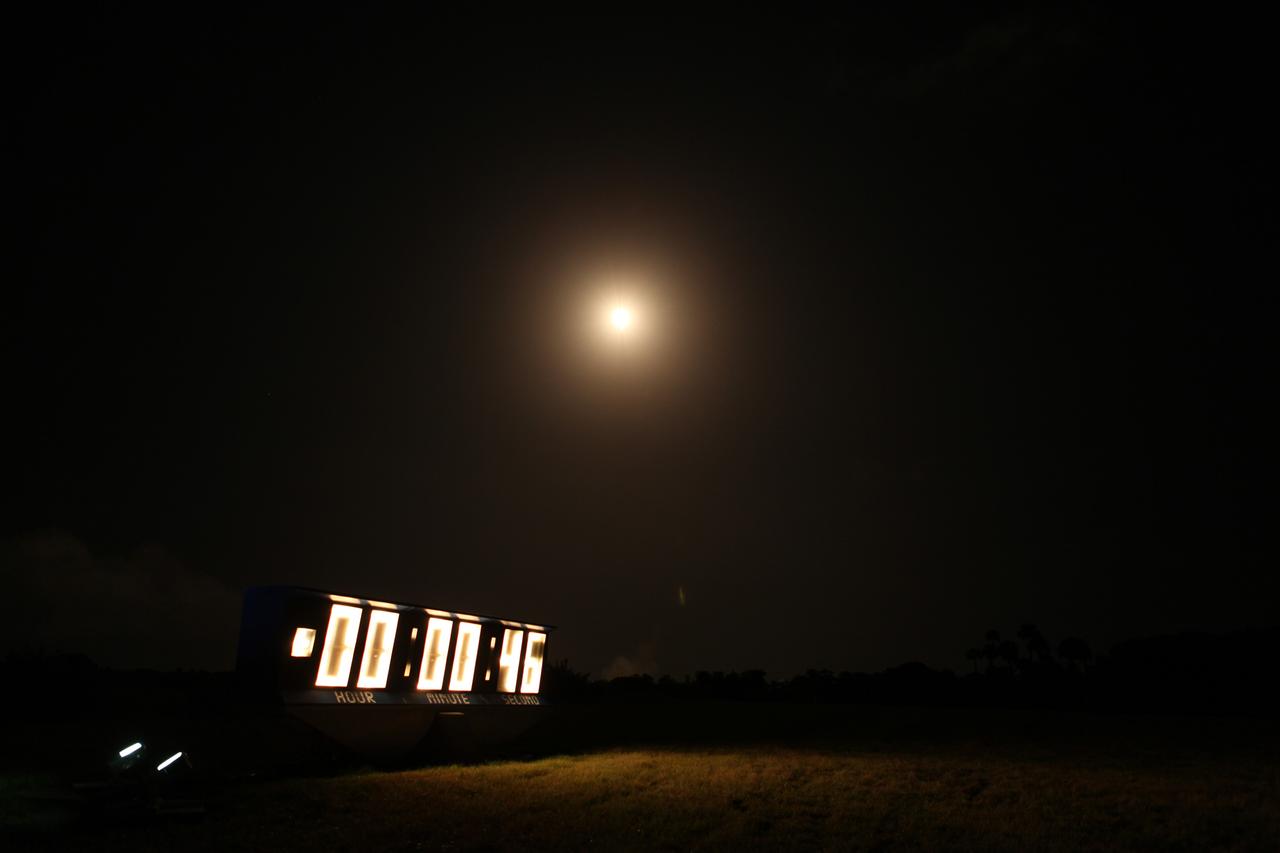
CAPE CANAVERAL, Fla. – The countdown clock at the NASA Press Site ticks off the seconds following liftoff of the Falcon 9 rocket from Space Launch Complex 40 on Cape Canaveral Air Force Station in Florida, carrying the SpaceX CRS-4 mission to orbit. Liftoff was at 1:52 a.m. EDT. The mission is the fourth of 12 SpaceX flights NASA contracted with the company to resupply the space station. It will be the fifth trip by a Dragon spacecraft to the orbiting laboratory. The spacecraft’s 2.5 tons of supplies, science experiments, and technology demonstrations include critical materials to support 255 science and research investigations that will occur during the station's Expeditions 41 and 42. To learn more about the mission, visit http://www.nasa.gov/mission_pages/station/structure/launch/index.html. Photo credit: NASA/Frankie Martin
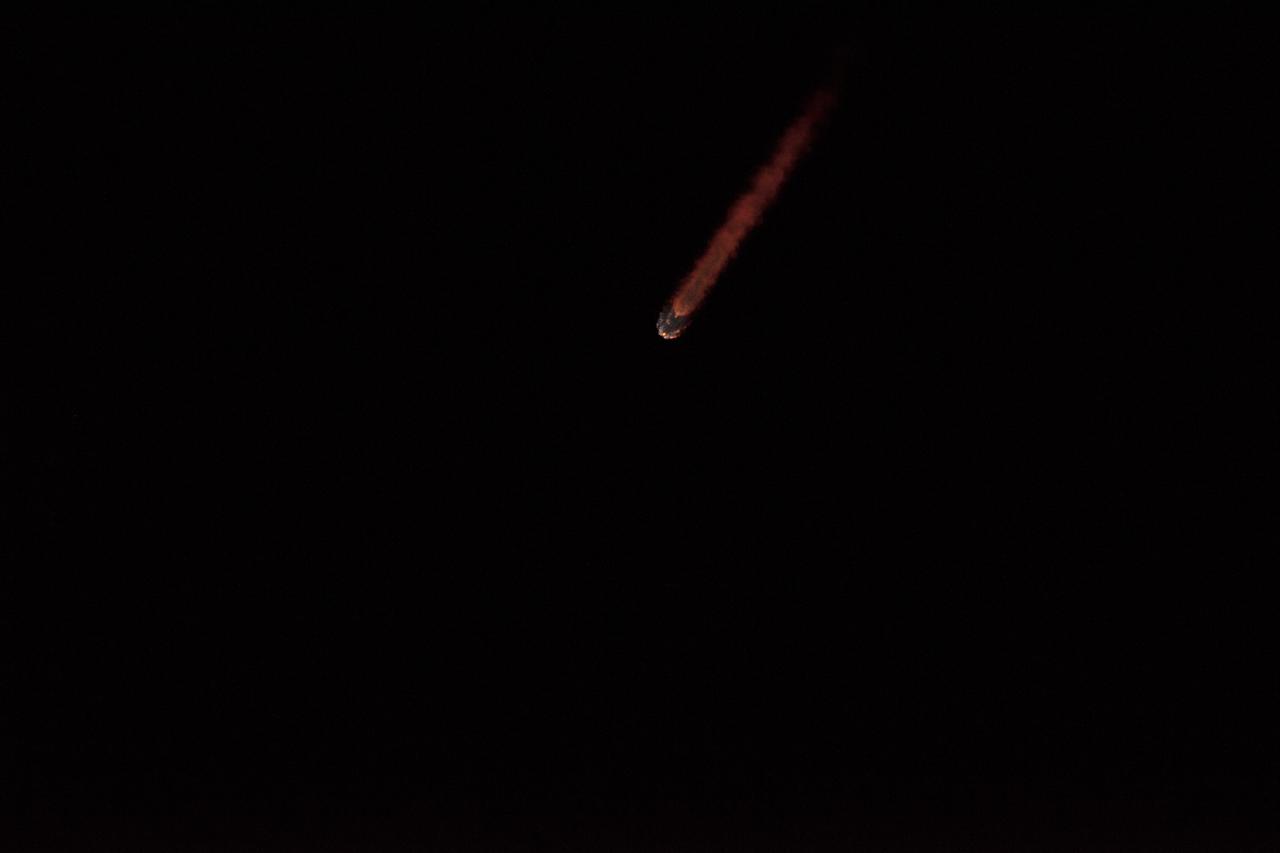
CAPE CANAVERAL, Fla. – The Falcon 9 rocket lifts off Space Launch Complex 40 at Cape Canaveral Air Force Station in Florida, carrying the SpaceX CRS-4 mission to orbit. Liftoff was at 1:52 a.m. EDT. The mission is the fourth of 12 SpaceX flights NASA contracted with the company to resupply the space station. It will be the fifth trip by a Dragon spacecraft to the orbiting laboratory. The spacecraft’s 2.5 tons of supplies, science experiments, and technology demonstrations include critical materials to support 255 science and research investigations that will occur during the station's Expeditions 41 and 42. To learn more about the mission, visit http://www.nasa.gov/mission_pages/station/structure/launch/index.html Photo credit: NASA/George Roberts

CAPE CANAVERAL, Fla. – The glow beside the Falcon 9 rocket at Space Launch Complex 40 on Cape Canaveral Air Force Station in Florida heralds the launch of the SpaceX CRS-4 mission to the International Space Station. Liftoff was at 1:52 a.m. EDT. The mission is the fourth of 12 SpaceX flights NASA contracted with the company to resupply the space station. It will be the fifth trip by a Dragon spacecraft to the orbiting laboratory. The spacecraft’s 2.5 tons of supplies, science experiments, and technology demonstrations include critical materials to support 255 science and research investigations that will occur during the station's Expeditions 41 and 42. To learn more about the mission, visit http://www.nasa.gov/mission_pages/station/structure/launch/index.html. Photo credit: NASA/Jim Grossmann
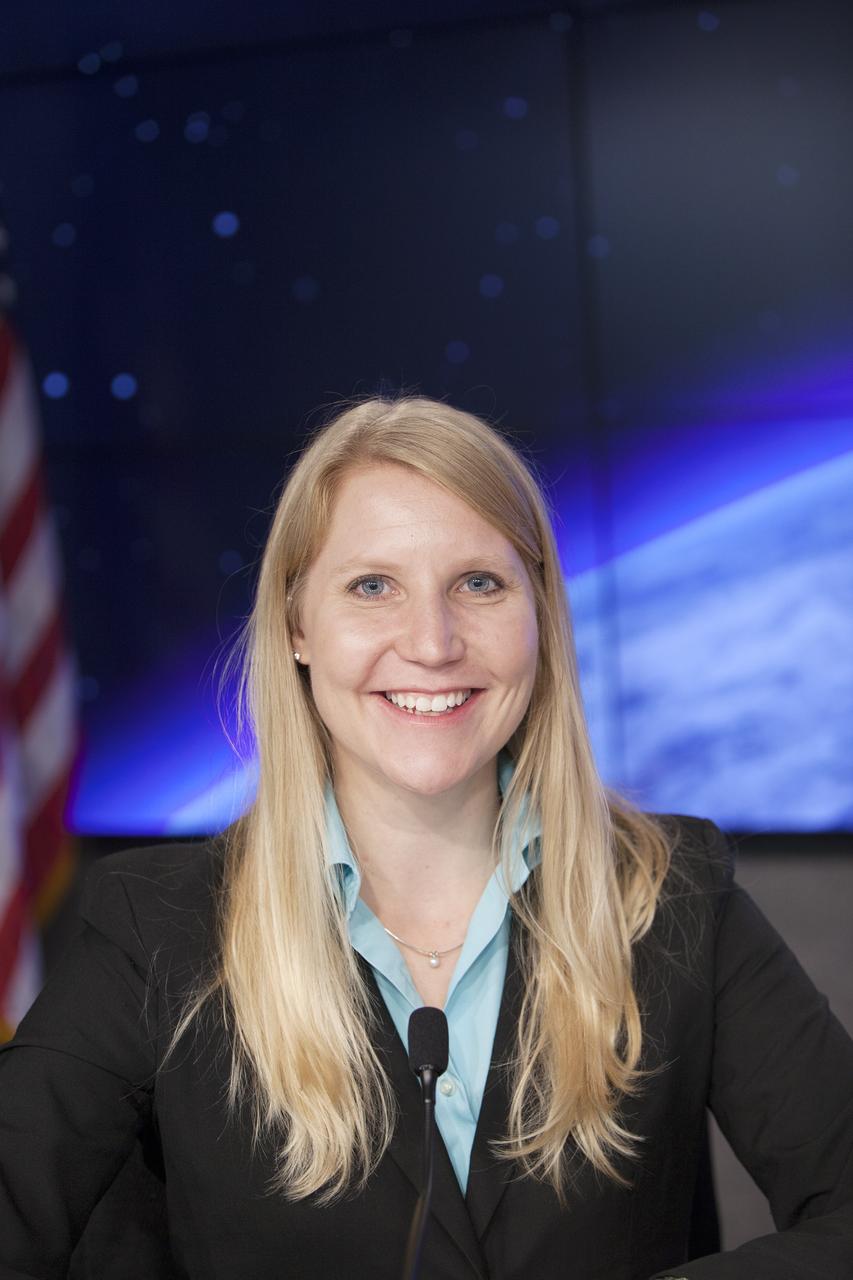
CAPE CANAVERAL, Fla. – Members of NASA’s International Space Station science team brief news media representatives in the Kennedy Space Center’s Press Site auditorium in preparation for the launch of the SpaceX CRS-4 mission to resupply the International Space Station. Stephanie Schierholz, NASA Headquarters Office of Communications, served as moderator for the briefing. The mission is the fourth of 12 SpaceX flights NASA contracted with the company to resupply the space station. It will be the fifth trip by a Dragon spacecraft to the orbiting laboratory. The spacecraft’s 2.5 tons of supplies, science experiments, and technology demonstrations include critical materials to support 255 science and research investigations that will occur during the station's Expeditions 41 and 42. Liftoff is targeted for an instantaneous window at 2:14 a.m. EDT. To learn more about the mission, visit http://www.nasa.gov/mission_pages/station/structure/launch/index.html Photo credit: NASA/Jim Grossmann
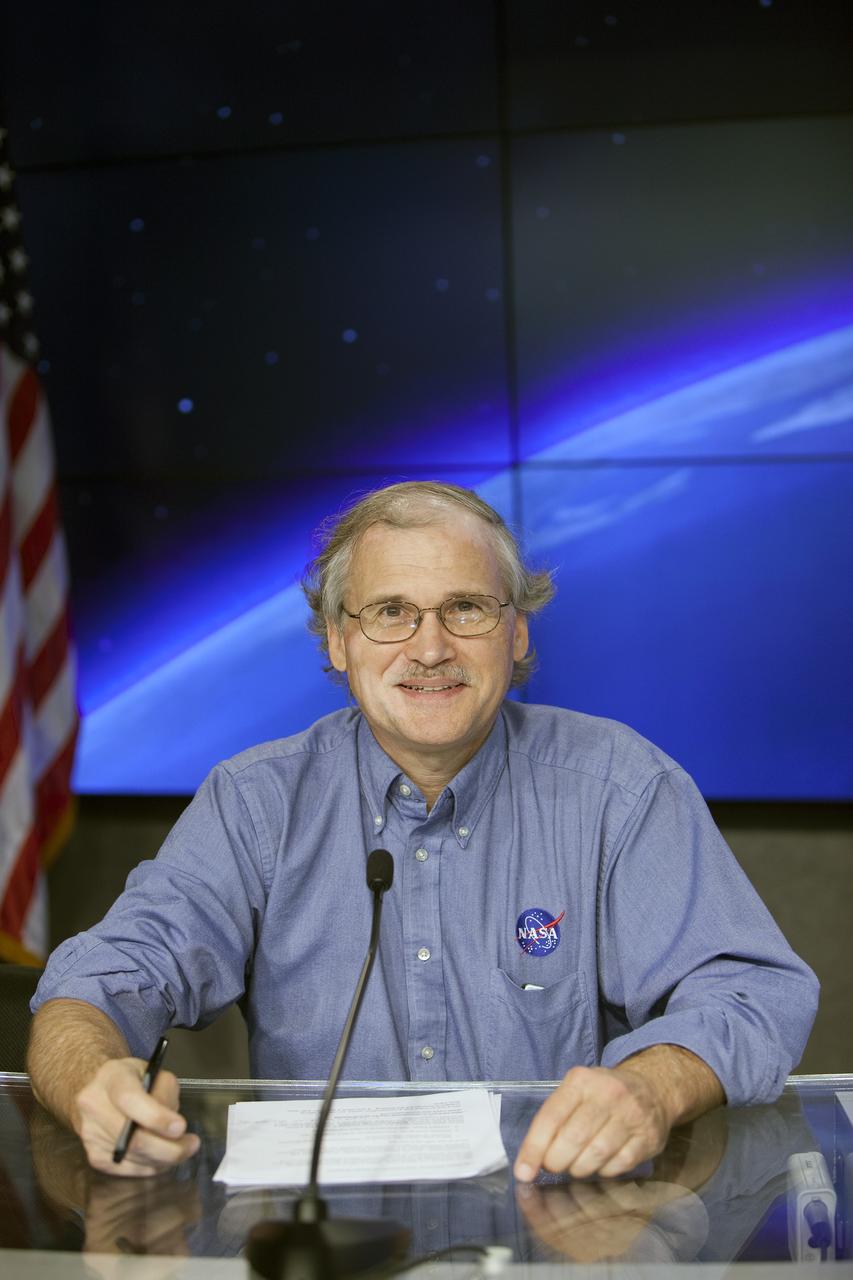
CAPE CANAVERAL, Fla. – Steve Cole, NASA Public Affairs, moderates the ISS Earth Science: Tracking Ocean Winds Panel briefing for media representatives in Kennedy Space Center’s Press Site auditorium in preparation for the launch of the SpaceX CRS-4 mission to resupply the International Space Station. The mission is the fourth of 12 SpaceX flights NASA contracted with the company to resupply the space station. It will be the fifth trip by a Dragon spacecraft to the orbiting laboratory. The spacecraft’s 2.5 tons of supplies, science experiments, and technology demonstrations include critical materials to support 255 science and research investigations that will occur during the station's Expeditions 41 and 42. Liftoff is targeted for an instantaneous window at 2:14 a.m. EDT. To learn more about the mission, visit http://www.nasa.gov/mission_pages/station/structure/launch/index.html. Photo credit: NASA/Jim Grossmann

CAPE CANAVERAL, Fla. – A U.S. flag at NASA's Press Site is a fitting setting for the liftoff from American soil of the Falcon 9 rocket and Dragon capsule from Space Launch Complex 40 on Cape Canaveral Air Force Station in Florida. The rocket is carrying the SpaceX CRS-4 mission to orbit. Liftoff was at 1:52 a.m. EDT. The mission is the fourth of 12 SpaceX flights NASA contracted with the company to resupply the space station. It will be the fifth trip by a Dragon spacecraft to the orbiting laboratory. The spacecraft’s 2.5 tons of supplies, science experiments, and technology demonstrations include critical materials to support 255 science and research investigations that will occur during the station's Expeditions 41 and 42. To learn more about the mission, visit http://www.nasa.gov/mission_pages/station/structure/launch/index.html. Photo credit: NASA/Frankie Martin
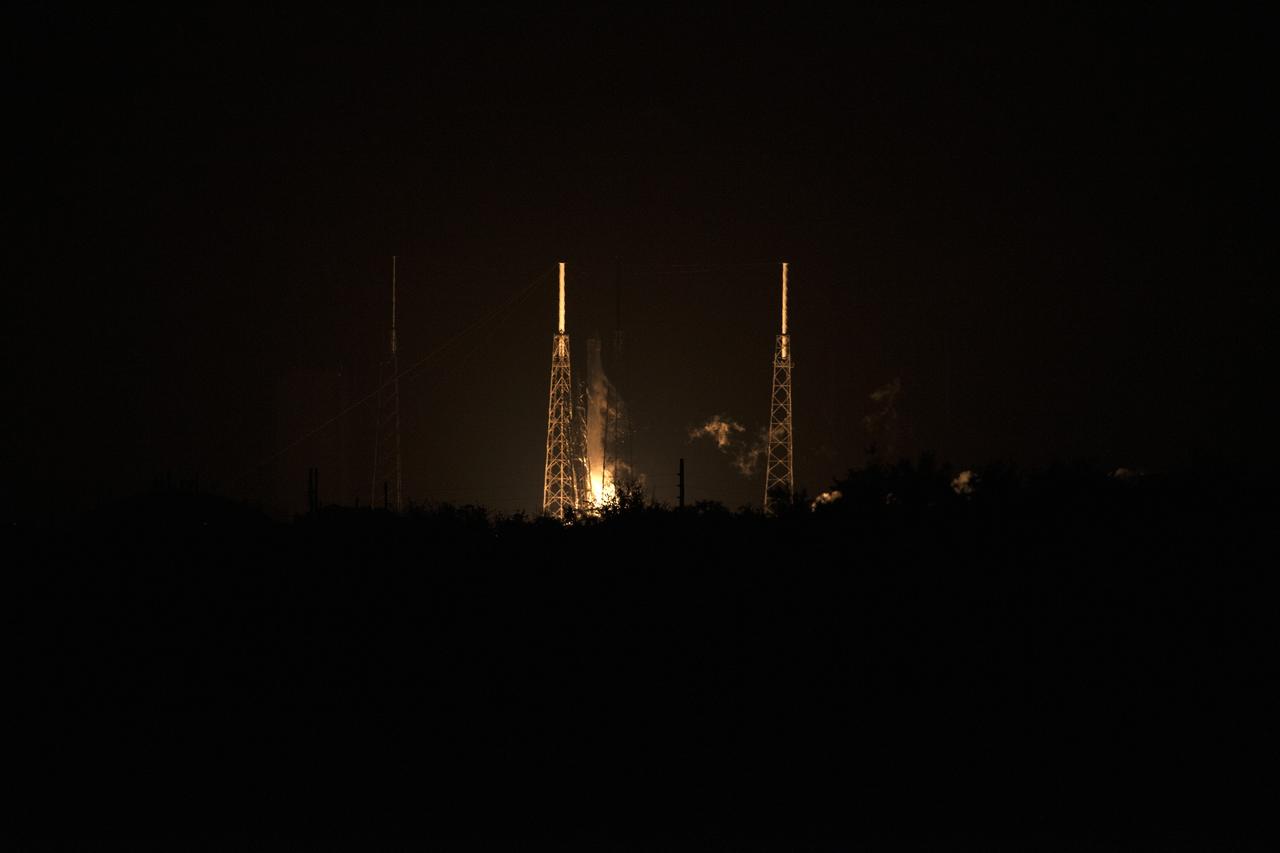
CAPE CANAVERAL, Fla. – The Falcon 9 rocket lifts off Space Launch Complex 40 at Cape Canaveral Air Force Station in Florida, carrying the SpaceX CRS-4 mission to orbit. Liftoff was at 1:52 a.m. EDT. The mission is the fourth of 12 SpaceX flights NASA contracted with the company to resupply the space station. It will be the fifth trip by a Dragon spacecraft to the orbiting laboratory. The spacecraft’s 2.5 tons of supplies, science experiments, and technology demonstrations include critical materials to support 255 science and research investigations that will occur during the station's Expeditions 41 and 42. To learn more about the mission, visit http://www.nasa.gov/mission_pages/station/structure/launch/index.html Photo credit: NASA/Sandy Joseph
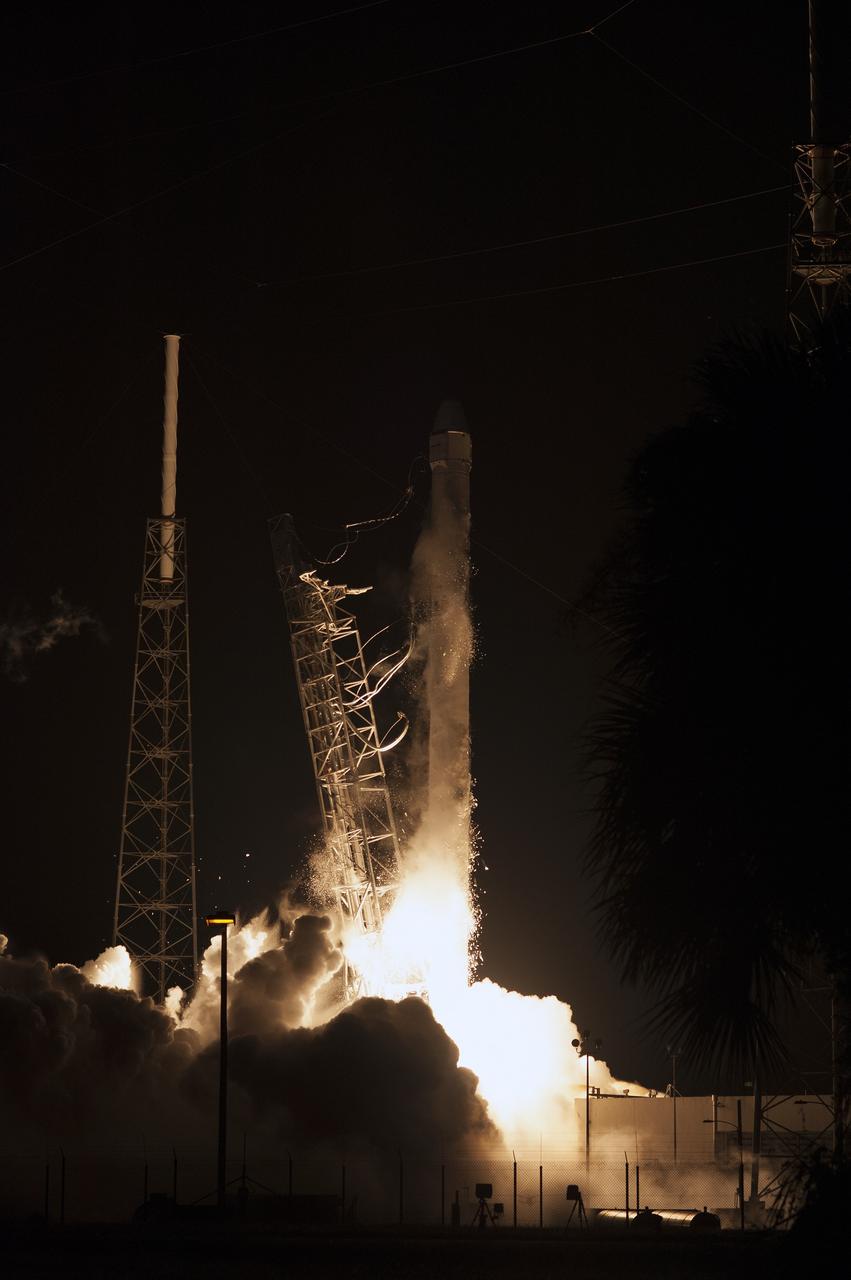
CAPE CANAVERAL, Fla. – The Falcon 9 rocket lifts off Space Launch Complex 40 at Cape Canaveral Air Force Station in Florida, carrying the SpaceX CRS-4 mission to orbit. Liftoff was at 1:52 a.m. EDT. The mission is the fourth of 12 SpaceX flights NASA contracted with the company to resupply the space station. It will be the fifth trip by a Dragon spacecraft to the orbiting laboratory. The spacecraft’s 2.5 tons of supplies, science experiments, and technology demonstrations include critical materials to support 255 science and research investigations that will occur during the station's Expeditions 41 and 42. To learn more about the mission, visit http://www.nasa.gov/mission_pages/station/structure/launch/index.html Photo credit: NASA/Sandy Joseph and Kevin O'Connell

CAPE CANAVERAL, Fla. – The Falcon 9 rocket lifts off Space Launch Complex 40 at Cape Canaveral Air Force Station in Florida, carrying the SpaceX CRS-4 mission to orbit. Liftoff was at 1:52 a.m. EDT. The mission is the fourth of 12 SpaceX flights NASA contracted with the company to resupply the space station. It will be the fifth trip by a Dragon spacecraft to the orbiting laboratory. The spacecraft’s 2.5 tons of supplies, science experiments, and technology demonstrations include critical materials to support 255 science and research investigations that will occur during the station's Expeditions 41 and 42. To learn more about the mission, visit http://www.nasa.gov/mission_pages/station/structure/launch/index.html Photo credit: NASA/Sandy Joseph and Kevin O'Connell

CAPE CANAVERAL, Fla. – The Falcon 9 rocket lifts off Space Launch Complex 40 at Cape Canaveral Air Force Station in Florida, carrying the SpaceX CRS-4 mission to orbit. Liftoff was at 1:52 a.m. EDT. The mission is the fourth of 12 SpaceX flights NASA contracted with the company to resupply the space station. It will be the fifth trip by a Dragon spacecraft to the orbiting laboratory. The spacecraft’s 2.5 tons of supplies, science experiments, and technology demonstrations include critical materials to support 255 science and research investigations that will occur during the station's Expeditions 41 and 42. To learn more about the mission, visit http://www.nasa.gov/mission_pages/station/structure/launch/index.html Photo credit: NASA/Sandy Joseph and Kevin O'Connell

CAPE CANAVERAL, Fla. – Steve Volz, associate director for flight programs, Earth Science Division, Science Mission Directorate, NASA Headquarters, briefs media representatives in Kennedy Space Center’s Press Site auditorium in preparation for the launch of the SpaceX CRS-4 mission to resupply the International Space Station. Volz is a member of the ISS Earth Science: Tracking Ocean Winds Panel. The mission is the fourth of 12 SpaceX flights NASA contracted with the company to resupply the space station. It will be the fifth trip by a Dragon spacecraft to the orbiting laboratory. The spacecraft’s 2.5 tons of supplies, science experiments, and technology demonstrations include critical materials to support 255 science and research investigations that will occur during the station's Expeditions 41 and 42. Liftoff is targeted for an instantaneous window at 2:14 a.m. EDT. To learn more about the mission, visit http://www.nasa.gov/mission_pages/station/structure/launch/index.html. Photo credit: NASA/Jim Grossmann
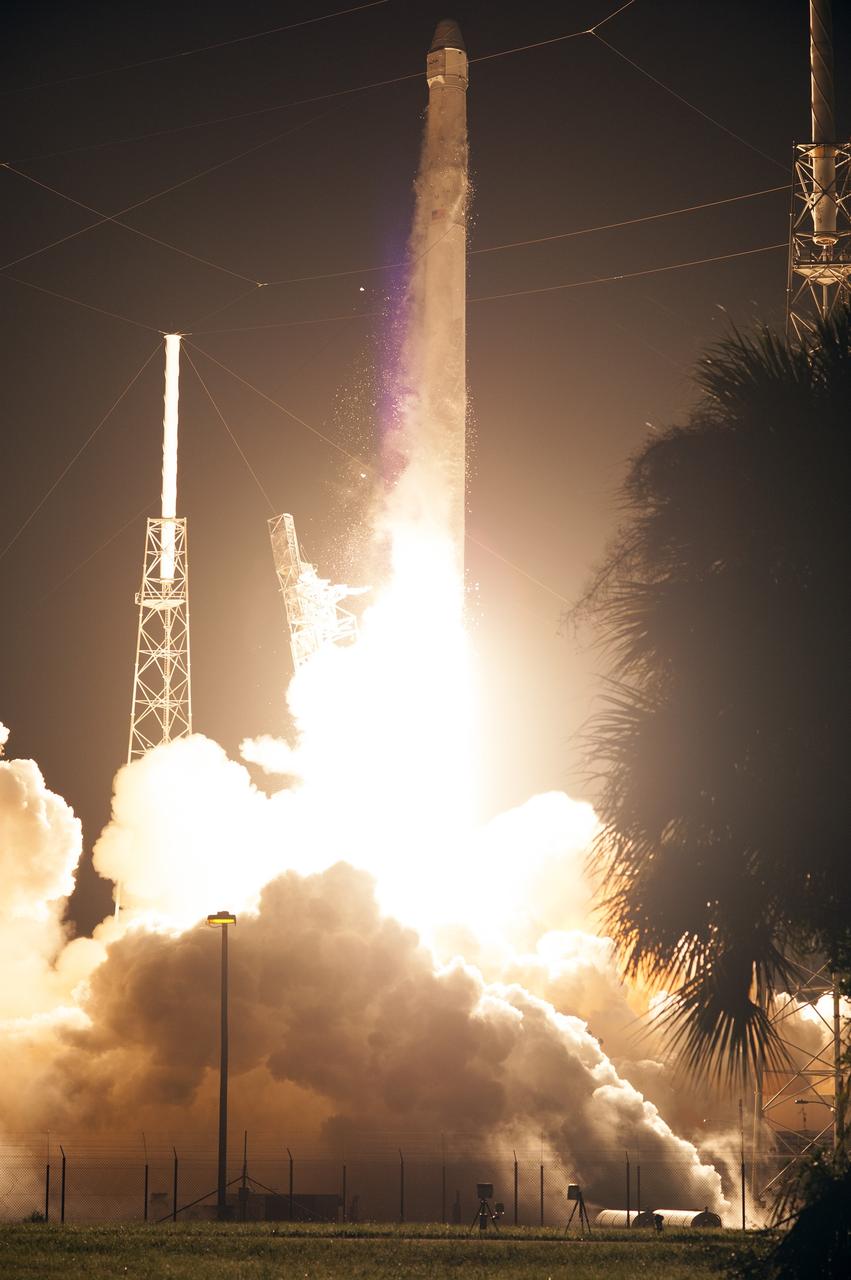
CAPE CANAVERAL, Fla. – The Falcon 9 rocket lifts off Space Launch Complex 40 at Cape Canaveral Air Force Station in Florida, carrying the SpaceX CRS-4 mission to orbit. Liftoff was at 1:52 a.m. EDT. The mission is the fourth of 12 SpaceX flights NASA contracted with the company to resupply the space station. It will be the fifth trip by a Dragon spacecraft to the orbiting laboratory. The spacecraft’s 2.5 tons of supplies, science experiments, and technology demonstrations include critical materials to support 255 science and research investigations that will occur during the station's Expeditions 41 and 42. To learn more about the mission, visit http://www.nasa.gov/mission_pages/station/structure/launch/index.html Photo credit: NASA/Sandy Joseph and Kevin O'Connell
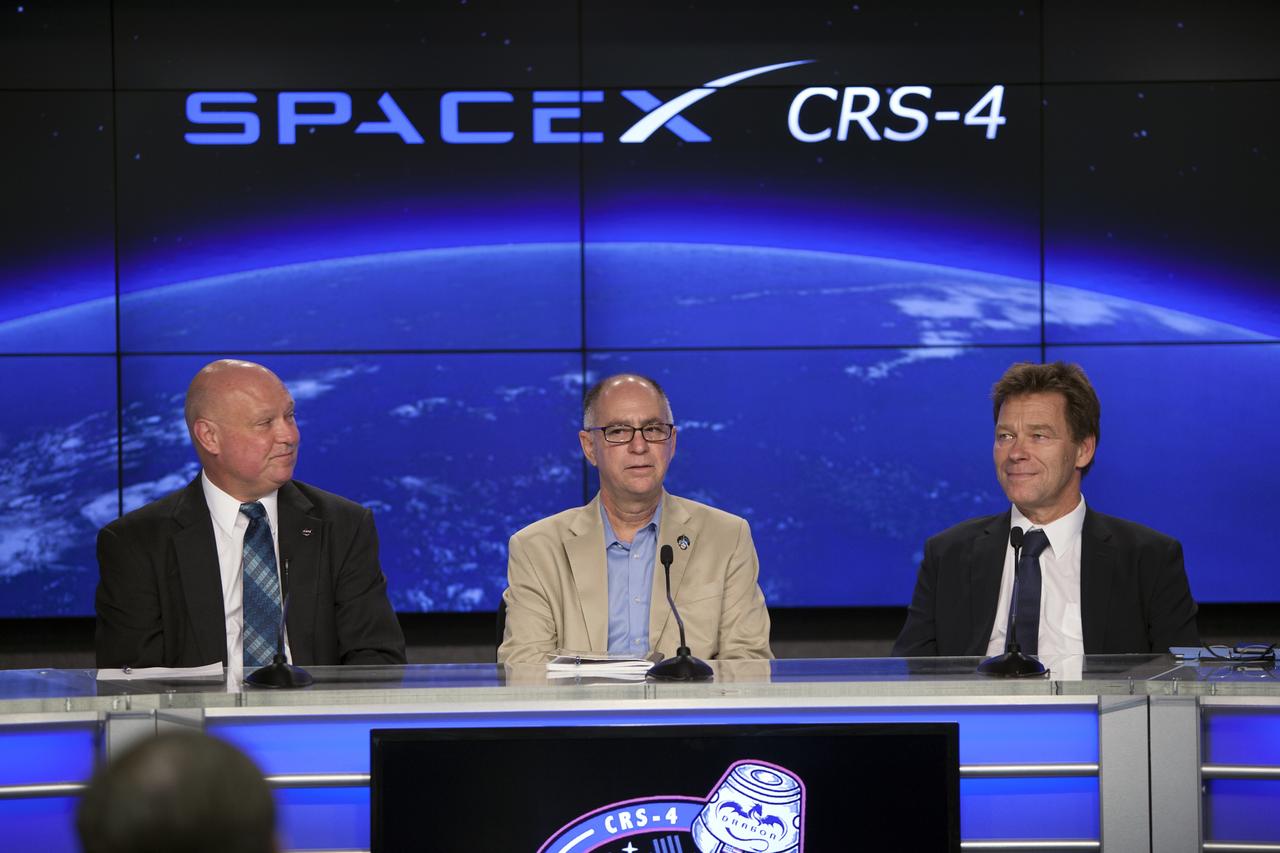
CAPE CANAVERAL, Fla. – NASA holds a post-launch media briefing following the successful launch of NASA's SpaceX CRS-4 mission to the International Space Station. From left are Michael Curie, moderator, NASA Public Affairs, Sam Scimemi, International Space Station Division director, NASA Human Exploration and Operation Mission Directorate, and Hans Koenigsmann, vice president of Mission Assurance, SpaceX. Liftoff was at 1:52 a.m. EDT. The mission is the fourth of 12 SpaceX flights NASA contracted with the company to resupply the space station. It will be the fifth trip by a Dragon spacecraft to the orbiting laboratory. The spacecraft’s 2.5 tons of supplies, science experiments, and technology demonstrations include critical materials to support 255 science and research investigations that will occur during the station's Expeditions 41 and 42. To learn more about the mission, visit http://www.nasa.gov/mission_pages/station/structure/launch/index.html. Photo credit: NASA/Jim Grossmann

This artist's concept depicts NASA's Near-Earth Object Surveyor (NEO Surveyor) in deep space. After launch, the spacecraft will travel a million miles to a region of gravitational stability – called the L1 Lagrange point – between Earth and the Sun. From there, its large sunshade will block the glare and heat of sunlight, allowing the mission to discover and track near-Earth objects as they approach Earth from the direction of the Sun, which is difficult for other observatories to do. The black-paneled angular structure in the belly of the spacecraft is the instrument enclosure that is being built at NASA's Jet Propulsion Laboratory in Southern California. The spacecraft's only instrument, its infrared telescope, will be installed inside the enclosure. Fabricated from dark composite material that allows heat to escape, the enclosure will help keep the telescope cool and prevent its own heat from obscuring observations. https://photojournal.jpl.nasa.gov/catalog/PIA26388
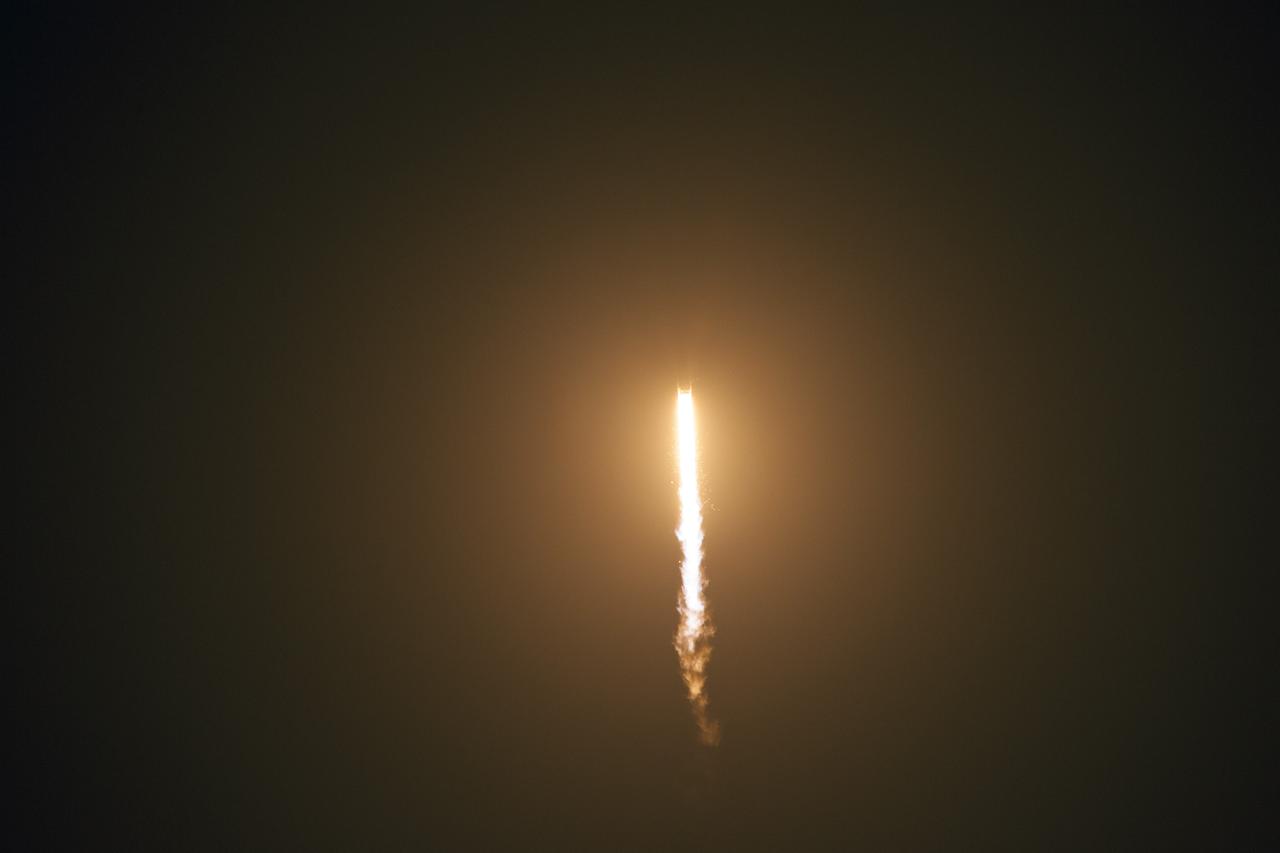
CAPE CANAVERAL, Fla. – The Falcon 9 rocket lifts off Space Launch Complex 40 at Cape Canaveral Air Force Station in Florida, carrying the SpaceX CRS-4 mission to orbit. Liftoff was at 1:52 a.m. EDT. The mission is the fourth of 12 SpaceX flights NASA contracted with the company to resupply the space station. It will be the fifth trip by a Dragon spacecraft to the orbiting laboratory. The spacecraft’s 2.5 tons of supplies, science experiments, and technology demonstrations include critical materials to support 255 science and research investigations that will occur during the station's Expeditions 41 and 42. To learn more about the mission, visit http://www.nasa.gov/mission_pages/station/structure/launch/index.html Photo credit: NASA/George Roberts
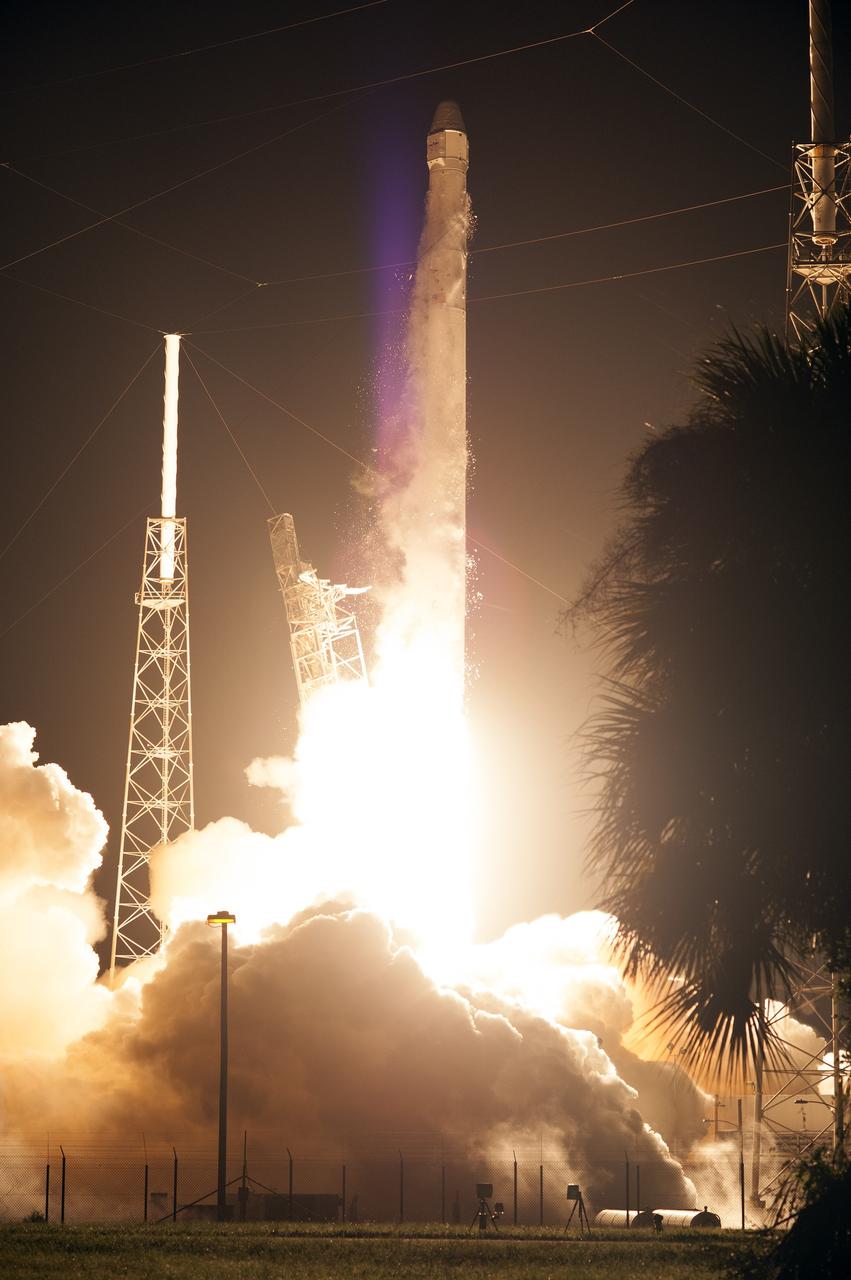
CAPE CANAVERAL, Fla. – The Falcon 9 rocket lifts off Space Launch Complex 40 at Cape Canaveral Air Force Station in Florida, carrying the SpaceX CRS-4 mission to orbit. Liftoff was at 1:52 a.m. EDT. The mission is the fourth of 12 SpaceX flights NASA contracted with the company to resupply the space station. It will be the fifth trip by a Dragon spacecraft to the orbiting laboratory. The spacecraft’s 2.5 tons of supplies, science experiments, and technology demonstrations include critical materials to support 255 science and research investigations that will occur during the station's Expeditions 41 and 42. To learn more about the mission, visit http://www.nasa.gov/mission_pages/station/structure/launch/index.html Photo credit: NASA/Sandy Joseph and Kevin O'Connell

CAPE CANAVERAL, Fla. – Marshall Porterfield, division director, Space Life and Physical Sciences, HEOMD, briefs media representatives in Kennedy Space Center’s Press Site auditorium in preparation for the launch of the SpaceX CRS-4 mission to resupply the International Space Station. Porterfield is a member of the ISS Science Panel on Model Organisms. The mission is the fourth of 12 SpaceX flights NASA contracted with the company to resupply the space station. It will be the fifth trip by a Dragon spacecraft to the orbiting laboratory. The spacecraft’s 2.5 tons of supplies, science experiments, and technology demonstrations include critical materials to support 255 science and research investigations that will occur during the station's Expeditions 41 and 42. Liftoff is targeted for an instantaneous window at 2:14 a.m. EDT. To learn more about the mission, visit http://www.nasa.gov/mission_pages/station/structure/launch/index.html. Photo credit: NASA/Jim Grossmann

CAPE CANAVERAL, Fla. – The Falcon 9 rocket lifts off Space Launch Complex 40 at Cape Canaveral Air Force Station in Florida, carrying the SpaceX CRS-4 mission to orbit. Liftoff was at 1:52 a.m. EDT. The mission is the fourth of 12 SpaceX flights NASA contracted with the company to resupply the space station. It will be the fifth trip by a Dragon spacecraft to the orbiting laboratory. The spacecraft’s 2.5 tons of supplies, science experiments, and technology demonstrations include critical materials to support 255 science and research investigations that will occur during the station's Expeditions 41 and 42. To learn more about the mission, visit http://www.nasa.gov/mission_pages/station/structure/launch/index.html Photo credit: NASA/Sandy Joseph and Kevin O'Connell
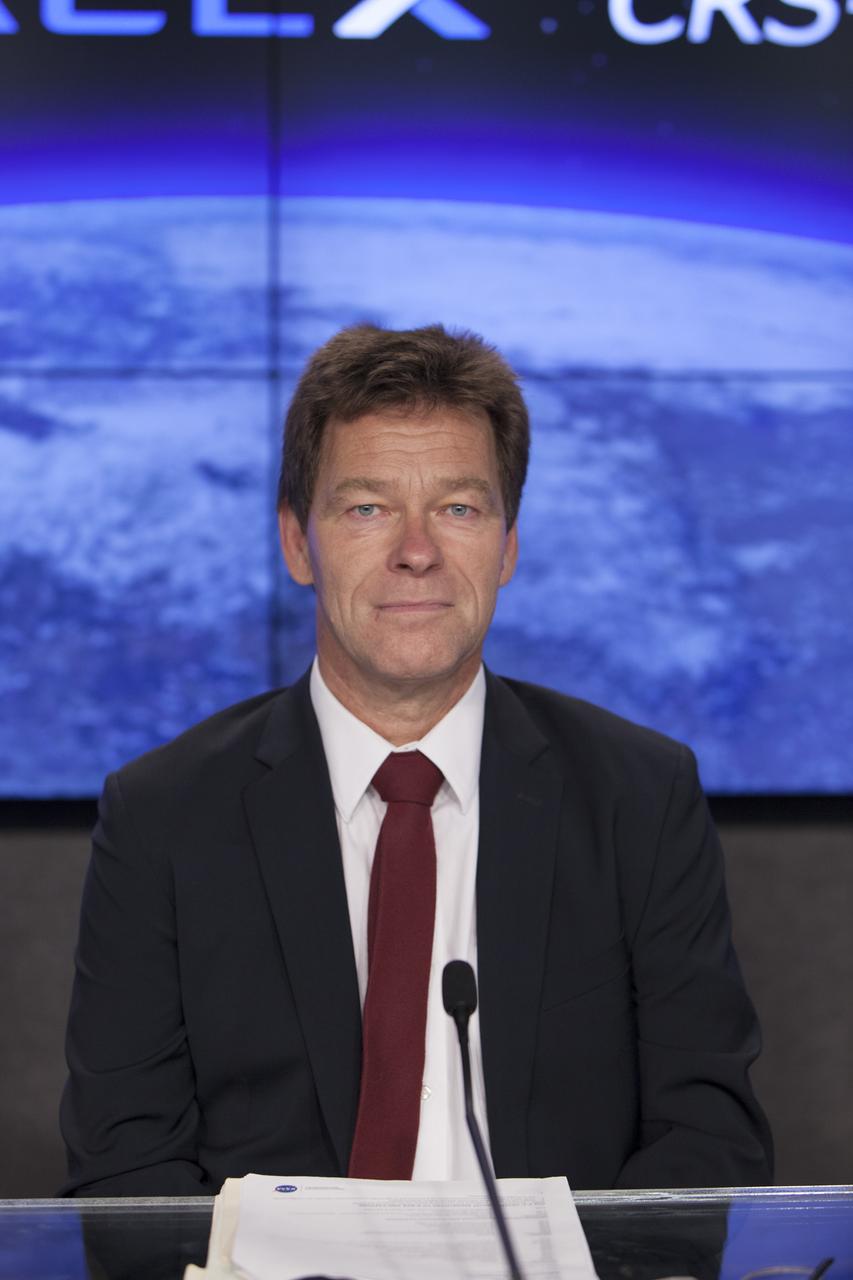
CAPE CANAVERAL, Fla. – In the Kennedy Space Center’s Press Site auditorium, members of news media are briefed on preparations for the launch of the SpaceX CRS-4 mission to resupply the International Space Station. Hans Koenigsmann, vice president of Mission Assurance with SpaceX, participated in the briefing. The mission is the fourth of 12 SpaceX flights NASA contracted with the company to resupply the space station. It will be the fifth trip by a Dragon spacecraft to the orbiting laboratory. The spacecraft’s 2.5 tons of supplies, science experiments, and technology demonstrations include critical materials to support 255 science and research investigations that will occur during the station's Expeditions 41 and 42. Liftoff is targeted for an instantaneous window at 2:14 a.m. EDT. To learn more about the mission, visit http://www.nasa.gov/mission_pages/station/structure/launch/index.html Photo credit: NASA/Jim Grossmann

CAPE CANAVERAL, Fla. – Sam Scimemi, International Space Station Division director, NASA Human Exploration and Operation Mission Directorate, participates in a post-launch media briefing following the successful launch of NASA's SpaceX CRS-4 mission to the International Space Station. Liftoff was at 1:52 a.m. EDT. The mission is the fourth of 12 SpaceX flights NASA contracted with the company to resupply the space station. It will be the fifth trip by a Dragon spacecraft to the orbiting laboratory. The spacecraft’s 2.5 tons of supplies, science experiments, and technology demonstrations include critical materials to support 255 science and research investigations that will occur during the station's Expeditions 41 and 42. To learn more about the mission, visit http://www.nasa.gov/mission_pages/station/structure/launch/index.html. Photo credit: NASA/Jim Grossmann
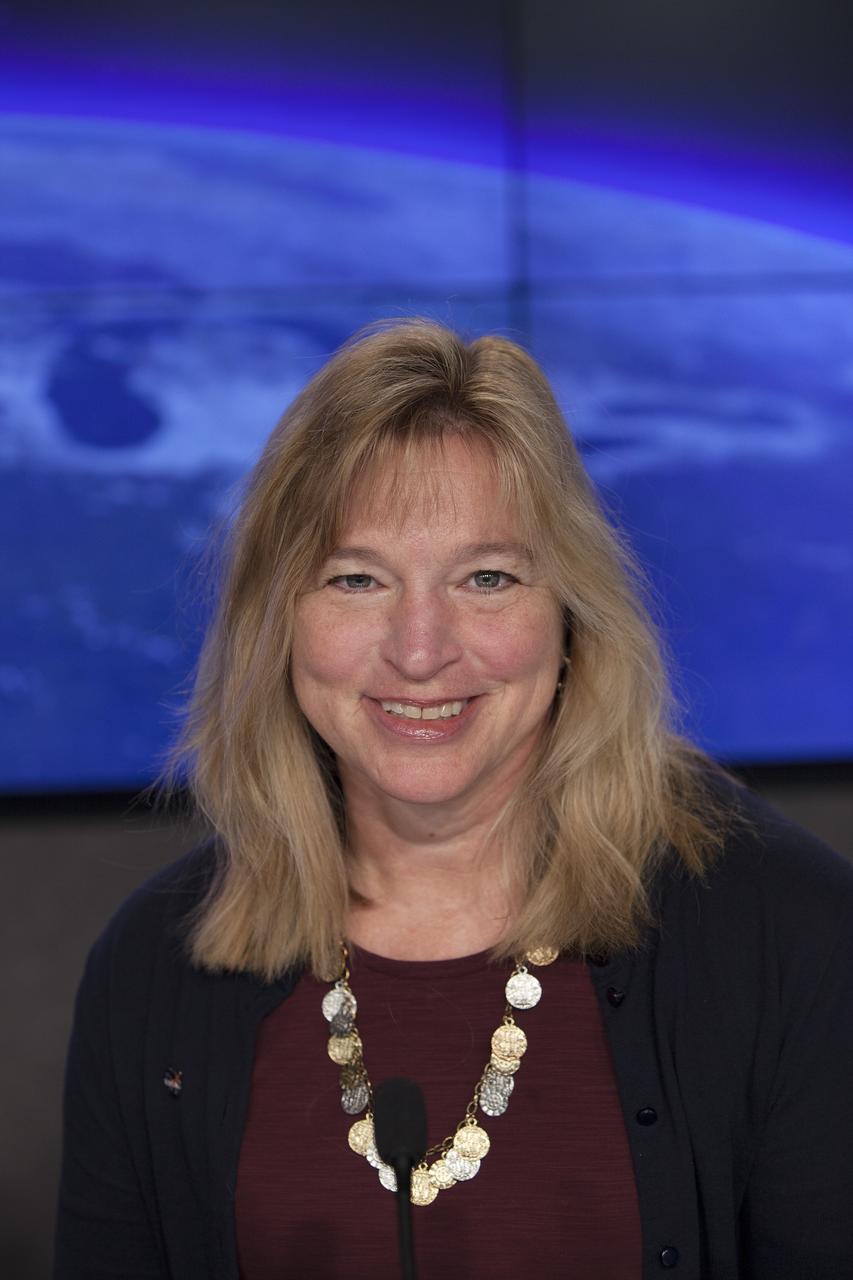
CAPE CANAVERAL, Fla. – Members of NASA’s International Space Station science team brief news media representatives in the Kennedy Space Center’s Press Site auditorium in preparation for the launch of the SpaceX CRS-4 mission to resupply the International Space Station. Ellen Stofan, NASA’s Chief Scientist, participated in the briefing. The mission is the fourth of 12 SpaceX flights NASA contracted with the company to resupply the space station. It will be the fifth trip by a Dragon spacecraft to the orbiting laboratory. The spacecraft’s 2.5 tons of supplies, science experiments, and technology demonstrations include critical materials to support 255 science and research investigations that will occur during the station's Expeditions 41 and 42. Liftoff is targeted for an instantaneous window at 2:14 a.m. EDT. To learn more about the mission, visit http://www.nasa.gov/mission_pages/station/structure/launch/index.html Photo credit: NASA/Jim Grossmann
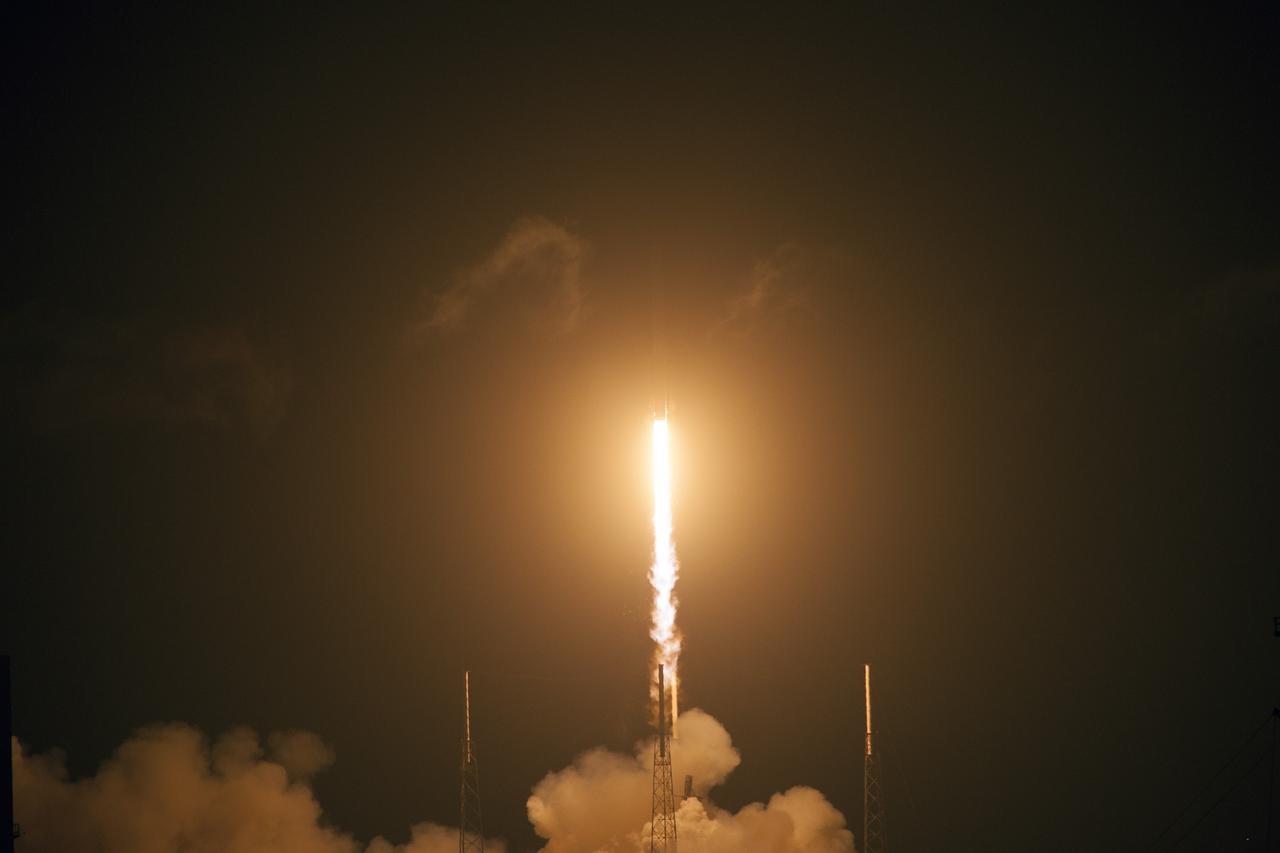
CAPE CANAVERAL, Fla. – The Falcon 9 rocket lifts off Space Launch Complex 40 at Cape Canaveral Air Force Station in Florida, carrying the SpaceX CRS-4 mission to orbit. Liftoff was at 1:52 a.m. EDT. The mission is the fourth of 12 SpaceX flights NASA contracted with the company to resupply the space station. It will be the fifth trip by a Dragon spacecraft to the orbiting laboratory. The spacecraft’s 2.5 tons of supplies, science experiments, and technology demonstrations include critical materials to support 255 science and research investigations that will occur during the station's Expeditions 41 and 42. To learn more about the mission, visit http://www.nasa.gov/mission_pages/station/structure/launch/index.html Photo credit: NASA/George Roberts
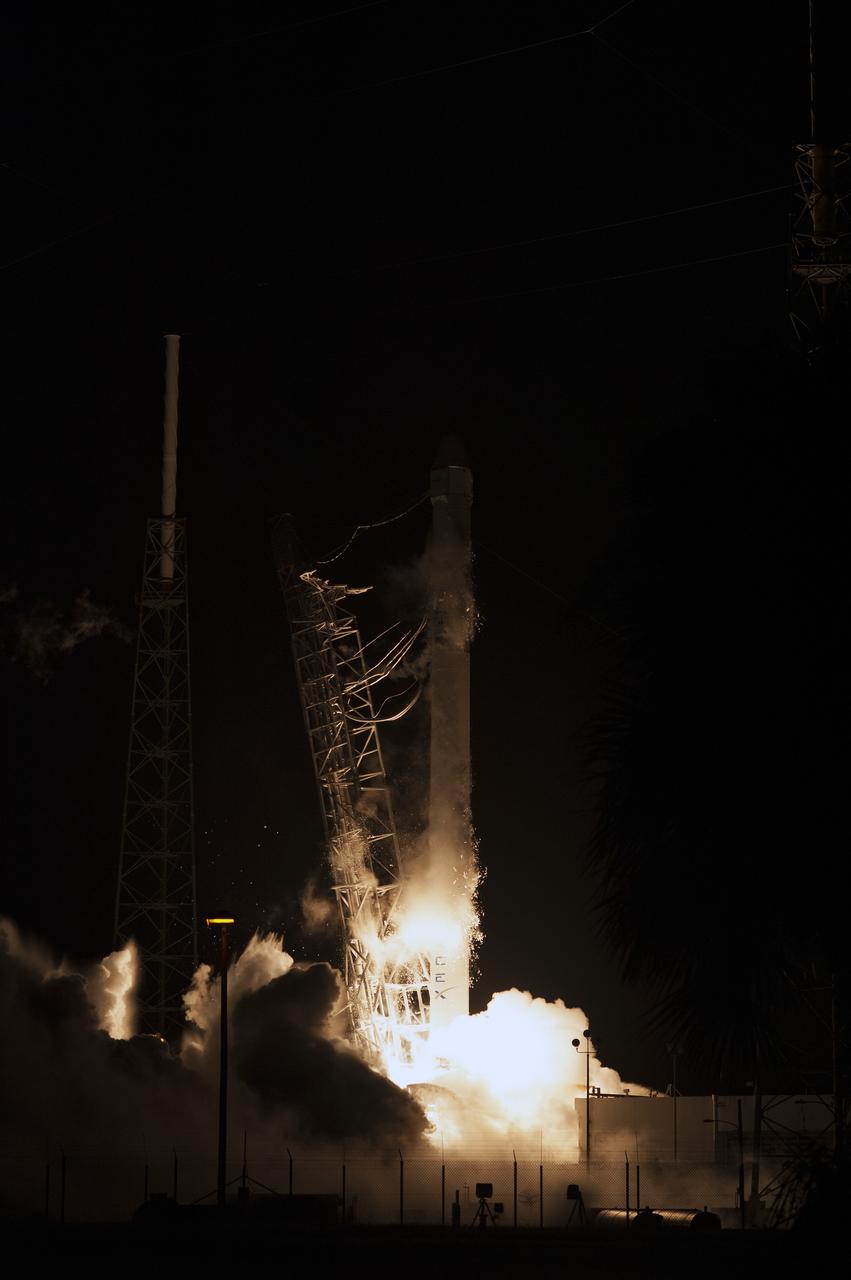
CAPE CANAVERAL, Fla. – The Falcon 9 rocket lifts off Space Launch Complex 40 at Cape Canaveral Air Force Station in Florida, carrying the SpaceX CRS-4 mission to orbit. Liftoff was at 1:52 a.m. EDT. The mission is the fourth of 12 SpaceX flights NASA contracted with the company to resupply the space station. It will be the fifth trip by a Dragon spacecraft to the orbiting laboratory. The spacecraft’s 2.5 tons of supplies, science experiments, and technology demonstrations include critical materials to support 255 science and research investigations that will occur during the station's Expeditions 41 and 42. To learn more about the mission, visit http://www.nasa.gov/mission_pages/station/structure/launch/index.html Photo credit: NASA/Sandy Joseph and Kevin O'Connell

CAPE CANAVERAL, Fla. – The Falcon 9 rocket soars off Space Launch Complex 40 on Cape Canaveral Air Force Station in Florida, carrying the SpaceX CRS-4 mission to orbit. Liftoff was at 1:52 a.m. EDT. The mission is the fourth of 12 SpaceX flights NASA contracted with the company to resupply the space station. It will be the fifth trip by a Dragon spacecraft to the orbiting laboratory. The spacecraft’s 2.5 tons of supplies, science experiments, and technology demonstrations include critical materials to support 255 science and research investigations that will occur during the station's Expeditions 41 and 42. To learn more about the mission, visit http://www.nasa.gov/mission_pages/station/structure/launch/index.html. Photo credit: NASA/Sandy Joseph and Kevin O'Connell
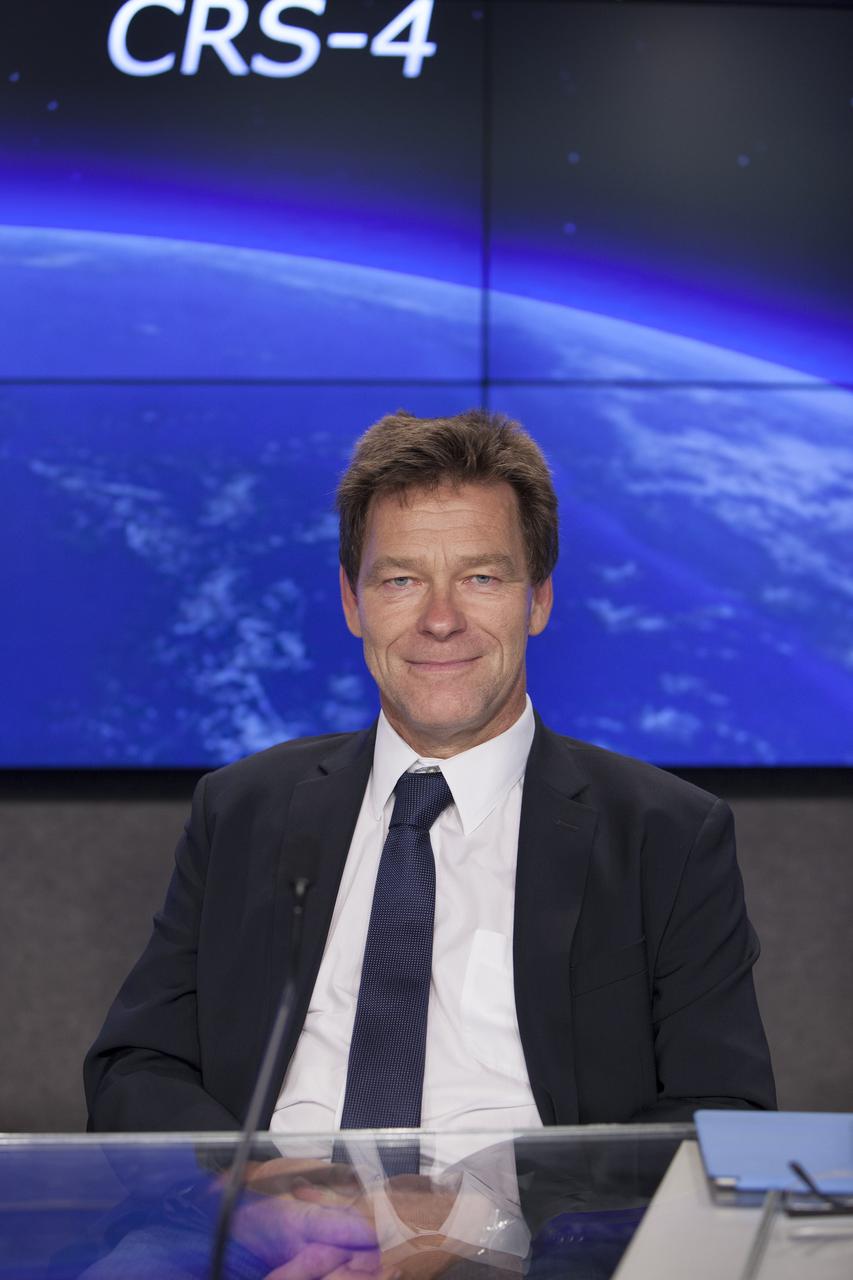
CAPE CANAVERAL, Fla. – Hans Koenigsmann, vice president of Mission Assurance, SpaceX, participates in a post-launch media briefing following the successful launch of NASA's SpaceX CRS-4 mission to the International Space Station. Liftoff was at 1:52 a.m. EDT. The mission is the fourth of 12 SpaceX flights NASA contracted with the company to resupply the space station. It will be the fifth trip by a Dragon spacecraft to the orbiting laboratory. The spacecraft’s 2.5 tons of supplies, science experiments, and technology demonstrations include critical materials to support 255 science and research investigations that will occur during the station's Expeditions 41 and 42. To learn more about the mission, visit http://www.nasa.gov/mission_pages/station/structure/launch/index.html. Photo credit: NASA/Jim Grossmann
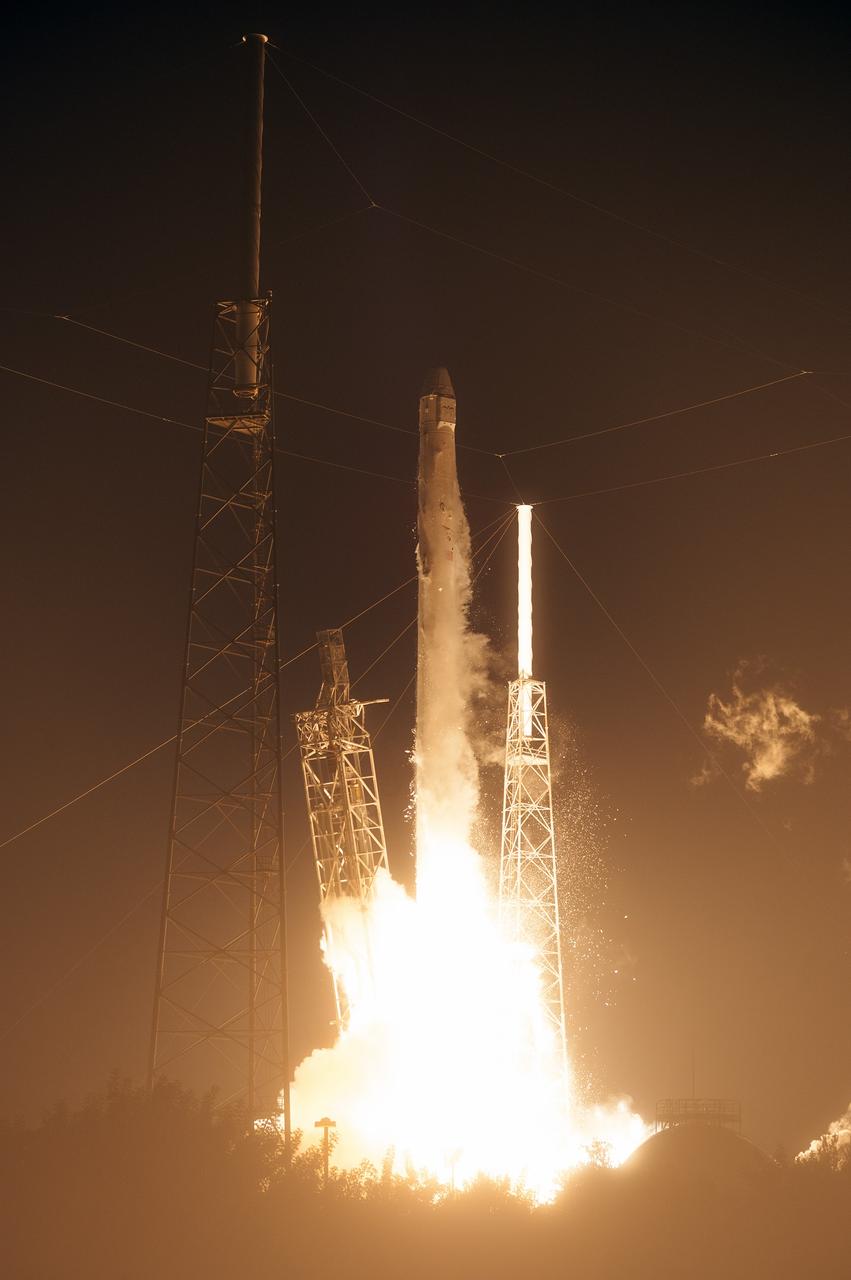
CAPE CANAVERAL, Fla. – The Falcon 9 rocket lifts off Space Launch Complex 40 at Cape Canaveral Air Force Station in Florida, carrying the SpaceX CRS-4 mission to orbit. Liftoff was at 1:52 a.m. EDT. The mission is the fourth of 12 SpaceX flights NASA contracted with the company to resupply the space station. It will be the fifth trip by a Dragon spacecraft to the orbiting laboratory. The spacecraft’s 2.5 tons of supplies, science experiments, and technology demonstrations include critical materials to support 255 science and research investigations that will occur during the station's Expeditions 41 and 42. To learn more about the mission, visit http://www.nasa.gov/mission_pages/station/structure/launch/index.html Photo credit: NASA/Sandy Joseph and Kevin O'Connell

CAPE CANAVERAL, Fla. – The Falcon 9 rocket soars off Space Launch Complex 40 on Cape Canaveral Air Force Station in Florida, carrying the SpaceX CRS-4 mission to orbit. Liftoff was at 1:52 a.m. EDT. The mission is the fourth of 12 SpaceX flights NASA contracted with the company to resupply the space station. It will be the fifth trip by a Dragon spacecraft to the orbiting laboratory. The spacecraft’s 2.5 tons of supplies, science experiments, and technology demonstrations include critical materials to support 255 science and research investigations that will occur during the station's Expeditions 41 and 42. To learn more about the mission, visit http://www.nasa.gov/mission_pages/station/structure/launch/index.html. Photo credit: NASA/Jim Grossmann
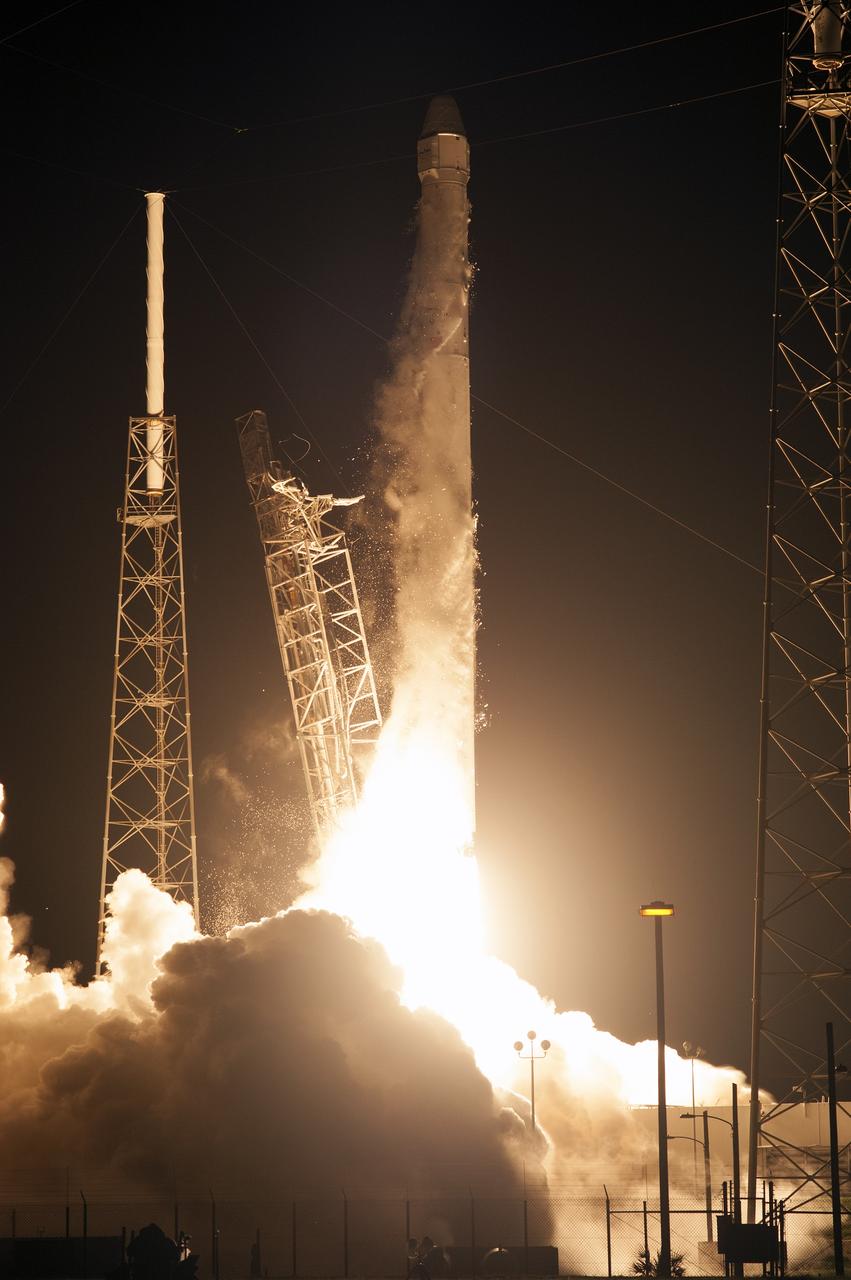
CAPE CANAVERAL, Fla. – The umbilical tower moves away from the Falcon 9 rocket as it lifts off Space Launch Complex 40 on Cape Canaveral Air Force Station in Florida, carrying the SpaceX CRS-4 mission to orbit. Liftoff was at 1:52 a.m. EDT. The mission is the fourth of 12 SpaceX flights NASA contracted with the company to resupply the space station. It will be the fifth trip by a Dragon spacecraft to the orbiting laboratory. The spacecraft’s 2.5 tons of supplies, science experiments, and technology demonstrations include critical materials to support 255 science and research investigations that will occur during the station's Expeditions 41 and 42. To learn more about the mission, visit http://www.nasa.gov/mission_pages/station/structure/launch/index.html. Photo credit: NASA/Sandy Joseph and Kevin O'Connell

CAPE CANAVERAL, Fla. – The Falcon 9 rocket lifts off Space Launch Complex 40 at Cape Canaveral Air Force Station in Florida, carrying the SpaceX CRS-4 mission to orbit. Liftoff was at 1:52 a.m. EDT. The mission is the fourth of 12 SpaceX flights NASA contracted with the company to resupply the space station. It will be the fifth trip by a Dragon spacecraft to the orbiting laboratory. The spacecraft’s 2.5 tons of supplies, science experiments, and technology demonstrations include critical materials to support 255 science and research investigations that will occur during the station's Expeditions 41 and 42. To learn more about the mission, visit http://www.nasa.gov/mission_pages/station/structure/launch/index.html Photo credit: NASA/Sandy Joseph
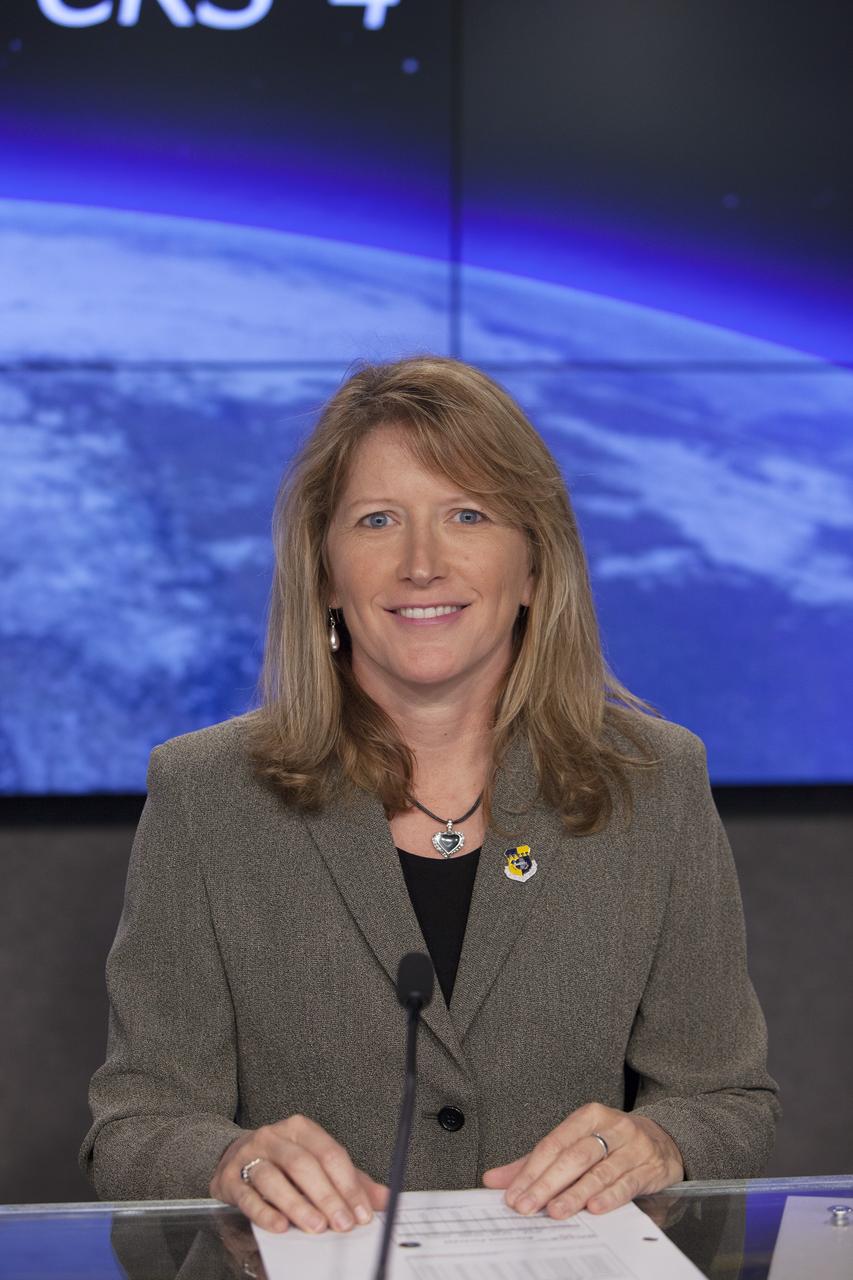
CAPE CANAVERAL, Fla. – In the Kennedy Space Center’s Press Site auditorium, members of news media are briefed on preparations for the launch of the SpaceX CRS-4 mission to resupply the International Space Station. Kathy Winters, launch weather officer for the 45th Weather Squadron, participated in the briefing. The mission is the fourth of 12 SpaceX flights NASA contracted with the company to resupply the space station. It will be the fifth trip by a Dragon spacecraft to the orbiting laboratory. The spacecraft’s 2.5 tons of supplies, science experiments, and technology demonstrations include critical materials to support 255 science and research investigations that will occur during the station's Expeditions 41 and 42. Liftoff is targeted for an instantaneous window at 2:14 a.m. EDT. To learn more about the mission, visit http://www.nasa.gov/mission_pages/station/structure/launch/index.html Photo credit: NASA/Jim Grossmann
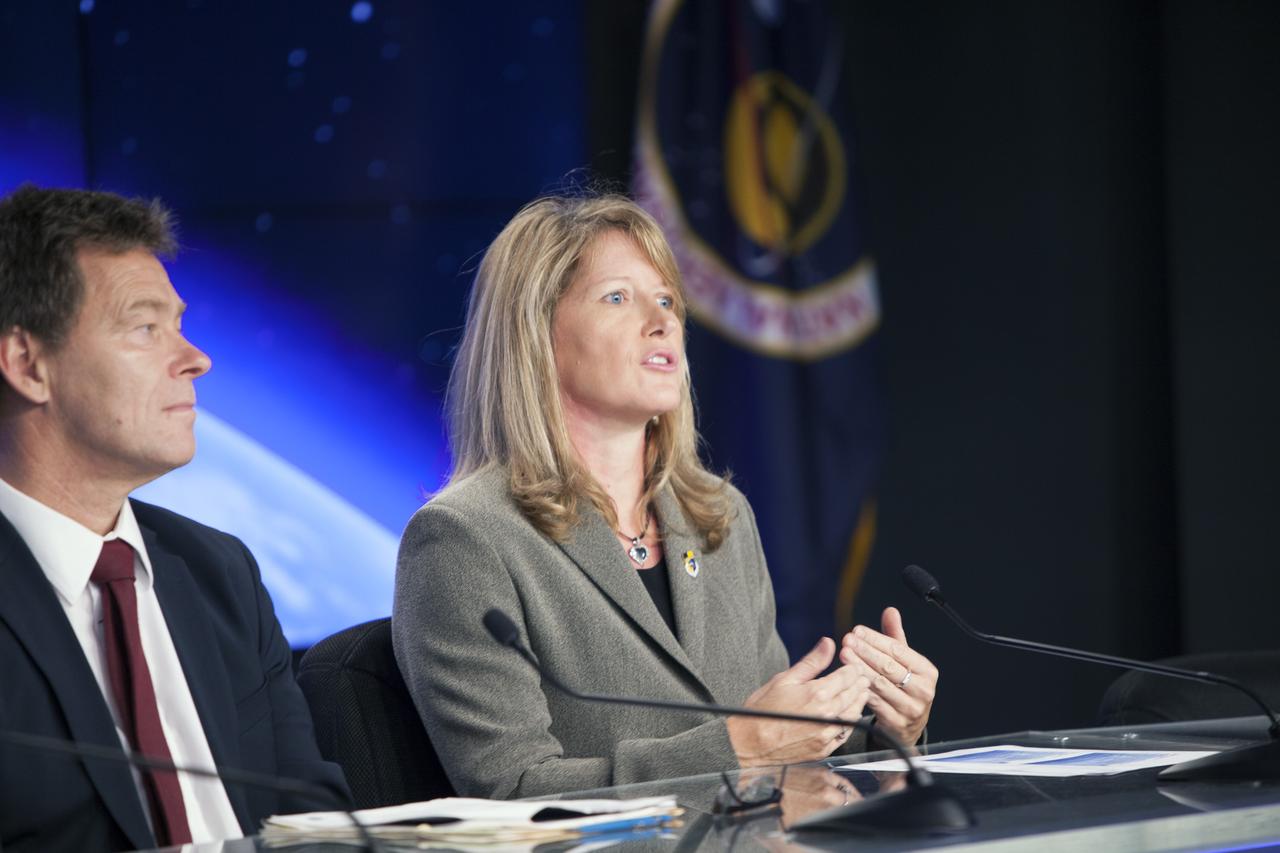
CAPE CANAVERAL, Fla. – In the Kennedy Space Center’s Press Site auditorium, members of news media are briefed on preparations for the launch of the SpaceX CRS-4 mission to resupply the International Space Station. Kathy Winters, launch weather officer for the 45th Weather Squadron, participated in the briefing. Hans Koenigsmann, vice president of Mission Assurance with SpaceX, looks on from the left. The mission is the fourth of 12 SpaceX flights NASA contracted with the company to resupply the space station. It will be the fifth trip by a Dragon spacecraft to the orbiting laboratory. The spacecraft’s 2.5 tons of supplies, science experiments, and technology demonstrations include critical materials to support 255 science and research investigations that will occur during the station's Expeditions 41 and 42. Liftoff is targeted for an instantaneous window at 2:14 a.m. EDT. To learn more about the mission, visit http://www.nasa.gov/mission_pages/station/structure/launch/index.html Photo credit: NASA/Jim Grossmann
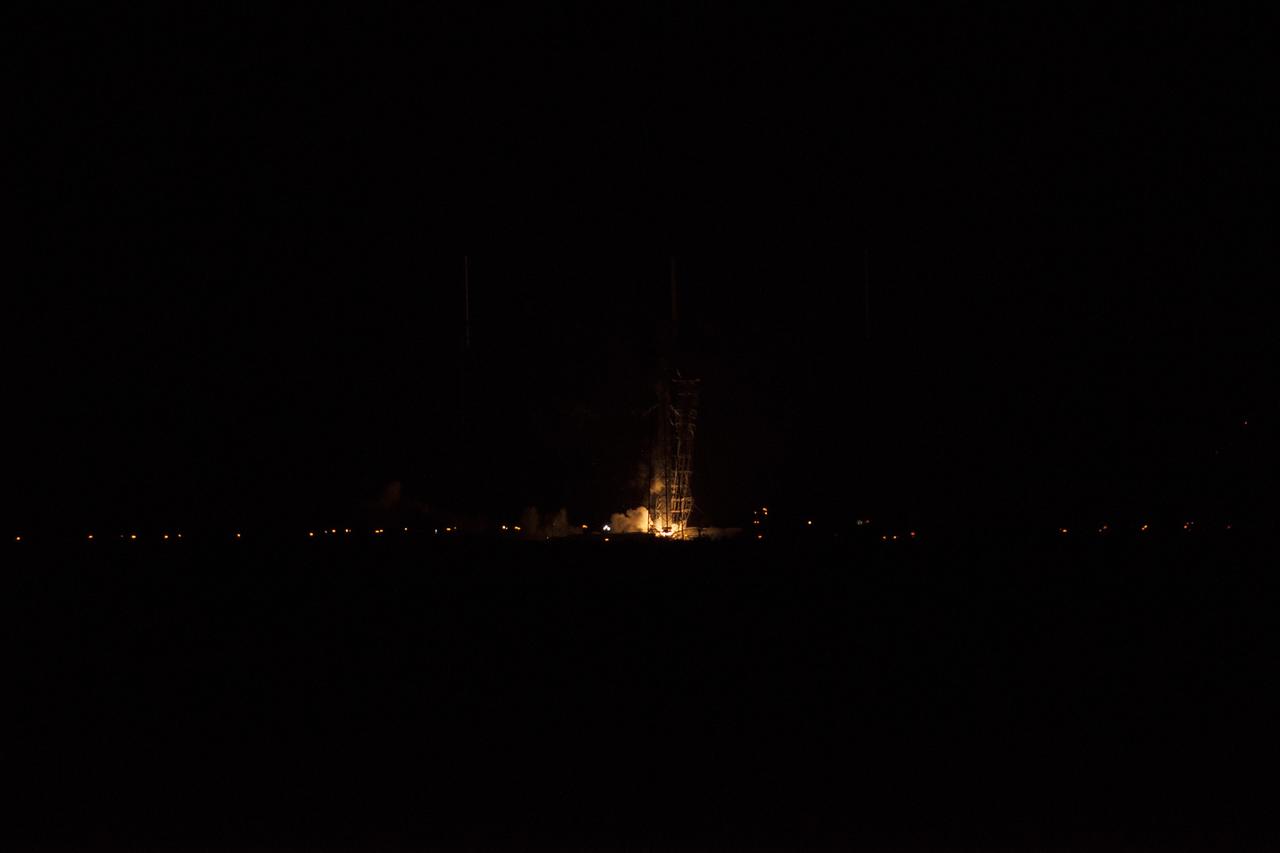
CAPE CANAVERAL, Fla. – The Falcon 9 rocket lifts off Space Launch Complex 40 at Cape Canaveral Air Force Station in Florida, carrying the SpaceX CRS-4 mission to orbit. Liftoff was at 1:52 a.m. EDT. The mission is the fourth of 12 SpaceX flights NASA contracted with the company to resupply the space station. It will be the fifth trip by a Dragon spacecraft to the orbiting laboratory. The spacecraft’s 2.5 tons of supplies, science experiments, and technology demonstrations include critical materials to support 255 science and research investigations that will occur during the station's Expeditions 41 and 42. To learn more about the mission, visit http://www.nasa.gov/mission_pages/station/structure/launch/index.html Photo credit: NASA/George Roberts
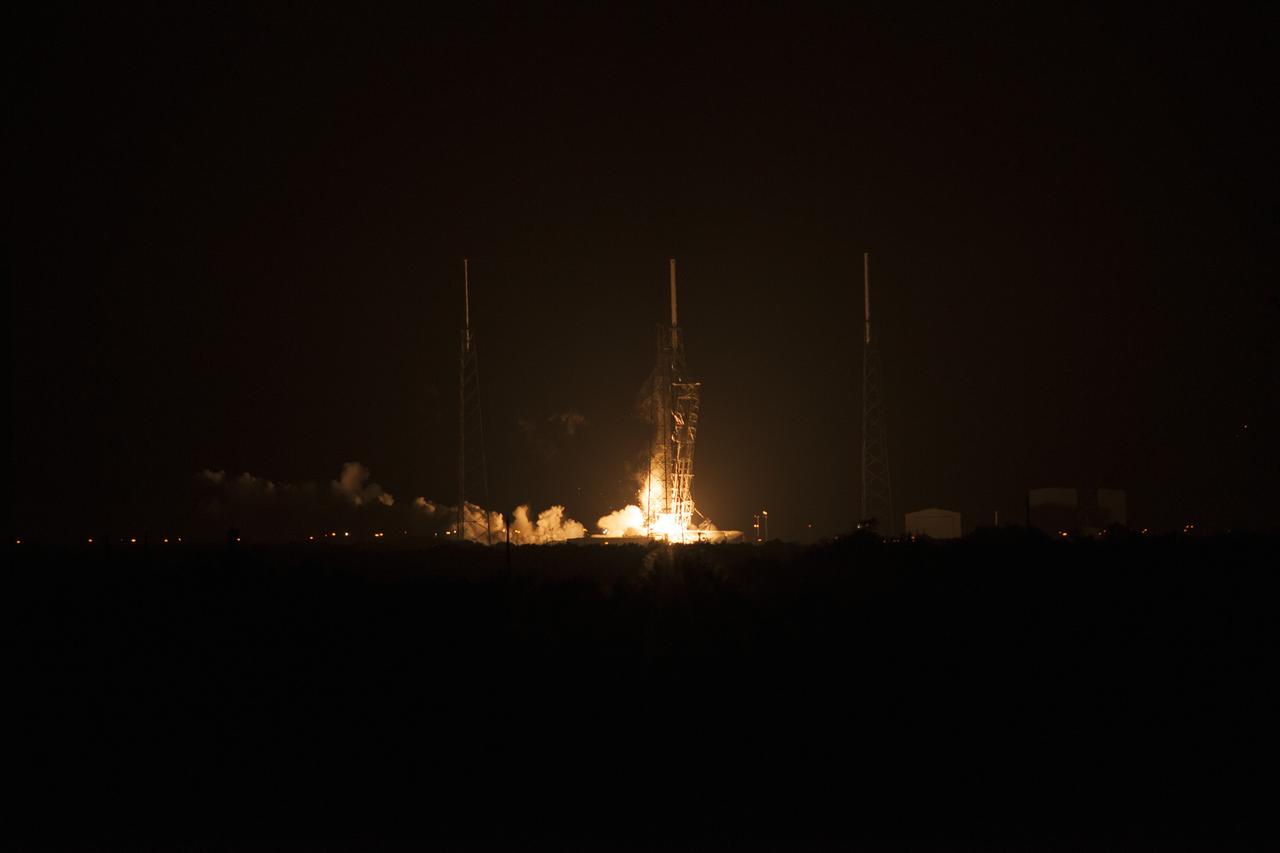
CAPE CANAVERAL, Fla. – The Falcon 9 rocket lifts off Space Launch Complex 40 at Cape Canaveral Air Force Station in Florida, carrying the SpaceX CRS-4 mission to orbit. Liftoff was at 1:52 a.m. EDT. The mission is the fourth of 12 SpaceX flights NASA contracted with the company to resupply the space station. It will be the fifth trip by a Dragon spacecraft to the orbiting laboratory. The spacecraft’s 2.5 tons of supplies, science experiments, and technology demonstrations include critical materials to support 255 science and research investigations that will occur during the station's Expeditions 41 and 42. To learn more about the mission, visit http://www.nasa.gov/mission_pages/station/structure/launch/index.html Photo credit: NASA/George Roberts

CAPE CANAVERAL, Fla. – The umbilical tower falls away from the Falcon 9 rocket as it lifts off Space Launch Complex 40 on Cape Canaveral Air Force Station in Florida, carrying the SpaceX CRS-4 mission to orbit. Liftoff was at 1:52 a.m. EDT. The mission is the fourth of 12 SpaceX flights NASA contracted with the company to resupply the space station. It will be the fifth trip by a Dragon spacecraft to the orbiting laboratory. The spacecraft’s 2.5 tons of supplies, science experiments, and technology demonstrations include critical materials to support 255 science and research investigations that will occur during the station's Expeditions 41 and 42. To learn more about the mission, visit http://www.nasa.gov/mission_pages/station/structure/launch/index.html. Photo credit: NASA/Jim Grossmann
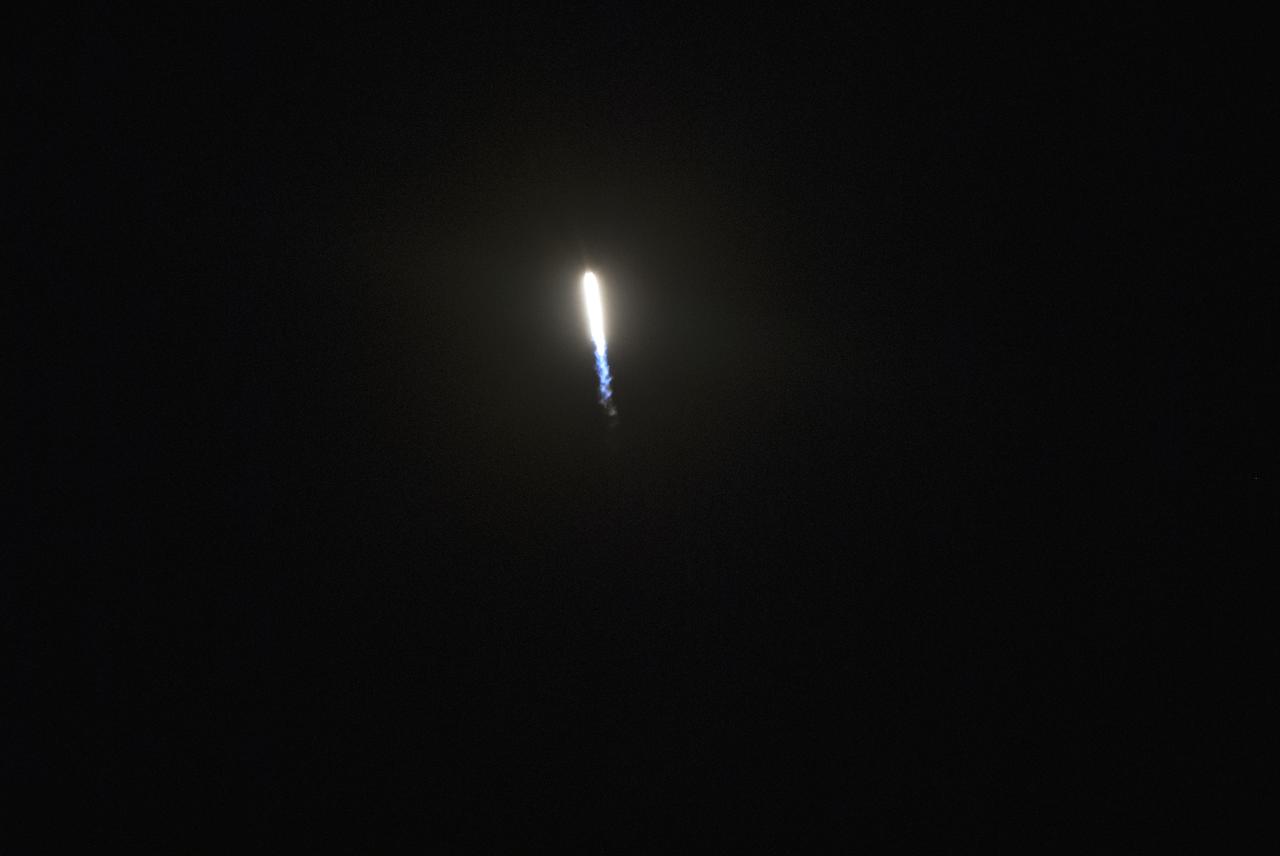
CAPE CANAVERAL, Fla. – A rumble is heard along the Space Coast as the Falcon 9 rocket soars into the night sky from Space Launch Complex 40 on Cape Canaveral Air Force Station in Florida, carrying the SpaceX CRS-4 mission to orbit. Liftoff was at 1:52 a.m. EDT. The mission is the fourth of 12 SpaceX flights NASA contracted with the company to resupply the space station. It will be the fifth trip by a Dragon spacecraft to the orbiting laboratory. The spacecraft’s 2.5 tons of supplies, science experiments, and technology demonstrations include critical materials to support 255 science and research investigations that will occur during the station's Expeditions 41 and 42. To learn more about the mission, visit http://www.nasa.gov/mission_pages/station/structure/launch/index.html. Photo credit: NASA/Jim Grossmann

CAPE CANAVERAL, Fla. – Jason Gilbert, scientific associate, Novartis Institutes for BioMedical Research, briefs media representatives in Kennedy Space Center’s Press Site auditorium in preparation for the launch of the SpaceX CRS-4 mission to resupply the International Space Station. Gilbert is a member of the ISS Research and Technology Panel. The mission is the fourth of 12 SpaceX flights NASA contracted with the company to resupply the space station. It will be the fifth trip by a Dragon spacecraft to the orbiting laboratory. The spacecraft’s 2.5 tons of supplies, science experiments, and technology demonstrations include critical materials to support 255 science and research investigations that will occur during the station's Expeditions 41 and 42. Liftoff is targeted for an instantaneous window at 2:14 a.m. EDT. To learn more about the mission, visit http://www.nasa.gov/mission_pages/station/structure/launch/index.html. Photo credit: NASA/Jim Grossmann

CAPE CANAVERAL, Fla. – The Falcon 9 rocket lifts off Space Launch Complex 40 at Cape Canaveral Air Force Station in Florida, carrying the SpaceX CRS-4 mission to orbit. Liftoff was at 1:52 a.m. EDT. The mission is the fourth of 12 SpaceX flights NASA contracted with the company to resupply the space station. It will be the fifth trip by a Dragon spacecraft to the orbiting laboratory. The spacecraft’s 2.5 tons of supplies, science experiments, and technology demonstrations include critical materials to support 255 science and research investigations that will occur during the station's Expeditions 41 and 42. To learn more about the mission, visit http://www.nasa.gov/mission_pages/station/structure/launch/index.html Photo credit: NASA/Sandy Joseph
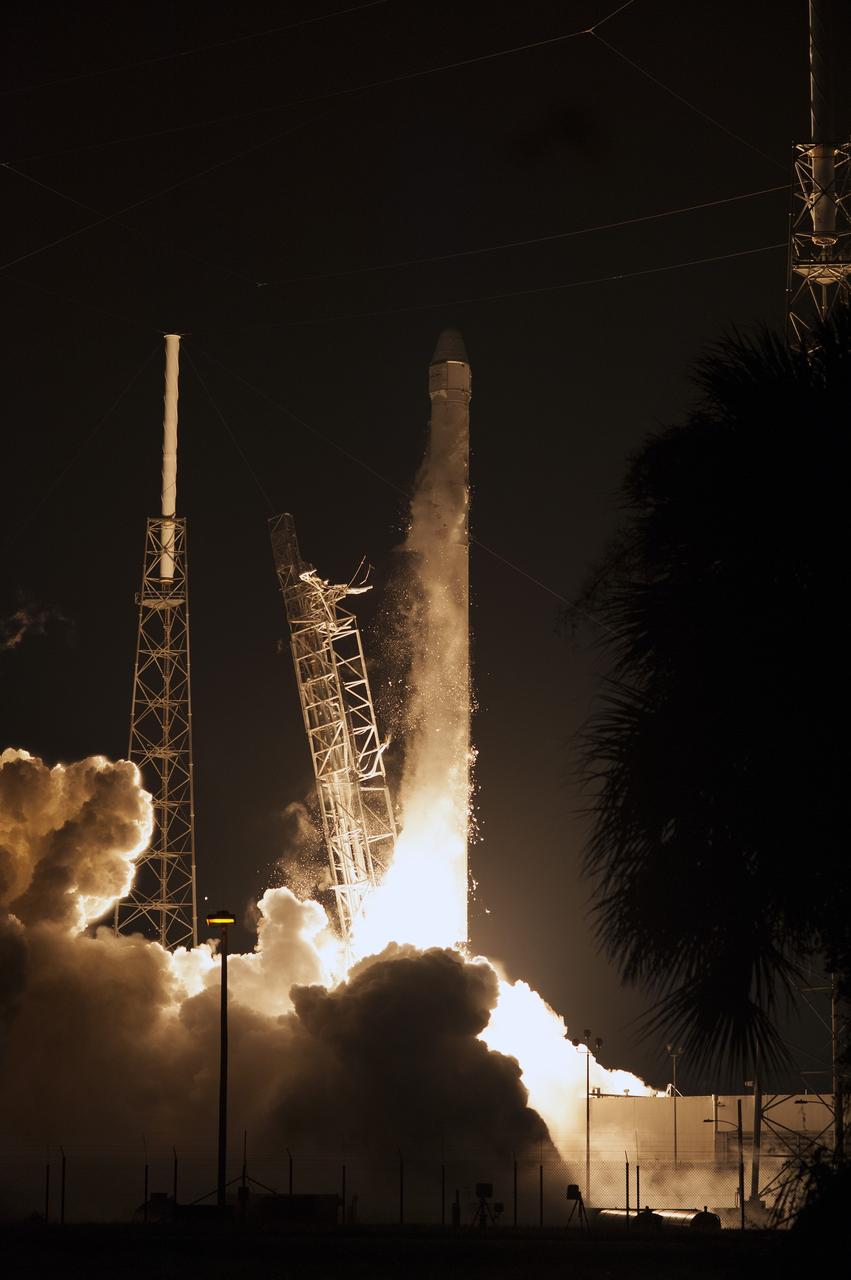
CAPE CANAVERAL, Fla. – The Falcon 9 rocket lifts off Space Launch Complex 40 at Cape Canaveral Air Force Station in Florida, carrying the SpaceX CRS-4 mission to orbit. Liftoff was at 1:52 a.m. EDT. The mission is the fourth of 12 SpaceX flights NASA contracted with the company to resupply the space station. It will be the fifth trip by a Dragon spacecraft to the orbiting laboratory. The spacecraft’s 2.5 tons of supplies, science experiments, and technology demonstrations include critical materials to support 255 science and research investigations that will occur during the station's Expeditions 41 and 42. To learn more about the mission, visit http://www.nasa.gov/mission_pages/station/structure/launch/index.html Photo credit: NASA/Sandy Joseph and Kevin O'Connell
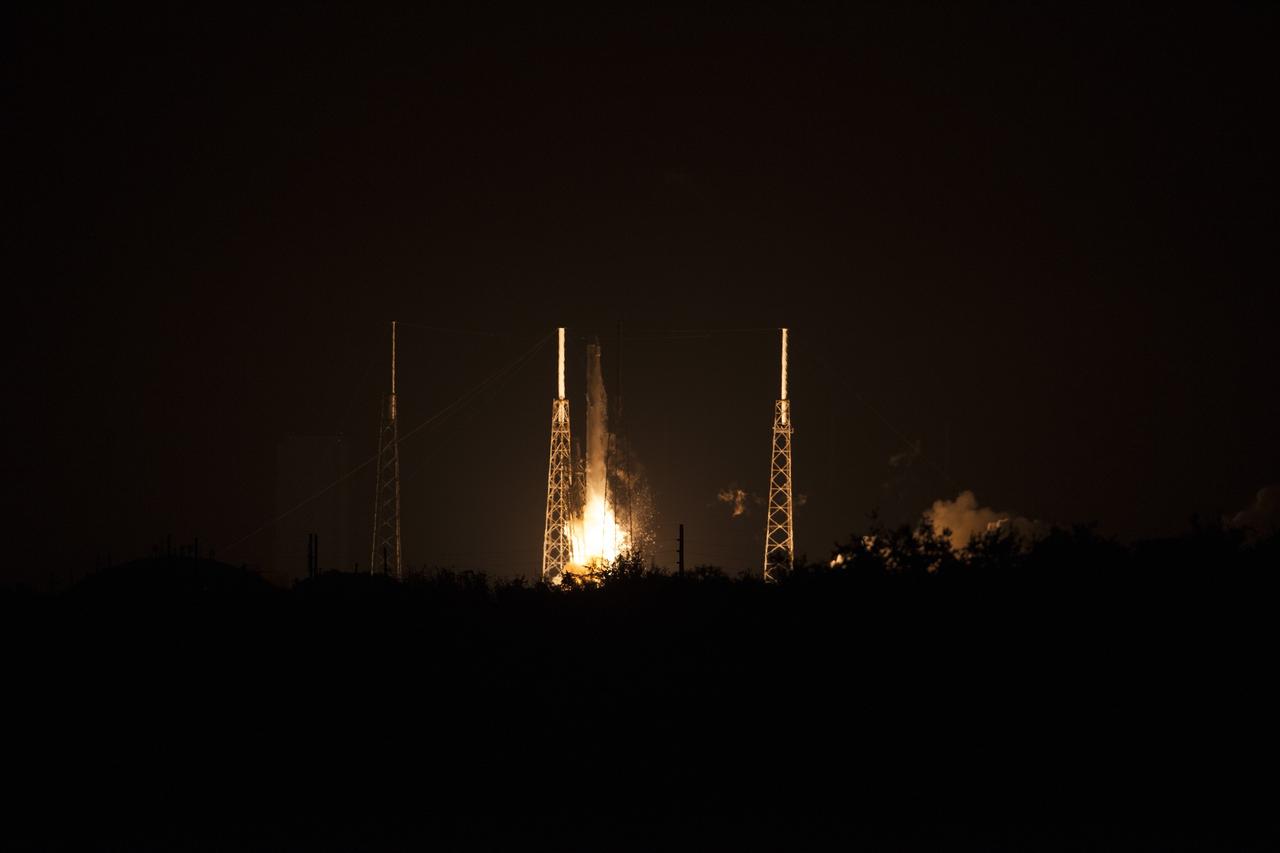
CAPE CANAVERAL, Fla. – The Falcon 9 rocket lifts off Space Launch Complex 40 at Cape Canaveral Air Force Station in Florida, carrying the SpaceX CRS-4 mission to orbit. Liftoff was at 1:52 a.m. EDT. The mission is the fourth of 12 SpaceX flights NASA contracted with the company to resupply the space station. It will be the fifth trip by a Dragon spacecraft to the orbiting laboratory. The spacecraft’s 2.5 tons of supplies, science experiments, and technology demonstrations include critical materials to support 255 science and research investigations that will occur during the station's Expeditions 41 and 42. To learn more about the mission, visit http://www.nasa.gov/mission_pages/station/structure/launch/index.html Photo credit: NASA/Sandy Joseph
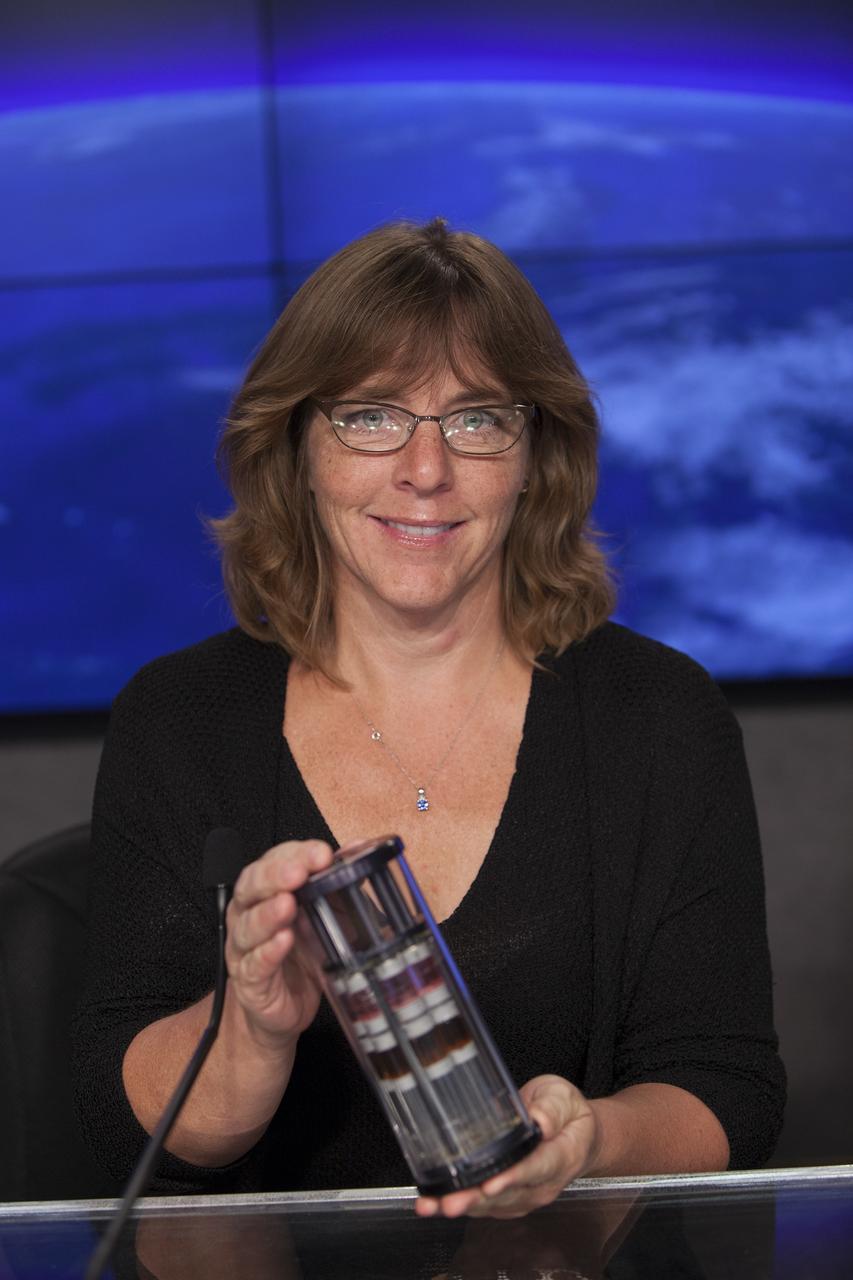
CAPE CANAVERAL, Fla. – Shiela Neilsen, principal investigator, Micro-8, University of Montana, briefs media representatives in Kennedy Space Center’s Press Site auditorium in preparation for the launch of the SpaceX CRS-4 mission to resupply the International Space Station. Neilsen is a member of the ISS Science Panel on Model Organisms. The mission is the fourth of 12 SpaceX flights NASA contracted with the company to resupply the space station. It will be the fifth trip by a Dragon spacecraft to the orbiting laboratory. The spacecraft’s 2.5 tons of supplies, science experiments, and technology demonstrations include critical materials to support 255 science and research investigations that will occur during the station's Expeditions 41 and 42. Liftoff is targeted for an instantaneous window at 2:14 a.m. EDT. To learn more about the mission, visit http://www.nasa.gov/mission_pages/station/structure/launch/index.html. Photo credit: NASA/Jim Grossmann

CAPE CANAVERAL, Fla. – The Falcon 9 rocket lifts off Space Launch Complex 40 at Cape Canaveral Air Force Station in Florida, carrying the SpaceX CRS-4 mission to orbit. Liftoff was at 1:52 a.m. EDT. The mission is the fourth of 12 SpaceX flights NASA contracted with the company to resupply the space station. It will be the fifth trip by a Dragon spacecraft to the orbiting laboratory. The spacecraft’s 2.5 tons of supplies, science experiments, and technology demonstrations include critical materials to support 255 science and research investigations that will occur during the station's Expeditions 41 and 42. To learn more about the mission, visit http://www.nasa.gov/mission_pages/station/structure/launch/index.html Photo credit: NASA/Sandy Joseph

CAPE CANAVERAL, Fla. – In the Kennedy Space Center’s Press Site auditorium, members of news media are briefed on preparations for the launch of the SpaceX CRS-4 mission to resupply the International Space Station. Mike Curie of NASA Public Affairs, moderated the briefing. The mission is the fourth of 12 SpaceX flights NASA contracted with the company to resupply the space station. It will be the fifth trip by a Dragon spacecraft to the orbiting laboratory. The spacecraft’s 2.5 tons of supplies, science experiments, and technology demonstrations include critical materials to support 255 science and research investigations that will occur during the station's Expeditions 41 and 42. Liftoff is targeted for an instantaneous window at 2:14 a.m. EDT. To learn more about the mission, visit http://www.nasa.gov/mission_pages/station/structure/launch/index.html Photo credit: NASA/Jim Grossmann
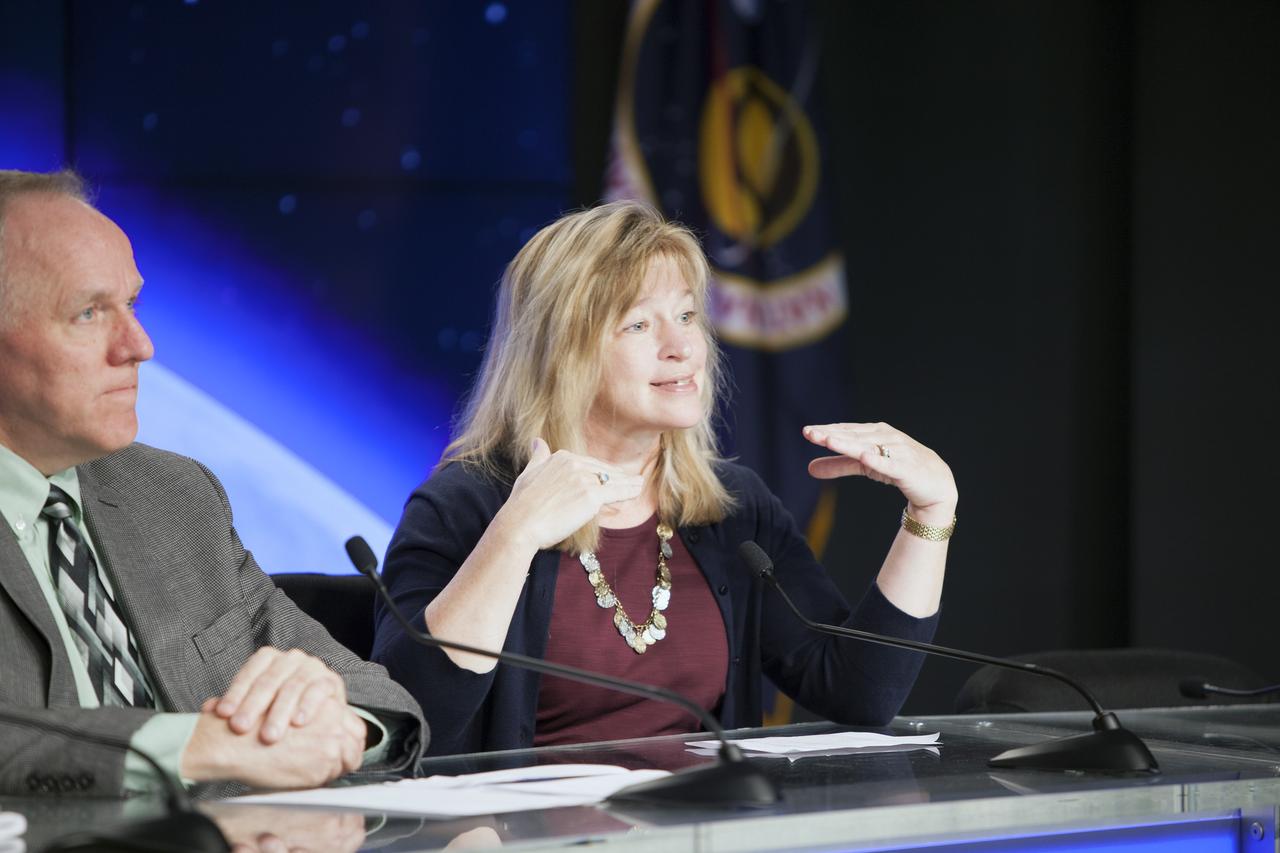
CAPE CANAVERAL, Fla. – Members of NASA’s International Space Station science team brief news media representatives in the Kennedy Space Center’s Press Site auditorium in preparation for the launch of the SpaceX CRS-4 mission to resupply the International Space Station. Ellen Stofan, NASA’s Chief Scientist, participated in the briefing. Jeff Sheehy, senior technologist for the Space Technology Mission Directorate, looks on from the left. The mission is the fourth of 12 SpaceX flights NASA contracted with the company to resupply the space station. It will be the fifth trip by a Dragon spacecraft to the orbiting laboratory. The spacecraft’s 2.5 tons of supplies, science experiments, and technology demonstrations include critical materials to support 255 science and research investigations that will occur during the station's Expeditions 41 and 42. Liftoff is targeted for an instantaneous window at 2:14 a.m. EDT. To learn more about the mission, visit http://www.nasa.gov/mission_pages/station/structure/launch/index.html Photo credit: NASA/Jim Grossmann
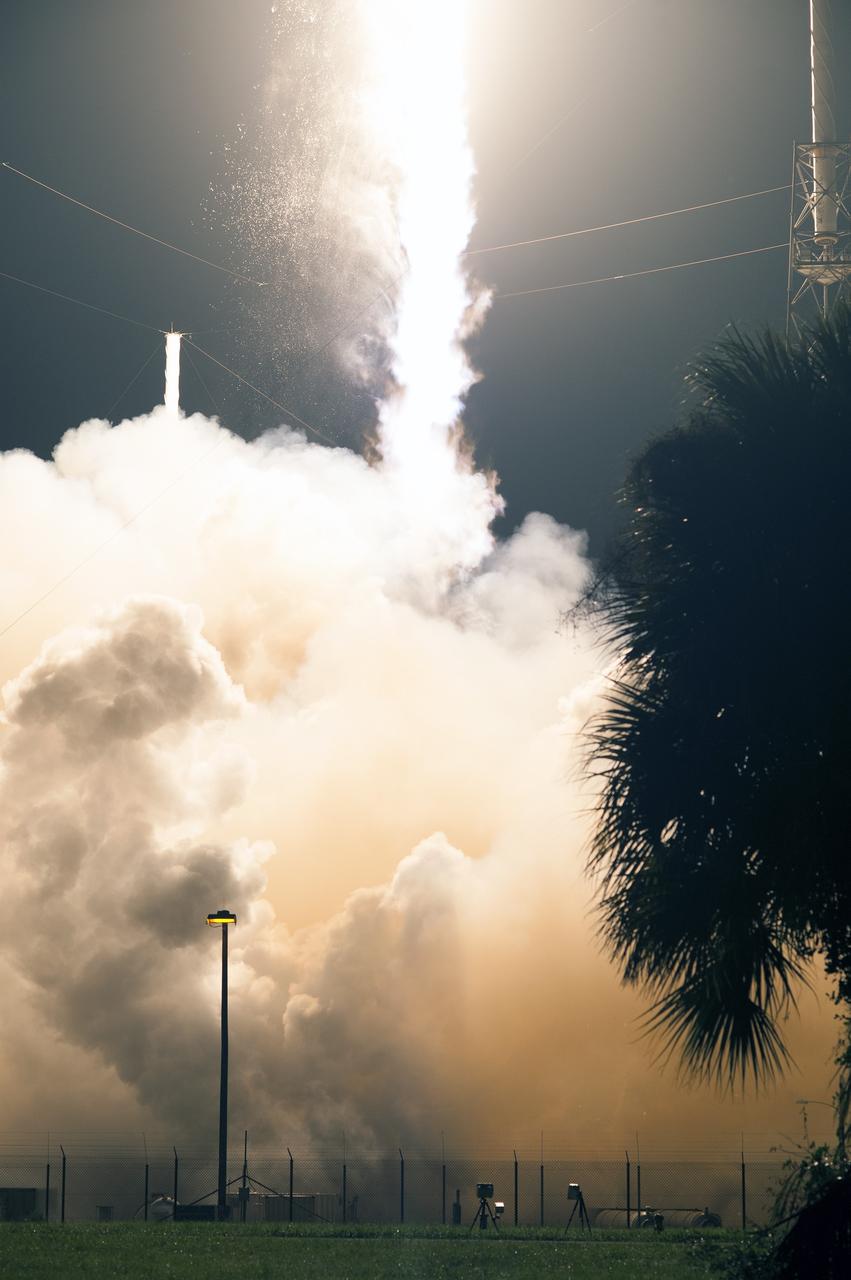
CAPE CANAVERAL, Fla. – The Falcon 9 rocket lifts off Space Launch Complex 40 at Cape Canaveral Air Force Station in Florida, carrying the SpaceX CRS-4 mission to orbit. Liftoff was at 1:52 a.m. EDT. The mission is the fourth of 12 SpaceX flights NASA contracted with the company to resupply the space station. It will be the fifth trip by a Dragon spacecraft to the orbiting laboratory. The spacecraft’s 2.5 tons of supplies, science experiments, and technology demonstrations include critical materials to support 255 science and research investigations that will occur during the station's Expeditions 41 and 42. To learn more about the mission, visit http://www.nasa.gov/mission_pages/station/structure/launch/index.html Photo credit: NASA/Sandy Joseph and Kevin O'Connell
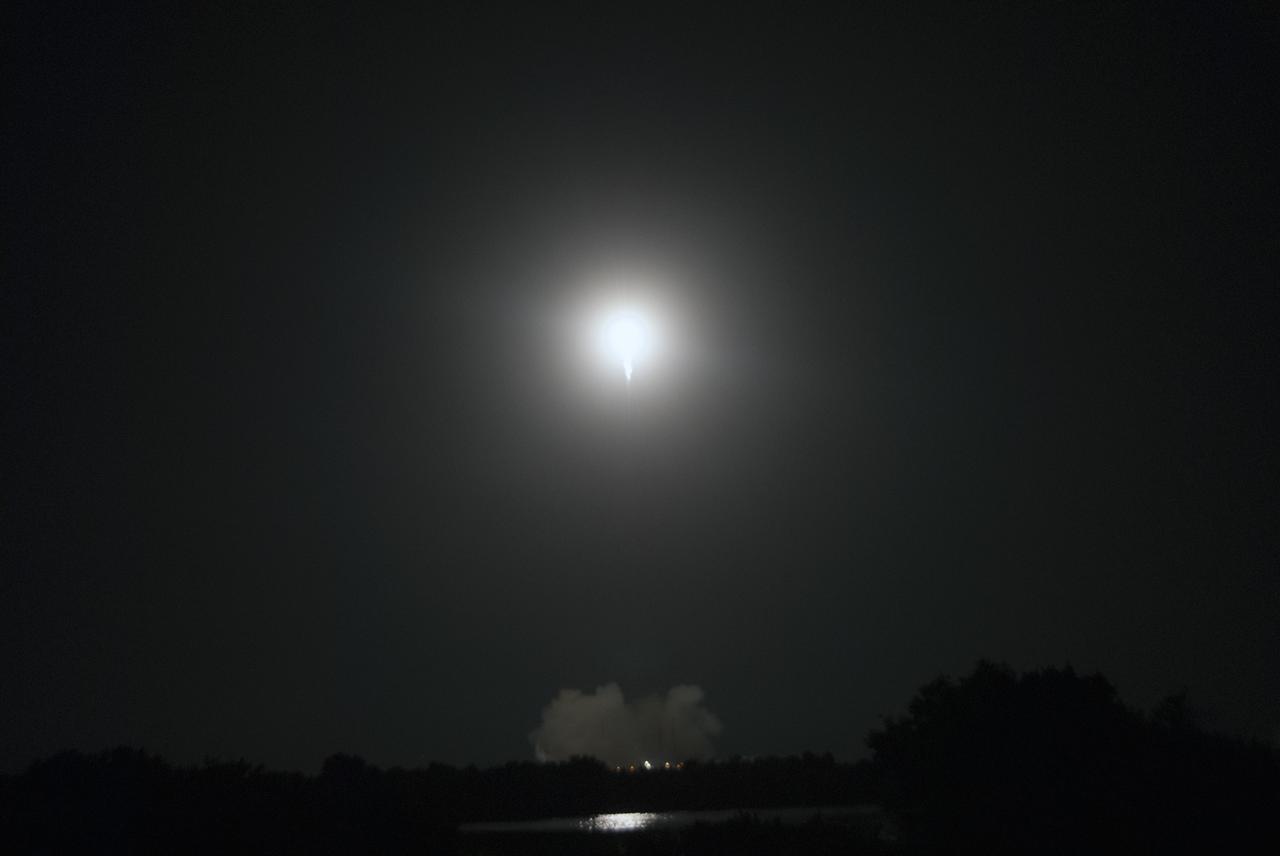
CAPE CANAVERAL, Fla. – The Falcon 9 rocket soars into the night sky leaving an exhaust cloud hovering over Space Launch Complex 40 on Cape Canaveral Air Force Station in Florida. The SpaceX CRS-4 mission is underway. Liftoff was at 1:52 a.m. EDT. The mission is the fourth of 12 SpaceX flights NASA contracted with the company to resupply the space station. It will be the fifth trip by a Dragon spacecraft to the orbiting laboratory. The spacecraft’s 2.5 tons of supplies, science experiments, and technology demonstrations include critical materials to support 255 science and research investigations that will occur during the station's Expeditions 41 and 42. To learn more about the mission, visit http://www.nasa.gov/mission_pages/station/structure/launch/index.html. Photo credit: NASA/Jim Grossmann
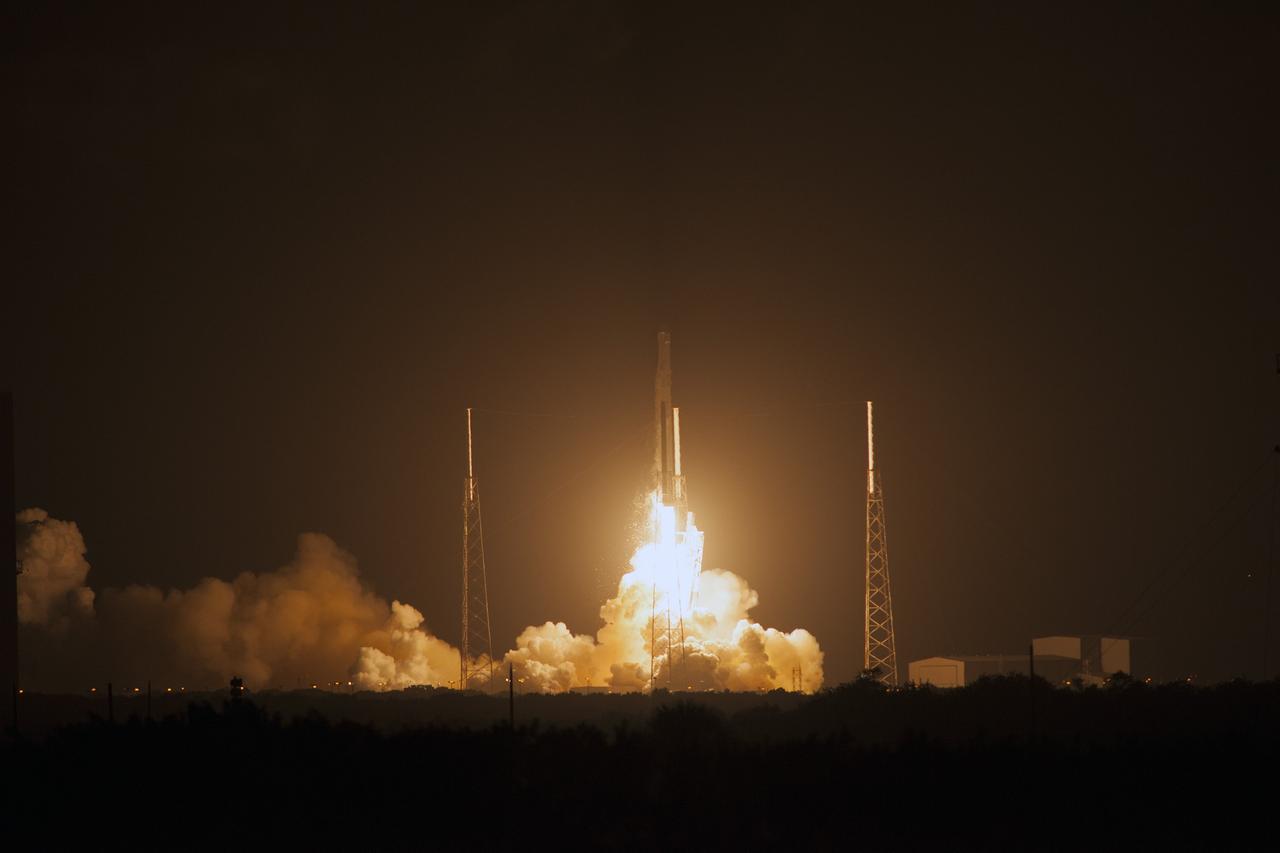
CAPE CANAVERAL, Fla. – The Falcon 9 rocket lifts off Space Launch Complex 40 at Cape Canaveral Air Force Station in Florida, carrying the SpaceX CRS-4 mission to orbit. Liftoff was at 1:52 a.m. EDT. The mission is the fourth of 12 SpaceX flights NASA contracted with the company to resupply the space station. It will be the fifth trip by a Dragon spacecraft to the orbiting laboratory. The spacecraft’s 2.5 tons of supplies, science experiments, and technology demonstrations include critical materials to support 255 science and research investigations that will occur during the station's Expeditions 41 and 42. To learn more about the mission, visit http://www.nasa.gov/mission_pages/station/structure/launch/index.html Photo credit: NASA/George Roberts
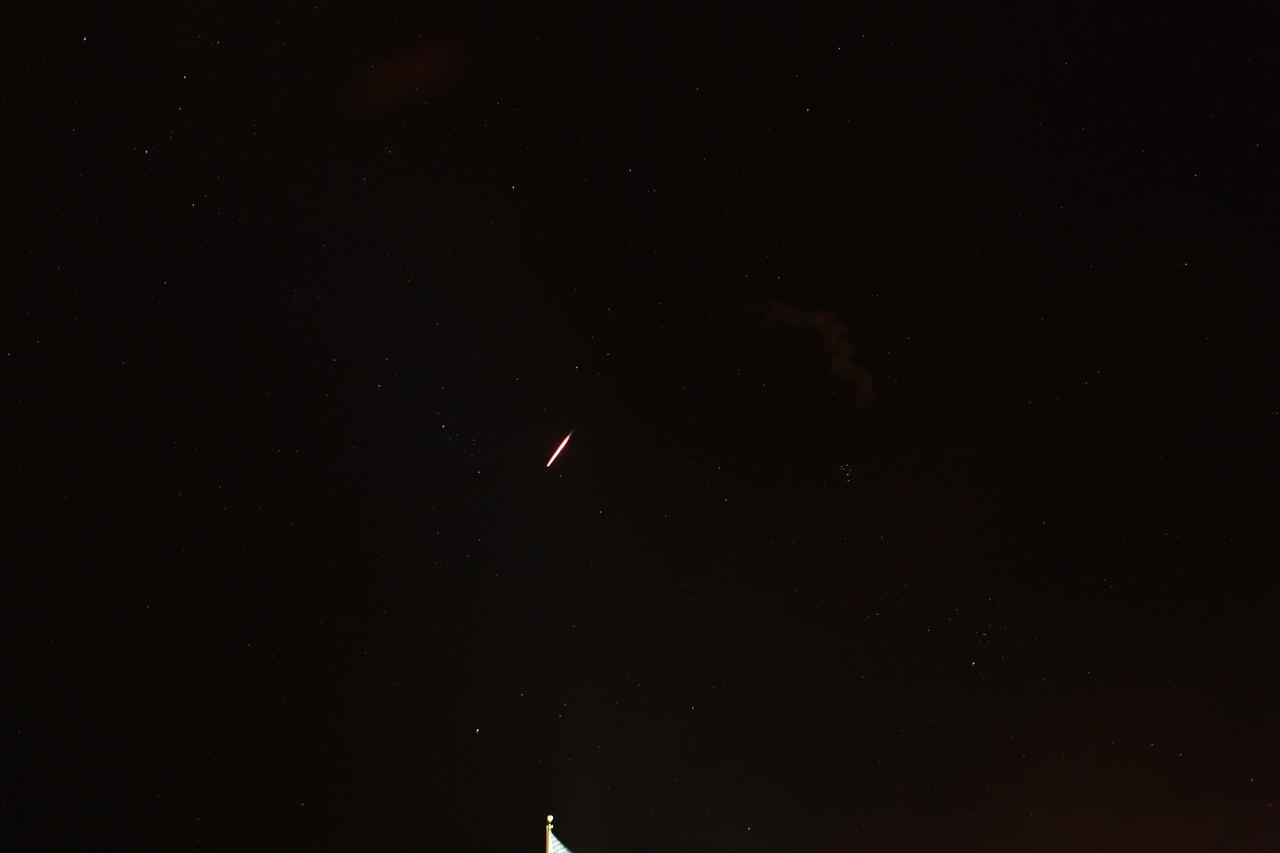
CAPE CANAVERAL, Fla. – A SpaceX Falcon 9 rocket streaks through the night sky following liftoff from Space Launch Complex 40 on Cape Canaveral Air Force Station in Florida, carrying the SpaceX CRS-4 mission to orbit. Liftoff was at 1:52 a.m. EDT. The mission is the fourth of 12 SpaceX flights NASA contracted with the company to resupply the space station. It will be the fifth trip by a Dragon spacecraft to the orbiting laboratory. The spacecraft’s 2.5 tons of supplies, science experiments, and technology demonstrations include critical materials to support 255 science and research investigations that will occur during the station's Expeditions 41 and 42. To learn more about the mission, visit http://www.nasa.gov/mission_pages/station/structure/launch/index.html. Photo credit: NASA/Frankie Martin
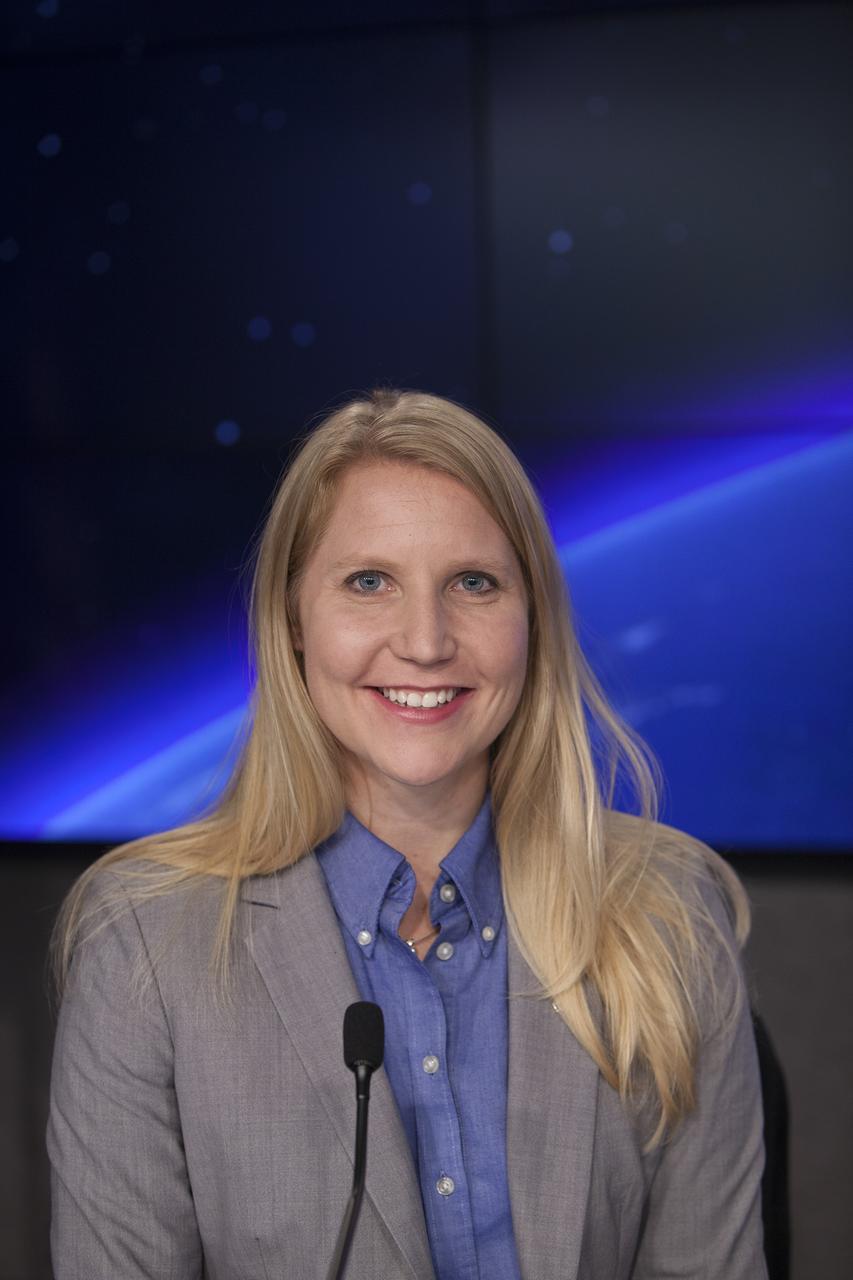
CAPE CANAVERAL, Fla. – Stephanie Schierholz, NASA Public Affairs, moderates the ISS Science Panel on Model Organisms for media representatives in Kennedy Space Center’s Press Site auditorium in preparation for the launch of the SpaceX CRS-4 mission to resupply the International Space Station. The mission is the fourth of 12 SpaceX flights NASA contracted with the company to resupply the space station. It will be the fifth trip by a Dragon spacecraft to the orbiting laboratory. The spacecraft’s 2.5 tons of supplies, science experiments, and technology demonstrations include critical materials to support 255 science and research investigations that will occur during the station's Expeditions 41 and 42. Liftoff is targeted for an instantaneous window at 2:14 a.m. EDT. To learn more about the mission, visit http://www.nasa.gov/mission_pages/station/structure/launch/index.html. Photo credit: NASA/Jim Grossmann

CAPE CANAVERAL, Fla. – The Falcon 9 rocket lifts off Space Launch Complex 40 at Cape Canaveral Air Force Station in Florida, carrying the SpaceX CRS-4 mission to orbit. Liftoff was at 1:52 a.m. EDT. The mission is the fourth of 12 SpaceX flights NASA contracted with the company to resupply the space station. It will be the fifth trip by a Dragon spacecraft to the orbiting laboratory. The spacecraft’s 2.5 tons of supplies, science experiments, and technology demonstrations include critical materials to support 255 science and research investigations that will occur during the station's Expeditions 41 and 42. To learn more about the mission, visit http://www.nasa.gov/mission_pages/station/structure/launch/index.html Photo credit: NASA/Sandy Joseph and Kevin O'Connell
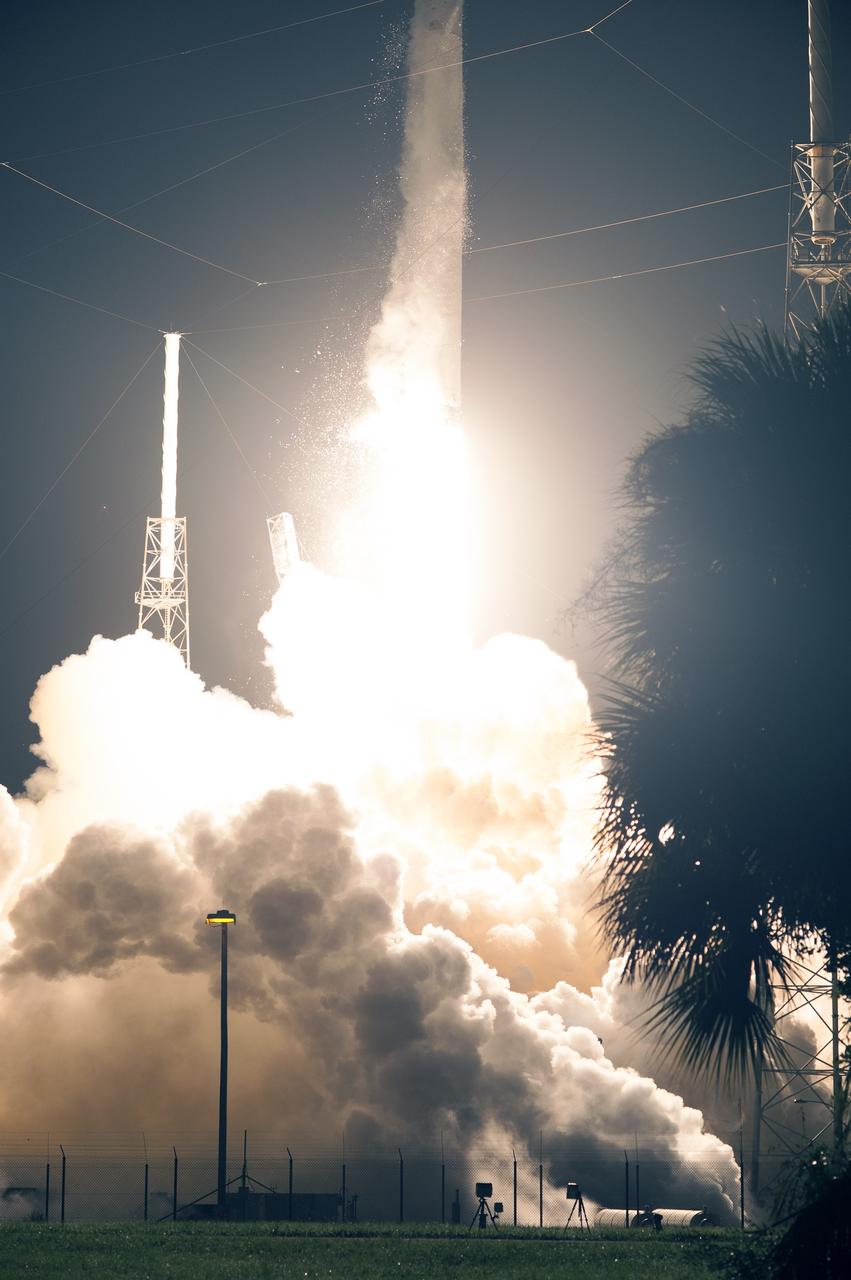
CAPE CANAVERAL, Fla. – The Falcon 9 rocket lifts off Space Launch Complex 40 at Cape Canaveral Air Force Station in Florida, carrying the SpaceX CRS-4 mission to orbit. Liftoff was at 1:52 a.m. EDT. The mission is the fourth of 12 SpaceX flights NASA contracted with the company to resupply the space station. It will be the fifth trip by a Dragon spacecraft to the orbiting laboratory. The spacecraft’s 2.5 tons of supplies, science experiments, and technology demonstrations include critical materials to support 255 science and research investigations that will occur during the station's Expeditions 41 and 42. To learn more about the mission, visit http://www.nasa.gov/mission_pages/station/structure/launch/index.html Photo credit: NASA/Sandy Joseph and Kevin O'Connell
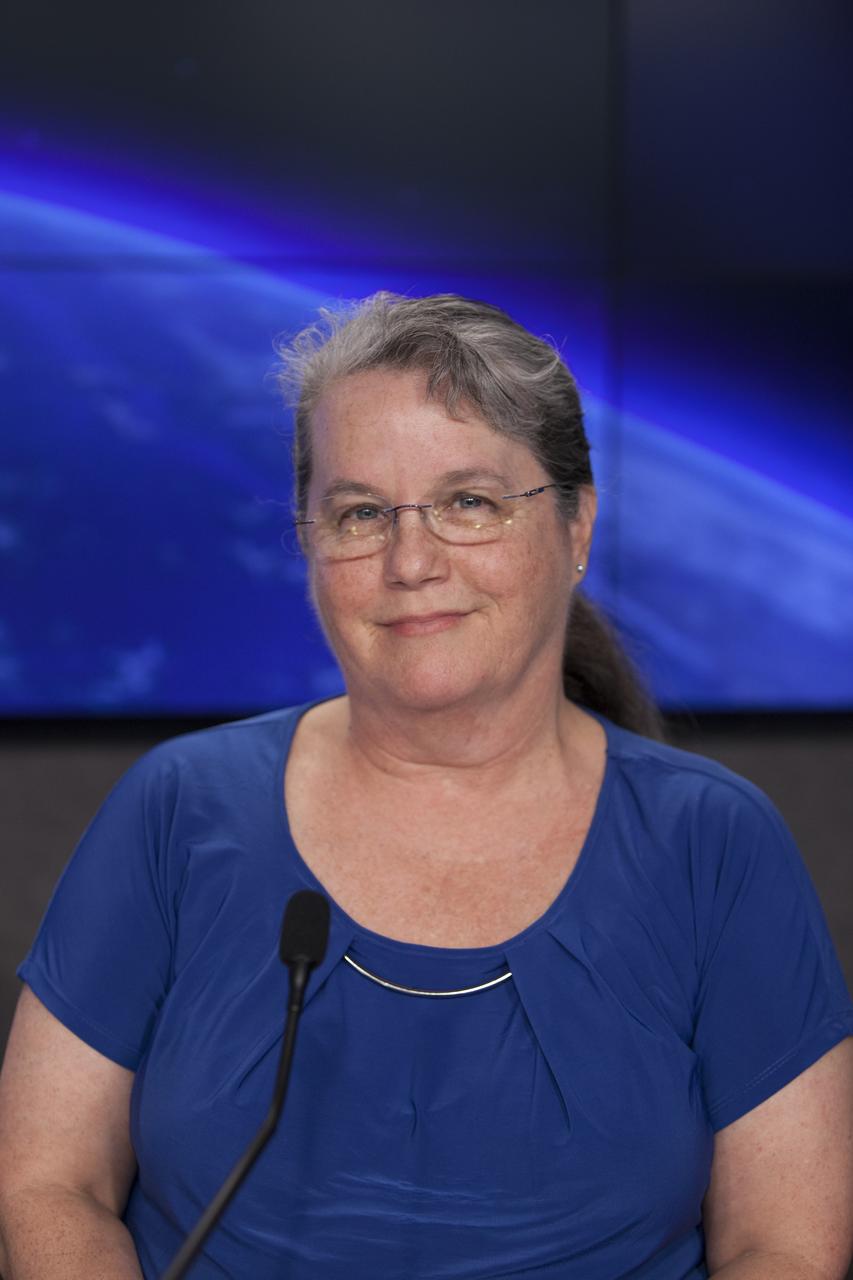
CAPE CANAVERAL, Fla. – Ruth Globus, project scientist, Rodent Habitat/Rodent Research-1, NASA Ames Research Center, briefs media representatives in Kennedy Space Center’s Press Site auditorium in preparation for the launch of the SpaceX CRS-4 mission to resupply the International Space Station. Globus is a member of the ISS Science Panel on Model Organisms. The mission is the fourth of 12 SpaceX flights NASA contracted with the company to resupply the space station. It will be the fifth trip by a Dragon spacecraft to the orbiting laboratory. The spacecraft’s 2.5 tons of supplies, science experiments, and technology demonstrations include critical materials to support 255 science and research investigations that will occur during the station's Expeditions 41 and 42. Liftoff is targeted for an instantaneous window at 2:14 a.m. EDT. To learn more about the mission, visit http://www.nasa.gov/mission_pages/station/structure/launch/index.html. Photo credit: NASA/Jim Grossmann
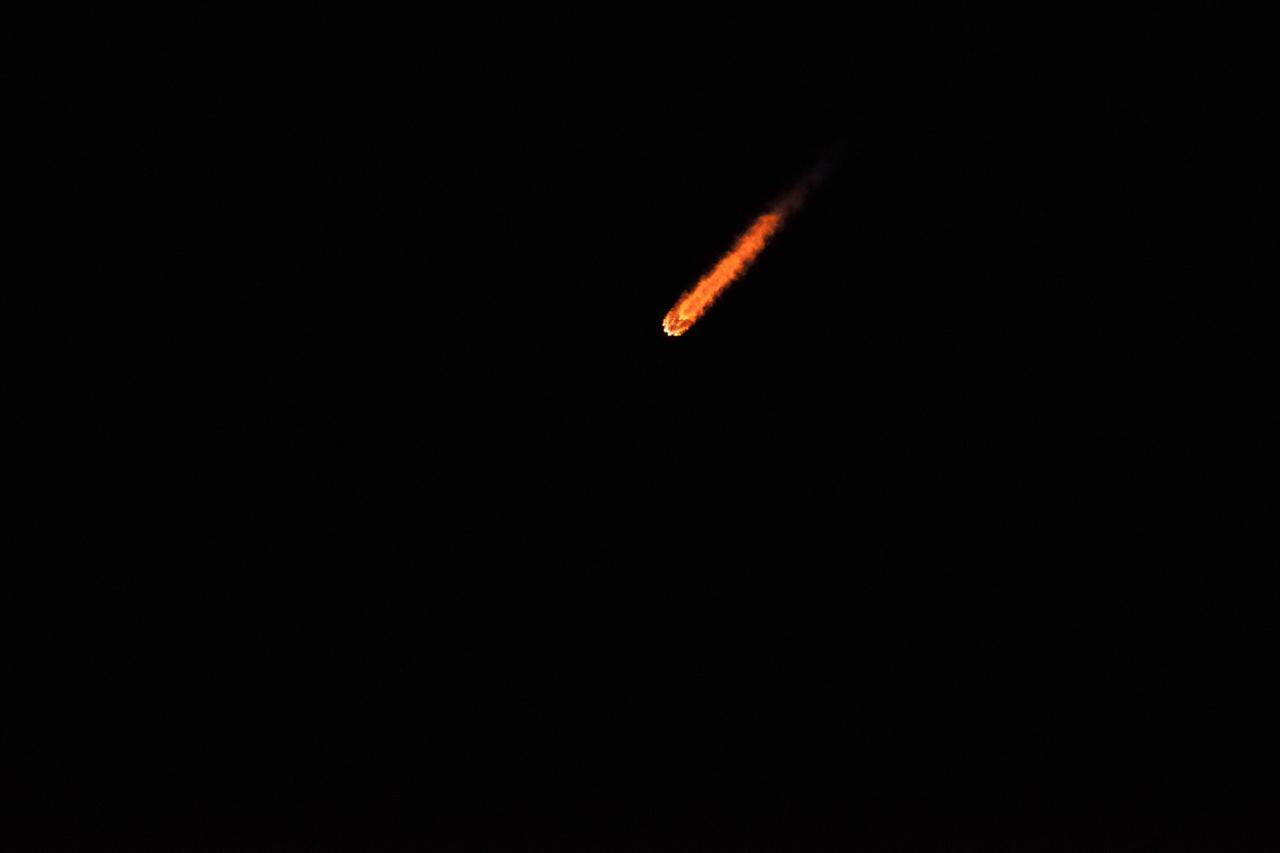
CAPE CANAVERAL, Fla. – The Falcon 9 rocket lifts off Space Launch Complex 40 at Cape Canaveral Air Force Station in Florida, carrying the SpaceX CRS-4 mission to orbit. Liftoff was at 1:52 a.m. EDT. The mission is the fourth of 12 SpaceX flights NASA contracted with the company to resupply the space station. It will be the fifth trip by a Dragon spacecraft to the orbiting laboratory. The spacecraft’s 2.5 tons of supplies, science experiments, and technology demonstrations include critical materials to support 255 science and research investigations that will occur during the station's Expeditions 41 and 42. To learn more about the mission, visit http://www.nasa.gov/mission_pages/station/structure/launch/index.html Photo credit: NASA/George Roberts
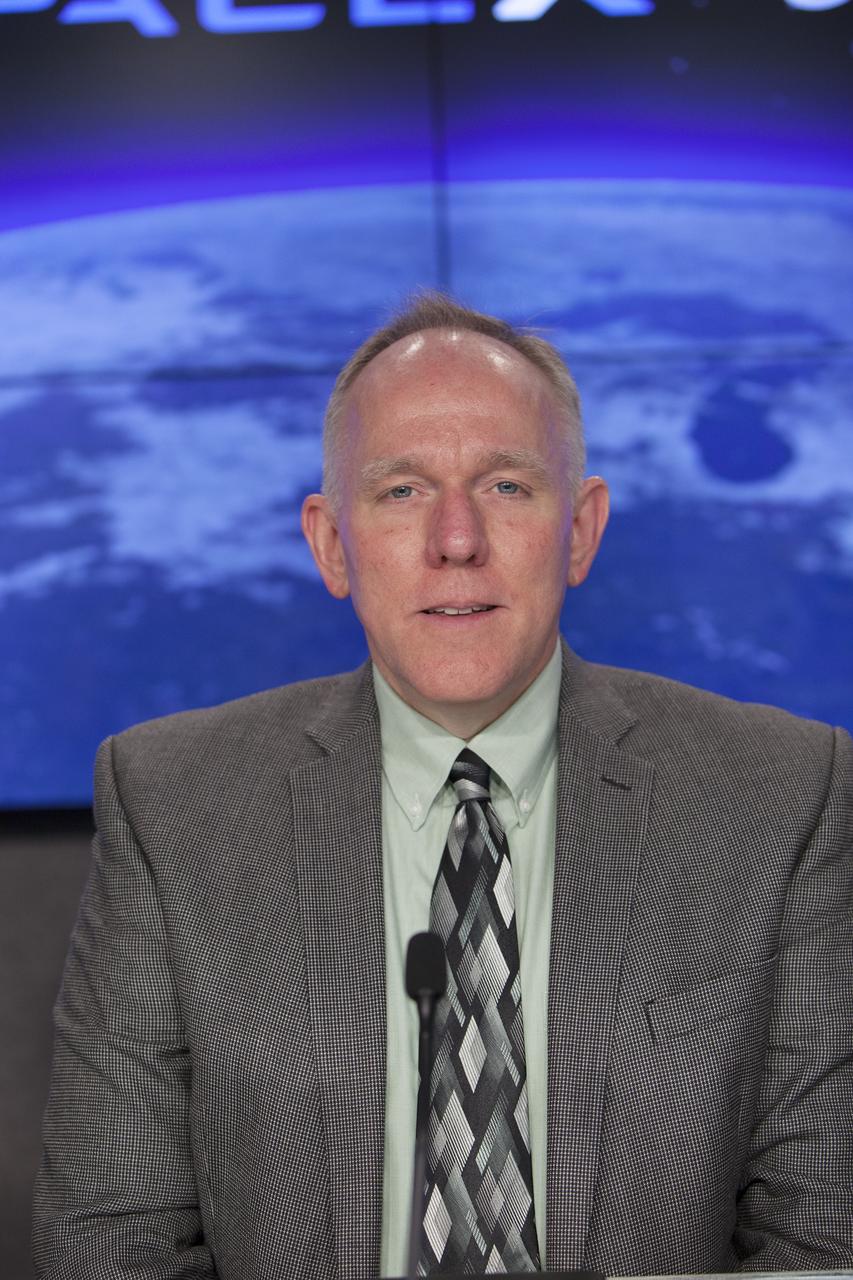
CAPE CANAVERAL, Fla. – Members of NASA’s International Space Station science team brief news media representatives in the Kennedy Space Center’s Press Site auditorium in preparation for the launch of the SpaceX CRS-4 mission to resupply the International Space Station. Jeff Sheehy, senior technologist for the Space Technology Mission Directorate, participated in the briefing. The mission is the fourth of 12 SpaceX flights NASA contracted with the company to resupply the space station. It will be the fifth trip by a Dragon spacecraft to the orbiting laboratory. The spacecraft’s 2.5 tons of supplies, science experiments, and technology demonstrations include critical materials to support 255 science and research investigations that will occur during the station's Expeditions 41 and 42. Liftoff is targeted for an instantaneous window at 2:14 a.m. EDT. To learn more about the mission, visit http://www.nasa.gov/mission_pages/station/structure/launch/index.html Photo credit: NASA/Jim Grossmann

CAPE CANAVERAL, Fla. – An exhaust cloud builds at Space Launch Complex 40 on Cape Canaveral Air Force Station in Florida as the Falcon 9 rocket lifts off, carrying the SpaceX CRS-4 mission to orbit. Liftoff was at 1:52 a.m. EDT. The mission is the fourth of 12 SpaceX flights NASA contracted with the company to resupply the space station. It will be the fifth trip by a Dragon spacecraft to the orbiting laboratory. The spacecraft’s 2.5 tons of supplies, science experiments, and technology demonstrations include critical materials to support 255 science and research investigations that will occur during the station's Expeditions 41 and 42. To learn more about the mission, visit http://www.nasa.gov/mission_pages/station/structure/launch/index.html. Photo credit: NASA/Sandy Joseph and Kevin O'Connell

CAPE CANAVERAL, Fla. – The Falcon 9 rocket lifts off Space Launch Complex 40 at Cape Canaveral Air Force Station in Florida, carrying the SpaceX CRS-4 mission to orbit. Liftoff was at 1:52 a.m. EDT. The mission is the fourth of 12 SpaceX flights NASA contracted with the company to resupply the space station. It will be the fifth trip by a Dragon spacecraft to the orbiting laboratory. The spacecraft’s 2.5 tons of supplies, science experiments, and technology demonstrations include critical materials to support 255 science and research investigations that will occur during the station's Expeditions 41 and 42. To learn more about the mission, visit http://www.nasa.gov/mission_pages/station/structure/launch/index.html Photo credit: NASA/Sandy Joseph
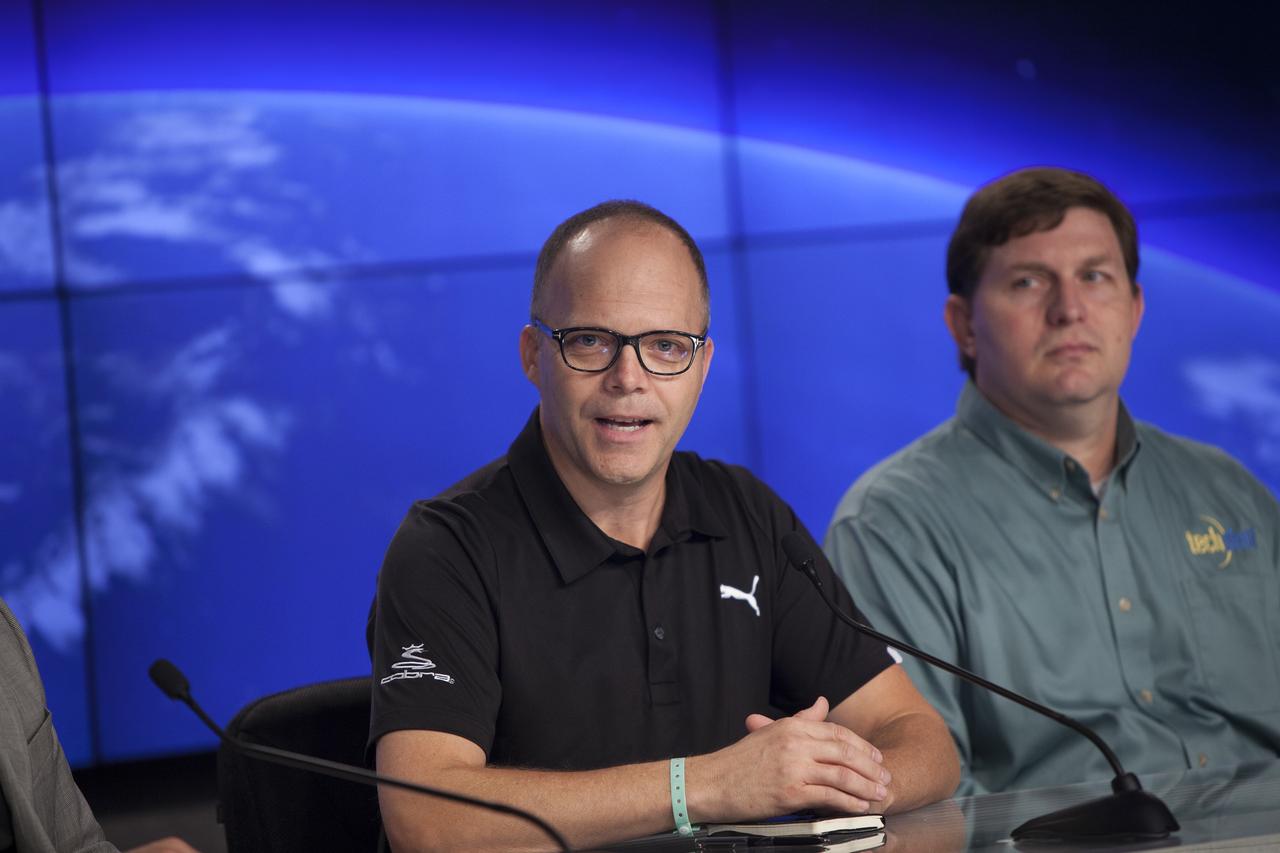
CAPE CANAVERAL, Fla. – Mike Yagley, COBRA PUMA Golf, director of Research and Testing, briefs media representatives in Kennedy Space Center’s Press Site auditorium in preparation for the launch of the SpaceX CRS-4 mission to resupply the International Space Station. Yagley is a member of the ISS Research and Technology Panel. Dr. Eugene Boland, Techshot chief scientist, looks on at right. The mission is the fourth of 12 SpaceX flights NASA contracted with the company to resupply the space station. It will be the fifth trip by a Dragon spacecraft to the orbiting laboratory. The spacecraft’s 2.5 tons of supplies, science experiments, and technology demonstrations include critical materials to support 255 science and research investigations that will occur during the station's Expeditions 41 and 42. Liftoff is targeted for an instantaneous window at 2:14 a.m. EDT. To learn more about the mission, visit http://www.nasa.gov/mission_pages/station/structure/launch/index.html. Photo credit: NASA/Jim Grossmann
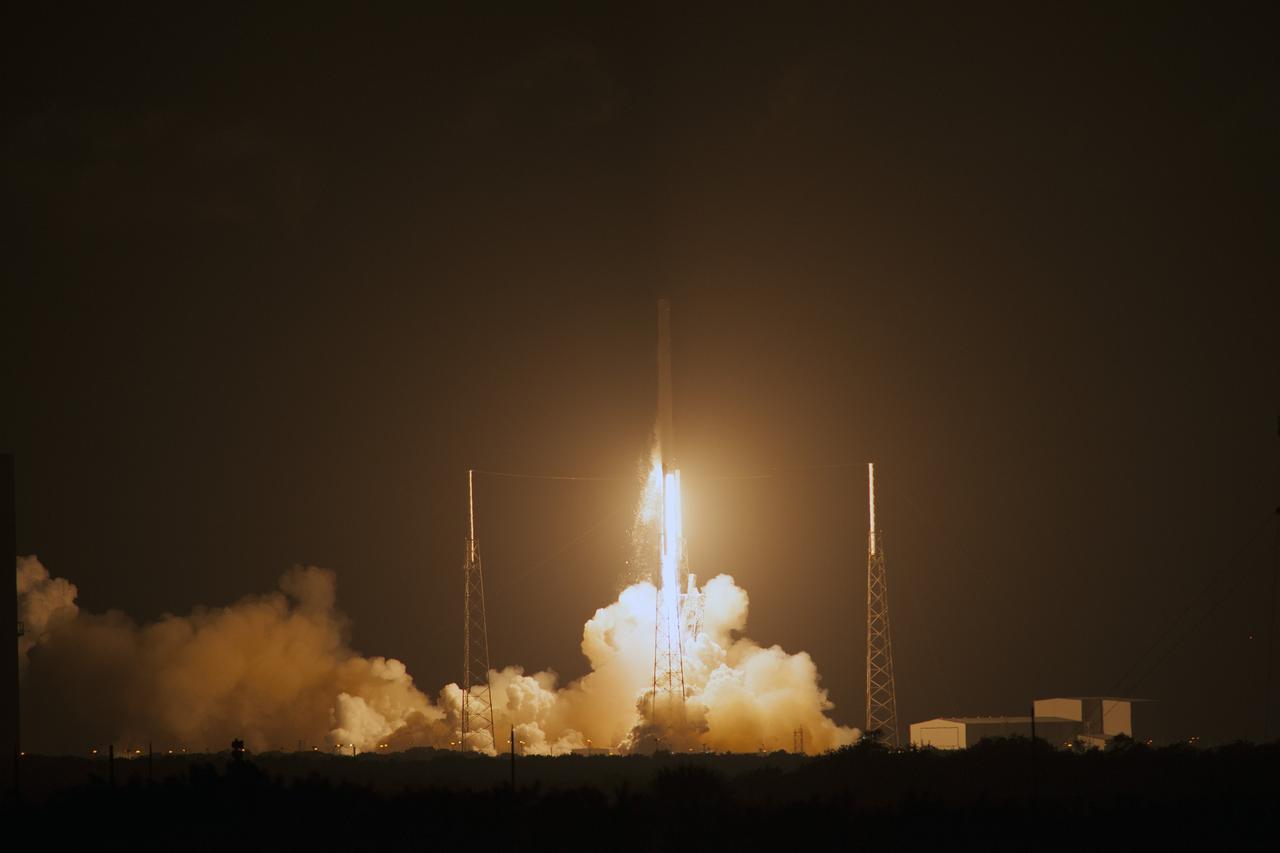
CAPE CANAVERAL, Fla. – The Falcon 9 rocket lifts off Space Launch Complex 40 at Cape Canaveral Air Force Station in Florida, carrying the SpaceX CRS-4 mission to orbit. Liftoff was at 1:52 a.m. EDT. The mission is the fourth of 12 SpaceX flights NASA contracted with the company to resupply the space station. It will be the fifth trip by a Dragon spacecraft to the orbiting laboratory. The spacecraft’s 2.5 tons of supplies, science experiments, and technology demonstrations include critical materials to support 255 science and research investigations that will occur during the station's Expeditions 41 and 42. To learn more about the mission, visit http://www.nasa.gov/mission_pages/station/structure/launch/index.html Photo credit: NASA/George Roberts
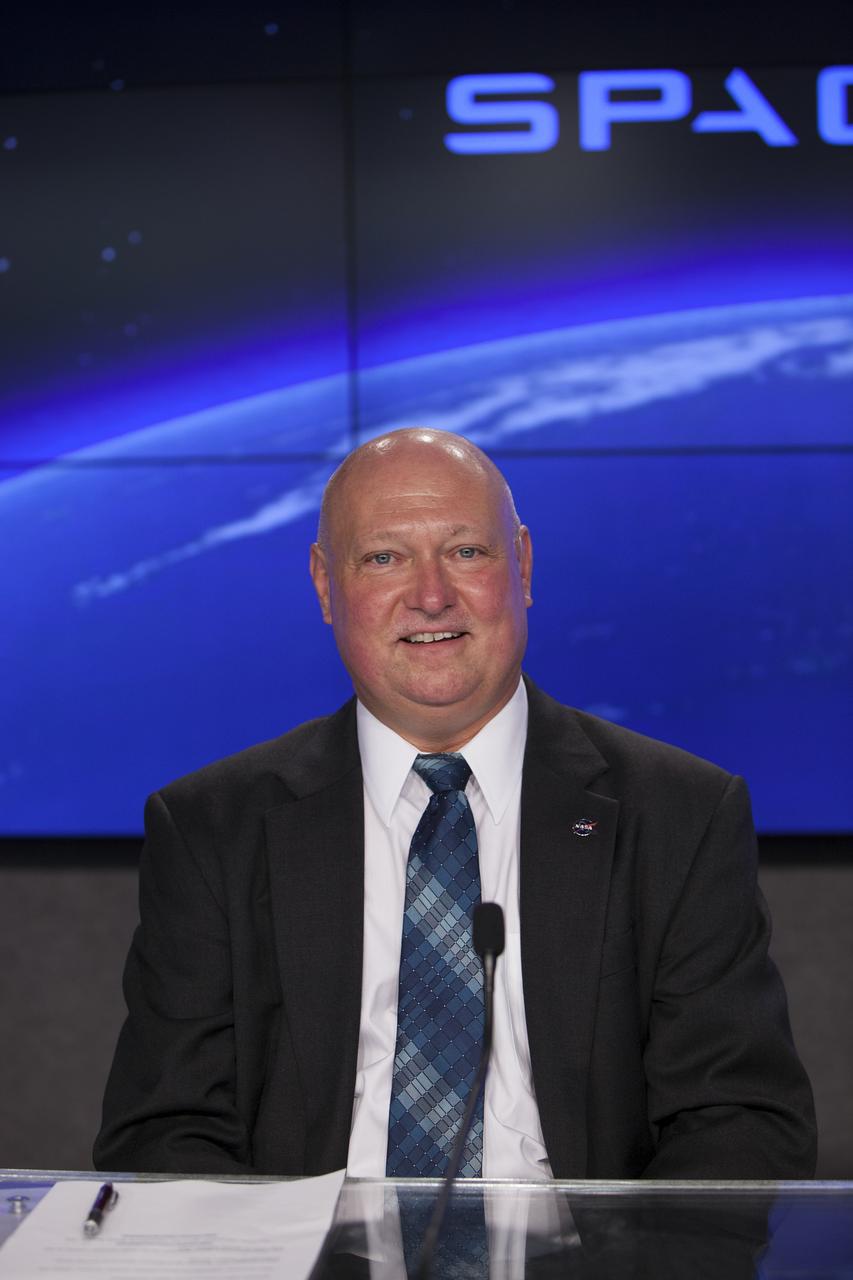
CAPE CANAVERAL, Fla. – Michael Curie, NASA Public Affairs, moderates a post-launch media briefing following the successful launch of NASA's SpaceX CRS-4 mission to the International Space Station. Liftoff was at 1:52 a.m. EDT. The mission is the fourth of 12 SpaceX flights NASA contracted with the company to resupply the space station. It will be the fifth trip by a Dragon spacecraft to the orbiting laboratory. The spacecraft’s 2.5 tons of supplies, science experiments, and technology demonstrations include critical materials to support 255 science and research investigations that will occur during the station's Expeditions 41 and 42. To learn more about the mission, visit http://www.nasa.gov/mission_pages/station/structure/launch/index.html. Photo credit: NASA/Jim Grossmann

CAPE CANAVERAL, Fla. – Sharmila Bhattacharya, principal investigator, Ames Student Fruit-Fly Experiment, NASA Ames Research Center, briefs media representatives in Kennedy Space Center’s Press Site auditorium in preparation for the launch of the SpaceX CRS-4 mission to resupply the International Space Station. Bhattacharya is a member of the ISS Science Panel on Model Organisms. The mission is the fourth of 12 SpaceX flights NASA contracted with the company to resupply the space station. It will be the fifth trip by a Dragon spacecraft to the orbiting laboratory. The spacecraft’s 2.5 tons of supplies, science experiments, and technology demonstrations include critical materials to support 255 science and research investigations that will occur during the station's Expeditions 41 and 42. Liftoff is targeted for an instantaneous window at 2:14 a.m. EDT. To learn more about the mission, visit http://www.nasa.gov/mission_pages/station/structure/launch/index.html. Photo credit: NASA/Jim Grossmann

CAPE CANAVERAL, Fla. – The Falcon 9 rocket lifts off Space Launch Complex 40 at Cape Canaveral Air Force Station in Florida, carrying the SpaceX CRS-4 mission to orbit. Liftoff was at 1:52 a.m. EDT. The mission is the fourth of 12 SpaceX flights NASA contracted with the company to resupply the space station. It will be the fifth trip by a Dragon spacecraft to the orbiting laboratory. The spacecraft’s 2.5 tons of supplies, science experiments, and technology demonstrations include critical materials to support 255 science and research investigations that will occur during the station's Expeditions 41 and 42. To learn more about the mission, visit http://www.nasa.gov/mission_pages/station/structure/launch/index.html Photo credit: NASA/Sandy Joseph and Kevin O'Connell

CAPE CANAVERAL, Fla. – The Falcon 9 rocket soars into the night sky over Space Launch Complex 40 on Cape Canaveral Air Force Station in Florida, carrying the SpaceX CRS-4 mission to orbit. Liftoff was at 1:52 a.m. EDT. The mission is the fourth of 12 SpaceX flights NASA contracted with the company to resupply the space station. It will be the fifth trip by a Dragon spacecraft to the orbiting laboratory. The spacecraft’s 2.5 tons of supplies, science experiments, and technology demonstrations include critical materials to support 255 science and research investigations that will occur during the station's Expeditions 41 and 42. To learn more about the mission, visit http://www.nasa.gov/mission_pages/station/structure/launch/index.html. Photo credit: NASA/Jim Grossmann

CAPE CANAVERAL, Fla. – A U.S. flag at NASA's Press Site waves gently in the breeze as a Falcon 9 rocket and Dragon capsule lift off from Space Launch Complex 40 on Cape Canaveral Air Force Station in Florida, carrying the SpaceX CRS-4 mission to orbit. Liftoff was at 1:52 a.m. EDT. The mission is the fourth of 12 SpaceX flights NASA contracted with the company to resupply the space station. It will be the fifth trip by a Dragon spacecraft to the orbiting laboratory. The spacecraft’s 2.5 tons of supplies, science experiments, and technology demonstrations include critical materials to support 255 science and research investigations that will occur during the station's Expeditions 41 and 42. To learn more about the mission, visit http://www.nasa.gov/mission_pages/station/structure/launch/index.html. Photo credit: NASA/Frankie Martin
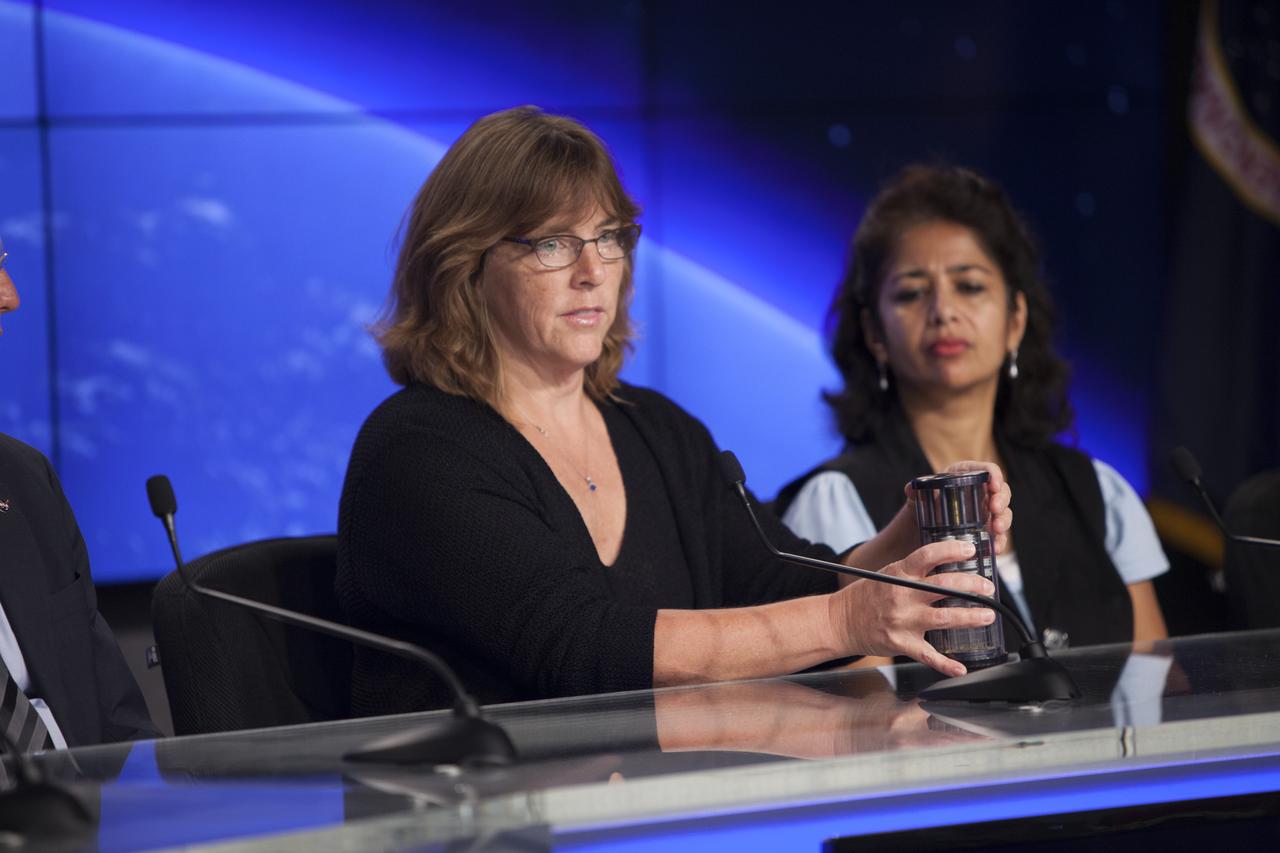
CAPE CANAVERAL, Fla. – Shiela Neilsen, principal investigator, Micro-8, University of Montana, briefs media representatives in Kennedy Space Center’s Press Site auditorium in preparation for the launch of the SpaceX CRS-4 mission to resupply the International Space Station. Neilsen is a member of the ISS Science Panel on Model Organisms. The mission is the fourth of 12 SpaceX flights NASA contracted with the company to resupply the space station. It will be the fifth trip by a Dragon spacecraft to the orbiting laboratory. The spacecraft’s 2.5 tons of supplies, science experiments, and technology demonstrations include critical materials to support 255 science and research investigations that will occur during the station's Expeditions 41 and 42. Liftoff is targeted for an instantaneous window at 2:14 a.m. EDT. To learn more about the mission, visit http://www.nasa.gov/mission_pages/station/structure/launch/index.html. Photo credit: NASA/Jim Grossmann

CAPE CANAVERAL, Fla. – An exhaust cloud builds at Space Launch Complex 40 on Cape Canaveral Air Force Station in Florida as the Falcon 9 rocket lifts off, carrying the SpaceX CRS-4 mission to orbit. Liftoff was at 1:52 a.m. EDT. The mission is the fourth of 12 SpaceX flights NASA contracted with the company to resupply the space station. It will be the fifth trip by a Dragon spacecraft to the orbiting laboratory. The spacecraft’s 2.5 tons of supplies, science experiments, and technology demonstrations include critical materials to support 255 science and research investigations that will occur during the station's Expeditions 41 and 42. To learn more about the mission, visit http://www.nasa.gov/mission_pages/station/structure/launch/index.html. Photo credit: NASA/Jim Grossmann
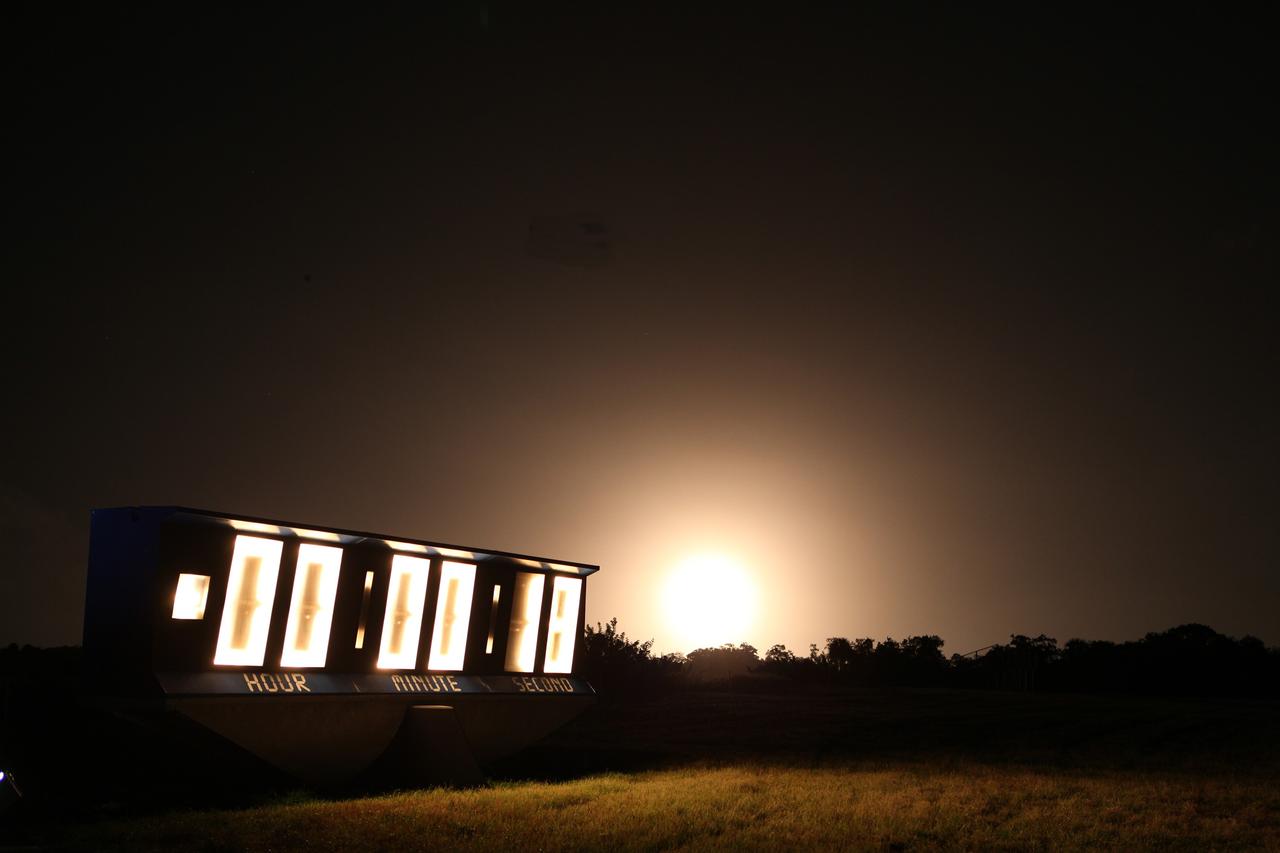
CAPE CANAVERAL, Fla. – The sky lights up as the Falcon 9 rocket lifts off Space Launch Complex 40 on Cape Canaveral Air Force Station in Florida, carrying the SpaceX CRS-4 mission to orbit. Liftoff was at 1:52 a.m. EDT. The mission is the fourth of 12 SpaceX flights NASA contracted with the company to resupply the space station. It will be the fifth trip by a Dragon spacecraft to the orbiting laboratory. The spacecraft’s 2.5 tons of supplies, science experiments, and technology demonstrations include critical materials to support 255 science and research investigations that will occur during the station's Expeditions 41 and 42. To learn more about the mission, visit http://www.nasa.gov/mission_pages/station/structure/launch/index.html. Photo credit: NASA/Frankie Martin

CAPE CANAVERAL, Fla. – The Falcon 9 rocket lifts off Space Launch Complex 40 at Cape Canaveral Air Force Station in Florida, carrying the SpaceX CRS-4 mission to orbit. Liftoff was at 1:52 a.m. EDT. The mission is the fourth of 12 SpaceX flights NASA contracted with the company to resupply the space station. It will be the fifth trip by a Dragon spacecraft to the orbiting laboratory. The spacecraft’s 2.5 tons of supplies, science experiments, and technology demonstrations include critical materials to support 255 science and research investigations that will occur during the station's Expeditions 41 and 42. To learn more about the mission, visit http://www.nasa.gov/mission_pages/station/structure/launch/index.html Photo credit: NASA/George Roberts
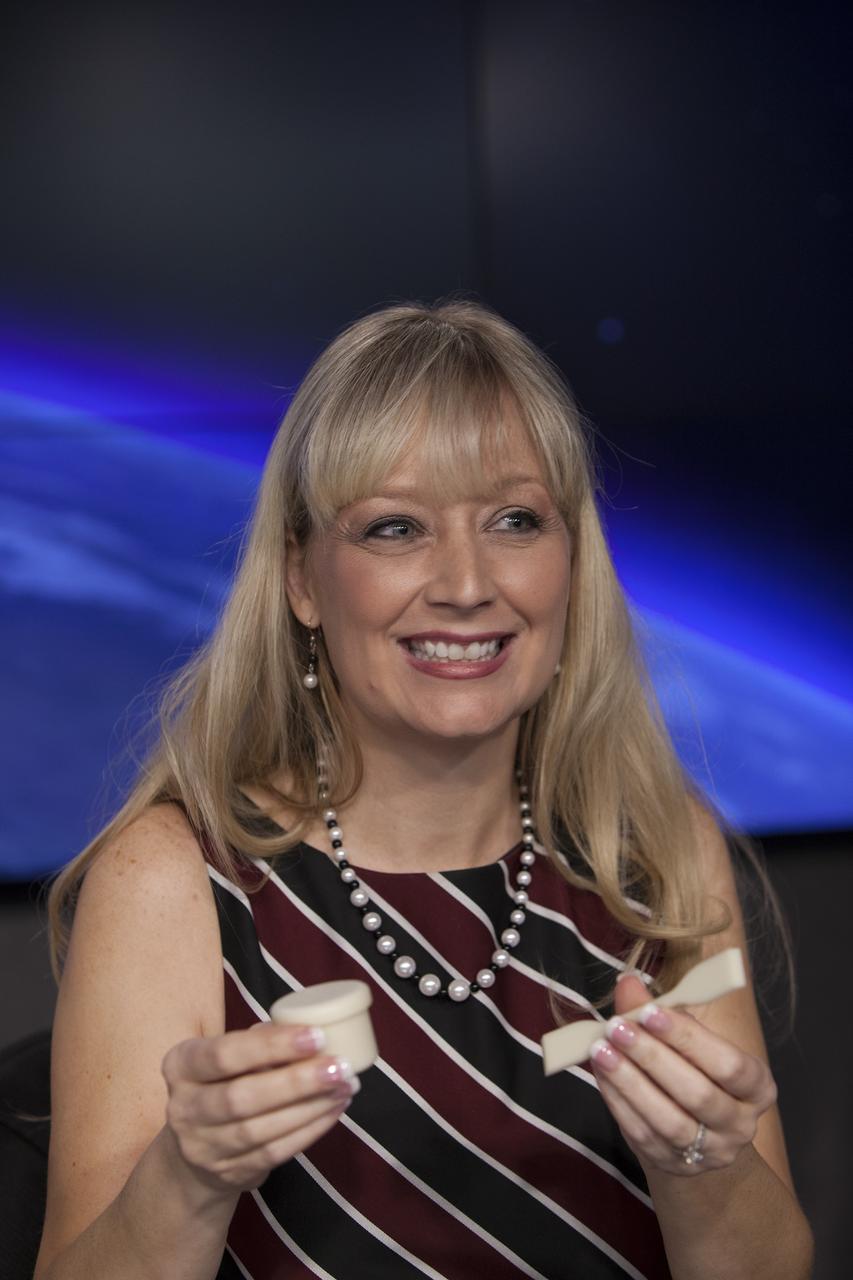
CAPE CANAVERAL, Fla. – Niki Werkheiser, 3D Printing in Zero-G project manager, briefs media representatives in Kennedy Space Center’s Press Site auditorium in preparation for the launch of the SpaceX CRS-4 mission to resupply the International Space Station. Werkheiser is a member of the ISS Research and Technology Panel. The mission is the fourth of 12 SpaceX flights NASA contracted with the company to resupply the space station. It will be the fifth trip by a Dragon spacecraft to the orbiting laboratory. The spacecraft’s 2.5 tons of supplies, science experiments, and technology demonstrations include critical materials to support 255 science and research investigations that will occur during the station's Expeditions 41 and 42. Liftoff is targeted for an instantaneous window at 2:14 a.m. EDT. To learn more about the mission, visit http://www.nasa.gov/mission_pages/station/structure/launch/index.html. Photo credit: NASA/Jim Grossmann
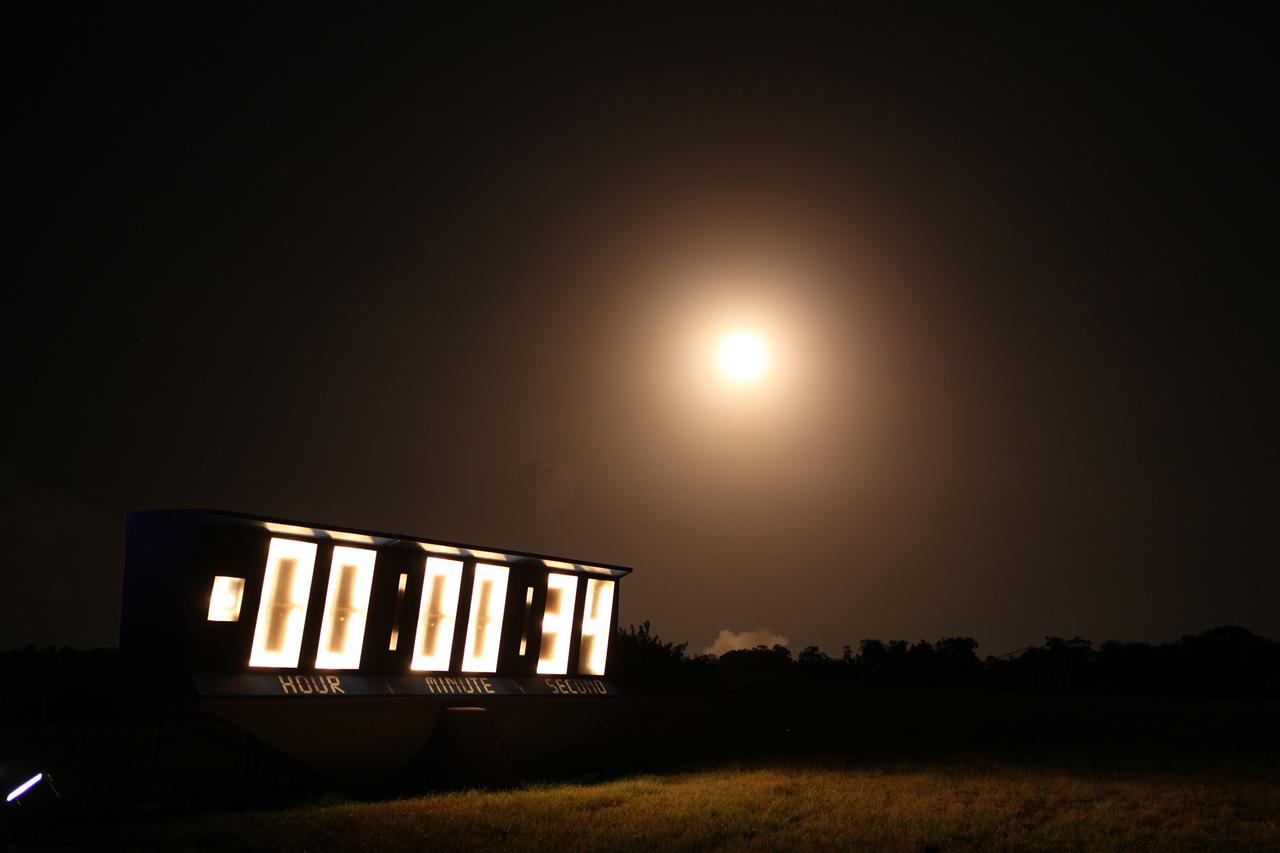
CAPE CANAVERAL, Fla. – The sky is aglow following liftoff of the Falcon 9 rocket from Space Launch Complex 40 on Cape Canaveral Air Force Station in Florida, carrying the SpaceX CRS-4 mission to orbit. Liftoff was at 1:52 a.m. EDT. The mission is the fourth of 12 SpaceX flights NASA contracted with the company to resupply the space station. It will be the fifth trip by a Dragon spacecraft to the orbiting laboratory. The spacecraft’s 2.5 tons of supplies, science experiments, and technology demonstrations include critical materials to support 255 science and research investigations that will occur during the station's Expeditions 41 and 42. To learn more about the mission, visit http://www.nasa.gov/mission_pages/station/structure/launch/index.html. Photo credit: NASA/Frankie Martin
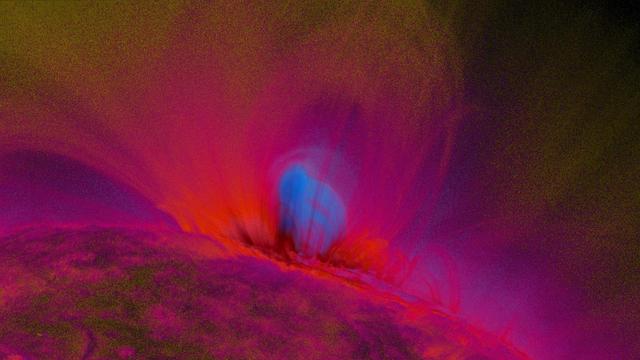
Caption: This is an image of magnetic loops on the sun, captured by NASA's Solar Dynamics Observatory (SDO). It has been processed to highlight the edges of each loop to make the structure more clear. A series of loops such as this is known as a flux rope, and these lie at the heart of eruptions on the sun known as coronal mass ejections (CMEs.) This is the first time scientists were able to discern the timing of a flux rope's formation. (SDO AIA 131 and 171 difference blended image of flux ropes during CME.) Credit: NASA/Goddard Space Flight Center/SDO ---- On July 18, 2012, a fairly small explosion of light burst off the lower right limb of the sun. Such flares often come with an associated eruption of solar material, known as a coronal mass ejection or CME – but this one did not. Something interesting did happen, however. Magnetic field lines in this area of the sun's atmosphere, the corona, began to twist and kink, generating the hottest solar material – a charged gas called plasma – to trace out the newly-formed slinky shape. The plasma glowed brightly in extreme ultraviolet images from the Atmospheric Imaging Assembly (AIA) aboard NASA’s Solar Dynamics Observatory (SDO) and scientists were able to watch for the first time the very formation of something they had long theorized was at the heart of many eruptive events on the sun: a flux rope. Eight hours later, on July 19, the same region flared again. This time the flux rope's connection to the sun was severed, and the magnetic fields escaped into space, dragging billions of tons of solar material along for the ride -- a classic CME. "Seeing this structure was amazing," says Angelos Vourlidas, a solar scientist at the Naval Research Laboratory in Washington, D.C. "It looks exactly like the cartoon sketches theorists have been drawing of flux ropes since the 1970s. It was a series of figure eights lined up to look like a giant slinky on the sun." <b>To read more about this new discovery go to: <a href="http://1.usa.gov/14UHsTt" rel="nofollow">1.usa.gov/14UHsTt</a> </b>
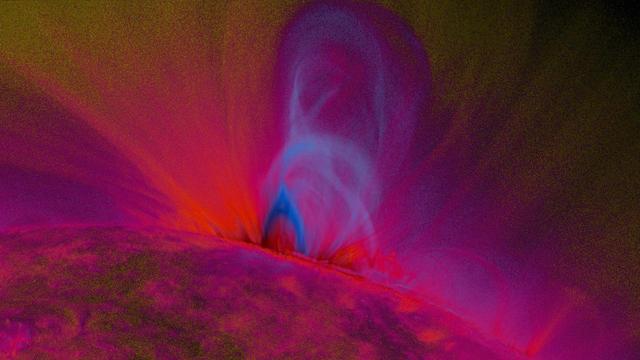
Caption: This is an image of magnetic loops on the sun, captured by NASA's Solar Dynamics Observatory (SDO). It has been processed to highlight the edges of each loop to make the structure more clear. A series of loops such as this is known as a flux rope, and these lie at the heart of eruptions on the sun known as coronal mass ejections (CMEs.) This is the first time scientists were able to discern the timing of a flux rope's formation. (SDO AIA 131 and 171 difference blended image of flux ropes during CME.) Credit: NASA/Goddard Space Flight Center/SDO ---- On July 18, 2012, a fairly small explosion of light burst off the lower right limb of the sun. Such flares often come with an associated eruption of solar material, known as a coronal mass ejection or CME – but this one did not. Something interesting did happen, however. Magnetic field lines in this area of the sun's atmosphere, the corona, began to twist and kink, generating the hottest solar material – a charged gas called plasma – to trace out the newly-formed slinky shape. The plasma glowed brightly in extreme ultraviolet images from the Atmospheric Imaging Assembly (AIA) aboard NASA’s Solar Dynamics Observatory (SDO) and scientists were able to watch for the first time the very formation of something they had long theorized was at the heart of many eruptive events on the sun: a flux rope. Eight hours later, on July 19, the same region flared again. This time the flux rope's connection to the sun was severed, and the magnetic fields escaped into space, dragging billions of tons of solar material along for the ride -- a classic CME. "Seeing this structure was amazing," says Angelos Vourlidas, a solar scientist at the Naval Research Laboratory in Washington, D.C. "It looks exactly like the cartoon sketches theorists have been drawing of flux ropes since the 1970s. It was a series of figure eights lined up to look like a giant slinky on the sun." <b>To read more about this new discovery go to: <a href="http://1.usa.gov/14UHsTt" rel="nofollow">1.usa.gov/14UHsTt</a> </b>

A cancer patient undergoes treatment in the Neutron Therapy Treatment Facility, or Cylotron, at the National Aeronautics and Space Administration (NASA) Lewis Research Center. After World War II Lewis researchers became interested in nuclear energy for propulsion. The focused their efforts on thermodynamics and strength of materials after radiation. In 1950 an 80-person Nuclear Reactor Division was created, and a cyclotron was built behind the Materials and Structures Laboratory. An in-house nuclear school was established to train these researchers in their new field. NASA cancelled its entire nuclear program in January 1973, just as the cyclotron was about to resume operations after a major upgrade. In 1975 the Cleveland Clinic Foundation partnered with NASA Lewis to use the cyclotron for a new type of radiation treatment for cancer patients. The cyclotron split beryllium atoms which caused neutrons to be released. The neutrons were streamed directly at the patient’s tumor. The facility had a dual-beam system that could target the tumor both vertically and horizontally. Over the course of five years, the cyclotron was used to treat 1200 patients. It was found to be particularly effective on salivary gland, prostrate, and other tumors. It was not as successful with tumors of the central nervous system. The program was terminated in 1980 as the Clinic began concentrating on non-radiation treatments.

An automobile lies crushed under the third story of this apartment building in the Marina District after the Oct. 17, 1989, Loma Prieta earthquake. The ground levels are no longer visible because of structural failure and sinking due to liquefaction. Sand and soil grains have faces that can cause friction as they roll and slide against each other, or even cause sticking and form small voids between grains. This complex behavior can cause soil to behave like a liquid under certain conditions such as earthquakes or when powders are handled in industrial processes. Mechanics of Granular Materials (MGM) experiments aboard the Space Shuttle use the microgravity of space to simulate this behavior under conditons that carnot be achieved in laboratory tests on Earth. MGM is shedding light on the behavior of fine-grain materials under low effective stresses. Applications include earthquake engineering, granular flow technologies (such as powder feed systems for pharmaceuticals and fertilizers), and terrestrial and planetary geology. Nine MGM specimens have flown on two Space Shuttle flights. Another three are scheduled to fly on STS-107. The principal investigator is Stein Sture of the University of Colorado at Boulder. Credit: J.K. Nakata, U.S. Geological Survey.
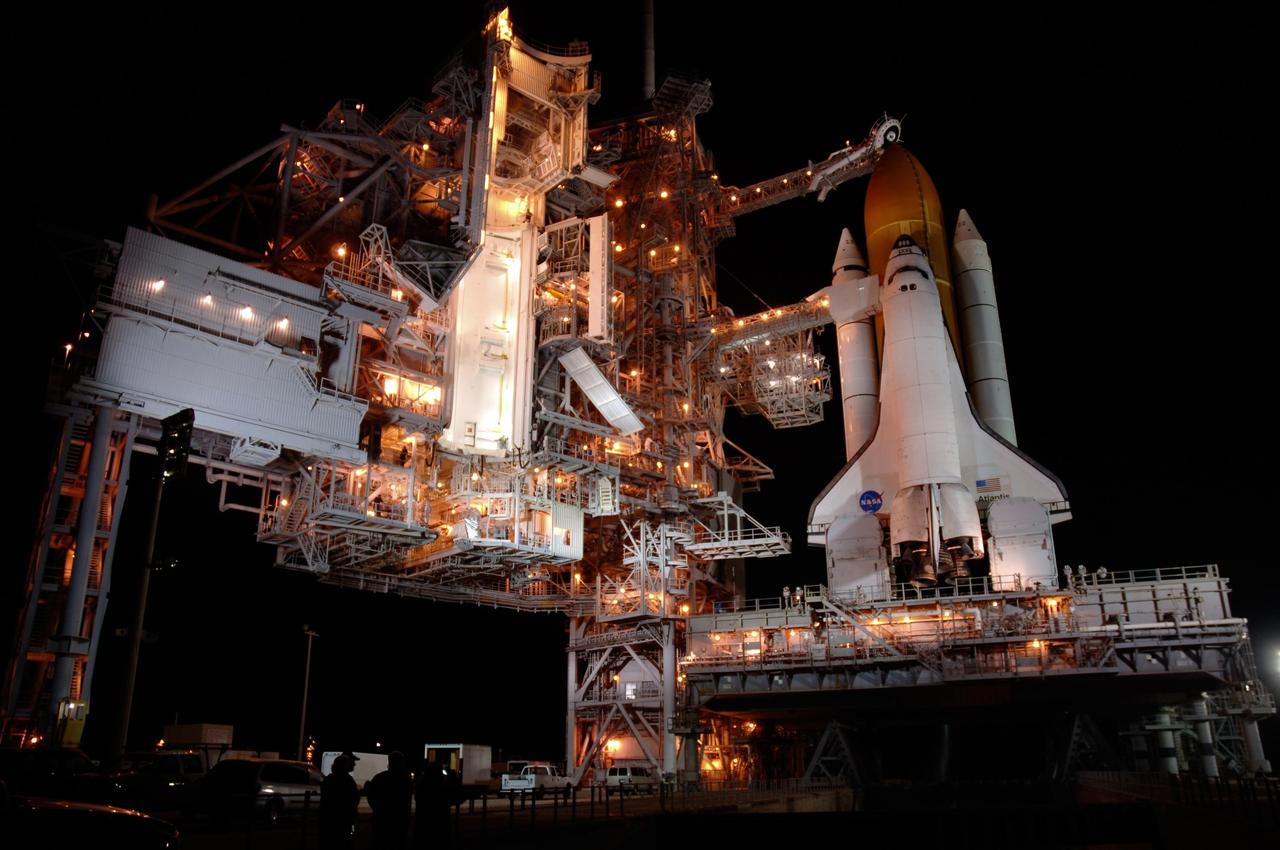
KENNEDY SPACE CENTER, FLA. -- Space shuttle Atlantis is revealed on Launch Pad 39A at NASA's Kennedy Space Center after the rotating service structure, or RSS, at left of the pad was rolled back. Rollback was complete at 9:49 p.m. EST. The RSS provides protected access to the orbiter for crew entry and servicing of payloads at the pad. Beneath the shuttle is the mobile launcher platform which supports the shuttle until liftoff. Rollback of the pad's RSS is one of the milestones in preparation for the launch of mission STS-122. Launch was originally set for Dec. 6 but was rescheduled to 3:21 p.m. Dec. 9. The delay was caused by problems with the external tank's engine cutoff sensor system that arose during tanking on Dec. 6. Atlantis will carry the Columbus Laboratory, the European Space Agency's largest contribution to the construction of the International Space Station. It will support scientific and technological research in a microgravity environment. Permanently attached to the Harmony node of the space station, the laboratory will carry out experiments in materials science, fluid physics and biosciences, as well as perform a number of technological applications. Photo credit: NASA/Amanda Diller