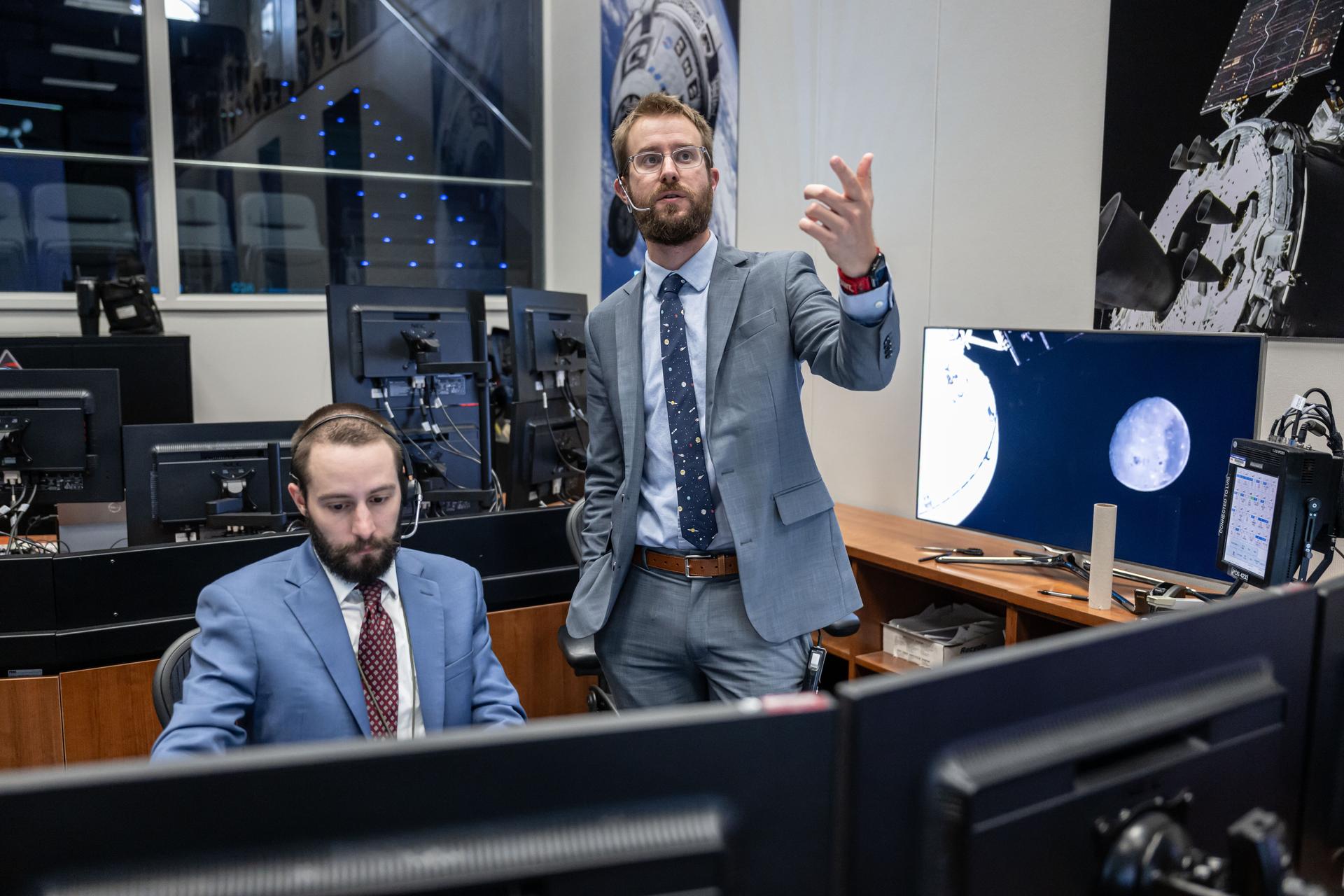
jsc2026e021749 (April 6, 2026) - Chris White, Lead INCO (Integrated Communications Officer) for Artemis II, and Matthew Johns, INCO Flight Controller, are pictured in the White Flight Control Room in the Mission Control Center at NASA’s Johnson Space Center during the Artemis II mission. This image was taken when NASA astronauts Reid Wiseman, Victor Glover, and Christina Koch, and CSA (Canadian Space Agency) astronaut Jeremy Hansen conducted the flyby of the Moon. Credit: NASA/Robert Markowitz

Read more from: <a href="http://go.nasa.gov/2duxEeZ" rel="nofollow">go.nasa.gov/2duxEeZ</a> On October 4, 2016, Hurricane Matthew made landfall on southwestern Haiti as a category-4 storm—the strongest storm to hit the Caribbean nation in more than 50 years. Just hours after landfall, the Moderate Resolution Imaging Spectroradiometer (MODIS) on NASA’s Terra satellite acquired this natural-color image. At the time, Matthew had top sustained winds of about 230 kilometers (145 miles) per hour. Earlier on October 4, temperature data collected by MODIS on NASA’s Aqua satellite revealed that the cloud tops around Matthew were very cold (at least -57° Celsius, or -70° Fahrenheit). Cold cloud tops are known to produce heavy rainfall. The National Hurricane Center called for 380 to 500 millimeters (15 to 20 inches) of rain in Southern Haiti and in the southwestern Dominican Republic. The northward movement of the storm should bring the center of Matthew over eastern Cuba late on October 4. Dangerous conditions can extend far beyond a storm’s center. According to National Hurricane Center forecasters, Matthew is “likely to produce devastating impacts from storm surge, extreme winds, heavy rains, flash floods, and/or mudslides in portions of the watch and warning areas in Haiti, Cuba, and the Bahamas.” NASA Earth Observatory image by Joshua Stevens, using MODIS data from the Land Atmosphere Near real-time Capability for EOS (LANCE). Caption by Kathryn Hansen.
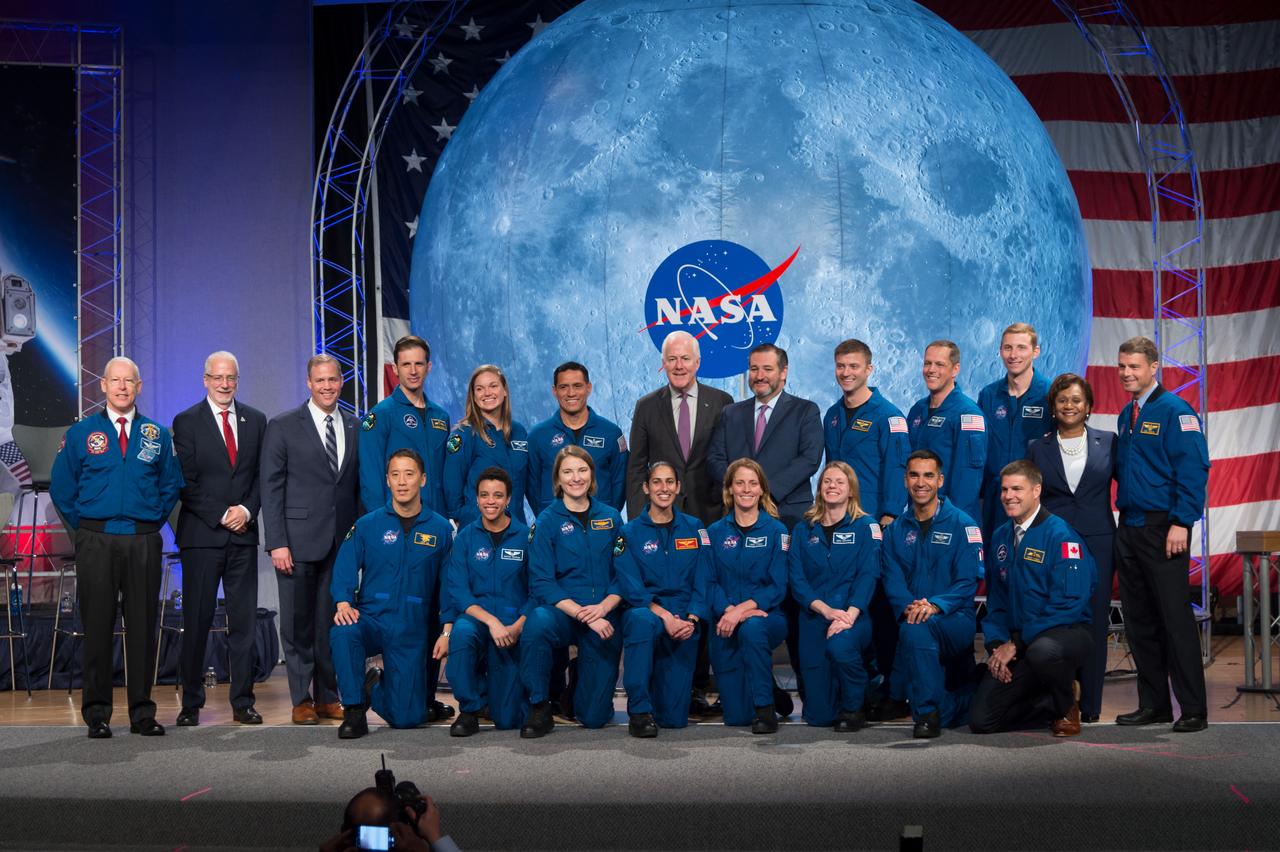
jsc2020e000651 (Jan. 10, 2020) --- The 2017 Class of Astronauts poses for a portrait with NASA officals and Texas Senators at the Johnson Space Center in Houston, Texas. In the front row (from left) are, NASA astronauts Jonny Kim, Jessica Watkins, Kayla Barron, Jasmin Moghbeli, Loral O'Hara, Zena Cardman and Raja Chari and Canadian Space Agency (CSA) astronaut Jeremy Hansen. In the back row (from left) are, Chief of the Astronuat Office Patrick Forrester, Johnson Space Center Director Mark Geyer, NASA Administrator Jim Bridenstine, Canadian Space Agency (CSA) astronauts Joshua Kutryk and Jennifer Sidey-Gibbon, NASA astronaut Frank Rubio, Senators John Cornyn and Ted Cruz, NASA astronauts Matthew Dominick, Bob Hines and Warren Hoburg, Johnson Space Center Deputy Director Vanessa Wyche and NASA astronaut Reid Wiseman. This is the first class of astronauts to graduate under the Artemis program and are now eligible for assignments to the International Space Station, Artemis missions to the Moon, and ultimately, missions to Mars.
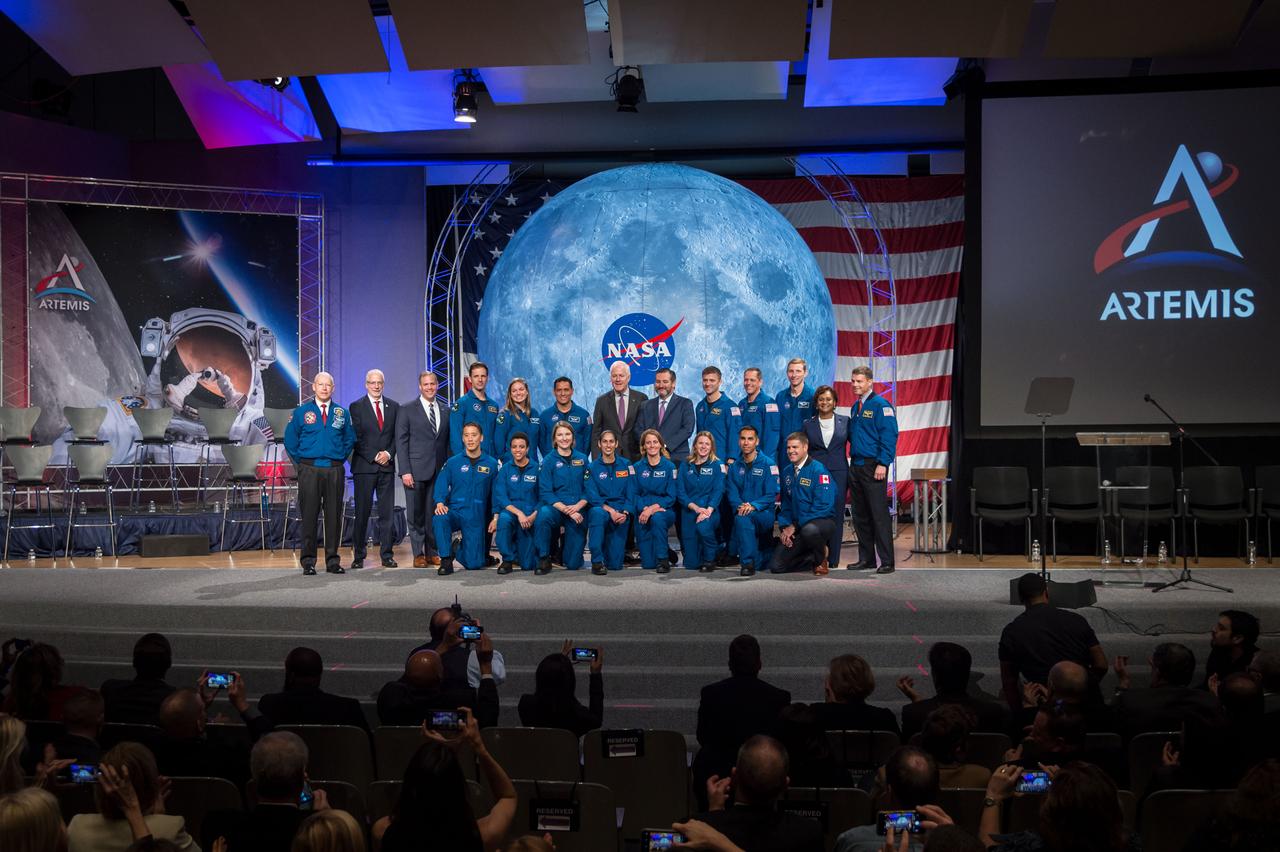
jsc2020e000653 (Jan. 10, 2020) --- The 2017 Class of Astronauts poses for a portrait with NASA officals and Texas Senators at the Johnson Space Center in Houston, Texas. In the front row (from left) are, NASA astronauts Jonny Kim, Jessica Watkins, Kayla Barron, Jasmin Moghbeli, Loral O'Hara, Zena Cardman and Raja Chari and Canadian Space Agency (CSA) astronaut Jeremy Hansen. In the back row (from left) are, Chief of the Astronuat Office Patrick Forrester, Johnson Space Center Director Mark Geyer, NASA Administrator Jim Bridenstine, Canadian Space Agency (CSA) astronauts Joshua Kutryk and Jennifer Sidey-Gibbon, NASA astronaut Frank Rubio, Senators John Cornyn and Ted Cruz, NASA astronauts Matthew Dominick, Bob Hines and Warren Hoburg, Johnson Space Center Deputy Director Vanessa Wyche and NASA astronaut Reid Wiseman. This is the first class of astronauts to graduate under the Artemis program and are now eligible for assignments to the International Space Station, Artemis missions to the Moon, and ultimately, missions to Mars.
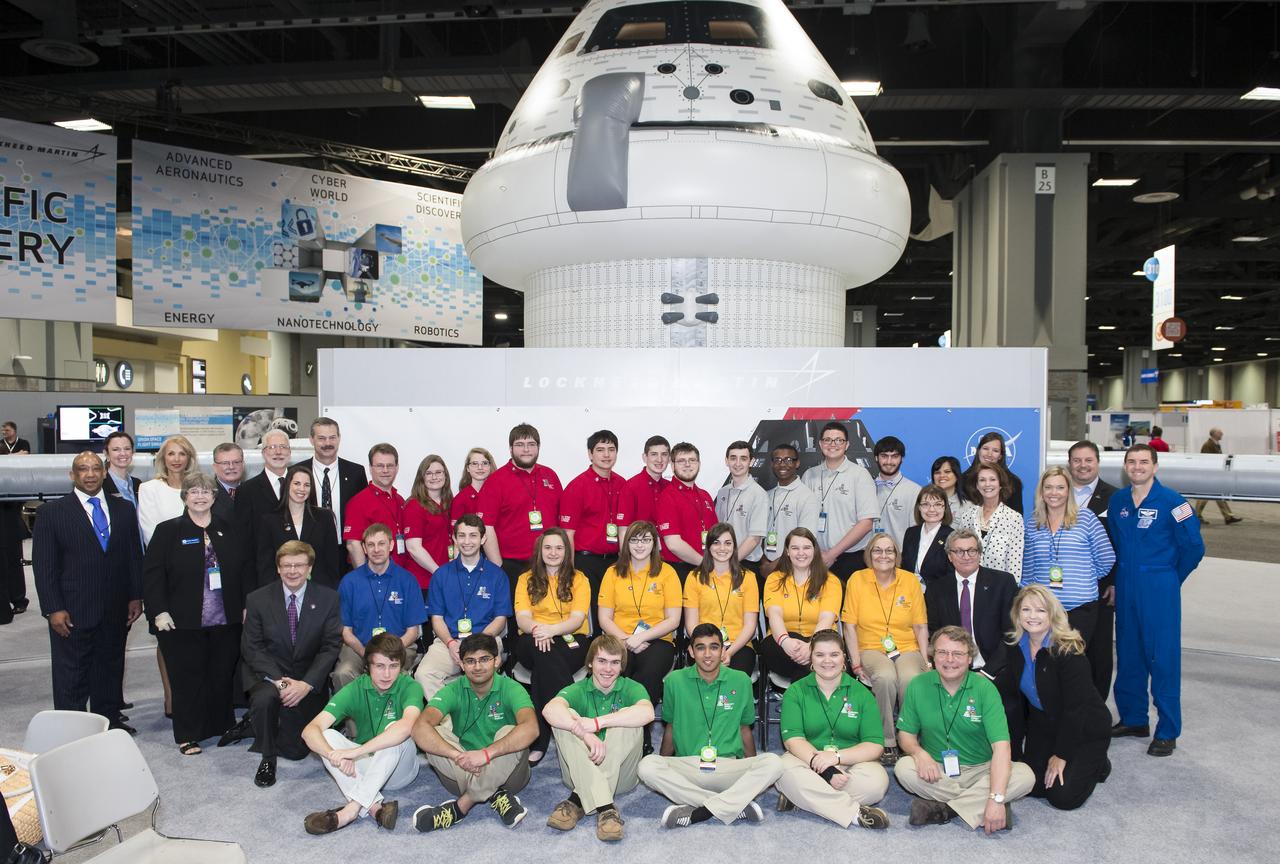
Sponsors of all of the semi-finalist teams in the Exploration Design Challenge pose for a group photo with the teams. Team ARES from the Governors School for Science and Technology in Hampton, Va. won the challenge with their radiation shield design, which will be built and flown aboard the Orion/EFT-1. The award was announced at the USA Science and Engineering Festival on April 25, 2014 at the Washington Convention Center. Photo Credit: (NASA/Aubrey Gemignani)
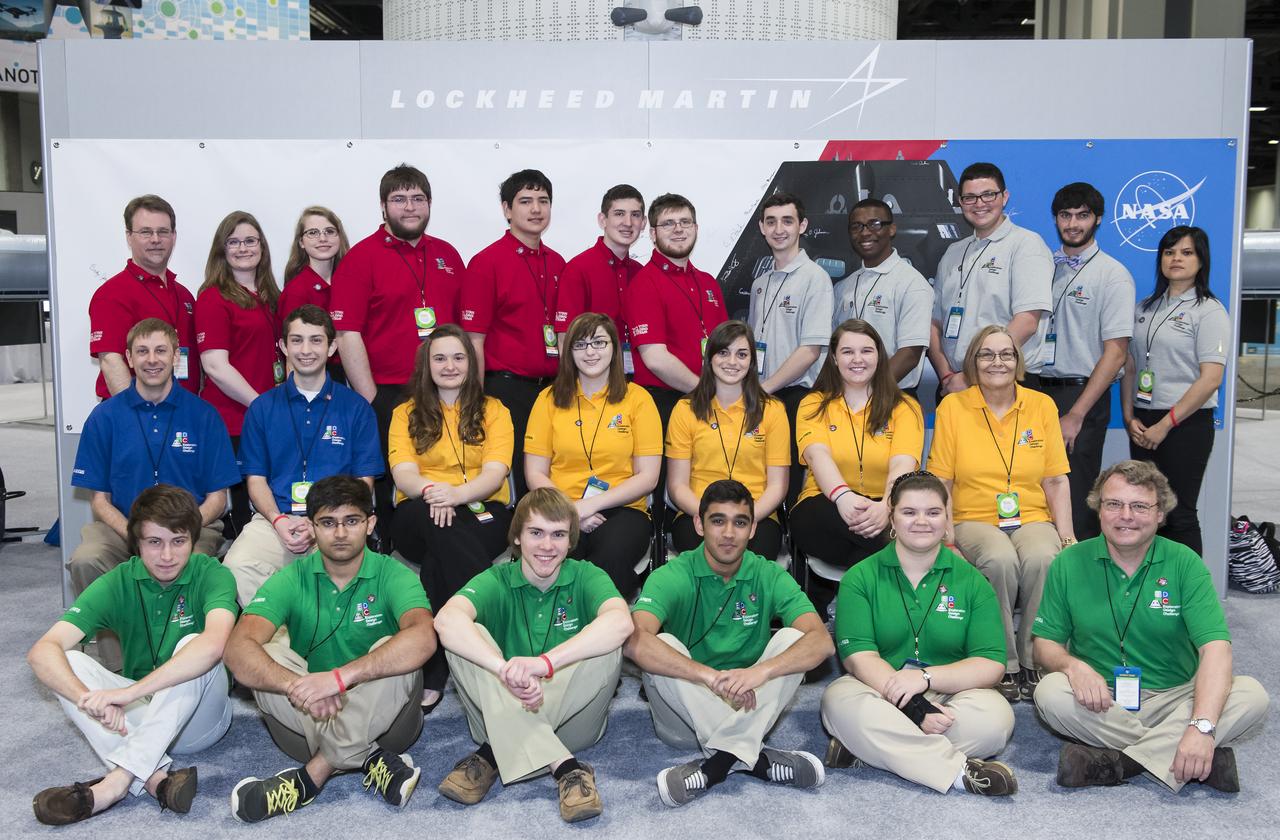
Pictured are all Semi-finalist teams in the Exploration Design Challenge. NASA Administrator, Charles Bolden and Lockheed Martin CEO, Marillyn Hewson announced the winner of the Exploration Design Challenge at the USA Science and Engineering Festival on April 25, 2014. The goal of the challenge was for students to research and design ways to protect astronauts from space radiation. The winning team's design will be built and flown aboard the Orion/EFT-1. The USA Science and Engineering Festival is taking place at the Washington Convention Center in Washington, DC on April 26 and 27, 2014. Photo Credit: (NASA/Aubrey Gemignani)