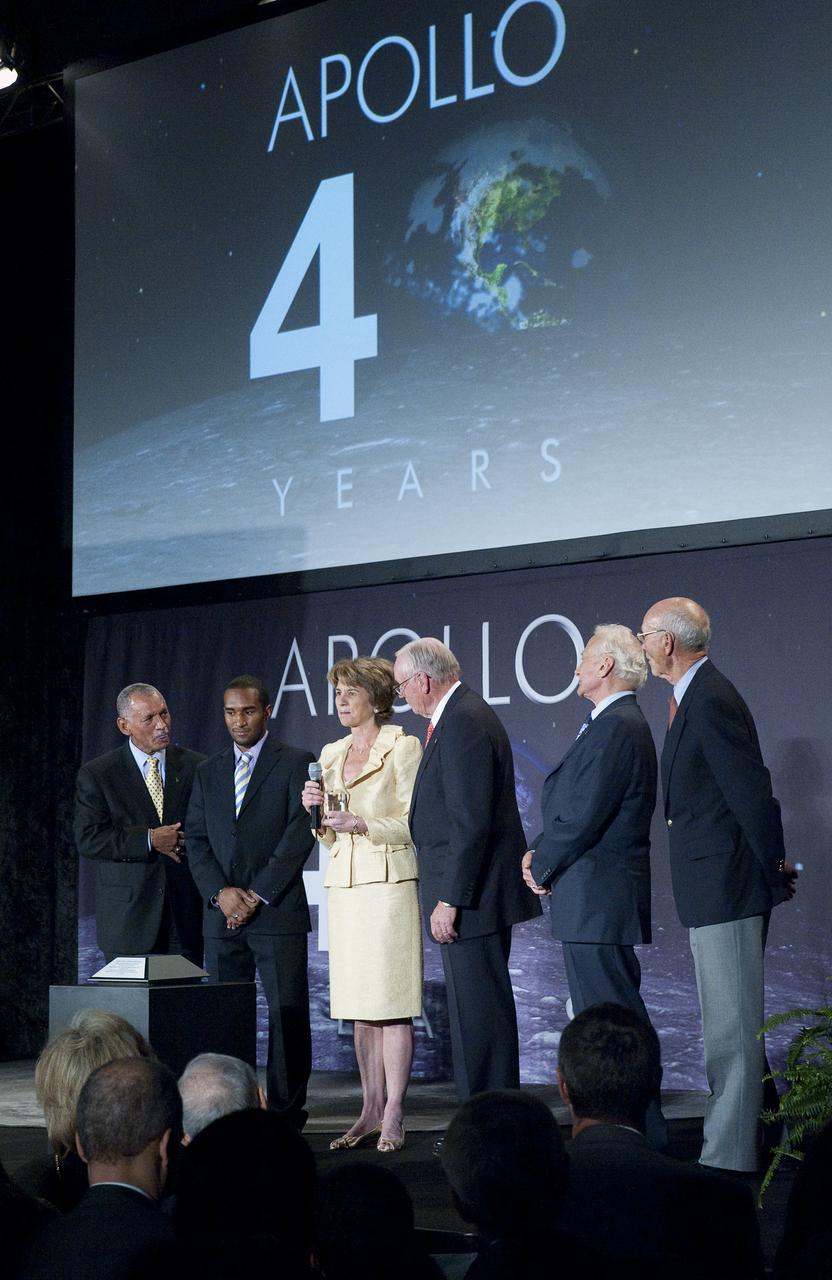
From left, NASA Administrator Charles Bolden, Rice University Electrical and Engineering Student Max Paul, Former Maryland Lieutenant Governor and niece of President John F. Kennedy, Kathleen Kennedy Townsend, Apollo 11 Astronauts, Neil Armstrong, Buzz Aldrin and Michael Collins all pose for a photograph in front of the NASA Ambassador of Exploration Award given posthumously to President John F. Kennedy and accepted on behalf of the Kennedy family by Townsend at the Apollo 40th anniversary celebration held at the National Air and Space Museum, Monday, July 20, 2009 in Washington. The award will be on permanent display at Rice University at the request of the Kennedy family. Photo Credit: (NASA/Carla Cioffi)
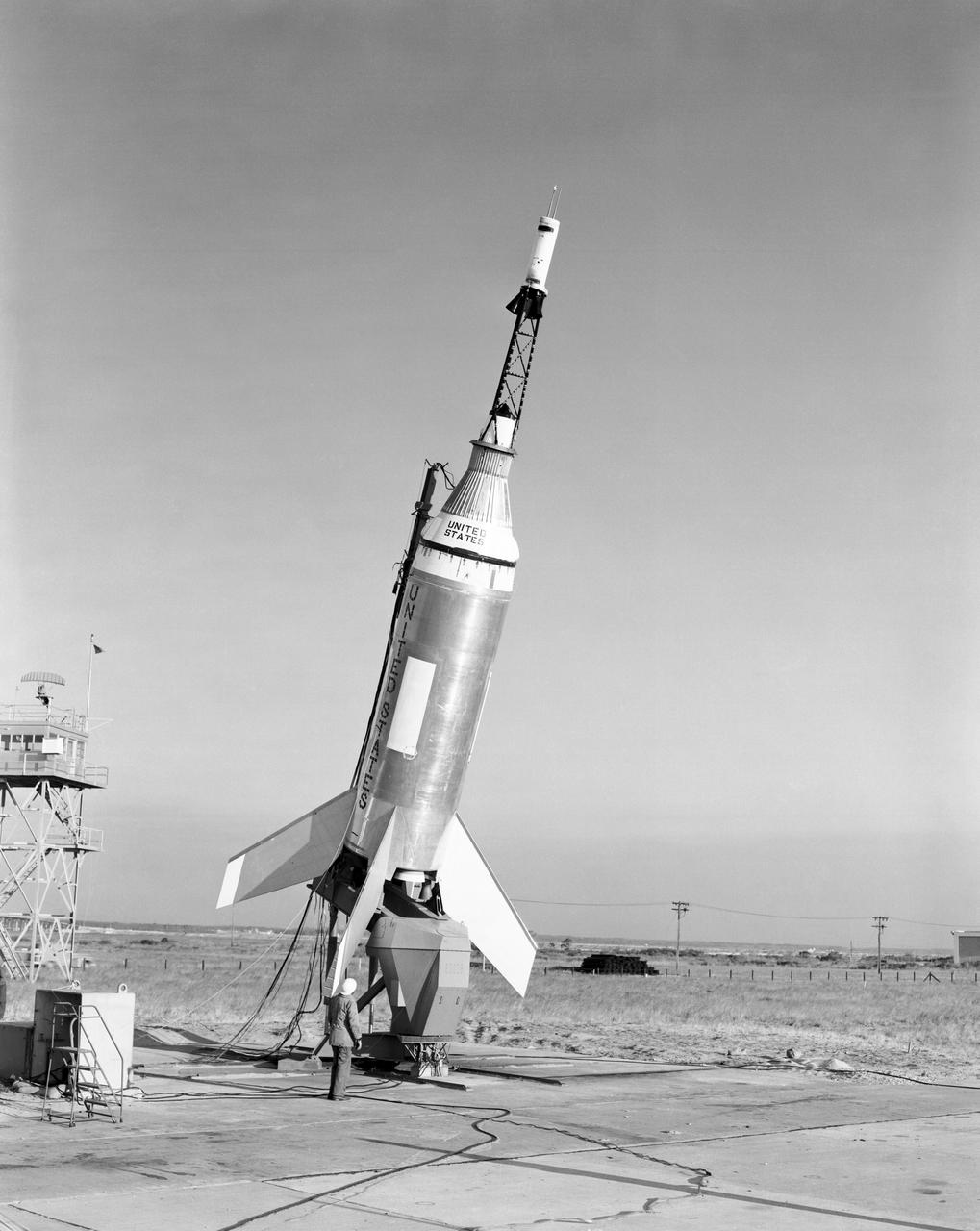
The Little Joe launch vehicle being readied for a test launch from Wallops in January 1960... Page 77. Photograph published in Winds of Change, 75th Anniversary NASA publication, by James Schultz. **note - see L59-5137 page 77 also. Photograph published in Engineer in Charge: A History of the Langley Aeronautical Laboratory, 1917-1958 by James R. Hansen. Page 389. ...was conceived by Langley engineers Max Faget and Paul Purser even before STG (Space Task Group) was organized.

jsc2022e090130 (Nov. 28, 2022): Flight Directors Paul Konyha and Nicole McElroy monitor the Orion spacecraft as it reaches its record-breaking distance from the Earth, nearly 270,000 miles, on flight day 14 of the Artemis I mission. Credit: NASA/Robert Markowitz
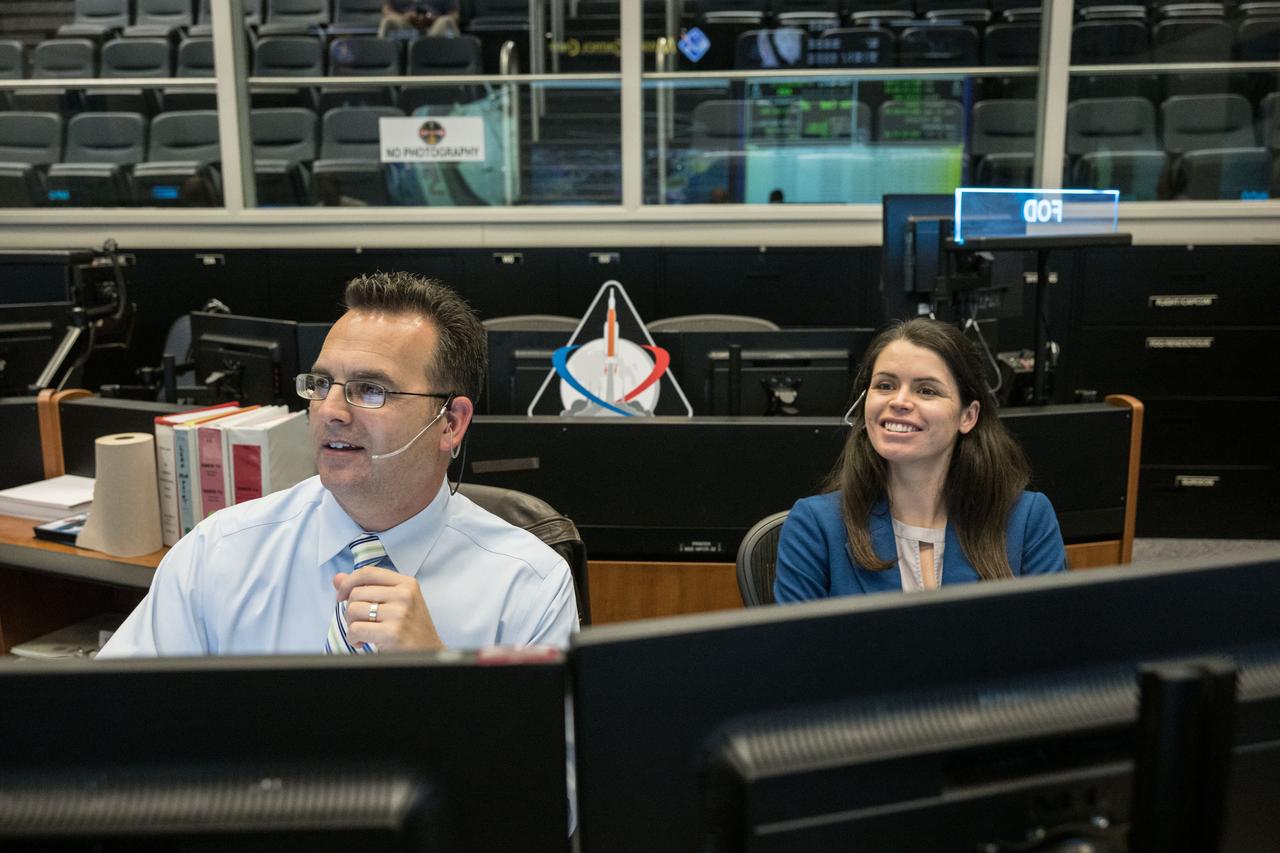
jsc2022e090070: (Nov. 28, 2022): Flight Directors Paul Konyha and Nicole McElroy smile as the Orion spacecraft reaches its record-breaking distance from the Earth, nearly 270,000 miles, on flight day 14 of the Artemis I mission. Credit: NASA/Robert Markowitz
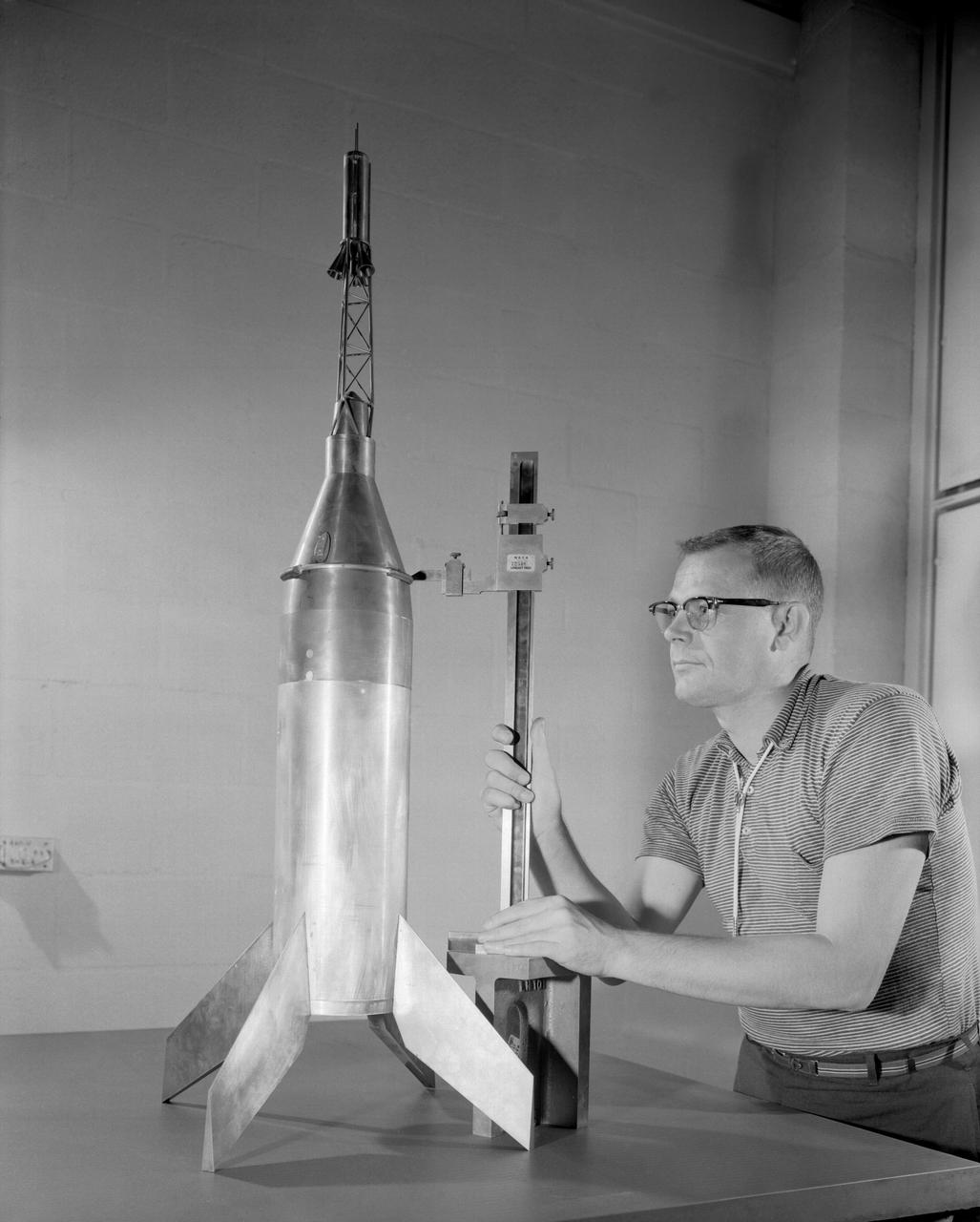
Publicity photograph of a technician measuring a wind tunnel model of the Little Joe test vehicle. Joseph Shortal noted that (vol. 3, p. 29): The largest project at Wallops in support of Mercury was the Little Joe project, designed to qualify the abort-escape system under flight conditions. James Hansen (p. 47) writes: STG engineers Max Faget and Paul Purser, then of Langley's PARD, had conceived Little Joe as a space capsule test vehicle even before the establishment of NASA and the formation of the STG. Girlruth understood the importance of the Little Joe tests: We had to be sure there were no serious performance and operational problems that we had simply not thought of in such a new and radical type of flight vehicle. -- Published in James R. Hansen, Spaceflight Revolution: NASA Langley Research Center From Sputnik to Apollo, (Washington: NASA, 1995), p. 47 Joseph A. Shortal, History of Wallops Station: Origins and Activities Through 1949, (Wallops Island, VA: National Aeronautics and Space Administration, Wallops Station, nd), Comment Edition.