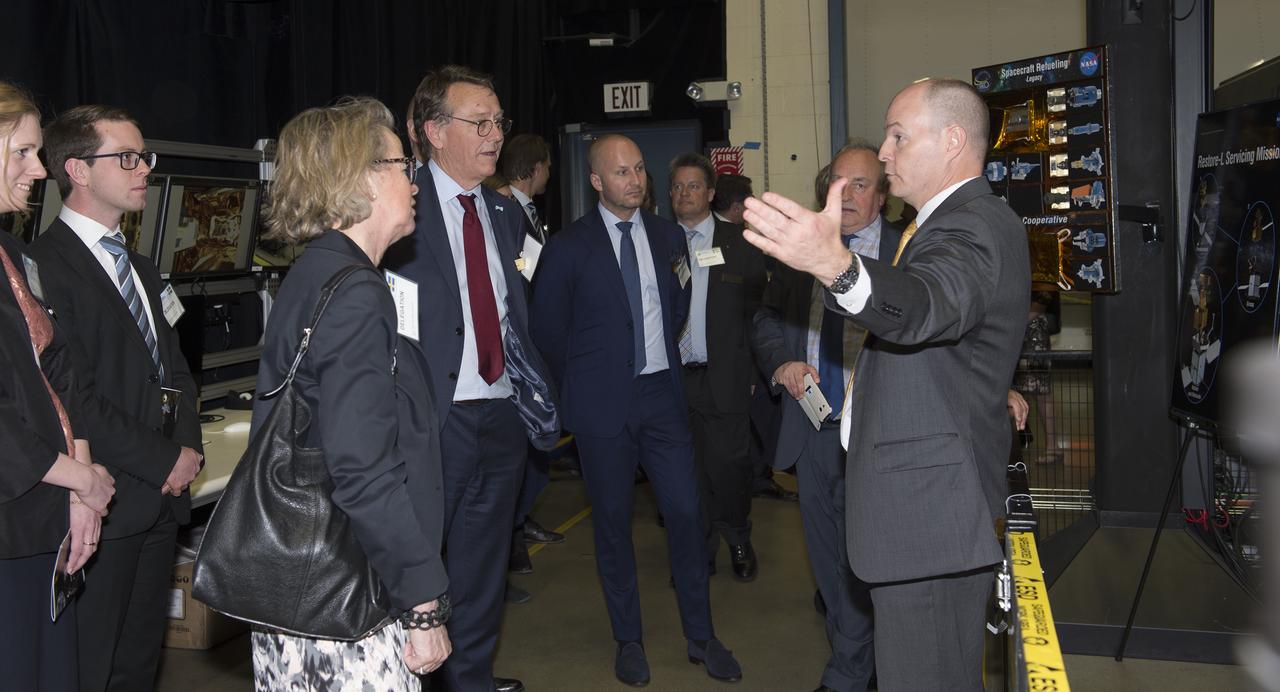
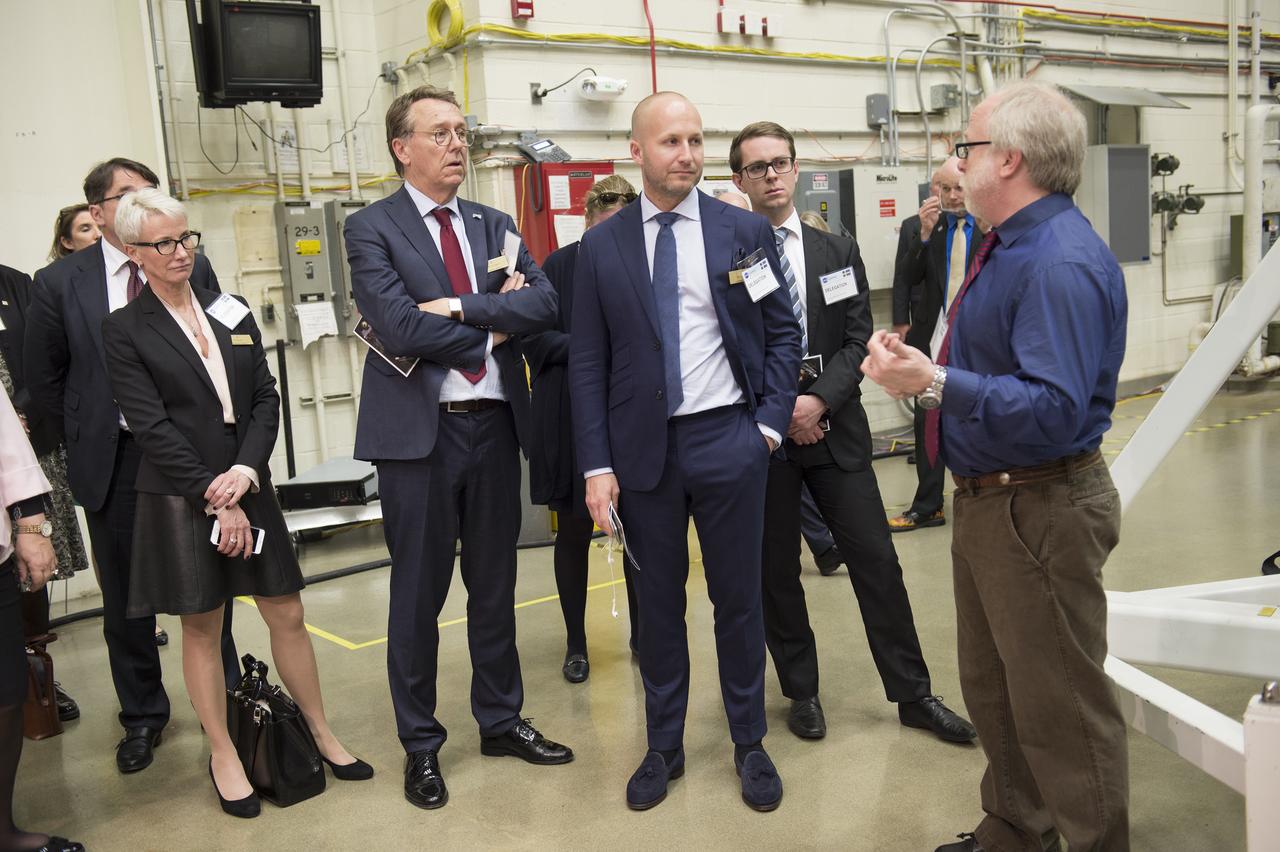
Swedish Delegation visited Goddard on May 3, 2017. Benjamin Reed gives overview of Robotics Operations Center in Building 29.
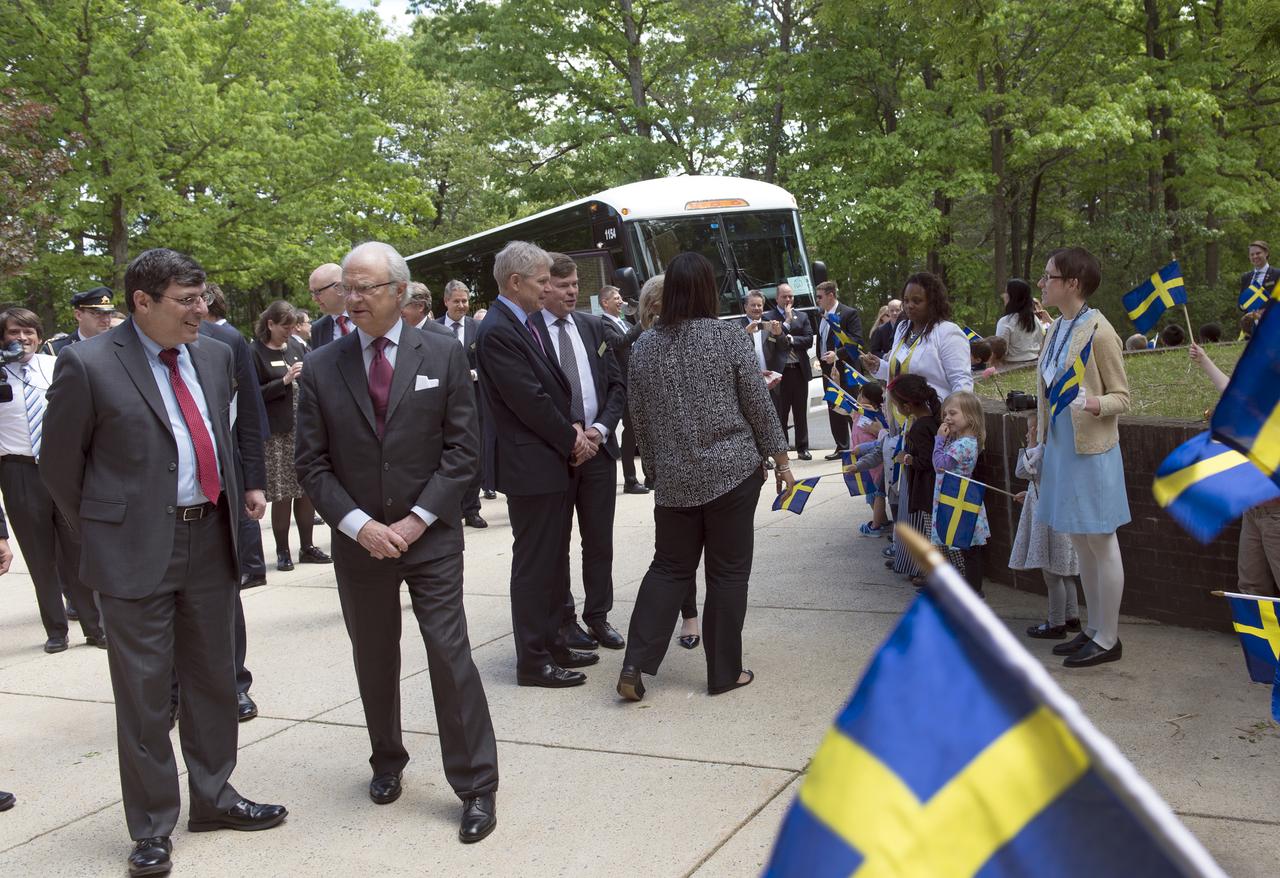
Swedish Delegation visited Goddard on May 3, 2017. Center Director Chris Scolese greets His Majesty Carl XVI Gustaf, King of Sweden at Bldg 28. For arrival children from the Goddard Child Development Center greeted him with flag, flowers and a painting of Swedish Linnea flower as a gift.
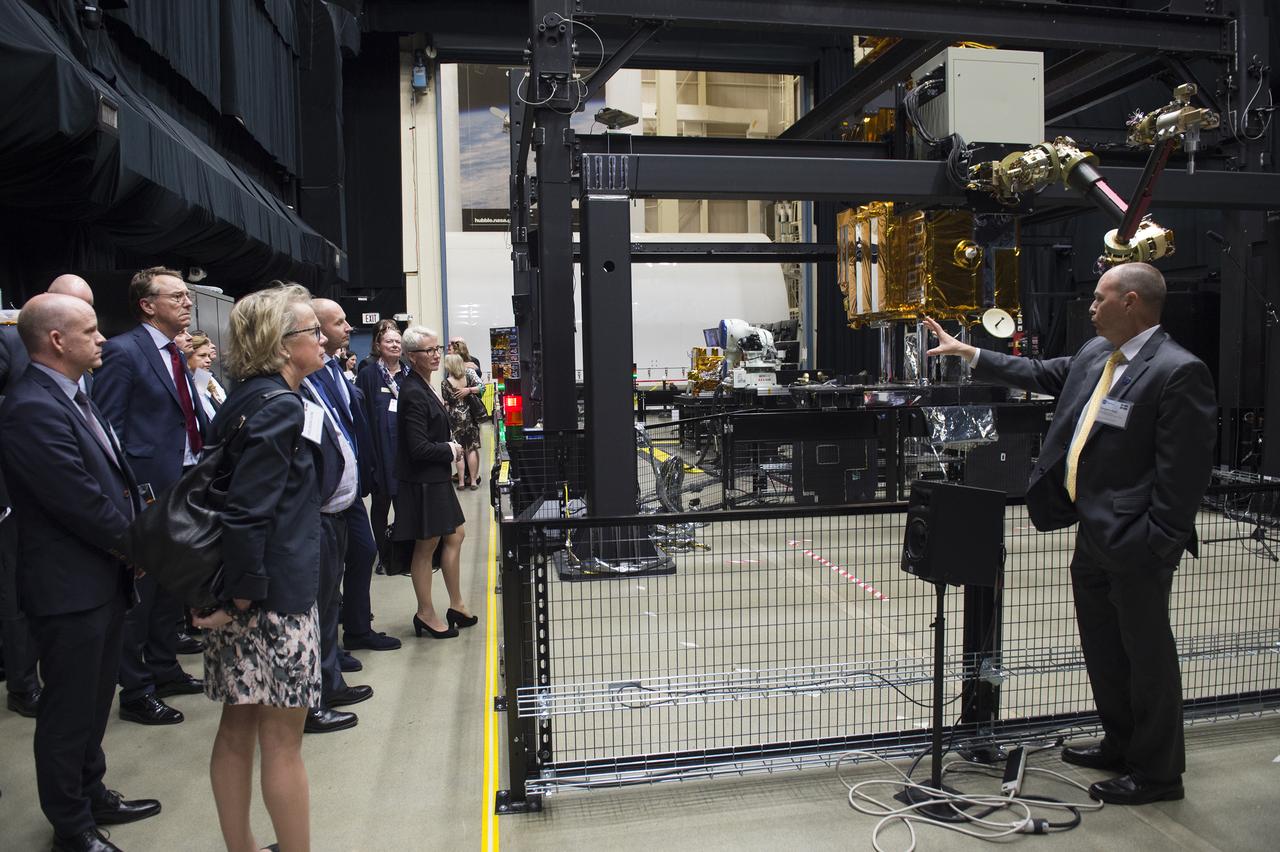
Swedish Delegation visit on May 3, 2017 Ben Reed of Robotic Operations Center in Building 29 gives overview to Swedish Delegation.
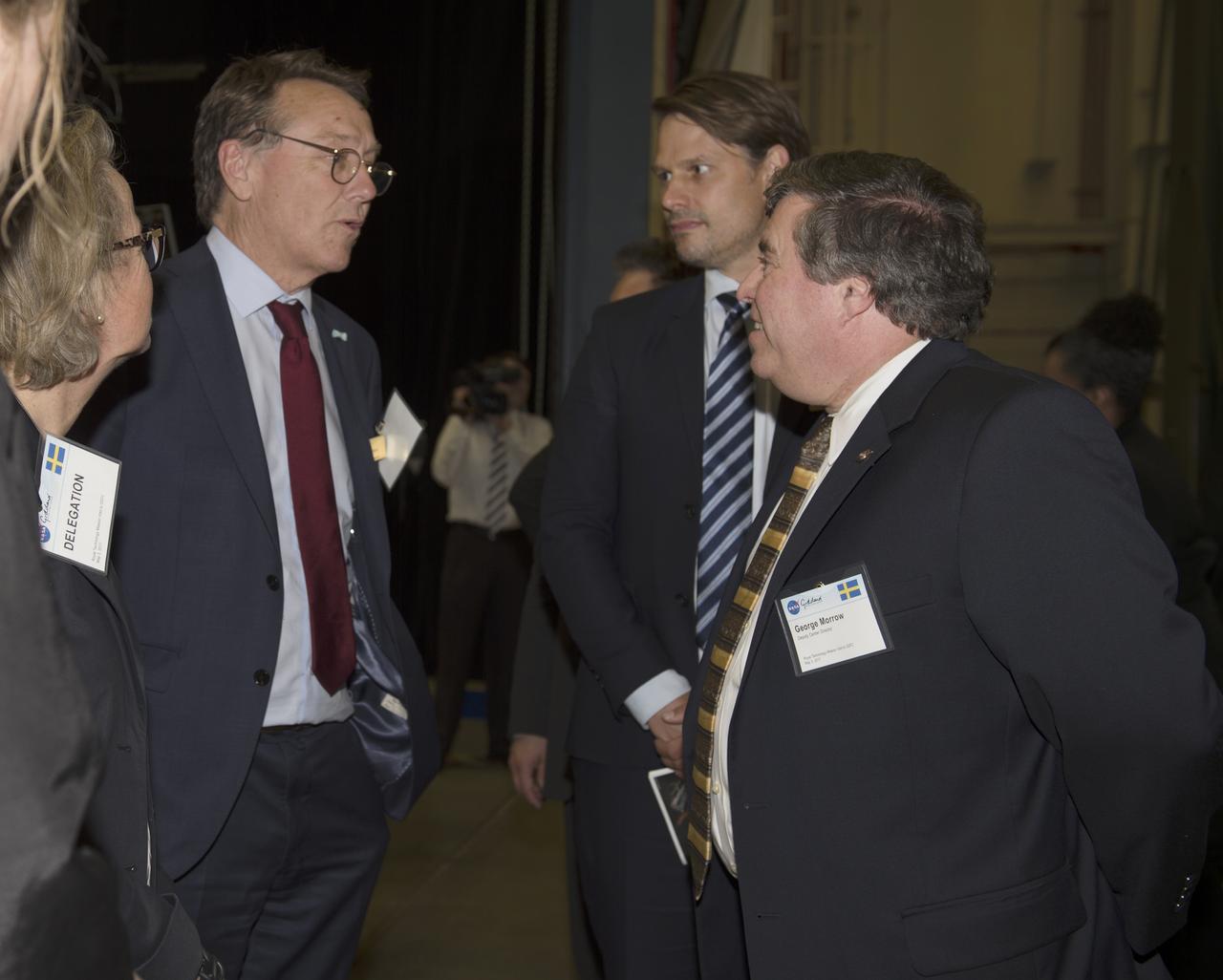
Swedish Delegation visited Goddard on May 3, 2017. George Morrow greets members of Swedish Delegation prior to tour of Building 29 facilities.

Swedish Delegation visited Goddard May 3, 2017. Banner display in Building 28 atrium for King of Sweden delegation visit to Goddard.
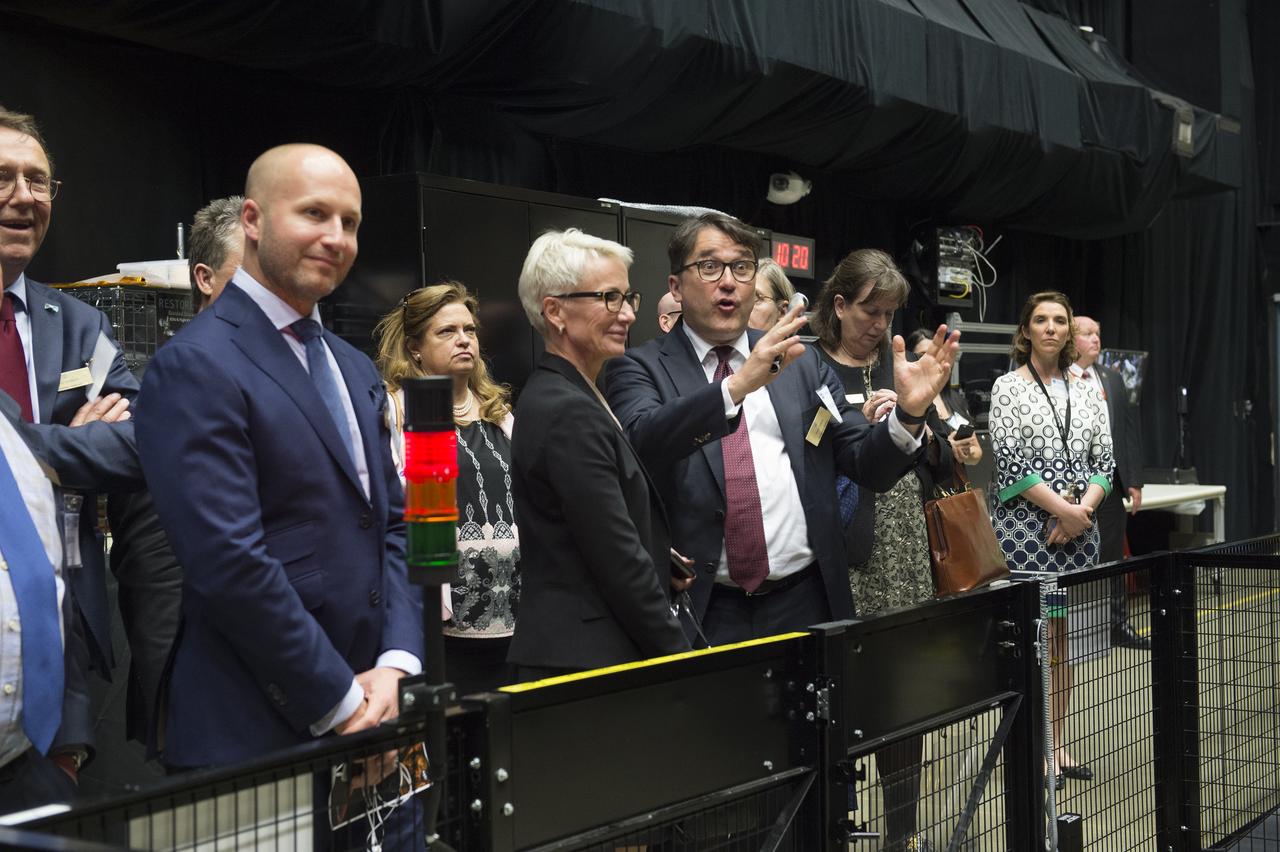
Swedish Delegation visit May 3 2017 They toured Robotics Operations Center in Building 29 and got an overview from Ben Reed.
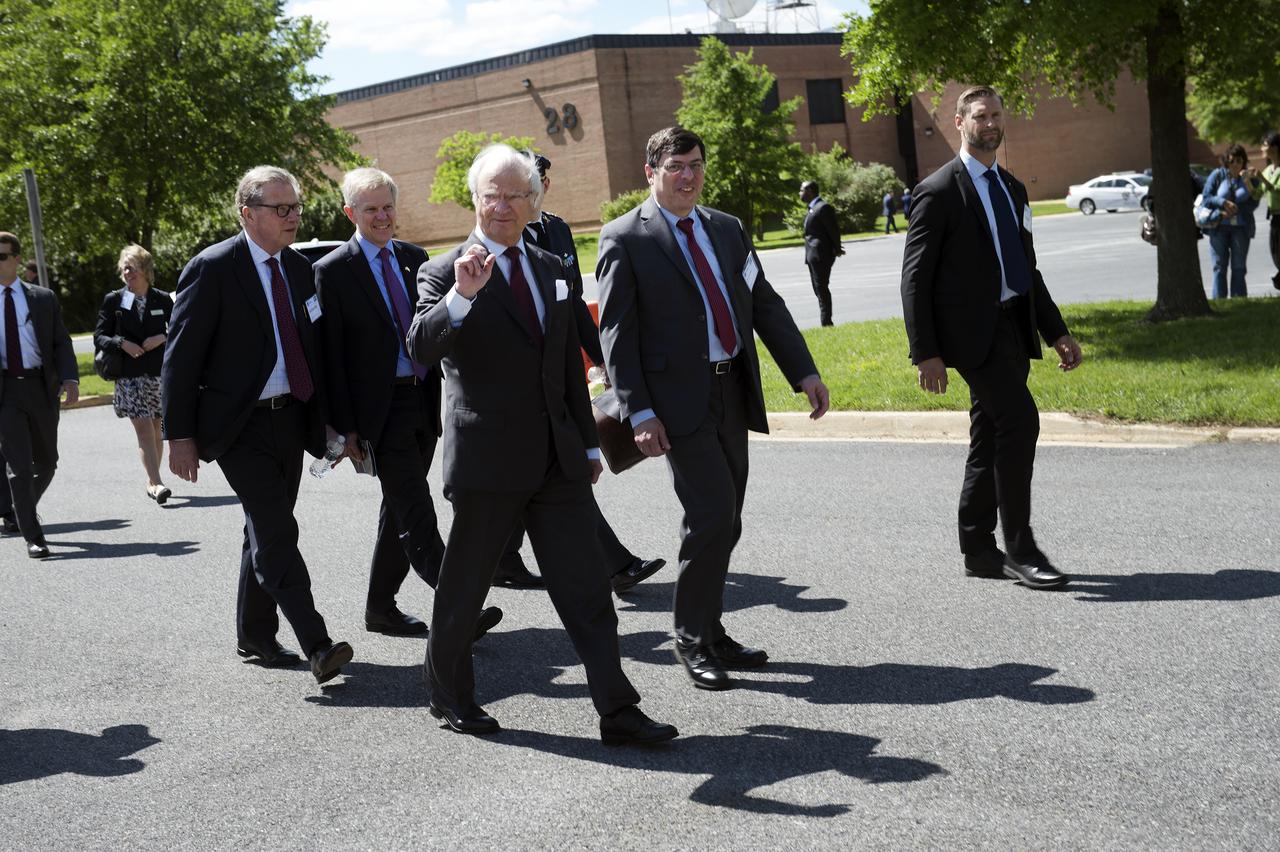
Swedish Delegation visited Goddard on May 3, 2017. Goddard senior management, the King of Sweden, and members of the Royal Swedish Academy walk to Building 29.
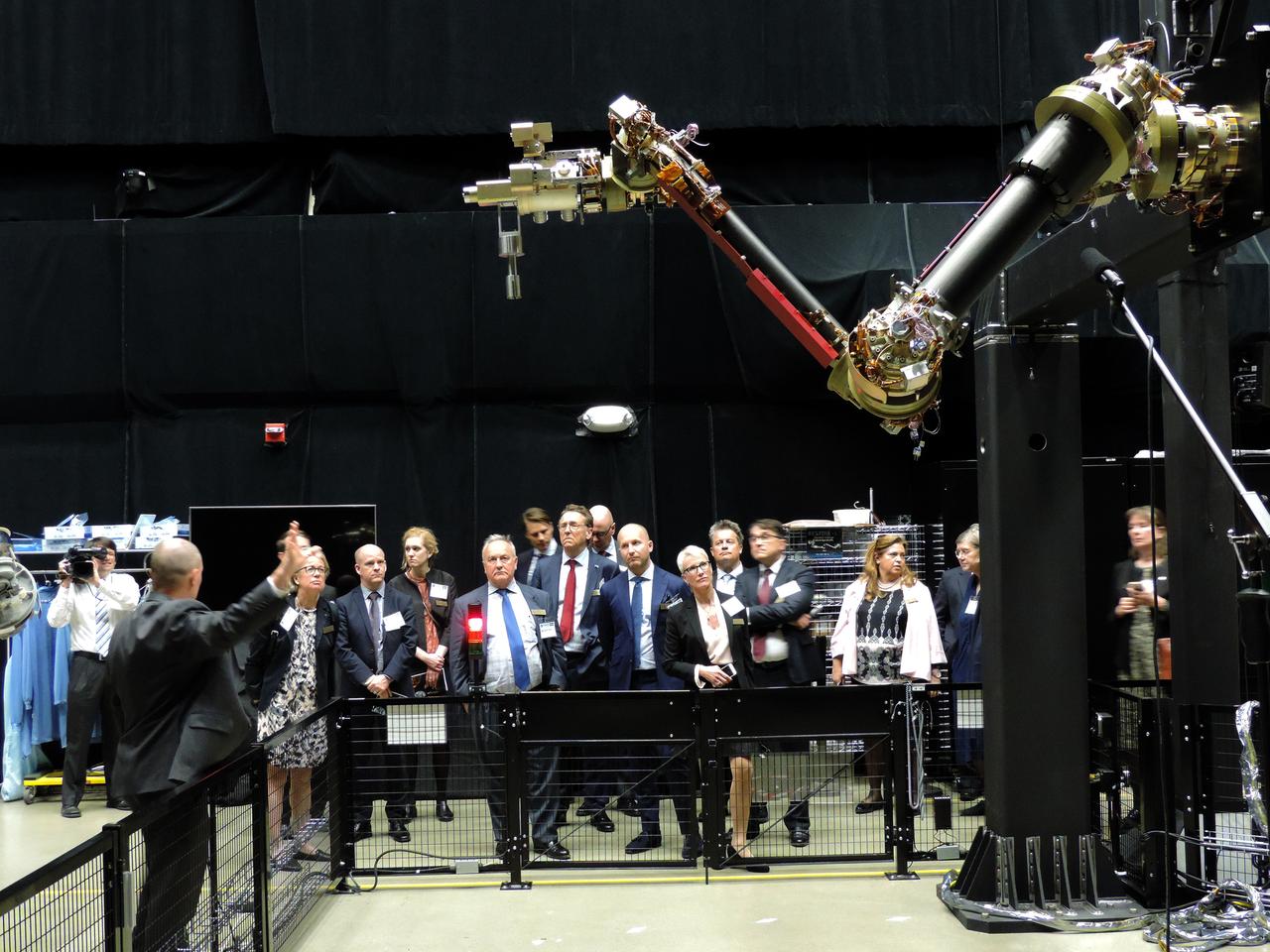
Swedish Delegation visited Goddard on May 3, 2017. Ben Reed gives overview of the Robotic Operations Center in Building 29 as part of the Center tour
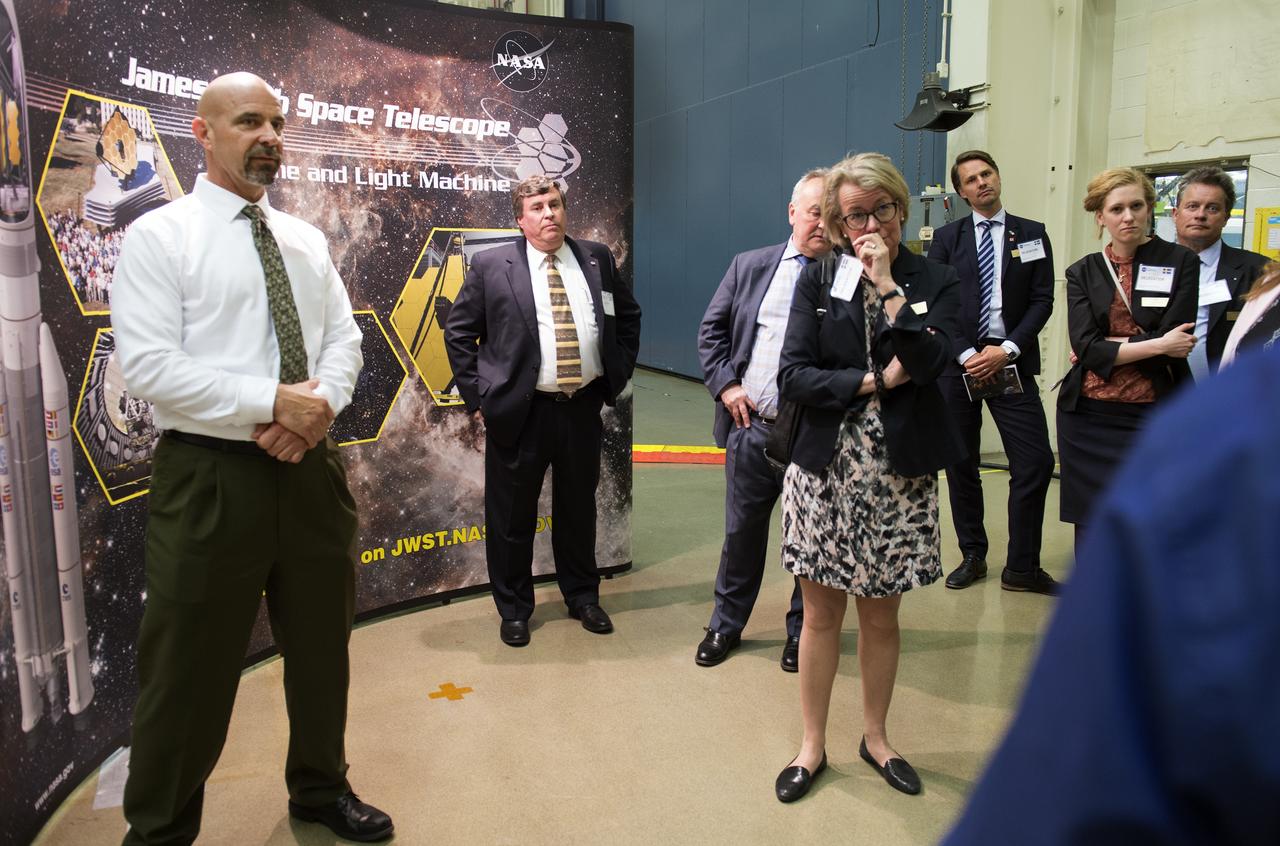
Swedish Delegation visited Goddard on May 3, 2017. Members of the Royal Swedish Academy of Engineering sciences listen to James Pontius and Bryan Blair talk about the GEDI mission and the collaborative work being done with Sweden.
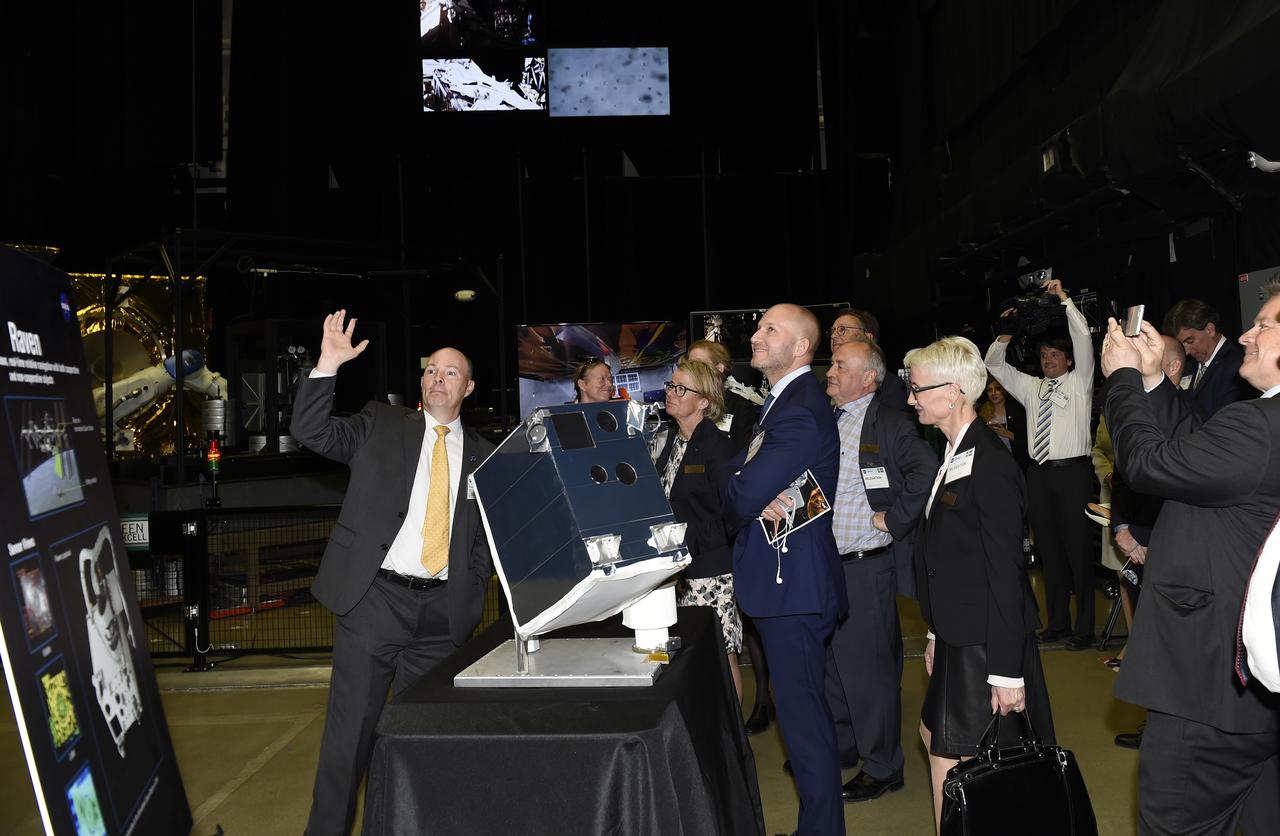
Swedish Delegation visited Goddard on May 3, 2017. Ben Reed gives Swedish Delegation an overview inside the Robotics Operations Center in Building 29 as part of the tour.
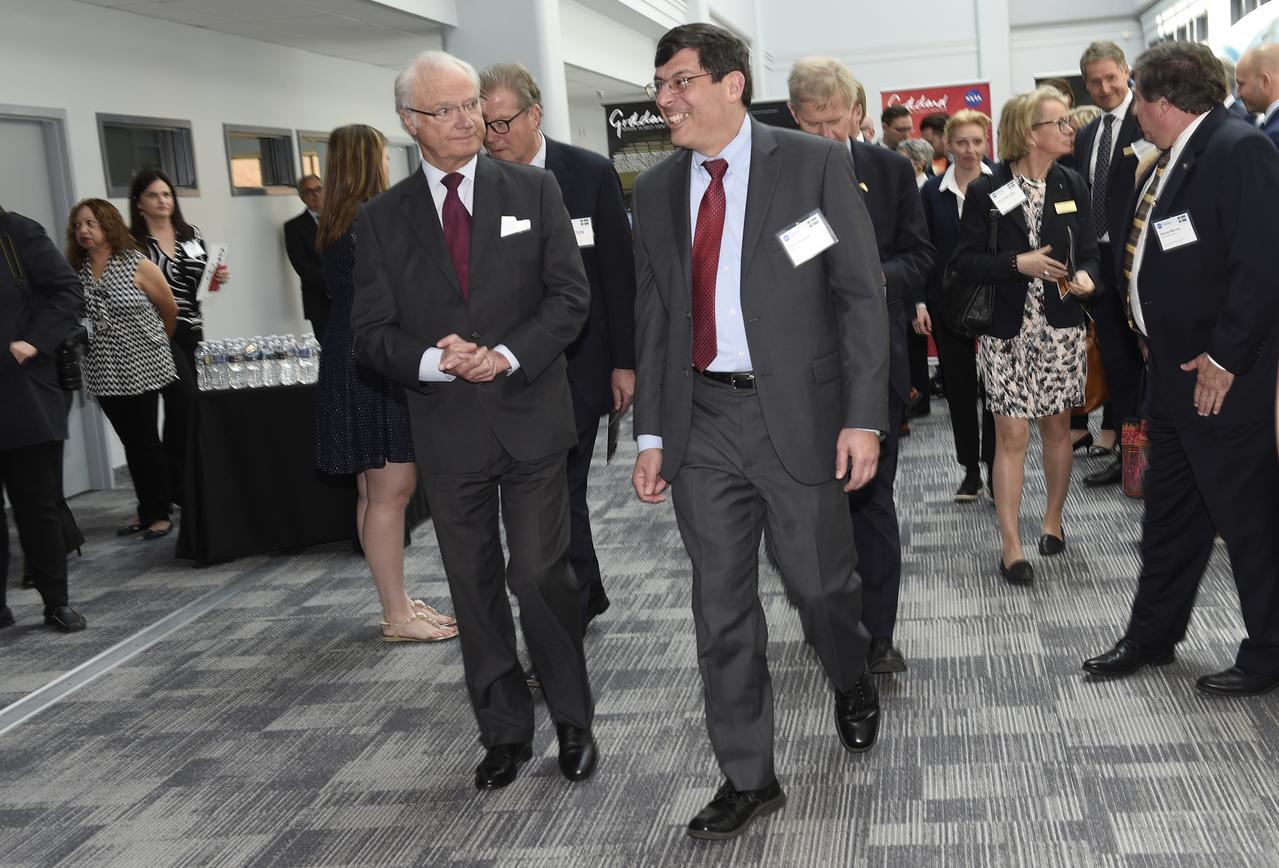
Swedish Delegation visits Goddard on May 3, 2017. Center Director Chris Scolese greets the His Majesty Carol XVI Gustaf, King of Sweden in Building 28 upon arrival.
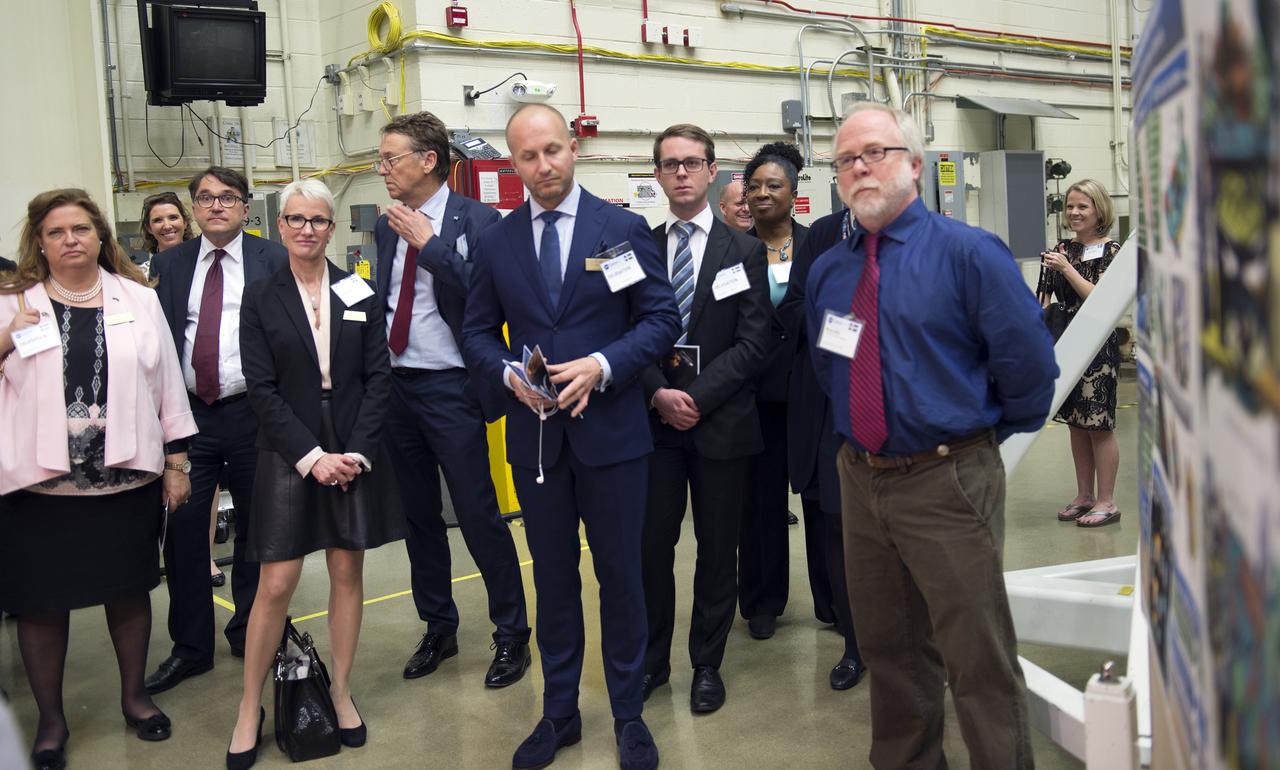
Swedish Delegation visited Goddard on May 3, 2017. Members of the Royal Swedish Academy of Engineering Sciences listen to James Pontius and Bryan Blair talk about GEDI mission and the collaborative work being done with Sweden.
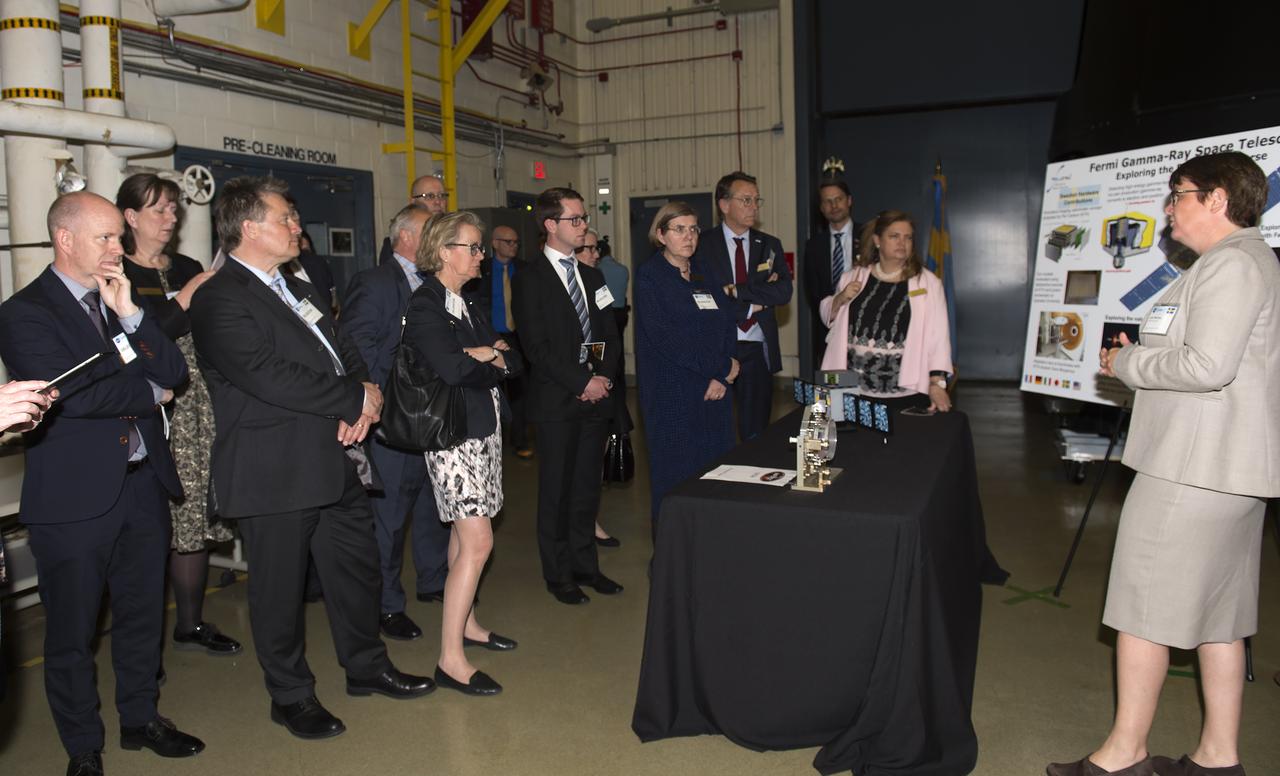
Swedish Delegation visit Goddard on May 3, 2017. Members of the Royal Swedish Academy of Engineering Sciences listen as Wide Field Infrared Survey Telescope (WFIRST) project personnel give an overview of the mission
Swedish Delegation visited Goddard on May 3, 2017. Members of the Royal Swedish Academy of Engineering Sciences listen to James Pontius and Bryan Blair talk about GEDI mission and the collaborative work being done with Sweden.
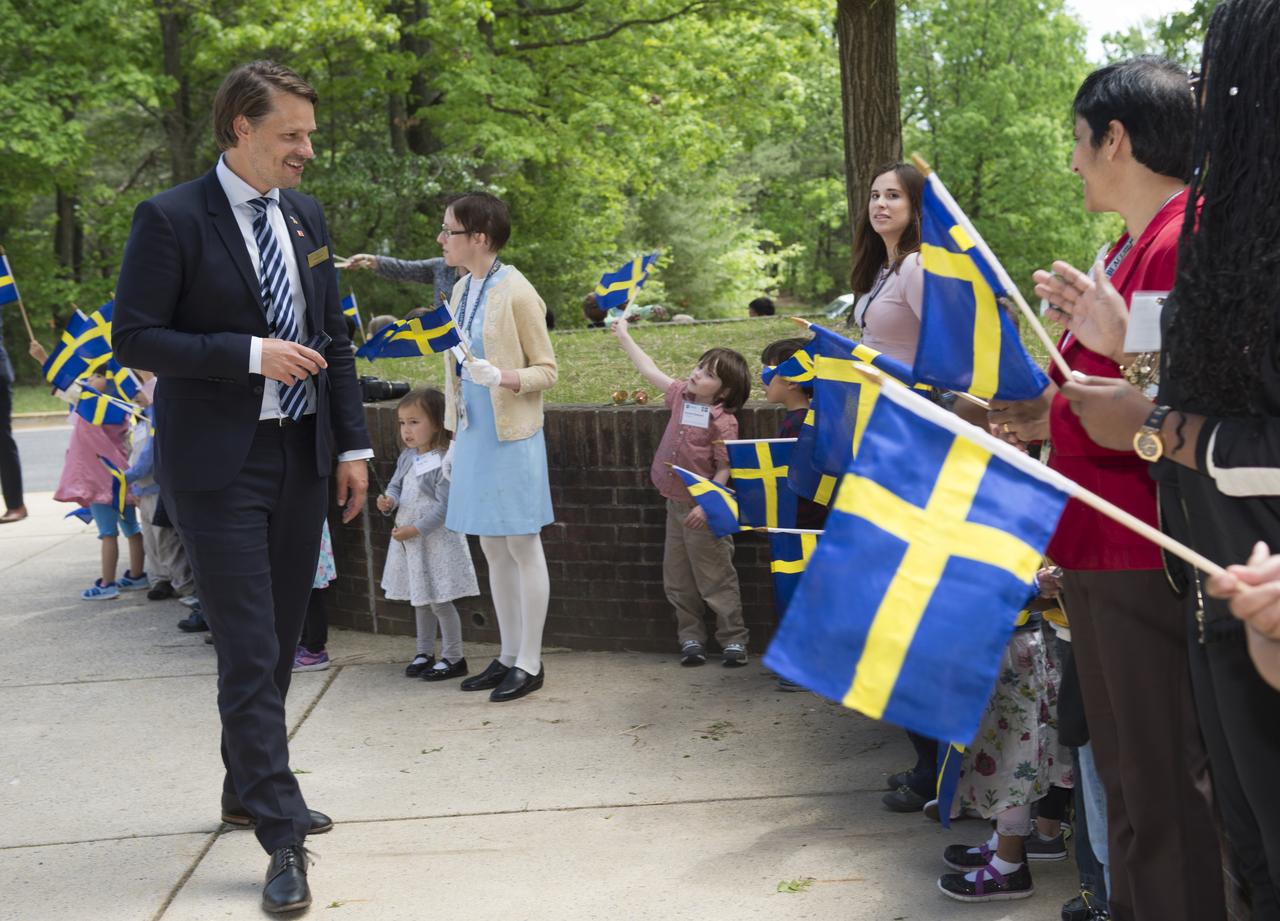
Swedish Delegation visited Goddard on May 3, 2017. Center Director Chris Scolese greets His Majesty Carl XVI Gustaf, King of Sweden at Bldg 28. Goddard Child Development Center was on hand with children bearing flags, flowers and a painting of Swedish Linnea flower as a gift.
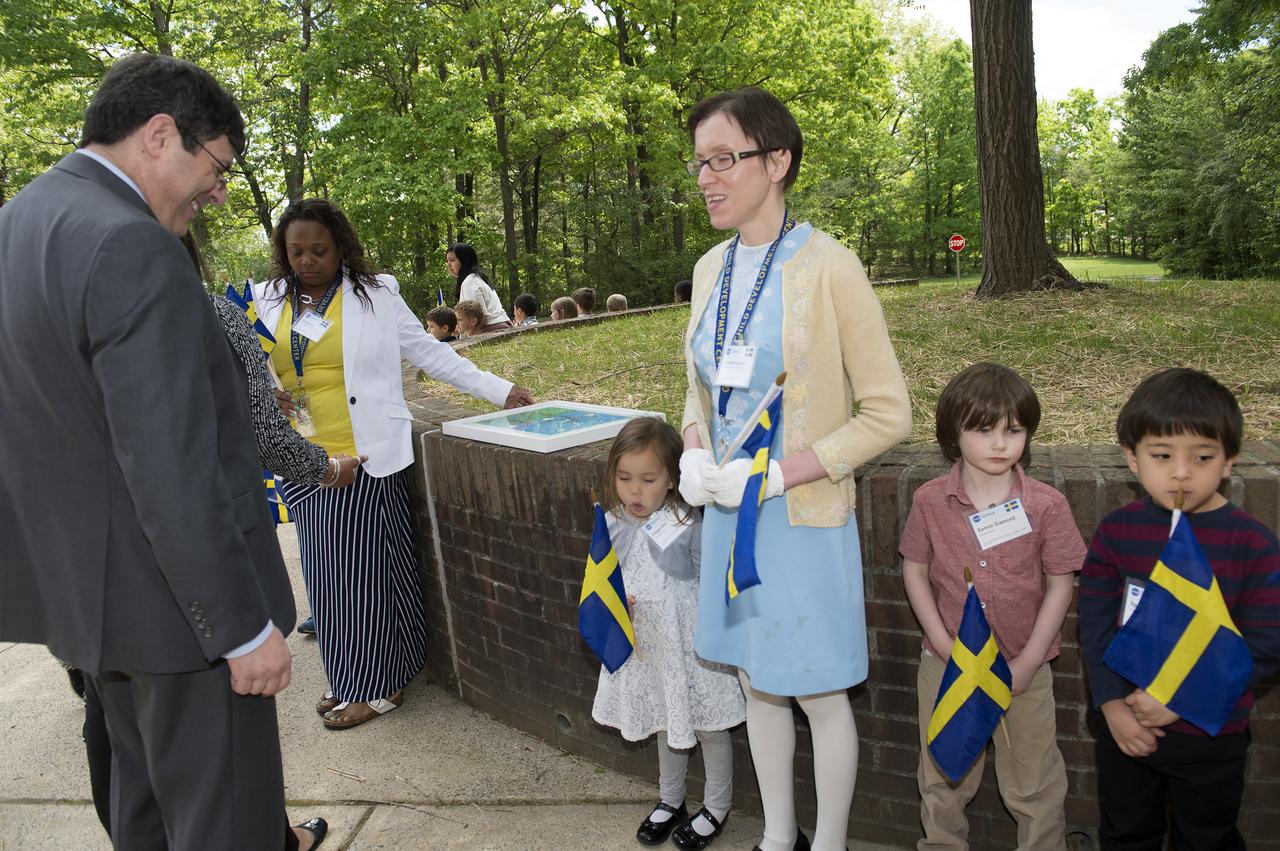
Child Development Center B28 meeting the King of Sweden on May 3, 2017. The king’s visit came as part of his participation in a large delegation theat also included the Swedish Ambassador to the US, chariman and presdent of the Royal Sedish Academy of Engineering Sciences, as well as distinguished members of Sweden’s industrial, academia and professional organizations.
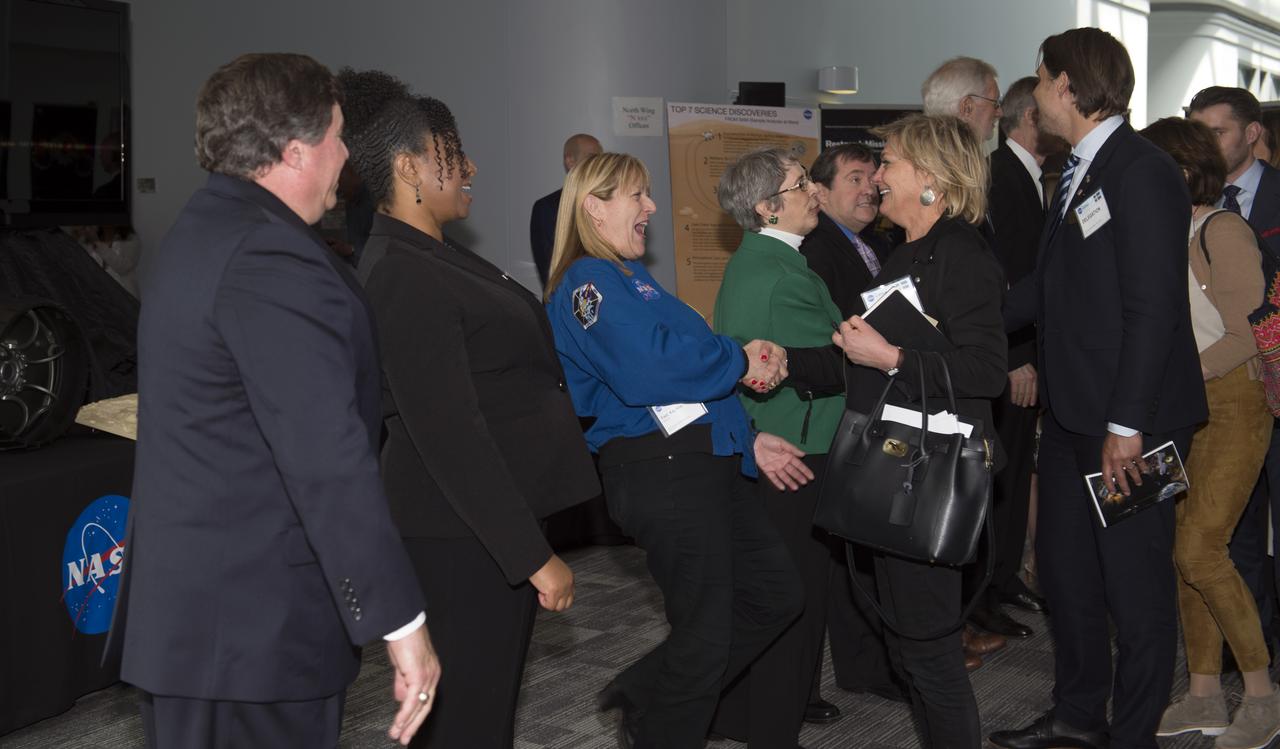
Swedish Delegation was greeted by Center Director Chris Scolese and staff at Building 28. Kay Hire astronaut, greets member of delegation as George Morrow and Christyl Johnson look on.
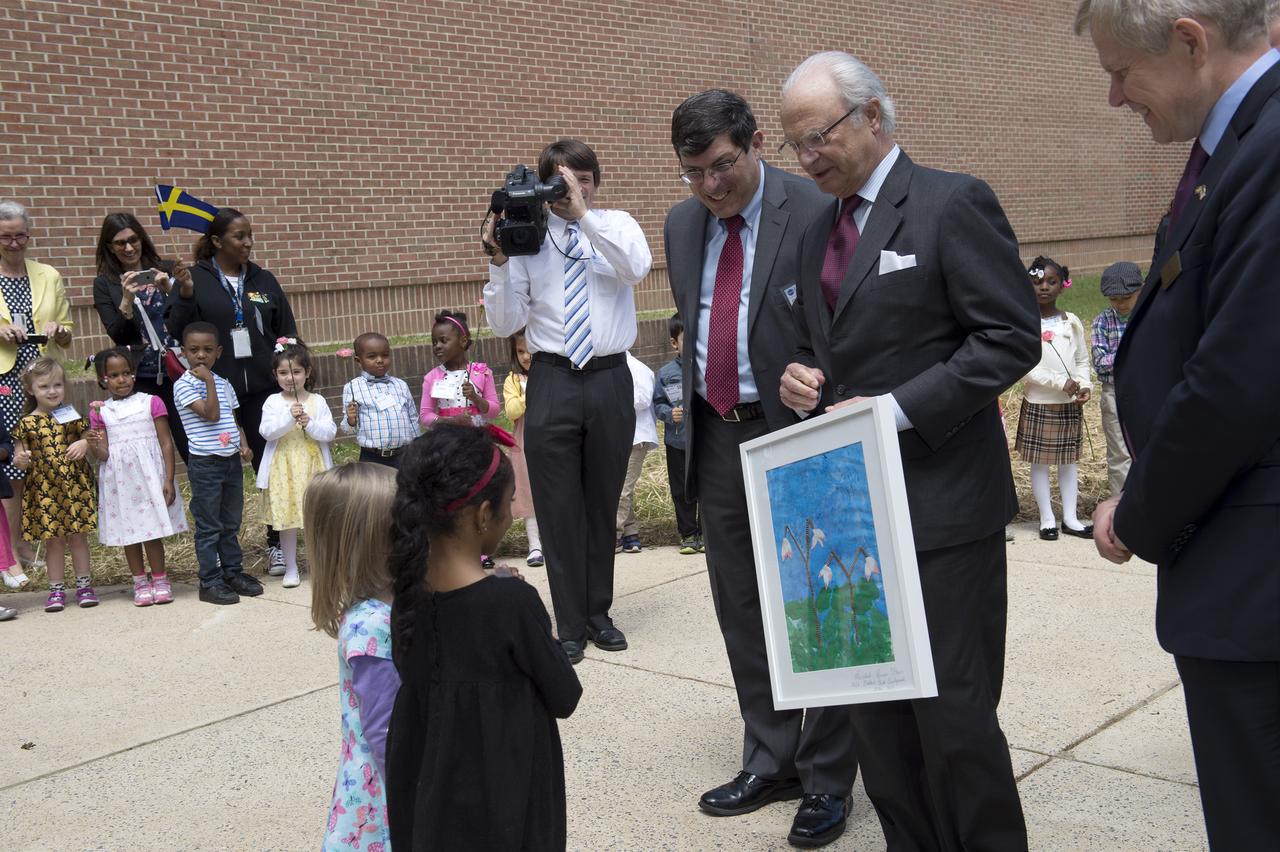
Goddard Center Director Chris Scolese greets His Majesty Carol XVI Gustaf, King of Sweden outside the Bldg 28 as children present him painting of Swedish Linnea flower as a gift May 3, 2017.
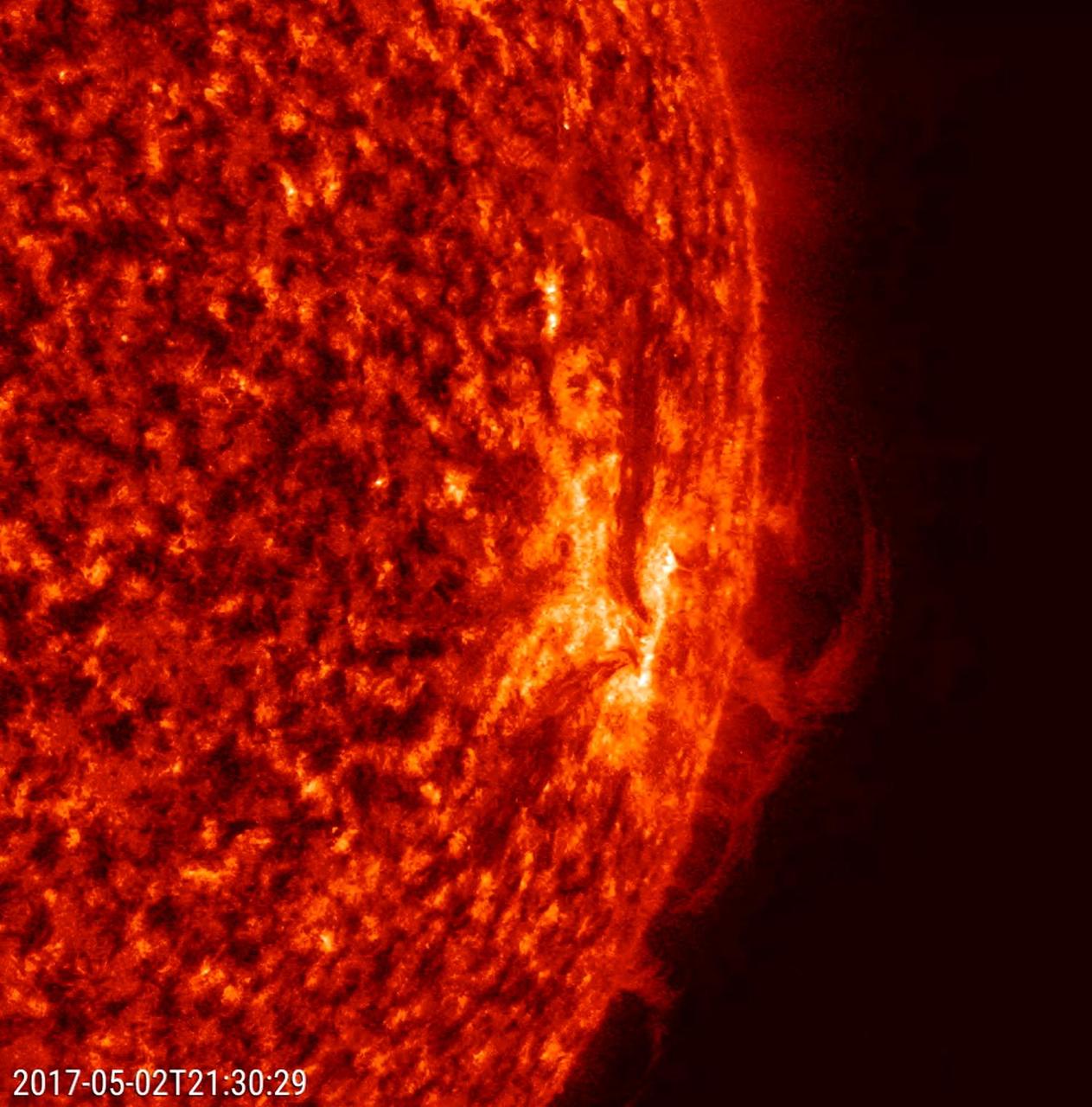
Strands of plasma at the sun edge shifted and twisted back and forth over a 22-hour period, May 2-3, 2017. In this close-up from NASA Solar Dynamics Observatory, the strands are being manipulated by strong magnetic forces associated with active region. This kind of activity is not at all uncommon, but best viewed in profile. The images were taken in a wavelength of extreme ultraviolet light. To give a sense of scale, the strands hover above the sun more than several times the size of Earth. Movies are available at https://photojournal.jpl.nasa.gov/catalog/PIA21632
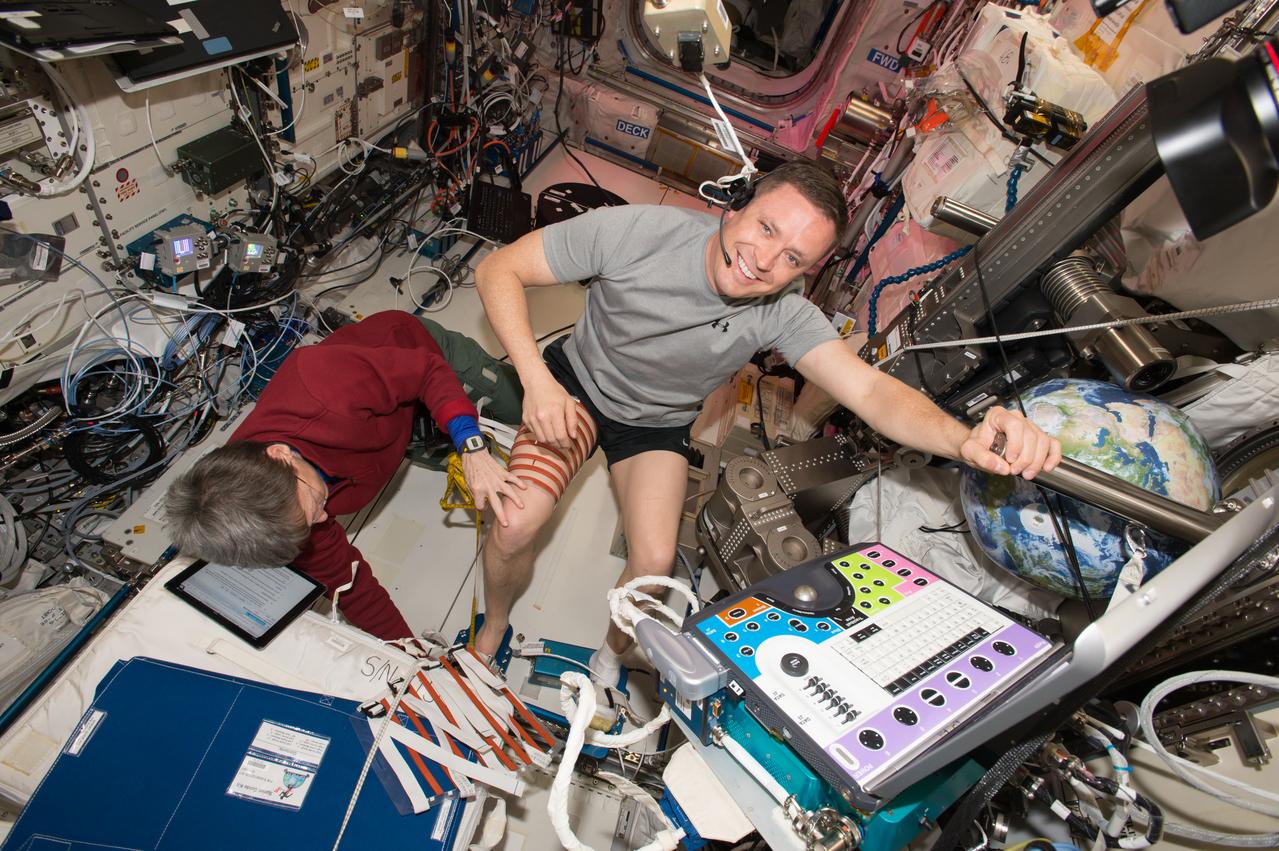
iss051e037012 (May 3, 2017) --- Flight engineer Jack Fischer dons Thigh and Calf Guides in preparation for Ultrasound 2 operations for the Integrated Resistance and Aerobic Training Study (Sprint) experiment. He is assisted by Commander Peggy Whitson. Image was taken in the Columbus European Laboratory.
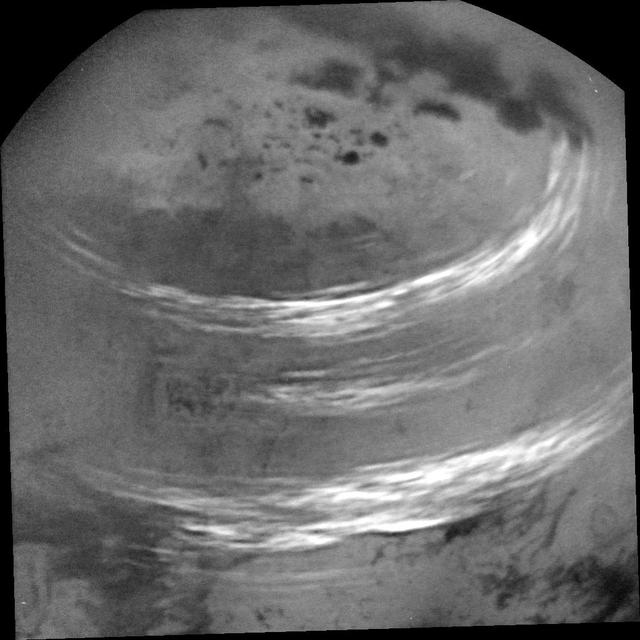
NASA's Cassini spacecraft captured this view of bands of bright, feathery methane clouds drifting across Saturn's moon Titan on May 7, 2017. The view was obtained during a distant (non-targeted) flyby, during which Cassini passed 303,000 miles (488,000 kilometers) above the moon's surface. Although Cassini will have no further close, targeted flybys of Titan, the spacecraft continues to observe the giant moon and its atmosphere from a distance. The dark regions at top are Titan's hydrocarbon lakes and seas. The image was taken on May 7, 2017, at a distance of 316,000 miles (508,000 kilometers). The view is an orthographic projection centered on 57 degrees north latitude, 48 degrees west longitude. An orthographic view is most like the view seen by a distant observer. Image scale is about 2 miles (3 kilometers) per pixel. The Cassini mission is a cooperative project of NASA, ESA (the European Space Agen https://photojournal.jpl.nasa.gov/catalog/PIA21450
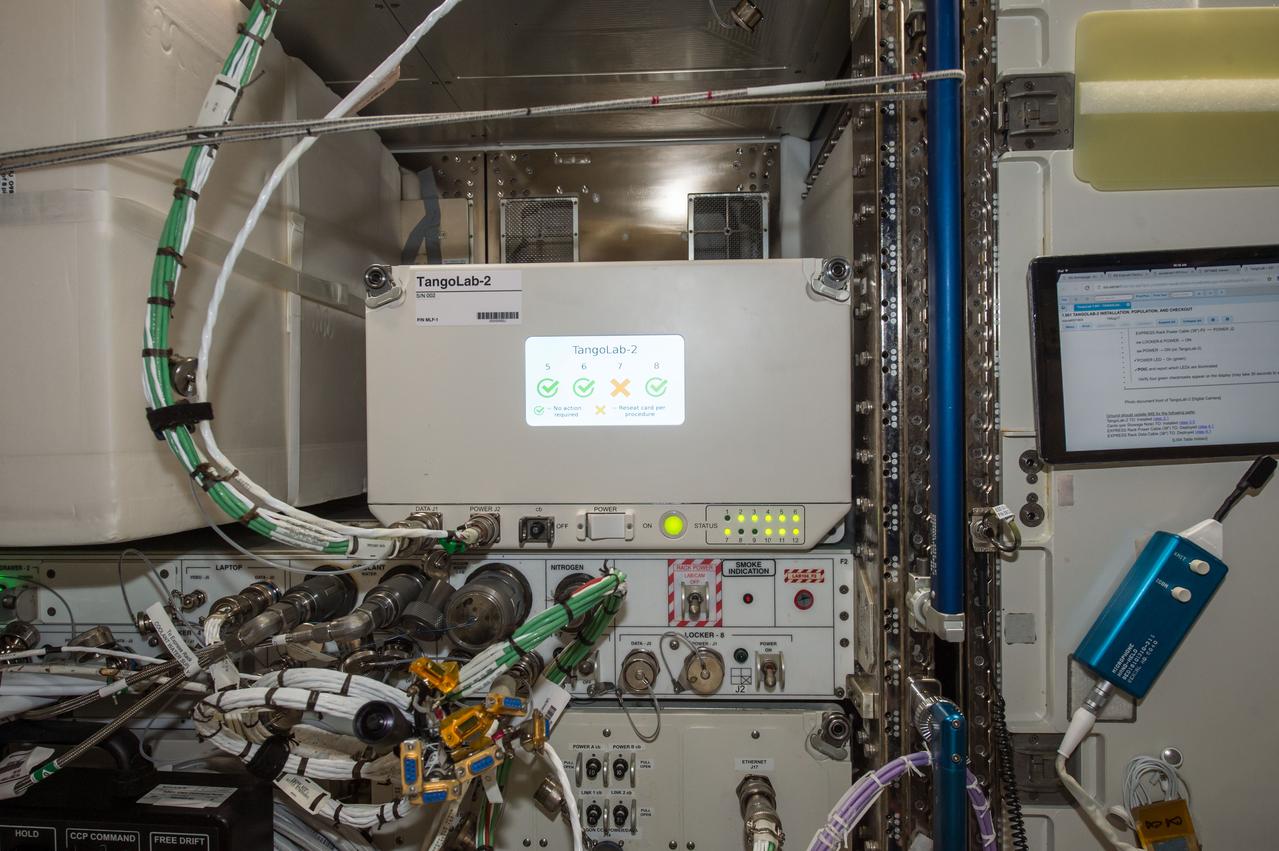
iss052e053735 (8/18/2017) --- Photographic documentation taken during installation of Space Tango MultiLab Locker (TangoLab-2). TangoLab-1 is a reconfigurable general research facility designed for microgravity research and development and pilot manufacturing aboard the ISS. TangoLab provides a standardized platform and open architecture for experimental modules called CubeLabs. CubeLab modules may be developed for use in 3-dimensional tissue and cell cultures.
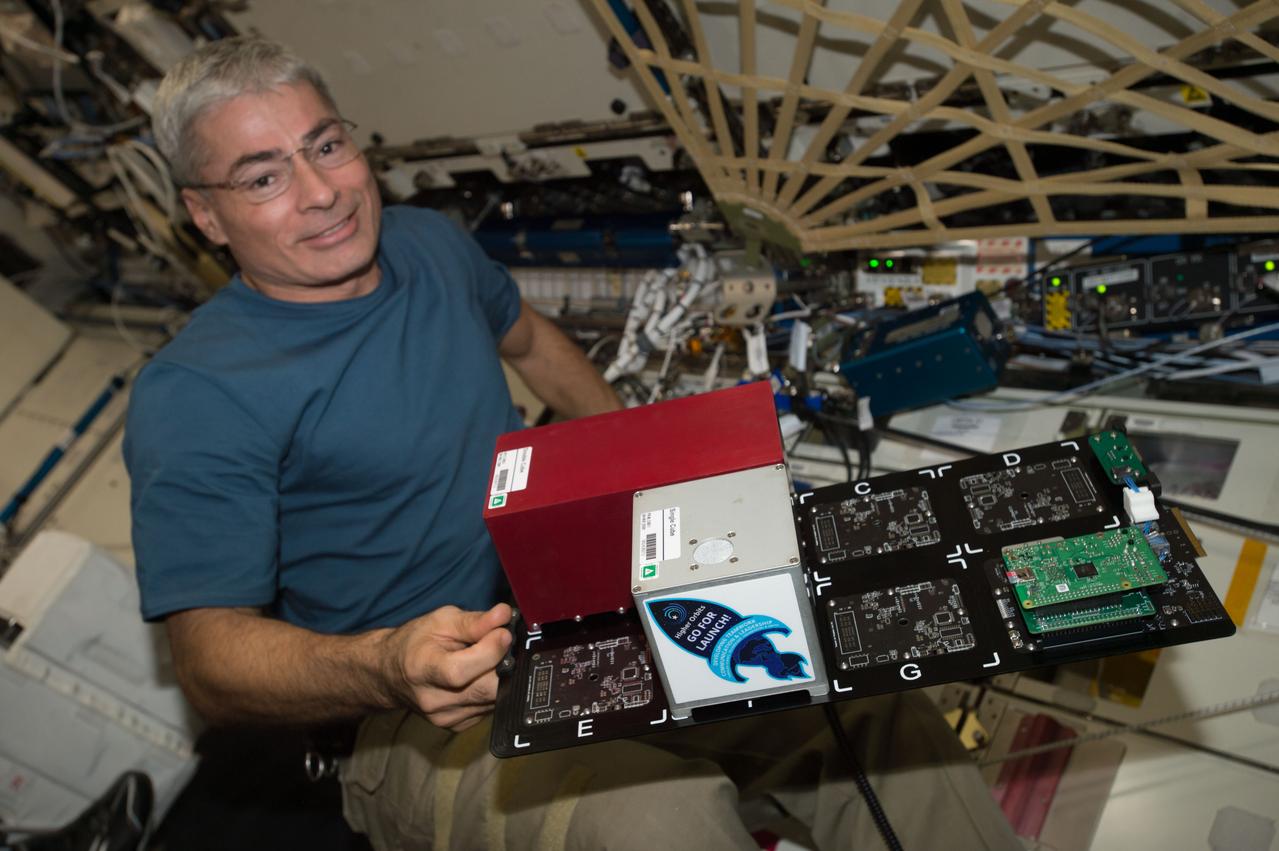
iss053e105441 (Oct. 17, 2017) --- Flight Engineer Mark Vande Hei swaps out a payload card from the TangoLab-1 facility and places into the TangoLab-2 facility. TangoLab provides a standardized platform and open architecture for experimental modules called CubeLabs. CubeLab modules may be developed for use in 3-dimensional tissue and cell cultures.
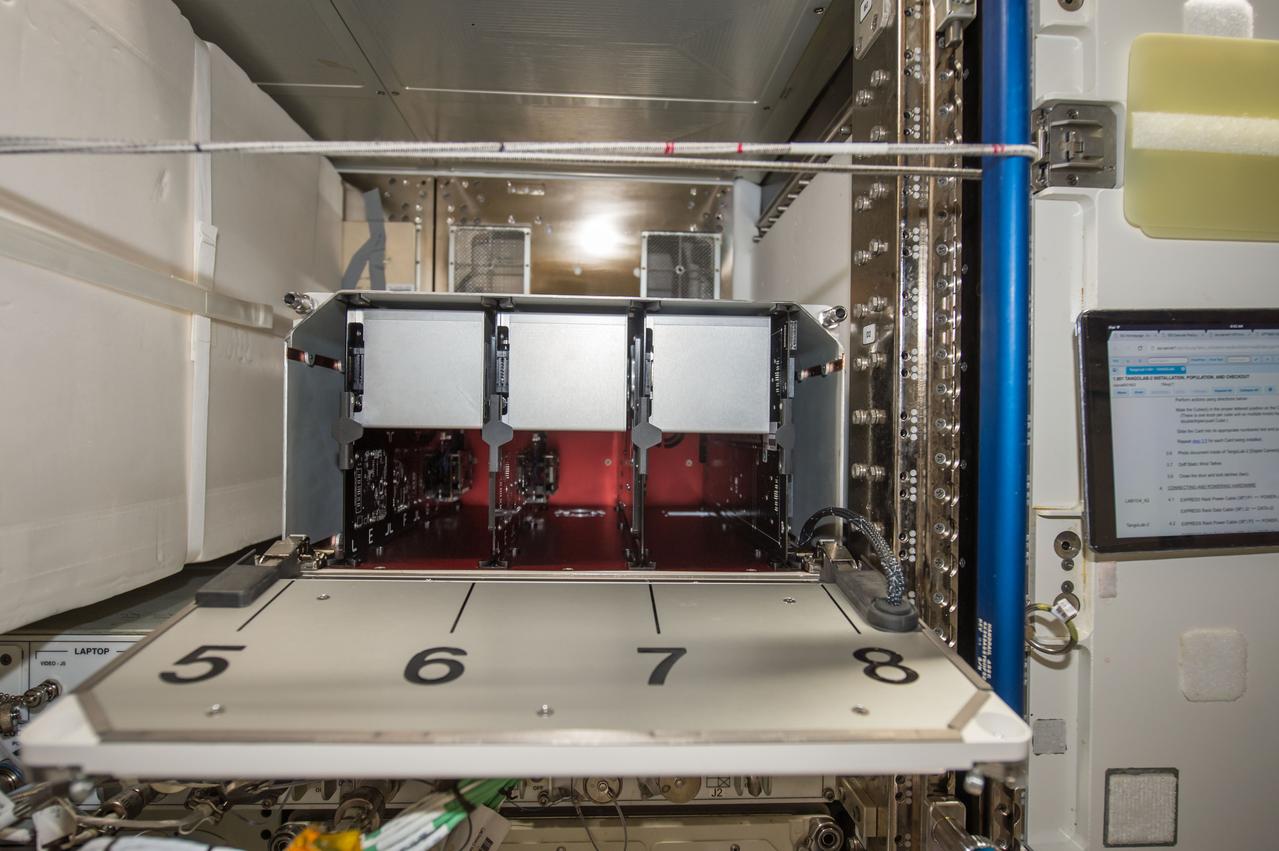
iss052e053731 (8/17/2017) --- Photographic documentation taken during installation of Space Tango MultiLab Locker (TangoLab-2). TangoLab-1 is a reconfigurable general research facility designed for microgravity research and development and pilot manufacturing aboard the ISS. TangoLab provides a standardized platform and open architecture for experimental modules called CubeLabs. CubeLab modules may be developed for use in 3-dimensional tissue and cell cultures.
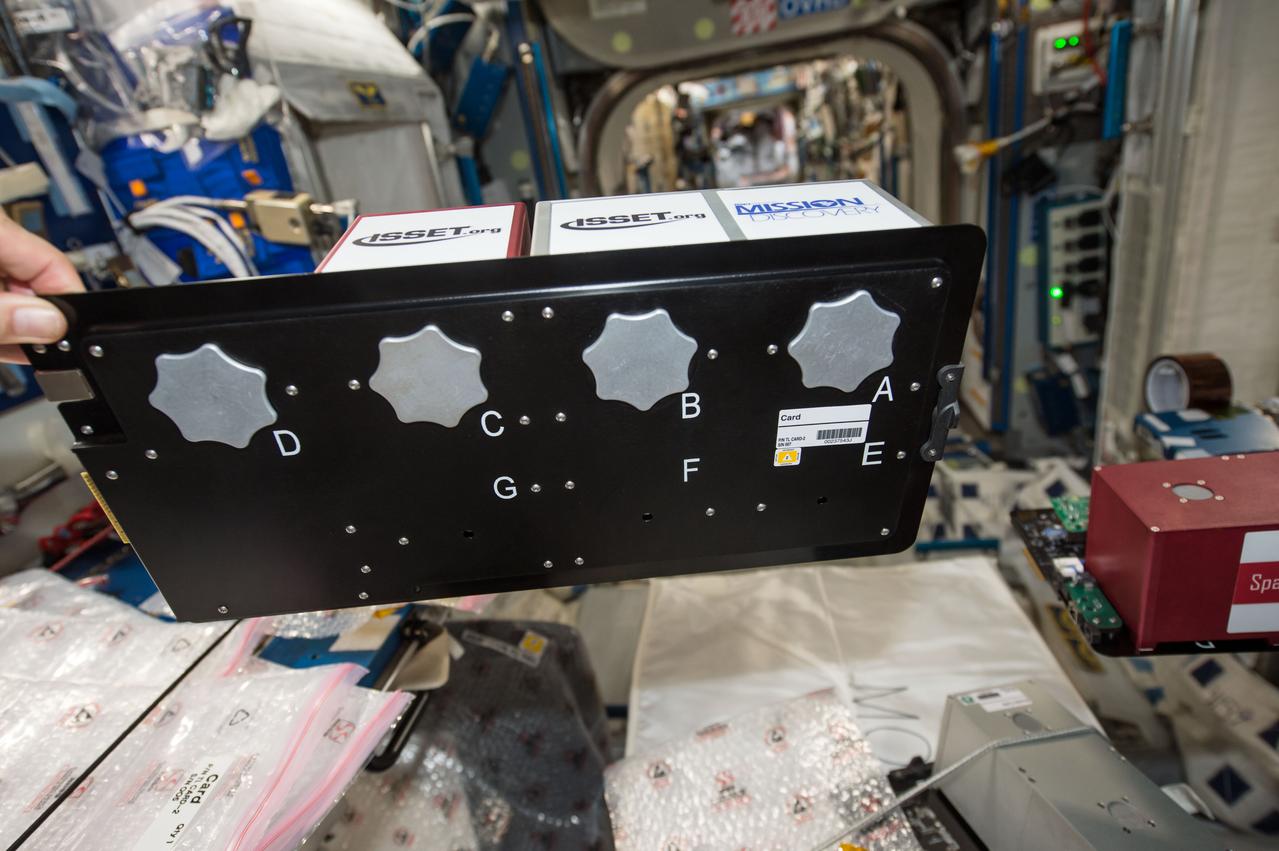
iss052e053725 (8/17/2017) --- Photographic documentation taken during installation of Space Tango MultiLab Locker (TangoLab-2). TangoLab-1 is a reconfigurable general research facility designed for microgravity research and development and pilot manufacturing aboard the ISS. TangoLab provides a standardized platform and open architecture for experimental modules called CubeLabs. CubeLab modules may be developed for use in 3-dimensional tissue and cell cultures.

iss052e053724 (8/17/2017) --- Photographic documentation taken during installation of Space Tango MultiLab Locker (TangoLab-2). TangoLab-1 is a reconfigurable general research facility designed for microgravity research and development and pilot manufacturing aboard the ISS. TangoLab provides a standardized platform and open architecture for experimental modules called CubeLabs. CubeLab modules may be developed for use in 3-dimensional tissue and cell cultures.
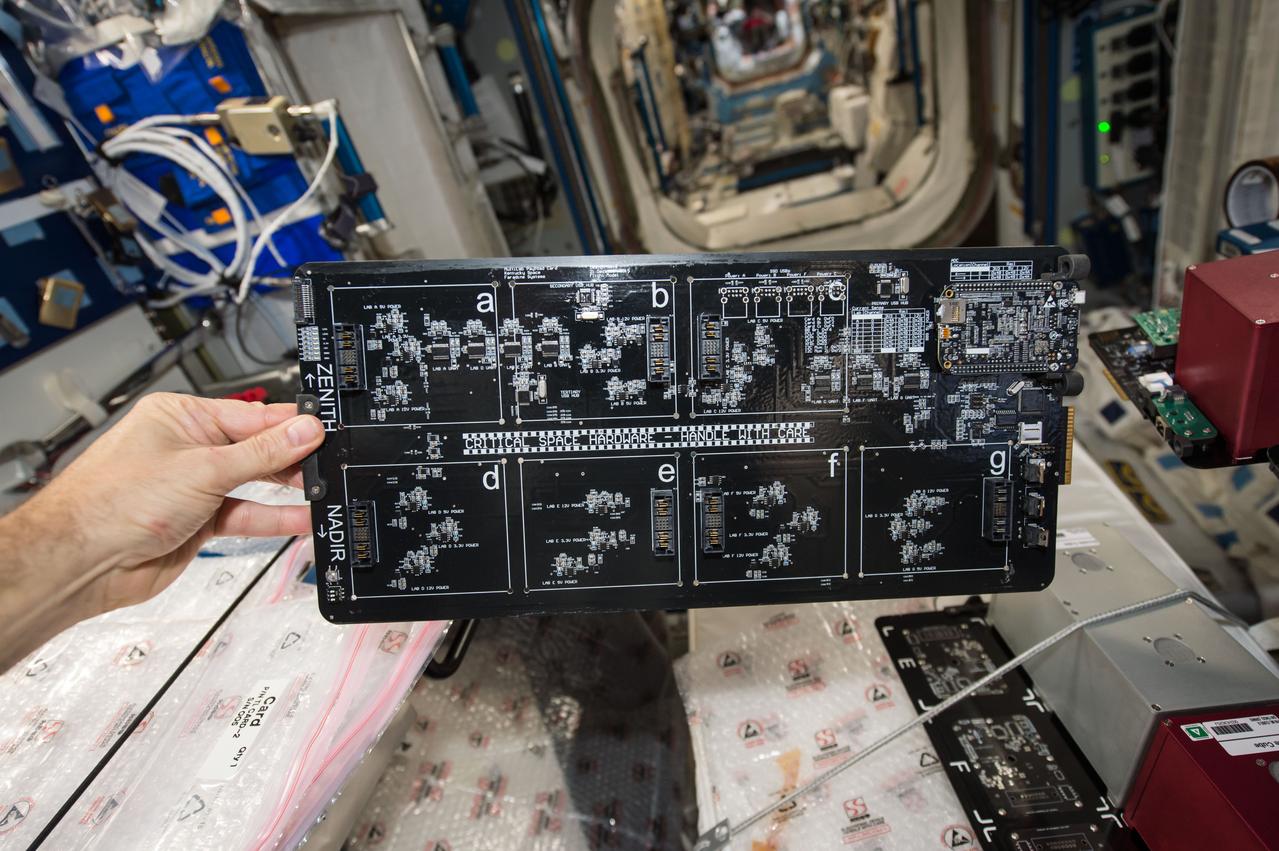
iss052e053728 (8/17/2017) --- Photographic documentation taken during installation of Space Tango MultiLab Locker (TangoLab-2). TangoLab-1 is a reconfigurable general research facility designed for microgravity research and development and pilot manufacturing aboard the ISS. TangoLab provides a standardized platform and open architecture for experimental modules called CubeLabs. CubeLab modules may be developed for use in 3-dimensional tissue and cell cultures.
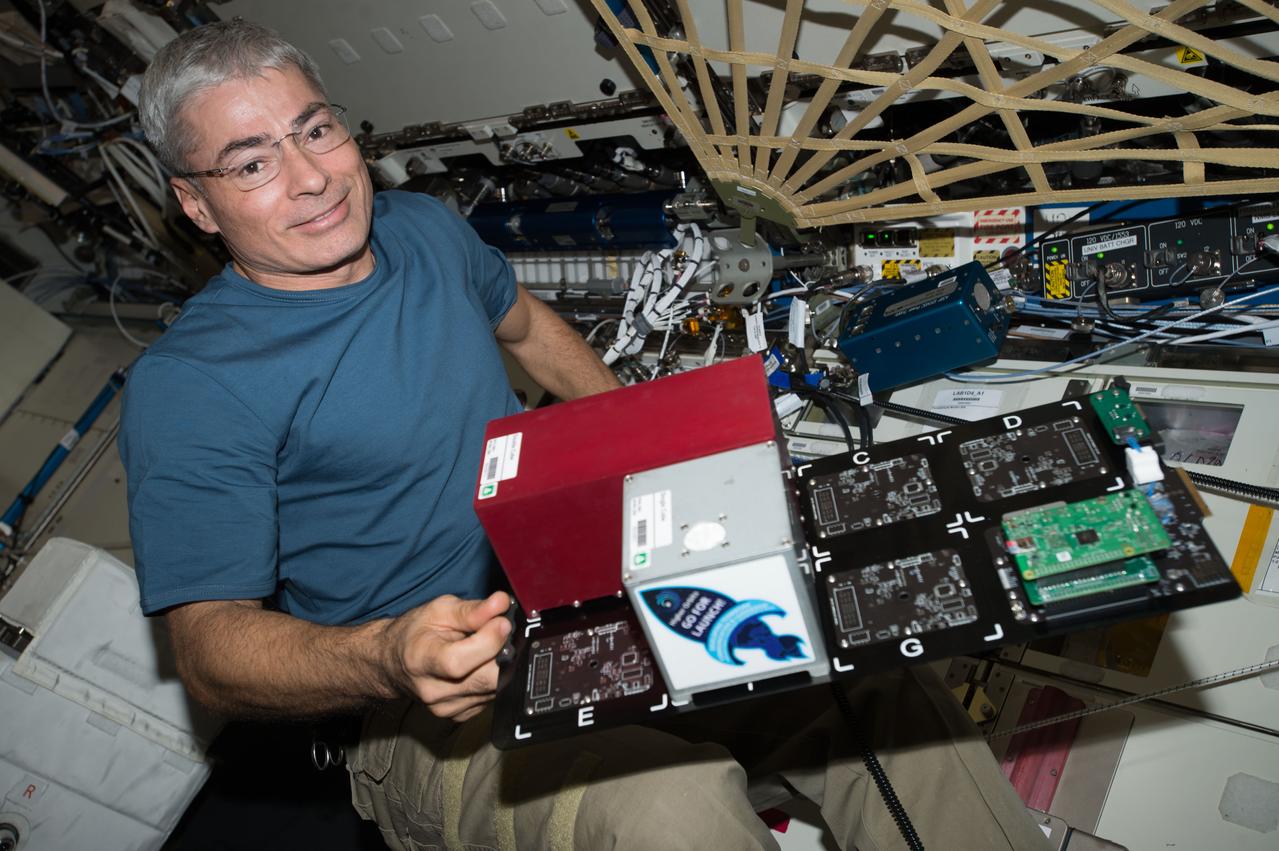
iss053e105442 (Oct. 17, 2017) --- Flight Engineer Mark Vande Hei swaps out a payload card from the TangoLab-1 facility and places into the TangoLab-2 facility. TangoLab provides a standardized platform and open architecture for experimental modules called CubeLabs. CubeLab modules may be developed for use in 3-dimensional tissue and cell cultures.
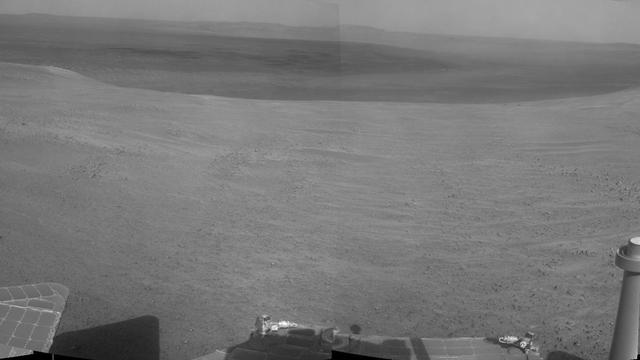
"Perseverance Valley" lies just on the other side of the dip in the crater rim visible in the left half of this 360-degree panorama from the Navigation Camera (Navcam) on NASA's Mars Exploration Rover Opportunity. As the rover arrived at this area in early May 2017, researchers began looking for clues about what process carved the valley. The rover team plans to drive Opportunity all the way down the valley into the interior of Endeavour Crater. The foreground and the area to the right are on the plain just outside of Endeavour Crater. The high point near the center of the image is called "Winnemucca," part of an Endeavour rim segment called "Cape Byron." Endeavour's interior and distant eastern rim are visible at upper left, above the notched portion of the western rim that sits directly above Perseverance Valley. The rover's Navcam took the component images of this scene on May 2 and May 3, 2017, during the 4,718th and 4,719th Martian days, or sols, of Opportunity's work on Mars, two days before a drive that brought Opportunity to the head of the valley. https://photojournal.jpl.nasa.gov/catalog/PIA21495
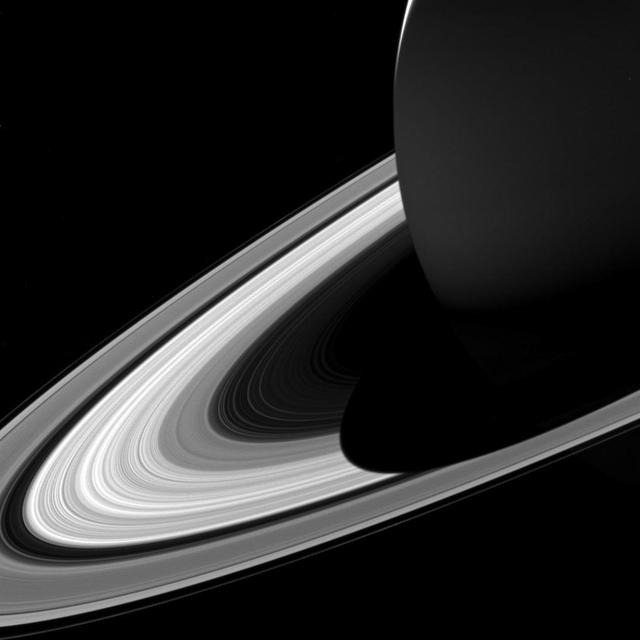
The projection of Saturn's shadow on the rings grows shorter as Saturn's season advances toward northern summer, thanks to the planet's permanent tilt as it orbits the sun. This will continue until Saturn's solstice in May 2017. At that point in time, the shadow will extend only as far as the innermost A ring, leaving the middle and outer A ring completely free of the planet's shadow. Over the course of NASA's Cassini mission, the shadow of Saturn first lengthened steadily until equinox in August 2009. Since then, the shadow has been shrinking. This view looks toward the sunlit side of the rings from about 10 degrees above the ring plane. The image was taken in visible light with the Cassini spacecraft wide-angle camera on Feb. 3, 2017. The view was acquired at a distance of approximately 760,000 miles (1.2 million kilometers) from Saturn. Image scale is 46 miles (73 kilometers) per pixel. https://photojournal.jpl.nasa.gov/catalog/PIA21328
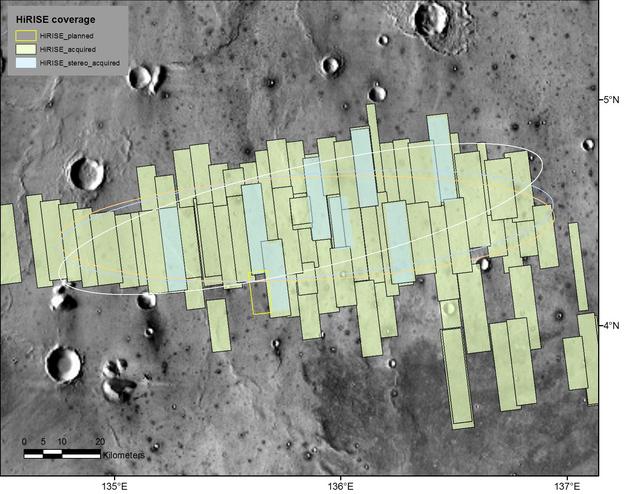
This map shows footprints of images taken from Mars orbit by the High Resolution Imaging Science Experiment (HiRISE) camera as part of advance analysis of the area where NASA's InSight mission will land in 2018. The final planned image of the set is targeted to fill in the yellow-outlined rectangle on March 30, 2017. HiRISE is one of six science instruments on NASA's Mars Reconnaissance Orbiter, which reached Mars in 2006 and surpassed 50,000 orbits on March 27, 2017. The map covers an area about 100 miles (160 kilometers) across. HiRISE has been used since 2006 to inspect dozens of candidate landing sites on Mars, including the sites where the Phoenix and Curiosity missions landed in 2008 and 2012. The site selected for InSight's Nov. 26, 2018, landing is on a flat plain in the Elysium Planitia region of Mars, between 4 and 5 degrees north of the equator. HiRISE images are detailed enough to reveal individual boulders big enough to be a landing hazard. The March 30 observation that completes the planned advance imaging of this landing area brings the number of HiRISE images of the area to 73. Some are pairs covering the same ground. Overlapping observations provide stereoscopic, 3-D information for evaluating characteristics such as slopes. On this map, coverage by stereo pairs is coded in pale blue, compared to the gray-green of single HiRISE image footprints. The ellipses on the map are about 81 miles (130 kilometers) west-to-east by about 17 miles (27 kilometers) north-to-south. InSight has about 99 percent odds of landing within the ellipse for which it is targeted. The three ellipses indicate landing expectations for three of the possible InSight launch dates: white outline for launch at the start of the launch period, on May 5, 2018; blue for launch on May 26, 2018; orange for launch on June 8, 2018. InSight -- an acronym for "Interior Exploration using Seismic Investigations, Geodesy and Heat Transport" -- will study the deep interior of Mars to improve understanding about how rocky planets like Earth formed and evolved. http://photojournal.jpl.nasa.gov/catalog/PIA21489
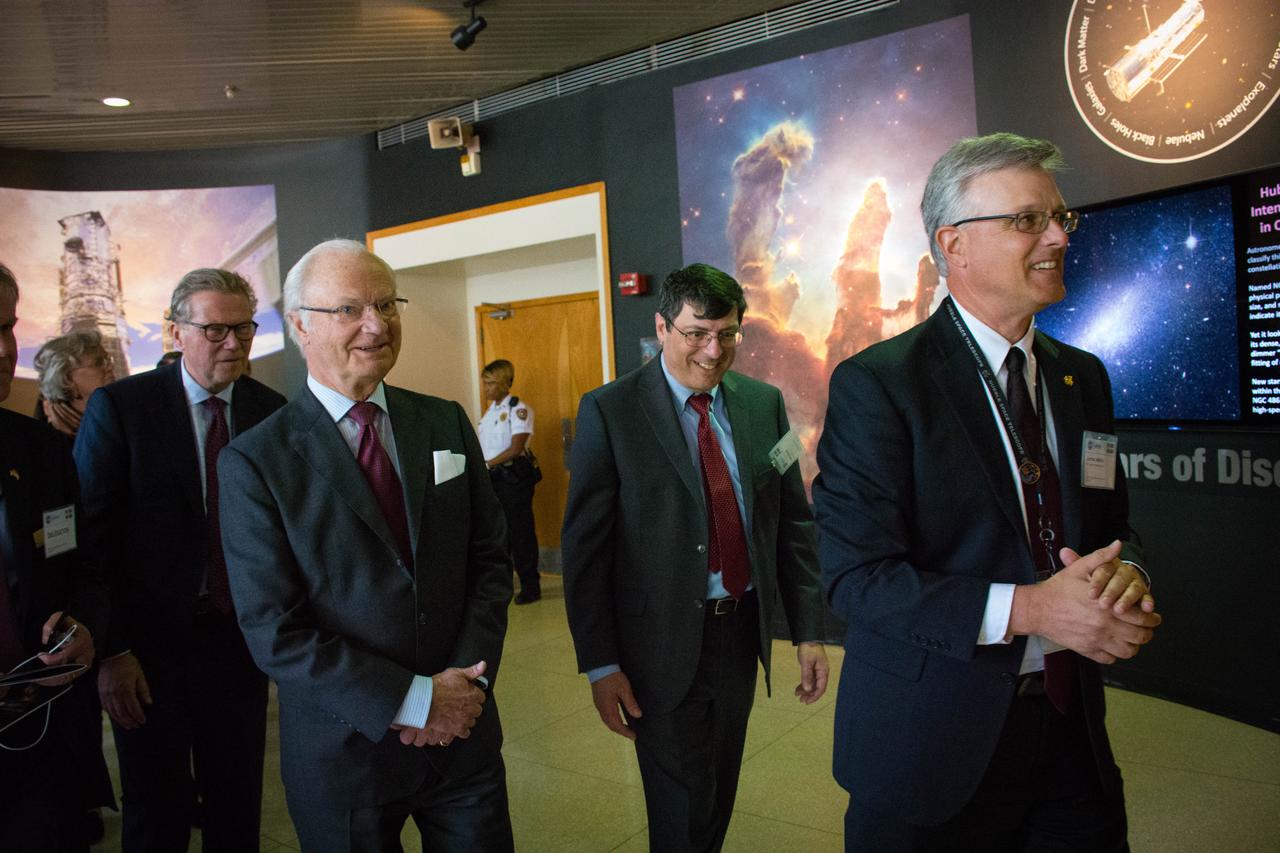
Swedish Delegation Visits GSFC – May 3, 2017 - Members of the Royal Swedish Academy of Engineering Sciences listen to Jim Jeletic, Deputy Project Manager of Hubble Space Telescope (HST) talk about telescope operations just outside the HST control center at Goddard. Photo Credit: NASA/Goddard/Rebecca Roth Read more: <a href="https://go.nasa.gov/2p1rP0h" rel="nofollow">go.nasa.gov/2p1rP0h</a> <b><a href="http://www.nasa.gov/audience/formedia/features/MP_Photo_Guidelines.html" rel="nofollow">NASA image use policy.</a></b> <b><a href="http://www.nasa.gov/centers/goddard/home/index.html" rel="nofollow">NASA Goddard Space Flight Center</a></b> enables NASA’s mission through four scientific endeavors: Earth Science, Heliophysics, Solar System Exploration, and Astrophysics. Goddard plays a leading role in NASA’s accomplishments by contributing compelling scientific knowledge to advance the Agency’s mission. <b>Follow us on <a href="http://twitter.com/NASAGoddardPix" rel="nofollow">Twitter</a></b> <b>Like us on <a href="http://www.facebook.com/pages/Greenbelt-MD/NASA-Goddard/395013845897?ref=tsd" rel="nofollow">Facebook</a></b> <b>Find us on <a href="http://instagrid.me/nasagoddard/?vm=grid" rel="nofollow">Instagram</a></b>
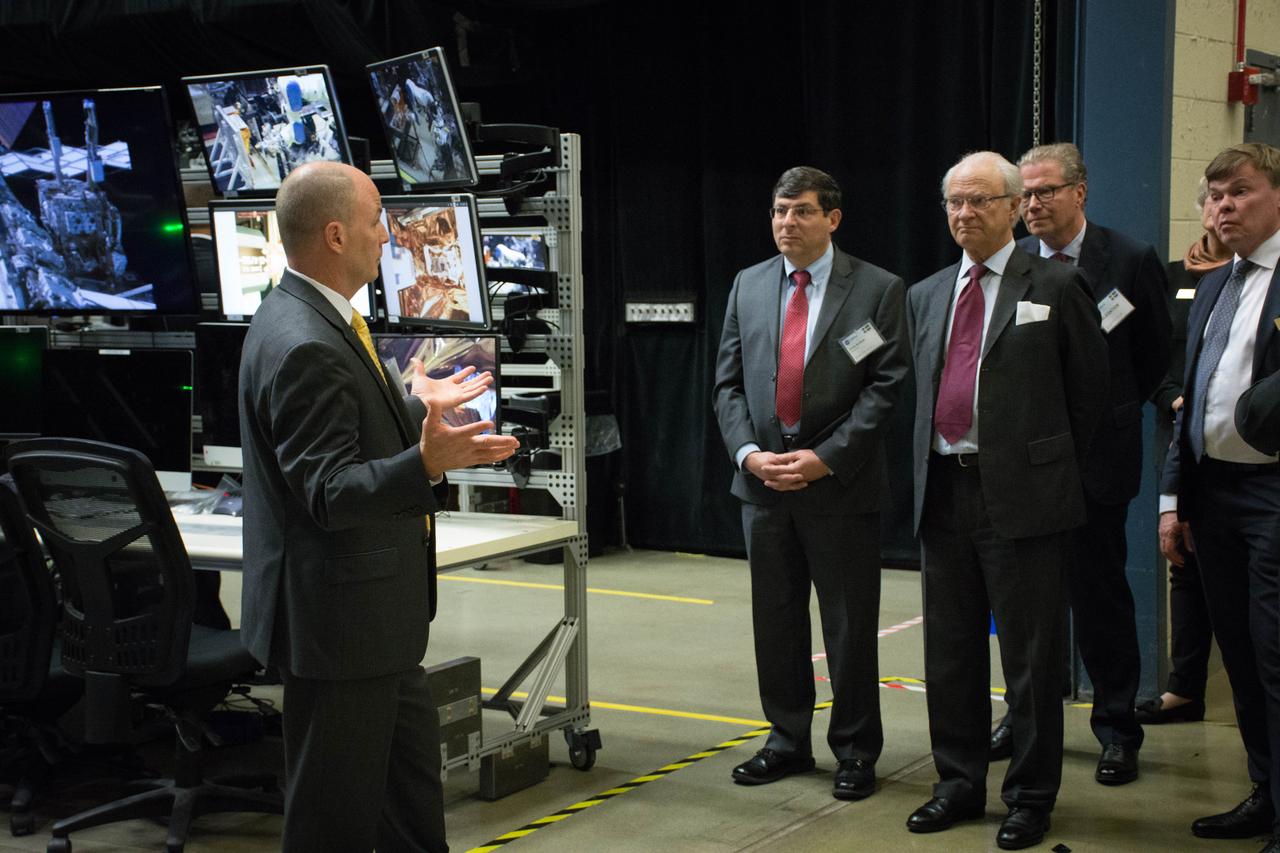
Swedish Delegation Visits GSFC – May 3, 2017 - Members of the Royal Swedish Academy of Engineering Sciences listen to Benjamin Reed, Deputy Division Director of the SatelliteServicing Projects Division about activities happening in Goddard’s Robotic Operations Center in Building 29. Photo Credit: NASA/Goddard/Rebecca Roth Read more: <a href="https://go.nasa.gov/2p1rP0h" rel="nofollow">go.nasa.gov/2p1rP0h</a> <b><a href="http://www.nasa.gov/audience/formedia/features/MP_Photo_Guidelines.html" rel="nofollow">NASA image use policy.</a></b> <b><a href="http://www.nasa.gov/centers/goddard/home/index.html" rel="nofollow">NASA Goddard Space Flight Center</a></b> enables NASA’s mission through four scientific endeavors: Earth Science, Heliophysics, Solar System Exploration, and Astrophysics. Goddard plays a leading role in NASA’s accomplishments by contributing compelling scientific knowledge to advance the Agency’s mission. <b>Follow us on <a href="http://twitter.com/NASAGoddardPix" rel="nofollow">Twitter</a></b> <b>Like us on <a href="http://www.facebook.com/pages/Greenbelt-MD/NASA-Goddard/395013845897?ref=tsd" rel="nofollow">Facebook</a></b> <b>Find us on <a href="http://instagrid.me/nasagoddard/?vm=grid" rel="nofollow">Instagram</a></b>
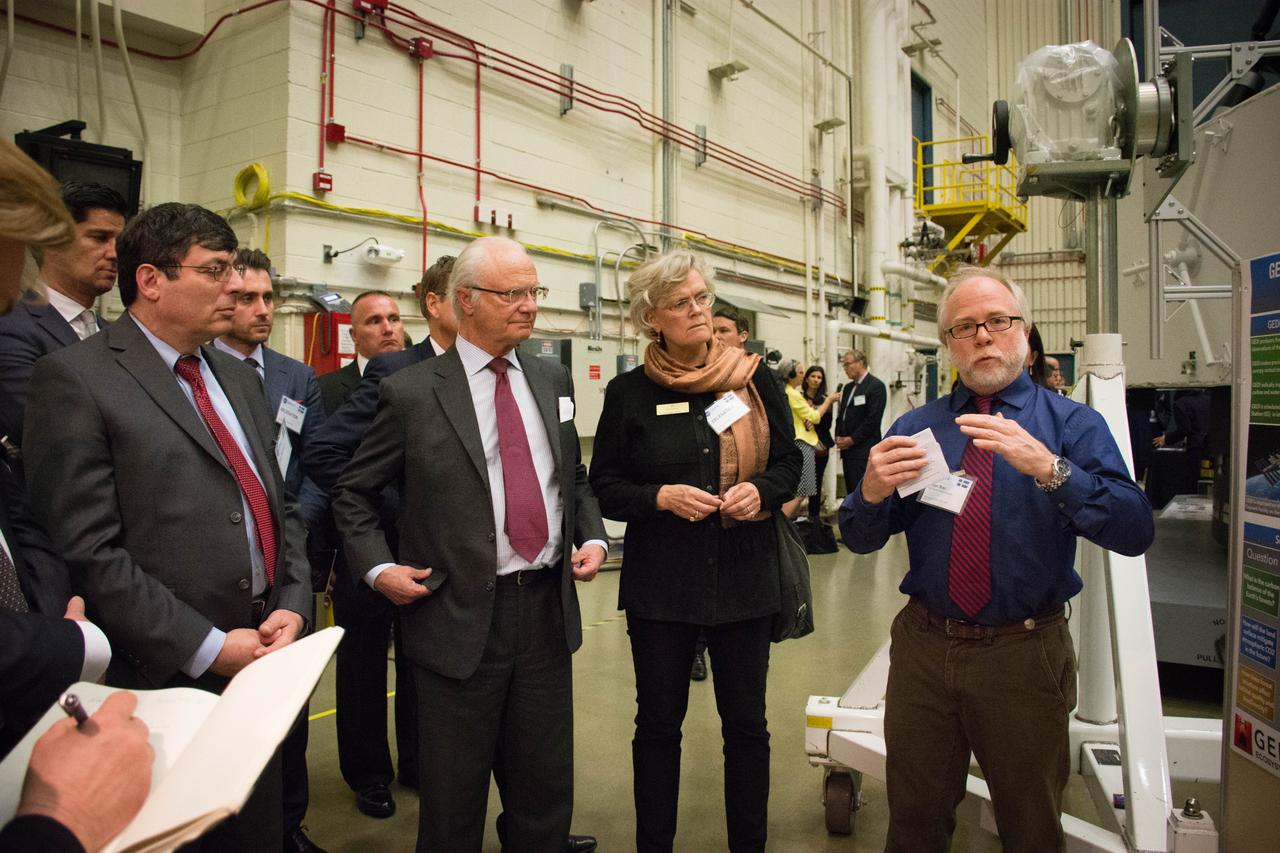
Swedish Delegation Visits GSFC – May 3, 2017 - Members of the Royal Swedish Academy of Engineering Sciences listen to James Pontius, Global Ecosystem Dynamics Investigator (GEDI) Project Manager and Bryan Blair, GEDI Deputy Principal Investigator talk about mission and science of GEDI and the collaborative work being done with Sweden. Photo Credit: NASA/Goddard/Rebecca Roth Read more: <a href="https://go.nasa.gov/2p1rP0h" rel="nofollow">go.nasa.gov/2p1rP0h</a> <b><a href="http://www.nasa.gov/audience/formedia/features/MP_Photo_Guidelines.html" rel="nofollow">NASA image use policy.</a></b> <b><a href="http://www.nasa.gov/centers/goddard/home/index.html" rel="nofollow">NASA Goddard Space Flight Center</a></b> enables NASA’s mission through four scientific endeavors: Earth Science, Heliophysics, Solar System Exploration, and Astrophysics. Goddard plays a leading role in NASA’s accomplishments by contributing compelling scientific knowledge to advance the Agency’s mission. <b>Follow us on <a href="http://twitter.com/NASAGoddardPix" rel="nofollow">Twitter</a></b> <b>Like us on <a href="http://www.facebook.com/pages/Greenbelt-MD/NASA-Goddard/395013845897?ref=tsd" rel="nofollow">Facebook</a></b> <b>Find us on <a href="http://instagrid.me/nasagoddard/?vm=grid" rel="nofollow">Instagram</a></b>
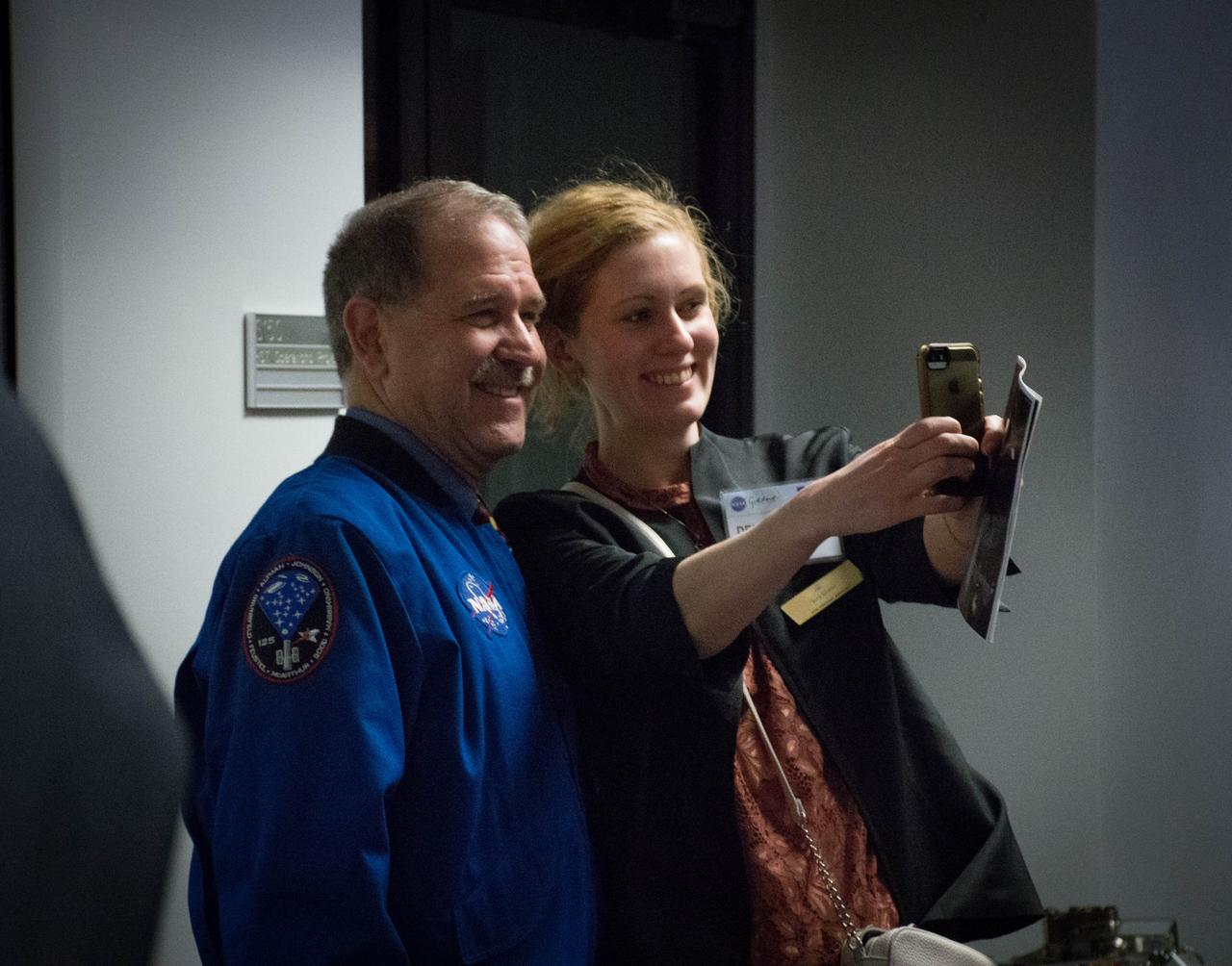
Swedish Delegation Visits GSFC – May 3, 2017 - Members of the Royal Swedish Academy of Engineering Sciences takes a selfie with former astronaut Dr. John Grunsfeld during his talk about his spaceflight experiences during three servicing missions to the Hubble Telescope. Photo Credit: NASA/Goddard/Rebecca Roth Read more: <a href="https://go.nasa.gov/2p1rP0h" rel="nofollow">go.nasa.gov/2p1rP0h</a> <b><a href="http://www.nasa.gov/audience/formedia/features/MP_Photo_Guidelines.html" rel="nofollow">NASA image use policy.</a></b> <b><a href="http://www.nasa.gov/centers/goddard/home/index.html" rel="nofollow">NASA Goddard Space Flight Center</a></b> enables NASA’s mission through four scientific endeavors: Earth Science, Heliophysics, Solar System Exploration, and Astrophysics. Goddard plays a leading role in NASA’s accomplishments by contributing compelling scientific knowledge to advance the Agency’s mission. <b>Follow us on <a href="http://twitter.com/NASAGoddardPix" rel="nofollow">Twitter</a></b> <b>Like us on <a href="http://www.facebook.com/pages/Greenbelt-MD/NASA-Goddard/395013845897?ref=tsd" rel="nofollow">Facebook</a></b> <b>Find us on <a href="http://instagrid.me/nasagoddard/?vm=grid" rel="nofollow">Instagram</a></b>
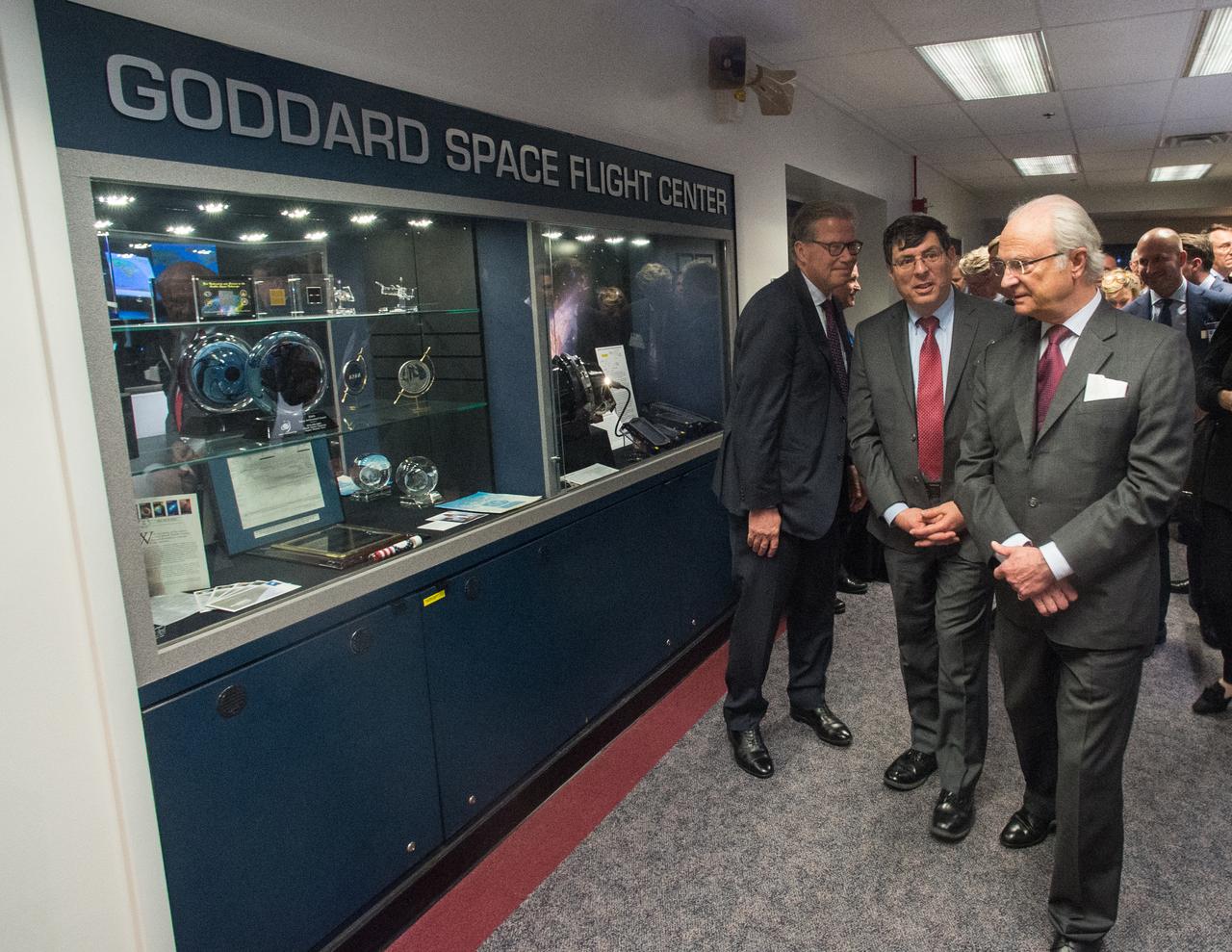
Swedish Delegation Visits GSFC – May 3, 2017 - Members of the Royal Swedish Academy of Engineering Sciences listen to former astronaut Dr. John Grunsfeld talk about his spaceflight experiences during three servicing missions to the Hubble Telescope. Credit: NASA/Goddard/Bill Hrybyk Read more: <a href="https://go.nasa.gov/2p1rP0h" rel="nofollow">go.nasa.gov/2p1rP0h</a> <b><a href="http://www.nasa.gov/audience/formedia/features/MP_Photo_Guidelines.html" rel="nofollow">NASA image use policy.</a></b> <b><a href="http://www.nasa.gov/centers/goddard/home/index.html" rel="nofollow">NASA Goddard Space Flight Center</a></b> enables NASA’s mission through four scientific endeavors: Earth Science, Heliophysics, Solar System Exploration, and Astrophysics. Goddard plays a leading role in NASA’s accomplishments by contributing compelling scientific knowledge to advance the Agency’s mission. <b>Follow us on <a href="http://twitter.com/NASAGoddardPix" rel="nofollow">Twitter</a></b> <b>Like us on <a href="http://www.facebook.com/pages/Greenbelt-MD/NASA-Goddard/395013845897?ref=tsd" rel="nofollow">Facebook</a></b> <b>Find us on <a href="http://instagrid.me/nasagoddard/?vm=grid" rel="nofollow">Instagram</a></b>
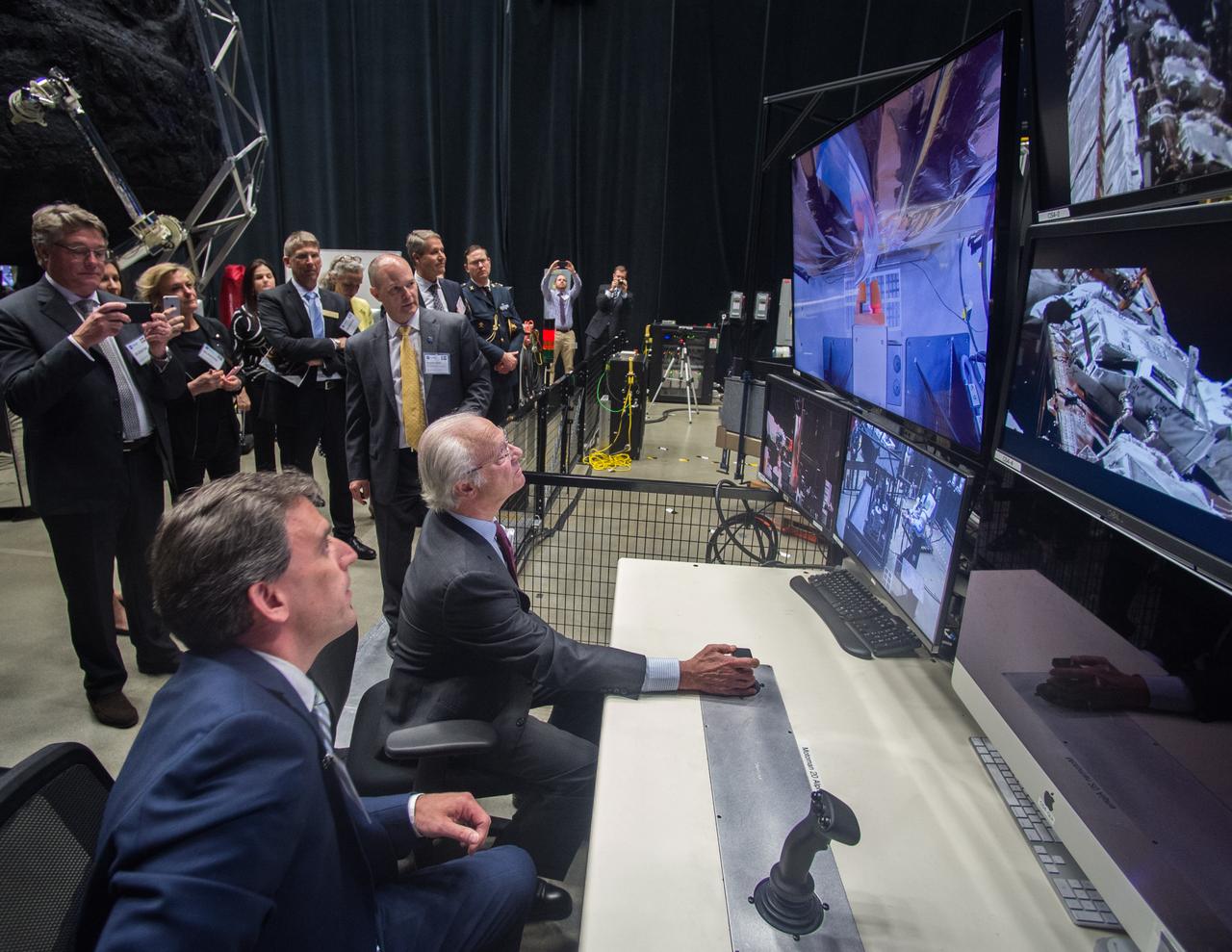
Swedish Delegation Visits GSFC – May 3, 2017 - Members of the Royal Swedish Academy of Engineering Sciences listen to Benjamin Reed, Deputy Division Director of the SatelliteServicing Projects Division about activities happening in Goddard’s Robotic Operations Center in Building 29. Credit: NASA/Goddard/Bill Hrybyk Read more: <a href="https://go.nasa.gov/2p1rP0h" rel="nofollow">go.nasa.gov/2p1rP0h</a> <b><a href="http://www.nasa.gov/audience/formedia/features/MP_Photo_Guidelines.html" rel="nofollow">NASA image use policy.</a></b> <b><a href="http://www.nasa.gov/centers/goddard/home/index.html" rel="nofollow">NASA Goddard Space Flight Center</a></b> enables NASA’s mission through four scientific endeavors: Earth Science, Heliophysics, Solar System Exploration, and Astrophysics. Goddard plays a leading role in NASA’s accomplishments by contributing compelling scientific knowledge to advance the Agency’s mission. <b>Follow us on <a href="http://twitter.com/NASAGoddardPix" rel="nofollow">Twitter</a></b> <b>Like us on <a href="http://www.facebook.com/pages/Greenbelt-MD/NASA-Goddard/395013845897?ref=tsd" rel="nofollow">Facebook</a></b> <b>Find us on <a href="http://instagrid.me/nasagoddard/?vm=grid" rel="nofollow">Instagram</a></b>
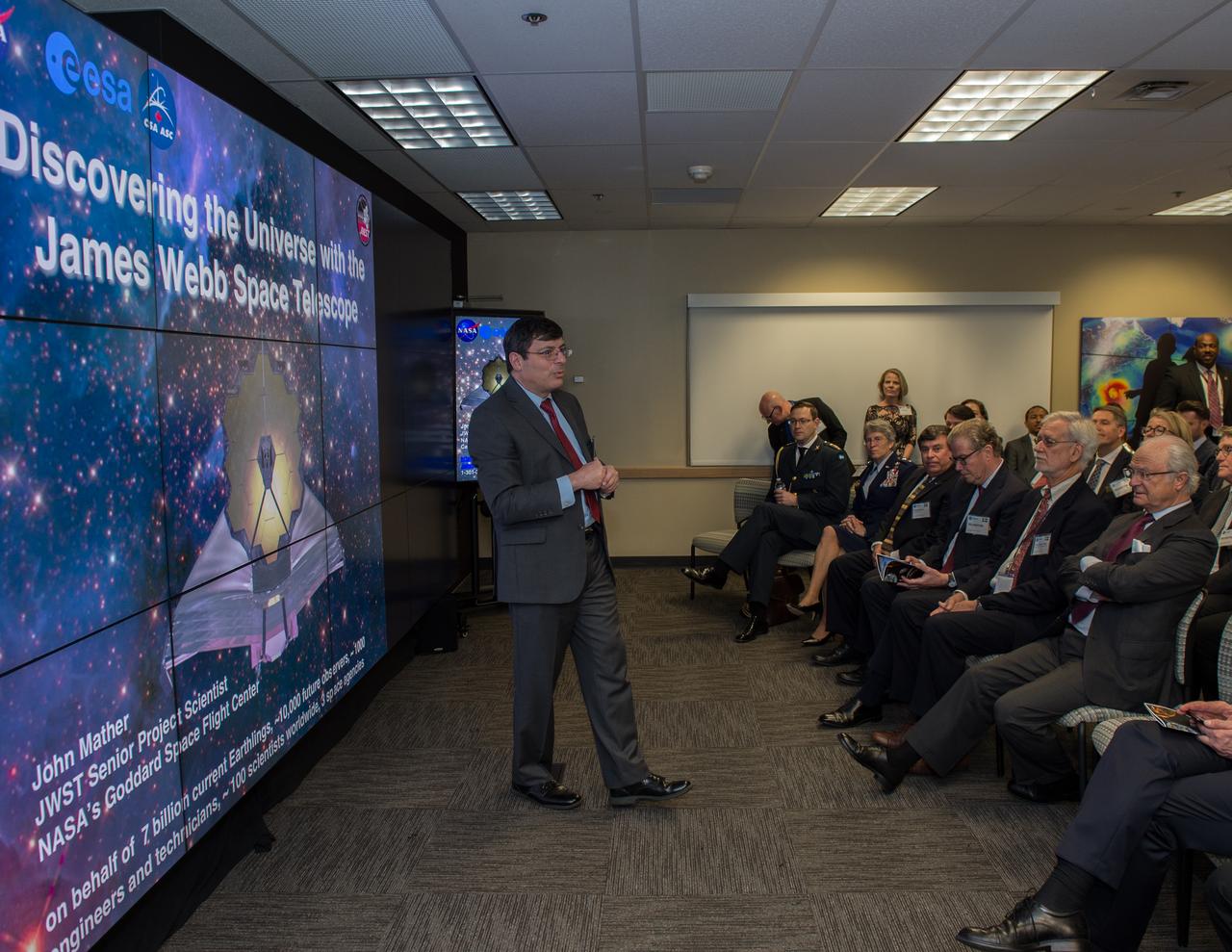
Swedish Delegation Visits GSFC – May 3, 2017 - Members of the Royal Swedish Academy of Engineering Sciences listen to Goddard Center Director, Chris Chris Scolese's presentation in the Piers Sellers Visualization Theatre in Building 28 at NASA Goddard. Credit: NASA/Goddard/Bill Hrybyk Read more: <a href="https://go.nasa.gov/2p1rP0h" rel="nofollow">go.nasa.gov/2p1rP0h</a> <b><a href="http://www.nasa.gov/audience/formedia/features/MP_Photo_Guidelines.html" rel="nofollow">NASA image use policy.</a></b> <b><a href="http://www.nasa.gov/centers/goddard/home/index.html" rel="nofollow">NASA Goddard Space Flight Center</a></b> enables NASA’s mission through four scientific endeavors: Earth Science, Heliophysics, Solar System Exploration, and Astrophysics. Goddard plays a leading role in NASA’s accomplishments by contributing compelling scientific knowledge to advance the Agency’s mission. <b>Follow us on <a href="http://twitter.com/NASAGoddardPix" rel="nofollow">Twitter</a></b> <b>Like us on <a href="http://www.facebook.com/pages/Greenbelt-MD/NASA-Goddard/395013845897?ref=tsd" rel="nofollow">Facebook</a></b> <b>Find us on <a href="http://instagrid.me/nasagoddard/?vm=grid" rel="nofollow">Instagram</a></b>
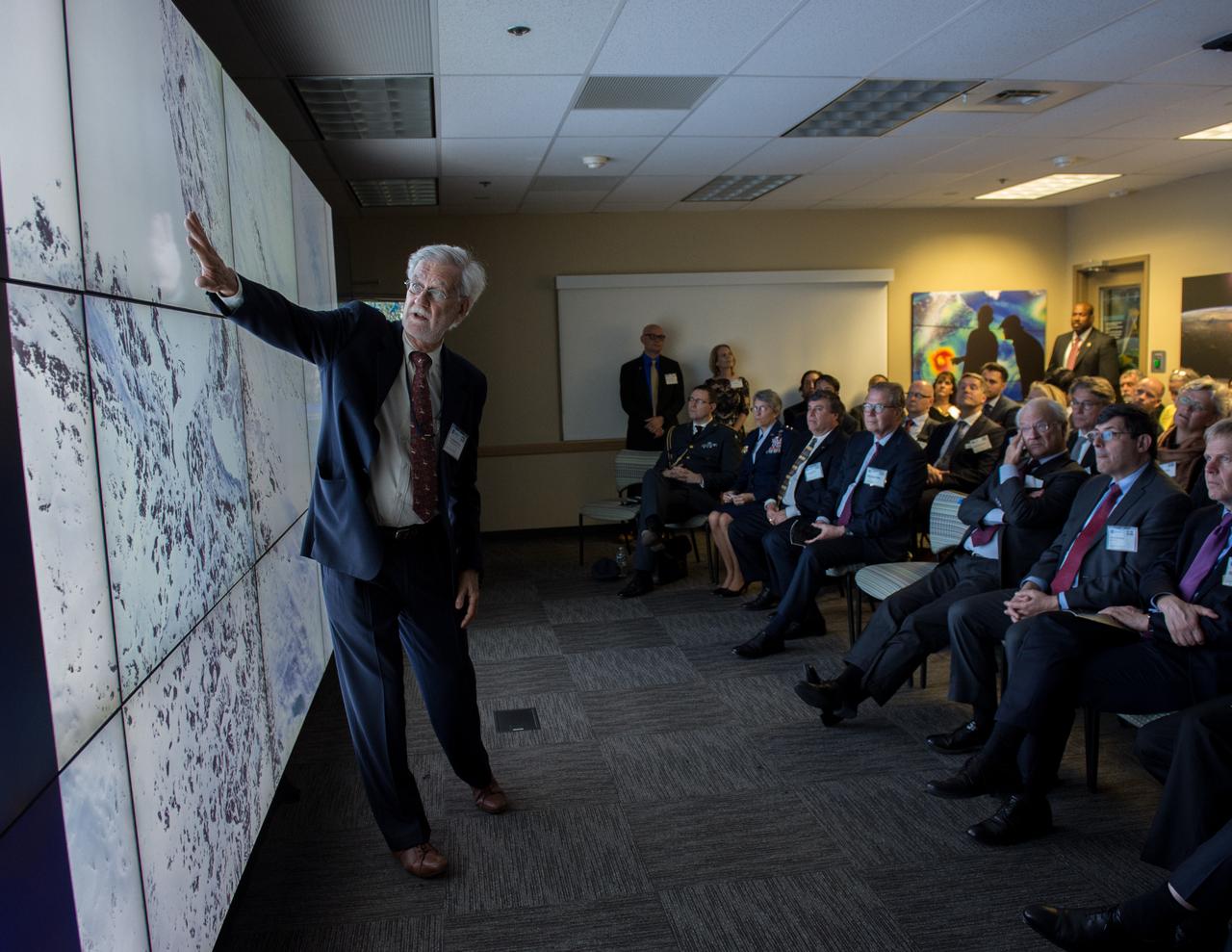
Swedish Delegation Visits GSFC – May 3, 2017 - Members of the Royal Swedish Academy of Engineering Sciences listen to Dr. Compton Tucker’s presentation on NASA’s earth science research activities in the Piers Sellers Visualization Theatre in Building 28 at NASA Goddard. Credit: NASA/Goddard/Bill Hrybyk Read more: <a href="https://go.nasa.gov/2p1rP0h" rel="nofollow">go.nasa.gov/2p1rP0h</a> <b><a href="http://www.nasa.gov/audience/formedia/features/MP_Photo_Guidelines.html" rel="nofollow">NASA image use policy.</a></b> <b><a href="http://www.nasa.gov/centers/goddard/home/index.html" rel="nofollow">NASA Goddard Space Flight Center</a></b> enables NASA’s mission through four scientific endeavors: Earth Science, Heliophysics, Solar System Exploration, and Astrophysics. Goddard plays a leading role in NASA’s accomplishments by contributing compelling scientific knowledge to advance the Agency’s mission. <b>Follow us on <a href="http://twitter.com/NASAGoddardPix" rel="nofollow">Twitter</a></b> <b>Like us on <a href="http://www.facebook.com/pages/Greenbelt-MD/NASA-Goddard/395013845897?ref=tsd" rel="nofollow">Facebook</a></b> <b>Find us on <a href="http://instagrid.me/nasagoddard/?vm=grid" rel="nofollow">Instagram</a></b>

Swedish Delegation Visits GSFC – May 3, 2017 – Members of Goddard Space Flight Center senior management introduce themselves to His Majesty Carl XVI Gustaf, King of Sweden and the members of the Royal Swedish Academy upon their arrival to Goddard. Credit: NASA/Goddard/Bill Hrybyk Read more: <a href="https://go.nasa.gov/2p1rP0h" rel="nofollow">go.nasa.gov/2p1rP0h</a> <b><a href="http://www.nasa.gov/audience/formedia/features/MP_Photo_Guidelines.html" rel="nofollow">NASA image use policy.</a></b> <b><a href="http://www.nasa.gov/centers/goddard/home/index.html" rel="nofollow">NASA Goddard Space Flight Center</a></b> enables NASA’s mission through four scientific endeavors: Earth Science, Heliophysics, Solar System Exploration, and Astrophysics. Goddard plays a leading role in NASA’s accomplishments by contributing compelling scientific knowledge to advance the Agency’s mission. <b>Follow us on <a href="http://twitter.com/NASAGoddardPix" rel="nofollow">Twitter</a></b> <b>Like us on <a href="http://www.facebook.com/pages/Greenbelt-MD/NASA-Goddard/395013845897?ref=tsd" rel="nofollow">Facebook</a></b> <b>Find us on <a href="http://instagrid.me/nasagoddard/?vm=grid" rel="nofollow">Instagram</a></b>
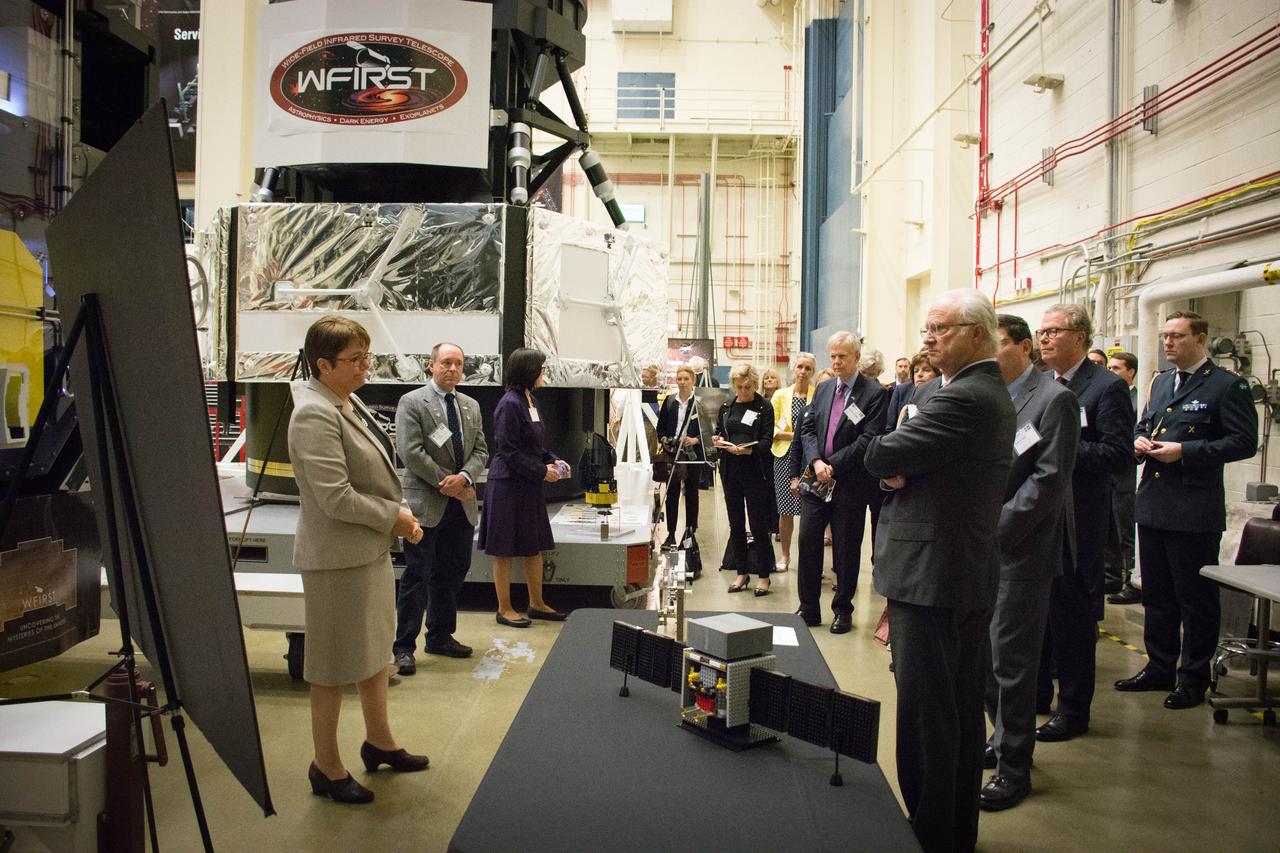
Swedish Delegation Visits GSFC – May 3, 2017 - Members of the Royal Swedish Academy of Engineering Sciences listen to Catherine Peddie, Wide Field Infrared Survey Telescope (WFIRST) Deputy Project Manager use a full-scale model of WFIRST to describe the features of the observatory. Photo Credit: NASA/Goddard/Rebecca Roth Read more: <a href="https://go.nasa.gov/2p1rP0h" rel="nofollow">go.nasa.gov/2p1rP0h</a> <b><a href="http://www.nasa.gov/audience/formedia/features/MP_Photo_Guidelines.html" rel="nofollow">NASA image use policy.</a></b> <b><a href="http://www.nasa.gov/centers/goddard/home/index.html" rel="nofollow">NASA Goddard Space Flight Center</a></b> enables NASA’s mission through four scientific endeavors: Earth Science, Heliophysics, Solar System Exploration, and Astrophysics. Goddard plays a leading role in NASA’s accomplishments by contributing compelling scientific knowledge to advance the Agency’s mission. <b>Follow us on <a href="http://twitter.com/NASAGoddardPix" rel="nofollow">Twitter</a></b> <b>Like us on <a href="http://www.facebook.com/pages/Greenbelt-MD/NASA-Goddard/395013845897?ref=tsd" rel="nofollow">Facebook</a></b> <b>Find us on <a href="http://instagrid.me/nasagoddard/?vm=grid" rel="nofollow">Instagram</a></b>
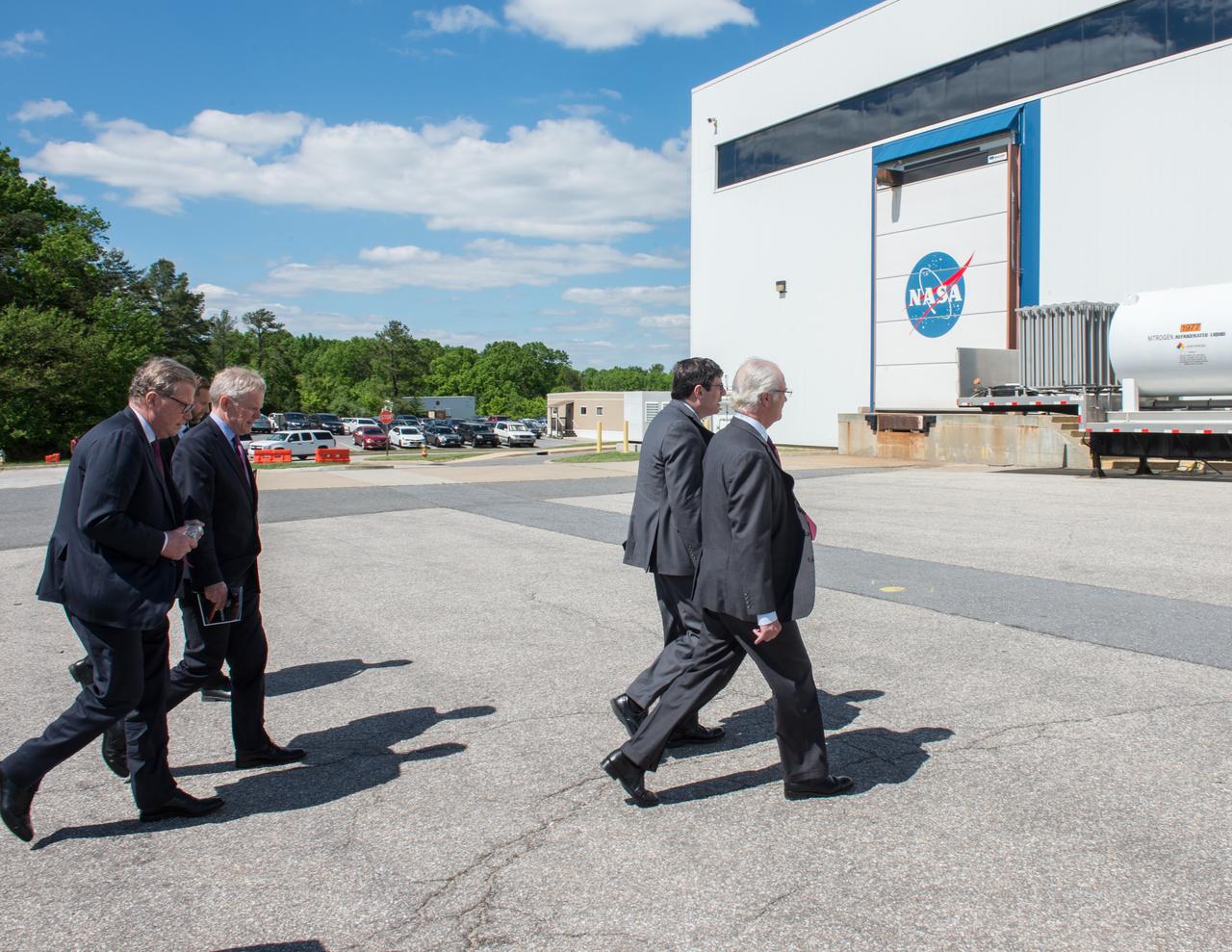
Swedish Delegation Visits GSFC – May 3, 2017 –Goddard Space Flight Center senior management and members of the Royal Swedish Academy walk towards Building 29 as part of the Swedish delegation’s tour of the center. Credit: NASA/Goddard/Bill Hrybyk Read more: <a href="https://go.nasa.gov/2p1rP0h" rel="nofollow">go.nasa.gov/2p1rP0h</a> <b><a href="http://www.nasa.gov/audience/formedia/features/MP_Photo_Guidelines.html" rel="nofollow">NASA image use policy.</a></b> <b><a href="http://www.nasa.gov/centers/goddard/home/index.html" rel="nofollow">NASA Goddard Space Flight Center</a></b> enables NASA’s mission through four scientific endeavors: Earth Science, Heliophysics, Solar System Exploration, and Astrophysics. Goddard plays a leading role in NASA’s accomplishments by contributing compelling scientific knowledge to advance the Agency’s mission. <b>Follow us on <a href="http://twitter.com/NASAGoddardPix" rel="nofollow">Twitter</a></b> <b>Like us on <a href="http://www.facebook.com/pages/Greenbelt-MD/NASA-Goddard/395013845897?ref=tsd" rel="nofollow">Facebook</a></b> <b>Find us on <a href="http://instagrid.me/nasagoddard/?vm=grid" rel="nofollow">Instagram</a></b>
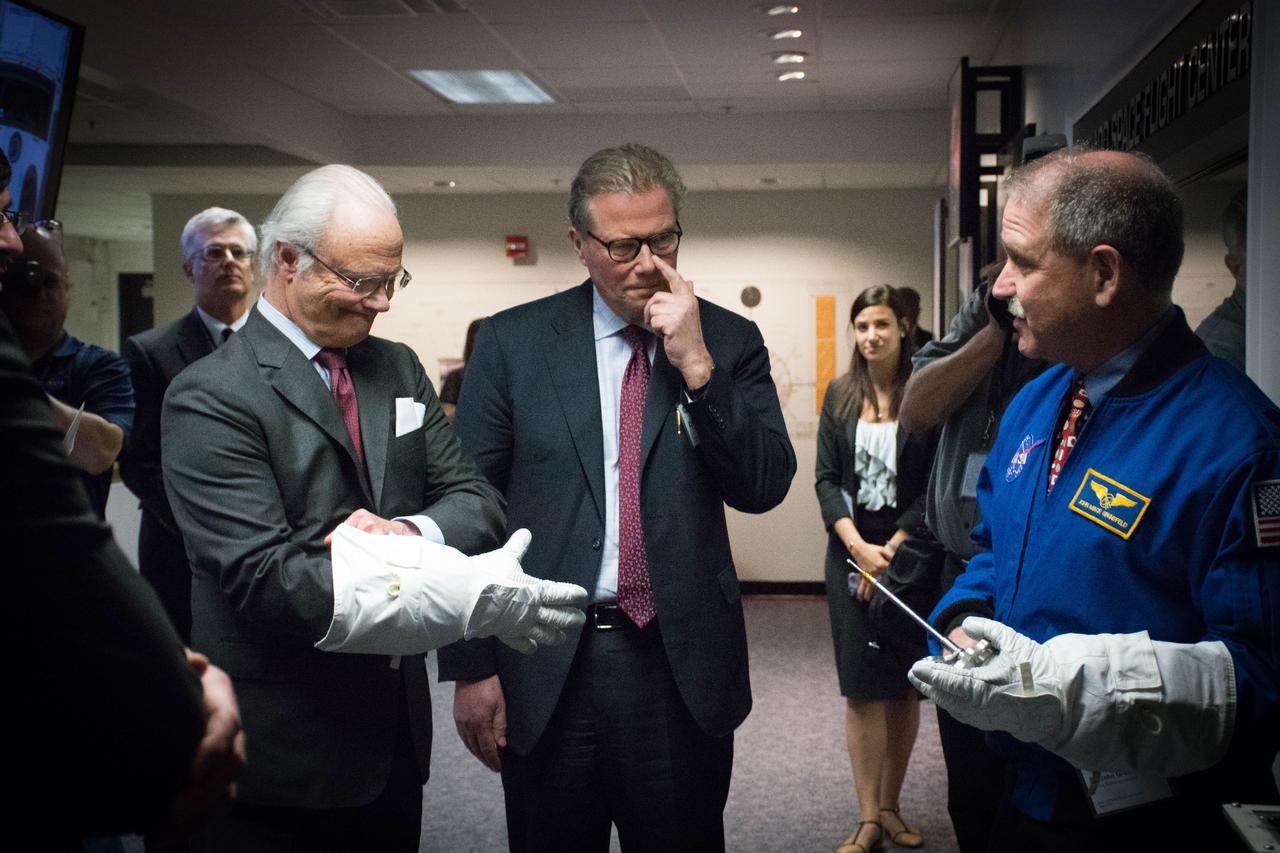
Swedish Delegation Visits GSFC – May 3, 2017 - Members of the Royal Swedish Academy of Engineering Sciences listen to former astronaut Dr. John Grunsfeld talk about his spaceflight experiences during three servicing missions to the Hubble Telescope. Photo Credit: NASA/Goddard/Rebecca Roth Read more: <a href="https://go.nasa.gov/2p1rP0h" rel="nofollow">go.nasa.gov/2p1rP0h</a> <b><a href="http://www.nasa.gov/audience/formedia/features/MP_Photo_Guidelines.html" rel="nofollow">NASA image use policy.</a></b> <b><a href="http://www.nasa.gov/centers/goddard/home/index.html" rel="nofollow">NASA Goddard Space Flight Center</a></b> enables NASA’s mission through four scientific endeavors: Earth Science, Heliophysics, Solar System Exploration, and Astrophysics. Goddard plays a leading role in NASA’s accomplishments by contributing compelling scientific knowledge to advance the Agency’s mission. <b>Follow us on <a href="http://twitter.com/NASAGoddardPix" rel="nofollow">Twitter</a></b> <b>Like us on <a href="http://www.facebook.com/pages/Greenbelt-MD/NASA-Goddard/395013845897?ref=tsd" rel="nofollow">Facebook</a></b> <b>Find us on <a href="http://instagrid.me/nasagoddard/?vm=grid" rel="nofollow">Instagram</a></b>

Swedish Delegation Visits GSFC – May 3, 2017 - Members of the Royal Swedish Academy of Engineering Sciences listen to Dr. Compton Tucker’s presentation on NASA’s earth science research activities in the Piers Sellers Visualization Theatre in Building 28 at NASA Goddard. Photo Credit: NASA/Goddard/Rebecca Roth Read more: <a href="https://go.nasa.gov/2p1rP0h" rel="nofollow">go.nasa.gov/2p1rP0h</a> <b><a href="http://www.nasa.gov/audience/formedia/features/MP_Photo_Guidelines.html" rel="nofollow">NASA image use policy.</a></b> <b><a href="http://www.nasa.gov/centers/goddard/home/index.html" rel="nofollow">NASA Goddard Space Flight Center</a></b> enables NASA’s mission through four scientific endeavors: Earth Science, Heliophysics, Solar System Exploration, and Astrophysics. Goddard plays a leading role in NASA’s accomplishments by contributing compelling scientific knowledge to advance the Agency’s mission. <b>Follow us on <a href="http://twitter.com/NASAGoddardPix" rel="nofollow">Twitter</a></b> <b>Like us on <a href="http://www.facebook.com/pages/Greenbelt-MD/NASA-Goddard/395013845897?ref=tsd" rel="nofollow">Facebook</a></b> <b>Find us on <a href="http://instagrid.me/nasagoddard/?vm=grid" rel="nofollow">Instagram</a></b>

Swedish Delegation Visits GSFC – May 3, 2017 - Members of the Royal Swedish Academy of Engineering Sciences listen to Dr. Holly Gilbert and Dr. Alex Young ‘s presentation on NASA’s sun research activities in the Piers Sellers Visualization Theatre in Building 28 at NASA Goddard. Credit: NASA/Goddard/Bill Hrybyk Read more: <a href="https://go.nasa.gov/2p1rP0h" rel="nofollow">go.nasa.gov/2p1rP0h</a> <b><a href="http://www.nasa.gov/audience/formedia/features/MP_Photo_Guidelines.html" rel="nofollow">NASA image use policy.</a></b> <b><a href="http://www.nasa.gov/centers/goddard/home/index.html" rel="nofollow">NASA Goddard Space Flight Center</a></b> enables NASA’s mission through four scientific endeavors: Earth Science, Heliophysics, Solar System Exploration, and Astrophysics. Goddard plays a leading role in NASA’s accomplishments by contributing compelling scientific knowledge to advance the Agency’s mission. <b>Follow us on <a href="http://twitter.com/NASAGoddardPix" rel="nofollow">Twitter</a></b> <b>Like us on <a href="http://www.facebook.com/pages/Greenbelt-MD/NASA-Goddard/395013845897?ref=tsd" rel="nofollow">Facebook</a></b> <b>Find us on <a href="http://instagrid.me/nasagoddard/?vm=grid" rel="nofollow">Instagram</a></b>
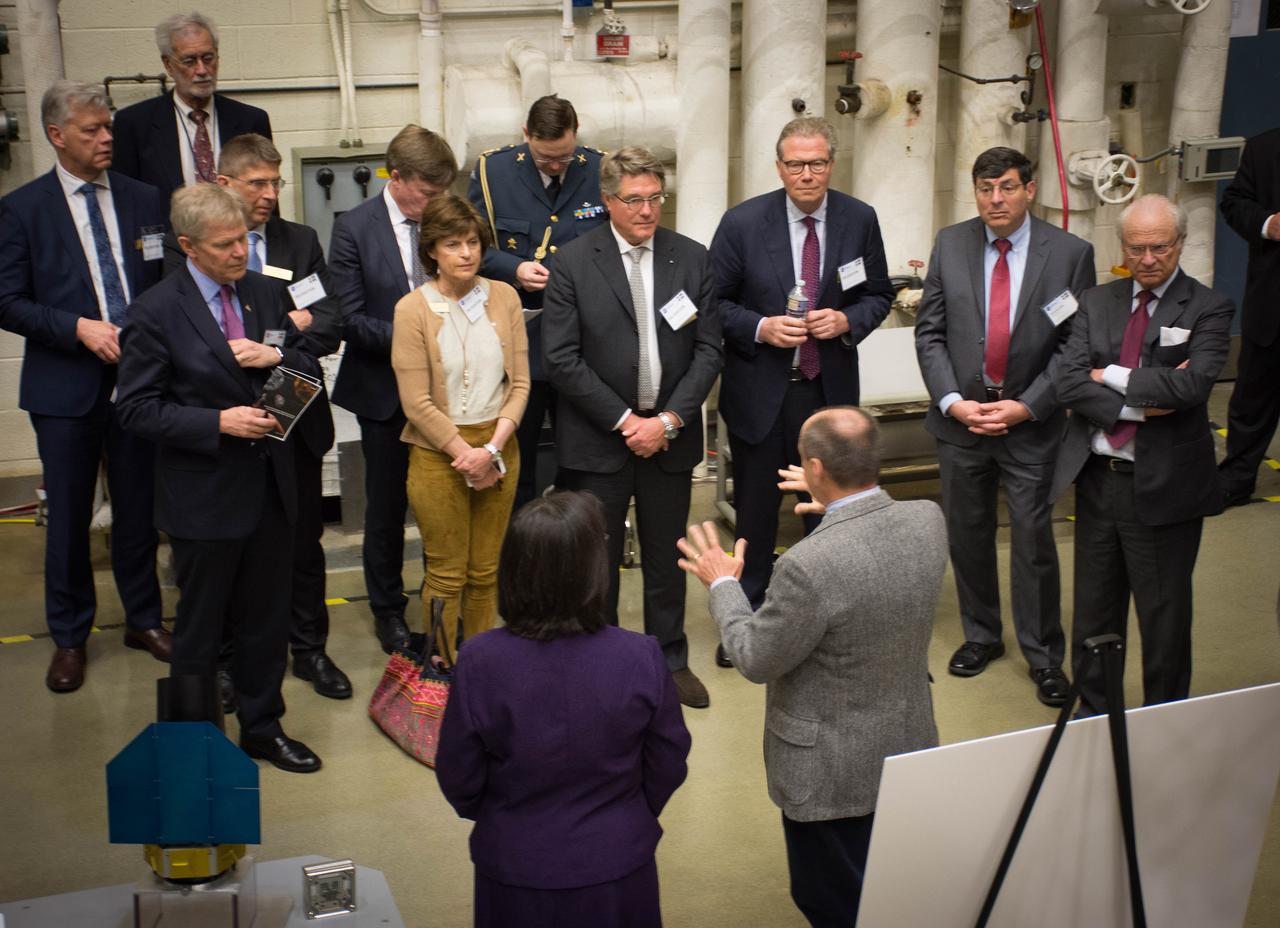
Swedish Delegation Visits GSFC – May 3, 2017 - Members of the Royal Swedish Academy of Engineering Sciences listen to Catherine Peddie, Wide Field Infrared Survey Telescope (WFIRST) Deputy Project Manager use a full-scale model of WFIRST to describe the features of the observatory. Photo Credit: NASA/Goddard/Rebecca Roth Read more: <a href="https://go.nasa.gov/2p1rP0h" rel="nofollow">go.nasa.gov/2p1rP0h</a> <b><a href="http://www.nasa.gov/audience/formedia/features/MP_Photo_Guidelines.html" rel="nofollow">NASA image use policy.</a></b> <b><a href="http://www.nasa.gov/centers/goddard/home/index.html" rel="nofollow">NASA Goddard Space Flight Center</a></b> enables NASA’s mission through four scientific endeavors: Earth Science, Heliophysics, Solar System Exploration, and Astrophysics. Goddard plays a leading role in NASA’s accomplishments by contributing compelling scientific knowledge to advance the Agency’s mission. <b>Follow us on <a href="http://twitter.com/NASAGoddardPix" rel="nofollow">Twitter</a></b> <b>Like us on <a href="http://www.facebook.com/pages/Greenbelt-MD/NASA-Goddard/395013845897?ref=tsd" rel="nofollow">Facebook</a></b> <b>Find us on <a href="http://instagrid.me/nasagoddard/?vm=grid" rel="nofollow">Instagram</a></b>
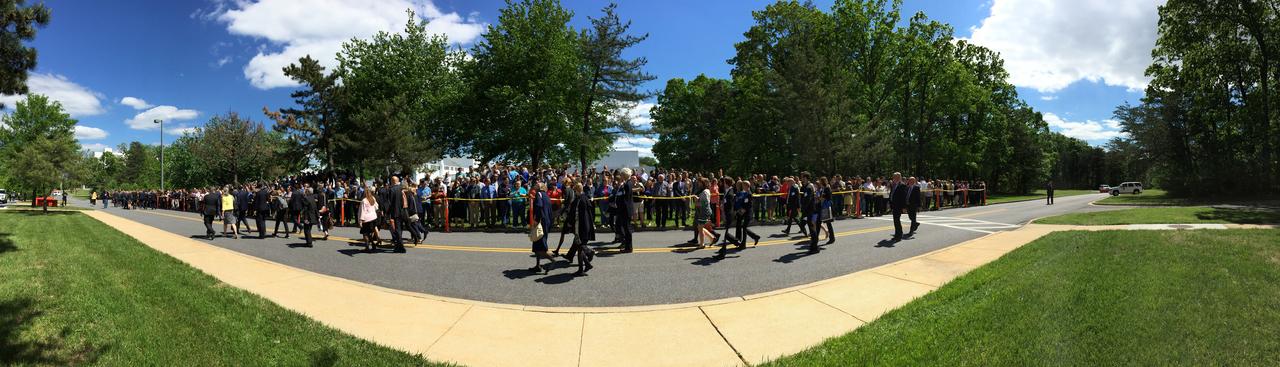
Swedish Delegation Visits GSFC – May 3, 2017 –Goddard Space Flight Center senior management and members of the Royal Swedish Academy walk towards Building 29 as part of the Swedish delegation’s tour of the center. Photo Credit: NASA/Goddard/Rebecca Roth Read more: <a href="https://go.nasa.gov/2p1rP0h" rel="nofollow">go.nasa.gov/2p1rP0h</a> <b><a href="http://www.nasa.gov/audience/formedia/features/MP_Photo_Guidelines.html" rel="nofollow">NASA image use policy.</a></b> <b><a href="http://www.nasa.gov/centers/goddard/home/index.html" rel="nofollow">NASA Goddard Space Flight Center</a></b> enables NASA’s mission through four scientific endeavors: Earth Science, Heliophysics, Solar System Exploration, and Astrophysics. Goddard plays a leading role in NASA’s accomplishments by contributing compelling scientific knowledge to advance the Agency’s mission. <b>Follow us on <a href="http://twitter.com/NASAGoddardPix" rel="nofollow">Twitter</a></b> <b>Like us on <a href="http://www.facebook.com/pages/Greenbelt-MD/NASA-Goddard/395013845897?ref=tsd" rel="nofollow">Facebook</a></b> <b>Find us on <a href="http://instagrid.me/nasagoddard/?vm=grid" rel="nofollow">Instagram</a></b>
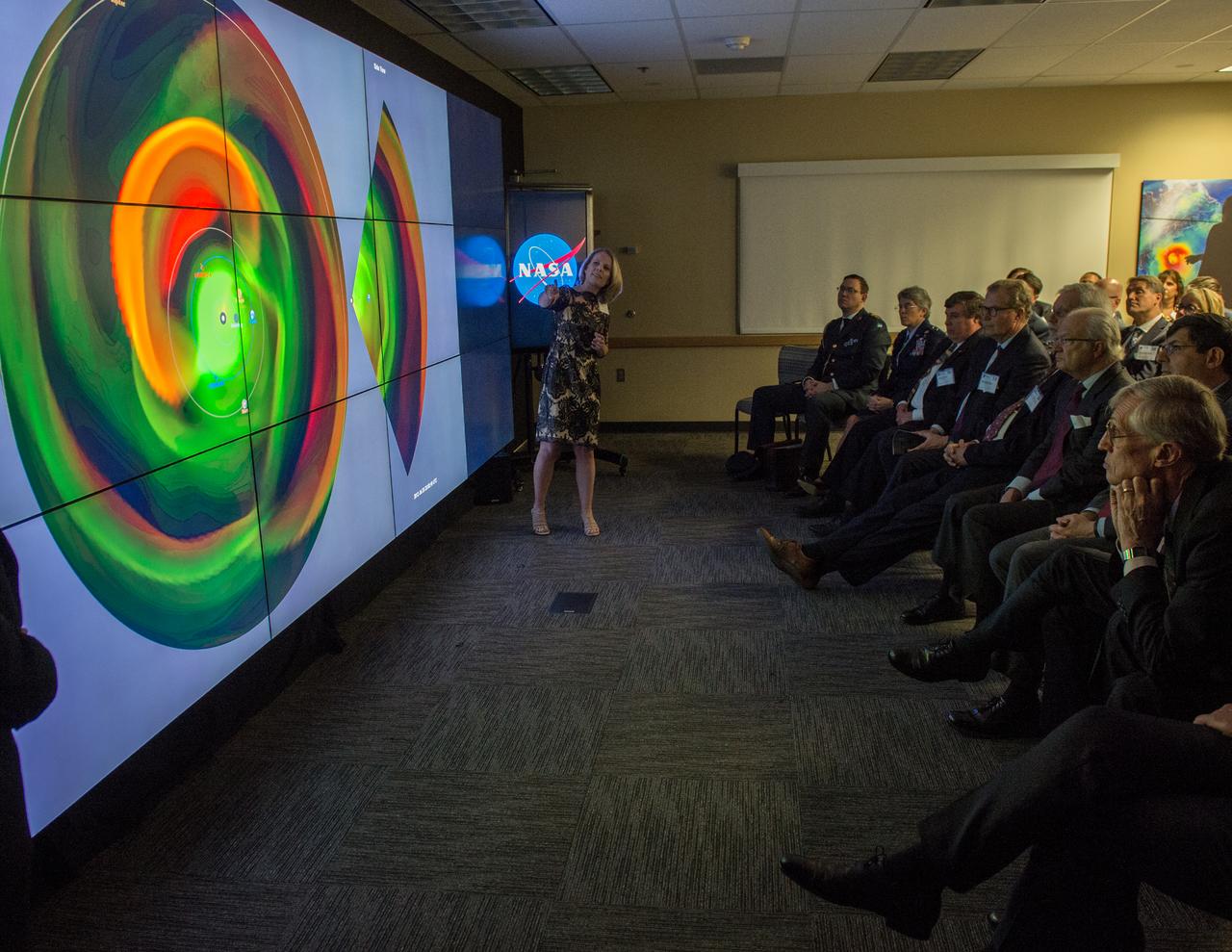
Swedish Delegation Visits GSFC – May 3, 2017 - Members of the Royal Swedish Academy of Engineering Sciences listen to Dr. Holly Gilbert and Dr. Alex Young ‘s presentation on NASA’s sun research activities in the Piers Sellers Visualization Theatre in Building 28 at NASA Goddard. Credit: NASA/Goddard/Bill Hrybyk Read more: <a href="https://go.nasa.gov/2p1rP0h" rel="nofollow">go.nasa.gov/2p1rP0h</a> <b><a href="http://www.nasa.gov/audience/formedia/features/MP_Photo_Guidelines.html" rel="nofollow">NASA image use policy.</a></b> <b><a href="http://www.nasa.gov/centers/goddard/home/index.html" rel="nofollow">NASA Goddard Space Flight Center</a></b> enables NASA’s mission through four scientific endeavors: Earth Science, Heliophysics, Solar System Exploration, and Astrophysics. Goddard plays a leading role in NASA’s accomplishments by contributing compelling scientific knowledge to advance the Agency’s mission. <b>Follow us on <a href="http://twitter.com/NASAGoddardPix" rel="nofollow">Twitter</a></b> <b>Like us on <a href="http://www.facebook.com/pages/Greenbelt-MD/NASA-Goddard/395013845897?ref=tsd" rel="nofollow">Facebook</a></b> <b>Find us on <a href="http://instagrid.me/nasagoddard/?vm=grid" rel="nofollow">Instagram</a></b>
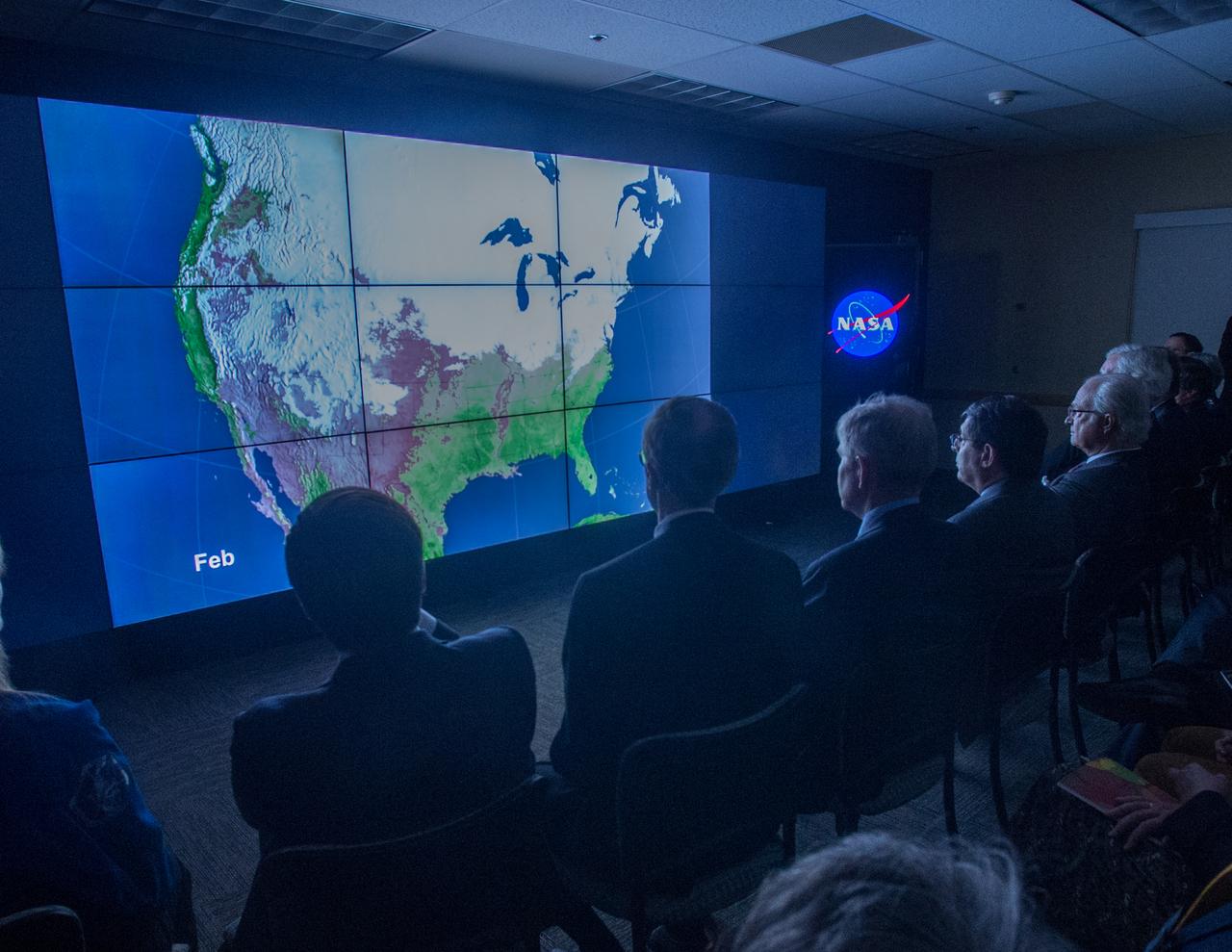
Swedish Delegation Visits GSFC – May 3, 2017 - Members of the Royal Swedish Academy of Engineering Sciences watch a presentation in the Piers Sellers Visualization Theatre in Building 28 at NASA Goddard. Credit: NASA/Goddard/Bill Hrybyk Read more: <a href="https://go.nasa.gov/2p1rP0h" rel="nofollow">go.nasa.gov/2p1rP0h</a> <b><a href="http://www.nasa.gov/audience/formedia/features/MP_Photo_Guidelines.html" rel="nofollow">NASA image use policy.</a></b> <b><a href="http://www.nasa.gov/centers/goddard/home/index.html" rel="nofollow">NASA Goddard Space Flight Center</a></b> enables NASA’s mission through four scientific endeavors: Earth Science, Heliophysics, Solar System Exploration, and Astrophysics. Goddard plays a leading role in NASA’s accomplishments by contributing compelling scientific knowledge to advance the Agency’s mission. <b>Follow us on <a href="http://twitter.com/NASAGoddardPix" rel="nofollow">Twitter</a></b> <b>Like us on <a href="http://www.facebook.com/pages/Greenbelt-MD/NASA-Goddard/395013845897?ref=tsd" rel="nofollow">Facebook</a></b> <b>Find us on <a href="http://instagrid.me/nasagoddard/?vm=grid" rel="nofollow">Instagram</a></b>
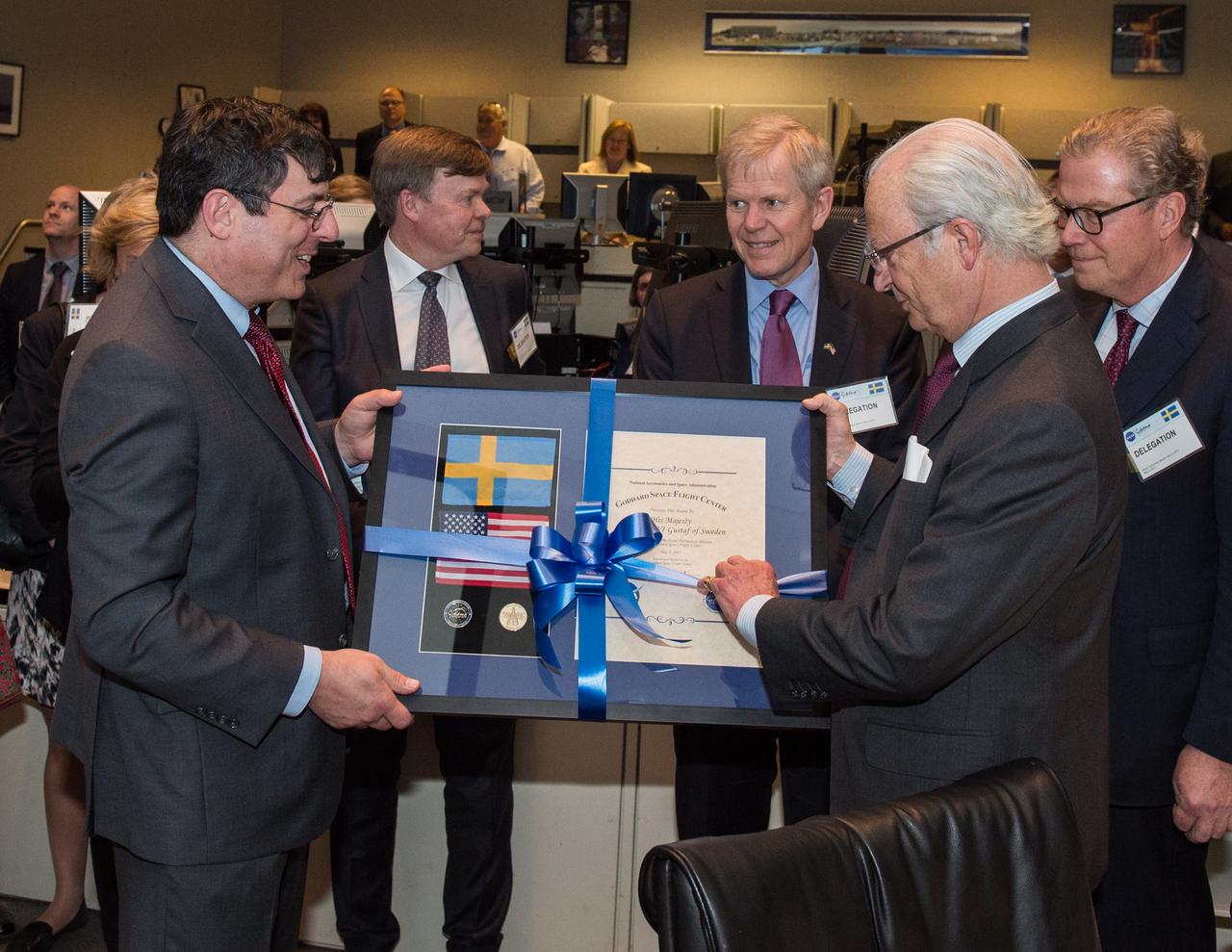
Swedish Delegation Visits GSFC – May 3, 2017 – Goddard Center Director Chris Scolese presents His Majesty Carl XVI Gustaf, King of Sweden a commemorative plaque in honor of his visit. Credit: NASA/Goddard/Bill Hrybyk Read more: <a href="https://go.nasa.gov/2p1rP0h" rel="nofollow">go.nasa.gov/2p1rP0h</a> <b><a href="http://www.nasa.gov/audience/formedia/features/MP_Photo_Guidelines.html" rel="nofollow">NASA image use policy.</a></b> <b><a href="http://www.nasa.gov/centers/goddard/home/index.html" rel="nofollow">NASA Goddard Space Flight Center</a></b> enables NASA’s mission through four scientific endeavors: Earth Science, Heliophysics, Solar System Exploration, and Astrophysics. Goddard plays a leading role in NASA’s accomplishments by contributing compelling scientific knowledge to advance the Agency’s mission. <b>Follow us on <a href="http://twitter.com/NASAGoddardPix" rel="nofollow">Twitter</a></b> <b>Like us on <a href="http://www.facebook.com/pages/Greenbelt-MD/NASA-Goddard/395013845897?ref=tsd" rel="nofollow">Facebook</a></b> <b>Find us on <a href="http://instagrid.me/nasagoddard/?vm=grid" rel="nofollow">Instagram</a></b>
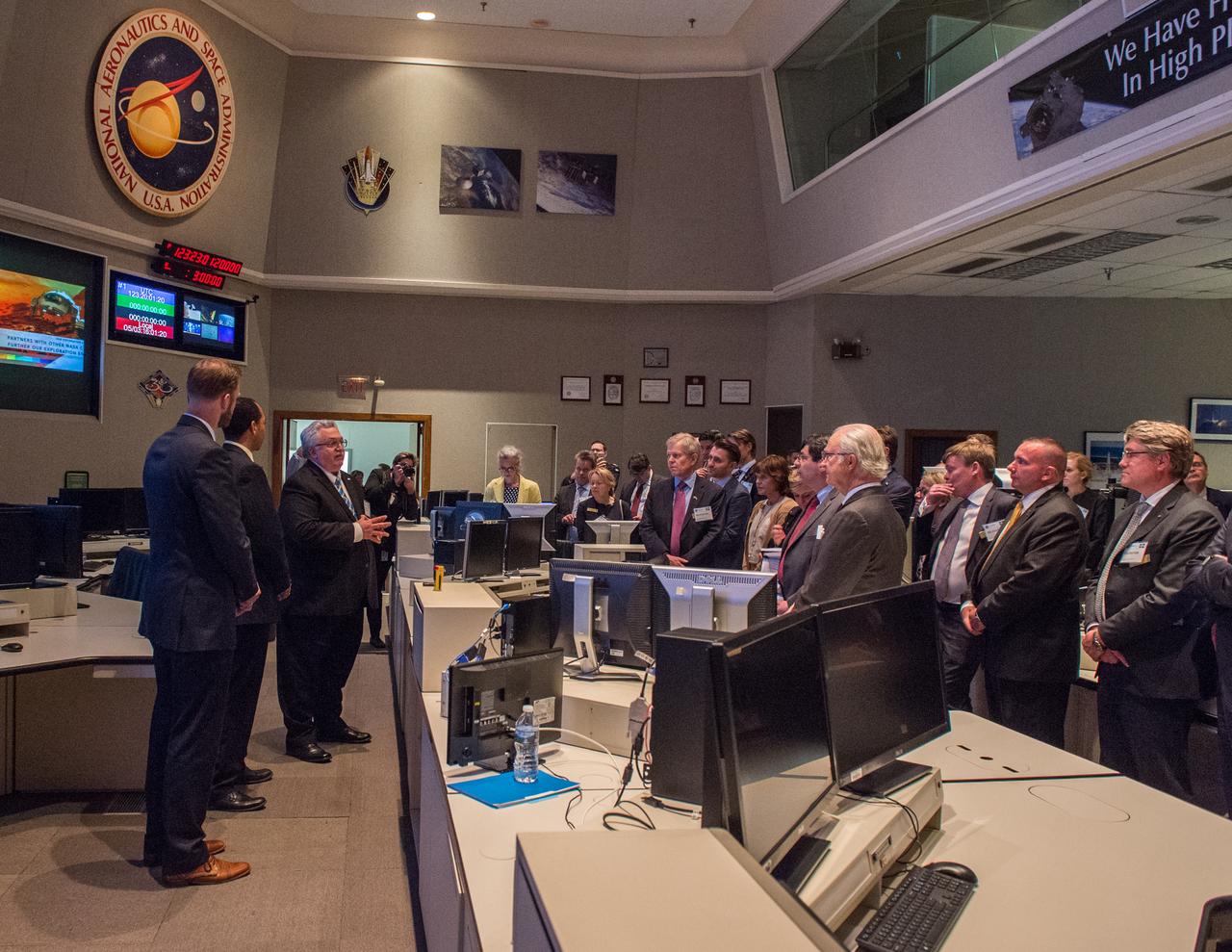
Swedish Delegation Visits GSFC – May 3, 2017 - Members of the Royal Swedish Academy of Engineering Sciences listen a presentation in Goddard's Network Integration Center. Credit: NASA/Goddard/Bill Hrybyk Read more: <a href="https://go.nasa.gov/2p1rP0h" rel="nofollow">go.nasa.gov/2p1rP0h</a> <b><a href="http://www.nasa.gov/audience/formedia/features/MP_Photo_Guidelines.html" rel="nofollow">NASA image use policy.</a></b> <b><a href="http://www.nasa.gov/centers/goddard/home/index.html" rel="nofollow">NASA Goddard Space Flight Center</a></b> enables NASA’s mission through four scientific endeavors: Earth Science, Heliophysics, Solar System Exploration, and Astrophysics. Goddard plays a leading role in NASA’s accomplishments by contributing compelling scientific knowledge to advance the Agency’s mission. <b>Follow us on <a href="http://twitter.com/NASAGoddardPix" rel="nofollow">Twitter</a></b> <b>Like us on <a href="http://www.facebook.com/pages/Greenbelt-MD/NASA-Goddard/395013845897?ref=tsd" rel="nofollow">Facebook</a></b> <b>Find us on <a href="http://instagrid.me/nasagoddard/?vm=grid" rel="nofollow">Instagram</a></b>

Swedish Delegation Visits GSFC – May 3, 2017 - Members of the Royal Swedish Academy of Engineering Sciences watch a presentation in the Piers Sellers Visualization Theatre in Building 28 at NASA Goddard. Credit: NASA/Goddard/Bill Hrybyk Read more: <a href="https://go.nasa.gov/2p1rP0h" rel="nofollow">go.nasa.gov/2p1rP0h</a> <b><a href="http://www.nasa.gov/audience/formedia/features/MP_Photo_Guidelines.html" rel="nofollow">NASA image use policy.</a></b> <b><a href="http://www.nasa.gov/centers/goddard/home/index.html" rel="nofollow">NASA Goddard Space Flight Center</a></b> enables NASA’s mission through four scientific endeavors: Earth Science, Heliophysics, Solar System Exploration, and Astrophysics. Goddard plays a leading role in NASA’s accomplishments by contributing compelling scientific knowledge to advance the Agency’s mission. <b>Follow us on <a href="http://twitter.com/NASAGoddardPix" rel="nofollow">Twitter</a></b> <b>Like us on <a href="http://www.facebook.com/pages/Greenbelt-MD/NASA-Goddard/395013845897?ref=tsd" rel="nofollow">Facebook</a></b> <b>Find us on <a href="http://instagrid.me/nasagoddard/?vm=grid" rel="nofollow">Instagram</a></b>
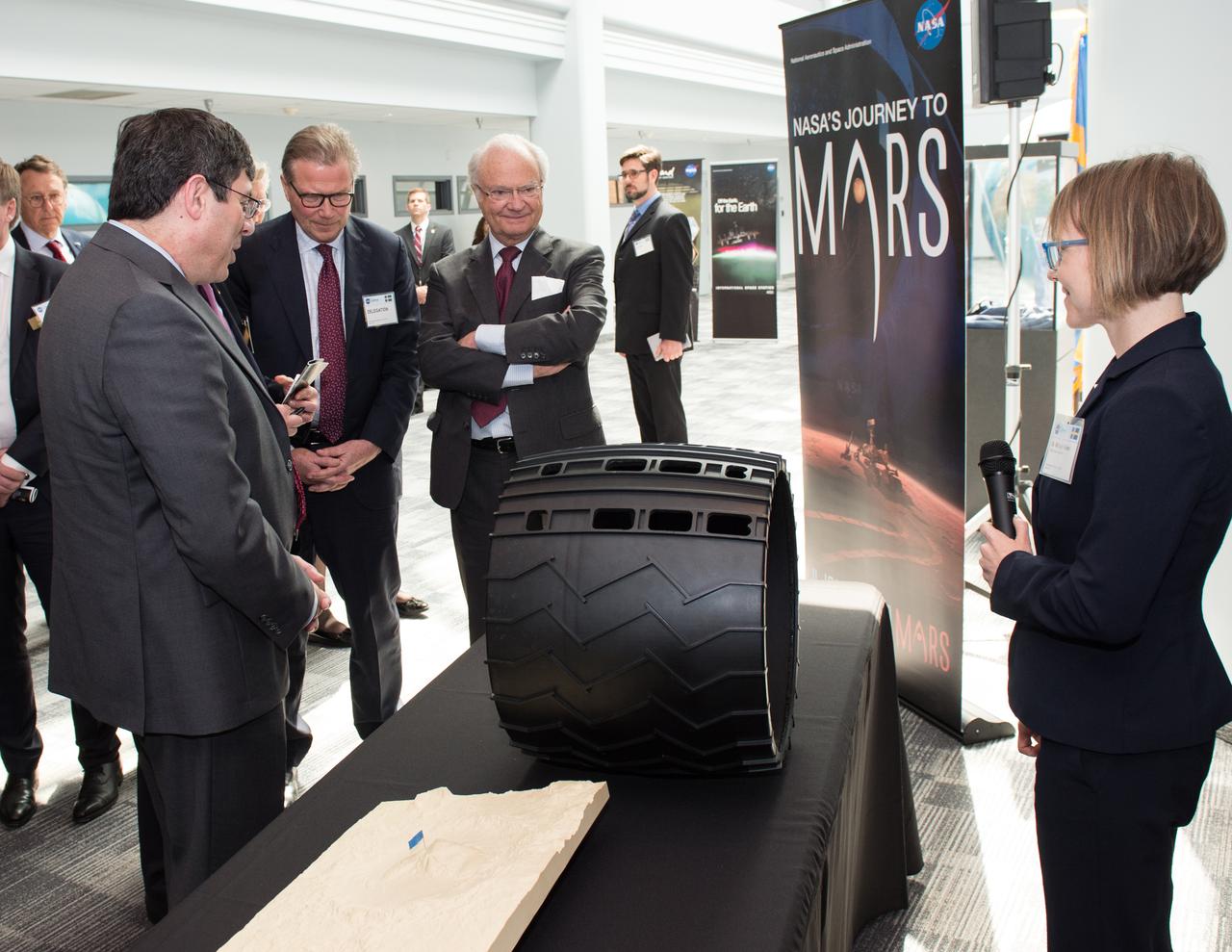
Swedish Delegation Visits GSFC – May 3, 2017 - Members of the Royal Swedish Academy of Engineering Sciences listen to Dr. Melissa Trainer, Sample Analysis at, Mars (SAM) team member and Charles Malespin, SAM Deputy Principal Investigator and Operations Test Lead discuss research being done in the SAM lab being carried by the Curiosity Rover on the surface of Mars. Credit: NASA/Goddard/Bill Hrybyk Read more: <a href="https://go.nasa.gov/2p1rP0h" rel="nofollow">go.nasa.gov/2p1rP0h</a> <b><a href="http://www.nasa.gov/audience/formedia/features/MP_Photo_Guidelines.html" rel="nofollow">NASA image use policy.</a></b> <b><a href="http://www.nasa.gov/centers/goddard/home/index.html" rel="nofollow">NASA Goddard Space Flight Center</a></b> enables NASA’s mission through four scientific endeavors: Earth Science, Heliophysics, Solar System Exploration, and Astrophysics. Goddard plays a leading role in NASA’s accomplishments by contributing compelling scientific knowledge to advance the Agency’s mission. <b>Follow us on <a href="http://twitter.com/NASAGoddardPix" rel="nofollow">Twitter</a></b> <b>Like us on <a href="http://www.facebook.com/pages/Greenbelt-MD/NASA-Goddard/395013845897?ref=tsd" rel="nofollow">Facebook</a></b> <b>Find us on <a href="http://instagrid.me/nasagoddard/?vm=grid" rel="nofollow">Instagram</a></b>

Swedish Delegation Visits GSFC – May 3, 2017 - Members of the Royal Swedish Academy of Engineering Sciences listen to Dr. Joihn Mather’s presentation on NASA’s astrophysics research activities in the Piers Sellers Visualization Theatre in Building 28 at NASA Goddard. Credit: NASA/Goddard/Bill Hrybyk Read more: <a href="https://go.nasa.gov/2p1rP0h" rel="nofollow">go.nasa.gov/2p1rP0h</a> <b><a href="http://www.nasa.gov/audience/formedia/features/MP_Photo_Guidelines.html" rel="nofollow">NASA image use policy.</a></b> <b><a href="http://www.nasa.gov/centers/goddard/home/index.html" rel="nofollow">NASA Goddard Space Flight Center</a></b> enables NASA’s mission through four scientific endeavors: Earth Science, Heliophysics, Solar System Exploration, and Astrophysics. Goddard plays a leading role in NASA’s accomplishments by contributing compelling scientific knowledge to advance the Agency’s mission. <b>Follow us on <a href="http://twitter.com/NASAGoddardPix" rel="nofollow">Twitter</a></b> <b>Like us on <a href="http://www.facebook.com/pages/Greenbelt-MD/NASA-Goddard/395013845897?ref=tsd" rel="nofollow">Facebook</a></b> <b>Find us on <a href="http://instagrid.me/nasagoddard/?vm=grid" rel="nofollow">Instagram</a></b>
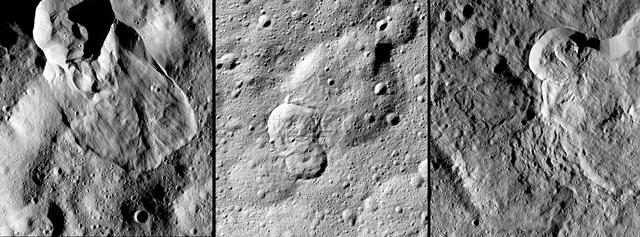
NASA's Dawn spacecraft has revealed many landslides on Ceres, which researchers interpret to have been shaped by a significant amount of water ice. A 2017 study in the journal Nature Geoscience classifies three types of these debris flows. Image 1 (left in the montage) shows an example of "Type I" flow features, which are relatively round and large, have thick "toes" at their ends. They look similar to rock glaciers and icy landslides on Earth. Type I landslides are mostly found at high latitudes, which is also where the most ice is thought to reside near Ceres' surface. Image 2 (center) shows an example of a "Type II" flow feature. Type II features are often thinner and longer than Type I, and are the most common type of landslide on Ceres. They appear more like the avalanches seen on Earth. Image 3 (right) shows an example of a "Type III" flow feature at Datan Crater. The study authors interpret Ceres' Type III landslides to involve melted ice, although scientists do not know if they actually contain liquid water. The authors think Type III landslides are related to impact craters, and may have formed during impact events into the ice on Ceres. The features resemble fluid material ejected from craters in the icy regions of Mars and Jupiter's moon Ganymede. https://photojournal.jpl.nasa.gov/catalog/PIA21471
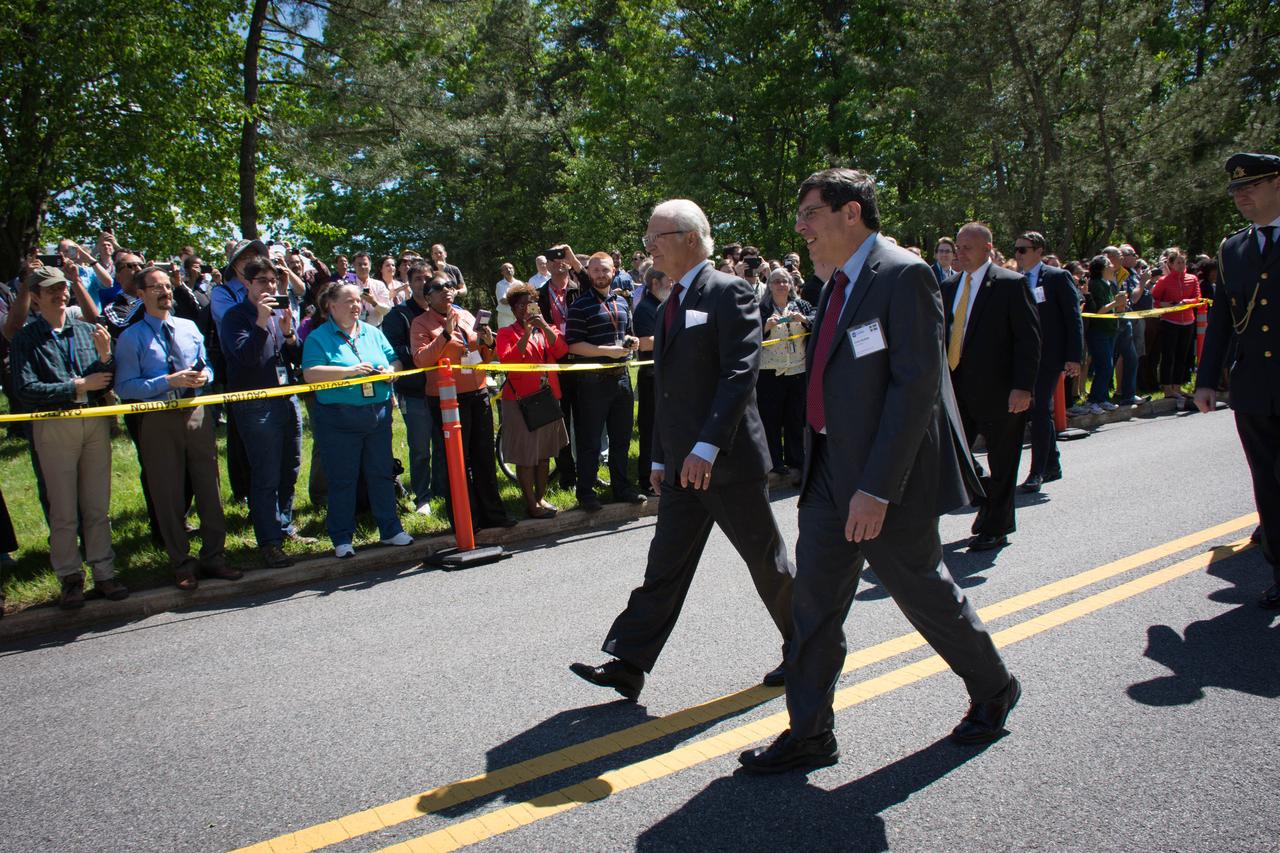
Swedish Delegation Visits GSFC – May 3, 2017 –Goddard Space Flight Center senior management and members of the Royal Swedish Academy walk towards Building 29 as part of the Swedish delegation’s tour of the center. Photo Credit: NASA/Goddard/Rebecca Roth Read more: <a href="https://go.nasa.gov/2p1rP0h" rel="nofollow">go.nasa.gov/2p1rP0h</a> <b><a href="http://www.nasa.gov/audience/formedia/features/MP_Photo_Guidelines.html" rel="nofollow">NASA image use policy.</a></b> <b><a href="http://www.nasa.gov/centers/goddard/home/index.html" rel="nofollow">NASA Goddard Space Flight Center</a></b> enables NASA’s mission through four scientific endeavors: Earth Science, Heliophysics, Solar System Exploration, and Astrophysics. Goddard plays a leading role in NASA’s accomplishments by contributing compelling scientific knowledge to advance the Agency’s mission. <b>Follow us on <a href="http://twitter.com/NASAGoddardPix" rel="nofollow">Twitter</a></b> <b>Like us on <a href="http://www.facebook.com/pages/Greenbelt-MD/NASA-Goddard/395013845897?ref=tsd" rel="nofollow">Facebook</a></b> <b>Find us on <a href="http://instagrid.me/nasagoddard/?vm=grid" rel="nofollow">Instagram</a></b>
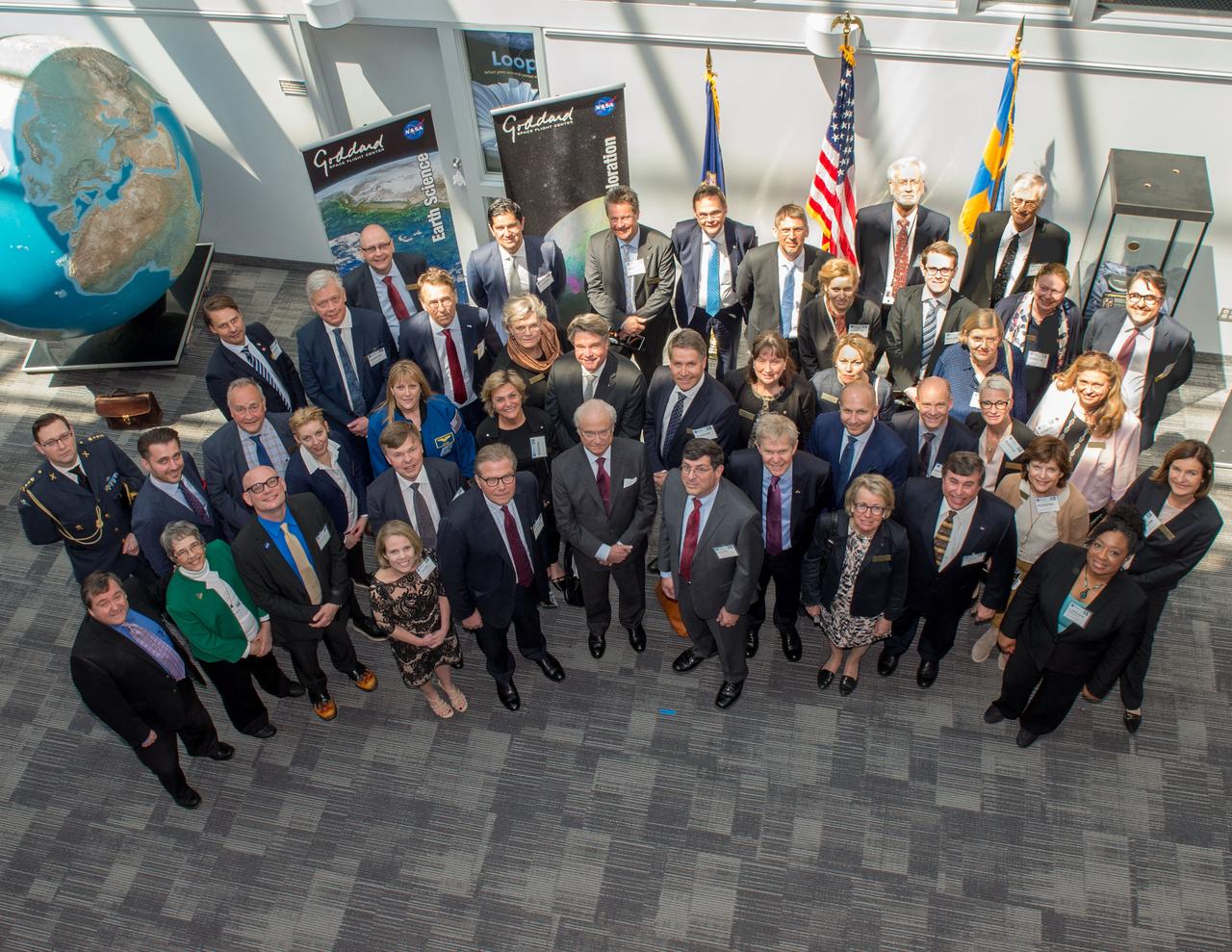
Swedish Delegation Visits GSFC – May 3, 2017 - Members of Goddard Space Flight Center senior management and members of the Royal Swedish Academy of Engineering Sciences pose for a group photo in the atrium area of Building 28 at GSFC. Photo Credit: NASA/Goddard/Bill Hrybyk Read more: <a href="https://go.nasa.gov/2p1rP0h" rel="nofollow">go.nasa.gov/2p1rP0h</a> <b><a href="http://www.nasa.gov/audience/formedia/features/MP_Photo_Guidelines.html" rel="nofollow">NASA image use policy.</a></b> <b><a href="http://www.nasa.gov/centers/goddard/home/index.html" rel="nofollow">NASA Goddard Space Flight Center</a></b> enables NASA’s mission through four scientific endeavors: Earth Science, Heliophysics, Solar System Exploration, and Astrophysics. Goddard plays a leading role in NASA’s accomplishments by contributing compelling scientific knowledge to advance the Agency’s mission. <b>Follow us on <a href="http://twitter.com/NASAGoddardPix" rel="nofollow">Twitter</a></b> <b>Like us on <a href="http://www.facebook.com/pages/Greenbelt-MD/NASA-Goddard/395013845897?ref=tsd" rel="nofollow">Facebook</a></b> <b>Find us on <a href="http://instagrid.me/nasagoddard/?vm=grid" rel="nofollow">Instagram</a></b>
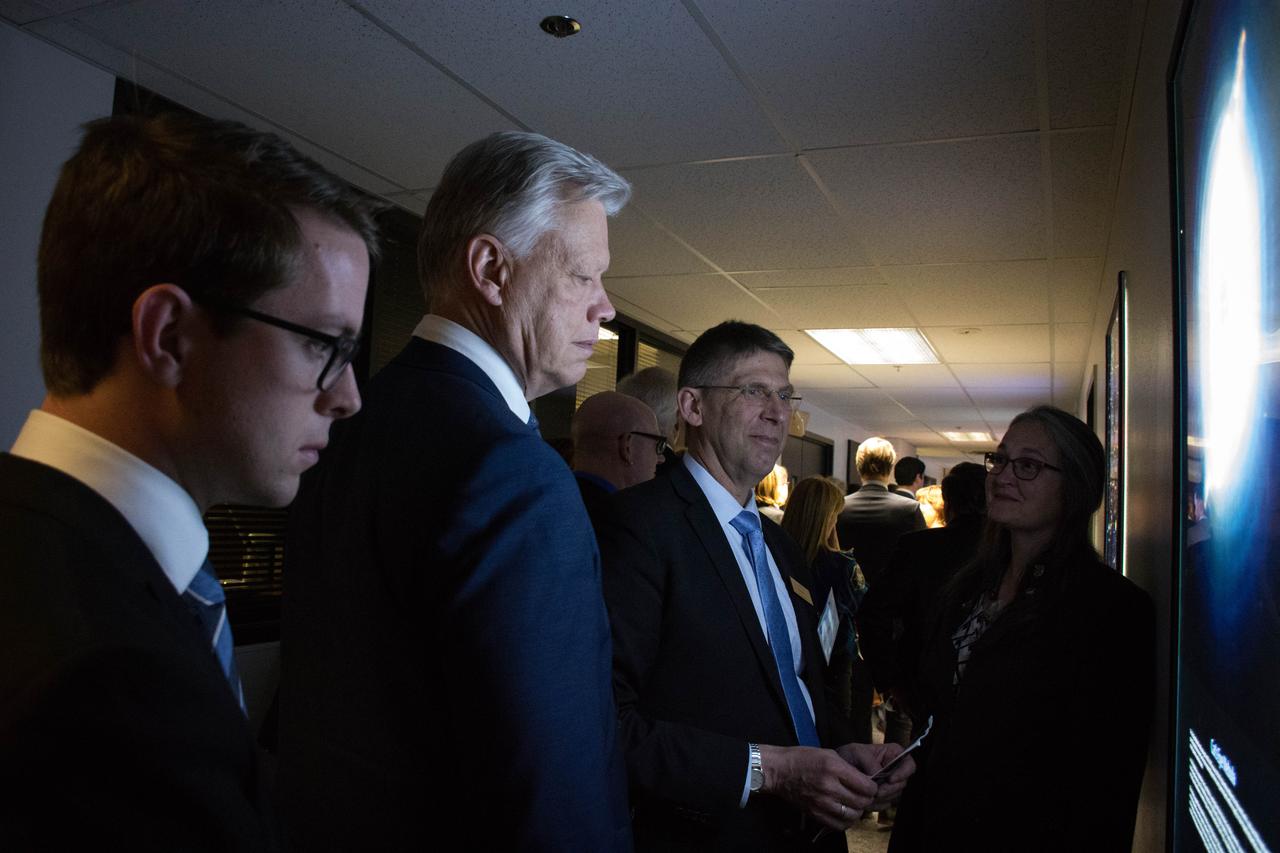
Swedish Delegation Visits GSFC – May 3, 2017 - Members of the Royal Swedish Academy of Engineering Sciences listen to members of the Hubble Space Telescope (HST) team talk about telescope operations just outside the HST control center at Goddard. Photo Credit: NASA/Goddard/Rebecca Roth Read more: <a href="https://go.nasa.gov/2p1rP0h" rel="nofollow">go.nasa.gov/2p1rP0h</a> <b><a href="http://www.nasa.gov/audience/formedia/features/MP_Photo_Guidelines.html" rel="nofollow">NASA image use policy.</a></b> <b><a href="http://www.nasa.gov/centers/goddard/home/index.html" rel="nofollow">NASA Goddard Space Flight Center</a></b> enables NASA’s mission through four scientific endeavors: Earth Science, Heliophysics, Solar System Exploration, and Astrophysics. Goddard plays a leading role in NASA’s accomplishments by contributing compelling scientific knowledge to advance the Agency’s mission. <b>Follow us on <a href="http://twitter.com/NASAGoddardPix" rel="nofollow">Twitter</a></b> <b>Like us on <a href="http://www.facebook.com/pages/Greenbelt-MD/NASA-Goddard/395013845897?ref=tsd" rel="nofollow">Facebook</a></b> <b>Find us on <a href="http://instagrid.me/nasagoddard/?vm=grid" rel="nofollow">Instagram</a></b>
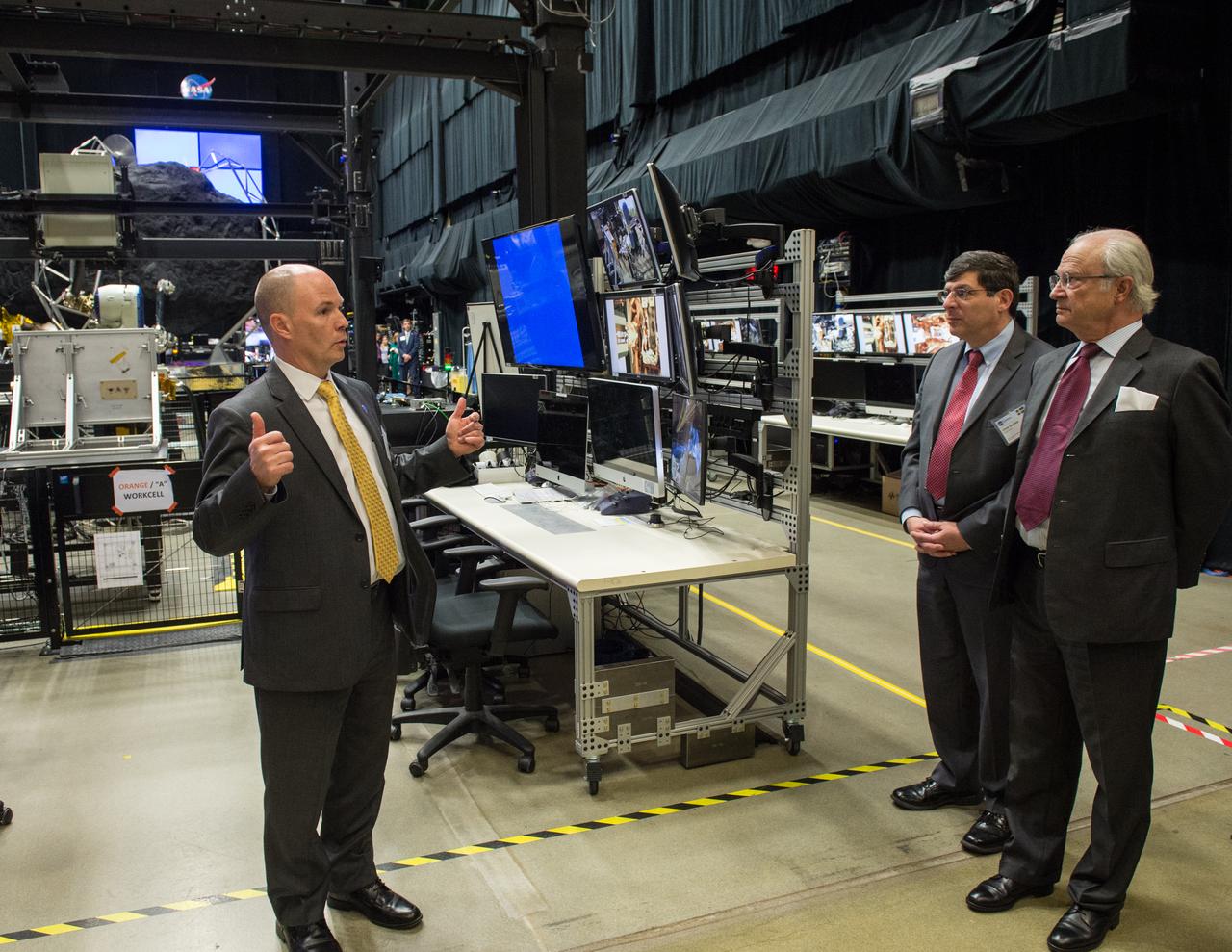
Swedish Delegation Visits GSFC – May 3, 2017 - Members of the Royal Swedish Academy of Engineering Sciences listen to Benjamin Reed, Deputy Division Director of the SatelliteServicing Projects Division about activities happening in Goddard’s Robotic Operations Center in Building 29. Credit: NASA/Goddard/Bill Hrybyk Read more: <a href="https://go.nasa.gov/2p1rP0h" rel="nofollow">go.nasa.gov/2p1rP0h</a> <b><a href="http://www.nasa.gov/audience/formedia/features/MP_Photo_Guidelines.html" rel="nofollow">NASA image use policy.</a></b> <b><a href="http://www.nasa.gov/centers/goddard/home/index.html" rel="nofollow">NASA Goddard Space Flight Center</a></b> enables NASA’s mission through four scientific endeavors: Earth Science, Heliophysics, Solar System Exploration, and Astrophysics. Goddard plays a leading role in NASA’s accomplishments by contributing compelling scientific knowledge to advance the Agency’s mission. <b>Follow us on <a href="http://twitter.com/NASAGoddardPix" rel="nofollow">Twitter</a></b> <b>Like us on <a href="http://www.facebook.com/pages/Greenbelt-MD/NASA-Goddard/395013845897?ref=tsd" rel="nofollow">Facebook</a></b> <b>Find us on <a href="http://instagrid.me/nasagoddard/?vm=grid" rel="nofollow">Instagram</a></b>
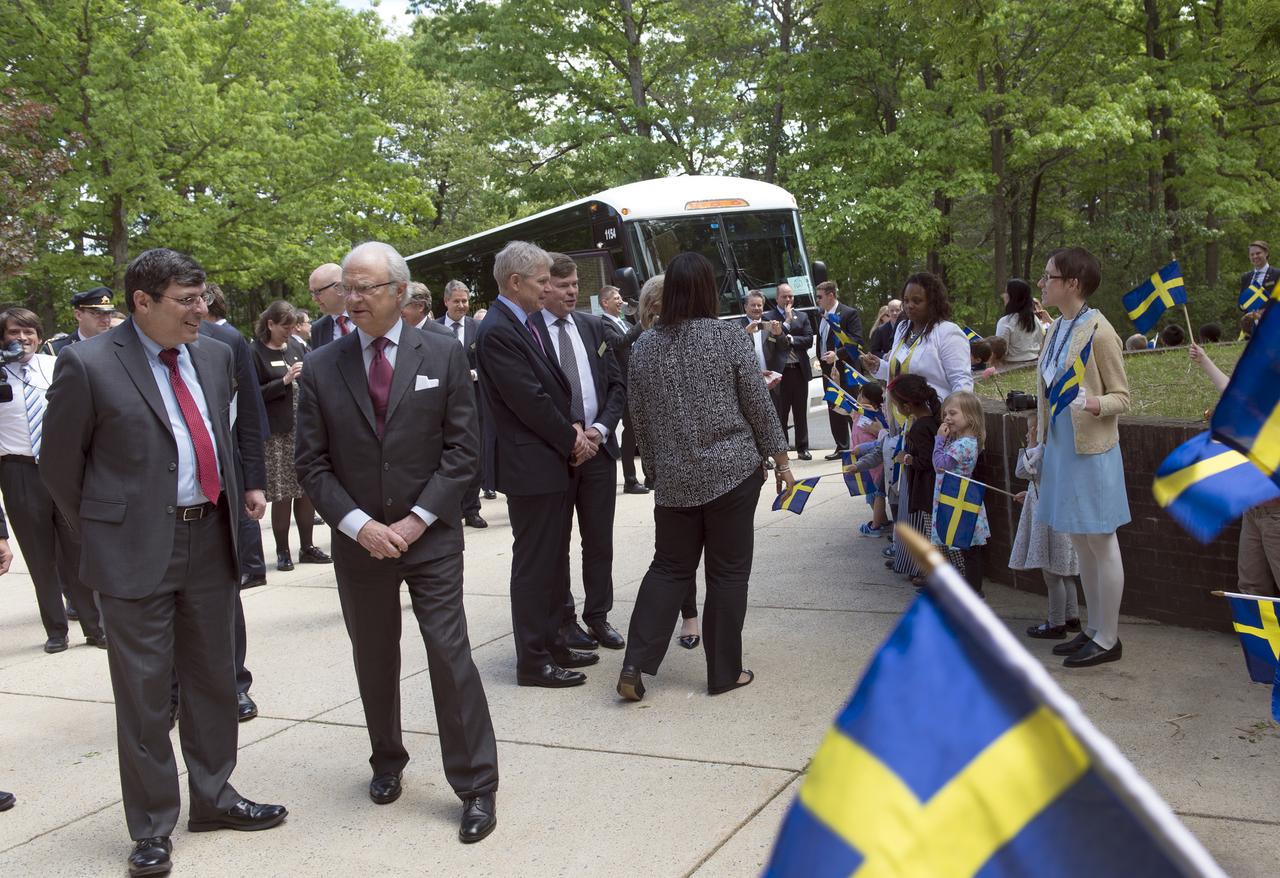
Swedish Delegation Visits GSFC – May 3, 2017 – Goddard Center Director Chris Scolese greets His Majesty Carl XVI Gustaf, King of Sweden outside the entrance to Building 28 at GSFC. The king’s visit came as part his participation in a large delegation that also included the Swedish Ambassador to the United States, both the chairman and president of the Royal Swedish Academy of Engineering Sciences, as well as distinguished members of Sweden’s industrial, academia and professional organizations. For the arrival, approximately 60 children from the Goddard Child Development Center were on hand to greet the Swedish delegation. Credit: NASA/Goddard/Debbie Mccallum Read more: <a href="https://go.nasa.gov/2p1rP0h" rel="nofollow">go.nasa.gov/2p1rP0h</a> <b><a href="http://www.nasa.gov/audience/formedia/features/MP_Photo_Guidelines.html" rel="nofollow">NASA image use policy.</a></b> <b><a href="http://www.nasa.gov/centers/goddard/home/index.html" rel="nofollow">NASA Goddard Space Flight Center</a></b> enables NASA’s mission through four scientific endeavors: Earth Science, Heliophysics, Solar System Exploration, and Astrophysics. Goddard plays a leading role in NASA’s accomplishments by contributing compelling scientific knowledge to advance the Agency’s mission. <b>Follow us on <a href="http://twitter.com/NASAGoddardPix" rel="nofollow">Twitter</a></b> <b>Like us on <a href="http://www.facebook.com/pages/Greenbelt-MD/NASA-Goddard/395013845897?ref=tsd" rel="nofollow">Facebook</a></b> <b>Find us on <a href="http://instagrid.me/nasagoddard/?vm=grid" rel="nofollow">Instagram</a></b>

Strands of solar material at the sun's edge shifted and twisted back and forth over a 22-hour period in this footage captured May 2-3, 2017, by NASA’s Solar Dynamics Observatory. In this close-up, the strands are being manipulated by strong magnetic forces associated with active regions. To give a sense of scale, the strands that hover above the sun are more than several times the size of Earth. These images were taken in a wavelength of extreme ultraviolet light, which is typically invisible to our eyes, but was colorized here in red. <a href="https://go.nasa.gov/2qJzPD2" rel="nofollow">go.nasa.gov/2qJzPD2</a> Credit: NASA/Goddard/SDO <b><a href="http://www.nasa.gov/audience/formedia/features/MP_Photo_Guidelines.html" rel="nofollow">NASA image use policy.</a></b> <b><a href="http://www.nasa.gov/centers/goddard/home/index.html" rel="nofollow">NASA Goddard Space Flight Center</a></b> enables NASA’s mission through four scientific endeavors: Earth Science, Heliophysics, Solar System Exploration, and Astrophysics. Goddard plays a leading role in NASA’s accomplishments by contributing compelling scientific knowledge to advance the Agency’s mission. <b>Follow us on <a href="http://twitter.com/NASAGoddardPix" rel="nofollow">Twitter</a></b> <b>Like us on <a href="http://www.facebook.com/pages/Greenbelt-MD/NASA-Goddard/395013845897?ref=tsd" rel="nofollow">Facebook</a></b> <b>Find us on <a href="http://instagrid.me/nasagoddard/?vm=grid" rel="nofollow">Instagram</a></b>
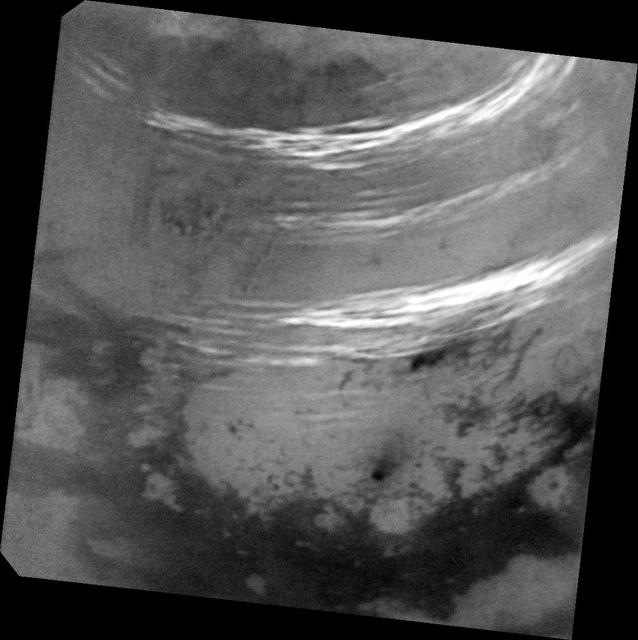
As summer approaches in Titan's northern hemisphere, NASA's Cassini spacecraft has been monitoring Titan, anticipating an increase in cloud activity at high northern latitudes. Intriguingly, with the summer solstice just a couple of weeks away, an outburst of multiple clouds appeared at mid-northern latitudes. These are some of the most intensely bright clouds Cassini has observed on Titan, likely due to high-cloud tops. This activity also represents the most extensive cloud outburst on Titan since clouds reappeared at northern mid-latitudes in early 2016. Three methane cloud bands visible in this view: the southern band is located between 30 and 38 degrees north latitude. Scientists have not spotted many clouds in this latitude range prior this observation. A fainter, middle band between 44 and 50 degrees north latitude is in a region where cloud bands have been observed fairly regularly over the past year. A northern band is also seen between 52 and 59 degrees north latitude. There are a few isolated cloud streaks outside these bands, including some near the southern edge of the north polar terrain near 63 degrees north and another set that goes as far south as 23 degrees north latitude. Just above the dark, equatorial dunelands at bottom is a dark feature with a streak that points toward the northeast (toward upper right). This feature is named Omacatl Macula, and is likely a region of dark dust that is organized into dunes in some places. The image was taken on May 7, 2017, at a distance of 311,000 miles (500,000 kilometers). The view is an orthographic projection centered on 37.5 degrees north latitude, 45 degrees west longitude. An orthographic view is most like the view seen by a distant observer. Image scale is about 2 miles (3 kilometers) per pixel. https://photojournal.jpl.nasa.gov/catalog/PIA21610
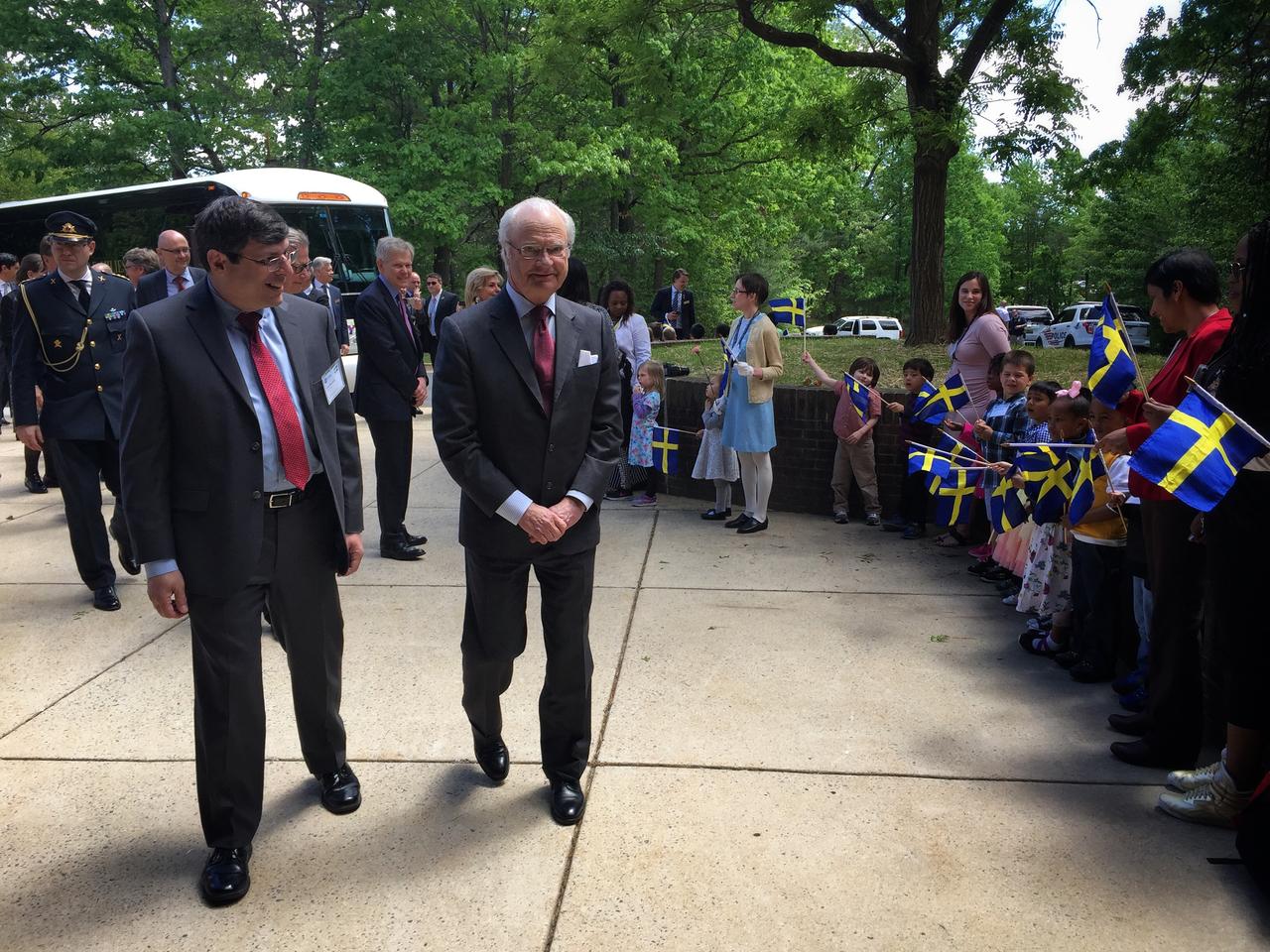
Swedish Delegation Visits GSFC – May 3, 2017 – Goddard Center Director Chris Scolese greets His Majesty Carl XVI Gustaf, King of Sweden outside the entrance to Building 28 at GSFC. The king’s visit came as part his participation in a large delegation that also included the Swedish Ambassador to the United States, both the chairman and president of the Royal Swedish Academy of Engineering Sciences, as well as distinguished members of Sweden’s industrial, academia and professional organizations. For the arrival, approximately 60 children from the Goddard Child Development Center were on hand to greet the Swedish delegation. Photo Credit: NASA/Goddard/Rebecca Roth Read more: <a href="https://go.nasa.gov/2p1rP0h" rel="nofollow">go.nasa.gov/2p1rP0h</a> <b><a href="http://www.nasa.gov/audience/formedia/features/MP_Photo_Guidelines.html" rel="nofollow">NASA image use policy.</a></b> <b><a href="http://www.nasa.gov/centers/goddard/home/index.html" rel="nofollow">NASA Goddard Space Flight Center</a></b> enables NASA’s mission through four scientific endeavors: Earth Science, Heliophysics, Solar System Exploration, and Astrophysics. Goddard plays a leading role in NASA’s accomplishments by contributing compelling scientific knowledge to advance the Agency’s mission. <b>Follow us on <a href="http://twitter.com/NASAGoddardPix" rel="nofollow">Twitter</a></b> <b>Like us on <a href="http://www.facebook.com/pages/Greenbelt-MD/NASA-Goddard/395013845897?ref=tsd" rel="nofollow">Facebook</a></b> <b>Find us on <a href="http://instagrid.me/nasagoddard/?vm=grid" rel="nofollow">Instagram</a></b>
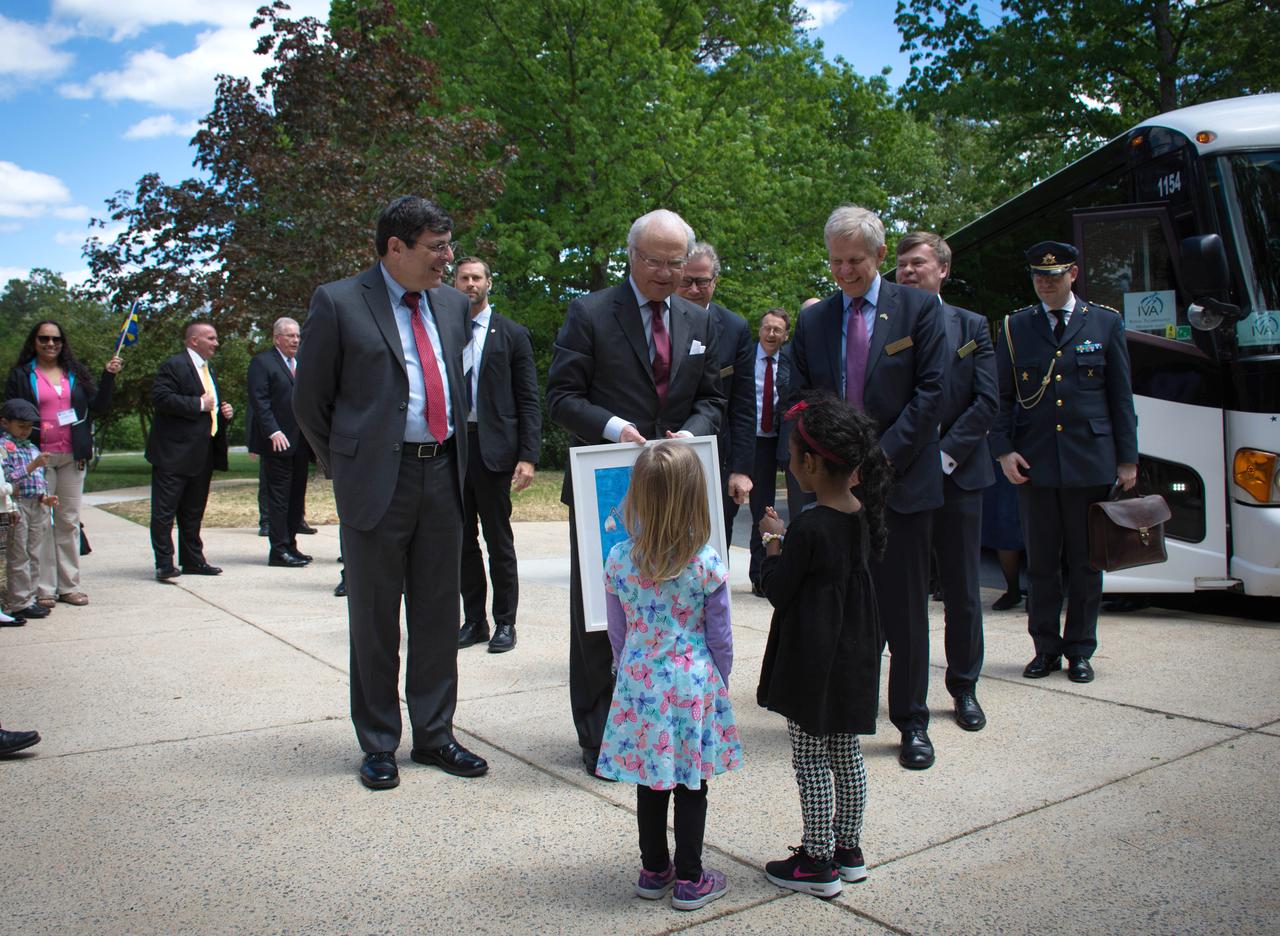
Swedish Delegation Visits GSFC – May 3, 2017 – Goddard Center Director Chris Scolese greets His Majesty Carl XVI Gustaf, King of Sweden outside the entrance to Building 28 at GSFC. The king’s visit came as part his participation in a large delegation that also included the Swedish Ambassador to the United States, both the chairman and president of the Royal Swedish Academy of Engineering Sciences, as well as distinguished members of Sweden’s industrial, academia and professional organizations. For the arrival, approximately 60 children from the Goddard Child Development Center were on hand to greet the Swedish delegation. Photo Credit: NASA/Goddard/Rebecca Roth Read more: <a href="https://go.nasa.gov/2p1rP0h" rel="nofollow">go.nasa.gov/2p1rP0h</a> <b><a href="http://www.nasa.gov/audience/formedia/features/MP_Photo_Guidelines.html" rel="nofollow">NASA image use policy.</a></b> <b><a href="http://www.nasa.gov/centers/goddard/home/index.html" rel="nofollow">NASA Goddard Space Flight Center</a></b> enables NASA’s mission through four scientific endeavors: Earth Science, Heliophysics, Solar System Exploration, and Astrophysics. Goddard plays a leading role in NASA’s accomplishments by contributing compelling scientific knowledge to advance the Agency’s mission. <b>Follow us on <a href="http://twitter.com/NASAGoddardPix" rel="nofollow">Twitter</a></b> <b>Like us on <a href="http://www.facebook.com/pages/Greenbelt-MD/NASA-Goddard/395013845897?ref=tsd" rel="nofollow">Facebook</a></b> <b>Find us on <a href="http://instagrid.me/nasagoddard/?vm=grid" rel="nofollow">Instagram</a></b>
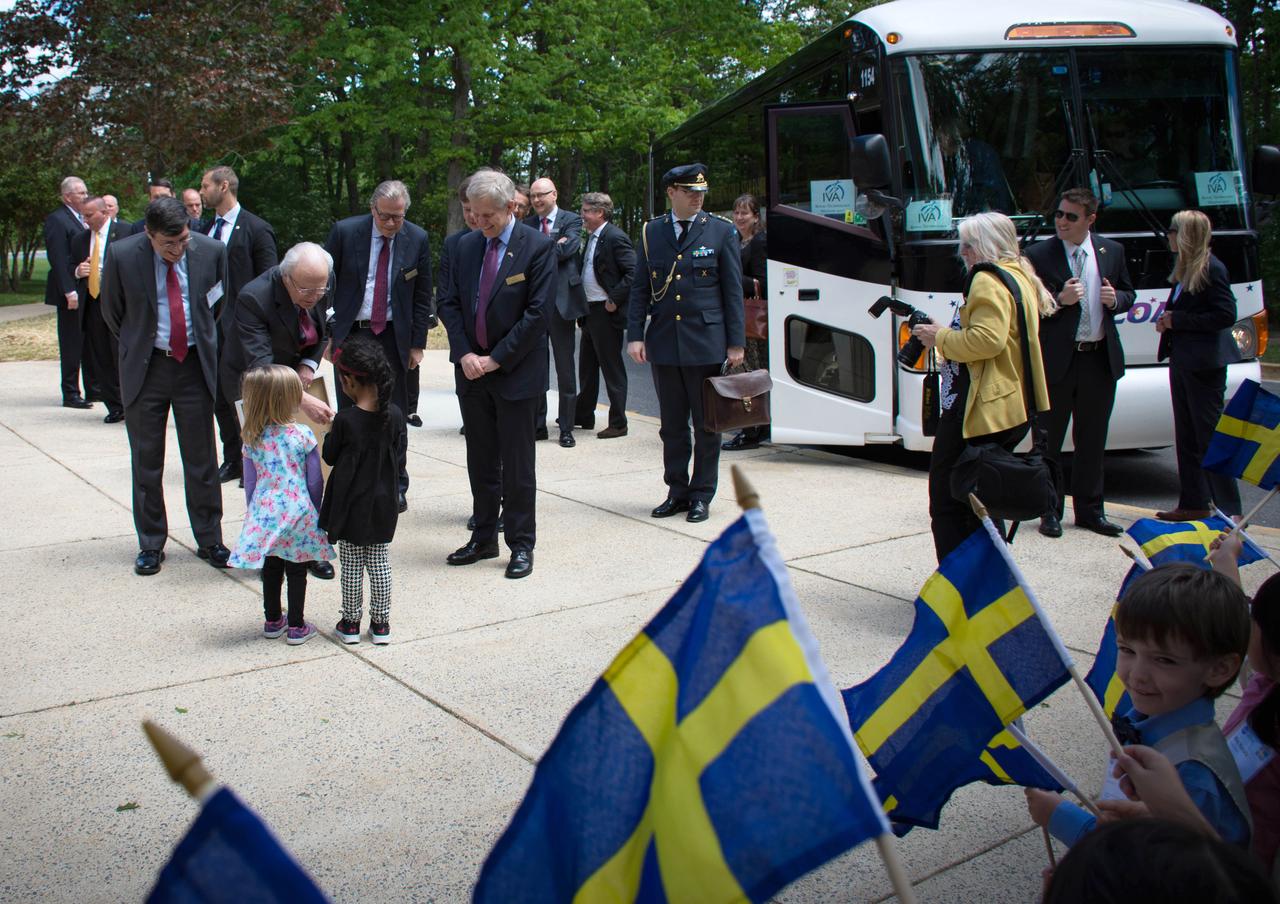
Swedish Delegation Visits GSFC – May 3, 2017 – Goddard Center Director Chris Scolese greets His Majesty Carl XVI Gustaf, King of Sweden outside the entrance to Building 28 at GSFC. The king’s visit came as part his participation in a large delegation that also included the Swedish Ambassador to the United States, both the chairman and president of the Royal Swedish Academy of Engineering Sciences, as well as distinguished members of Sweden’s industrial, academia and professional organizations. For the arrival, approximately 60 children from the Goddard Child Development Center were on hand to greet the Swedish delegation. Photo Credit: NASA/Goddard/Rebecca Roth Read more: <a href="https://go.nasa.gov/2p1rP0h" rel="nofollow">go.nasa.gov/2p1rP0h</a> <b><a href="http://www.nasa.gov/audience/formedia/features/MP_Photo_Guidelines.html" rel="nofollow">NASA image use policy.</a></b> <b><a href="http://www.nasa.gov/centers/goddard/home/index.html" rel="nofollow">NASA Goddard Space Flight Center</a></b> enables NASA’s mission through four scientific endeavors: Earth Science, Heliophysics, Solar System Exploration, and Astrophysics. Goddard plays a leading role in NASA’s accomplishments by contributing compelling scientific knowledge to advance the Agency’s mission. <b>Follow us on <a href="http://twitter.com/NASAGoddardPix" rel="nofollow">Twitter</a></b> <b>Like us on <a href="http://www.facebook.com/pages/Greenbelt-MD/NASA-Goddard/395013845897?ref=tsd" rel="nofollow">Facebook</a></b> <b>Find us on <a href="http://instagrid.me/nasagoddard/?vm=grid" rel="nofollow">Instagram</a></b>
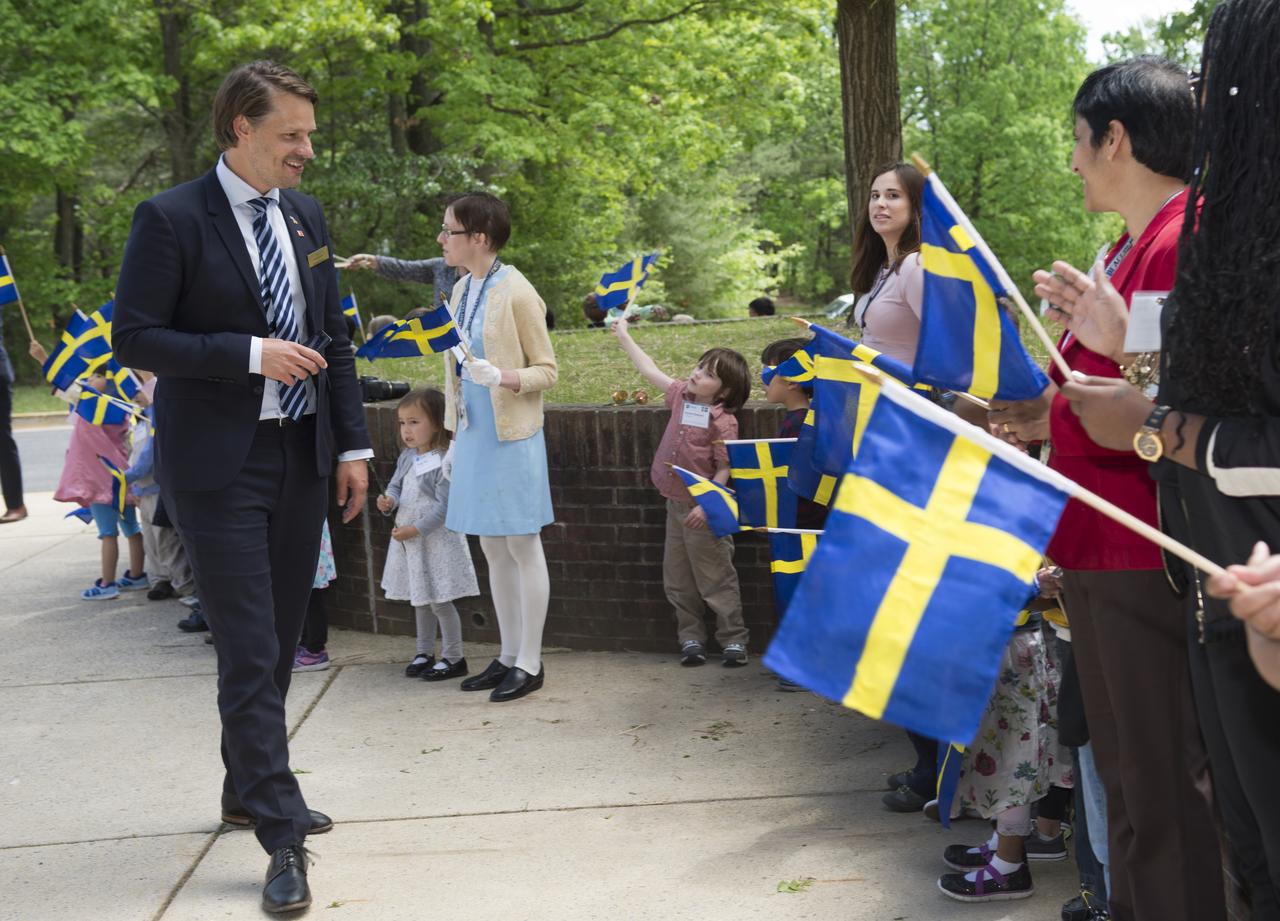
Swedish Delegation Visits GSFC – May 3, 2017 – Goddard Center Director Chris Scolese greets His Majesty Carl XVI Gustaf, King of Sweden outside the entrance to Building 28 at GSFC. The king’s visit came as part his participation in a large delegation that also included the Swedish Ambassador to the United States, both the chairman and president of the Royal Swedish Academy of Engineering Sciences, as well as distinguished members of Sweden’s industrial, academia and professional organizations. For the arrival, approximately 60 children from the Goddard Child Development Center were on hand to greet the Swedish delegation. Credit: NASA/Goddard/Debbie Mccallum Read more: <a href="https://go.nasa.gov/2p1rP0h" rel="nofollow">go.nasa.gov/2p1rP0h</a> <b><a href="http://www.nasa.gov/audience/formedia/features/MP_Photo_Guidelines.html" rel="nofollow">NASA image use policy.</a></b> <b><a href="http://www.nasa.gov/centers/goddard/home/index.html" rel="nofollow">NASA Goddard Space Flight Center</a></b> enables NASA’s mission through four scientific endeavors: Earth Science, Heliophysics, Solar System Exploration, and Astrophysics. Goddard plays a leading role in NASA’s accomplishments by contributing compelling scientific knowledge to advance the Agency’s mission. <b>Follow us on <a href="http://twitter.com/NASAGoddardPix" rel="nofollow">Twitter</a></b> <b>Like us on <a href="http://www.facebook.com/pages/Greenbelt-MD/NASA-Goddard/395013845897?ref=tsd" rel="nofollow">Facebook</a></b> <b>Find us on <a href="http://instagrid.me/nasagoddard/?vm=grid" rel="nofollow">Instagram</a></b>
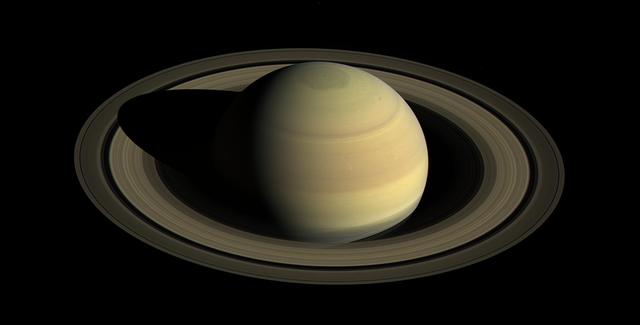
Since NASA's Cassini spacecraft arrived at Saturn in mid-2004, the planet's appearance has changed greatly. The shifting angle of sunlight as the seasons march forward has illuminated the giant hexagon-shaped jet stream around the north polar region, and the subtle bluish hues seen earlier in the mission have continued to fade. Earlier views obtained in 2004 and 2009 (see PIA06077 and PIA11667) demonstrate how drastically the illumination has changed. This view shows Saturn's northern hemisphere in 2016, as that part of the planet nears its northern hemisphere summer solstice in May 2017. Saturn's year is nearly 30 Earth years long, and during its long time there, Cassini has observed winter and spring in the north, and summer and fall in the south. The spacecraft will complete its mission just after northern summer solstice, having observed long-term changes in the planet's winds, temperatures, clouds and chemistry. Cassini scanned across the planet and its rings on April 25, 2016, capturing three sets of red, green and blue images to cover this entire scene showing the planet and the main rings. The images were obtained using Cassini's wide-angle camera at a distance of approximately 1.9 million miles (3 million kilometers) from Saturn and at an elevation of about 30 degrees above the ring plane. The view looks toward the sunlit side of the rings from a sun-Saturn-spacecraft angle, or phase angle, of 55 degrees. Image scale on Saturn is about 111 miles (178 kilometers) per pixel. The exposures used to make this mosaic were obtained just prior to the beginning of a 44-hour movie sequence. http://photojournal.jpl.nasa.gov/catalog/PIA21046
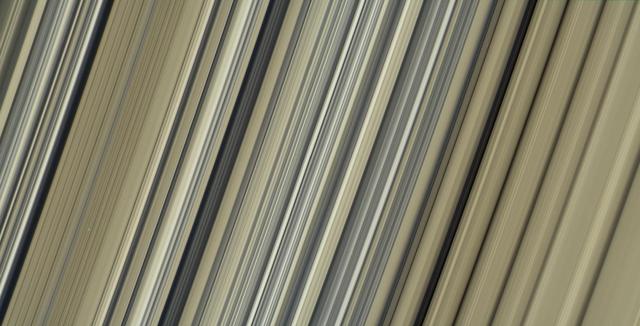
These are the highest-resolution color images of any part of Saturn's rings, to date, showing a portion of the inner-central part of the planet's B Ring. The view is a mosaic of two images that show a region that lies between 61,300 and 65,600 miles (98,600 and 105,500 kilometers) from Saturn's center. This image is a natural color composite, created using images taken with red, green and blue spectral filters. The pale tan color is generally not perceptible with the naked eye in telescope views, especially given that Saturn has a similar hue. The material responsible for bestowing this color on the rings -- which are mostly water ice and would otherwise appear white -- is a matter of intense debate among ring scientists that will hopefully be settled by new in-situ observations before the end of Cassini's mission. The different ringlets seen here are part of what is called the "irregular structure" of the B ring. Cassini radio occultations of the rings have shown that these features have extremely sharp boundaries on even smaller scales (radially, or along the direction outward from Saturn) than the camera can resolve here. Closer to Saturn, the irregular structures become fuzzier and more rounded, less opaque, and their color contrast diminishes. The narrow ringlets in the middle of this scene are each about 25 miles (40 kilometers) wide, and the broader bands at right are about 200 to 300 miles (300 to 500 kilometers) across. It remains unclear exactly what causes the variable brightness of these ringlets and bands -- the basic brightness of the ring particles themselves, shadowing on their surfaces, their absolute abundance, and how densely the particles are packed, may all play a role. The second image (Figure 1) is a color-enhanced version. Blue colors represent areas where the spectrum at visible wavelengths is less reddish (meaning the spectrum is flatter toward red wavelengths), while red colors represent areas that are spectrally redder (meaning the spectrum has a steeper spectrum toward red wavelengths). Observations from the Voyager mission and Cassini's visual and infrared mapping spectrometer previously showed these color variations at lower resolution, but it was not known that such well-defined color contrasts would be this sharply defined down to the scale (radial scale) of a couple of miles or kilometers, as seen here. Analysis of additional images from this observation, taken using infrared spectral filters sensitive to absorption of light by water ice, indicates that the areas that appear more visibly reddish in the color-enhanced version are also richer in water ice. The third image (Figure 2) is a composite of the "true" and "enhanced" color images for easy comparison. This image was taken on July 6, 2017, with the Cassini spacecraft narrow-angle camera. The image was acquired on the sunlit side of the rings from a distance of 47,000 miles (76,000 kilometers) away from the area pictured. The image scale is about 2 miles (3 kilometers) per pixel. The phase angle, or sun-ring-spacecraft angle, is 90 degrees. https://photojournal.jpl.nasa.gov/catalog/PIA21628