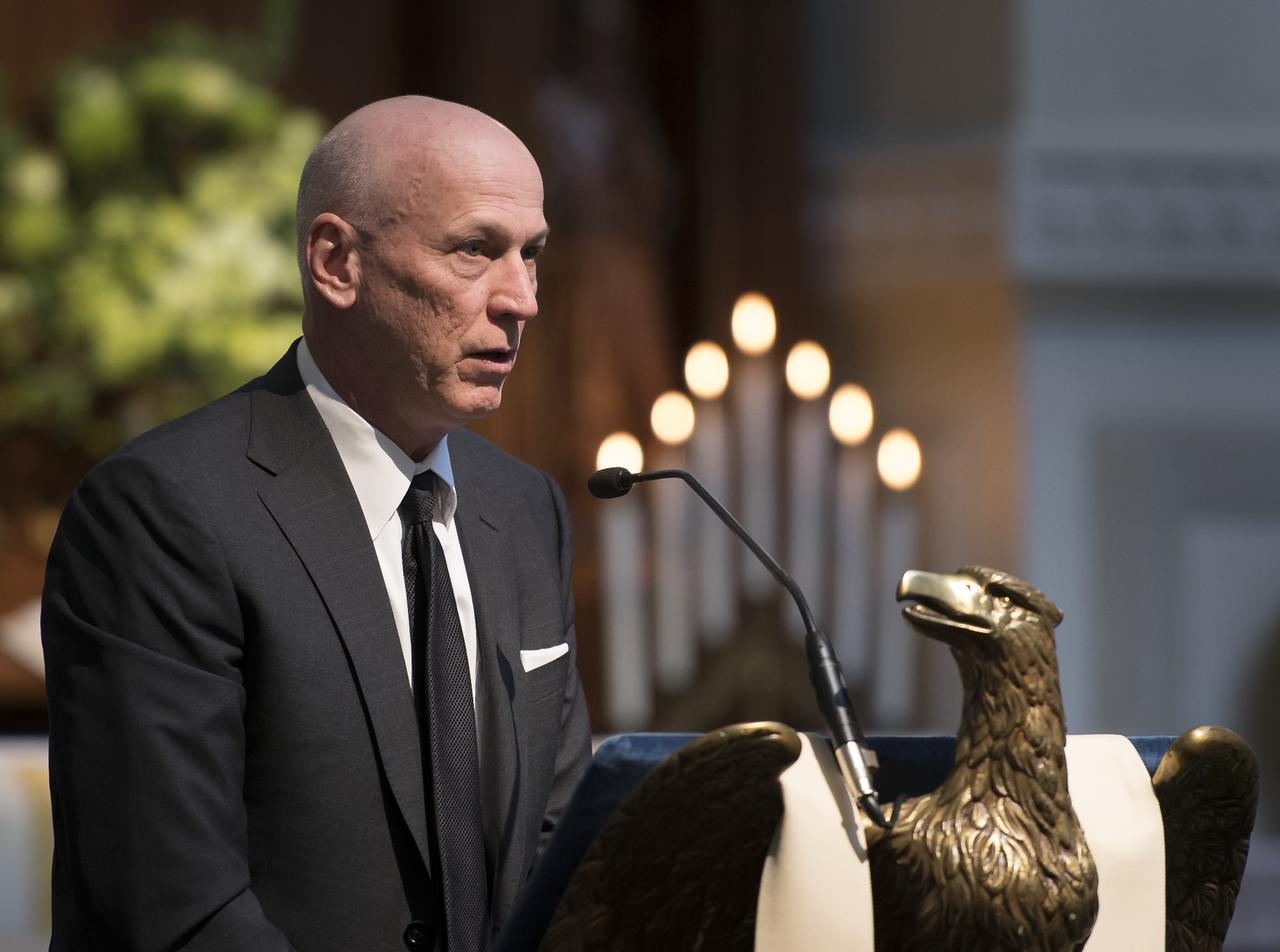
Bruce McCandless III gives remarks during the funeral service for his father, former NASA astronaut Captain Bruce McCandless II, USN (Ret.), Tuesday, Jan. 16, 2018 at the United States Naval Academy Chapel in Annapolis, Maryland. Photo Credit: (NASA/Bill Ingalls)
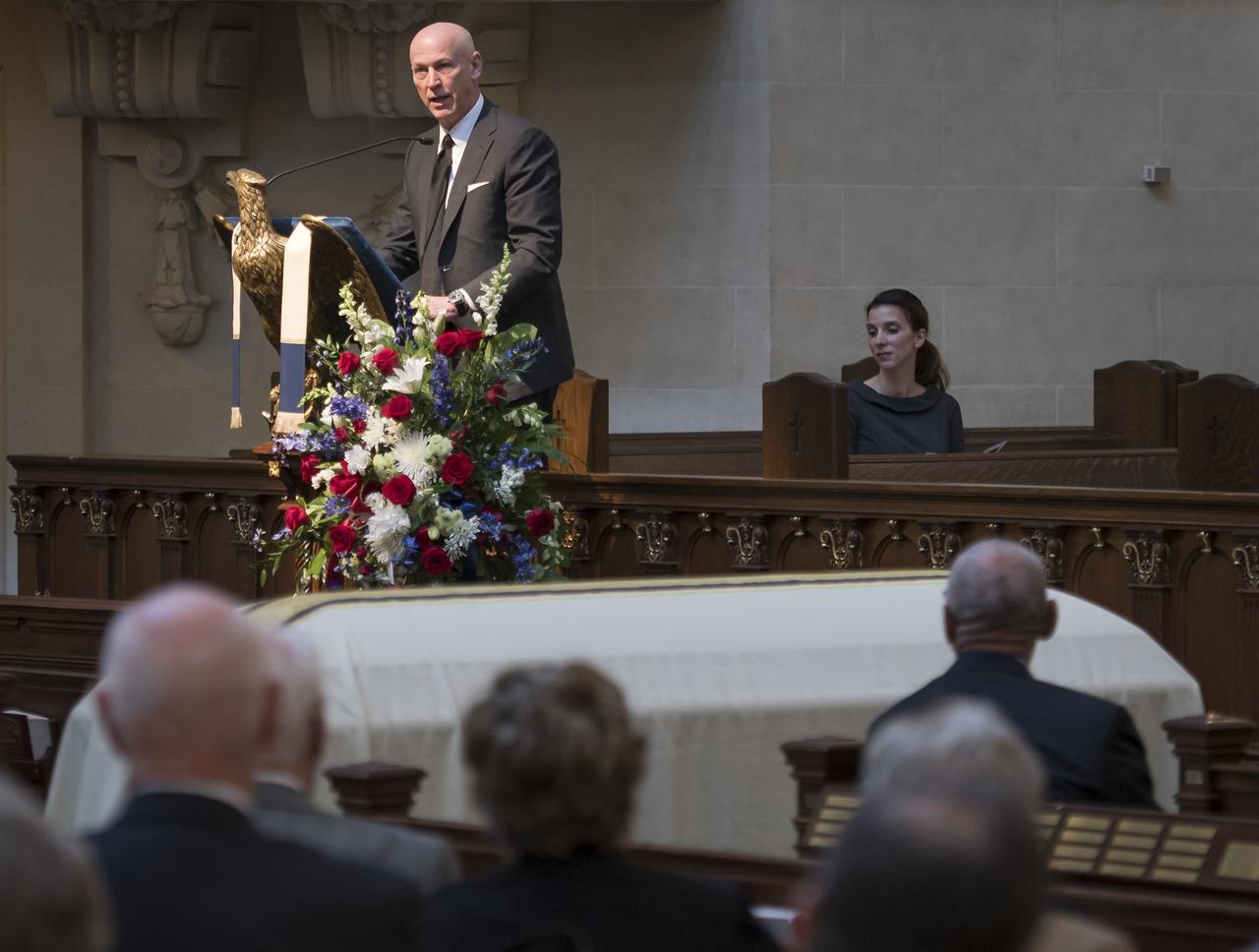
Bruce McCandless III gives remarks during the funeral service for his father, former NASA astronaut Captain Bruce McCandless II, USN (Ret.), Tuesday, Jan. 16, 2018 at the United States Naval Academy Chapel in Annapolis, Maryland. Photo Credit: (NASA/Bill Ingalls)
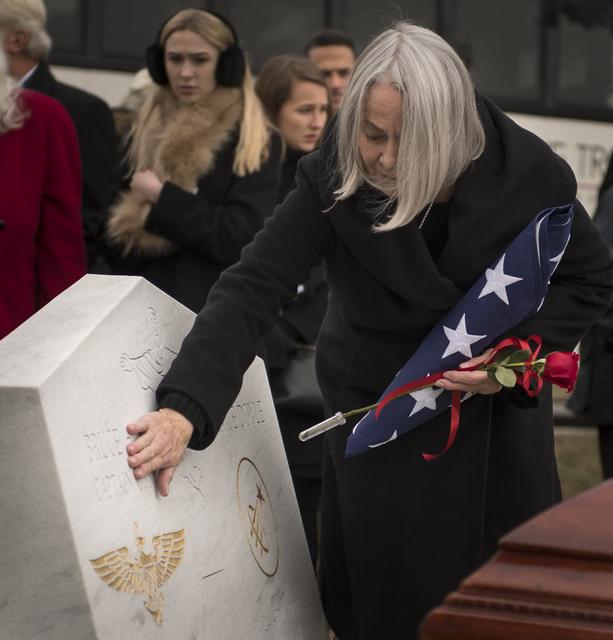
Ellen Shields McCandless, wife of former NASA astronaut Captain Bruce McCandless II, USN (Ret.), left, pays her respects during her husband's interment service, Tuesday, Jan. 16, 2018 at the United States Naval Academy Cemetery in Annapolis, Maryland. Photo Credit: (NASA/Bill Ingalls)
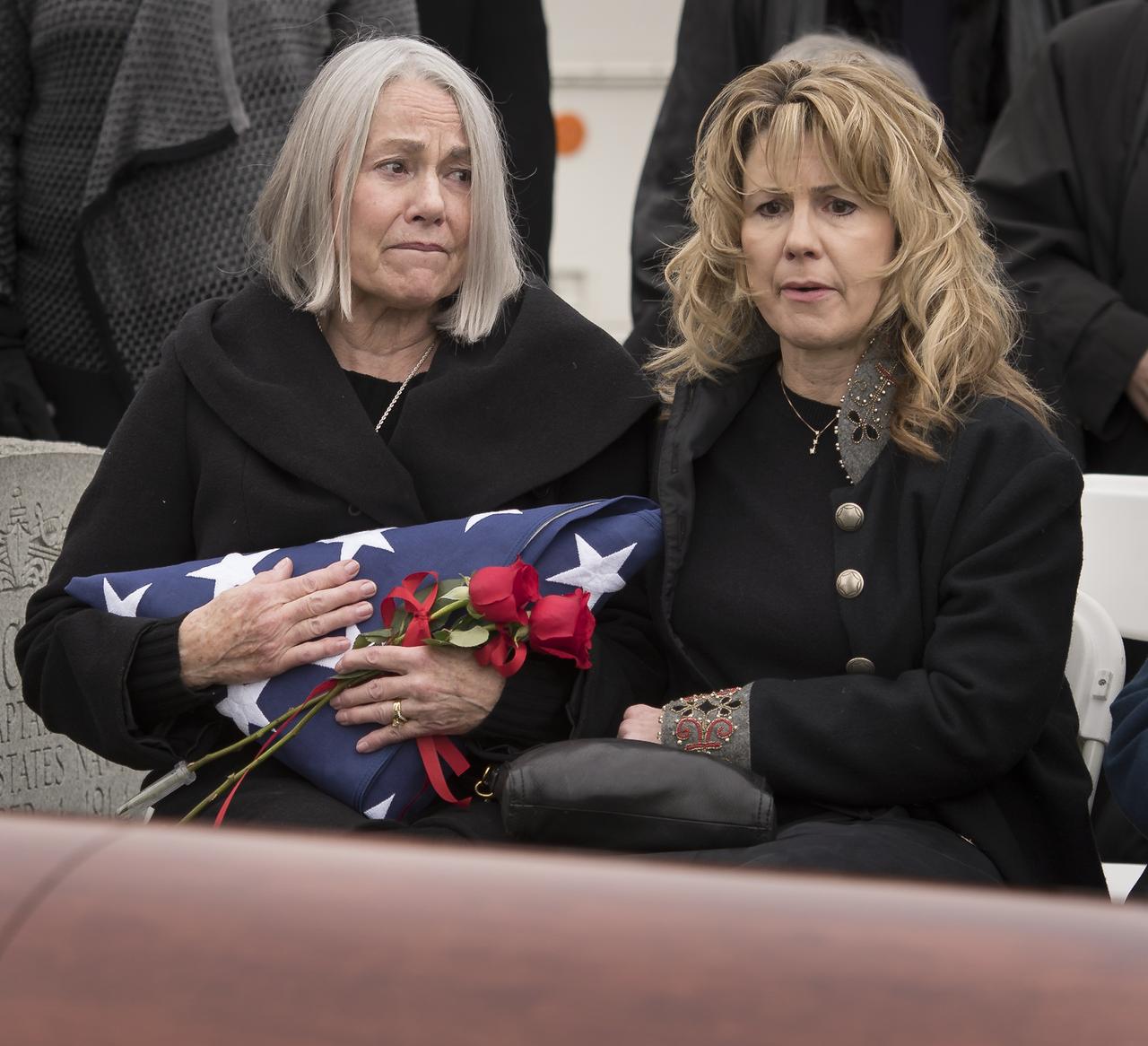
Ellen Shields McCandless, wife of former NASA astronaut Captain Bruce McCandless II, USN (Ret.), left, is seen during her husband's interment service, Tuesday, Jan. 16, 2018 at the United States Naval Academy Cemetery in Annapolis, Maryland. Photo Credit: (NASA/Bill Ingalls)
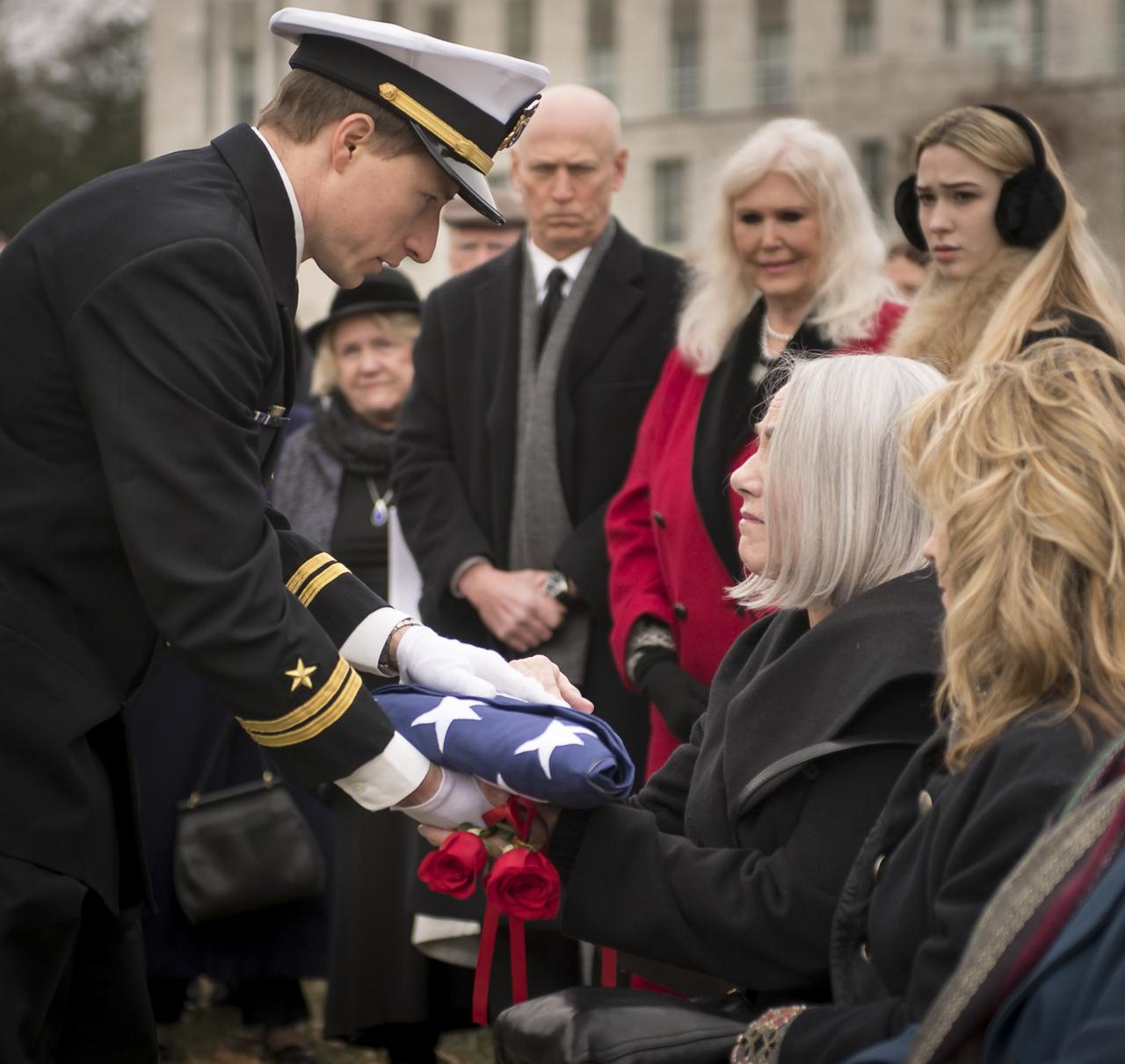
The flag that draped the casket of former NASA astronaut Captain Bruce McCandless II, USN (Ret.) is presented to his wife Ellen Shields McCandless during his interment service, Tuesday, Jan. 16, 2018 at the United States Naval Academy Cemetery in Annapolis, Maryland. Photo Credit: (NASA/Bill Ingalls)
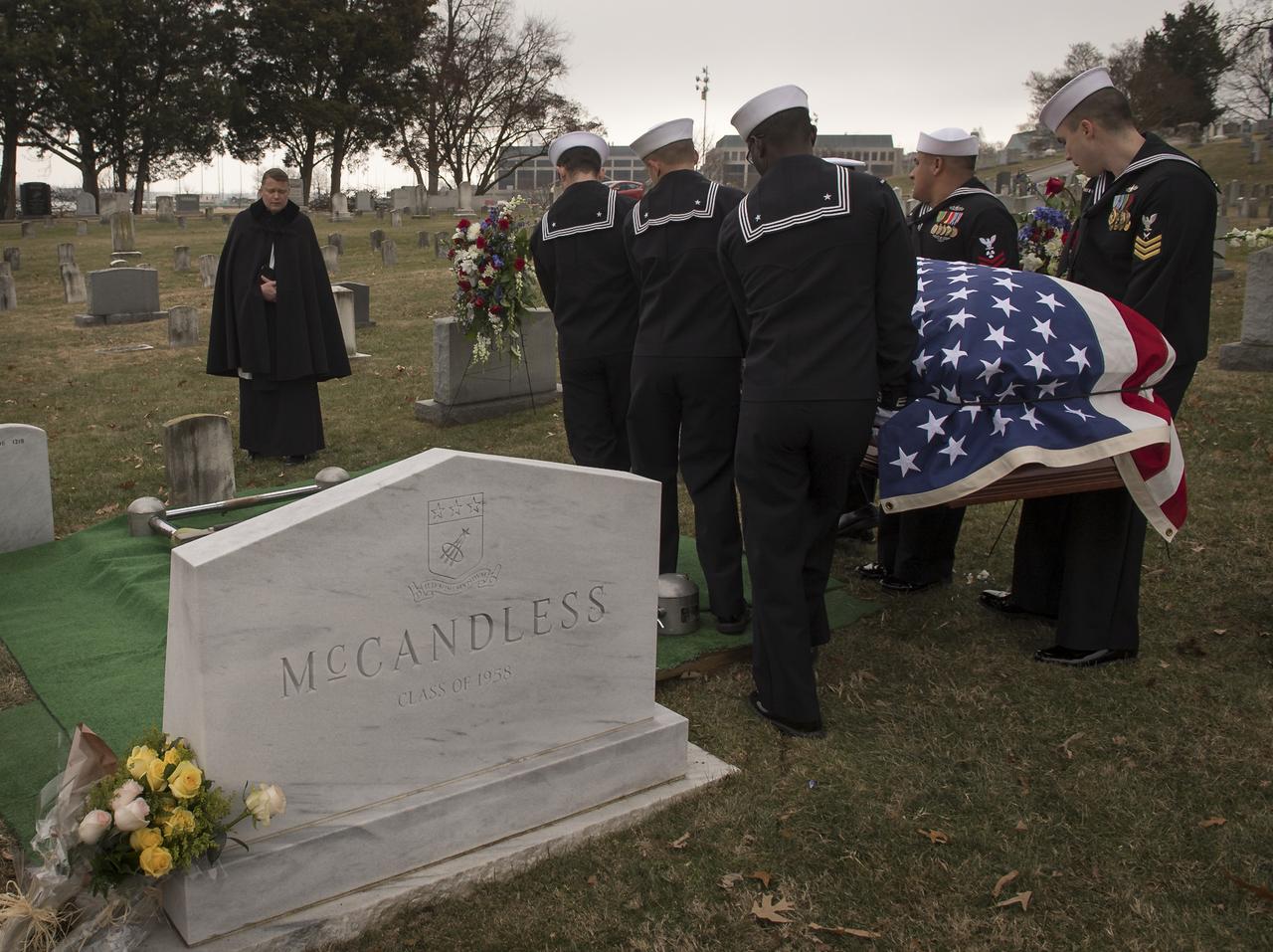
Funeral service for former NASA astronaut Captain Bruce McCandless II, USN (Ret.), Tuesday, Jan. 16, 2018 at the United States Naval Academy Cemetery in Annapolis, Maryland. Photo Credit: (NASA/Bill Ingalls)
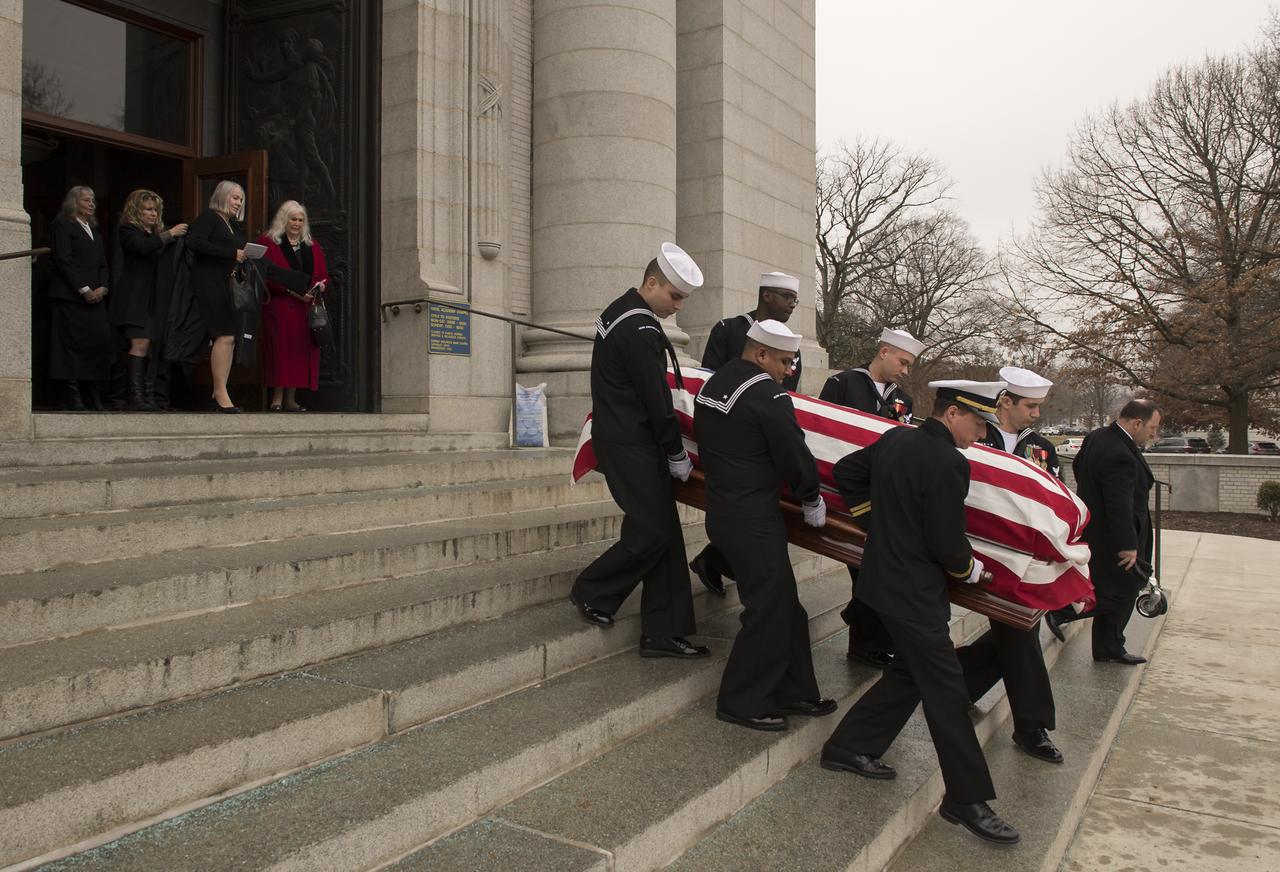
Funeral service for former NASA astronaut Captain Bruce McCandless II, USN (Ret.), Tuesday, Jan. 16, 2018 at the United States Naval Academy Chapel in Annapolis, Maryland. Photo Credit: (NASA/Bill Ingalls)
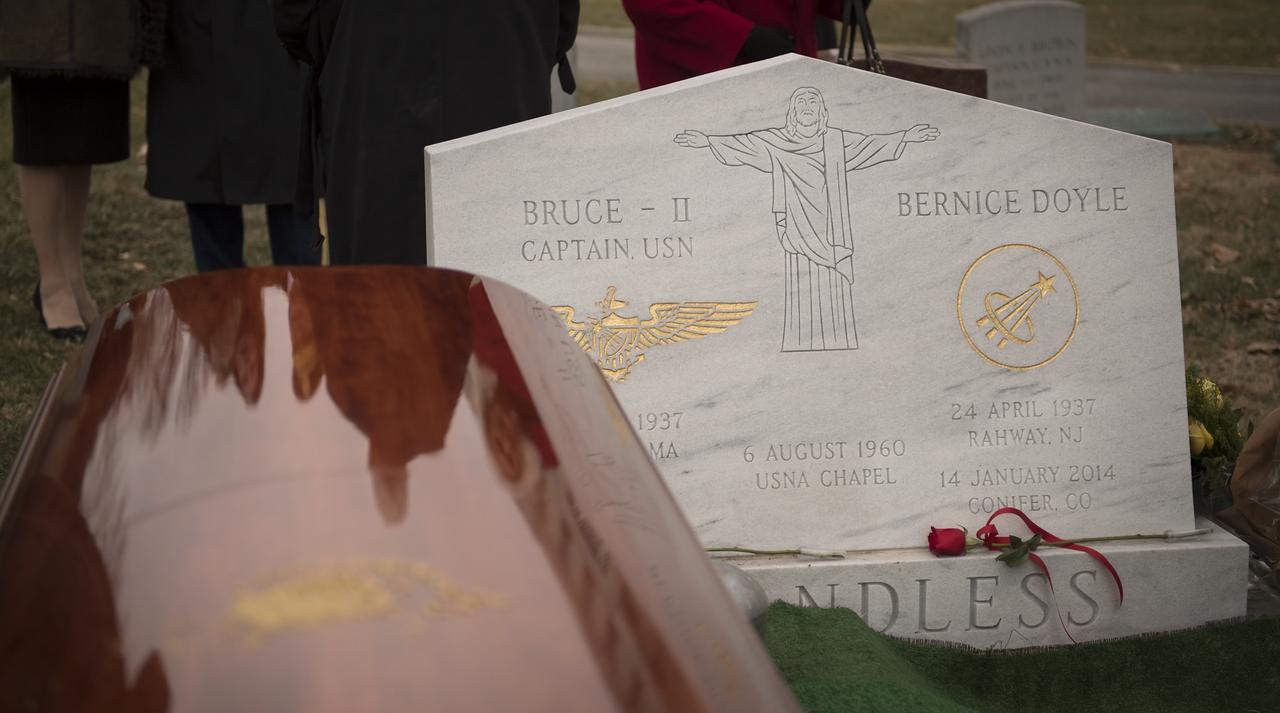
Interment service for former NASA astronaut Captain Bruce McCandless II, USN (Ret.), Tuesday, Jan. 16, 2018 at the United States Naval Academy Cemetery in Annapolis, Maryland. Photo Credit: (NASA/Bill Ingalls)
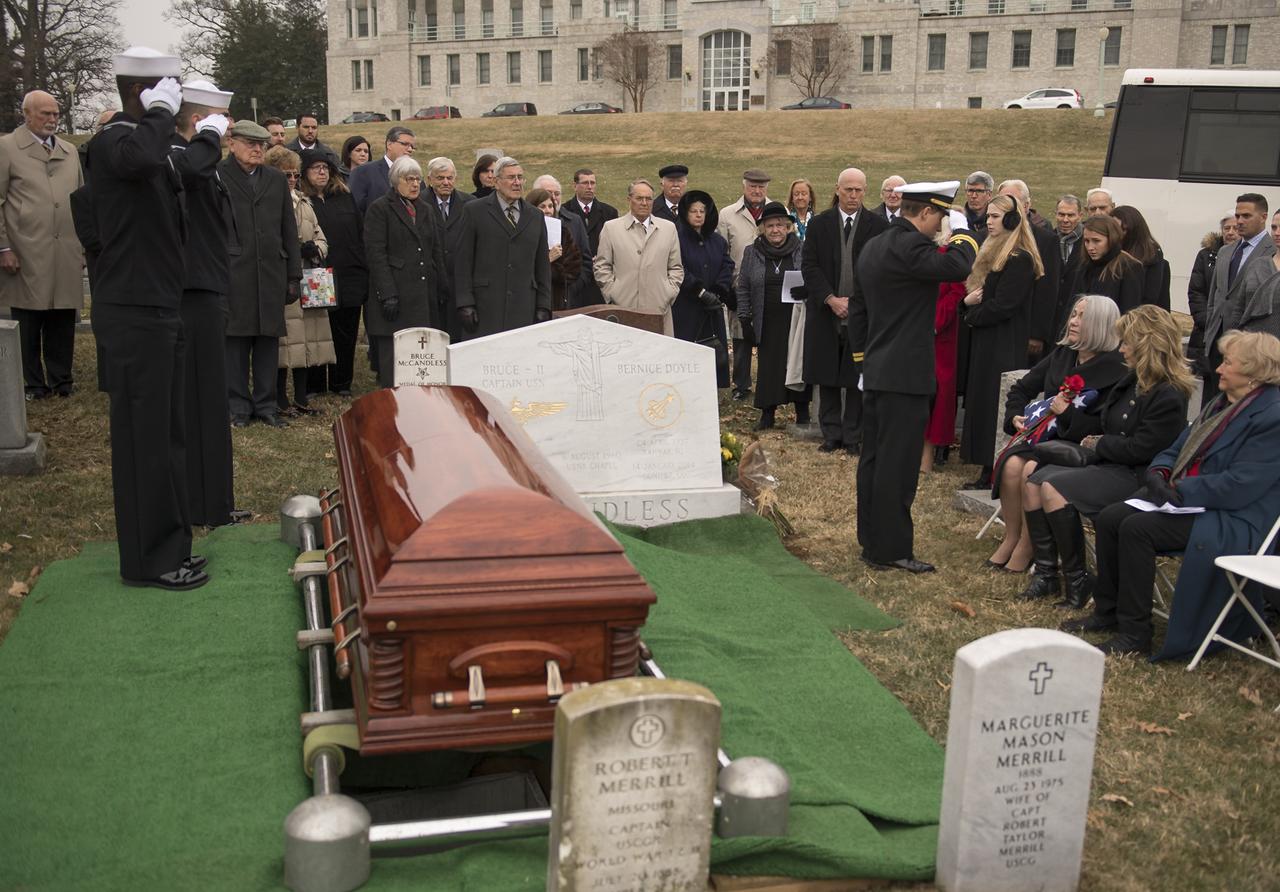
Interment service for former NASA astronaut Captain Bruce McCandless II, USN (Ret.), Tuesday, Jan. 16, 2018 at the United States Naval Academy Cemetery in Annapolis, Maryland. Photo Credit: (NASA/Bill Ingalls)
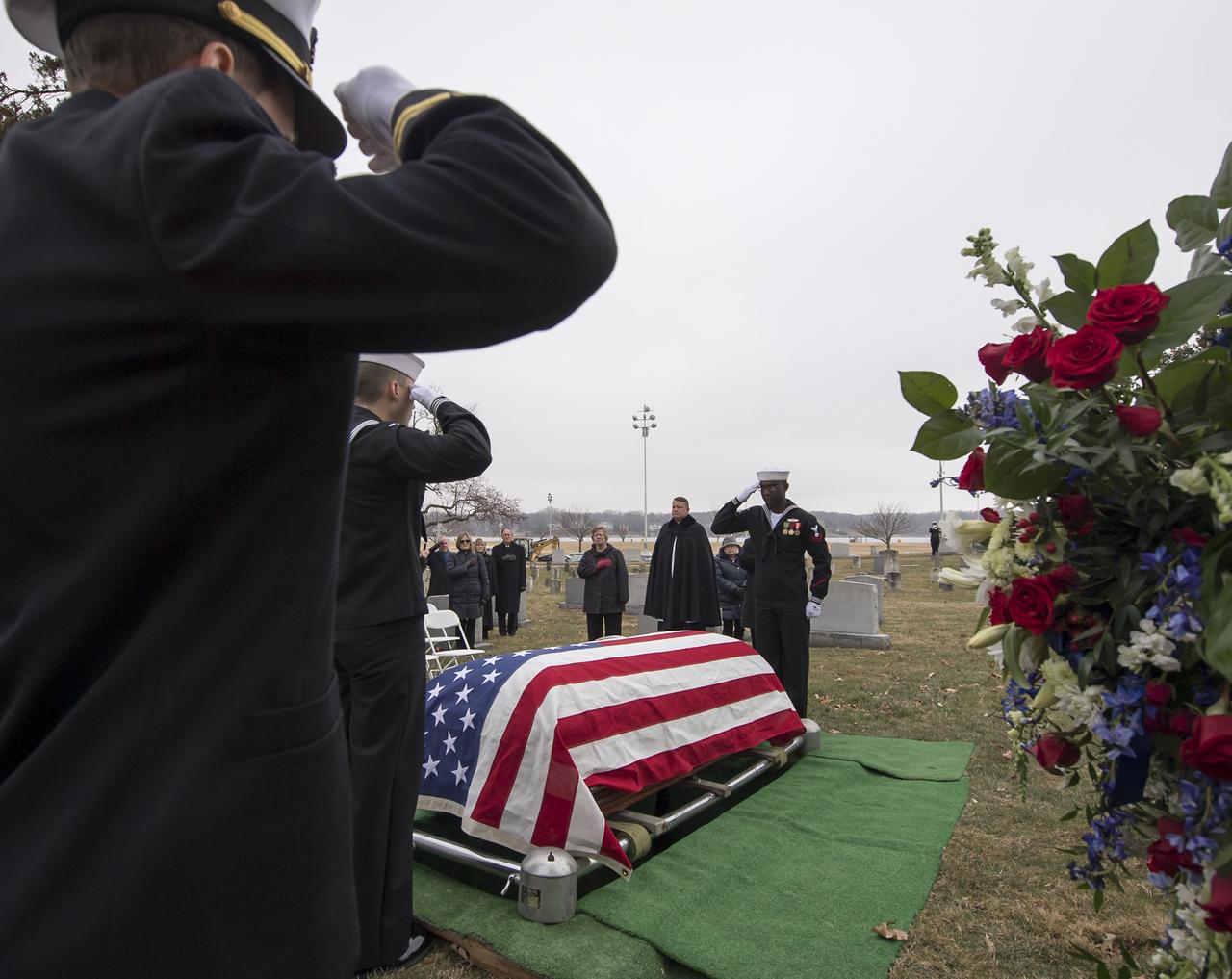
Funeral service for former NASA astronaut Captain Bruce McCandless II, USN (Ret.), Tuesday, Jan. 16, 2018 at the United States Naval Academy Cemetery in Annapolis, Maryland. Photo Credit: (NASA/Bill Ingalls)
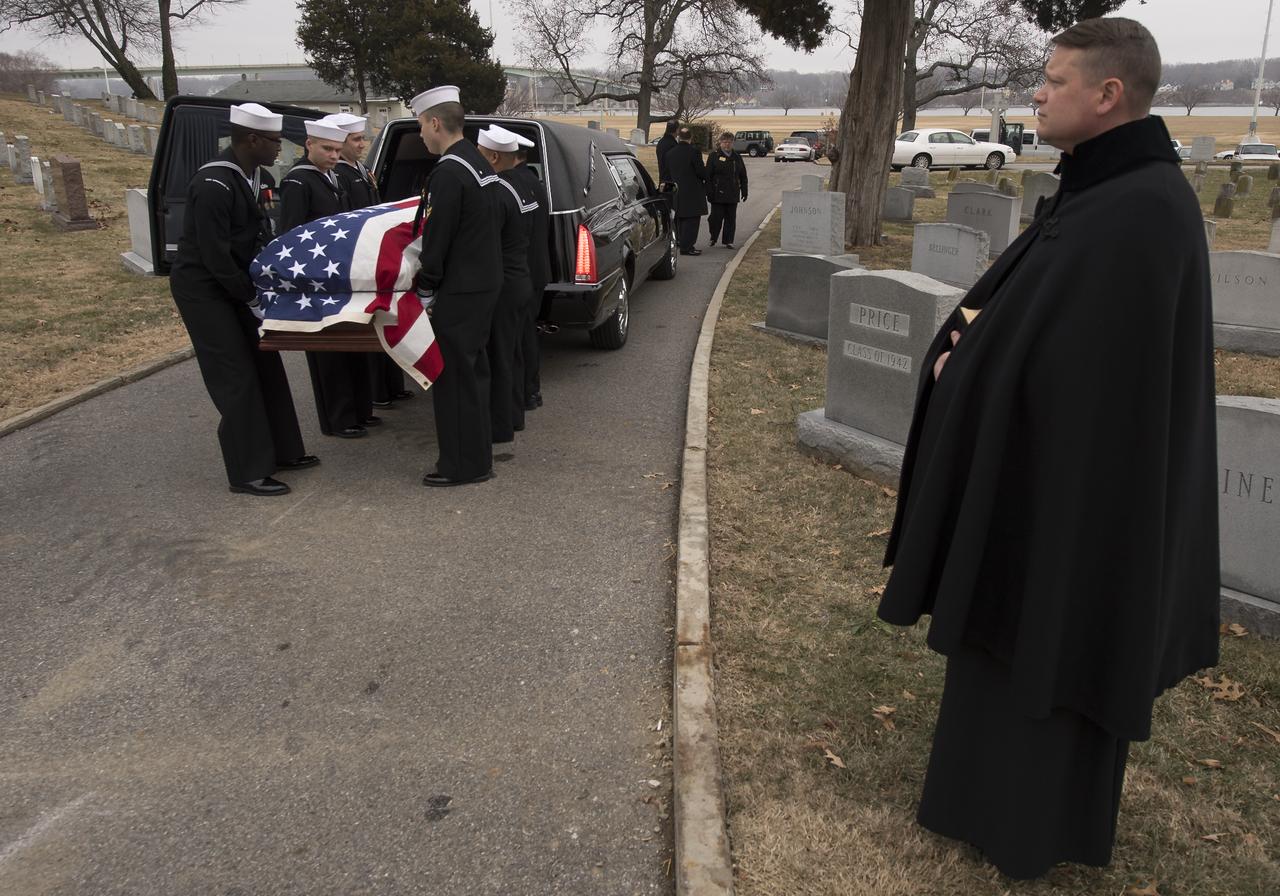
Funeral service for former NASA astronaut Captain Bruce McCandless II, USN (Ret.), Tuesday, Jan. 16, 2018 at the United States Naval Academy Cemetery in Annapolis, Maryland. Photo Credit: (NASA/Bill Ingalls)
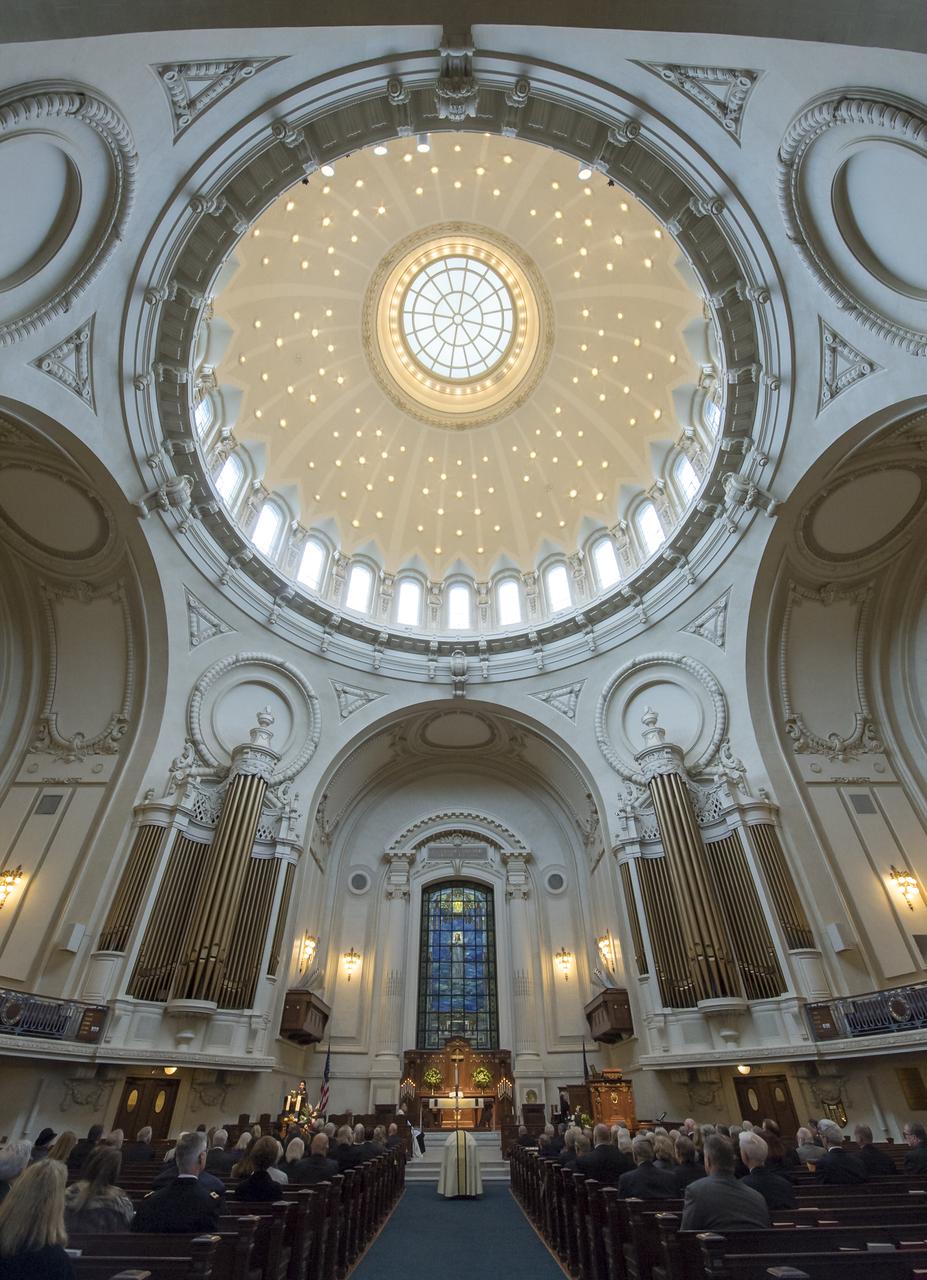
Funeral service for former NASA astronaut Captain Bruce McCandless II, USN (Ret.), Tuesday, Jan. 16, 2018 at the United States Naval Academy Chapel in Annapolis, Maryland. Photo Credit: (NASA/Bill Ingalls)
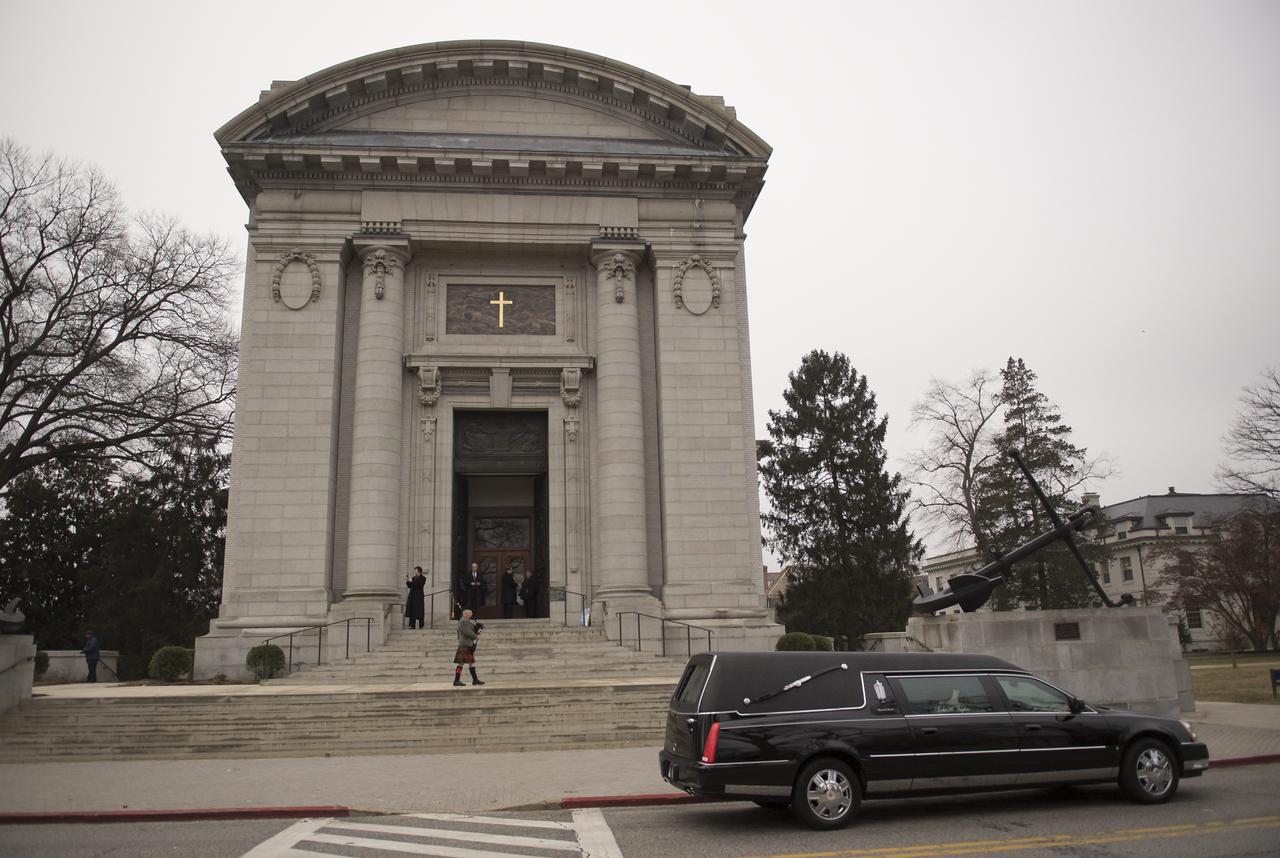
Funeral service for former NASA astronaut Captain Bruce McCandless II, USN (Ret.), Tuesday, Jan. 16, 2018 at the United States Naval Academy Chapel in Annapolis, Maryland. Photo Credit: (NASA/Bill Ingalls)
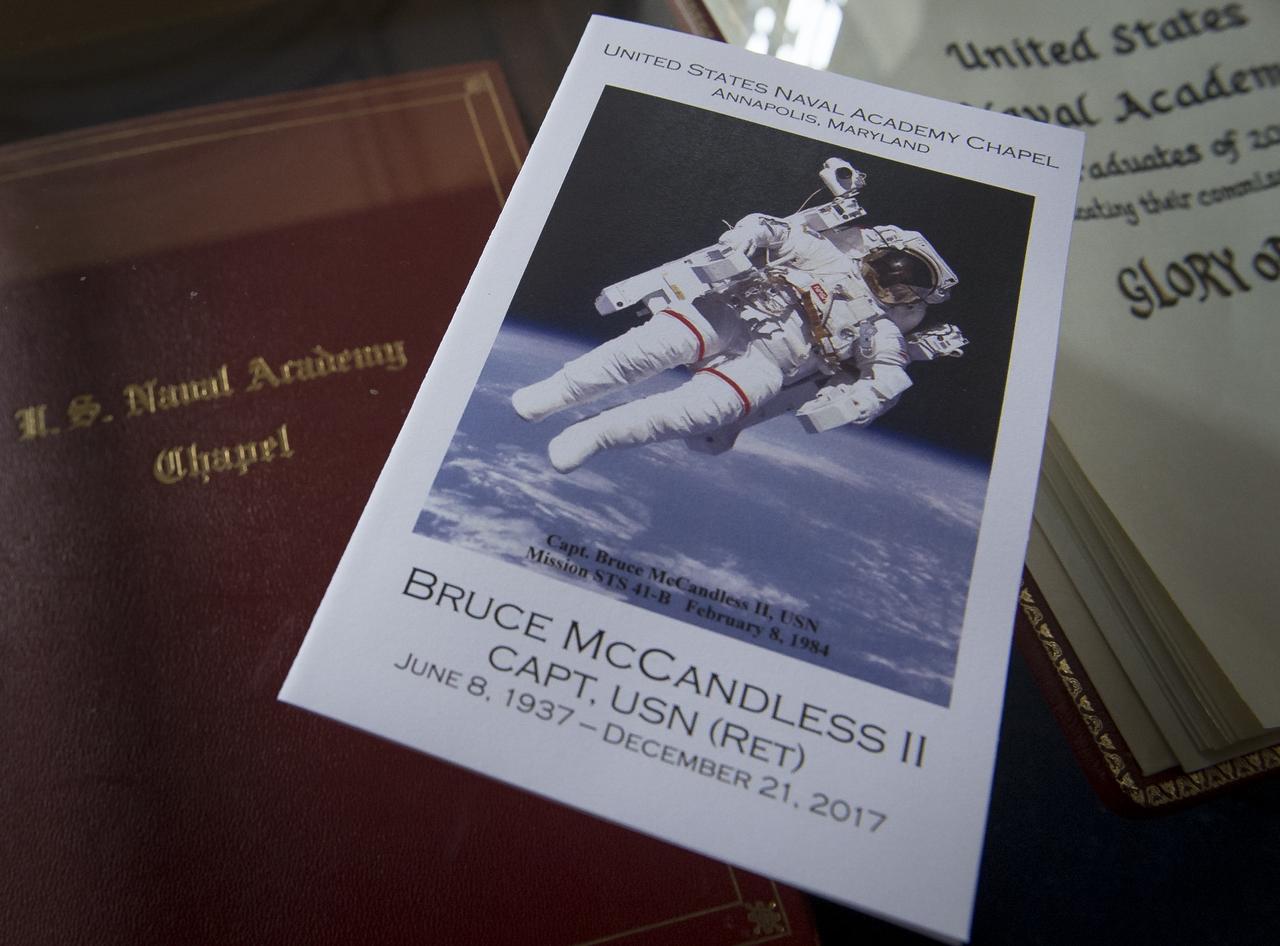
Program for the funeral service of former NASA astronaut Captain Bruce McCandless II, USN (Ret.), Tuesday, Jan. 16, 2018 at the United States Naval Academy Chapel in Annapolis, Maryland. Photo Credit: (NASA/Bill Ingalls)
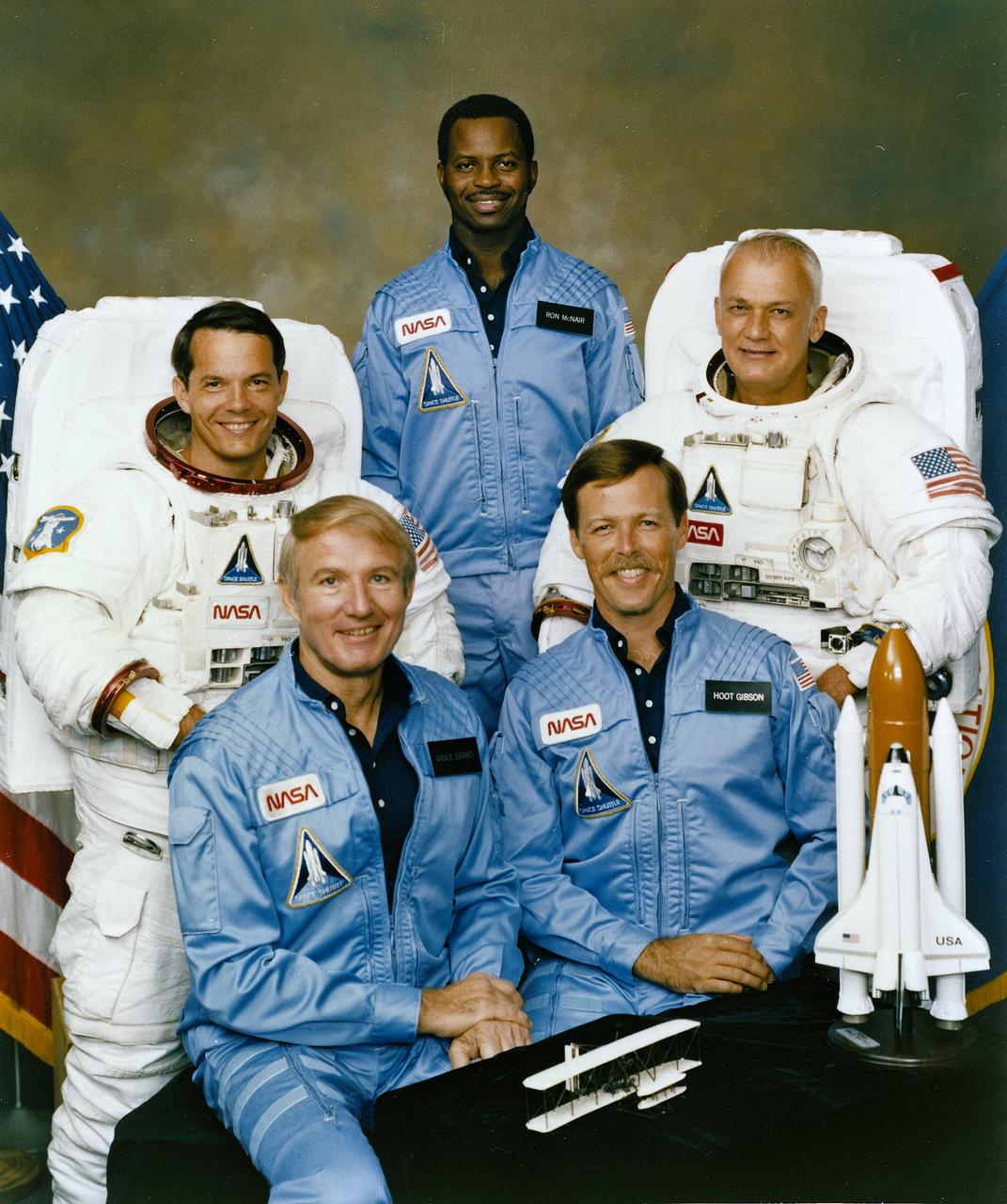
The crew assigned to the STS-41B (STS-11) mission included (seated left to right) Vance D. Brand, commander; and Robert L. Gibson, pilot. Standing left to right are mission specialists Robert L. Stewart, Ronald E. McNair, and Bruce McCandless. Launched aboard the Space Shuttle Challenger on February 3, 1984 at 8:00:00 am (EST), the STS-41B mission marked the first untethered space walks which were performed by McCandless and Stewart. The crew deployed the WESTAR-VI and PALAPA-B2 satellites.
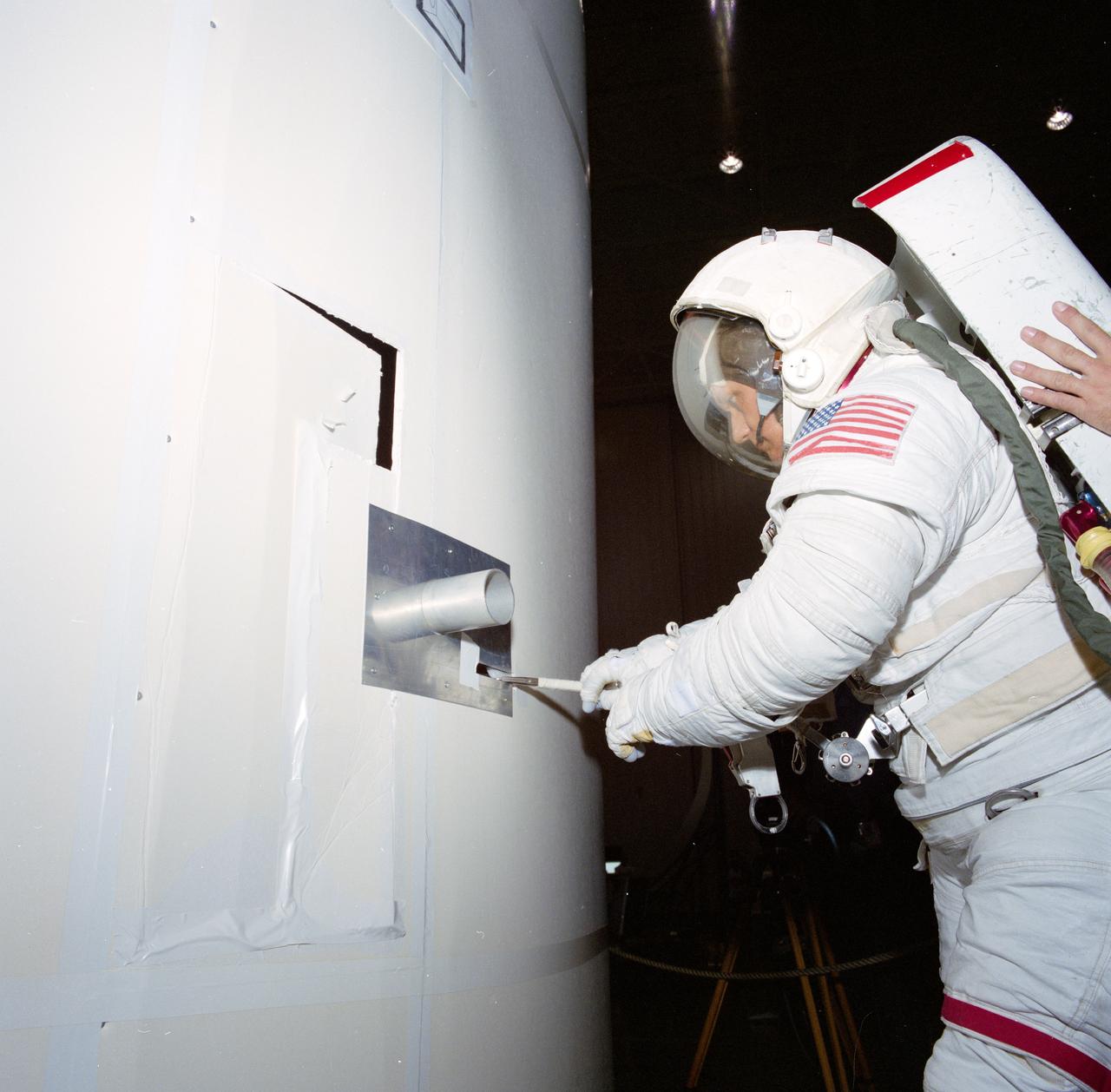
S85-30800 (14 April 1985) --- Astronaut Bruce McCandless II tests one of the possible methods of attempting to activate a switch on the Syncom-IV (LEASAT) satellite released April 13 into space from the Space Shuttle Discovery. The communications spacecraft failed to behave properly upon release and NASA officials and satellite experts are considering possible means of repair. McCandless was using a full scale mockup of the satellite in the Johnson Space Center's (JSC) mockup and integration laboratory.
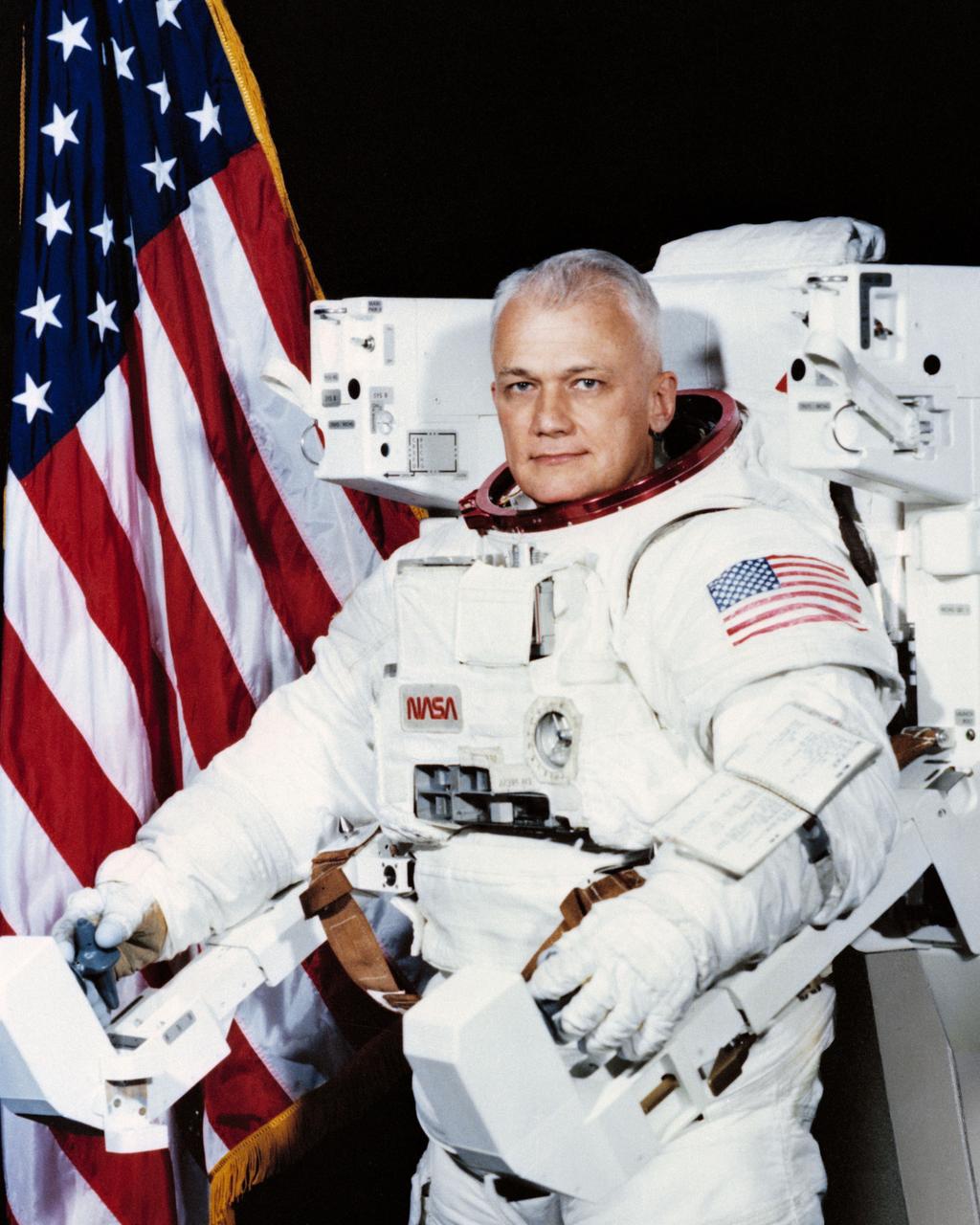
S82-38442 (October 1982) --- Astronaut Bruce McCandless II.
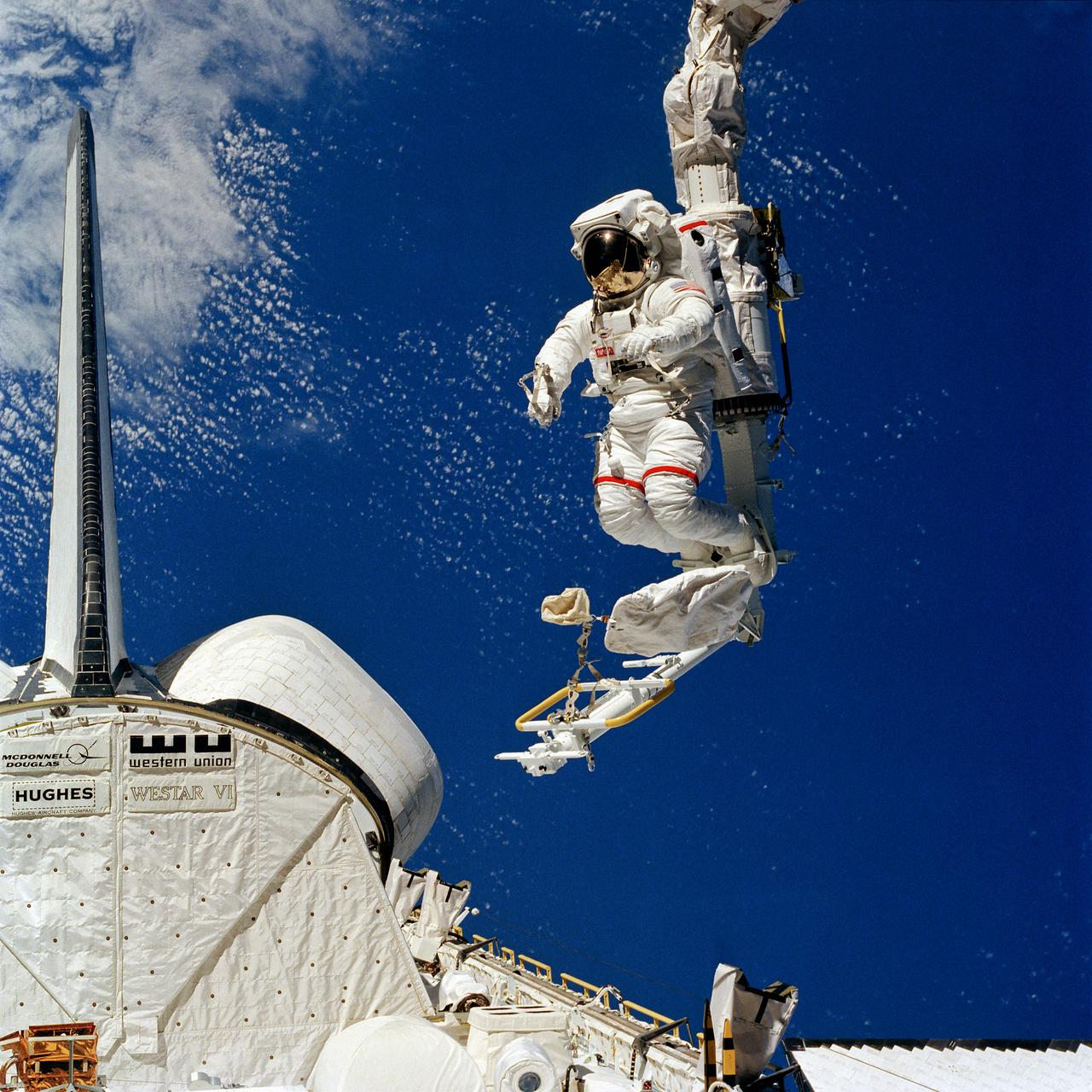
S84-27040 (7 Feb 1984) --- Some have called it NASA's first "cherry picker" in space. Others simply call it the mobile foot restraint (MFR) connected to the remote manipulator system (RMS). Astronaut Bruce McCandless II, pictured leaning out into space as his feet are anchored in the MFR, and moved around by the RMS, calls it a look of things to come. The aft portion of the Challenger, to which the RMS is connected, is seen in lower left corner. This photograph is one of a sequence showing McCandless in the device. On this same EVA, McCandless also initiated use of the manned maneuvering unit (MMU), not pictured here, a nitrogen-propelled back pack apparatus allowing for free movement in space.
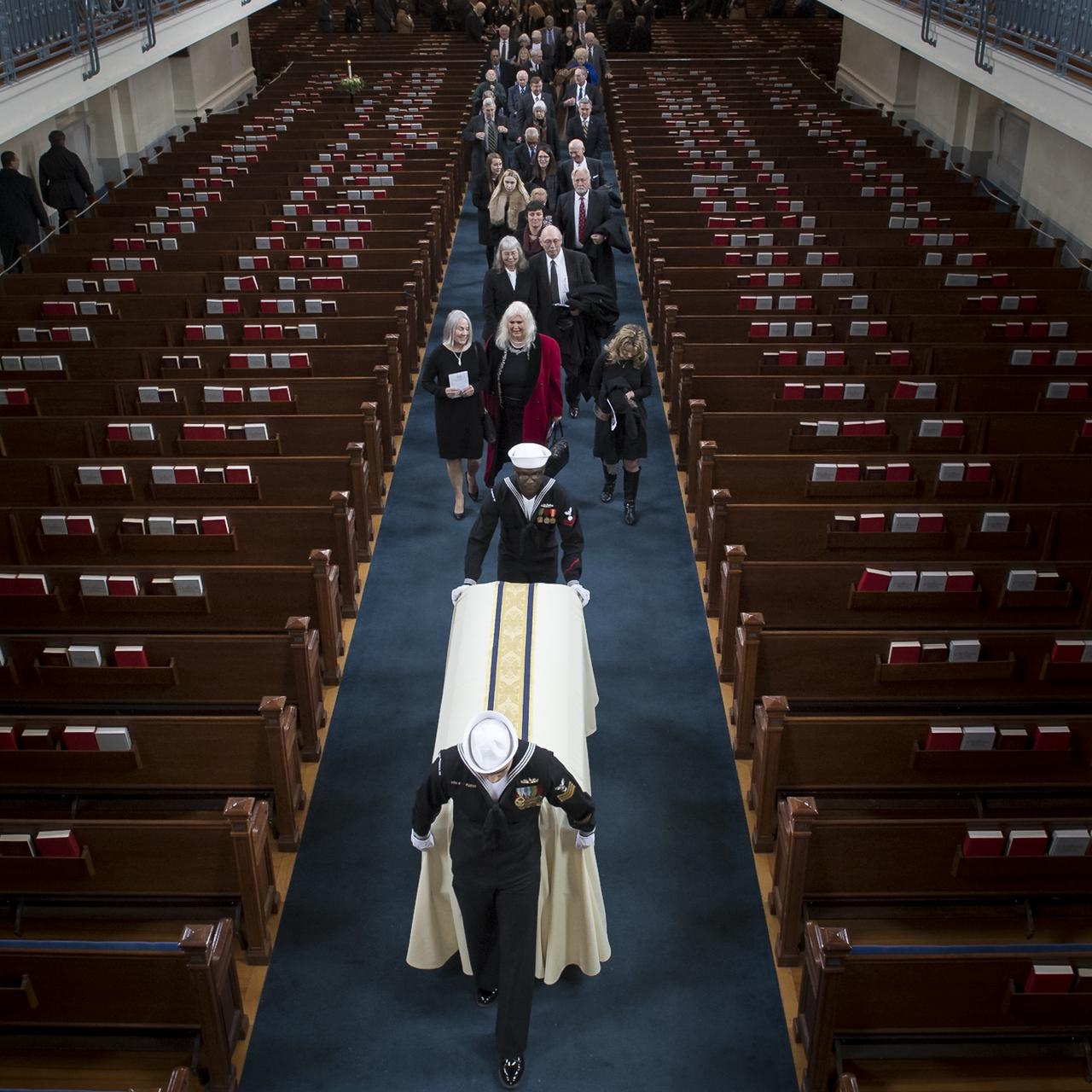
Family and friends depart the funeral service for former NASA astronaut Captain Bruce McCandless II, USN (Ret.), Tuesday, Jan. 16, 2018 at the United States Naval Academy Chapel in Annapolis, Maryland. Photo Credit: (NASA/Bill Ingalls)
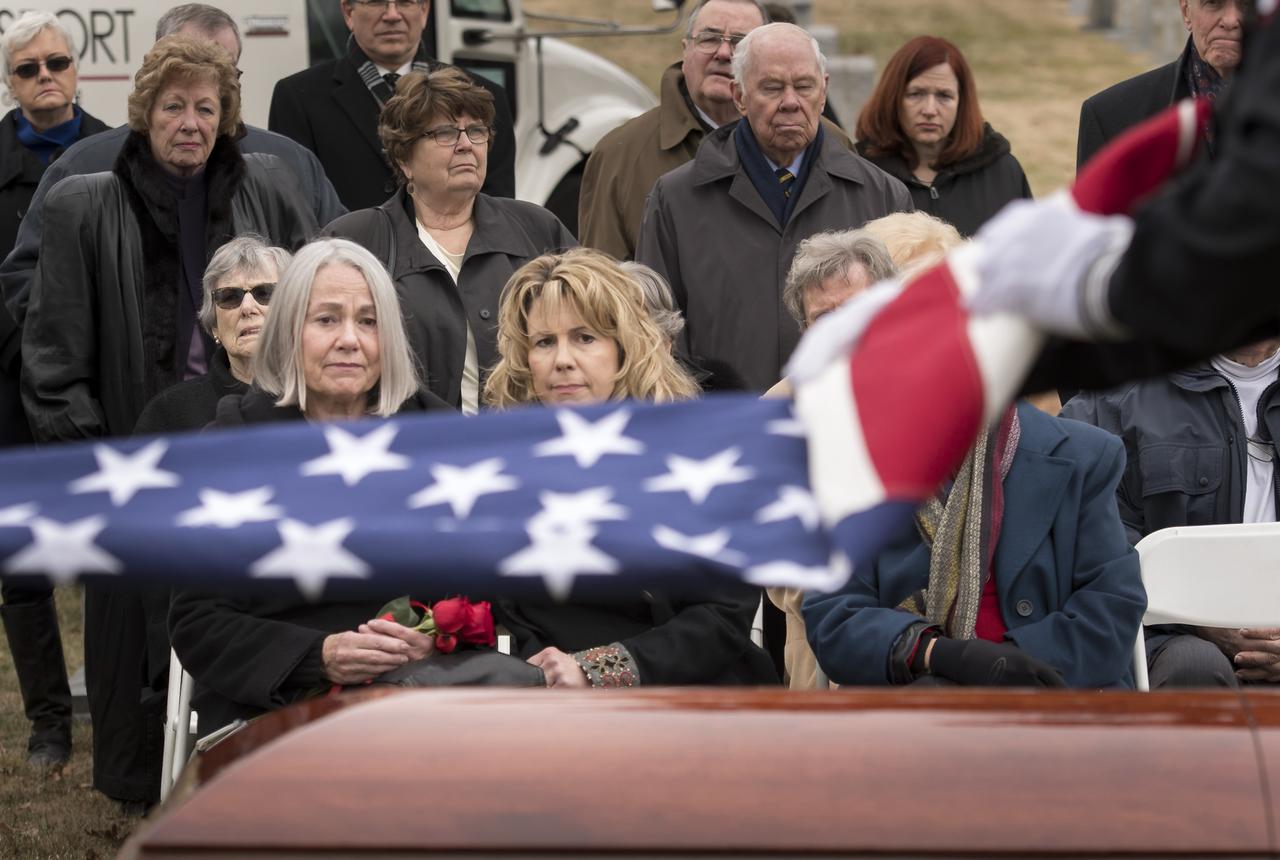
Family and friends watch as the flag that draped the casket of former NASA astronaut Captain Bruce McCandless II, USN (Ret.) is folded during his interment service, Tuesday, Jan. 16, 2018 at the United States Naval Academy Cemetery in Annapolis, Maryland. Photo Credit: (NASA/Bill Ingalls)
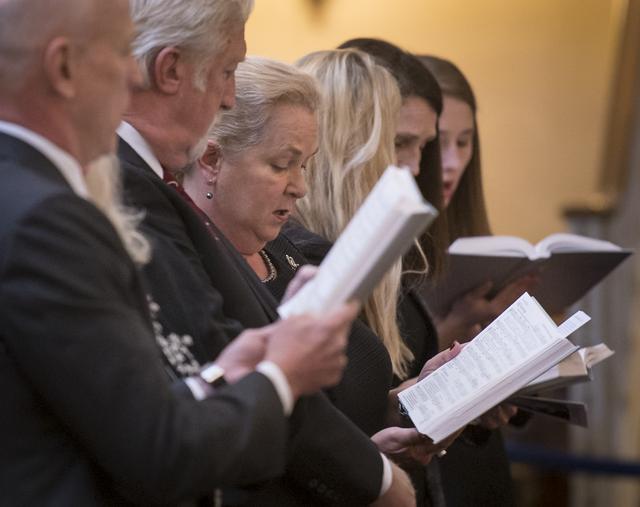
Family and friends attend the funeral service for former NASA astronaut Captain Bruce McCandless II, USN (Ret.), Tuesday, Jan. 16, 2018 at the United States Naval Academy Chapel in Annapolis, Maryland. Photo Credit: (NASA/Bill Ingalls)
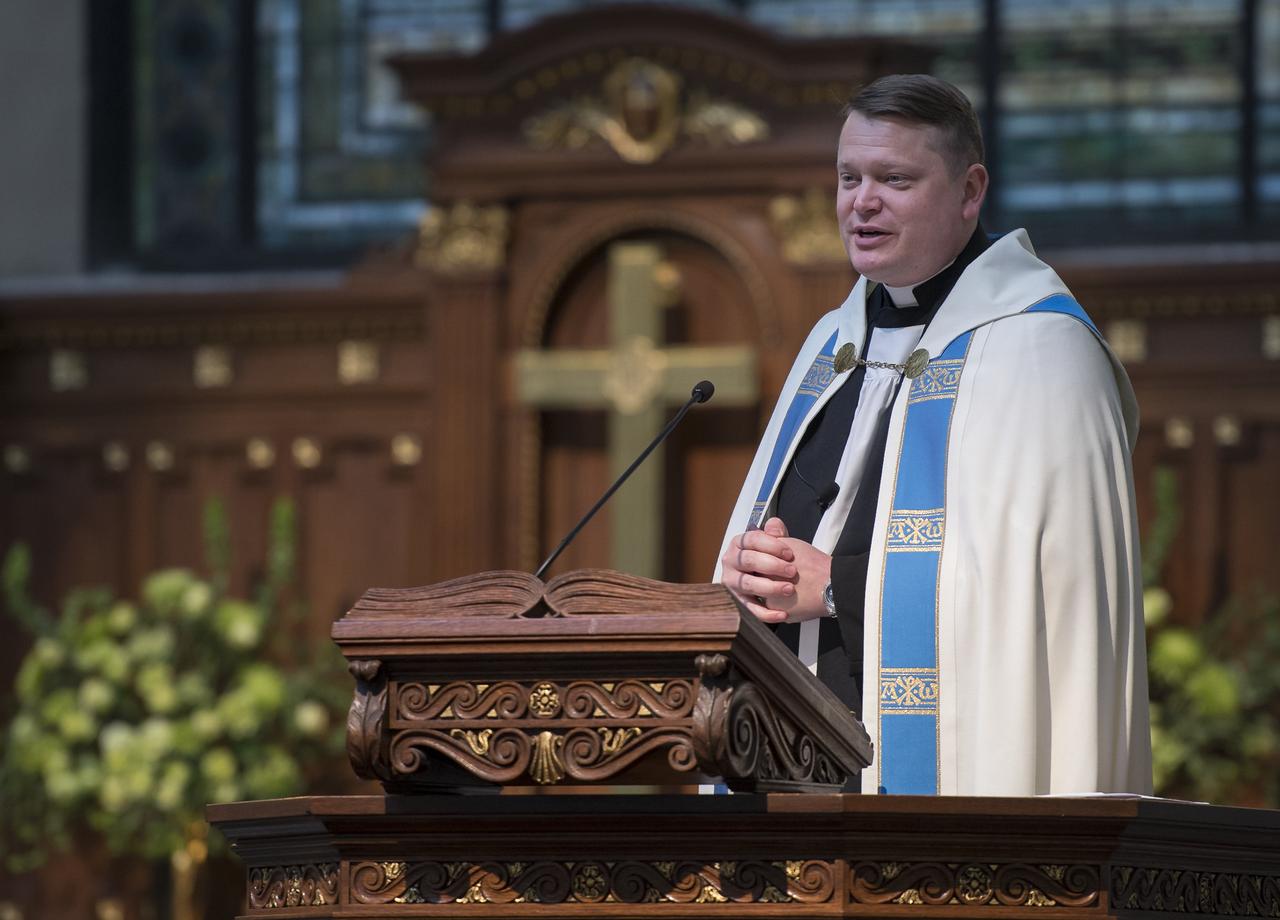
Chaplain McGrath over sees the funeral service for former NASA astronaut Captain Bruce McCandless II, USN (Ret.), Tuesday, Jan. 16, 2018 at the United States Naval Academy Chapel in Annapolis, Maryland. Photo Credit: (NASA/Bill Ingalls)
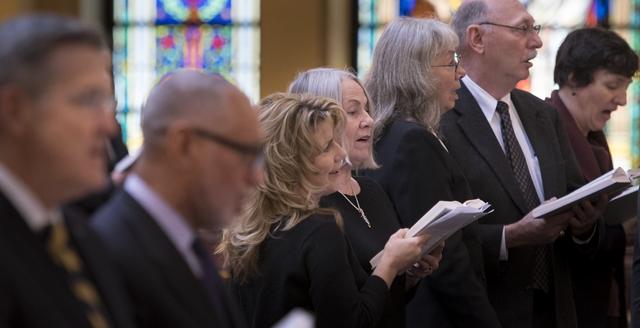
Family and friends attend the funeral service for former NASA astronaut Captain Bruce McCandless II, USN (Ret.), Tuesday, Jan. 16, 2018 at the United States Naval Academy Chapel in Annapolis, Maryland. Photo Credit: (NASA/Bill Ingalls)
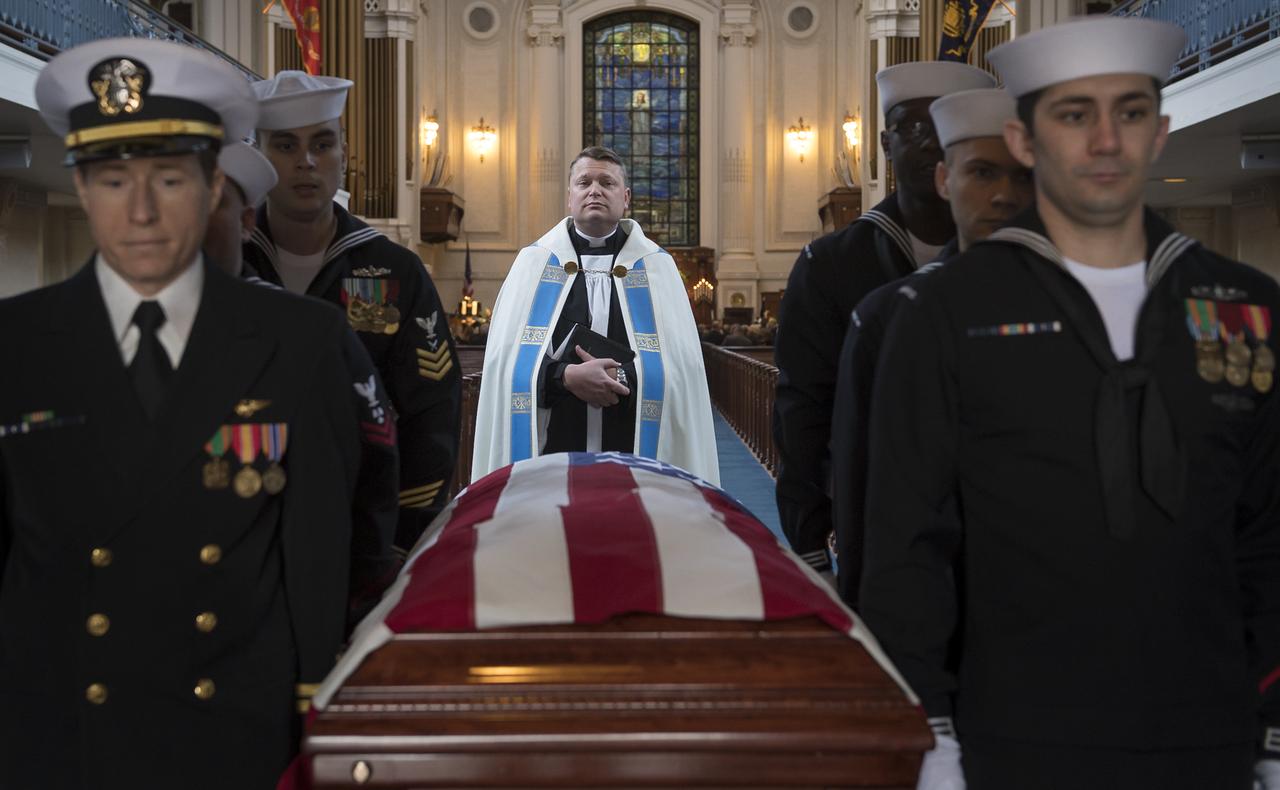
Chaplain McGrath over sees the funeral service for former NASA astronaut Captain Bruce McCandless II, USN (Ret.), Tuesday, Jan. 16, 2018 at the United States Naval Academy Chapel in Annapolis, Maryland. Photo Credit: (NASA/Bill Ingalls)
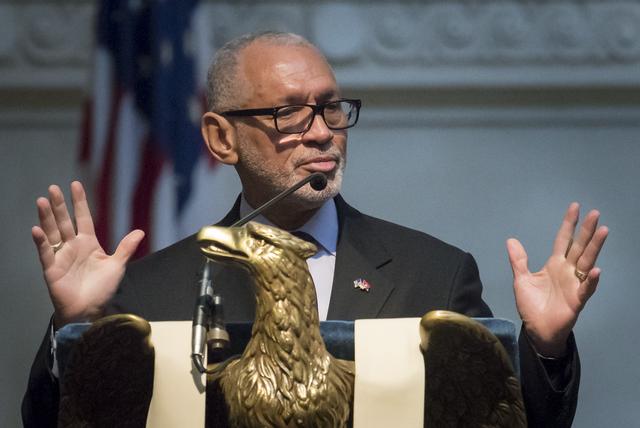
Former NASA Administrator Charlie Bolden speaks at the funeral service for former NASA astronaut Captain Bruce McCandless II, USN (Ret.), Tuesday, Jan. 16, 2018 at the United States Naval Academy Chapel in Annapolis, Maryland. Photo Credit: (NASA/Bill Ingalls)
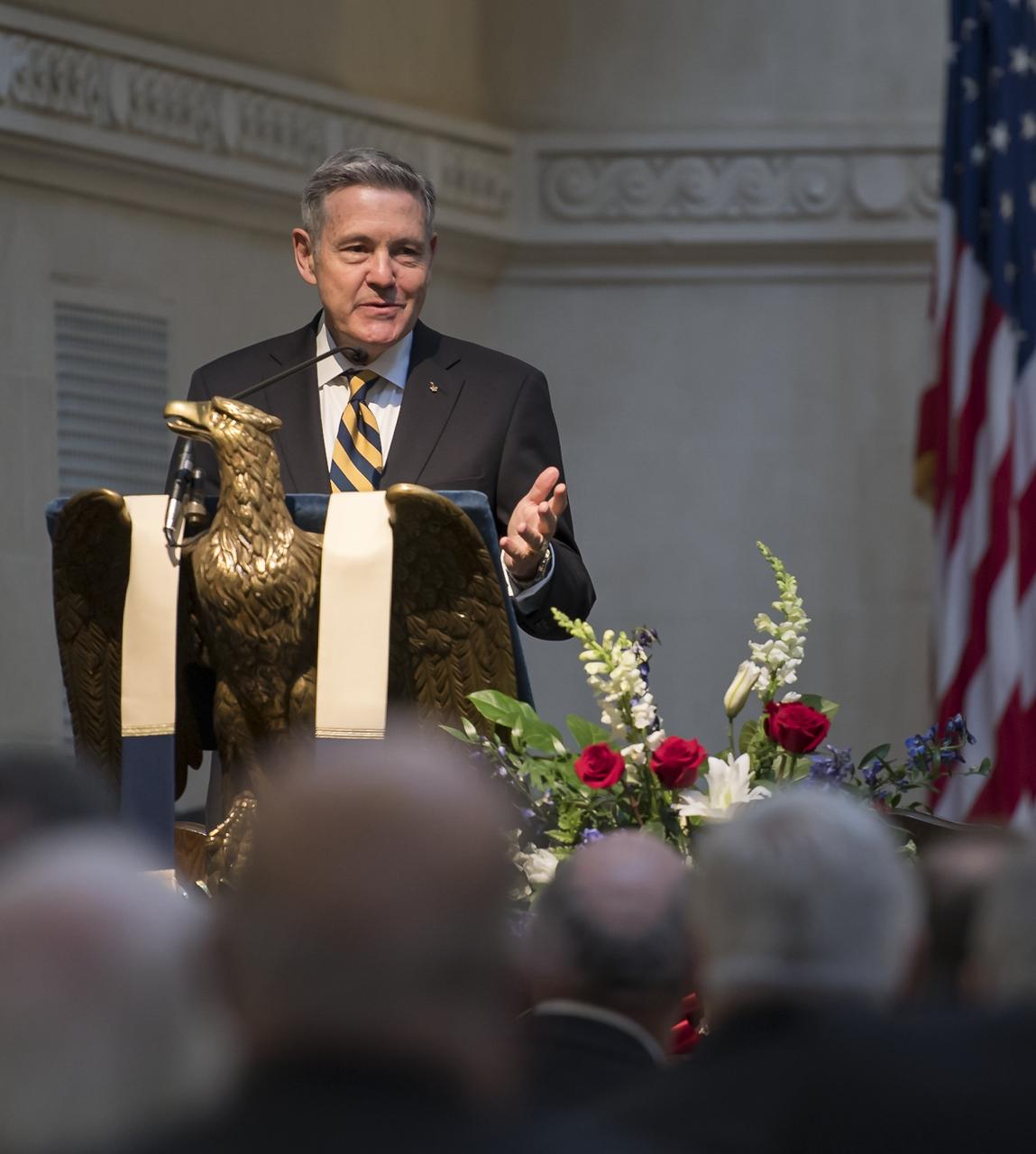
NASA Kennedy Space Center Director Robert Cabana speaks at the funeral service for former NASA astronaut Captain Bruce McCandless II, USN (Ret.), Tuesday, Jan. 16, 2018 at the United States Naval Academy Chapel in Annapolis, Maryland. Photo Credit: (NASA/Bill Ingalls)
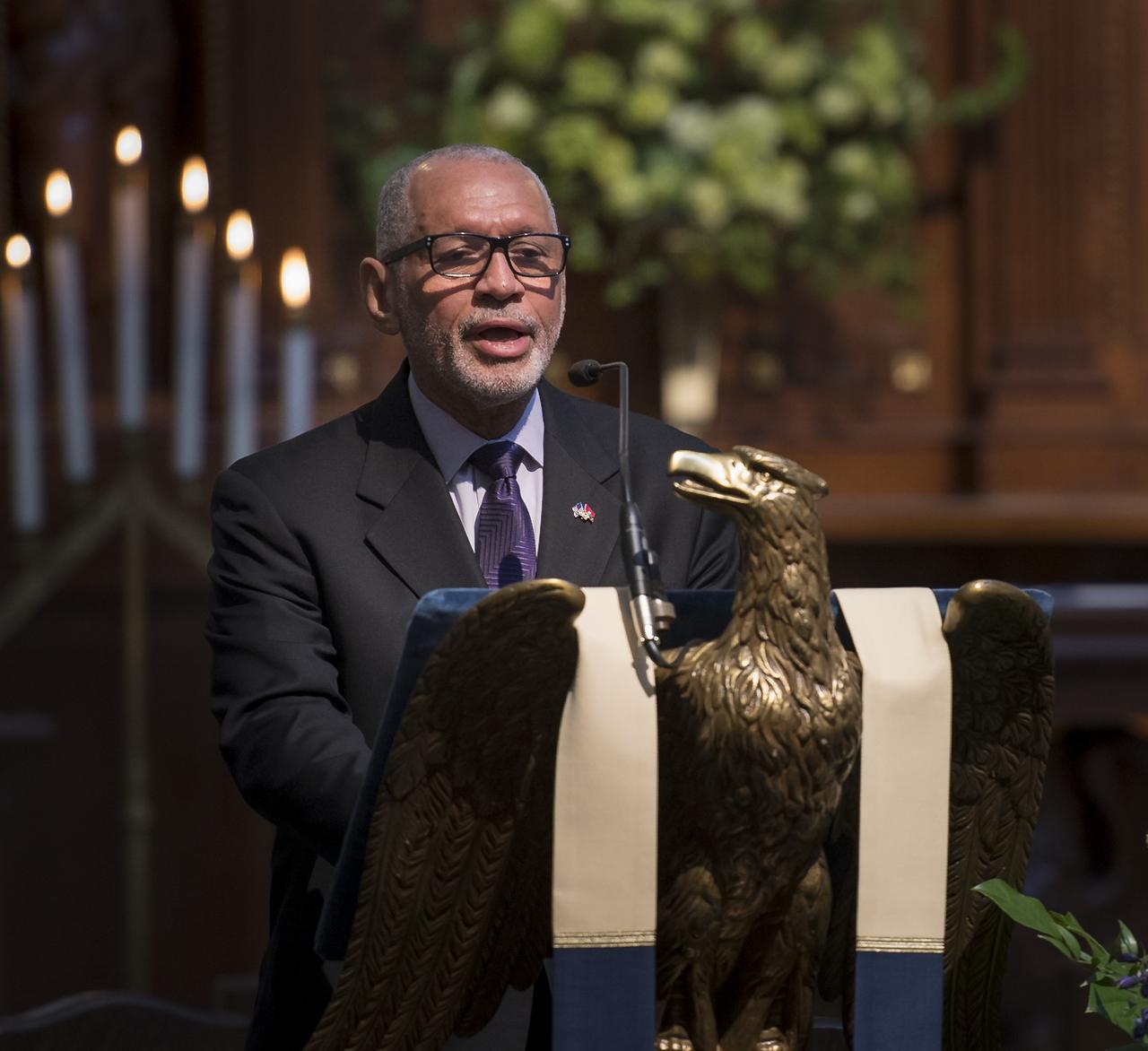
Former NASA Administrator Charlie Bolden speaks at the funeral service for former NASA astronaut Captain Bruce McCandless II, USN (Ret.), Tuesday, Jan. 16, 2018 at the United States Naval Academy Chapel in Annapolis, Maryland. Photo Credit: (NASA/Bill Ingalls)
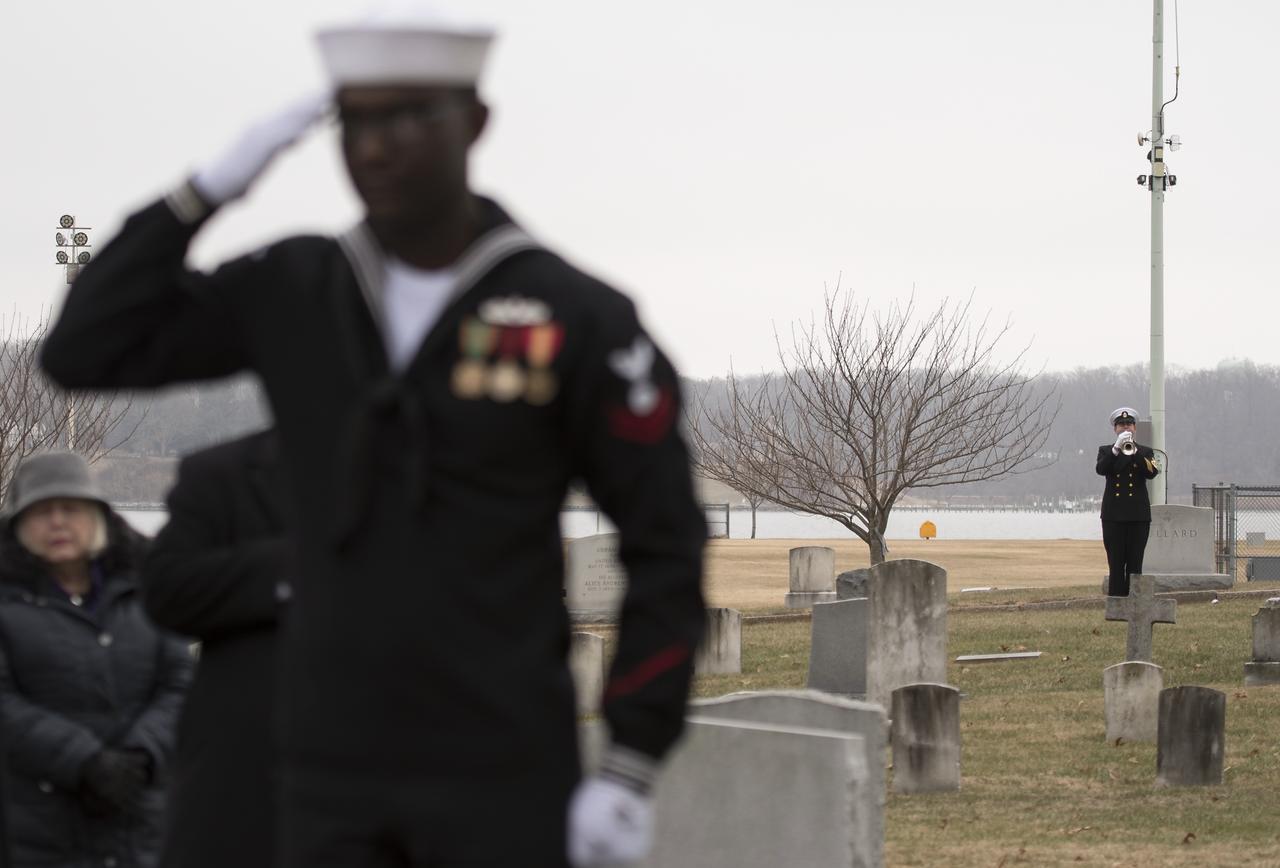
Taps is played during the interment service for former NASA astronaut Captain Bruce McCandless II, USN (Ret.), Tuesday, Jan. 16, 2018 at the United States Naval Academy Cemetery in Annapolis, Maryland. Photo Credit: (NASA/Bill Ingalls)
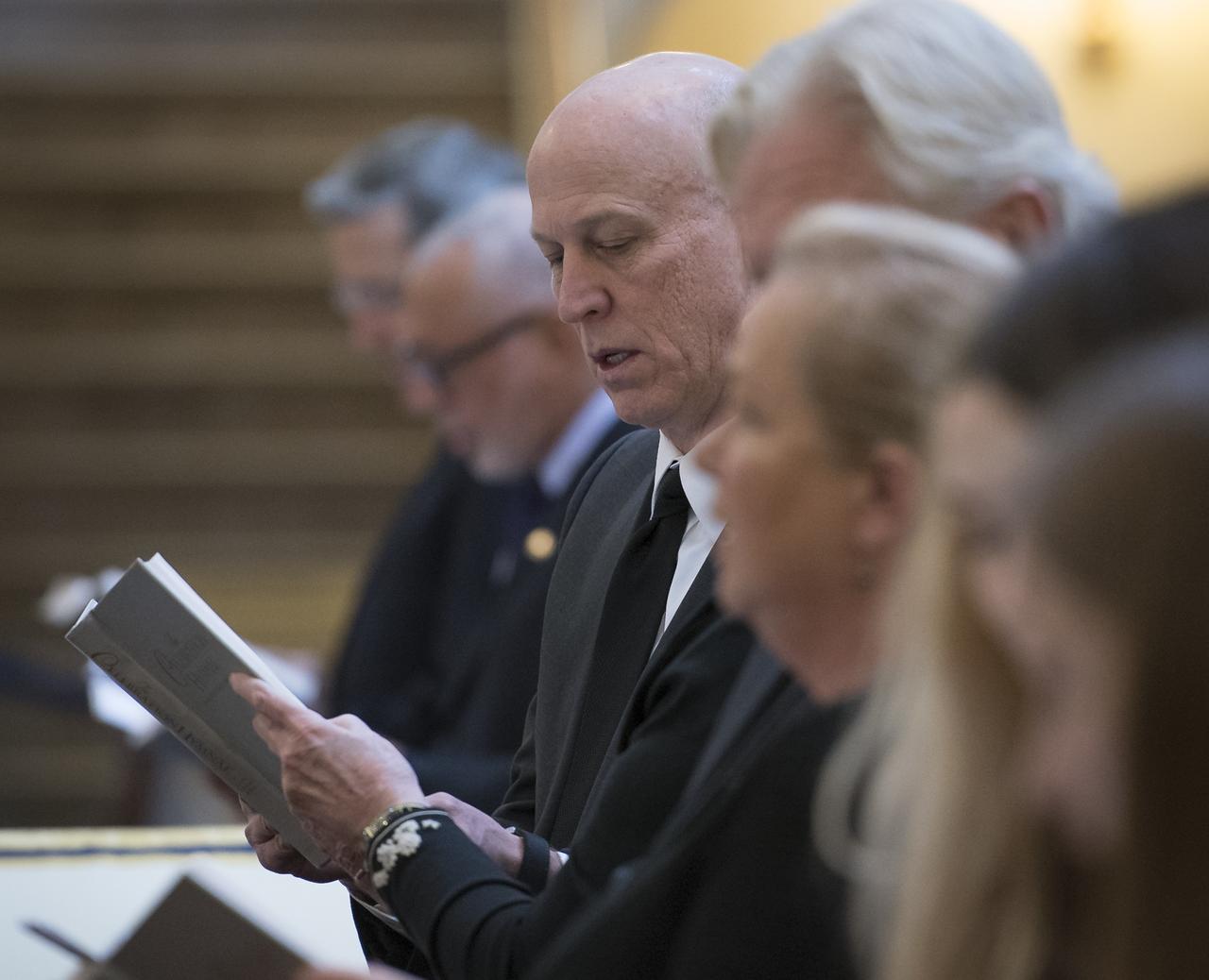
Family and friends attend the funeral service for former NASA astronaut Captain Bruce McCandless II, USN (Ret.), Tuesday, Jan. 16, 2018 at the United States Naval Academy Chapel in Annapolis, Maryland. Photo Credit: (NASA/Bill Ingalls)
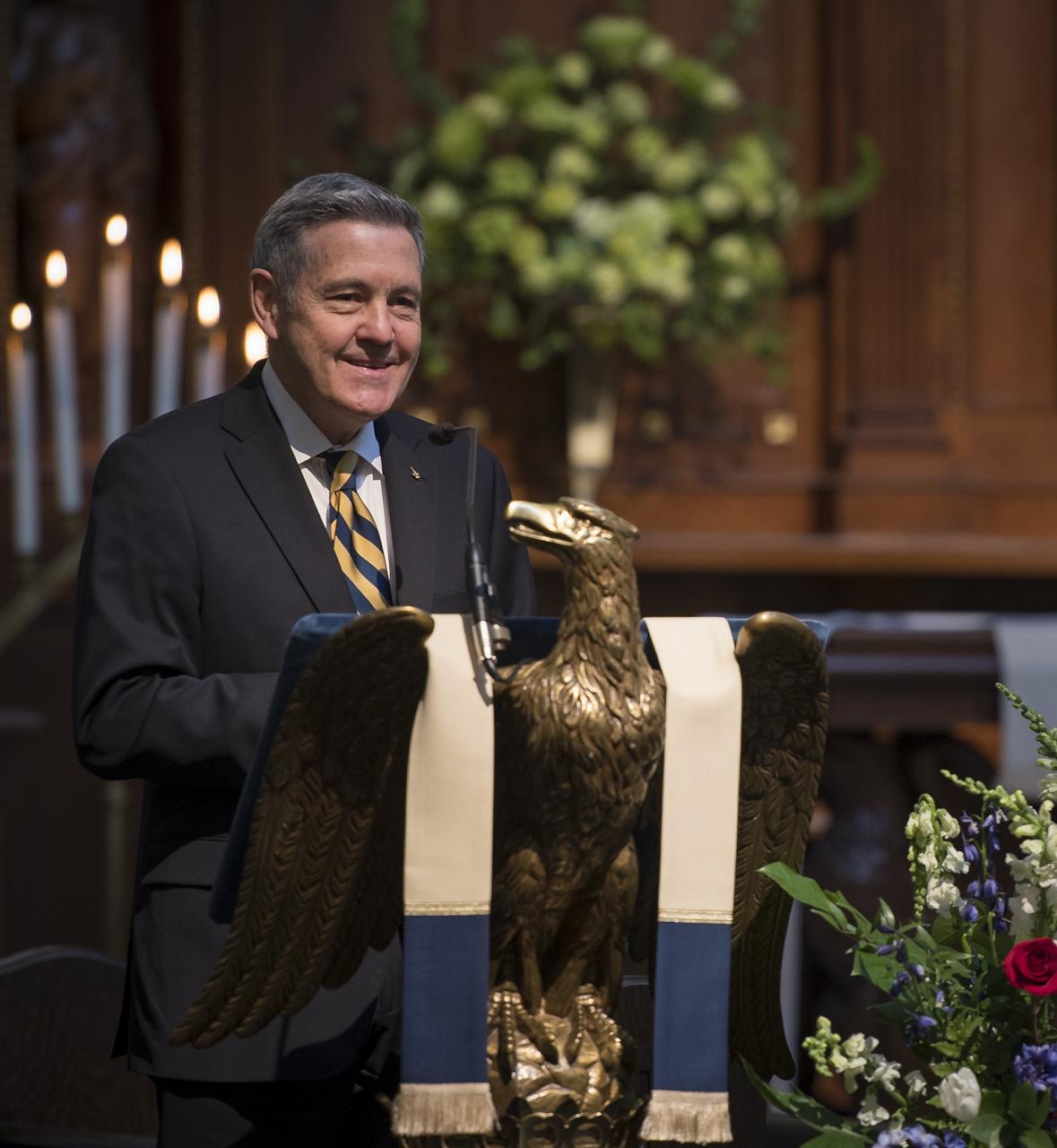
NASA Kennedy Space Center Director Robert Cabana speaks at the funeral service for former NASA astronaut Captain Bruce McCandless II, USN (Ret.), Tuesday, Jan. 16, 2018 at the United States Naval Academy Chapel in Annapolis, Maryland. Photo Credit: (NASA/Bill Ingalls)
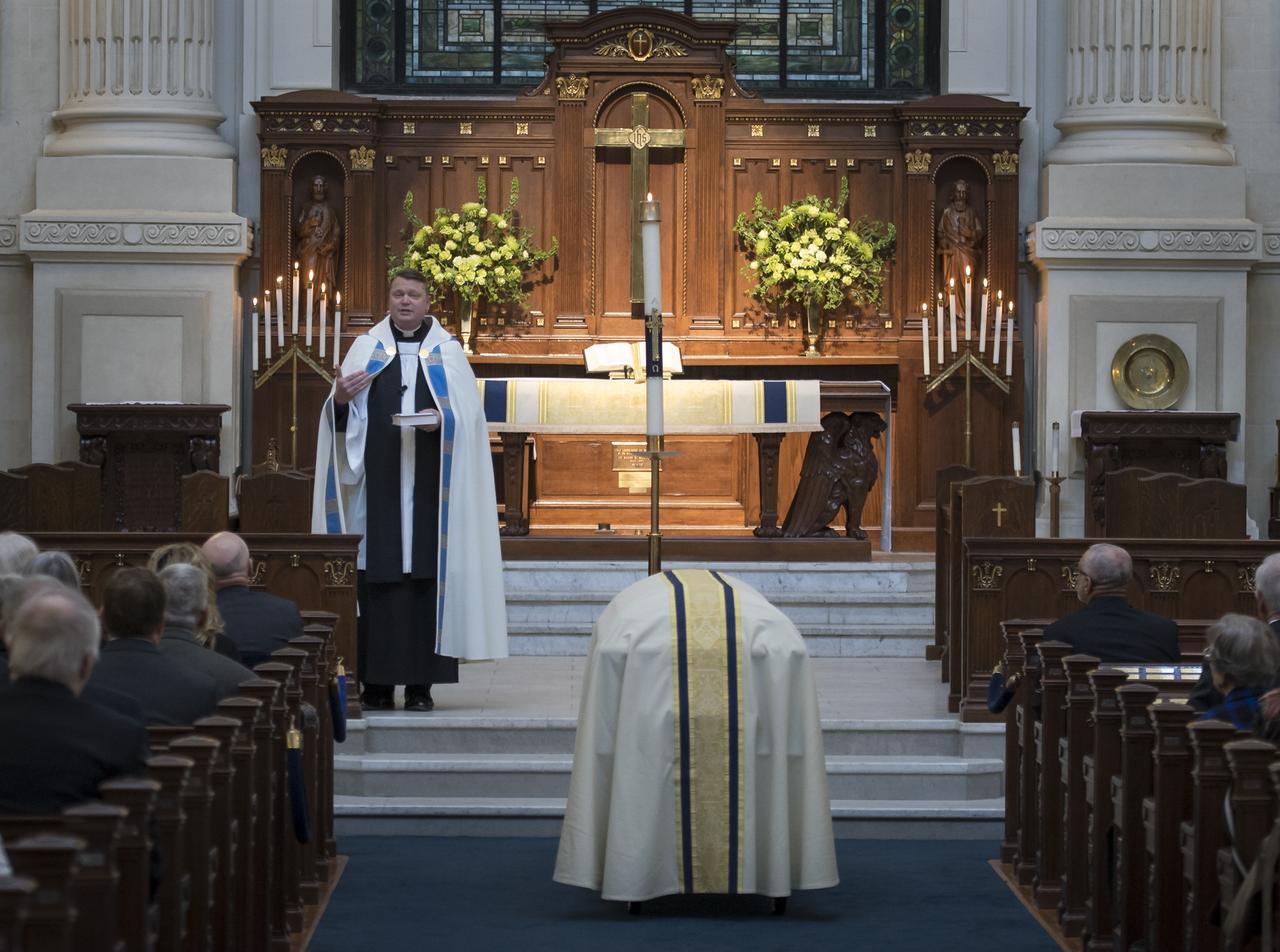
Chaplain McGrath over sees the funeral service for former NASA astronaut Captain Bruce McCandless II, USN (Ret.), Tuesday, Jan. 16, 2018 at the United States Naval Academy Chapel in Annapolis, Maryland. Photo Credit: (NASA/Bill Ingalls)
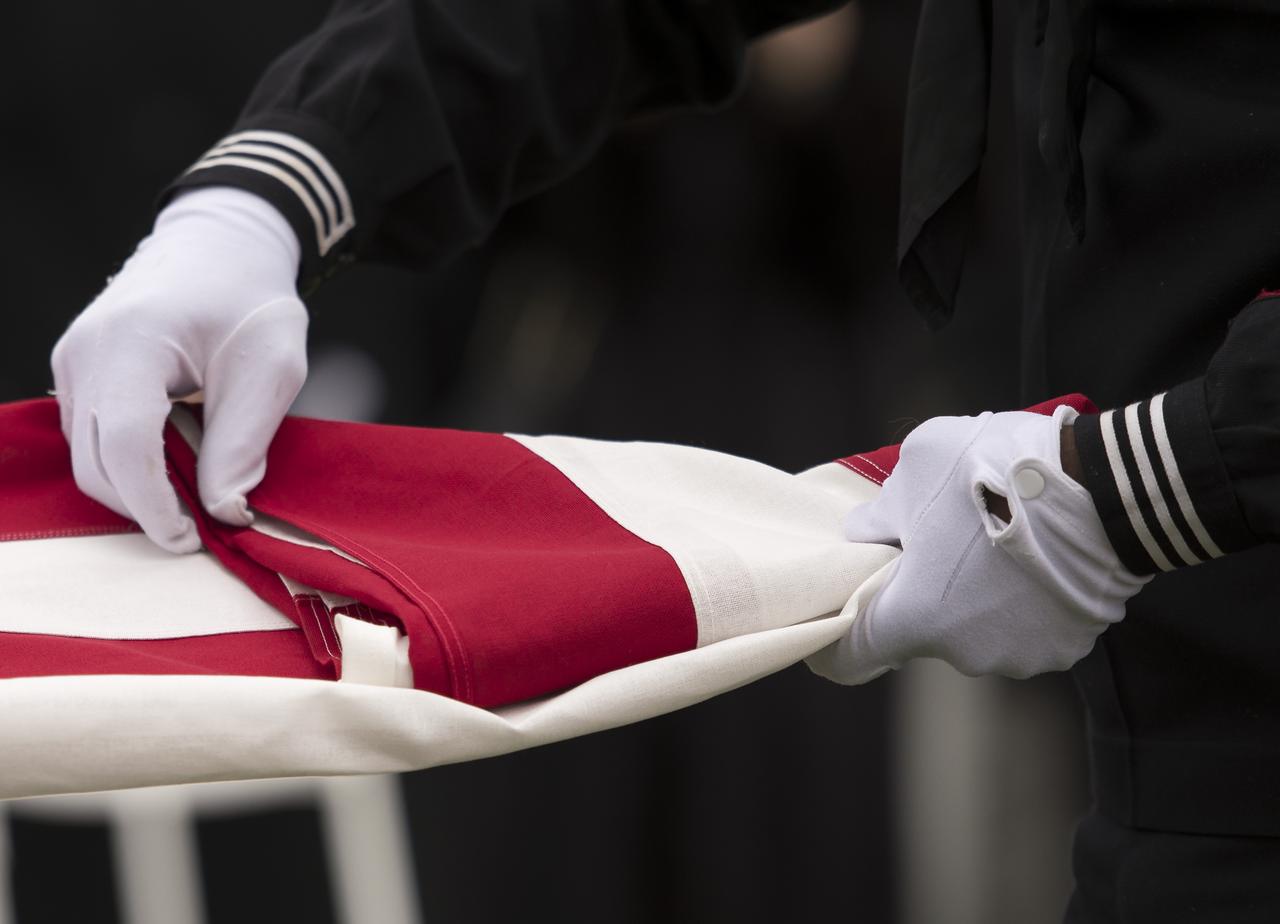
The flag that draped the casket of former NASA astronaut Captain Bruce McCandless II, USN (Ret.) is folded during his interment service, Tuesday, Jan. 16, 2018 at the United States Naval Academy Cemetery in Annapolis, Maryland. Photo Credit: (NASA/Bill Ingalls)
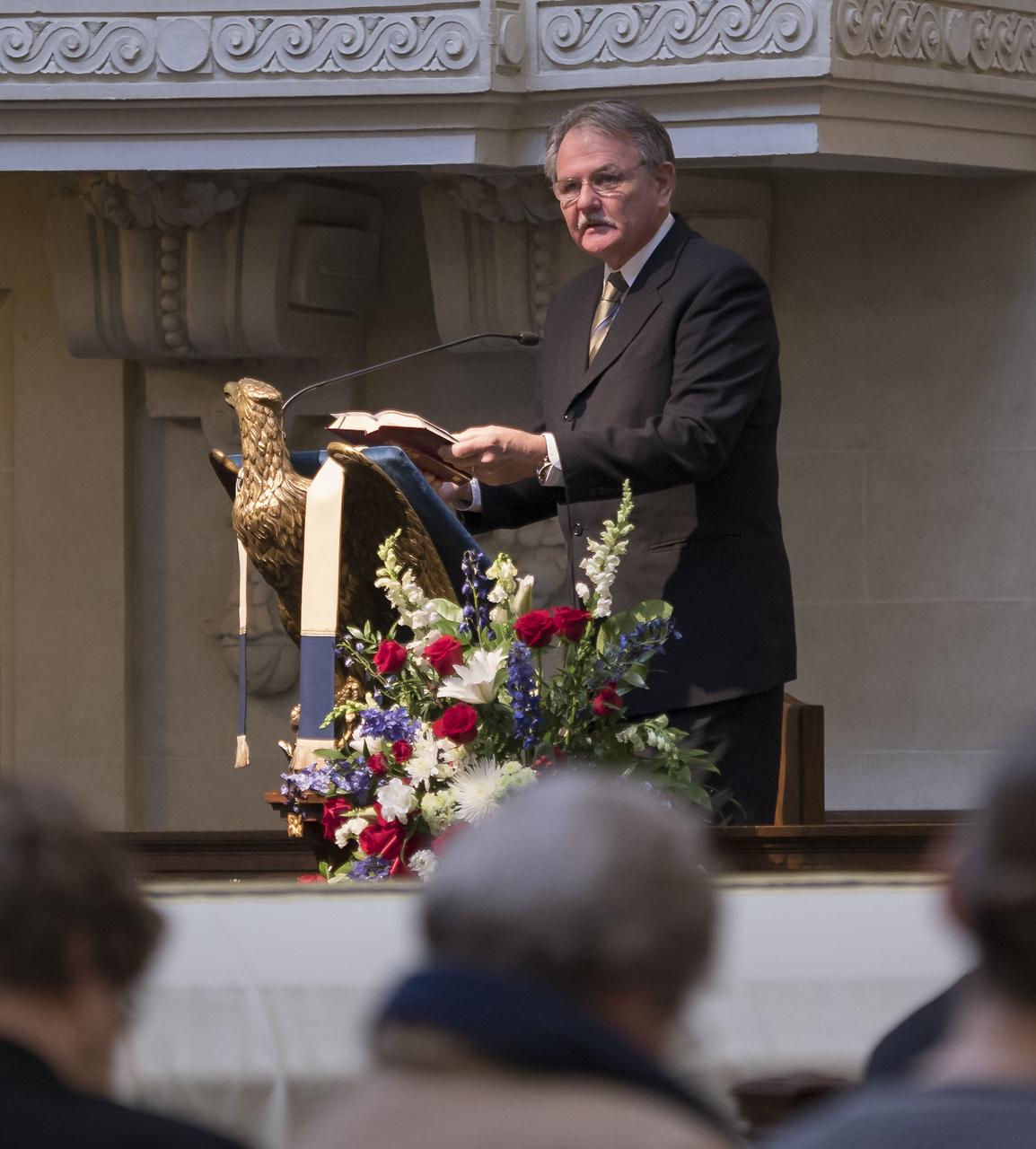
The Rev. Mark Anderson talks during the funeral service for former NASA astronaut Captain Bruce McCandless II, USN (Ret.), Tuesday, Jan. 16, 2018 at the United States Naval Academy Chapel in Annapolis, Maryland. Photo Credit: (NASA/Bill Ingalls)
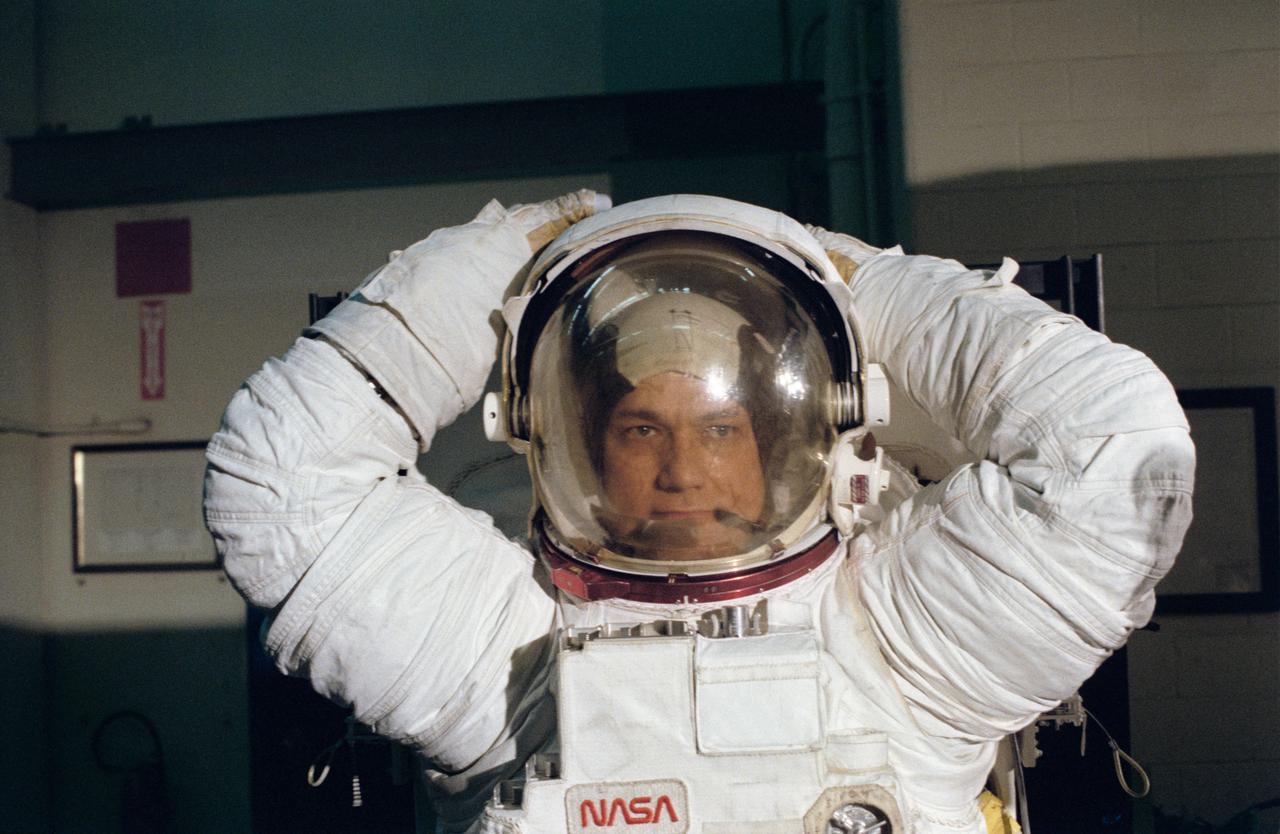
S82-27594 (25 Feb 1982) --- Astronaut Bruce McCandless II models NASA?s extravehicular mobility unit (EMU) spacesuit for Shuttle and the backpack unit (called a manned maneuvering unit) that will give future STS crewmembers extended mobility in space. A forerunner version of the MMU?called an astronaut maneuvering unit?was tested internally on Skylab. The MMU will allow astronauts for the first time in history to move about in the vicinity of their spacecraft without being tethered to the ship. McCandless was giving a demonstration of the EMU/MMU in JSC?s laboratory support facility.
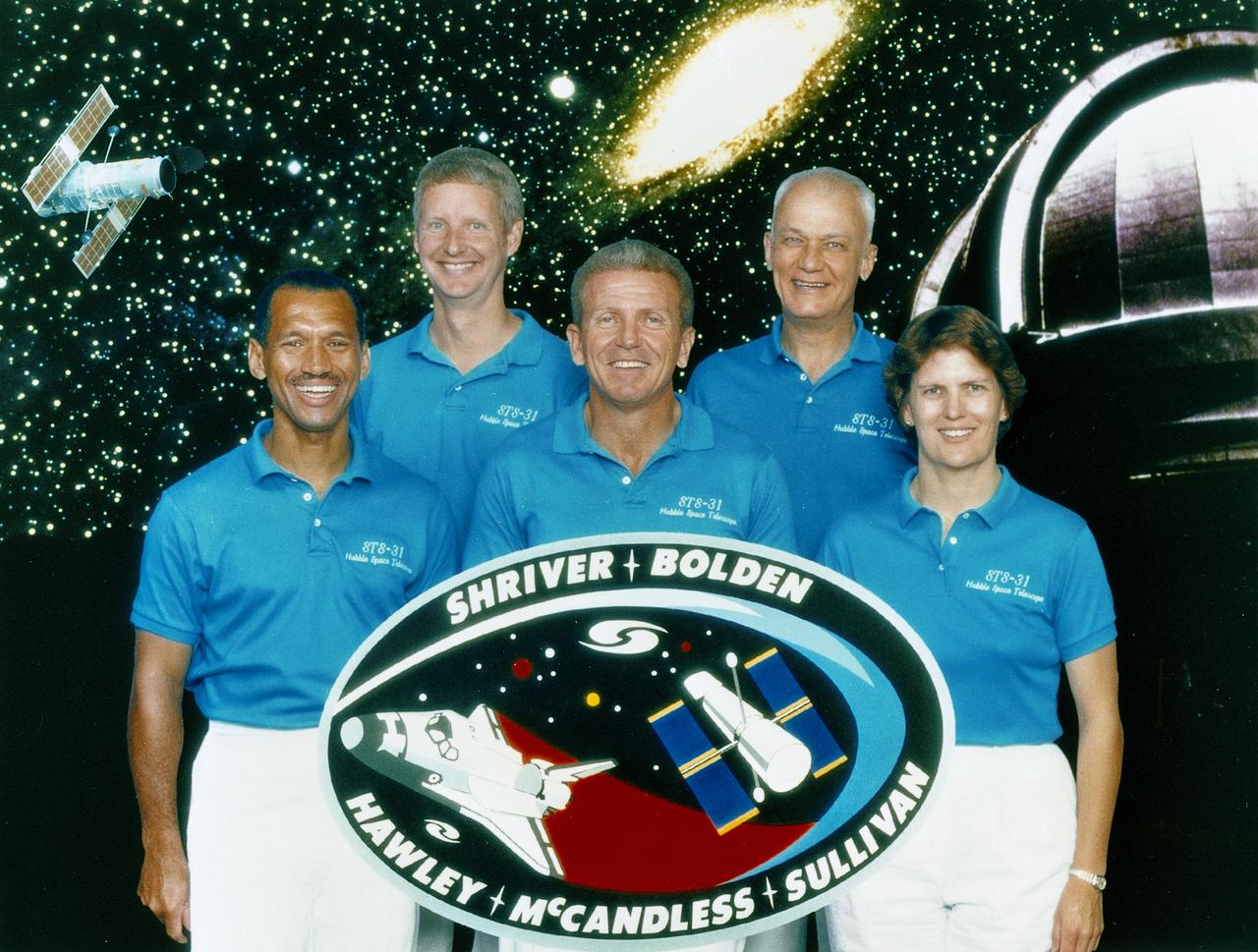
The STS-31 crew of five included (left to right) Charles F. Bolden, pilot; Steven A. Hawley, mission specialist; Loren J. Shriver, commander; Bruce McCandless, mission specialist; and Kathryn D. Sullivan, mission specialist. Launched aboard the Space Shuttle Discovery on April 24, 1990 at 8:33:51am (EDT), the primary payload was the Hubble Space Telescope. This was the first flight to use carbon brakes at landing.
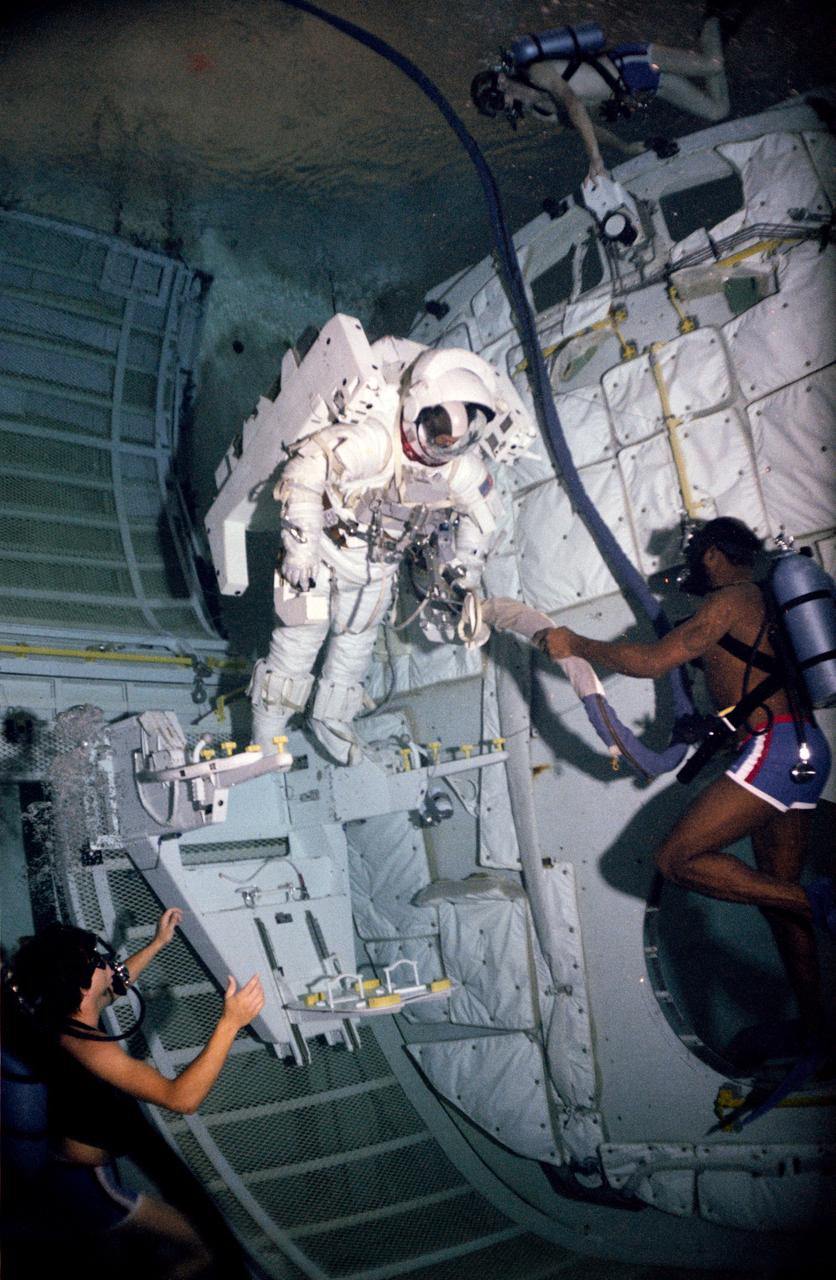
Astronaut Bruce McCandless during an underwater test of the Manned Maneuvering Unit (MMU) Flight Support Station (FSS) donning and doffing in the Bldg 29 Weightless Environment Training Facility (WETF). View is of McCandless wearing the extravehicular mobility unit (EMU), stepping into the MMU.
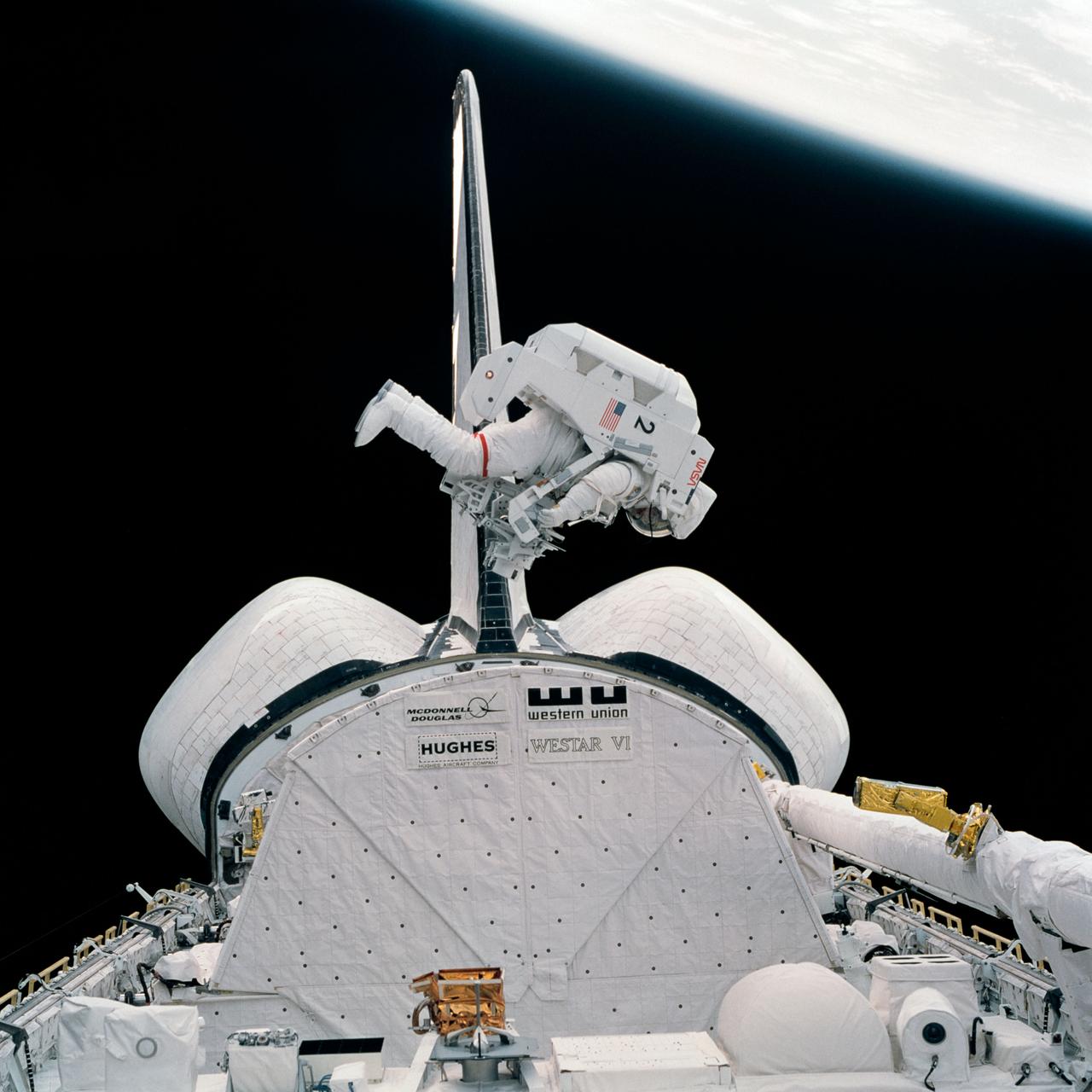
S84-27023 (7 Feb 1984) --- This 70mm frame shows astronaut Bruce McCandless II moving in to conduct a test involving the Trunion Pin Attachment Device (TPAD) he carries and the Shuttle Pallet Satellite (SPAS-01A) partially visible at bottom of frame. SPAS was a stand-in for the damaged Solar Maximum Satellite (SMS) which will be visited for repairs by the STS-41C Shuttle crew in early spring. This particular Extravehicular Activity (EVA) session was a rehearsal for the SMS visit. The test and the actual visit to the SMS both involve the use of jet-powered, hand-controlled Manned Maneuvering Unit (MMU). The one McCandless uses is the second unit to be tested on this flight. Astronaut Robert L. Stewart got a chance to work with both MMU's on the two EVA's.
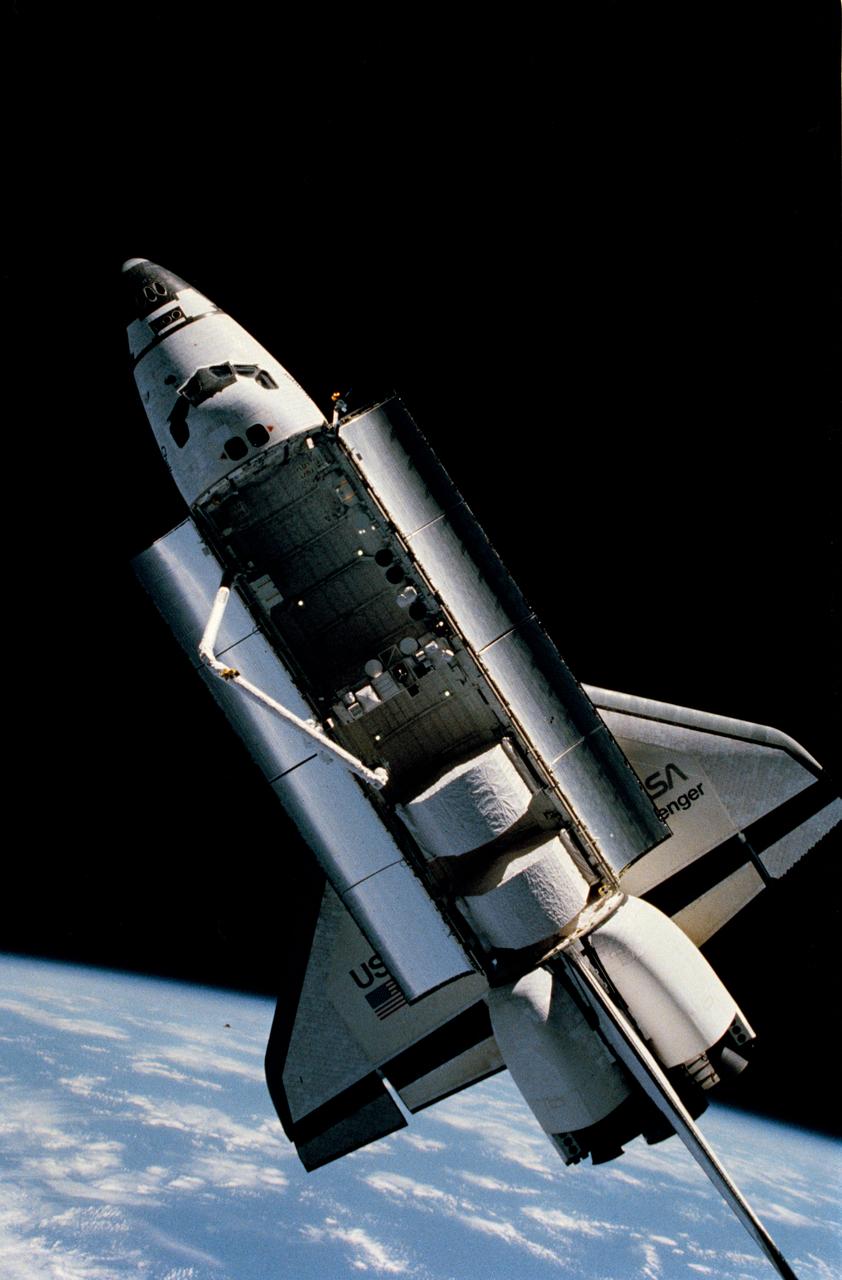
S84-27020 (7 Feb 1984) --- A fixed camera on astronaut Bruce McCandless II's helmet recorded this rare scene of the Space Shuttle Challenger some 50 to 60 meters away during a history-making extravehicular activity (EVA), February 7, 1984. The Shuttle Pallet Satellite (SPAS-01A) is configured mid-cargo bay. Astronaut Robert L. Stewart, standing beneath the Remote Manipulator System (RMS) arm, later donned the same Manned Maneuvering Unit (MMU) which afforded McCandless the freedom of movement to record this image. Also visible in the cargo bay are the support stations for the two MMU back-packs, the sunshields for the Palapa B and Westar VI Satellites, KU-Band antenna and a number of Getaway Special (GAS) canisters.
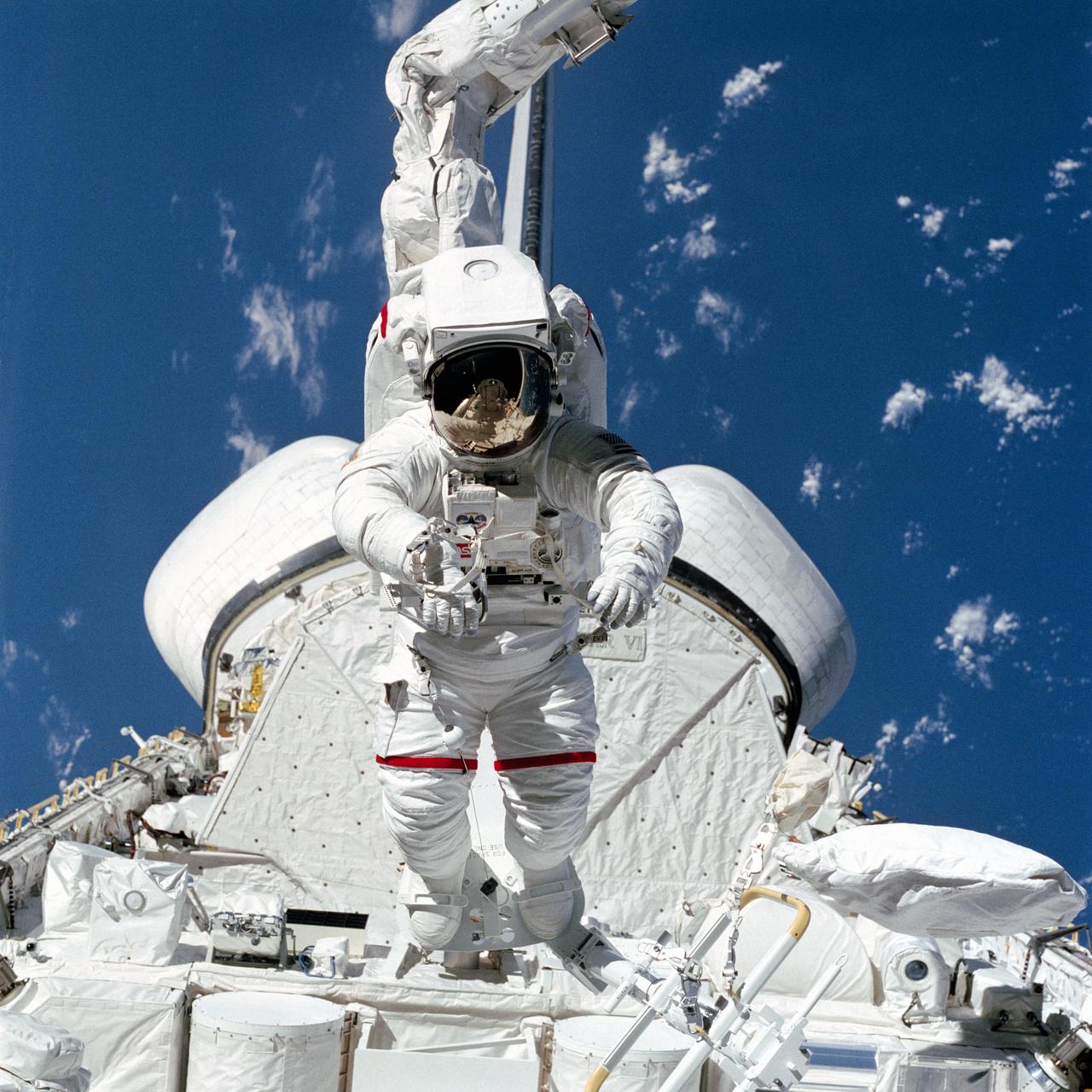
S84-27039 (7 Feb 1984) --- Astronaut Bruce McCandless II, at first glance appears to be walking on cargo in the Space Shuttle Challenger's payload bay. Actually, he is being "flown" around above the stationary cargo. His "flight" is due to the combined configuration of the Mobile Foot Restraint (MFR) and the Remote Manipulator System (RMS). His helmet visor reflects in miniature parts of the payload bay that can't be seen in the larger portion of the photo. A 70mm camera aimed through the aft flight deck windows exposed this frame.
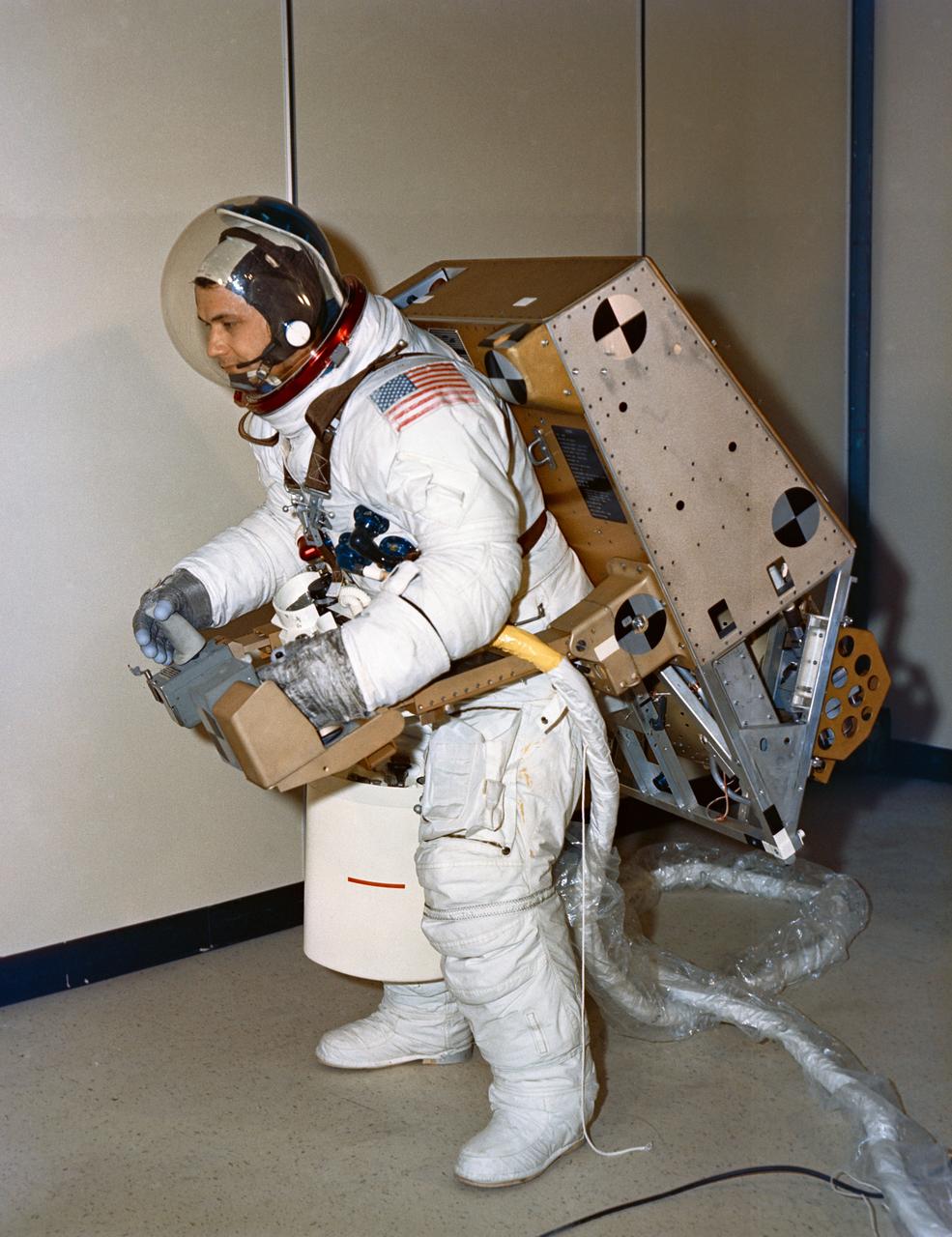
S72-30704 (1972) --- Astronaut Bruce McCandless II, backup pilot for Skylab 2, tests the balance and control of an astronaut maneuvering unit (AMU) test model at Martin Marietta Corporation's Denver division. The jet-powered backpack can fly for 30 minutes and can be worn over normal clothing or spacesuit. Photo credit: NASA
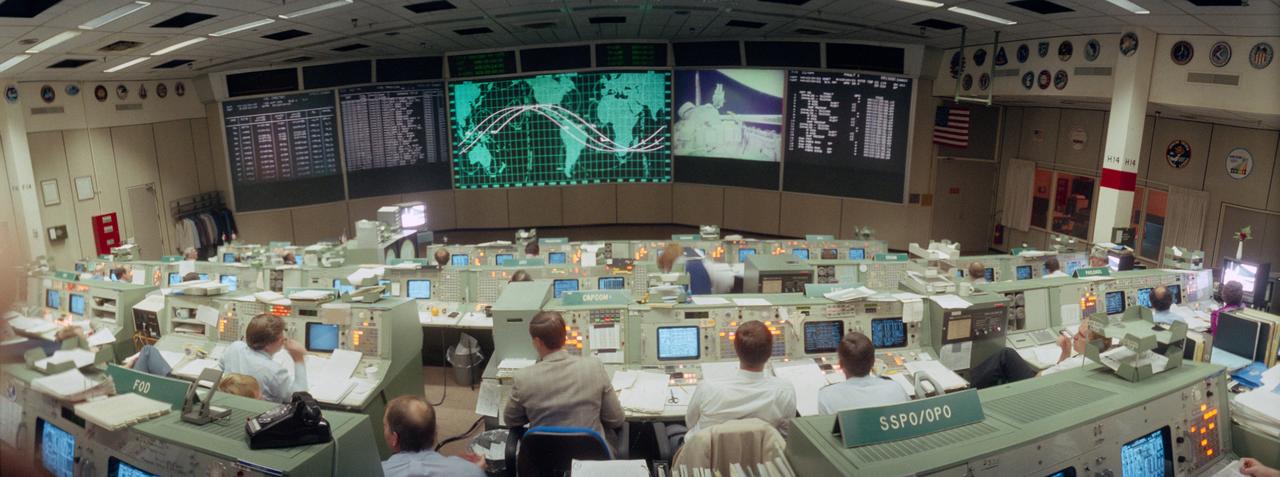
S84-26985 (7 Feb 1984) --- Flight controllers in the mission operations control room (MOCR) of the Johnson Space Center?s mission control center monitor the extravehicular activity (EVA) of Astronauts Bruce McCandless II and Robert L. Stewart. The photograph was taken with a wide angle lens on a 35mm camera deployed in the aft center point of the MOCR.
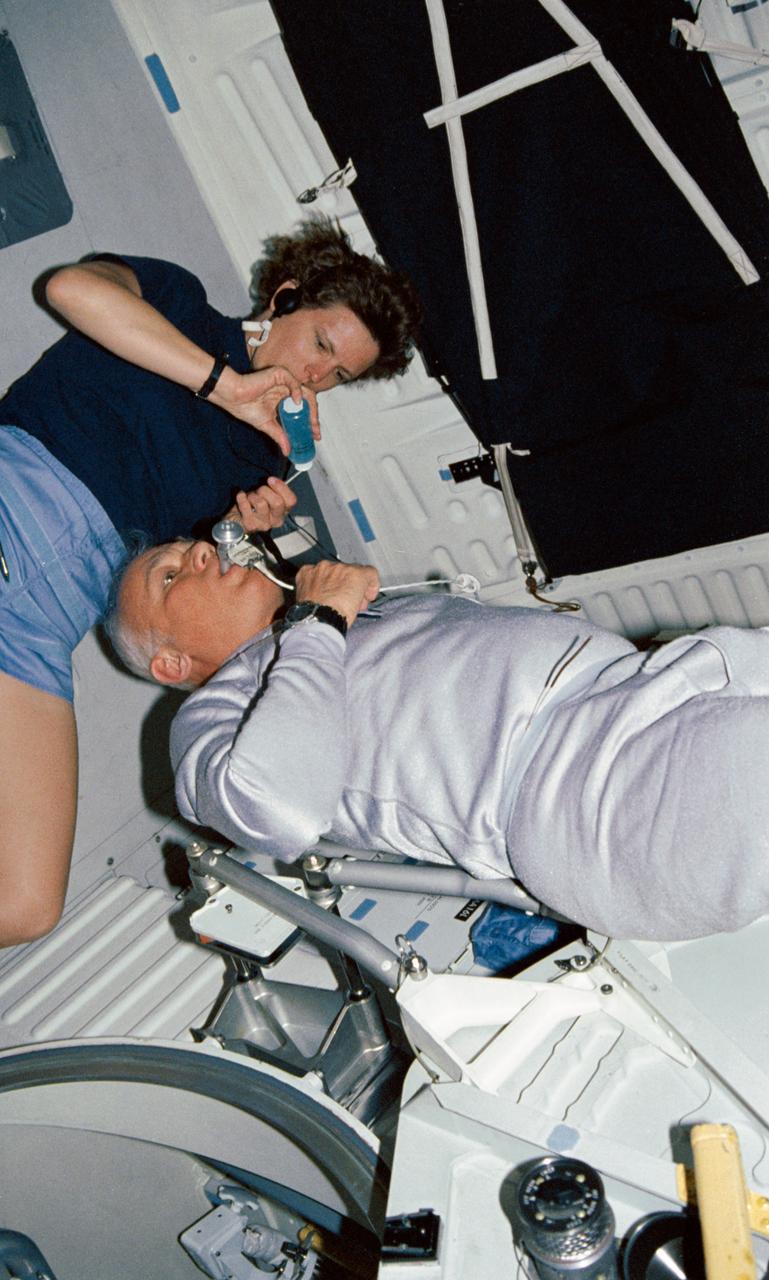
STS031-04-002 (24-29 April 1990) --- Astronauts Kathryn D. Sullivan and Bruce McCandless II, mission specialists, work together to perform one of the mission's medical experiments. The experiment is Detailed Supplementary Objective (DSO) 462, Non invasive Estimation of Central Venous Pressure During Spaceflight. Sullivan applies a gel substance to a transducer which will be placed on McCandless' jugular vein to collect the sought data. The cable links to a data recorder.
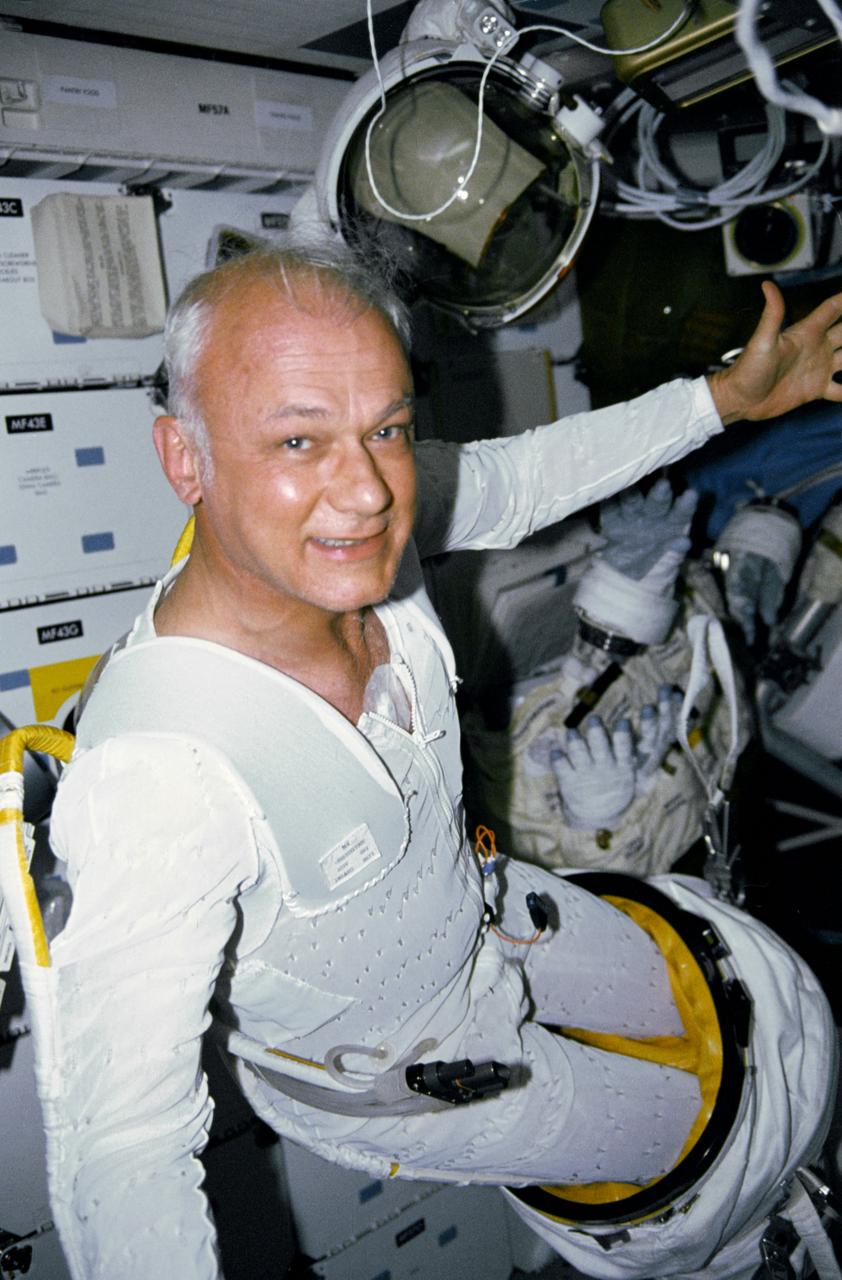
STS-31 Mission Specialist (MS) Bruce McCandless II, wearing liquid cooling and ventilation garment (LCVG), works his way out of the extravehicular mobility unit (EMU) lower torso on the middeck of Discovery, Orbiter Vehicle (OV) 103. McCandless was in a standby mode to perform extravehicular activity (EVA) if needed to support Hubble Space Telescope (HST) deployment and post- deployment tasks. None was needed. His helmet and gloves freefloat in the background.
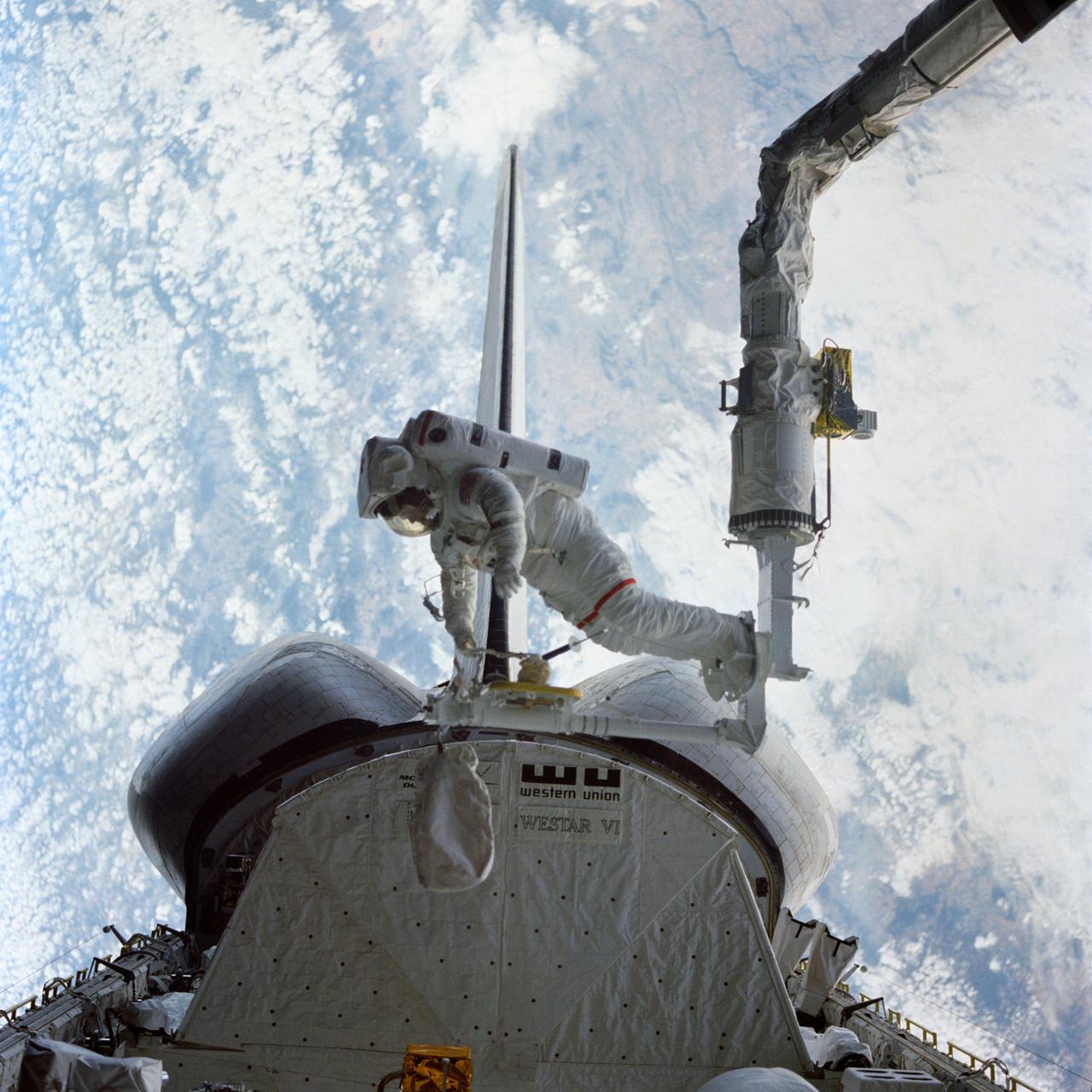
S84-27021 (7 Feb 1984) --- Astronaut Bruce McCandless II, 41B mission specialist tests a "cherry-picker" type device during February 7 historical Extravehicular Activity (EVA). The EVA, in which Astronauts McCandless and Robert L. Stewart, two of three STS-41B mission specialists, participated, marked two firsts--initial use of both the Mobile Foot Restraint (MFR) attached to the Remote Manipulator System (RMS) arm here, and the Manned Maneuvering Unit (MMU) backpack (not seen in this frame). The Challenger was flying with its aft end aimed toward the Earth. This photograph clearly shows where the MFR connects to the end effector of the Canadian-built RMS arm. The two spacewalkers were monitored and photographed by their fellow crewmembers, astronauts Vance D. Brand, commander; Robert L. Gibson, pilot; and Ronald E. McNair, mission specialist. The three remained in the cabin for another EVA session two days later. Photo Credit: NASA
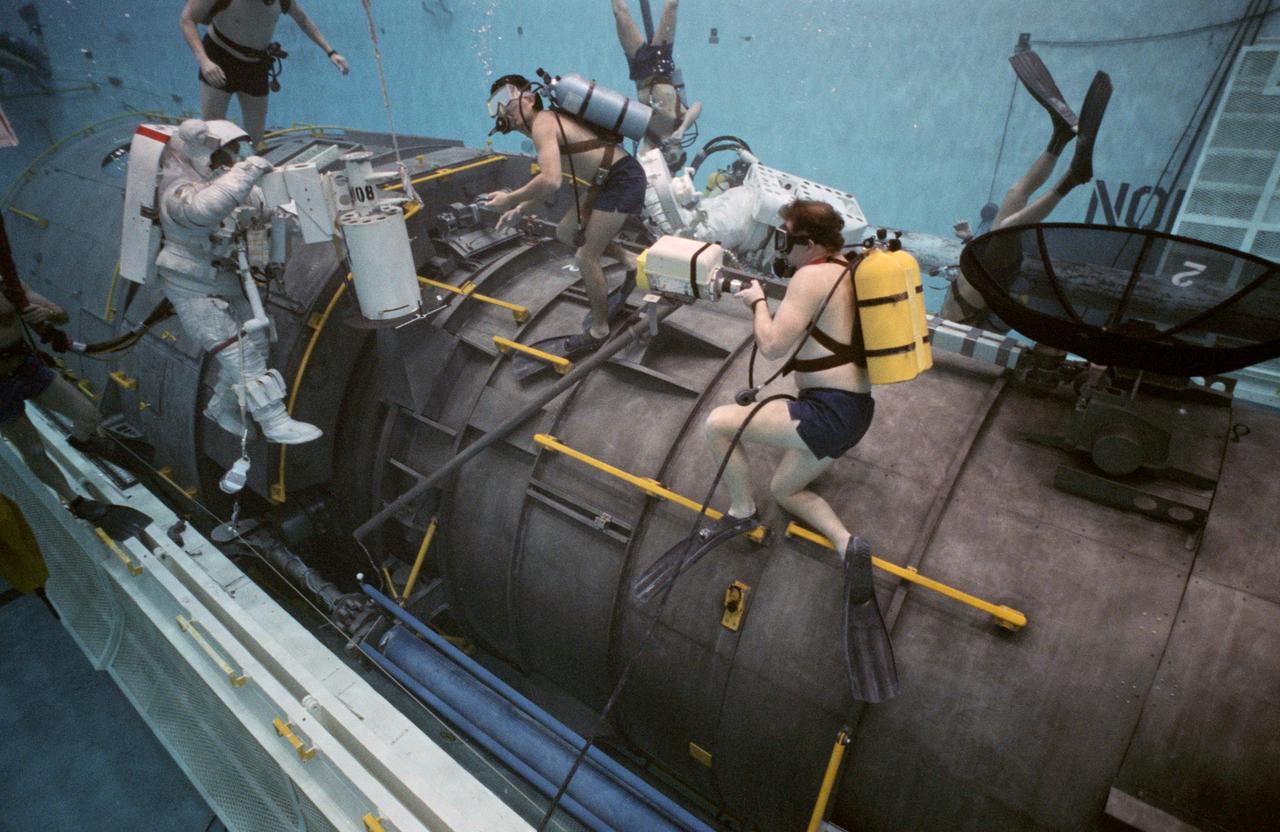
STS-31 Mission Specialist (MS) Bruce McCandless II (left), wearing an extravehicular mobility unit (EMU), maneuvers his way around a mockup of the remote manipulator system (RMS) end effector during an underwater simulation in JSC's Weightless Environment Training Facility (WETF) Bldg 29 pool. The end effector is attached to a grapple fixture on the Hubble Space Telescope (HST) mockup. As McCandless performs contingency extravehicular activity (EVA) procedures, fellow crewmember MS Kathryn D. Sullivan, in EMU, works on the opposite side of the HST mockup, and SCUBA-equipped divers monitor the activity. Though no EVA is planned for STS-31, the two crewmembers train for contingencies that would necessitate leaving the shirt sleeve environment of Discovery's, Orbiter Vehicle (OV) 103's, crew cabin and performing chores with the HST payload or related hardware in the payload bay (PLB).
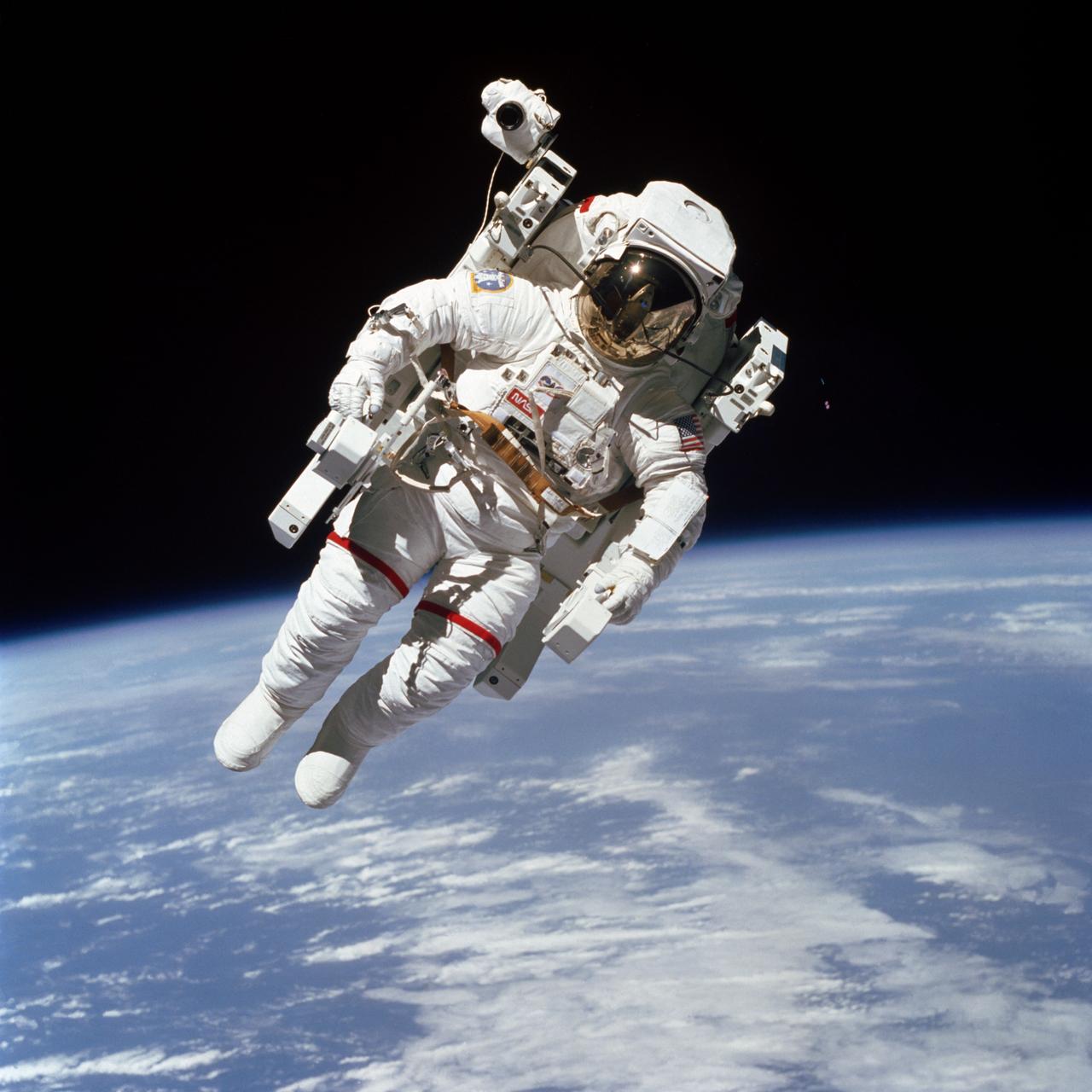
S84-27562 (7 Feb. 1984) --- Astronaut Bruce McCandless II, one of two 41B mission specialists participating in a historical Extravehicular Activity (EVA), is a few meters away from the cabin of the Earth-orbiting space shuttle Challenger in this 70mm frame. This Extravehicular Activity (EVA) represented the first use of a nitrogen-propelled, hand-controlled device called the Manned Maneuvering Unit (MMU), which allows for much greater mobility than that afforded previous spacewalkers who had to use restrictive tethers. Robert L. Stewart later tried out the MMU McCandless is using here, and the two of them tested another similar unit two days later. Inside the spacecraft were astronauts Vance D. Brand, commander; Robert L. Gibson, pilot; and Ronald E. McNair, mission specialist. Photo credit: NASA

S73-37251 (23 November 1973) --- Astronaut Bruce McCandless II, left, shows off a mock-up of the occulting disc for the T025 Coronagraph Contamination Measurement Engineering and Technology Experiment to be used by the crewmen of the third manned Skylab mission (Skylab 4), now into their eighth day in Earth orbit. On the right is flight director Neil B. Hutchinson. The men are in the Mission Operations Control Room (MOCR) of the Mission Control Center (MCC) at Johnson Space Center. Photo credit: NASA
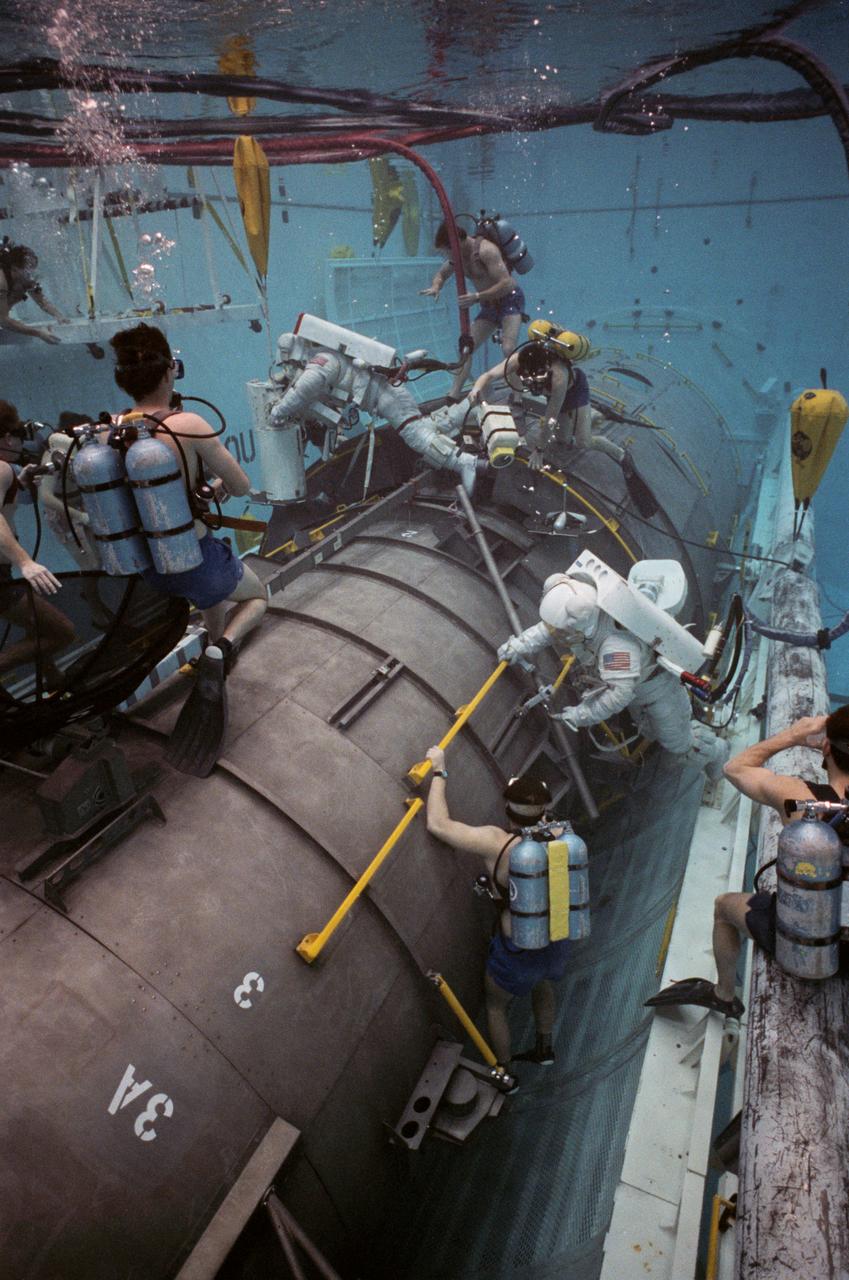
This overall view shows STS-31 Mission Specialist (MS) Bruce McCandless II (left) and MS Kathryn D. Sullivan making a practice space walk in JSC's Weightless Environment Training Facility (WETF) Bldg 29 pool. McCandless works with a mockup of the remote manipulator system (RMS) end effector which is attached to a grapple fixture on the Hubble Space Telescope (HST) mockup. Sullivan manipulates HST hardware on the Support System Module (SSM) forward shell. SCUBA-equipped divers monitor the extravehicular mobility unit (EMU) suited crewmembers during this simulated extravehicular activity (EVA). No EVA is planned for the Hubble Space Telescope (HST) deployment, but the duo has trained for contingencies which might arise during the STS-31 mission aboard Discovery, Orbiter Vehicle (OV) 103. Photo taken by NASA JSC photographer Sheri Dunnette.
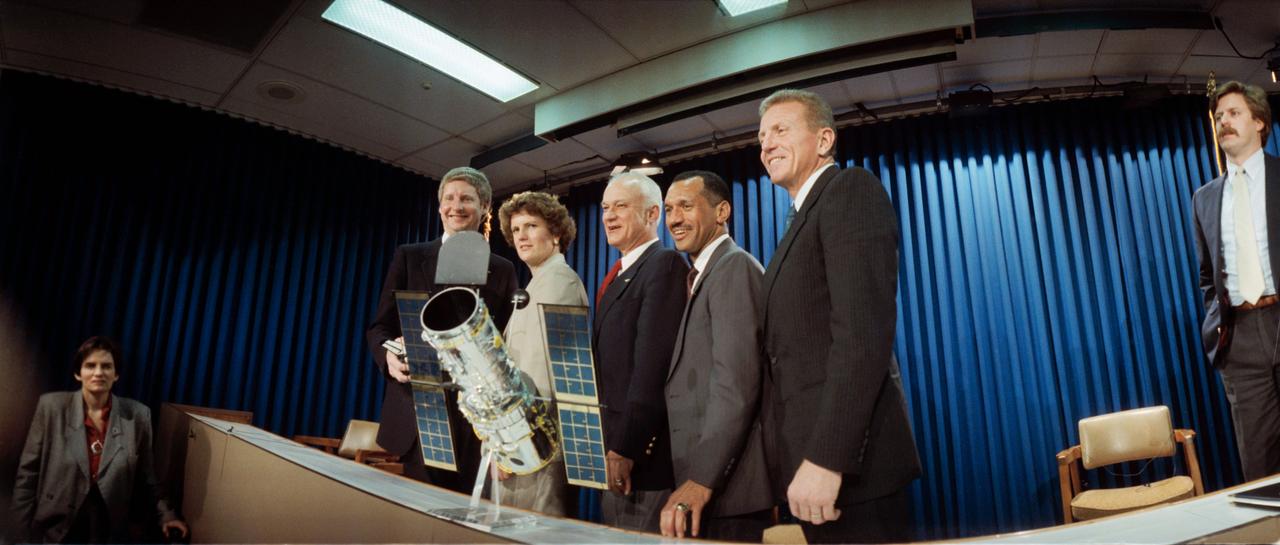
PHOTOS OF STS-31 (DISCOVERY) CREW WITH MODELS OF THE HUBBLE SPACE TELESCOPE (HST) AND SPACE SHUTTLE AT T-30 (THIRTY DAYS BEFORE LAUNCH) BRIEFING 03/22/90 IN THE AUDITORIUM AND PUBLIC AFFAIRS FACILITY BLDG 2. GROUP PHOTOS OF LOREN J. SHRIVER, CHARLES F. BOLDEN, STEVEN A. HAWLEY, BRUCE MCCANDLESS, AND KATHRYN D. SULLIVAN (32748, 32750, 32758-60 (WIDE ANGLE)) AND INDIVIDUAL PHOTOS OF HAWLEY (32747), MCCANDLESS (32751), SULLIVAN (32753-4), BOLDEN (32755), AND SHRIVER (32757) INCLUDED. ALSO PHOTGRAPHED TOGETHER ARE SULLIVAN, HAWLEY, MCCANDLESS (32749) AND BOLDEN, SHRIVER (32752, 32756).

ISIS (Intelligent Spacecraft Interface Systems) Laboratory - Jeff McCandless, PHD Scientist (seated) and Robert McCann, PHD Scientist (standing)

ISIS (Intelligent Spacecraft Interface Systems) Laboratory - Jeff McCandless, PHD Scientist (seated) and Robert McCann, PHD Scientist (standing)
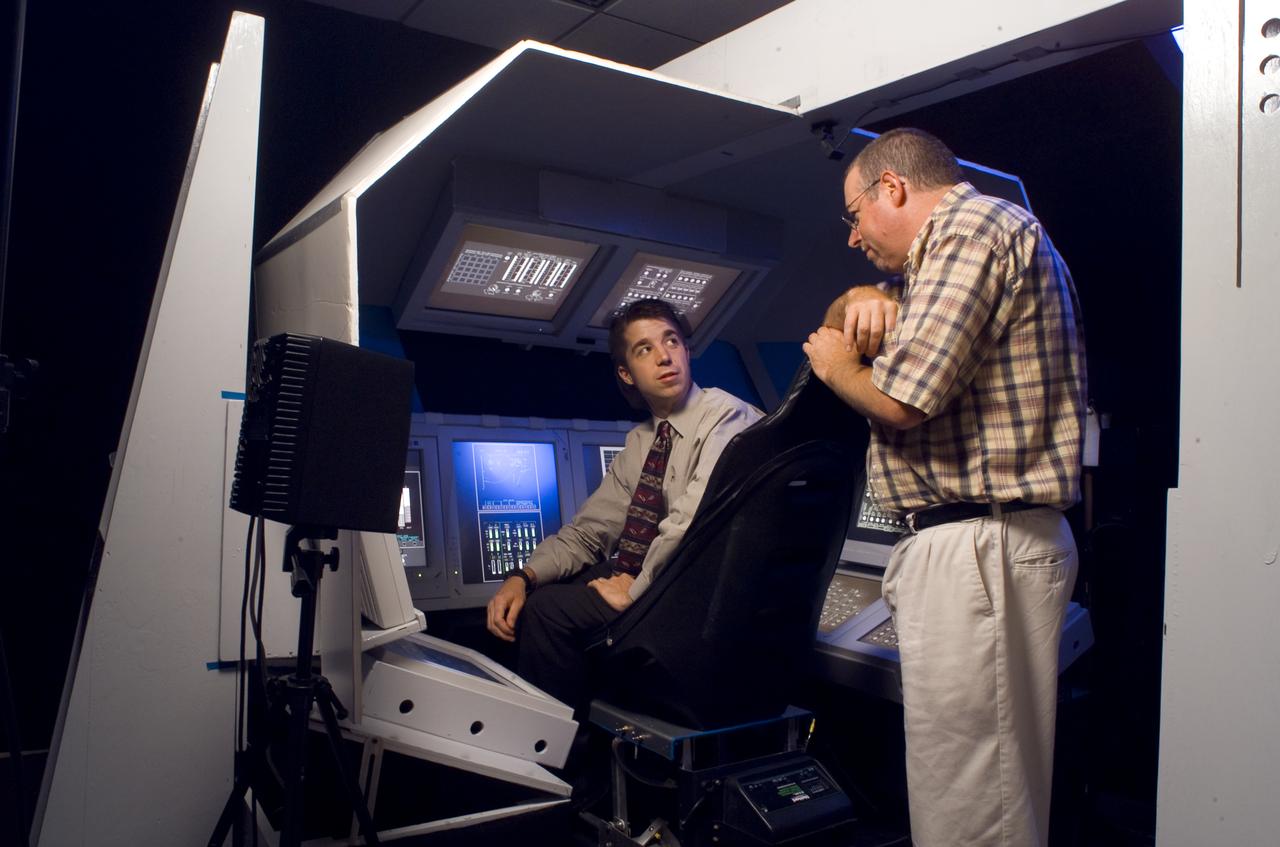
ISIS (Intelligent Spacecraft Interface Systems) Laboratory - Jeff McCandless, PHD Scientist (seated) and Robert McCann, PHD Scientist (standing)
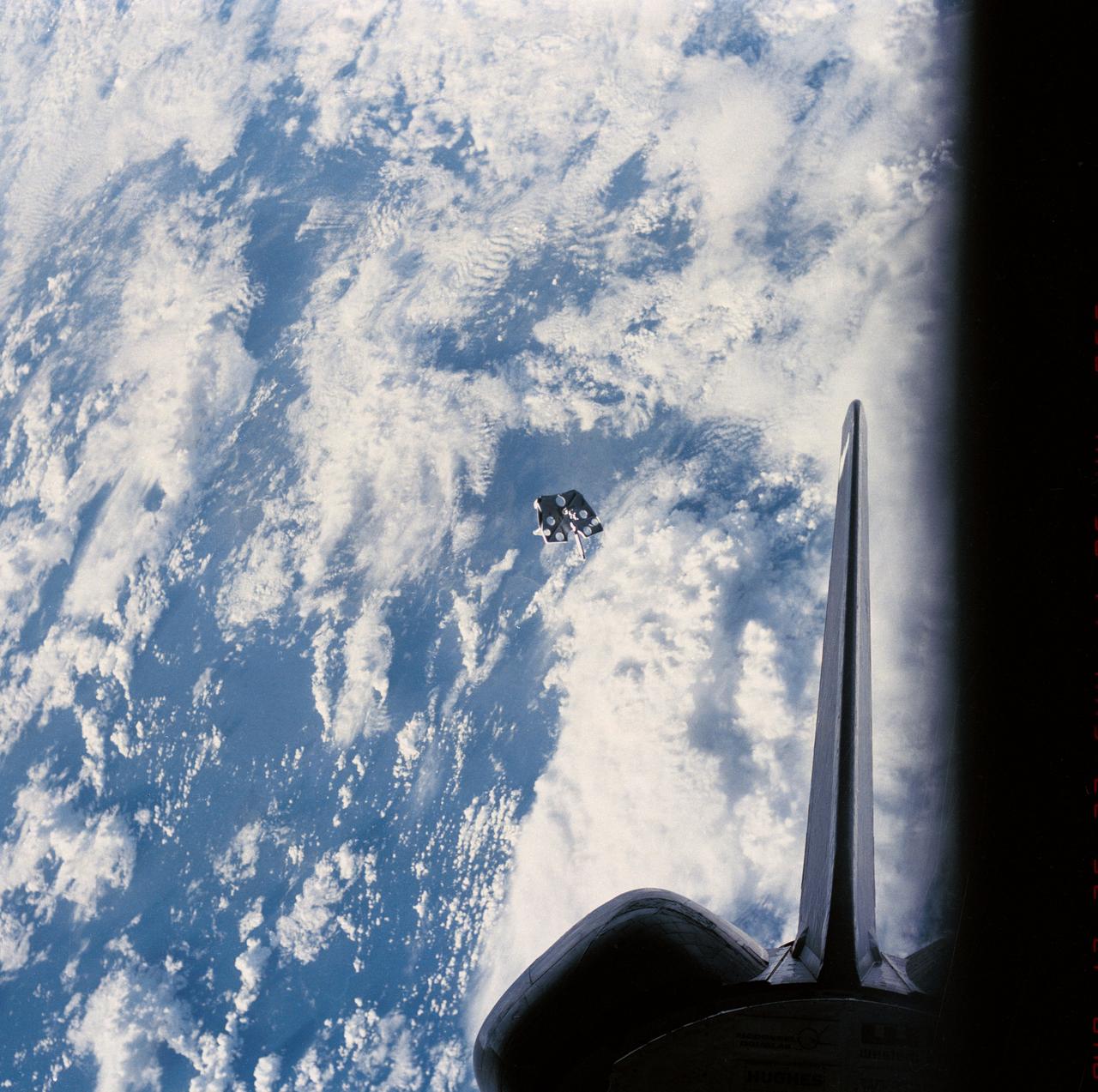
S84-27024 (7 Feb 1984) --- This 70mm frame centers on a foot restraint that strayed from the Earth-orbiting Space Shuttle Challenger during the February 9, 1984 extravehicular activity (EVA) session of astronauts Bruce McCandless II and Robert Stewart. As seen in JSC photograph frame number S84-27025, McCandless goes after the piece. Not pictured is Vance D. Brand, crew commander, who moved the spacecraft nearer the object.
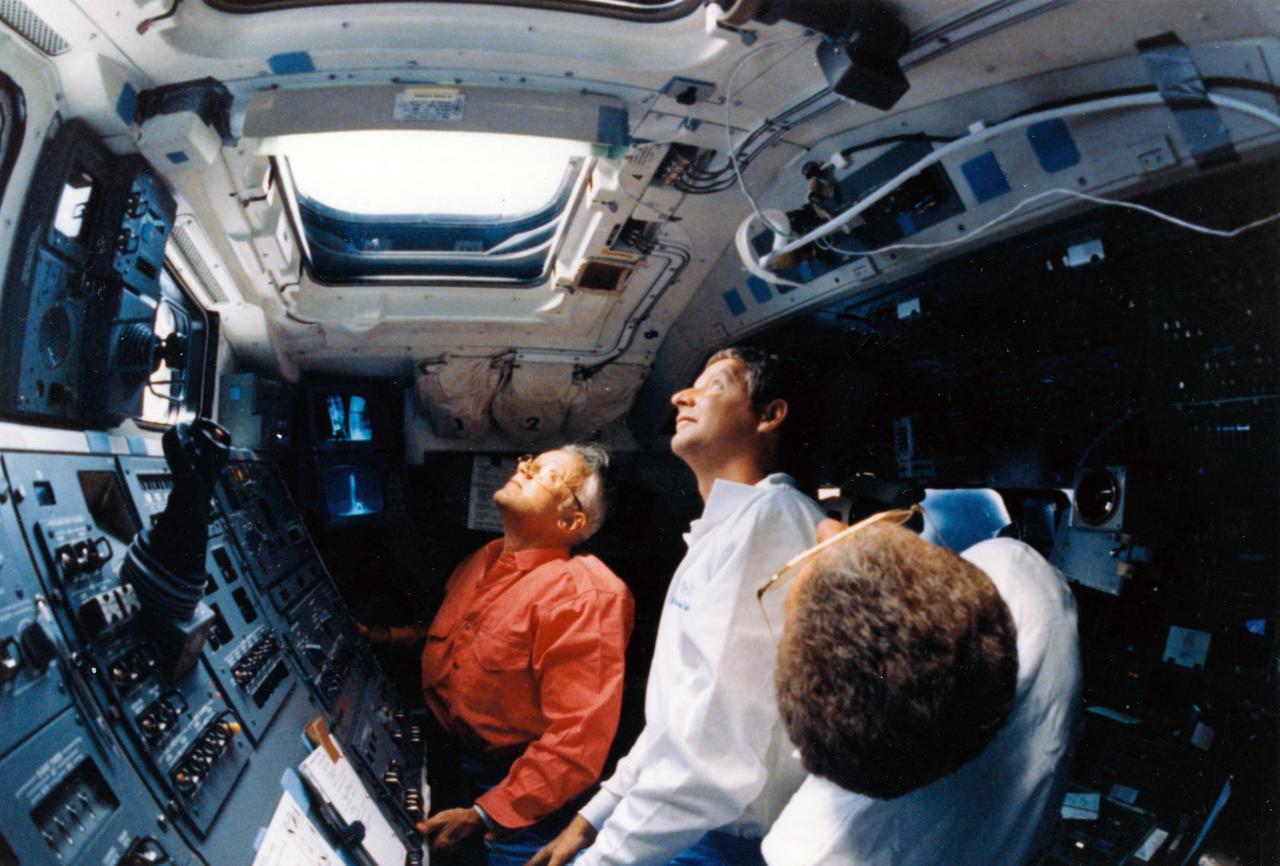
JOHNSON SPACE CENTER, HOUSTON, TEXAS -- Three crew members look at the Hubble Space Telescope through overhead windows. Left to right are Bruce McCandless, Steve Hawley and Loren Shriver.
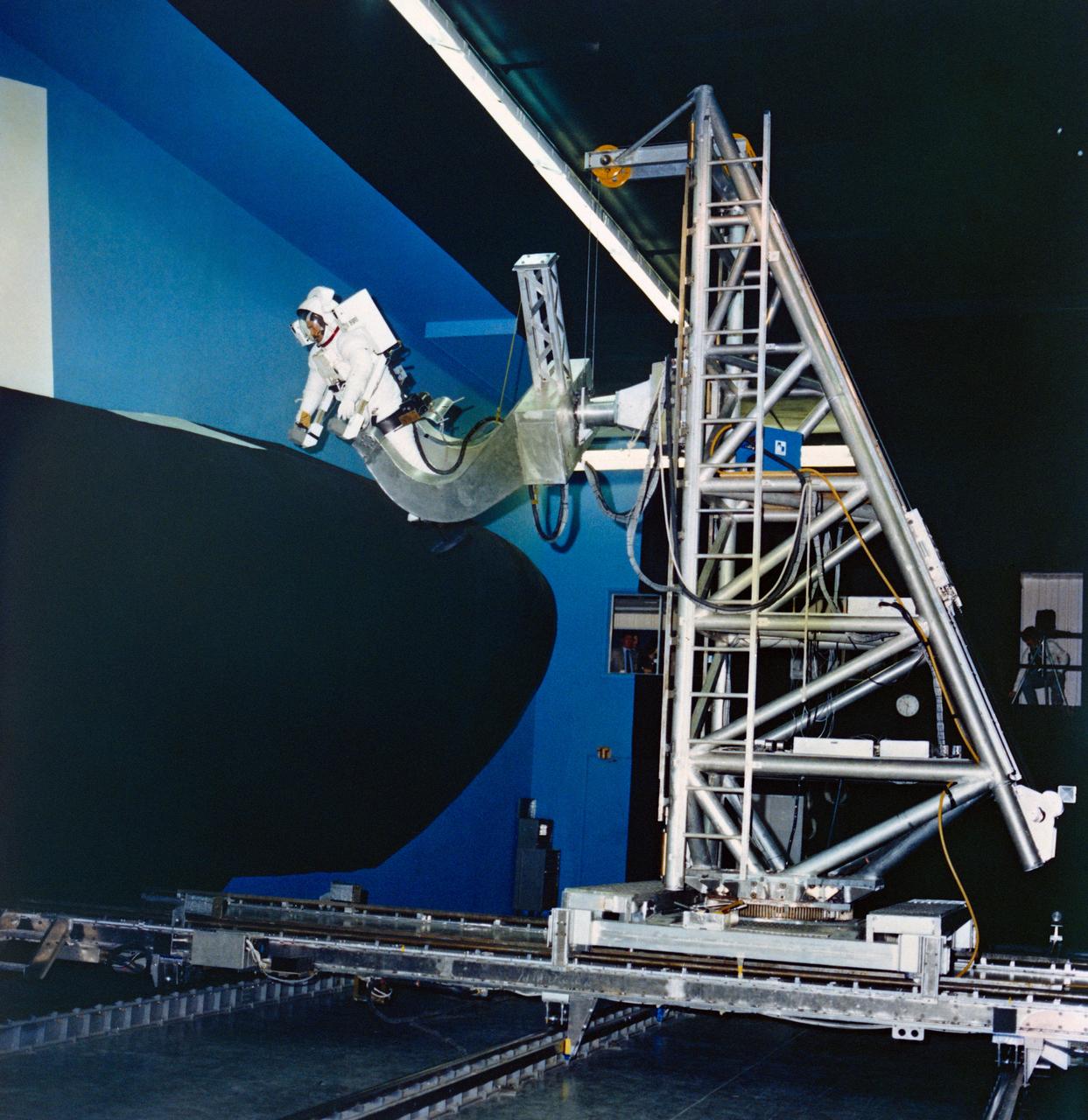
S80-36889 (24 July 1980) --- Astronaut Bruce McCandless II uses a simulator at Martin Marietta?s space center near Denver to develop flight techniques for a backpack propulsion unit that will be used on Space Shuttle flights. The manned maneuvering unit (MMU) training simulator allows astronauts to "fly missions" against a full scale mockup of a portion of the orbiter vehicle. Controls of the simulator are like those of the actual MMU. Manipulating them allows the astronaut to move in three straight-line directions and in pitch, yaw and roll. One possible application of the MMU is for an extravehicular activity chore to repair damaged tiles on the vehicle. McCandless is wearing an extravehicular mobility unit (EMU).
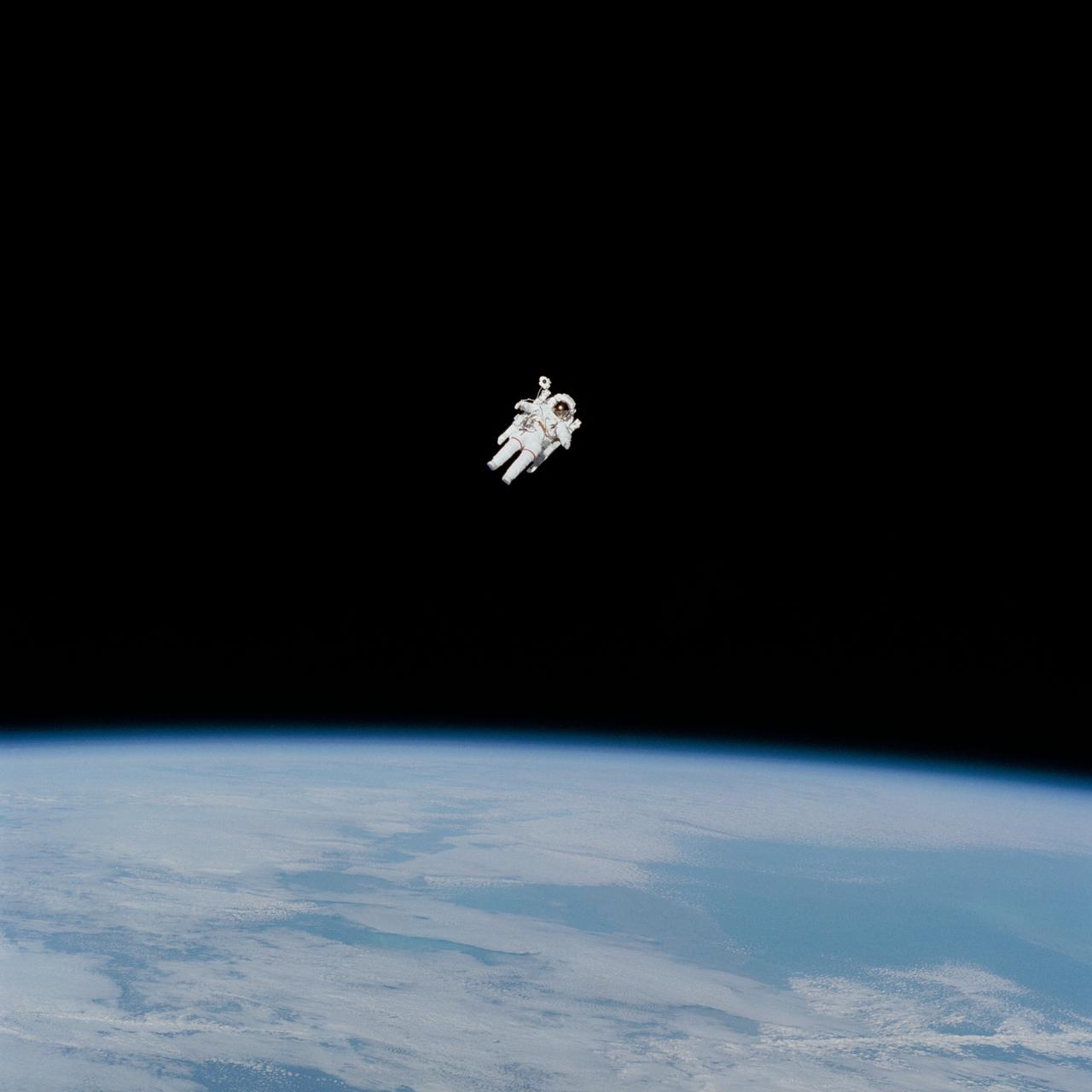
S84-27018 (7 Feb 1984) --- Astronaut Bruce McCandless II approaches his maximum distance from the Earth-orbiting Space Shuttle Challenger in this 70mm frame photographed by his fellow crewmembers onboard the reusable vehicle. McCandless is in the midst of the first "field" tryout of the nitrogen-propelled, hand-controlled back-pack device called the manned maneuvering unit (MMU). Astronaut Robert L. Stewart got a chance to test the same unit a while later in the lengthy EVA session while the two spacewalkers were photographed and monitored by their fellow crewmembers in Challenger's cabin. Those inside were Astronauts Vance D. Brand, Robert L. Gibson and Dr. Ronald E. McNair.
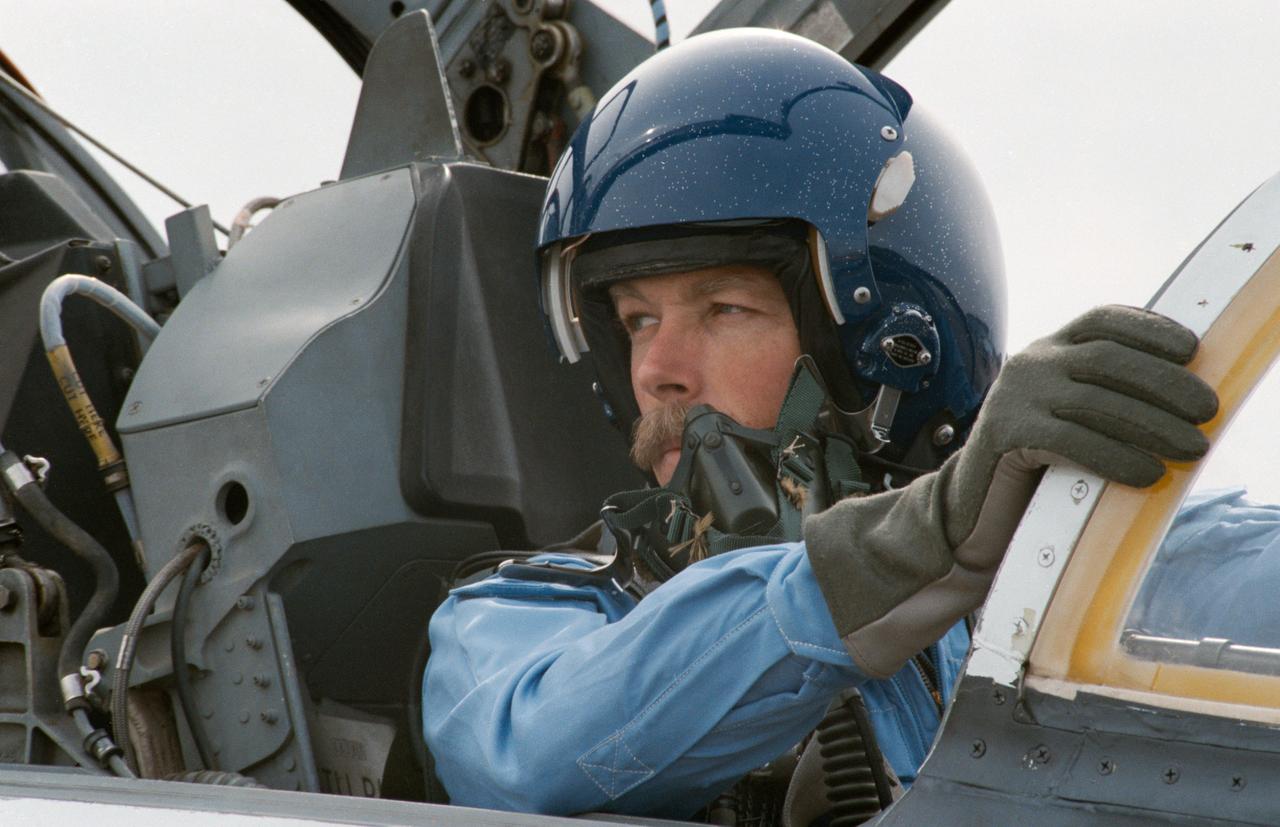
S84-26243 (31 Jan 1984) --- Astronaut Robert L. Gibson, one of five 41-B crewmembers, prepares to leave Houston?s Ellington Base in a T-38 jet aircraft en route to Florida and the Kennedy Space Center, site of February 3?s launch of the Challenger. Gibson, along with two other members of this crew, began training at JSC in July in 1978. He will be joined by Astronauts Vance D. Brand, commander; and Bruce McCandless II, Ronald E. McNair and Robert L. Stewart, all mission specialists. Brand and McCandless came aboard as NASA astronauts in April 1966.
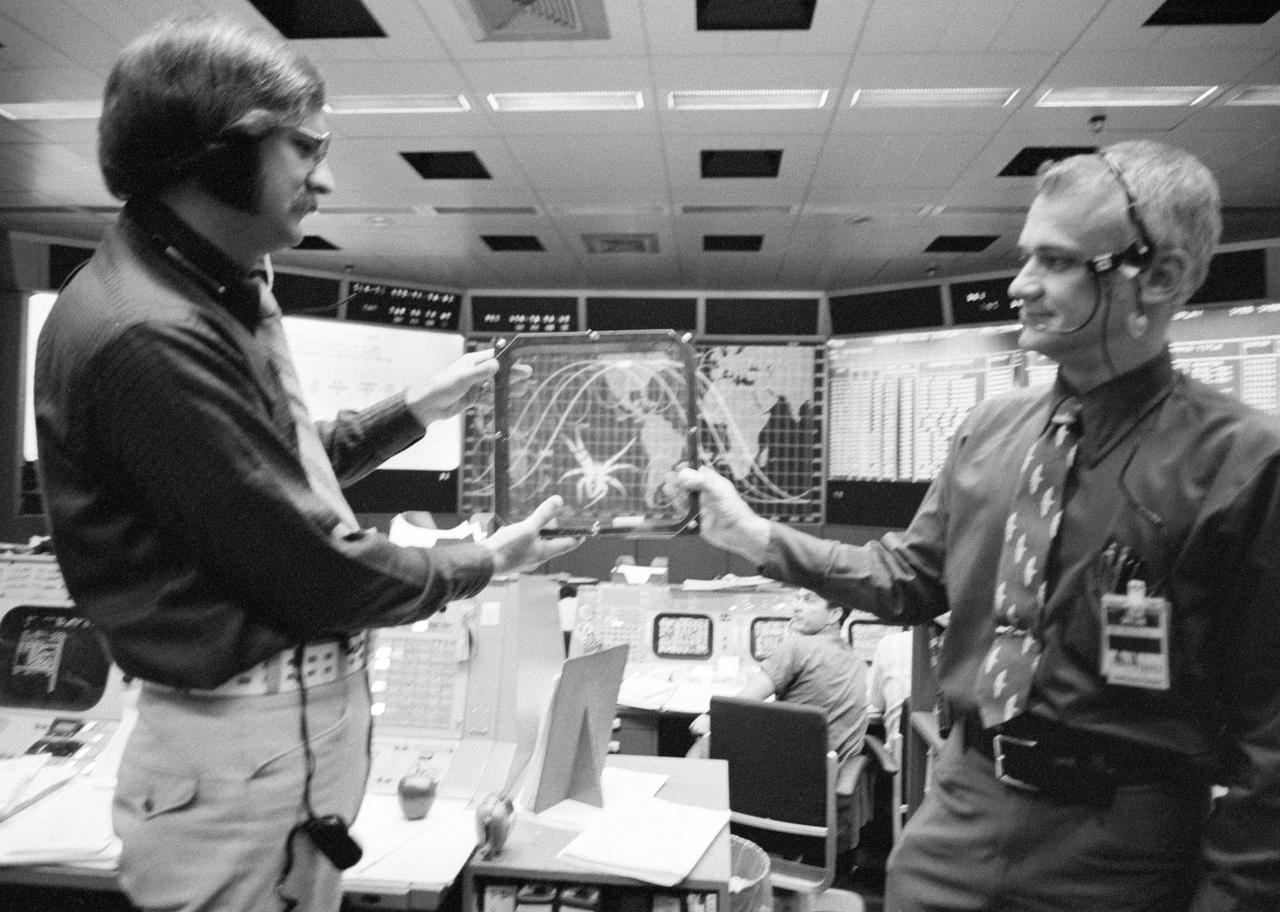
S73-34456 (September 1973) --- Flight Director Neil B. Hutchinson, left, and astronaut Bruce McCandless II hold up a glass enclosure - home for the spider Arachne, which is the same species as the two spiders carried on the Skylab 3 mission. The real spider is the one barely visible at the upper right corner of the square; the larger one is a projected image on the rear-screen-projected map in the front of the Mission Operations Control Room (MOCR) of the Mission Control Center (MCC). McCandless served as backup pilot for the first manned Skylab mission and was a spacecraft communicater (CAPCOM) for the second crew. Photo credit: NASA
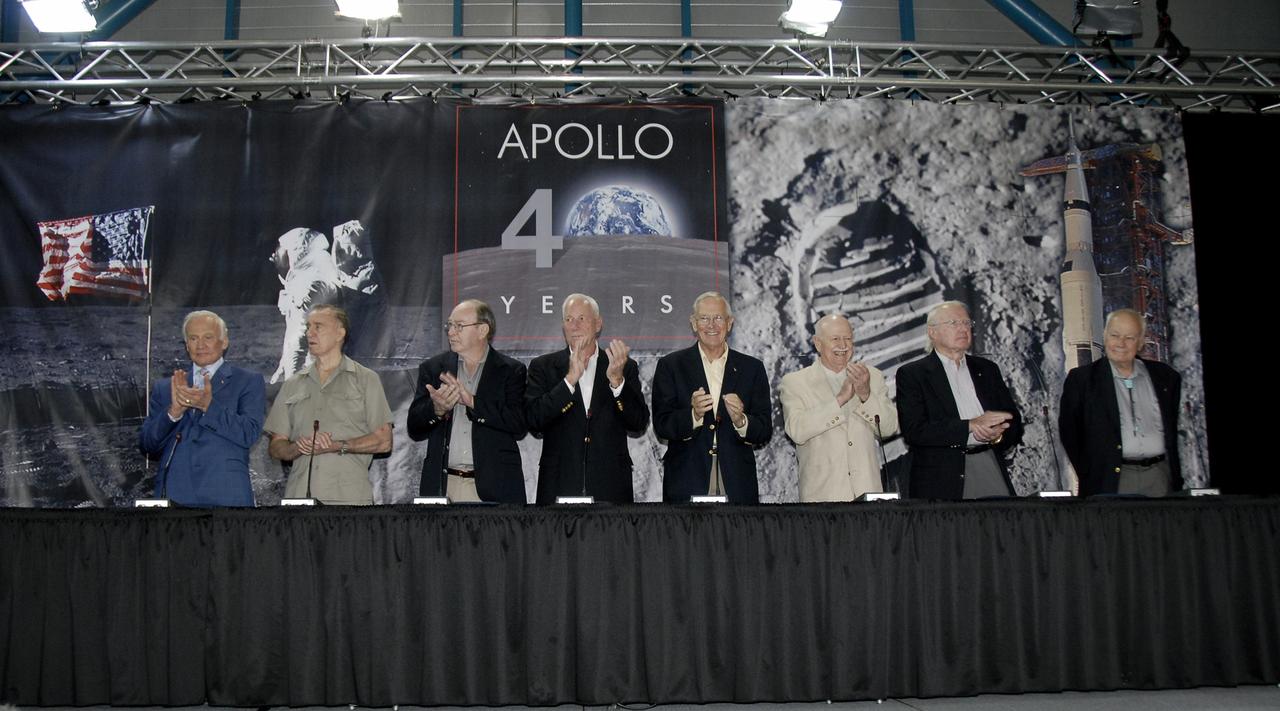
CAPE CANAVERAL, Fla. – At the Apollo/Saturn V Center at NASA's Kennedy Space Center in Florida, Apollo astronauts (from left) Buzz Aldrin, Walt Cunningham, Edgar Mitchell, Al Worden, Charlie Duke, Vance Brand and Gerald Carr applaud the addition of Apollo astronaut Bruce McCandless on stage for NASA's 40th Anniversary of Apollo Celebration of the July 1969 launch and landing on the moon. McCandless was a member of the astronaut support crew for the Apollo 14 mission and was backup pilot for the first manned Skylab mission. Among other accomplishments, he collaborated on the development of the Manned Maneuvering Unit used during shuttle EVAs. Photo credit: NASA/Kim Shiflett
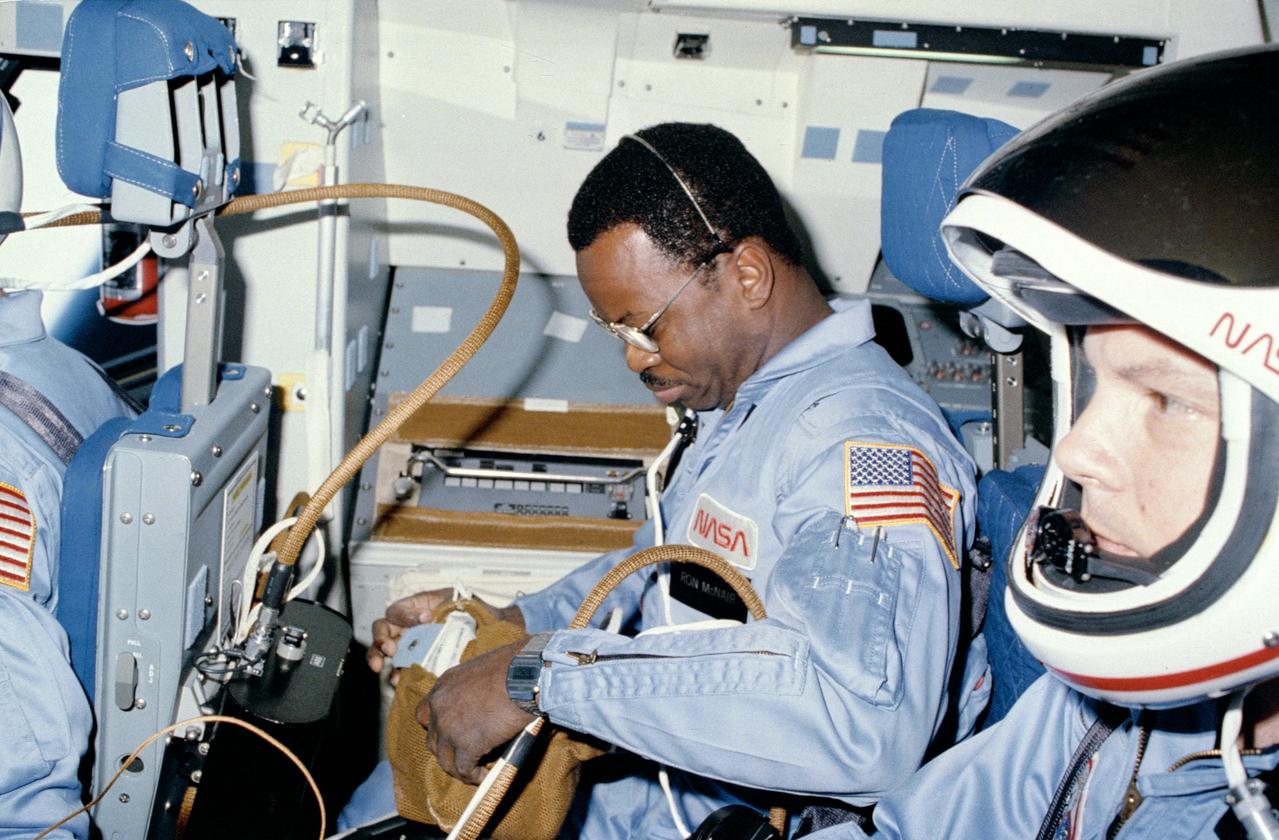
S84-27028 (3 Feb 1984) --- Astronaut Ronald E. McNair, left, and Robert L. Stewart prepare to enter an eight-day Earth-orbital mission aboard the Space Shuttle Challenger. Photographed by Astronaut Bruce McCandless II, McNair had already moved his helmet. Launch was less than ten minutes earlier from Launch Pad 39A at Kennedy Space Center, Florida. The three mission specialists were joined by Astronauts Vance D. Brand, commander; and Robert L. Gibson, pilot, for the flight. McCandless?s launch phase station is in the middeck.
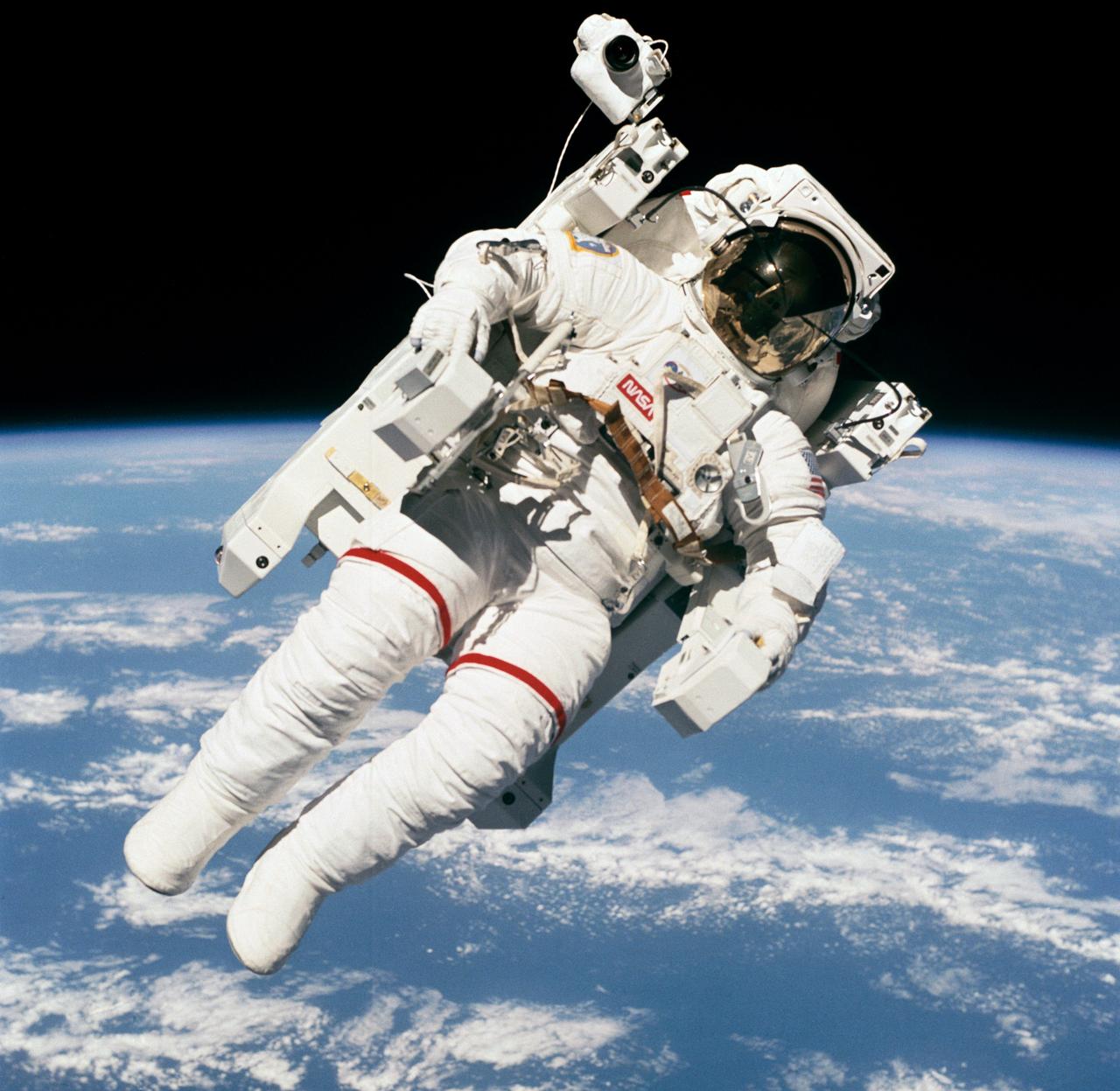
S84-27232 (& Feb 1984) --- Astronaut Bruce McCandless II, 41-B mission specialist, uses his hands to control his movement above the Earth - and just few meters away from the Challenger - during the first-ever extravehicular activity (EVA) which didn?t use restrictive tethers and umbilical?s. Fellow crewmembers aboard the Challenger used a 70mm camera to expose this frame through windows on the flight deck. McCandless was joined by Robert L. Stewart, one of two other mission specialists for this flight, on two sessions of EVA.
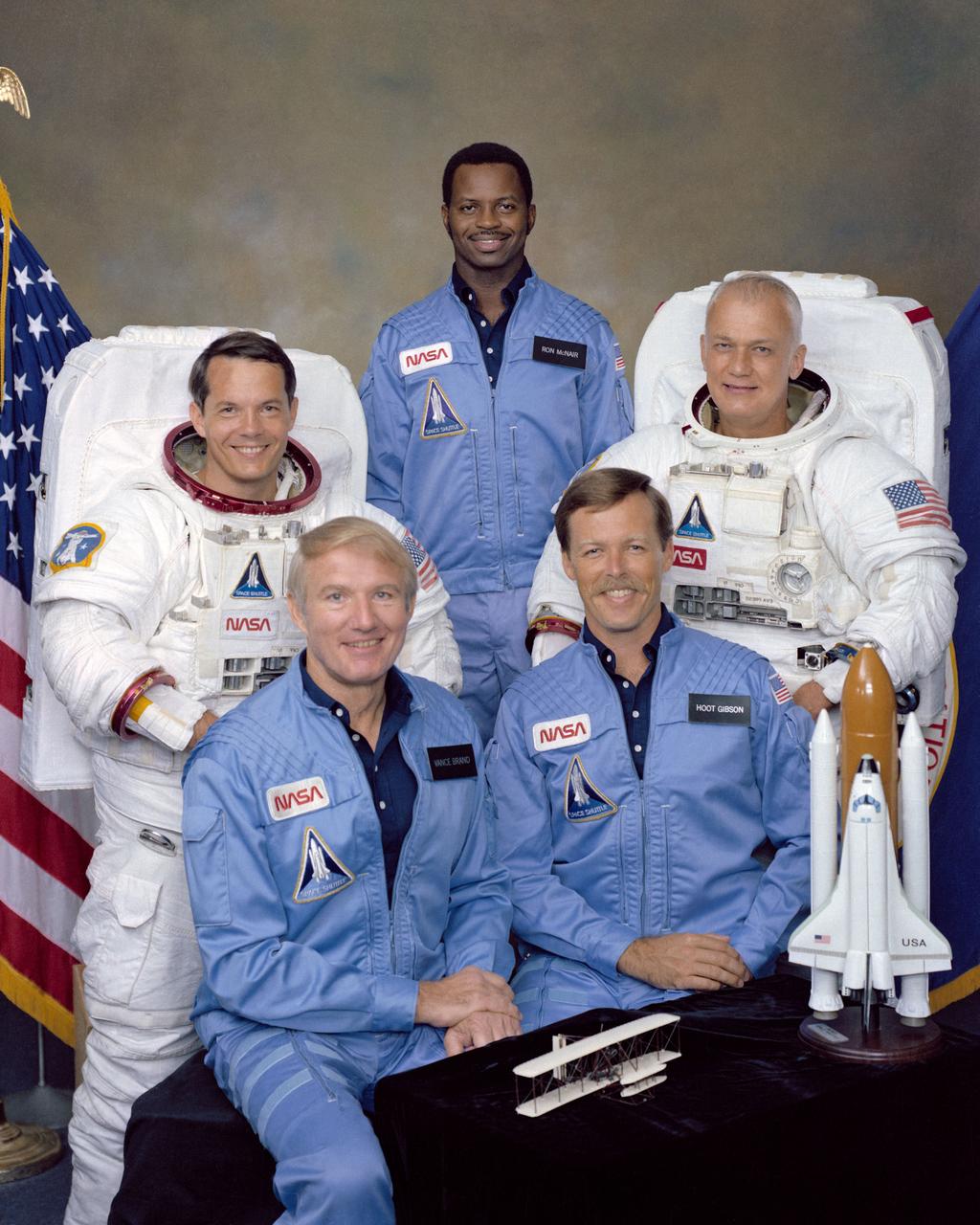
S83-40555 (15 October 1983) --- These five astronauts are in training for the STS-41B mission, scheduled early next year. On the front row are Vance D. Brand, commander; and Robert L. Gibson, pilot. Mission specialists (back row, left to right) are Robert L. Stewart, Dr. Ronald E. McNair and Bruce McCandless II. Stewart and McCandless are wearing Extravehicular Mobility Units (EMU) space suits. The STS program's second extravehicular activity (EVA) is to be performed on this flight, largely as a rehearsal for a scheduled repair visit to the Solar Maximum Satellite (SMS), on a later mission. The Manned Maneuvering Unit (MMU) will make its space debut on STS-41B.
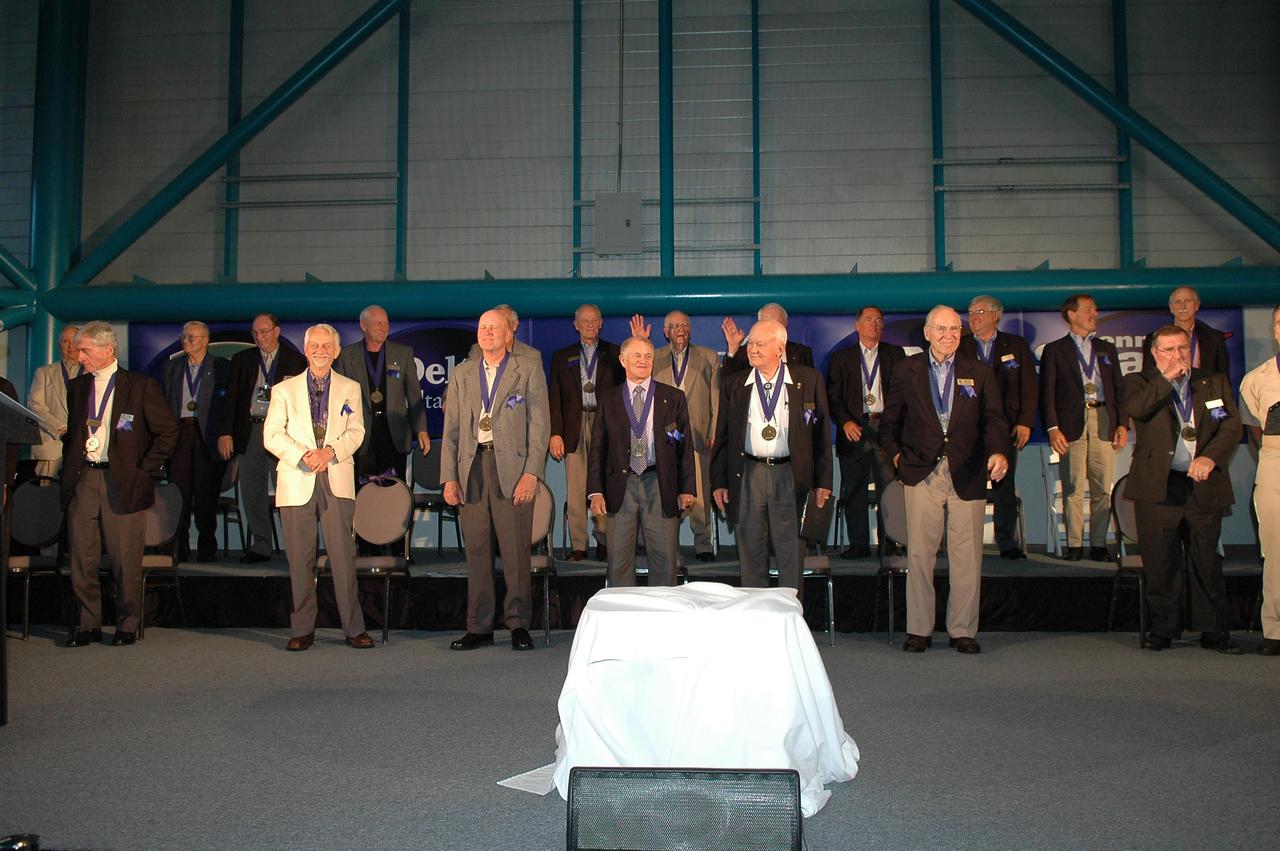
KENNEDY SPACE CENTER, FLA. - Members of the Astronaut Hall of Fame are applauded by the guests at the Astronaut Hall of Fame Induction Ceremony held at the Kennedy Space Center Visitor Complex’s Apollo_Saturn V Center. From left are Al Gordon, John Young, Walt Cunningham, Bill Anders, Owen Garriott, Ed Mitchell, Gordon Fullerton, Al Worden, Charlie Duke, Joe Allen, Jack Lousma, Bruce McCandless, Bill Pogue, Robert Crippen, Jim Lovell, Dan Brandenstein, Robert “Hoot” Gibson, Fred Haise, and Stephen Covey. Not pictured are Scott Carpenter and Vance Brand. McCandless, Allen and Fullerton are the 2005 inductees. Recognized for their individual flight accomplishments and contributions to the success and future success of the U.S. space program, this elite group of inductees is among only 60 astronauts to be honored in the Hall of Fame and the fourth group of Space Shuttle astronauts named.
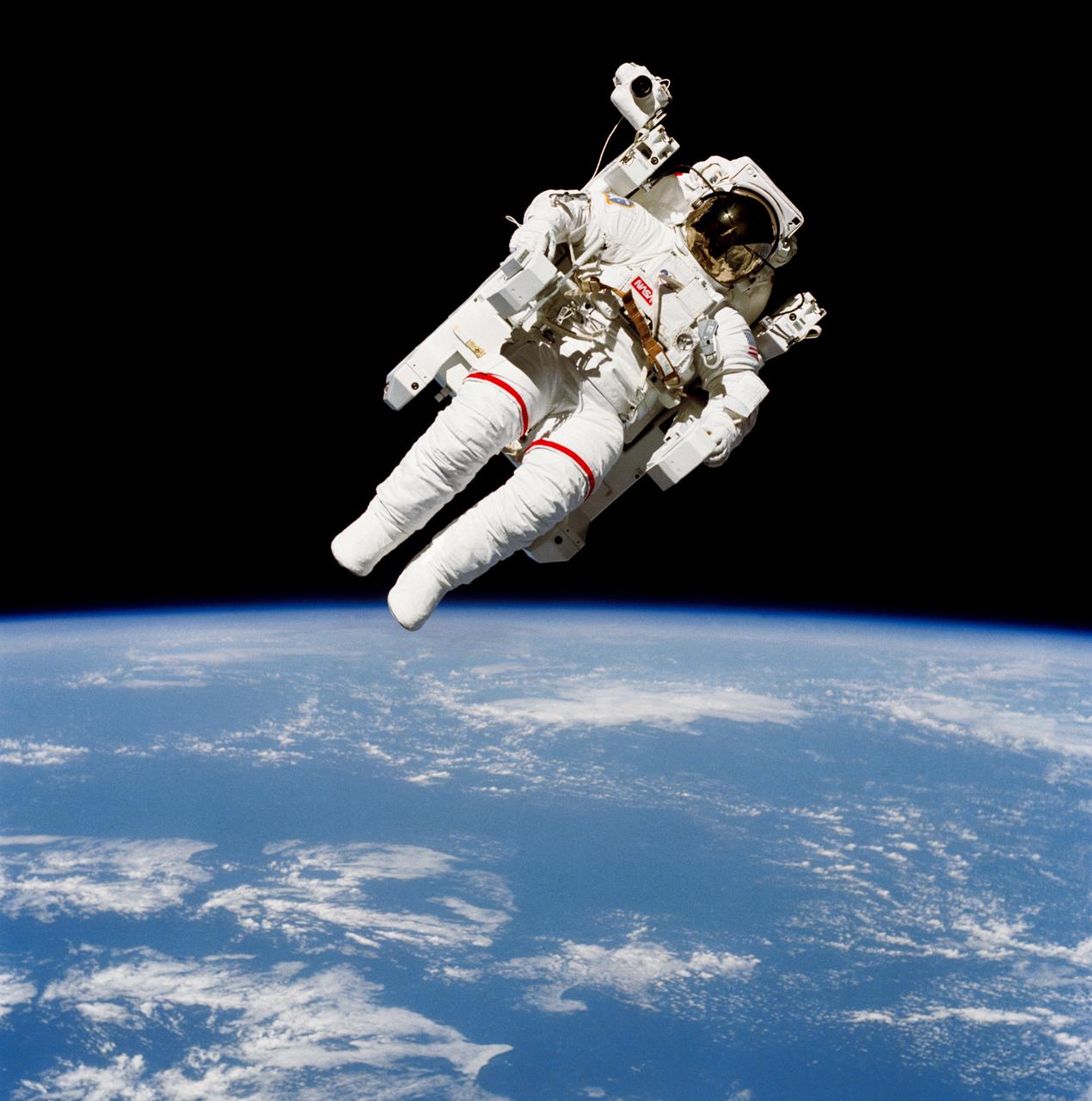
S84-27017 (7 Feb. 1984) --- Astronaut Bruce McCandless II, one of two 41-B mission specialist, participating in a historical Extravehicular Activity (EVA), is a few meters away from the cabin of the Earth-orbiting space shuttle Challenger in this 70mm frame. This EVA represented the first use of a nitrogen-propelled, hand-controlled device called the Manned Maneuvering Unit (MMU), which allows for much greater mobility than that afforded previous spacewalkers who had to use restrictive tethers. Robert L. Stewart, mission specialist, later tried out the MMU McCandless is using here. The two of them tested another similar unit two days later. Inside the spacecraft were astronauts Vance D. Brand, commander; Robert L. Gibson, pilot; and Ronald E. McNair, mission specialist. Photo credit: NASA
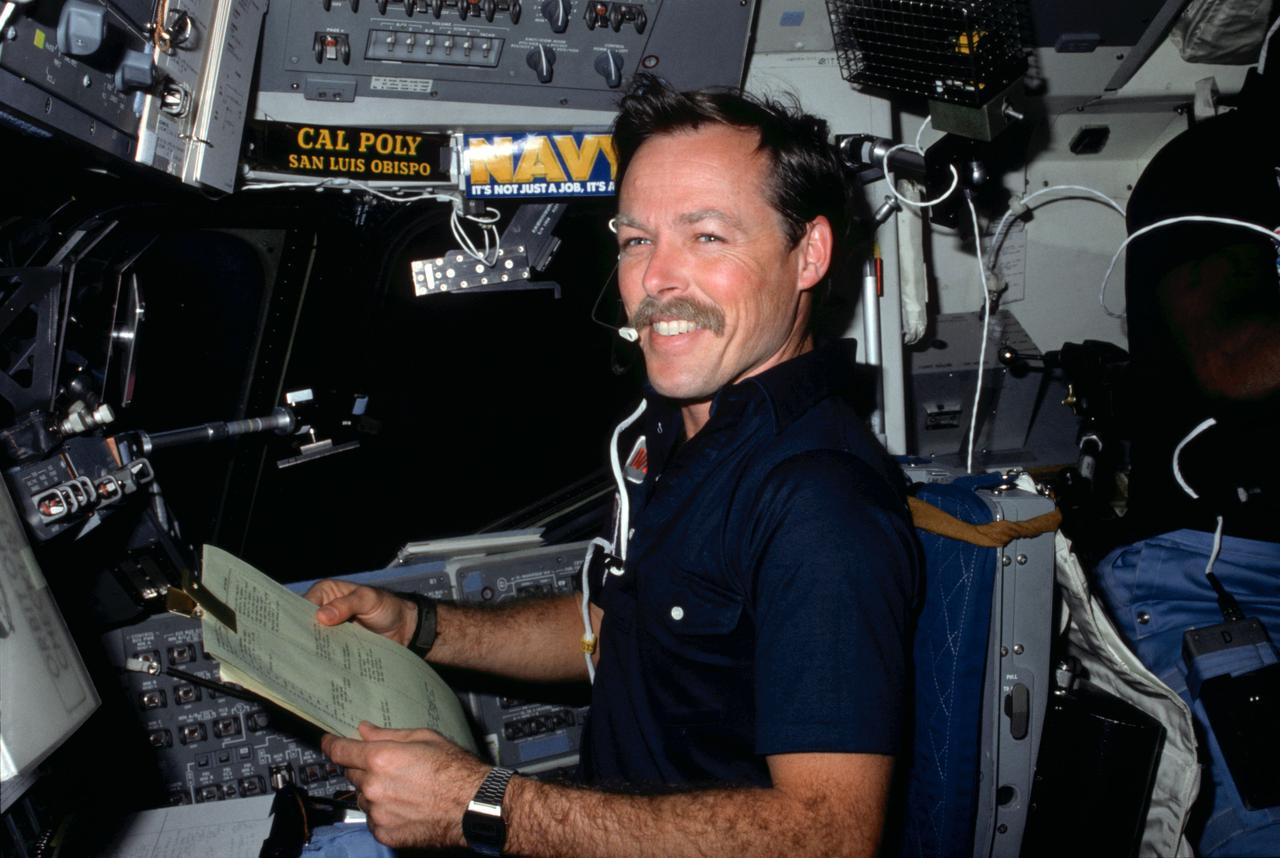
41B-07-230 (S84-27027) (3-11 February 1984) ---Astronaut Robert L. Gibson, 41-B pilot, reviews some teleprinter copy on the flight deck?s starboard station during the eight-day 41-B Space Shuttle mission. Four other astronauts share the Challenger with Gibson. They are Astronauts Vance D. Brand, commander; and Ronald E. McNair, Bruce McCandless II and Robert L. Stewart, all mission specialists. The photograph was taken from the commander?s station with a 35mm camera.
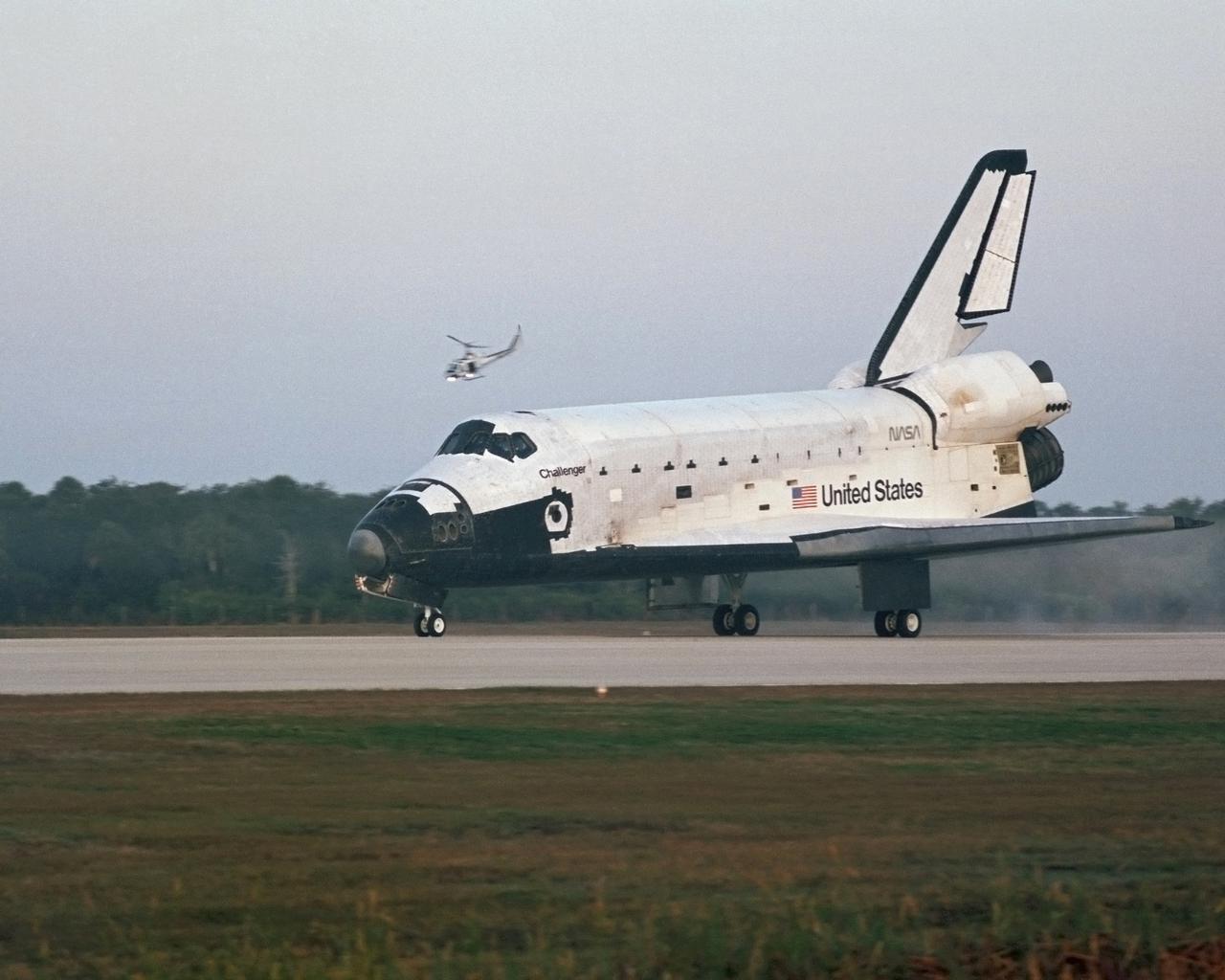
CAPE CANAVERAL, Fla. -- Commander Vance Brand and Pilot Robert 'Hoot' Gibson guide spaceship Challenger to the first-ever landing at Kennedy Space Center. The historic touchdown occurred at 7:15:55 a.m. EST, Feb. 11, 1984. Also aboard were Mission Specialists Bruce McCandless II, Ronald McNair and Robert Stewart. Photo credit: NASA
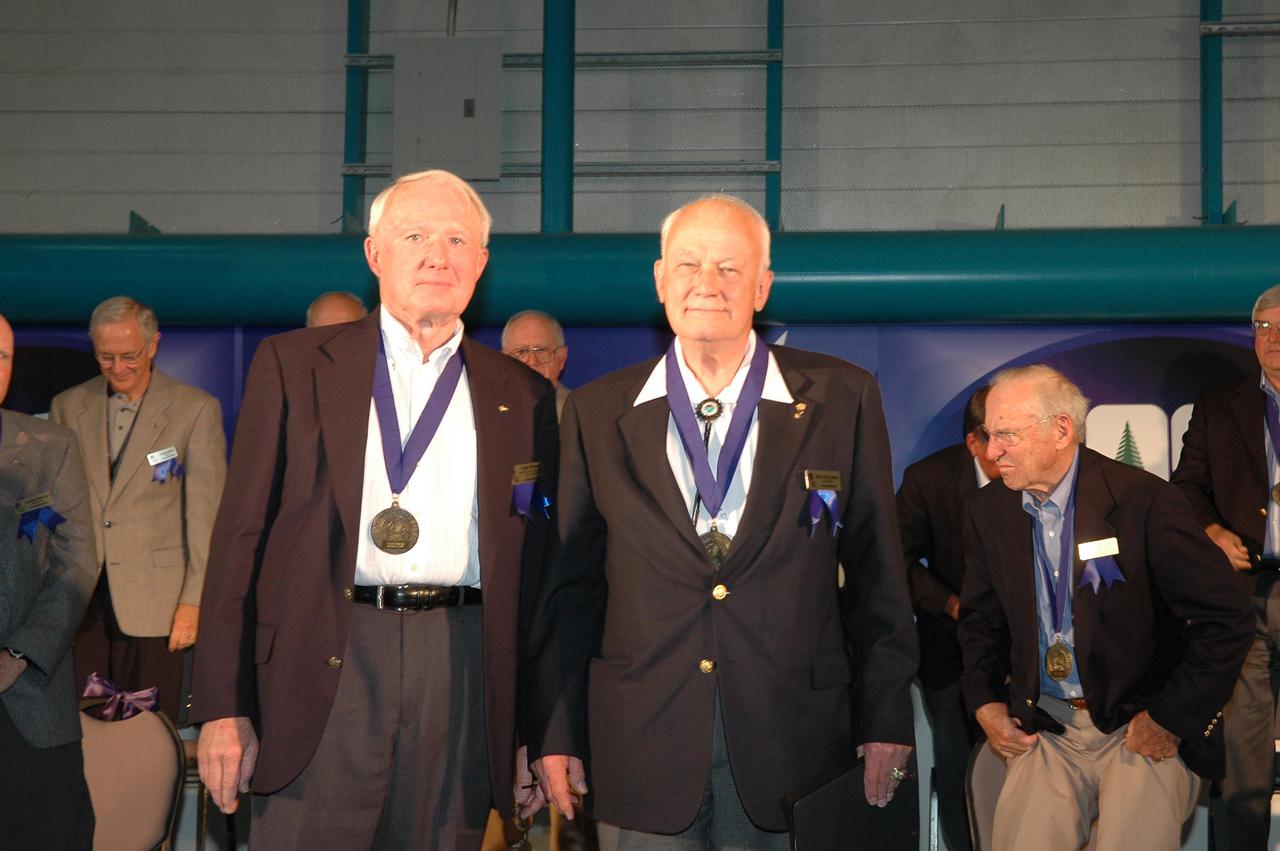
KENNEDY SPACE CENTER, FLA. - At the Astronaut Hall of Fame Induction Ceremony, new inductees Joe Allen (left) and Bruce McCandless stand before the guests at the Kennedy Space Center Visitor Complex’s Apollo_Saturn V Center. Other inductee Gordon Fullerton is not pictured. Recognized for their individual flight accomplishments and contributions to the success and future success of the U.S. space program, this elite group of inductees is among only 60 astronauts to be honored in the Hall of Fame and the fourth group of Space Shuttle astronauts named.
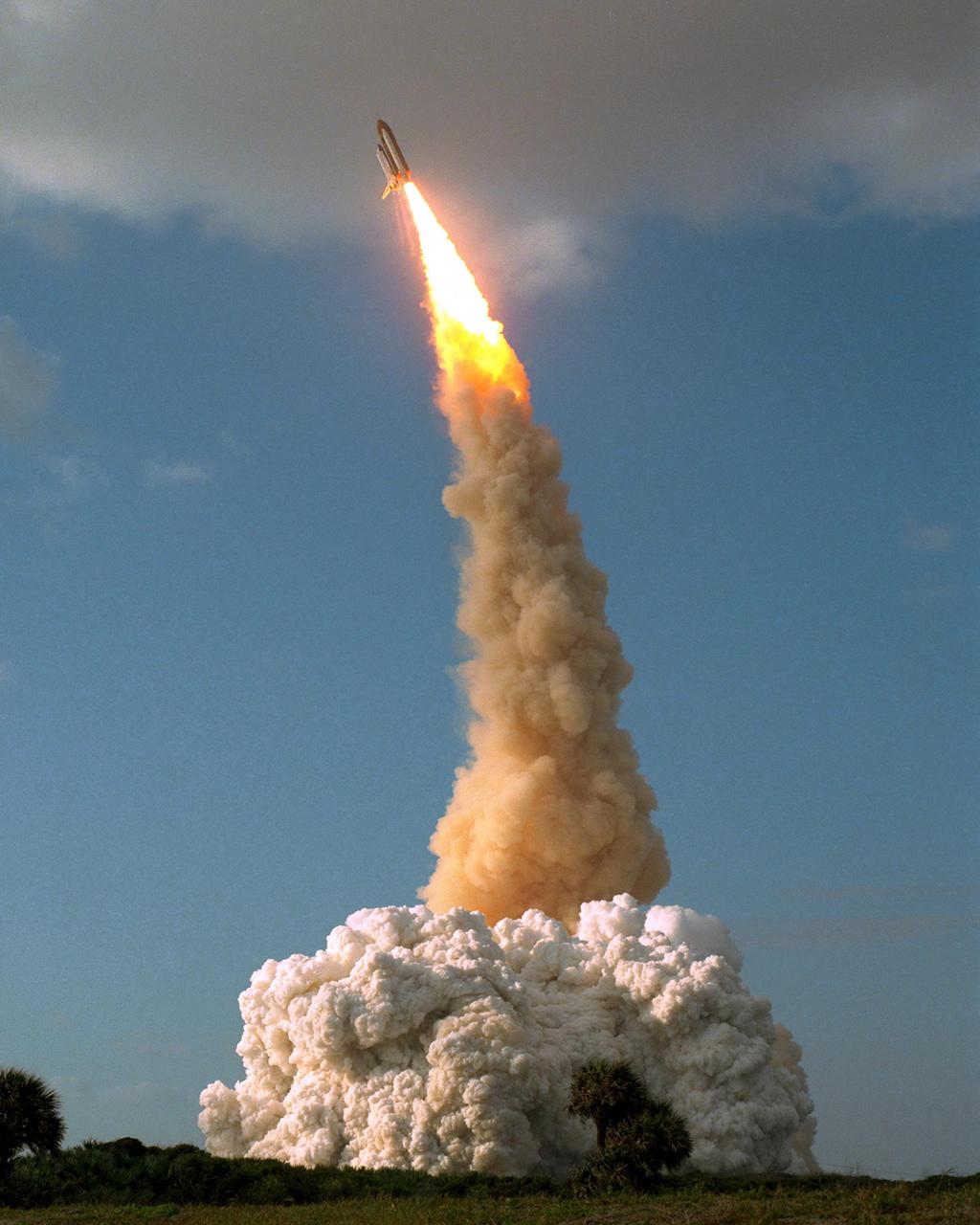
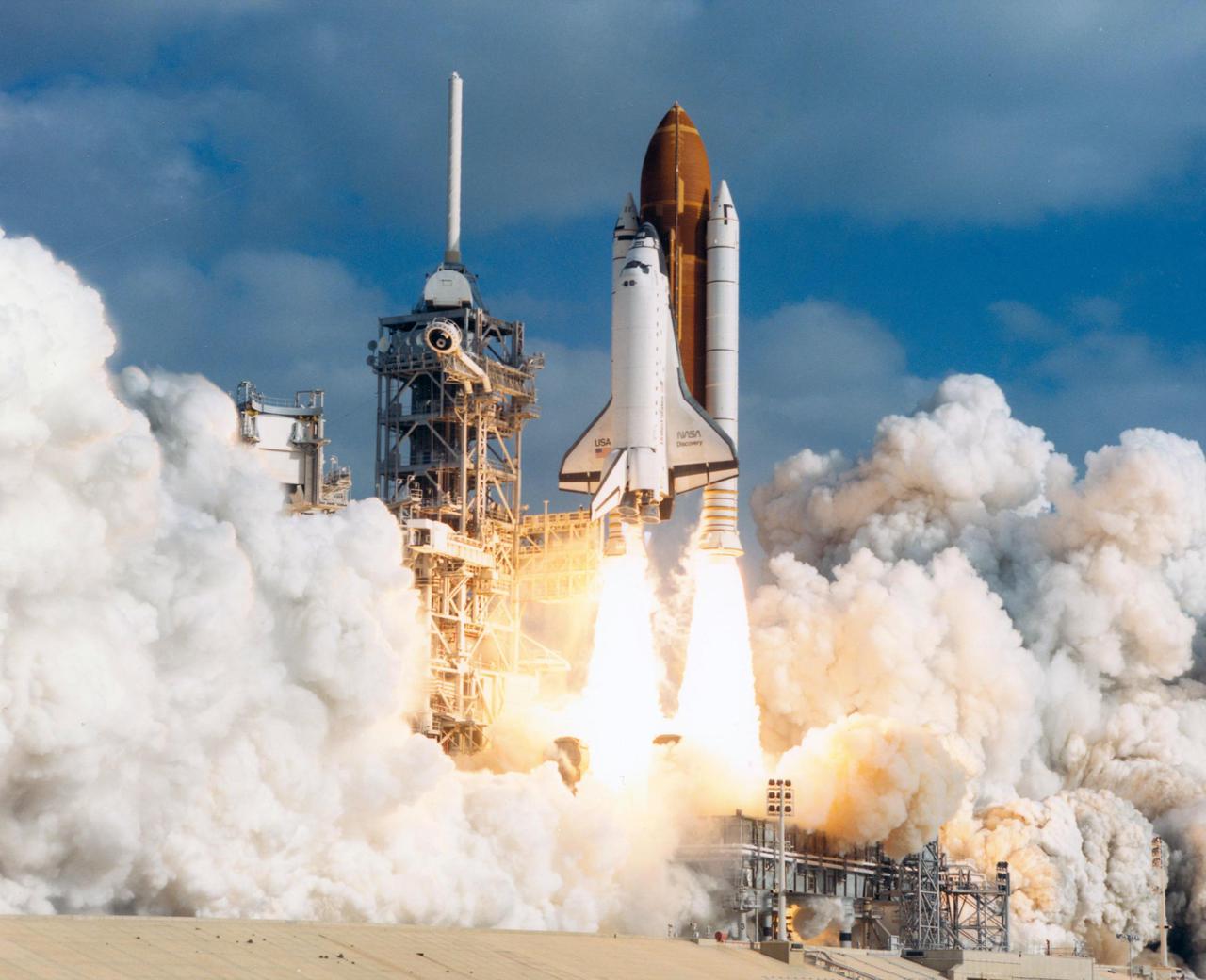
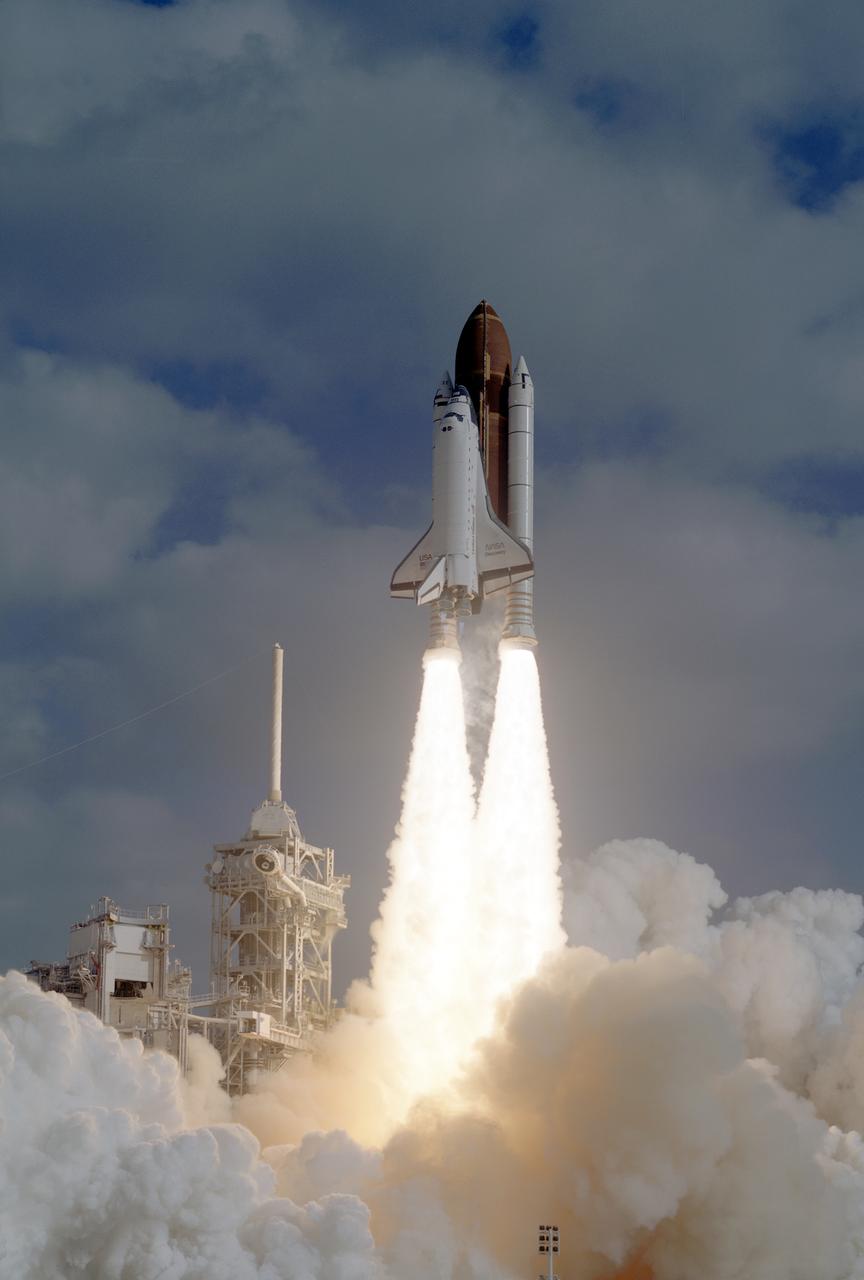
KENNEDY SPACE CENTER, FLA. -- The Space Shuttle Discovery lifts off from Pad 39-B at 8:33 a.m. EDT carrying a crew of five and the Hubble Space Telescope. STS-31 crew members are Commander Loren Shriver, Pilot Charles Bolden and Mission Specialists Steven Hawley, Bruce McCandless II and Kathryn Sullivan.
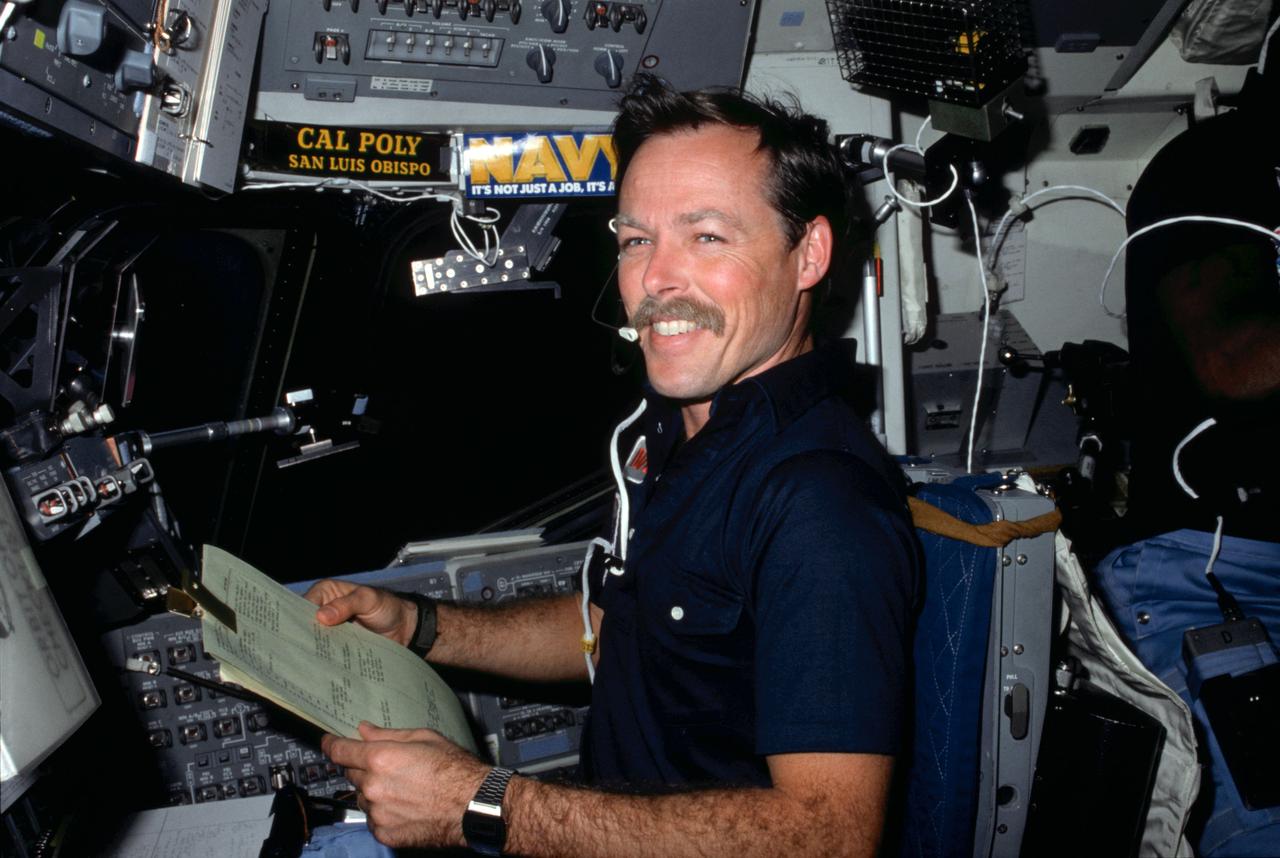
S84-27027 (3-11 Feb 1984) --- Astronaut Robert L. Gibson, STS-41B pilot, reviews some teleprinter copy on the flight deck's starboard station during the eight-day STS-41B Space Shuttle mission. Four other astronauts share the Challenger with Gibson. They are astronauts Vance D. Brand, commander; and Ronald E. McNair, Bruce McCandless II and Robert L. Stewart, all mission specialists. The photograph was taken from the commander's station with a 35mm camera.
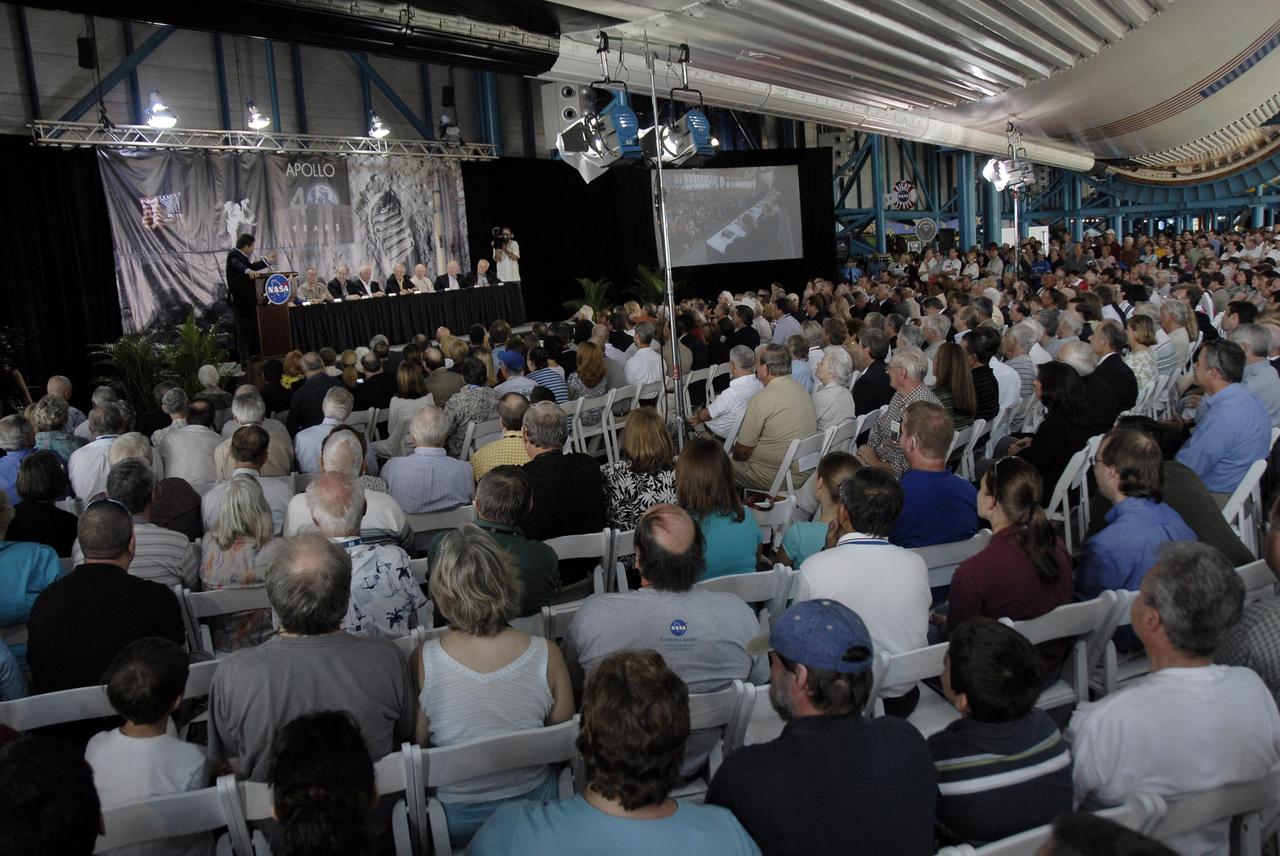
CAPE CANAVERAL, Fla. – The Apollo/Saturn V Center at NASA's Kennedy Space Center in Florida is filled with guests gathered to hear about the Apollo 11 launch and landing in July 1969 from eight Apollo astronauts: . The event is part of NASA's 40th Anniversary of Apollo Celebration. Participating are CNN correspondent, who moderated, Buzz Aldrin, Walt Cunningham, Edgar Mitchell, Al Worden, Charlie Duke, Vance Brand, Gerald Carr and Bruce McCandless. Photo credit: NASA/Kim Shiflett

The space shuttle Discovery lifts off from Launch Pad 39-B at 8:33 a.m. EDT carrying a crew of five and the Hubble Space Telescope. STS-31 crew members are Commander Loren Shriver, Pilot Charles Bolden and Mission Specialists Steven Hawley, Bruce McCandless II and Kathryn Sullivan. Photo credit: NASA
KENNEDY SPACE CENTER, FLA. -- The Space Shuttle Discovery soars into the morning skies above Florida, carying a crew of five and the Hubble Space Telescope. Launch of Space Shuttle Mission STS-31from Pad 39B occurred at 8:33:51 a.m. EDT, April 24. Crew members are Commander Loren J. Shriver; Pilot Charles F. Bolden Jr.; and Mission Specialists Kathryn D. Sullivan, Steven A. Hawley, and Bruce McCandless II.
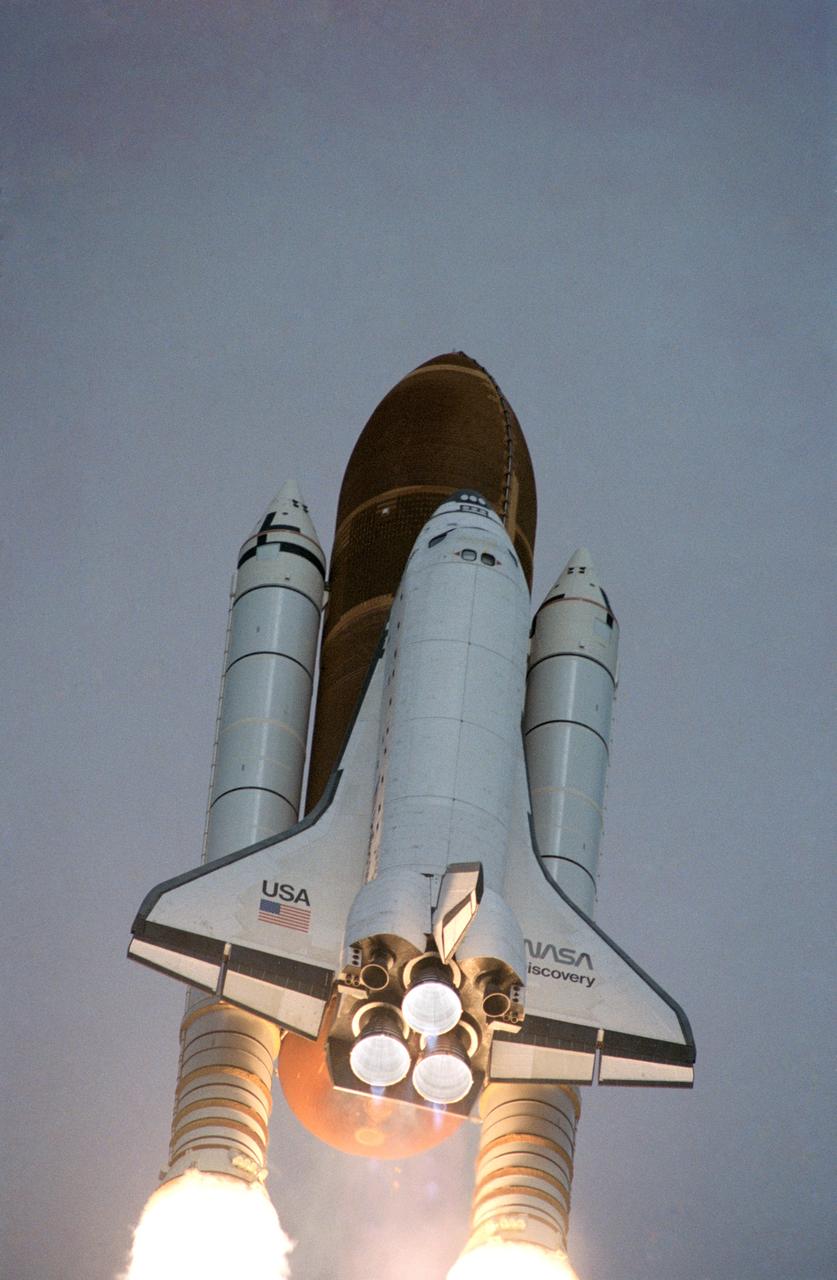
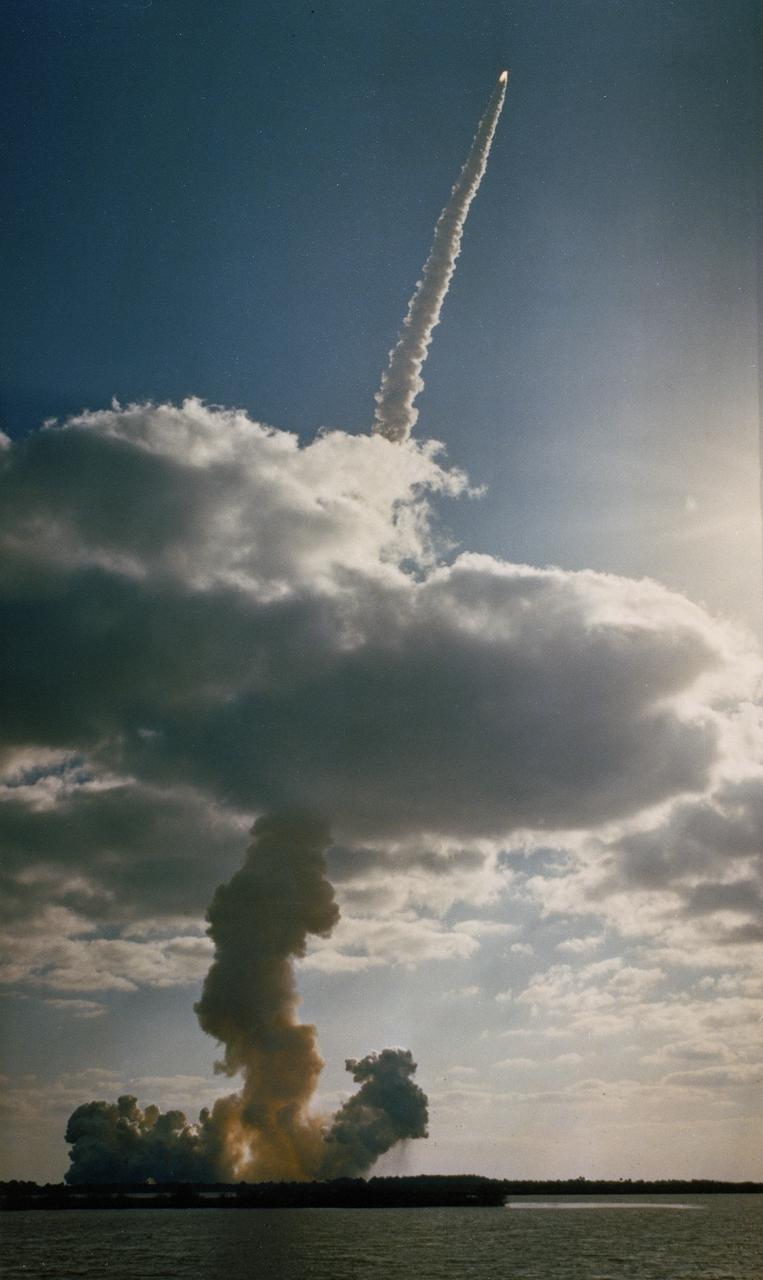
STS031-S-074 (24 April 1990) --- A low-angle view of the launch of the STS-31 mission. Onboard Discovery are a crew of five veteran astronauts and the Hubble Space Telescope (HST). Official launch time was 8:33:51.0492 a.m. (EDT). Headed for approximately five days in space are astronauts Loren J. Shriver, Charles F. Bolden Jr., Bruce McCandless II, Kathryn D. Sullivan and Steven S. Hawley.
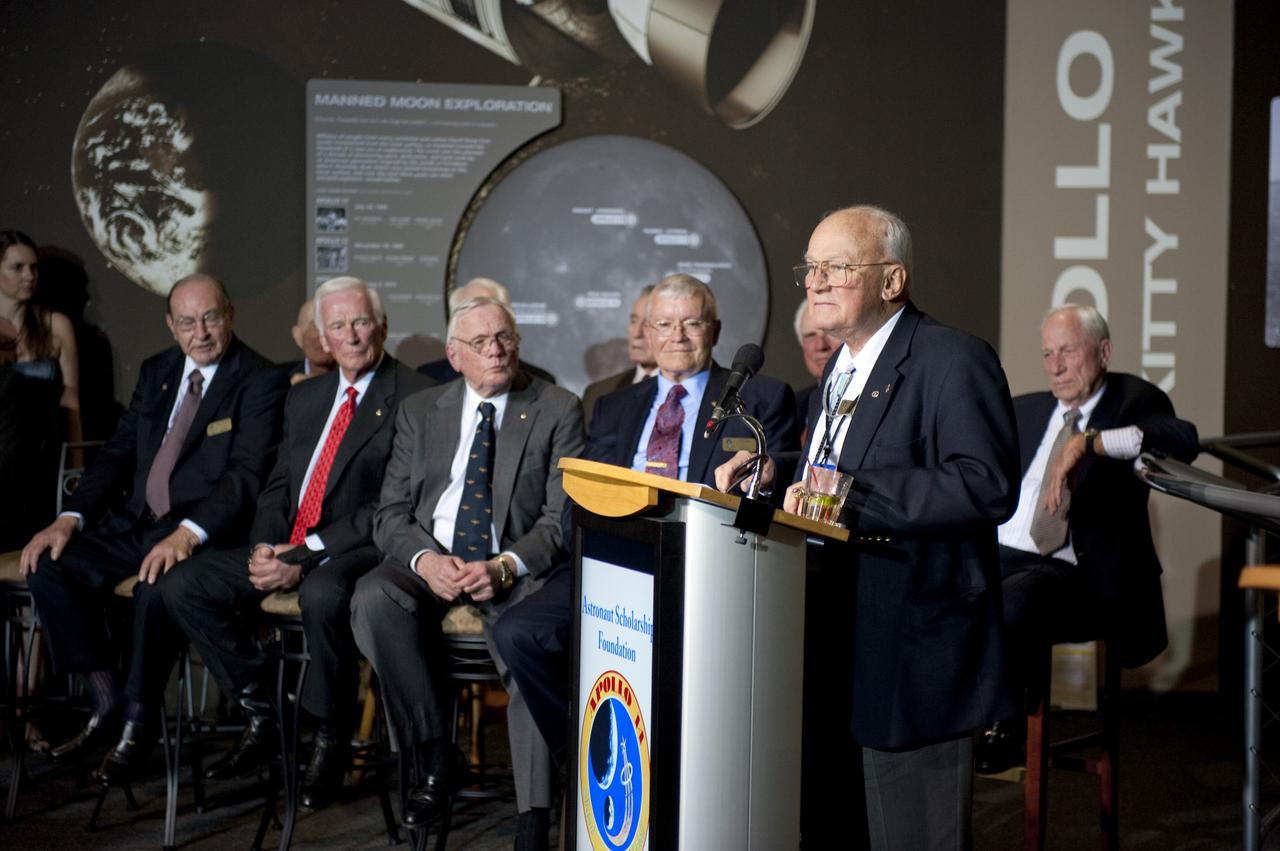
CAPE CANAVERAL, Fla. -- Apollo 14 Capcom Bruce McCandless talks to attendees of the Apollo 14 Anniversary Soirée at the Kennedy Space Center Visitor Complex's Saturn V Center. The celebration was hosted by the Astronaut Scholarship Foundation. Apollo 14 landed on the lunar surface 40 years ago on Feb. 5, 1971. Photo credit: NASA/Kim Shiflett

S84-27155 (11 Feb 1984) --- The first Space Shuttle landing in Florida was recorded just moments prior to touchdown on the long landing facility of the Kennedy Space Center. Patches of fog were sighted near the round, but they were not a factor in the landing. Along with Astronaut Vance D. Brand, crew commander at Challenger?s controls, also onboard were Astronaut Robert L. Gibson, pilot; and Bruce McCandless II, Robert L. Stewart and Ronald E. McNair, all mission specialists.
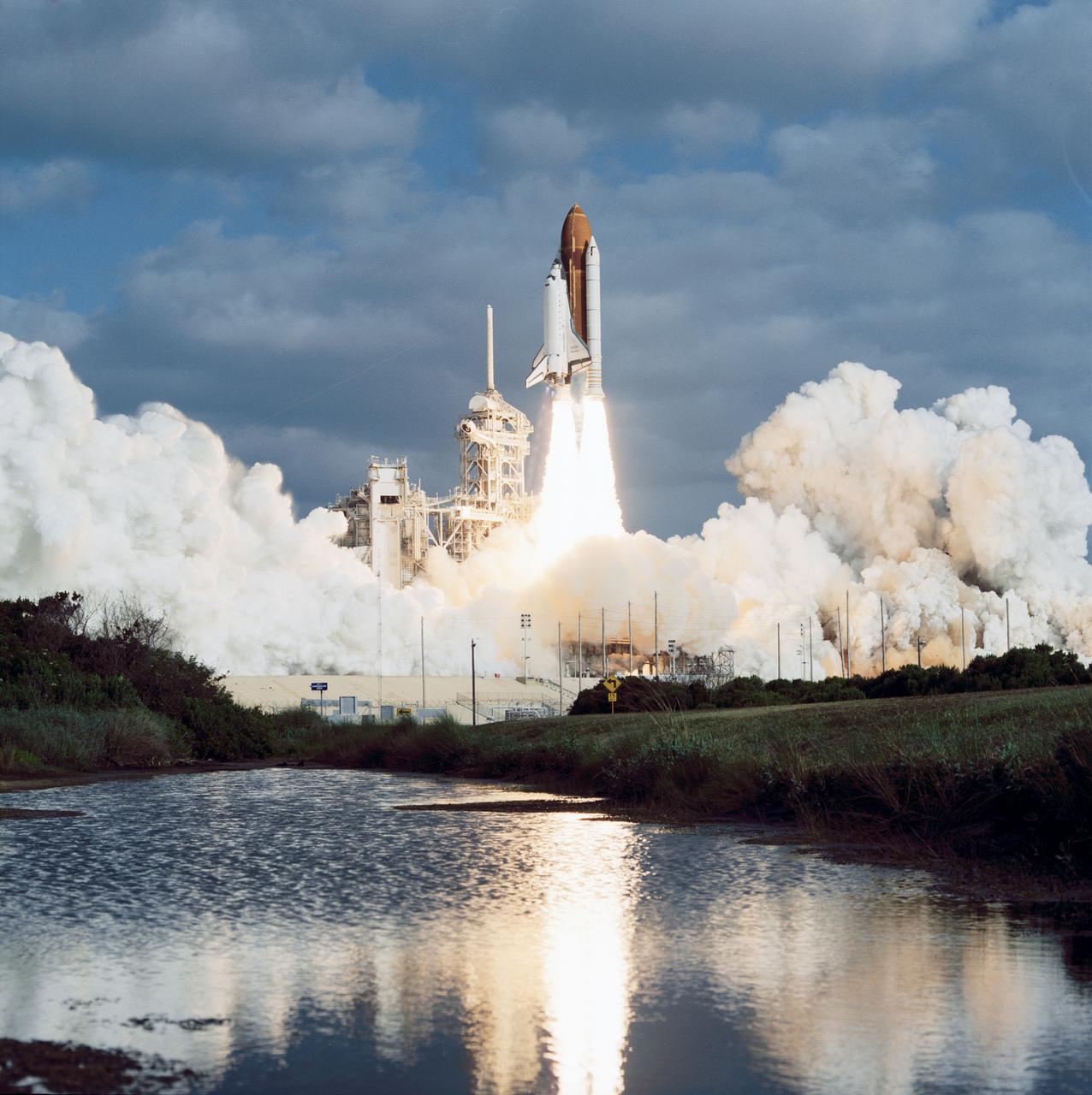
STS031-S-064 (24 April 1990) --- A horizontal view of the launch of the STS-31 mission. Onboard Space Shuttle Discovery are the crew of five veteran astronauts and the Hubble Space Telescope (HST). Official launch time was 8:33:51.0492 a.m. (EDT). Headed for approximately five days in space are astronauts Loren J. Shriver, Charles F. Bolden, Jr., Bruce McCandless, II, Kathryn D. Sullivan, and Steven A. Hawley.
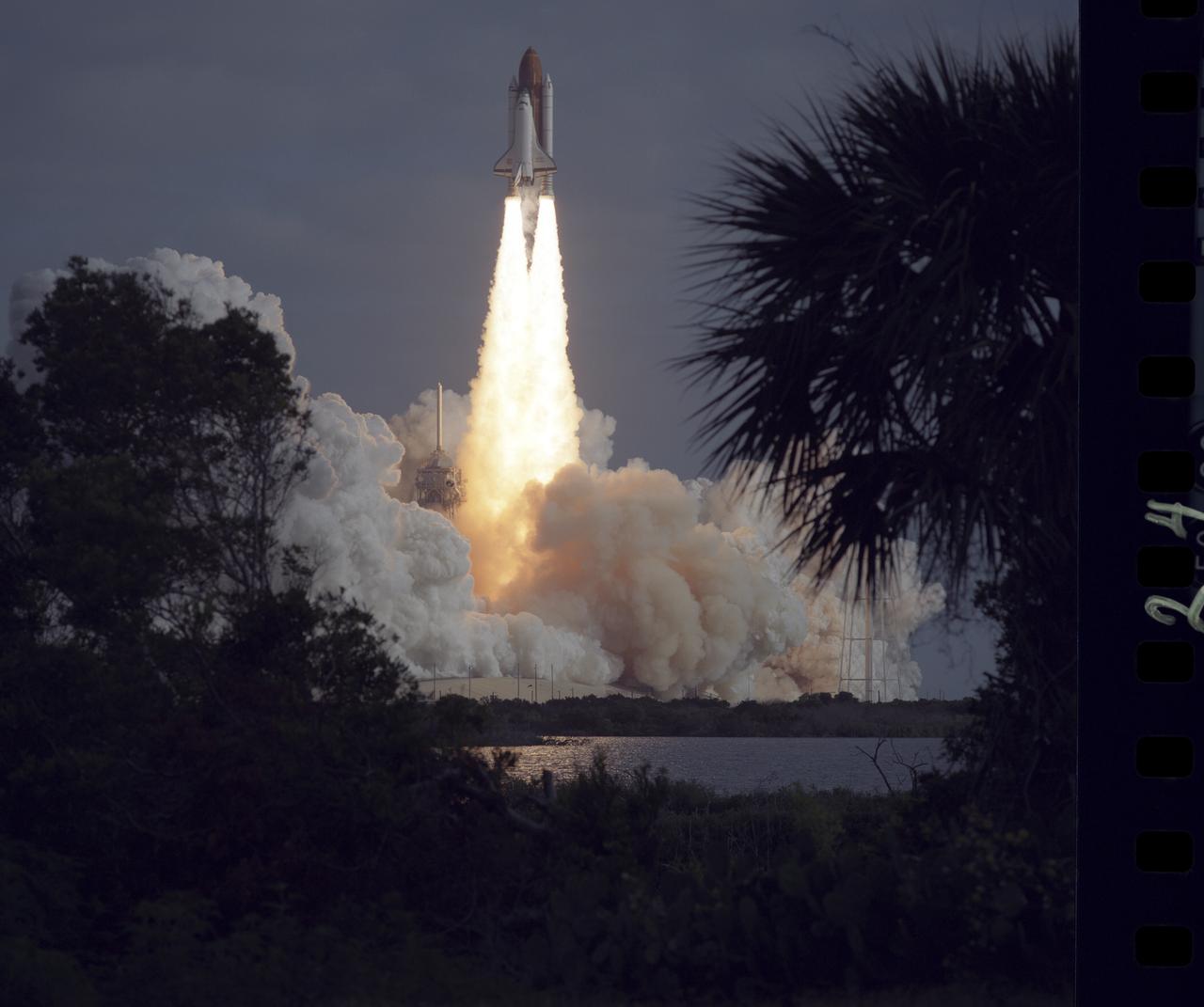
The STS-31 crew launched aboard the Space Shuttle Discovery on April 24, 1990 at 8:33:51am (EDT). Included in the crew of five were Loren J. Shriver, commander; Charles F. Bolden, pilot; and Steven A. Hawley, Bruce McCandless, and Kathryn D. Sullivan, all mission specialists. The primary goal of the mission was the deployment of the Hubble Space Telescope (HST) which was a Marshall Space Flight Center (MSFC) managed program.
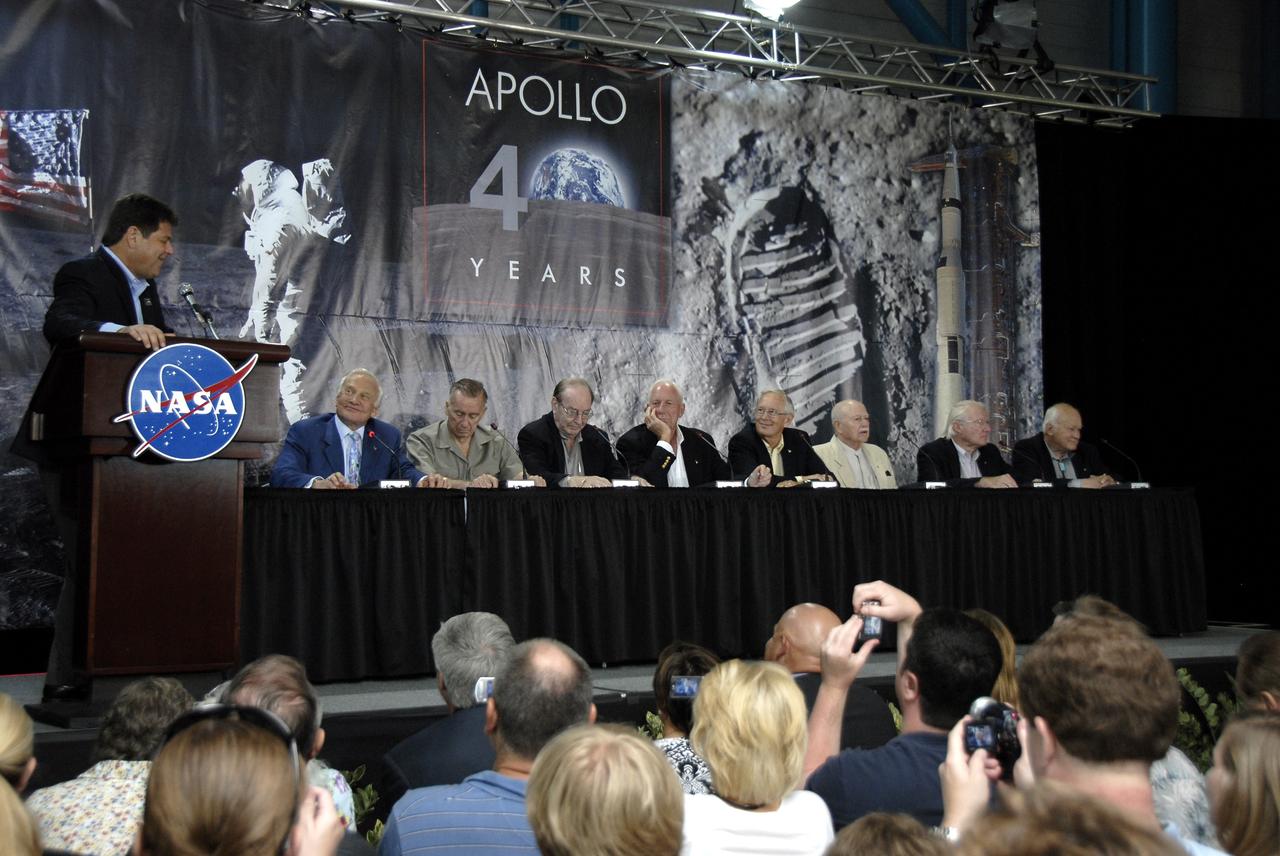
CAPE CANAVERAL, Fla. – CNN correspondent John Zarella, left, moderates NASA's 40th Anniversary of Apollo Celebration of the July 1969 launch and landing on the moon. The ceremony, held in the Apollo/Saturn V Center at NASA's Kennedy Space Center in Florida featured Apollo astronauts (at the dais) Buzz Aldrin, Walt Cunningham, Edgar Mitchell, Al Worden, Charlie Duke, Vance Brand, Gerald Carr and Bruce McCandless. Photo credit: NASA/Kim Shiflett
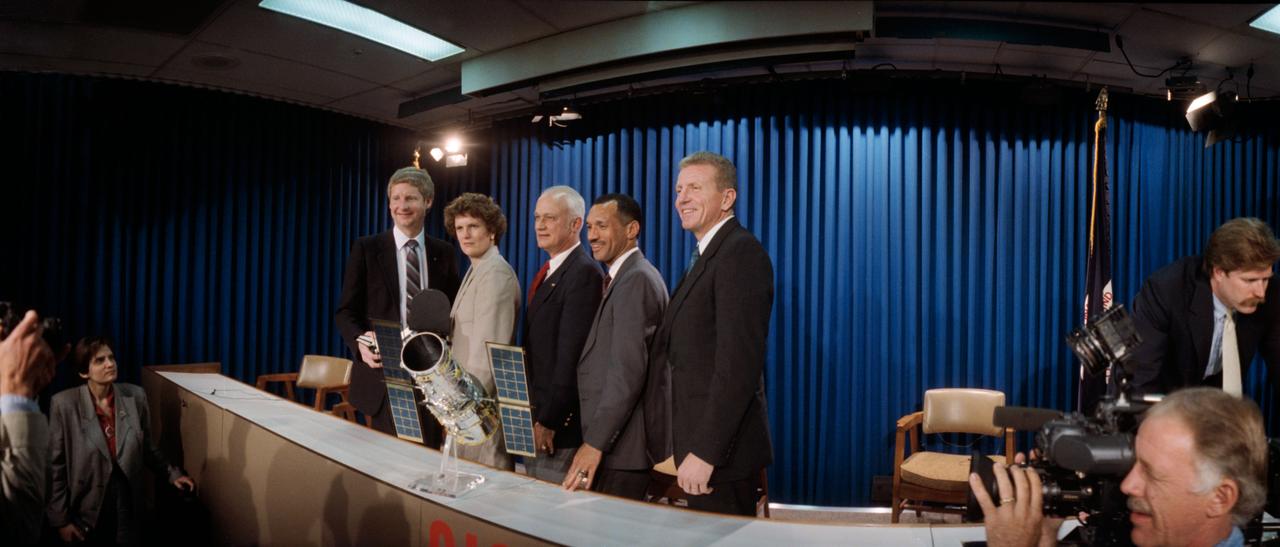
STS-31 Discovery, Orbiter Vehicle (OV) 103, crewmembers pose for an informal portrait after the T-30 (thirty days before launch) briefing at JSC's Auditorium and Public Affairs Facility Bldg 2. Standing behind the conference table are (left to right) Mission Specialist (MS) Steven A. Hawley, MS Kathryn D. Sullivan, MS Bruce McCandless II, Pilot Charles F. Bolden, and Commander Loren J. Shriver.
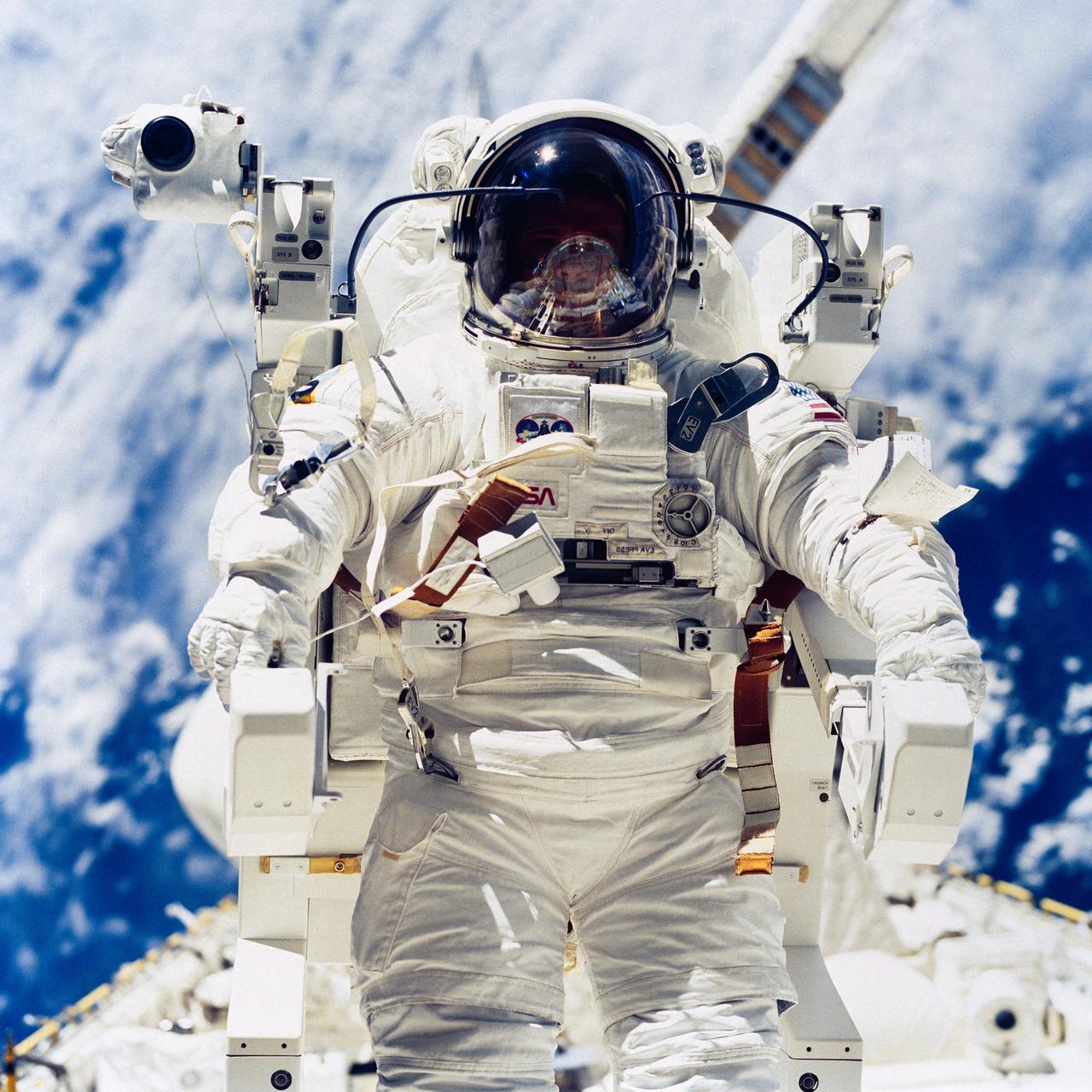
S84-27034A (9 Feb. 1984) --- Astronaut Robert L. Stewart appears to glide a few meters above the Earth-orbiting Space Shuttle Challenger's cargo bay during the second of two extravehicular activity (EVA) session on the Challenger's fourth flight in space. Astronauts Stewart and Bruce McCandless II, two of NASA's three mission specialists on flight STS-41B, earlier made another EVA, testing another manned maneuvering unit (MMU).
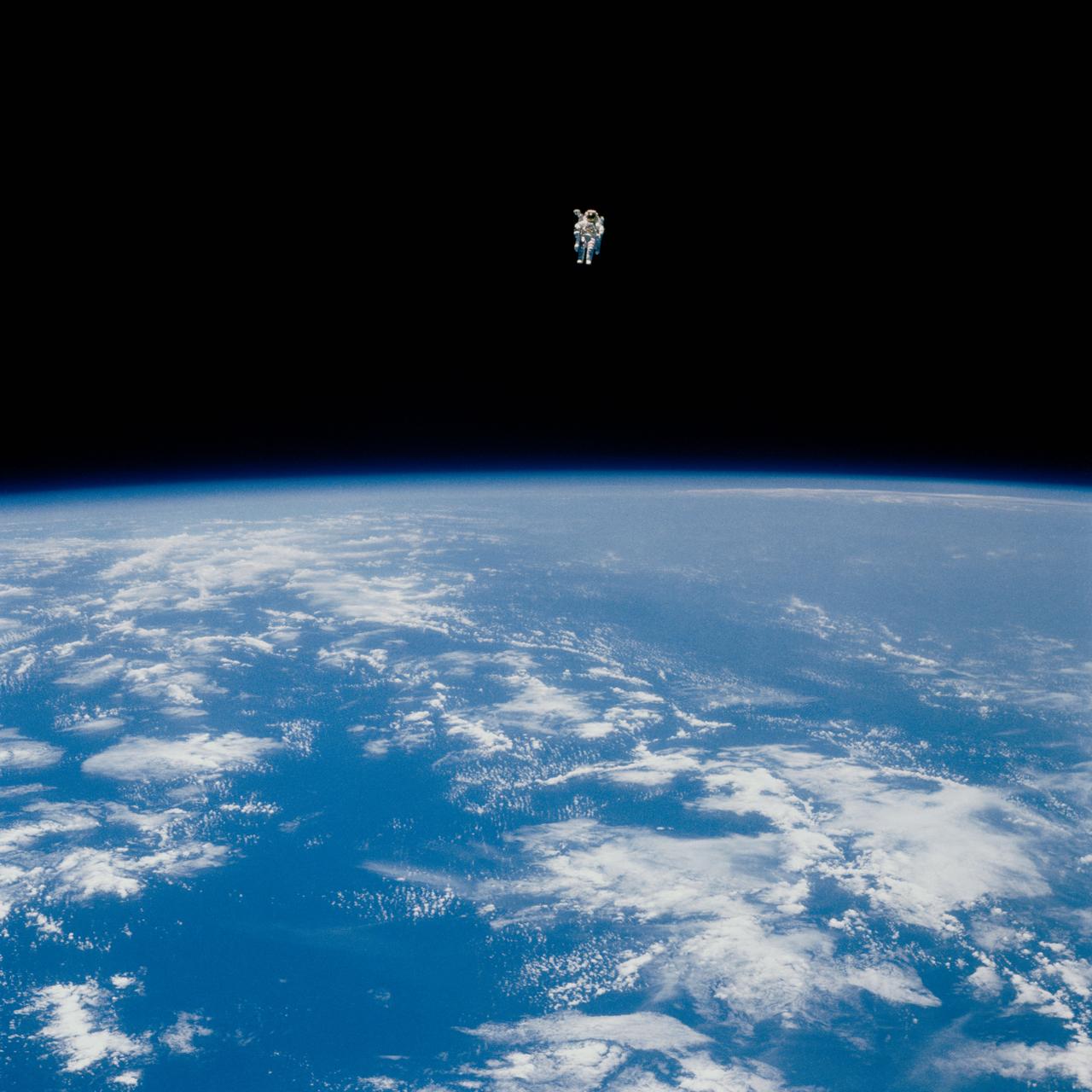
S84-27031 (7 Feb 1984) --- Astronaut Bruce McCandless II, 41-B mission specialist, reaches a maximum distance from the Challenger before reversing direction his manned maneuvering unit (MMU) and returning to the Challenger. A fellow crewmember inside the vehicle's cabin took this photograph with a 70mm camera. The untethered EVA marked the first such experience for astronauts.
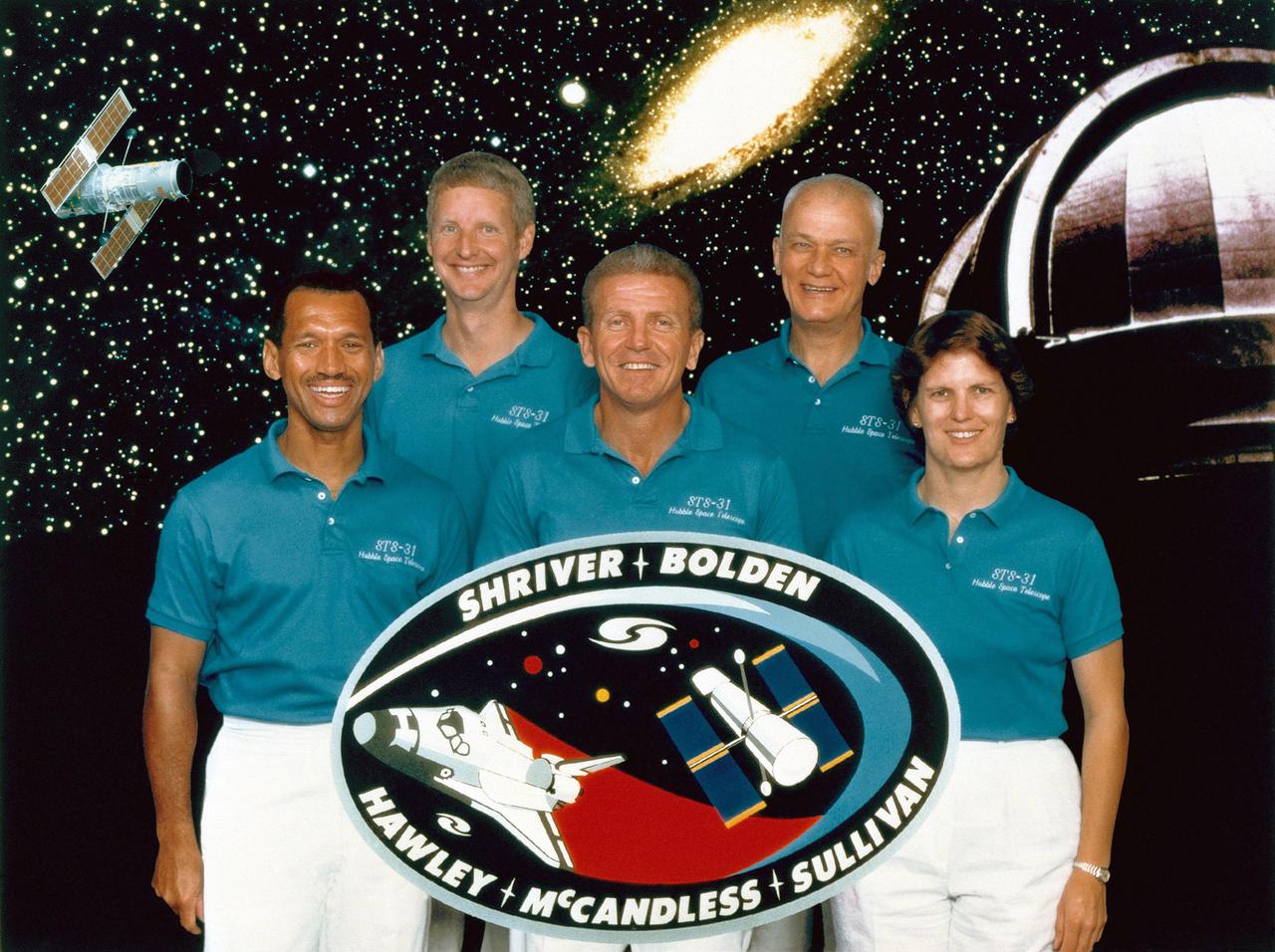
KENNEDY SPACE CENTER, FLA. -- STS-31 crew portrait: Mission Commander Loren J. Shriver, center front; other crew members are (L to R) Pilot Charles F. Bolden Jr. and Mission Specialists Steven A. Hawley, Bruce McCandless II and Kathryn D. Sullivan. Primary payload on the mission is the Hubble Space Telescope, to be deployed ina 380-statute-mile orbit.
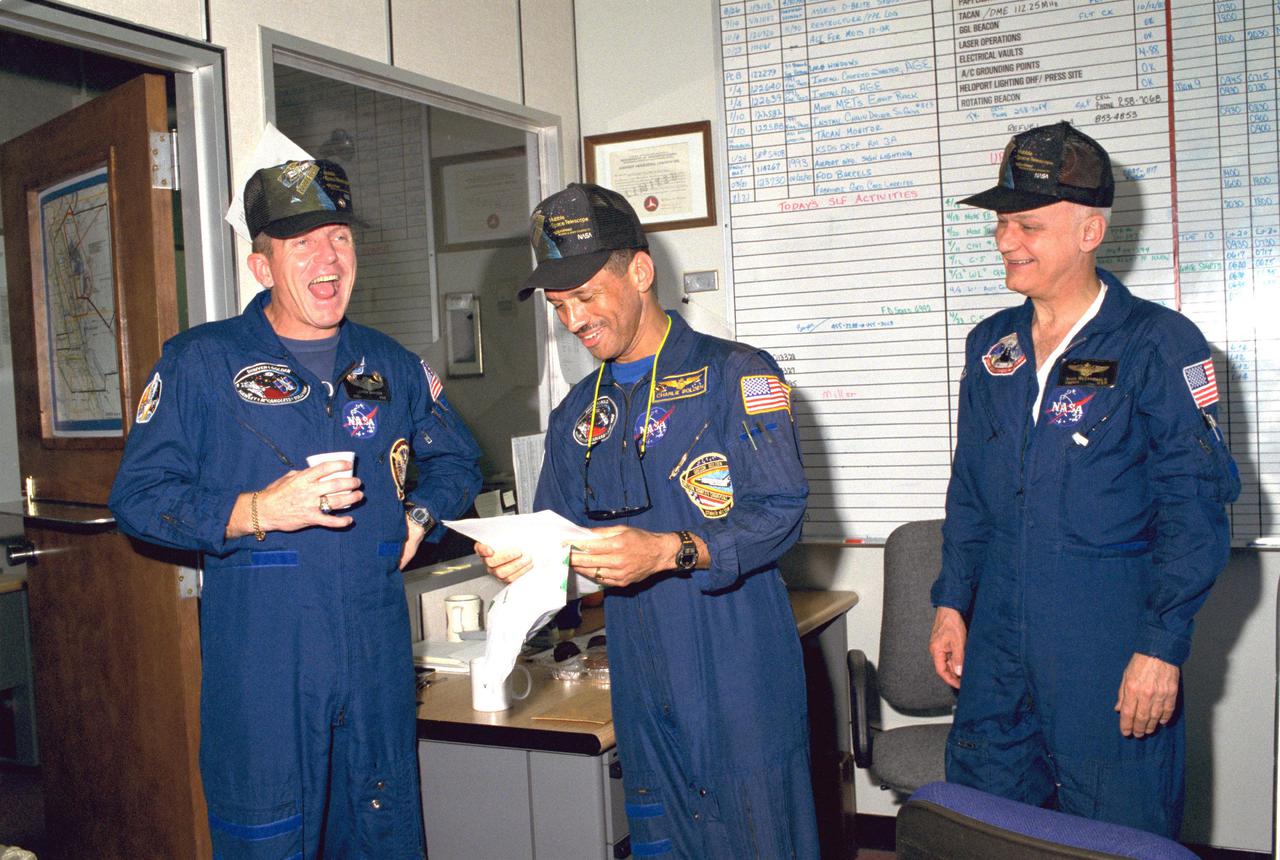
KENNEDY SPACE CENTER, FLA. -- Loren J. Shriver (left), commander of Space Shuttle Mission STS-31, enjoys a laugh with fellow crew members Pilot Charles F. Bolden Jr. and Mission Specialist Bruce McCandless II after practice runs in the Shuttle Training Aircraft. STS-31 is set to lift off April 10 at 8:47 a.m. EDT.

CAPE CANAVERAL, Fla. – At the Apollo/Saturn V Center at NASA's Kennedy Space Center in Florida, Apollo astronaut Bruce McCandless shares his experiences with spectators crowd gathered for NASA's 40th Anniversary of Apollo Celebration of the July 1969 launch and landing on the moon. Other Apollo astronauts on the dais are (from left) Buzz Aldrin, Edgar Mitchell, Al Worden, Charlie Duke, Gerald Carr and Vance Brand. Astronaut Walt Cunningham is hidden behind Mitchell. Photo credit: NASA/Kim Shiflett
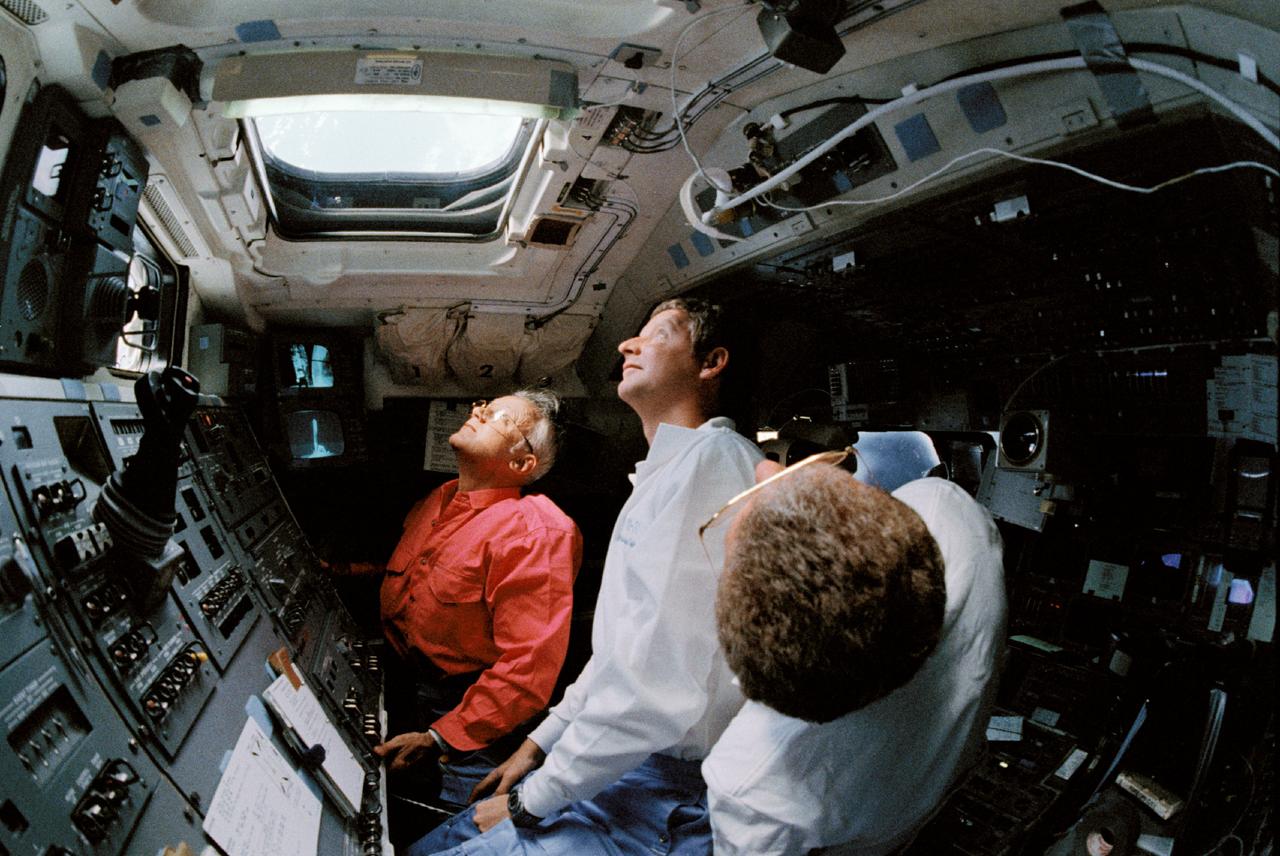
STS031-10-027 (24-29 April 1990) --- A "fish eye" lens captured this overall view of the aft flight deck of Space Shuttle Discovery while the crewmembers were monitoring the Hubble Space Telescope (HST) deployment checkout procedures. From front to back are astronauts Loren J. Shriver, commander, and Steven A. Hawley and MS Bruce McCandless II, both mission specialists, looking up at overhead windows and the HST on the remote manipulator system (RMS) outside them.
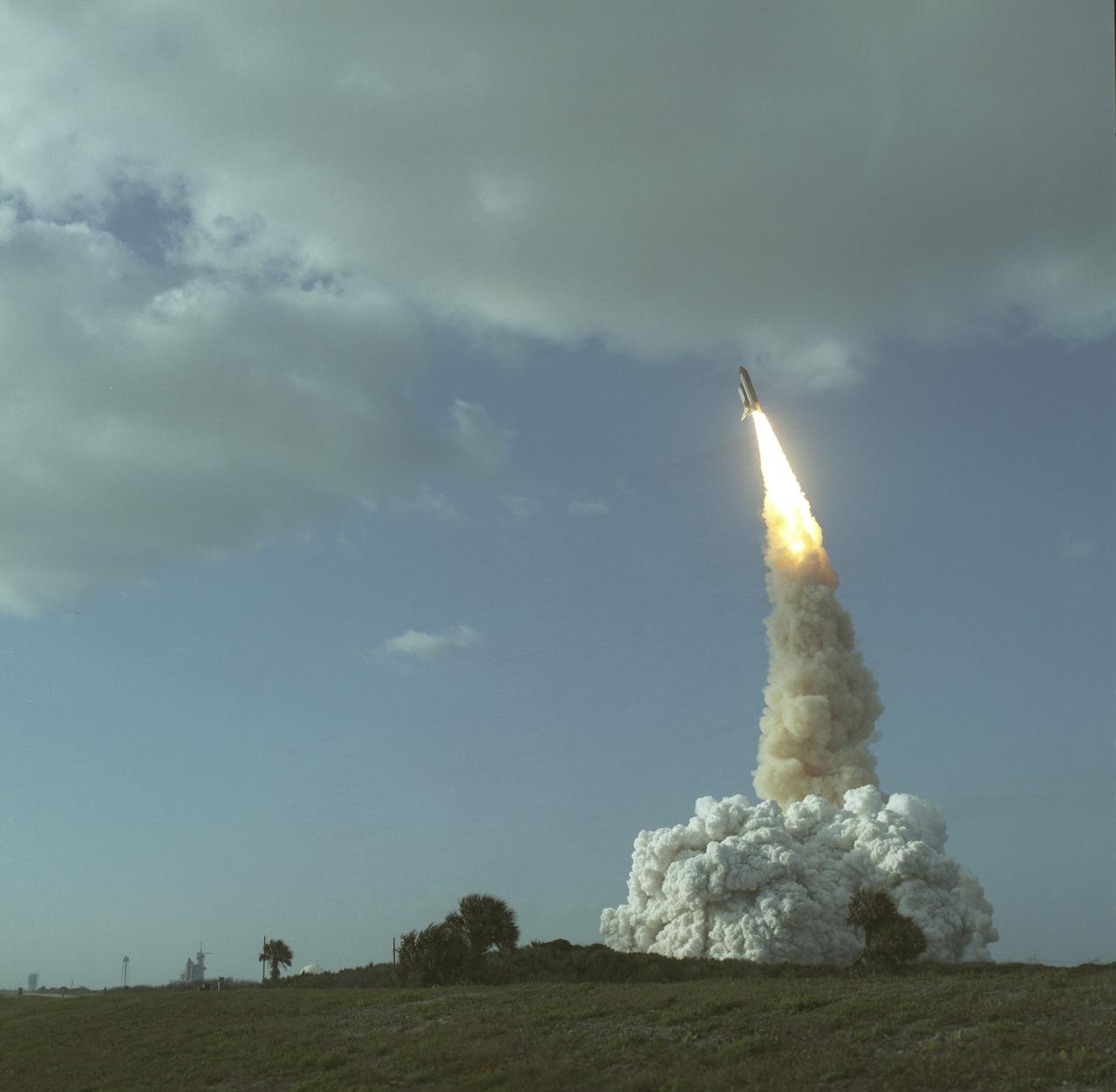
The STS-31 crew launched aboard the Space Shuttle Discovery on April 24, 1990 at 8:33:51am (EDT). Included in the crew of five were Loren J. Shriver, commander; Charles F. Bolden, pilot; and Steven A. Hawley, Bruce McCandless, and Kathryn D. Sullivan, all mission specialists. The primary goal of the mission was the deployment of the Hubble Space Telescope (HST) which was a Marshall Space Flight Center (MSFC) managed program.
The STS-31 crew launched aboard the Space Shuttle Discovery on April 24, 1990 at 8:33:51am (EDT). Included in the crew of five were Loren J. Shriver, commander; Charles F. Bolden, pilot; and Steven A. Hawley, Bruce McCandless, and Kathryn D. Sullivan, all mission specialists. The primary goal of the mission was the deployment of the Hubble Space Telescope (HST) which was a Marshall Space Flight Center (MSFC) managed program.
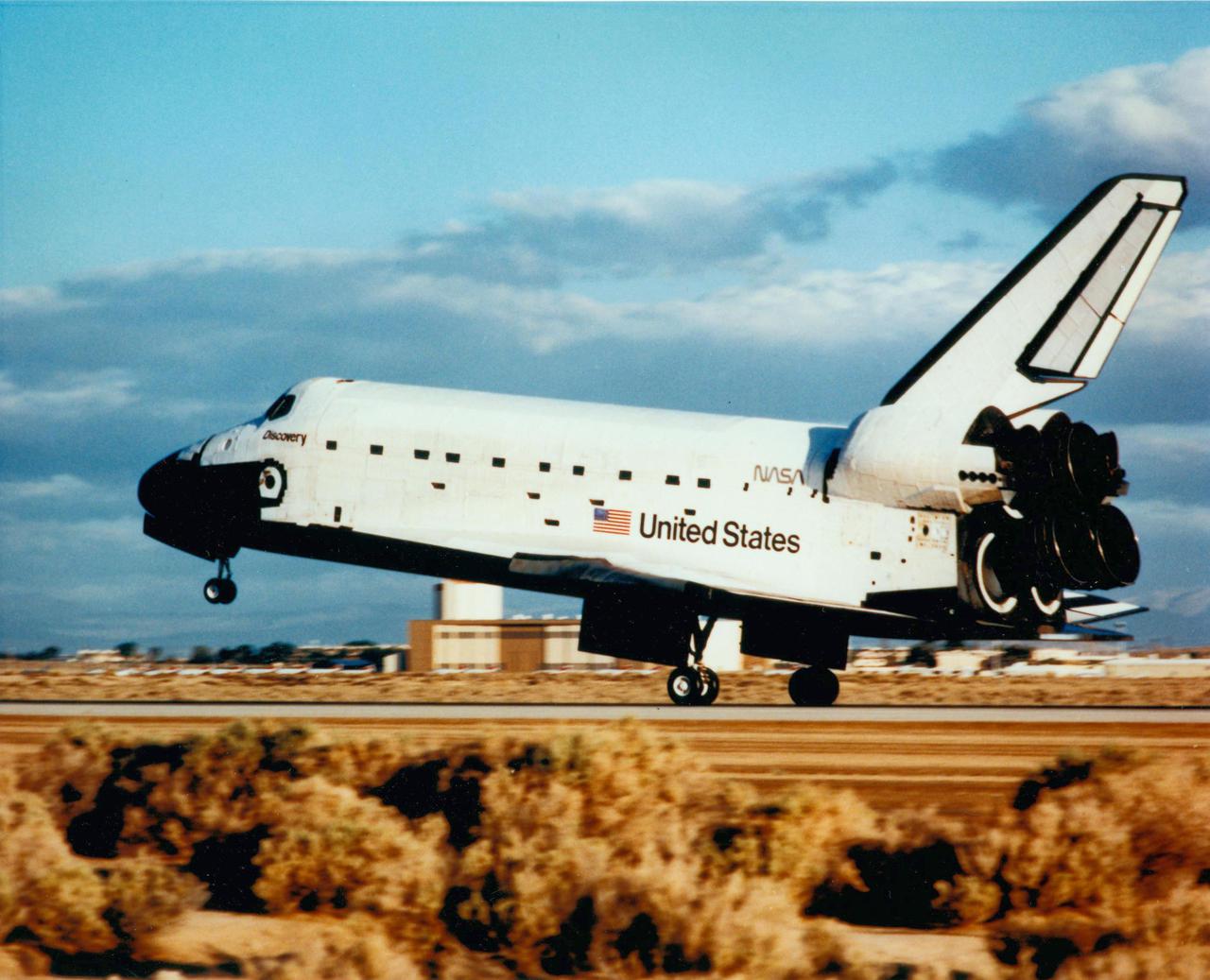
KENNEDY SPACE CENTER, FLA. -- The Space Shuttle Discovery makes a smooth landing on the runway at Edwards Air Force Base to complete a highly successful five-day mission. It was an Earth-orbital flight during which the Hubble Space Telescope was sent toward its 15-year mission. Landing was completed at 6:51 a.m. (PDT), April 29, 1990. Inside the spacecraft for STS-31 were Astronauts Loren J. Shriver, Charles F. Bolden, Bruce McCandless II, Kathryn D. Sullivan and Steven A. Hawley.
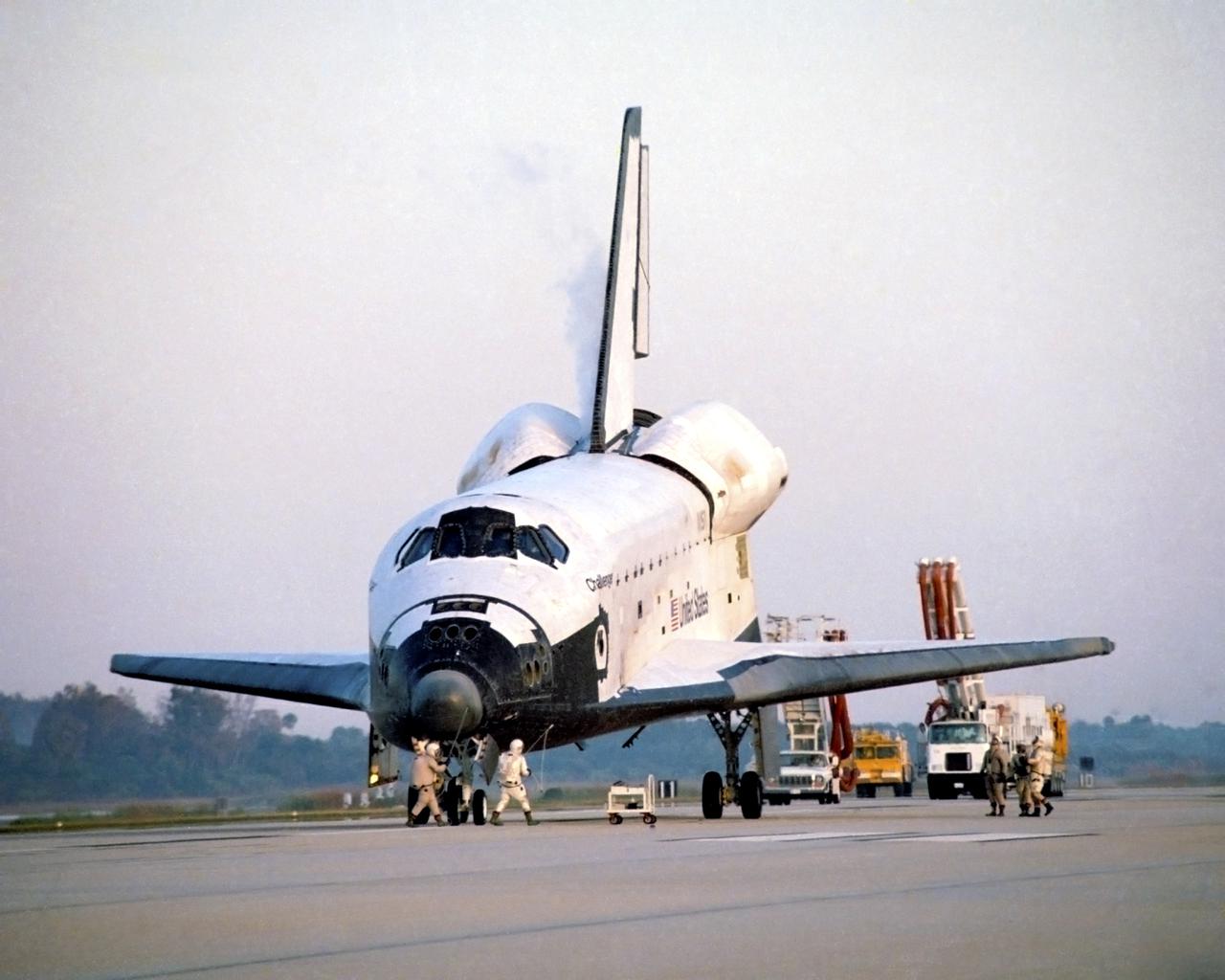
CAPE CANAVERAL, Fla. -- Ground crew members perform initial post-landing procedures on orbiter Challenger as the the crew, the first-ever to experience both launch and landing at KSC, prepare to exit the spaceship. Touchdown was at 7:15:55 a.m. EST on Feb. 11. Crew members for the historic Mission 41-B STS-11 are Commander Vance D. Brand, Pilot Robert L.'Hoot' Gibson, and Mission Specialists Bruce McCandless II, Robert L. Stewart and Ronald E. McNair. Photo credit: NASA
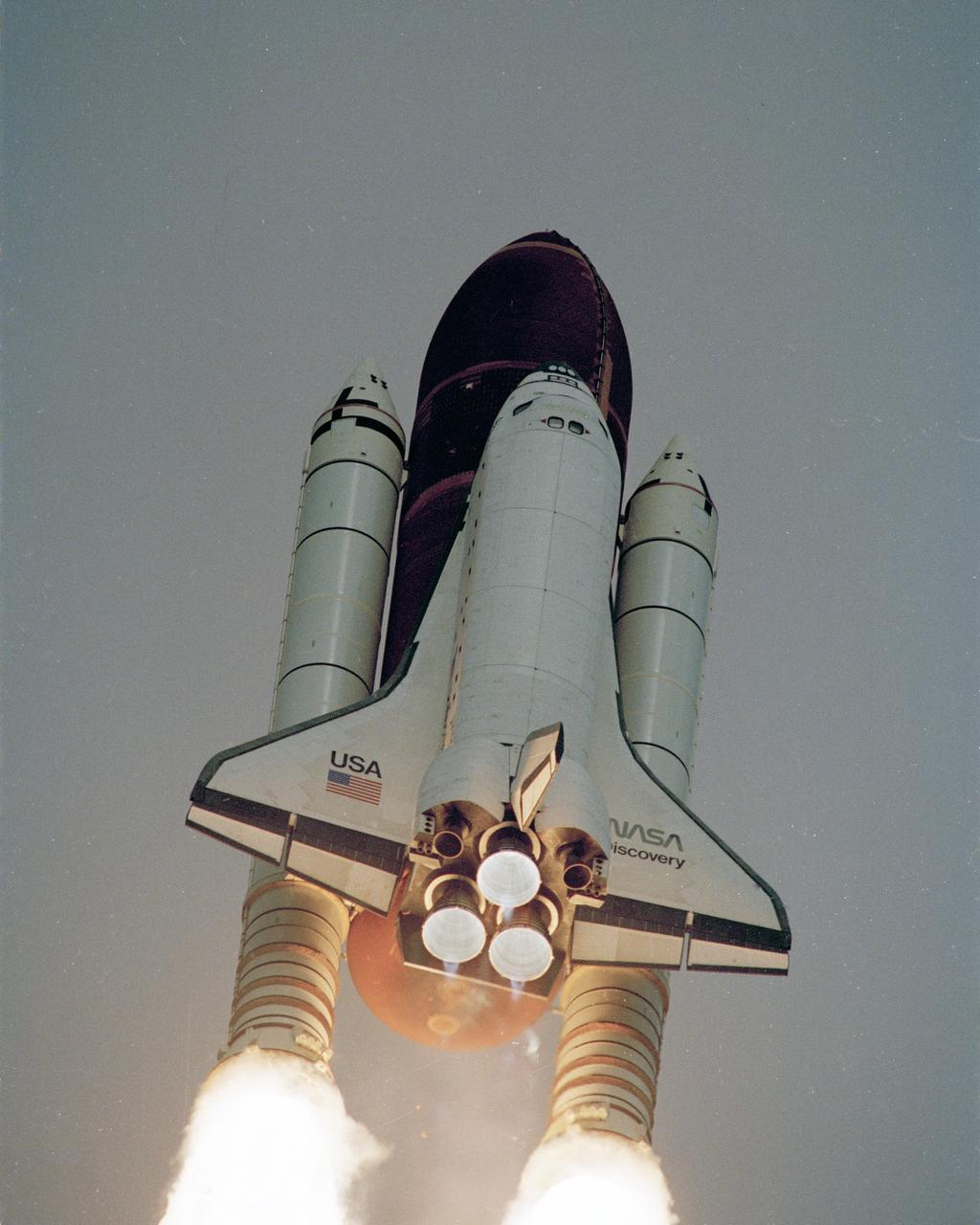
The space shuttle Discovery lifts off from Launch Pad 39-B at 8:33 a.m. EDT carrying a crew of five and the Hubble Space Telescope. STS-31 crew members are Commander Loren Shriver, Pilot Charles Bolden and Mission Specialists Steven Hawley, Bruce McCandless II and Kathryn Sullivan. Photo credit: NASA
The STS-31 crew launched aboard the Space Shuttle Discovery on April 24, 1990 at 8:33:51am (EDT). Included in the crew of five were Loren J. Shriver, commander; Charles F. Bolden, pilot; and Steven A. Hawley, Bruce McCandless, and Kathryn D. Sullivan, all mission specialists. The primary goal of the mission was the deployment of the Hubble Space Telescope (HST) which was a Marshall Space Flight Center (MSFC) managed program.
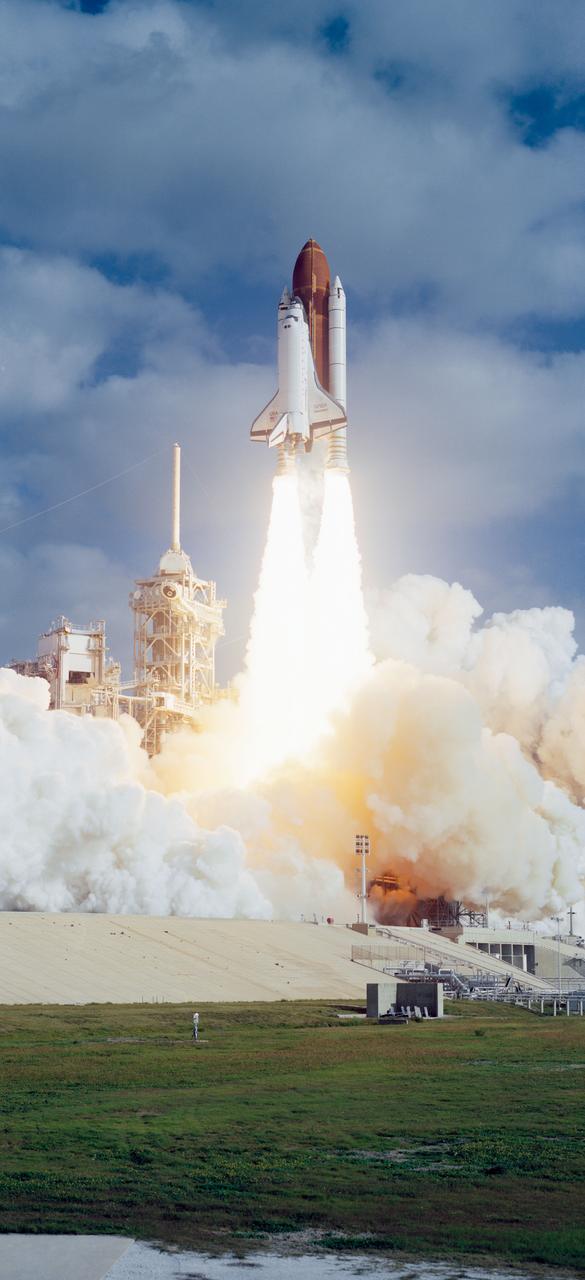
STS031-S-073 (24 April 1990) --? A vertical view of the launch of the STS-31 mission. Onboard Space Shuttle Discovery are the crew of five veteran astronauts and the Hubble Space Telescope (HST). Official launch time was 8:33:51.0492 a.m. (EDT). Headed for approximately five days in space are astronauts Loren J. Shriver, Charles F. Bolden, Jr., Bruce McCandless, II, Kathryn D. Sullivan, and Steven A. Hawley.
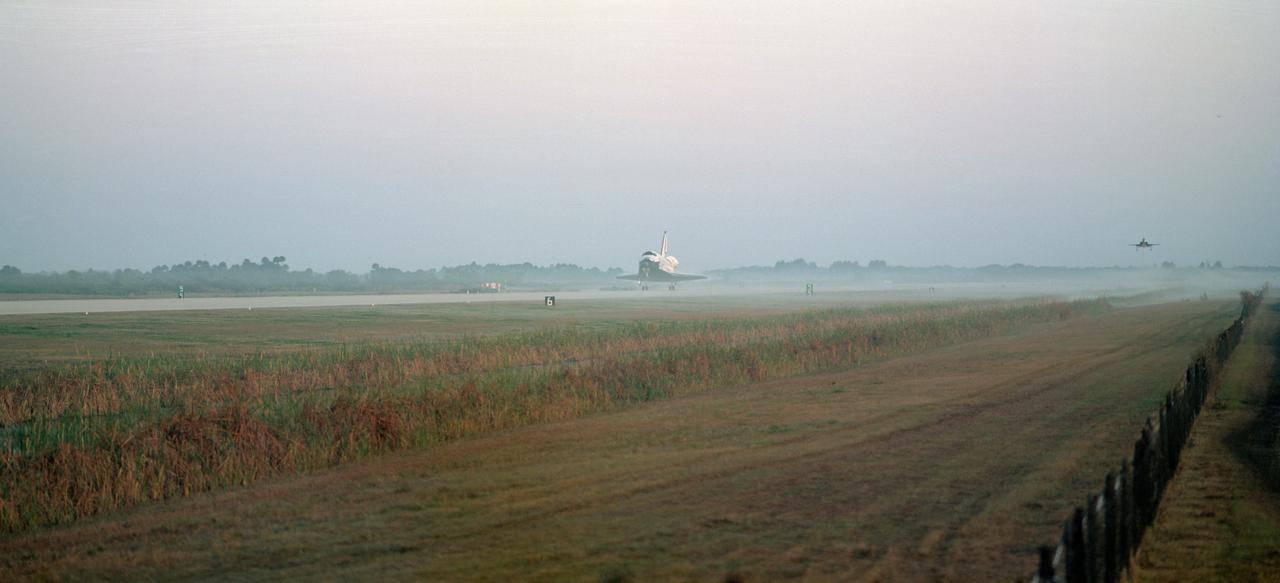
S84-27154 (11 Feb 1984) --- The first Space Shuttle landing on the Kennedy Space Center?s landing facility was recorded by a ground camera on February 11, 1984. A T-38 chase plane trails the Challenger. The nose gear has not yet touched down in this scene. Aboard the spacecraft were Astronauts Vance D. Brand, commander; Robert L. Gibson, pilot; and Bruce McCandless II, Ronald R. McNair and Robert L. Stewart, all mission specialists.
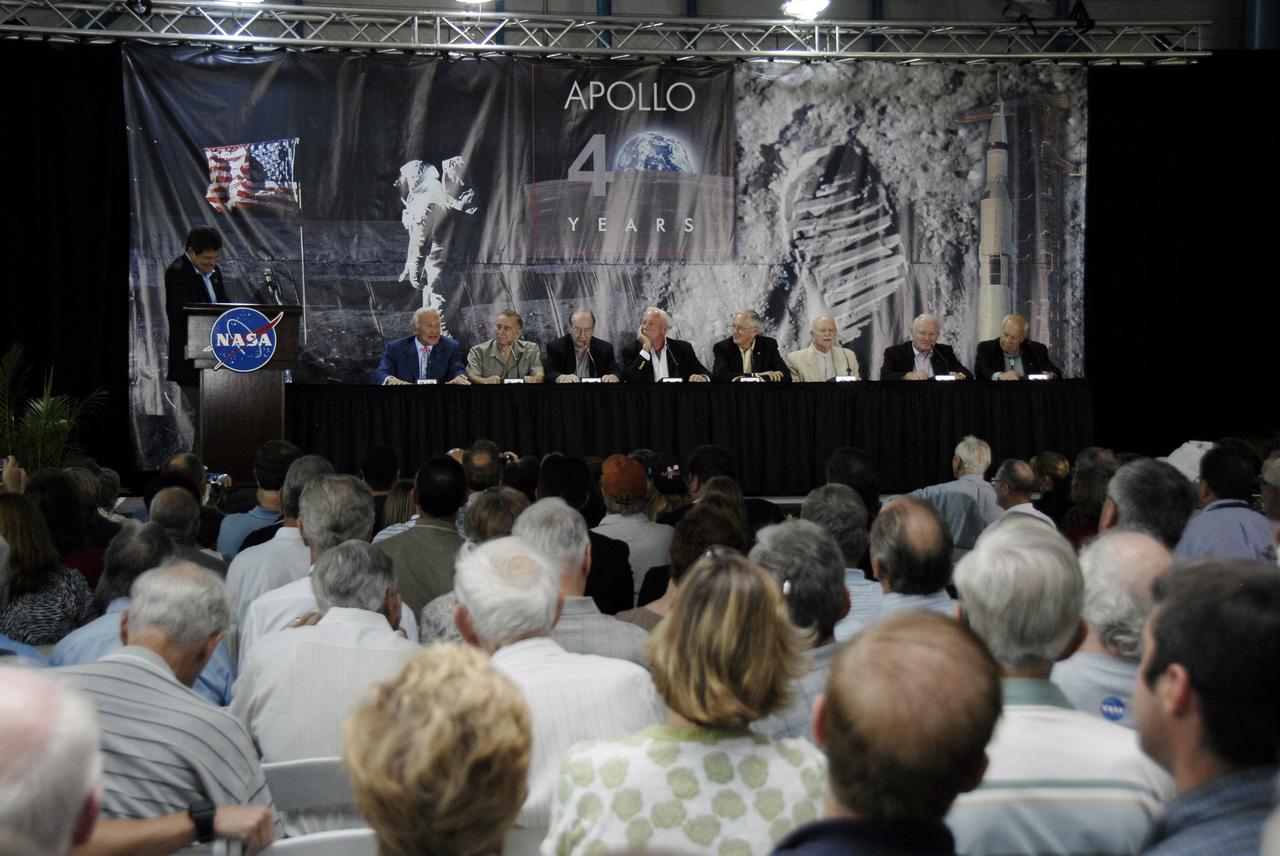
CAPE CANAVERAL, Fla. – With CNN correspondent John Zarella (left) moderating, Apollo astronauts (at the dais) Buzz Aldrin, Walt Cunningham, Edgar Mitchell, Al Worden, Charlie Duke, Vance Brand, Gerald Carr and Bruce McCandless share stories of their experiences during NASA's 40th Anniversary of Apollo Celebration of the July 1969 launch and landing on the moon. The ceremony was held in the Apollo/Saturn V Center at NASA's Kennedy Space Center in Florida. Photo credit: NASA/Kim Shiflett
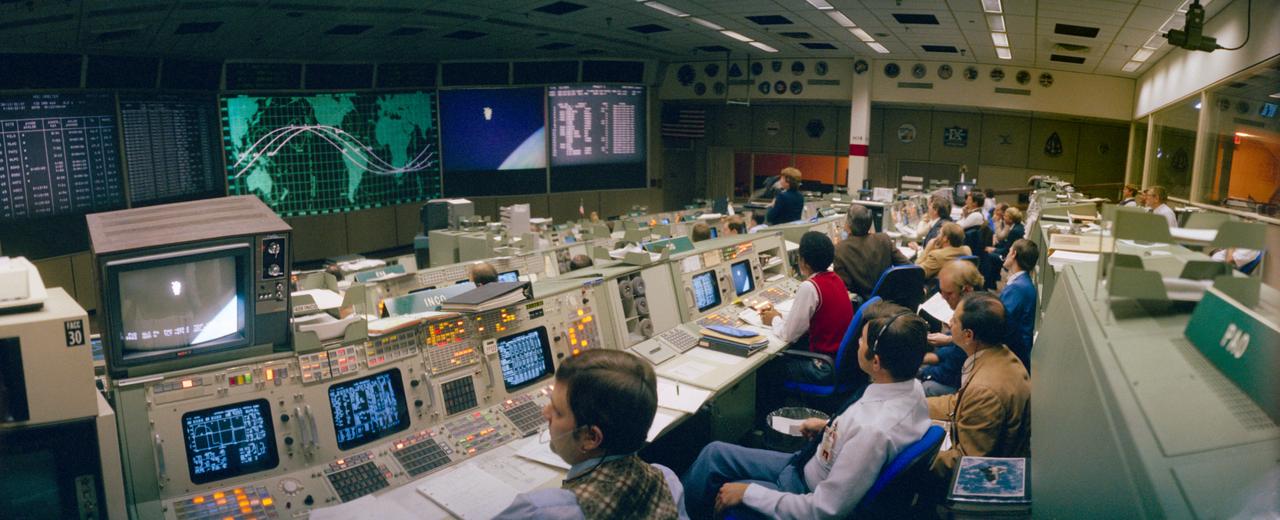
S84-26503 (7 Feb 1984) --- This wide angle, overall view of activity in the mission operations control room in the Johnson Space Center?s mission control center, was photographed during the first even non-tethered extravehicular activity (EVA) in space. The large MOCR monitor and those at individual consoles feed to ground controllers the spectacular scene of Astronaut Bruce McCandless II ?suspended? I space above the blue and white Earth. The scene was photographed at 7:30 a.m. (CST), February 7, 1984.
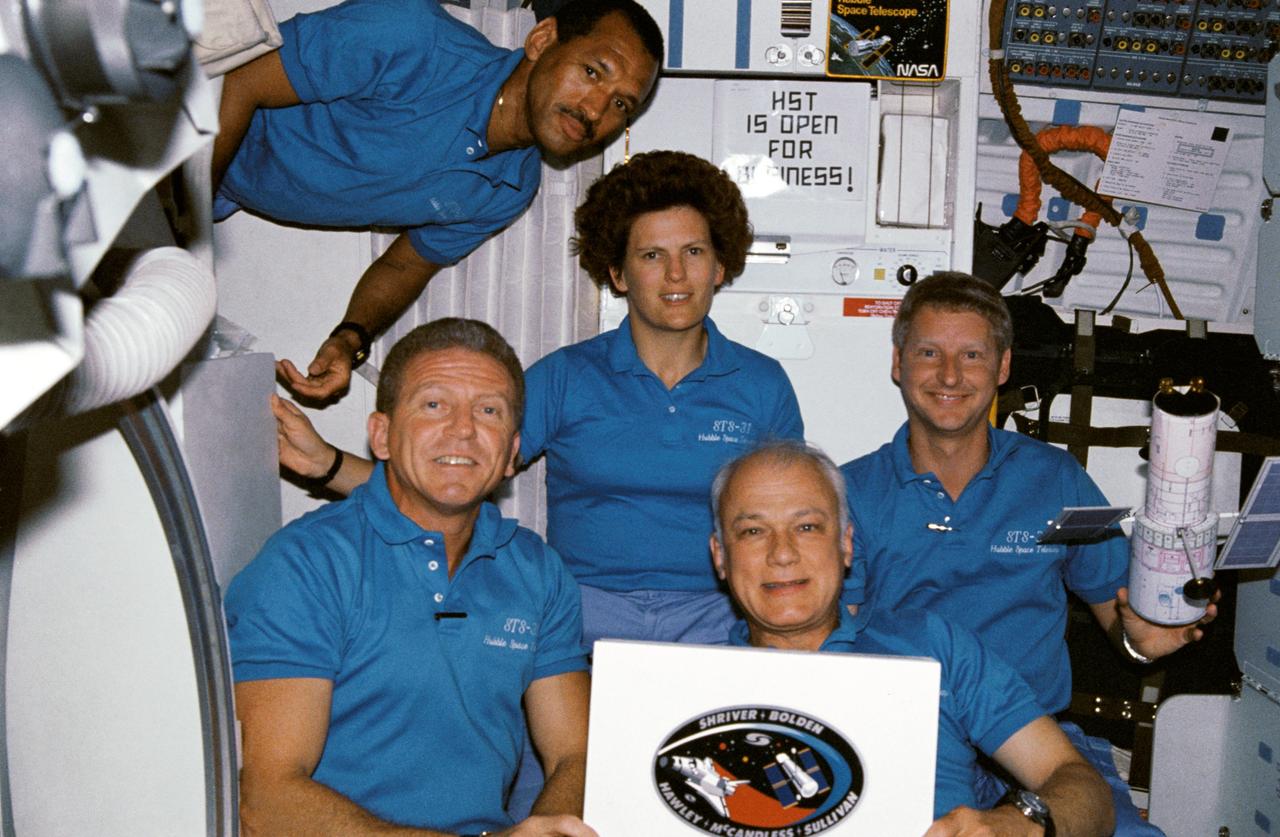
STS031-12-031 (24-29 April 1990) --- On Discovery's middeck, the STS-31 crew poses for a traditional in-flight portrait. Astronaut Loren J. Shriver, mission commander, is at lower left. Astronaut Charles F. Bolden, pilot, floats above. Others, left to right, are Kathryn D. Sullivan, Bruce McCandless II and Steven A. Hawley, all mission specialists. Photo credit: NASA
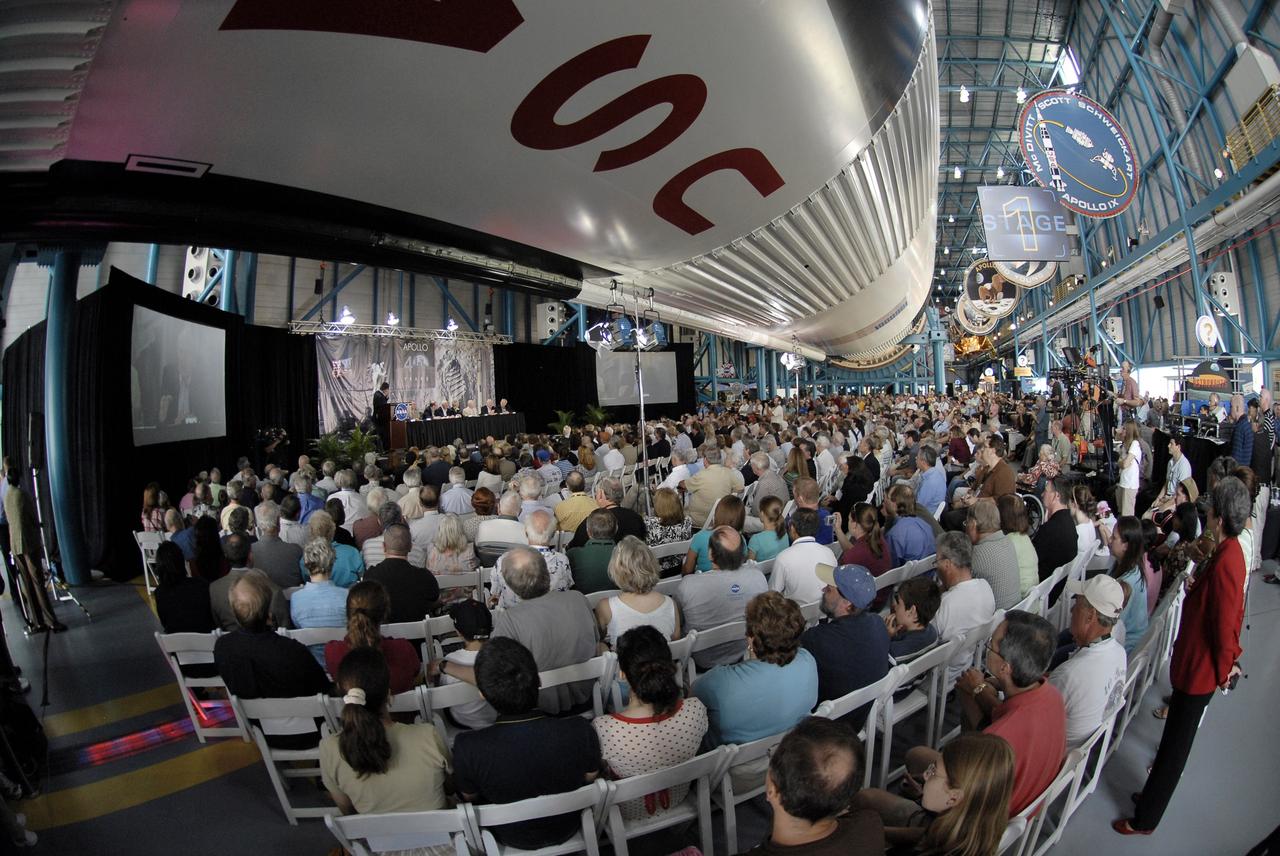
CAPE CANAVERAL, Fla. – The Apollo/Saturn V Center at NASA's Kennedy Space Center in Florida is filled with guests gathered to hear about the Apollo 11 launch and landing in July 1969 from eight Apollo astronauts: Buzz Aldrin, Walt Cunningham, Edgar Mitchell, Al Worden, Charlie Duke, Vance Brand, Gerald Carr and Bruce McCandless . The event is part of NASA's 40th Anniversary of Apollo Celebration. Photo credit: NASA/Kim Shiflett
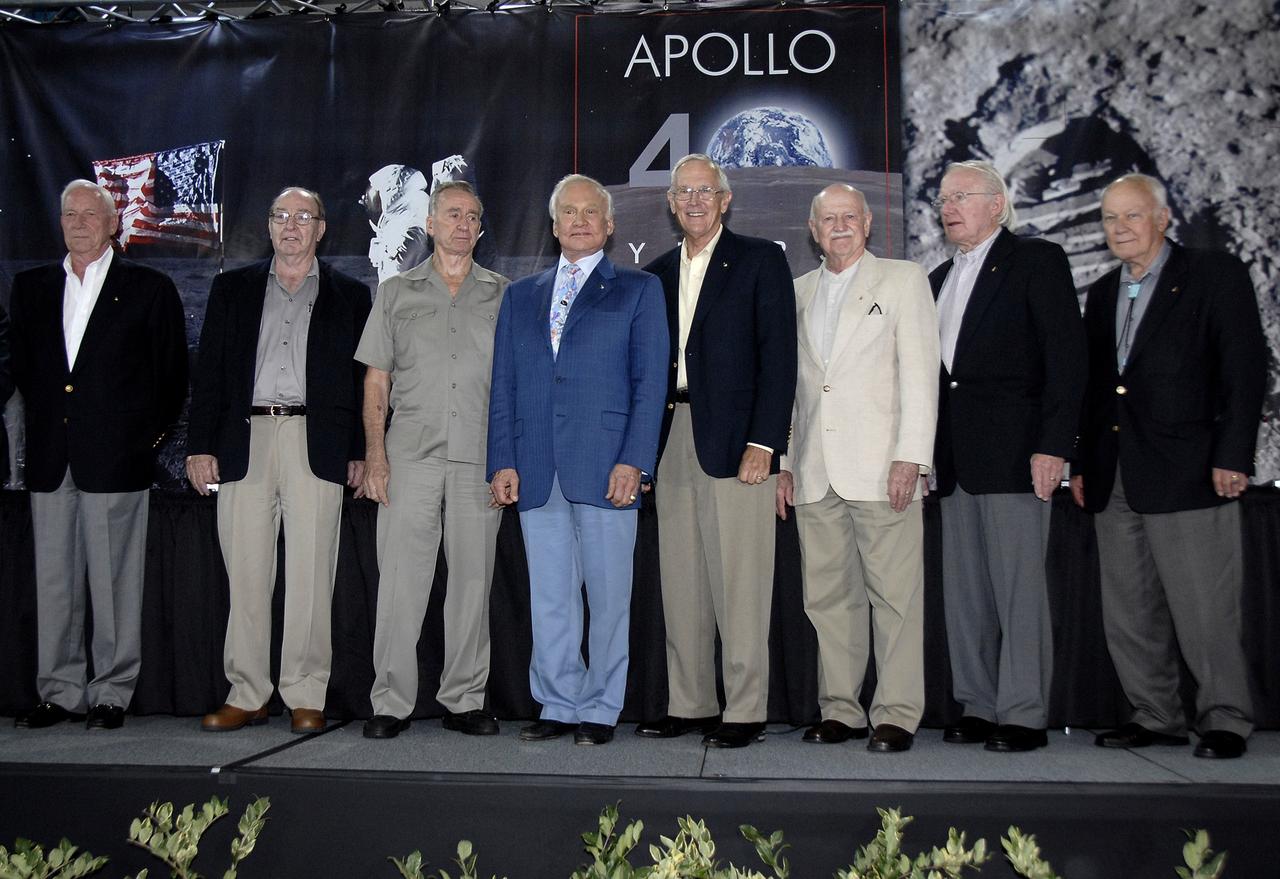
CAPE CANAVERAL, Fla. – Apollo astronauts who participated in NASA's 40th Anniversary of Apollo Celebration at NASA Kennedy Space Center's Apollo/Saturn V Center pose for photographers and guests. From left are Al Worden, Edgar Mitchell, Walt Cunningham, Buzz Aldrin, Charlie Duke, Vance Brand, Gerald Carr and Bruce McCandless. The celebration honored the July 1969 launch and landing on the moon. Photo credit: NASA/Kim Shiflett
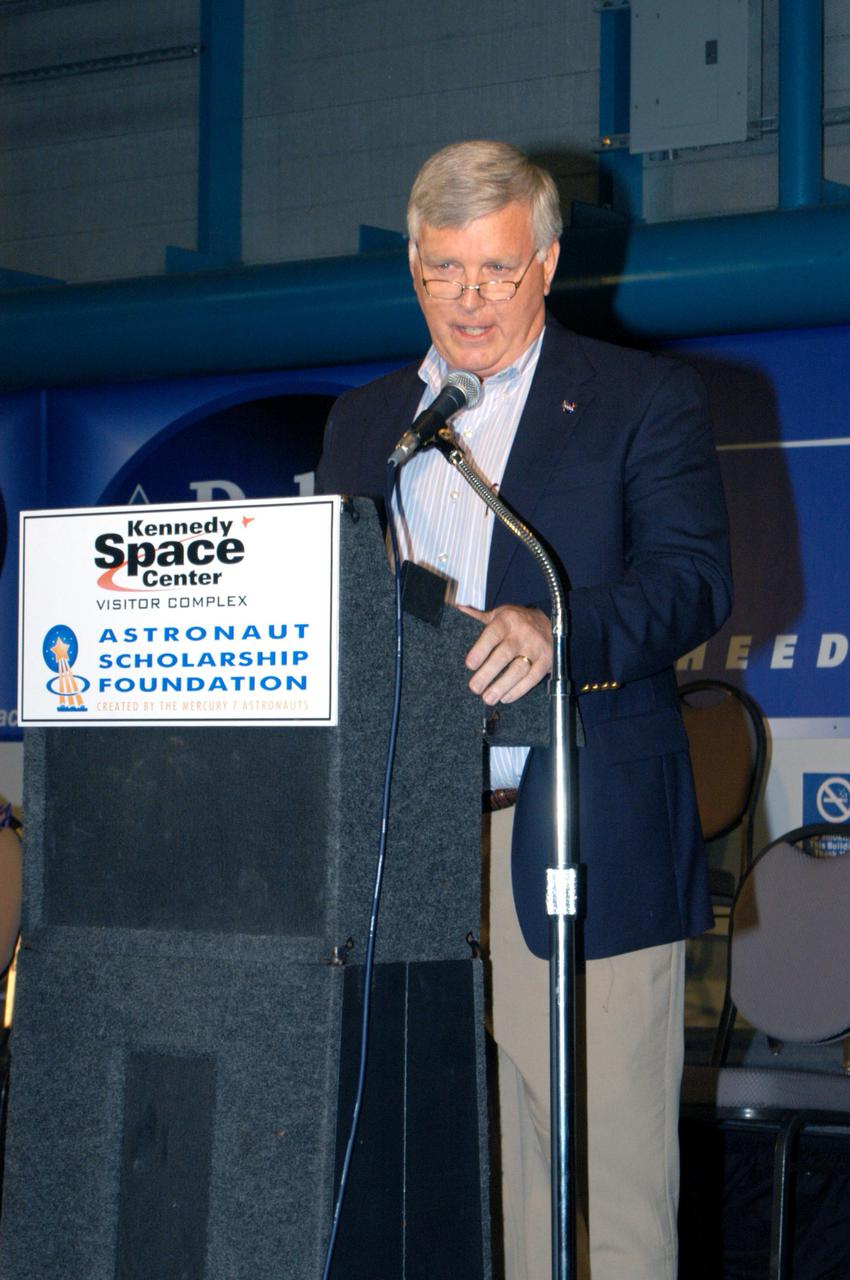
KENNEDY SPACE CENTER, FLA. - Kennedy Space Center Director Jim Kennedy talks to inductees and guests at the Astronaut Hall of Fame Induction ceremony held in Kennedy Space Center Visitor Complex’s Apollo_Saturn V Center. The new inductees are Bruce McCandless, Joe Allen and Gordon Fullerton. Recognized for their individual flight accomplishments and contributions to the success and future success of the U.S. space program, this elite group of inductees is among only 60 astronauts to be honored in the Hall of Fame and the fourth group of Space Shuttle astronauts named.
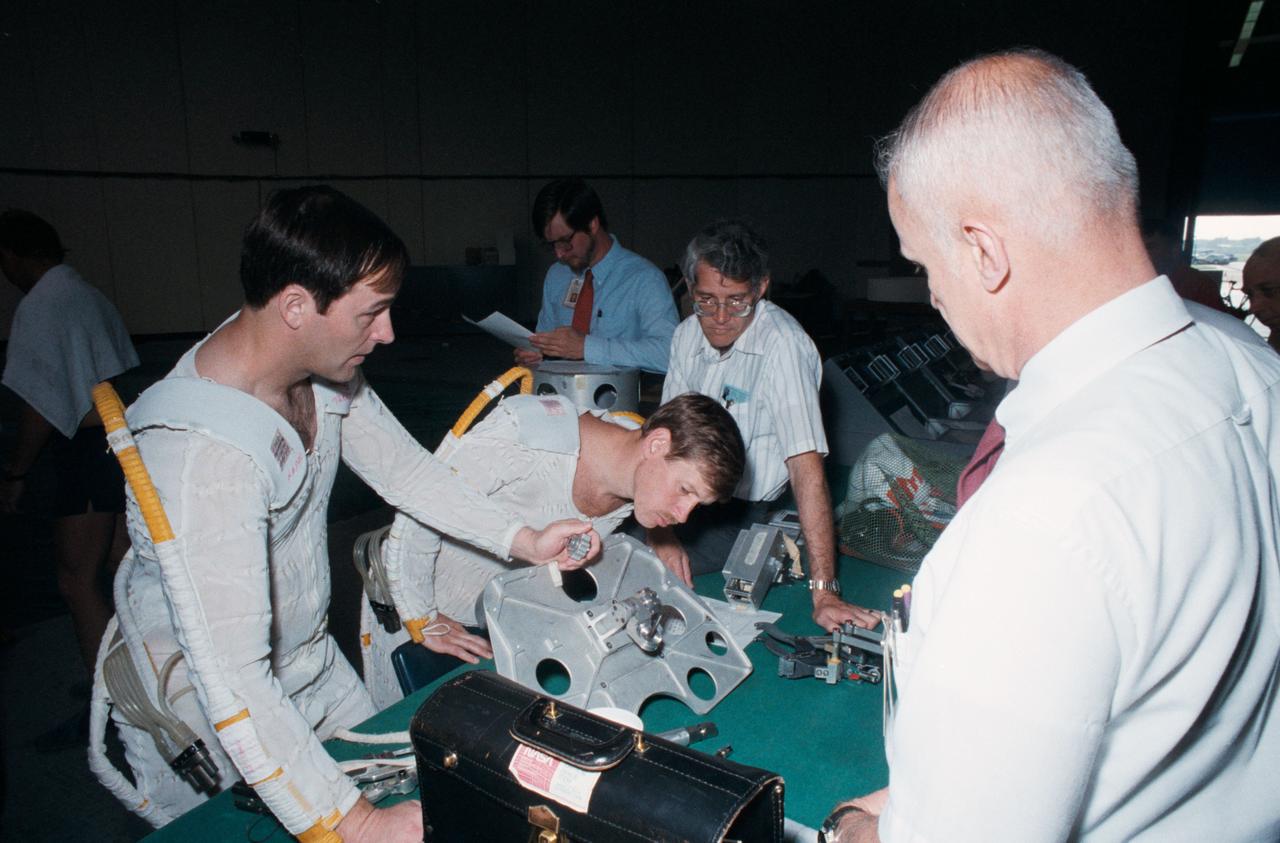
Astronauts Jerry L. Ross (left) and Sherwood Springer (center), look over a foot restraint like that on the currently orbiting Shuttle Discovery. At right is Astronaut Bruce McCandless II. Activities, Bldg. 29, Weightless Environment Training Facility (WETF) for the STS-23/51D Extravehicular Activity (EVA) Simulation for Syncom IV, 04/14/1985. 1. SHUTTLE - SIMULATION (SYNCOM IV) 2. ASTRONAUT ROSS, JERRY L. - SIMULATION (SYNCOM) 3. ASTRONAUT SPRING, SHERWOOD C. - SIMULATION (SYNCOM IV) JSC, HOUSTON, TX