
STS-34 Atlantis, Orbiter Vehicle (OV) 104, Pilot Michael J. McCulley squints while looking through ARRIFLEX camera eye piece during camera briefing at JSC. McCulley rests part of the camera on his shoulder as he operates it.
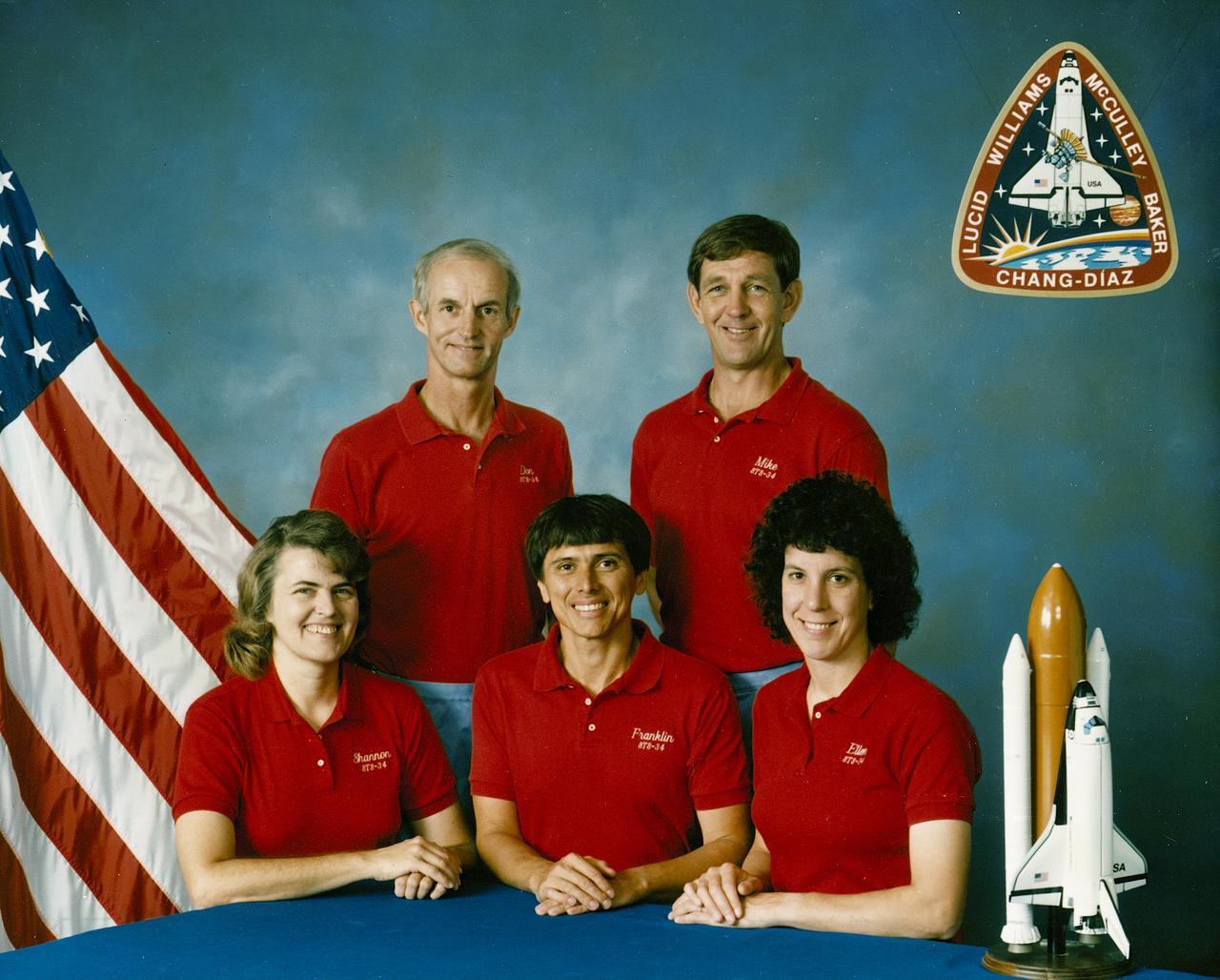
The STS-34 crew portrait includes 5 astronauts. Pictured left to right are Shannon W. Lucid, mission specialist; Donald E. Williams, commander; Franklin R. Chang-Diaz, mission specialist; Michael J. McCulley, pilot; and Ellen S. Baker, mission secialist. The crew of 5 launched aboard the Space Shuttle Orbiter Atlantis on October 18, 1989 at 12:53:40pm (EDT). The primary payload was the Galileo Jupiter Spacecraft and attached inertial upper stage (IUS). Deployed 6 hours and 30 minutes into the flight, the IUS stages fired, boosting Galileo on trajectory for a 6 year trip to Jupiter.
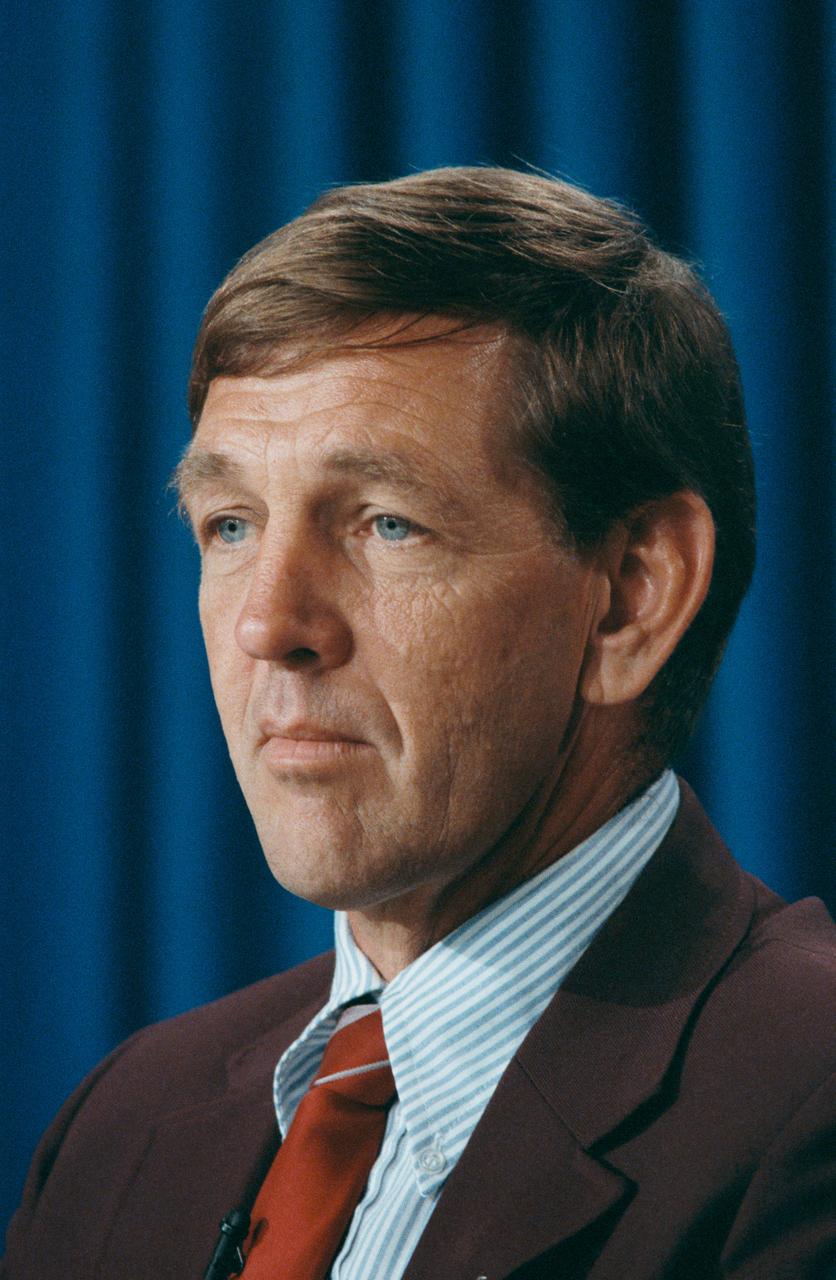
STS-34 Atlantis, Orbiter Vehicle (OV) 104, Pilot Michael J. McCulley reflects on a question during the thirty days before launch (T-30) press briefing in the JSC Auditorium and Public Affairs Facility Bldg 2 briefing room.
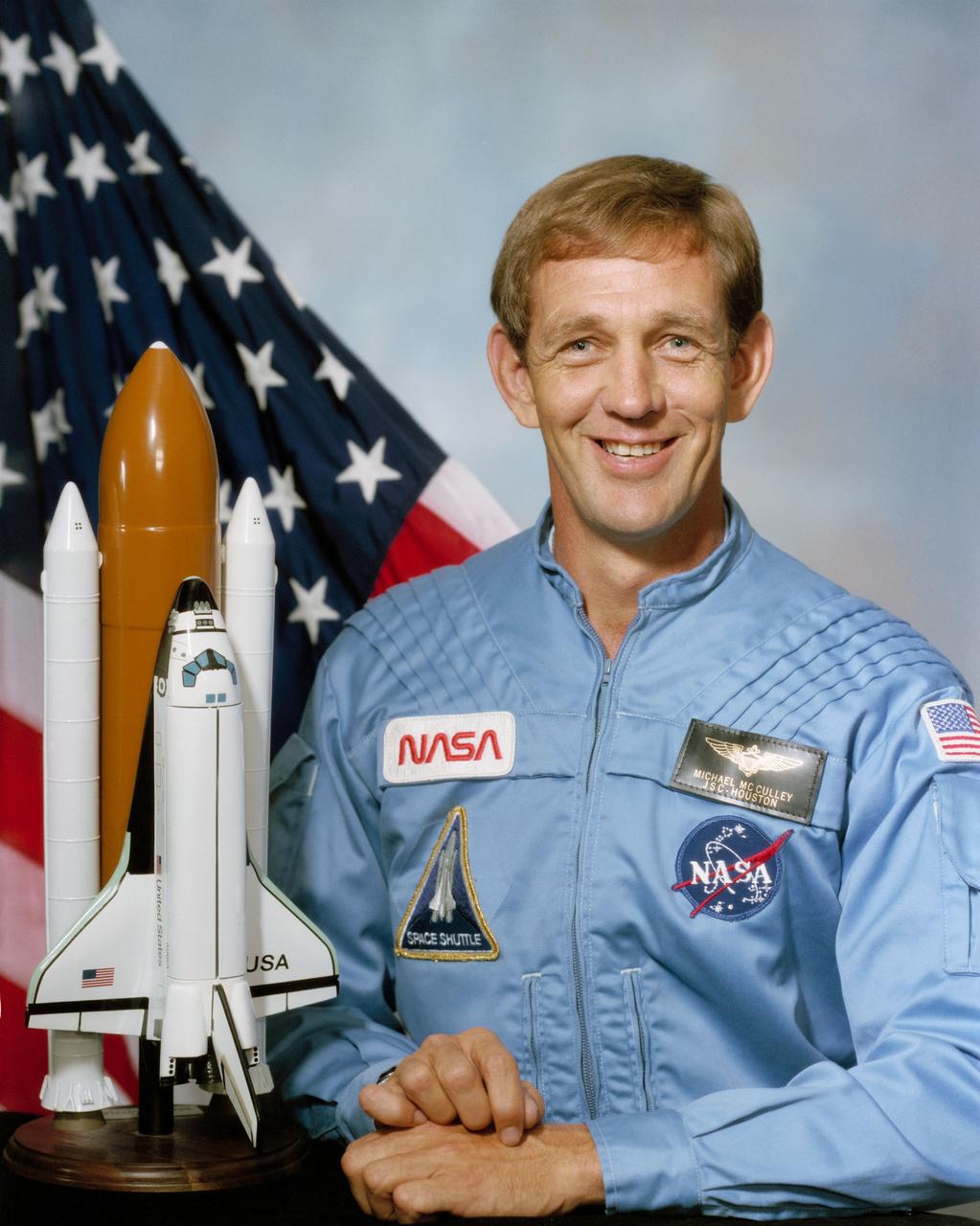
S84-40236 (1984) --- Astronaut Michael J. McCulley.
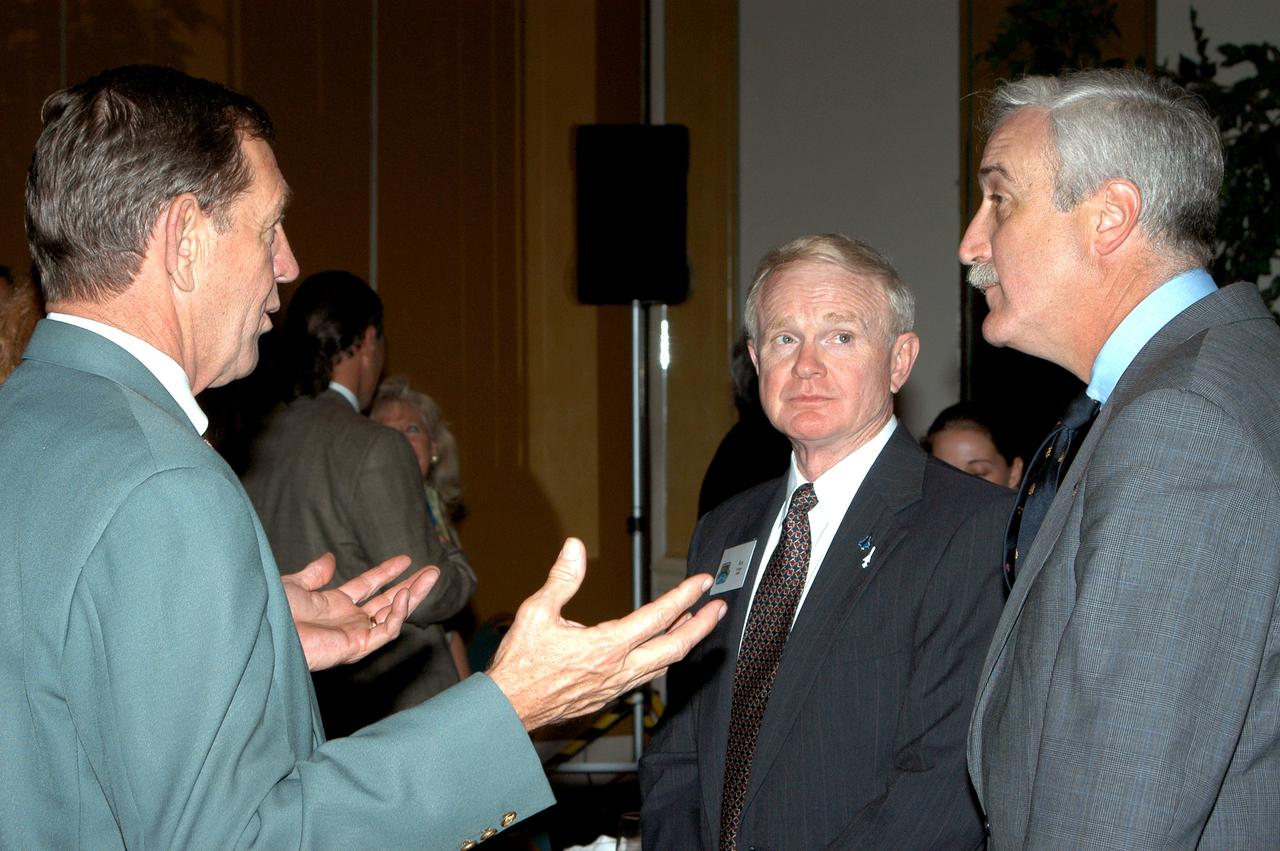
KENNEDY SPACE CENTER, FLA. - Mike McCulley (left), chief operating officer with United Space Alliance, talks with Center Director Roy Bridges Jr. (center) and NASA Administrator Sean O'Keefe (right) during the annual Congressional Dinner hosted by the Florida Space Business Roundtable. The dinner kicked off the annual Space Congress, held April 28-May 1, 2003, in Cape Canaveral, Fla. The theme for the event was "Linking the Past to the Future: A Celebration of Space" and commemorated the 40th anniversary of the Kennedy Space Center and the Centennial of Flight.
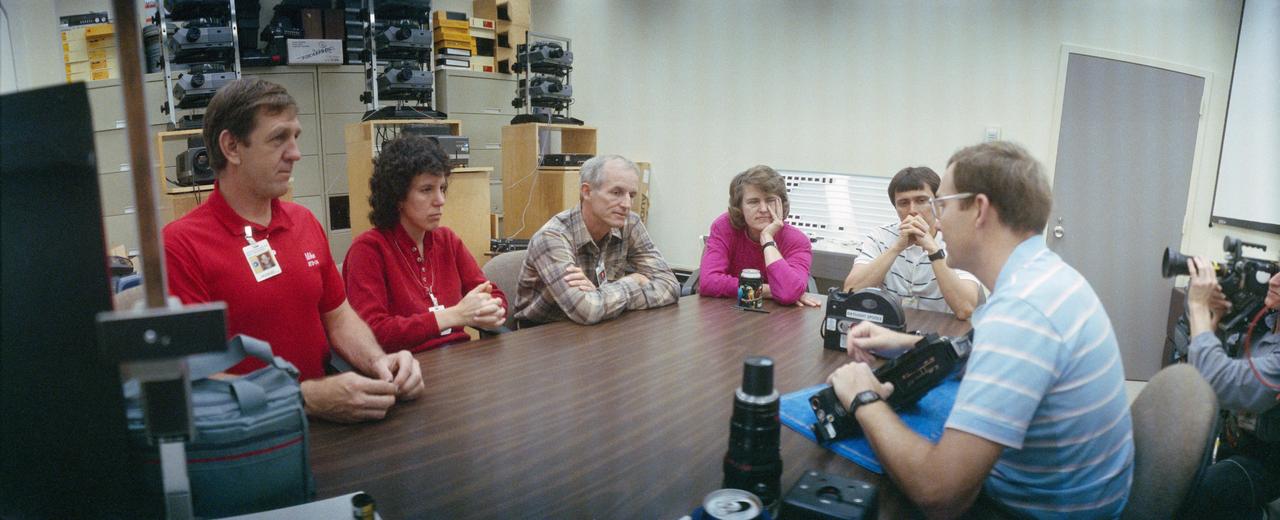
STS-34 Atlantis, Orbiter Vehicle (OV) 104, crewmembers listen to trainer Bill Bowers explain ARRIFLEX camera equipment during briefing at JSC. Across the table from Bowers are (left to right) Pilot Michael J. McCulley, Mission Specialist (MS) Ellen S. Baker, Commander Donald E. Williams, MS Shannon W. Lucid, and MS Franklin R. Chang-Diaz.
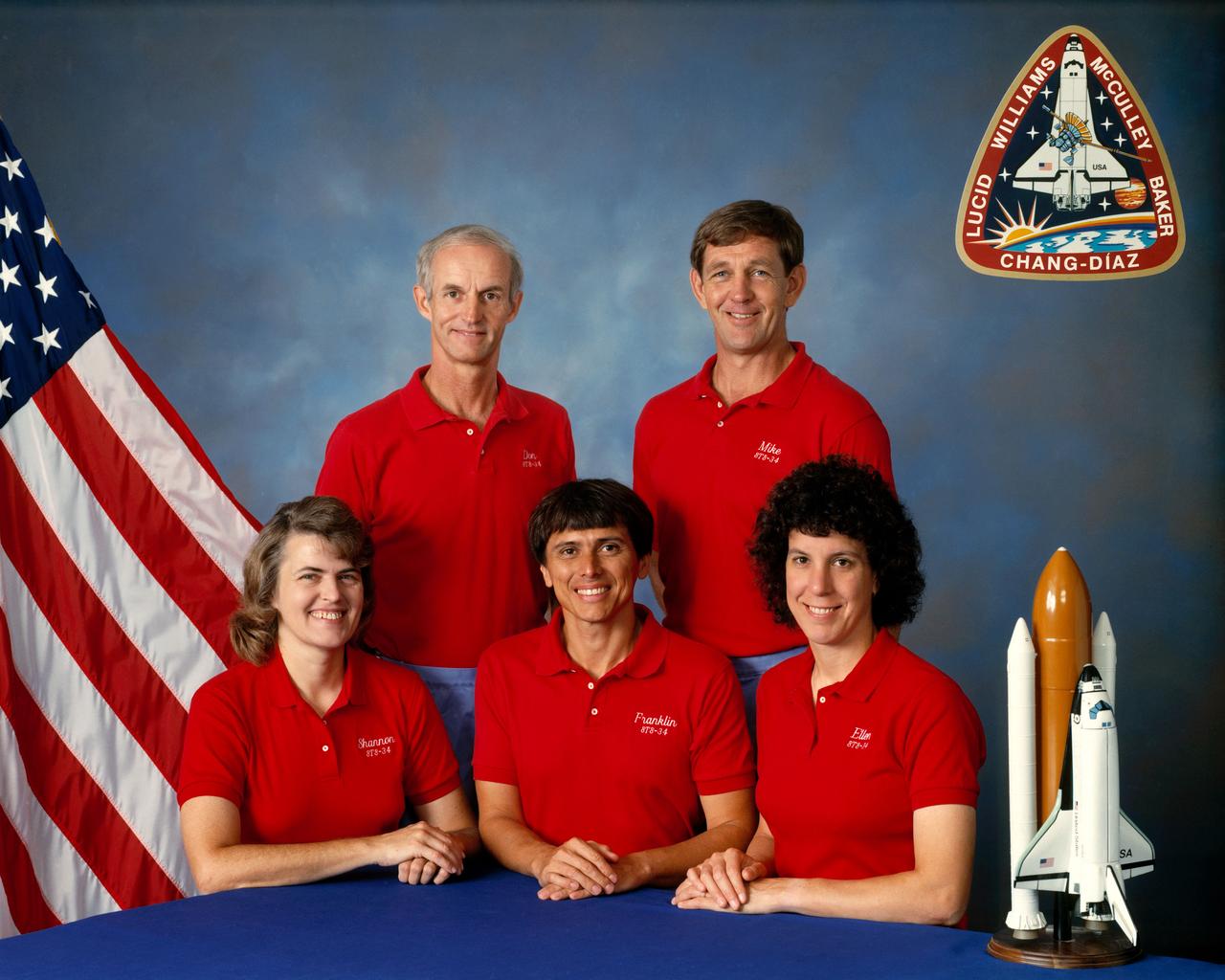
S89-39803 (July 1989) --- These five astronauts have been assigned to fly the Space Shuttle Atlantis for the mission on which the Jupiter probe, Galileo will be deployed. The mission is scheduled for October of this year. Seated, left to right, are mission specialists Shannon W. Lucid, Ph.D.; Franklin Chang-Diaz, Ph.D.; and Ellen S. Baker, M.D. Standing behind the mission specialists are left, Donald E. Williams, commander; and Michael J. McCulley, pilot.
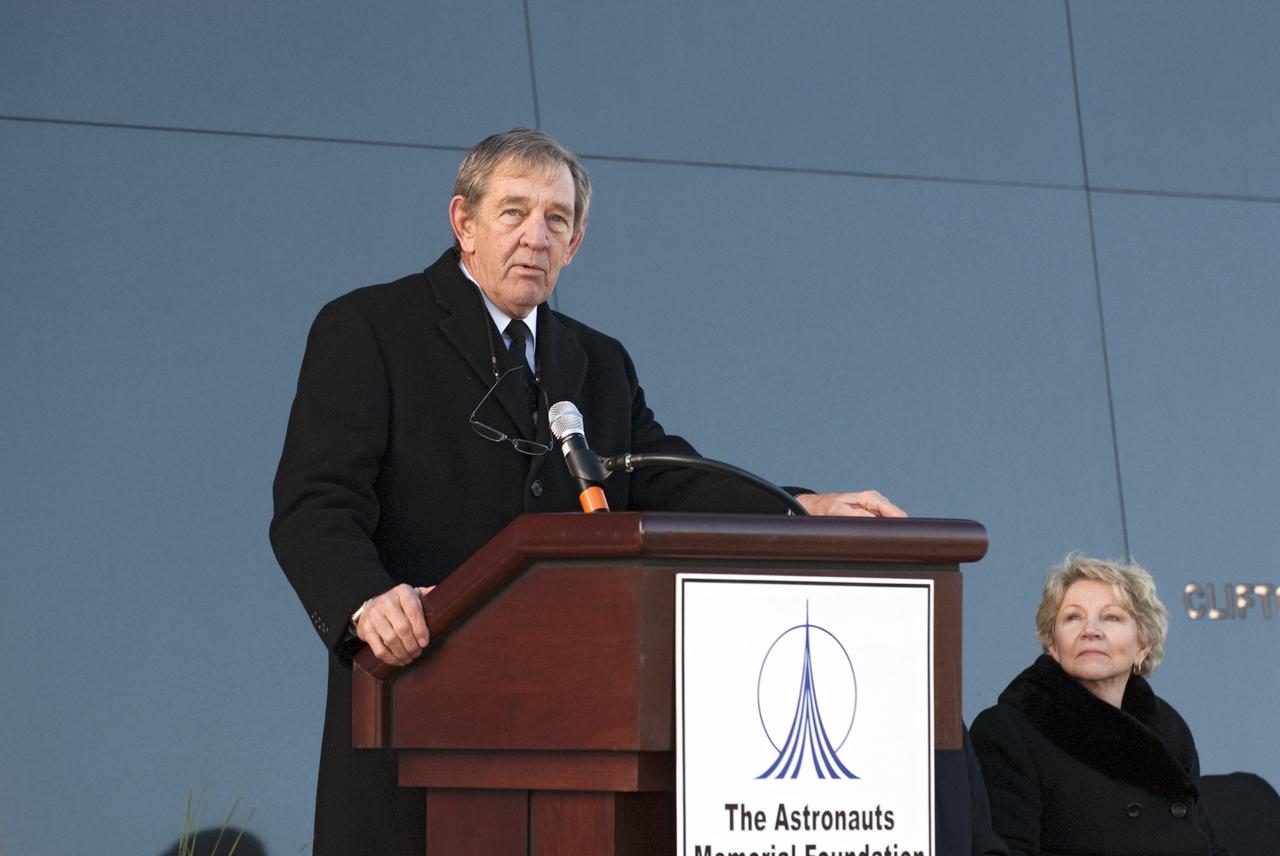
CAPE CANAVERAL, Fla. -- Former astronaut and Chairman of The Astronauts Memorial Foundation Michael McCulley speaks to a crowd gathered in front of the Space Mirror Memorial at the Kennedy Space Center Visitor Complex in Florida to honor space shuttle Challenger's STS-51L crew members who gave their lives for while furthering the cause of exploration and discovery. 2011 marks the 25th anniversary of the loss of Challenger, which broke apart over the Atlantic Ocean 73 seconds into flight on Jan. 28, 1986. Photo credit: NASA/Kim Shiflett
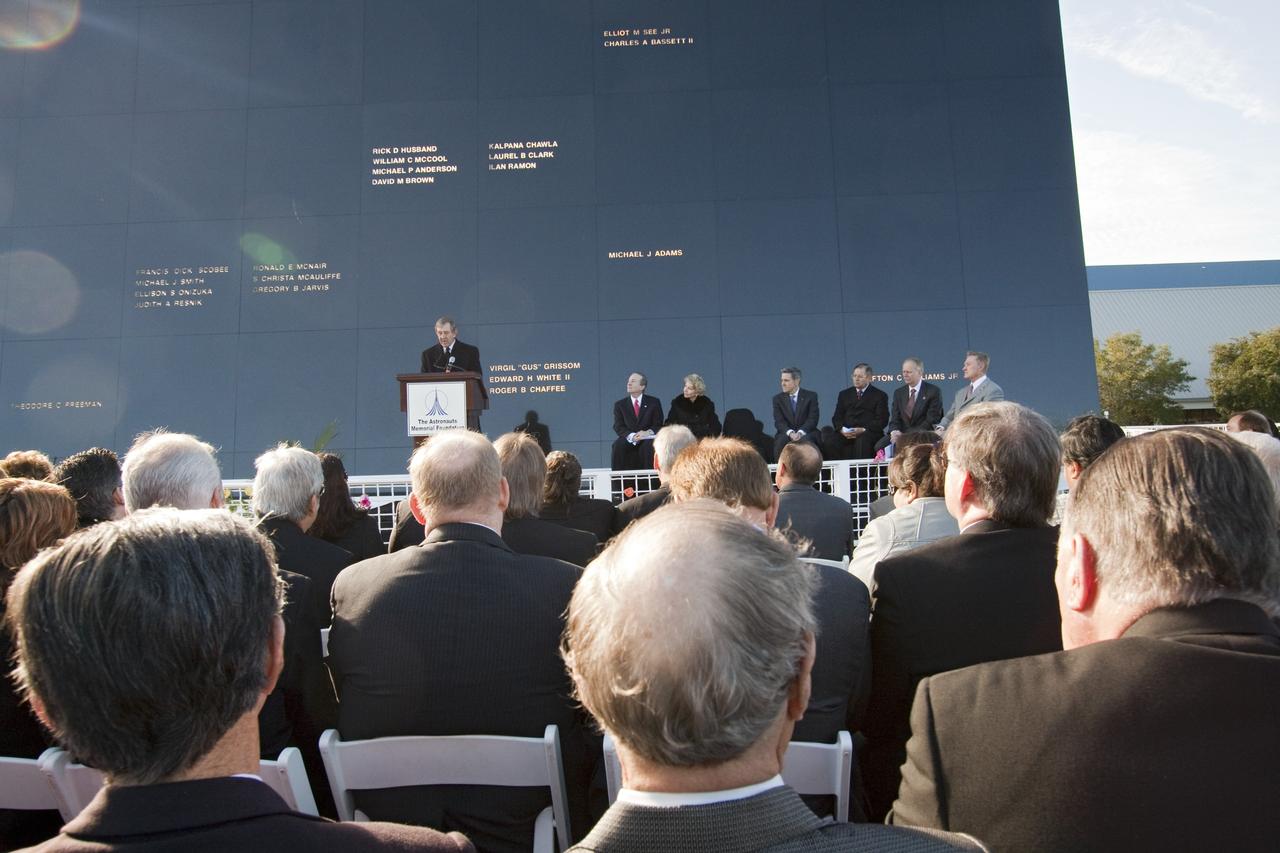
CAPE CANAVERAL, Fla. -- Michael McCulley, former astronaut and chairman of the Astronauts Memorial Foundation, speaks to a crowd gathered in front of the Space Mirror Memorial at the Kennedy Space Center Visitor Complex in Florida to honor space shuttle Challenger's STS-51L crew members who gave their lives for while furthering the cause of exploration and discovery. 2011 marks the 25th anniversary of the loss of Challenger, which broke apart over the Atlantic Ocean 73 seconds into flight on Jan. 28, 1986. NASA/Jack Pfaller
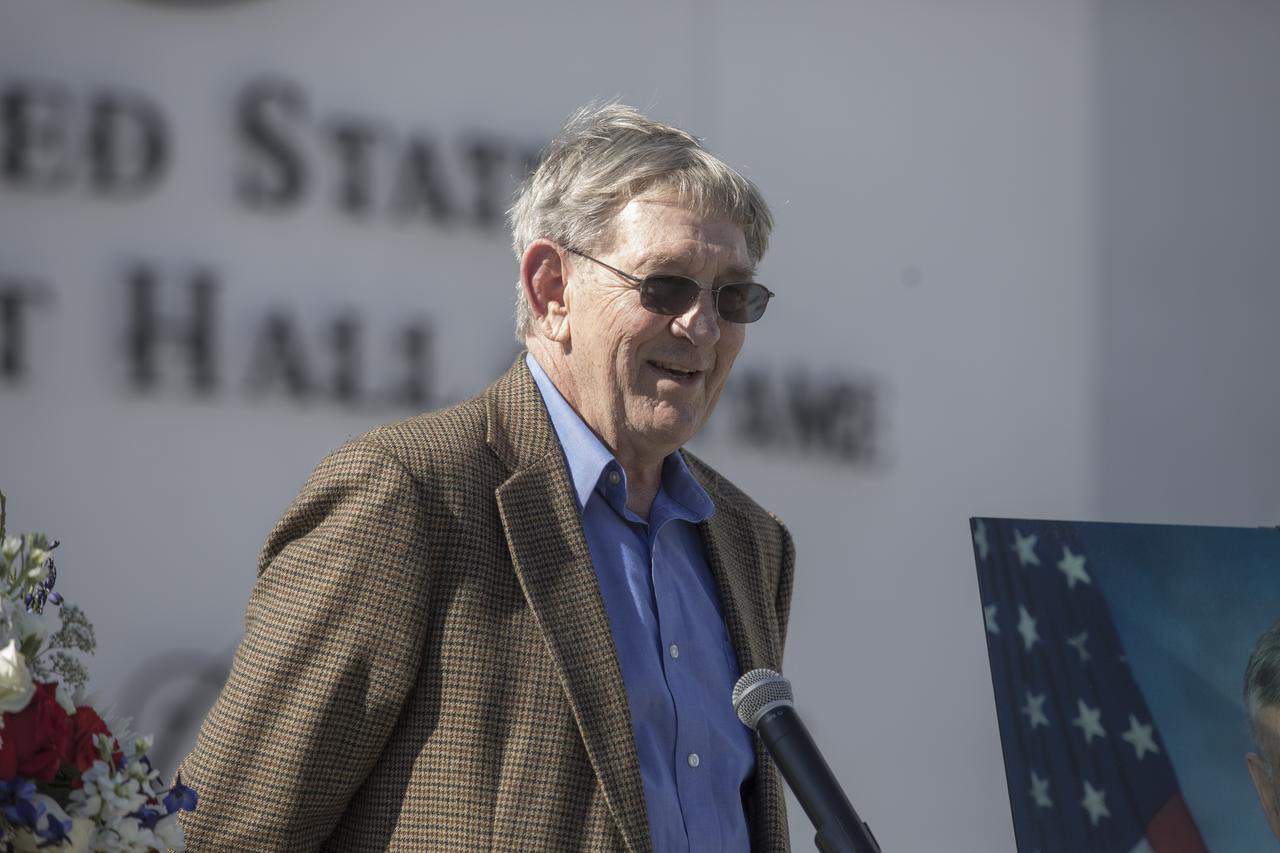
Former NASA astronaut Mike McCulley speaks during a ceremony at the Heroes and Legends exhibit at the Kennedy Space Center Visitor Complex. The brief memorial honoring NASA astronaut John Young took place on the afternoon of Jan. 11, 2018. Young died Jan. 5, 2018, in Houston at the age of 87.He was the only astronaut to fly in NASA's Gemini, Apollo and Space Shuttle Programs.
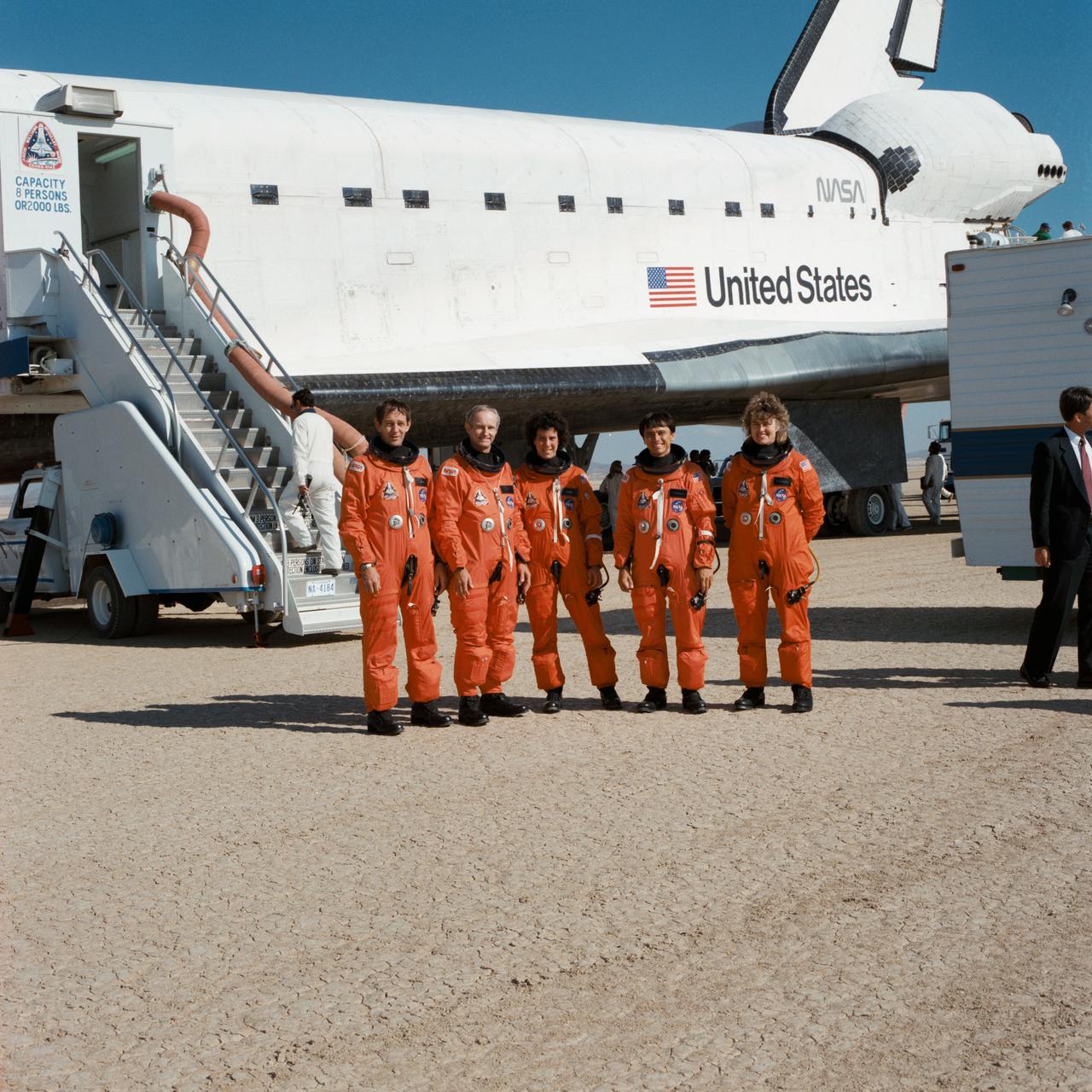
STS-34 crewmembers, wearing launch and entry suits (LESs), stand in front of Atlantis, Orbiter Vehicle (OV) 104, on Runway 23 dry lake bed at Edwards Air Force Base (EAFB), California. Left to right are Pilot Michael J. McCulley, Commander Donald E. Williams, Mission Specialist (MS) Ellen S. Baker, MS Franklin R. Chang-Diaz, and MS Shannon W. Lucid. Ground crews service OV-104 in the background.
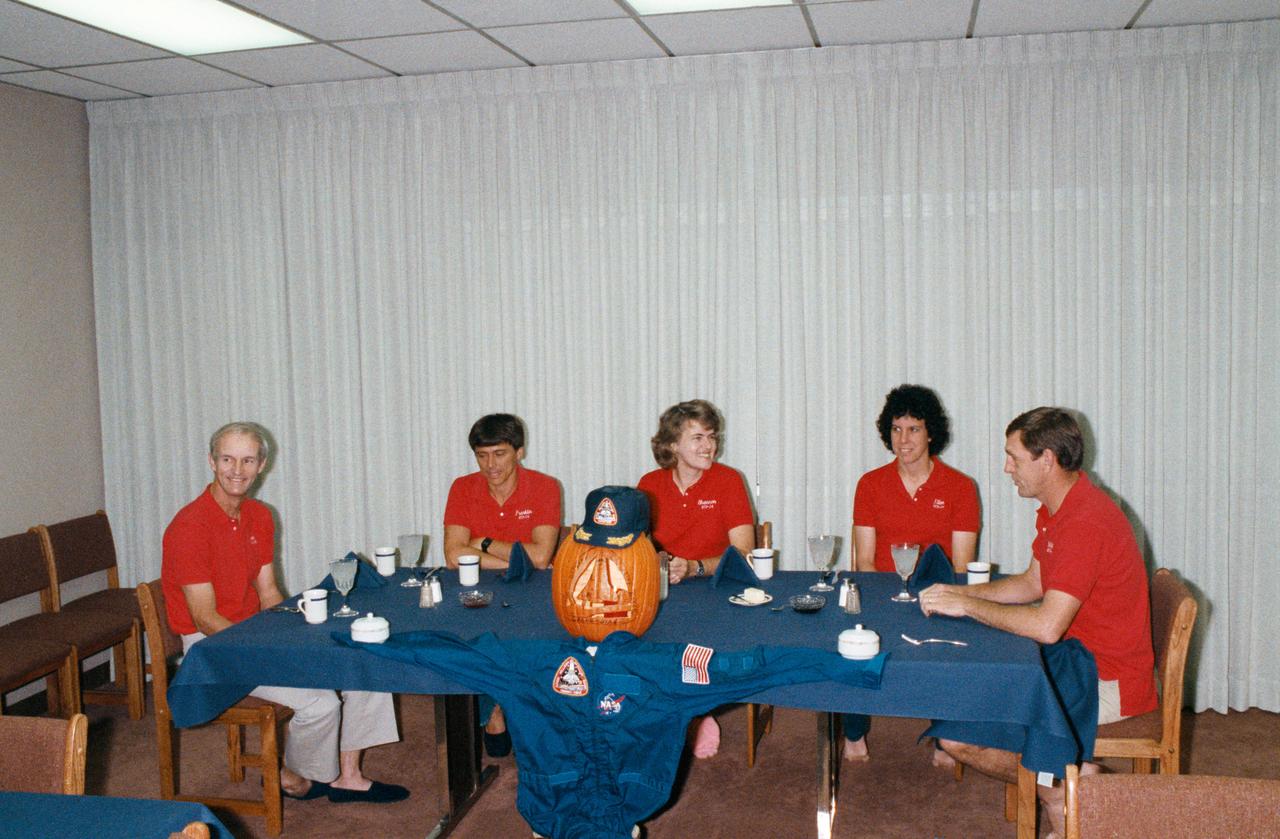
STS034-S-021 (18 Oct 1989) --- The traditional light pre-launch breakfast greets the five astronaut crew-members for NASA's STS-34 mission in the Operations and Checkout Facility at Kennedy Space Center (KSC). From the left are Astronauts Donald E. Williams, mission commander; Franklin R. Chang-Diaz, Shannon W. Lucid and Ellen S. Baker, all mission specialists; and Michael J. McCulley, pilot. A pumpkin converted into a Jack-o-lantern adds a seasonal touch to the table.
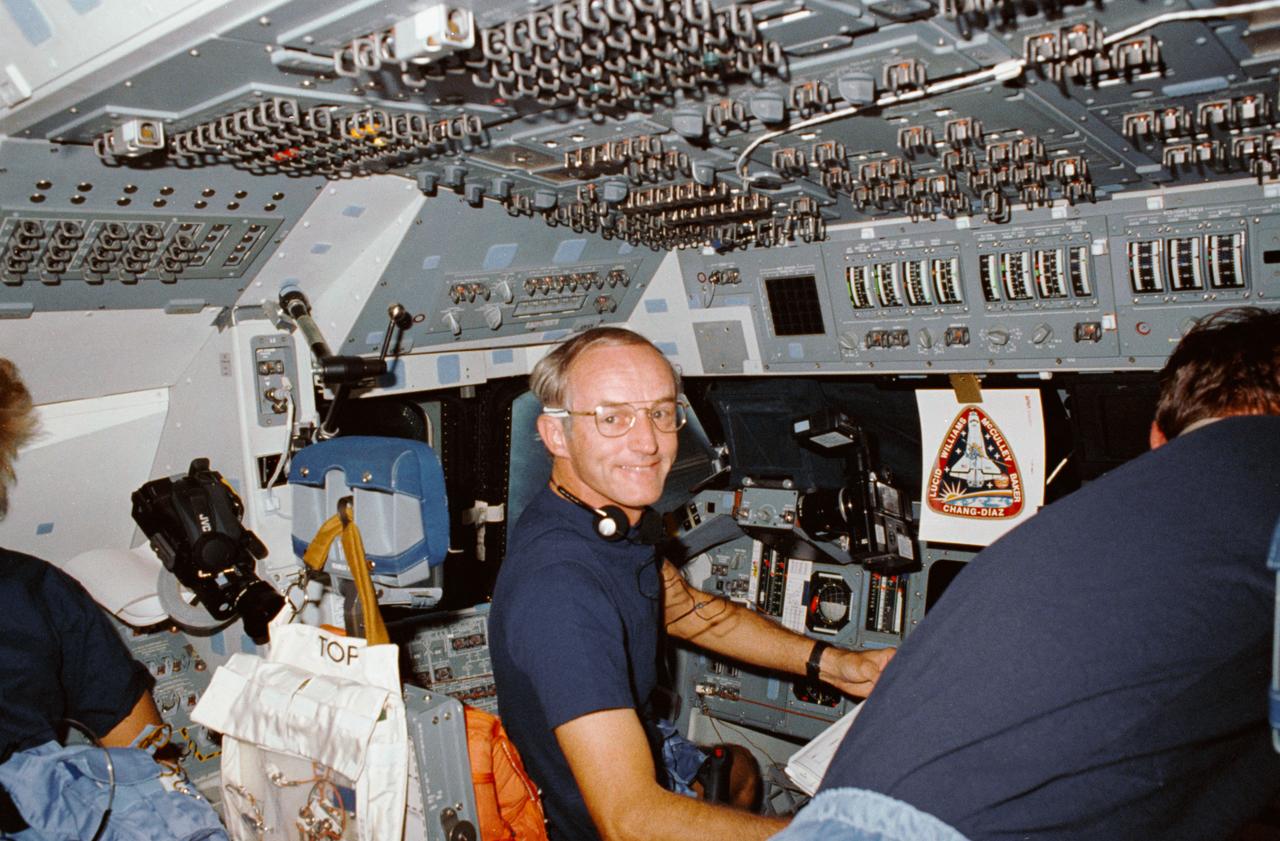
STS034-06-025 (18-23 Oct. 1989) --- Astronaut Donald E. Williams spent a portion of the five-day STS-34 flight at Atlantis' commander's station and, as evidenced by his countenance in this posed photo, appeared to enjoy his second spaceflight, his first as a mission commander. Astronaut Michael J. McCulley, pilot, leans over the pilot's station at right. This 35mm scene was in the first 12 photos released by NASA on Oct. 24, 1989.
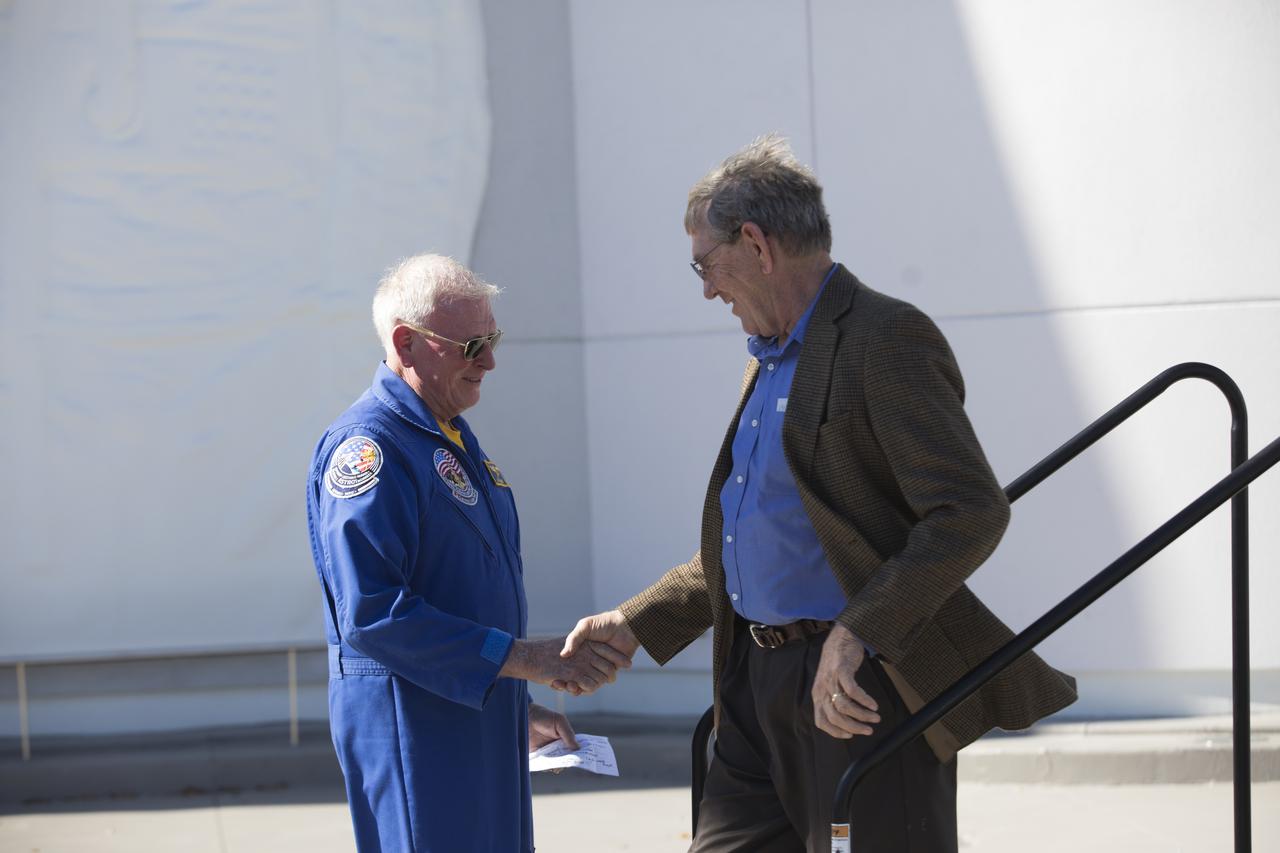
Former NASA astronaut Jon McBride, left, greets Mike McCulley during a ceremony at the Heroes and Legends exhibit at the Kennedy Space Center Visitor Complex. The brief memorial honoring NASA astronaut John Young took place on the afternoon of Jan. 11, 2018. Young died Jan. 5, 2018, in Houston at the age of 87. He was the only astronaut to fly in NASA's Gemini, Apollo and Space Shuttle Programs.
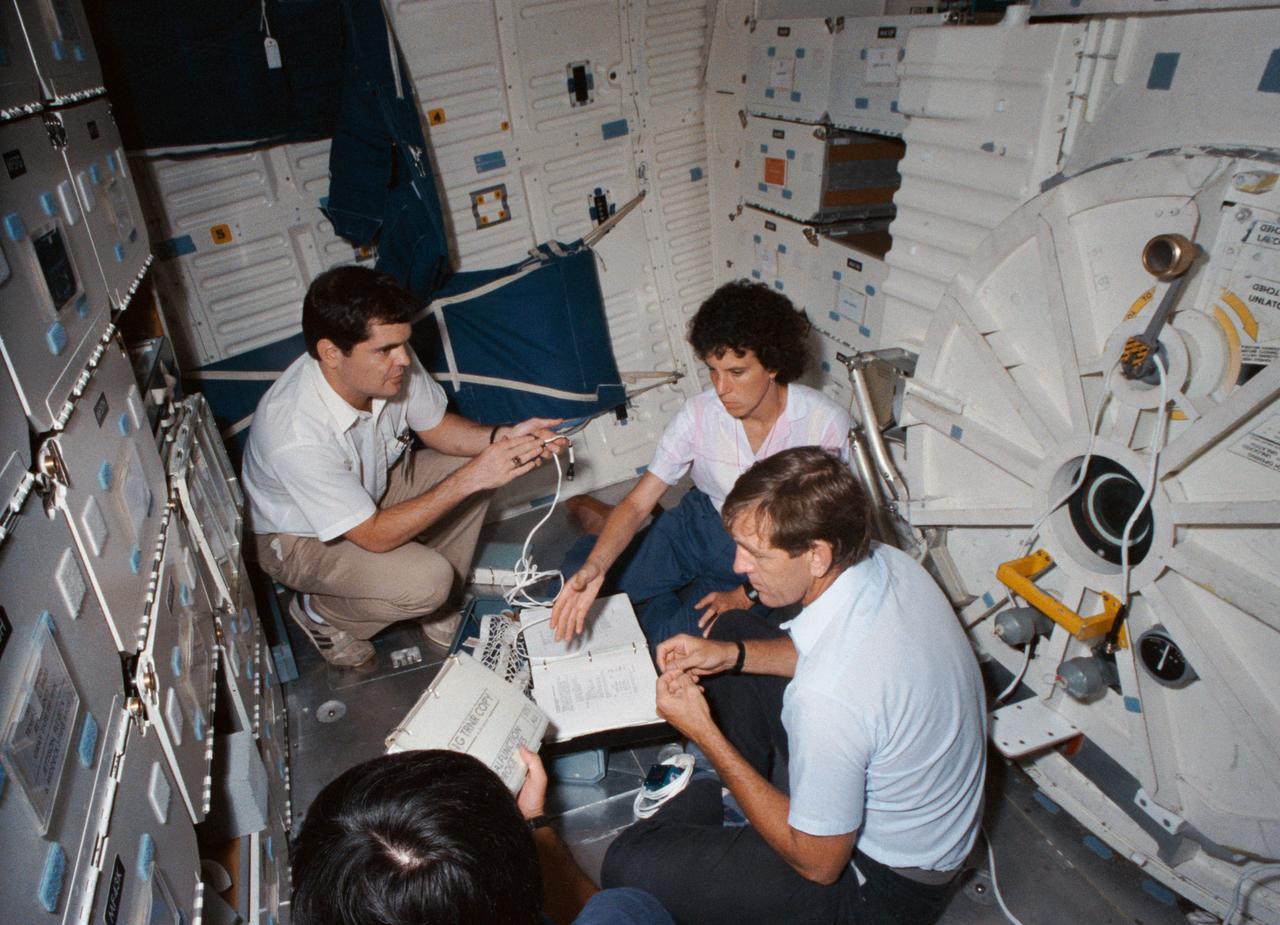
S89-39537 (July 1989) --- Two astronaut-crewmembers for NASA's STS-34 mission are briefed on inflight maintenance procedures on the mid-deck of the Space Shuttle crew compartment trainer in JSC's Shuttle mockup and integration laboratory. They are Ellen S. Baker and Michael J. McCulley, mission specialist and pilot, respectively for the scheduled Oct. 1989 mission aboard the Atlantis.
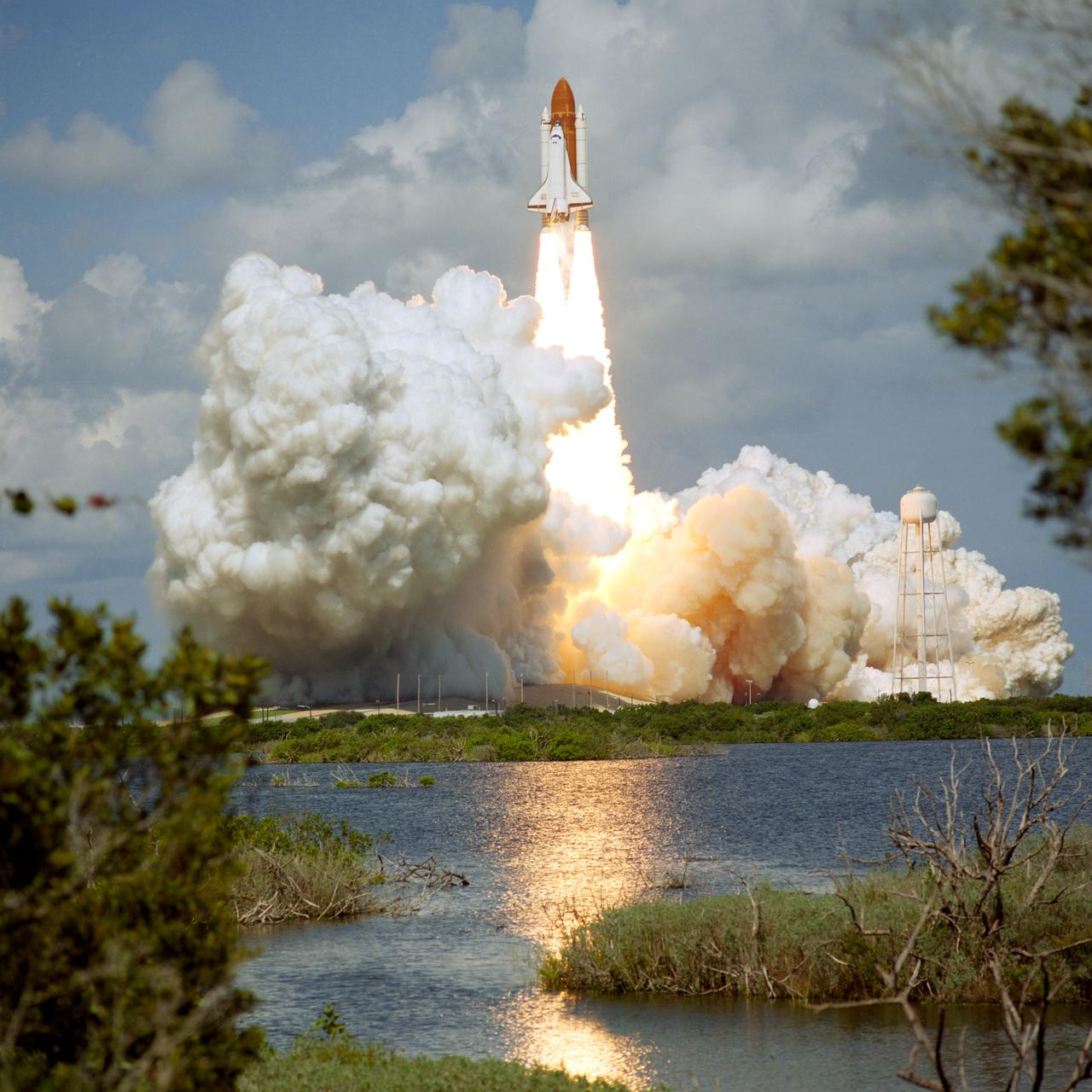
STS034-S-025 (18 Oct 1989) --- The STS-34 Space Shuttle Atlantis lifts off from Launch Pad 39-B at 2:53:39:983 p.m. (EDT), marking the beginning of a five-day mission in space. Atlantis carries a crew of five and the spacecraft Galileo, along with a number of other scientific experiments. The Jupiter-bound probe will be deployed from Atlantis some six hours after launch. The journey to the giant planet is expected to take over six years. Crewmembers for the mission are astronauts Donald E. Williams, Michael J. McCulley, Shannon W. Lucid, Franklin R. Chang-Diaz and Ellen S. Baker. The scene was recorded with a 70mm camera.

Roy D. Bridges Jr., KSC's next center director, at right, poses in the firing room of the Launch Control Center with two top contractor officials at Kennedy Space Center during the STS-82 launch of Discovery on the second Hubble Space Telescope servicing mission. From left, are Michael J. McCulley, vice president and associate program manager for ground operations for United Space Alliance at KSC; and Bruce Melnick, vice president of McDonnell Douglas Space and Defense Systems-KSC. Bridges is slated to become KSC's seventh center director on March 2, succeeding Jay F. Honeycutt
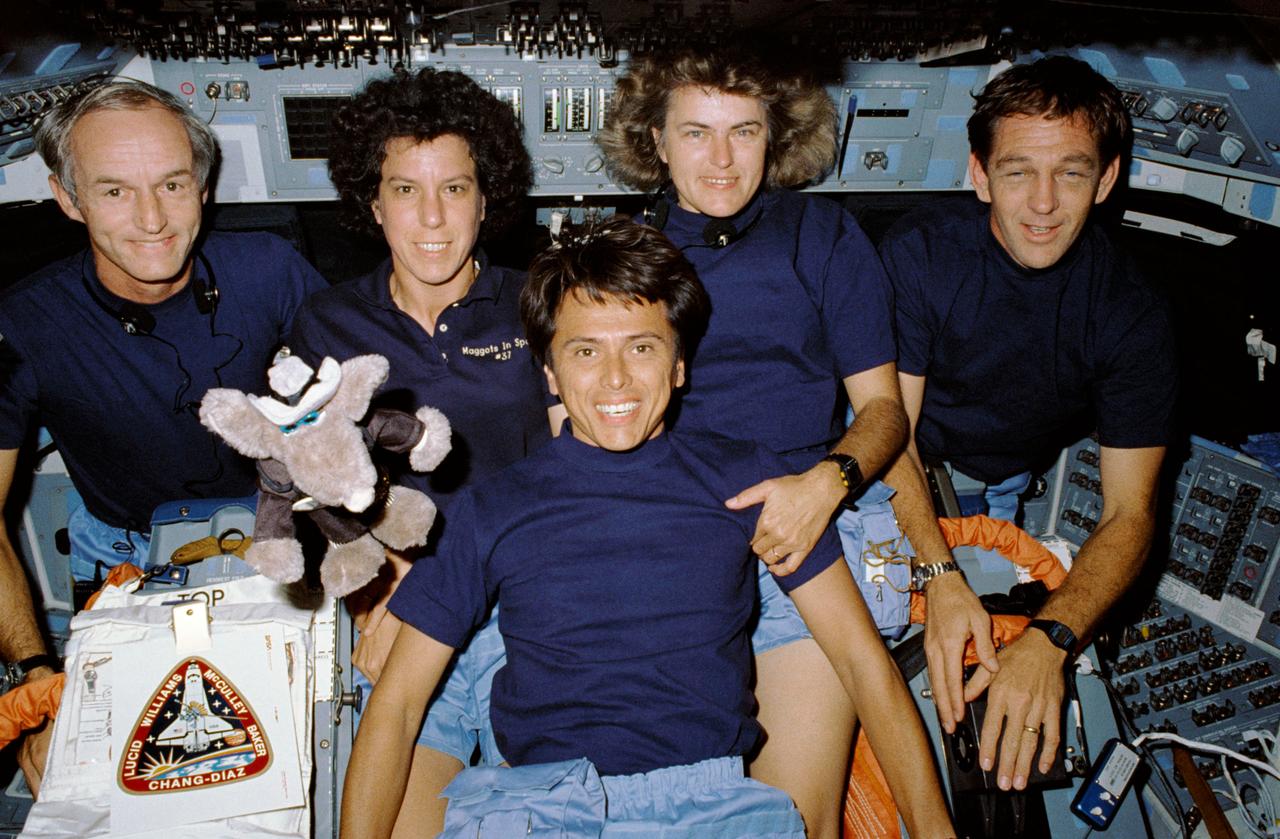
STS034-06-019 (18-23 Oct. 1989) --- The five astronaut crew members for NASA's STS-34 mission pose for an in-space crew "portrait," using a pre-set 35mm camera. Coincidentally, astronauts Donald E. Williams (left), commander, and Michael J. McCulley (right), pilot, are positioned at their respective stations of operation (except that they are turned 180 degrees) aboard the Earth-orbiting space shuttle Atlantis. They form "bookends" for the crew's three mission specialists -- Ellen S. Baker (second left), Shannon W. Lucid and Franklin R. Chang-Diaz.
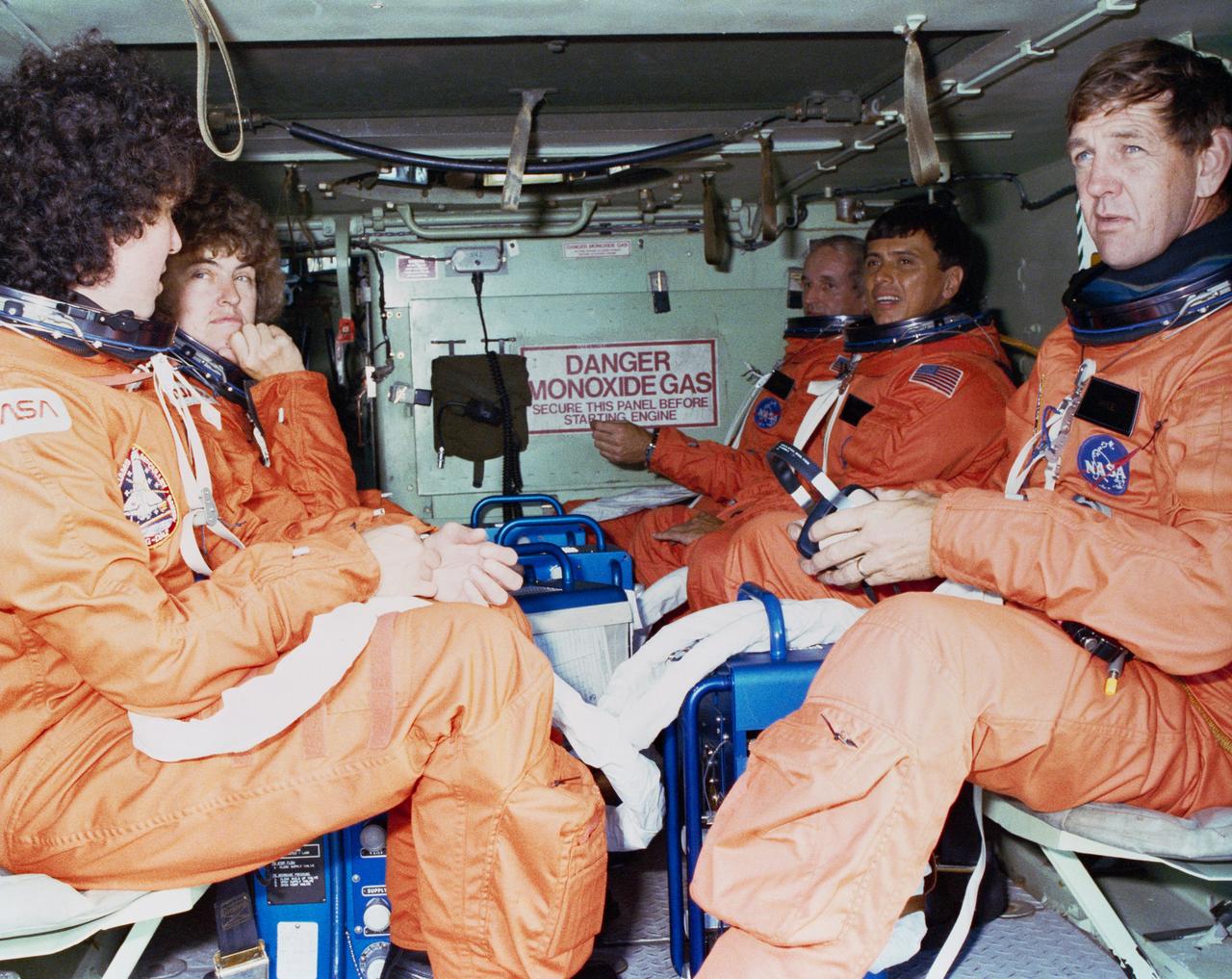
STS-34 crewmembers sit in M1-13 Armored Personnel Carrier (APC) during emergency egress training at KSC's shuttle landing facility (SLF) prior to terminal countdown demonstration test (TCDT) activities. Wearing launch and entry suits (LESs), are (from left) Mission Specialist (MS) Ellen S. Baker, MS Shannon W. Lucid, Commander Donald E. Williams (right side, in back), MS Franklin R. Chang-Diaz, and Pilot Michael J. McCulley (holding headset). View provided by KSC with alternate number KSC-89PC-871.
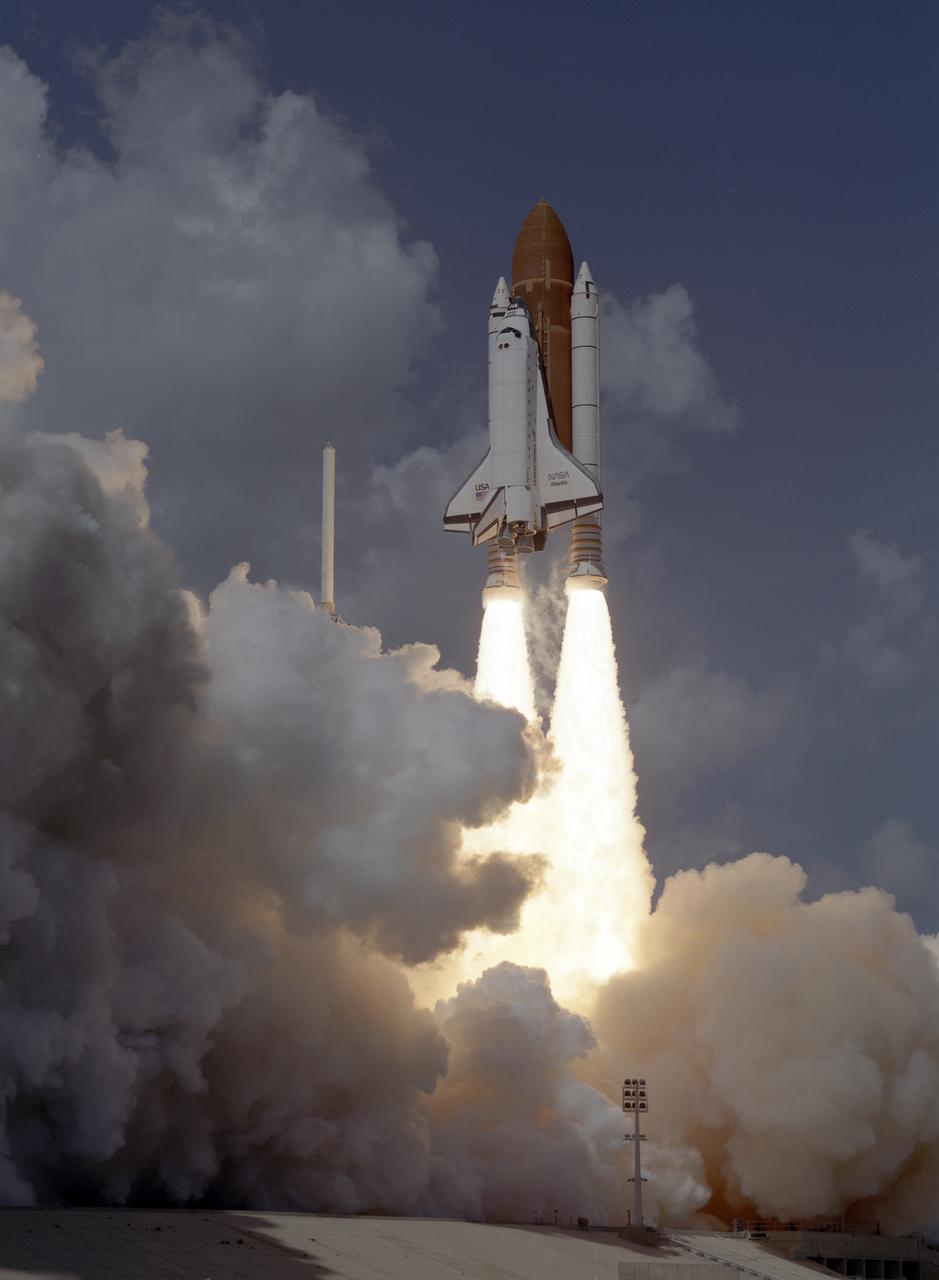
The STS-34 crew of five launched aboard the Space Shuttle Orbiter Atlantis on October 18, 1989 at 12:53:40pm (EDT). Crew members included commander Donald E. Williams, pilot Michael J. McCulley; and mission Specialists Shannon W. Lucid, Franklin R. Chang-Diaz, and Ellen S. Baker. The primary payload was the Galileo Jupiter Spacecraft and attached Inertial Upper Stage (IUS). Deployed 6 hours and 30 minutes into the flight, the IUS stages fired boosting Galileo on trajectory for a 6 year trip to Jupiter.
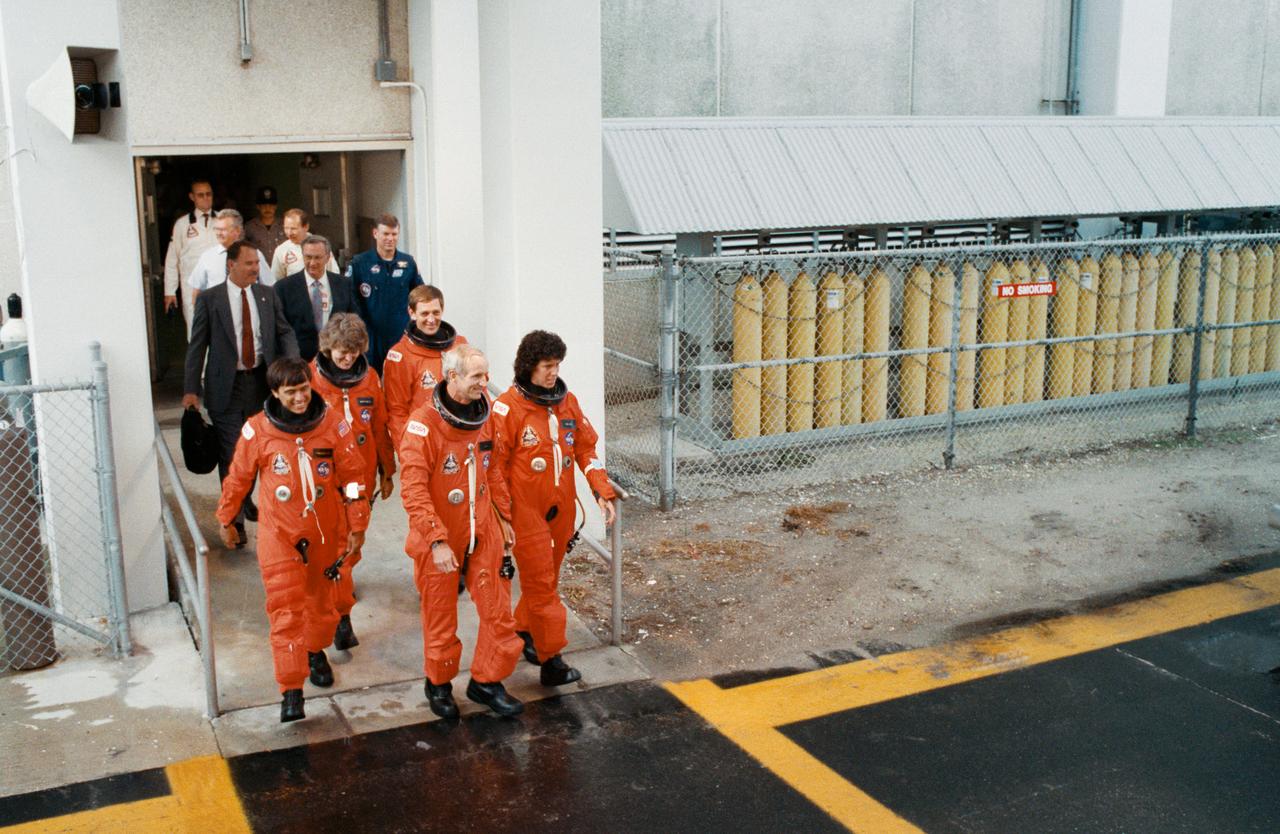
STS-34 crewmembers leave the Kennedy Space Center (KSC) Operations and Checkout (O&C) Building. Crewmembers will then board a vehicle which will carry them to Launch Complex (LC) Pad 39B. Crewmembers, wearing orange launch and entry suits (LESs), are (left to right) Mission Specialist (MS) Franklin R. Chang-Diaz, MS Shannon W. Lucid, Pilot Michael J. McCulley, Commander Donald E. Williams, and MS Ellen S. Baker. Following the crewmembers are (dark clothing, left to right) Donald R. Puddy, Olan J. Bertrand, and astronaut Michael L. Coats of JSC.
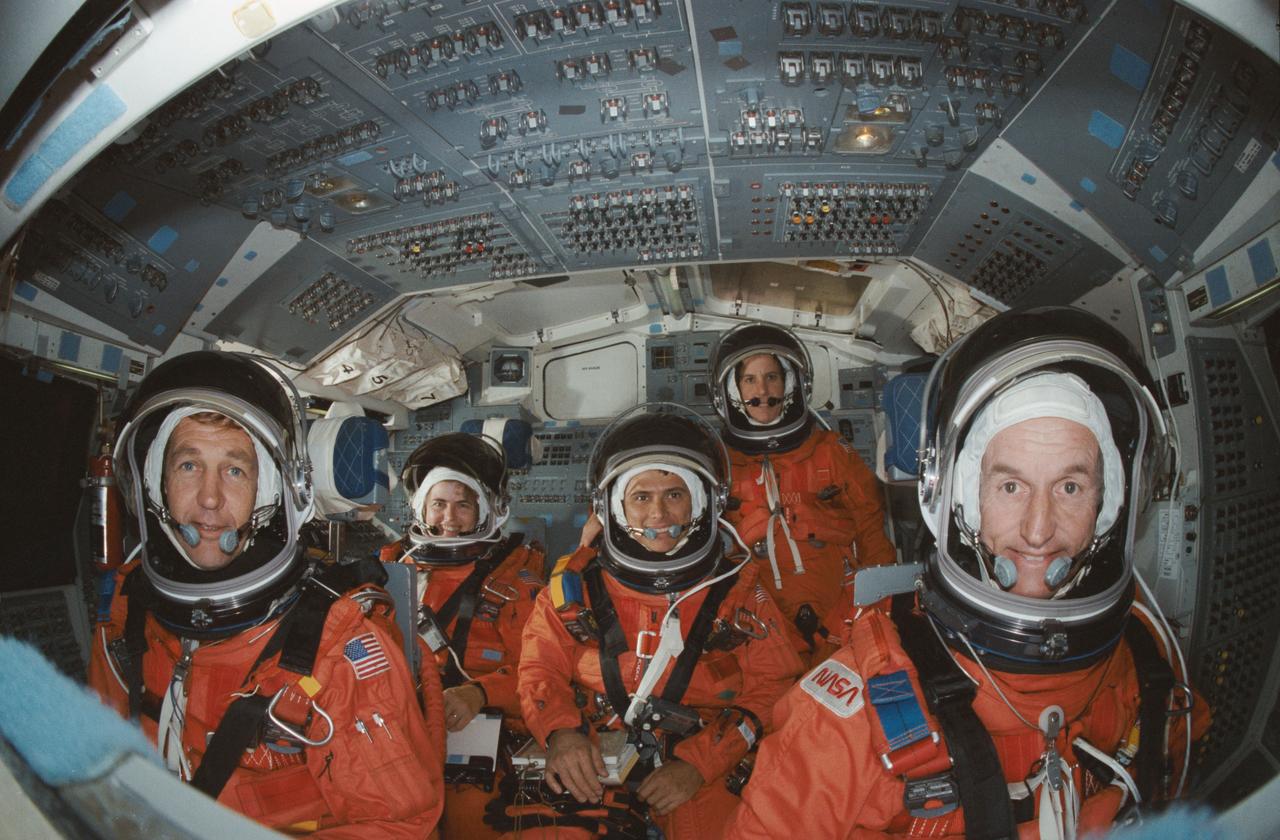
S89-45735 (Sept 1989) --- Five astronauts take a break from training for NASA's STS-34 mission to pose for a photo in the crew compartment trainer (CCT) in the Shuttle mockup and integration lab at JSC. Left to right are Astronauts Michael J. McCulley, pilot; Shannon W. Lucid, Franklin R. Chang-Diaz and Ellen S. Baker, all mission specialists; and Donald E. Williams, mission commander. They are wearing the orange partial pressure suits for the ascent and entry phase of flight. Their launch aboard the Atlantis is scheduled for Oct. 12. The photograph was made by Bill Bowers, a crew trainer at JSC.
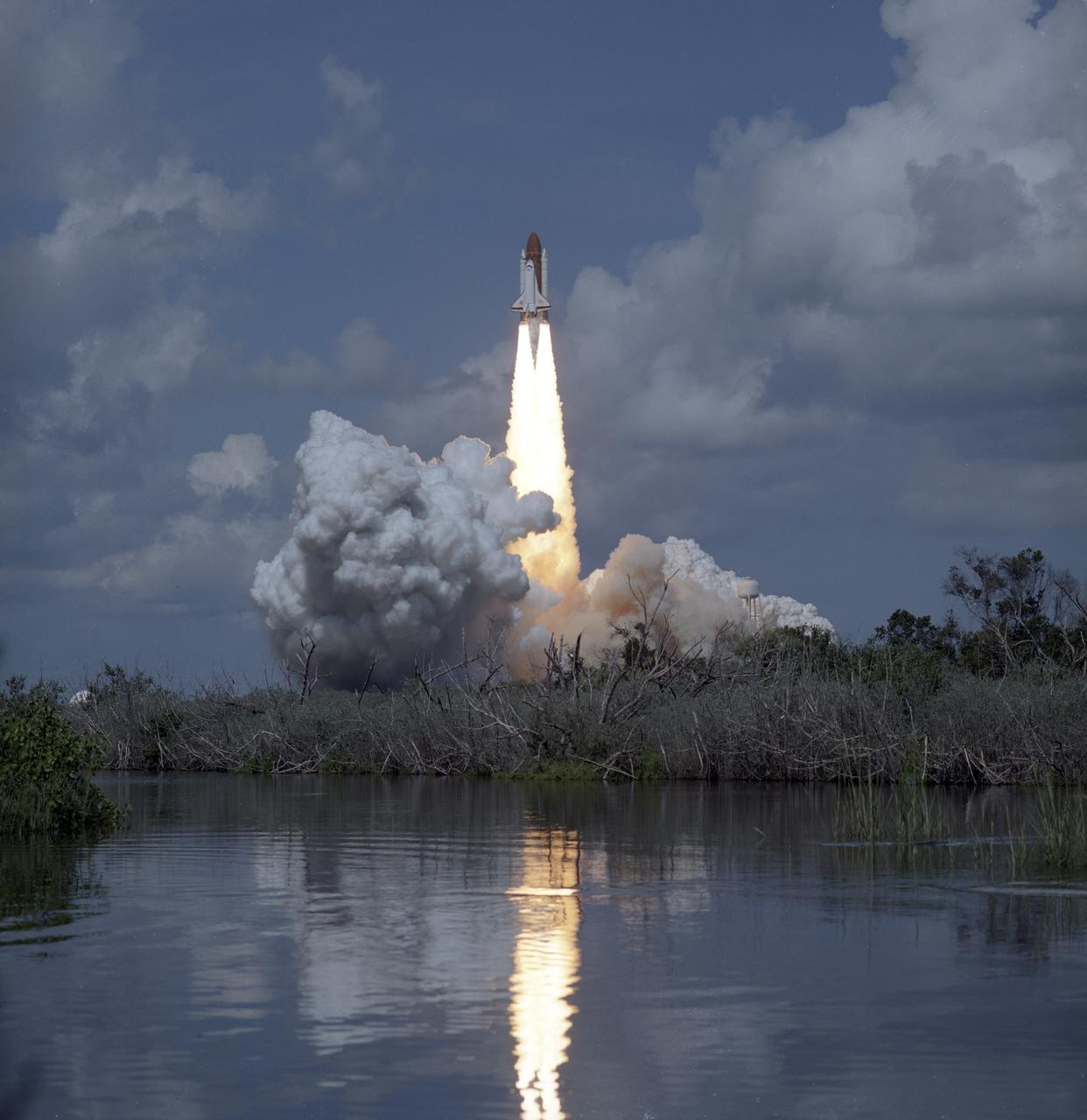
The STS-34 crew of five launched aboard the Space Shuttle Orbiter Atlantis on October 18, 1989 at 12:53:40pm (EDT). Crew members included commander Donald E. Williams, pilot Michael J. McCulley, and mission Specialists Shannon W. Lucid, Franklin R. Chang-Diaz, and Ellen S. Baker. The primary payload was the Galileo Jupiter Spacecraft and attached Inertial Upper Stage (IUS). Deployed 6 hours and 30 minutes into the flight, the IUS stages fired boosting Galileo on trajectory for a 6 year trip to Jupiter.
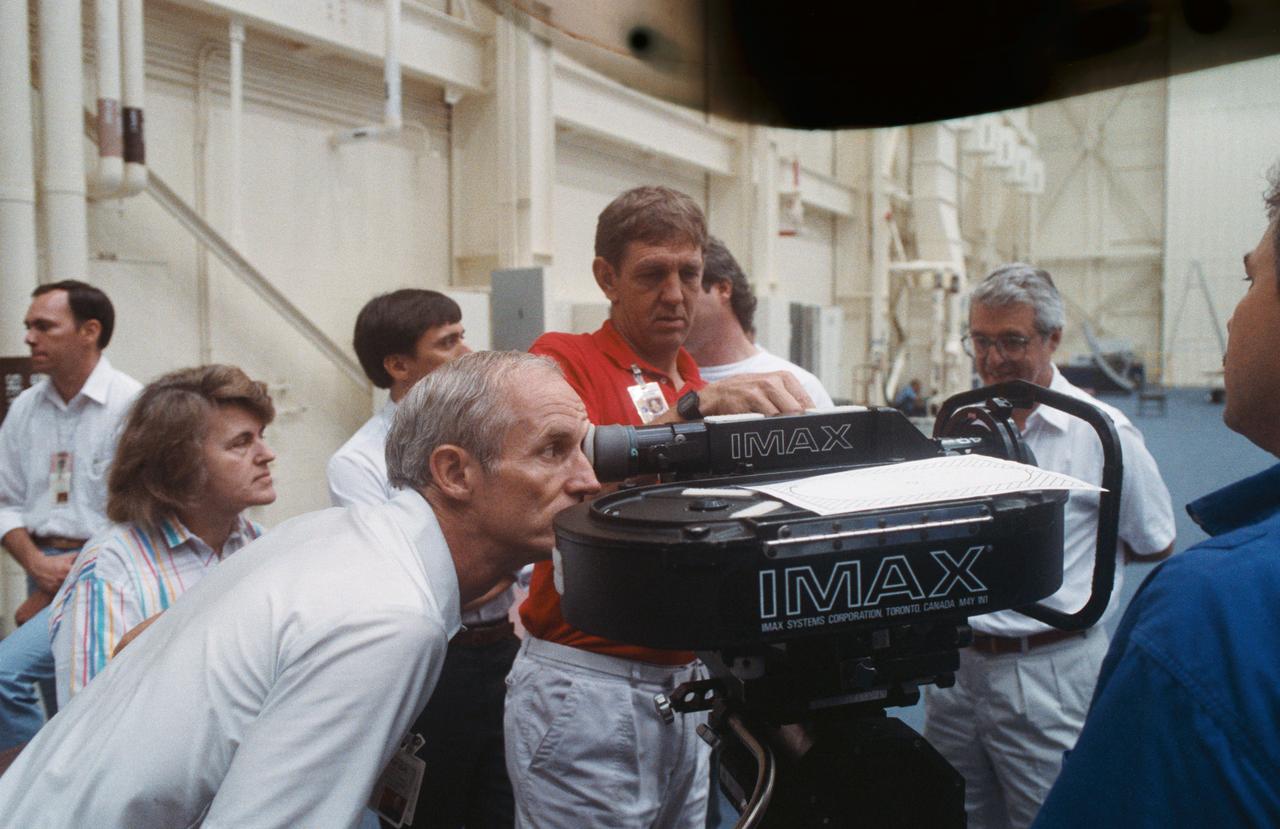
STS-34 crewmembers participate in IMAX camera training session held in JSC's Mockup and Integration Laboratory (MAIL) Bldg 9B. The crew is briefed on the operation and handling of the IMAX camera scheduled to fly aboard Atlantis, Orbiter Vehicle (OV) 104. Left to right in the foreground are Mission Specialist (MS) Shannon W. Lucid, MS Franklin R. Chang-Diaz, Commander Donald E. Williams (looking through IMAX eye piece), Pilot Michael J. McCulley, and IMAX instructor Grant Ferguson. David Douglas of IMAX is at right edge of photo.
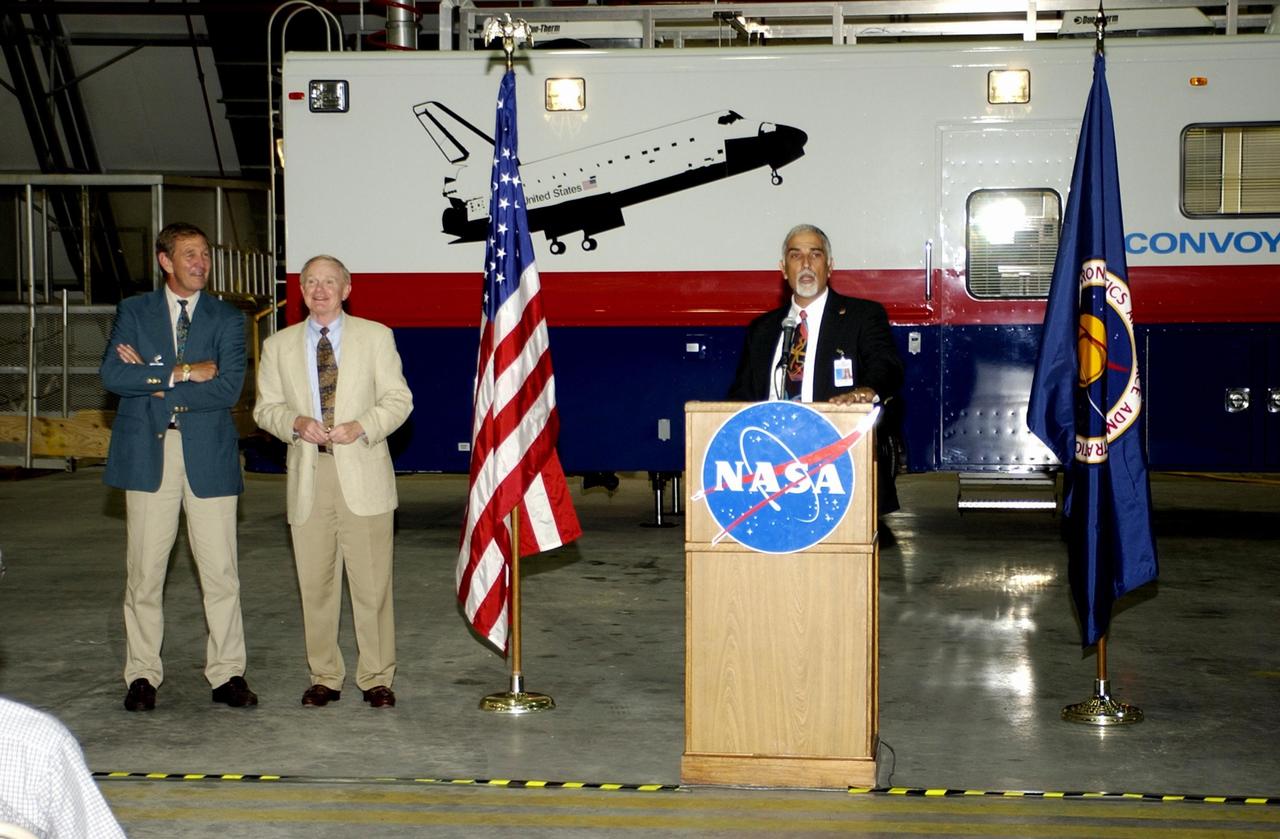
KENNEDY SPACE CENTER, FLA. -- During a commissioning ceremony for the new Convoy Command Vehicle (background), Tony Shibly, project manager, United Space Alliance, offers a few remarks to guests. At left are USA Chief Operating Officer Mike McCulley and Center Director Roy Bridges Jr. The new 40-foot vehicle is replacing a 15-year old model, and will be used following Shuttle landings as the prime vehicle to control critical communications between the orbiter, the crew and the Launch Control Center, to monitor the health of the Shuttle Orbiter systems and to direct convoy operations at the Shuttle Landing Facility. Upgrades and high-tech features incorporated into the design and development of this vehicle make it more reliable and efficient for the convoy crew. Seating capacity was increased from 4 to 12, and video recorders and television monitors were added to provide the convoy team with the maximum amount of visual information
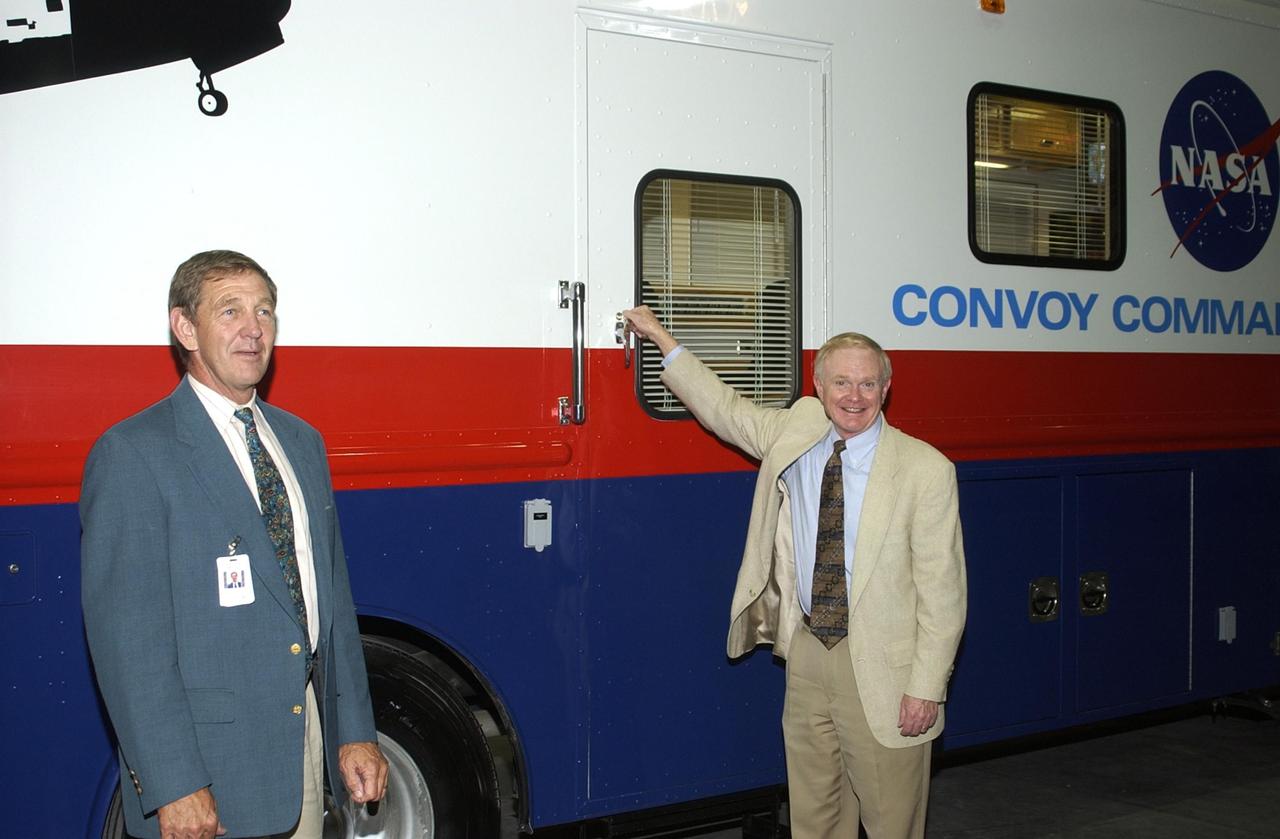
KENNEDY SPACE CENTER, FLA. - After opening remarks at a commissioning ceremony for the new Convoy Command Vehicle, Center Director Roy Bridges Jr. (right) gets ready to open the door for a tour of the vehicle. At left is United Space Alliance Chief Operating Officer Mike McCulley. The new 40-foot vehicle is replacing a 15-year old model, and will be used following Shuttle landings as the prime vehicle to control critical communications between the orbiter, the crew and the Launch Control Center, to monitor the health of the Shuttle Orbiter systems and to direct convoy operations at the Shuttle Landing Facility. Upgrades and high-tech features incorporated into the design and development of this vehicle make it more reliable and efficient for the convoy crew. Seating capacity was increased from 4 to 12, and video recorders and television monitors were added to provide the convoy team with the maximum amount of visual information
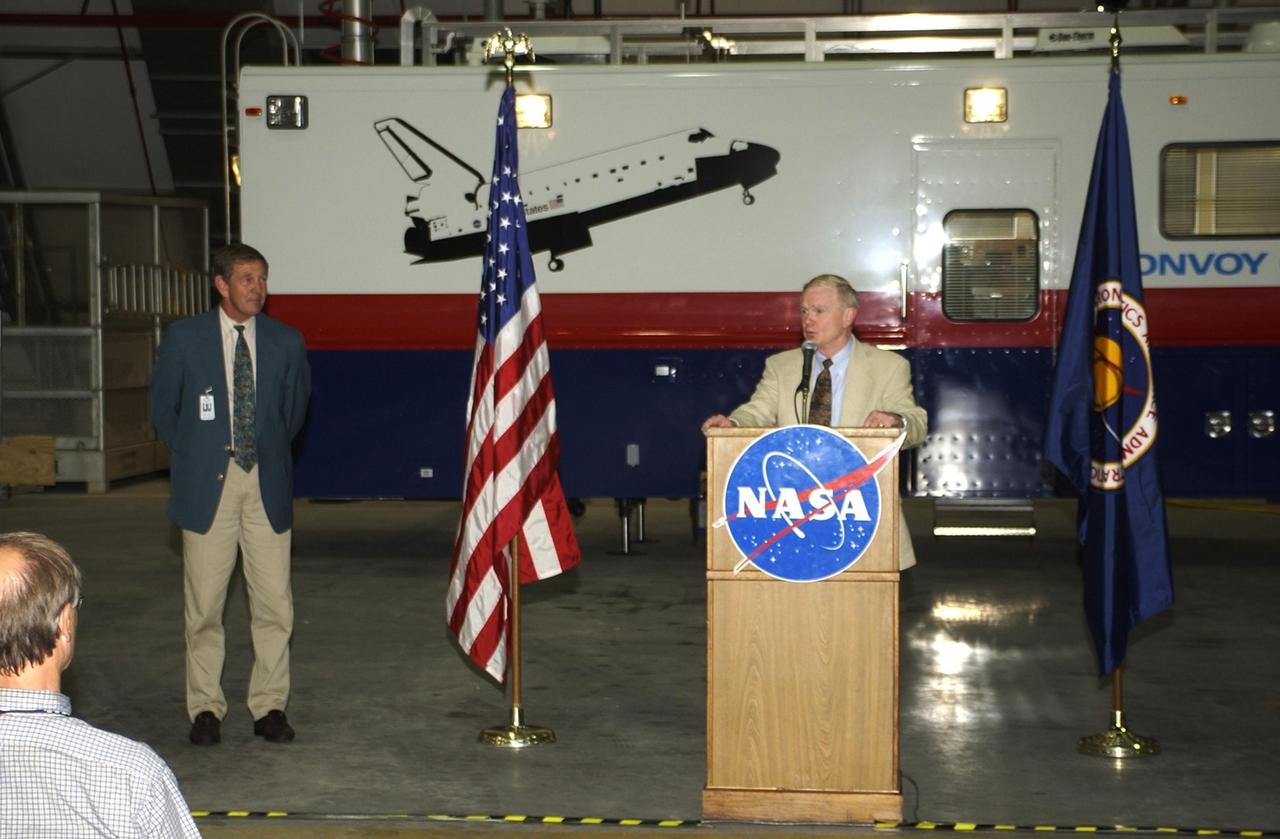
KENNEDY SPACE CENTER, FLA. -- At the podium, Center Director Roy Bridges Jr. offers remarks at the commissioning ceremony for the new Convoy Command Vehicle behind him. At left is Mike McCulley, chief operating officer, United Space Alliance. The new 40-foot vehicle is replacing a 15-year old model, and will be used following Shuttle landings as the prime vehicle to control critical communications between the orbiter, the crew and the Launch Control Center, to monitor the health of the Shuttle Orbiter systems and to direct convoy operations at the Shuttle Landing Facility. Upgrades and high-tech features incorporated into the design and development of this vehicle make it more reliable and efficient for the convoy crew. Seating capacity was increased from 4 to 12, and video recorders and television monitors were added to provide the convoy team with the maximum amount of visual information
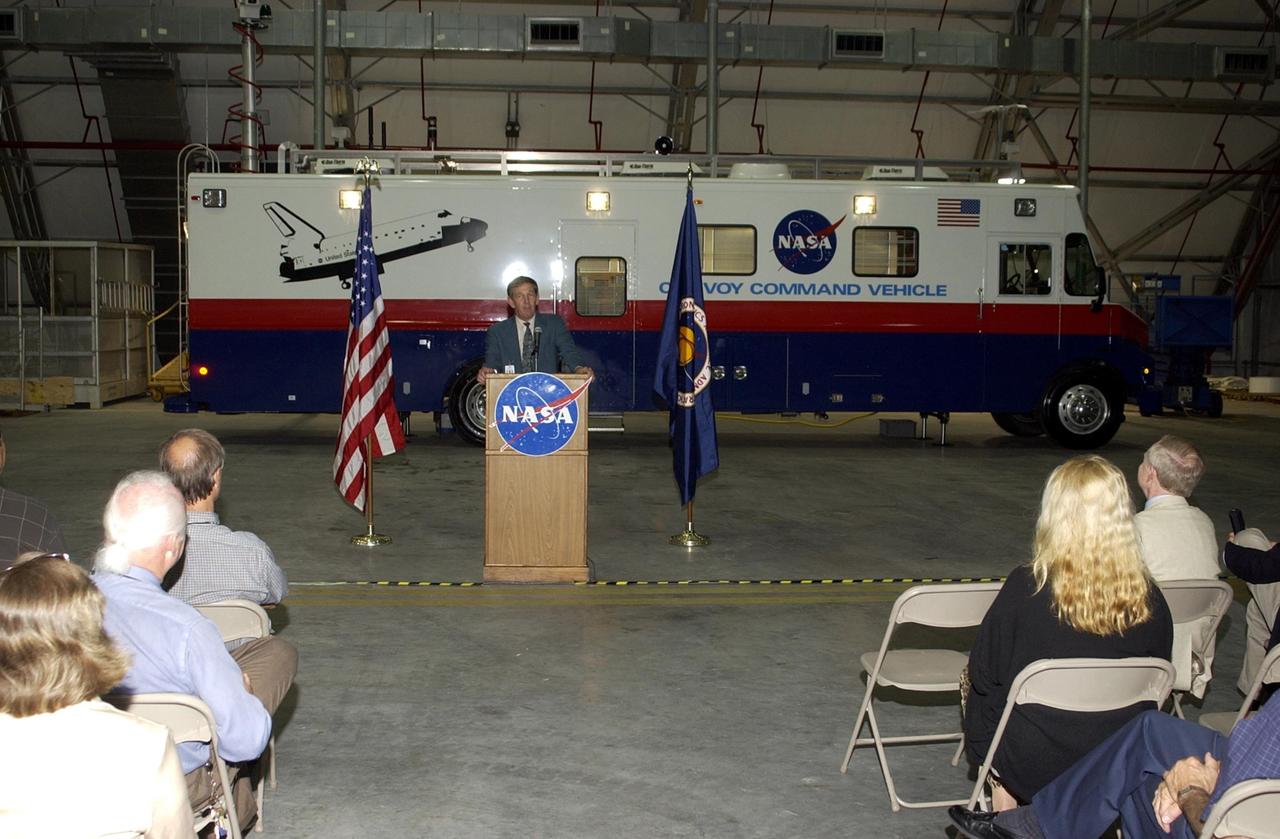
KENNEDY SPACE CENTER, FLA. -- United Space Alliance Chief Operating Officer Mike McCulley welcomes guests to the Landing Operations Facility and commissioning ceremony for the new Convoy Command Vehicle behind him. The new 40-foot vehicle is replacing a 15-year old model, and will be used following Shuttle landings as the prime vehicle to control critical communications between the orbiter, the crew and the Launch Control Center, to monitor the health of the Shuttle Orbiter systems and to direct convoy operations at the Shuttle Landing Facility. Upgrades and high-tech features incorporated into the design and development of this vehicle make it more reliable and efficient for the convoy crew. Seating capacity was increased from 4 to 12, and video recorders and television monitors were added to provide the convoy team with the maximum amount of visual information
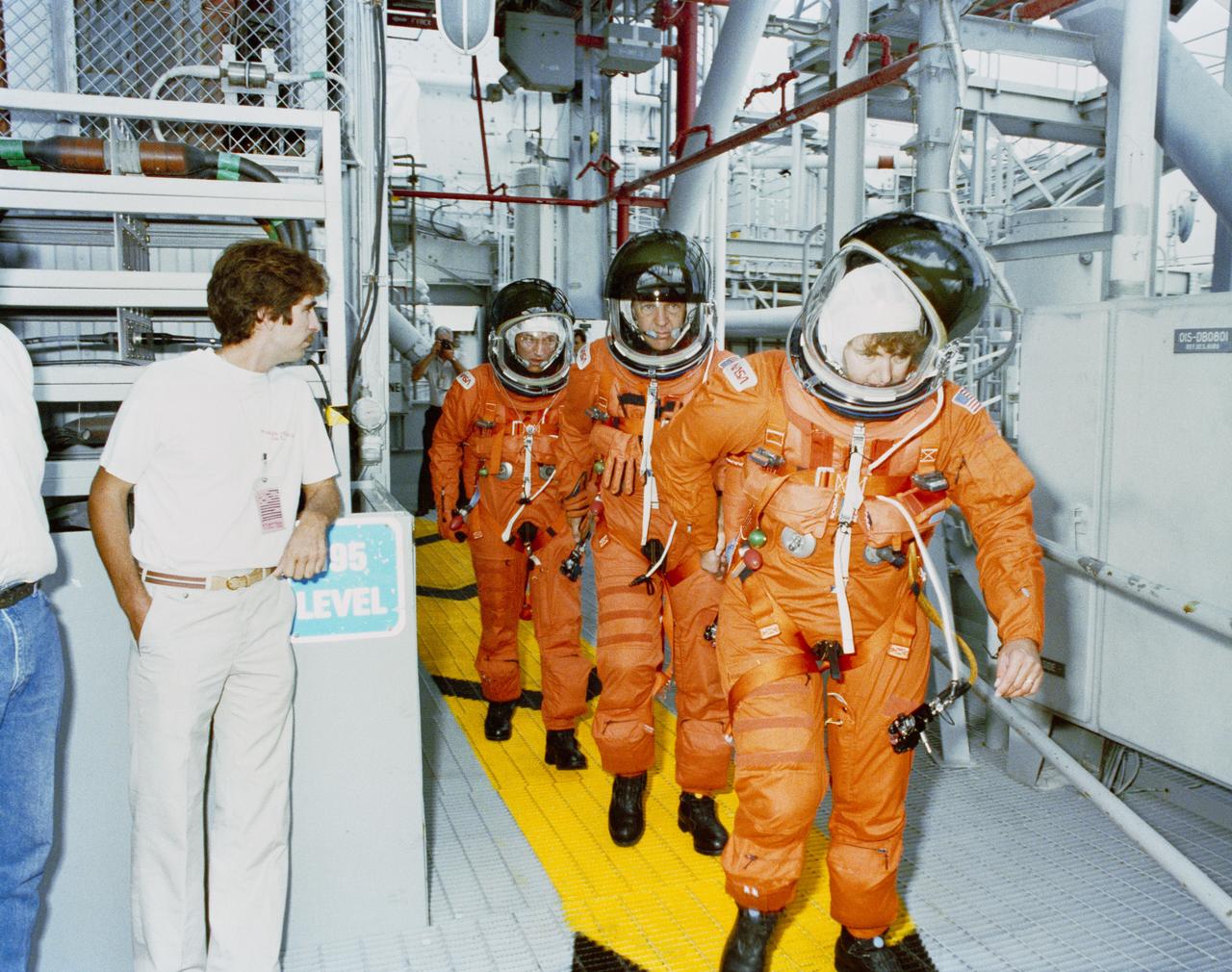
S89-46513 (15 Sept 1989) --- Three members of the STS-34 crew rehearse for their pre-launch procedures at Launch Pad 39B during Terminal Countdown Demonstration Test (TCDT) activities at Kennedy Space Center (KSC). From the foreground, Astronauts Shannon W. Lucid, Michael J. McCulley and Donald E. Williams are at the 195-ft. level of at Pad B. The crew entered Atlantis for the mock countdown. The five astronauts are expected to spend more than five days in Earth orbit next month, with their primary objective being to release the Galileo spacecraft and send it on its way to Jupiter. Not in the frame are Astronauts Franklin R. Chang-Diaz and Ellen S. Baker. (KSC-89PC-898)
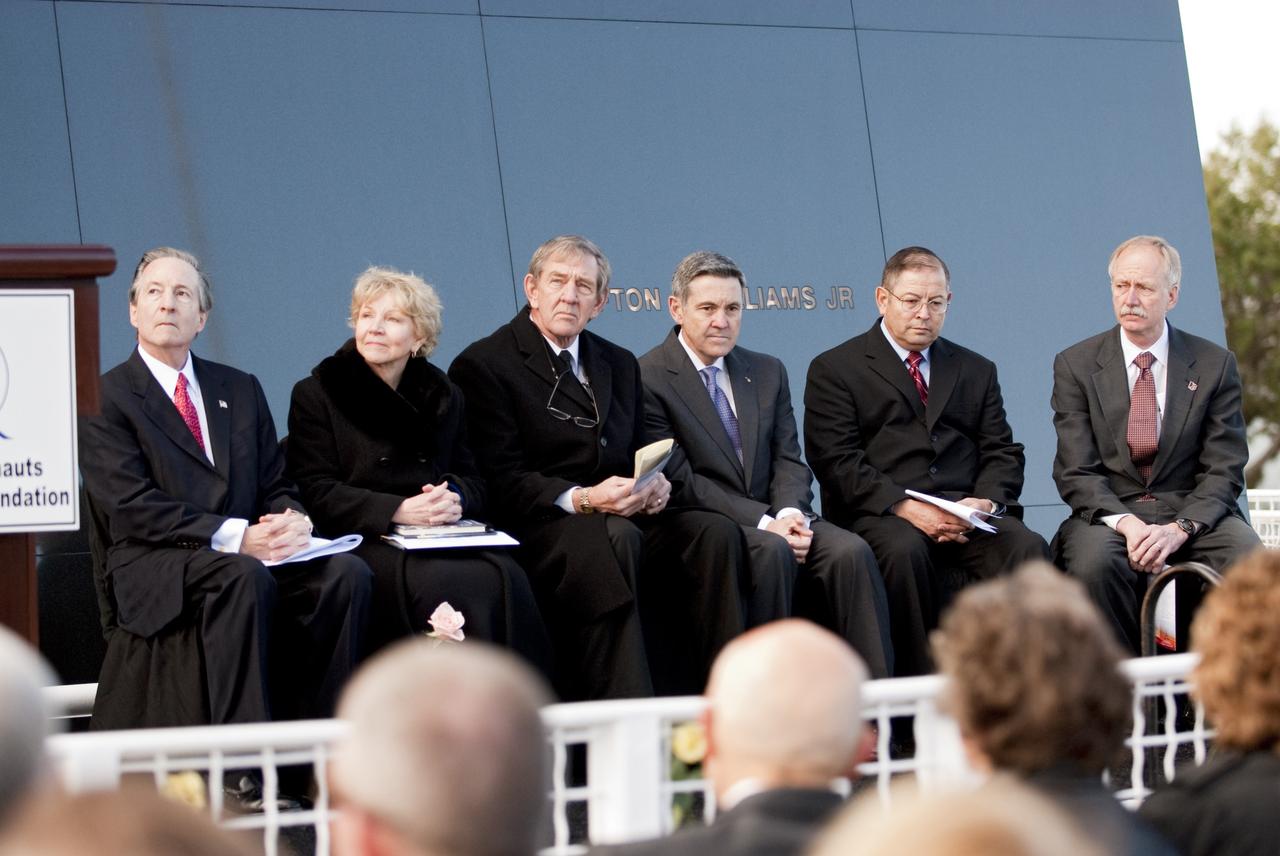
CAPE CANAVERAL, Fla. -- Stephen Feldman, president of The Astronauts Memorial Foundation, left; Dr. June Scobee Rodgers, founding chair of the Challenger Center for Space Science Education and widow of space shuttle Challenger's STS-51L Commander Dick Scobee; Michael McCulley, former astronaut and chairman of The Astronauts Memorial Foundation; Bob Cabana, former astronaut and NASA Kennedy Space Center director; Rick Soria, 2009 Alan Shepard Technology in Education Award winner, and William Gerstenmaier, NASA Associate Administrator for Space Operations gather in front of the Space Mirror Memorial at the Kennedy Space Center Visitor Complex in Florida to honor the Challenger crew members who gave their lives for while furthering the cause of exploration and discovery. 2011 marks the 25th anniversary of the loss of Challenger, which broke apart over the Atlantic Ocean 73 seconds into flight on Jan. 28, 1986. Photo credit: NASA/Kim Shiflett
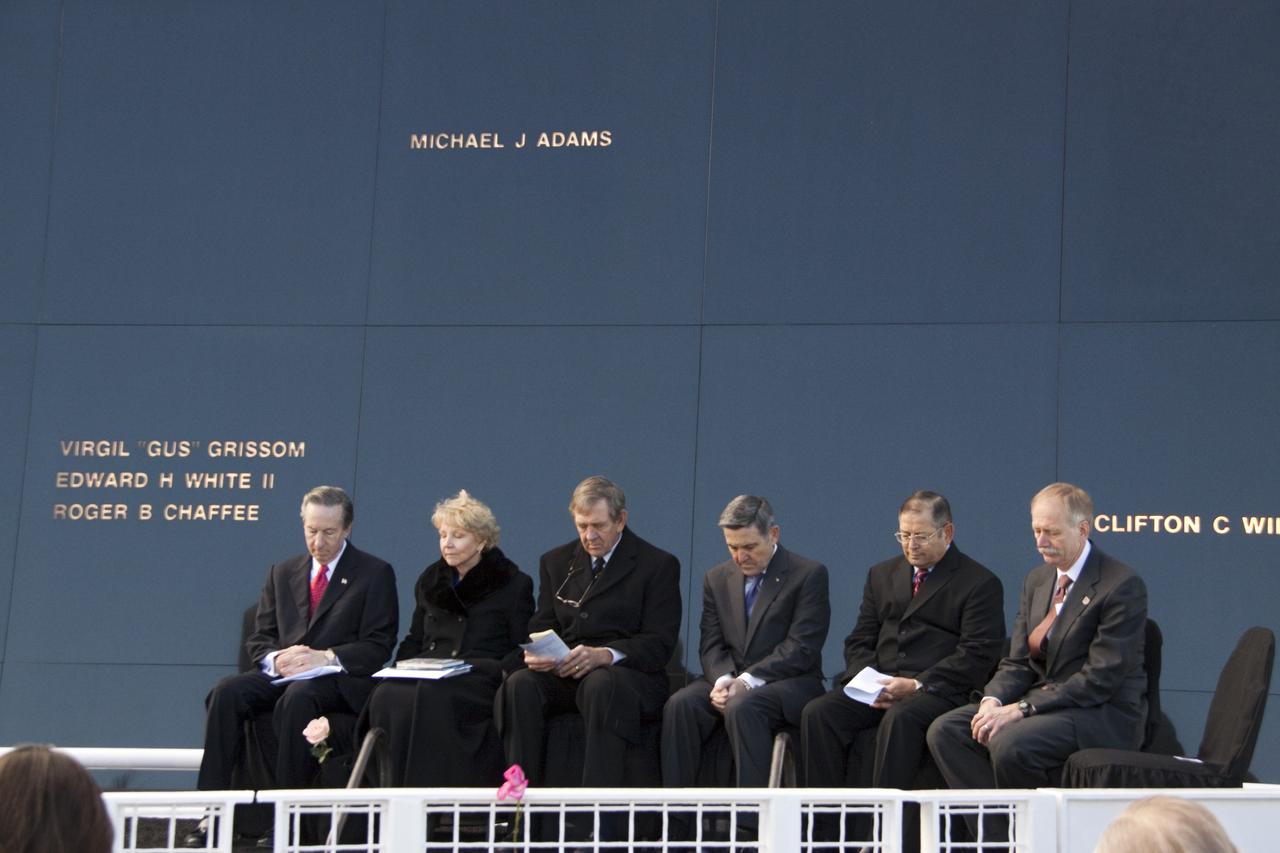
CAPE CANAVERAL, Fla. -- Stephen Feldman, president of the Astronauts Memorial Foundation, left; Dr. June Scobee Rodgers, founding chair of the Challenger Center for Space Science Education and widow of space shuttle Challenger's STS-51L Commander Dick Scobee; Michael McCulley, former astronaut and chairman of the Astronauts Memorial Foundation; Bob Cabana, former astronaut and NASA Kennedy Space Center director; Rick Soria, 2009 Alan Shepard Technology in Education Award winner, and William Gerstenmaier, NASA Associate Administrator for Space Operations gather in front of the Space Mirror Memorial at the Kennedy Space Center Visitor Complex in Florida to honor the Challenger crew members who gave their lives for while furthering the cause of exploration and discovery. 2011 marks the 25th anniversary of the loss of Challenger, which broke apart over the Atlantic Ocean 73 seconds into flight on Jan. 28, 1986. NASA/Jack Pfaller
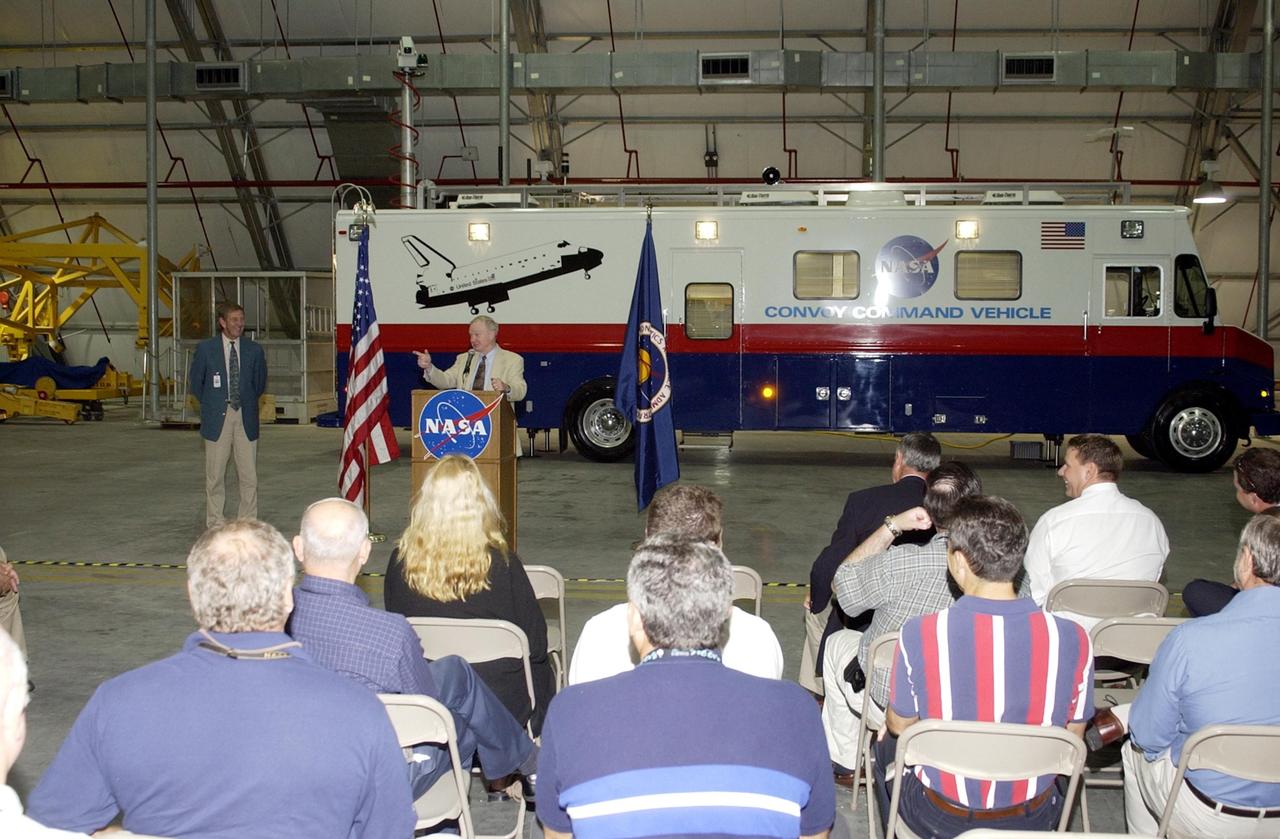
KENNEDY SPACE CENTER, FLA. -- At the podium, Center Director Roy Bridges Jr. offers remarks at the commissioning ceremony for the new Convoy Command Vehicle behind him. At left is Mike McCulley, chief operating officer, United Space Alliance. The new 40-foot vehicle is replacing a 15-year old model, and will be used following Shuttle landings as the prime vehicle to control critical communications between the orbiter, the crew and the Launch Control Center, to monitor the health of the Shuttle Orbiter systems and to direct convoy operations at the Shuttle Landing Facility. Upgrades and high-tech features incorporated into the design and development of this vehicle make it more reliable and efficient for the convoy crew. Seating capacity was increased from 4 to 12, and video recorders and television monitors were added to provide the convoy team with the maximum amount of visual information
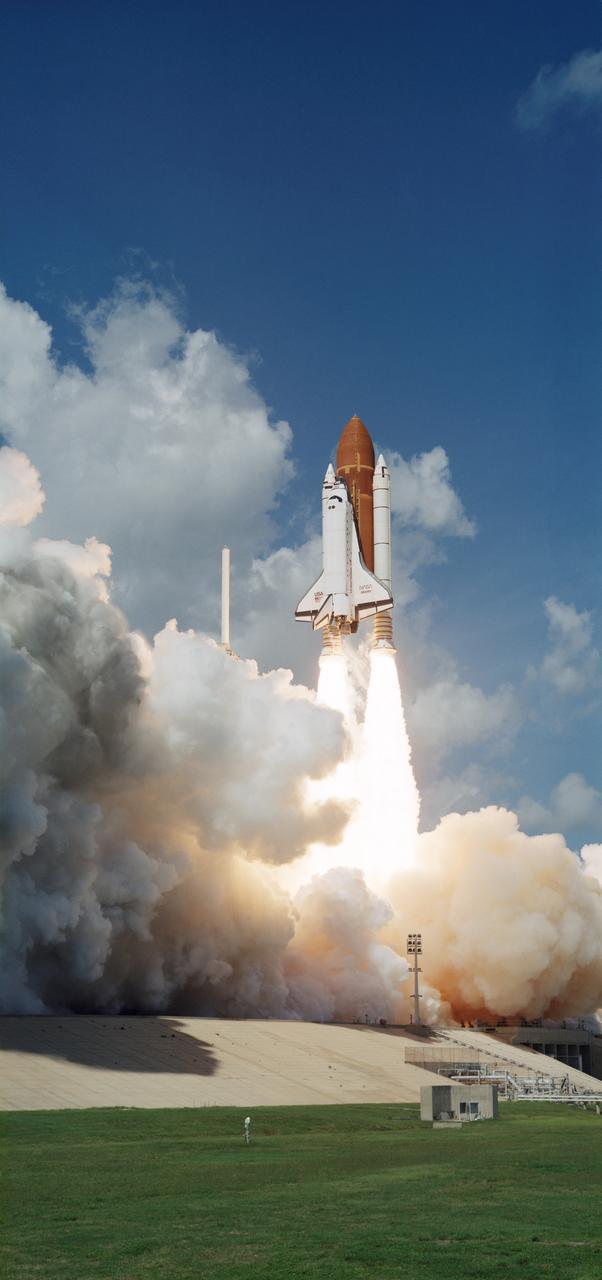
STS034-S-023 (18 Oct. 1989) --- The STS-34 Space Shuttle Atlantis lifts off from Kennedy Space Center’s launch pad 39-B at l2:53:39 p.m. (EDT) on Oct. 18, 1989, marking the beginning of a five-day mission in space. Atlantis carries a crew of five and the spacecraft Galileo. The Jupiter-bound probe will be deployed from Atlantis some six hours after launch. The journey to the giant planet is expected to take over six years. Crewmembers for the mission are astronauts Donald E. Williams, Michael J. McCulley, Shannon W. Lucid, Franklin R. Chang-Diaz and Ellen S. Baker. The scene was recorded with a 70mm camera.
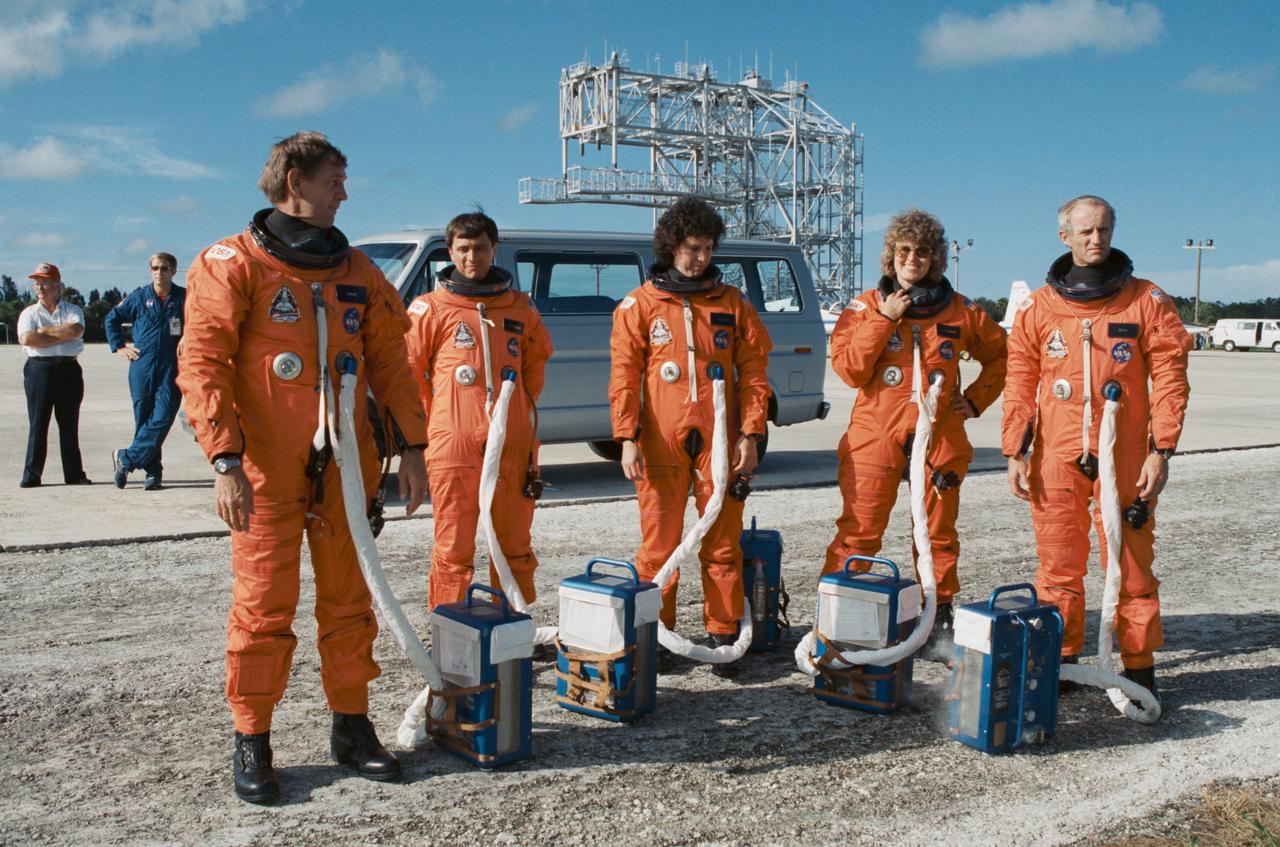
S89-45249 (13 Sept 1989) --- The astronaut crewmembers for NASA's STS-34 mission prepare to participate in emergency egress training in their partially pressurized flight suits with attached cooling packs at the Shuttle landing facility. Left to right are Astronauts Michael J. McCulley, pilot; Franklin R. Chang-Diaz, Ellen S. Baker and Shannon W. Lucid, all mission specialists; and Donald E. Williams, mission commander. The five were at the Kennedy Space Center (KSC) primarily to participate in the Terminal Countdown Demonstration Test (TCDT). The Space Shuttle Atlantis is scheduled to be launched October 12. Primary payload for the five-day mission is the spacecraft Galileo which will be deployed in space begin its journey to Jupiter.
![KENNEDY SPACE CENTER, FLA. -- Seventeen new astronaut candidates visited the Vehicle Assembly Building as part of an orientation tour of KSC facilities. Here they are grouped around one of the external fuel tanks in the transfer aisle of the VAB. This latest group of candidates is the tenth chosen since the original seven Mercury astronauts. [From left, Michael J. McCulley, Curtis L. Brown Jr., Frank L. Culbertson Jr., Kathryn C. Thornton, Mark N. Brown, Mark C. Lee, Kenneth D. Cameron, John H. Casper, L. Blaine Hammond Jr., Charles Lacy Veach (deceased), James C. Adamson, William M. Shepherd, Sidney M. Gutierrez, Marsha S. Ivins, David G. Low, Michael J. Smith (deceased), Ellen S. Baker, Sonny Carter (deceased).]](https://images-assets.nasa.gov/image/108-KSC-84P-339/108-KSC-84P-339~medium.jpg)
KENNEDY SPACE CENTER, FLA. -- Seventeen new astronaut candidates visited the Vehicle Assembly Building as part of an orientation tour of KSC facilities. Here they are grouped around one of the external fuel tanks in the transfer aisle of the VAB. This latest group of candidates is the tenth chosen since the original seven Mercury astronauts. [From left, Michael J. McCulley, Curtis L. Brown Jr., Frank L. Culbertson Jr., Kathryn C. Thornton, Mark N. Brown, Mark C. Lee, Kenneth D. Cameron, John H. Casper, L. Blaine Hammond Jr., Charles Lacy Veach (deceased), James C. Adamson, William M. Shepherd, Sidney M. Gutierrez, Marsha S. Ivins, David G. Low, Michael J. Smith (deceased), Ellen S. Baker, Sonny Carter (deceased).]
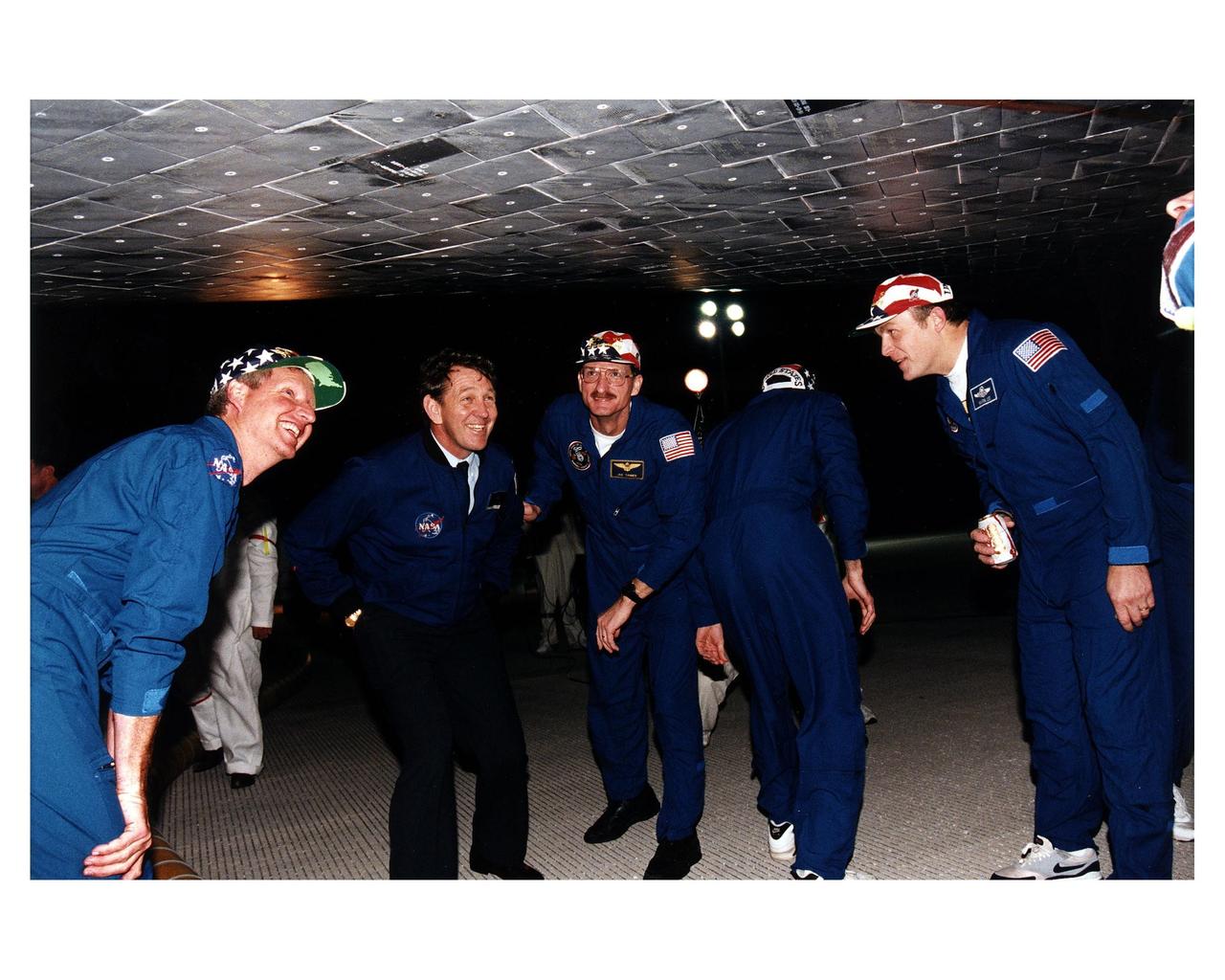
Accompanied by former astronaut Michael J. McCulley, several members of the STS-82 crew look at thermal protection system tile under the Space Shuttle Discovery on the runway at the Shuttle Landing Facility shortly after the conclusion of a 10-day mission to service the orbiting Hubble Space Telescope (HST). From left to right, they are Mission Specialist Steven A. Hawley; Michael J. McCulley, currently vice president and associate program manager for ground operations for the United Space Alliance at KSC; Mission Specialists Joseph R. "Joe" Tanner and Steven L. Smith (back to camera); and Payload Commander Mark C. Lee. STS-82 is the ninth Shuttle nighttime landing, and the fourth nighttime landing at KSC. The seven-member crew performed a record-tying five back-to-back extravehicular activities (EVAs) or spacewalks to service the telescope, which has been in orbit for nearly seven years. Two new scientific instruments were installed, replacing two outdated instruments. Five spacewalks also were performed on the first servicing mission, STS-61, in December 1993. Only four spacewalks were scheduled for STS-82, but a fifth one was added during the flight to install several thermal blankets over some aging insulation covering three HST compartments containing key data processing, electronics and scientific instrument telemetry packages. STS-82 was the 82nd Space Shuttle flight and the second mission of 1997
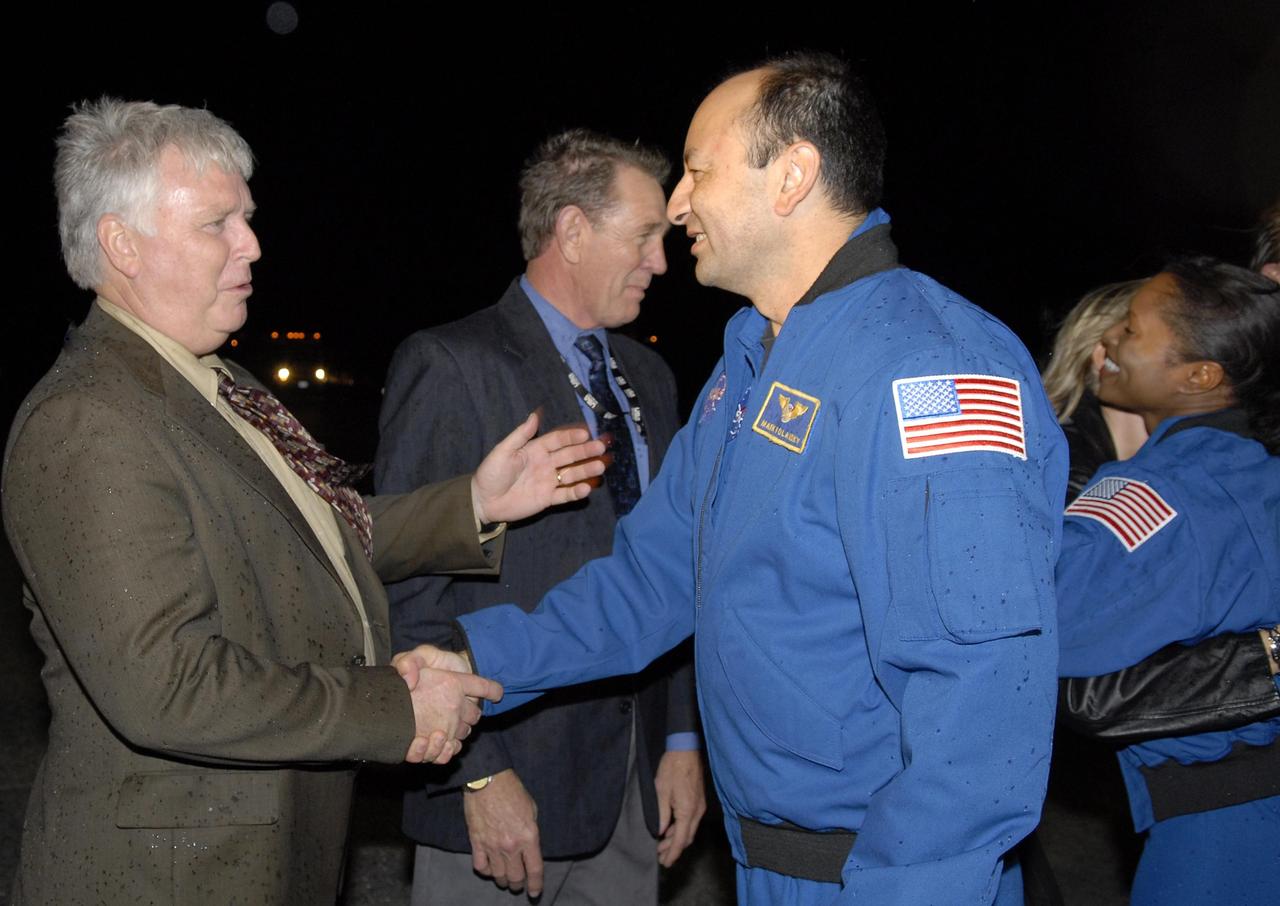
KENNEDY SPACE CENTER, FLA. -- Kennedy Space Center Director Jim Kennedy welcomes STS-116 Commander Mark Polansky back to Earth as United Space Alliance President and CEO Mike McCulley talks to Mission Specialist Joan Higginbotham in the background. The informal gathering followed the landing of Space Shuttle Discovery on Runway 15 at NASA Kennedy Space Center's Shuttle Landing Facility at 5:32 p.m. EST. During the STS-116 mission, three spacewalks attached the P5 integrated truss structure to the station, and completed the rewiring of the orbiting laboratory's power system. A fourth spacewalk retracted a stubborn solar array. Main gear touchdown was at 5:32 p.m. EST. Nose gear touchdown was at 5:32:12 p.m. and wheel stop was at 5:32:52 p.m. At touchdown -- nominally about 2,500 ft. beyond the runway threshold -- the orbiter is traveling at a speed ranging from 213 to 226 mph. Discovery traveled 5,330,000 miles, landing on orbit 204. Mission elapsed time was 12 days, 20 hours, 44 minutes and 16 seconds. This is the 64th landing at KSC. Photo credit: NASA/Kim Shiflett