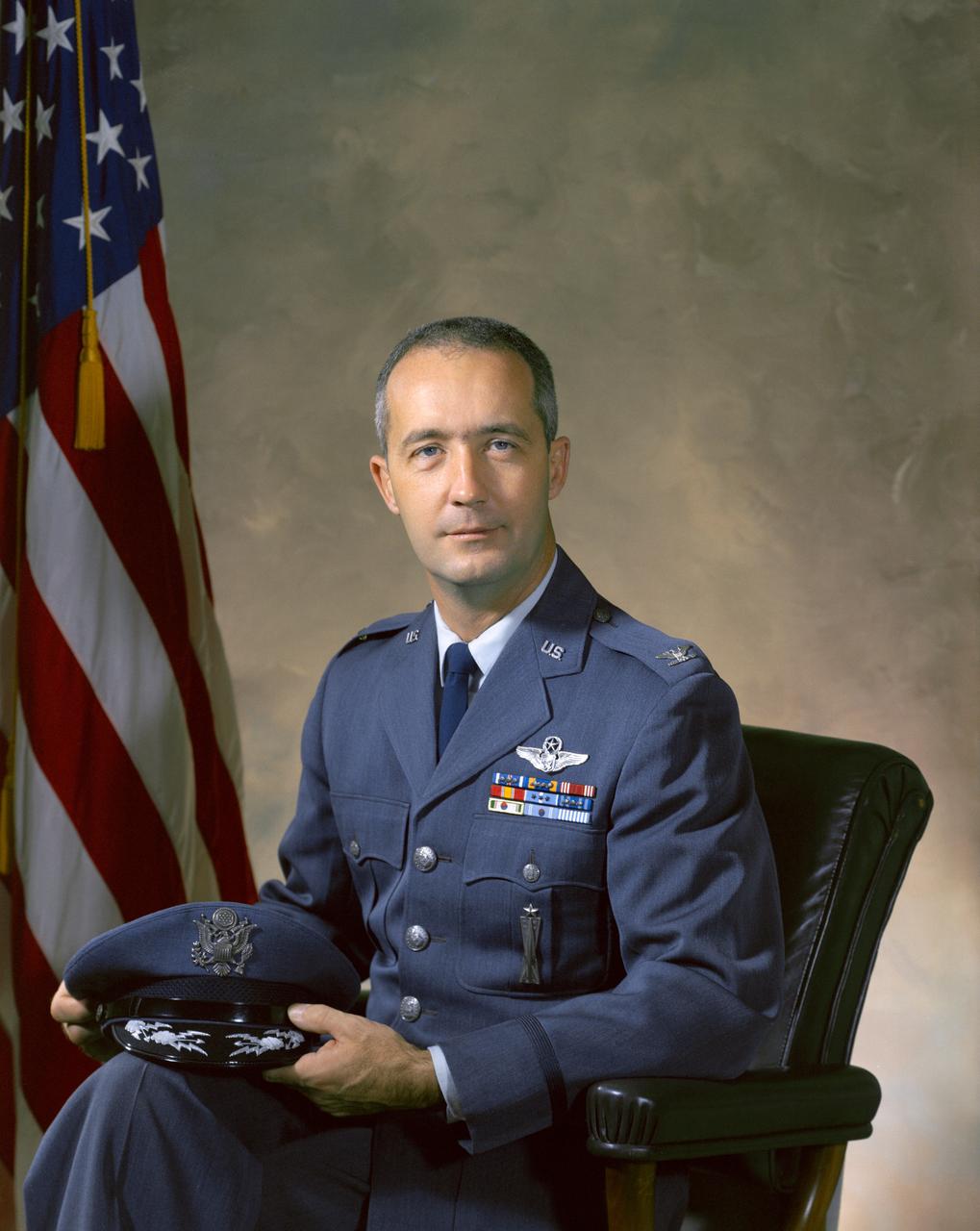
S68-55278 (December 1968) --- Portrait of astronaut James A. McDivitt, in his Air Force uniform with rank insignia showing he is Air Force Colonel. Editor's Note: Since the photo was made, James A. McDivitt retired as Brigadier General from the United States Air Force, and left NASA in June of 1972.
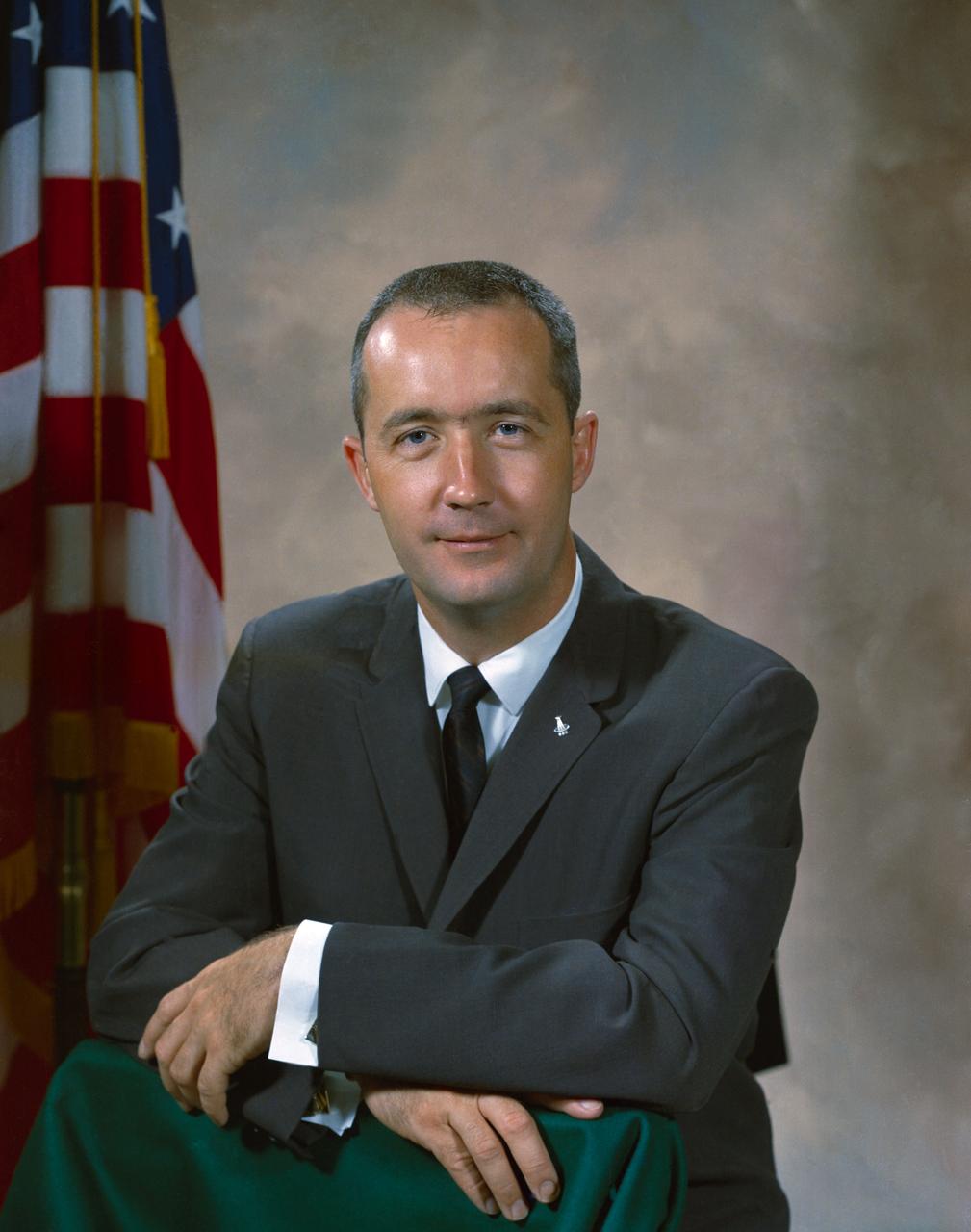
S64-31852 (10 Sept. 1964) --- Astronaut James A. McDivitt
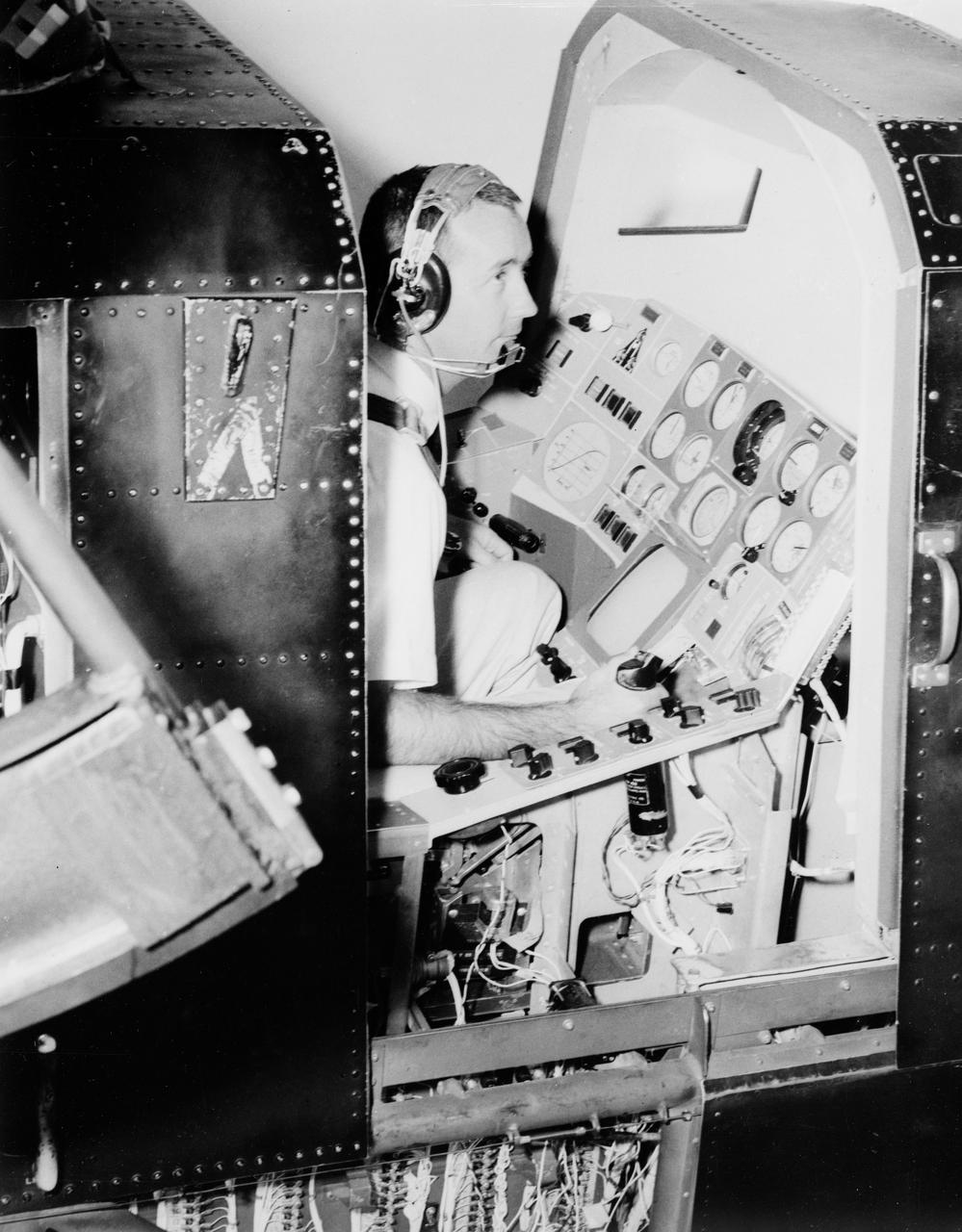
S65-19472 (10 May 1965) --- Astronaut James A. McDivitt is shown in the gondola of a realistic manned spaceflight simulator developed by the Astronautics Division of Ling-Temco-Vought in Dallas, Texas.
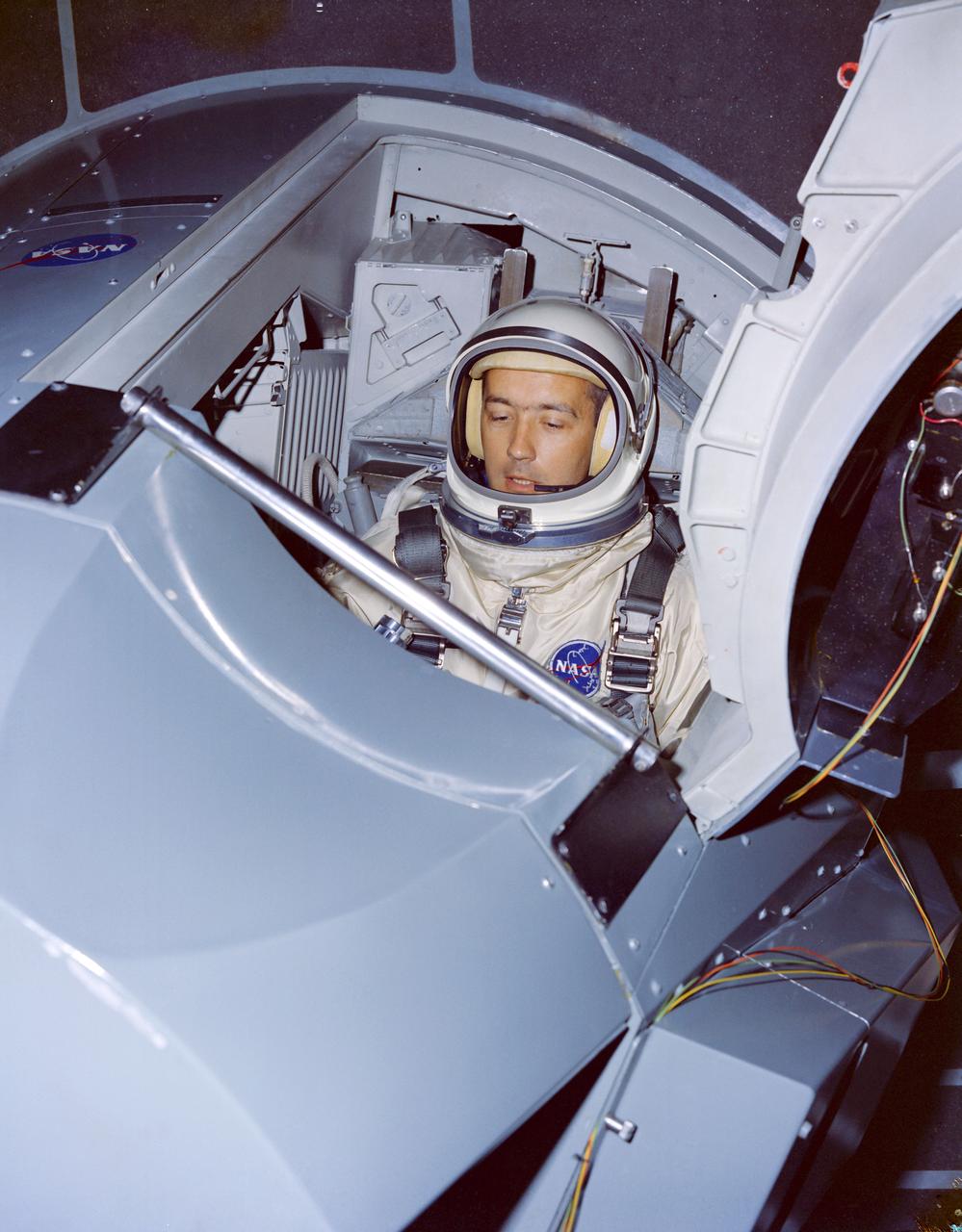
Astronauts James A. McDivitt and Edward H. White II, are shown going through tests in a Gemini Crew Simulator at the Cape. CAPE KENNEDY, FL CN
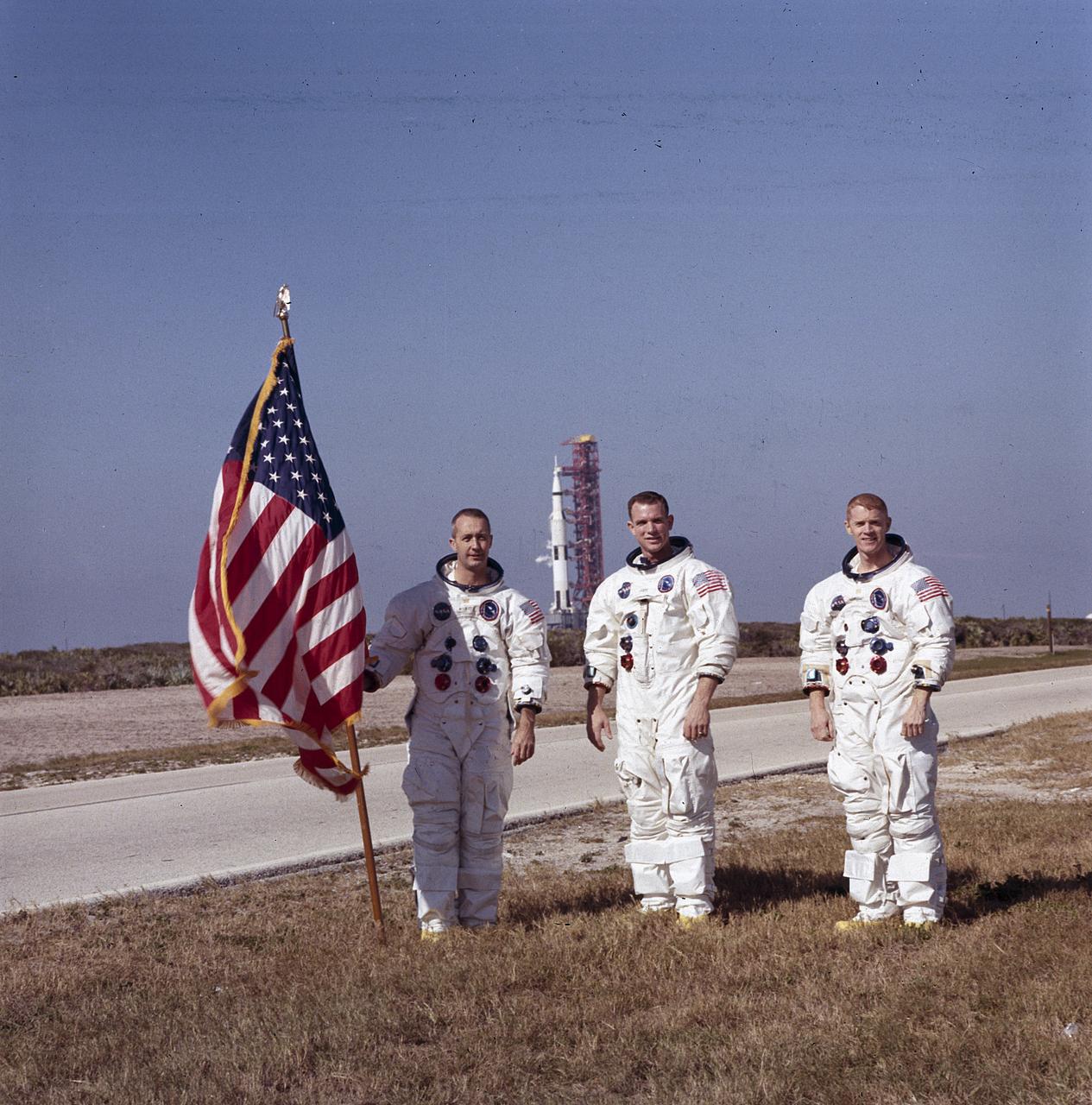
Pictured from left to right, the Apollo 9 astronauts, James A. McDivitt, David R. Scott, and Russell L. Schweickart, pause in front of the Apollo/Saturn V space vehicle that would launch the Apollo 8 crew. The launch of the Apollo 9 (Saturn V launch vehicle, SA-504) took place on March 3, 1968. The Apollo 9 spacecraft, in the lunar mission configuration, was tested in Earth orbit. The mission was designed to rehearse all the steps and reproduce all the events of the Apollo 11 mission with the exception of the lunar touchdown, stay, and liftoff. The command and service modules, and the lunar module were used in flight procedures identical to those that would later take similar vehicles to the Moon, and a landing. The flight mechanics, mission support systems, communications, and recording of data were tested in a final round of verification. Astronauts Scott and Schweickart conducted Extravehicular Activity during this mission.
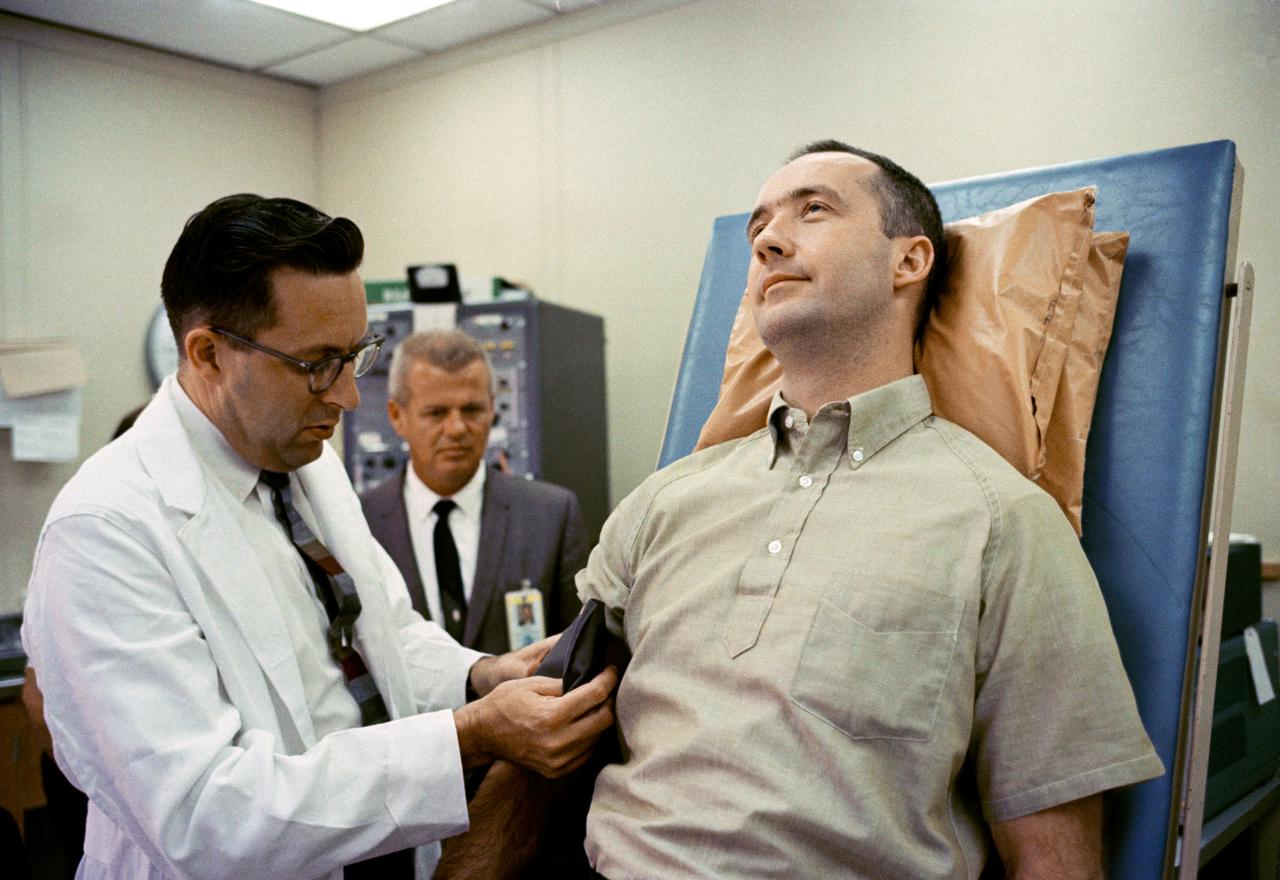
S65-19524 (1 June 1965) --- Dr. Charles A. Berry, chief of Center Medical Programs, MSC, Houston, Texas, prepares to check the blood pressure of astronaut James A. McDivitt, command pilot for the Gemini-Titan 4 spaceflight. McDivitt is on the tilt table at the Aero Medical Area, MSC, Merritt Island, where he and astronaut Edward H. White II (out of frame), GT-4 pilot, underwent preflight physicals in preparation for the four-day, 62-revolution spaceflight. The two astronauts were declared in top physical condition. In the background is Dr. Gordon Benson, NASA physician at Cape Kennedy.
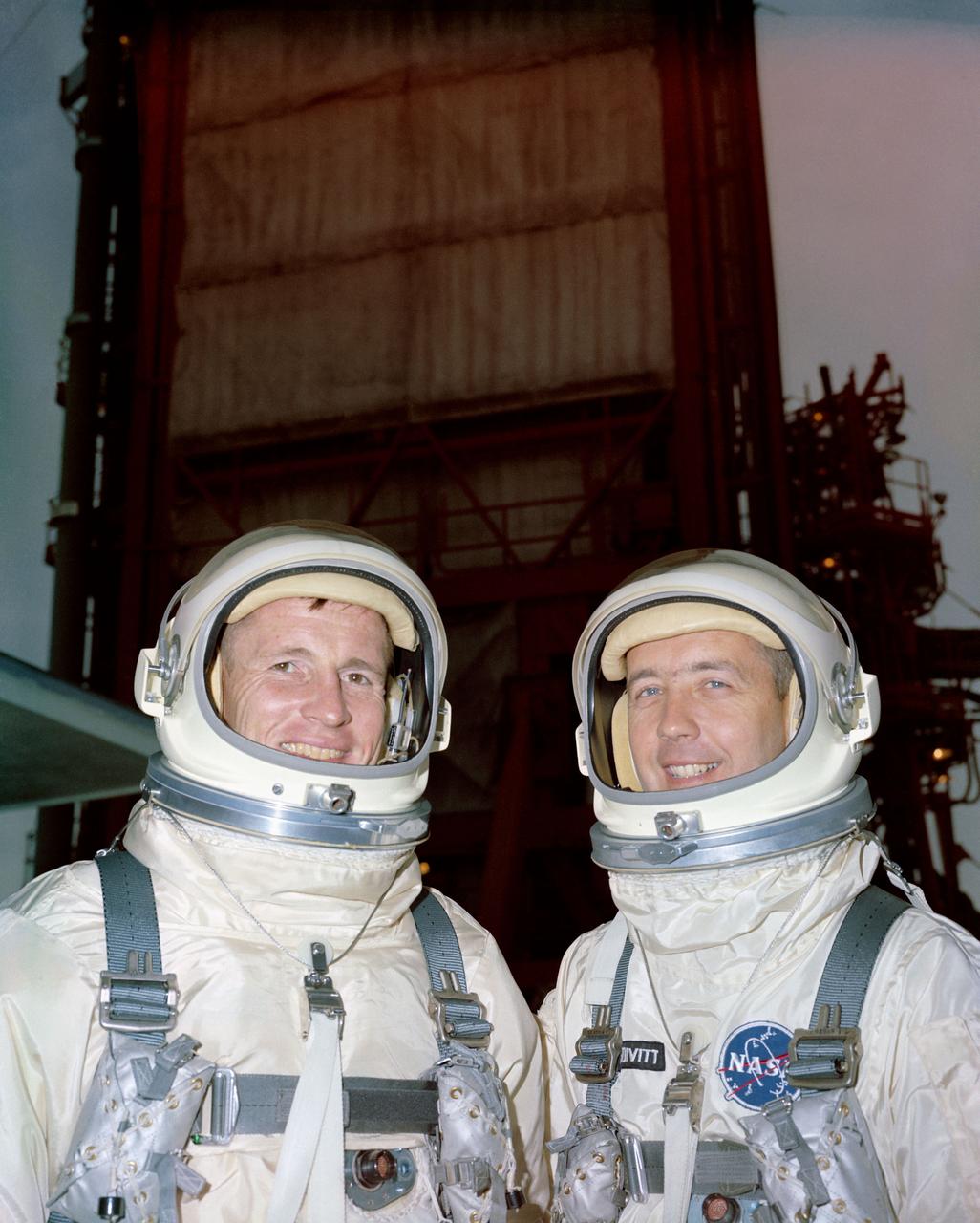
S65-19528 (1 June 1965) --- Astronauts Edward H. White II (left), Gemini-Titan 4 pilot; and James A. McDivitt, command pilot. EDITOR?S NOTE: Astronaut White died in the Apollo 1/Saturn 204 fire at Cape Kennedy on Jan. 27, 1967.
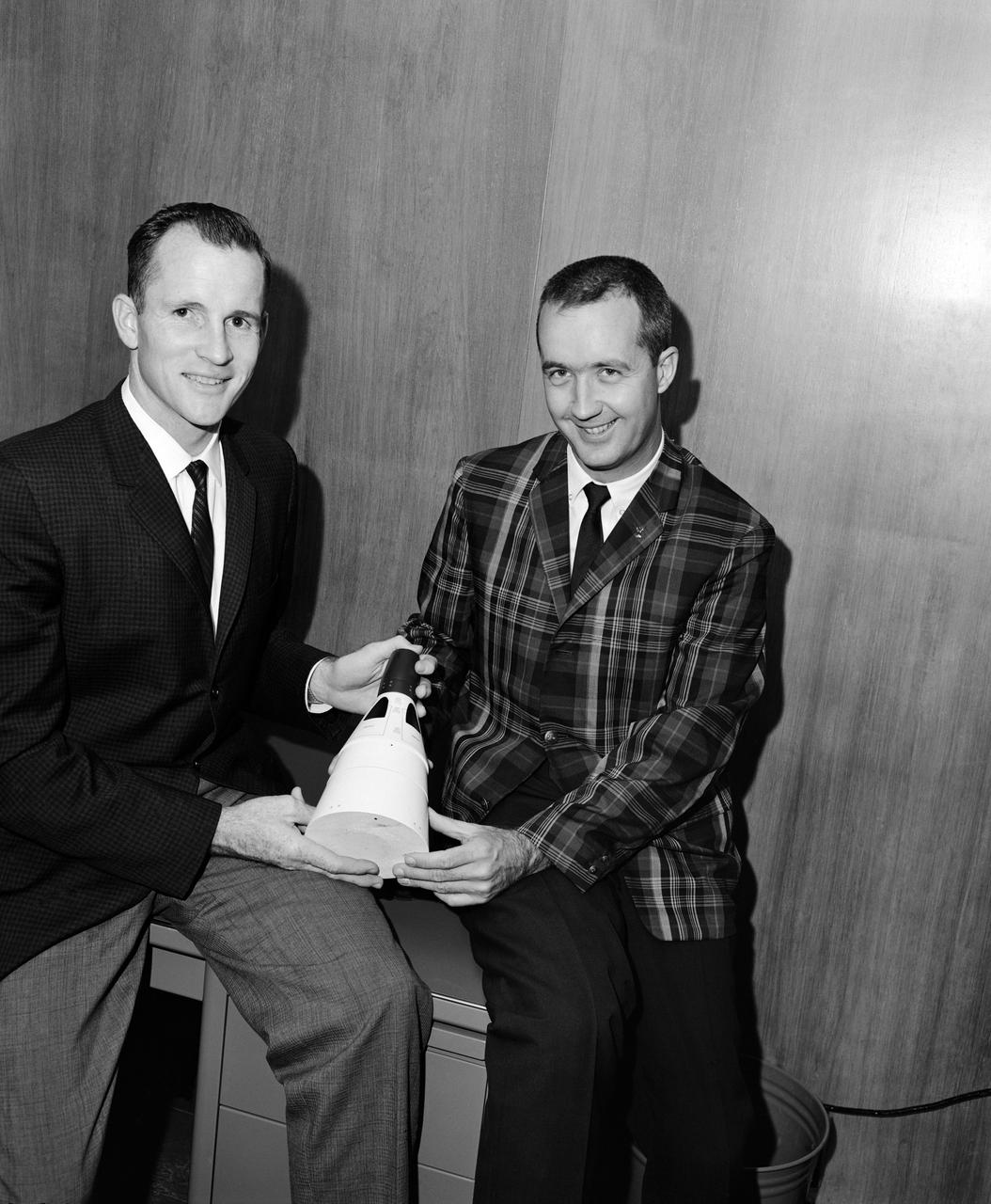
S62-04515 (1962) --- Astronauts Edward H. White II (left), Gemini-Titan 4 (GT-4) pilot, and James A. McDivitt, command pilot, pose for a photo holding a Gemini model. EDITOR?S NOTE: Jan. 27, 1967, astronaut White lost his life in the Apollo/Saturn 204 accident at Cape Canaveral, Florida.
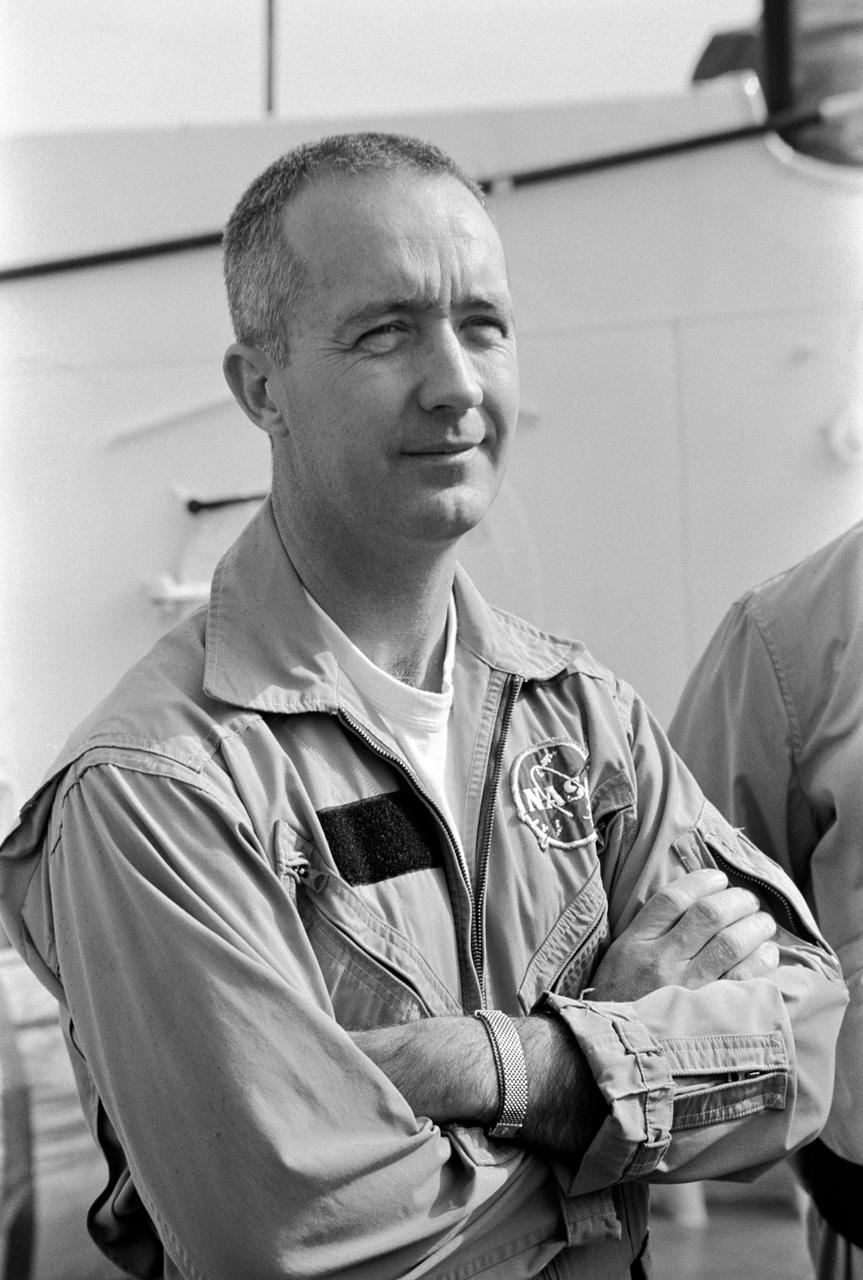
S68-54805 (5 Nov. 1968) --- Astronaut James A. McDivitt, commander of the Apollo 9 (Spacecraft 104/Lunar Module 3/Saturn 504) space mission, relaxes on the deck of the NASA Motor Vessel Retriever (MVR) prior to participating in water egress training in the Gulf of Mexico.
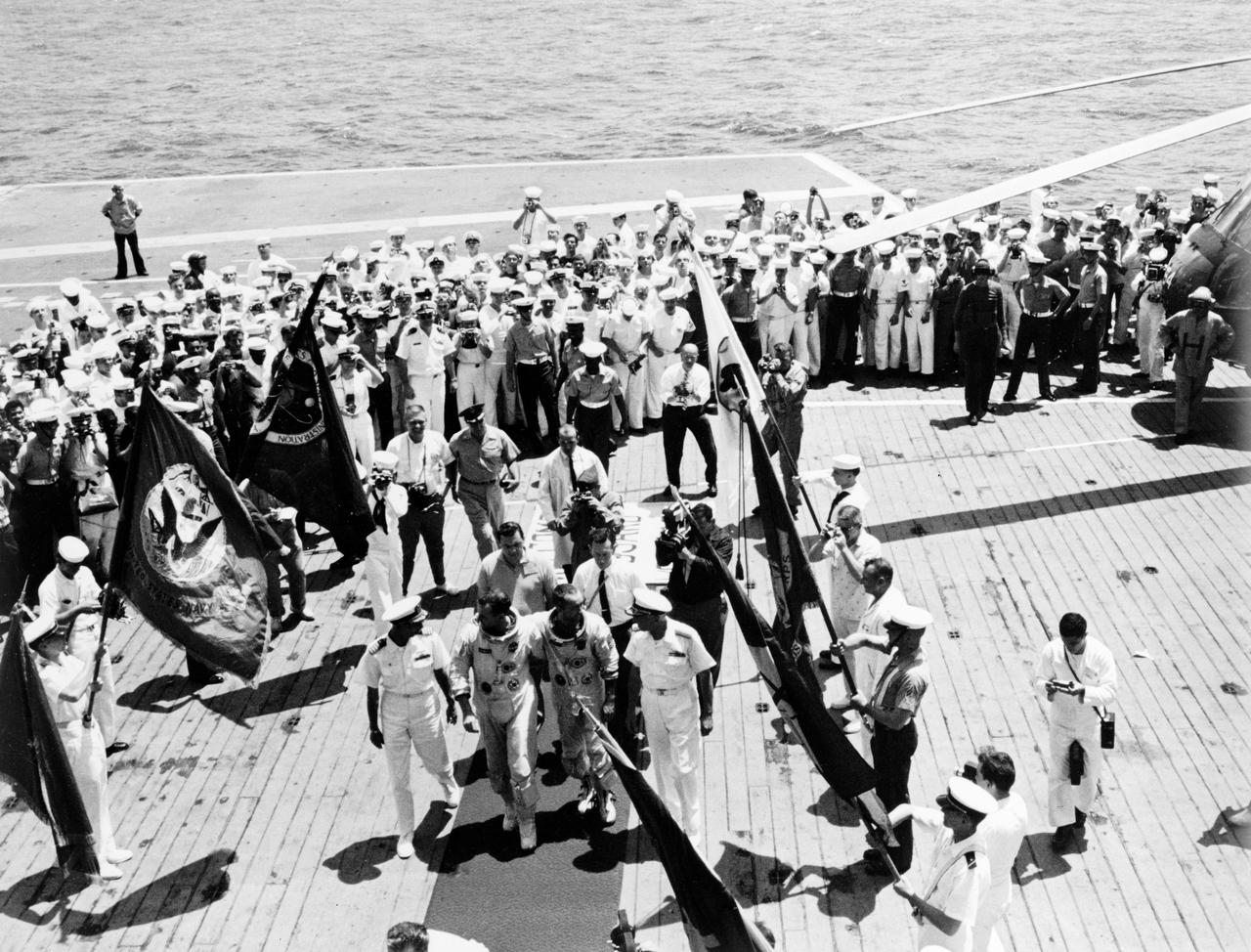
S65-19530 (7 June 1965) --- The red carpet treatment is given to the Gemini-Titan 4 astronauts Edward H. White II and James A. McDivitt as they arrive on the flight deck of the aircraft carrier USS Wasp after their record breaking 62-revolution, 97-hour and 56-minute flight which ended in the Atlantic Ocean about 400 miles east of Cape Kennedy at 12:12 p.m. (EST) on June 7, 1965. Here they are shown being welcomed by members of the crew and NASA people. White and McDivitt (center) walk on the red carpet flanked by Capt. J.W. Conger (left), commander of the ship; and Rear Adm. W.M. McCormick, commander, Carrier Division 14, Atlantic Fleet. NASA's Gemini-4 flight landed about 48 miles short of the aircraft carrier.
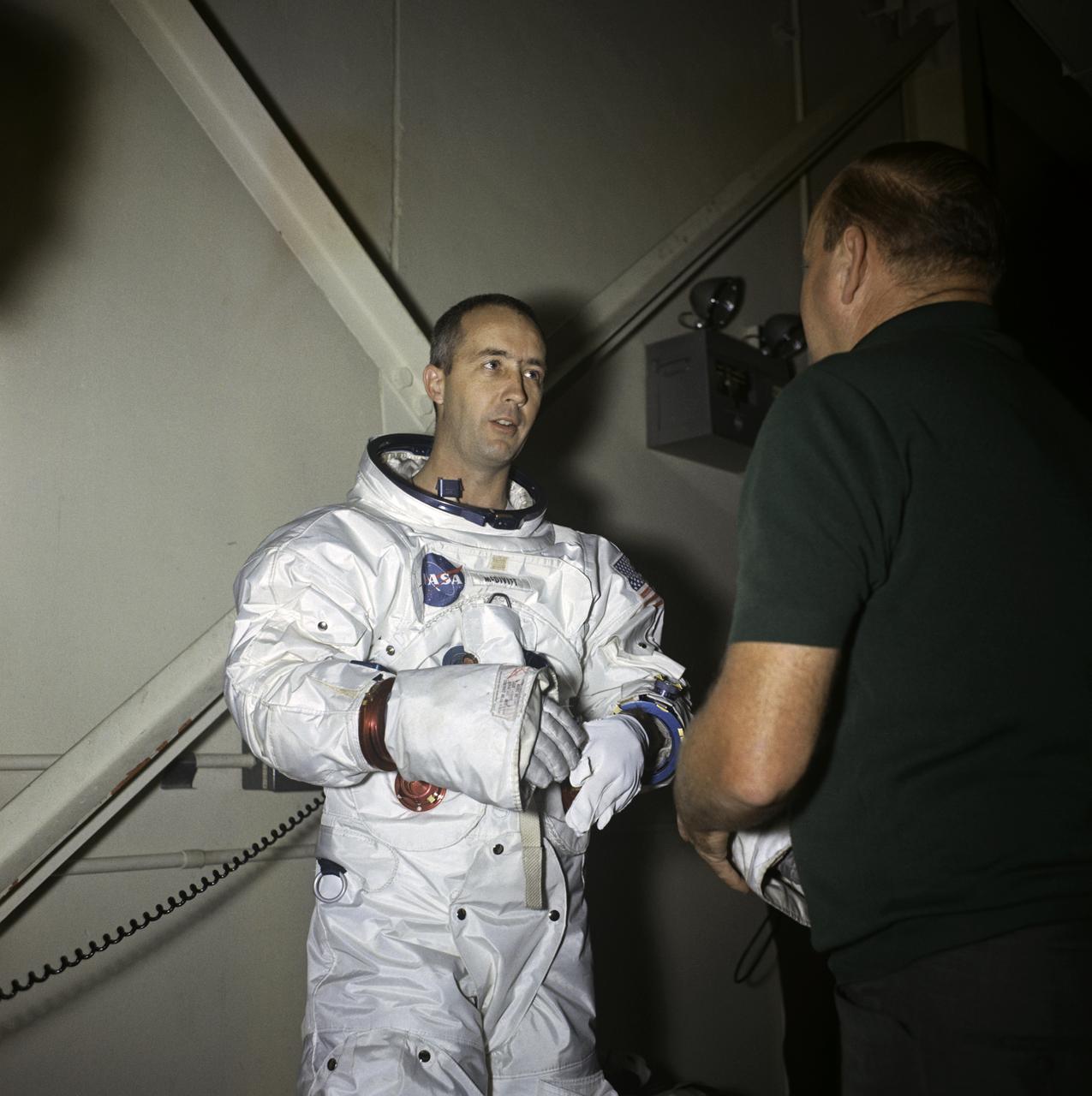
MCDIVITT, JAMES A. - SUITING View of General (Astronaut) James A. McDivitt in the bldg. 5 suiting room.
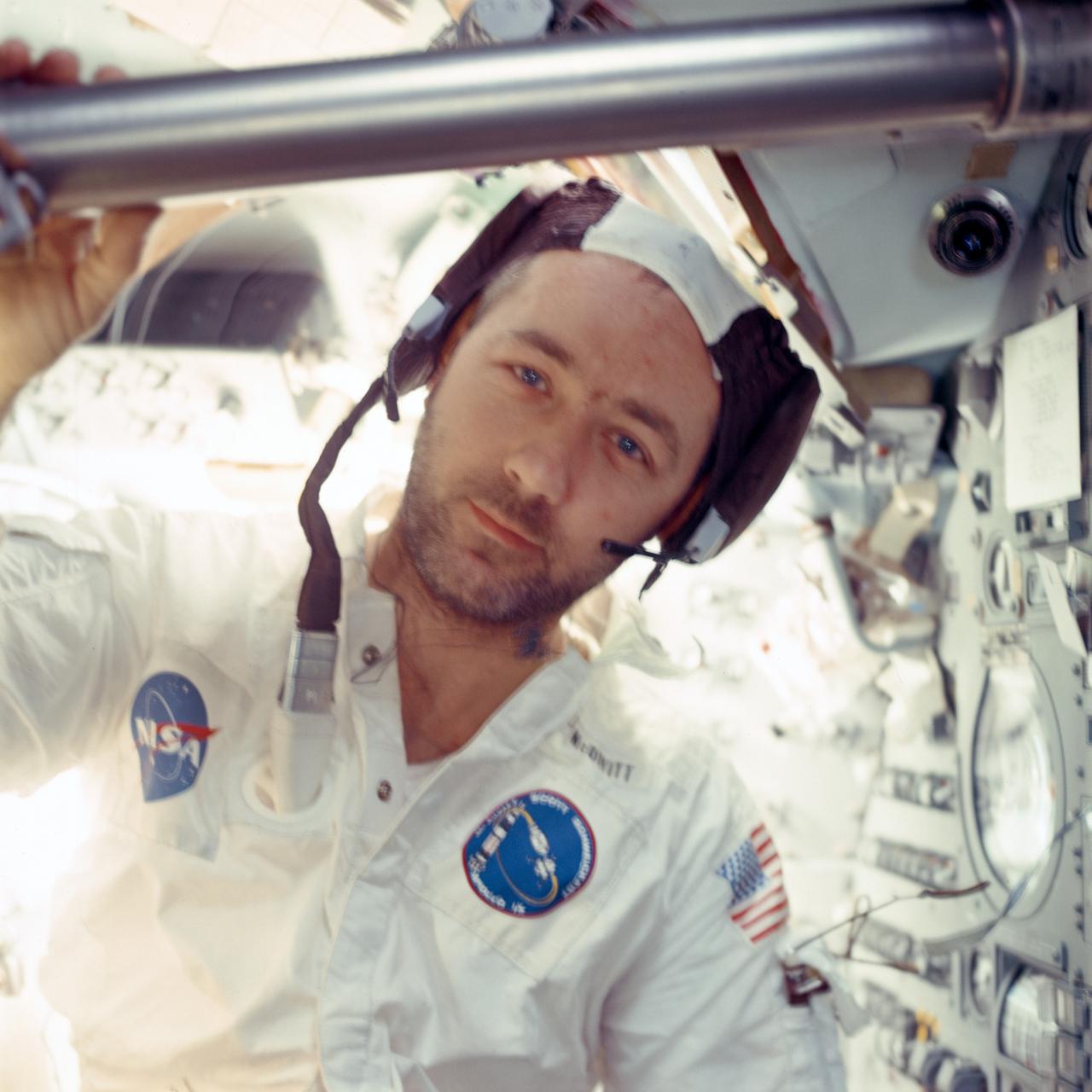
AS09-20-3154 (3-13 March 1969) --- This close-up view of astronaut James A. McDivitt shows several days' beard growth. The Apollo 9 mission commander was onboard the Lunar Module (LM) "Spider" in Earth orbit, near the end of the flight. He was joined on the mission by astronauts David R. Scott, command module pilot, and Russell L. Schweickart, lunar module pilot. Schweickart took this picture while Scott remained in the Command Module (CM) "Gumdrop." In Earth orbit, the three tested the transposition and docking systems of the lunar module and command module. On a scheduled lunar landing mission later this year, a team of three astronauts and ground controllers will use what this crew and its support staff have learned in handling the systems of the two spacecraft.
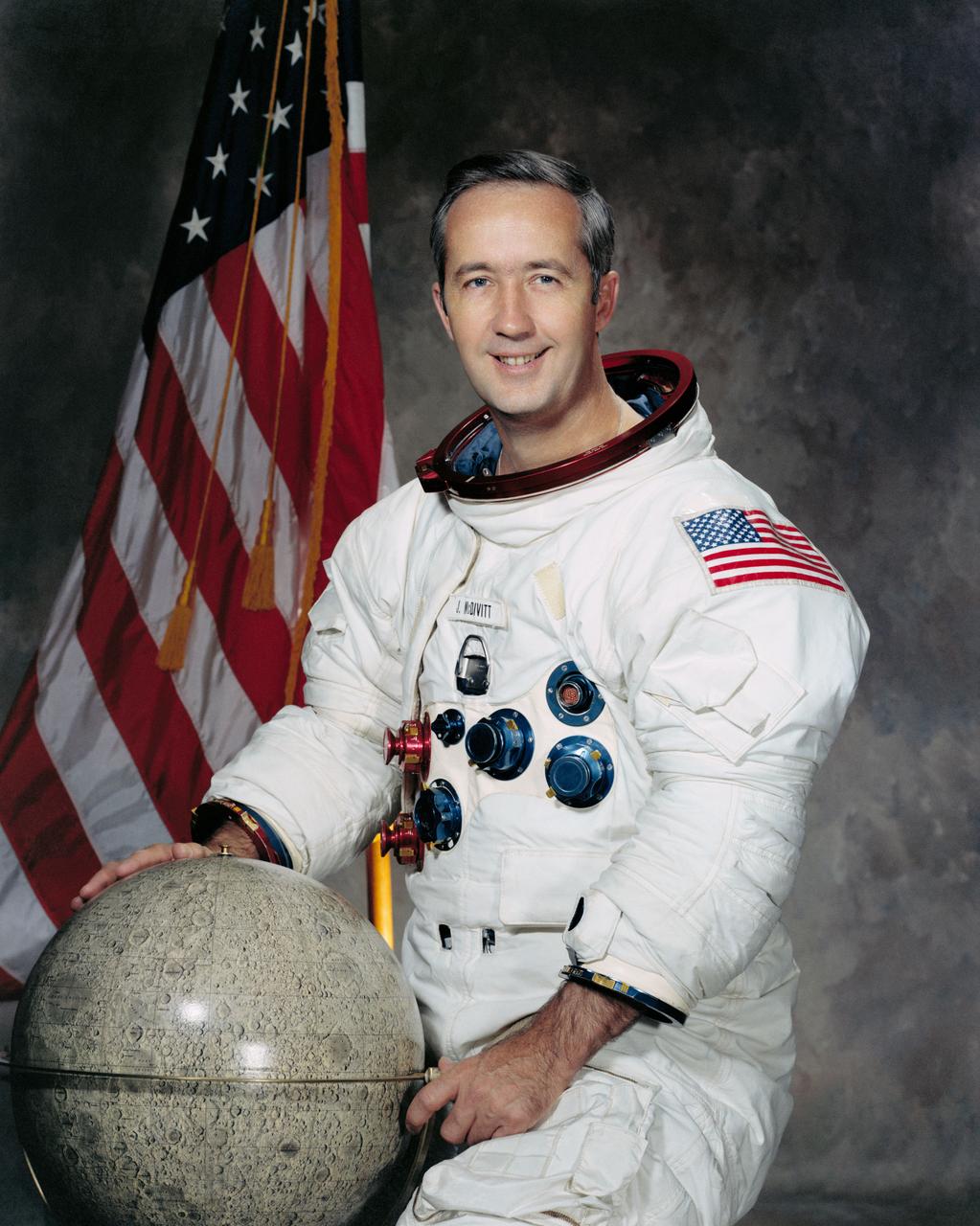
S71-59425 (1971) --- Astronaut James A. McDivitt
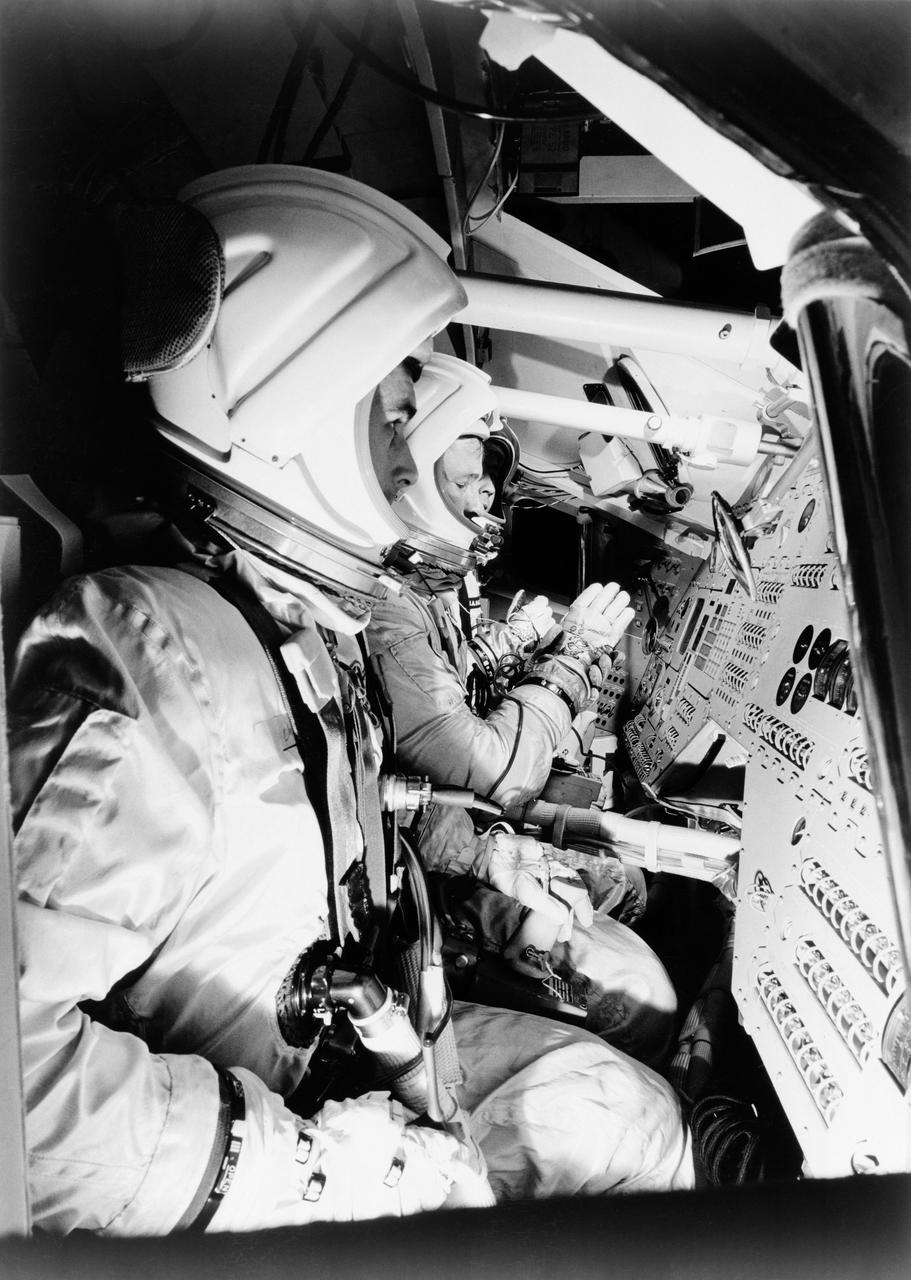
Astronauts McDivitt, Chaffee, White are shown in Spacecraft. NAA, INC., DOWNEY, CA B&W
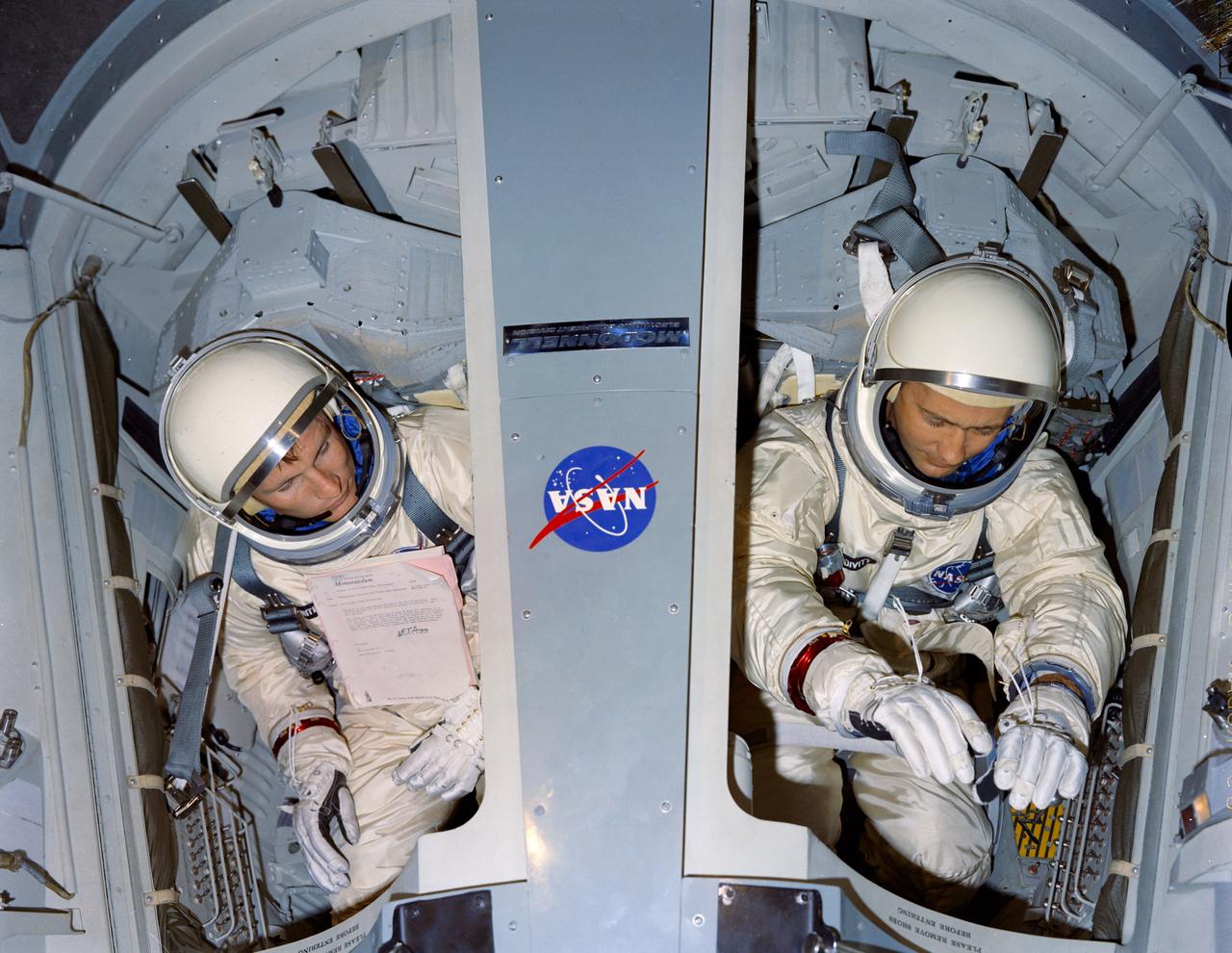
Astronauts Edward H. White II and James A. McDivitt are shown going through tests in a Gemini Crew Simulator at the Cape. CAPE KENNEDY, FL CN
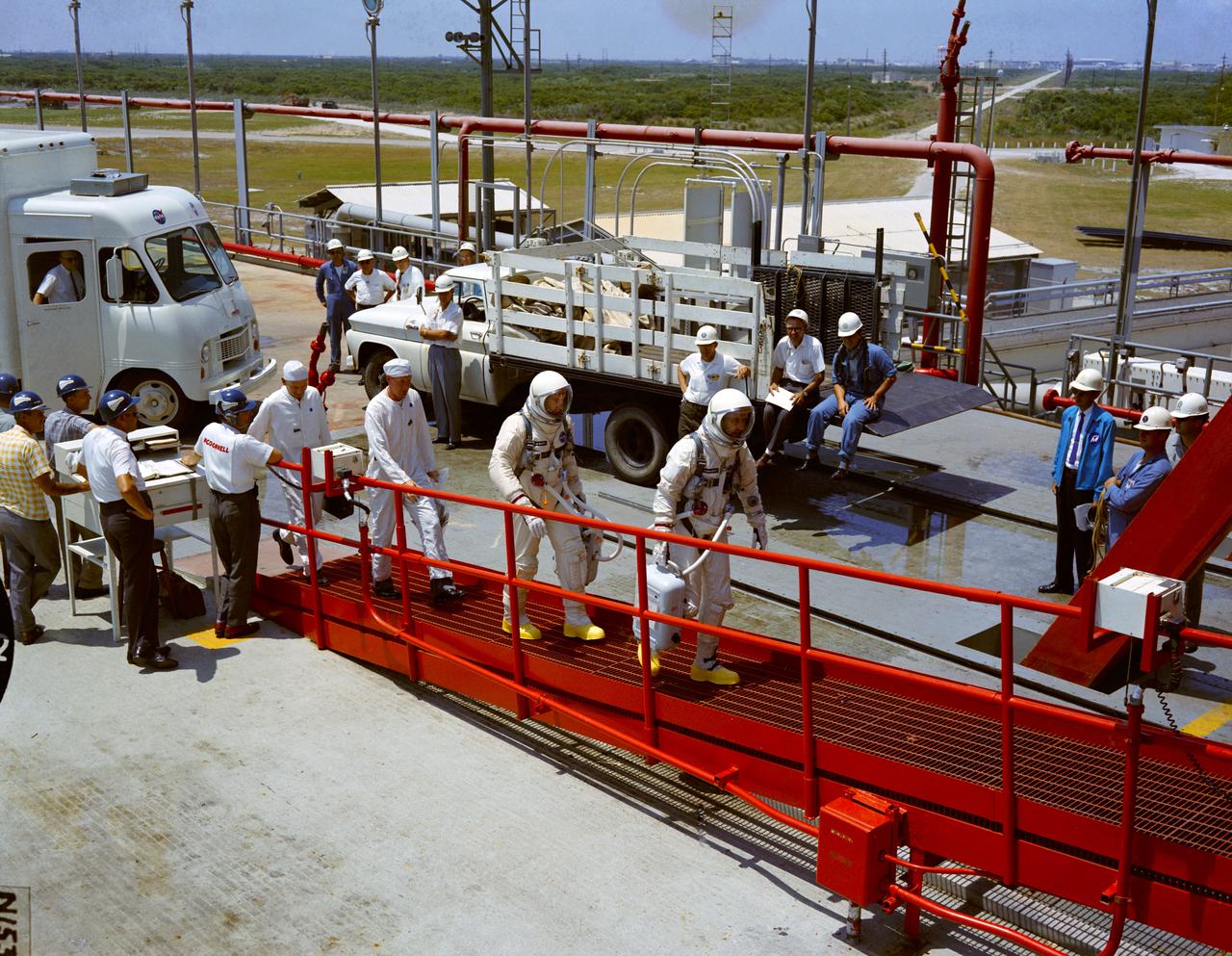
Astronauts White and James A. McDivitt are shown walking up the ramp toward the gantry elevator at Pad 19. CAPE KENNEDY, FL CN
Astronauts Edward H. White II, and James A. McDivitt are going through tests in a Gemini Crew Simulator at the Cape. CAPE KENNEDY, FL B&W
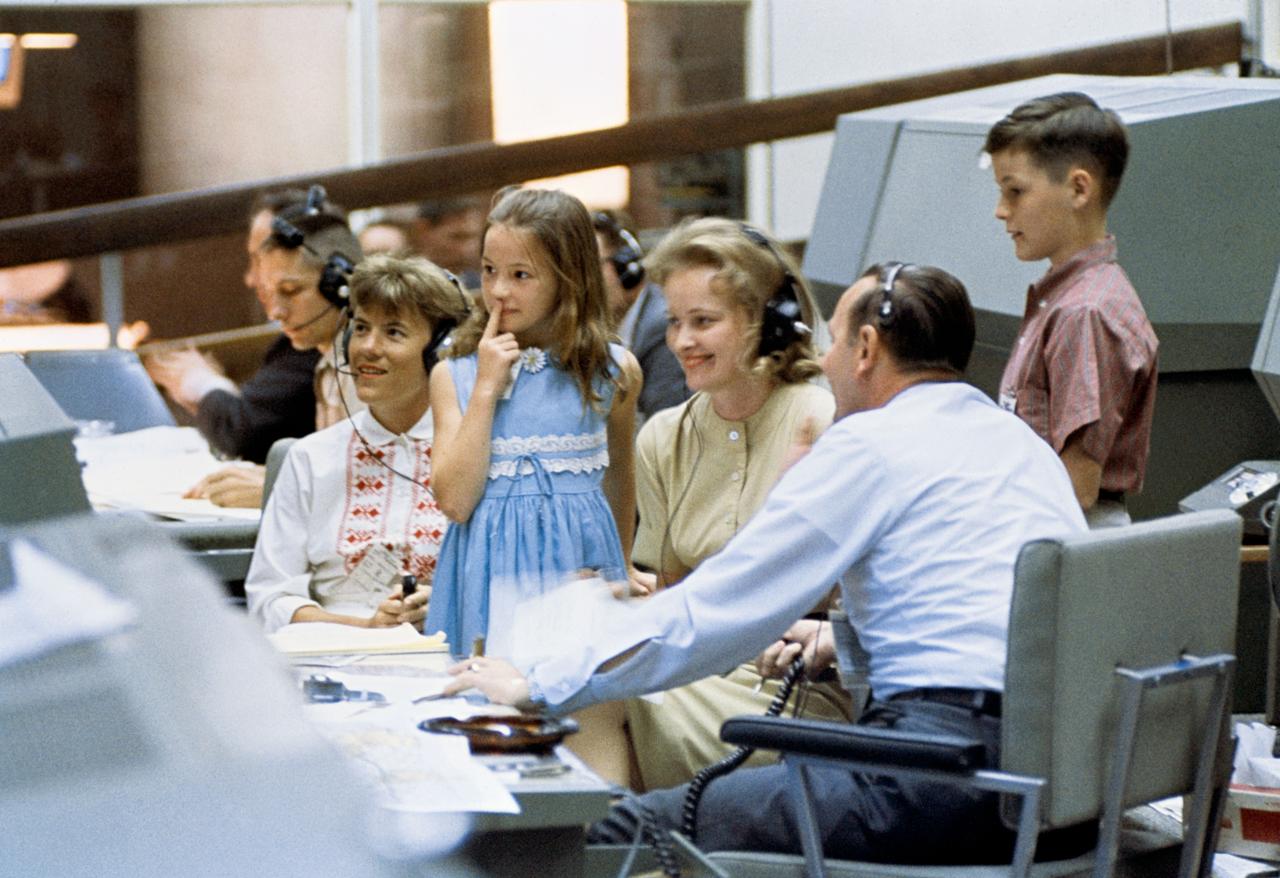
S65-30411 (9 June 1965) --- The families of Gemini 4 astronauts James A. McDivitt and Edward H. White II visited the Mission Control Center in Houston. In the foreground, left to right, are Mrs. Patricia McDivitt, daughter Bonnie White, Mrs. Patricia White, flight director Christopher C. Kraft Jr., and Edward White III. Each of the family members talked with the astronauts as they passed over the United States. Photo credit: NASA
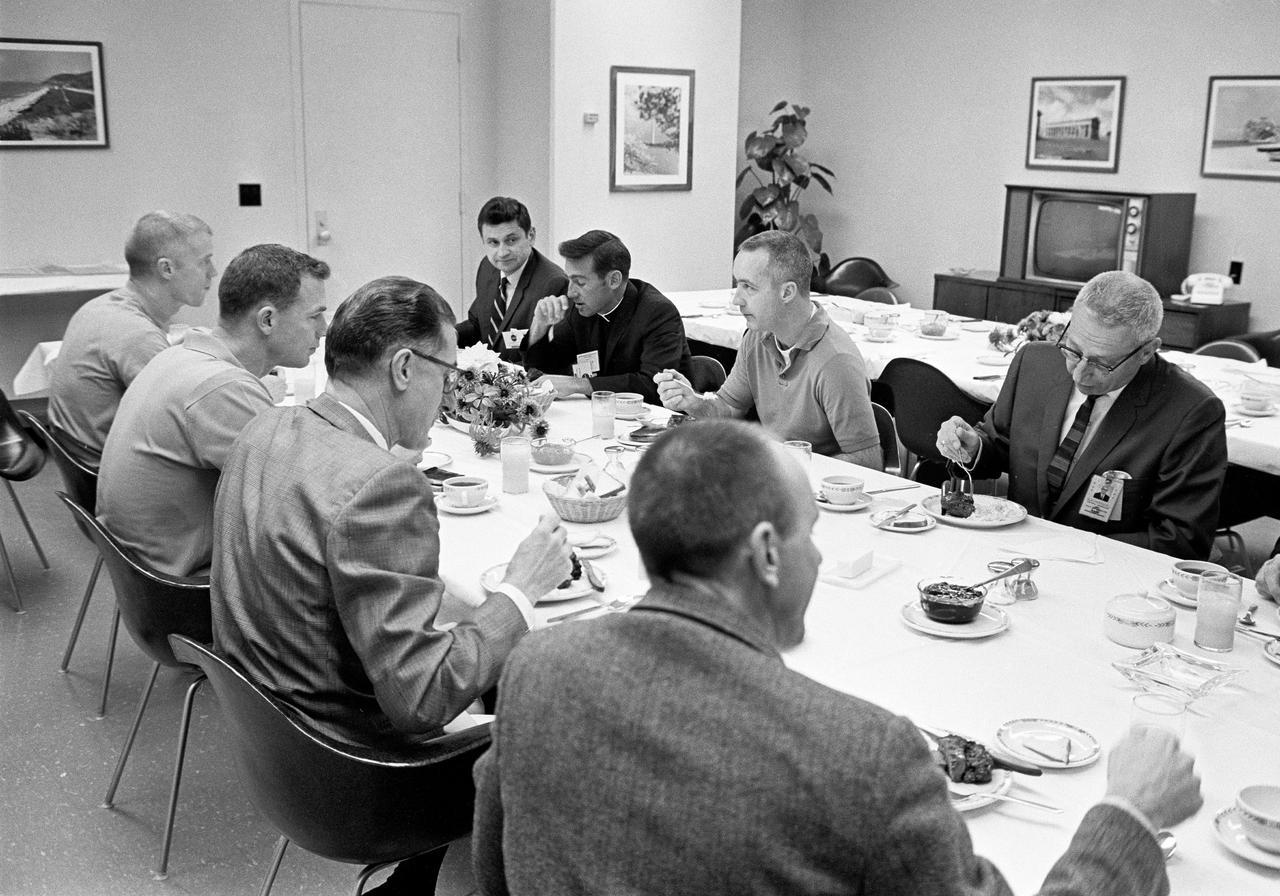
CAPE CANAVERAL, Fla. -- Apollo 9 astronauts James A. McDivitt, David R. Scott, and Russell L. Schweickart breakfast today with mission officials in their crew quarters at the Kennedy Space Center a few hours prior to their scheduled launch into Earth orbit. Seated in the foreground, left to right, are astronauts Schweickart and Scott Brig. Gen. C. H. Bolendar, manager, Lunar Module and backup Lunar Module Pilot Alan L. Bean. Across the table, left to right, George Skurla, Grumman Aircraft Base Manager at the Spaceport McDivitt's clergyman from his home church at Nassau Bay, Texas, The Rev. Laurence Connelly McDivitt and Kenneth Kleinknecht, manager, Command and Service Modules at the Manned Spacecraft Center. Grumman builds the two-man lunar module spacecraft that will be tested during the planned 10-day space mission. Photo credit: NASA
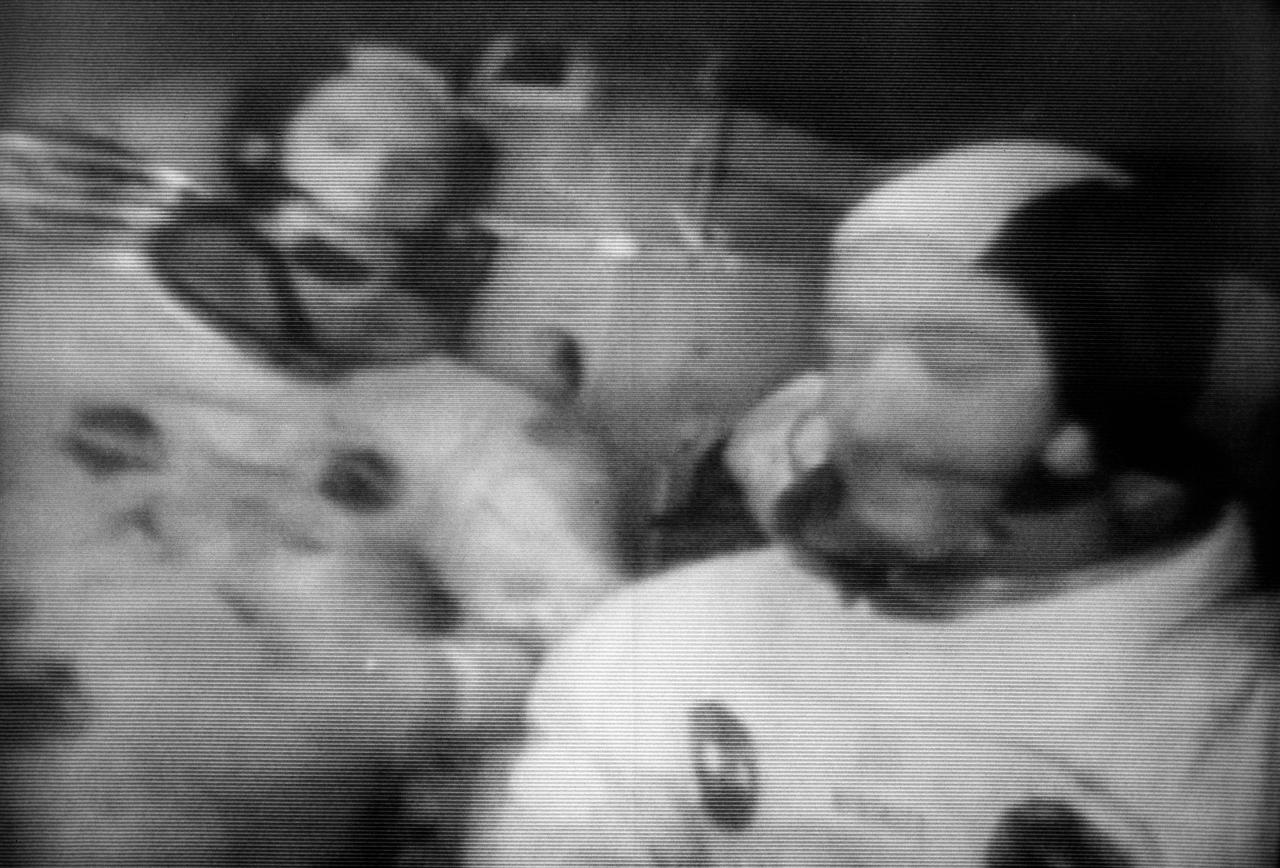
S69-26148 (6 March 1969) --- This photograph from the second live television transmission from Apollo 9 was made early Thursday afternoon on the fourth day in space. Though of poor quality, this view shows the interior of the Lunar Module "Spider" with astronauts James A. McDivitt (foreground) and Russell L. Schweickart at their crew stations. McDivitt is the Apollo 9 commander; and Schweickart is the lunar module pilot. At this moment Apollo 9 was orbiting Earth with the Command and Service Modules docked nose-to-nose with the Lunar Module. Astronaut David R. Scott, command module pilot, remained at the controls in the Command Module "Gumdrop" while the other two astronauts checked out the Lunar Module. McDivitt and Schweickart moved into the Lunar Module from the Command Module by way of the docking tunnel.
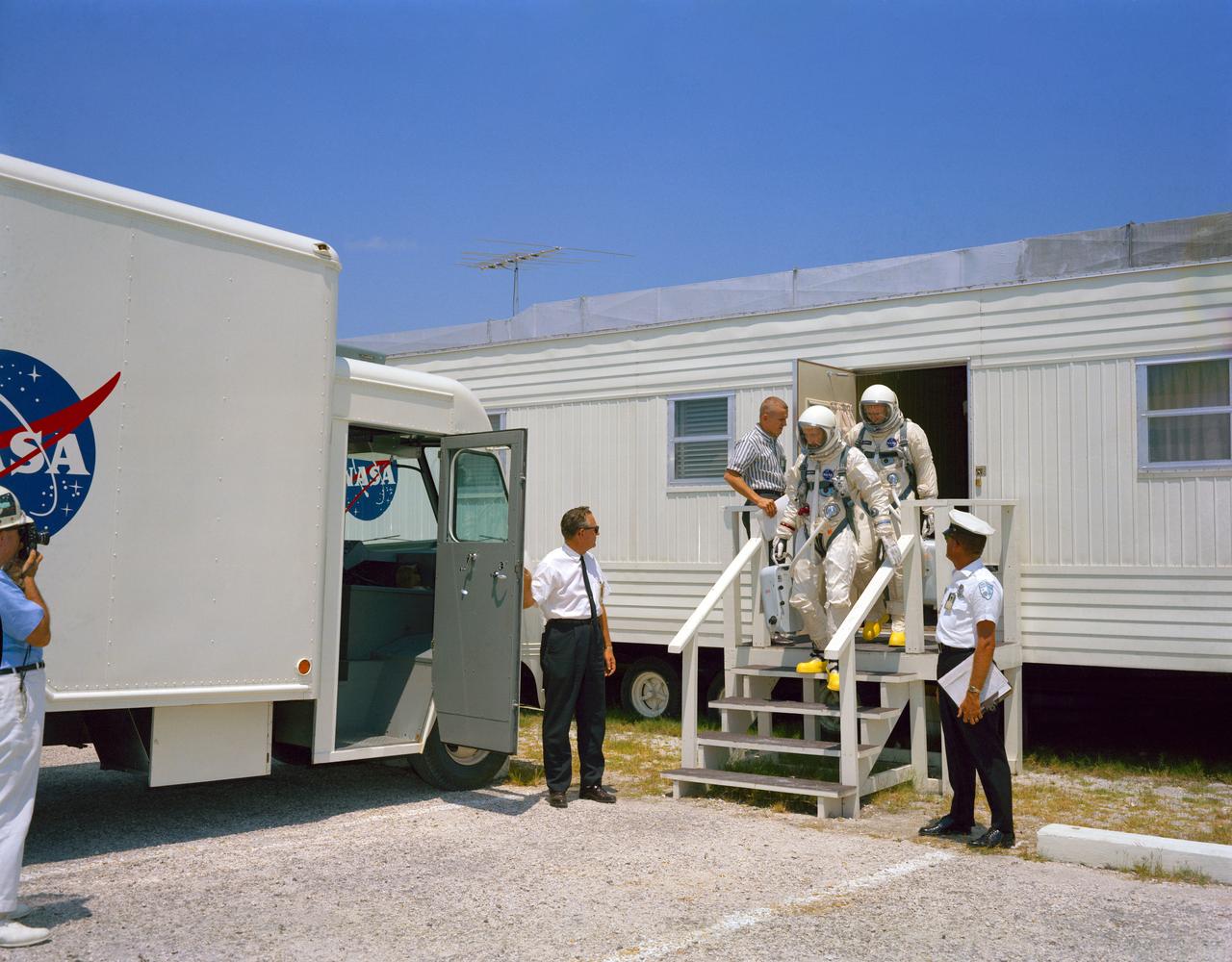
Astronauts Edward and James A. McDivitt are shown as they emerge from the suiting trailer located at Launch Complex 16. They are following in a Wet Mock Simulation Launch as a training exercise for GT-4. CAPE KENNEDY, FL B&W
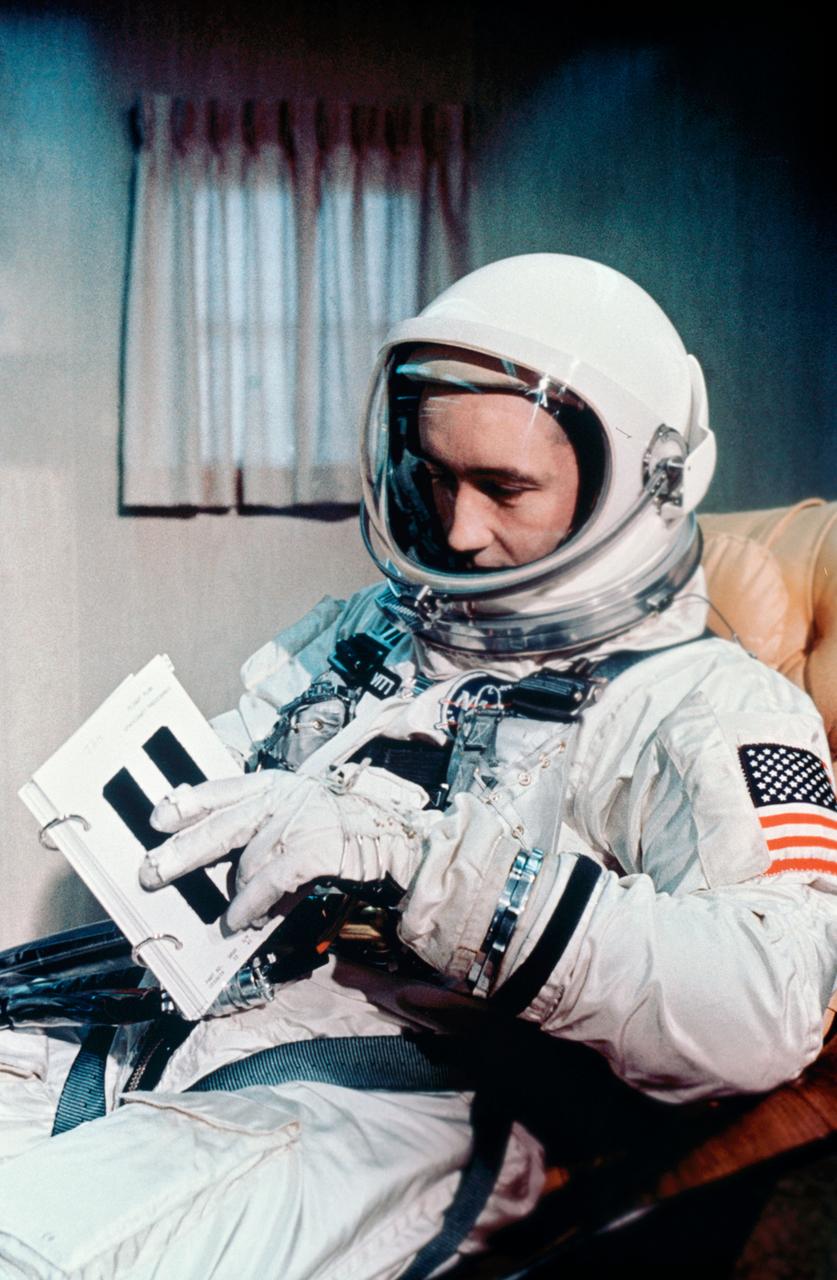
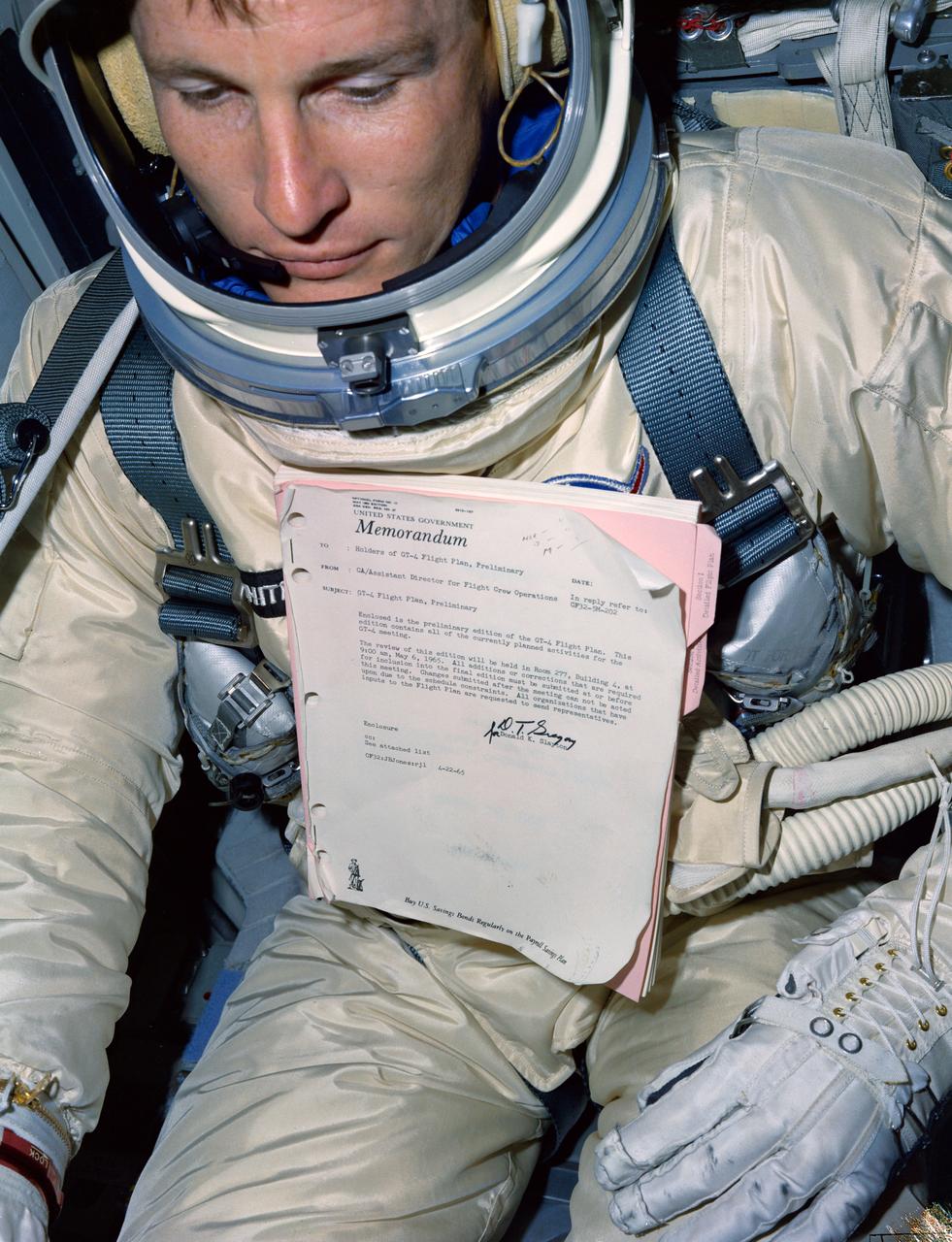
S65-29643 (3 June 1965) --- Astronaut James A. McDivitt, Gemini-4 command pilot, is shown in full spacesuit in the suit trailer prior to launch. He is reviewing a crew procedures flip book.
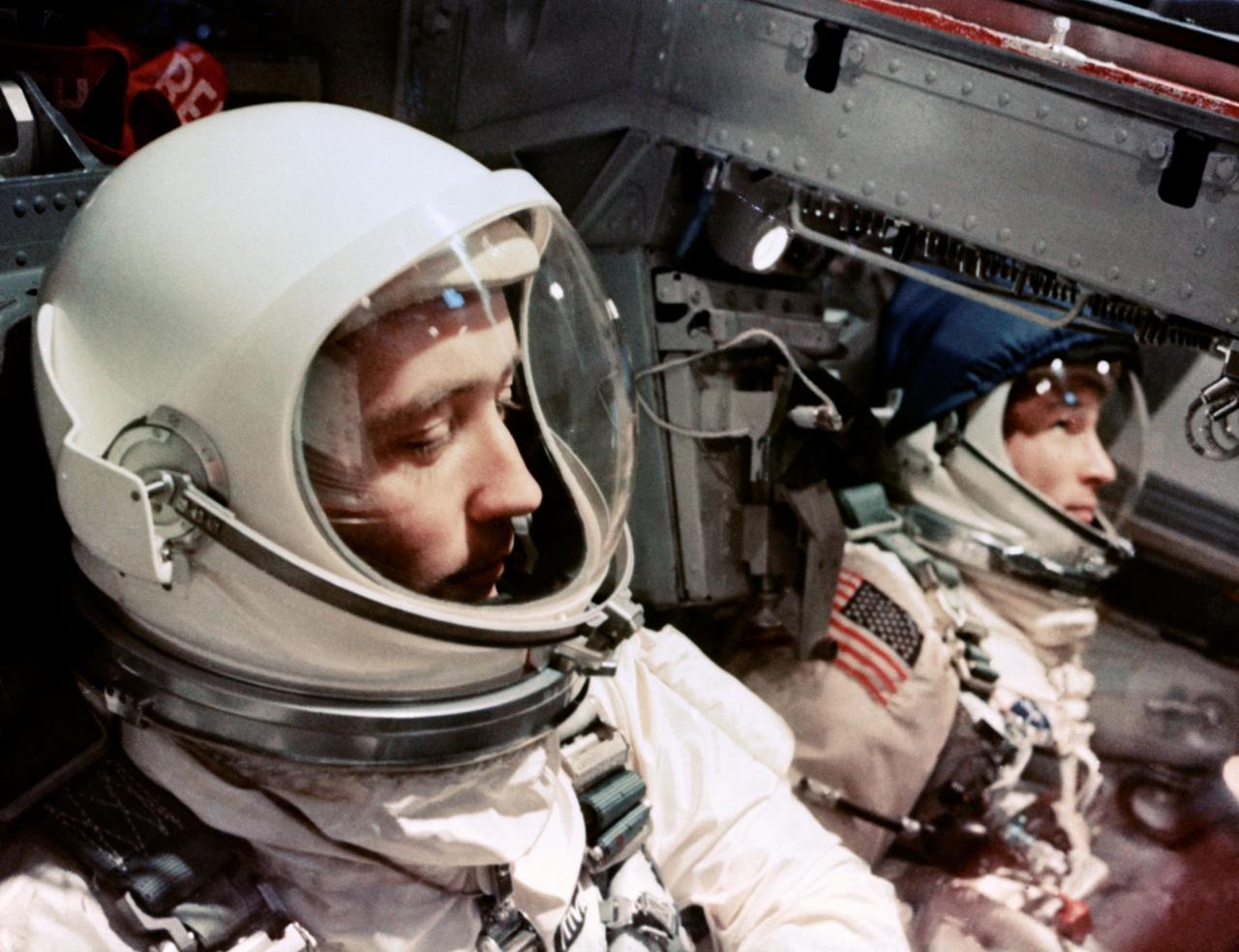
S65-29642 (3 June 1965) --- Close-up view of astronauts James A. McDivitt (foreground) and Edward H. White II inside their Gemini-4 spacecraft. NASA Headquarters alternative photo number is 65-H-294.
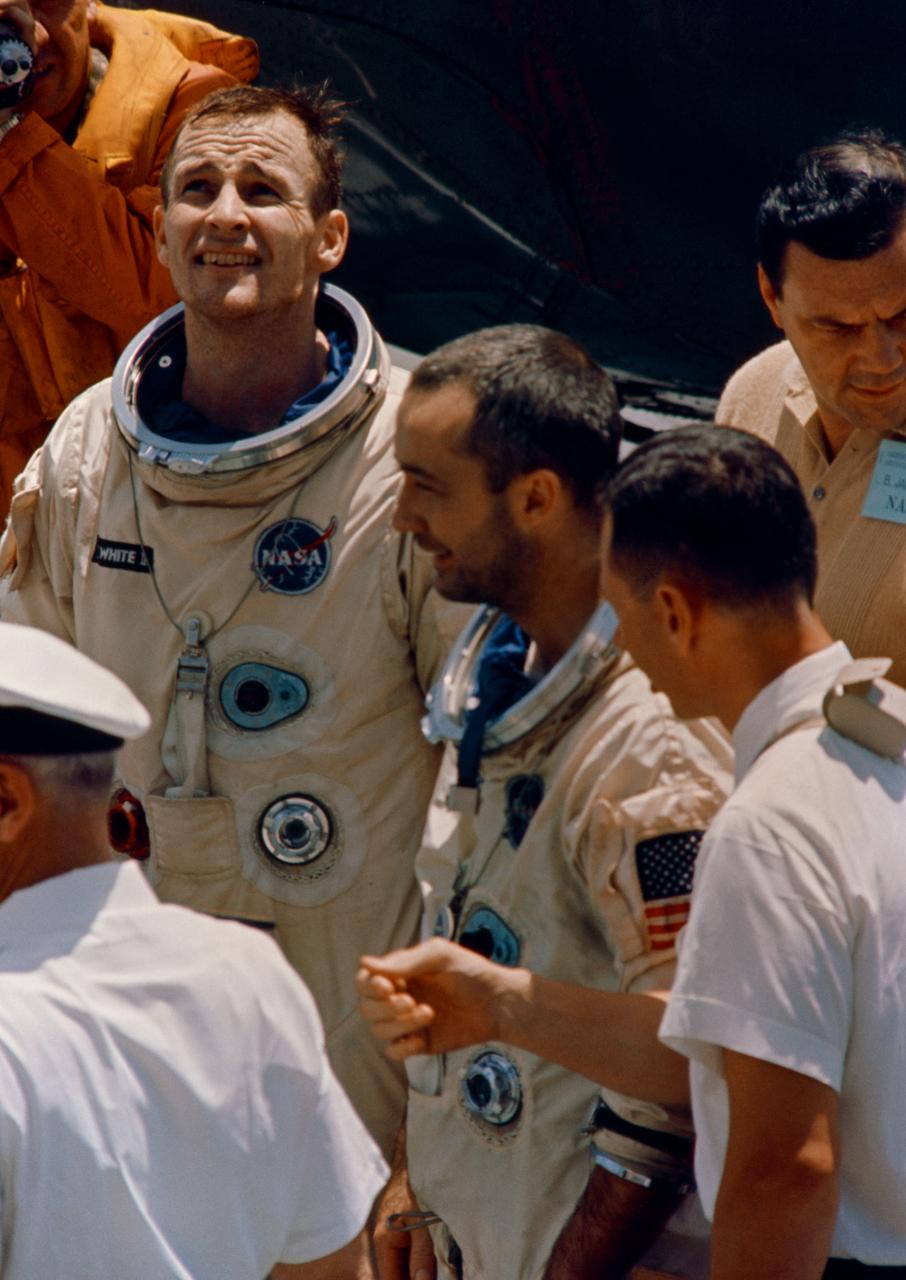
S65-32993 (7 June 1965) --- Astronauts James A. McDivitt (left), Gemini-Titan 4 command pilot; and Edward H. White II, pilot, are seen talking to personnel on the recovery ship USS Wasp.
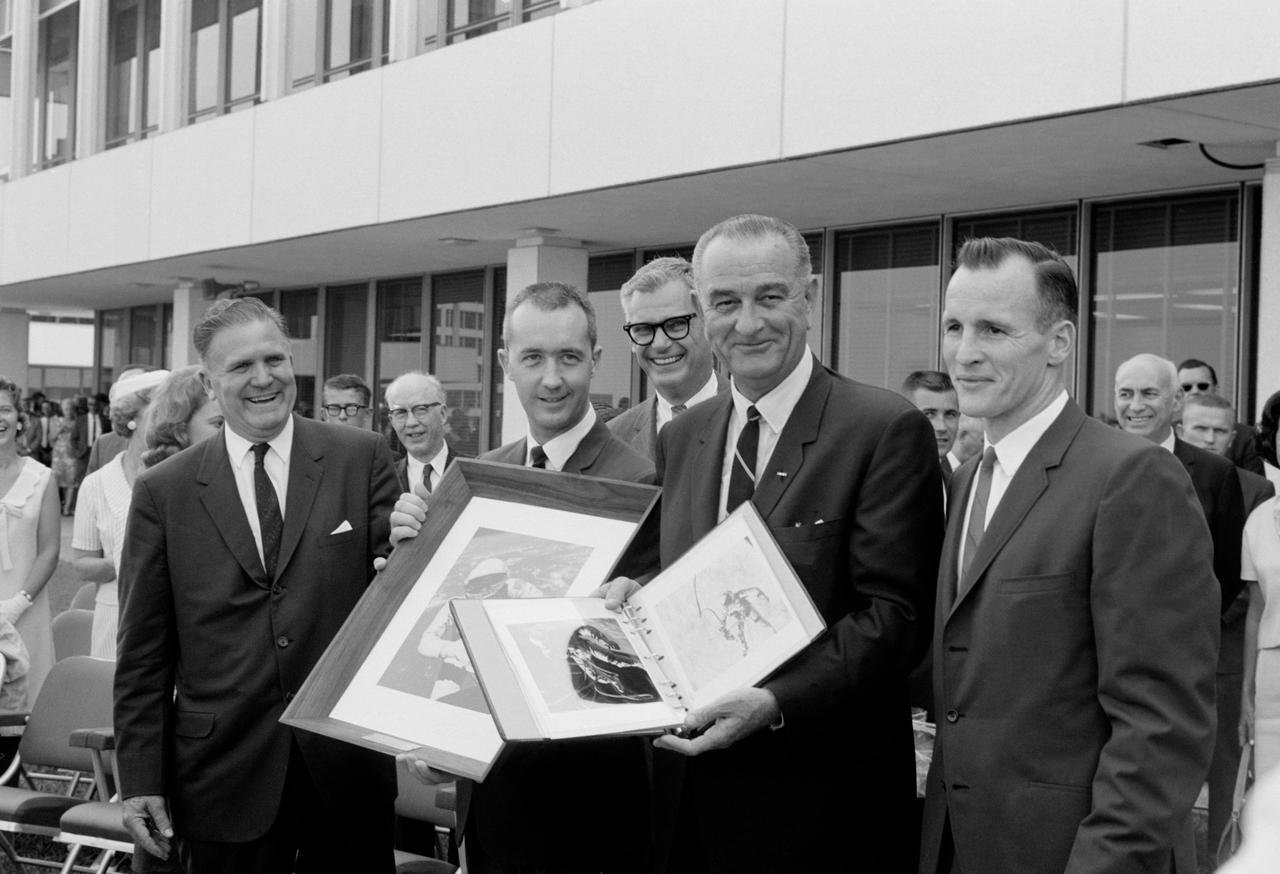
S65-33250 (11 June 1965) --- President Lyndon B. Johnson holds a Gemini-4 souvenir photo album which he was presented during his visit to the space center. Left to right, are James E. Webb, NASA administrator, Washington, D.C.; astronaut James A. McDivitt, command pilot of the Gemini-4 spaceflight; Dr. Robert C. Seamans Jr., NASA associate adminitrator; the President; and astronaut Edward H. White II, pilot of the Gemini-4 mission. McDivitt holds a framed picture of White's "spacewalk" which was also given the President.

S69-27746 (13 March 1969) --- The Apollo 9 crew awaits the arrival of a recovery helicopter from the USS Guadalcanal, prime recovery ship for the Apollo 9 10-day Earth-orbital space mission. Astronaut James A. McDivitt, commander, stands in hatch of spacecraft. Already in life raft are astronauts Russell L. Schweickart (foreground), lunar module pilot, and David R. Scott, command module pilot. Scott is taking a picture of McDivitt. Splashdown occurred at 12:00:53 p.m. (EST), March 13, 1969, only 4.5 nautical miles from the USS Guadalcanal. U.S. Navy underwater demolition team swimmers assist in the recovery operations.
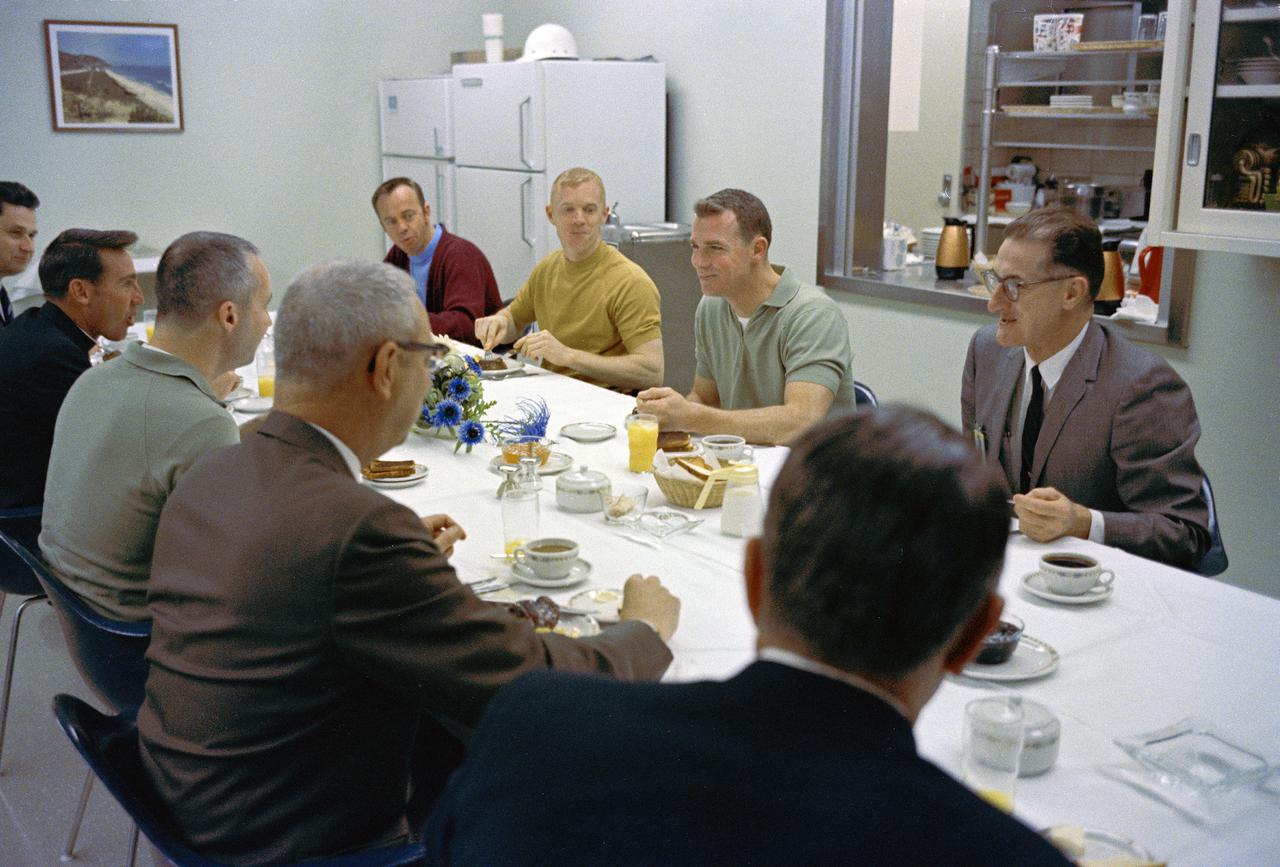
CAPE CANAVERAL, Fla. -- Apollo 9 Astronauts James A. McDivitt, David R. Scott, and Russell L. Schweickart breakfast with guests in their crew quarters of few hours before their launch into Earth orbit to test the Lunar Module spacecraft. Left to right across the table are Brig. Gen. C.H. Bolender, Scott, Schweickart, and Alan Shepard, Chief of the Astronaut Office and America's first man in space. Foreground, second from left, is Kenneth Kleinknect astronaut McDivitt his clergyman from Nassau Bay, Texas, The Rev. Laurence Connelly and George Skurla, Grumman Aircraft base manager at the spaceport. Grumman builds the Lunar Module spacecraft. Photo credit: NASA
![S68-56621 (18 Dec. 1968) --- These three astronauts are the prime crew of the Apollo 9 (Spacecraft 104/Lunar Module 3/Saturn 504) space mission. Left to right, are James A. McDivitt, commander; David R. Scott, command module pilot: and Russell L. Schweickart, lunar module pilot. The Apollo 9 launch is scheduled no earlier than February 28, 1969. In the background is the Apollo 8 space vehicle on Pad A, Launch Complex 39, Kennedy Space Center, which was launched on December 21, 1968. (Gaseous liquid oxygen is venting from the vehicle’s first [S-1C] stage during a countdown demonstration test). McDivitt holds a U.S. flag.](https://images-assets.nasa.gov/image/S68-56621/S68-56621~medium.jpg)
S68-56621 (18 Dec. 1968) --- These three astronauts are the prime crew of the Apollo 9 (Spacecraft 104/Lunar Module 3/Saturn 504) space mission. Left to right, are James A. McDivitt, commander; David R. Scott, command module pilot: and Russell L. Schweickart, lunar module pilot. The Apollo 9 launch is scheduled no earlier than February 28, 1969. In the background is the Apollo 8 space vehicle on Pad A, Launch Complex 39, Kennedy Space Center, which was launched on December 21, 1968. (Gaseous liquid oxygen is venting from the vehicle’s first [S-1C] stage during a countdown demonstration test). McDivitt holds a U.S. flag.
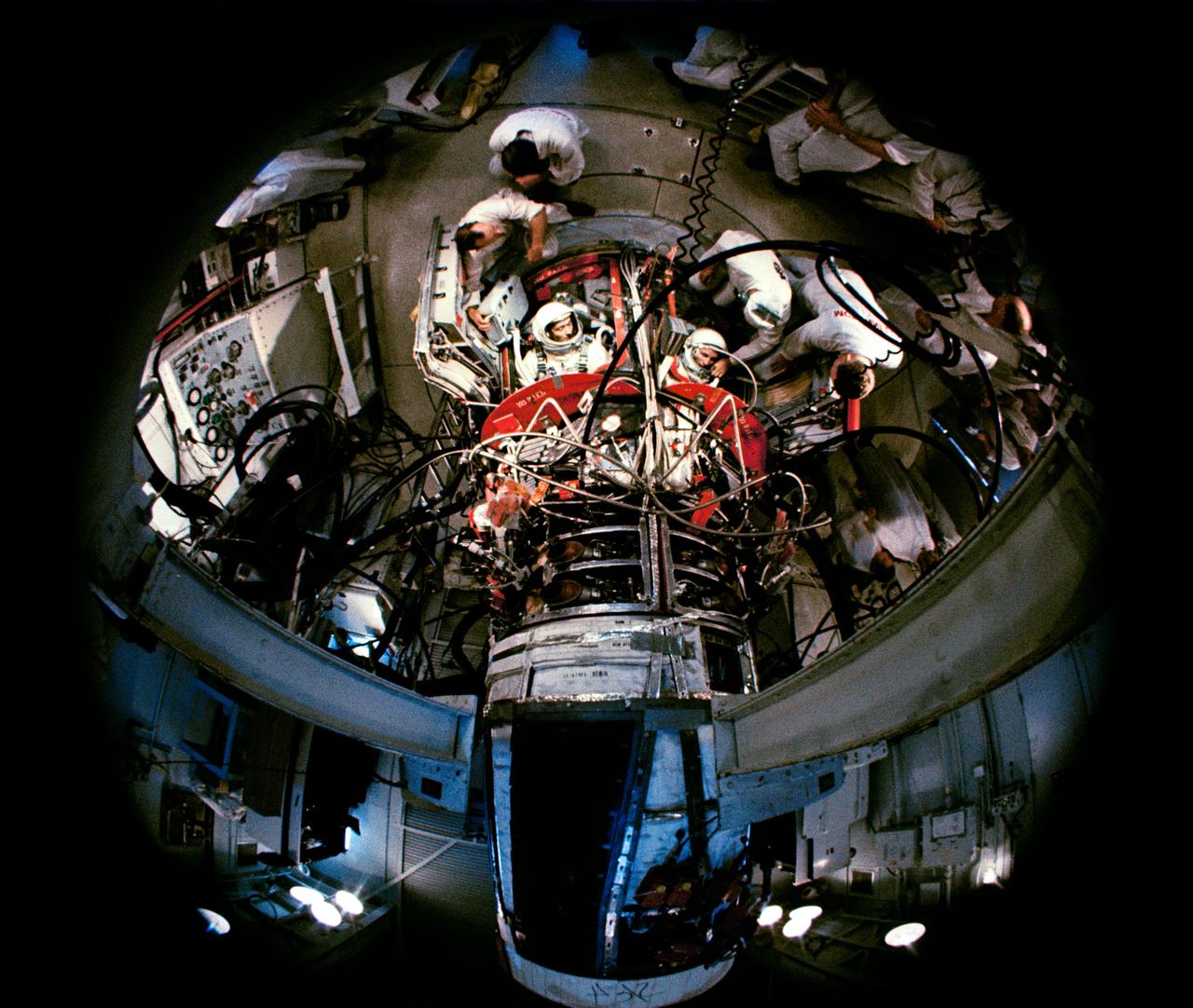
S65-29650 (3 June 1965) --- Fisheye view of astronauts James A. McDivitt and Edward H. White II inside the Gemini-4 spacecraft during simulated exercises at pad 19, Cape Kennedy, Florida. NASA Headquarters alternative photo number is 65-H-274.
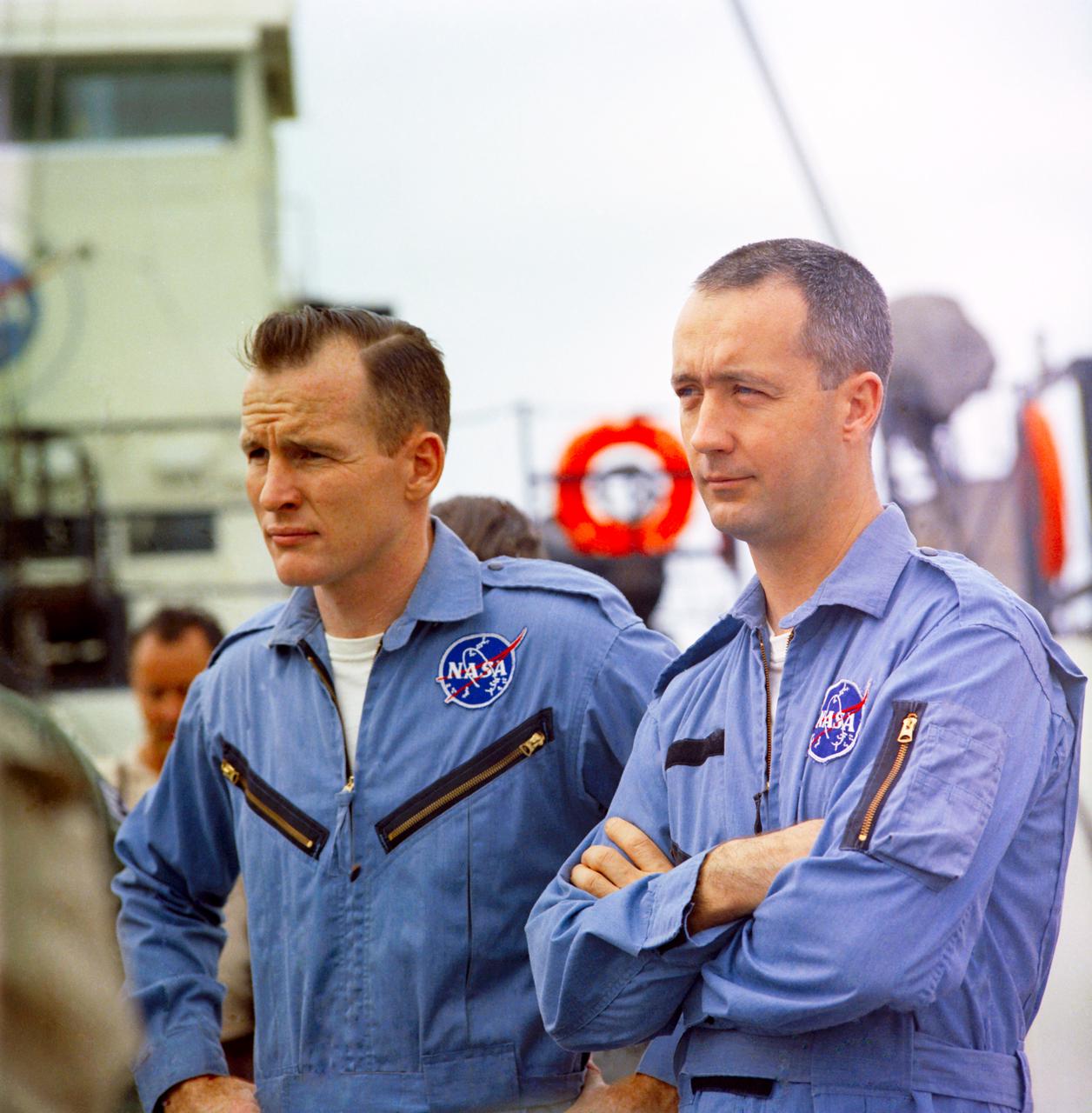
S65-22656 (14 April 1965) --- The Gemini-Titan 4 prime crew, astronauts Edward H. White II (left), pilot, and James A. McDivitt, command pilot, pictured aboard the NASA Motor Vessel Retriever in the Gulf of Mexico.
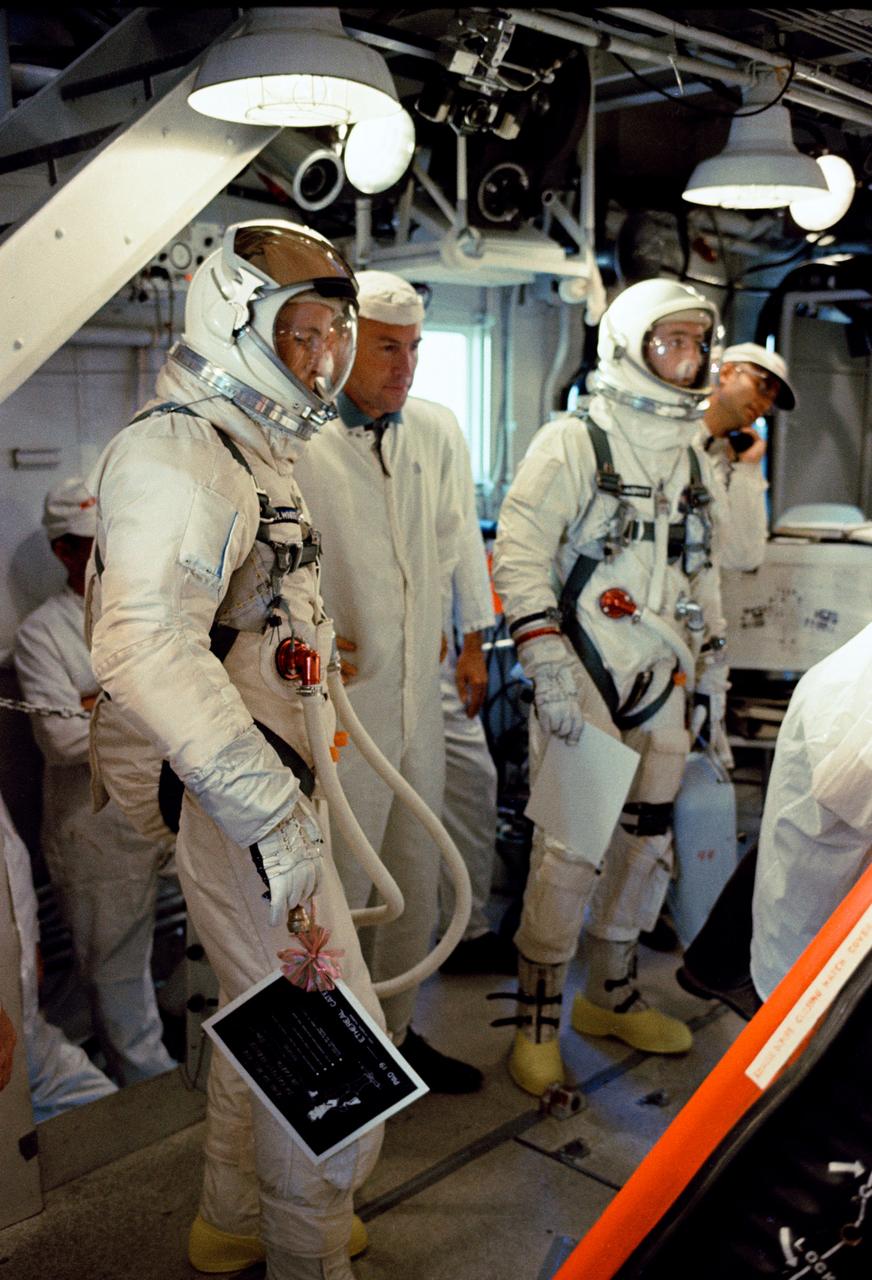
S65-29647 (3 June 1965) --- Astronauts Edward H. White II and James A. McDivitt are shown in the white room as they prepare to enter the Gemini-4 spacecraft atop the Titan launch vehicle at Cape Kennedy, Florida. The NASA Headquarters alternative photo number is 65-H-296.
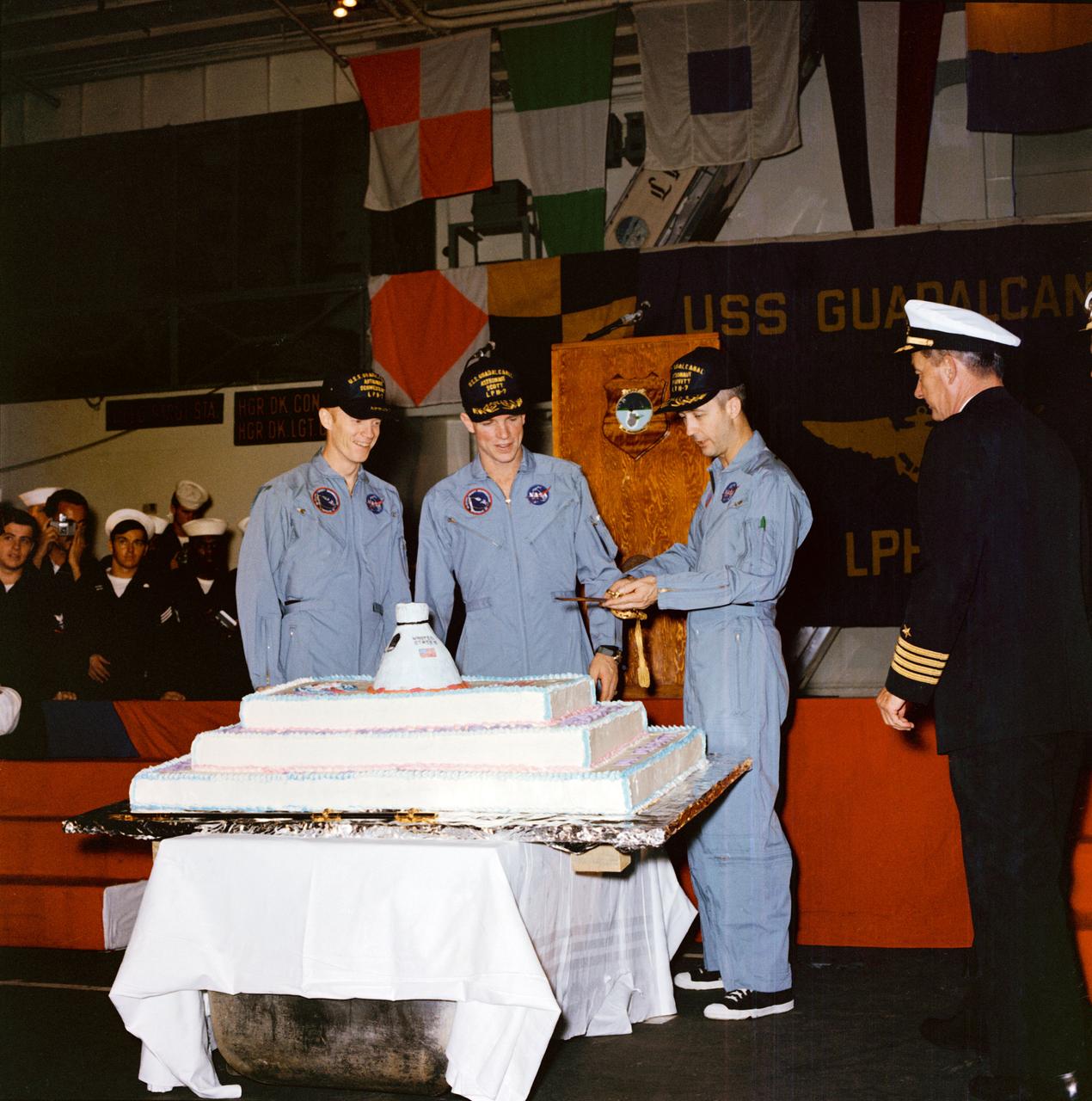
The Apollo 9 crew prepares to cut the 350-pound cake which was baked on the U.S.S. Guadalcanal in their honor. Left to right, are Astronauts Russell L. Schweickart, David R. Scott, and James A. McDivitt. Looking on at right is Capt. Roy M. Sudduth, commanding officer of the U.S.S. Guadalcanal.
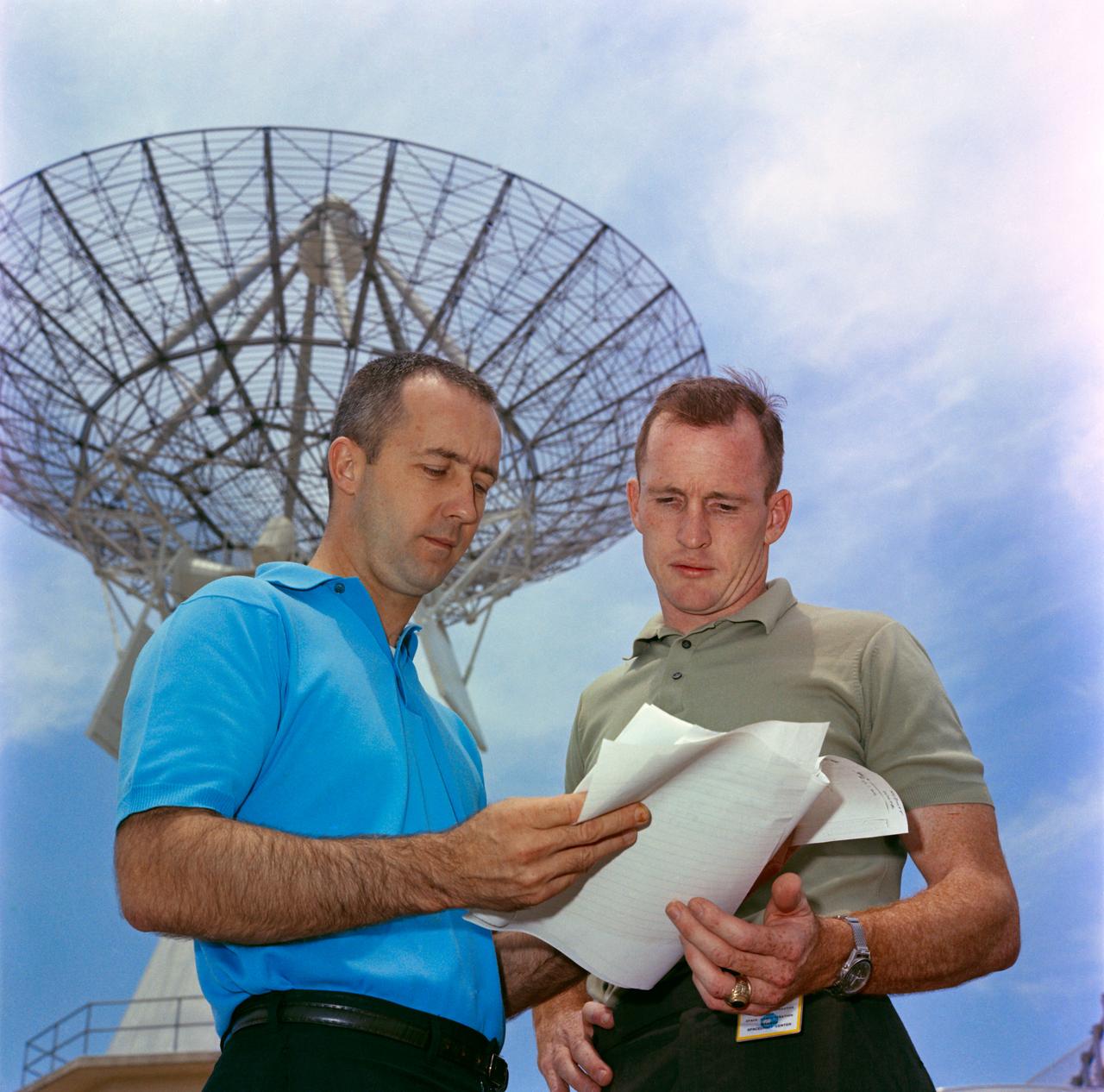
S65-29655 (7 May 1965) --- Astronauts James A. McDivitt (left) and Edward H. White II, Gemini-4 prime crew, are shown looking over training plans at Cape Kennedy during prelaunch preparations. The NASA Headquarters alternative photo number is 65-H-275.
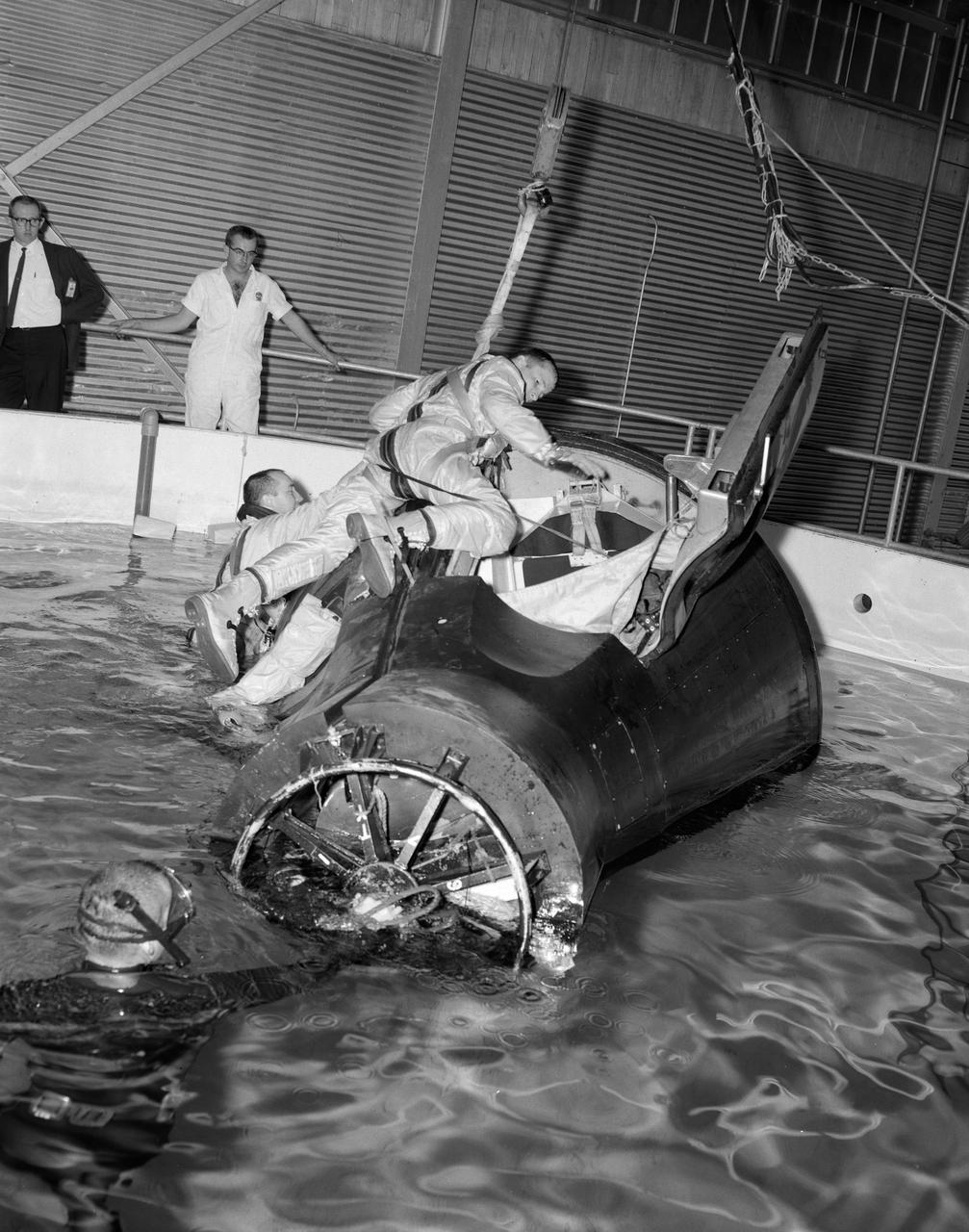
S65-19282 (29 March 1965) --- The Gemini-Titan 4 prime crew, astronauts James A. McDivitt (left), command pilot; and Edward H. White II, pilot, are pictured during water egress training at Ellington Air Force Base, Texas.
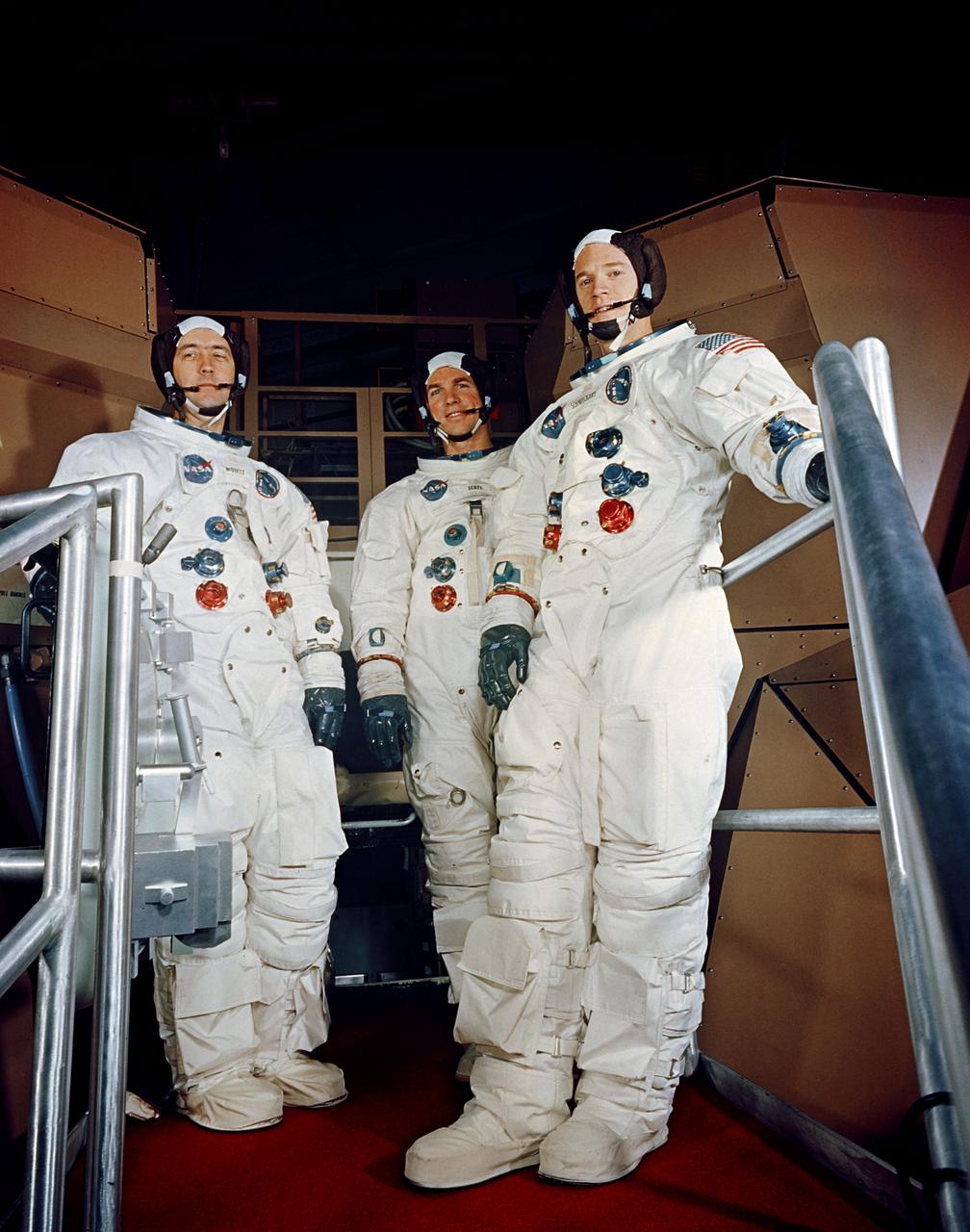
S69-19983 (17 Feb. 1969) --- The Apollo 9 crew is shown suited up for a simulated flight in the Apollo Mission Simulator at the Kennedy Space Center (KSC). Left to right are astronauts James A. McDivitt, commander; David R. Scott, command module pilot; and Russell L. Schweickart, lunar module pilot.
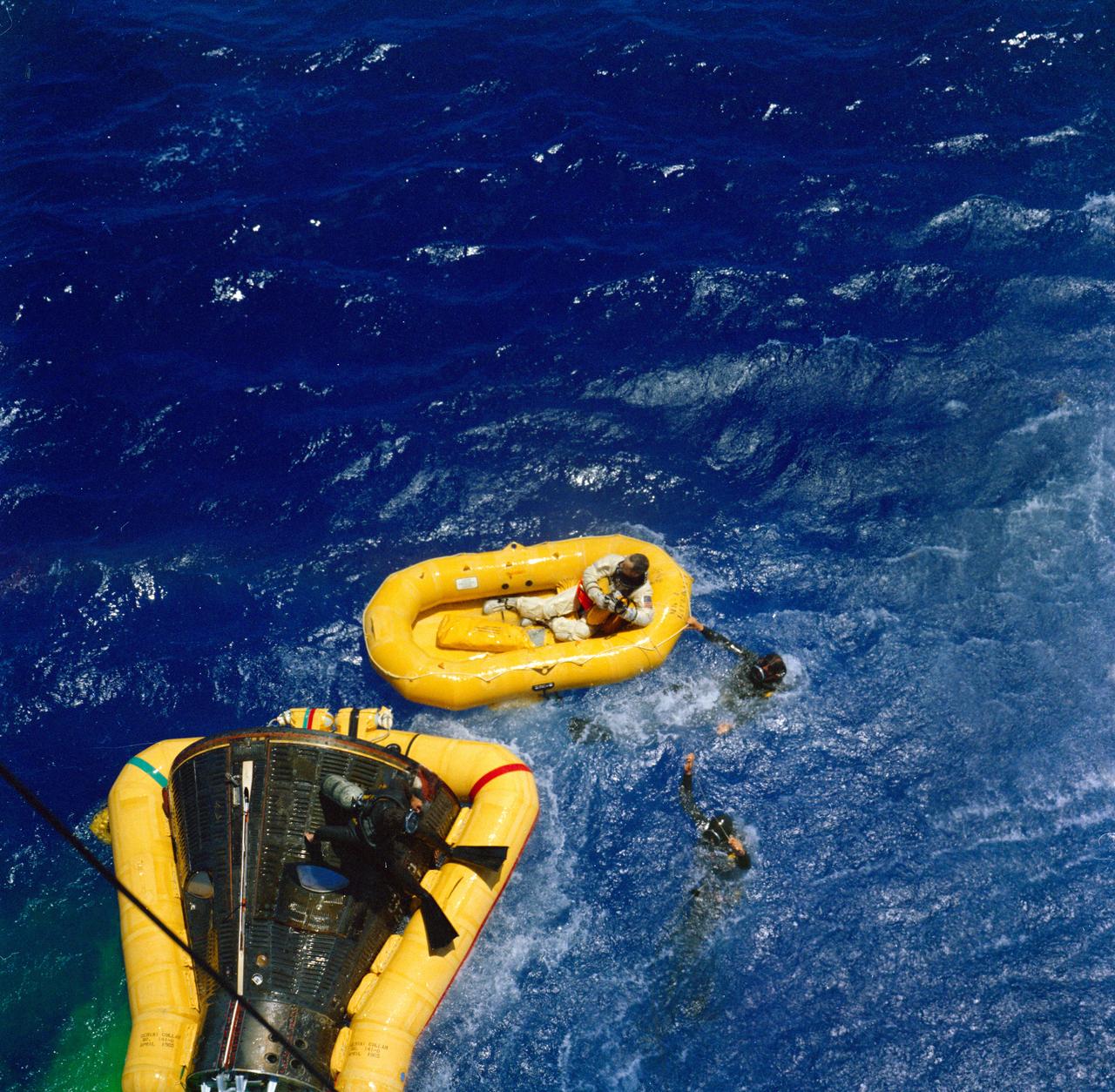
S65-33490 (7 June 1965) --- A United States Navy frogman team participates in the recovery of the Gemini-Titan 4 (GT-4) spacecraft. The USS Wasp was the prime recovery ship for the Gemini-4 mission. The crew of the Gemini-4 spaceflight was astronauts James A. McDivitt, command pilot, and Edward H. White II, pilot.
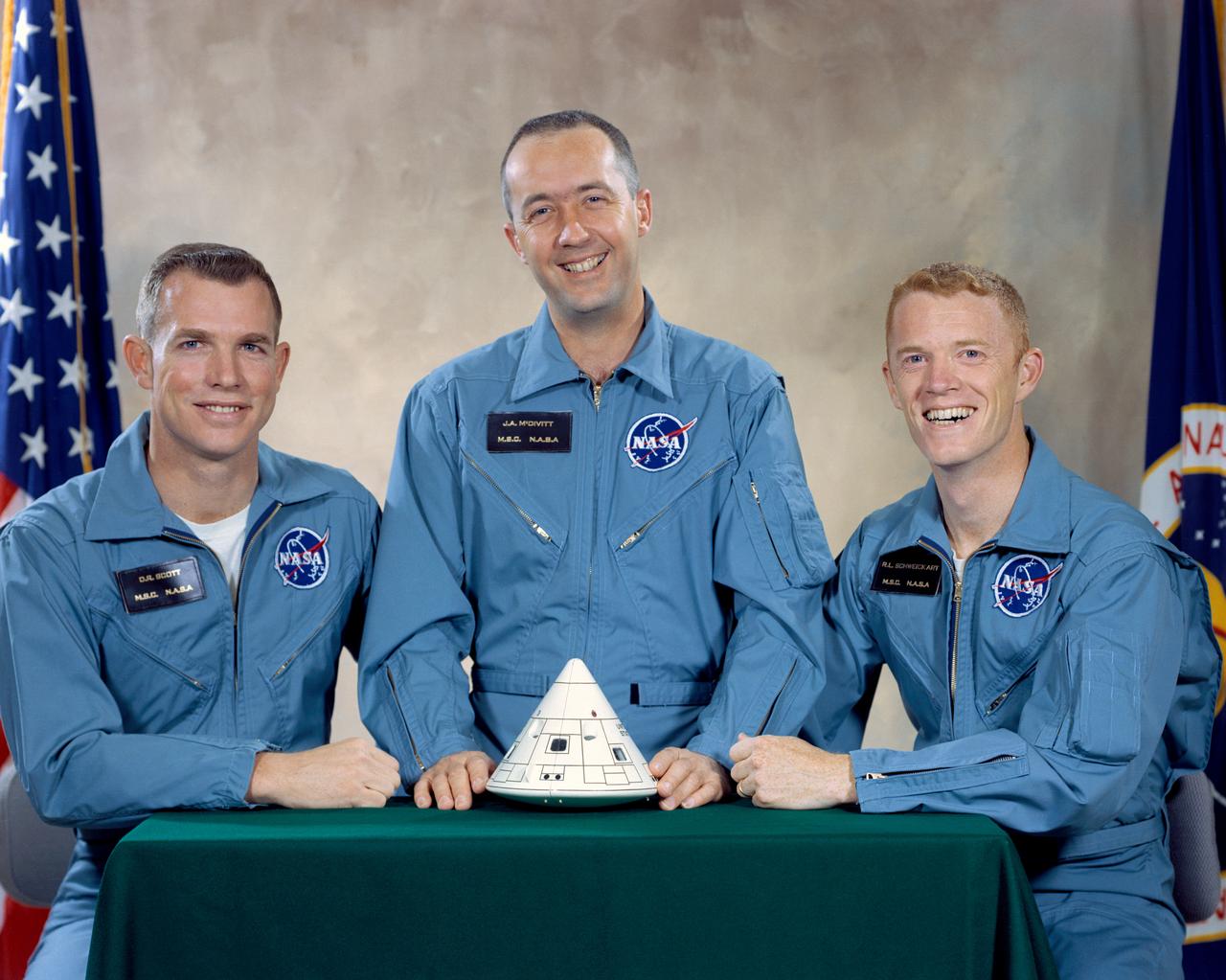
S66-30237 (March 1966) --- These three astronauts have been named as the prime crew of the Apollo 9 mission. They are (left to right) David R. Scott, command module pilot; James A. McDivitt, commander; and Russell L. Schweickart, lunar module pilot.
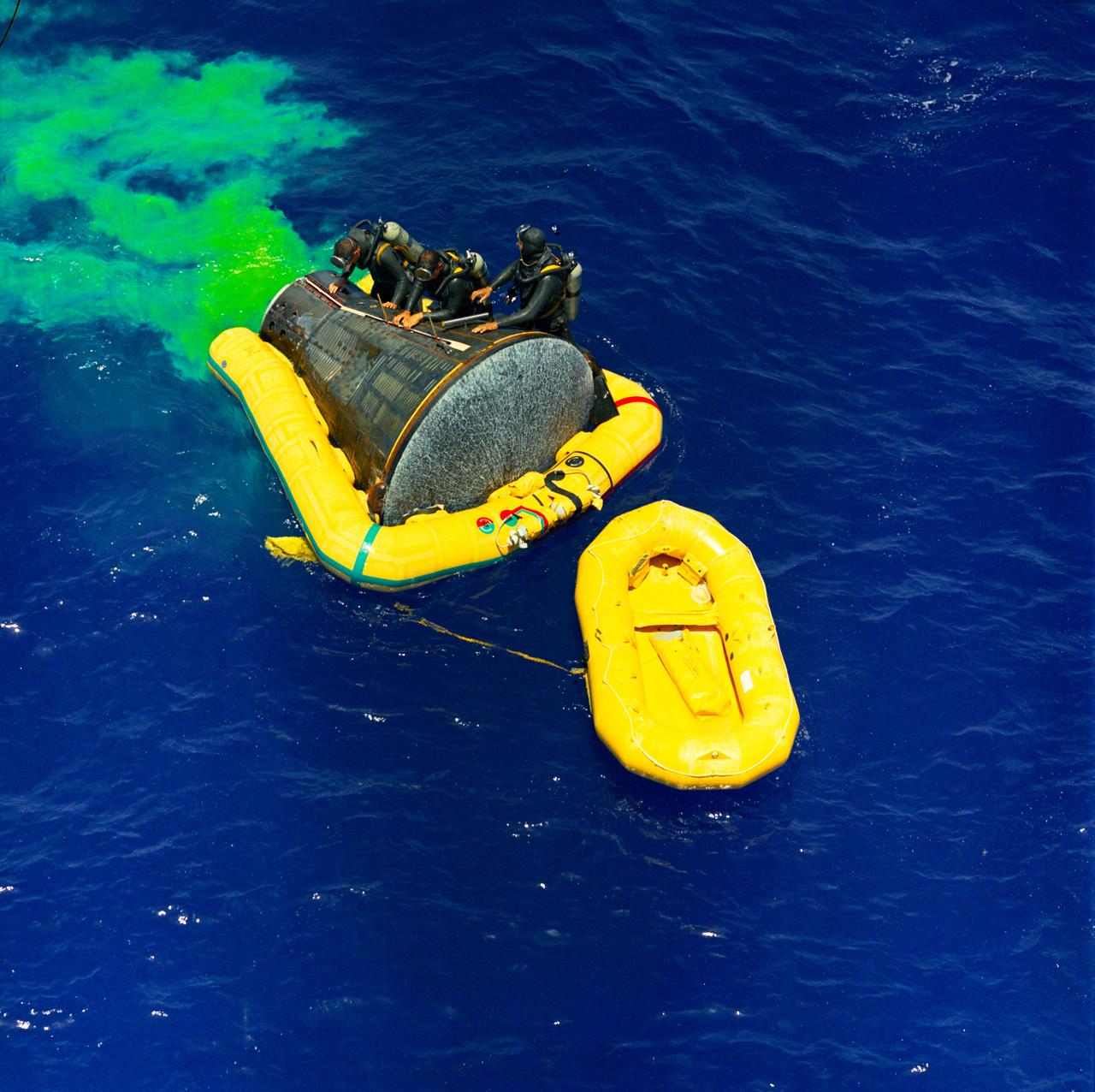
S65-33491 (7 June 1965) --- A United States Navy frogman team participates in the recovery of the Gemini-Titan 4 (GT-4) spacecraft. The USS Wasp was the prime recovery ship for the Gemini-4 mission. The crew of the Gemini-4 spaceflight was astronauts James A. McDivitt, command pilot, and Edward H. White II, pilot.
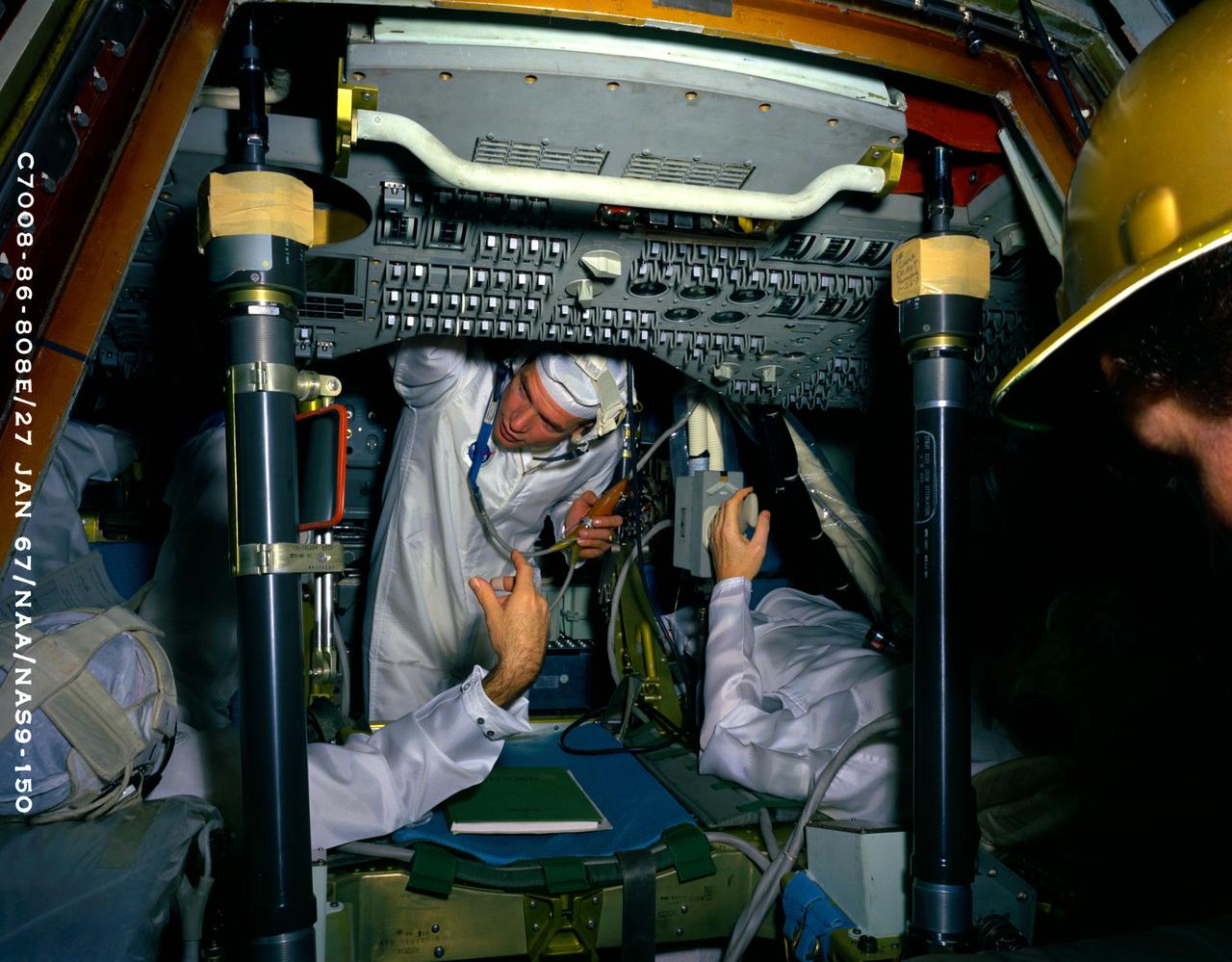
S67-23078 (27 Jan. 1967) --- Three astronauts (later to be named the Apollo 9 prime crew) in Apollo spacecraft 101 Command module during Apollo crew compartment fit and function test. Left to right are astronauts James A. McDivitt, David R. Scott, and Russell L. Schweickart.
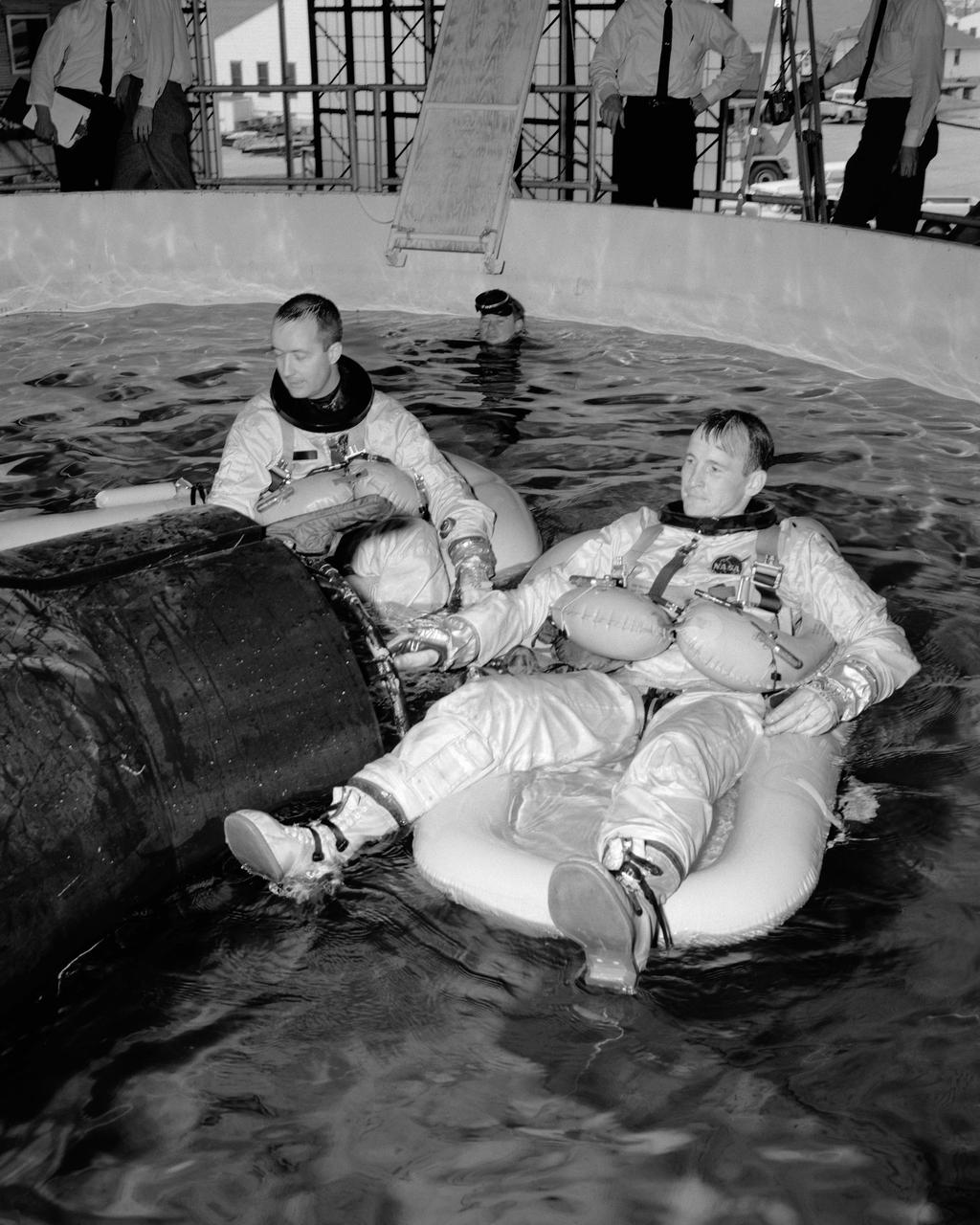
S65-19283 (29 March 1965) --- The Gemini-Titan 4 prime crew, astronauts James A. McDivitt (left), command pilot; and Edward H. White II, pilot, are pictured during water egress training at Ellington Air Force Base, Texas.
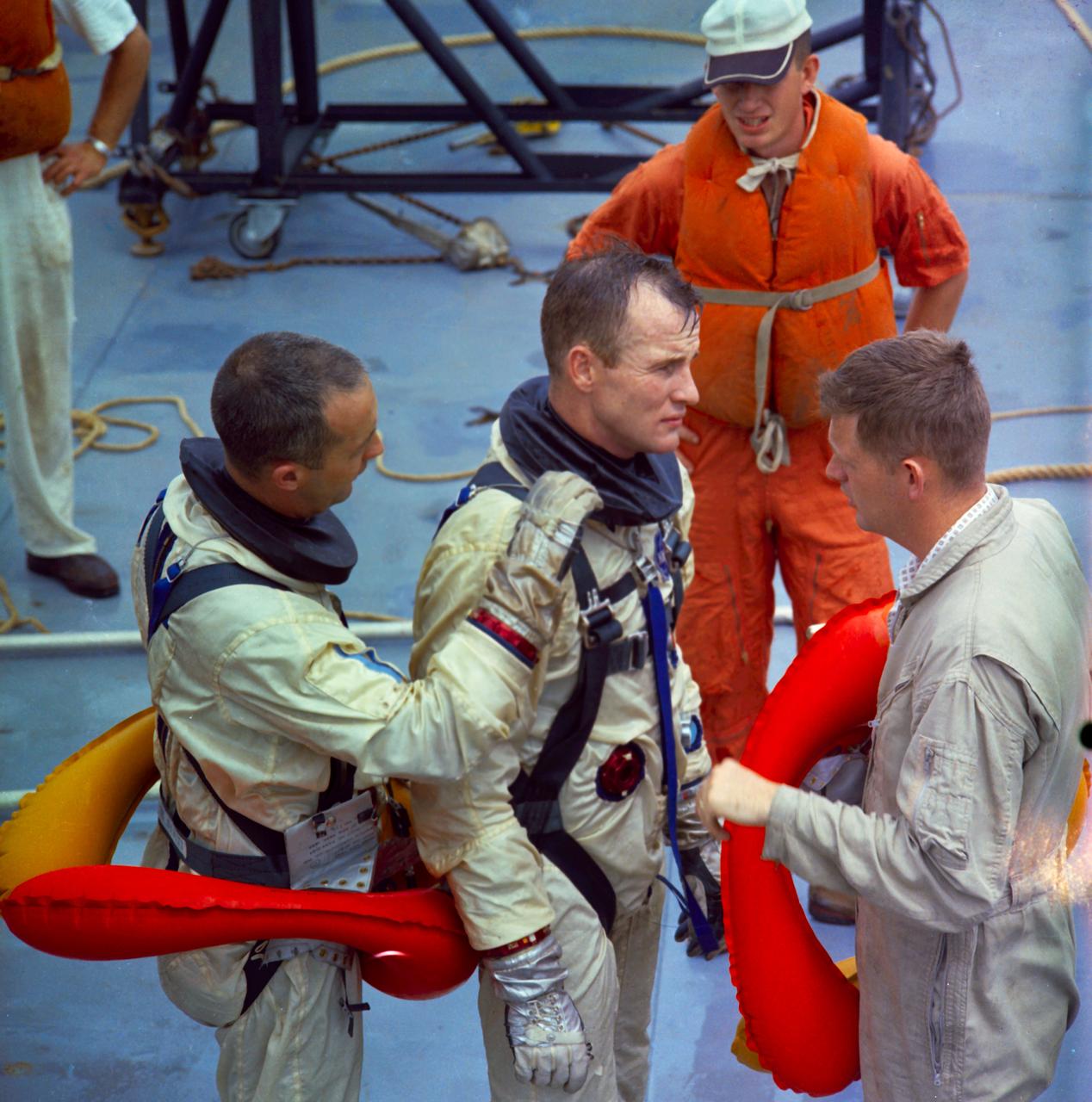
S65-22655 (14 April 1965) --- The Gemini-Titan 4 prime crew is shown aboard the NASA Motor Vessel Retriever in the Gulf of Mexico suiting up for water egress training. Astronaut James A. McDivitt (left) is the command pilot, and astronaut Edward H. White II is the pilot.
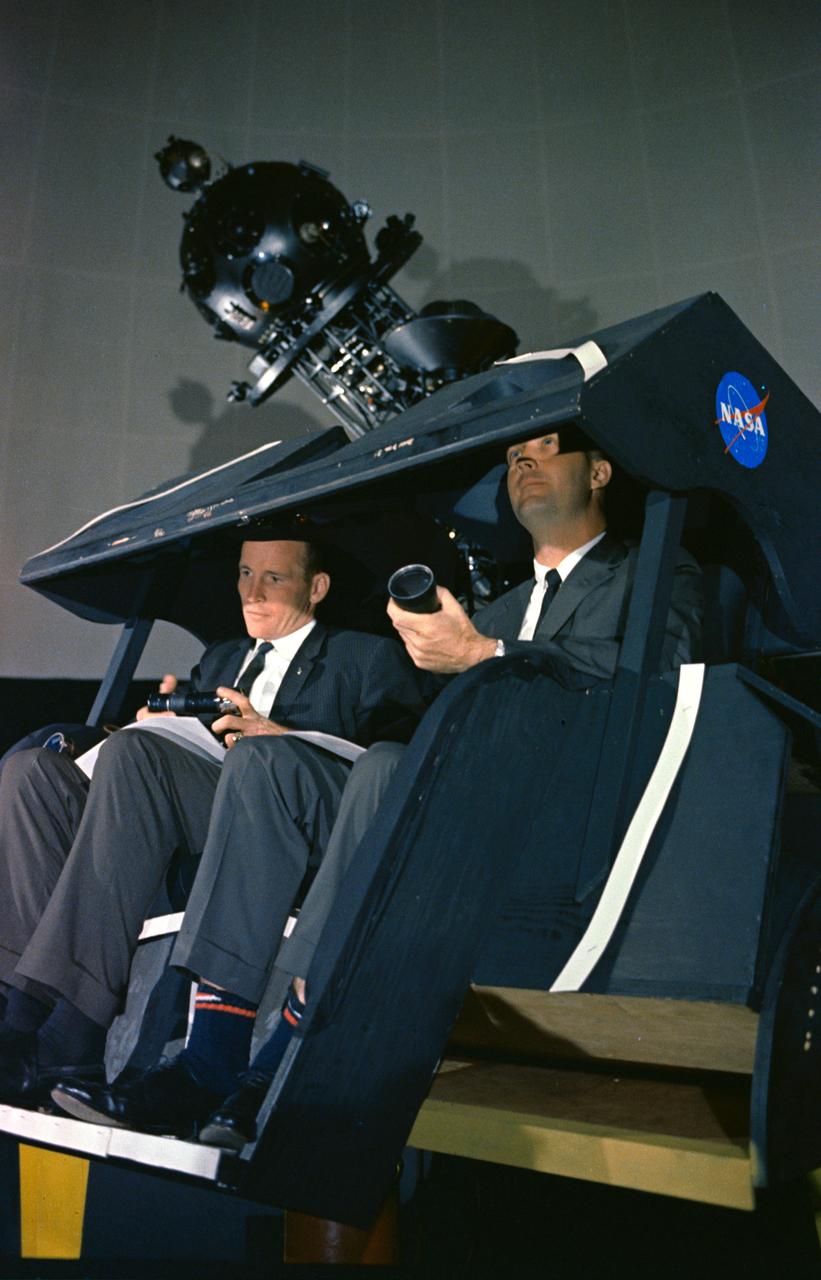
S65-29652 (7 May 1965) --- Astronauts James A. McDivitt (right) and Edward H. White II are shown at the Morehead Planetarium in North Carolina, checking out celestial navigation equipment as part of their training for the Gemini-Titan 4 mission. The NASA Headquarters alternative photo number is 65-H-277.
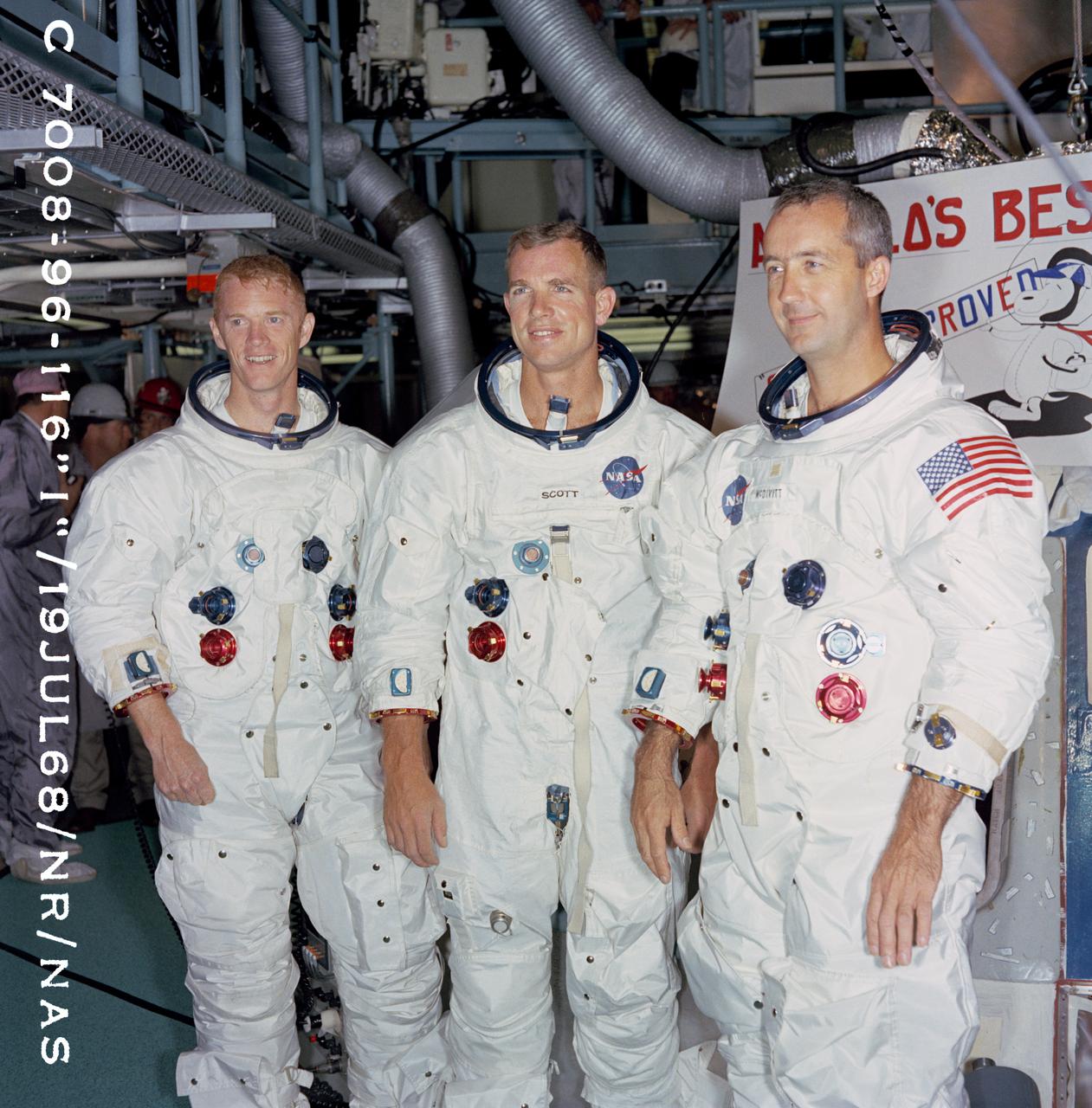
S68-42164 (19 July 1968) --- The prime crew of the third manned Apollo space mission stands in front of the Apollo Command Module 103 after egress during crew compartment fit and function test activity. Left to right are astronauts Russell L. Schweickart, David R. Scott, and James A. McDivitt.
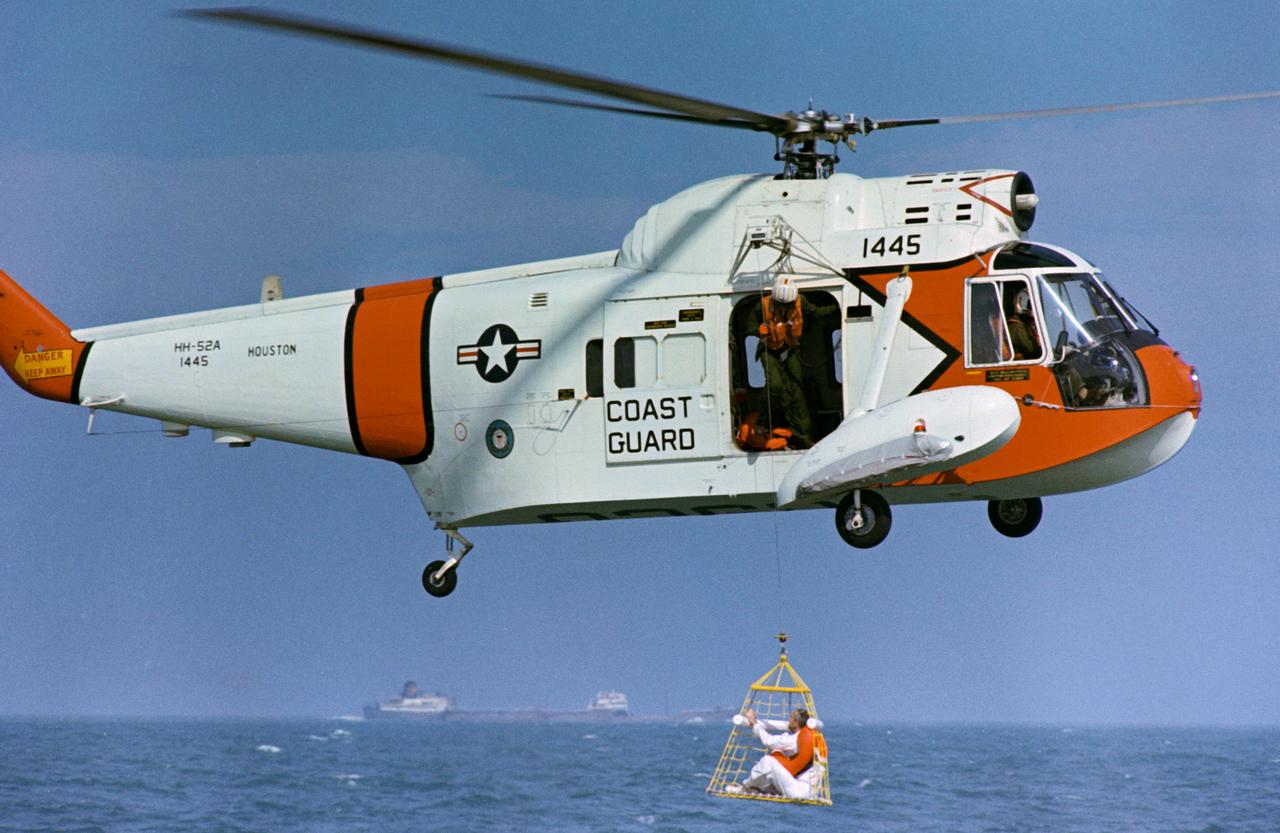
S68-50989 (20 Nov. 1968) --- Astronaut James A. McDivitt, commander of the Apollo 9 prime crew, is hoisted up to a U.S. Coast Guard helicopter in a new type rescue net during water egress training in the Gulf of Mexico.
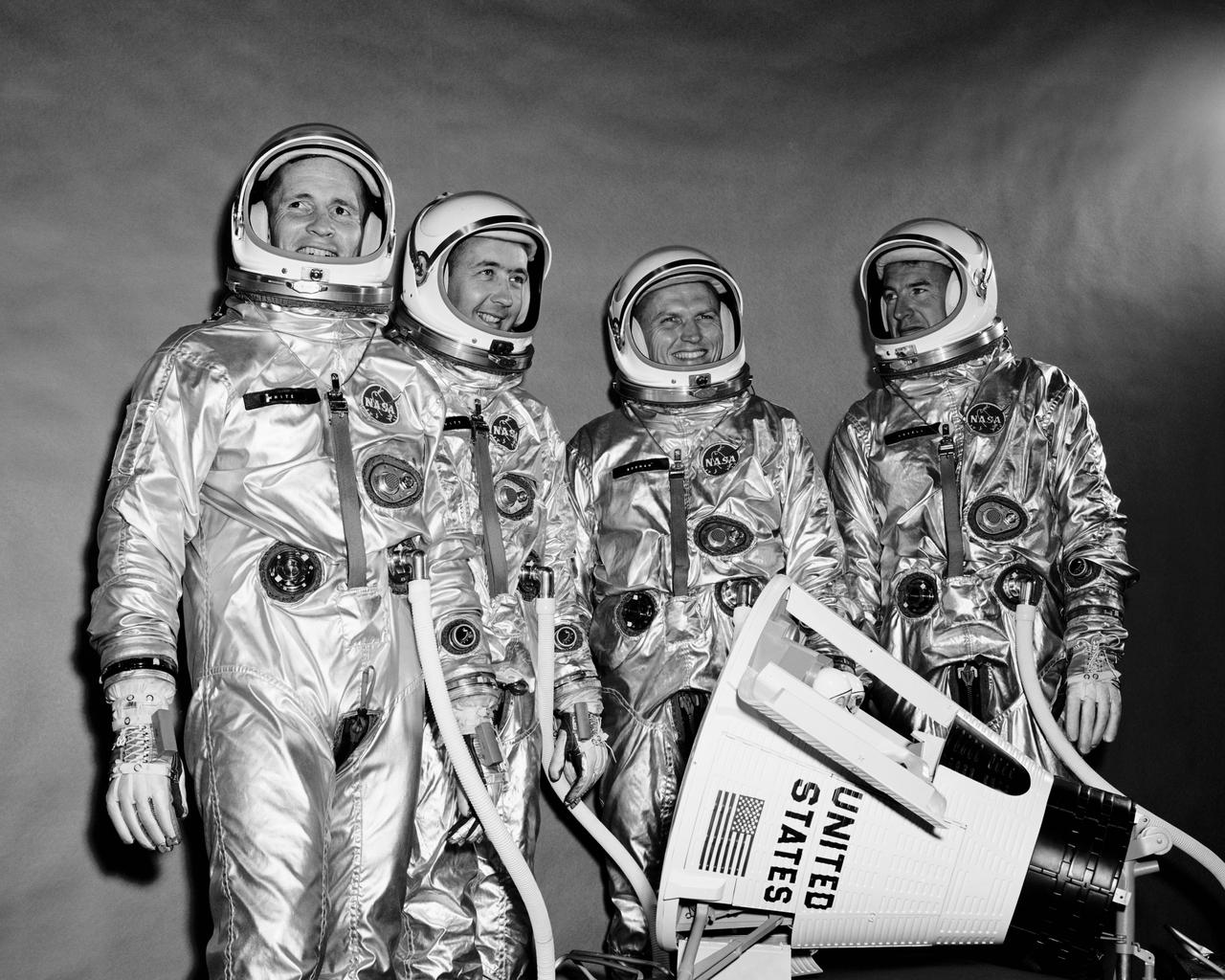
S64-20199 (10 Sept. 1964) --- View of the Gemini-4 prime crew and backup crew in pressure suits. They are standing around a model of the Gemini spacecraft. From left to right are astronauts Edward H. White II, pilot; James A. McDivitt, command pilot; Frank Borman and James A. Lovell Jr., backup crew.
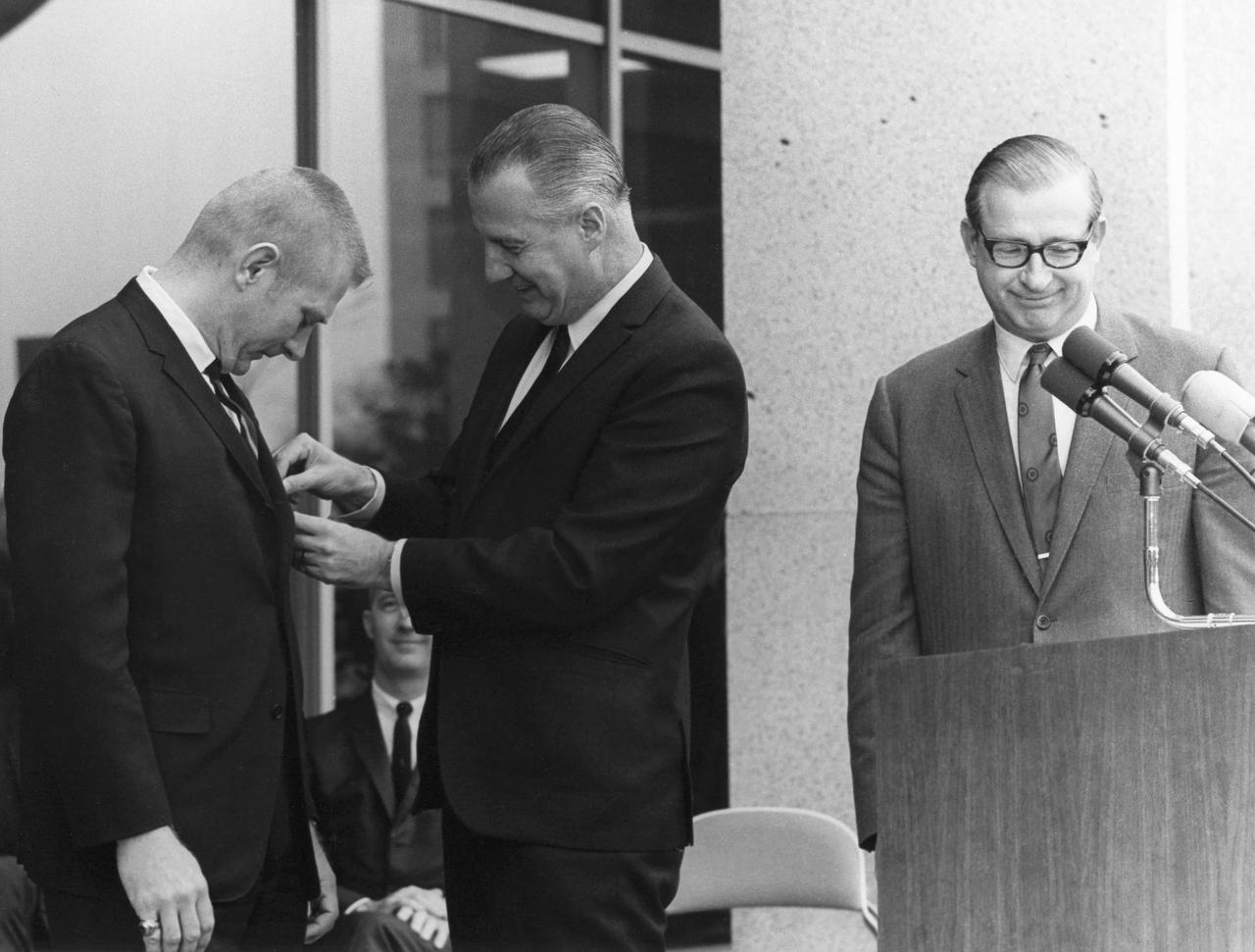
JSC2013-E-009914 (1969) -- Vice President Spiro Agnew pins Flight Director Eugene F. Kranz as NASA Administrator Thomas Paine and Apollo 9 Commander James A. McDivitt look on. Photo credit: NASA Hq. photo identification no. is 69-H-537

S69-17590 (18 Dec. 1968) --- These three astronauts are the prime crew of the Apollo 9 (Spacecraft 104/ Lunar Module 3/ Saturn 504) space mission. Left to right, are James A. McDivitt, commander; David R. Scott, command module pilot; and Russell L. Schweickart, lunar module pilot.
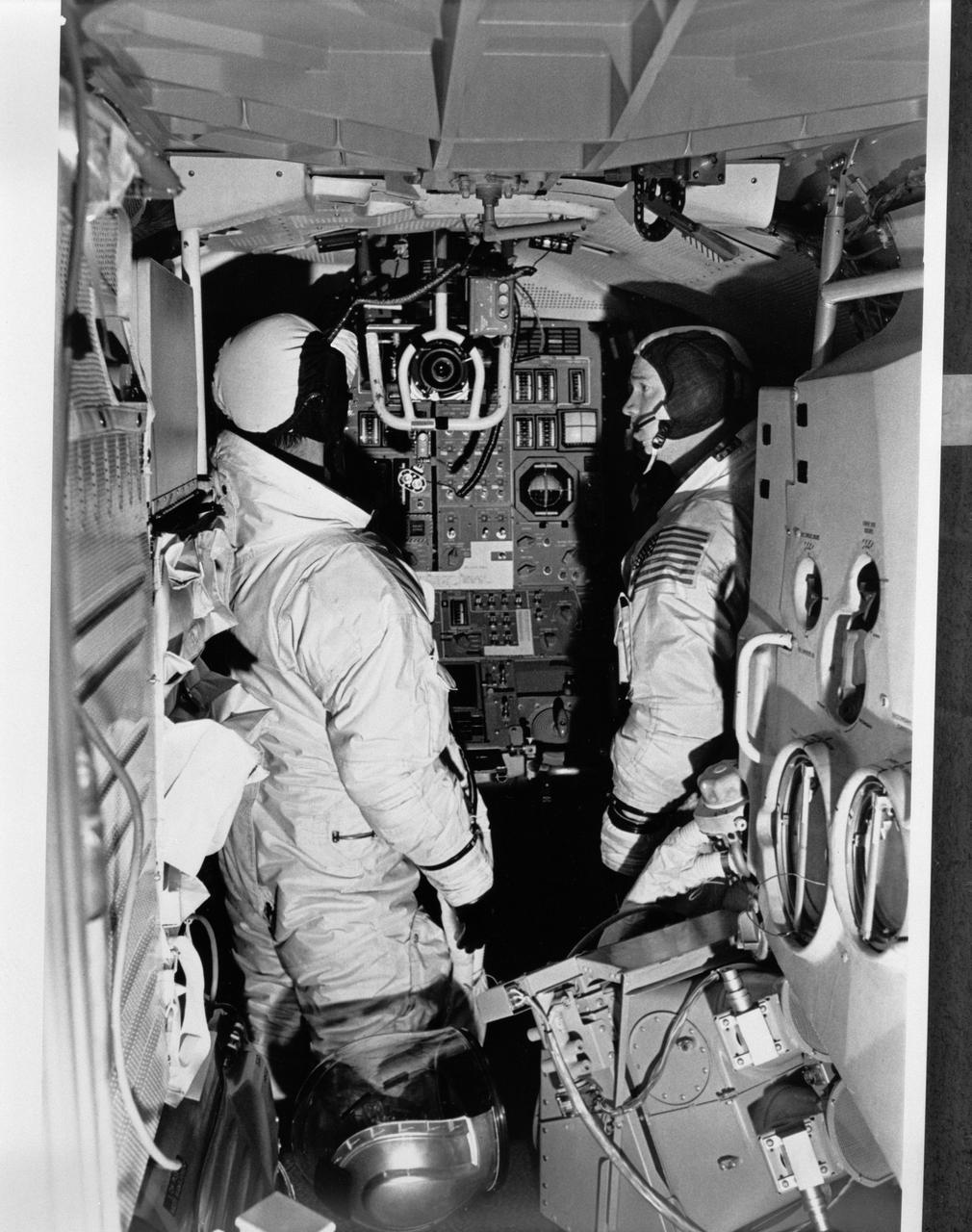
S69-19858 (December 1968) --- Two members of the Apollo 9 prime crew participate in simulation training in the Apollo Lunar Module Mission Simulator (LMMS) at the Kennedy Space Center (KSC). On the left is astronaut James A. McDivitt, commander; and on the right is astronaut Russell L. Schweickart, lunar module pilot.
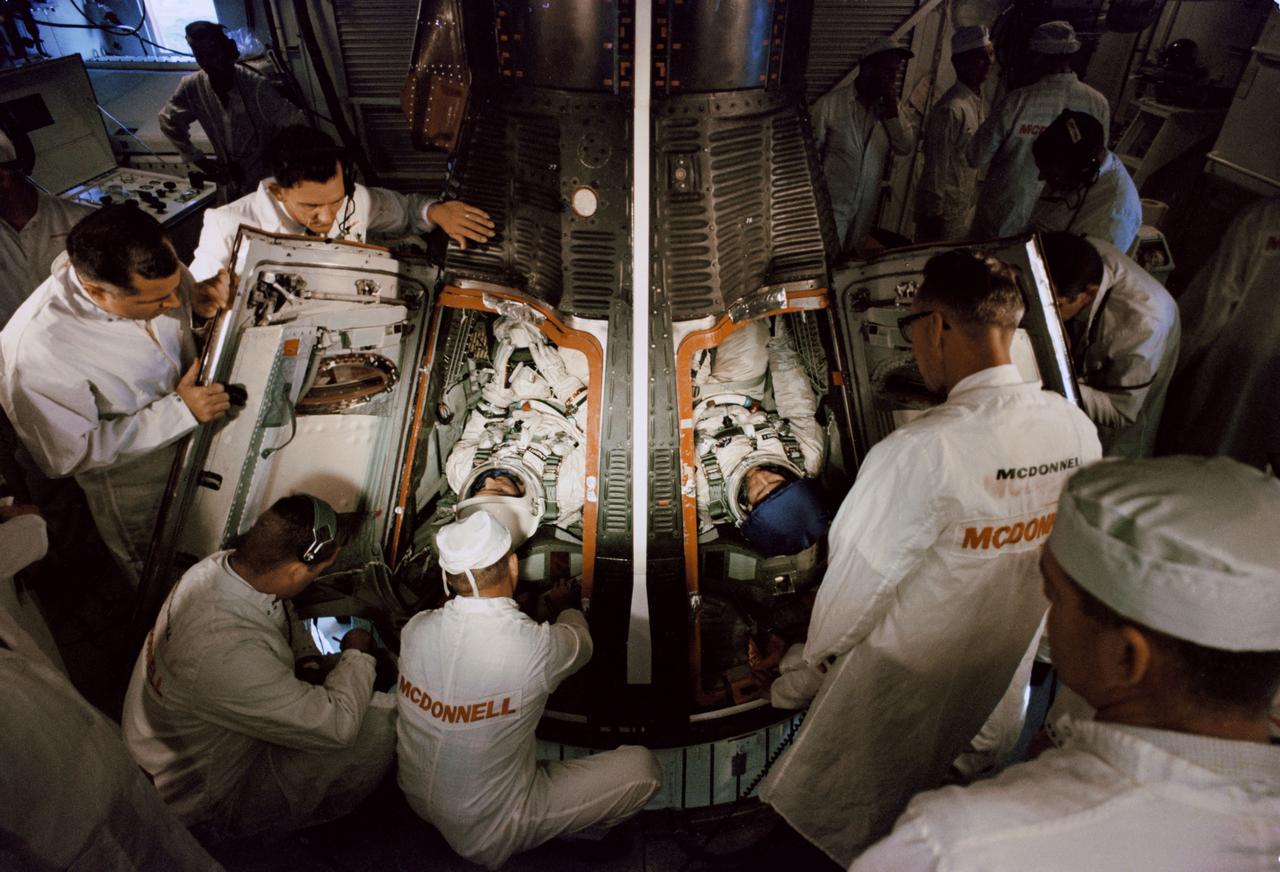
S65-29641 (3 June 1965) -- Astronauts Edward H. White II and James A. McDivitt are shown in the white room as they enter the Gemini-4 spacecraft atop the Titan launch vehicle at Cape Kennedy, Florida. The NASA Headquarters alternative photo number is 65-H-291.
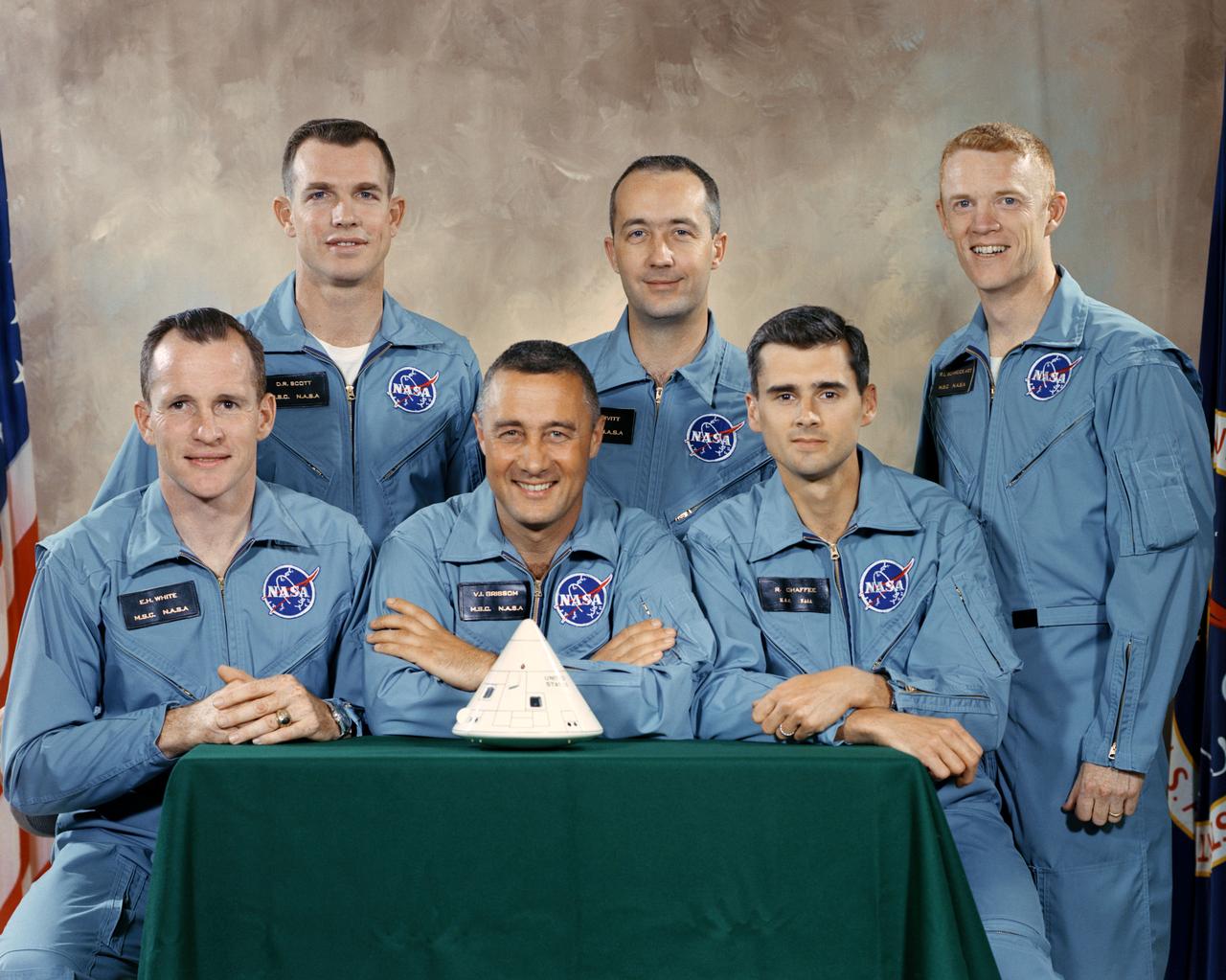
S66-30238 (1 April 1966) --- The National Aeronautics and Space Administration (NASA) has named these astronauts as the prime crew of the first manned Apollo Space Flight. Left to right, are Edward H. White II, command module pilot; Virgil I. Grissom, mission commander; and Roger B. Chaffee, lunar module pilot. On the second row are the Apollo 1 backup crew members, astronauts David R. Scott, James A. McDivitt and Russell L. Schweickart. EDITOR'S NOTE: Astronauts Grissom, White and Chaffee lost their lives in a Jan. 27, 1967 fire in the Apollo CM during testing at Cape Canaveral. McDivitt, Scott and Schweickart later served as crewmembers for the Apollo 9 Earth-orbital mission, which was one of the important stair-step missions leading up to the Apollo 11 manned lunar landing mission of July 1969.
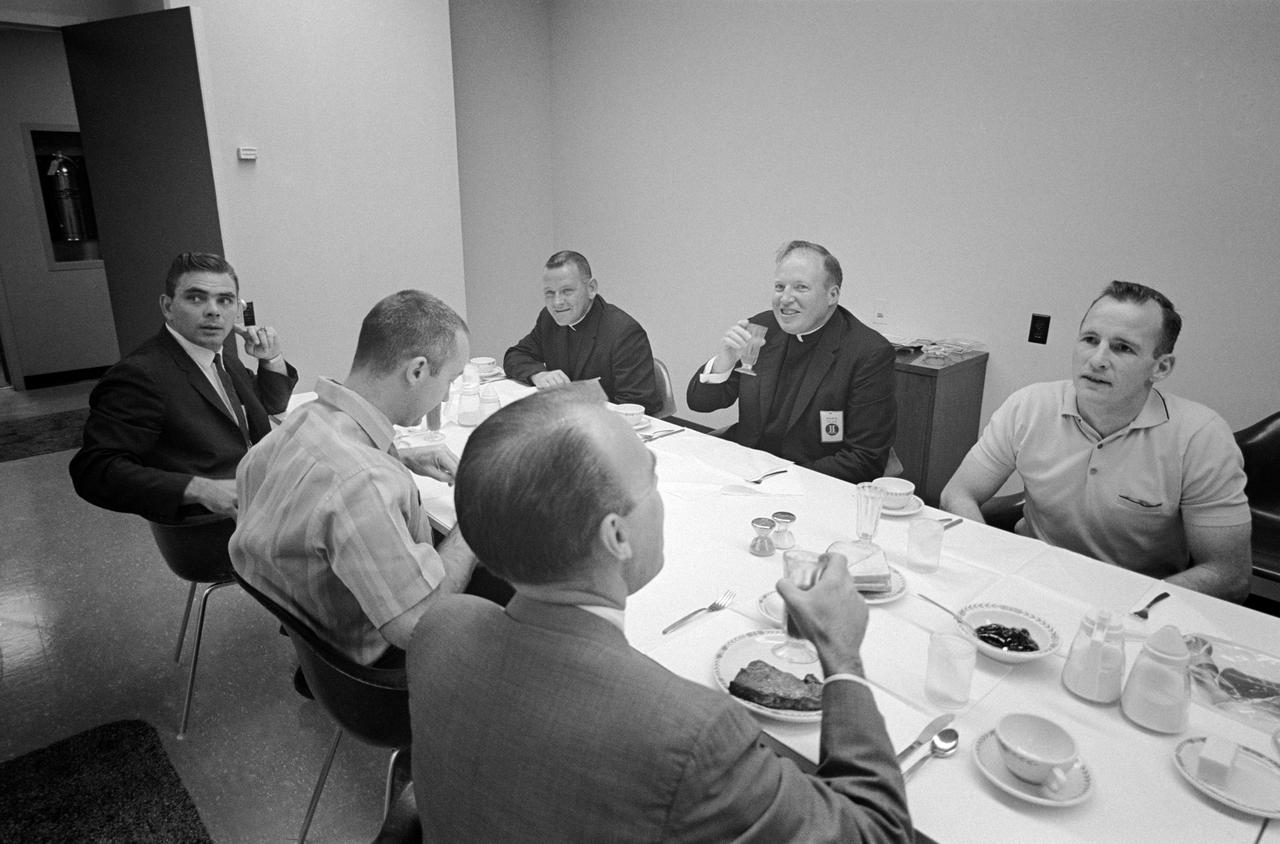
S65-19600 (3 June 1965) --- The prime crew for the Gemini-Titan 4 mission have an early morning breakfast prior to their historic flight which was launched at 10:16 a.m. (EST) on June 3, 1965. Shown here seated around the table (clockwise starting front center) are Dr. D. Owens Coons, chief, MSC Center Medical Office; astronaut James A. McDivitt, GT-4 command pilot; Dr. Eugene F. Tubbs, Kennedy Space Center; Rt. Rev. James Heiliky, McDivitt's priest at Cocoa Beach, Florida; Msgr. Irvine J. Nugent and astronaut Edward H. White II, GT-4 pilot. The group had a breakfast of tomato juice, broiled sirloin steak, poached eggs, toast, strawberry gelatin and coffee.
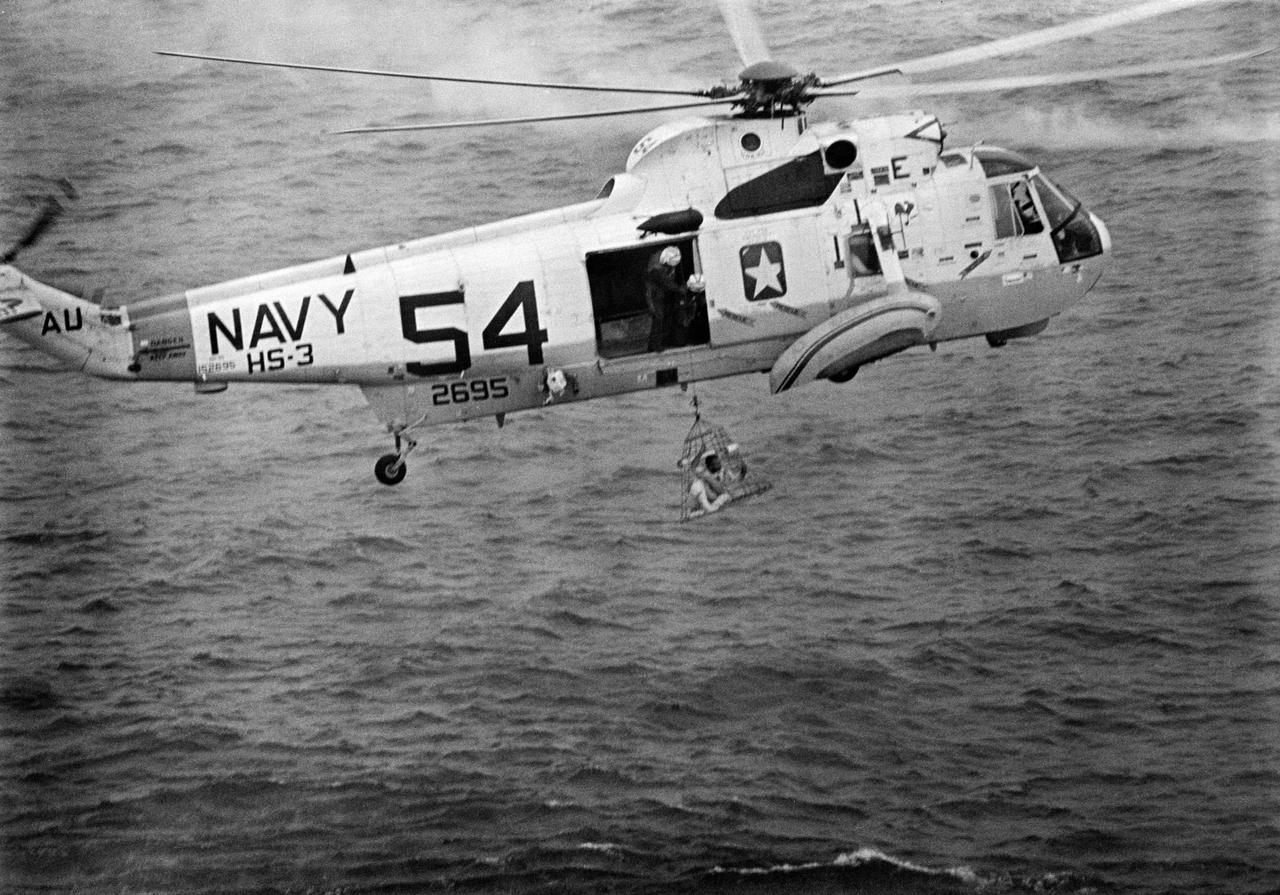
S69-27469 (13 March 1969) --- U.S. Navy helicopter crewmembers assist the Apollo 9 astronauts during recovery operations just after splashdown. Astronaut James A. McDivitt, mission commander, is in the Billy Pugh net about to aboard the helicopter. McDivitt was the third of the astronauts to egress the command module (out of frame). Also on the mission were astronauts David R. Scott, command module pilot; and Russell L. Schweickart, lunar module pilot. The three rehearsed in Earth orbit the transportation and docking maneuvers necessary to occur in lunar orbit in order for future crews to land on the moon's surface. Splashdown occurred at 12:00:53 p.m. (EST), March 13, 1969, only 4.5 nautical miles from the prime recovery ship, USS Guadalcanal, to conclude a successful 10-day mission.
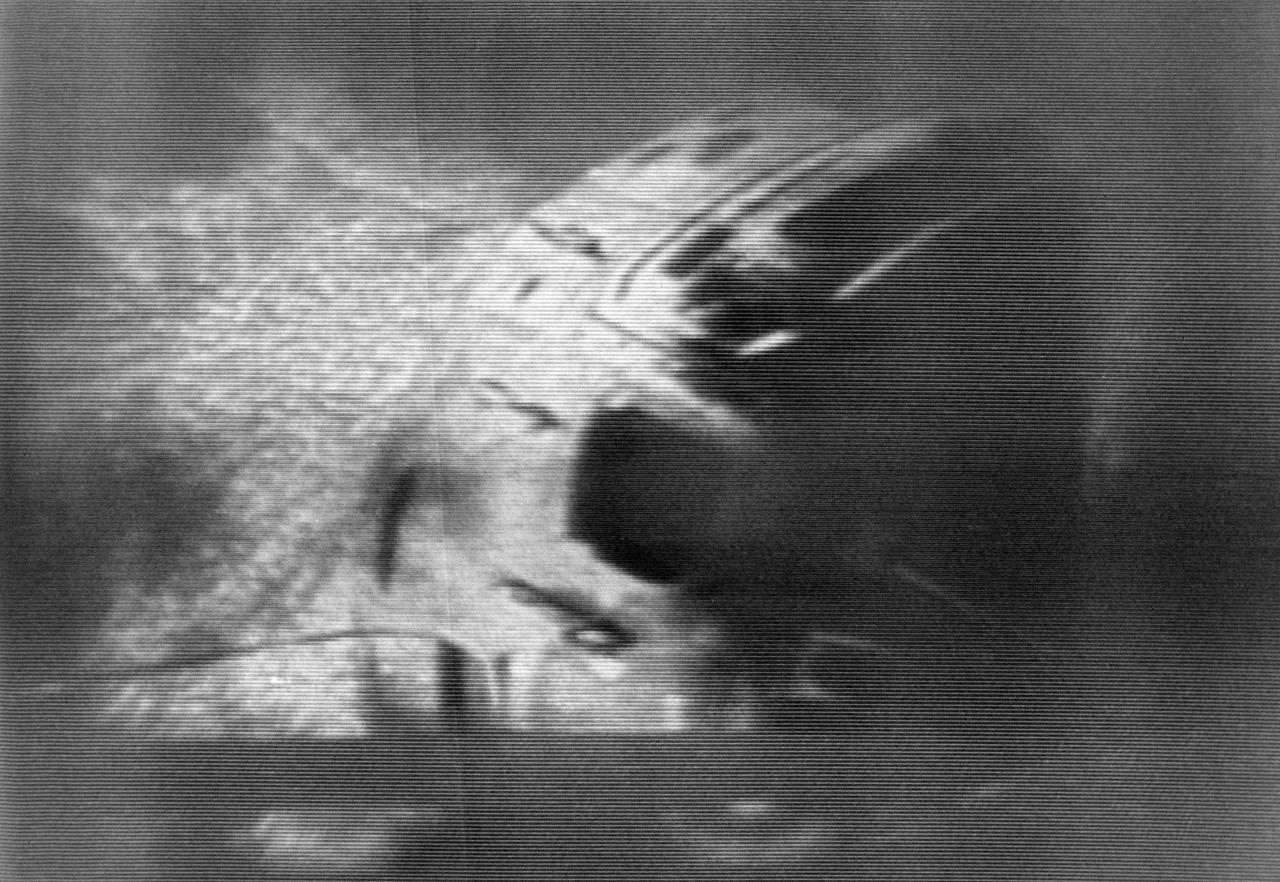
S69-26150 (6 March 1969) --- Television watchers on Earth saw this view of the Apollo 9 Command Module during the second live telecast from Apollo 9 early Thursday afternoon on the fourth day in space. This view is looking through the docking window of the Lunar Module. The cloud-covered Earth can be seen in the background. Inside the Lunar Module "Spider" were Astronauts James A. McDivitt, Apollo 9 commander; and Russell L. Schweickart, lunar module pilot. At this moment Apollo 9 was orbiting Earth with the Command and Service Modules docked nose-to-nose with the Lunar Module. Astronaut David R. Scott, command module pilot, remained at the controls in the Command Module "Gumdrop" while the other two astronauts checked out the Lunar Module. McDivitt and Schweickart moved into the Lunar Module from the Command Module by way of the docking tunnel.

S69-26149 (6 March 1969) --- Astronaut James A. McDivitt, Apollo 9 commander, is seen inside the Lunar Module "Spider" drinking from a hand water dispenser in this photograph from the second live television transmission from Apollo 9. Astronaut Russell L. Schweickart, lunar module pilot, is in the left background. The telecast was made early Thursday afternoon on the fourth day in space. At this moment Apollo 9 was orbiting Earth with the Command and Service Modules docked nose-to-nose with the Lunar Module. Astronaut David R. Scott, command module pilot, remained at the controls in the Command Module "Gumdrop" while the other two astronauts checked out the Lunar Module. McDivitt and Schweickart moved into the Lunar Module from the Command Module by way of the docking tunnel.
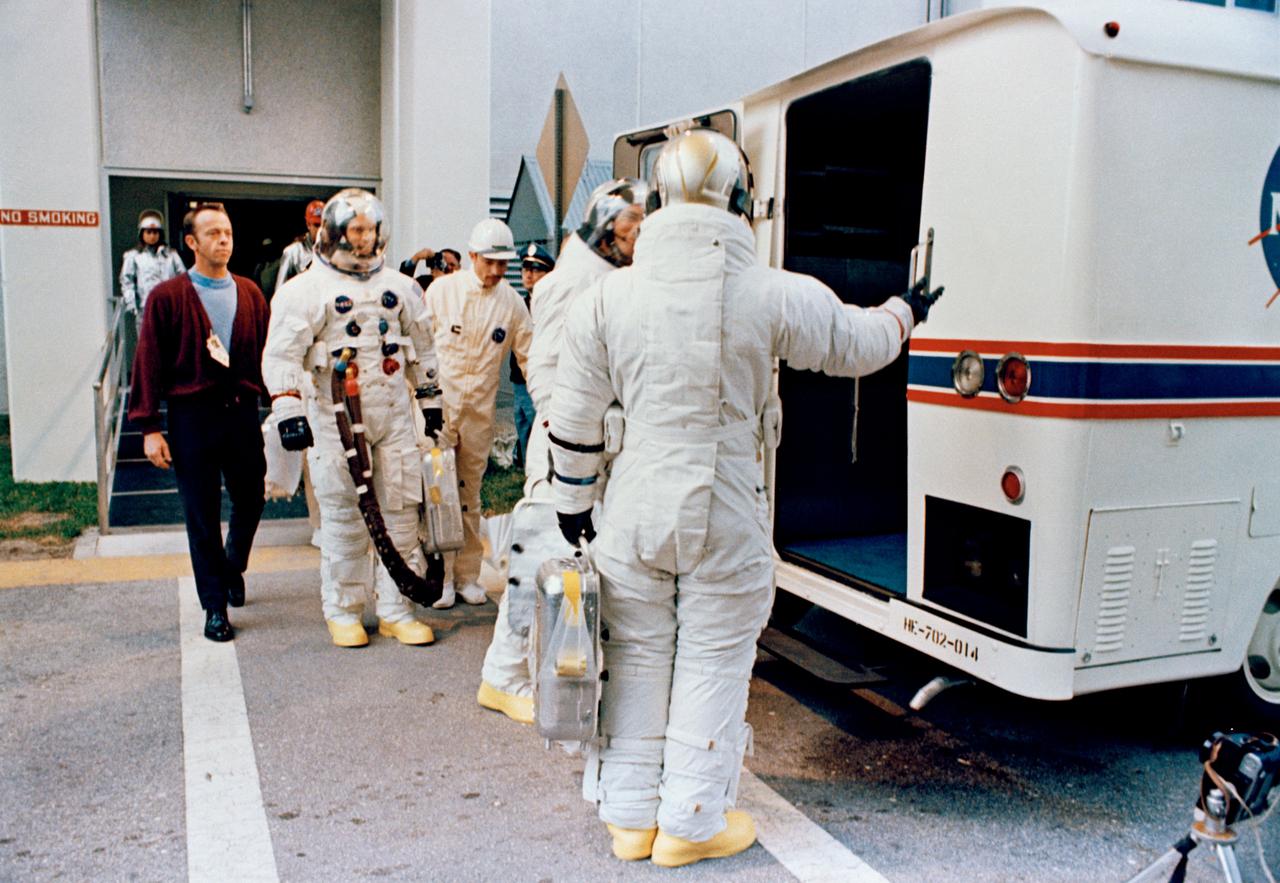
S69-25881 (3 March 1969) --- The Apollo 9 crew leaves the Kennedy Space Center's Manned Spacecraft Operations Building during the Apollo 9 prelaunch countdown. The crewman entered the special transfer van which transported them to their waiting spacecraft at Pad A, Launch Complex 39. Astronaut James A. McDivitt (back to camera) is the commander. McDivitt appears to be inviting astronaut David R. Scott, command module pilot, to step first into van. In background is astronaut Russell L. Schweickart, lunar module pilot. Walking along almost behind Schweickart is astronaut Alan B. Shepard Jr., chief, Astronaut Office, Manned Spacecraft Center. Apollo 9 was launched at 11 a.m. (EST), March 3, 1969, on a 10-day Earth-orbital mission.
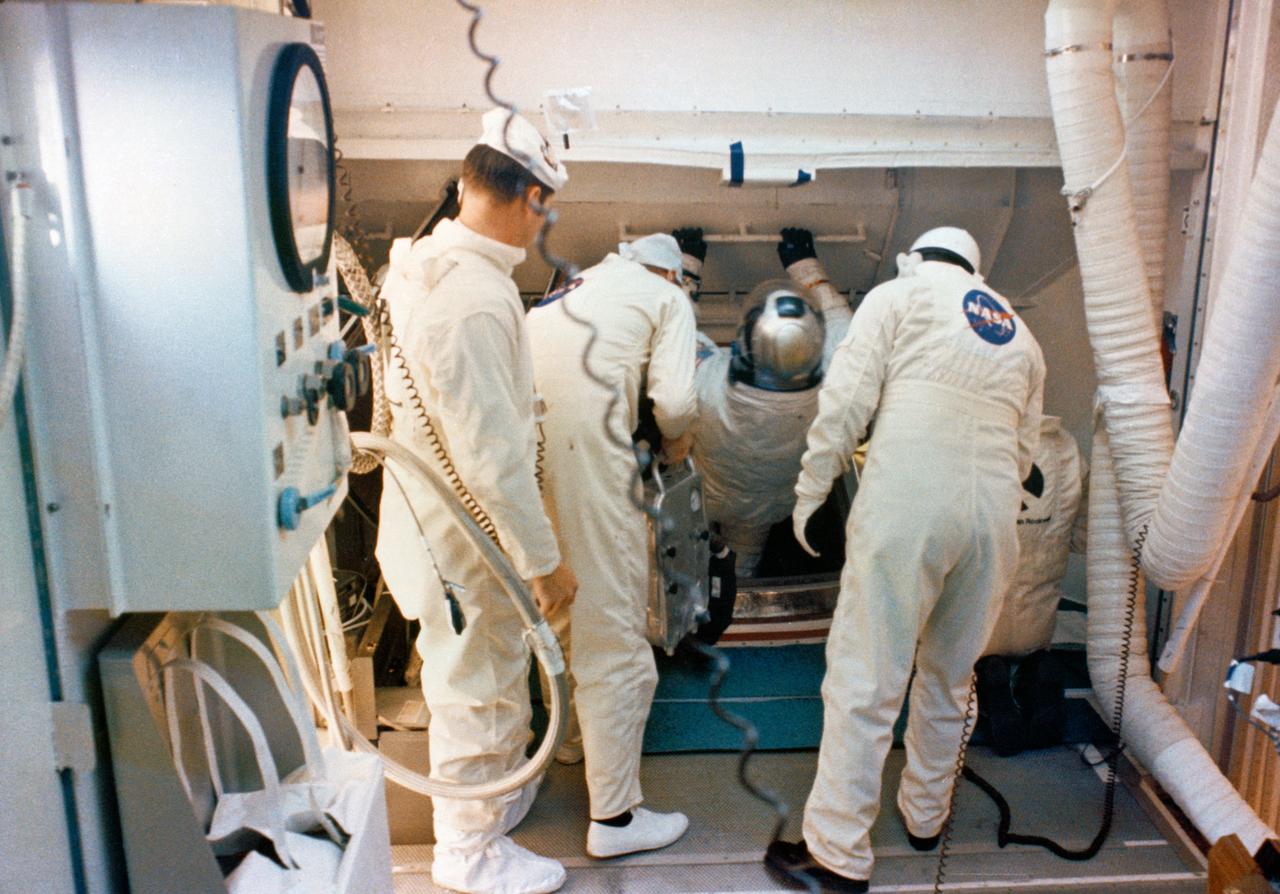
S69-25488 (23 Feb. 1969) --- Interior view of the White Room at Pad A, Launch Complex 39, Kennedy Space Center (KSC), during an Apollo 9 Countdown Demonstration Test (CDDT). Astronauts James A. McDivitt, commander; David R. Scott, command module pilot; and Russell L. Schweickart, lunar module pilot, were participating in a dress rehearsal in preparation for their scheduled 10-day Earth-orbital space mission.
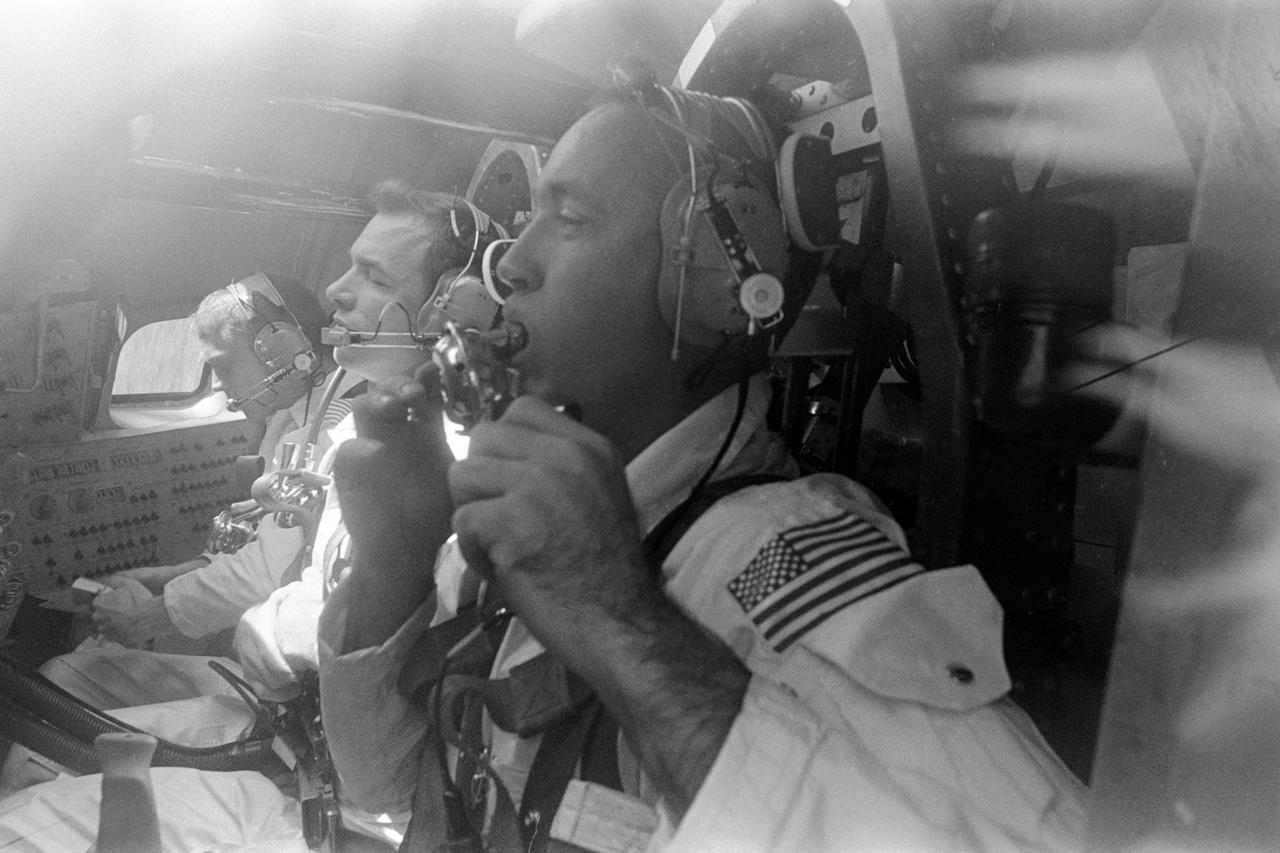
S68-54850 (5 Nov. 1968) --- The prime crew of the Apollo 9 (Spacecraft 104/Lunar Module 3/Saturn 504) space mission are seen inside an Apollo command module boilerplate during water egress training activity in the Gulf of Mexico. From foreground, are astronauts James A. McDivitt, commander; David R. Scott, command module pilot; and Russell L. Schweickart, lunar module pilot.
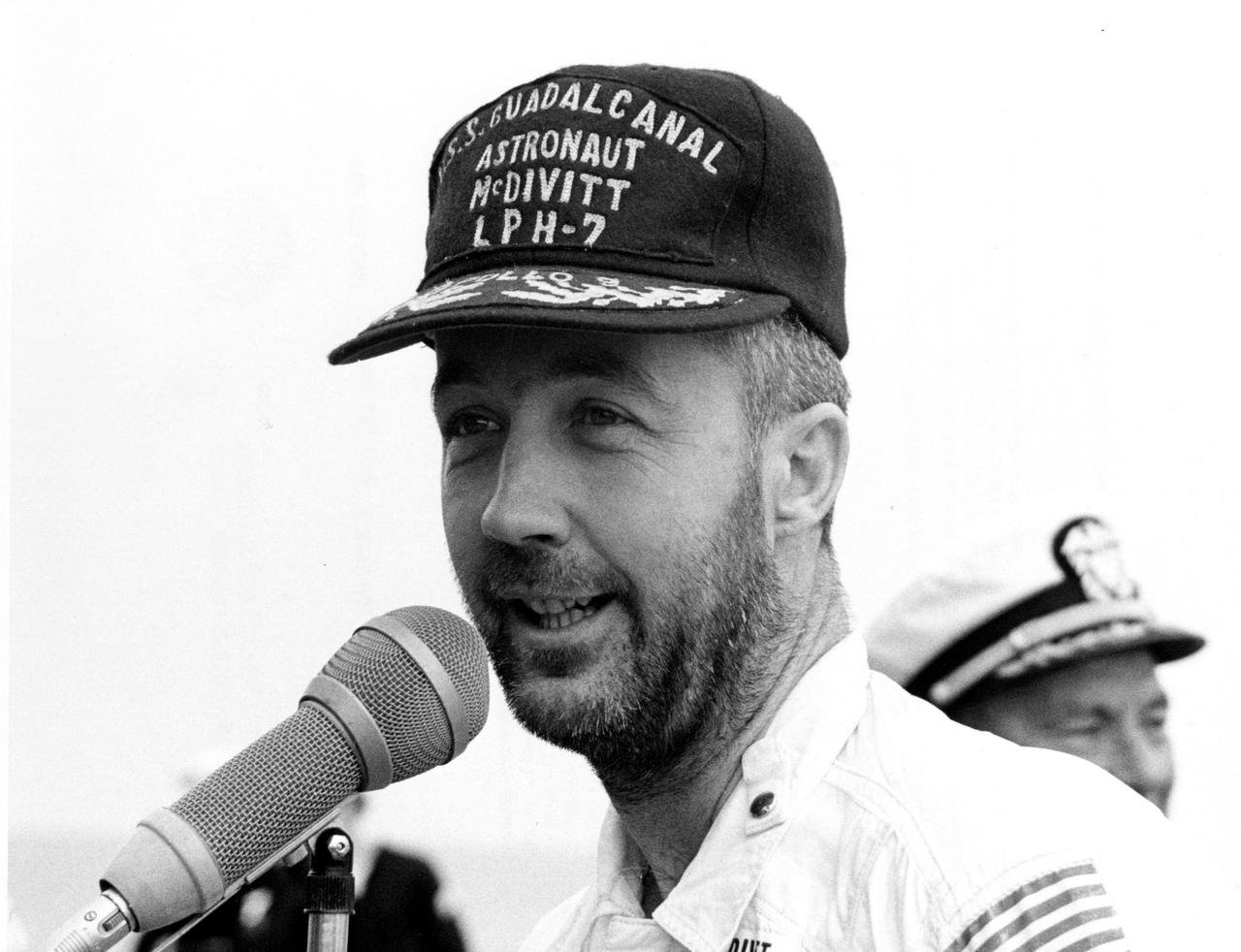
ABOARD THE USS GUADALCANAL -- Bearded Apollo 9 commander James A. McDivitt speaks to personnel aboard the USS Guadalcanal, prime recovery ship, an hour after he and astronauts David R. Scott and Russell L. Schweickart splashed down today in the Atlantic Ocean, 780 nautical miles southeast of Cape Kennedy. Their 10-day Earth orbital flight verified a lunar landing later this year. The National Aeronautics and Space Administration directs the Apollo program.
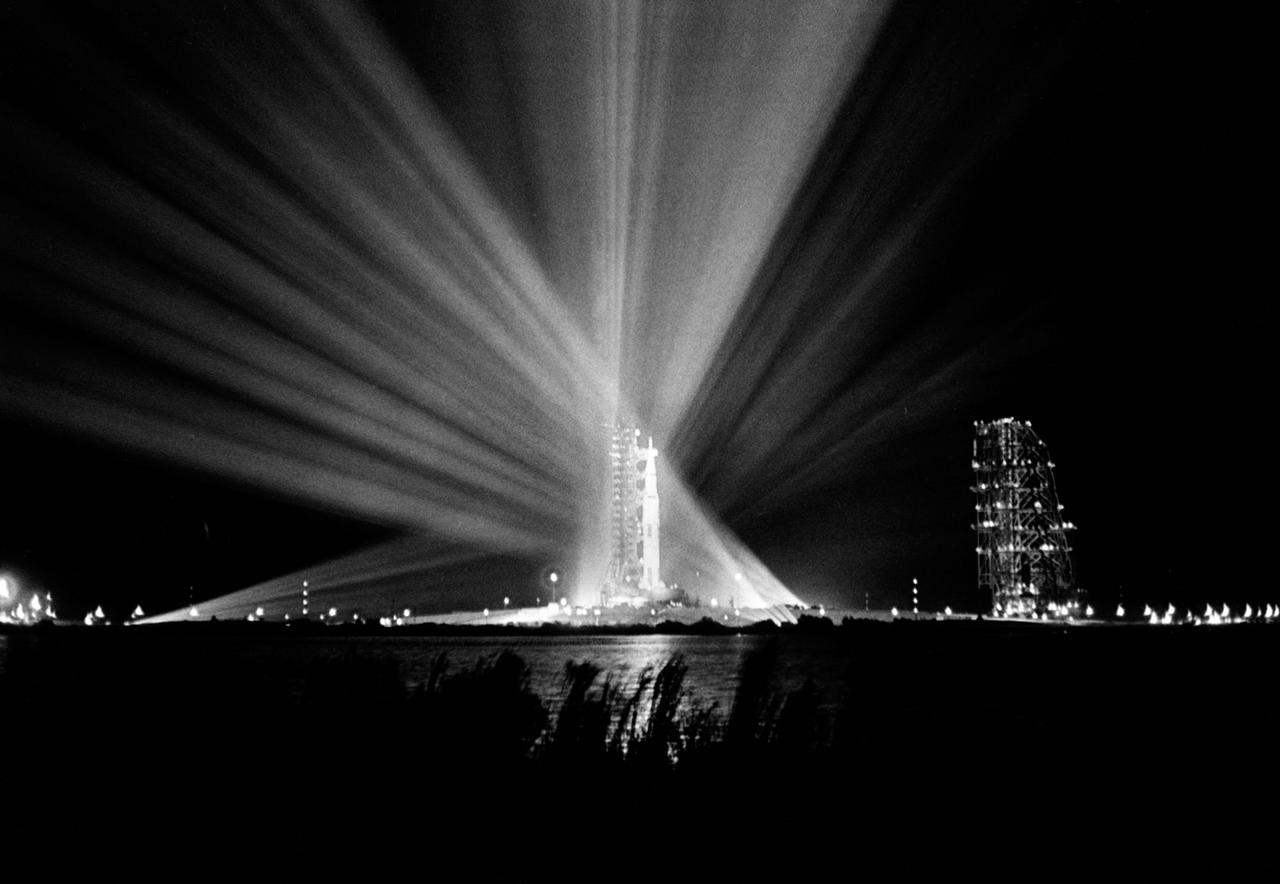
S69-25879 (23 Feb. 1969) --- Nighttime view of the 363-feet-high Apollo 9 space vehicle at Pad A, Launch Complex 39, Kennedy Space Center, during preparations for the scheduled 10-day Earth-orbital space mission. The crew of the Apollo 9 (Spacecraft 104/Lunar Module 3/Saturn 504) space flight will be astronauts James A. McDivitt, David R. Scott, and Russell L. Schweickart.
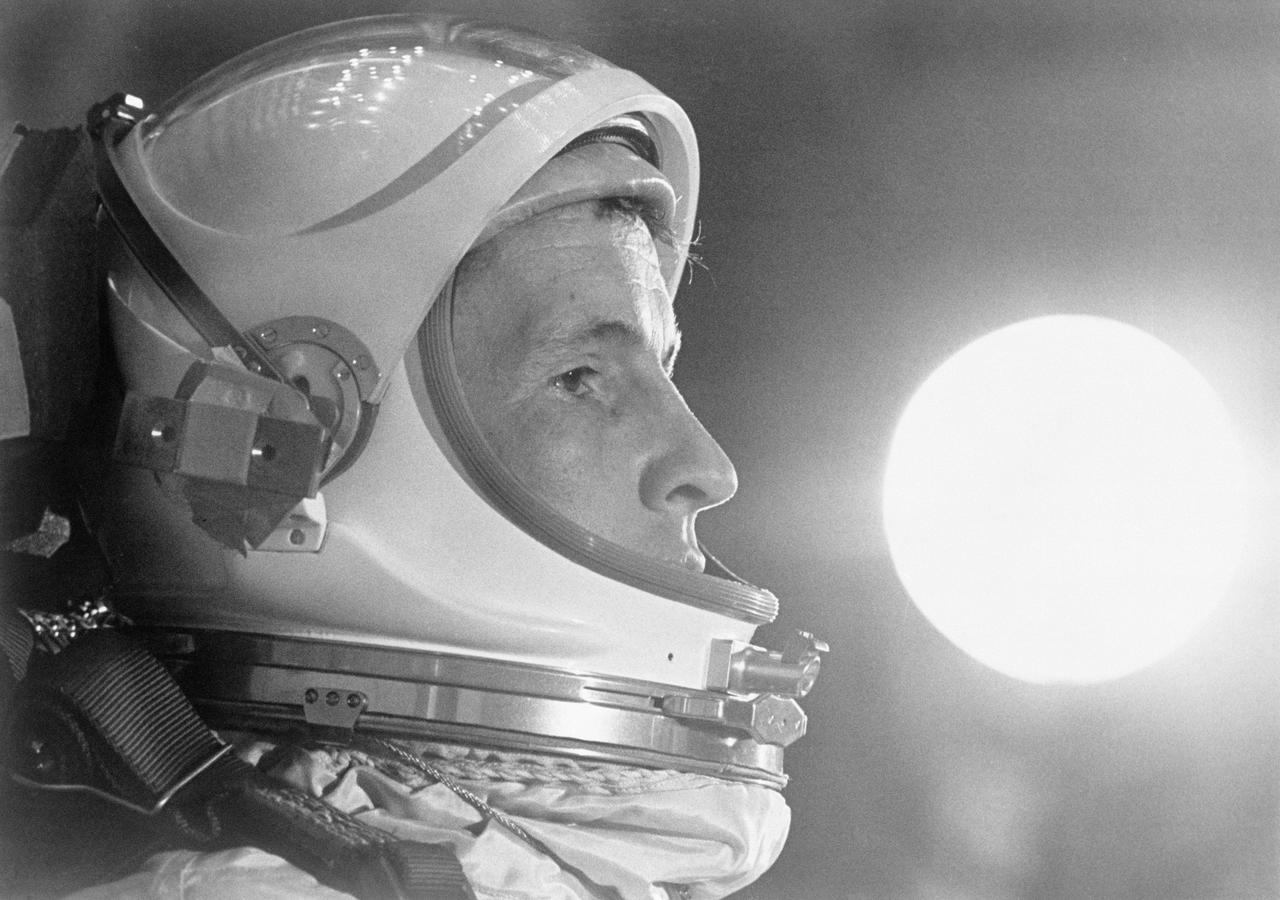
S65-19576 (21 May 1965) --- Astronaut Edward H. White II, pilot of the Gemini-Titan 4 prime crew, goes through a wet mock simulation exercise as part of the checkout procedure for the Gemini-4 spaceflight. The two-man Gemini-4 mission, scheduled no earlier than June 3, 1965, will orbit Earth 62 times in four days. Astronaut James A. McDivitt (out of frame) is the GT-4 prime crew command pilot.
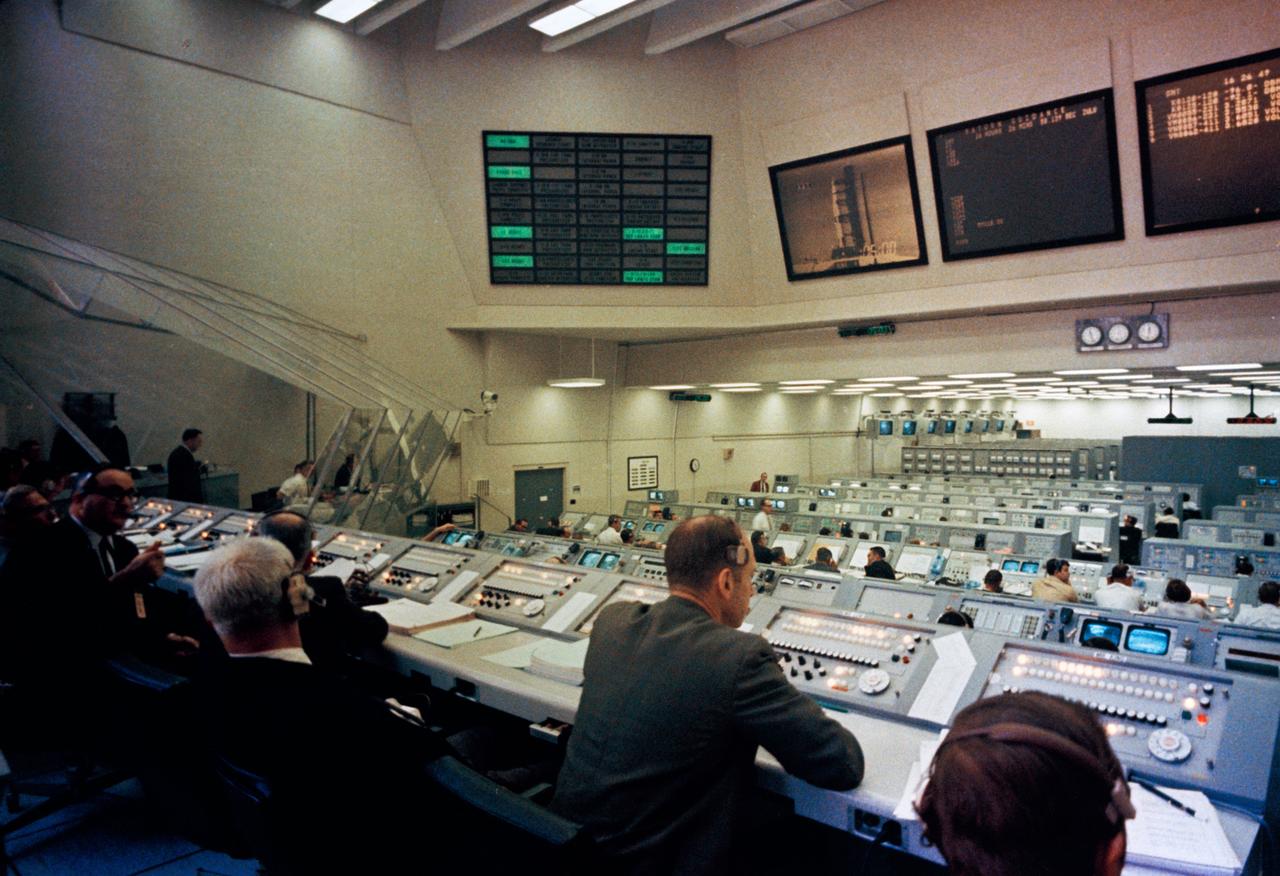
S69-25880 (23 Feb. 1969) --- Overall view of Firing Room 2 in the Launch Control Center, Launch Complex 39, Kennedy Space Center, during an Apollo 9 Countdown Demonstration Test. Astronauts James A. McDivitt, David R. Scott, and Russell L. Schweickart were participating in a training exercise in preparation for their scheduled 10-day Earth-orbital space mission.
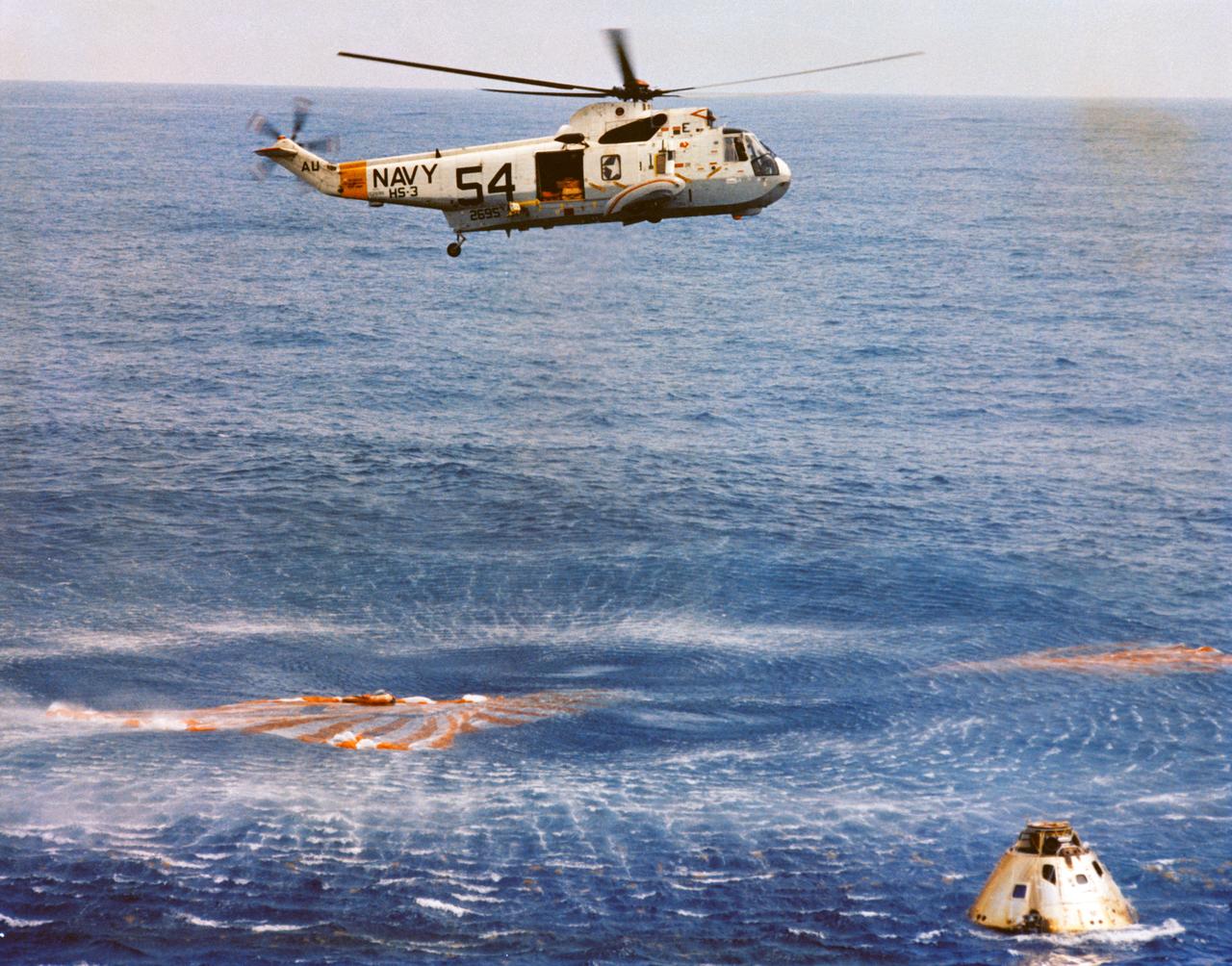
S69-27919 (13 March 1969) --- Immediately after splashdown a recovery helicopter from the USS Guadalcanal hovers over the Apollo 9 spacecraft. Still inside the Command Module (CM) are astronauts James A. McDivitt, David R. Scott, and Russell L. Schweickart. Splashdown occurred at 12:00:53 p.m. (EST), March 13, 1969, only 4.5 nautical miles from the USS Guadalcanal, the prime recovery ship, to conclude a successful 10-day Earth-orbital mission in space.
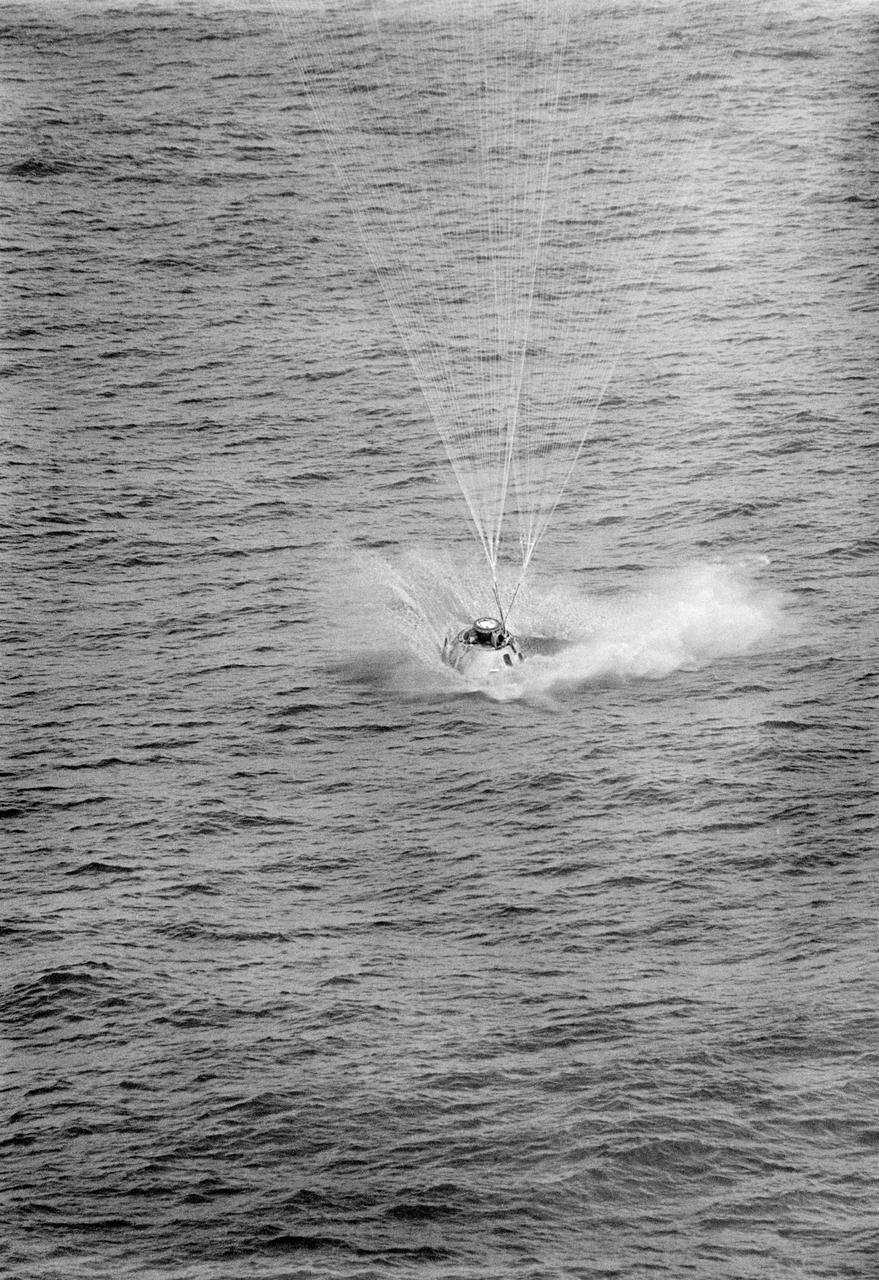
S69-27466 (13 March 1969) --- The Apollo 9 spacecraft, with astronauts James A. McDivitt, David R. Scott, and Russell L. Schweickart aboard, touches down in the Atlantic recovery area to conclude a successful 10-day Earth-orbital space mission. Splashdown occurred at 12:00:53 p.m. (EST), March 13, 1969, only 4.5 nautical miles from the prime recovery ship, USS Guadalcanal.
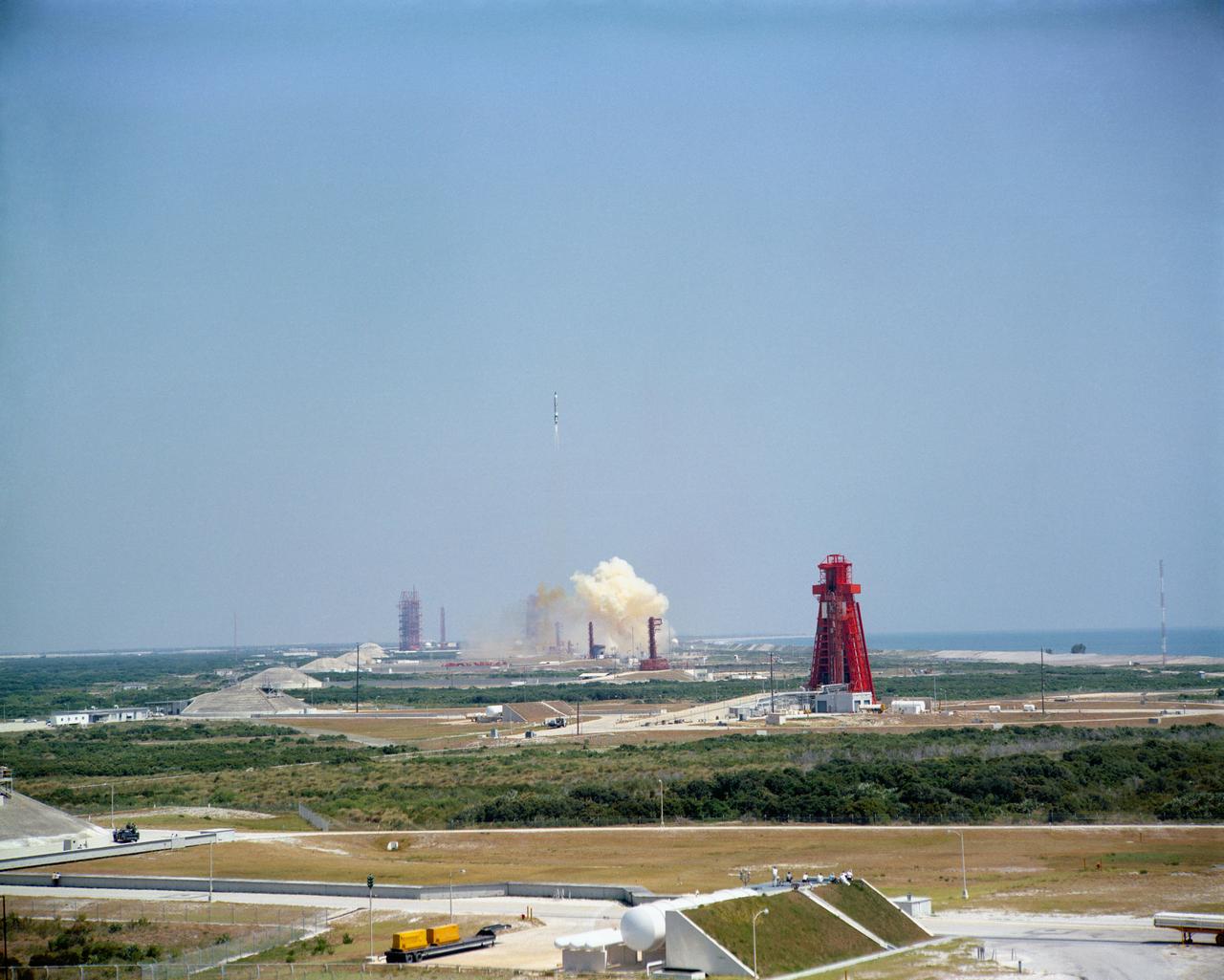
S65-29601 (3 June 1965) --- Distant view of the launch of the Gemini-Titan 4 (GT-4) spacecraft from Pad 19 at 10:16 a.m. (EST) on June 3, 1965. The Gemini IV spacecraft carried astronauts James A. McDivitt, command pilot; and Edward H. White II, pilot, on a four-day, 62-revolution mission that lasted 97 hours and 56 minutes.
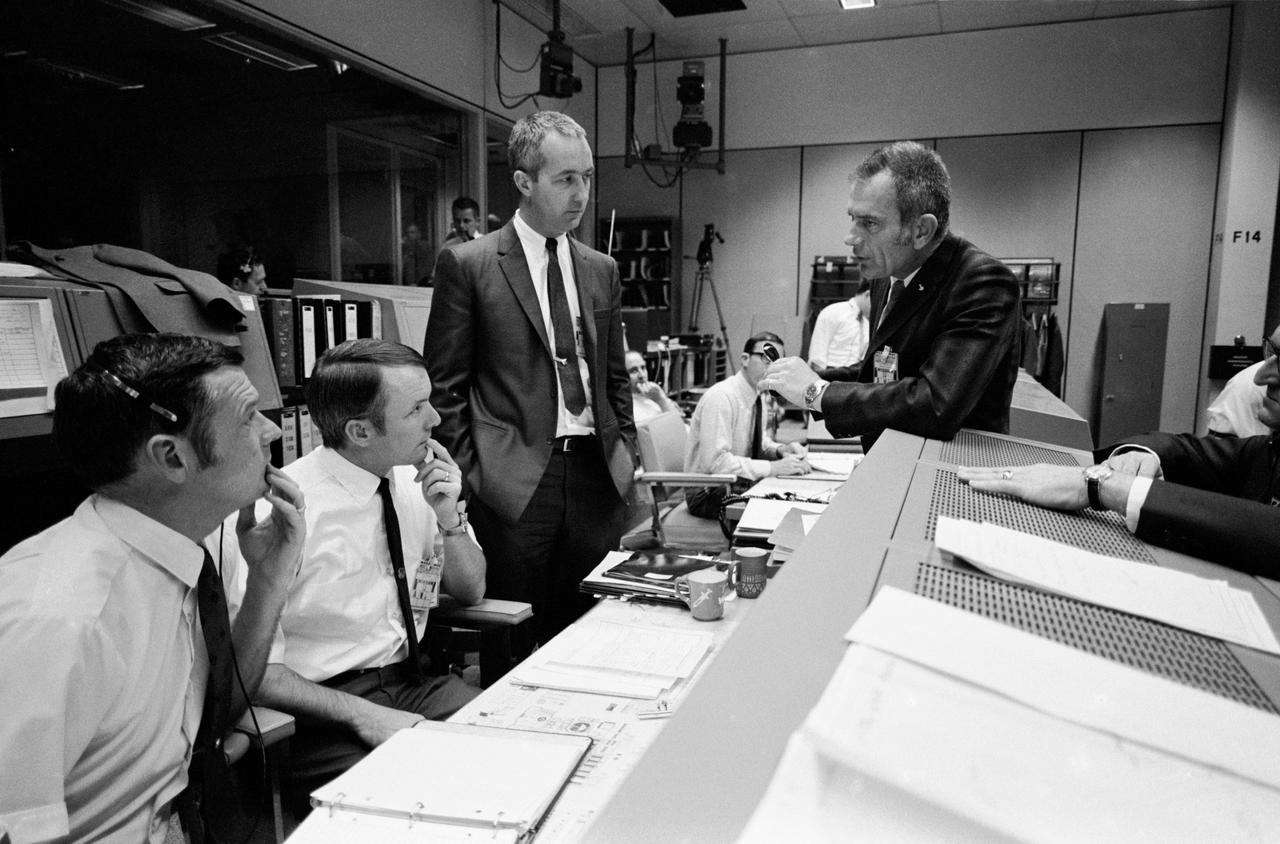
S70-35369 (16 April 1970) --- Discussion in the Mission Operations Control Room (MOCR) dealing with the Apollo 13 crewmen during their final day in space. From left to right are Glynn S. Lunney, Shift 4 flight director; Gerald D. Griffin, Shift 2 flight director; astronaut James A. McDivitt, manager, Apollo Spacecraft Program, MSC; Dr. Donald K. Slayton, director of Flight Crew Operations, MSC; and Dr. Willard R. Hawkins, M.D., Shift 1 flight surgeon.

S69-20364 (13 March 1969) --- The Apollo 9 spacecraft, with astronauts James A. McDivitt, David R. Scott, and Russell L. Schweickart aboard, approaches touchdown in the Atlantic recovery area to conclude a successful 10-day Earth-orbital space mission. Splashdown occurred at 12:00:53 p.m. (EST), March 13, 1969, only 4.5 nautical miles from the prime recovery ship, USS Guadalcanal.
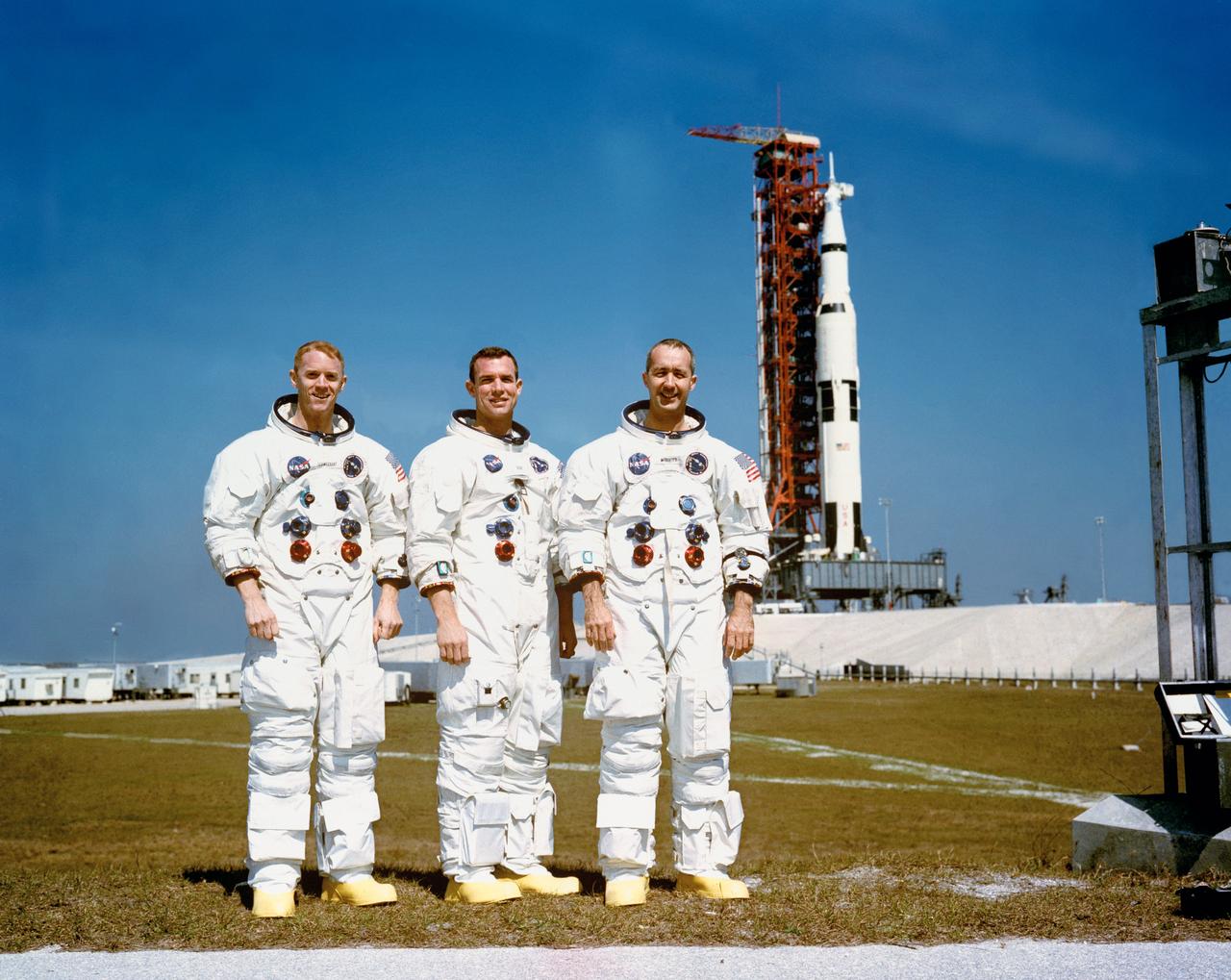
S69-25478 (23 Feb. 1969) --- These three astronauts are the prime crew of the Apollo 9 Earth-orbital space mission. Left to right, are Russell L. Schweickart, lunar module pilot; David R. Scott, command module pilot; and James A. McDivitt, commander. In the right background is the Apollo 9 space vehicle on Pad A, Launch Complex 39, Kennedy Space Center (KSC). They are pausing momentarily during training for their scheduled 10-day mission.
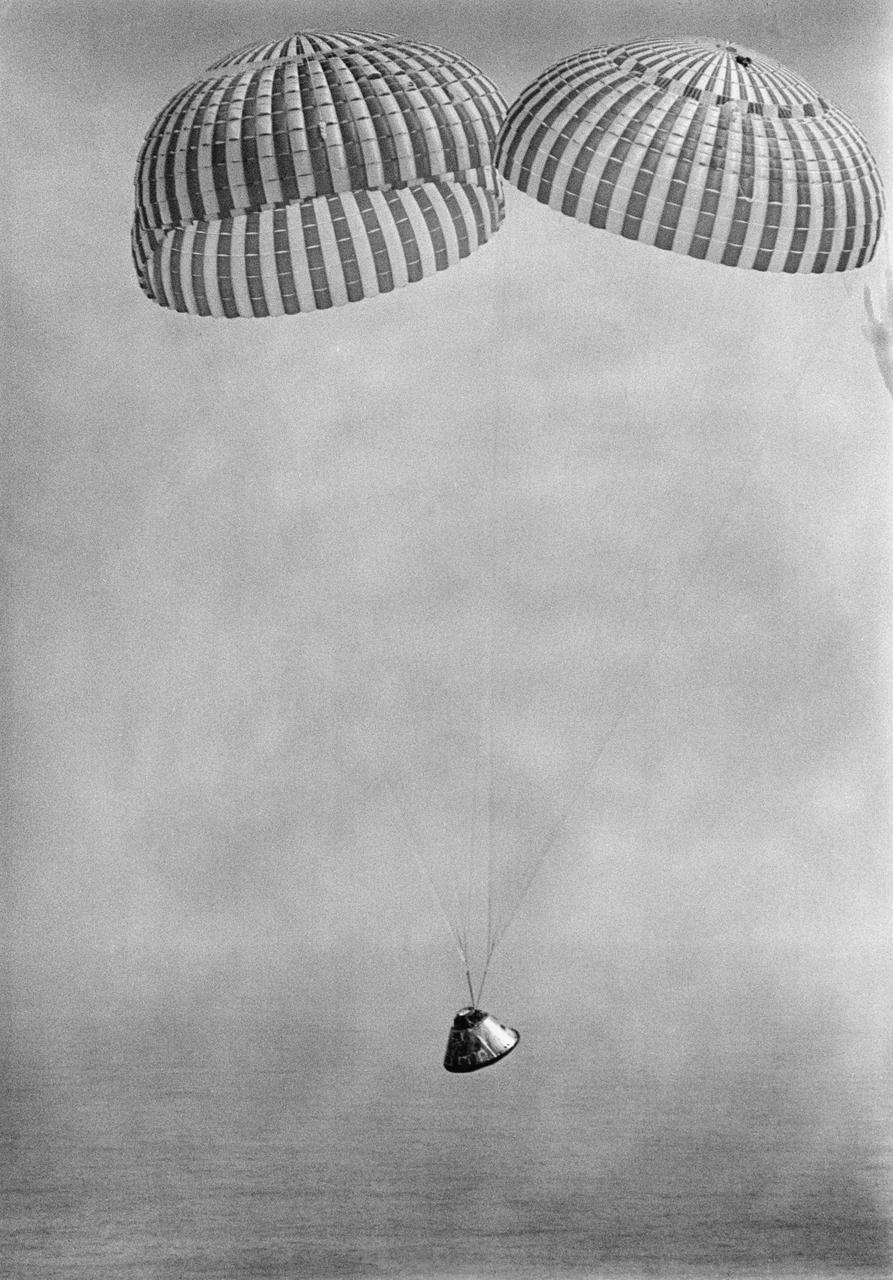
S69-27467 (13 March 1969) --- The Apollo 9 spacecraft, with astronauts James A. McDivitt, David R. Scott, and Russell L. Schweickart aboard, approaches touchdown in the Atlantic recovery area. Splashdown occurred at 12:00:53 p.m. (EST), March 13, 1969, only 4.5 nautical miles from the prime recovery ship, USS Guadalcanal. Photo credit: NASA
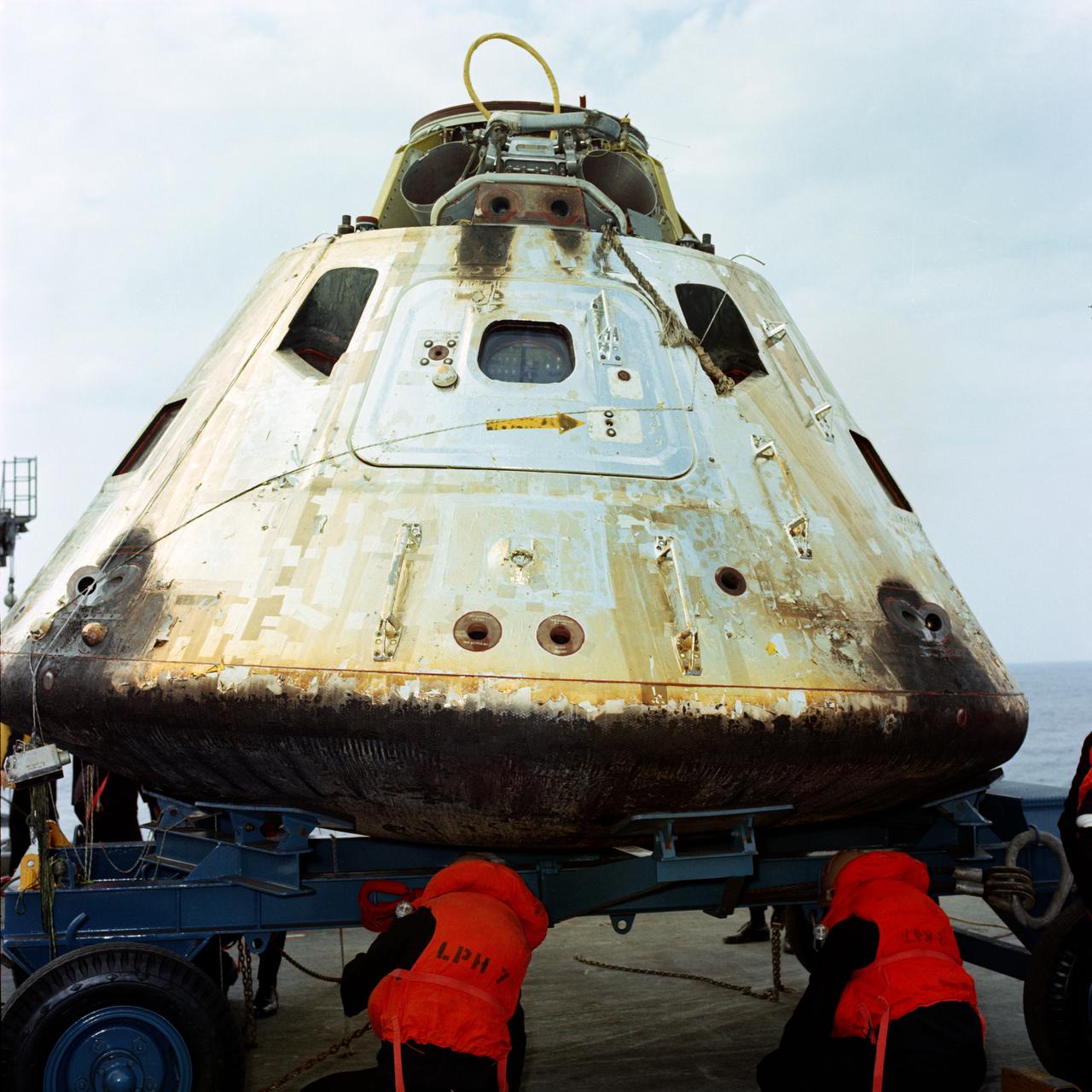
S69-20239 (13 March 1969) --- Close-up view of the Apollo 9 Command Module (CM) as it sets on dolly on the deck of the USS Guadalcanal just after being hoisted from the water. The Apollo 9 spacecraft, with astronauts James A. McDivitt, David R. Scott, and Russell L. Schweickart aboard, splashed down at 12:00:53 p.m. (EST), March 13, 1969, only 4.5 nautical miles from the aircraft carrier to conclude a successful 10-day Earth-orbital mission in space.
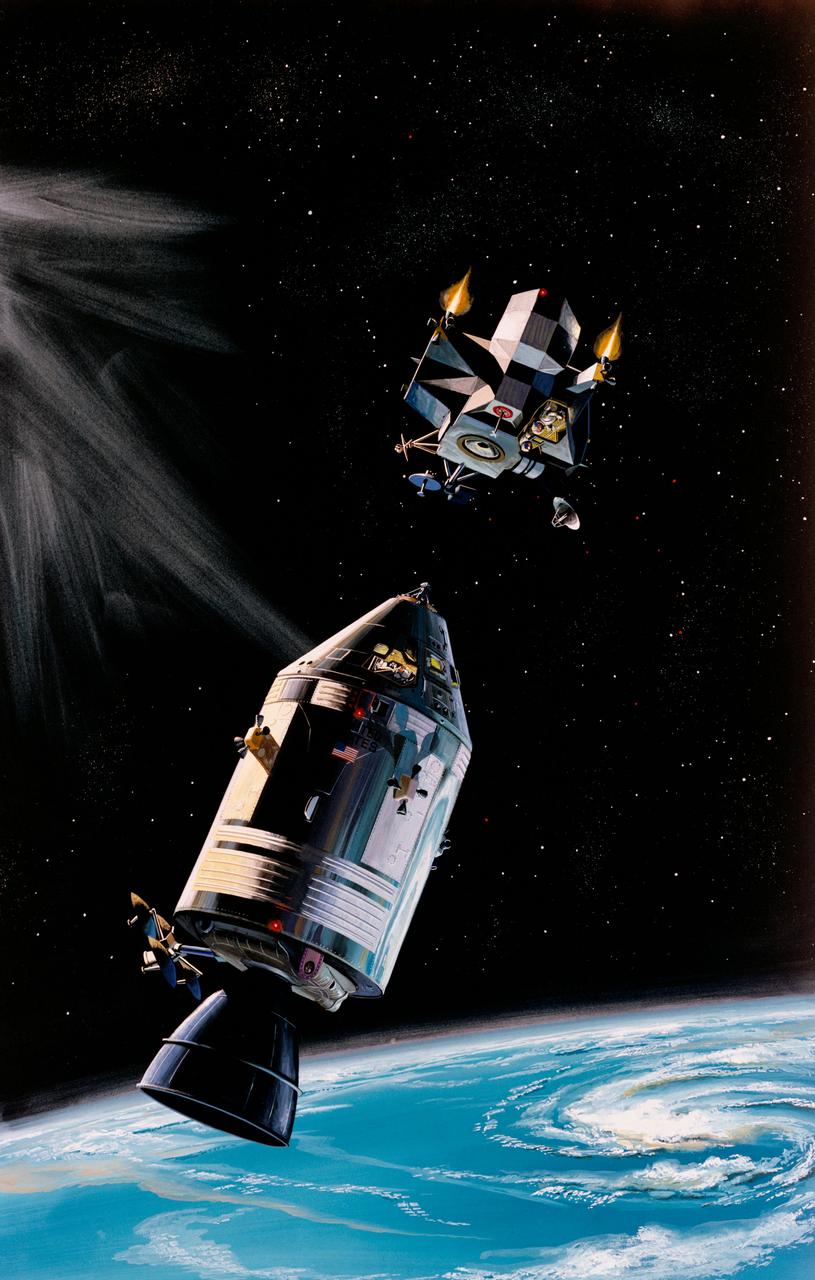
S69-18546 (February 1969) --- North American Rockwell artist's concept illustrating the docking of the Lunar Module ascent stage with the Command and Service Modules during the Apollo 9 mission. The two figures in the Lunar Module represent astronauts James A. McDivitt, Apollo 9 commander; and Russell L. Schweickart, lunar module pilot. The figure in the Command Module represents astronaut David R. Scott, command module pilot. The Apollo 9 mission will evaluate spacecraft lunar module systems performance during manned Earth-orbital flight.
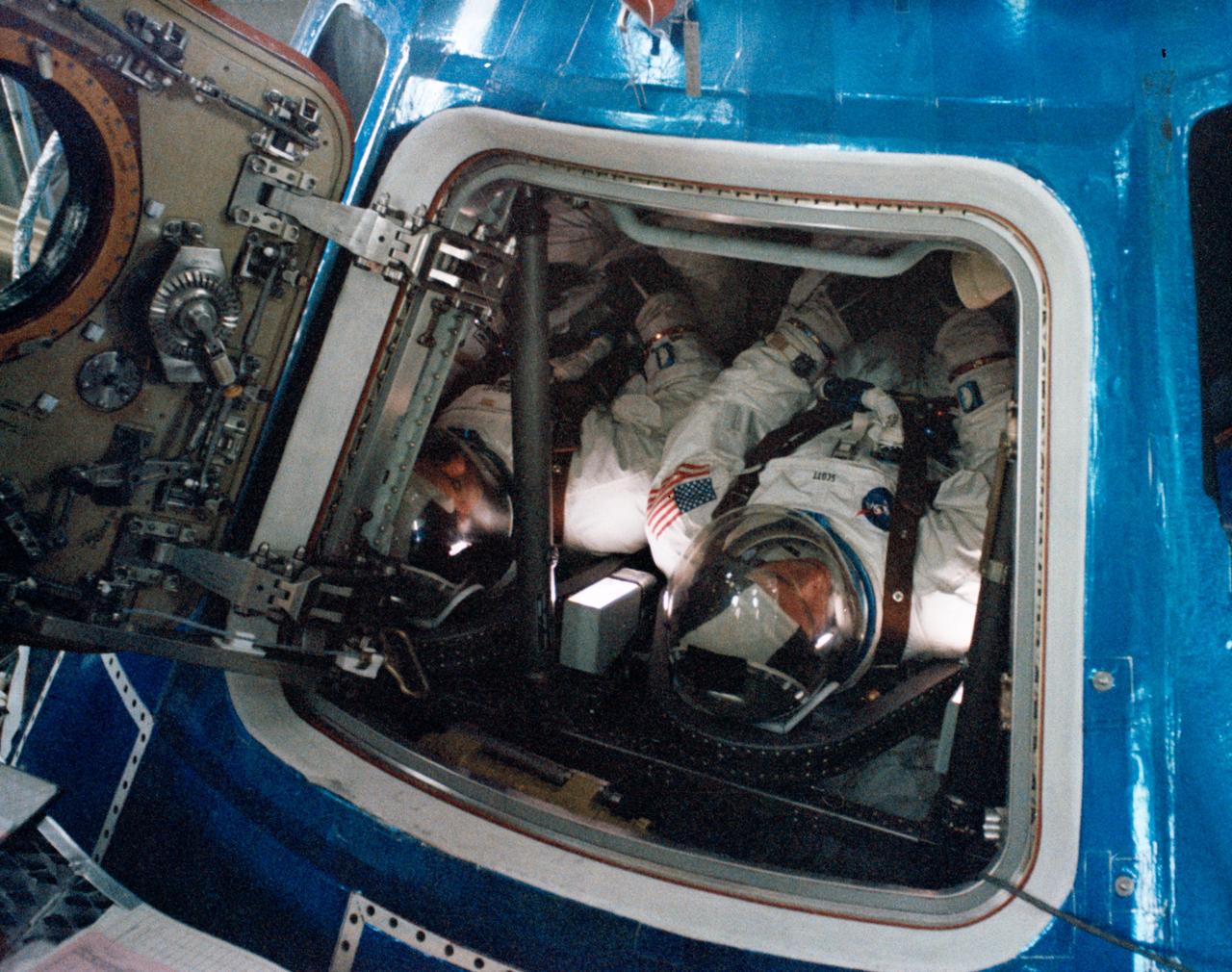
S68-55272 (15 Nov. 1968) --- The Apollo 9 prime crew is seen inside the Apollo 9 spacecraft in the Kennedy Space Center's Manned Spacecraft Operations Building during manned altitude chamber test activity. Left to right, are astronauts James A. McDivitt, commander; David R. Scott, command module pilot; and Russell L. Schweickart (out of view to far right), lunar module pilot.
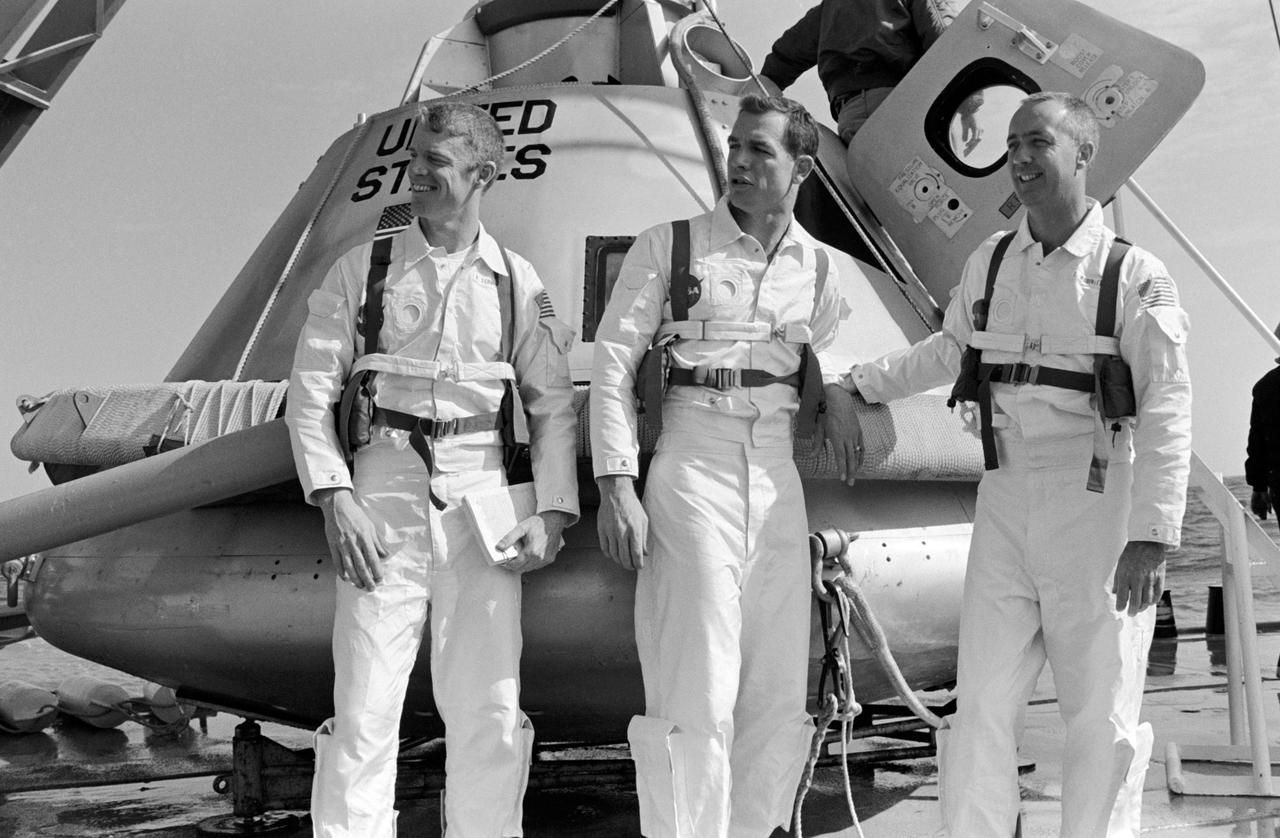
S68-54841 (5 Nov. 1968) --- The prime crew of the Apollo 9 (Spacecraft 104/Lunar Module 3/Saturn 504) space mission stands on the deck of the NASA Motor Vessel Retriever (MVR) prior to participating in water egress training in the Gulf of Mexico. Left to right, are astronauts Russell L. Schweickart, lunar module pilot; David R. Scott, command module pilot; and James A. McDivitt, commander. In background is the Apollo Command Module (CM) boilerplate which was used in the training exercise.
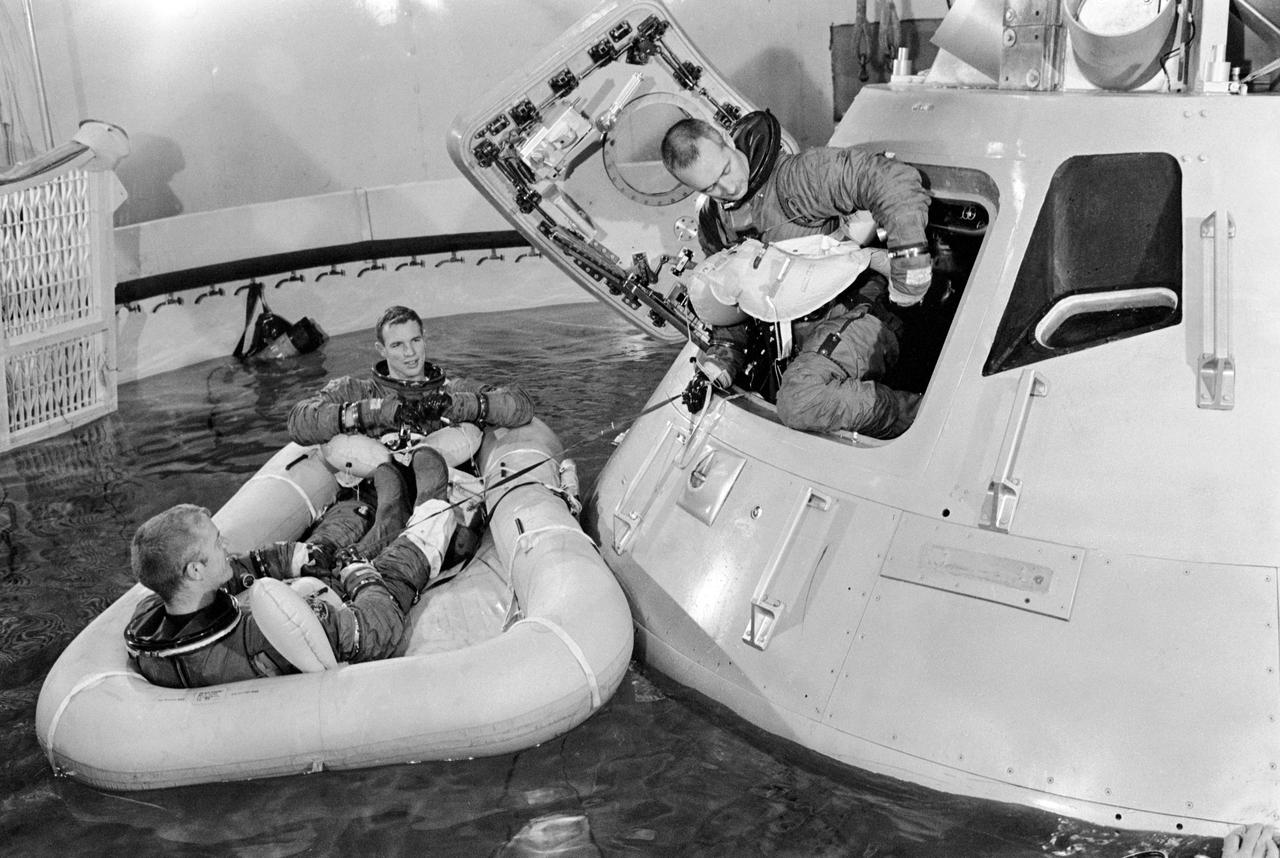
S68-54859 (November 1968) --- The prime crew of the Apollo 9 (Spacecraft 104/Lunar Module 3/Saturn 504) space mission participates in water egress training in a tank in Building 260 at the Manned Spacecraft Center. Egressing the Apollo command module boilerplate is astronaut James A. McDivitt, commander. In life raft are astronauts David R. Scott (background), command module pilot; and Russell L. Schweickart, lunar module pilot.

S62-06759 (1962) --- This is the second group of pilot astronauts chosen by the National Aeronautics and Space Administration (NASA). These astronaut pilots are (kneeling left to right) Charles Conrad, Jr., Frank Borman, Neil A. Armstrong, and John W. Young; (standing in the back row - left to right) Elliot M. See, Jr., James A. McDivitt, James A. Lovell, Jr., Edward H. White II, and Thomas P. Stafford.
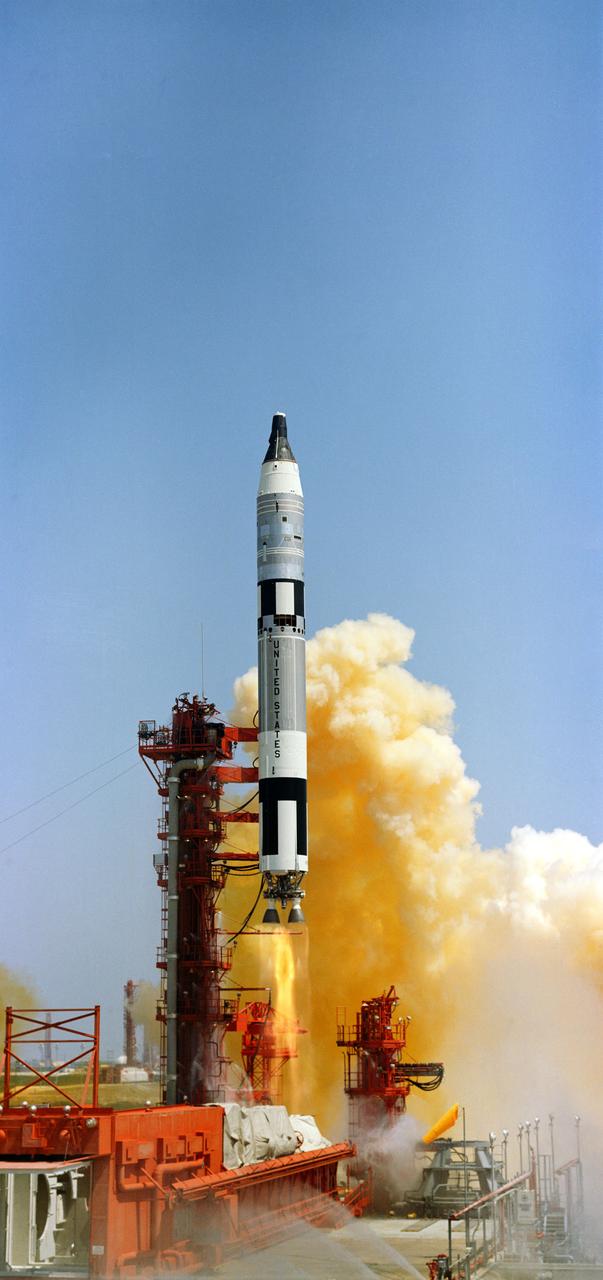
S65-29635 (3 June 1965) --- The Gemini-Titan 4 (GT-4) spaceflight launches from Cape Kennedy's Pad 19 at 10:16 a.m. (EST) on June 3, 1965. The GT-4 spacecraft carried astronauts James A. McDivitt, command pilot, and Edward H. White II, pilot, on a four-day, 62-revolution mission. Photo credit: NASA
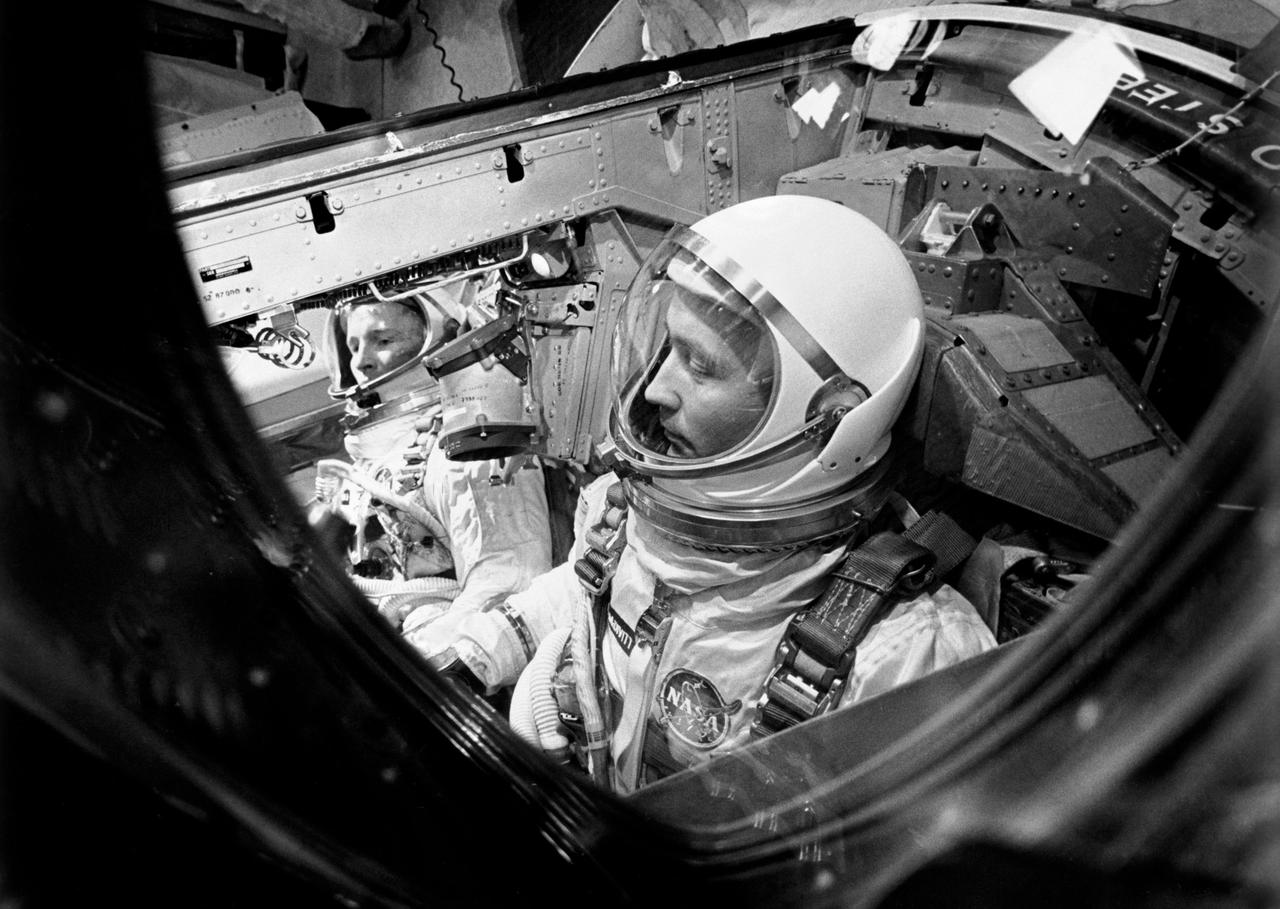
S65-19578 (21 May 1965) --- The Gemini-Titan 4 prime crew, astronauts Edward H. White II (left), pilot, and James A. McDivitt, command pilot, check out the Gemini-4 spacecraft during a wet mock simulation test at Cape Kennedy. The Gemini-4 mission, scheduled no earlier than June 3, 1965, will circle Earth 62 times in four days.
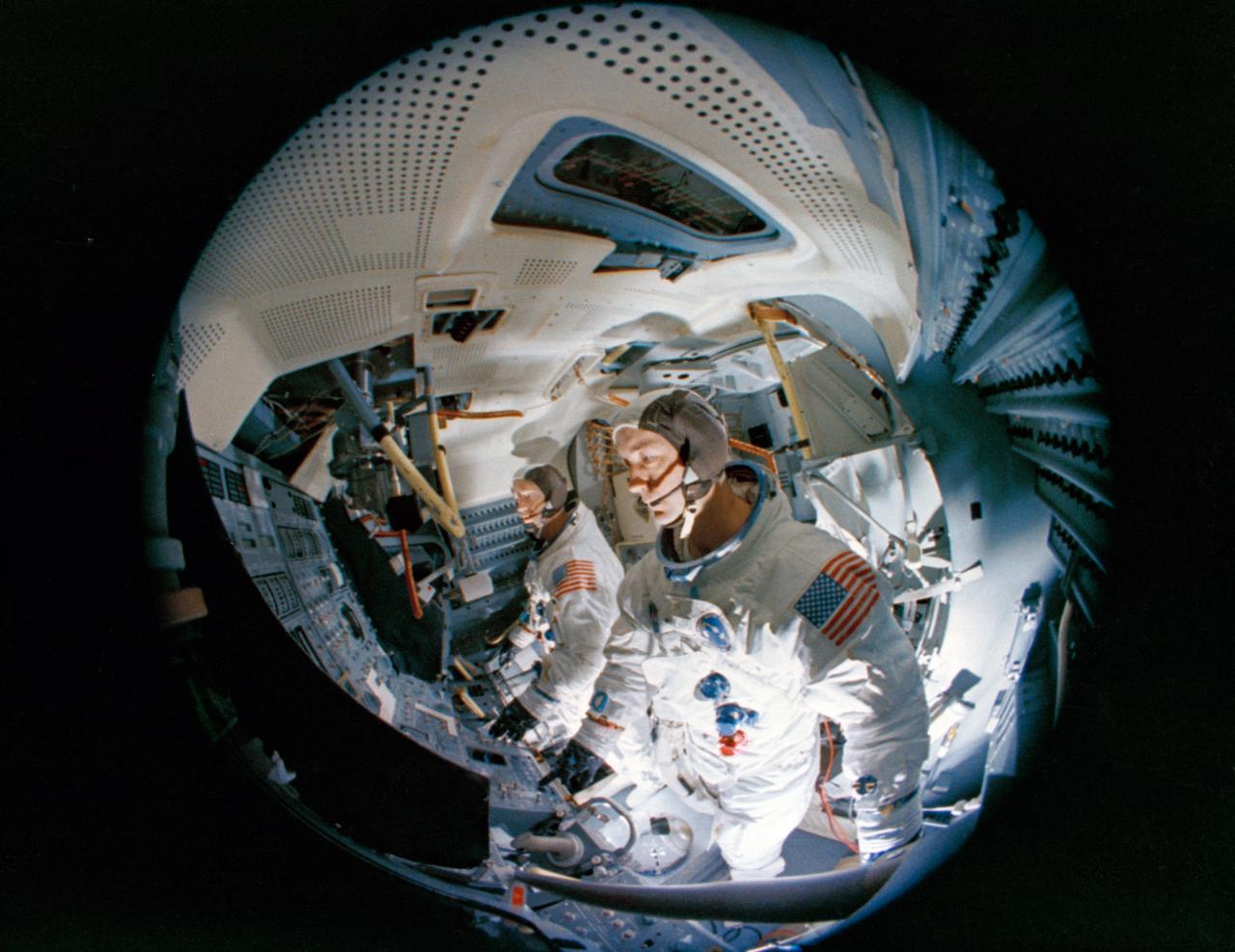
S69-19981 (23 Feb. 1969) --- Fish-eye camera lens view of the interior of the Apollo Lunar Module Mission Simulator (LMMS) at the Kennedy Space Center (KSC) during Apollo 9 simulation training. In the foreground is astronaut James A. McDivitt, prime crew commander; and in background is astronaut Russell L. Schweickart, lunar module pilot.
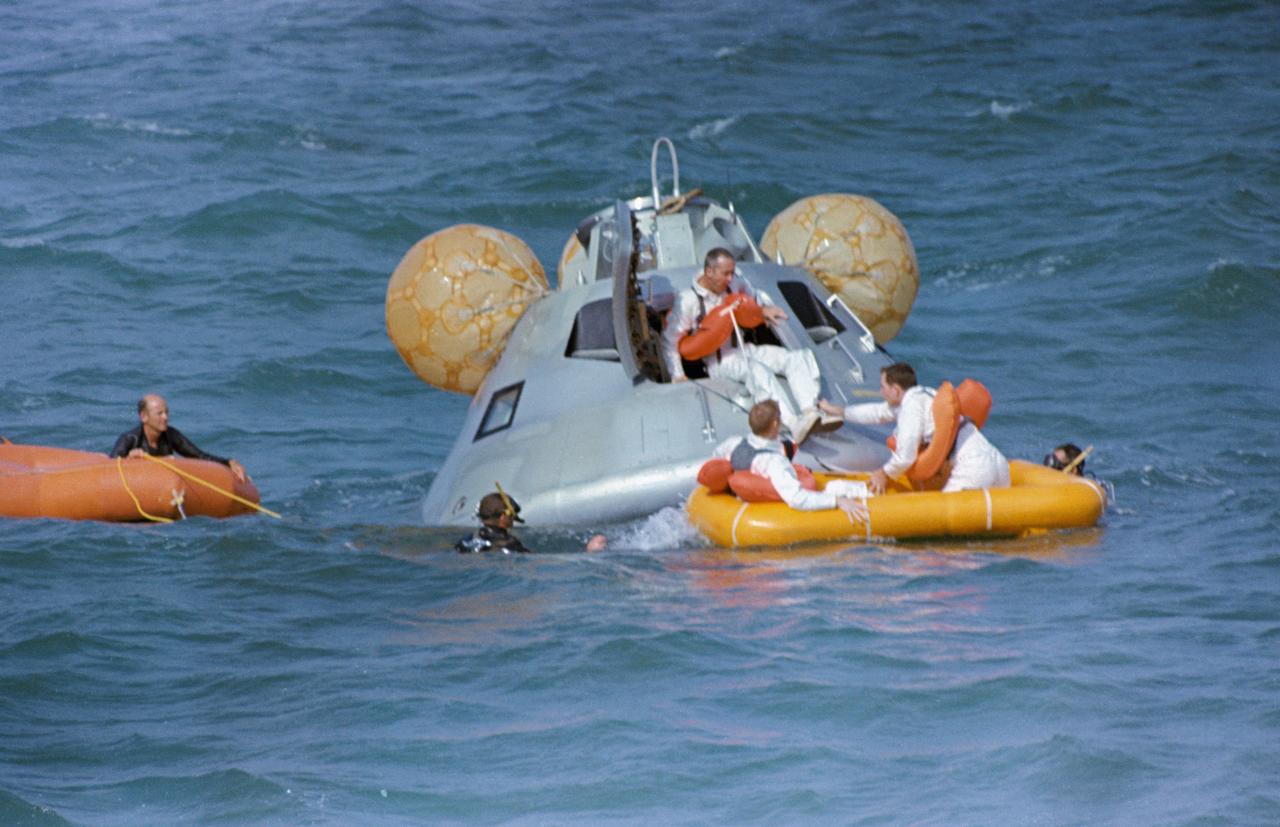
S68-50967 (20 Nov. 1968) --- The Apollo 9 prime crew participates in water egress training in the Gulf of Mexico. Apollo Command Module (CM) Boilerplate 1102 was used in the training. Egressing boilerplate is astronaut James A. McDivitt, commander. In life raft are astronauts Russell L. Schweickart (on left), lunar pilot; and David R. Scott, command pilot. A team of MSC swimmers assisted in the exercise. The inflated bags were used to upright the boilerplate prior to egress.

S68-50977 (20 Nov. 1968) --- The Apollo 9 prime crew participates in water egress training in the Gulf of Mexico. Apollo Command Module Boilerplate 1102 was used in the training. Egressing the boilerplate is astronaut David R. Scott, command module pilot. Inside the boilerplate, out of view, are astronauts James A. McDivitt, commander; and Russell L. Schweickart, lunar module pilot. A team of MSC swimmers assisted in the exercise. The inflated bags were used to upright the boilerplate prior to egress.
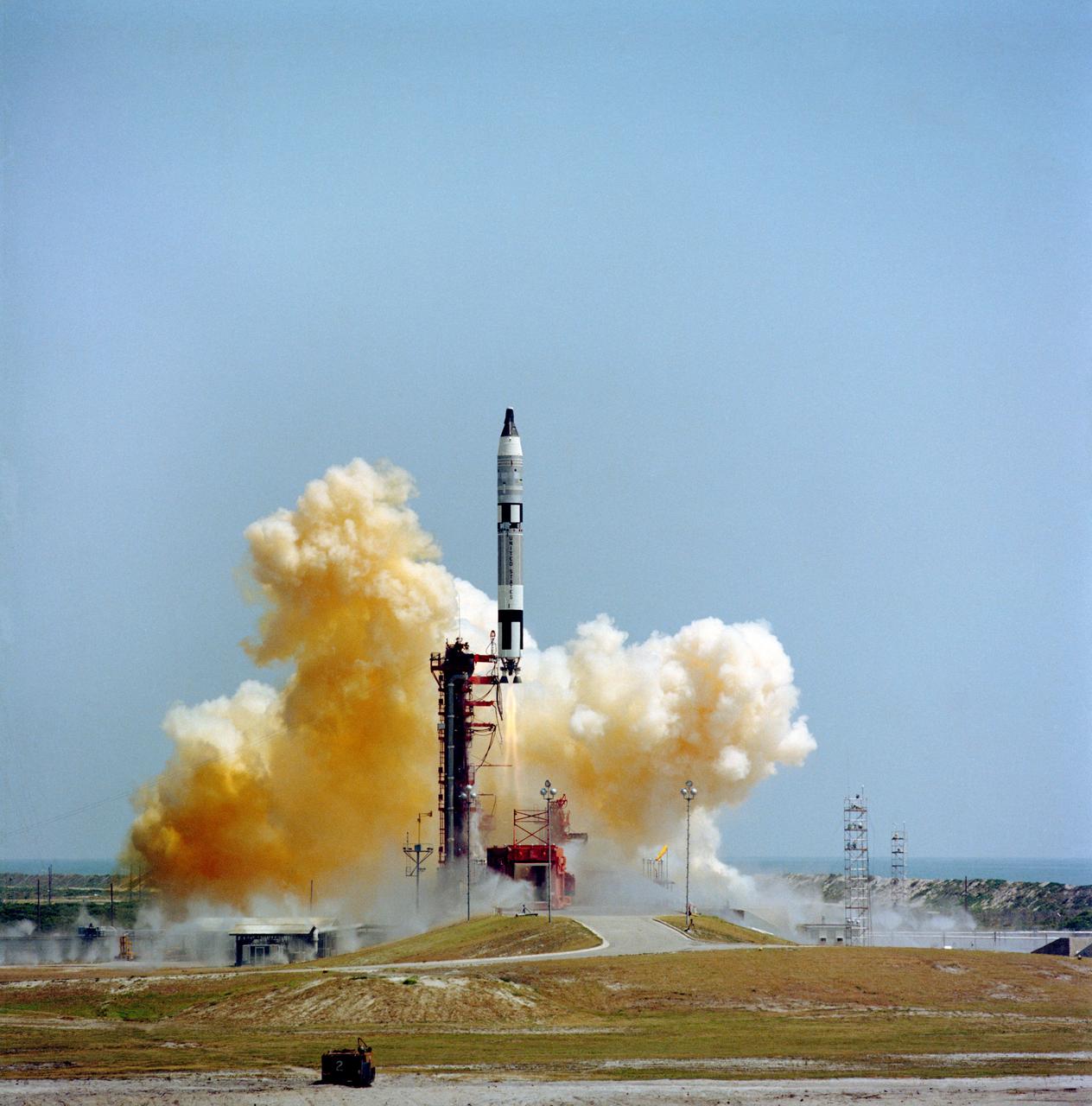
S65-29639 (3 June 1965) --- The Gemini-Titan 4 (GT-4) spaceflight launches from Cape Kennedy's Pad 19 at 10:16 a.m. (EST) on June 3, 1965. The GT-4 spacecraft carried astronauts James A. McDivitt, command pilot, and Edward H. White II, pilot, on a four-day, 62-revolution mission.
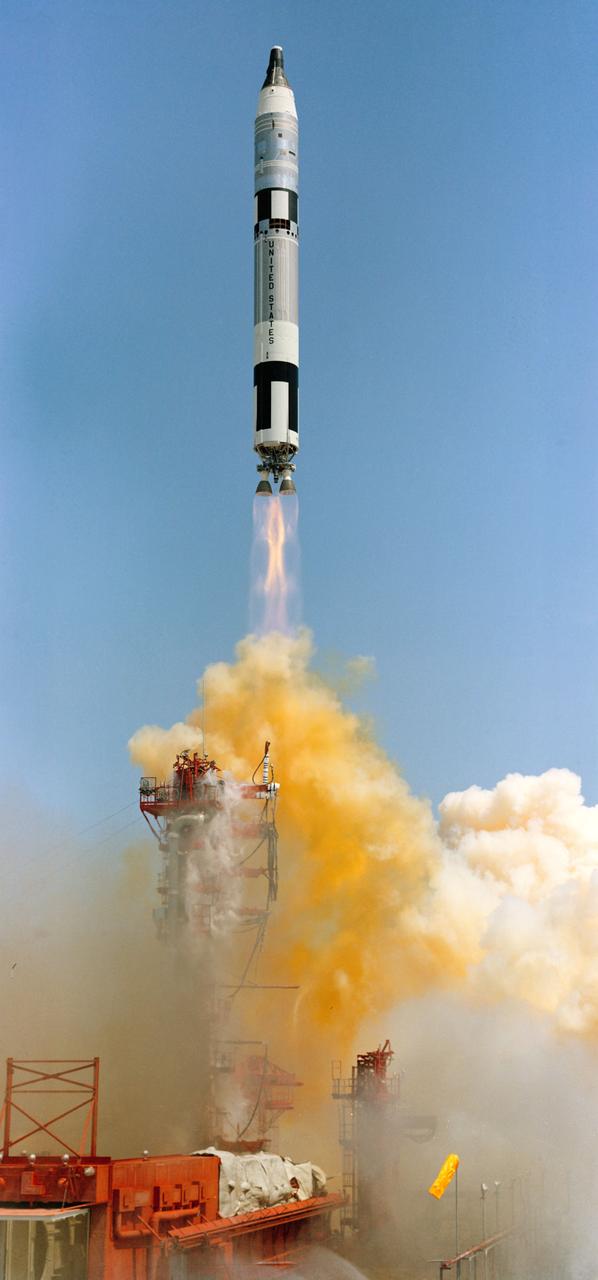
S65-29636 (3 June 1965) --- The Gemini-Titan 4 (GT-4) spaceflight launches from Cape Kennedy's Pad 19 at 10:16 a.m. (EST) on June 3, 1965. The GT-4 spacecraft carried astronauts James A. McDivitt, command pilot, and Edward H. White II, pilot, on a four-day, 62-revolution mission. Photo credit: NASA
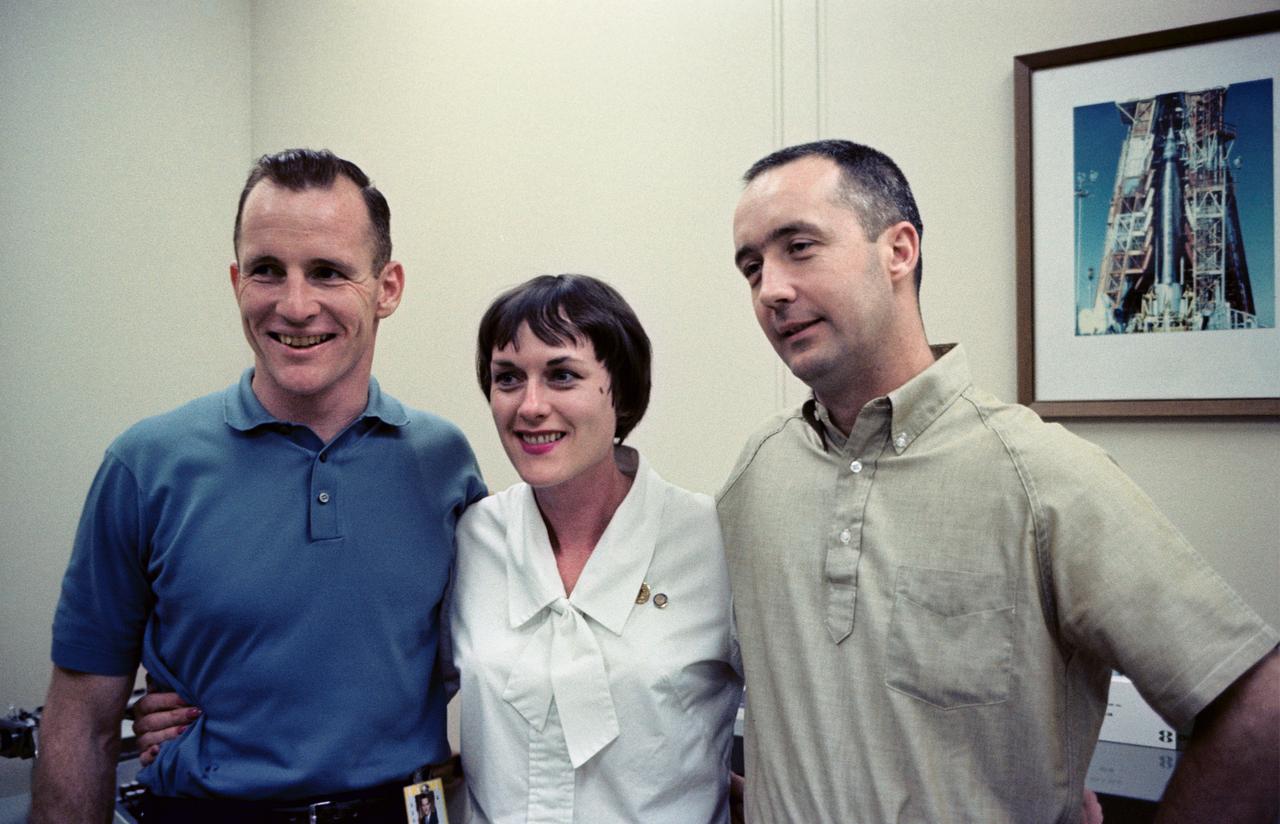
S65-29657 (June 1965) --- Gemini-4 prime crew, astronauts Edward H. White II (left), and James A. McDivitt are shown with Lt. Dolores (Dee) O'Hare, US Air Force, Center Medical Office, Flight Medicine Branch, Manned Spacecraft Center (MSC). Lieutenant O'Hare has served during several spaceflights as official medical nurse for the astronaut crew members on the missions.
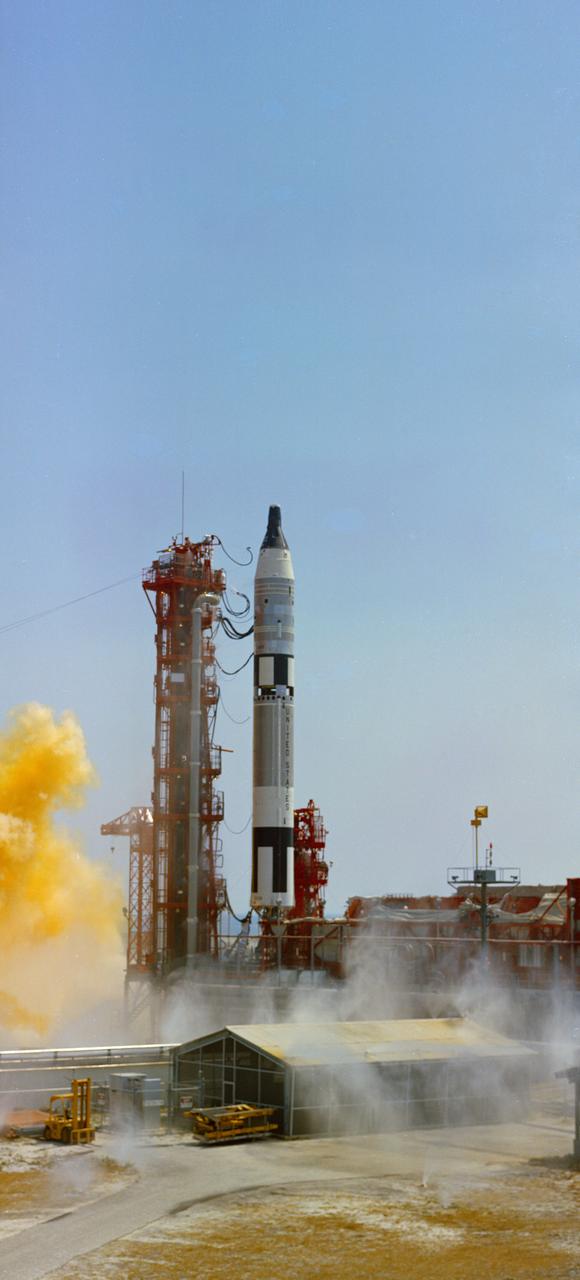
S65-30412 (3 June 1965) --- The Gemini-Titan 4 (GT-4) spaceflight launches from Cape Kennedy's Pad 19 at 10:16 a.m. (EST) on June 3, 1965. The GT-4 spacecraft carried astronauts James A. McDivitt, command pilot, and Edward H. White II, pilot, on a four-day, 62-revolution mission. Photo credit: NASA
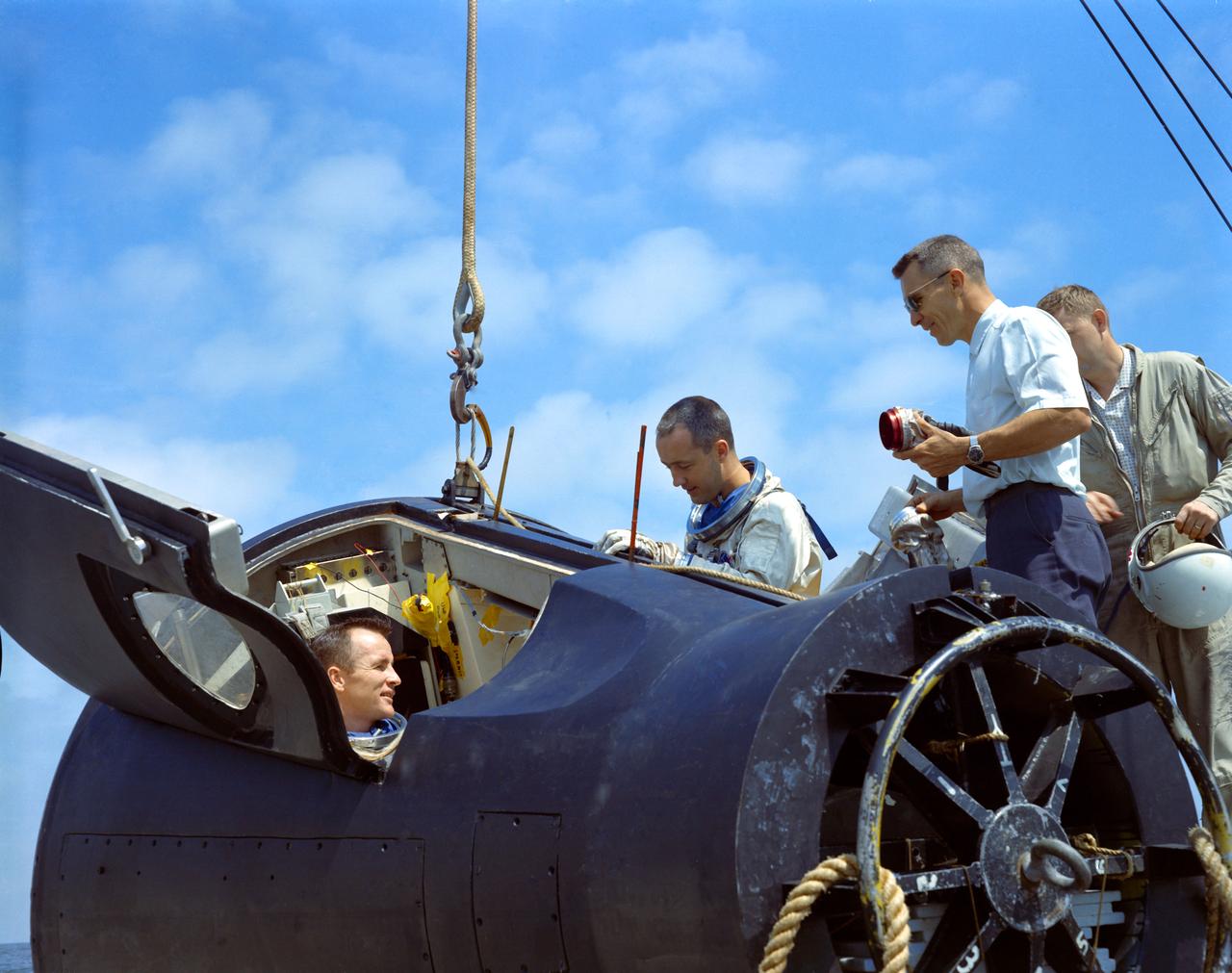
S65-22639 (14 April 1965) --- The Gemini-Titan 4 prime crew, astronauts Edward H. White II (left), pilot; and James A. McDivitt (getting in the spacecraft), command pilot, received instructions from Gordon Harvey, Flight Crew Support Division; and Alan M. Rochford, suit technician, Crew Systems Division, before closing of hatches prior to undergoing water egress training in the Gulf of Mexico.
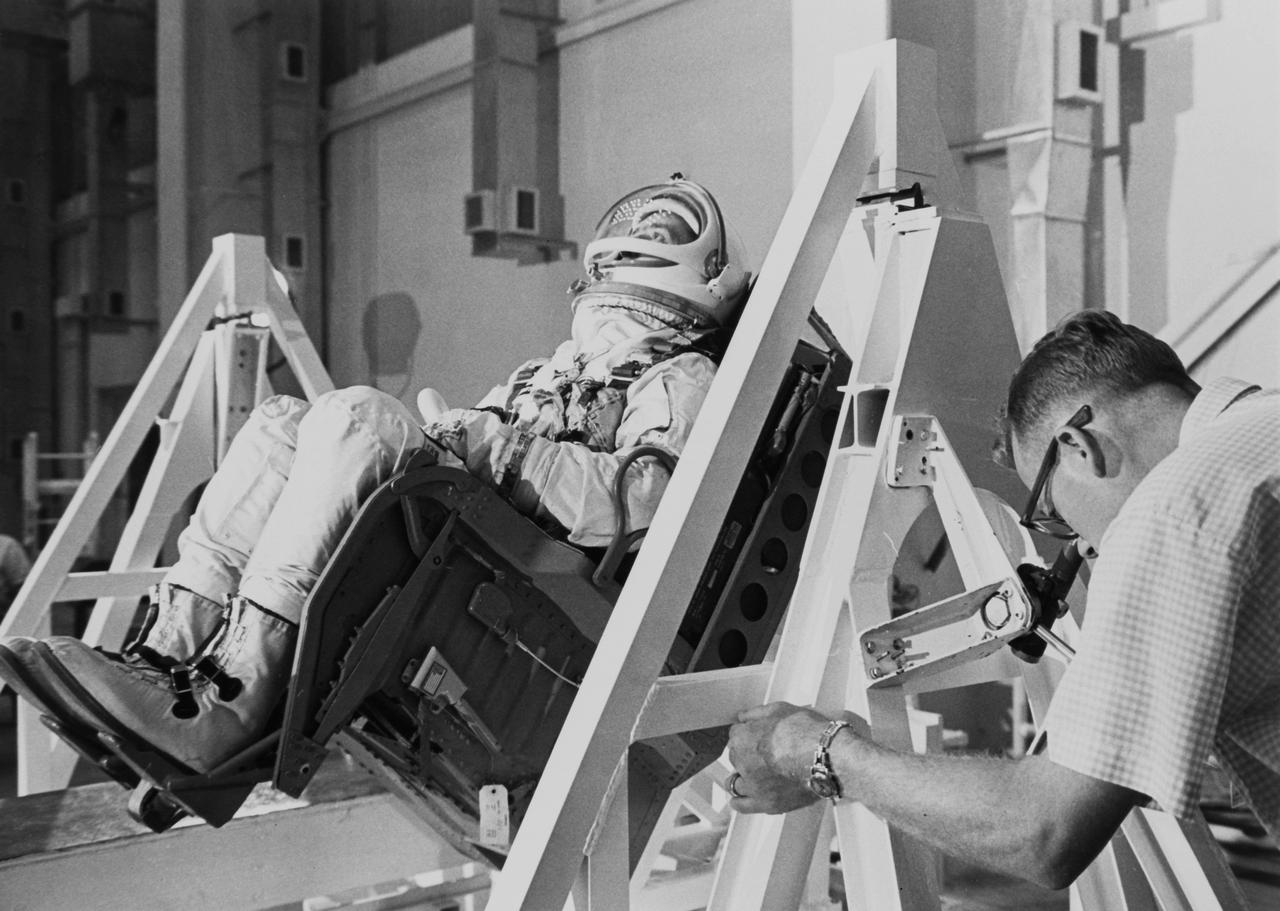
S65-19585 (21 May 1965) --- Astronaut James A. McDivitt, command pilot for the Gemini-Titan 4 prime crew, participates in a weight and balance test during a wet mock simulation exercise at Cape Kennedy, Florida. The two-man Gemini-4 mission, scheduled no earlier than June 3, 1965, will orbit Earth 62 times in four days. Astronaut Edward H. White II (out of frame) is the GT-4 prime crew pilot.
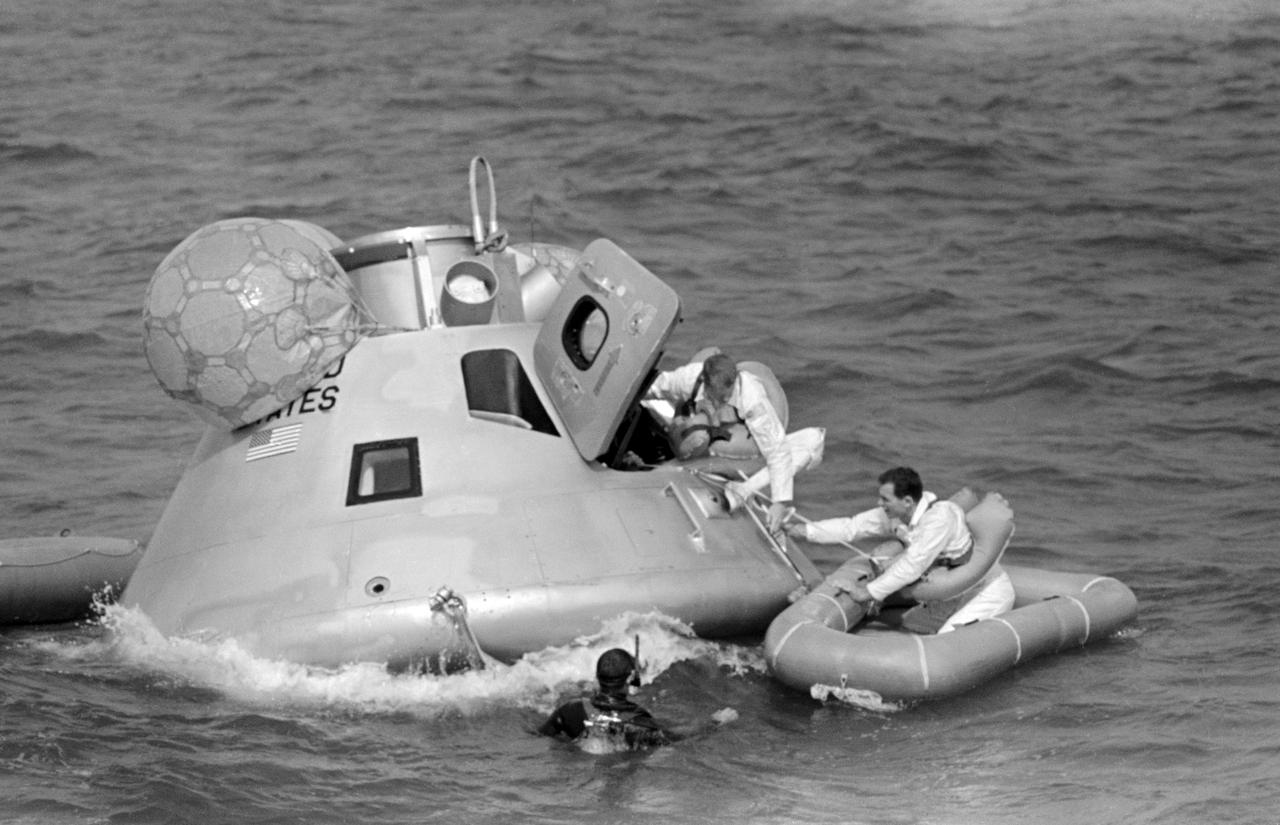
S68-50960 (20 Nov. 1968) --- The Apollo 9 prime crew participates in water egress training in the Gulf of Mexico. Apollo Command Module Boilerplate 1102 was used in the training. In life raft is astronaut David R. Scott, command module pilot. Egressing the boilerplate is astronaut Russell L. Schweickart, lunar module pilot. Still inside boilerplate, out of view, is astronaut James A. McDivitt, commander. A team of MSC swimmers assisted in the exercise. The inflated bags were used to upright the boilerplate prior to egress.
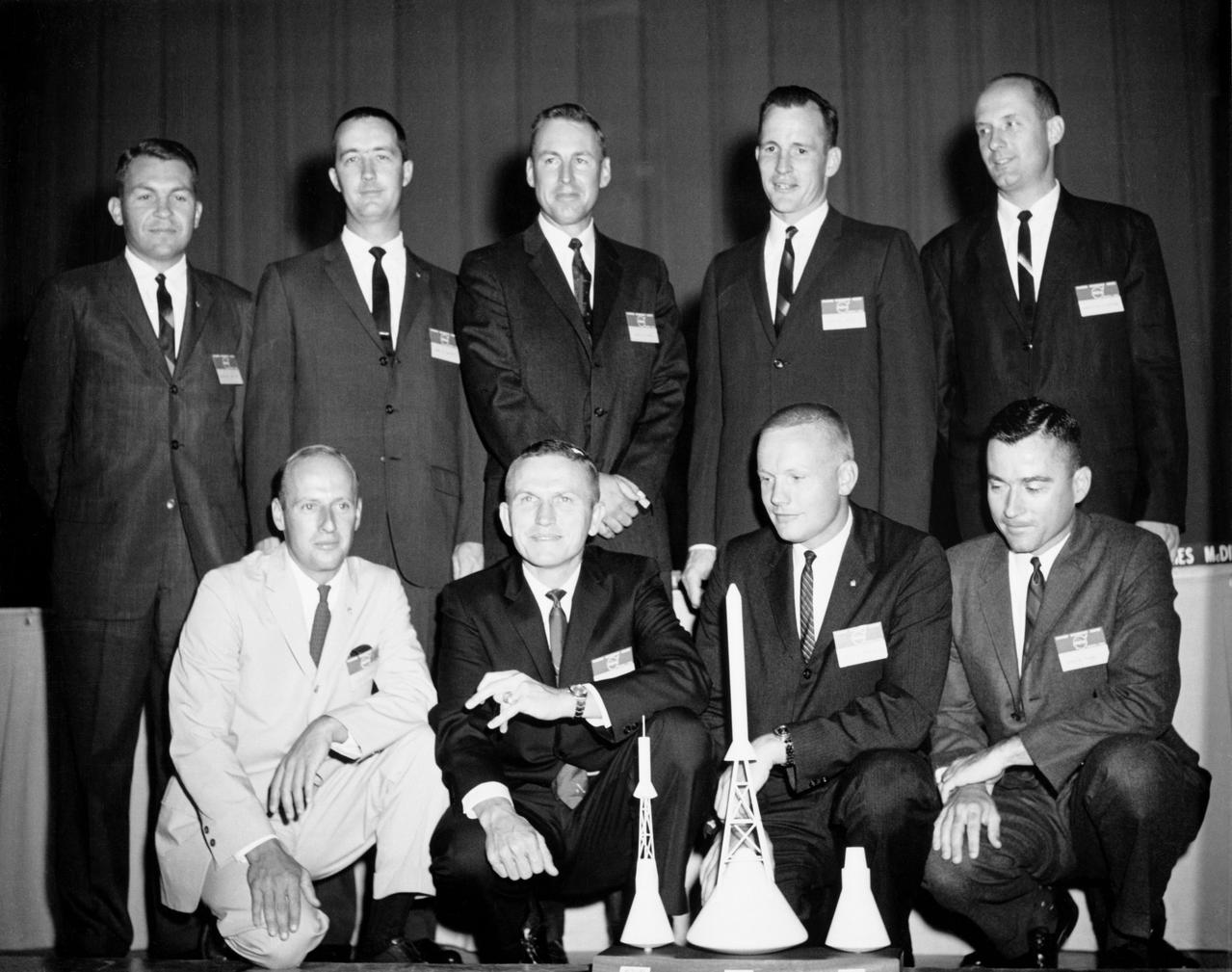
S62-03982 (September 1962) --- New National Aeronautics and Space Administration (NASA) Manned Spacecraft Center (MSC) flight crew personnel. Kneeling (left to right) are astronauts Charles Conrad Jr., Frank Borman, Neil A. Armstrong and John W. Young. Standing (left to right) are astronauts Elliot M. See Jr., James A. McDivitt, James A. Lovell Jr., Edward H. White II, and Thomas P. Stafford. Photo credit: NASA or National Aeronautics and Space Administration
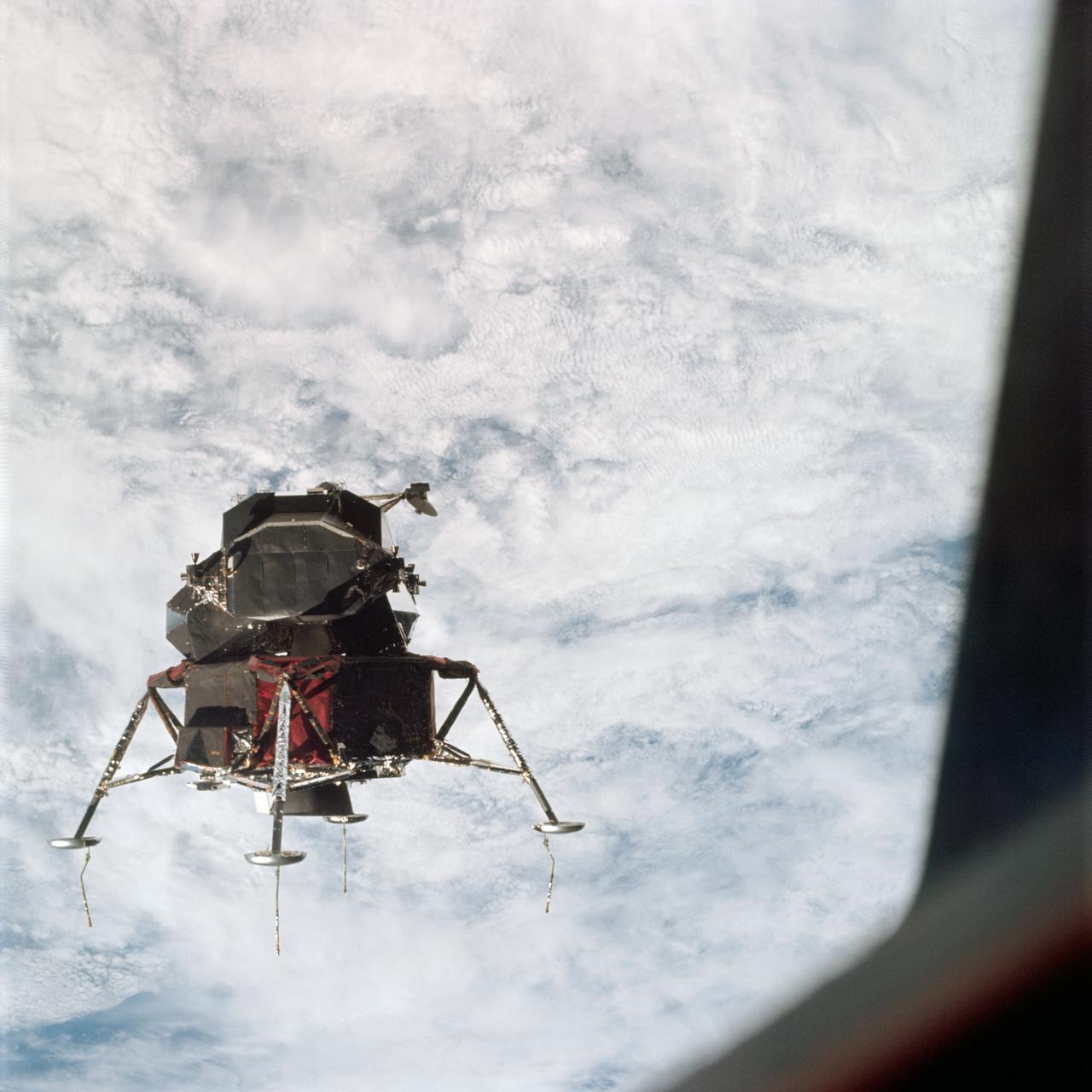
AS09-21-3197 (7 March 1969) --- A view of the Apollo 9 Lunar Module (LM) "Spider" in a lunar landing configuration, as photographed from the Command and Service Modules (CSM) on the fifth day of the Apollo 9 Earth-orbital mission. The landing gear on the "Spider" has been deployed. Lunar surface probes (sensors) extend out from the landing gear foot pads. Inside the "Spider" were astronauts James A. McDivitt, Apollo 9 commander; and Russell L. Schweickart, lunar module pilot. Astronaut David R. Scott, command module pilot, remained at the controls in the Command Module (CM), "Gumdrop," while the other two astronauts checked out the LM. Schweickart, lunar module pilot, is photographed from the CM "Gumdrop" during his extravehicular activity (EVA) on the fourth day of the Apollo 9 Earth-orbital mission. The CSM is docked with the LM. Astronaut James A. McDivitt, Apollo 9 commander, was inside the LM "Spider." Astronaut David R. Scott, command module pilot, remained at the controls in the CM.
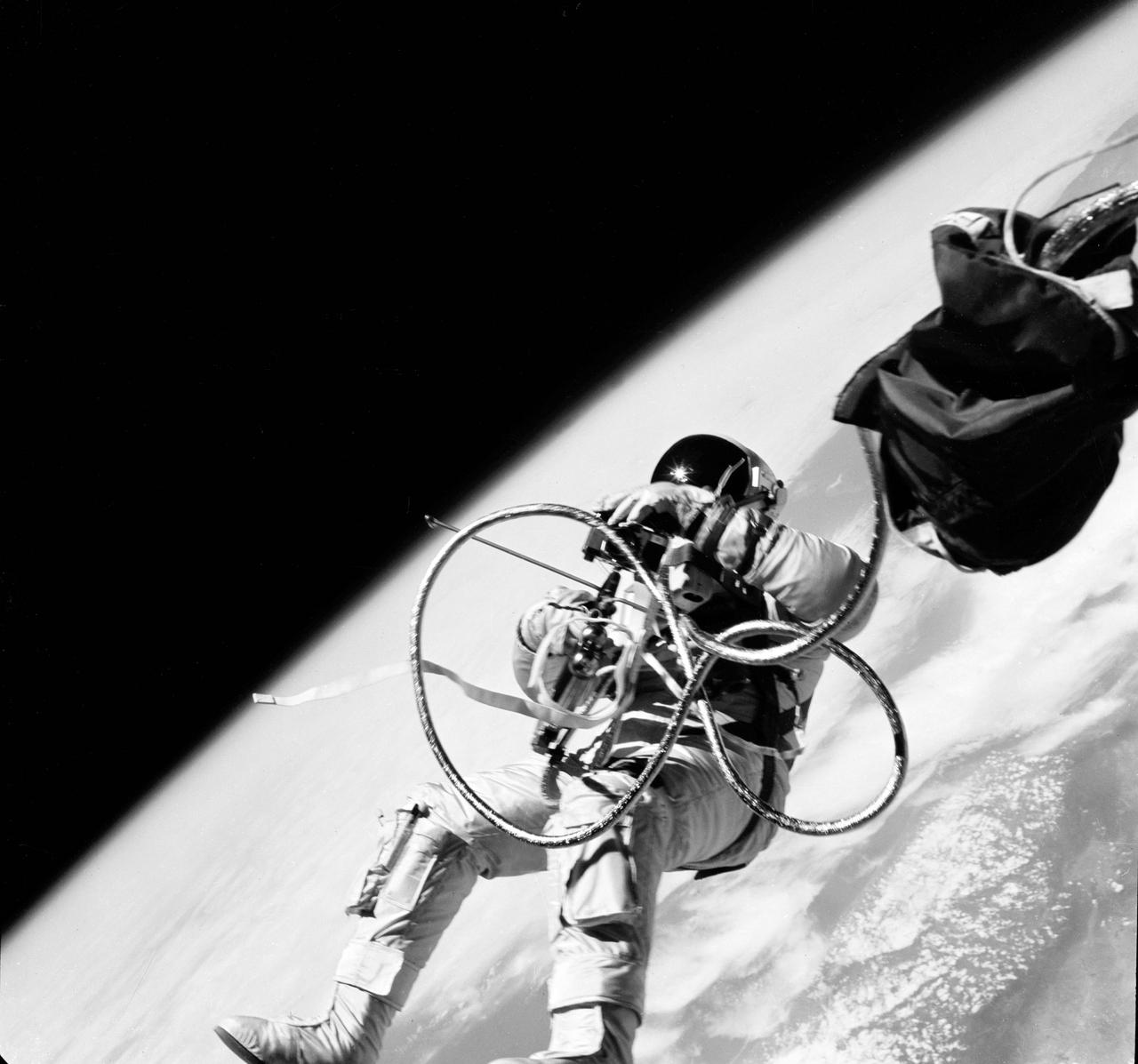
S65-30273 (3 June 1965) --- Astronaut Edward H. White II, pilot on the Gemini-Titan IV (GT-4) spaceflight, floats in the zero gravity of space outside the Gemini IV spacecraft. His face is covered by a shaded visor to protect him from the unfiltered rays of the sun. White became the first American astronaut to walk in space. He remained outside the spacecraft for 21 minutes during the third revolution of the Gemini IV mission. He wears a specially designed spacesuit for the EVA. His right hand is holding the Hand-Held Self-Maneuvering Unit (HHSMU), with which he controlled his movements while in space, and a camera is attached to the HHSMU. He was attached to the spacecraft by a 25-feet umbilical line and a 23-feet tether line, both wrapped together with gold tape to form one cord. He wears an emergency oxygen supply check pack. Astronaut James A. McDivitt is command pilot for the GT-4 mission. The mission was a four-day, 62-revolution flight, during which McDivitt and White performed a series of scientific and engineering experiments. (This image is black and white) Photo credit: NASA EDITOR?S NOTE: Astronaut Edward H. White II died in the Apollo/Saturn 204 fire at Cape Kennedy, Florida, on Jan. 27, 1967.
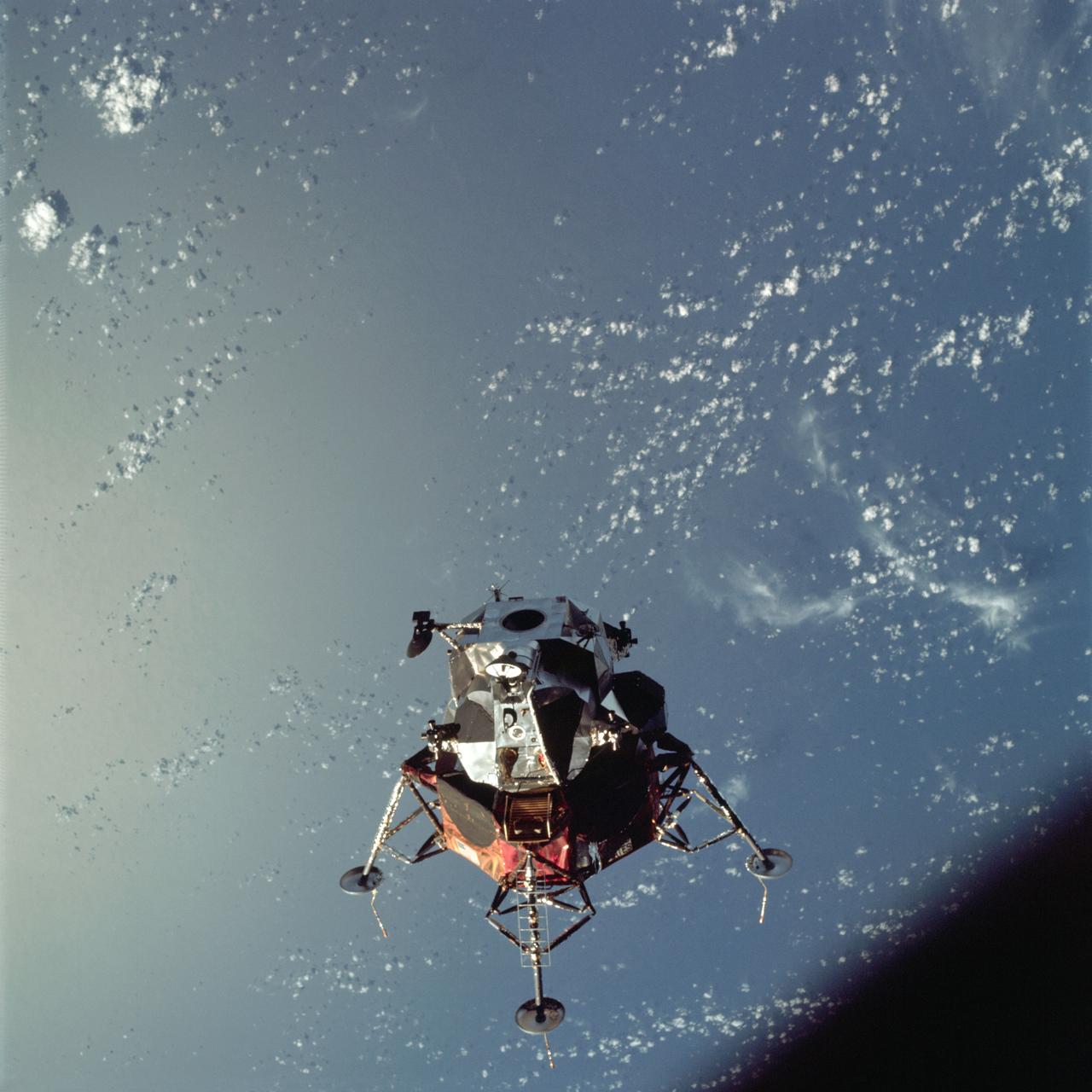
AS09-21-3183 (7 March 1969) --- A view of the Apollo 9 Lunar Module (LM) "Spider" in a lunar landing configuration, as photographed from the Command and Service Modules (CSM) on the fifth day of the Apollo 9 Earth-orbital mission. The landing gear on the "Spider" has been deployed. Lunar surface probes (sensors) extend out from the landing gear foot pads. Inside the "Spider" were astronauts James A. McDivitt, Apollo 9 commander; and Russell L. Schweickart, lunar module pilot. Astronaut David R. Scott, command module pilot, remained at the controls in the Command Module (CM), "Gumdrop," while the other two astronauts checked out the LM. Schweickart, lunar module pilot, is photographed from the CM "Gumdrop" during his extravehicular activity (EVA) on the fourth day of the Apollo 9 Earth-orbital mission. The CSM is docked with the LM. Astronaut James A. McDivitt, Apollo 9 commander, was inside the LM "Spider." Astronaut David R. Scott, command module pilot, remained at the controls in the CM.
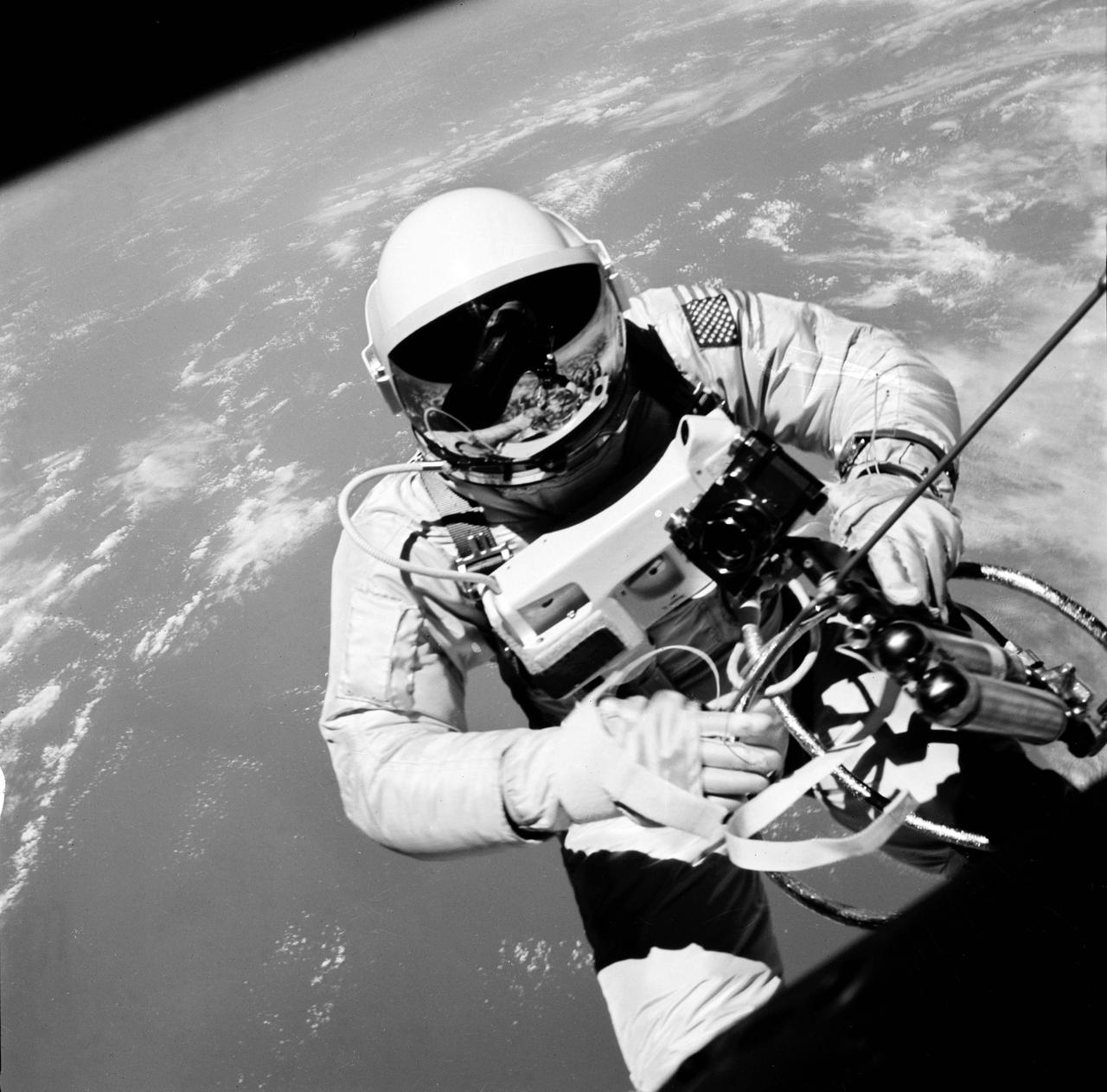
S65-30202 (3 June 1965) --- Astronaut Edward H. White II, pilot on the Gemini-Titan IV (GT-4) spaceflight, floats in the zero gravity of space outside the Gemini IV spacecraft. His face is covered by a shaded visor to protect him from the unfiltered rays of the sun. White became the first American astronaut to walk in space. He remained outside the spacecraft for 21 minutes during the third revolution of the Gemini IV mission. He wears a specially designed spacesuit for the EVA. He?s holding the Hand-Held Self-Maneuvering Unit (HHSMU), with which he controlled his movements while in space, and a camera is attached to the HHSMU. He was attached to the spacecraft by a 25-feet umbilical line and a 23-feet tether line, both wrapped together with gold tape to form one cord. He wears an emergency oxygen supply check pack. Astronaut James A. McDivitt is command pilot for the GT-4 mission. The mission was a four-day, 62-revolution flight, during which McDivitt and White performed a series of scientific and engineering experiments. (This image is black and white) Photo credit: NASA EDITOR?S NOTE: Astronaut Edward H. White II died in the Apollo/Saturn 204 fire at Cape Kennedy, Florida, on Jan. 27, 1967.
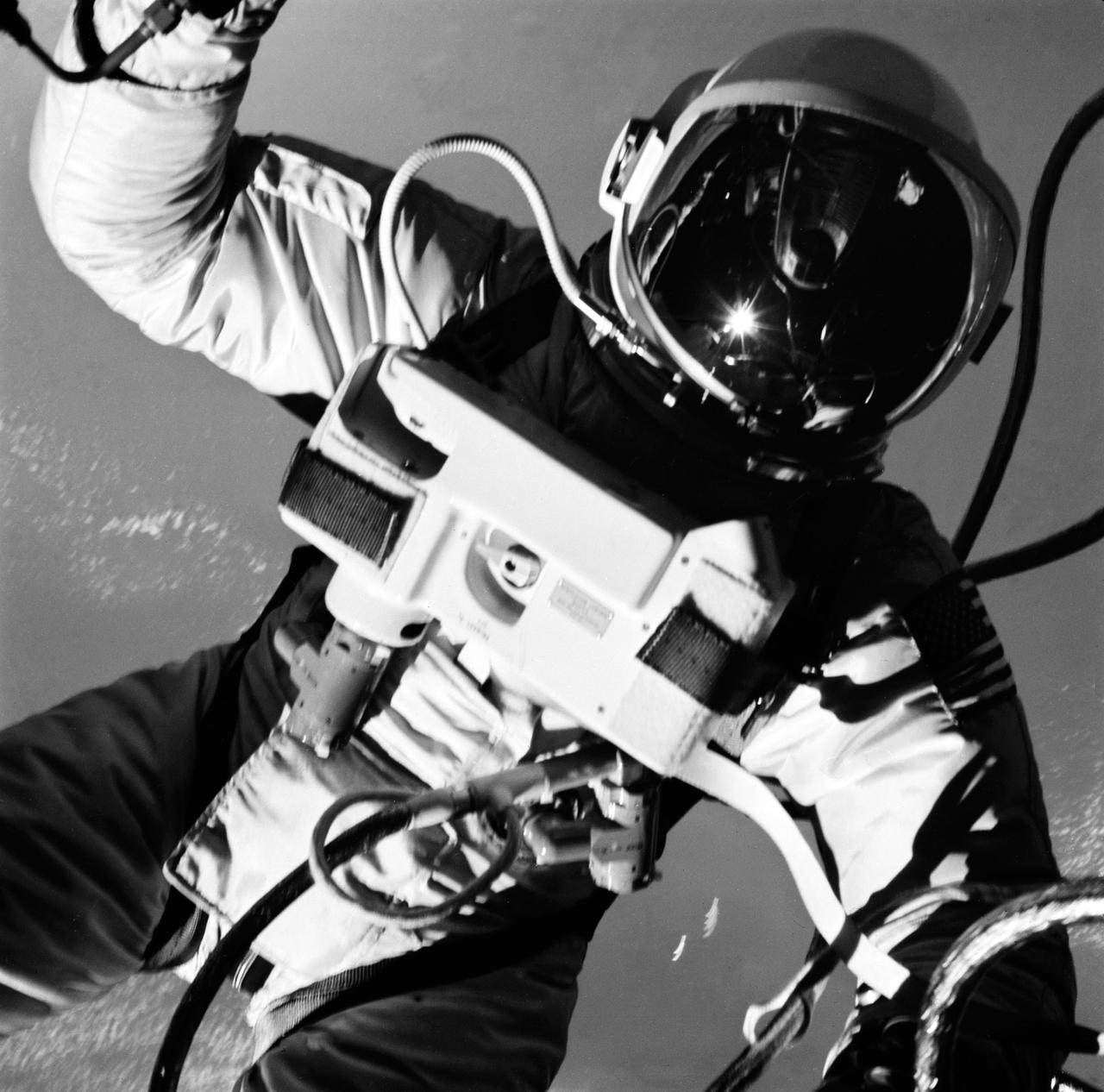
S65-30271 (3 June 1965) --- Astronaut Edward H. White II, pilot on the Gemini-Titan IV (GT-4) spaceflight, floats in the zero gravity of space outside the Gemini IV spacecraft. His face is covered by a shaded visor to protect him from the unfiltered rays of the sun. White became the first American astronaut to walk in space. He remained outside the spacecraft for 21 minutes during the third revolution of the Gemini IV mission. He wears a specially designed spacesuit for the EVA. His right hand (out of frame) is holding the Hand-Held Self-Maneuvering Unit (HHSMU), with which he controlled his movements while in space, and a camera is attached to the HHSMU. He was attached to the spacecraft by a 25-feet umbilical line and a 23-feet tether line, both wrapped together with gold tape to form one cord. He wears an emergency oxygen supply check pack. Astronaut James A. McDivitt is command pilot for the GT-4 mission. The mission was a four-day, 62-revolution flight, during which McDivitt and White performed a series of scientific and engineering experiments. (This image is black and white) Photo credit: NASA EDITOR?S NOTE: Astronaut Edward H. White II died in the Apollo/Saturn 204 fire at Cape Kennedy, Florida, on Jan. 27, 1967.
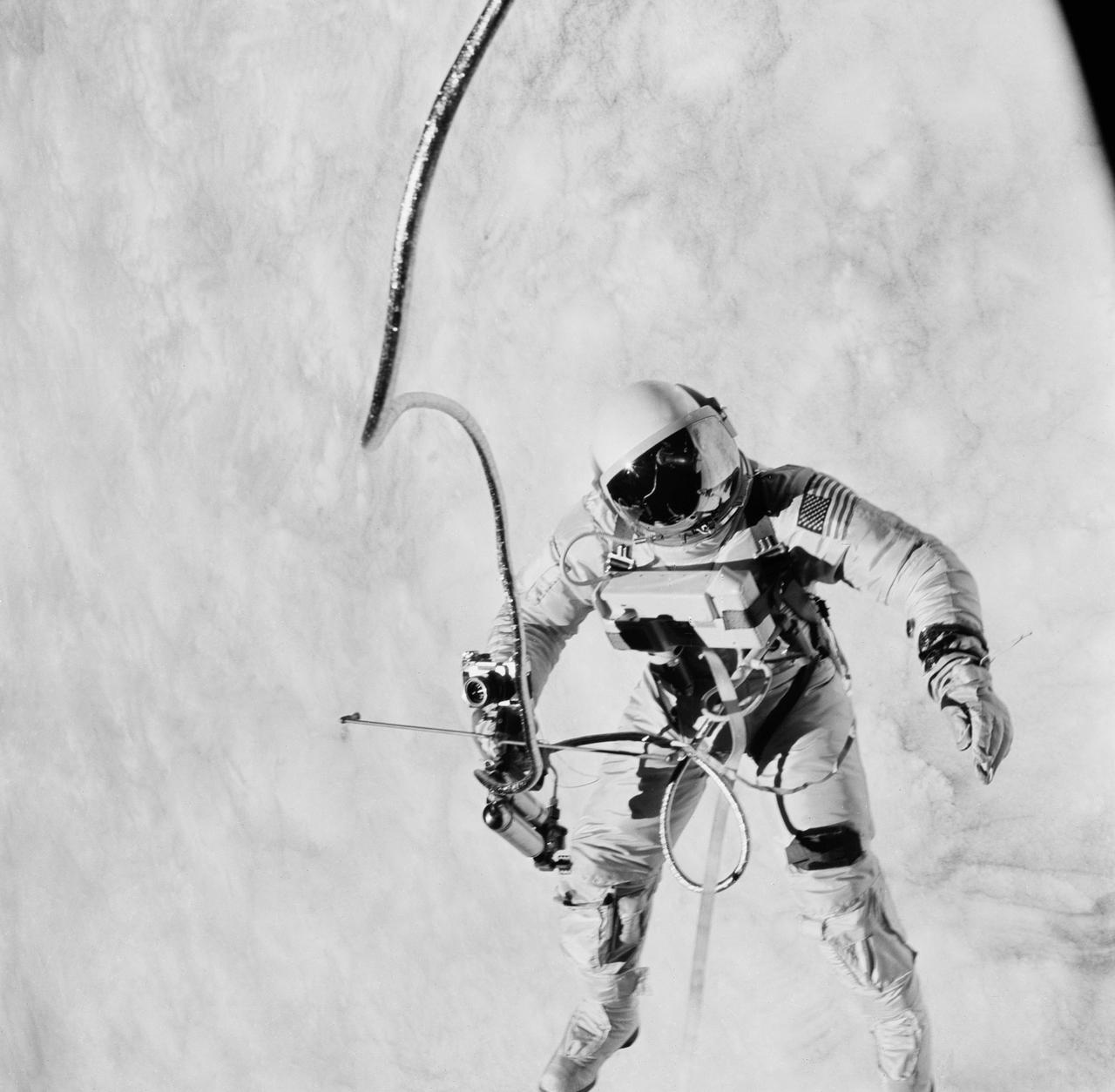
S65-30272 (3 June 1965) --- Astronaut Edward H. White II, pilot on the Gemini-Titan IV (GT-4) spaceflight, floats in the zero gravity of space outside the Gemini IV spacecraft. His face is covered by a shaded visor to protect him from the unfiltered rays of the sun. White became the first American astronaut to walk in space. He remained outside the spacecraft for 21 minutes during the third revolution of the Gemini IV mission. He wears a specially designed spacesuit for the EVA. His right hand is holding the Hand-Held Self-Maneuvering Unit (HHSMU), with which he controlled his movements while in space, and a camera is attached to the HHSMU. He was attached to the spacecraft by a 25-feet umbilical line and a 23-feet tether line, both wrapped together with gold tape to form one cord. He wears an emergency oxygen supply check pack. Astronaut James A. McDivitt is command pilot for the GT-4 mission. The mission was a four-day, 62-revolution flight, during which McDivitt and White performed a series of scientific and engineering experiments. (This image is black and white) Photo credit: NASA EDITOR?S NOTE: Astronaut Edward H. White II died in the Apollo/Saturn 204 fire at Cape Kennedy, Florida, on Jan. 27, 1967.
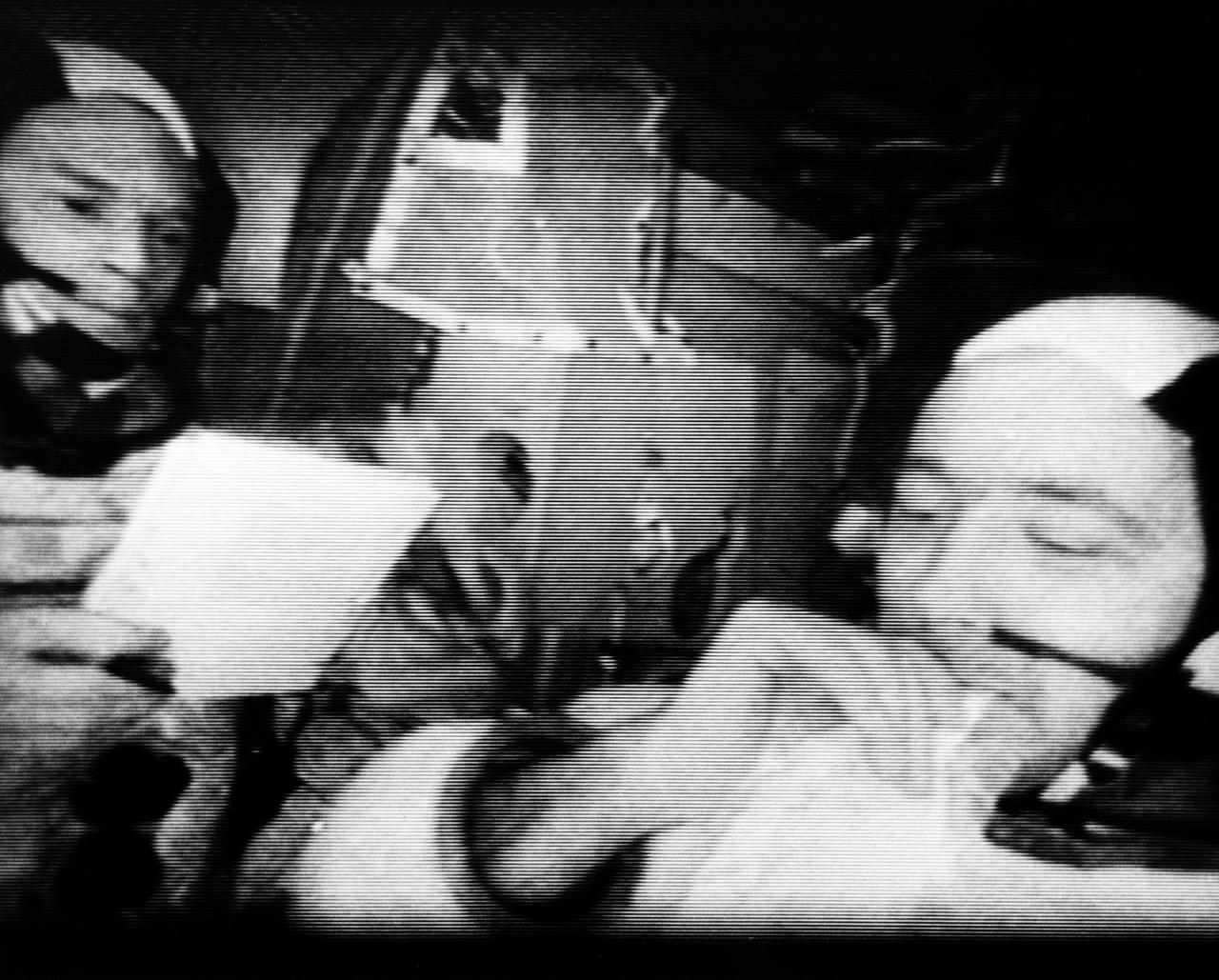
S69-26698 (March 1969) --- A photograph from a live television transmission from Apollo 9. This view shows the interior of the Lunar Module "Spider." Astronaut James A. McDivitt, Apollo 9 commander, is in right foreground. In left background is astronaut Russell L. Schweickart, lunar module pilot. At this moment Apollo 9 was orbiting Earth with the Command Module docked nose-to-nose with the Lunar Module. Astronaut David R. Scott, command module pilot, remained at the controls in the Command Module "Gumdrop" while the other two astronauts checked out the Lunar Module.
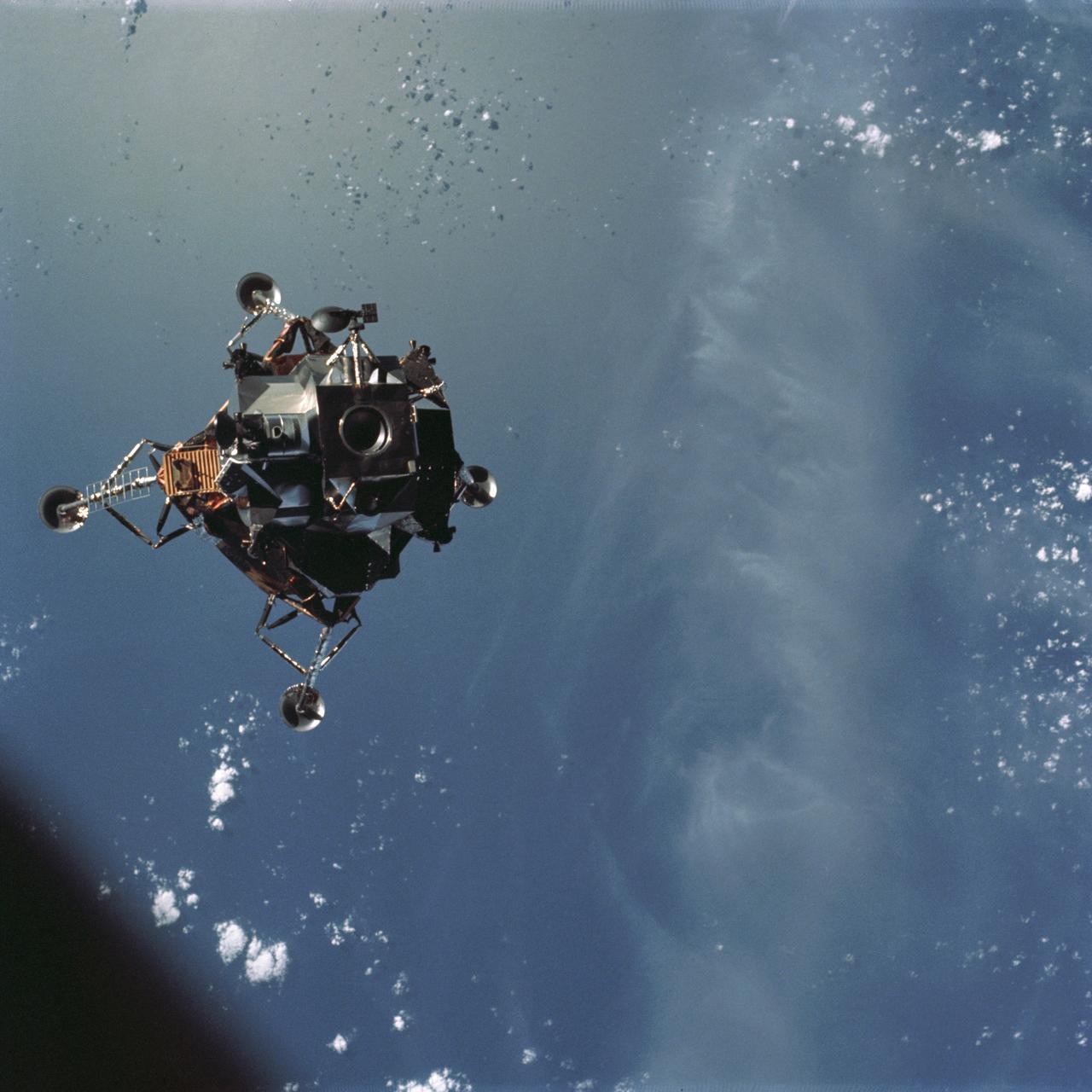
AS09-21-3181 (7 March 1969) --- A View of the Apollo 9 Lunar Module (LM), "Spider," in a lunar lading configuration, as photographed from the Command and Service Modules (CSM) on the fifth day of the Apollo 9 Earth-orbital mission. The landing gear on the "Spider" has been deployed. Inside the "Spider" were astronauts James A. McDivitt, Apollo 9 commander; and Russell L. Schweickart, lunar module pilot. Astronaut David R. Scott, command module pilot, remained at the controls in the Command Module (CM), "Gumdrop," while the other two astronauts checked out the LM.
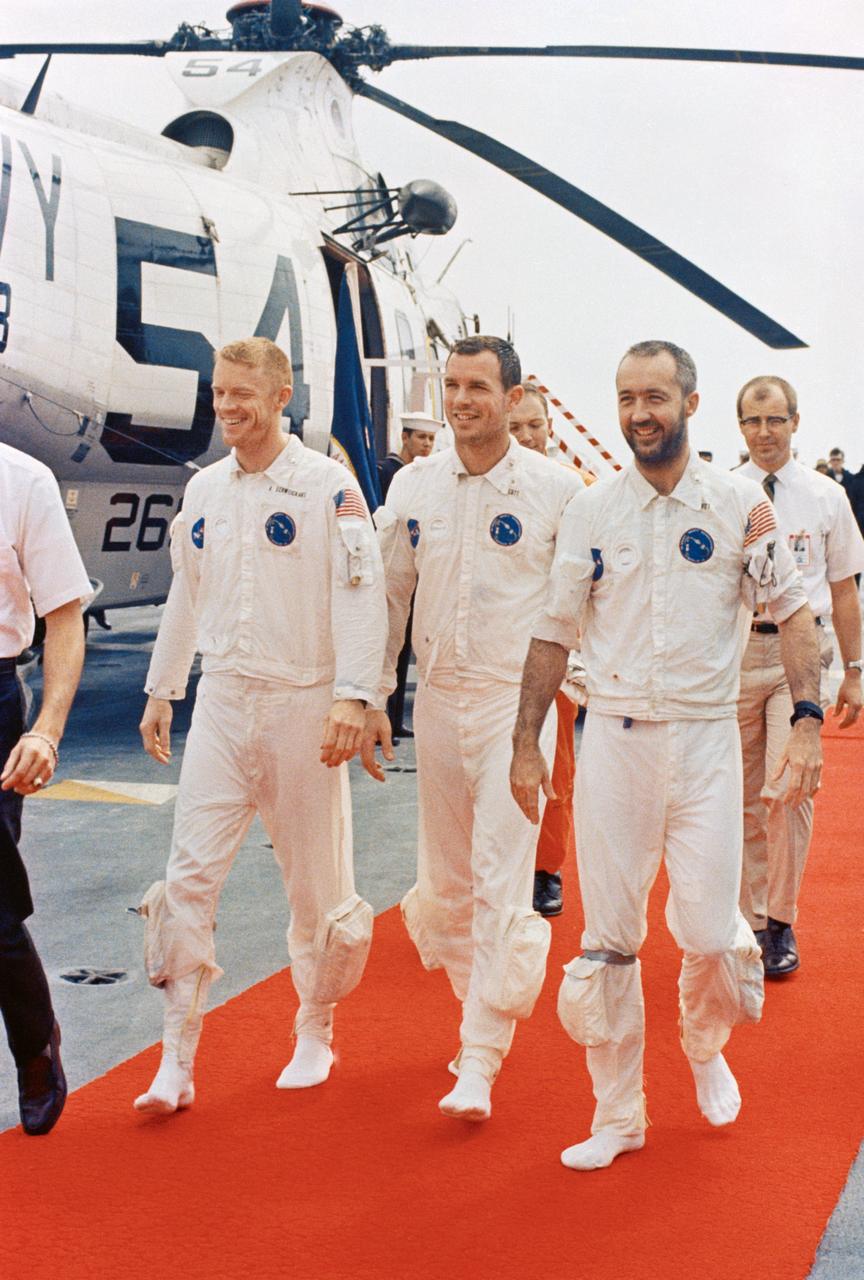
S69-27920 (13 March 1969) --- The Apollo 9 crew men walk on a red carpet after arriving aboard the prime recovery ship, USS Guadalcanal. Left to right, are astronauts Russell L. Schweickart, David R. Scott, and James A. McDivitt. They are walking from the recovery helicopter which picked them up from the splashdown area. Splashdown occurred at 12:00:53 p.m. (EST), March 13, 1969, only 4.5 nautical miles from the USS Guadalcanal to conclude a successful 10-day Earth-orbital space mission.
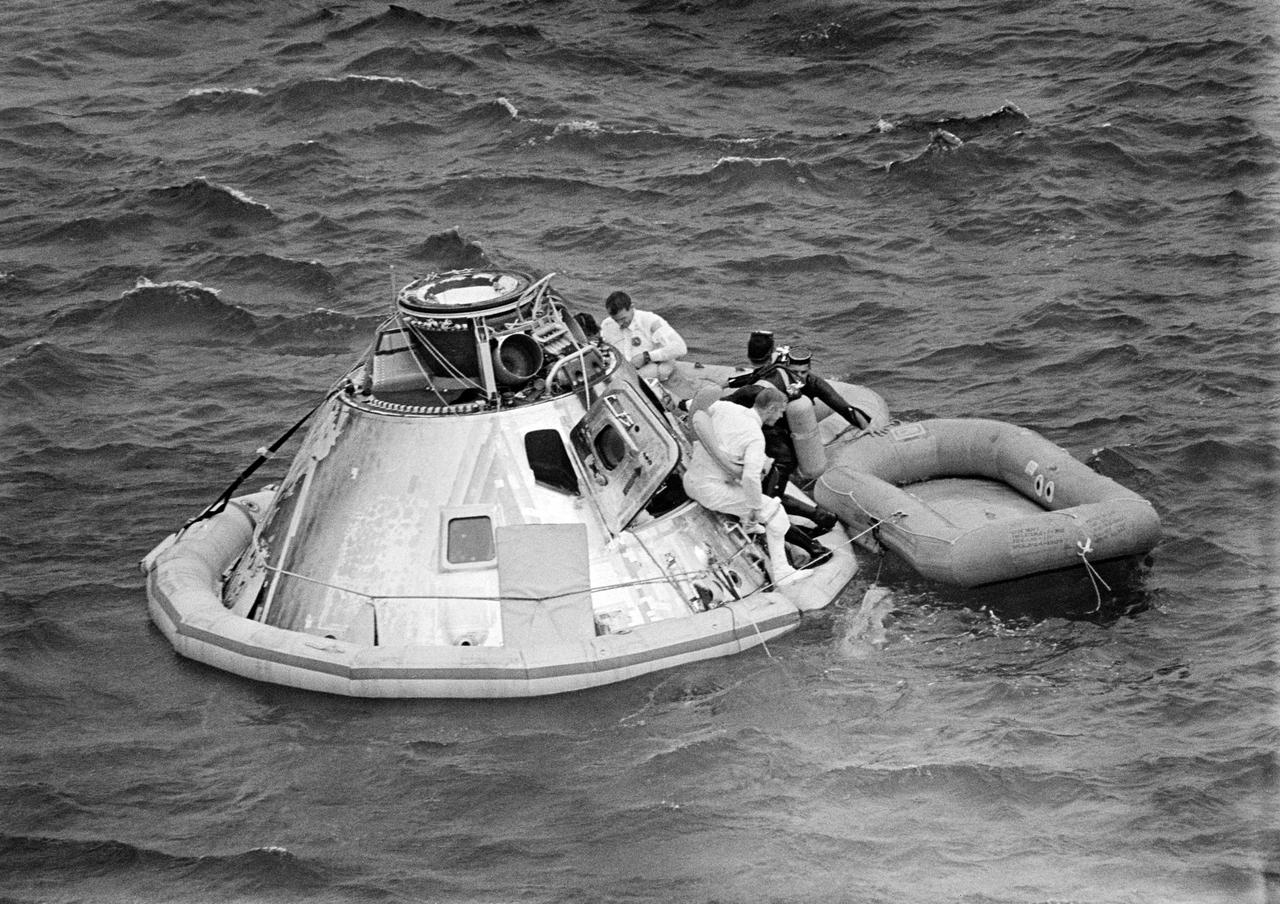
S69-27468 (13 March 1969) --- U.S. Navy underwater demolition team swimmers assist the Apollo 9 crew during recovery operations just after splashdown. They have already attached a flotation collar to the Command Module (CM). Astronaut Russell L. Schweickart, lunar module pilot, is about to climb into raft. In background is astronaut David R. Scott, command module pilot. Still inside the spacecraft is astronaut James A. McDivitt, commander. Splashdown occurred at 12:00:53 p.m. (EST), March 13, 1969, only 4.5 nautical miles from the prime recovery ship, USS Guadalcanal, to conclude a successful 10-day Earth-orbital mission in space.
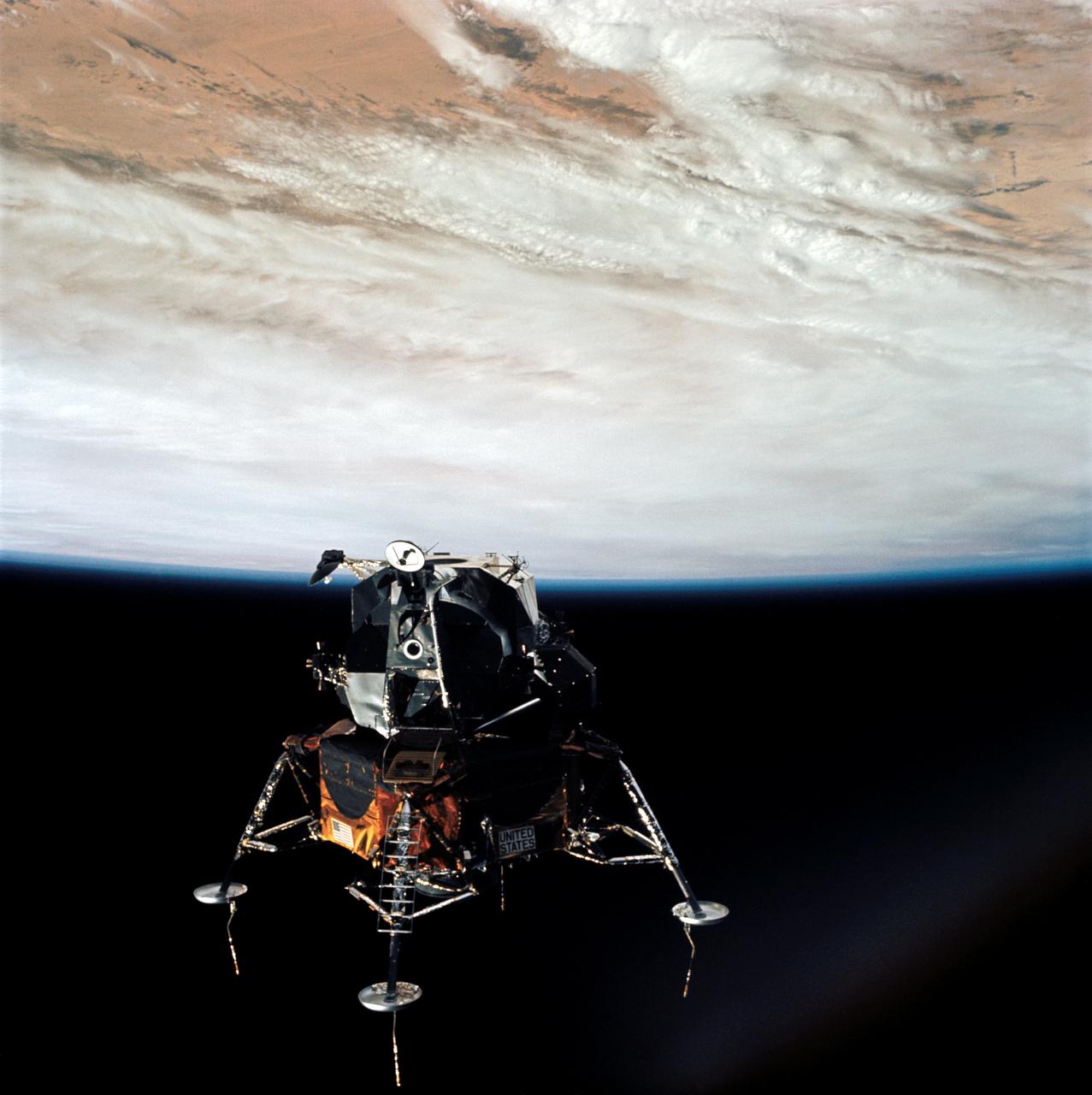
AS09-21-3212 (7 March 1969) --- A view of the Apollo 9 Lunar Module (LM), "Spider", in a lunar landing configuration, as photographed from the Command and Service Modules (CSM) on the fifth day of the Apollo 9 Earth-orbital mission. The landing gear on the "Spider" has been deployed. Lunar surface probes (sensors) extend out from landing gear foot pads. Inside the "Spider" were astronauts James A. McDivitt, Apollo 9 commander, and Russell L. Schweickart, lunar module pilot. Astronaut David R. Scott, command module pilot, remained at the controls in the Command Module (CM), "Gumdrop", while the other two astronauts checked out the Lunar Module.
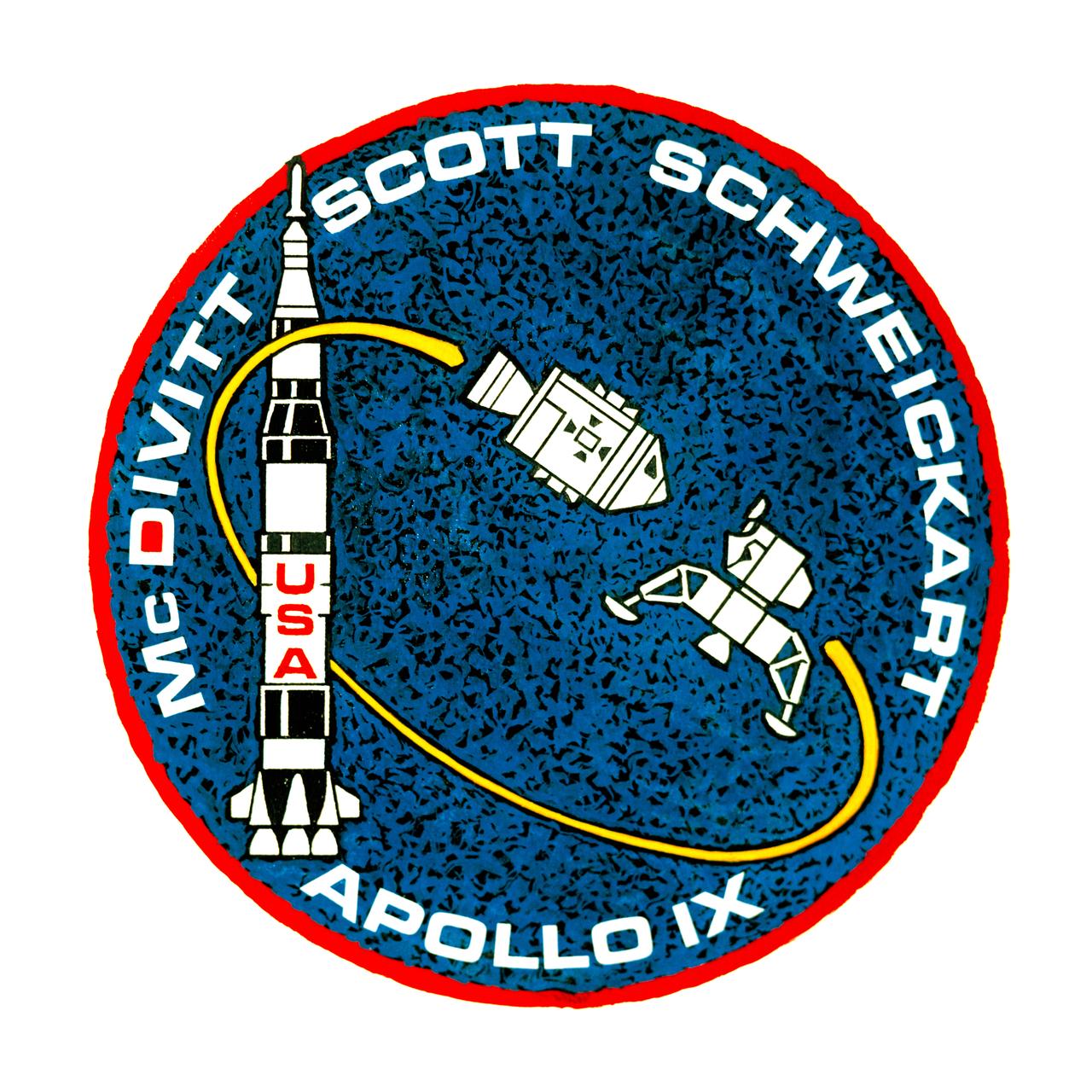
S69-18569 (February 1969) --- The insignia of the Apollo 9 space mission. The crew consist of astronauts James A. McDivitt, commander; David R. Scott, command module pilot; and Russell L. Schweickart, lunar module pilot. The Apollo 9 mission will evaluate spacecraft lunar module systems performance during manned Earth-orbital flight. The NASA insignia design for Apollo flights is reserved for use by the astronauts and for other official use as the NASA Administrator may authorize. Public availability has been approved only in the form of illustrations by the various news media. When and if there is any change in this policy, which we do not anticipate, it will be publicly announced.
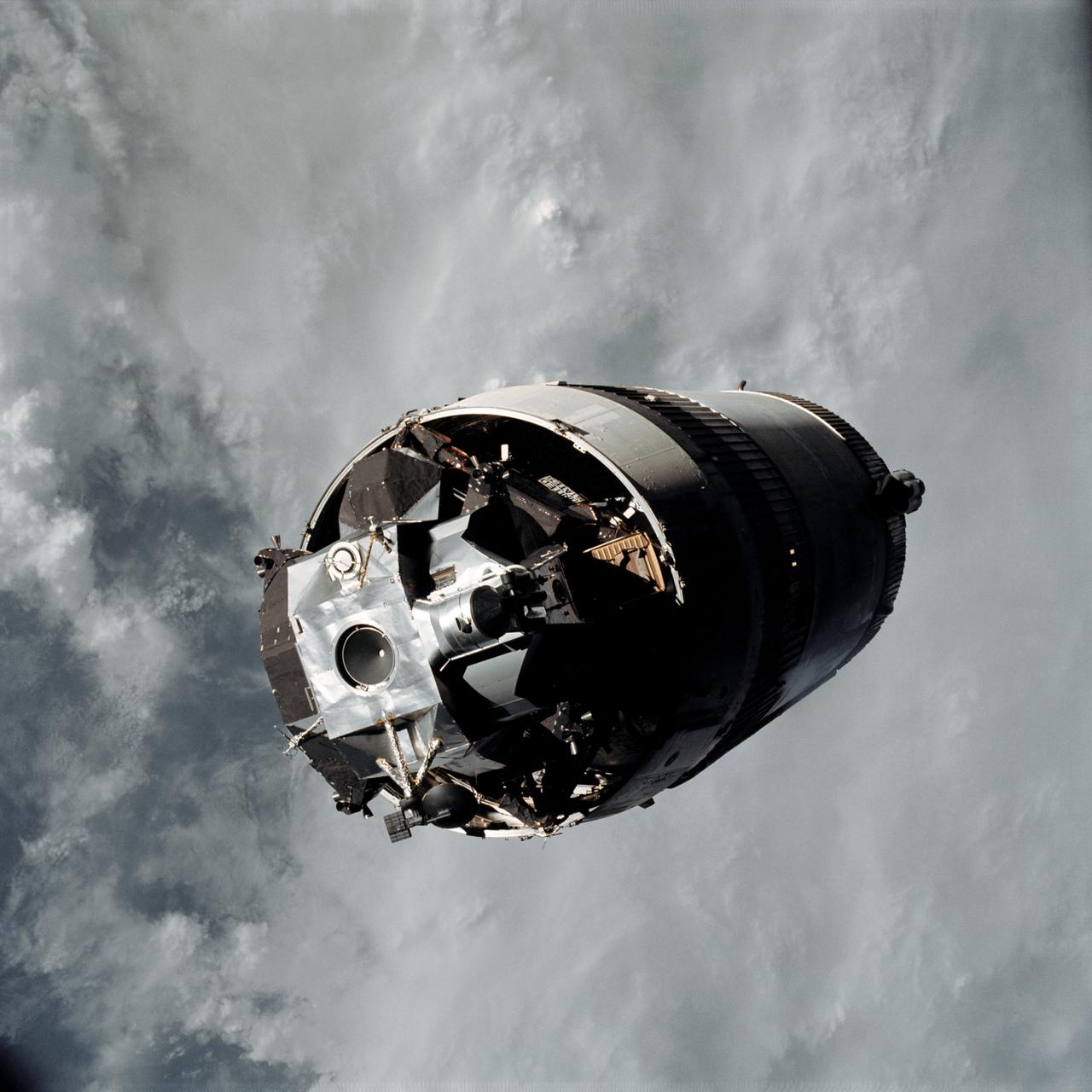
AS09-19-2919 (3 March 1969) --- The Lunar Module (LM) "Spider", still attached to the Saturn V third (S-IVB) stage, is photographed from the Command and Service Modules (CSM) "Gumdrop" on the first day of the Apollo 9 Earth-orbital mission. This picture was taken following CSM/LM-S-IVB separation and prior to LM extraction from the S-IVB. The Spacecraft Lunar Module Adapter (SLA) panels have already been jettisoned. Inside the Command Module were astronauts James A. McDivitt, commander; David R. Scott, command module pilot; and Russell L. Schweickart, lunar module pilot.