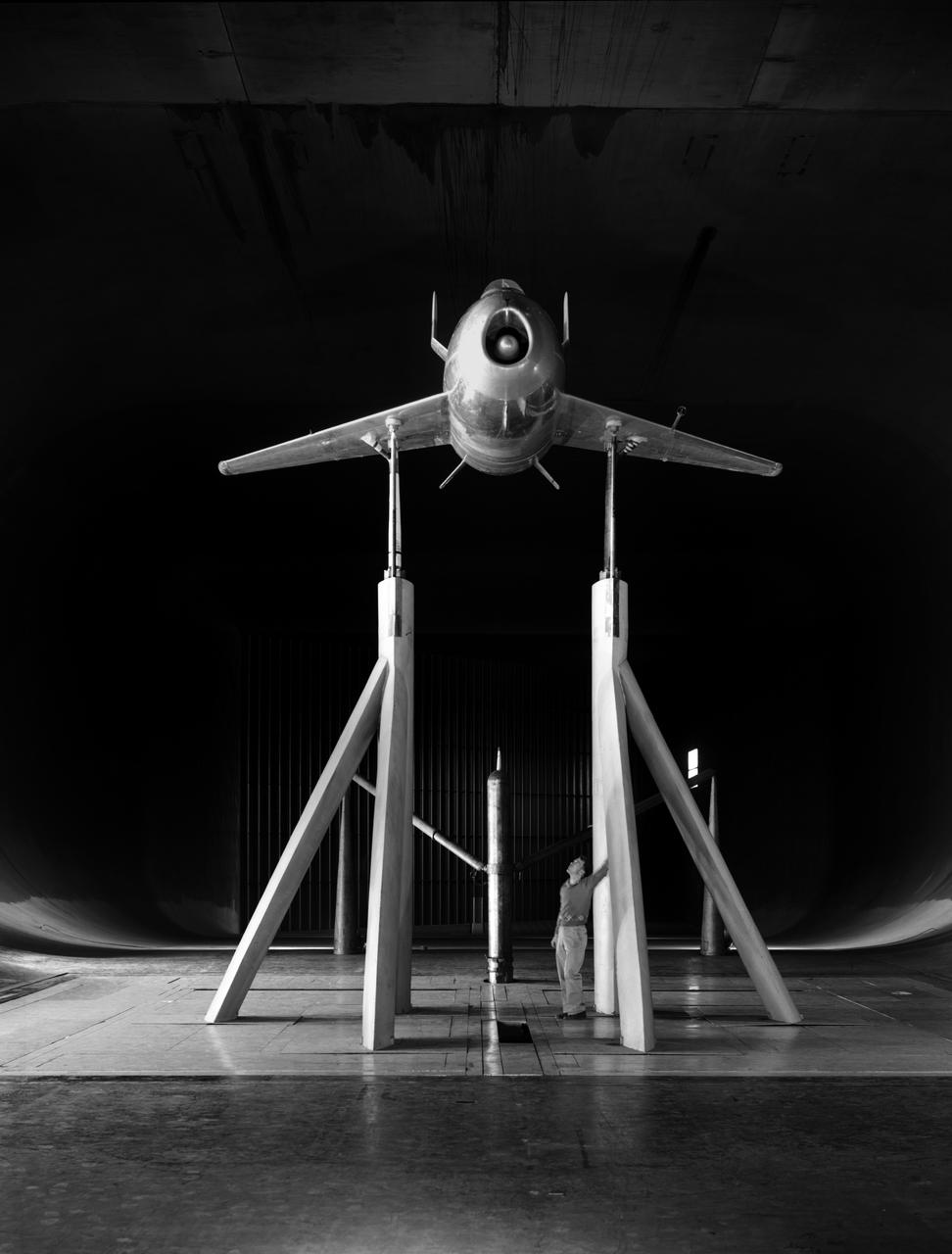
Front View of McDonald XP-85 Plan Model. Parasite Airplane designed to be carried in the B-36 bombay (never built) At the time it was the smallest Jet powered airplane. The McDonnell XF-85 Goblin was an American prototype fighter aircraft conceived during World War II by McDonnell Aircraft. It was intended to be deployed from the bomb bay of the giant Convair B-36 bomber as a parasite fighter. The XF-85's intended role was to defend bombers from hostile interceptor aircraft, a need demonstrated during World War II
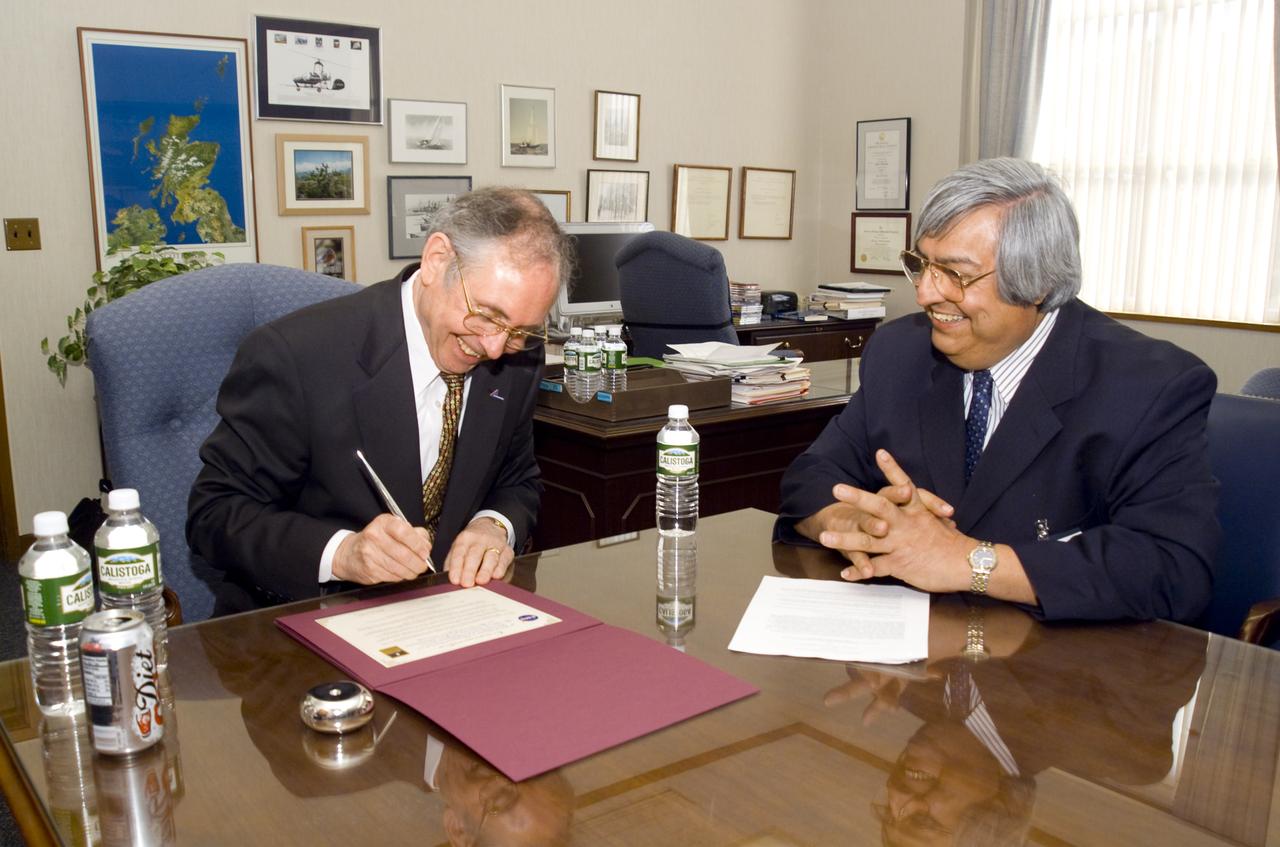
Dr. Henry McDonald signs MOU with National Hispanic University (NHU) with Roberto Cruz, President NHU
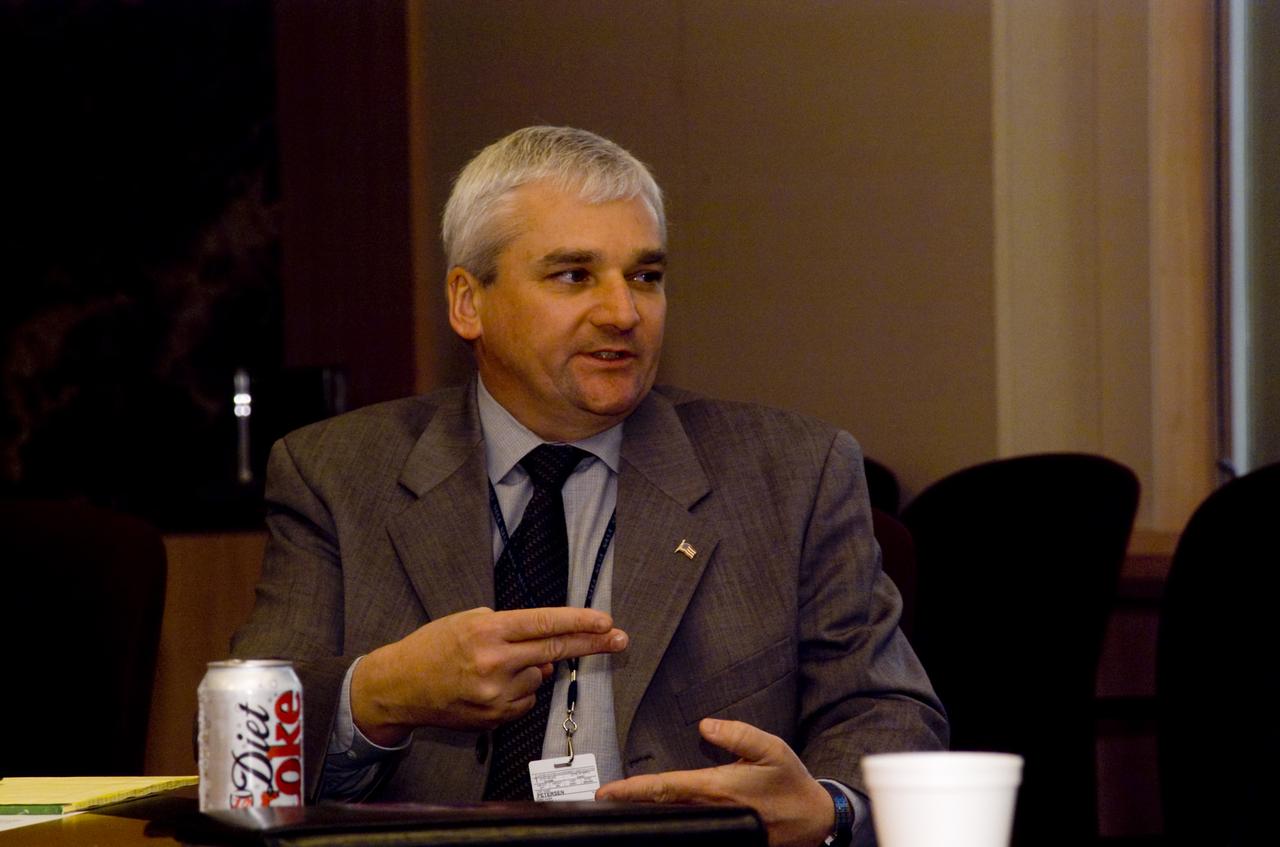
Kevin Peterson Dryden Flight Research Center Director meets with Dr Harry McDonald on collaborative research programs
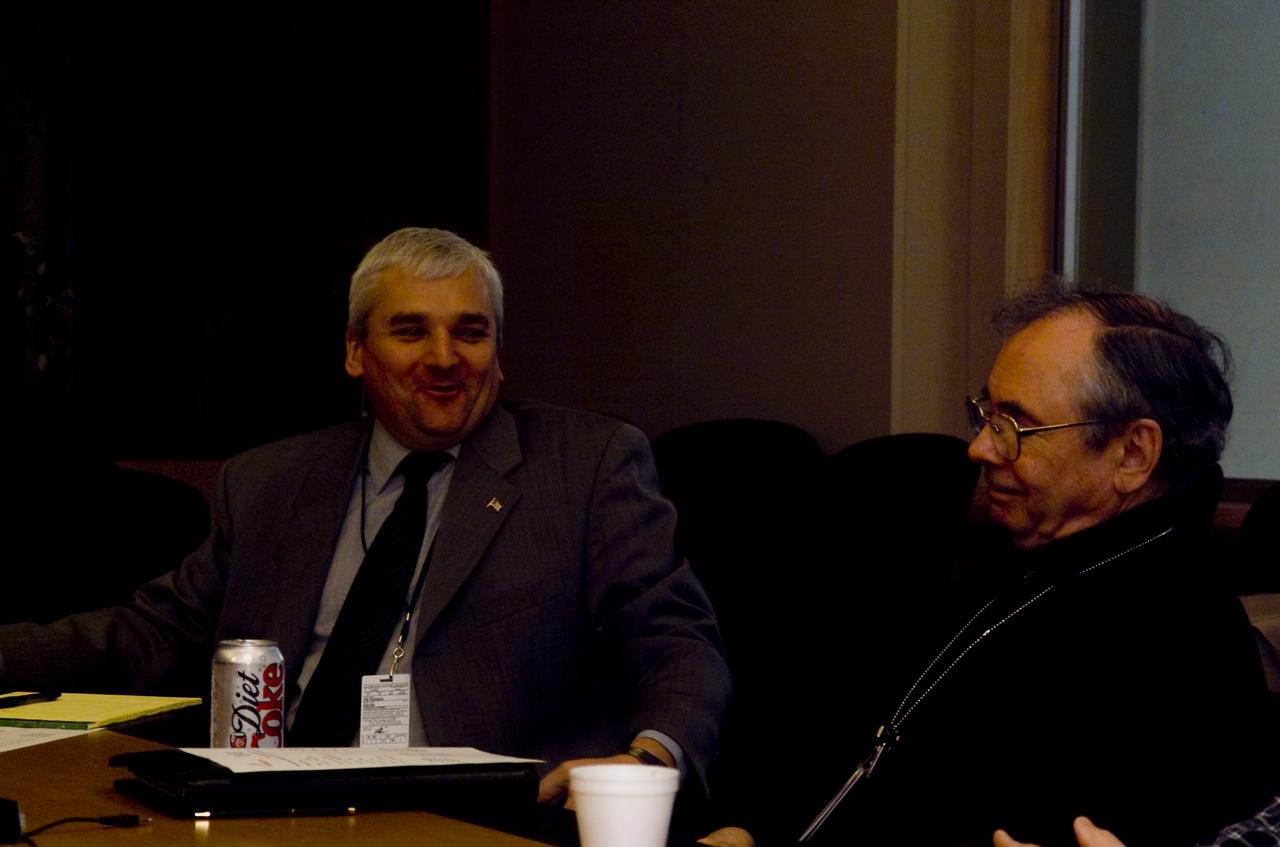
Kevin Peterson Dryden Flight Research Center Director meets with Dr Harry McDonald on collaborative research programs
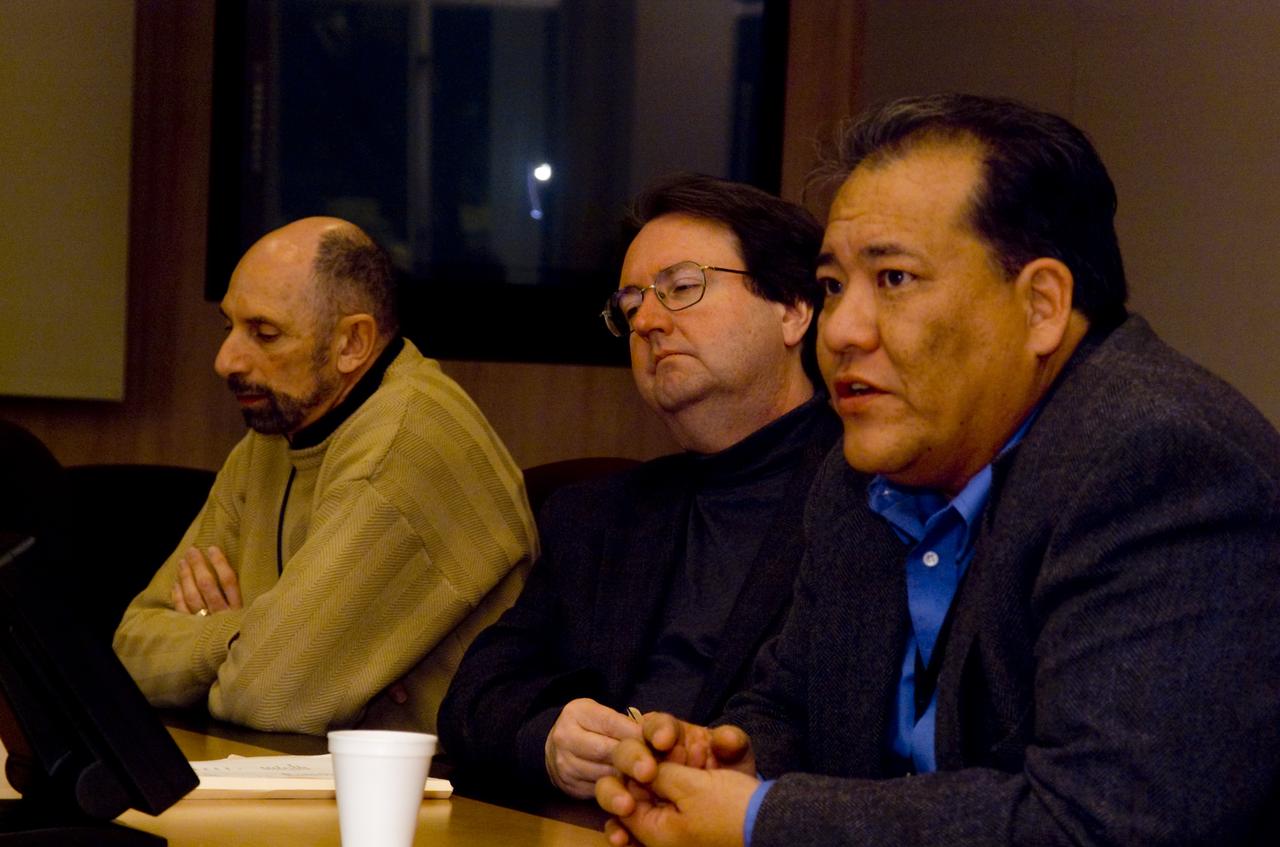
Kevin Peterson Dryden Flight Research Center Director meets with Dr Harry McDonald on collaborative research programs
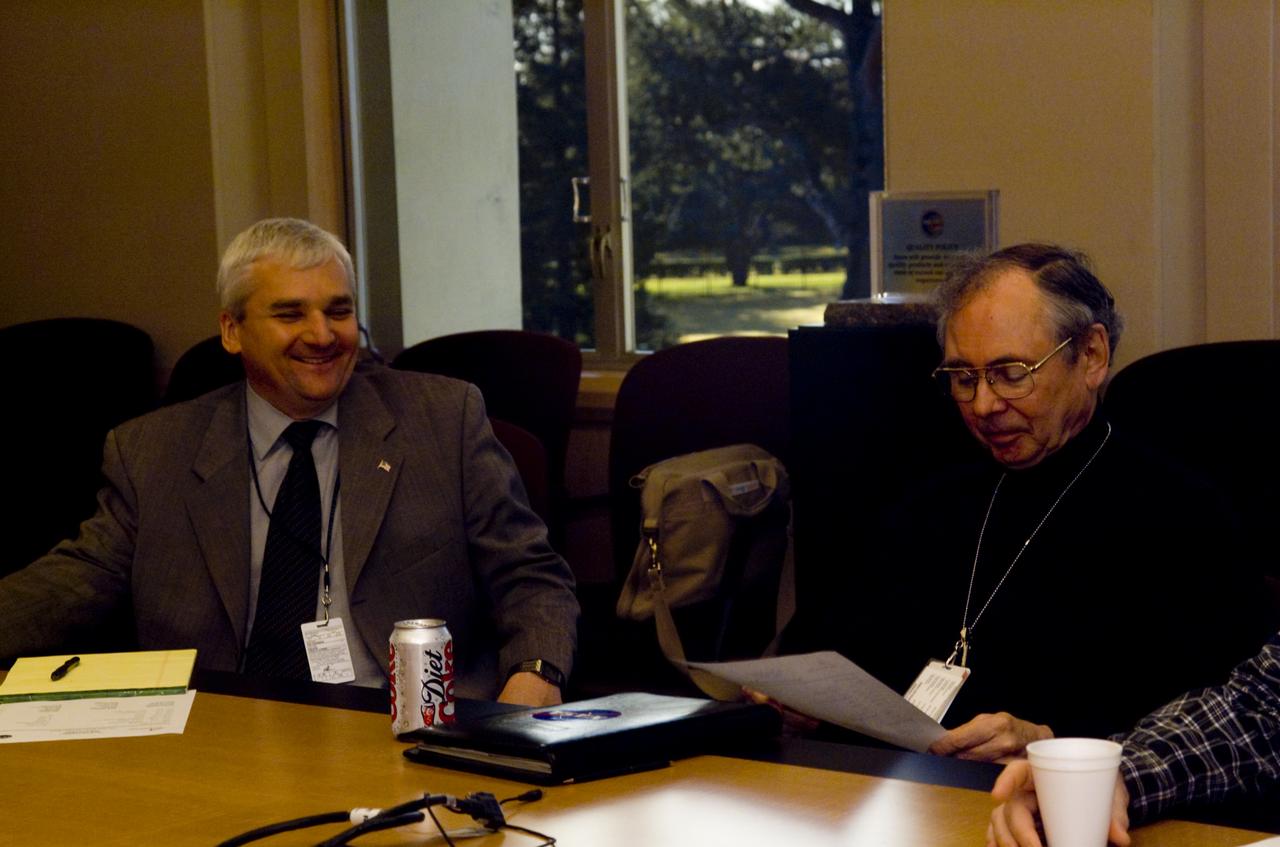
Kevin Peterson Dryden Flight Research Center Director meets with Dr Harry McDonald on collaborative research programs
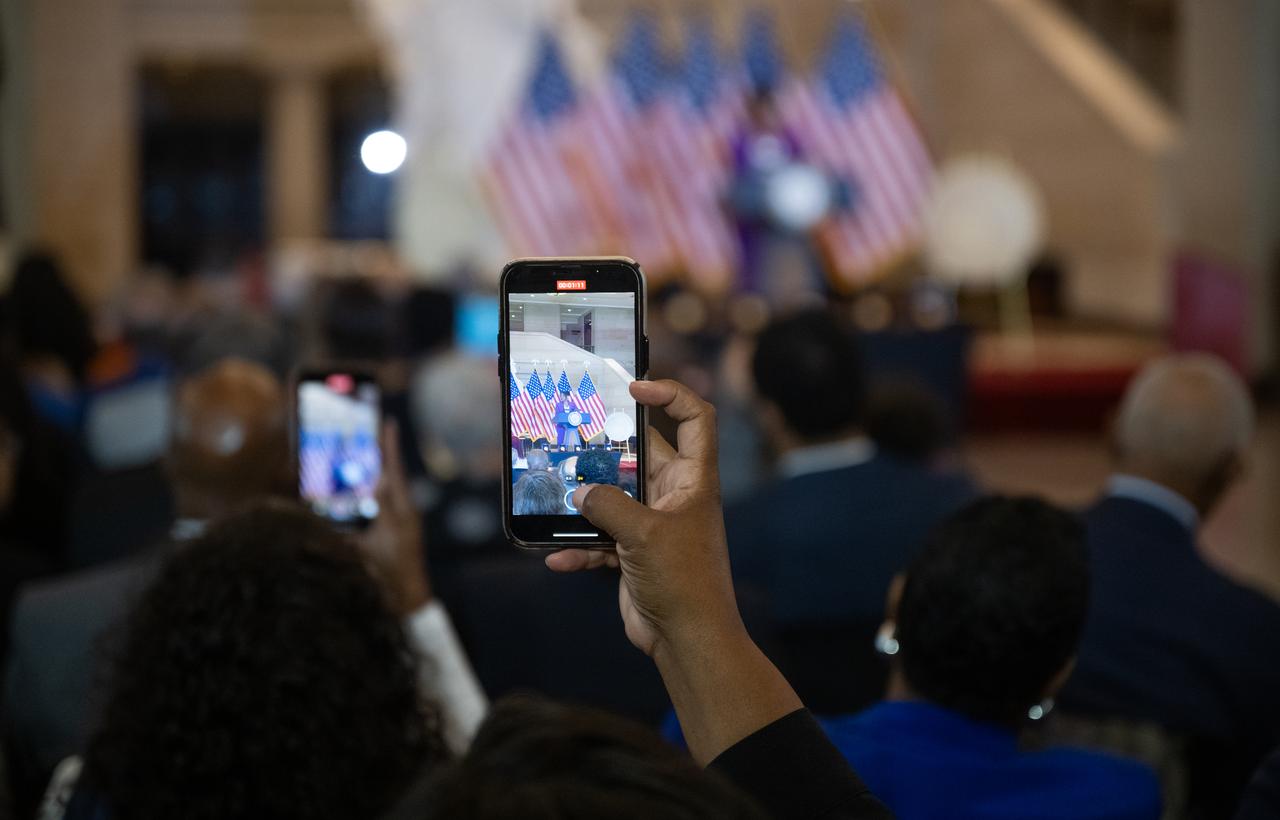
A member of the audience films Audra McDonald as she sings “America the Beautiful” during a Congressional Gold Medal ceremony recognizing NASA’s Hidden Figures, Wednesday, Sept. 18, 2024, in Emancipation Hall at the U.S. Capitol in Washington. Congressional Gold Medals were awarded to Katherine Johnson, Dr. Christine Darden, Dorothy Vaughan, and Mary W. Jackson in recognition of their service to the United States as well as a Congressional Gold Medal in recognition of all the women who served as computers, mathematicians, and engineers at the National Advisory Committee for Aeronautics and NASA between the 1930s and 1970s. Photo Credit: (NASA/Joel Kowsky)
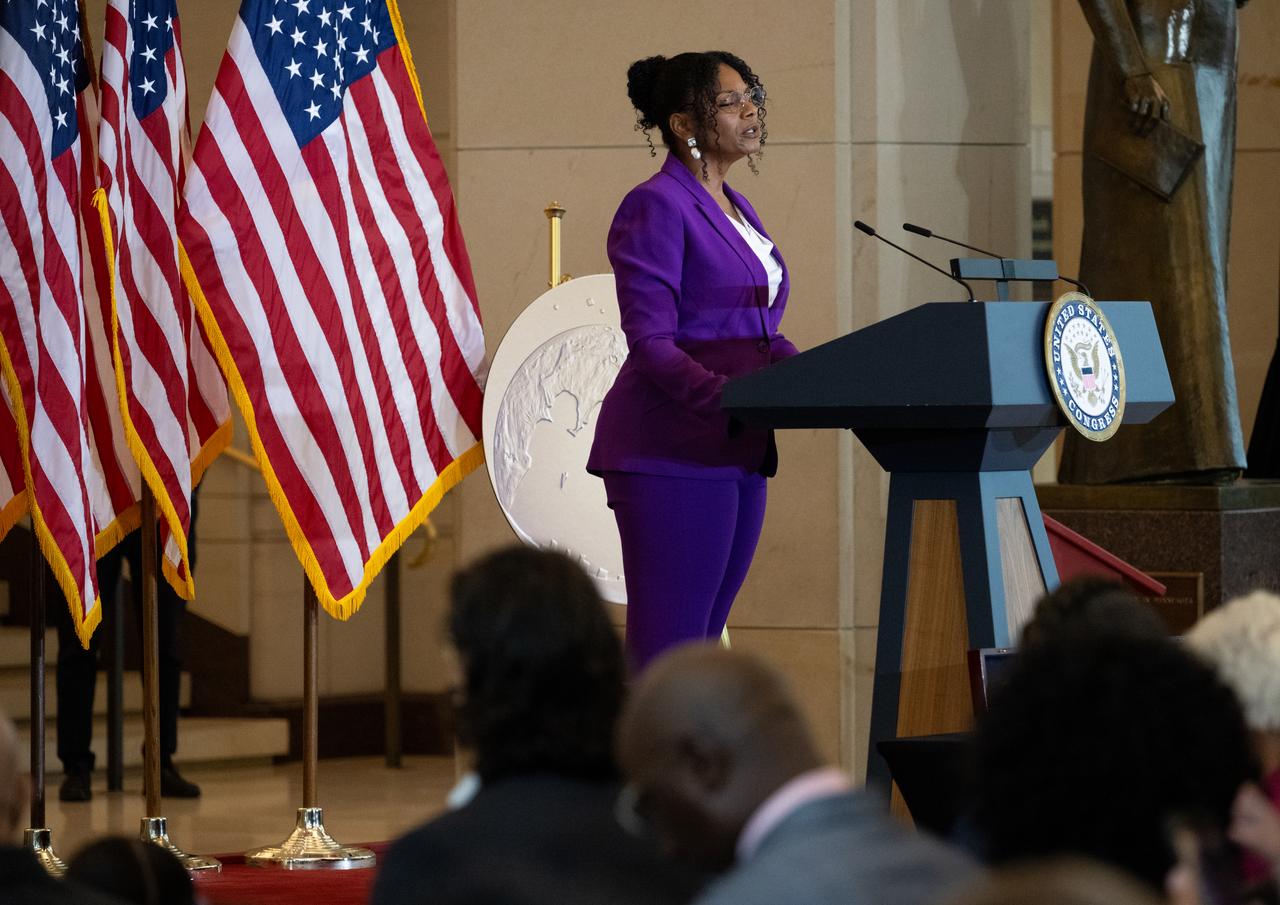
Audra McDonald sings “America the Beautiful” during a Congressional Gold Medal ceremony recognizing NASA’s Hidden Figures, Wednesday, Sept. 18, 2024, in Emancipation Hall at the U.S. Capitol in Washington. Congressional Gold Medals were awarded to Katherine Johnson, Dr. Christine Darden, Dorothy Vaughan, and Mary W. Jackson in recognition of their service to the United States as well as a Congressional Gold Medal in recognition of all the women who served as computers, mathematicians, and engineers at the National Advisory Committee for Aeronautics and NASA between the 1930s and 1970s. Photo Credit: (NASA/Joel Kowsky)
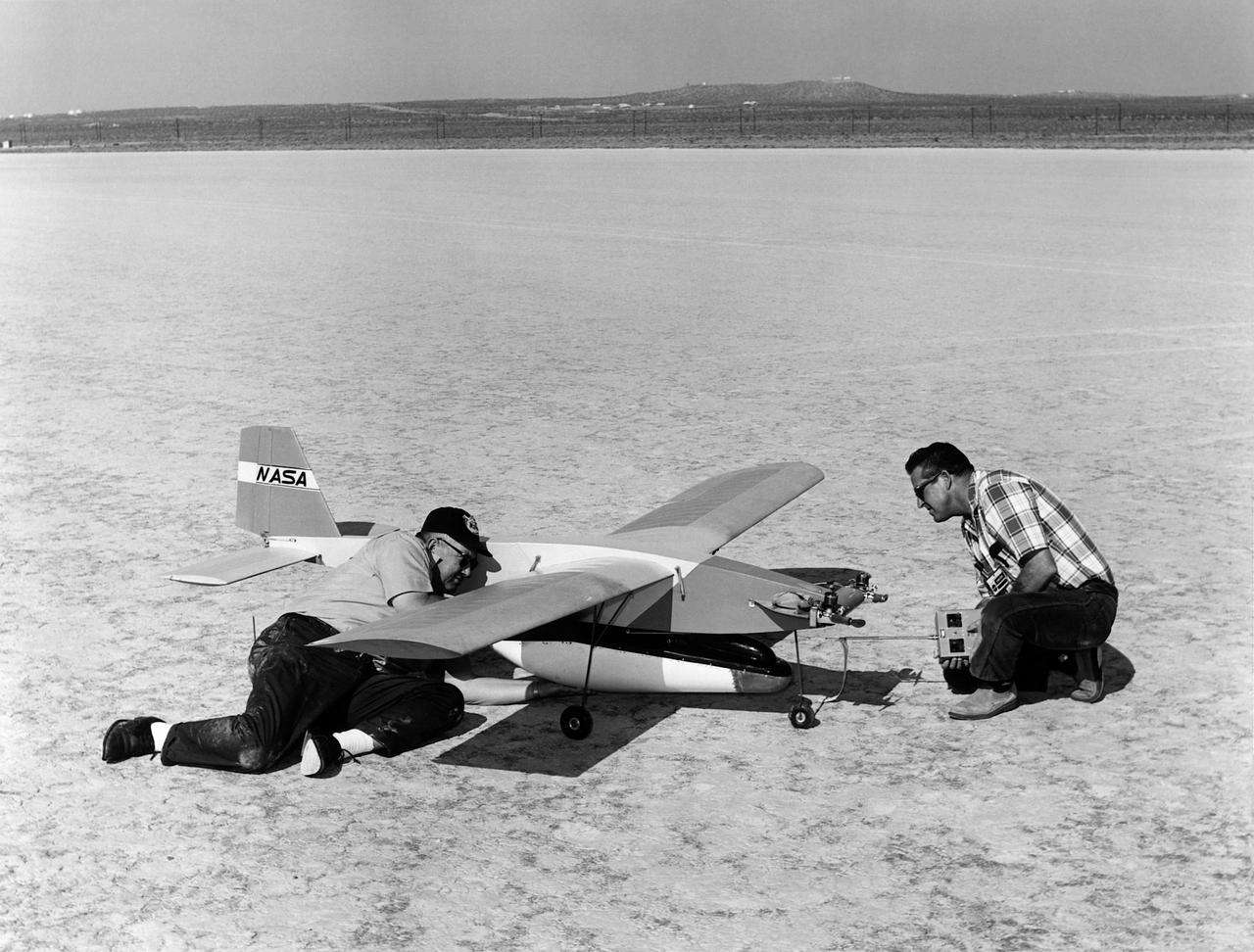
A photo of model airplane builders James B. Newman and Robert L. McDonald preparing for a flight with models of the M2-F2 and a “Mothership”. In 1968 a test flight was made on the Rosamond dry lakebed, Rosamond, California. The original idea of lifting bodies was conceived about 1957 by Dr. Alfred J. Eggers, Jr., then the assistant director for Research and Development Analysis and Planning at the National Advisory Committee for Aeronautics' Ames Aeronautical Laboratory, Moffett Field, California. Nose cone studies led to the design known as the M-2, a modified half-cone, rounded on the bottom and flat on top, with a blunt, rounded nose and twin tail fins. To gather flight data on this configuration, models were found to be an effective method. A special twin-engined, 14-foot model “mothership” was used for carrying the M2-F2 model to altitude and a launch, much as was being done with the B-52 for the full-scale lifting bodies. Jim (on the left) will fly the “mothership” and Bob will take control of the M2-F2 at launch and fly it to a landing on the lakebed.
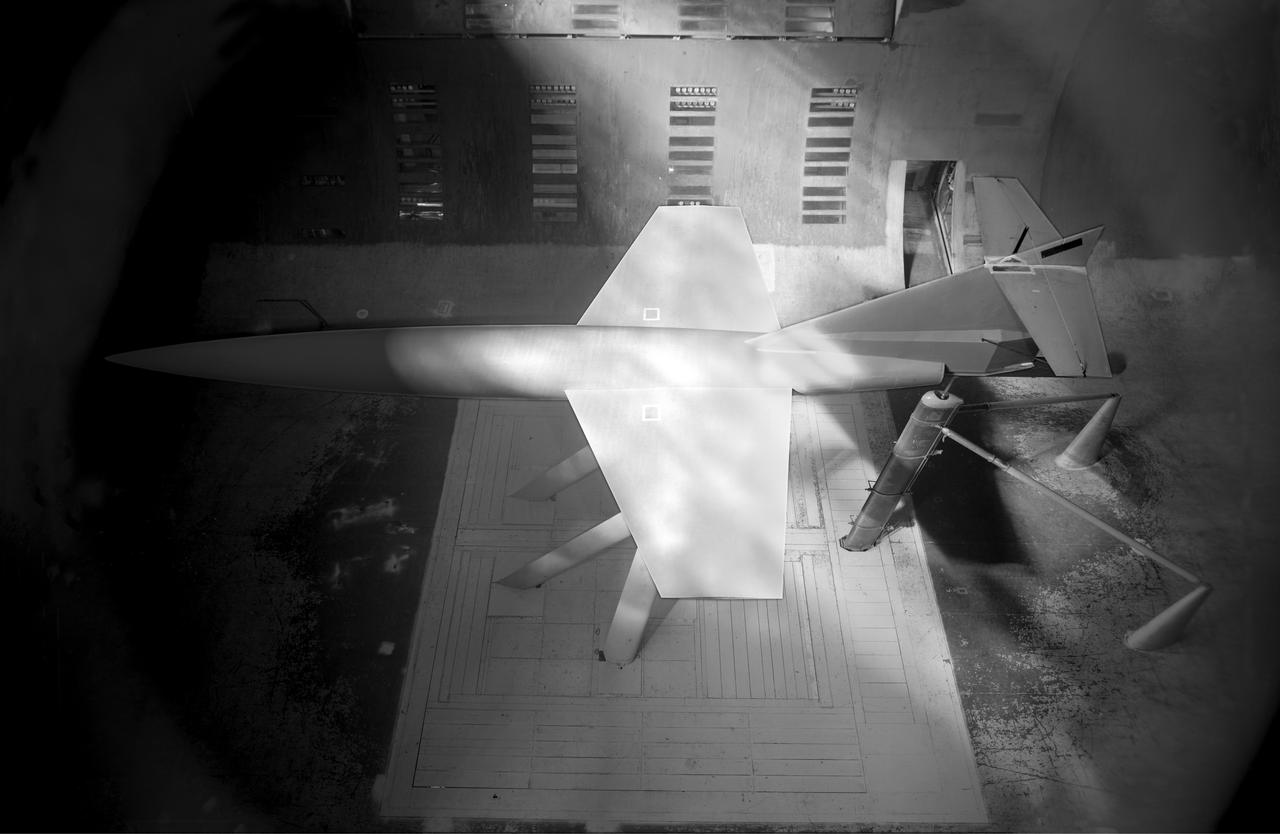
McDonald XP-85
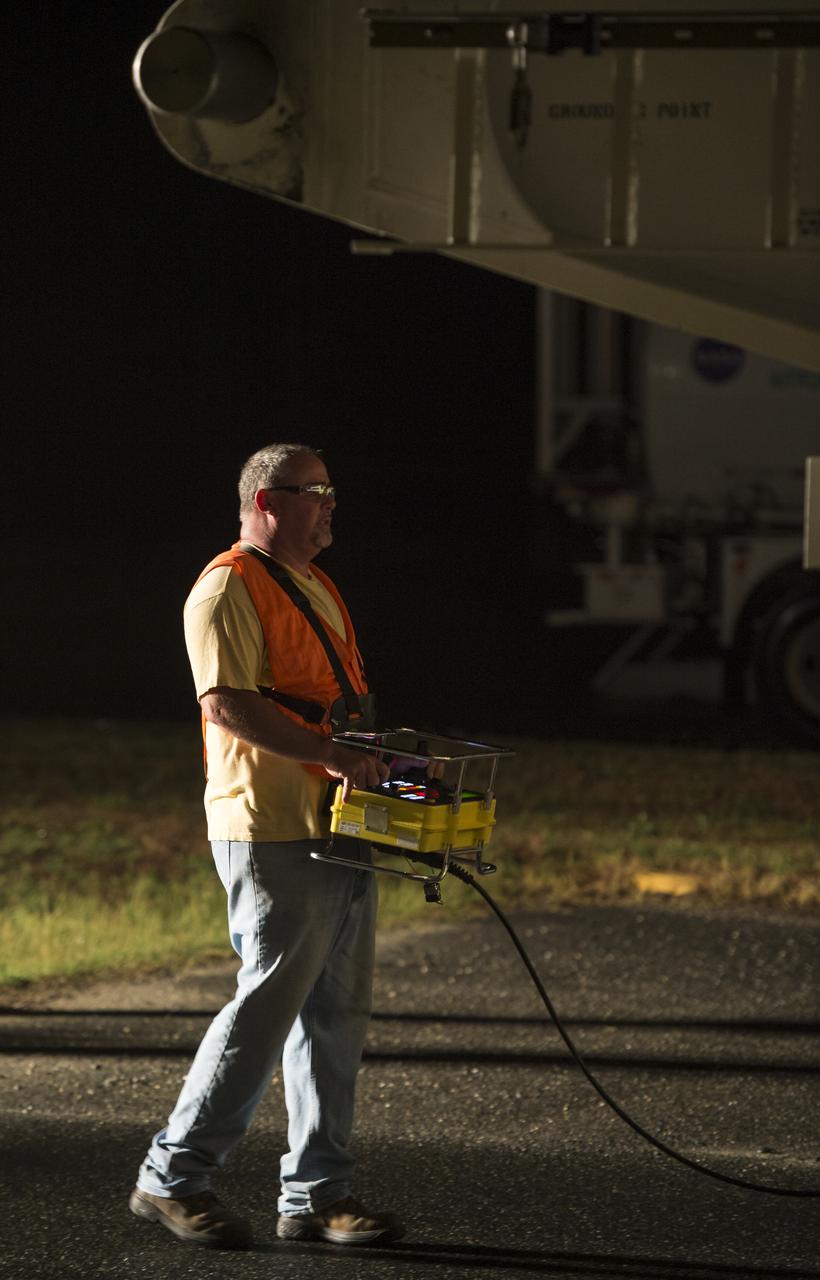
Chris McDonald with Orbital Sciences, drives the Antares rocket, with the Cygnus spacecraft onboard, from the Horizontal Integration Facility (HIF) to launch Pad-0A, Thursday, July 10, 2014, at NASA's Wallops Flight Facility in Virginia. The Antares will launch with the Cygnus spacecraft filled with over 3,000 pounds of supplies for the International Space Station, including science experiments, experiment hardware, spare parts, and crew provisions. The Orbital-2 mission is Orbital Sciences' second contracted cargo delivery flight to the space station for NASA. Photo Credit: (NASA/Bill Ingalls)
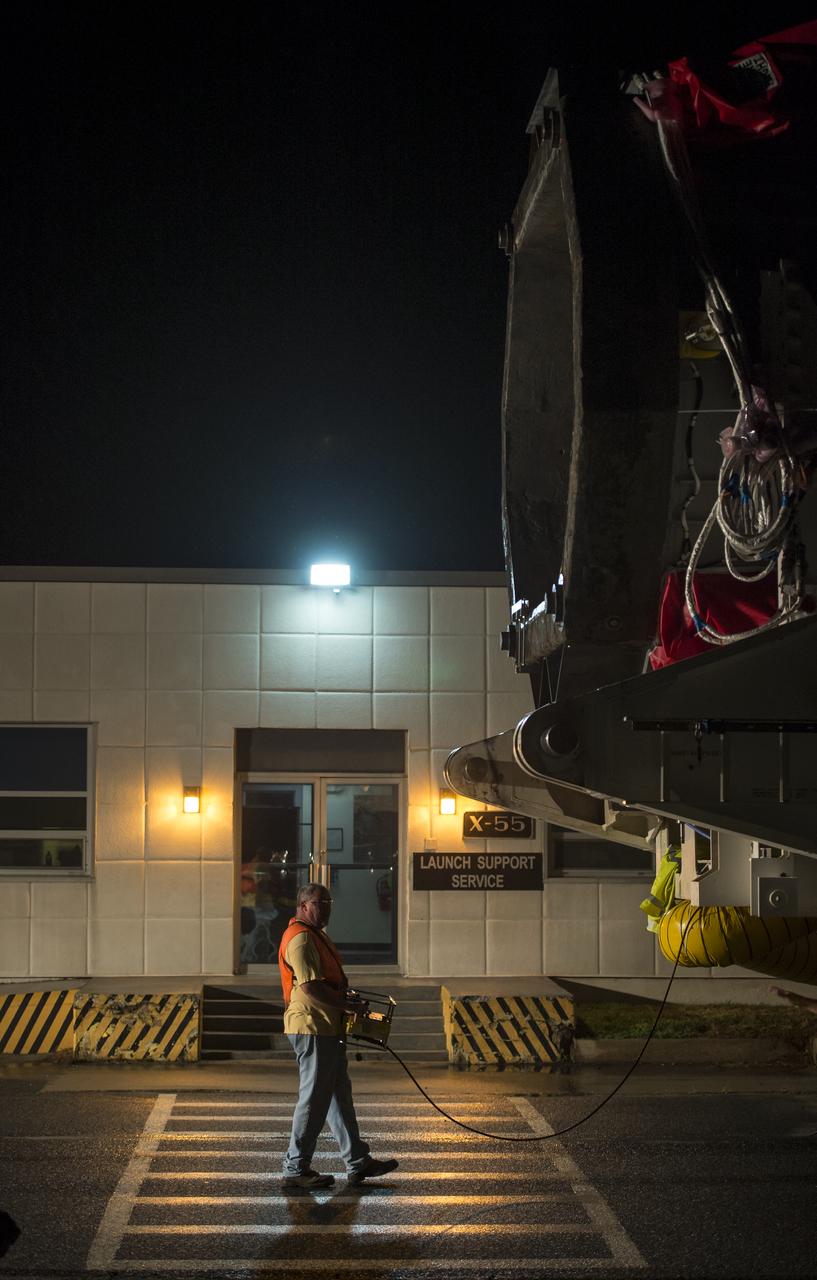
Chris McDonald with Orbital Sciences, drives the Antares rocket, with the Cygnus spacecraft onboard, from the Horizontal Integration Facility (HIF) to launch Pad-0A, Thursday, July 10, 2014, at NASA's Wallops Flight Facility in Virginia. The Antares will launch with the Cygnus spacecraft filled with over 3,000 pounds of supplies for the International Space Station, including science experiments, experiment hardware, spare parts, and crew provisions. The Orbital-2 mission is Orbital Sciences' second contracted cargo delivery flight to the space station for NASA. Photo Credit: (NASA/Bill Ingalls)
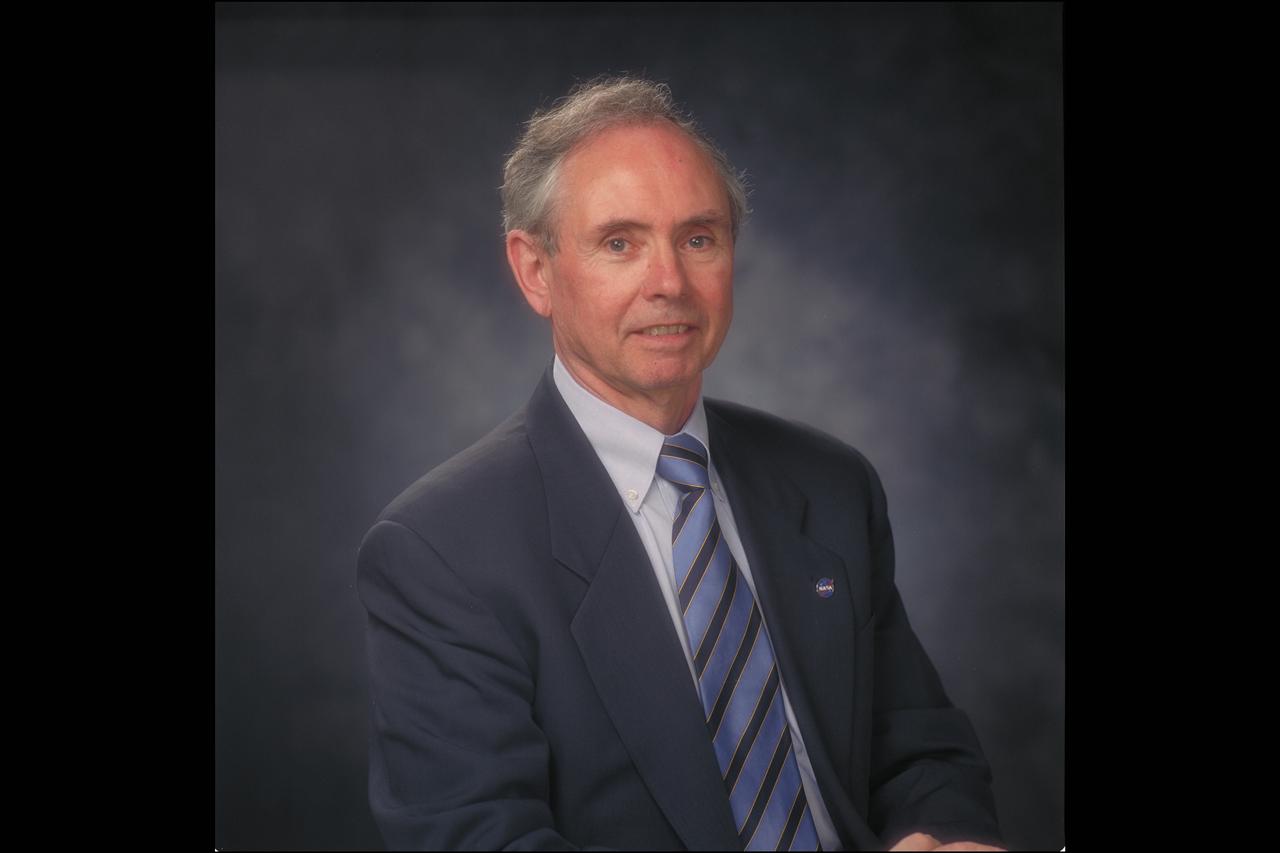
OFFICIAL Portrait: Dr Henry 'Harry' Mcdonald (1996 - 2002)
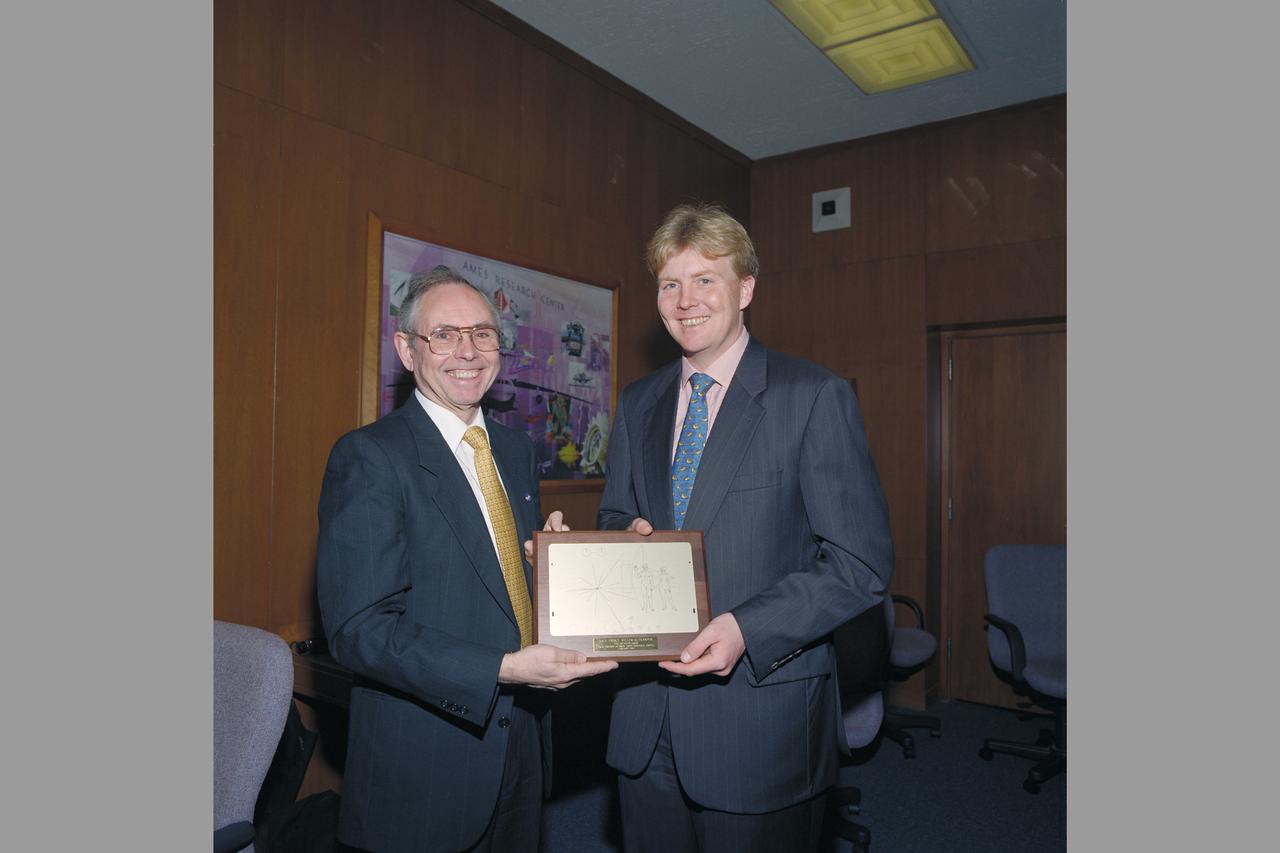
Prince Willem Alexander (Crown Prince of the Netherlands) visits Ames shown here with Ames Center Director H. McDonald.
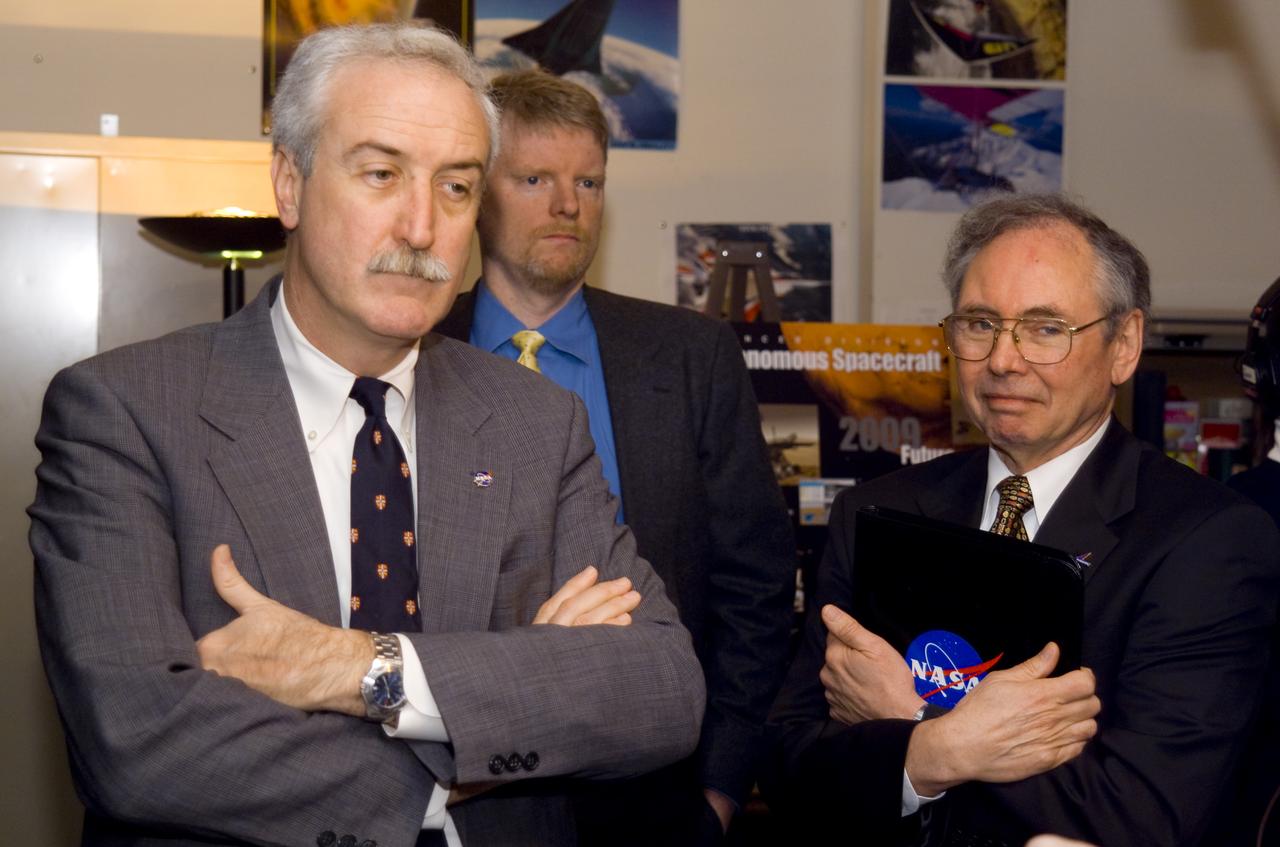
NASA Administrator Sean O'Keefe comes to Ames for employee briefing and tour. O'Keefe & McDonald
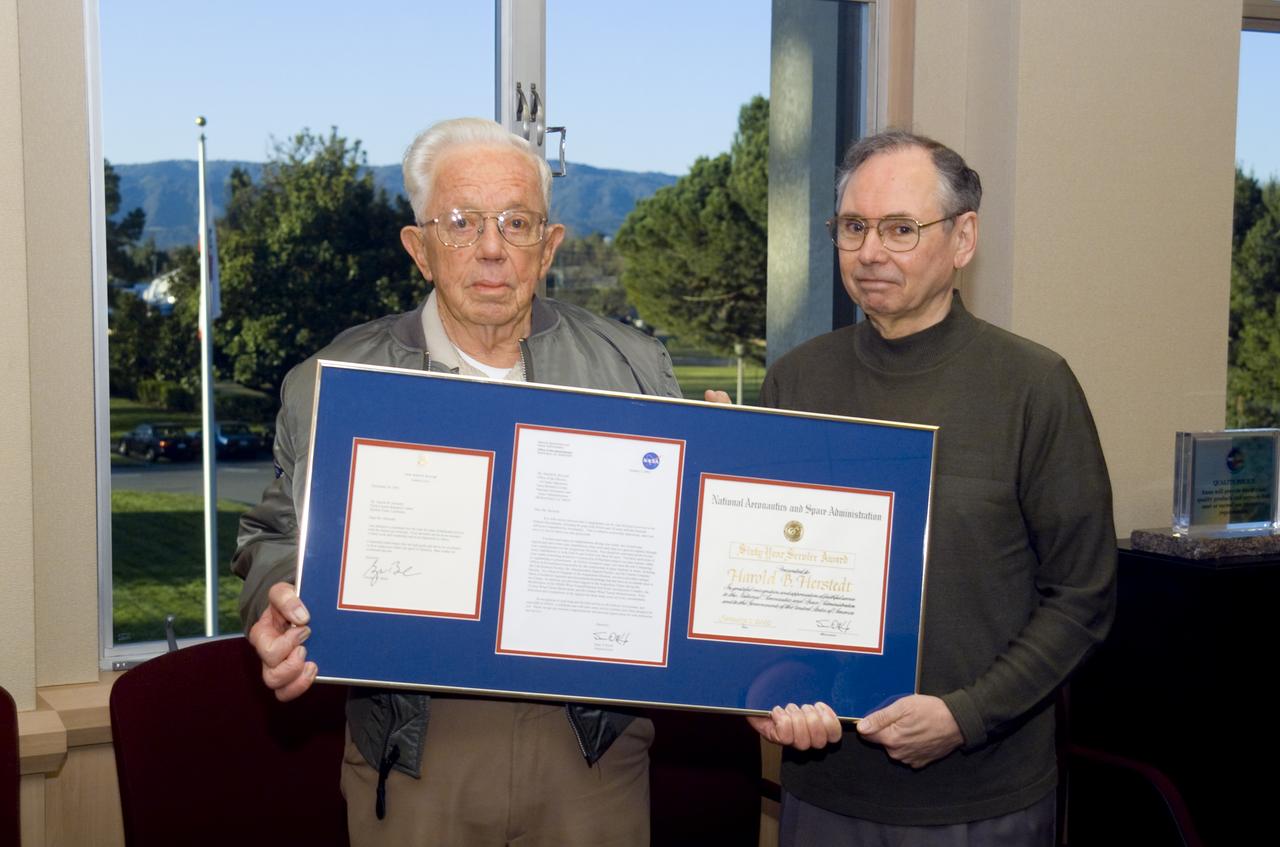
Length of Service Award (LOS) Harold Herstedt with 60 years of service. Award plaque presented by Dr McDonald
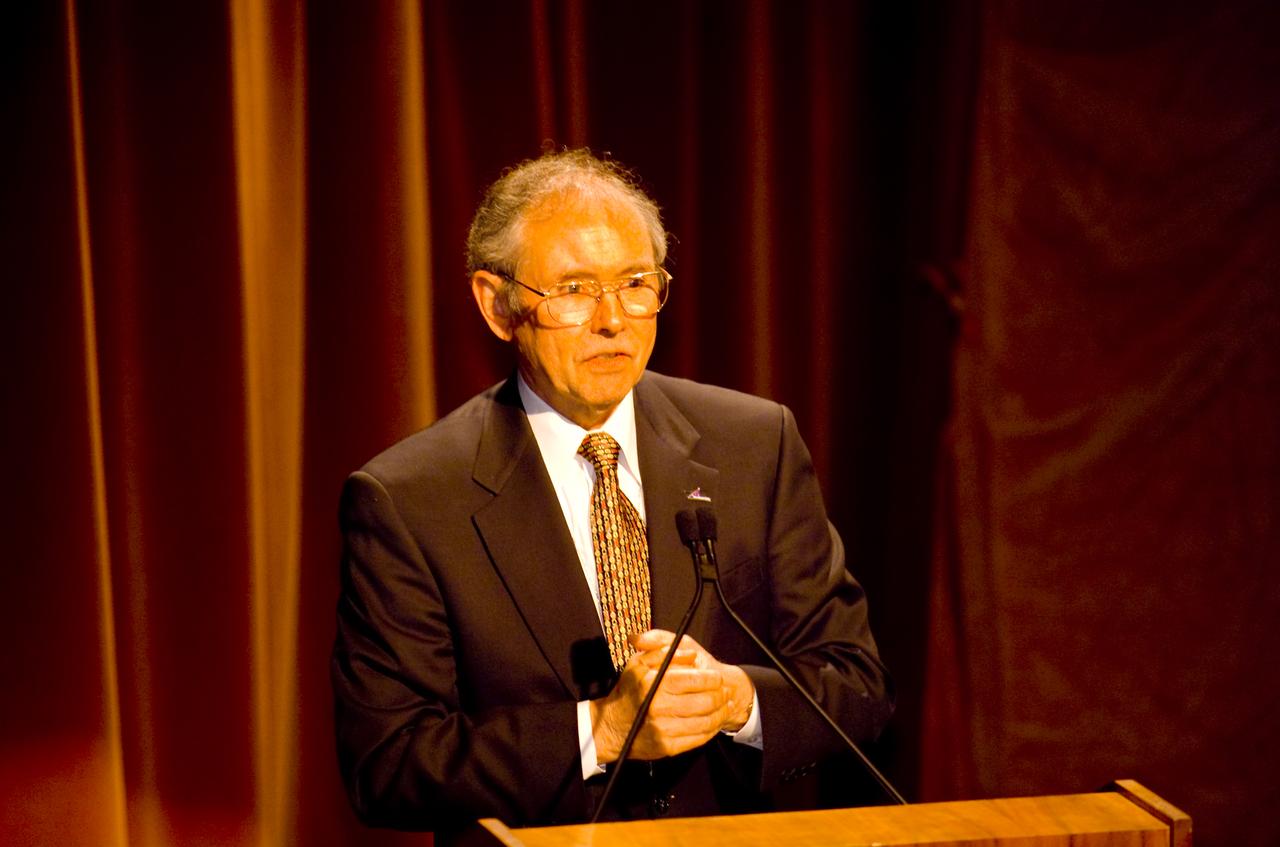
NASA Administrator Sean O'Keefe comes to Ames for employee briefing and tour. N-201 assembly Ames Director Dr. Harry McDonald welcomes O'Keefe

British royalty visits Ames; Prince Andrew, Duke of York on tour, here with Dr Henry McDonald, Director of Ames Research Center presenting a memento to the Prince.
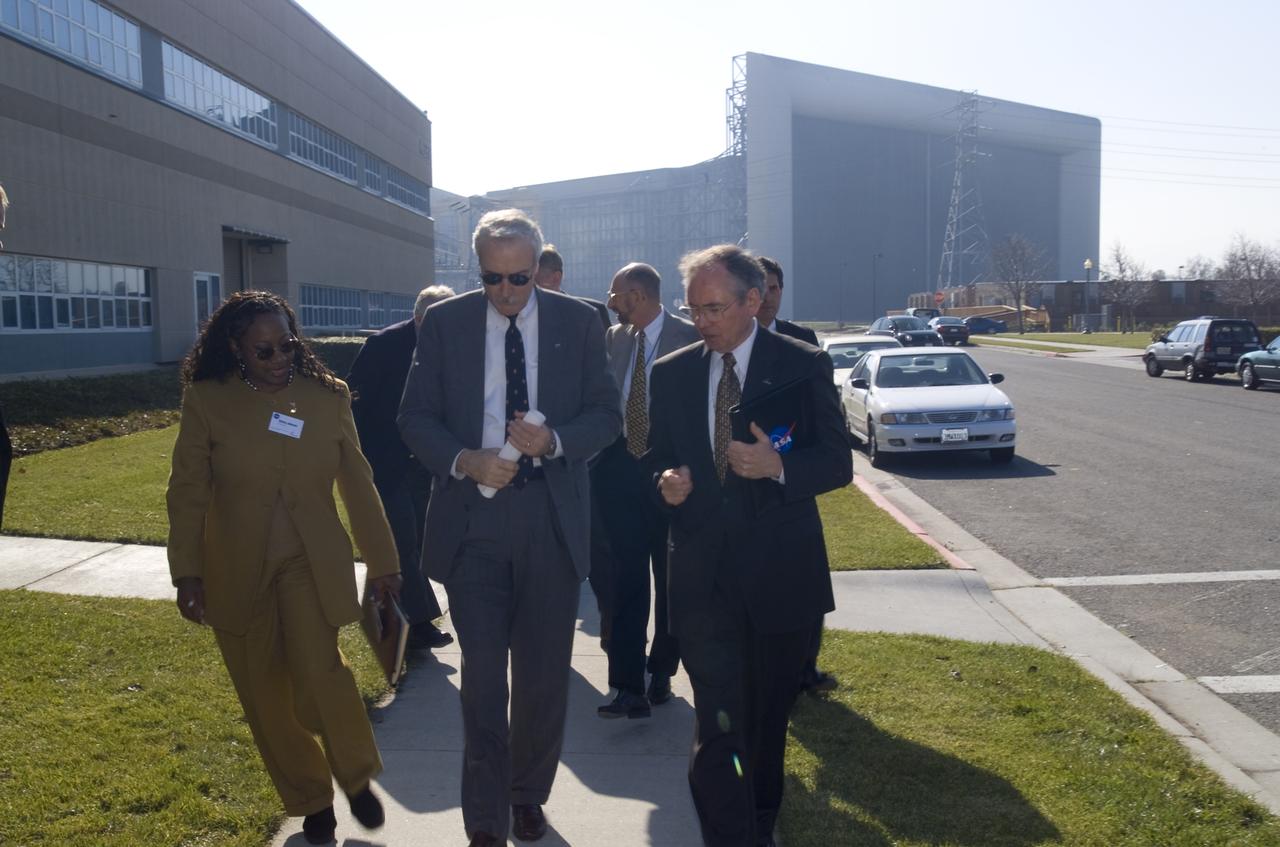
NASA Administrator Sean O'Keefe comes to Ames for employee briefing and tour. tour group L-R: Shelia Johnson, O'Keefe, Dr McDonald
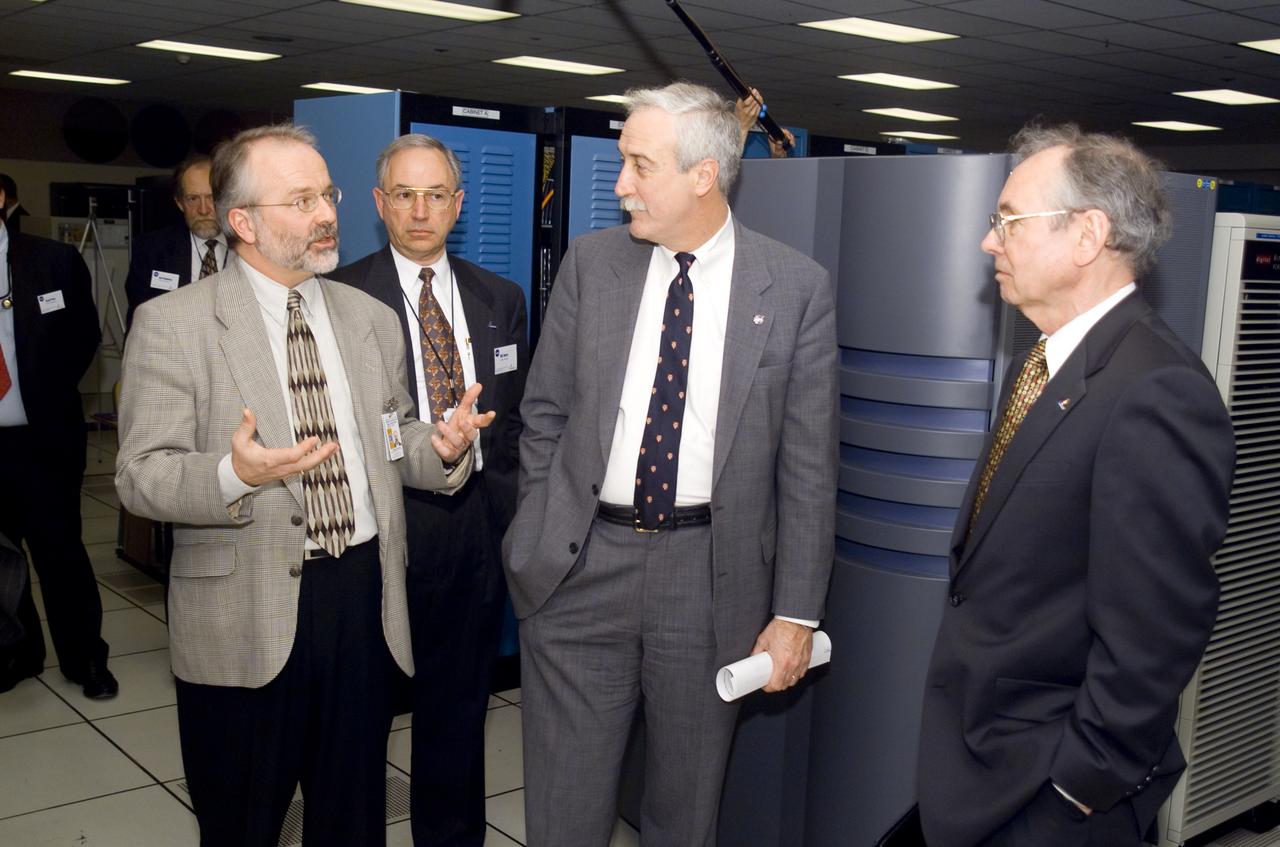
NASA Administrator Sean O'Keefe comes to Ames for employee briefing and tour. Bill Feiereisen briefs O'Keefe at the NAS lab. (with Bill Berry and Harry McDonald
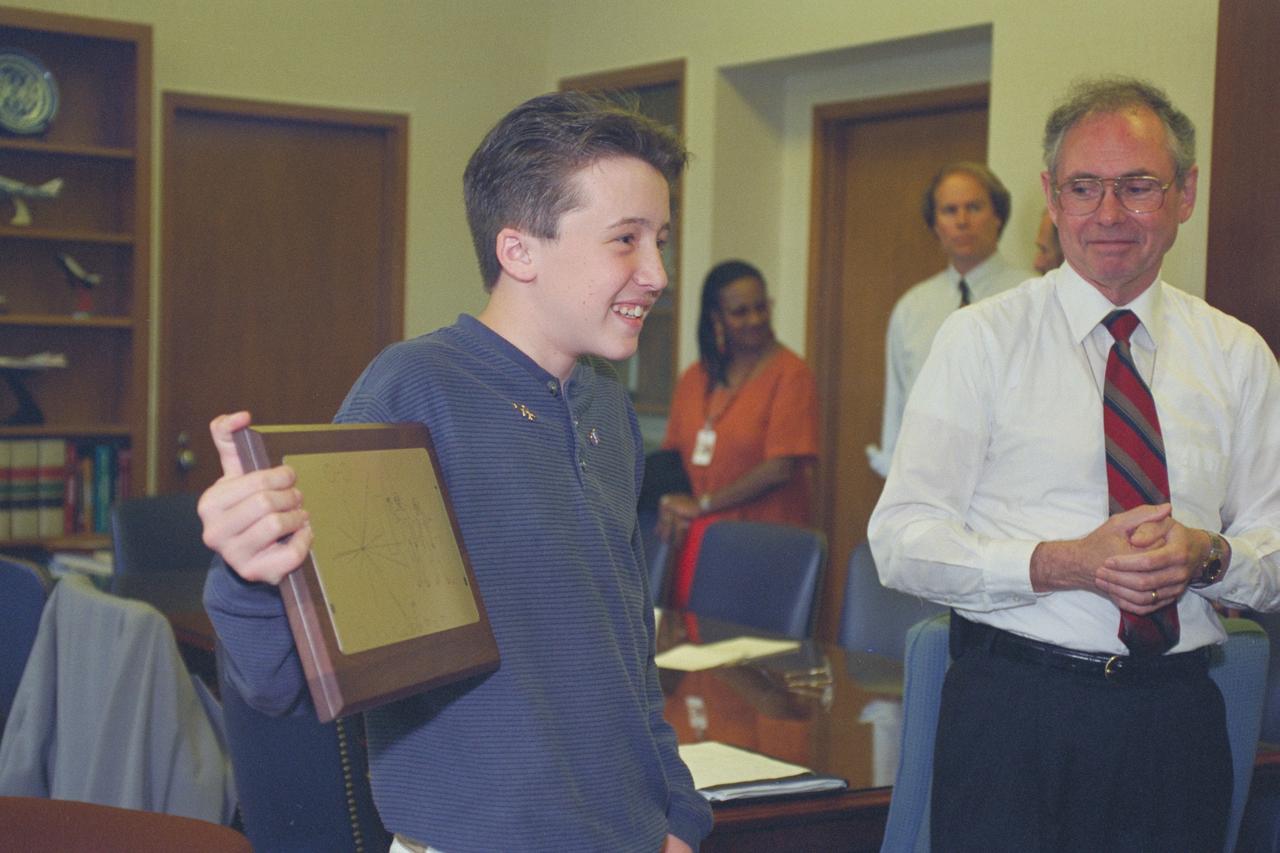
Make a wish foundation VMS ride for Tom Evans. Tom receives a Pioneer 10 Plaque from Dr McDonald at a meeting attended by Shelia Johnson, organizer of the wish.
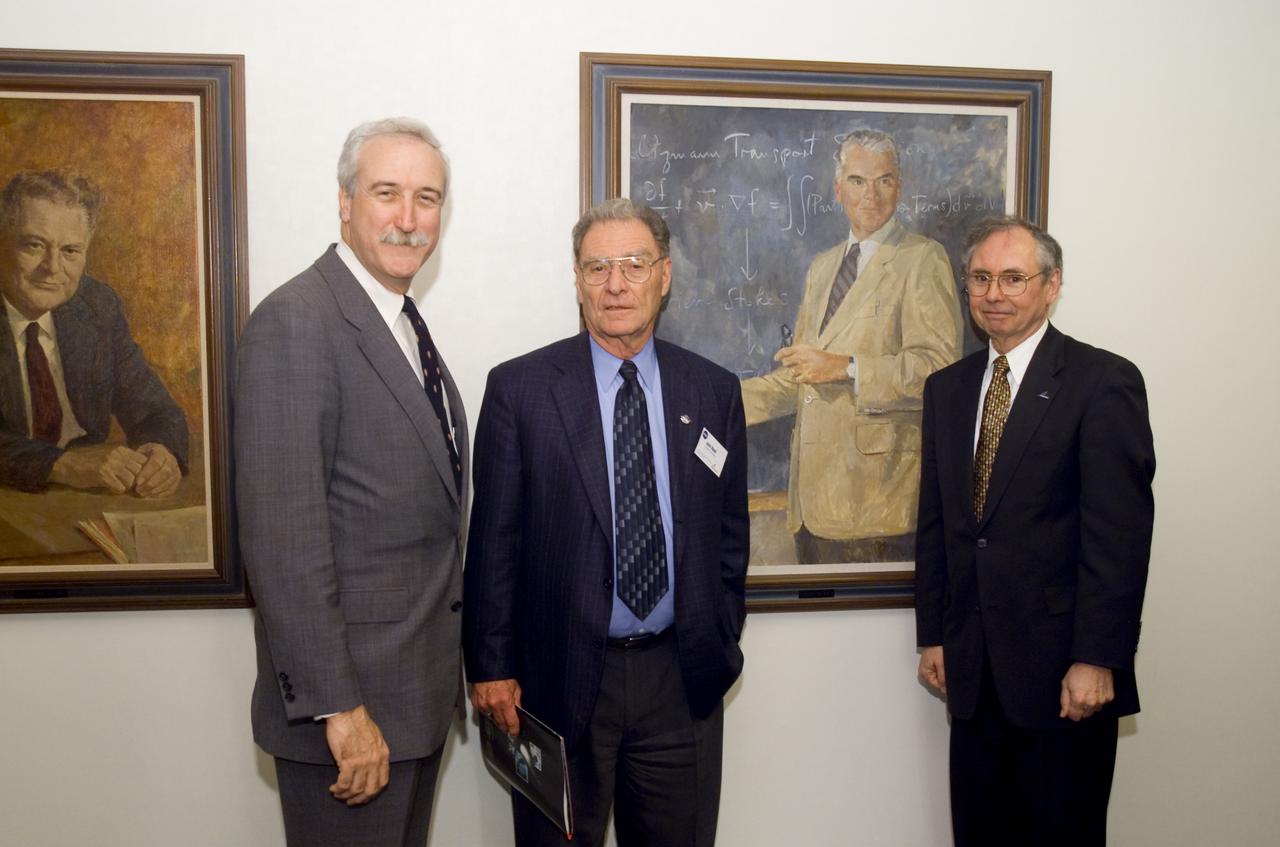
NASA Administrator Sean O'Keefe comes to Ames for employee briefing and tour. N-200 Directors hall; L-R: O'Keefe, Jack Boyd, Dr Henry McDonald

NASA Administrator Sean O'Keefe comes to Ames for employee briefing and tour. N-200 Boyd committee room L-R; O'Keefe and Dr Harry McDonald, Ames Director

NASA Administrator Sean O'Keefe comes to Ames for employee briefing and tour. N-200 Boyd committee room L-R; O'Keefe and Dr. Henry McDonald, Ames Director
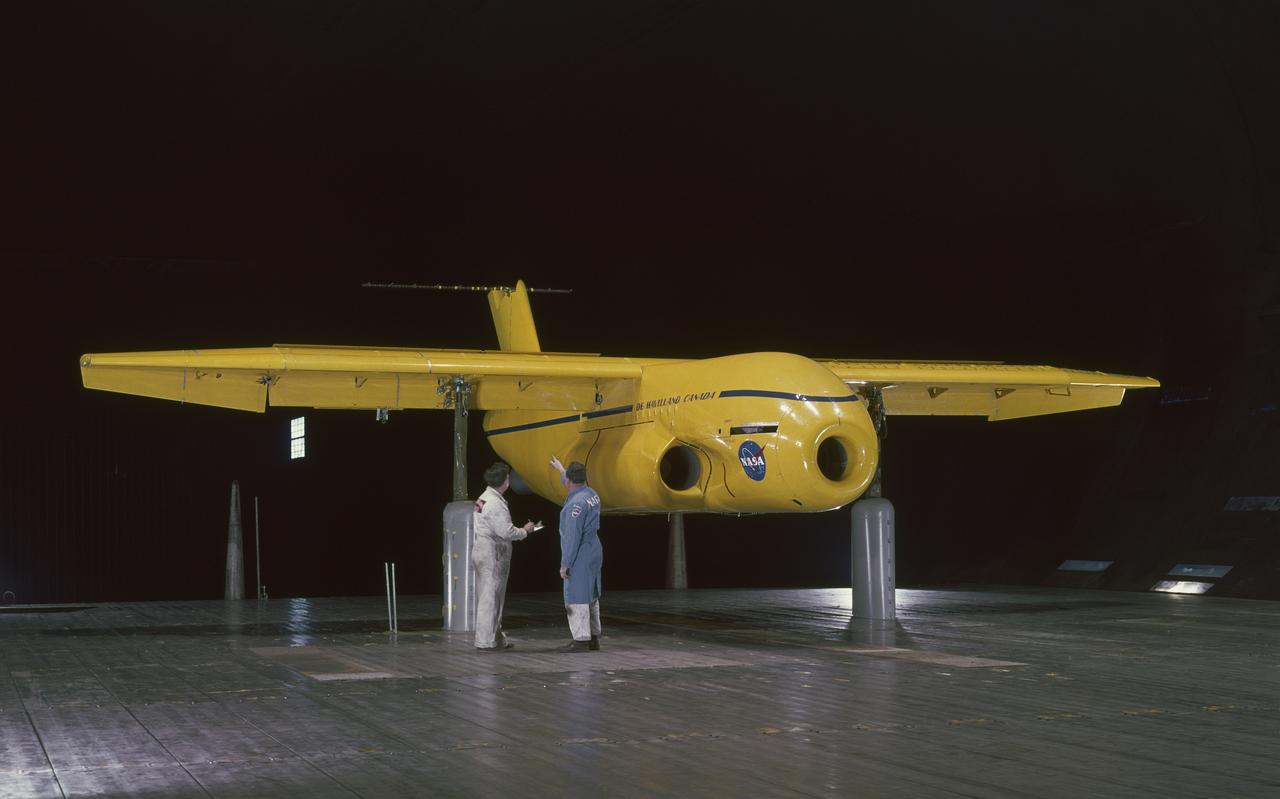
3/4 front view, a=0. de Havilland Augmenter Wing Model, High Lift System in Ames 40x80 Foot Wind Tunnel. Cecil McDonald and Al Wheelband in picture.
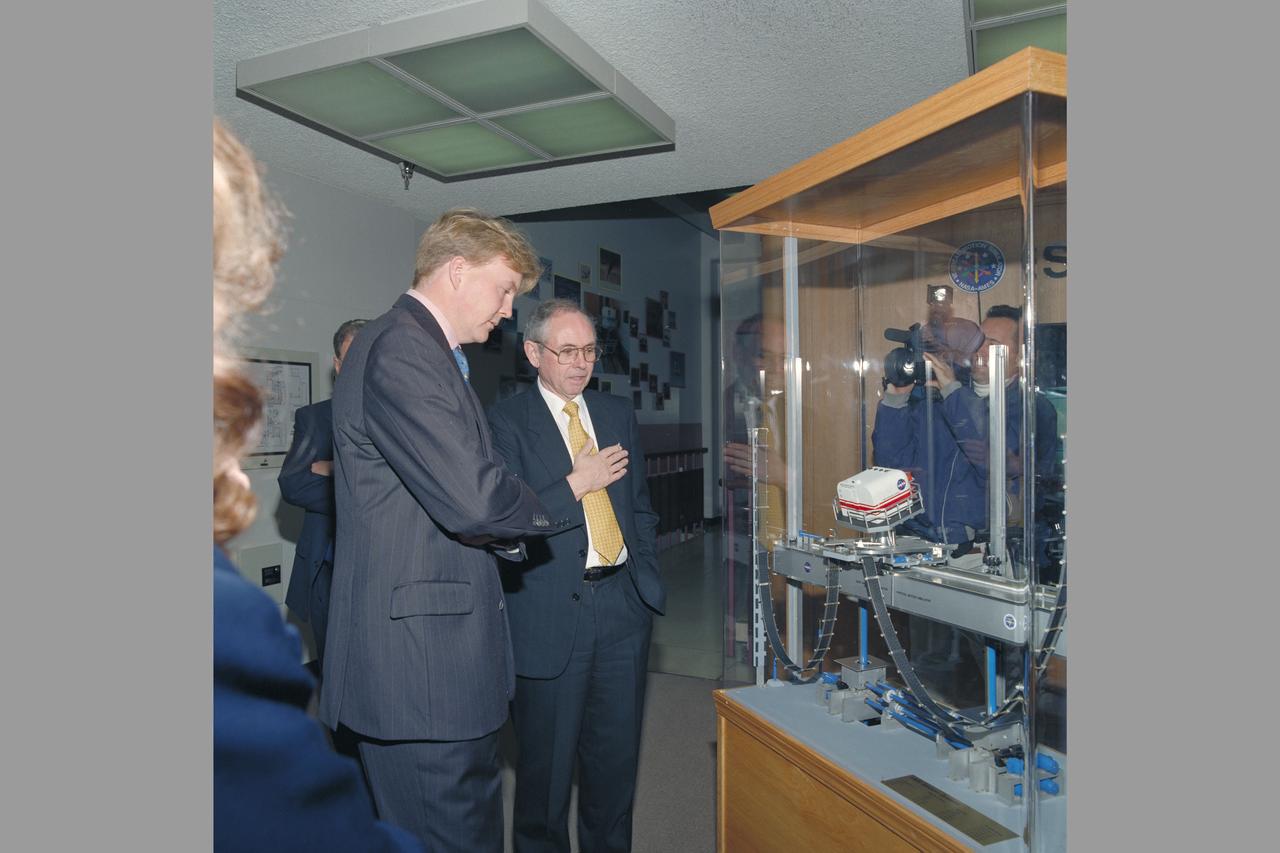
Prince Willem-Alexander van Oranje (Crown Prince of the Netherlands) visits Ames. Shown here with Dr Henry McDonald, Ames Director in lobby of N-243. His visit was prompted by his strong personal interest in aviation.
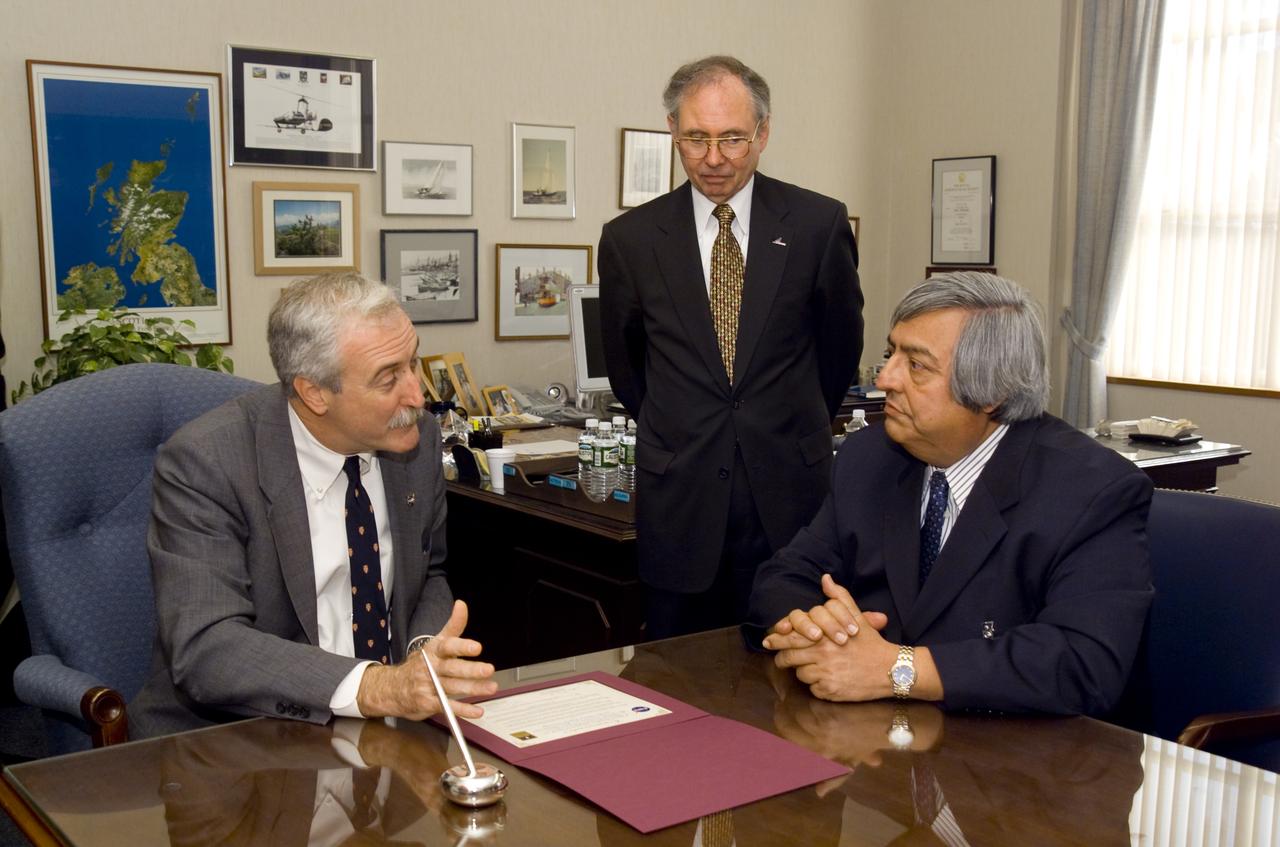
NASA Administrator Sean O'Keefe comes to Ames for employee briefing and tour. Meets with Roberto Cruz, National Hispanic University (seated, right) and Ames Center Director Dr. Henry McDonald follow the signing of the educational MOU between NHU and Ames.

NASA Director Sean O'Keefe comes to Ames for employee briefing and tour. Meets with Roberto Cruz, National Hispanic University (seated, right) and Ames Center Director Dr. Henry McDonald follow the signing of the educational MOU between NHU and Ames.
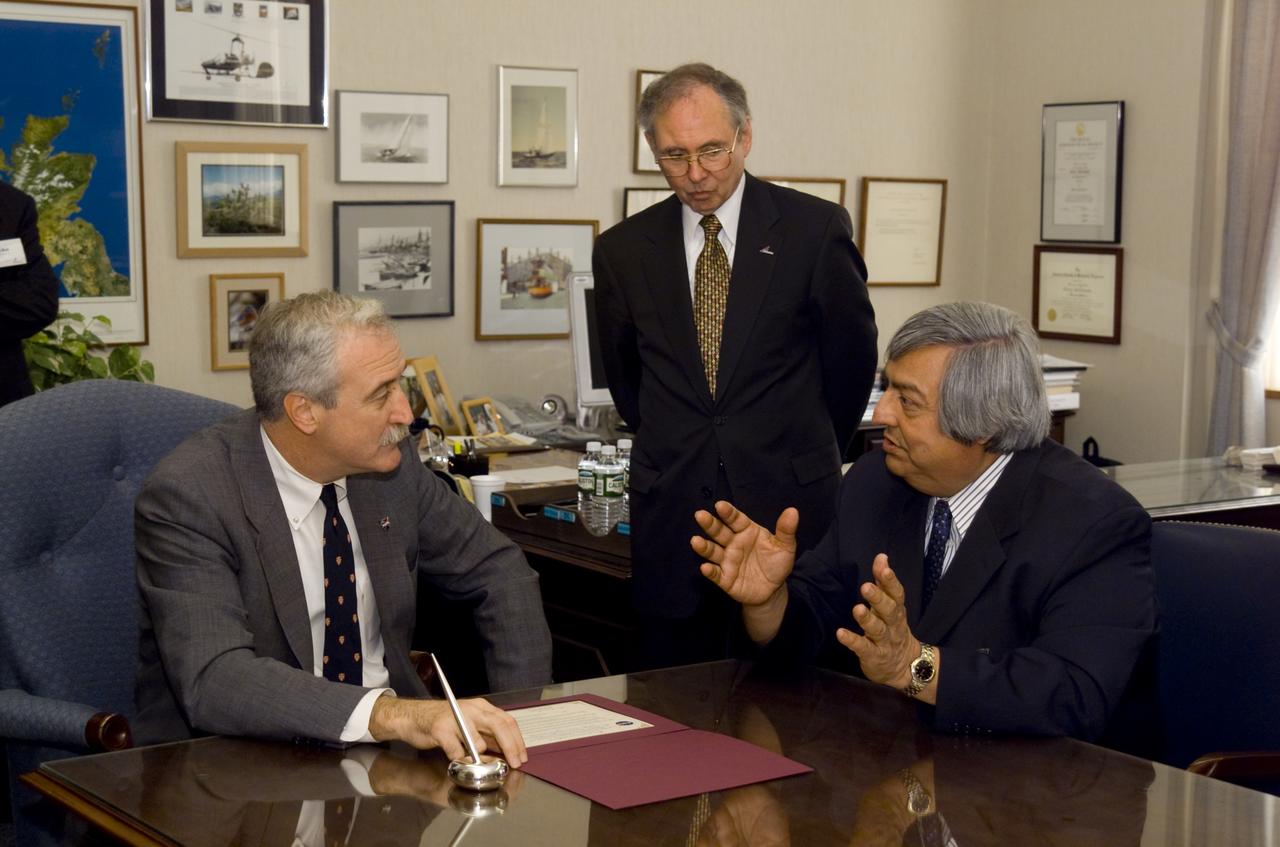
NASA Administrator Sean O'Keefe comes to Ames for employee briefing and tour. Meets with Roberto Cruz, National Hispanic University (seated, right) and Ames Center Director Dr. Henry McDonald follow the signing of the educational MOU between NHU and Ames.
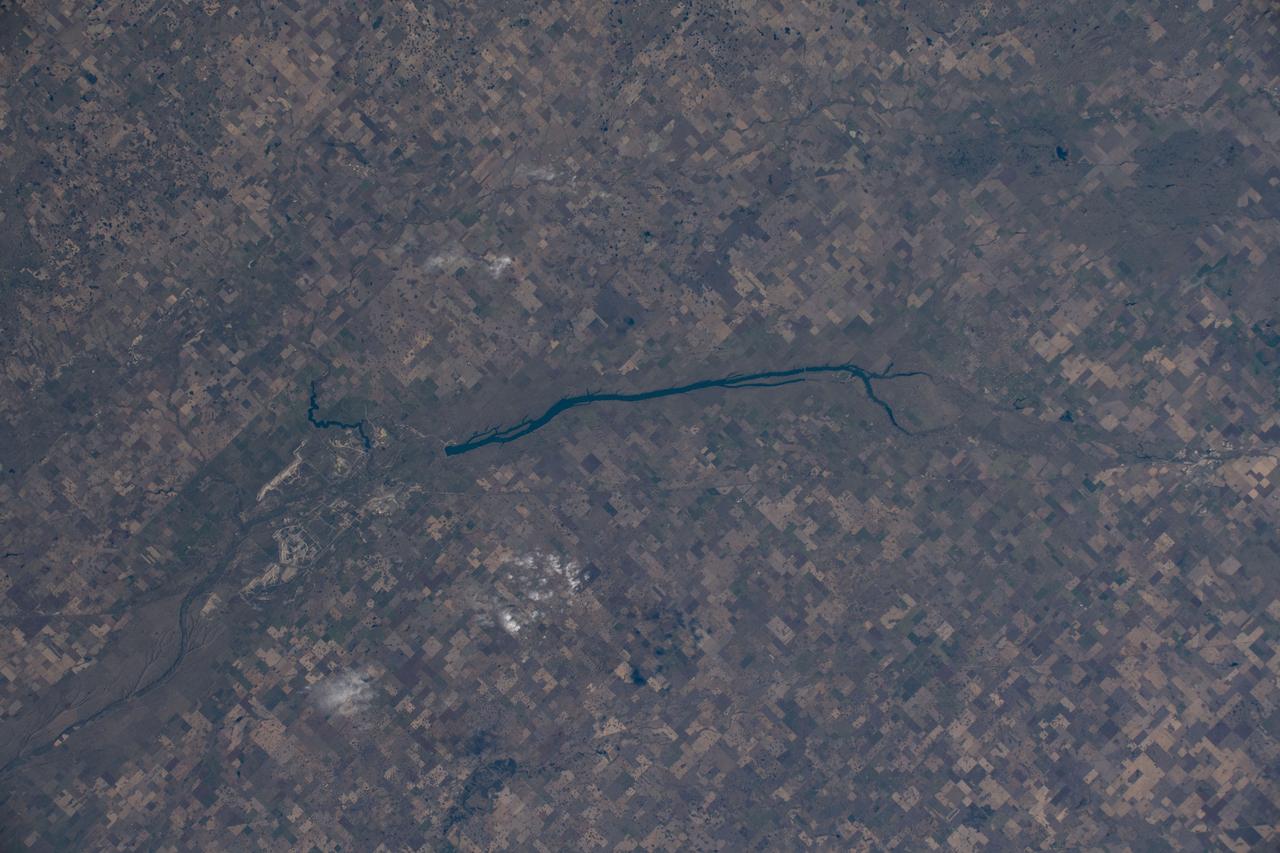
iss061e006776 (Oct. 16, 2019) --- McDonald Lake in Saskatchewan, Canada, is pictured as the International Space Station orbited 254 miles above North America. The coal-mining city of Estevan, at the lake's southeast end surrounded by prairies and farms, is 10 miles north of the United States border of North Dakota.
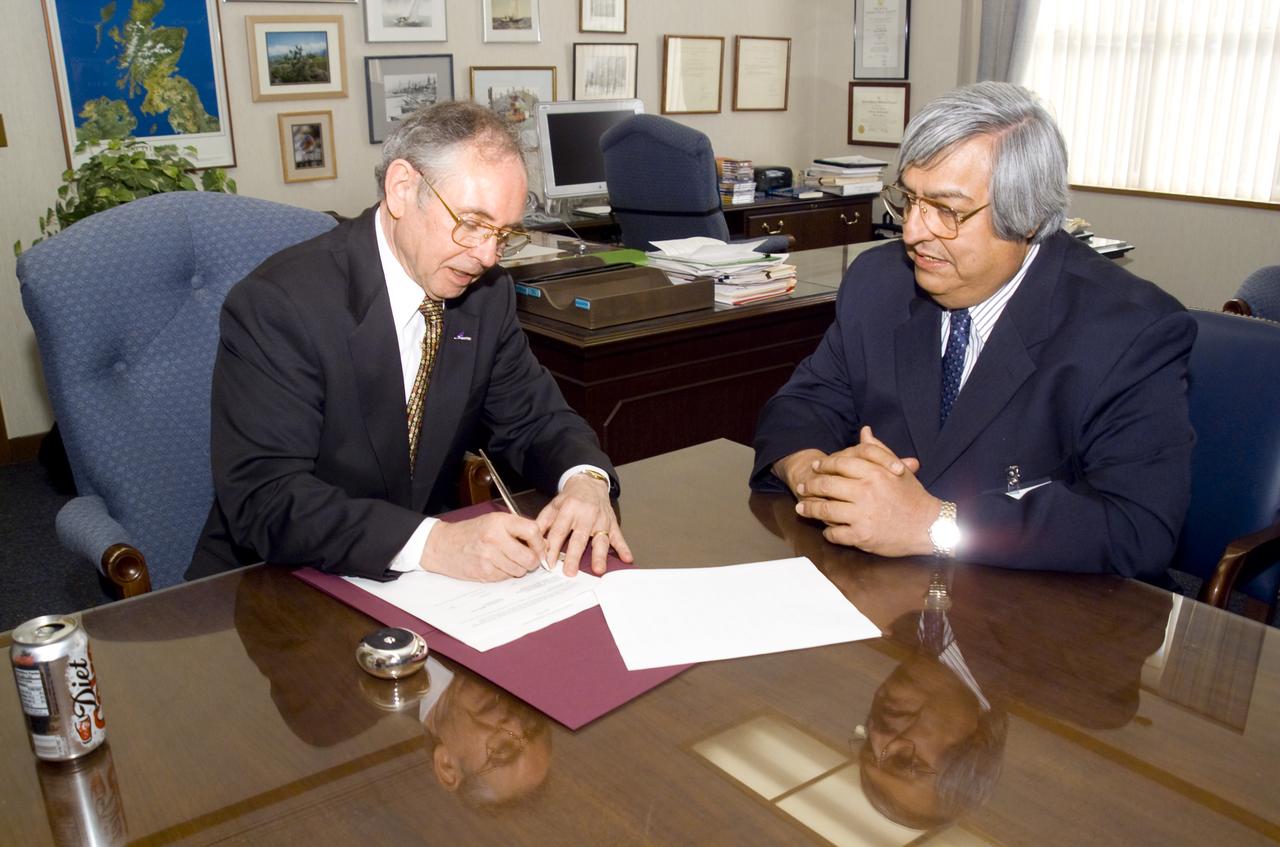
NASA Director Sean O'Keefe comes to Ames for employee briefing and tour. Meets with Roberto Cruz, National Hispanic University (seated, right) and Ames Center Director Dr. Henry McDonald follow the signing of the educational MOU between NHU and Ames.
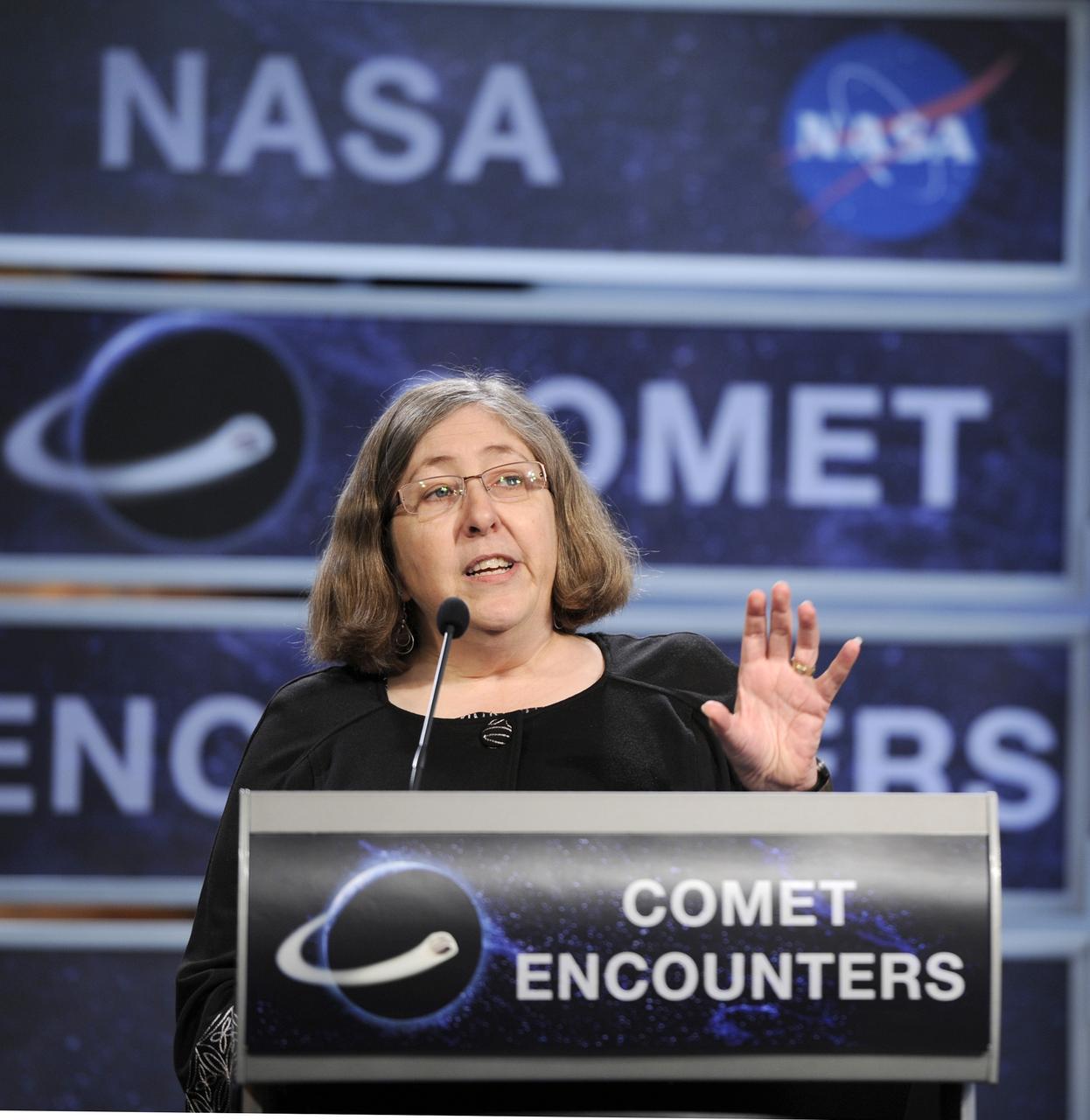
Dr. Anita Cochran, Assistant Director, McDonald Observatory at the University of Texas-Austin, speaks during a symposium commemorating a quarter-century of comet discoveries, Friday, Sept. 10, 2010, in the Knight studio at the Newseum in Washington. The International Sun-Earth Explorer-3 (ISEE-3) spacecraft flew past the comet Giacobini-Zinner on Sept. 11, 1985 which established a foundation of discoveries that continue today. Photo Credit: (NASA/Paul E. Alers)
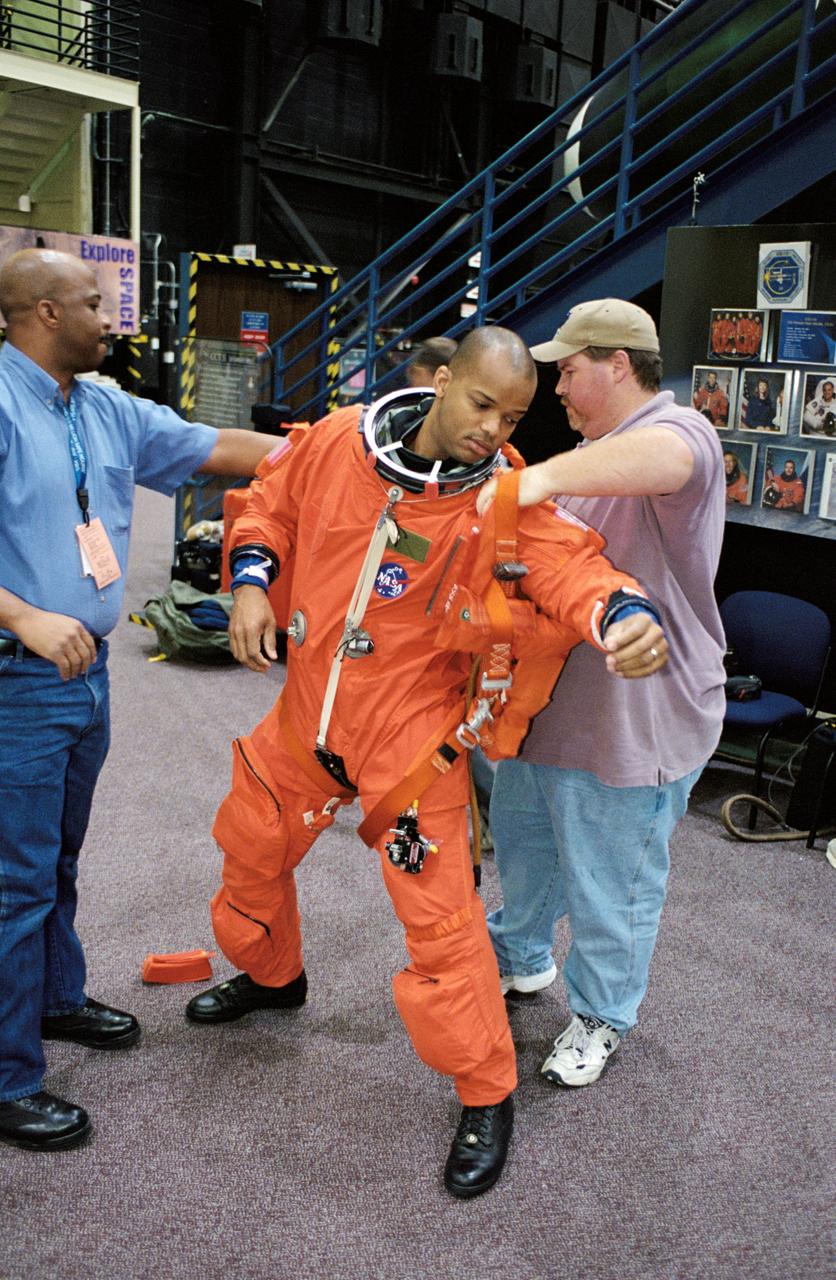
JSC2002-01540 (8 August 2002) --- Astronaut Robert L. Curbeam, Jr., STS-116 mission specialist, dons his training version of the full-pressure launch and entry suit prior to a training session in the Space Vehicle Mockup Facility at the Johnson Space Center (JSC). United Space Alliance (USA) suit technicians Andre Denard (left) and Tommy McDonald assisted Curbeam.
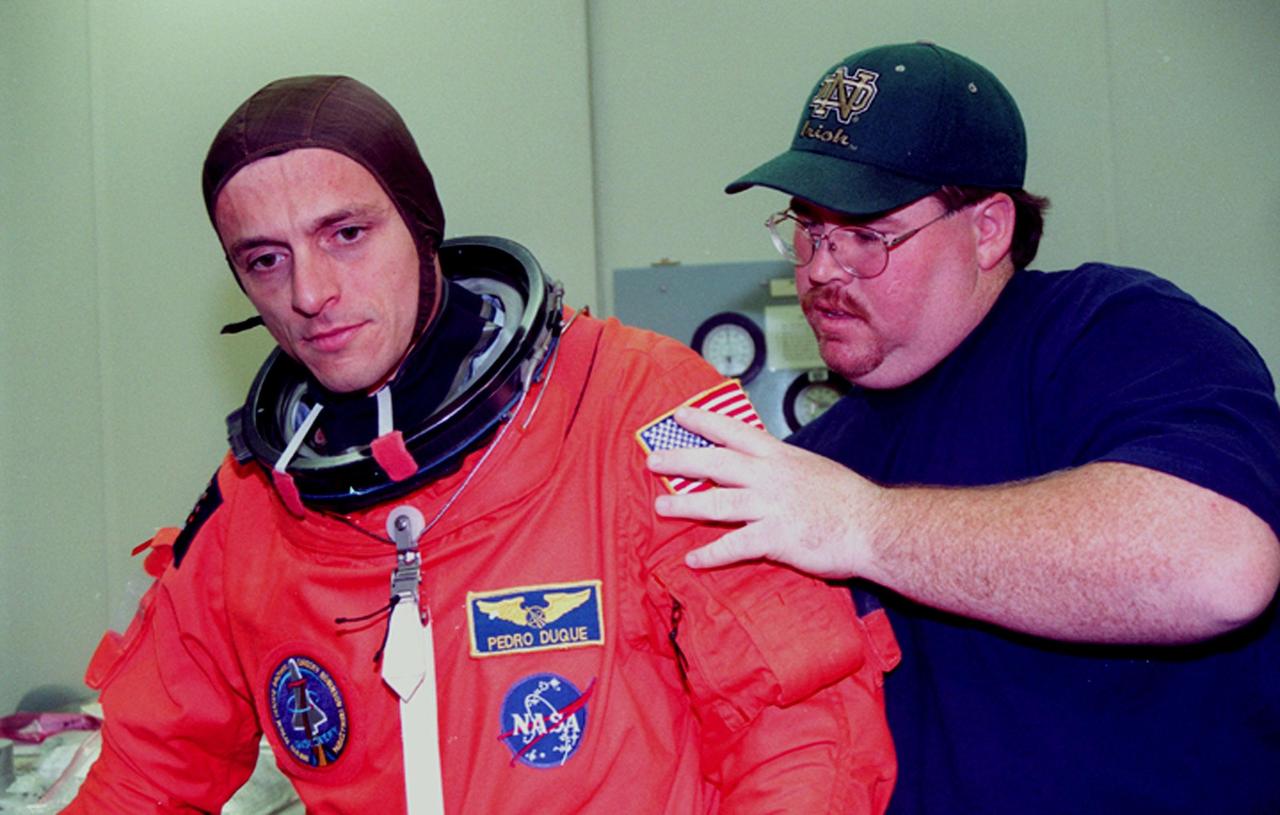
In the Operations and Checkout Building, STS-95 Mission Specialist Pedro Duque of Spain, with the European Space Agency, gets help with his suit from suit technician Tommy McDonald. The STS-95 crew were conducting flight crew equipment fit checks prior to launch on Oct. 29. STS-95 is expected to launch at 2 p.m. EST on Oct. 29, last 8 days, 21 hours and 49 minutes, and land at 11:49 a.m. EST on Nov. 7
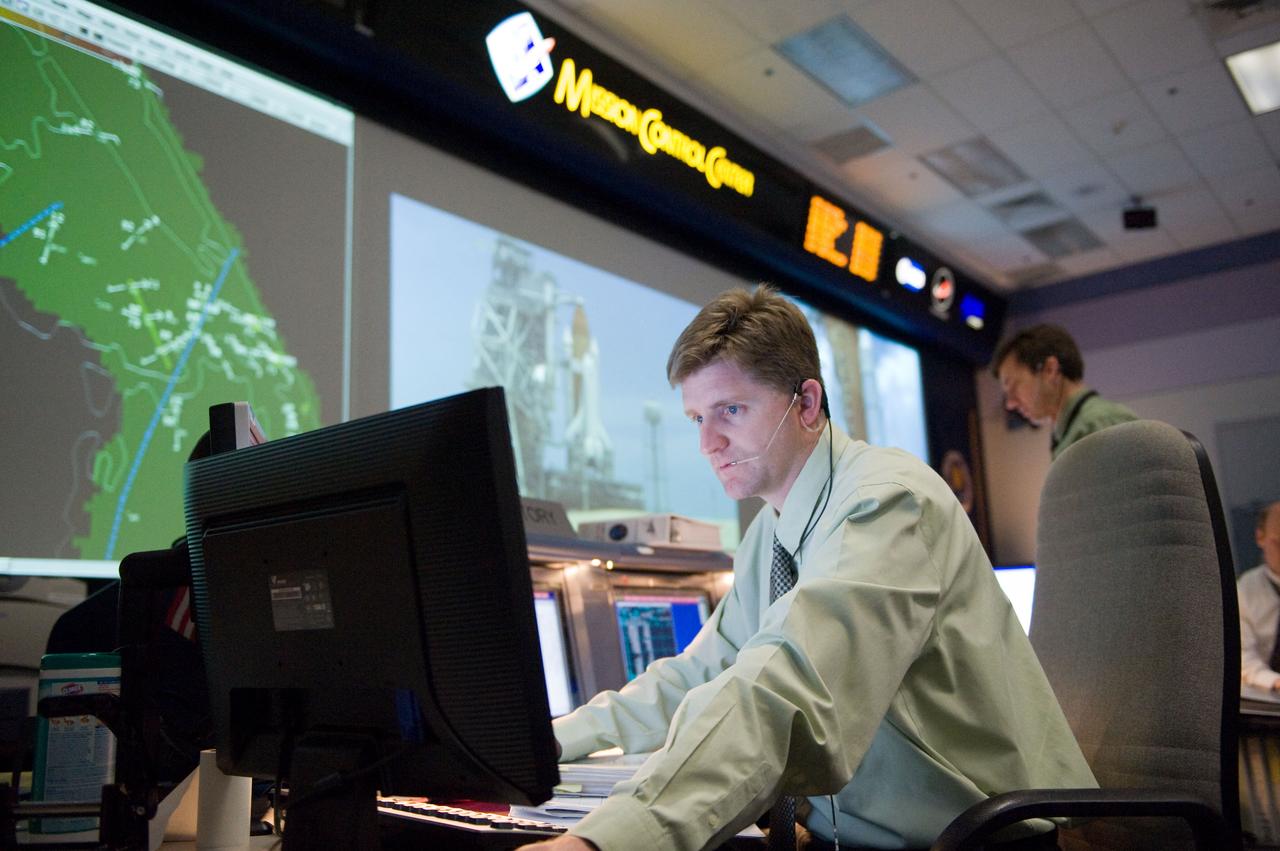
JSC2009-E-118817 (11 May 2009) --- Flight controller Mark McDonald monitors data at his console in the space shuttle flight control room in the Mission Control Center at NASA's Johnson Space Center during launch countdown activities a few hundred miles away in Florida, site of Space Shuttle Atlantis? scheduled STS-125 launch to service the Hubble Space Telescope. Liftoff was on time at 2:01 p.m. (EDT) on May 11, 2009 from launch pad 39A at NASA's Kennedy Space Center.
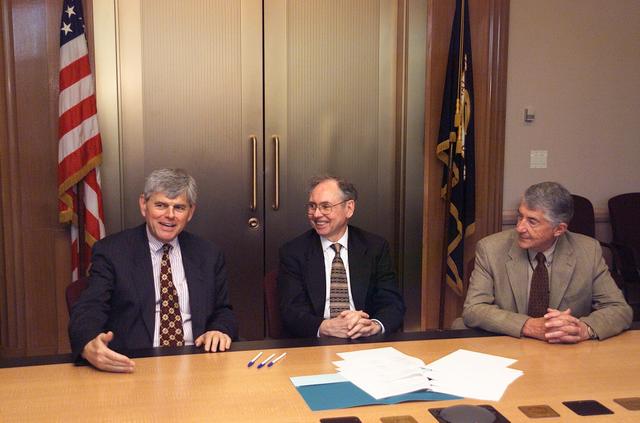
Memorandum of Understanding (MOU) to establish a Unmanned Aerial Vehicles (UAV) Applications Center at NASA Research Park (NRP) was signed into being by (L-R) John Bassett Clark University, Worcester, Mass., Dr. Henry McDonald, Director of Ames Research Center and Paul Coleman, Girvan Institute (a non-profit organization lockated in NASA Research Park).
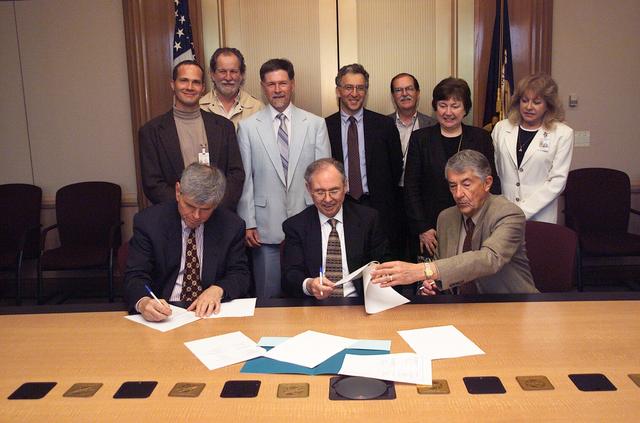
Memorandum of Understanding (MOU) to establish a Unmanned Aerial Vehicles (UAV) Applications Center at NASA Research Park (NRP) was signed into being by (L-R) John Bassett Clark University, Worcester, Mass., Dr. Henry McDonald, Director of Ames Research Center and Paul Coleman, Girvan Institute (a non-profit organization lockated in NASA Research Park). Witnessed by (Back Row, L-R) Steve Douagan, Dave Peterson, Jim Brass, Stan Herwitz, Ken Souza, Estelle Condon, Carolina Blake.
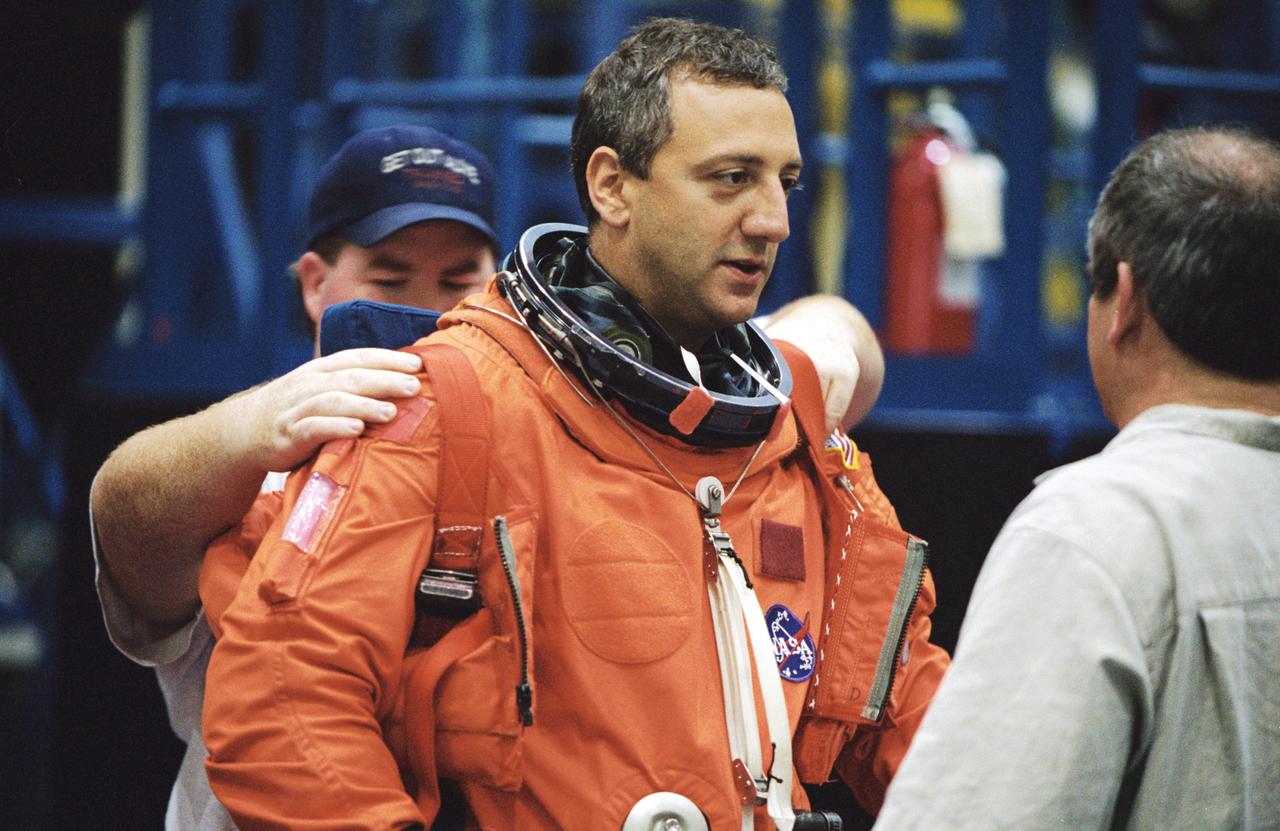
JSC2001-01875 (22 June 2001) --- Astronaut Michael J. Massimino, STS-109 mission specialist, dons a training version of the full-pressure launch and entry suit prior to a training session in one of the trainer/mockups (out of frame) in the Space Vehicle Mockup Facility at the Johnson Space Center (JSC). Massimino is assisted by Tommy McDonald and Lloyd Armintor both United Space Alliance (USA) suit technicians. STS-109 will be the 108th shuttle flight and the fourth Hubble Space Telescope (HST) servicing mission.
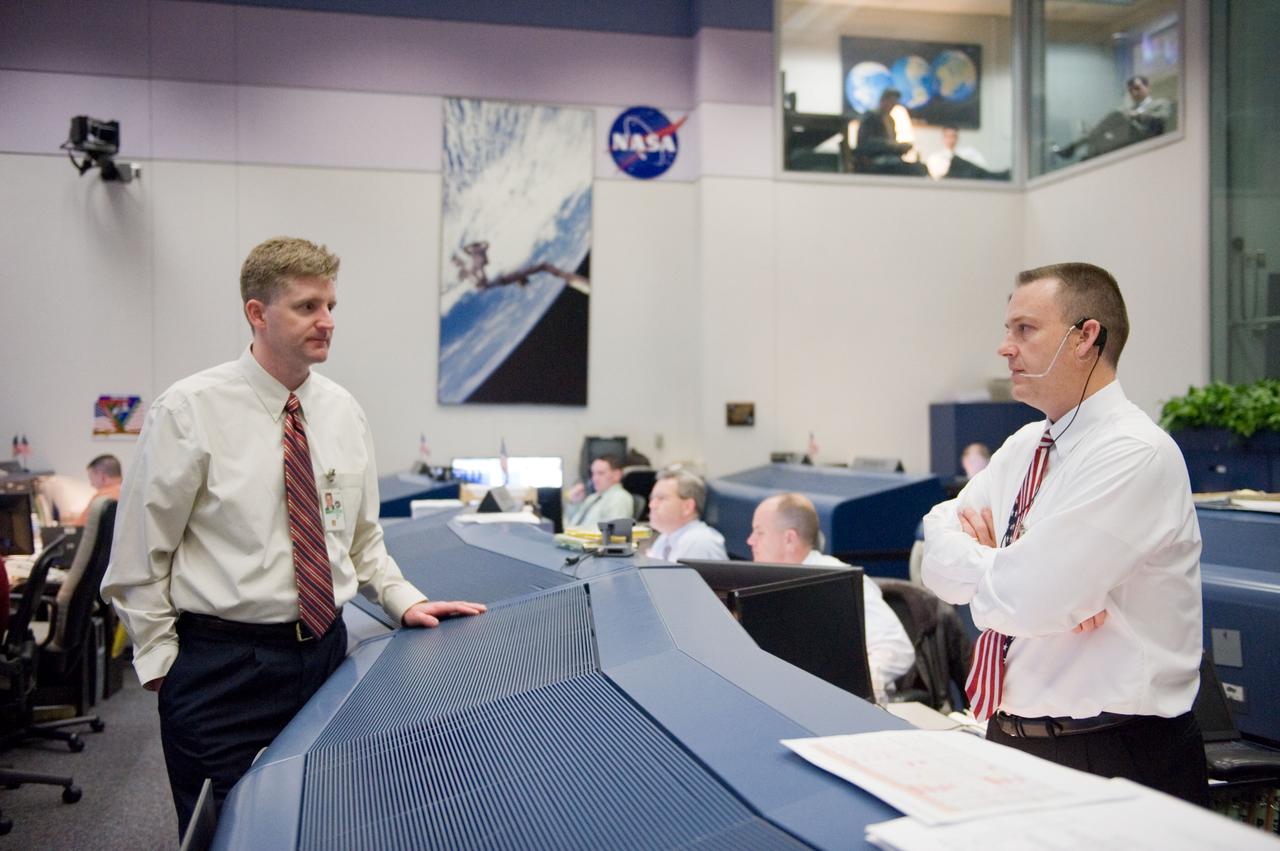
JSC2010-E-018949 (7 Feb. 2010) --- Flight director Norm Knight (right) and flight controller Mark McDonald are pictured in the space shuttle flight control room in the Johnson Space Center's Mission Control Center during the first launch attempt of the STS-130 mission. The launch was postponed until Feb. 8, due to weather conditions.
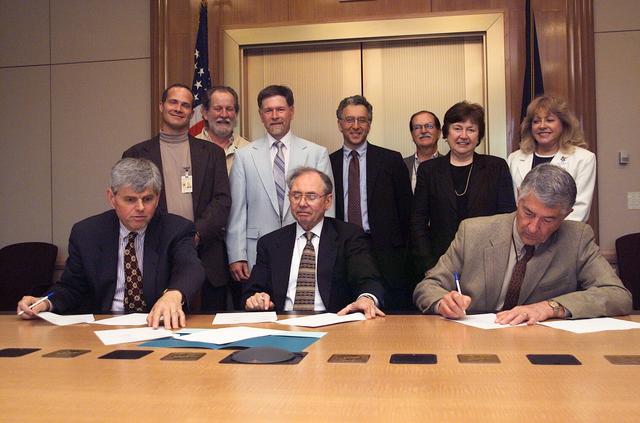
Memorandum of Understanding (MOU) to establish a Unmanned Aerial Vehicles (UAV) Applications Center at NASA Research Park (NRP) was signed into being by (L-R) John Bassett Clark University, Worcester, Mass., Dr. Henry McDonald, Director of Ames Research Center and Paul Coleman, Girvan Institute (a non-profit organization lockated in NASA Research Park). Witnessed by (Back Row, L-R) Steve Douagan, Dave Peterson, Jim Brass, Stan Herwitz, Ken Souza, Estelle Condon, Carolina Blake.
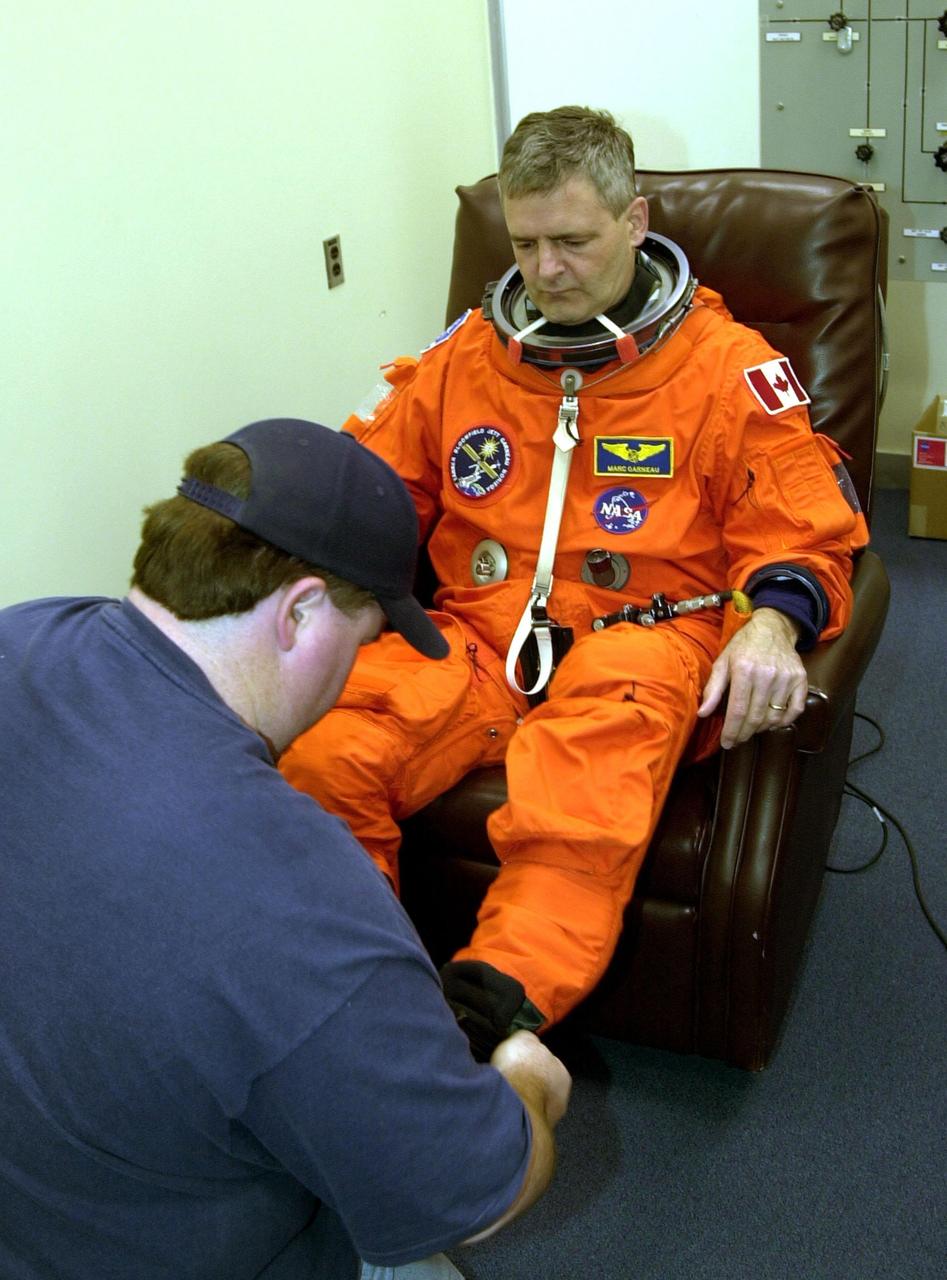
STS-97 Mission Specialist Marc Garneau gets help with his boots from suit technician Tommy McDonald during pre-pack and fit check. Garneau is with the Canadian Space Agency. Mission STS-97 is the sixth construction flight to the International Space Station. Its payload includes the P6 Integrated Truss Structure and a photovoltaic (PV) module, with giant solar arrays that will provide power to the Station. The mission includes two spacewalks to complete the solar array connections. STS-97 is scheduled to launch Nov. 30 at about 10:06 p.m. EST
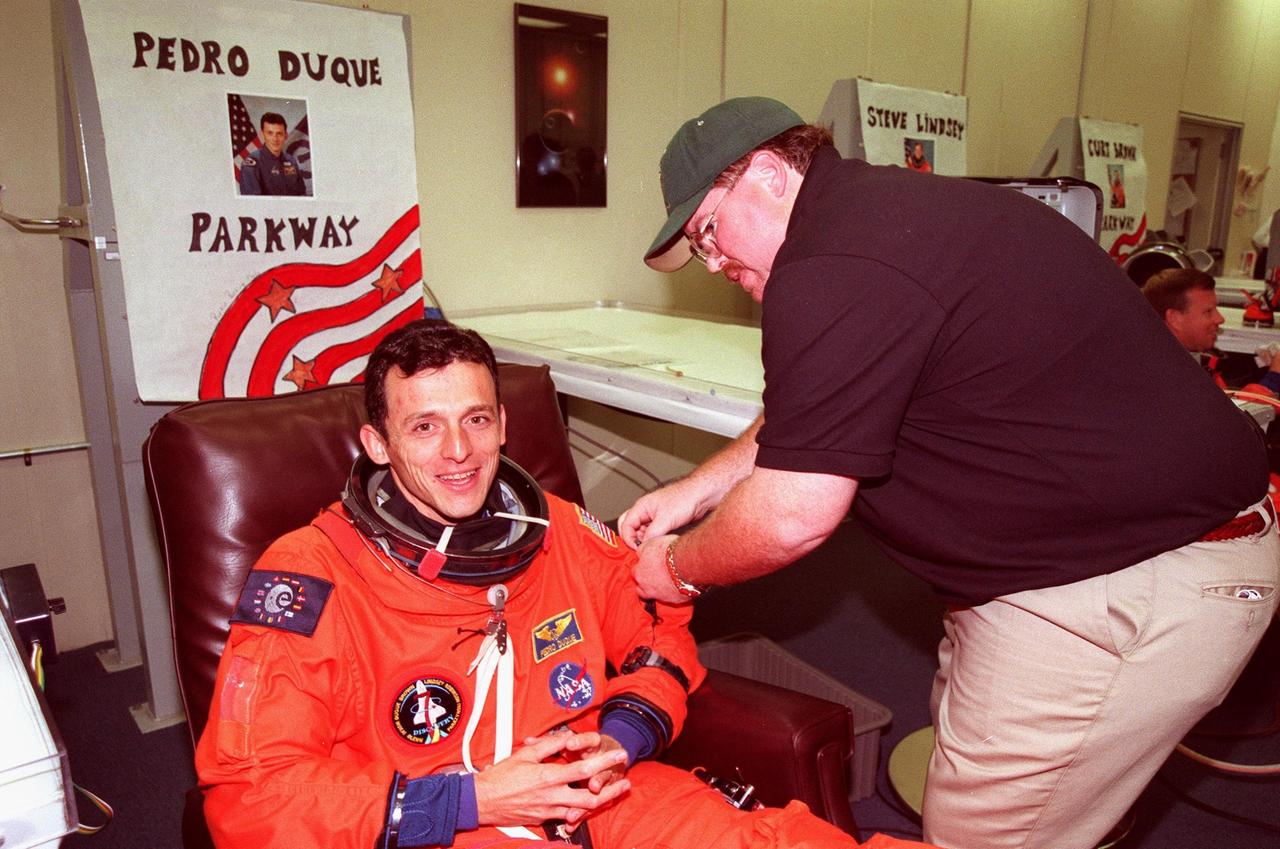
STS-95 Mission Specialist Pedro Duque of Spain, with the European Space Agency, is helped with his flight suit by suit tech Tommy McDonald in the Operations and Checkout Building. The final fitting takes place prior to the crew walkout and transport to Launch Pad 39B. Targeted for launch at 2 p.m. EST on Oct. 29, the mission is expected to last 8 days, 21 hours and 49 minutes, and return to KSC at 11:49 a.m. EST on Nov. 7. The STS-95 mission includes research payloads such as the Spartan solar-observing deployable spacecraft, the Hubble Space Telescope Orbital Systems Test Platform, the International Extreme Ultraviolet Hitchhiker, as well as the SPACEHAB single module with experiments on space flight and the aging process