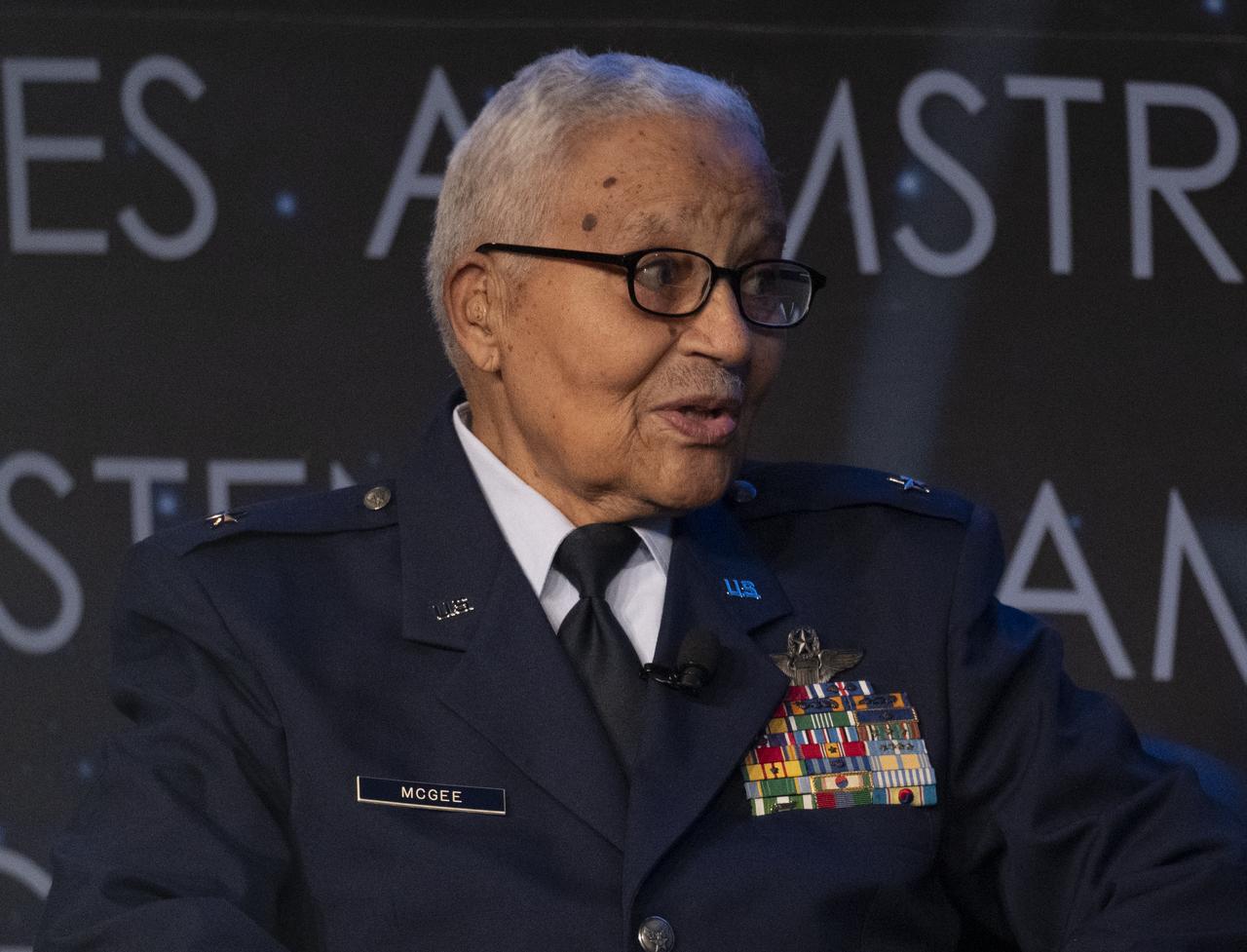
Retired U.S. Air Force Honorary Brigadier General Charles McGee is seen as he speaks with NASA astronaut Alvin Drew during a Black History Month program titled “Trailblazers, The Story of a Tuskegee Airman,” Wednesday, Feb. 5, 2020, at NASA Headquarters in Washington, DC. McGee, a pilot with the Tuskegee Airmen during World War II, was a career officer in the Air Force also serving during the Korean and Vietnam Wars. Over his 30 years of service he flew 409 combat missions. Of the 355 Tuskegee pilots who flew in combat, McGee is one of only nine surviving. Photo Credit: (NASA/Joel Kowsky)
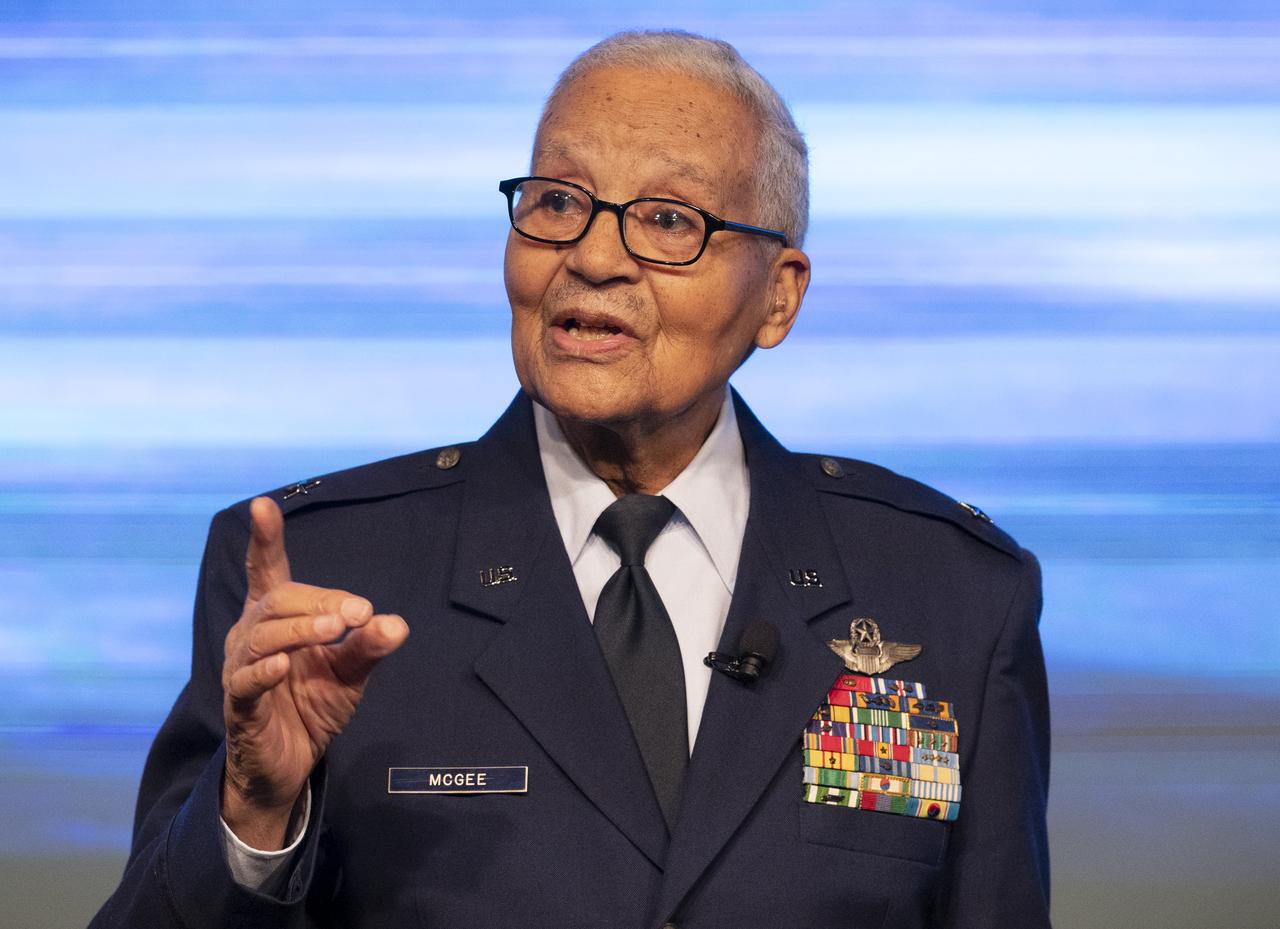
Retired U.S. Air Force Honorary Brigadier General Charles McGee is seen during a Black History Month program titled “Trailblazers, The Story of a Tuskegee Airman,” Wednesday, Feb. 5, 2020, at NASA Headquarters in Washington, DC. McGee, a pilot with the Tuskegee Airmen during World War II, was a career officer in the Air Force also serving during the Korean and Vietnam Wars. Over his 30 years of service he flew 409 combat missions. Of the 355 Tuskegee pilots who flew in combat, McGee is one of only nine surviving. Photo Credit: (NASA/Joel Kowsky)
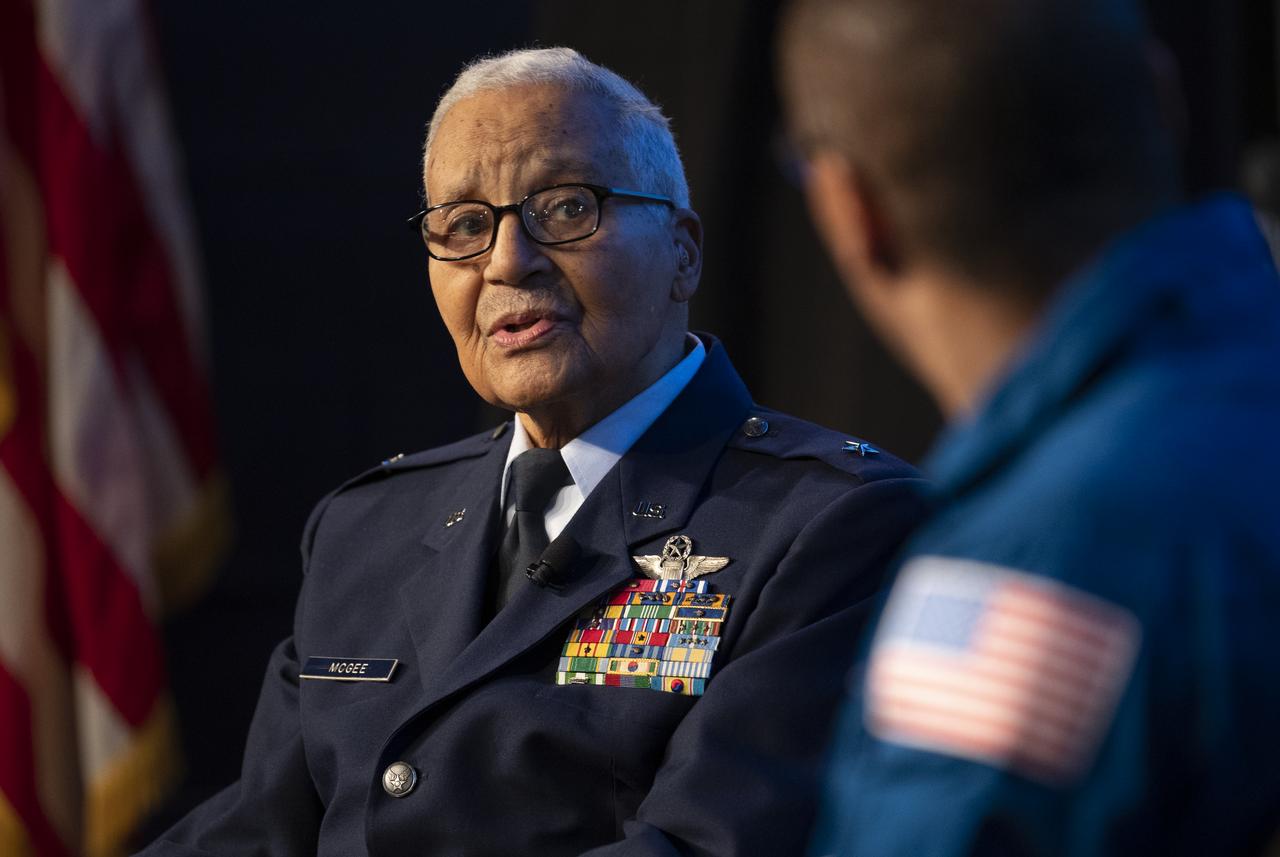
Retired U.S. Air Force Honorary Brigadier General Charles McGee speaks with NASA astronaut Alvin Drew during a Black History Month program titled “Trailblazers, The Story of a Tuskegee Airman,” Wednesday, Feb. 5, 2020, at NASA Headquarters in Washington, DC. McGee, a pilot with the Tuskegee Airmen during World War II, was a career officer in the Air Force also serving during the Korean and Vietnam Wars. Over his 30 years of service he flew 409 combat missions. Of the 355 Tuskegee pilots who flew in combat, McGee is one of only nine surviving. Photo Credit: (NASA/Joel Kowsky)
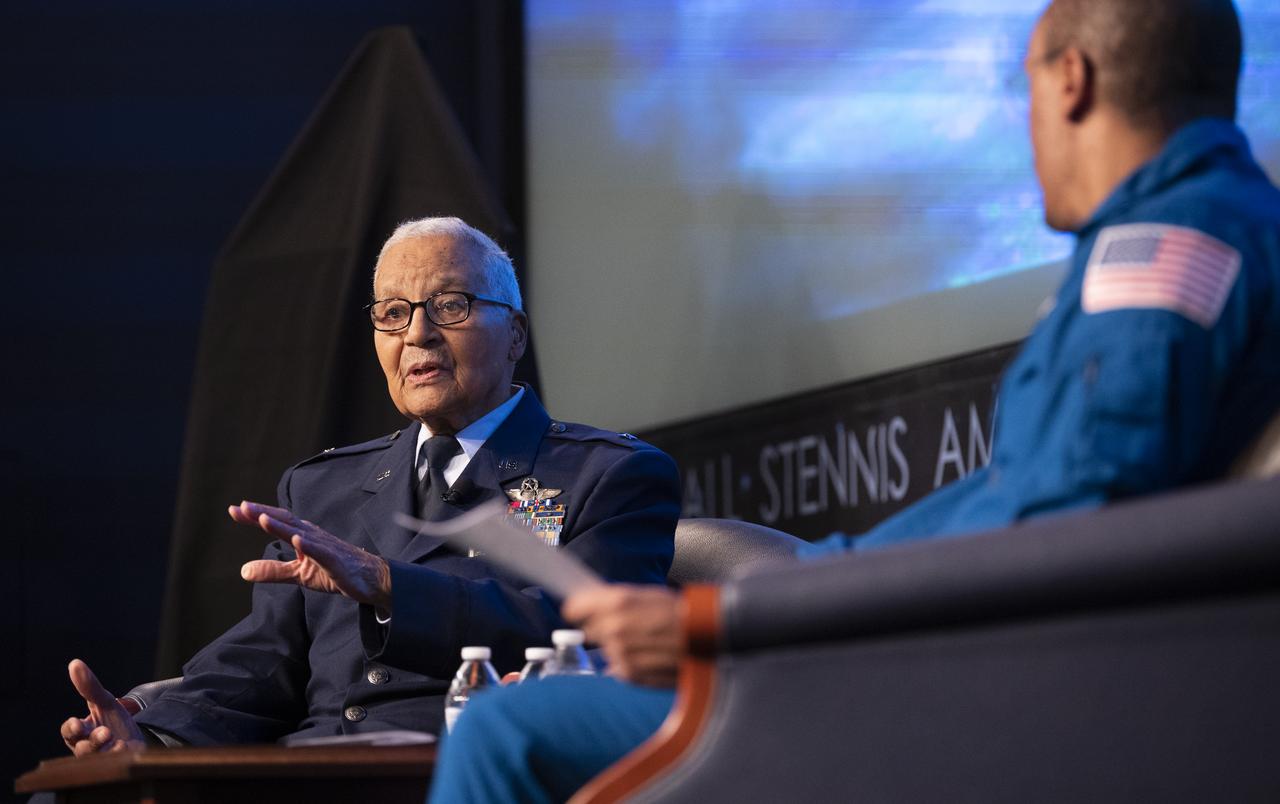
Retired U.S. Air Force Honorary Brigadier General Charles McGee speaks with NASA astronaut Alvin Drew during a Black History Month program titled “Trailblazers, The Story of a Tuskegee Airman,” Wednesday, Feb. 5, 2020, at NASA Headquarters in Washington, DC. McGee, a pilot with the Tuskegee Airmen during World War II, was a career officer in the Air Force also serving during the Korean and Vietnam Wars. Over his 30 years of service he flew 409 combat missions. Of the 355 Tuskegee pilots who flew in combat, McGee is one of only nine surviving. Photo Credit: (NASA/Joel Kowsky)
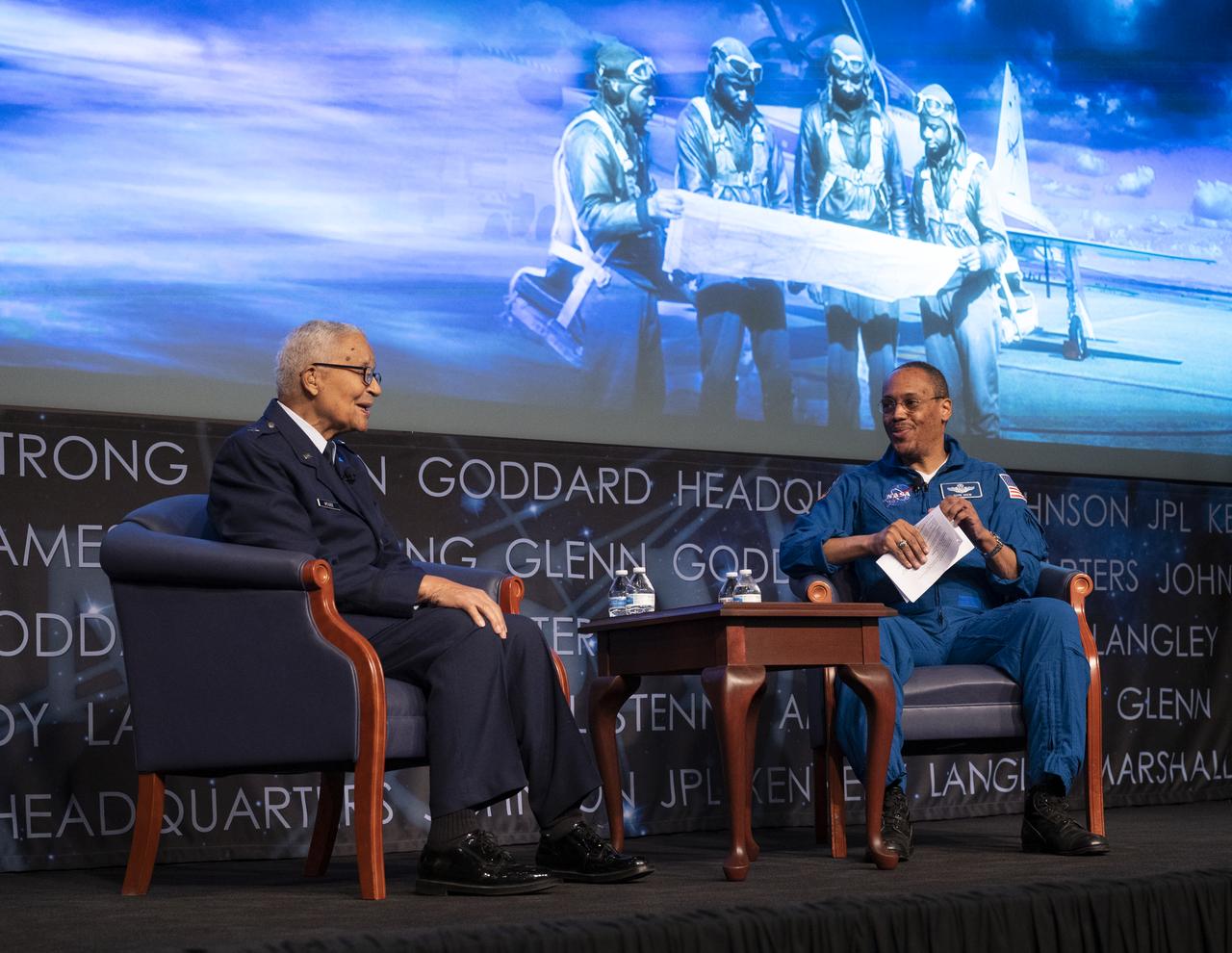
Retired U.S. Air Force Honorary Brigadier General Charles McGee, left, speaks with NASA astronaut Alvin Drew during a Black History Month program titled “Trailblazers, The Story of a Tuskegee Airman,” Wednesday, Feb. 5, 2020, at NASA Headquarters in Washington, DC. McGee, a pilot with the Tuskegee Airmen during World War II, was a career officer in the Air Force also serving during the Korean and Vietnam Wars. Over his 30 years of service he flew 409 combat missions. Of the 355 Tuskegee pilots who flew in combat, McGee is one of only nine surviving. Photo Credit: (NASA/Joel Kowsky)
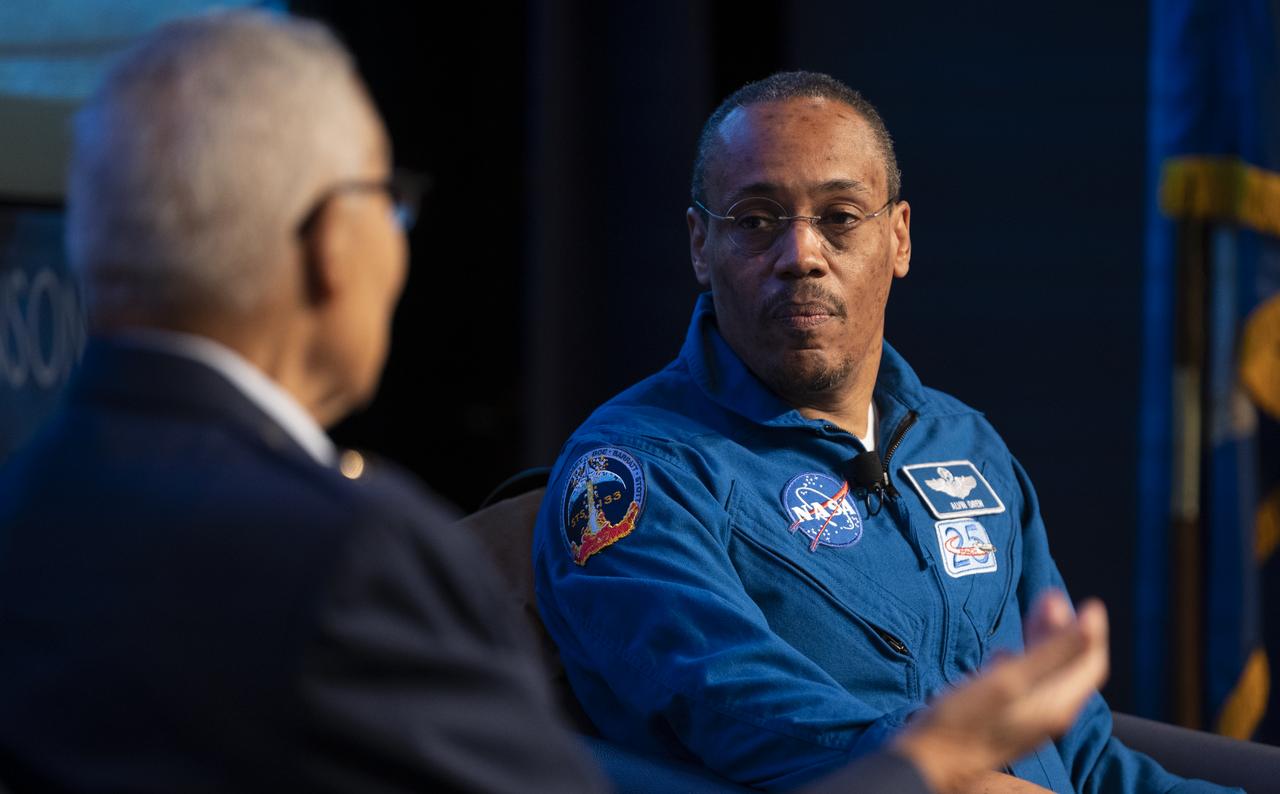
NASA astronaut Alvin Drew speaks with retired U.S. Air Force Honorary Brigadier General Charles McGee during a Black History Month program titled “Trailblazers, The Story of a Tuskegee Airman,” Wednesday, Feb. 5, 2020, at NASA Headquarters in Washington, DC. McGee, a pilot with the Tuskegee Airmen during World War II, was a career officer in the Air Force also serving during the Korean and Vietnam Wars. Over his 30 years of service he flew 409 combat missions. Of the 355 Tuskegee pilots who flew in combat, McGee is one of only nine surviving. Photo Credit: (NASA/Joel Kowsky)
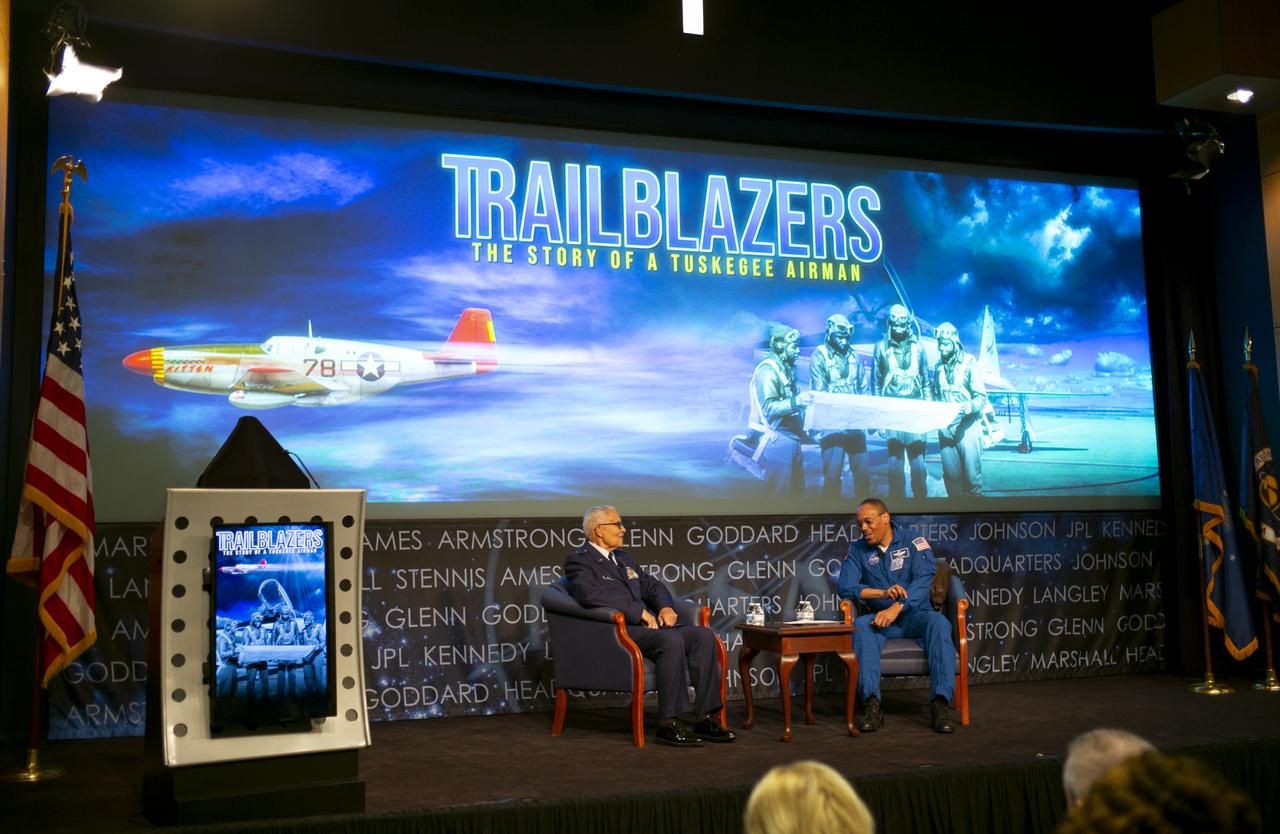
Retired U.S. Air Force Honorary Brigadier General Charles McGee, left, speaks with NASA astronaut Alvin Drew during a Black History Month program titled “Trailblazers, The Story of a Tuskegee Airman,” Wednesday, Feb. 5, 2020, at NASA Headquarters in Washington, DC. McGee, a pilot with the Tuskegee Airmen during World War II, was a career officer in the Air Force also serving during the Korean and Vietnam Wars. Over his 30 years of service he flew 409 combat missions. Of the 355 Tuskegee pilots who flew in combat, McGee is one of only nine surviving. Photo Credit: (NASA/Joel Kowsky)
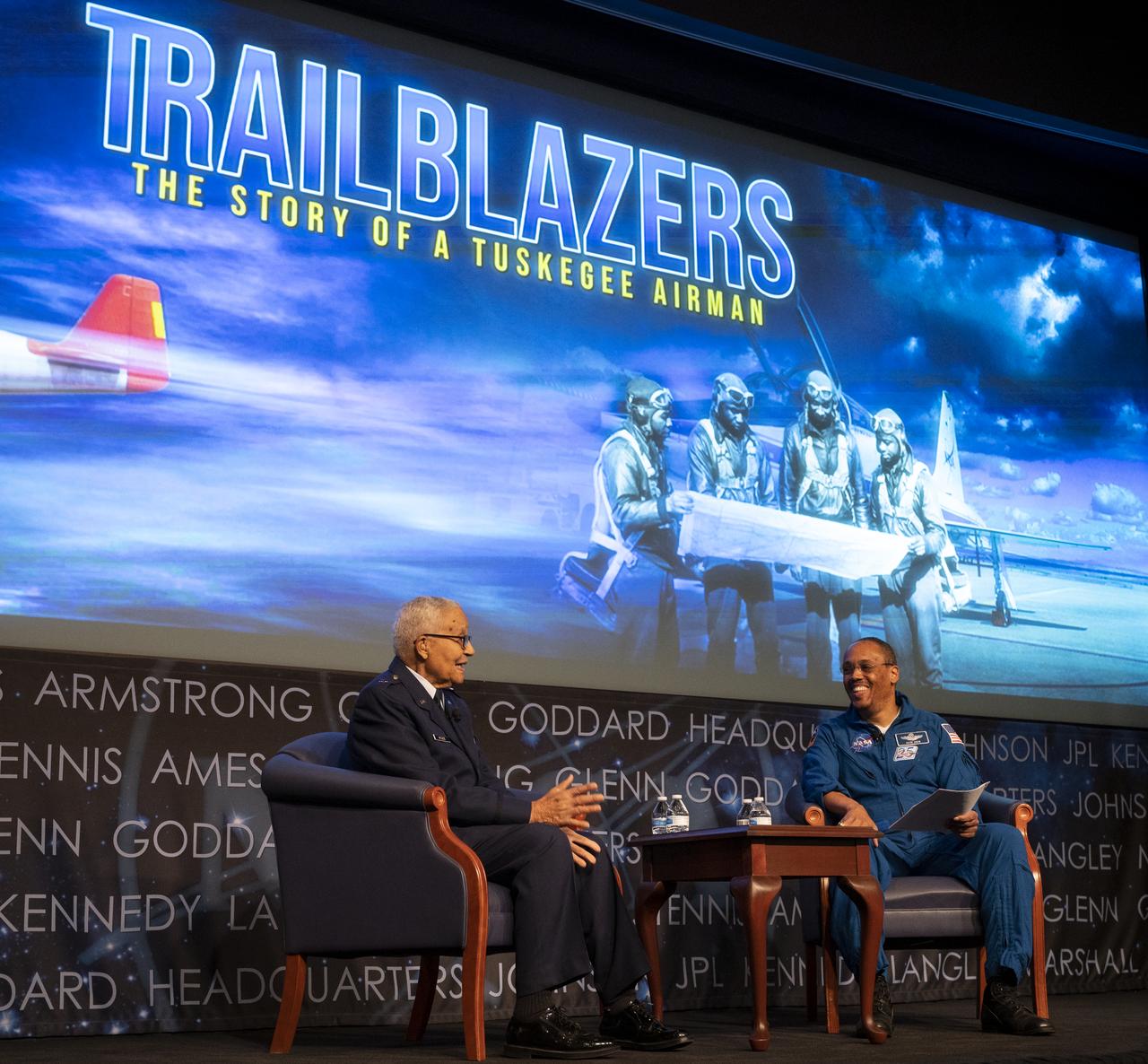
Retired U.S. Air Force Honorary Brigadier General Charles McGee, left, speaks with NASA astronaut Alvin Drew during a Black History Month program titled “Trailblazers, The Story of a Tuskegee Airman,” Wednesday, Feb. 5, 2020, at NASA Headquarters in Washington, DC. McGee, a pilot with the Tuskegee Airmen during World War II, was a career officer in the Air Force also serving during the Korean and Vietnam Wars. Over his 30 years of service he flew 409 combat missions. Of the 355 Tuskegee pilots who flew in combat, McGee is one of only nine surviving. Photo Credit: (NASA/Joel Kowsky)
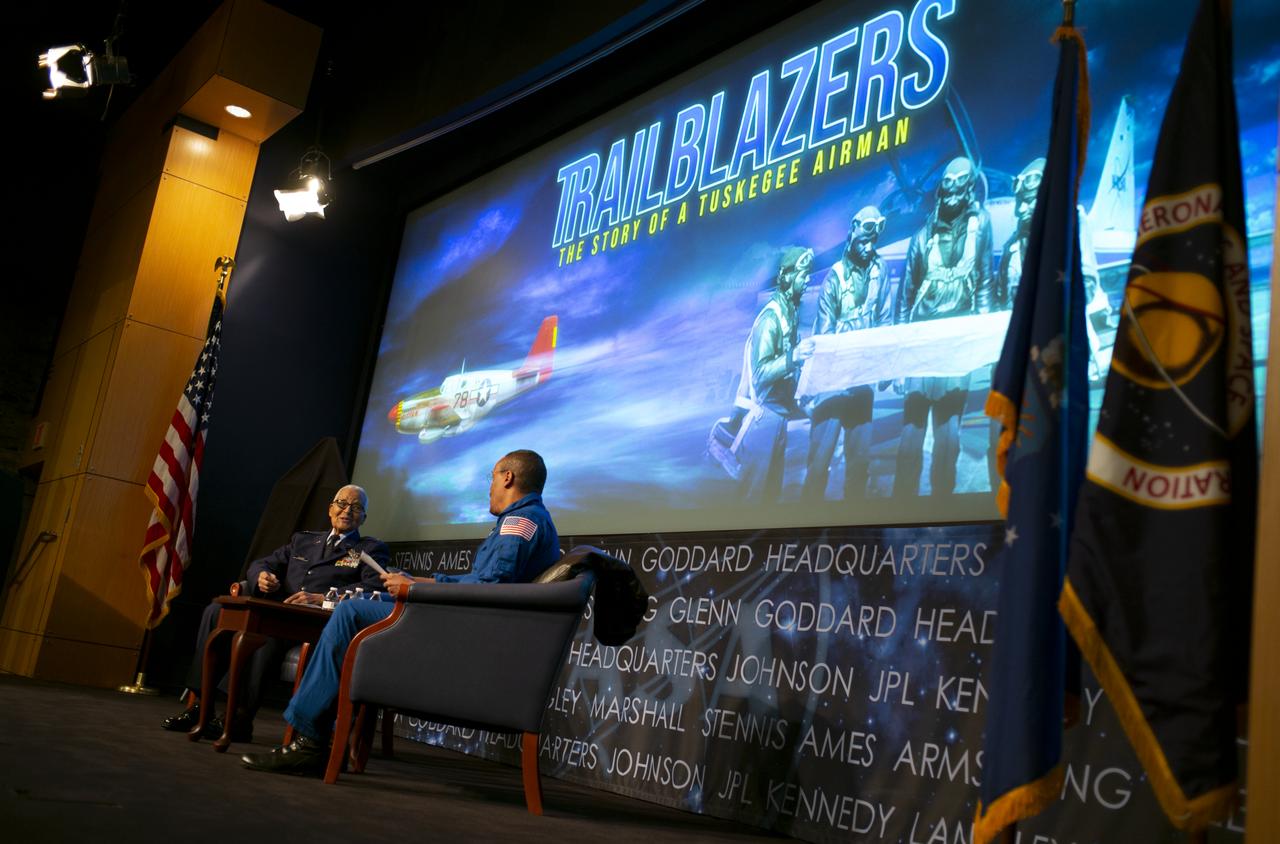
Retired U.S. Air Force Honorary Brigadier General Charles McGee, left, speaks with NASA astronaut Alvin Drew during a Black History Month program titled “Trailblazers, The Story of a Tuskegee Airman,” Wednesday, Feb. 5, 2020, at NASA Headquarters in Washington, DC. McGee, a pilot with the Tuskegee Airmen during World War II, was a career officer in the Air Force also serving during the Korean and Vietnam Wars. Over his 30 years of service he flew 409 combat missions. Of the 355 Tuskegee pilots who flew in combat, McGee is one of only nine surviving. Photo Credit: (NASA/Joel Kowsky)

Retired U.S. Air Force Honorary Brigadier General Charles McGee, left, speaks with NASA astronaut Alvin Drew during a Black History Month program titled “Trailblazers, The Story of a Tuskegee Airman,” Wednesday, Feb. 5, 2020, at NASA Headquarters in Washington, DC. McGee, a pilot with the Tuskegee Airmen during World War II, was a career officer in the Air Force also serving during the Korean and Vietnam Wars. Over his 30 years of service he flew 409 combat missions. Of the 355 Tuskegee pilots who flew in combat, McGee is one of only nine surviving. Photo Credit: (NASA/Joel Kowsky)

At the Hurricane Katrina observance held Aug. 29 in the StenniSphere auditorium, Stennis Space Center Deputy Director David Throckmorton (left) and RAdm. Timothy McGee, Commander, Naval Meteorology and Oceanography Command, unveil a plaque dedicated to SSC employees.
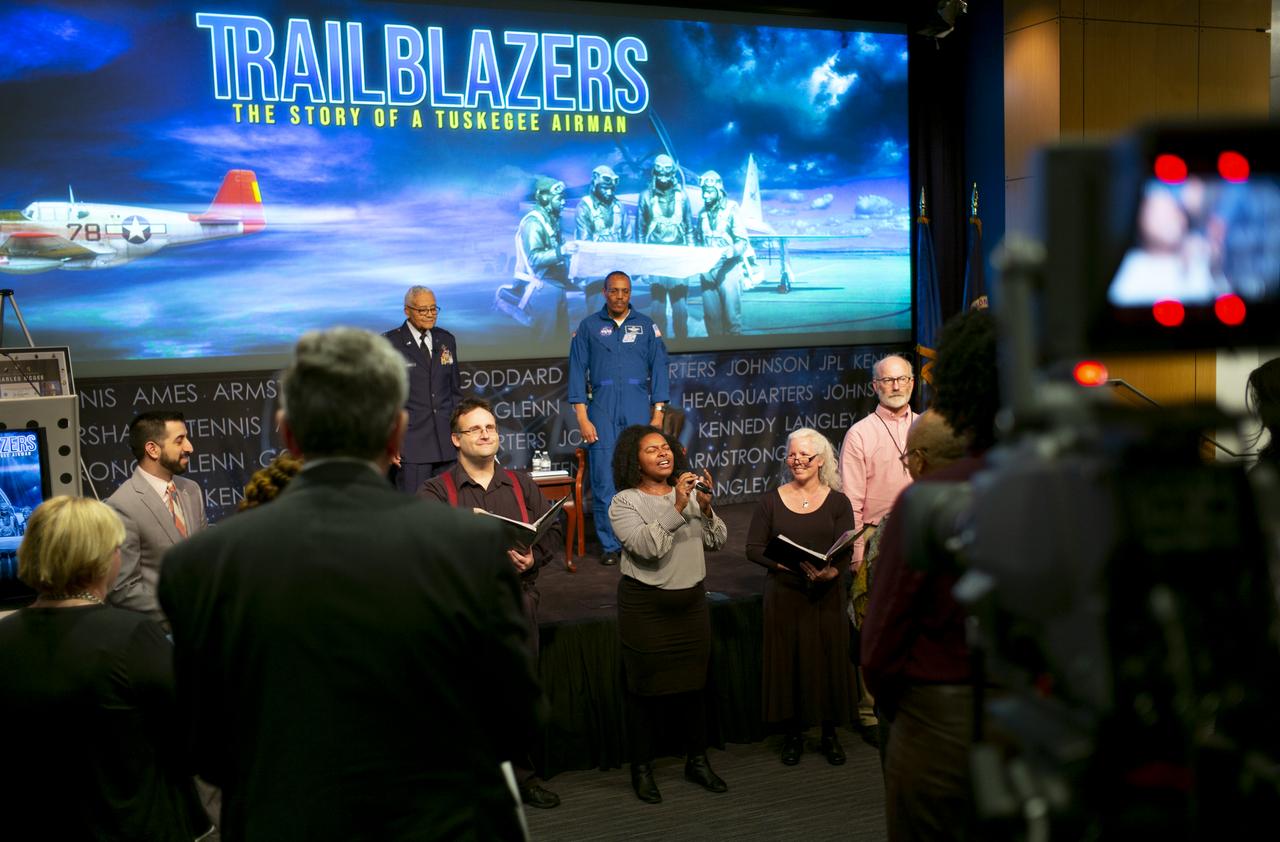
Members of the All Souls Church Unitarian Choir lead the audience in “Lift Ev’ry Voice and Sing” after a duscussion between Retired U.S. Air Force Honorary Brigadier General Charles McGee and NASA astronaut Alvin Drew during a Black History Month program titled “Trailblazers, The Story of a Tuskegee Airman,” Wednesday, Feb. 5, 2020, at NASA Headquarters in Washington, DC. McGee, a pilot with the Tuskegee Airmen during World War II, was a career officer in the Air Force also serving during the Korean and Vietnam Wars. Over his 30 years of service he flew 409 combat missions. Of the 355 Tuskegee pilots who flew in combat, McGee is one of only nine surviving. Photo Credit: (NASA/Joel Kowsky)
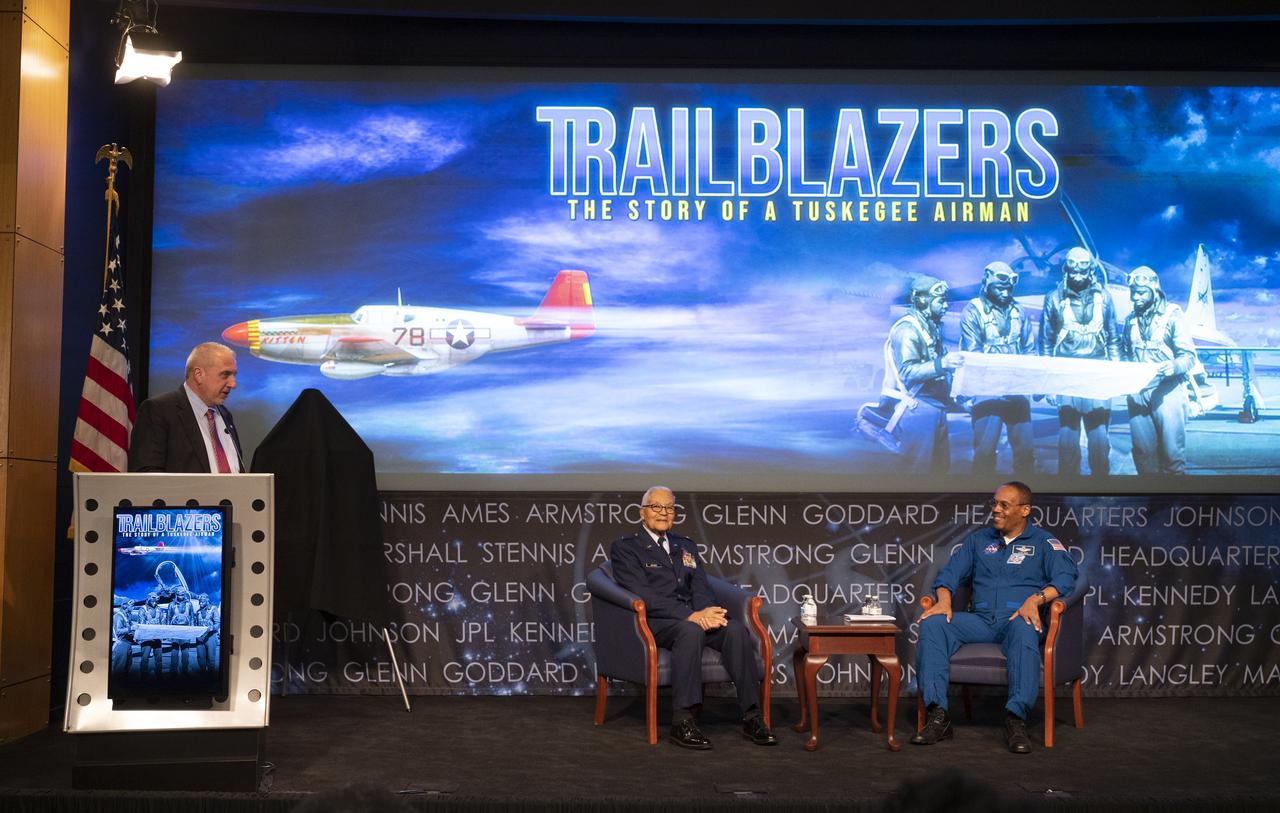
Robert Pearce, Associate Administrator for NASA’s Aeronautics Research Mission Directorate, left, moderates questions from the audience for retired U.S. Air Force Honorary Brigadier General Charles McGee speaks with NASA astronaut Alvin Drew during a Black History Month program titled “Trailblazers, The Story of a Tuskegee Airman,” Wednesday, Feb. 5, 2020, at NASA Headquarters in Washington, DC. McGee, a pilot with the Tuskegee Airmen during World War II, was a career officer in the Air Force also serving during the Korean and Vietnam Wars. Over his 30 years of service he flew 409 combat missions. Of the 355 Tuskegee pilots who flew in combat, McGee is one of only nine surviving. Photo Credit: (NASA/Joel Kowsky)
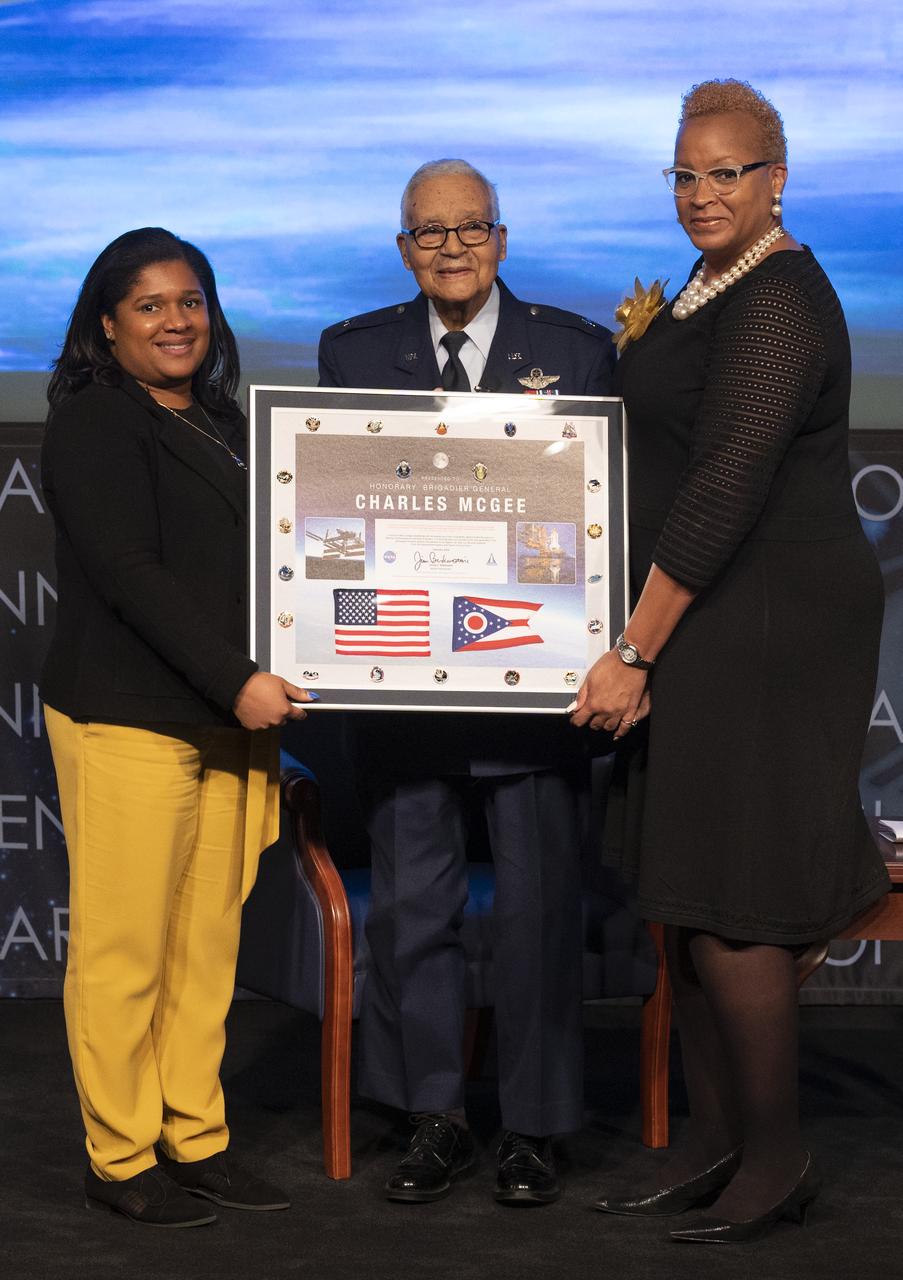
Zudayyah Taylor-Dunn, president of the NASA Headquarters Chapter of Blacks in Government (BIG), left, and LaVerne Randolph, vice president of the NASA Headquarters Chapter of BIG, present a montage containing an American Flag and Ohio State flag flown in space to Retired U.S. Air Force Honorary Brigadier General Charles McGee during a Black History Month program titled “Trailblazers, The Story of a Tuskegee Airman,” Wednesday, Feb. 5, 2020, at NASA Headquarters in Washington, DC. McGee, a pilot with the Tuskegee Airmen during World War II, was a career officer in the Air Force also serving during the Korean and Vietnam Wars. Over his 30 years of service he flew 409 combat missions. Of the 355 Tuskegee pilots who flew in combat, McGee is one of only nine surviving. Photo Credit: (NASA/Joel Kowsky)
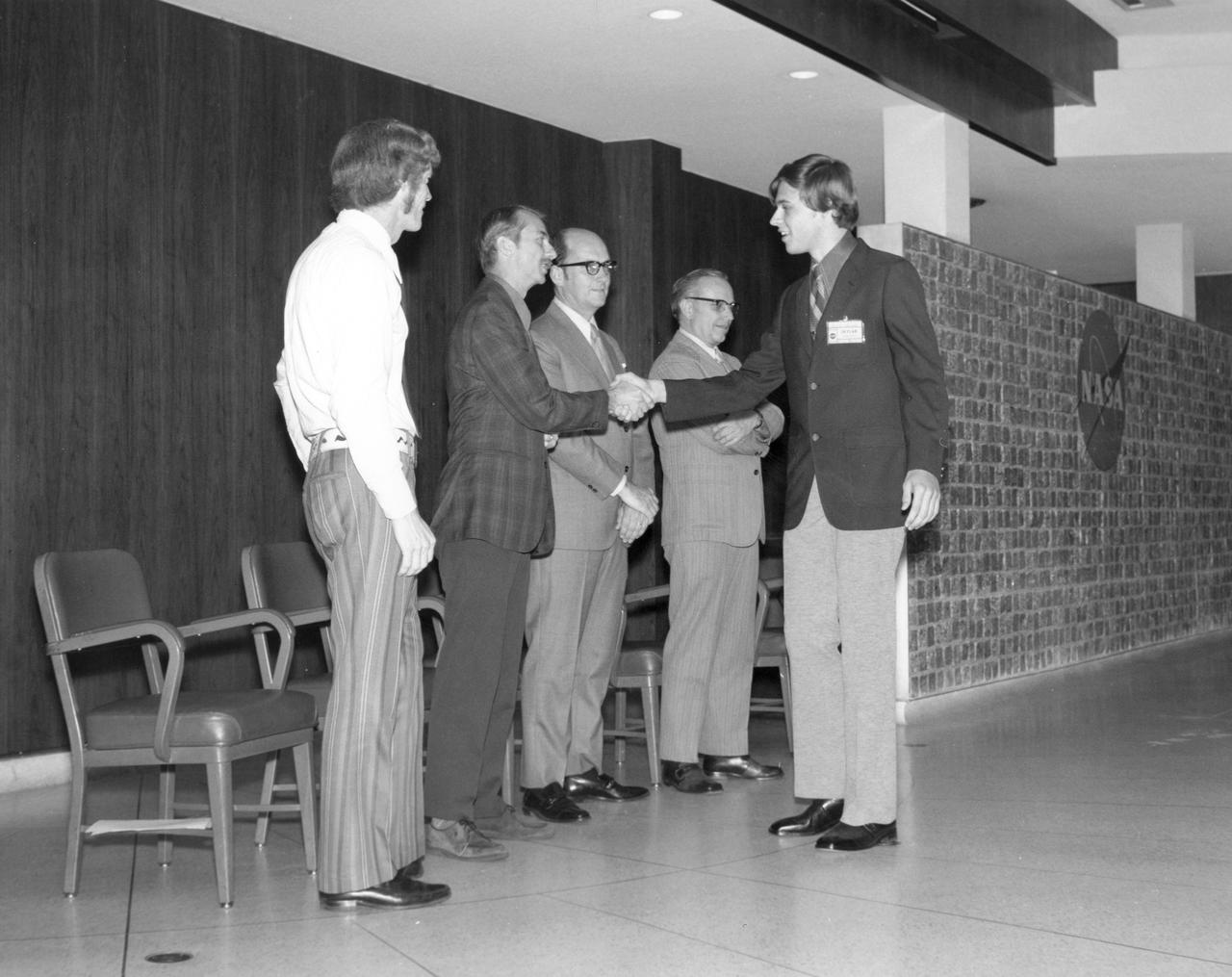
Garland, Texas high school student, Keith D. McGee, is greeted by (left to right): Astronauts Russell L. Schweickart, and Owen K. Garriott; Marshall Space Flight Center (MSFC) Skylab Program Manager, Leland Belew; and MSFC Director of Administration and Technical Services, David Newby, during a tour of MSFC. McGee was among 25 winners of a contest in which some 3,500 high school students proposed experiments for the following year’s Skylab Mission. The nationwide scientific competition was sponsored by the National Science Teachers Association and the National Aeronautics and Space Administration (NASA). The winning students, along with their parents and sponsor teachers, visited MSFC where they met with scientists and engineers, participated in design reviews for their experiments, and toured MSFC facilities. Of the 25 students, 6 did not see their experiments conducted on Skylab because the experiments were not compatible with Skylab hardware and timelines. Of the 19 remaining, 11 experiments required the manufacture of additional equipment.
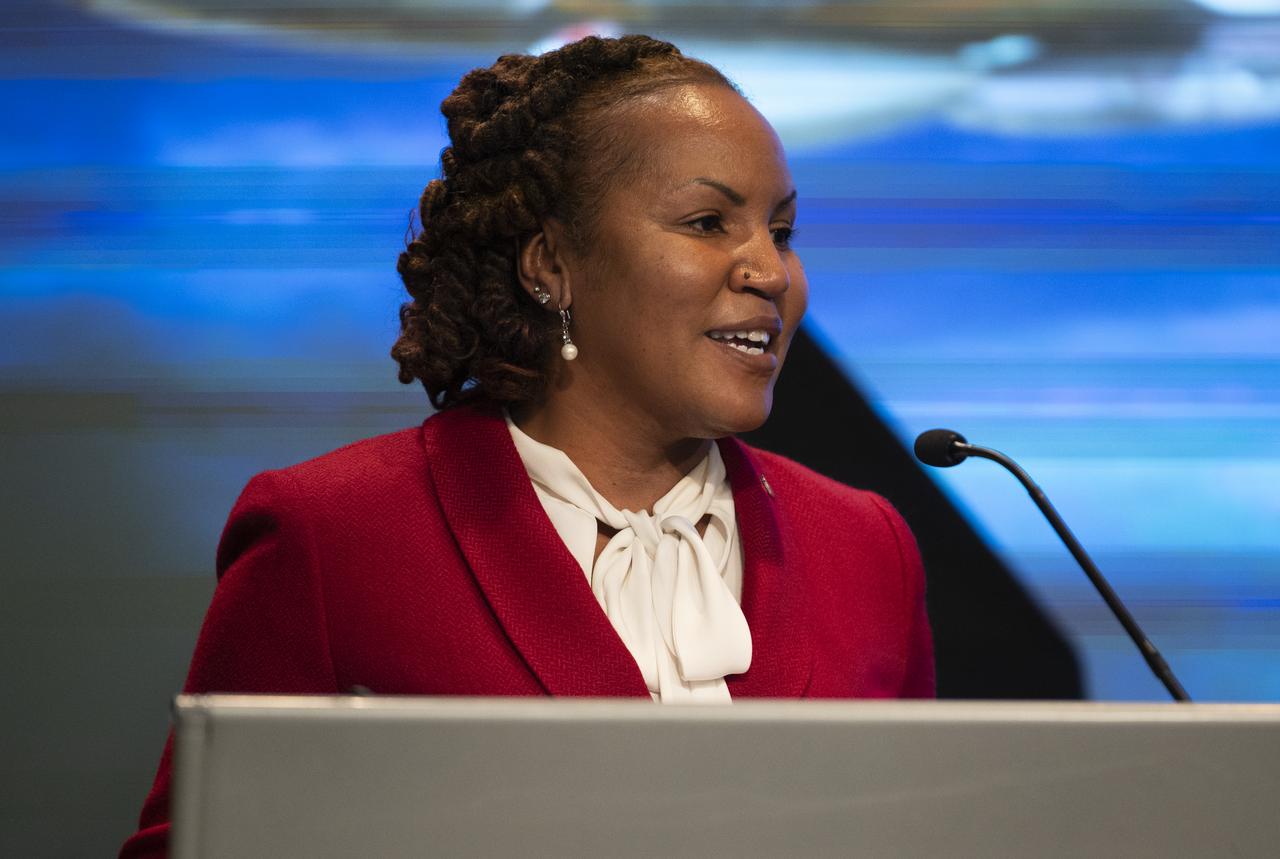
Monica Manning, Assistant Administrator for Procurement at NASA, introduces Retired U.S. Air Force Honorary Brigadier General Charles McGee and NASA astronaut Alvin Drew during a Black History Month program titled “Trailblazers, The Story of a Tuskegee Airman,” Wednesday, Feb. 5, 2020, at NASA Headquarters in Washington, DC. McGee, a pilot with the Tuskegee Airmen during World War II, was a career officer in the Air Force also serving during the Korean and Vietnam Wars. Over his 30 years of service he flew 409 combat missions. Of the 355 Tuskegee pilots who flew in combat, McGee is one of only nine surviving. Photo Credit: (NASA/Joel Kowsky)
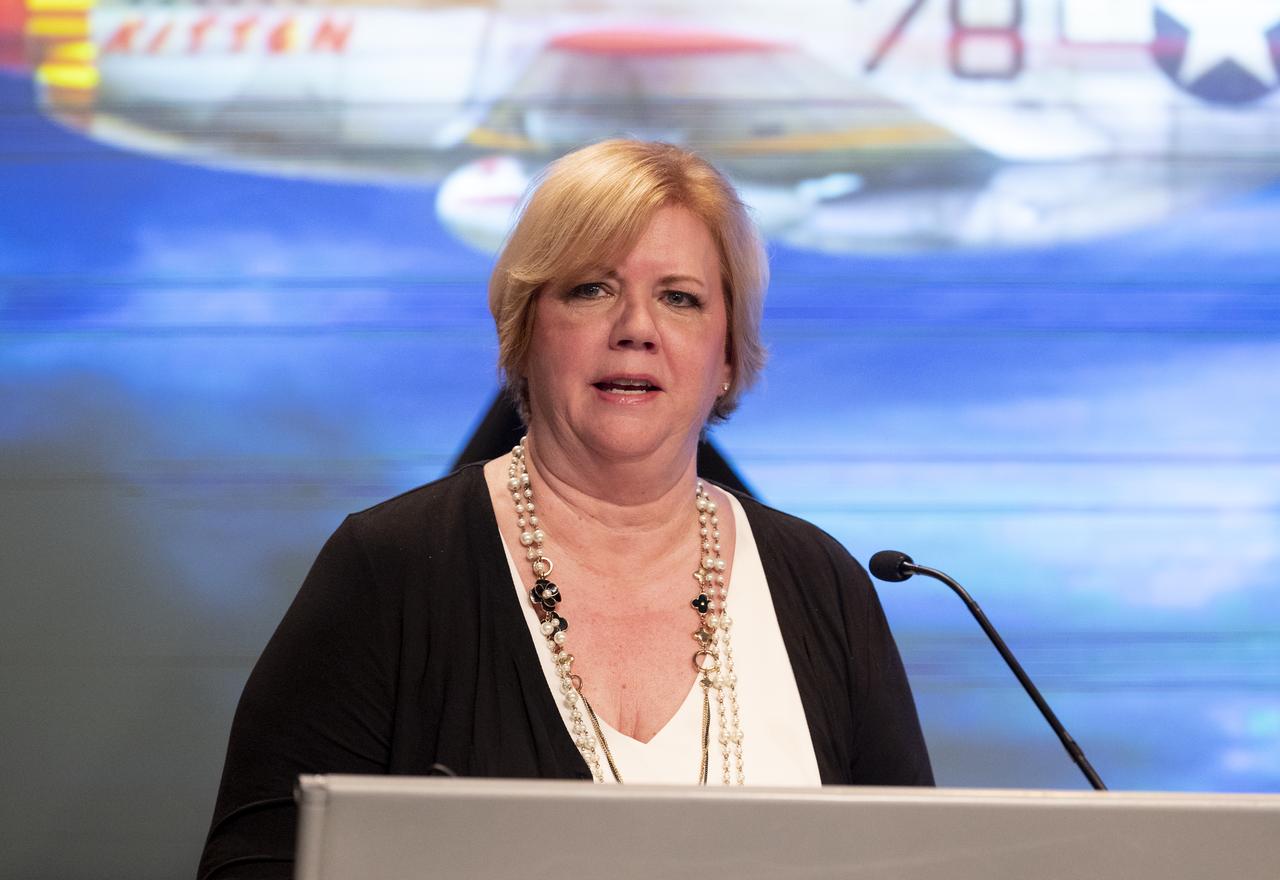
NASA Deputy Associate Administrator Melanie Saunders speaks before a discussion between retired U.S. Air Force Honorary Brigadier General Charles McGee and NASA astronaut Alvin Drew during a Black History Month program titled “Trailblazers, The Story of a Tuskegee Airman,” Wednesday, Feb. 5, 2020, at NASA Headquarters in Washington, DC. McGee, a pilot with the Tuskegee Airmen during World War II, was a career officer in the Air Force also serving during the Korean and Vietnam Wars. Over his 30 years of service he flew 409 combat missions. Of the 355 Tuskegee pilots who flew in combat, McGee is one of only nine surviving. Photo Credit: (NASA/Joel Kowsky)
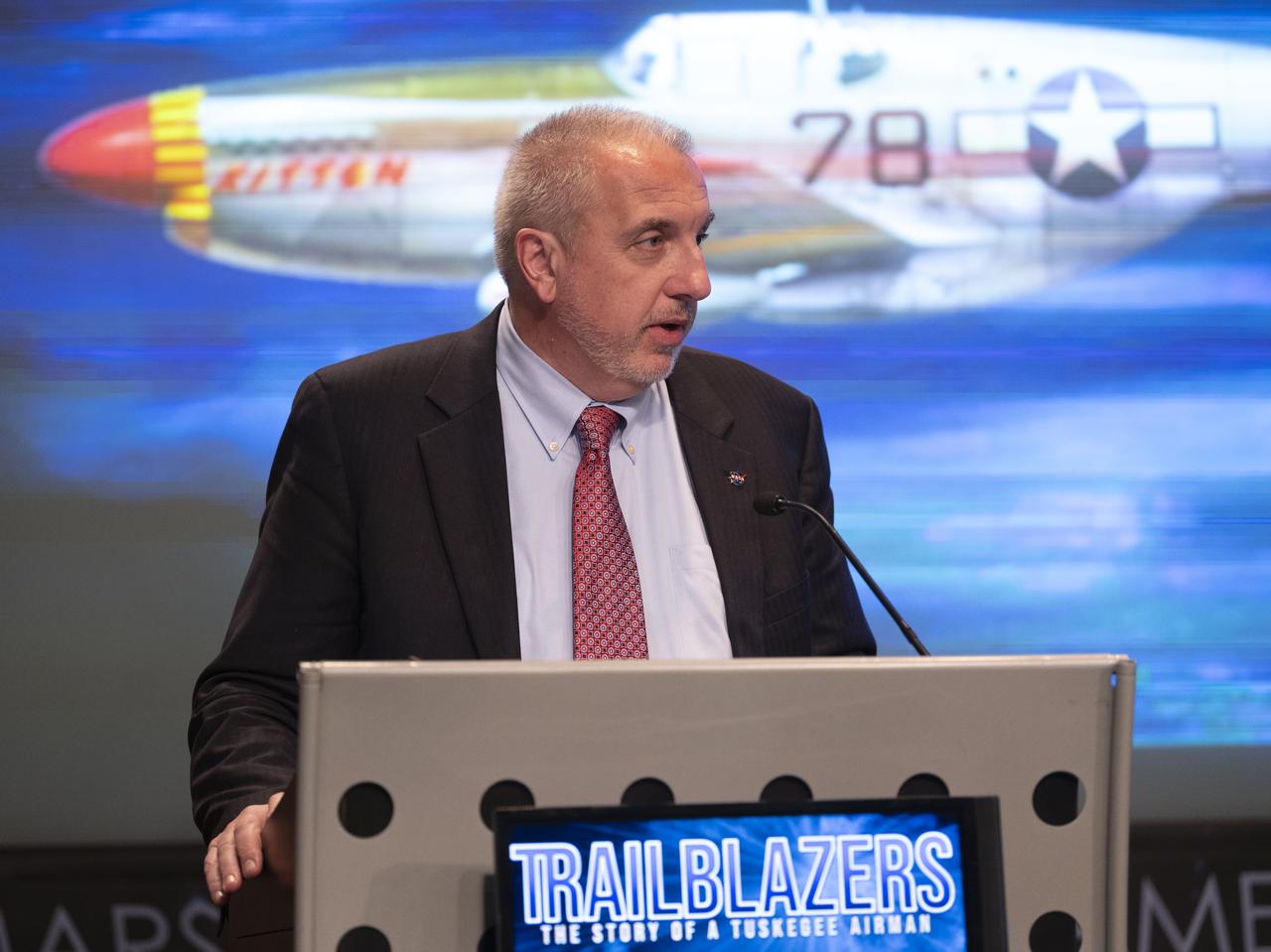
Robert Pearce, Associate Administrator for NASA’s Aeronautics Research Mission Directorate, speaks before a discussion between retired U.S. Air Force Honorary Brigadier General Charles McGee speaks with NASA astronaut Alvin Drew during a Black History Month program titled “Trailblazers, The Story of a Tuskegee Airman,” Wednesday, Feb. 5, 2020, at NASA Headquarters in Washington, DC. McGee, a pilot with the Tuskegee Airmen during World War II, was a career officer in the Air Force also serving during the Korean and Vietnam Wars. Over his 30 years of service he flew 409 combat missions. Of the 355 Tuskegee pilots who flew in combat, McGee is one of only nine surviving. Photo Credit: (NASA/Joel Kowsky)

NASA digital content strategist Andres Almeida sings the National Anthem before a discussion between Retired U.S. Air Force Honorary Brigadier General Charles McGee and NASA astronaut Alvin Drew during a Black History Month program titled “Trailblazers, The Story of a Tuskegee Airman,” Wednesday, Feb. 5, 2020, at NASA Headquarters in Washington, DC. McGee, a pilot with the Tuskegee Airmen during World War II, was a career officer in the Air Force also serving during the Korean and Vietnam Wars. Over his 30 years of service he flew 409 combat missions. Of the 355 Tuskegee pilots who flew in combat, McGee is one of only nine surviving. Photo Credit: (NASA/Joel Kowsky)
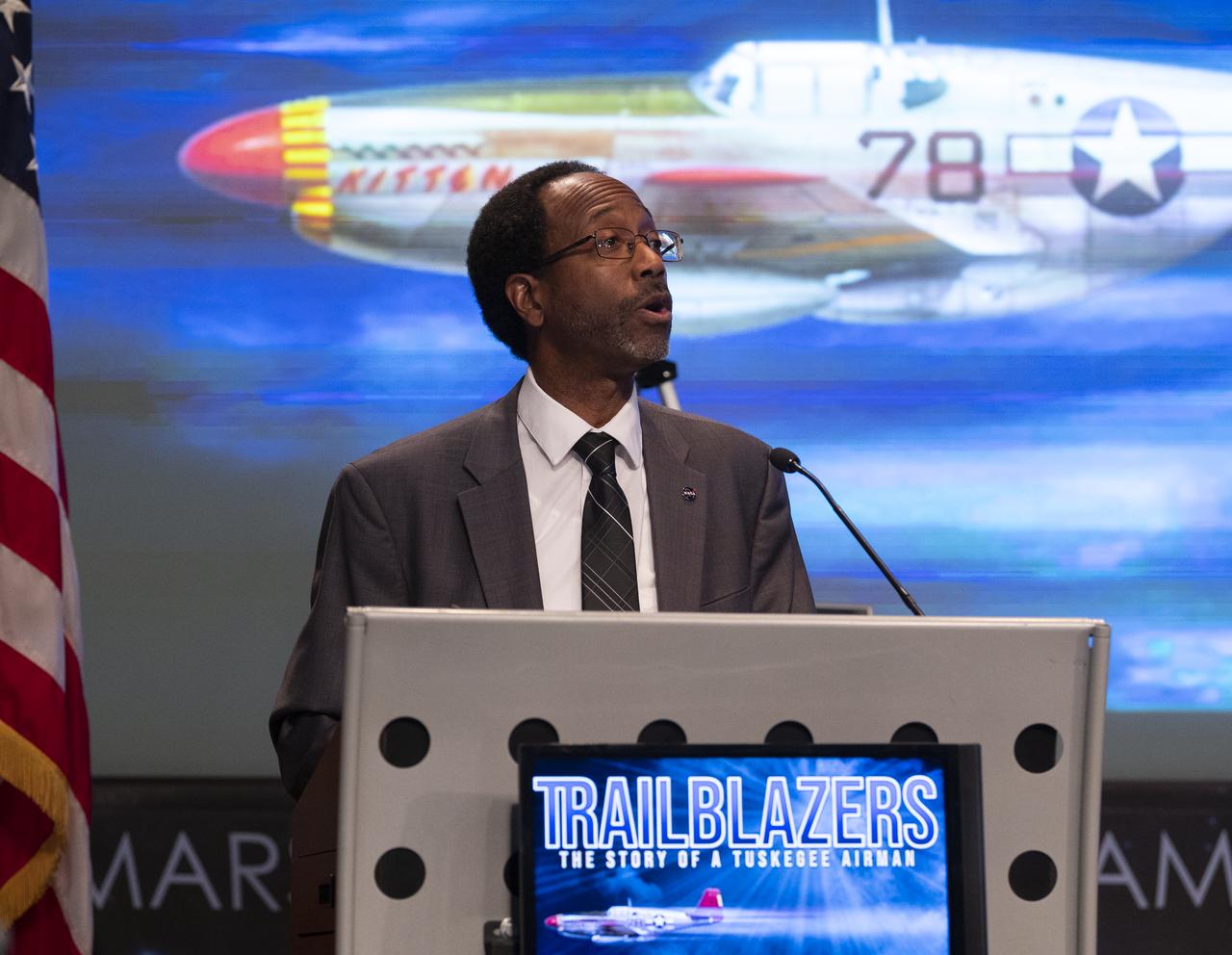
Clayton Turner, Director of NASA’s Langley Research Center, delivers closing remarks following a discussion between Retired U.S. Air Force Honorary Brigadier General Charles McGee and NASA astronaut Alvin Drew during a Black History Month program titled “Trailblazers, The Story of a Tuskegee Airman,” Wednesday, Feb. 5, 2020, at NASA Headquarters in Washington, DC. McGee, a pilot with the Tuskegee Airmen during World War II, was a career officer in the Air Force also serving during the Korean and Vietnam Wars. Over his 30 years of service he flew 409 combat missions. Of the 355 Tuskegee pilots who flew in combat, McGee is one of only nine surviving. Photo Credit: (NASA/Joel Kowsky)
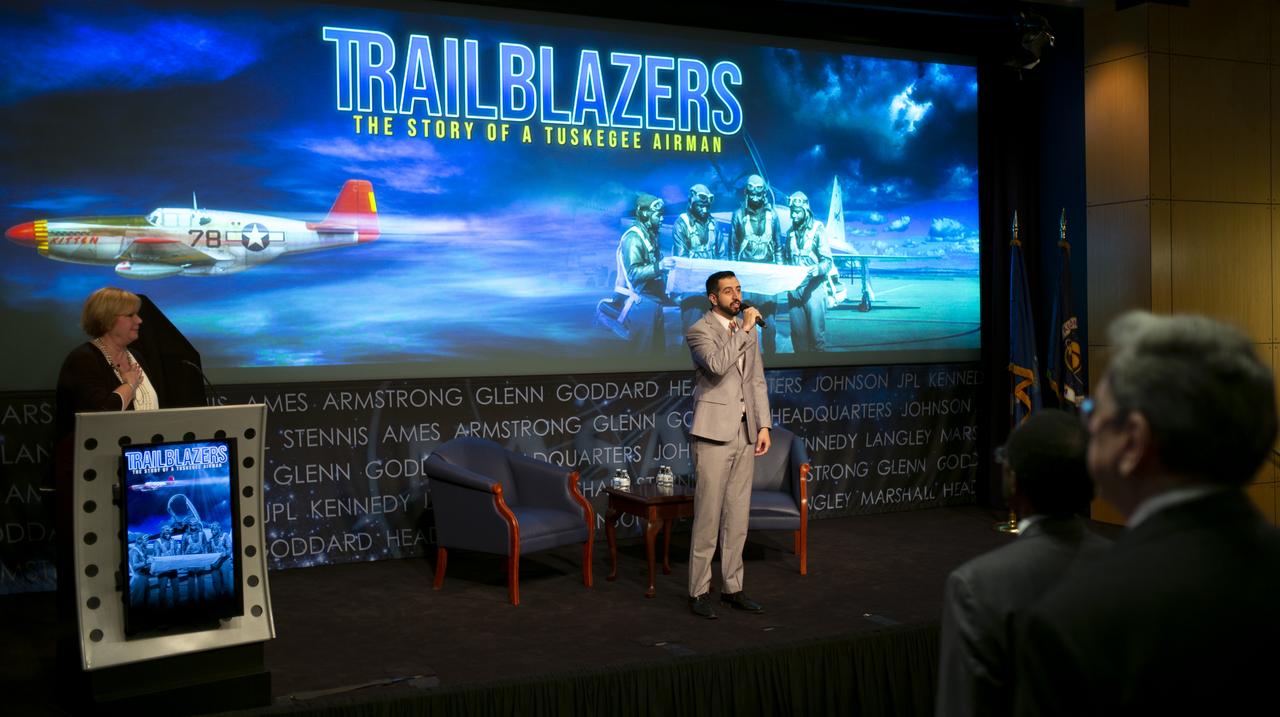
NASA digital content strategist Andres Almeida sings the National Anthem before a discussion between Retired U.S. Air Force Honorary Brigadier General Charles McGee and NASA astronaut Alvin Drew during a Black History Month program titled “Trailblazers, The Story of a Tuskegee Airman,” Wednesday, Feb. 5, 2020, at NASA Headquarters in Washington, DC. McGee, a pilot with the Tuskegee Airmen during World War II, was a career officer in the Air Force also serving during the Korean and Vietnam Wars. Over his 30 years of service he flew 409 combat missions. Of the 355 Tuskegee pilots who flew in combat, McGee is one of only nine surviving. Photo Credit: (NASA/Joel Kowsky)
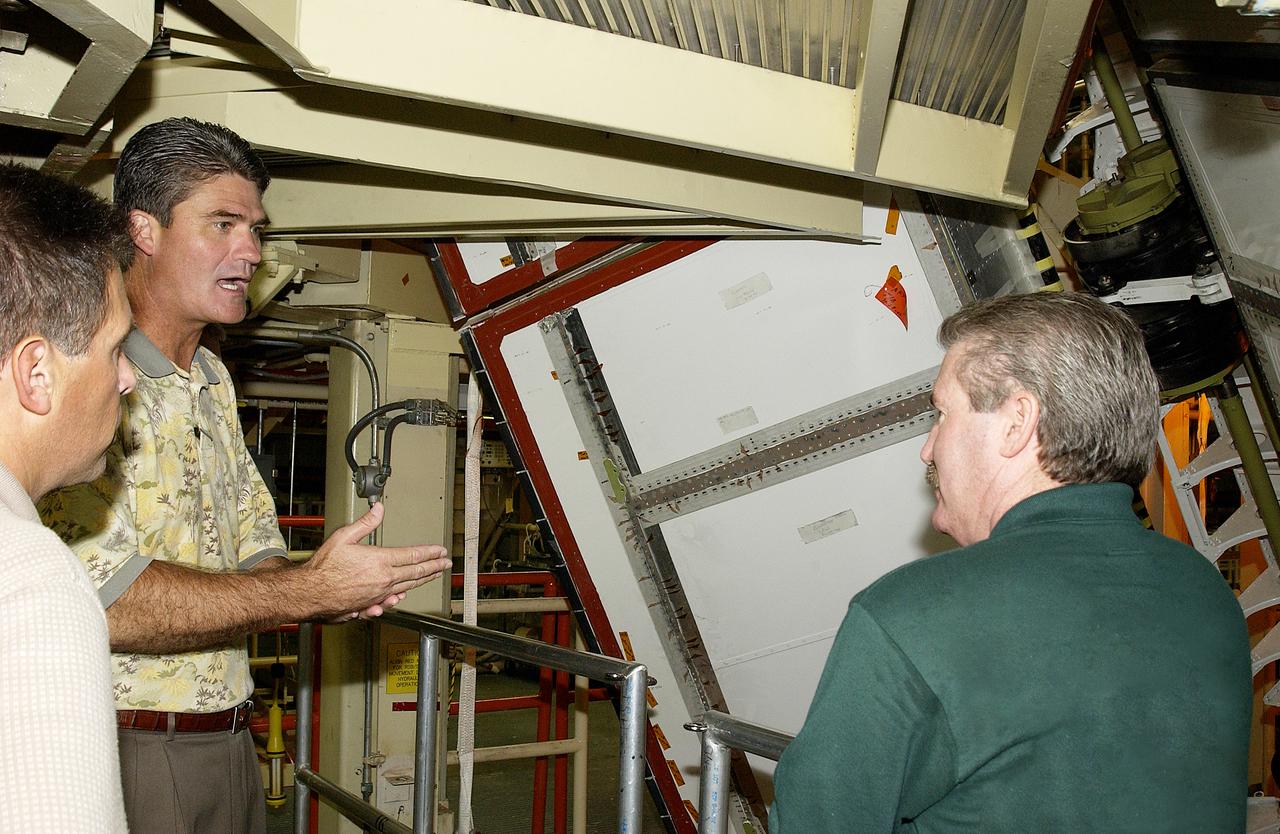
Mark McGee (right) shows the bead blasting completed on the rudder speed brake on orbiter Discovery to Shuttle Program Manager Bill Parsons (center). McGee is manager, Orbiter Processing Facility, with United Space Alliance. At left is Mark Nappi, deputy associate program manager, ground operations, USA. The work was part of Orbiter Major Modifications (OMM) that were recently completed on Discovery. The OMM work ranged from wiring, control panels and black boxes to gaseous and fluid systems tubing and components. These systems were deserviced, disassembled, inspected, modified, reassembled, checked out and reserviced, as were most other systems onboard. The work included the installation of the Multifunction Electronic Display Subsystem (MEDS) - a state-of-the-art “glass cockpit.”
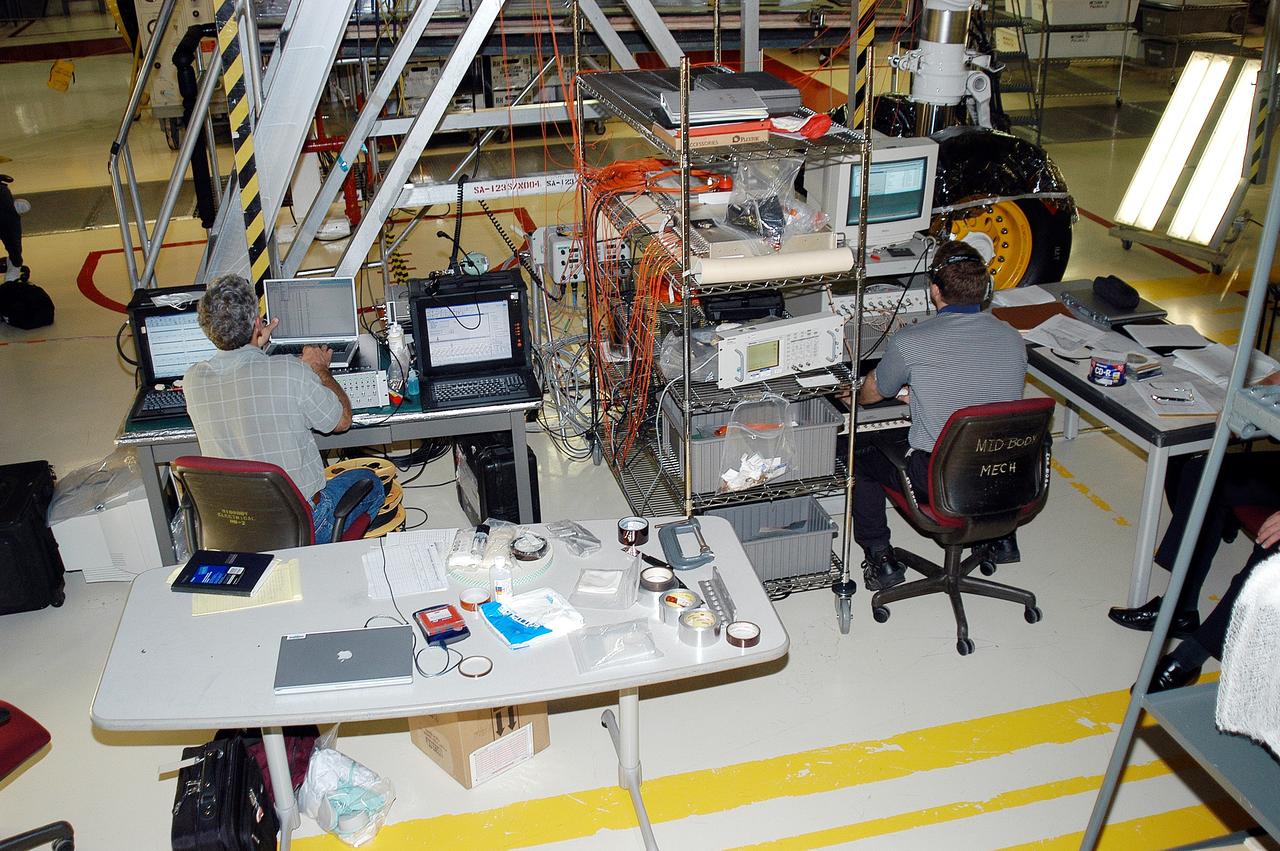
KENNEDY SPACE CENTER, FLA. - In the Orbiter Processing Facility, Eric Madaras (left), NASA-Langley Research Center, and Jim McGee, The Boeing Company, Huntington Beach, Calif., conduct impulse tests on the right wing leading edge (WLE) of Space Shuttle Endeavour. The tests monitor how sound impulses propagate through the WLE area. The data collected will be analyzed to explore the possibility of adding new instrumentation to the wing that could automatically detect debris or micrometeroid impacts on the Shuttle while in flight. The study is part of the initiative ongoing at KSC and around the agency to return the orbiter fleet to flight status.
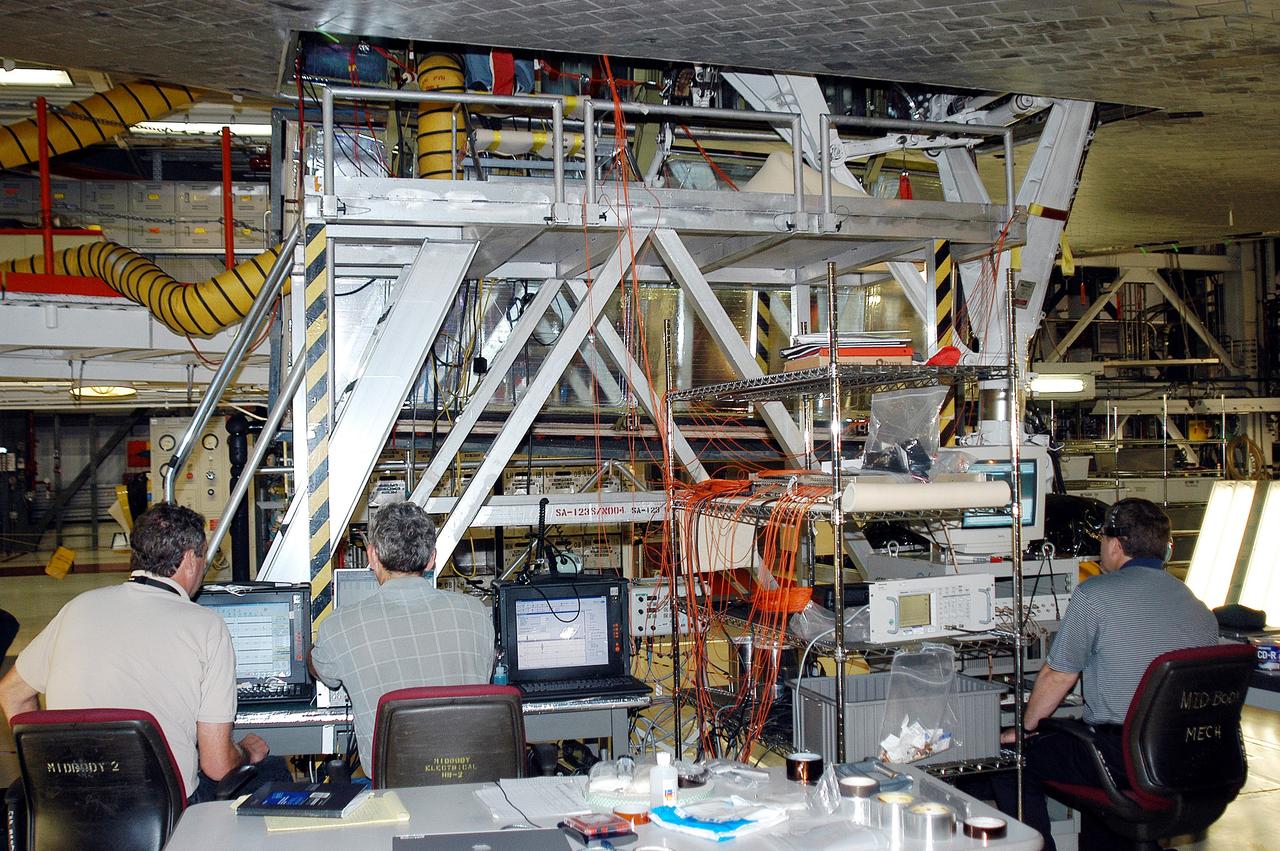
KENNEDY SPACE CENTER, FLA. - In the Orbiter Processing Facility, Bill Prosser (left) and Eric Madaras, NASA-Langley Research Center, and Jim McGee (right), The Boeing Company, Huntington Beach, Calif., conduct impulse tests on the right wing leading edge (WLE) of Space Shuttle Endeavour. The tests monitor how sound impulses propagate through the WLE area. The data collected will be analyzed to explore the possibility of adding new instrumentation to the wing that could automatically detect debris or micrometeroid impacts on the Shuttle while in flight. The study is part of the initiative ongoing at KSC and around the agency to return the orbiter fleet to flight status.
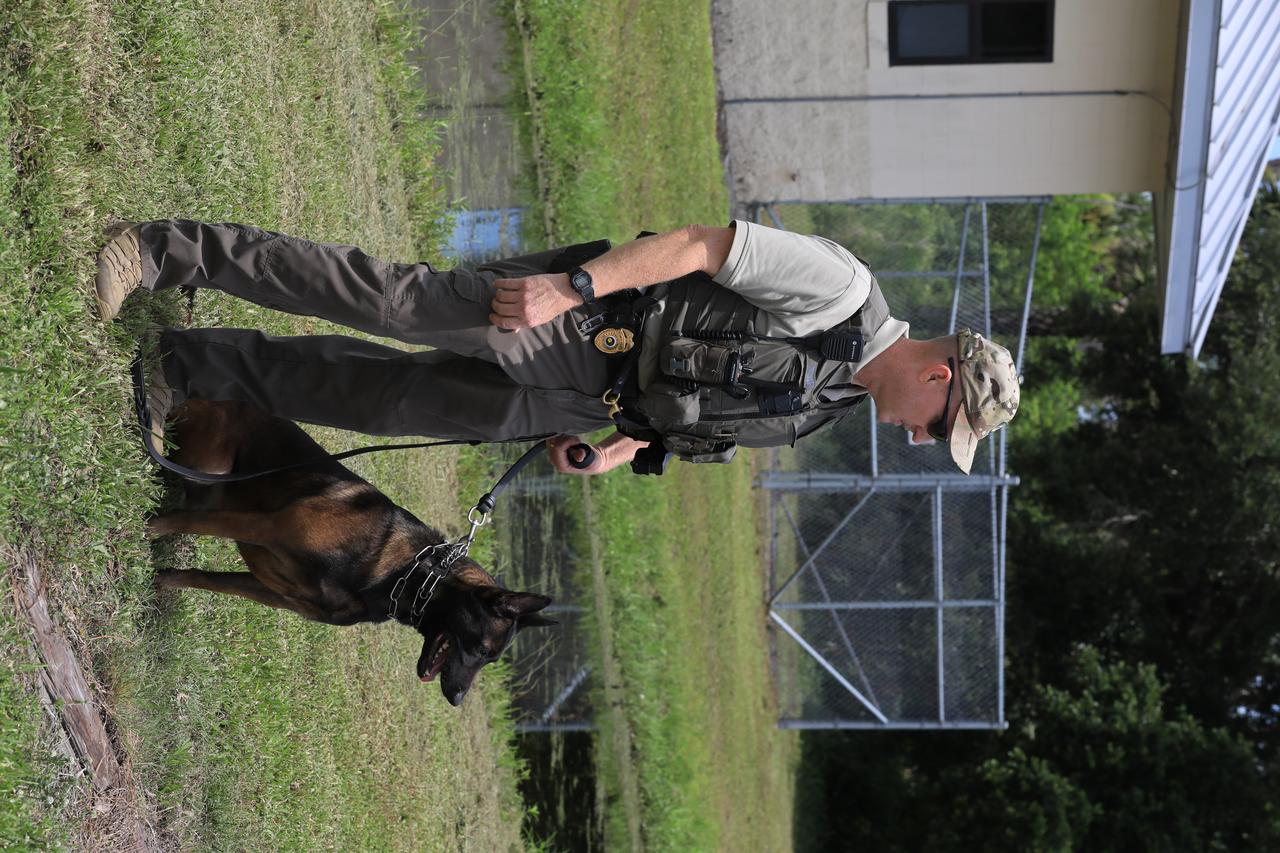
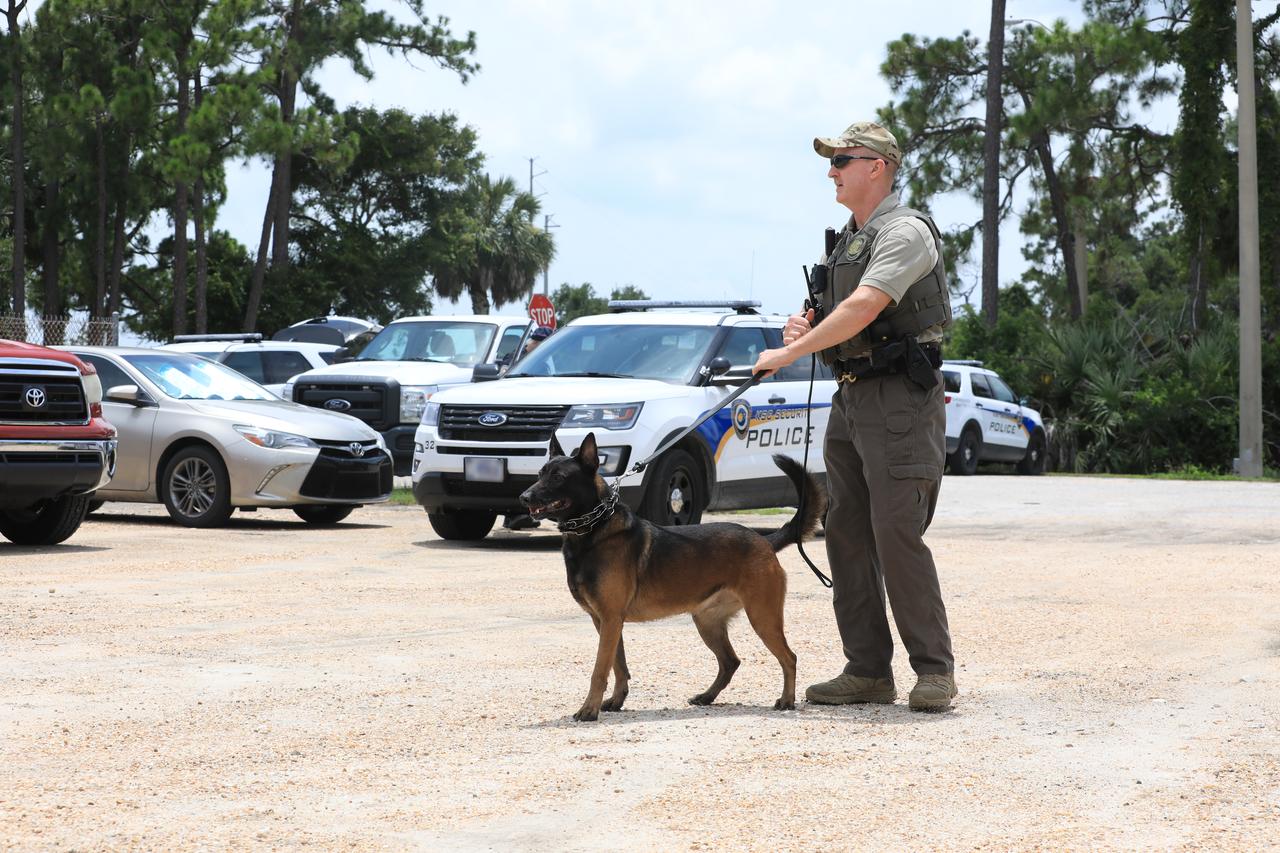
K-9 Spike is ready for the next training exercise with his Handler Officer John McGee at Kennedy Space Center’s Protective Services Office in Florida on July 10, 2019. The center’s specially trained K-9s support the center 24/7, 365 days. Their main goal is to protect the Kennedy workforce and assets. Normal activities include sweeps of designated facilities, parking lots and random vehicle inspections at entrance gates. During rocket launches, they are out and about performing sweeps of facilities and launch site viewing areas. They cover Kennedy and the Merritt Island National Wildlife Refuge.
K-9 Spike stands alert and ready for the next training exercise with his Handler Officer John McGee at Kennedy Space Center’s Protective Services Office in Florida on July 10, 2019. The center’s specially trained K-9s support the center 24/7, 365 days. Their main goal is to protect the Kennedy workforce and assets. Normal activities include sweeps of designated facilities, parking lots and random vehicle inspections at entrance gates. During rocket launches, they are out and about performing sweeps of facilities and launch site viewing areas. They cover Kennedy and the Merritt Island National Wildlife Refuge.
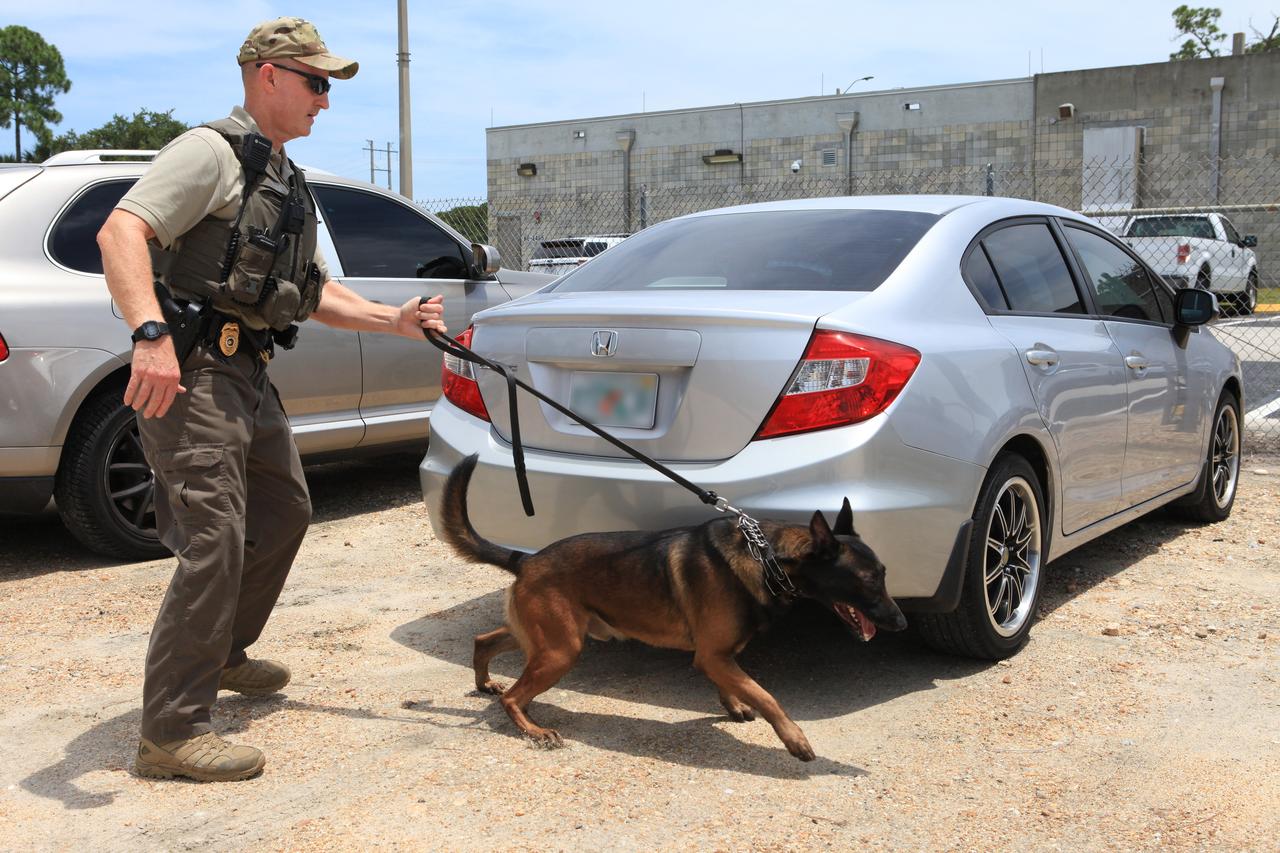
K-9 Handler Officer John McGee watches as K-9 Spike works his way through a row of cars during a training exercise on July 10, 2019, at Kennedy Space Center’s Protective Services Office in Florida. The center’s specially trained K-9s support the center 24/7, 365 days. Their main goal is to protect the Kennedy workforce and assets. Normal activities include sweeps of designated facilities, parking lots and random vehicle inspections at entrance gates. During rocket launches, they are out and about performing sweeps of facilities and launch site viewing areas. They cover Kennedy and the Merritt Island National Wildlife Refuge.
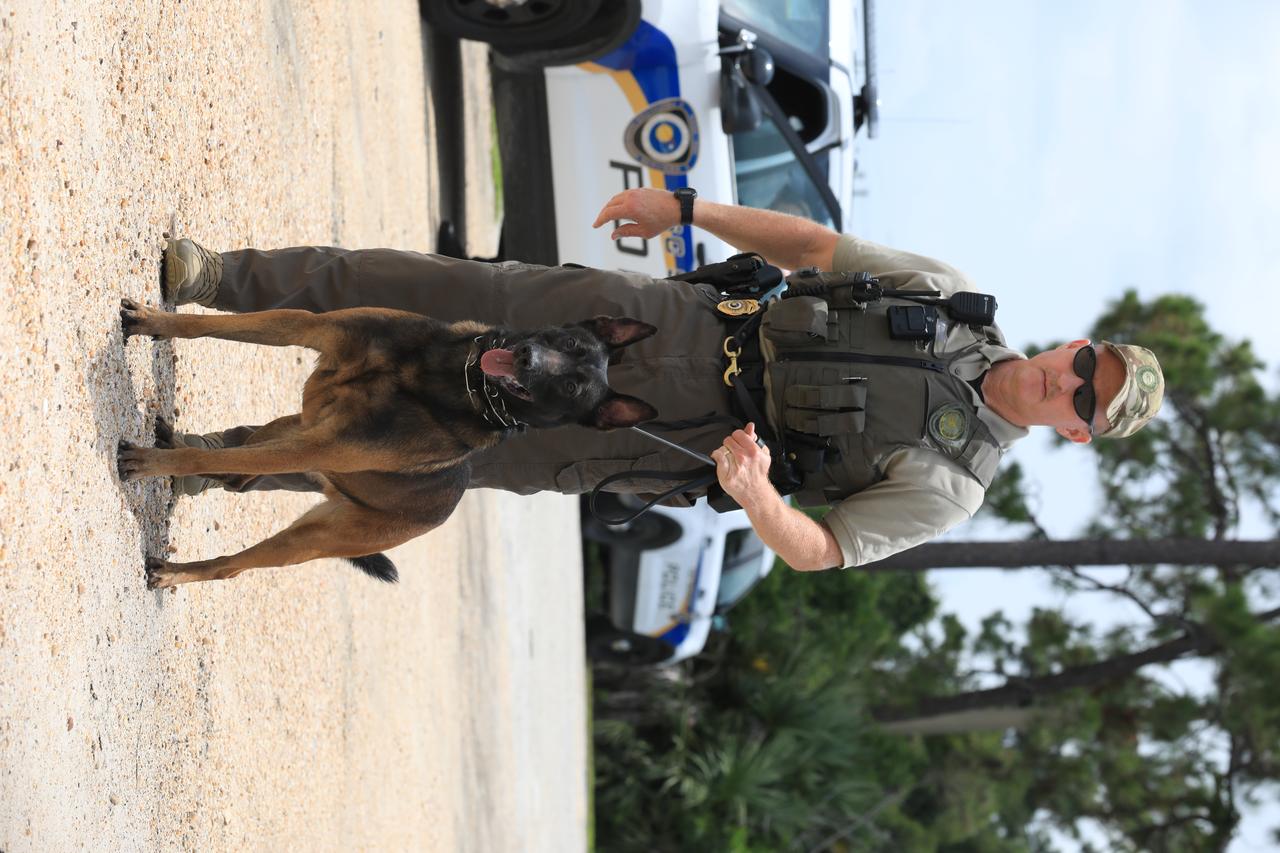
K-9 Spike stands alert and ready for the next training exercise with his Handler Officer John McGee at Kennedy Space Center’s Protective Services Office in Florida on July 10, 2019. The center’s specially trained K-9s support the center 24/7, 365 days. Their main goal is to protect the Kennedy workforce and assets. Normal activities include sweeps of designated facilities, parking lots and random vehicle inspections at entrance gates. During rocket launches, they are out and about performing sweeps of facilities and launch site viewing areas. They cover Kennedy and the Merritt Island National Wildlife Refuge.
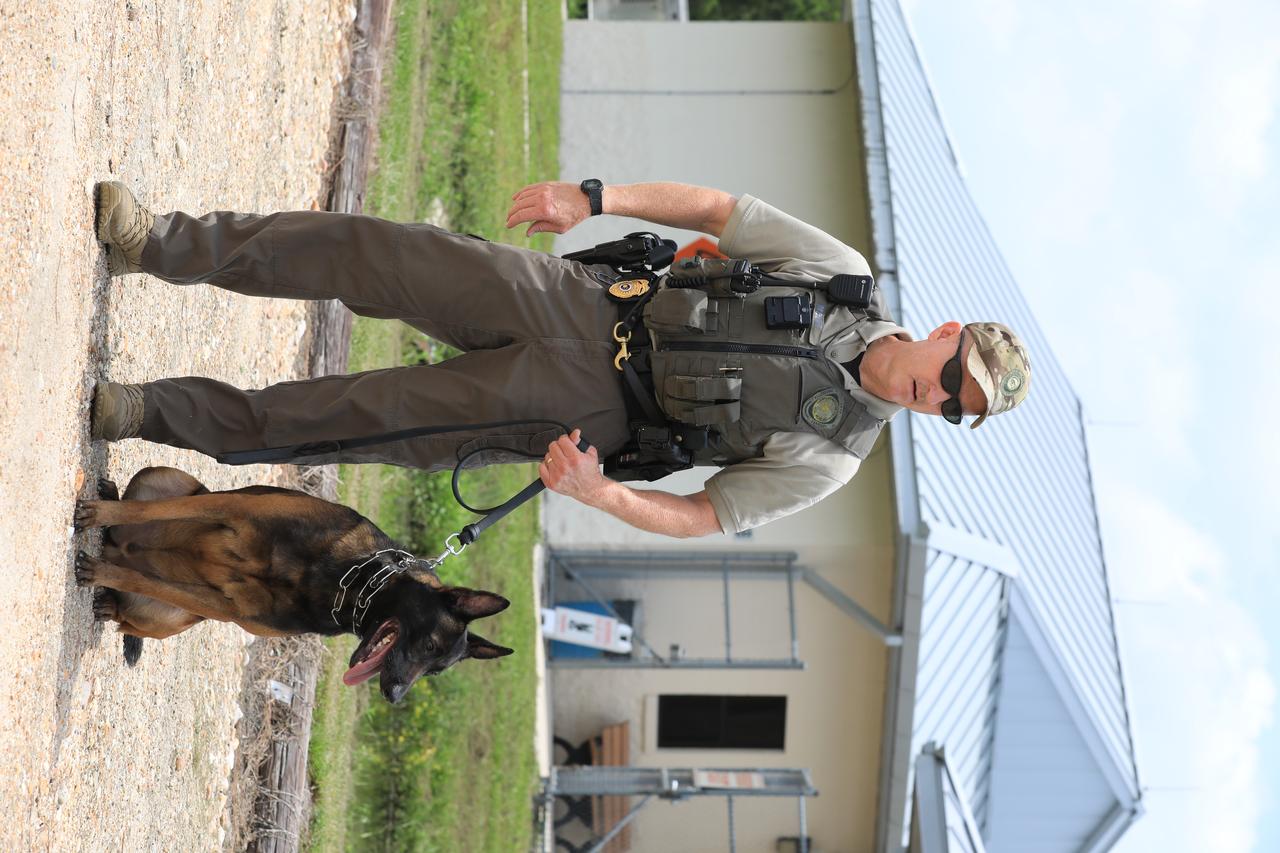
K-9 Spike is ready for the next training exercise with his Handler Officer John McGee at Kennedy Space Center’s Protective Services Office in Florida on July 10, 2019. The center’s specially trained K-9s support the center 24/7, 365 days. Their main goal is to protect the Kennedy workforce and assets. Normal activities include sweeps of designated facilities, parking lots and random vehicle inspections at entrance gates. During rocket launches, they are out and about performing sweeps of facilities and launch site viewing areas. They cover Kennedy and the Merritt Island National Wildlife Refuge.
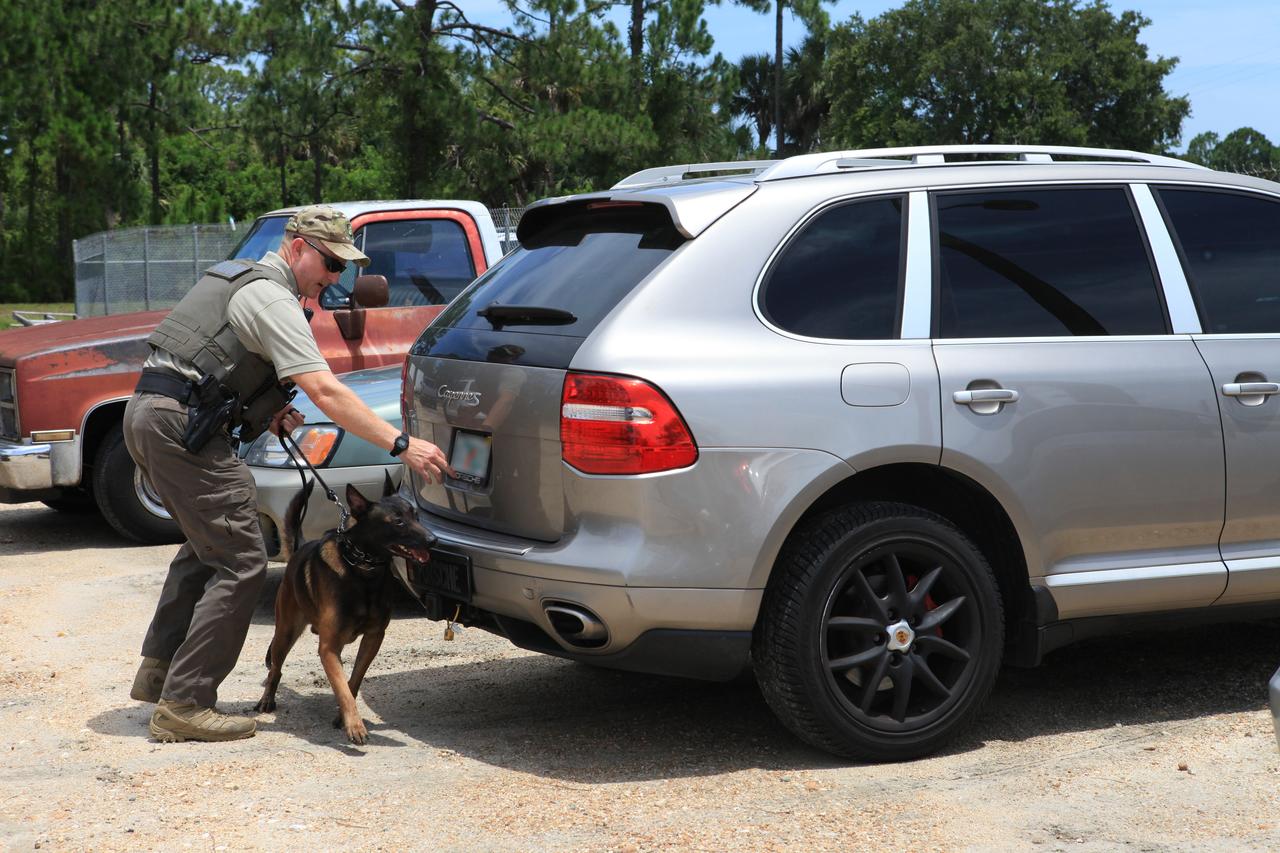
K-9 Handler Officer John McGee watches as K-9 Spike works his way through a row of cars during a training exercise on July 10, 2019, at Kennedy Space Center’s Protective Services Office in Florida. The center’s specially trained K-9s support the center 24/7, 365 days. Their main goal is to protect the Kennedy workforce and assets. Normal activities include sweeps of designated facilities, parking lots and random vehicle inspections at entrance gates. During rocket launches, they are out and about performing sweeps of facilities and launch site viewing areas. They cover Kennedy and the Merritt Island National Wildlife Refuge.
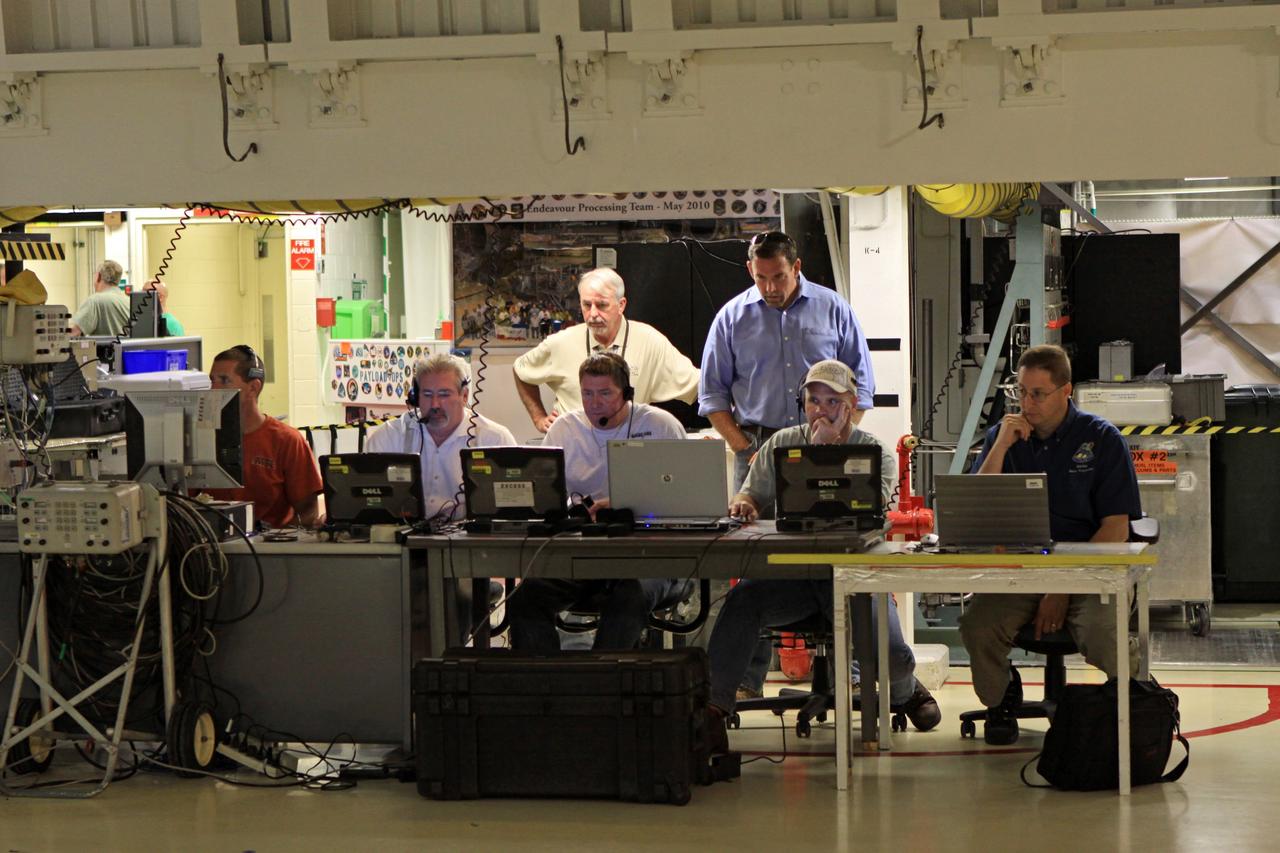
CAPE CANAVERAL, Fla. – In Orbiter Processing Facility OPF Bay 2 at NASA’s Kennedy Space Center in Florida, weight and center of gravity checks are underway on the space shuttle Endeavour. Monitoring data on the activity are United Space Alliance USA OPF Manager Mark Barnes, standing to the left, and Mike McClure, of USA Orbiter Handling Engineering. Seated, from the left, are USA move director Cliff Semonski, USA move director Mark McGee, USA lead aerospace Quality Mission Assurance inspector Jesse English, Doug Robison, of USA Orbiter Handling Engineering, and Robert Handl, of Boeing Mass Properties. The work is part of Transition and Retirement of the remaining space shuttles, Endeavour and Atlantis. Endeavour is being prepared for public display at the California Science Center in Los Angeles. Its ferry flight to California is targeted for mid-September. Endeavour was the last space shuttle added to NASA’s orbiter fleet. Over the course of its 19-year career, Endeavour spent 299 days in space during 25 missions. For more information, visit http://www.nasa.gov/transition Photo credit: NASA/ Jim Grossmann