
The team at SpaceX's rocket development facility in McGregor, Texas completed a static fire test of the Falcon 9 booster that will launch SpaceX's first demonstration mission for NASA's Commerical Crew Program.
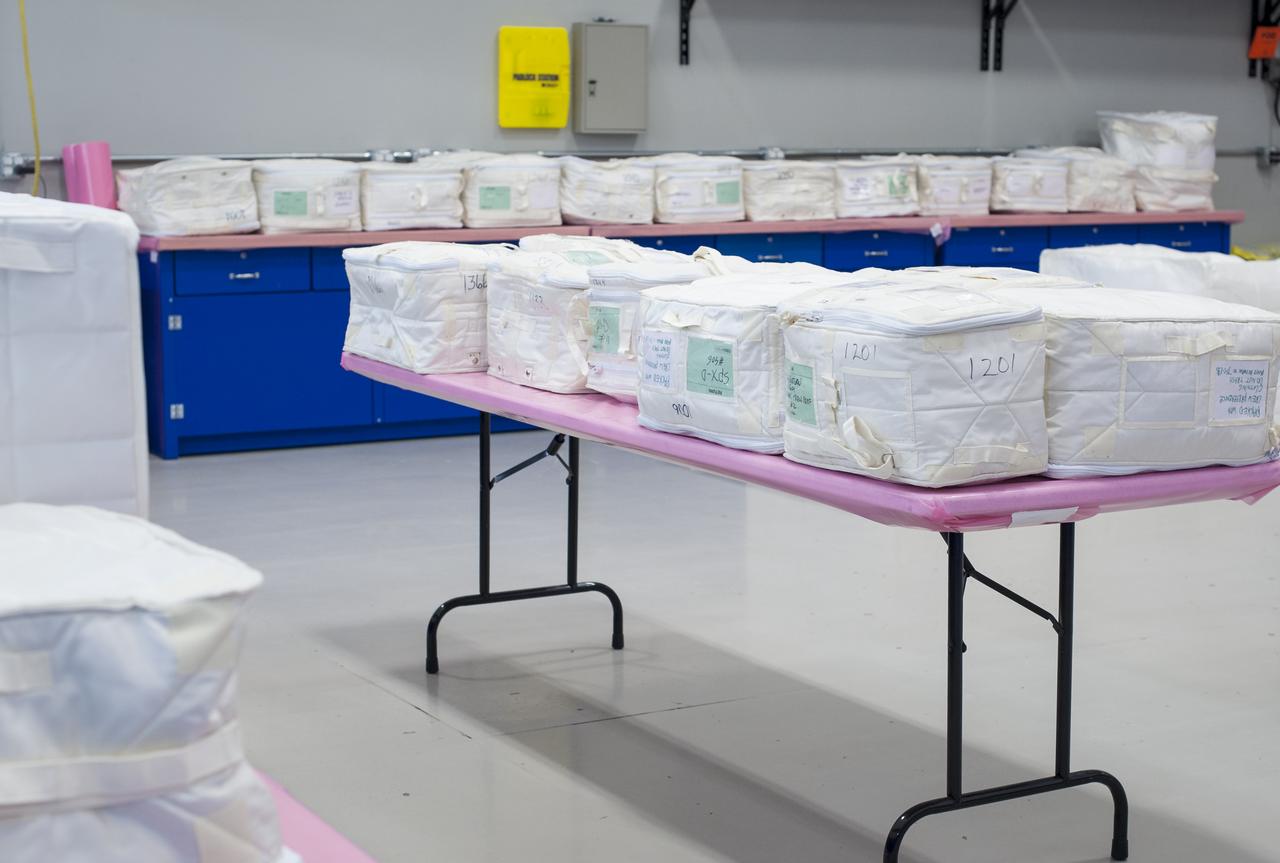
Some of the 1,367 pounds of cargo the SpaceX Dragon spacecraft returned to Earth from the space station are seen in a clean room at the SpaceX rocket development facility, Wednesday, June 13, 2012 in McGregor, Texas. NASA Administrator Charles Bolden and SpaceX CEO and Chief Designer Elon Musk were at the facility to view the historic Dragon capsule and to thank the more than 150 SpaceX employees working at the McGregor facility for their role in the historic mission. Photo Credit: (NASA/Bill Ingalls)

NASA Administrator Charles Bolden, left, and SpaceX CEO and Chief Designer Elon Musk, view the historic Dragon capsule that returned to Earth on May 31 following the first successful mission by a private company to carry supplies to the International Space Station on Wednesday, June 13, 2012 at the SpaceX facility in McGregor, Texas. Bolden and Musk also thanked the more than 150 SpaceX employees working at the McGregor facility for their role in the historic mission. Photo Credit: (NASA/Bill Ingalls)

NASA Administrator Charles Bolden, left, congratulates SpaceX CEO and Chief Designer Elon Musk in front of the historic Dragon capsule that returned to Earth on May 31 following the first successful mission by a private company to carry supplies to the International Space Station on Wednesday, June 13, 2012 at the SpaceX facility in McGregor, Texas. Bolden and Musk also thanked the more than 150 SpaceX employees working at the McGregor facility for their role in the historic mission. Photo Credit: (NASA/Bill Ingalls)

NASA Administrator Charles Bolden, left, and SpaceX CEO and Chief Designer Elon Musk, view the historic Dragon capsule that returned to Earth on May 31 following the first successful mission by a private company to carry supplies to the International Space Station on Wednesday, June 13, 2012 at the SpaceX facility in McGregor, Texas. Bolden and Musk also thanked the more than 150 SpaceX employees working at the McGregor facility for their role in the historic mission. Photo Credit: (NASA/Bill Ingalls)

NASA Administrator Charles Bolden, left, and SpaceX CEO and Chief Designer Elon Musk, view the historic Dragon capsule that returned to Earth on May 31 following the first successful mission by a private company to carry supplies to the International Space Station on Wednesday, June 13, 2012 at the SpaceX facility in McGregor, Texas. Bolden and Musk also thanked the more than 150 SpaceX employees working at the McGregor facility for their role in the historic mission. Photo Credit: (NASA/Bill Ingalls)

NASA Administrator Charles Bolden, left, and SpaceX CEO and Chief Designer Elon Musk, view the historic Dragon capsule that returned to Earth on May 31 following the first successful mission by a private company to carry supplies to the International Space Station on Wednesday, June 13, 2012 at the SpaceX facility in McGregor, Texas. Bolden and Musk also thanked the more than 150 SpaceX employees working at the McGregor facility for their role in the historic mission. Photo Credit: (NASA/Bill Ingalls)
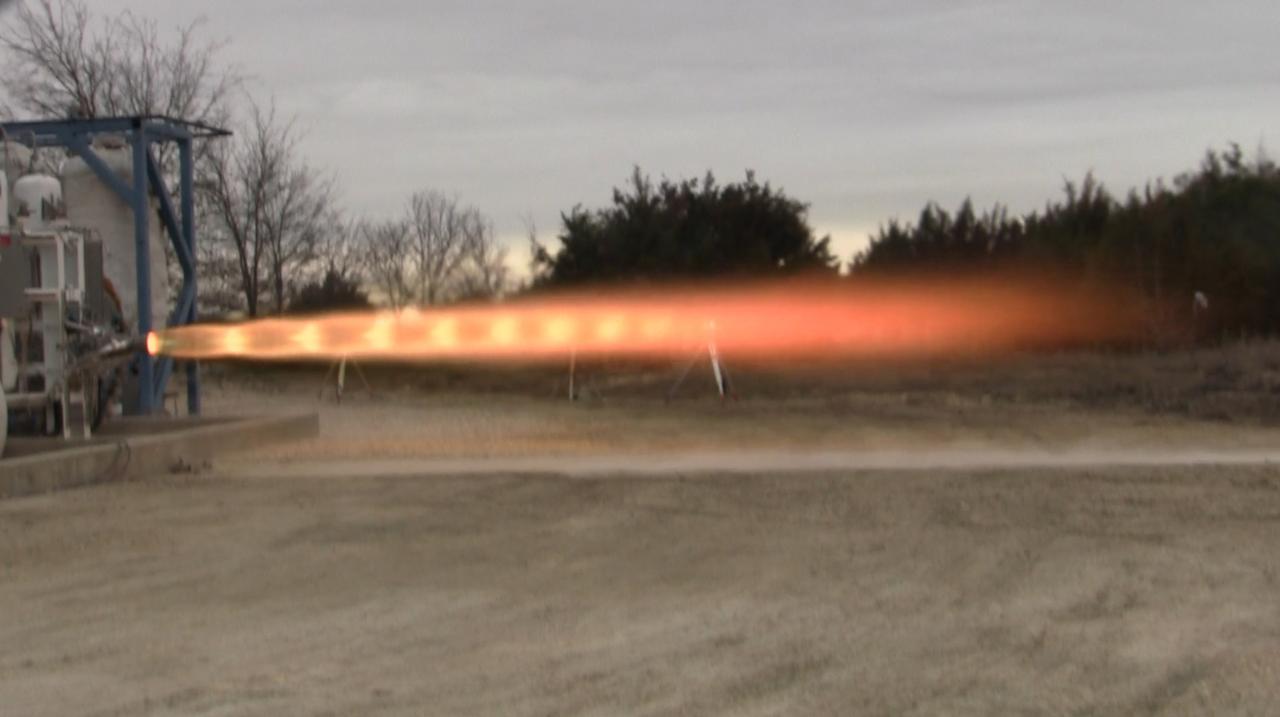
MCGREGOR, Texas -- Space Exploration Technologies (SpaceX) completes a full-duration, full-thrust firing of its new SuperDraco engine prototype at the company’s Rocket Development Facility in McGregor, Texas. The firing was in preparation for the ninth milestone to be completed under SpaceX's funded Space Act Agreement (SAA) with NASA's Commercial Crew Program (CCP). SpaceX is working with CCP during Commercial Crew Development Round 2 (CCDev2) in order to mature the design and development of its Dragon spacecraft with the overall goal of accelerating a United States-led capability to the International Space Station. Eight SuperDracos would be built into the sidewalls of the Dragon capsule to carry astronauts to safety should an emergency occur during launch or ascent. The goal of CCP is to drive down the cost of space travel as well as open up space to more people than ever before by balancing industry’s own innovative capabilities with NASA's 50 years of human spaceflight experience. Six other aerospace companies also are maturing launch vehicle and spacecraft designs under CCDev2, including Alliant Techsystems Inc. (ATK), Blue Origin, The Boeing Co., Excalibur Almaz Inc., Sierra Nevada Corp. and United Launch Alliance (ULA). For more information, visit www.nasa.gov/commercialcrew
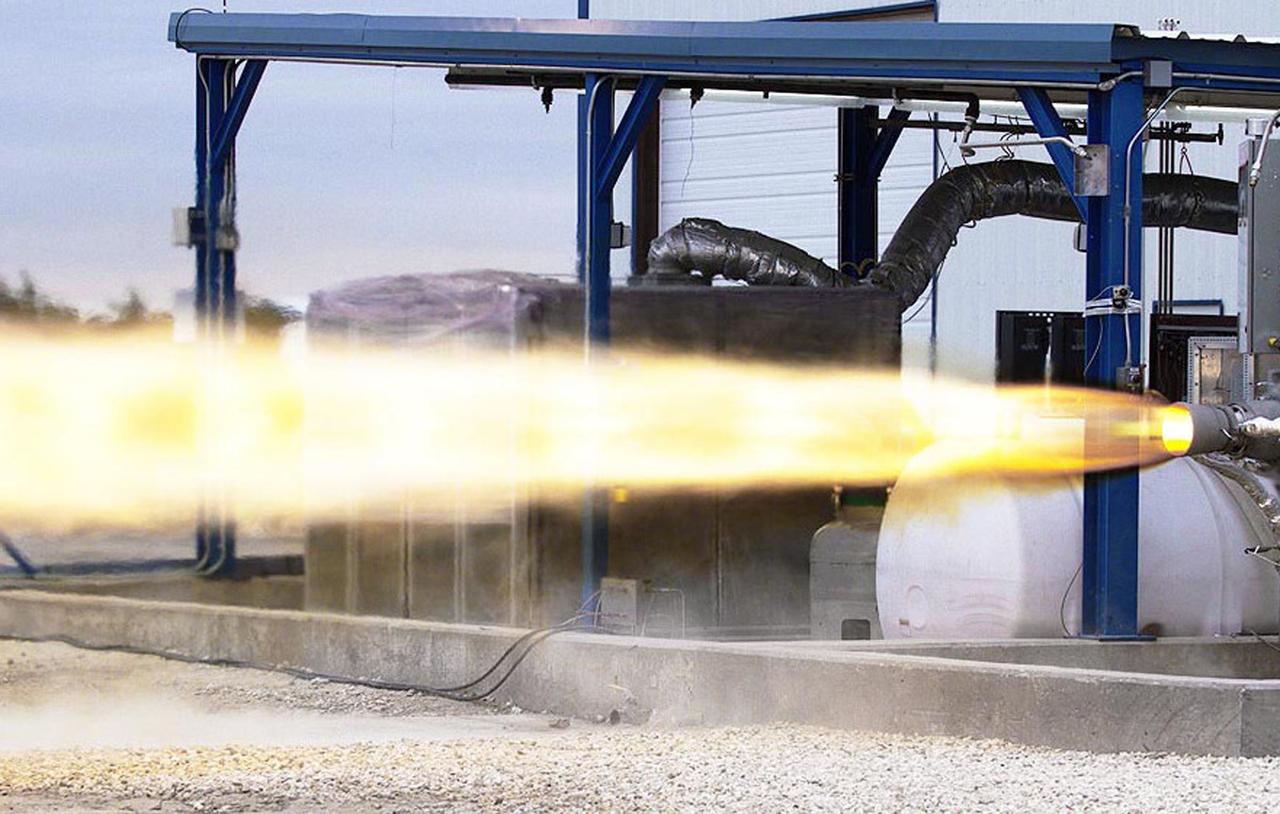
MCGREGOR, Texas -- Space Exploration Technologies (SpaceX) completes a full-duration, full-thrust firing of its new SuperDraco engine prototype at the company’s Rocket Development Facility in McGregor, Texas. The firing was in preparation for the ninth milestone to be completed under SpaceX's funded Space Act Agreement (SAA) with NASA's Commercial Crew Program (CCP). SpaceX is working with CCP during Commercial Crew Development Round 2 (CCDev2) in order to mature the design and development of its Dragon spacecraft with the overall goal of accelerating a United States-led capability to the International Space Station. Eight SuperDracos would be built into the sidewalls of the Dragon capsule to carry astronauts to safety should an emergency occur during launch or ascent. The goal of CCP is to drive down the cost of space travel as well as open up space to more people than ever before by balancing industry’s own innovative capabilities with NASA's 50 years of human spaceflight experience. Six other aerospace companies also are maturing launch vehicle and spacecraft designs under CCDev2, including Alliant Techsystems Inc. (ATK), Blue Origin, The Boeing Co., Excalibur Almaz Inc., Sierra Nevada Corp. and United Launch Alliance (ULA). For more information, visit www.nasa.gov/commercialcrew
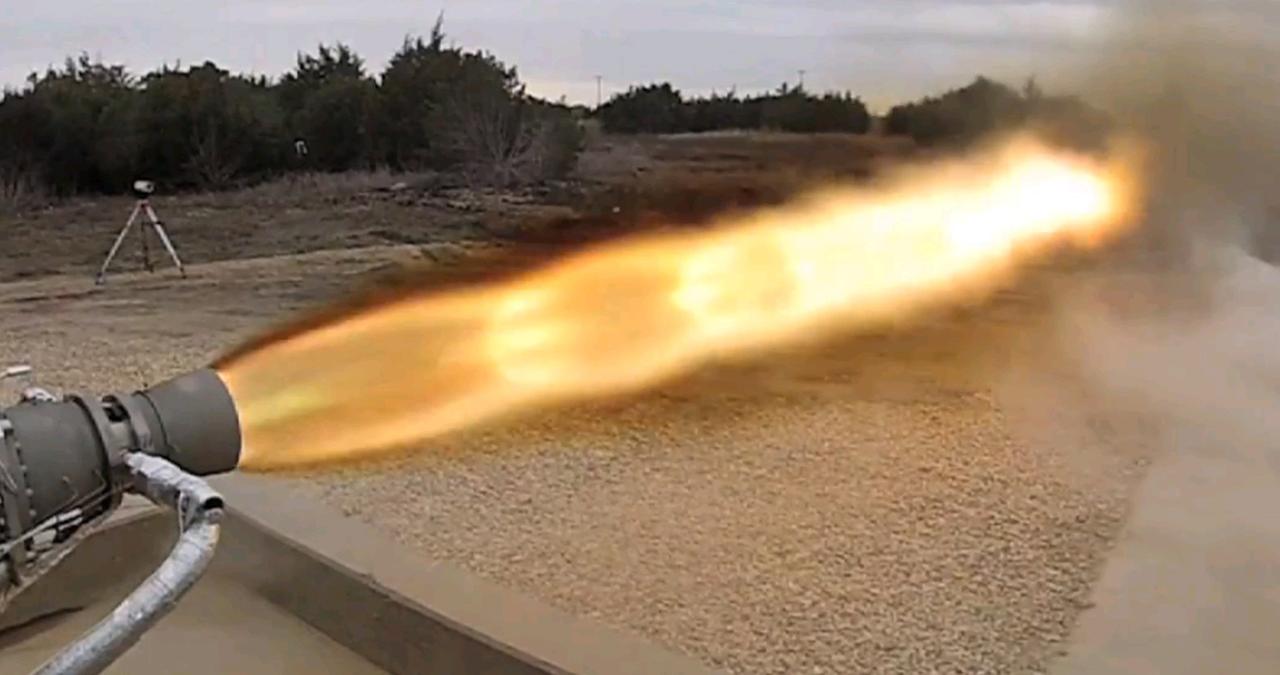
MCGREGOR, Texas -- Space Exploration Technologies (SpaceX) completes a full-duration, full-thrust firing of its new SuperDraco engine prototype at the company’s Rocket Development Facility in McGregor, Texas. The firing was in preparation for the ninth milestone to be completed under SpaceX's funded Space Act Agreement (SAA) with NASA's Commercial Crew Program (CCP). SpaceX is working with CCP during Commercial Crew Development Round 2 (CCDev2) in order to mature the design and development of its Dragon spacecraft with the overall goal of accelerating a United States-led capability to the International Space Station. Eight SuperDracos would be built into the sidewalls of the Dragon capsule to carry astronauts to safety should an emergency occur during launch or ascent. The goal of CCP is to drive down the cost of space travel as well as open up space to more people than ever before by balancing industry’s own innovative capabilities with NASA's 50 years of human spaceflight experience. Six other aerospace companies also are maturing launch vehicle and spacecraft designs under CCDev2, including Alliant Techsystems Inc. (ATK), Blue Origin, The Boeing Co., Excalibur Almaz Inc., Sierra Nevada Corp. and United Launch Alliance (ULA). For more information, visit www.nasa.gov/commercialcrew

NASA Administrator Charles Bolden, left, and SpaceX CEO and Chief Designer Elon Musk, view the historic Dragon capsule, right, that returned to Earth on May 31 following the first successful mission by a private company to carry supplies to the International Space Station on Wednesday, June 13, 2012 at the SpaceX facility in McGregor, Texas. Bolden and Musk also thanked the more than 150 SpaceX employees working at the McGregor facility for their role in the historic mission. Some of the 1,367 pounds of cargo the SpaceX Dragon spacecraft returned to Earth from the space station are seen in a clean room to the left. Photo Credit: (NASA/Bill Ingalls)
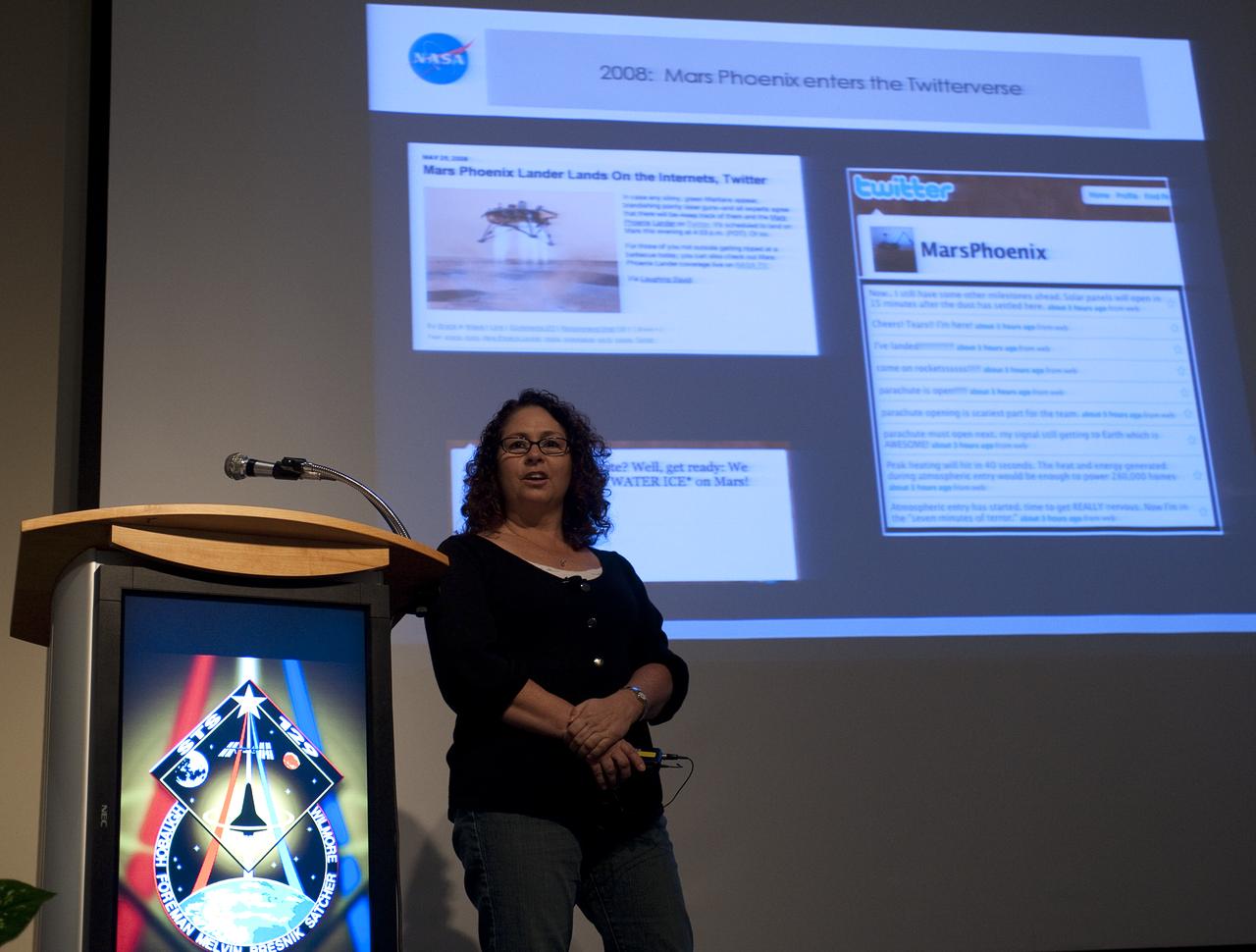
Veronica McGregor, NASA public affairs officer, known on twitter as @veronicamcg, speaks during a two-day NASA Tweetup event held at NASA's Kennedy Space Center in Cape Canaveral, Fla, Sunday, Nov. 15, 2009. NASA Twitter followers in attendance will have the opportunity to take a tour of NASA's Kennedy Space Center, view the STS-129 space shuttle launch and speak with shuttle technicians, engineers, astronauts and managers. Photo Credit: (NASA/Carla Cioffi)
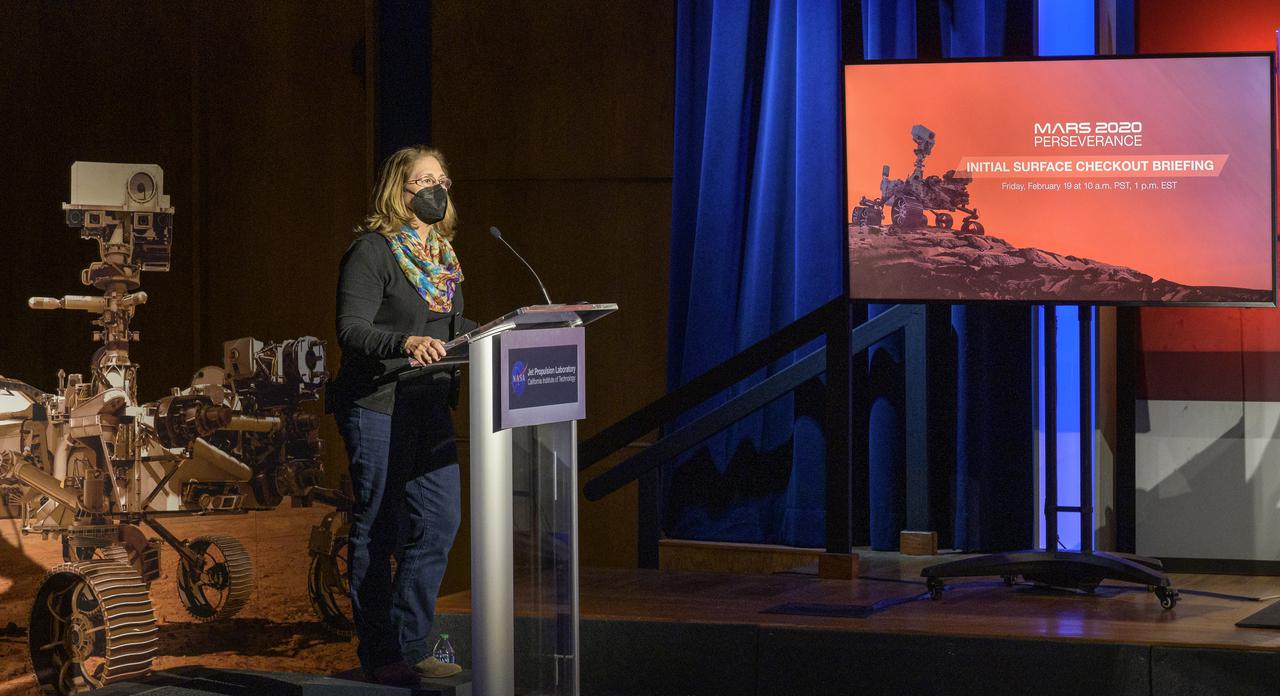
Media Affairs Specialist, JPL, Veronica McGregor, moderates a NASA Perseverance rover initial surface checkout briefing, Friday Feb. 19, 2021, at NASA's Jet Propulsion Laboratory in Pasadena, California. The Perseverance Mars rover landed on Mars Thursday, Feb. 18, 2021. A key objective for Perseverance’s mission on Mars is astrobiology, including the search for signs of ancient microbial life. The rover will characterize the planet’s geology and past climate, pave the way for human exploration of the Red Planet, and be the first mission to collect and cache Martian rock and regolith. Photo Credit: (NASA/Bill Ingalls)
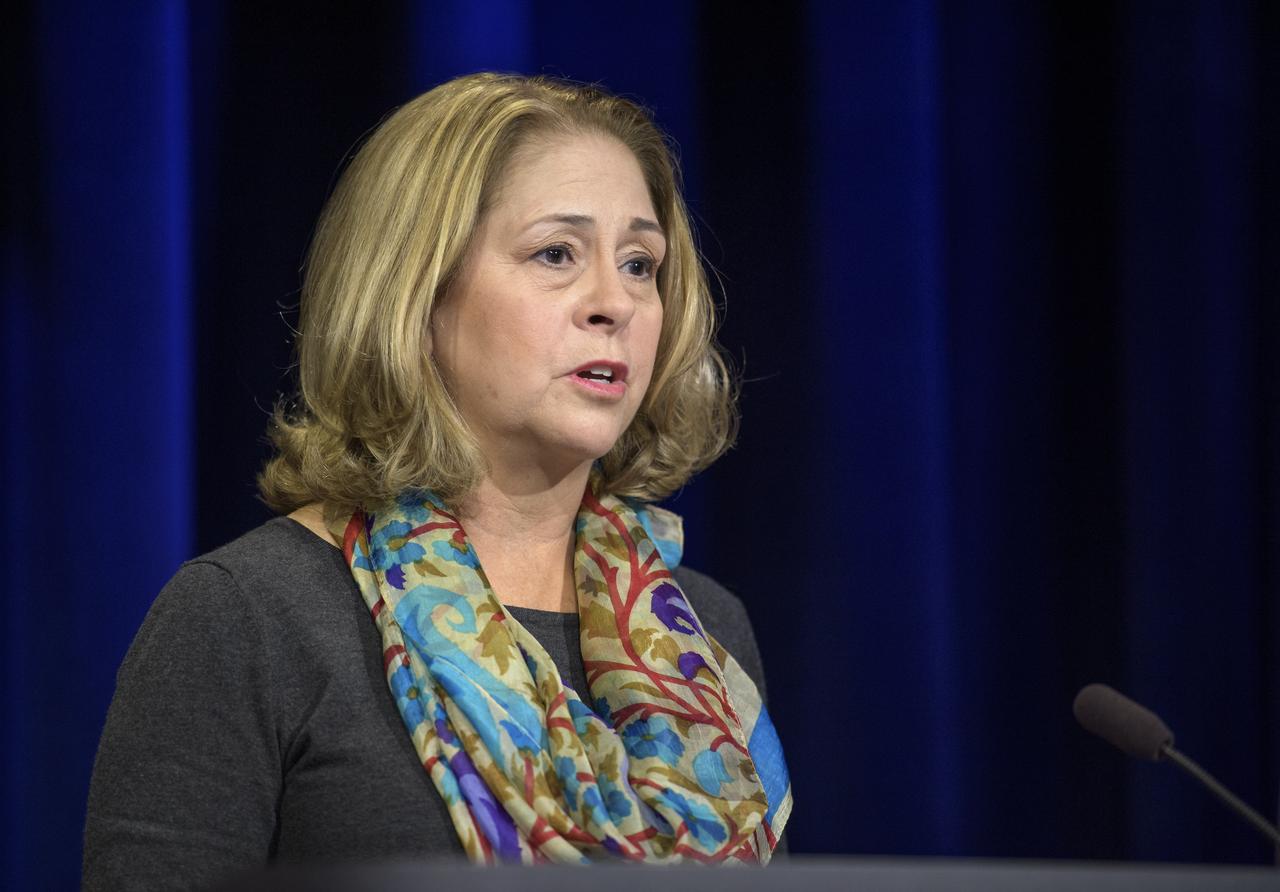
Veronica McGregor, JPL Media Relations Manager, NASA JPL, moderates a Mars InSight pre-landing briefing, Sunday, Nov. 25, 2018 at NASA's Jet Propulsion Laboratory in Pasadena, California. InSight, short for Interior Exploration using Seismic Investigations, Geodesy and Heat Transport, is a Mars lander designed to study the "inner space" of Mars: its crust, mantle, and core. InSight is scheduled to touch down on the Red Planet at approximately noon PST (3 p.m. EST) on Nov. 26. Photo Credit: (NASA/Bill Ingalls)
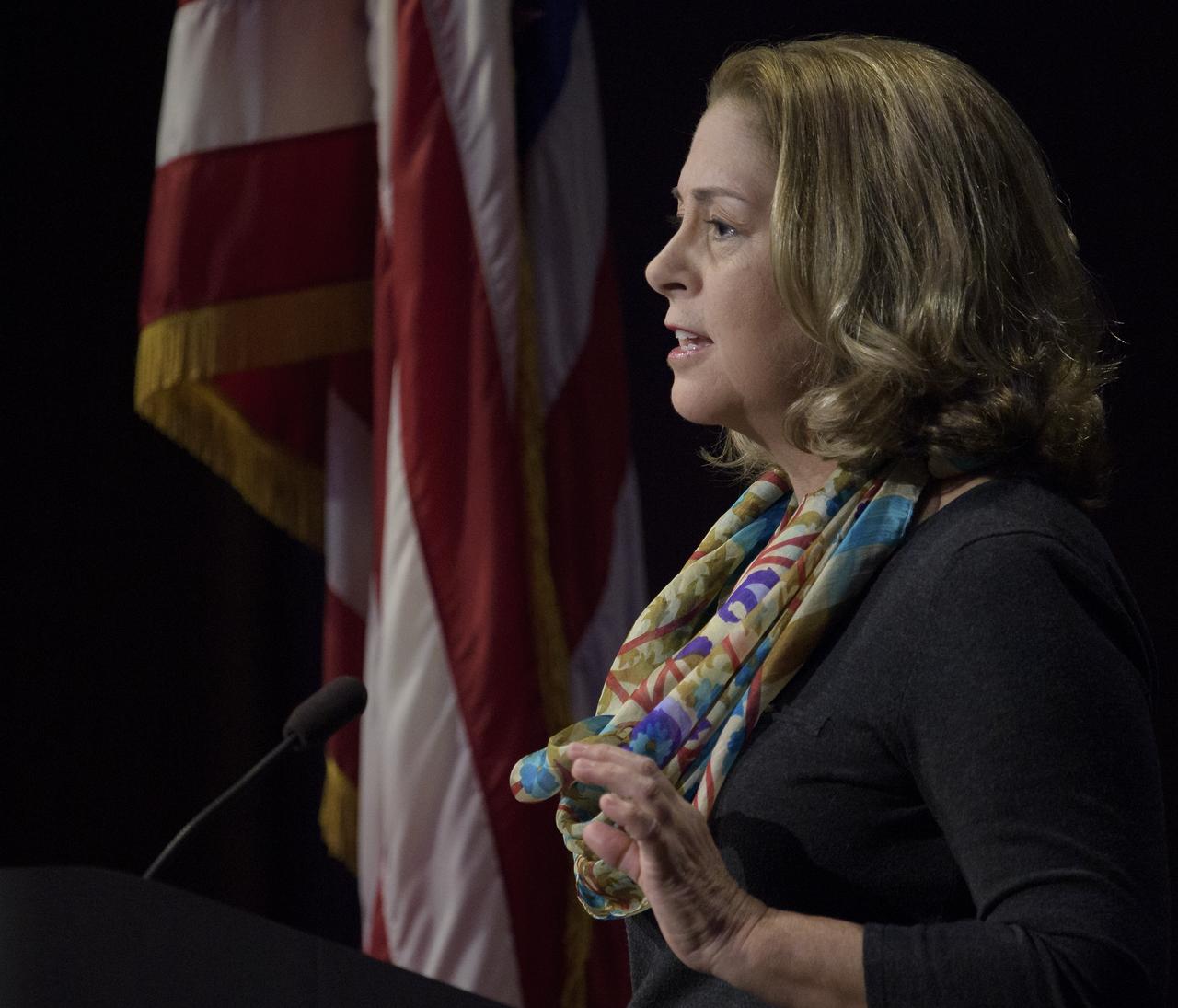
Veronica McGregor, JPL Media Relations Manager, NASA JPL, moderates a Mars InSight pre-landing briefing, Sunday, Nov. 25, 2018 at NASA's Jet Propulsion Laboratory in Pasadena, California. InSight, short for Interior Exploration using Seismic Investigations, Geodesy and Heat Transport, is a Mars lander designed to study the "inner space" of Mars: its crust, mantle, and core. InSight is scheduled to touch down on the Red Planet at approximately noon PST (3 p.m. EST) on Nov. 26. Photo Credit: (NASA/Bill Ingalls)
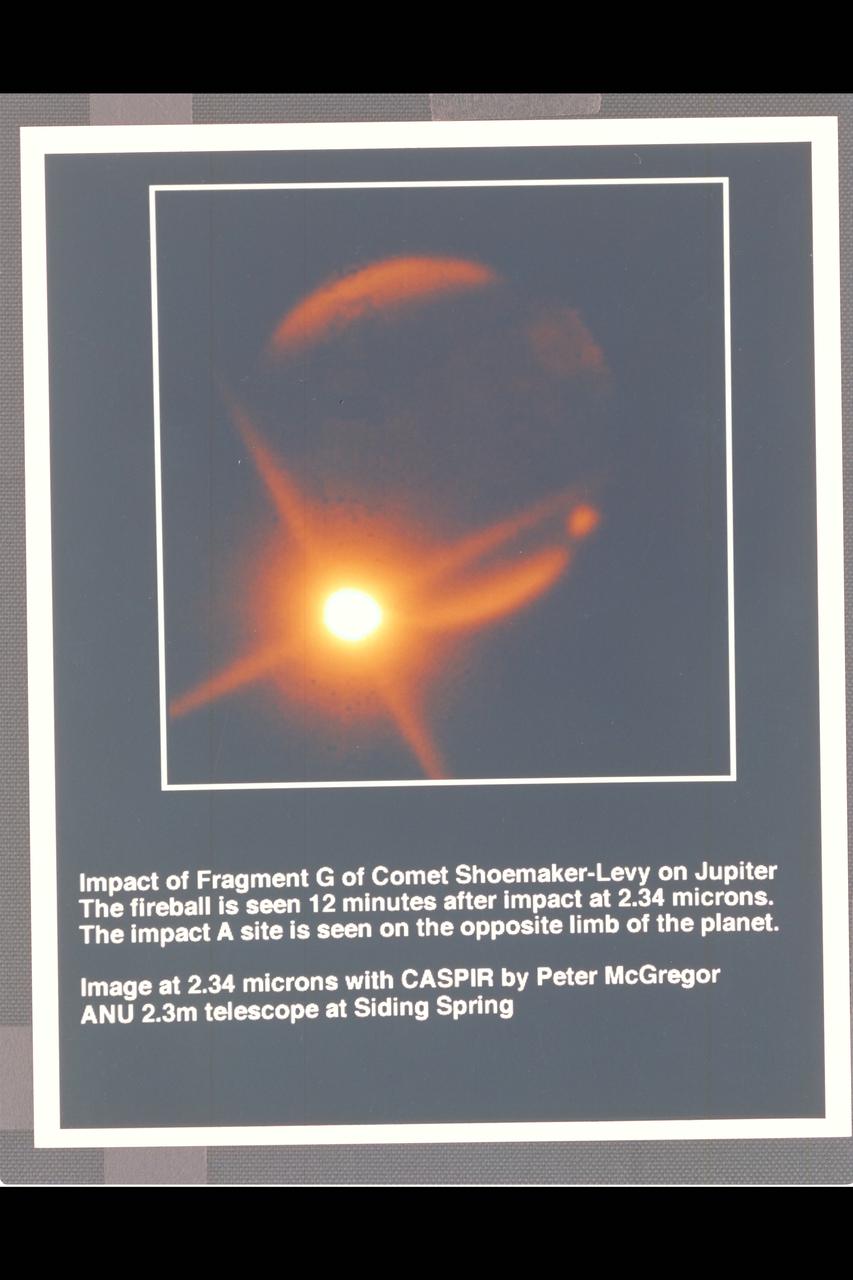
Photo by Peter McGregor Comet Shoemaker-Levy 9 impacting Jupiter; impact of Fragment G of Comet Shoemaker-Levy on Jupiter. The fireball is seen 12 minutes after impact at 2.34 microns. The impact A site is seen on the oposite limb of the planet. Image at 2.34 microns with CASPIR by Peter McGregor ANU 2.3m telescope at Siding Spring. (JPL Ref; P-44419)

The SpaceX Falcon 9 first stage booster that will launch NASA’s SpaceX Crew-1 mission arrived in Florida Tuesday, July 14, 2020. The rocket was shipped from the SpaceX facility in McGregor, Texas, and will now undergo prelaunch processing in the company’s facility on nearby Cape Canaveral Air Force Station.

A SpaceX Merlin engine is on a test stand at the company's facility in McGregor, Texas. SpaceX is developing its Crew Dragon spacecraft and Falcon 9 rocket in partnership with NASA’s Commercial Crew Program to carry astronauts to and from the International Space Station.

A SpaceX SuperDraco engine is hot-fired at the company's test facility in McGregor, Texas. SpaceX is developing its Crew Dragon spacecraft and Falcon 9 rocket in partnership with NASA’s Commercial Crew Program to carry astronauts to and from the International Space Station.
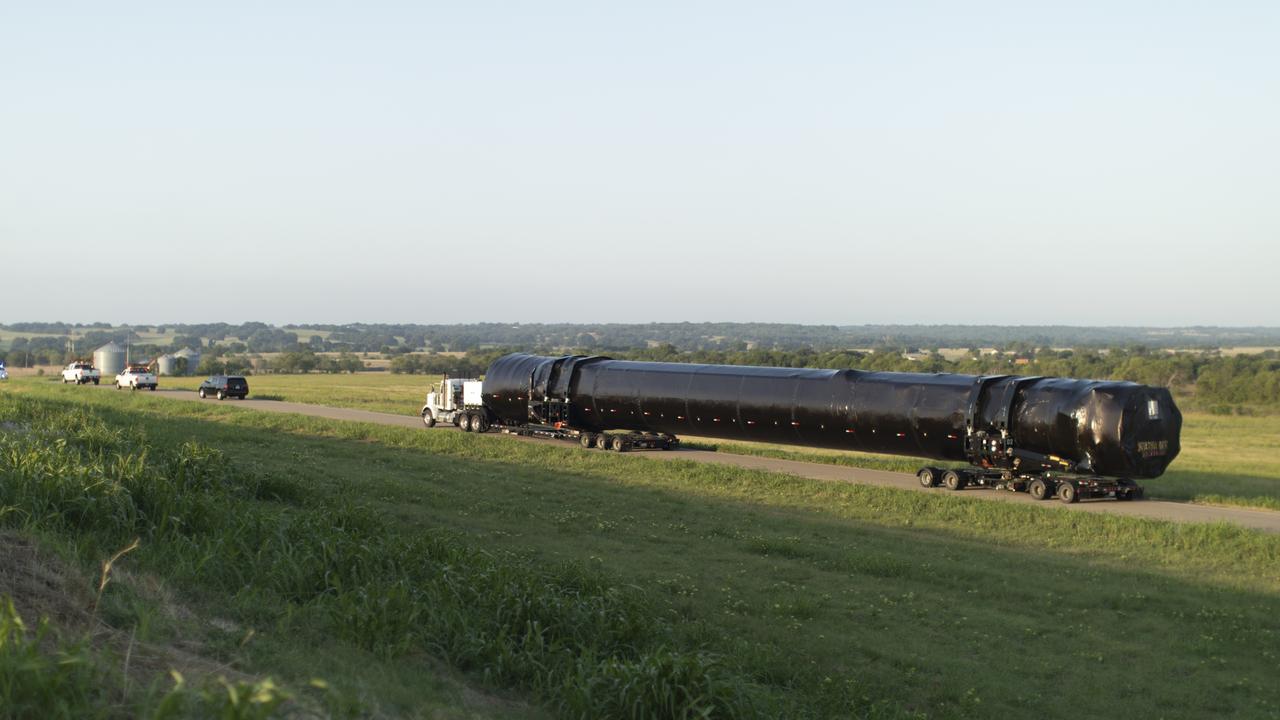
The SpaceX Falcon 9 first stage booster that will launch NASA’s SpaceX Crew-1 mission arrived in Florida Tuesday, July 14, 2020. The rocket was shipped from the SpaceX facility in McGregor, Texas, and will now undergo prelaunch processing in the company’s facility on nearby Cape Canaveral Air Force Station.

NASA astronauts who will be the first humans to fly aboard SpaceX's Crew Dragon spacecraft recently toured the company's Rocket Development Test Facility in McGregor, Texas, on Oct. 16, 2018. Astronauts Bob Behnken and Doug Hurley are set to crew SpaceX's Demo-2 flight test in June 2019, which will be the first flight of Crew Dragon with people onboard. Astronauts Victor Glover, pictured, and Mike Hopkins will crew SpaceX's first regular mission to the International Space Station, following Demo-2 and NASA's certification of SpaceX commercial crew systems.

NASA astronauts who will be the first humans to fly aboard SpaceX's Crew Dragon spacecraft recently toured the company's Rocket Development Test Facility in McGregor, Texas, on Oct. 16, 2018. Astronauts Bob Behnken, at right, and Doug Hurley are set to crew SpaceX's Demo-2 flight test in June 2019, which will be the first flight of Crew Dragon with people onboard. Astronauts Victor Glover, behind Behnken, and Mike Hopkins, at left, will crew SpaceX's first regular mission to the International Space Station, following Demo-2 and NASA's certification of SpaceX commercial crew systems.
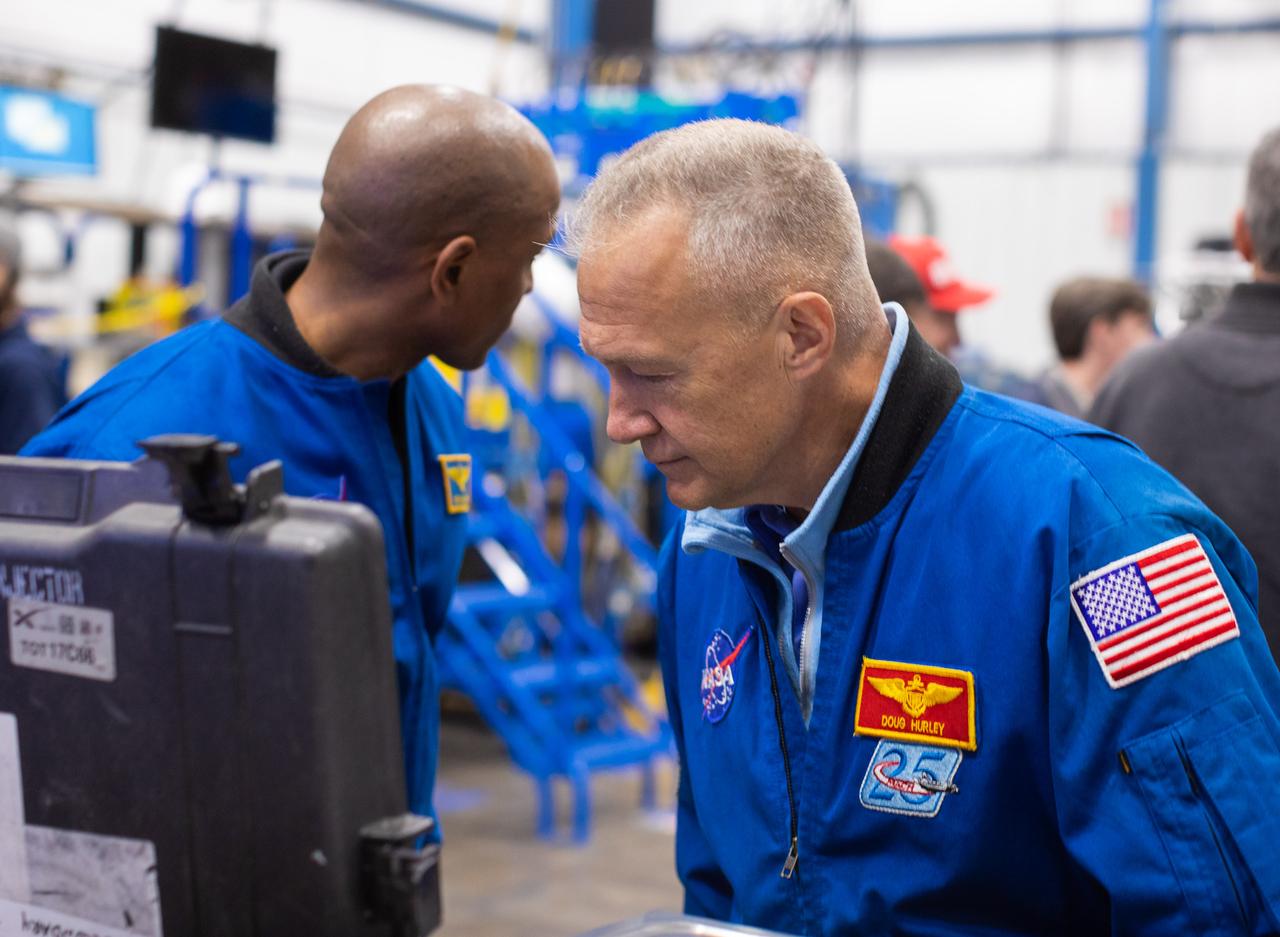
NASA astronauts who will be the first humans to fly aboard SpaceX's Crew Dragon spacecraft recently toured the company's Rocket Development Test Facility in McGregor, Texas, on Oct. 16, 2018. Astronauts Bob Behnken and Doug Hurley, pictured at right, are set to crew SpaceX's Demo-2 flight test in June 2019, which will be the first flight of Crew Dragon with people onboard. Astronauts Victor Glover, pictured at left, and Mike Hopkins will crew SpaceX's first regular mission to the International Space Station, following Demo-2 and NASA's certification of SpaceX commercial crew systems.

NASA astronauts who will be the first humans to fly aboard SpaceX's Crew Dragon spacecraft recently toured the company's Rocket Development Test Facility in McGregor, Texas, on Oct. 16, 2018. Astronauts Bob Behnken, at left, and Doug Hurley, at right, are set to crew SpaceX's Demo-2 flight test in June 2019, which will be the first flight of Crew Dragon with people onboard. Astronauts Victor Glover and Mike Hopkins will crew SpaceX's first regular mission to the International Space Station, following Demo-2 and NASA's certification of SpaceX commercial crew systems.
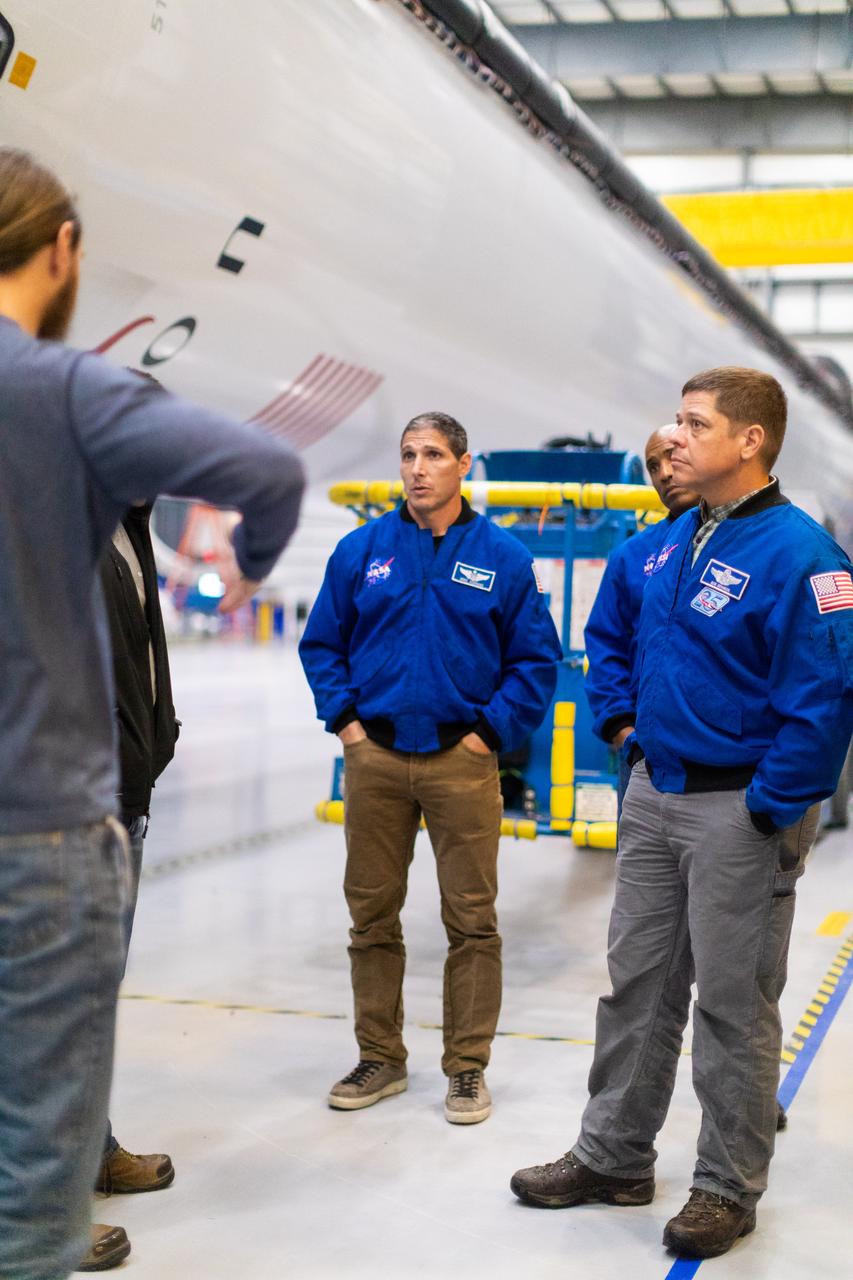
NASA astronauts who will be the first humans to fly aboard SpaceX's Crew Dragon spacecraft recently toured the company's Rocket Development Test Facility in McGregor, Texas, on Oct. 16, 2018. Astronauts Bob Behnken, far right, and Doug Hurley are set to crew SpaceX's Demo-2 flight test in June 2019, which will be the first flight of Crew Dragon with people onboard. Astronauts Victor Glover, behind Behnken, and Mike Hopkins, at left, will crew SpaceX's first regular mission to the International Space Station, following Demo-2 and NASA's certification of SpaceX commercial crew systems.
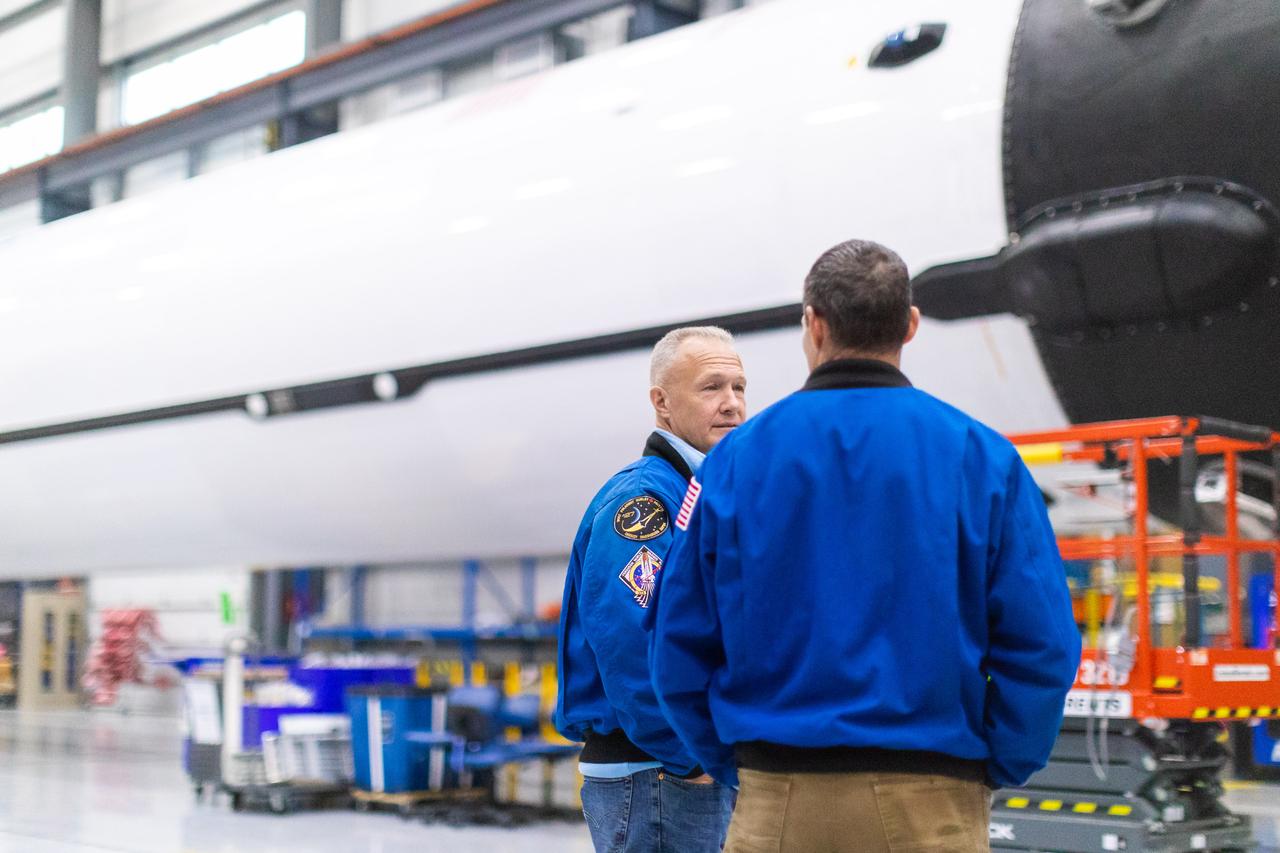
NASA astronauts who will be the first humans to fly aboard SpaceX's Crew Dragon spacecraft recently toured the company's Rocket Development Test Facility in McGregor, Texas, on Oct. 16, 2018. Astronauts Bob Behnken, and Doug Hurley, at left, are set to crew SpaceX's Demo-2 flight test in June 2019, which will be the first flight of Crew Dragon with people onboard. Astronauts Victor Glover, and Mike Hopkins, at right, will crew SpaceX's first regular mission to the International Space Station, following Demo-2 and NASA's certification of SpaceX commercial crew systems.

NASA astronauts who will be the first humans to fly aboard SpaceX's Crew Dragon spacecraft recently toured the company's Rocket Development Test Facility in McGregor, Texas, on Oct. 16, 2018. Astronauts Bob Behnken, second from left, and Doug Hurley are set to crew SpaceX's Demo-2 flight test in June 2019, which will be the first flight of Crew Dragon with people onboard. Astronauts Victor Glover, far right, and Mike Hopkins, at left, will crew SpaceX's first regular mission to the International Space Station, following Demo-2 and NASA's certification of SpaceX commercial crew systems.
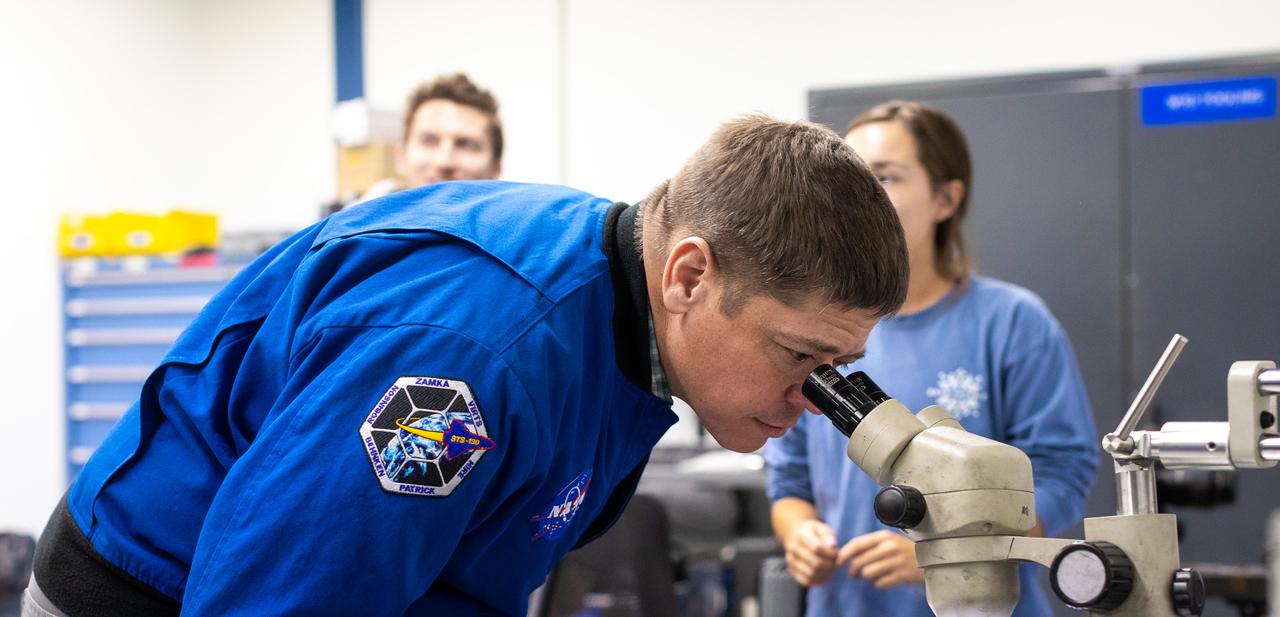
NASA astronauts who will be the first humans to fly aboard SpaceX's Crew Dragon spacecraft recently toured the company's Rocket Development Test Facility in McGregor, Texas, on Oct. 16, 2018. Astronauts Bob Behnken, pictured, and Doug Hurley are set to crew SpaceX's Demo-2 flight test in June 2019, which will be the first flight of Crew Dragon with people onboard. Astronauts Victor Glover and Mike Hopkins will crew SpaceX's first regular mission to the International Space Station, following Demo-2 and NASA's certification of SpaceX commercial crew systems.

NASA astronauts who will be the first humans to fly aboard SpaceX's Crew Dragon spacecraft recently toured the company's Rocket Development Test Facility in McGregor, Texas, on Oct. 16, 2018. Astronauts Bob Behnken and Doug Hurley are set to crew SpaceX's Demo-2 flight test in June 2019, which will be the first flight of Crew Dragon with people onboard. Astronauts Victor Glover, pictured, and Mike Hopkins will crew SpaceX's first regular mission to the International Space Station, following Demo-2 and NASA's certification of SpaceX commercial crew systems.
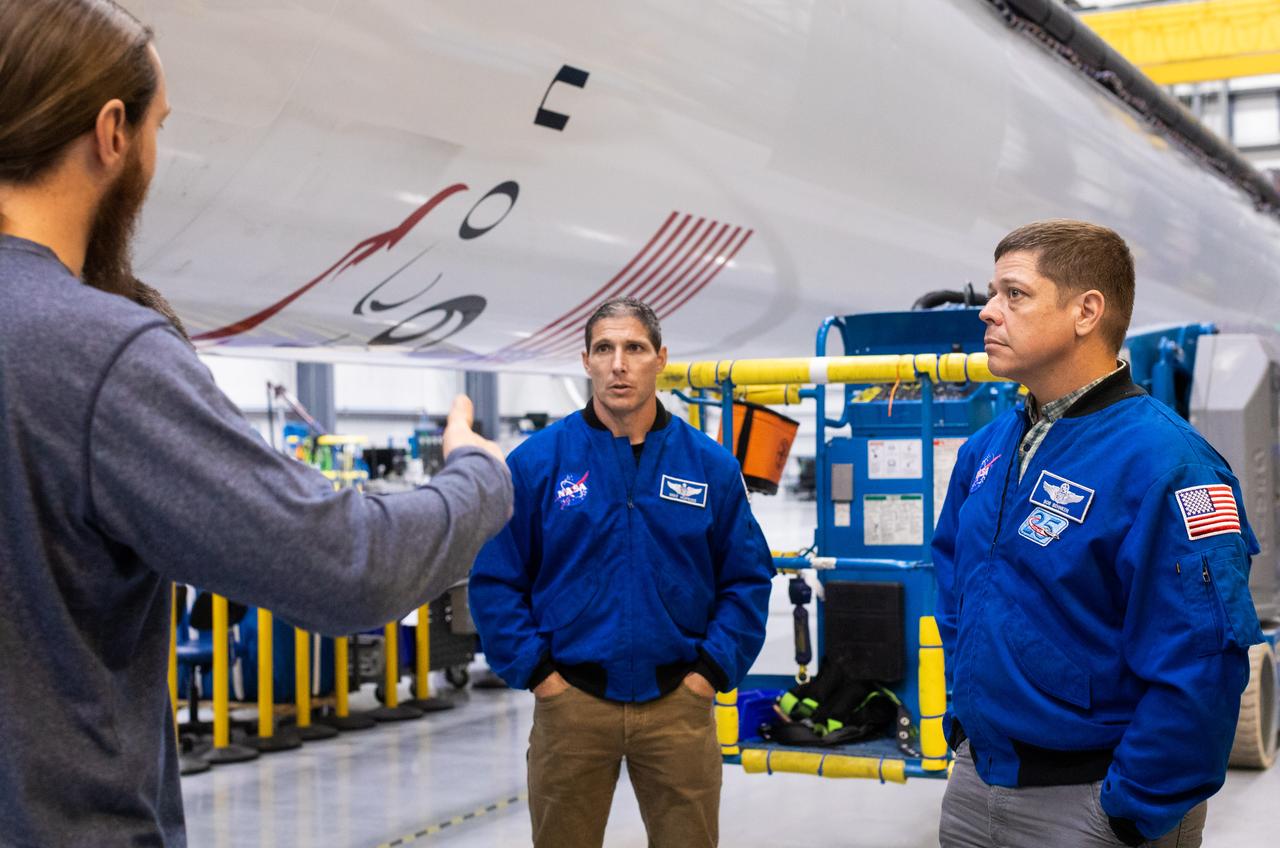
NASA astronauts who will be the first humans to fly aboard SpaceX's Crew Dragon spacecraft recently toured the company's Rocket Development Test Facility in McGregor, Texas, on Oct. 16, 2018. Astronauts Bob Behnken, at right, and Doug Hurley are set to crew SpaceX's Demo-2 flight test in June 2019, which will be the first flight of Crew Dragon with people onboard. Astronauts Victor Glover, and Mike Hopkins, at left, will crew SpaceX's first regular mission to the International Space Station, following Demo-2 and NASA's certification of SpaceX commercial crew systems.
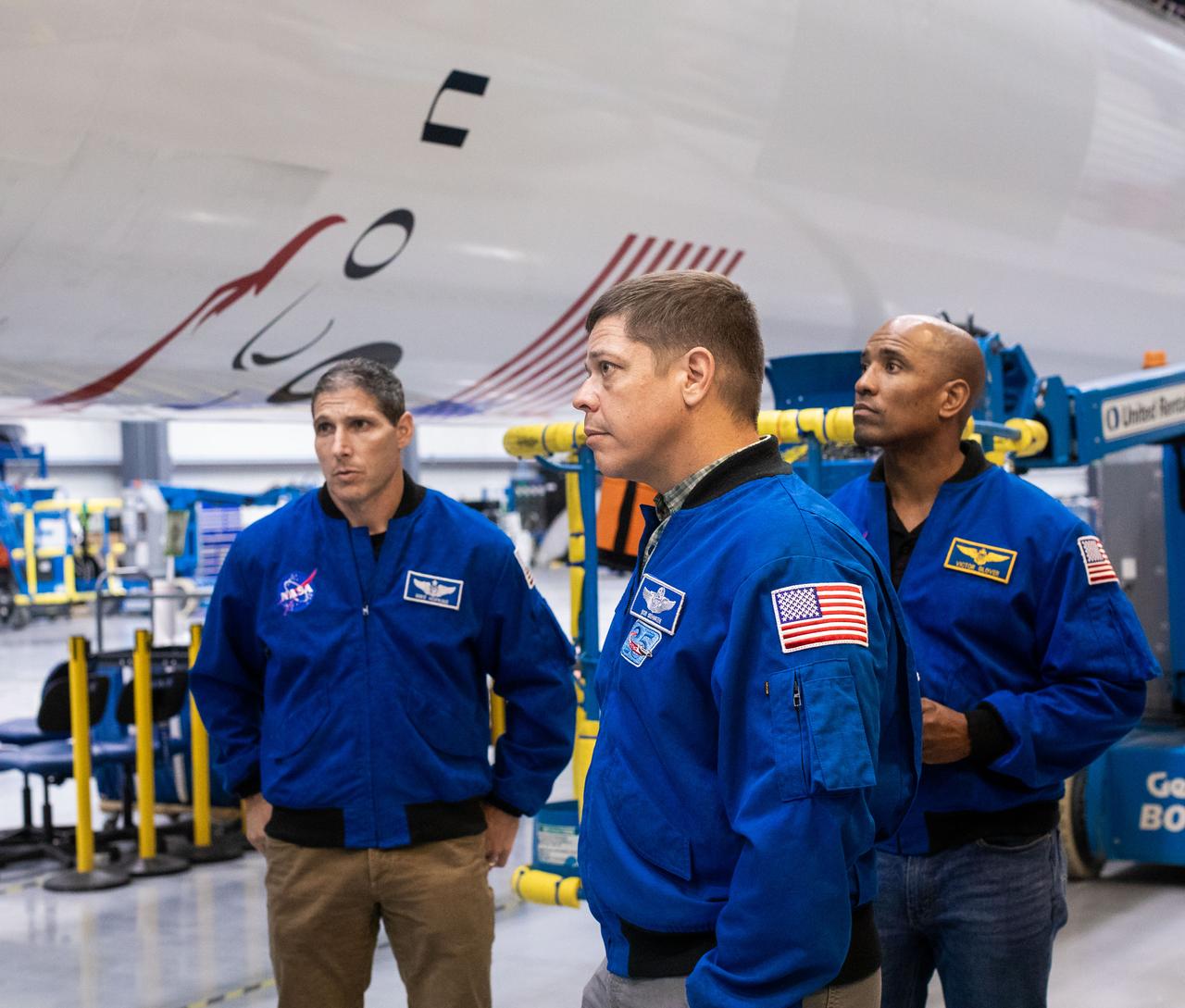
NASA astronauts who will be the first humans to fly aboard SpaceX's Crew Dragon spacecraft recently toured the company's Rocket Development Test Facility in McGregor, Texas, on Oct. 16, 2018. Astronauts Bob Behnken, center, and Doug Hurley are set to crew SpaceX's Demo-2 flight test in June 2019, which will be the first flight of Crew Dragon with people onboard. Astronauts Victor Glover, far right, and Mike Hopkins, at left, will crew SpaceX's first regular mission to the International Space Station, following Demo-2 and NASA's certification of SpaceX commercial crew systems.

NASA astronauts who will be the first humans to fly aboard SpaceX's Crew Dragon spacecraft recently toured the company's Rocket Development Test Facility in McGregor, Texas, on Oct. 16, 2018. Astronauts Bob Behnken, and Doug Hurley, at left, are set to crew SpaceX's Demo-2 flight test in June 2019, which will be the first flight of Crew Dragon with people onboard. Astronauts Victor Glover, and Mike Hopkins, at right, will crew SpaceX's first regular mission to the International Space Station, following Demo-2 and NASA's certification of SpaceX commercial crew systems.
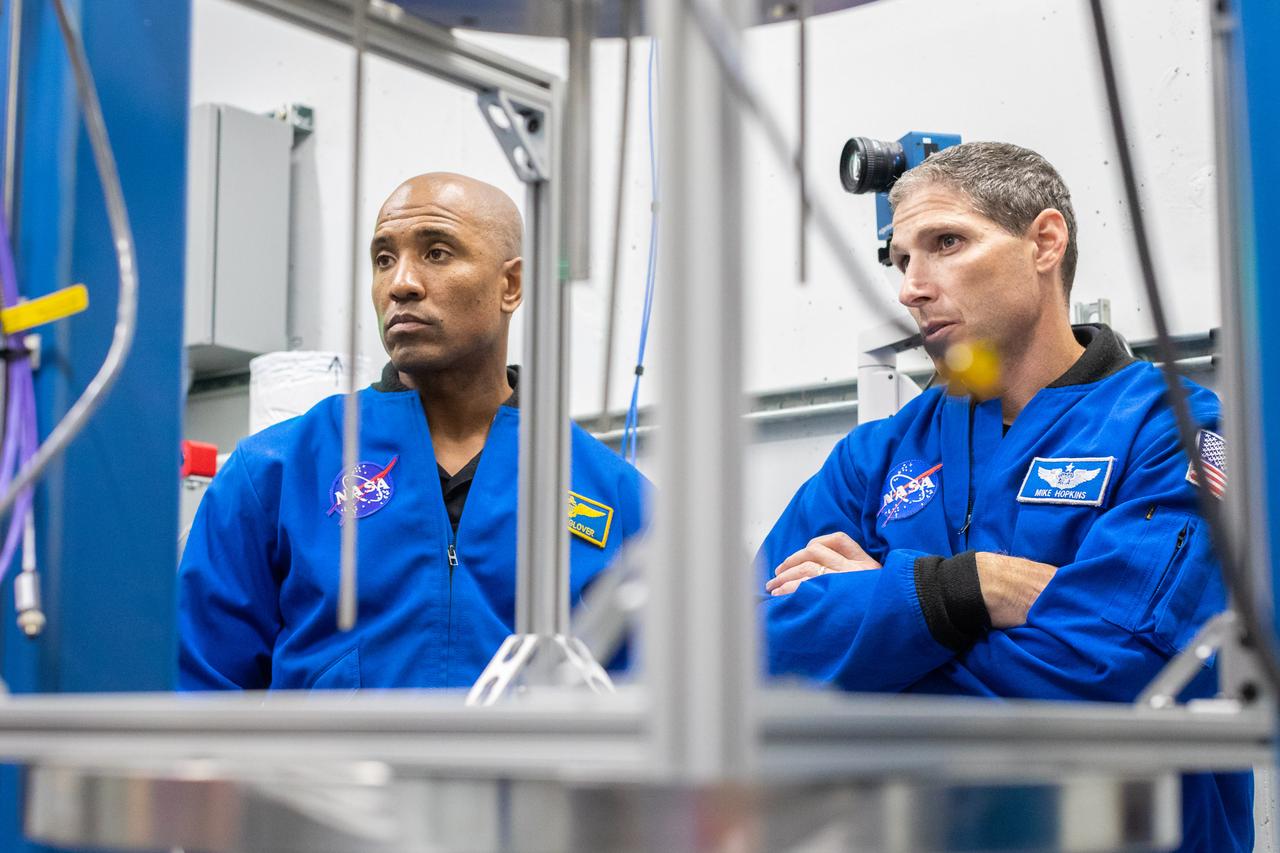
NASA astronauts who will be the first humans to fly aboard SpaceX's Crew Dragon spacecraft recently toured the company's Rocket Development Test Facility in McGregor, Texas, on Oct. 16, 2018. Astronauts Bob Behnken and Doug Hurley are set to crew SpaceX's Demo-2 flight test in June 2019, which will be the first flight of Crew Dragon with people onboard. Astronauts Victor Glover, at left, and Mike Hopkins, at right, will crew SpaceX's first regular mission to the International Space Station, following Demo-2 and NASA's certification of SpaceX commercial crew systems.

NASA and contractor employees who were working at NASA’s Kennedy Space Center in Florida during the Apollo 11 launch gathered for a group photo on the observation deck of Operations and Support Building II on July 11, 2019. From left, along with their titles from 50 years ago, are Richard Sharum, NASA civil servant; Edward Wilson, security officer for Wackenhut Corporation; Sue Gross, secretary to the deputy procurement officer; Emery Lamar, NASA Kennedy co-op student in Apollo Spacecraft Electrical Division; James Scotti, material clerk with Bendix Corporation; Suzanne Stuckey, secretary for telemetry; Andrew Pritchard, contractor with McGregor-Warner; Ken Poimboeuf, Design Engineering Directorate; and Grady McCorquodale, Launch Control Center engineer with Boeing. Not pictured are Richard Cota, civil servant in the Engineering Directorate; and Victor Kurjack, data courier.
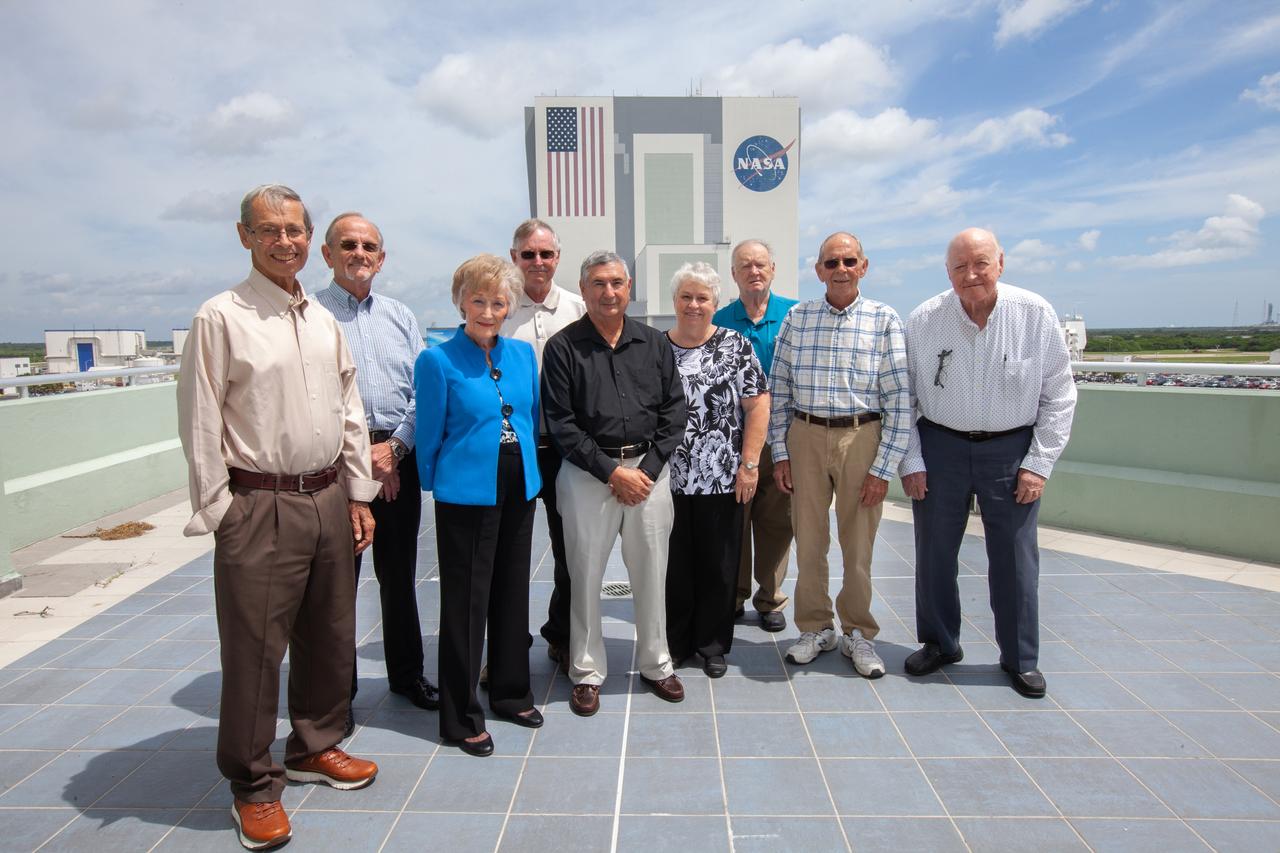
NASA and contractor employees who were working at NASA’s Kennedy Space Center in Florida during the Apollo 11 launch gathered for a group photo on the observation deck of Operations and Support Building II on July 11, 2019. From left, along with their titles from 50 years ago, are Richard Sharum, NASA civil servant; Edward Wilson, security officer for Wackenhut Corporation; Sue Gross, secretary to the deputy procurement officer; Emery Lamar, NASA Kennedy co-op student in Apollo Spacecraft Electrical Division; James Scotti, material clerk with Bendix Corporation; Suzanne Stuckey, secretary for telemetry; Andrew Pritchard, contractor with McGregor-Warner; Ken Poimboeuf, Design Engineering Directorate; and Grady McCorquodale, Launch Control Center engineer with Boeing. Not pictured are Richard Cota, civil servant in the Engineering Directorate; and Victor Kurjack, data courier.
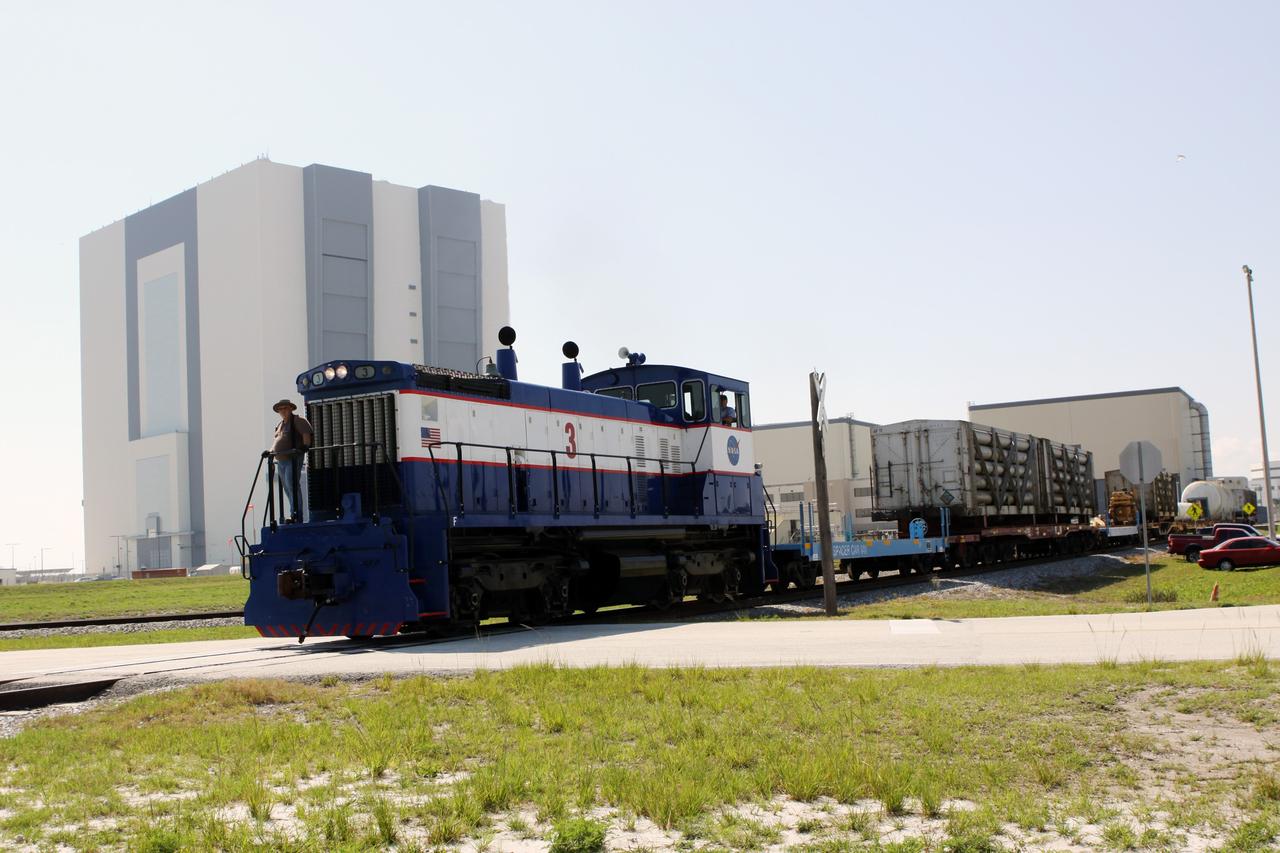
CAPE CANAVERAL, Fla. – A NASA Railroad train passes in front of the 525-foot-tall Vehicle Assembly Building, left, and the twin bays of the Orbiter Processing Facility, right, at NASA’s Kennedy Space Center in Florida. The train is on its way to the Florida East Coast Railway interchange in Titusville, Fla., where the train’s helium tank cars, a liquid oxygen tank car, and a liquid hydrogen dewar or tank car will be transferred for delivery to the SpaceX engine test complex outside McGregor, Texas. The railroad cars were needed in support of the Space Shuttle Program but currently are not in use by NASA following the completion of the program in 2011. Originally, the tankers belonged to the U.S. Bureau of Mines. At the peak of the shuttle program, there were approximately 30 cars in the fleet. About half the cars were returned to the bureau as launch activity diminished. Five tank cars are being loaned to SpaceX and repurposed to support their engine tests in Texas. Eight cars previously were shipped to California on loan to support the SpaceX Falcon 9 rocket launches from Space Launch Complex-4 on Vandenberg Air Force Base. SpaceX already has three helium tank cars previously used for the shuttle program at Space Launch Complex-40 on Cape Canaveral Air Force Station in Florida. For more information, visit http://www.nasa.gov/spacex. Photo credit: NASA/Jim Grossmann
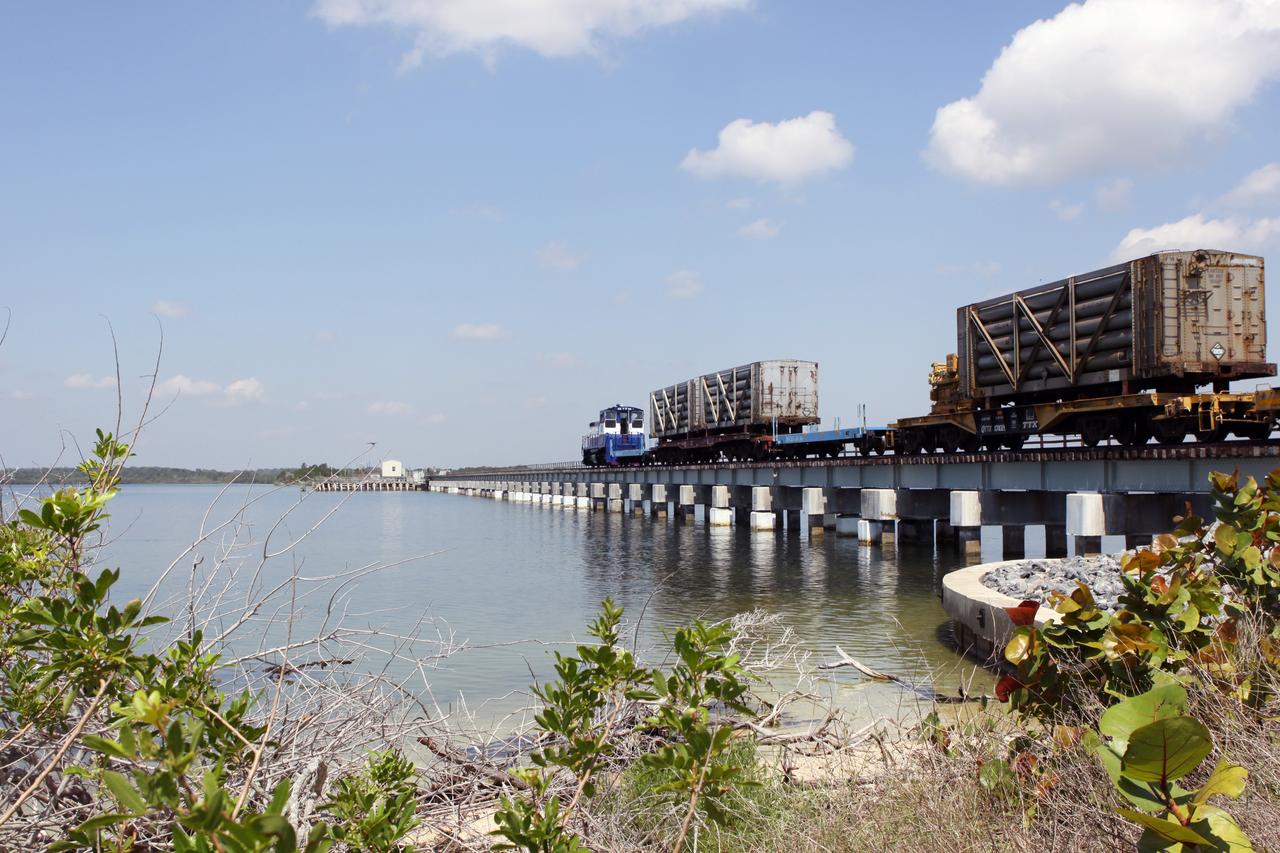
CAPE CANAVERAL, Fla. – A NASA Railroad train crosses the railroad’s Jay Jay Railroad Bridge north of Launch Complex 39 at NASA’s Kennedy Space Center in Florida. The train is on its way to the Florida East Coast Railway interchange in Titusville, Fla., where the train’s helium tank cars, a liquid oxygen tank car, and a liquid hydrogen dewar or tank car will be transferred for delivery to the SpaceX engine test complex outside McGregor, Texas. The railroad cars were needed in support of the Space Shuttle Program but currently are not in use by NASA following the completion of the program in 2011. Originally, the tankers belonged to the U.S. Bureau of Mines. At the peak of the shuttle program, there were approximately 30 cars in the fleet. About half the cars were returned to the bureau as launch activity diminished. Five tank cars are being loaned to SpaceX and repurposed to support their engine tests in Texas. Eight cars previously were shipped to California on loan to support the SpaceX Falcon 9 rocket launches from Space Launch Complex-4 on Vandenberg Air Force Base. SpaceX already has three helium tank cars previously used for the shuttle program at Space Launch Complex-40 on Cape Canaveral Air Force Station in Florida. For more information, visit http://www.nasa.gov/spacex. Photo credit: NASA/Jim Grossmann
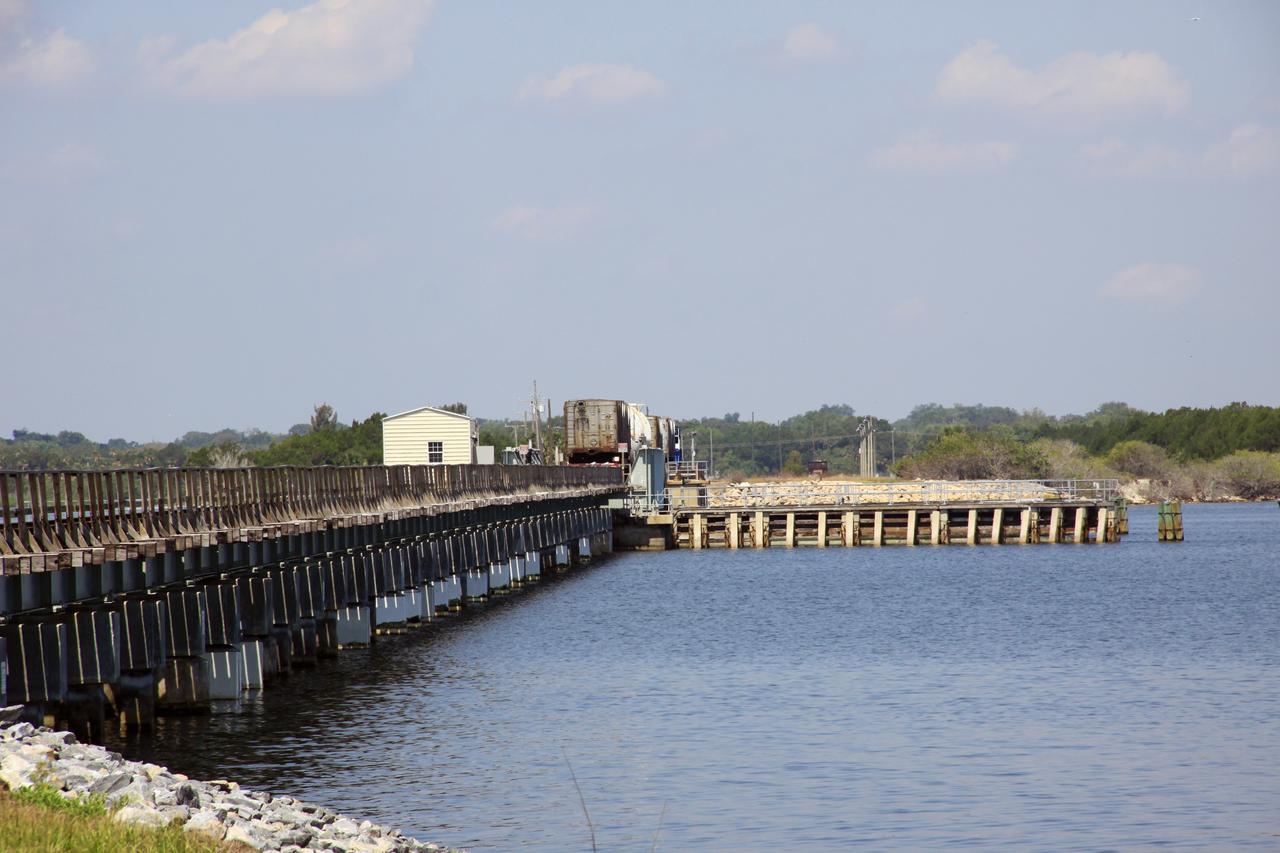
CAPE CANAVERAL, Fla. – A NASA Railroad train has crossed the Indian River on the railroad’s Jay Jay Railroad Bridge north of Launch Complex 39 at NASA’s Kennedy Space Center in Florida. The train is on its way to the Florida East Coast Railway interchange in Titusville, Fla., where the train’s helium tank cars, a liquid oxygen tank car, and a liquid hydrogen dewar or tank car will be transferred for delivery to the SpaceX engine test complex outside McGregor, Texas. The railroad cars were needed in support of the Space Shuttle Program but currently are not in use by NASA following the completion of the program in 2011. Originally, the tankers belonged to the U.S. Bureau of Mines. At the peak of the shuttle program, there were approximately 30 cars in the fleet. About half the cars were returned to the bureau as launch activity diminished. Five tank cars are being loaned to SpaceX and repurposed to support their engine tests in Texas. Eight cars previously were shipped to California on loan to support the SpaceX Falcon 9 rocket launches from Space Launch Complex-4 on Vandenberg Air Force Base. SpaceX already has three helium tank cars previously used for the shuttle program at Space Launch Complex-40 on Cape Canaveral Air Force Station in Florida. For more information, visit http://www.nasa.gov/spacex. Photo credit: NASA/Jim Grossmann
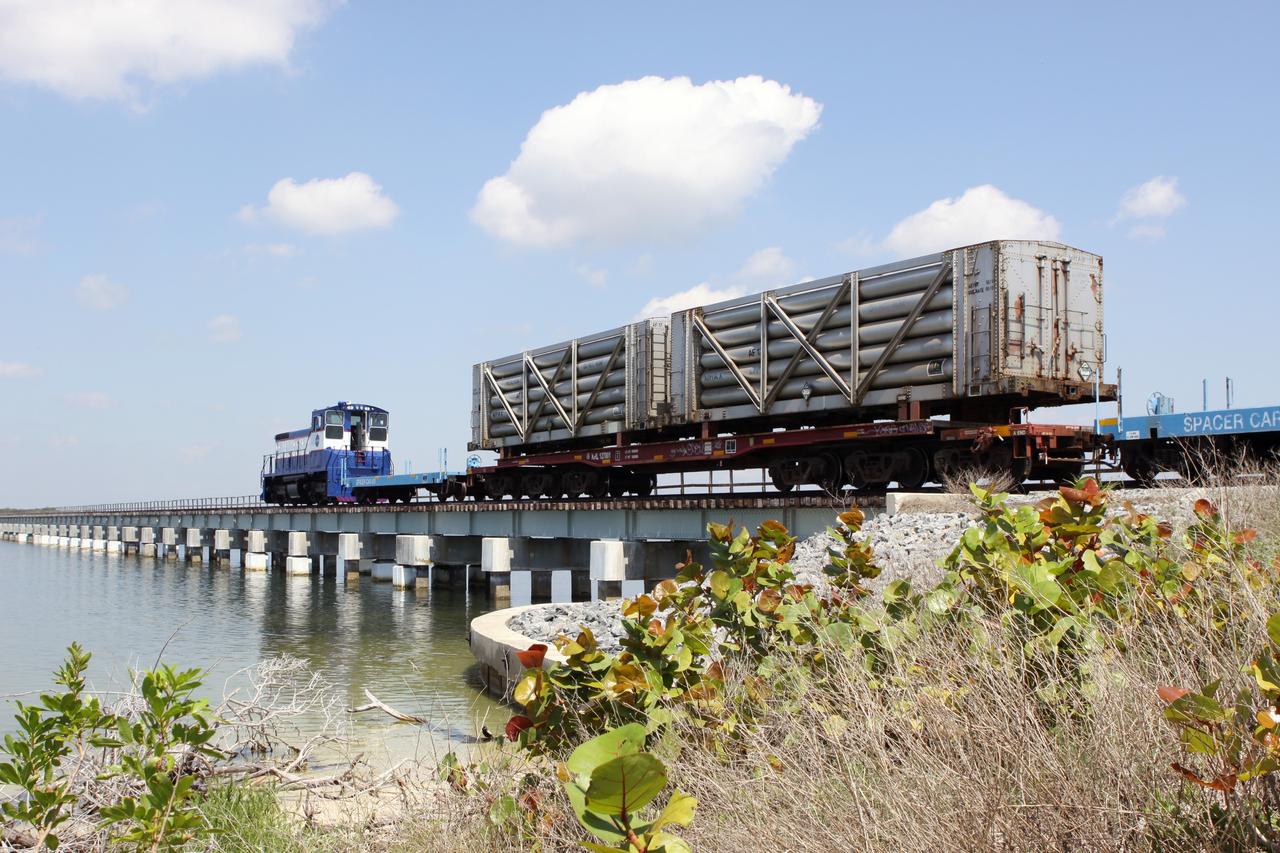
CAPE CANAVERAL, Fla. – A NASA Railroad train crosses the railroad’s Jay Jay Railroad Bridge north of Launch Complex 39 at NASA’s Kennedy Space Center in Florida. The train is on its way to the Florida East Coast Railway interchange in Titusville, Fla., where the train’s helium tank cars, a liquid oxygen tank car, and a liquid hydrogen dewar or tank car will be transferred for delivery to the SpaceX engine test complex outside McGregor, Texas. The railroad cars were needed in support of the Space Shuttle Program but currently are not in use by NASA following the completion of the program in 2011. Originally, the tankers belonged to the U.S. Bureau of Mines. At the peak of the shuttle program, there were approximately 30 cars in the fleet. About half the cars were returned to the bureau as launch activity diminished. Five tank cars are being loaned to SpaceX and repurposed to support their engine tests in Texas. Eight cars previously were shipped to California on loan to support the SpaceX Falcon 9 rocket launches from Space Launch Complex-4 on Vandenberg Air Force Base. SpaceX already has three helium tank cars previously used for the shuttle program at Space Launch Complex-40 on Cape Canaveral Air Force Station in Florida. For more information, visit http://www.nasa.gov/spacex. Photo credit: NASA/Jim Grossmann
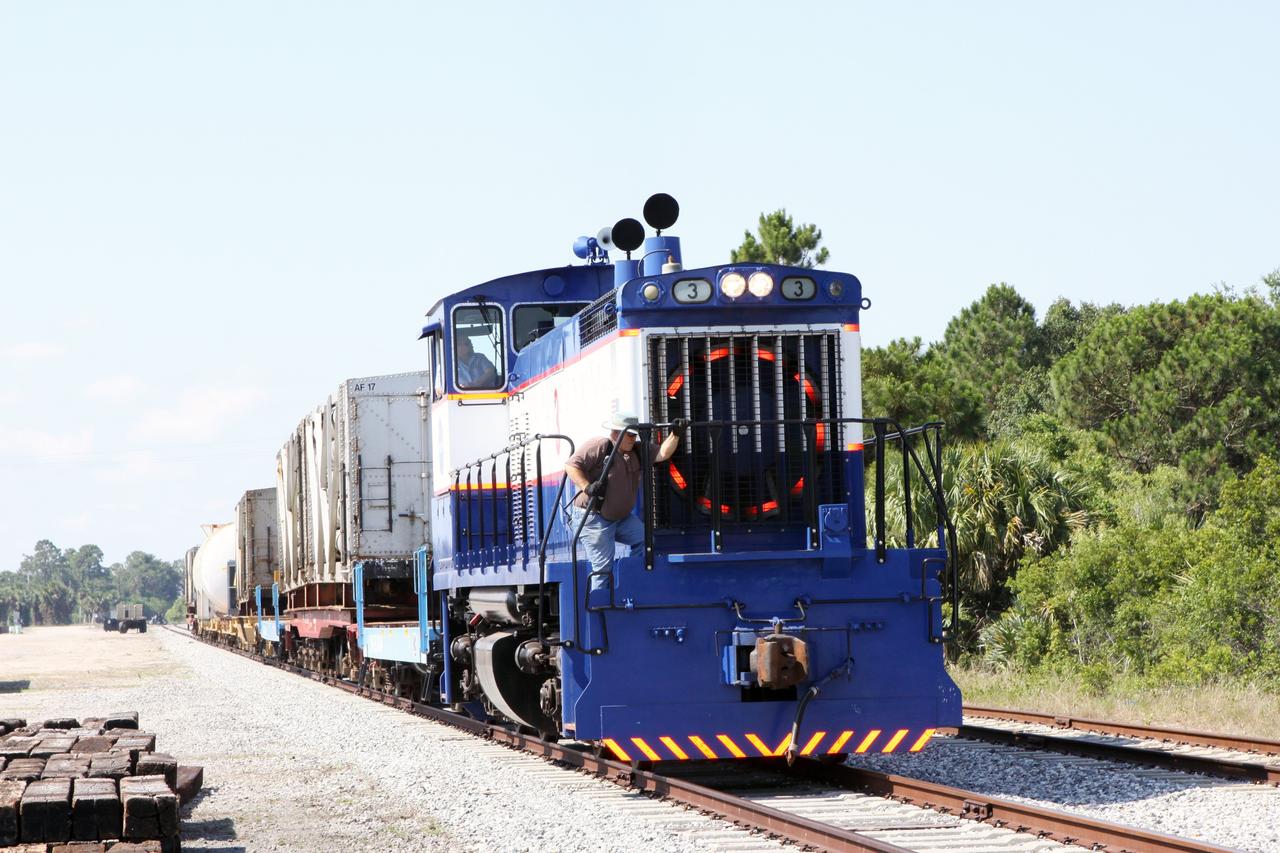
CAPE CANAVERAL, Fla. – Engineers board a NASA Railroad train in preparation for its departure from the NASA Railroad Yard at NASA’s Kennedy Space Center in Florida. The train is headed for the Florida East Coast Railway interchange in Titusville, Fla., where the train’s helium tank cars, a liquid oxygen tank car, and a liquid hydrogen dewar or tank car will be transferred for delivery to the SpaceX engine test complex outside McGregor, Texas. The railroad cars were needed in support of the Space Shuttle Program but currently are not in use by NASA following the completion of the program in 2011. Originally, the tankers belonged to the U.S. Bureau of Mines. At the peak of the shuttle program, there were approximately 30 cars in the fleet. About half the cars were returned to the bureau as launch activity diminished. Five tank cars are being loaned to SpaceX and repurposed to support their engine tests in Texas. Eight cars previously were shipped to California on loan to support the SpaceX Falcon 9 rocket launches from Space Launch Complex-4 on Vandenberg Air Force Base. SpaceX already has three helium tank cars previously used for the shuttle program at Space Launch Complex-40 on Cape Canaveral Air Force Station in Florida. For more information, visit http://www.nasa.gov/spacex. Photo credit: NASA/Jim Grossmann
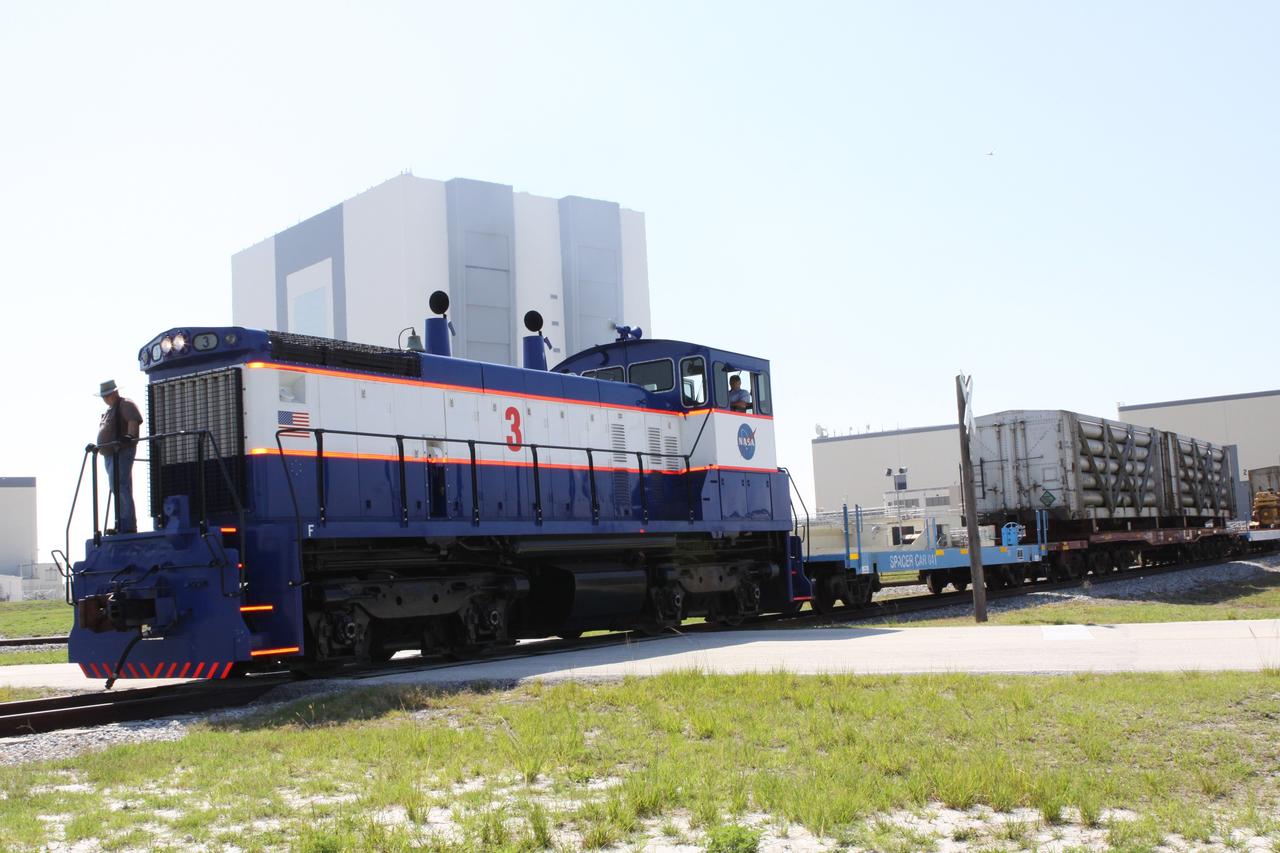
CAPE CANAVERAL, Fla. – A NASA Railroad train passes in front of the 525-foot-tall Vehicle Assembly Building, left, and the twin bays of the Orbiter Processing Facility, right, at NASA’s Kennedy Space Center in Florida. The train is on its way to the Florida East Coast Railway interchange in Titusville, Fla., where the train’s helium tank cars, a liquid oxygen tank car, and a liquid hydrogen dewar or tank car will be transferred for delivery to the SpaceX engine test complex outside McGregor, Texas. The railroad cars were needed in support of the Space Shuttle Program but currently are not in use by NASA following the completion of the program in 2011. Originally, the tankers belonged to the U.S. Bureau of Mines. At the peak of the shuttle program, there were approximately 30 cars in the fleet. About half the cars were returned to the bureau as launch activity diminished. Five tank cars are being loaned to SpaceX and repurposed to support their engine tests in Texas. Eight cars previously were shipped to California on loan to support the SpaceX Falcon 9 rocket launches from Space Launch Complex-4 on Vandenberg Air Force Base. SpaceX already has three helium tank cars previously used for the shuttle program at Space Launch Complex-40 on Cape Canaveral Air Force Station in Florida. For more information, visit http://www.nasa.gov/spacex. Photo credit: NASA/Jim Grossmann
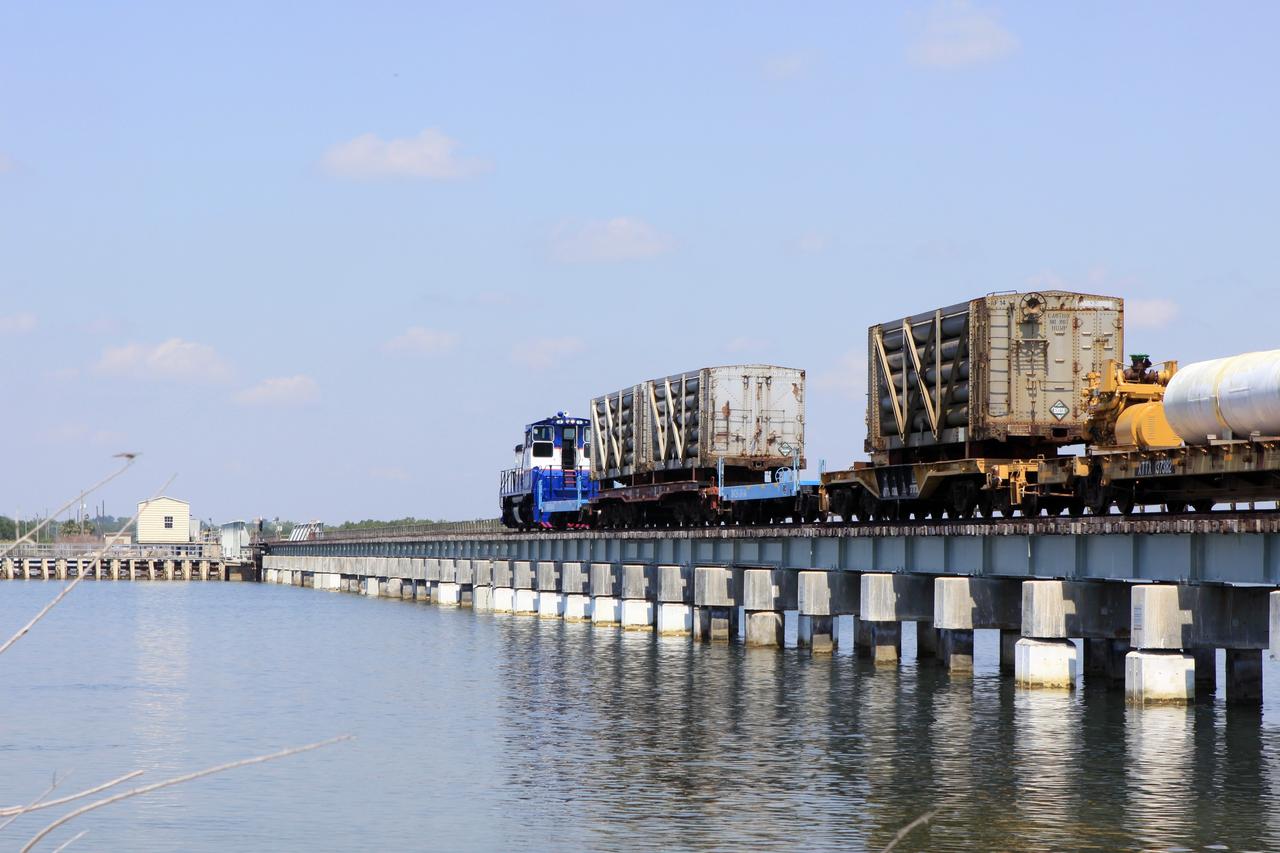
CAPE CANAVERAL, Fla. – A NASA Railroad train crosses the railroad’s Jay Jay Railroad Bridge north of Launch Complex 39 at NASA’s Kennedy Space Center in Florida. The train is on its way to the Florida East Coast Railway interchange in Titusville, Fla., where the train’s helium tank cars, a liquid oxygen tank car, and a liquid hydrogen dewar or tank car will be transferred for delivery to the SpaceX engine test complex outside McGregor, Texas. The railroad cars were needed in support of the Space Shuttle Program but currently are not in use by NASA following the completion of the program in 2011. Originally, the tankers belonged to the U.S. Bureau of Mines. At the peak of the shuttle program, there were approximately 30 cars in the fleet. About half the cars were returned to the bureau as launch activity diminished. Five tank cars are being loaned to SpaceX and repurposed to support their engine tests in Texas. Eight cars previously were shipped to California on loan to support the SpaceX Falcon 9 rocket launches from Space Launch Complex-4 on Vandenberg Air Force Base. SpaceX already has three helium tank cars previously used for the shuttle program at Space Launch Complex-40 on Cape Canaveral Air Force Station in Florida. For more information, visit http://www.nasa.gov/spacex. Photo credit: NASA/Jim Grossmann
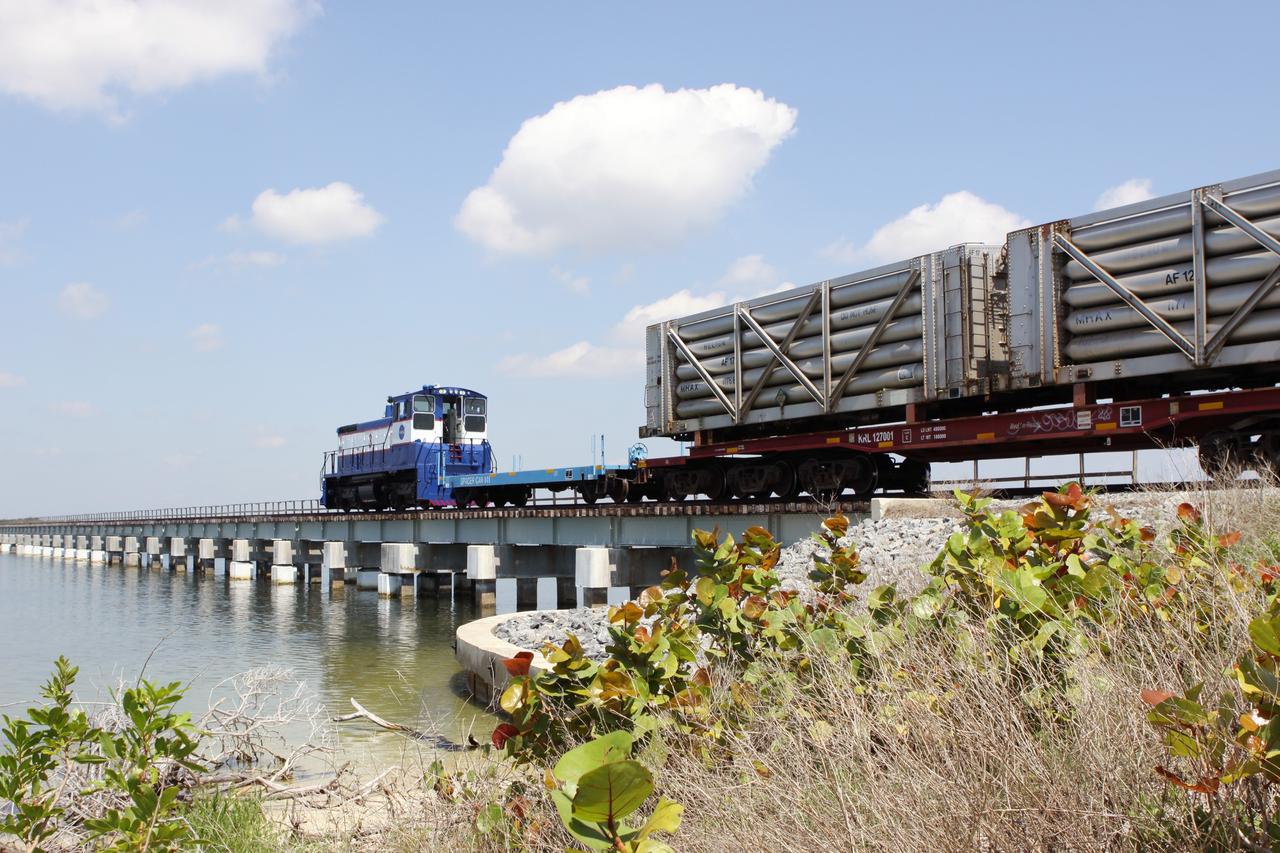
CAPE CANAVERAL, Fla. – A NASA Railroad train crosses the railroad’s Jay Jay Railroad Bridge north of Launch Complex 39 at NASA’s Kennedy Space Center in Florida. The train is on its way to the Florida East Coast Railway interchange in Titusville, Fla., where the train’s helium tank cars, a liquid oxygen tank car, and a liquid hydrogen dewar or tank car will be transferred for delivery to the SpaceX engine test complex outside McGregor, Texas. The railroad cars were needed in support of the Space Shuttle Program but currently are not in use by NASA following the completion of the program in 2011. Originally, the tankers belonged to the U.S. Bureau of Mines. At the peak of the shuttle program, there were approximately 30 cars in the fleet. About half the cars were returned to the bureau as launch activity diminished. Five tank cars are being loaned to SpaceX and repurposed to support their engine tests in Texas. Eight cars previously were shipped to California on loan to support the SpaceX Falcon 9 rocket launches from Space Launch Complex-4 on Vandenberg Air Force Base. SpaceX already has three helium tank cars previously used for the shuttle program at Space Launch Complex-40 on Cape Canaveral Air Force Station in Florida. For more information, visit http://www.nasa.gov/spacex. Photo credit: NASA/Jim Grossmann
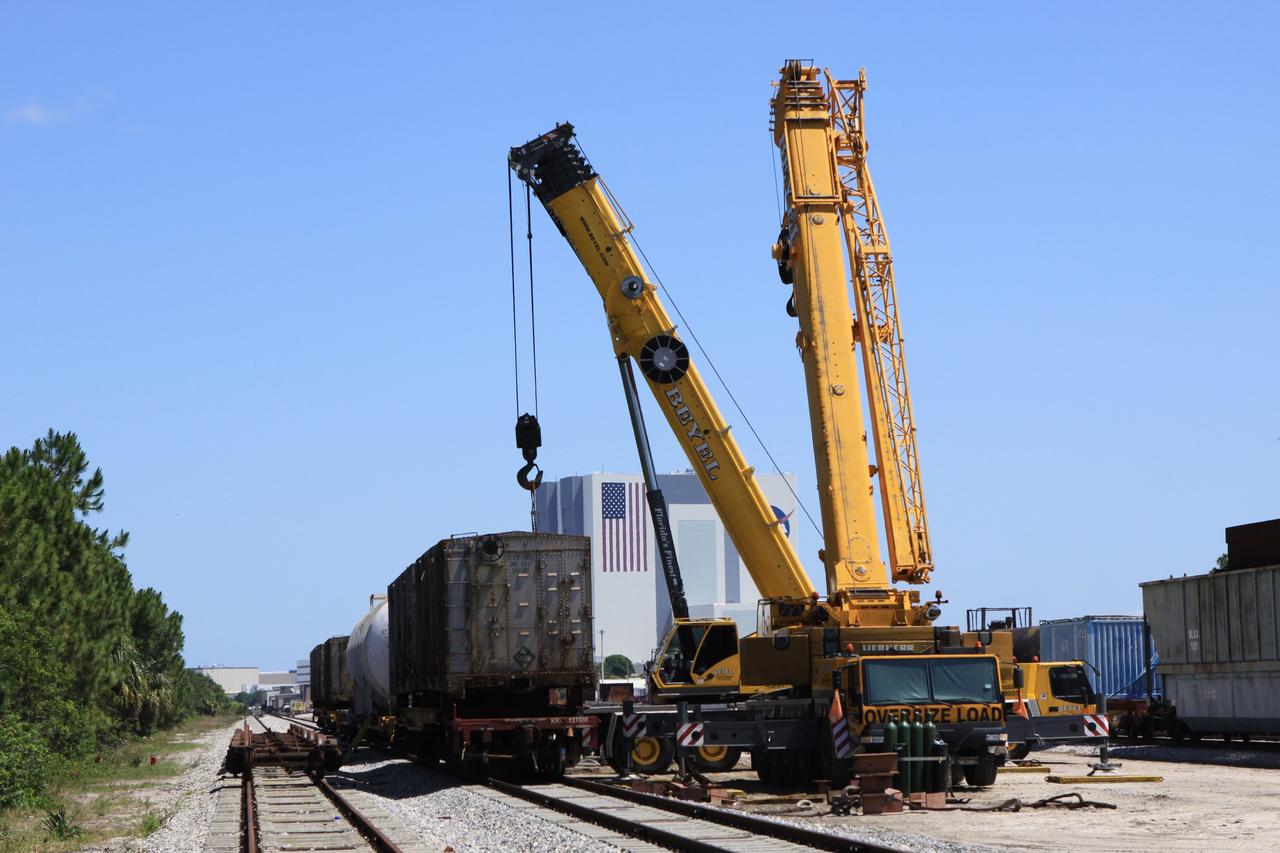
CAPE CANAVERAL, Fla. – At the NASA Railroad yard at Kennedy Space Center in Florida, helium tank cars are lifted from their trucks onto flat cars in preparation for a journey to the Florida East Coast Railway interchange in Titusville, Fla., where the train’s tank cars will be transferred for delivery to the SpaceX engine test complex outside McGregor, Texas. The railroad cars were needed in support of the Space Shuttle Program but currently are not in use by NASA following the completion of the program in 2011. Originally, the tankers belonged to the U.S. Bureau of Mines. At the peak of the shuttle program, there were approximately 30 cars in the fleet. About half the cars were returned to the bureau as launch activity diminished. Five tank cars are being loaned to SpaceX and repurposed to support their engine tests in Texas. Eight cars previously were shipped to California on loan to support the SpaceX Falcon 9 rocket launches from Space Launch Complex-4 on Vandenberg Air Force Base. SpaceX already has three helium tank cars previously used for the shuttle program at Space Launch Complex-40 on Cape Canaveral Air Force Station in Florida. For more information, visit http://www.nasa.gov/spacex. Photo credit: NASA/Jim Grossmann
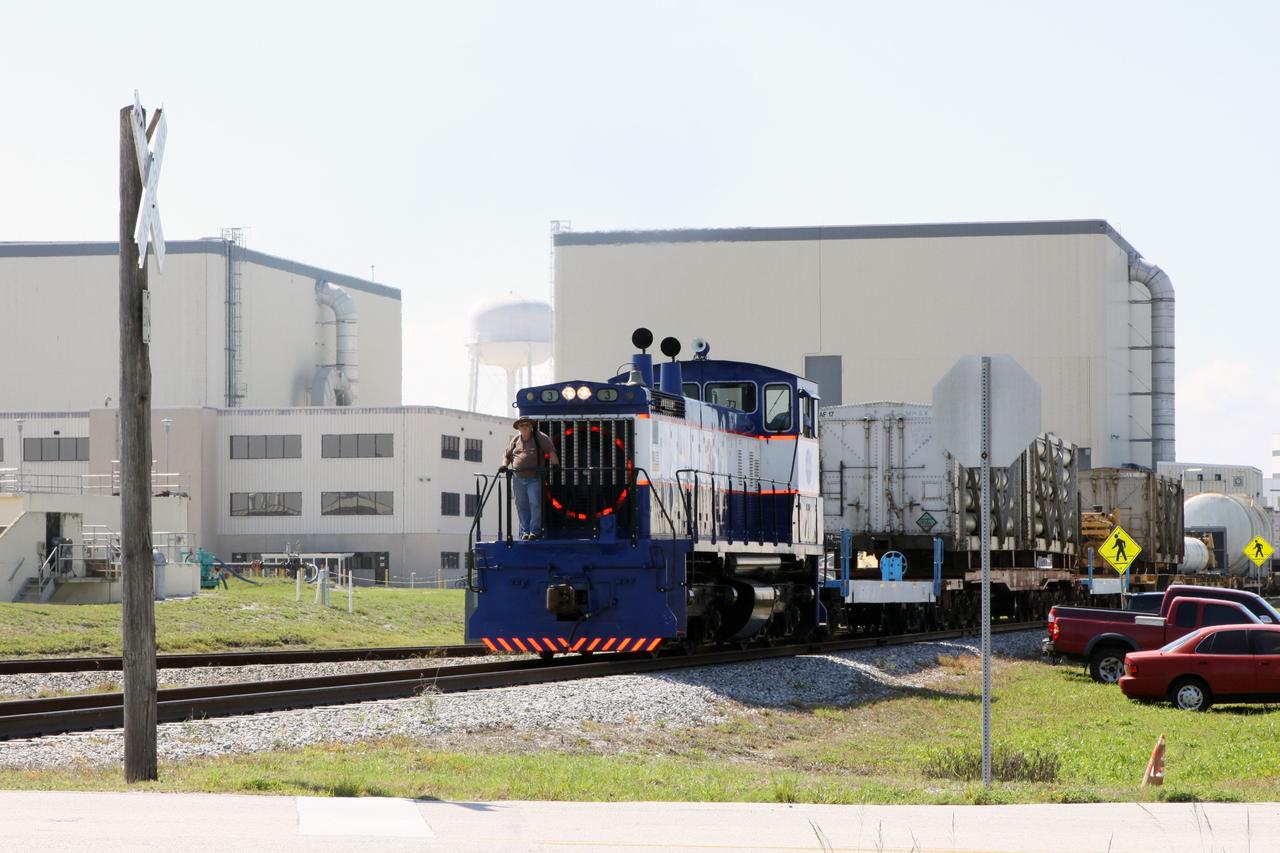
CAPE CANAVERAL, Fla. – A NASA Railroad train passes in front of the twin bays of the Orbiter Processing Facility at NASA’s Kennedy Space Center in Florida. The train is on its way to the Florida East Coast Railway interchange in Titusville, Fla., where the train’s helium tank cars, a liquid oxygen tank car, and a liquid hydrogen dewar or tank car will be transferred for delivery to the SpaceX engine test complex outside McGregor, Texas. The railroad cars were needed in support of the Space Shuttle Program but currently are not in use by NASA following the completion of the program in 2011. Originally, the tankers belonged to the U.S. Bureau of Mines. At the peak of the shuttle program, there were approximately 30 cars in the fleet. About half the cars were returned to the bureau as launch activity diminished. Five tank cars are being loaned to SpaceX and repurposed to support their engine tests in Texas. Eight cars previously were shipped to California on loan to support the SpaceX Falcon 9 rocket launches from Space Launch Complex-4 on Vandenberg Air Force Base. SpaceX already has three helium tank cars previously used for the shuttle program at Space Launch Complex-40 on Cape Canaveral Air Force Station in Florida. For more information, visit http://www.nasa.gov/spacex. Photo credit: NASA/Jim Grossmann
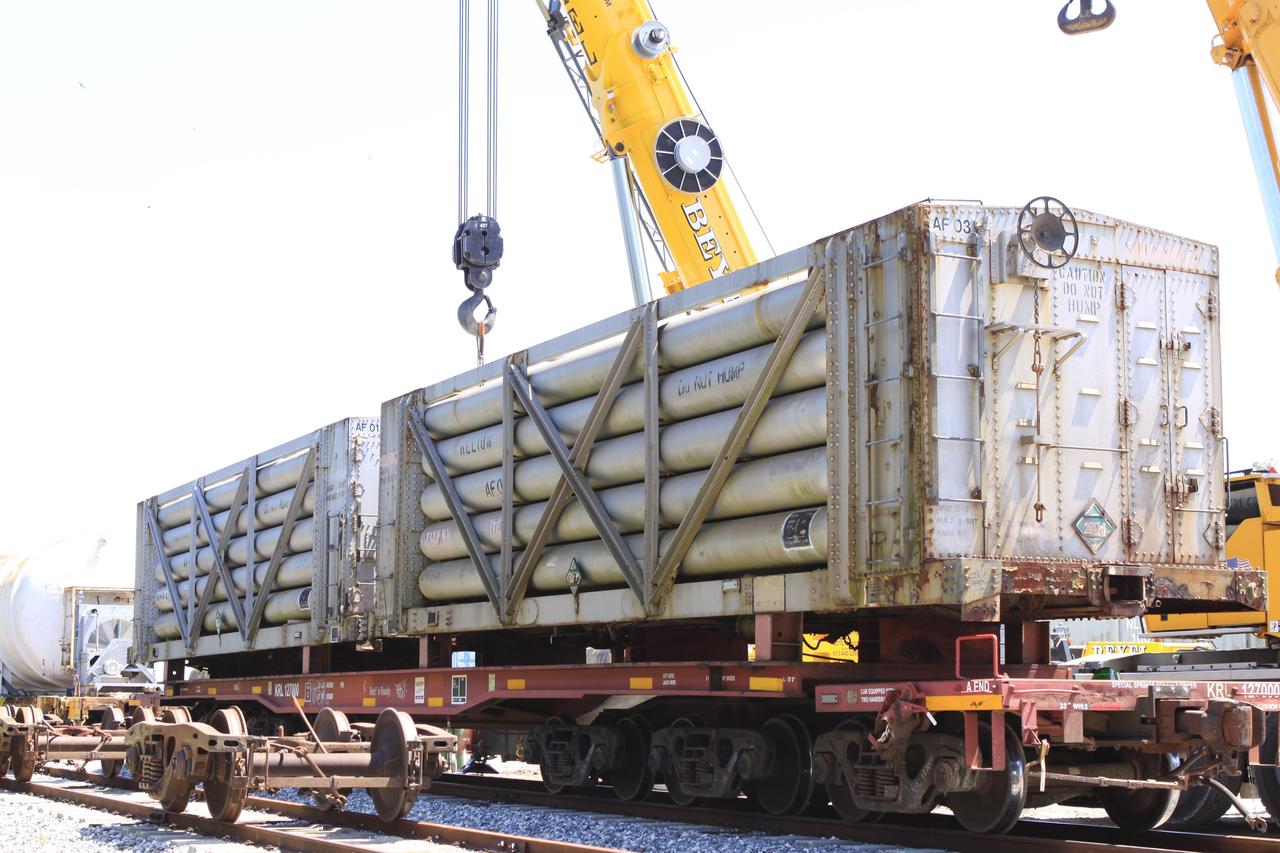
CAPE CANAVERAL, Fla. – At the NASA Railroad yard at Kennedy Space Center in Florida, cranes are enlisted to lift helium tank cars from their trucks onto flat cars in preparation for a journey to the Florida East Coast Railway interchange in Titusville, Fla., where the train’s tank cars will be transferred for delivery to the SpaceX engine test complex outside McGregor, Texas. The yard is located in Kennedy’s Launch Complex 39 near the 525-foot-tall Vehicle Assembly Building, in the background. The railroad cars were needed in support of the Space Shuttle Program but currently are not in use by NASA following the completion of the program in 2011. Originally, the tankers belonged to the U.S. Bureau of Mines. At the peak of the shuttle program, there were approximately 30 cars in the fleet. About half the cars were returned to the bureau as launch activity diminished. Five tank cars are being loaned to SpaceX and repurposed to support their engine tests in Texas. Eight cars previously were shipped to California on loan to support the SpaceX Falcon 9 rocket launches from Space Launch Complex-4 on Vandenberg Air Force Base. SpaceX already has three helium tank cars previously used for the shuttle program at Space Launch Complex-40 on Cape Canaveral Air Force Station in Florida. For more information, visit http://www.nasa.gov/spacex. Photo credit: NASA/Jim Grossmann
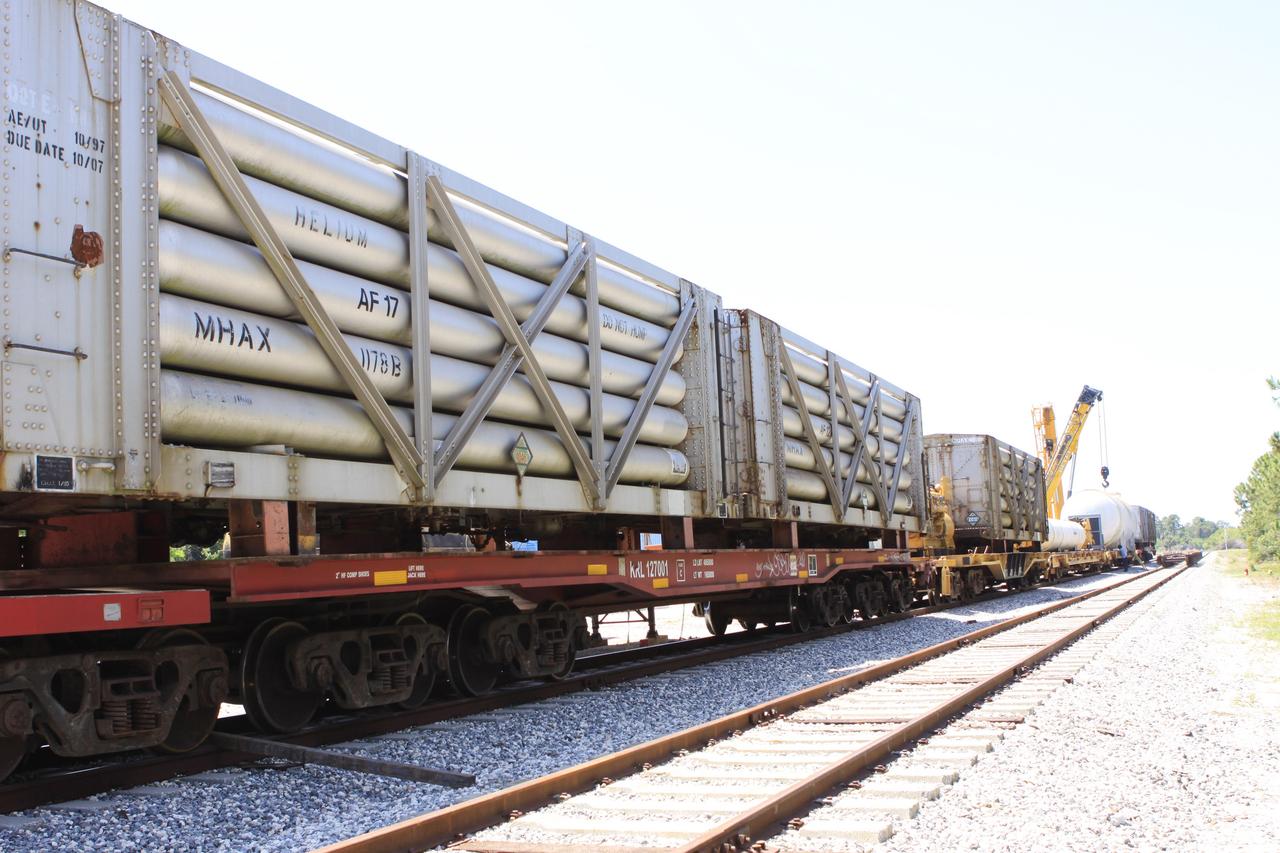
CAPE CANAVERAL, Fla. – At the NASA Railroad yard at Kennedy Space Center in Florida, helium tank cars have been removed from their trucks and loaded onto flat cars in preparation for a journey to the Florida East Coast Railway interchange in Titusville, Fla., where the train’s tank cars will be transferred for delivery to the SpaceX engine test complex outside McGregor, Texas. The railroad cars were needed in support of the Space Shuttle Program but currently are not in use by NASA following the completion of the program in 2011. Originally, the tankers belonged to the U.S. Bureau of Mines. At the peak of the shuttle program, there were approximately 30 cars in the fleet. About half the cars were returned to the bureau as launch activity diminished. Five tank cars are being loaned to SpaceX and repurposed to support their engine tests in Texas. Eight cars previously were shipped to California on loan to support the SpaceX Falcon 9 rocket launches from Space Launch Complex-4 on Vandenberg Air Force Base. SpaceX already has three helium tank cars previously used for the shuttle program at Space Launch Complex-40 on Cape Canaveral Air Force Station in Florida. For more information, visit http://www.nasa.gov/spacex. Photo credit: NASA/Jim Grossmann
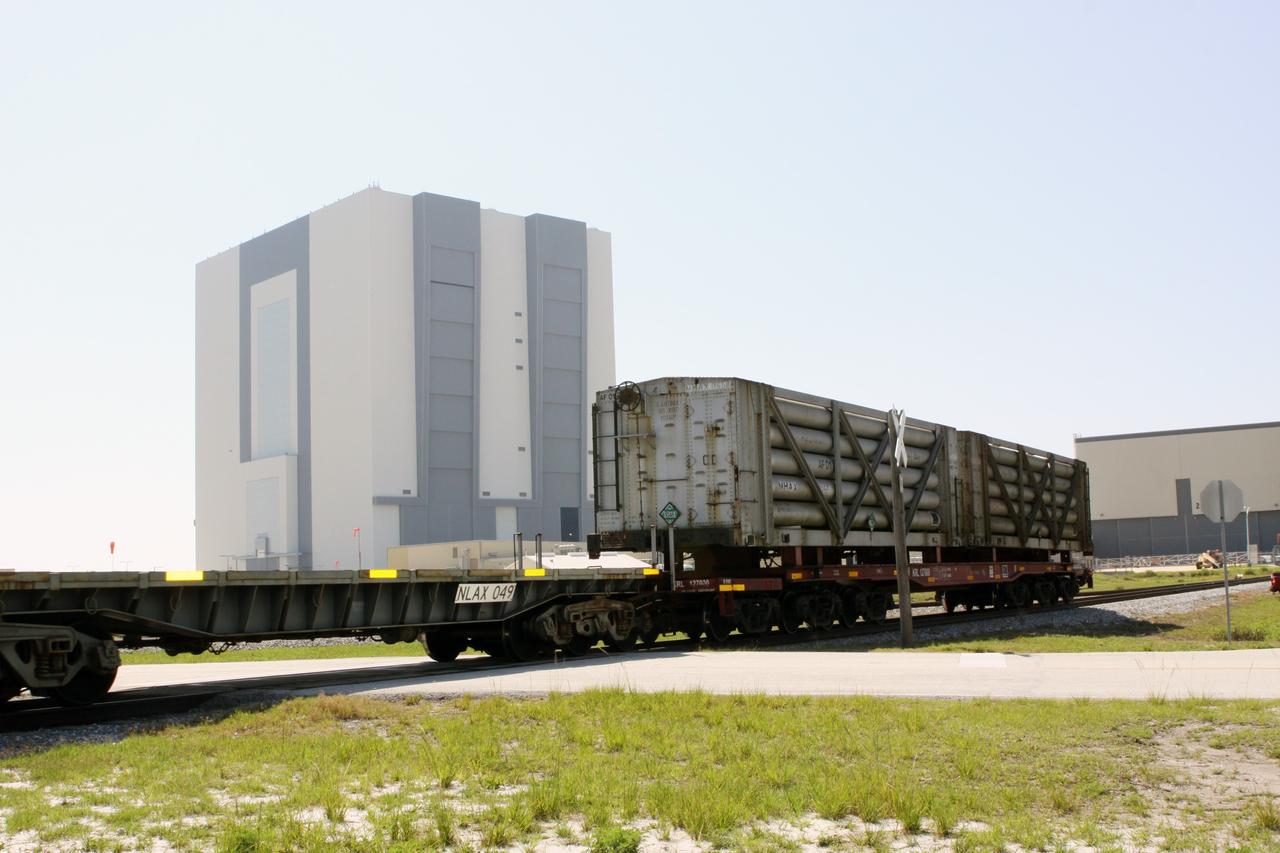
CAPE CANAVERAL, Fla. – A NASA Railroad train passes in front of the 525-foot-tall Vehicle Assembly Building at NASA’s Kennedy Space Center in Florida. At the far right is the Orbiter Processing Facility. The train is on its way to the Florida East Coast Railway interchange in Titusville, Fla., where the train’s helium tank cars, a liquid oxygen tank car, and a liquid hydrogen dewar or tank car will be transferred for delivery to the SpaceX engine test complex outside McGregor, Texas. The railroad cars were needed in support of the Space Shuttle Program but currently are not in use by NASA following the completion of the program in 2011. Originally, the tankers belonged to the U.S. Bureau of Mines. At the peak of the shuttle program, there were approximately 30 cars in the fleet. About half the cars were returned to the bureau as launch activity diminished. Five tank cars are being loaned to SpaceX and repurposed to support their engine tests in Texas. Eight cars previously were shipped to California on loan to support the SpaceX Falcon 9 rocket launches from Space Launch Complex-4 on Vandenberg Air Force Base. SpaceX already has three helium tank cars previously used for the shuttle program at Space Launch Complex-40 on Cape Canaveral Air Force Station in Florida. For more information, visit http://www.nasa.gov/spacex. Photo credit: NASA/Jim Grossmann
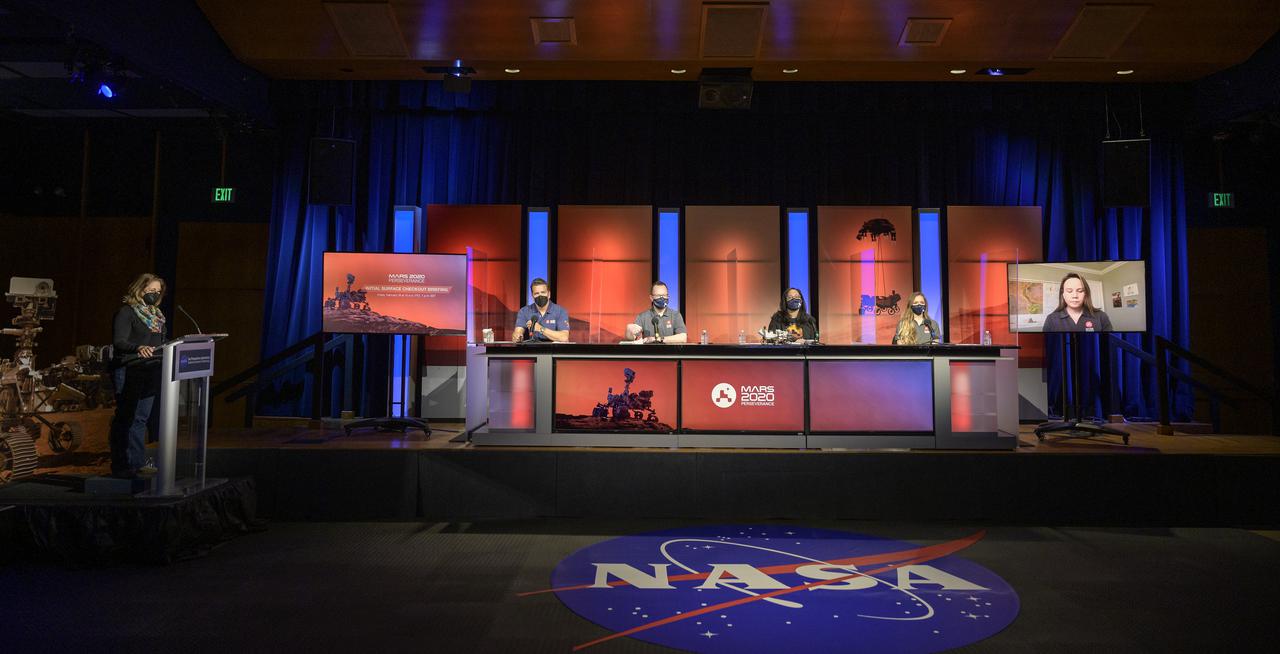
Mission management and scientist give remarks during a NASA Perseverance rover initial surface checkout briefing, Friday Feb. 19, 2021, at NASA's Jet Propulsion Laboratory in Pasadena, California. The Perseverance Mars rover landed on Mars Thursday, Feb. 18, 2021. A key objective for Perseverance’s mission on Mars is astrobiology, including the search for signs of ancient microbial life. The rover will characterize the planet’s geology and past climate, pave the way for human exploration of the Red Planet, and be the first mission to collect and cache Martian rock and regolith. Photo Credit: (NASA/Bill Ingalls)
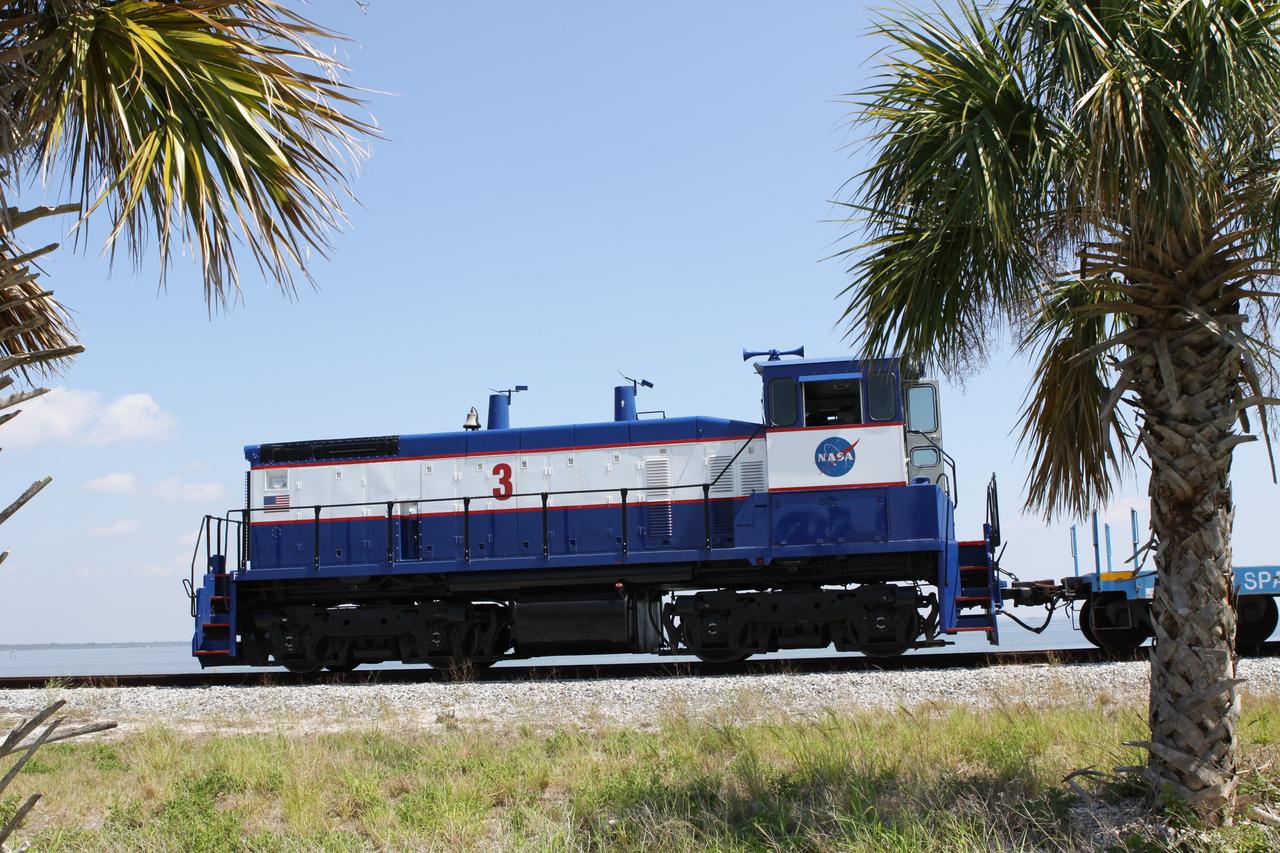
CAPE CANAVERAL, Fla. – NASA Railroad locomotive No. 3 delivers tank cars from NASA’s Kennedy Space Center in Florida to the Florida East Coast Railway interchange in Titusville, Fla. The locomotive is one of three NASA Railroad locomotives built for the Toledo, Peoria and Western, or TP&W, between 1968 and 1970. It is a GM Electromotive Division SW-1500 switcher. The locomotive was acquired by NASA from the TP&W in 1984 and painted in the NASA Railroad paint scheme. The power plant was completely overhauled in 2009. The locomotive will pull the train to the interchange in Titusville, where the train’s helium tank cars, a liquid oxygen tank car, and a liquid hydrogen dewar or tank car will be transferred for delivery to the SpaceX engine test complex outside McGregor, Texas. The railroad cars were needed in support of the Space Shuttle Program but currently are not in use by NASA following the completion of the program in 2011. Originally, the tankers belonged to the U.S. Bureau of Mines. At the peak of the shuttle program, there were approximately 30 cars in the fleet. About half the cars were returned to the bureau as launch activity diminished. Five tank cars are being loaned to SpaceX and repurposed to support their engine tests in Texas. Eight cars previously were shipped to California on loan to support the SpaceX Falcon 9 rocket launches from Space Launch Complex-4 on Vandenberg Air Force Base. SpaceX already has three helium tank cars previously used for the shuttle program at Space Launch Complex-40 on Cape Canaveral Air Force Station in Florida. For more information, visit http://www.nasa.gov/spacex. Photo credit: NASA/Jim Grossmann
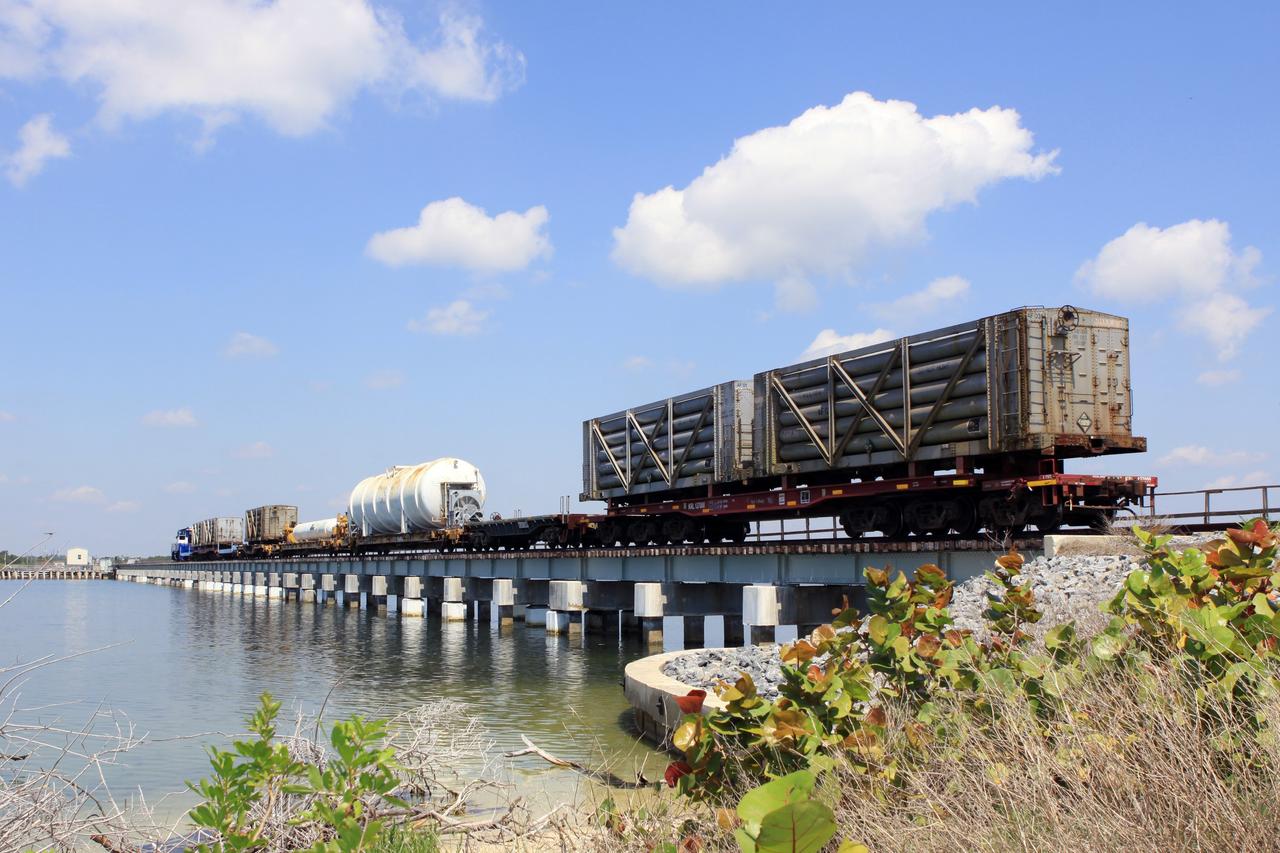
CAPE CANAVERAL, Fla. – A NASA Railroad train crosses the railroad’s Jay Jay Railroad Bridge north of Launch Complex 39 at NASA’s Kennedy Space Center in Florida. The train is on its way to the Florida East Coast Railway interchange in Titusville, Fla., where the train’s helium tank cars, a liquid oxygen tank car, and a liquid hydrogen dewar or tank car will be transferred for delivery to the SpaceX engine test complex outside McGregor, Texas. The helium tank cars are positioned in the front and rear of the train. The long, thin tank car in the middle was used for liquid hydrogen, followed by a much larger tank car used for liquid oxygen. The railroad cars were needed in support of the Space Shuttle Program but currently are not in use by NASA following the completion of the program in 2011. Originally, the tankers belonged to the U.S. Bureau of Mines. At the peak of the shuttle program, there were approximately 30 cars in the fleet. About half the cars were returned to the bureau as launch activity diminished. Five tank cars are being loaned to SpaceX and repurposed to support their engine tests in Texas. Eight cars previously were shipped to California on loan to support the SpaceX Falcon 9 rocket launches from Space Launch Complex-4 on Vandenberg Air Force Base. SpaceX already has three helium tank cars previously used for the shuttle program at Space Launch Complex-40 on Cape Canaveral Air Force Station in Florida. For more information, visit http://www.nasa.gov/spacex. Photo credit: NASA/Jim Grossmann
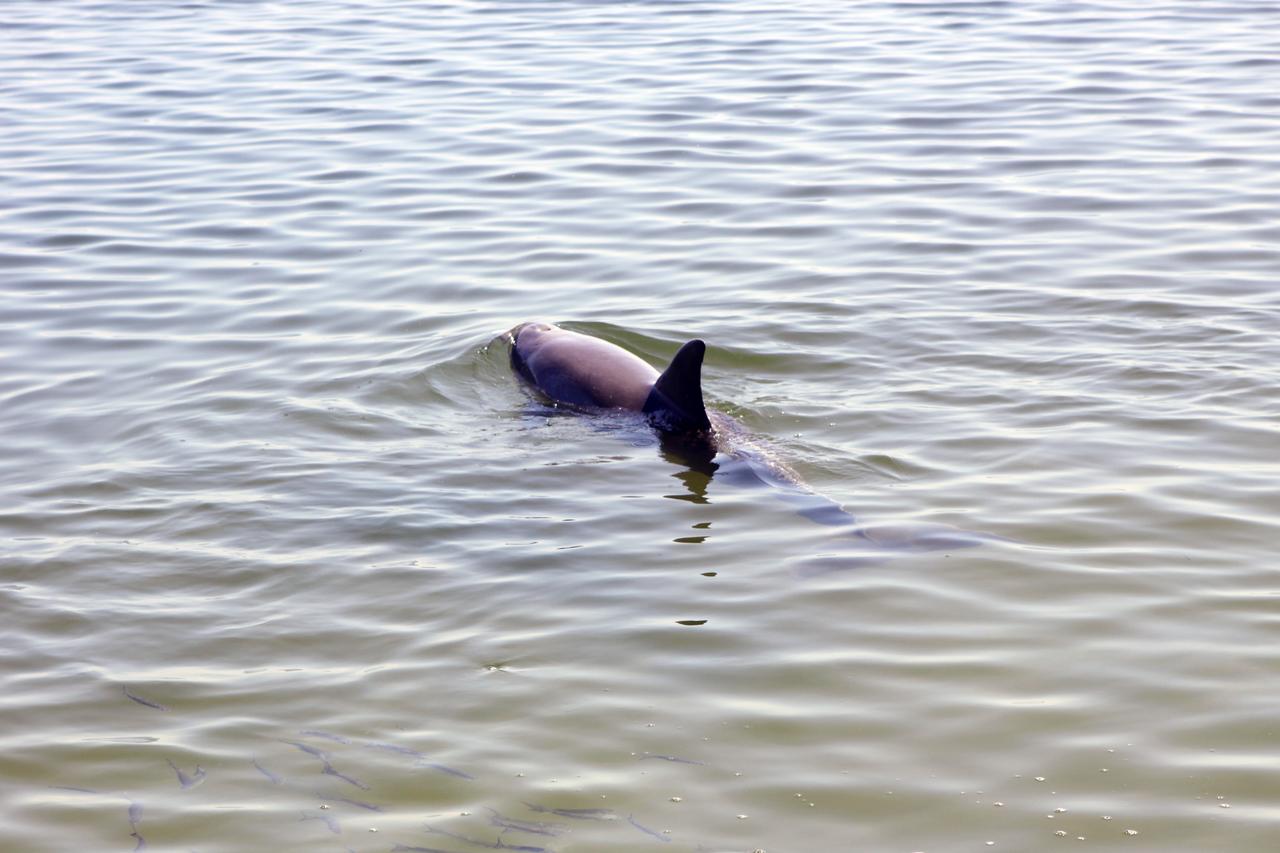
CAPE CANAVERAL, Fla. – A dolphin swims in the Indian River near the NASA Railroad’s Jay Jay Railroad Bridge north of Launch Complex 39 at NASA’s Kennedy Space Center in Florida. The dolphin was spotted by a cameraman on hand to photograph a NASA Railroad train on its way to the Florida East Coast Railway interchange in Titusville, Fla., where the train’s helium tank cars, a liquid oxygen tank car, and a liquid hydrogen dewar or tank car will be transferred for delivery to the SpaceX engine test complex outside McGregor, Texas. The railroad cars were needed in support of the Space Shuttle Program but currently are not in use by NASA following the completion of the program in 2011. Originally, the tankers belonged to the U.S. Bureau of Mines. At the peak of the shuttle program, there were approximately 30 cars in the fleet. About half the cars were returned to the bureau as launch activity diminished. Five tank cars are being loaned to SpaceX and repurposed to support their engine tests in Texas. Eight cars previously were shipped to California on loan to support the SpaceX Falcon 9 rocket launches from Space Launch Complex-4 on Vandenberg Air Force Base. SpaceX already has three helium tank cars previously used for the shuttle program at Space Launch Complex-40 on Cape Canaveral Air Force Station in Florida. For more information, visit http://www.nasa.gov/spacex. Photo credit: NASA/Jim Grossmann
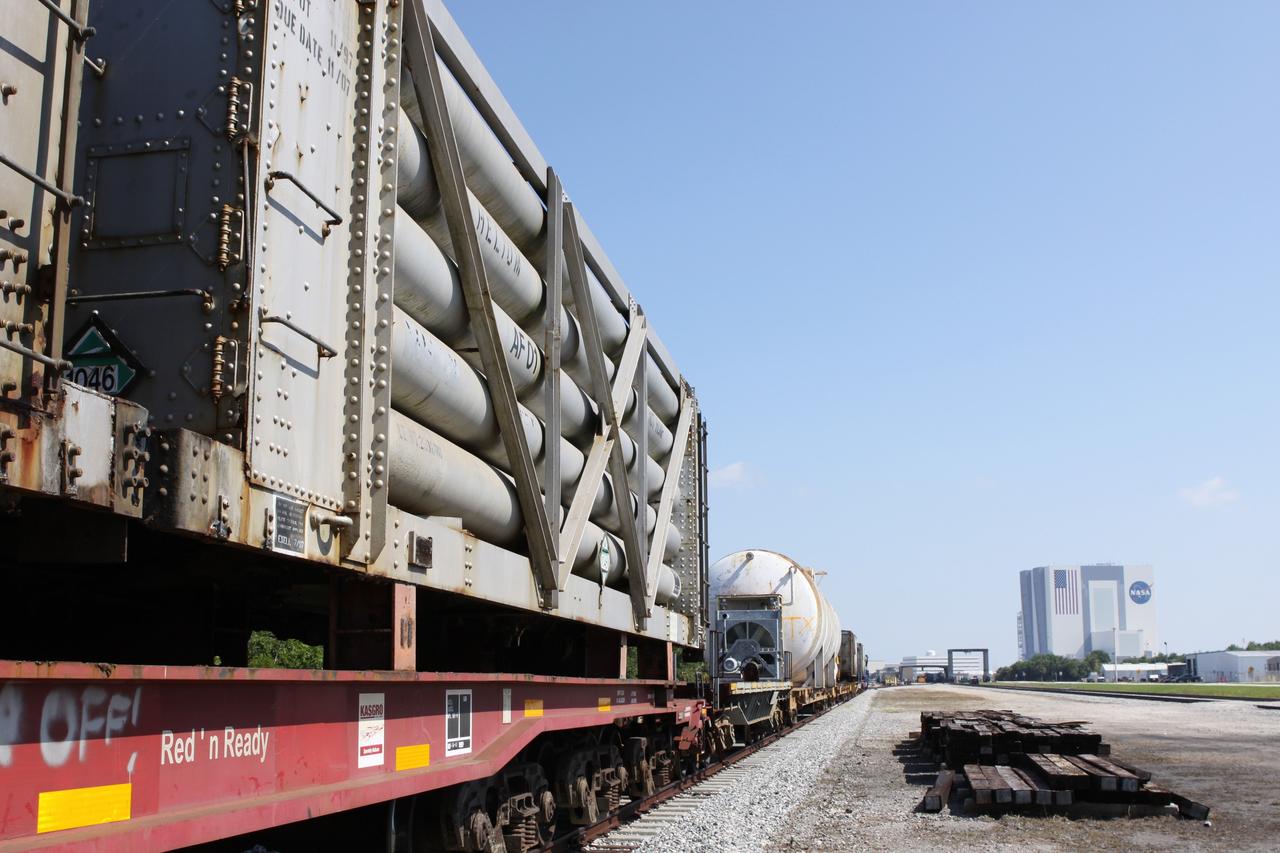
CAPE CANAVERAL, Fla. – At the NASA Railroad Yard at NASA’s Kennedy Space Center in Florida, preparations are under way for the departure of a train made up of tank cars. The railroad’s track runs past Kennedy’s 525-foot-tall Vehicle Assembly Building in the background. The train is headed for the Florida East Coast Railway interchange in Titusville, Fla., where the train’s helium tank cars, a liquid oxygen tank car, and a liquid hydrogen dewar or tank car will be transferred for delivery to the SpaceX engine test complex outside McGregor, Texas. The railroad cars were needed in support of the Space Shuttle Program but currently are not in use by NASA following the completion of the program in 2011. Originally, the tankers belonged to the U.S. Bureau of Mines. At the peak of the shuttle program, there were approximately 30 cars in the fleet. About half the cars were returned to the bureau as launch activity diminished. Five tank cars are being loaned to SpaceX and repurposed to support their engine tests in Texas. Eight cars previously were shipped to California on loan to support the SpaceX Falcon 9 rocket launches from Space Launch Complex-4 on Vandenberg Air Force Base. SpaceX already has three helium tank cars previously used for the shuttle program at Space Launch Complex-40 on Cape Canaveral Air Force Station in Florida. For more information, visit http://www.nasa.gov/spacex. Photo credit: NASA/Jim Grossmann
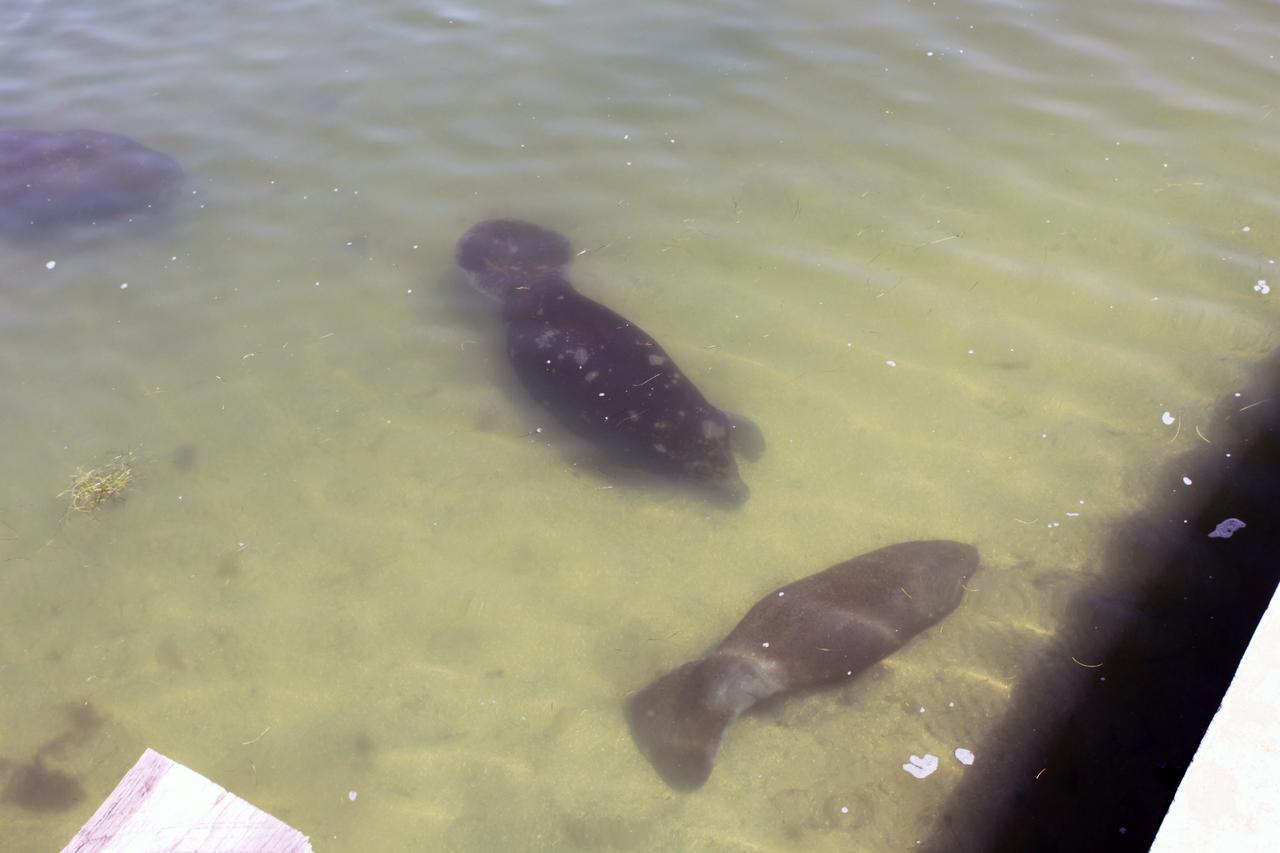
CAPE CANAVERAL, Fla. – Manatees relax in the Indian River near the NASA Railroad’s Jay Jay Railroad Bridge north of Launch Complex 39 at NASA’s Kennedy Space Center in Florida. The manatees were spotted by a cameraman on hand to photograph a NASA Railroad train on its way to the Florida East Coast Railway interchange in Titusville, Fla., where the train’s helium tank cars, a liquid oxygen tank car, and a liquid hydrogen dewar or tank car will be transferred for delivery to the SpaceX engine test complex outside McGregor, Texas. The railroad cars were needed in support of the Space Shuttle Program but currently are not in use by NASA following the completion of the program in 2011. Originally, the tankers belonged to the U.S. Bureau of Mines. At the peak of the shuttle program, there were approximately 30 cars in the fleet. About half the cars were returned to the bureau as launch activity diminished. Five tank cars are being loaned to SpaceX and repurposed to support their engine tests in Texas. Eight cars previously were shipped to California on loan to support the SpaceX Falcon 9 rocket launches from Space Launch Complex-4 on Vandenberg Air Force Base. SpaceX already has three helium tank cars previously used for the shuttle program at Space Launch Complex-40 on Cape Canaveral Air Force Station in Florida. For more information, visit http://www.nasa.gov/spacex. Photo credit: NASA/Jim Grossmann
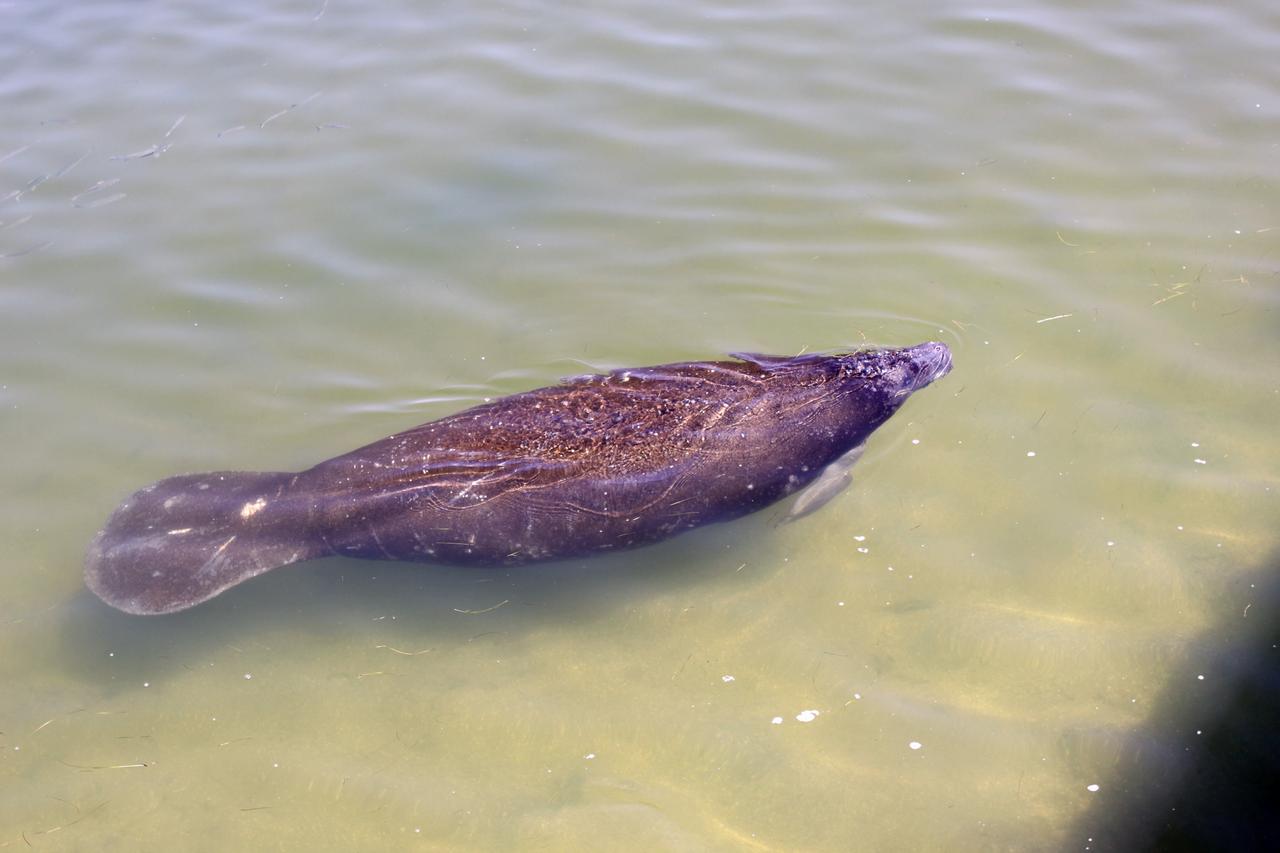
CAPE CANAVERAL, Fla. – A manatee relaxes in the Indian River near the NASA Railroad’s Jay Jay Railroad Bridge north of Launch Complex 39 at NASA’s Kennedy Space Center in Florida. The manatee was spotted by a cameraman on hand to photograph a NASA Railroad train on its way to the Florida East Coast Railway interchange in Titusville, Fla., where the train’s helium tank cars, a liquid oxygen tank car, and a liquid hydrogen dewar or tank car will be transferred for delivery to the SpaceX engine test complex outside McGregor, Texas. The railroad cars were needed in support of the Space Shuttle Program but currently are not in use by NASA following the completion of the program in 2011. Originally, the tankers belonged to the U.S. Bureau of Mines. At the peak of the shuttle program, there were approximately 30 cars in the fleet. About half the cars were returned to the bureau as launch activity diminished. Five tank cars are being loaned to SpaceX and repurposed to support their engine tests in Texas. Eight cars previously were shipped to California on loan to support the SpaceX Falcon 9 rocket launches from Space Launch Complex-4 on Vandenberg Air Force Base. SpaceX already has three helium tank cars previously used for the shuttle program at Space Launch Complex-40 on Cape Canaveral Air Force Station in Florida. For more information, visit http://www.nasa.gov/spacex. Photo credit: NASA/Jim Grossmann
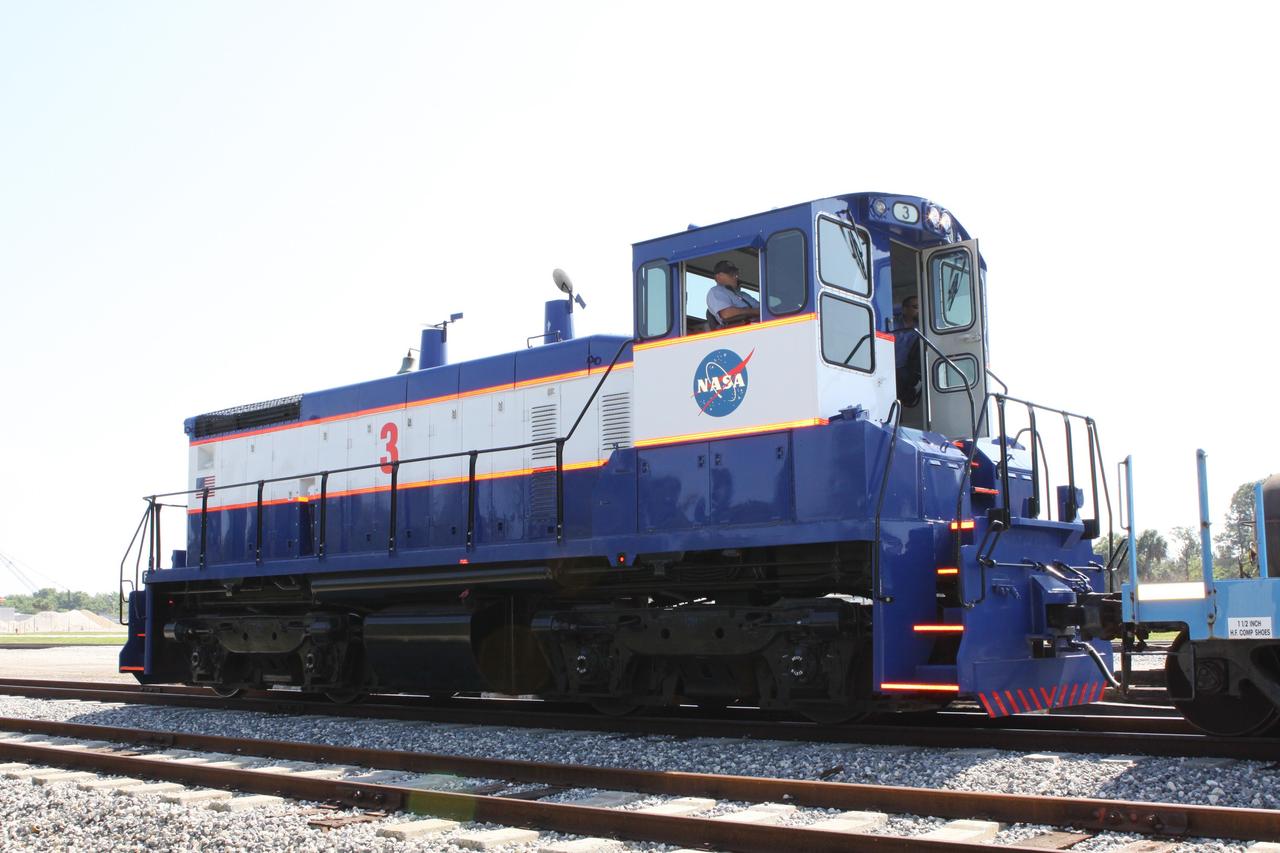
CAPE CANAVERAL, Fla. – NASA Railroad locomotive No. 3 is enlisted to deliver tank cars from NASA’s Kennedy Space Center in Florida to the Florida East Coast Railway interchange in Titusville, Fla. The locomotive is one of three NASA Railroad locomotives built for the Toledo, Peoria and Western, or TP&W, between 1968 and 1970. It is a GM Electromotive Division SW-1500 switcher. The locomotive was acquired by NASA from the TP&W in 1984 and painted in the NASA Railroad paint scheme. The power plant was completely overhauled in 2009. The locomotive will pull the train to the interchange in Titusville, where the train’s helium tank cars, a liquid oxygen tank car, and a liquid hydrogen dewar or tank car will be transferred for delivery to the SpaceX engine test complex outside McGregor, Texas. The railroad cars were needed in support of the Space Shuttle Program but currently are not in use by NASA following the completion of the program in 2011. Originally, the tankers belonged to the U.S. Bureau of Mines. At the peak of the shuttle program, there were approximately 30 cars in the fleet. About half the cars were returned to the bureau as launch activity diminished. Five tank cars are being loaned to SpaceX and repurposed to support their engine tests in Texas. Eight cars previously were shipped to California on loan to support the SpaceX Falcon 9 rocket launches from Space Launch Complex-4 on Vandenberg Air Force Base. SpaceX already has three helium tank cars previously used for the shuttle program at Space Launch Complex-40 on Cape Canaveral Air Force Station in Florida. For more information, visit http://www.nasa.gov/spacex. Photo credit: NASA/Jim Grossmann
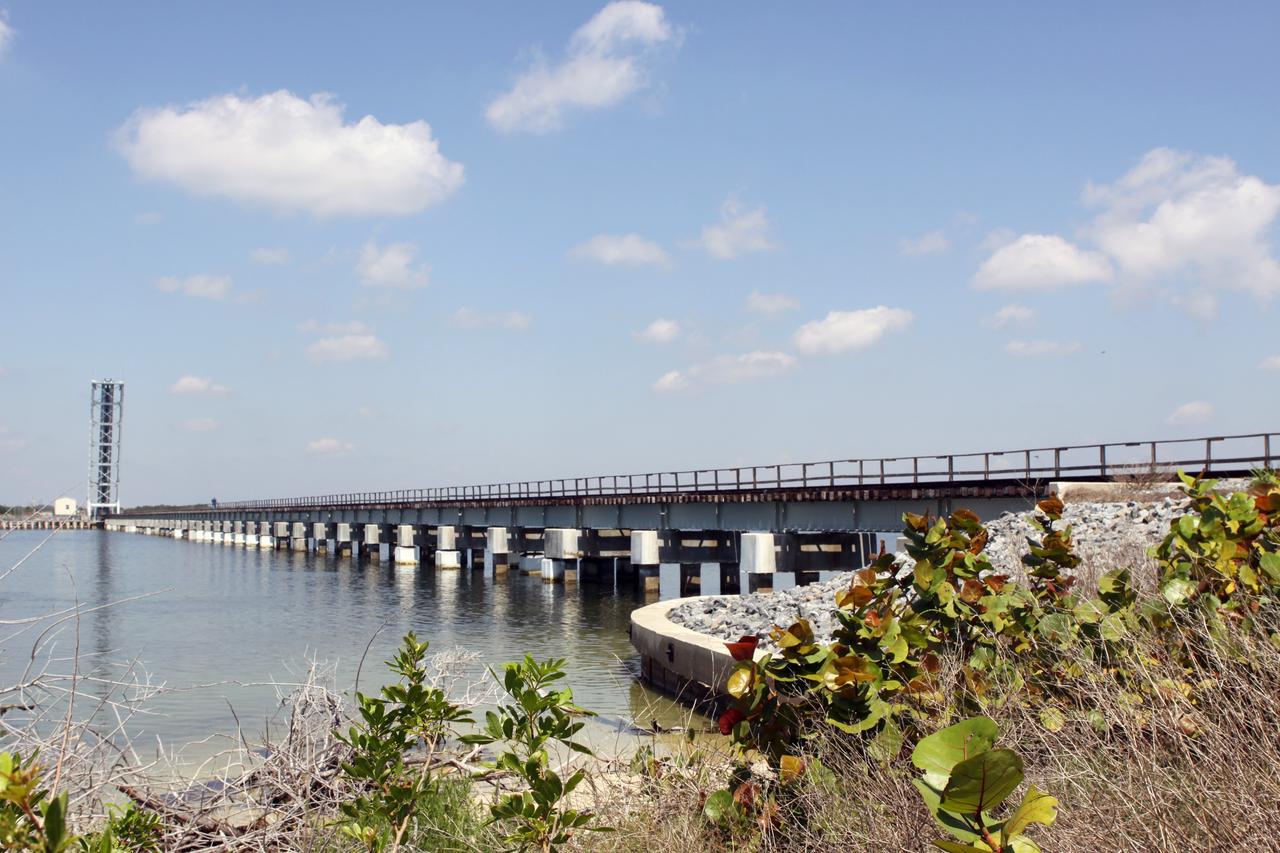
CAPE CANAVERAL, Fla. – Preparations are under way at the NASA Railroad’s Jay Jay Railroad Bridge north of Launch Complex 39 at NASA’s Kennedy Space Center in Florida for the passage of the NASA Railroad train on its way to the Florida East Coast Railway interchange in Titusville, Fla., where the train’s helium tank cars, a liquid oxygen tank car, and a liquid hydrogen dewar or tank car will be transferred for delivery to the SpaceX engine test complex outside McGregor, Texas. The permanent configuration of the drawbridge span is open, but the span will be lowered for a train to cross. The railroad cars were needed in support of the Space Shuttle Program but currently are not in use by NASA following the completion of the program in 2011. Originally, the tankers belonged to the U.S. Bureau of Mines. At the peak of the shuttle program, there were approximately 30 cars in the fleet. About half the cars were returned to the bureau as launch activity diminished. Five tank cars are being loaned to SpaceX and repurposed to support their engine tests in Texas. Eight cars previously were shipped to California on loan to support the SpaceX Falcon 9 rocket launches from Space Launch Complex-4 on Vandenberg Air Force Base. SpaceX already has three helium tank cars previously used for the shuttle program at Space Launch Complex-40 on Cape Canaveral Air Force Station in Florida. For more information, visit http://www.nasa.gov/spacex. Photo credit: NASA/Jim Grossmann
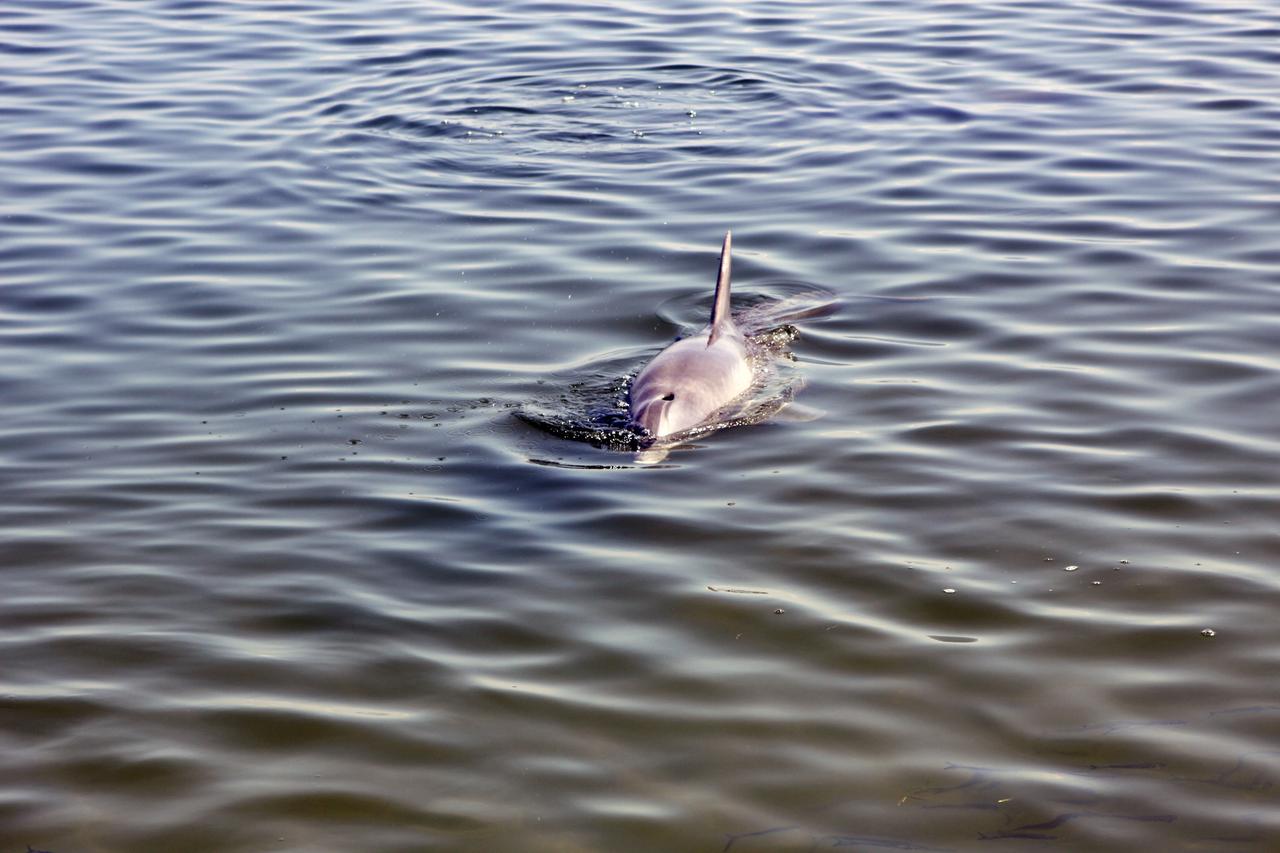
CAPE CANAVERAL, Fla. – Bubbles form around a dolphin splashing in the Indian River near the NASA Railroad’s Jay Jay Railroad Bridge north of Launch Complex 39 at NASA’s Kennedy Space Center in Florida. The dolphin was spotted by a cameraman on hand to photograph a NASA Railroad train on its way to the Florida East Coast Railway interchange in Titusville, Fla., where the train’s helium tank cars, a liquid oxygen tank car, and a liquid hydrogen dewar or tank car will be transferred for delivery to the SpaceX engine test complex outside McGregor, Texas. The railroad cars were needed in support of the Space Shuttle Program but currently are not in use by NASA following the completion of the program in 2011. Originally, the tankers belonged to the U.S. Bureau of Mines. At the peak of the shuttle program, there were approximately 30 cars in the fleet. About half the cars were returned to the bureau as launch activity diminished. Five tank cars are being loaned to SpaceX and repurposed to support their engine tests in Texas. Eight cars previously were shipped to California on loan to support the SpaceX Falcon 9 rocket launches from Space Launch Complex-4 on Vandenberg Air Force Base. SpaceX already has three helium tank cars previously used for the shuttle program at Space Launch Complex-40 on Cape Canaveral Air Force Station in Florida. For more information, visit http://www.nasa.gov/spacex. Photo credit: NASA/Jim Grossmann
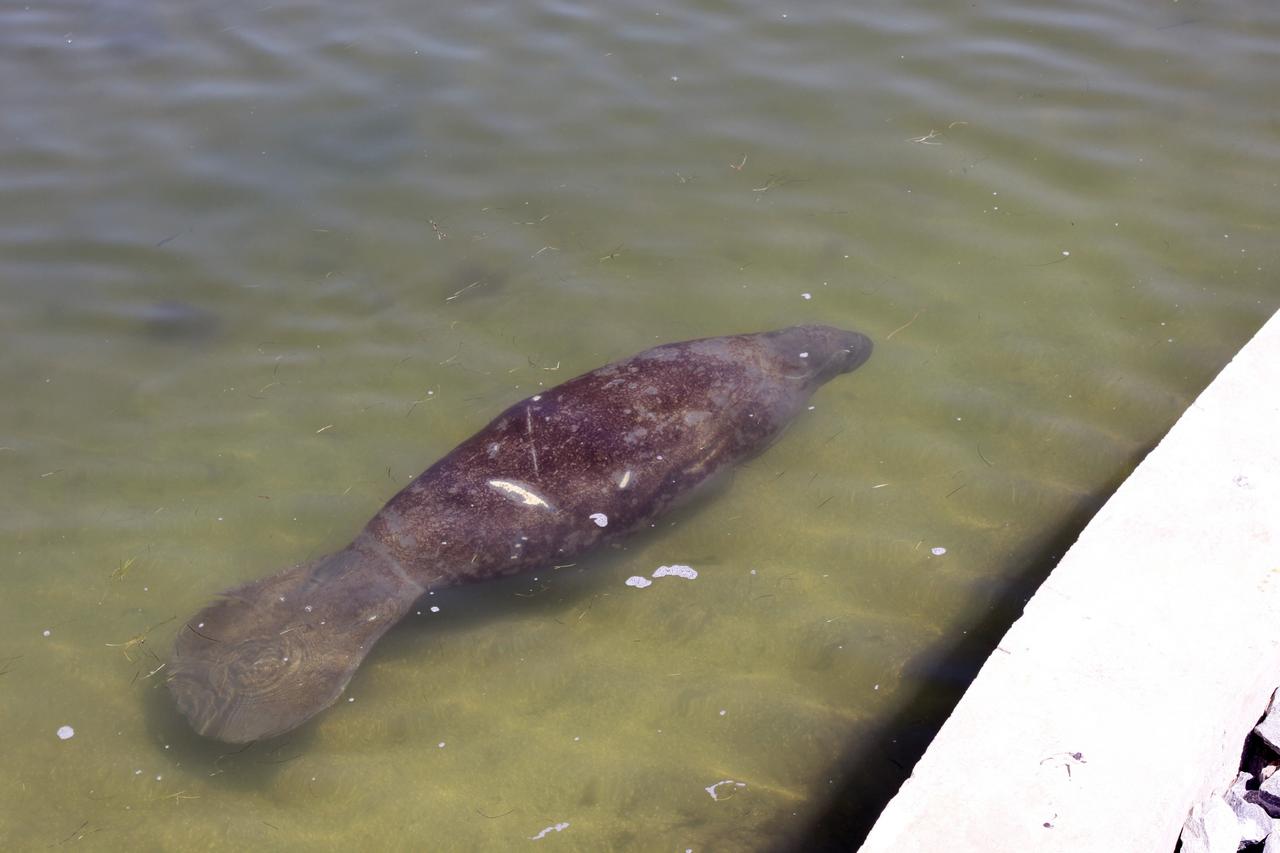
CAPE CANAVERAL, Fla. – A manatee relaxes in the Indian River near the NASA Railroad’s Jay Jay Railroad Bridge north of Launch Complex 39 at NASA’s Kennedy Space Center in Florida. The manatee was spotted by a cameraman on hand to photograph a NASA Railroad train on its way to the Florida East Coast Railway interchange in Titusville, Fla., where the train’s helium tank cars, a liquid oxygen tank car, and a liquid hydrogen dewar or tank car will be transferred for delivery to the SpaceX engine test complex outside McGregor, Texas. The railroad cars were needed in support of the Space Shuttle Program but currently are not in use by NASA following the completion of the program in 2011. Originally, the tankers belonged to the U.S. Bureau of Mines. At the peak of the shuttle program, there were approximately 30 cars in the fleet. About half the cars were returned to the bureau as launch activity diminished. Five tank cars are being loaned to SpaceX and repurposed to support their engine tests in Texas. Eight cars previously were shipped to California on loan to support the SpaceX Falcon 9 rocket launches from Space Launch Complex-4 on Vandenberg Air Force Base. SpaceX already has three helium tank cars previously used for the shuttle program at Space Launch Complex-40 on Cape Canaveral Air Force Station in Florida. For more information, visit http://www.nasa.gov/spacex. Photo credit: NASA/Jim Grossmann
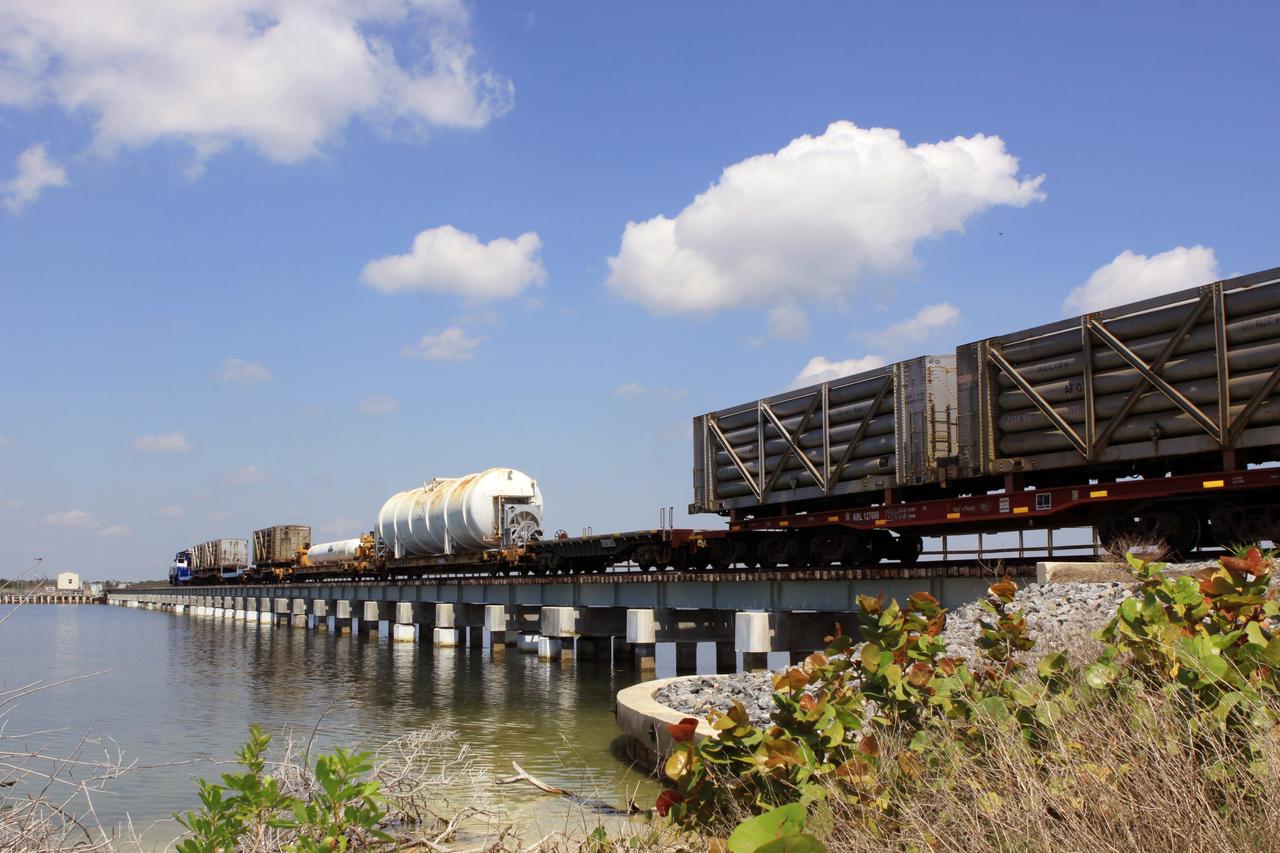
CAPE CANAVERAL, Fla. – A NASA Railroad train crosses the railroad’s Jay Jay Railroad Bridge north of Launch Complex 39 at NASA’s Kennedy Space Center in Florida. The train is on its way to the Florida East Coast Railway interchange in Titusville, Fla., where the train’s helium tank cars, a liquid oxygen tank car, and a liquid hydrogen dewar or tank car will be transferred for delivery to the SpaceX engine test complex outside McGregor, Texas. The helium tank cars are positioned in the front and rear of the train. The long, thin tank car in the middle was used for liquid hydrogen, followed by a much larger tank car used for liquid oxygen. The railroad cars were needed in support of the Space Shuttle Program but currently are not in use by NASA following the completion of the program in 2011. Originally, the tankers belonged to the U.S. Bureau of Mines. At the peak of the shuttle program, there were approximately 30 cars in the fleet. About half the cars were returned to the bureau as launch activity diminished. Five tank cars are being loaned to SpaceX and repurposed to support their engine tests in Texas. Eight cars previously were shipped to California on loan to support the SpaceX Falcon 9 rocket launches from Space Launch Complex-4 on Vandenberg Air Force Base. SpaceX already has three helium tank cars previously used for the shuttle program at Space Launch Complex-40 on Cape Canaveral Air Force Station in Florida. For more information, visit http://www.nasa.gov/spacex. Photo credit: NASA/Jim Grossmann
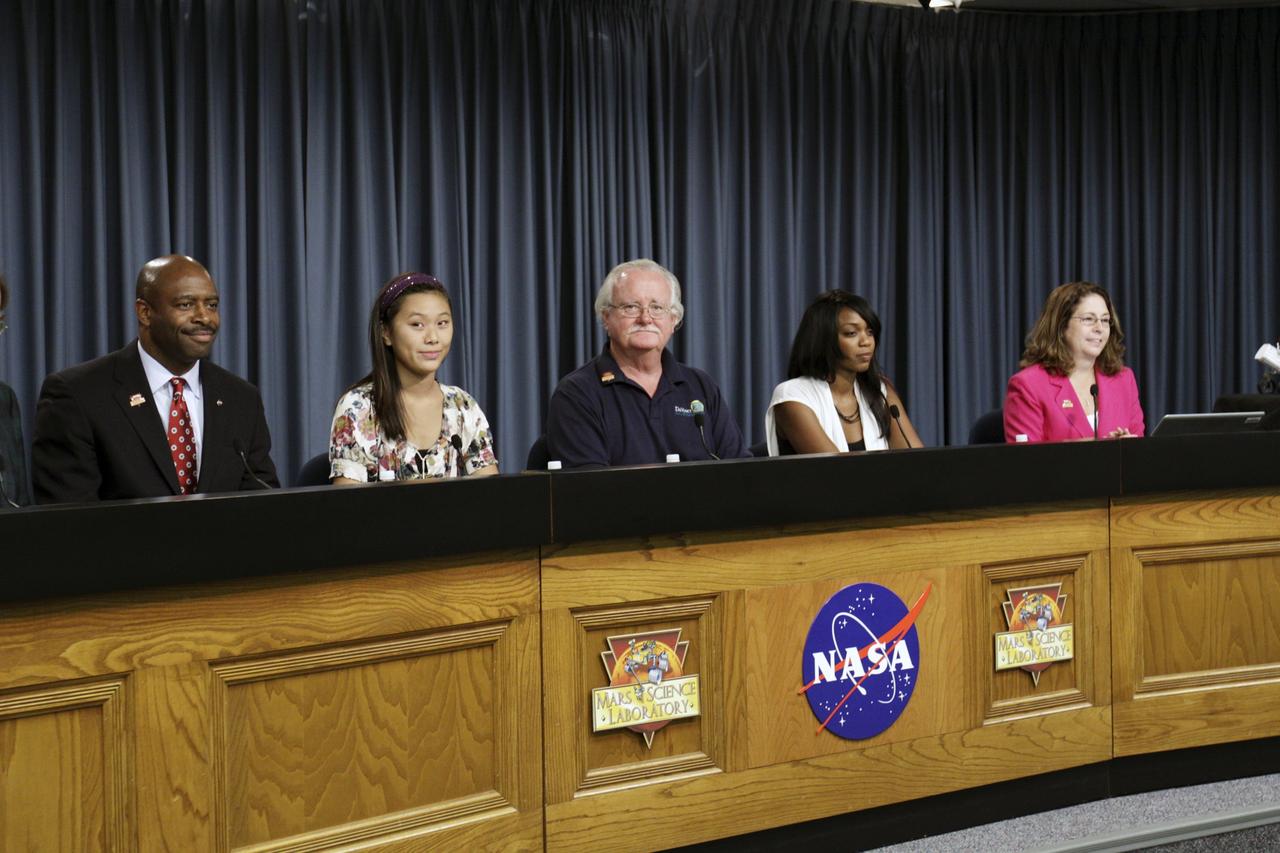
CAPE CANAVERAL, Fla. – An educational news conference to explore "Why Mars Excites and Inspires Us" begins in NASA Kennedy Space Center's Press Site auditorium in Florida during prelaunch activities for the agency’s Mars Science Laboratory (MSL) launch. Participants are, from left, Leland Melvin, NASA associate administrator for Education; Clara Ma, student, NASA contest winner for naming Curiosity, Shawnee Mission East High School, Prairie Village, Kansas; Scott Anderson, teacher and science department chairman, Da Vinci School for Science and the Arts, El Paso, Texas; Lauren Lyons, graduate student, Harvard University, FIRST robotics alumna; and Veronica McGregor, manager, Media Relations Office, NASA Jet Propulsion Laboratory. MSL's car-sized Martian rover, Curiosity, has 10 science instruments designed to search for signs of life, including methane, and help determine if the gas is from a biological or geological source. Ma's entry was selected the winner from 9,000 entries in NASA's nationwide student contest to name the rover. At the time, she was a twelve-year-old sixth-grade student at the Sunflower Elementary school in Lenexa, Kansas. Liftoff of MSL aboard a United Launch Alliance Atlas V rocket from Space Launch Complex-41 on Cape Canaveral Air Force Station is planned during a launch window which extends from 10:02 a.m. to 11:45 a.m. EST on Nov. 26. For more information, visit http://www.nasa.gov/msl. Photo credit: NASA/Kim Shiflett
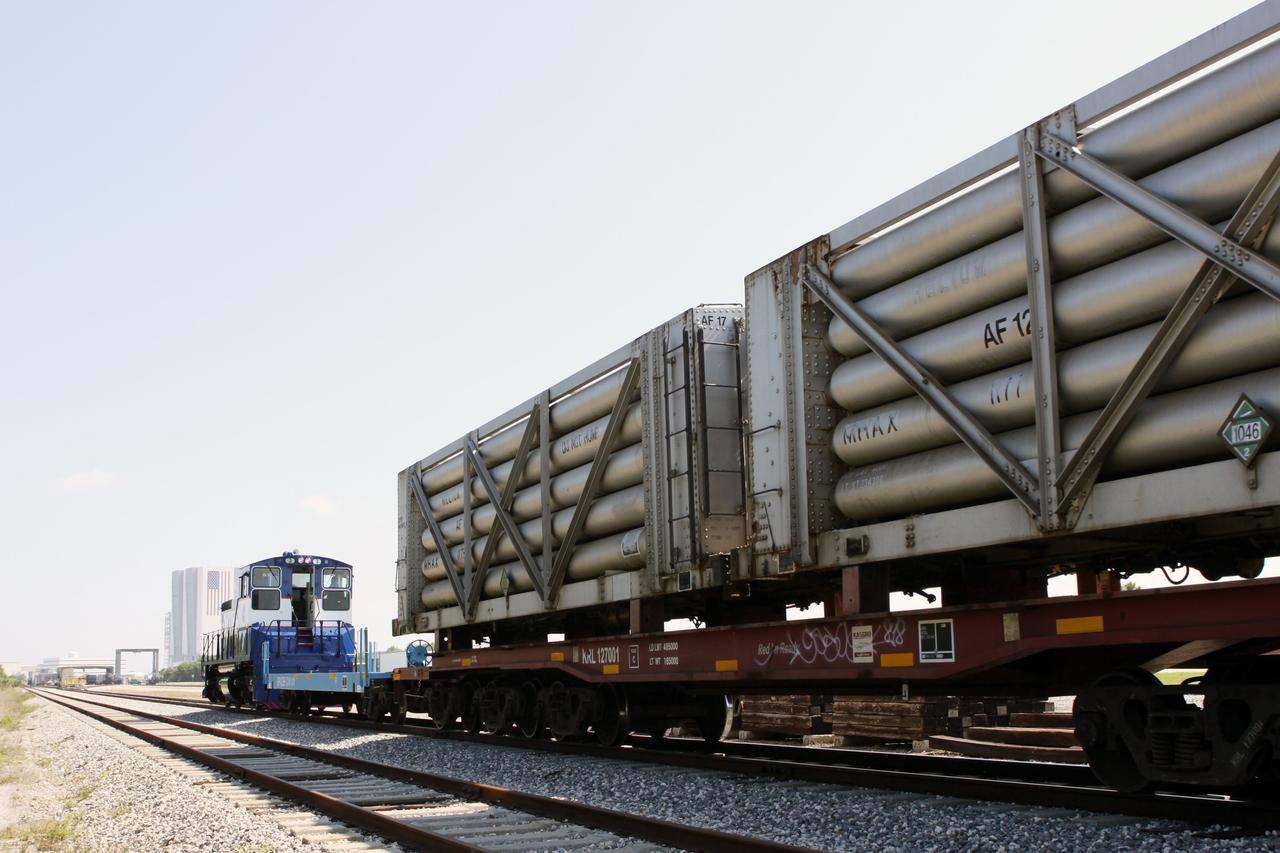
CAPE CANAVERAL, Fla. – At the NASA Railroad Yard at NASA’s Kennedy Space Center in Florida, preparations are under way for the departure of a train made up of tank cars. The train will pass by Kennedy’s 525-foot-tall Vehicle Assembly Building in the background. The train is headed for the Florida East Coast Railway interchange in Titusville, Fla., where the train’s helium tank cars, a liquid oxygen tank car, and a liquid hydrogen dewar or tank car will be transferred for delivery to the SpaceX engine test complex outside McGregor, Texas. The railroad cars were needed in support of the Space Shuttle Program but currently are not in use by NASA following the completion of the program in 2011. Originally, the tankers belonged to the U.S. Bureau of Mines. At the peak of the shuttle program, there were approximately 30 cars in the fleet. About half the cars were returned to the bureau as launch activity diminished. Five tank cars are being loaned to SpaceX and repurposed to support their engine tests in Texas. Eight cars previously were shipped to California on loan to support the SpaceX Falcon 9 rocket launches from Space Launch Complex-4 on Vandenberg Air Force Base. SpaceX already has three helium tank cars previously used for the shuttle program at Space Launch Complex-40 on Cape Canaveral Air Force Station in Florida. For more information, visit http://www.nasa.gov/spacex. Photo credit: NASA/Jim Grossmann
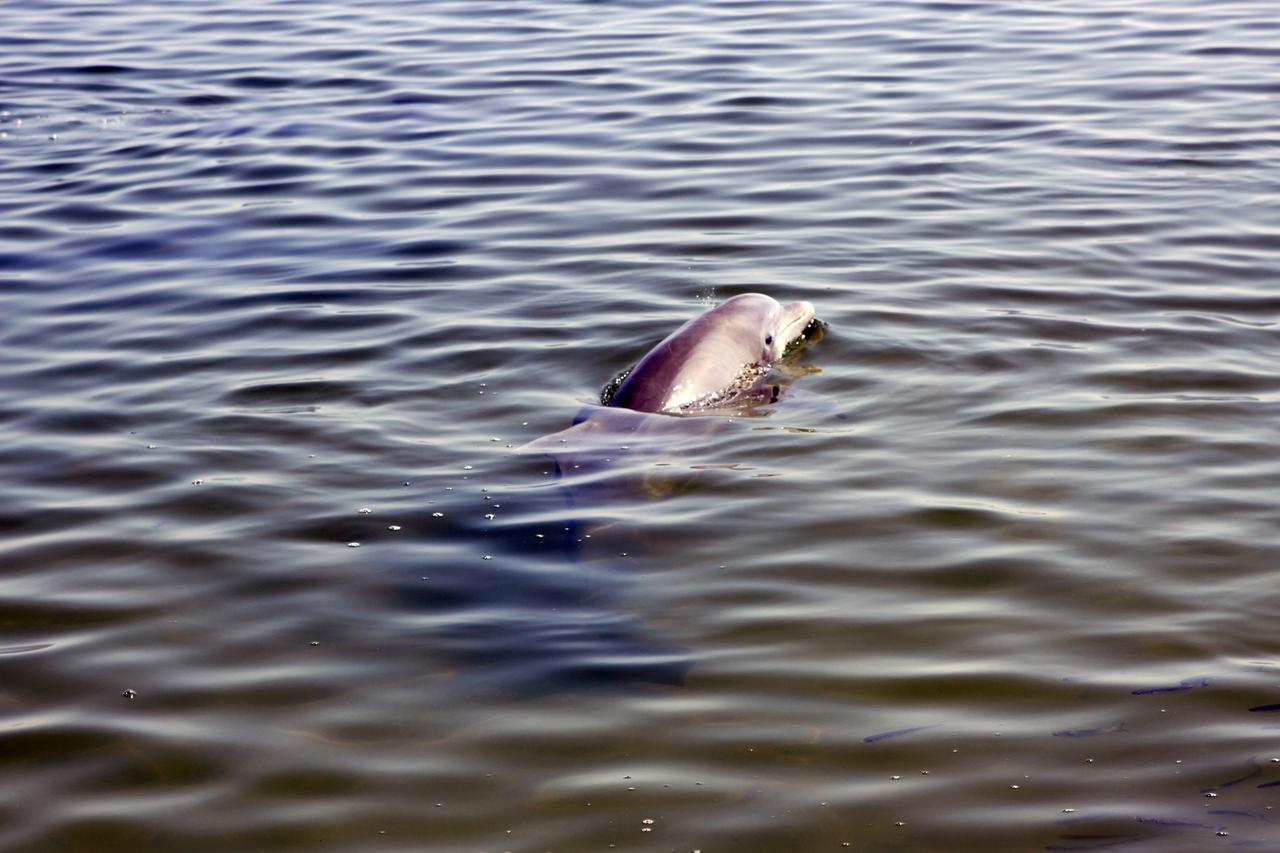
CAPE CANAVERAL, Fla. – A dolphin plays in the Indian River near the NASA Railroad’s Jay Jay Railroad Bridge north of Launch Complex 39 at NASA’s Kennedy Space Center in Florida. The dolphin was spotted by a cameraman on hand to photograph a NASA Railroad train on its way to the Florida East Coast Railway interchange in Titusville, Fla., where the train’s helium tank cars, a liquid oxygen tank car, and a liquid hydrogen dewar or tank car will be transferred for delivery to the SpaceX engine test complex outside McGregor, Texas. The railroad cars were needed in support of the Space Shuttle Program but currently are not in use by NASA following the completion of the program in 2011. Originally, the tankers belonged to the U.S. Bureau of Mines. At the peak of the shuttle program, there were approximately 30 cars in the fleet. About half the cars were returned to the bureau as launch activity diminished. Five tank cars are being loaned to SpaceX and repurposed to support their engine tests in Texas. Eight cars previously were shipped to California on loan to support the SpaceX Falcon 9 rocket launches from Space Launch Complex-4 on Vandenberg Air Force Base. SpaceX already has three helium tank cars previously used for the shuttle program at Space Launch Complex-40 on Cape Canaveral Air Force Station in Florida. For more information, visit http://www.nasa.gov/spacex. Photo credit: NASA/Jim Grossmann
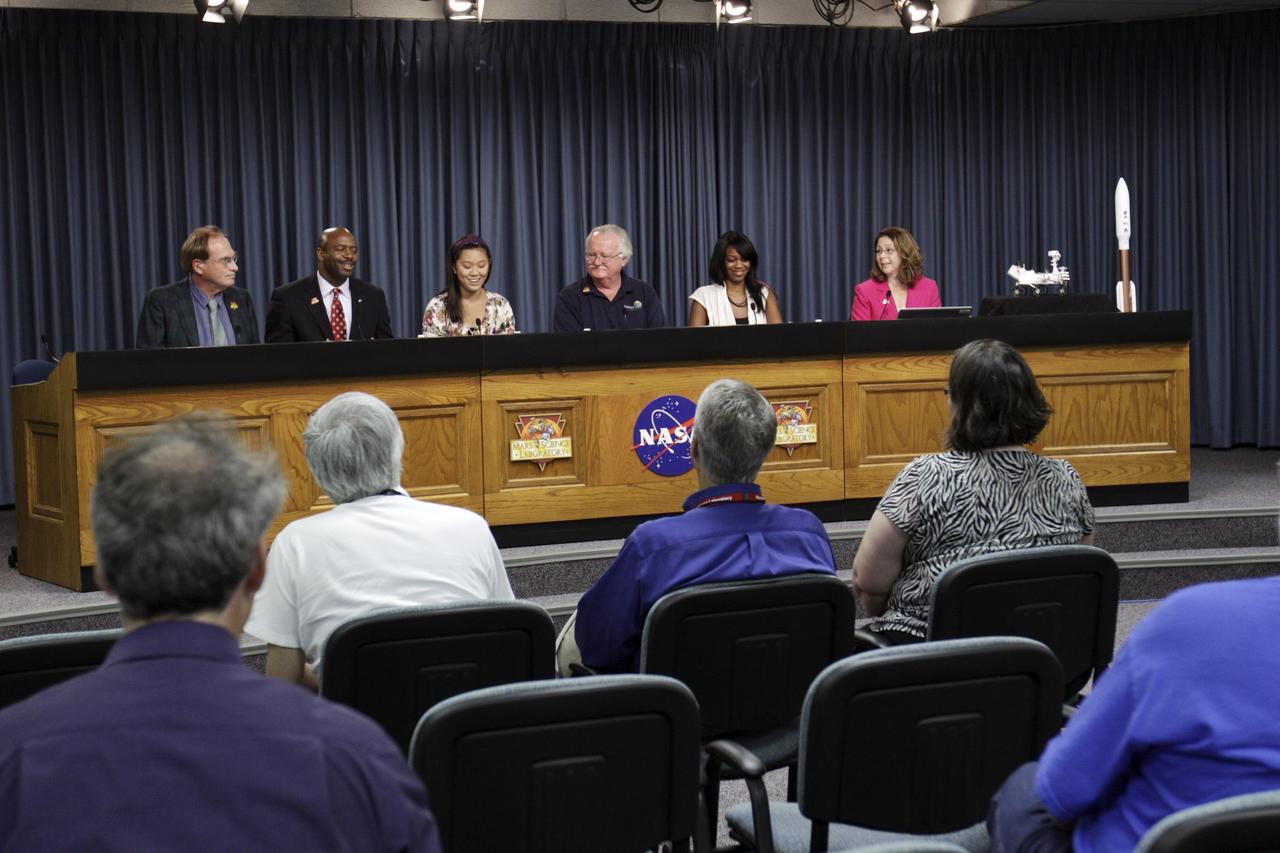
CAPE CANAVERAL, Fla. – An educational news conference to explore "Why Mars Excites and Inspires Us" is under way in NASA Kennedy Space Center's Press Site auditorium in Florida during prelaunch activities for the agency’s Mars Science Laboratory (MSL) launch. Participants are, from left, moderator George Diller, NASA Public Affairs, NASA Kennedy Space Center; Leland Melvin, NASA associate administrator for Education; Clara Ma, student, NASA contest winner for naming Curiosity, Shawnee Mission East High School, Prairie Village, Kansas; Scott Anderson, teacher and science department chairman, Da Vinci School for Science and the Arts, El Paso, Texas; Lauren Lyons, graduate student, Harvard University, FIRST robotics alumna; and Veronica McGregor, manager, Media Relations Office, NASA Jet Propulsion Laboratory. MSL's car-sized Martian rover, Curiosity, has 10 science instruments designed to search for signs of life, including methane, and help determine if the gas is from a biological or geological source. Ma's entry was selected the winner from 9,000 entries in NASA's nationwide student contest to name the rover. At the time, she was a twelve-year-old sixth-grade student at the Sunflower Elementary school in Lenexa, Kansas. Liftoff of MSL aboard a United Launch Alliance Atlas V rocket from Space Launch Complex-41 on Cape Canaveral Air Force Station is planned during a launch window which extends from 10:02 a.m. to 11:45 a.m. EST on Nov. 26. For more information, visit http://www.nasa.gov/msl. Photo credit: NASA/Kim Shiflett
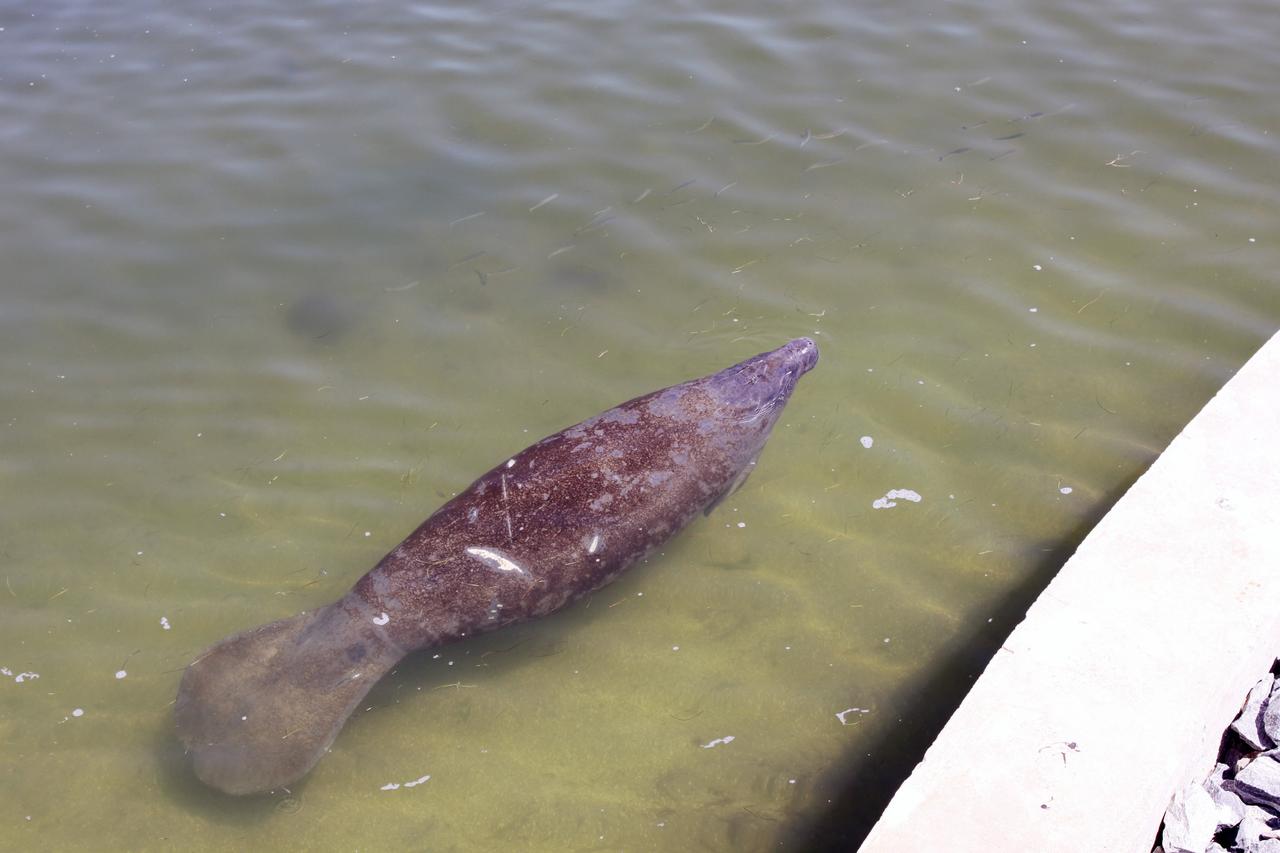
CAPE CANAVERAL, Fla. – A manatee swims in the Indian River near the NASA Railroad’s Jay Jay Railroad Bridge north of Launch Complex 39 at NASA’s Kennedy Space Center in Florida. The manatee was spotted by a cameraman on hand to photograph a NASA Railroad train on its way to the Florida East Coast Railway interchange in Titusville, Fla., where the train’s helium tank cars, a liquid oxygen tank car, and a liquid hydrogen dewar or tank car will be transferred for delivery to the SpaceX engine test complex outside McGregor, Texas. The railroad cars were needed in support of the Space Shuttle Program but currently are not in use by NASA following the completion of the program in 2011. Originally, the tankers belonged to the U.S. Bureau of Mines. At the peak of the shuttle program, there were approximately 30 cars in the fleet. About half the cars were returned to the bureau as launch activity diminished. Five tank cars are being loaned to SpaceX and repurposed to support their engine tests in Texas. Eight cars previously were shipped to California on loan to support the SpaceX Falcon 9 rocket launches from Space Launch Complex-4 on Vandenberg Air Force Base. SpaceX already has three helium tank cars previously used for the shuttle program at Space Launch Complex-40 on Cape Canaveral Air Force Station in Florida. For more information, visit http://www.nasa.gov/spacex. Photo credit: NASA/Jim Grossmann
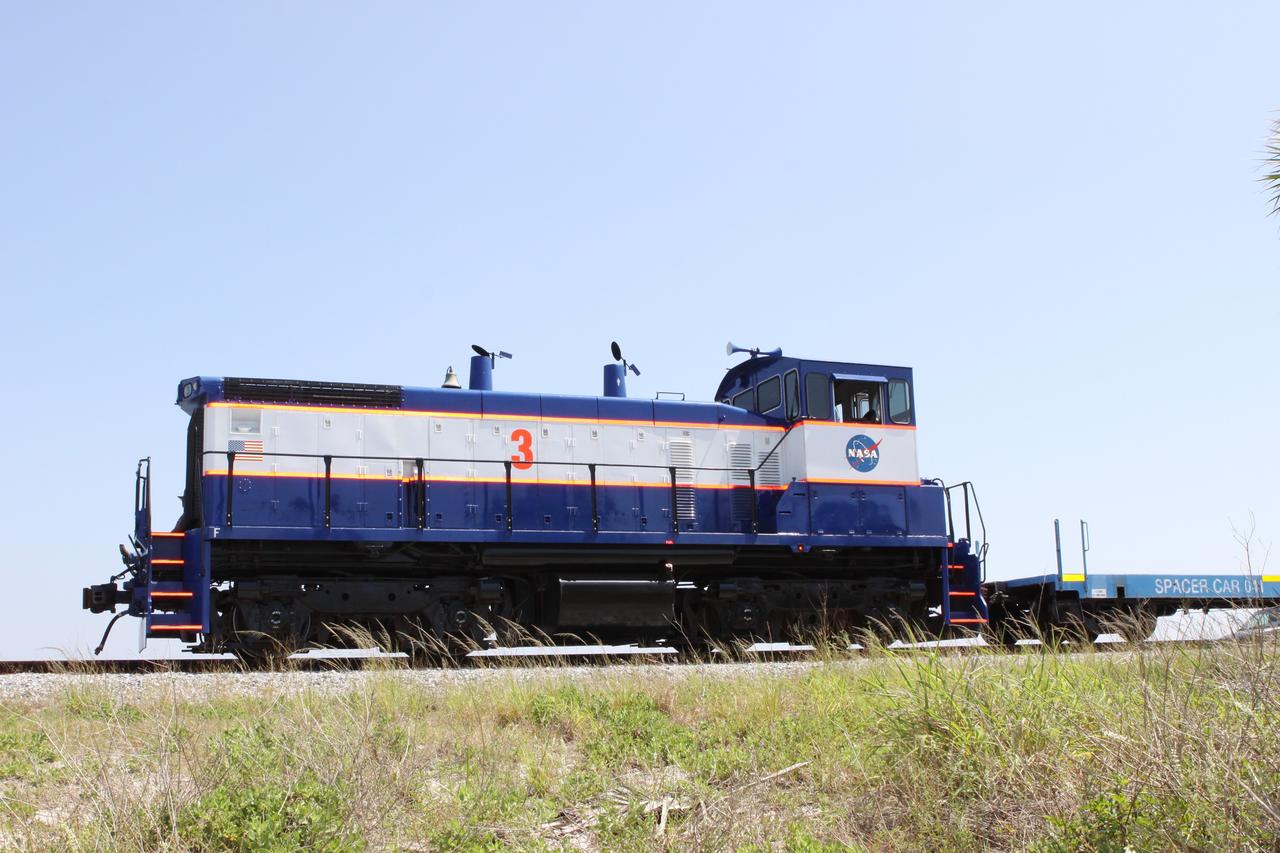
CAPE CANAVERAL, Fla. – NASA Railroad locomotive No. 3 delivers tank cars from NASA’s Kennedy Space Center in Florida to the Florida East Coast Railway interchange in Titusville, Fla. The locomotive is one of three NASA Railroad locomotives built for the Toledo, Peoria and Western, or TP&W, between 1968 and 1970. It is a GM Electromotive Division SW-1500 switcher. The locomotive was acquired by NASA from the TP&W in 1984 and painted in the NASA Railroad paint scheme. The power plant was completely overhauled in 2009. The locomotive will pull the train to the interchange in Titusville, where the train’s helium tank cars, a liquid oxygen tank car, and a liquid hydrogen dewar or tank car will be transferred for delivery to the SpaceX engine test complex outside McGregor, Texas. The railroad cars were needed in support of the Space Shuttle Program but currently are not in use by NASA following the completion of the program in 2011. Originally, the tankers belonged to the U.S. Bureau of Mines. At the peak of the shuttle program, there were approximately 30 cars in the fleet. About half the cars were returned to the bureau as launch activity diminished. Five tank cars are being loaned to SpaceX and repurposed to support their engine tests in Texas. Eight cars previously were shipped to California on loan to support the SpaceX Falcon 9 rocket launches from Space Launch Complex-4 on Vandenberg Air Force Base. SpaceX already has three helium tank cars previously used for the shuttle program at Space Launch Complex-40 on Cape Canaveral Air Force Station in Florida. For more information, visit http://www.nasa.gov/spacex. Photo credit: NASA/Jim Grossmann