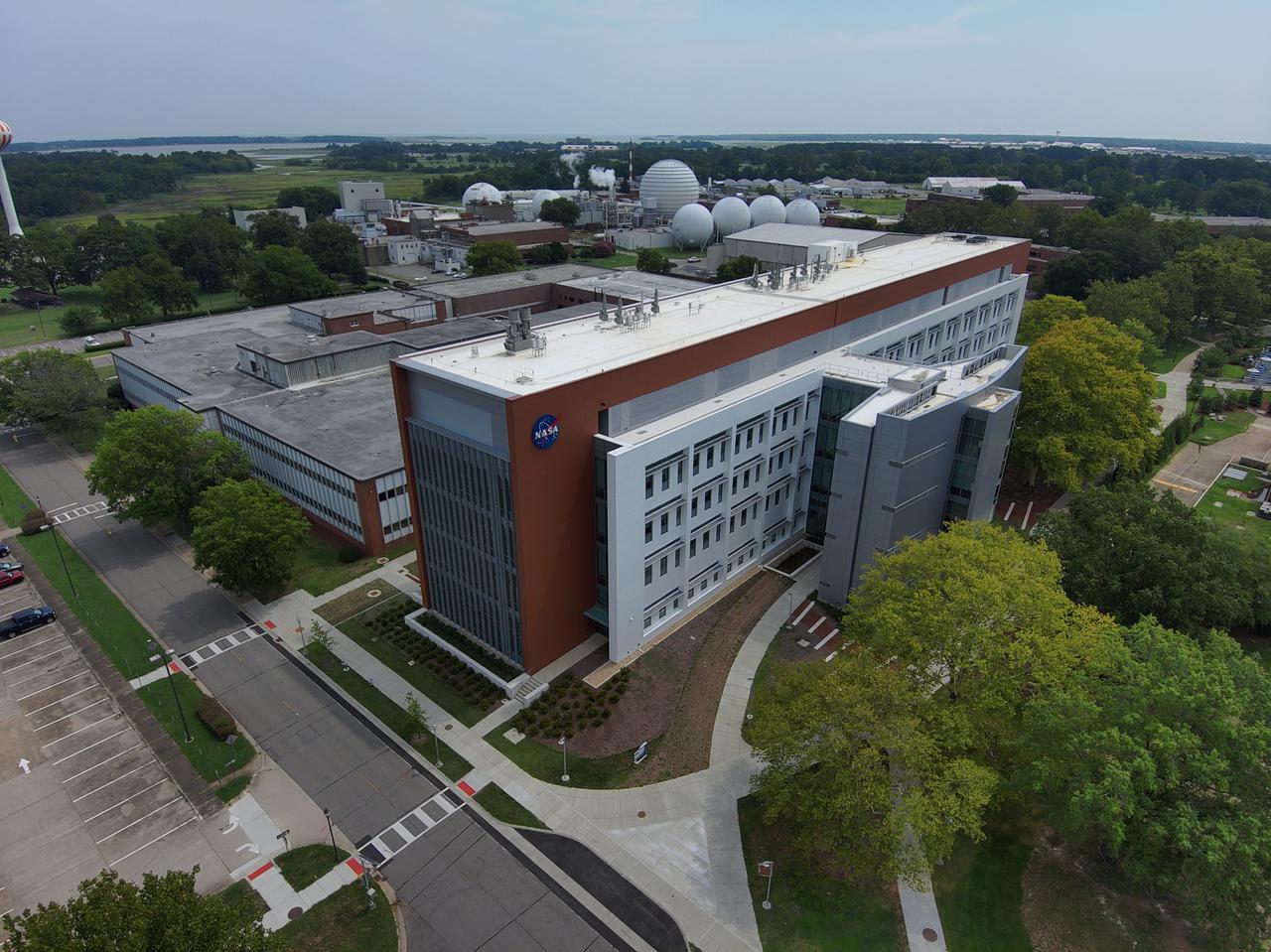
Langley’s newly built Measurement Systems Laboratory will serve as the primary research and development location for six branches within the Research and Engineering Directorates. The ribbon cutting will take place in April 2022.
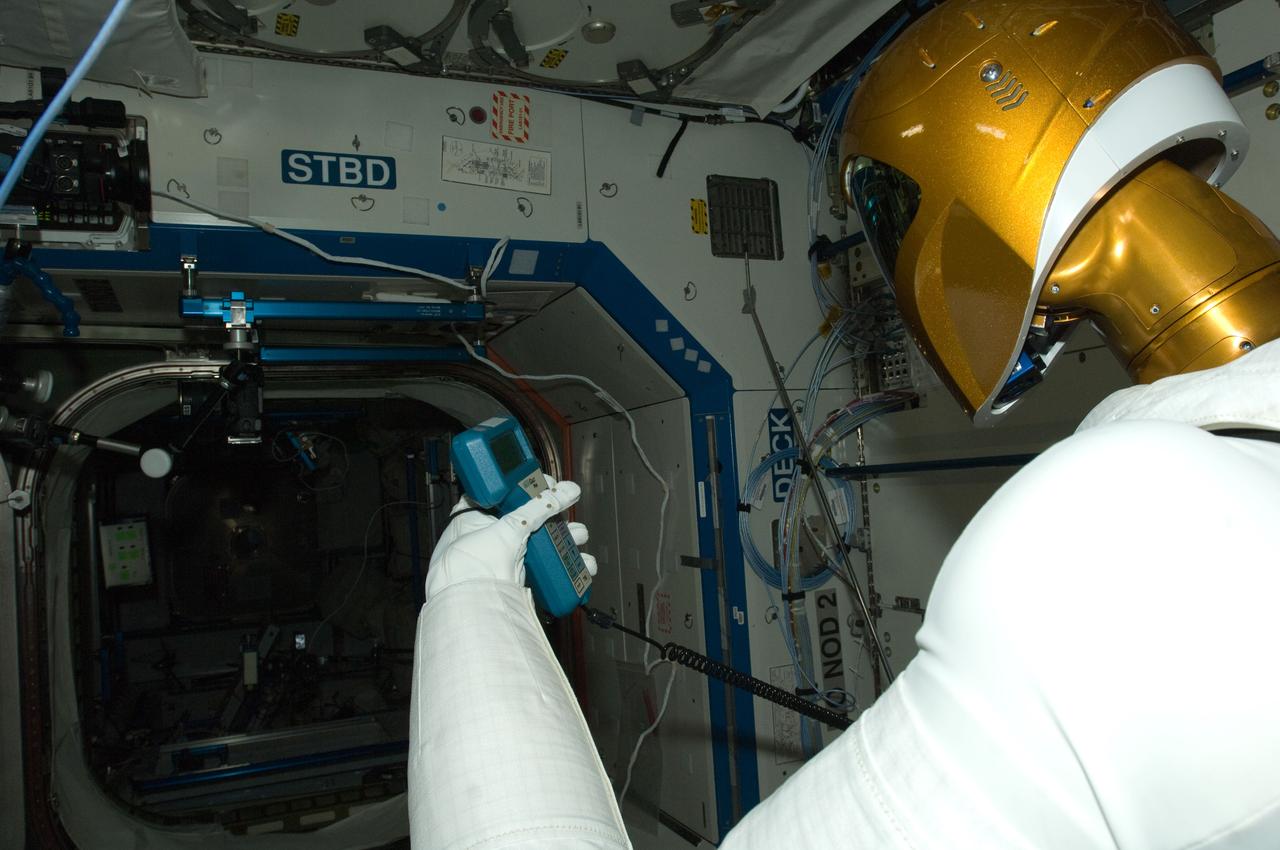
ISS030-E-142876 (14 March 2012) --- Controlled by teams on the ground, Robonaut 2 humanoid robot holds an instrument to measure air velocity during another system check out in the Destiny laboratory of the International Space Station.
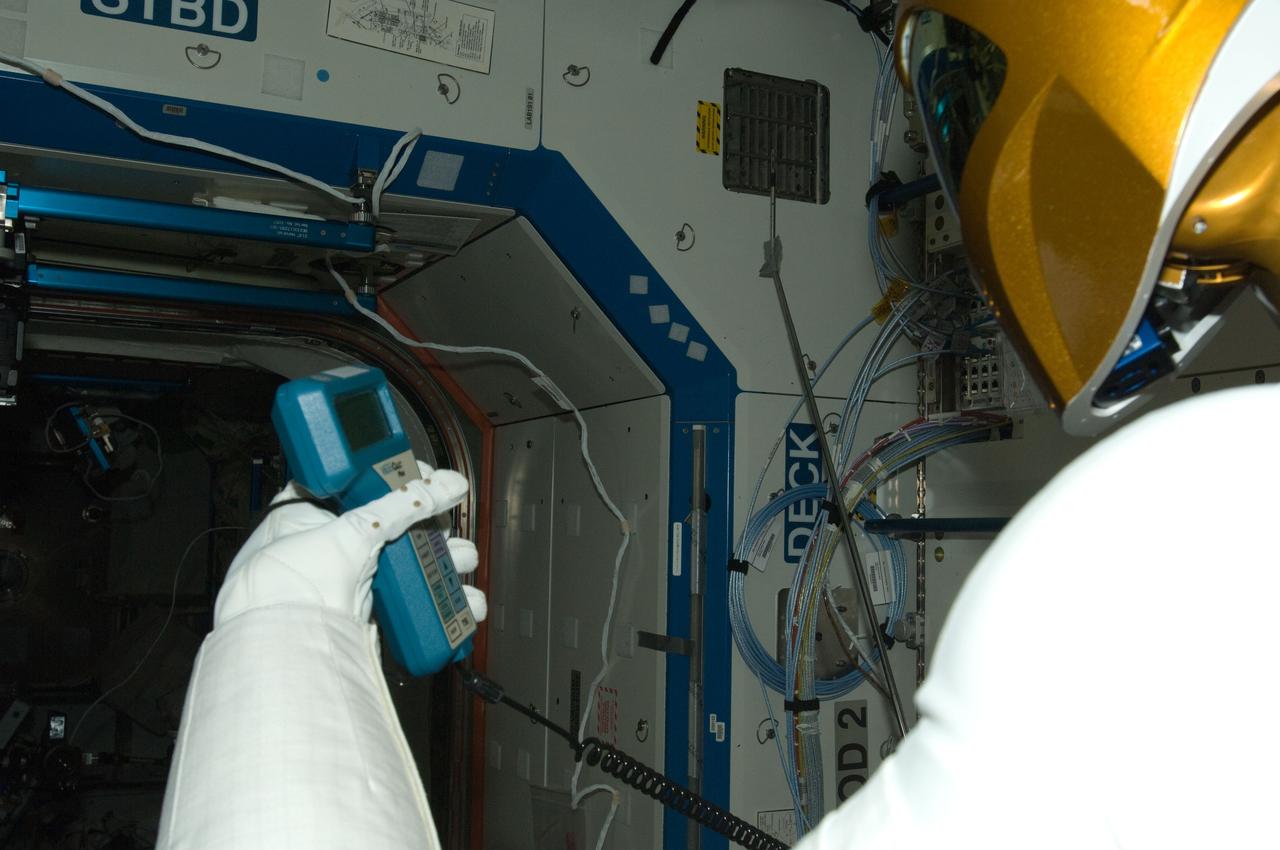
ISS030-E-142875 (14 March 2012) --- Controlled by teams on the ground, Robonaut 2 humanoid robot holds an instrument to measure air velocity during another system check out in the Destiny laboratory of the International Space Station.
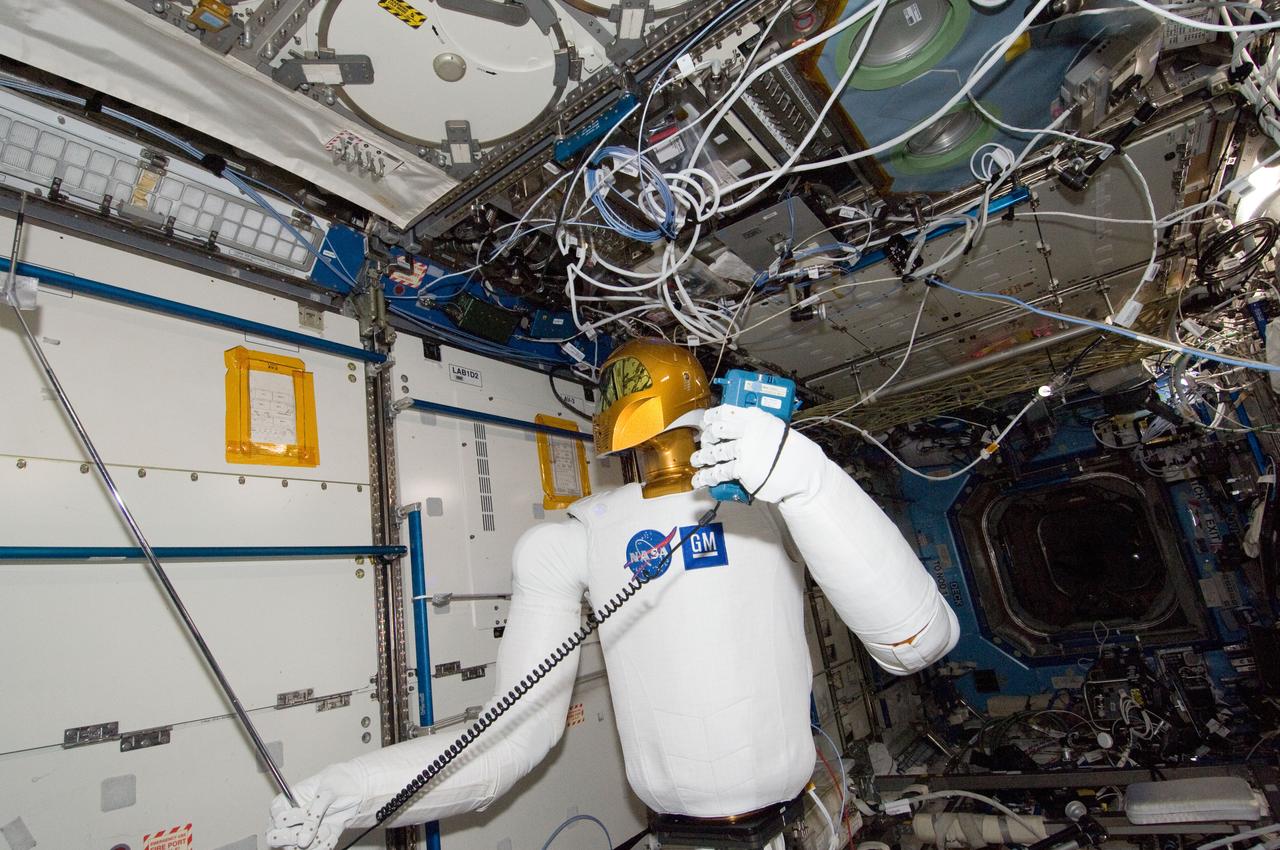
ISS030-E-148257 (14 March 2012) --- Controlled by teams on the ground, Robonaut 2 humanoid robot holds an instrument to measure air velocity during another system check out in the Destiny laboratory of the International Space Station.
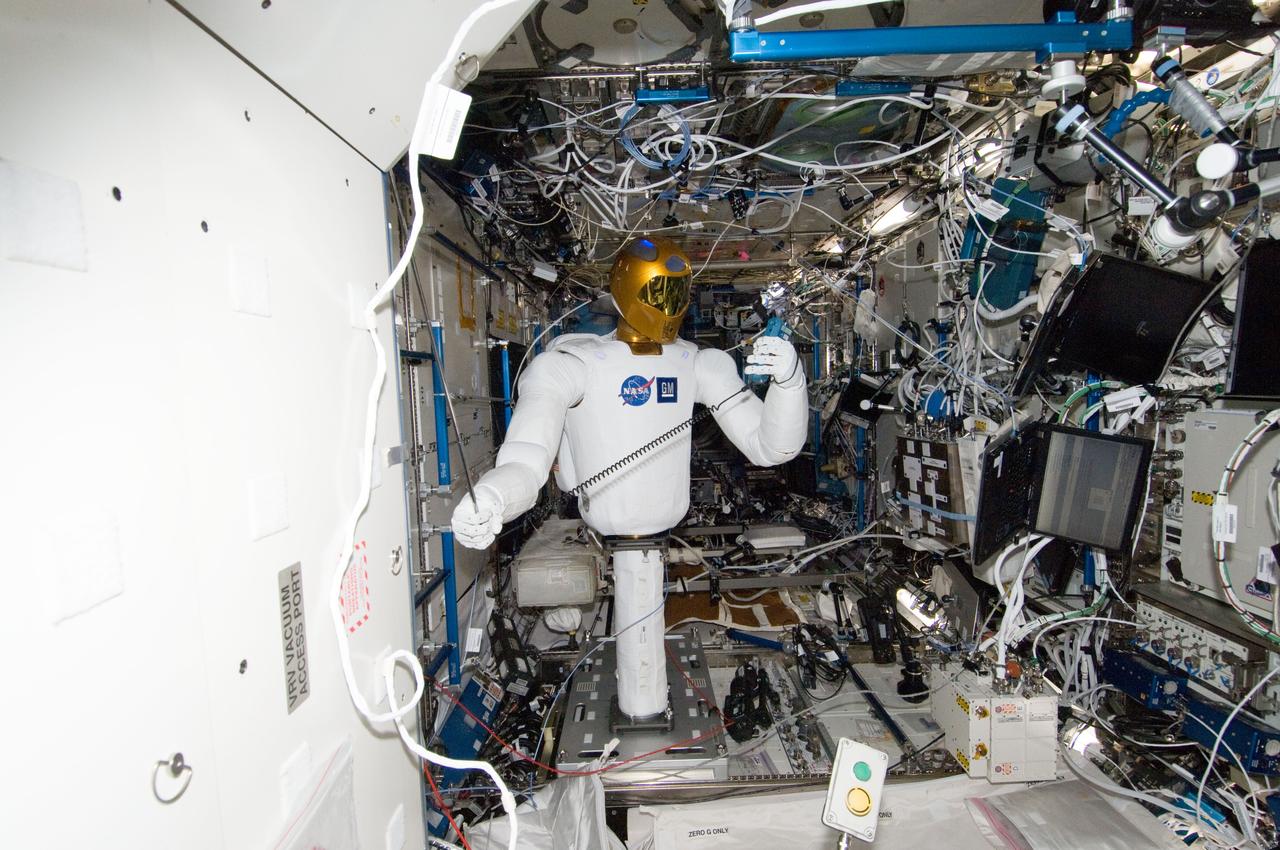
ISS030-E-148273 (14 March 2012) --- Controlled by teams on the ground, Robonaut 2 humanoid robot holds an instrument to measure air velocity during another system check out in the Destiny laboratory of the International Space Station.
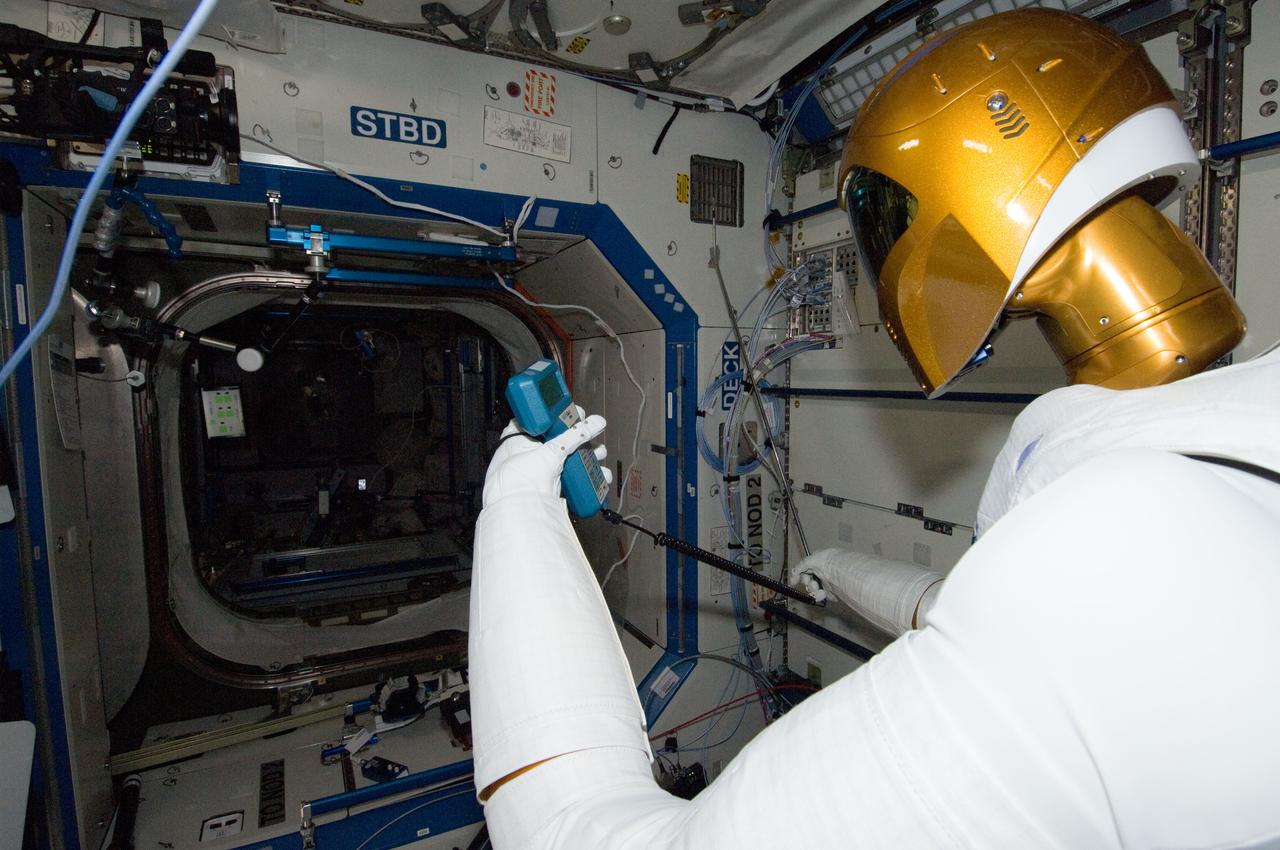
ISS030-E-148268 (14 March 2012) --- Controlled by teams on the ground, Robonaut 2 humanoid robot holds an instrument to measure air velocity during another system check out in the Destiny laboratory of the International Space Station.
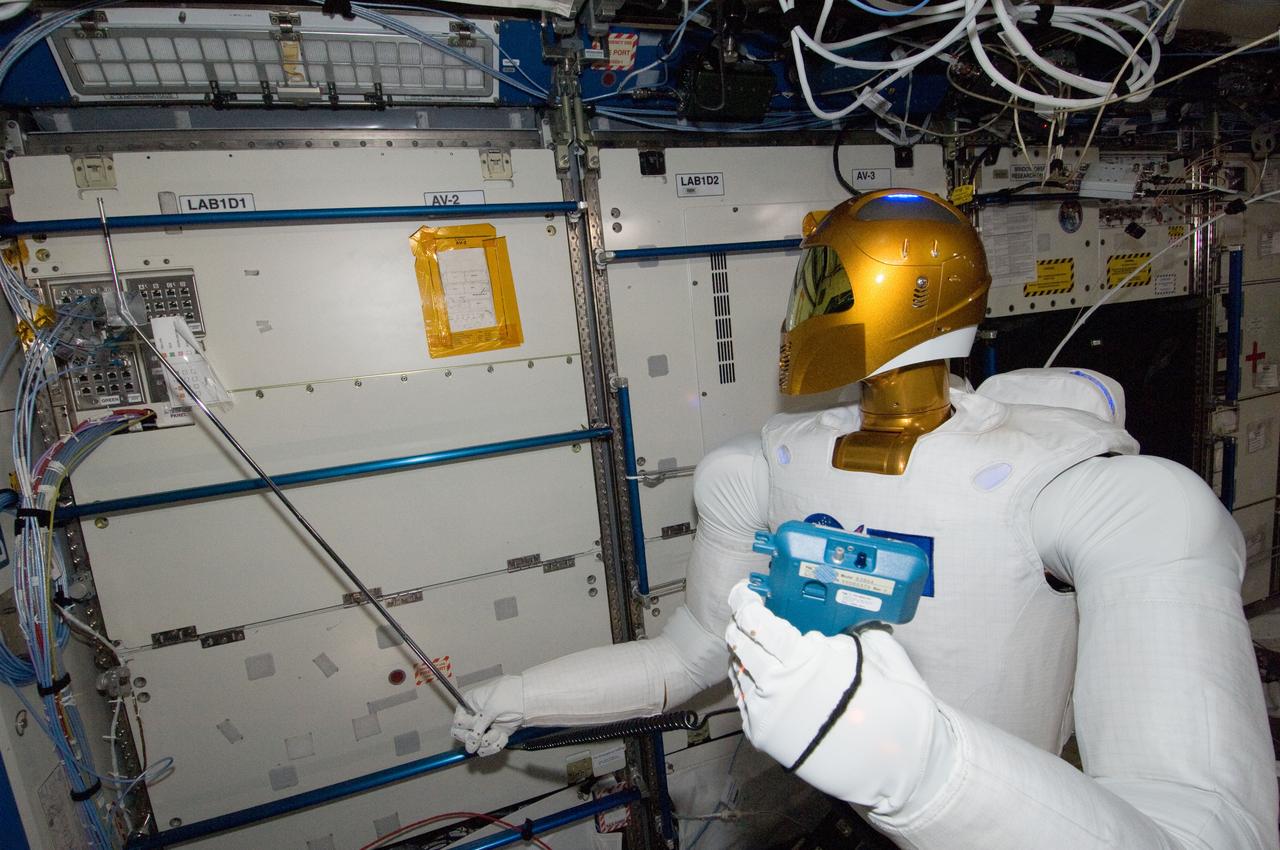
ISS030-E-148260 (14 March 2012) --- Controlled by teams on the ground, Robonaut 2 humanoid robot holds an instrument to measure air velocity during another system check out in the Destiny laboratory of the International Space Station.
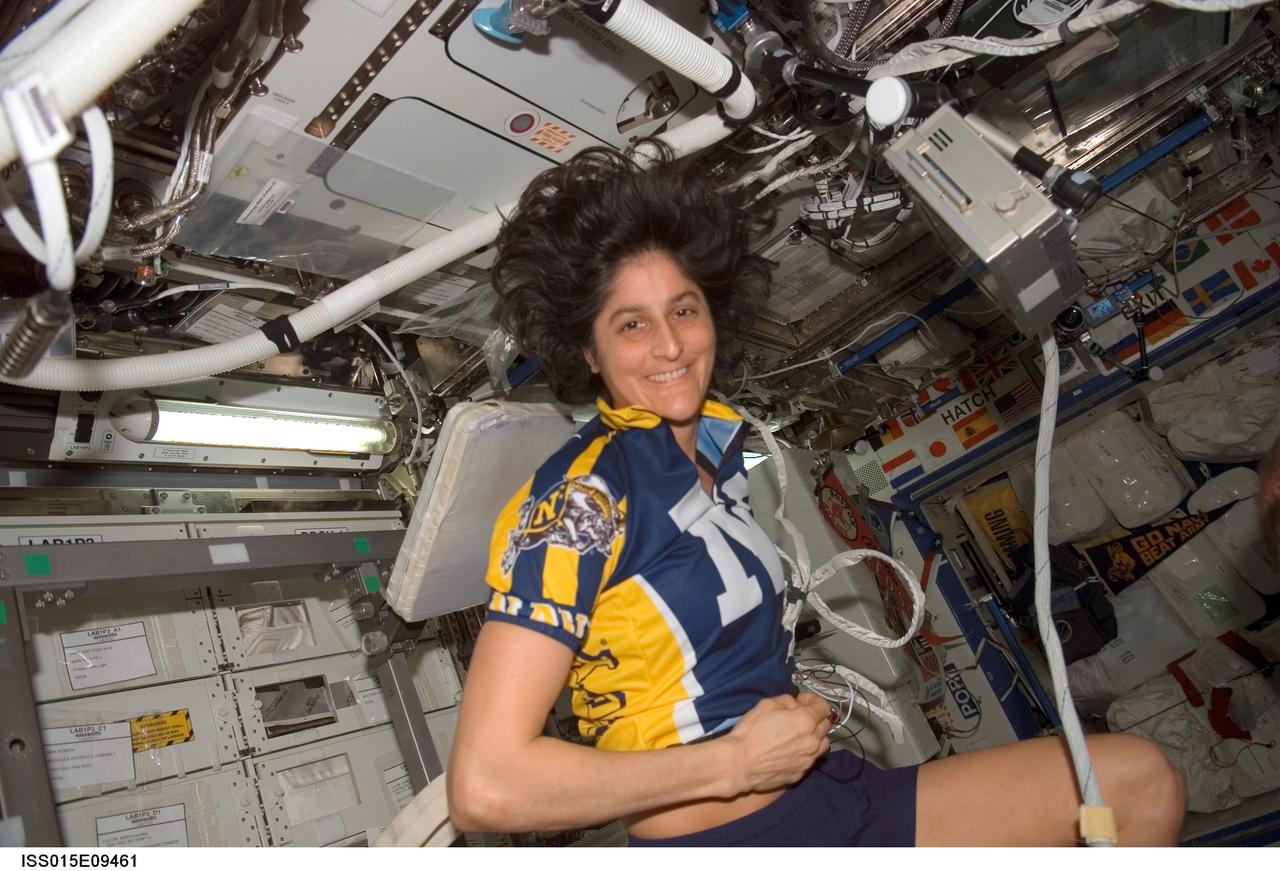
ISS015-E-09461 (24 May 2007) --- Astronaut Sunita L. Williams, Expedition 15 flight engineer, exercises on the Cycle Ergometer with Vibration Isolation System (CEVIS) during a Periodic Fitness Evaluation with Oxygen Uptake Measurement (PFE-OUM) experiment in the Destiny laboratory of the International Space Station.
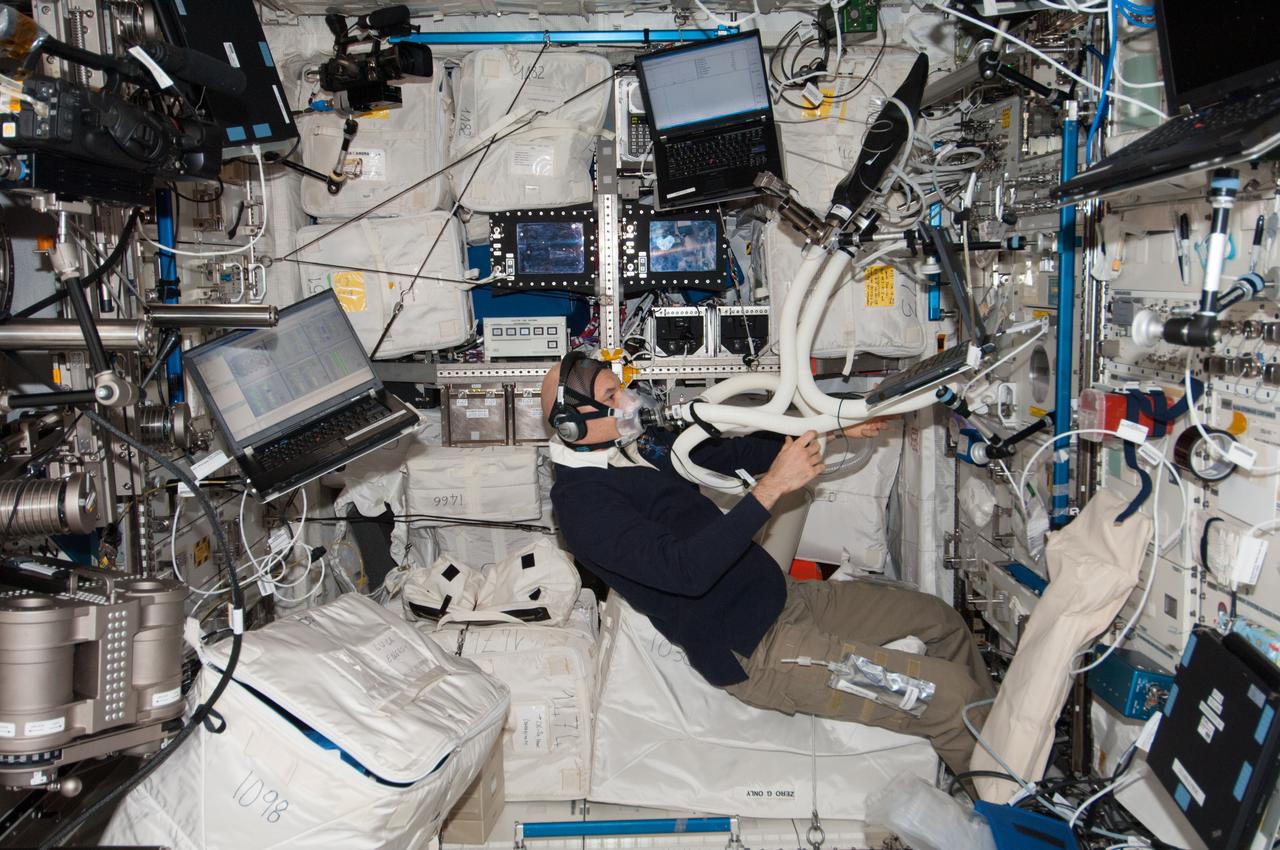
ISS037-E-004950 (2 Oct. 2013) --- European Space Agency astronaut Luca Parmitano, Expedition 37 flight engineer, performs an oxygen uptake measurement session in the Columbus laboratory of the International Space Station. He is wearing a Pulmonary Function System (PFS) face mask during the session.
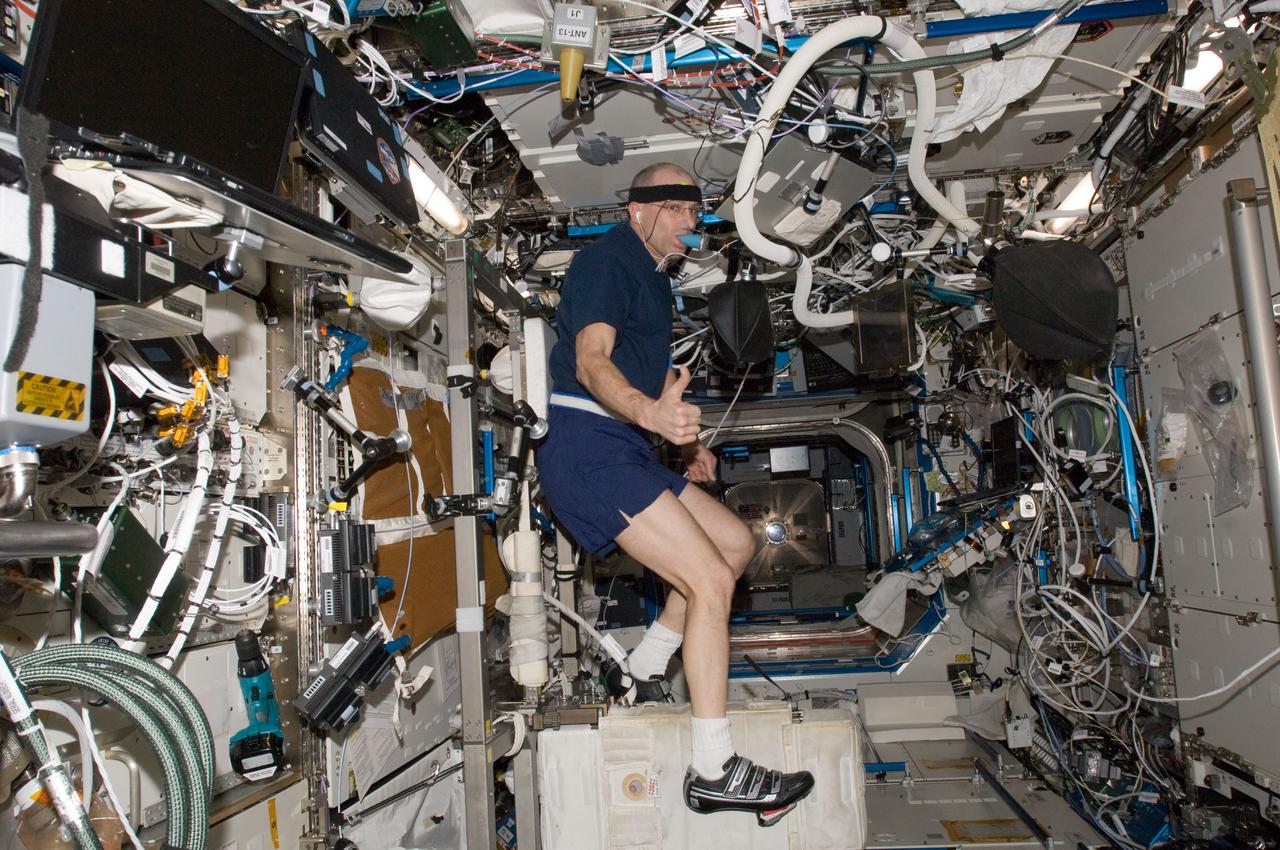
ISS030-E-132542 (7 March 2012) --- NASA astronaut Don Pettit, Expedition 30 flight engineer, performs a VO2max experiment while using the Cycle Ergometer with Vibration Isolation System (CEVIS) in the Destiny laboratory of the International Space Station. VO2max uses the Portable Pulmonary Function System (PPFS), CEVIS, Pulmonary Function System (PFS) gas cylinders and mixing bag system, plus multiple other pieces of hardware to measure oxygen uptake and cardiac output.
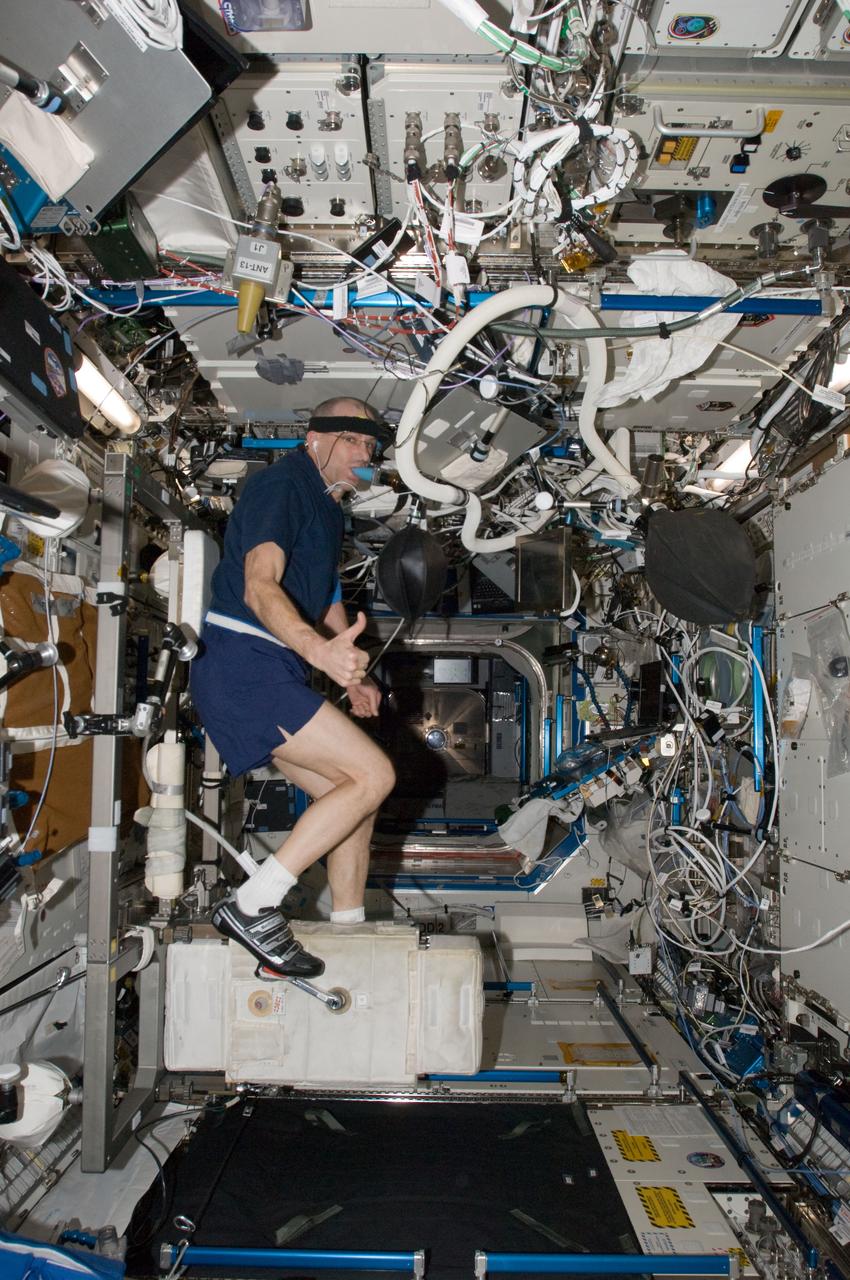
ISS030-E-132541 (7 March 2012) --- NASA astronaut Don Pettit, Expedition 30 flight engineer, performs a VO2max experiment while using the Cycle Ergometer with Vibration Isolation System (CEVIS) in the Destiny laboratory of the International Space Station. VO2max uses the Portable Pulmonary Function System (PPFS), CEVIS, Pulmonary Function System (PFS) gas cylinders and mixing bag system, plus multiple other pieces of hardware to measure oxygen uptake and cardiac output.
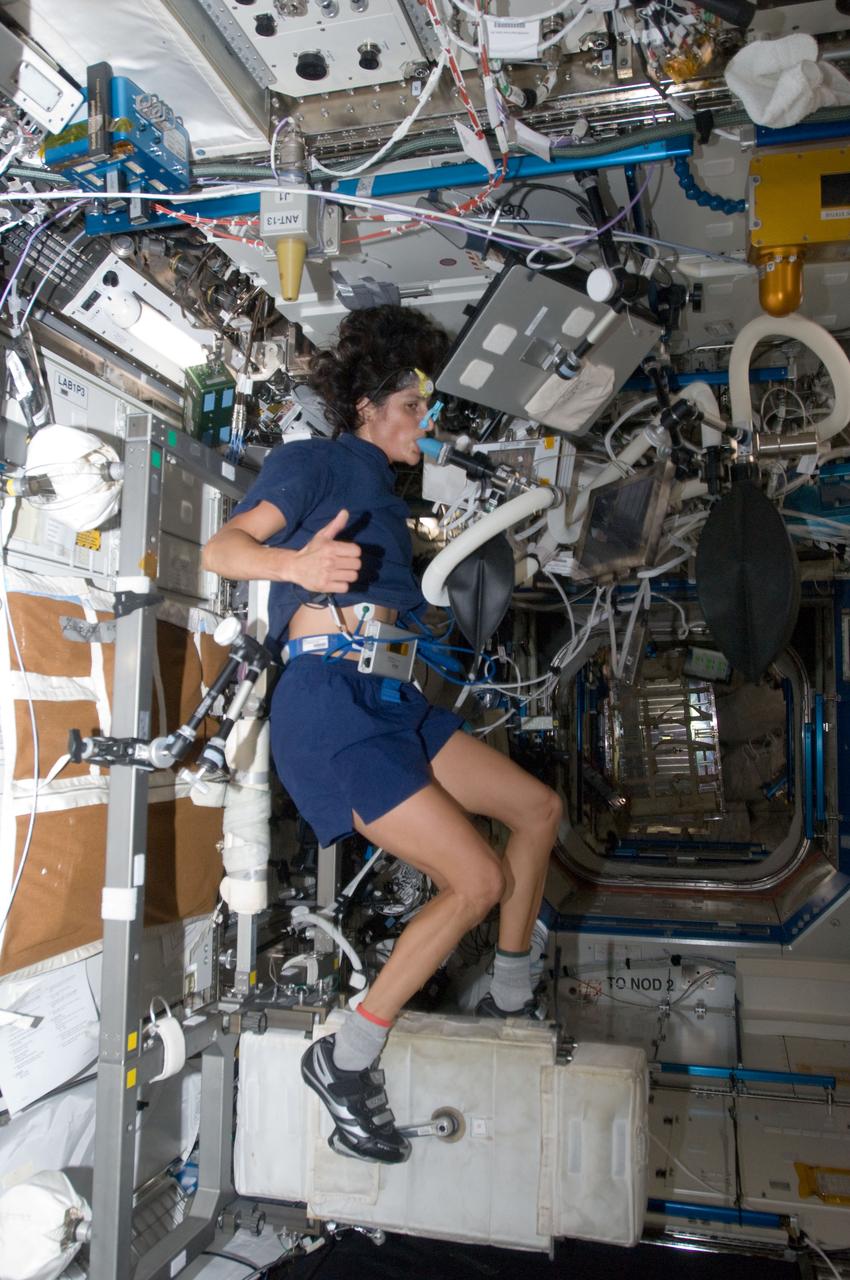
ISS032-E-016875 (8 Aug. 2012) --- NASA astronaut Sunita Williams, Expedition 32 flight engineer, performs a VO2max experiment while using the Cycle Ergometer with Vibration Isolation System (CEVIS) in the Destiny laboratory of the International Space Station. VO2max uses the Portable Pulmonary Function System (PPFS), CEVIS, Pulmonary Function System (PFS) gas cylinders and mixing bag system, plus multiple other pieces of hardware to measure oxygen uptake and cardiac output.
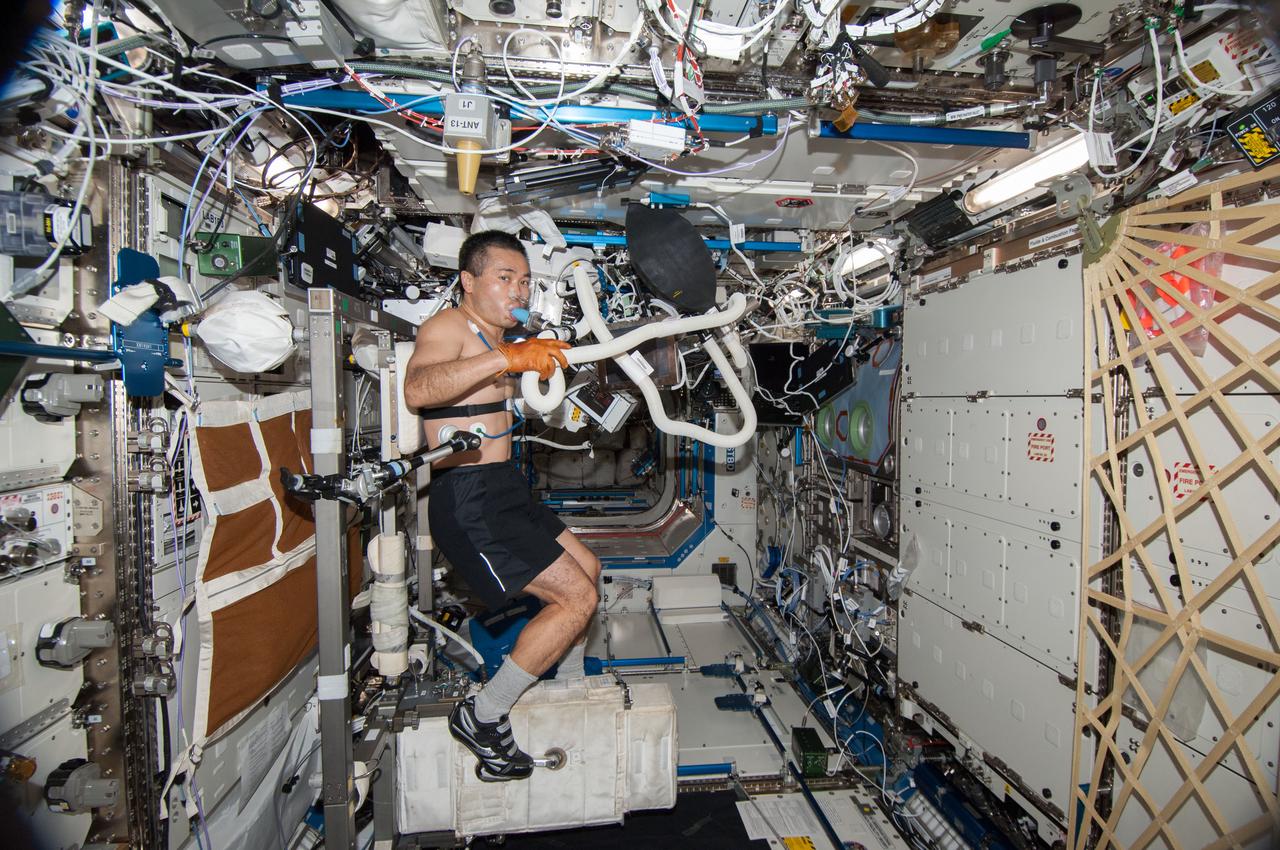
ISS038-E-009211 (26 Nov. 2013) --- Japan Aerospace Exploration Agency astronaut Koichi Wakata, Expedition 38 flight engineer, performs a VO2max session for the SPRINT investigation while using the Cycle Ergometer with Vibration Isolation System (CEVIS) in the Destiny laboratory of the International Space Station. VO2max uses the Portable Pulmonary Function System (PPFS), CEVIS, Pulmonary Function System (PFS) gas cylinders and mixing bag system, plus multiple other pieces of hardware to measure oxygen uptake and cardiac output.
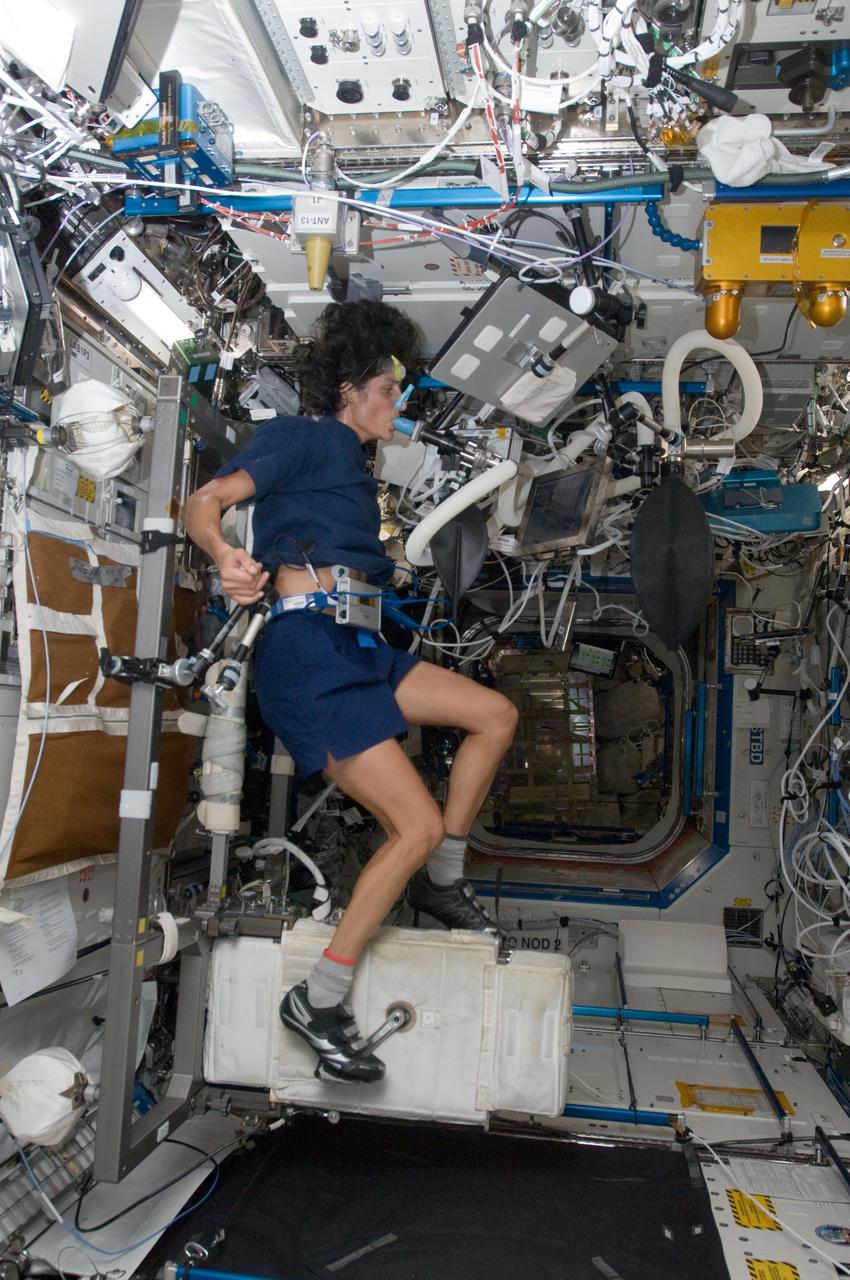
ISS032-E-016876 (8 Aug. 2012) --- NASA astronaut Sunita Williams, Expedition 32 flight engineer, performs a VO2max experiment while using the Cycle Ergometer with Vibration Isolation System (CEVIS) in the Destiny laboratory of the International Space Station. VO2max uses the Portable Pulmonary Function System (PPFS), CEVIS, Pulmonary Function System (PFS) gas cylinders and mixing bag system, plus multiple other pieces of hardware to measure oxygen uptake and cardiac output.
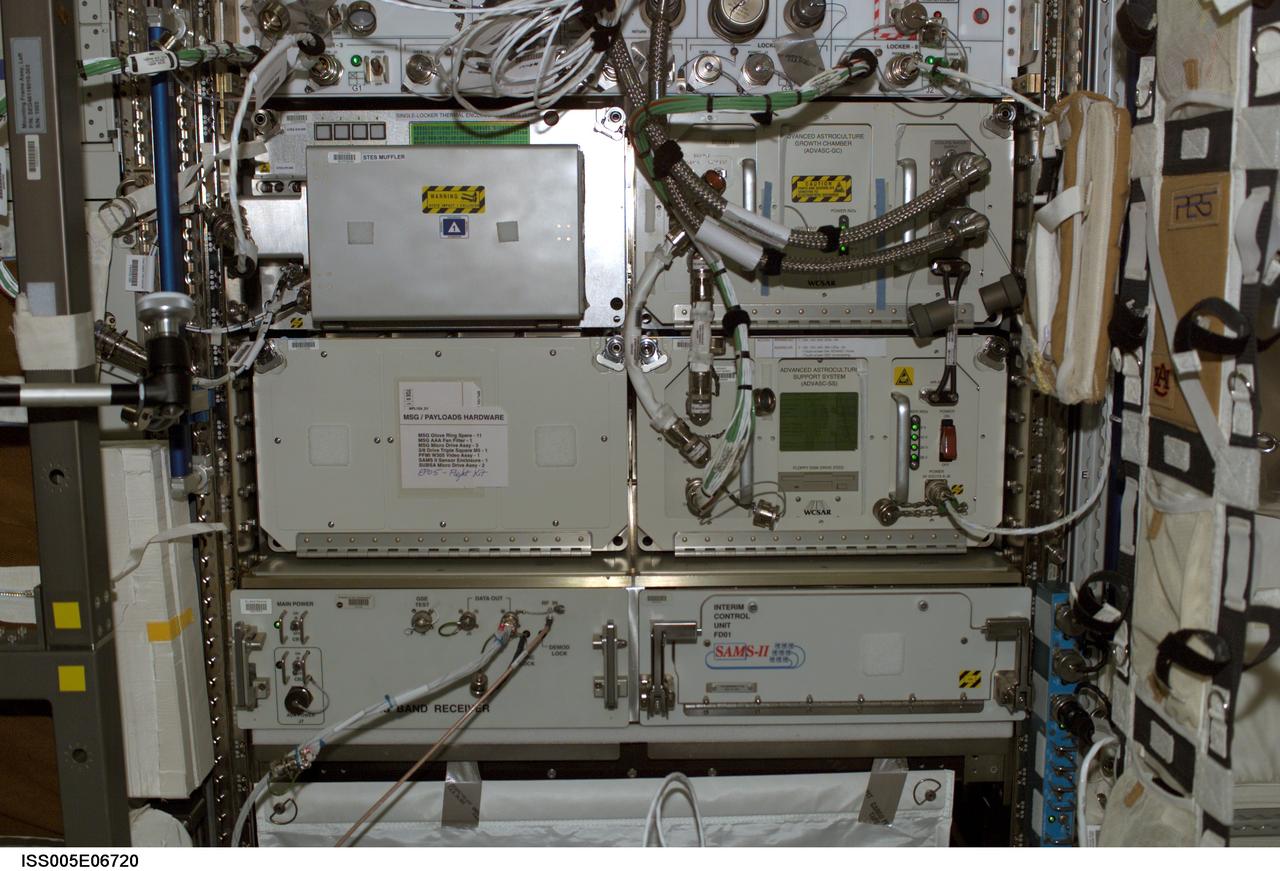
iss005e06720 (7/4/2002) --- Front view of Express Rack 4 in the U.S. Laboratory / Destiny taken during Expedition Five. Visible in the rack are the following items: Single-Locker Thermal Enclosure System (STES) Muffler, Advanced Astroculture Growth Chamber (ADVASC-GC), Advanced Astroculture Support System (ADVASC-SS). And Space Acceleration and Measurement System (SAMS) II.
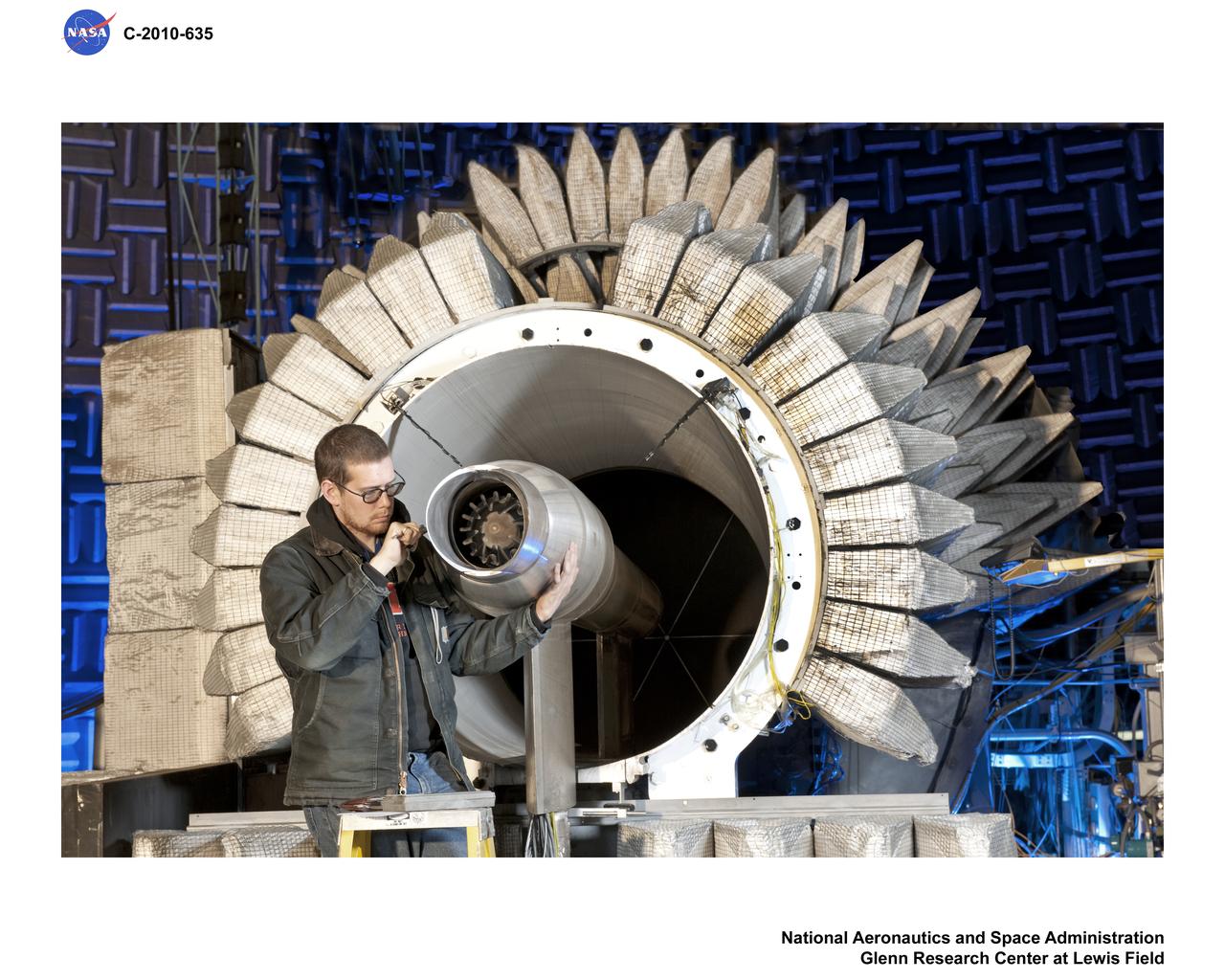
New testing is underway in the Aero-Acoustic Propulsion Laboratory (AAPL) at NASA's Glenn Research Center. The research focuses on a model called the Highly Variable Cycle Exhaust System -- a 0.17 scale model of an exhaust system that will operate at subsonic, transonic and supersonic exhaust speeds in a future supersonic business jet. The model features ejector doors used at different angles. Researchers are investigating the impact of these ejectors on the resulting acoustic radiation. Here, Steven Sedensky, a mechanical engineer with Jacobs Sverdrup, takes measurements of the ejector door positions.

S129-E-007227 (21 Nov. 2009) --- Astronaut Randy Bresnik (near the Columbus laboratory), STS-129 mission specialist, participates in the mission's second session of extravehicular activity (EVA) as construction and maintenance continue on the International Space Station. During the six-hour, eight-minute spacewalk, Bresnik and astronaut Mike Foreman (out of frame), mission specialist, installed a Grappling Adaptor to On-Orbit Railing Assembly, or GATOR, on the Columbus laboratory. GATOR contains a ship-tracking antenna system and a HAM radio antenna. They relocated a floating potential measurement unit that gauges electric charges that build up on the station, deployed a Payload Attach System on the space-facing side of the Starboard 3 truss segment and installed a wireless video system that allows spacewalkers to transmit video to the station and relay it to Earth.
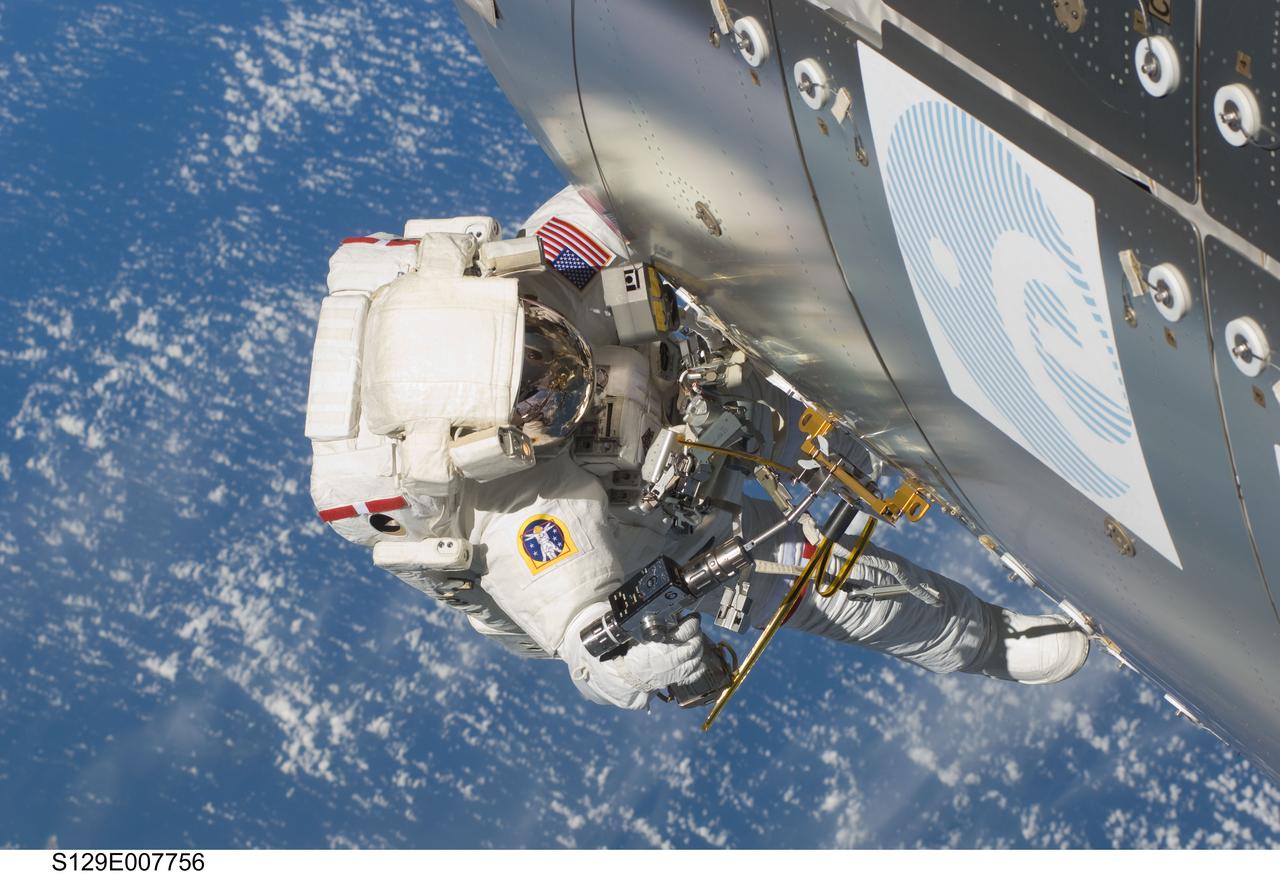
S129-E-007756 (21 Nov. 2009) --- Astronaut Randy Bresnik (near the Columbus laboratory), STS-129 mission specialist, participates in the mission's second session of extravehicular activity (EVA) as construction and maintenance continue on the International Space Station. During the six-hour, eight-minute spacewalk, Bresnik and astronaut Mike Foreman (out of frame), mission specialist, installed a Grappling Adaptor to On-Orbit Railing Assembly, or GATOR, on the Columbus laboratory. GATOR contains a ship-tracking antenna system and a HAM radio antenna. They relocated a floating potential measurement unit that gauges electric charges that build up on the station, deployed a Payload Attach System on the space-facing side of the Starboard 3 truss segment and installed a wireless video system that allows spacewalkers to transmit video to the station and relay it to Earth.
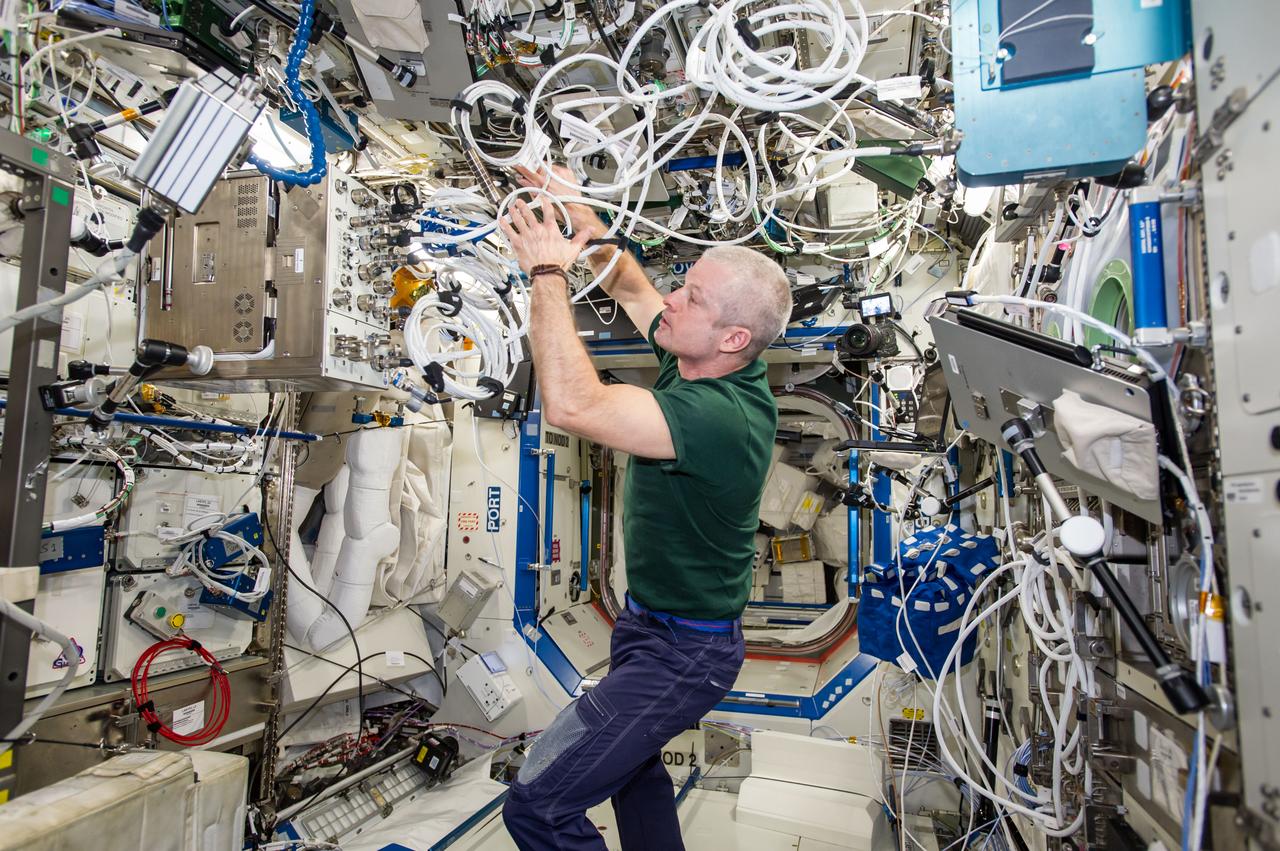
ISS040-E-123262 (2 Sept. 2014) --- NASA astronaut Steve Swanson, Expedition 40 commander, sets up the Portable Pulmonary Function System hardware for Sprint VO2max sessions in the Destiny laboratory of the International Space Station. The Sprint experiment measures the effectiveness of high-intensity, low-volume exercise training in minimizing the loss of muscle mass and bone density that occurs during spaceflight.
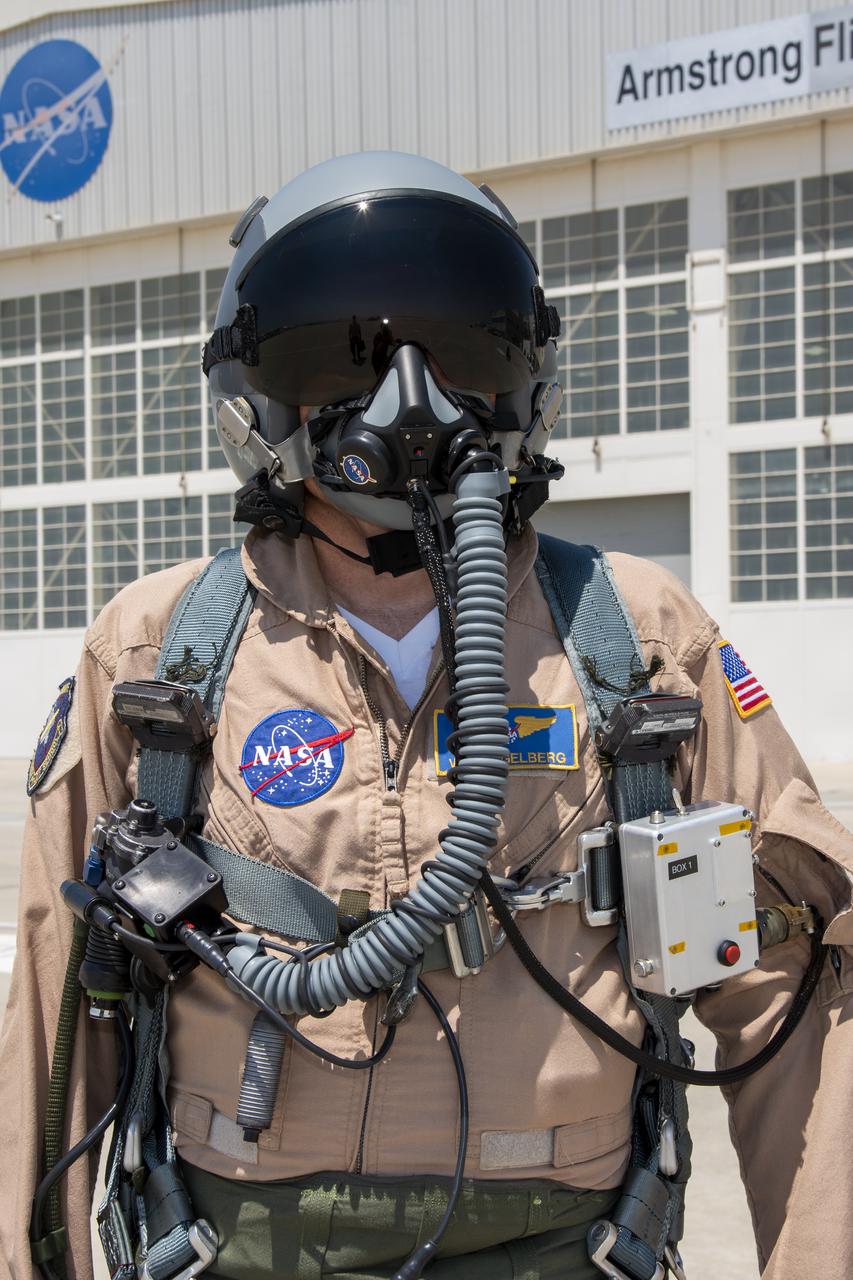
NASA research pilot Wayne Ringelberg wears a U.S. Air Force configuration of the NASA Jet Propulsion Laboratory in California prototype mask, which uses laser sensors to determine levels of carbon dioxide and water exhaled inside the mask. This prototype was tested in conjunction with the current VigilOX system, which measures the pilot’s oxygen concentration, breathing pressures and flow rates. This and the U.S. Navy configuration was used in the Pilot Breathing Assessment program at NASA’s Armstrong Flight Research Center in California.
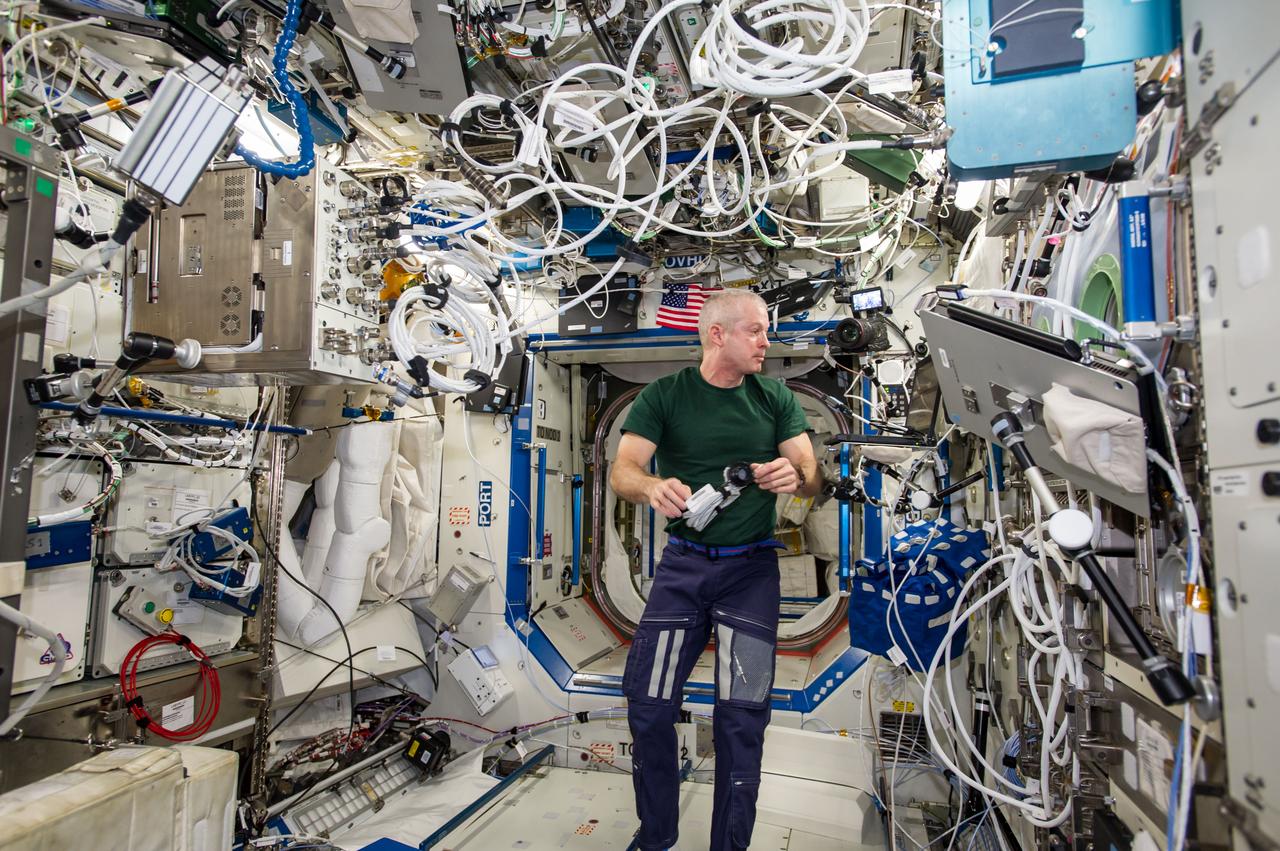
ISS040-E-123259 (2 Sept. 2014) --- NASA astronaut Steve Swanson, Expedition 40 commander, prepares to set up the Portable Pulmonary Function System hardware for Sprint VO2max sessions in the Destiny laboratory of the International Space Station. The Sprint experiment measures the effectiveness of high-intensity, low-volume exercise training in minimizing the loss of muscle mass and bone density that occurs during spaceflight.
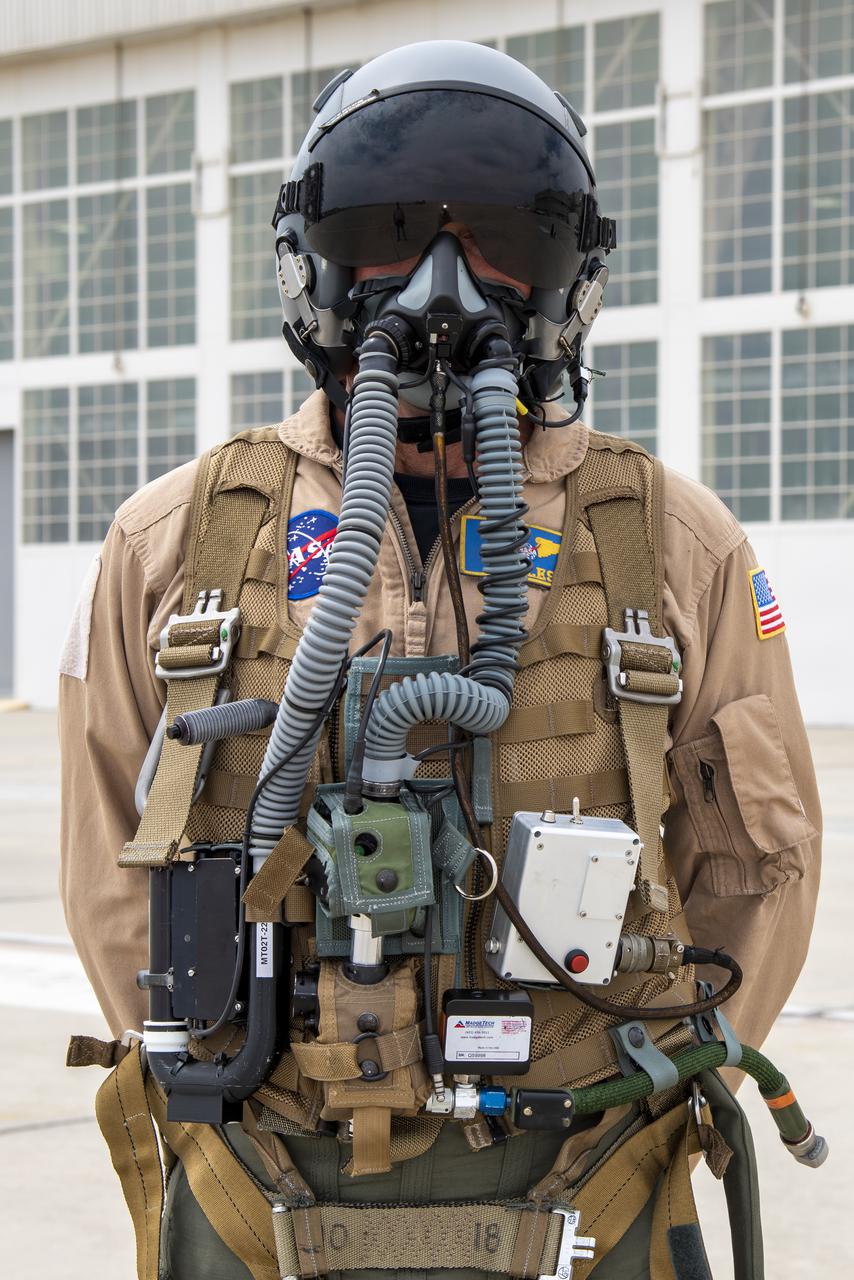
NASA research pilot Jim Less wears a U.S. Navy harness configuration with the NASA Jet Propulsion Laboratory in California prototype mask, which uses laser sensors to determine levels of carbon dioxide and water exhaled inside the mask. This prototype was tested in conjunction with the current VigilOX system, which measures the pilot’s oxygen concentration, breathing pressures and flow rates. This and the U.S. Air Force configuration was used in the Pilot Breathing Assessment program at NASA’s Armstrong Flight Research Center in California.
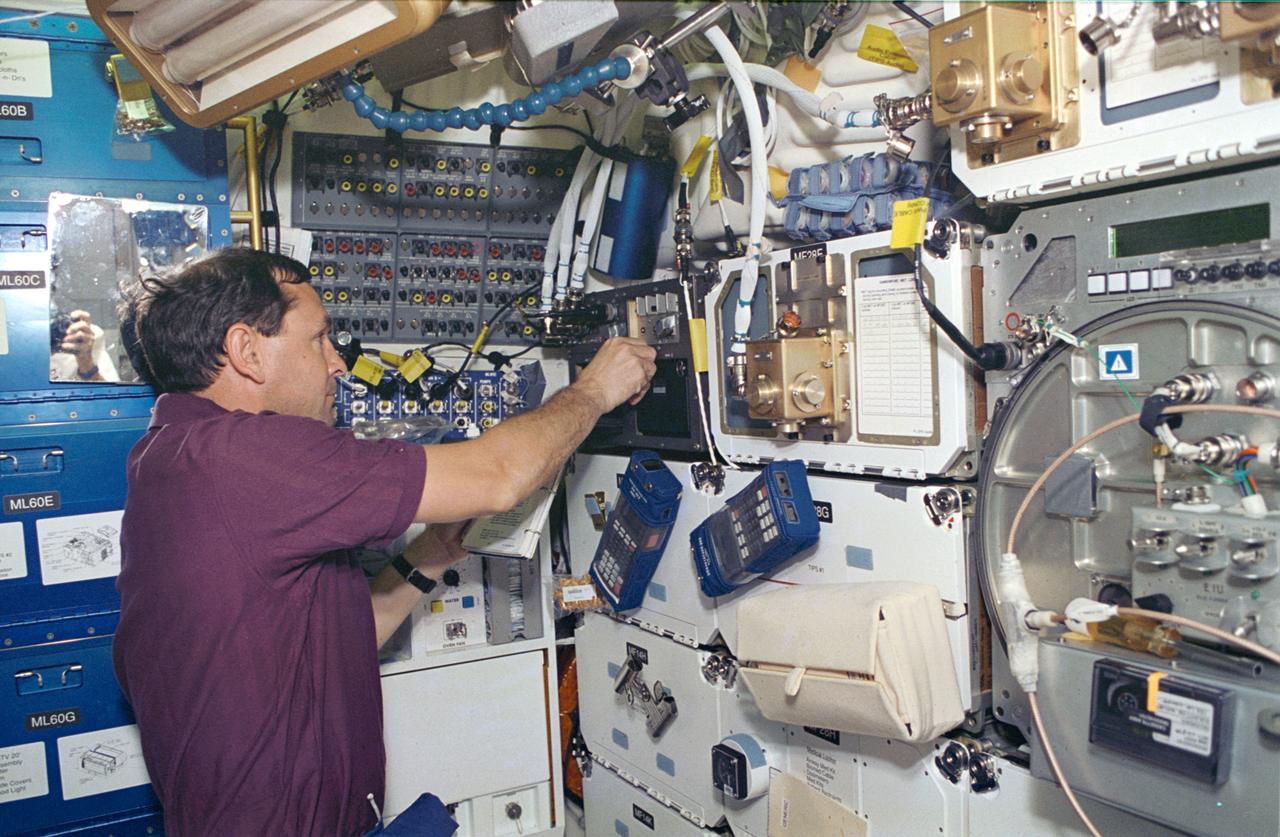
STS066-14-021 (3-14 Nov 1994) --- On the Space Shuttle Atlantis' mid-deck, astronaut Curtis L. Brown, Jr., pilot, works with the Space Acceleration Measurement System (SAMS), which is making its eleventh Shuttle flight. This system supports the Protein Crystal Growth (PCG) experiments onboard by collecting and recording data characterizing the microgravity environment in the Shuttle mid-deck. Brown joined four other NASA astronauts and a European Space Agency (ESA) astronaut for 11-days aboard Atlantis in support of the Atmospheric Laboratory for Applications and Science (ATLAS-3) mission.
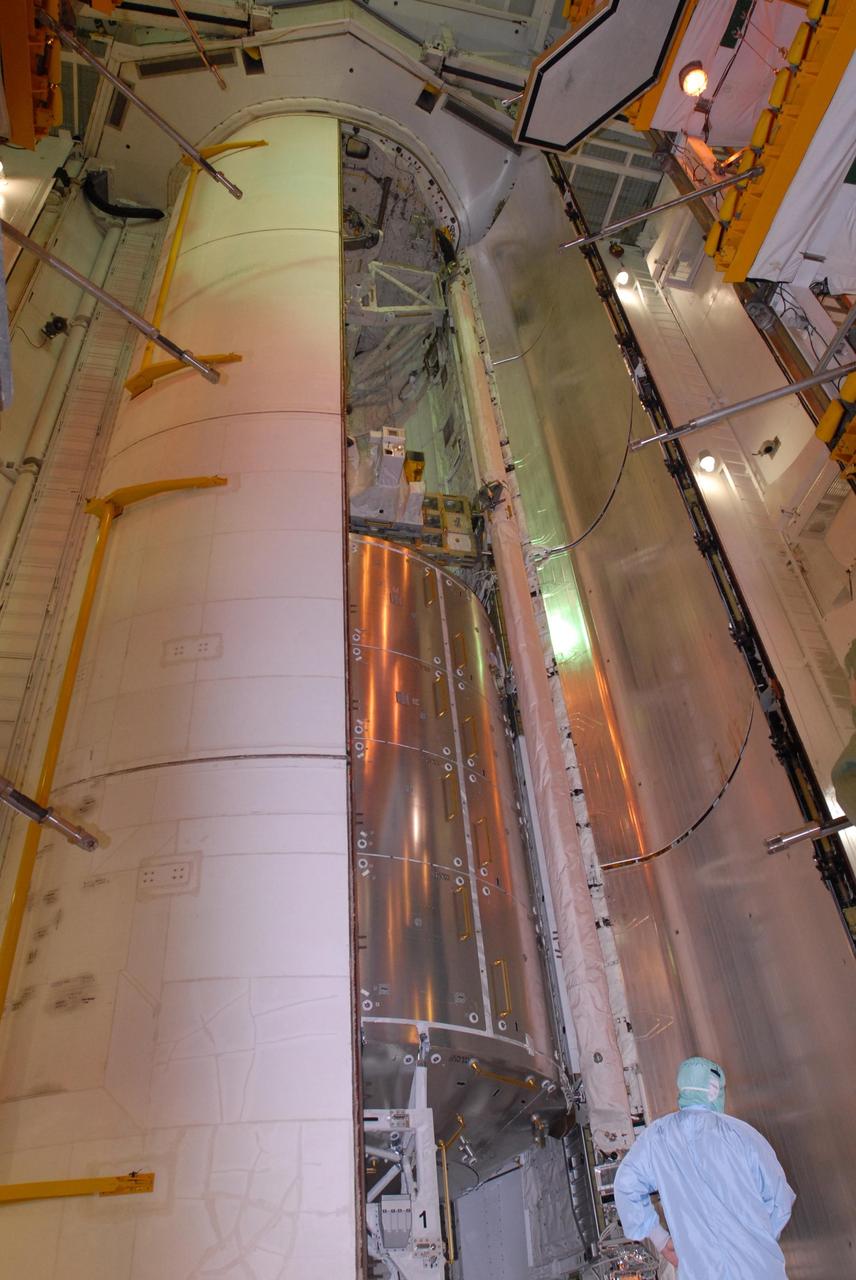
KENNEDY SPACE CENTER, FLA. -- On Launch Pad 39A, one of space shuttle Atlantis' payload bay doors is nearly closed. Inside can still be seen the Columbus Laboratory (below), the integrated cargo carrier - lite (middle) and the orbital docking system (above). Atlantis is being secured for launch on Dec. 6 on mission STS-122 to the International Space Station. The Columbus laboratory module, built by the European Space Agency, is approximately 23 feet long and 15 feet wide, allowing it to hold 10 large racks of experiments. The carrier holds three elements: a nitrogen tank assembly that is part of the external active thermal control system on the International Space Station, the European Technology Exposure Facility composed of nine science instruments and an autonomous temperature measurement unit, and the SOLAR payload designed for sun observation. Photo credit: NASA/George Shelton
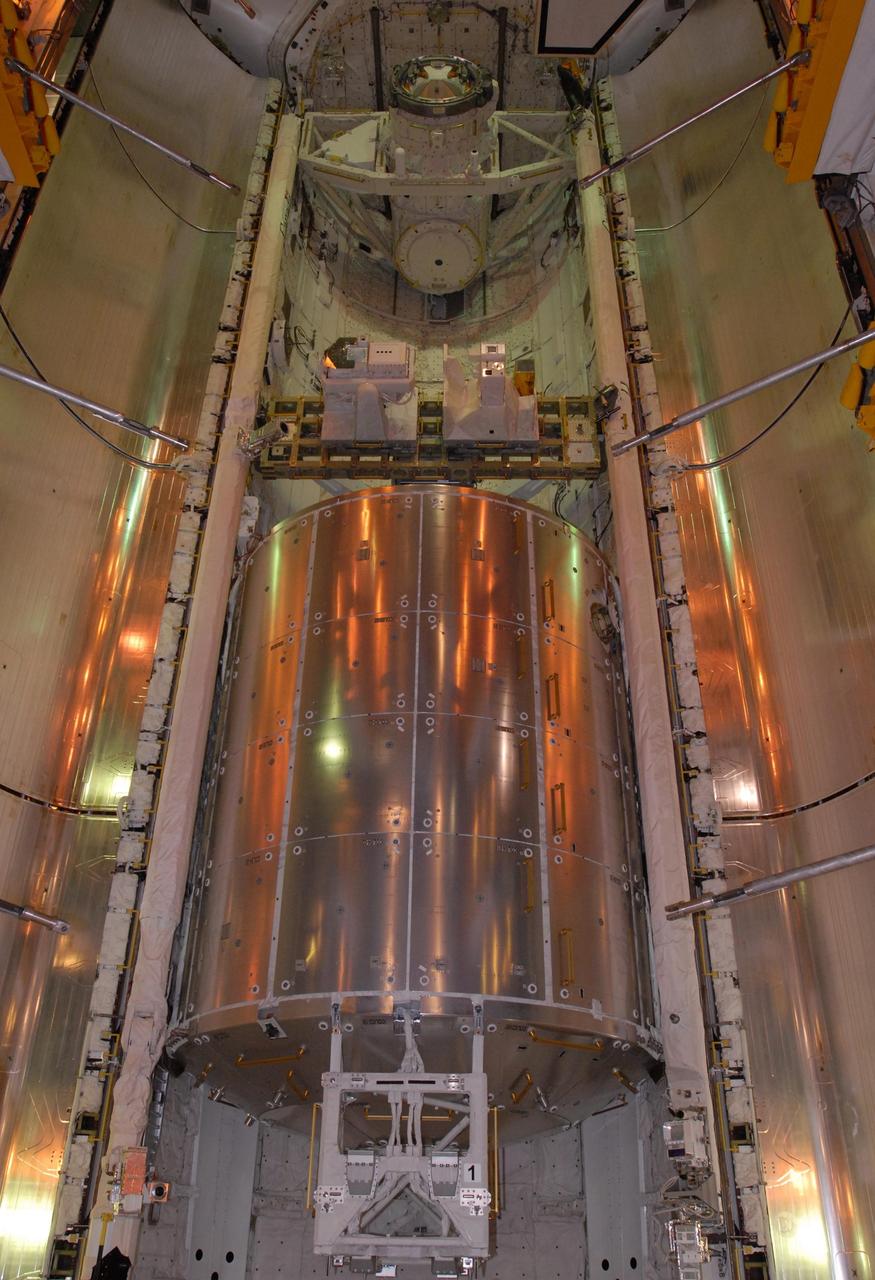
KENNEDY SPACE CENTER, FLA. -- On Launch Pad 39A, space shuttle Atlantis' payload bay doors are closing. Seen here are the Columbus Laboratory (below), the integrated cargo carrier - lite (middle) and the orbital docking system (above). Atlantis is being secured for launch on Dec. 6 on mission STS-122 to the International Space Station. The Columbus laboratory module, built by the European Space Agency, is approximately 23 feet long and 15 feet wide, allowing it to hold 10 large racks of experiments. The carrier holds three elements: a nitrogen tank assembly that is part of the external active thermal control system on the International Space Station, the European Technology Exposure Facility composed of nine science instruments and an autonomous temperature measurement unit, and the SOLAR payload designed for sun observation. Photo credit: NASA/George Shelton
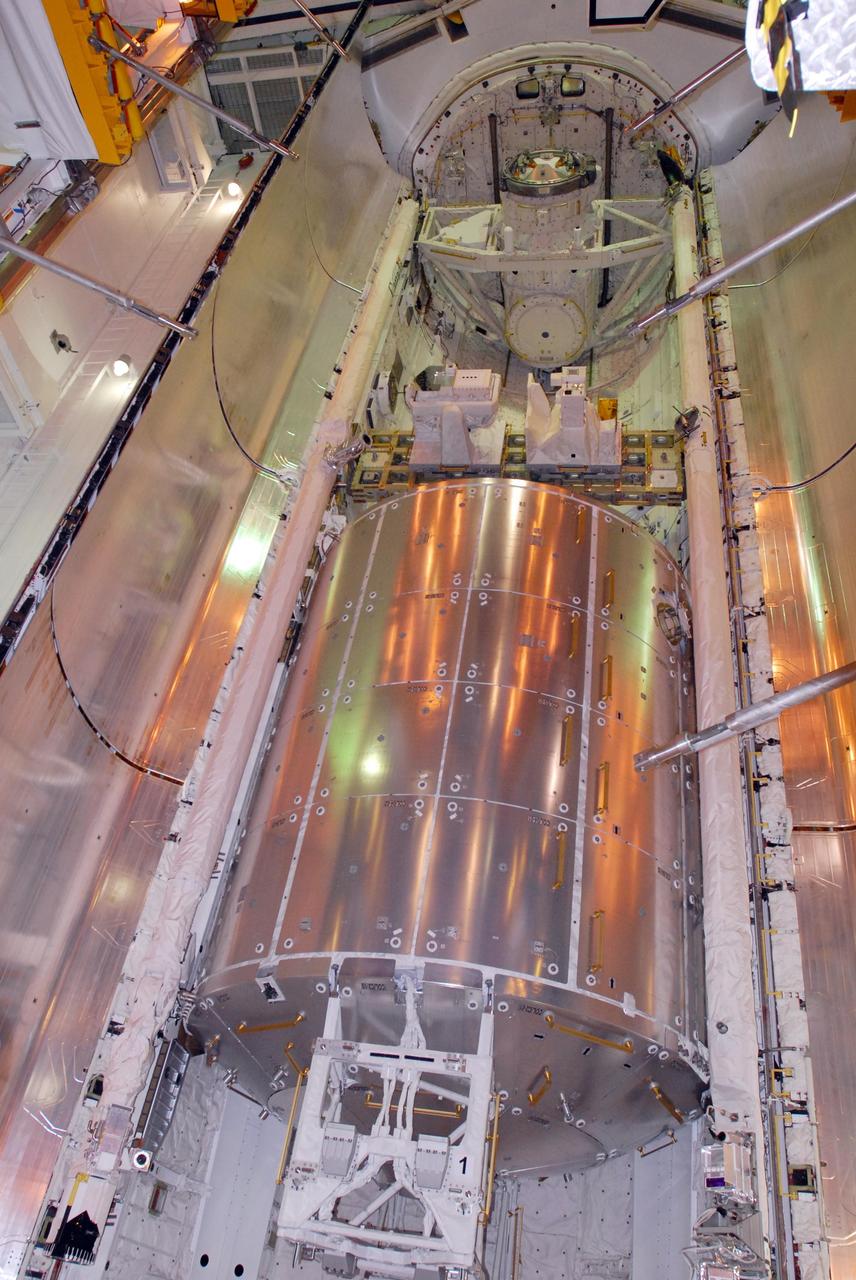
KENNEDY SPACE CENTER, FLA. -- On Launch Pad 39A, space shuttle Atlantis' payload bay doors are closing. Seen here are the Columbus Laboratory (below), the integrated cargo carrier - lite (middle) and the orbital docking system (above). Atlantis is being secured for launch on Dec. 6 on mission STS-122 to the International Space Station. The Columbus laboratory module, built by the European Space Agency, is approximately 23 feet long and 15 feet wide, allowing it to hold 10 large racks of experiments. The carrier holds three elements: a nitrogen tank assembly that is part of the external active thermal control system on the International Space Station, the European Technology Exposure Facility composed of nine science instruments and an autonomous temperature measurement unit, and the SOLAR payload designed for sun observation. Photo credit: NASA/George Shelton
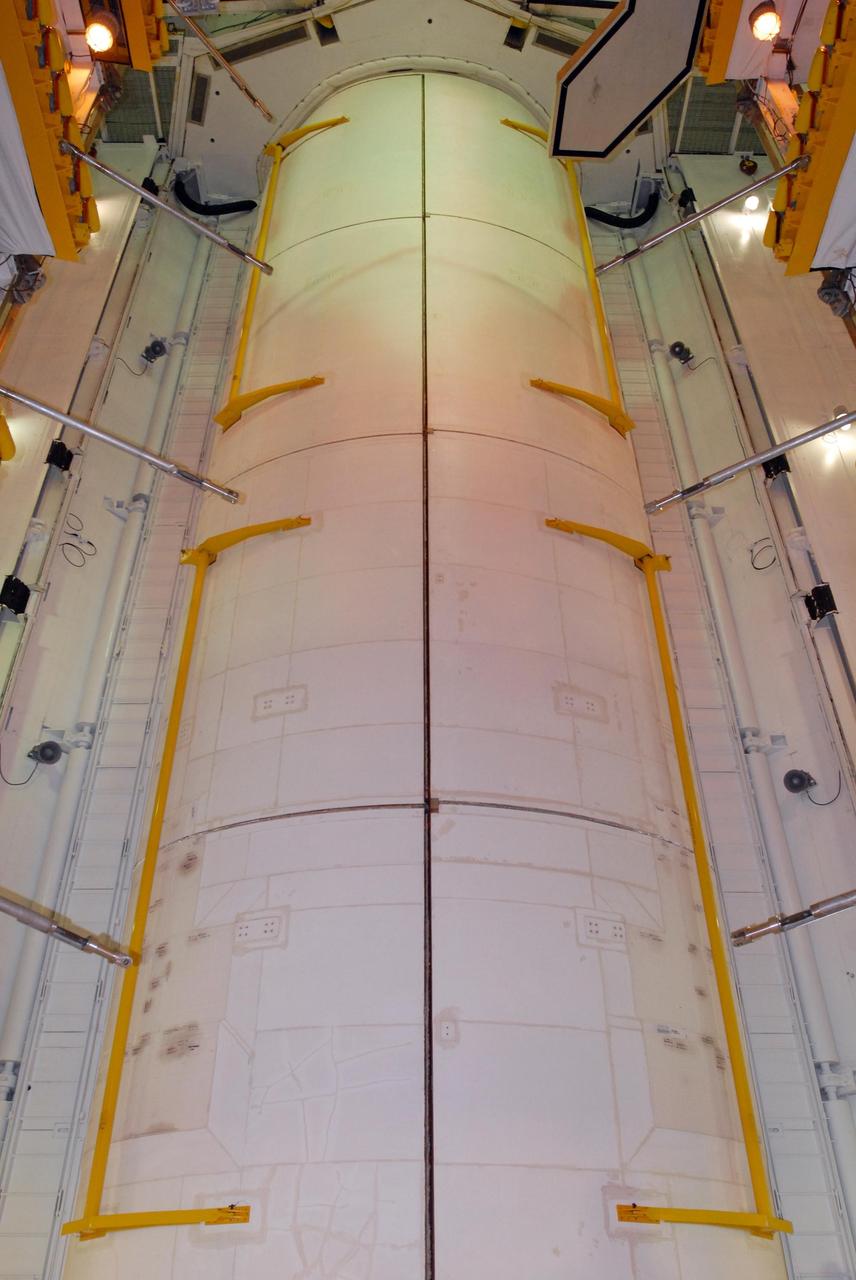
KENNEDY SPACE CENTER, FLA. -- On Launch Pad 39A, space shuttle Atlantis' payload bay doors are closed for launch. Inside are the Columbus Laboratory, the integrated cargo carrier - lite and the orbital docking system. Atlantis is being secured for launch on Dec. 6 on mission STS-122 to the International Space Station. The Columbus laboratory module, built by the European Space Agency, is approximately 23 feet long and 15 feet wide, allowing it to hold 10 large racks of experiments. The carrier holds three elements: a nitrogen tank assembly that is part of the external active thermal control system on the International Space Station, the European Technology Exposure Facility composed of nine science instruments and an autonomous temperature measurement unit, and the SOLAR payload designed for sun observation. Photo credit: NASA/George Shelton
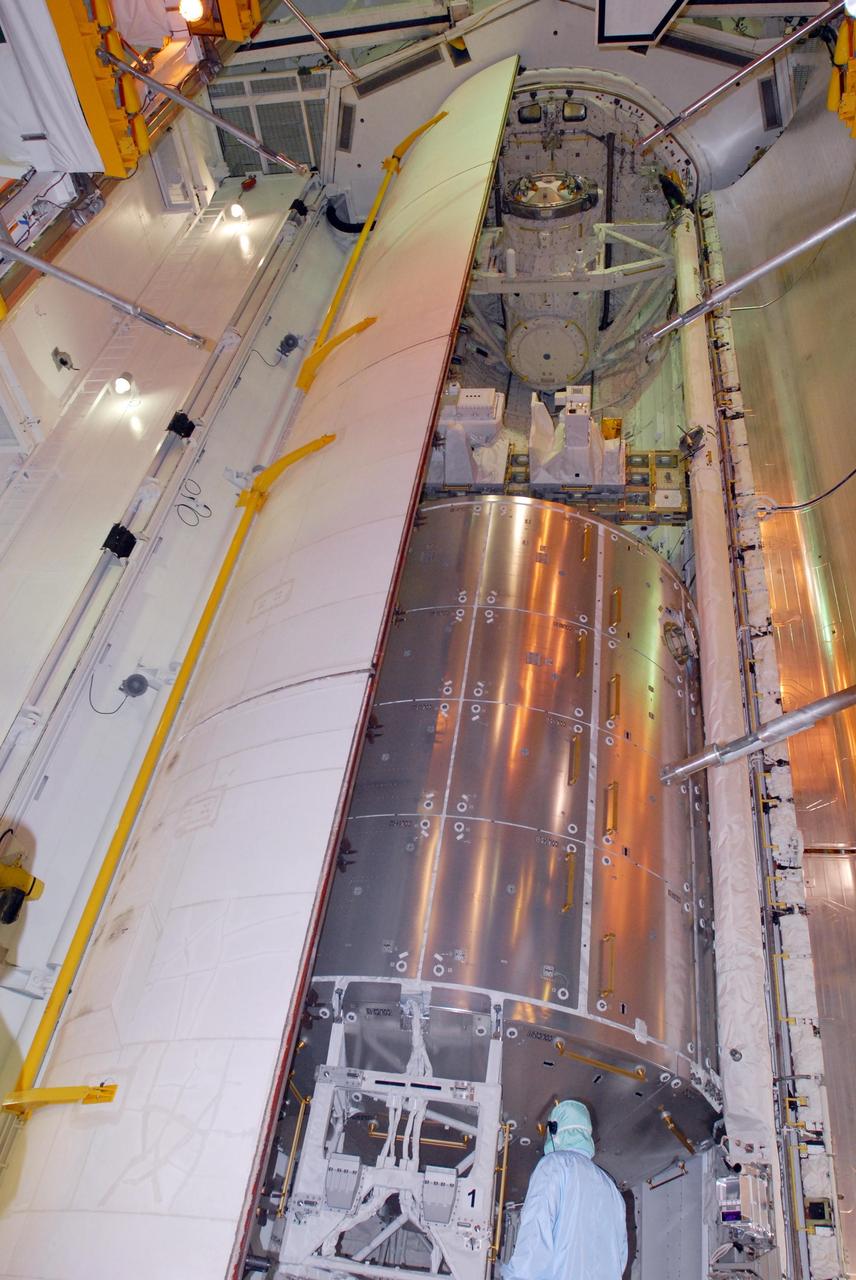
KENNEDY SPACE CENTER, FLA. -- On Launch Pad 39A, space shuttle Atlantis' payload bay doors are closing. Seen here are the Columbus Laboratory (below), the integrated cargo carrier - lite (middle) and the orbital docking system (above). Atlantis is being secured for launch on Dec. 6 on mission STS-122 to the International Space Station. The Columbus laboratory module, built by the European Space Agency, is approximately 23 feet long and 15 feet wide, allowing it to hold 10 large racks of experiments. The carrier holds three elements: a nitrogen tank assembly that is part of the external active thermal control system on the International Space Station, the European Technology Exposure Facility composed of nine science instruments and an autonomous temperature measurement unit, and the SOLAR payload designed for sun observation. Photo credit: NASA/George Shelton
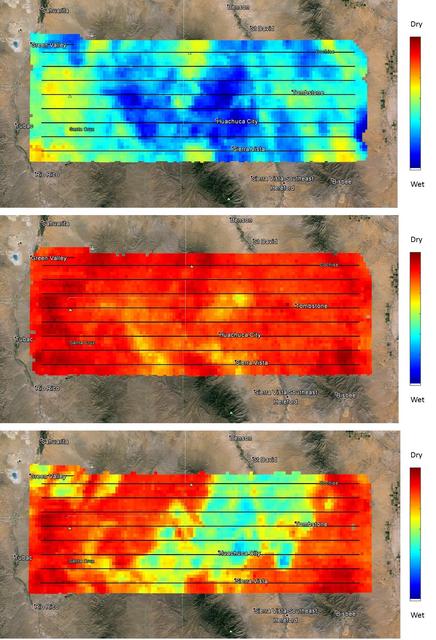
NASA's SMAP (Soil Moisture Active Passive) satellite observatory conducted a field experiment as part of its soil moisture data product validation program in southern Arizona on Aug. 2-18, 2015. The images here represent the distribution of soil moisture over the SMAPVEX15 (SMAP Validation Experiment 2015) experiment domain, as measured by the Passive Active L-band System (PALS) developed by NASA's Jet Propulsion Laboratory, Pasadena, California, which was installed onboard a DC-3 aircraft operated by Airborne Imaging, Inc. Blue and green colors denote wet conditions and dry conditions are marked by red and orange. The black lines show the nominal flight path of PALS. The measurements show that on the first day, the domain surface was wet overall, but had mostly dried down by the second measurement day. On the third day, there was a mix of soil wetness. The heterogeneous soil moisture distribution over the domain is typical for the area during the North American Monsoon season and provides excellent conditions for SMAP soil moisture product validation and algorithm enhancement. The images are based on brightness temperature measured by the PALS instrument gridded on a grid with 0.6-mile (1-kilometer) pixel size. They do not yet compensate for surface characteristics, such as vegetation and topography. That work is currently in progress. http://photojournal.jpl.nasa.gov/catalog/PIA19879
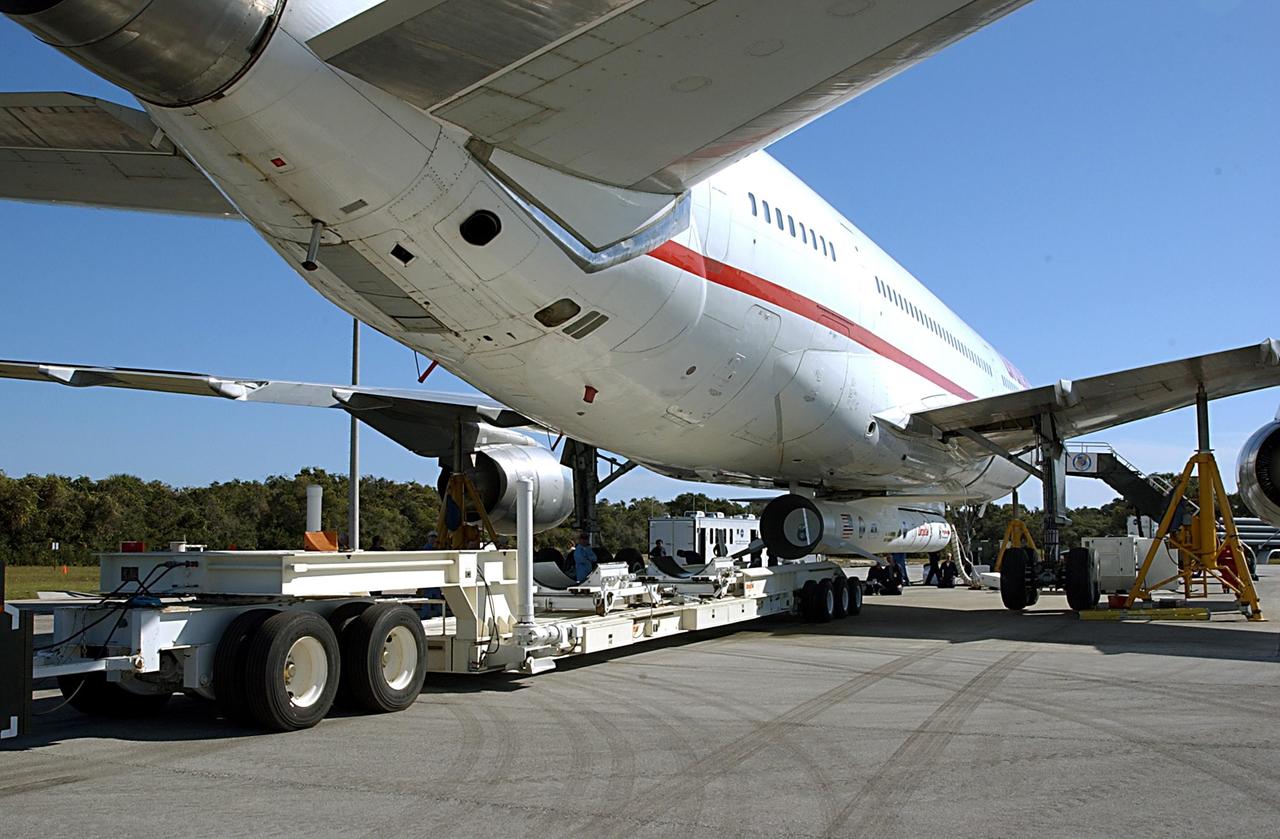
KENNEDY SPACE CENTER, FLA. -- A transporter is positioned below a Pegasus XL Expendable Launch Vehicle before its detachment from the underside of an Orbital Sciences L-1011 aircraft. The aircraft, with the launch vehicle nestled beneath, arrived at the Cape Canaveral Air Force Station Skid Strip on Dec. 17. The Pegasus XL will undergo three flight simulations prior to its scheduled launch in late January 2003. It will carry NASA's Solar Radiation and Climate Experiment (SORCE) spacecraft into orbit. Built by Orbital Sciences Space Systems Group, SORCE will study and measure solar irradiance as a source of energy in the Earth's atmosphere with instruments built by the University of Colorado's Laboratory for Atmospheric and Space Physics (LASP).
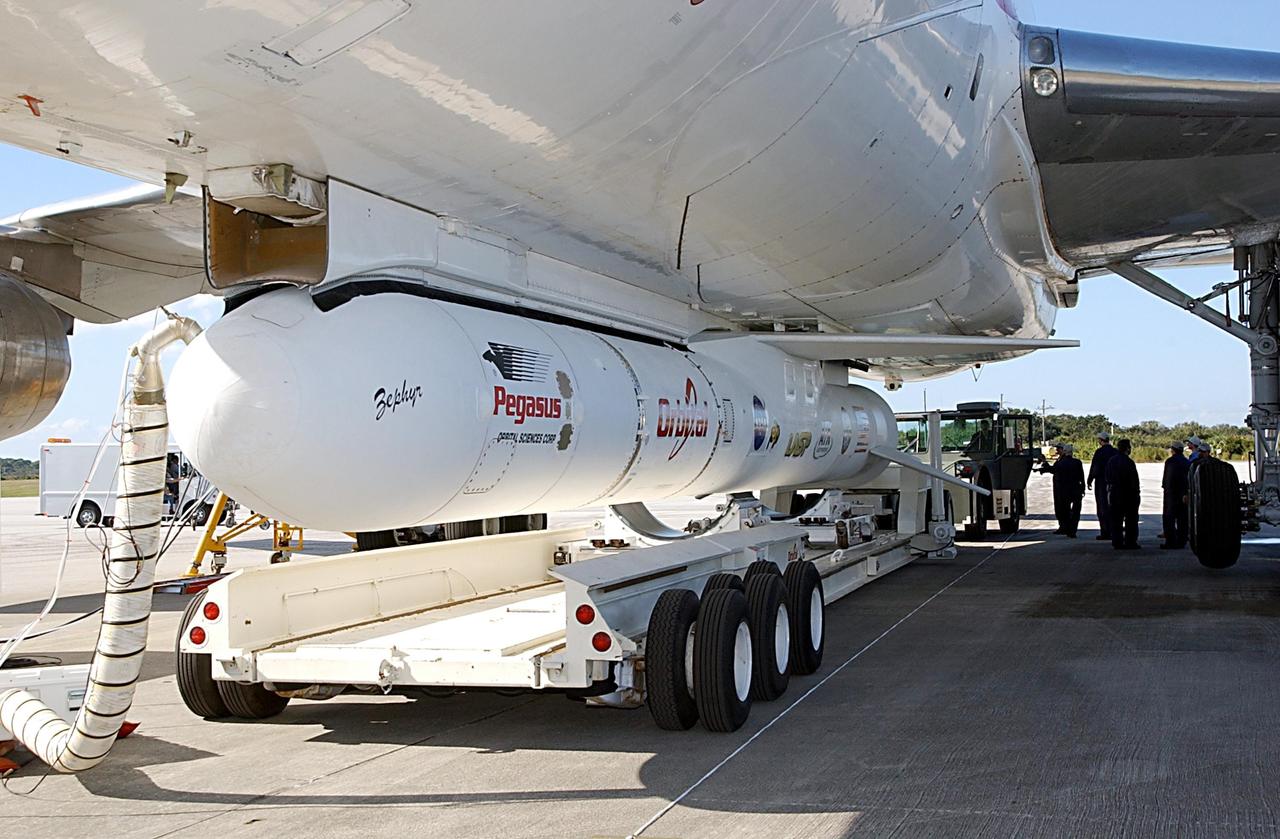
KENNEDY SPACE CENTER, FLA. -- A transporter is repositioned below a Pegasus XL Expendable Launch Vehicle before it is detached from the underside of an Orbital Sciences L-1011 aircraft. The aircraft, with the launch vehicle nestled beneath, arrived at the Cape Canaveral Air Force Station Skid Strip on Dec. 17. The Pegasus XL will undergo three flight simulations prior to its scheduled launch in late January 2003. It will carry NASA's Solar Radiation and Climate Experiment (SORCE) spacecraft into orbit. Built by Orbital Sciences Space Systems Group, SORCE will study and measure solar irradiance as a source of energy in the Earth's atmosphere with instruments built by the University of Colorado's Laboratory for Atmospheric and Space Physics (LASP).
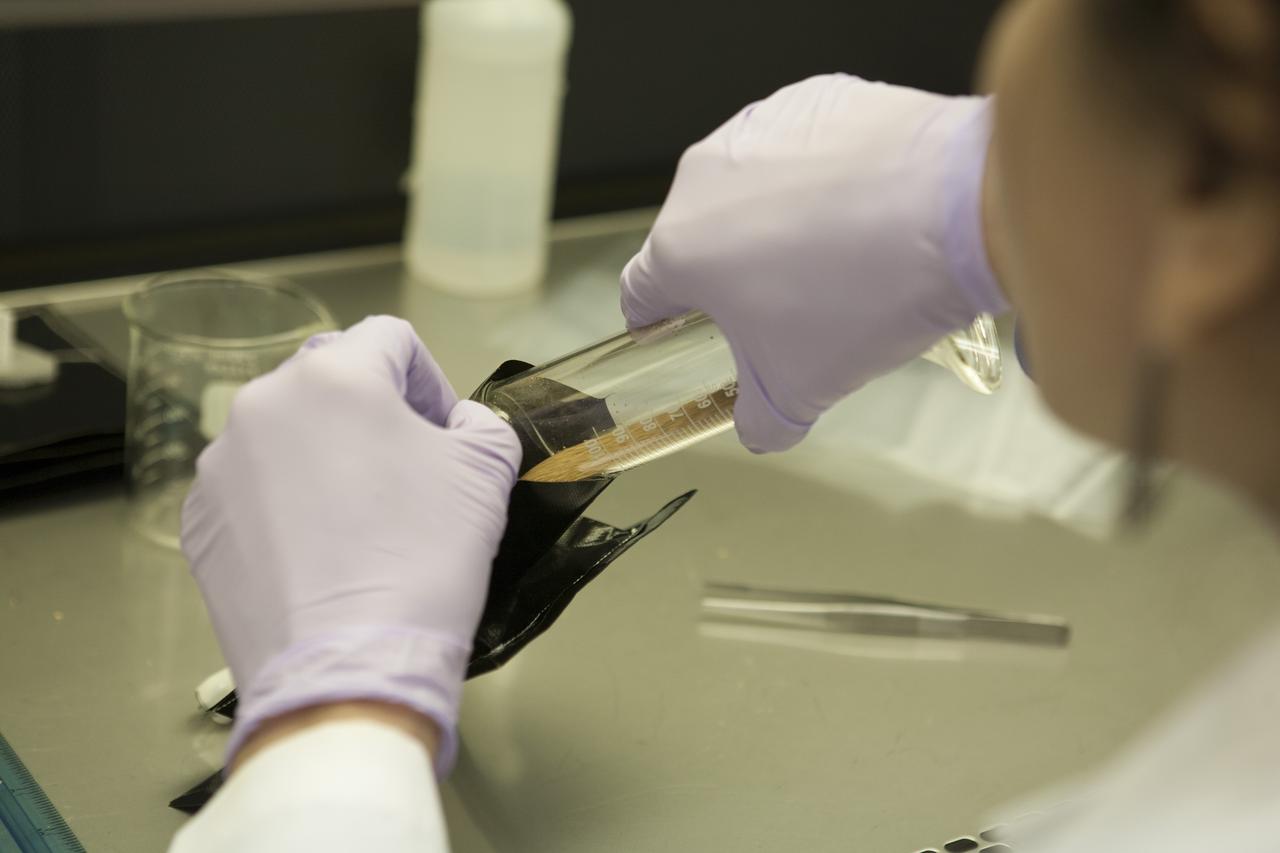
Inside a laboratory in the Space Station Processing Facility at NASA’s Kennedy Space Center in Florida, research scientists prepare the plant pillows for the Veg-03 experiment that will be delivered to the International Space Station aboard the eighth SpaceX Dragon commercial resupply mission. Matt Romeyn, a NASA pathways intern, inserts a measured amount of calcined clay, or space dirt, into one of the plant pillows. The Veg-03 plant pillows will contain ‘Tokyo Bekana’ cabbage seeds and lettuce seeds for NASA’s third Veggie plant growth system experiment. The experiment will continue NASA’s deep space plant growth research to benefit the Earth and the agency’s journey to Mars.
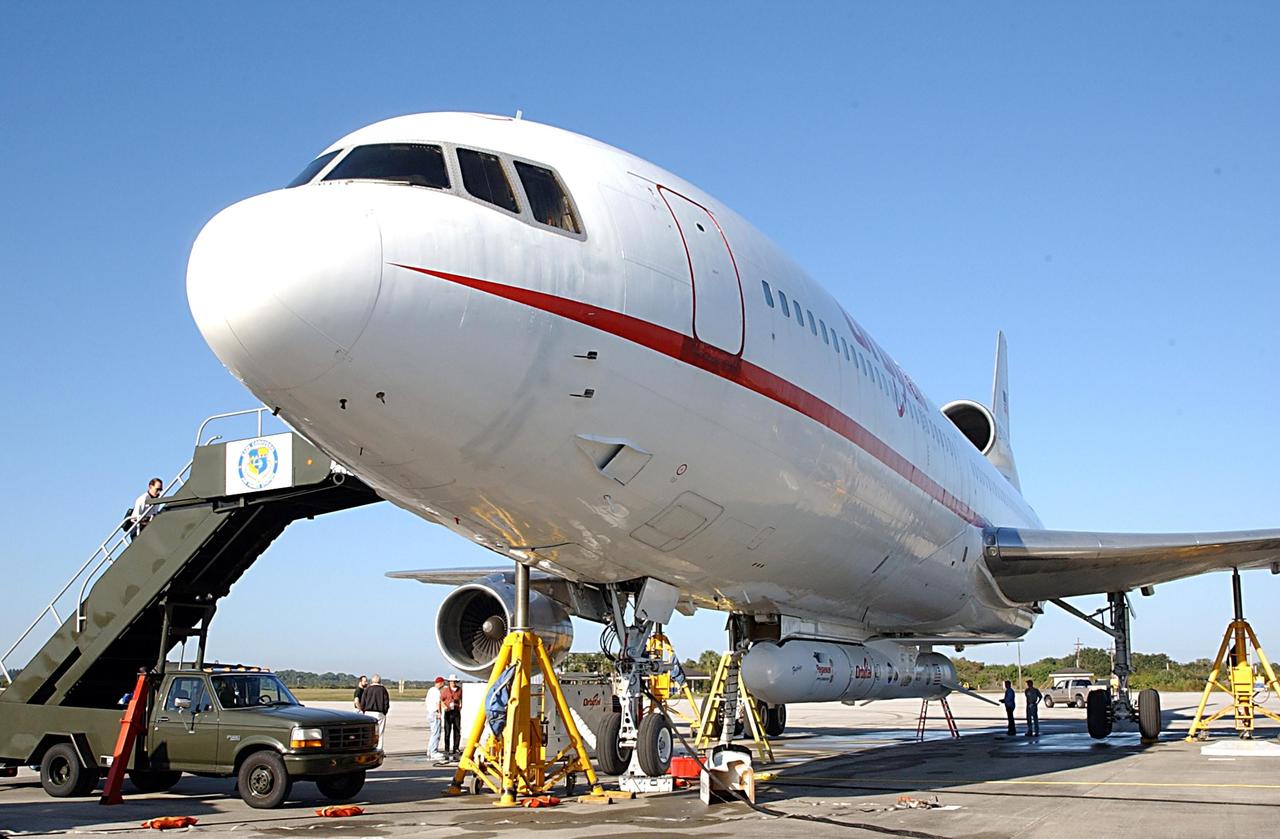
KENNEDY SPACE CENTER, FLA. -- Workers prepare to remove a Pegasus XL Expendable Launch Vehicle from the underside of an Orbital Sciences L-1011 aircraft. The aircraft, with the launch vehicle attached, arrived at the Cape Canaveral Air Force Station Skid Strip on Dec. 17. The Pegasus XL will undergo three flight simulations prior to its scheduled launch in late January 2003. It will carry NASA's Solar Radiation and Climate Experiment (SORCE) spacecraft into orbit. Built by Orbital Sciences Space Systems Group, SORCE will study and measure solar irradiance as a source of energy in the Earth's atmosphere with instruments built by the University of Colorado's Laboratory for Atmospheric and Space Physics (LASP).

KENNEDY SPACE CENTER, FLA. -- Workers prepare a Pegasus XL Expendable Launch Vehicle for detachment from the underside of an Orbital Sciences L-1011 aircraft. The aircraft, with the launch vehicle nestled beneath, arrived at the Cape Canaveral Air Force Station Skid Strip on Dec. 17. The Pegasus XL will undergo three flight simulations prior to its scheduled launch in late January 2003. It will carry NASA's Solar Radiation and Climate Experiment (SORCE) spacecraft into orbit. Built by Orbital Sciences Space Systems Group, SORCE will study and measure solar irradiance as a source of energy in the Earth's atmosphere with instruments built by the University of Colorado's Laboratory for Atmospheric and Space Physics (LASP).
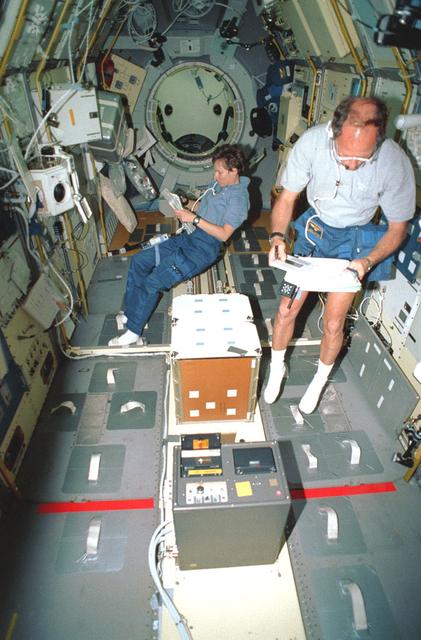
Onboard Space Shuttle Discovery (STS-42) Astronaut Norman E. Thagard, payload commander, and Canadian payload specialist Roberta L. Bondar are busily engaged with experiments in the International Microgravity Laboratory (IML-1) science module. Bondar reads a checklist near the Biorack while Thagard performs a VCR tape change-out. The two, along with four other NASA astronauts and a second IML-1 payload specialist spent more than eight days conducting experiments in Earth orbit. Part of the Space Acceleration Measurement System is in center foreground.
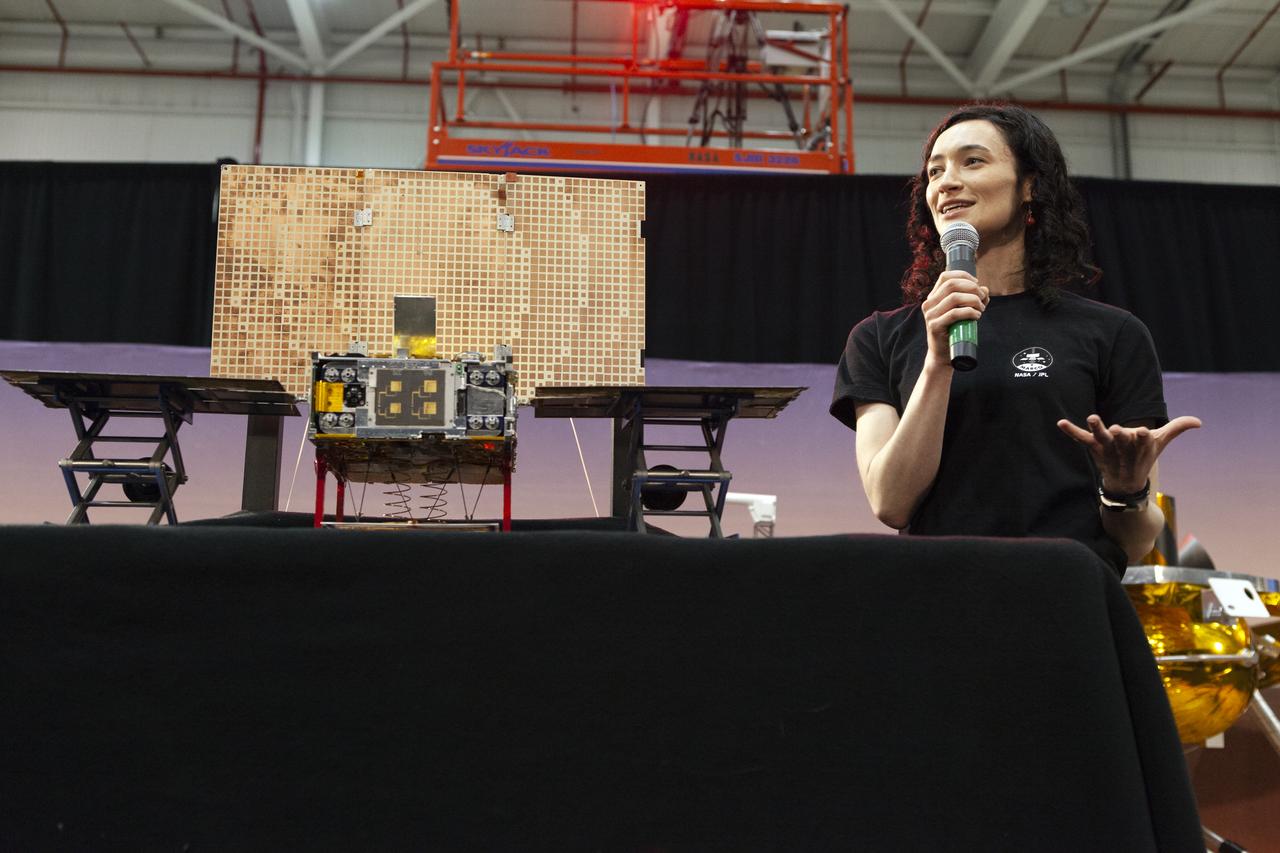
During a prelaunch briefing at Vandenberg Air Force Base in California, Annie Marinan, MarCO Systems Engineer at NASA's Jet Propulsion Laboratory, speaks to members of the media. The presentation focused on NASA's Interior Exploration using Seismic Investigations, Geodesy and Heat Transport, or InSight, Mars lander. InSight is scheduled for liftoff May 5, 2018, atop a United Launch Alliance (ULA) Atlas V rocket from Space Launch Complex 3 at Vandenberg. The spacecraft will be the first mission to look deep beneath the Martian surface studying the planet's interior by measuring its heat output and listen for marsquakes.
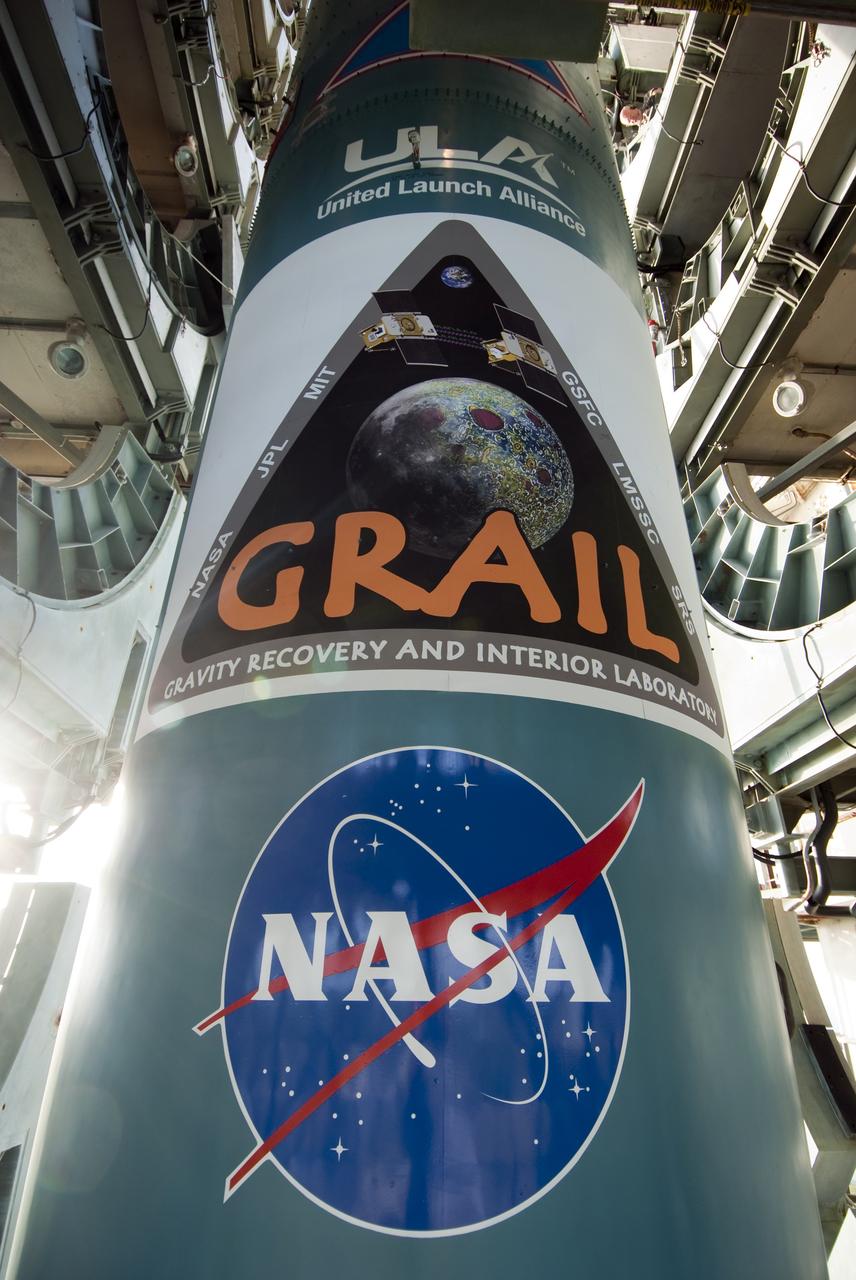
CAPE CANAVERAL, Fla. -- NASA's Gravity Recovery and Interior Laboratory, or GRAIL, mission logo on the side of the United Launch Alliance Delta II rocket that will loft the spacecraft into lunar orbit. The GRAIL mission is a part of NASA's Discovery Program. GRAIL will fly twin spacecraft in tandem orbits around the moon for several months to measure its gravity field. The mission also will answer longstanding questions about Earth's moon and provide scientists a better understanding of how Earth and other rocky planets in the solar system formed. GRAIL is scheduled to launch September 8, 2011. For more information visit: http://science.nasa.gov/missions/grail/. Photo credit: NASA/Jim Grossmann
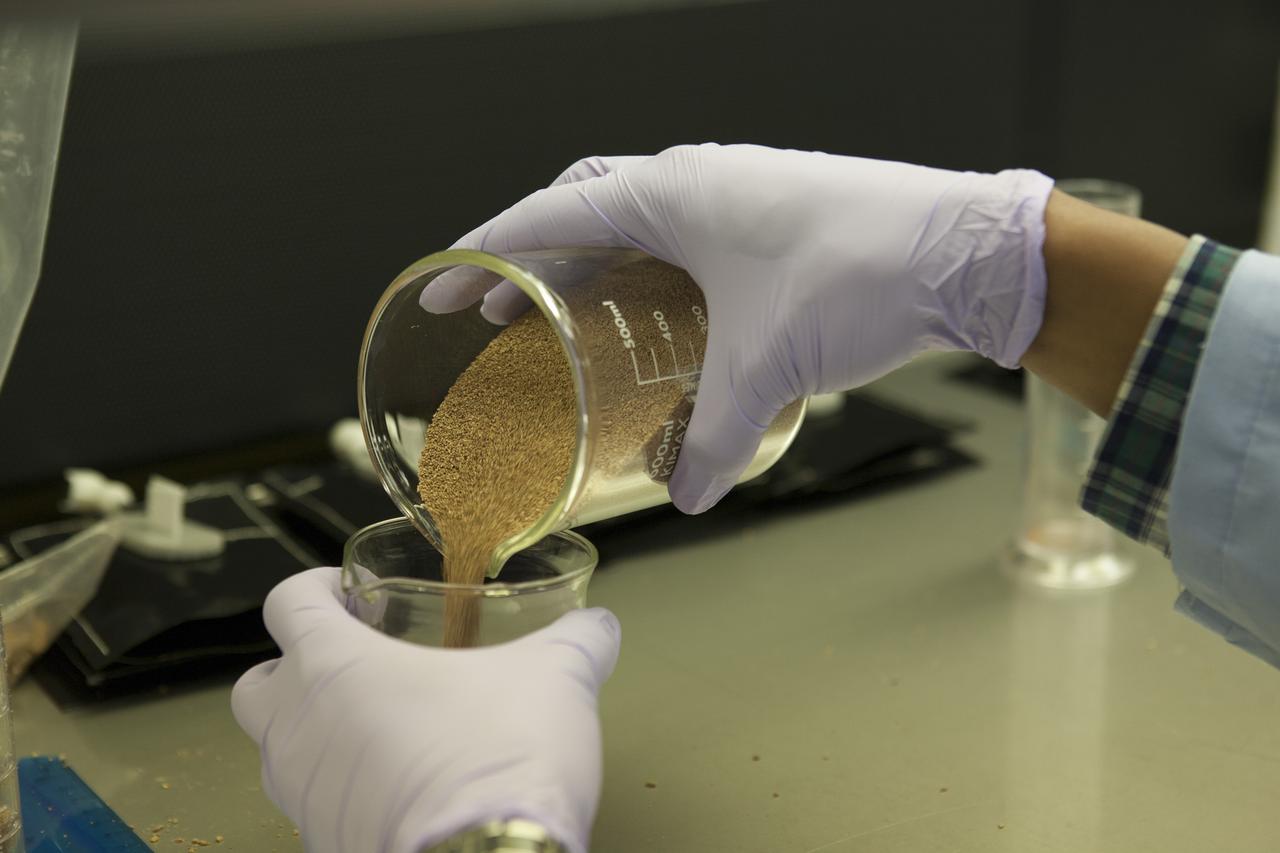
Inside a laboratory in the Space Station Processing Facility at NASA’s Kennedy Space Center in Florida, research scientists prepare the plant pillows for the Veg-03 experiment that will be delivered to the International Space Station aboard the eighth SpaceX Dragon commercial resupply mission. Matt Romeyn, a NASA pathways intern, measures out the calcined clay, or space dirt, for one of the plant pillows. The Veg-03 plant pillows will contain ‘Tokyo Bekana’ cabbage seeds and lettuce seeds for NASA’s third Veggie plant growth system experiment. The experiment will continue NASA’s deep space plant growth research to benefit the Earth and the agency’s journey to Mars.
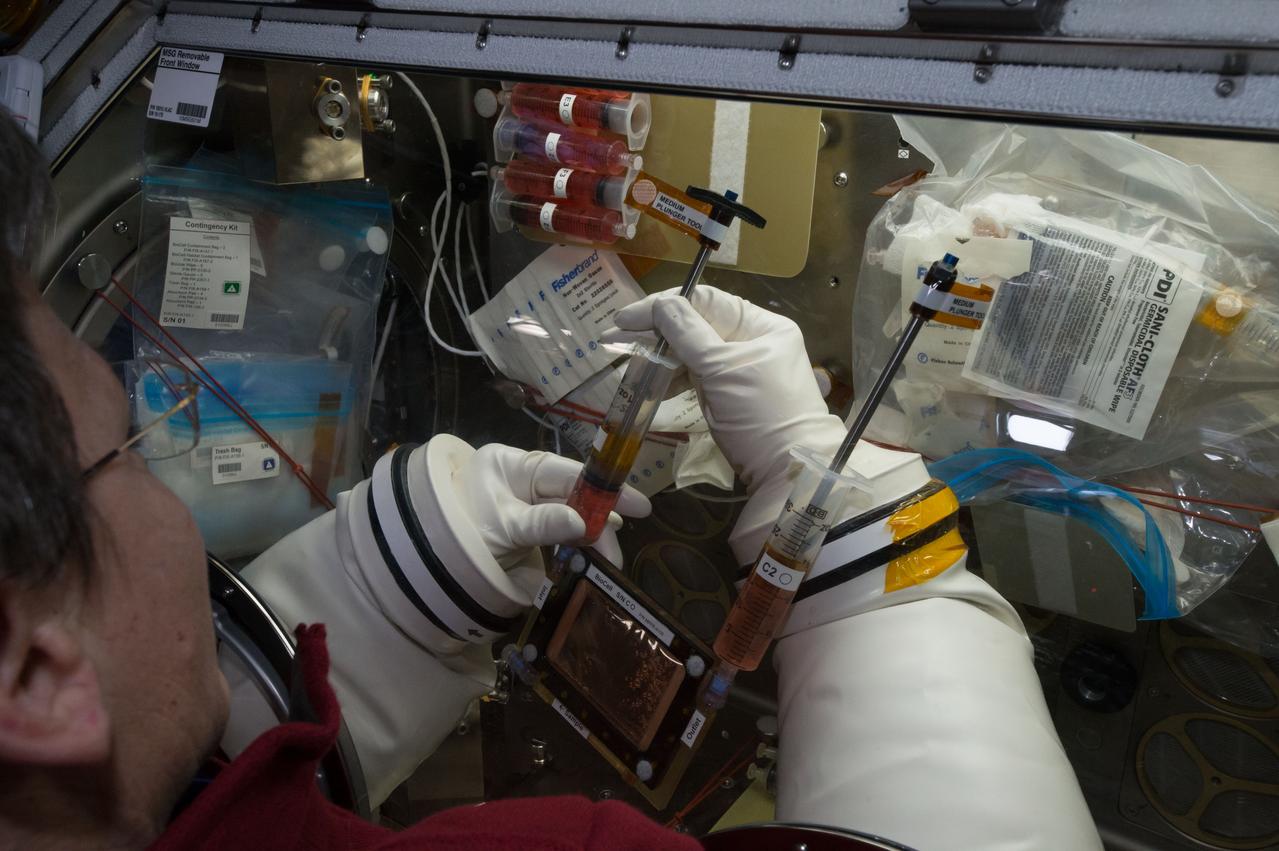
iss051e036140 (5/3/2017) --- A view inside the Microgravity Sciences Glovebox (MSG) where Commander Peggy Whitson works to change the media in a BioCell for the OsteoOmics experiment. Image was taken in the Destiny U.S. Laboratory. Gravitational Regulation of Osteoblast Genomics and Metabolism (OsteoOmics) aims to validate if magnetic levitation is a reasonable simulation of orbital free fall by measuring biological endpoints, such as signaling pathways and gene expression in osteoblast and osteoclast cells. Cells are exposed to a microgravity environment and ground based cells are exposed to magnetic levitation. If the validation is successful, then ground-based magnetic levitation will be an important ground-based tool to investigate the effect of gravitational force on biological systems.
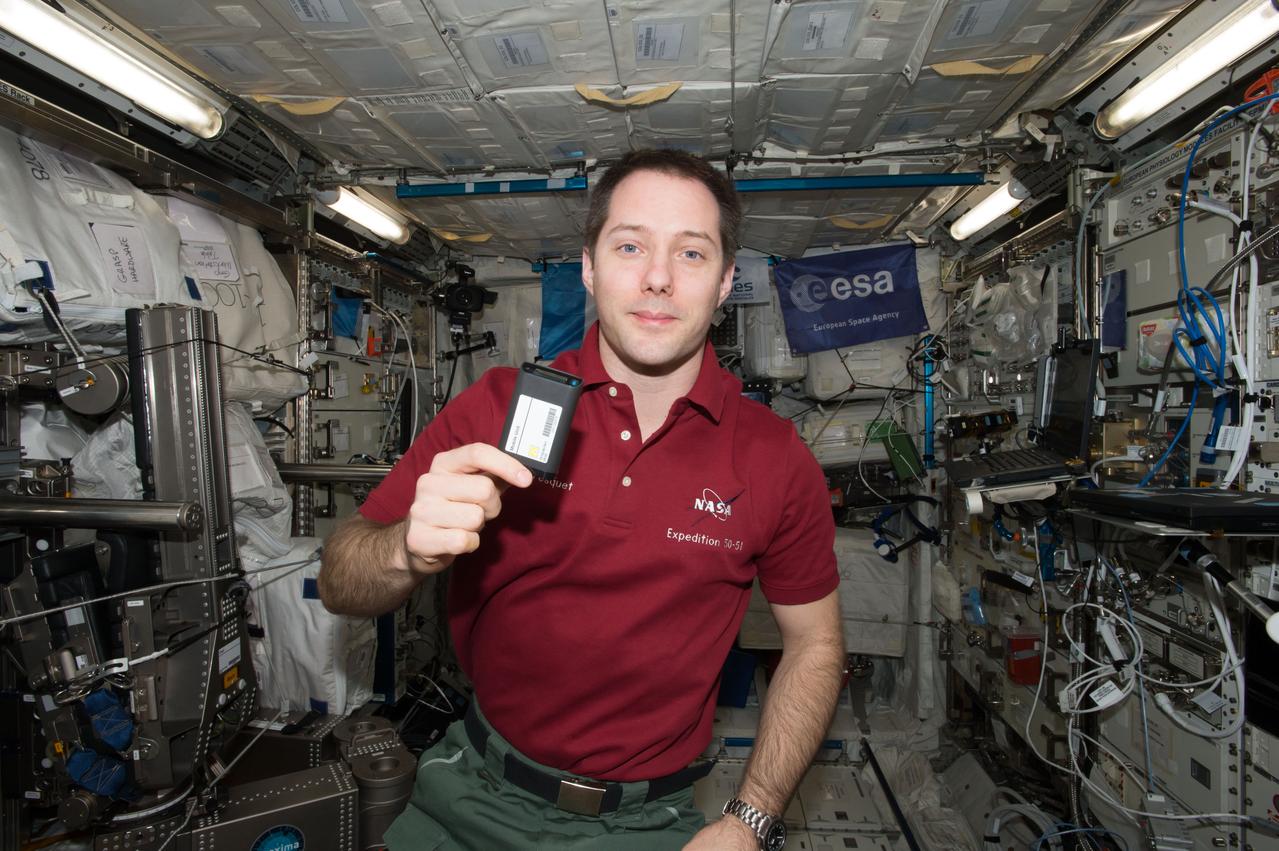
iss051e051544 (5/29/2017) --- European Space Agency (ESA) astronaut Thomas Pesquet holds a Mobile Unit in the Columbus European Laboratory during European Space Agency (ESA)-Active-Dosimeters experiment operations (OPS). The European Crew Personal Active Dosimeter (EuCPAD) project tests an active radiation dosimeter system. This represents the first time that crews wear active dosimeters in order to measure changes in radiation exposure over time providing variation of radiation dose data with respect to ISS orbit and altitude, solar cycle, and solar flares.
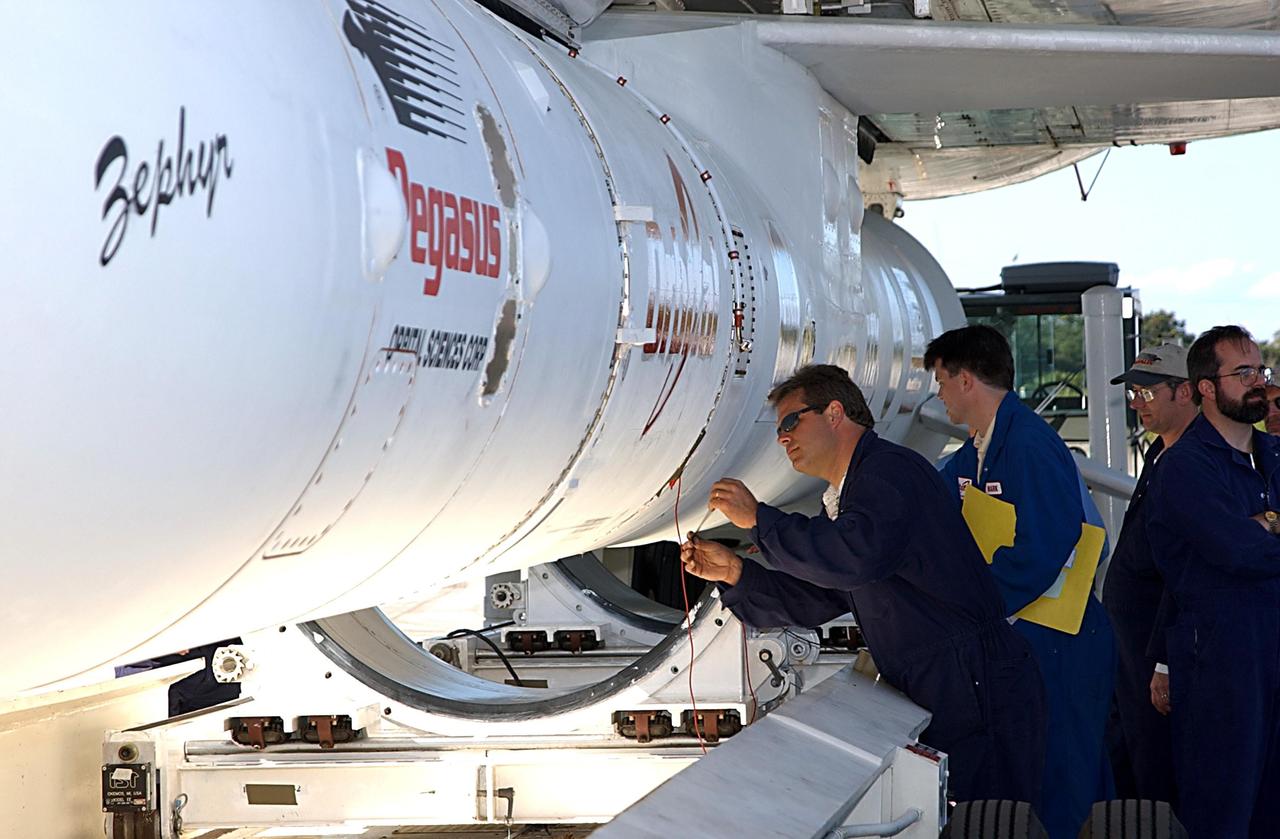
KENNEDY SPACE CENTER, FLA. -- Workers complete the final steps to detach a Pegasus XL Expendable Launch Vehicle from the underside of an Orbital Sciences L-1011 aircraft. The aircraft, with the launch vehicle nestled beneath, arrived at the Cape Canaveral Air Force Station Skid Strip on Dec. 17. The Pegasus XL will undergo three flight simulations prior to its scheduled launch in late January 2003. It will carry NASA's Solar Radiation and Climate Experiment (SORCE) spacecraft into orbit. Built by Orbital Sciences Space Systems Group, SORCE will study and measure solar irradiance as a source of energy in the Earth's atmosphere with instruments built by the University of Colorado's Laboratory for Atmospheric and Space Physics (LASP).

Deborah Efua Adu Essumang, system lead scientist, conducts testing of the Volatile Monitoring Oxygen Measurement Subsystem (VMOMS) for Molten Regolith Electrolysis (MRE) inside a laboratory in the Neil A. Armstrong Operations and Checkout Building at NASA’s Kennedy Space Center in Florida on April 19, 2024. The high-temperature electrolytic process aims to extract oxygen from simulated lunar regolith which will be critical to the agency’s Artemis campaign. Oxygen extracted from the Moon can be utilized for propellent to NASA’s lunar landers, breathable oxygen for astronauts, and a variety of other industrial and scientific applications for NASA’s future missions to the Moon.
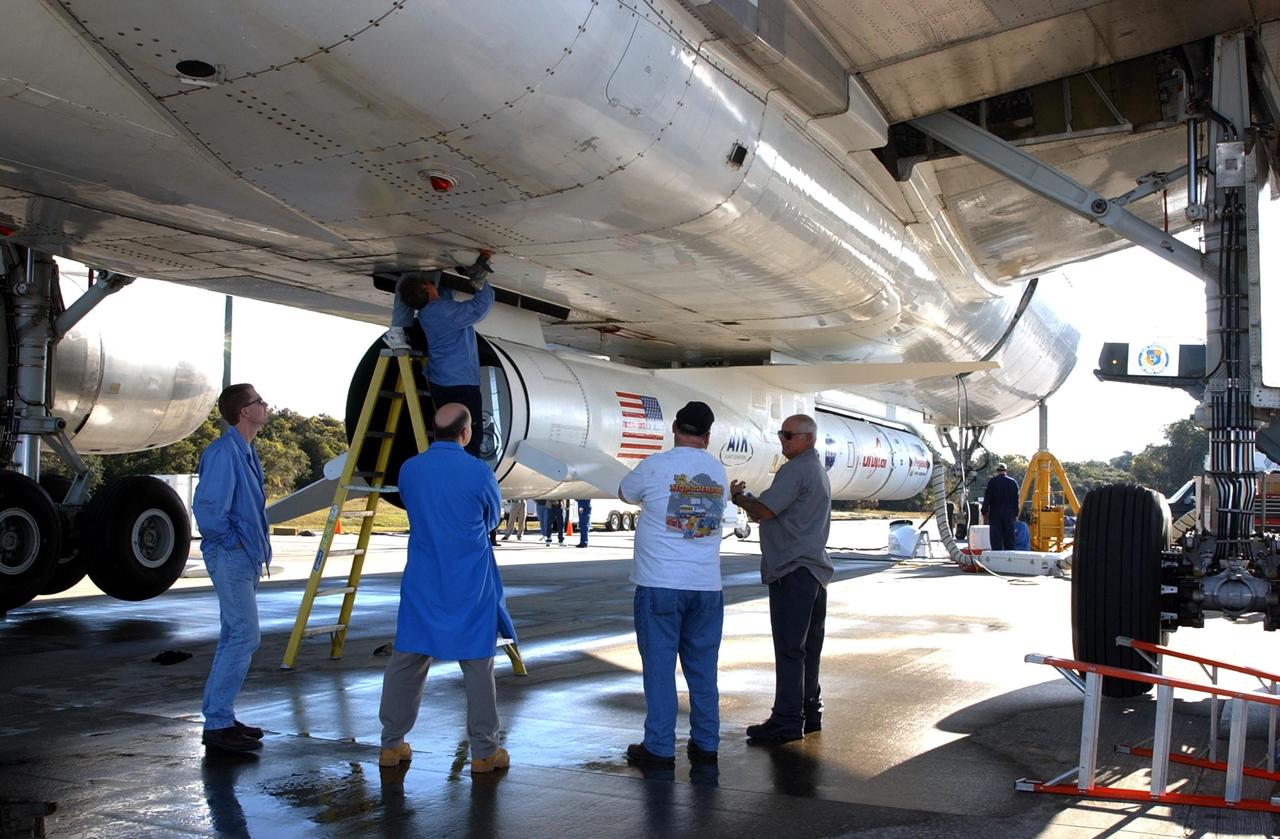
KENNEDY SPACE CENTER, FLA. -- Workers begin the process to remove a Pegasus XL Expendable Launch Vehicle from the underside of an Orbital Sciences L-1011 aircraft. The aircraft, with the launch vehicle attached, arrived at the Cape Canaveral Air Force Station Skid Strip on Dec. 17. The Pegasus XL will undergo three flight simulations prior to its scheduled launch in late January 2003. It will carry NASA's Solar Radiation and Climate Experiment (SORCE) spacecraft into orbit. Built by Orbital Sciences Space Systems Group, SORCE will study and measure solar irradiance as a source of energy in the Earth's atmosphere with instruments built by the University of Colorado's Laboratory for Atmospheric and Space Physics (LASP).

KENNEDY SPACE CENTER, FLA. -- A Pegasus XL Expendable Launch Vehicle is prepared for towing to the Multi-Purpose Payload Facility (MPPF) where it will undergo testing, verification, and three flight simulations prior to its scheduled launch. The vehicle, nestled beneath an Orbital Sciences L-1011 aircraft, arrived at the Cape Canaveral Air Force Station Skid Strip on Dec. 17. It is commissioned to carry NASA's Solar Radiation and Climate Experiment (SORCE) spacecraft into orbit in late January 2003. Built by Orbital Sciences Space Systems Group, SORCE will study and measure solar irradiance as a source of energy in the Earth's atmosphere with instruments built by the University of Colorado's Laboratory for Atmospheric and Space Physics (LASP).
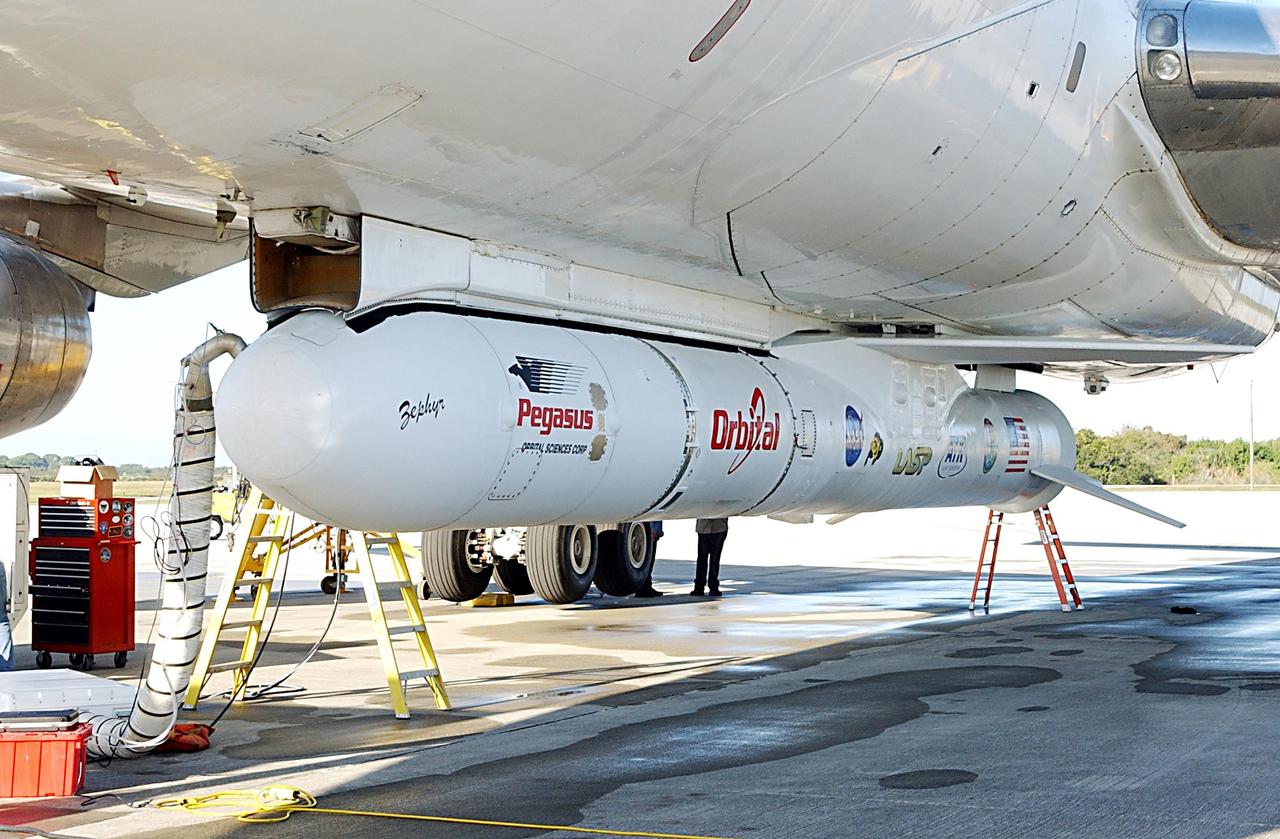
KENNEDY SPACE CENTER, FLA. -- A Pegasus XL Expendable Launch Vehicle is moments away from being removed from the underside of an Orbital Sciences L-1011 aircraft. The aircraft, with the launch vehicle attached, arrived at the Cape Canaveral Air Force Station Skid Strip on Dec. 17. The Pegasus XL will undergo three flight simulations prior to its scheduled launch in late January 2003. It will carry NASA's Solar Radiation and Climate Experiment (SORCE) spacecraft into orbit. Built by Orbital Sciences Space Systems Group, SORCE will study and measure solar irradiance as a source of energy in the Earth's atmosphere with instruments built by the University of Colorado's Laboratory for Atmospheric and Space Physics (LASP).
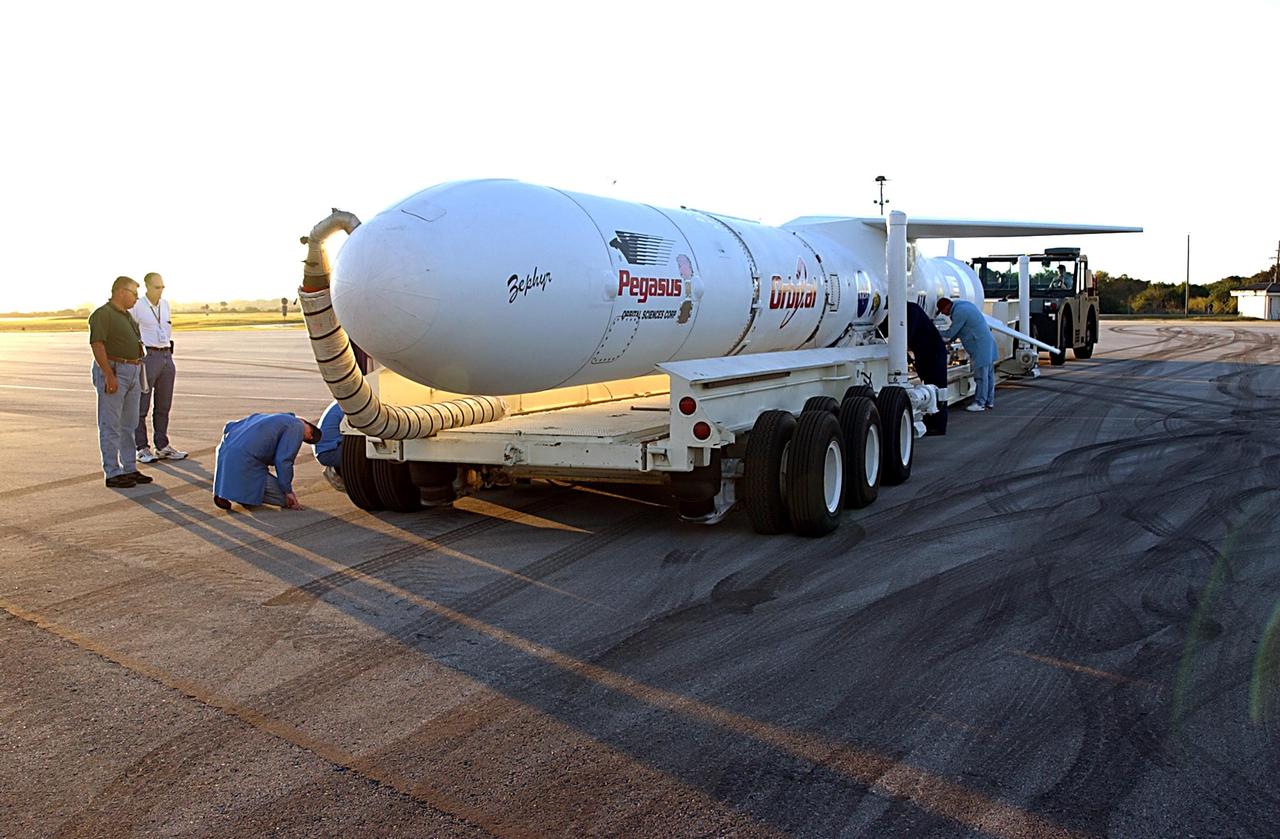
KENNEDY SPACE CENTER, FLA. -- A Pegasus XL Expendable Launch Vehicle is prepared for towing to the Multi-Purpose Payload Facility (MPPF) where it will undergo testing, verification, and three flight simulations prior to its scheduled launch. The vehicle, nestled beneath an Orbital Sciences L-1011 aircraft, arrived at the Cape Canaveral Air Force Station Skid Strip on Dec. 17. It is commissioned to carry NASA's Solar Radiation and Climate Experiment (SORCE) spacecraft into orbit in late January 2003. Built by Orbital Sciences Space Systems Group, SORCE will study and measure solar irradiance as a source of energy in the Earth's atmosphere with instruments built by the University of Colorado's Laboratory for Atmospheric and Space Physics (LASP).
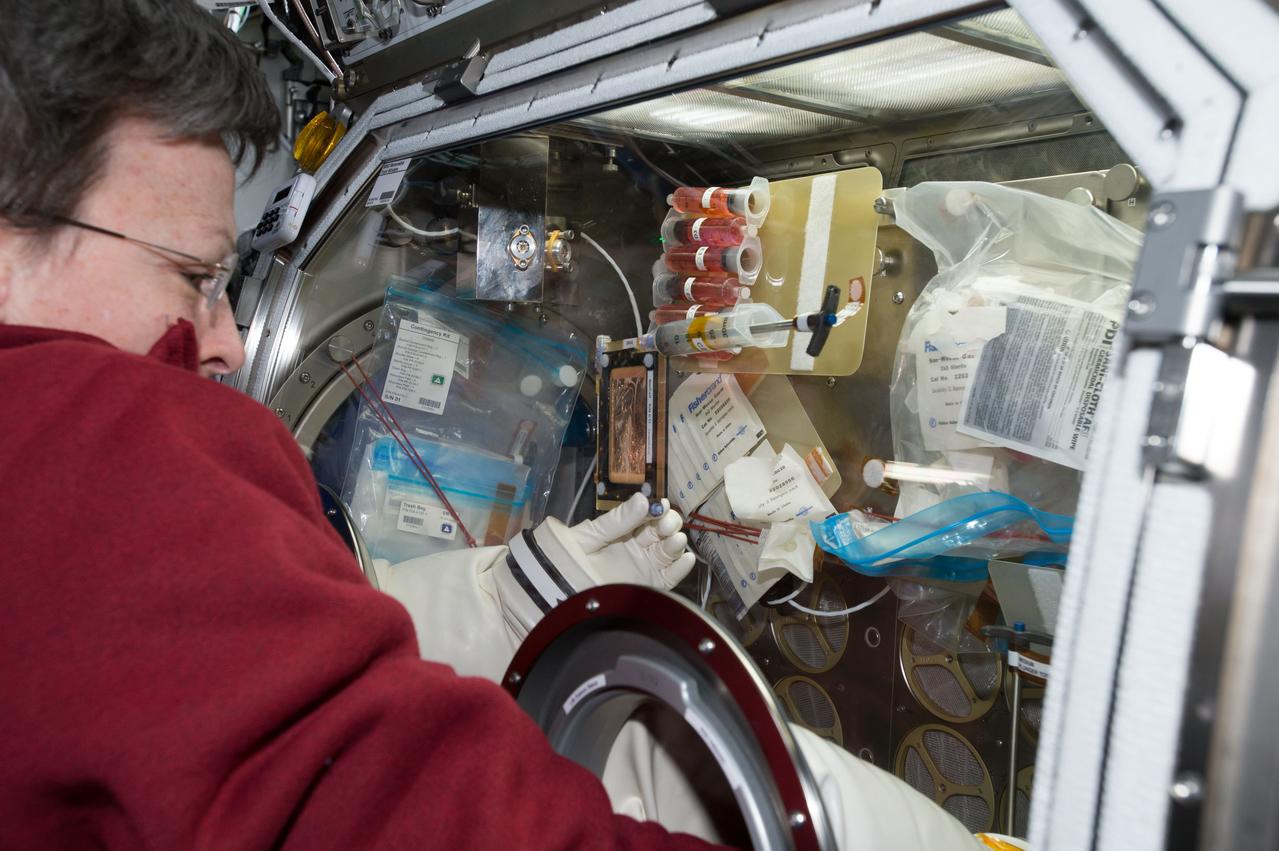
iss051e036121 (5/3/2017) --- An over-the-shoulder look at Commander Peggy Whitson working inside the Microgravity Sciences Glovebox (MSG) to change the media in the BioCell for the OsteoOmics experiment. Image was taken in the Destiny U.S. Laboratory. Gravitational Regulation of Osteoblast Genomics and Metabolism (OsteoOmics) aims to validate if magnetic levitation is a reasonable simulation of orbital free fall by measuring biological endpoints, such as signaling pathways and gene expression in osteoblast and osteoclast cells. Cells are exposed to a microgravity environment and ground based cells are exposed to magnetic levitation. If the validation is successful, then ground-based magnetic levitation will be an important ground-based tool to investigate the effect of gravitational force on biological systems.
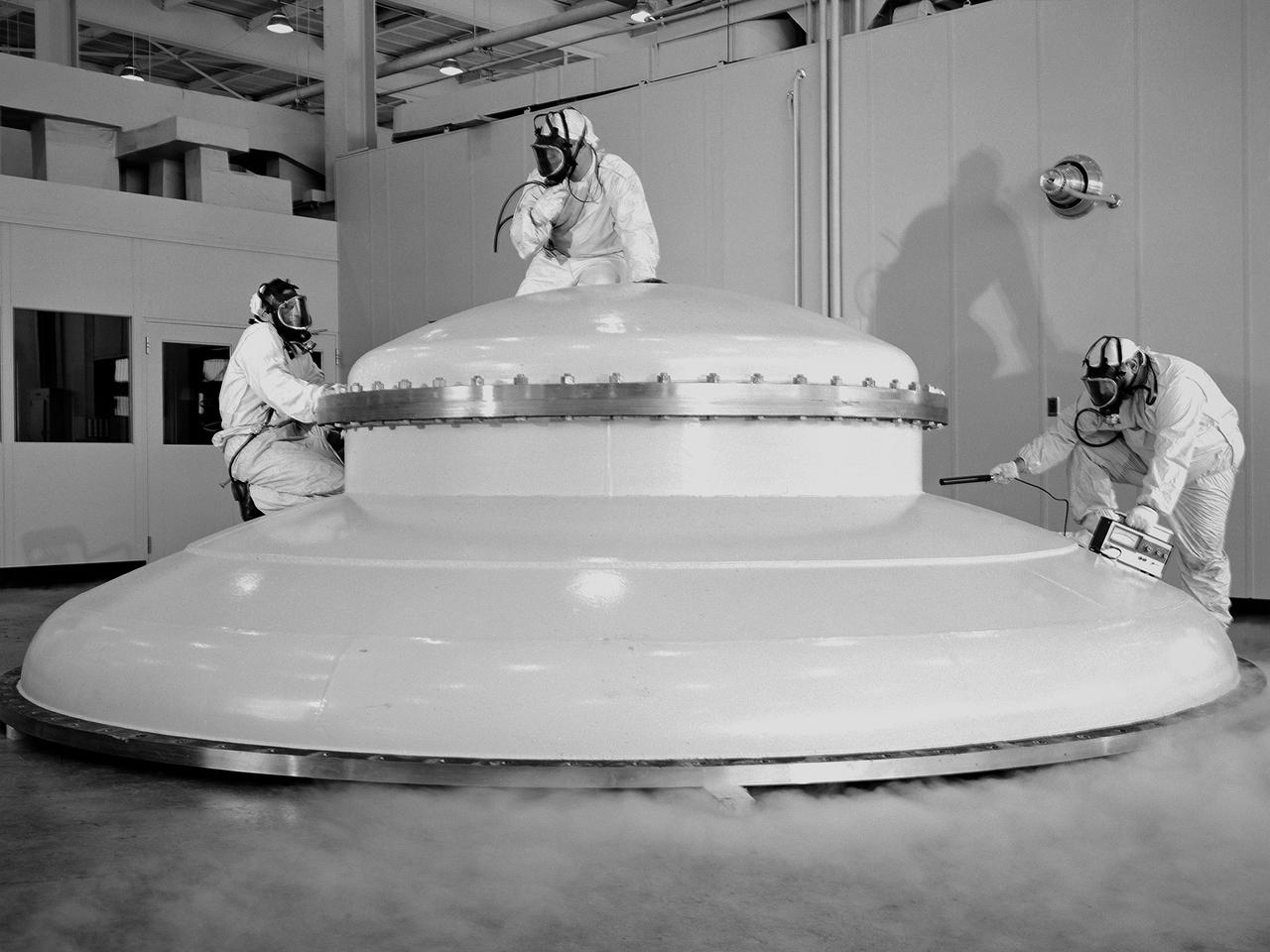
Engineer Paul Reader and his colleagues take environmental measurements during testing of a 20-inch diameter ion engine in a vacuum tank at the Electric Propulsion Laboratory (EPL). Researchers at the Lewis Research Center were investigating the use of a permanent-magnet circuit to create the magnetic field required power electron bombardment ion engines. Typical ion engines use a solenoid coil to create this magnetic field. It was thought that the substitution of a permanent magnet would create a comparable magnetic field with a lower weight. Testing of the magnet system in the EPL vacuum tanks revealed no significant operational problems. Reader found the weight of the two systems was similar, but that the thruster’s efficiency increased with the magnet. The EPL contained a series of large vacuum tanks that could be used to simulate conditions in space. Large vacuum pumps reduced the internal air pressure, and a refrigeration system created the cryogenic temperatures found in space.
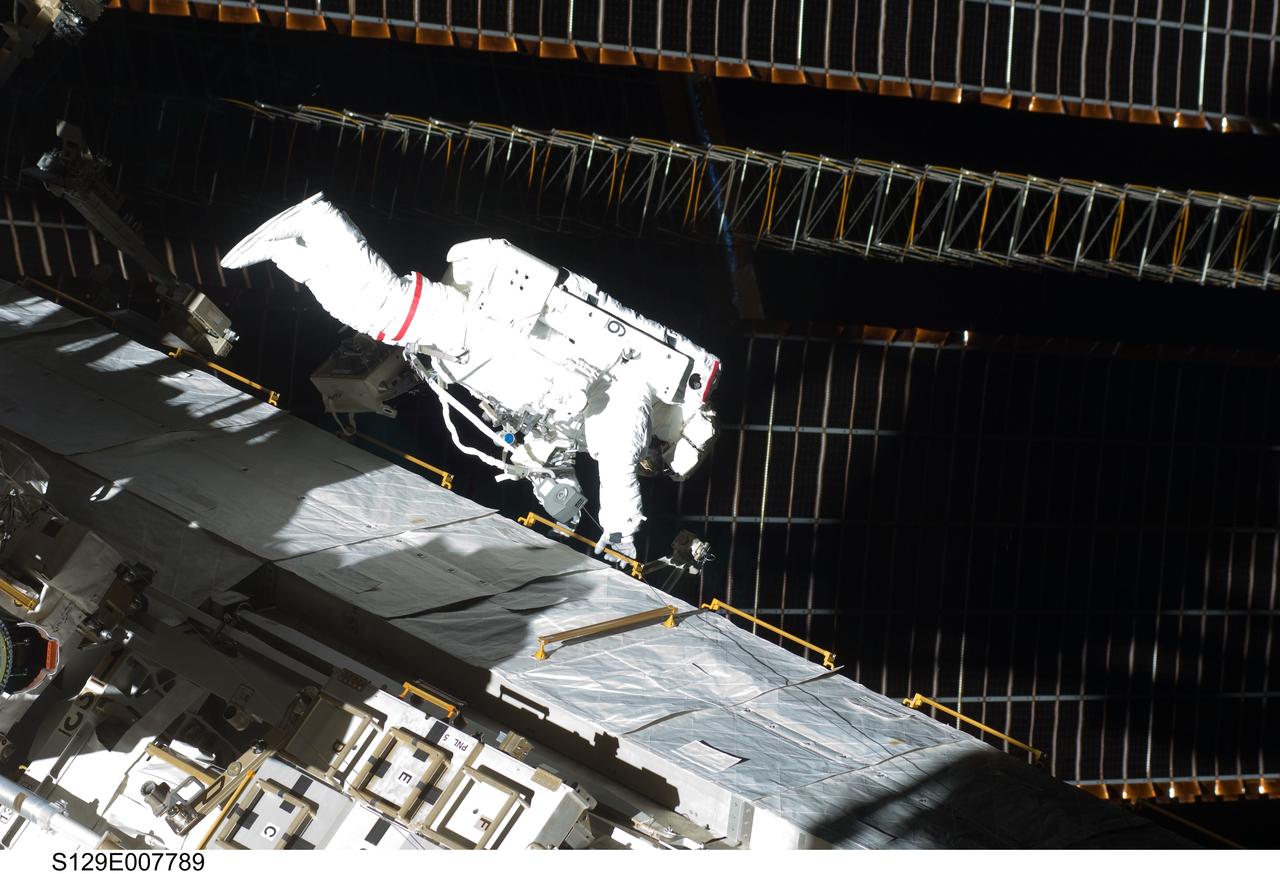
S129-E-007789 (21 Nov. 2009) --- Astronaut Mike Foreman, STS-129 mission specialist, participates in the mission's second session of extravehicular activity (EVA) as construction and maintenance continue on the International Space Station. During the six-hour, eight-minute spacewalk, Foreman and astronaut Randy Bresnik (out of frame), mission specialist, installed a Grappling Adaptor to On-Orbit Railing Assembly, or GATOR, on the Columbus laboratory. GATOR contains a ship-tracking antenna system and a HAM radio antenna. They relocated a floating potential measurement unit that gauges electric charges that build up on the station, deployed a Payload Attach System on the space-facing side of the Starboard 3 truss segment and installed a wireless video system that allows spacewalkers to transmit video to the station and relay it to Earth.
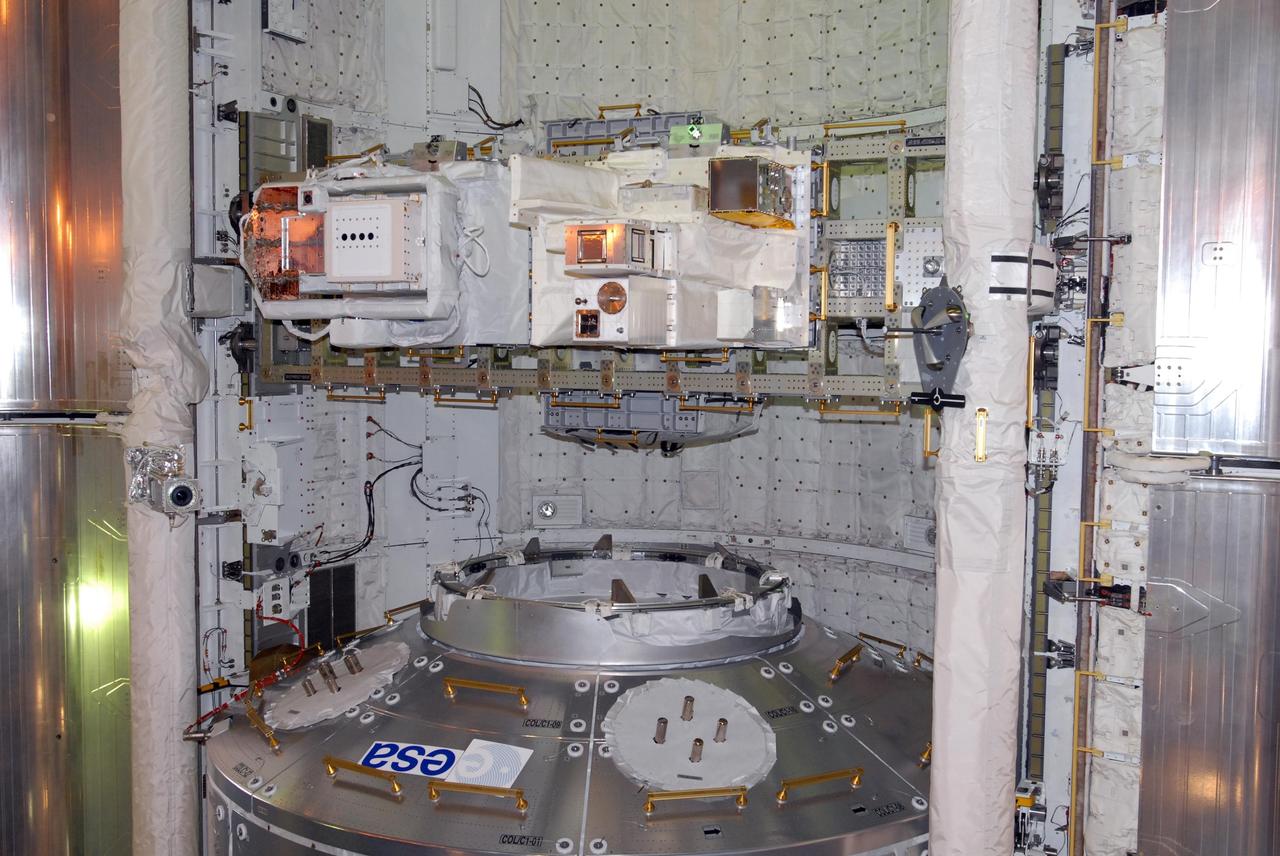
KENNEDY SPACE CENTER, FLA. -- On Launch Pad 39A, space shuttle Atlantis' payload bay doors are ready for closing. Seen here are the Columbus Laboratory (below) and the integrated cargo carrier - lite (above). Atlantis is being secured for launch on Dec. 6 on mission STS-122 to the International Space Station. The Columbus laboratory module, built by the European Space Agency, is approximately 23 feet long and 15 feet wide, allowing it to hold 10 large racks of experiments. The carrier holds three elements: a nitrogen tank assembly that is part of the external active thermal control system on the International Space Station, the European Technology Exposure Facility composed of nine science instruments and an autonomous temperature measurement unit, and the SOLAR payload designed for sun observation. Photo credit: NASA/George Shelton
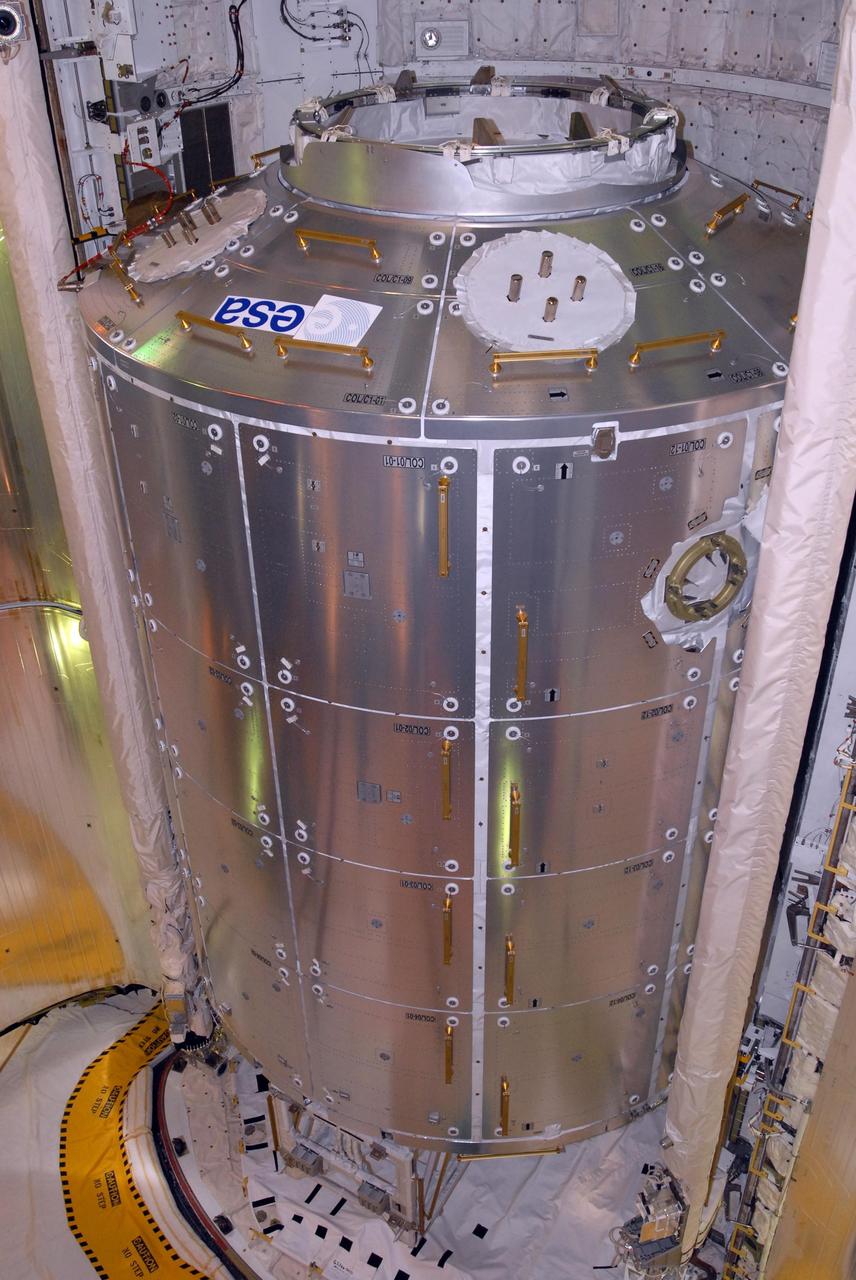
KENNEDY SPACE CENTER, FLA. -- On Launch Pad 39A, space shuttle Atlantis' payload bay doors are ready for closing. Seen here is the Columbus Laboratory. Atlantis is being secured for launch on Dec. 6 on mission STS-122 to the International Space Station. The Columbus laboratory module, built by the European Space Agency, is approximately 23 feet long and 15 feet wide, allowing it to hold 10 large racks of experiments. The carrier holds three elements: a nitrogen tank assembly that is part of the external active thermal control system on the International Space Station, the European Technology Exposure Facility composed of nine science instruments and an autonomous temperature measurement unit, and the SOLAR payload designed for sun observation. Photo credit: NASA/George Shelton
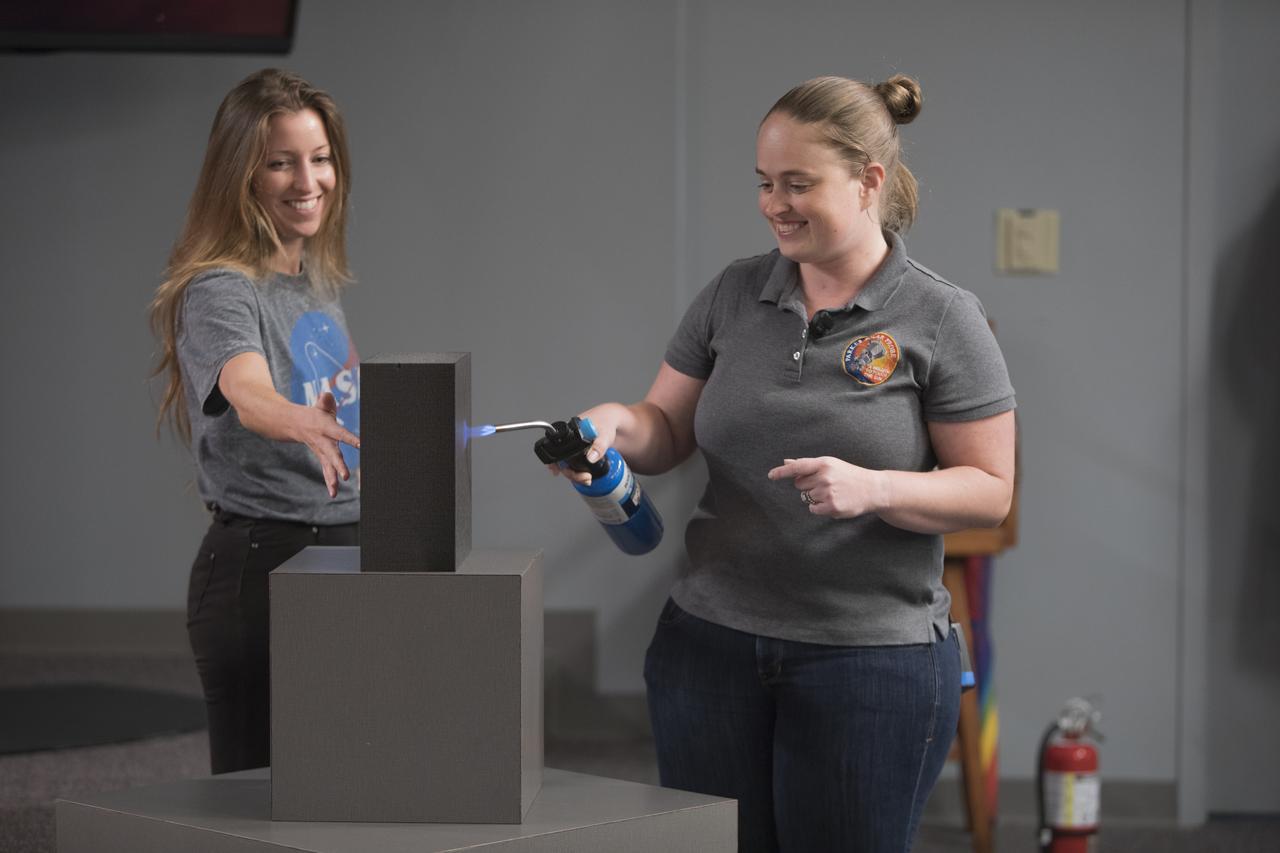
In the Kennedy Space Center’s Press Site auditorium, on Friday, July 20, 2018, Betsy Congdon, Thermal Protection System engineer with the Johns Hopkins University Applied Physics Laboratory, right, demonstrates the ability of the Parker Solar Probe's heat shield to protect the spacecraft. The presentation for the media took place during a prelaunch mission briefing for the Parker Solar Probe mission. The Parker Solar Probe will lift off on a United Launch Alliance Delta IV Heavy rocket from Space Launch Complex 37 at Cape Canaveral Air Force Station in Florida. The spacecraft was built by Applied Physics Laboratory of Johns Hopkins University in Laurel in Maryland. The mission will perform the closest-ever observations of a star when it travels through the Sun's atmosphere, called the corona. The probe will rely on measurements and imaging to revolutionize understanding of the corona and the Sun-Earth connection.

KENNEDY SPACE CENTER, FLA. -- On Launch Pad 39A, workers check the progress of the closing of the payload bay doors on space shuttle Atlantis. Seen here are the Columbus Laboratory (below) and the integrated cargo carrier - lite (above). Atlantis is being secured for launch on Dec. 6 on mission STS-122 to the International Space Station. The Columbus laboratory module, built by the European Space Agency, is approximately 23 feet long and 15 feet wide, allowing it to hold 10 large racks of experiments. The carrier holds three elements: a nitrogen tank assembly that is part of the external active thermal control system on the International Space Station, the European Technology Exposure Facility composed of nine science instruments and an autonomous temperature measurement unit, and the SOLAR payload designed for sun observation. Photo credit: NASA/George Shelton
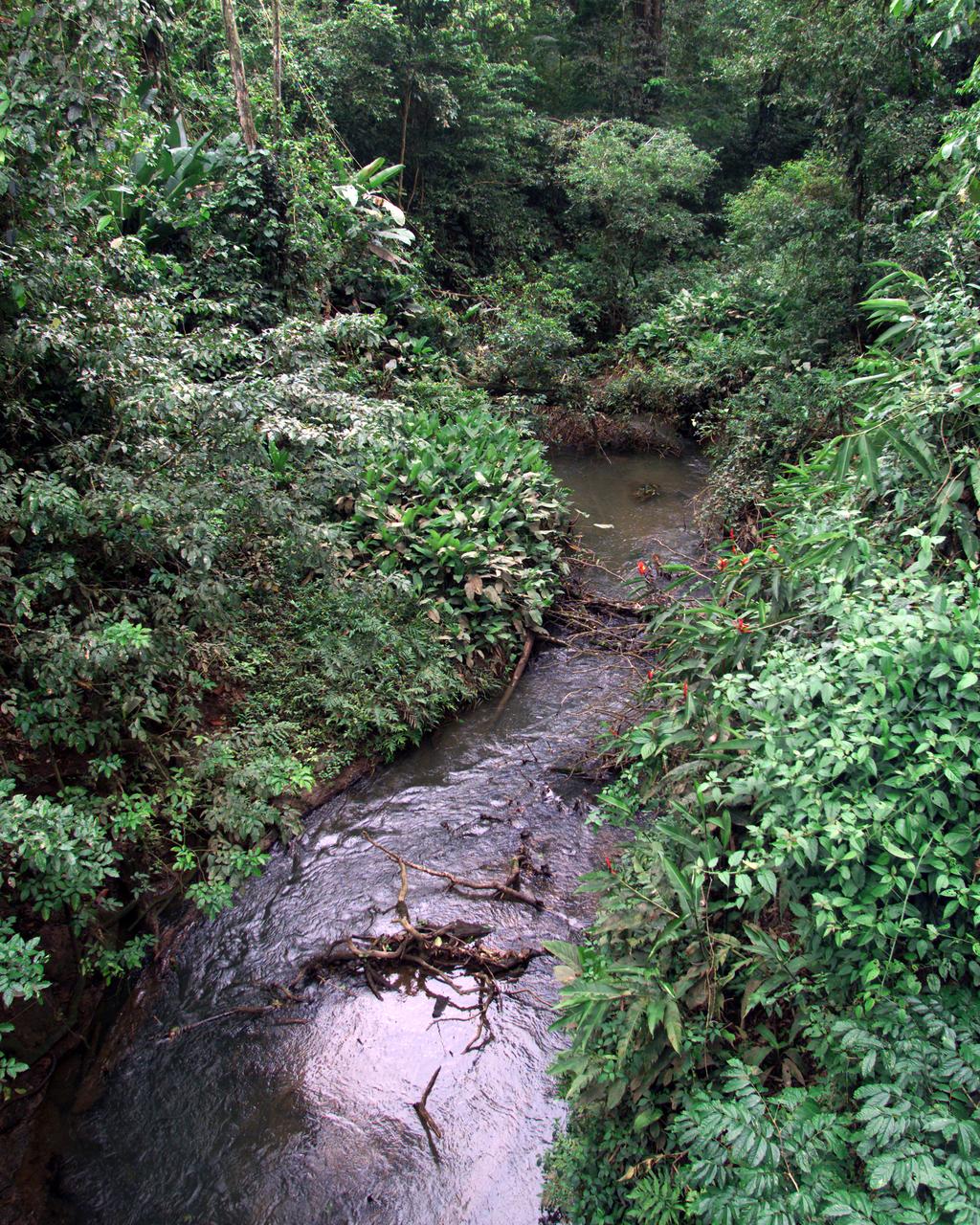
This photograph shows a stream in the La Selva region of the Costa Rican rain forest, taken during NASA's AirSAR 2004 Mesoamerica campaign. AirSAR 2004 Mesoamerica is a three-week expedition by an international team of scientists that will use an all-weather imaging tool, called the Airborne Synthetic Aperture Radar (AirSAR) which is located onboard NASA's DC-8 airborne laboratory. Scientists from many parts of the world including NASA's Jet Propulsion Laboratory are combining ground research done in several areas in Central America with NASA's AirSAR technology to improve and expand on the quality of research they are able to do. NASA's AIRSAR technolgy provides two essential elements to the ground-based scientists. First, it tests and provides accurate measurements of the forest structure. Secondly, AirSAR can study a larger area of the forest versus the smaller area that can be tested and plotted by the ground scientists. It also provides a unique one-of-a-kind system of measurement that obtains important information for the scientists, such as where forests are located and what exactly is in them.
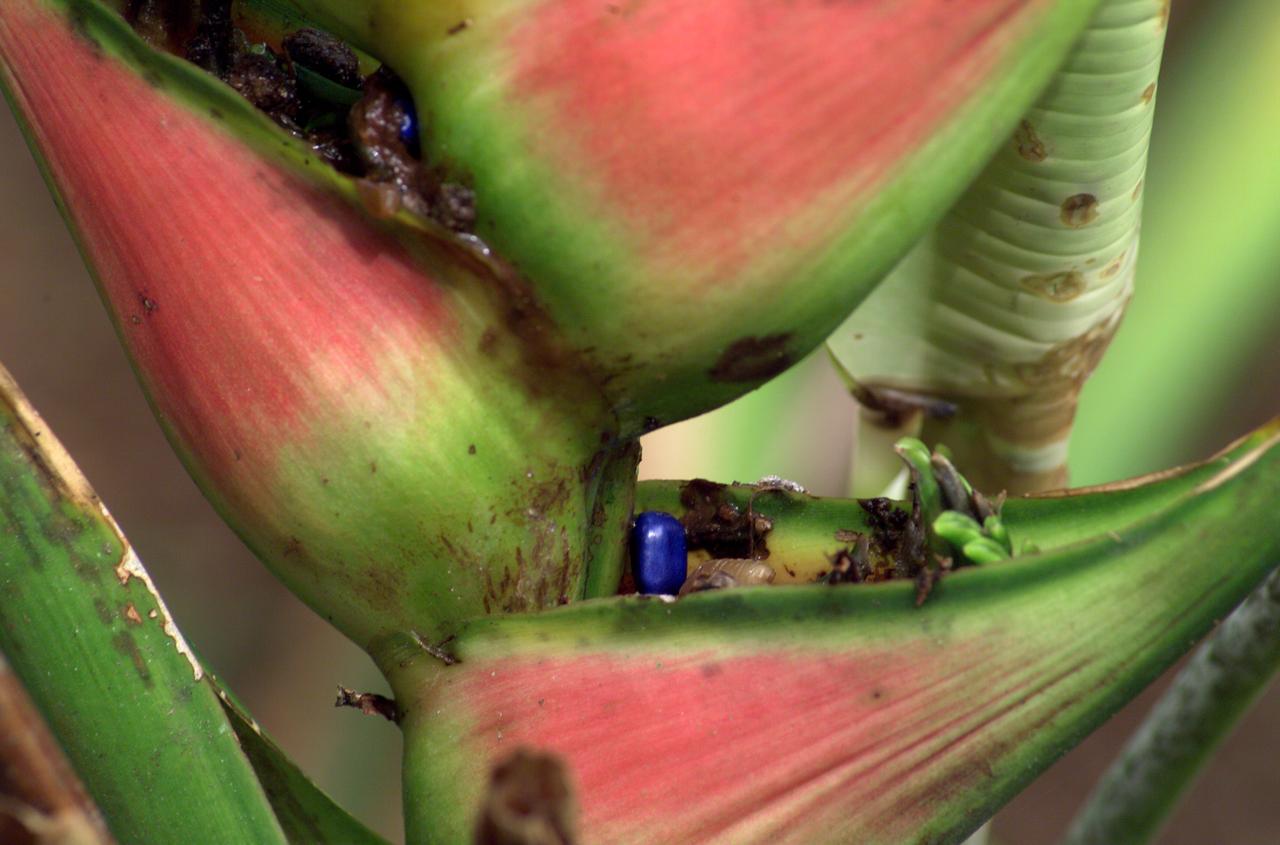
A plant photographed in the La Selva region of the Costa Rican rain forest as part of NASA's AirSAR 2004 Mesoamerica campaign. AirSAR 2004 Mesoamerica is a three-week expedition by an international team of scientists that will use an all-weather imaging tool, called the Airborne Synthetic Aperture Radar (AirSAR) which is located onboard NASA's DC-8 airborne laboratory. Scientists from many parts of the world including NASA's Jet Propulsion Laboratory are combining ground research done in several areas in Central America with NASA's AirSAR technology to improve and expand on the quality of research they are able to do. NASA's AIRSAR technolgy provides two essential elements to the ground-based scientists. First, it tests and provides accurate measurements of the forest structure. Secondly, AirSAR can study a larger area of the forest versus the smaller area that can be tested and plotted by the ground scientists. It also provides a unique one-of-a-kind system of measurement that obtains important information for the scientists, such as where forests are located and what exactly is in them.
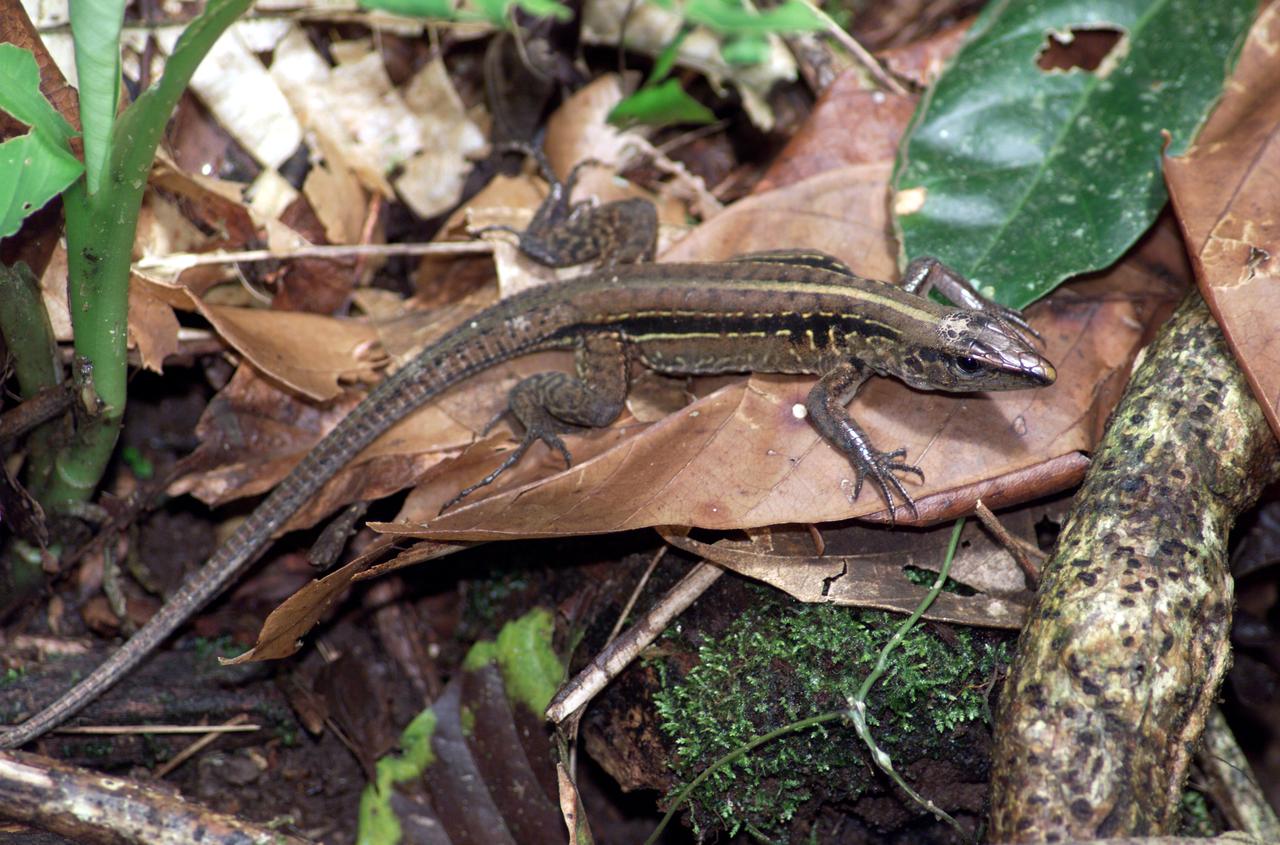
A lizard photographed in the La Selva region of the Costa Rican rain forest as part of NASA's AirSAR 2004 Mesoamerica campaign. AirSAR 2004 Mesoamerica is a three-week expedition by an international team of scientists that will use an all-weather imaging tool, called the Airborne Synthetic Aperture Radar (AirSAR) which is located onboard NASA's DC-8 airborne laboratory. Scientists from many parts of the world including NASA's Jet Propulsion Laboratory are combining ground research done in several areas in Central America with NASA's AirSAR technology to improve and expand on the quality of research they are able to do. NASA's AIRSAR technolgy provides two essential elements to the ground-based scientists. First, it tests and provides accurate measurements of the forest structure. Secondly, AirSAR can study a larger area of the forest versus the smaller area that can be tested and plotted by the ground scientists. It also provides a unique one-of-a-kind system of measurement that obtains important information for the scientists, such as where forests are located and what exactly is in them.
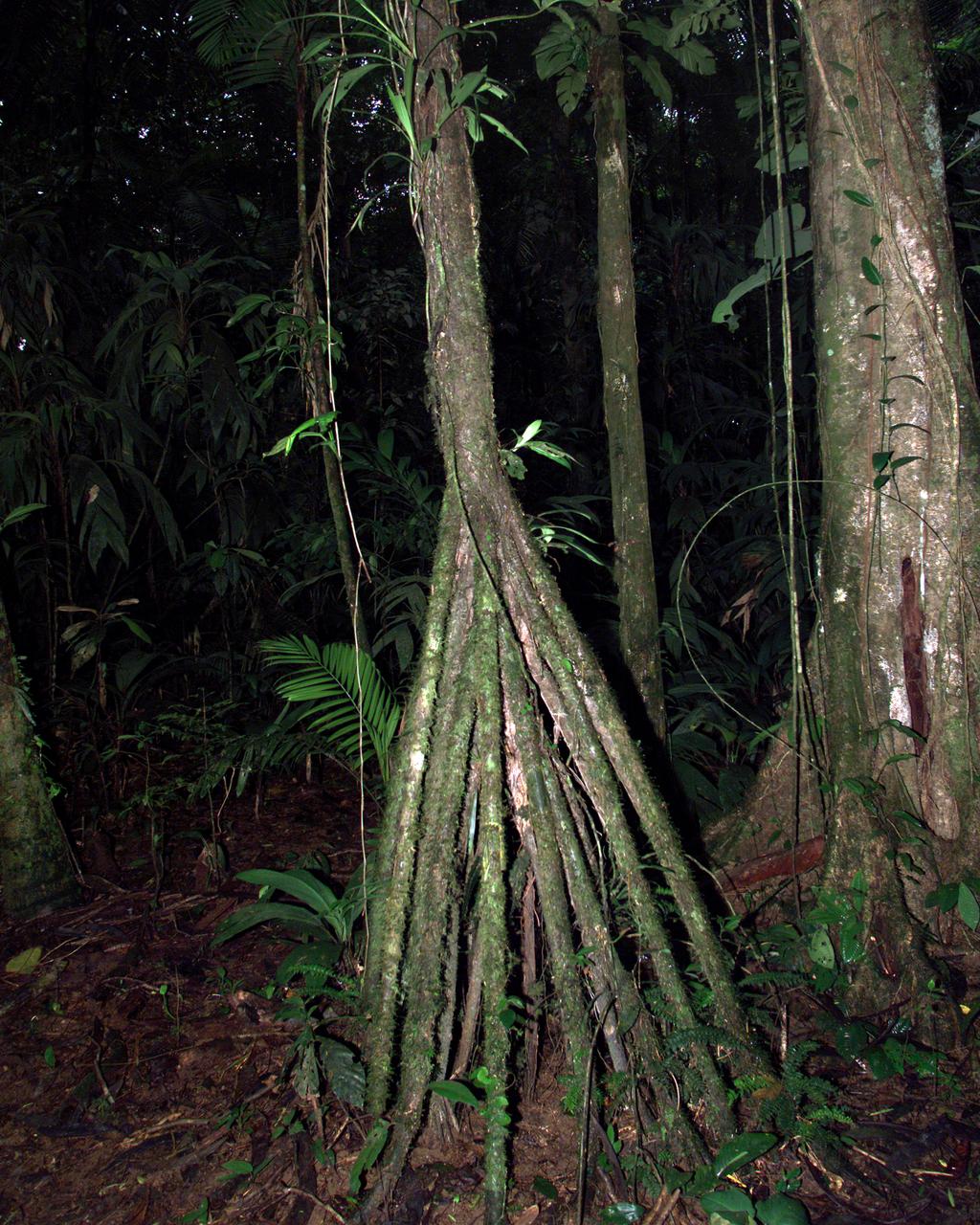
A tree trunk structure photographed in the La Selva region of the Costa Rican rain forest as part of NASA's AirSAR 2004 Mesoamerica campaign. AirSAR 2004 Mesoamerica is a three-week expedition by an international team of scientists that will use an all-weather imaging tool, called the Airborne Synthetic Aperture Radar (AirSAR) which is located onboard NASA's DC-8 airborne laboratory. Scientists from many parts of the world including NASA's Jet Propulsion Laboratory are combining ground research done in several areas in Central America with NASA's AirSAR technology to improve and expand on the quality of research they are able to do. NASA's AIRSAR technolgy provides two essential elements to the ground-based scientists. First, it tests and provides accurate measurements of the forest structure. Secondly, AirSAR can study a larger area of the forest versus the smaller area that can be tested and plotted by the ground scientists. It also provides a unique one-of-a-kind system of measurement that obtains important information for the scientists, such as where forests are located and what exactly is in them.
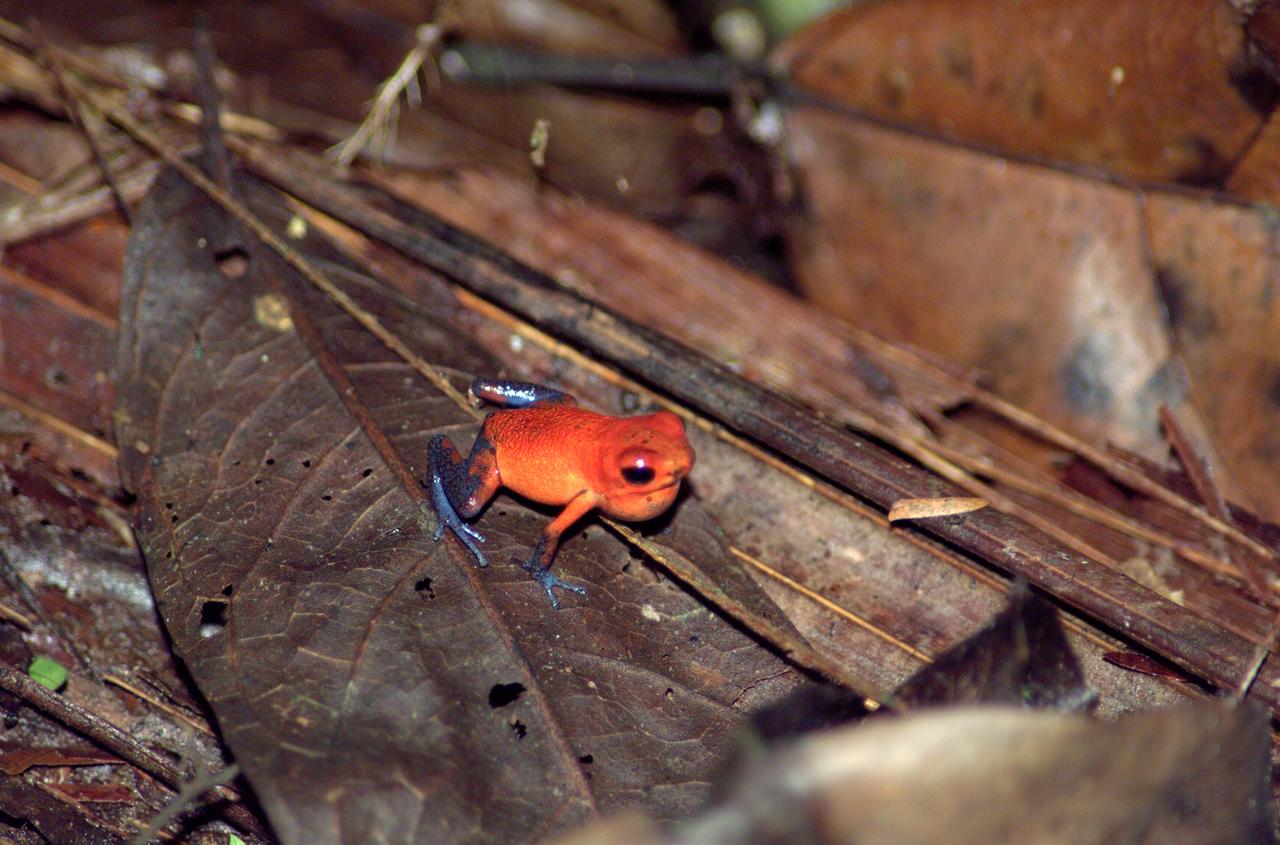
A tree frog photographed in the La Selva region of the Costa Rican rain forest as part of NASA's AirSAR 2004 Mesoamerica campaign. AirSAR 2004 Mesoamerica is a three-week expedition by an international team of scientists that will use an all-weather imaging tool, called the Airborne Synthetic Aperture Radar (AirSAR) which is located onboard NASA's DC-8 airborne laboratory. Scientists from many parts of the world including NASA's Jet Propulsion Laboratory are combining ground research done in several areas in Central America with NASA's AirSAR technology to improve and expand on the quality of research they are able to do. NASA's AIRSAR technolgy provides two essential elements to the ground-based scientists. First, it tests and provides accurate measurements of the forest structure. Secondly, AirSAR can study a larger area of the forest versus the smaller area that can be tested and plotted by the ground scientists. It also provides a unique one-of-a-kind system of measurement that obtains important information for the scientists, such as where forests are located and what exactly is in them.

A butterfly photographed in the La Selva region of the Costa Rican rain forest as part of NASA's AirSAR 2004 Mesoamerica campaign. AirSAR 2004 Mesoamerica is a three-week expedition by an international team of scientists that will use an all-weather imaging tool, called the Airborne Synthetic Aperture Radar (AirSAR) which is located onboard NASA's DC-8 airborne laboratory. Scientists from many parts of the world including NASA's Jet Propulsion Laboratory are combining ground research done in several areas in Central America with NASA's AirSAR technology to improve and expand on the quality of research they are able to do. NASA's AIRSAR technolgy provides two essential elements to the ground-based scientists. First, it tests and provides accurate measurements of the forest structure. Secondly, AirSAR can study a larger area of the forest versus the smaller area that can be tested and plotted by the ground scientists. It also provides a unique one-of-a-kind system of measurement that obtains important information for the scientists, such as where forests are located and what exactly is in them.
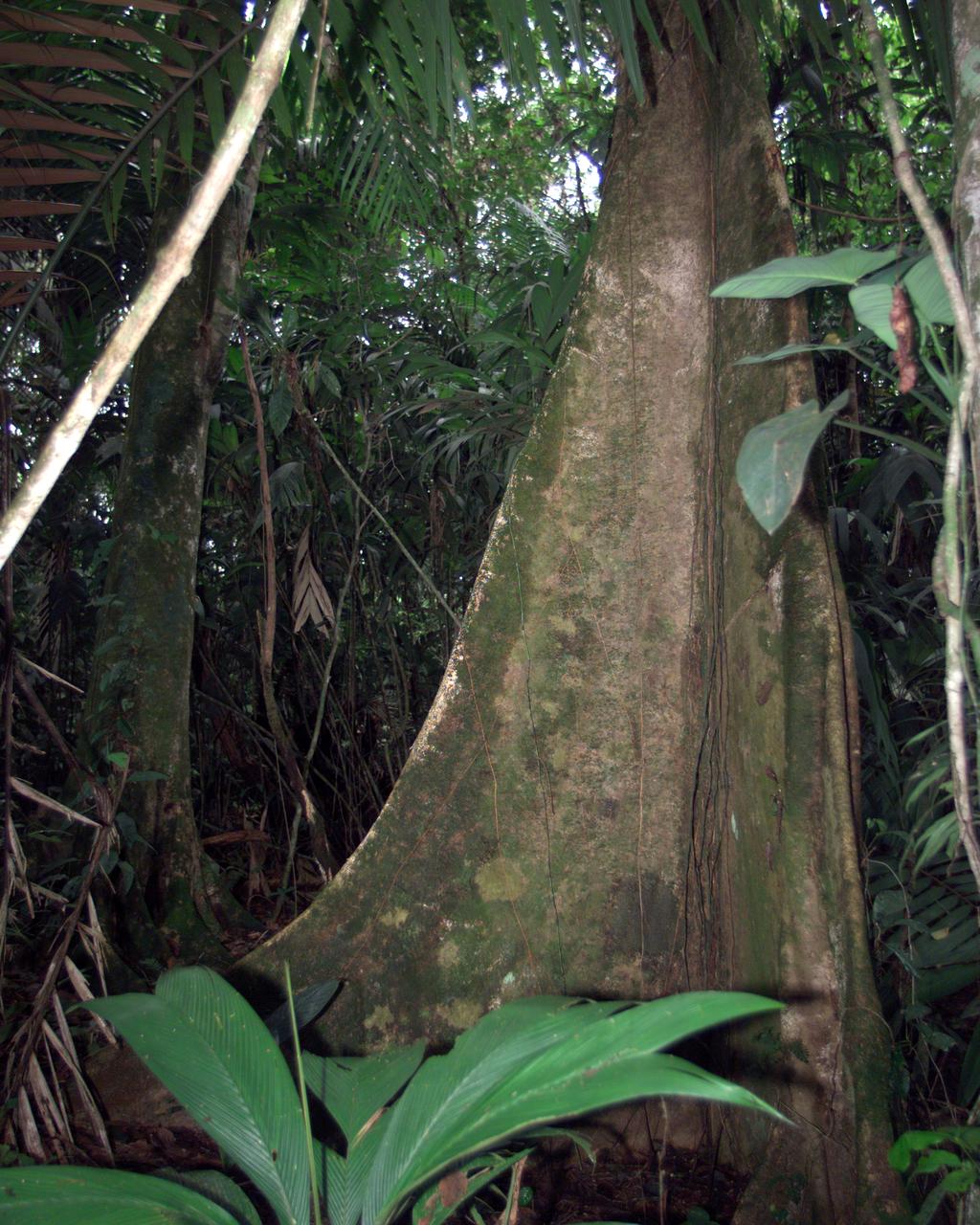
A unique tree trunk photographed in La Selva region of the Costa Rican rain forest as part of NASA's AirSAR 2004 Mesoamerica campaign. AirSAR 2004 Mesoamerica is a three-week expedition by an international team of scientists that will use an all-weather imaging tool, called the Airborne Synthetic Aperture Radar (AirSAR) which is located onboard NASA's DC-8 airborne laboratory. Scientists from many parts of the world including NASA's Jet Propulsion Laboratory are combining ground research done in several areas in Central America with NASA's AirSAR technology to improve and expand on the quality of research they are able to do. NASA's AIRSAR technolgy provides two essential elements to the ground-based scientists. First, it tests and provides accurate measurements of the forest structure. Secondly, AirSAR can study a larger area of the forest versus the smaller area that can be tested and plotted by the ground scientists. It also provides a unique one-of-a-kind system of measurement that obtains important information for the scientists, such as where forests are located and what exactly is in them.
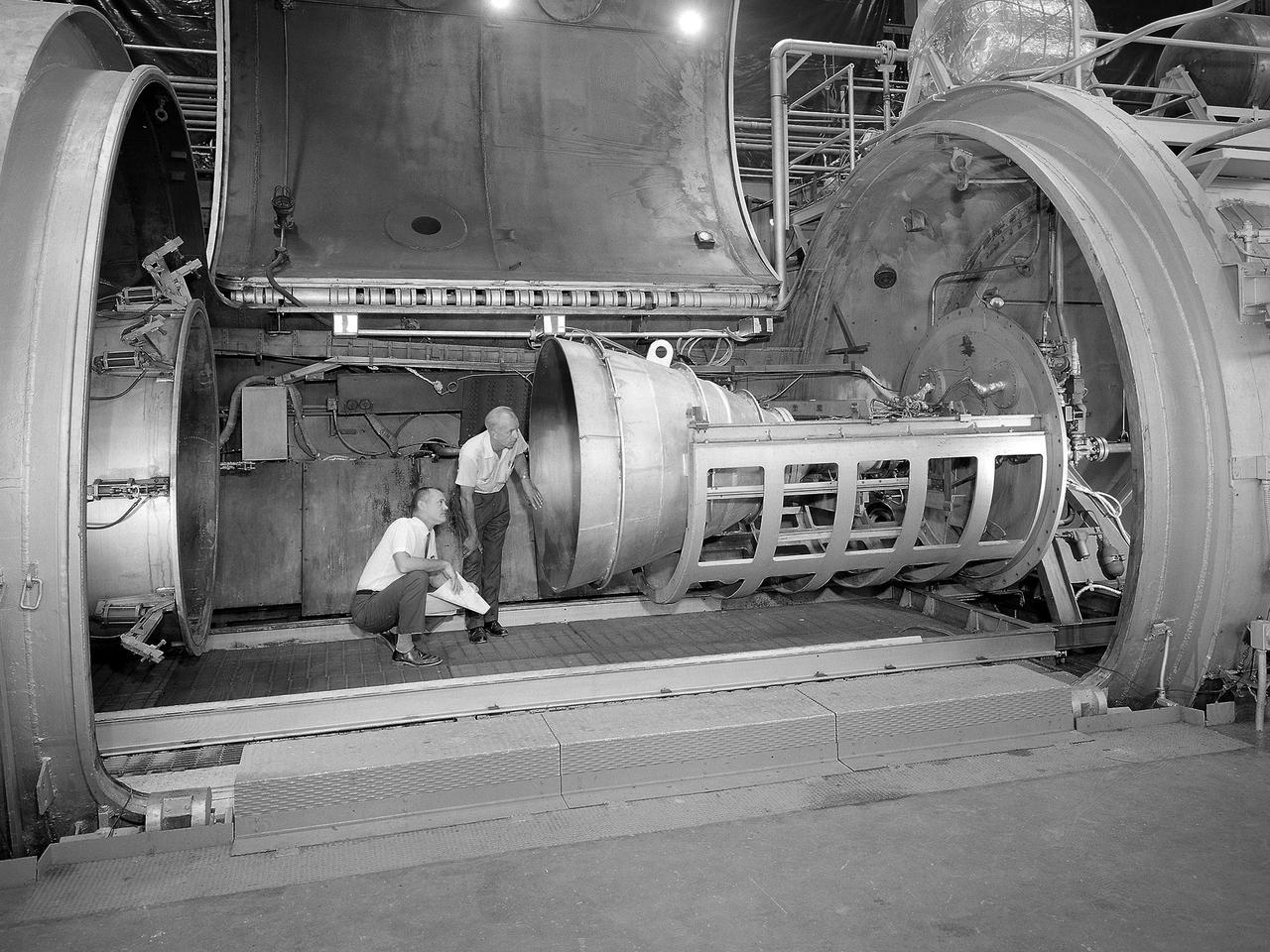
Bill Harrison and Bud Meilander check the setup of an Apollo Contour rocket nozzle in the Propulsion Systems Laboratory at the National Aeronautics and Space Administration (NASA) Lewis Research Center. The Propulsion Systems Laboratory contained two 14-foot diameter test chambers that could simulate conditions found at very high altitudes. The facility was used in the 1960s to study complex rocket engines such as the Pratt and Whitney RL-10 and rocket components such as the Apollo Contour nozzle, seen here. Meilander oversaw the facility’s mechanics and the installation of test articles into the chambers. Harrison was head of the Supersonic Tunnels Branch in the Test Installations Division. Researchers sought to determine the impulse value of the storable propellant mix, classify and improve the internal engine performance, and compare the results with analytical tools. A special setup was installed in the chamber that included a device to measure the thrust load and a calibration stand. Both cylindrical and conical combustion chambers were examined with the conical large area ratio nozzles. In addition, two contour nozzles were tested, one based on the Apollo Service Propulsion System and the other on the Air Force’s Titan transtage engine. Three types of injectors were investigated, including a Lewis-designed model that produced 98-percent efficiency. It was determined that combustion instability did not affect the nozzle performance. Although much valuable information was obtained during the tests, attempts to improve the engine performance were not successful.
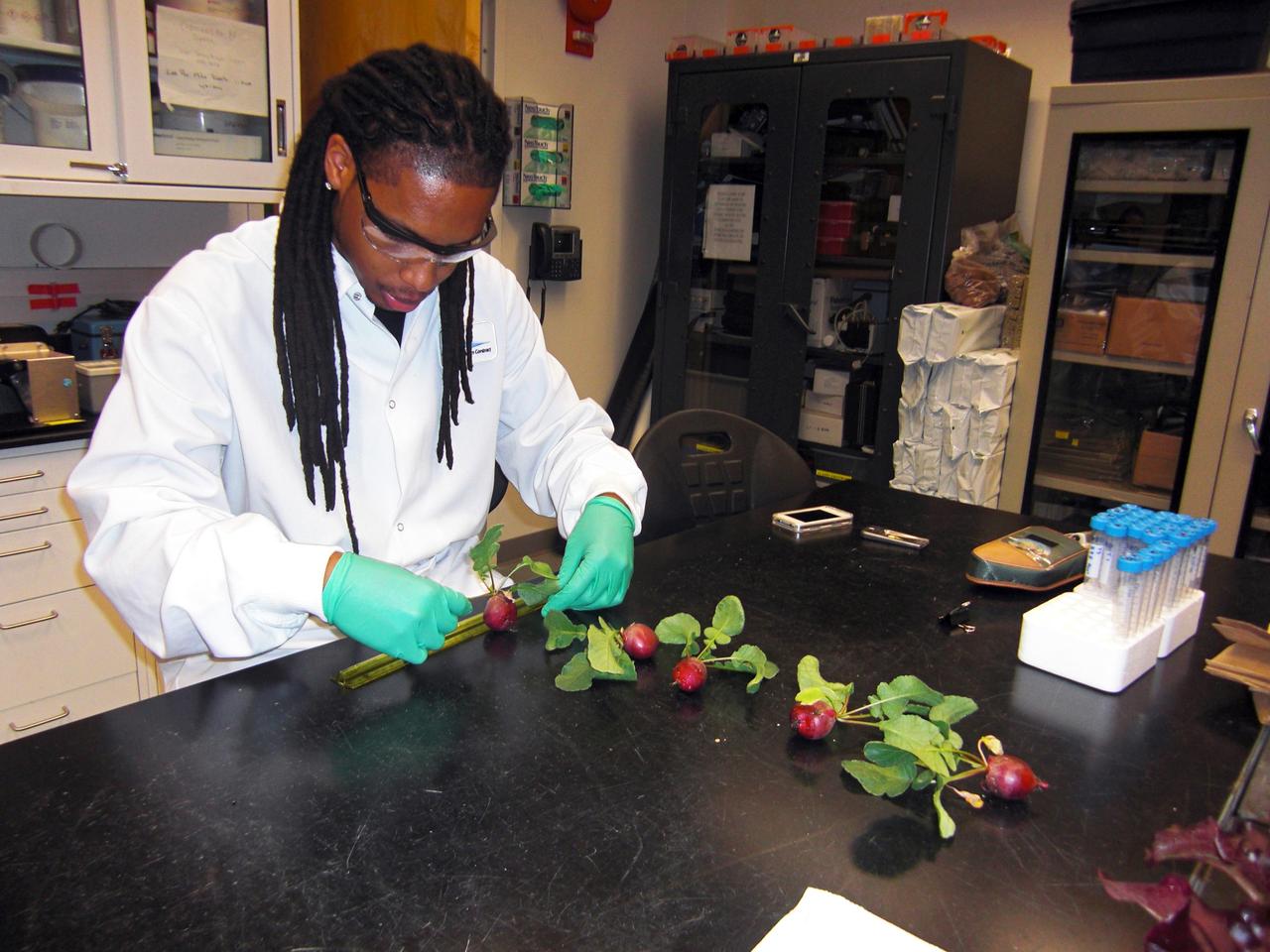
CAPE CANAVERAL, Fla. – Inside the Space Life Sciences Laboratory, or SLSL, at NASA’s Kennedy Space Center in Florida, Dr. Matthew Mickens, a plant biologist from North Carolina Agriculture and Technical State University in North Carolina, measures radish plants that were just harvested from a plant growth chamber. The plants were grown under red and blue LED lights. The plant experiment at Kennedy is part of the Advanced Exploration Systems, or AES, program in NASA’s Human Exploration and Operations Mission Directorate. This plant experiment studies the effects of different types of lighting on plants such as radishes and leaf lettuce. Results of these studies will help provide information on how to grow food sources for deep space exploration missions. AES projects pioneer new approaches for rapidly developing prototype systems, demonstrating key capabilities and validating operational concepts for future human missions beyond Earth orbit. Photo credit: NASA/Frank Ochoa-Gonzales
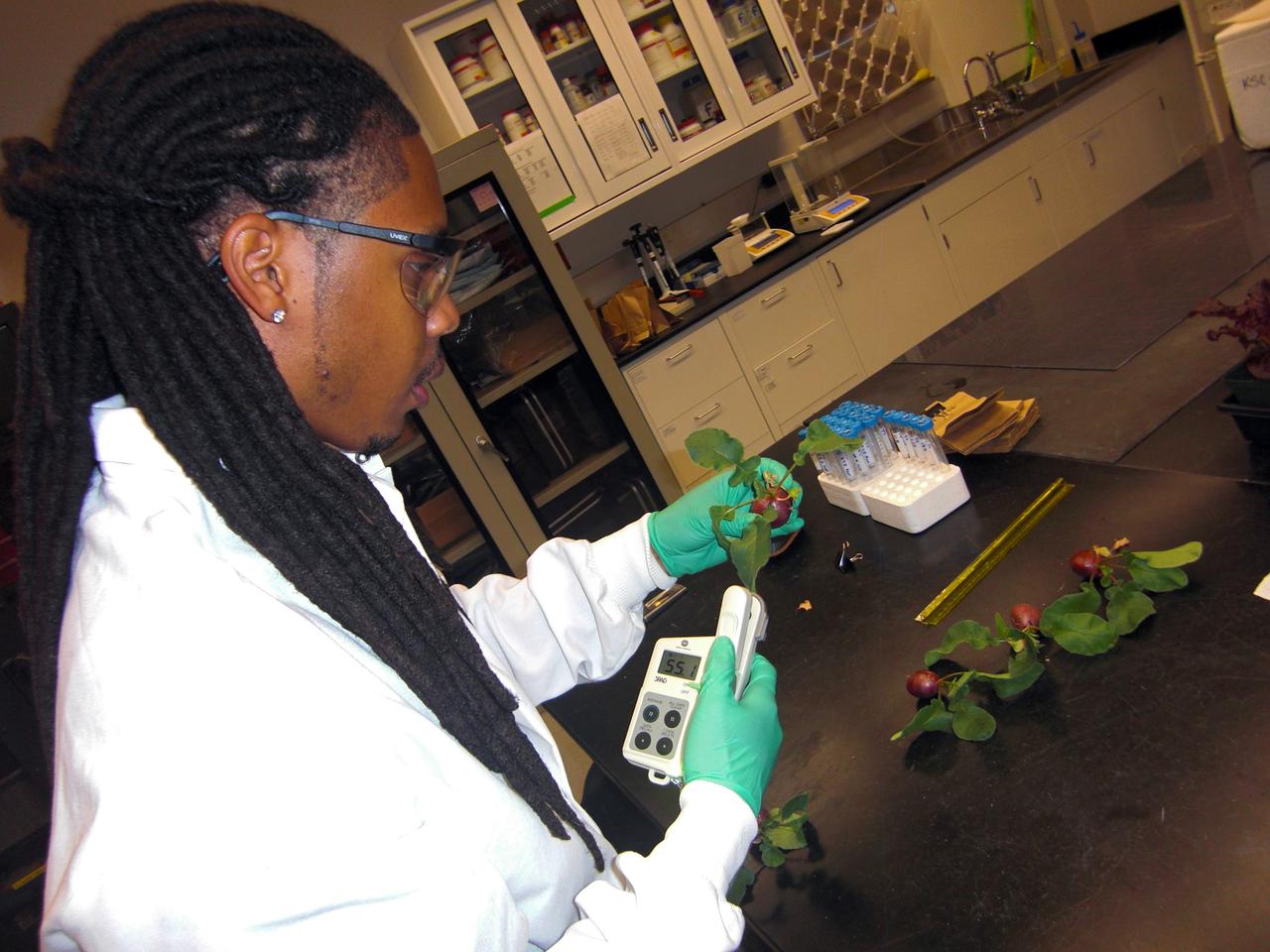
CAPE CANAVERAL, Fla. – Inside the Space Life Sciences Laboratory, or SLSL, at NASA’s Kennedy Space Center in Florida, Dr. Matthew Mickens, a plant biologist from North Carolina Agriculture and Technical State University in North Carolina, measures radish plants that were just harvested from a plant growth chamber. The plants were grown under red and blue LED lights. The plant experiment at Kennedy is part of the Advanced Exploration Systems, or AES, program in NASA’s Human Exploration and Operations Mission Directorate. This plant experiment studies the effects of different types of lighting on plants such as radishes and leaf lettuce. Results of these studies will help provide information on how to grow food sources for deep space exploration missions. AES projects pioneer new approaches for rapidly developing prototype systems, demonstrating key capabilities and validating operational concepts for future human missions beyond Earth orbit. Photo credit: NASA/Frank Ochoa-Gonzales
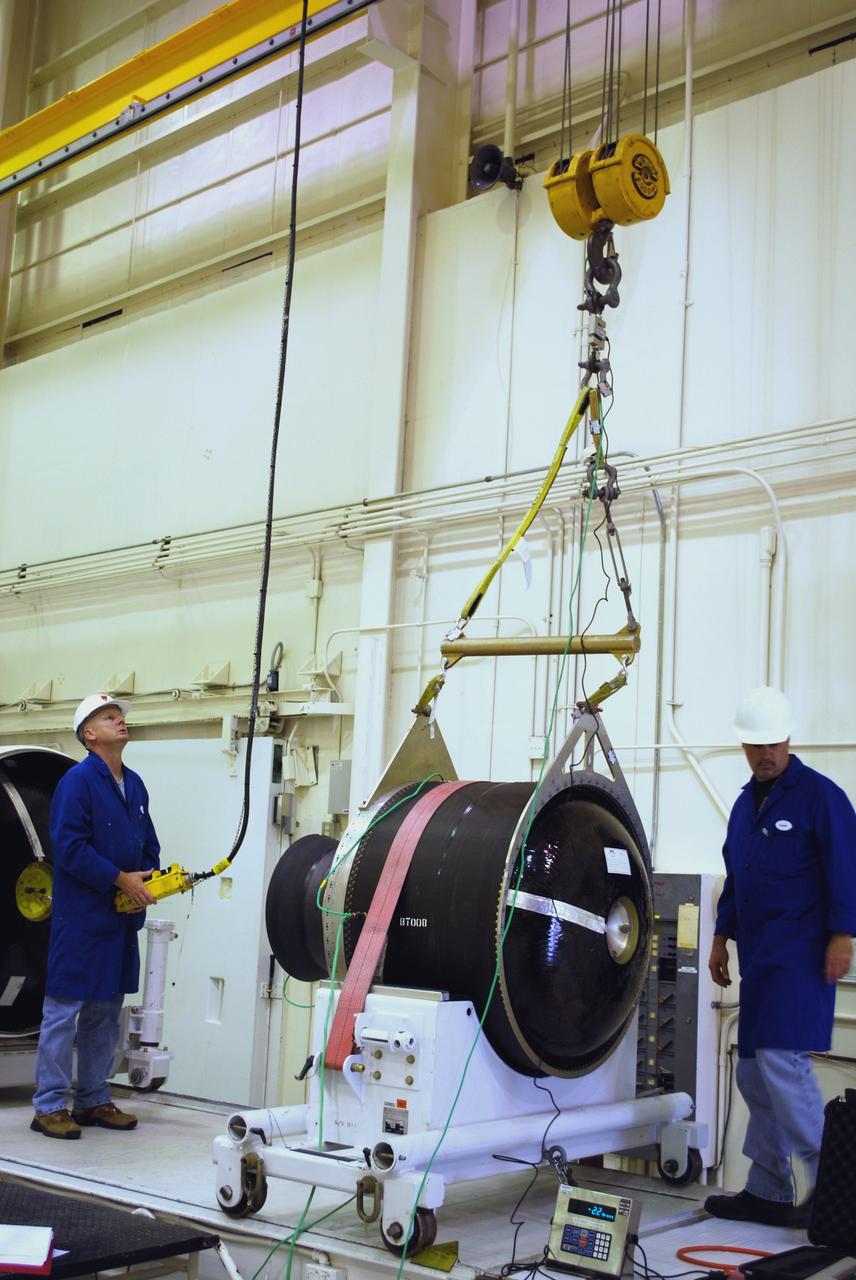
VANDENBERG AIR FORCE BASE, Calif. -- An Alliant motor designated for Stage 3 of a Taurus rocket is weighed by Orbital Sciences workers in Building 1555 at Vandenberg AFB. The Taurus will launch the Orbiting Carbon Observatory, or OCO, in January 2009. The OCO is a new Earth-orbiting mission sponsored by NASA's Earth System Science Pathfinder Program. OCO will provide space-based observations of atmospheric carbon dioxide (CO2), the principal human-initiated driver of climate change. Mature technologies will be used to address NASA's highest priority carbon cycle measurement requirement. NASA's Jet Propulsion Laboratory leads the OCO effort. Orbital Sciences Corporation is providing the Taurus launch vehicle; Hamilton Sundstrand Sensor Systems, the OCO spacecraft. Photo credit: NASA/Randy Beaudoin
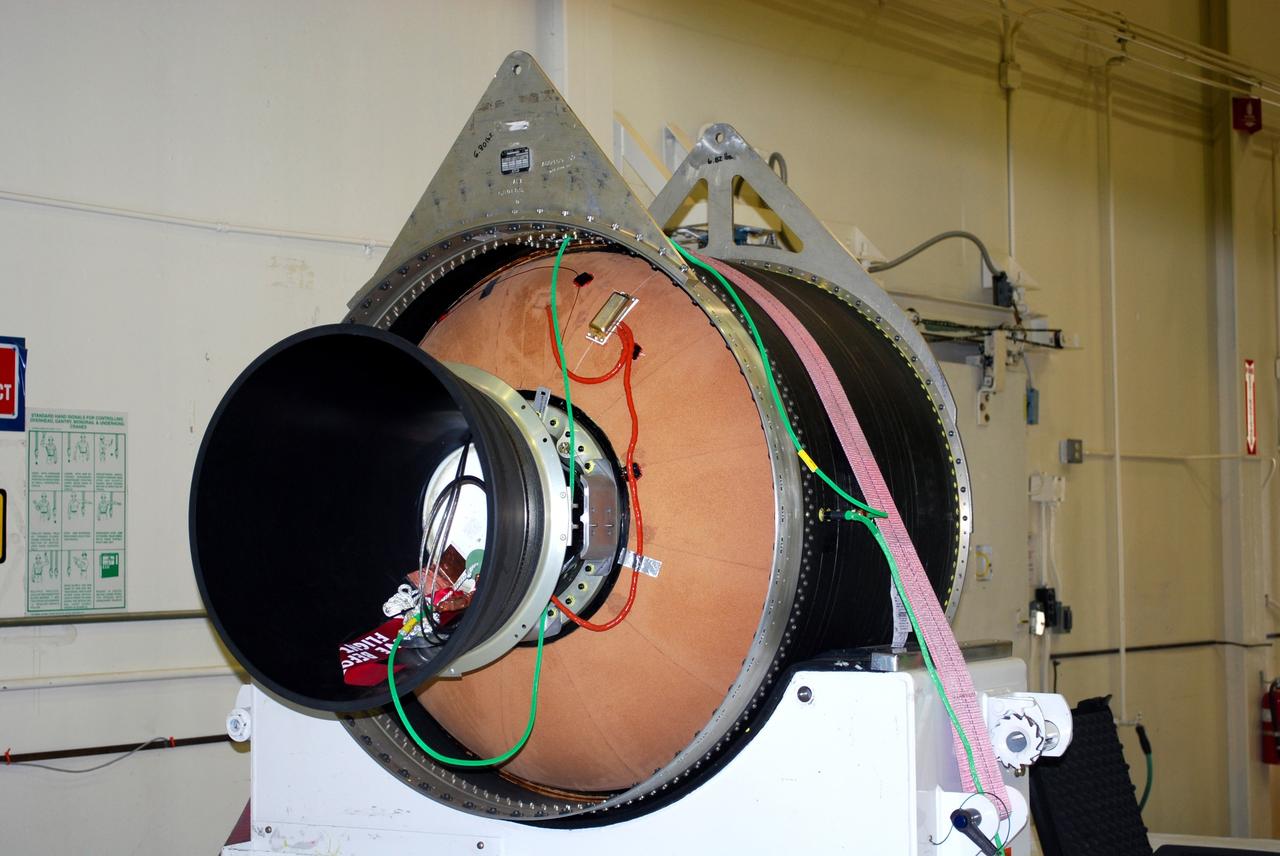
VANDENBERG AIR FORCE BASE, Calif. -- An Alliant motor designated for Stage 3 of a Taurus rocket is weighed by Orbital Sciences workers in Building 1555 at Vandenberg AFB. The Taurus will launch the Orbiting Carbon Observatory, or OCO, in January 2009. The OCO is a new Earth-orbiting mission sponsored by NASA's Earth System Science Pathfinder Program. OCO will provide space-based observations of atmospheric carbon dioxide (CO2), the principal human-initiated driver of climate change. Mature technologies will be used to address NASA's highest priority carbon cycle measurement requirement. NASA's Jet Propulsion Laboratory leads the OCO effort. Orbital Sciences Corporation is providing the Taurus launch vehicle; Hamilton Sundstrand Sensor Systems, the OCO spacecraft. Photo credit: NASA/Randy Beaudoin
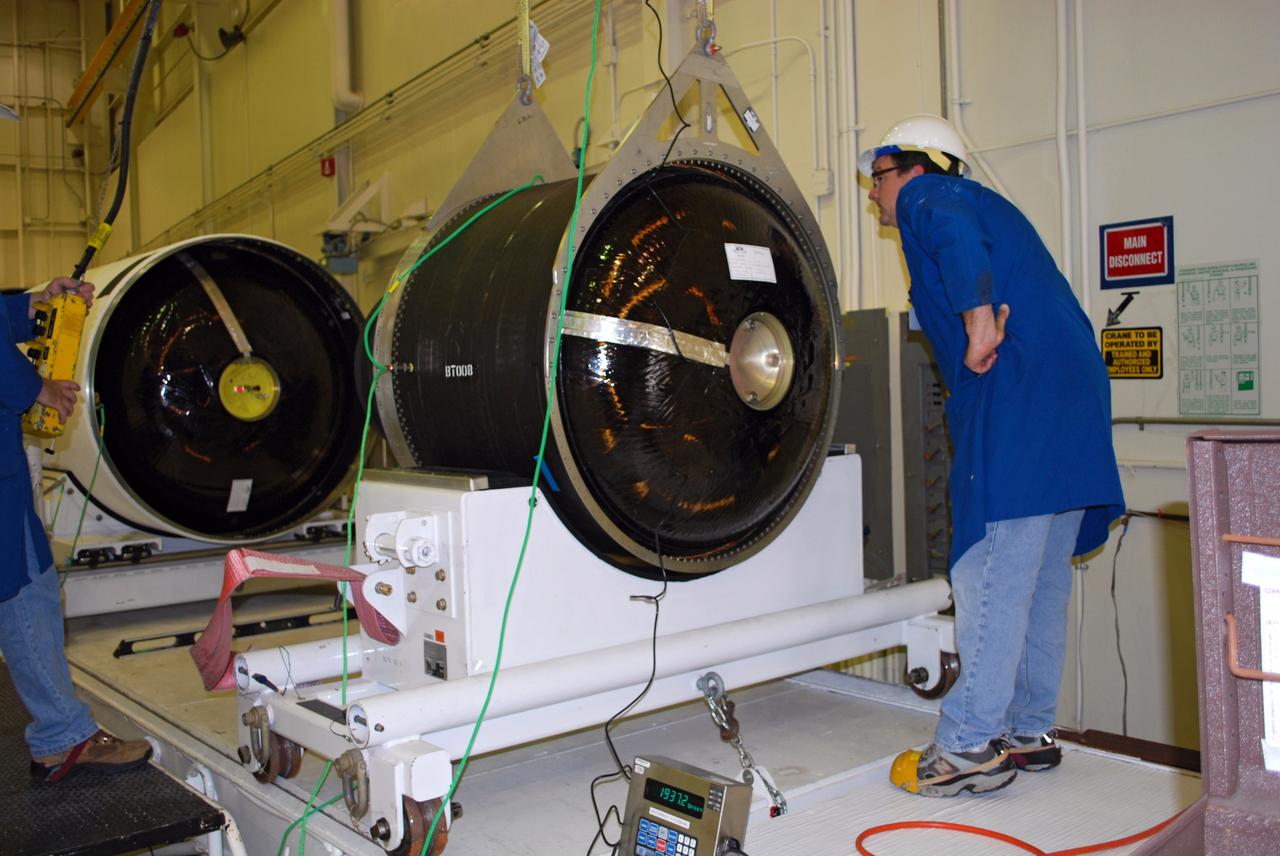
VANDENBERG AIR FORCE BASE, Calif. -- An Alliant motor designated for Stage 3 of a Taurus rocket is weighed by Orbital Sciences workers in Building 1555 at Vandenberg AFB. The Taurus will launch the Orbiting Carbon Observatory, or OCO, in January 2009. The OCO is a new Earth-orbiting mission sponsored by NASA's Earth System Science Pathfinder Program. OCO will provide space-based observations of atmospheric carbon dioxide (CO2), the principal human-initiated driver of climate change. Mature technologies will be used to address NASA's highest priority carbon cycle measurement requirement. NASA's Jet Propulsion Laboratory leads the OCO effort. Orbital Sciences Corporation is providing the Taurus launch vehicle; Hamilton Sundstrand Sensor Systems, the OCO spacecraft. Photo credit: NASA/Randy Beaudoin
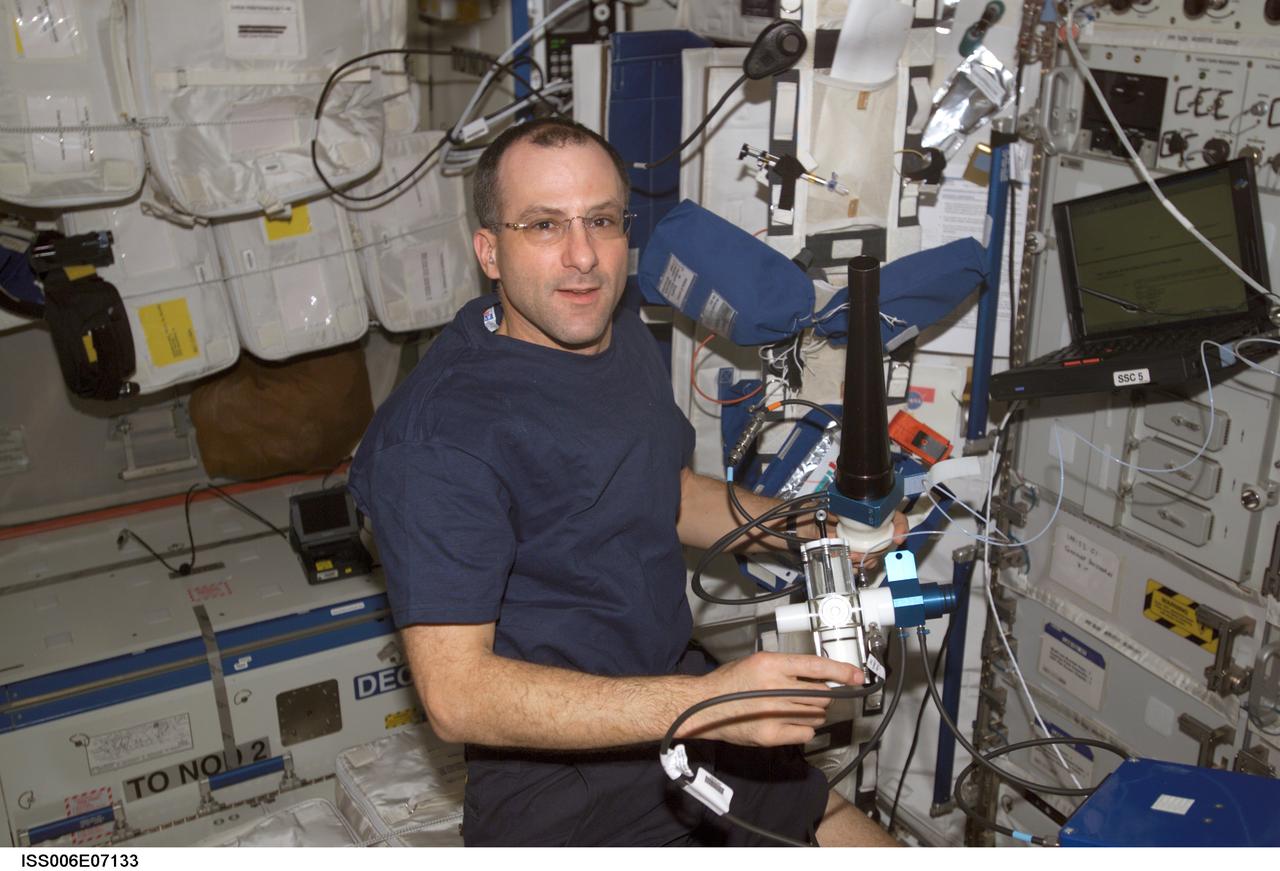
In this International Space Station (ISS) onboard photo, Expedition Six Science Officer Donald R. Pettit works to set up the Pulmonary Function in Flight (PuFF) experiment hardware in the Destiny Laboratory. Expedition Six is the fourth and final crew to perform the PuFF experiment. The PuFF experiment was developed to better understand what effects long term exposure to microgravity may have on the lungs. The focus is on measuring changes in the everness of gas exchange in the lungs, and on detecting changes in respiratory muscle strength. It allows astronauts to measure blood flow through the lungs, the ability of the lung to take up oxygen, and lung volumes. Each PuFF session includes five lung function tests, which involve breathing only cabin air. For each planned extravehicular (EVA) activity, a crew member performs a PuFF test within one week prior to the EVA. Following the EVA, those crew members perform another test to document the effect of exposure of the lungs to the low-pressure environment of the space suits. This experiment utilizes the Gas Analyzer System for Metabolic Analysis Physiology, or GASMAP, located in the Human Research Facility (HRF), along with a variety of other Puff equipment including a manual breathing valve, flow meter, pressure-flow module, pressure and volume calibration syringes, and disposable mouth pieces.

An inlet duct lowered into the 20-foot diameter test section of the Altitude Wind Tunnel at the National Advisory Committee for Aeronautics (NACA) Lewis Flight Propulsion Laboratory. Engines and hardware were prepared in the facility’s shop area. The test articles were lifted by a two-rail Shaw box crane through the high-bay and the second-story test chamber before being lowered into the test section. Technicians then spent days or weeks hooking up the supply lines and data recording telemetry. The engines were mounted on wingspans that stretched across the test section. The wingtips attached to the balance frame’s trunnions, which could adjust the angle of attack. The balance frame included six devices that recorded data and controlled the engine. The measurements were visible in banks of manometer boards next to the control room. Photographs recorded the pressure levels in the manometer tubes, and the computing staff manually converted the data into useful measurements. A mechanical pulley system was used to raise and lower the tunnel’s large clamshell lid into place. The lid was sealed into place using hand-turned locks accessible from the viewing platform. The lid had viewing windows above and below the test article, which permitted the filming and visual inspection of the tests.
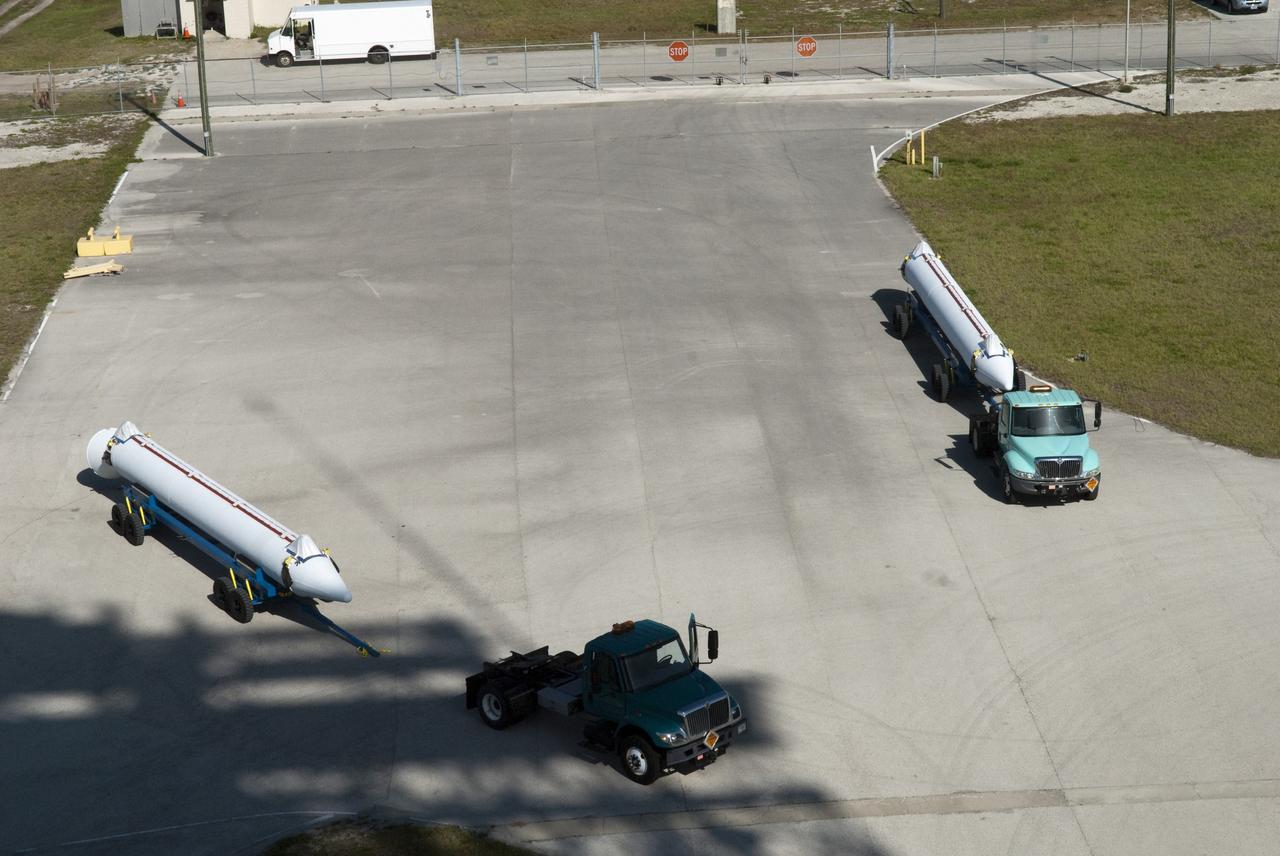
CAPE CANAVERAL, Fla. -- Trucks deliver the first set of solid-fueled boosters to Launch Complex 17-B at Cape Canaveral Air Force Station in Florida where a United Launch Alliance Delta II is being prepared for launch. The Delta II will carry NASA's Gravity Recovery and Interior Laboratory, or GRAIL, spacecraft into lunar orbit. The GRAIL mission is a part of NASA's Discovery Program. GRAIL will fly twin spacecraft in tandem orbits around the moon for several months to measure its gravity field. The mission also will answer longstanding questions about Earth's moon and provide scientists a better understanding of how Earth and other rocky planets in the solar system formed. GRAIL is scheduled to launch September 8, 2011. For more information visit: http://science.nasa.gov/missions/grail/. Photo credit: NASA/Jim Grossmann
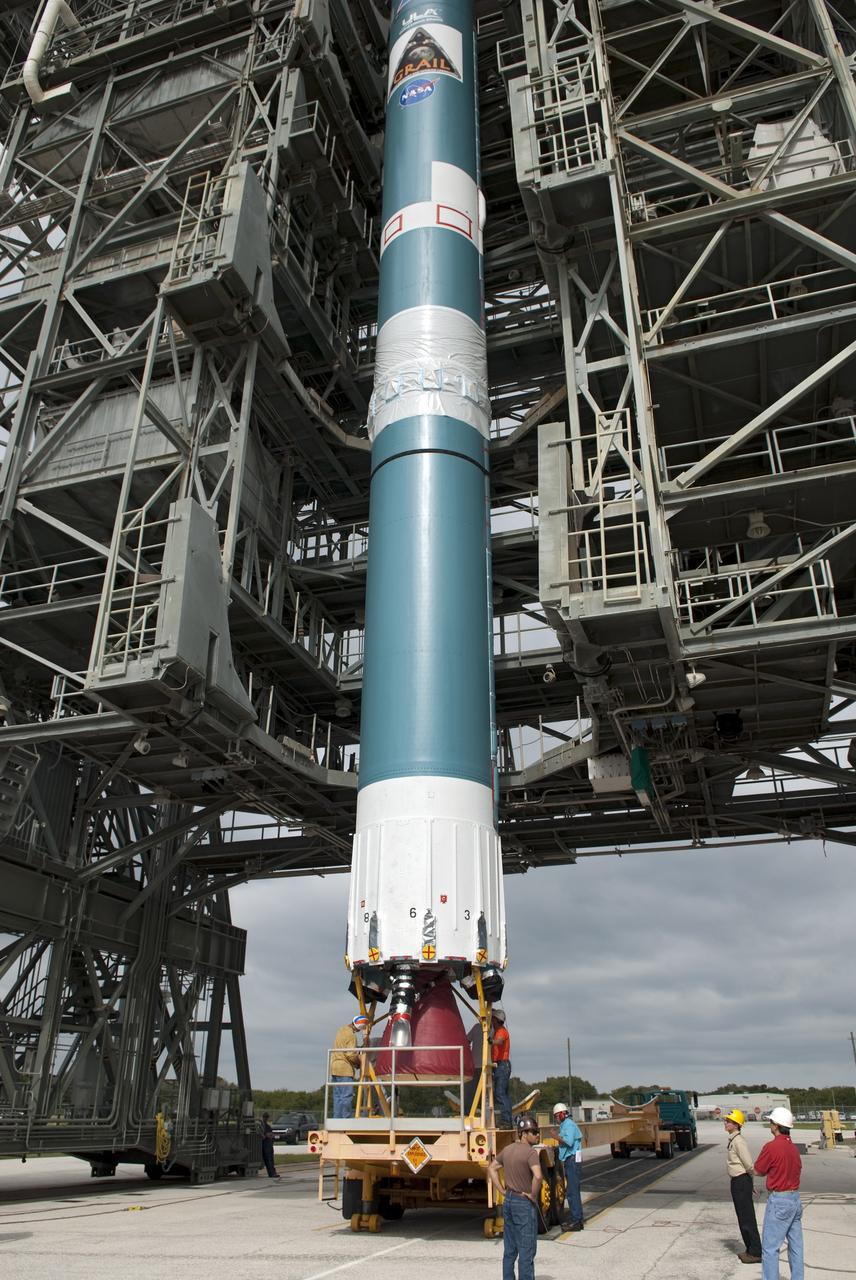
CAPE CANAVERAL, Fla. -- At Cape Canaveral Air Force Station in Florida, workers guide the first stage of a United Launch Alliance Delta II launch vehicle as it is being lifted into the Pad 17B gantry. The Delta II will carry NASA's Gravity Recovery and Interior Laboratory, or GRAIL, spacecraft into lunar orbit. The GRAIL mission is a part of NASA's Discovery Program. GRAIL will fly twin spacecraft in tandem orbits around the moon for several months to measure its gravity field. The mission also will answer longstanding questions about Earth's moon and provide scientists a better understanding of how Earth and other rocky planets in the solar system formed. GRAIL is scheduled to launch September 8, 2011. For more information visit: http://science.nasa.gov/missions/grail/. Photo credit: NASA/Jim Grossmann
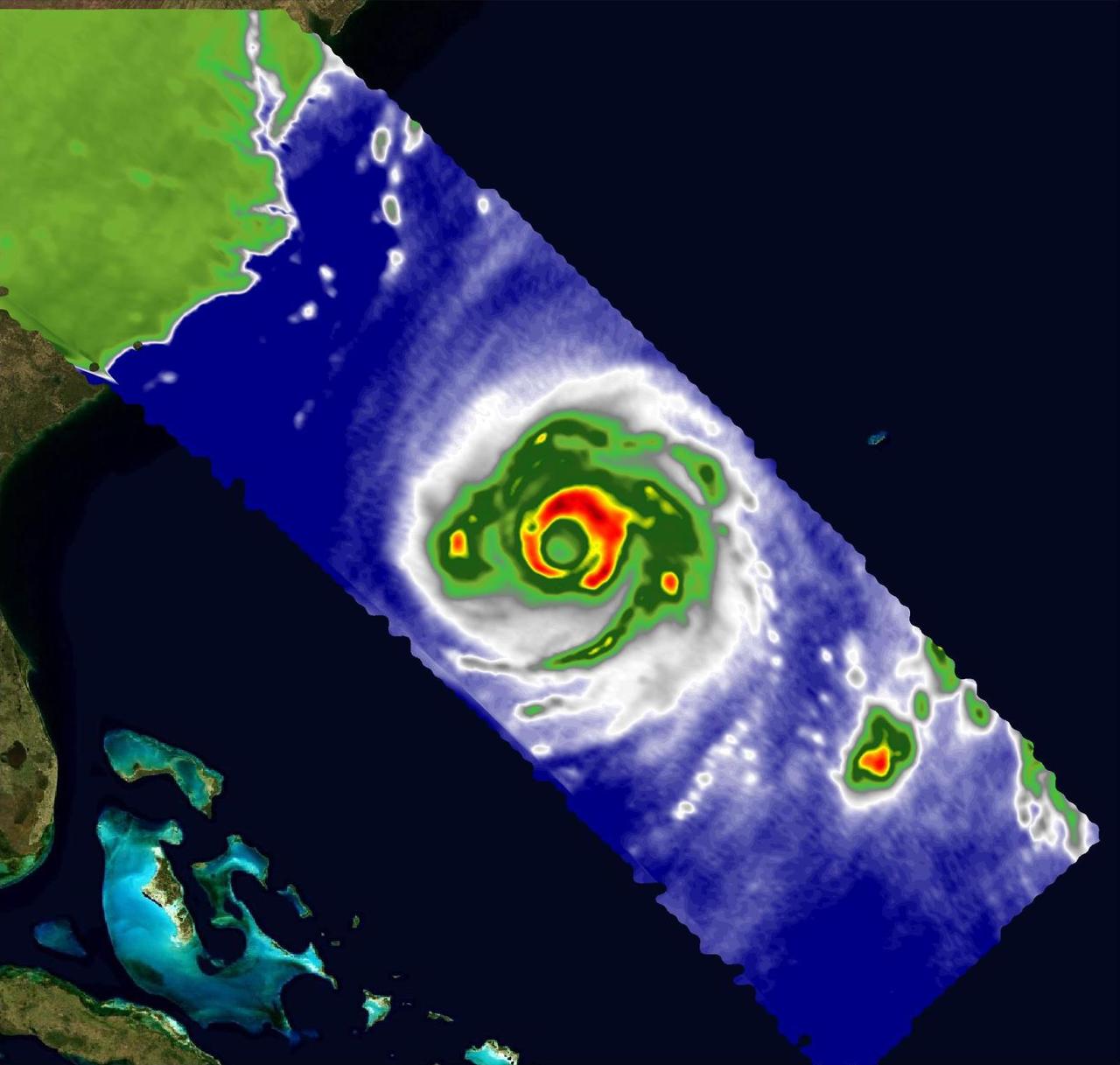
A pair of weather instruments built at NASA's Jet Propulsion Laboratory in Southern California captured images of Hurricane Franklin as the Category 4 storm moved off the East Coast of the United States on Aug. 29, 2023. COWVR (short for Compact Ocean Wind Vector Radiometer) and TEMPEST (Temporal Experiment for Storms and Tropical Systems) observe the planet's atmosphere and surface from aboard the International Space Station, which passed in low Earth orbit over the storm at about 9:58 a.m. EDT. This image combines microwave emissions measurements from both COWVR and TEMPEST. White sections indicate the presence of clouds. Green portions indicate rain. Yellow, red, and black indicate where air and water vapor were moving most vigorously. Franklin's center is seen about 700 miles (1,127 kilometers) east of Jacksonville, Florida, over the Atlantic Ocean. https://photojournal.jpl.nasa.gov/catalog/PIA25870
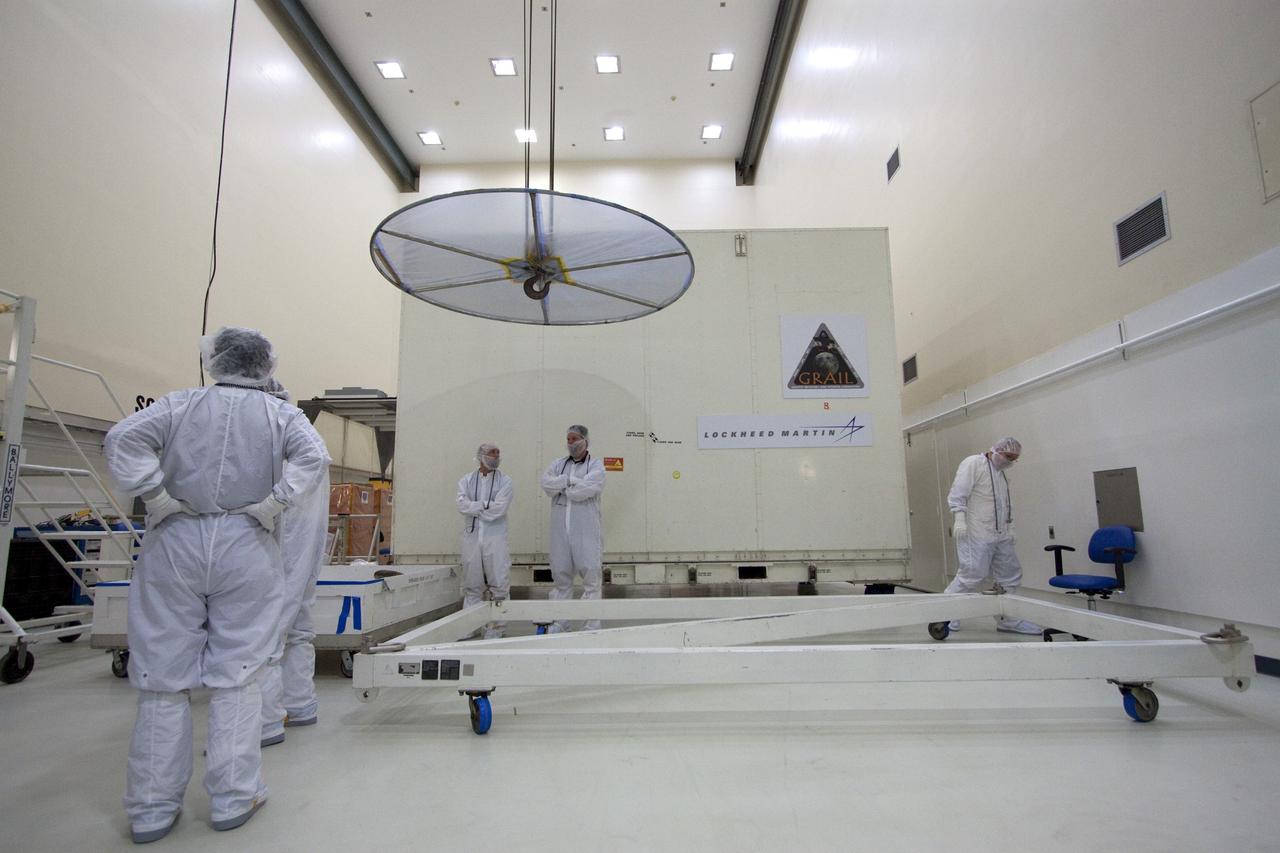
CAPE CANAVERAL, Fla. -- Technicians in the Astrotech payload processing facility in Titusville, Fla., prepare to unpack NASA's Gravity Recovery and Interior Laboratory, or GRAIL, twin spacecraft for testing and processing. GRAIL was built at the Lockheed Martin plant in Denver, Colo. The United Launch Alliance Delta II rocket that will carry GRAIL into lunar orbit already is fully stacked at NASA's Space Launch Complex 17B and launch is scheduled for Sept. 8. The GRAIL mission is a part of NASA's Discovery Program. GRAIL will fly twin spacecraft in tandem orbits around the moon for several months to measure its gravity field. The mission also will answer longstanding questions about Earth's moon and provide scientists a better understanding of how Earth and other rocky planets in the solar system formed. For more information, visit http://science.nasa.gov/missions/grail/. Photo credit: NASA/Jack Pfaller
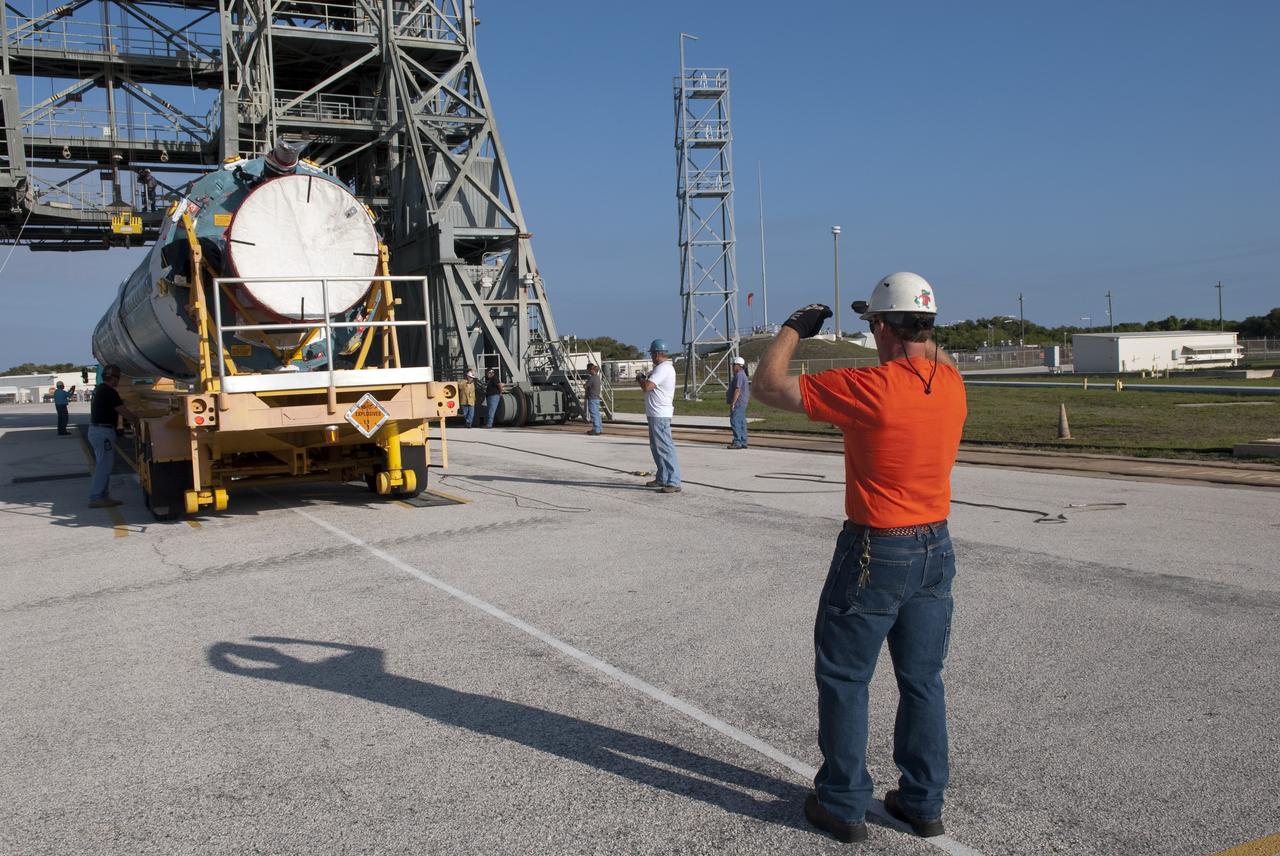
CAPE CANAVERAL, Fla. -- Workers prepare a crane to lift the first stage of a United Launch Alliance Delta II launch vehicle into Pad 17B's gantry at Cape Canaveral Air Force Station in Florida. The Delta II will carry NASA's Gravity Recovery and Interior Laboratory, or GRAIL, spacecraft into lunar orbit. The GRAIL mission is a part of NASA's Discovery Program. GRAIL will fly twin spacecraft in tandem orbits around the moon for several months to measure its gravity field. The mission also will answer longstanding questions about Earth's moon and provide scientists a better understanding of how Earth and other rocky planets in the solar system formed. GRAIL is scheduled to launch September 8, 2011. For more information visit: http://science.nasa.gov/missions/grail/. Photo credit: NASA/Jim Grossmann
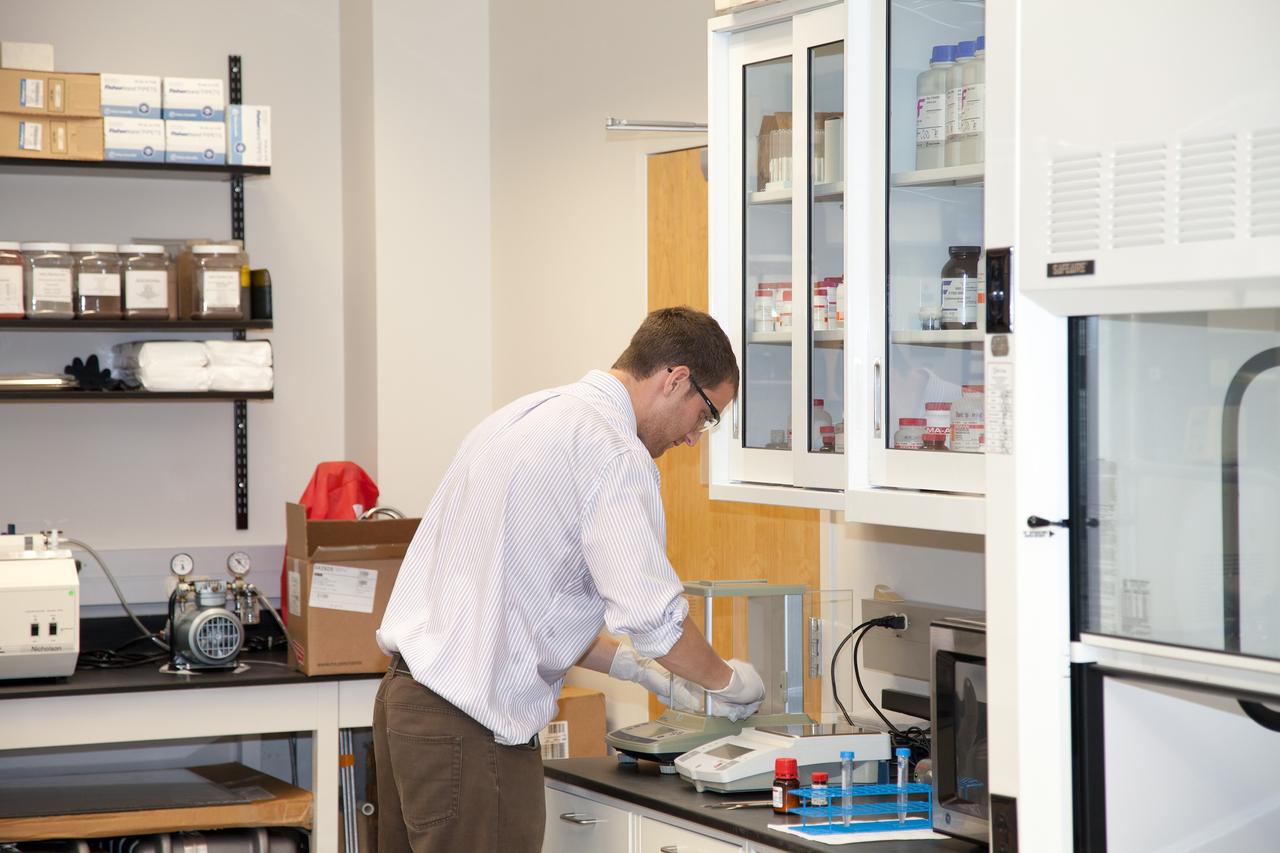
CAPE CANAVERAL, Fla. -- Inside the Space Life Sciences Laboratory near NASA’s Kennedy Space Center in Florida, Dr. David J. Smith, a microbiologist in the Surface Systems Office, prepares microbes that will be deployed for the Microorganisms in the Stratosphere, or MIST, mission. High altitudes exert a unique combination of stresses on microbes, outside the range of conditions normally encountered on the Earth's surface. Results from MIST may improve our understanding of the physical limits and habitable environments for life. The MIST mission will fly a small biological payload aboard a blimp in July to measure microbial survival and cellular responses to exposure in the upper atmoshere. Later in the year, the MIST mission will deploy samples at even higher altitudes in the stratosphere using scientific balloons. Photo credit: NASA/Daniel Casper

CAPE CANAVERAL, Fla. -- Technicians working at Launch Complex 17-B at Cape Canaveral Air Force Station in Florida remove protective covers from attachment points on a solid-fueled rocket booster for connection to the first stage of a United Launch Alliance Delta II rocket. The Delta II will carry NASA's Gravity Recovery and Interior Laboratory, or GRAIL, spacecraft into lunar orbit. The GRAIL mission is a part of NASA's Discovery Program. GRAIL will fly twin spacecraft in tandem orbits around the moon for several months to measure its gravity field. The mission also will answer longstanding questions about Earth's moon and provide scientists a better understanding of how Earth and other rocky planets in the solar system formed. GRAIL is scheduled to launch September 8, 2011. For more information visit: http://science.nasa.gov/missions/grail/. Photo credit: NASA/Jim Grossmann
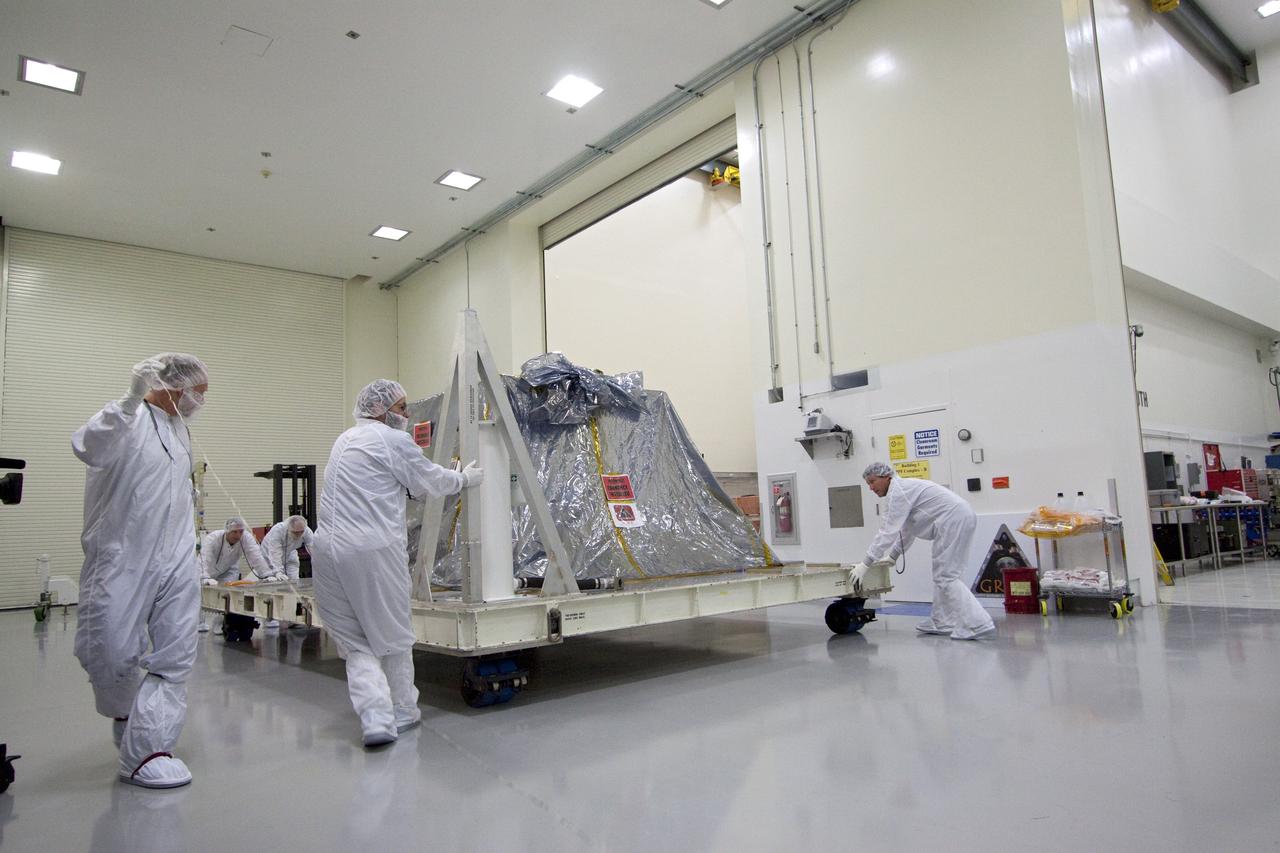
CAPE CANAVERAL, Fla. -- Technicians in the Astrotech payload processing facility in Titusville, Fla., roll NASA's Gravity Recovery and Interior Laboratory, or GRAIL, twin spacecraft toward a test stand where they will be processed for launch. GRAIL was built at the Lockheed Martin plant in Denver, Colo. The United Launch Alliance Delta II rocket that will carry GRAIL into lunar orbit already is fully stacked at NASA's Space Launch Complex 17B and launch is scheduled for Sept. 8. The GRAIL mission is a part of NASA's Discovery Program. GRAIL will fly twin spacecraft in tandem orbits around the moon for several months to measure its gravity field. The mission also will answer longstanding questions about Earth's moon and provide scientists a better understanding of how Earth and other rocky planets in the solar system formed. For more information, visit http://science.nasa.gov/missions/grail/. Photo credit: NASA/Jack Pfaller
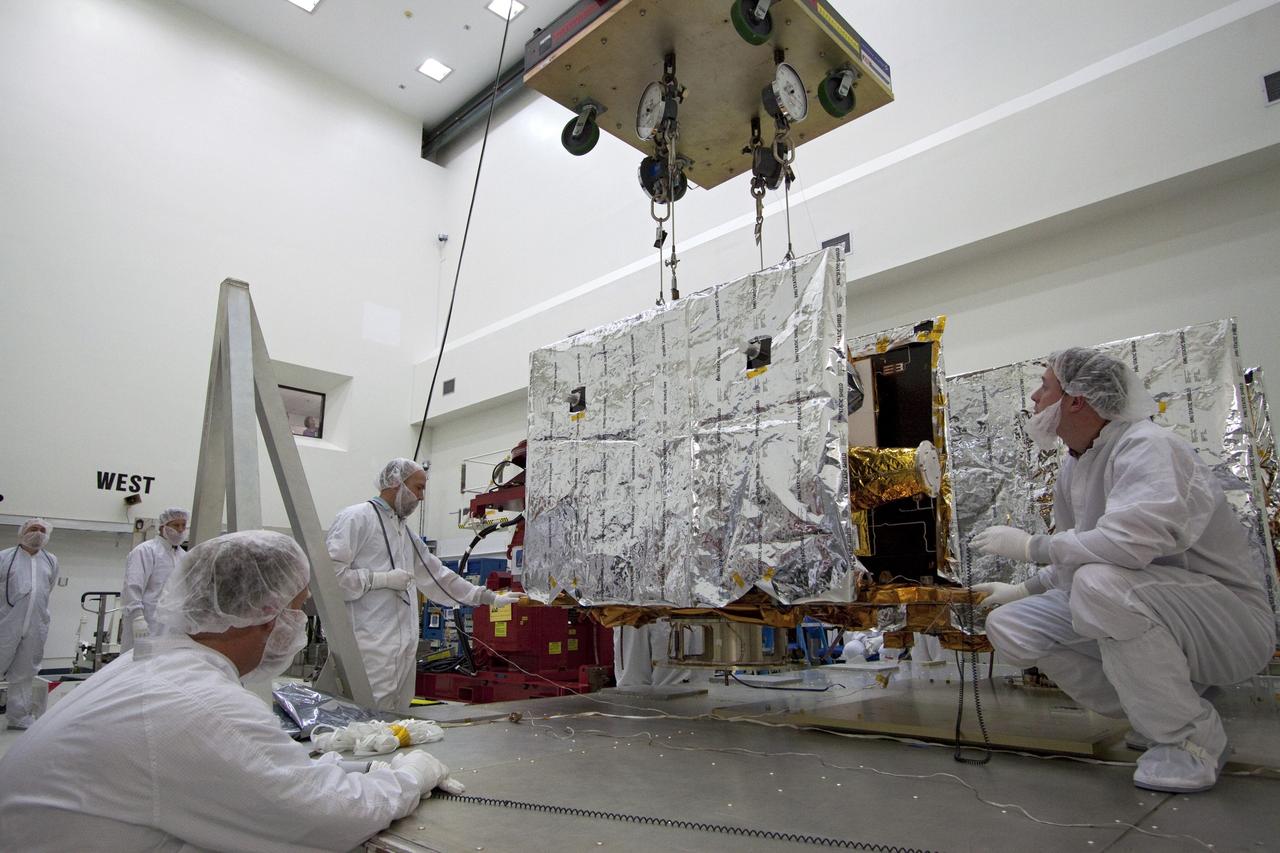
CAPE CANAVERAL, Fla. -- Technicians begin to lift one of two spacecraft for NASA's Gravity Recovery and Interior Laboratory, or GRAIL, to a test stand in the Astrotech payload processing facility in Titusville, Fla. The twin spacecraft were built at the Lockheed Martin plant in Denver, Colo. The United Launch Alliance Delta II rocket that will carry GRAIL into lunar orbit already is fully stacked at NASA's Space Launch Complex 17B and launch is scheduled for Sept. 8. The GRAIL mission is a part of NASA's Discovery Program. GRAIL will fly twin spacecraft in tandem orbits around the moon for several months to measure its gravity field. The mission also will answer longstanding questions about Earth's moon and provide scientists a better understanding of how Earth and other rocky planets in the solar system formed. For more information, visit http://science.nasa.gov/missions/grail/. Photo credit: NASA/Jack Pfaller
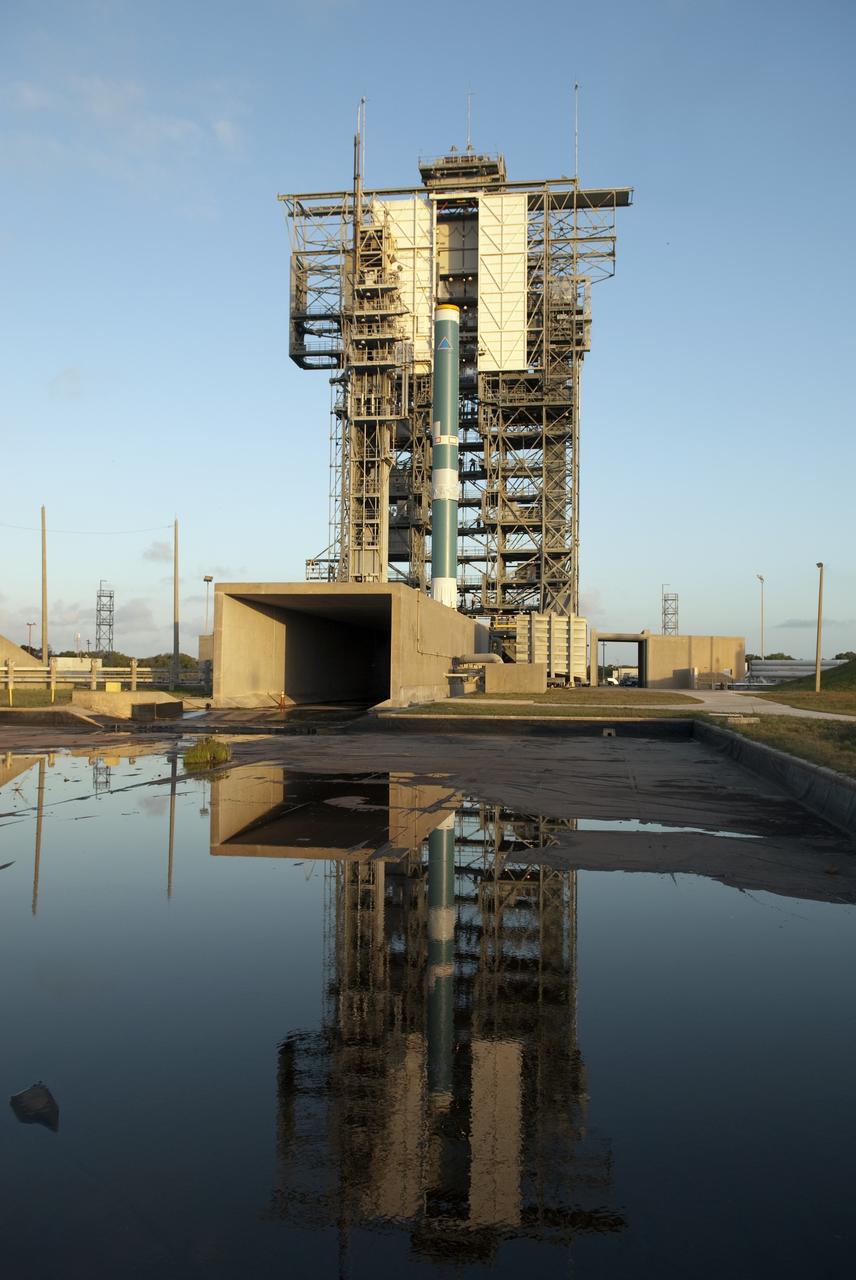
CAPE CANAVERAL, Fla. -- The first stage of a United Launch Alliance Delta II rocket at Launch Complex 17-B at Cape Canaveral Air Force Station in Florida where it is being prepared for launch. The Delta II will carry NASA's Gravity Recovery and Interior Laboratory, or GRAIL, spacecraft into lunar orbit. The GRAIL mission is a part of NASA's Discovery Program. GRAIL will fly twin spacecraft in tandem orbits around the moon for several months to measure its gravity field. The mission also will answer longstanding questions about Earth's moon and provide scientists a better understanding of how Earth and other rocky planets in the solar system formed. GRAIL is scheduled to launch September 8, 2011. For more information visit: http://science.nasa.gov/missions/grail/. Photo credit: NASA/Jim Grossmann
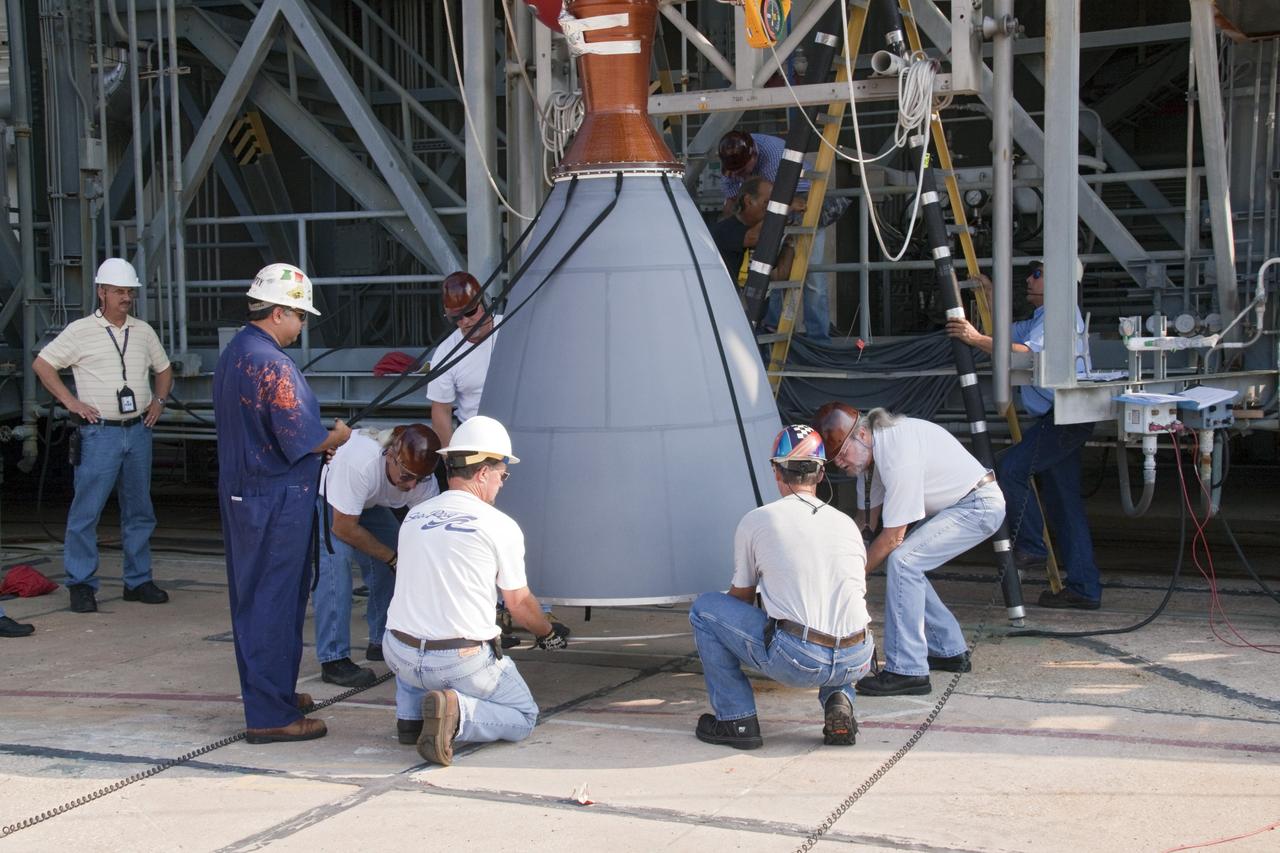
CAPE CANAVERAL, Fla. -- At NASA's Space Launch Complex 17B in Florida, workers secure the engine bell on the second stage of a United Launch Alliance Delta II launch vehicle before it is hoisted into the mobile service tower. The Delta II will carry NASA's Gravity Recovery and Interior Laboratory, or GRAIL, spacecraft into lunar orbit. The GRAIL mission is a part of NASA's Discovery Program. GRAIL will fly twin spacecraft in tandem orbits around the moon for several months to measure its gravity field. The mission also will answer longstanding questions about Earth's moon and provide scientists a better understanding of how Earth and other rocky planets in the solar system formed. GRAIL is scheduled to launch Sept. 8. For more information visit: http://science.nasa.gov/missions/grail/. Photo credit: NASA/Jack Pfaller
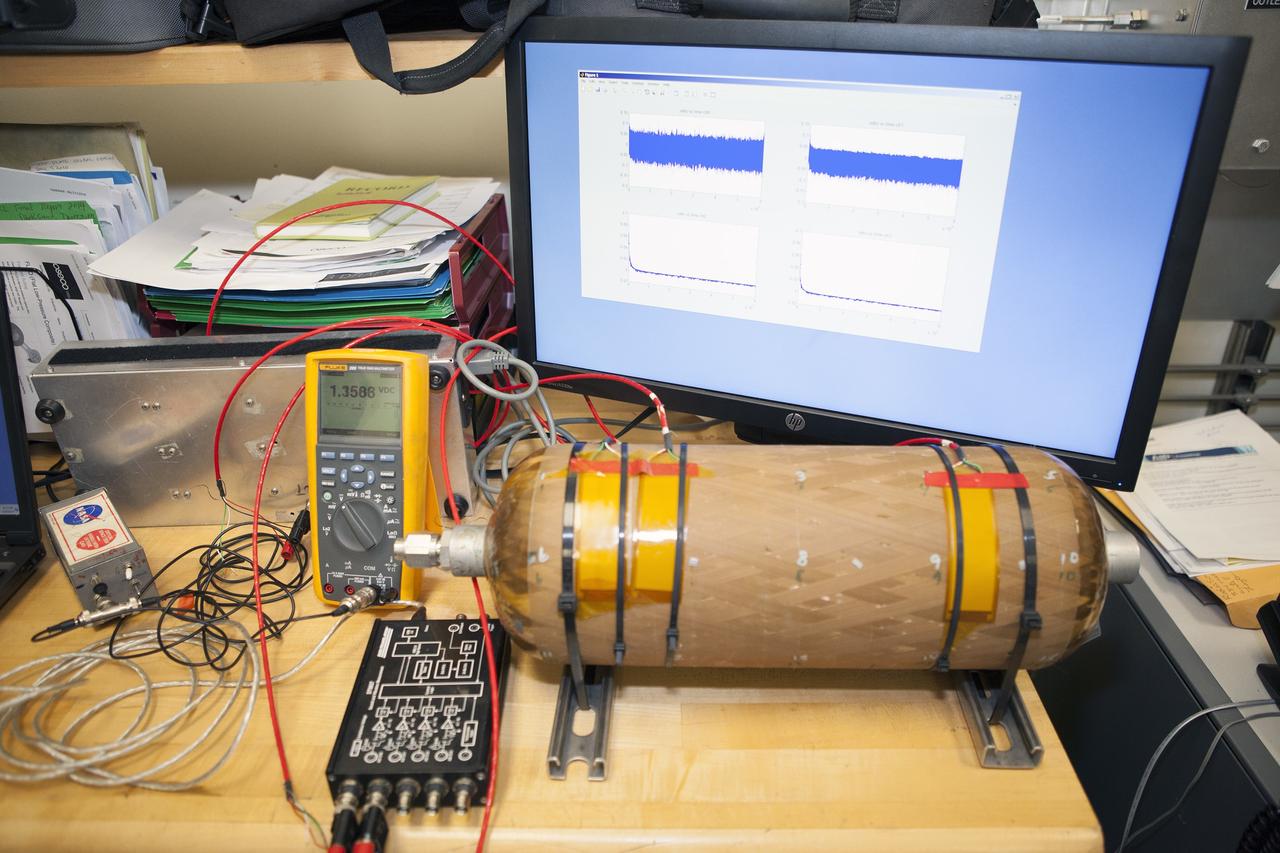
CAPE CANAVERAL, Fla. – Several Lead Zirconate Titanate, or PZT, mass gaging sensors have been attached to a composite tank during a test inside a laboratory at the Cryogenics Testbed Facility at NASA's Kennedy Space Center in Florida. The PZT-based system was developed at Kennedy as a way to measure the mass of a fluid and the structural health of a tank using vibration signatures on Earth or in reduced/zero g gravity. The mass gaging technology has received approval to be on the first sub-orbital flight on the Virgin Galactic Space Plane in 2015. NASA experiments using the PZT technology will be used by Embry-Riddle Aeronautical University in conjunction with Carthage College on a fluid transfer experiment. Photo credit: NASA/Daniel Casper
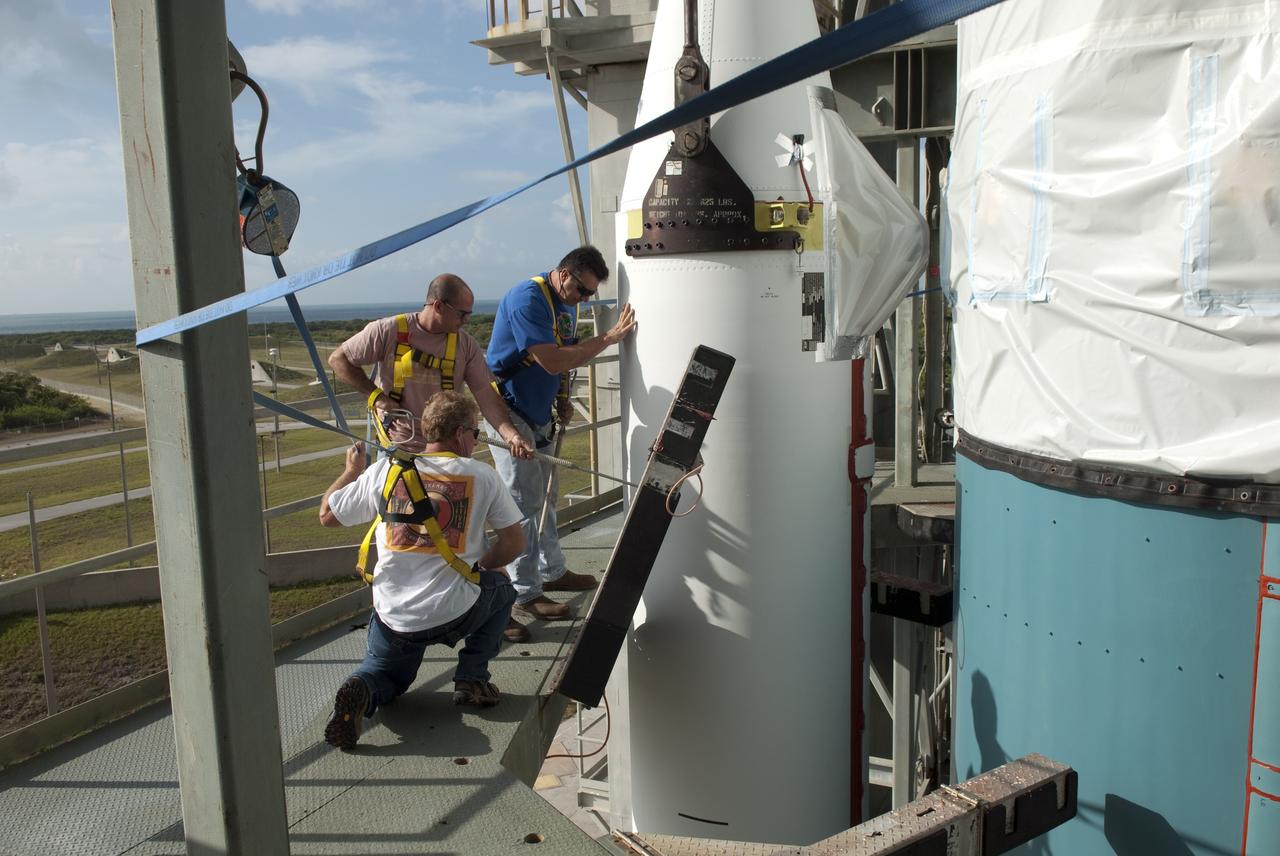
CAPE CANAVERAL, Fla. -- Technicians working at Launch Complex 17-B at Cape Canaveral Air Force Station in Florida prepare a solid-fueled rocket booster for connection to the first stage of a United Launch Alliance Delta II rocket. The Delta II will carry NASA's Gravity Recovery and Interior Laboratory, or GRAIL, spacecraft into lunar orbit. The GRAIL mission is a part of NASA's Discovery Program. GRAIL will fly twin spacecraft in tandem orbits around the moon for several months to measure its gravity field. The mission also will answer longstanding questions about Earth's moon and provide scientists a better understanding of how Earth and other rocky planets in the solar system formed. GRAIL is scheduled to launch September 8, 2011. For more information visit: http://science.nasa.gov/missions/grail/. Photo credit: NASA/Jim Grossmann
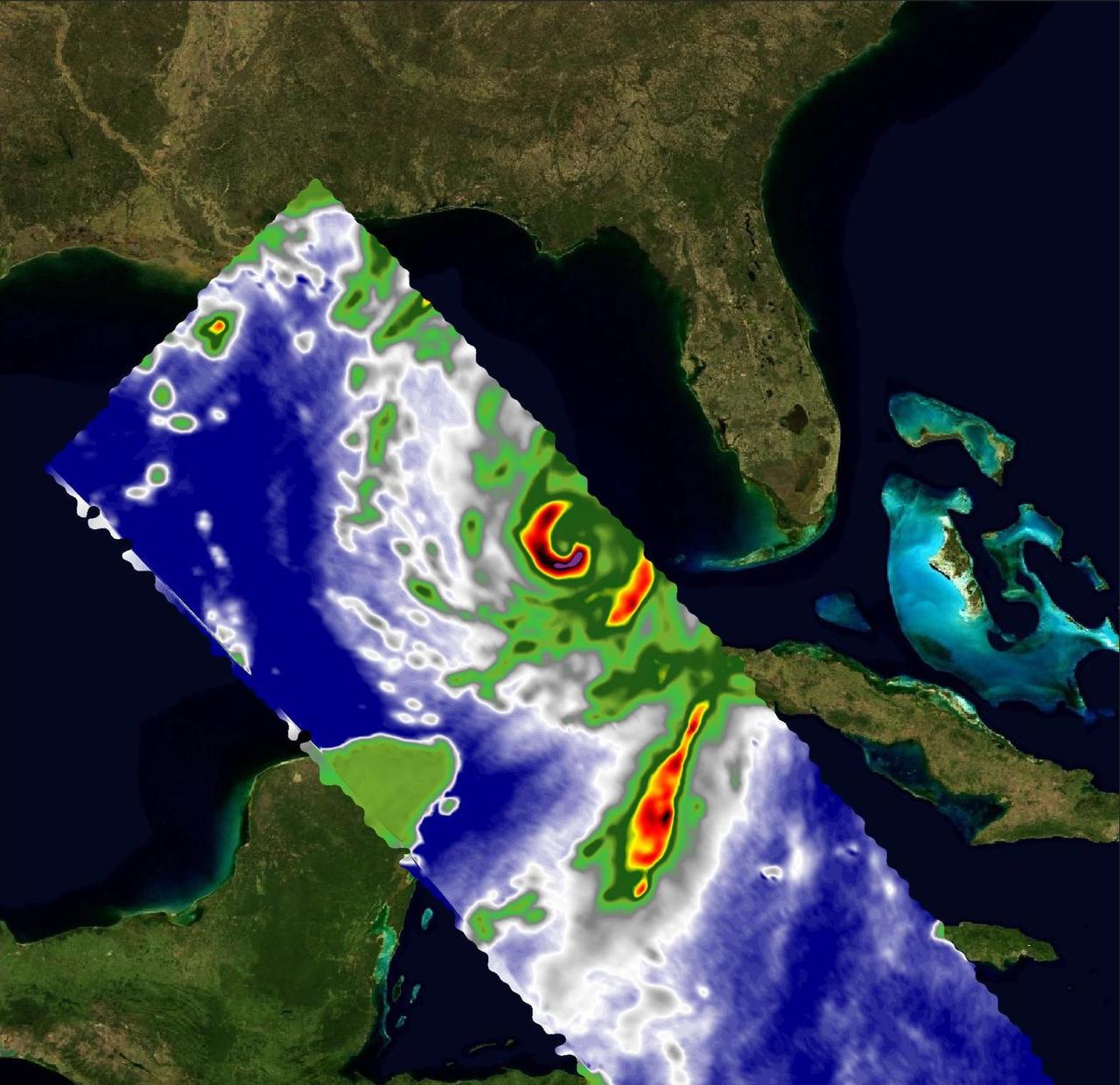
A pair of weather instruments built at NASA's Jet Propulsion Laboratory in Southern California captured images of Hurricane Idalia as the storm approached the Gulf Coast of Florida on Aug. 29, 2023. COWVR (short for Compact Ocean Wind Vector Radiometer) and TEMPEST (Temporal Experiment for Storms and Tropical Systems) observe the planet's atmosphere and surface from aboard the International Space Station, which passed in low Earth orbit over this area at about 11:34 a.m. EDT. Idalia was forecast to make landfall in Florida on Aug. 30. This image combines microwave emissions measurements from both COWVR and TEMPEST. White sections indicate the presence of clouds. Green portions indicate rain. Yellow, red, and black indicate where air and water vapor were moving most vigorously. Idalia's center is seen about 200 miles (322 kilometers) west of the Florida Keys, and rainfall is indicated on the western end of Cuba. https://photojournal.jpl.nasa.gov/catalog/PIA25569
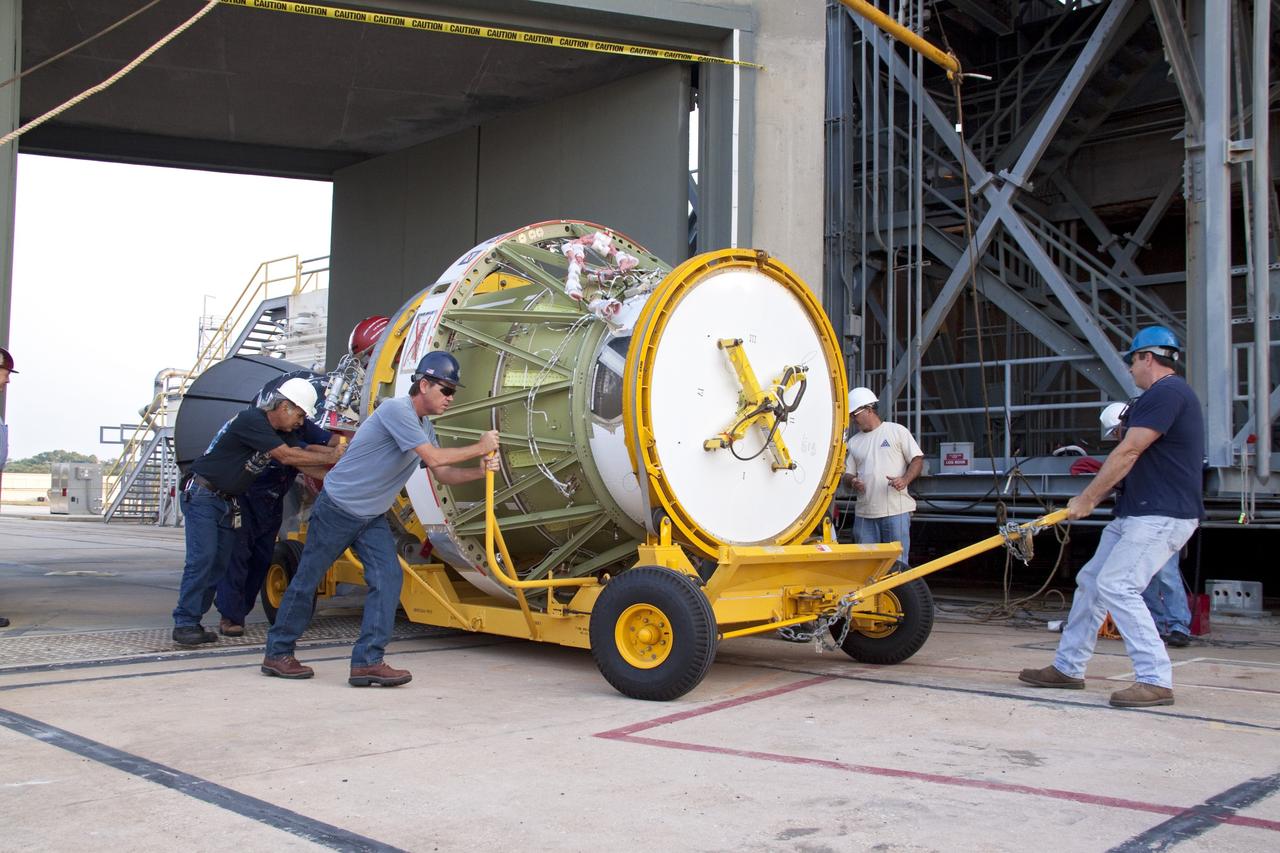
CAPE CANAVERAL, Fla. -- At NASA's Space Launch Complex 17B in Florida, workers move the second stage of a United Launch Alliance Delta II launch vehicle toward the mobile service tower. It will then be hoisted atop the first stage. The Delta II will carry NASA's Gravity Recovery and Interior Laboratory, or GRAIL, spacecraft into lunar orbit. The GRAIL mission is a part of NASA's Discovery Program. GRAIL will fly twin spacecraft in tandem orbits around the moon for several months to measure its gravity field. The mission also will answer longstanding questions about Earth's moon and provide scientists a better understanding of how Earth and other rocky planets in the solar system formed. GRAIL is scheduled to launch Sept. 8. For more information visit: http://science.nasa.gov/missions/grail/. Photo credit: NASA/Jack Pfaller
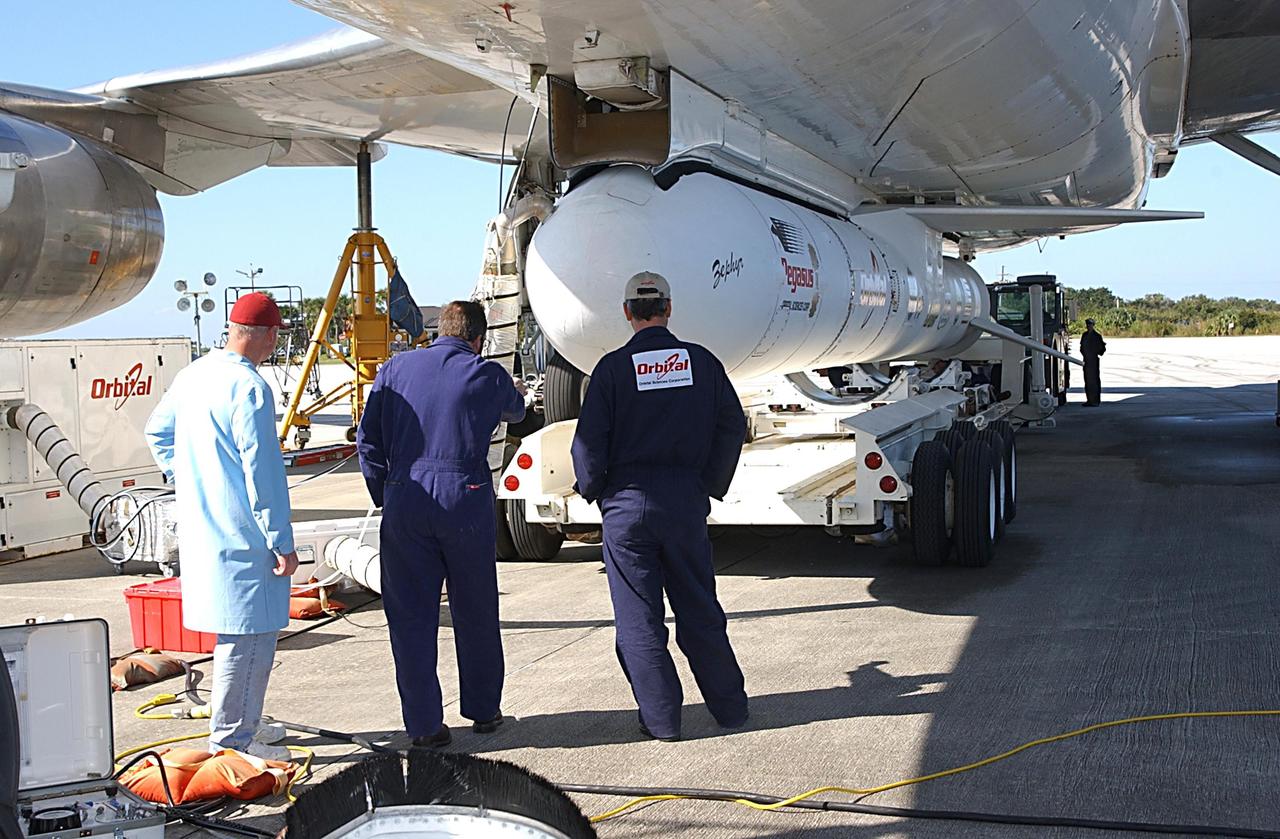
KENNEDY SPACE CENTER, FLA. -- Workers evaluate the placement of a transporter below a Pegasus XL Expendable Launch Vehicle before its detachment from the underside of an Orbital Sciences L-1011 aircraft. The aircraft, with the launch vehicle nestled beneath, arrived at the Cape Canaveral Air Force Station Skid Strip on Dec. 17. The Pegasus XL will undergo three flight simulations prior to its scheduled launch in late January 2003. It will carry NASA's Solar Radiation and Climate Experiment (SORCE) spacecraft into orbit. Built by Orbital Sciences Space Systems Group, SORCE will study and measure solar irradiance as a source of energy in the Earth's atmosphere with instruments built by the University of Colorado's Laboratory for Atmospheric and Space Physics (LASP).
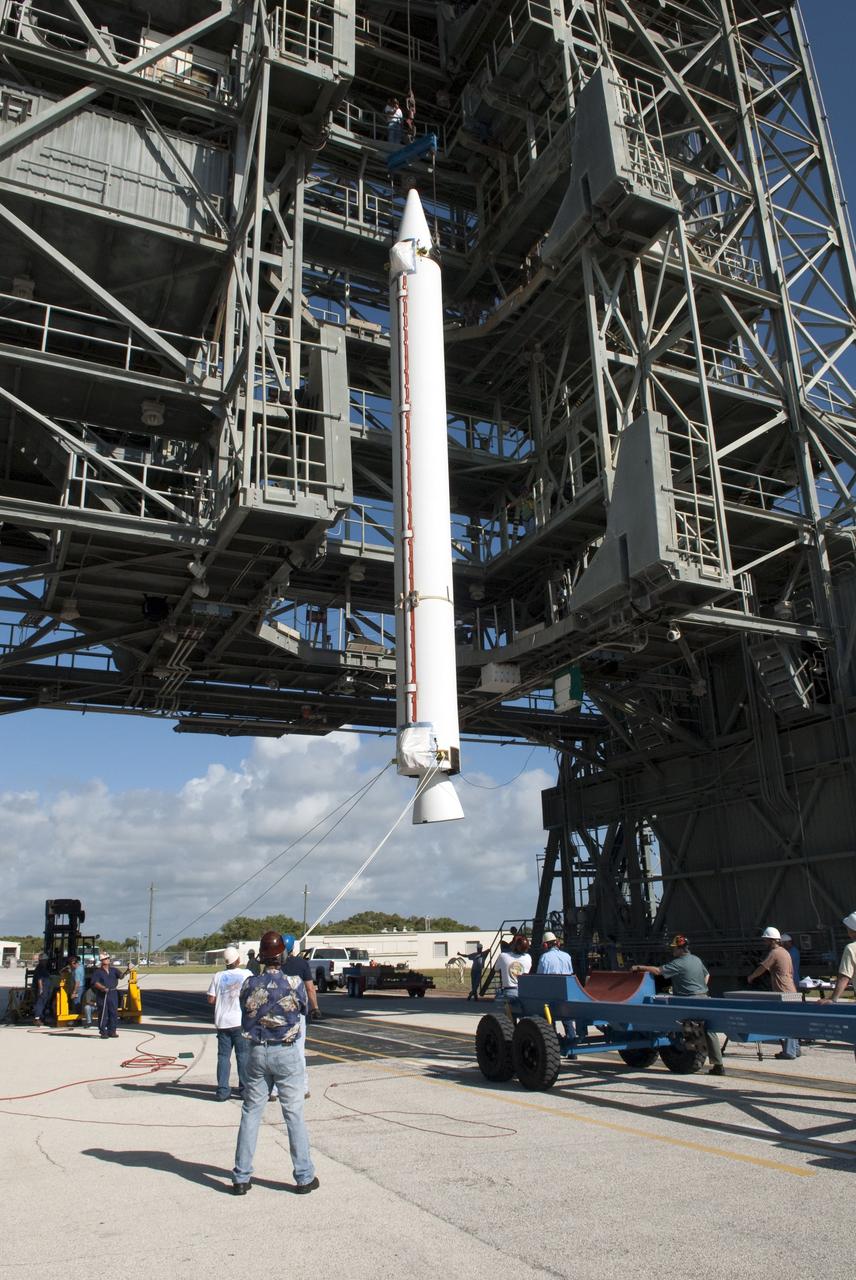
CAPE CANAVERAL, Fla. -- A solid-fueled booster is lifted into Launch Complex 17-B at Cape Canaveral Air Force Station in Florida where a United Launch Alliance Delta II is being prepared for launch. The Delta II will carry NASA's Gravity Recovery and Interior Laboratory, or GRAIL, spacecraft into lunar orbit. The GRAIL mission is a part of NASA's Discovery Program. GRAIL will fly twin spacecraft in tandem orbits around the moon for several months to measure its gravity field. The mission also will answer longstanding questions about Earth's moon and provide scientists a better understanding of how Earth and other rocky planets in the solar system formed. GRAIL is scheduled to launch September 8, 2011. For more information visit: http://science.nasa.gov/missions/grail/. Photo credit: NASA/Jim Grossmann
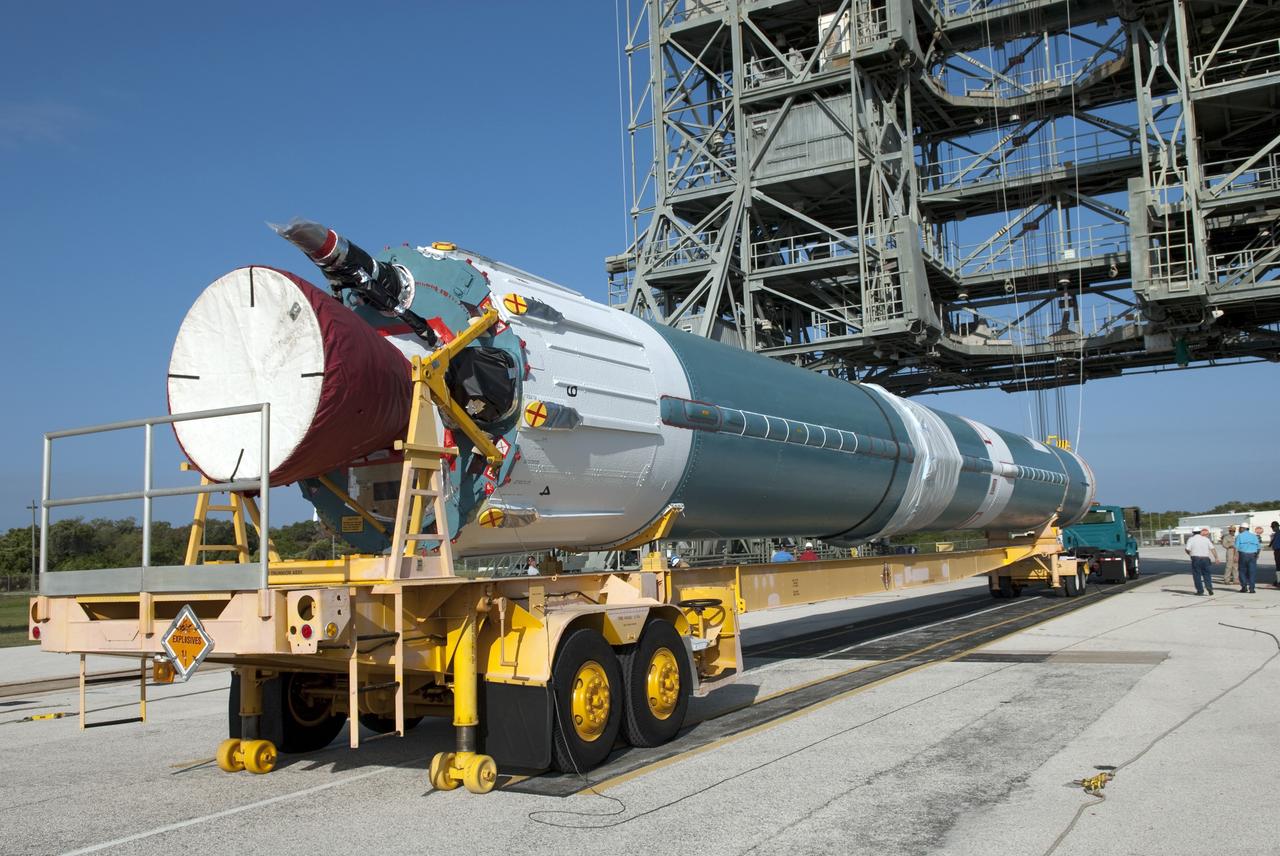
CAPE CANAVERAL, Fla. -- Workers prepare a crane to lift the first stage of a United Launch Alliance Delta II launch vehicle into Pad 17B's gantry at Cape Canaveral Air Force Station in Florida. The Delta II will carry NASA's Gravity Recovery and Interior Laboratory, or GRAIL, spacecraft into lunar orbit. The GRAIL mission is a part of NASA's Discovery Program. GRAIL will fly twin spacecraft in tandem orbits around the moon for several months to measure its gravity field. The mission also will answer longstanding questions about Earth's moon and provide scientists a better understanding of how Earth and other rocky planets in the solar system formed. GRAIL is scheduled to launch September 8, 2011. For more information visit: http://science.nasa.gov/missions/grail/. Photo credit: NASA/Jim Grossmann
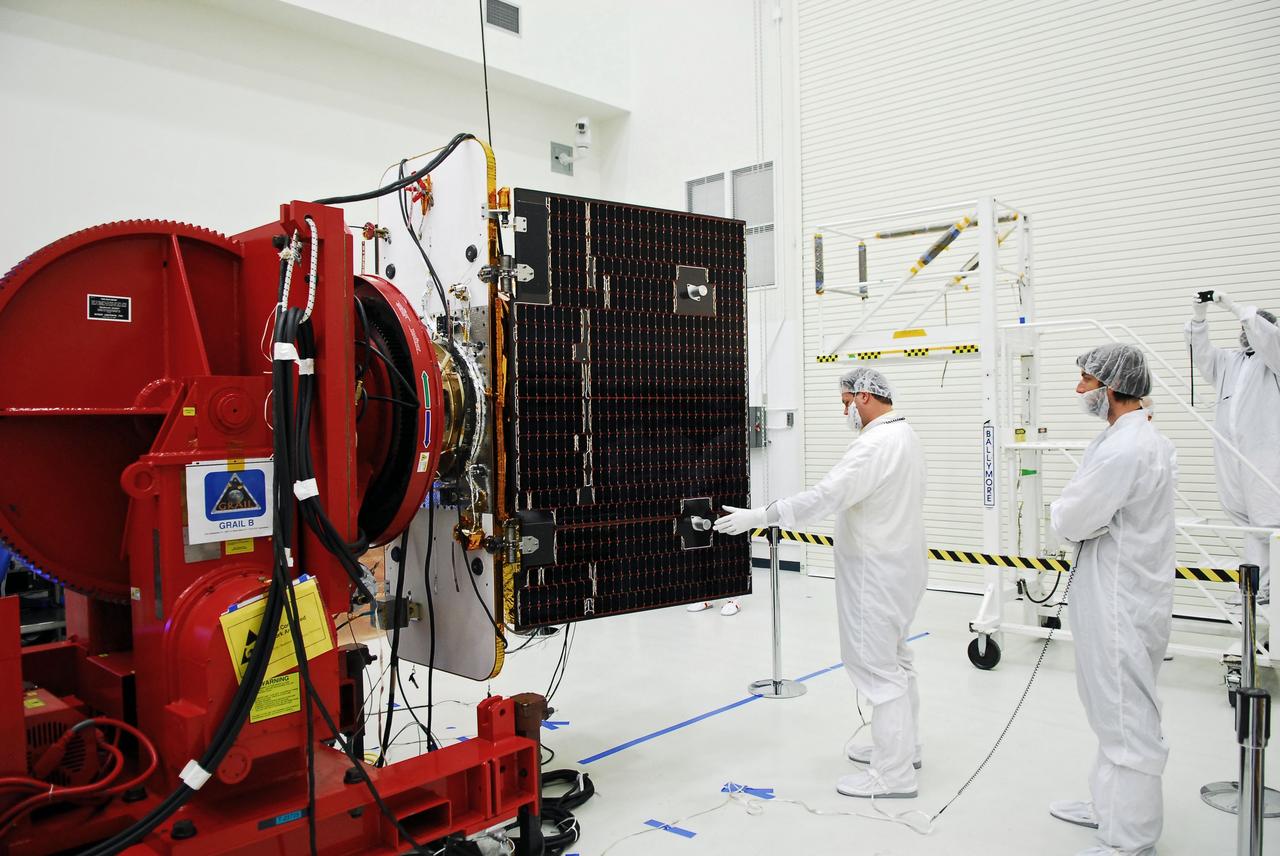
CAPE CANAVERAL, Fla. -- Technicians at Astrotech payload processing facility in Titusville, Fla., are conducting solar panel deployment tests on NASA's Gravity Recovery and Interior Laboratory, or GRAIL, twin spacecraft. The United Launch Alliance Delta II rocket that will carry GRAIL into lunar orbit already is fully stacked at NASA's Space Launch Complex 17B, and launch is scheduled for Sept. 8. The GRAIL mission is a part of NASA's Discovery Program. GRAIL will fly the twin spacecraft in tandem orbits around the moon for several months to measure its gravity field. The mission also will answer longstanding questions about Earth's moon and provide scientists a better understanding of how Earth and other rocky planets in the solar system formed. For more information, visit http://solarsystem.nasa.gov/grail/. Photo credit: NASA/Jim Grossmann
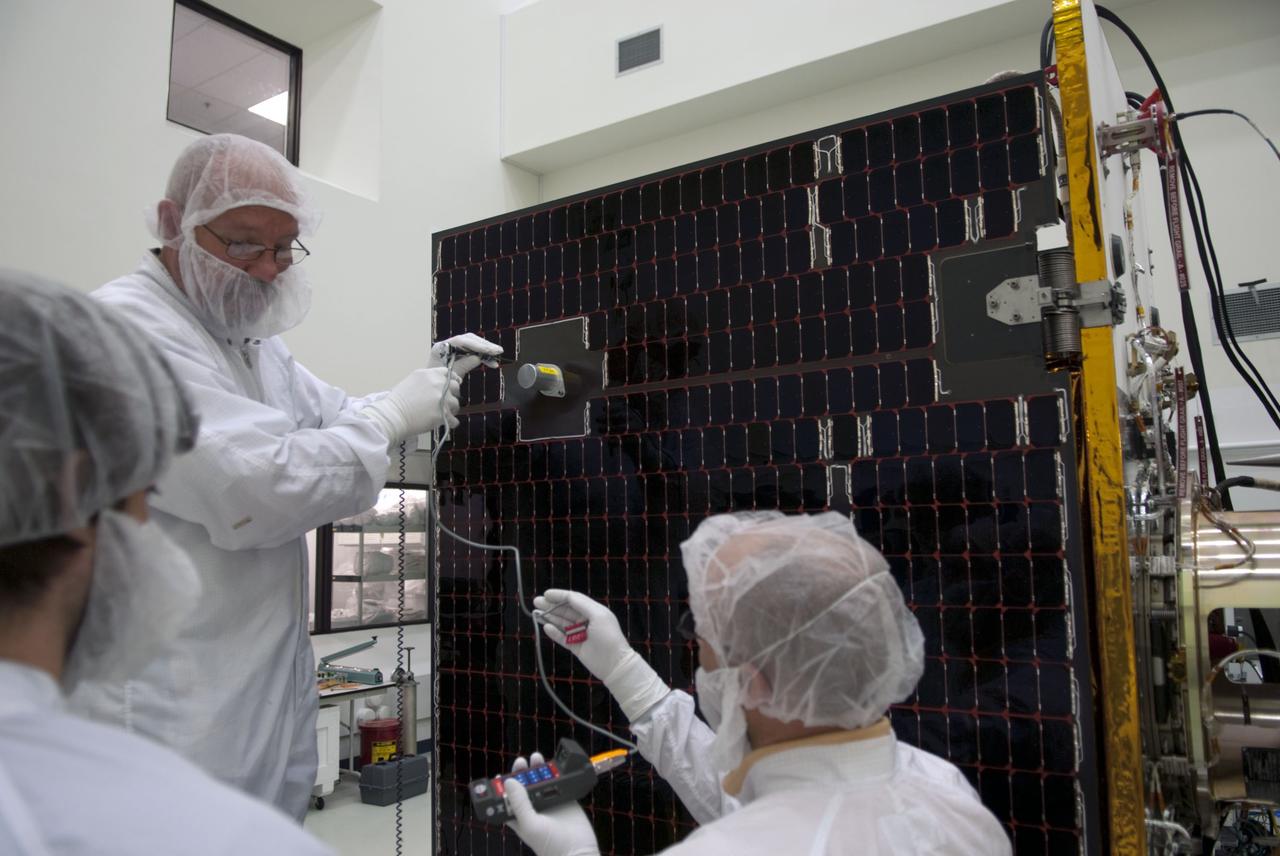
CAPE CANAVERAL, Fla. -- Technicians at Astrotech payload processing facility in Titusville, Fla., are preparing NASA's Gravity Recovery and Interior Laboratory, or GRAIL, twin spacecraft for solar panel deployment testing. The United Launch Alliance Delta II rocket that will carry GRAIL into lunar orbit already is fully stacked at NASA's Space Launch Complex 17B, and launch is scheduled for Sept. 8. The GRAIL mission is a part of NASA's Discovery Program. GRAIL will fly the twin spacecraft in tandem orbits around the moon for several months to measure its gravity field. The mission also will answer longstanding questions about Earth's moon and provide scientists a better understanding of how Earth and other rocky planets in the solar system formed. For more information, visit http://solarsystem.nasa.gov/grail/. Photo credit: NASA/Jim Grossmann
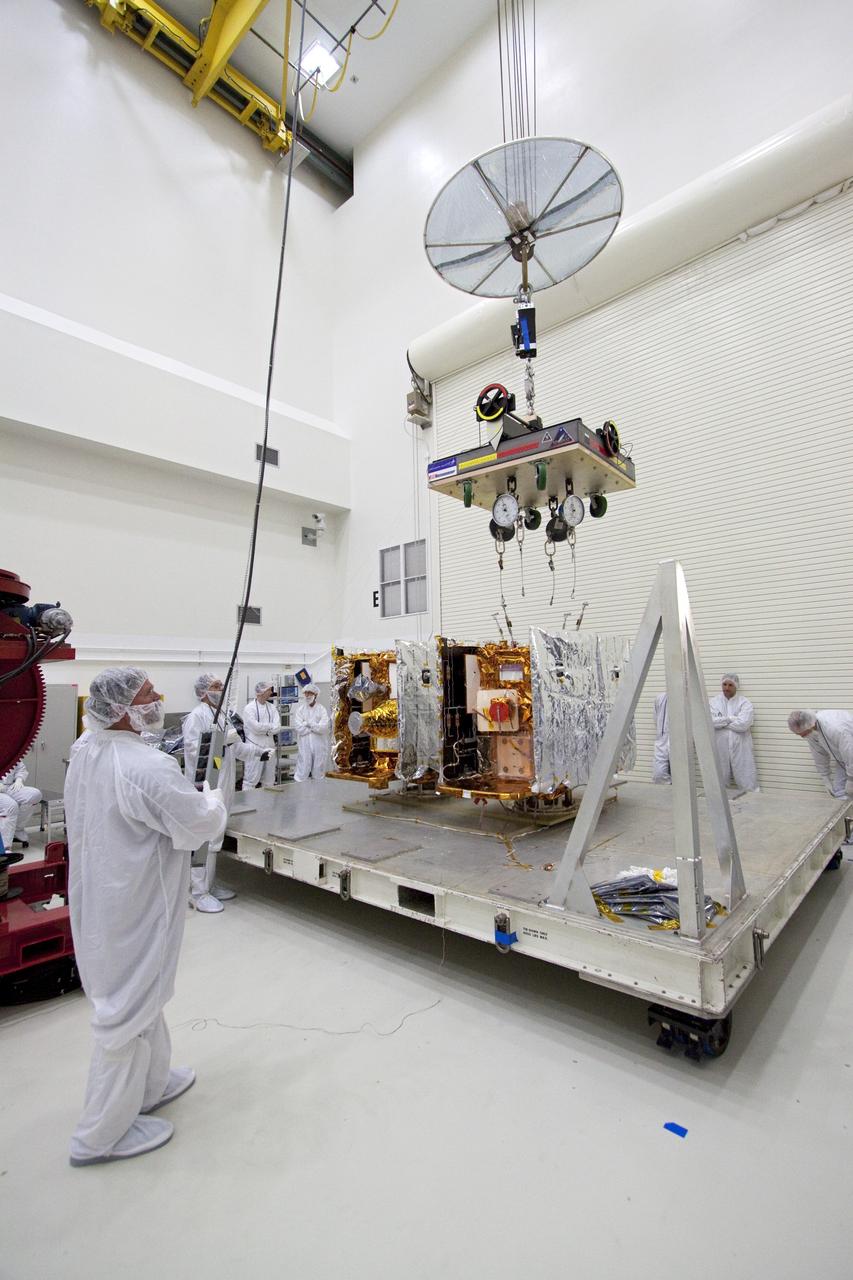
CAPE CANAVERAL, Fla. -- Technicians prepare to lift one of two spacecraft for NASA's Gravity Recovery and Interior Laboratory, or GRAIL, to a test stand in the Astrotech payload processing facility in Titusville, Fla. The twin spacecraft were built at the Lockheed Martin plant in Denver, Colo. The United Launch Alliance Delta II rocket that will carry GRAIL into lunar orbit already is fully stacked at NASA's Space Launch Complex 17B and launch is scheduled for Sept. 8. The GRAIL mission is a part of NASA's Discovery Program. GRAIL will fly twin spacecraft in tandem orbits around the moon for several months to measure its gravity field. The mission also will answer longstanding questions about Earth's moon and provide scientists a better understanding of how Earth and other rocky planets in the solar system formed. For more information, visit http://science.nasa.gov/missions/grail/. Photo credit: NASA/Jack Pfaller
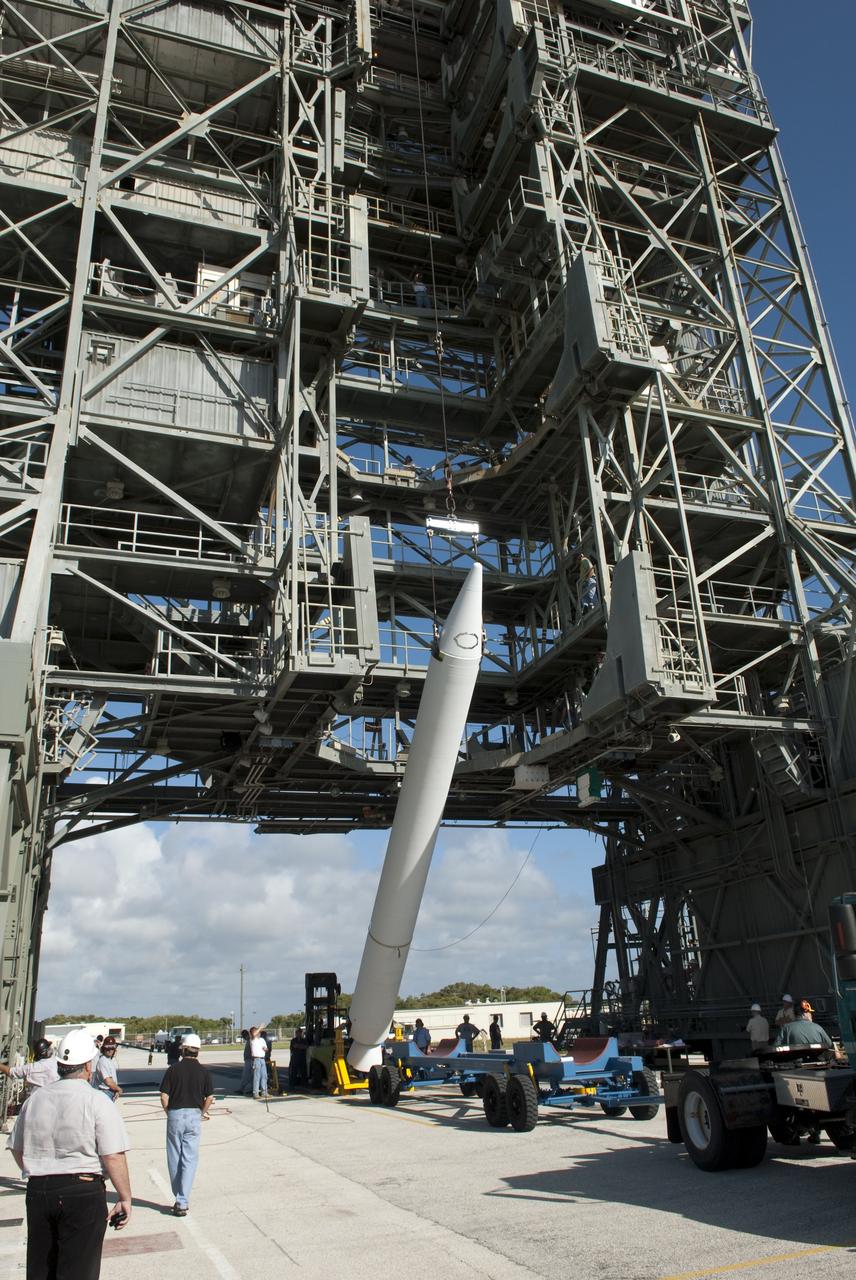
CAPE CANAVERAL, Fla. -- A solid-fueled booster is lifted off a trailer at Launch Complex 17-B at Cape Canaveral Air Force Station in Florida where a United Launch Alliance Delta II is being prepared for launch. The Delta II will carry NASA's Gravity Recovery and Interior Laboratory, or GRAIL, spacecraft into lunar orbit. The GRAIL mission is a part of NASA's Discovery Program. GRAIL will fly twin spacecraft in tandem orbits around the moon for several months to measure its gravity field. The mission also will answer longstanding questions about Earth's moon and provide scientists a better understanding of how Earth and other rocky planets in the solar system formed. GRAIL is scheduled to launch September 8, 2011. For more information visit: http://science.nasa.gov/missions/grail/. Photo credit: NASA/Jim Grossmann
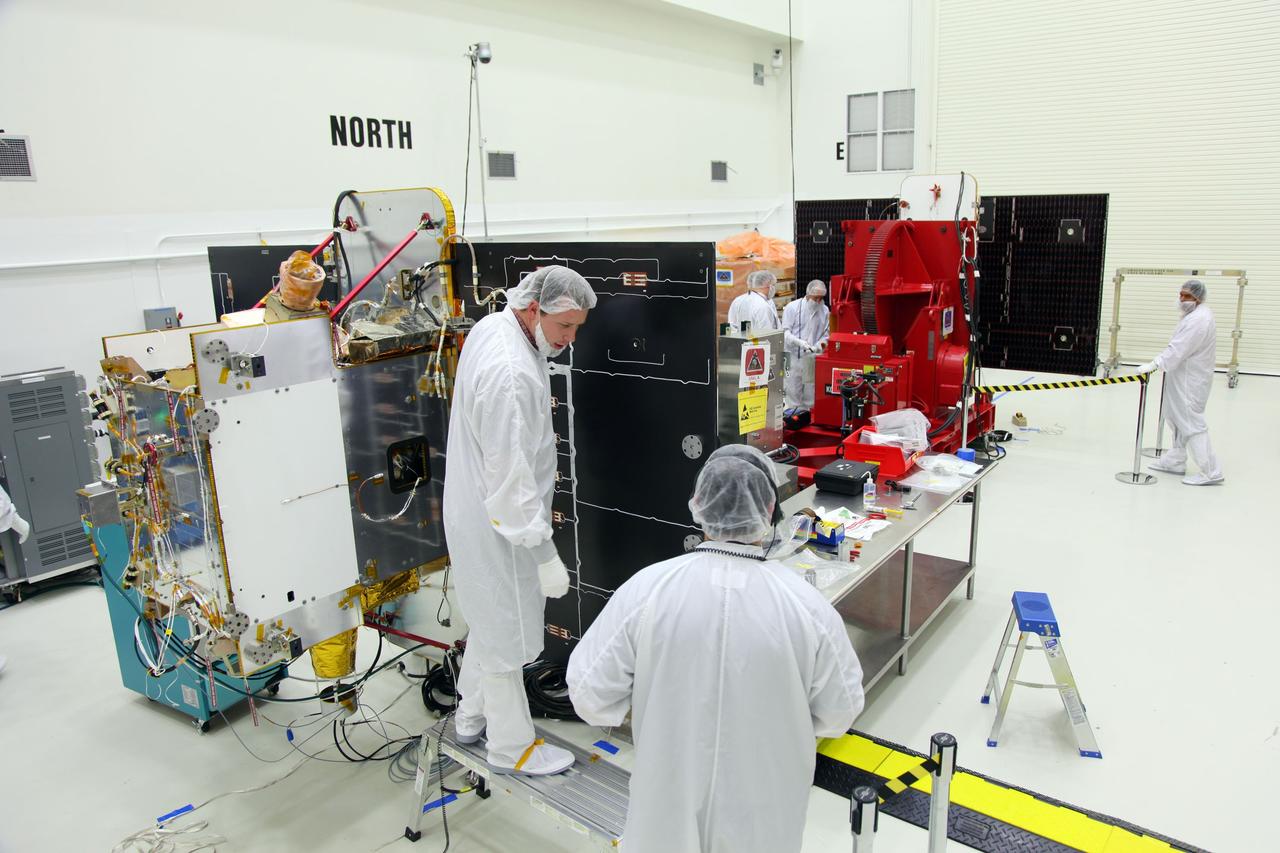
CAPE CANAVERAL, Fla. -- In the Astrotech payload processing facility in Titusville, Fla., technicians prepare a solar panel for attachment to NASA's Gravity Recovery and Interior Laboratory, or GRAIL. The United Launch Alliance Delta II rocket that will carry the twin GRAIL spacecraft into lunar orbit is fully stacked at NASA's Space Launch Complex 17B and launch is scheduled for Sept. 8. The GRAIL mission is a part of NASA's Discovery Program. GRAIL will fly twin spacecraft in tandem orbits around the moon for several months to measure its gravity field. The mission also will answer longstanding questions about Earth's moon and provide scientists a better understanding of how Earth and other rocky planets in the solar system formed. For more information, visit http://solarsystem.nasa.gov/grail. Photo credit: NASA/Frank Michaux
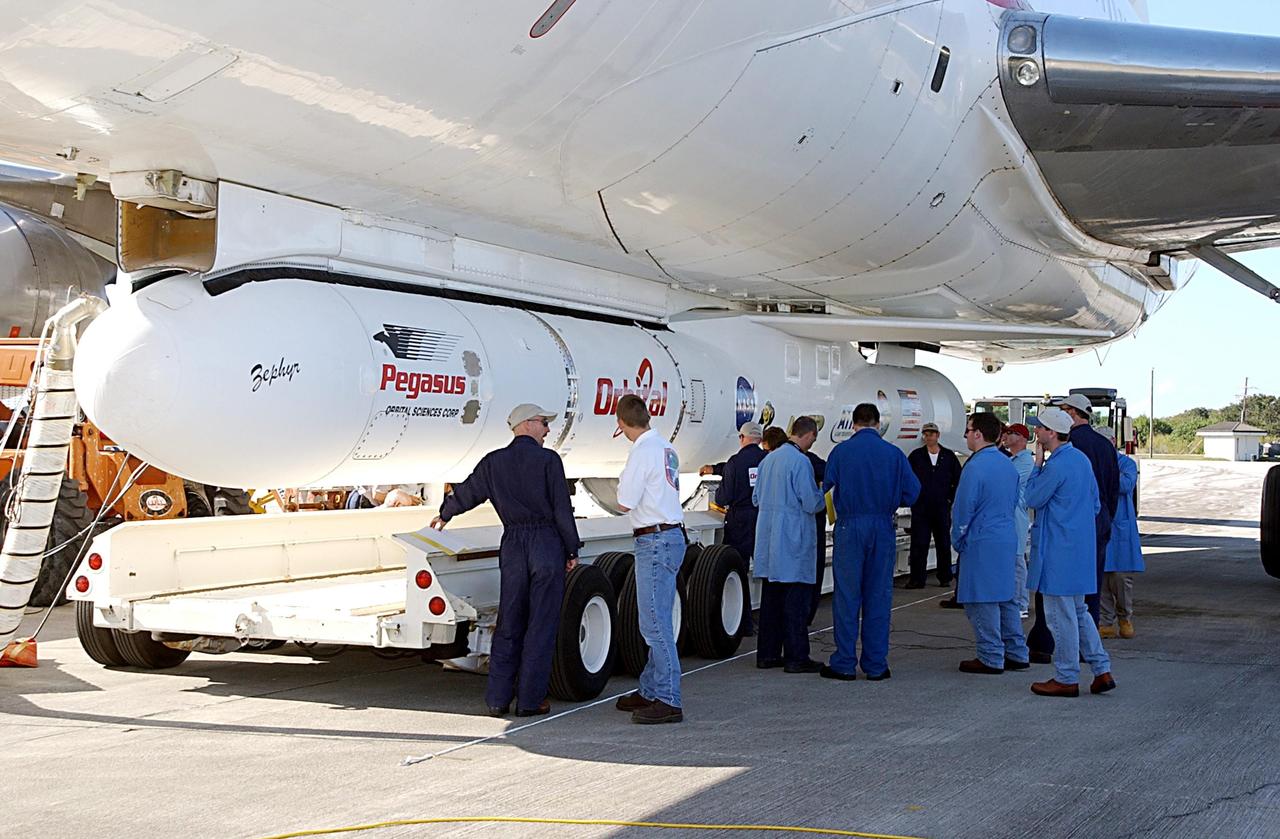
KENNEDY SPACE CENTER, FLA. -- Workers reevaluate the placement of a transporter below a Pegasus XL Expendable Launch Vehicle before its detachment from the underside of an Orbital Sciences L-1011 aircraft. The aircraft, with the launch vehicle nestled beneath, arrived at the Cape Canaveral Air Force Station Skid Strip on Dec. 17. The Pegasus XL will undergo three flight simulations prior to its scheduled launch in late January 2003. It will carry NASA's Solar Radiation and Climate Experiment (SORCE) spacecraft into orbit. Built by Orbital Sciences Space Systems Group, SORCE will study and measure solar irradiance as a source of energy in the Earth's atmosphere with instruments built by the University of Colorado's Laboratory for Atmospheric and Space Physics (LASP).
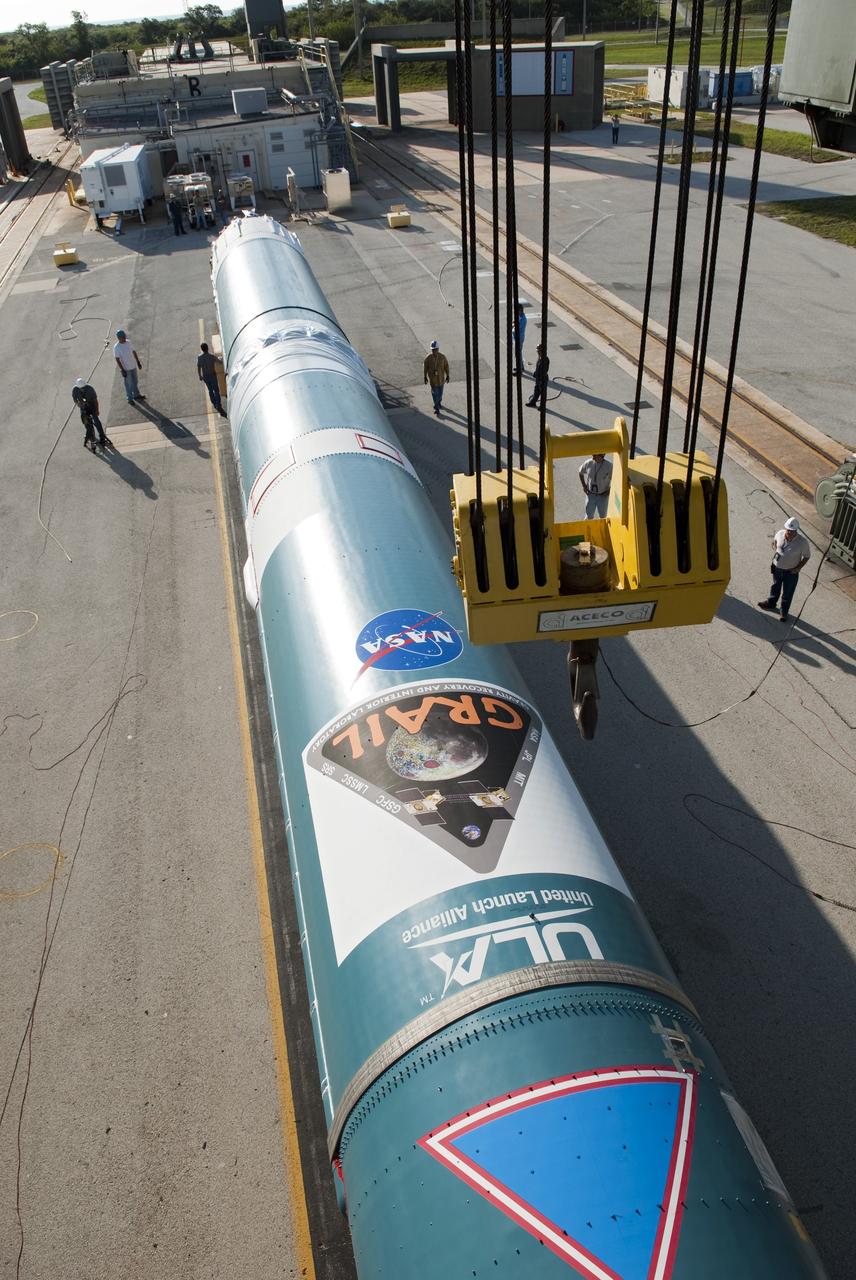
CAPE CANAVERAL, Fla. -- At Cape Canaveral Air Force Station in Florida, the first stage of a United Launch Alliance Delta II launch vehicle has arrived at Pad 17B. The Delta II will carry NASA's Gravity Recovery and Interior Laboratory, or GRAIL, spacecraft into lunar orbit. The GRAIL mission is a part of NASA's Discovery Program. GRAIL will fly twin spacecraft in tandem orbits around the moon for several months to measure its gravity field. The mission also will answer longstanding questions about Earth's moon and provide scientists a better understanding of how Earth and other rocky planets in the solar system formed. GRAIL is scheduled to launch September 8, 2011. For more information visit: http://science.nasa.gov/missions/grail/. Photo credit: NASA/Jim Grossmann
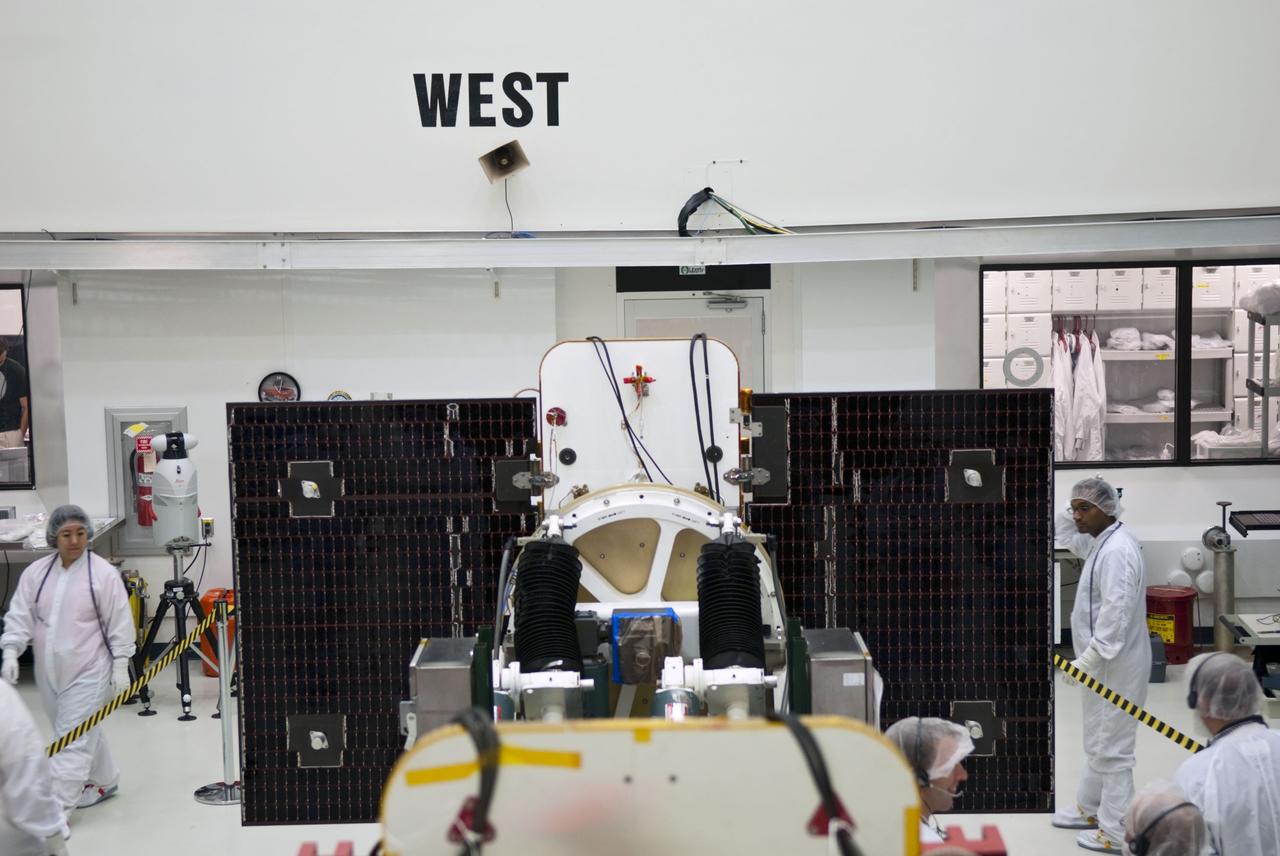
CAPE CANAVERAL, Fla. -- Technicians at Astrotech payload processing facility in Titusville, Fla., are conducting solar panel deployment tests on NASA's Gravity Recovery and Interior Laboratory, or GRAIL, twin spacecraft. The United Launch Alliance Delta II rocket that will carry GRAIL into lunar orbit already is fully stacked at NASA's Space Launch Complex 17B, and launch is scheduled for Sept. 8. The GRAIL mission is a part of NASA's Discovery Program. GRAIL will fly the twin spacecraft in tandem orbits around the moon for several months to measure its gravity field. The mission also will answer longstanding questions about Earth's moon and provide scientists a better understanding of how Earth and other rocky planets in the solar system formed. For more information, visit http://solarsystem.nasa.gov/grail/. Photo credit: NASA/Jim Grossmann
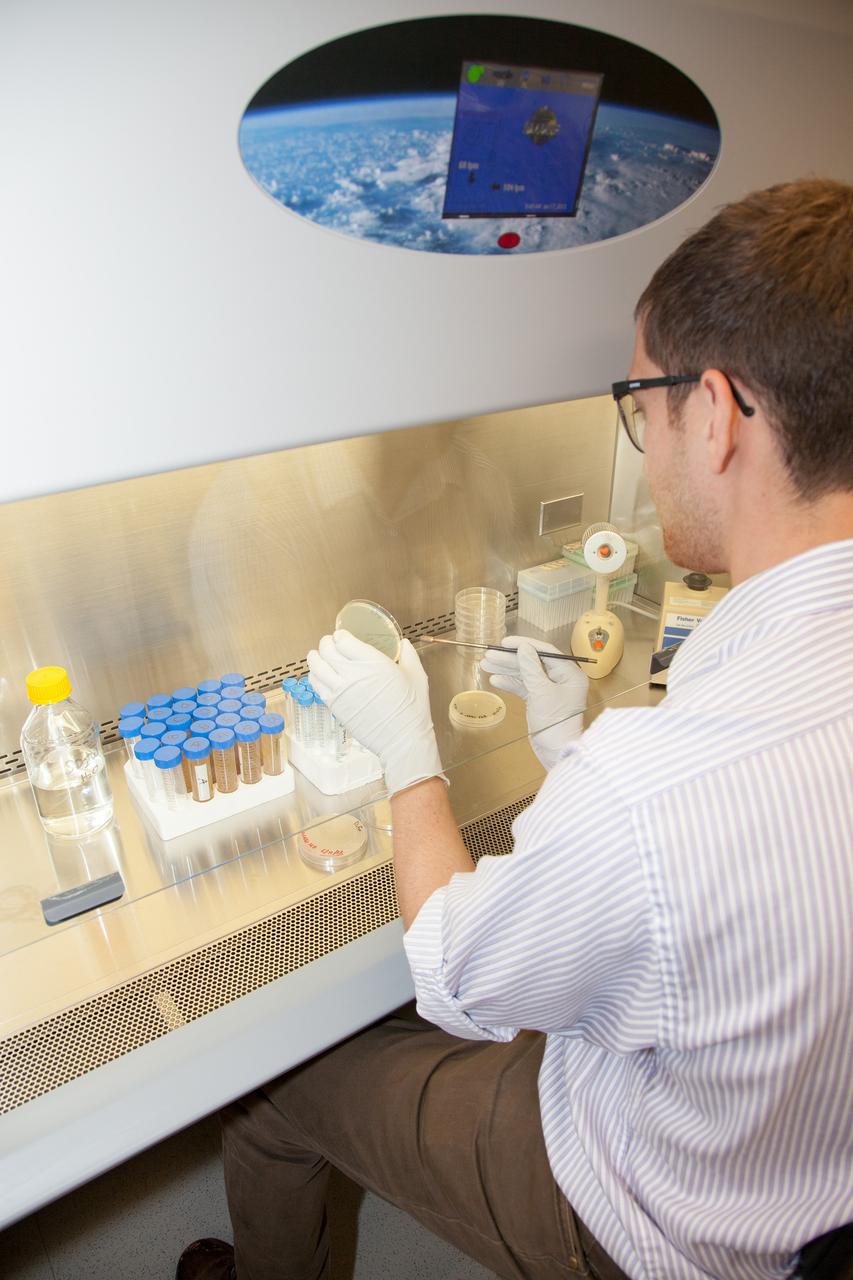
CAPE CANAVERAL, Fla. -- Inside the Space Life Sciences Laboratory near NASA’s Kennedy Space Center in Florida, Dr. David J. Smith, a microbiologist in the Surface Systems Office, prepares microbes that will be deployed for the Microorganisms in the Stratosphere, or MIST, mission. High altitudes exert a unique combination of stresses on microbes, outside the range of conditions normally encountered on the Earth's surface. Results from MIST may improve our understanding of physical limits and habitable environments for life. The MIST mission will fly a small biological payload aboard a blimp in July to measure microbial survival and cellular responses to exposure in the upper atmosphere. Later in the year, the MIST mission will deploy samples at even higher altitudes in the stratosphere using scientific balloons. Photo credit: NASA/Daniel Casper
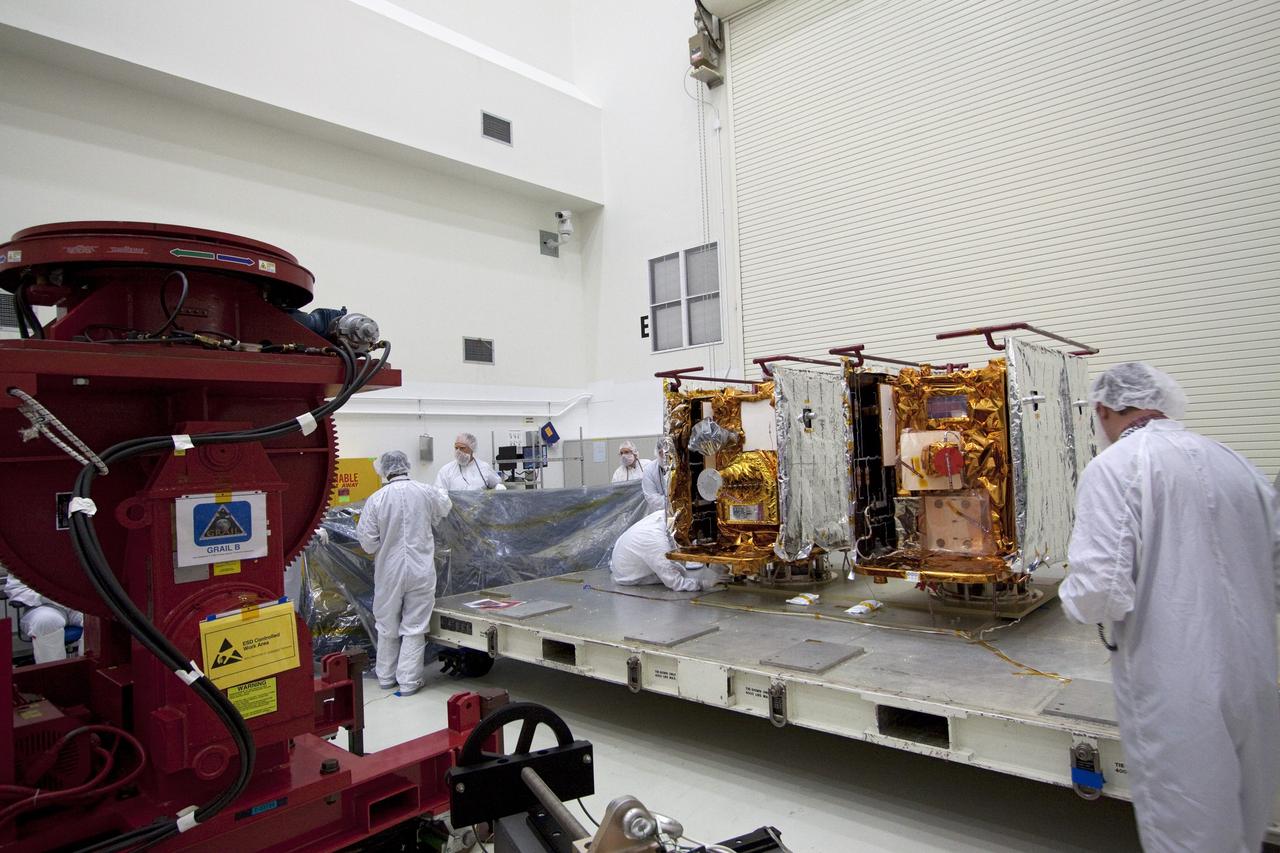
CAPE CANAVERAL, Fla. -- Technicians in the Astrotech payload processing facility in Titusville, Fla., prepare NASA's Gravity Recovery and Interior Laboratory, or GRAIL, twin spacecraft for testing and processing. GRAIL was built at the Lockheed Martin plant in Denver, Colo. The United Launch Alliance Delta II rocket that will carry GRAIL into lunar orbit already is fully stacked at NASA's Space Launch Complex 17B and launch is scheduled for Sept. 8. The GRAIL mission is a part of NASA's Discovery Program. GRAIL will fly twin spacecraft in tandem orbits around the moon for several months to measure its gravity field. The mission also will answer longstanding questions about Earth's moon and provide scientists a better understanding of how Earth and other rocky planets in the solar system formed. For more information, visit http://science.nasa.gov/missions/grail/. Photo credit: NASA/Jack Pfaller
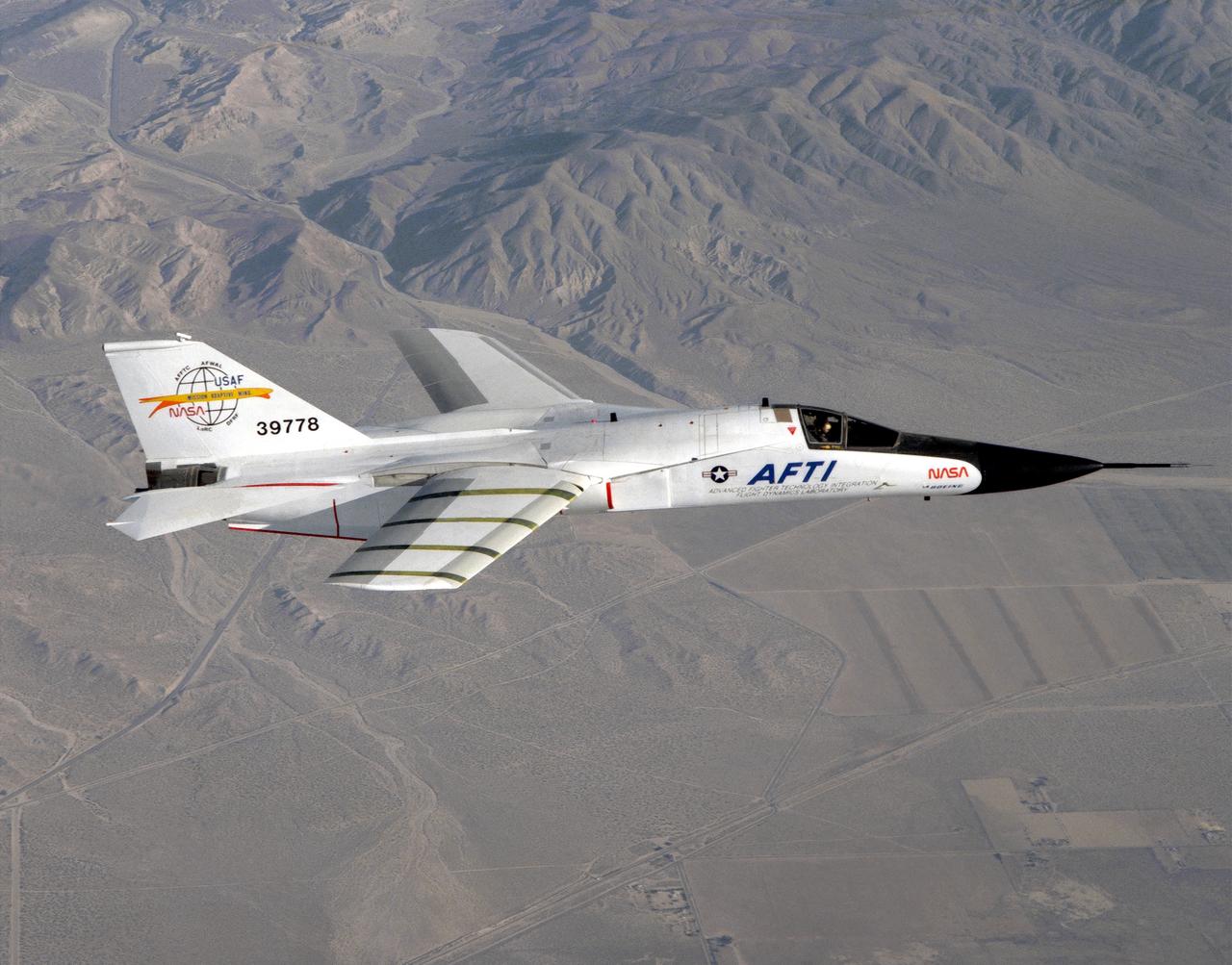
This photograph shows a modified General Dynamics AFTI/F-111A Aardvark with supercritical mission adaptive wings (MAW) installed. The four dark bands on the right wing are the locations of pressure orifices used to measure surface pressures and shock locations on the MAW. The El Paso Mountains and Red Rock Canyon State Park Califonia, about 30 miles northwest of Edwards Air Force Base, are seen directly in the background. With the phasing out of the TACT program came a renewed effort by the Air Force Flight Dynamics Laboratory to extend supercritical wing technology to a higher level of performance. In the early 1980s the supercritical wing on the F-111A aircraft was replaced with a wing built by Boeing Aircraft Company System called a “mission adaptive wing” (MAW), and a joint NASA and Air Force program called Advanced Fighter Technology Integration (AFTI) was born.
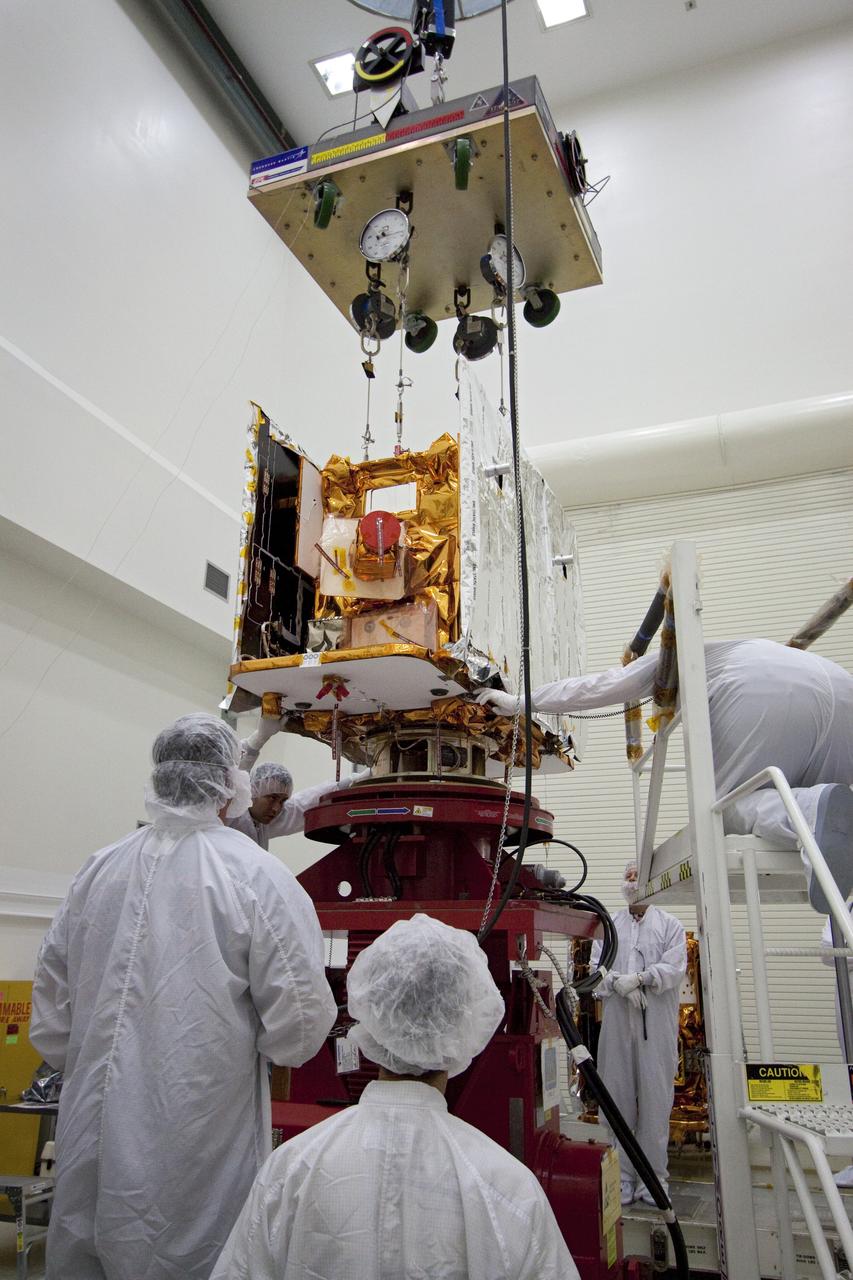
CAPE CANAVERAL, Fla. -- Technicians lower one of two spacecraft for NASA's Gravity Recovery and Interior Laboratory, or GRAIL, to a test stand in the Astrotech payload processing facility in Titusville, Fla. The twin spacecraft were built at the Lockheed Martin plant in Denver, Colo. The United Launch Alliance Delta II rocket that will carry GRAIL into lunar orbit already is fully stacked at NASA's Space Launch Complex 17B and launch is scheduled for Sept. 8. The GRAIL mission is a part of NASA's Discovery Program. GRAIL will fly twin spacecraft in tandem orbits around the moon for several months to measure its gravity field. The mission also will answer longstanding questions about Earth's moon and provide scientists a better understanding of how Earth and other rocky planets in the solar system formed. For more information, visit http://science.nasa.gov/missions/grail/. Photo credit: NASA/Jack Pfaller
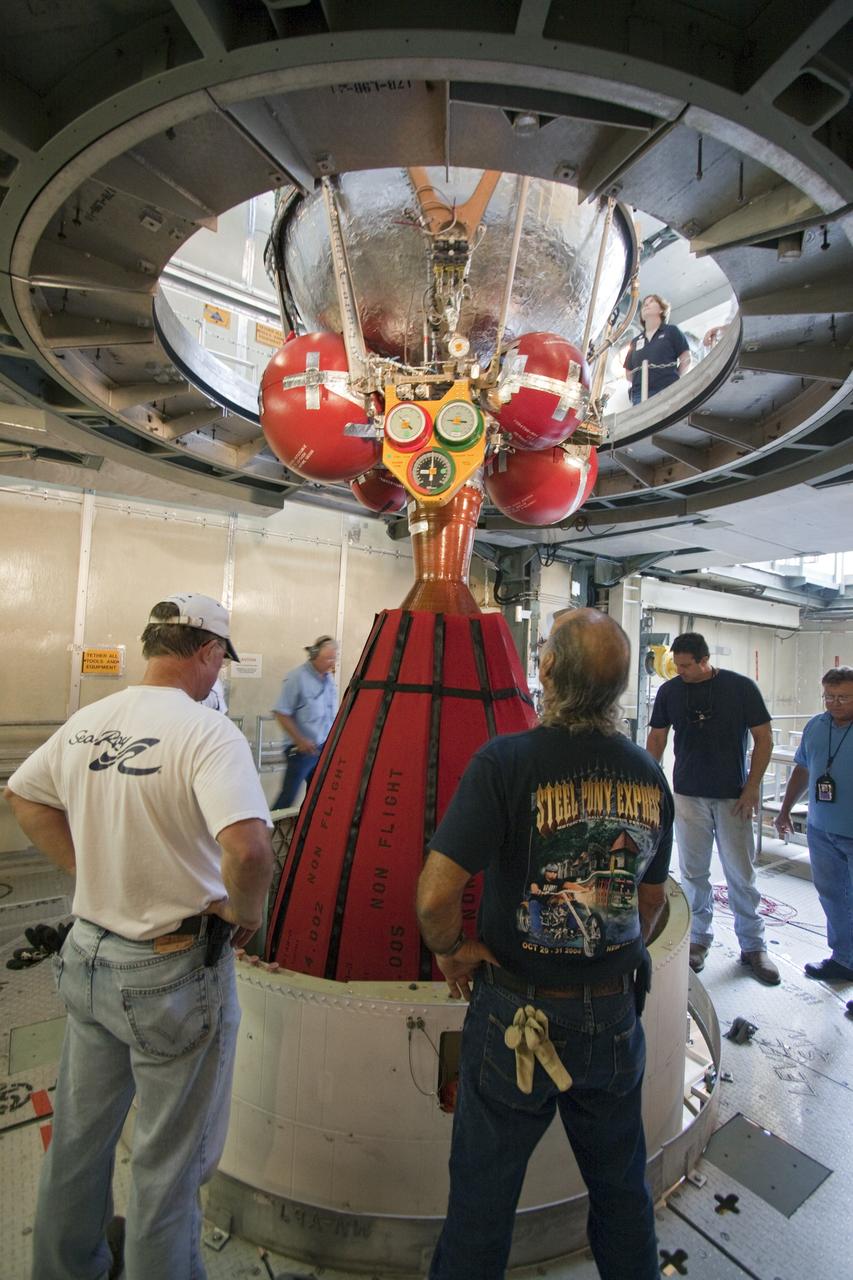
CAPE CANAVERAL, Fla. -- At NASA's Space Launch Complex 17B in Florida, workers using an overhead crane lower the second stage of a United Launch Alliance Delta II launch vehicle toward the first stage for mating. The payload fairing then will be raised into the white room of the mobile service tower. The Delta II will carry NASA's Gravity Recovery and Interior Laboratory, or GRAIL, spacecraft into lunar orbit. The GRAIL mission is a part of NASA's Discovery Program. GRAIL will fly twin spacecraft in tandem orbits around the moon for several months to measure its gravity field. The mission also will answer longstanding questions about Earth's moon and provide scientists a better understanding of how Earth and other rocky planets in the solar system formed. GRAIL is scheduled to launch Sept. 8. For more information visit: http://science.nasa.gov/missions/grail/. Photo credit: NASA/Jack Pfaller

KENNEDY SPACE CENTER, FLA. -- On Launch Pad 39A, space shuttle Atlantis' payload bay doors are ready for closing. Seen here is the integrated cargo carrier - lite. Atlantis is being secured for launch on Dec. 6 on mission STS-122 to the International Space Station. The Columbus laboratory module, built by the European Space Agency, is approximately 23 feet long and 15 feet wide, allowing it to hold 10 large racks of experiments. The carrier holds three elements: a nitrogen tank assembly that is part of the external active thermal control system on the International Space Station, the European Technology Exposure Facility composed of nine science instruments and an autonomous temperature measurement unit, and the SOLAR payload designed for sun observation. Photo credit: NASA/George Shelton