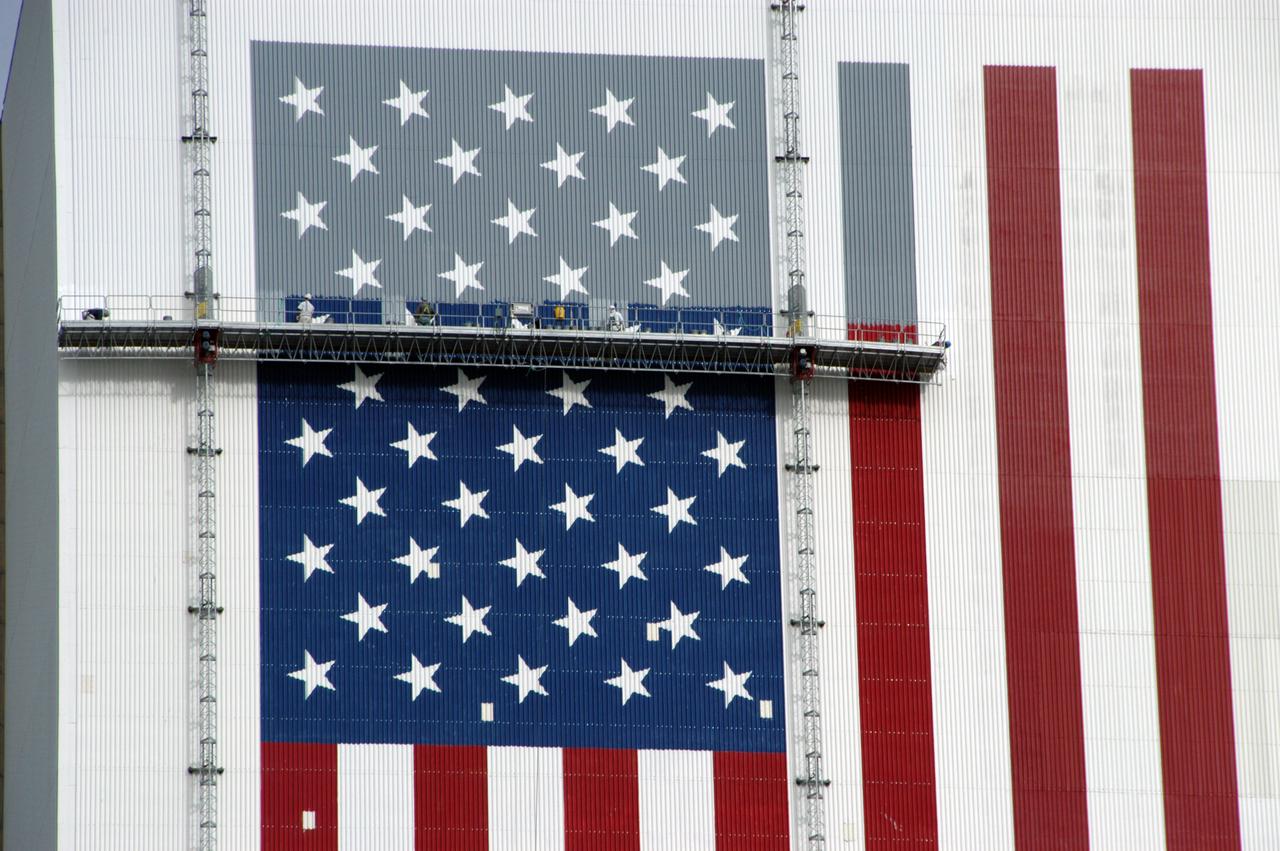
Workers painting the Flag and Meatball on the VAB.
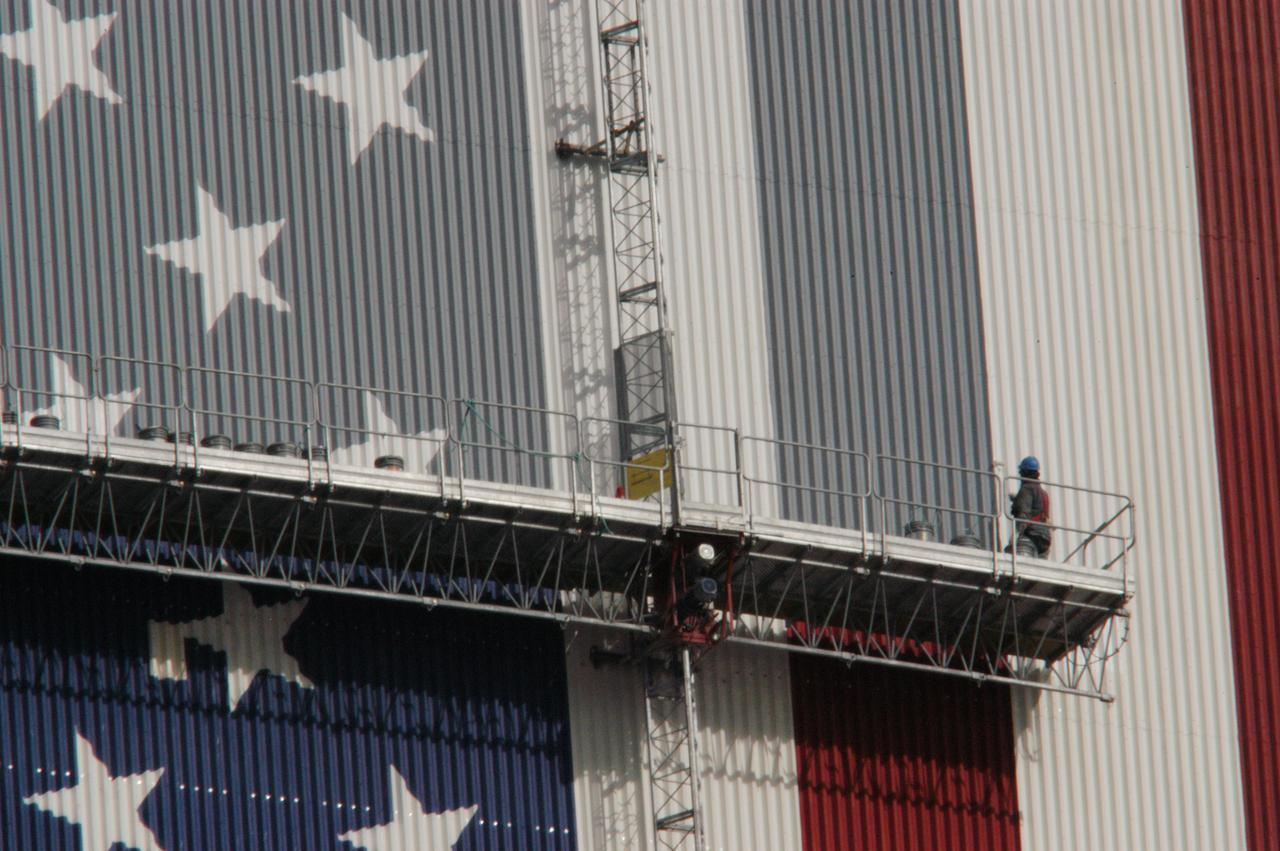
Workers painting the Flag and Meatball on the VAB.
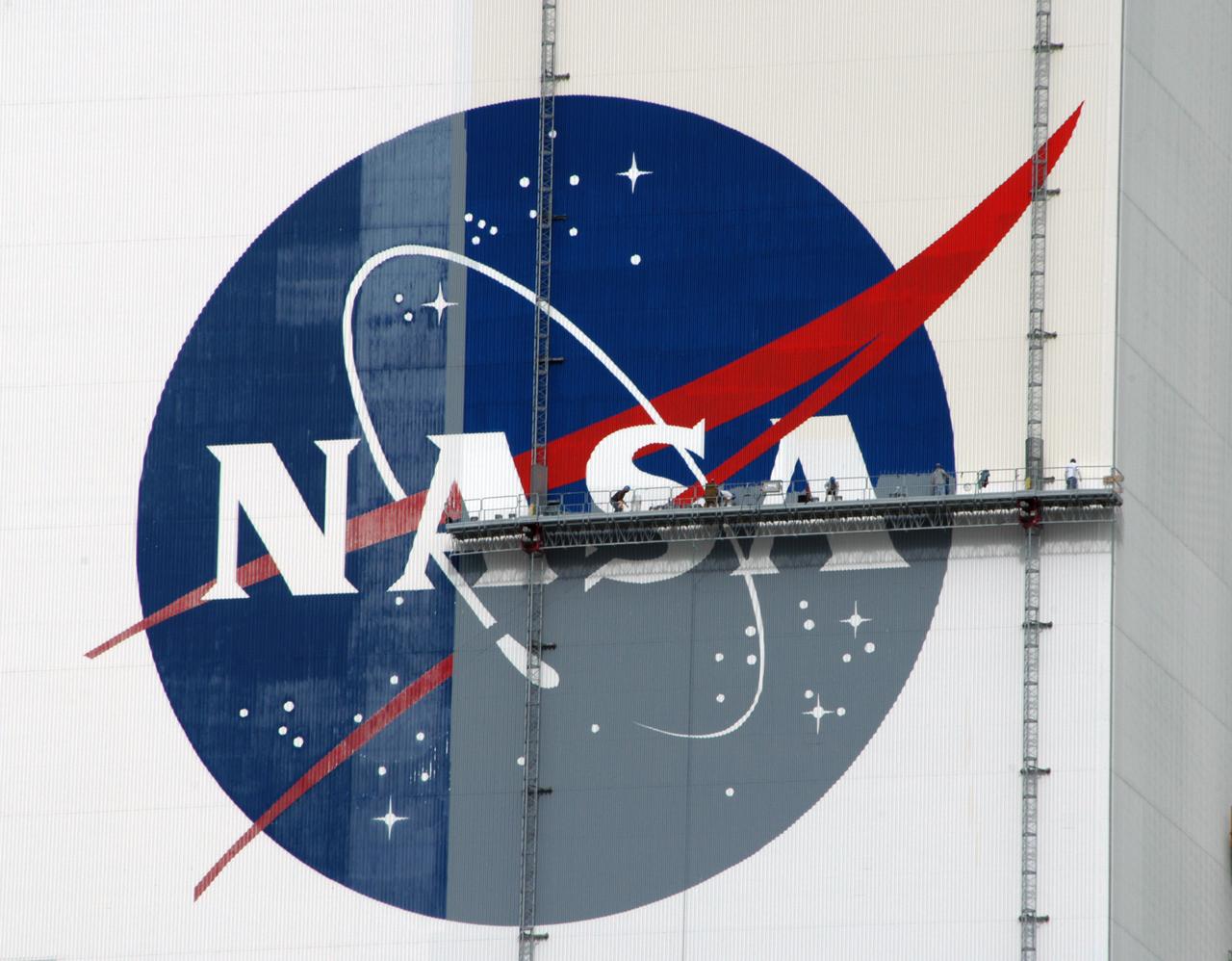
Workers painting the Flag and Meatball on the VAB.
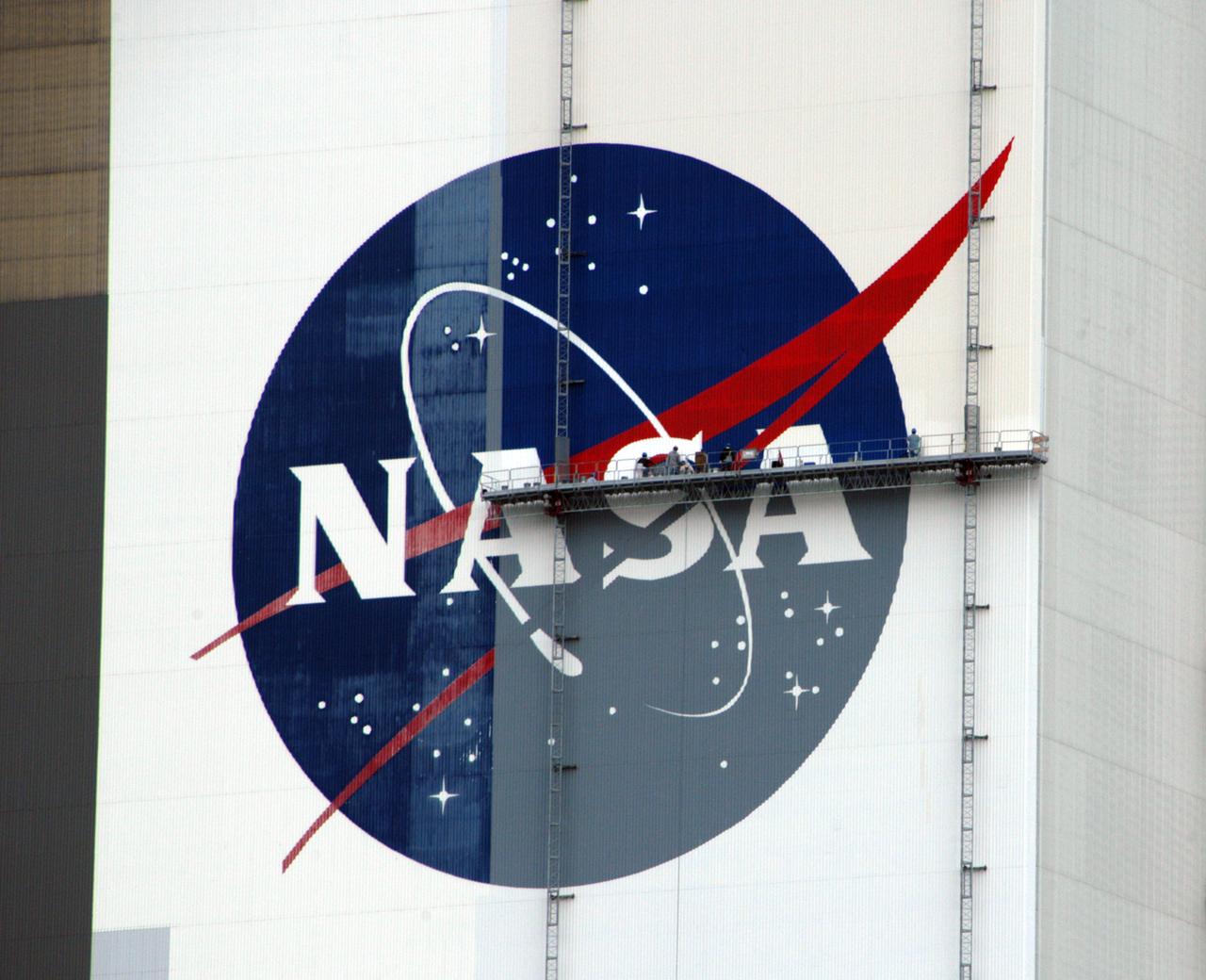
Workers painting the Flag and Meatball on the VAB.
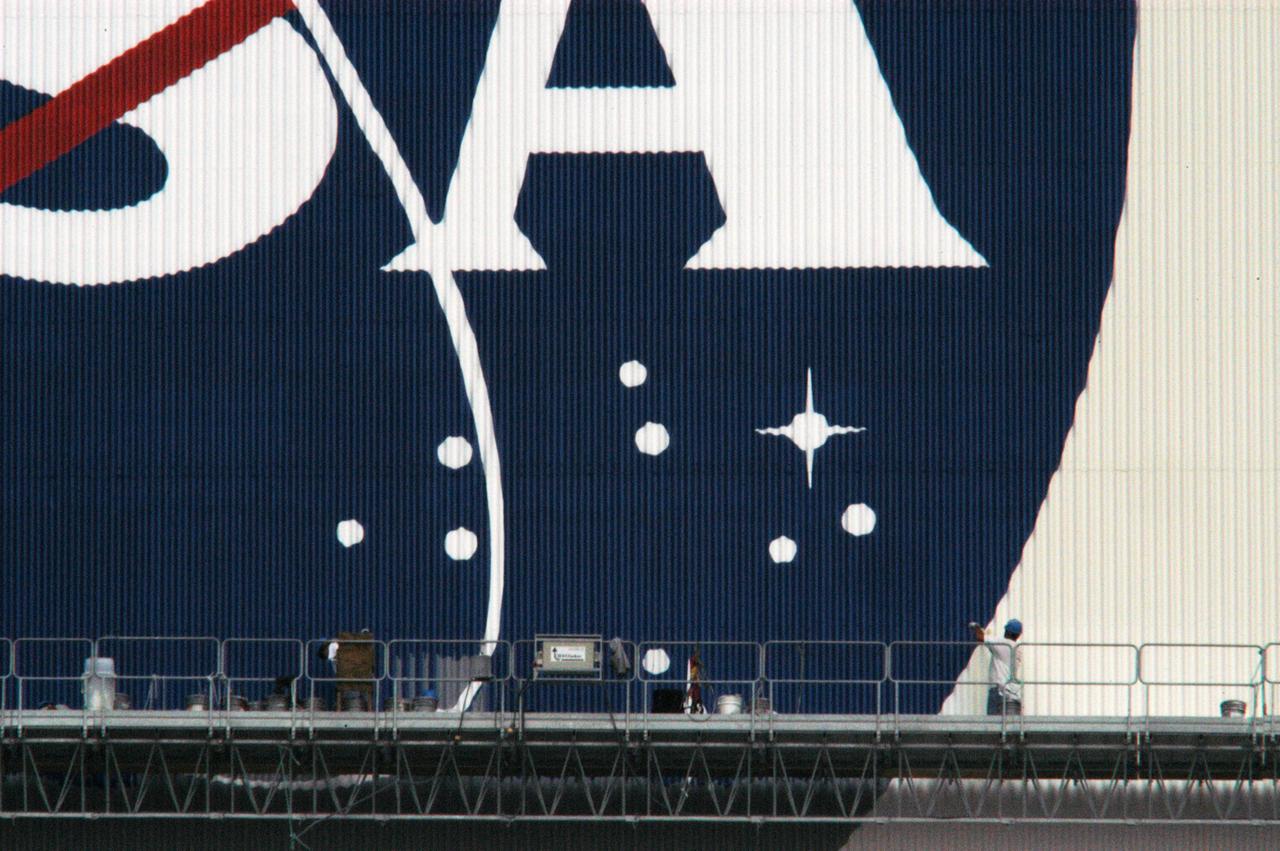
Workers painting the Flag and Meatball on the VAB.

Workers painting the Flag and Meatball on the VAB.
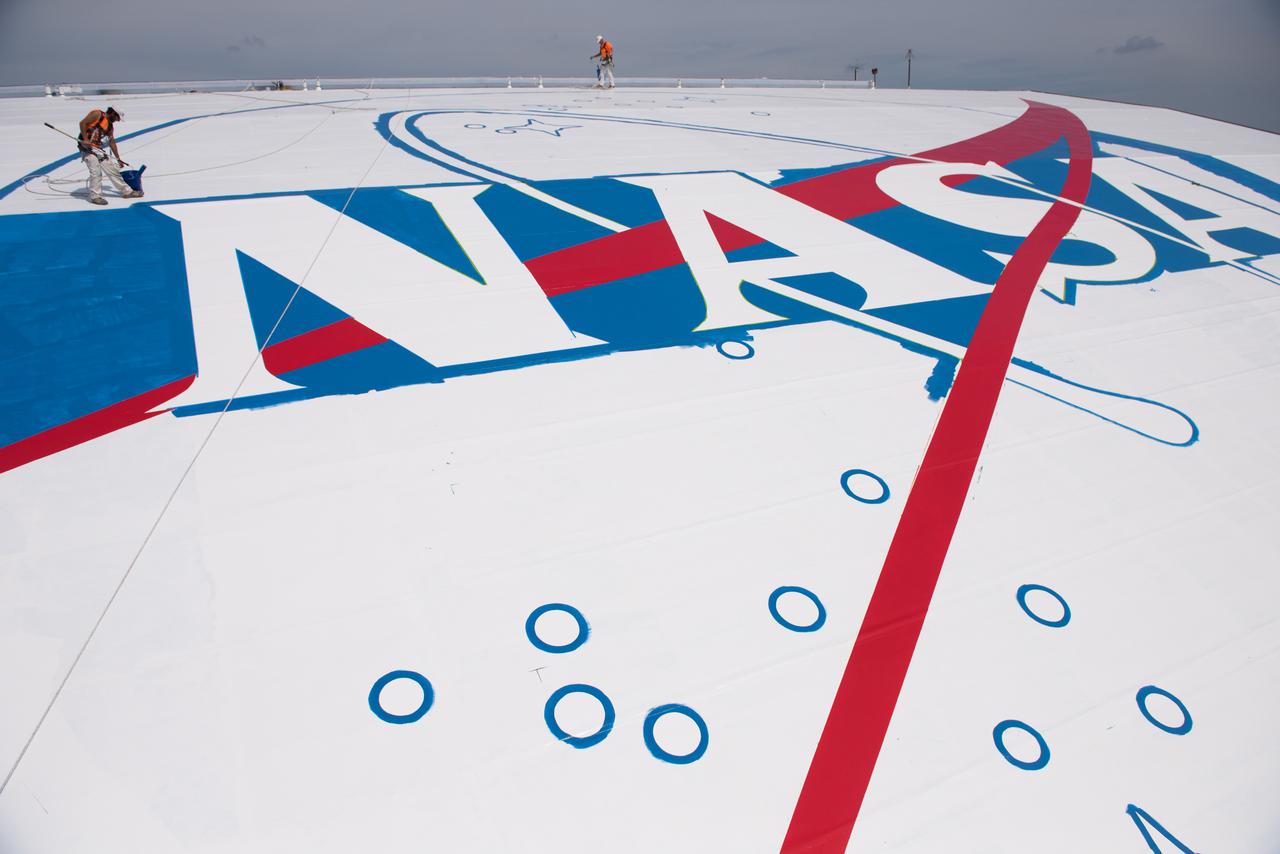
Painters paint the NASA Insignia or Meatball on the Hangar Roof
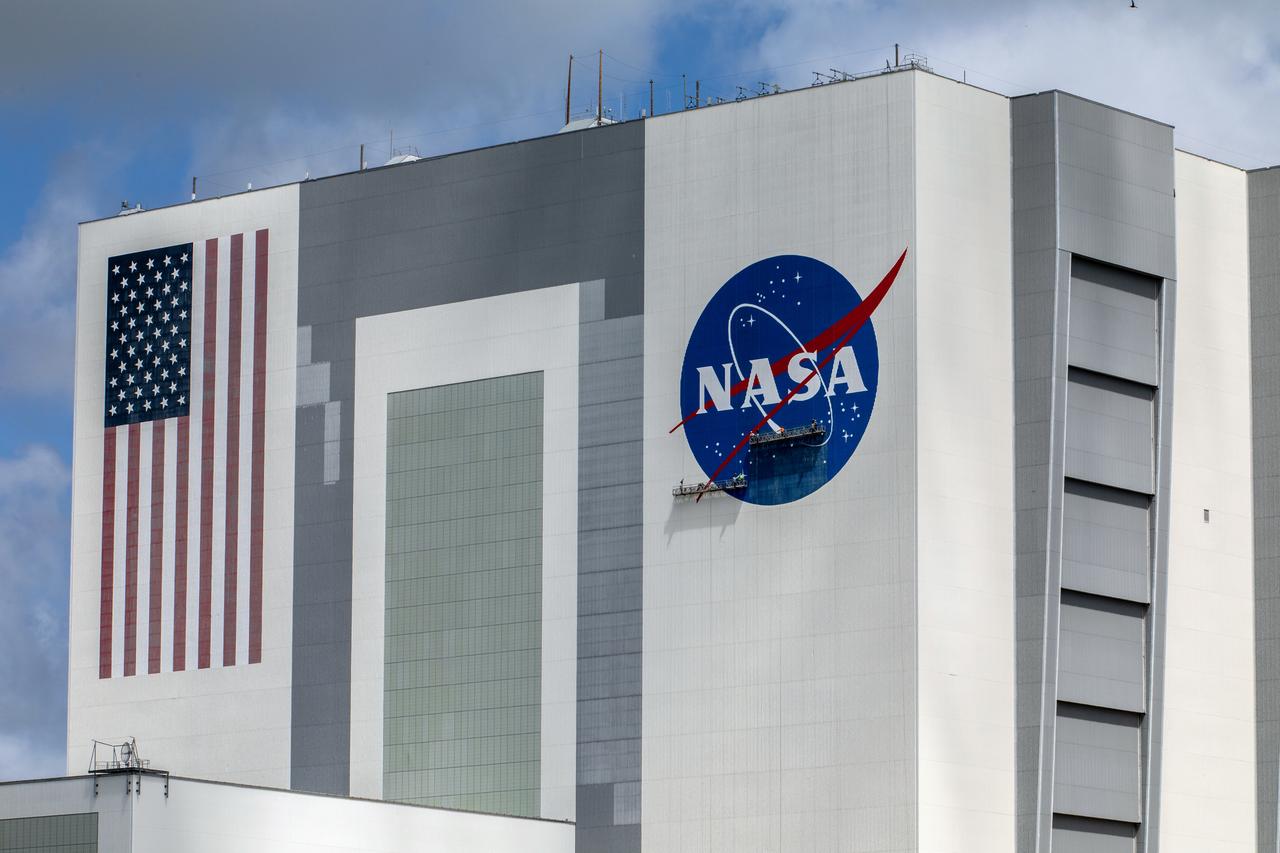
Painting of the NASA logo, also called the meatball, continues on the 525-foot-tall Vehicle Assembly Building (VAB) at the agency’s Kennedy Space Center in Florida on May 29 2020. HM2 and H.I.S. Painting of Titusville, Florida, are repainting the meatball and the American Flag on the iconic building. High Bay 3 inside the VAB has been upgraded with 10 new levels of work platforms that will surround and provide access for service and processing of NASA's Space Launch System (SLS) rocket and Orion spacecraft. Exploration Ground Systems is overseeing upgrades to the VAB to support the launch of the SLS and Orion for Artemis missions. Under the Artemis program, NASA will send the first woman and next man to the Moon.
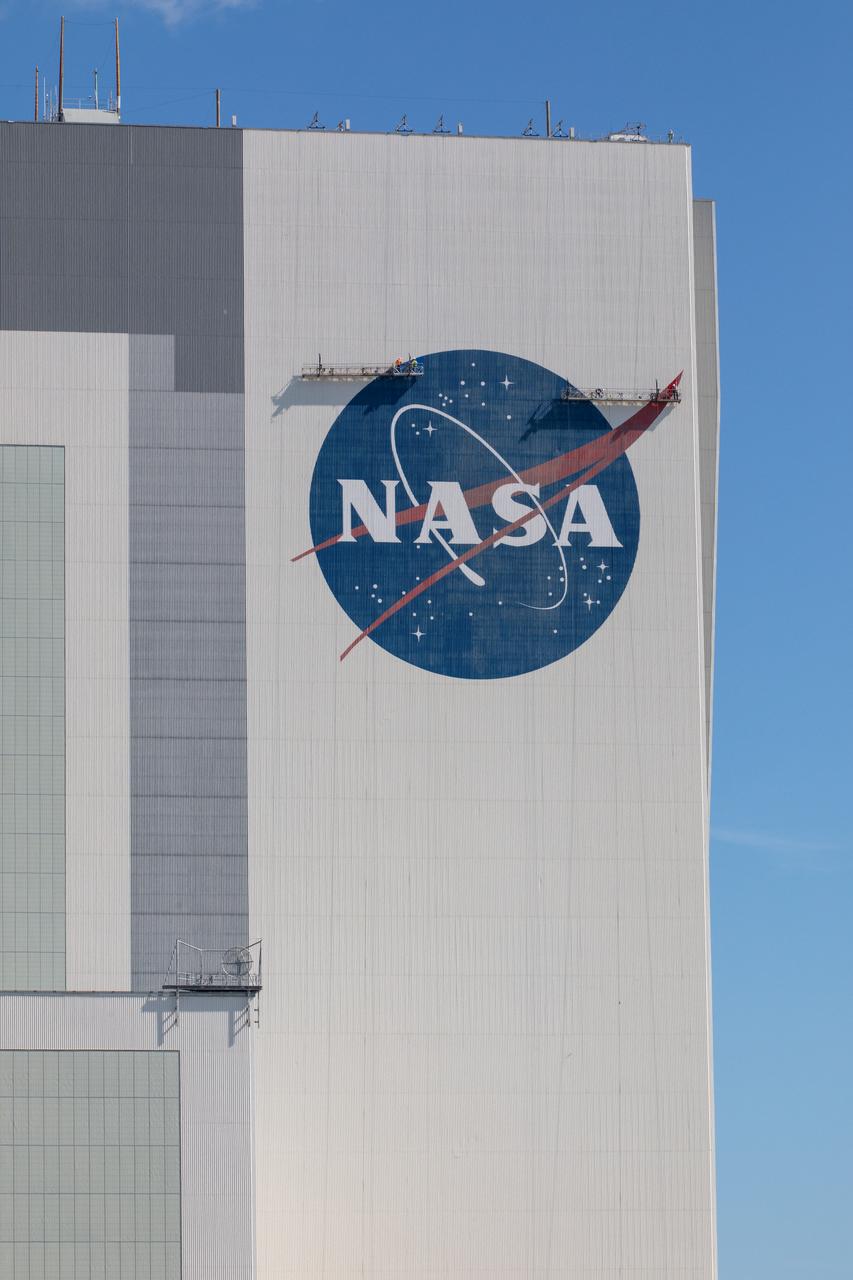
Painting of the NASA logo, also called the meatball, is underway on the 525-foot-tall Vehicle Assembly Building (VAB) at the agency’s Kennedy Space Center in Florida on May 8, 2020. HM2 and H.I.S. Painting of Titusville, Florida, are repainting the meatball and the American Flag on the iconic building. High Bay 3 inside the VAB has been upgraded with 10 new levels of work platforms that will surround and provide access for service and processing of NASA's Space Launch System (SLS) rocket and Orion spacecraft. Exploration Ground Systems is overseeing upgrades to the VAB to support the launch of the SLS and Orion for Artemis missions. Under the Artemis program, NASA will send the first woman and next man to the Moon.
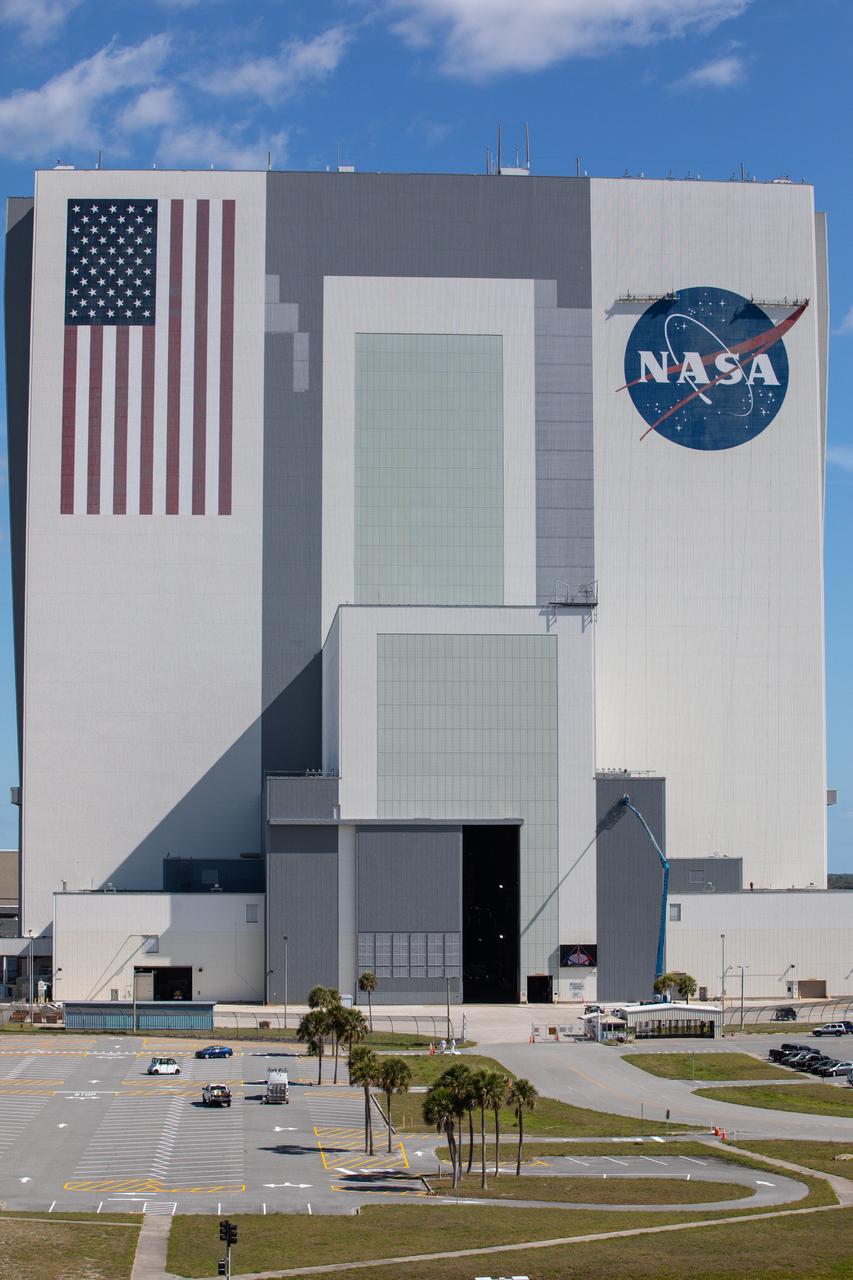
Painting of the NASA logo, also called the meatball, is underway on the 525-foot-tall Vehicle Assembly Building (VAB) at the agency’s Kennedy Space Center in Florida on May 8, 2020. HM2 and H.I.S. Painting of Titusville, Florida, are repainting the meatball and the American Flag on the iconic building. High Bay 3 inside the VAB has been upgraded with 10 new levels of work platforms that will surround and provide access for service and processing of NASA's Space Launch System (SLS) rocket and Orion spacecraft. Exploration Ground Systems is overseeing upgrades to the VAB to support the launch of the SLS and Orion for Artemis missions. Under the Artemis program, NASA will send the first woman and next man to the Moon.
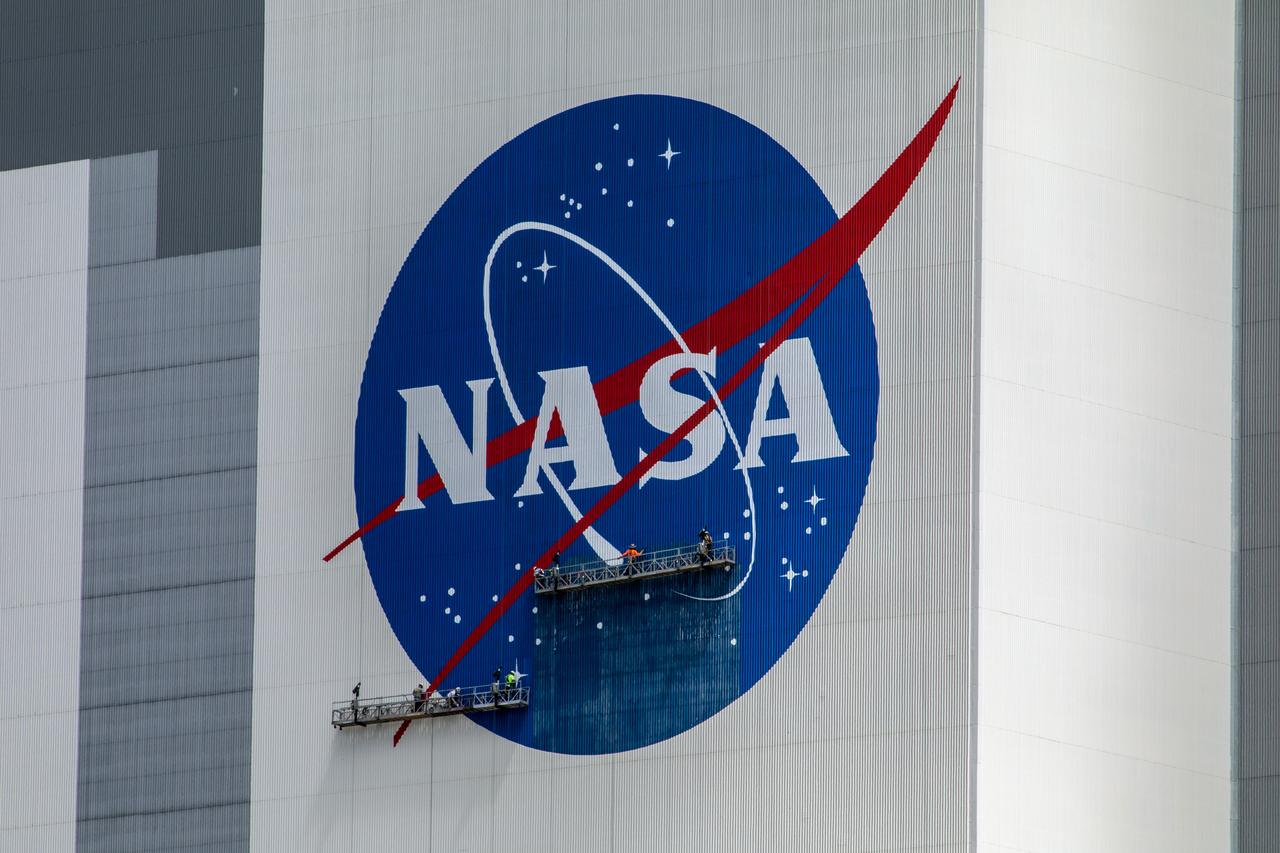
Painting of the NASA logo, also called the meatball, continues on the 525-foot-tall Vehicle Assembly Building (VAB) at the agency’s Kennedy Space Center in Florida on May 29 2020. HM2 and H.I.S. Painting of Titusville, Florida, are repainting the meatball and the American Flag on the iconic building. High Bay 3 inside the VAB has been upgraded with 10 new levels of work platforms that will surround and provide access for service and processing of NASA's Space Launch System (SLS) rocket and Orion spacecraft. Exploration Ground Systems is overseeing upgrades to the VAB to support the launch of the SLS and Orion for Artemis missions. Under the Artemis program, NASA will send the first woman and next man to the Moon.
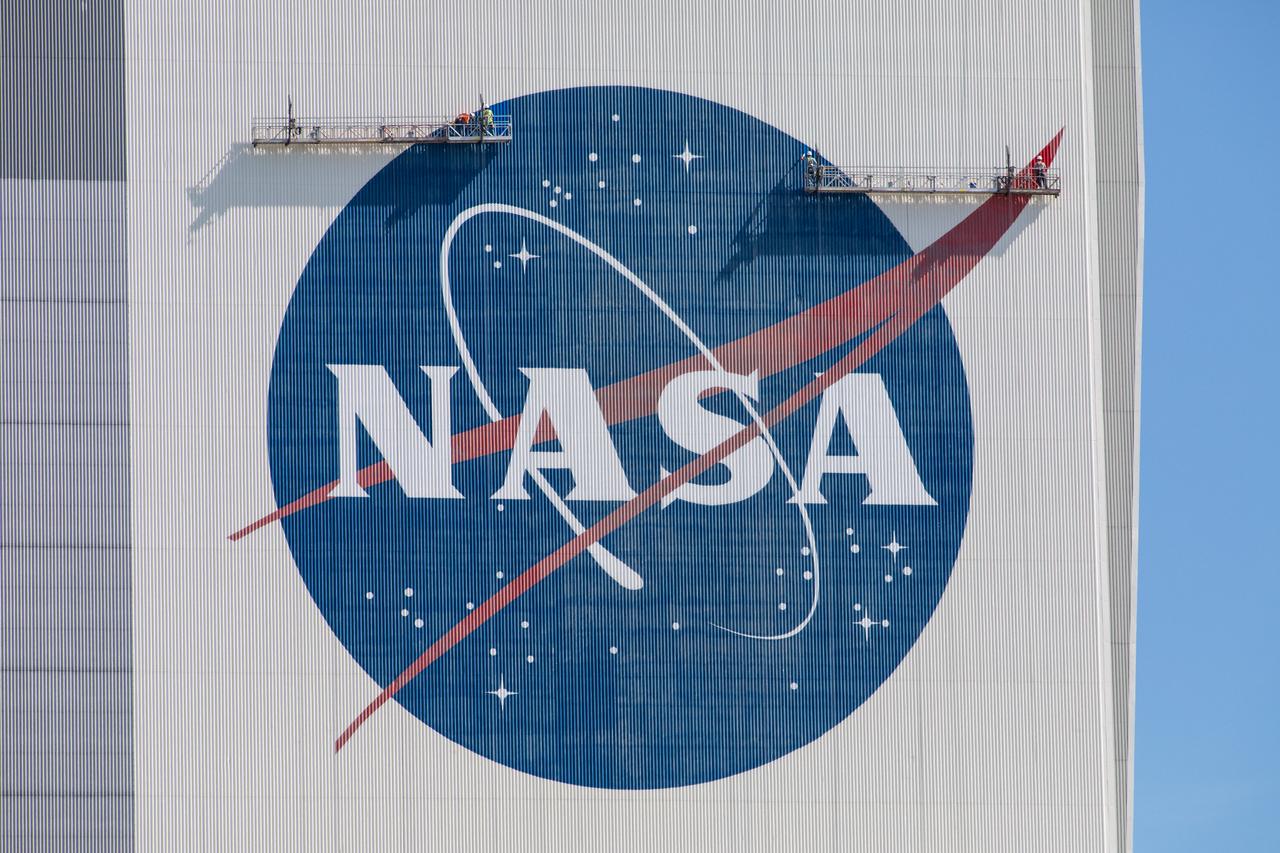
Painting of the NASA logo, also called the meatball, is underway on the 525-foot-tall Vehicle Assembly Building (VAB) at the agency’s Kennedy Space Center in Florida on May 8, 2020. HM2 and H.I.S. Painting of Titusville, Florida, are repainting the meatball and the American Flag on the iconic building. High Bay 3 inside the VAB has been upgraded with 10 new levels of work platforms that will surround and provide access for service and processing of NASA's Space Launch System (SLS) rocket and Orion spacecraft. Exploration Ground Systems is overseeing upgrades to the VAB to support the launch of the SLS and Orion for Artemis missions. Under the Artemis program, NASA will send the first woman and next man to the Moon.
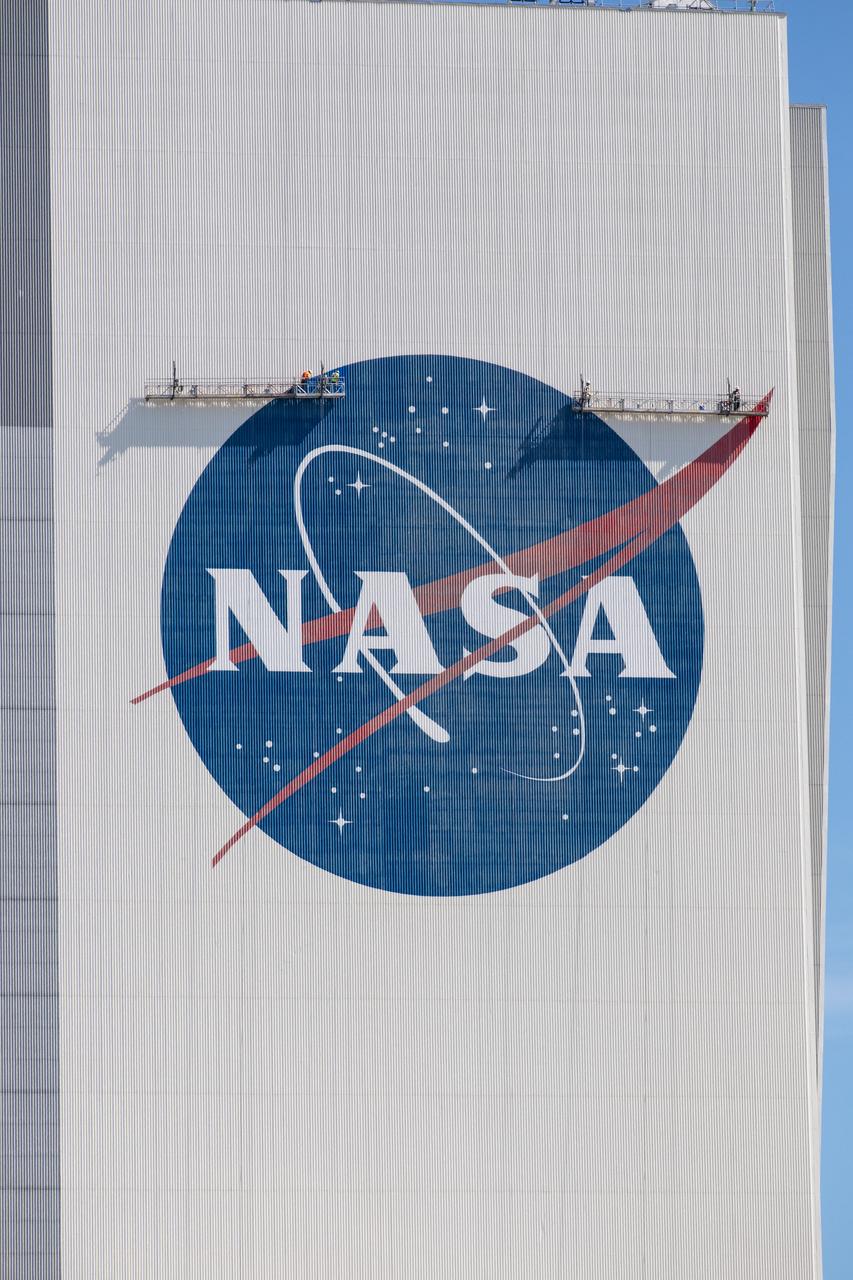
Painting of the NASA logo, also called the meatball, is underway on the 525-foot-tall Vehicle Assembly Building (VAB) at the agency’s Kennedy Space Center in Florida on May 8, 2020. HM2 and H.I.S. Painting of Titusville, Florida, are repainting the meatball and the American Flag on the iconic building. High Bay 3 inside the VAB has been upgraded with 10 new levels of work platforms that will surround and provide access for service and processing of NASA's Space Launch System (SLS) rocket and Orion spacecraft. Exploration Ground Systems is overseeing upgrades to the VAB to support the launch of the SLS and Orion for Artemis missions. Under the Artemis program, NASA will send the first woman and next man to the Moon.
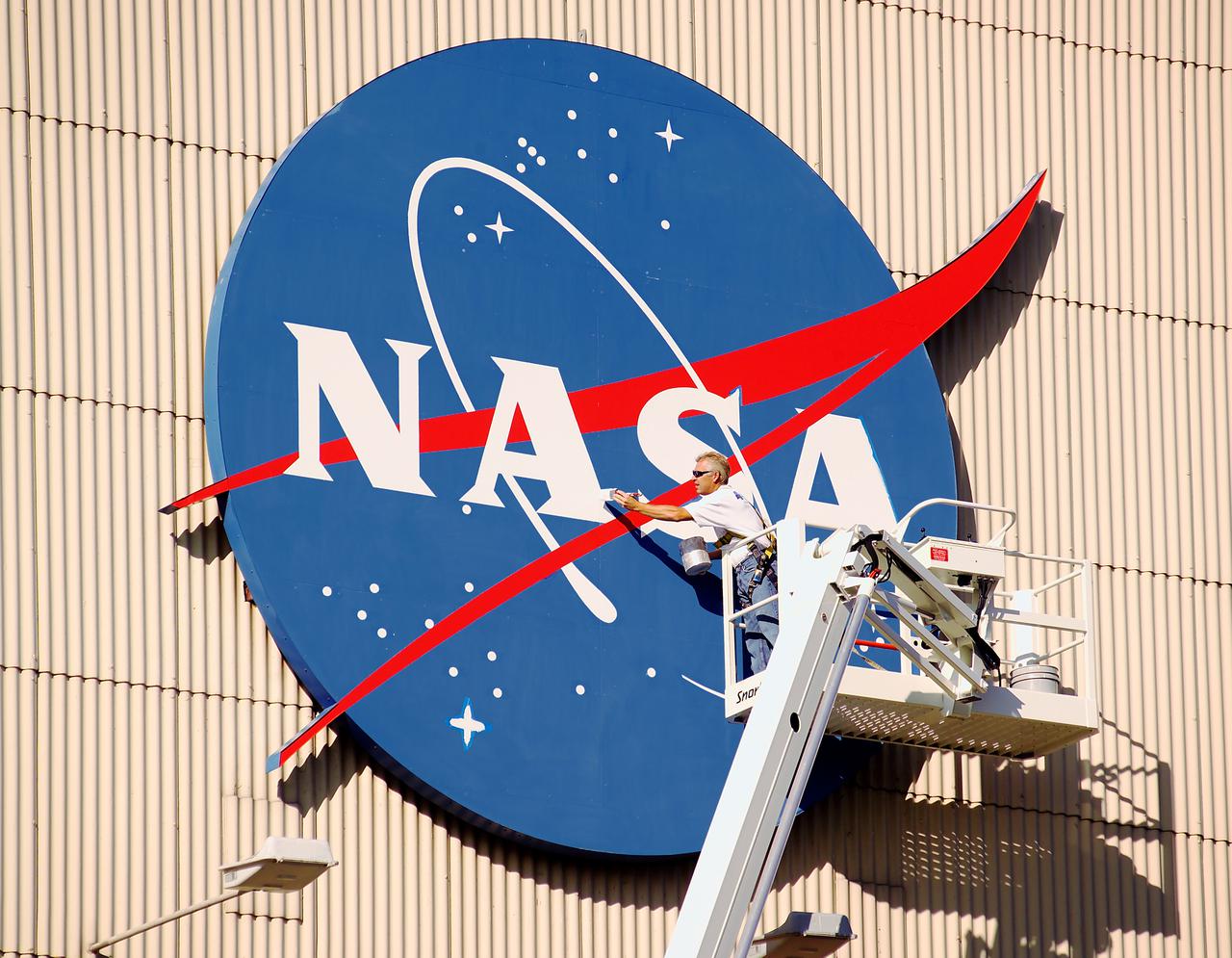
Painter applies fresh coat of paint to the NASA Meatball on the Hangar's North Facade
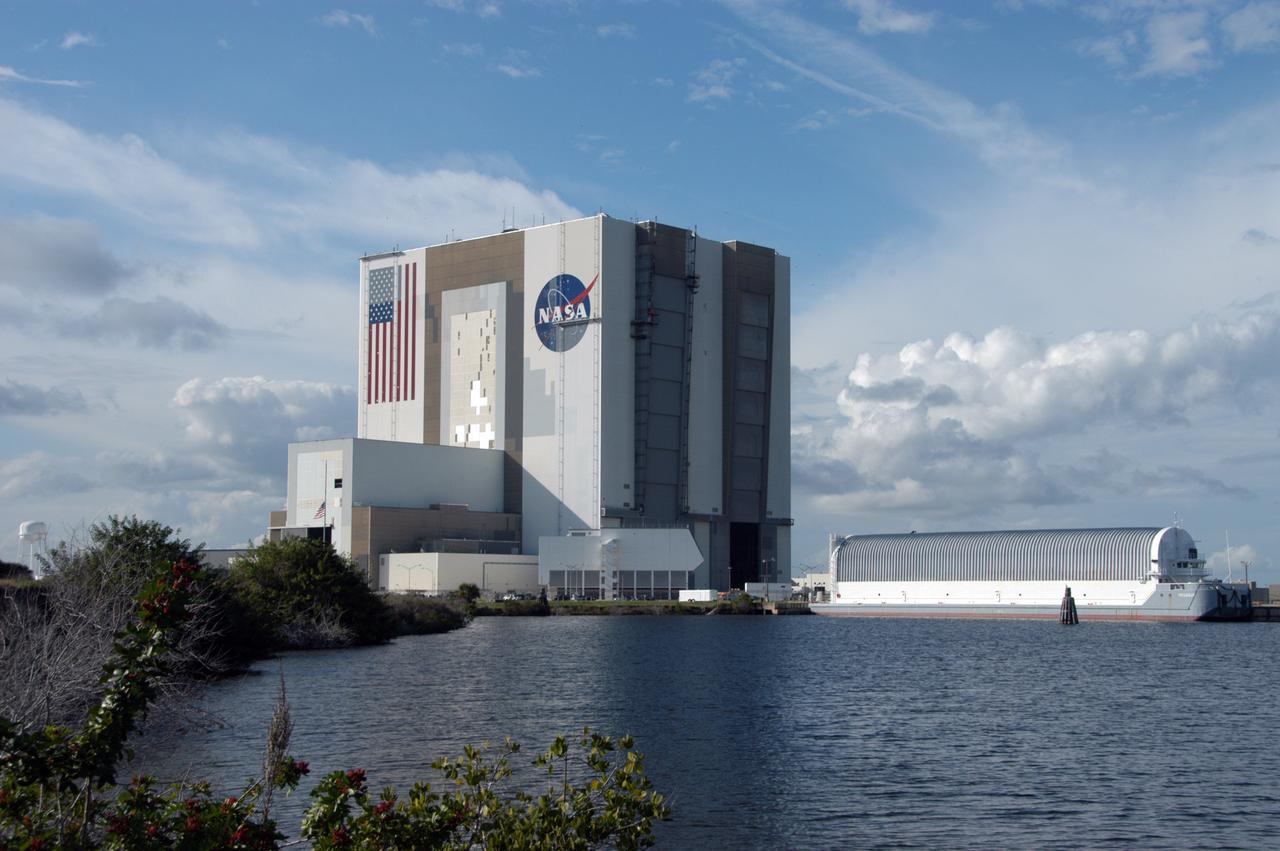
Elevated platforms are seen hanging on the side of Kennedy Space Center's Vehicle Assembly Building in a view looking across from the turn basin. To the right is the large external tank barge. Workers, suspended on the platforms from the top of the 525-foot-high VAB, use rollers and brushes to do the painting. The flag and logo were last painted in 1998, honoring NASA's 40th anniversary. The flag spans an area 209 feet by 110 feet, or about 23, 437 square feet. Each stripe is 9 feet wide and each star is 6 feet in diameter. The logo, also known as the "meatball," measures 110 feet by 132 feet, or about 12,300 square feet.
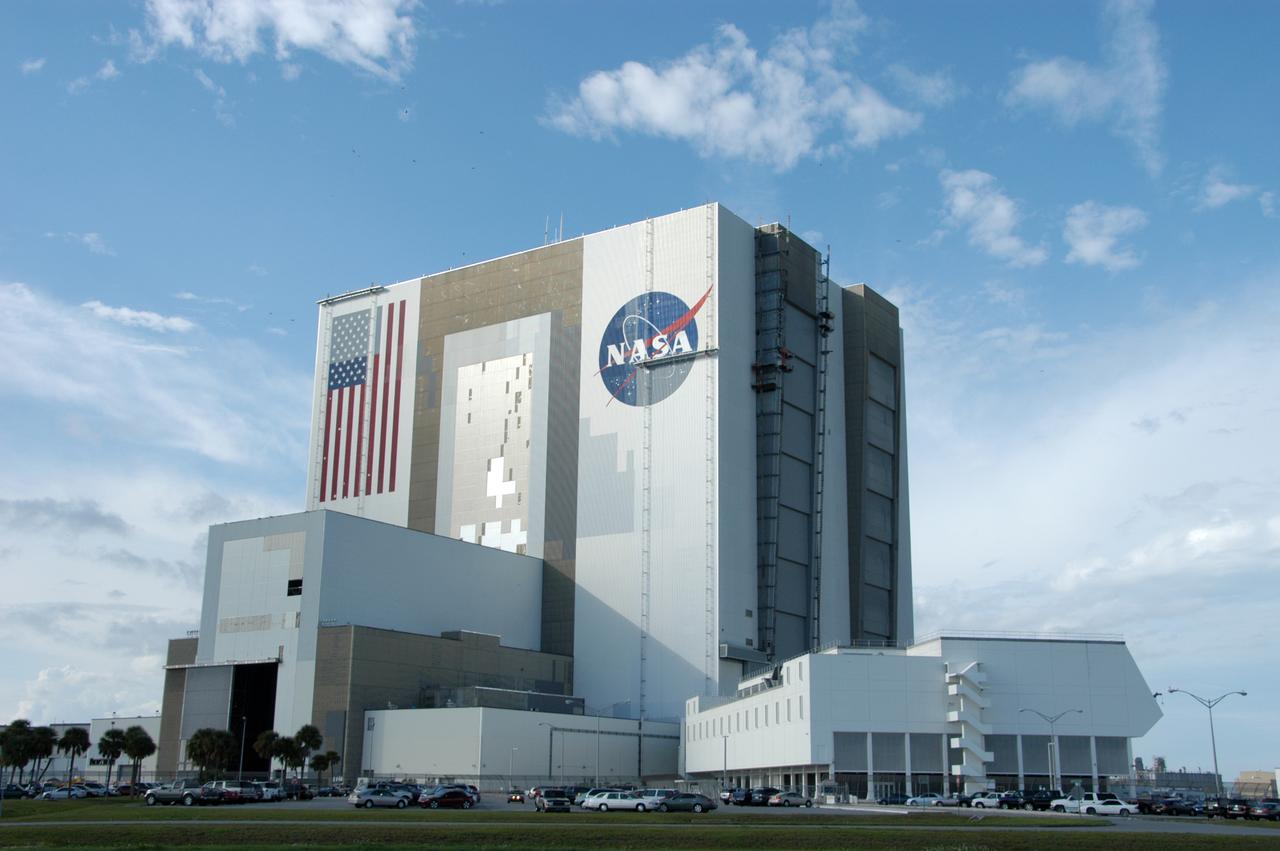
Elevated platforms are seen hanging in front of the NASA Logo on the side of Kennedy Space Center's Vehicle Assembly Building. Also in view on the east side of the building are platforms on the facility's large vertical doors. Workers, suspended on the platforms from the top of the 525-foot-high VAB, use rollers and brushes to do the painting. The flag and logo were last painted in 1998, honoring NASA's 40th anniversary. The flag spans an area 209 feet by 110 feet, or about 23, 437 square feet. Each stripe is 9 feet wide and each star is 6 feet in diameter. The logo, also known as the "meatball," measures 110 feet by 132 feet, or about 12,300 square feet.

Seen on Oct. 27, 2020, is the Vehicle Assembly Building (VAB) with a vibrant NASA logo, referred to as the meatball, and American Flag at NASA’s Kennedy Space Center in Florida. HM2 and H.I.S. Painting of Titusville, Florida, began repainting the meatball and flag on the iconic facility in May and recently completed the project. The VAB was last painted in 2007, when repairs where completed after Hurricanes Frances and Jeanne tore 845 panels off the building in 2004. It took over 500 gallons of paint to repaint the 209’ X 110’ flag and the 110’ X 132’ meatball.

A ground-level view of a vibrant NASA logo, referred to as the meatball, and American Flag on the Vehicle Assembly Building (VAB) at NASA’s Kennedy Space Center in Florida on Oct. 27, 2020. HM2 and H.I.S. Painting of Titusville, Florida, began repainting the meatball and flag on the iconic facility in May and recently completed the project. The VAB was last painted in 2007, when repairs where completed after Hurricanes Frances and Jeanne tore 845 panels off the building in 2004. It took over 500 gallons of paint to repaint the 209’ X 110’ flag and the 110’ X 132’ meatball.

Seen on Oct. 27, 2020, is the Vehicle Assembly Building (VAB) with a vibrant NASA logo, referred to as the meatball, and American Flag at NASA’s Kennedy Space Center in Florida. HM2 and H.I.S. Painting of Titusville, Florida, began repainting the meatball and flag on the iconic facility in May and recently completed the project. The VAB was last painted in 2007, when repairs where completed after Hurricanes Frances and Jeanne tore 845 panels off the building in 2004. It took over 500 gallons of paint to repaint the 209’ X 110’ flag and the 110’ X 132’ meatball.

A view of the Vehicle Assembly Building (VAB) with a vibrant NASA logo, referred to as the meatball, and American Flag at NASA’s Kennedy Space Center in Florida on Oct. 27, 2020. HM2 and H.I.S. Painting of Titusville, Florida, began repainting the meatball and flag on the iconic facility in May and recently completed the project. The VAB was last painted in 2007, when repairs where completed after Hurricanes Frances and Jeanne tore 845 panels off the building in 2004. It took over 500 gallons of paint to repaint the 209’ X 110’ flag and the 110’ X 132’ meatball.

A view of the Vehicle Assembly Building (VAB) with a vibrant NASA logo, referred to as the meatball, and American Flag at NASA’s Kennedy Space Center in Florida on Oct. 27, 2020. HM2 and H.I.S. Painting of Titusville, Florida, began repainting the meatball and flag on the iconic facility in May and recently completed the project. The VAB was last painted in 2007, when repairs where completed after Hurricanes Frances and Jeanne tore 845 panels off the building in 2004. It took over 500 gallons of paint to repaint the 209’ X 110’ flag and the 110’ X 132’ meatball.

A ground-level view of a vibrant NASA logo, referred to as the meatball, and American Flag on the Vehicle Assembly Building (VAB) at NASA’s Kennedy Space Center in Florida on Oct. 27, 2020. HM2 and H.I.S. Painting of Titusville, Florida, began repainting the meatball and flag on the iconic facility in May and recently completed the project. The VAB was last painted in 2007, when repairs where completed after Hurricanes Frances and Jeanne tore 845 panels off the building in 2004. It took over 500 gallons of paint to repaint the 209’ X 110’ flag and the 110’ X 132’ meatball.
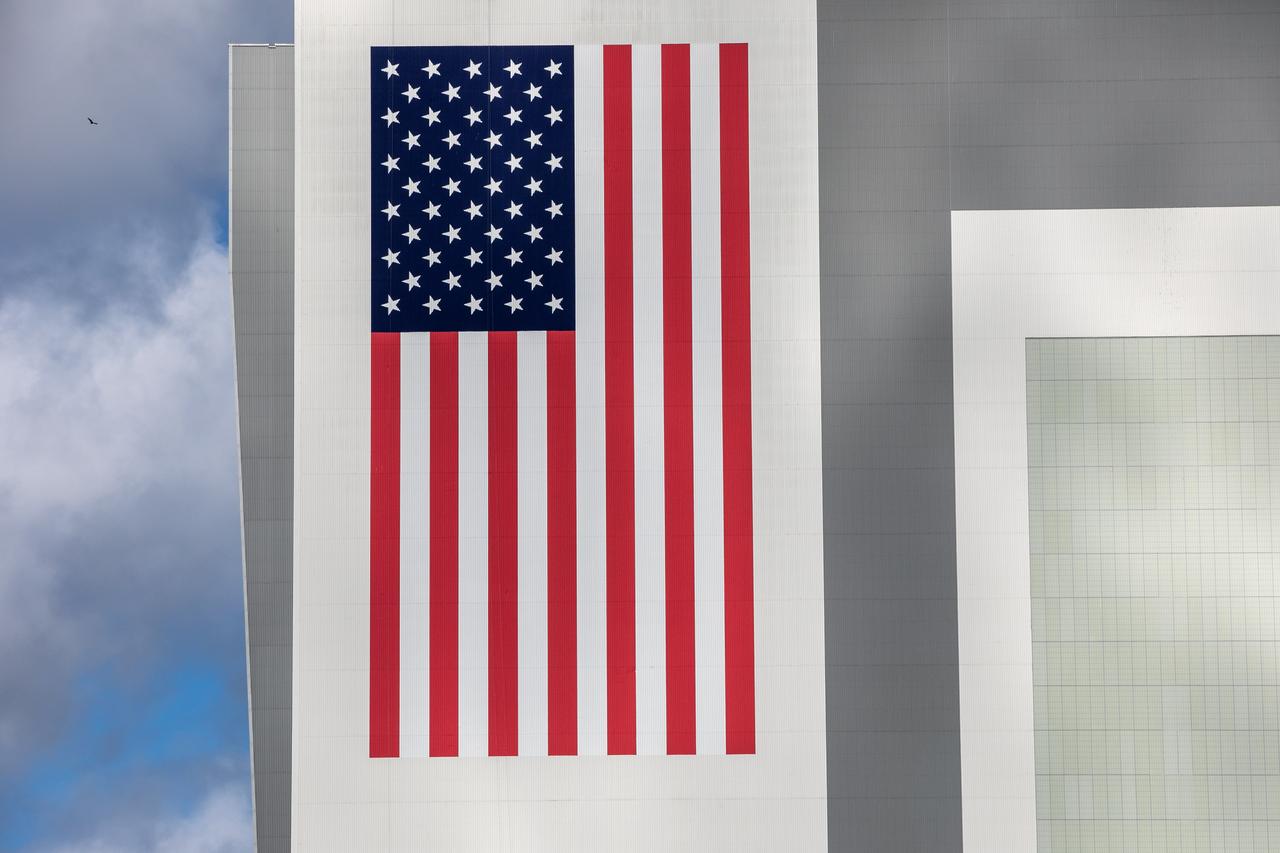
A freshly painted American Flag on the Vehicle Assembly Building (VAB) at NASA’s Kennedy Space Center in Florida is photographed on Oct. 27, 2020. HM2 and H.I.S. Painting of Titusville, Florida, began repainting the NASA logo, referred to as the meatball, and flag on the iconic facility in May. The flag measures 209 feet long by 110 feet wide; each star is more than six feet in diameter, and each stripe is nine feet wide. It took over 500 gallons of paint to repaint the flag and the 110’ X 132’ meatball.
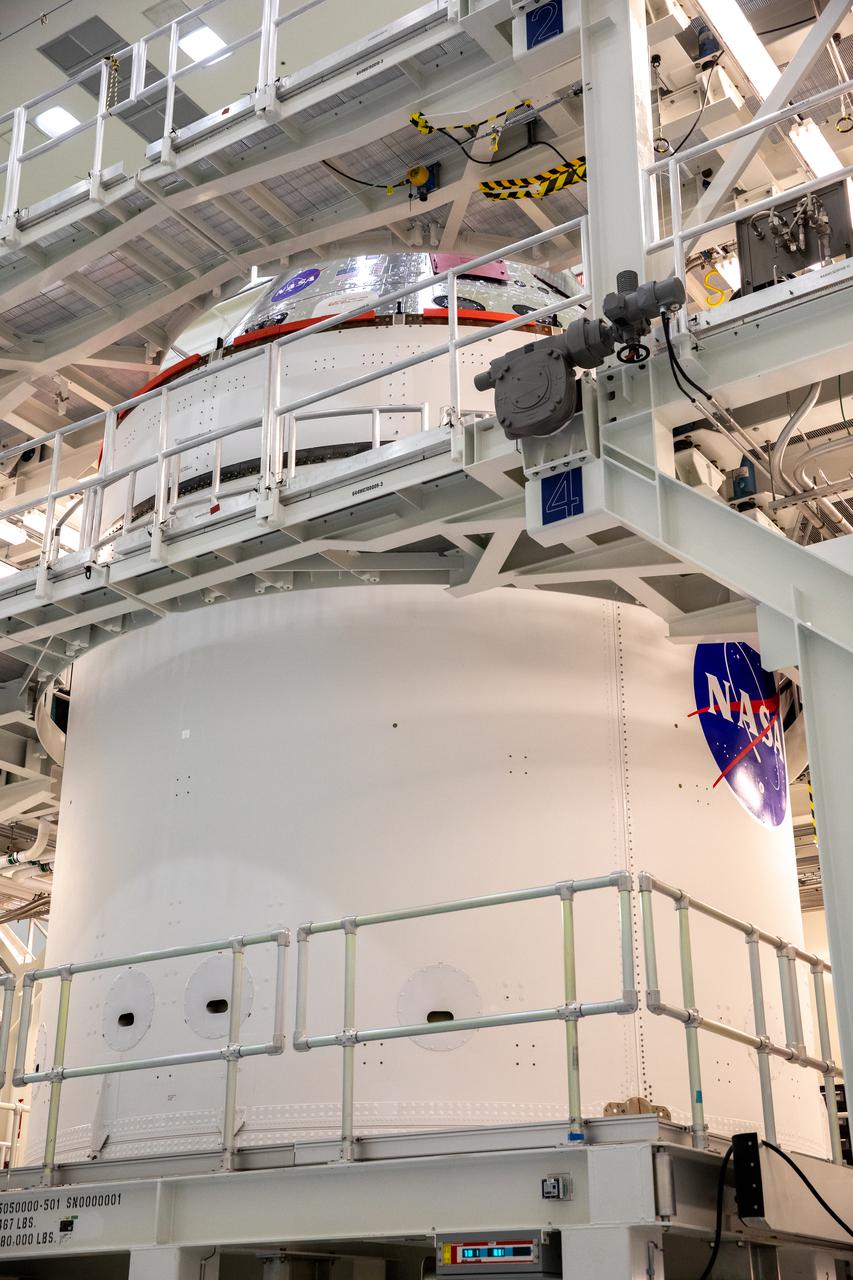
NASA’s famous “meatball” insignia is affixed to the Artemis I Orion spacecraft adapter jettison fairings, which protect the European built service module, Jan. 20, 2021, inside the Multi-Payload Processing Facility at NASA’s Kennedy Space Center in Florida. Shown inside its servicing stand, ground processing begins on Orion, with the Exploration Ground Systems and Jacobs teams performing checkouts and fueling the spacecraft with commodities as part of preparations ahead of the Artemis I mission.
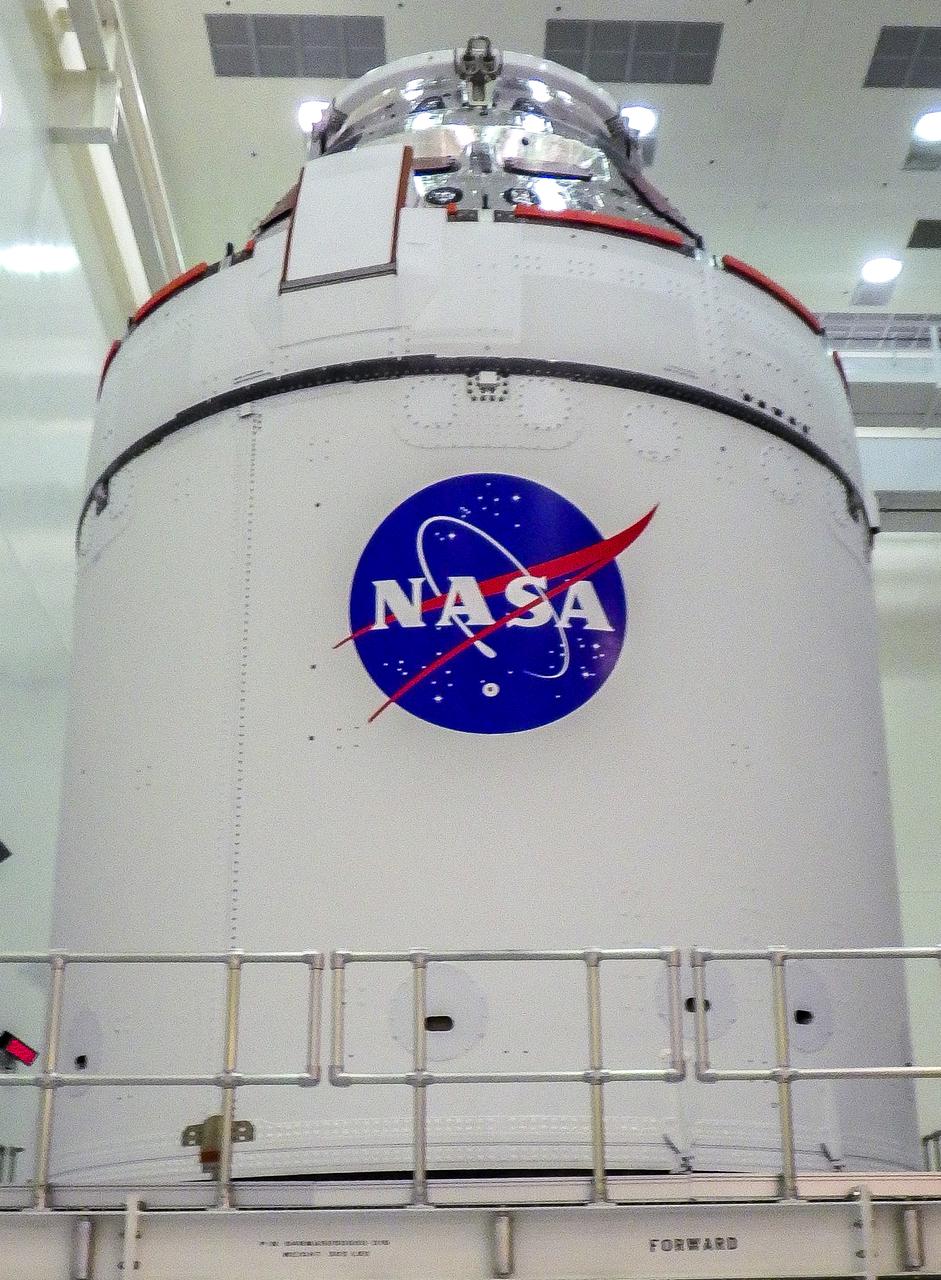
A close-up view of the Artemis I Orion spacecraft with NASA’s famous “meatball” insignia is affixed to the spacecraft adapter jettison fairings, which protect the European built service module, inside the Multi-Payload Processing Facility at Kennedy Space Center on Jan. 20, 2021. Ground processing will begin on Orion, with the Exploration Ground Systems and Jacobs teams performing checkouts and fueling the spacecraft with commodities as part of preparations ahead of the Artemis I mission.

NASA’s famous “meatball” insignia is affixed to the Artemis I Orion spacecraft adapter jettison fairings, which protect the European built service module, Jan. 20, 2021, inside the Multi-Payload Processing Facility at NASA’s Kennedy Space Center in Florida. Shown inside its servicing stand, ground processing begins on Orion, with the Exploration Ground Systems and Jacobs teams performing checkouts and fueling the spacecraft with commodities as part of preparations ahead of the Artemis I mission.
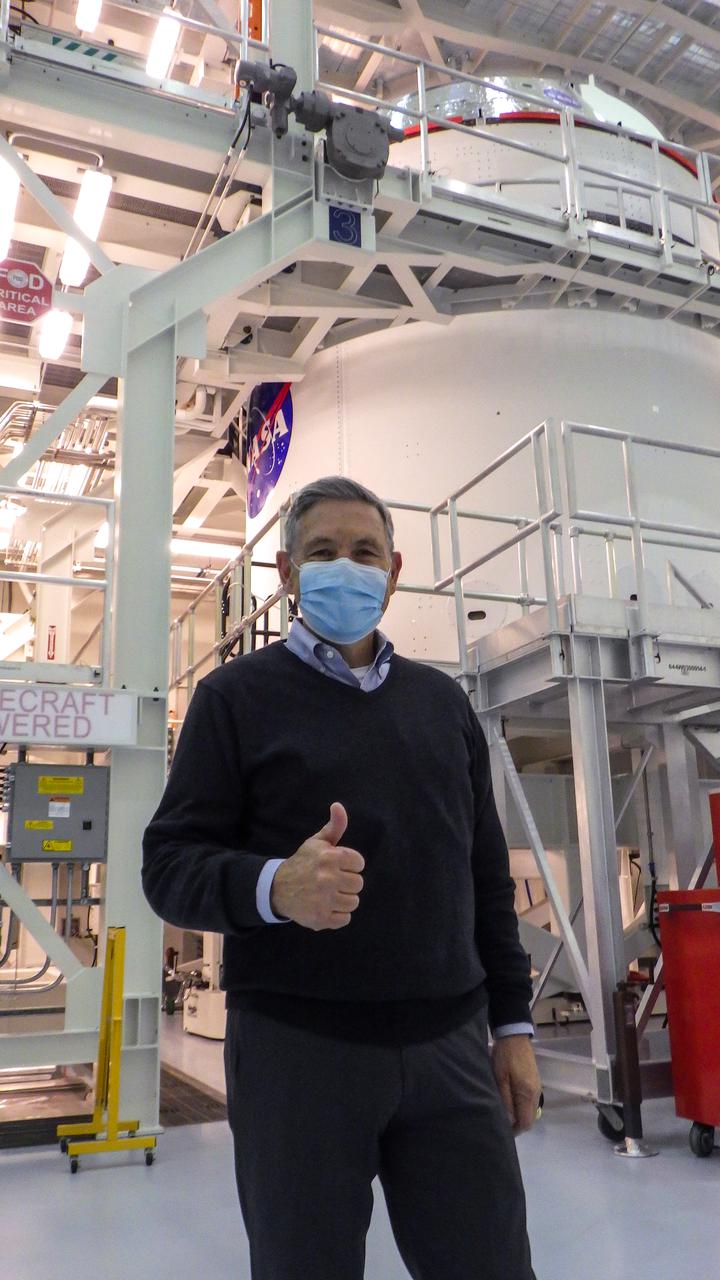
Kennedy Space Center Director Bob Cabana gives a thumbs up inside the Multi-Payload Processing Facility at the center on Jan. 20, 2021. Behind him is the Artemis I Orion spacecraft with NASA’s famous “meatball” insignia is affixed to the Artemis I Orion spacecraft adapter jettison fairings, which protect the European built service module. Shown inside its servicing stand, ground processing begins on Orion, with the Exploration Ground Systems and Jacobs teams performing checkouts and fueling the spacecraft with commodities as part of preparations ahead of the Artemis I mission.
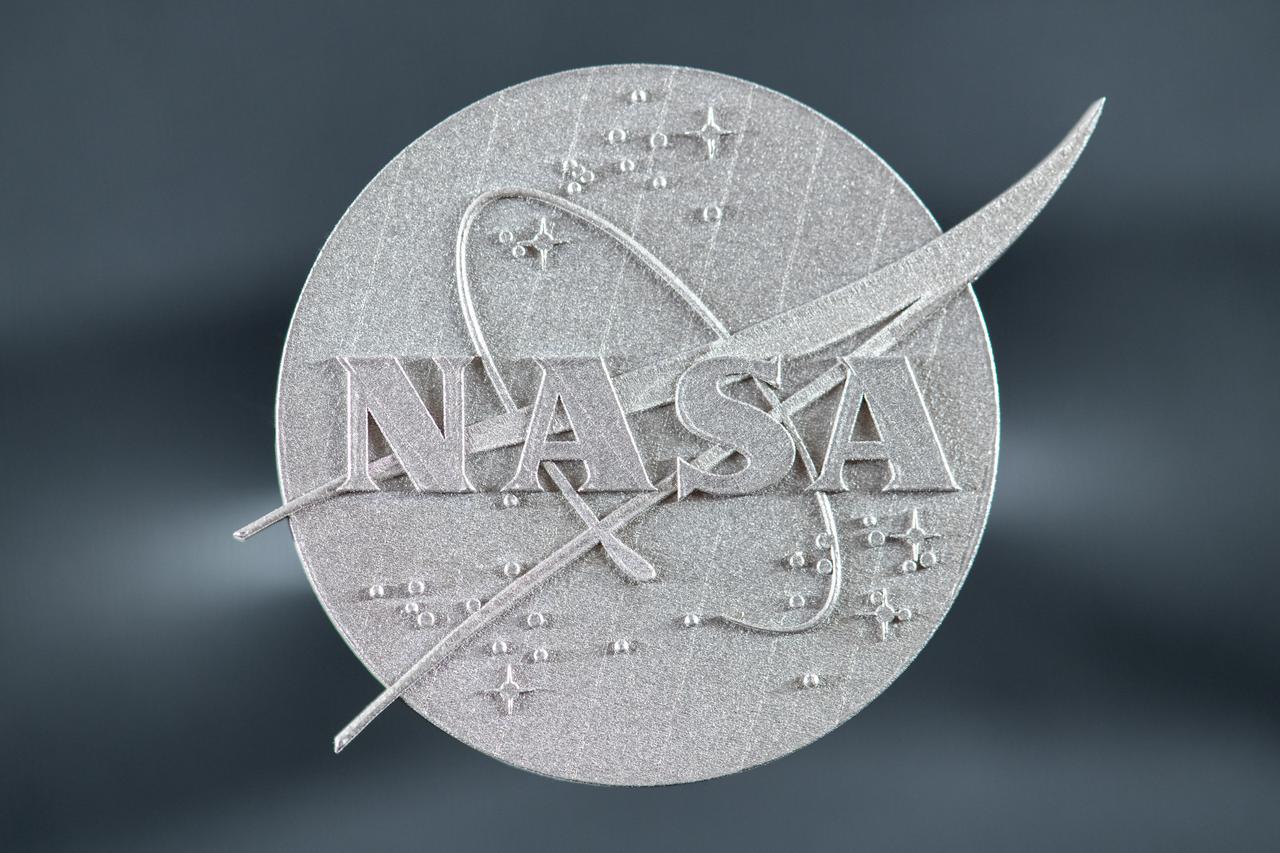
Macro Photographs of 3D Print of NASA Meatball - Made out of GRX-810, an Oxide Dispersion Strengthened (ODS) High Temperature Alloy
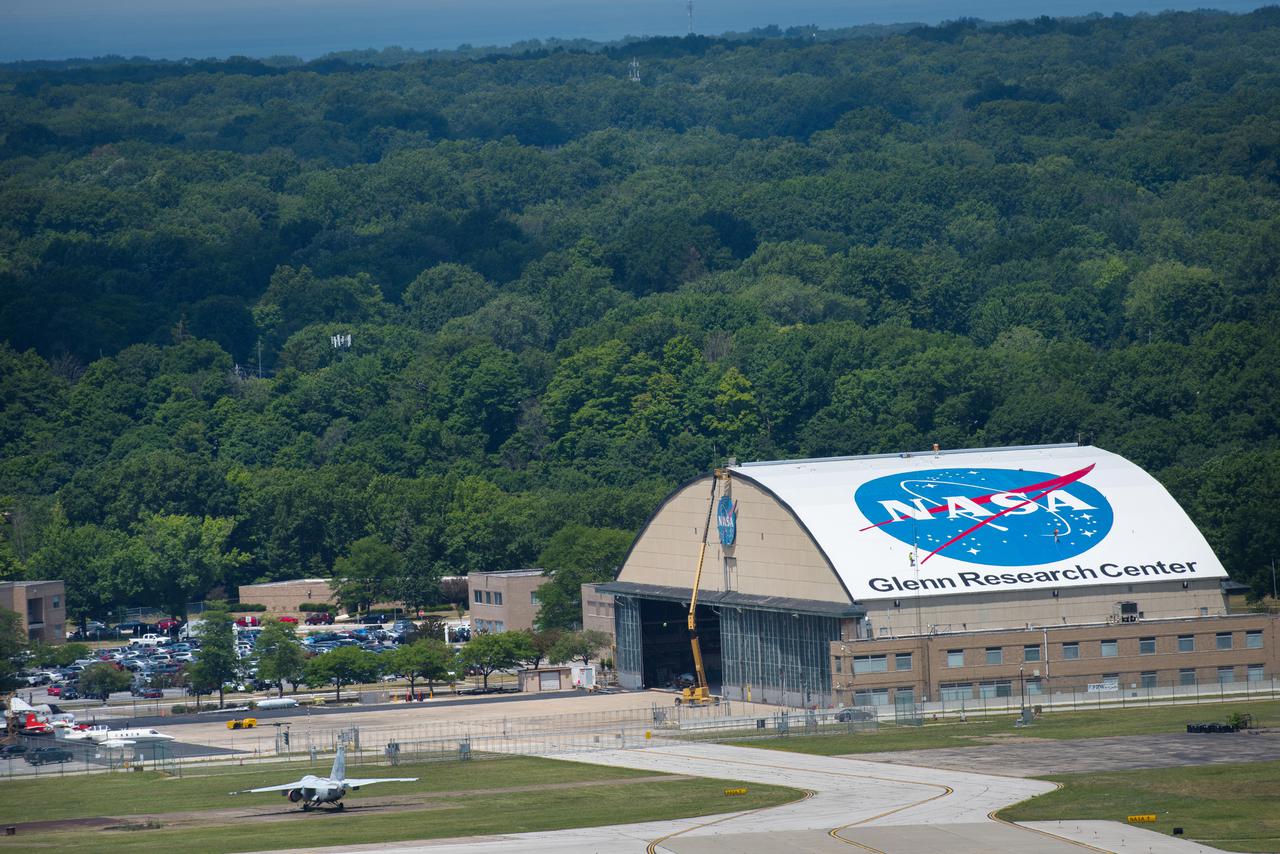
The NASA Insignia or Meatball, is painted on the Hangar Roof

Crews at NASA’s Michoud Assembly Facility in New Orleans reinstalled the iconic NASA meatball logo to the side of the 43-acre factory following a months-long project to replace the corrugated asbestos paneling original to the building’s construction on the outer façade of the facility. The new paneling is an insulated metal sandwich panel, which provides an increased insulation R-value. The new fastening system can withstand significant wind loads, adding greater protection against hurricanes, tornados, and other storm-related events common to the area; and is critical to help protect vital hardware for the Space Launch System rockets and the Orion Spacecrafts manufactured at Michoud for NASA’s Artemis missions, which will land the first woman and first person of color on the moon. Image credit: NASA/Michael DeMocker
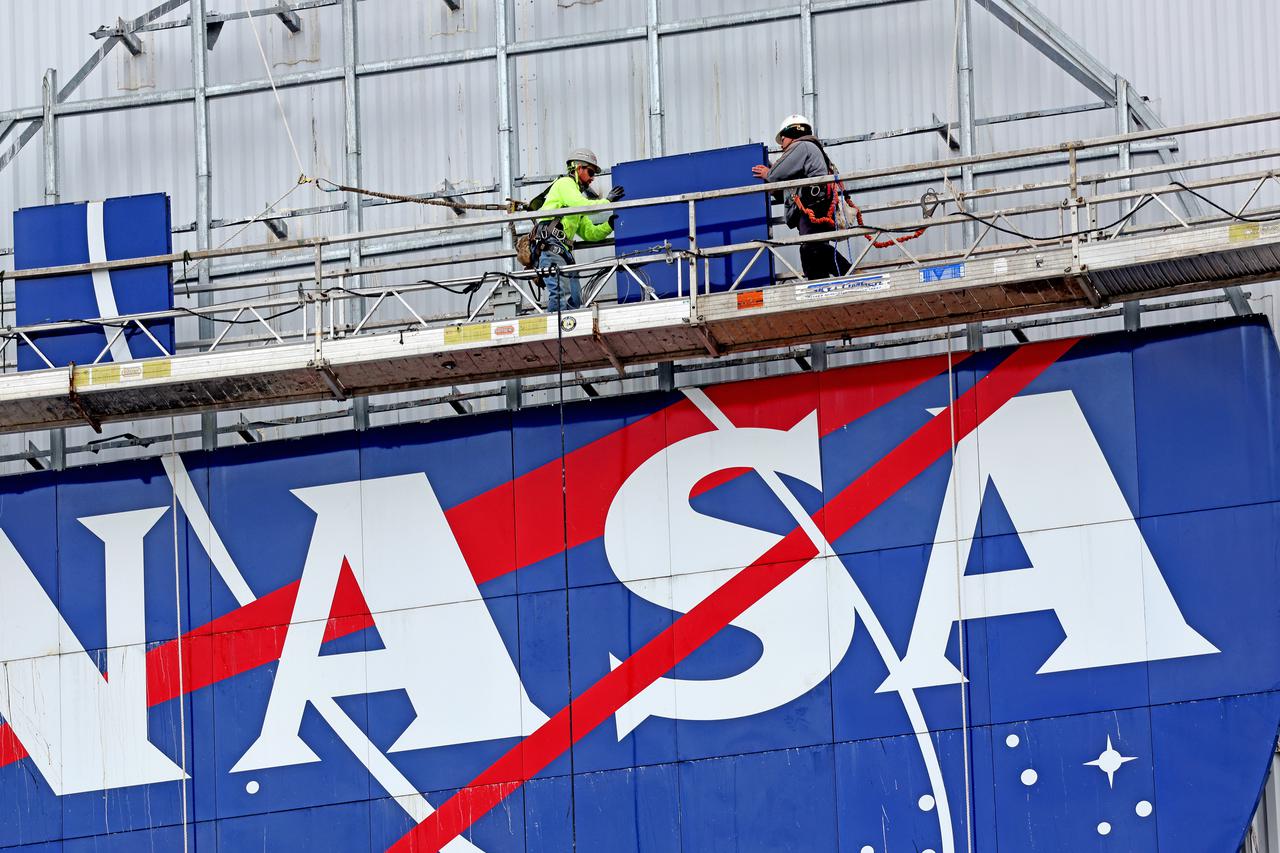
Crews at NASA’s Michoud Assembly Facility in New Orleans reinstall the iconic NASA meatball logo to the side of the 43-acre factory following a months-long project to replace the corrugated asbestos paneling original to the building’s construction on the outer façade of the facility. The new paneling is an insulated metal sandwich panel, which provides an increased insulation R-value. The new fastening system can withstand significant wind loads, adding greater protection against hurricanes, tornados, and other storm-related events common to the area; and is critical to help protect vital hardware for the Space Launch System rockets and the Orion Spacecrafts manufactured at Michoud for NASA’s Artemis missions, which will land the first woman and first person of color on the moon. Image credit: NASA/Michael DeMocker
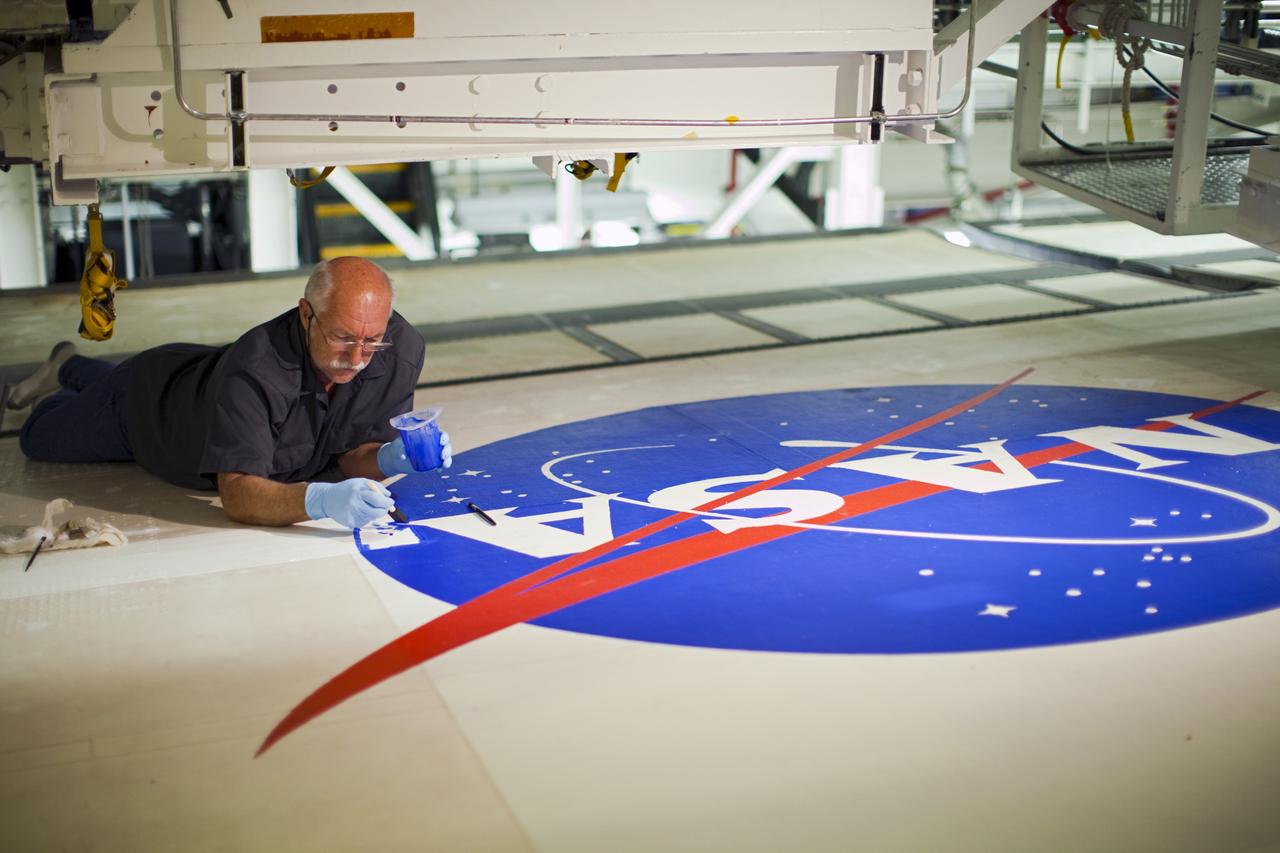
CAPE CANAVERAL, Fla. – In Orbiter Processing Facility-2 at NASA's Kennedy Space Center in Florida, Michael Williams of United Space Alliance paints the NASA logo -- known as the "meatball" -- on the left wing of space shuttle Endeavour. Endeavour is being prepared for public display at the California Science Center in Los Angeles. Over the course of its 19-year career, Endeavour spent 299 days in space during 25 missions. For more information, visit http://www.nasa.gov/transition. Photo credit: NASA/Dimitri Gerondidakis

Painting of the NASA logo, also called the meatball, continues on the 525-foot-tall Vehicle Assembly Building (VAB) at the agency’s Kennedy Space Center in Florida on June 23, 2020. HM2 and H.I.S. Painting of Titusville, Florida, are repainting the meatball and the American Flag on the iconic building. The VAB was last painted in 2007 when the repairs were completed after 2004 Hurricanes Frances and Jeanne tore 845 panels off the building. It will take over 500 gallons of paint to paint the 209 X 110-foot flag and the 110’ X 132’ meatball.

Painting of the NASA logo, also called the meatball, continues on the 525-foot-tall Vehicle Assembly Building (VAB) at the agency’s Kennedy Space Center in Florida on June 23, 2020. HM2 and H.I.S. Painting of Titusville, Florida, are repainting the meatball and the American Flag on the iconic building. The VAB was last painted in 2007 when the repairs were completed after 2004 Hurricanes Frances and Jeanne tore 845 panels off the building. It will take over 500 gallons of paint to paint the 209 X 110-foot flag and the 110’ X 132’ meatball.

Painting of the NASA logo, also called the meatball, continues on the 525-foot-tall Vehicle Assembly Building (VAB) at the agency’s Kennedy Space Center in Florida on June 23, 2020. HM2 and H.I.S. Painting of Titusville, Florida, are repainting the meatball and the American Flag on the iconic building. The VAB was last painted in 2007 when the repairs were completed after 2004 Hurricanes Frances and Jeanne tore 845 panels off the building. It will take over 500 gallons of paint to paint the 209 X 110-foot flag and the 110’ X 132’ meatball.

Painting of the NASA logo, also called the meatball, continues on the 525-foot-tall Vehicle Assembly Building (VAB) at the agency’s Kennedy Space Center in Florida on June 23, 2020. HM2 and H.I.S. Painting of Titusville, Florida, are repainting the meatball and the American Flag on the iconic building. The VAB was last painted in 2007 when the repairs were completed after 2004 Hurricanes Frances and Jeanne tore 845 panels off the building. It will take over 500 gallons of paint to paint the 209 X 110-foot flag and the 110’ X 132’ meatball.

Painting of the NASA logo, also called the meatball, continues on the 525-foot-tall Vehicle Assembly Building (VAB) at the agency’s Kennedy Space Center in Florida on June 23, 2020. HM2 and H.I.S. Painting of Titusville, Florida, are repainting the meatball and the American Flag on the iconic building. The VAB was last painted in 2007 when the repairs were completed after 2004 Hurricanes Frances and Jeanne tore 845 panels off the building. It will take over 500 gallons of paint to paint the 209 X 110-foot flag and the 110’ X 132’ meatball.

Painting of the NASA logo, also called the meatball, continues on the 525-foot-tall Vehicle Assembly Building (VAB) at the agency’s Kennedy Space Center in Florida on June 23, 2020. HM2 and H.I.S. Painting of Titusville, Florida, are repainting the meatball and the American Flag on the iconic building. The VAB was last painted in 2007 when the repairs were completed after 2004 Hurricanes Frances and Jeanne tore 845 panels off the building. It will take over 500 gallons of paint to paint the 209 X 110-foot flag and the 110’ X 132’ meatball.

Teams with Astrobotic install the NASA meatball decal on Astrobotic’s Peregrine lunar lander on Tuesday, Nov. 14, 2023, at the Astrotech Space Operations Facility near the agency’s Kennedy Space Center in Florida. Peregrine will launch onboard a United Launch Alliance Vulcan rocket targeted for no earlier than Dec. 24, 2023, from Launch Complex 41 at Cape Canaveral Space Force Station in Florida. The lander will carry a suite of NASA payloads to the Moon as part of the agency’s CLPS (Commercial Lunar Payload Services) initiative and Artemis program.

Teams with Astrobotic install the NASA meatball decal on Astrobotic’s Peregrine lunar lander on Tuesday, Nov. 14, 2023, at the Astrotech Space Operations Facility near the agency’s Kennedy Space Center in Florida. Peregrine will launch onboard a United Launch Alliance Vulcan rocket targeted for no earlier than Dec. 24, 2023, from Launch Complex 41 at Cape Canaveral Space Force Station in Florida. The lander will carry a suite of NASA payloads to the Moon as part of the agency’s CLPS (Commercial Lunar Payload Services) initiative and Artemis program.

Teams with Astrobotic install the NASA meatball decal on Astrobotic’s Peregrine lunar lander on Tuesday, Nov. 14, 2023, at the Astrotech Space Operations Facility near the agency’s Kennedy Space Center in Florida. Peregrine will launch onboard a United Launch Alliance Vulcan rocket targeted for no earlier than Dec. 24, 2023, from Launch Complex 41 at Cape Canaveral Space Force Station in Florida. The lander will carry a suite of NASA payloads to the Moon as part of the agency’s CLPS (Commercial Lunar Payload Services) initiative and Artemis program.

Teams with Astrobotic install the NASA meatball decal on Astrobotic’s Peregrine lunar lander on Tuesday, Nov. 14, 2023, at the Astrotech Space Operations Facility near the agency’s Kennedy Space Center in Florida. Peregrine will launch onboard a United Launch Alliance Vulcan rocket targeted for no earlier than Dec. 24, 2023, from Launch Complex 41 at Cape Canaveral Space Force Station in Florida. The lander will carry a suite of NASA payloads to the Moon as part of the agency’s CLPS (Commercial Lunar Payload Services) initiative and Artemis program.
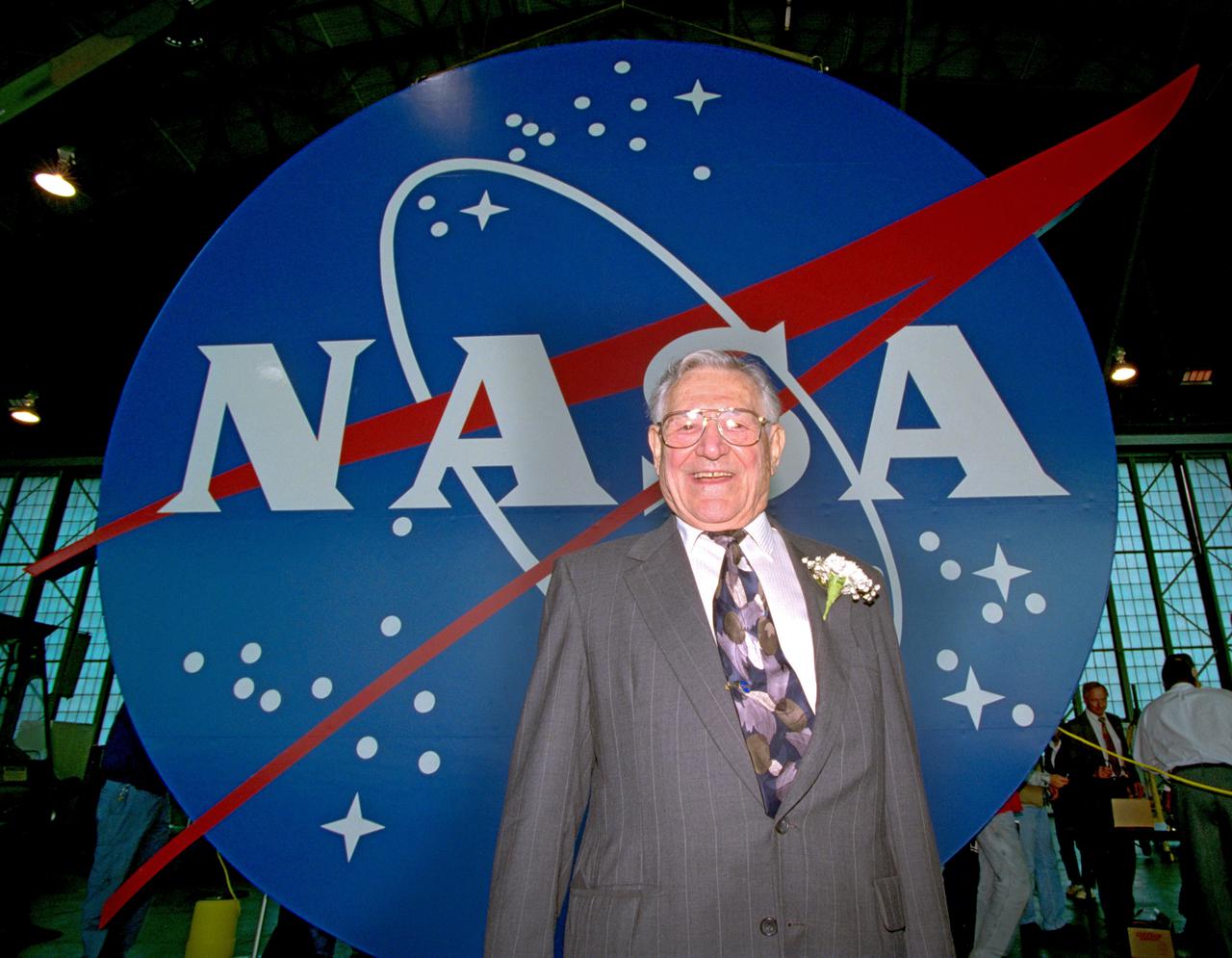
In 1949, after graduating from the Cleveland Institute of Art, James “Jim” Modarelli began his career as an artist-designer at the laboratory that would become the NASA Glenn Research Center. When the NACA was approved to be absorbed into the new space agency—NASA, employees were invited to submit designs for the Agency’s logo. Modarelli, who was serving as the Management Services Division Chief at the time, submitted the winning designs. The official NASA seal and the less formal NASA “meatball” insignia (shown here) are among the most recognized emblems in the world. The logos, which include symbols representing the space and aeronautics missions of NASA, became official in 1959. In July 1958, Modarelli participated in a tour at the Ames Unitary Plan Wind Tunnel, where he viewed a model of a radical supersonic airplane designed for flight at Mach 3.0. With a cambered, twisted arrow wing and an upturned nose, the model deeply impressed Modarelli. He later stylized the radical features of the arrow-wing configuration in his evolution of the NASA seal design; the wing would also become an element of the NASA insignia.
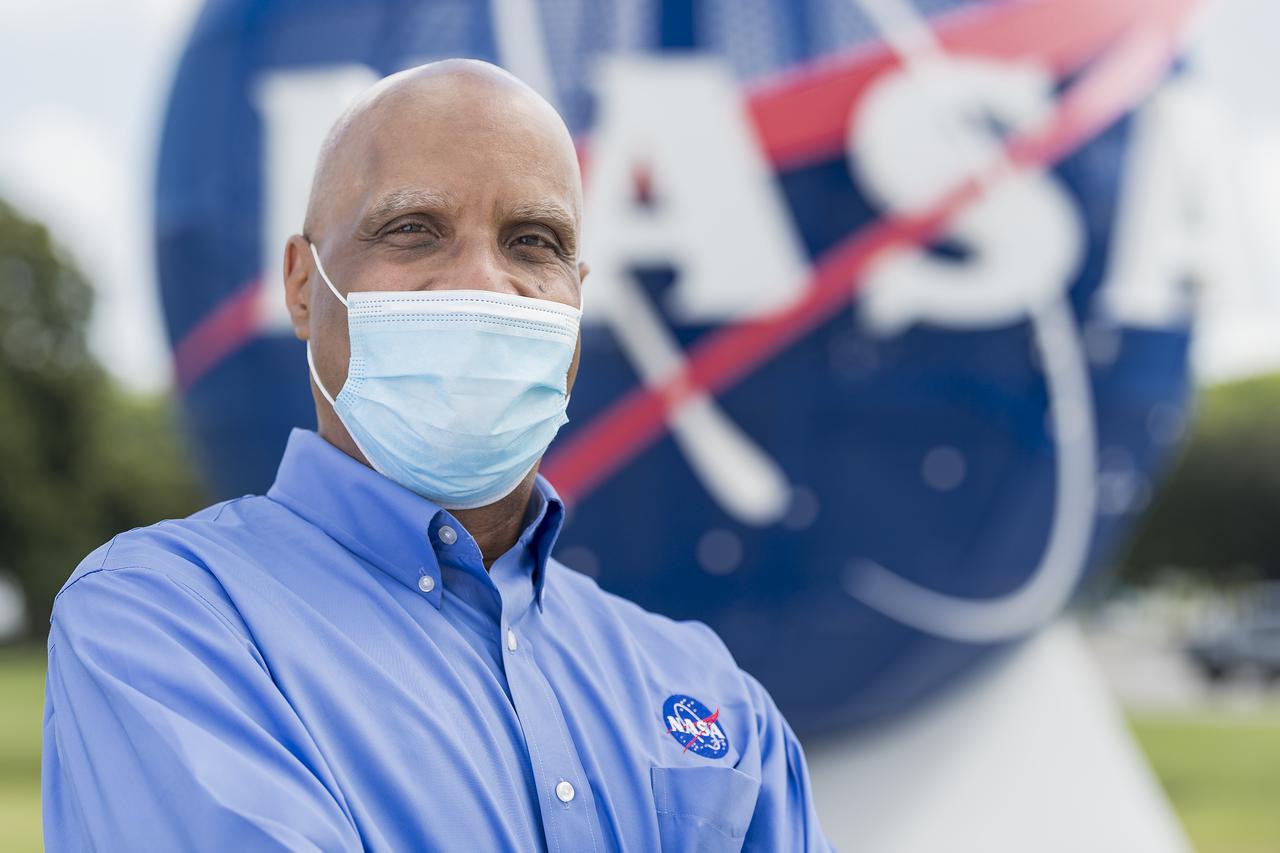
Portrait of Robin "Rob" Lee of the Office of Diversity & Equal Opp. Branch, in front of NASA Langley's "Meatball." The portrait was done for Thalia Patrinos at NASA Headquarters as part of "Faces of NASA" project. Due to the COVID-19 pandemic, masks were mandated by Governor Northam in Virginia in public settings. "Well, little did I know, even at a young age, he instilled in me the importance of seeing people for people. And being able to help people and being able to meet them in their time of need. And that carried me throughout my entire life. Even still today.” — Robin Lee, Director of Office of Diversity and Equal Opportunity, Langley Research Center
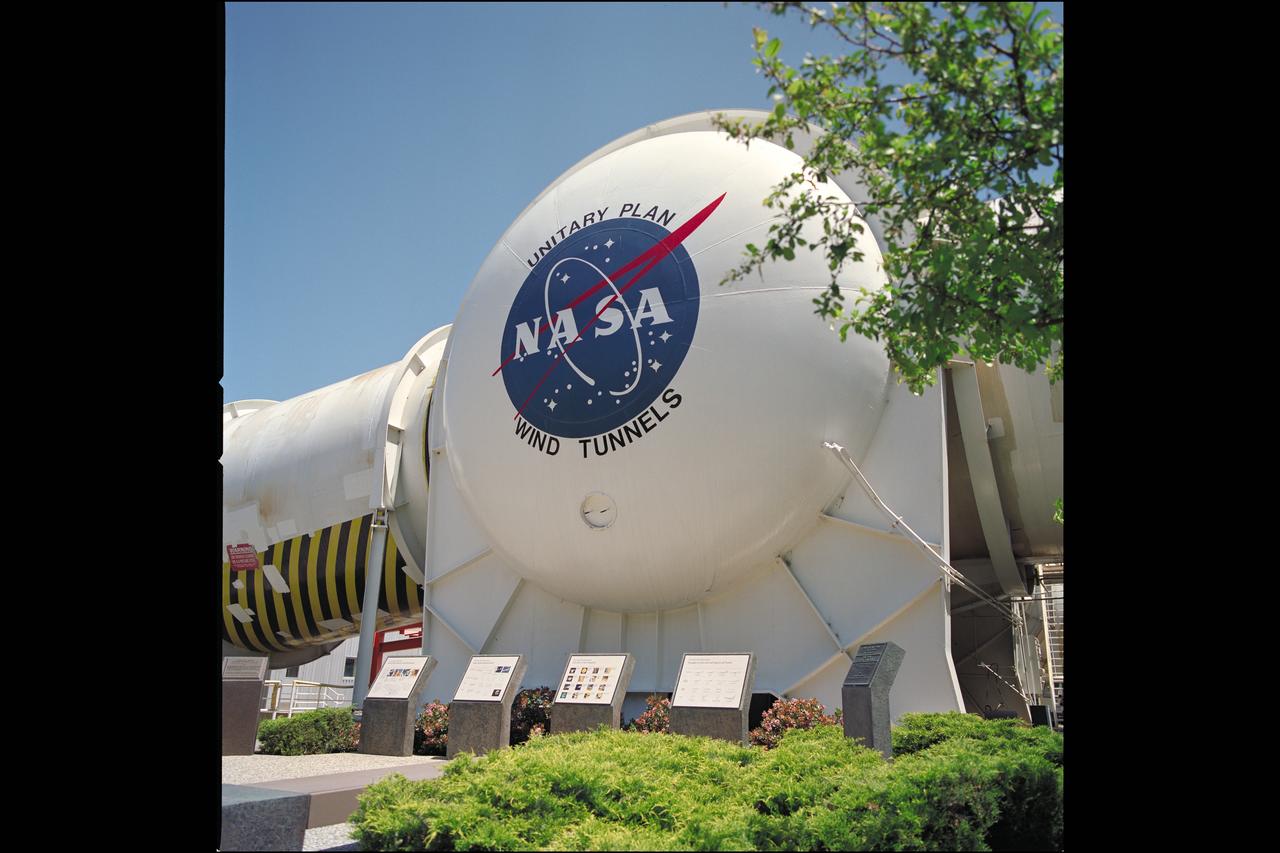
N-227 Unitary Plan Wind Tunnel with NASA 'Meatball' insignia over looking the National Historical Landmark sites' commemorative plaques

Painting of the NASA logo, also called the meatball, continues on the 525-foot-tall Vehicle Assembly Building (VAB) at the agency’s Kennedy Space Center in Florida on June 22, 2020. HM2 and H.I.S. Painting of Titusville, Florida, are repainting the meatball and the American Flag on the iconic building. The VAB was last painted in 2007, when repairs were completed after the 2004 Hurricanes Frances and Jeanne tore 845 panels off the building. It will take over 500 gallons of paint to paint the 209-by-110-foot flag and the 110-by-132-foot meatball. Exploration Ground Systems is overseeing upgrades to the VAB to support the launch of the SLS and Orion for Artemis missions. Under the Artemis program, NASA will send the first woman and next man to the Moon.

Painting of the NASA logo, also called the meatball, continues on the 525-foot-tall Vehicle Assembly Building (VAB) at the agency’s Kennedy Space Center in Florida on June 22, 2020. HM2 and H.I.S. Painting of Titusville, Florida, are repainting the meatball and the American Flag on the iconic building. The VAB was last painted in 2007, when repairs were completed after the 2004 Hurricanes Frances and Jeanne tore 845 panels off the building. It will take over 500 gallons of paint to paint the 209-by-110-foot flag and the 110-by-132-foot meatball. Exploration Ground Systems is overseeing upgrades to the VAB to support the launch of the SLS and Orion for Artemis missions. Under the Artemis program, NASA will send the first woman and next man to the Moon.

A scrub jay perches on a branch near the Vehicle Assembly Building (VAB) at NASA’s Kennedy Space Center in Florida on June 22, 2020. Painting of the NASA logo, also called the meatball, continues on the 525-foot-tall building. HM2 and H.I.S. Painting of Titusville, Florida, are repainting the meatball and the American Flag on the iconic building. The VAB was last painted in 2007, when repairs were completed after the 2004 Hurricanes Frances and Jeanne tore 845 panels off the building. It will take over 500 gallons of paint to paint the 209-by-110-foot flag and the 110-by-132-foot meatball. Exploration Ground Systems is overseeing upgrades to the VAB to support the launch of the SLS and Orion for Artemis missions. Under the Artemis program, NASA will send the first woman and next man to the Moon.

Painting of the NASA logo, also called the meatball, continues on the 525-foot-tall Vehicle Assembly Building (VAB) at the agency’s Kennedy Space Center in Florida on June 22, 2020. HM2 and H.I.S. Painting of Titusville, Florida, are repainting the meatball and the American Flag on the iconic building. The VAB was last painted in 2007, when repairs were completed after the 2004 Hurricanes Frances and Jeanne tore 845 panels off the building. It will take over 500 gallons of paint to paint the 209-by-110-foot flag and the 110-by-132-foot meatball. Exploration Ground Systems is overseeing upgrades to the VAB to support the launch of the SLS and Orion for Artemis missions. Under the Artemis program, NASA will send the first woman and next man to the Moon.

A view of the Vehicle Assembly Building (VAB) at NASA’s Kennedy Space Center in Florida on June 22, 2020. Painting of the NASA logo, also called the meatball, continues on the 525-foot-tall building. HM2 and H.I.S. Painting of Titusville, Florida, are repainting the meatball and the American Flag on the iconic building. The VAB was last painted in 2007, when repairs were completed after the 2004 Hurricanes Frances and Jeanne tore 845 panels off the building. It will take over 500 gallons of paint to paint the 209-by-110-foot flag and the 110-by-132-foot meatball. Exploration Ground Systems is overseeing upgrades to the VAB to support the launch of the SLS and Orion for Artemis missions. Under the Artemis program, NASA will send the first woman and next man to the Moon.

A close-up view of the Vehicle Assembly Building (VAB) at NASA’s Kennedy Space Center in Florida on June 22, 2020. Painting of the NASA logo, also called the meatball, continues on the 525-foot-tall building. HM2 and H.I.S. Painting of Titusville, Florida, are repainting the meatball and the American Flag on the iconic building. The VAB was last painted in 2007, when repairs were completed after the 2004 Hurricanes Frances and Jeanne tore 845 panels off the building. It will take over 500 gallons of paint to paint the 209-by-110-foot flag and the 110-by-132-foot meatball. Exploration Ground Systems is overseeing upgrades to the VAB to support the launch of the SLS and Orion for Artemis missions. Under the Artemis program, NASA will send the first woman and next man to the Moon.

A view of the Vehicle Assembly Building (VAB) and a waterway at NASA’s Kennedy Space Center in Florida on June 22, 2020. Painting of the NASA logo, also called the meatball, continues on the 525-foot-tall building. HM2 and H.I.S. Painting of Titusville, Florida, are repainting the meatball and the American Flag on the iconic building. The VAB was last painted in 2007, when repairs were completed after the 2004 Hurricanes Frances and Jeanne tore 845 panels off the building. It will take over 500 gallons of paint to paint the 209-by-110-foot flag and the 110-by-132-foot meatball. Exploration Ground Systems is overseeing upgrades to the VAB to support the launch of the SLS and Orion for Artemis missions. Under the Artemis program, NASA will send the first woman and next man to the Moon.

A view of the Vehicle Assembly Building (VAB) and a waterway at NASA’s Kennedy Space Center in Florida on June 22, 2020. Painting of the NASA logo, also called the meatball, continues on the 525-foot-tall building. HM2 and H.I.S. Painting of Titusville, Florida, are repainting the meatball and the American Flag on the iconic building. The VAB was last painted in 2007, when repairs were completed after the 2004 Hurricanes Frances and Jeanne tore 845 panels off the building. It will take over 500 gallons of paint to paint the 209-by-110-foot flag and the 110-by-132-foot meatball. Exploration Ground Systems is overseeing upgrades to the VAB to support the launch of the SLS and Orion for Artemis missions. Under the Artemis program, NASA will send the first woman and next man to the Moon.

Painting of the NASA logo, also called the meatball, continues on the 525-foot-tall Vehicle Assembly Building (VAB) at the agency’s Kennedy Space Center in Florida on June 22, 2020. HM2 and H.I.S. Painting of Titusville, Florida, are repainting the meatball and the American Flag on the iconic building. The VAB was last painted in 2007, when repairs were completed after the 2004 Hurricanes Frances and Jeanne tore 845 panels off the building. It will take over 500 gallons of paint to paint the 209-by-110-foot flag and the 110-by-132-foot meatball. Exploration Ground Systems is overseeing upgrades to the VAB to support the launch of the SLS and Orion for Artemis missions. Under the Artemis program, NASA will send the first woman and next man to the Moon.

A view of the Vehicle Assembly Building (VAB) at NASA’s Kennedy Space Center in Florida on June 22, 2020. Painting of the NASA logo, also called the meatball, continues on the 525-foot-tall building. HM2 and H.I.S. Painting of Titusville, Florida, are repainting the meatball and the American Flag on the iconic building. The VAB was last painted in 2007, when repairs were completed after the 2004 Hurricanes Frances and Jeanne tore 845 panels off the building. It will take over 500 gallons of paint to paint the 209-by-110-foot flag and the 110-by-132-foot meatball. Exploration Ground Systems is overseeing upgrades to the VAB to support the launch of the SLS and Orion for Artemis missions. Under the Artemis program, NASA will send the first woman and next man to the Moon.

A view of the Vehicle Assembly Building (VAB) and a waterway at NASA’s Kennedy Space Center in Florida on June 22, 2020. Painting of the NASA logo, also called the meatball, continues on the 525-foot-tall building. HM2 and H.I.S. Painting of Titusville, Florida, are repainting the meatball and the American Flag on the iconic building. The VAB was last painted in 2007, when repairs were completed after the 2004 Hurricanes Frances and Jeanne tore 845 panels off the building. It will take over 500 gallons of paint to paint the 209-by-110-foot flag and the 110-by-132-foot meatball. Exploration Ground Systems is overseeing upgrades to the VAB to support the launch of the SLS and Orion for Artemis missions. Under the Artemis program, NASA will send the first woman and next man to the Moon.

A view of the Vehicle Assembly Building (VAB) at NASA’s Kennedy Space Center in Florida on June 22, 2020. Painting of the NASA logo, also called the meatball, continues on the 525-foot-tall building. HM2 and H.I.S. Painting of Titusville, Florida, are repainting the meatball and the American Flag on the iconic building. The VAB was last painted in 2007, when repairs were completed after the 2004 Hurricanes Frances and Jeanne tore 845 panels off the building. It will take over 500 gallons of paint to paint the 209-by-110-foot flag and the 110-by-132-foot meatball. Exploration Ground Systems is overseeing upgrades to the VAB to support the launch of the SLS and Orion for Artemis missions. Under the Artemis program, NASA will send the first woman and next man to the Moon.
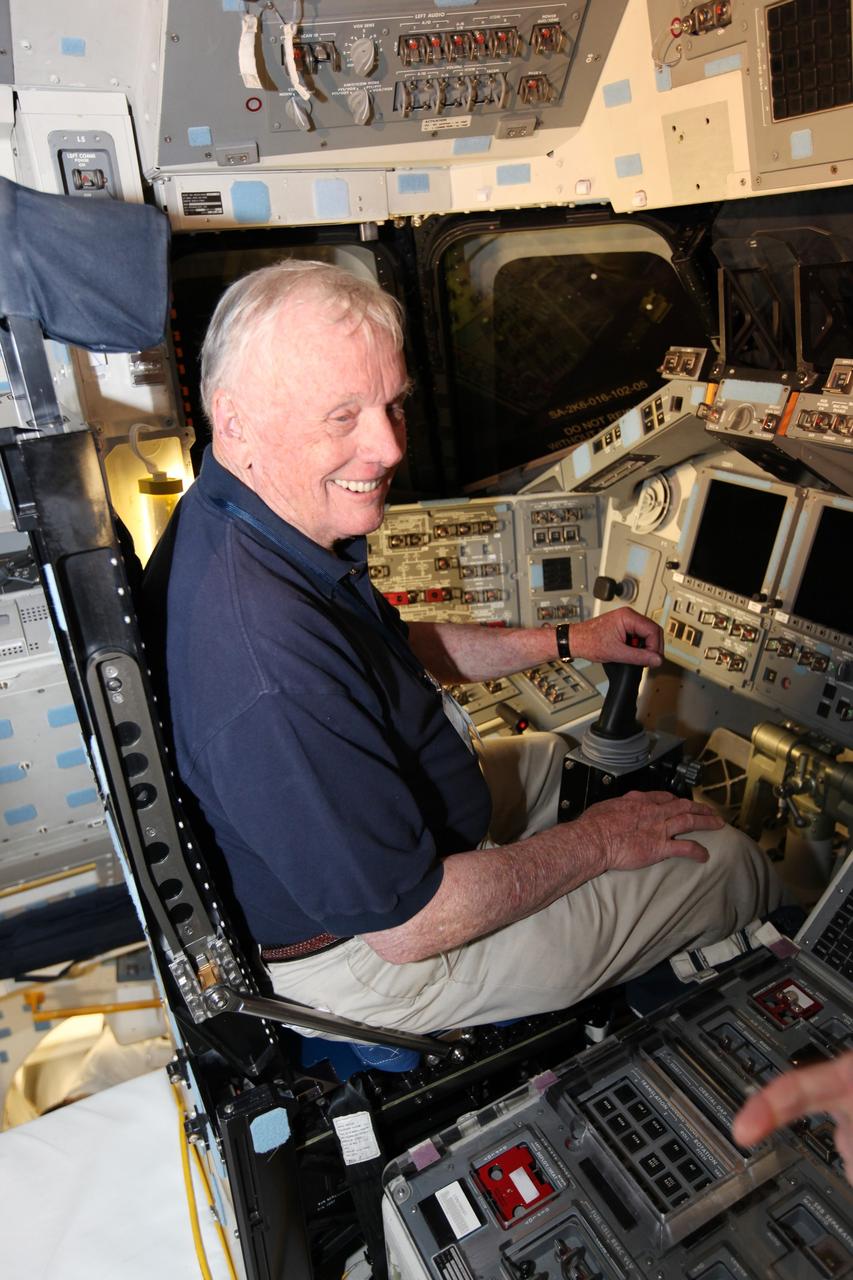
CAPE CANAVERAL, Fla. – In Orbiter Processing Facility-1 at NASA's Kennedy Space Center in Florida, former NASA astronaut Neil Armstrong, who in 1969 became the first man to set foot on the moon, sits in the commander's seat of space shuttle Atlantis. Atlantis is being prepared for display at the Kennedy Space Center Visitor Complex and is scheduled to rollover to the complex in November. The visitor complex is targeting a July 2012 grand opening for Atlantis’ new home. Photo credit: NASA/Dimitri Gerondidakis
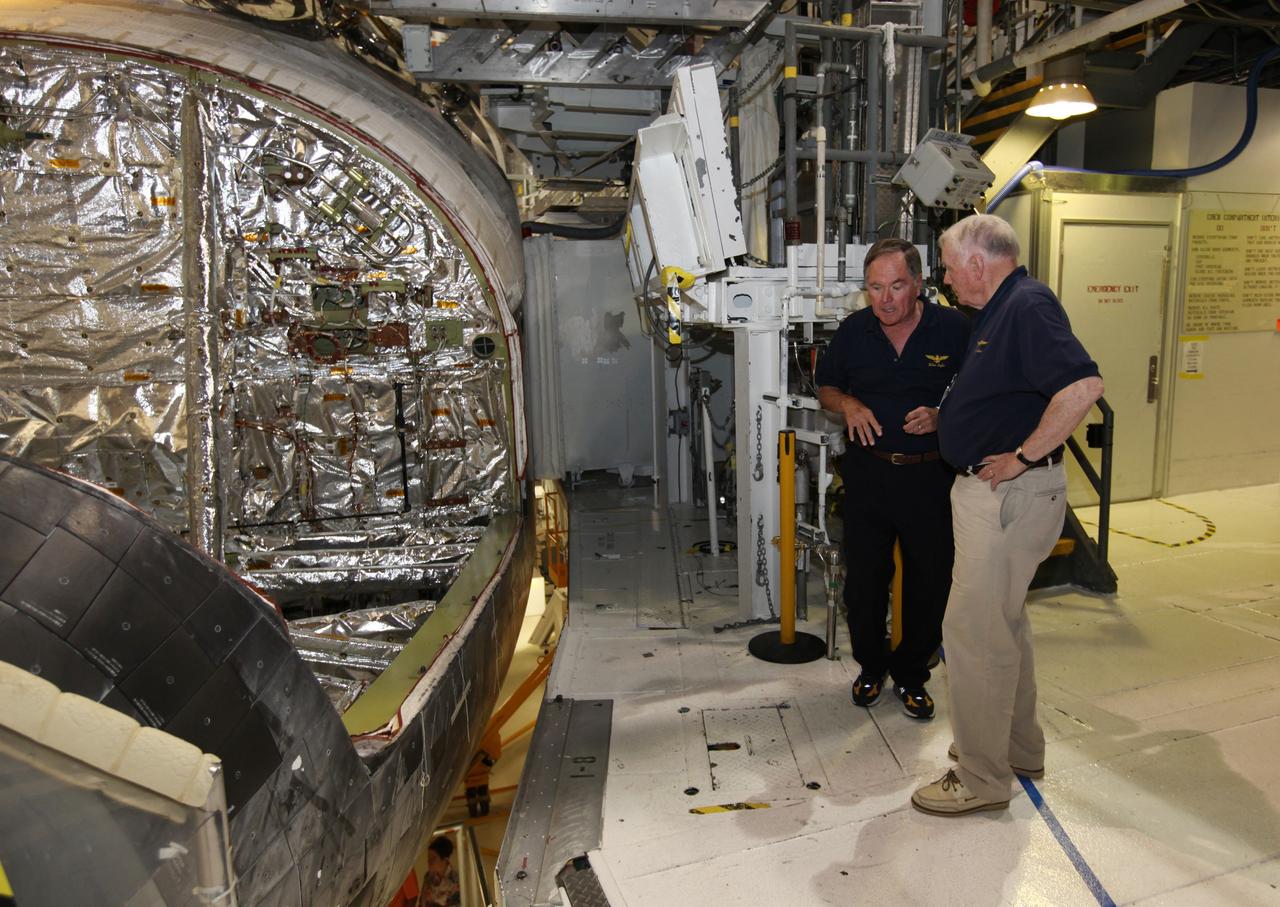
CAPE CANAVERAL, Fla. – In Orbiter Processing Facility-1 at NASA's Kennedy Space Center in Florida, former NASA astronaut Neil Armstrong right, who in July 1969 became the first man to set foot on the moon as commander of the Apollo 11 mission, views space shuttle Atlantis with Bob Crippen, the first space shuttle pilot. Crippen piloted space shuttle Columbia on STS-1 in April 1981. Atlantis is being prepared for display at the Kennedy Space Center Visitor Complex and is scheduled to rollover to the complex in November. The visitor complex is targeting a July 2012 grand opening for Atlantis’ new home. Photo credit: NASA/Dimitri Gerondidakis
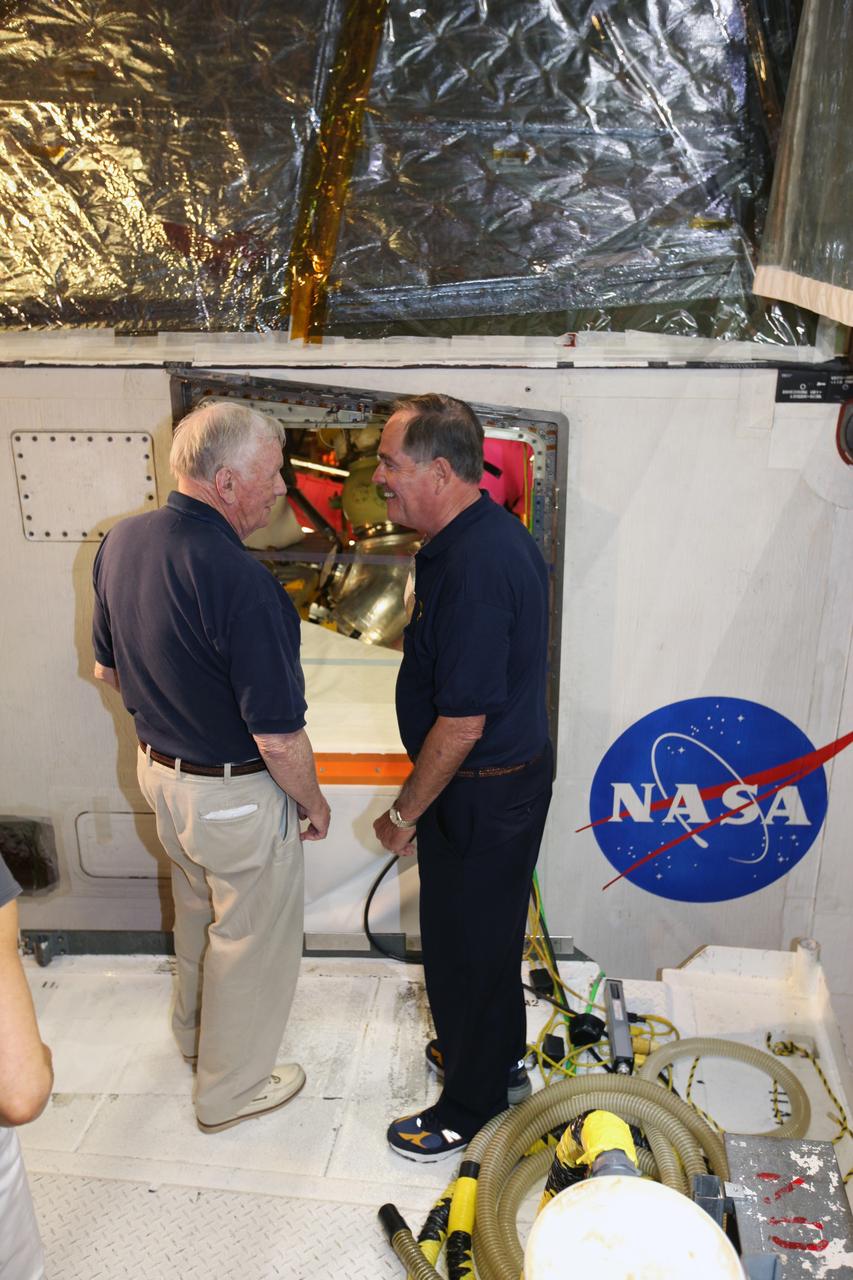
CAPE CANAVERAL, Fla. – In Orbiter Processing Facility-1 at NASA's Kennedy Space Center in Florida, former NASA astronaut Neil Armstrong left, who in July 1969 became the first man to set foot on the moon as commander of the Apollo 11 mission, views space shuttle Atlantis with Bob Crippen, the first space shuttle pilot. Crippen piloted space shuttle Columbia on STS-1 in April 1981. Atlantis is being prepared for display at the Kennedy Space Center Visitor Complex and is scheduled to rollover to the complex in November. The visitor complex is targeting a July 2012 grand opening for Atlantis’ new home. Photo credit: NASA/Dimitri Gerondidakis
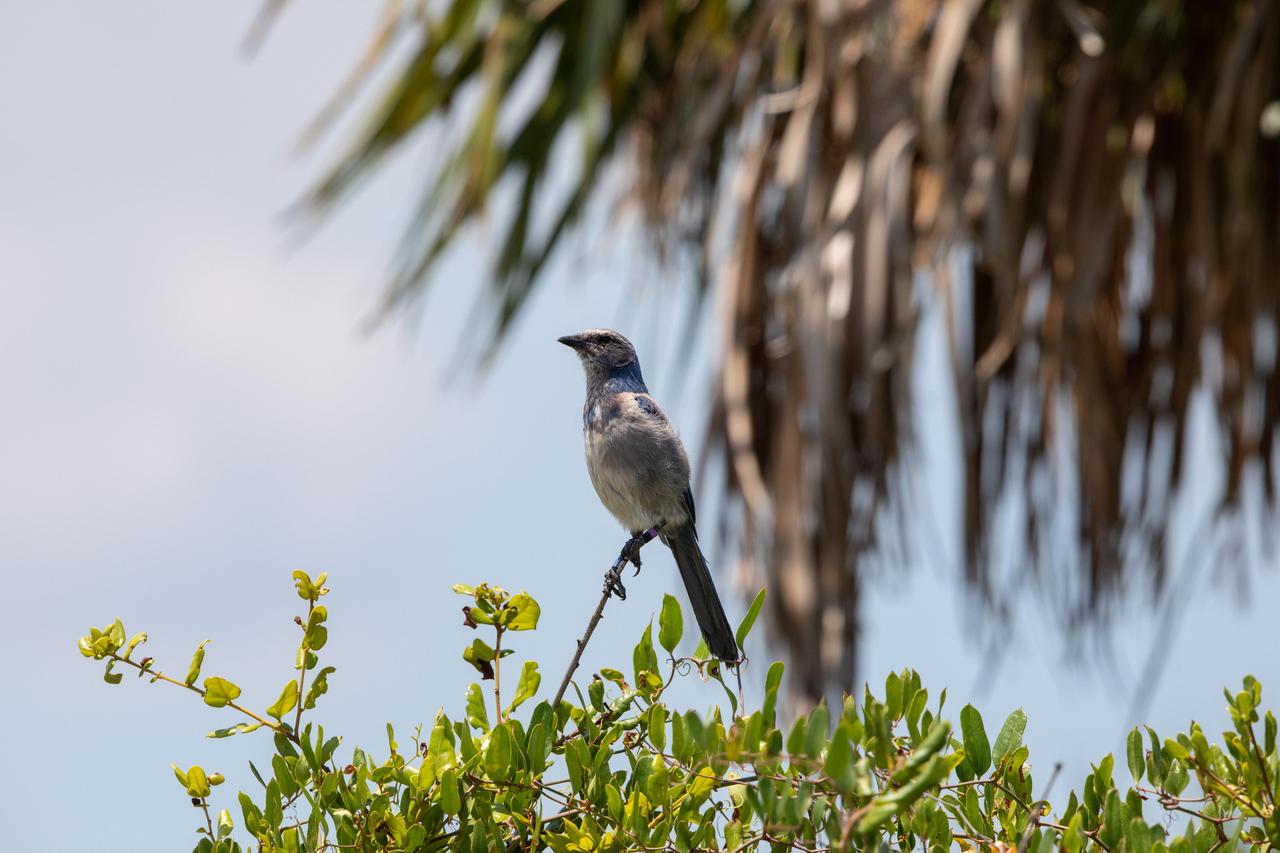
A scrub jay perches on a branch near the Vehicle Assembly Building (VAB) at NASA’s Kennedy Space Center in Florida on June 22, 2020. Painting of the NASA logo, also called the meatball, continues on the 525-foot-tall building. HM2 and H.I.S. Painting of Titusville, Florida, are repainting the meatball and the American Flag on the iconic building. The VAB was last painted in 2007, when repairs were completed after the 2004 Hurricanes Frances and Jeanne tore 845 panels off the building. It will take over 500 gallons of paint to paint the 209-by-110-foot flag and the 110-by-132-foot meatball. High Bay 3 inside the VAB has been upgraded with 10 new levels of work platforms that will surround and provide access for service and processing of NASA's Space Launch System (SLS) rocket and Orion spacecraft. Exploration Ground Systems is overseeing upgrades to the VAB to support the launch of the SLS and Orion for Artemis missions. Under the Artemis program, NASA will send the first woman and next man to the Moon.

jsc2022e076181 (Oct. 5, 2022) --- SpaceX Crew-5 Mission Specialist Koichi Wakata from the Japan Aerospace Exploration Agency (JAXA) signs his name near the NASA "meatball" logo located in the crew access arm that leads to the Dragon Freedom crew ship.
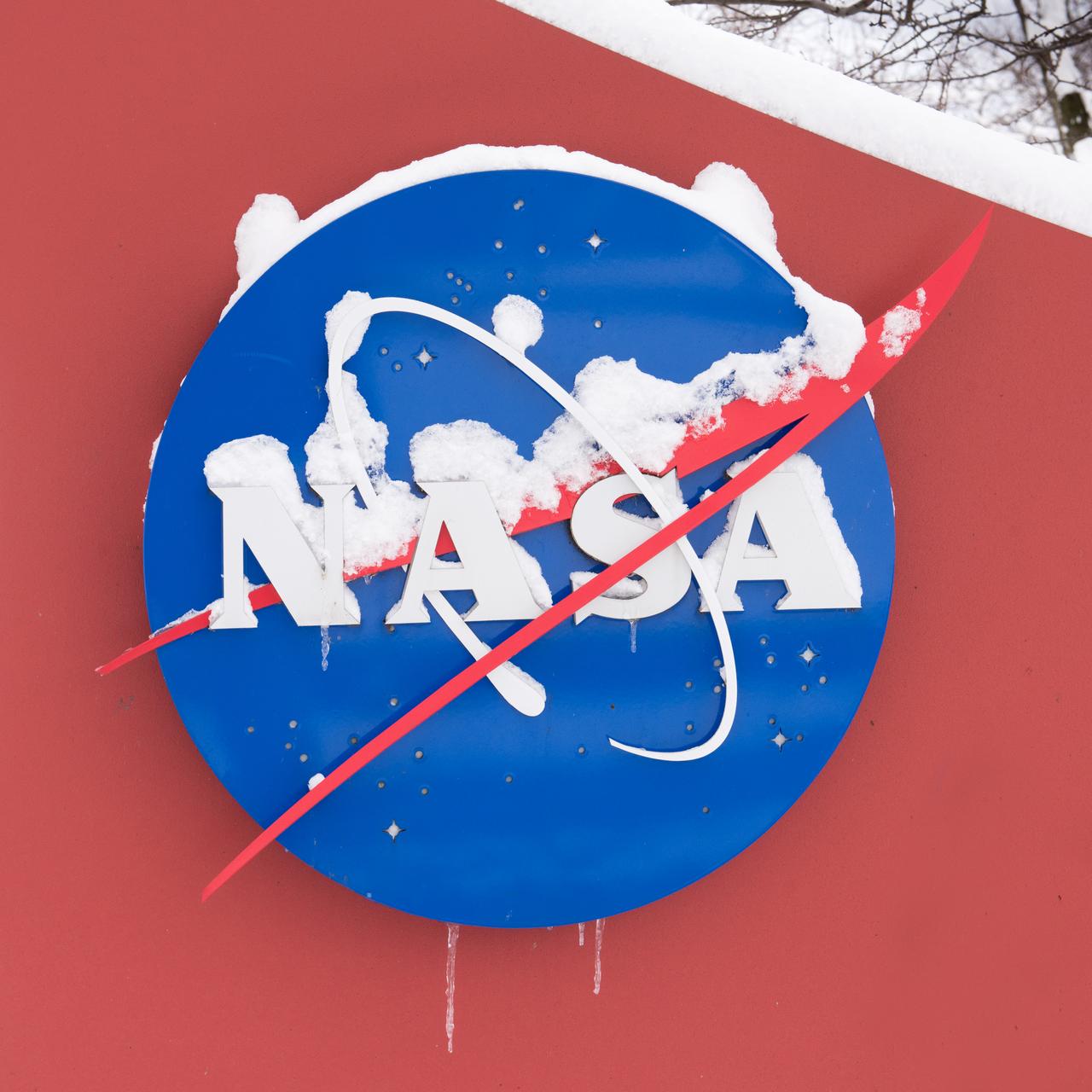
Late winter photograph of a snow-covered NASA Insignia at the Glenn Research Center in Cleveland, OH.
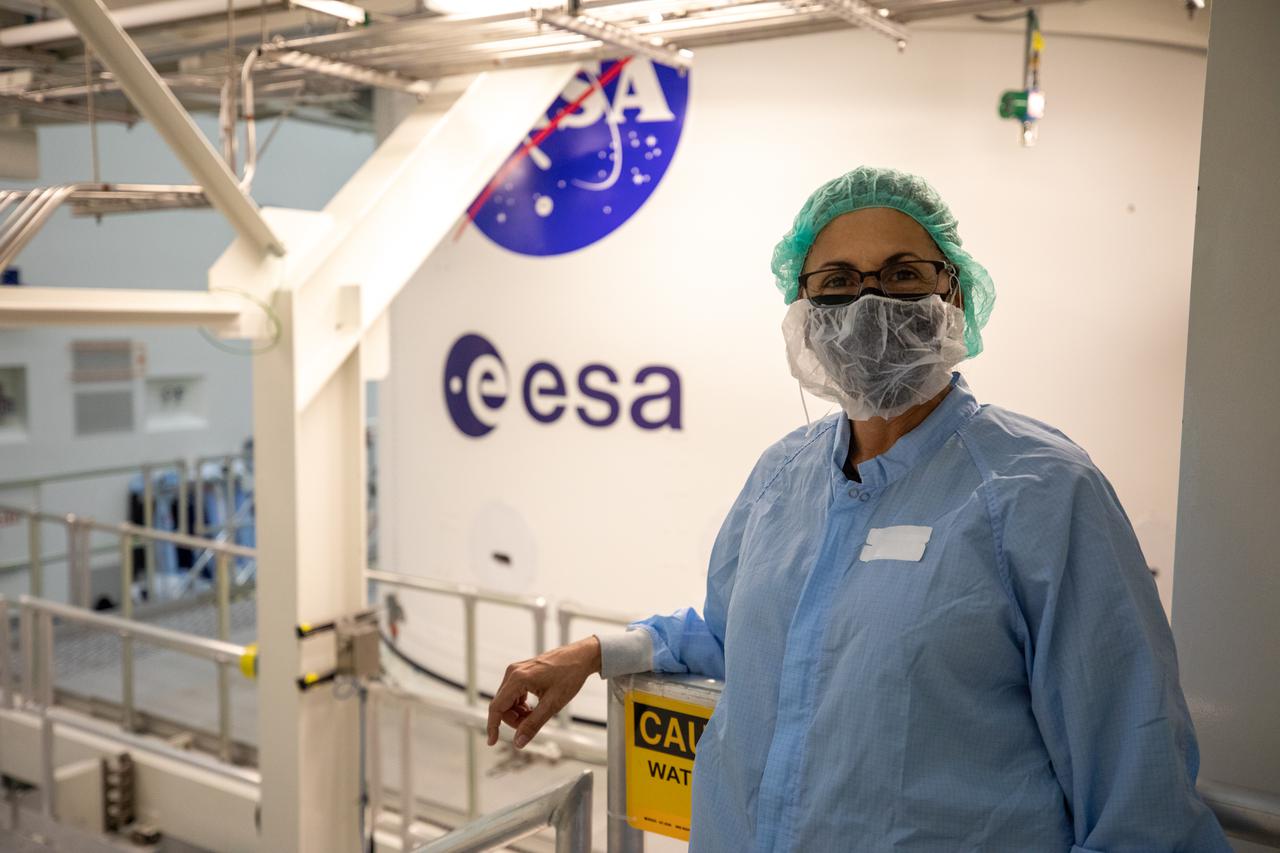
Nicole Stott, NASA Astronaut (former), shown next to the NASA “meatball” and European Space Agency insignias on the European-built service module for the Orion spacecraft, inside the Multi-Payload Processing Facility (MPPF) during a visit to NASA’s Kennedy Space Center in Florida on May 10, 2021. The first in a series of increasingly complex missions, Artemis I will test Orion and the Space Launch System rocket as an integrated system prior to crewed flights to the Moon.
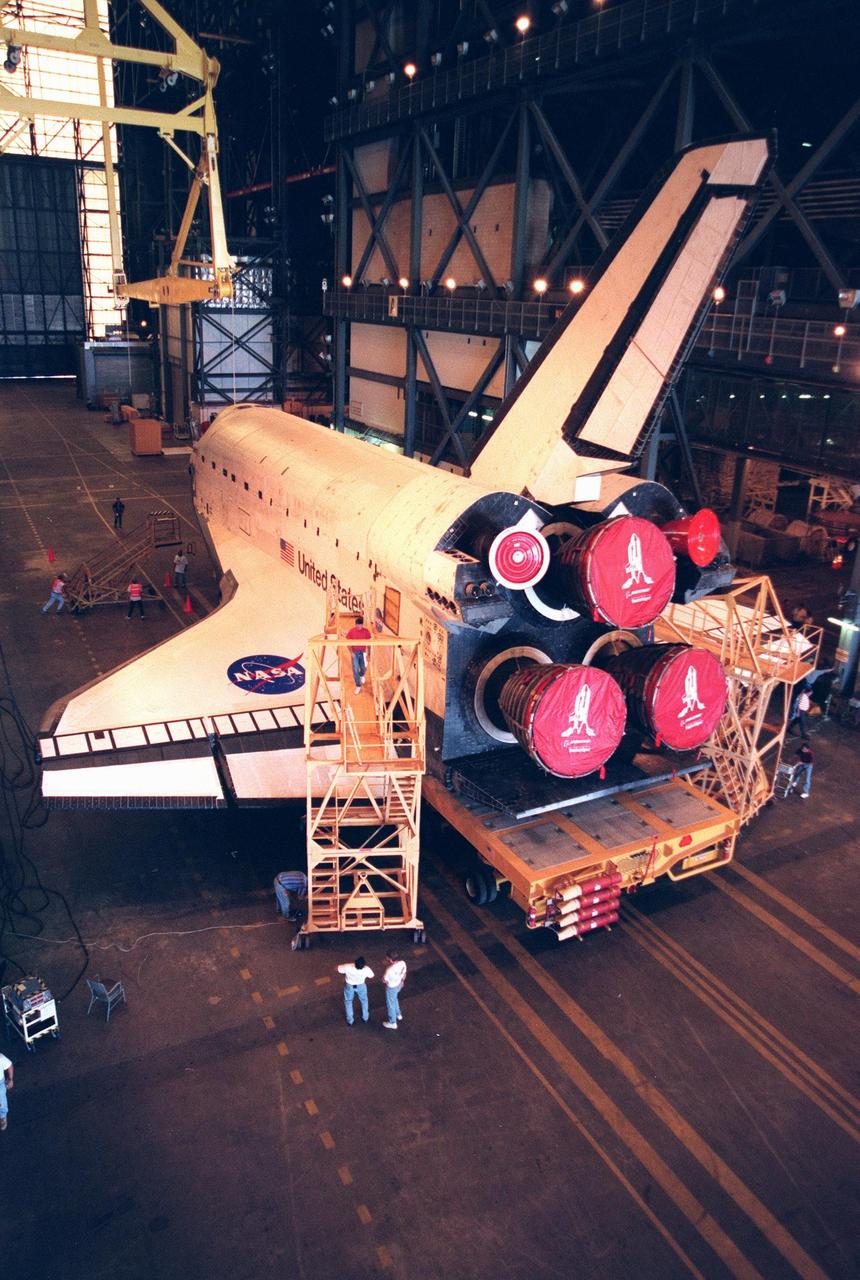
In the Vehicle Assembly Building, workers prepare the orbiter Discovery for vertical lift before mating it with the external tank. The orbiter displays the recently painted NASA logo, termed the "meatball," on its left wing and both sides of the fuselage. Discovery (OV-103) is scheduled for its 25th flight, from Launch Pad 39B, on Oct. 29, 1998, for the STS-95 mission
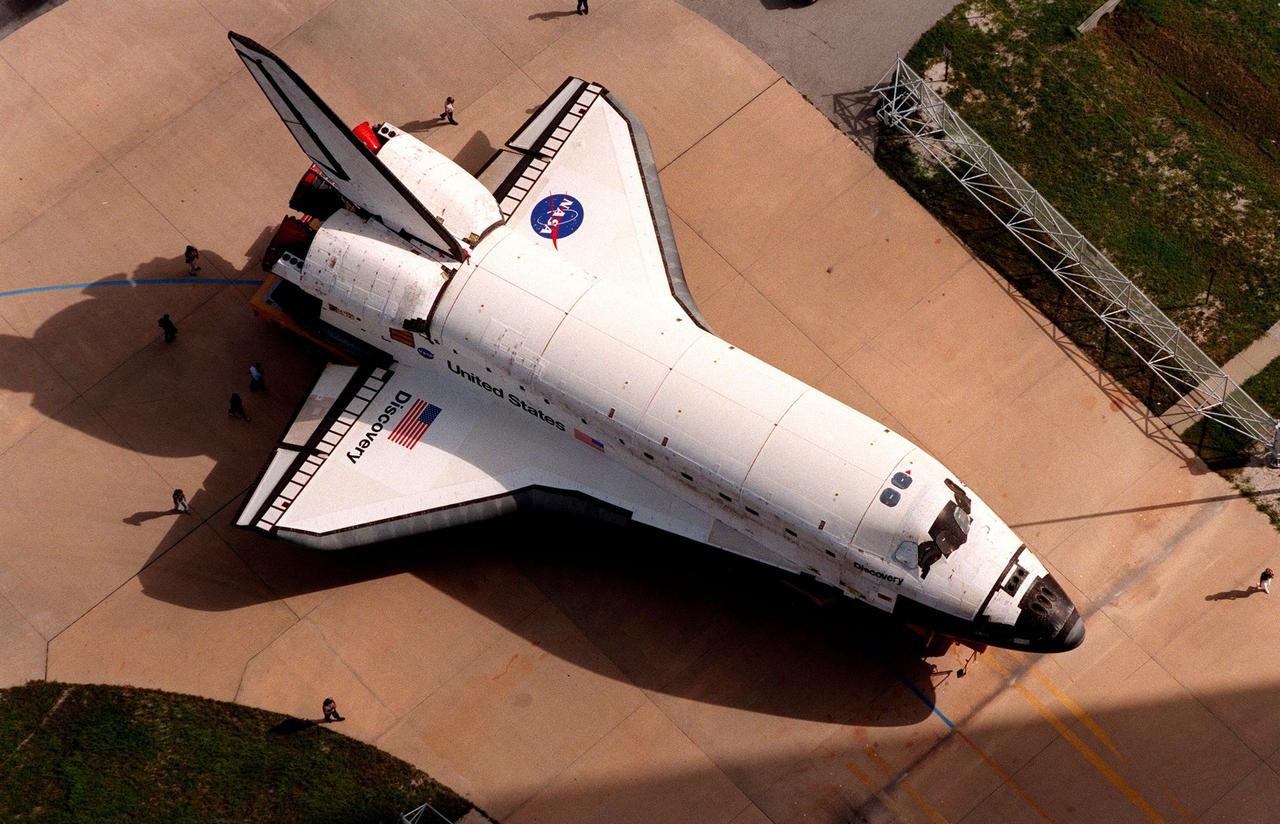
Morning shadows frame the orbiter Discovery on its rollover from the Orbiter Processing Facility Bay 2 to the Vehicle Assembly Building. The orbiter displays the recently painted NASA logo, termed the "meatball," on its left wing and both sides of the fuselage. Discovery (OV-103) is scheduled for its 25th flight, from Launch Pad 39B, on Oct. 29, 1998, for the STS-95 mission
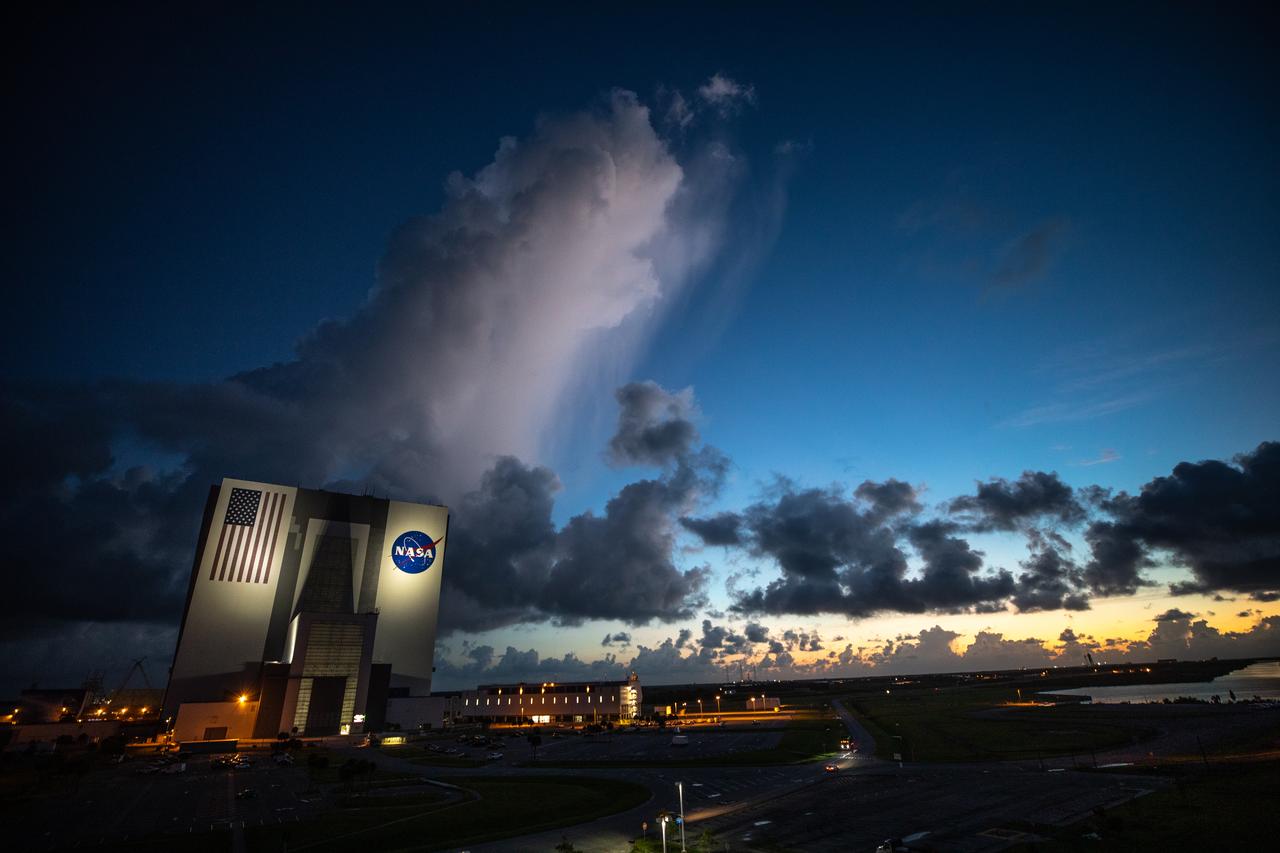
An early sunrise view of the iconic Vehicle Assembly Building (VAB) at NASA's Kennedy Space Center in Florida on July 25, 2020. Repainting of the NASA meatball and American flag recently was completed on the 525-foot tall facility. Inside the VAB, 10 new work platforms, 20 platform halves altogether, have been installed in High Bay 3 for the agency's Space Launch System (SLS) rocket and Orion spacecraft. Exploration Ground Systems is overseeing upgrades to the VAB.
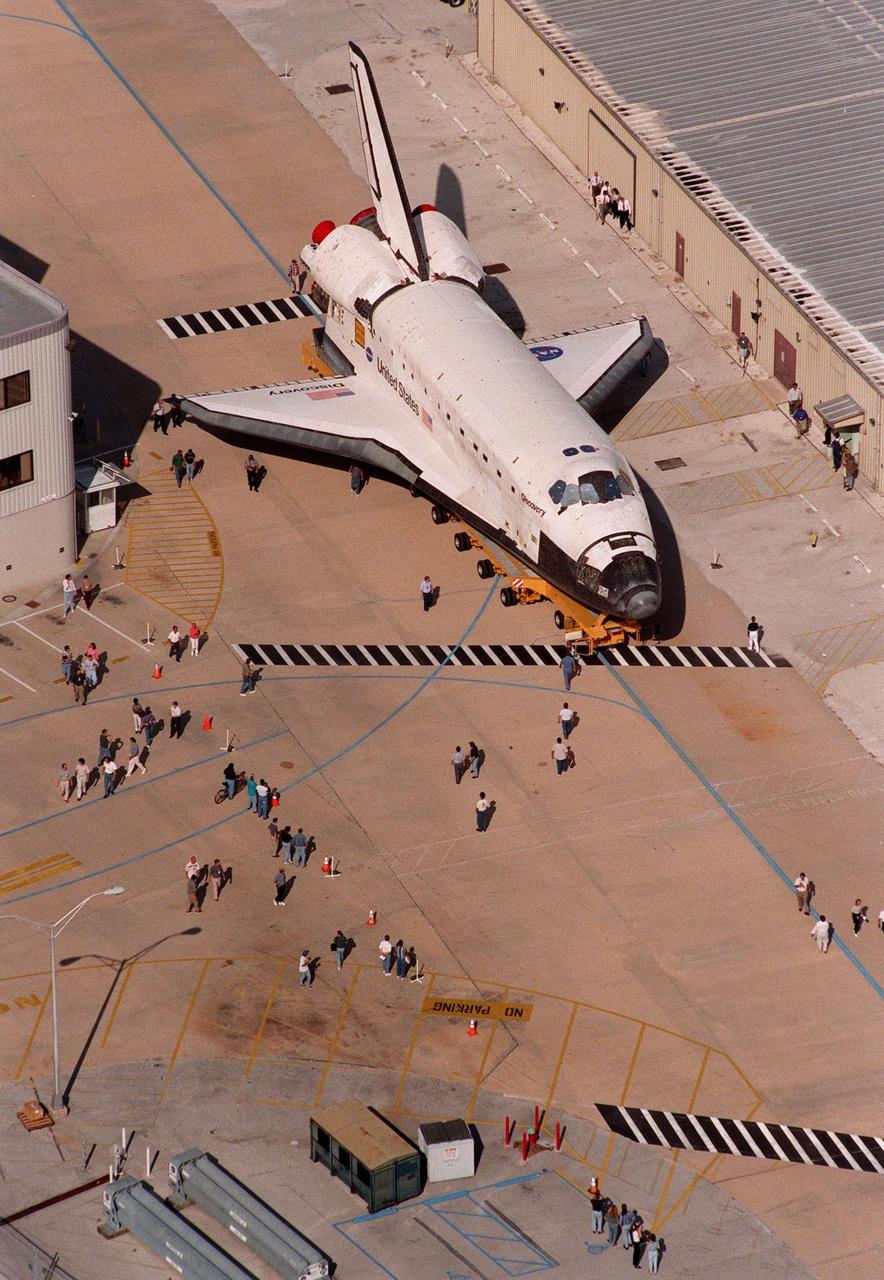
The orbiter Discovery is moved from the Orbiter Processing Facility Bay 2 to the Vehicle Assembly Building, drawing the attention of KSC employees. The orbiter displays the recently painted NASA logo, termed the "meatball," on its left wing and both sides of the fuselage. Discovery (OV-103) is scheduled for its 25th flight, from Launch Pad 39B, on Oct. 29, 1998, for the STS-95 mission
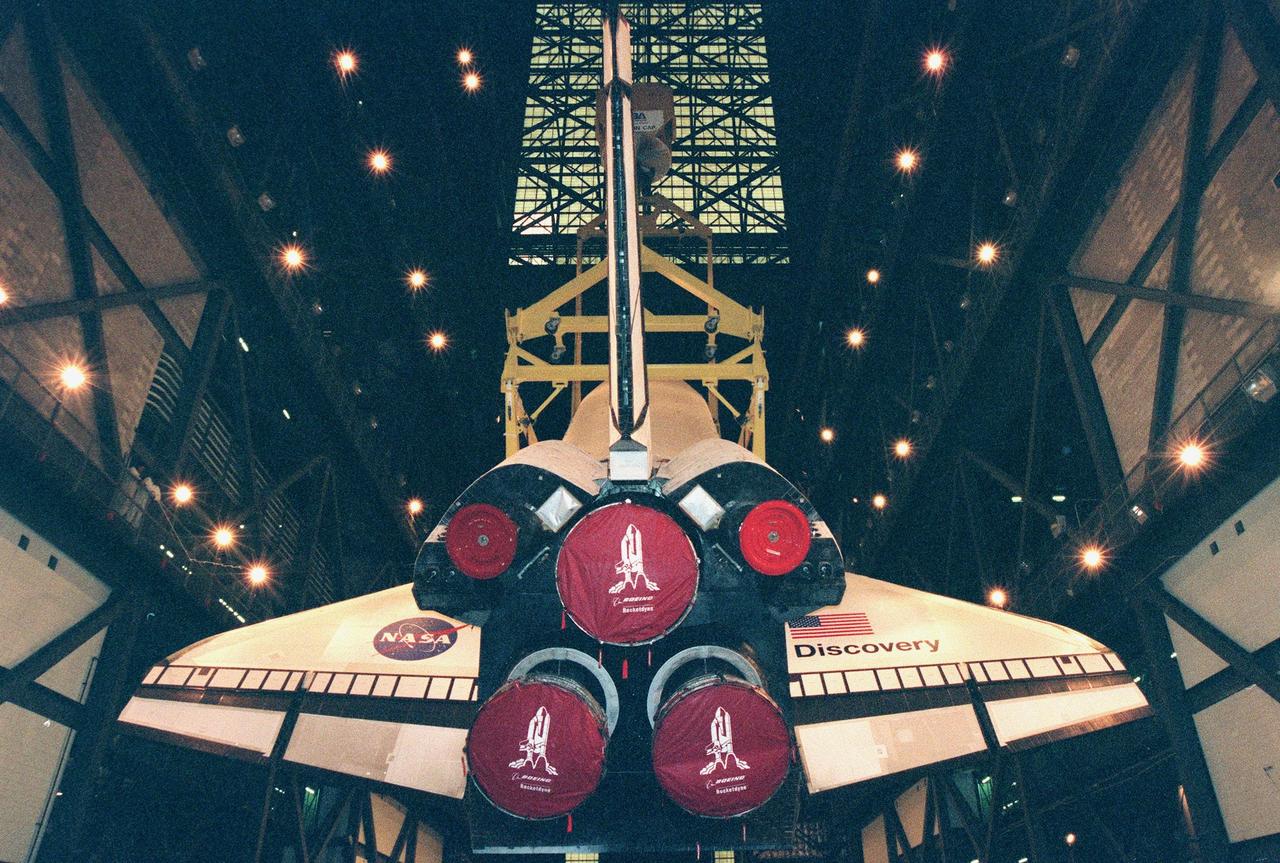
In the Vehicle Assembly Building, the orbiter Discovery (viewed from behind the Space Shuttle Main Engines) is raised to a vertical position in order to be mated with the external tank. The orbiter displays the recently painted NASA logo, termed the "meatball," on its left, or port, wing. The logo also has been painted on both sides of the aft fuselage. Discovery (OV-103), the first of the orbiters to be launched with the new art work, is scheduled for its 25th flight, from Launch Pad 39B, on Oct. 29, 1998, for the STS-95 mission
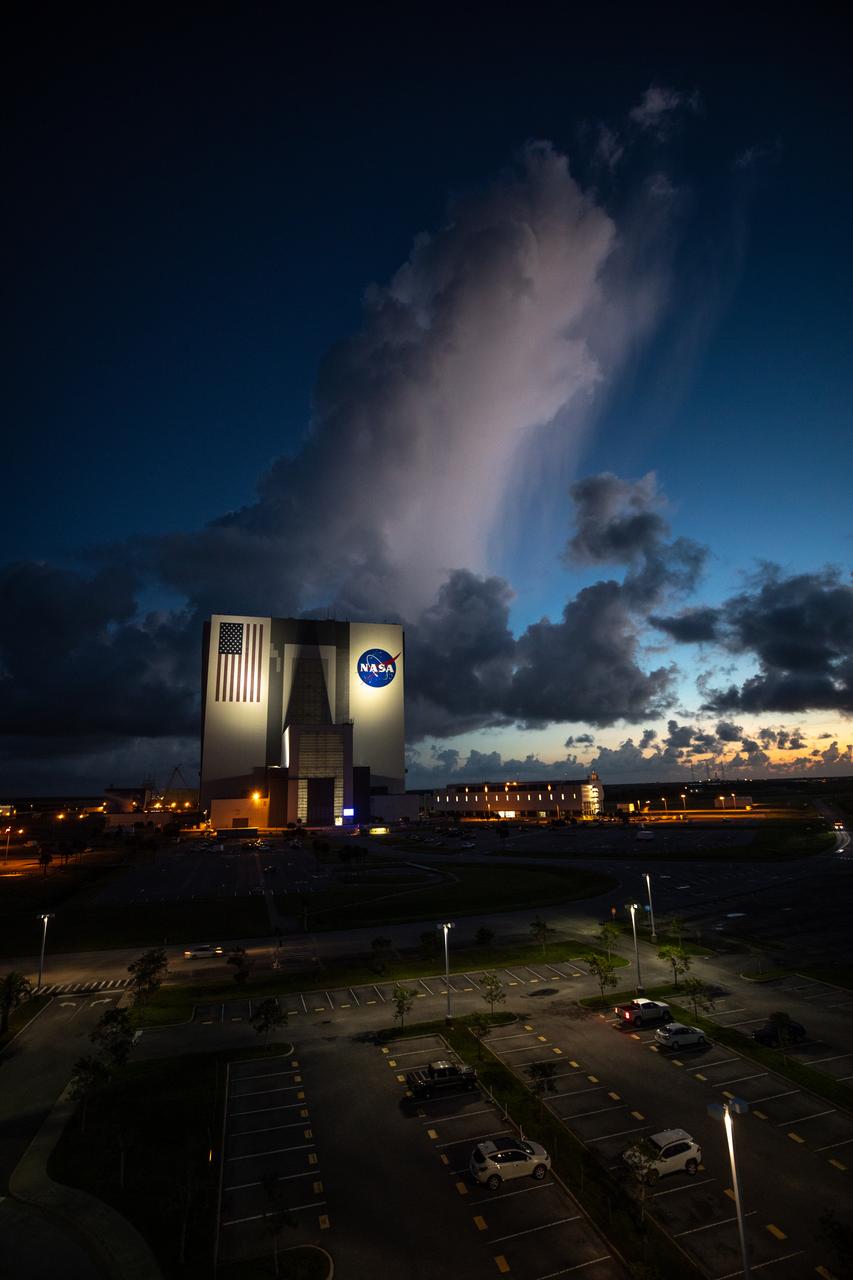
An early sunrise view of the iconic Vehicle Assembly Building (VAB) at NASA's Kennedy Space Center in Florida on July 25, 2020. Repainting of the NASA meatball and American flag recently was completed on the 525-foot-tall facility. Inside the VAB, 10 new work platforms, 20 platform halves altogether, have been installed in High Bay 3 for the agency's Space Launch System (SLS) rocket and Orion spacecraft. Exploration Ground Systems is overseeing upgrades to the VAB.
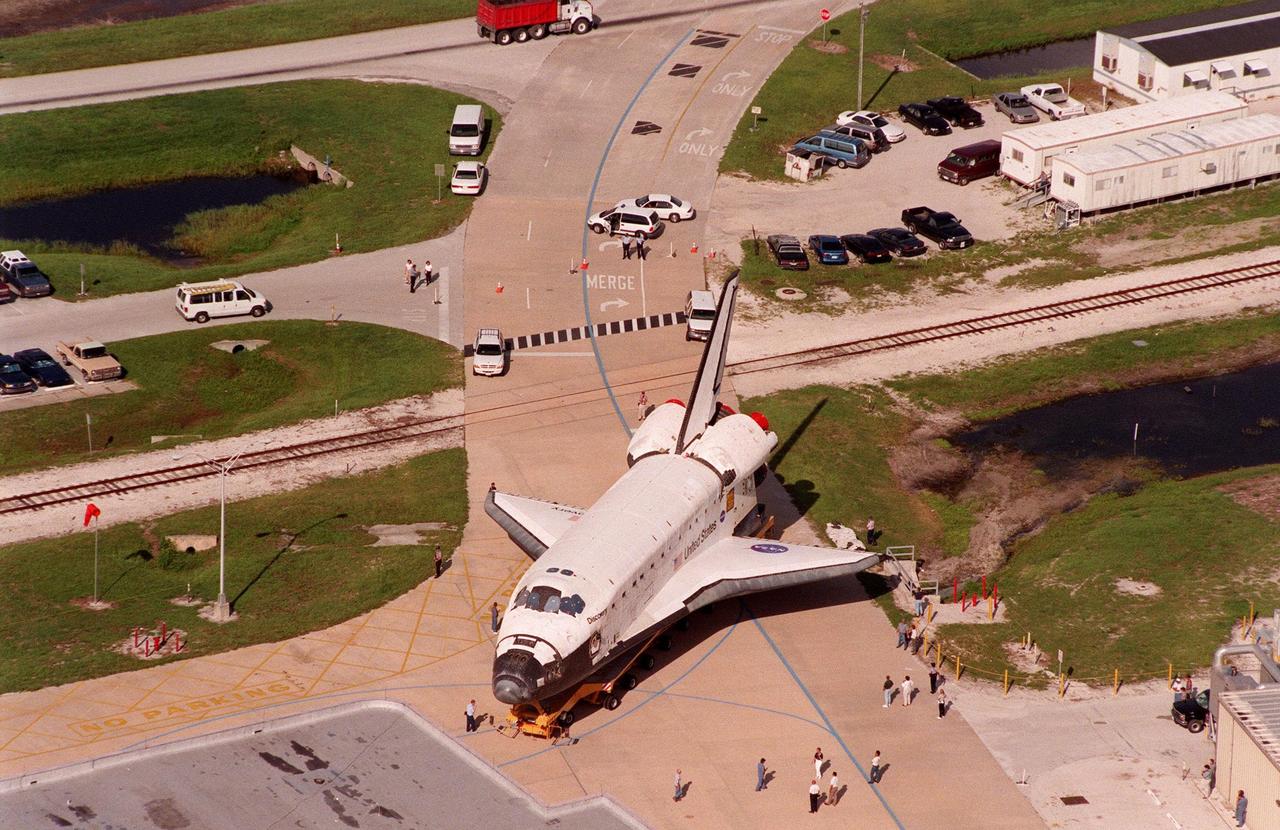
Rollover of the orbiter Discovery from the Orbiter Processing Facility Bay 2 to the Vehicle Assembly Building draws the attention of KSC employees. The orbiter displays the recently painted NASA logo, termed the "meatball," on its left wing and both sides of the fuselage. Discovery (OV-103) is scheduled for its 25th flight, from Launch Pad 39B, on Oct. 29, 1998, for the STS-95 mission
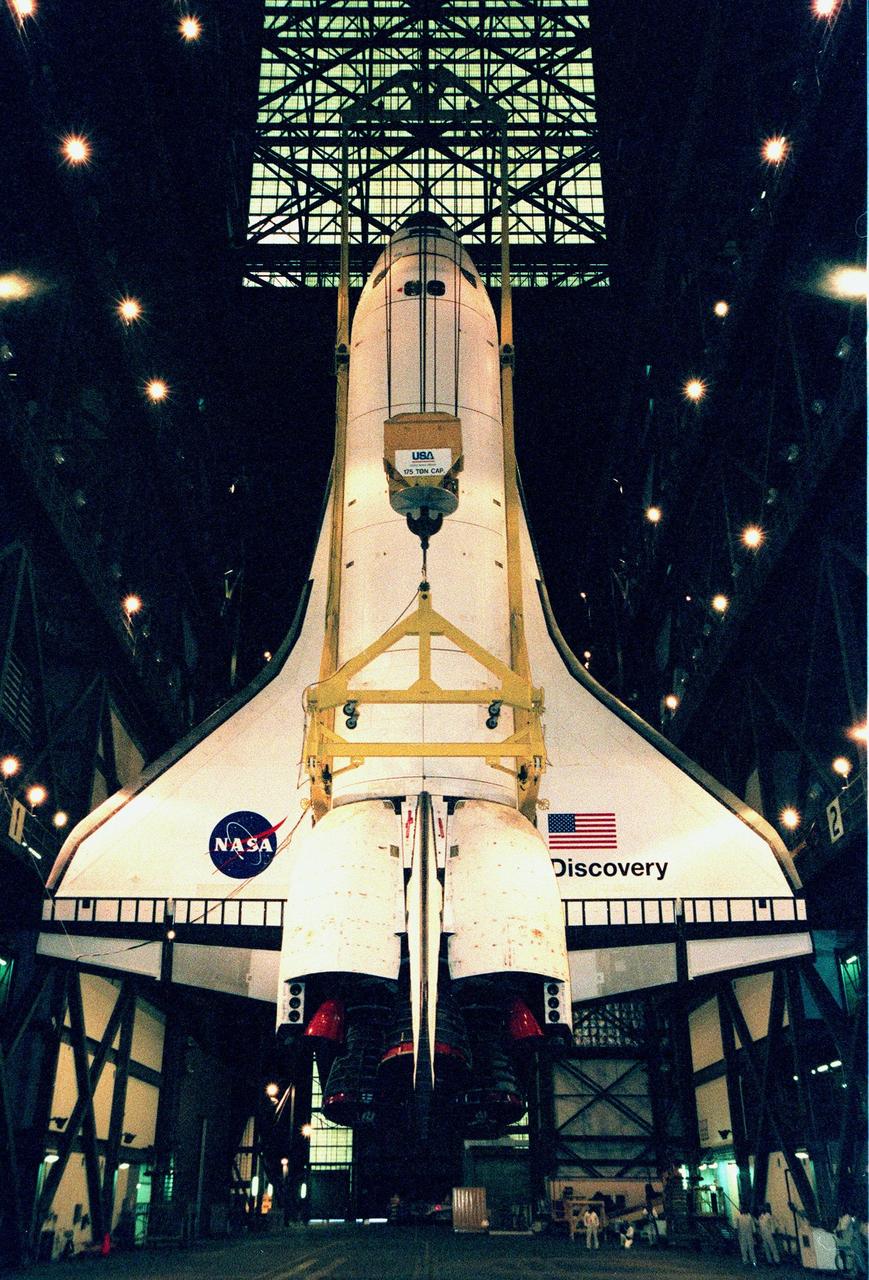
In the Vehicle Assembly Building, the orbiter Discovery is fully vertical, after being lifted into position for mating with the external tank. The orbiter displays the recently painted NASA logo, termed the "meatball," on its left, or port, wing. The logo also has been painted on both sides of the aft fuselage. Discovery (OV-103), the first of the orbiters to be launched with the new art work, is scheduled for its 25th flight, from Launch Pad 39B, on Oct. 29, 1998, for the STS-95 mission
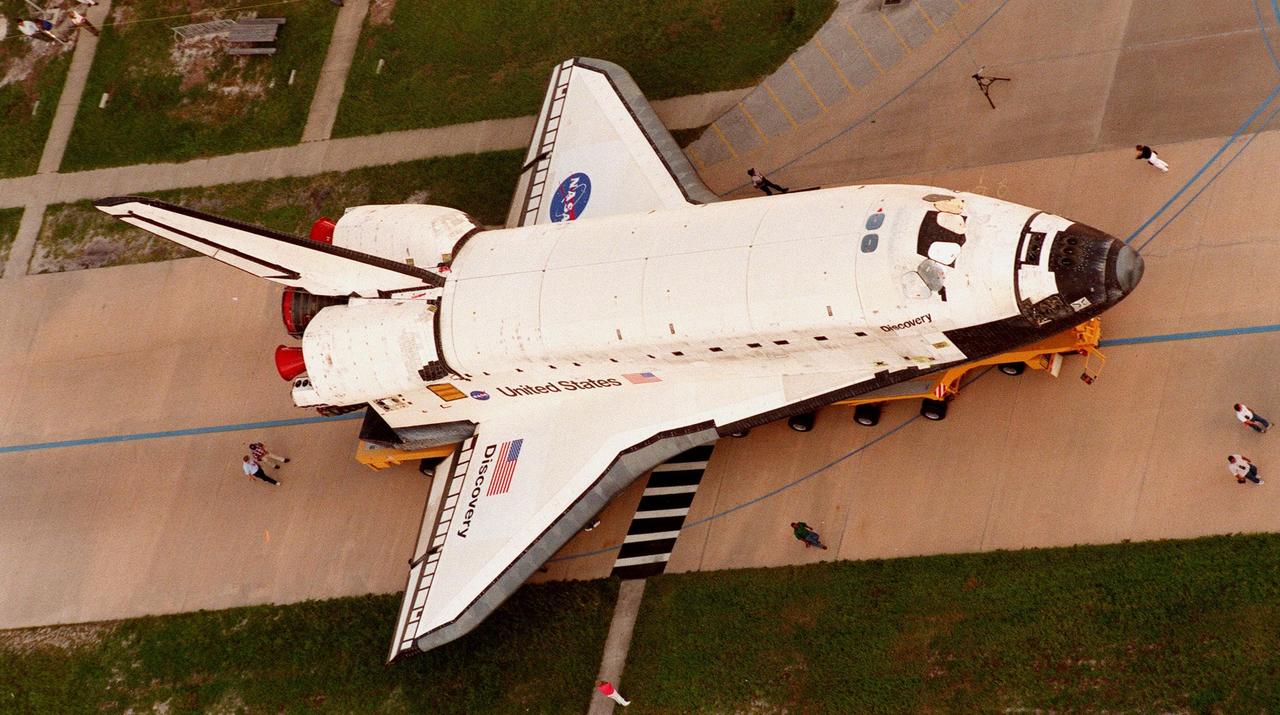
KSC employees accompany the orbiter Discovery on its rollover from the Orbiter Processing Facility Bay 2 to the Vehicle Assembly Building. The orbiter displays the recently painted NASA logo, termed the "meatball," on its left wing and both sides of the fuselage. Discovery (OV-103) is scheduled for its 25th flight, from Launch Pad 39B, on Oct. 29, 1998, for the STS-95 mission
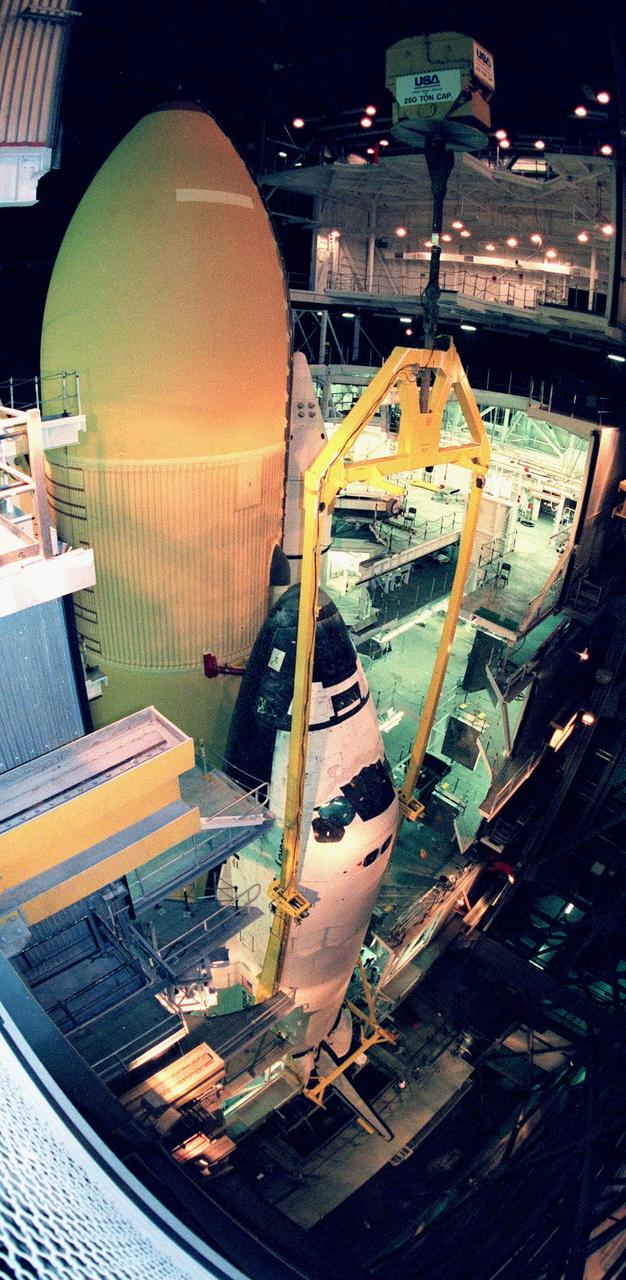
In the Vehicle Assembly Building, the orbiter Discovery is mated with the external tank and solid rocket booster stack (seen behind the orbiter, to the left). The orbiter was recently painted with the NASA logo, termed the "meatball," on the left, or port, wing and both sides of the aft fuselage. Discovery (OV-103) is the first of the orbiters to be launched with the new artwork. It is scheduled for its 25th flight, from Launch Pad 39B, on Oct. 29, 1998, for the STS-95 mission
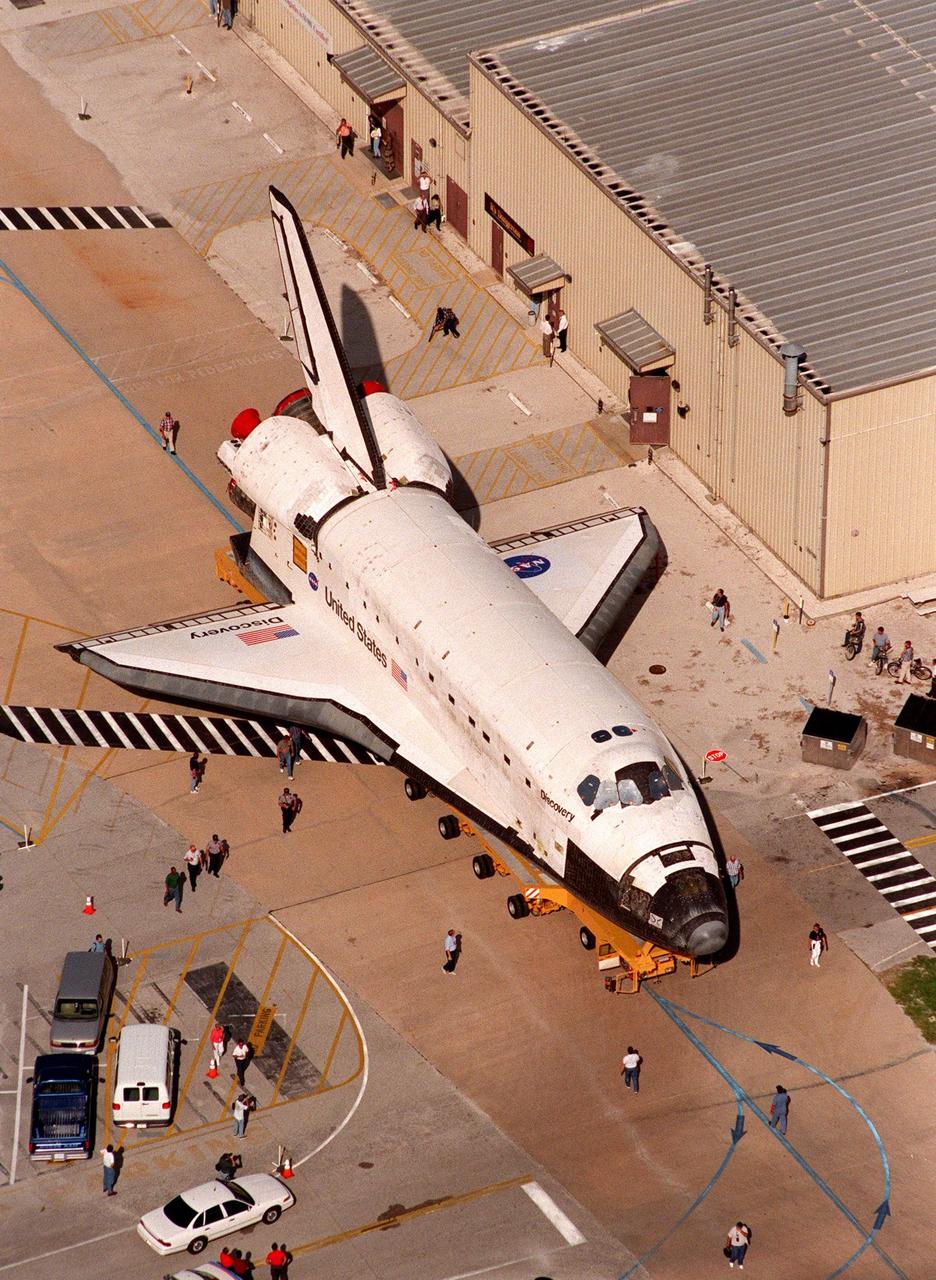
Rollover of the orbiter Discovery from the Orbiter Processing Facility Bay 2 to the Vehicle Assembly Building draws the attention of KSC employees. The orbiter displays the recently painted NASA logo, termed the "meatball," on its left wing and both sides of the fuselage. Discovery (OV-103) is scheduled for its 25th flight, from Launch Pad 39B, on Oct. 29, 1998, for the STS-95 mission

In the Vehicle Assembly Building, the orbiter Discovery (viewed from below the Space Shuttle Main Engines, starboard side) is raised to a vertical position in order to be mated with the external tank. The orbiter displays the recently painted NASA logo, termed the "meatball," on the aft fuselage. The logo also has been painted on the left, or port, wing. Discovery (OV-103), the first of the orbiters to be launched with the new art work, is scheduled for its 25th flight, from Launch Pad 39B, on Oct. 29, 1998, for the STS-95 mission
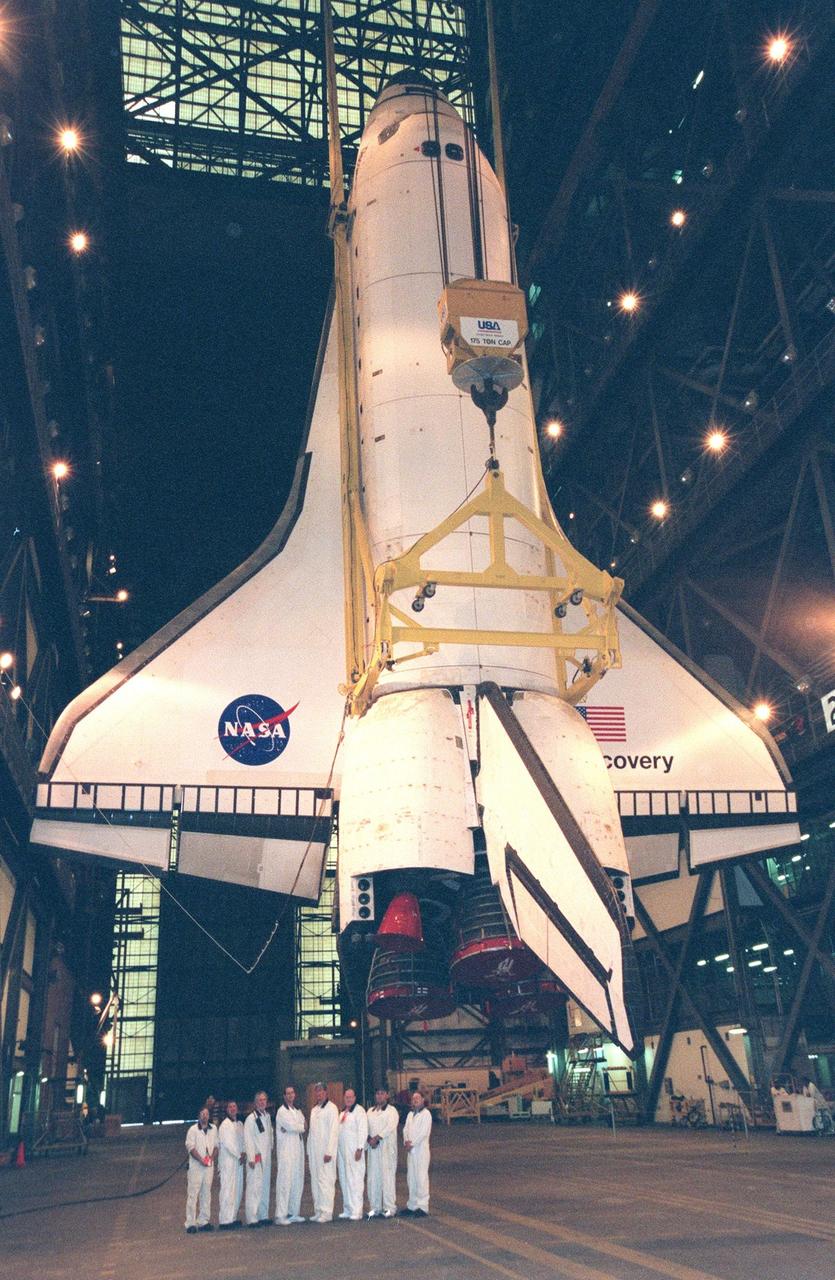
United Space Alliance Forward Shop workers stand near the orbiter Discovery in the Vehicle Assembly Building . The orbiter is being prepared for mating with the external tank. Discovery displays the recently painted NASA logo, termed the "meatball," on its left, or port, wing. The logo also has been painted on both sides of the aft fuselage. Discovery (OV-103), the first of the orbiters to be launched with the new art work, is scheduled for its 25th flight, from Launch Pad 39B, on Oct. 29, 1998, for the STS-95 mission
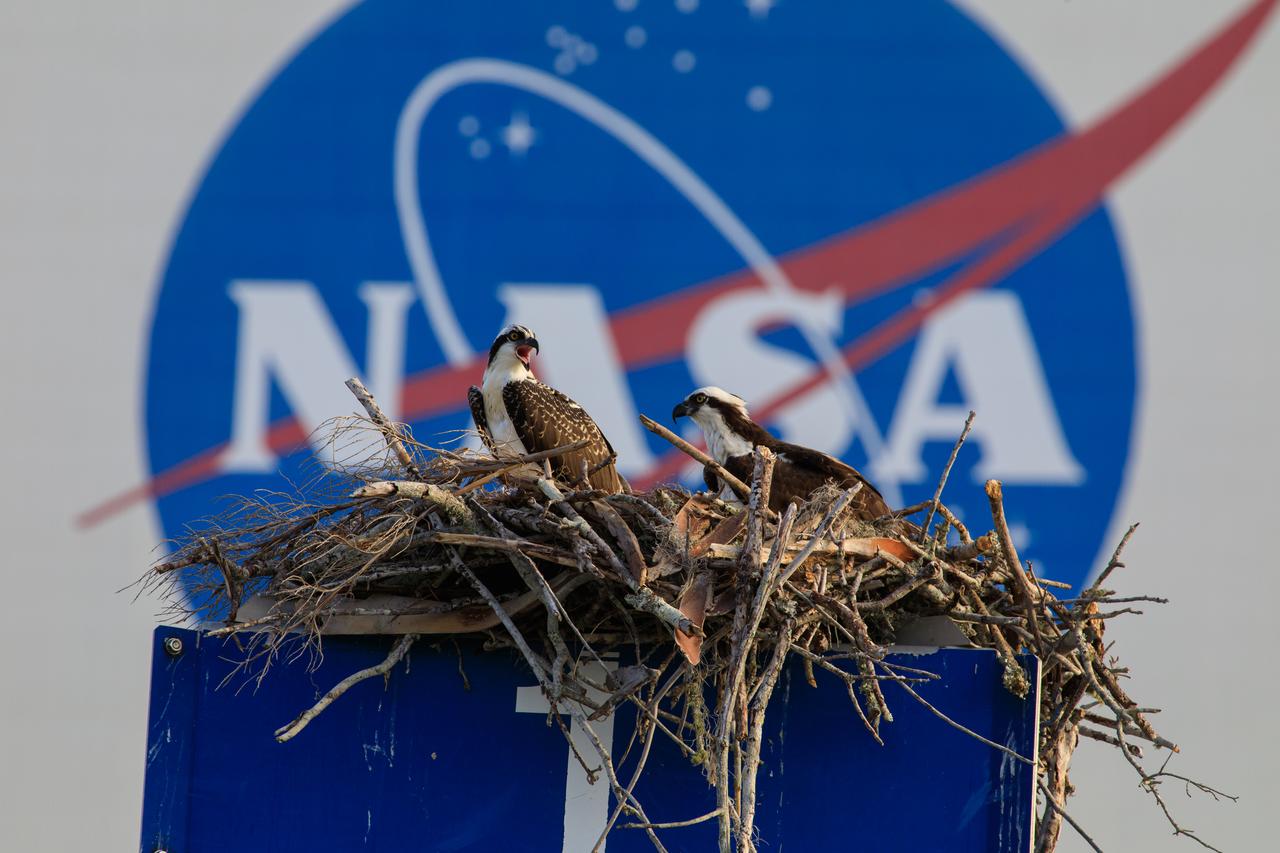
Two osprey are perched in their nest atop a marshalling area sign in front of the Vehicle Assembly Building at NASA’s Kennedy Space Center in Florida on June 7, 2023. In the background is the NASA meatball. The center shares a border with the Merritt Island National Wildlife Refuge. More than 330 native and migratory bird species, along with 65 amphibian and reptile species, call Kennedy and the wildlife refuge home.
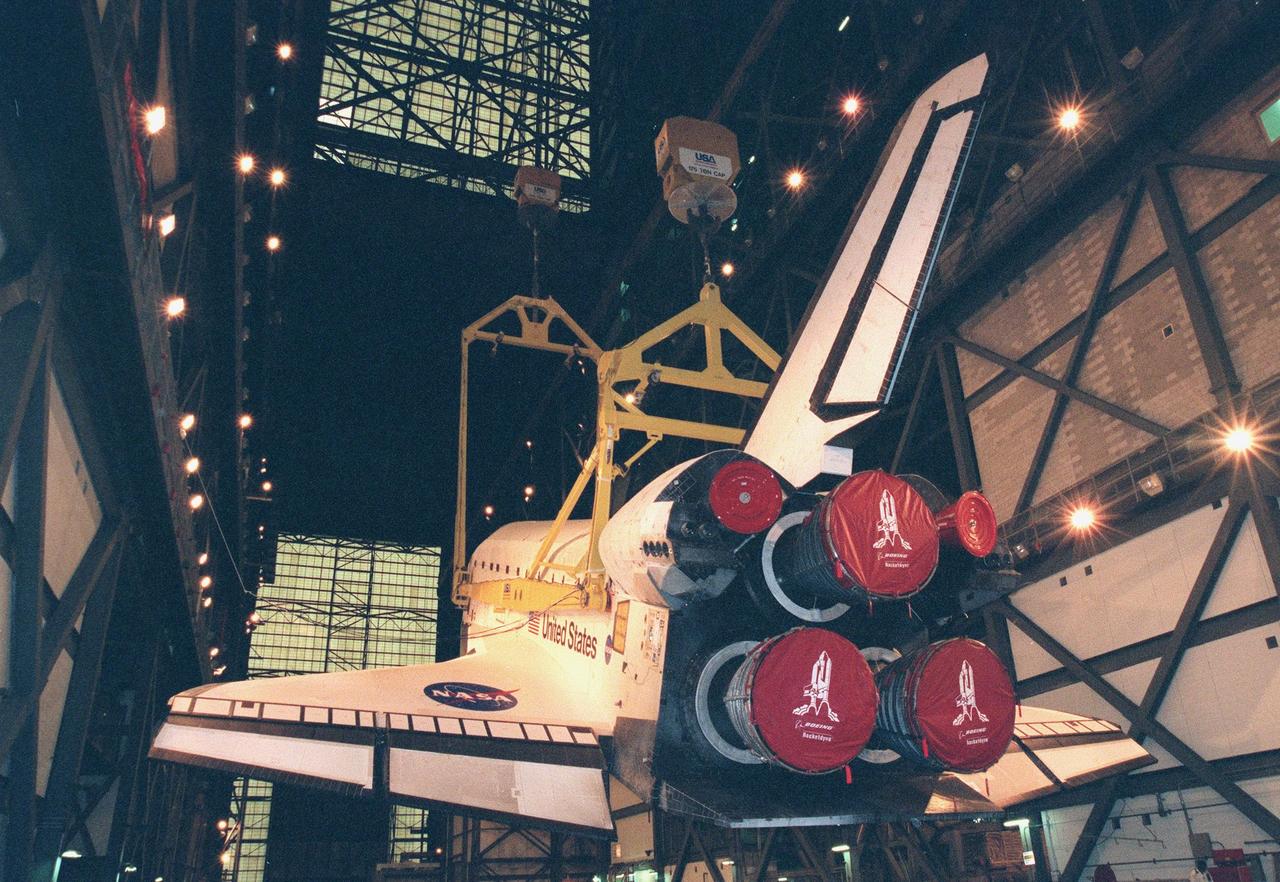
In the Vehicle Assembly Building, the orbiter Discovery (viewed from behind the Space Shuttle Main Engines, port side) is raised to a vertical position in order to be mated with the external tank. The orbiter displays the recently painted NASA logo, termed the "meatball," on its left, or port, wing. The logo also has been painted on both sides of the aft fuselage. Discovery (OV-103), the first of the orbiters to be launched with the new art work, is scheduled for its 25th flight, from Launch Pad 39B, on Oct. 29, 1998, for the STS-95 mission
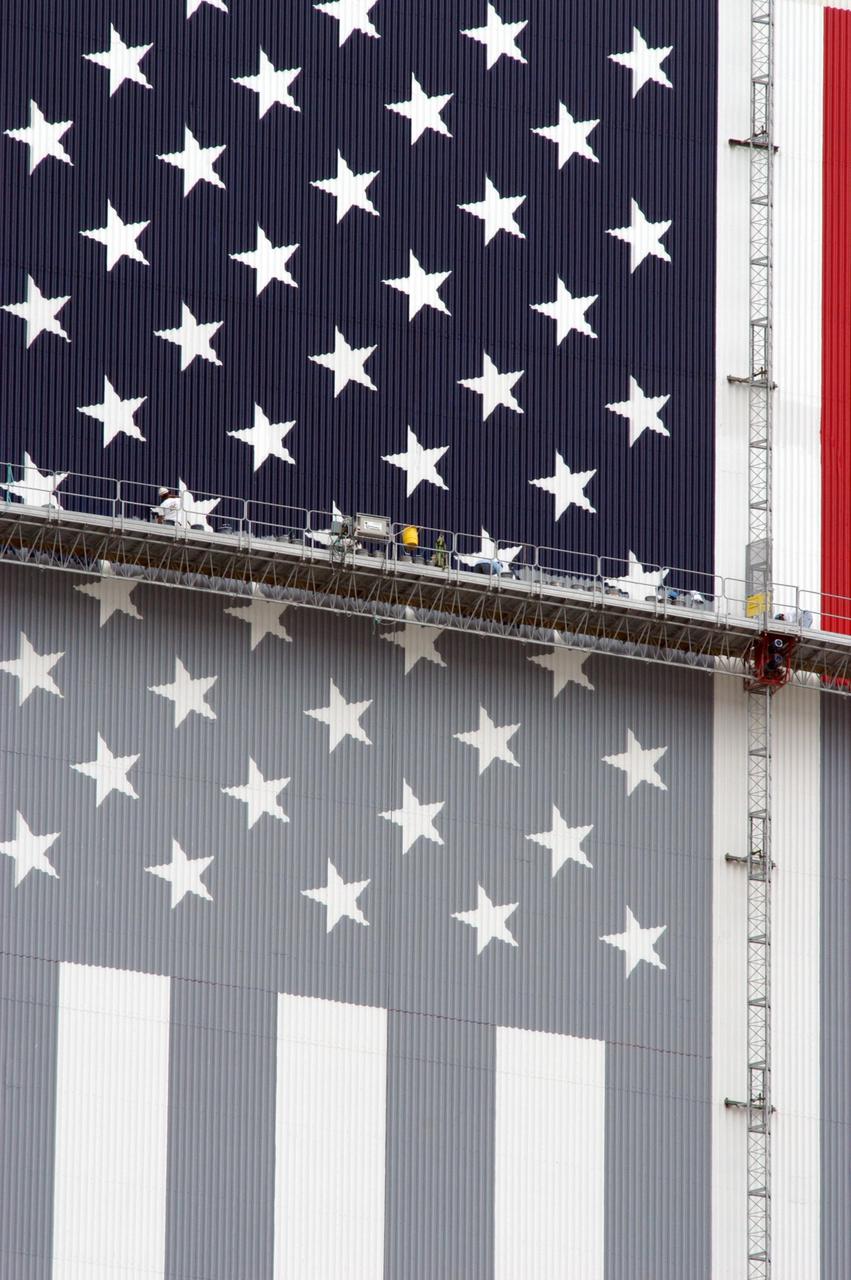
KENNEDY SPACE CENTER, FLA. -- On platforms suspended from the top of the 525-foot-high VAB, workers use rollers and brushes to repaint the U.S. flag on the southwest side of the Vehicle Assembly Building. The flag spans an area 209 feet by 110 feet, or about 23, 437 square feet. Each stripe is 9 feet wide and each star is 6 feet in diameter. The logo is also being painted. Known as the "meatball," the logo measures 110 feet by 132 feet, or about 12,300 square feet. The flag and logo were last painted in 1998, honoring NASA's 40th anniversary. Photo credit: NASA/George Shelton
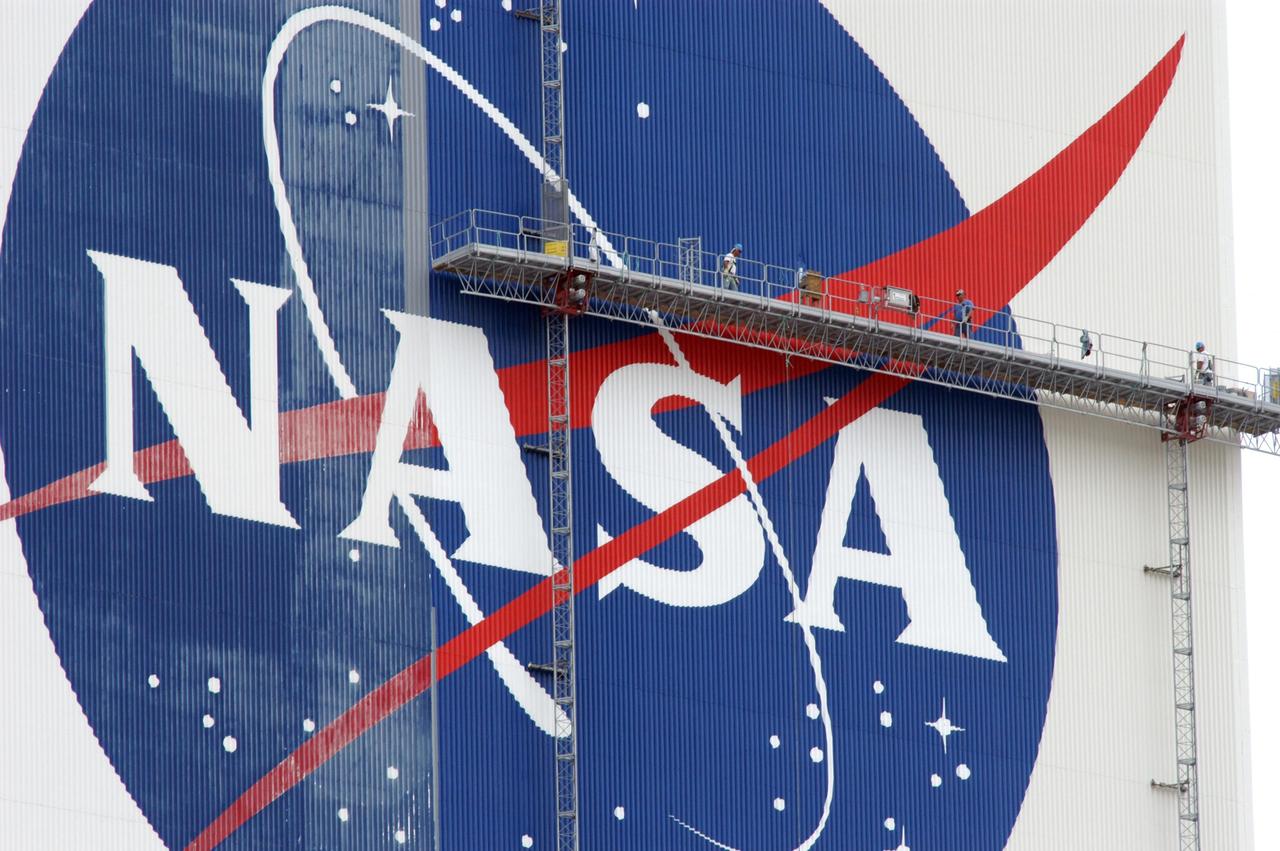
KENNEDY SPACE CENTER, FLA. -- On platforms suspended from the top of the 525-foot-high VAB, workers use rollers and brushes to repaint the U.S. flag on the southwest side of the Vehicle Assembly Building. The flag spans an area 209 feet by 110 feet, or about 23, 437 square feet. Each stripe is 9 feet wide and each star is 6 feet in diameter. The logo is also being painted. Known as the "meatball," the logo measures 110 feet by 132 feet, or about 12,300 square feet. The flag and logo were last painted in 1998, honoring NASA's 40th anniversary. Photo credit: NASA/George Shelton
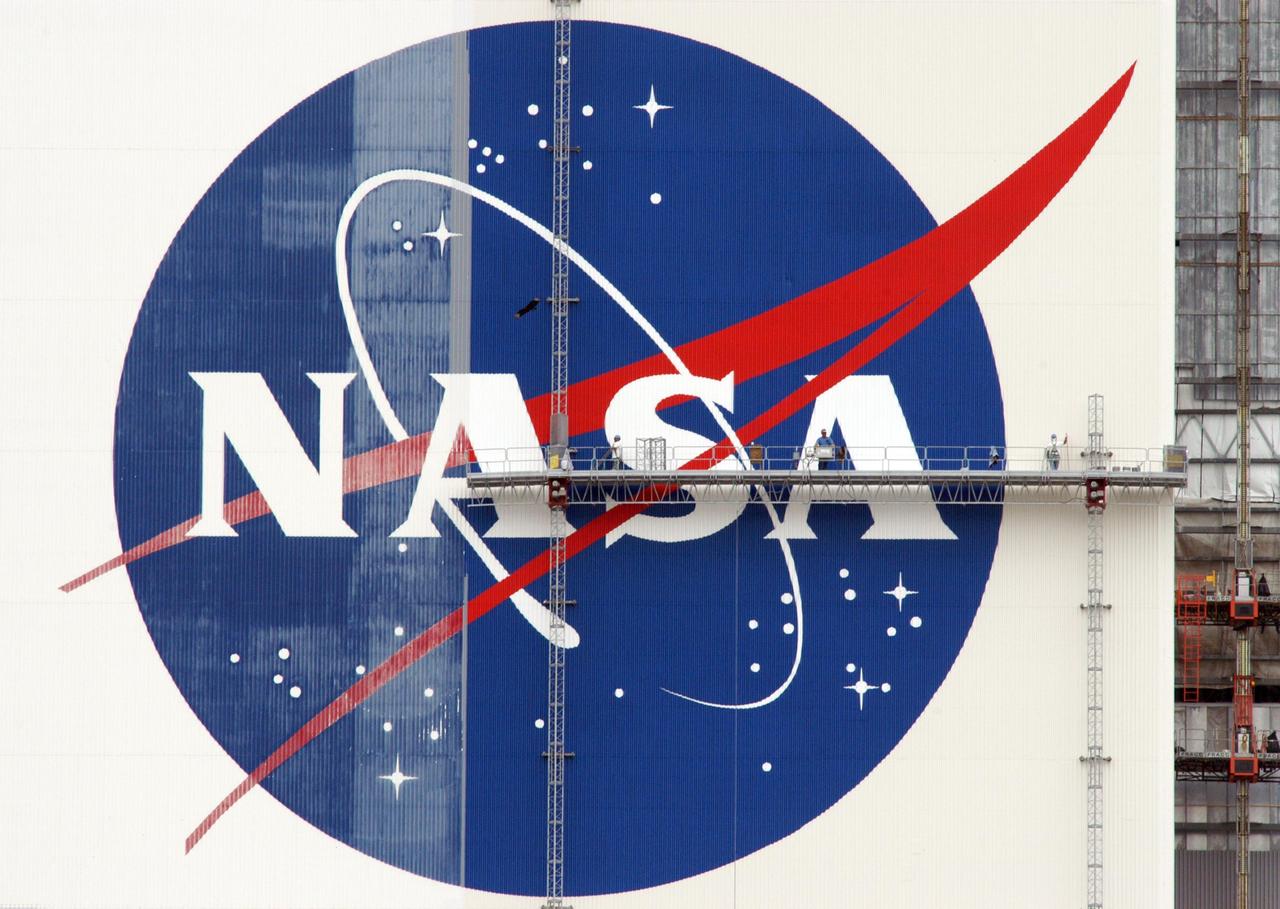
KENNEDY SPACE CENTER, FLA. -- On platforms suspended from the top of the 525-foot-high VAB, workers use rollers and brushes to repaint the NASA logo on the southeast side of the Vehicle Assembly Building. Known as the "meatball," the logo measures 110 feet by 132 feet, or about 12,300 square feet. The U.S. flag is also being repainted. The flag spans an area 209 feet by 110 feet, or about 23, 437 square feet. Each stripe is 9 feet wide and each star is 6 feet in diameter. The flag and logo were last painted in 1998, honoring NASA's 40th anniversary. Photo credit: NASA/George Shelton
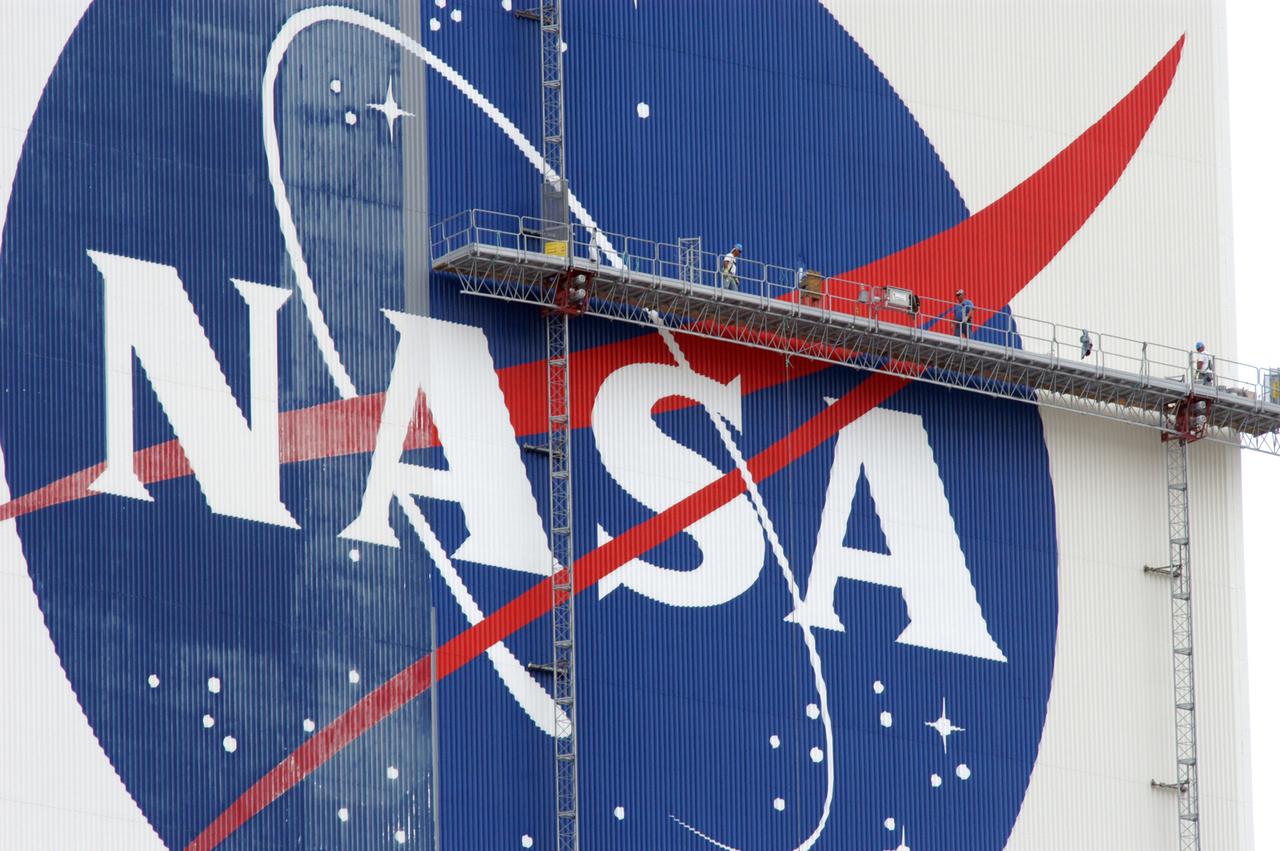
On platforms suspended from the top of the 525-foot-high VAB, workers use rollers and brushes to repaint the U.S. flag on the southwest side of the Vehicle Assembly Building. The flag spans an area 209 feet by 110 feet, or about 23, 437 square feet. Each stripe is 9 feet wide and each star is 6 feet in diameter. The logo is also being painted. Known as the "meatball," the logo measures 110 feet by 132 feet, or about 12,300 square feet. The flag and logo were last painted in 1998, honoring NASA's 40th anniversary.
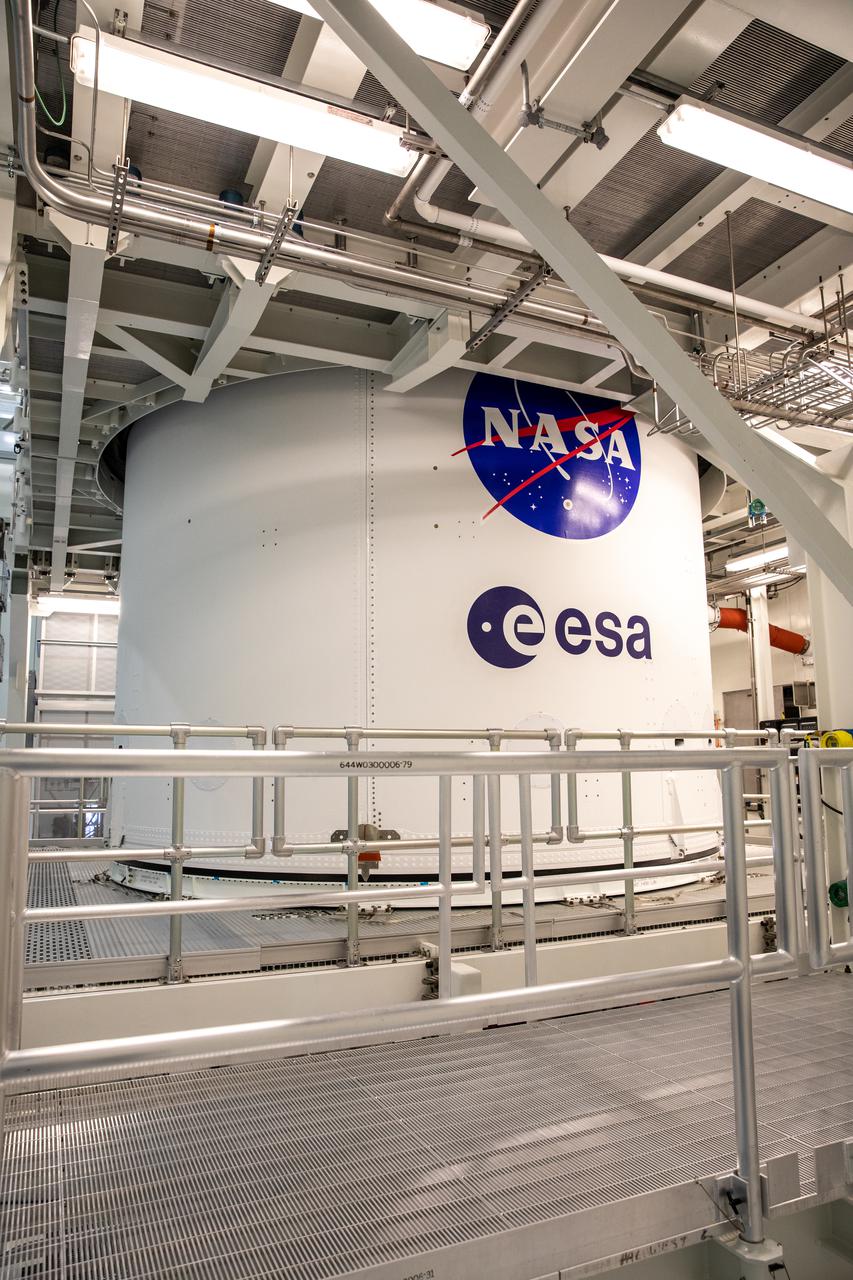
Artemis I extends NASA and ESA’s (European Space Agency) strong international partnership beyond low-Earth orbit to lunar exploration with Orion on Artemis missions, as the ESA logo joins the historic NASA “meatball” insignia on the Artemis I spacecraft adapter jettison fairing panels that protect the service module during launch. Orion is currently stationed at NASA’s Kennedy Space Center in the Multi-Payload Processing Facility, where it will undergo fueling and servicing by NASA’s Exploration Ground Systems and Jacobs Technology teams in preparation for the upcoming flight test with the Space Launch System rocket under the agency’s Artemis program.

KENNEDY SPACE CENTER, FLA. -- The American flag and the NASA logo shine in the morning sun on the side of the Vehicle Assembly Building after completion of their repainting. The flag spans an area 209 feet by 110 feet, or about 23, 437 square feet. Each stripe is 9 feet wide and each star is 6 feet in diameter. The NASA logo, which is known as the "meatball," measures 110 feet by 132 feet, or about 12,300 square feet. The flag and logo were last painted in 1998, honoring NASA's 40th anniversary. Photo credit: NASA/Jim Grossmann
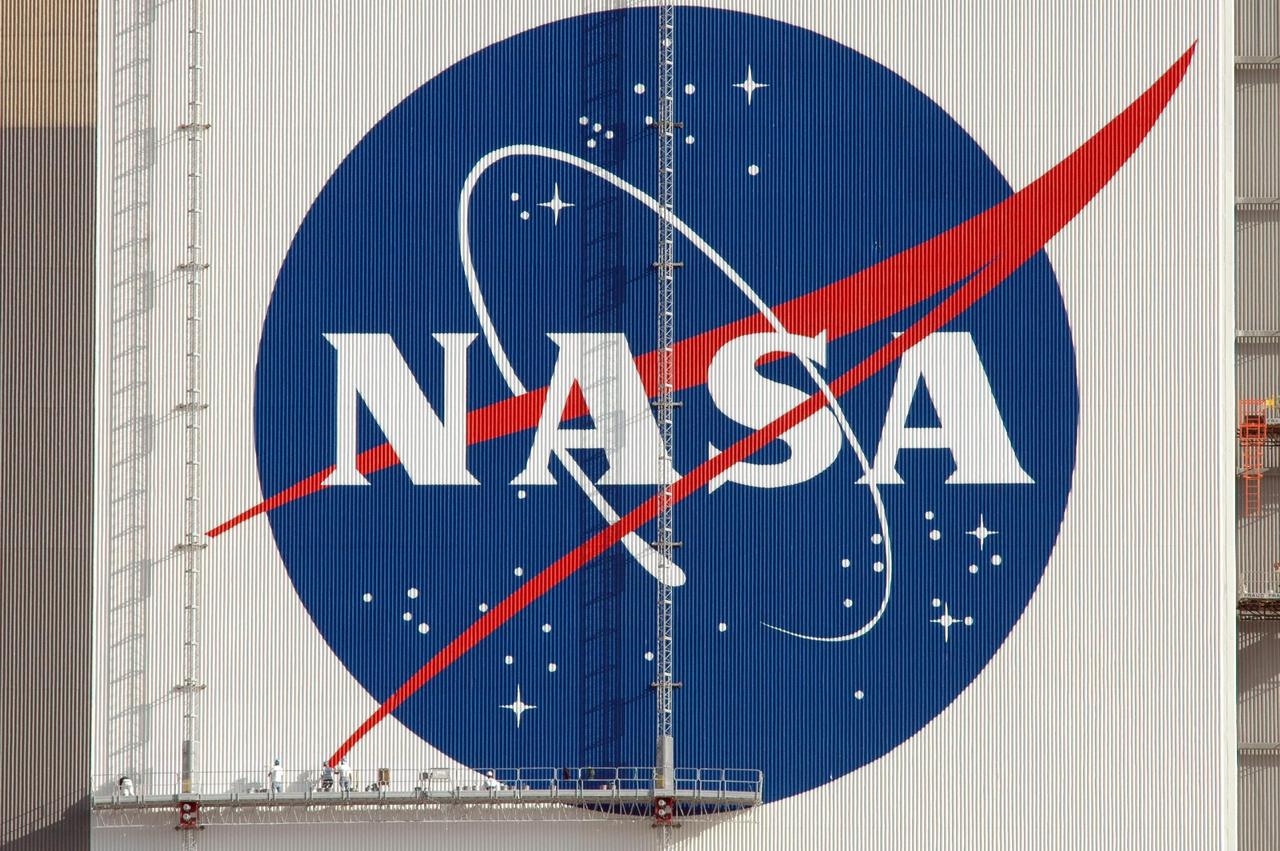
KENNEDY SPACE CENTER, FLA. -- The NASA logo shines in the morning sun on the side of the Vehicle Assembly Building after completion of its repainting. The logo, which is known as the "meatball," measures 110 feet by 132 feet, or about 12,300 square feet. The American flag was also painted on the side of the VAB. The flag spans an area 209 feet by 110 feet, or about 23, 437 square feet. Each stripe is 9 feet wide and each star is 6 feet in diameter. The flag and logo were last painted in 1998, honoring NASA's 40th anniversary. Photo credit: NASA/Jim Grossmann
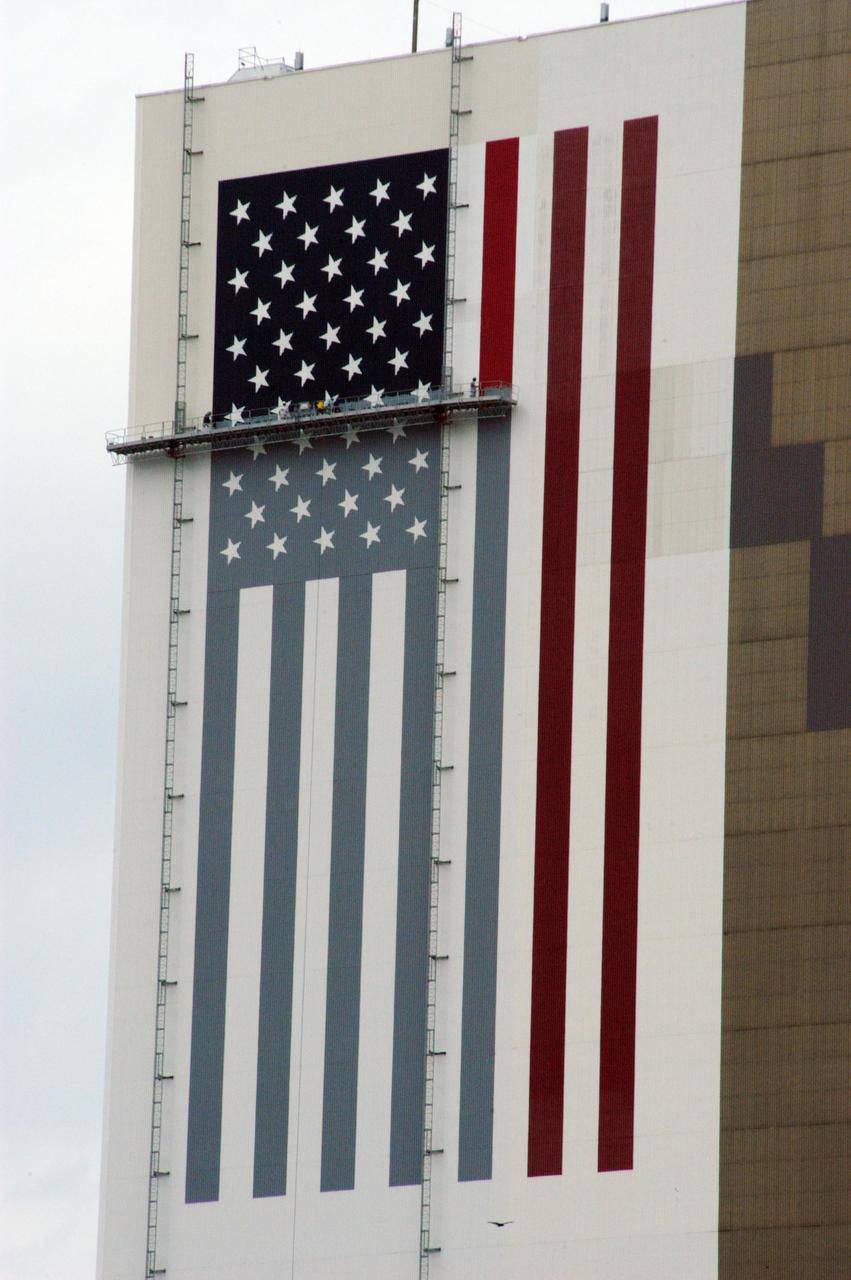
KENNEDY SPACE CENTER, FLA. -- On platforms suspended from the top of the 525-foot-high VAB, workers use rollers and brushes to repaint the U.S. flag on the southwest side of the Vehicle Assembly Building. The flag spans an area 209 feet by 110 feet, or about 23, 437 square feet. Each stripe is 9 feet wide and each star is 6 feet in diameter. The logo is also being painted. Known as the "meatball," the logo measures 110 feet by 132 feet, or about 12,300 square feet. The flag and logo were last painted in 1998, honoring NASA's 40th anniversary. Photo credit: NASA/George Shelton
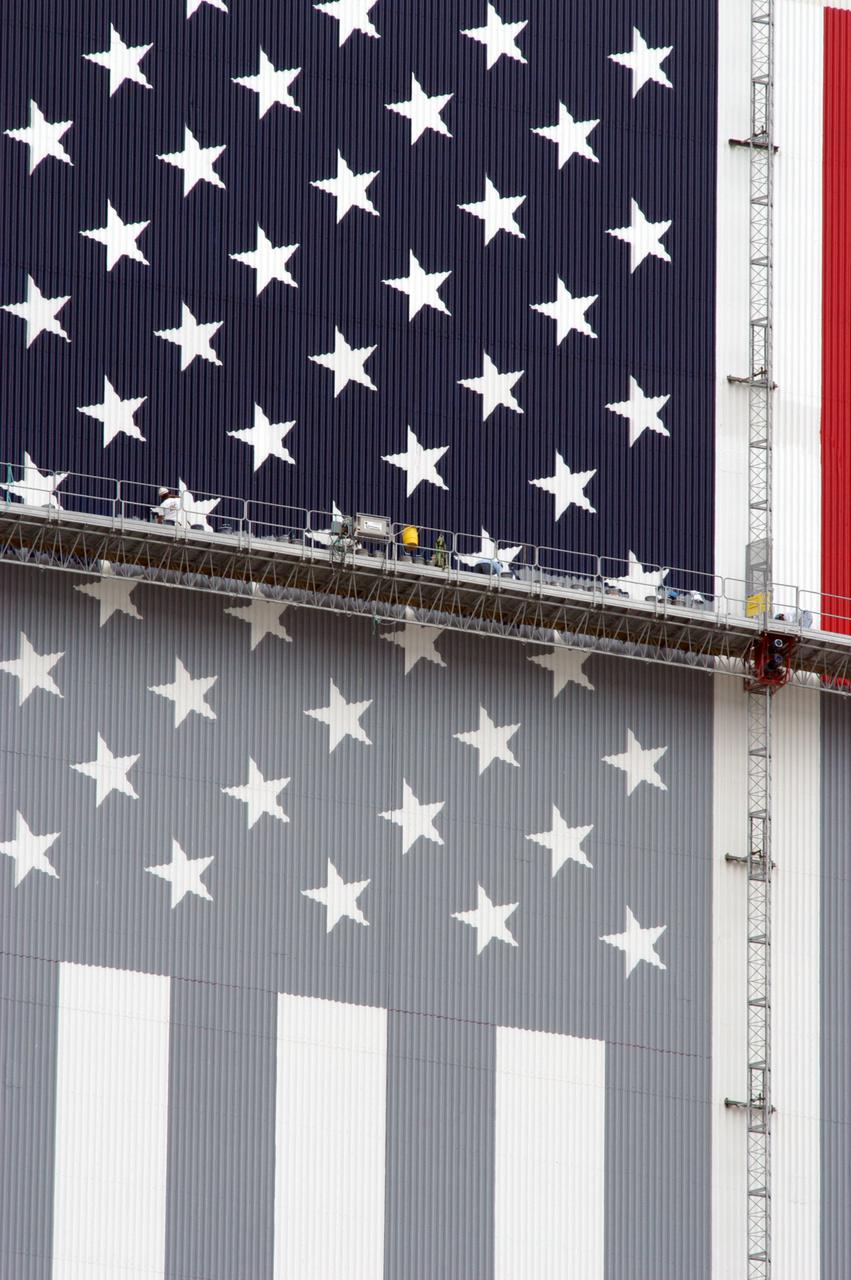
On platforms suspended from the top of the 525-foot-high VAB, workers use rollers and brushes to repaint the U.S. flag on the southwest side of the Vehicle Assembly Building. The flag spans an area 209 feet by 110 feet, or about 23, 437 square feet. Each stripe is 9 feet wide and each star is 6 feet in diameter. The logo is also being painted. Known as the "meatball," the logo measures 110 feet by 132 feet, or about 12,300 square feet. The flag and logo were last painted in 1998, honoring NASA's 40th anniversary.
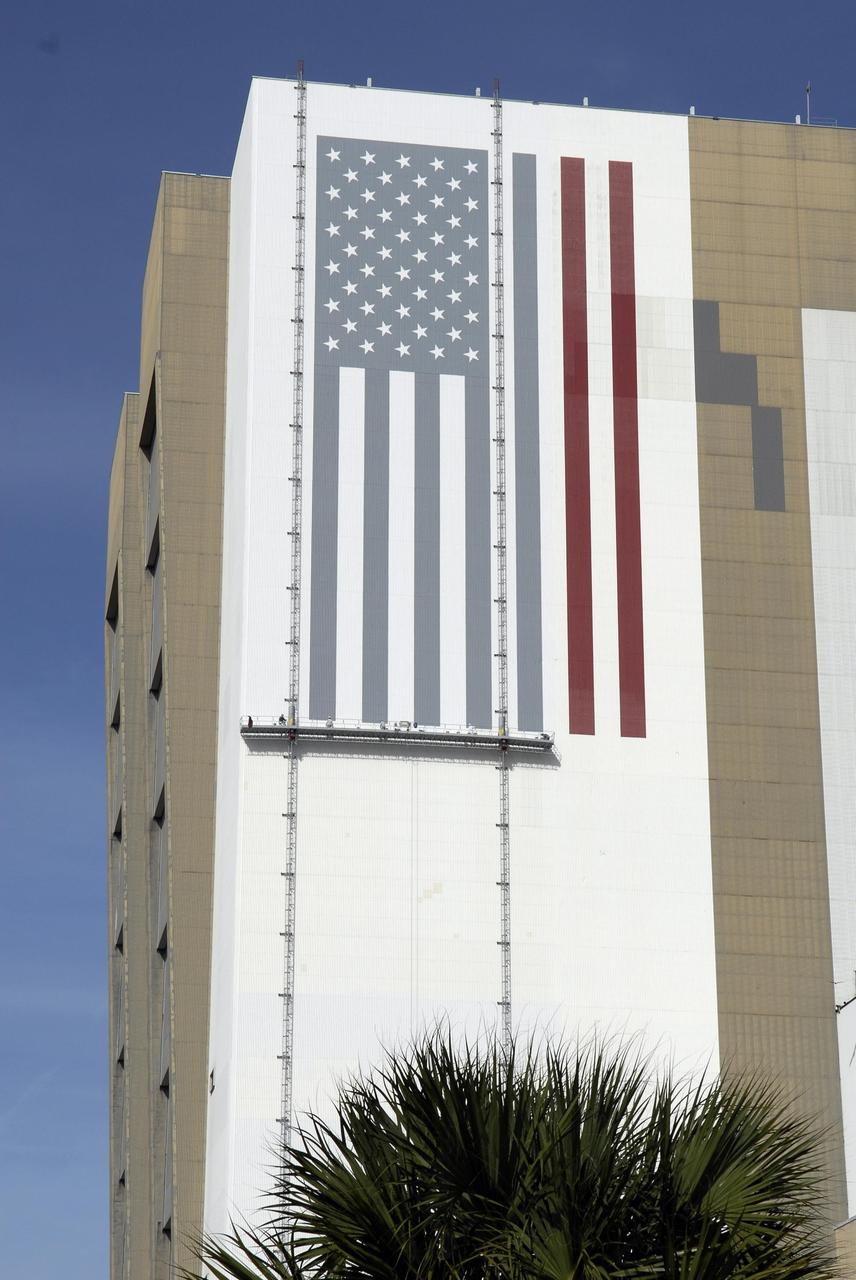
KENNEDY SPACE CENTER, FLA. -- Painters' platforms are seen hanging on the side of Kennedy Space Center's 525-foot-high Vehicle Assembly Building to facilitate the repainting of the American flag. The NASA logo is also being repainted. Workers use rollers and brushes to do the painting. The flag and logo were last painted in 1998, honoring NASA's 40th anniversary. The flag spans an area 209 feet by 110 feet, or about 23,437 square feet. Each stripe is 9 feet wide and each star is 6 feet in diameter. The logo, also known as the "meatball," measures 110 feet by 132 feet, or about 12,300 square feet. Photo credit: NASA/Kim Shiflett
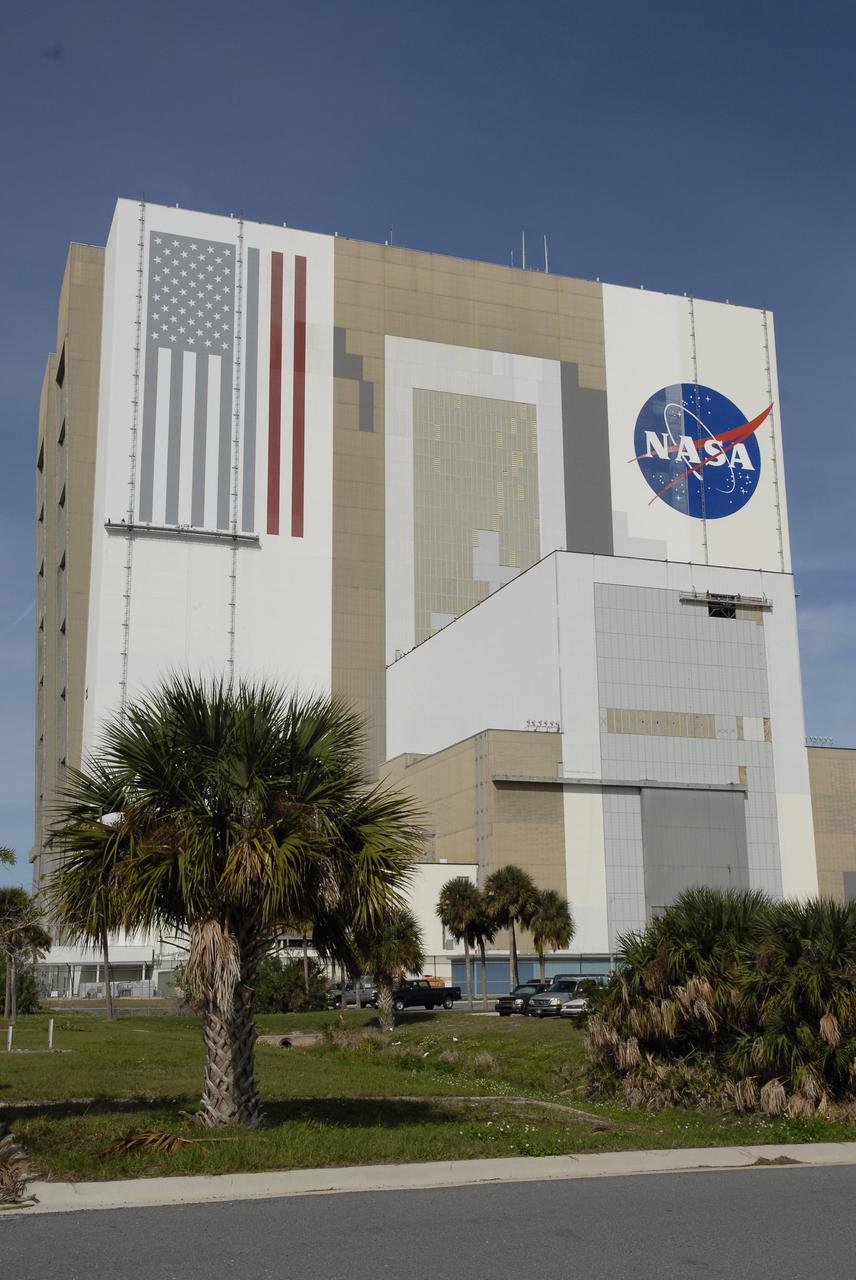
KENNEDY SPACE CENTER, FLA. -- Painters' platforms are seen hanging on the side of Kennedy Space Center's 525-foot-high Vehicle Assembly Building to facilitate the repainting of the American flag and the NASA logo. Workers use rollers and brushes to do the painting. The flag and logo were last painted in 1998, honoring NASA's 40th anniversary. The flag spans an area 209 feet by 110 feet, or about 23,437 square feet. Each stripe is 9 feet wide and each star is 6 feet in diameter. The logo, also known as the "meatball," measures 110 feet by 132 feet, or about 12,300 square feet. Photo credit: NASA/Kim Shiflett
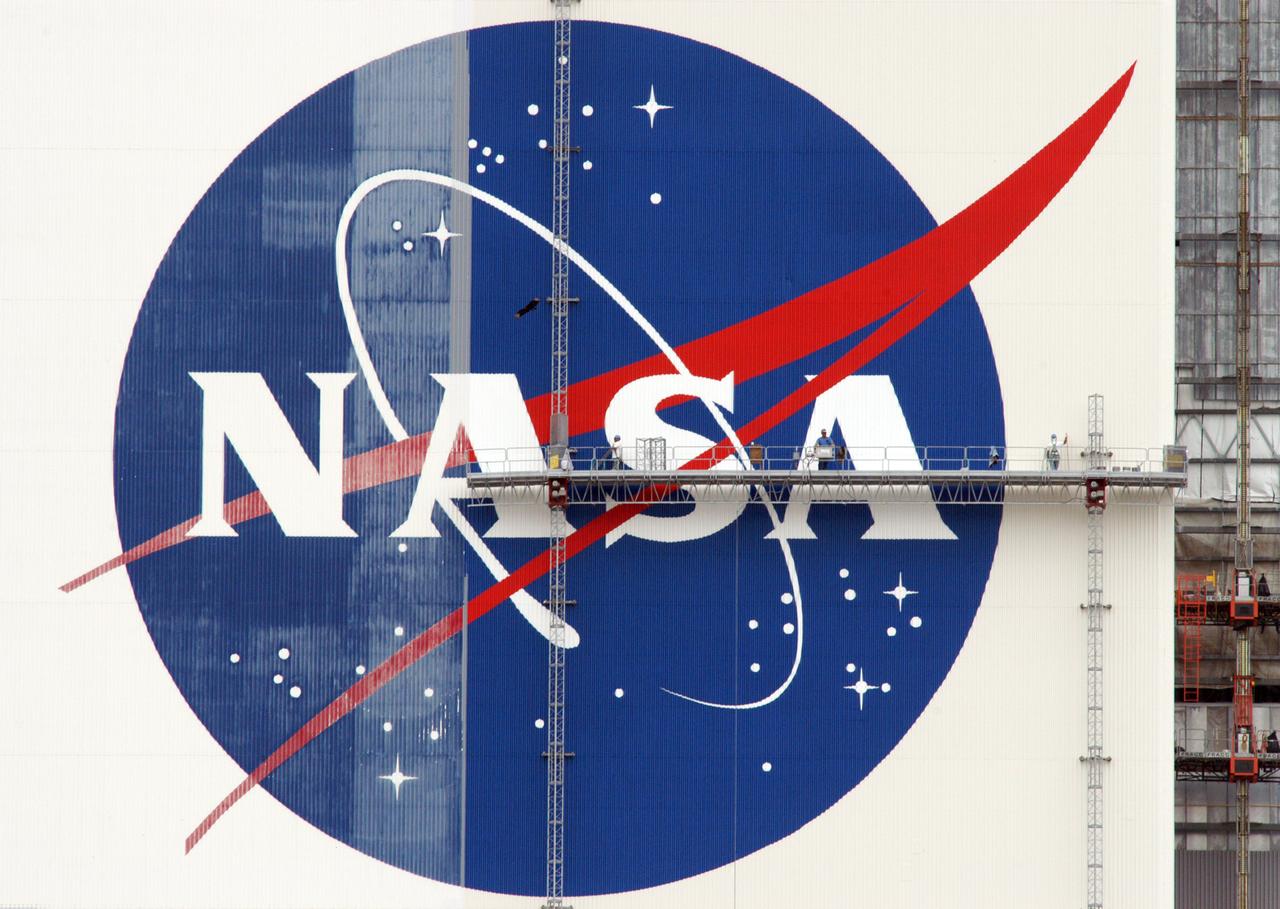
On platforms suspended from the top of the 525-foot-high VAB, workers use rollers and brushes to repaint the NASA logo on the southeast side of the Vehicle Assembly Building. Known as the "meatball," the logo measures 110 feet by 132 feet, or about 12,300 square feet. The U.S. flag is also being repainted. The flag spans an area 209 feet by 110 feet, or about 23, 437 square feet. Each stripe is 9 feet wide and each star is 6 feet in diameter. The flag and logo were last painted in 1998, honoring NASA's 40th anniversary.
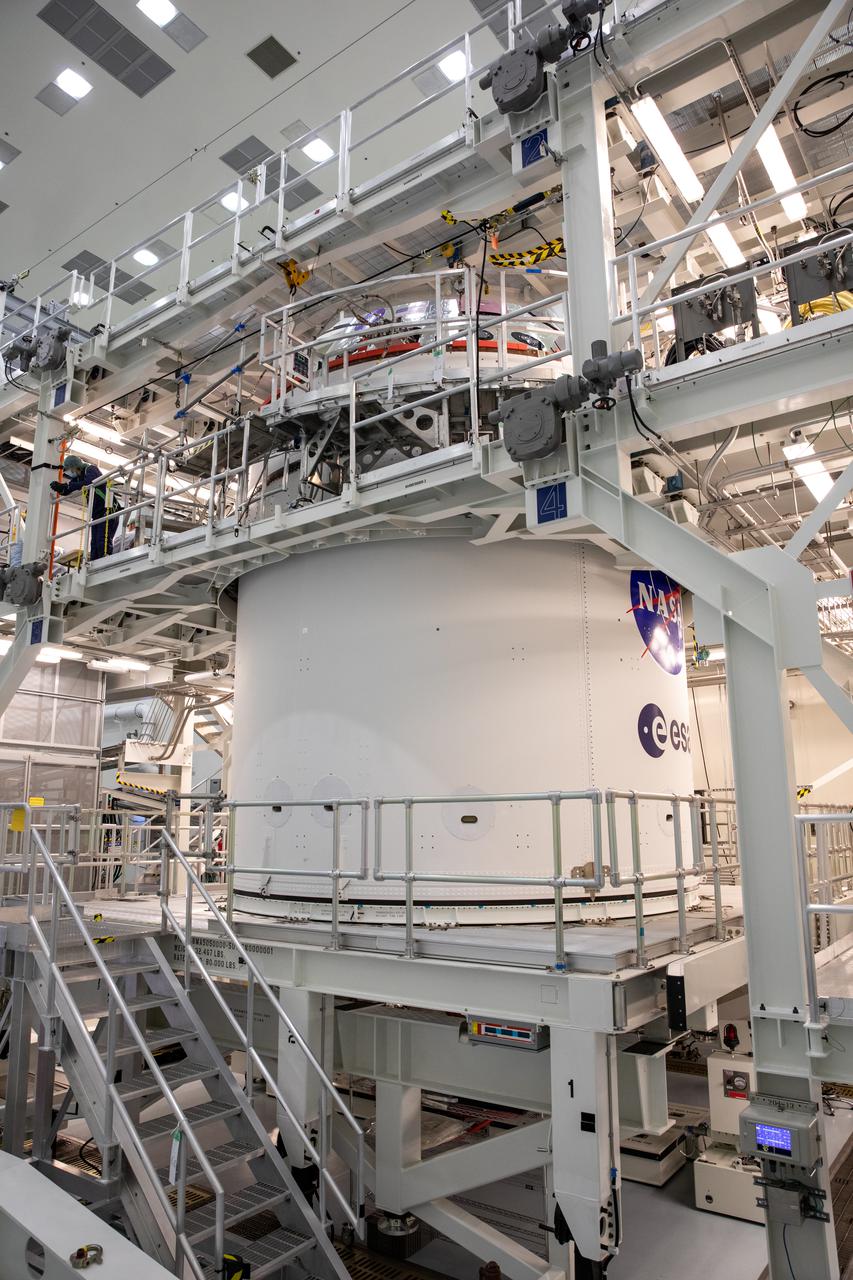
Artemis I extends NASA and ESA’s (European Space Agency) strong international partnership beyond low-Earth orbit to lunar exploration with Orion on Artemis issions, as the the ESA logo joins the historic NASA “meatball” insignia on the Artemis I spacecraft adapter jettison fairing panels that protect the service module during launch. Orion is currently stationed at NASA’s Kennedy Space Center in the Multi-Payload Processing Facility, where it will undergo fueling and servicing by NASA’s Exploration Ground Systems and Jacobs Technology teams in preparation for the upcoming flight test with the Space Launch System rocket under the agency’s Artemis program.
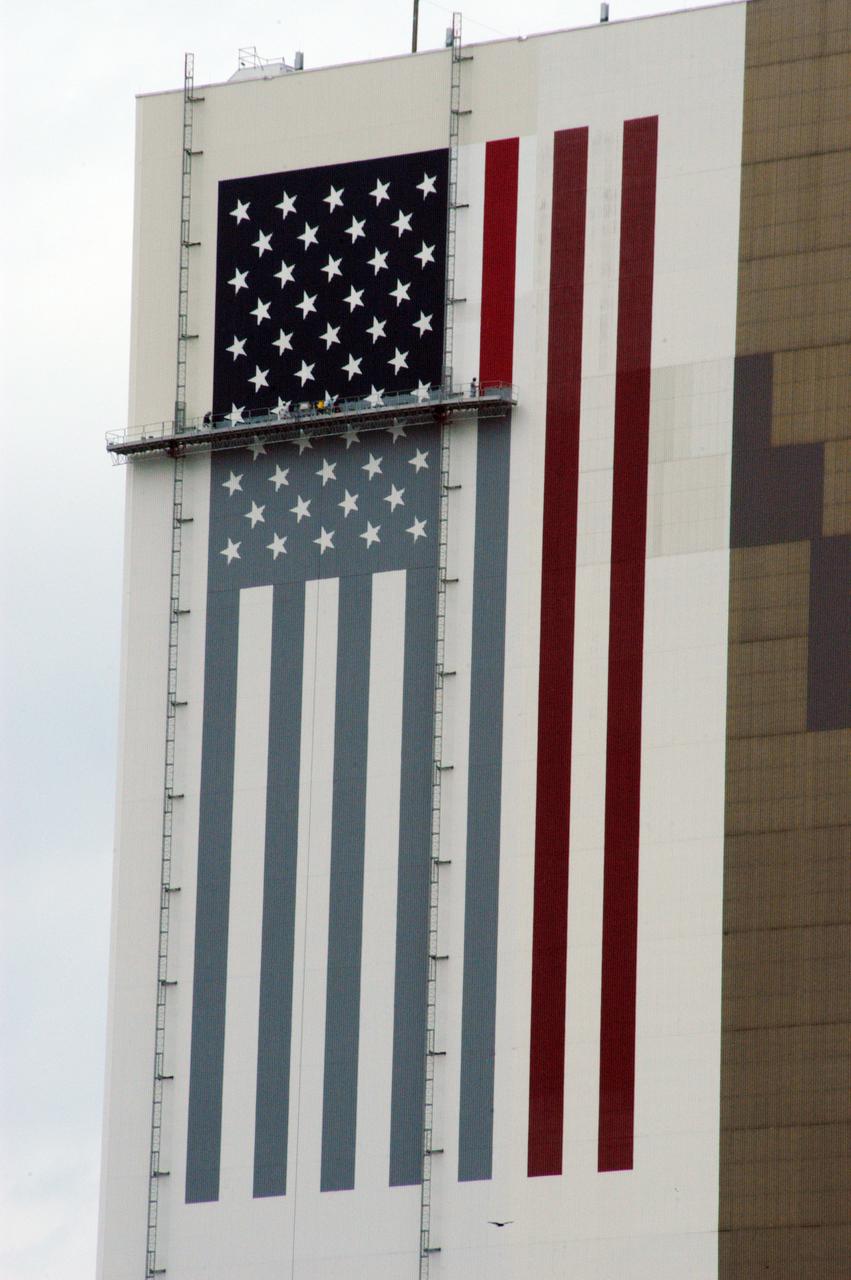
On platforms suspended from the top of the 525-foot-high VAB, workers use rollers and brushes to repaint the U.S. flag on the southwest side of the Vehicle Assembly Building. The flag spans an area 209 feet by 110 feet, or about 23, 437 square feet. Each stripe is 9 feet wide and each star is 6 feet in diameter. The logo is also being painted. Known as the "meatball," the logo measures 110 feet by 132 feet, or about 12,300 square feet. The flag and logo were last painted in 1998, honoring NASA's 40th anniversary.
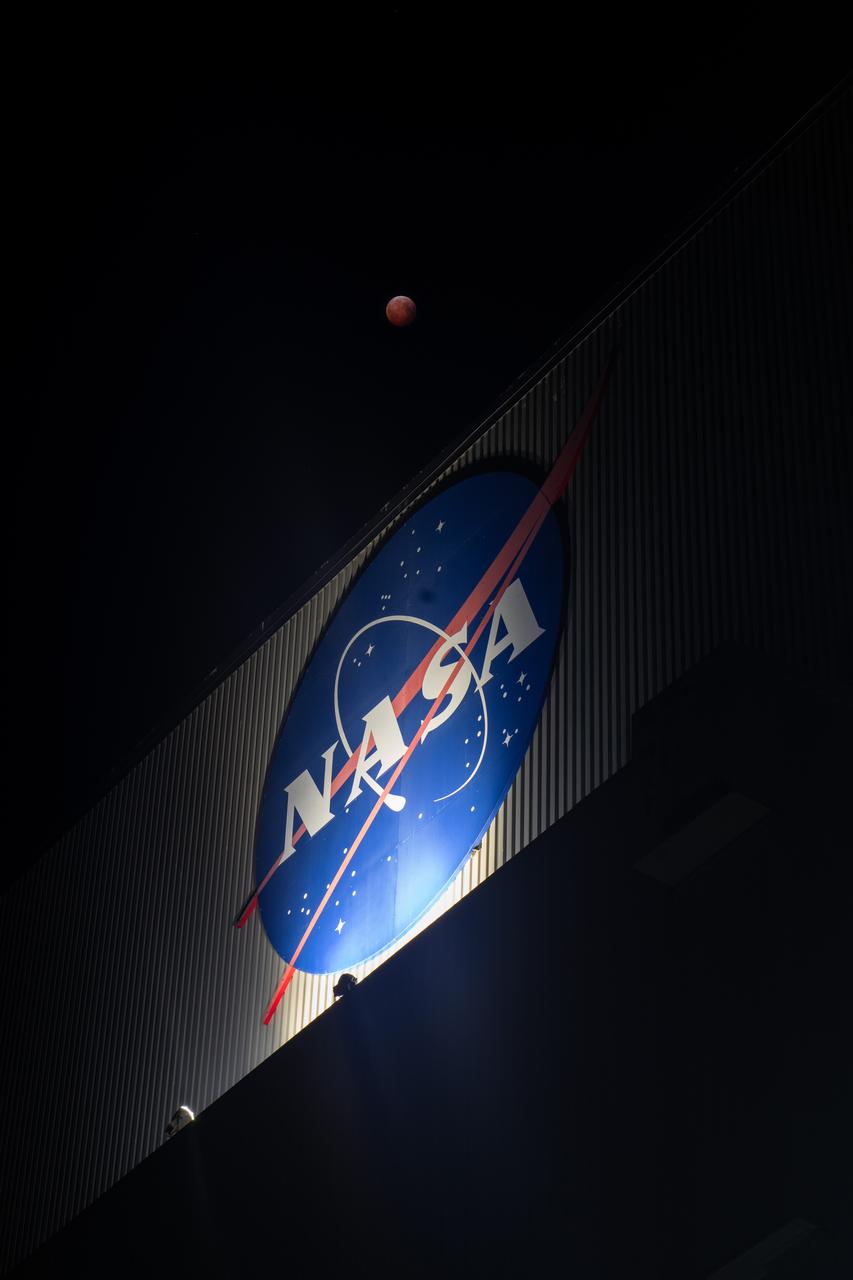
Blood Moon on March 14, 2025 at Armstrong Test Facility in Sandusky, OH. Photo Credit: (NASA/Sara Lowthian-Hanna)
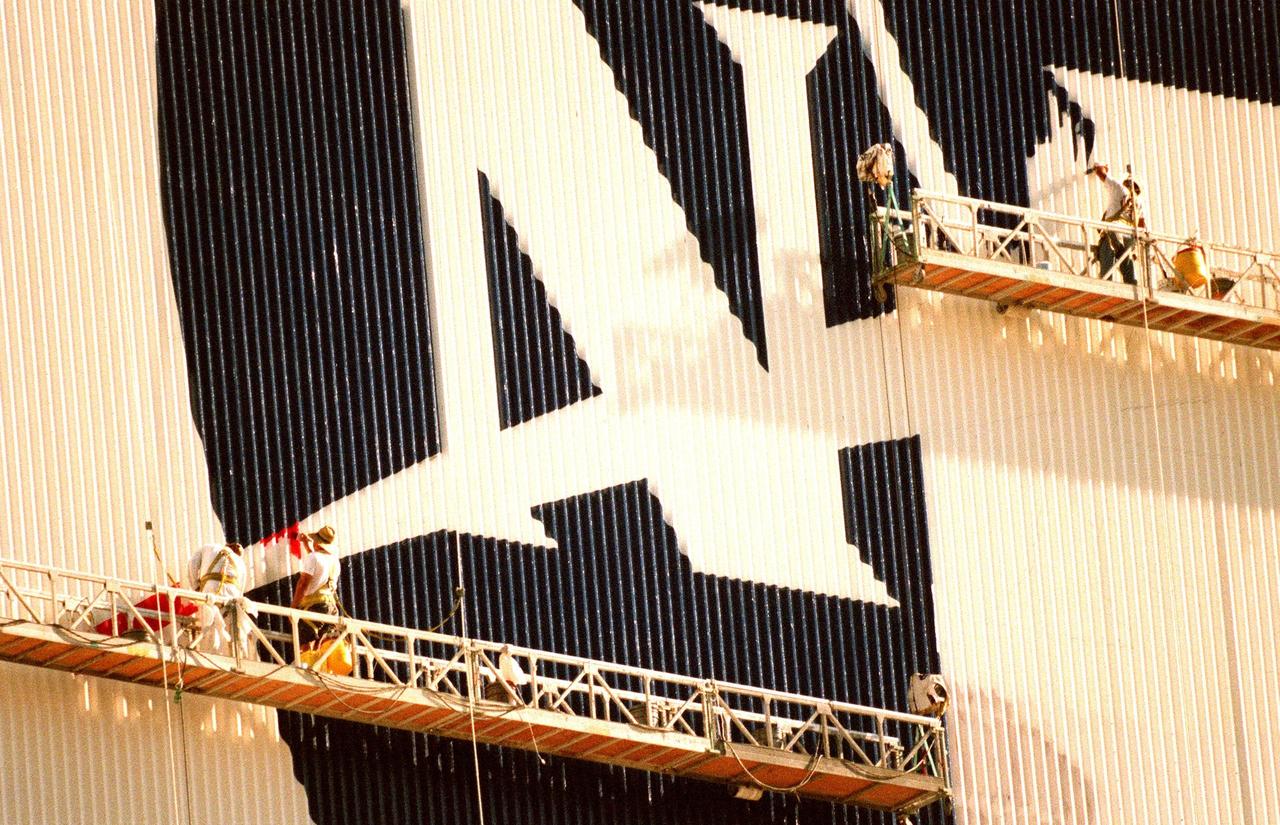
KENNEDY SPACE CENTER, FLA. -- The worker on the lower left applies the red paint to the chevron while the worker on the right fills in the blue field to the NASA logo they are painting on the Vehicle Assembly Building (VAB). When finished, the logo, also known as the "meatball," will measure 110 feet by 132 feet, or about 12,300 square feet. Workers, suspended on platforms from the top of the 525-foot-high VAB, are using rollers and brushes to do the painting. The entire fleet of orbiters is also receiving the addition of the NASA logo on their wings and sidewalls. In addition to the logo, the American flag is being repainted on the other side of the VAB. The flag spans an area 209 feet by 110 feet, or about 23, 437 square feet. Each stripe is 9 feet wide and each star is 6 feet in diameter. The painting honors NASA’s 40th anniversary on Oct. 1 and is expected to be complete in mid-September
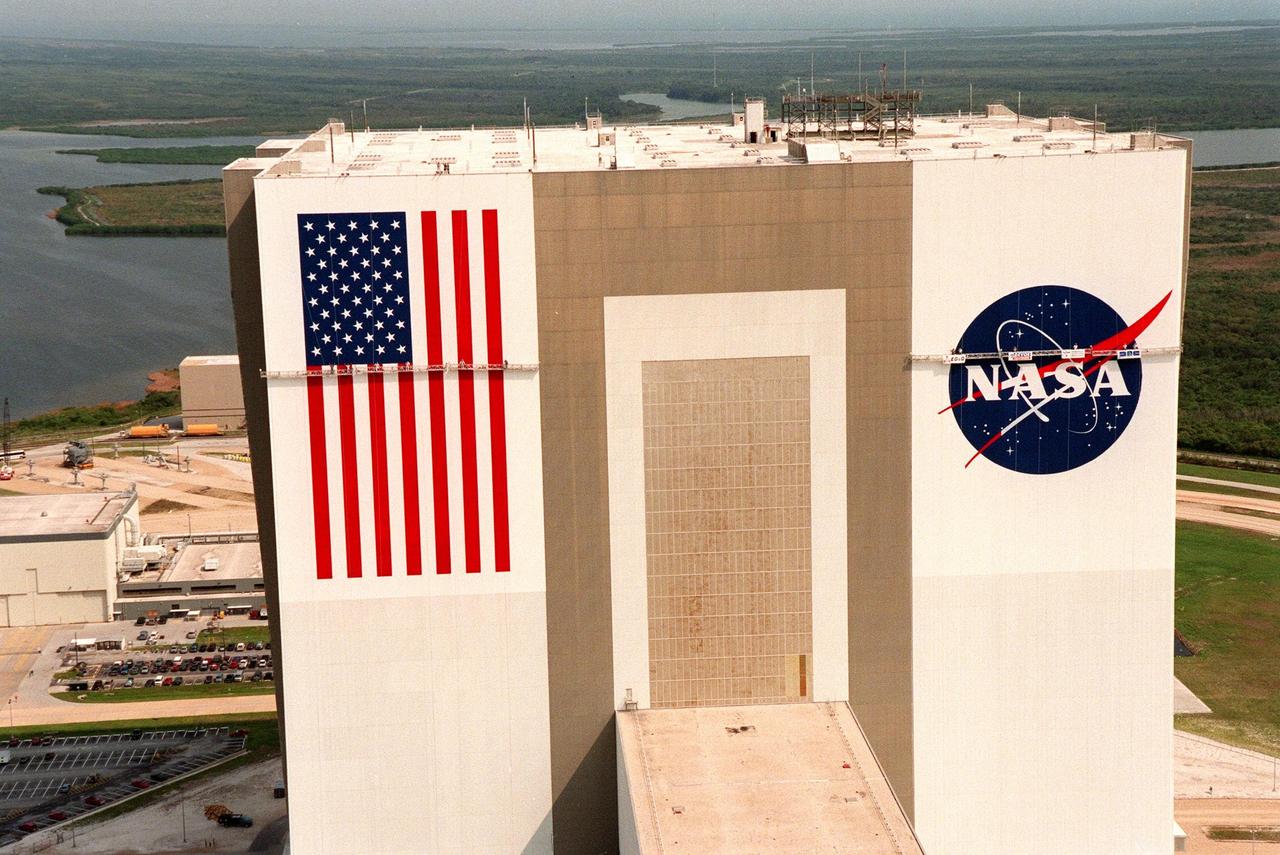
KENNEDY SPACE CENTER, FLA. -- This aerial view shows the Vehicle Assembly Building (VAB) getting a facelift with the repainting of the American flag and replacing of the Bicentennial emblem with the NASA logo. The painting honors NASA's 40th anniversary on Oct. 1 and is expected to be complete in mid-September. The flag spans an area 209 feet by 110 feet, or about 23,437 square feet. Each stripe is 9 feet wide and each star is 6 feet in diameter. The logo, also known as the "meatball," measures 110 feet by 132 feet, or about 12,300 square feet. Workers, suspended on platforms from the top of the 525-foot-high VAB, are using rollers and brushes to do the painting. The entire fleet of orbiters is also receiving the addition of the NASA logo on their wings and sidewalls
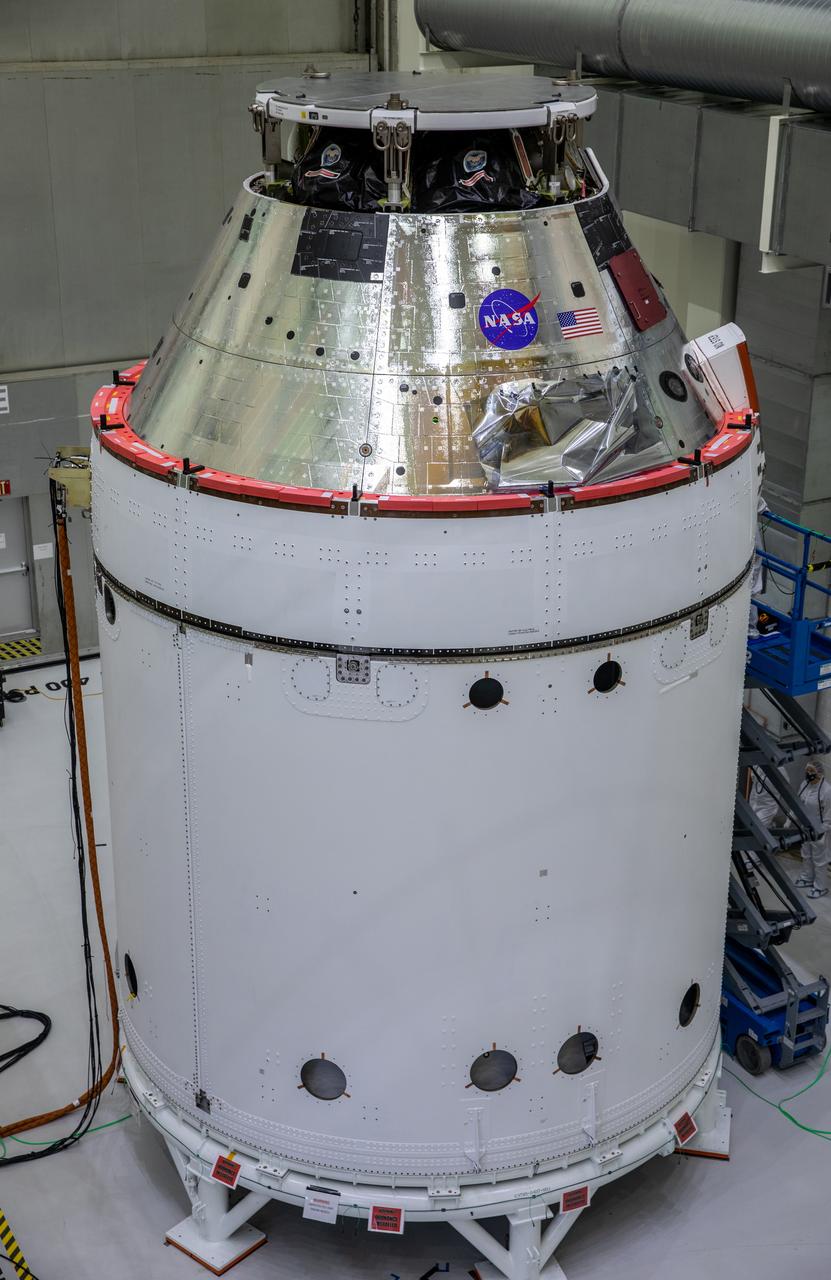
The NASA insignia, also called the “meatball,” and the American Flag are applied to the Orion crew module back shell for the Artemis I mission on Oct. 28, 2020, inside the Neil Armstrong Operations and Checkout Building at NASA’s Kennedy Space Center in Florida. Attached below Orion are the crew module adapter and the European Service Module (ESM) with spacecraft adapter jettison fairings installed. Recently, teams from across the globe installed the four solar array wings, which are housed inside the protective covering of the fairings. The fairing panels will encapsulate the ESM to protect it from harsh environments such as heat, wind, and acoustics as the spacecraft is propelled out of Earth’s atmosphere atop the Space Launch System rocket during NASA’s Artemis I mission.
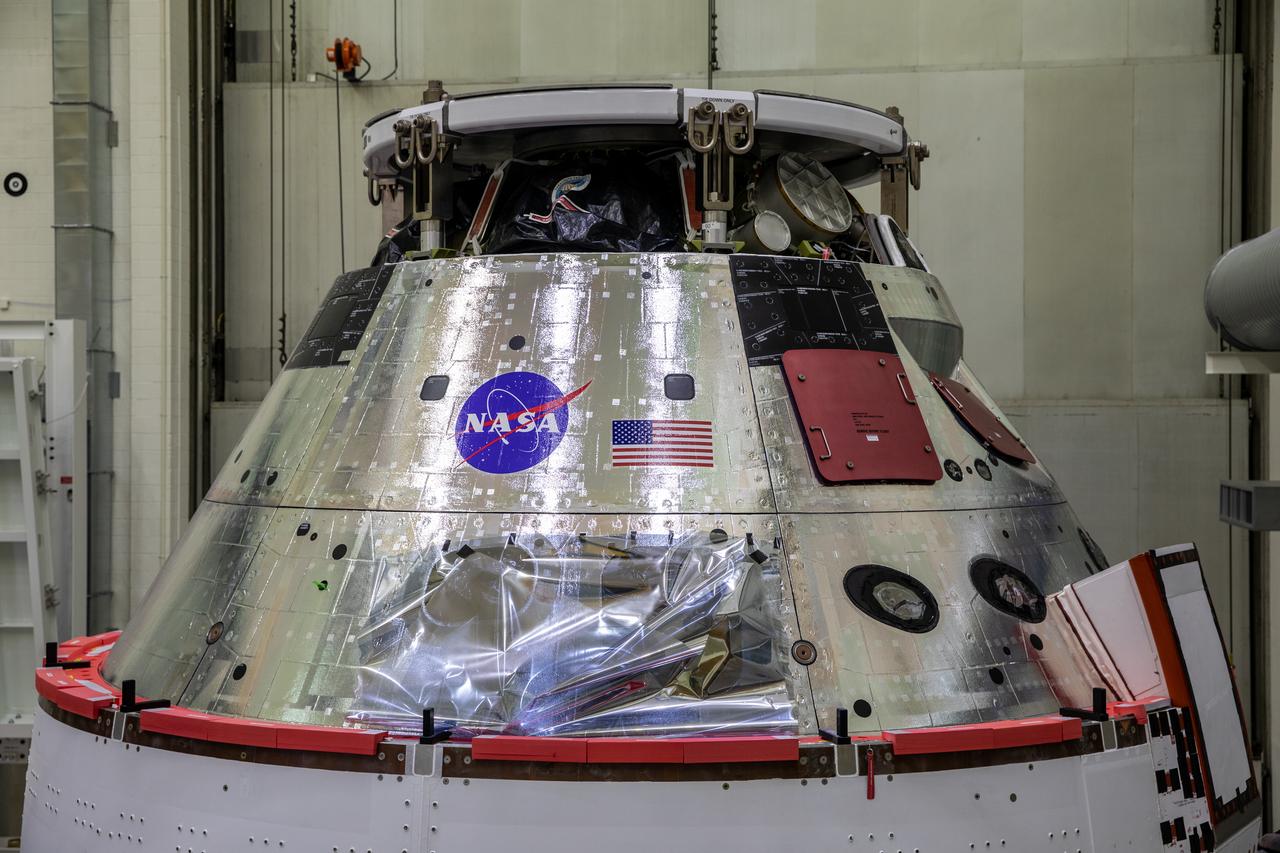
The NASA insignia, also called the “meatball,” and the American Flag are applied to the Orion crew module back shell for the Artemis I mission on Oct. 28, 2020, inside the Neil Armstrong Operations and Checkout Building at NASA’s Kennedy Space Center in Florida. Attached below Orion are the crew module adapter and the European Service Module (ESM) with spacecraft adapter jettison fairings installed. Recently, teams from across the globe installed the four solar array wings, which are housed inside the protective covering of the fairings. The fairing panels will encapsulate the ESM to protect it from harsh environments such as heat, wind, and acoustics as the spacecraft is propelled out of Earth’s atmosphere atop the Space Launch System rocket during NASA’s Artemis I mission.
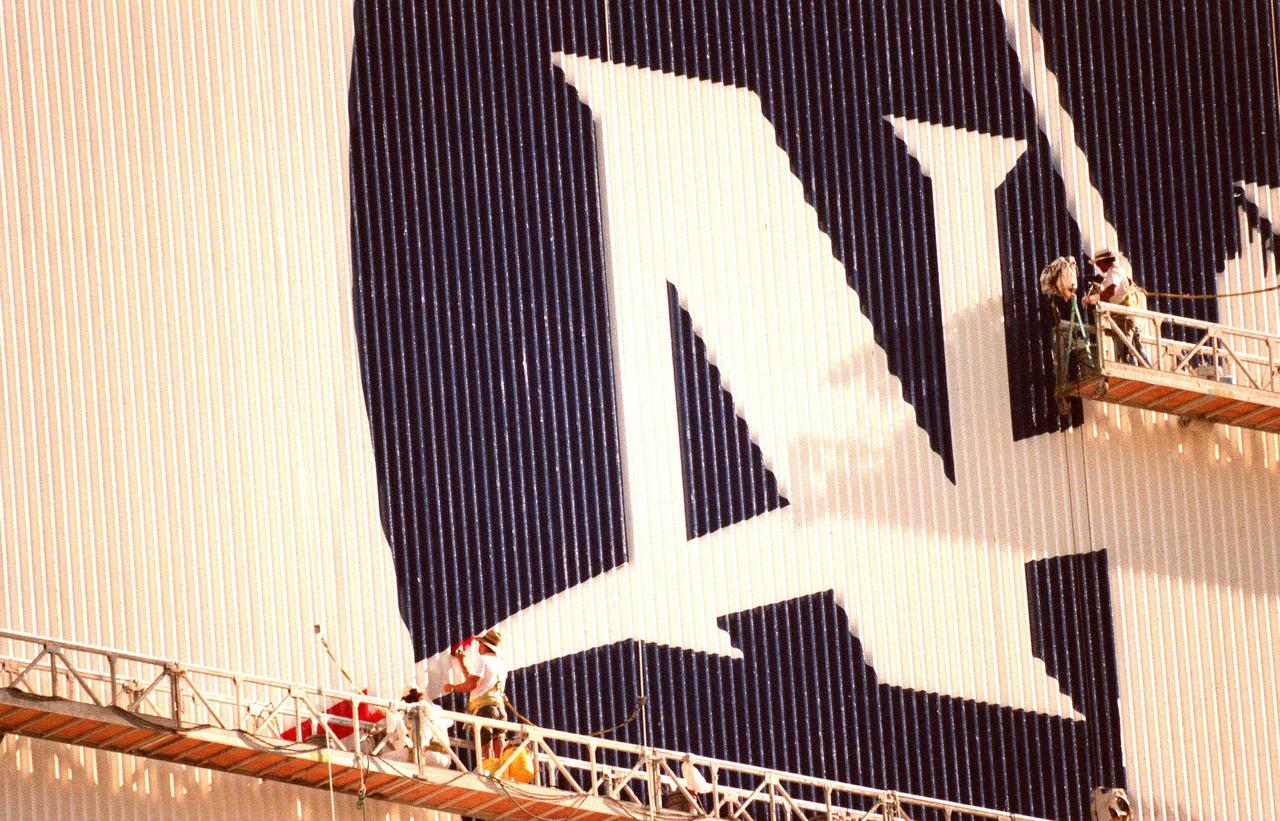
KENNEDY SPACE CENTER, FLA. -- The worker on the lower left applies the red paint to the chevron while the worker on the right fills in the blue field to the NASA logo they are painting on the Vehicle Assembly Building (VAB). When finished, the logo, also known as the "meatball," will measure 110 feet by 132 feet, or about 12,300 square feet. Workers, suspended on platforms from the top of the 525-foot-high VAB, are using rollers and brushes to do the painting. The entire fleet of orbiters is also receiving the addition of the NASA logo on their wings and sidewalls. In addition to the logo, the American flag is being repainted on the other side of the VAB. The flag spans an area 209 feet by 110 feet, or about 23, 437 square feet. Each stripe is 9 feet wide and each star is 6 feet in diameter. The painting honors NASA’s 40th anniversary on Oct. 1 and is expected to be complete in mid-September
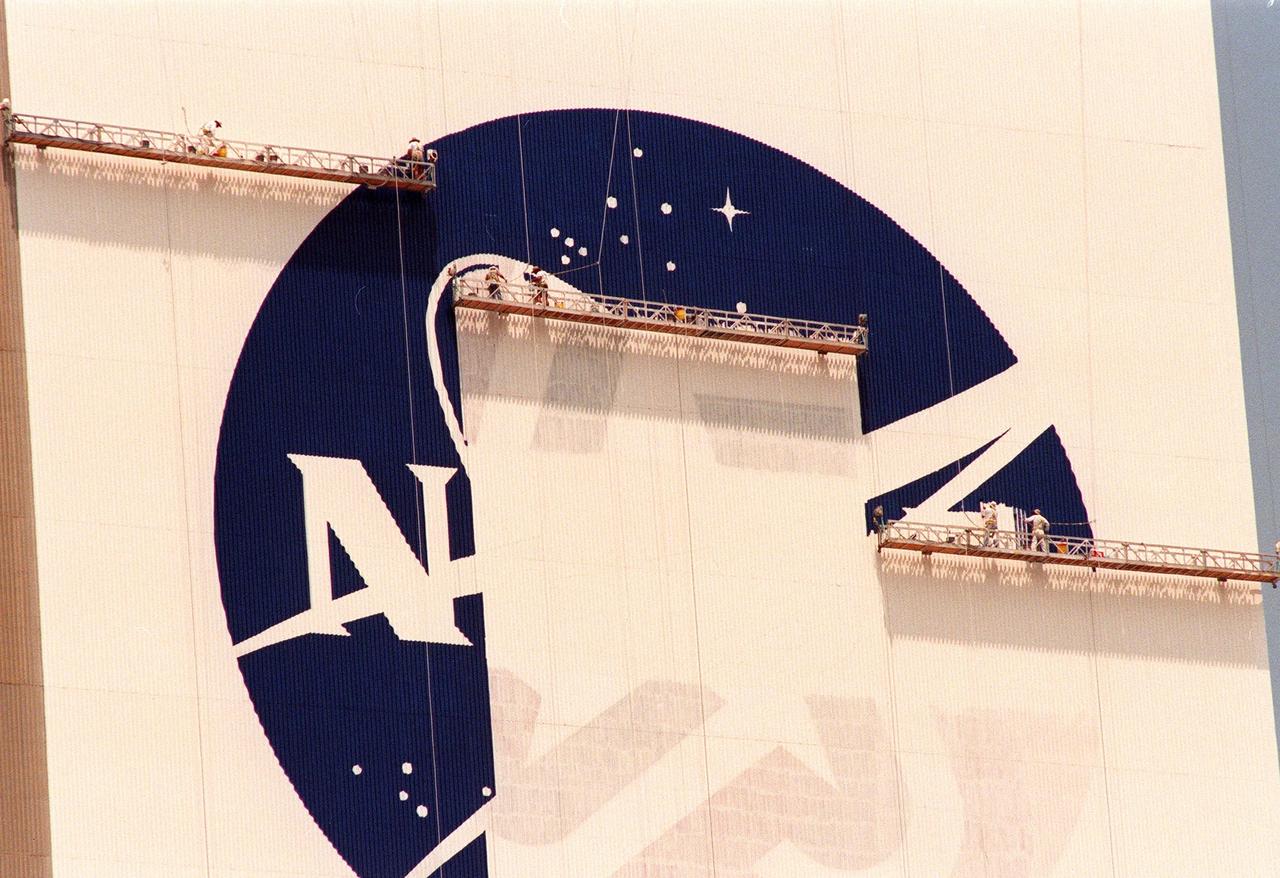
KENNEDY SPACE CENTER, FLA. -- The NASA logo, also known as the "meatball," is painted on the side of the Vehicle Assembly Building (VAB). When finished, the logo will measure 110 feet by 132 feet, or about 12,300 square feet. Workers, suspended on platforms from the top of the 525-foot-high VAB, are using rollers and brushes to do the painting. In addition to the logo, the American flag is also being repainted on the other side of the VAB. The flag spans an area 209 feet by 110 feet, or about 23, 437 square feet. Each stripe is 9 feet wide and each star is 6 feet in diameter. The entire fleet of orbiters is also receiving the addition of the NASA logo on their wings and sidewalls. The painting honors NASA’s 40th anniversary on Oct. 1 and is expected to be complete in mid-September