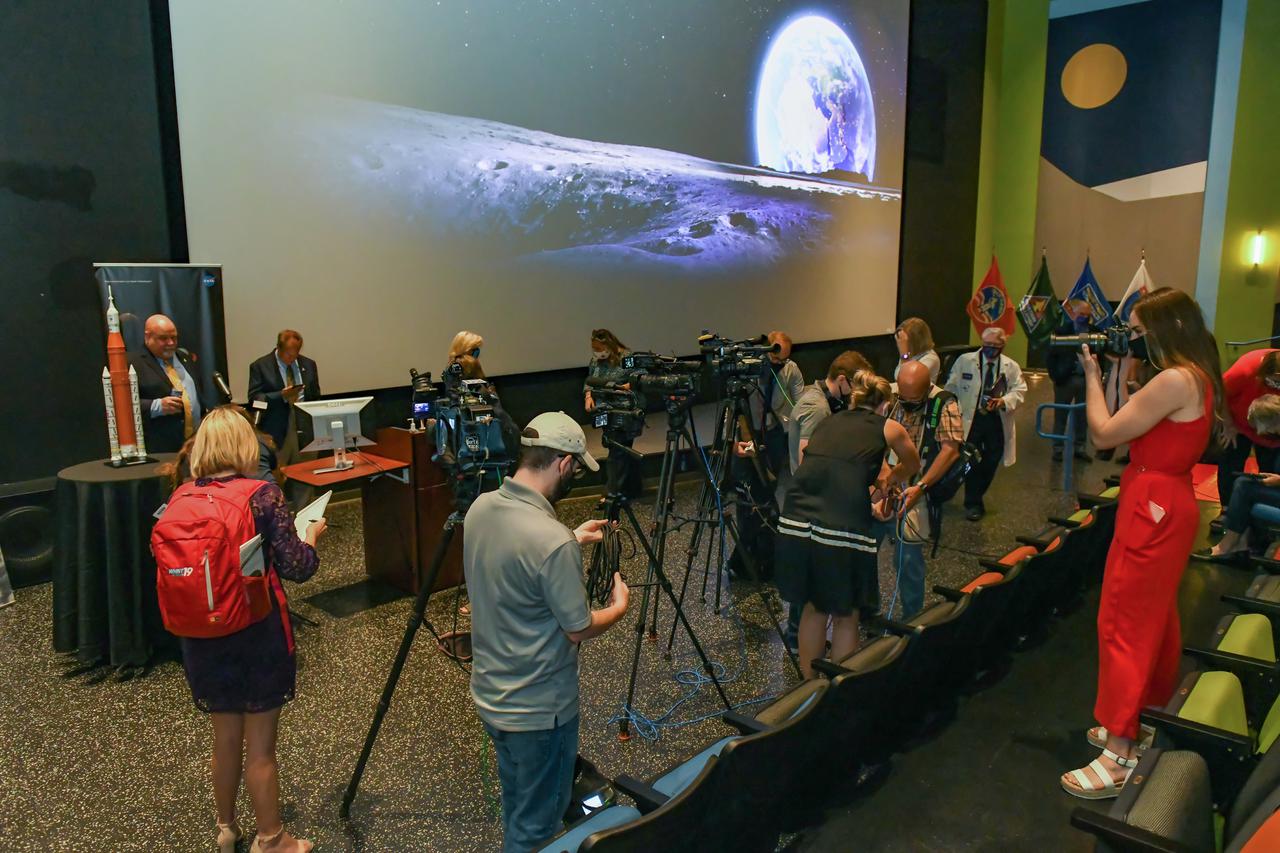
Media members gather for Q&A session at Chamber Media Briefing at USSRC

Media reporter asks question during Q&A session at Chamber Media Briefing at USSRC.
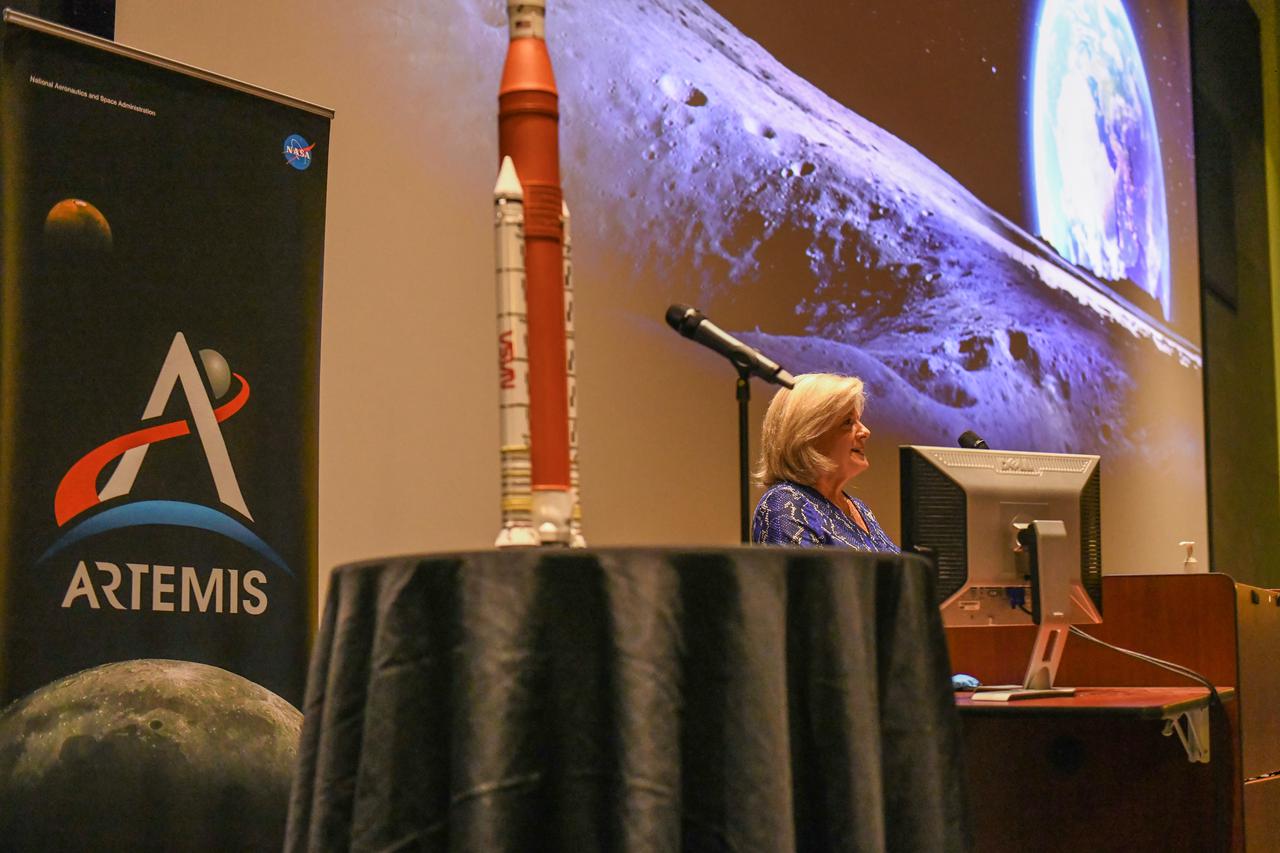
MSFC Director Jody Singer welcomes audience to Chamber Media Briefing at USSRC.
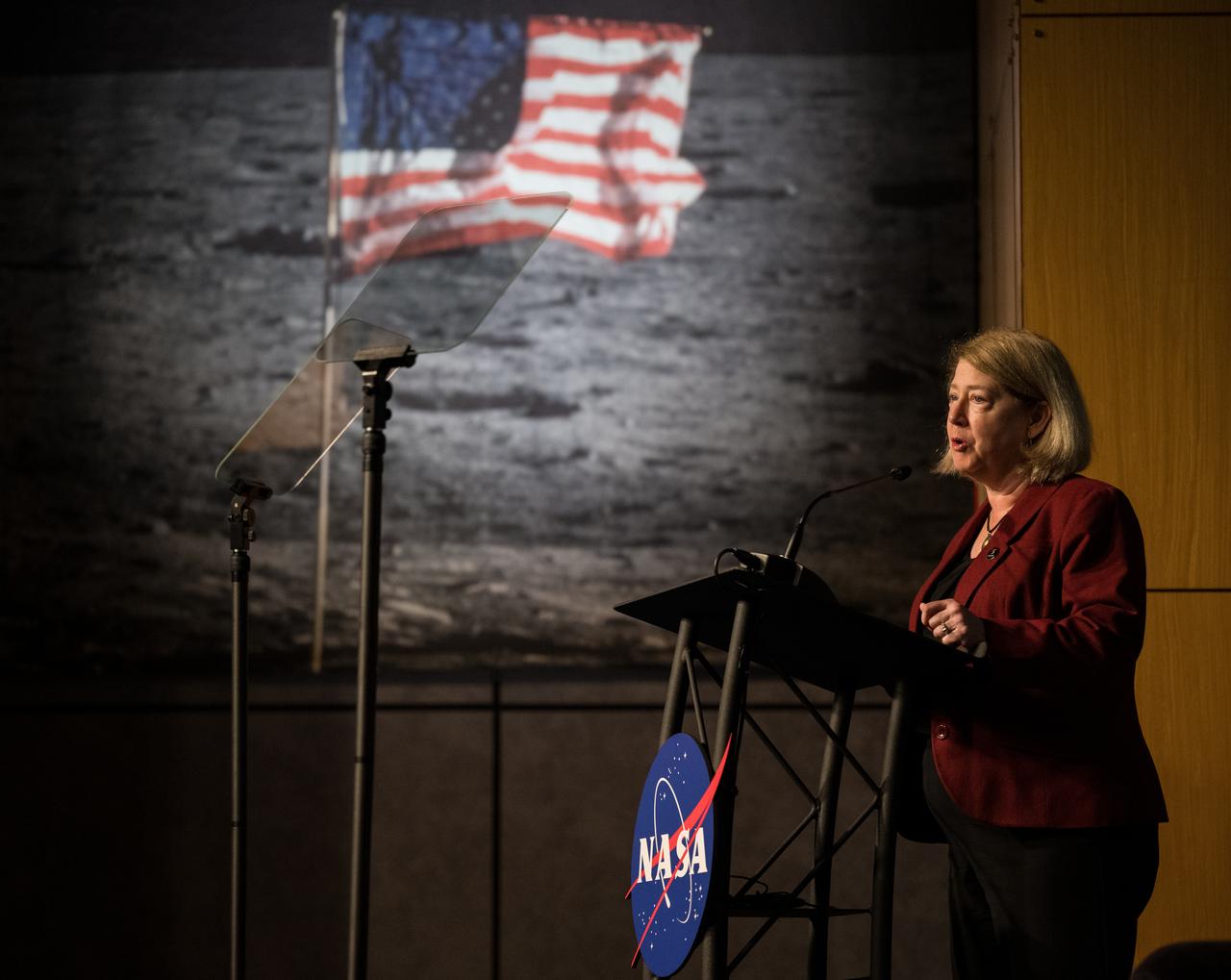
NASA Deputy Administrator Pam Melroy speaks during a media briefing to discuss the upcoming solar eclipse, Tuesday, March 26, 2024 at the Mary W. Jackson NASA Headquarters building in Washington. A total solar eclipse will sweep across a narrow portion of the North American continent from Mexico’s Pacific coast to the Atlantic coast of Newfoundland, Canada on April 8, 2024. A partial solar eclipse will be visible across the entire North American continent along with parts of Central America and Europe. Photo Credit: (NASA/Aubrey Gemignani)

NASA Administrator Bill Nelson speaks during a media briefing to discuss the upcoming solar eclipse, Tuesday, March 26, 2024 at the Mary W. Jackson NASA Headquarters building in Washington. A total solar eclipse will sweep across a narrow portion of the North American continent from Mexico’s Pacific coast to the Atlantic coast of Newfoundland, Canada on April 8, 2024. A partial solar eclipse will be visible across the entire North American continent along with parts of Central America and Europe. Photo Credit: (NASA/Aubrey Gemignani)

NASA Deputy Administrator Pam Melroy speaks during a media briefing to discuss the upcoming solar eclipse, Tuesday, March 26, 2024 at the Mary W. Jackson NASA Headquarters building in Washington. A total solar eclipse will sweep across a narrow portion of the North American continent from Mexico’s Pacific coast to the Atlantic coast of Newfoundland, Canada on April 8, 2024. A partial solar eclipse will be visible across the entire North American continent along with parts of Central America and Europe. Photo Credit: (NASA/Aubrey Gemignani)
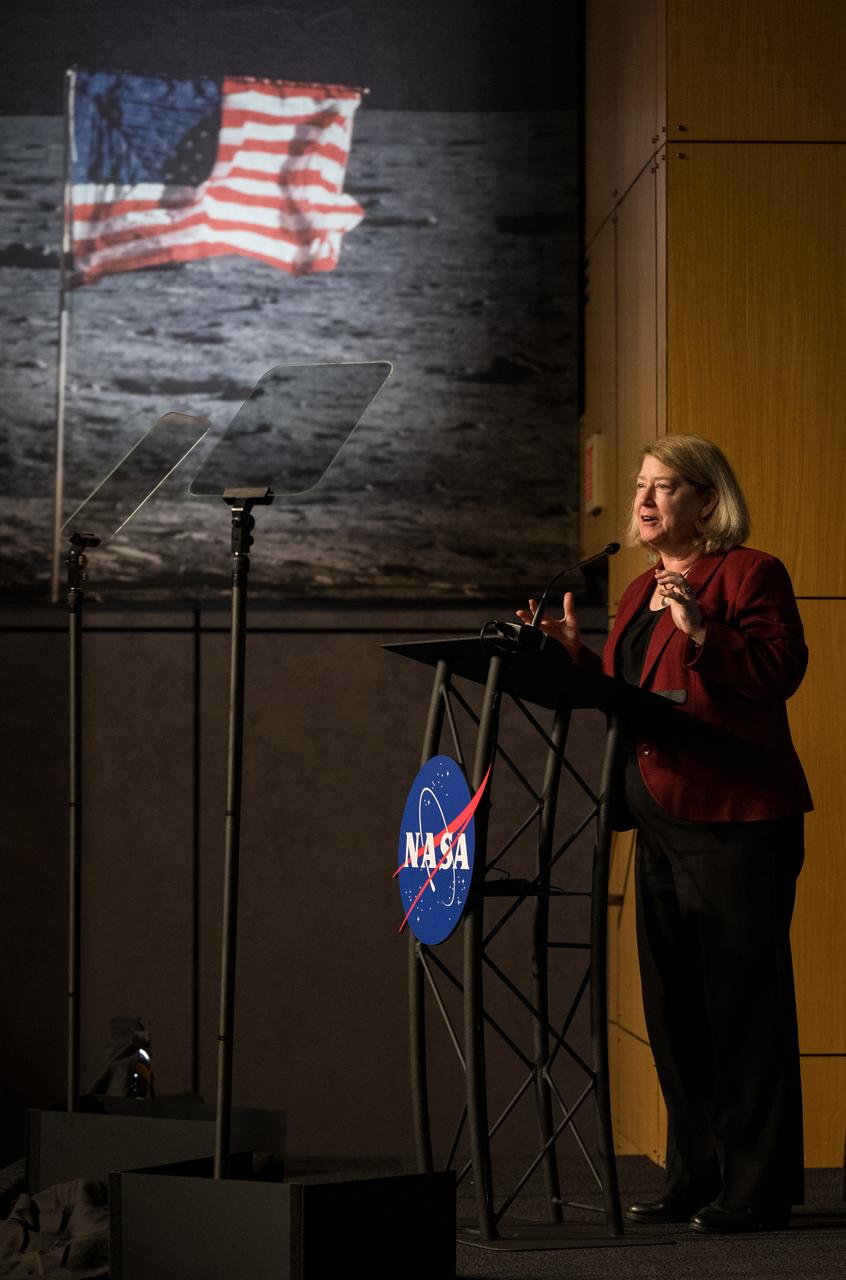
NASA Deputy Administrator Pam Melroy speaks during a media briefing to discuss the upcoming solar eclipse, Tuesday, March 26, 2024 at the Mary W. Jackson NASA Headquarters building in Washington. A total solar eclipse will sweep across a narrow portion of the North American continent from Mexico’s Pacific coast to the Atlantic coast of Newfoundland, Canada on April 8, 2024. A partial solar eclipse will be visible across the entire North American continent along with parts of Central America and Europe. Photo Credit: (NASA/Aubrey Gemignani)

NASA Administrator Bill Nelson speaks during a media briefing to discuss the upcoming solar eclipse, Tuesday, March 26, 2024 at the Mary W. Jackson NASA Headquarters building in Washington. A total solar eclipse will sweep across a narrow portion of the North American continent from Mexico’s Pacific coast to the Atlantic coast of Newfoundland, Canada on April 8, 2024. A partial solar eclipse will be visible across the entire North American continent along with parts of Central America and Europe. Photo Credit: (NASA/Aubrey Gemignani)
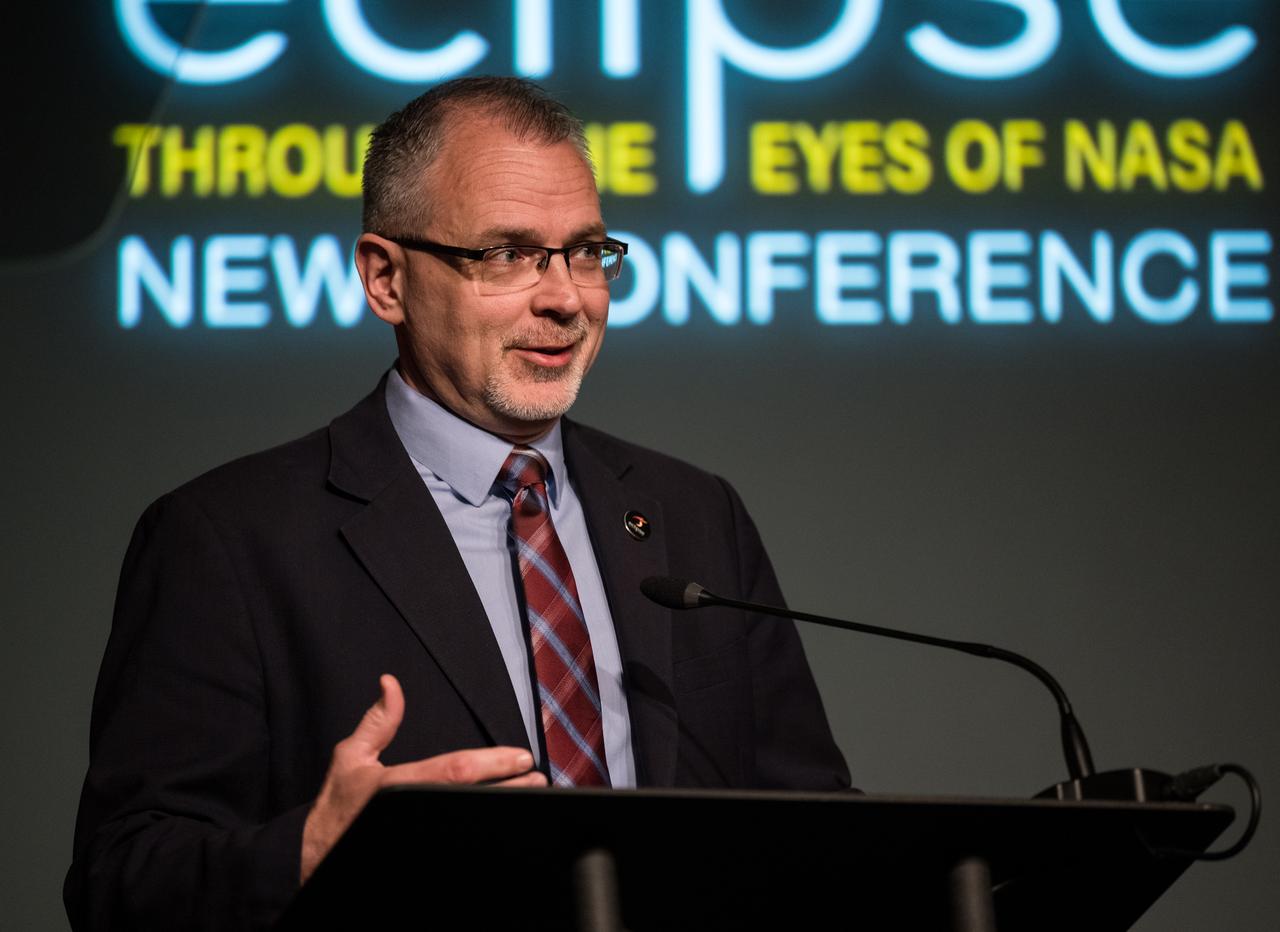
NASA Associate Administrator Jim Free speaks during a media briefing to discuss the upcoming solar eclipse, Tuesday, March 26, 2024 at the Mary W. Jackson NASA Headquarters building in Washington. A total solar eclipse will sweep across a narrow portion of the North American continent from Mexico’s Pacific coast to the Atlantic coast of Newfoundland, Canada on April 8, 2024. A partial solar eclipse will be visible across the entire North American continent along with parts of Central America and Europe. Photo Credit: (NASA/Aubrey Gemignani)

NASA Headquarters eclipse program manager, Kelly Korreck, speaks during a media briefing to discuss the upcoming solar eclipse, Tuesday, March 26, 2024 at the Mary W. Jackson NASA Headquarters building in Washington. A total solar eclipse will sweep across a narrow portion of the North American continent from Mexico’s Pacific coast to the Atlantic coast of Newfoundland, Canada on April 8, 2024. A partial solar eclipse will be visible across the entire North American continent along with parts of Central America and Europe. Photo Credit: (NASA/Aubrey Gemignani)

NASA Deputy Press Secretary to NASA Administrator Bill Nelson, Faith McKie, introduces the panelists during a media briefing to discuss the upcoming solar eclipse, Tuesday, March 26, 2024 at the Mary W. Jackson NASA Headquarters building in Washington. A total solar eclipse will sweep across a narrow portion of the North American continent from Mexico’s Pacific coast to the Atlantic coast of Newfoundland, Canada on April 8, 2024. A partial solar eclipse will be visible across the entire North American continent along with parts of Central America and Europe. Photo Credit: (NASA/Aubrey Gemignani)

NASA Headquarters eclipse program manager, Kelly Korreck, speaks during a media briefing to discuss the upcoming solar eclipse, Tuesday, March 26, 2024 at the Mary W. Jackson NASA Headquarters building in Washington. A total solar eclipse will sweep across a narrow portion of the North American continent from Mexico’s Pacific coast to the Atlantic coast of Newfoundland, Canada on April 8, 2024. A partial solar eclipse will be visible across the entire North American continent along with parts of Central America and Europe. Photo Credit: (NASA/Aubrey Gemignani)

NASA Headquarters eclipse program manager, Kelly Korreck, speaks during a media briefing to discuss the upcoming solar eclipse, Tuesday, March 26, 2024 at the Mary W. Jackson NASA Headquarters building in Washington. A total solar eclipse will sweep across a narrow portion of the North American continent from Mexico’s Pacific coast to the Atlantic coast of Newfoundland, Canada on April 8, 2024. A partial solar eclipse will be visible across the entire North American continent along with parts of Central America and Europe. Photo Credit: (NASA/Aubrey Gemignani)

NASA Headquarters eclipse program manager, Kelly Korreck, speaks during a media briefing to discuss the upcoming solar eclipse, Tuesday, March 26, 2024 at the Mary W. Jackson NASA Headquarters building in Washington. A total solar eclipse will sweep across a narrow portion of the North American continent from Mexico’s Pacific coast to the Atlantic coast of Newfoundland, Canada on April 8, 2024. A partial solar eclipse will be visible across the entire North American continent along with parts of Central America and Europe. Photo Credit: (NASA/Aubrey Gemignani)

NASA Administrator Bill Nelson speaks during a media briefing to discuss the upcoming solar eclipse, Tuesday, March 26, 2024 at the Mary W. Jackson NASA Headquarters building in Washington. A total solar eclipse will sweep across a narrow portion of the North American continent from Mexico’s Pacific coast to the Atlantic coast of Newfoundland, Canada on April 8, 2024. A partial solar eclipse will be visible across the entire North American continent along with parts of Central America and Europe. Photo Credit: (NASA/Aubrey Gemignani)
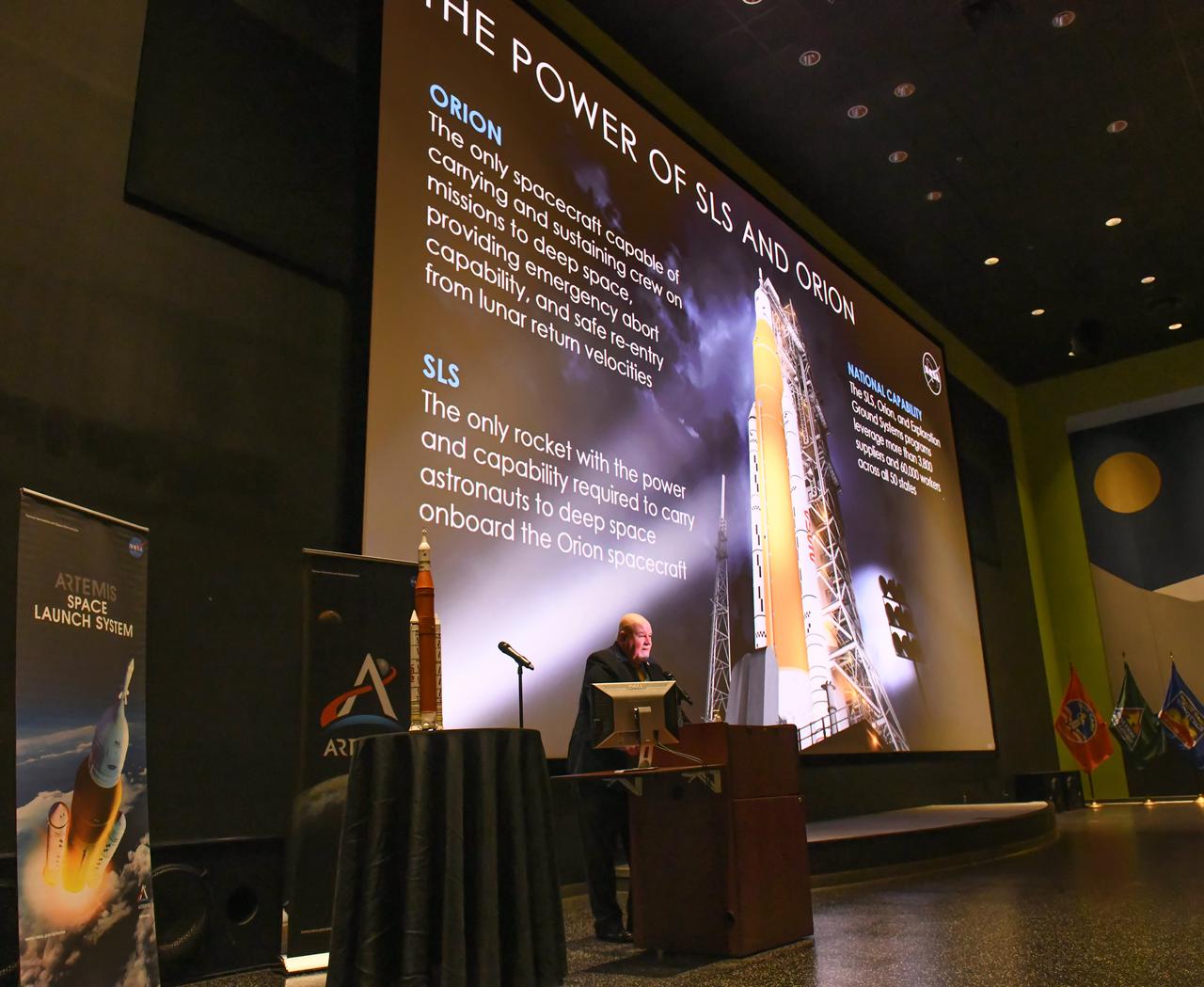
John Honeycutt, SLS Program Manager gives ARTEMIS update to audience at Chamber Media Briefing at USSRC.
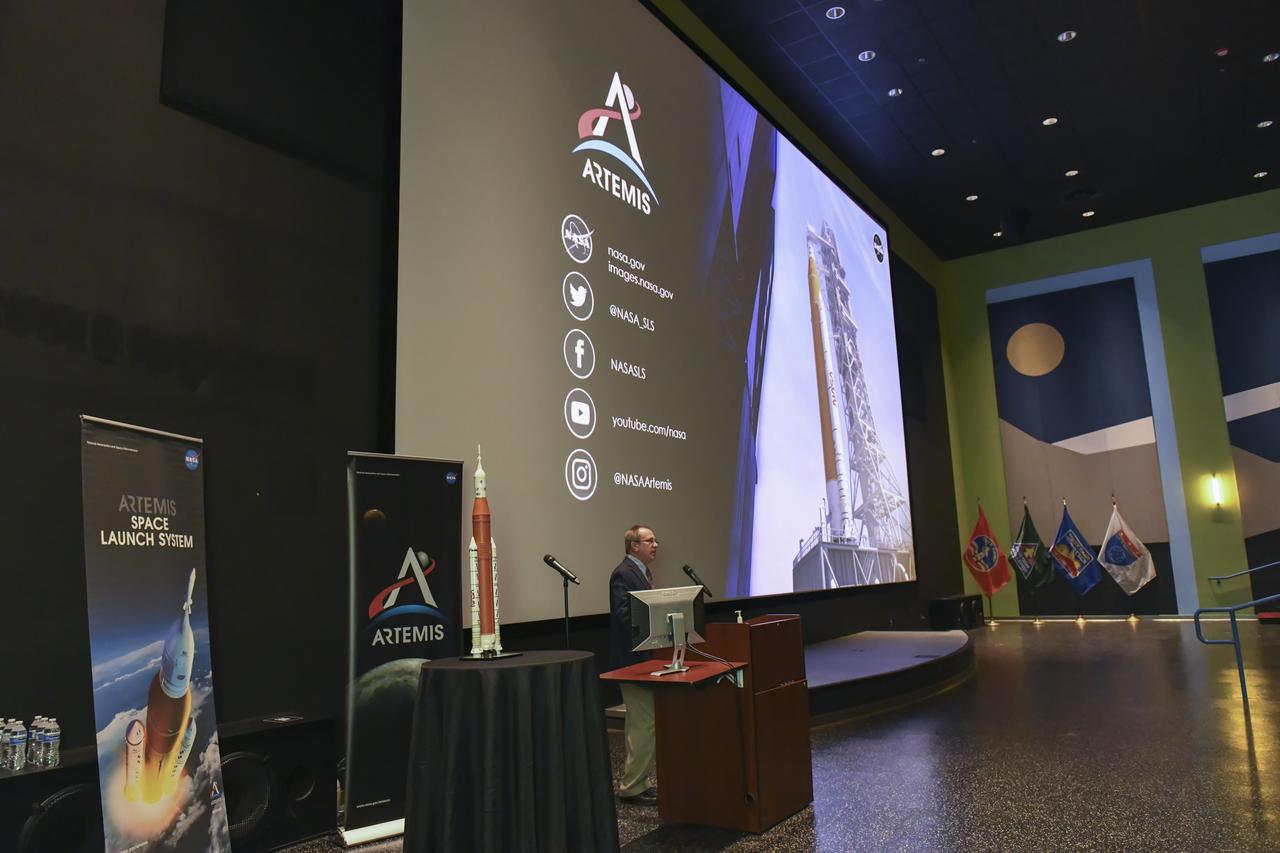
David Beaman, SLS Systems Engineering and Integration Manager, addresses audience at Chamber Media Briefing at USSRC.
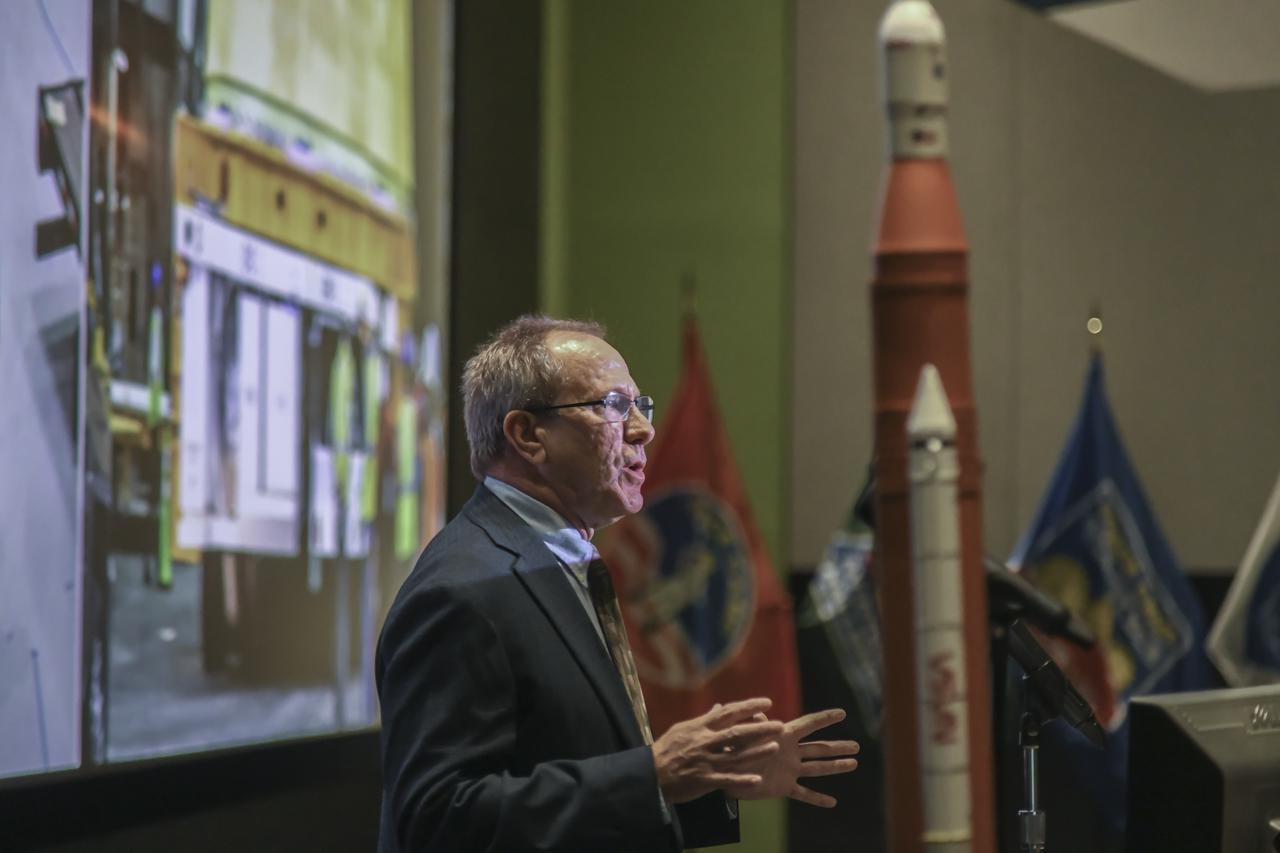
David Beaman, SLS Systems Engineering and Integration Manager, addresses audience at Chamber Media Briefing at USSRC.

NASA Administrator Bill Nelson tries on some eclipse glasses at the conclusion of a media briefing to discuss the upcoming solar eclipse, Tuesday, March 26, 2024 at the Mary W. Jackson NASA Headquarters building in Washington. A total solar eclipse will sweep across a narrow portion of the North American continent from Mexico’s Pacific coast to the Atlantic coast of Newfoundland, Canada on April 8, 2024. A partial solar eclipse will be visible across the entire North American continent along with parts of Central America and Europe. Photo Credit: (NASA/Aubrey Gemignani)
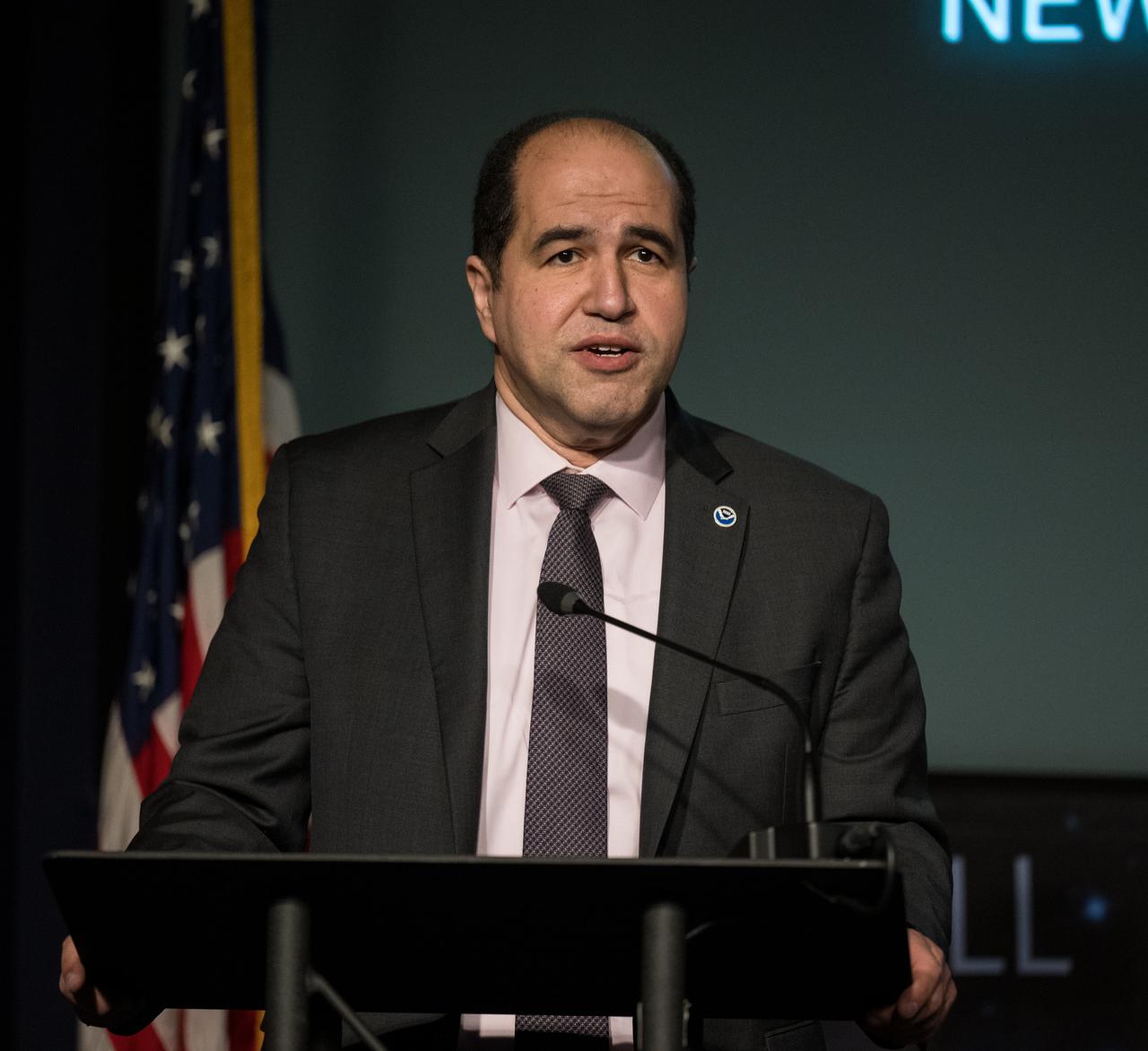
Director of the National Oceanic and Atmospheric Administration’s Office of Space Weather Observations, Elsayed Talaat, speaks during a media briefing to discuss the upcoming solar eclipse, Tuesday, March 26, 2024 at the Mary W. Jackson NASA Headquarters building in Washington. A total solar eclipse will sweep across a narrow portion of the North American continent from Mexico’s Pacific coast to the Atlantic coast of Newfoundland, Canada on April 8, 2024. A partial solar eclipse will be visible across the entire North American continent along with parts of Central America and Europe. Photo Credit: (NASA/Aubrey Gemignani)

NASA Deputy Administrator Pam Melroy speaks during a media briefing to discuss the upcoming solar eclipse, Tuesday, March 26, 2024 at the Mary W. Jackson NASA Headquarters building in Washington. A total solar eclipse will sweep across a narrow portion of the North American continent from Mexico’s Pacific coast to the Atlantic coast of Newfoundland, Canada on April 8, 2024. A partial solar eclipse will be visible across the entire North American continent along with parts of Central America and Europe. Photo Credit: (NASA/Aubrey Gemignani)

A small model of NASA's Kepler spacecraft is seen on display prior to a media briefing, Thursday, Feb. 19, 2009, at NASA Headquarters in Washington. Photo Credit: (NASA/Paul. E. Alers)
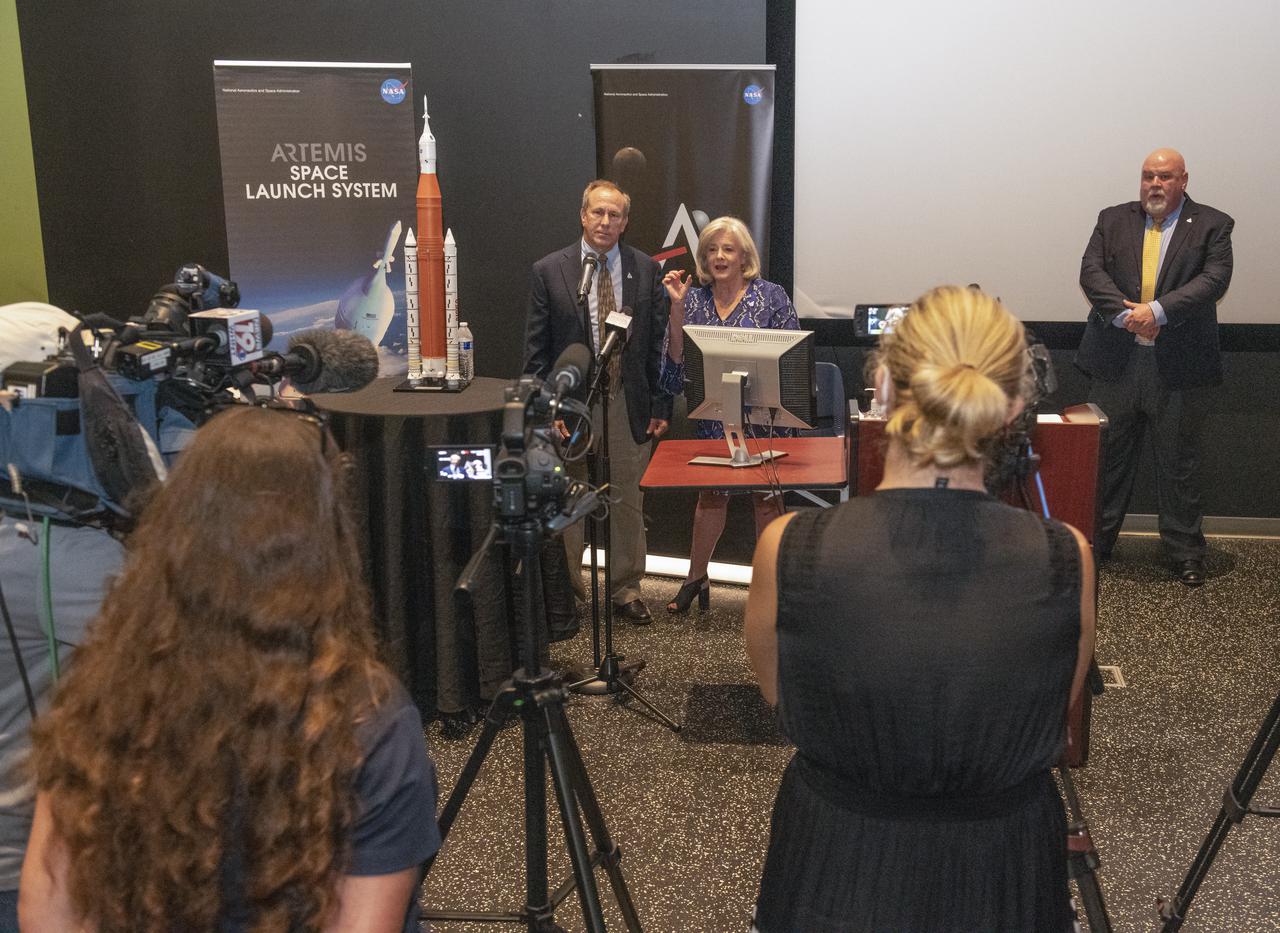
Jody Singer, MSFC Director, responds to reporter’s question during Q&A session at Chamber Media Briefing at USSRC
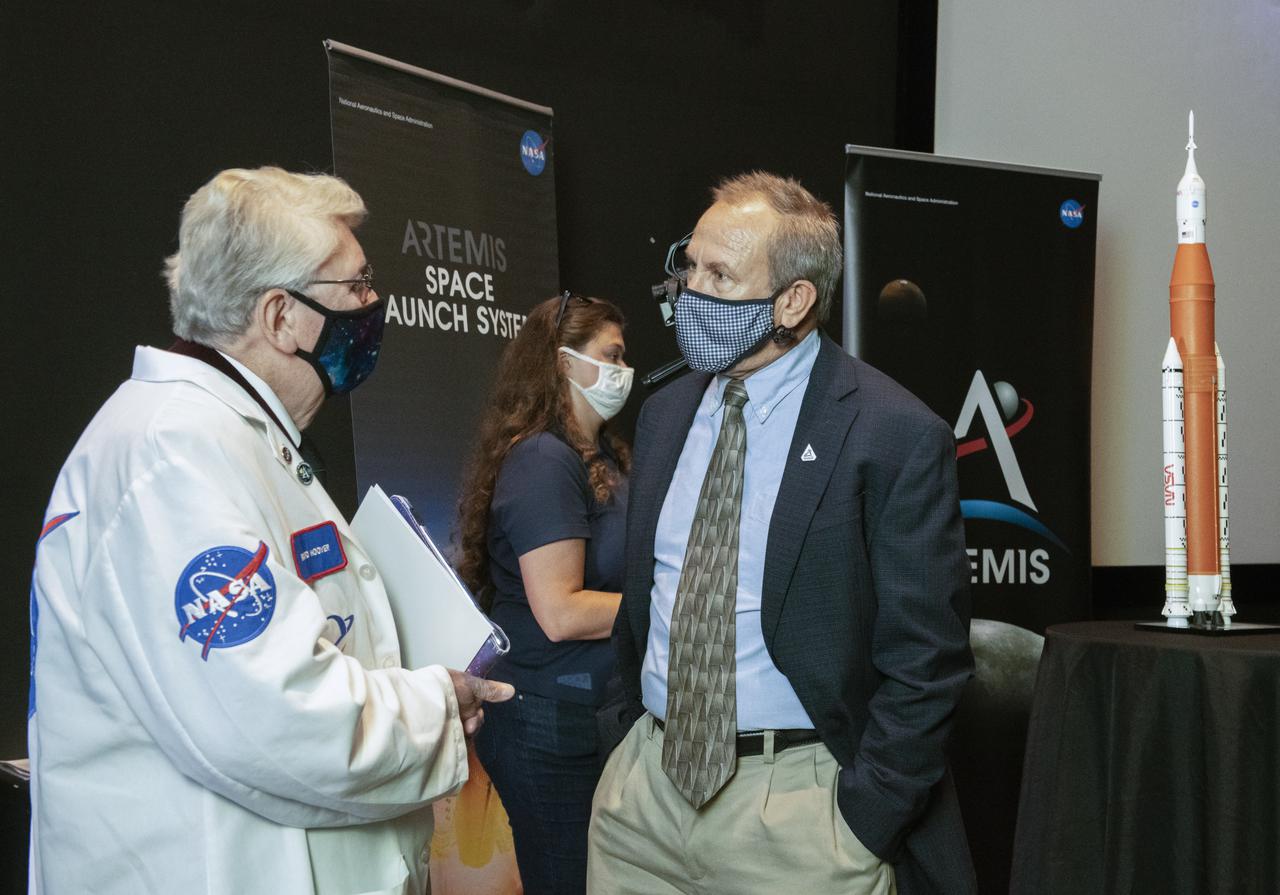
Dr. Richard Hoover talks to David Beaman, SLS Systems Engineering and Integration Manager, at conclusion of Chamber Media Briefing event at USSRC
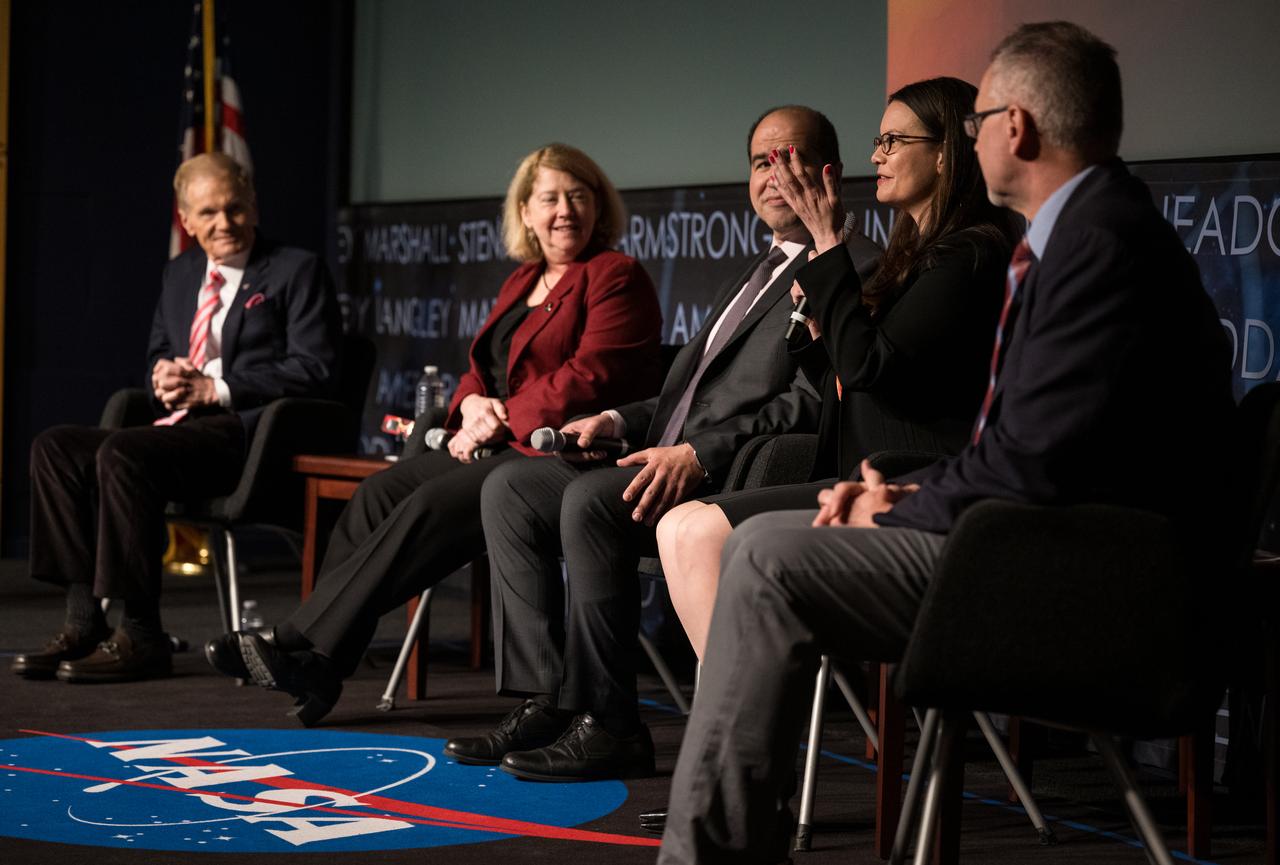
Panelists, from left to right, NASA Administrator Bill Nelson, NASA Deputy Administrator Pam Melroy, Director of the National Oceanic and Atmospheric Administration’s Office of Space Weather Observations, Elsayed Talaat, NASA Headquarters eclipse program manager, Kelly Korreck, and NASA Associate Administrator Jim Free are seen during a media briefing to discuss the upcoming solar eclipse, Tuesday, March 26, 2024 at the Mary W. Jackson NASA Headquarters building in Washington. A total solar eclipse will sweep across a narrow portion of the North American continent from Mexico’s Pacific coast to the Atlantic coast of Newfoundland, Canada on April 8, 2024. A partial solar eclipse will be visible across the entire North American continent along with parts of Central America and Europe. Photo Credit: (NASA/Aubrey Gemignani)
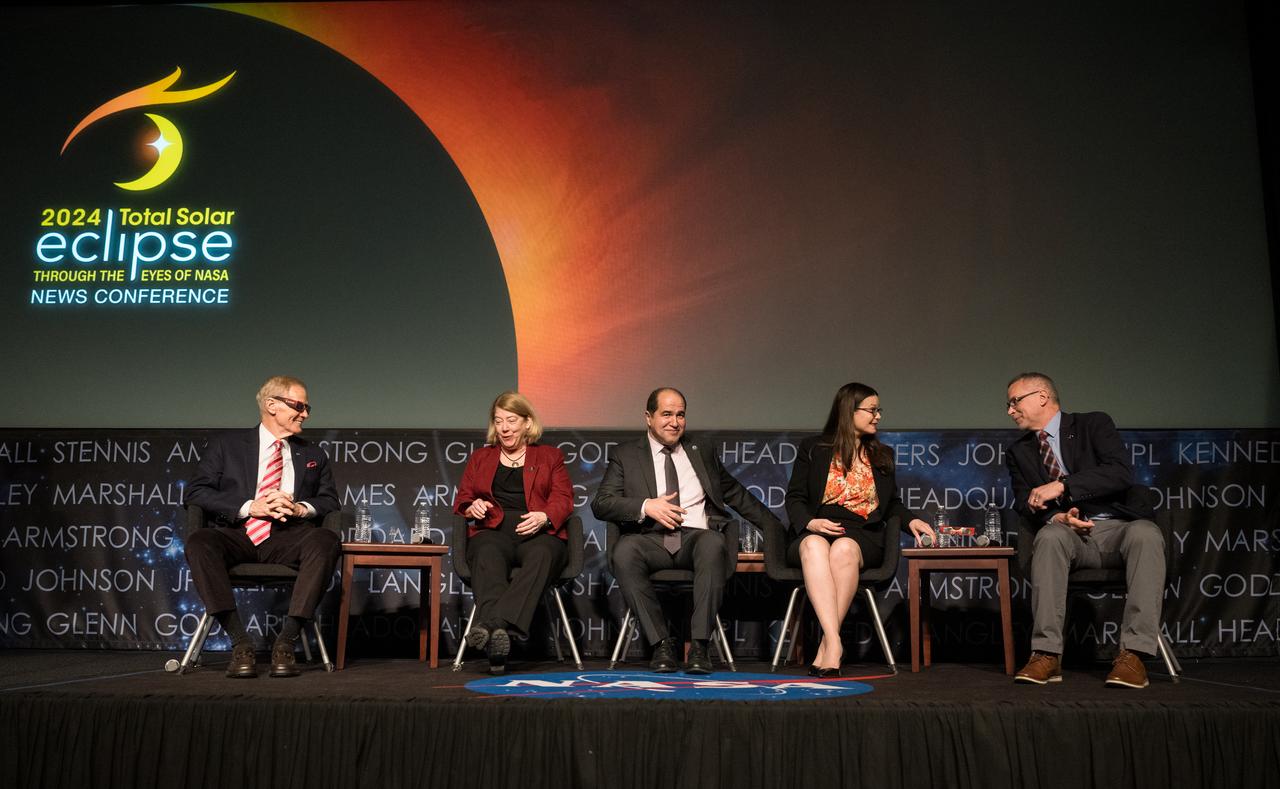
Panelists, from left to right, NASA Administrator Bill Nelson, NASA Deputy Administrator Pam Melroy, Director of the National Oceanic and Atmospheric Administration’s Office of Space Weather Observations, Elsayed Talaat, NASA Headquarters eclipse program manager, Kelly Korreck, and NASA Associate Administrator Jim Free are seen at the conclusion of a media briefing to discuss the upcoming solar eclipse, Tuesday, March 26, 2024 at the Mary W. Jackson NASA Headquarters building in Washington. A total solar eclipse will sweep across a narrow portion of the North American continent from Mexico’s Pacific coast to the Atlantic coast of Newfoundland, Canada on April 8, 2024. A partial solar eclipse will be visible across the entire North American continent along with parts of Central America and Europe. Photo Credit: (NASA/Aubrey Gemignani)
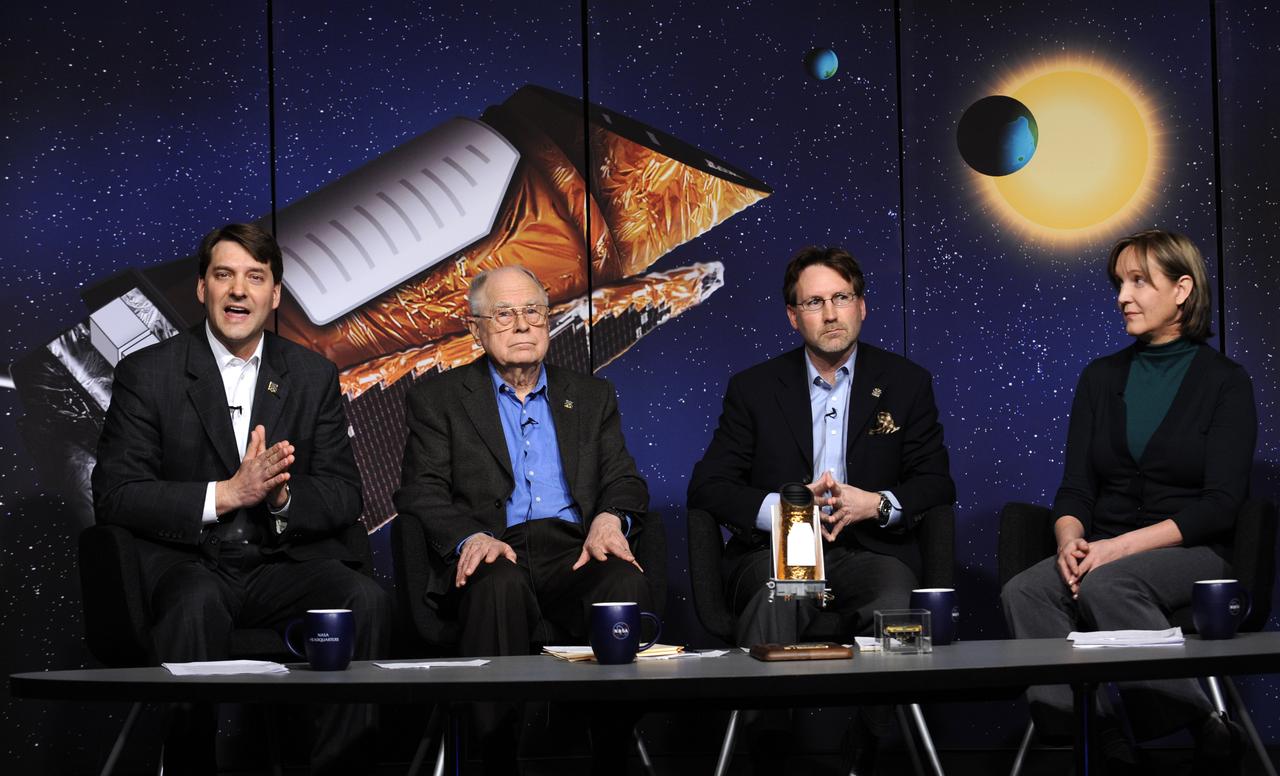
Jon Morse, Director, Astrophysics Division, at NASA Headquarters, left, talks about the Kepler mission during a media briefing, Thursday, Feb. 19, 2008, at NASA Headquarters in Washington. Morse was joined at the briefing by William Borucki, principal investigator for Kepler Science at Ames Research Center, second left, Jim Fanson, Kepler Project Manager at the Jet Propulsion Laboratory and Debra Fischer, professor of Astronomy at San Francisco State University, right. Kepler is scheduled to launch on March 5, 2009 from Cape Canaveral Air Force Station, Fla. aboard a Delta II rocket. Photo Credit: (NASA/Paul. E. Alers)

A member of the media asks a question during a media briefing to discuss the findings from an unidentified anomalous phenomena (UAP) independent study team, Thursday, Sept. 14, 2023, at the Mary W. Jackson NASA Headquarters building in Washington. The UAP independent study team, commissioned in 2022, is a counsel of 16 community experts across diverse areas on matters relevant to potential methods of study for unidentified anomalous phenomena. NASA published the team’s full report online, which aims to inform about what possible data could be collected in the future to shed light on the nature and origin of UAP. Photo Credit: (NASA/Aubrey Gemignani)

A member of the media asks a question during a media briefing to discuss the findings from an unidentified anomalous phenomena (UAP) independent study team, Thursday, Sept. 14, 2023, at the Mary W. Jackson NASA Headquarters building in Washington. The UAP independent study team, commissioned in 2022, is a counsel of 16 community experts across diverse areas on matters relevant to potential methods of study for unidentified anomalous phenomena. NASA published the team’s full report online, which aims to inform about what possible data could be collected in the future to shed light on the nature and origin of UAP. Photo Credit: (NASA/Aubrey Gemignani)

JoAnna Wendel of NASA Headquarters ask questions from the social media during the NASA InSight Mars Lander (Interior Exploration using Seismic Investigations, Geodesy and Heat Transport) media briefing, Wednesday, Oct. 31, 2018 at NASA Headquarters in Washington. InSIght will land on the Red Planet at approximately 3 p.m. EST (noon PST) Monday, Nov. 26. InSight will study the deep interior of Mars to learn how all celestial bodies with rocky surfaces, including Earth and the Moon, formed. The lander’s instruments include a seismometer to detect marsquakes and a probe to monitor the flow of heat in the planet's subsurface. Photo Credit: (NASA/Bill Ingalls)

Jim Fanson, Kepler project manager, center, talks about the Kepler mission as William Borucki, left, and Debra Fischer, right, listen during a media briefing, Thursday, Feb. 19, 2008, at NASA Headquarters in Washington. Kepler, the first mission with the ability to find planets like earth, is scheduled to launch on March 5, 2009 from Cape Canaveral Air Force Station, Fla. aboard a Delta II rocket. Photo Credit: (NASA/Paul. E. Alers)
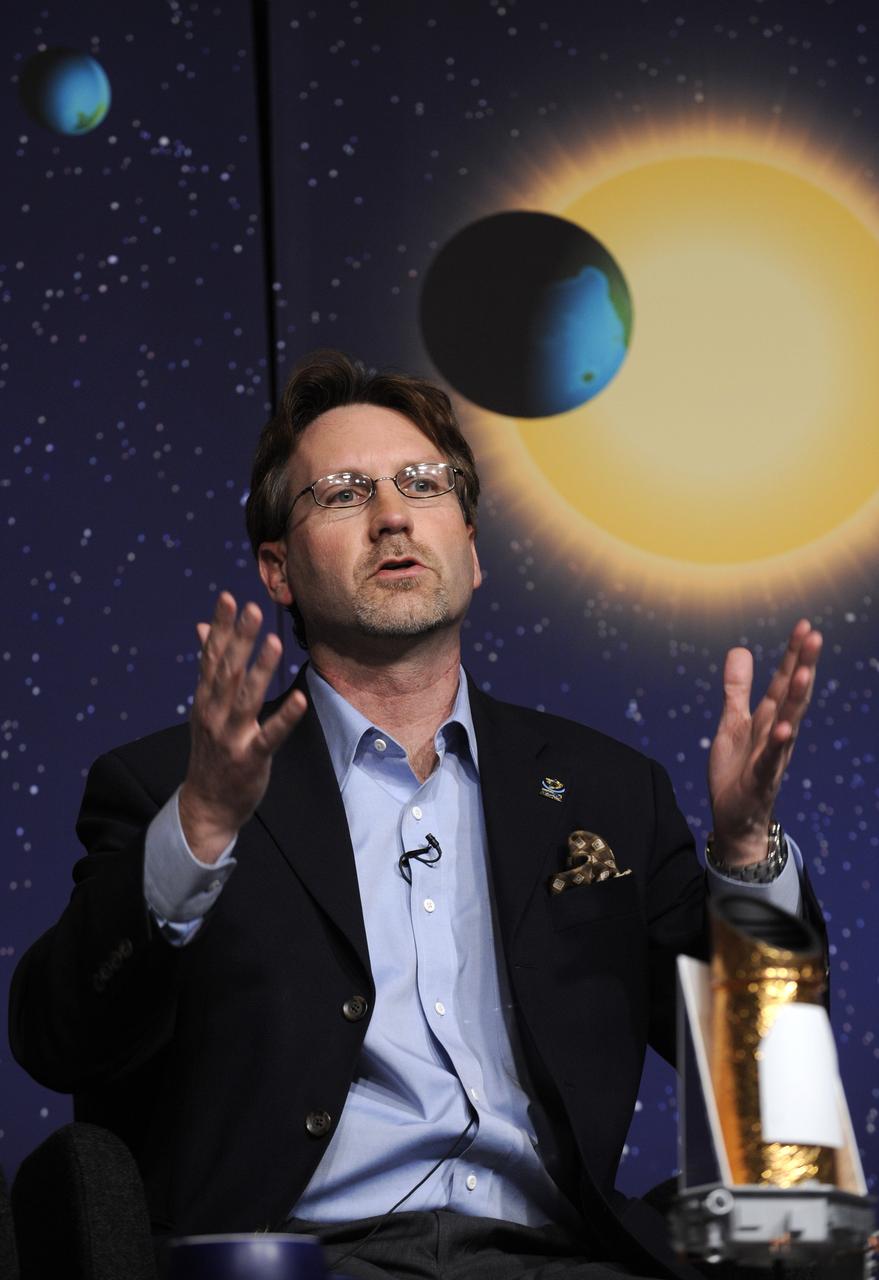
Jim Fanson, Kepler project manager, at NASA's Jet Propulsion Laboratory in Pasadena, Calif. talks about the Kepler mission during a media briefing, Thursday, Feb. 19, 2008, at NASA Headquarters in Washington. Kepler, the first mission with the ability to find planets like earth, is scheduled to launch on March 5, 2009 from Cape Canaveral Air Force Station, Fla. aboard a Delta II rocket. Photo Credit: (NASA/Paul. E. Alers)

William Borucki, principal investigator for Kepler Science at Ames Research Center, Moffett Field, Calif., talks about the Kepler mission during a media briefing, Thursday, Feb. 19, 2008, at NASA Headquarters in Washington. Kepler, the first mission with the ability to find planets like earth, is scheduled to launch on March 5, 2009 from Cape Canaveral Air Force Station, Fla. aboard a Delta II rocket. Photo Credit: (NASA/Paul. E. Alers)

William Borucki, principal investigator for Kepler Science at Ames Research Center, Moffett Field, Calif., talks about the Kepler mission during a media briefing, Thursday, Feb. 19, 2008, at NASA Headquarters in Washington. Kepler, the first mission with the ability to find planets like earth, is scheduled to launch on March 5, 2009 from Cape Canaveral Air Force Station, Fla. aboard a Delta II rocket. Photo Credit: (NASA/Paul. E. Alers)
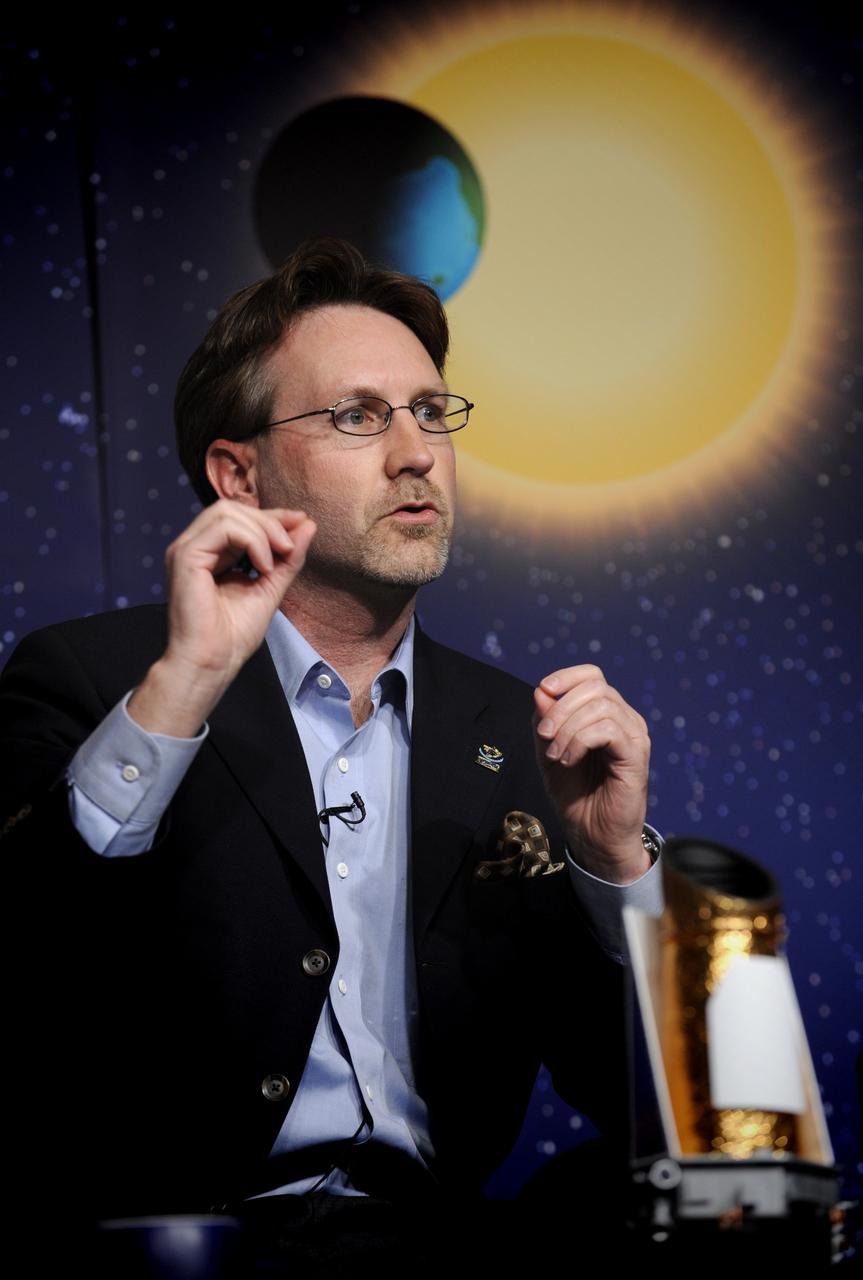
Jim Fanson, Kepler project manager, at NASA's Jet Propulsion Laboratory in Pasadena, Calif. talks about the Kepler mission during a media briefing, Thursday, Feb. 19, 2008, at NASA Headquarters in Washington. Kepler, the first mission with the ability to find planets like earth, is scheduled to launch on March 5, 2009 from Cape Canaveral Air Force Station, Fla. aboard a Delta II rocket. Photo Credit: (NASA/Paul. E. Alers)
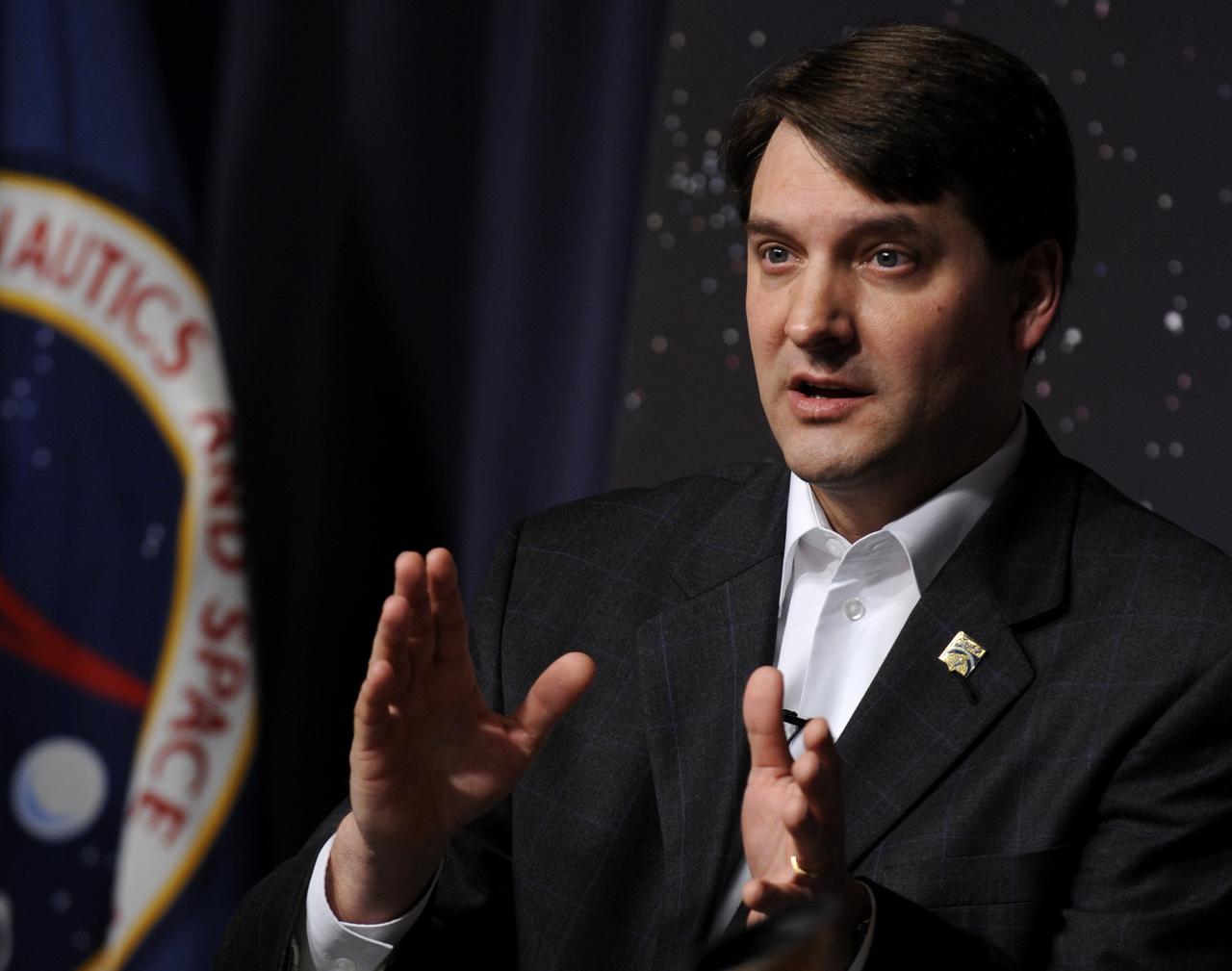
Jon Morse, director, Astrophysics Division at NASA Headquarters talks about the Kepler mission during a media briefing, Thursday, Feb. 19, 2008, at NASA Headquarters in Washington. Kepler, the first mission with the ability to find planets like earth, is scheduled to launch on March 5, 2009 from Cape Canaveral Air Force Station, Fla. aboard a Delta II rocket. Photo Credit: (NASA/Paul. E. Alers)
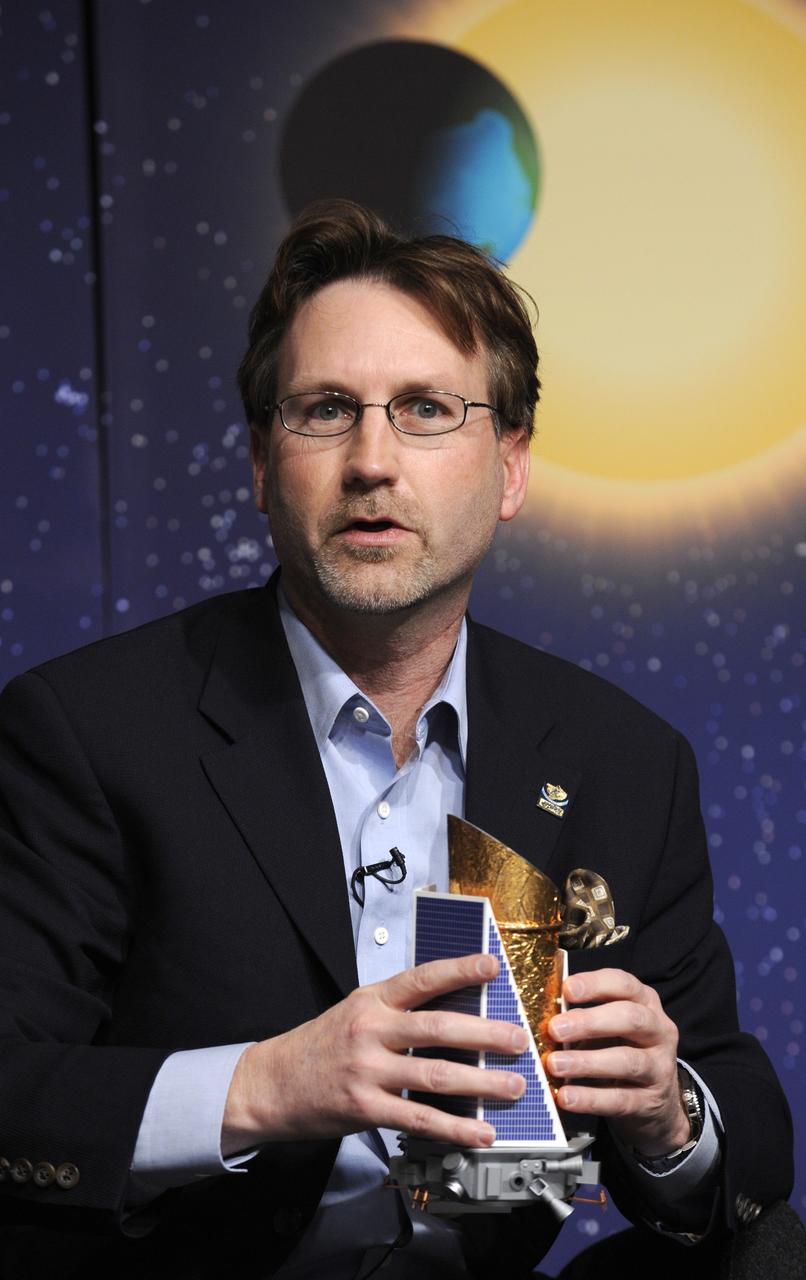
Jim Fanson, Kepler project manager, at NASA's Jet Propulsion Laboratory in Pasadena, Calif. holds a model of the Kepler spacecraft as he talks about the Kepler mission during a media briefing, Thursday, Feb. 19, 2008, at NASA Headquarters in Washington. Kepler, the first mission with the ability to find planets like earth, is scheduled to launch on March 5, 2009 from Cape Canaveral Air Force Station, Fla. aboard a Delta II rocket. Photo Credit: (NASA/Paul. E. Alers)

Jim Fanson, Kepler project manager, right, talks about the Kepler mission as William Borucki, left, listens during a media briefing, Thursday, Feb. 19, 2008, at NASA Headquarters in Washington. Kepler, the first mission with the ability to find planets like earth, is scheduled to launch on March 5, 2009 from Cape Canaveral Air Force Station, Fla. aboard a Delta II rocket. Photo Credit: (NASA/Paul. E. Alers)
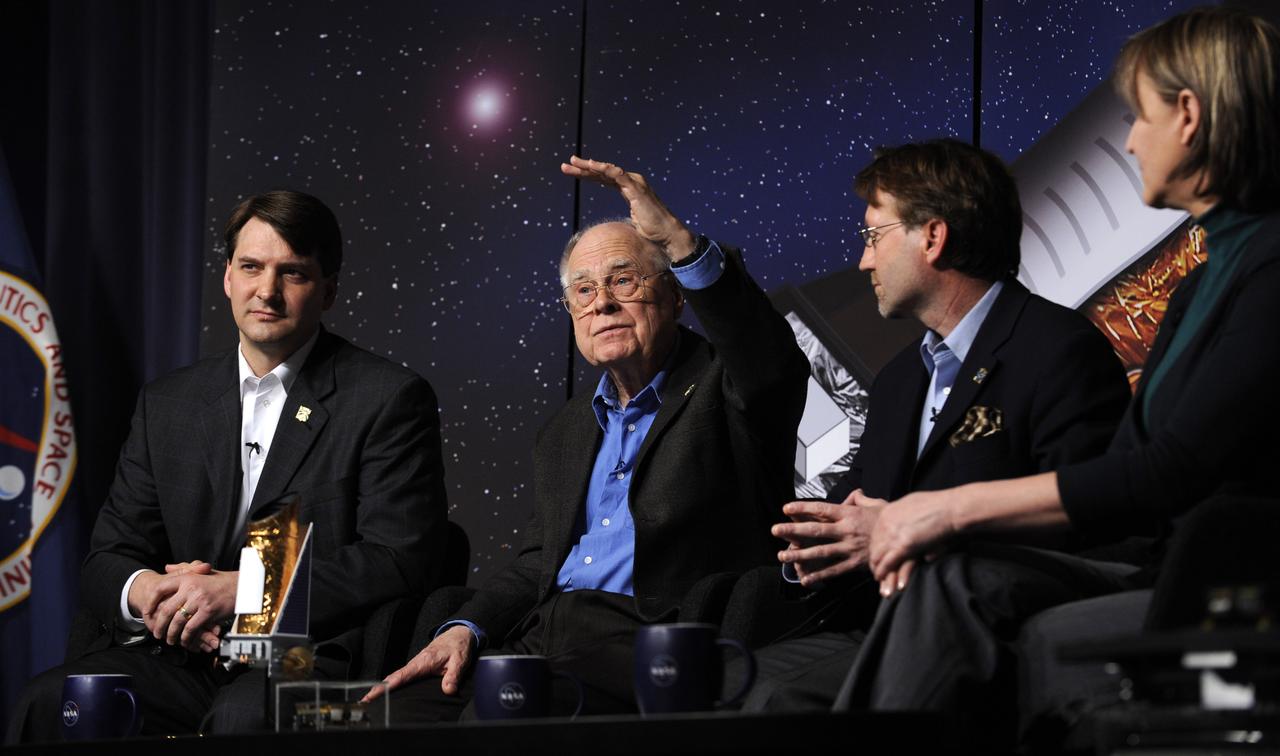
William Borucki, principal investigator for Kepler Science at Ames Research Center, Moffett Field, Calif.,, second from left, talks about the Kepler mission during a media briefing, Thursday, Feb. 19, 2008, at NASA Headquarters in Washington. Kepler, the first mission with the ability to find planets like earth, is scheduled to launch on March 5, 2009 from Cape Canaveral Air Force Station, Fla. aboard a Delta II rocket. Joining Borucki at the briefing were Jon Morse, director, Astrophysics Division, NASA Headquarters, Jim Fanson, Kepler project manager at the Jet Propulsion Laboratory and Debra Fischer, a professor of Astronomy at San Francisco State University. Photo Credit: (NASA/Paul. E. Alers)
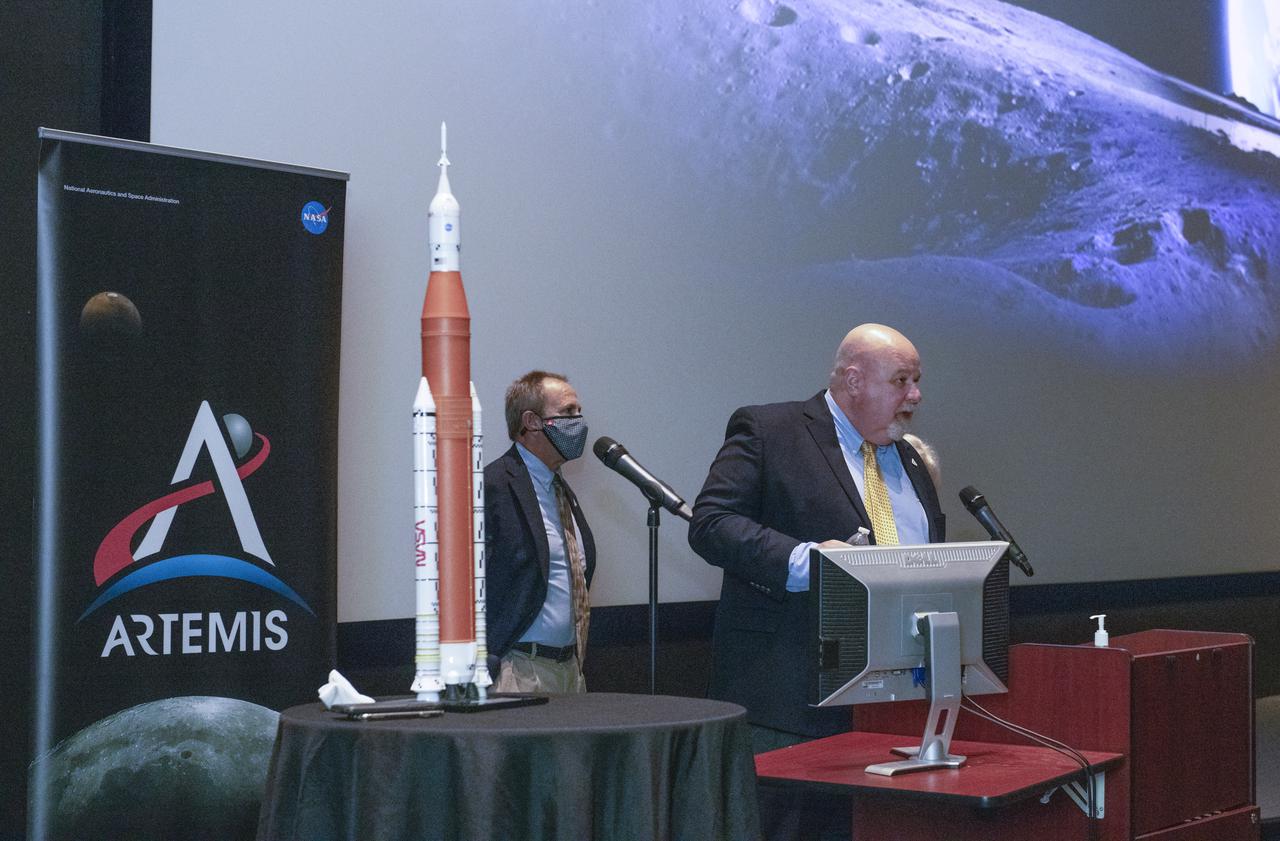
John Honeycutt, SLS Program Manager, takes questions at Chamber Media Briefing at USSRC
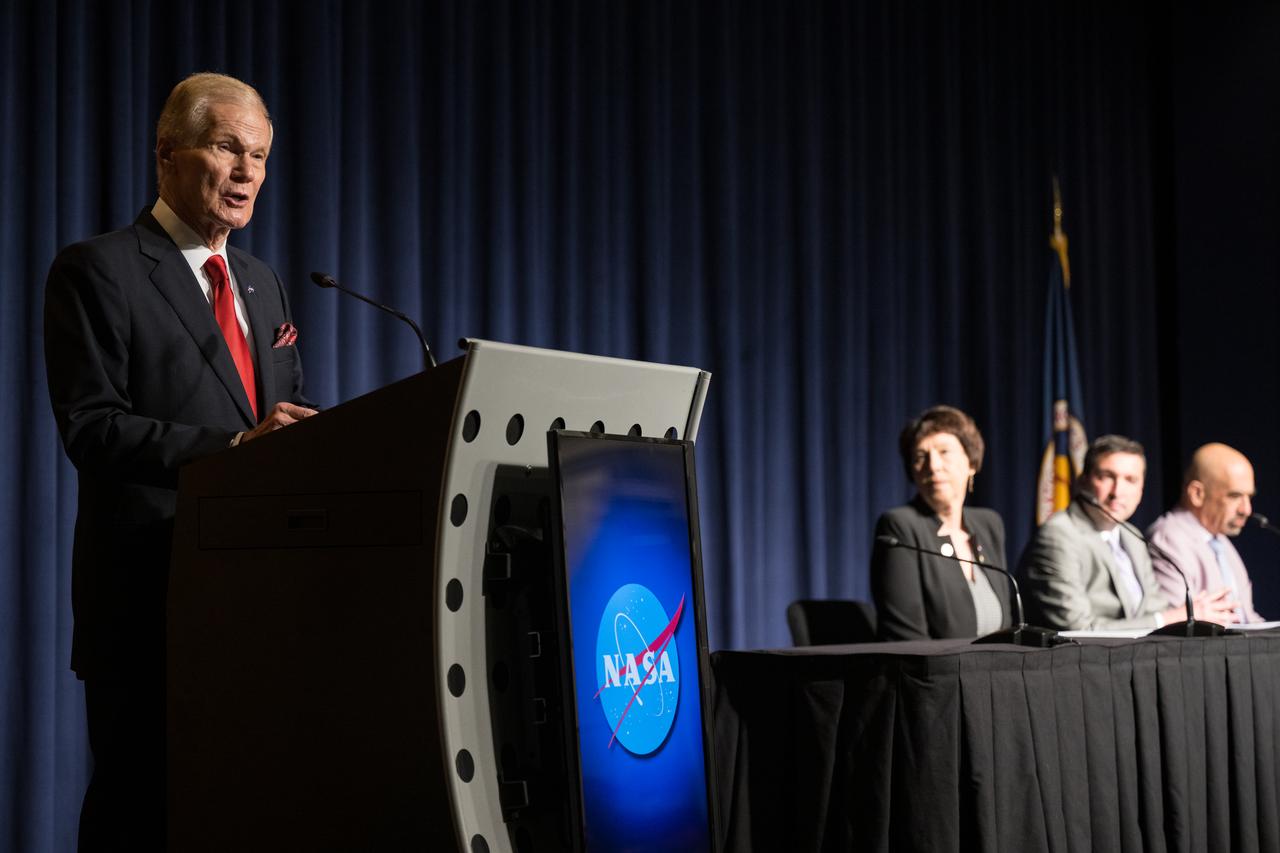
NASA Administrator Bill Nelson provides remarks during a media briefing to discuss the findings from an unidentified anomalous phenomena (UAP) independent study team, Thursday, Sept. 14, 2023, at the Mary W. Jackson NASA Headquarters building in Washington. The UAP independent study team, commissioned in 2022, is a counsel of 16 community experts across diverse areas on matters relevant to potential methods of study for unidentified anomalous phenomena. NASA published the team’s full report online, which aims to inform about what possible data could be collected in the future to shed light on the nature and origin of UAP. Photo Credit: (NASA/Aubrey Gemignani)

NASA Administrator Bill Nelson provides remarks during a media briefing to discuss the findings from an unidentified anomalous phenomena (UAP) independent study team, Thursday, Sept. 14, 2023, at the Mary W. Jackson NASA Headquarters building in Washington. The UAP independent study team, commissioned in 2022, is a counsel of 16 community experts across diverse areas on matters relevant to potential methods of study for unidentified anomalous phenomena. NASA published the team’s full report online, which aims to inform about what possible data could be collected in the future to shed light on the nature and origin of UAP. Photo Credit: (NASA/Aubrey Gemignani)

NASA's Jet Propulsion Laboratory InSight deputy principal investigator Sue Smrekar gives remarks during a NASA InSight Mars Lander (Interior Exploration using Seismic Investigations, Geodesy and Heat Transport) media briefing, Wednesday, Oct. 31, 2018 at NASA Headquarters in Washington. InSIght will land on the Red Planet at approximately 3 p.m. EST (noon PST) Monday, Nov. 26. InSight will study the deep interior of Mars to learn how all celestial bodies with rocky surfaces, including Earth and the Moon, formed. The lander’s instruments include a seismometer to detect marsquakes and a probe to monitor the flow of heat in the planet's subsurface. Photo Credit: (NASA/Bill Ingalls)
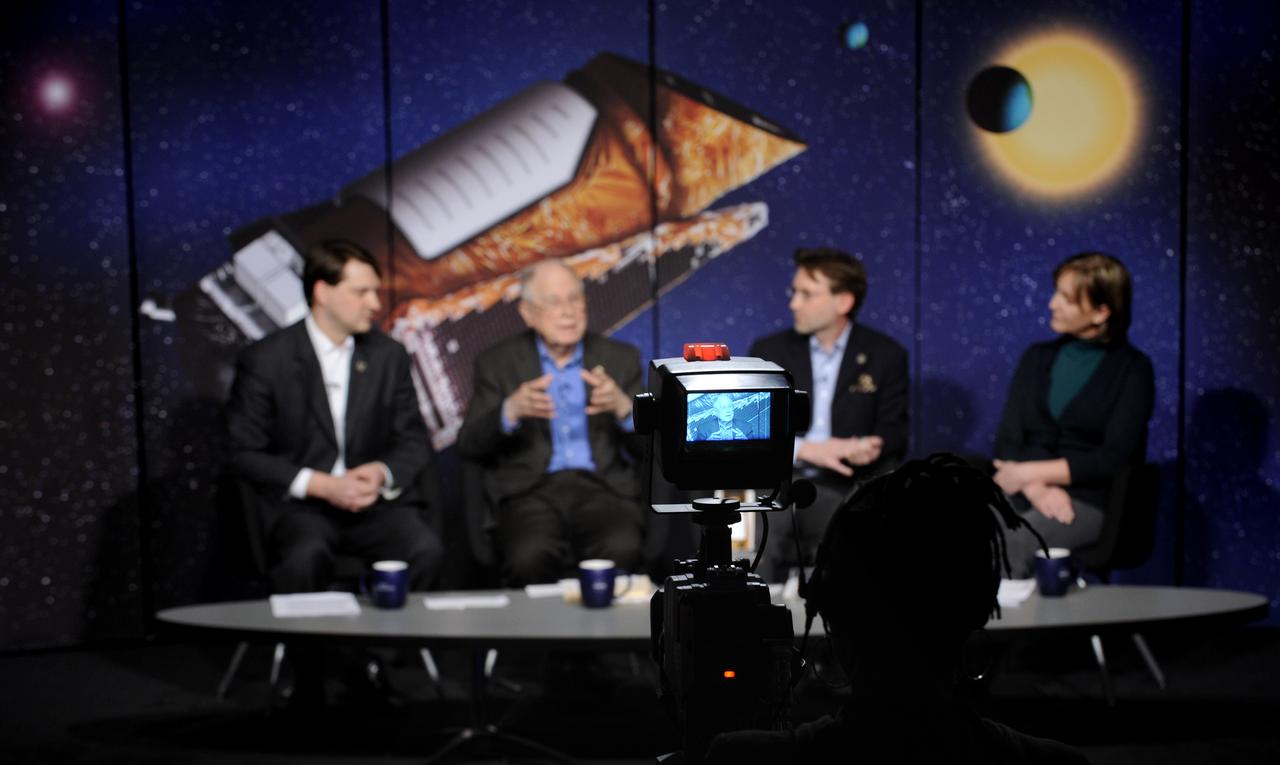
William Borucki, principal investigator for Kepler Science at Ames Research Center, Moffett Field, Calif., second from left, is seen through a television camer monitor as he talks about the Kepler mission during a media briefing, Thursday, Feb. 19, 2008, at NASA Headquarters in Washington. Kepler, the first mission with the ability to find planets like earth, is scheduled to launch on March 5, 2009 from Cape Canaveral Air Force Station, Fla. aboard a Delta II rocket. Photo Credit: (NASA/Paul. E. Alers)

Nicola Fox, associate administrator for NASA's Science Mission Directorate, answers a question during a media briefing to discuss the findings from an unidentified anomalous phenomena (UAP) independent study team, Thursday, Sept. 14, 2023, at the Mary W. Jackson NASA Headquarters building in Washington. The UAP independent study team, commissioned in 2022, is a counsel of 16 community experts across diverse areas on matters relevant to potential methods of study for unidentified anomalous phenomena. NASA published the team’s full report online, which aims to inform about what possible data could be collected in the future to shed light on the nature and origin of UAP. Photo Credit: (NASA/Aubrey Gemignani)

NASA Administrator Bill Nelson answers a question during a media briefing to discuss the findings from an unidentified anomalous phenomena (UAP) independent study team, Thursday, Sept. 14, 2023, at the Mary W. Jackson NASA Headquarters building in Washington. The UAP independent study team, commissioned in 2022, is a counsel of 16 community experts across diverse areas on matters relevant to potential methods of study for unidentified anomalous phenomena. NASA published the team’s full report online, which aims to inform about what possible data could be collected in the future to shed light on the nature and origin of UAP. Photo Credit: (NASA/Aubrey Gemignani)

Nicola Fox, associate administrator for NASA's Science Mission Directorate, answers a question during a media briefing to discuss the findings from an unidentified anomalous phenomena (UAP) independent study team, Thursday, Sept. 14, 2023, at the Mary W. Jackson NASA Headquarters building in Washington. The UAP independent study team, commissioned in 2022, is a counsel of 16 community experts across diverse areas on matters relevant to potential methods of study for unidentified anomalous phenomena. NASA published the team’s full report online, which aims to inform about what possible data could be collected in the future to shed light on the nature and origin of UAP. Photo Credit: (NASA/Aubrey Gemignani)

NASA Administrator Bill Nelson is seen during a media briefing to discuss the findings from an unidentified anomalous phenomena (UAP) independent study team, Thursday, Sept. 14, 2023, at the Mary W. Jackson NASA Headquarters building in Washington. The UAP independent study team, commissioned in 2022, is a counsel of 16 community experts across diverse areas on matters relevant to potential methods of study for unidentified anomalous phenomena. NASA published the team’s full report online, which aims to inform about what possible data could be collected in the future to shed light on the nature and origin of UAP. Photo Credit: (NASA/Aubrey Gemignani)
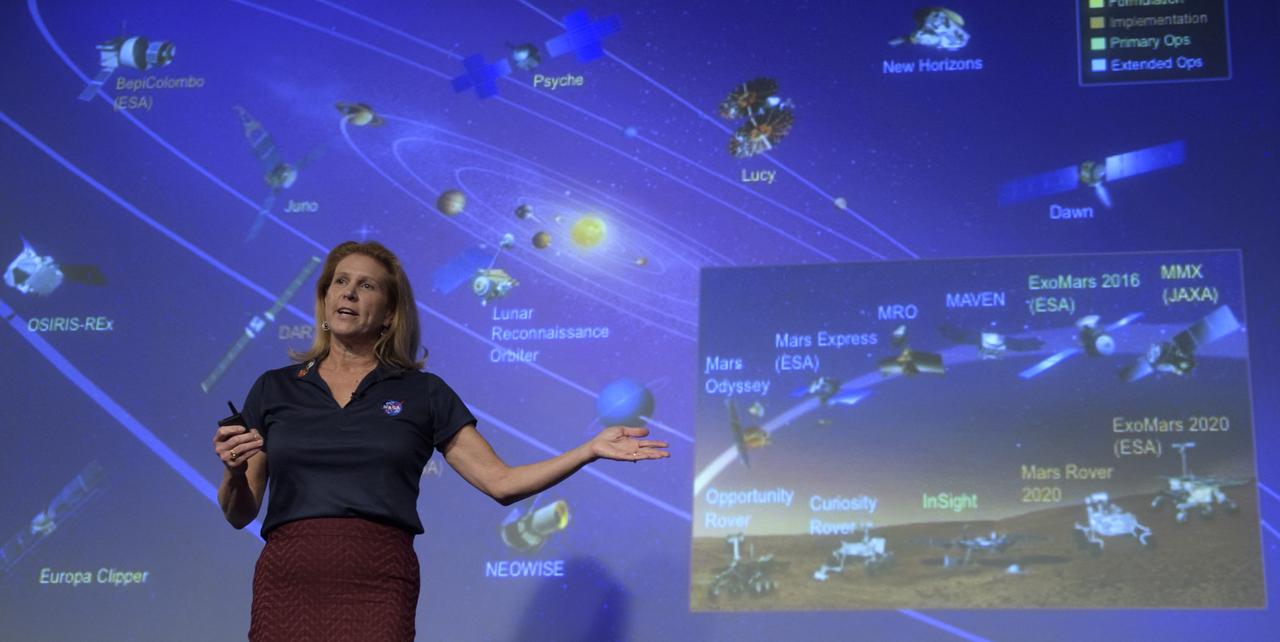
NASA Headquarters acting director of the Planetary Science Division Lori Glaze gives remarks during the NASA InSight Mars Lander (Interior Exploration using Seismic Investigations, Geodesy and Heat Transport) media briefing, Wednesday, Oct. 31, 2018 at NASA Headquarters in Washington. InSIght will land on the Red Planet at approximately 3 p.m. EST (noon PST) Monday, Nov. 26. InSight will study the deep interior of Mars to learn how all celestial bodies with rocky surfaces, including Earth and the Moon, formed. The lander’s instruments include a seismometer to detect marsquakes and a probe to monitor the flow of heat in the planet's subsurface. Photo Credit: (NASA/Bill Ingalls)

NASA Administrator Bill Nelson provides remarks during a media briefing to discuss the findings from an unidentified anomalous phenomena (UAP) independent study team, Thursday, Sept. 14, 2023, at the Mary W. Jackson NASA Headquarters building in Washington. The UAP independent study team, commissioned in 2022, is a counsel of 16 community experts across diverse areas on matters relevant to potential methods of study for unidentified anomalous phenomena. NASA published the team’s full report online, which aims to inform about what possible data could be collected in the future to shed light on the nature and origin of UAP. Photo Credit: (NASA/Aubrey Gemignani)
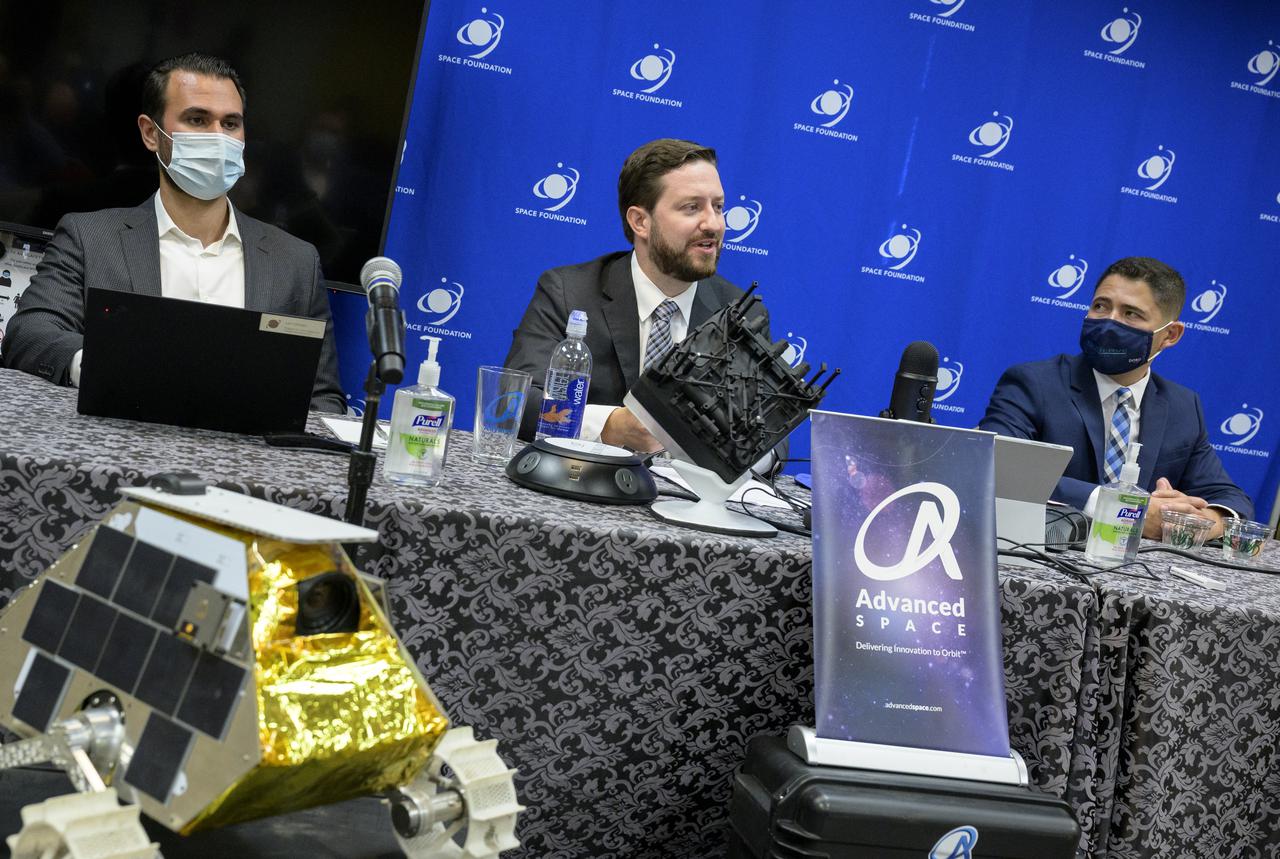
Justin Cyrus, CEO, Lunar Outpost of Golden, Colorado, left, Bradley Cheetham, CEO and president, Advanced Space of Westminster, Colorado, center, and Dr. Luis Zea, implementation project manager, BioServe Space Technologies, Smead Aerospace Engineering Sciences, University of Colorado Boulder, Monday, are seen during a media briefing where NASA Administrator Bill Nelson introduced the three local Colorado companies and university partners that help make NASA’s missions possible, Aug. 23, 2021, during the 36th Space Symposium in Colorado Springs, Colorado. Photo Credit: (NASA/Bill Ingalls)

NASA's Jet Propulsion Laboratory InSight project manager Tom Hoffman gives remarks during a media briefing regarding the NASA InSight Mars Lander (Interior Exploration using Seismic Investigations, Geodesy and Heat Transport), Wednesday, Oct. 31, 2018 at NASA Headquarters in Washington. InSIght will land on the Red Planet at approximately 3 p.m. EST (noon PST) Monday, Nov. 26. InSight will study the deep interior of Mars to learn how all celestial bodies with rocky surfaces, including Earth and the Moon, formed. The lander’s instruments include a seismometer to detect marsquakes and a probe to monitor the flow of heat in the planet's subsurface. Photo Credit: (NASA/Bill Ingalls)
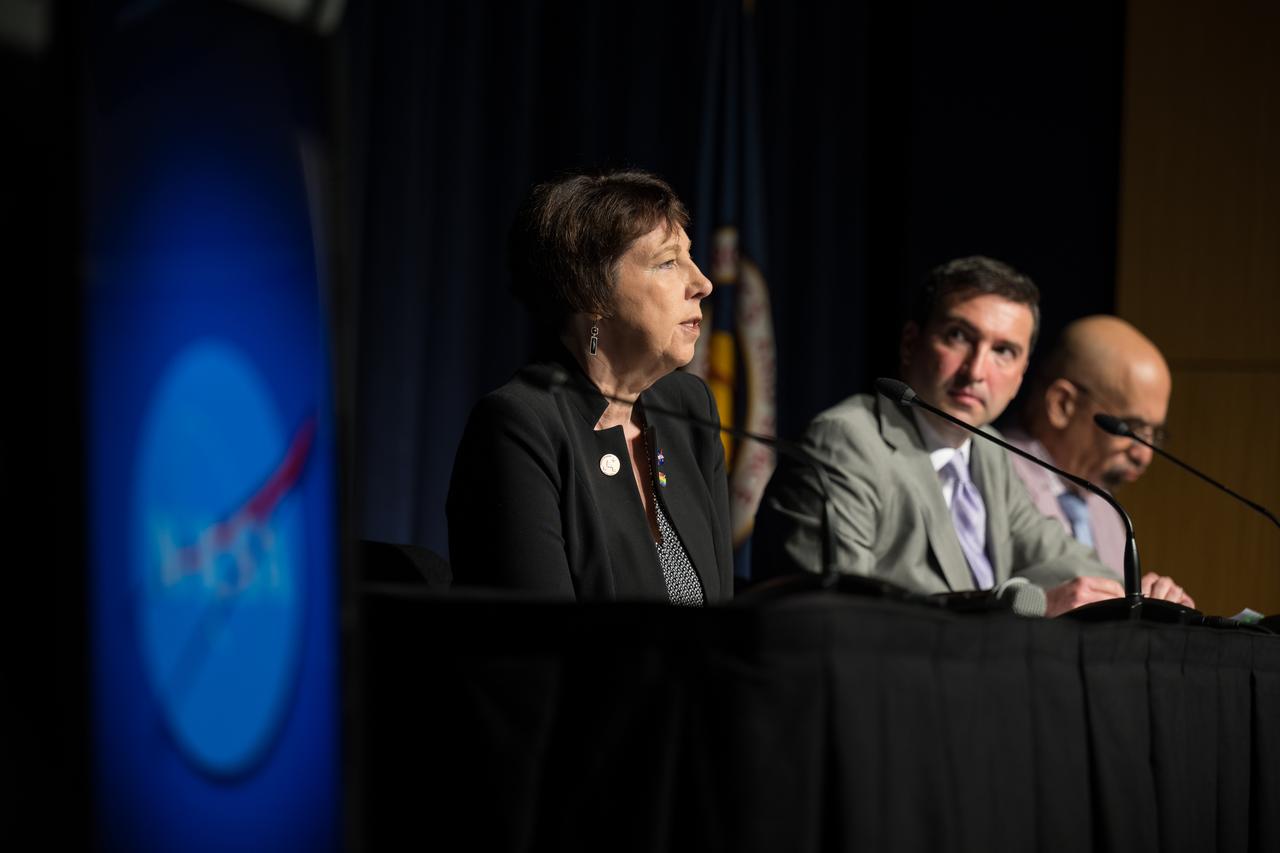
Nicola Fox, associate administrator for NASA's Science Mission Directorate, answers a question during a media briefing to discuss the findings from an unidentified anomalous phenomena (UAP) independent study team, Thursday, Sept. 14, 2023, at the Mary W. Jackson NASA Headquarters building in Washington. The UAP independent study team, commissioned in 2022, is a counsel of 16 community experts across diverse areas on matters relevant to potential methods of study for unidentified anomalous phenomena. NASA published the team’s full report online, which aims to inform about what possible data could be collected in the future to shed light on the nature and origin of UAP. Photo Credit: (NASA/Aubrey Gemignani)

NASA's Jet Propulsion Laboratory InSight principal investigator Bruce Banerdt gives remarks during the NASA InSight Mars Lander (Interior Exploration using Seismic Investigations, Geodesy and Heat Transport) media briefing, Wednesday, Oct. 31, 2018 at NASA Headquarters in Washington. InSIght will land on the Red Planet at approximately 3 p.m. EST (noon PST) Monday, Nov. 26. InSight will study the deep interior of Mars to learn how all celestial bodies with rocky surfaces, including Earth and the Moon, formed. The lander’s instruments include a seismometer to detect marsquakes and a probe to monitor the flow of heat in the planet's subsurface. Photo Credit: (NASA/Bill Ingalls)

NASA Administrator Bill Nelson provides remarks during a media briefing to discuss the findings from an unidentified anomalous phenomena (UAP) independent study team, Thursday, Sept. 14, 2023, at the Mary W. Jackson NASA Headquarters building in Washington. The UAP independent study team, commissioned in 2022, is a counsel of 16 community experts across diverse areas on matters relevant to potential methods of study for unidentified anomalous phenomena. NASA published the team’s full report online, which aims to inform about what possible data could be collected in the future to shed light on the nature and origin of UAP. Photo Credit: (NASA/Aubrey Gemignani)
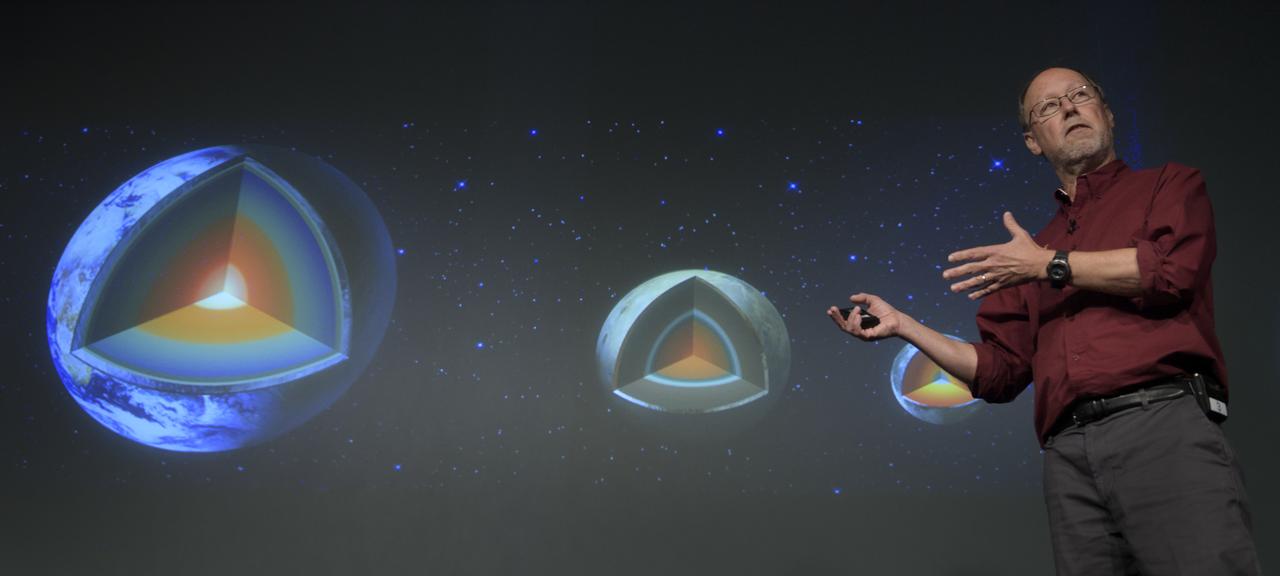
NASA's Jet Propulsion Laboratory InSight principal investigator Bruce Banerdt gives remarks during the NASA InSight Mars Lander (Interior Exploration using Seismic Investigations, Geodesy and Heat Transport) media briefing, Wednesday, Oct. 31, 2018 at NASA Headquarters in Washington. InSIght will land on the Red Planet at approximately 3 p.m. EST (noon PST) Monday, Nov. 26. InSight will study the deep interior of Mars to learn how all celestial bodies with rocky surfaces, including Earth and the Moon, formed. The lander’s instruments include a seismometer to detect marsquakes and a probe to monitor the flow of heat in the planet's subsurface. Photo Credit: (NASA/Bill Ingalls)

NASA Administrator Bill Nelson provides remarks during a media briefing to discuss the findings from an unidentified anomalous phenomena (UAP) independent study team, Thursday, Sept. 14, 2023, at the Mary W. Jackson NASA Headquarters building in Washington. The UAP independent study team, commissioned in 2022, is a counsel of 16 community experts across diverse areas on matters relevant to potential methods of study for unidentified anomalous phenomena. NASA published the team’s full report online, which aims to inform about what possible data could be collected in the future to shed light on the nature and origin of UAP. Photo Credit: (NASA/Aubrey Gemignani)
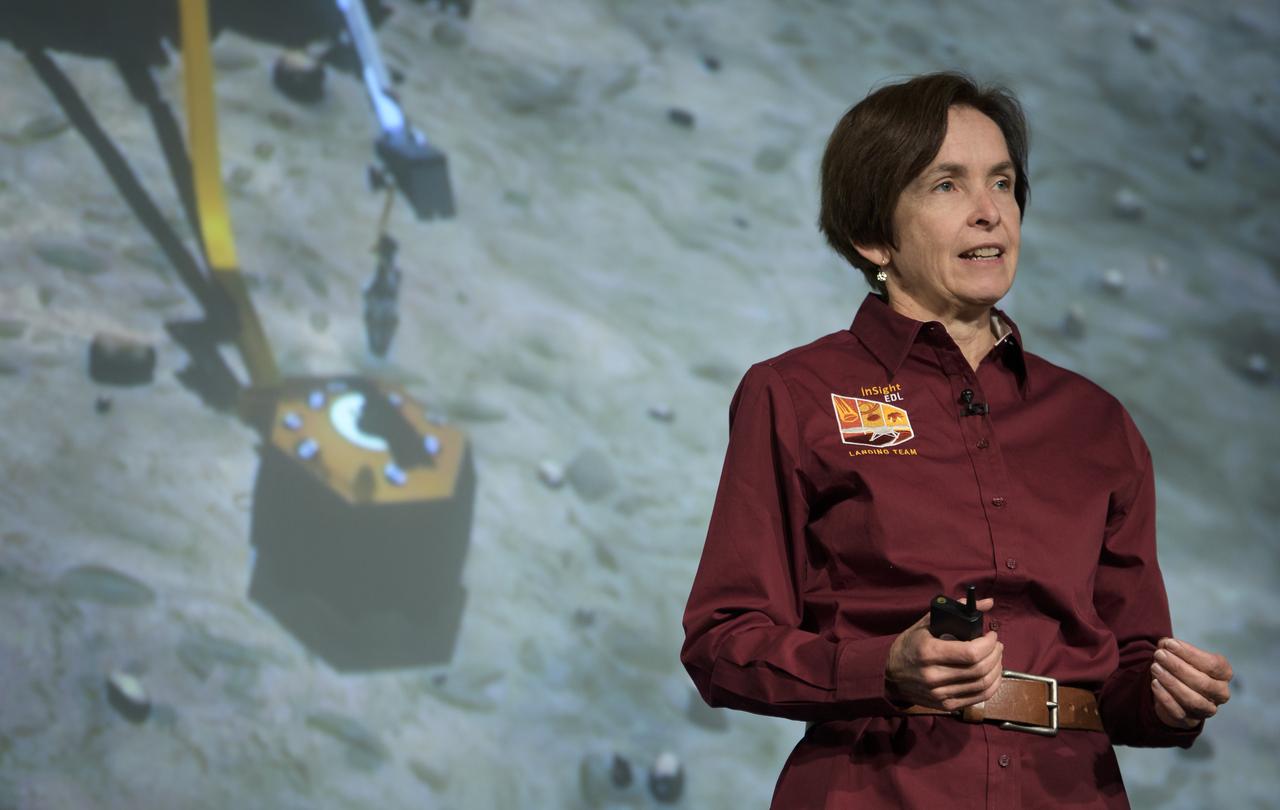
NASA's Jet Propulsion Laboratory InSight deputy principal investigator Sue Smrekar gives remarks during a NASA InSight Mars Lander (Interior Exploration using Seismic Investigations, Geodesy and Heat Transport) media briefing, Wednesday, Oct. 31, 2018 at NASA Headquarters in Washington. InSIght will land on the Red Planet at approximately 3 p.m. EST (noon PST) Monday, Nov. 26. InSight will study the deep interior of Mars to learn how all celestial bodies with rocky surfaces, including Earth and the Moon, formed. The lander’s instruments include a seismometer to detect marsquakes and a probe to monitor the flow of heat in the planet's subsurface. Photo Credit: (NASA/Bill Ingalls)
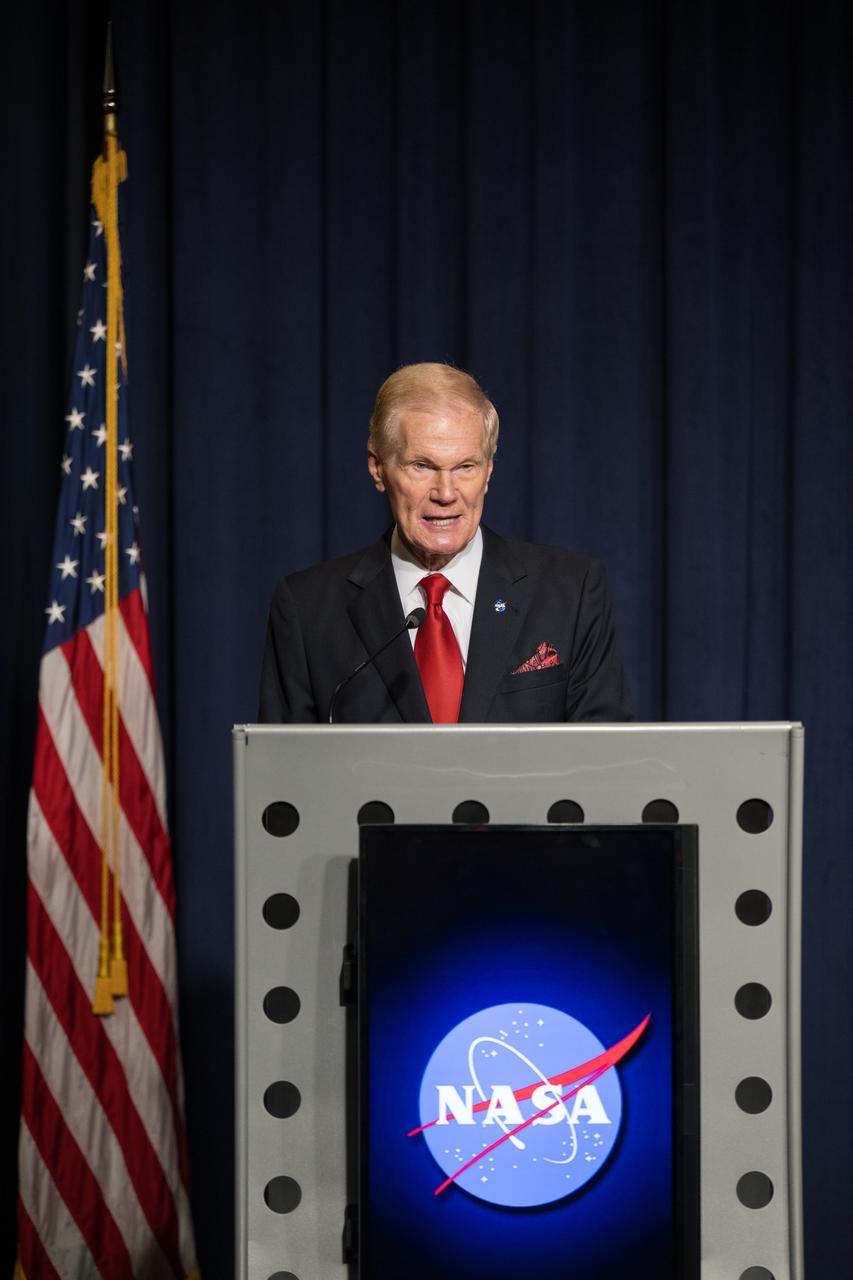
NASA Administrator Bill Nelson provides remarks during a media briefing to discuss the findings from an unidentified anomalous phenomena (UAP) independent study team, Thursday, Sept. 14, 2023, at the Mary W. Jackson NASA Headquarters building in Washington. The UAP independent study team, commissioned in 2022, is a counsel of 16 community experts across diverse areas on matters relevant to potential methods of study for unidentified anomalous phenomena. NASA published the team’s full report online, which aims to inform about what possible data could be collected in the future to shed light on the nature and origin of UAP. Photo Credit: (NASA/Aubrey Gemignani)
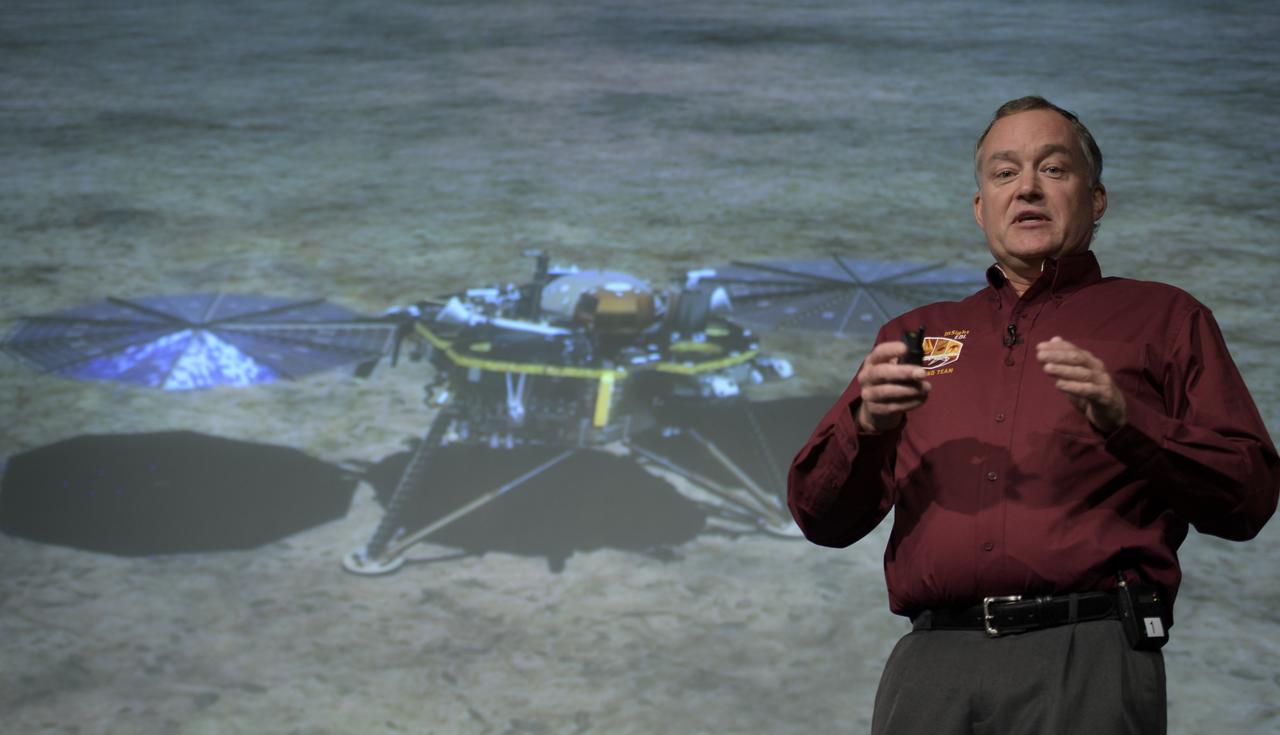
NASA's Jet Propulsion Laboratory InSight project manager Tom Hoffman gives remarks during a NASA InSight Mars Lander (Interior Exploration using Seismic Investigations, Geodesy and Heat Transport) media briefing, Wednesday, Oct. 31, 2018 at NASA Headquarters in Washington. InSIght will land on the Red Planet at approximately 3 p.m. EST (noon PST) Monday, Nov. 26. InSight will study the deep interior of Mars to learn how all celestial bodies with rocky surfaces, including Earth and the Moon, formed. The lander’s instruments include a seismometer to detect marsquakes and a probe to monitor the flow of heat in the planet's subsurface. Photo Credit: (NASA/Bill Ingalls)
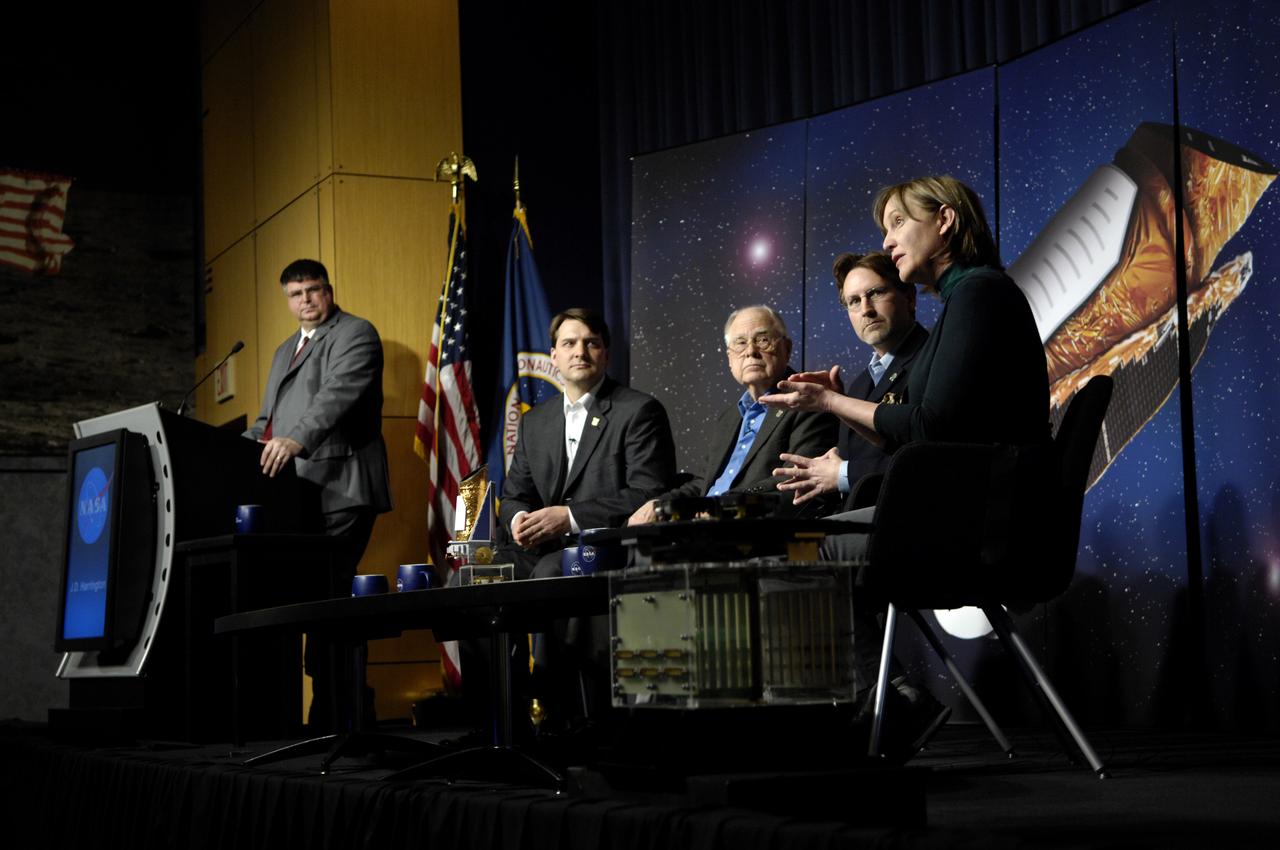
Debra Fischer, a professor of Astronomy at San Francisco State University, right, makes a comment, as Jim Fanson, William Borucki and Jon Morse, fourth from right, look on during a media briefing on the Kepler mission, Thursday, Feb. 19, 2008, at NASA Headquarters in Washington. Kepler, the first mission with the ability to find planets like earth, is scheduled to launch on March 5, 2009 from Cape Canaveral Air Force Station, Fla. aboard a Delta II rocket. At far left is J.D. Harrington. Photo Credit: (NASA/Paul. E. Alers)
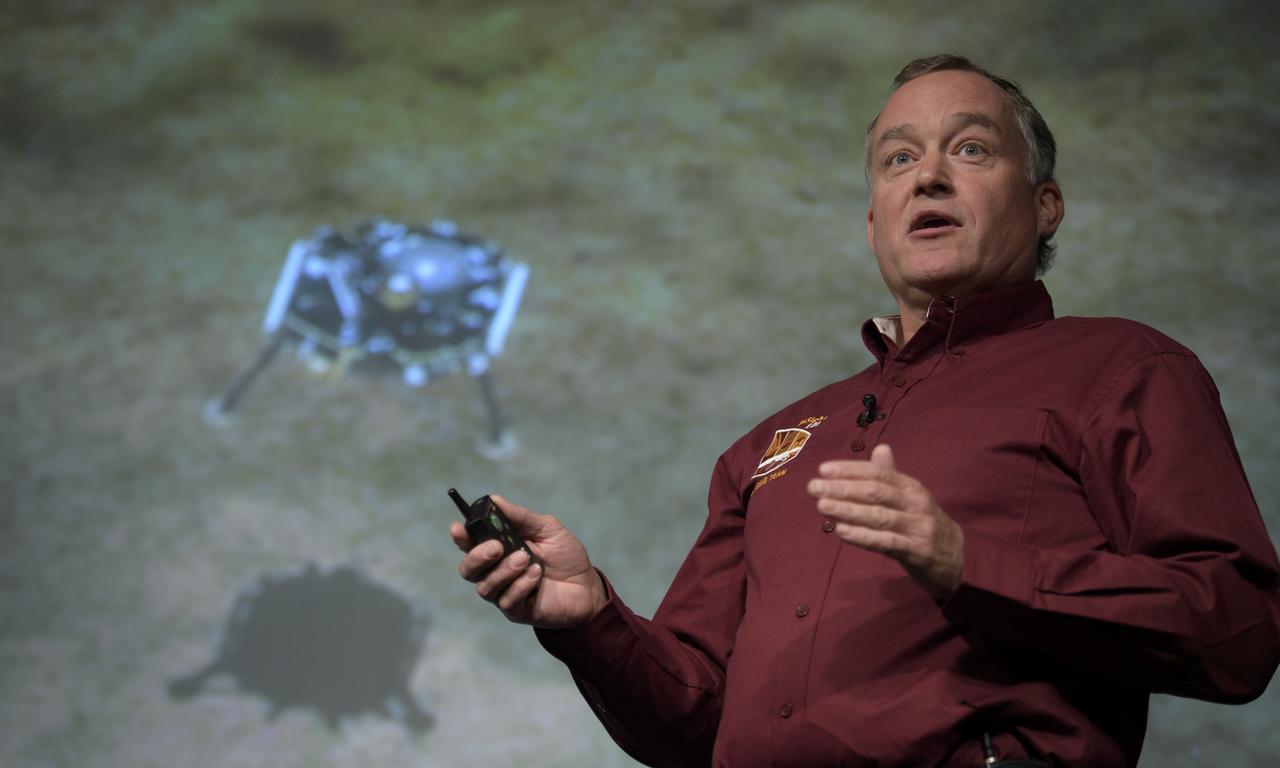
NASA's Jet Propulsion Laboratory InSight project manager Tom Hoffman gives remarks during a NASA InSight Mars Lander (Interior Exploration using Seismic Investigations, Geodesy and Heat Transport) media briefing, Wednesday, Oct. 31, 2018 at NASA Headquarters in Washington. InSIght will land on the Red Planet at approximately 3 p.m. EST (noon PST) Monday, Nov. 26. InSight will study the deep interior of Mars to learn how all celestial bodies with rocky surfaces, including Earth and the Moon, formed. The lander’s instruments include a seismometer to detect marsquakes and a probe to monitor the flow of heat in the planet's subsurface. Photo Credit: (NASA/Bill Ingalls)
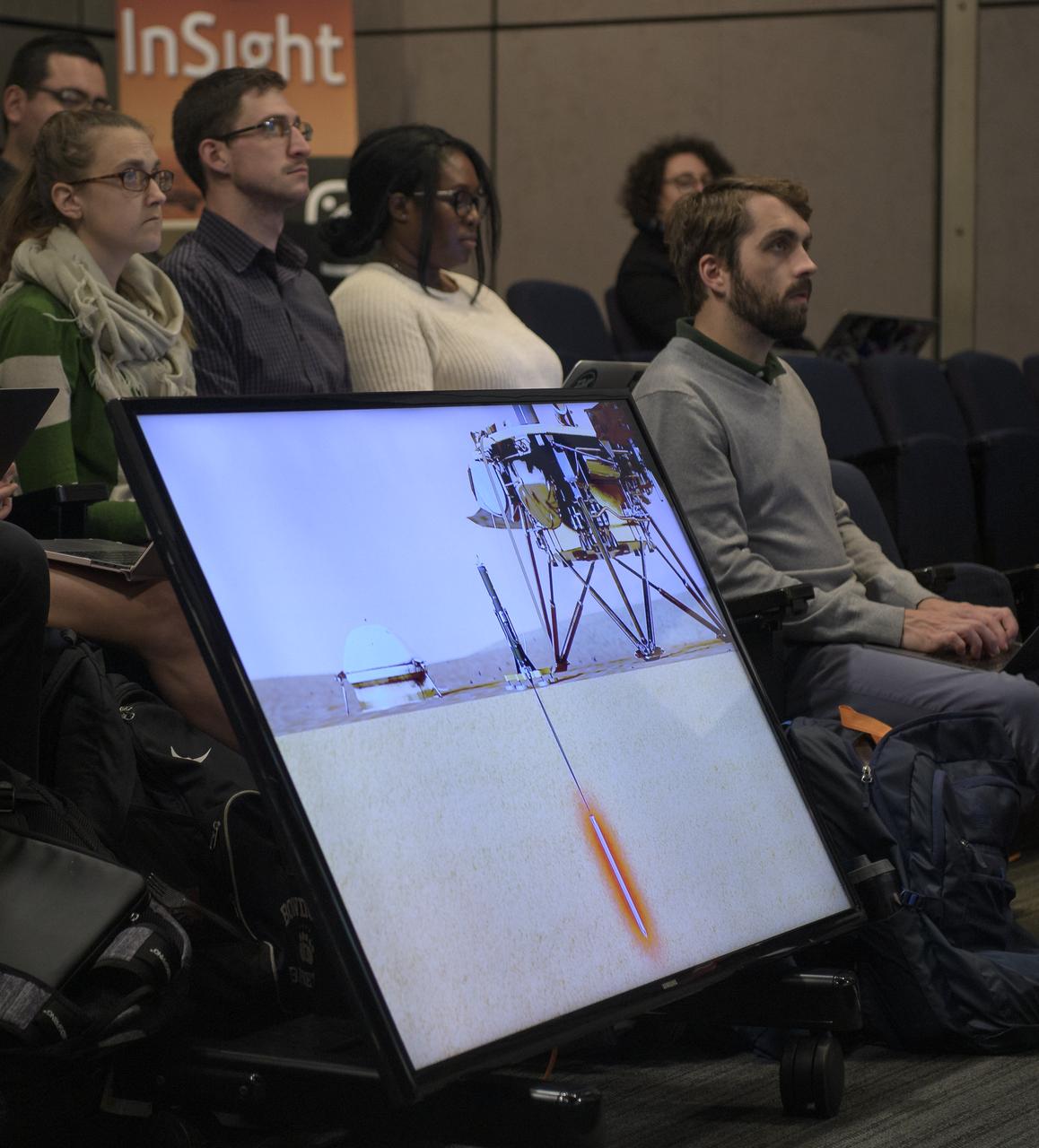
NASA InSight Mars Lander (Interior Exploration using Seismic Investigations, Geodesy and Heat Transport) media briefing, Wednesday, Oct. 31, 2018 at NASA Headquarters in Washington. InSIght will land on the Red Planet at approximately 3 p.m. EST (noon PST) Monday, Nov. 26. InSight will study the deep interior of Mars to learn how all celestial bodies with rocky surfaces, including Earth and the Moon, formed. The lander’s instruments include a seismometer to detect marsquakes and a probe to monitor the flow of heat in the planet's subsurface. Photo Credit: (NASA/Bill Ingalls)

NASA Headquarters senior communications official Dwayne Brown moderates a media briefing regarding the NASA InSight Mars Lander (Interior Exploration using Seismic Investigations, Geodesy and Heat Transport), Wednesday, Oct. 31, 2018 at NASA Headquarters in Washington. InSIght will land on the Red Planet at approximately 3 p.m. EST (noon PST) Monday, Nov. 26. InSight will study the deep interior of Mars to learn how all celestial bodies with rocky surfaces, including Earth and the Moon, formed. The lander’s instruments include a seismometer to detect marsquakes and a probe to monitor the flow of heat in the planet's subsurface. Photo Credit: (NASA/Bill Ingalls)
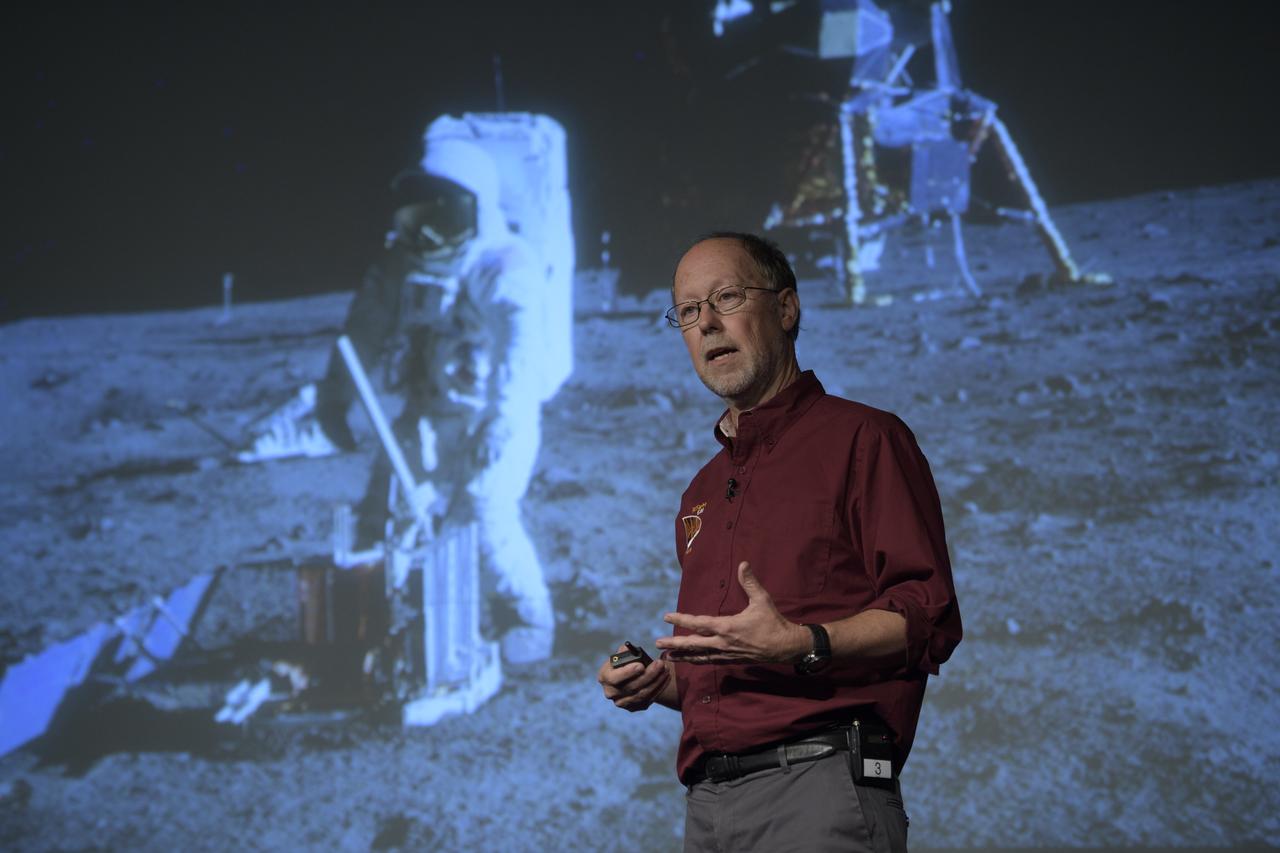
NASA's Jet Propulsion Laboratory InSight principal investigator Bruce Banerdt gives remarks during the NASA InSight Mars Lander (Interior Exploration using Seismic Investigations, Geodesy and Heat Transport) media briefing, Wednesday, Oct. 31, 2018 at NASA Headquarters in Washington. InSIght will land on the Red Planet at approximately 3 p.m. EST (noon PST) Monday, Nov. 26. InSight will study the deep interior of Mars to learn how all celestial bodies with rocky surfaces, including Earth and the Moon, formed. The lander’s instruments include a seismometer to detect marsquakes and a probe to monitor the flow of heat in the planet's subsurface. Photo Credit: (NASA/Bill Ingalls)

NASA Headquarters senior communications official Dwayne Brown moderates a media briefing regarding the NASA InSight Mars Lander (Interior Exploration using Seismic Investigations, Geodesy and Heat Transport), Wednesday, Oct. 31, 2018 at NASA Headquarters in Washington. InSIght will land on the Red Planet at approximately 3 p.m. EST (noon PST) Monday, Nov. 26. InSight will study the deep interior of Mars to learn how all celestial bodies with rocky surfaces, including Earth and the Moon, formed. The lander’s instruments include a seismometer to detect marsquakes and a probe to monitor the flow of heat in the planet's subsurface. Photo Credit: (NASA/Bill Ingalls)
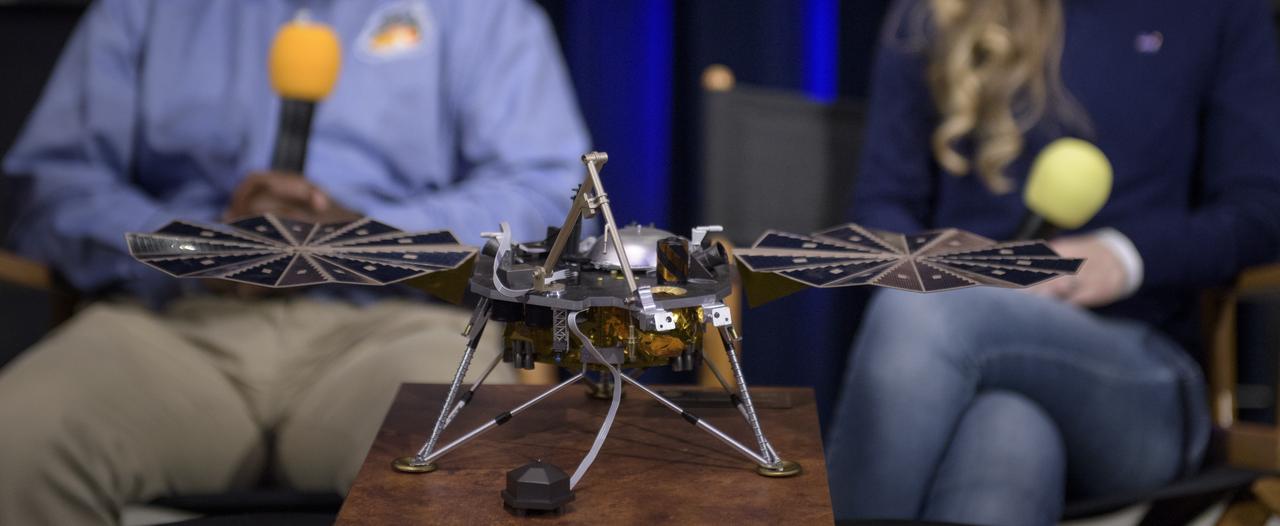
A model of the Mars InSight lander is on display during a social media briefing, Sunday, Nov. 25, 2018 at NASA's Jet Propulsion Laboratory in Pasadena, California. InSight, short for Interior Exploration using Seismic Investigations, Geodesy and Heat Transport, is a Mars lander designed to study the "inner space" of Mars: its crust, mantle, and core. InSight is scheduled to touch down on the Red Planet at approximately noon PST (3 p.m. EST) on Nov. 26. Photo Credit: (NASA/Bill Ingalls)

NASA Chief Scientist Jim Green talks about Mars InSight during a social media briefing, Sunday, Nov. 25, 2018 at NASA's Jet Propulsion Laboratory in Pasadena, California. InSight, short for Interior Exploration using Seismic Investigations, Geodesy and Heat Transport, is a Mars lander designed to study the "inner space" of Mars: its crust, mantle, and core. InSight is scheduled to touch down on the Red Planet at approximately noon PST (3 p.m. EST) on Nov. 26. Photo Credit: (NASA/Bill Ingalls)

KENNEDY SPACE CENTER, FLA. -- Mauro Piermaria, the ESPERIA mission manager for ASI, the Italian Space Agency, answers questions from the media during a news briefing on the launch readiness of space shuttle mission STS-120. The STS-120 mission will be the 23rd shuttle flight to the International Space Station, delivering the Italian-built U.S. Node 2, called Harmony. The seven-member crew includes ESA astronaut Paolo Nespoli from Italy. The 14-day mission includes five spacewalks -- four by shuttle crew members and one by the station's Expedition 16 crew -- to install Harmony and move the P6 solar arrays to their permanent position and deploy them. Launch aboard space shuttle Discovery is planned for 11:38 a.m. EDT Oct. 23, and Discovery is scheduled to complete its mission and return home on Nov. 6. Photo credit: NASA/George Shelton

KENNEDY SPACE CENTER, FLA. -- Alan Thirkettle, the International Space Station Program Manager for ESA, the European Space Agency, answers questions from the media during a news briefing on the launch readiness of space shuttle mission STS-120. The STS-120 mission will be the 23rd shuttle flight to the International Space Station, delivering the Italian-built U.S. Node 2, called Harmony. The seven-member crew includes ESA astronaut Paolo Nespoli from Italy. The 14-day mission includes five spacewalks -- four by shuttle crew members and one by the station's Expedition 16 crew -- to install Harmony and move the P6 solar arrays to their permanent position and deploy them. Launch aboard space shuttle Discovery is planned for 11:38 a.m. EDT Oct. 23, and Discovery is scheduled to complete its mission and return home on Nov. 6. Photo credit: NASA/George Shelton

President of the Simons Foundation and Chair of NASA's UAP Independent Study Team, David Spergel, answers a question during a media briefing to discuss the findings from an unidentified anomalous phenomena (UAP) independent study team, Thursday, Sept. 14, 2023, at the Mary W. Jackson NASA Headquarters building in Washington. The UAP independent study team, commissioned in 2022, is a counsel of 16 community experts across diverse areas on matters relevant to potential methods of study for unidentified anomalous phenomena. NASA published the team’s full report online, which aims to inform about what possible data could be collected in the future to shed light on the nature and origin of UAP. Photo Credit: (NASA/Aubrey Gemignani)
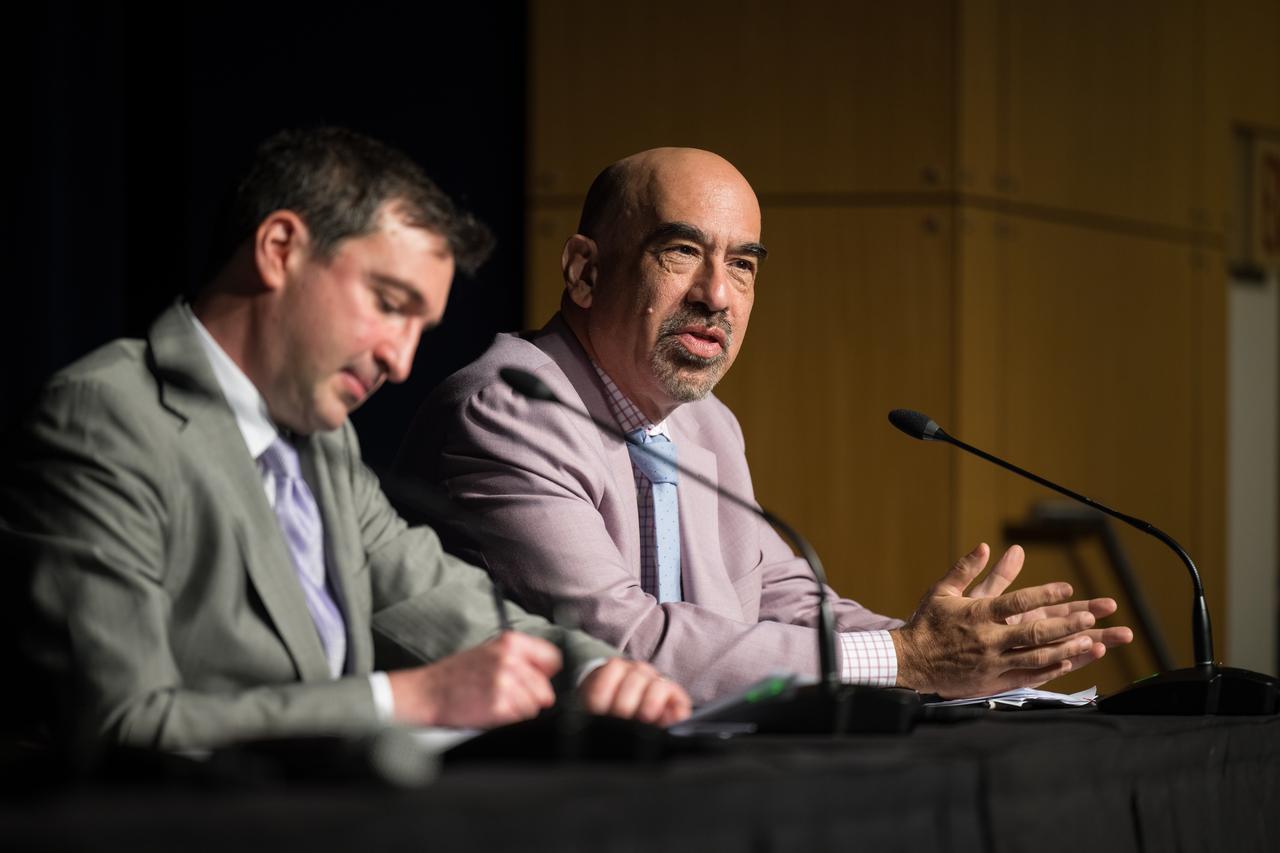
President of the Simons Foundation and Chair of NASA's UAP Independent Study Team, David Spergel, answers a question during a media briefing to discuss the findings from an unidentified anomalous phenomena (UAP) independent study team, Thursday, Sept. 14, 2023, at the Mary W. Jackson NASA Headquarters building in Washington. The UAP independent study team, commissioned in 2022, is a counsel of 16 community experts across diverse areas on matters relevant to potential methods of study for unidentified anomalous phenomena. NASA published the team’s full report online, which aims to inform about what possible data could be collected in the future to shed light on the nature and origin of UAP. Photo Credit: (NASA/Aubrey Gemignani)

NASA Assistant Deputy Associate Administrator for Research, Science Mission Directorate, Daniel Evans, answers a question during a media briefing to discuss the findings from an unidentified anomalous phenomena (UAP) independent study team, Thursday, Sept. 14, 2023, at the Mary W. Jackson NASA Headquarters building in Washington. The UAP independent study team, commissioned in 2022, is a counsel of 16 community experts across diverse areas on matters relevant to potential methods of study for unidentified anomalous phenomena. NASA published the team’s full report online, which aims to inform about what possible data could be collected in the future to shed light on the nature and origin of UAP. Photo Credit: (NASA/Aubrey Gemignani)

President of the Simons Foundation and Chair of NASA's UAP Independent Study Team, David Spergel, provides remarks during a media briefing to discuss the findings from an unidentified anomalous phenomena (UAP) independent study team, Thursday, Sept. 14, 2023, at the Mary W. Jackson NASA Headquarters building in Washington. The UAP independent study team, commissioned in 2022, is a counsel of 16 community experts across diverse areas on matters relevant to potential methods of study for unidentified anomalous phenomena. NASA published the team’s full report online, which aims to inform about what possible data could be collected in the future to shed light on the nature and origin of UAP. Photo Credit: (NASA/Aubrey Gemignani)

President of the Simons Foundation and Chair of NASA's UAP Independent Study Team, David Spergel answers a question during a media briefing to discuss the findings from an unidentified anomalous phenomena (UAP) independent study team, Thursday, Sept. 14, 2023, at the Mary W. Jackson NASA Headquarters building in Washington. The UAP independent study team, commissioned in 2022, is a counsel of 16 community experts across diverse areas on matters relevant to potential methods of study for unidentified anomalous phenomena. NASA published the team’s full report online, which aims to inform about what possible data could be collected in the future to shed light on the nature and origin of UAP. Photo Credit: (NASA/Aubrey Gemignani)

Panelists, from left to right, NASA Assistant Deputy Associate Administrator for Research, Science Mission Directorate, Daniel Evans; NASA Administrator Bill Nelson; NASA Associate Administrator for the Science Mission Directorate, Nicola Fox; and President of the Simons Foundation and Chair of NASA's UAP Independent Study Team, David Spergel, are seen in a video camera during a media briefing to discuss the findings from an unidentified anomalous phenomena (UAP) independent study team, Thursday, Sept. 14, 2023, at the Mary W. Jackson NASA Headquarters building in Washington. The UAP independent study team, commissioned in 2022, is a counsel of 16 community experts across diverse areas on matters relevant to potential methods of study for unidentified anomalous phenomena. NASA published the team’s full report online, which aims to inform about what possible data could be collected in the future to shed light on the nature and origin of UAP. Photo Credit: (NASA/Aubrey Gemignani)

NASA's Jet Propulsion Laboratory InSight deputy principal investigator Sue Smrekar introduces NASA's Jet Propulsion Laboratory InSight instrument deployment lead Jaime Singer during a media briefing regarding the NASA InSight Mars Lander (Interior Exploration using Seismic Investigations, Geodesy and Heat Transport), Wednesday, Oct. 31, 2018 at NASA Headquarters in Washington. InSIght will land on the Red Planet at approximately 3 p.m. EST (noon PST) Monday, Nov. 26. InSight will study the deep interior of Mars to learn how all celestial bodies with rocky surfaces, including Earth and the Moon, formed. The lander’s instruments include a seismometer to detect marsquakes and a probe to monitor the flow of heat in the planet's subsurface. Photo Credit: (NASA/Bill Ingalls)

NASA Assistant Deputy Associate Administrator for Research, Science Mission Directorate, Daniel Evans, provides remarks during a media briefing to discuss the findings from an unidentified anomalous phenomena (UAP) independent study team, Thursday, Sept. 14, 2023, at the Mary W. Jackson NASA Headquarters building in Washington. The UAP independent study team, commissioned in 2022, is a counsel of 16 community experts across diverse areas on matters relevant to potential methods of study for unidentified anomalous phenomena. NASA published the team’s full report online, which aims to inform about what possible data could be collected in the future to shed light on the nature and origin of UAP. Photo Credit: (NASA/Aubrey Gemignani)

Aline Zimmer, EDL Systems Engineer, NASA JPL, left, and Farah Alibay, Payload Systems Engineer, NASA JPL, talk about Mars InSight during a social media briefing, Sunday, Nov. 25, 2018 at NASA's Jet Propulsion Laboratory in Pasadena, California. InSight, short for Interior Exploration using Seismic Investigations, Geodesy and Heat Transport, is a Mars lander designed to study the "inner space" of Mars: its crust, mantle, and core. InSight is scheduled to touch down on the Red Planet at approximately noon PST (3 p.m. EST) on Nov. 26. Photo Credit: (NASA/Bill Ingalls)

Tilman Spohn, HP3 Principle Investigator, German Aerospace Center (DLR) talks about Mars InSight during a social media briefing, Sunday, Nov. 25, 2018 at NASA's Jet Propulsion Laboratory in Pasadena, California. InSight, short for Interior Exploration using Seismic Investigations, Geodesy and Heat Transport, is a Mars lander designed to study the "inner space" of Mars: its crust, mantle, and core. InSight is scheduled to touch down on the Red Planet at approximately noon PST (3 p.m. EST) on Nov. 26. Photo Credit: (NASA/Bill Ingalls)

Philippe Laudet, SEIS Project Manager, French National Space Agency (CNES) talks about Mars InSight during a social media briefing, Sunday, Nov. 25, 2018 at NASA's Jet Propulsion Laboratory in Pasadena, California. InSight, short for Interior Exploration using Seismic Investigations, Geodesy and Heat Transport, is a Mars lander designed to study the "inner space" of Mars: its crust, mantle, and core. InSight is scheduled to touch down on the Red Planet at approximately noon PST (3 p.m. EST) on Nov. 26. Photo Credit: (NASA/Bill Ingalls)
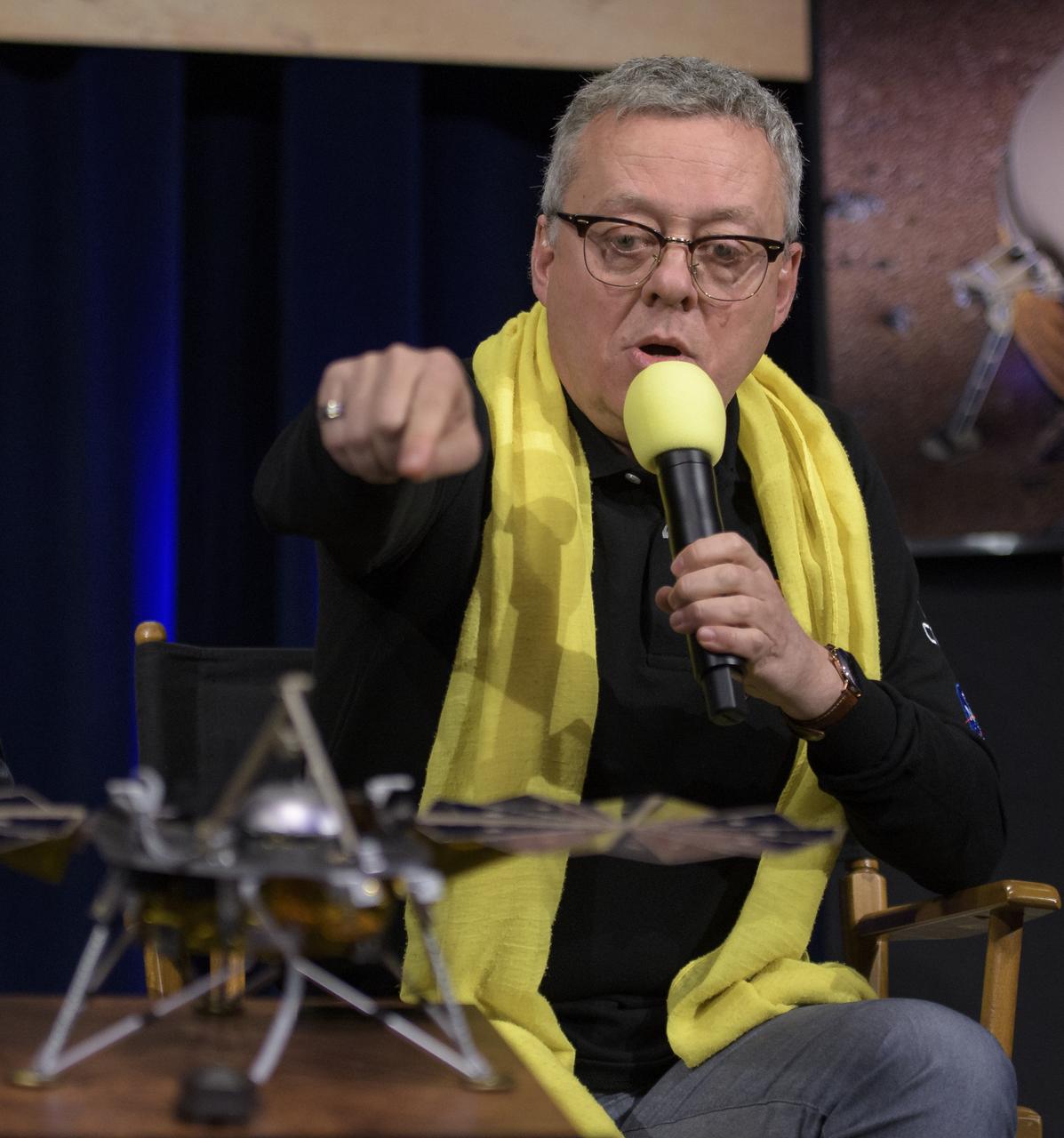
Philippe Laudet, SEIS Project Manager, French National Space Agency (CNES) talks about Mars InSight during a social media briefing, Sunday, Nov. 25, 2018 at NASA's Jet Propulsion Laboratory in Pasadena, California. InSight, short for Interior Exploration using Seismic Investigations, Geodesy and Heat Transport, is a Mars lander designed to study the "inner space" of Mars: its crust, mantle, and core. InSight is scheduled to touch down on the Red Planet at approximately noon PST (3 p.m. EST) on Nov. 26. Photo Credit: (NASA/Bill Ingalls)

Ashitey Trebi-Ollennu, Instrument Deployment Lead, NASA JPL talks about Mars InSight during a social media briefing, Sunday, Nov. 25, 2018 at NASA's Jet Propulsion Laboratory in Pasadena, California. InSight, short for Interior Exploration using Seismic Investigations, Geodesy and Heat Transport, is a Mars lander designed to study the "inner space" of Mars: its crust, mantle, and core. InSight is scheduled to touch down on the Red Planet at approximately noon PST (3 p.m. EST) on Nov. 26. Photo Credit: (NASA/Bill Ingalls)
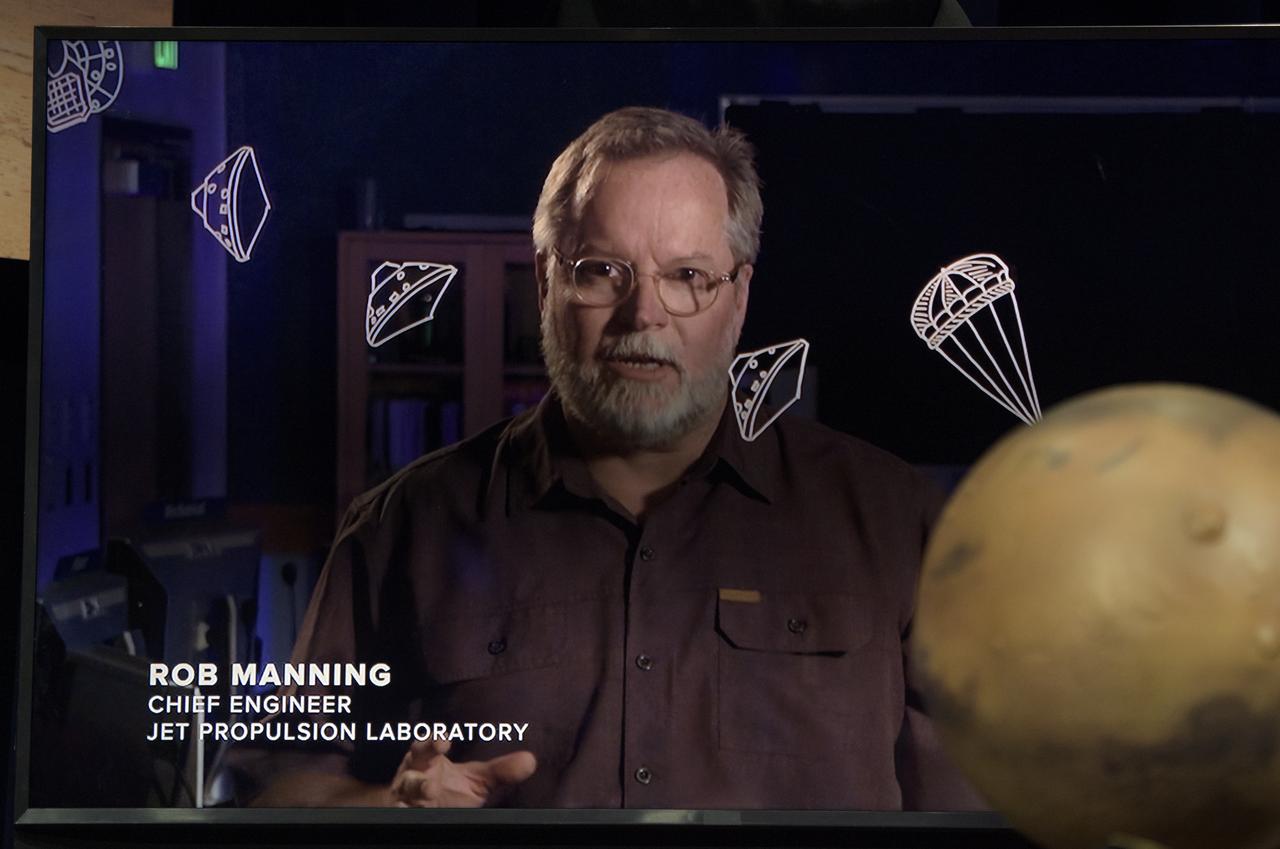
Jet Propulsion Laboratory Chief Engineer Rob Manning is seen in a video shown during a Mars InSight social media briefing, Sunday, Nov. 25, 2018 at NASA's Jet Propulsion Laboratory in Pasadena, California. InSight, short for Interior Exploration using Seismic Investigations, Geodesy and Heat Transport, is a Mars lander designed to study the "inner space" of Mars: its crust, mantle, and core. InSight is scheduled to touch down on the Red Planet at approximately noon PST (3 p.m. EST) on Nov. 26. Photo Credit: (NASA/Bill Ingalls)

Sue Smrekar, InSight deputy principal investigator, NASA JPL, talks about Mars InSight during a social media briefing, Sunday, Nov. 25, 2018 at NASA's Jet Propulsion Laboratory in Pasadena, California. InSight, short for Interior Exploration using Seismic Investigations, Geodesy and Heat Transport, is a Mars lander designed to study the "inner space" of Mars: its crust, mantle, and core. InSight is scheduled to touch down on the Red Planet at approximately noon PST (3 p.m. EST) on Nov. 26. Photo Credit: (NASA/Bill Ingalls)

Farah Alibay, Payload Systems Engineer, NASA JPL, talks about Mars InSight during a social media briefing, Sunday, Nov. 25, 2018 at NASA's Jet Propulsion Laboratory in Pasadena, California. InSight, short for Interior Exploration using Seismic Investigations, Geodesy and Heat Transport, is a Mars lander designed to study the "inner space" of Mars: its crust, mantle, and core. InSight is scheduled to touch down on the Red Planet at approximately noon PST (3 p.m. EST) on Nov. 26. Photo Credit: (NASA/Bill Ingalls)

Aline Zimmer, EDL Systems Engineer, NASA JPL talks about Mars InSight during a social media briefing, Sunday, Nov. 25, 2018 at NASA's Jet Propulsion Laboratory in Pasadena, California. InSight, short for Interior Exploration using Seismic Investigations, Geodesy and Heat Transport, is a Mars lander designed to study the "inner space" of Mars: its crust, mantle, and core. InSight is scheduled to touch down on the Red Planet at approximately noon PST (3 p.m. EST) on Nov. 26. Photo Credit: (NASA/Bill Ingalls)

Tim Priser, Quality Director, Lockheed Martin Space talks shows a small piece of the Mars InSight heat shield during a social media briefing, Sunday, Nov. 25, 2018 at NASA's Jet Propulsion Laboratory in Pasadena, California. InSight, short for Interior Exploration using Seismic Investigations, Geodesy and Heat Transport, is a Mars lander designed to study the "inner space" of Mars: its crust, mantle, and core. InSight is scheduled to touch down on the Red Planet at approximately noon PST (3 p.m. EST) on Nov. 26. Photo Credit: (NASA/Bill Ingalls)

Jason Craig, Visualization Manager, NASA JPL, talks about Mars InSight online visualization tools during a social media briefing, Sunday, Nov. 25, 2018 at NASA's Jet Propulsion Laboratory in Pasadena, California. InSight, short for Interior Exploration using Seismic Investigations, Geodesy and Heat Transport, is a Mars lander designed to study the "inner space" of Mars: its crust, mantle, and core. InSight is scheduled to touch down on the Red Planet at approximately noon PST (3 p.m. EST) on Nov. 26. Photo Credit: (NASA/Bill Ingalls)
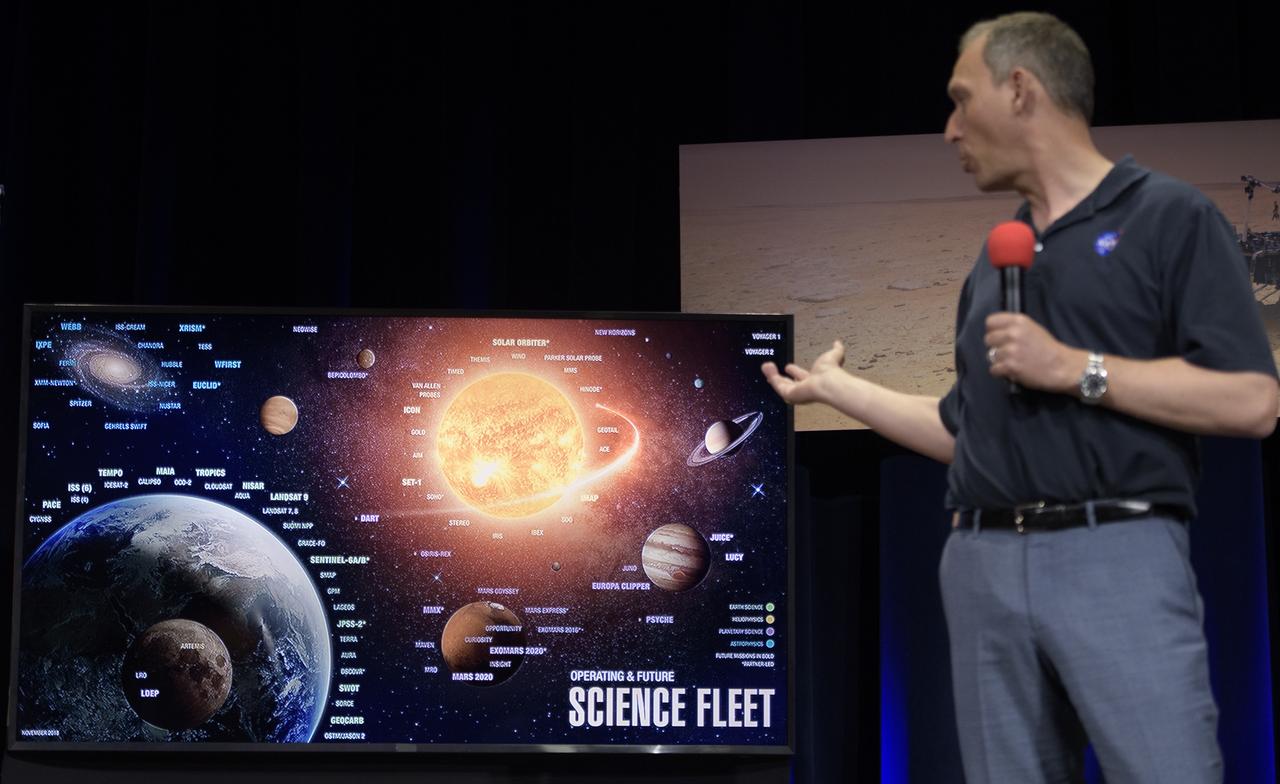
Thomas Zurbuchen, Associate Administrator of NASA’s Science Mission Directorate, NASA Headquarters talks about Mars InSight during a social media briefing, Sunday, Nov. 25, 2018 at NASA's Jet Propulsion Laboratory in Pasadena, California. InSight, short for Interior Exploration using Seismic Investigations, Geodesy and Heat Transport, is a Mars lander designed to study the "inner space" of Mars: its crust, mantle, and core. InSight is scheduled to touch down on the Red Planet at approximately noon PST (3 p.m. EST) on Nov. 26. Photo Credit: (NASA/Bill Ingalls)
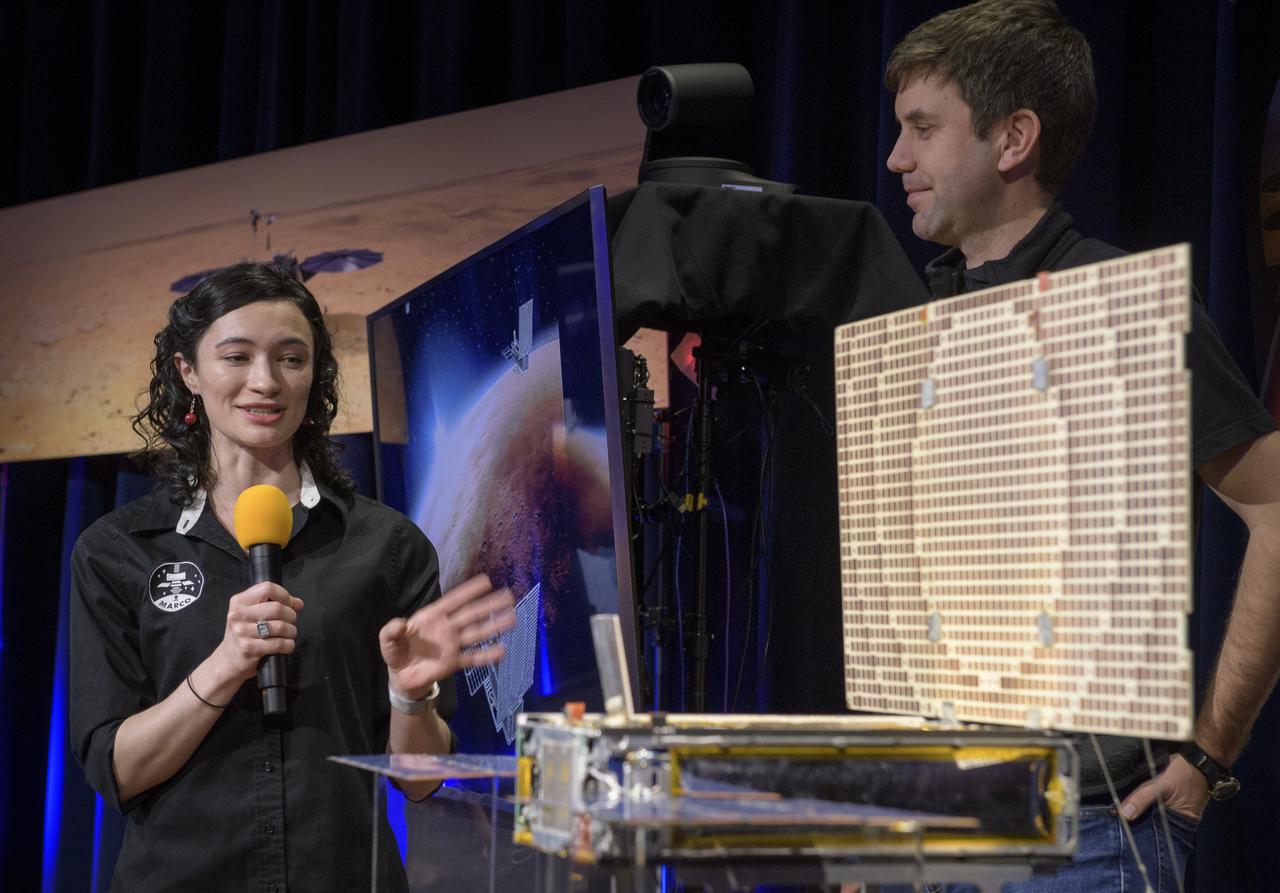
Annie Marinan, MarCO-B Missio Manager, NASA JPL, left, and Andy Klesh, MarCO chief engineer, NASA JPL, talk about Mars Cube One (MarCO) during a social media briefing, Sunday, Nov. 25, 2018 at NASA's Jet Propulsion Laboratory in Pasadena, California. InSight, short for Interior Exploration using Seismic Investigations, Geodesy and Heat Transport, is a Mars lander designed to study the "inner space" of Mars: its crust, mantle, and core. InSight is scheduled to touch down on the Red Planet at approximately noon PST (3 p.m. EST) on Nov. 26. Photo Credit: (NASA/Bill Ingalls)

Tim Priser, Quality Director, Lockheed Martin Space talks about Mars InSight during a social media briefing, Sunday, Nov. 25, 2018 at NASA's Jet Propulsion Laboratory in Pasadena, California. InSight, short for Interior Exploration using Seismic Investigations, Geodesy and Heat Transport, is a Mars lander designed to study the "inner space" of Mars: its crust, mantle, and core. InSight is scheduled to touch down on the Red Planet at approximately noon PST (3 p.m. EST) on Nov. 26. Photo Credit: (NASA/Bill Ingalls)

NASA officials take questions from members of the media in the Kennedy Space Center’s Press Site auditorium in Florida during the NASA Leadership Media Briefing ahead of the agency’s Boeing Orbital Flight Test-2 (OFT-2), May 18, 2022. From left to right are Jasmine Hopkins, NASA Communications; NASA Associate Administrator Bob Cabana; Janet Petro, director, NASA’s Kennedy Space Center; Kathryn Lueders, associate administrator, Space Operations Mission Directorate at NASA; NASA astronaut Butch Wilmore; NASA astronaut Mike Fincke; NASA astronaut Suni Williams. Boeing’s CST-100 Starliner is targeted to launch at 6:54 p.m. EDT on Thursday, May 19, on a United Launch Alliance Atlas V rocket from Space Launch Complex-41 at Cape Canaveral Space Force Station in Florida to rendezvous and dock with the International Space Station.
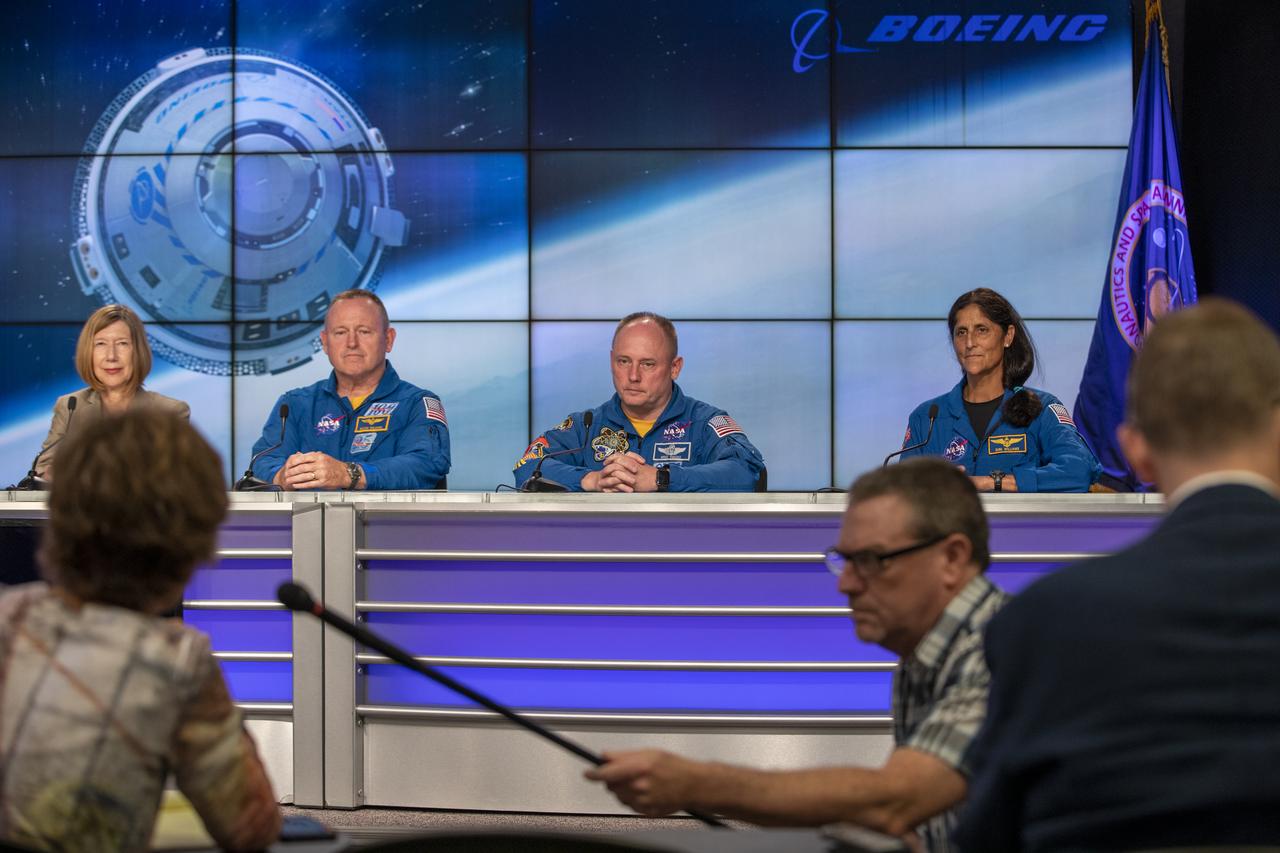
NASA officials take questions from members of the media in the Kennedy Space Center’s Press Site auditorium in Florida during the NASA Leadership Media Briefing ahead of the agency’s Boeing Orbital Flight Test-2 (OFT-2), May 18, 2022. From left to right are Kathryn Lueders, associate administrator, Space Operations Mission Directorate at NASA; NASA astronaut Butch Wilmore; NASA astronaut Mike Fincke; NASA astronaut Suni Williams. Boeing’s CST-100 Starliner is targeted to launch at 6:54 p.m. EDT on Thursday, May 19, on a United Launch Alliance Atlas V rocket from Space Launch Complex-41 at Cape Canaveral Space Force Station in Florida to rendezvous and dock with the International Space Station.
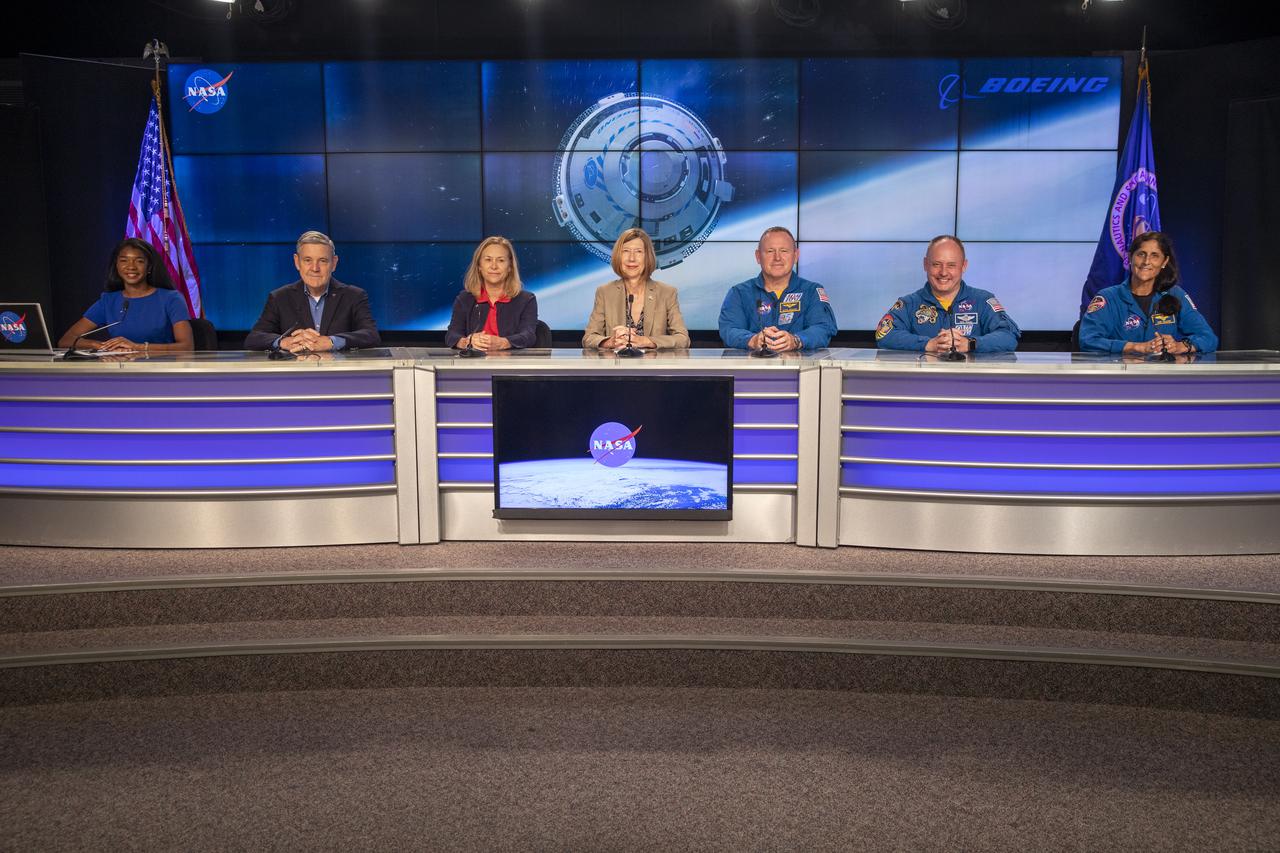
NASA officials take questions from members of the media in the Kennedy Space Center’s Press Site auditorium in Florida during the NASA Leadership Media Briefing ahead of the agency’s Boeing Orbital Flight Test-2 (OFT-2), May 18, 2022. From left to right are Jasmine Hopkins, NASA Communications; NASA Associate Administrator Bob Cabana; Janet Petro, director, NASA’s Kennedy Space Center; Kathryn Lueders, associate administrator, Space Operations Mission Directorate at NASA; NASA astronaut Butch Wilmore; NASA astronaut Mike Fincke; NASA astronaut Suni Williams. Boeing’s CST-100 Starliner is targeted to launch at 6:54 p.m. EDT on Thursday, May 19, on a United Launch Alliance Atlas V rocket from Space Launch Complex-41 at Cape Canaveral Space Force Station in Florida to rendezvous and dock with the International Space Station.
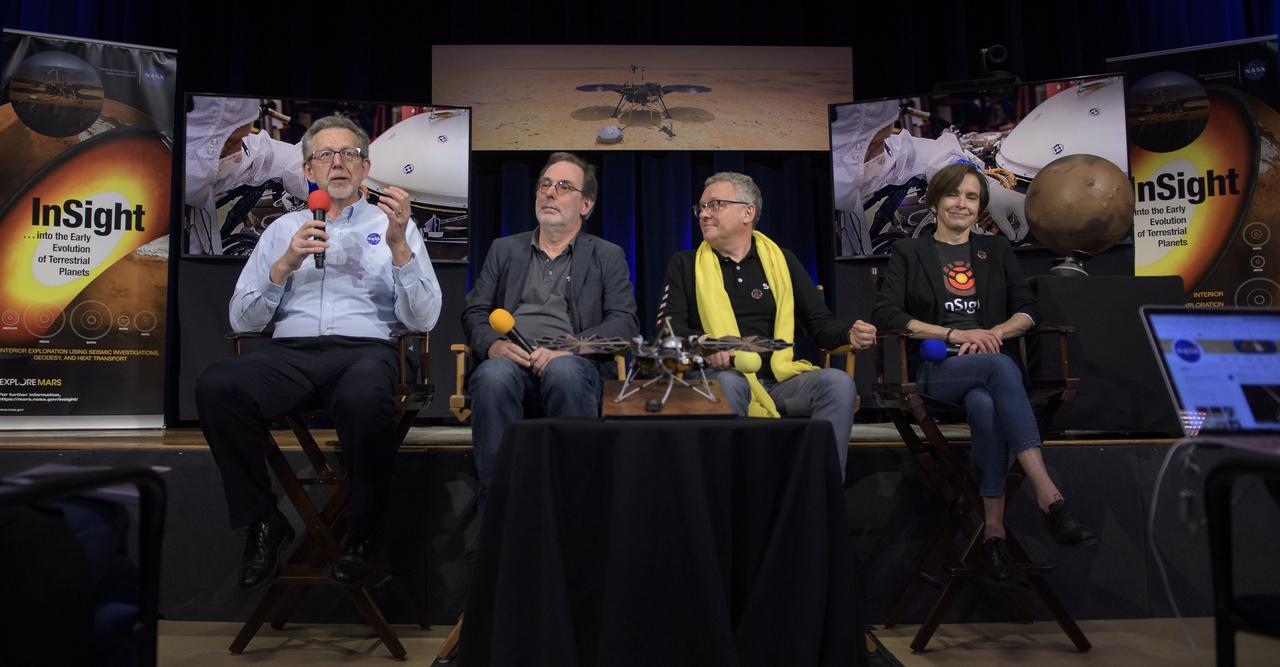
From left to right: NASA Chief Scientist Jim Green; HP3 Principle Investigator, German Aerospace Center (DLR), Tilman Spohn; SEIS Project Manager, French National Space Agency (CNES), Philippe Laudet; and InSight deputy principal investigator, NASA JPL, Sue Smrekar talk about Mars InSight during a social media briefing, Sunday, Nov. 25, 2018 at NASA's Jet Propulsion Laboratory in Pasadena, California. InSight, short for Interior Exploration using Seismic Investigations, Geodesy and Heat Transport, is a Mars lander designed to study the "inner space" of Mars: its crust, mantle, and core. InSight is scheduled to touch down on the Red Planet at approximately noon PST (3 p.m. EST) on Nov. 26. Photo Credit: (NASA/Bill Ingalls)
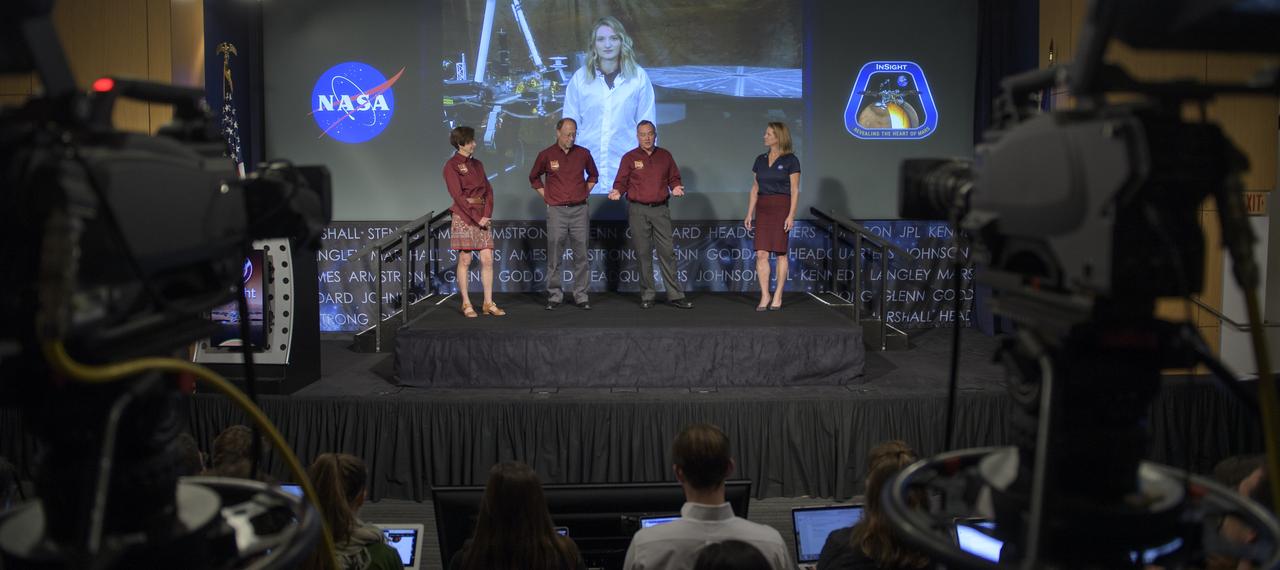
NASA's Jet Propulsion Laboratory InSight instrument deployment lead Jaime Singer, on screen, NASA's Jet Propulsion Laboratory InSight deputy principal investigator Sue Smrekar, left, NASA's Jet Propulsion Laboratory InSight principal investigator Bruce Banerdt, NASA's Jet Propulsion Laboratory InSight project manager Tom Hoffman, and NASA Headquarters acting director of the Planetary Science Division Lori Glaze, right, discuss the NASA InSight Mars Lander (Interior Exploration using Seismic Investigations, Geodesy and Heat Transport) during media briefing, Wednesday, Oct. 31, 2018 at NASA Headquarters in Washington. InSIght will land on the Red Planet at approximately 3 p.m. EST (noon PST) Monday, Nov. 26. InSight will study the deep interior of Mars to learn how all celestial bodies with rocky surfaces, including Earth and the Moon, formed. The lander’s instruments include a seismometer to detect marsquakes and a probe to monitor the flow of heat in the planet's subsurface. Photo Credit: (NASA/Bill Ingalls)

Brad Doorn, SMAP applications lead, Science Mission Directorate’s Applied Sciences Program at NASA Headquarters speaks during a briefing about the upcoming launch of the Soil Moisture Active Passive (SMAP) mission, Thursday, Jan. 08, 2015, at NASA Headquarters in Washington DC. The mission is scheduled for a Jan. 29 launch from Vandenberg Air Force Base in California, and will provide the most accurate, highest-resolution global measurements of soil moisture ever obtained from space. The data will be used to enhance scientists' understanding of the processes that link Earth's water, energy and carbon cycles. Photo Credit: (NASA/Aubrey Gemignani)
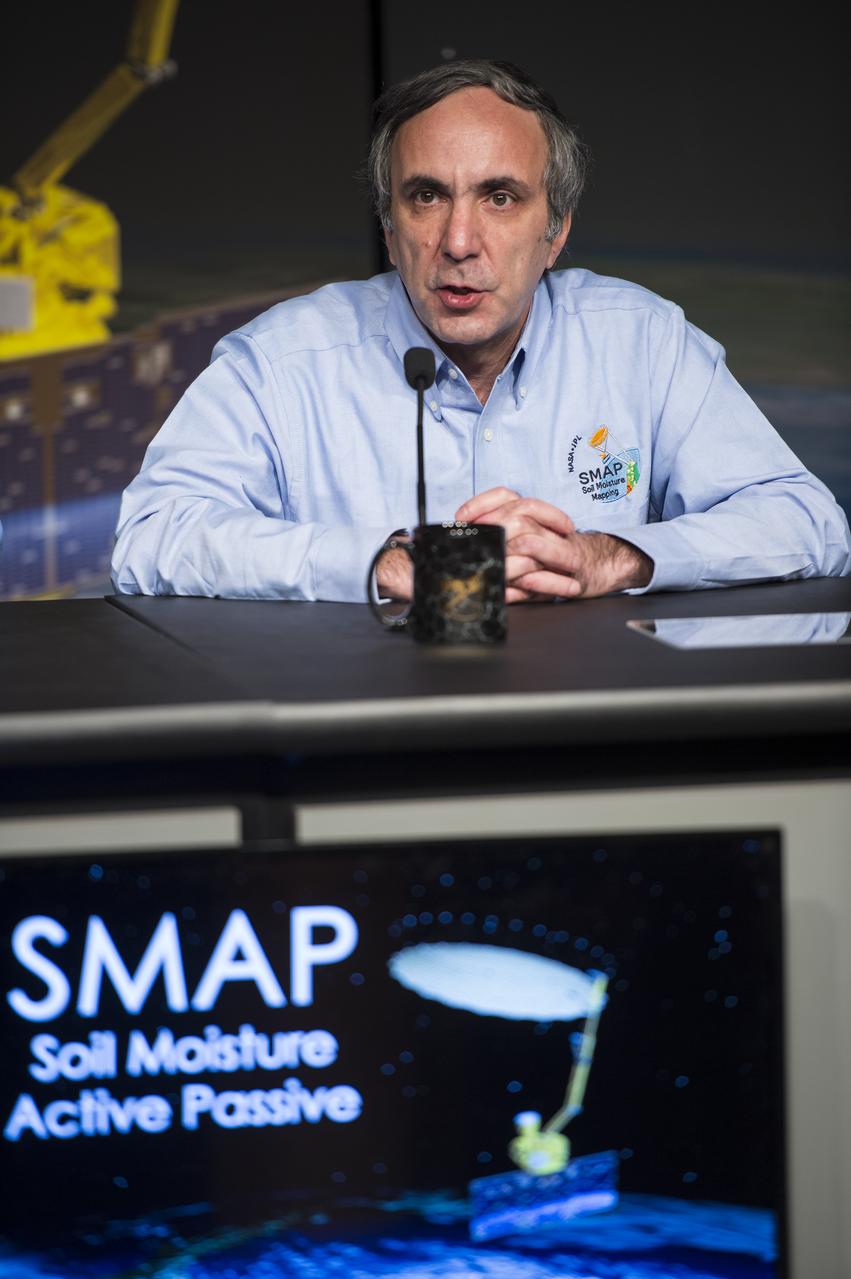
Dara Entekhabi, SMAP science team lead, Massachusetts Institute of Technology, speaks during a briefing about the upcoming launch of the Soil Moisture Active Passive (SMAP) mission, Thursday, Jan. 08, 2015, at NASA Headquarters in Washington DC. The mission is scheduled for a Jan. 29 launch from Vandenberg Air Force Base in California, and will provide the most accurate, highest-resolution global measurements of soil moisture ever obtained from space. The data will be used to enhance scientists' understanding of the processes that link Earth's water, energy and carbon cycles. Photo Credit: (NASA/Aubrey Gemignani)

Kent Kellogg, SMAP project manager at NASA’s Jet Propulsion Laboratory (JPL) in Pasadena, CA, speaks during a briefing about the upcoming launch of the Soil Moisture Active Passive (SMAP) mission, Thursday, Jan. 08, 2015, at NASA Headquarters in Washington DC. The mission is scheduled for a Jan. 29 launch from Vandenberg Air Force Base in California, and will provide the most accurate, highest-resolution global measurements of soil moisture ever obtained from space. The data will be used to enhance scientists' understanding of the processes that link Earth's water, energy and carbon cycles. Photo Credit: (NASA/Aubrey Gemignani)