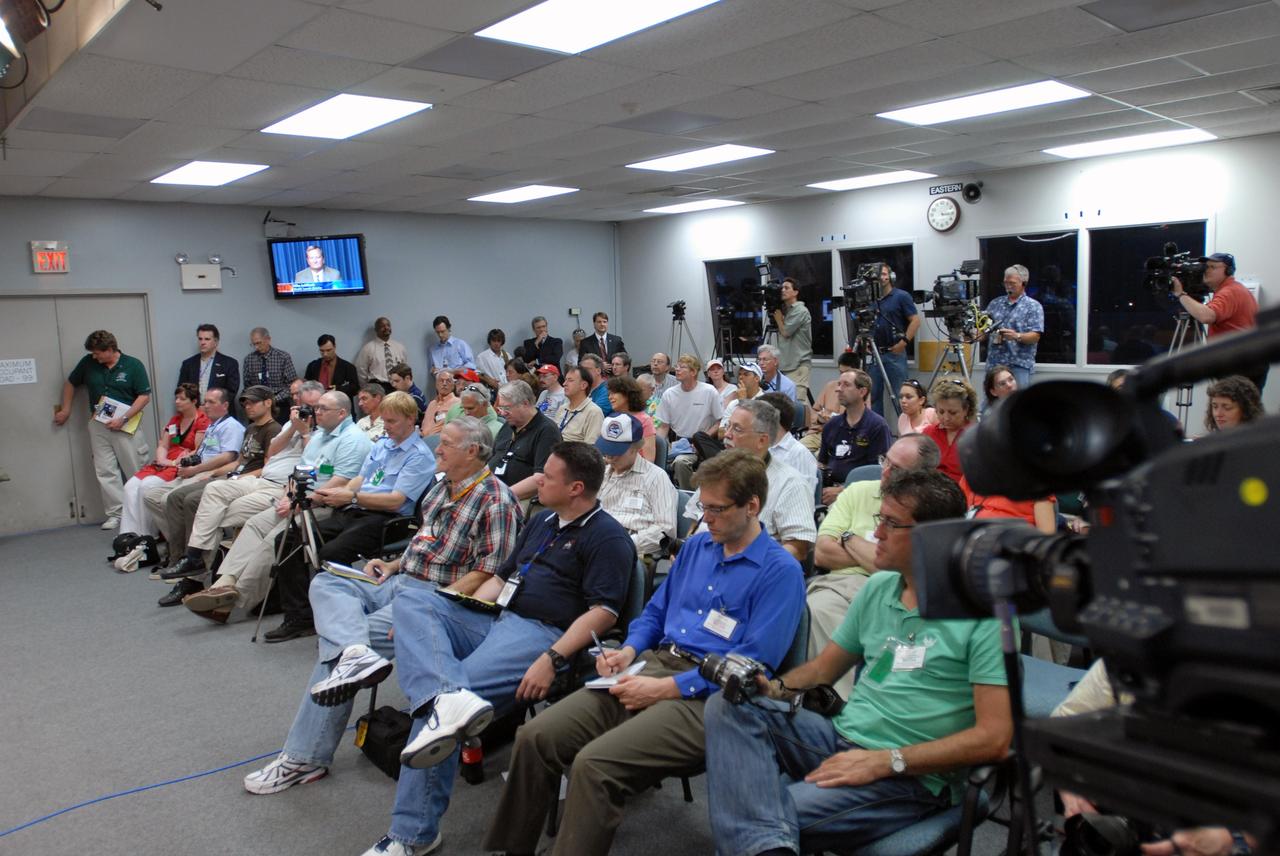
CAPE CANAVERAL, Fla. – The NASA News Auditorium is filled with media during the post-launch press conference at NASA's Kennedy Space Center in Florida. Featured on the dais were Associate Administrator for NASA's Space Operations Directorate William Gerstenmaier, Associate Administrator for NASA's Science Mission Directorate Ed Weiler, Launch Integration Manager Mike Moses and Shuttle Launch Director Mike Leinbach. The conference followed the successful launch of space shuttle Atlantis on the STS-125 mission to service NASA's Hubble Space Telescope. Atlantis' 11-day flight will include five spacewalks to refurbish and upgrade the telescope with state-of-the-art science instruments that will expand Hubble's capabilities and extend its operational lifespan through at least 2014. The payload includes a Wide Field Camera 3, Fine Guidance Sensor and the Cosmic Origins Spectrograph. Photo credit: NASA/Jim Grossmann
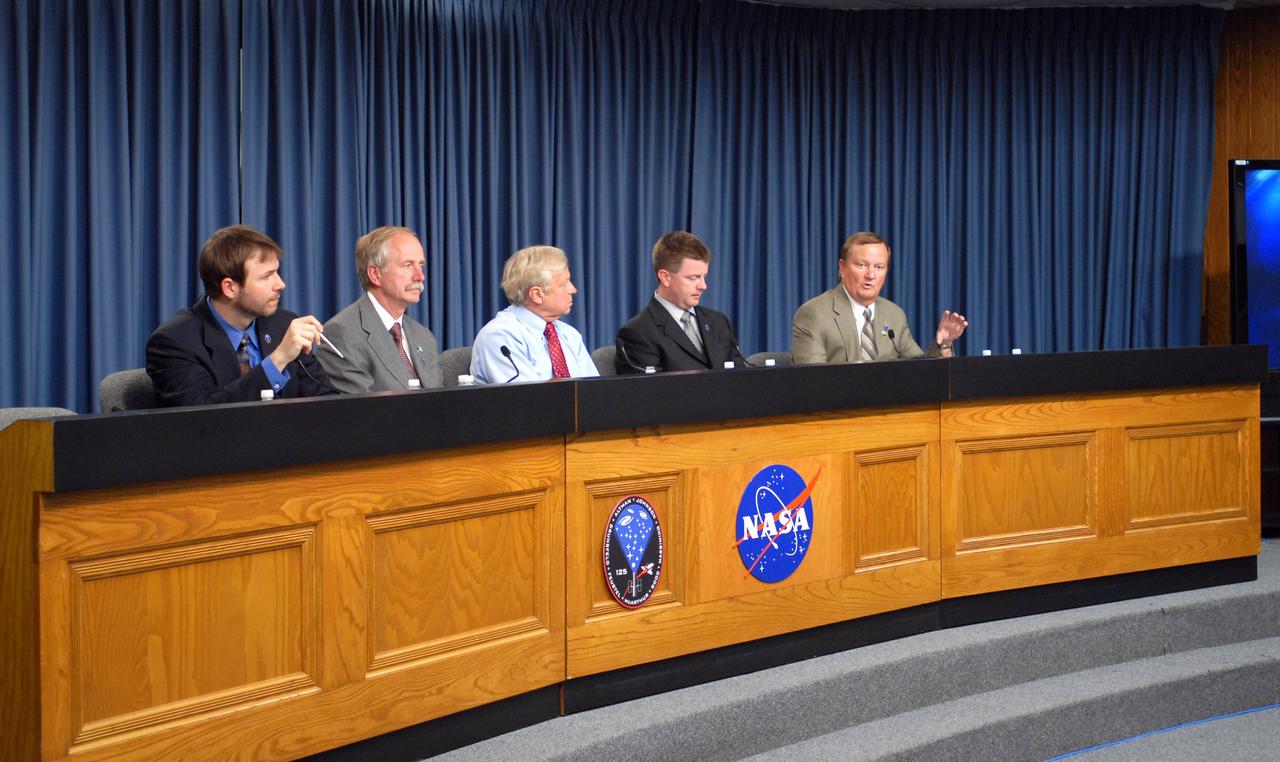
CAPE CANAVERAL, Fla. – During a press conference in the NASA News Auditorium at NASA's Kennedy Space Center in Florida, Shuttle Launch Director Mike Leinbach, right, answers a question from the media. Others from left are NASA Public Affairs Officer John Yembrick, who moderated, Associate Administrator for NASA's Space Operations Directorate William Gerstenmaier, Associate Administrator for NASA's Science Mission Directorate Ed Weiler and Launch Integration Manager Mike Moses. The conference followed the successful launch of space shuttle Atlantis on the STS-125 mission to service NASA's Hubble Space Telescope. Atlantis' 11-day flight will include five spacewalks to refurbish and upgrade the telescope with state-of-the-art science instruments that will expand Hubble's capabilities and extend its operational lifespan through at least 2014. The payload includes a Wide Field Camera 3, Fine Guidance Sensor and the Cosmic Origins Spectrograph. Photo credit: NASA/Jim Grossmann
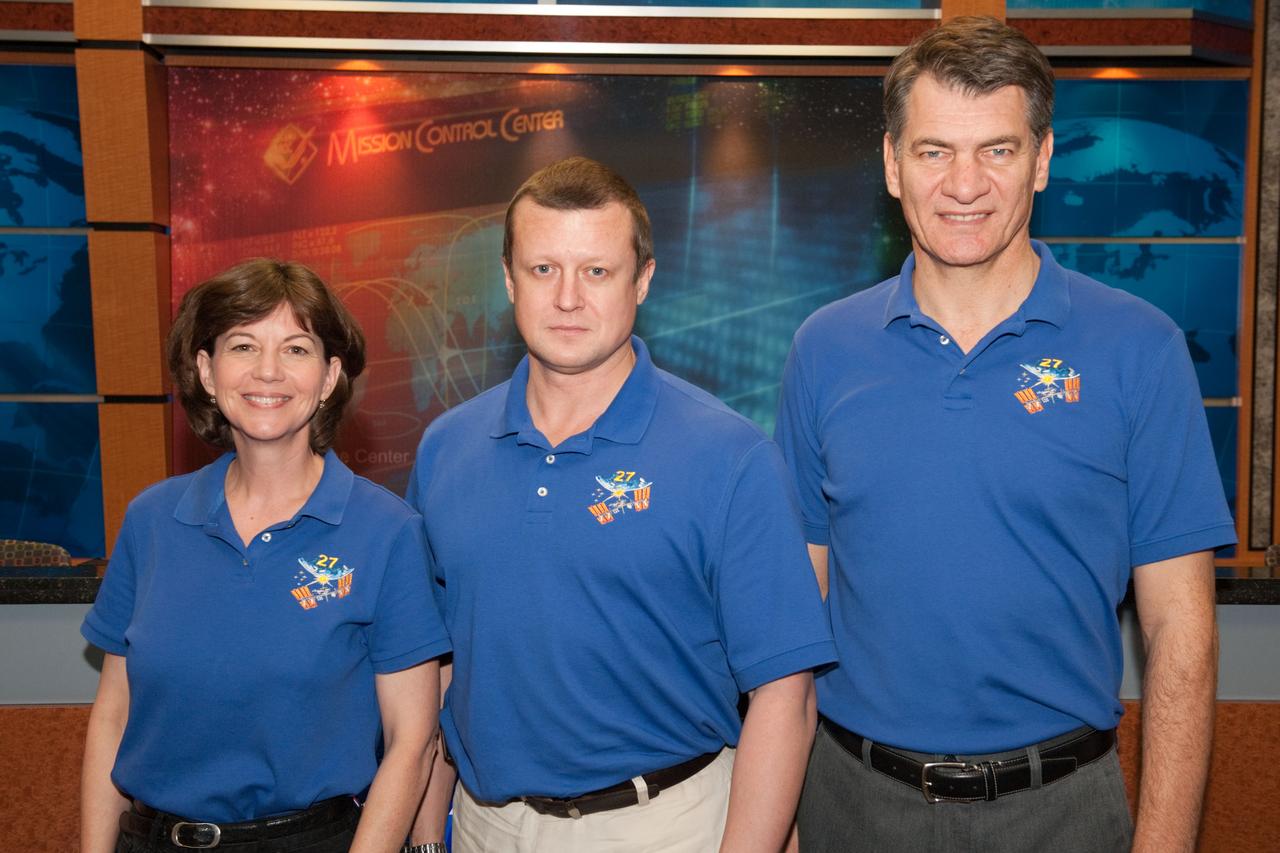
Date: 9-15-10 Location: Bldg 2N, Press Conf. Room Subject: Media ops session for Expedition 26/27 press conference. Photographer: Lauren Harnett
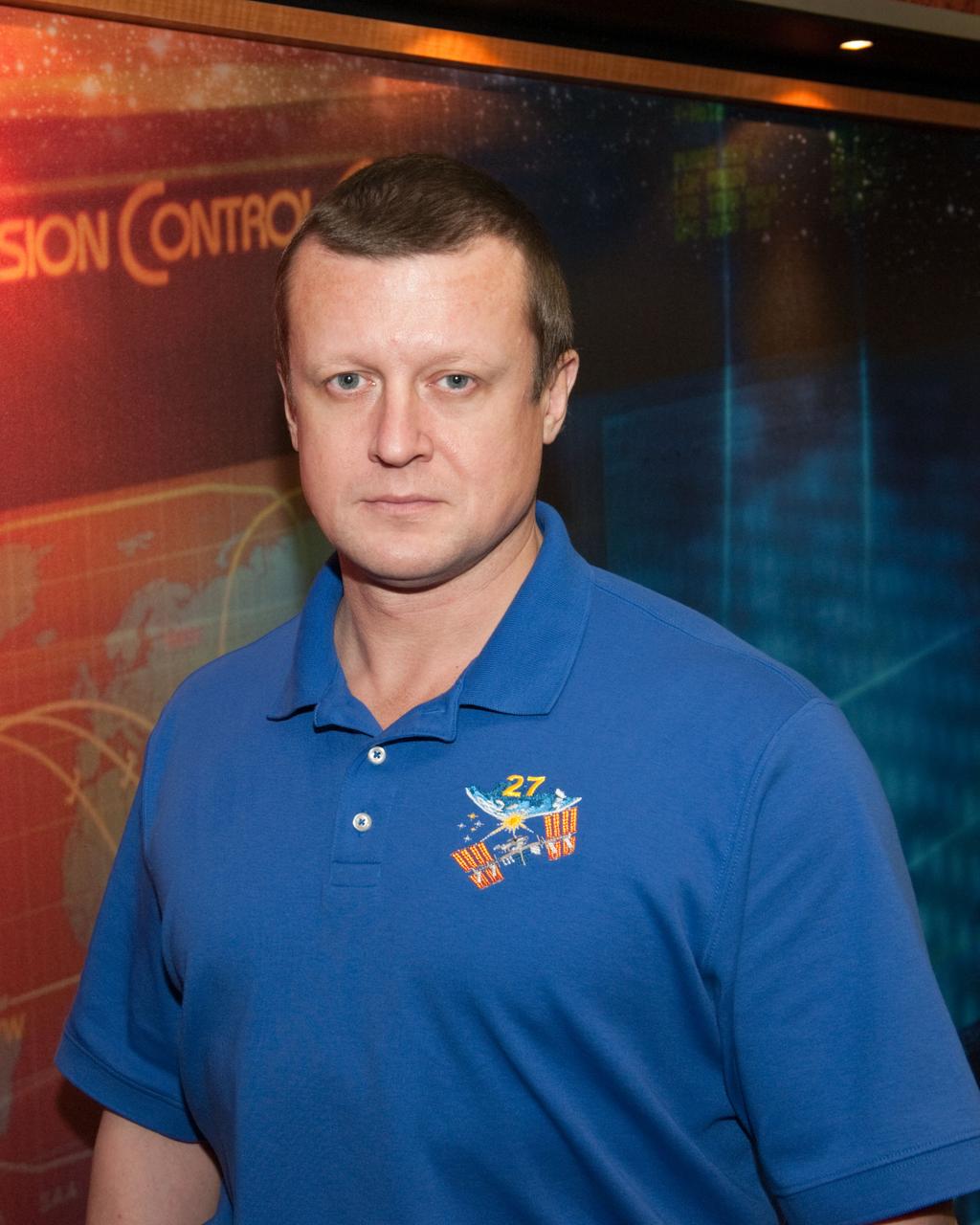
Date: 9-15-10 Location: Bldg 2N, Press Conf. Room Subject: Media ops session for Expedition 26/27 press conference. Photographer: Lauren Harnett
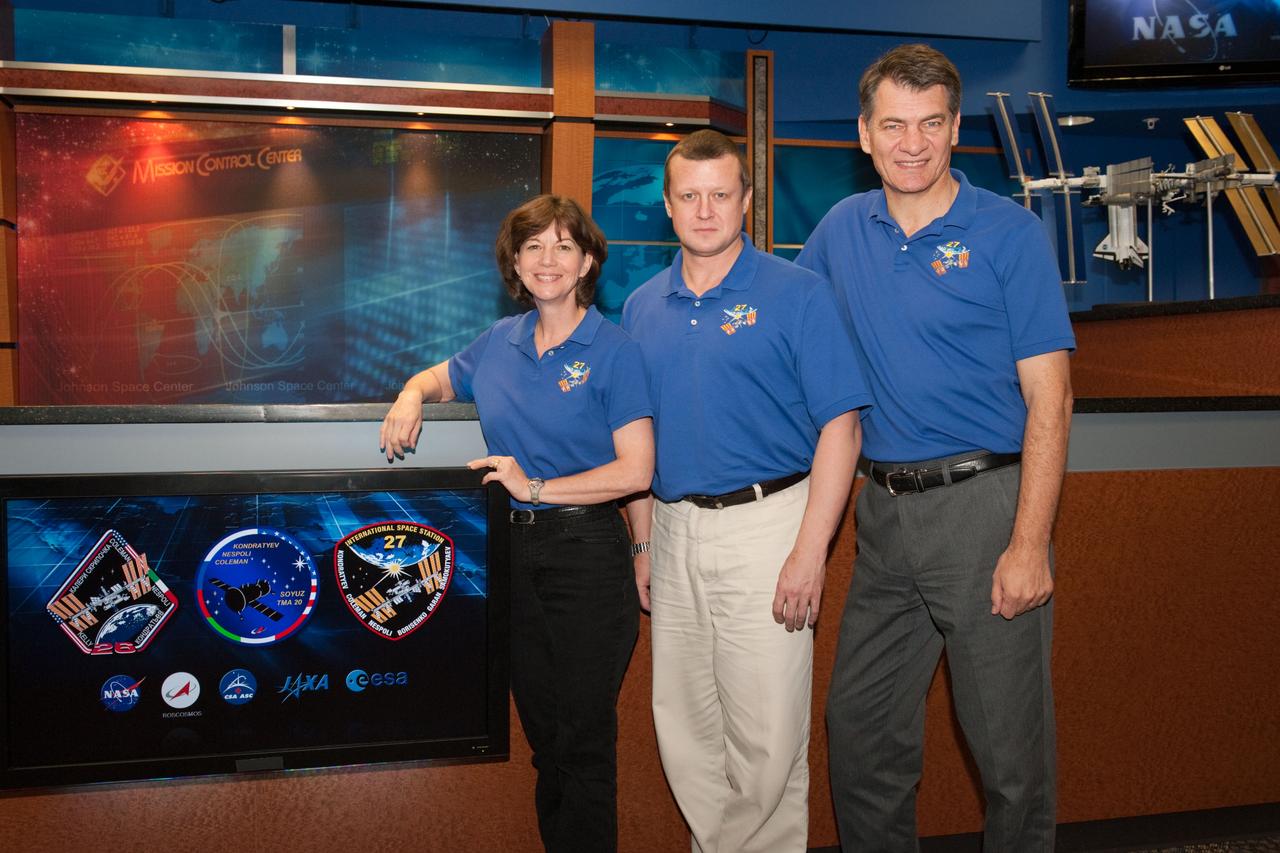
Date: 9-15-10 Location: Bldg 2N, Press Conf. Room Subject: Media ops session for Expedition 26/27 press conference. Photographer: Lauren Harnett
Date: 9-15-10 Location: Bldg 2N, Press Conf. Room Subject: Media ops session for Expedition 26/27 press conference. Photographer: Lauren Harnett

Date: 9-15-10 Location: Bldg 2N, Press Conf. Room Subject: Media ops session for Expedition 26/27 press conference. Photographer: Lauren Harnett
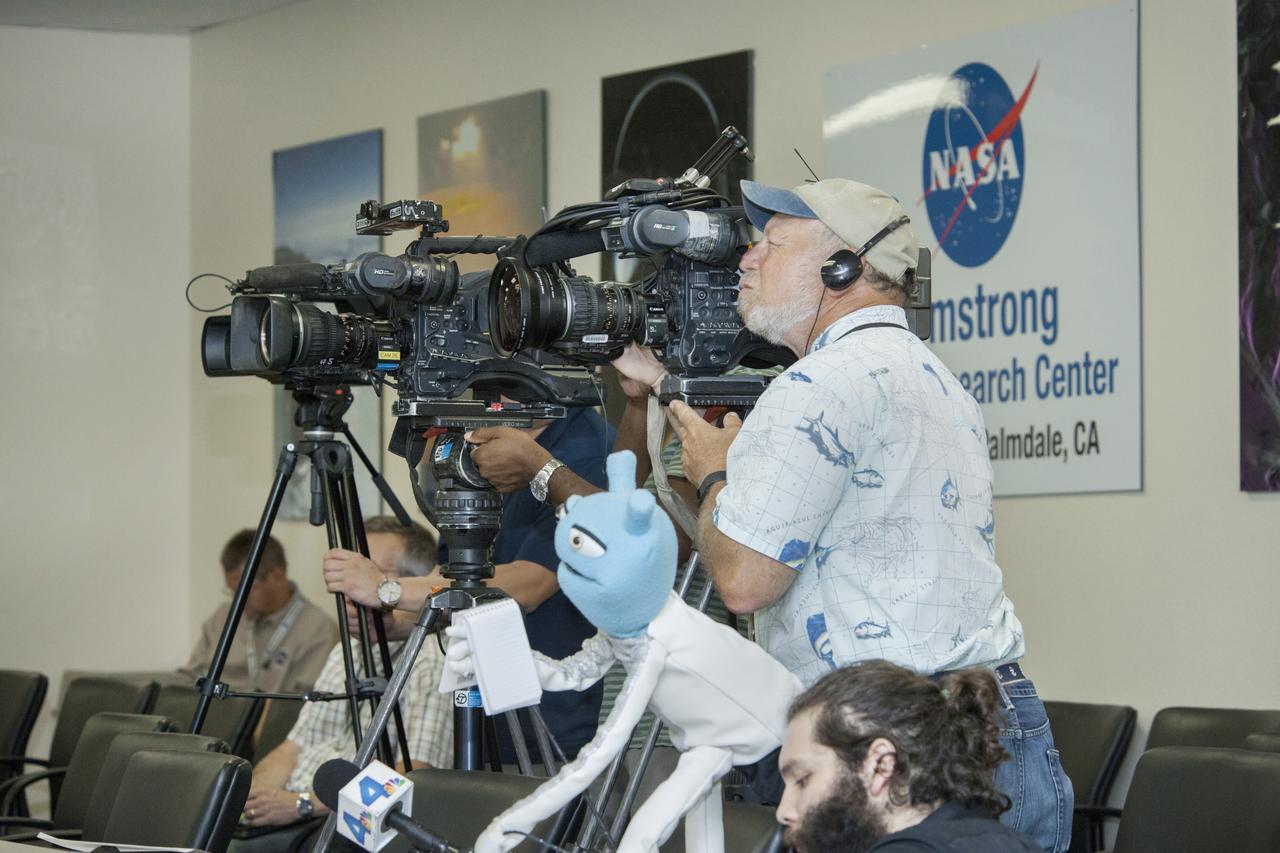
Media, including a puppeteer, participate in a press conference for the ATom airborne science mission which is studying the atmosphere.
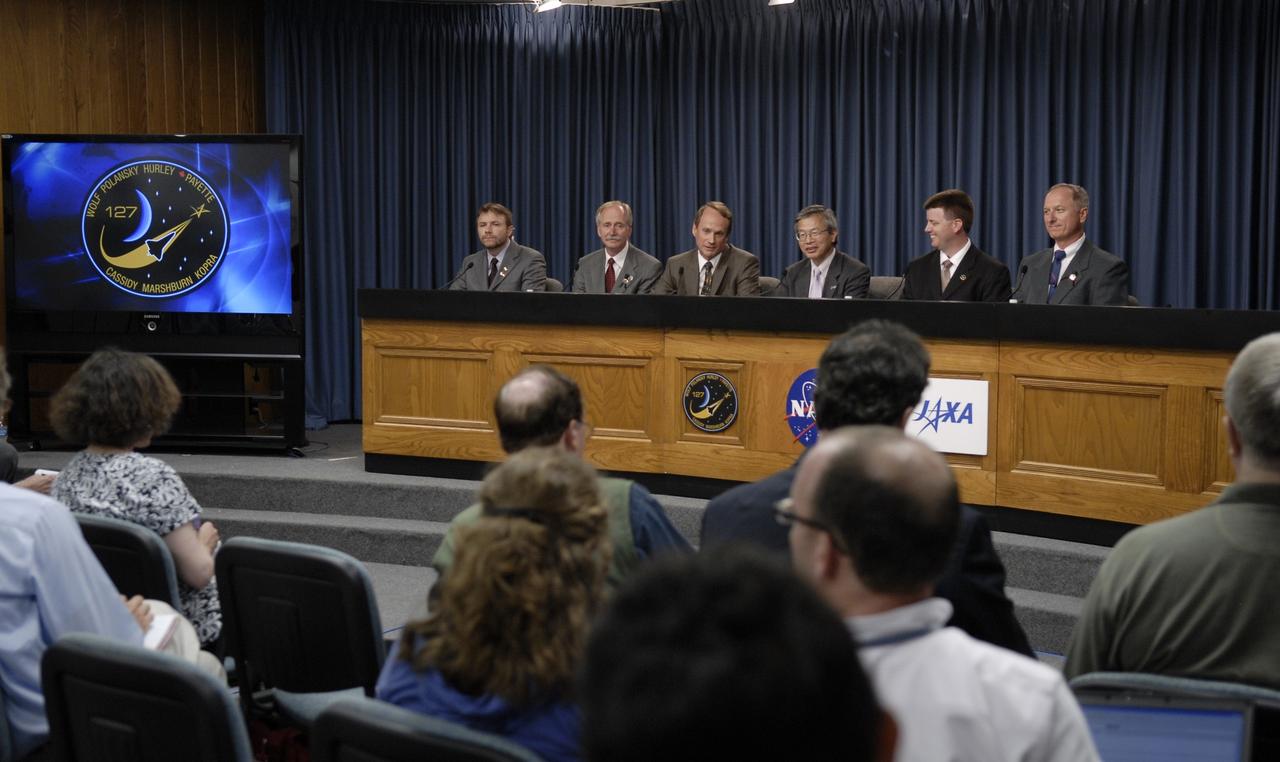
CAPE CANAVERAL, Fla. – Answering questions from the media at a press conference held at NASA's Kennedy Space Center in Florida are (second from left) Associate Administrator for NASA's Space Operations Directorate William Gerstenmaier, Canadian Space Agency President Steve MacLean, Japan Aerospace Exploration Agency Executive Director of Human Space Systems and Utilization Kuniaki Shiraki, Shuttle Launch Integration Manager Mike Moses and STS-127 Shuttle Launch Director Pete Nickolenko. At far left is moderator John Yembrick from NASA Public Affairs. The conference followed the successful launch of space shuttle Endeavour on the STS-127 mission. This was the sixth launch attempt for the STS-127 mission. The launch was scrubbed on June 13 and June 17 when a hydrogen gas leak occurred during tanking due to a misaligned Ground Umbilical Carrier Plate. The mission was postponed July 11, 12 and 13 due to weather conditions near the Shuttle Landing Facility at Kennedy that violated rules for launching, and lightning issues. Endeavour will deliver the Japanese Experiment Module's Exposed Facility and the Experiment Logistics Module-Exposed Section in the final of three flights dedicated to the assembly of the Japan Aerospace Exploration Agency's Kibo laboratory complex on the International Space Station. Photo credit: NASA/Kim Shiflett
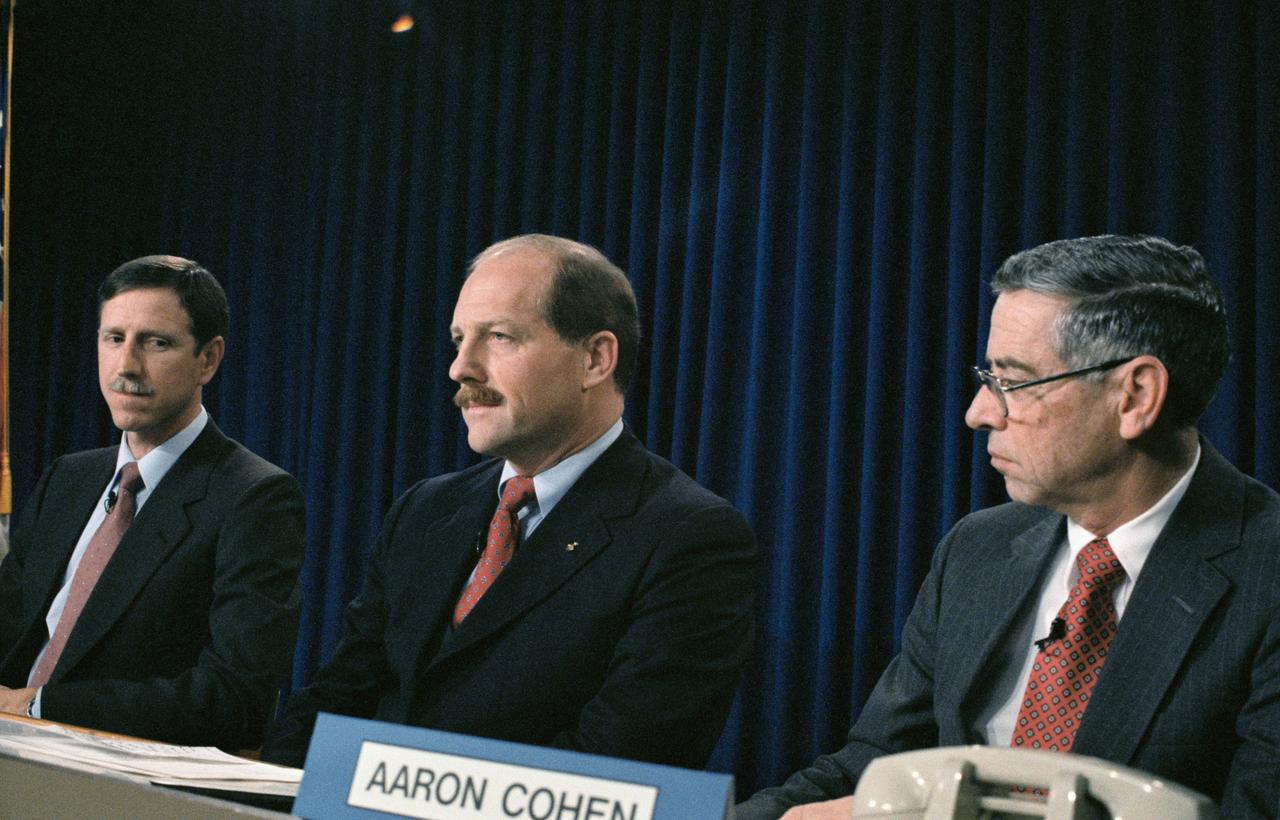
STS-26 Discovery, Orbiter Vehicle (OV) 103, crew including Commander Frederick H. Hauck and Pilot Richard O. Covey and JSC Director Aaron Cohen participate in press conference held at JSC Auditorium and Public Affairs Facility Bldg 2. Hauck and Covey are shown with Cohen as they ponder queries from news media representatives during the first press conference for the group since the mission's announcement last week. Left to right are Covey, Hauck, and Cohen.
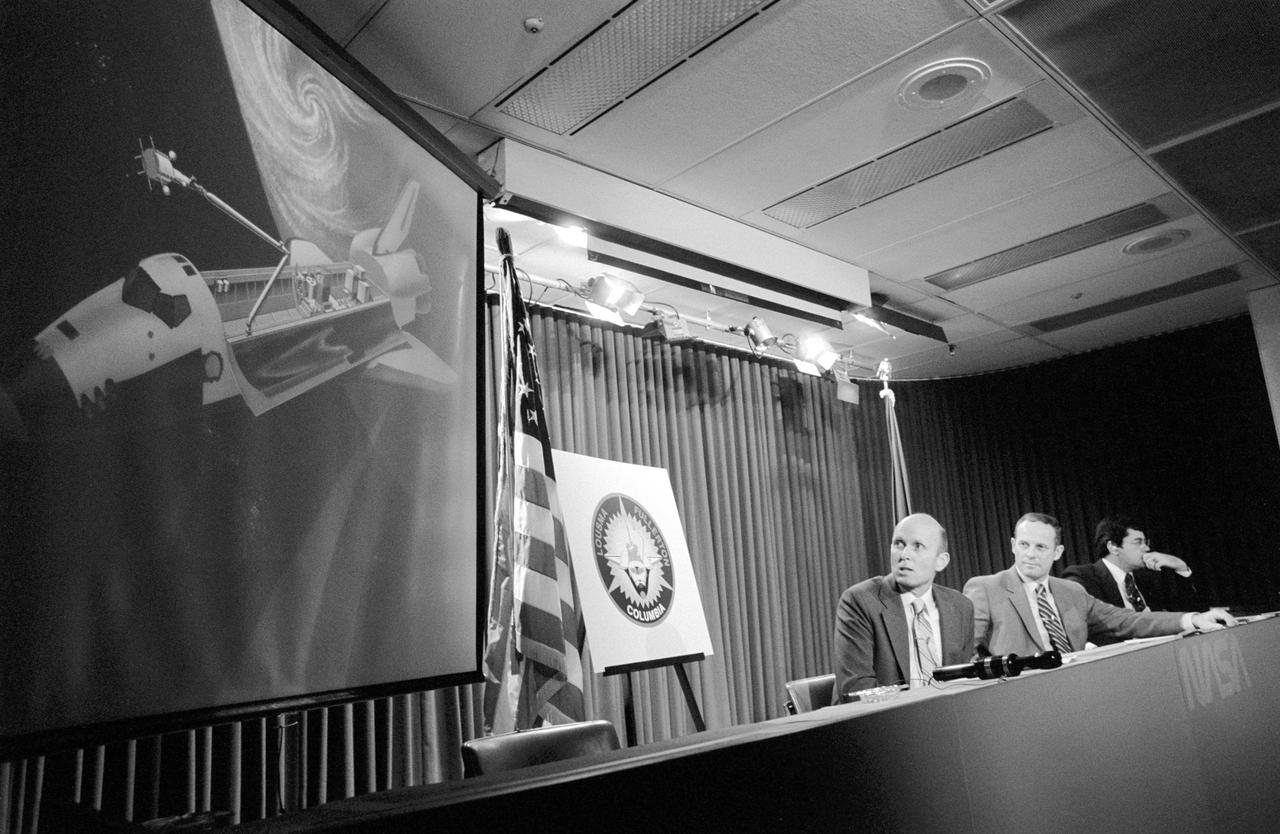
S82-25903 (21 Jan. 1982) --- Astronaut Jack R. Lousma, center, and C. Gordon Fullerton, left, respond to a visual depicting the Columbia and its remote manipulator system in space during a pre-STS-3 press conference in JSC?s pubic affairs building. Dr. John Lawrence, public information specialist who introduced the crew to news media representatives, is at far right. Photo credit: NASA
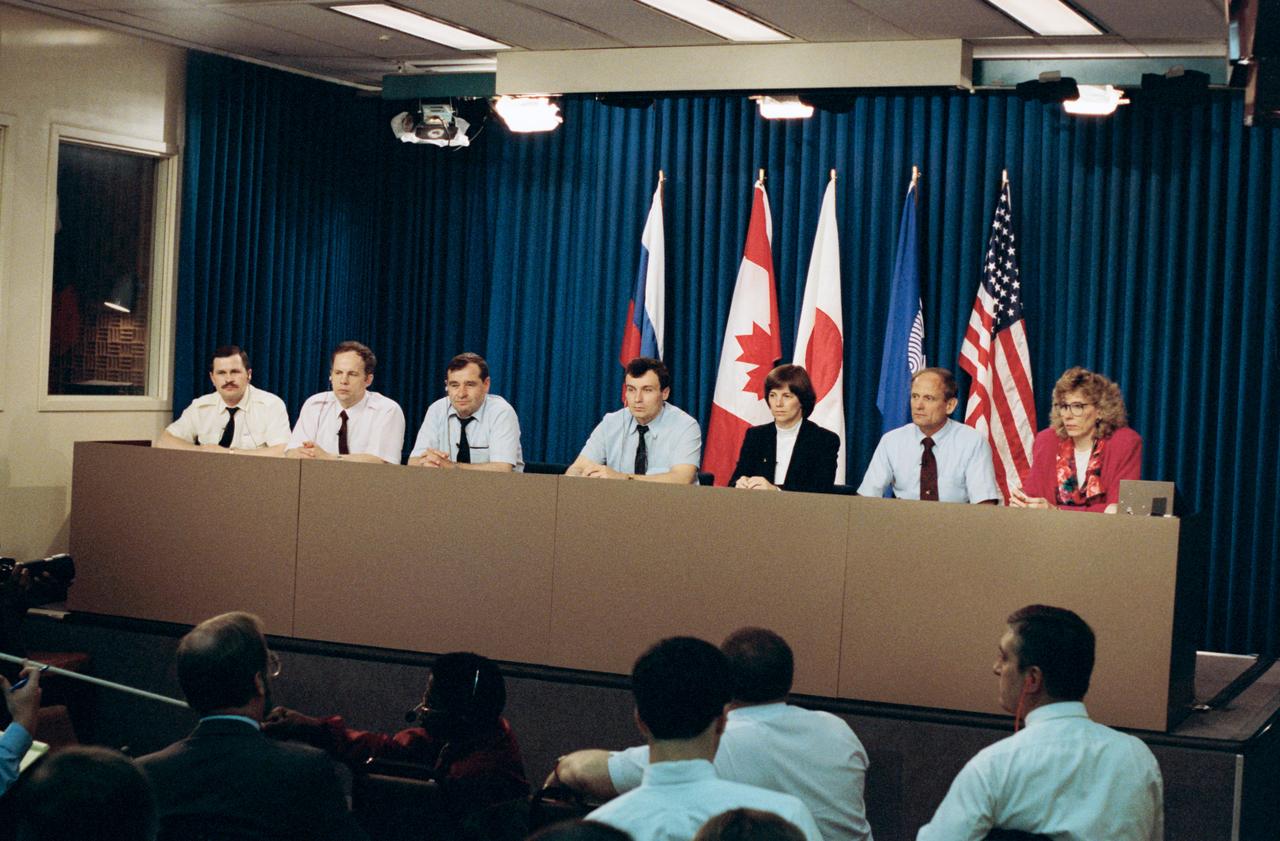
Crew members for the joint Space Shuttle / Mir mission field questions from the press at JSC. Left to right are cosmonauts Nikolai M. Budarin, Anatoliy Y. Solovyov, Gennadiy M. Strekalov, Vladimir N. Dezhurov, and astronauts Bonnie J. Dunbar, Norman E. Thagard, along with Kari L. Fluegel of the Public Affairs Office's (PAO) News and Media Services Branch. Flags representing the international space partners - Russia, the United States, the European Space Agency (ESA), Canada and Japan - are displayed behind the conference participants.
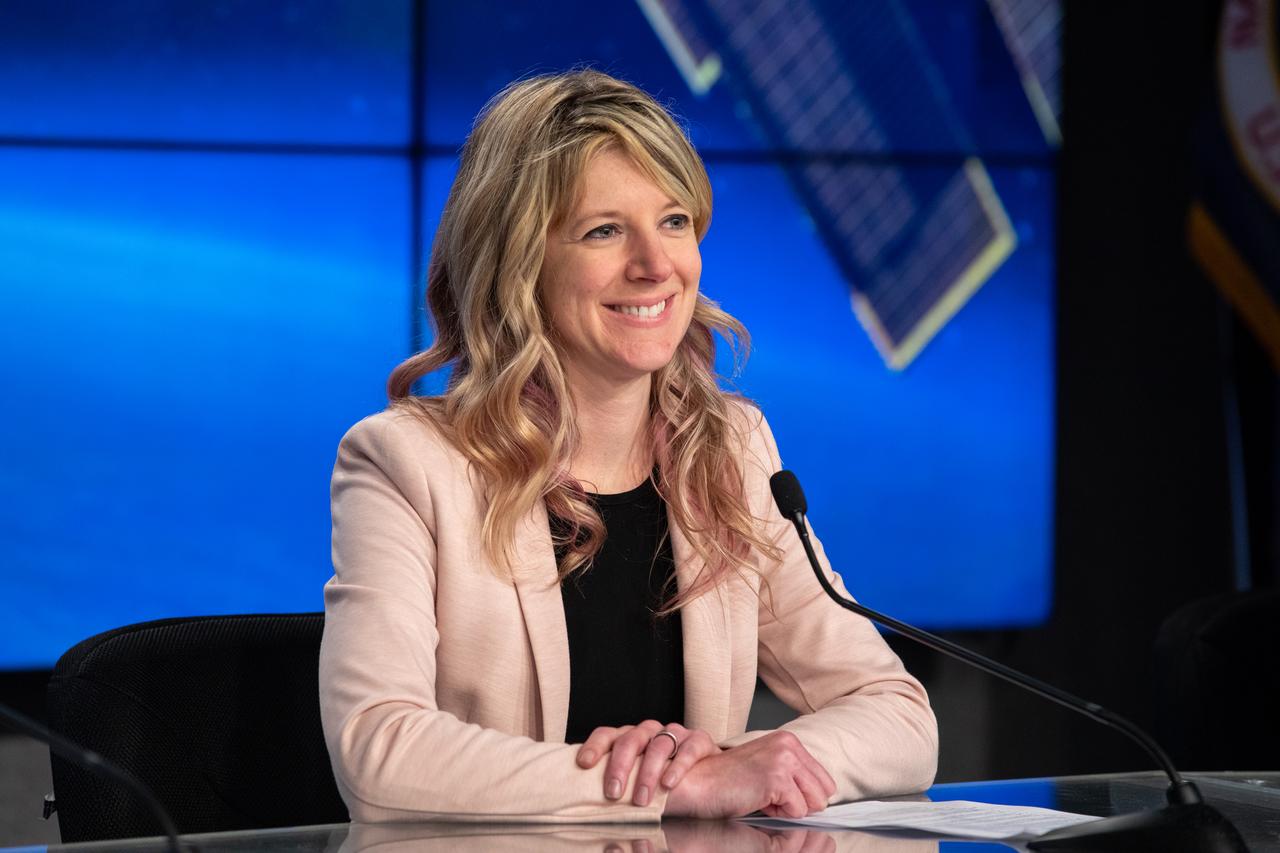
Jessica Jensen, director, Dragon Mission Management at SpaceX, speaks to members of the news media during a prelaunch news conference on Dec. 3, 2019, for SpaceX’s 19th Commercial Resupply Services (CRS-19) mission for NASA to the International Space Station, at the agency’s Kennedy Space Center in Florida. NASA and industry leaders speak to members of the news media during the news conference. The SpaceX Falcon 9 rocket and Dragon cargo module are scheduled to launch on Dec. 4, 2019, from Space Launch Complex 40 on Cape Canaveral Air Force Station in Florida.
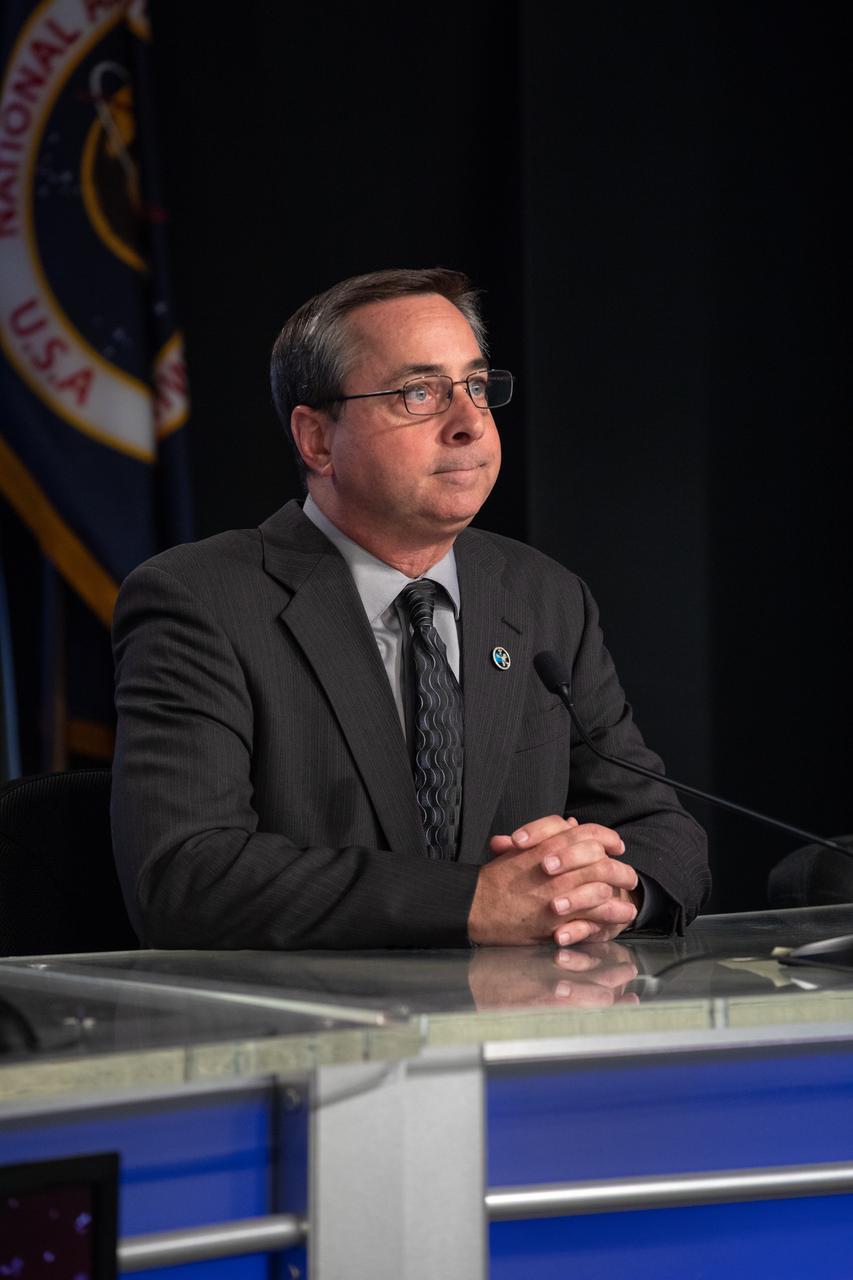
Mike McAleenan, launch weather officer, U.S. Air Force 45th Space Wing, gives a weather update to members of the news media during a prelaunch news conference on Dec. 3, 2019, for SpaceX’s 19th Commercial Resupply Services (CRS-19) mission for NASA to the International Space Station, at the agency’s Kennedy Space Center in Florida. NASA and industry leaders speak to members of the news media during the news conference. The SpaceX Falcon 9 rocket and Dragon cargo module are scheduled to launch on Dec. 4, 2019, from Space Launch Complex 40 on Cape Canaveral Air Force Station in Florida.
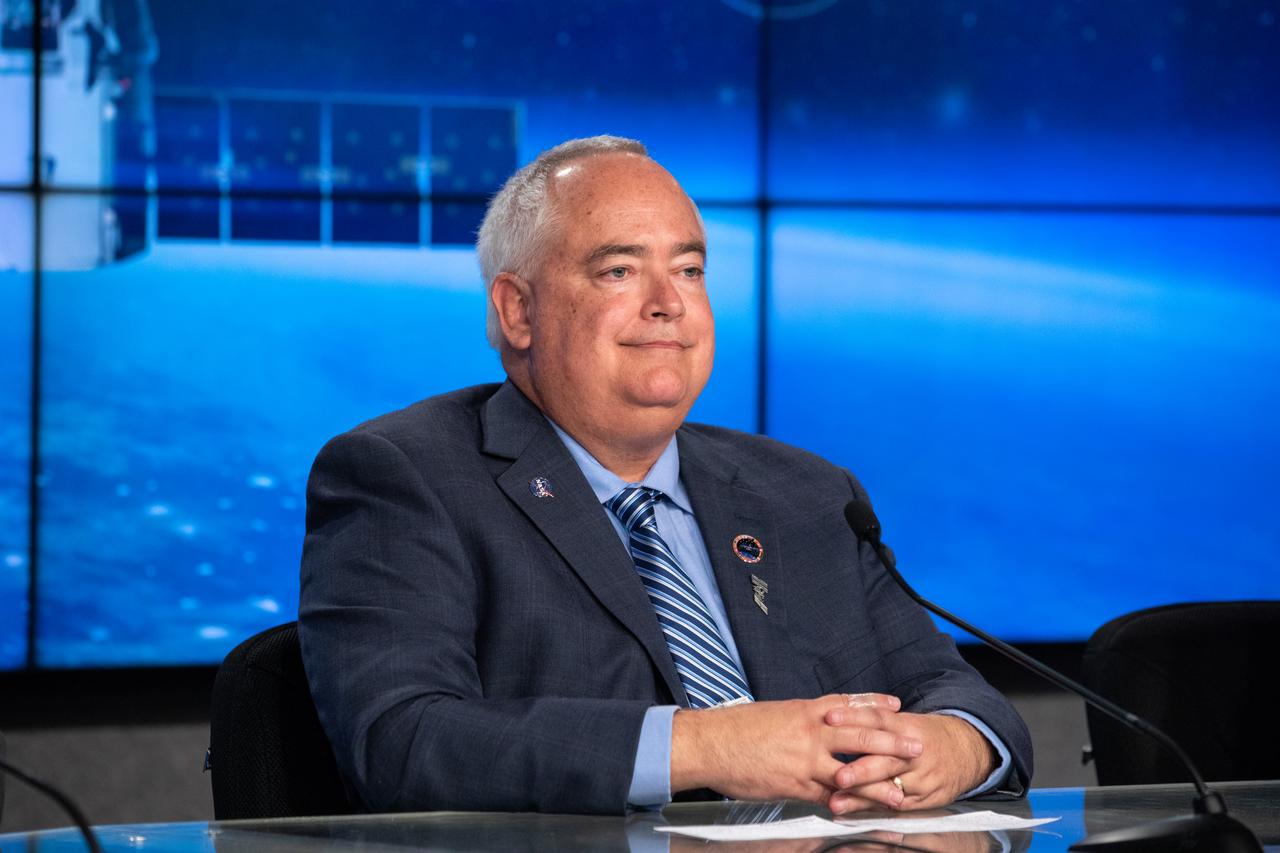
Bryan Dansberry, assistant program scientist, International Space Station Program Science Office at NASA speaks to members of the news media during a prelaunch news conference on Dec. 3, 2019, for SpaceX’s 19th Commercial Resupply Services (CRS-19) mission for NASA to the International Space Station, at the agency’s Kennedy Space Center in Florida. NASA and industry leaders speak to members of the news media during the news conference. The SpaceX Falcon 9 rocket and Dragon cargo module are scheduled to launch on Dec. 4, 2019, from Space Launch Complex 40 on Cape Canaveral Air Force Station in Florida.
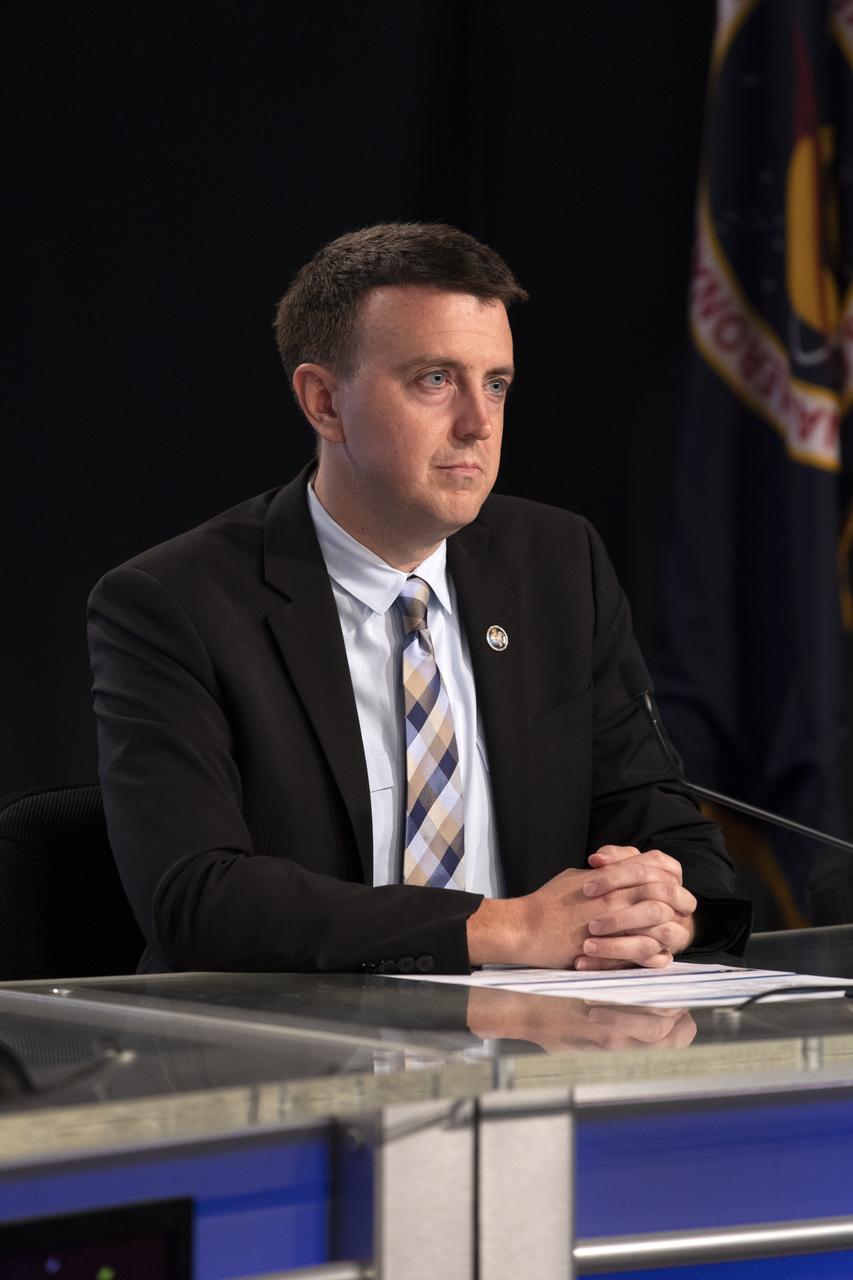
Will Ulrich, 45th Space Wing weather officer with the U.S. Air Force, speaks to members of the news media during a prelaunch news conference for SpaceX’s 17th Commercial Resupply Services (CRS-17) mission for NASA to the International Space Station on May 2, 2019, at the agency’s Kennedy Space Center in Florida. The SpaceX Falcon 9 rocket and Dragon cargo module are scheduled to launch no earlier than May 3, 2019, from Space Launch Complex 40 on Cape Canaveral Air Force Station in Florida.
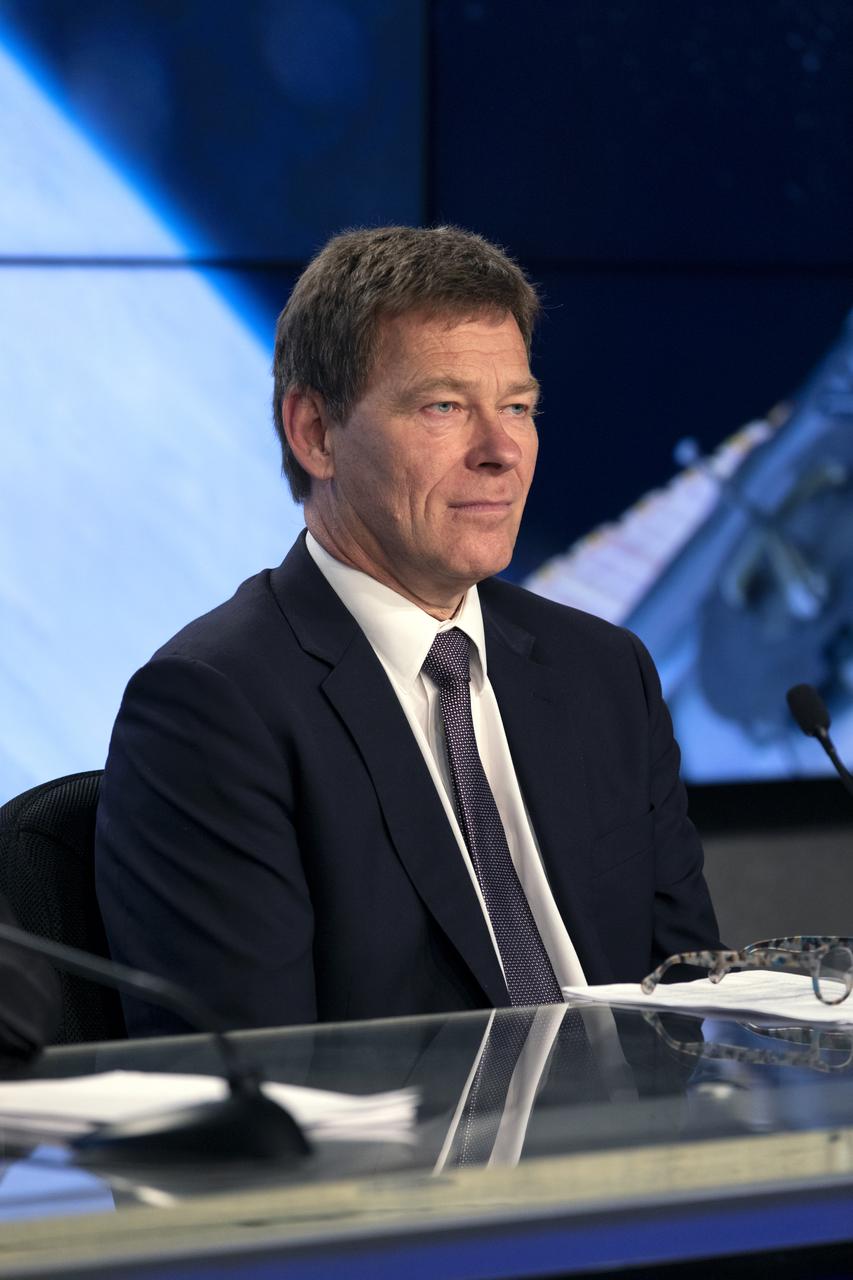
Hans Koenigsmann, VP, Build and Flight Reliability with SpaceX, speaks to members of the news media during a prelaunch news conference for SpaceX’s 17th Commercial Resupply Services (CRS-17) mission for NASA to the International Space Station on May 2, 2019, at the agency’s Kennedy Space Center in Florida. The SpaceX Falcon 9 rocket and Dragon cargo module are scheduled to launch no earlier than May 3, 2019, from Space Launch Complex 40 on Cape Canaveral Air Force Station in Florida.
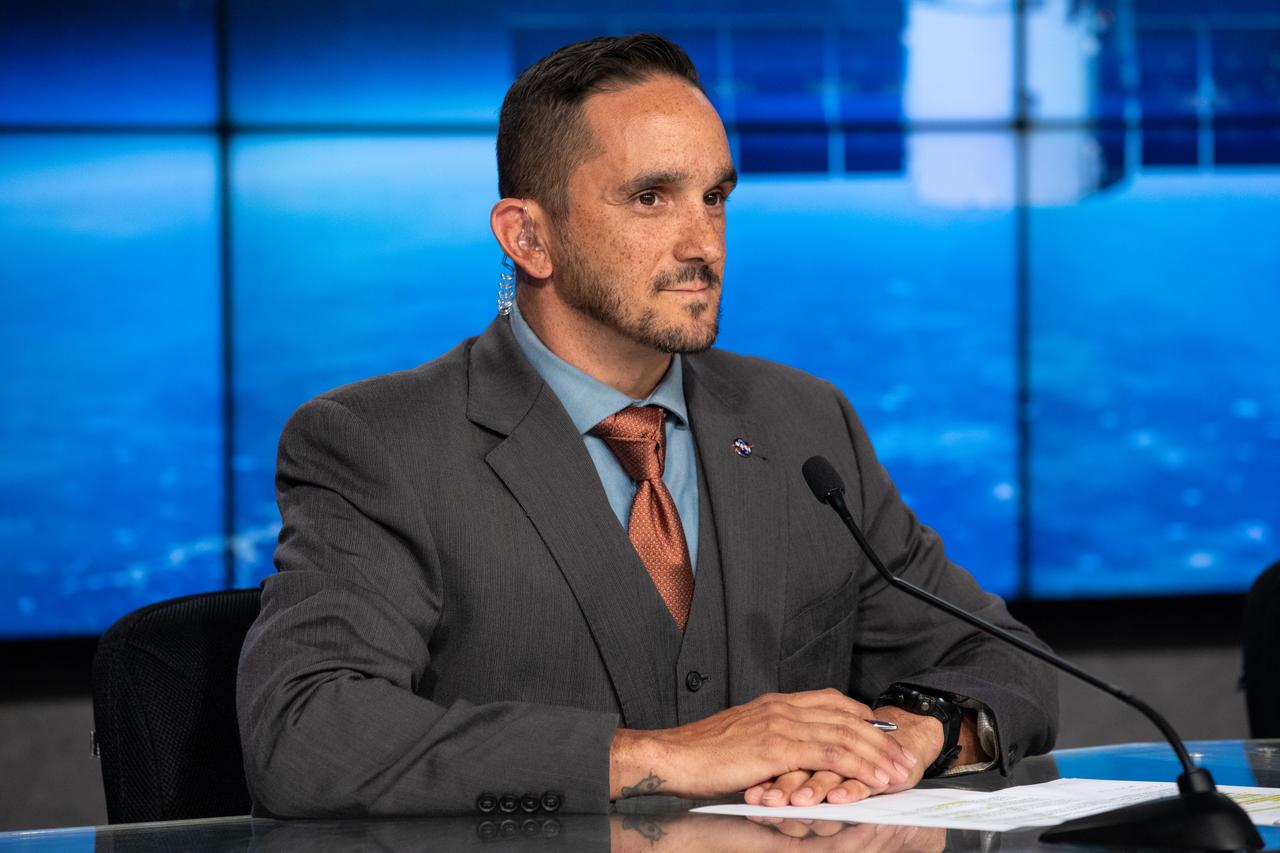
Dustin Cammack, NASA Communications, moderates a prelaunch news conference on Dec. 3, 2019, for SpaceX’s 19th Commercial Resupply Services (CRS-19) mission for NASA to the International Space Station, at the agency’s Kennedy Space Center in Florida. NASA and industry leaders speak to members of the news media during the news conference. The SpaceX Falcon 9 rocket and Dragon cargo module are scheduled to launch on Dec. 4, 2019, from Space Launch Complex 40 on Cape Canaveral Air Force Station in Florida.
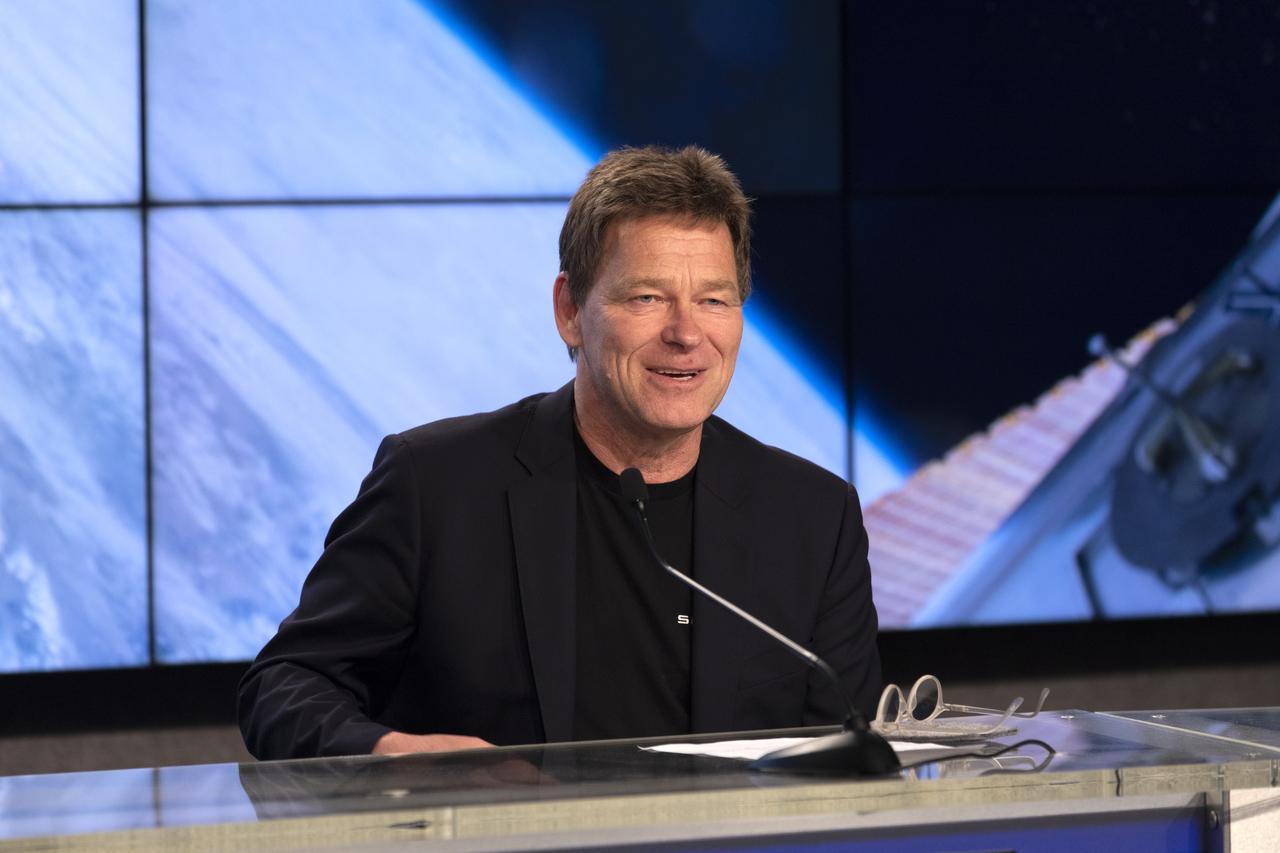
Hans Koenigsmann, vice president, Build and Flight Reliability with SpaceX, speaks to members of the news media during a postlaunch news conference at NASA’s Kennedy Space Center in Florida on May 4, 2019, for SpaceX’s 17th Commercial Resupply Services (CRS-17) mission to the International Space Station for the agency. The company’s Falcon 9 rocket with the Dragon cargo module lifted off from Space Launch Complex 40 at Cape Canaveral Air Force Station in Florida at 2:48 a.m. EDT. The Dragon cargo module will deliver about 5,500 pounds of science and research, crew supplies and vehicle hardware to the orbital laboratory and its crew.
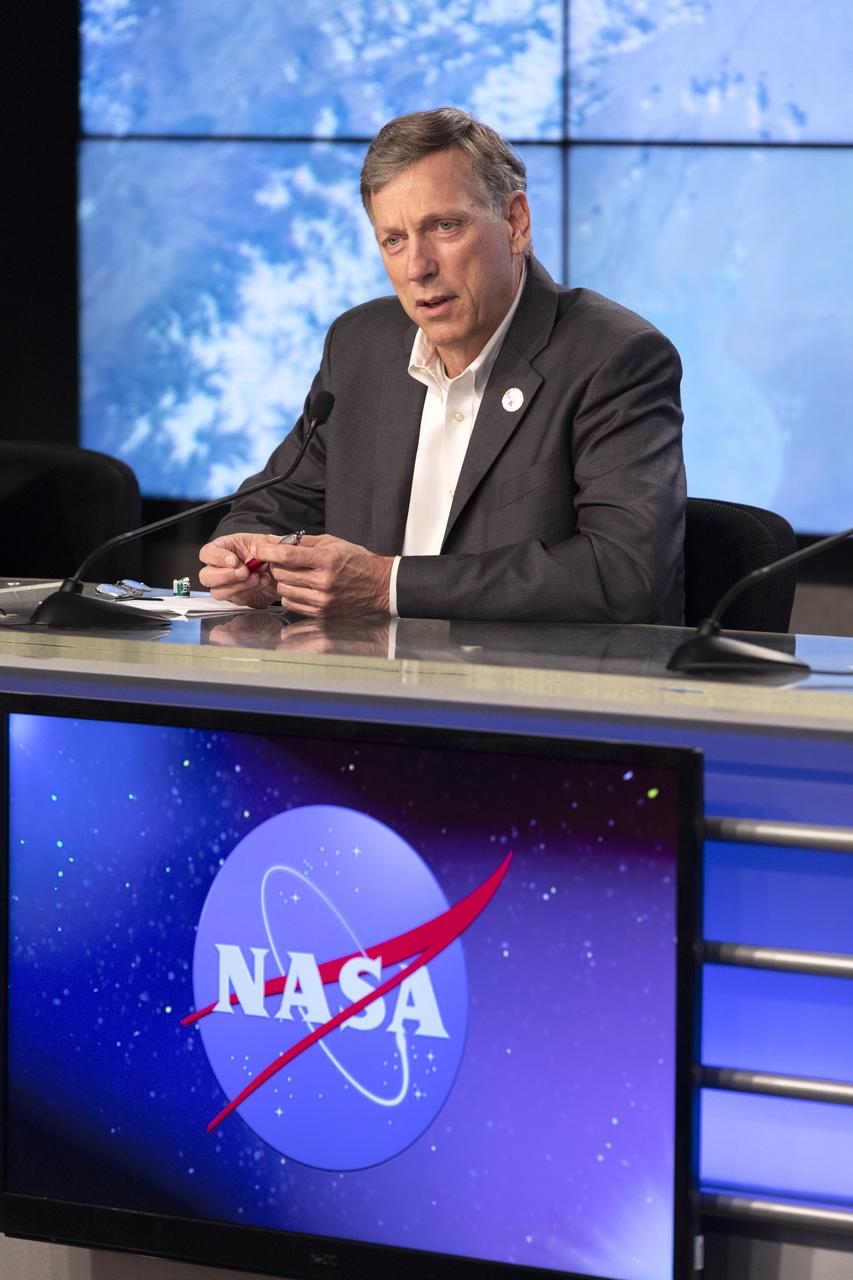
Kenny Todd, manager, International Space Station Operations and Integration at NASA’s Johnson Space Center in Houston speaks to members of the news media during a postlaunch news conference at NASA’s Kennedy Space Center in Florida on May 4, 2019, for SpaceX’s 17th Commercial Resupply Services (CRS-17) mission to the International Space Station for the agency. The company’s Falcon 9 rocket with the Dragon cargo module lifted off from Space Launch Complex 40 at Cape Canaveral Air Force Station in Florida at 2:48 a.m. EDT. The Dragon cargo module will deliver about 5,500 pounds of science and research, crew supplies and vehicle hardware to the orbital laboratory and its crew.
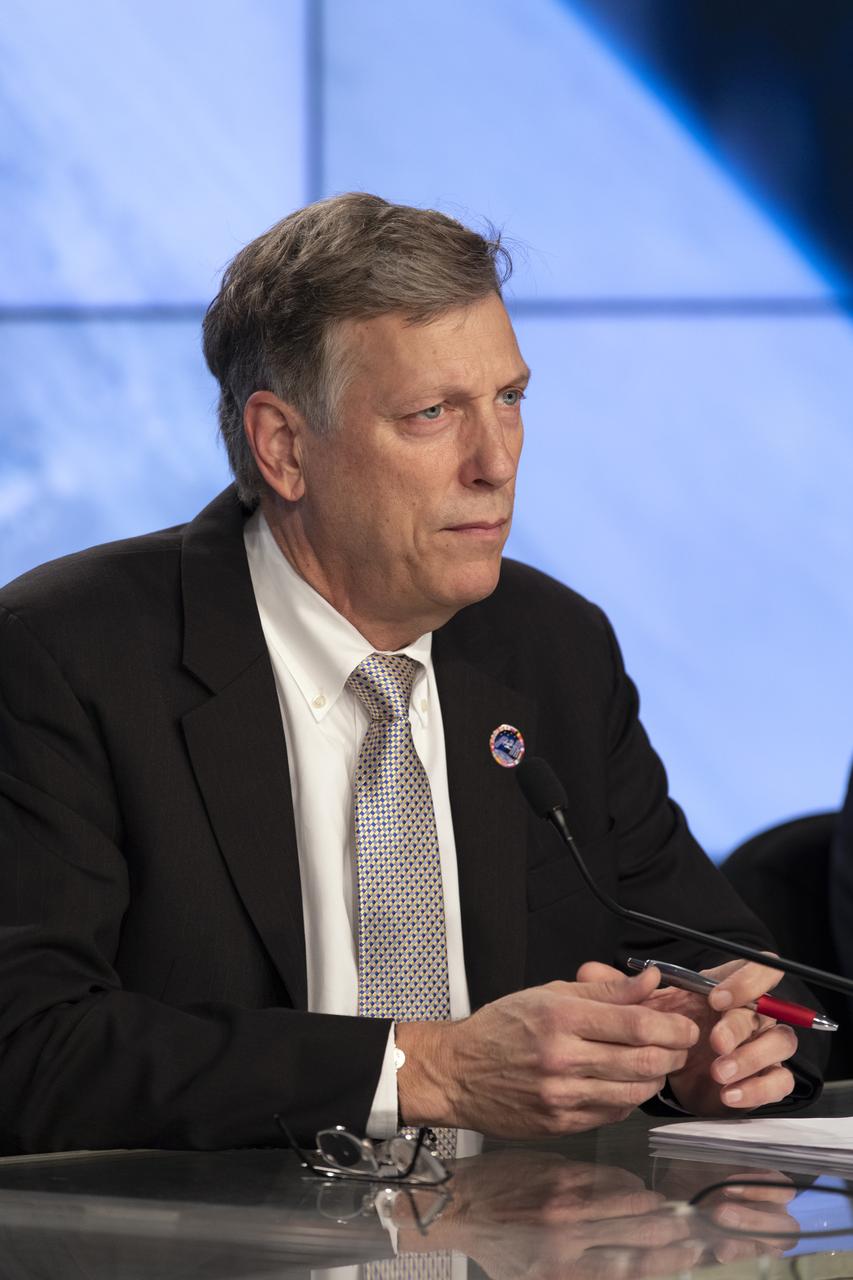
Kenny Todd, manager, International Space Station Operations and Integration, NASA’s Johnson Space Center in Houston, speaks to members of the news media during a prelaunch news conference for SpaceX’s 17th Commercial Resupply Services (CRS-17) mission for NASA to the International Space Station on May 2, 2019, at the agency’s Kennedy Space Center in Florida. The SpaceX Falcon 9 rocket and Dragon cargo module are scheduled to launch no earlier than May 3, 2019, from Space Launch Complex 40 on Cape Canaveral Air Force Station in Florida.
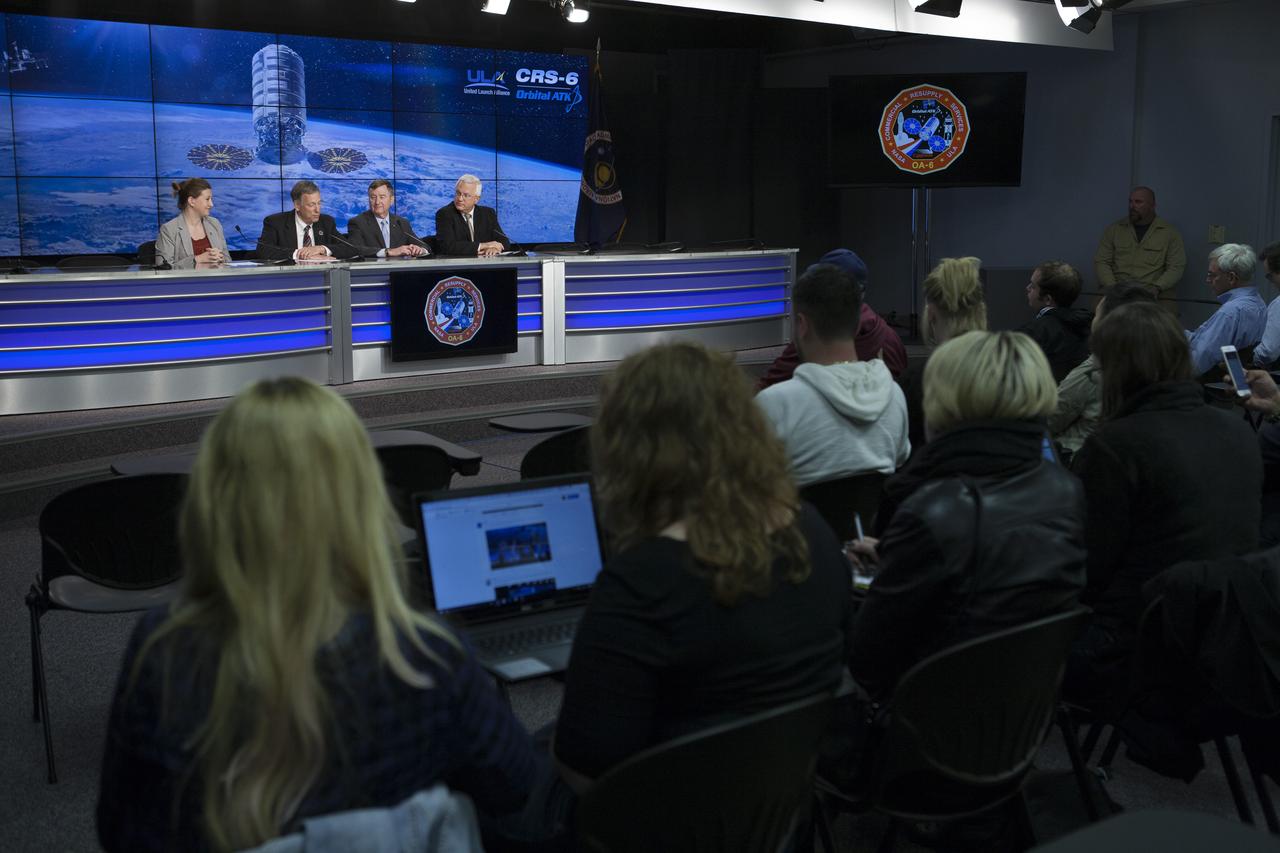
In the Press Site auditorium of NASA's Kennedy Space Center in Florida, NASA and industry leaders speak to members of the news media at a post-launch news conference following the liftoff of Orbital ATK CRS-6, a commercial resupply services mission to the International Space Station, or ISS. From left are: Kathryn Hambleton of NASA Communications; Kenneth Todd, NASA ISS Operations Integration manager; Frank Culbertson, president of Orbital ATK's Space System Group; Vern Thorp, United Space Alliance's program manager for NASA missions. The Cygnus spacecraft lifted off atop an Atlas V rocket from Space Launch Complex 41 at Cape Canaveral Air Force Station at 11:05 p.m. EDT.
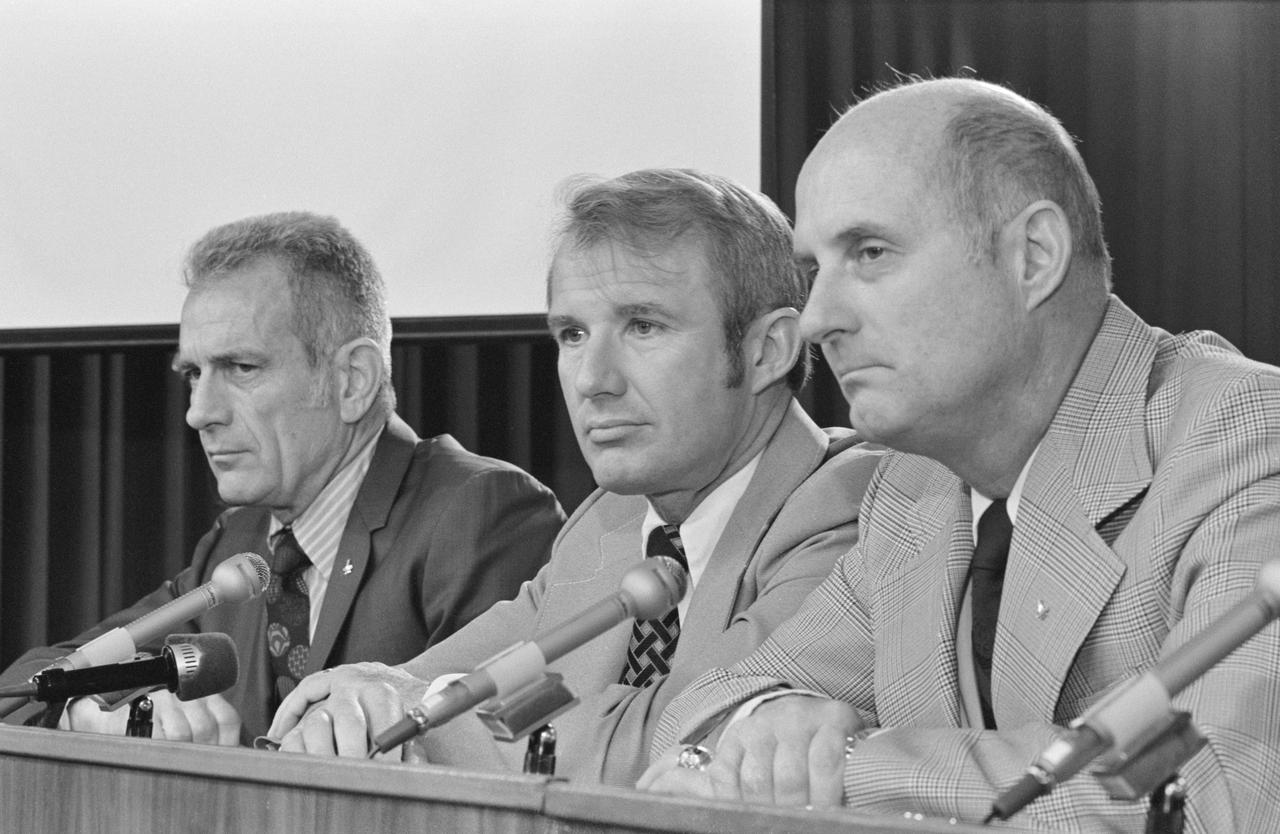
S75-26573 (14 May 1975) --- The three members of the American ASTP prime crew participate in an Apollo-Soyuz Test Project press conference conducted on May 14, 1975 in the Building 2 briefing room at NASA's Johnson Space Center. They are, left to right, Donald K. Slayton, docking module pilot; Vance D. Brand, command module pilot; and Thomas P. Stafford, commander. The astronauts discussed with the news media their recent ASTP joint training session in the Soviet Union, and the crew?s tour of the USSR?s Baikonur launch complex in Kazakhstan.
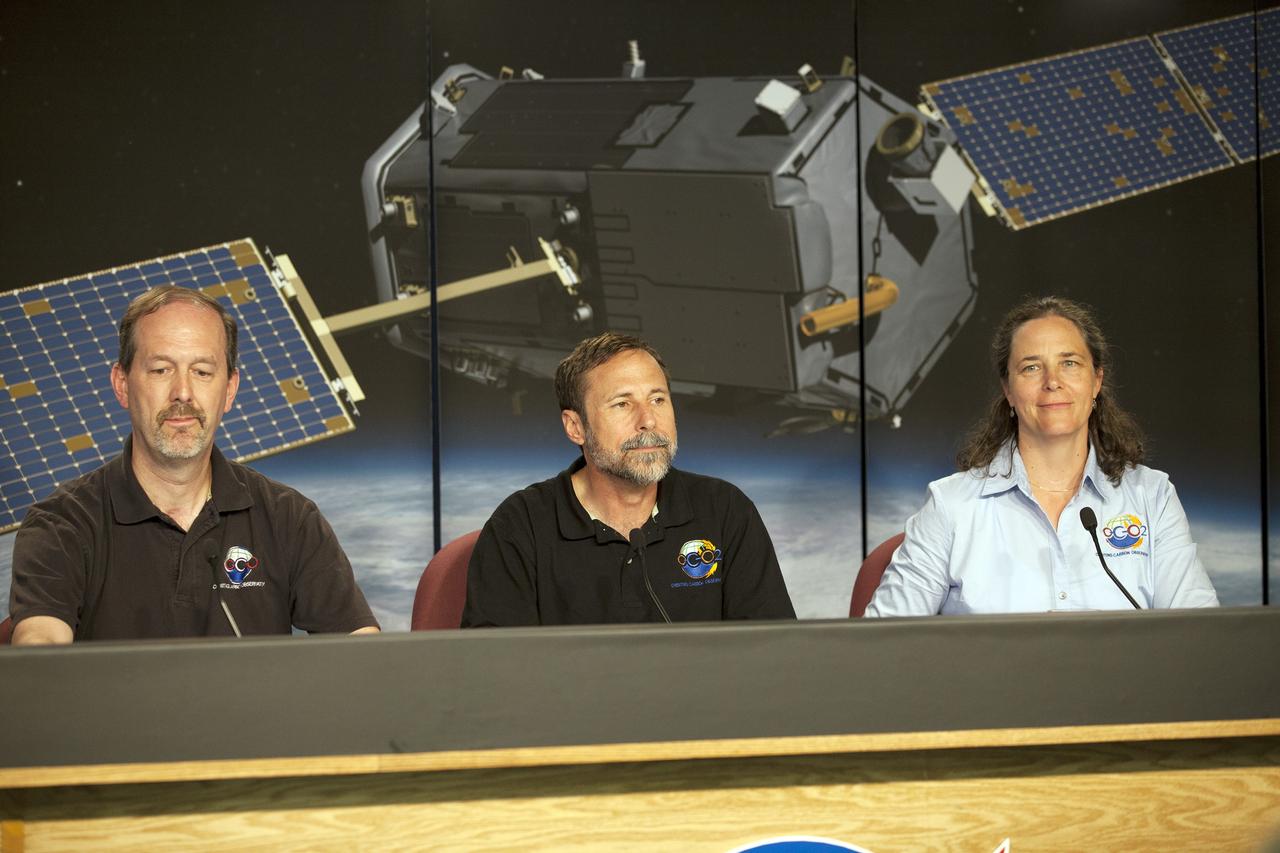
VANDENBERG AIR FORCE BASE, Calif. – From left, Ken Jucks, Orbiting Carbon Observatory-2, or OCO-2, project executive at NASA Headquarters David Crisp, OCO-2 science team leader at NASA's Jet Propulsion Laboratory, or JPL and Annmarie Eldering, OCO-2 deputy project scientist at JPL, participate in a mission science briefing at Vandenberg Air Force Base in California prior to the launch of the observatory. Launch aboard a United Launch Alliance Delta II rocket from Space Launch Complex 2 is scheduled for 5:56 a.m. EDT on July 1. OCO-2 is NASA’s first mission dedicated to studying atmospheric carbon dioxide, the leading human-produced greenhouse gas driving changes in Earth’s climate. OCO-2 will provide a new tool for understanding the human and natural sources of carbon dioxide emissions and the natural "sinks" that absorb carbon dioxide and help control its buildup. The observatory will measure the global geographic distribution of these sources and sinks and study their changes over time. To learn more about OCO-2, visit http://www.nasa.gov/oco2. Photo credit: NASA/Kim Shiflett
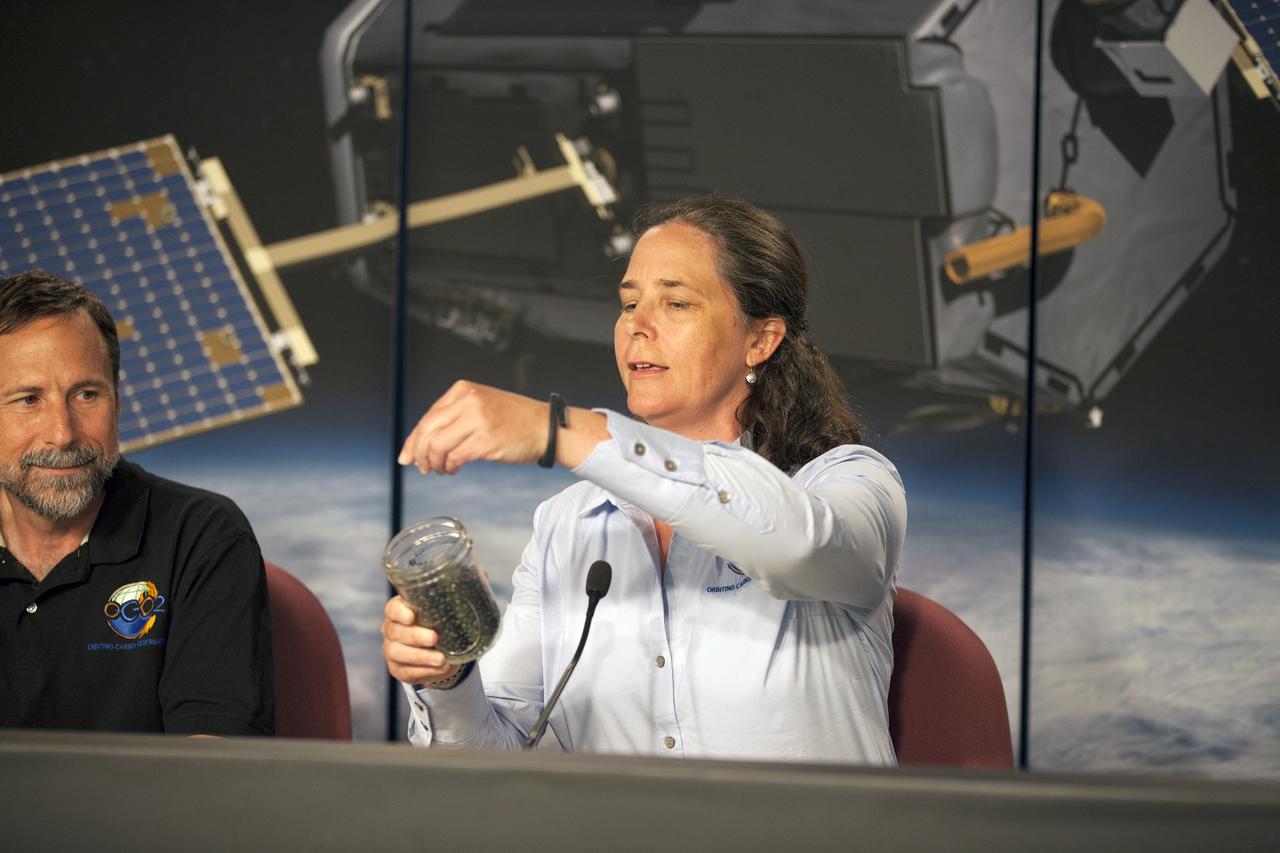
VANDENBERG AIR FORCE BASE, Calif. – From left, David Crisp, Orbiting Carbon Observatory-2, or OCO-2, science team leader at NASA's Jet Propulsion Laboratory, or JPL, and Annmarie Eldering, OCO-2 deputy project scientist at JPL, participate in a mission science briefing at Vandenberg Air Force Base in California prior to the launch of the observatory. Launch aboard a United Launch Alliance Delta II rocket from Space Launch Complex 2 is scheduled for 5:56 a.m. EDT on July 1. OCO-2 is NASA’s first mission dedicated to studying atmospheric carbon dioxide, the leading human-produced greenhouse gas driving changes in Earth’s climate. OCO-2 will provide a new tool for understanding the human and natural sources of carbon dioxide emissions and the natural "sinks" that absorb carbon dioxide and help control its buildup. The observatory will measure the global geographic distribution of these sources and sinks and study their changes over time. To learn more about OCO-2, visit http://www.nasa.gov/oco2. Photo credit: NASA/Kim Shiflett

VANDENBERG AIR FORCE BASE, Calif. – Ken Jucks, Orbiting Carbon Observatory-2 project executive at NASA Headquarters, participates in a mission science briefing at Vandenberg Air Force Base in California prior to the launch of the observatory, or OCO-2. Launch aboard a United Launch Alliance Delta II rocket from Space Launch Complex 2 is scheduled for 5:56 a.m. EDT on July 1. OCO-2 is NASA’s first mission dedicated to studying atmospheric carbon dioxide, the leading human-produced greenhouse gas driving changes in Earth’s climate. OCO-2 will provide a new tool for understanding the human and natural sources of carbon dioxide emissions and the natural "sinks" that absorb carbon dioxide and help control its buildup. The observatory will measure the global geographic distribution of these sources and sinks and study their changes over time. To learn more about OCO-2, visit http://www.nasa.gov/oco2. Photo credit: NASA/Kim Shiflett
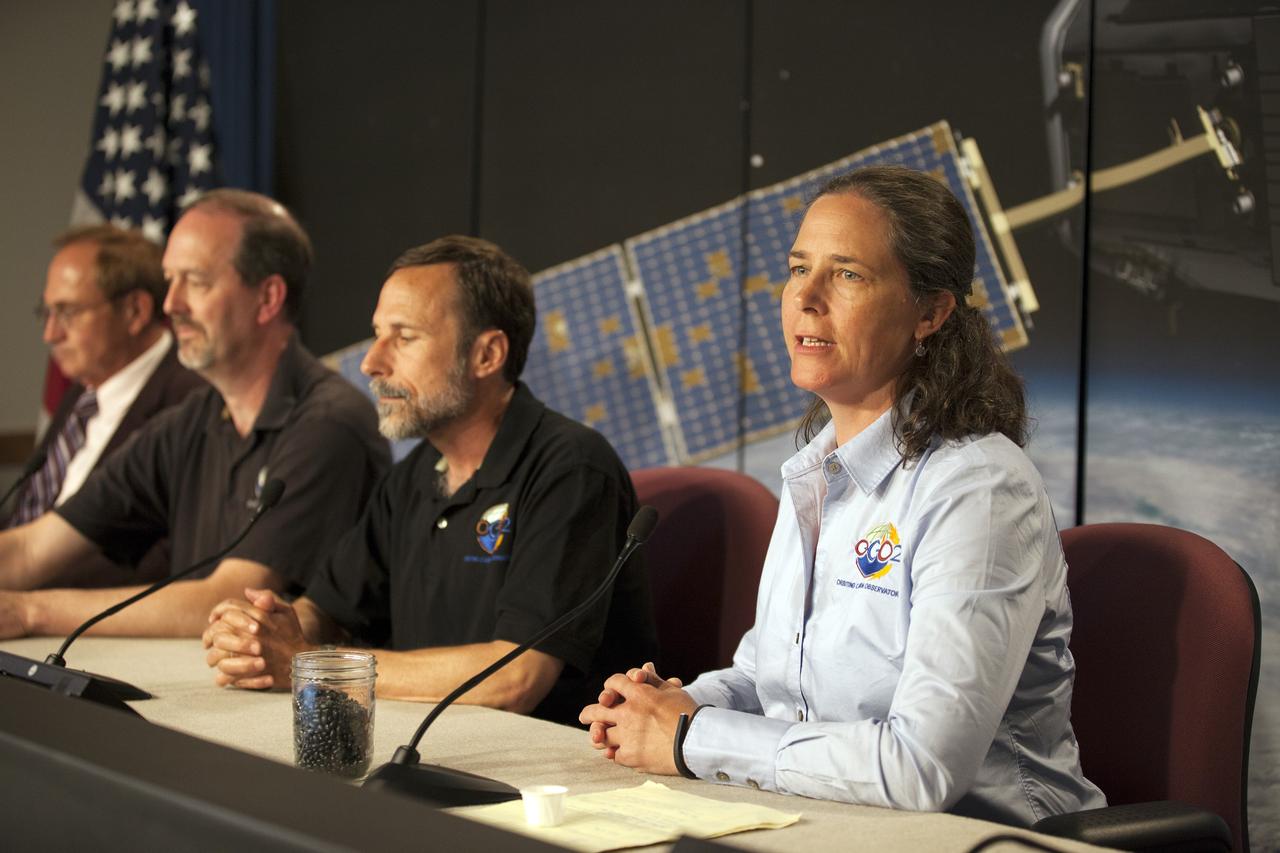
VANDENBERG AIR FORCE BASE, Calif. – From left, George Diller, NASA Public Affairs Ken Jucks, Orbiting Carbon Observatory-2, or OCO-2, project executive at NASA Headquarters David Crisp, OCO-2 science team leader at NASA's Jet Propulsion Laboratory, or JPL and Annmarie Eldering, OCO-2 deputy project scientist at JPL, participate in a mission science briefing at Vandenberg Air Force Base in California prior to the launch of the observatory. Launch aboard a United Launch Alliance Delta II rocket from Space Launch Complex 2 is scheduled for 5:56 a.m. EDT on July 1. OCO-2 is NASA’s first mission dedicated to studying atmospheric carbon dioxide, the leading human-produced greenhouse gas driving changes in Earth’s climate. OCO-2 will provide a new tool for understanding the human and natural sources of carbon dioxide emissions and the natural "sinks" that absorb carbon dioxide and help control its buildup. The observatory will measure the global geographic distribution of these sources and sinks and study their changes over time. To learn more about OCO-2, visit http://www.nasa.gov/oco2. Photo credit: NASA/Kim Shiflett
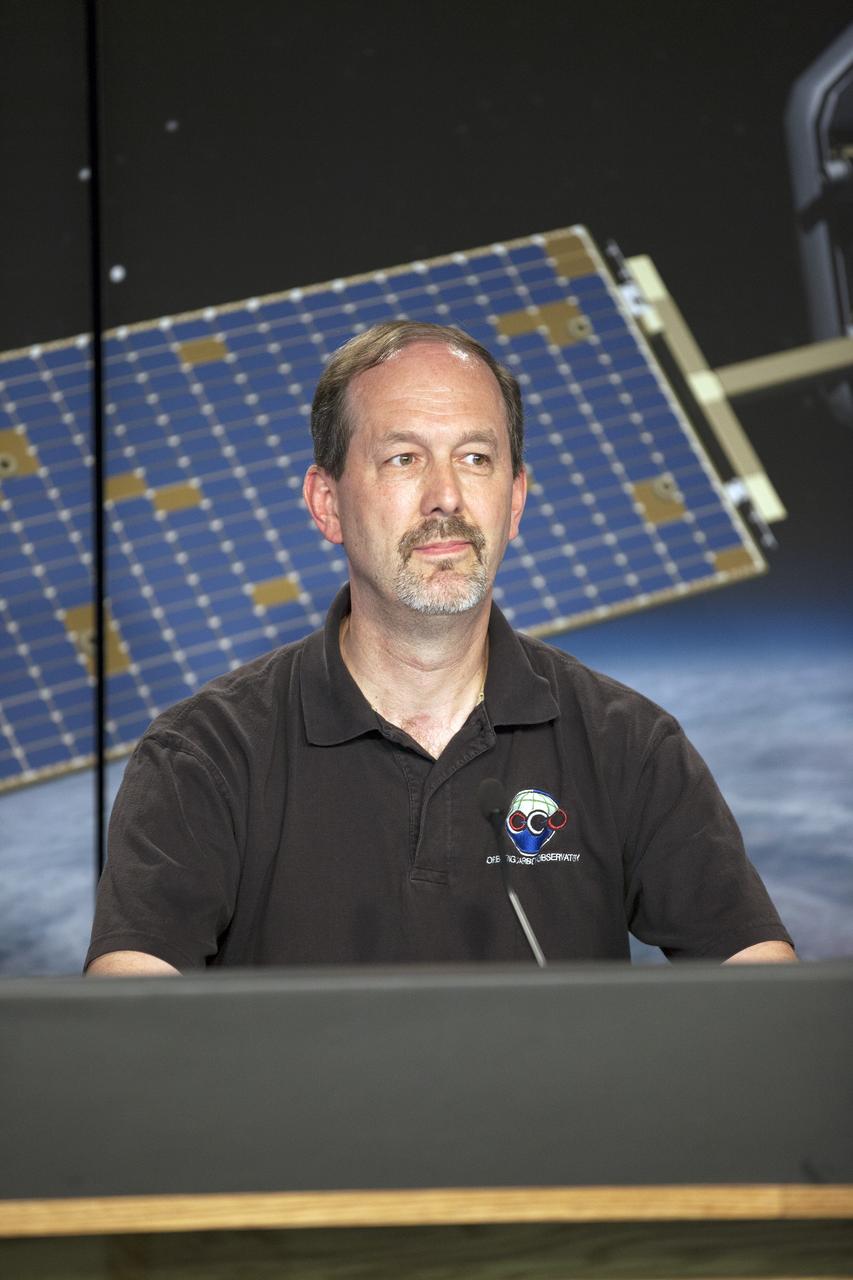
VANDENBERG AIR FORCE BASE, Calif. – Ken Jucks, Orbiting Carbon Observatory-2 project executive at NASA Headquarters, participates in a mission science briefing at Vandenberg Air Force Base in California prior to the launch of the observatory, or OCO-2. Launch aboard a United Launch Alliance Delta II rocket from Space Launch Complex 2 is scheduled for 5:56 a.m. EDT on July 1. OCO-2 is NASA’s first mission dedicated to studying atmospheric carbon dioxide, the leading human-produced greenhouse gas driving changes in Earth’s climate. OCO-2 will provide a new tool for understanding the human and natural sources of carbon dioxide emissions and the natural "sinks" that absorb carbon dioxide and help control its buildup. The observatory will measure the global geographic distribution of these sources and sinks and study their changes over time. To learn more about OCO-2, visit http://www.nasa.gov/oco2. Photo credit: NASA/Kim Shiflett
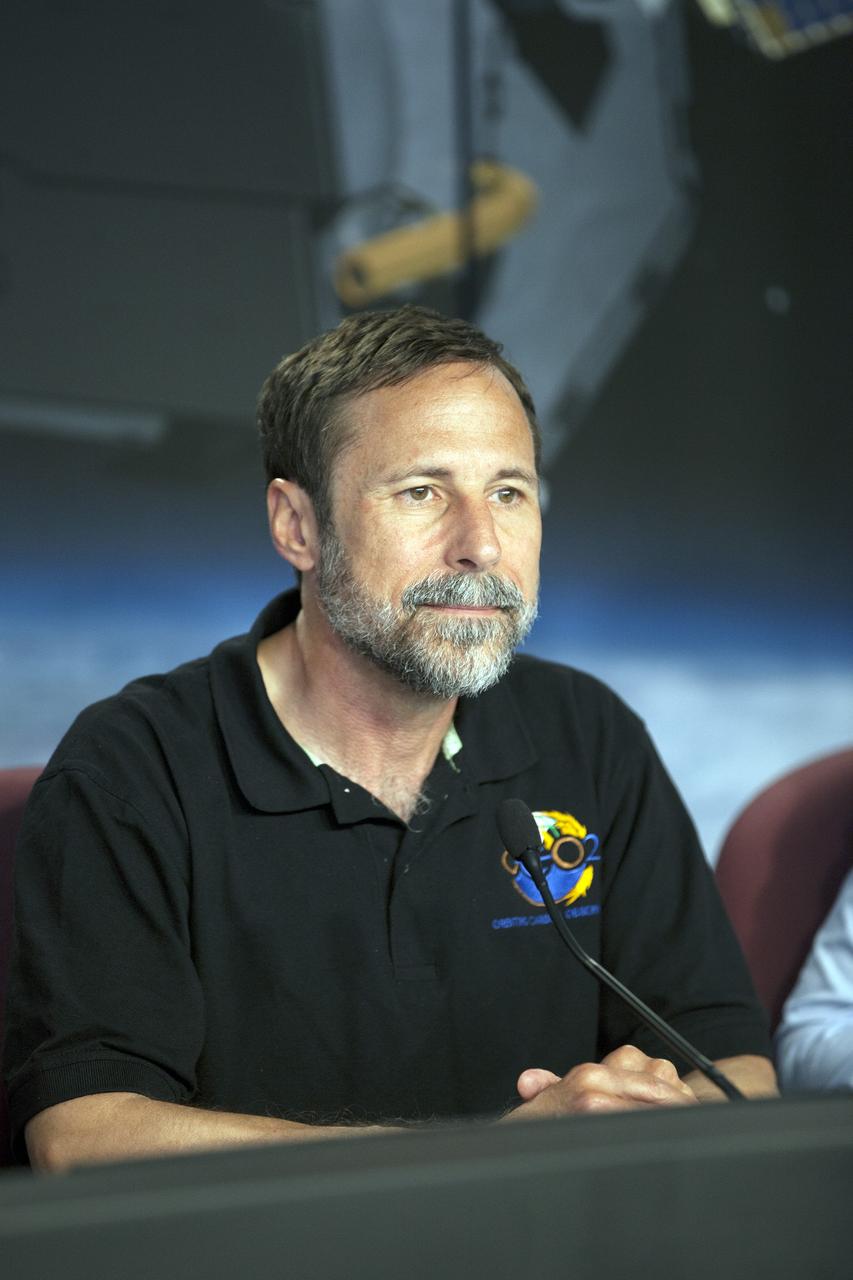
VANDENBERG AIR FORCE BASE, Calif. – David Crisp, Orbiting Carbon Observatory-2 science team leader at NASA's Jet Propulsion Laboratory, participates in a mission science briefing at Vandenberg Air Force Base in California prior to the launch of the observatory, or OCO-2. Launch aboard a United Launch Alliance Delta II rocket from Space Launch Complex 2 is scheduled for 5:56 a.m. EDT on July 1. OCO-2 is NASA’s first mission dedicated to studying atmospheric carbon dioxide, the leading human-produced greenhouse gas driving changes in Earth’s climate. OCO-2 will provide a new tool for understanding the human and natural sources of carbon dioxide emissions and the natural "sinks" that absorb carbon dioxide and help control its buildup. The observatory will measure the global geographic distribution of these sources and sinks and study their changes over time. To learn more about OCO-2, visit http://www.nasa.gov/oco2. Photo credit: NASA/Kim Shiflett
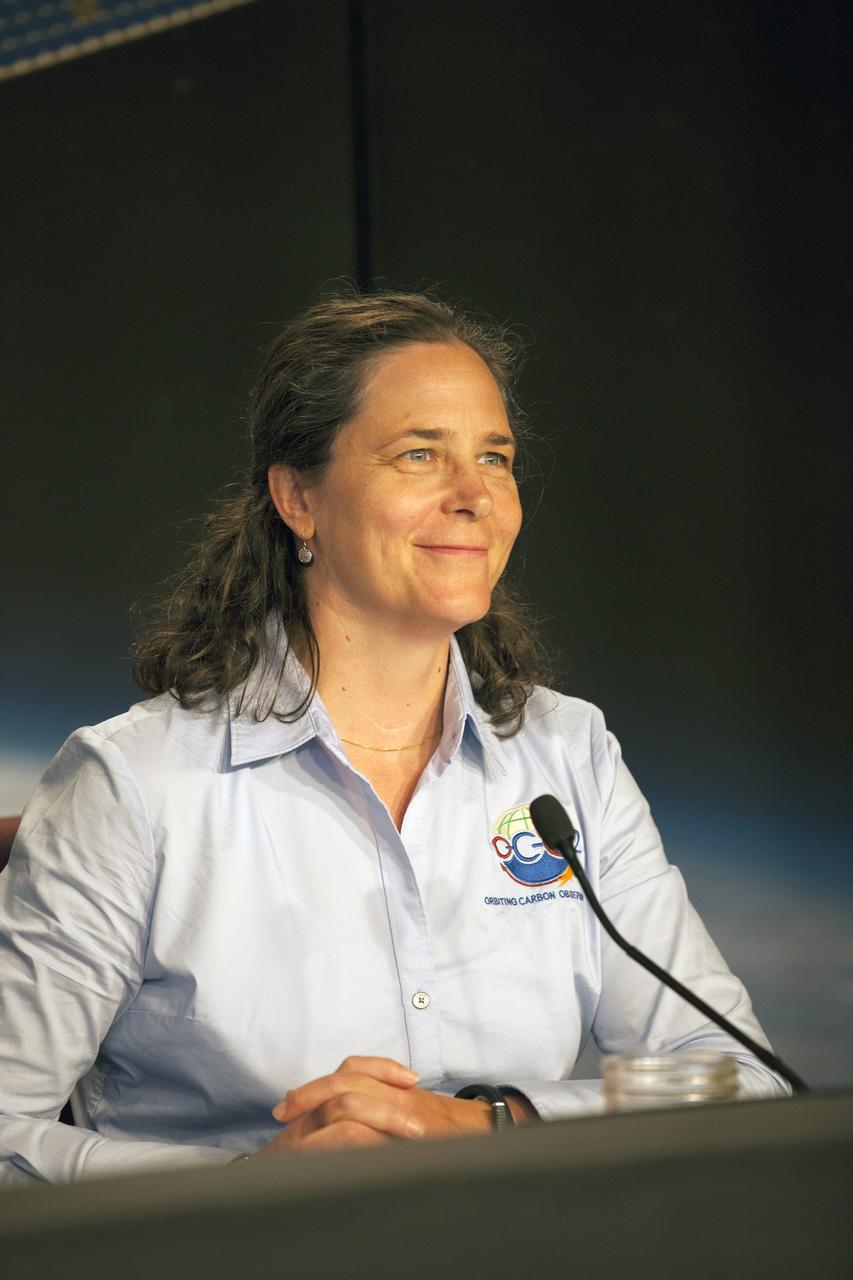
VANDENBERG AIR FORCE BASE, Calif. – Annmarie Eldering, Orbiting Carbon Observatory-2 deputy project scientist at NASA's Jet Propulsion Laboratory, participates in a mission science briefing at Vandenberg Air Force Base in California prior to the launch of the observatory, or OCO-2. Launch aboard a United Launch Alliance Delta II rocket from Space Launch Complex 2 is scheduled for 5:56 a.m. EDT on July 1. OCO-2 is NASA’s first mission dedicated to studying atmospheric carbon dioxide, the leading human-produced greenhouse gas driving changes in Earth’s climate. OCO-2 will provide a new tool for understanding the human and natural sources of carbon dioxide emissions and the natural "sinks" that absorb carbon dioxide and help control its buildup. The observatory will measure the global geographic distribution of these sources and sinks and study their changes over time. To learn more about OCO-2, visit http://www.nasa.gov/oco2. Photo credit: NASA/Kim Shiflett
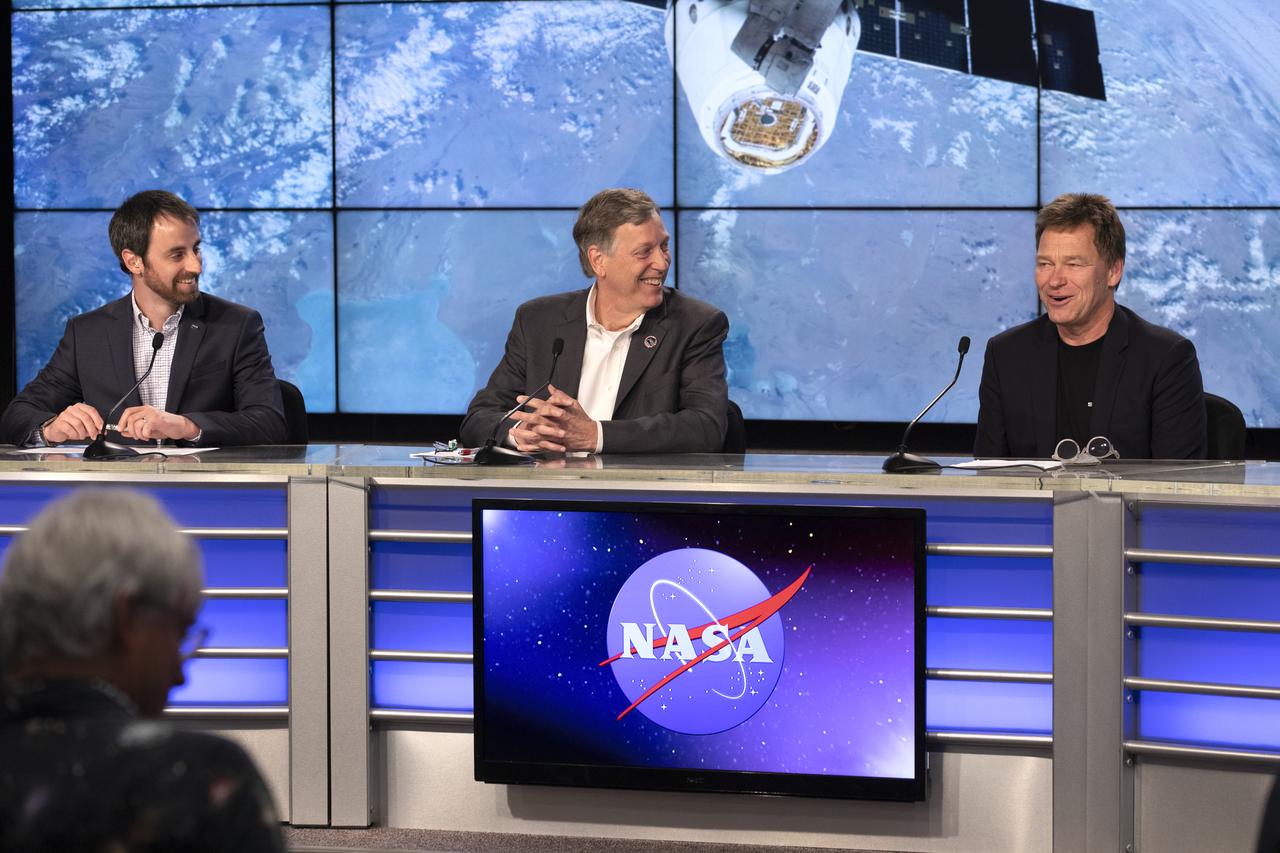
From left, Josh Santora, moderator with NASA Communications; Kenny Todd, manager, International Space Station Operations and Integration at NASA’s Johnson Space Center in Houston; and Hans Koenigsmann, vice president, Build and Flight Reliability with SpaceX, speak to members of the news media during a postlaunch news conference at NASA’s Kennedy Space Center in Florida on May 4, 2019, for SpaceX’s 17th Commercial Resupply Services (CRS-17) mission to the International Space Station for the agency. The company’s Falcon 9 rocket with the Dragon cargo module lifted off from Space Launch Complex 40 at Cape Canaveral Air Force Station in Florida at 2:48 a.m. EDT. The Dragon cargo module will deliver about 5,500 pounds of science and research, crew supplies and vehicle hardware to the orbital laboratory and its crew.
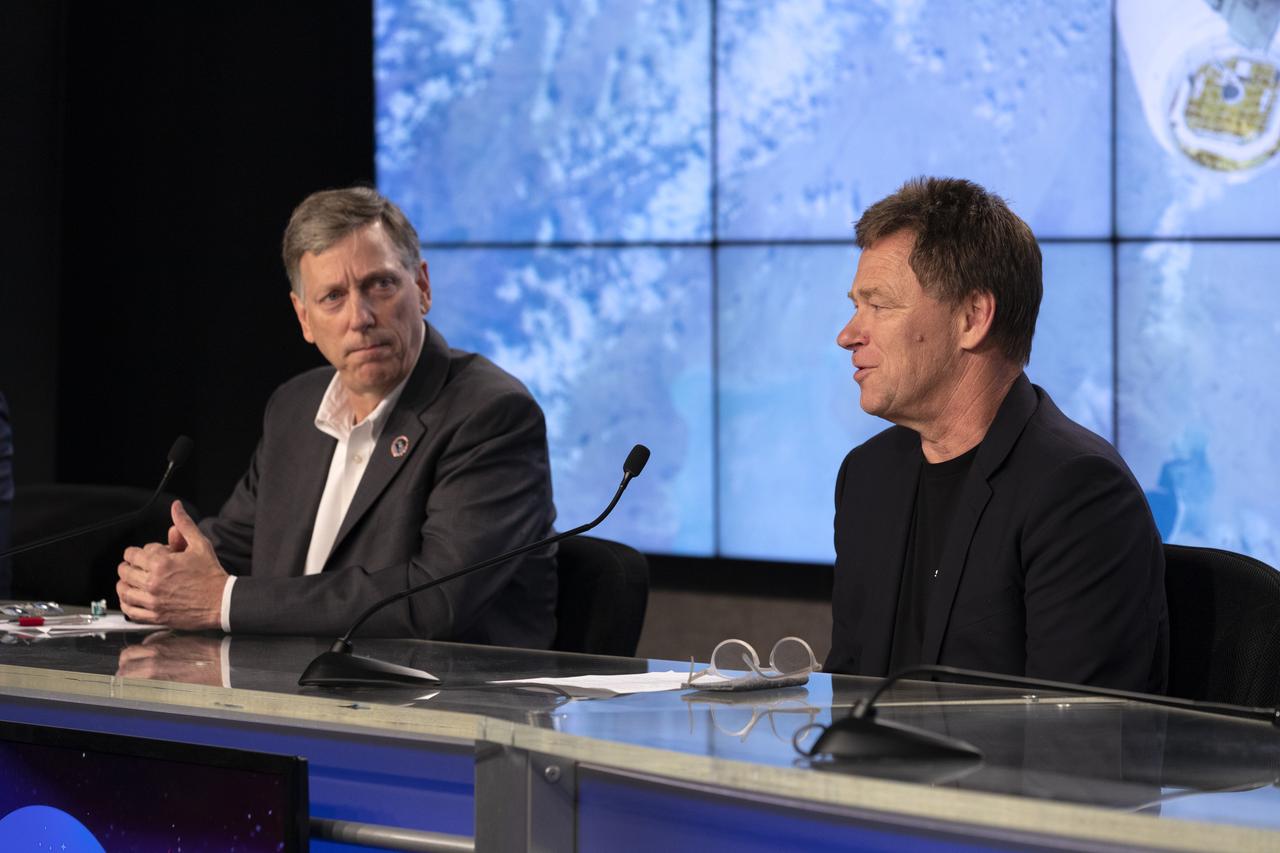
From left, Kenny Todd, manager, International Space Station Operations and Integration at NASA’s Johnson Space Center in Houston; and Hans Koenigsmann, vice president, Build and Flight Reliability with SpaceX, speak to members of the news media during a postlaunch news conference at NASA’s Kennedy Space Center in Florida on May 4, 2019, for SpaceX’s 17th Commercial Resupply Services (CRS-17) mission to the International Space Station for the agency. The company’s Falcon 9 rocket with the Dragon cargo module lifted off from Space Launch Complex 40 at Cape Canaveral Air Force Station in Florida at 2:48 a.m. EDT. The Dragon cargo module will deliver about 5,500 pounds of science and research, crew supplies and vehicle hardware to the orbital laboratory and its crew.
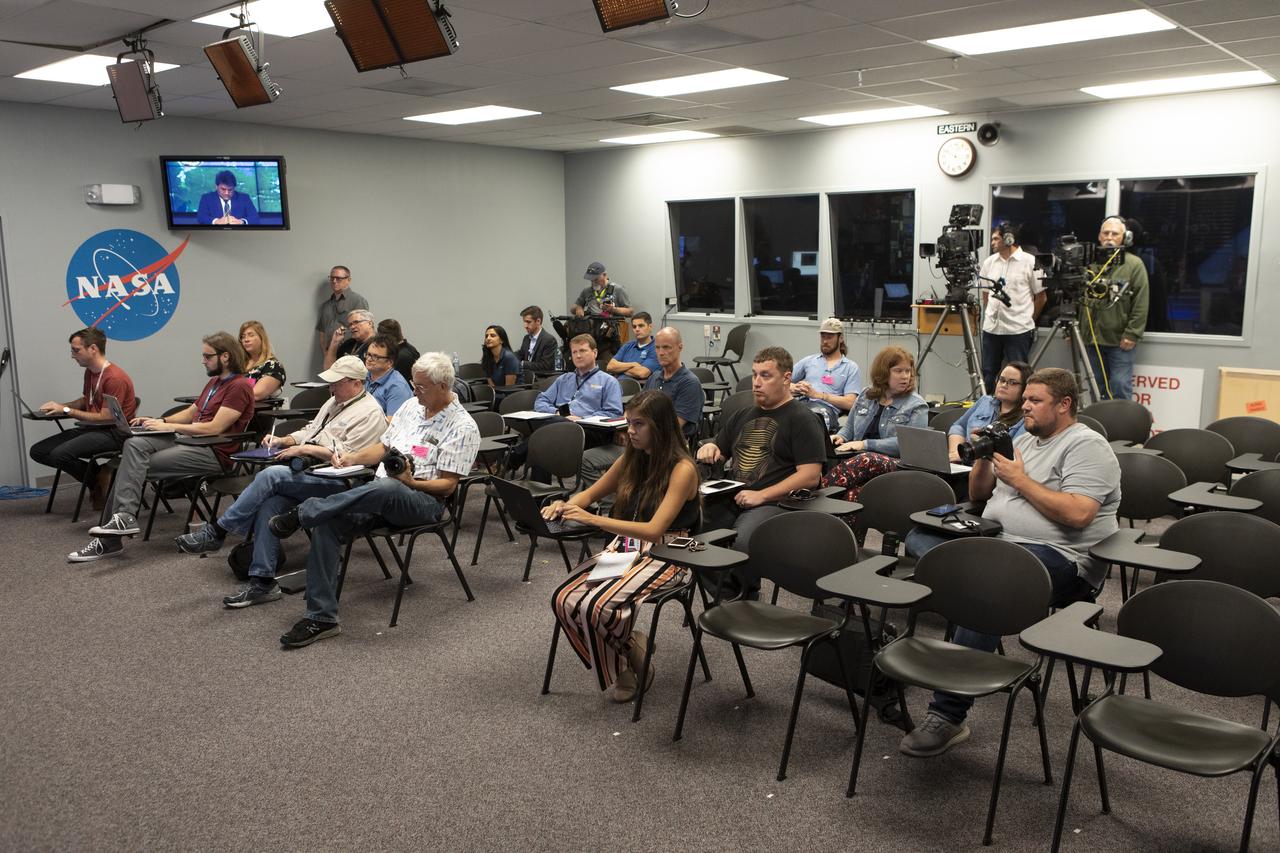
Members of the news media attend the prelaunch news conference for SpaceX’s 18th Commercial Resupply Services (CRS-18) mission to the International Space Station, July 24, 2019, at NASA’s Kennedy Space Center in Florida. Participants were Marie Lewis, NASA Communications moderator; Bill Spetch, deputy manager of the International Space Station Transportation Integration Office at the agency’s Johnson Space Center in Houston; Jessica Jensen, director of Dragon mission management at SpaceX; Pete Hasbrook, manager of the space station’s Program Science Office at Johnson; and Will Ulrich, launch weather officer with the U.S. Air Force 45th Space Wing. The SpaceX Falcon 9 rocket and uncrewed Dragon spacecraft are scheduled to launch July 24, 2019, from Space Launch Complex 40 at Florida’s Cape Canaveral Air Force Station.
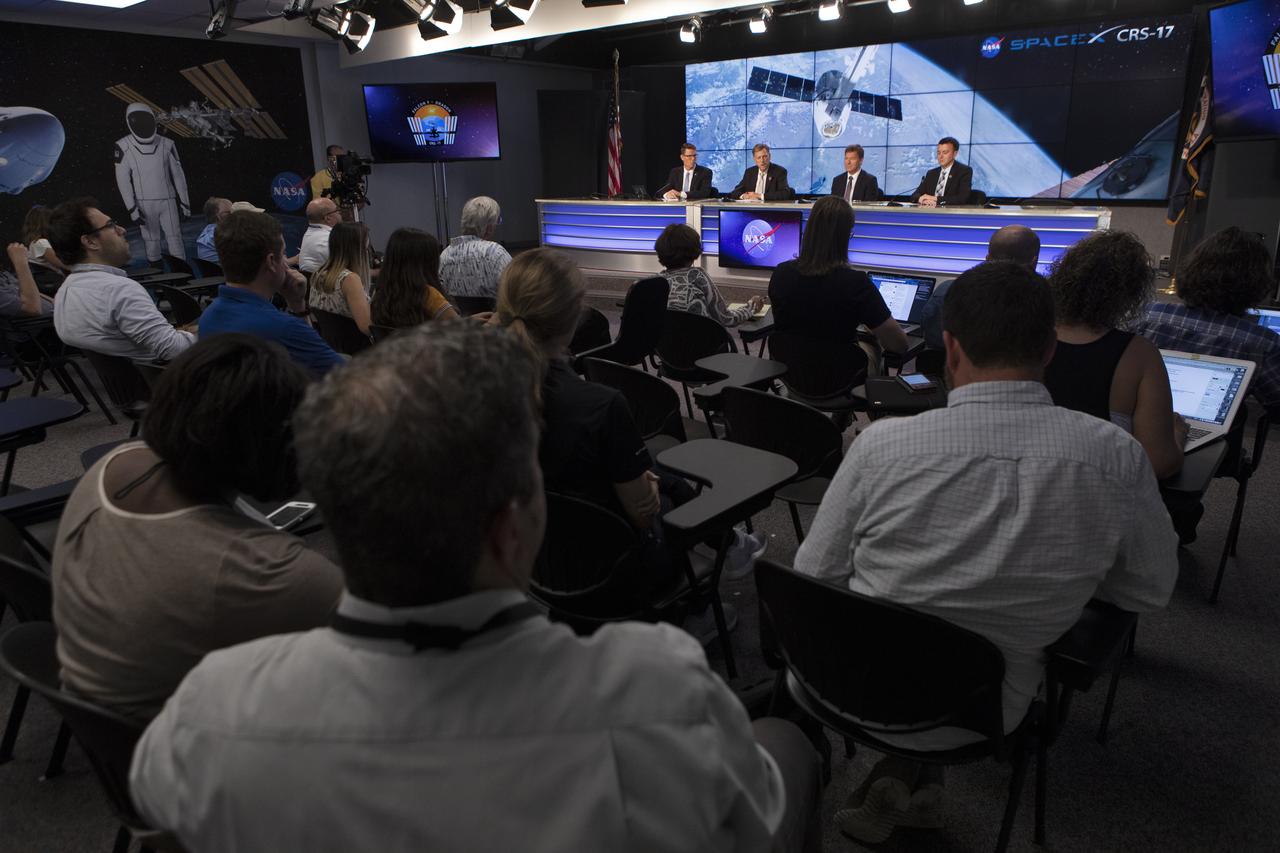
Members of the news media attend a prelaunch news conference for SpaceX’s 17th Commercial Resupply Services (CRS-17) mission to the International Space Station for NASA on May 2, 2019, at the agency’s Kennedy Space Center in Florida. From left, are Derrol Nail, NASA Communications moderator; Kenny Todd, Manager, International Space Station Operations and Integration at NASA’s Johnson Space Center in Houston; Hans Koenigsmann, VP, Build and Flight Reliability with SpaceX; and Will Ulrich, 45th launch weather officer with the U.S. Air Force. The SpaceX Falcon 9 rocket and Dragon cargo module are scheduled to launch no earlier than May 3, 2019, from Space Launch Complex 40 on Cape Canaveral Air Force Station in Florida.
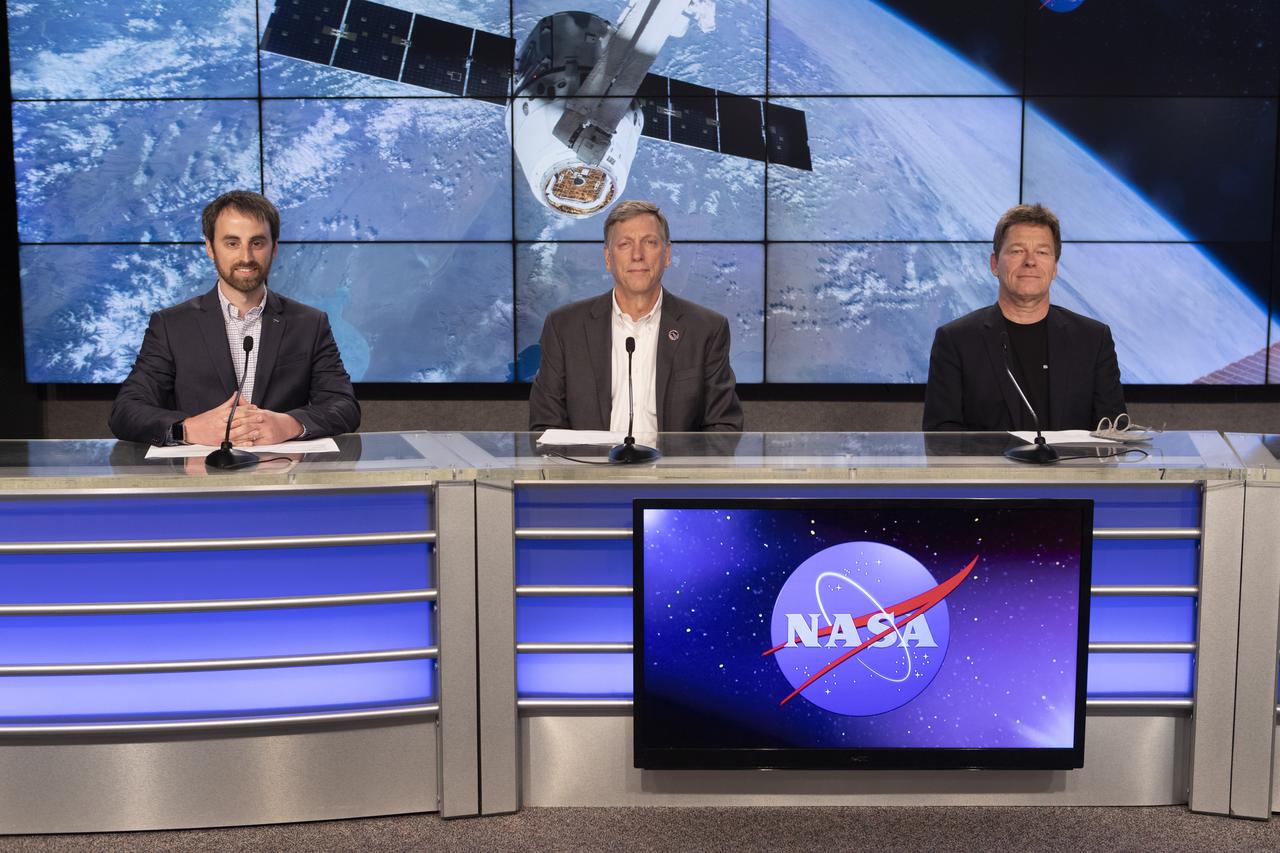
From left, Josh Santora, moderator with NASA Communications; Kenny Todd, manager, International Space Station Operations and Integration at NASA’s Johnson Space Center in Houston; and Hans Koenigsmann, vice president, Build and Flight Reliability with SpaceX, speak to members of the news media during a postlaunch news conference at NASA’s Kennedy Space Center in Florida on May 4, 2019, for SpaceX’s 17th Commercial Resupply Services (CRS-17) mission to the International Space Station for the agency. The company’s Falcon 9 rocket with the Dragon cargo module lifted off from Space Launch Complex 40 at Cape Canaveral Air Force Station in Florida at 2:48 a.m. EDT. The Dragon cargo module will deliver about 5,500 pounds of science and research, crew supplies and vehicle hardware to the orbital laboratory and its crew.
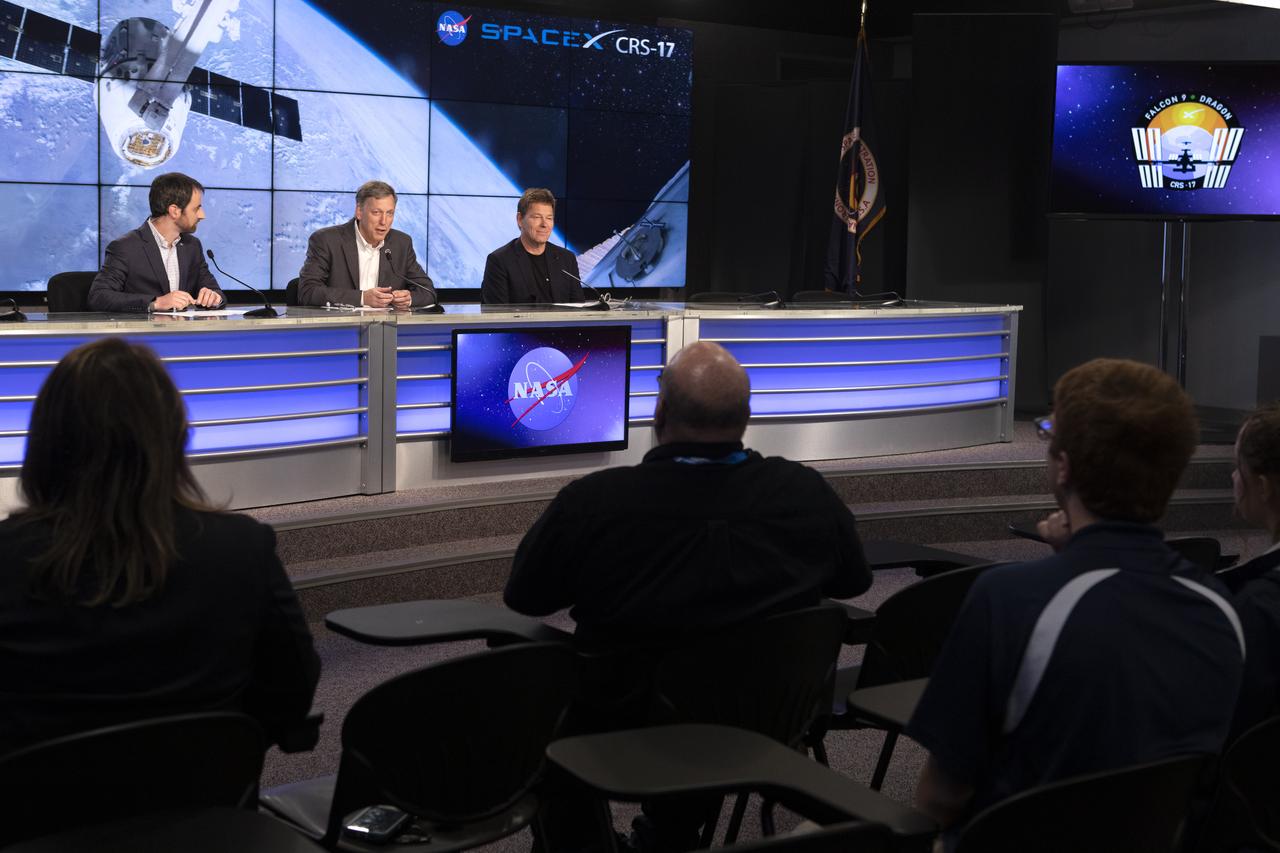
From left, Josh Santora, moderator with NASA Communications; Kenny Todd, manager, International Space Station Operations and Integration at NASA’s Johnson Space Center in Houston; and Hans Koenigsmann, vice president, Build and Flight Reliability with SpaceX, speak to members of the news media during a postlaunch news conference at NASA’s Kennedy Space Center in Florida on May 4, 2019, for SpaceX’s 17th Commercial Resupply Services (CRS-17) mission to the International Space Station for the agency. The company’s Falcon 9 rocket with the Dragon cargo module lifted off from Space Launch Complex 40 at Cape Canaveral Air Force Station in Florida at 2:48 a.m. EDT. The Dragon cargo module will deliver about 5,500 pounds of science and research, crew supplies and vehicle hardware to the orbital laboratory and its crew.
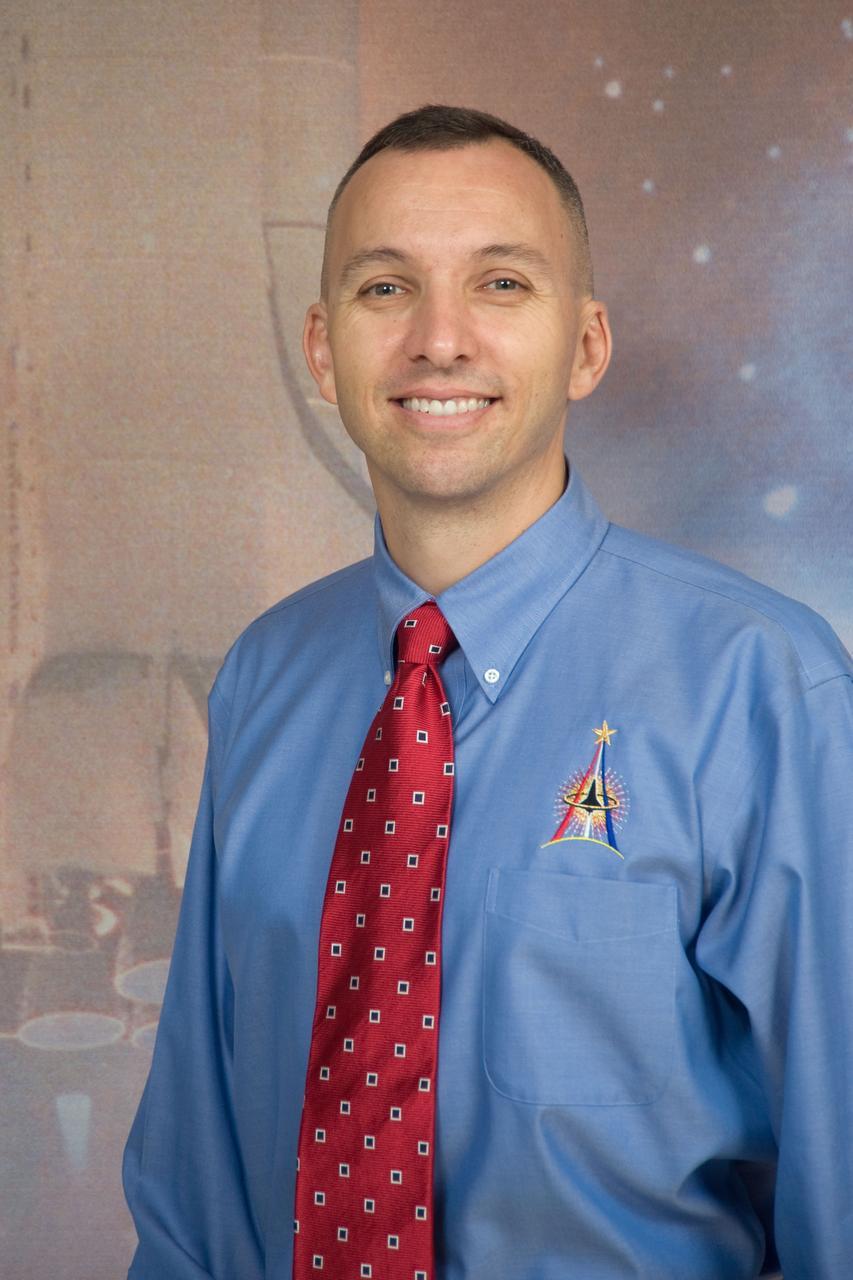
PHOTO DATE: 10-16-09 LOCATION: Bldg. 2S - Rm 122 Press Conference SUBJECT: STS-129 Press Conference and media photo portraits PHOTOGRAPHER: Lauren Harnett
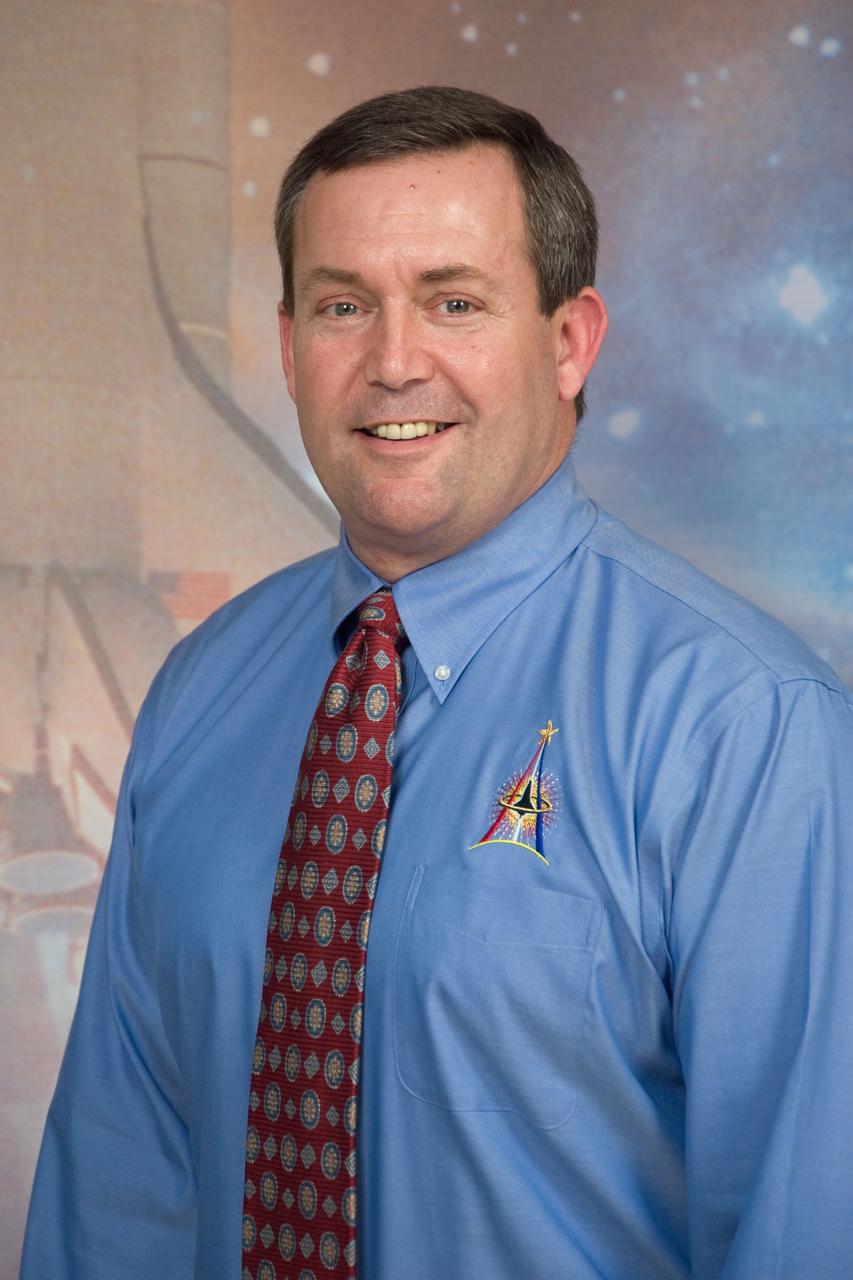
PHOTO DATE: 10-16-09 LOCATION: Bldg. 2S - Rm 122 Press Conference SUBJECT: STS-129 Press Conference and media photo portraits PHOTOGRAPHER: Lauren Harnett
PHOTO DATE: 10-16-09 LOCATION: Bldg. 2S - Rm 122 Press Conference SUBJECT: STS-129 Press Conference and media photo portraits PHOTOGRAPHER: Lauren Harnett
PHOTO DATE: 10-16-09 LOCATION: Bldg. 2S - Rm 122 Press Conference SUBJECT: STS-129 Press Conference and media photo portraits PHOTOGRAPHER: Lauren Harnett
PHOTO DATE: 10-16-09 LOCATION: Bldg. 2S - Rm 122 Press Conference SUBJECT: STS-129 Press Conference and media photo portraits PHOTOGRAPHER: Lauren Harnett
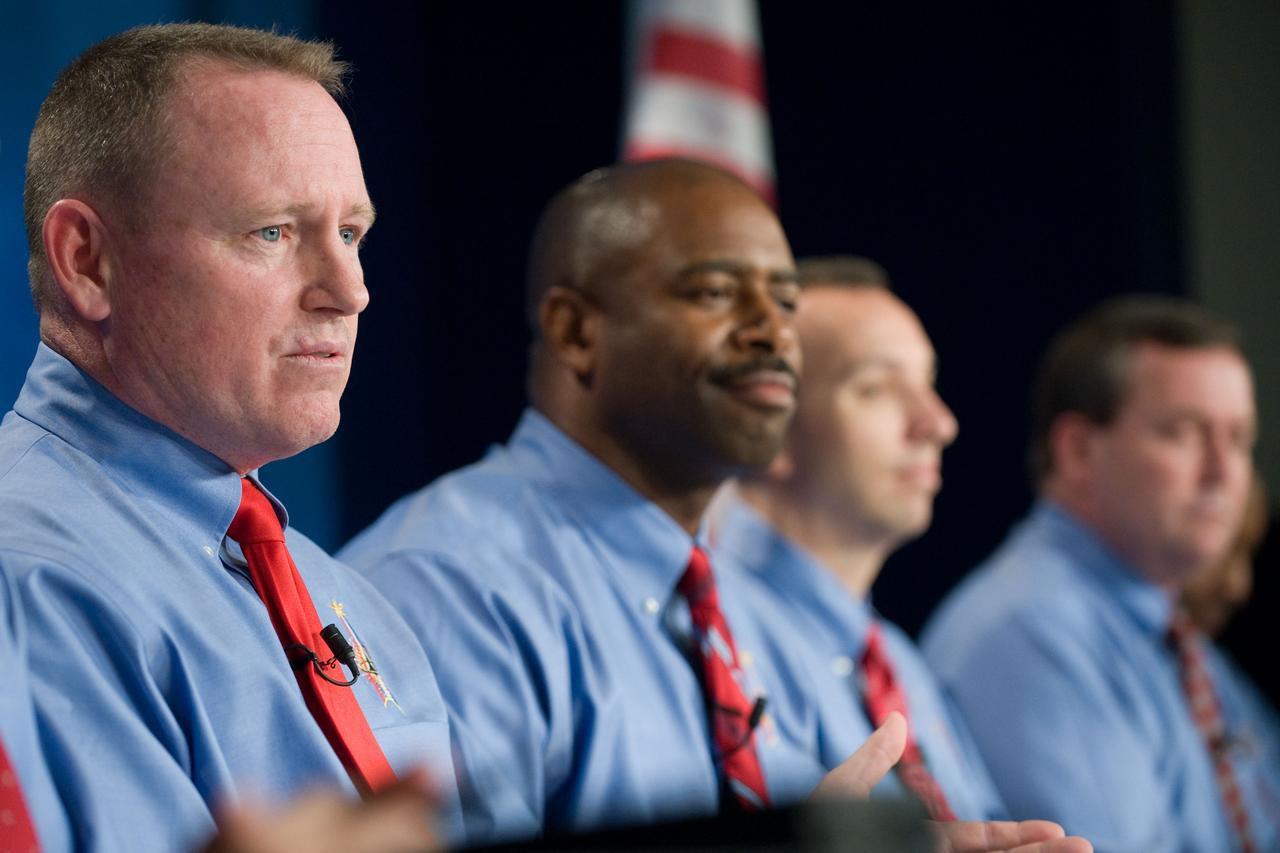
PHOTO DATE: 10-16-09 LOCATION: Bldg. 2S - Rm 122 Press Conference SUBJECT: STS-129 Press Conference and media photo portraits PHOTOGRAPHER: Lauren Harnett
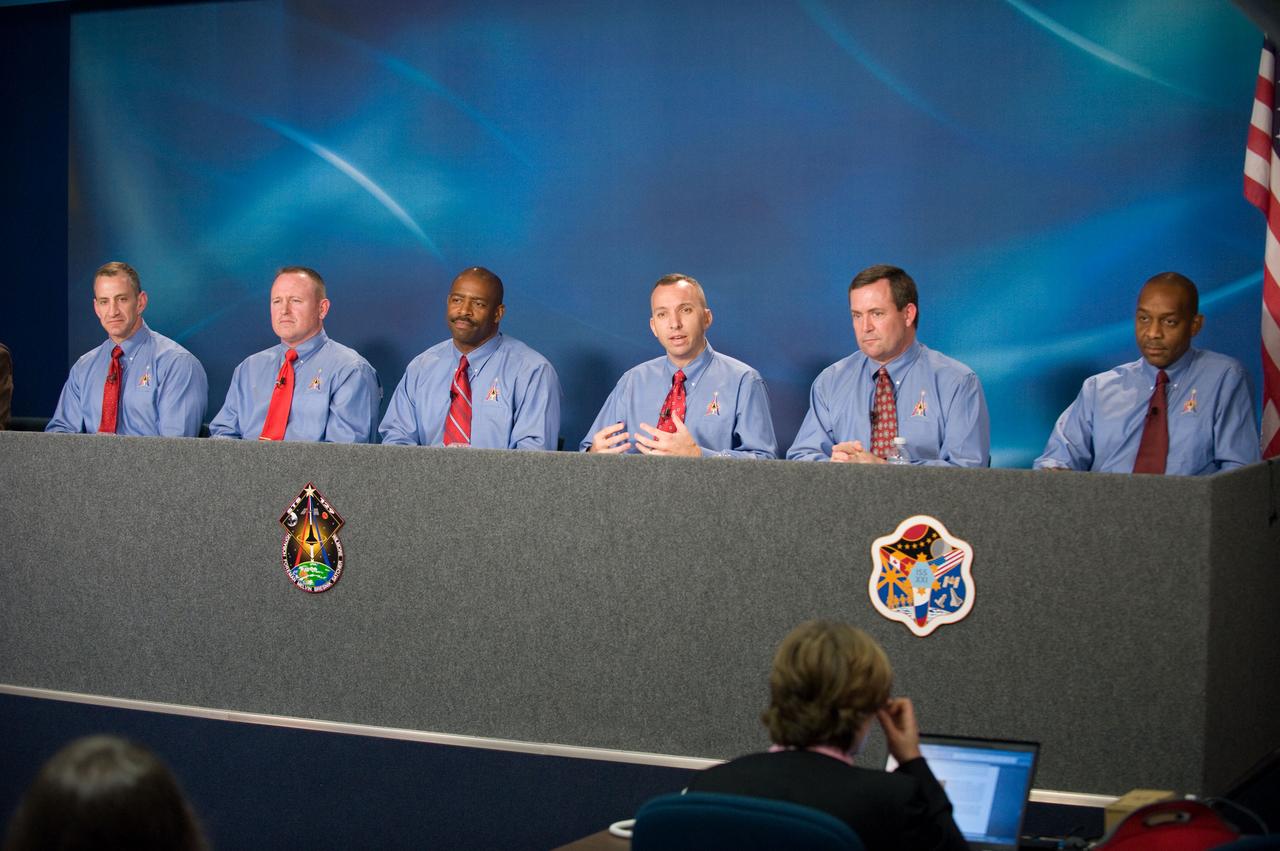
PHOTO DATE: 10-16-09 LOCATION: Bldg. 2S - Rm 122 Press Conference SUBJECT: STS-129 Press Conference and media photo portraits PHOTOGRAPHER: Lauren Harnett
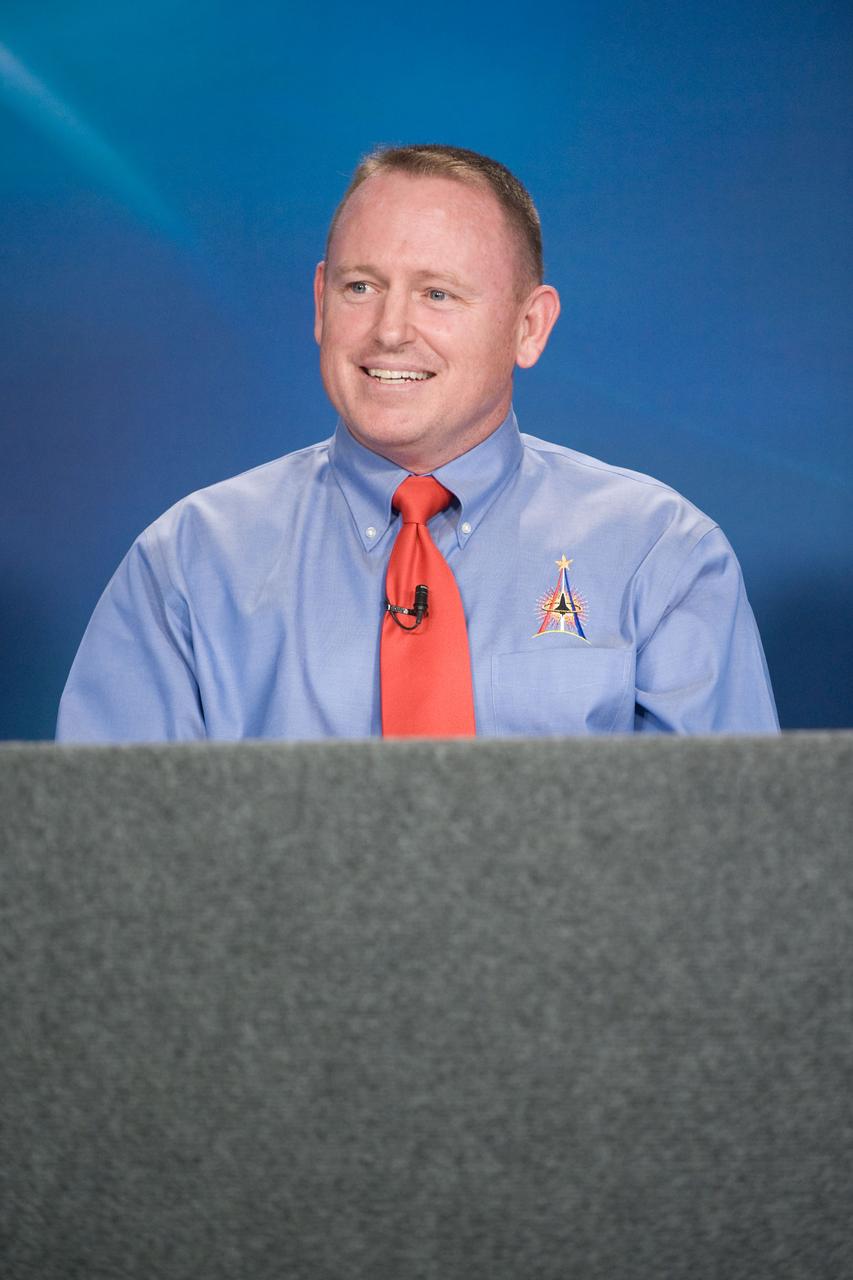
PHOTO DATE: 10-16-09 LOCATION: Bldg. 2S - Rm 122 Press Conference SUBJECT: STS-129 Press Conference and media photo portraits PHOTOGRAPHER: Lauren Harnett
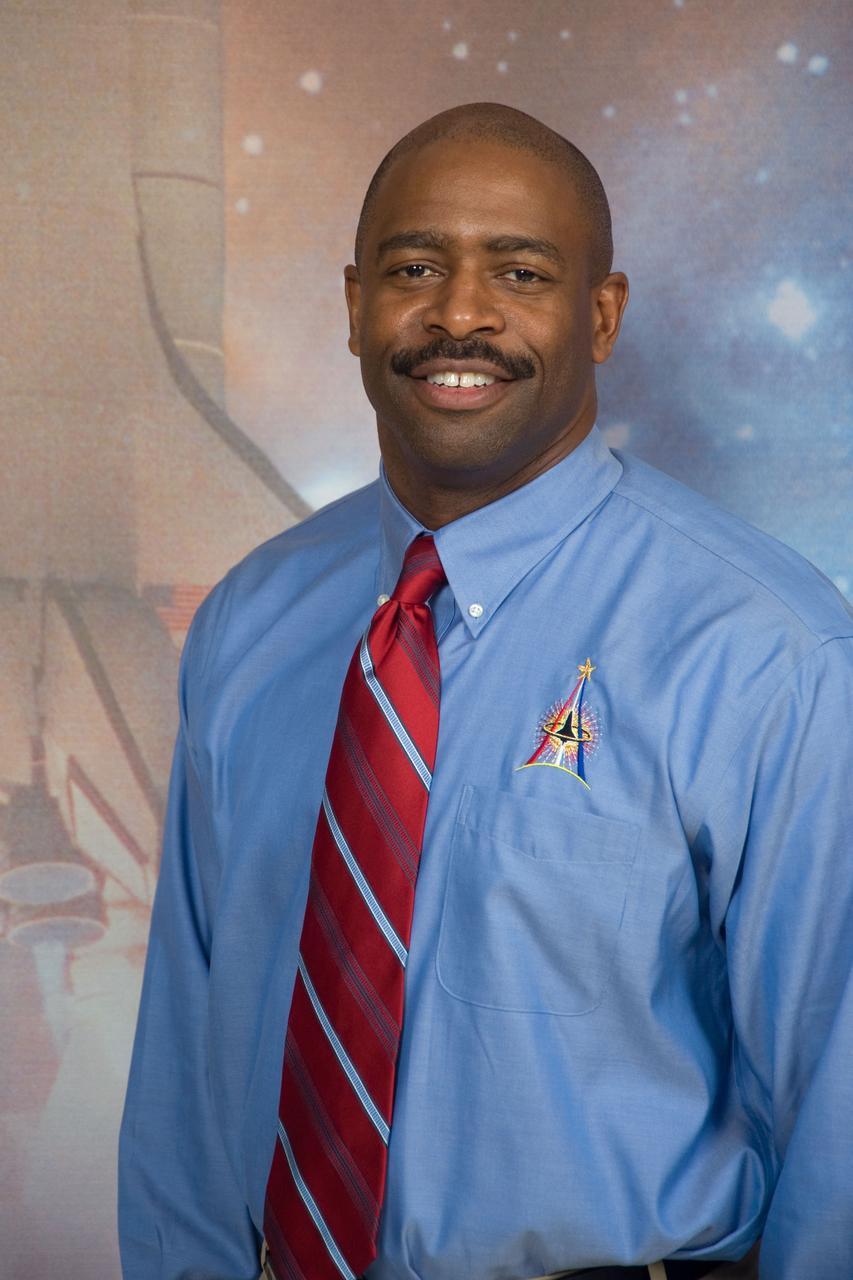
PHOTO DATE: 10-16-09 LOCATION: Bldg. 2S - Rm 122 Press Conference SUBJECT: STS-129 Press Conference and media photo portraits PHOTOGRAPHER: Lauren Harnett
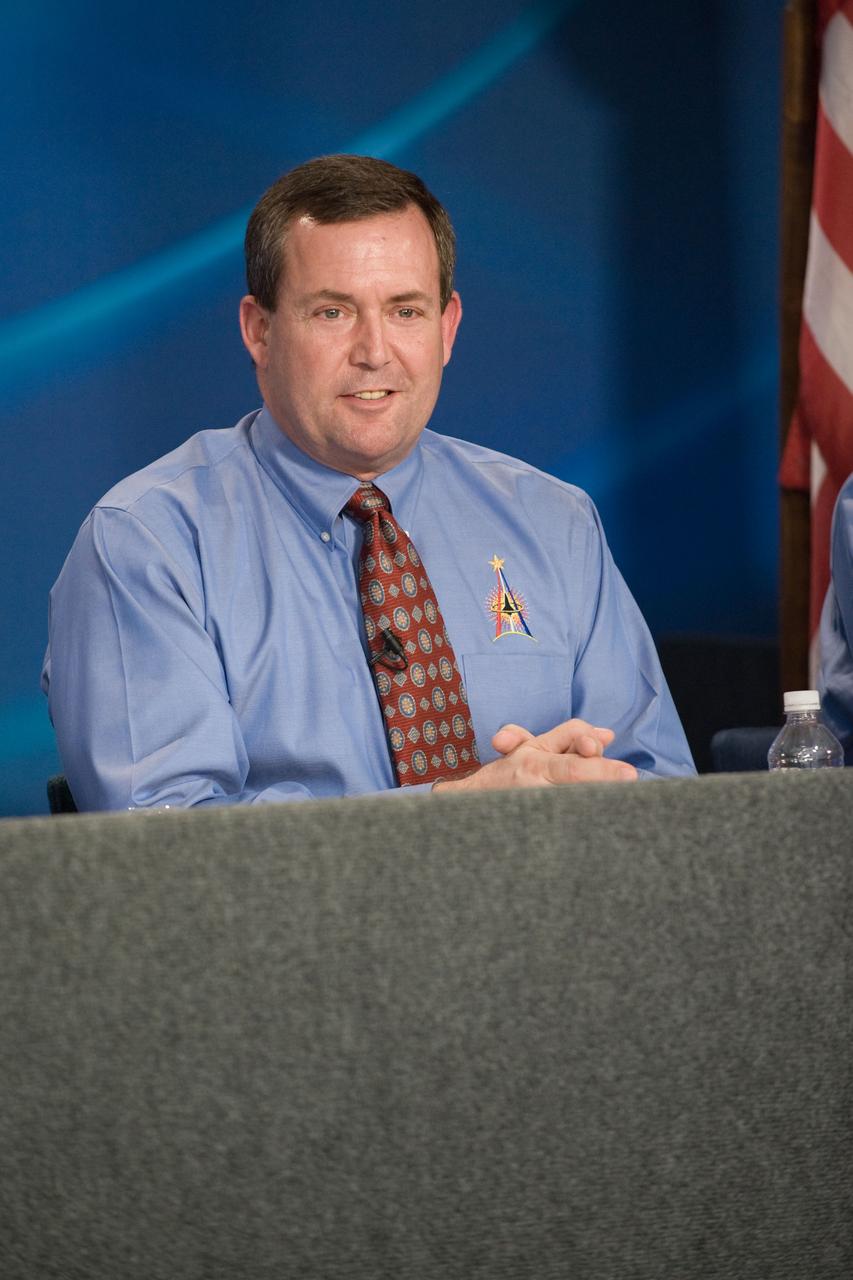
PHOTO DATE: 10-16-09 LOCATION: Bldg. 2S - Rm 122 Press Conference SUBJECT: STS-129 Press Conference and media photo portraits PHOTOGRAPHER: Lauren Harnett
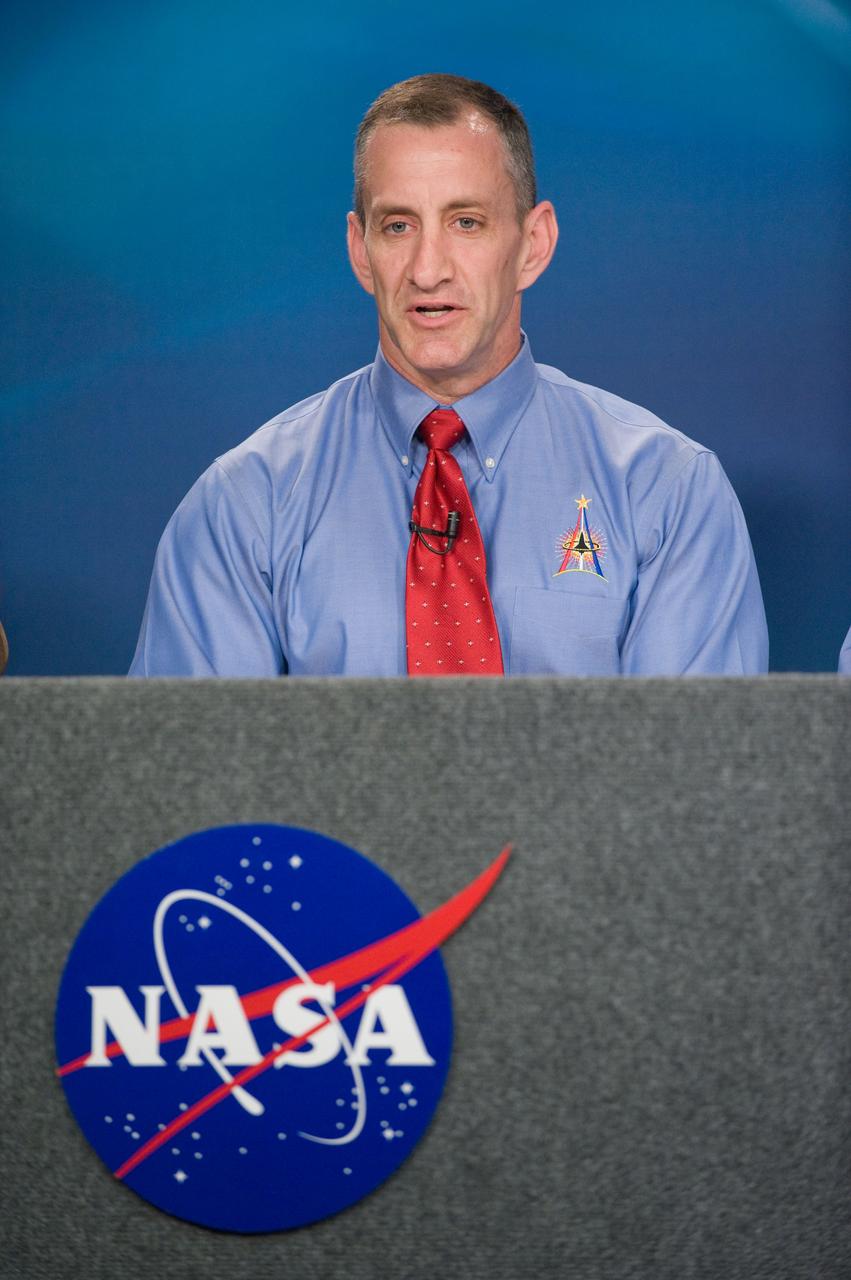
PHOTO DATE: 10-16-09 LOCATION: Bldg. 2S - Rm 122 Press Conference SUBJECT: STS-129 Press Conference and media photo portraits PHOTOGRAPHER: Lauren Harnett
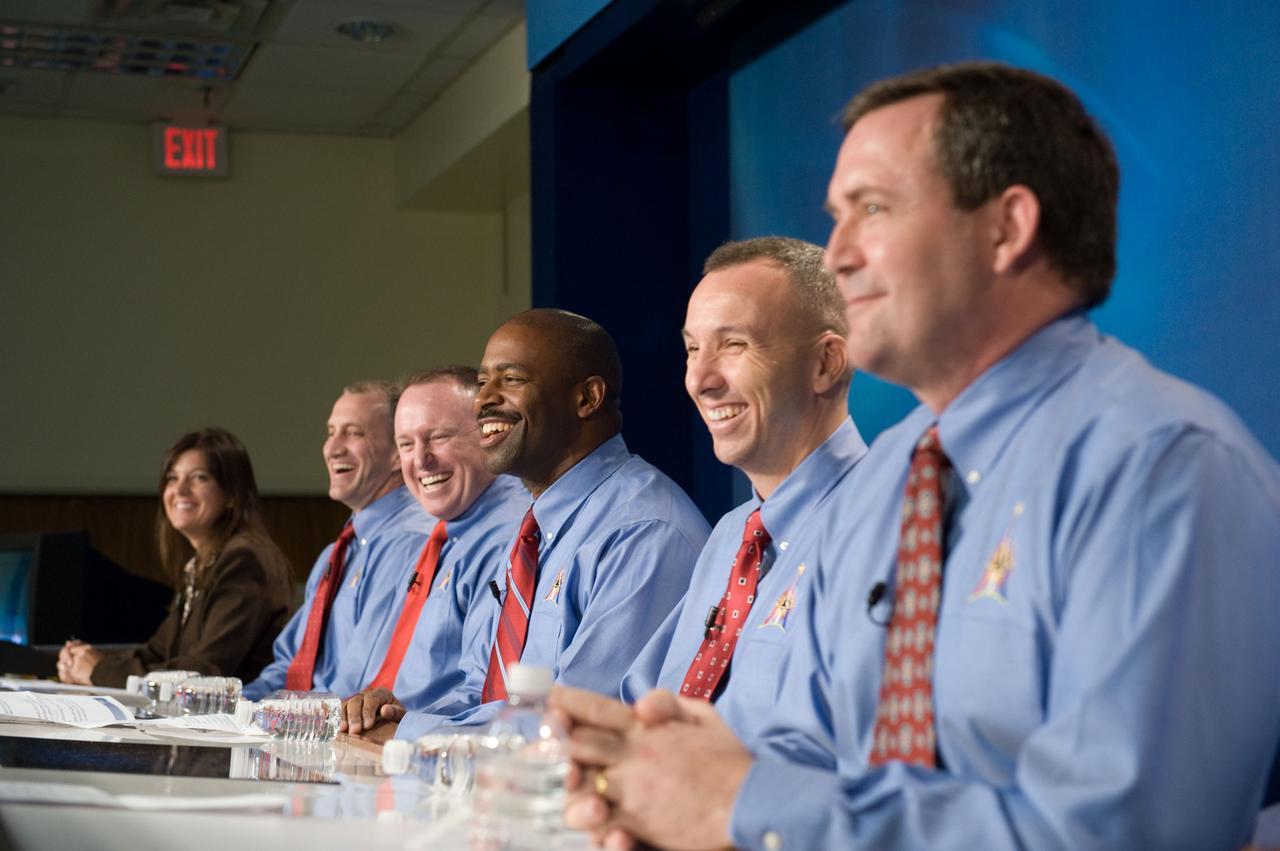
PHOTO DATE: 10-16-09 LOCATION: Bldg. 2S - Rm 122 Press Conference SUBJECT: STS-129 Press Conference and media photo portraits PHOTOGRAPHER: Lauren Harnett
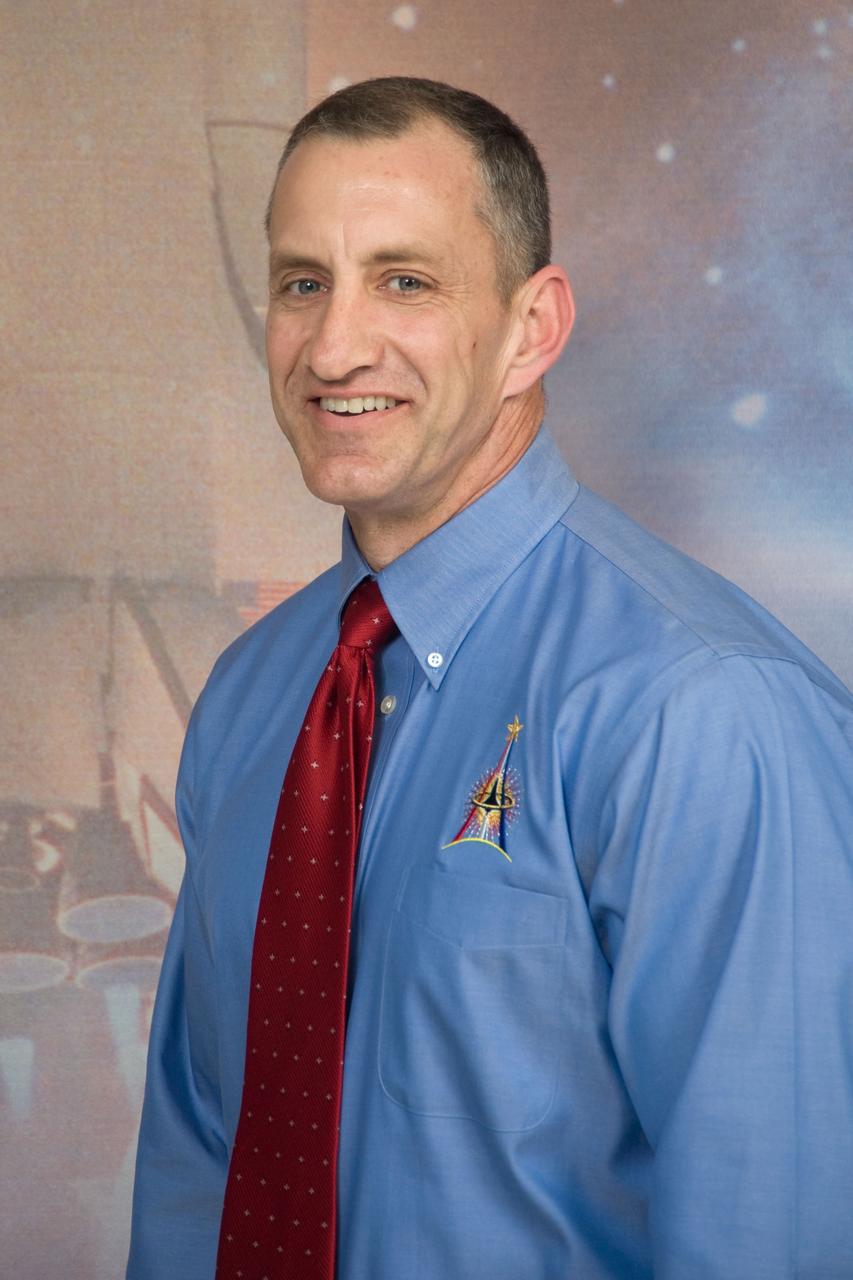
PHOTO DATE: 10-16-09 LOCATION: Bldg. 2S - Rm 122 Press Conference SUBJECT: STS-129 Press Conference and media photo portraits PHOTOGRAPHER: Lauren Harnett
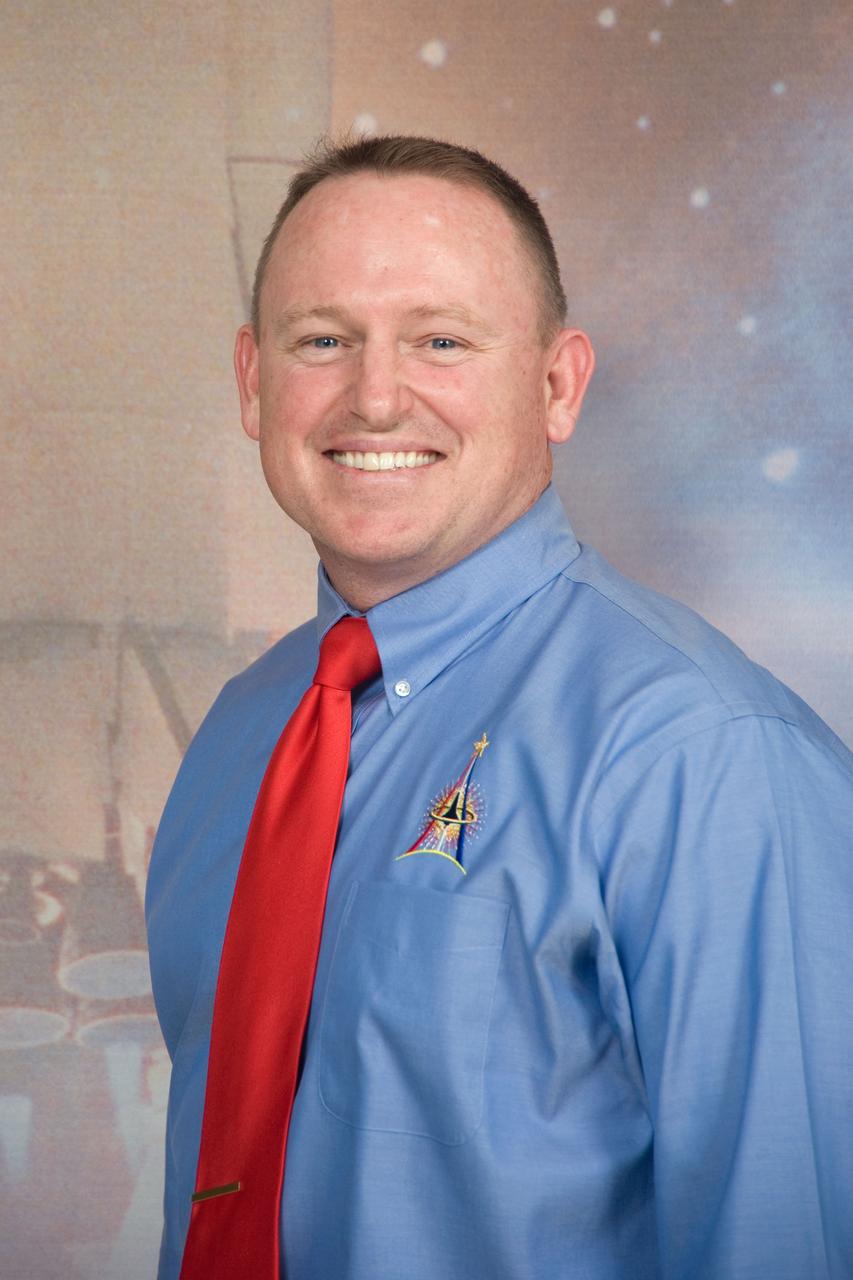
PHOTO DATE: 10-16-09 LOCATION: Bldg. 2S - Rm 122 Press Conference SUBJECT: STS-129 Press Conference and media photo portraits PHOTOGRAPHER: Lauren Harnett
PHOTO DATE: 10-16-09 LOCATION: Bldg. 2S - Rm 122 Press Conference SUBJECT: STS-129 Press Conference and media photo portraits PHOTOGRAPHER: Lauren Harnett
PHOTO DATE: 10-16-09 LOCATION: Bldg. 2S - Rm 122 Press Conference SUBJECT: STS-129 Press Conference and media photo portraits PHOTOGRAPHER: Lauren Harnett
PHOTO DATE: 10-16-09 LOCATION: Bldg. 2S - Rm 122 Press Conference SUBJECT: STS-129 Press Conference and media photo portraits PHOTOGRAPHER: Lauren Harnett
PHOTO DATE: 10-16-09 LOCATION: Bldg. 2S - Rm 122 Press Conference SUBJECT: STS-129 Press Conference and media photo portraits PHOTOGRAPHER: Lauren Harnett
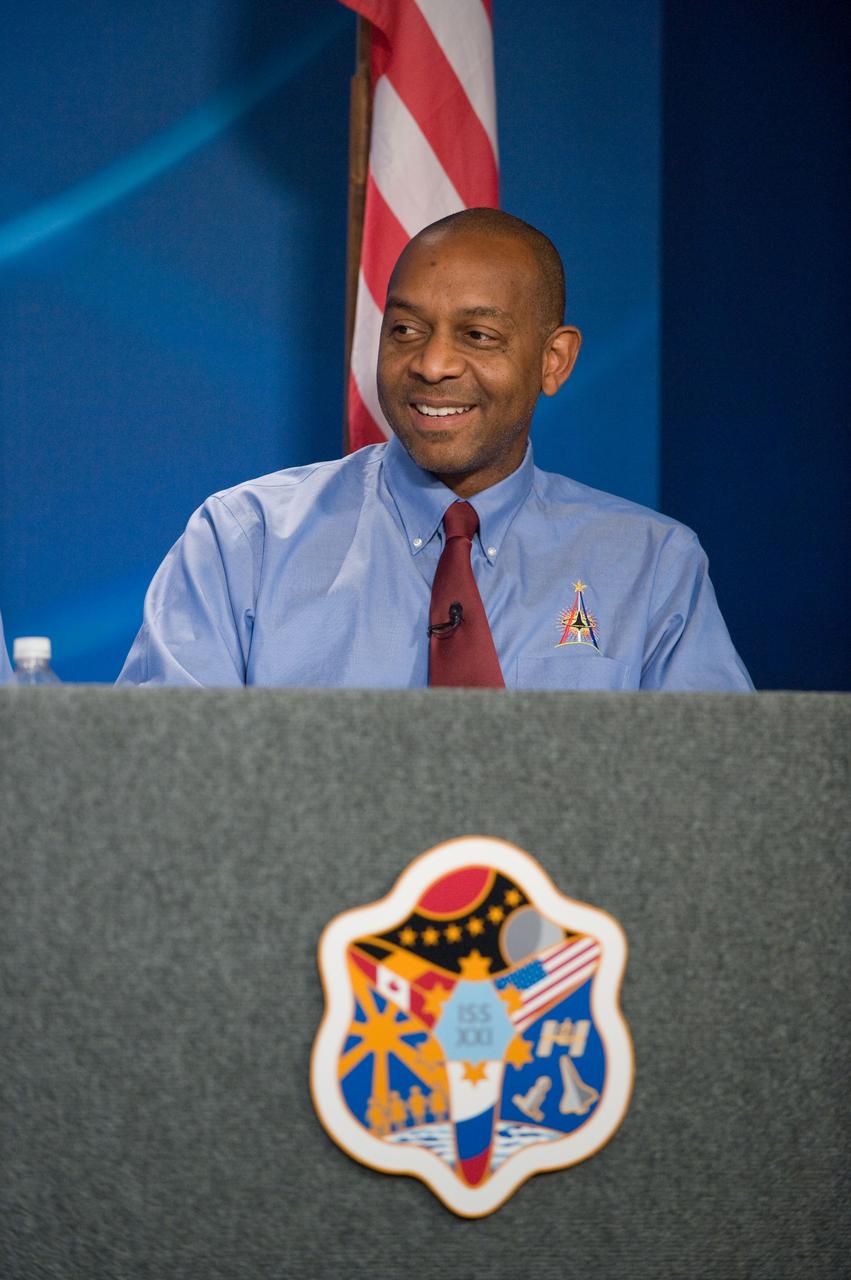
PHOTO DATE: 10-16-09 LOCATION: Bldg. 2S - Rm 122 Press Conference SUBJECT: STS-129 Press Conference and media photo portraits PHOTOGRAPHER: Lauren Harnett
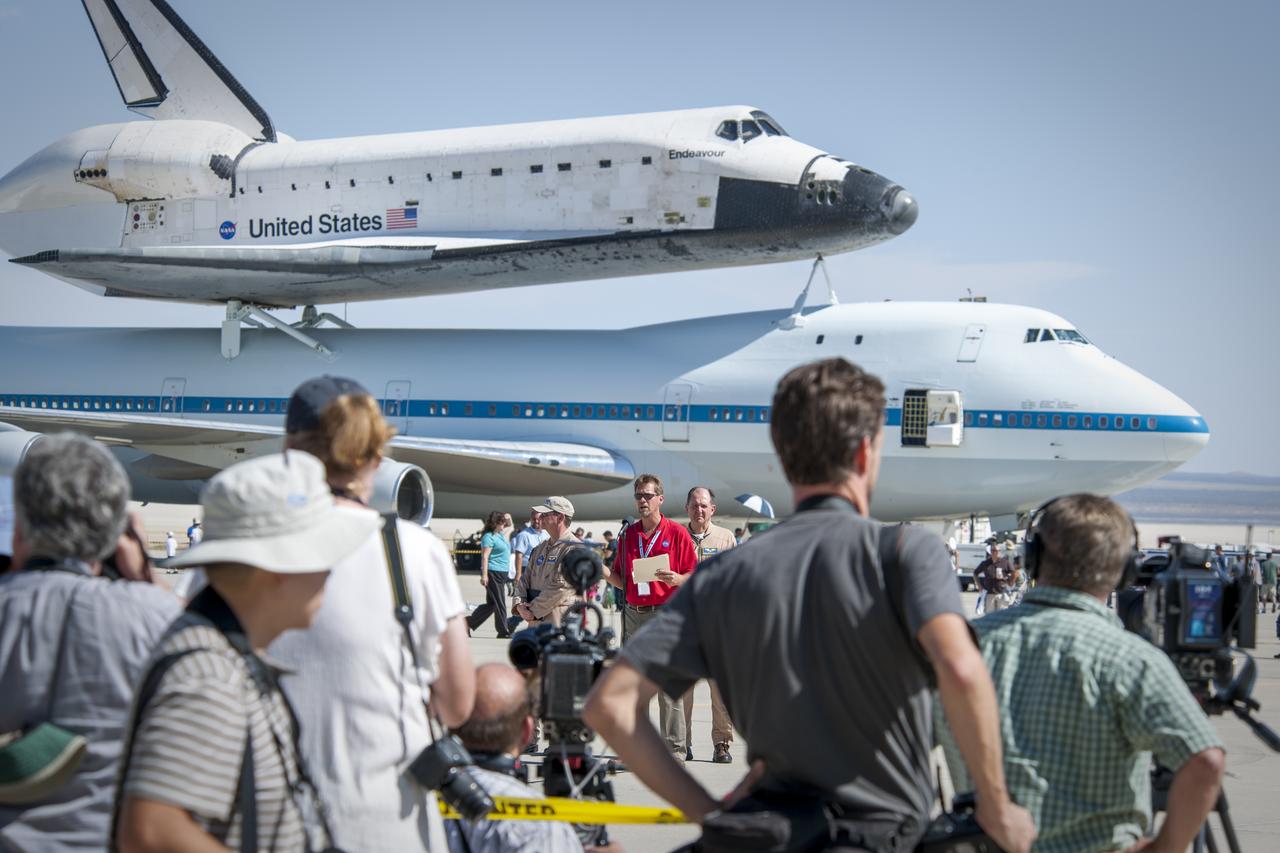
Media, social media, and NASA Armstrong (then Dryden) Flight Research Center employees and family wait for a press conference on the center’s back ramp on Sept. 20, 2012, in Edwards, California.
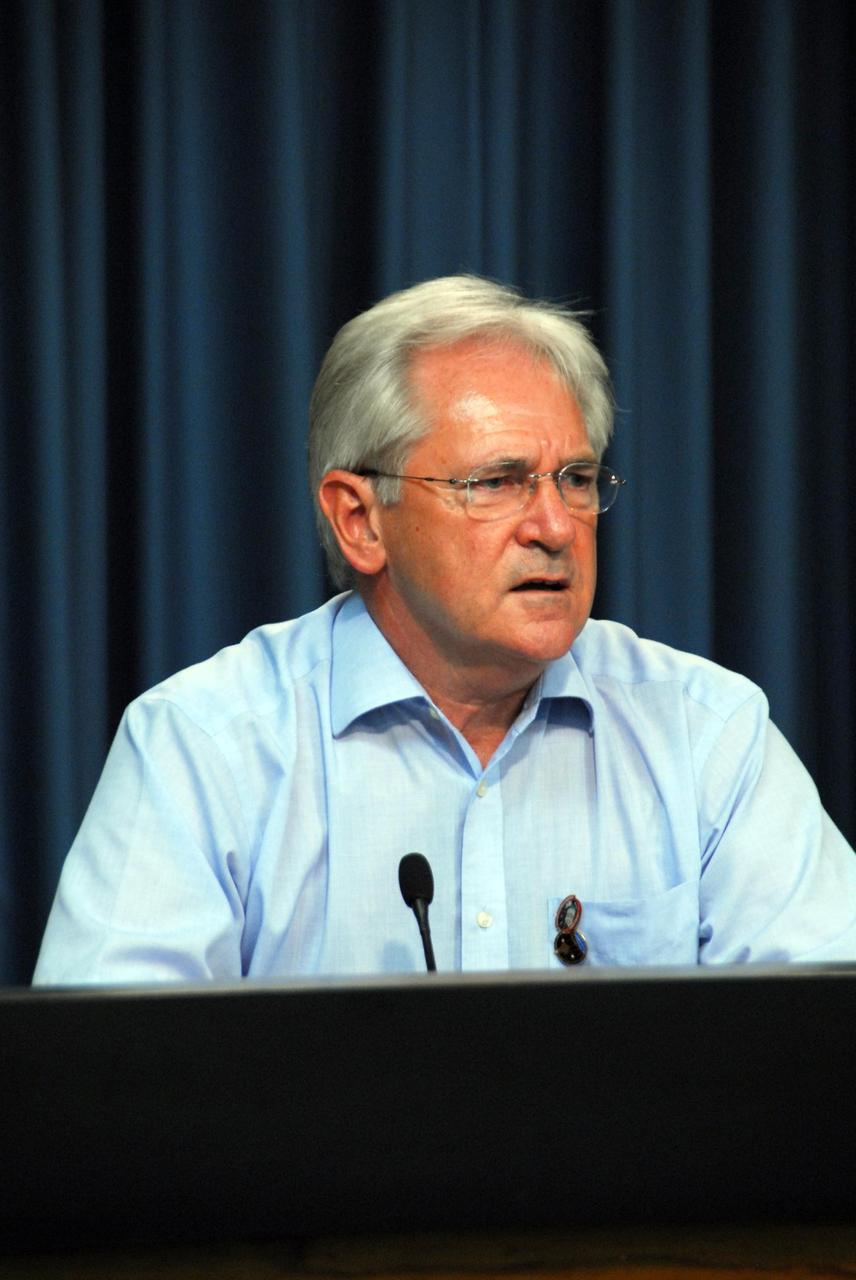
KENNEDY SPACE CENTER, FLA. -- Alan Thirkettle, the International Space Station Program Manager for ESA, the European Space Agency, participates in a news briefing on the launch readiness of space shuttle mission STS-120. The STS-120 mission will be the 23rd shuttle flight to the International Space Station, delivering the Italian-built U.S. Node 2, called Harmony. The seven-member crew includes ESA astronaut Paolo Nespoli from Italy. The 14-day mission includes five spacewalks -- four by shuttle crew members and one by the station's Expedition 16 crew -- to install Harmony and move the P6 solar arrays to their permanent position and deploy them. Launch aboard space shuttle Discovery is planned for 11:38 a.m. EDT Oct. 23, and Discovery is scheduled to complete its mission and return home on Nov. 6. Photo credit: NASA/George Shelton
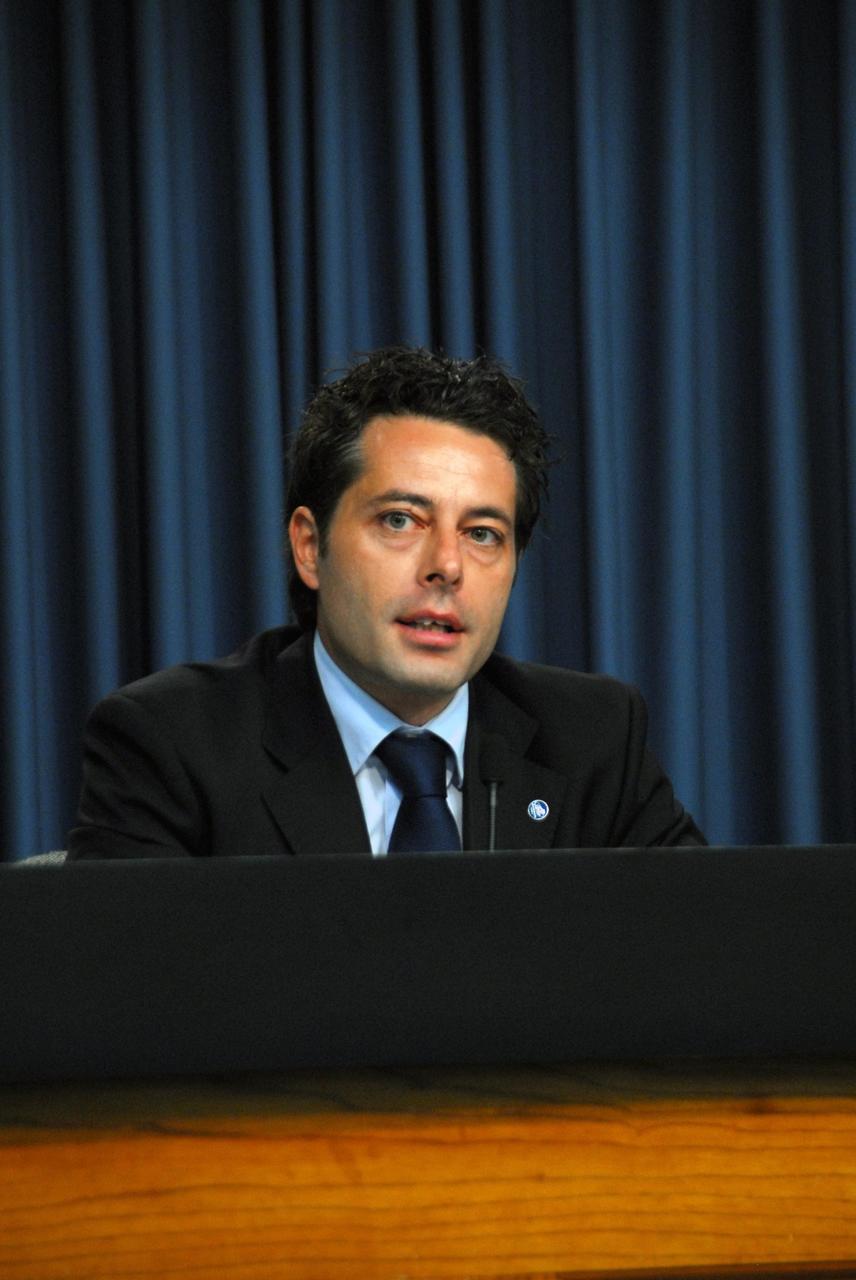
KENNEDY SPACE CENTER, FLA. -- Mauro Piermaria, the ESPERIA mission manager for ASI, the Italian Space Agency, answers questions from the media during a news briefing on the launch readiness of space shuttle mission STS-120. The STS-120 mission will be the 23rd shuttle flight to the International Space Station, delivering the Italian-built U.S. Node 2, called Harmony. The seven-member crew includes ESA astronaut Paolo Nespoli from Italy. The 14-day mission includes five spacewalks -- four by shuttle crew members and one by the station's Expedition 16 crew -- to install Harmony and move the P6 solar arrays to their permanent position and deploy them. Launch aboard space shuttle Discovery is planned for 11:38 a.m. EDT Oct. 23, and Discovery is scheduled to complete its mission and return home on Nov. 6. Photo credit: NASA/George Shelton
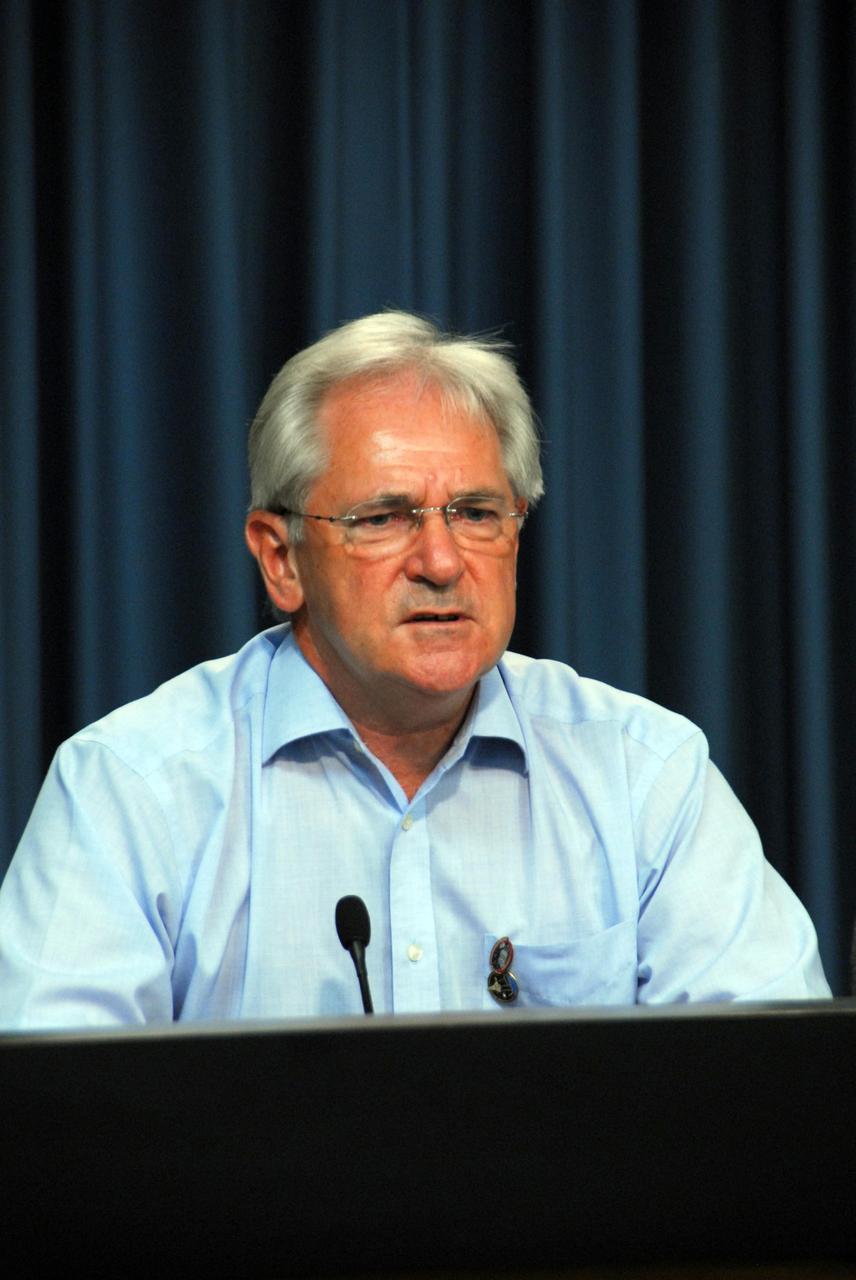
KENNEDY SPACE CENTER, FLA. -- Alan Thirkettle, the International Space Station Program Manager for ESA, the European Space Agency, answers questions from the media during a news briefing on the launch readiness of space shuttle mission STS-120. The STS-120 mission will be the 23rd shuttle flight to the International Space Station, delivering the Italian-built U.S. Node 2, called Harmony. The seven-member crew includes ESA astronaut Paolo Nespoli from Italy. The 14-day mission includes five spacewalks -- four by shuttle crew members and one by the station's Expedition 16 crew -- to install Harmony and move the P6 solar arrays to their permanent position and deploy them. Launch aboard space shuttle Discovery is planned for 11:38 a.m. EDT Oct. 23, and Discovery is scheduled to complete its mission and return home on Nov. 6. Photo credit: NASA/George Shelton
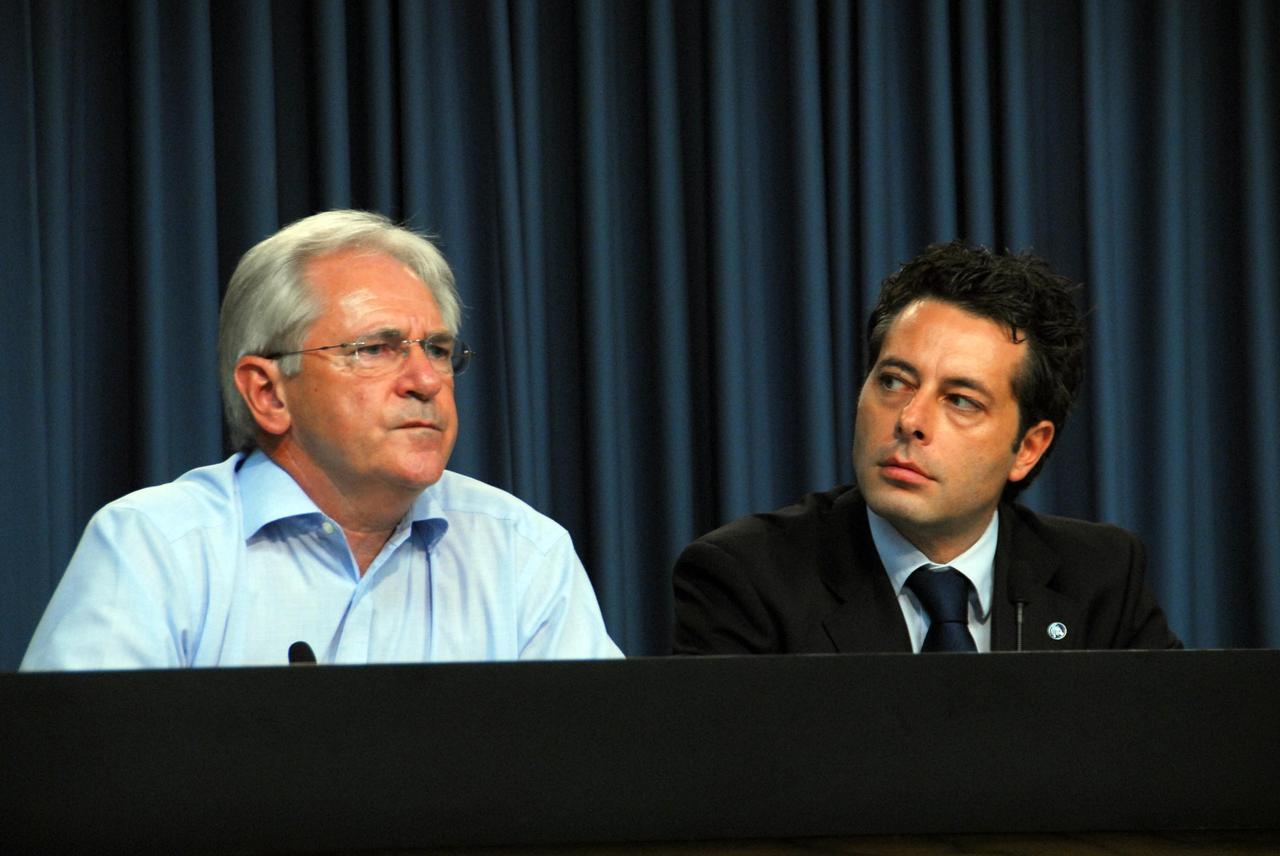
KENNEDY SPACE CENTER, FLA. -- Alan Thirkettle, the International Space Station Program Manager for ESA, the European Space Agency, and Mauro Piermaria, the ESPERIA mission manager for ASI, the Italian Space Agency, participate in a news briefing on the launch readiness of space shuttle mission STS-120. The STS-120 mission will be the 23rd shuttle flight to the International Space Station, delivering the Italian-built U.S. Node 2, called Harmony. The seven-member crew includes ESA astronaut Paolo Nespoli from Italy. The 14-day mission includes five spacewalks -- four by shuttle crew members and one by the station's Expedition 16 crew -- to install Harmony and move the P6 solar arrays to their permanent position and deploy them. Launch aboard space shuttle Discovery is planned for 11:38 a.m. EDT Oct. 23, and Discovery is scheduled to complete its mission and return home on Nov. 6. Photo credit: NASA/George Shelton
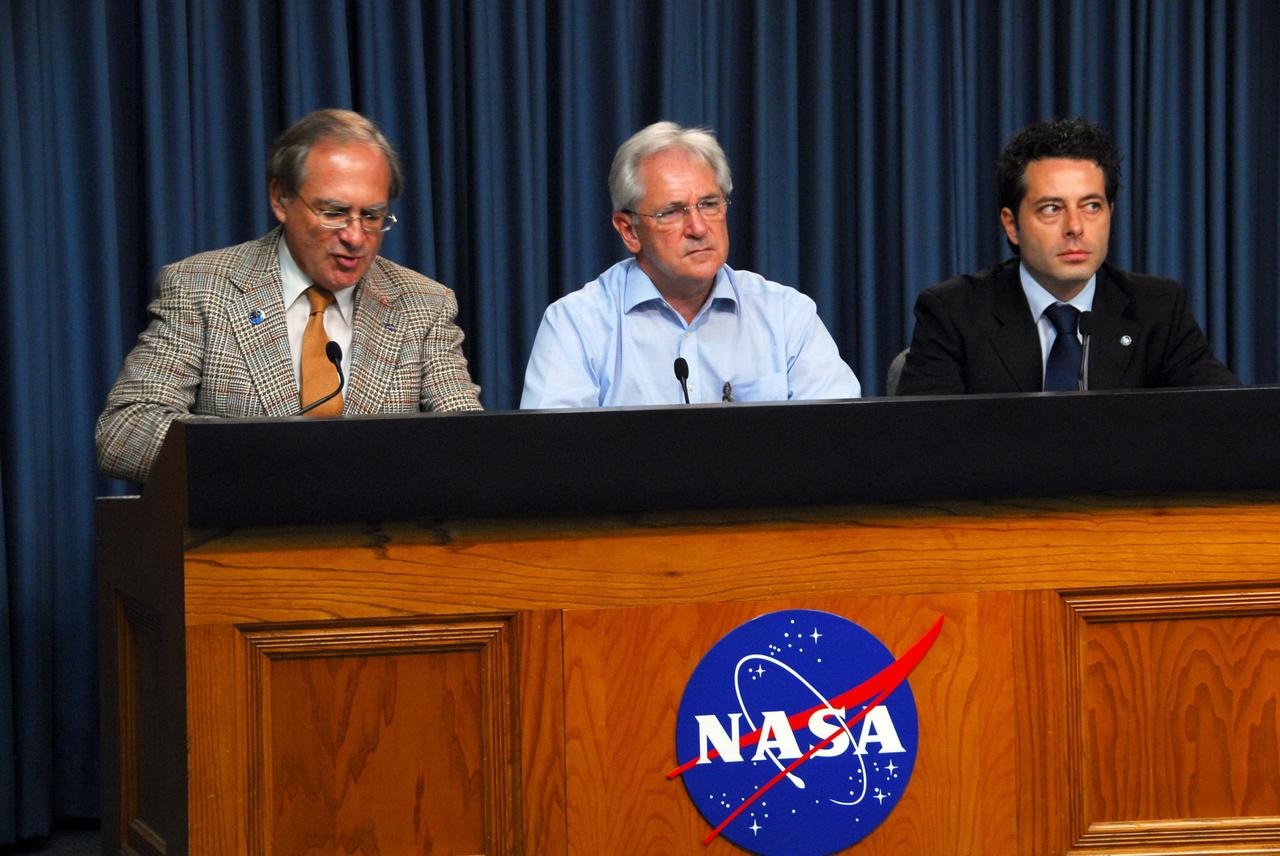
KENNEDY SPACE CENTER, FLA. -- Representatives of NASA's international partners participate in a news briefing on the launch readiness of space shuttle mission STS-120. From left are George Diller, briefing moderator for NASA; Alan Thirkettle, International Space Station Program Manager for ESA, the European Space Agency; and Mauro Piermaria, ESPERIA mission manager for ASI, the Italian Space Agency. The STS-120 mission will be the 23rd shuttle flight to the International Space Station, delivering the Italian-built U.S. Node 2, called Harmony. The seven-member crew includes ESA astronaut Paolo Nespoli from Italy. The 14-day mission includes five spacewalks -- four by shuttle crew members and one by the station's Expedition 16 crew -- to install Harmony and move the P6 solar arrays to their permanent position and deploy them. Launch aboard space shuttle Discovery is planned for 11:38 a.m. EDT Oct. 23, and Discovery is scheduled to complete its mission and return home on Nov. 6. Photo credit: NASA/George Shelton
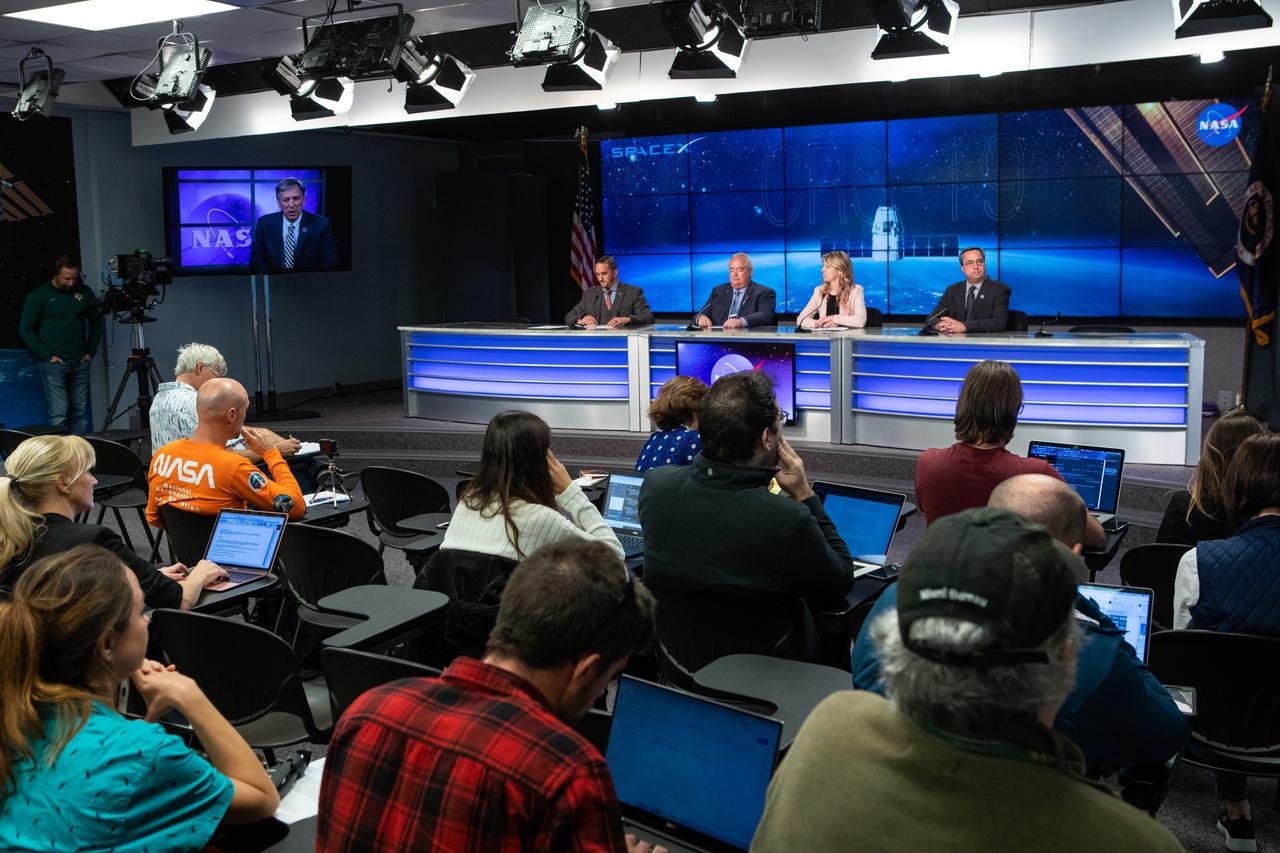
Dustin Cammack, NASA Communications, far left, moderates a prelaunch news conference on Dec. 3, 2019, for SpaceX's 19th Commercial Resupply Services (CRS-19) mission for NASA to the International Space Station, at the agency’s Kennedy Space Center in Florida. Speaking to members of the news media are, from left, Bryan Dansbury, assistant program scientist, International Space Station Program Science Office at NASA; Jessica Jensen, director, Dragon Mission Management at SpaceX; and Mike McAleenan, launch weather officer, U.S. Air Force 45th Space Wing. The SpaceX Flacon 9 rocket and Dragon cargo module are scheduled to launch on Dec. 4, 2019, from Space Launch Complex 40 on Cape Canaveral Air Force Station in Florida.
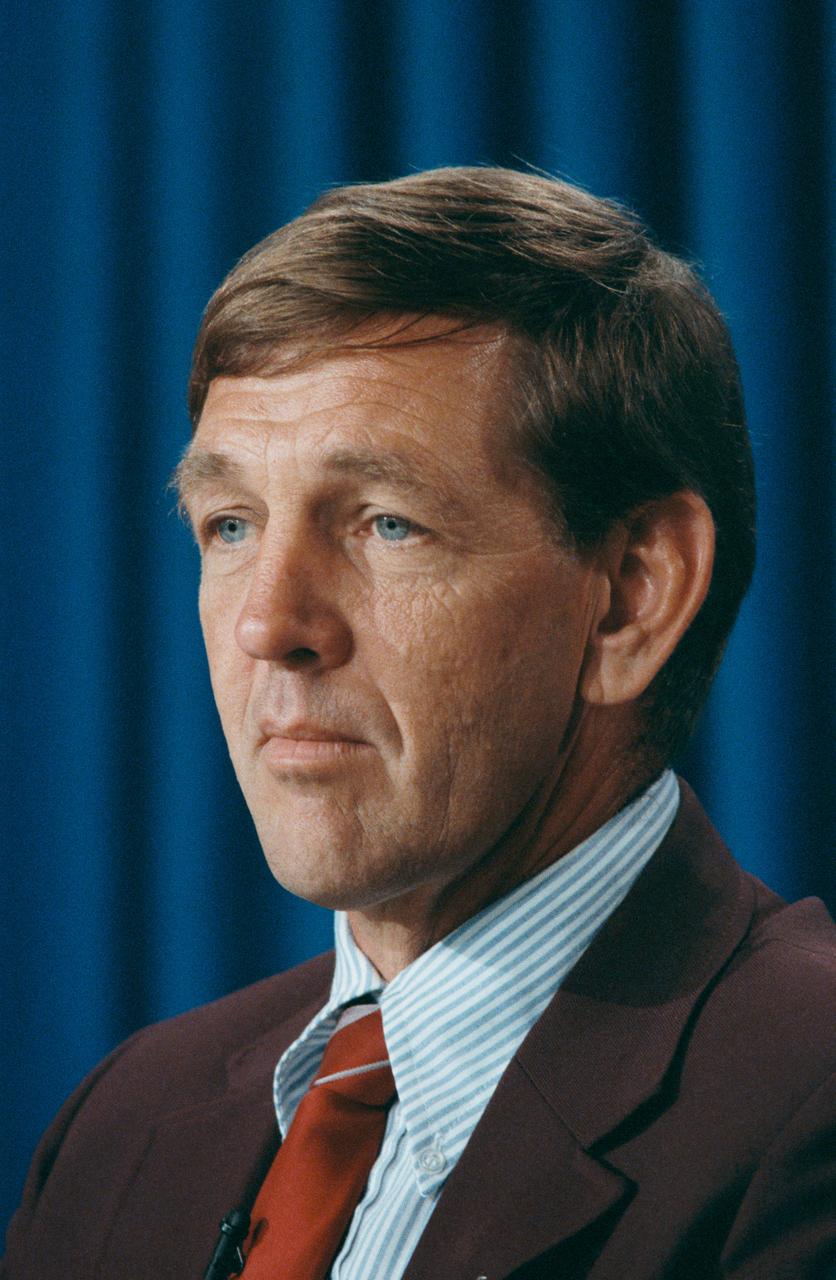
STS-34 Atlantis, Orbiter Vehicle (OV) 104, Pilot Michael J. McCulley reflects on a question during the thirty days before launch (T-30) press briefing in the JSC Auditorium and Public Affairs Facility Bldg 2 briefing room.
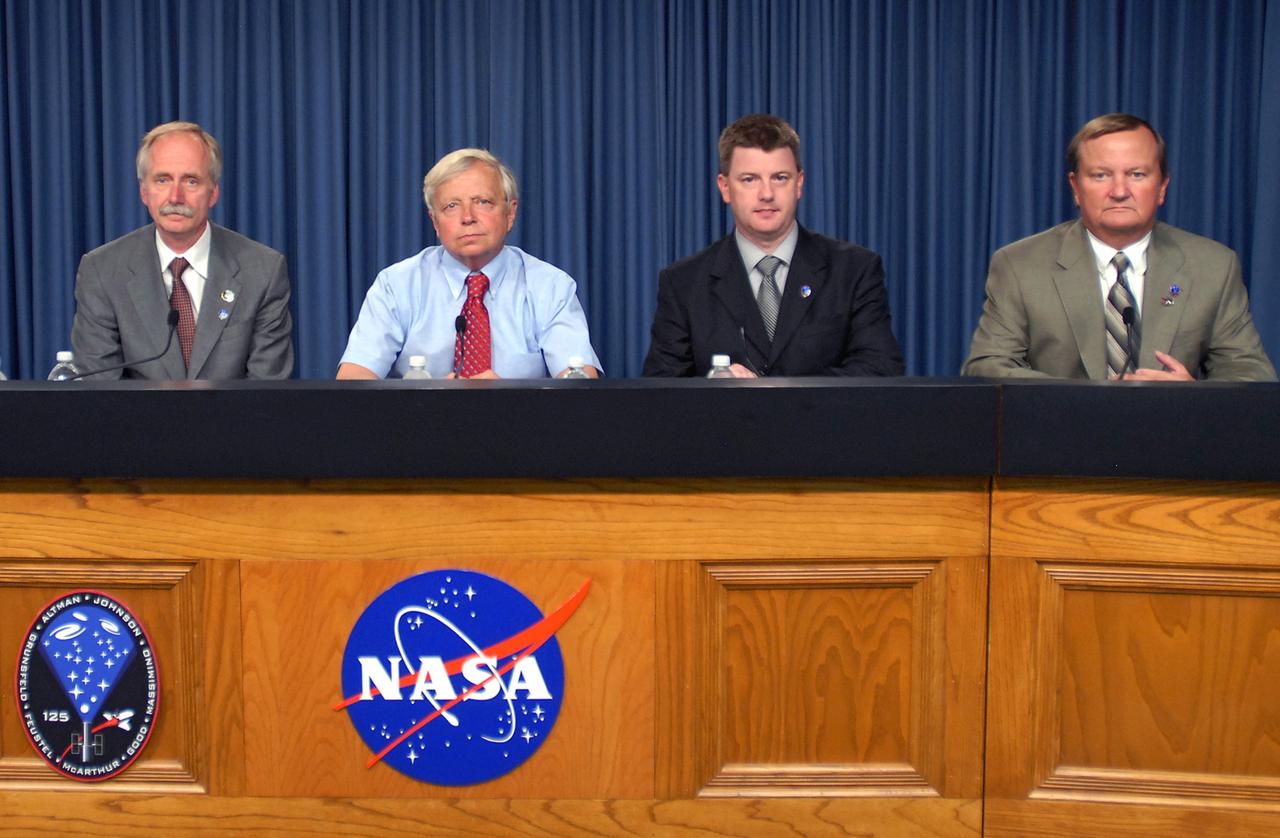
CAPE CANAVERAL, Fla. – At NASA's Kennedy Space Center in Florida, a press conference following the successful launch of space shuttle Atlantis on the STS-125 mission featured (from left) Associate Administrator for NASA's Space Operations Directorate William Gerstenmaier, Associate Administrator for NASA's Science Mission Directorate Ed Weiler, Launch Integration Manager Mike Moses and Shuttle Launch Director Mike Leinbach. Atlantis will rendezvous with NASA's Hubble Space Telescope. Liftoff was on time at 2:01 p.m. EDT. Atlantis' 11-day flight will include five spacewalks to refurbish and upgrade the telescope with state-of-the-art science instruments that will expand Hubble's capabilities and extend its operational lifespan through at least 2014. The payload includes a Wide Field Camera 3, Fine Guidance Sensor and the Cosmic Origins Spectrograph. Photo credit: NASA/Jim Grossmann
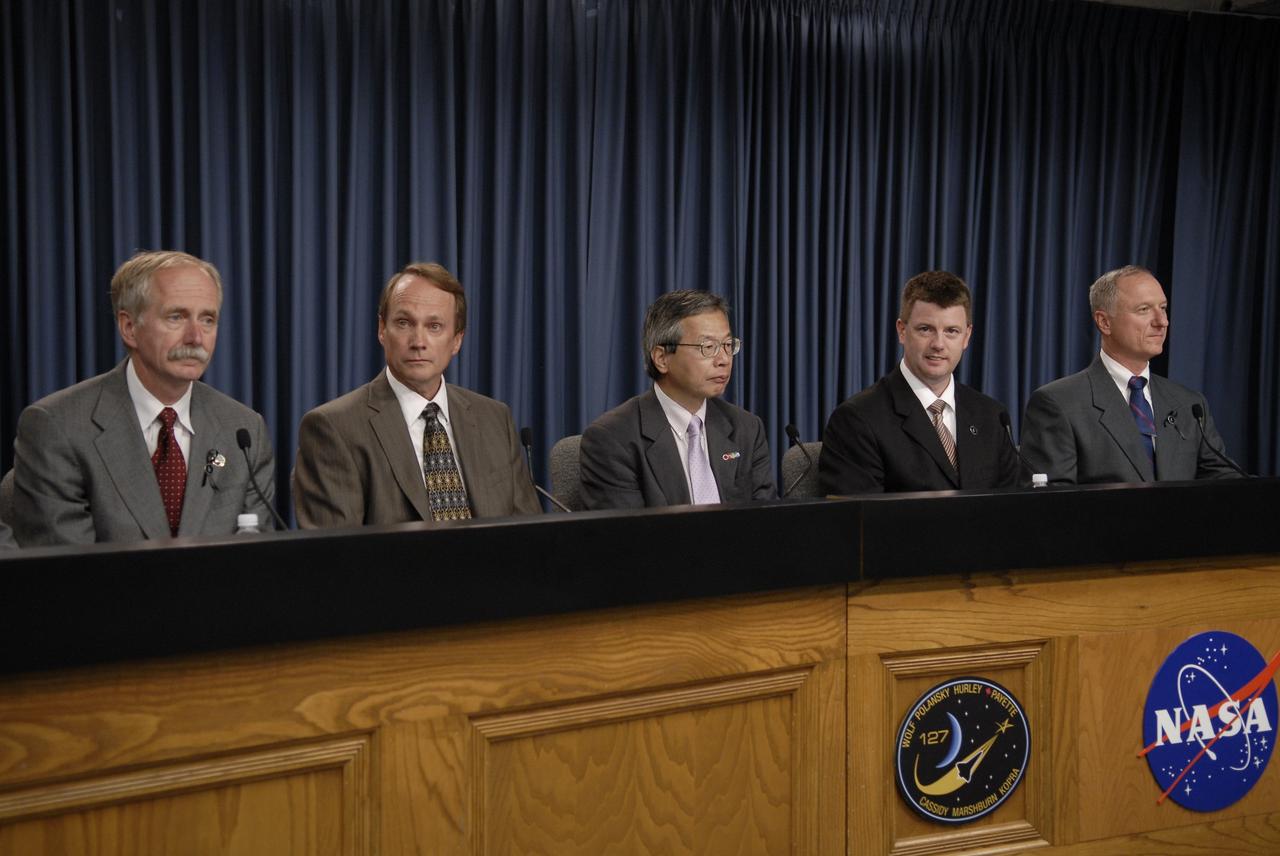
CAPE CANAVERAL, Fla. – At NASA's Kennedy Space Center in Florida, a press conference following the successful launch of space shuttle Endeavour on the STS-127 mission featured (from left) Associate Administrator for NASA's Space Operations Directorate William Gerstenmaier, Canadian Space Agency President Steve MacLean, Japan Aerospace Exploration Agency Executive Director of Human Space Systems and Utilization Kuniaki Shiraki, Shuttle Launch Integration Manager Mike Moses and STS-127 Shuttle Launch Director Pete Nickolenko. This was the sixth launch attempt for the STS-127 mission. The launch was scrubbed on June 13 and June 17 when a hydrogen gas leak occurred during tanking due to a misaligned Ground Umbilical Carrier Plate. The mission was postponed July 11, 12 and 13 due to weather conditions near the Shuttle Landing Facility at Kennedy that violated rules for launching, and lightning issues. Endeavour will deliver the Japanese Experiment Module's Exposed Facility and the Experiment Logistics Module-Exposed Section in the final of three flights dedicated to the assembly of the Japan Aerospace Exploration Agency's Kibo laboratory complex on the International Space Station. Photo credit: NASA/Kim Shiflett
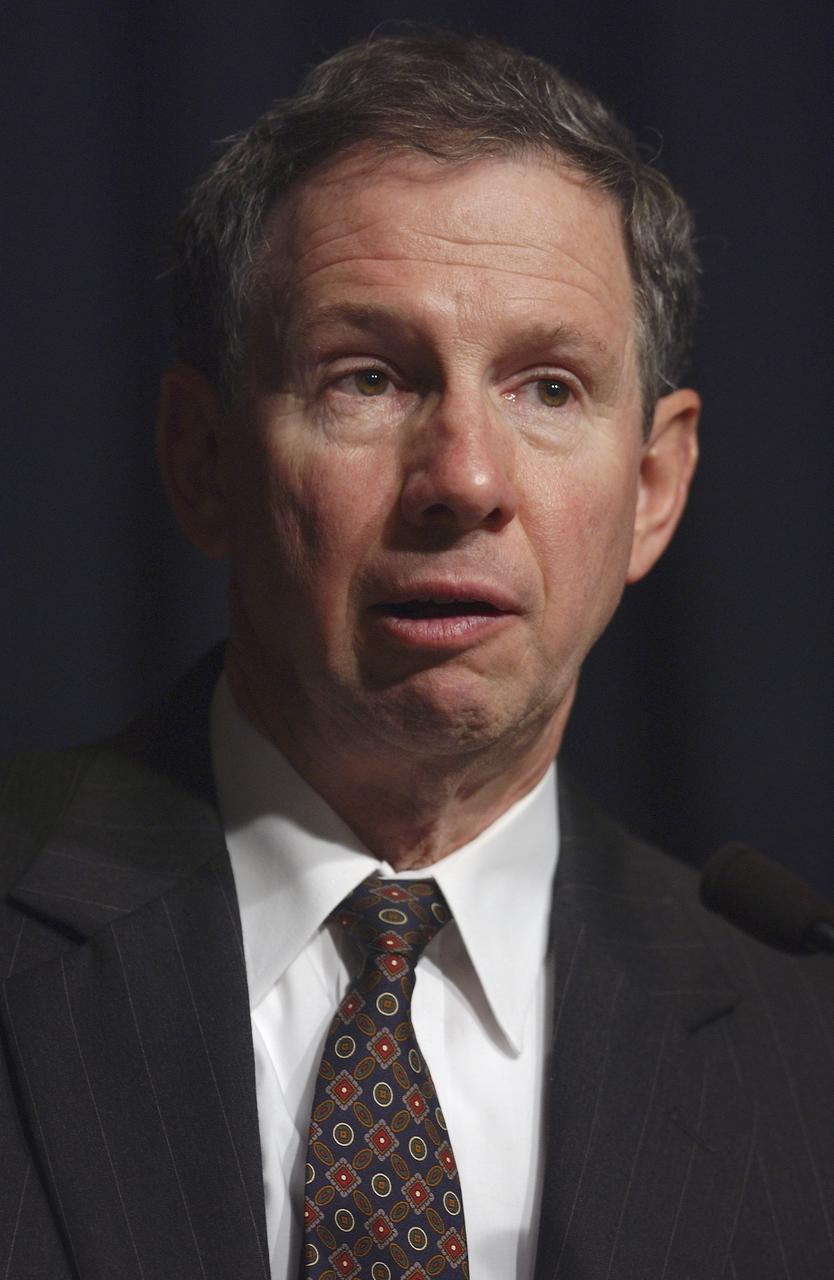
Michael Griffin addresses the media during his first press conference as NASA Administrator, Monday, April 18, 2005, at NASA Headquarters in Washington, DC. Photo Credit: (NASA/Renee Bouchard)
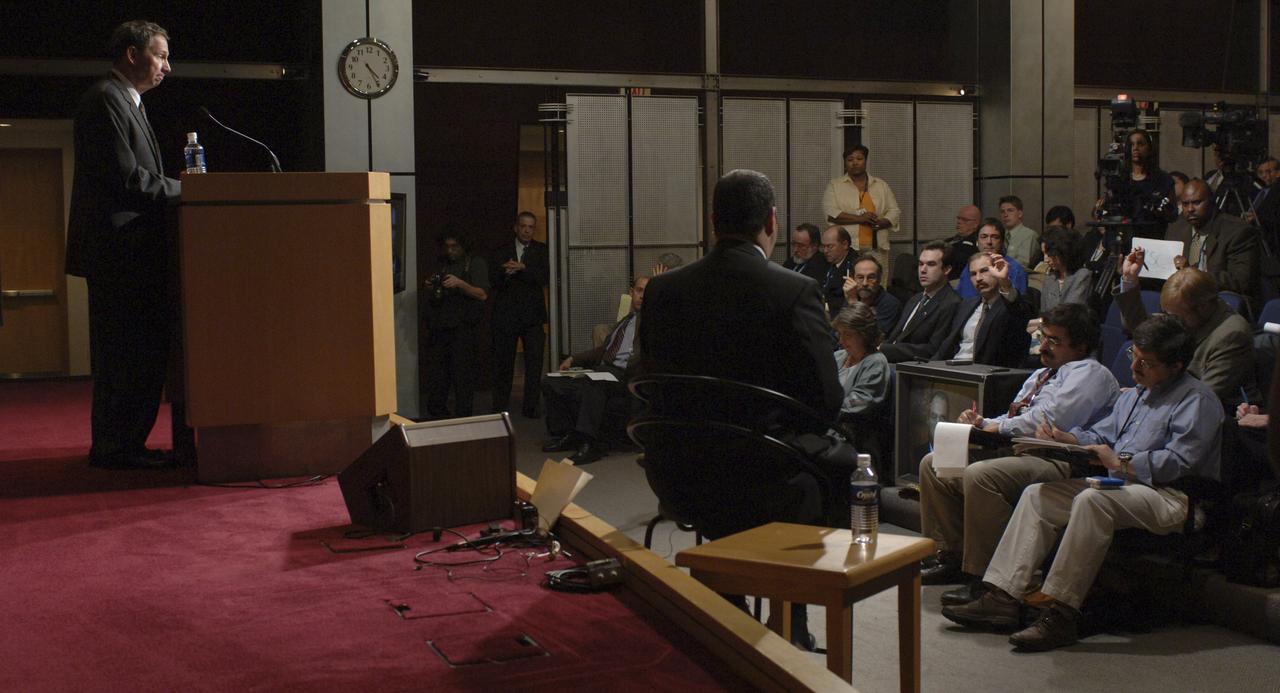
Michael Griffin addresses the media during his first press conference as NASA Administrator, Monday, April 18, 2005, at NASA Headquarters in Washington, DC. Photo Credit: (NASA/Renee Bouchard)
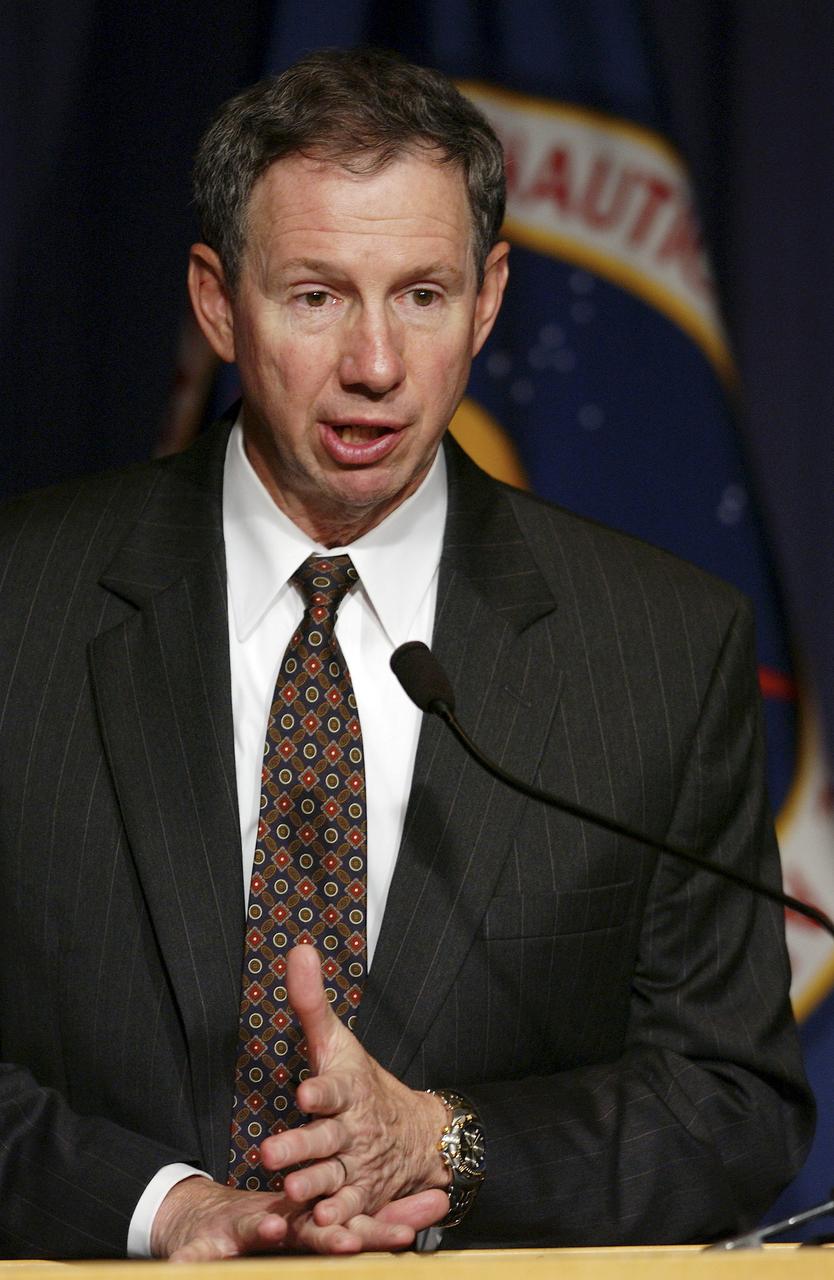
Michael Griffin addresses the media during his first press conference as NASA Administrator, Monday, April 18, 2005, at NASA Headquarters in Washington, DC. Photo Credit: (NASA/Renee Bouchard)
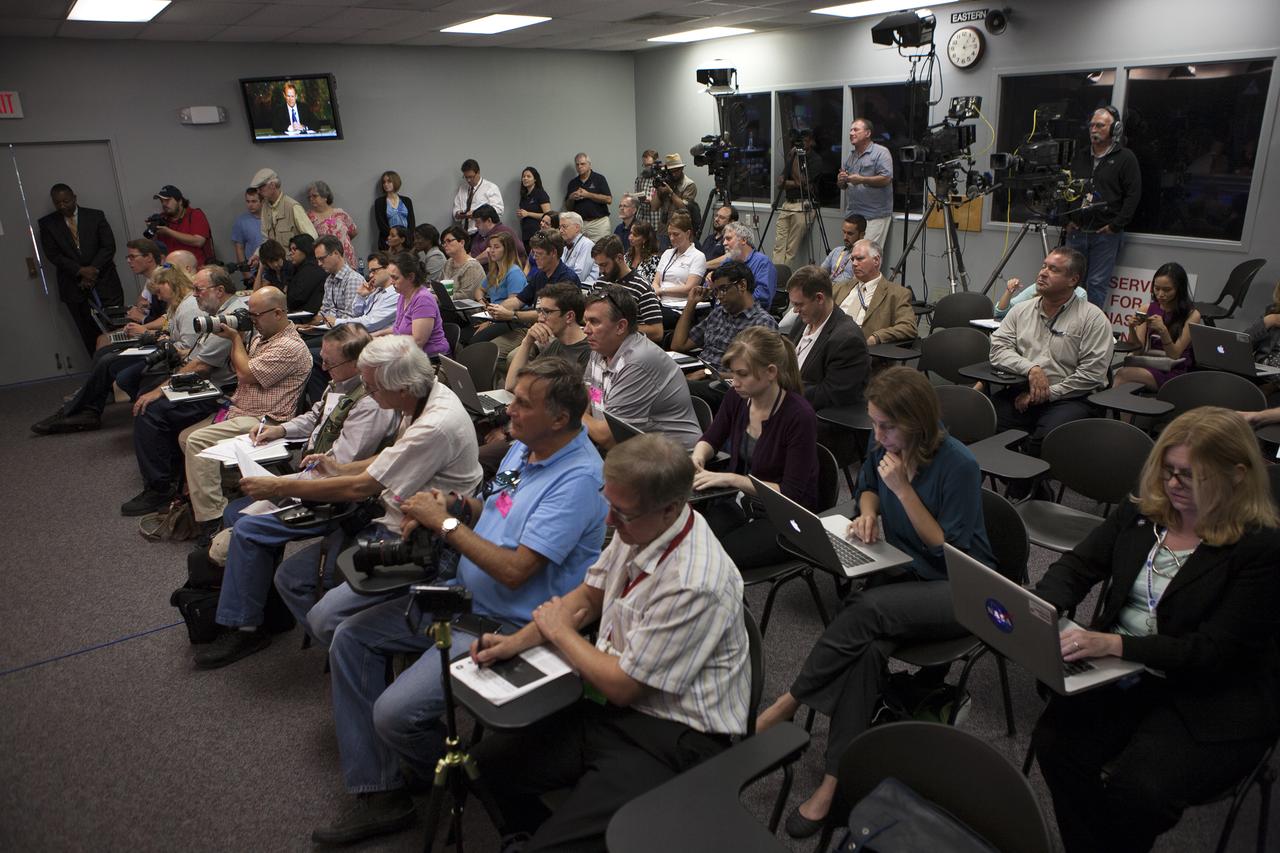
In the Kennedy Space Center’s Press Site auditorium, members of the media participated with NASA and industry leaders in a prelaunch news conference for the agency’s Origins, Spectral Interpretation, Resource Identification, Security-Regolith Explorer, or OSIRIS-REx spacecraft.
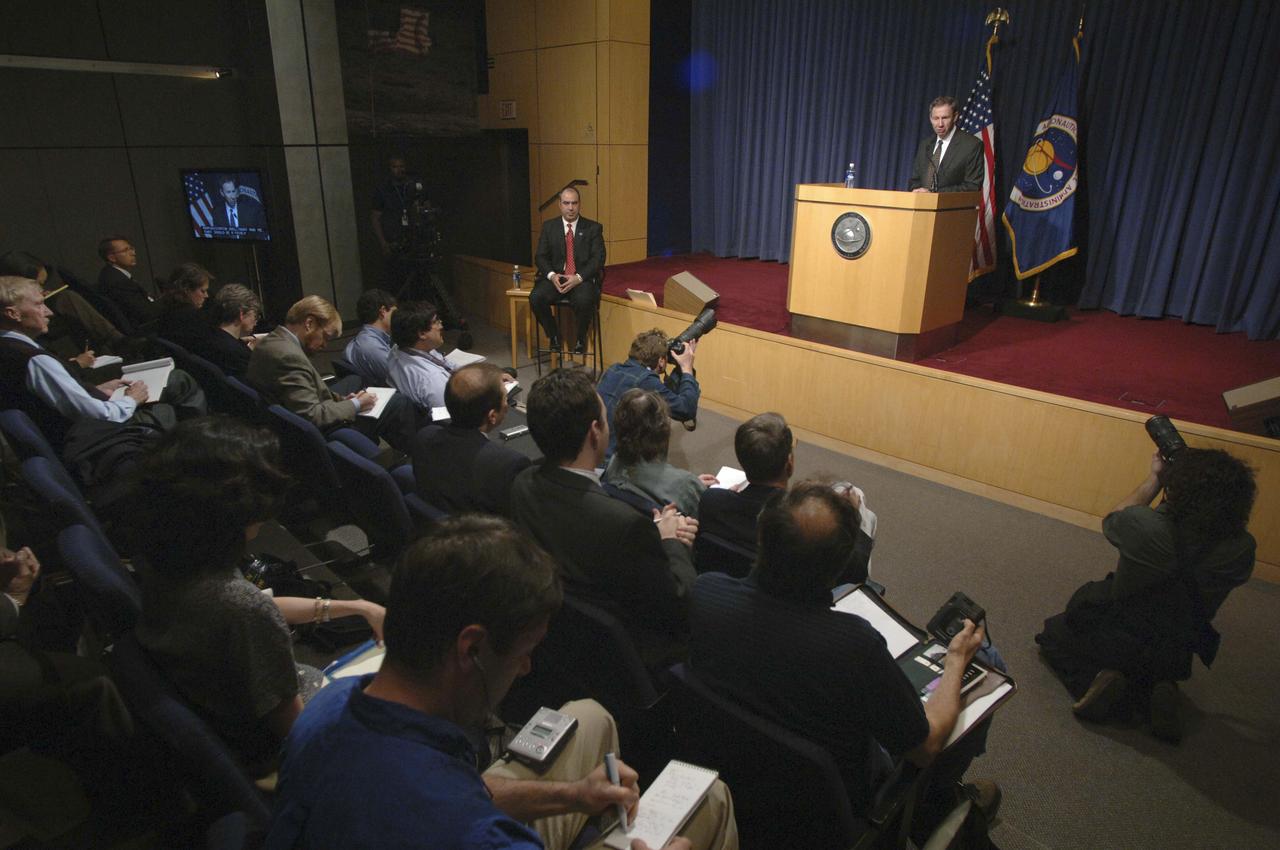
Michael Griffin addresses the media during his first press conference as NASA Administrator, Monday, April 18, 2005, at NASA Headquarters in Washington, DC. Photo Credit: (NASA/Renee Bouchard)
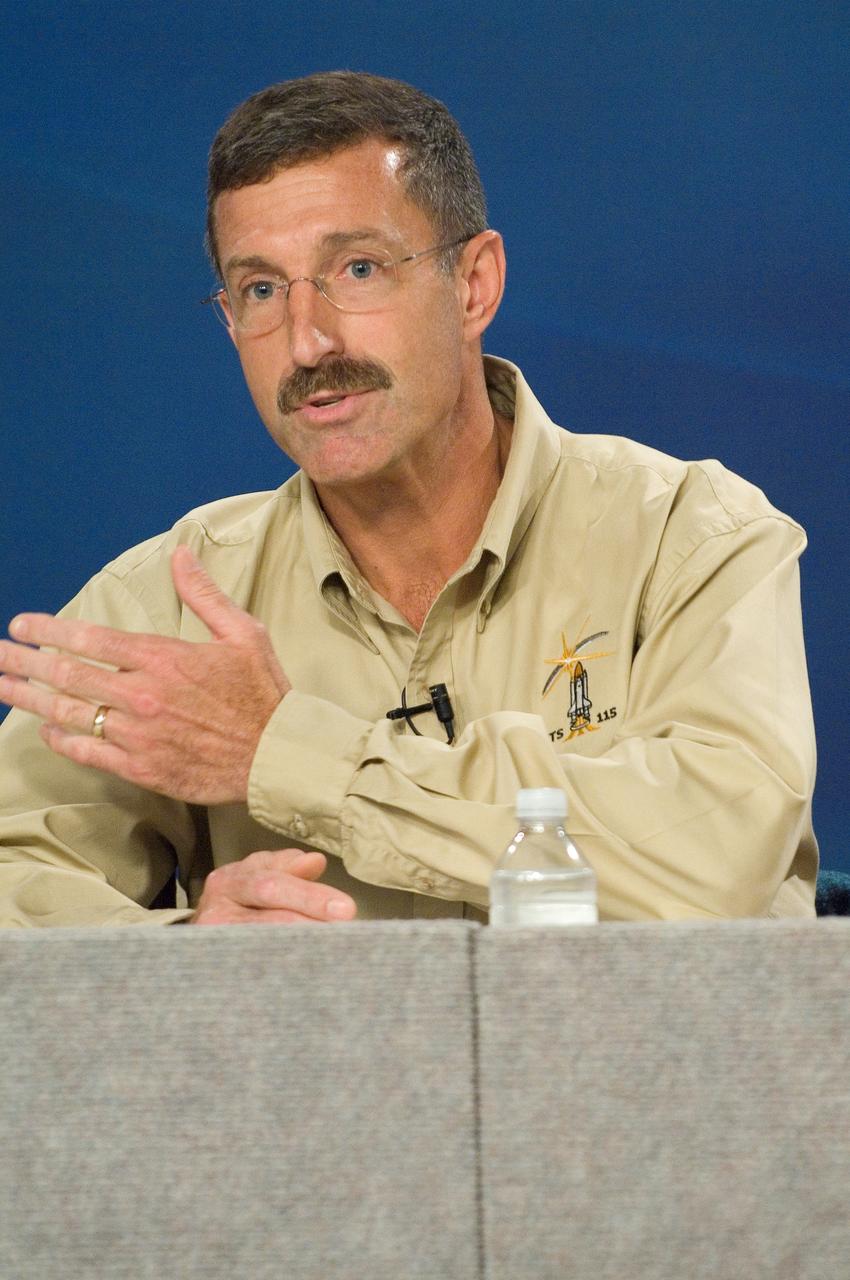
JSC2006-E-34265 (11 Aug. 2006) --- Astronaut Daniel C. Burbank, STS-115 mission specialist, responds to a question from the media during a pre-flight press conference at Johnson Space Center.
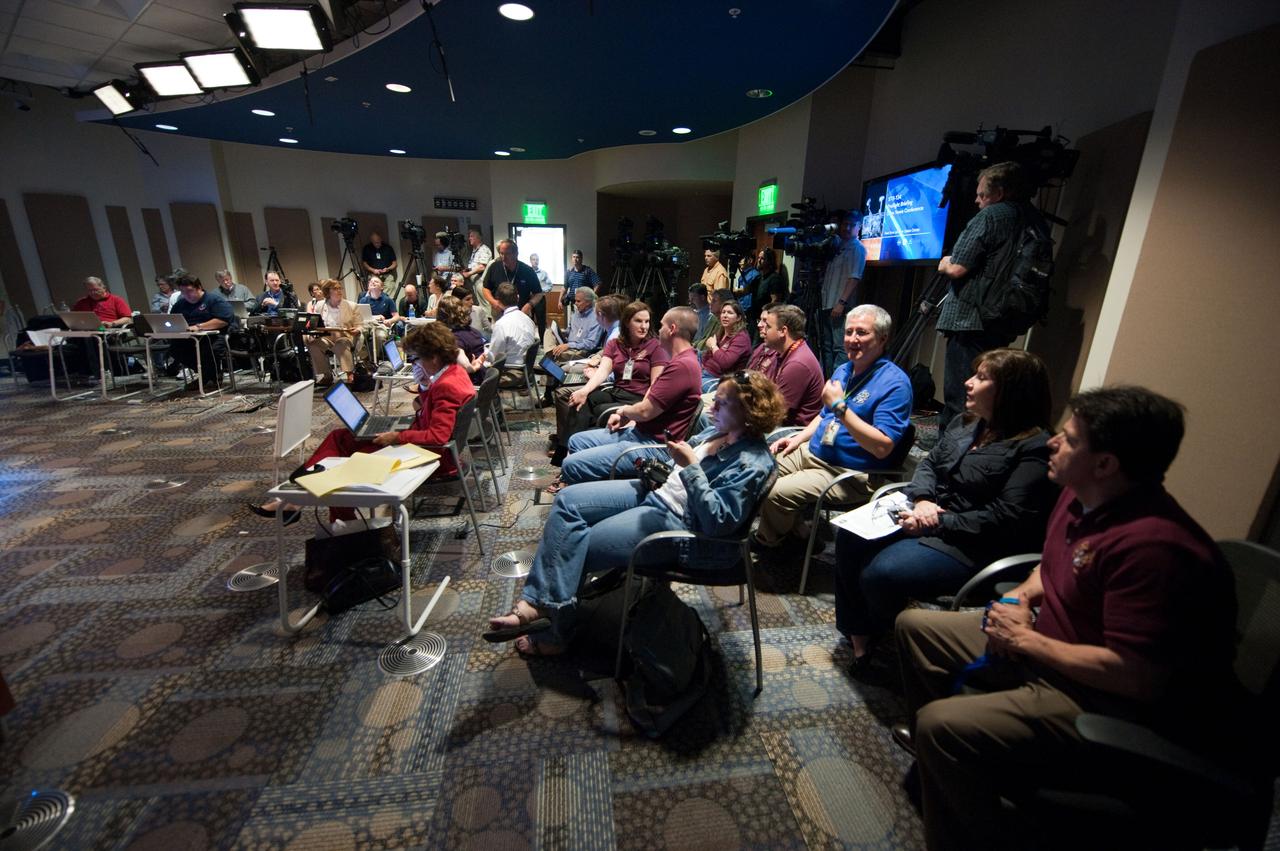
JSC2011-E-028487 (24 March 2011) --- News media representatives are pictured during an STS-134 preflight press conference at NASA's Johnson Space Center. Photo credit: NASA or National Aeronautics and Space Administration
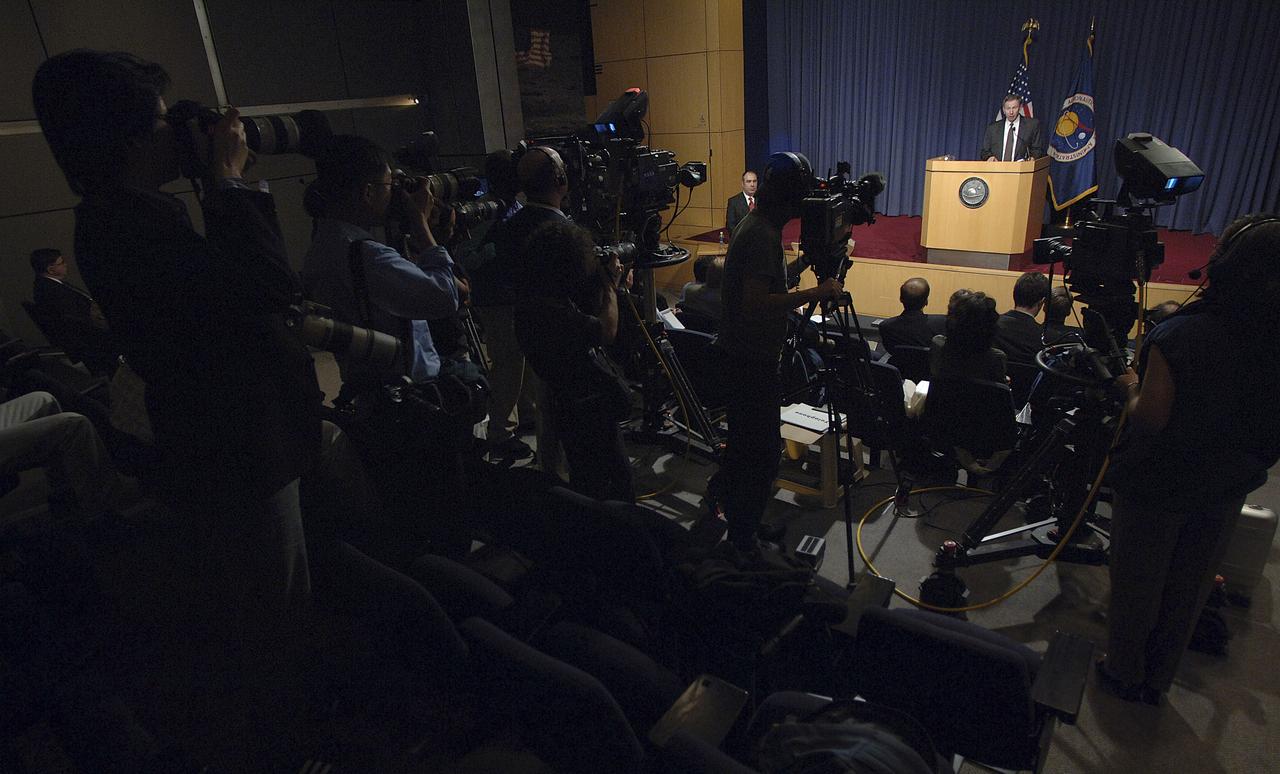
Michael Griffin addresses the media during his first press conference as NASA Administrator, Monday, April 18, 2005, at NASA Headquarters in Washington, DC. Photo Credit: (NASA/Renee Bouchard)
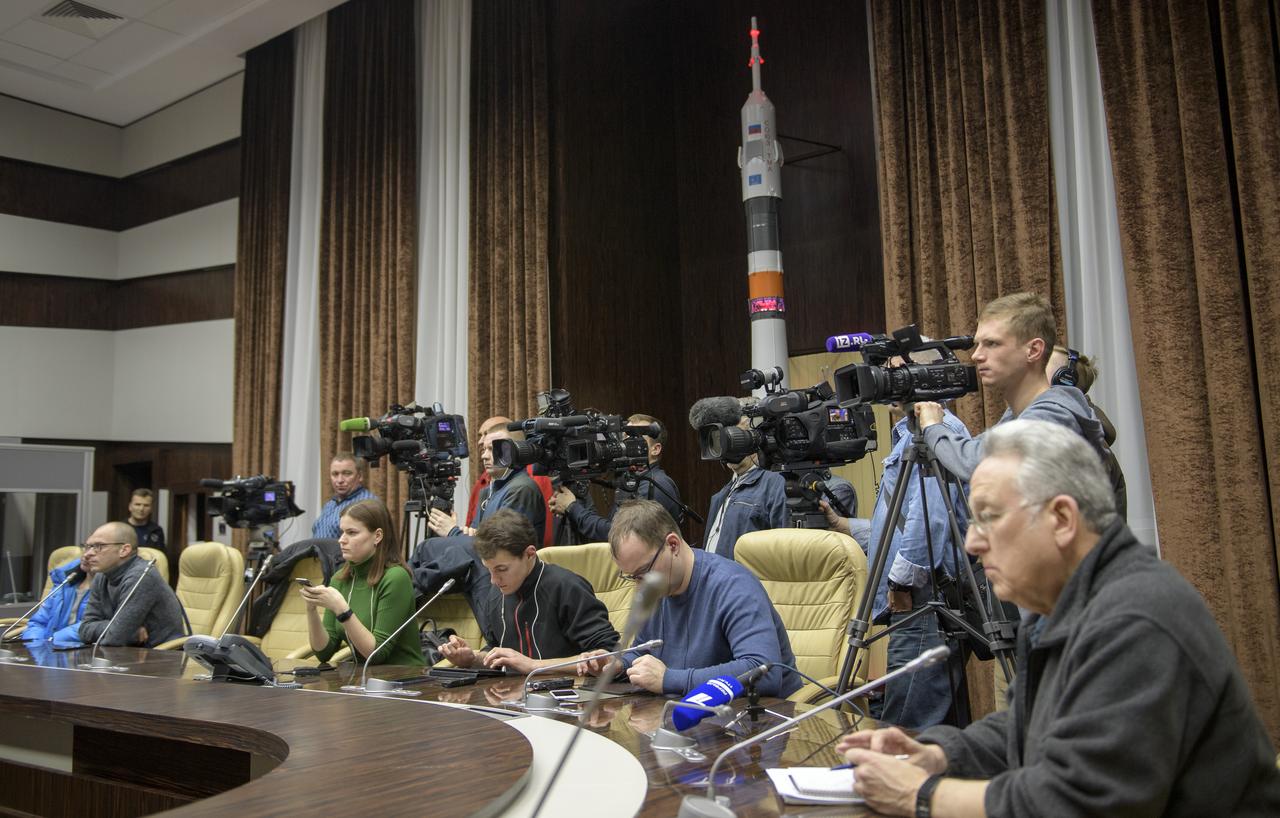
Members of the media are seen during a Expedition 59 post-docking press conference, Friday, March 15, 2019 at the Baikonur Hotel in Baikonur, Kazakhstan. Photo Credit: (NASA/Bill Ingalls)

Michael Griffin addresses the media during his first press conference as NASA Administrator, Monday, April 18, 2005, at NASA Headquarters in Washington, DC. Photo Credit: (NASA/Renee Bouchard)
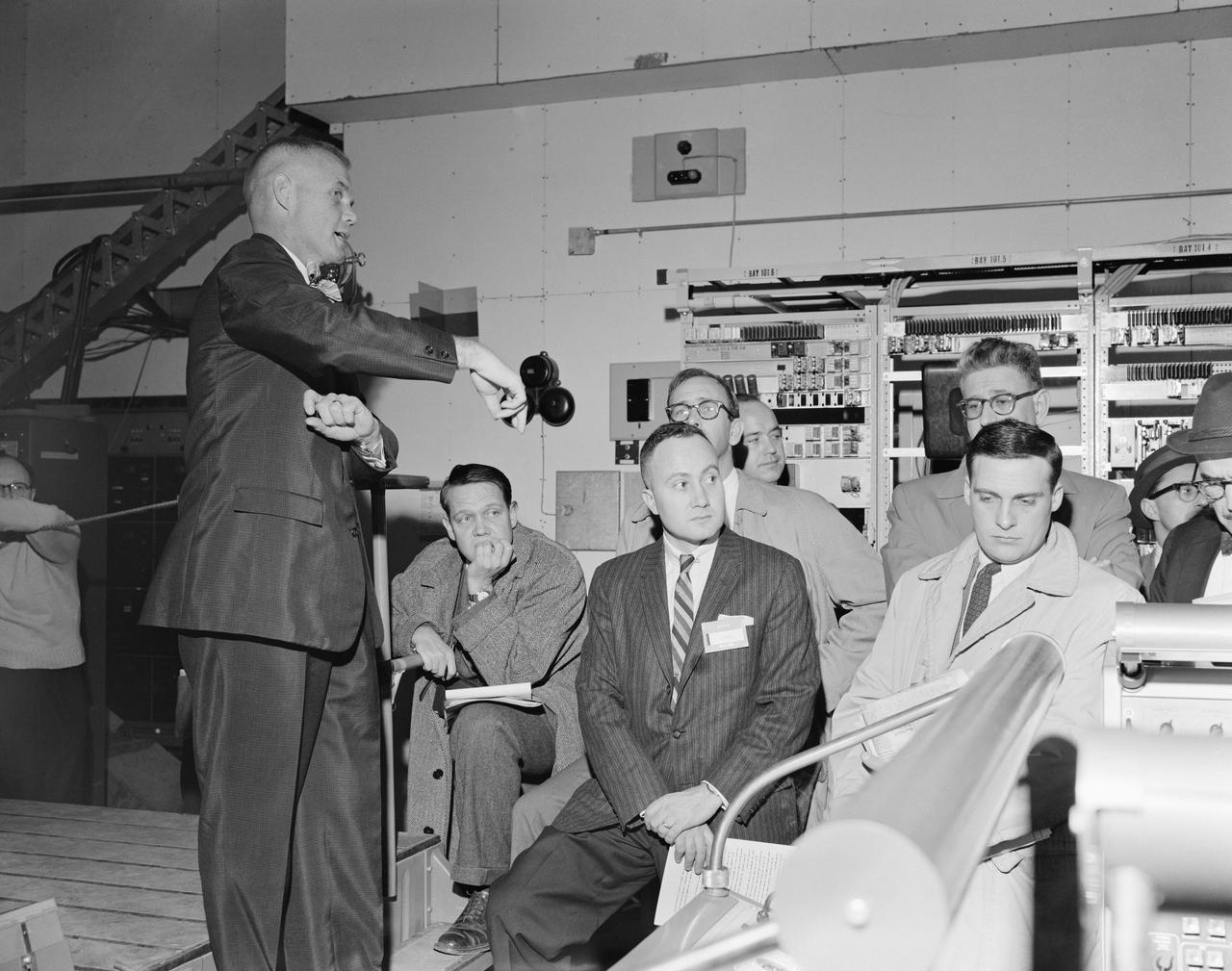
M61-00041 (January 1961) --- Astronaut John Glenn and news media representatives are pictured during a press conference and spacecraft familiarization tour of Cape Canaveral, Florida. Photo credit: NASA
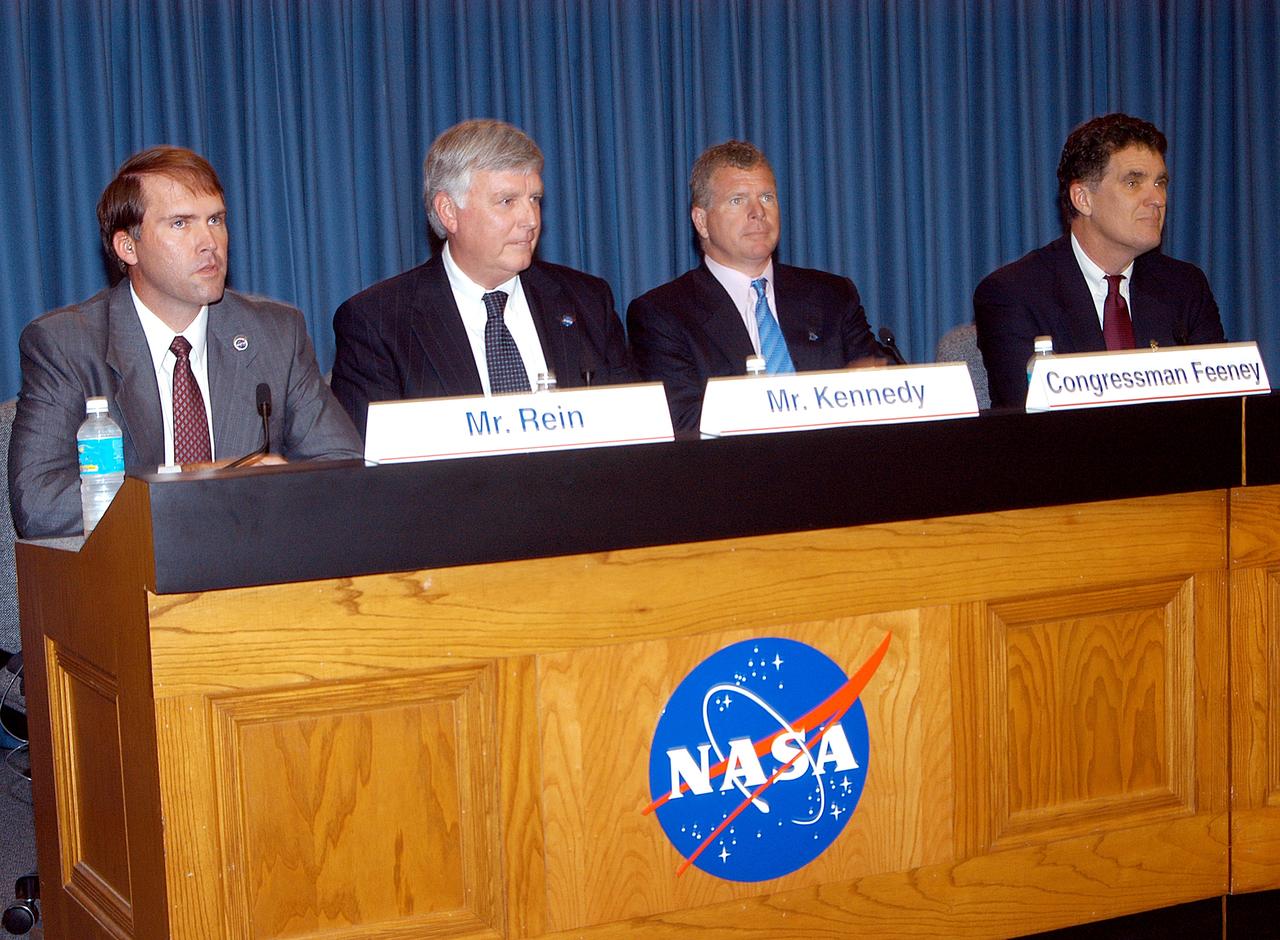
KENNEDY SPACE CENTER, FLA. -- Mike Rein (at left), division chief of KSC External Affairs, moderates the press conference featuring (second from left to right) U.S. Rep. Tom Feeney, Center Director Jim Kennedy and U.S. Rep. Dave Weldon. The media were interested in hearing Kennedy’s and the congressmen’s reactions to the new mission for NASA outlined by President George W. Bush Jan. 14.
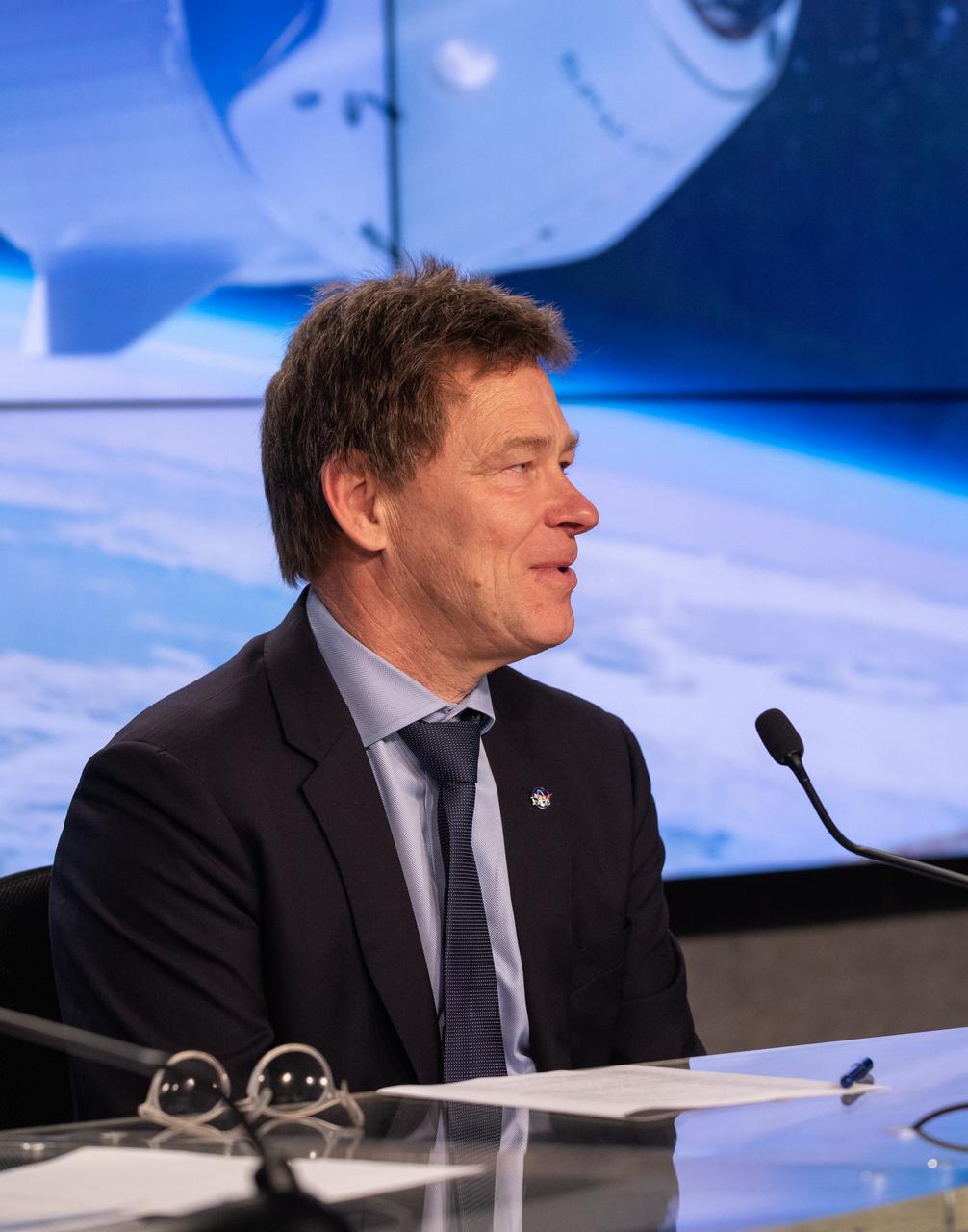
Hans Koenigsmann, vice president, Build and Flight Reliability, SpaceX, speaks to members of the media during a prelaunch news conference with NASA, SpaceX and the 45th Weather Squadron leaders Thursday, Feb. 28, prior to the Saturday, March 2 launch of the SpaceX Demo-1 Commercial Crew Program (CCP) mission to the International Space Station. The inaugural flight of the SpaceX Crew Dragon, known as Demo-1, is scheduled to lift off from Kennedy’s Launch Complex 39A Saturday at 2:49 EST. A SpaceX Falcon 9 rocket will launch the uncrewed spacecraft on a mission designed to validate end-to-end systems and capabilities, leading to certification to fly crew. NASA has worked with SpaceX and Boeing in developing the Commercial Crew Program spacecraft to facilitate new human spaceflight systems launching from U.S. soil with the goal of safe, reliable and cost-effective access to low-Earth orbit destinations, such as the International Space Station.
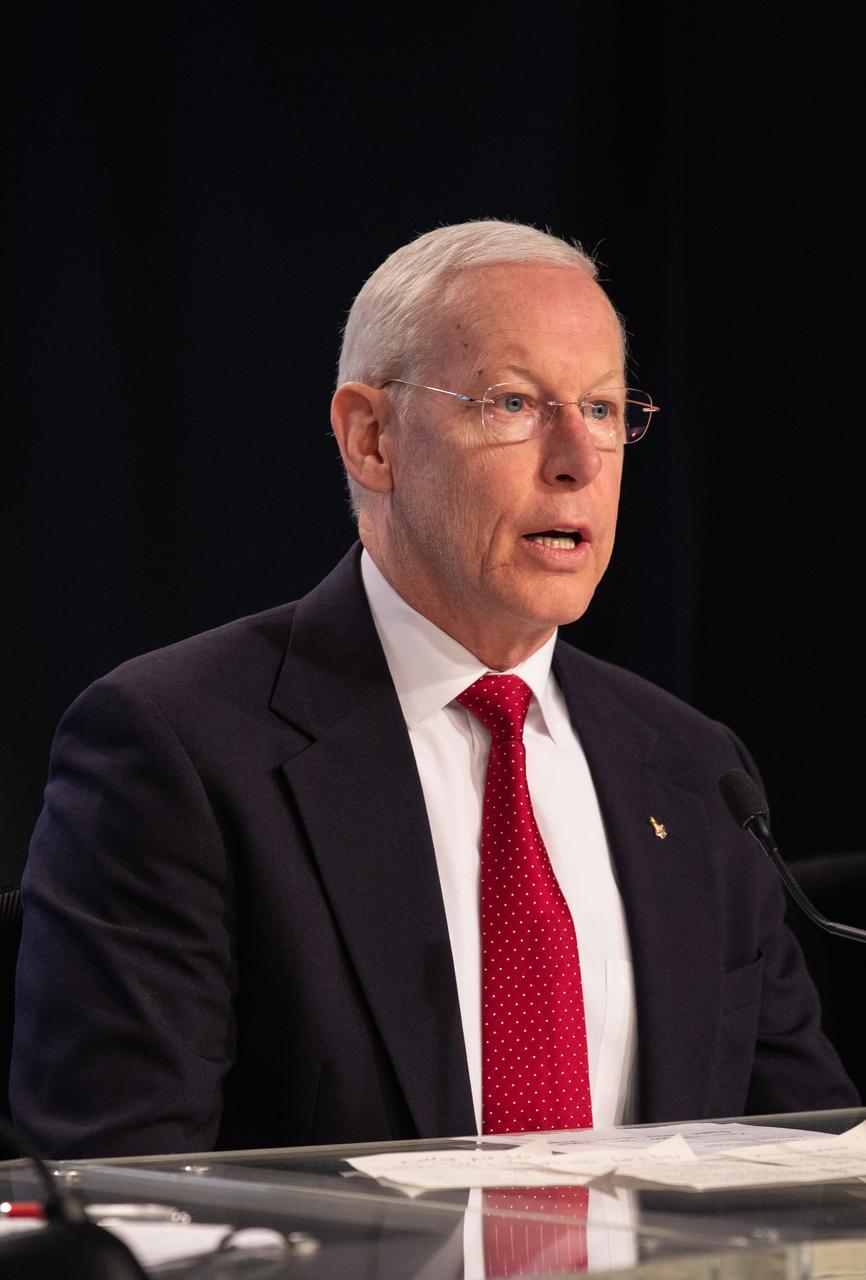
Pat Forrester, chief, Astronaut Office, Johnson Space Center, speaks to members of the media during a prelaunch news conference with NASA, SpaceX and the 45th Weather Squadron leaders Thursday, Feb. 28, prior to the Saturday, March 2 launch of the SpaceX Demo-1 Commercial Crew Program (CCP) mission to the International Space Station. The inaugural flight of the SpaceX Crew Dragon, known as Demo-1, is scheduled to lift off from Kennedy’s Launch Complex 39A Saturday at 2:49 EST. A SpaceX Falcon 9 rocket will launch the uncrewed spacecraft on a mission designed to validate end-to-end systems and capabilities, leading to certification to fly crew. NASA has worked with SpaceX and Boeing in developing the Commercial Crew Program spacecraft to facilitate new human spaceflight systems launching from U.S. soil with the goal of safe, reliable and cost-effective access to low-Earth orbit destinations, such as the International Space Station.
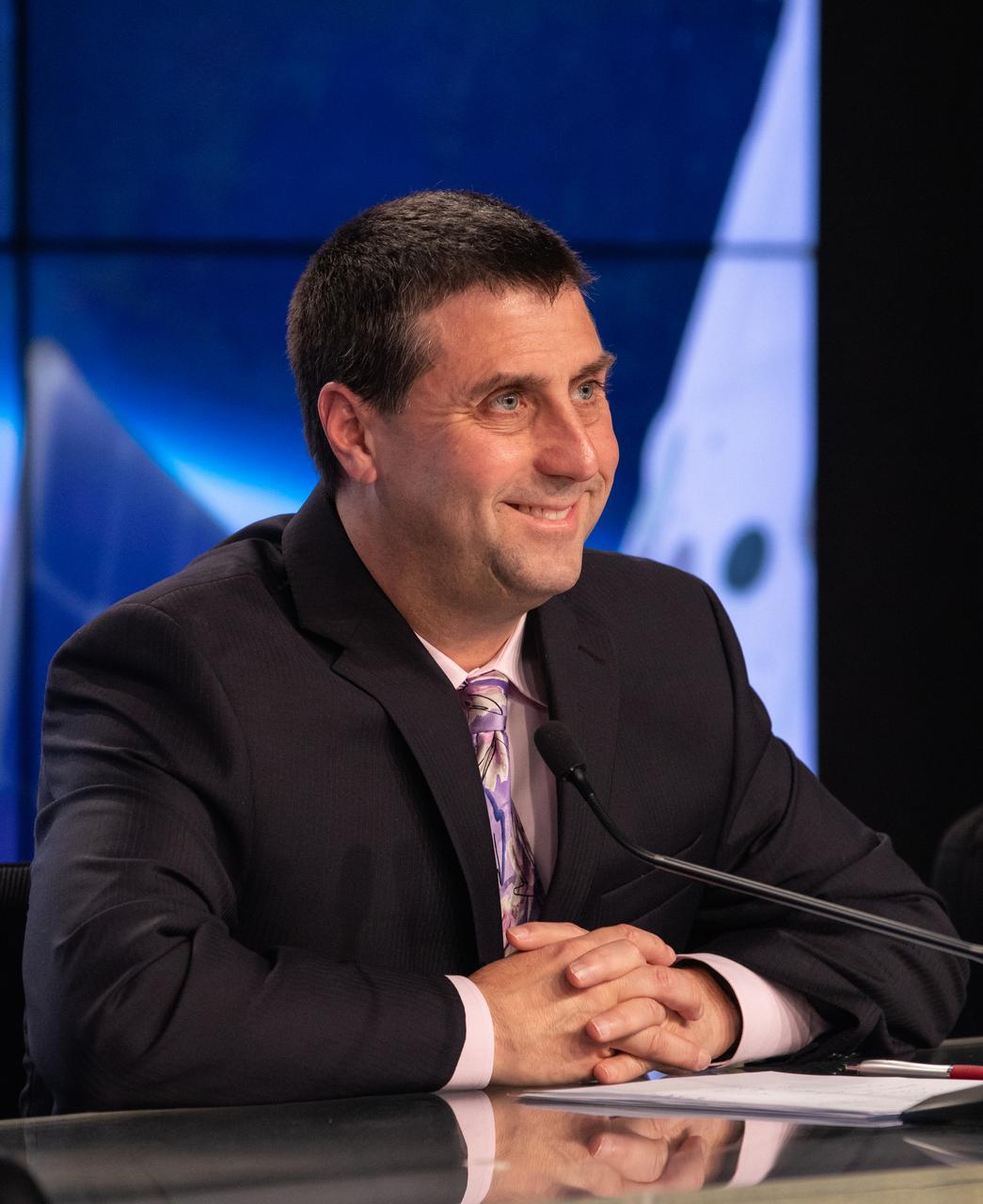
Joel Montalbano, deputy manager, International Space Station Program, speaks to members of the media during a prelaunch news conference with NASA, SpaceX and the 45th Weather Squadron leaders Thursday, Feb. 28, prior to the Saturday, March 2 launch of the SpaceX Demo-1 Commercial Crew Program (CCP) mission to the International Space Station. The inaugural flight of the SpaceX Crew Dragon, known as Demo-1, is scheduled to lift off from Kennedy’s Launch Complex 39A Saturday at 2:49 EST. A SpaceX Falcon 9 rocket will launch the uncrewed spacecraft on a mission designed to validate end-to-end systems and capabilities, leading to certification to fly crew. NASA has worked with SpaceX and Boeing in developing the Commercial Crew Program spacecraft to facilitate new human spaceflight systems launching from U.S. soil with the goal of safe, reliable and cost-effective access to low-Earth orbit destinations, such as the International Space Station.
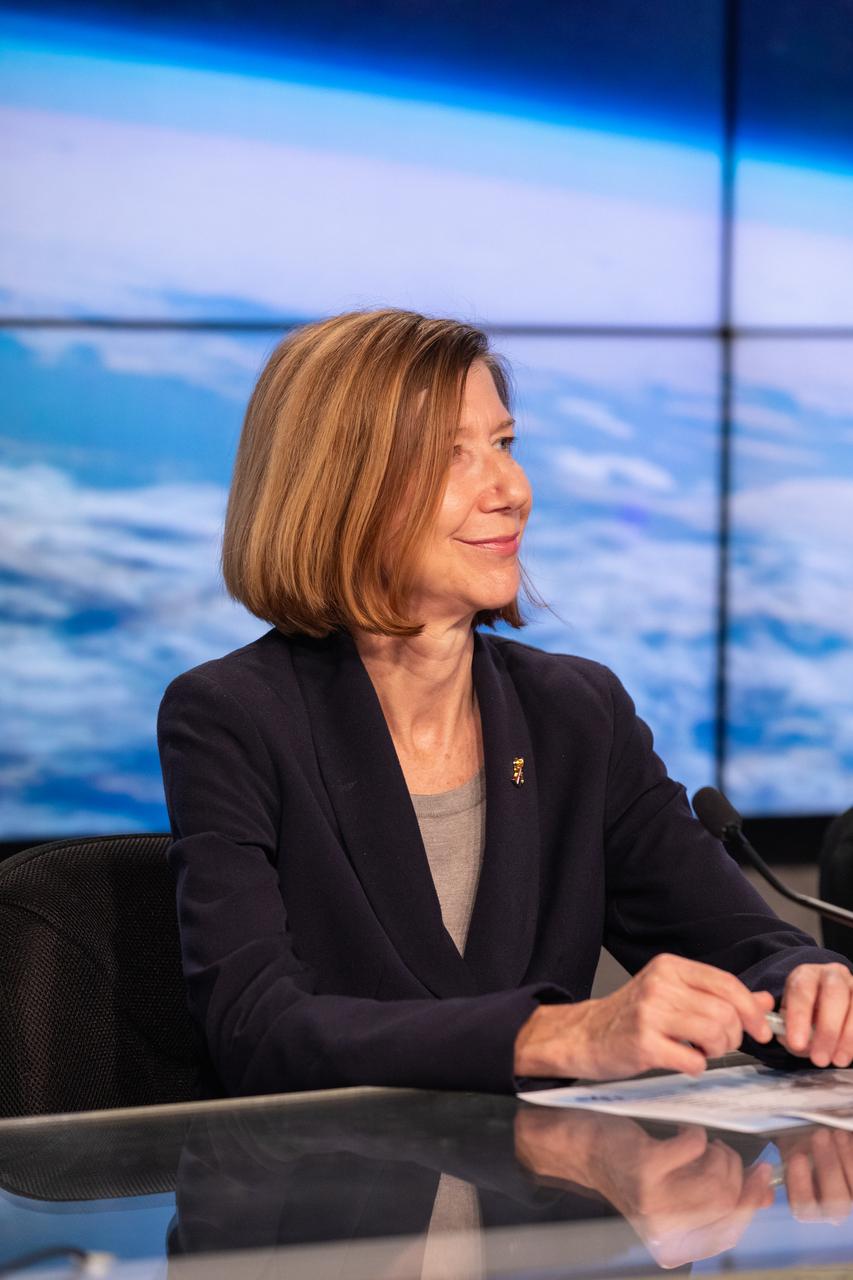
Kathy Lueders, manager, NASA Commercial Crew Program, speaks to members of the media during a prelaunch news conference with NASA, SpaceX and the 45th Weather Squadron leaders Thursday, Feb. 28, prior to the Saturday, March 2 launch of the SpaceX Demo-1 Commercial Crew Program (CCP) mission to the International Space Station. The inaugural flight of the SpaceX Crew Dragon, known as Demo-1, is scheduled to lift off from Kennedy’s Launch Complex 39A Saturday at 2:49 EST. A SpaceX Falcon 9 rocket will launch the uncrewed spacecraft on a mission designed to validate end-to-end systems and capabilities, leading to certification to fly crew. NASA has worked with SpaceX and Boeing in developing the Commercial Crew Program spacecraft to facilitate new human spaceflight systems launching from U.S. soil with the goal of safe, reliable and cost-effective access to low-Earth orbit destinations, such as the International Space Station.
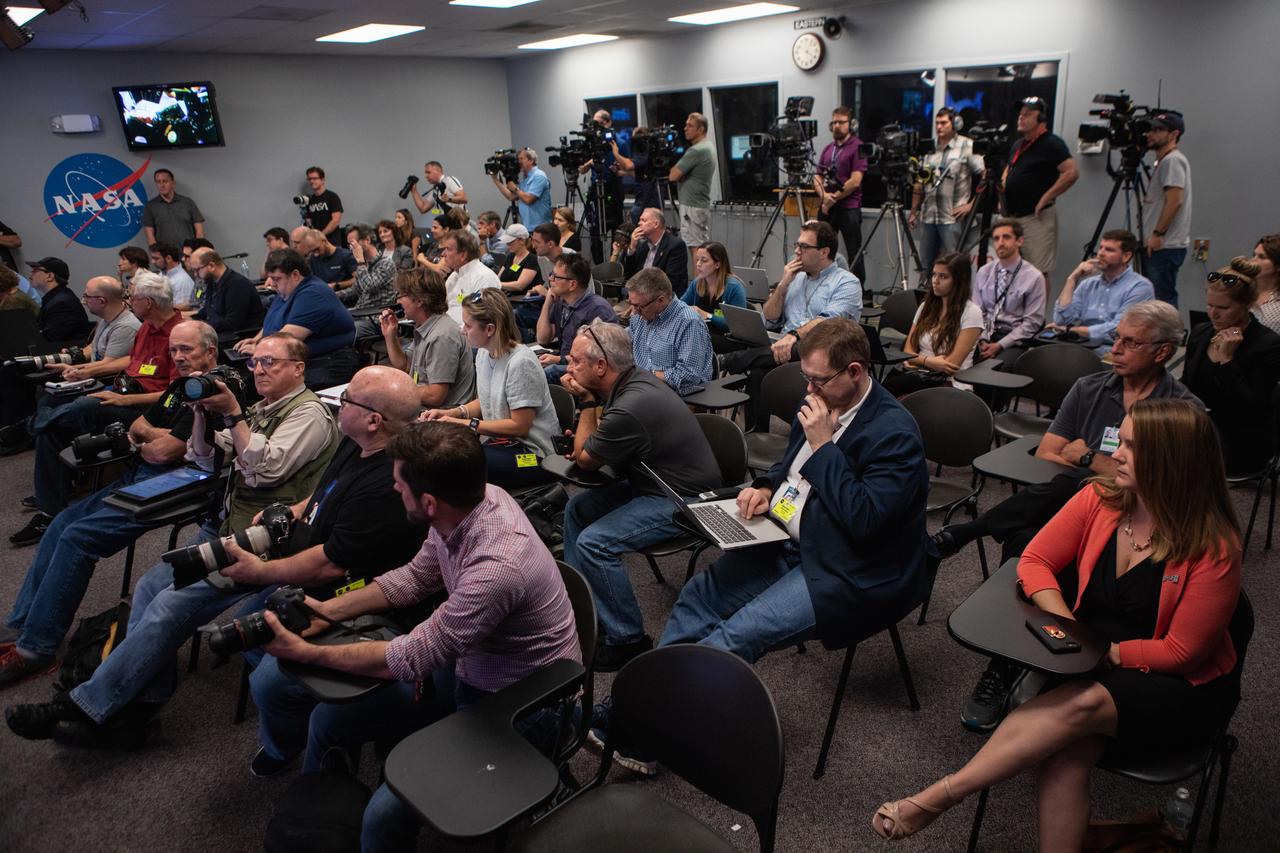
Members of the media gather in the Kennedy Space Center’s Press Site auditorium during a prelaunch news conference with NASA, SpaceX and the 45th Weather Squadron leaders Thursday, Feb. 28, prior to the Saturday, March 2 launch of the SpaceX Demo-1 Commercial Crew Program (CCP) mission to the International Space Station. The inaugural flight of the SpaceX Crew Dragon, known as Demo-1, is scheduled to lift off from Kennedy’s Launch Complex 39A Saturday at 2:49 EST. A SpaceX Falcon 9 rocket will launch the uncrewed spacecraft on a mission designed to validate end-to-end systems and capabilities, leading to certification to fly crew. NASA has worked with SpaceX and Boeing in developing the Commercial Crew Program spacecraft to facilitate new human spaceflight systems launching from U.S. soil with the goal of safe, reliable and cost-effective access to low-Earth orbit destinations, such as the International Space Station.
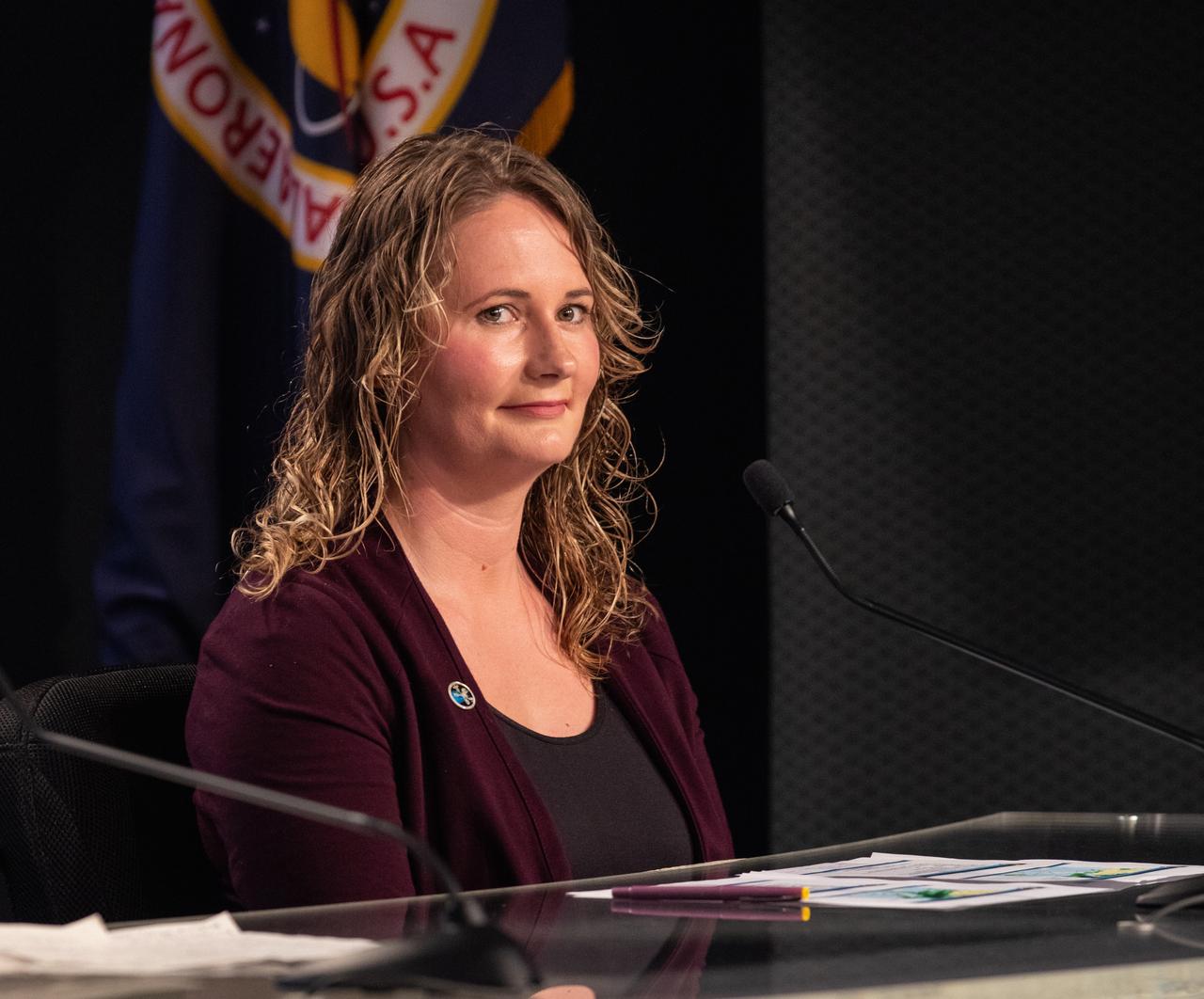
Melody C. Lovin, launch weather officer, 45th Weather Squadron, speaks to members of the media during a prelaunch news conference with NASA, SpaceX and the 45th Weather Squadron leaders Thursday, Feb. 28, prior to the Saturday, March 2 launch of the SpaceX Demo-1 Commercial Crew Program (CCP) mission to the International Space Station. The inaugural flight of the SpaceX Crew Dragon, known as Demo-1, is scheduled to lift off from Kennedy’s Launch Complex 39A Saturday at 2:49 EST. A SpaceX Falcon 9 rocket will launch the uncrewed spacecraft on a mission designed to validate end-to-end systems and capabilities, leading to certification to fly crew. NASA has worked with SpaceX and Boeing in developing the Commercial Crew Program spacecraft to facilitate new human spaceflight systems launching from U.S. soil with the goal of safe, reliable and cost-effective access to low-Earth orbit destinations, such as the International Space Station.
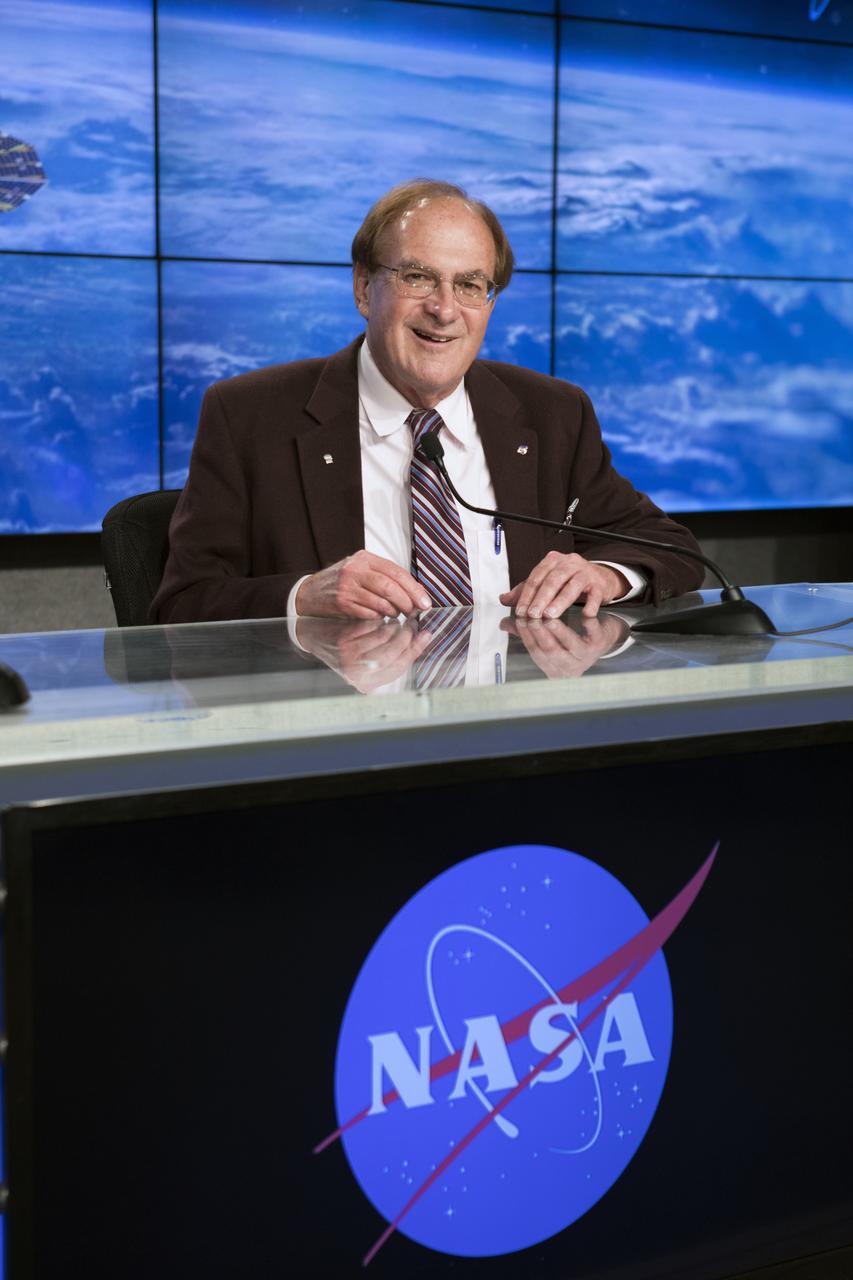
Members of the news media attend a press conference at NASA's Kennedy Space Center in Florida, after the launch of the Orbital ATK Cygnus pressurized cargo module atop a United Launch Alliance Atlas V rocket from Space Launch Complex 41 at Cape Canaveral Air Force Station. It was Orbital ATK's seventh commercial resupply services mission to the International Space Station. Liftoff was at 11:11 a.m. EDT. Moderating the press conference is George Diller, NASA Kennedy Communications.

Members of the news media attend a press conference at NASA's Kennedy Space Center in Florida, after the launch of the Orbital ATK Cygnus pressurized cargo module atop a United Launch Alliance Atlas V rocket from Space Launch Complex 41 at Cape Canaveral Air Force Station. It was Orbital ATK's seventh commercial resupply services mission to the International Space Station. Liftoff was at 11:11 a.m. EDT. Moderating the press conference is George Diller, NASA Kennedy Communications.
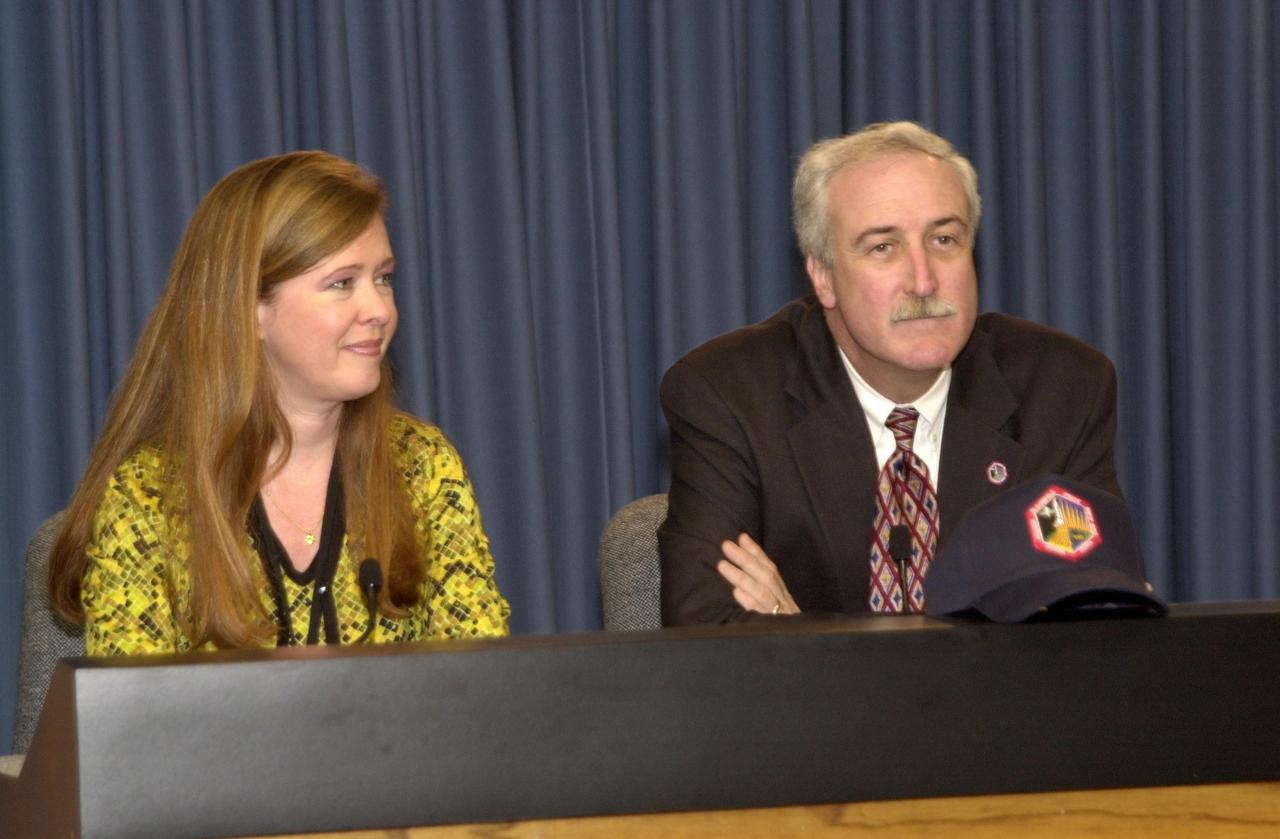
KENNEDY SPACE CENTER, FLA. -- Lisa Malone, division chief, External Affairs and Business Development, and Sean O’Keefe, NASA administrator, listen to a query from the media during a post-launch conference. Malone moderated the conference. O’Keefe was at KSC for the launch of Space Shuttle Atlantis on mission STS-110 to the International Space Station. The launch occurred at 4:44:19 p.m EDT (20:44:19 GMT)
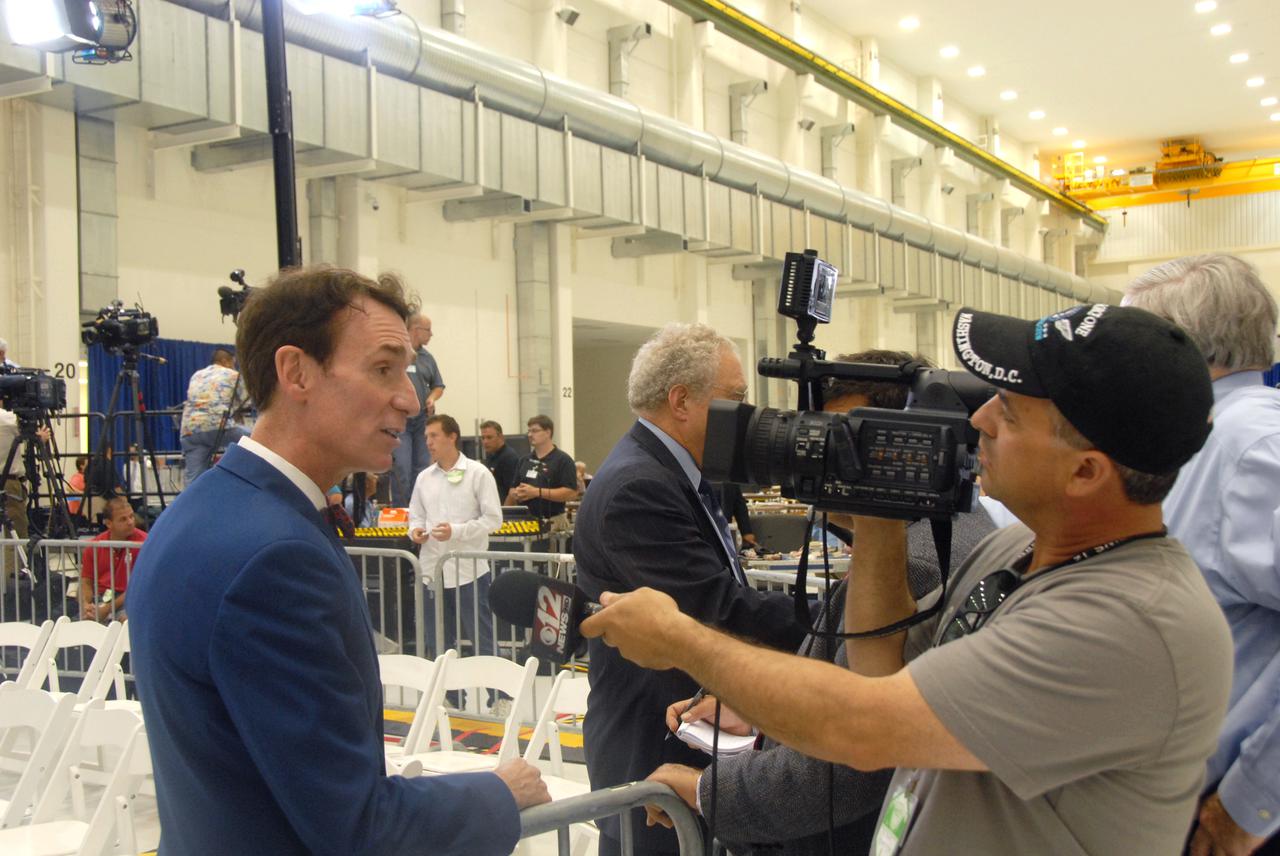
CAPE CANAVERAL, Fla. - In the Operations and Checkout Building at NASA's Kennedy Space Center in Florida, Bill Nye The Science Guy, engineer and television personality, is interviewed by the media during the Conference on the American Space Program for the 21st Century. President Barack Obama opened the Conference on the American Space Program for the 21st Century with remarks on the new course his administration is charting for NASA and the future of U.S. leadership in human spaceflight. Photo credit: NASA_Jim Grossmann
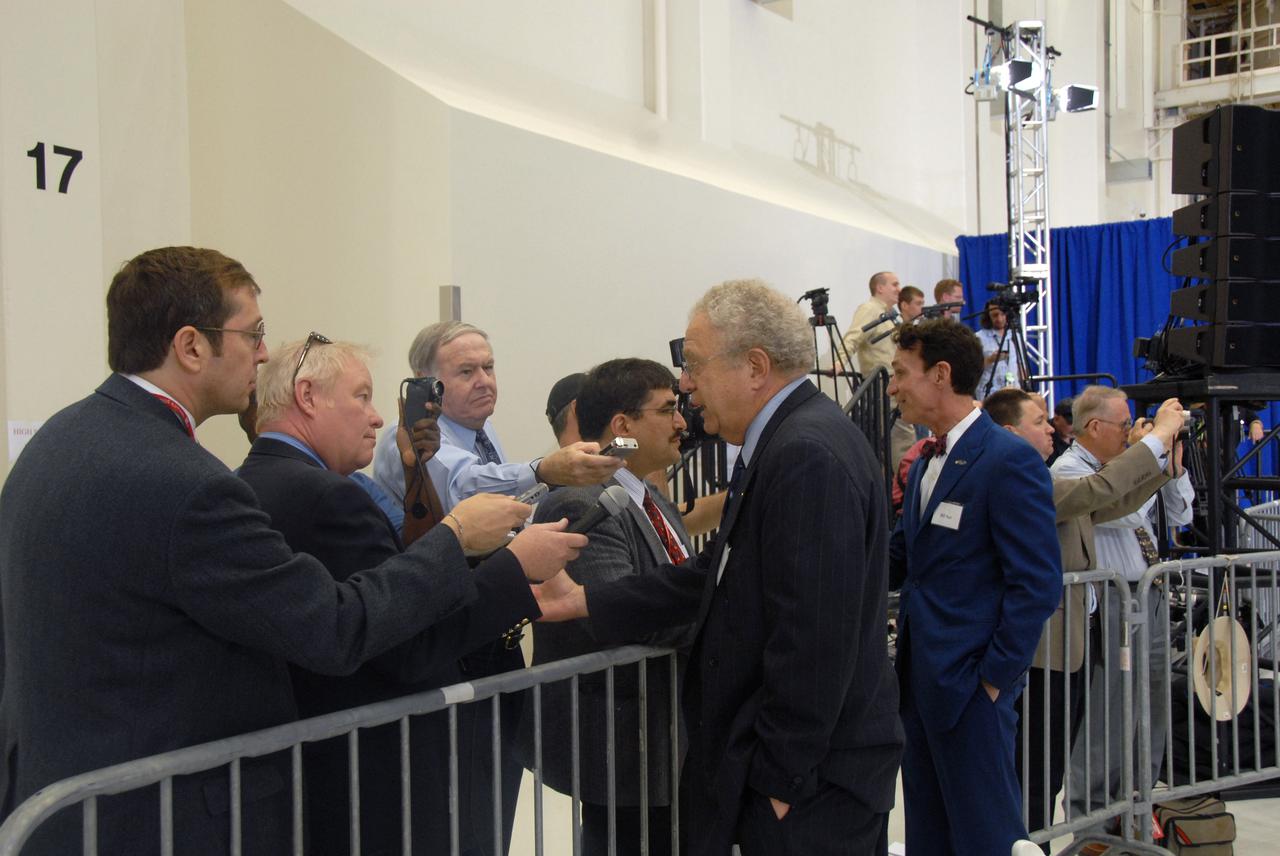
CAPE CANAVERAL, Fla. - In the Operations and Checkout Building at NASA's Kennedy Space Center in Florida, Louis Friedman, founder and executive director, The Planetary Society, at left, and Bill Nye The Science Guy, engineer and television personality, are interviewed by the media during the Conference on the American Space Program for the 21st Century. President Barack Obama opened the Conference on the American Space Program for the 21st Century with remarks on the new course his administration is charting for NASA and the future of U.S. leadership in human spaceflight. Photo credit: NASA_Jim Grossmann
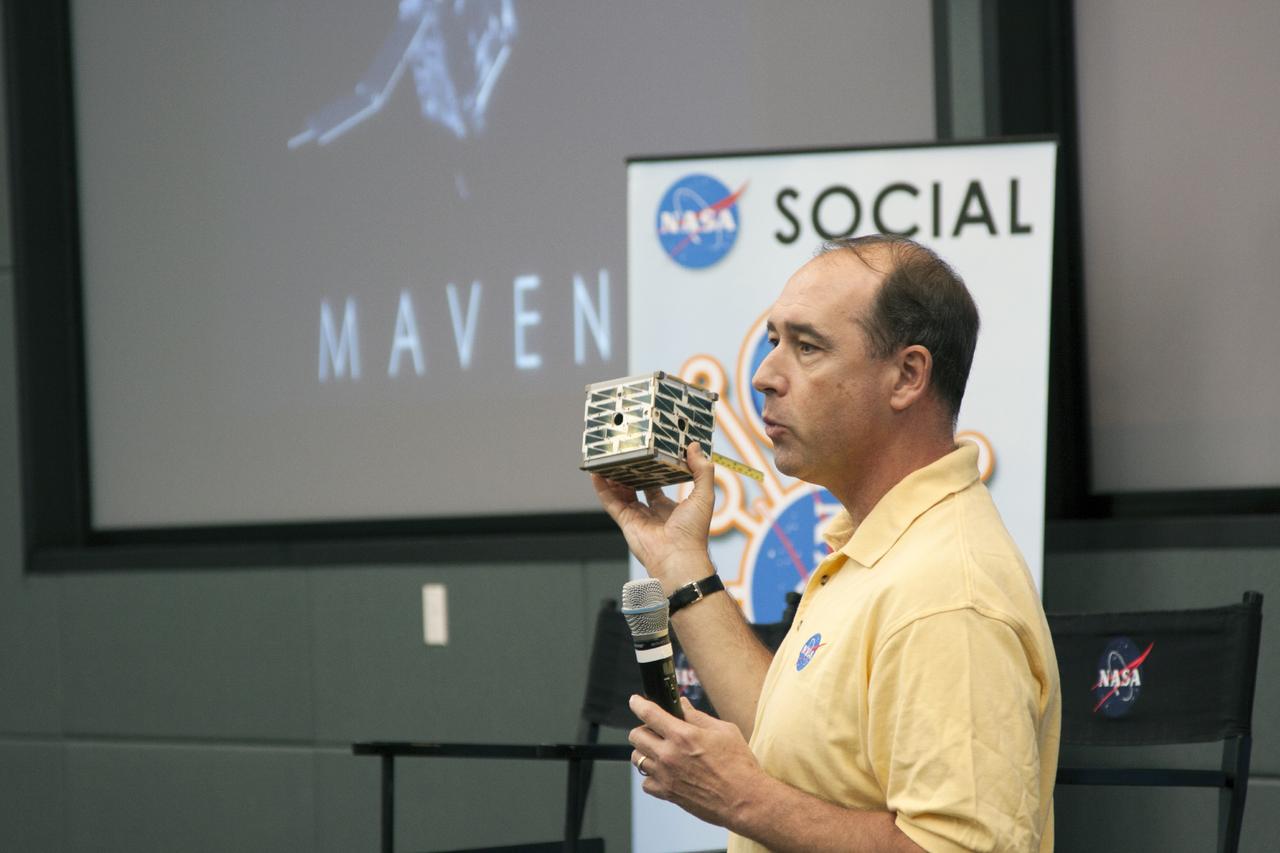
CAPE CANAVERAL, Fla. -- In the conference room of Operations Support Building II at NASA's Kennedy Space Center in Florida, social media participants listen to a briefing on the agency's CubeSat Program by Andrew Petro, small satellites program manager. The social media participants gathered at the Florida spaceport for the launch of the Mars Atmosphere and Volatile Evolution, or MAVEN, spacecraft. Their visit included tours of key facilities and participating in presentations by key NASA leaders who updated the space agency's current efforts. Photo credit: NASA/Jim Grossman
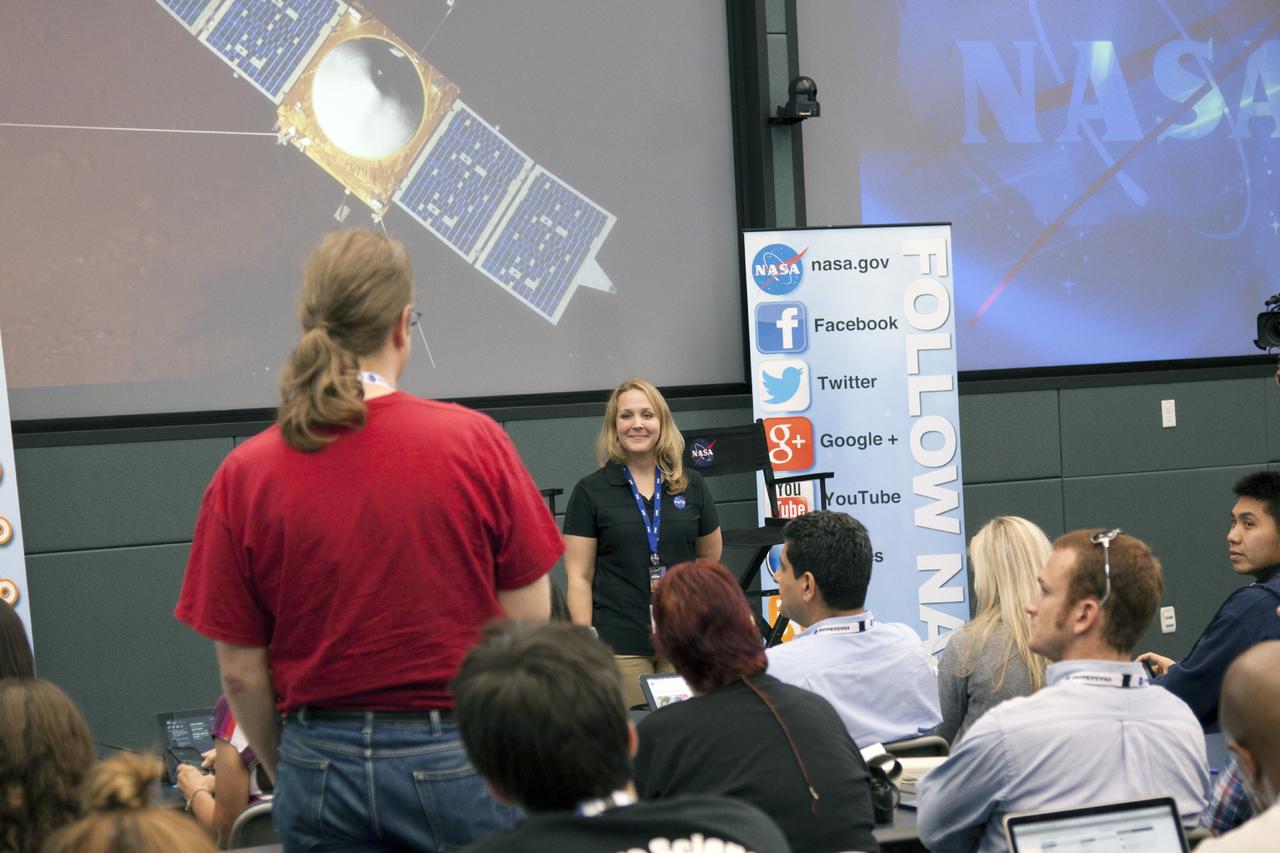
CAPE CANAVERAL, Fla. -- In the conference room of Operations Support Building II at NASA's Kennedy Space Center in Florida, social media participants listen to a briefing on agency programs by Lindsay Hays, an astrobiologist at NASA Headquarters. The social media participants gathered at the Florida spaceport for the launch of the Mars Atmosphere and Volatile Evolution, or MAVEN, spacecraft. Their visit included tours of key facilities and participating in presentations by key NASA leaders who updated the space agency's current efforts. Photo credit: NASA/Jim Grossman
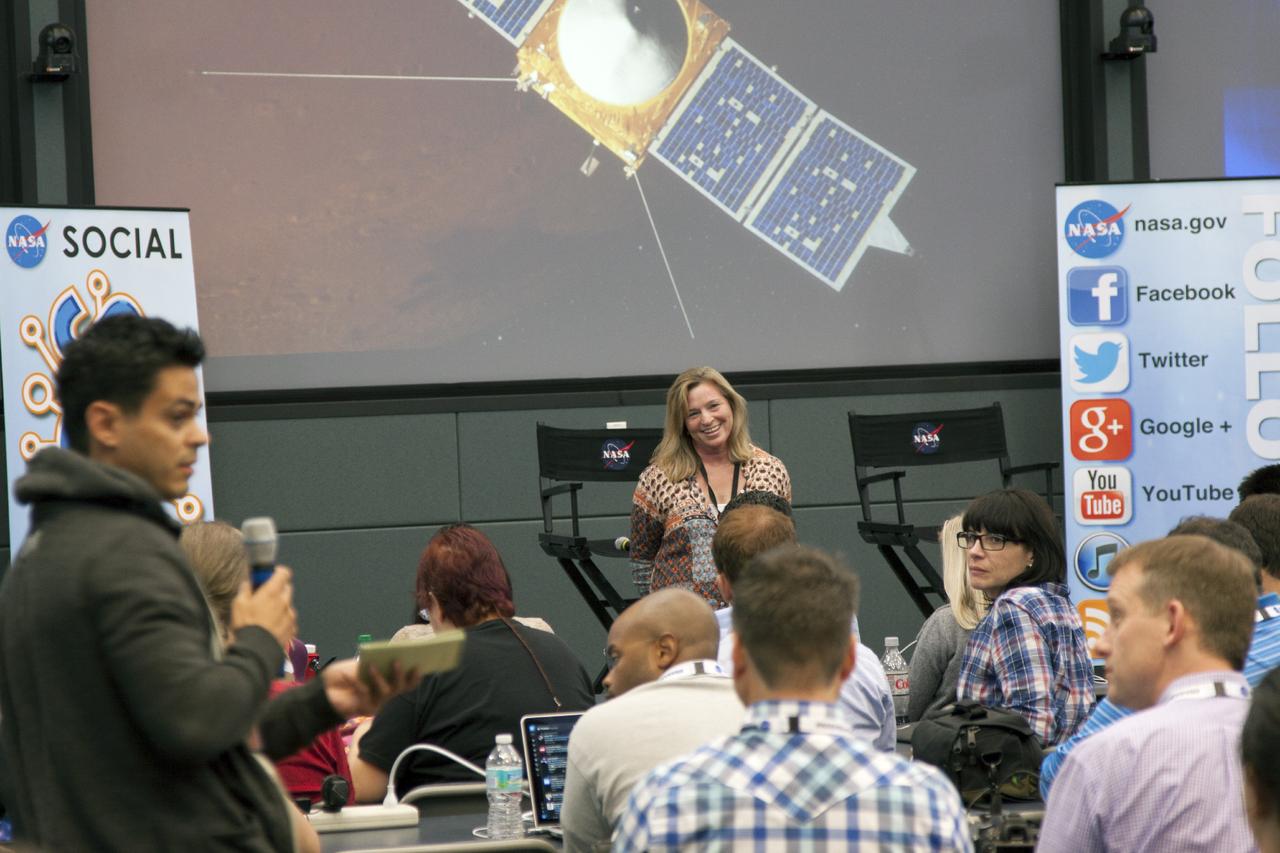
CAPE CANAVERAL, Fla. -- In the conference room of Operations Support Building II at NASA's Kennedy Space Center in Florida, social media participants listen to a briefing on the Mars Atmosphere and Volatile Evolution, or MAVEN, mission by, Ellen Stofan, the agency's chief scientist. The social media participants gathered at the Florida spaceport for the launch of the Mars Atmosphere and Volatile Evolution, or MAVEN, spacecraft. Their visit included tours of key facilities and participating in presentations by key NASA leaders who updated the space agency's current efforts. Photo credit: NASA/Jim Grossman
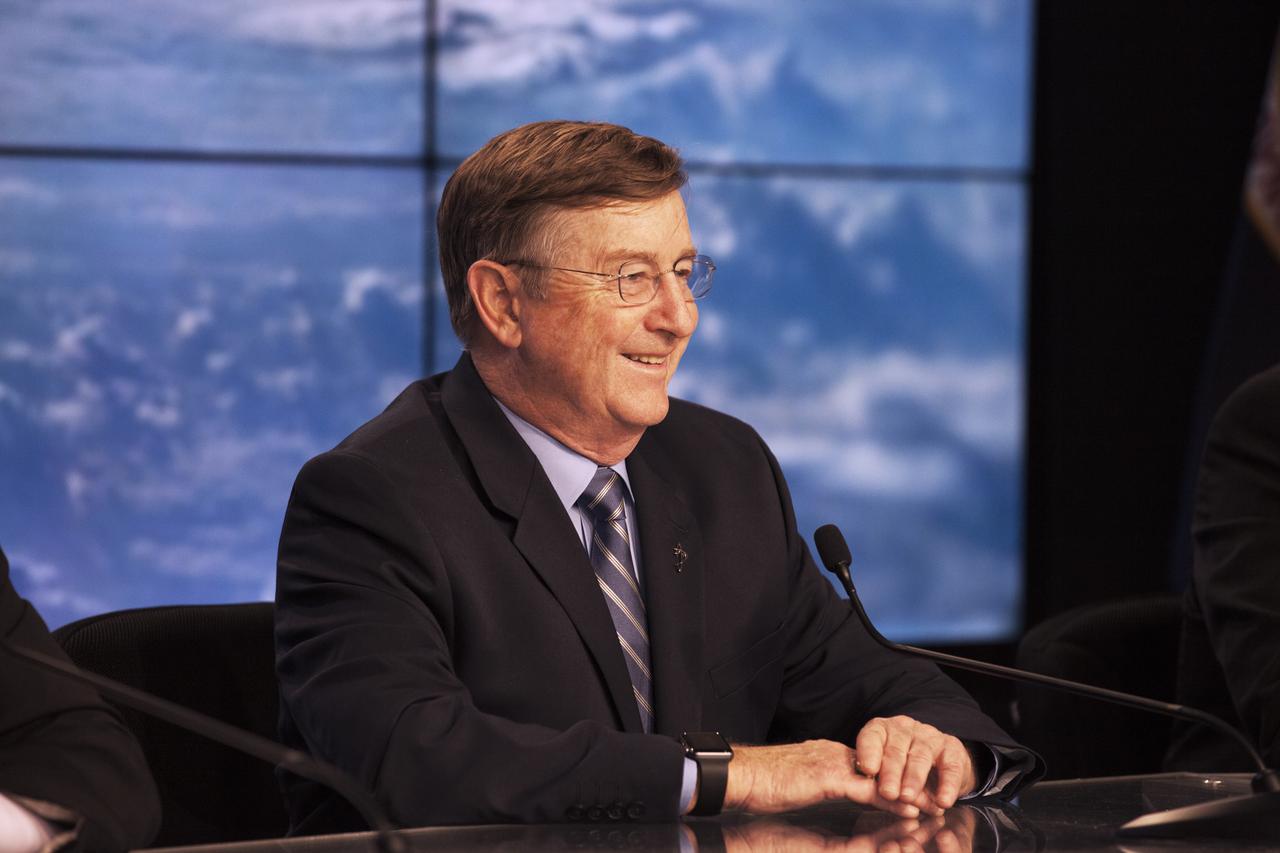
Members of the news media attend a press conference at NASA's Kennedy Space Center in Florida, after the launch of the Orbital ATK Cygnus pressurized cargo module atop a United Launch Alliance Atlas V rocket from Space Launch Complex 41 at Cape Canaveral Air Force Station. It was Orbital ATK's seventh commercial resupply services mission to the International Space Station. Liftoff was at 11:11 a.m. EDT. Speaking to the media is Frank Culbertson, president, Orbital ATK Space Systems Group.
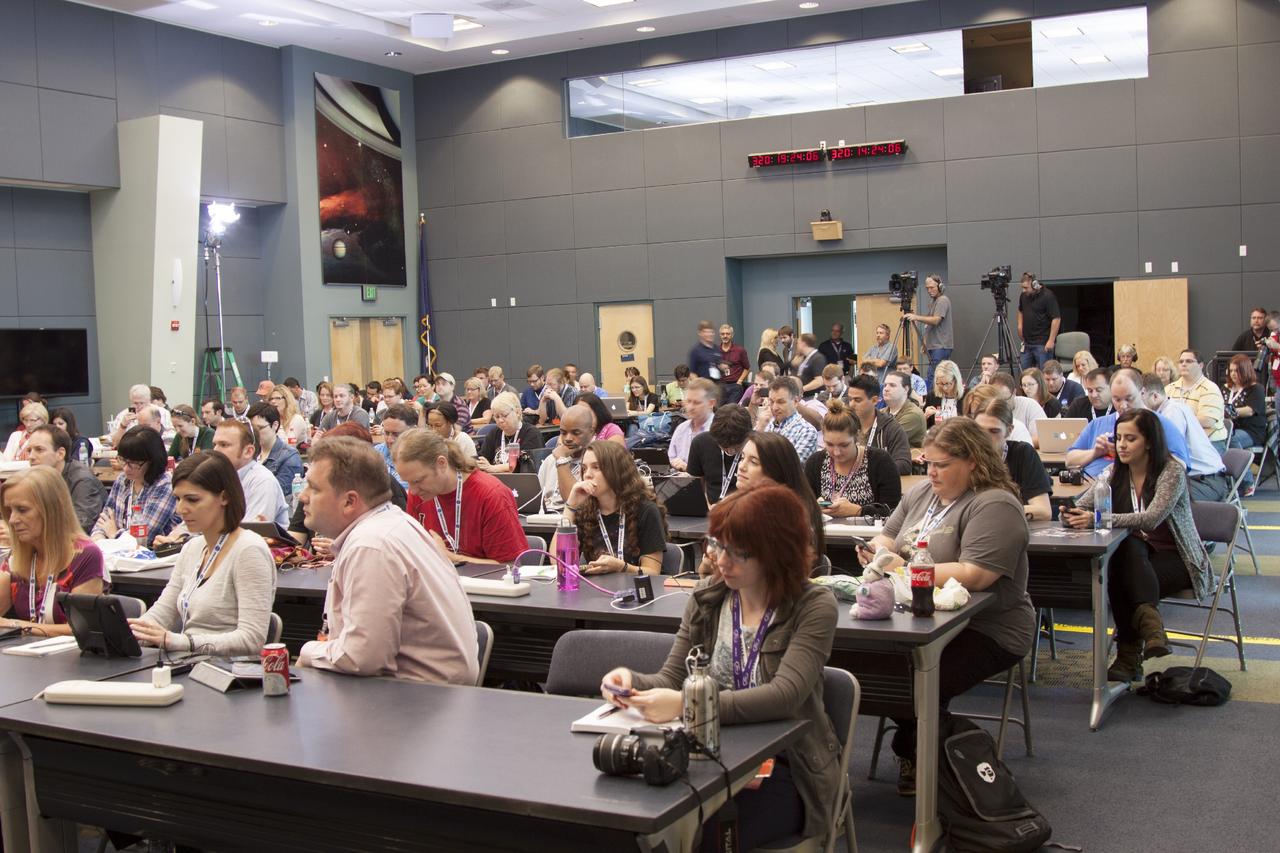
CAPE CANAVERAL, Fla. -- In the conference room of Operations Support Building II at NASA's Kennedy Space Center in Florida, social media participants listen to a briefing on the Mars Atmosphere and Volatile Evolution, or MAVEN, mission. The social media participants gathered at the Florida spaceport for the launch of the Mars Atmosphere and Volatile Evolution, or MAVEN, spacecraft. Their visit included tours of key facilities and participating in presentations by key NASA leaders who updated the space agency's current efforts. Photo credit: NASA/Jim Grossman
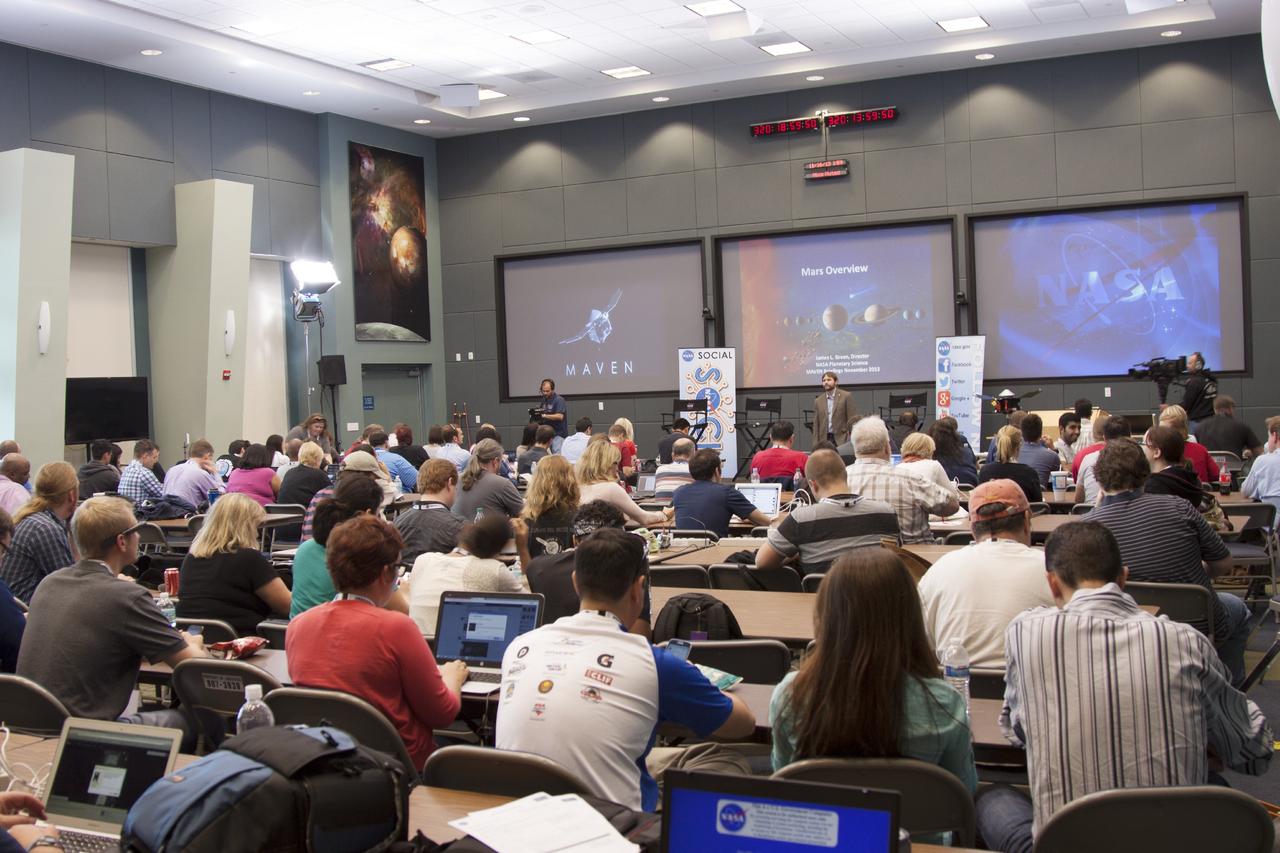
CAPE CANAVERAL, Fla. -- In the conference room of Operations Support Building II at NASA's Kennedy Space Center in Florida, social media participants listen to a briefing on the Mars Atmosphere and Volatile Evolution, or MAVEN, mission. The social media participants gathered at the Florida spaceport for the launch of the Mars Atmosphere and Volatile Evolution, or MAVEN, spacecraft. Their visit included tours of key facilities and participating in presentations by key NASA leaders who updated the space agency's current efforts. Photo credit: NASA/Jim Grossman
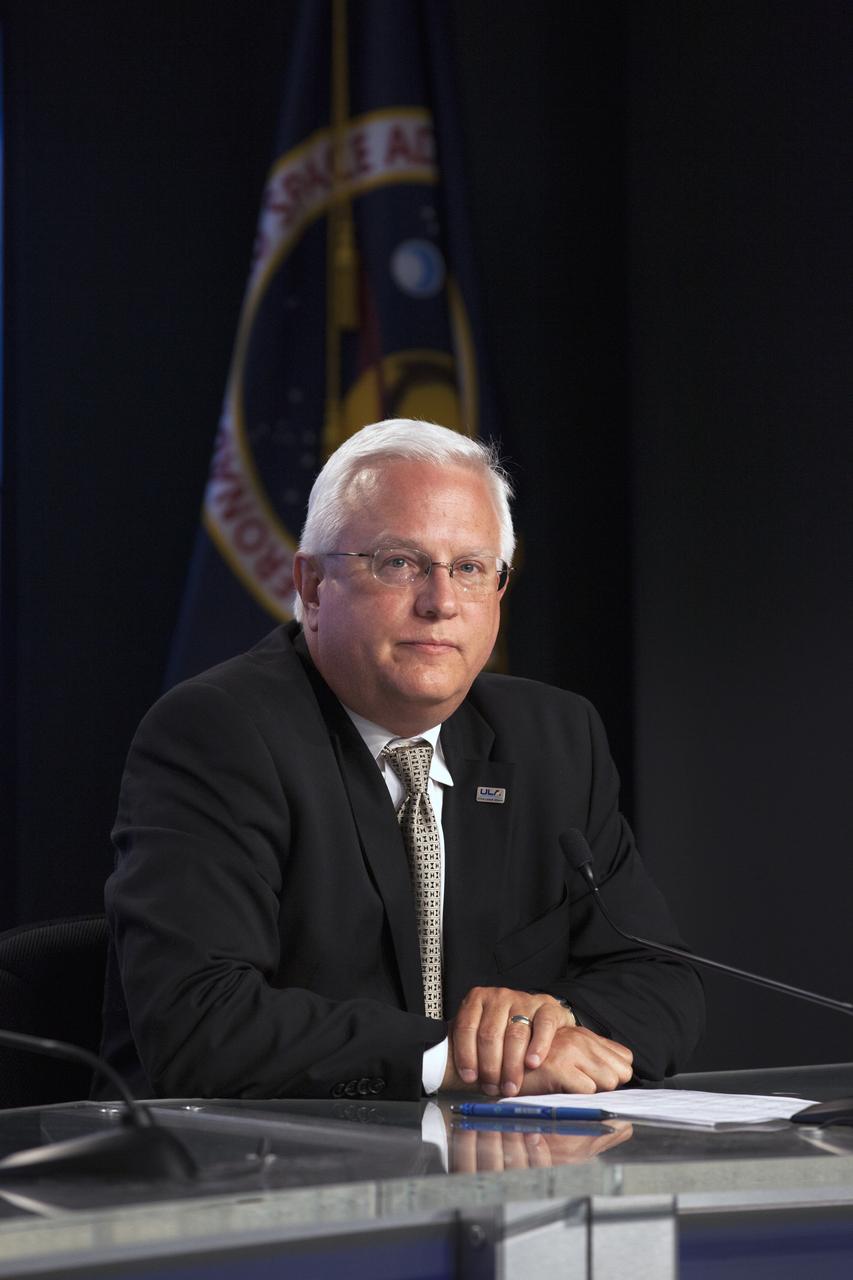
Members of the news media attend a press conference at NASA's Kennedy Space Center in Florida, after the launch of the Orbital ATK Cygnus pressurized cargo module atop a United Launch Alliance Atlas V rocket from Space Launch Complex 41 at Cape Canaveral Air Force Station. It was Orbital ATK's seventh commercial resupply services mission to the International Space Station. Liftoff was at 11:11 a.m. EDT. Speaking to the media is Vern Thorp, program manager, commercial missions, United Launch Alliance.
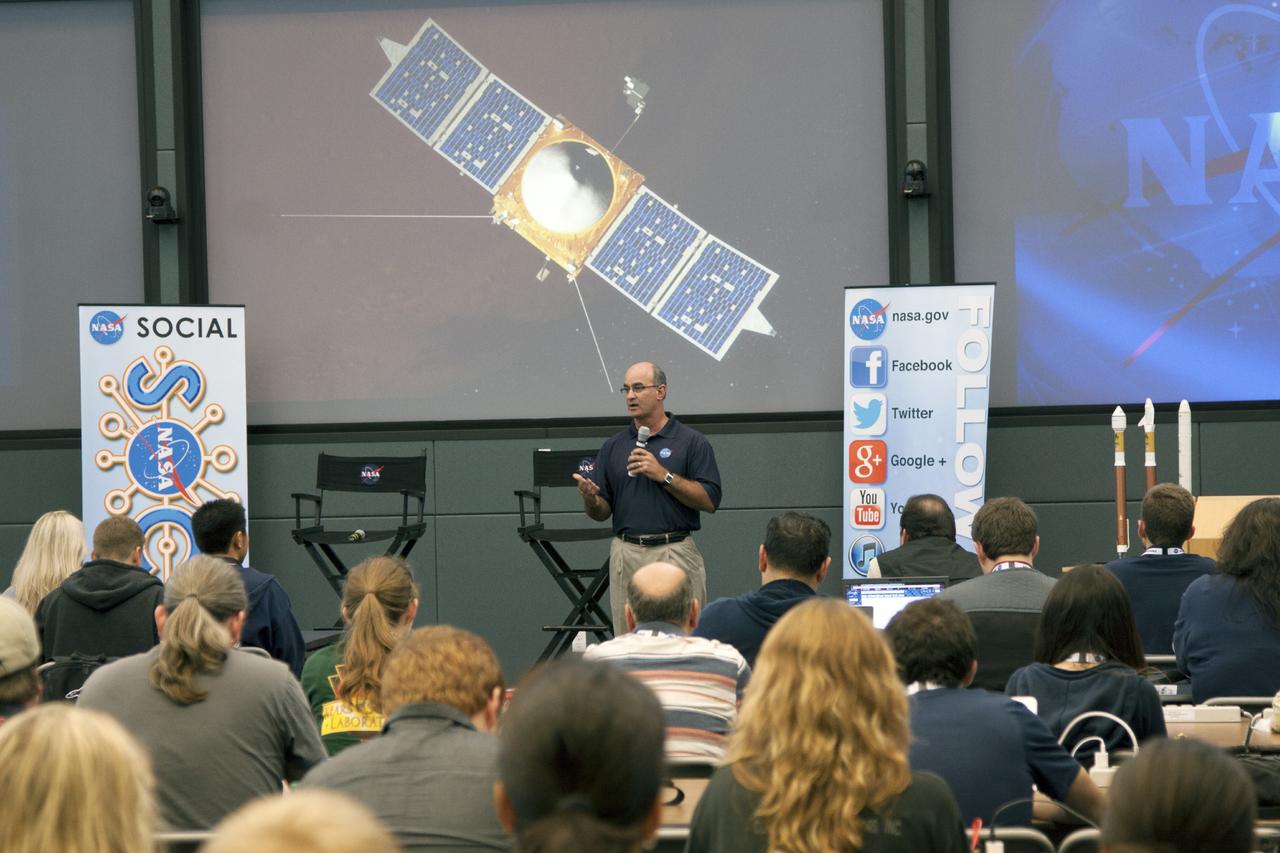
CAPE CANAVERAL, Fla. -- In the conference room of Operations Support Building II at NASA's Kennedy Space Center in Florida, social media participants listen to a briefing on future agency programs by Billy Stover, a NASA Commercial Crew Program Safety engineer. The social media participants gathered at the Florida spaceport for the launch of the Mars Atmosphere and Volatile Evolution, or MAVEN, spacecraft. Their visit included tours of key facilities and participating in presentations by key NASA leaders who updated the space agency's current efforts. Photo credit: NASA/Jim Grossman
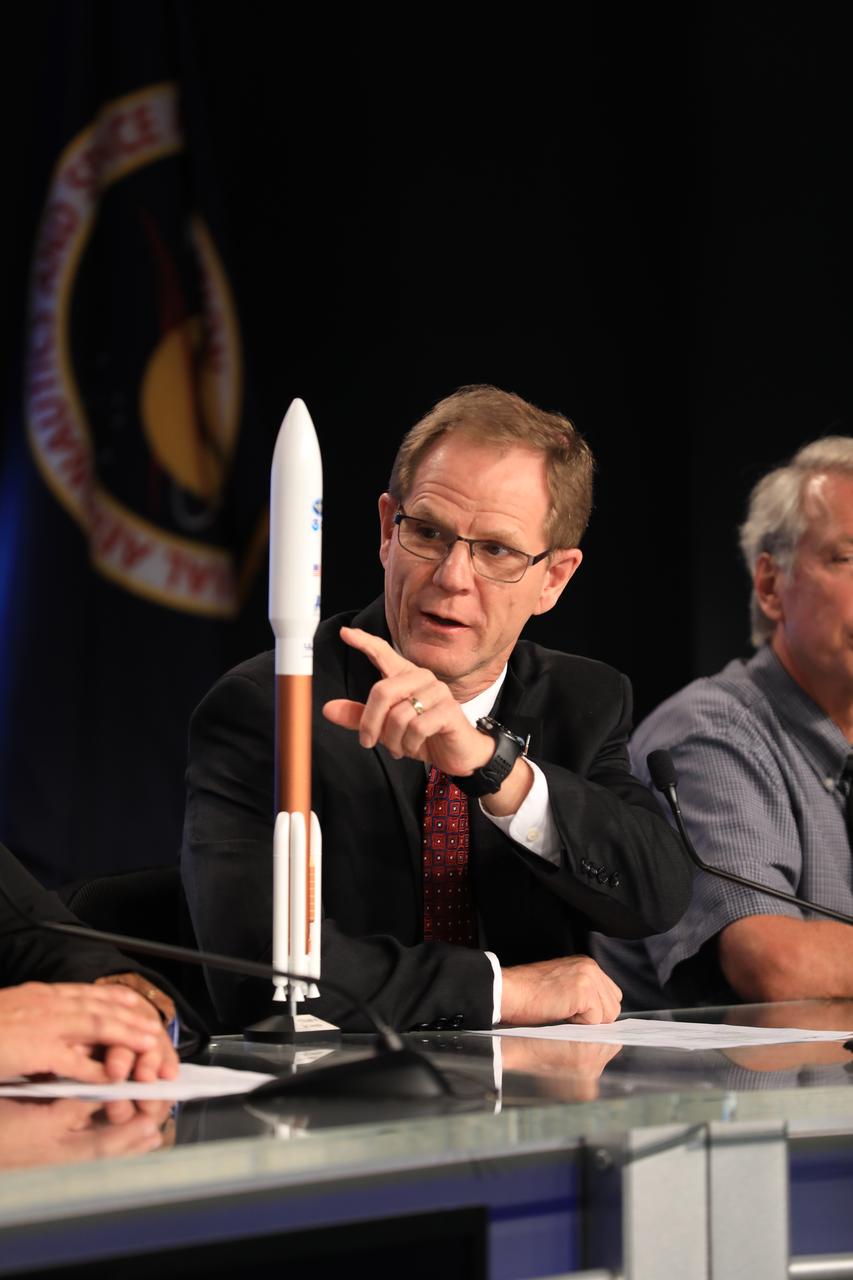
Scott Messer, program manager, NASA Missions, United Launch Alliance, speak to members of the news media during a Geostationary Operational Environmental Satellite (GOES-R) prelaunch news conference in the Kennedy Space Center's Press Site auditorium in Florida.
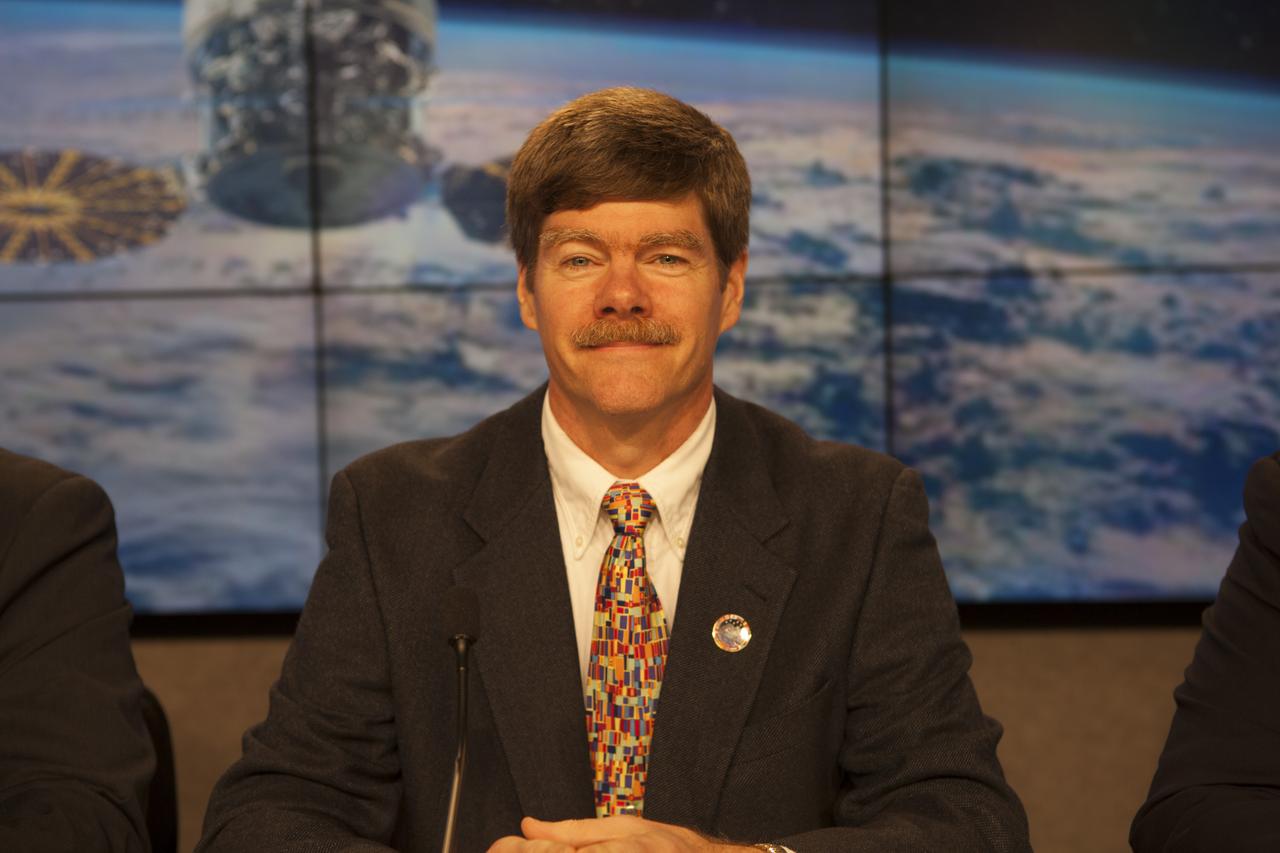
In the Kennedy Space Center’s Press Site auditorium, Pete Hasbrook, NASA associate program scientist for the ISS Program at the Johnson Space Center in Houston, speaks to members of the media at a prelaunch news conference for Orbital ATK CRS-6 commercial resupply services mission to the International Space Station.
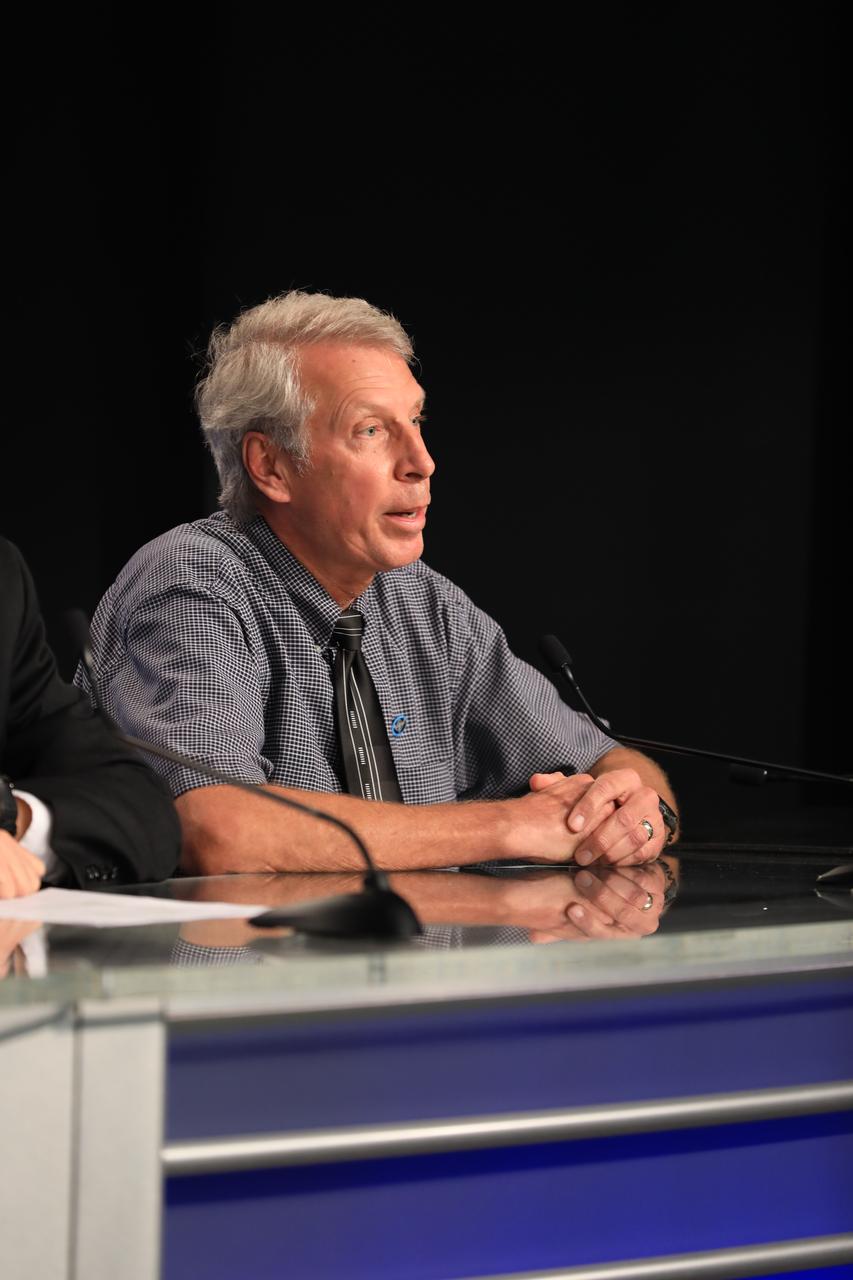
Clay Flinn, launch weather officer, 4th Weather Squadron, Cape Canaveral Air Force Station, speaks to members of the news media during a Geostationary Operational Environmental Satellite (GOES-R) prelaunch news conference in the Kennedy Space Center's Press Site auditorium in Florida.
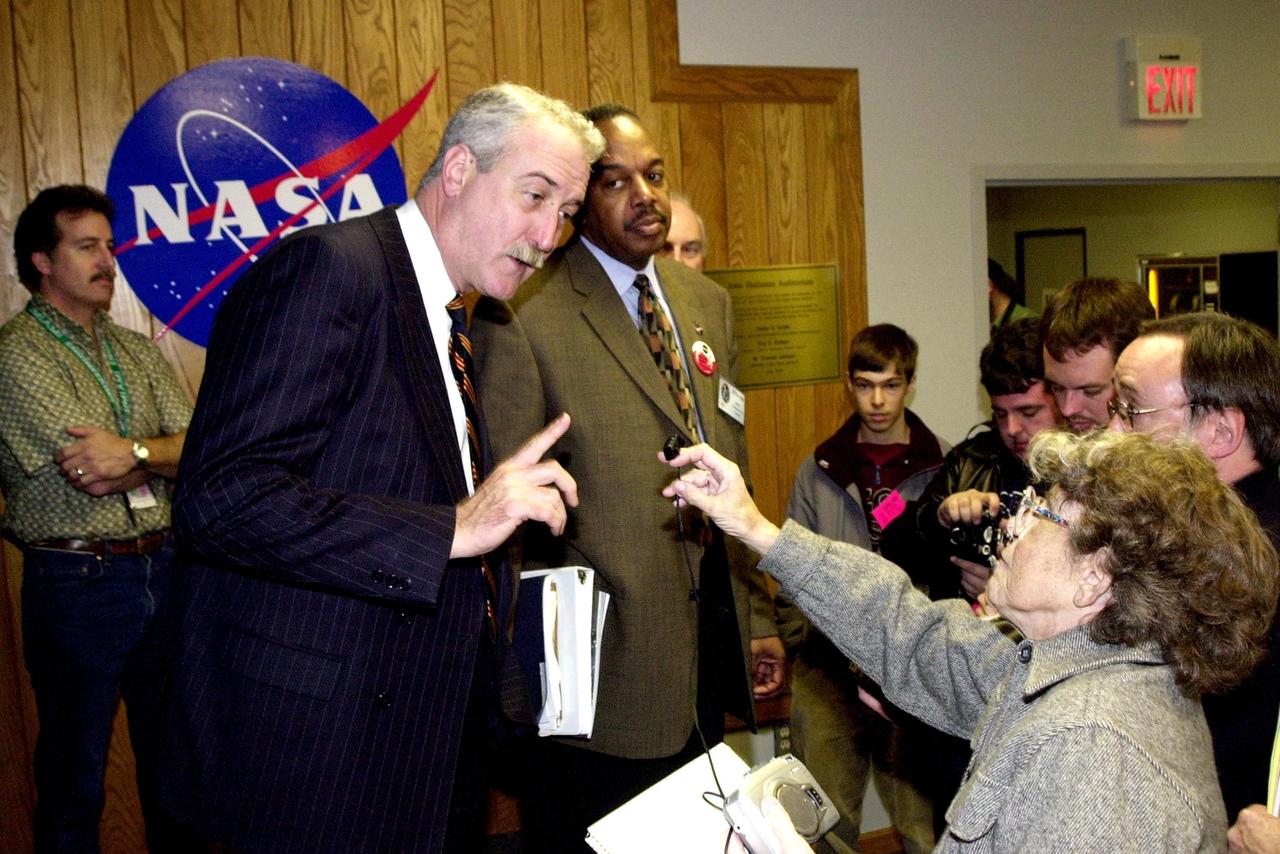
KENNEDY SPACE CENTER, FLA. -- NASA Administrator Sean O'Keefe answers a question from the media at an STS-109 post-landing conference. STS-109 rejuvenated the Hubble Space Telescope in a series of five spacewalks, installing new and improved equipment.