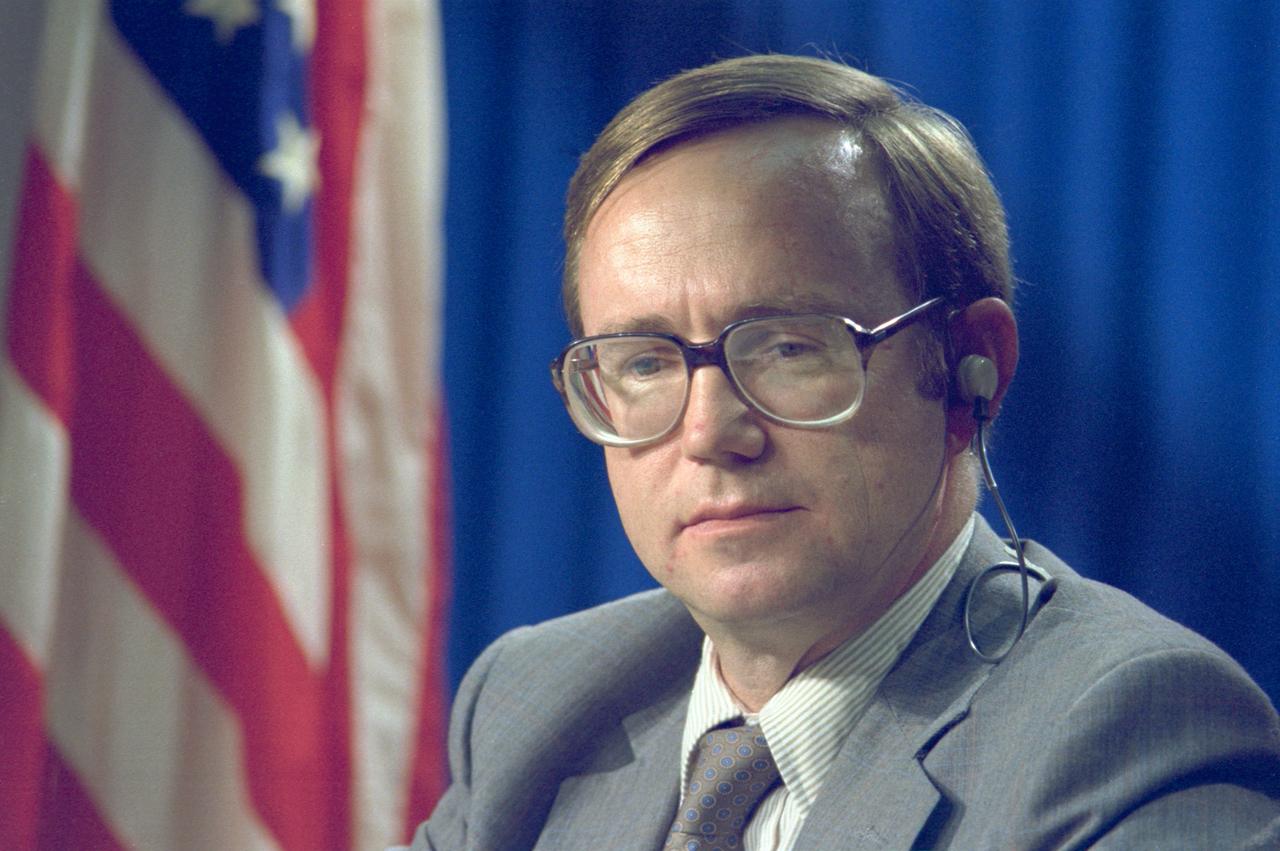
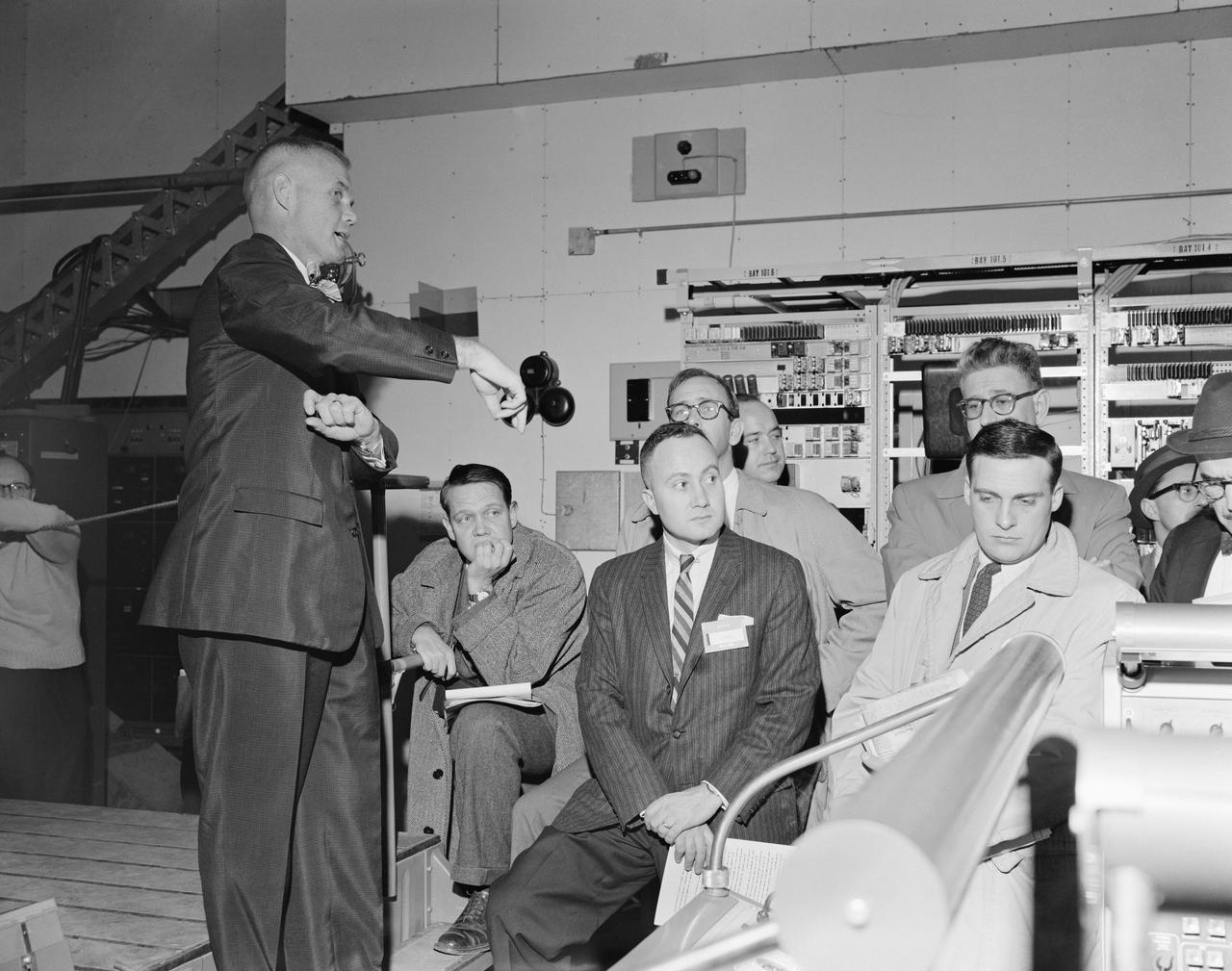
M61-00041 (January 1961) --- Astronaut John Glenn and news media representatives are pictured during a press conference and spacecraft familiarization tour of Cape Canaveral, Florida. Photo credit: NASA
Astronaut John Glenn and news media representatives during tour of Cape
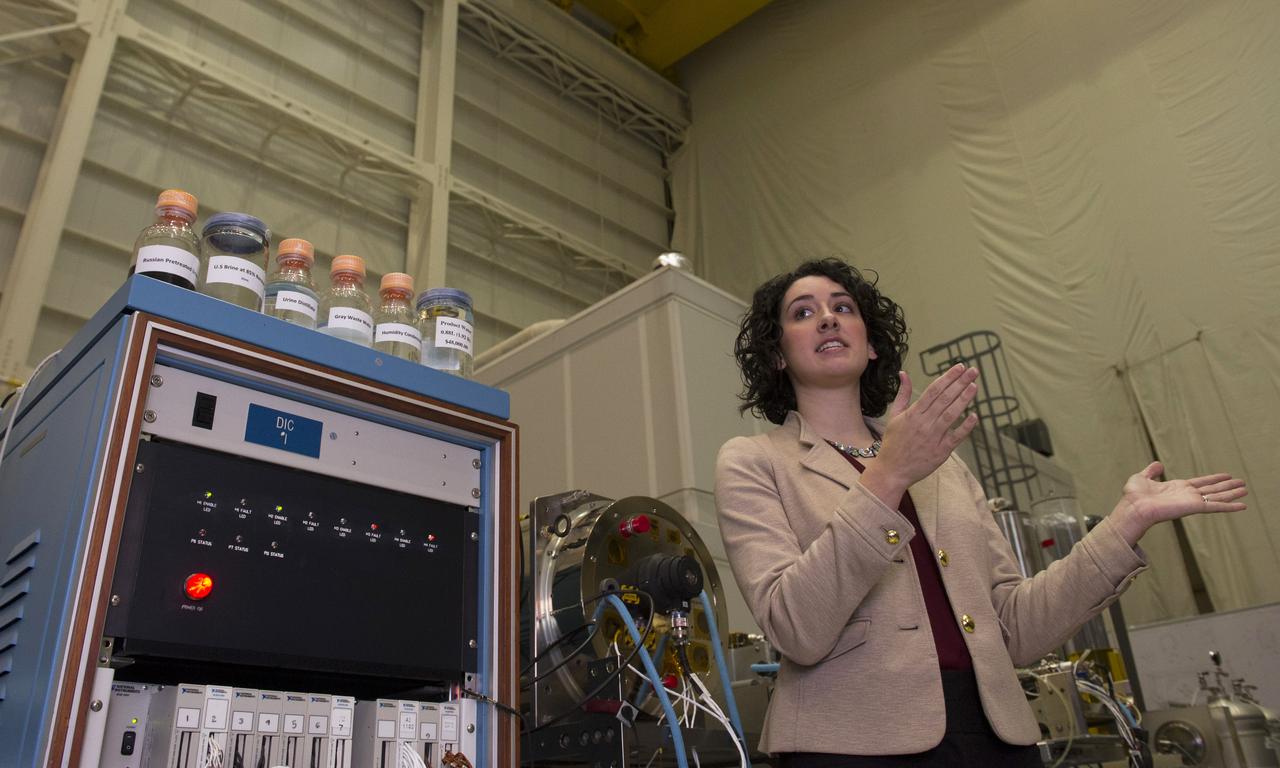
JENNIFER PRUITT, LEAD DESIGN ENGINEER FOR THE INTERNATIONAL SPACE STATION URINE PROCESSING ASSEMBLY AT MARSHALL, BRIEFS A GROUP OF MORE THAN 20 SOCIAL AND TRADITIONAL MEDIA REPRESENTATIVES ABOUT HER WORK TO IMPROVE THE RECYCLING OF WATER FOR ASTRONAUTS. THE TOUR OF MARSHALL WORK SUPPORTING NASA'S JOURNEY TO MARS WAS PART OF AGENCY-WIDE "STATE OF NASA" EVENTS FEB. 2. THE TOUR ALSO INCLUDED A LOOK AT OXYGEN RECYCLING EFFORTS, A SPACE LAUNCH SYSTEM CORE STAGE SIMULATOR AND A CHANCE TO TALK WITH MARSHALL DIRECTOR PATRICK SCHEUERMANN AND DEPUTY DIRECTOR TERESA VANHOOSER.
Jennifer Pruitt, explains ECLSS to media representatives
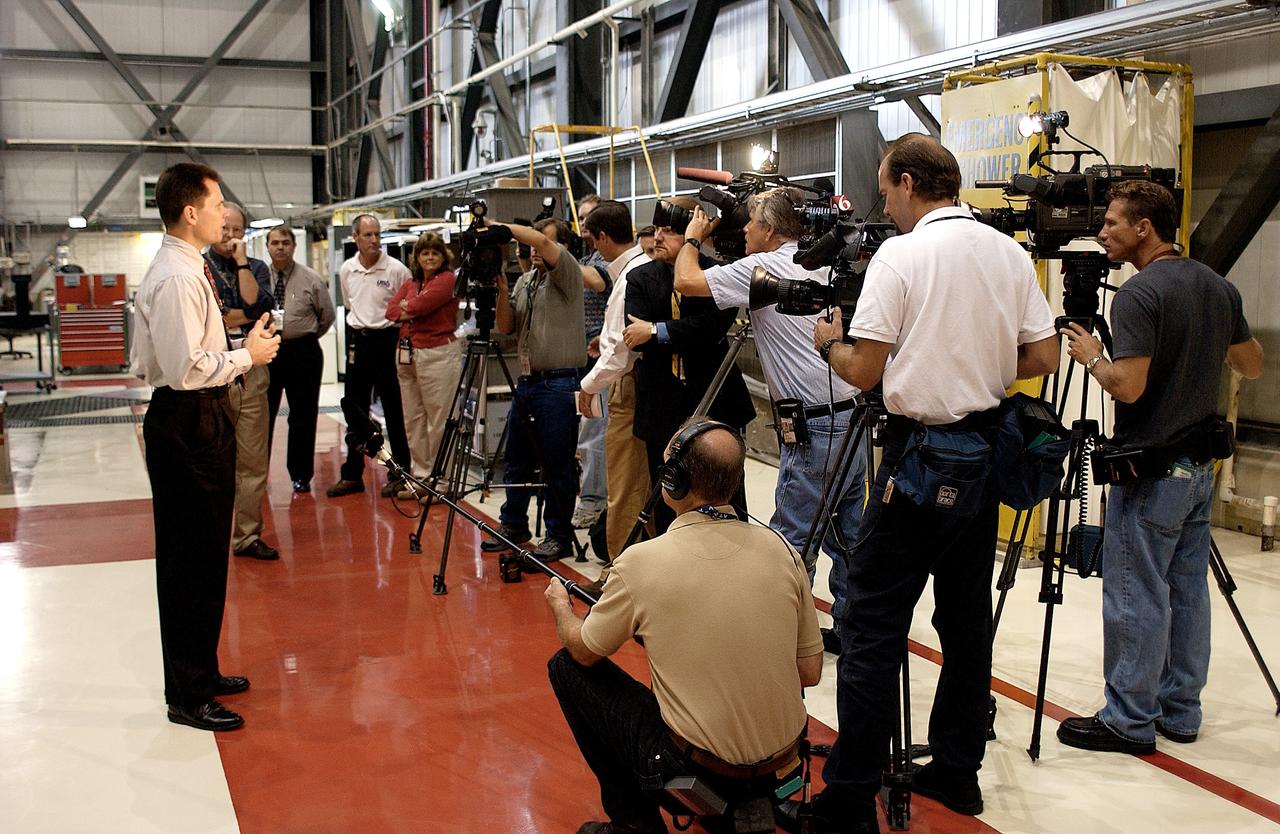
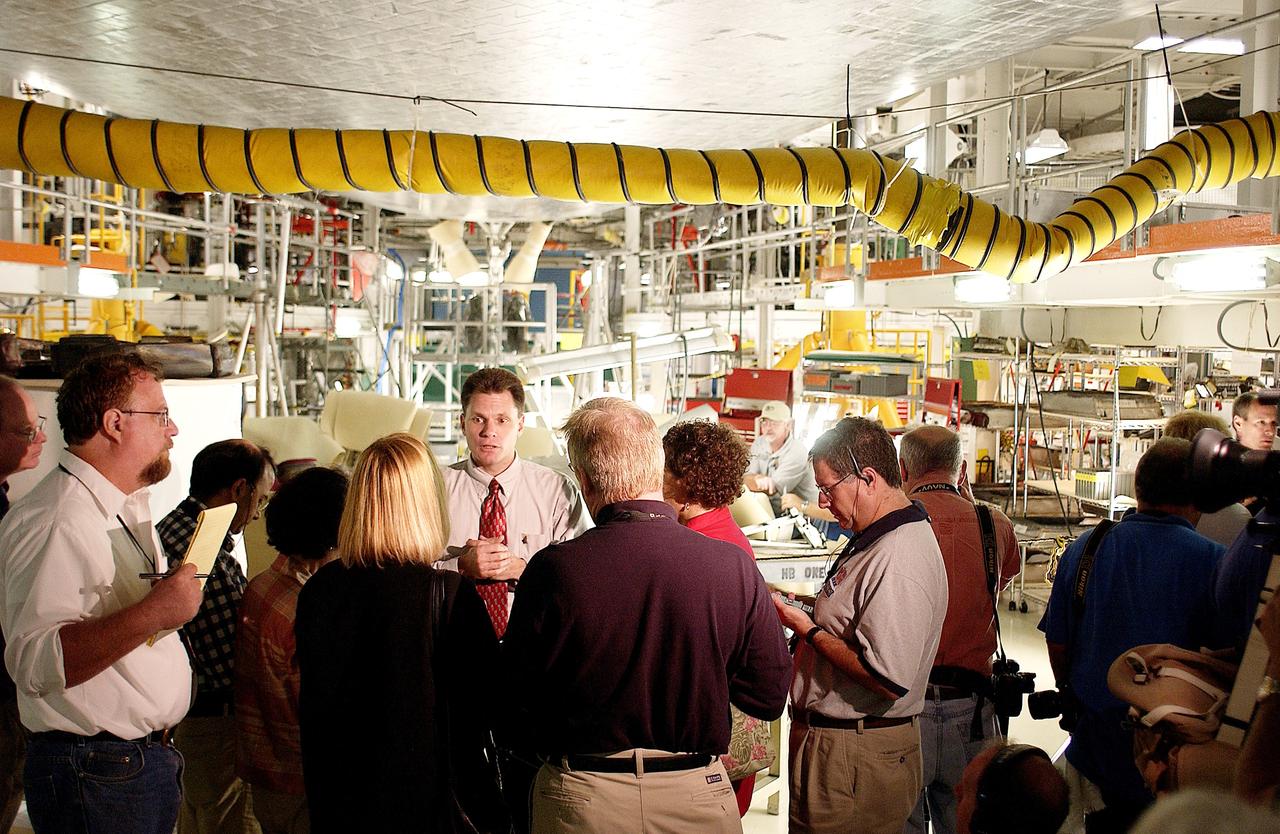
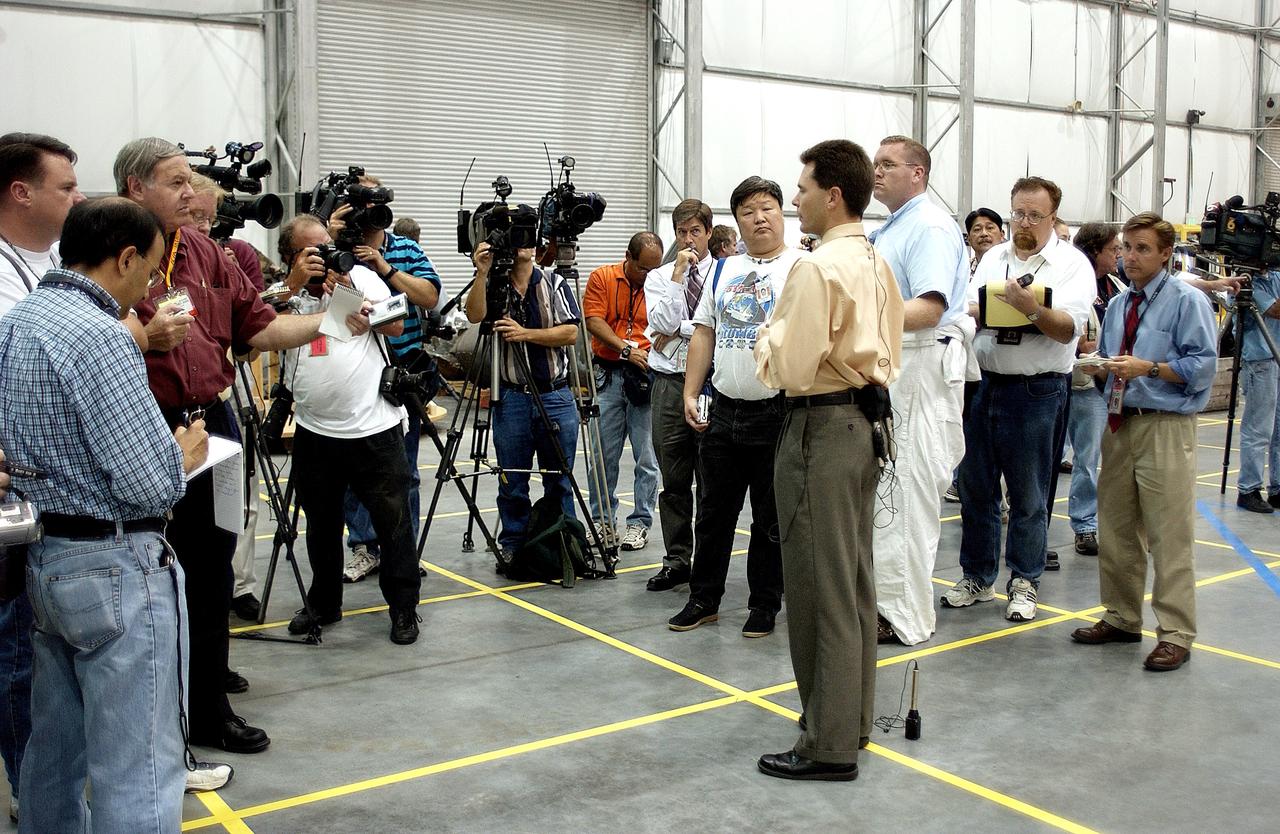
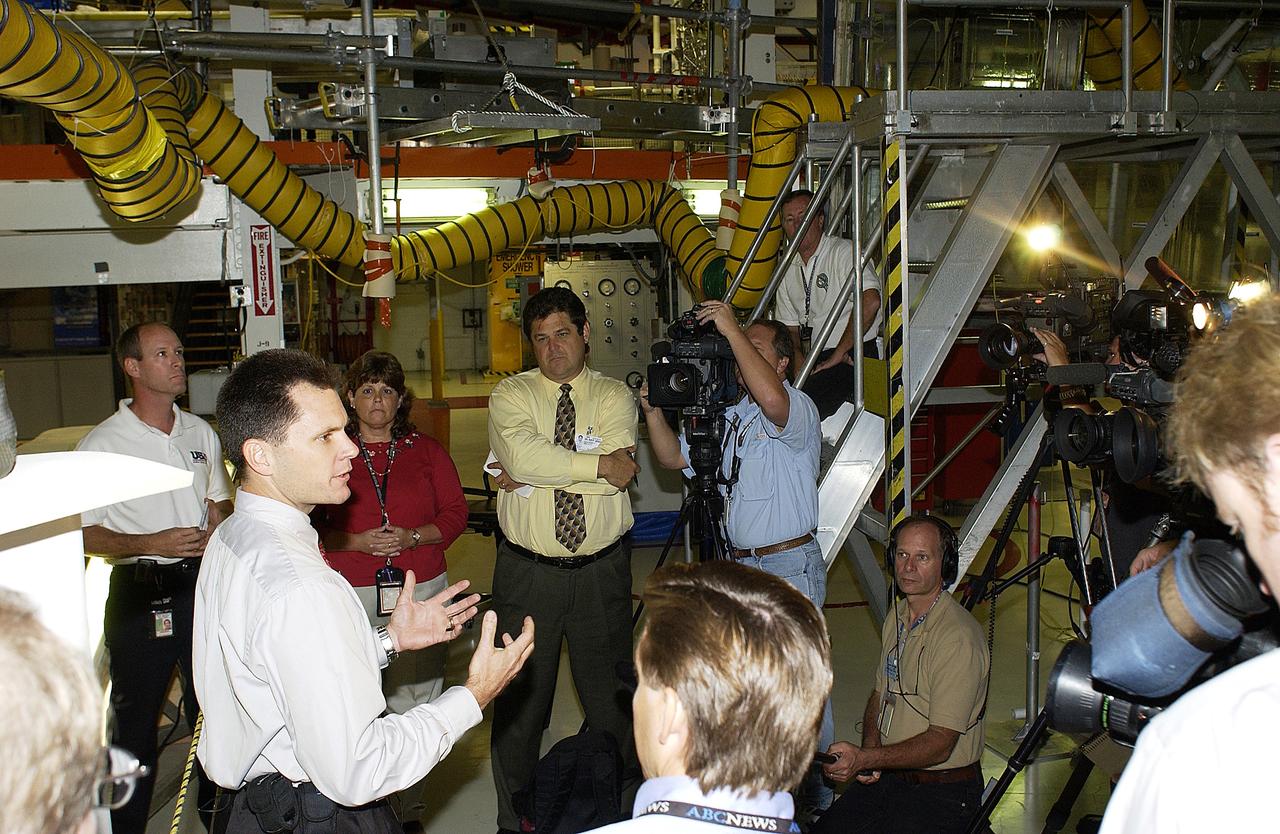
KENNEDY SPACE CENTER, FLA. - NASA Vehicle Manager Scott Thurston (left) talks to a phalanx of media in the Orbiter Processing Facility.  The media was invited to see the orbiter Atlantis as it is being prepared for Return to Flight.  Both local and national reporters representing print and TV networks were able to see work in progress on Atlantis, including the reinstallation of the Reinforced Carbon-Carbon panels on the orbiter’s wing leading edge; wiring inspections; and checks of the engines in the Orbital Maneuvering System.
KENNEDY SPACE CENTER, FLA. - NASA Vehicle Manager Scott Thurston (left) talks to a phalanx of media in the Orbiter Processing Facility. The media was invited to see the orbiter Atlantis as it is being prepared for Return to Flight. Both local and national reporters representing print and TV networks were able to see work in progress on Atlantis, including the reinstallation of the Reinforced Carbon-Carbon panels on the orbiter’s wing leading edge; wiring inspections; and checks of the engines in the Orbital Maneuvering System.
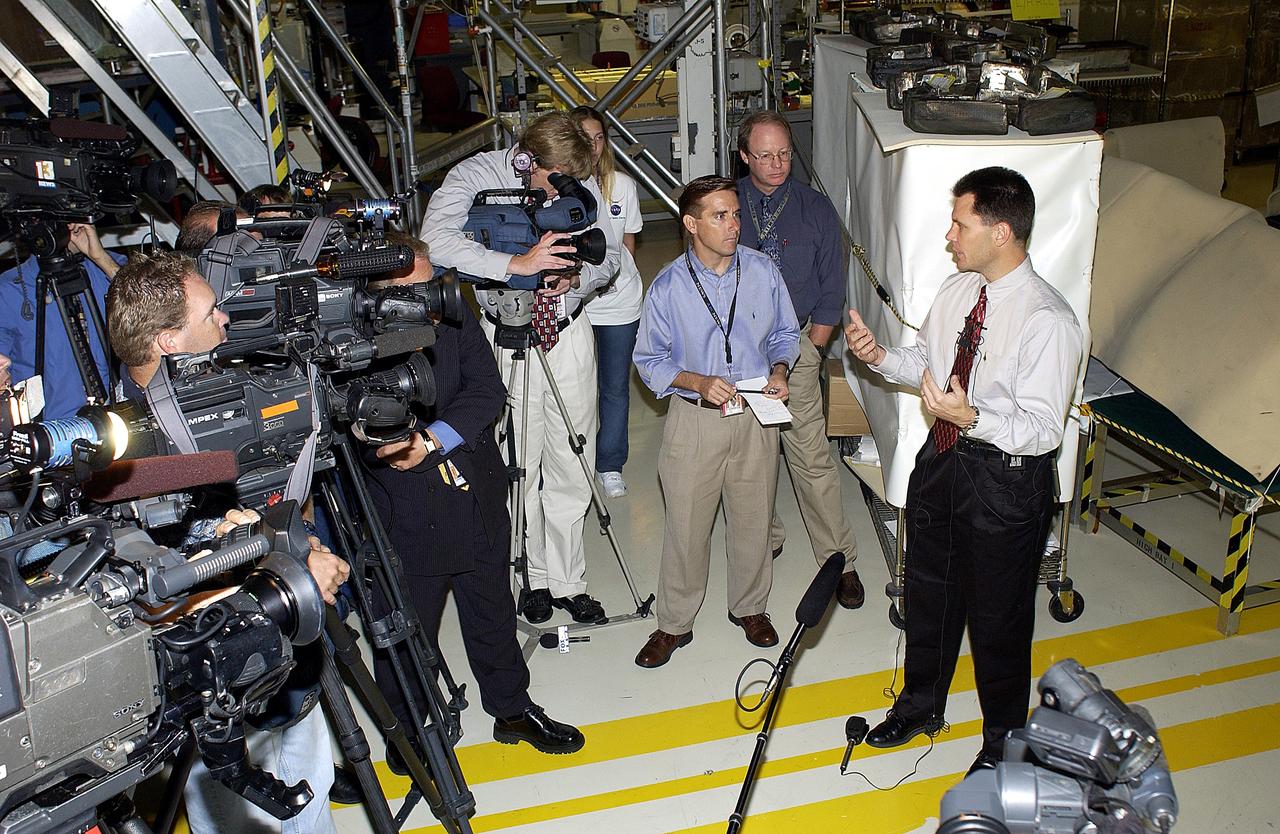
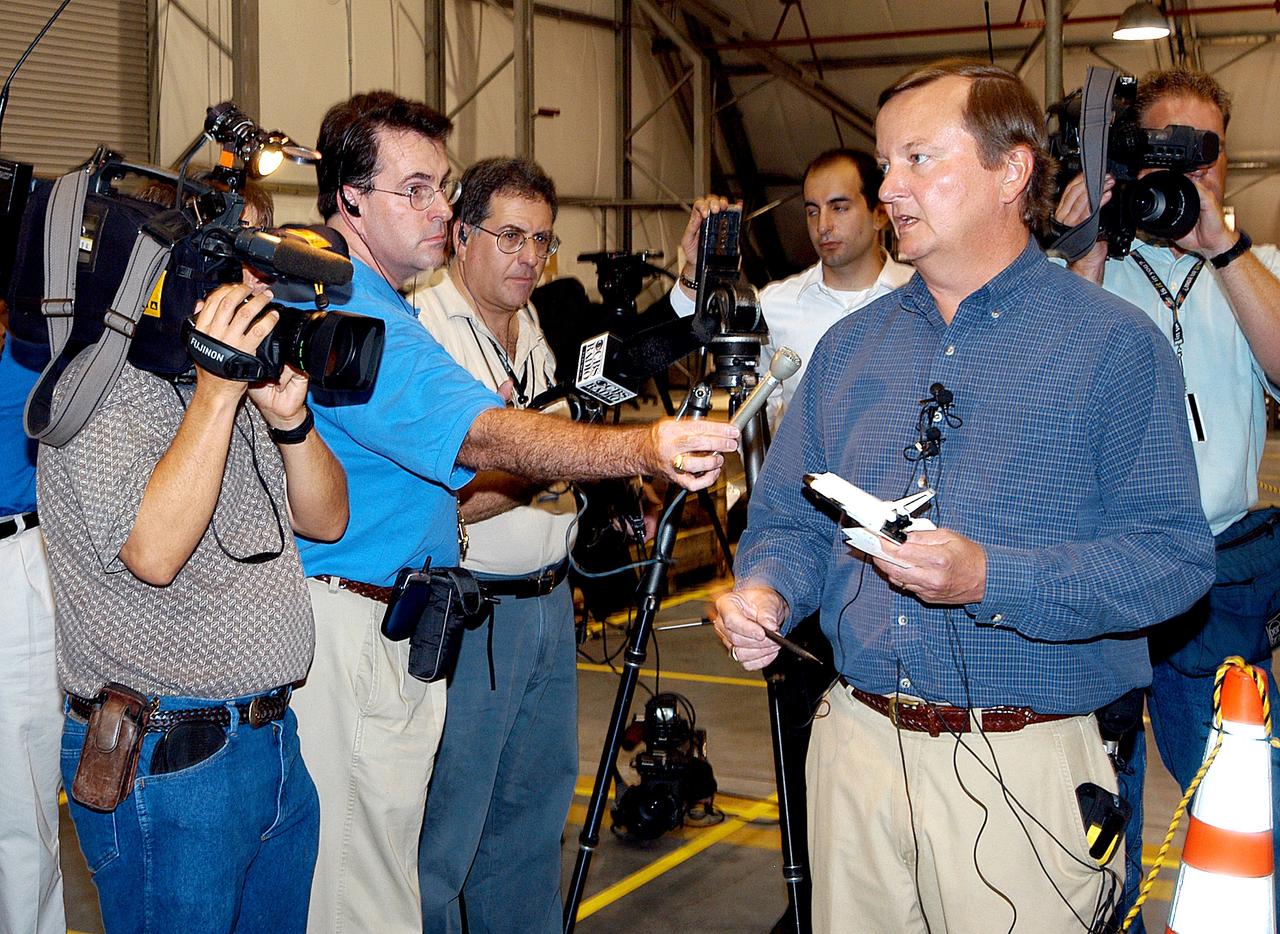
KENNEDY SPACE CENTER, FLA. -   NASA Vehicle Manager Scott Thurston (right)  talks to the media in the Orbiter Processing Facility .  The media was invited to see the orbiter Atlantis as it is being prepared for Return to Flight.  Both local and national reporters representing print and TV networks were able to see work in progress on Atlantis, including the reinstallation of the Reinforced Carbon-Carbon panels on the orbiter’s wing leading edge; wiring inspections; and checks of the engines in the Orbital Maneuvering System.
KENNEDY SPACE CENTER, FLA. - NASA Vehicle Manager Scott Thurston (right) talks to the media in the Orbiter Processing Facility . The media was invited to see the orbiter Atlantis as it is being prepared for Return to Flight. Both local and national reporters representing print and TV networks were able to see work in progress on Atlantis, including the reinstallation of the Reinforced Carbon-Carbon panels on the orbiter’s wing leading edge; wiring inspections; and checks of the engines in the Orbital Maneuvering System.
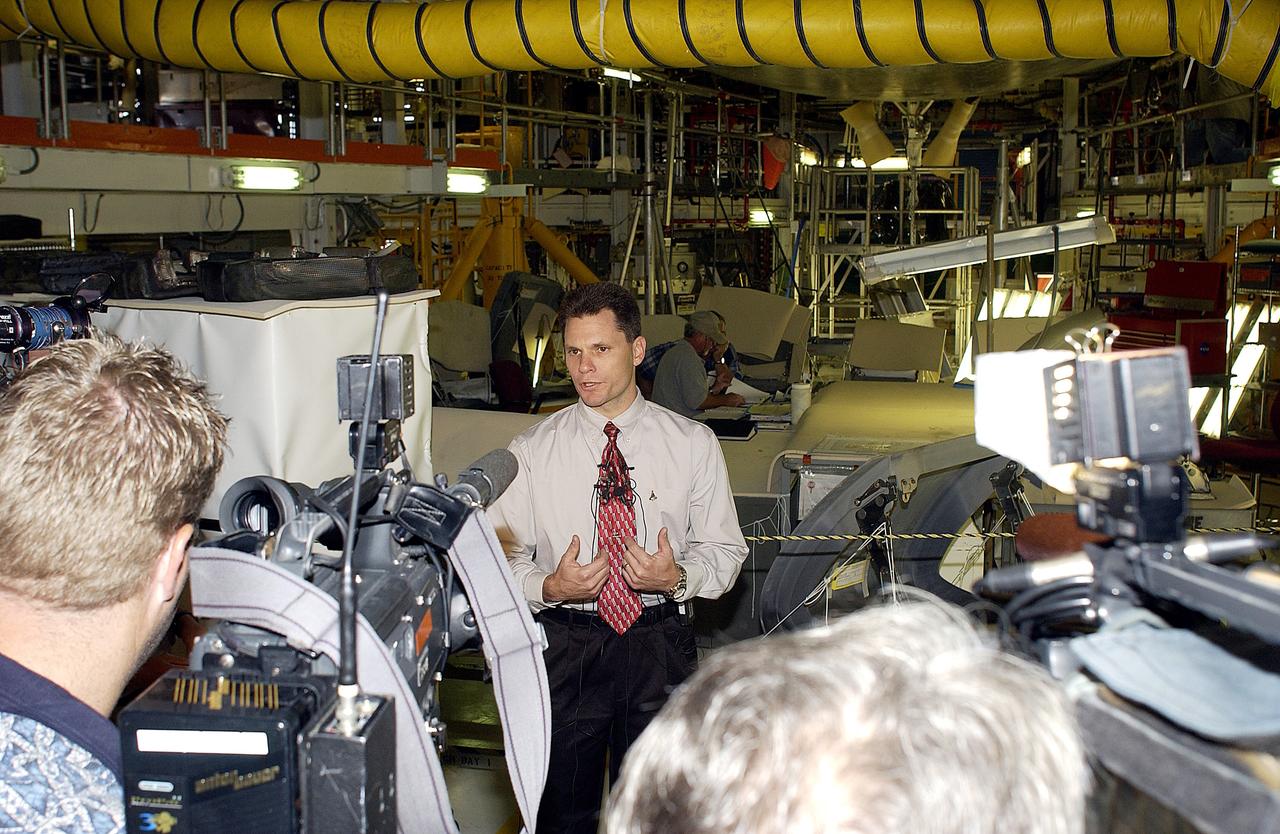
KENNEDY SPACE CENTER, FLA. -  NASA Vehicle Manager Scott Thurston (facing camera) talks to the media in the Orbiter Processing Facility.  The media was invited to see the orbiter Atlantis as it is being prepared for Return to Flight.  Both local and national reporters representing print and TV networks were able to see work in progress on Atlantis, including the reinstallation of the Reinforced Carbon-Carbon panels on the orbiter’s wing leading edge; wiring inspections; and checks of the engines in the Orbital Maneuvering System.
KENNEDY SPACE CENTER, FLA. - NASA Vehicle Manager Scott Thurston (facing camera) talks to the media in the Orbiter Processing Facility. The media was invited to see the orbiter Atlantis as it is being prepared for Return to Flight. Both local and national reporters representing print and TV networks were able to see work in progress on Atlantis, including the reinstallation of the Reinforced Carbon-Carbon panels on the orbiter’s wing leading edge; wiring inspections; and checks of the engines in the Orbital Maneuvering System.
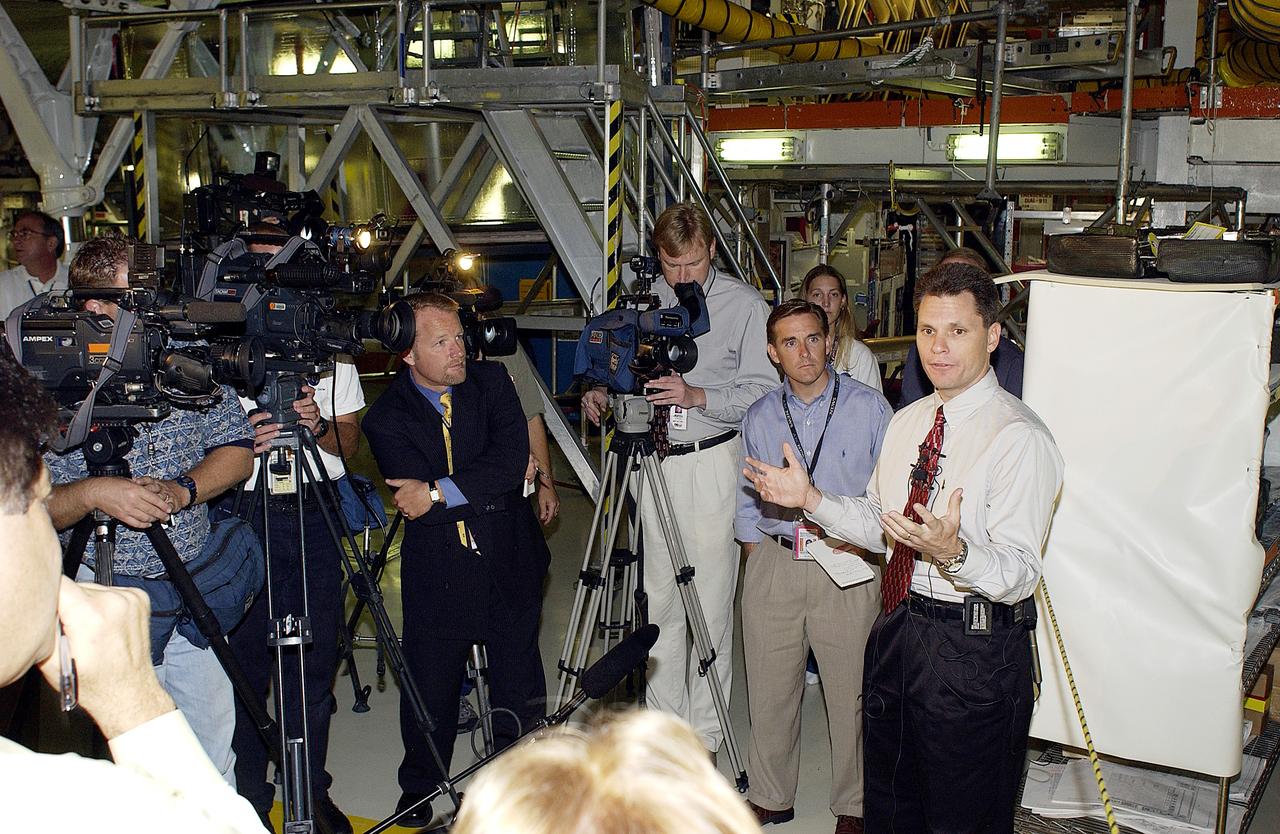
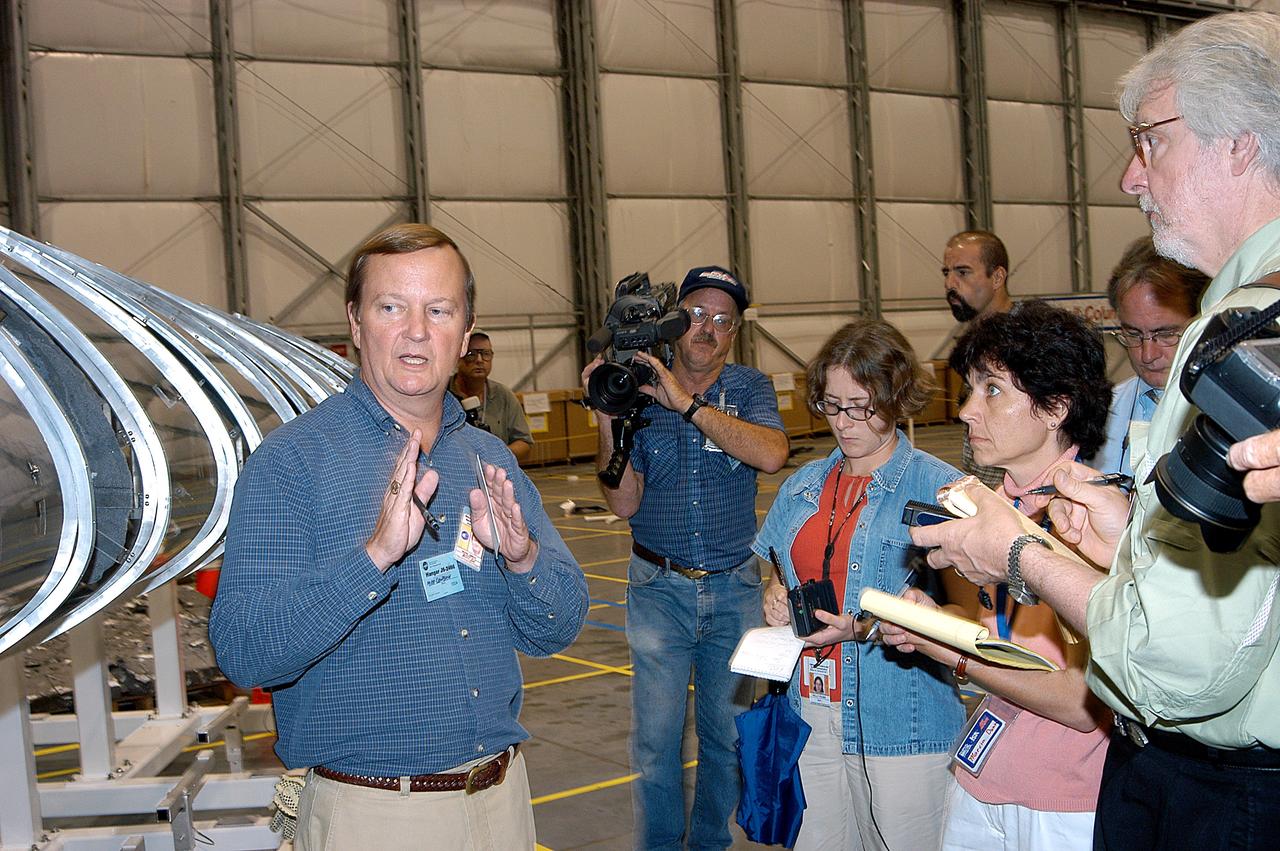
KENNEDY SPACE CENTER, FLA. -   NASA Vehicle Manager Scott Thurston (hands extended) talks to the media in the Orbiter Processing Facility.  The media was invited to see the orbiter Atlantis as it is being prepared for Return to Flight.  Both local and national reporters representing print and TV networks were able to see work in progress on Atlantis, including the reinstallation of the Reinforced Carbon-Carbon panels on the orbiter’s wing leading edge; wiring inspections; and checks of the engines in the Orbital Maneuvering System.
KENNEDY SPACE CENTER, FLA. - NASA Vehicle Manager Scott Thurston (hands extended) talks to the media in the Orbiter Processing Facility. The media was invited to see the orbiter Atlantis as it is being prepared for Return to Flight. Both local and national reporters representing print and TV networks were able to see work in progress on Atlantis, including the reinstallation of the Reinforced Carbon-Carbon panels on the orbiter’s wing leading edge; wiring inspections; and checks of the engines in the Orbital Maneuvering System.
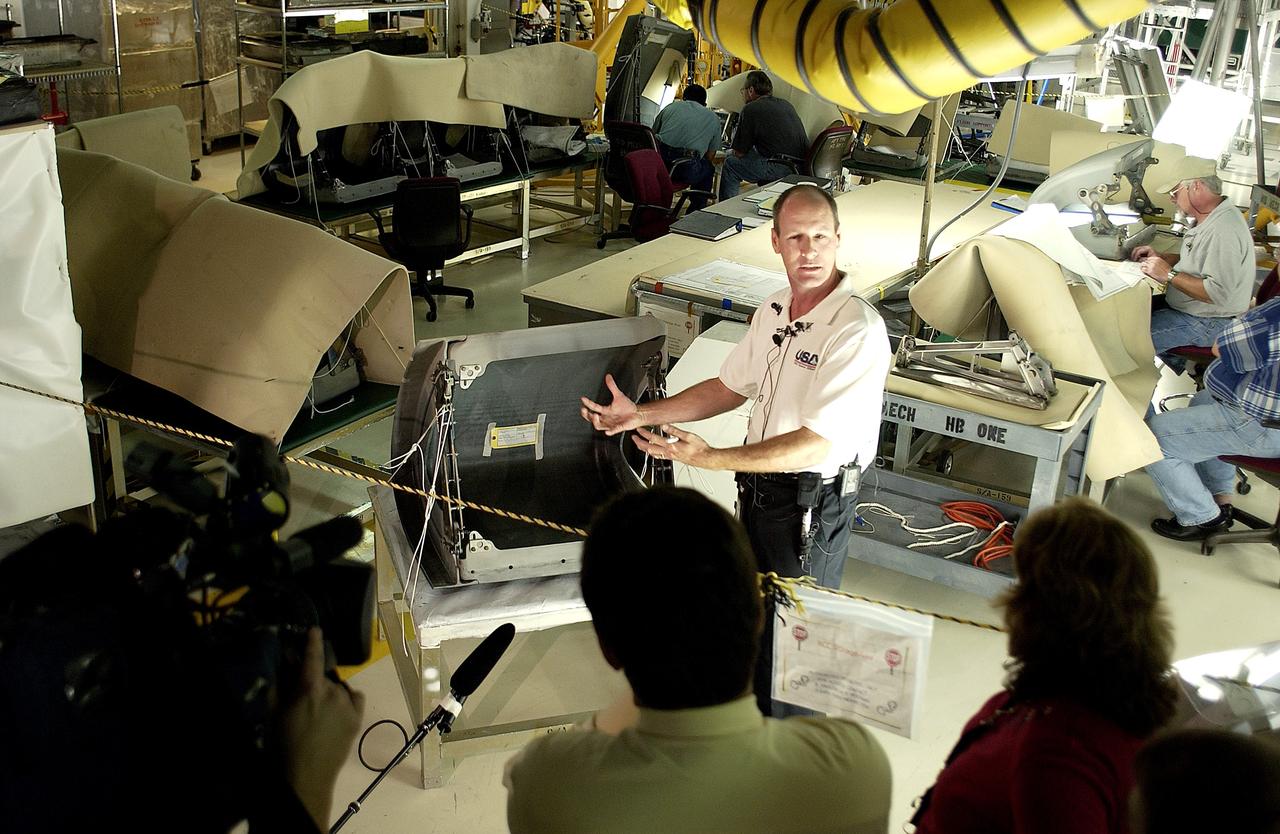
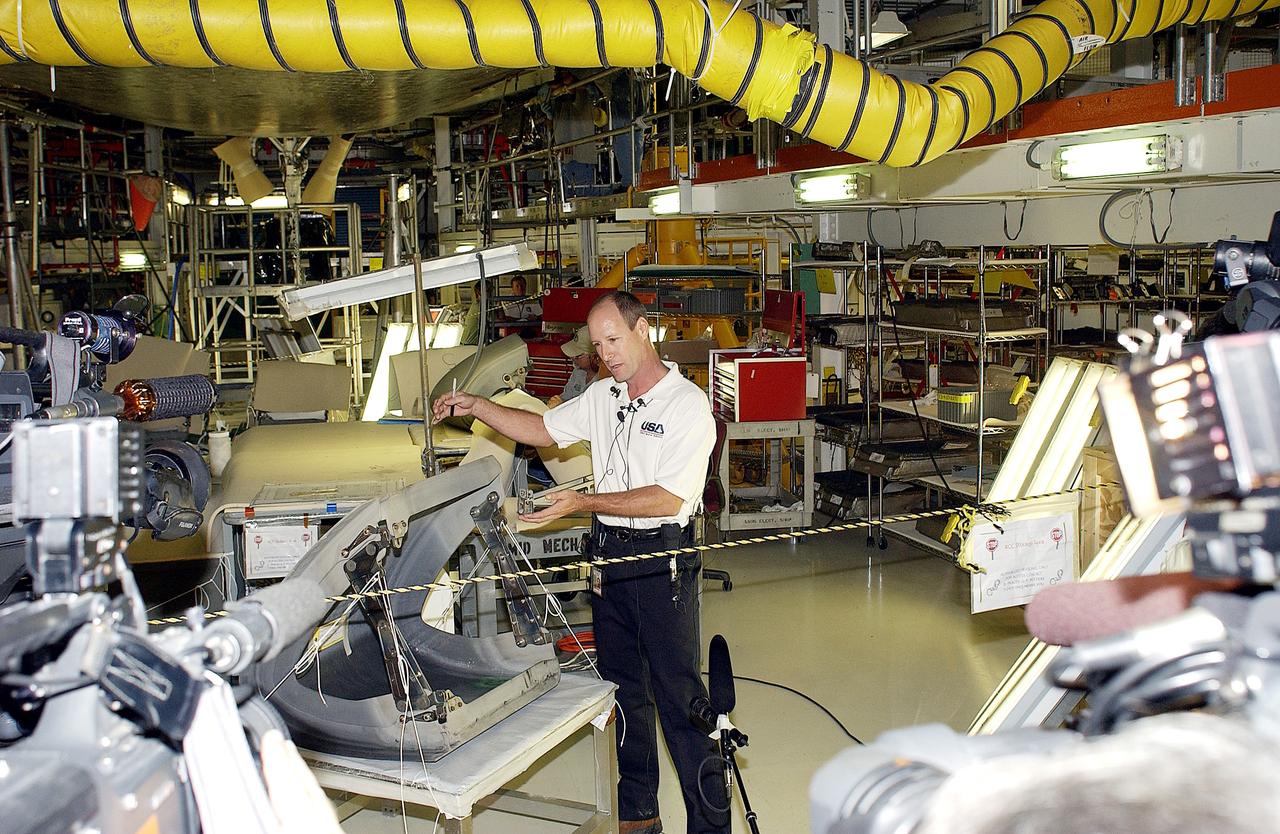
KENNEDY SPACE CENTER, FLA. -  In the Orbiter Processing Facility (OPF), Rick Beckwith, an orbiter engineer with United Space Alliance, explains to the media the reinstallation of the Reinforced Carbon-Carbon panels on Atlantis’ wing leading edge.  The media was invited to tour the OPF at KSC and to see the orbiter Atlantis as it is being prepared for Return to Flight.  Both local and national reporters representing print and TV networks were able to see work in progress on Atlantis, also including wiring inspections and checks of the engines in the Orbital Maneuvering System.
KENNEDY SPACE CENTER, FLA. - In the Orbiter Processing Facility (OPF), Rick Beckwith, an orbiter engineer with United Space Alliance, explains to the media the reinstallation of the Reinforced Carbon-Carbon panels on Atlantis’ wing leading edge. The media was invited to tour the OPF at KSC and to see the orbiter Atlantis as it is being prepared for Return to Flight. Both local and national reporters representing print and TV networks were able to see work in progress on Atlantis, also including wiring inspections and checks of the engines in the Orbital Maneuvering System.
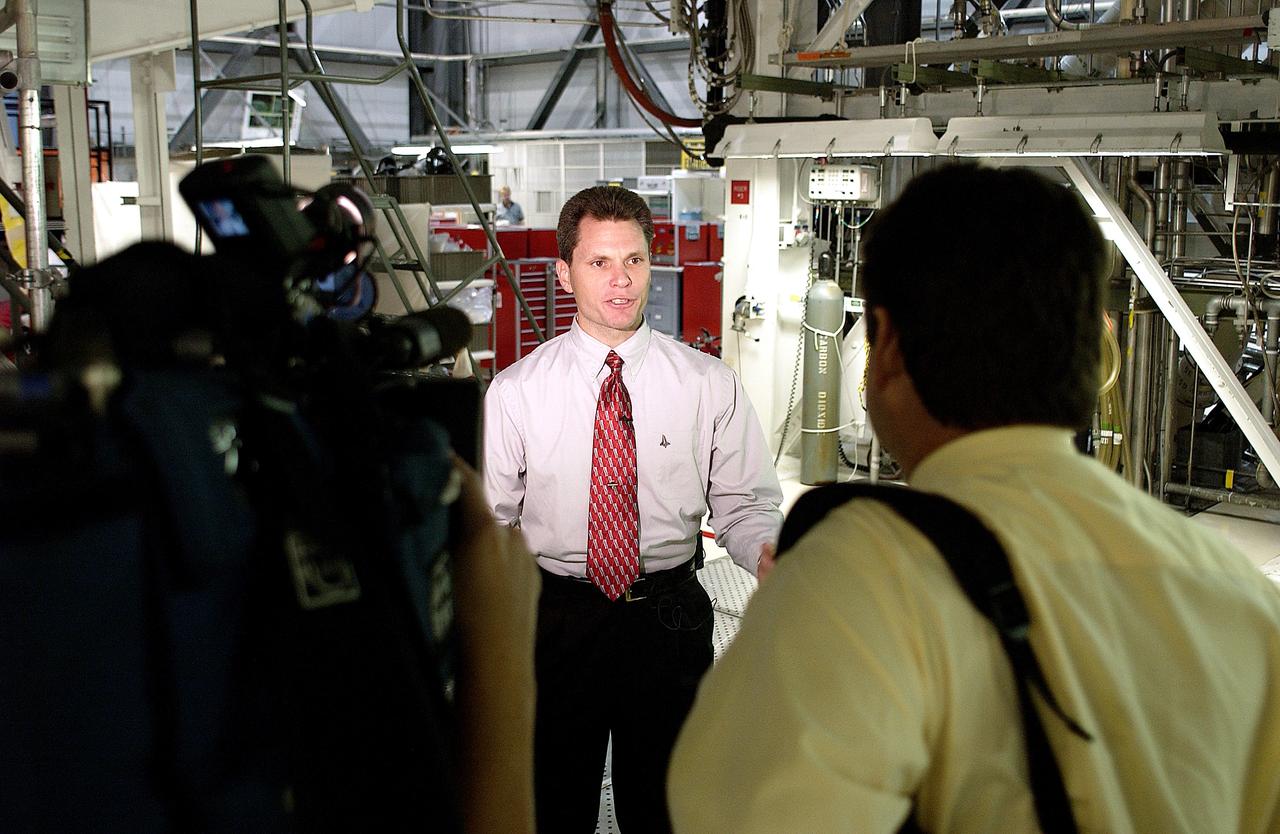
KENNEDY SPACE CENTER, FLA. -  NASA Vehicle Manager Scott Thurston (facing camera) talks to the media in the Orbiter Processing Facility.  The media was invited to see the orbiter Atlantis as it is being prepared for Return to Flight.  Both local and national reporters representing print and TV networks were able to see work in progress on Atlantis, including the reinstallation of the Reinforced Carbon-Carbon panels on the orbiter’s wing leading edge; wiring inspections; and checks of the engines in the Orbital Maneuvering System.
KENNEDY SPACE CENTER, FLA. - NASA Vehicle Manager Scott Thurston (facing camera) talks to the media in the Orbiter Processing Facility. The media was invited to see the orbiter Atlantis as it is being prepared for Return to Flight. Both local and national reporters representing print and TV networks were able to see work in progress on Atlantis, including the reinstallation of the Reinforced Carbon-Carbon panels on the orbiter’s wing leading edge; wiring inspections; and checks of the engines in the Orbital Maneuvering System.
KENNEDY SPACE CENTER, FLA. -   NASA Vehicle Manager Scott Thurston (right)  talks to the media in the Orbiter Processing Facility.  The media was invited to see the orbiter Atlantis as it is being prepared for Return to Flight.  Both local and national reporters representing print and TV networks were able to see work in progress on Atlantis, including the reinstallation of the Reinforced Carbon-Carbon panels on the orbiter’s wing leading edge; wiring inspections; and checks of the engines in the Orbital Maneuvering System.  will be available to discuss the work and answer questions.
KENNEDY SPACE CENTER, FLA. - NASA Vehicle Manager Scott Thurston (right) talks to the media in the Orbiter Processing Facility. The media was invited to see the orbiter Atlantis as it is being prepared for Return to Flight. Both local and national reporters representing print and TV networks were able to see work in progress on Atlantis, including the reinstallation of the Reinforced Carbon-Carbon panels on the orbiter’s wing leading edge; wiring inspections; and checks of the engines in the Orbital Maneuvering System. will be available to discuss the work and answer questions.
KENNEDY SPACE CENTER, FLA. -  In the Orbiter Processing Facility (OPF), Rick Beckwith, an orbiter engineer with United Space Alliance, explains to the media the reinstallation of the Reinforced Carbon-Carbon panels on the orbiter Atlantis’ wing leading edge.  The media was invited to tour the OPF at KSC and to see the orbiter Atlantis as it is being prepared for Return to Flight.  Both local and national reporters representing print and TV networks were able to see work in progress on Atlantis, also including wiring inspections and checks of the engines in the Orbital Maneuvering System.
KENNEDY SPACE CENTER, FLA. - In the Orbiter Processing Facility (OPF), Rick Beckwith, an orbiter engineer with United Space Alliance, explains to the media the reinstallation of the Reinforced Carbon-Carbon panels on the orbiter Atlantis’ wing leading edge. The media was invited to tour the OPF at KSC and to see the orbiter Atlantis as it is being prepared for Return to Flight. Both local and national reporters representing print and TV networks were able to see work in progress on Atlantis, also including wiring inspections and checks of the engines in the Orbital Maneuvering System.
KENNEDY SPACE CENTER, FLA. -  In the Orbiter Processing Facility, Rick Beckwith (center), an orbiter engineer with United Space Alliance, explains to the media the reinstallation of the Reinforced Carbon-Carbon panels on the orbiter Atlantis’ wing leading edge.  The media was invited to tour the OPF at KSC and to see the orbiter Atlantis as it is being prepared for Return to Flight.  Both local and national reporters representing print and TV networks were able to see work in progress on Atlantis, also including wiring inspections and checks of the engines in the Orbital Maneuvering System.
KENNEDY SPACE CENTER, FLA. - In the Orbiter Processing Facility, Rick Beckwith (center), an orbiter engineer with United Space Alliance, explains to the media the reinstallation of the Reinforced Carbon-Carbon panels on the orbiter Atlantis’ wing leading edge. The media was invited to tour the OPF at KSC and to see the orbiter Atlantis as it is being prepared for Return to Flight. Both local and national reporters representing print and TV networks were able to see work in progress on Atlantis, also including wiring inspections and checks of the engines in the Orbital Maneuvering System.
KENNEDY SPACE CENTER, FLA. -  NASA Vehicle Manager Scott Thurston talks to the media in the Orbiter Processing Facility.  The media was invited to see the orbiter Atlantis as it is being prepared for Return to Flight.  Both local and national reporters representing print and TV networks were able to see work in progress on Atlantis, including the reinstallation of the Reinforced Carbon-Carbon panels on the orbiter’s wing leading edge; wiring inspections; and checks of the engines in the Orbital Maneuvering System.
KENNEDY SPACE CENTER, FLA. - NASA Vehicle Manager Scott Thurston talks to the media in the Orbiter Processing Facility. The media was invited to see the orbiter Atlantis as it is being prepared for Return to Flight. Both local and national reporters representing print and TV networks were able to see work in progress on Atlantis, including the reinstallation of the Reinforced Carbon-Carbon panels on the orbiter’s wing leading edge; wiring inspections; and checks of the engines in the Orbital Maneuvering System.
KENNEDY SPACE CENTER, FLA. -   NASA Vehicle Manager Scott Thurston talks to the media in the Orbiter Processing Facility.  The media was invited to see the orbiter Atlantis as it is being prepared for Return to Flight.  Both local and national reporters representing print and TV networks were able to see work in progress on Atlantis, including the reinstallation of the Reinforced Carbon-Carbon panels on the orbiter’s wing leading edge; wiring inspections; and checks of the engines in the Orbital Maneuvering System.
KENNEDY SPACE CENTER, FLA. - NASA Vehicle Manager Scott Thurston talks to the media in the Orbiter Processing Facility. The media was invited to see the orbiter Atlantis as it is being prepared for Return to Flight. Both local and national reporters representing print and TV networks were able to see work in progress on Atlantis, including the reinstallation of the Reinforced Carbon-Carbon panels on the orbiter’s wing leading edge; wiring inspections; and checks of the engines in the Orbital Maneuvering System.
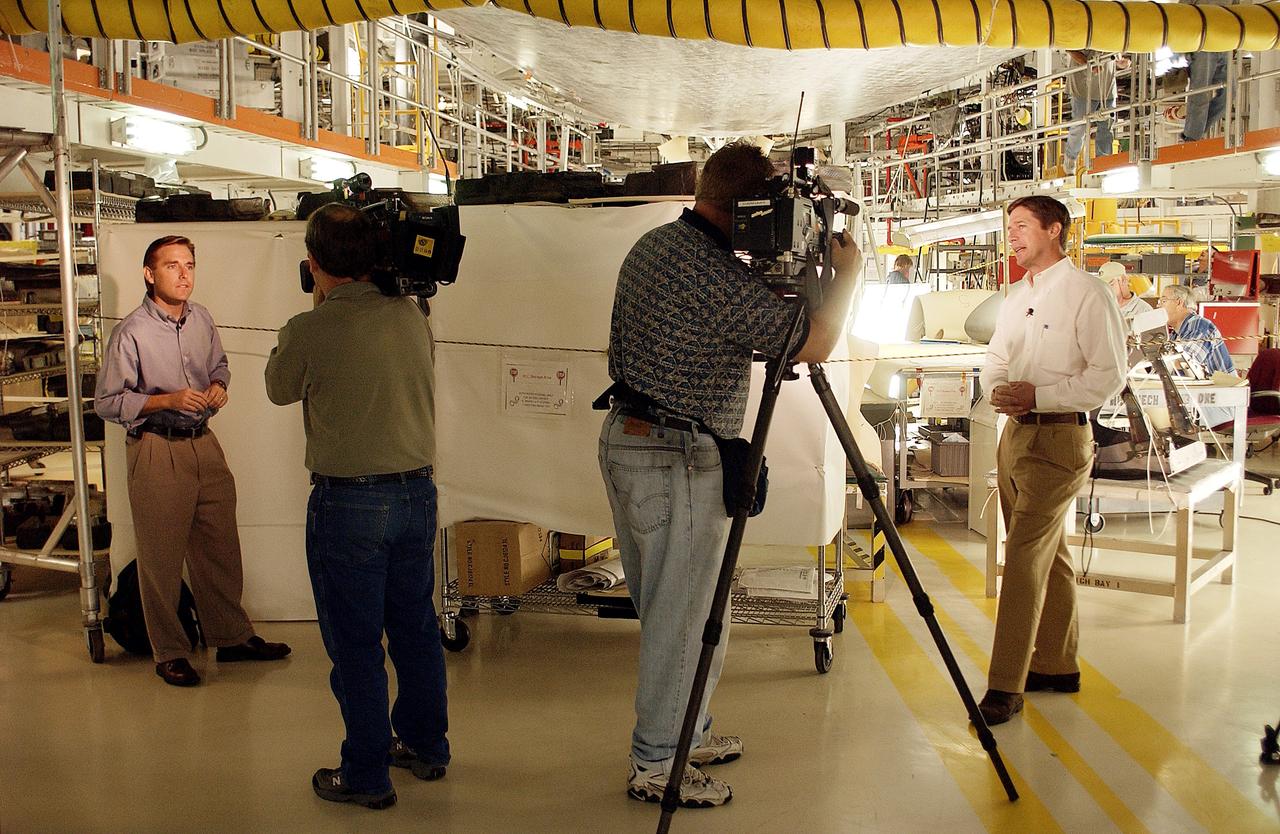
KENNEDY SPACE CENTER, FLA. - Local Central Florida television reporters Phil Robertson (left), with WFTV, and Dan Billow (right), with WESH, tape commentaries after a media tour of the Orbiter Processing Facility.  The media was invited to see the orbiter Atlantis as it is being prepared for Return to Flight.  Both local and national reporters representing print and TV networks were able to see work in progress on Atlantis, including the reinstallation of the Reinforced Carbon-Carbon panels on the orbiter’s wing leading edge; wiring inspections; and checks of the engines in the Orbital Maneuvering System.
KENNEDY SPACE CENTER, FLA. - Local Central Florida television reporters Phil Robertson (left), with WFTV, and Dan Billow (right), with WESH, tape commentaries after a media tour of the Orbiter Processing Facility. The media was invited to see the orbiter Atlantis as it is being prepared for Return to Flight. Both local and national reporters representing print and TV networks were able to see work in progress on Atlantis, including the reinstallation of the Reinforced Carbon-Carbon panels on the orbiter’s wing leading edge; wiring inspections; and checks of the engines in the Orbital Maneuvering System.
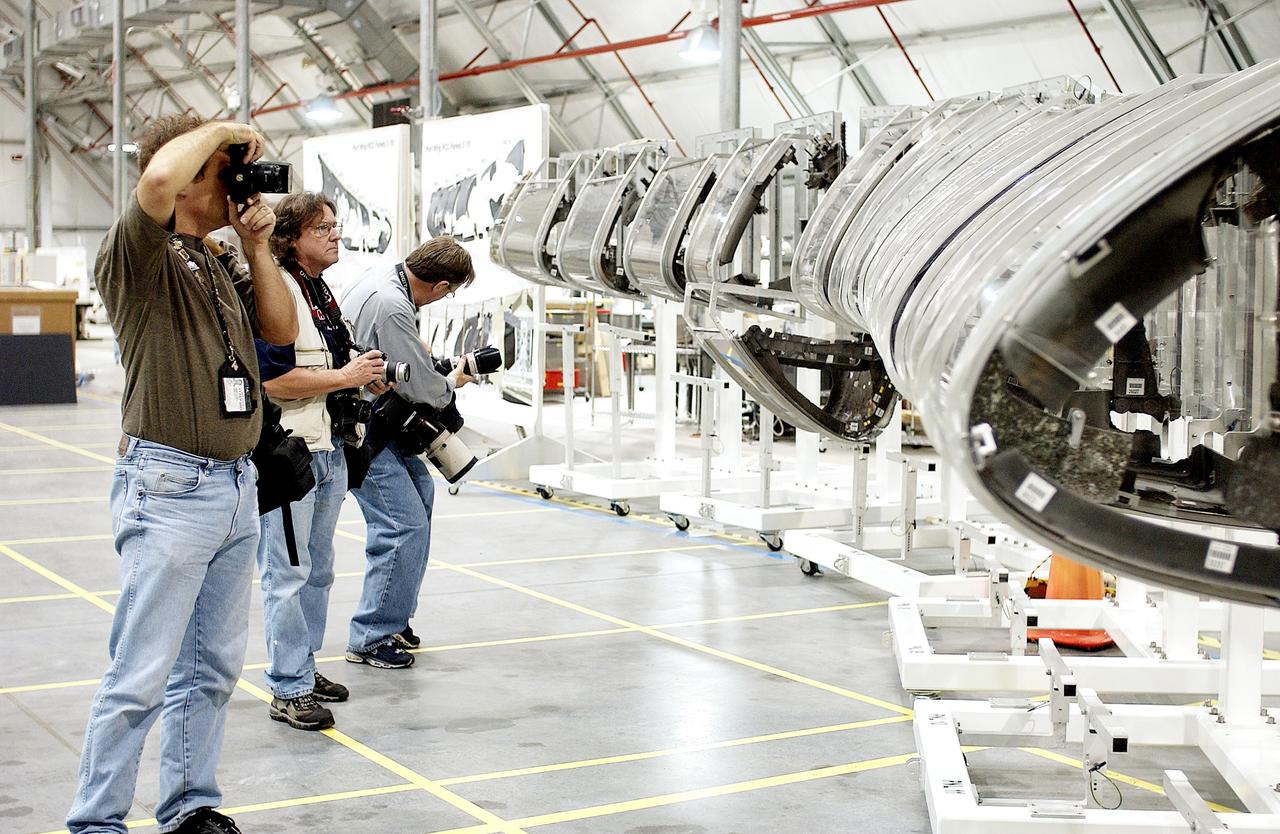
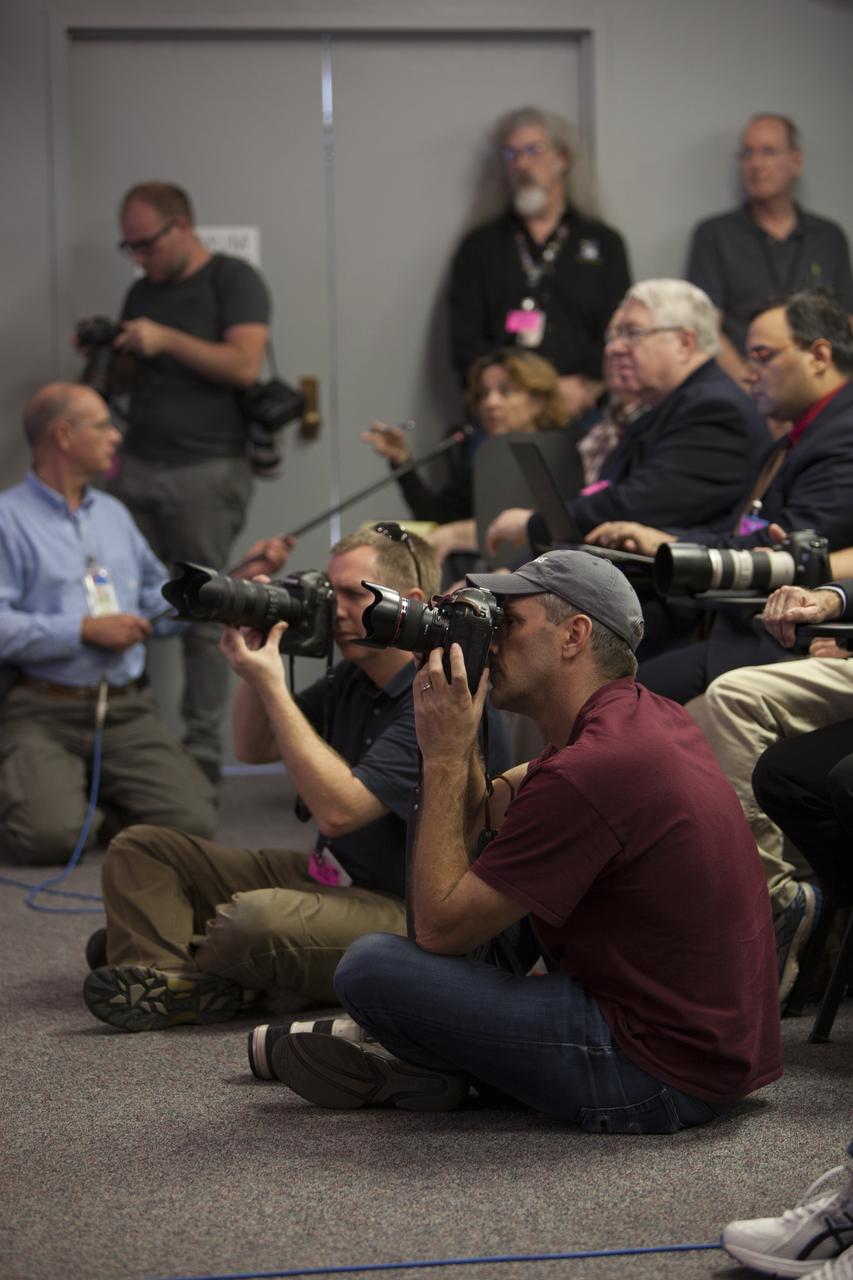
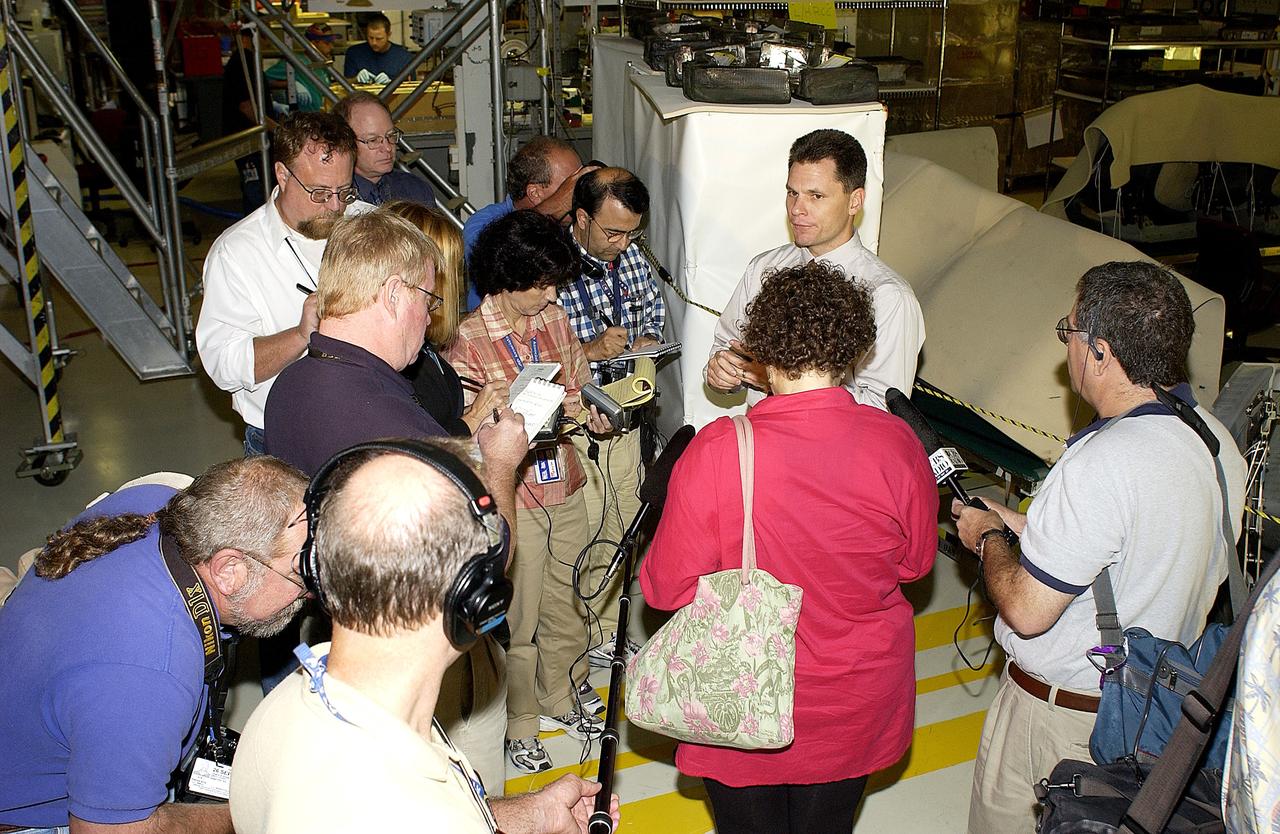
KENNEDY SPACE CENTER, FLA. -  In the Orbiter Processing Facility, while a few photographers (left) set up for photos of a Reinforced Carbon-Carbon panel at far right, NASA Vehicle Manager Scott Thurston (right) talks to other media.   The media was invited to see the orbiter Atlantis as it is being prepared for Return to Flight.  Both local and national reporters representing print and TV networks were able to see work in progress on Atlantis, including the reinstallation of the Reinforced Carbon-Carbon panels on the orbiter’s wing leading edge; wiring inspections; and checks of the engines in the Orbital Maneuvering System.
KENNEDY SPACE CENTER, FLA. - In the Orbiter Processing Facility, while a few photographers (left) set up for photos of a Reinforced Carbon-Carbon panel at far right, NASA Vehicle Manager Scott Thurston (right) talks to other media. The media was invited to see the orbiter Atlantis as it is being prepared for Return to Flight. Both local and national reporters representing print and TV networks were able to see work in progress on Atlantis, including the reinstallation of the Reinforced Carbon-Carbon panels on the orbiter’s wing leading edge; wiring inspections; and checks of the engines in the Orbital Maneuvering System.
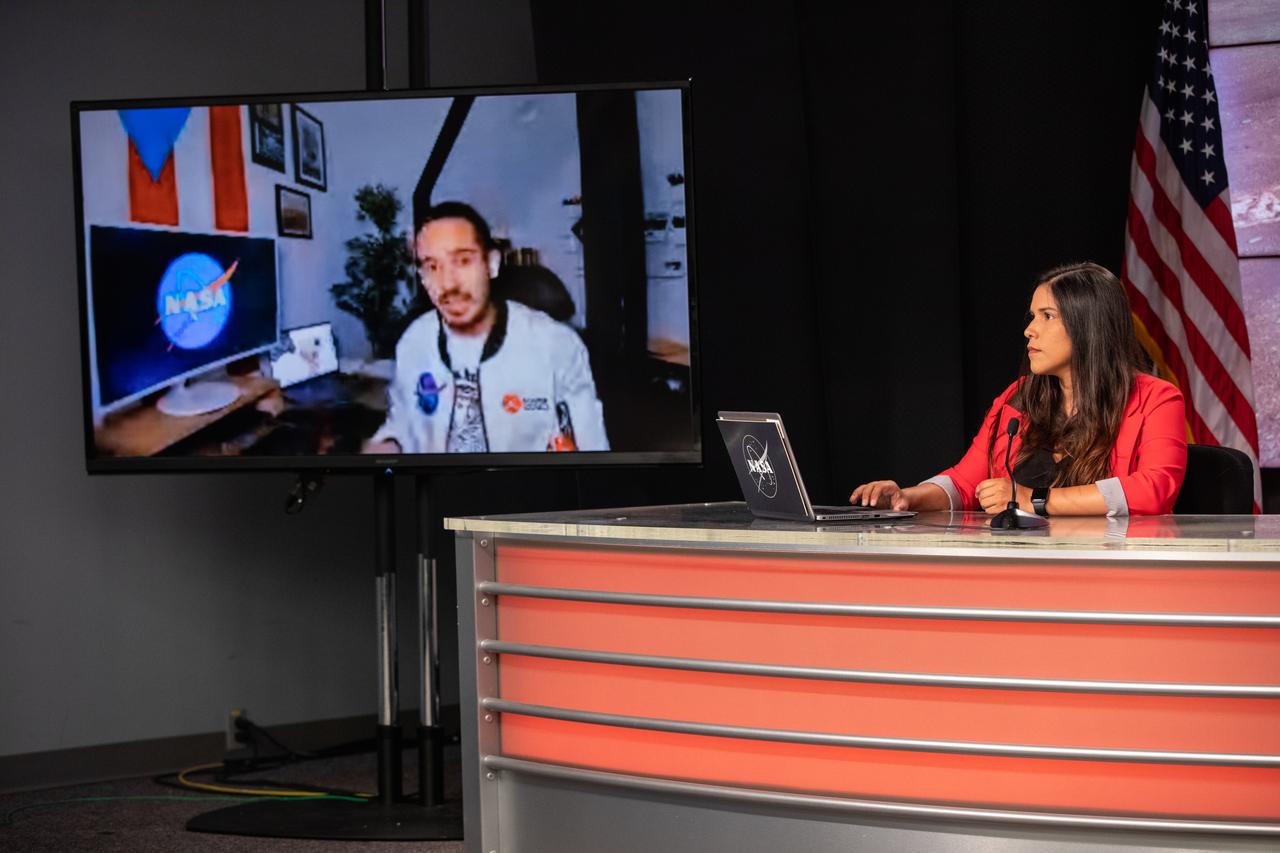
Mars 2020 Social Media Q&A: En Español with representatives from NASA’s Launch Services Program and NASA’s Jet Propulsion Laboratory.
CSP Mars 2020 Spanish Facebook Live
Flight Director Tommy Holloway listens to a question from a news media representative during a STS-5 pre-flight press briefing.
Flight Director Tommy Holloway during STS-5 pre-flight press briefing
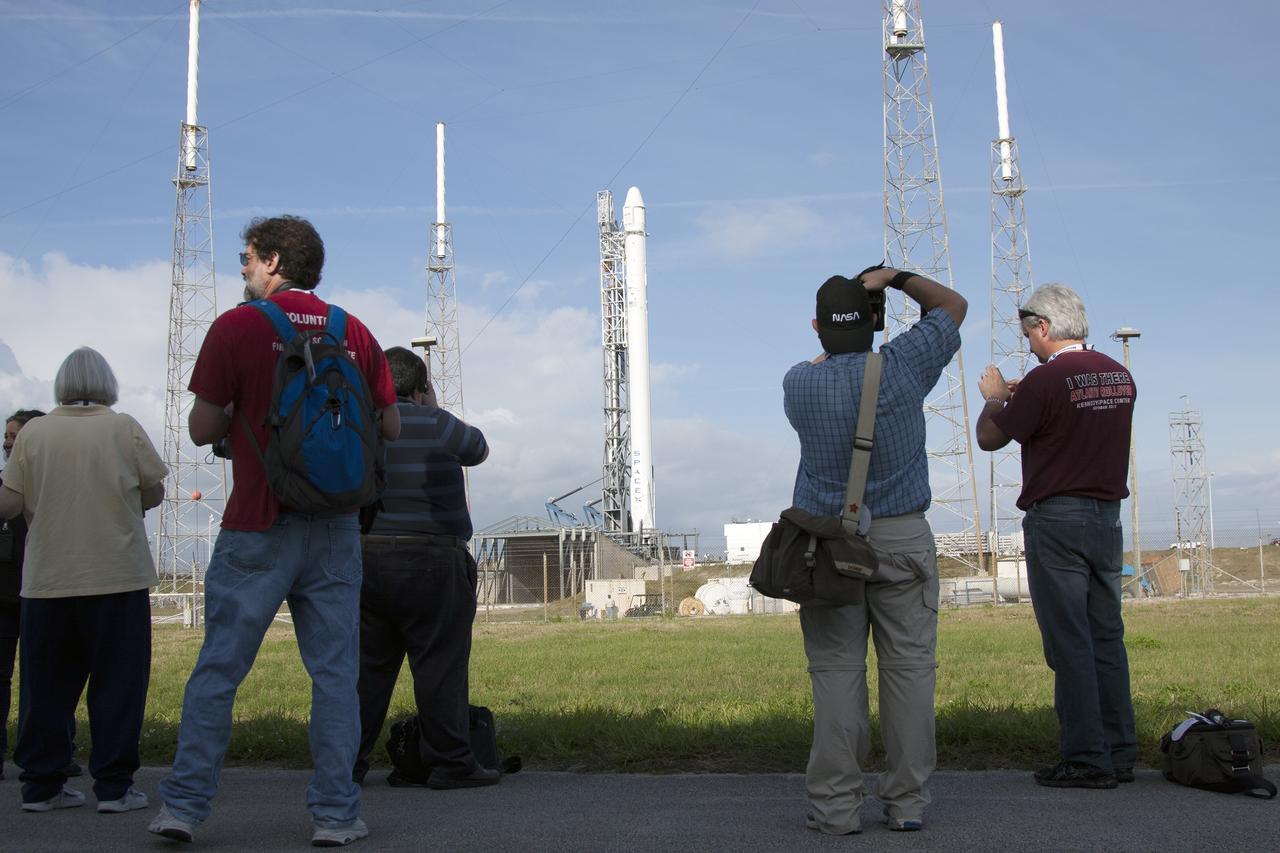
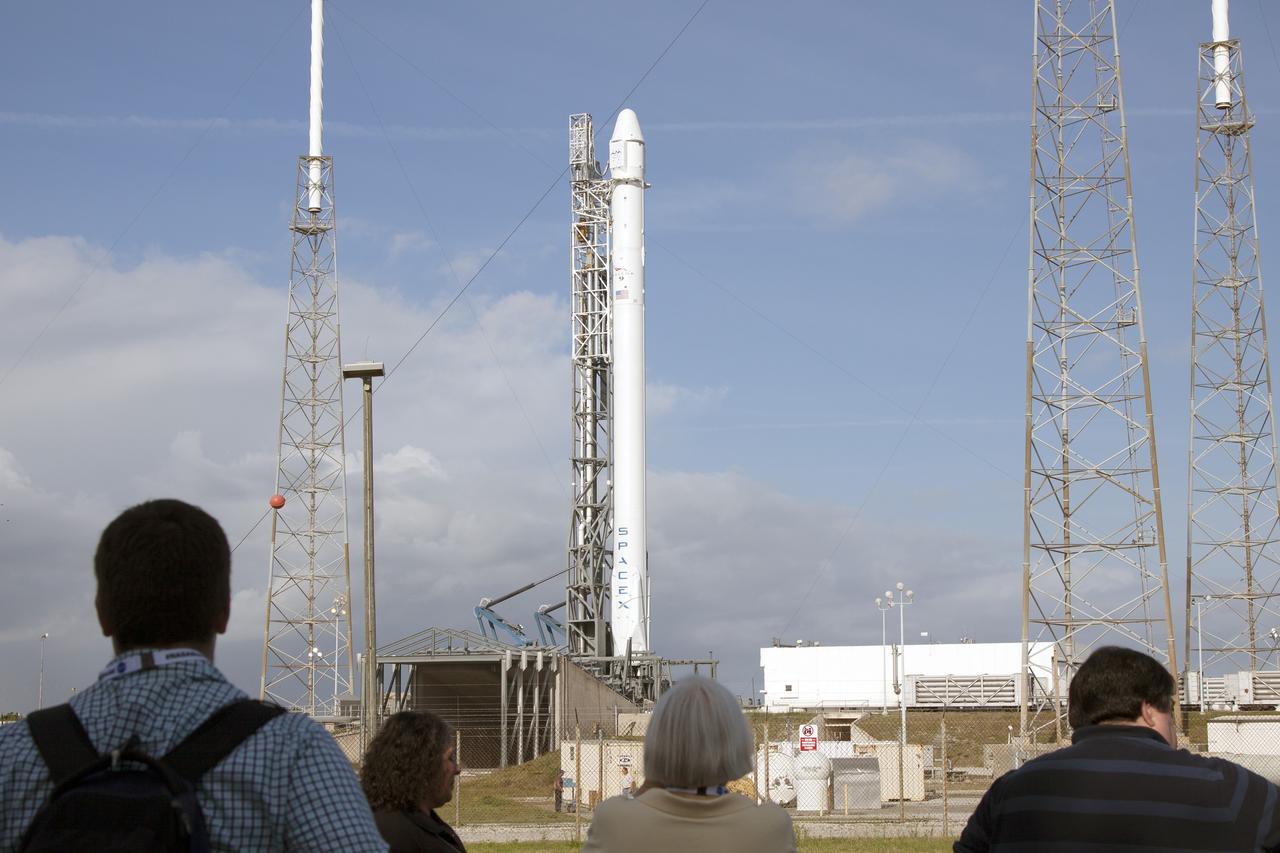
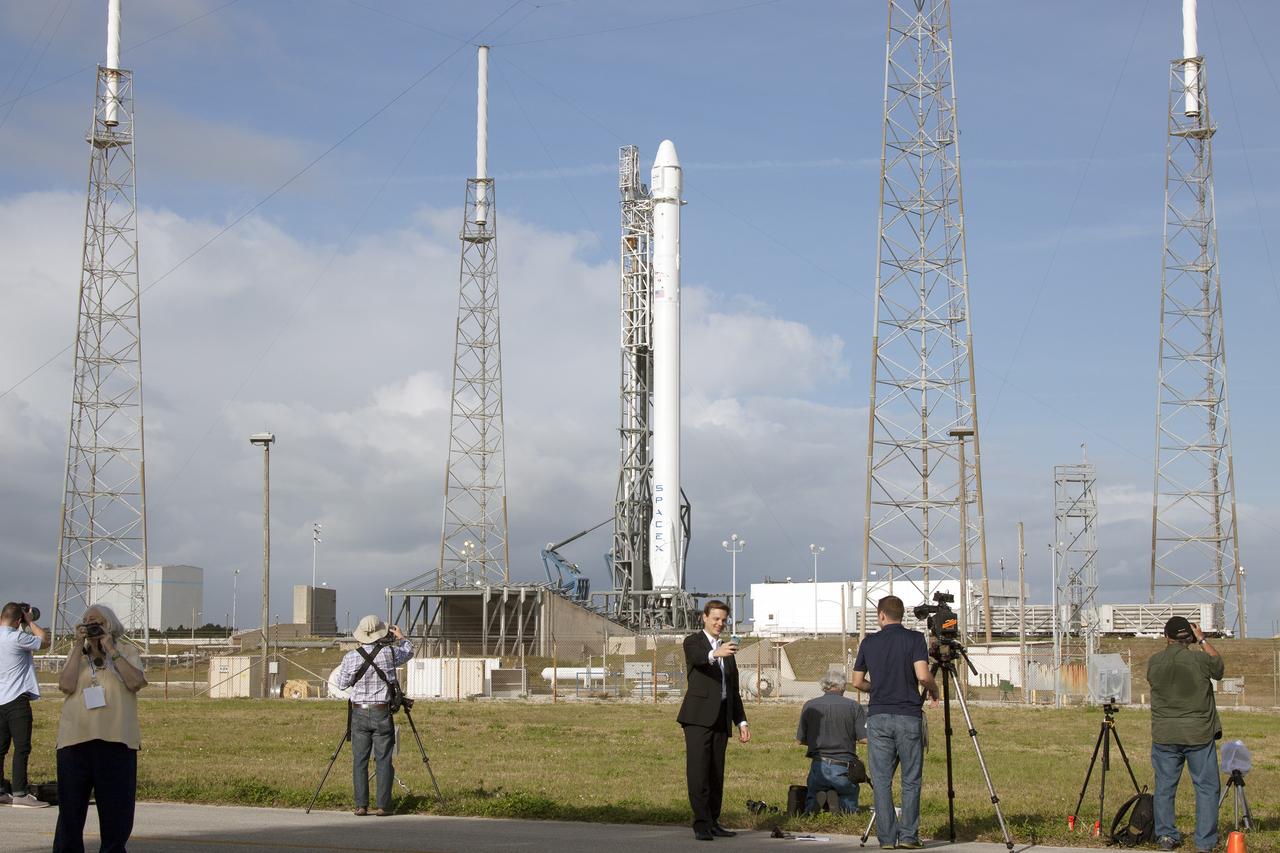
CAPE CANAVERAL, Fla. - Social media representatives photograph the SpaceX Falcon 9 rocket and Dragon Capsule on Space Launch Complex 40 on Cape Canaveral Air Force Station in Florida. NASA Social participants are given the same access as news media in an effort to align the experience of social media representatives with those of traditional media, including the opportunity to view a launch of SpaceX’s Falcon 9 rocket, tour NASA facilities at Kennedy Space Center, speak with representatives from both NASA and SpaceX, view and take photographs of the SpaceX launch pad, meet fellow space enthusiasts who are active on social media and meet members of SpaceX and NASA's social media teams.    Scheduled for launch at about 4:58 p.m. EDT April 14, Dragon will be making its fourth trip to the space station. The SpaceX-3 mission, carrying almost 2.5 tons of supplies, technology and science experiments, is the third of 12 flights under NASA's Commercial Resupply Services contract to resupply the orbiting laboratory. For more information, visit http://www.nasa.gov/mission_pages/station/structure/launch/index.html Photo credit: NASA/Glenn Benson
KSC-2014-2076
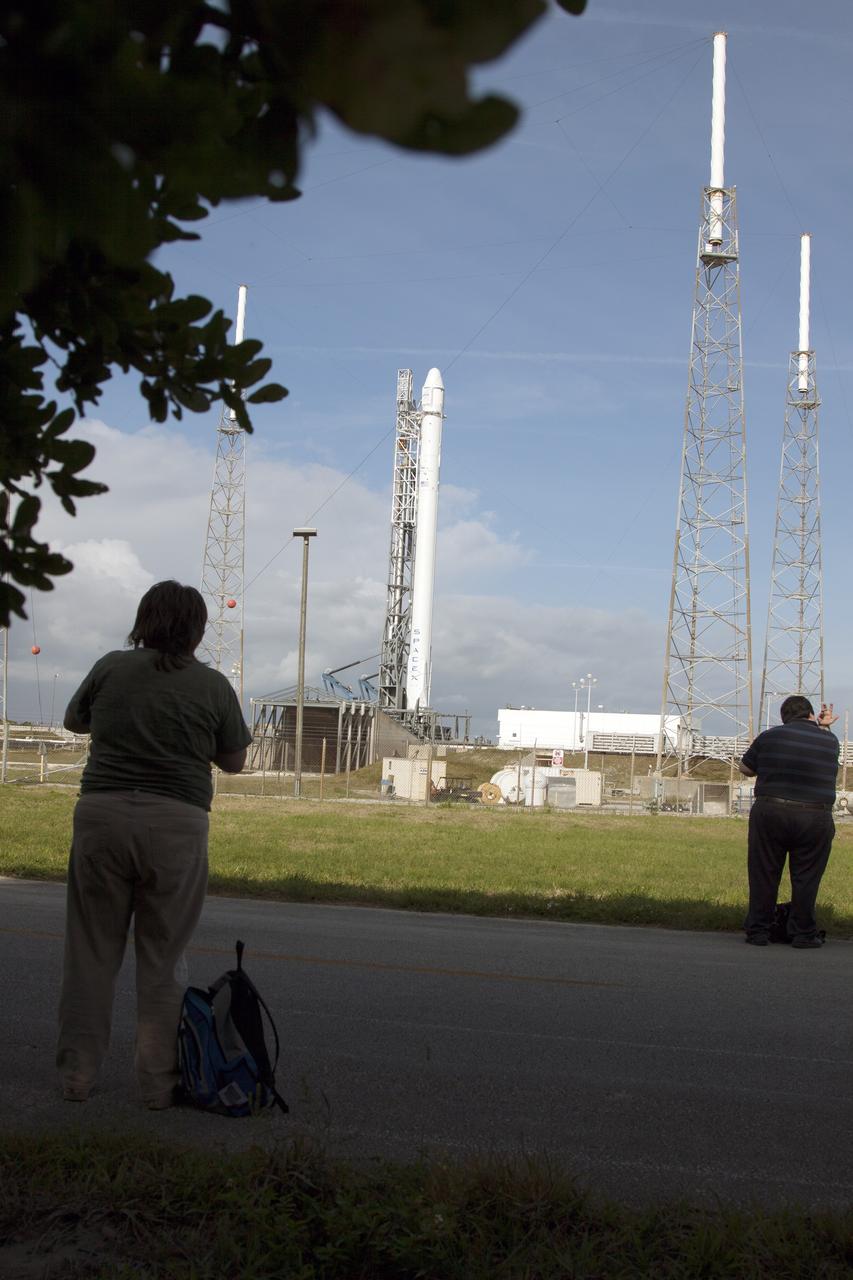
CAPE CANAVERAL, Fla. - Social media representatives photograph the SpaceX Falcon 9 rocket and Dragon Capsule on Space Launch Complex 40 on Cape Canaveral Air Force Station in Florida. NASA Social participants are given the same access as news media in an effort to align the experience of social media representatives with those of traditional media, including the opportunity to view a launch of SpaceX’s Falcon 9 rocket, tour NASA facilities at Kennedy Space Center, speak with representatives from both NASA and SpaceX, view and take photographs of the SpaceX launch pad, meet fellow space enthusiasts who are active on social media and meet members of SpaceX and NASA's social media teams.      Scheduled for launch at about 4:58 p.m. EDT April 14, Dragon will be making its fourth trip to the space station. The SpaceX-3 mission, carrying almost 2.5 tons of supplies, technology and science experiments, is the third of 12 flights under NASA's Commercial Resupply Services contract to resupply the orbiting laboratory. For more information, visit http://www.nasa.gov/mission_pages/station/structure/launch/index.html Photo credit: NASA/Glenn Benson
KSC-2014-2074
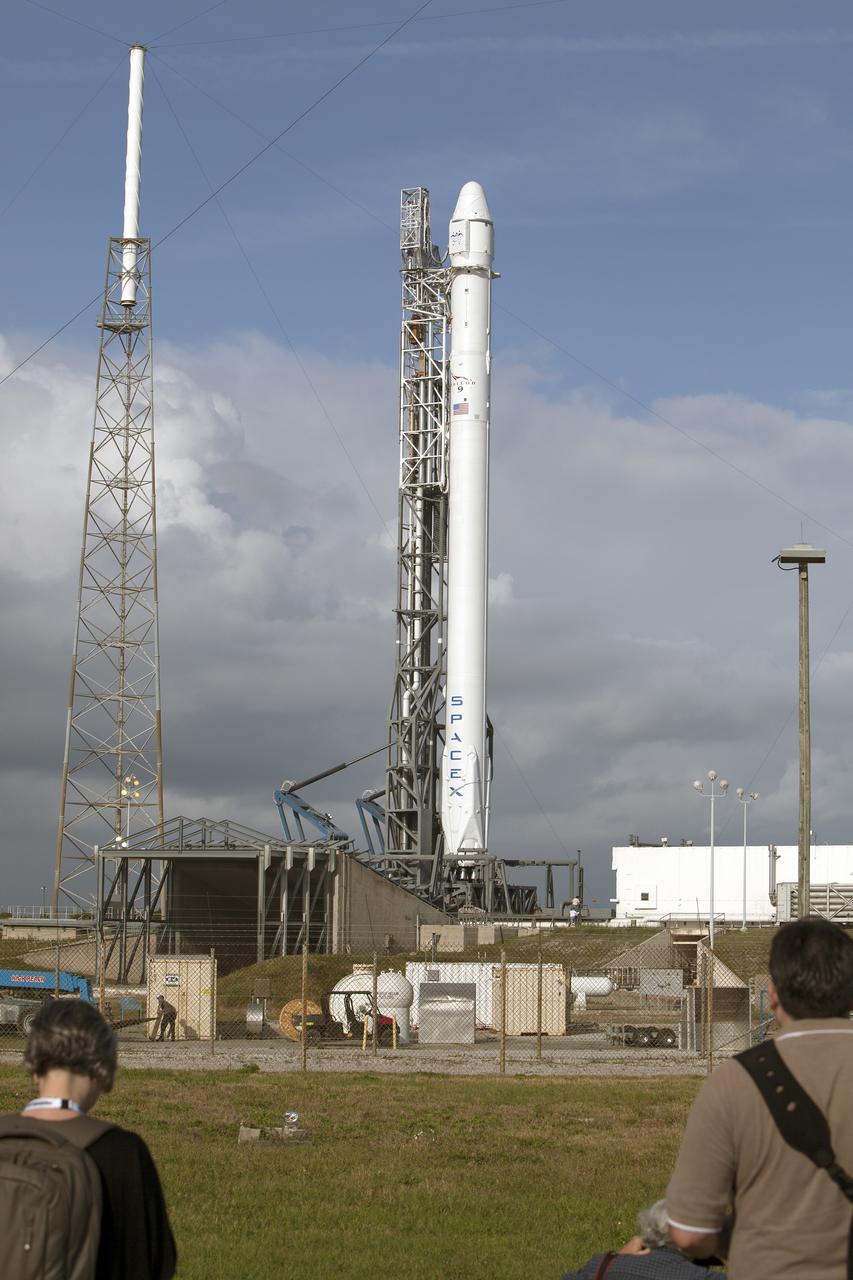
CAPE CANAVERAL, Fla. - Social media representatives get an up-close view of the SpaceX Falcon 9 rocket and Dragon Capsule on Space Launch Complex 40 on Cape Canaveral Air Force Station in Florida. NASA Social participants are given the same access as news media in an effort to align the experience of social media representatives with those of traditional media, including the opportunity to view a launch of SpaceX’s Falcon 9 rocket, tour NASA facilities at Kennedy Space Center, speak with representatives from both NASA and SpaceX, view and take photographs of the SpaceX launch pad, meet fellow space enthusiasts who are active on social media and meet members of SpaceX and NASA's social media teams.      Scheduled for launch at about 4:58 p.m. EDT April 14, Dragon will be making its fourth trip to the space station. The SpaceX-3 mission, carrying almost 2.5 tons of supplies, technology and science experiments, is the third of 12 flights under NASA's Commercial Resupply Services contract to resupply the orbiting laboratory. For more information, visit http://www.nasa.gov/mission_pages/station/structure/launch/index.html Photo credit: NASA/Glenn Benson
KSC-2014-2079
CAPE CANAVERAL, Fla. - Social media representatives get an up-close view of the SpaceX Falcon 9 rocket and Dragon Capsule on Space Launch Complex 40 on Cape Canaveral Air Force Station in Florida. NASA Social participants are given the same access as news media in an effort to align the experience of social media representatives with those of traditional media, including the opportunity to view a launch of SpaceX’s Falcon 9 rocket, tour NASA facilities at Kennedy Space Center, speak with representatives from both NASA and SpaceX, view and take photographs of the SpaceX launch pad, meet fellow space enthusiasts who are active on social media and meet members of SpaceX and NASA's social media teams.    Scheduled for launch at about 4:58 p.m. EDT April 14, Dragon will be making its fourth trip to the space station. The SpaceX-3 mission, carrying almost 2.5 tons of supplies, technology and science experiments, is the third of 12 flights under NASA's Commercial Resupply Services contract to resupply the orbiting laboratory. For more information, visit http://www.nasa.gov/mission_pages/station/structure/launch/index.html Photo credit: NASA/Glenn Benson
KSC-2014-2075
CAPE CANAVERAL, Fla. - Social media representatives photograph the SpaceX Falcon 9 rocket and Dragon Capsule on Space Launch Complex 40 on Cape Canaveral Air Force Station in Florida. NASA Social participants are given the same access as news media in an effort to align the experience of social media representatives with those of traditional media, including the opportunity to view a launch of SpaceX’s Falcon 9 rocket, tour NASA facilities at Kennedy Space Center, speak with representatives from both NASA and SpaceX, view and take photographs of the SpaceX launch pad, meet fellow space enthusiasts who are active on social media and meet members of SpaceX and NASA's social media teams.      Scheduled for launch at about 4:58 p.m. EDT April 14, Dragon will be making its fourth trip to the space station. The SpaceX-3 mission, carrying almost 2.5 tons of supplies, technology and science experiments, is the third of 12 flights under NASA's Commercial Resupply Services contract to resupply the orbiting laboratory. For more information, visit http://www.nasa.gov/mission_pages/station/structure/launch/index.html Photo credit: NASA/Glenn Benson
KSC-2014-2073
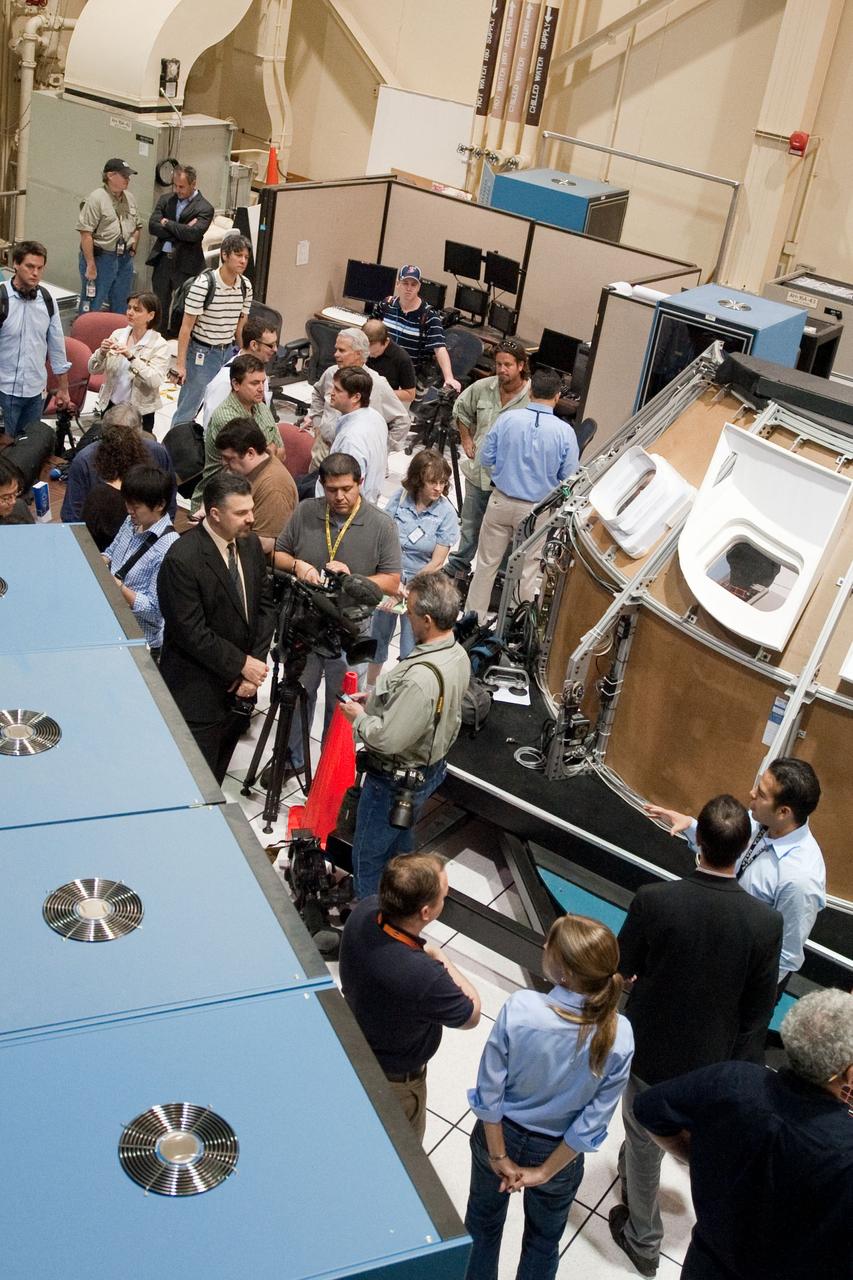
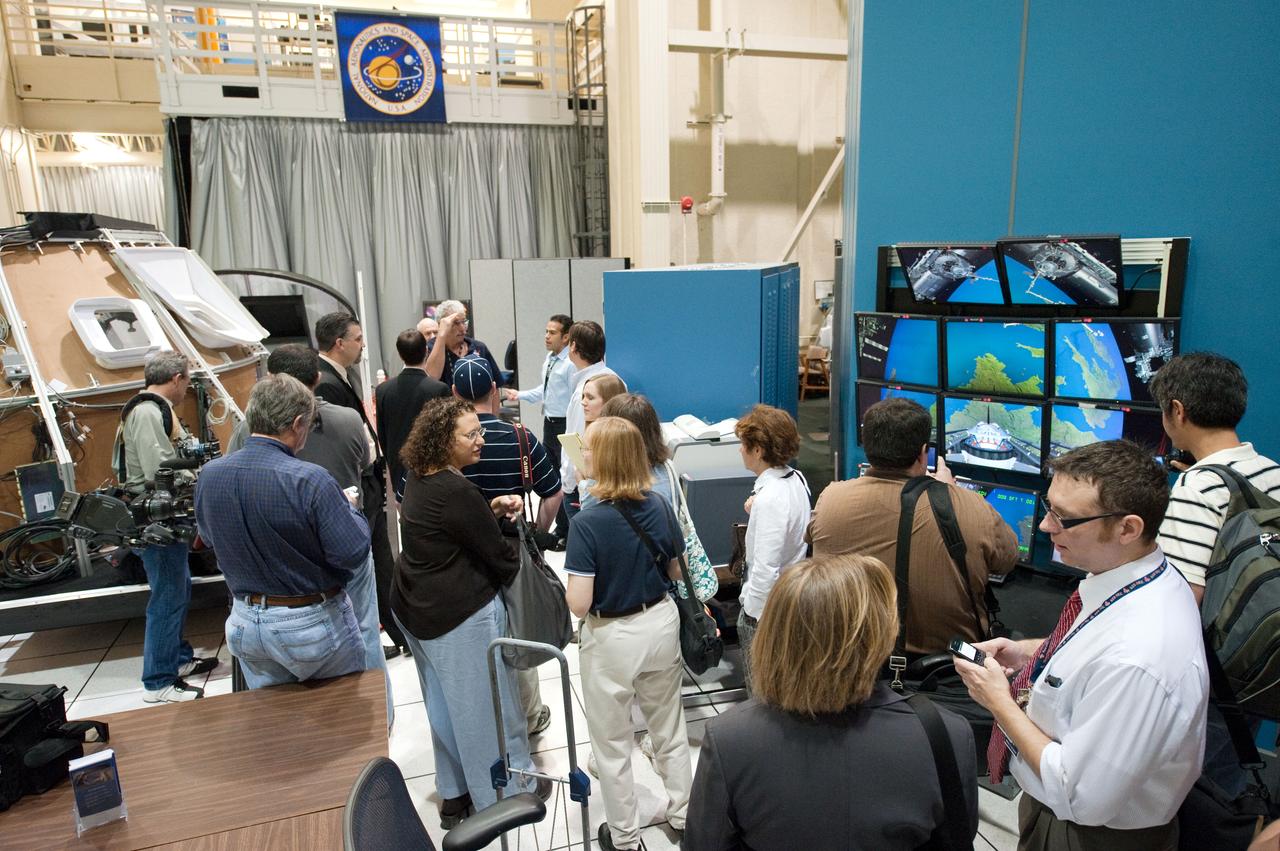
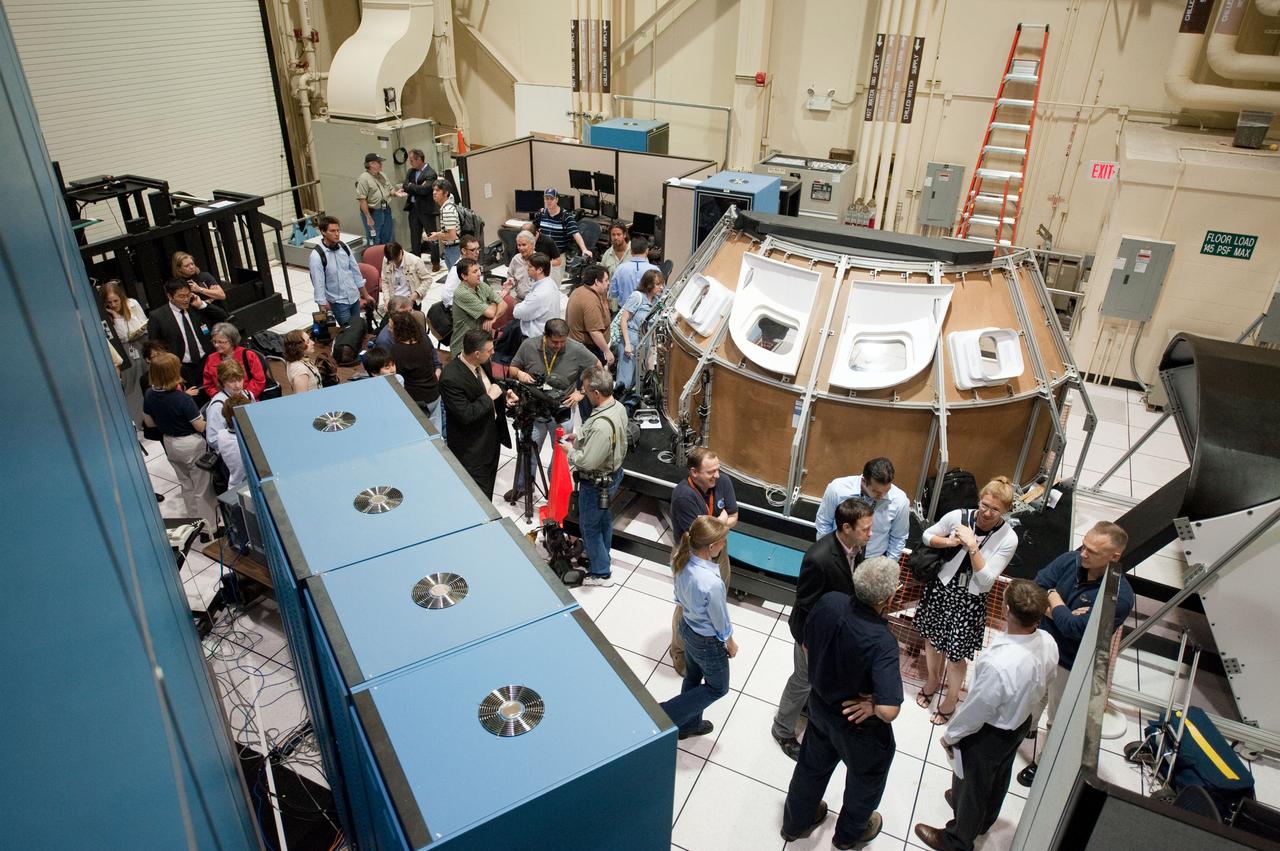
JSC2011-E-028128 (23 March 2011) --- News media representatives and NASA personnel are pictured during an STS-135 media day event in the Avionics Systems Laboratory at NASA's Johnson Space Center. Photo credit: NASA or National Aeronautics and Space Administration
STS-135 crew during Rendezvous Training session in Building 16 dome
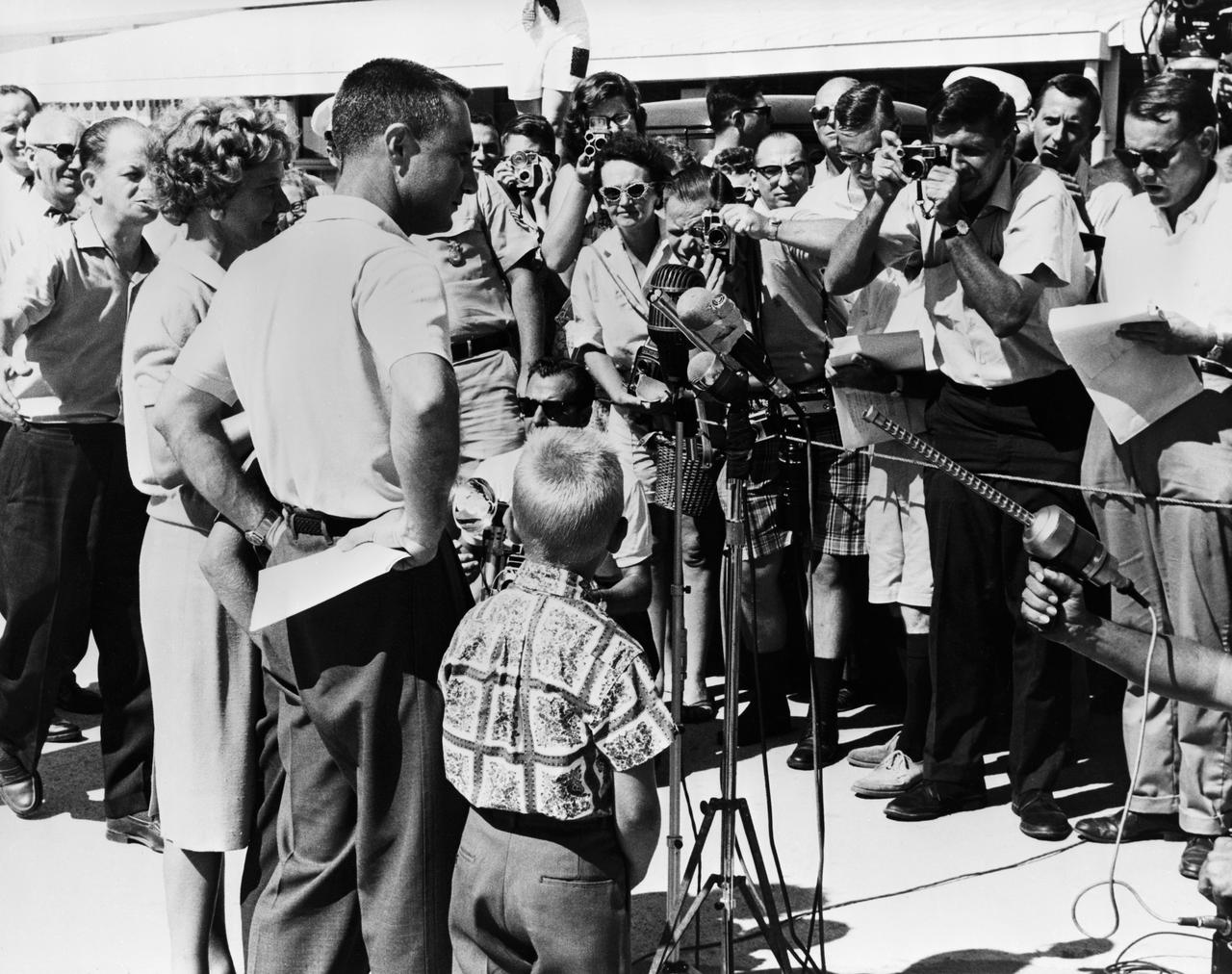
S61-03687 (21 July 1961) --- Astronaut Virgil I. (Gus) Grissom and his family are shown at the airport at Patrick Air Force Base facing a crowd of news media representatives. Grissom is speaking into microphones for the news media. Photo credit: NASA
Astronaut Virgil Grissom and family at Patrick AFB airport
JSC2011-E-028124 (23 March 2011) --- News media representatives and NASA personnel are pictured during an STS-135 media day event in the Avionics Systems Laboratory at NASA's Johnson Space Center. Photo credit: NASA or National Aeronautics and Space Administration
STS-135 crew during Rendezvous Training session in Building 16 dome
JSC2011-E-028125 (23 March 2011) --- News media representatives and NASA personnel are pictured during an STS-135 media day event in the Avionics Systems Laboratory at NASA's Johnson Space Center. Photo credit: NASA or National Aeronautics and Space Administration
STS-135 crew during Rendezvous Training session in Building 16 dome
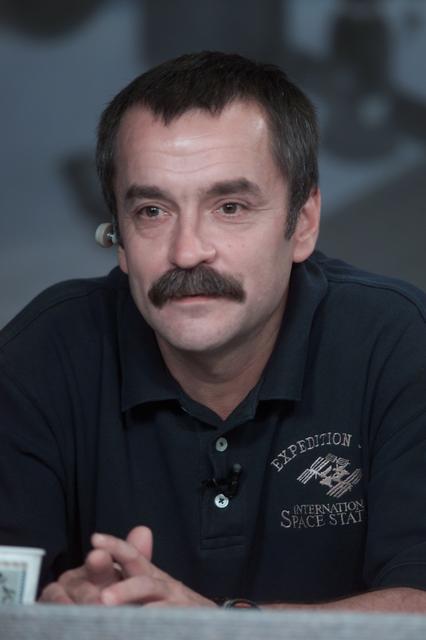
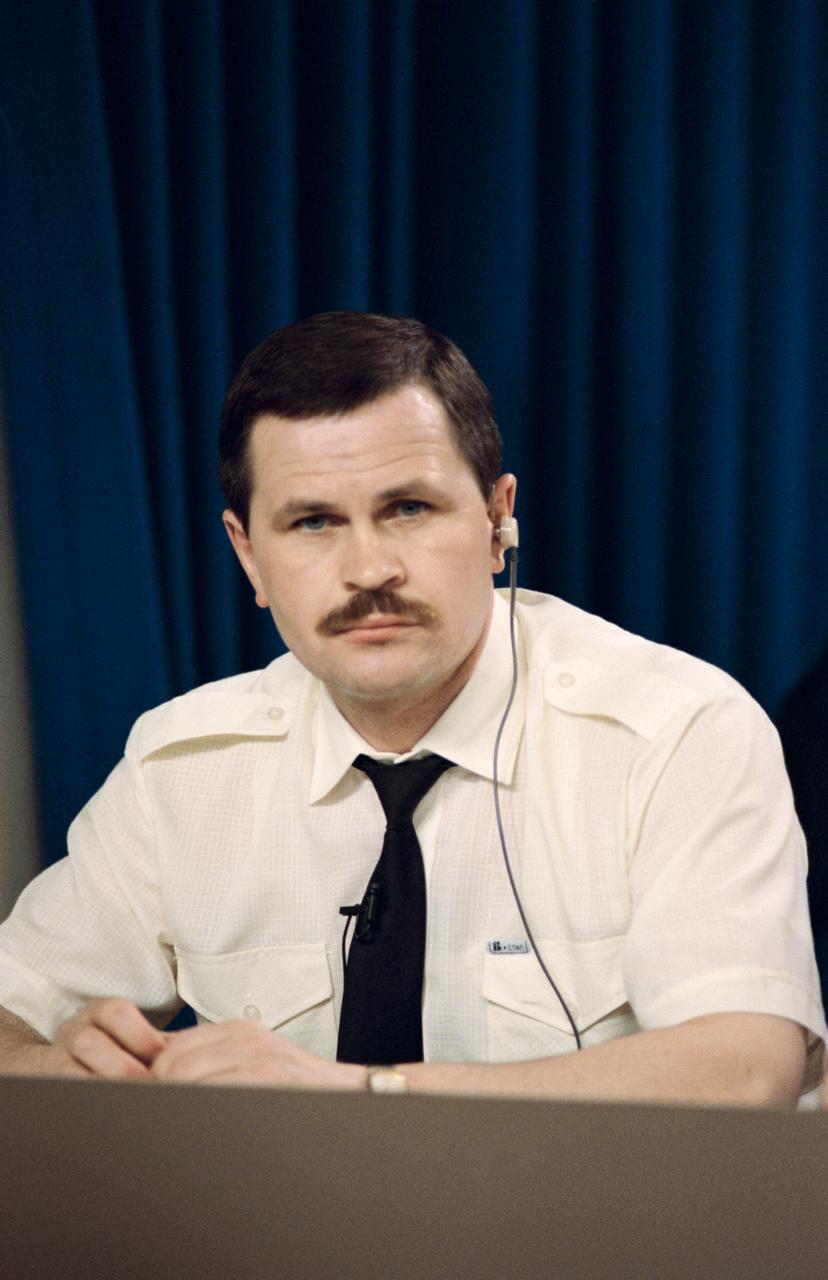
JSC2001-E-23202 (26 July 2001) --- Cosmonaut Mikhail Tyurin, Expedition Three flight engineer representing Rosaviakosmos, listens to a question from a news media representative during a joint shuttle-station pre-flight press conference at Johnson Space Center (JSC).
STS-106 and Expedition 3 Briefing
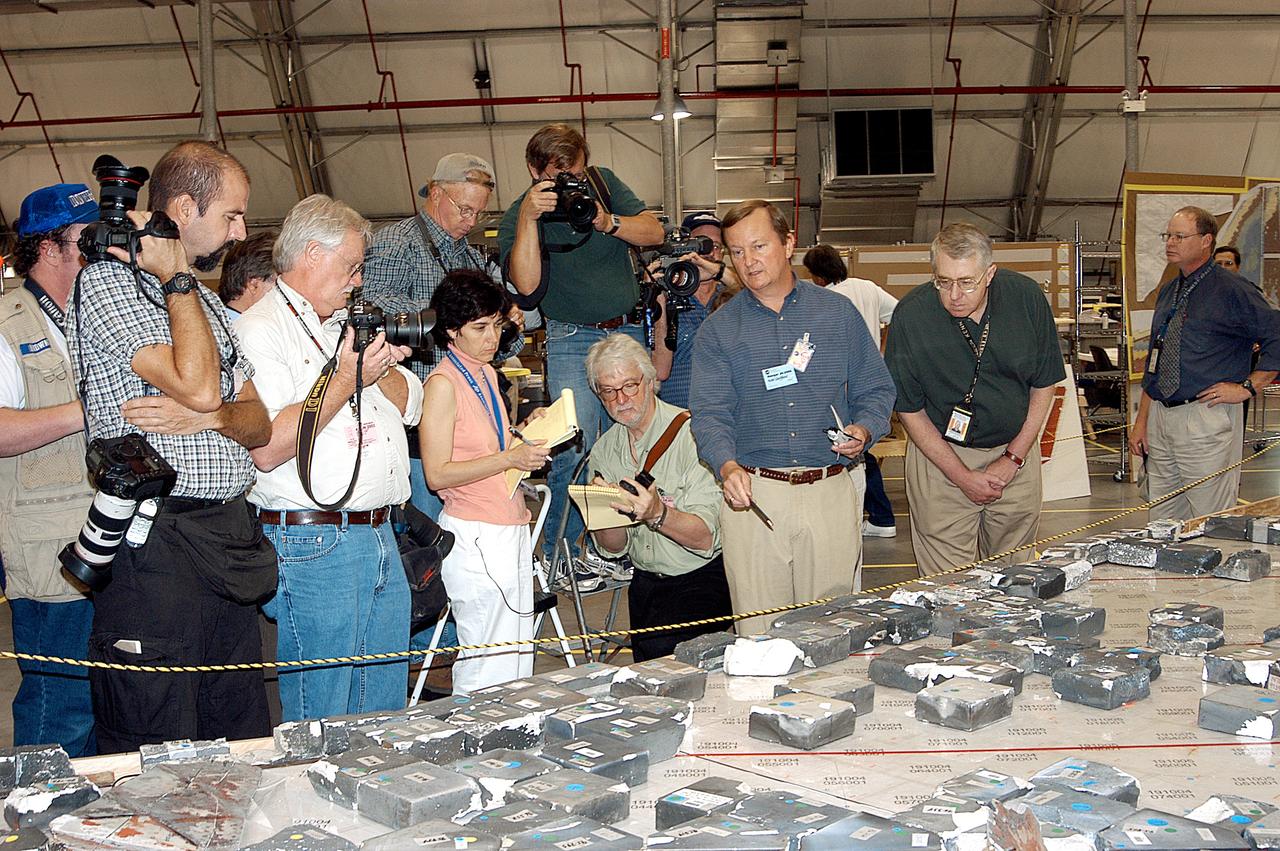
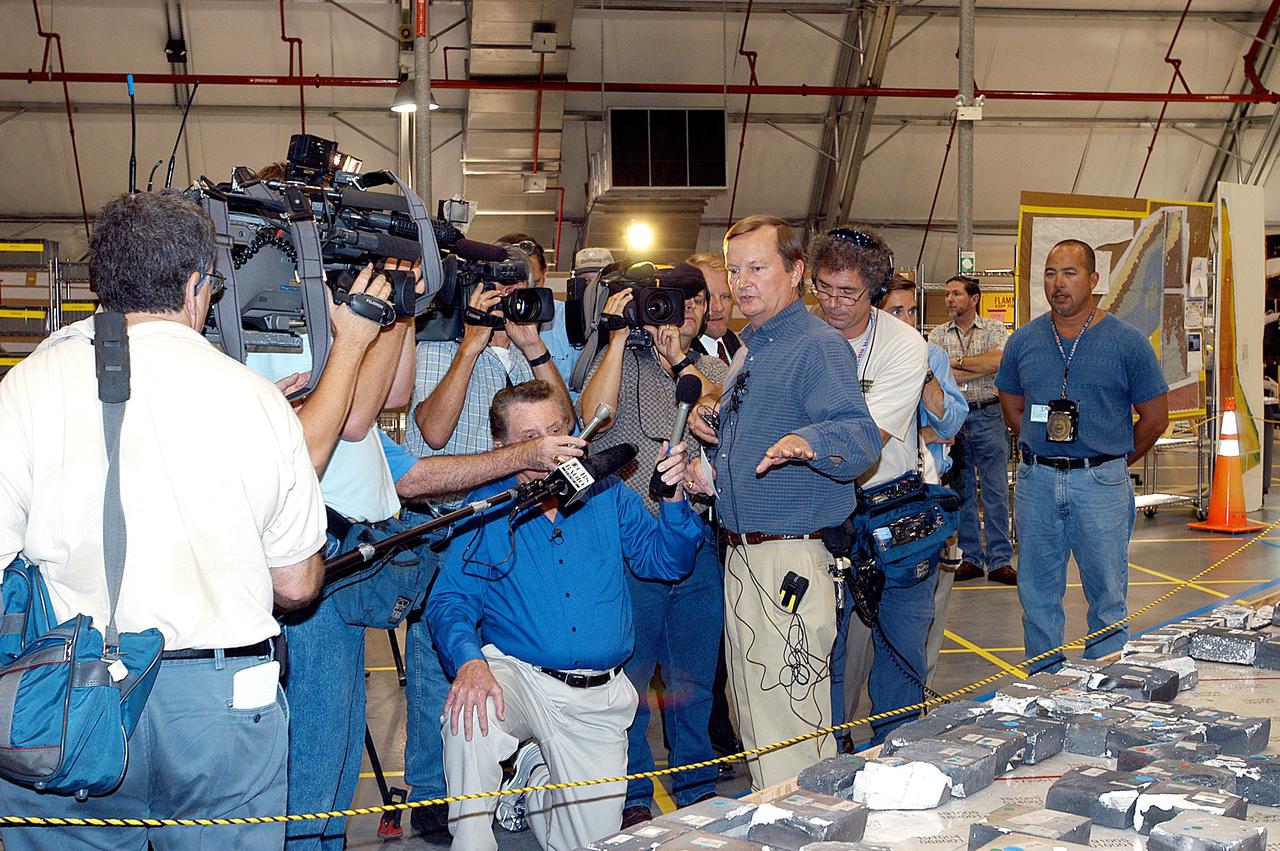
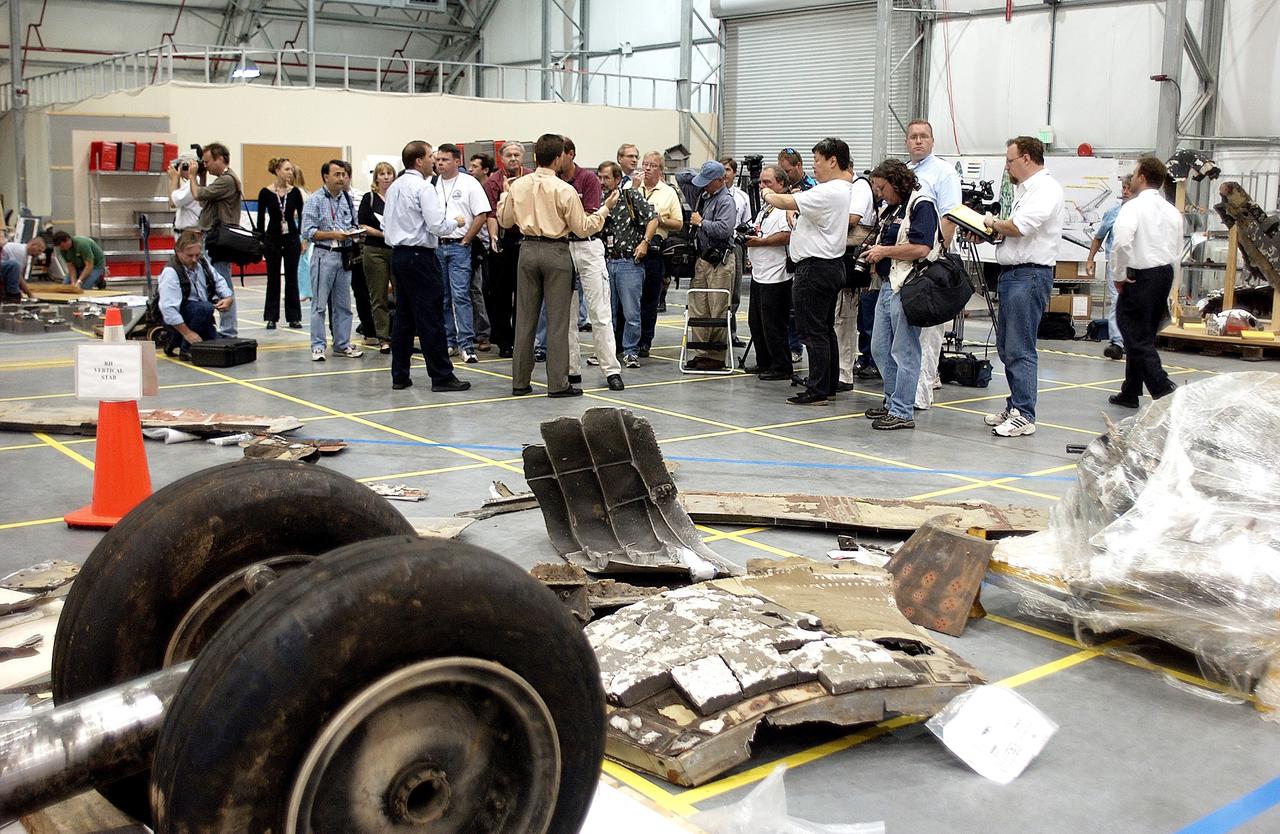
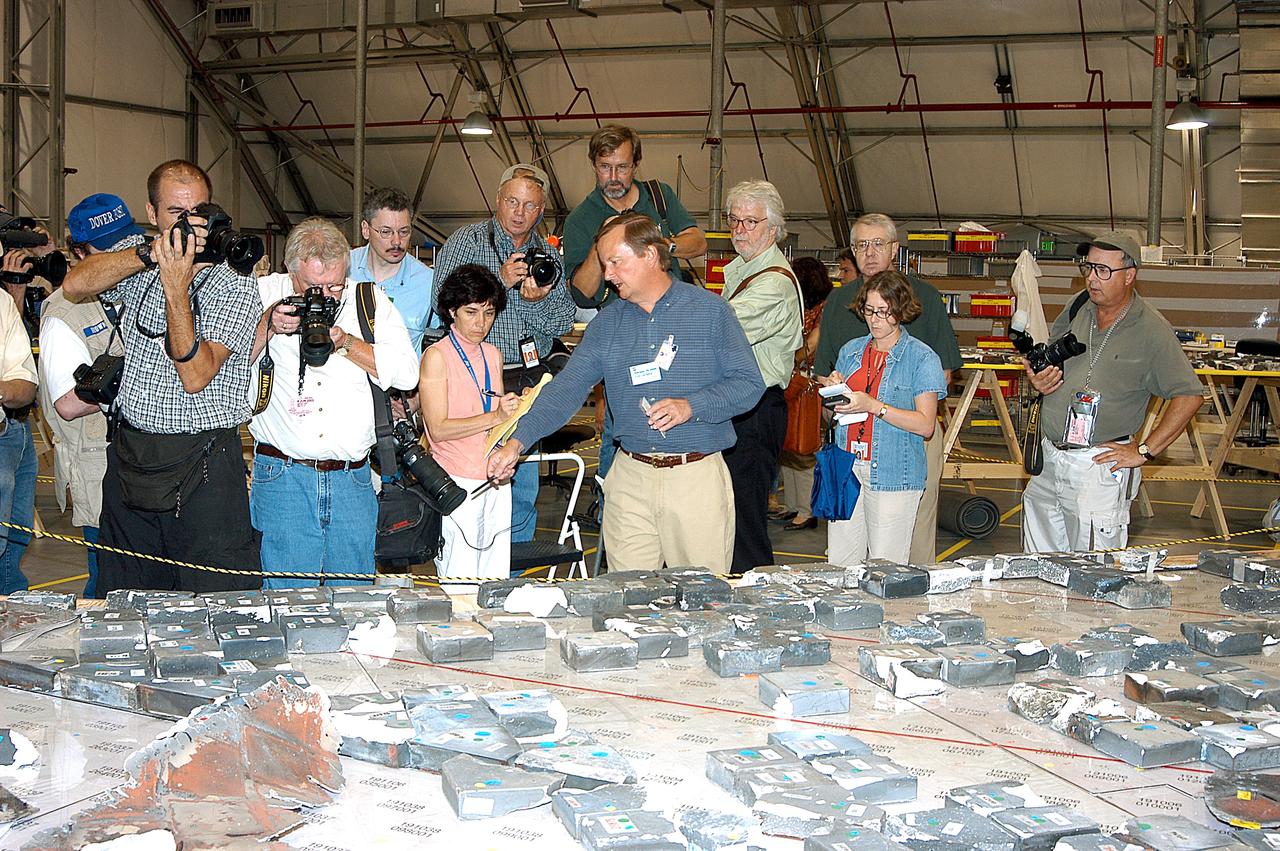
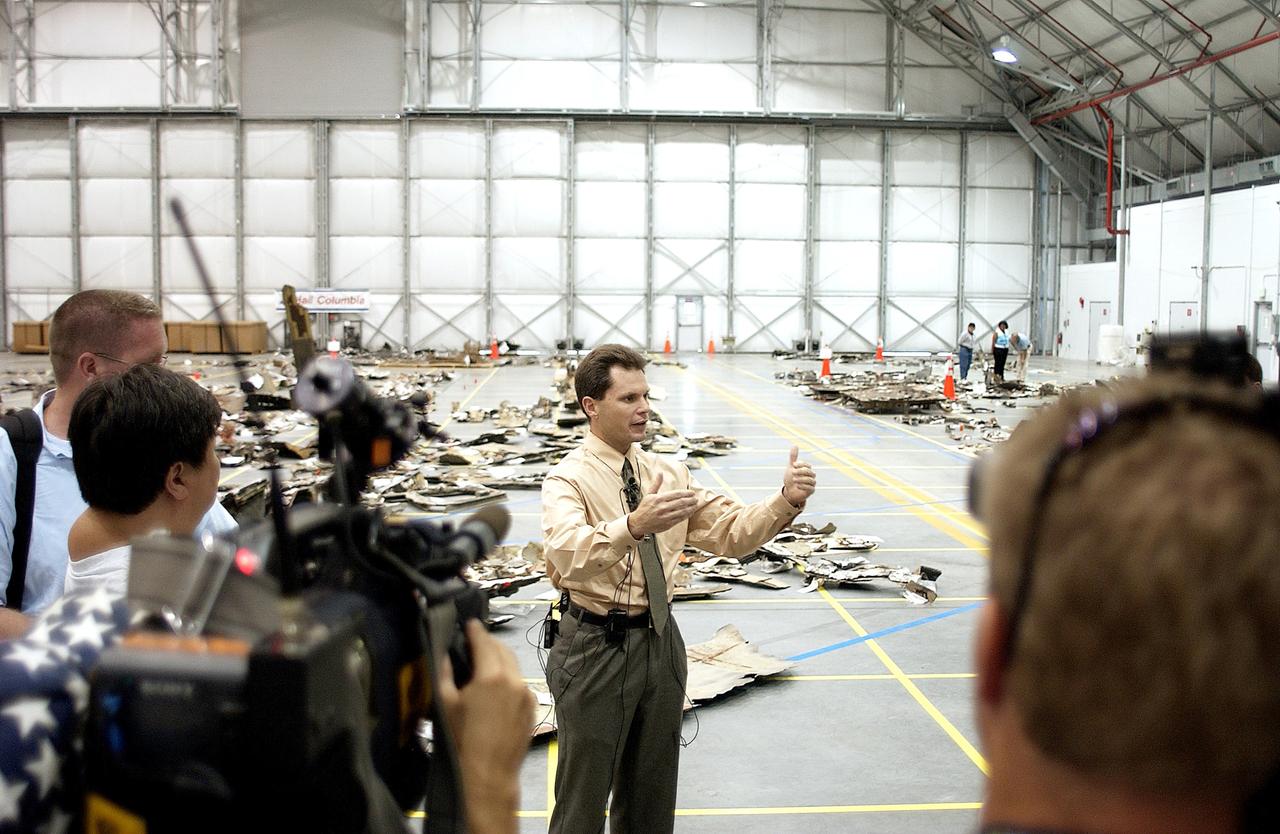
KENNEDY SPACE CENTER, FLA. - In the Columbia Debris Hangar,  Shuttle Launch Director Mike Leinbach  points to some of the tiles recovered from the orbiter as he explains to the media about activities that have taken place since the Columbia accident on Feb. 1, 2003.  STS-107 debris recovery and reconstruction operations are winding down.  To date, nearly 84,000 pieces of debris have been recovered and sent to KSC. That represents about 38 percent of the dry weight of Columbia, equaling almost 85,000 pounds.
KENNEDY SPACE CENTER, FLA. - In the Columbia Debris Hangar, Shuttle Launch Director Mike Leinbach points to some of the tiles recovered from the orbiter as he explains to the media about activities that have taken place since the Columbia accident on Feb. 1, 2003. STS-107 debris recovery and reconstruction operations are winding down. To date, nearly 84,000 pieces of debris have been recovered and sent to KSC. That represents about 38 percent of the dry weight of Columbia, equaling almost 85,000 pounds.
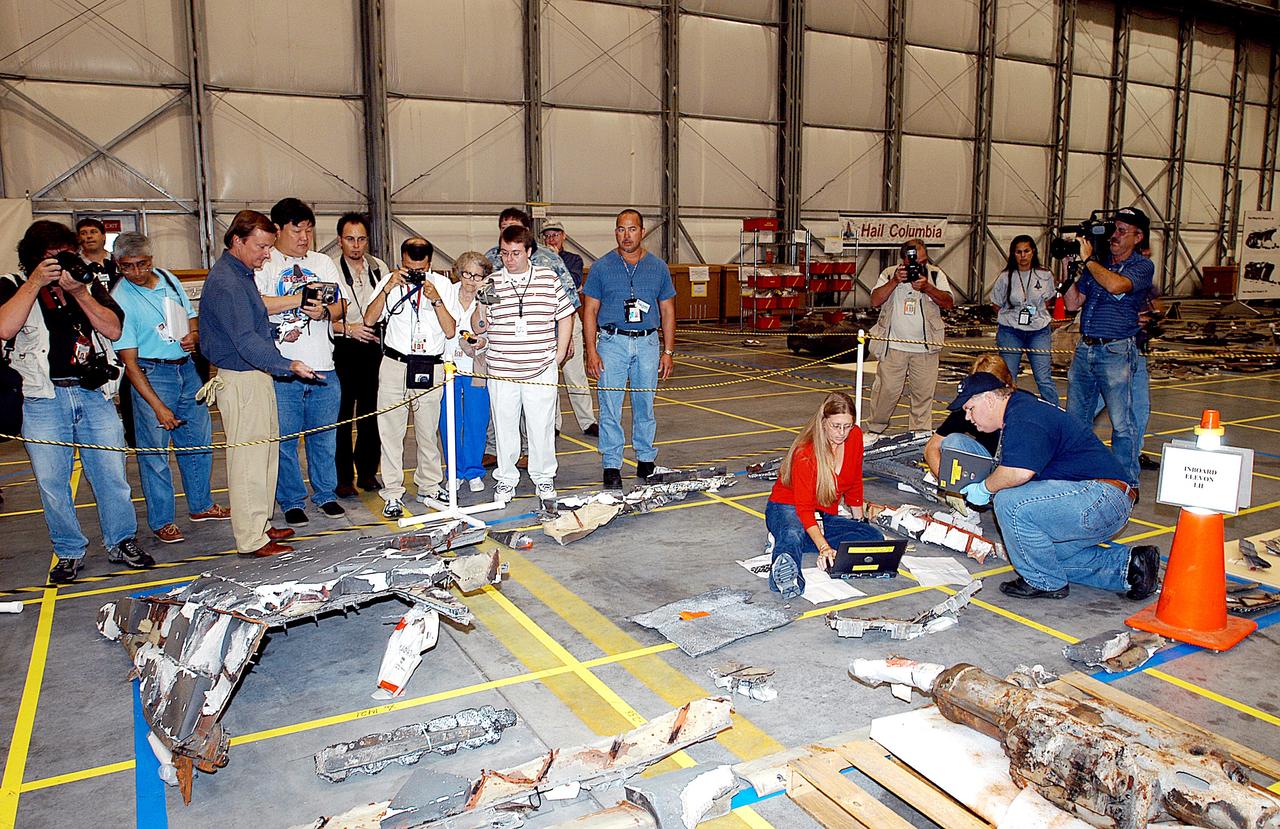
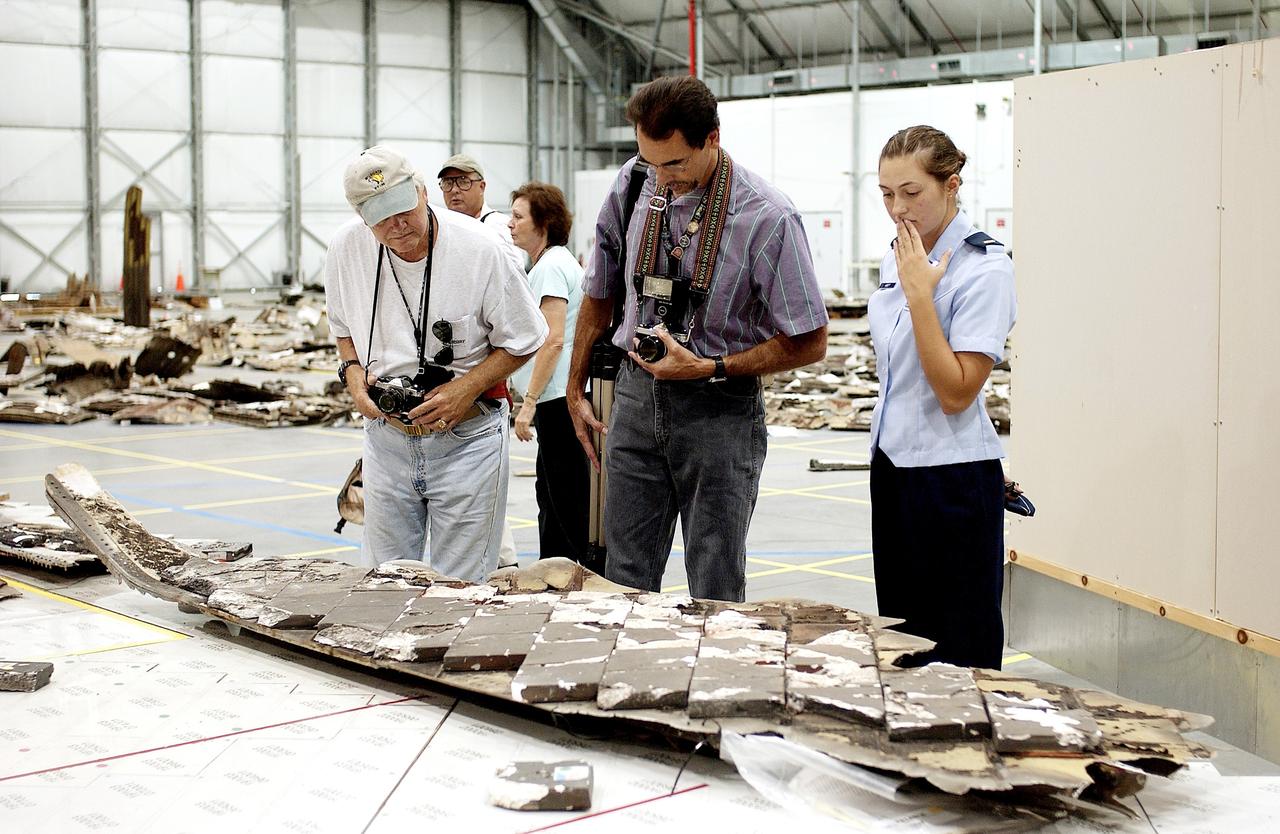
KENNEDY SPACE CENTER, FLA. - During a media tour of the Columbia Debris Hangar, photographers look at pieces of tile collected during search and recovery efforts in East Texas.  About 83,000 pieces of debris from Columbia were shipped to KSC, which represents about 38 percent of the dry weight of Columbia, equaling almost 85,000 pounds.  The debris is being packaged for storage in an area of the Vehicle Assembly Building.
KENNEDY SPACE CENTER, FLA. - During a media tour of the Columbia Debris Hangar, photographers look at pieces of tile collected during search and recovery efforts in East Texas. About 83,000 pieces of debris from Columbia were shipped to KSC, which represents about 38 percent of the dry weight of Columbia, equaling almost 85,000 pounds. The debris is being packaged for storage in an area of the Vehicle Assembly Building.
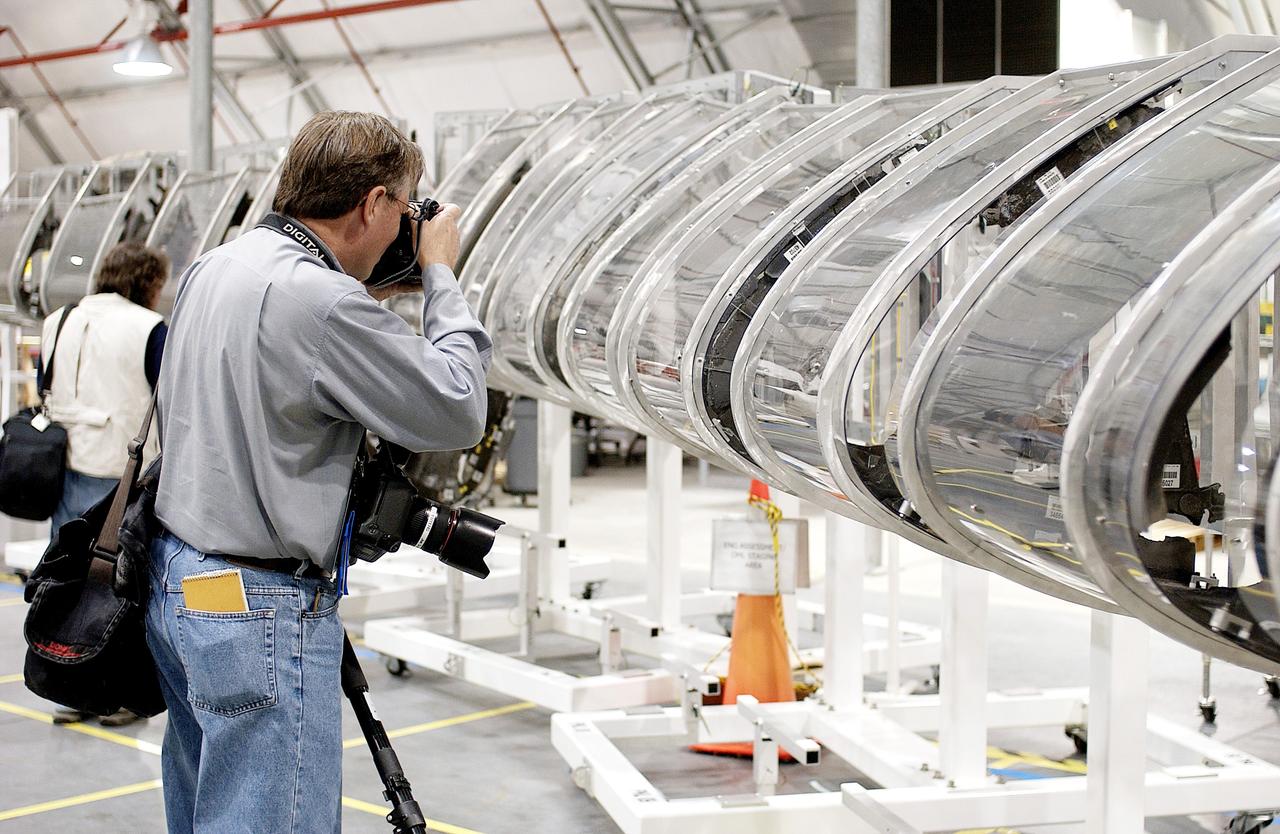
KENNEDY SPACE CENTER, FLA. - During a media tour of the Columbia Debris Hangar, photographers pause at the mockup of the leading edge of Columbia’s left wing.  About 83,000 pieces of debris from Columbia were shipped to KSC from search and recovery efforts in East Texas.  About 83,000 pieces of debris were shipped to KSC, which represents about 38 percent of the dry weight of Columbia, equaling almost 85,000 pounds.  The debris is being packaged for storage in an area of the Vehicle Assembly Building.
KENNEDY SPACE CENTER, FLA. - During a media tour of the Columbia Debris Hangar, photographers pause at the mockup of the leading edge of Columbia’s left wing. About 83,000 pieces of debris from Columbia were shipped to KSC from search and recovery efforts in East Texas. About 83,000 pieces of debris were shipped to KSC, which represents about 38 percent of the dry weight of Columbia, equaling almost 85,000 pounds. The debris is being packaged for storage in an area of the Vehicle Assembly Building.
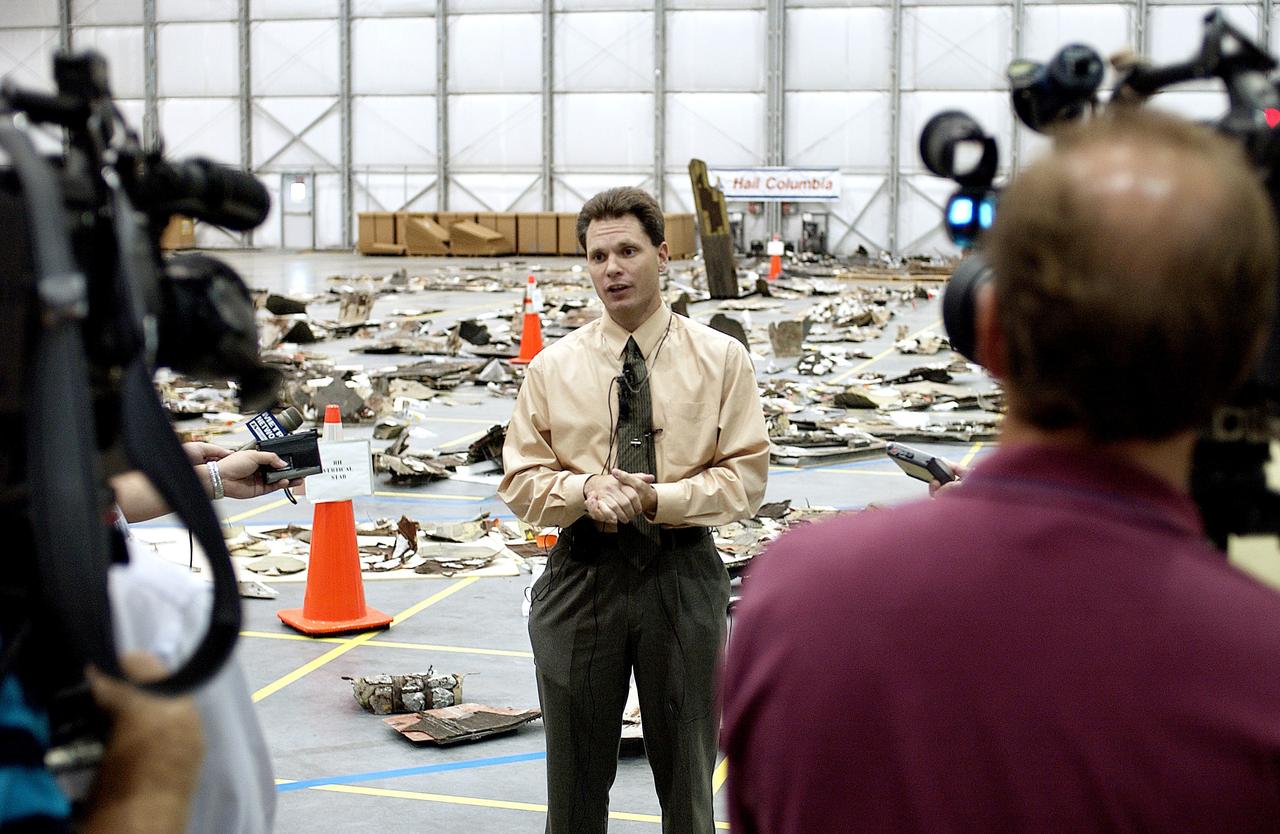
KENNEDY SPACE CENTER, FLA. - In the Columbia Debris Hangar,  Shuttle Launch Director Mike Leinbach  points to some of the debris as he explains to the media about activities that have taken place since the Columbia accident on Feb. 1, 2003.  STS-107 debris recovery and reconstruction operations are winding down.  To date, nearly 84,000 pieces of debris have been recovered and sent to KSC. That represents about 38 percent of the dry weight of Columbia, equaling almost 85,000 pounds.
KENNEDY SPACE CENTER, FLA. - In the Columbia Debris Hangar, Shuttle Launch Director Mike Leinbach points to some of the debris as he explains to the media about activities that have taken place since the Columbia accident on Feb. 1, 2003. STS-107 debris recovery and reconstruction operations are winding down. To date, nearly 84,000 pieces of debris have been recovered and sent to KSC. That represents about 38 percent of the dry weight of Columbia, equaling almost 85,000 pounds.
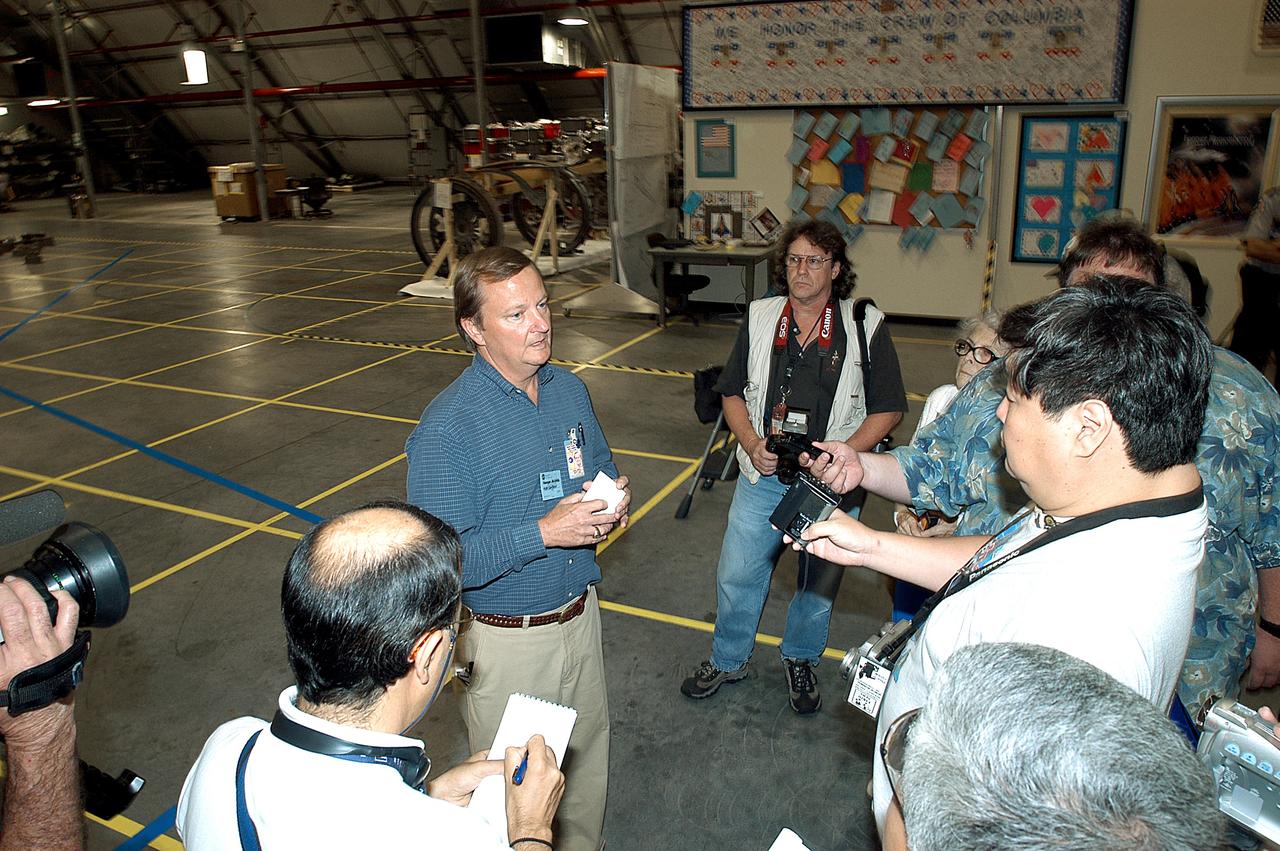
KENNEDY SPACE CENTER, FLA. - In the Columbia Debris Hangar,  Shuttle Launch Director Mike Leinbach  (right) talks to the media about activities that have taken place since the Columbia accident on Feb. 1, 2003.  STS-107 debris recovery and reconstruction operations are winding down.  To date, nearly 84,000 pieces of debris have been recovered and sent to KSC. That represents about 38 percent of the dry weight of Columbia, equaling almost 85,000 pounds.
KENNEDY SPACE CENTER, FLA. - In the Columbia Debris Hangar, Shuttle Launch Director Mike Leinbach (right) talks to the media about activities that have taken place since the Columbia accident on Feb. 1, 2003. STS-107 debris recovery and reconstruction operations are winding down. To date, nearly 84,000 pieces of debris have been recovered and sent to KSC. That represents about 38 percent of the dry weight of Columbia, equaling almost 85,000 pounds.
KENNEDY SPACE CENTER, FLA. - In the Columbia Debris Hangar, Scott Thurston, NASA vehicle flow manager, addresses the media about efforts to pack the debris stored in the Columbia Debris Hangar.  More than 83,000  pieces of debris were shipped to KSC during search and recovery efforts in East Texas. That represents about 38 percent of the dry weight of Columbia, equaling almost 85,000 pounds. An area of the Vehicle Assembly Building is being prepared to store the debris permanently.
KENNEDY SPACE CENTER, FLA. - In the Columbia Debris Hangar, Scott Thurston, NASA vehicle flow manager, addresses the media about efforts to pack the debris stored in the Columbia Debris Hangar. More than 83,000 pieces of debris were shipped to KSC during search and recovery efforts in East Texas. That represents about 38 percent of the dry weight of Columbia, equaling almost 85,000 pounds. An area of the Vehicle Assembly Building is being prepared to store the debris permanently.
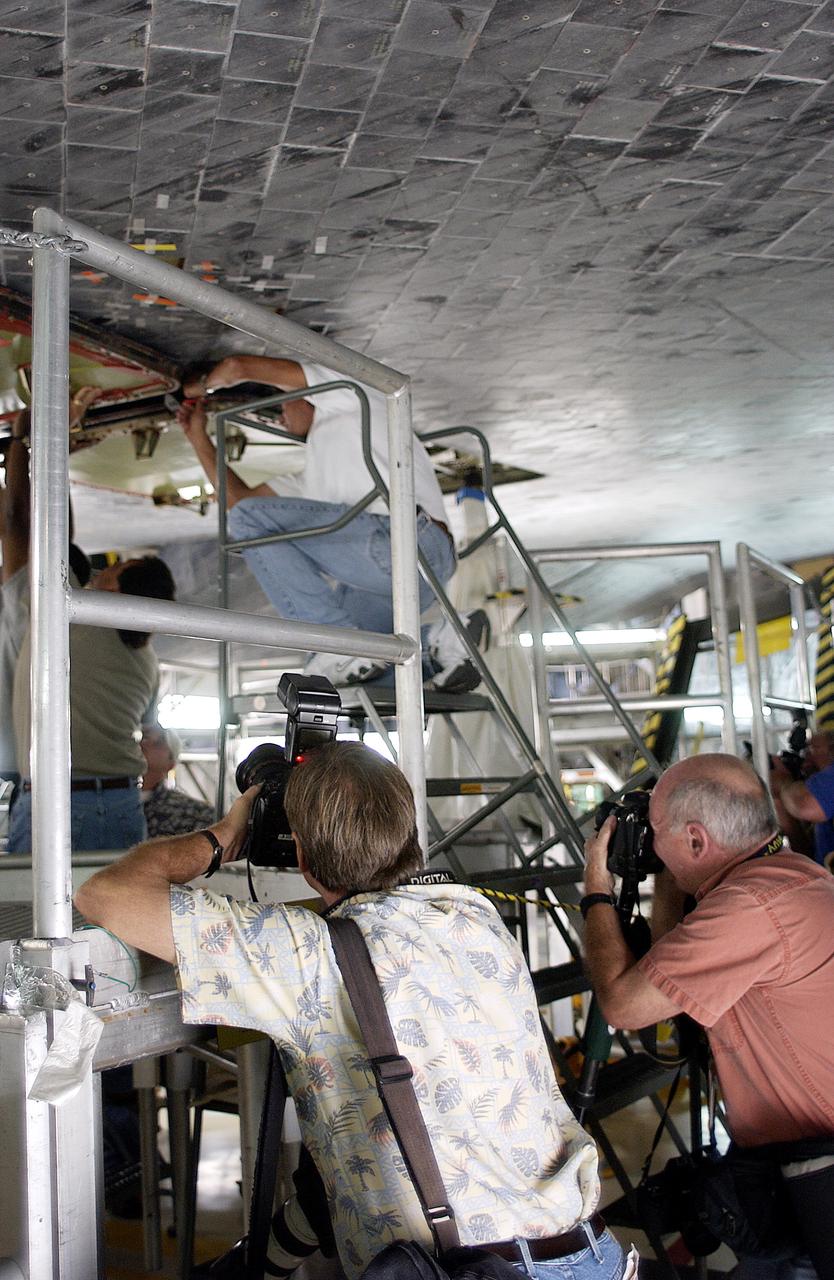
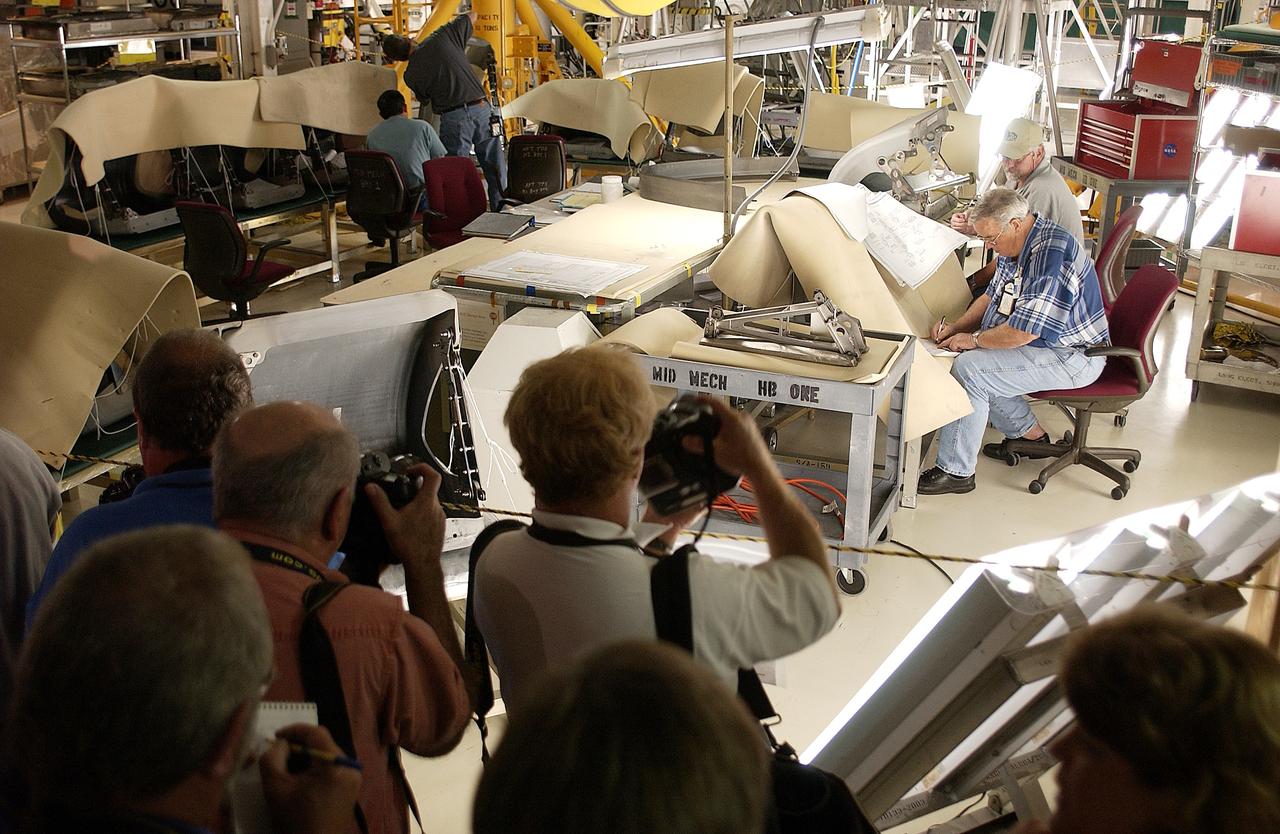
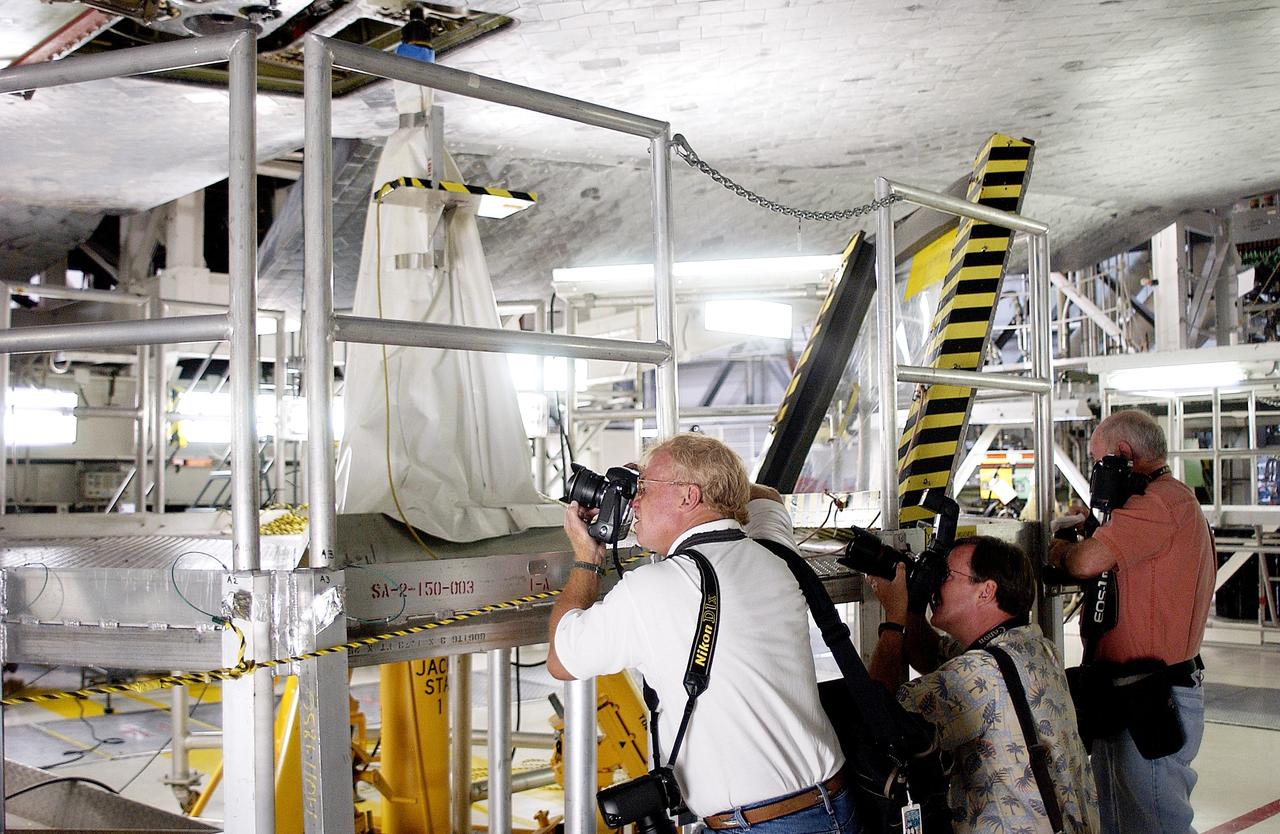
KENNEDY SPACE CENTER, FLA. -  In the Orbiter Processing Facility,  the media photograph work being done on the tiles on the orbiter Atlantis as it is being prepared for Return to Flight in the Orbiter Processing Facility.   Both local and national reporters representing print and TV networks were able to see work in progress on Atlantis, including the reinstallation of the Reinforced Carbon-Carbon panels on the orbiter’s wing leading edge; wiring inspections; and checks of the engines in the Orbital Maneuvering System.
KENNEDY SPACE CENTER, FLA. - In the Orbiter Processing Facility, the media photograph work being done on the tiles on the orbiter Atlantis as it is being prepared for Return to Flight in the Orbiter Processing Facility. Both local and national reporters representing print and TV networks were able to see work in progress on Atlantis, including the reinstallation of the Reinforced Carbon-Carbon panels on the orbiter’s wing leading edge; wiring inspections; and checks of the engines in the Orbital Maneuvering System.
KENNEDY SPACE CENTER, FLA. - In the Columbia Debris Hangar,  Shuttle Launch Director Mike Leinbach  points to some of the debris as he explains to the media about activities that have taken place since the Columbia accident on Feb. 1, 2003.  STS-107 debris recovery and reconstruction operations are winding down.  To date, nearly 84,000 pieces of debris have been recovered and sent to KSC. That represents about 38 percent of the dry weight of Columbia, equaling almost 85,000 pounds.
KENNEDY SPACE CENTER, FLA. - In the Columbia Debris Hangar, Shuttle Launch Director Mike Leinbach points to some of the debris as he explains to the media about activities that have taken place since the Columbia accident on Feb. 1, 2003. STS-107 debris recovery and reconstruction operations are winding down. To date, nearly 84,000 pieces of debris have been recovered and sent to KSC. That represents about 38 percent of the dry weight of Columbia, equaling almost 85,000 pounds.
KENNEDY SPACE CENTER, FLA. - In the Columbia Debris Hangar, Scott Thurston, NASA vehicle flow manager, addresses the media about efforts to pack the debris stored in the Columbia Debris Hangar.  More than 83,000  pieces of debris were shipped to KSC during search and recovery efforts in East Texas. That represents about 38 percent of the dry weight of Columbia, equaling almost 85,000 pounds. An area of the Vehicle Assembly Building is being prepared to store the debris permanently.
KENNEDY SPACE CENTER, FLA. - In the Columbia Debris Hangar, Scott Thurston, NASA vehicle flow manager, addresses the media about efforts to pack the debris stored in the Columbia Debris Hangar. More than 83,000 pieces of debris were shipped to KSC during search and recovery efforts in East Texas. That represents about 38 percent of the dry weight of Columbia, equaling almost 85,000 pounds. An area of the Vehicle Assembly Building is being prepared to store the debris permanently.
KENNEDY SPACE CENTER, FLA. -   In the Orbiter Processing Facility,  the media photograph work being done on the tiles on the orbiter Atlantis as it is being prepared for Return to Flight in the Orbiter Processing Facility.   Both local and national reporters representing print and TV networks were able to see work in progress on Atlantis, including the reinstallation of the Reinforced Carbon-Carbon panels on the orbiter’s wing leading edge; wiring inspections; and checks of the engines in the Orbital Maneuvering System.
KENNEDY SPACE CENTER, FLA. - In the Orbiter Processing Facility, the media photograph work being done on the tiles on the orbiter Atlantis as it is being prepared for Return to Flight in the Orbiter Processing Facility. Both local and national reporters representing print and TV networks were able to see work in progress on Atlantis, including the reinstallation of the Reinforced Carbon-Carbon panels on the orbiter’s wing leading edge; wiring inspections; and checks of the engines in the Orbital Maneuvering System.
KENNEDY SPACE CENTER, FLA. -  In the Columbia Debris Hangar,  Shuttle Launch Director Mike Leinbach  talks to the media about activities that have taken place since the Columbia accident on Feb. 1, 2003.  Behind him is a model of the left wing of the orbiter.  STS-107 debris recovery and reconstruction operations are winding down.  To date, nearly 84,000 pieces of debris have been recovered and sent to KSC. That represents about 38 percent of the dry weight of Columbia, equaling almost 85,000 pounds.
KENNEDY SPACE CENTER, FLA. - In the Columbia Debris Hangar, Shuttle Launch Director Mike Leinbach talks to the media about activities that have taken place since the Columbia accident on Feb. 1, 2003. Behind him is a model of the left wing of the orbiter. STS-107 debris recovery and reconstruction operations are winding down. To date, nearly 84,000 pieces of debris have been recovered and sent to KSC. That represents about 38 percent of the dry weight of Columbia, equaling almost 85,000 pounds.
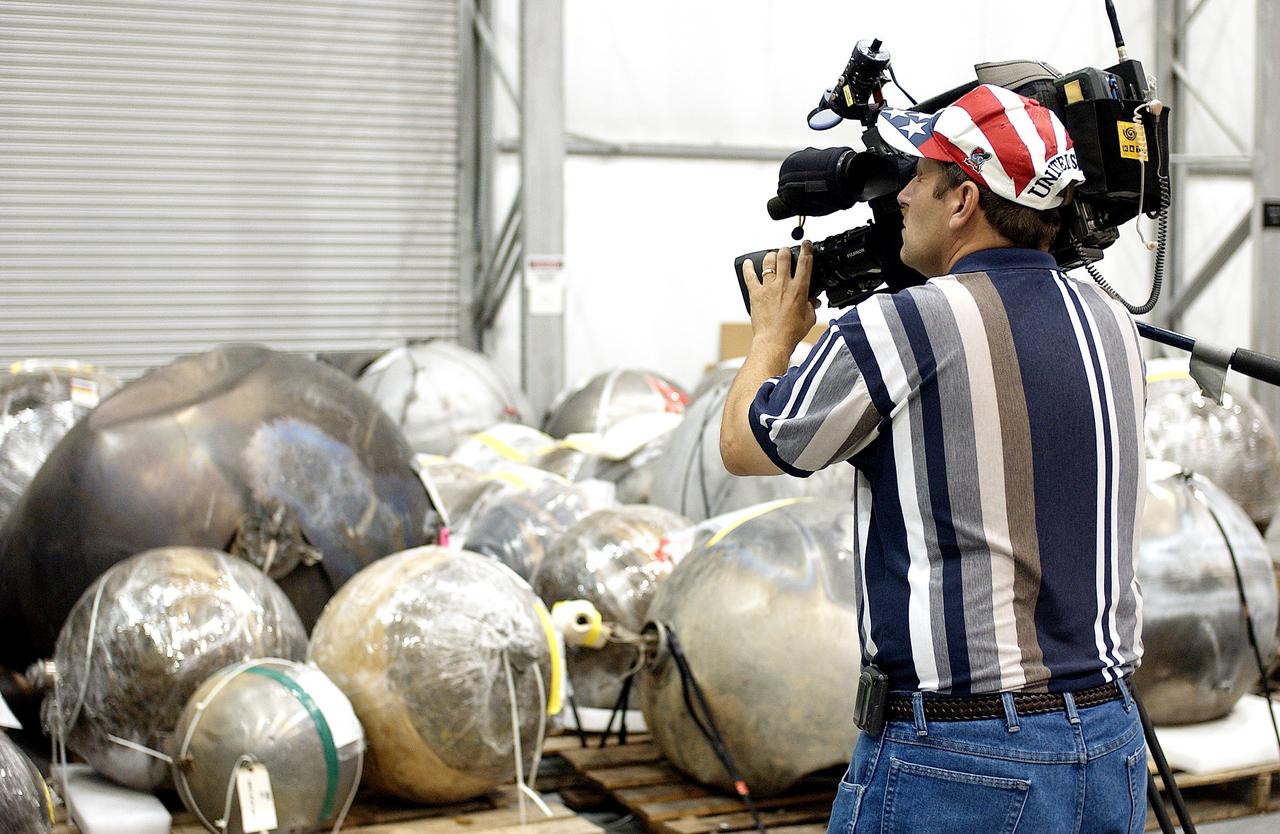
KENNEDY SPACE CENTER, FLA. - During a media tour of the Columbia Debris Hangar, a video cameraman records some of the debris collected from search and recovery efforts in East Texas. About 83,000 pieces of debris from Columbia were shipped to KSC, which represents about 38 percent of the dry weight of Columbia, equaling almost 85,000 pounds.  The debris is being packaged for storage in an area of the Vehicle Assembly Building.
KENNEDY SPACE CENTER, FLA. - During a media tour of the Columbia Debris Hangar, a video cameraman records some of the debris collected from search and recovery efforts in East Texas. About 83,000 pieces of debris from Columbia were shipped to KSC, which represents about 38 percent of the dry weight of Columbia, equaling almost 85,000 pounds. The debris is being packaged for storage in an area of the Vehicle Assembly Building.
KENNEDY SPACE CENTER, FLA. -  In the Columbia Debris Hangar,  Shuttle Launch Director Mike Leinbach  (center) points to some of the tiles recovered from the orbiter as he explains to the media about activities that have taken place since the Columbia accident on Feb. 1, 2003.  STS-107 debris recovery and reconstruction operations are winding down.  To date, nearly 84,000 pieces of debris have been recovered and sent to KSC. That represents about 38 percent of the dry weight of Columbia, equaling almost 85,000 pounds.
KENNEDY SPACE CENTER, FLA. - In the Columbia Debris Hangar, Shuttle Launch Director Mike Leinbach (center) points to some of the tiles recovered from the orbiter as he explains to the media about activities that have taken place since the Columbia accident on Feb. 1, 2003. STS-107 debris recovery and reconstruction operations are winding down. To date, nearly 84,000 pieces of debris have been recovered and sent to KSC. That represents about 38 percent of the dry weight of Columbia, equaling almost 85,000 pounds.
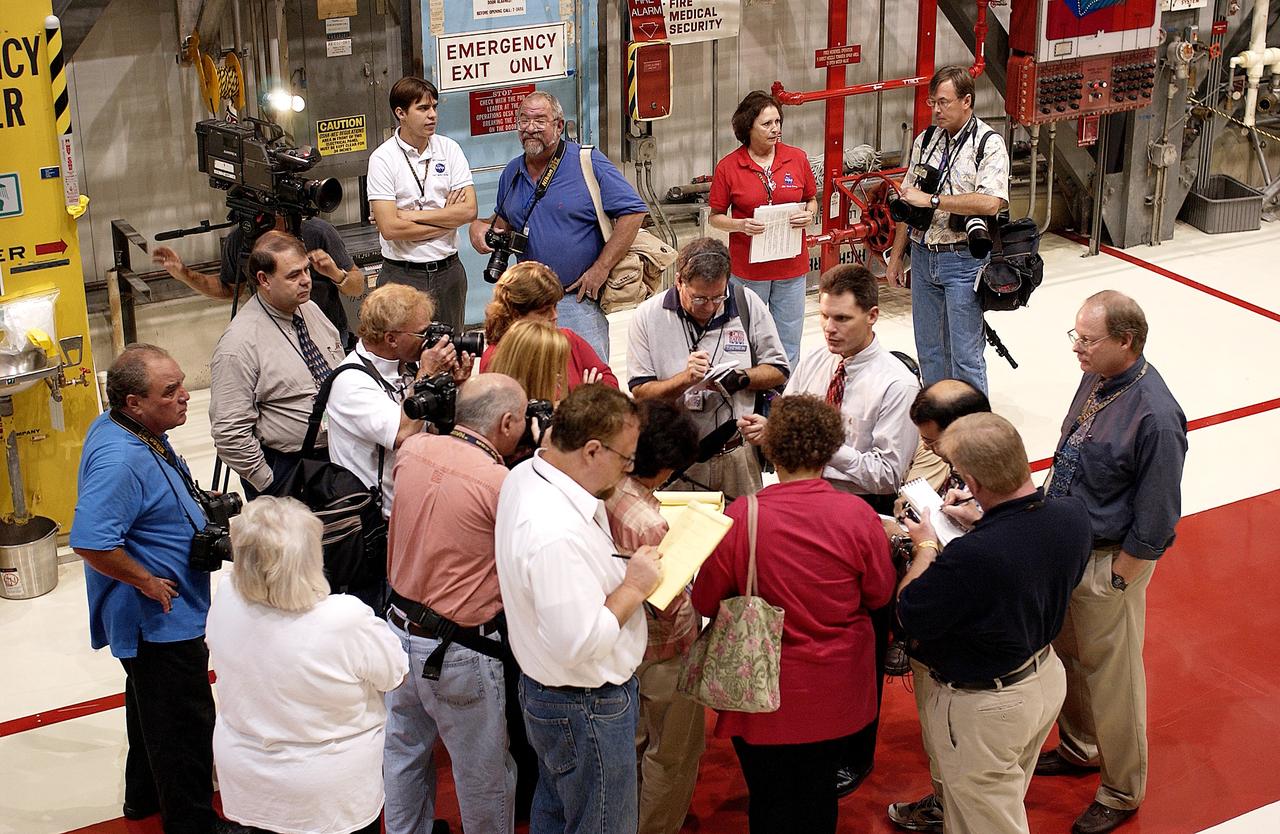
KENNEDY SPACE CENTER, FLA. -   The media gather around NASA Vehicle Manager Scott Thurston (white shirt, right) who talks about some of the work being done on the orbiter Atlantis as it is being prepared for Return to Flight in the Orbiter Processing Facility.   Both local and national reporters representing print and TV networks were able to see work in progress on Atlantis, including the reinstallation of the Reinforced Carbon-Carbon panels on the orbiter’s wing leading edge; wiring inspections; and checks of the engines in the Orbital Maneuvering System.
KENNEDY SPACE CENTER, FLA. - The media gather around NASA Vehicle Manager Scott Thurston (white shirt, right) who talks about some of the work being done on the orbiter Atlantis as it is being prepared for Return to Flight in the Orbiter Processing Facility. Both local and national reporters representing print and TV networks were able to see work in progress on Atlantis, including the reinstallation of the Reinforced Carbon-Carbon panels on the orbiter’s wing leading edge; wiring inspections; and checks of the engines in the Orbital Maneuvering System.
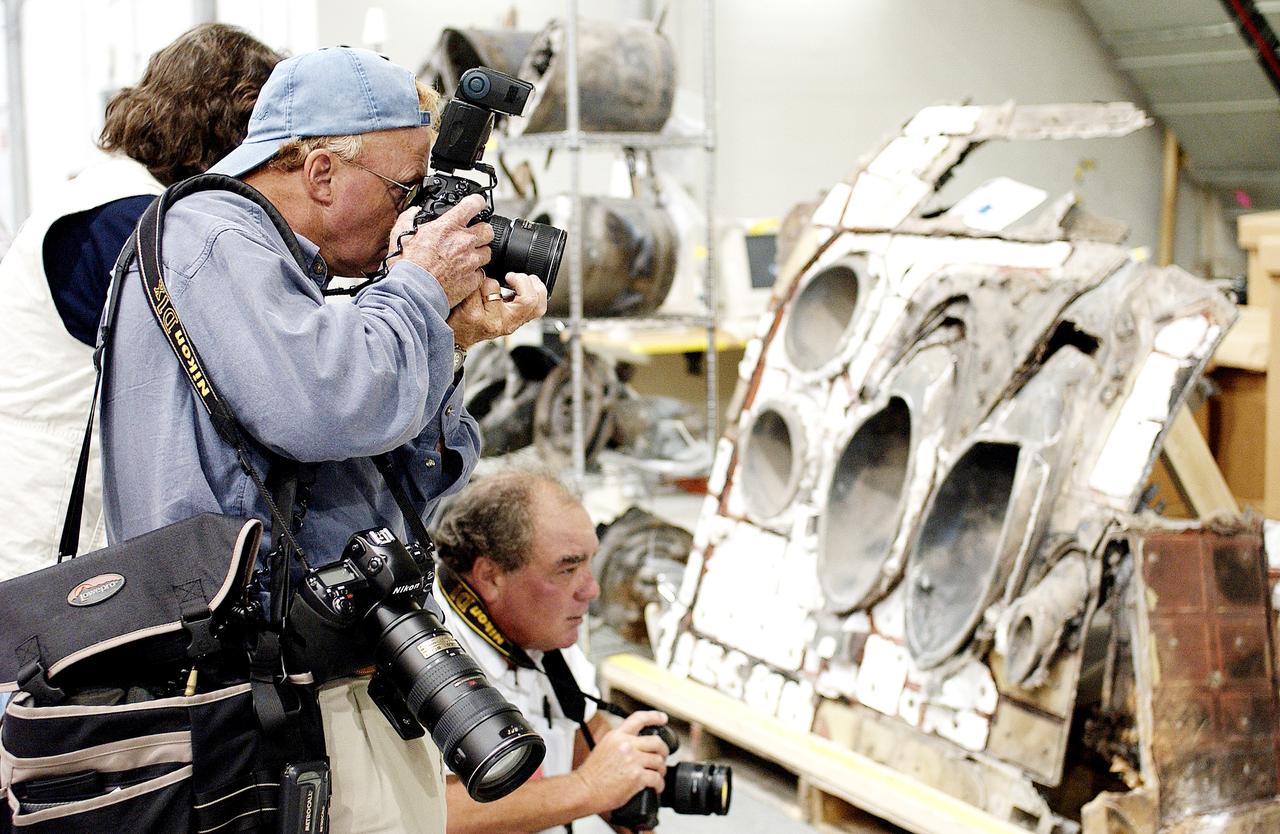
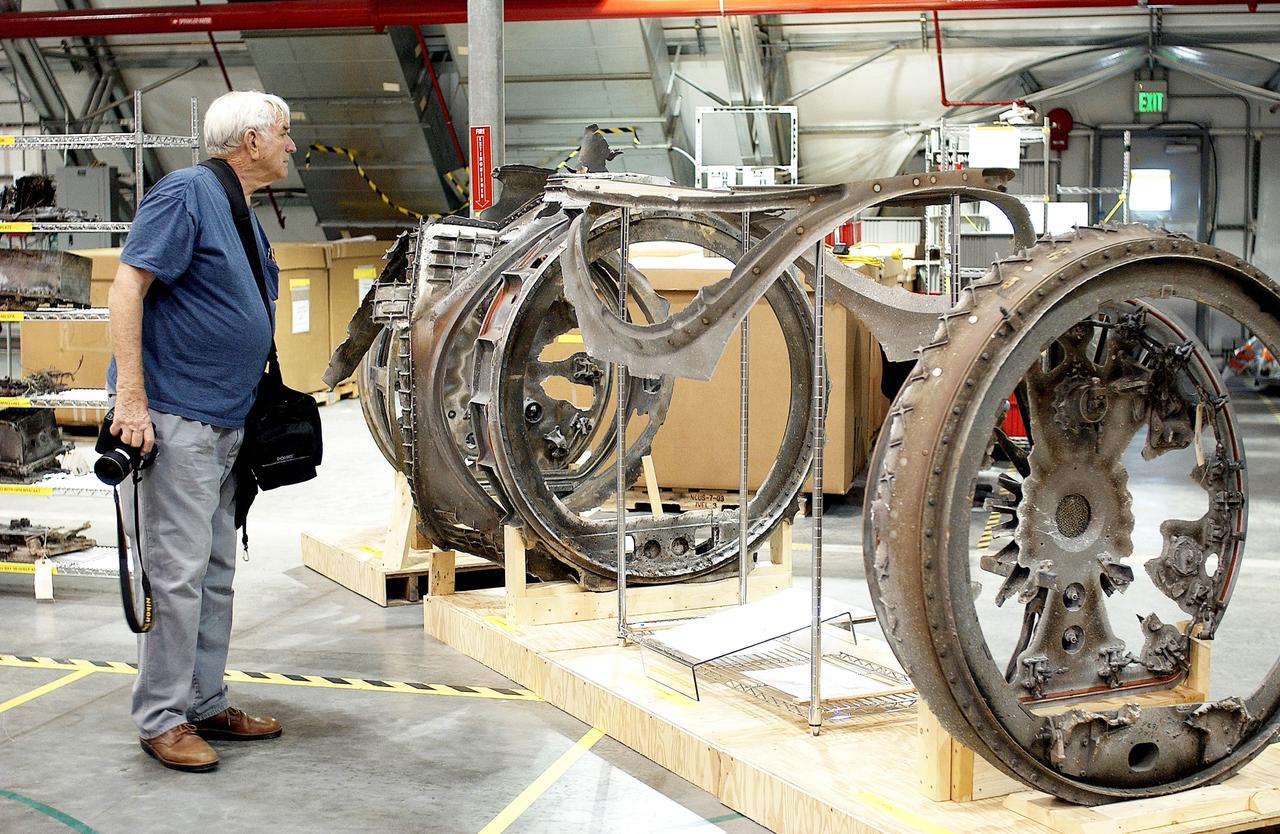
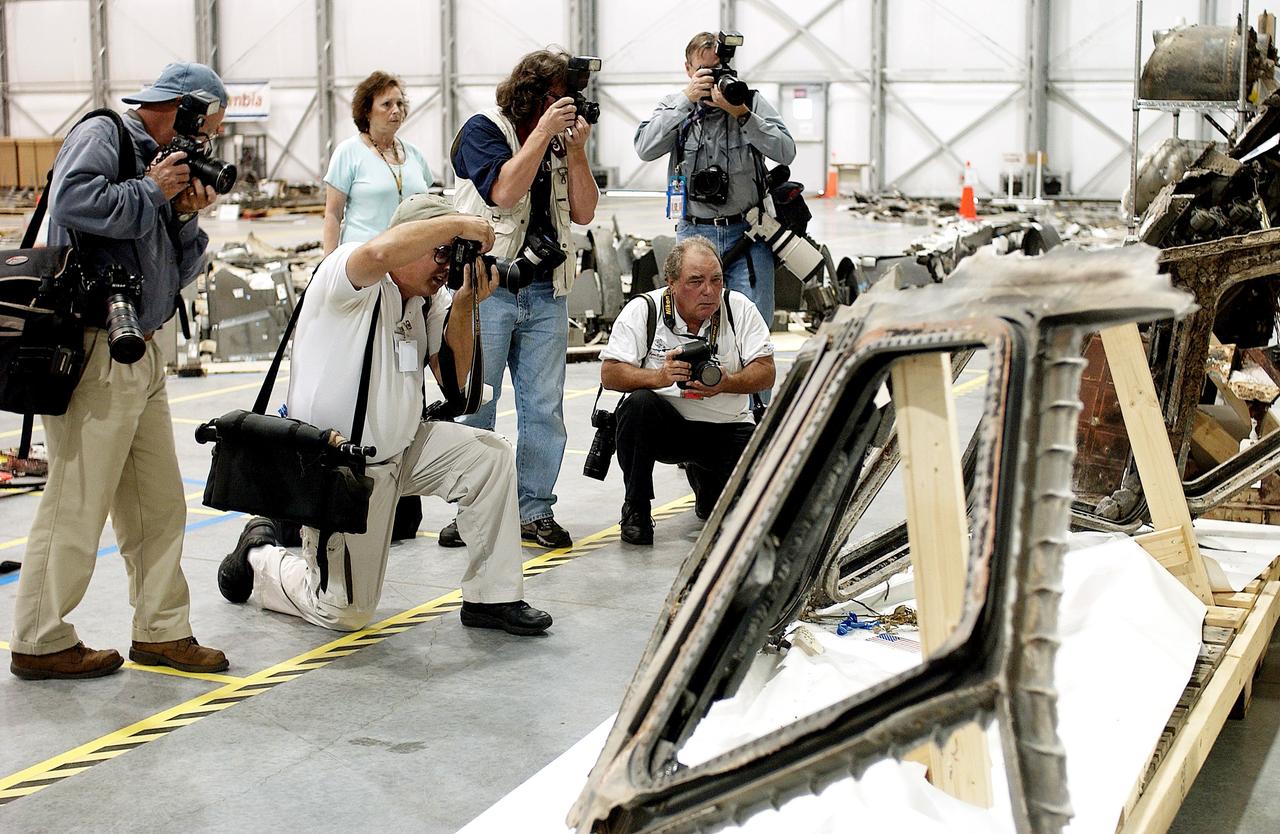
KENNEDY SPACE CENTER, FLA. - During a media tour of the Columbia Debris Hangar, photographers focus on part of the cockpit collected from search and recovery efforts in East Texas. About 83,000 pieces of debris from Columbia were shipped to KSC, which represents about 38 percent of the dry weight of Columbia, equaling almost 85,000 pounds.  The debris is being packaged for storage in an area of the Vehicle Assembly Building.
KENNEDY SPACE CENTER, FLA. - During a media tour of the Columbia Debris Hangar, photographers focus on part of the cockpit collected from search and recovery efforts in East Texas. About 83,000 pieces of debris from Columbia were shipped to KSC, which represents about 38 percent of the dry weight of Columbia, equaling almost 85,000 pounds. The debris is being packaged for storage in an area of the Vehicle Assembly Building.
KENNEDY SPACE CENTER, FLA. - The media get a guided tour of the Columbia Debris Hangar.  Shuttle Launch Director Mike Leinbach discussed activities that have taken place since the Columbia accident on Feb. 1, 2003.  STS-107 debris recovery and reconstruction operations are winding down.  To date, nearly 84,000 pieces of debris have been recovered and sent to KSC. That represents about 38 percent of the dry weight of Columbia, equaling almost 85,000 pounds.
KENNEDY SPACE CENTER, FLA. - The media get a guided tour of the Columbia Debris Hangar. Shuttle Launch Director Mike Leinbach discussed activities that have taken place since the Columbia accident on Feb. 1, 2003. STS-107 debris recovery and reconstruction operations are winding down. To date, nearly 84,000 pieces of debris have been recovered and sent to KSC. That represents about 38 percent of the dry weight of Columbia, equaling almost 85,000 pounds.
KENNEDY SPACE CENTER, FLA. - During a media tour of the Columbia Debris Hangar, a photographer examines some of the debris collected from search and recovery efforts in East Texas. About 83,000 pieces of debris from Columbia were shipped to KSC, which represents about 38 percent of the dry weight of Columbia, equaling almost 85,000 pounds.  The debris is being packaged for storage in an area of the Vehicle Assembly Building.
KENNEDY SPACE CENTER, FLA. - During a media tour of the Columbia Debris Hangar, a photographer examines some of the debris collected from search and recovery efforts in East Texas. About 83,000 pieces of debris from Columbia were shipped to KSC, which represents about 38 percent of the dry weight of Columbia, equaling almost 85,000 pounds. The debris is being packaged for storage in an area of the Vehicle Assembly Building.
KENNEDY SPACE CENTER, FLA. -  In the Orbiter Processing Facility, the media record workers on the job preparing the orbiter Atlantis for Return to Flight. Both local and national reporters representing print and TV networks were invited to see work in progress on Atlantis, including the reinstallation of the Reinforced Carbon-Carbon panels on the orbiter’s wing leading edge; wiring inspections; and checks of the engines in the Orbital Maneuvering System.
KENNEDY SPACE CENTER, FLA. - In the Orbiter Processing Facility, the media record workers on the job preparing the orbiter Atlantis for Return to Flight. Both local and national reporters representing print and TV networks were invited to see work in progress on Atlantis, including the reinstallation of the Reinforced Carbon-Carbon panels on the orbiter’s wing leading edge; wiring inspections; and checks of the engines in the Orbital Maneuvering System.
KENNEDY SPACE CENTER, FLA. - In the Columbia Debris Hangar, Scott Thurston, NASA vehicle flow manager, addresses the media about efforts to pack the debris stored in the Columbia Debris Hangar.  More than 83,000  pieces of debris were shipped to KSC during search and recovery efforts in East Texas. That represents about 38 percent of the dry weight of Columbia, equaling almost 85,000 pounds. An area of the Vehicle Assembly Building is being prepared to store the debris permanently.
KENNEDY SPACE CENTER, FLA. - In the Columbia Debris Hangar, Scott Thurston, NASA vehicle flow manager, addresses the media about efforts to pack the debris stored in the Columbia Debris Hangar. More than 83,000 pieces of debris were shipped to KSC during search and recovery efforts in East Texas. That represents about 38 percent of the dry weight of Columbia, equaling almost 85,000 pounds. An area of the Vehicle Assembly Building is being prepared to store the debris permanently.
KENNEDY SPACE CENTER, FLA. -  In the Columbia Debris Hangar,  Shuttle Launch Director Mike Leinbach  (right) talks to the media about activities that have taken place since the Columbia accident on Feb. 1, 2003.  STS-107 debris recovery and reconstruction operations are winding down.  To date, nearly 84,000 pieces of debris have been recovered and sent to KSC. That represents about 38 percent of the dry weight of Columbia, equaling almost 85,000 pounds.
KENNEDY SPACE CENTER, FLA. - In the Columbia Debris Hangar, Shuttle Launch Director Mike Leinbach (right) talks to the media about activities that have taken place since the Columbia accident on Feb. 1, 2003. STS-107 debris recovery and reconstruction operations are winding down. To date, nearly 84,000 pieces of debris have been recovered and sent to KSC. That represents about 38 percent of the dry weight of Columbia, equaling almost 85,000 pounds.
KENNEDY SPACE CENTER, FLA. - In the Columbia Debris Hangar,  Shuttle Launch Director Mike Leinbach  (right) talks to the media about activities that have taken place since the Columbia accident on Feb. 1, 2003.  STS-107 debris recovery and reconstruction operations are winding down.  To date, nearly 84,000 pieces of debris have been recovered and sent to KSC. That represents about 38 percent of the dry weight of Columbia, equaling almost 85,000 pounds.
KENNEDY SPACE CENTER, FLA. - In the Columbia Debris Hangar, Shuttle Launch Director Mike Leinbach (right) talks to the media about activities that have taken place since the Columbia accident on Feb. 1, 2003. STS-107 debris recovery and reconstruction operations are winding down. To date, nearly 84,000 pieces of debris have been recovered and sent to KSC. That represents about 38 percent of the dry weight of Columbia, equaling almost 85,000 pounds.
KENNEDY SPACE CENTER, FLA. -  In the Columbia Debris Hangar,  Shuttle Launch Director Mike Leinbach  (left) talks to the media about activities that have taken place since the Columbia accident on Feb. 1, 2003.  Behind him is a model of the left wing of the orbiter.  STS-107 debris recovery and reconstruction operations are winding down.  To date, nearly 84,000 pieces of debris have been recovered and sent to KSC. That represents about 38 percent of the dry weight of Columbia, equaling almost 85,000 pounds.
KENNEDY SPACE CENTER, FLA. - In the Columbia Debris Hangar, Shuttle Launch Director Mike Leinbach (left) talks to the media about activities that have taken place since the Columbia accident on Feb. 1, 2003. Behind him is a model of the left wing of the orbiter. STS-107 debris recovery and reconstruction operations are winding down. To date, nearly 84,000 pieces of debris have been recovered and sent to KSC. That represents about 38 percent of the dry weight of Columbia, equaling almost 85,000 pounds.
KENNEDY SPACE CENTER, FLA. - During a media tour of the Columbia Debris Hangar, photographers focus on a piece of the debris collected from search and recovery efforts in East Texas. About 83,000 pieces of debris from Columbia were shipped to KSC, which represents about 38 percent of the dry weight of Columbia, equaling almost 85,000 pounds.  The debris is being packaged for storage in an area of the Vehicle Assembly Building.
KENNEDY SPACE CENTER, FLA. - During a media tour of the Columbia Debris Hangar, photographers focus on a piece of the debris collected from search and recovery efforts in East Texas. About 83,000 pieces of debris from Columbia were shipped to KSC, which represents about 38 percent of the dry weight of Columbia, equaling almost 85,000 pounds. The debris is being packaged for storage in an area of the Vehicle Assembly Building.
KENNEDY SPACE CENTER, FLA. - The media listen to Scott Thurston, NASA vehicle flow manager, talk about efforts to pack the debris stored in the Columbia Debris Hangar.  More than 83,000  pieces of debris were shipped to KSC during search and recovery efforts in East Texas. That represents about 38 percent of the dry weight of Columbia, equaling almost 85,000 pounds. An area of the Vehicle Assembly Building is being prepared to store the debris permanently.
KENNEDY SPACE CENTER, FLA. - The media listen to Scott Thurston, NASA vehicle flow manager, talk about efforts to pack the debris stored in the Columbia Debris Hangar. More than 83,000 pieces of debris were shipped to KSC during search and recovery efforts in East Texas. That represents about 38 percent of the dry weight of Columbia, equaling almost 85,000 pounds. An area of the Vehicle Assembly Building is being prepared to store the debris permanently.
KENNEDY SPACE CENTER, FLA. -  In the Columbia Debris Hangar,  Shuttle Launch Director Mike Leinbach  points to some of the tiles recovered from the orbiter as he explains to the media about activities that have taken place since the Columbia accident on Feb. 1, 2003.  STS-107 debris recovery and reconstruction operations are winding down.  To date, nearly 84,000 pieces of debris have been recovered and sent to KSC. That represents about 38 percent of the dry weight of Columbia, equaling almost 85,000 pounds.
KENNEDY SPACE CENTER, FLA. - In the Columbia Debris Hangar, Shuttle Launch Director Mike Leinbach points to some of the tiles recovered from the orbiter as he explains to the media about activities that have taken place since the Columbia accident on Feb. 1, 2003. STS-107 debris recovery and reconstruction operations are winding down. To date, nearly 84,000 pieces of debris have been recovered and sent to KSC. That represents about 38 percent of the dry weight of Columbia, equaling almost 85,000 pounds.
KENNEDY SPACE CENTER, FLA. - During a media tour of the Columbia Debris Hangar, a photographer gets a close-up of the mockup of the leading edge of Columbia’s left wing.  About 83,000 pieces of debris were shipped to KSC from search and recovery efforts in East Texas.  About 83,000 pieces of debris from Columbia were shipped to KSC, which represents about 38 percent of the dry weight of Columbia, equaling almost 85,000 pounds.  The debris is being packaged for storage in an area of the Vehicle Assembly Building.
KENNEDY SPACE CENTER, FLA. - During a media tour of the Columbia Debris Hangar, a photographer gets a close-up of the mockup of the leading edge of Columbia’s left wing. About 83,000 pieces of debris were shipped to KSC from search and recovery efforts in East Texas. About 83,000 pieces of debris from Columbia were shipped to KSC, which represents about 38 percent of the dry weight of Columbia, equaling almost 85,000 pounds. The debris is being packaged for storage in an area of the Vehicle Assembly Building.
KENNEDY SPACE CENTER, FLA. - In the Columbia Debris Hangar, Scott Thurston, NASA vehicle flow manager, addresses the media about efforts to pack the debris stored in the Columbia Debris Hangar.  More than 83,000  pieces of debris were shipped to KSC during search and recovery efforts in East Texas. That represents about 38 percent of the dry weight of Columbia, equaling almost 85,000 pounds. An area of the Vehicle Assembly Building is being prepared to store the debris permanently.
KENNEDY SPACE CENTER, FLA. - In the Columbia Debris Hangar, Scott Thurston, NASA vehicle flow manager, addresses the media about efforts to pack the debris stored in the Columbia Debris Hangar. More than 83,000 pieces of debris were shipped to KSC during search and recovery efforts in East Texas. That represents about 38 percent of the dry weight of Columbia, equaling almost 85,000 pounds. An area of the Vehicle Assembly Building is being prepared to store the debris permanently.
Cosmonaut Gennadiy M. Strekalov, flight engineer for the Mir-18 mission, listens to a question from a news media representative. Crew members for two of the joint Space Shuttle/Mir missions met the press at JSC.
Cosmonaut Strekalov during STS-71 news conference
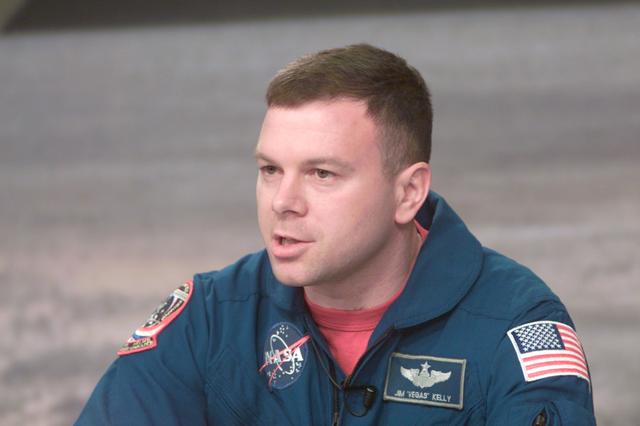
JSC2001-E-05531 (28 February 2001) ---  Astronaut James M. Kelly, STS-102 pilot,  responds to a news media representative's question during a press briefing at the Johnson Space Center (JSC).
Photographic coverage of STS-102 Preflight Press Briefings
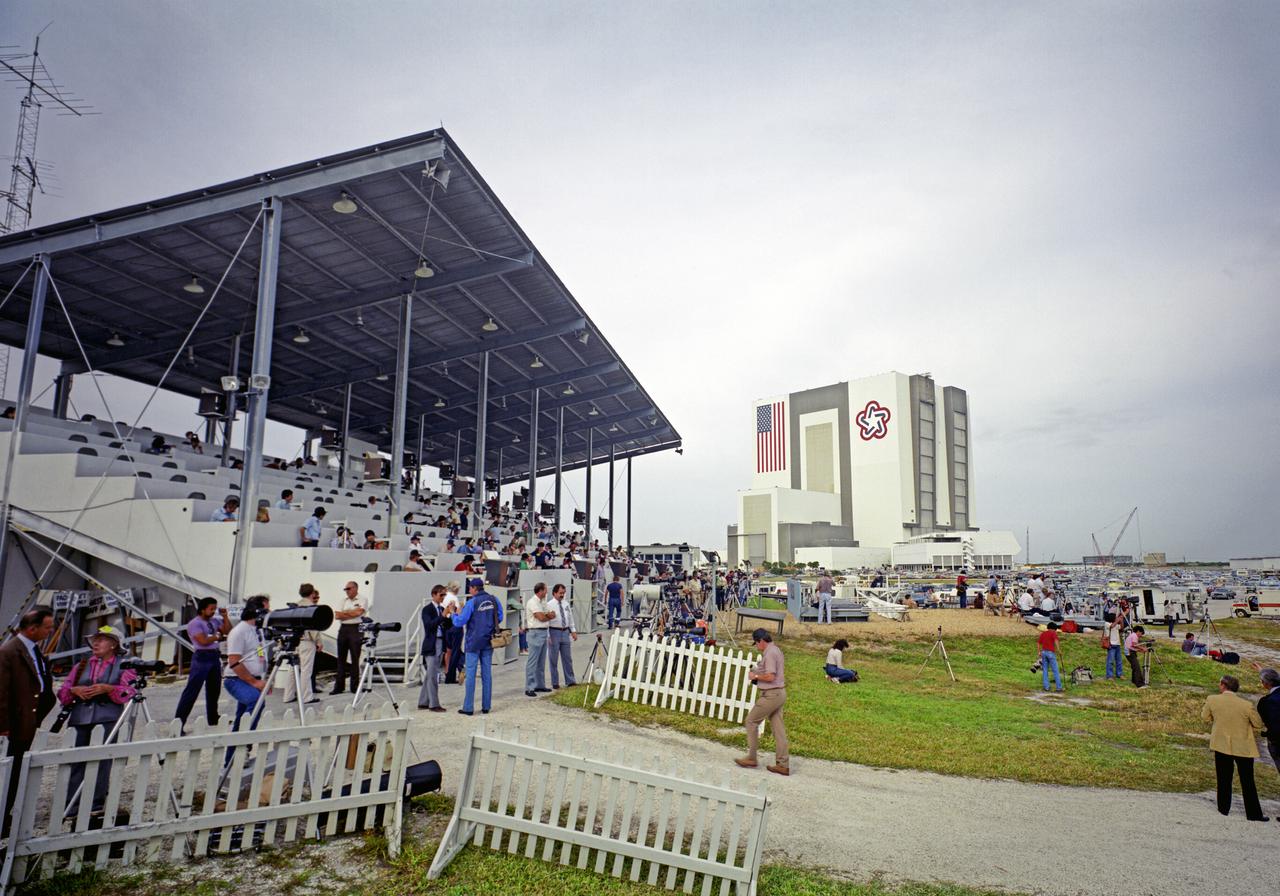
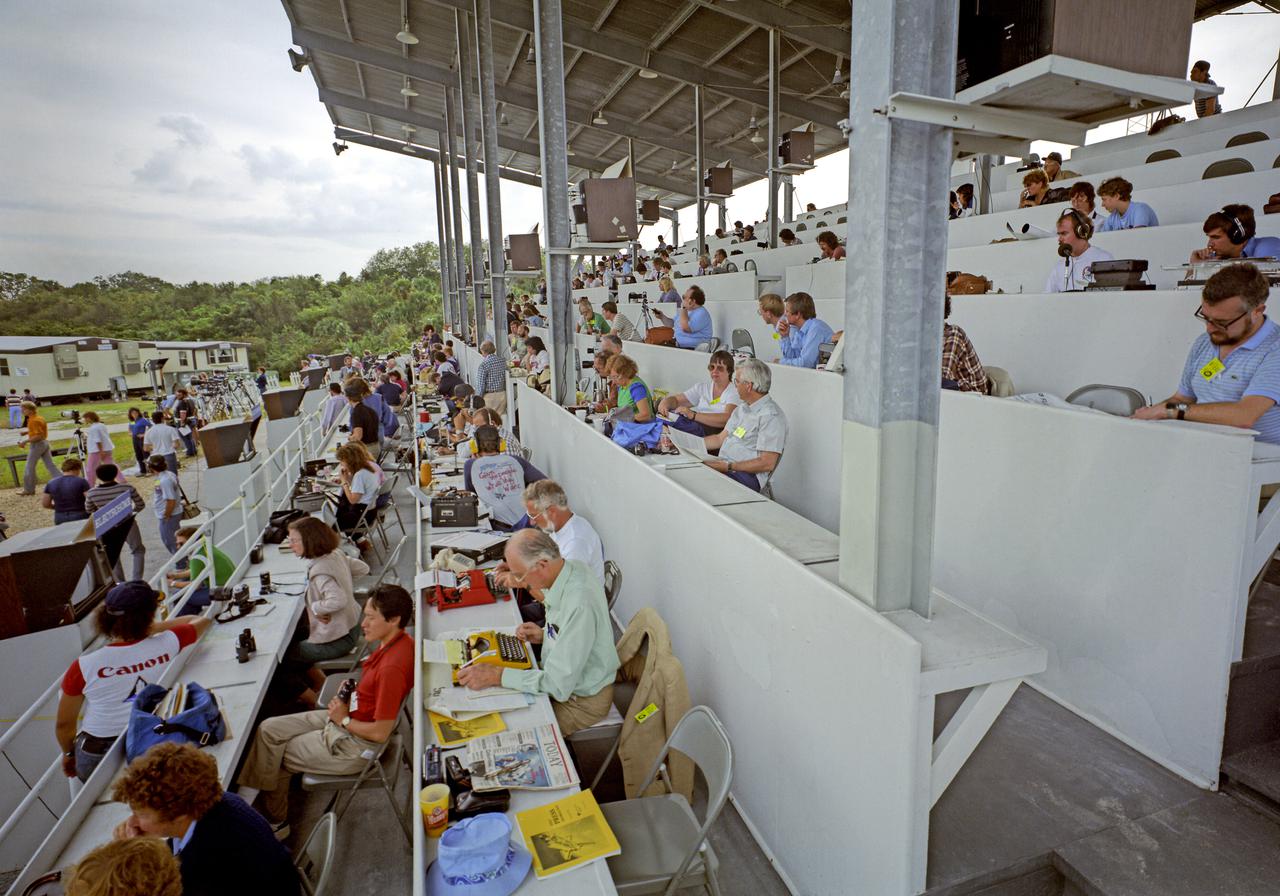
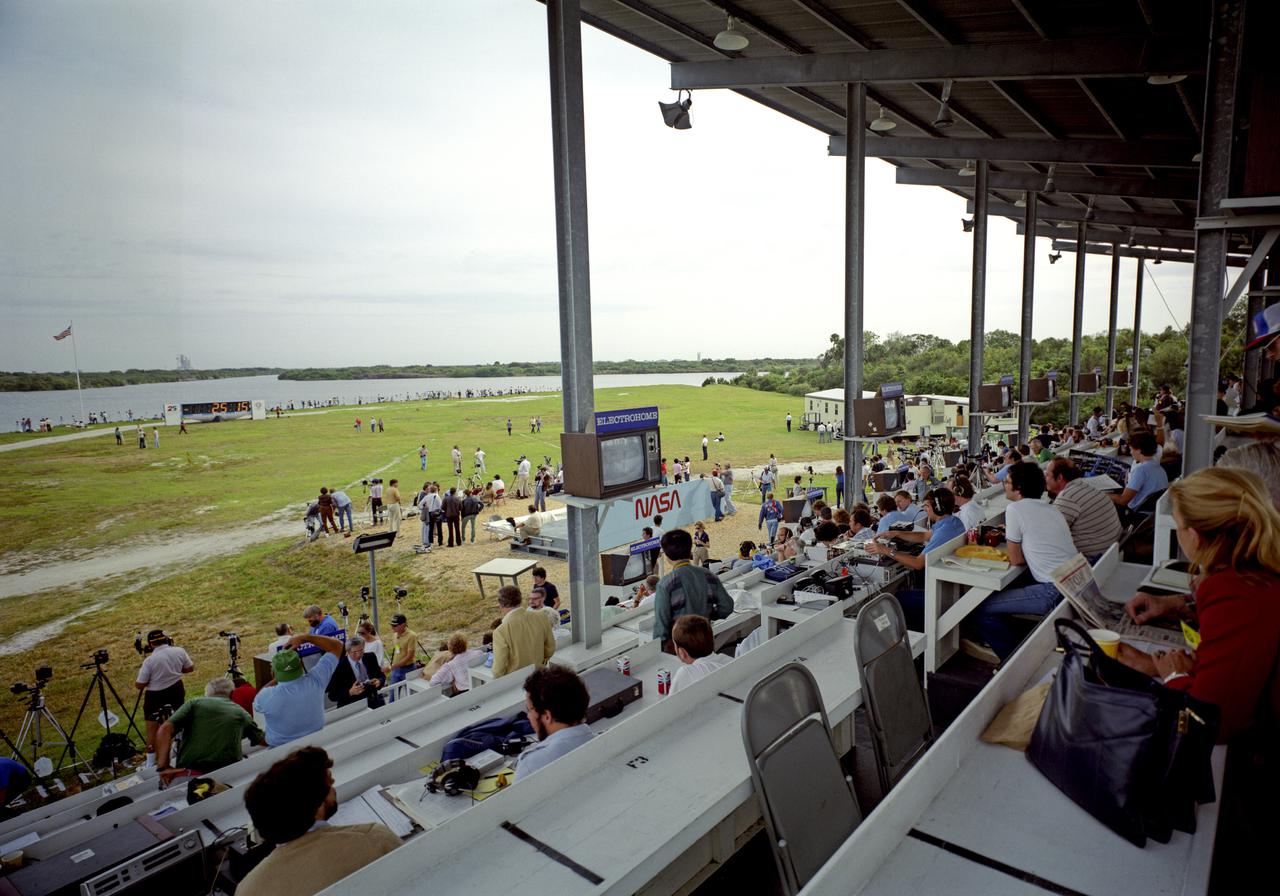
CAPE CANAVERAL, Fla. -- Minutes before STS-9 launch, nearly 1,000 news media representatives gather at the Press Site to prepare for coverage of the launch. Photo credit: NASA
83PC-829
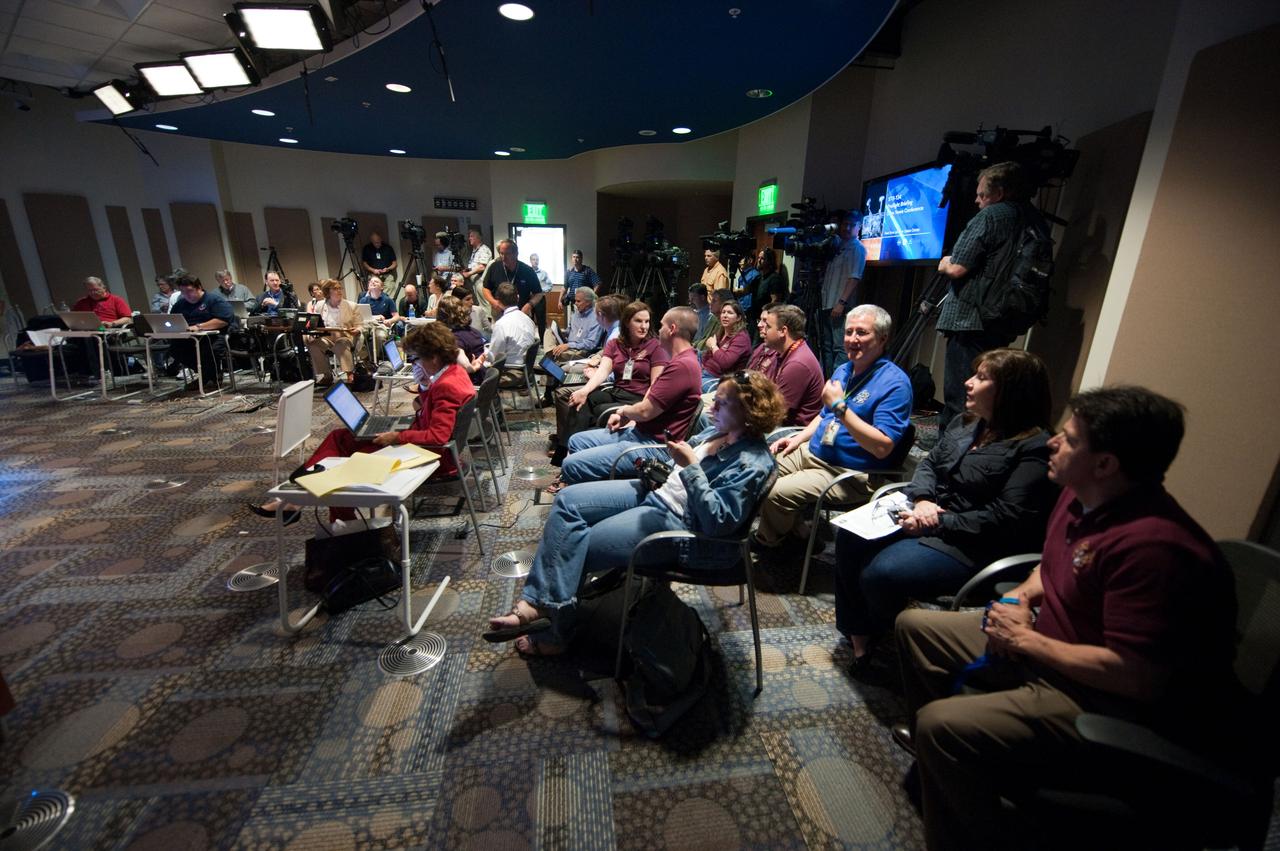
JSC2011-E-028487 (24 March 2011) --- News media representatives are pictured during an STS-134 preflight press conference at NASA's Johnson Space Center. Photo credit: NASA or National Aeronautics and Space Administration
STS-134 Press Conference
Cosmonaut Anatoliy Y. Solovyev, mission commander for Mir 19, responds to a question from a news media representative. Crew members for two of the joint Space Shuttle/Mir missions met the press at JSC.
Cosmonaut Solovyev answers questions at STS-71 news conference
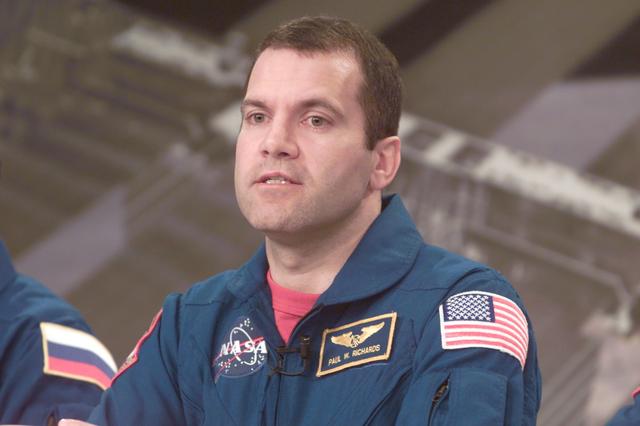
JSC2001-E-05533 (28 February 2001) --- Astronaut Paul W. Richards, STS-102 mission specialist, responds to a news media representative's question during a press briefing at the Johnson Space Center (JSC).
STS-102 Preflight Press Briefings
CAPE CANAVERAL, Fla. -- Minutes before STS-9 launch, nearly 1,000 news media representatives gather at the Press Site to prepare for coverage of the launch. Photo credit: NASA
83PC-828
CAPE CANAVERAL, Fla. -- Minutes before STS-9 launch, nearly 1,000 news media representatives gather at the Press Site to prepare for coverage of the launch. Photo credit: NASA
83PC-827
Cosmonaut Nikolai M. Budarin, flight engineer for Mir 19, ponders a question from a news media representative. Crew members for two of the joint Space Shuttle/Mir missions met the press at JSC.
Cosmonaut Budarin during STS-71 news conference
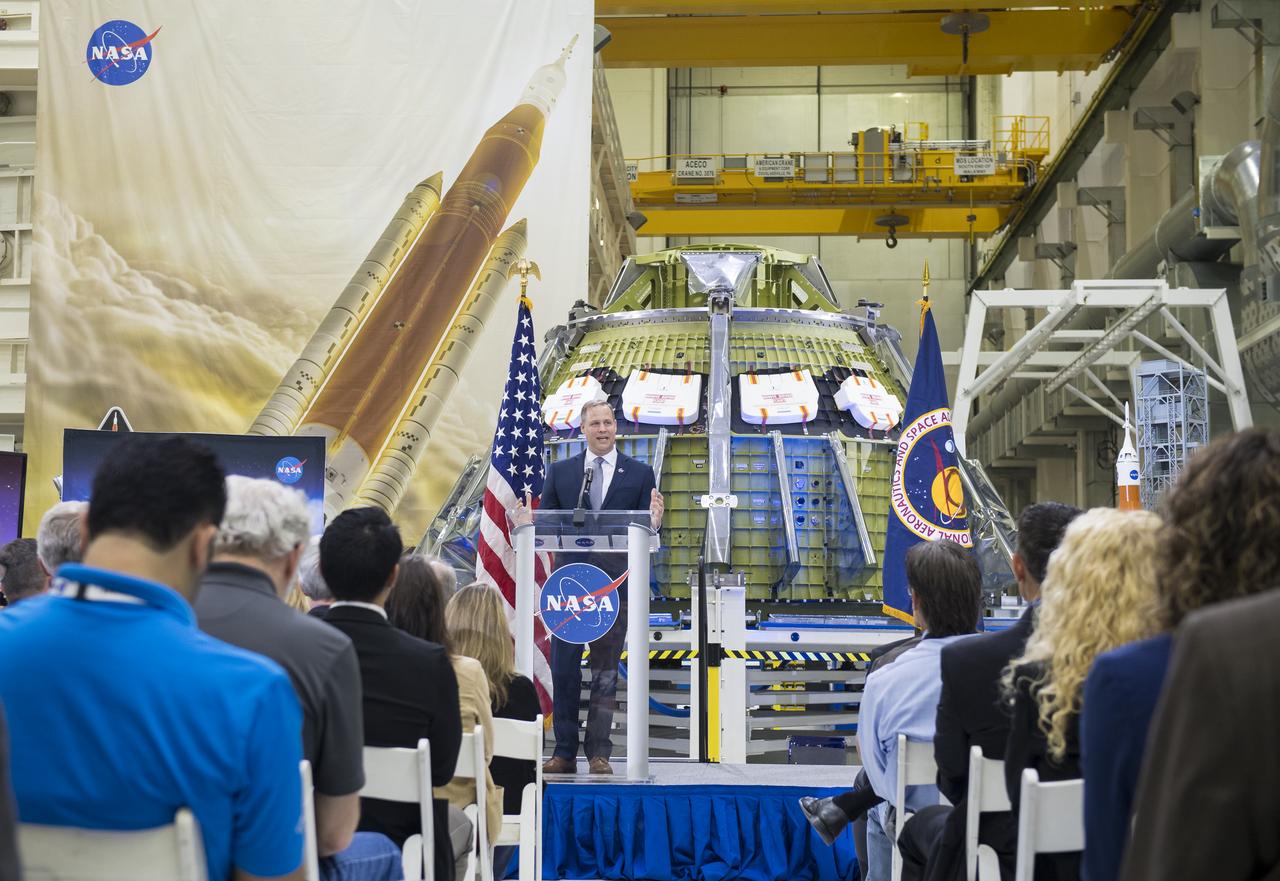
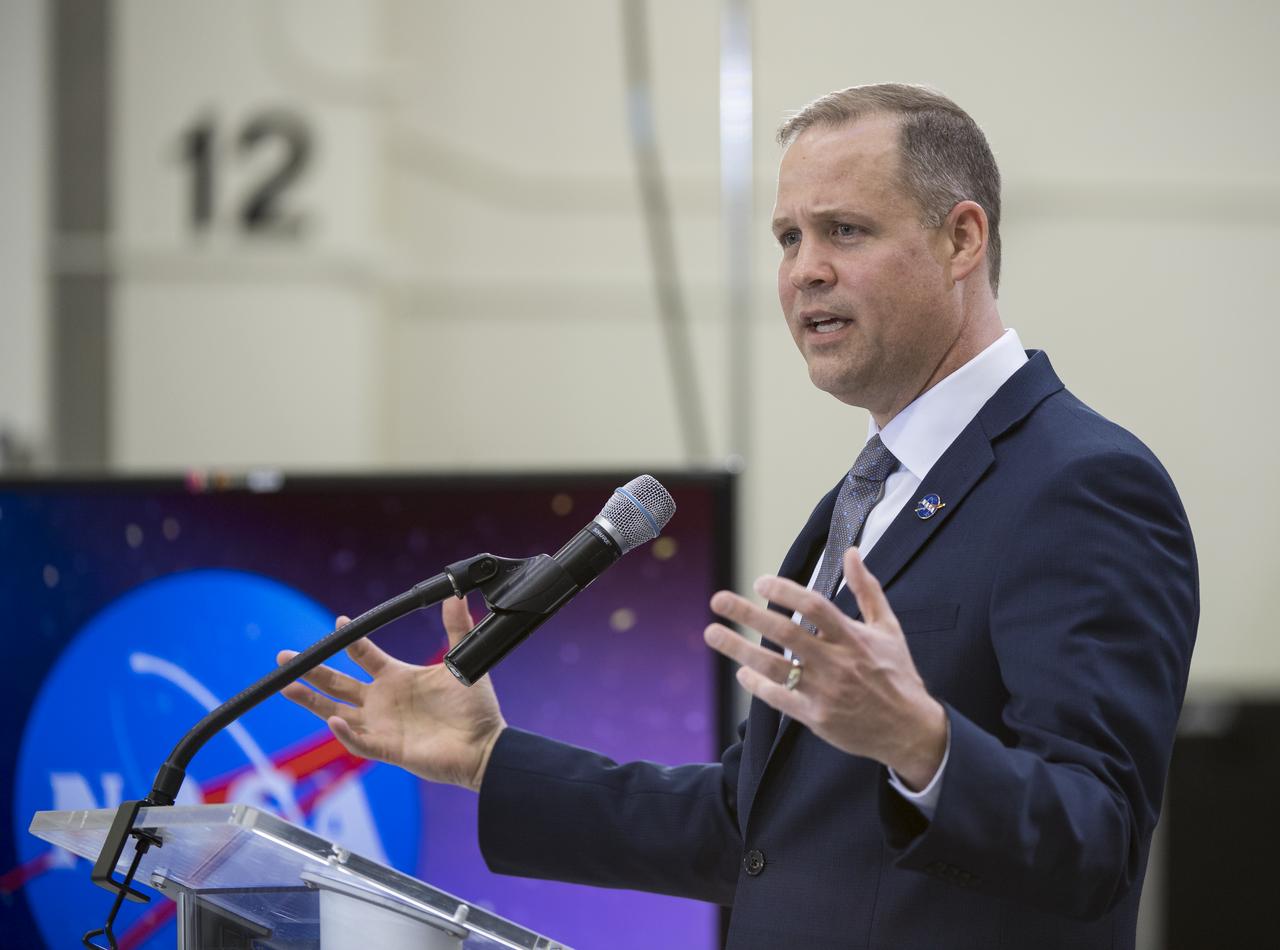
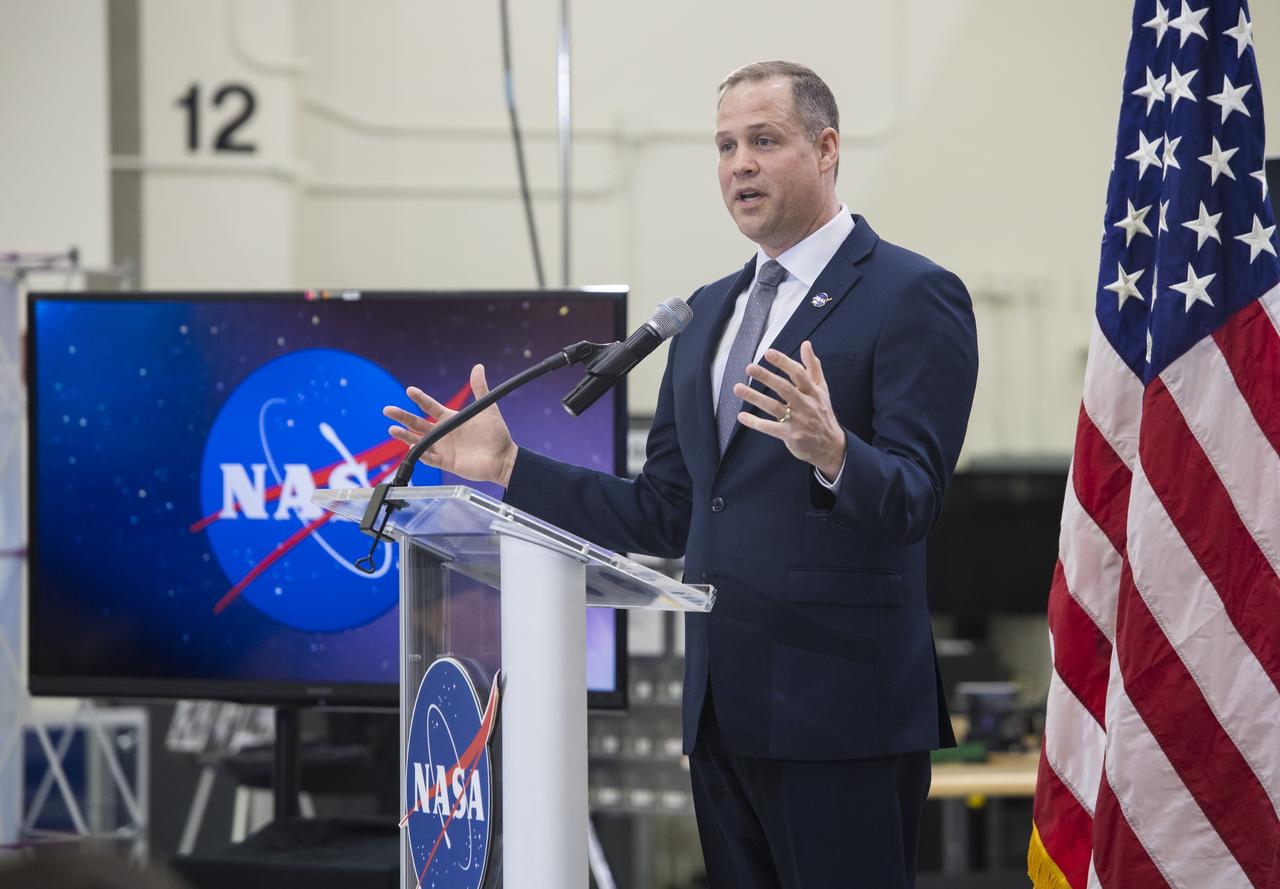
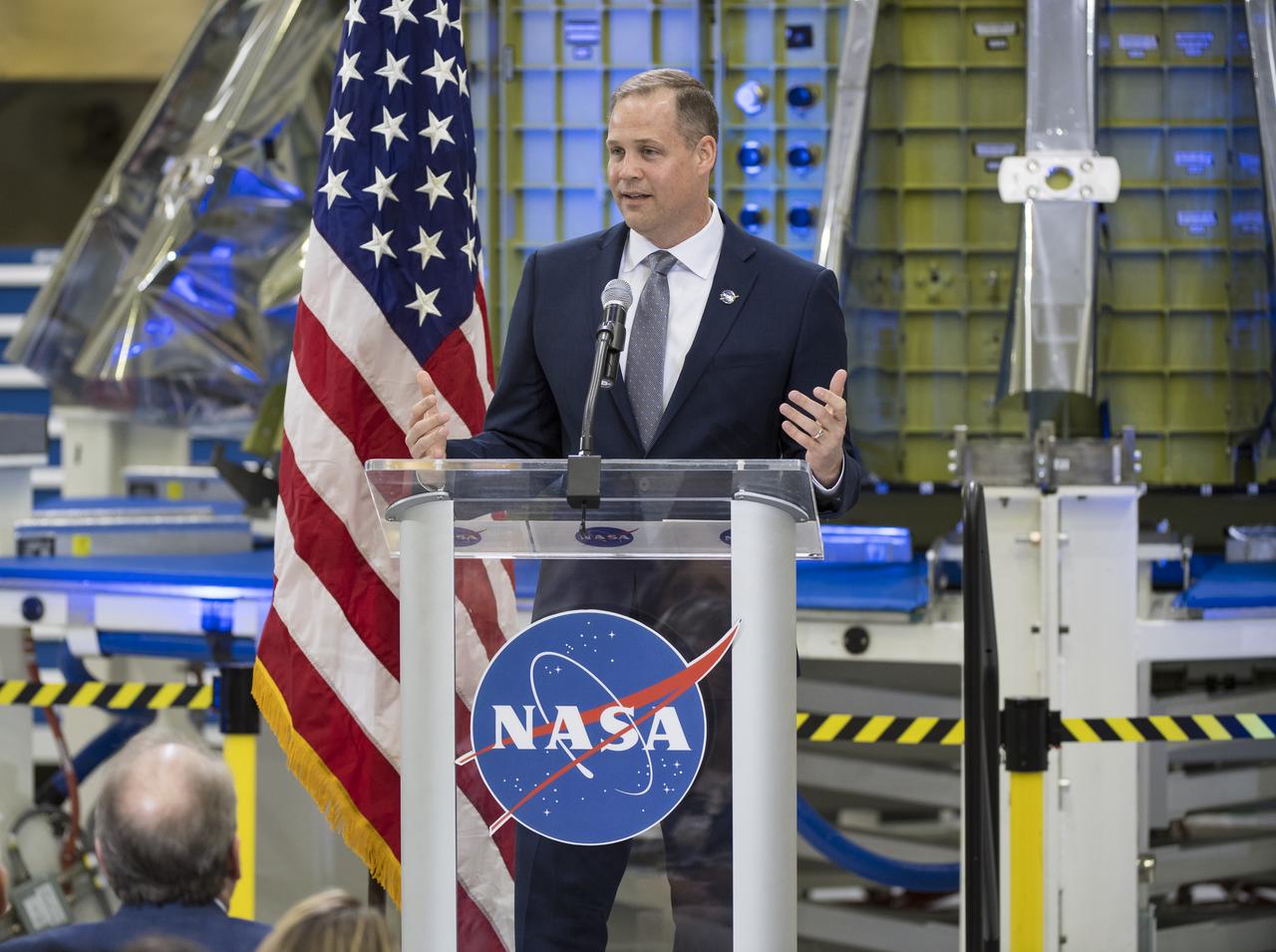
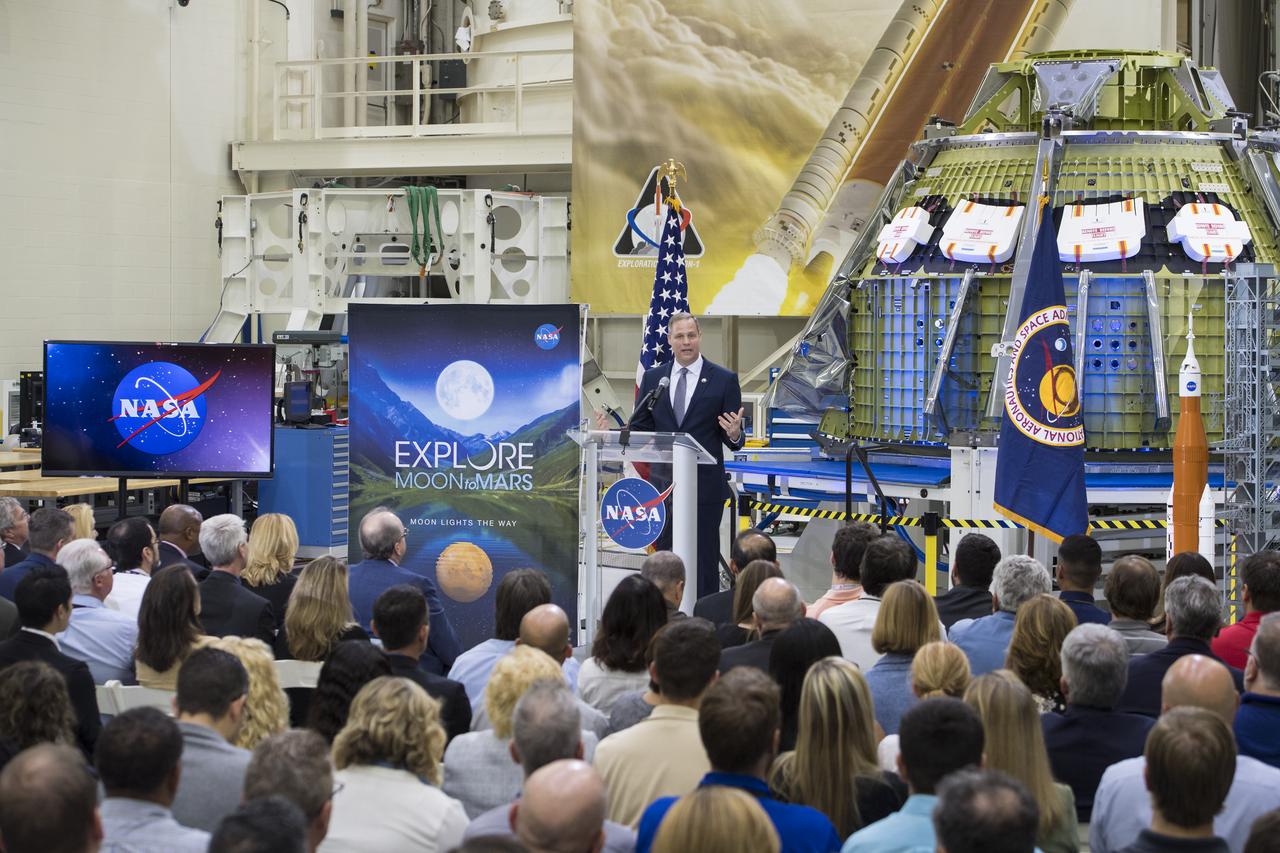
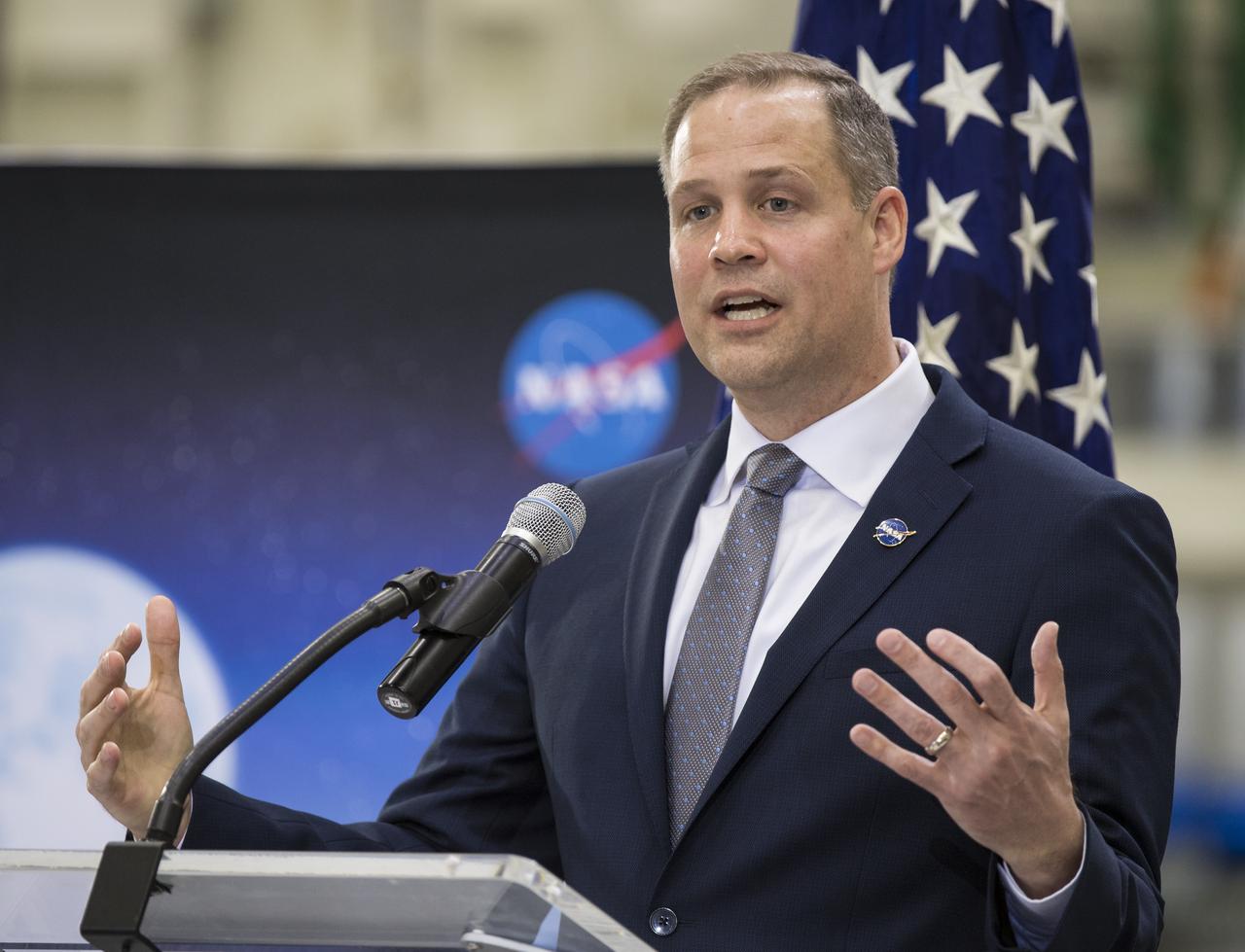
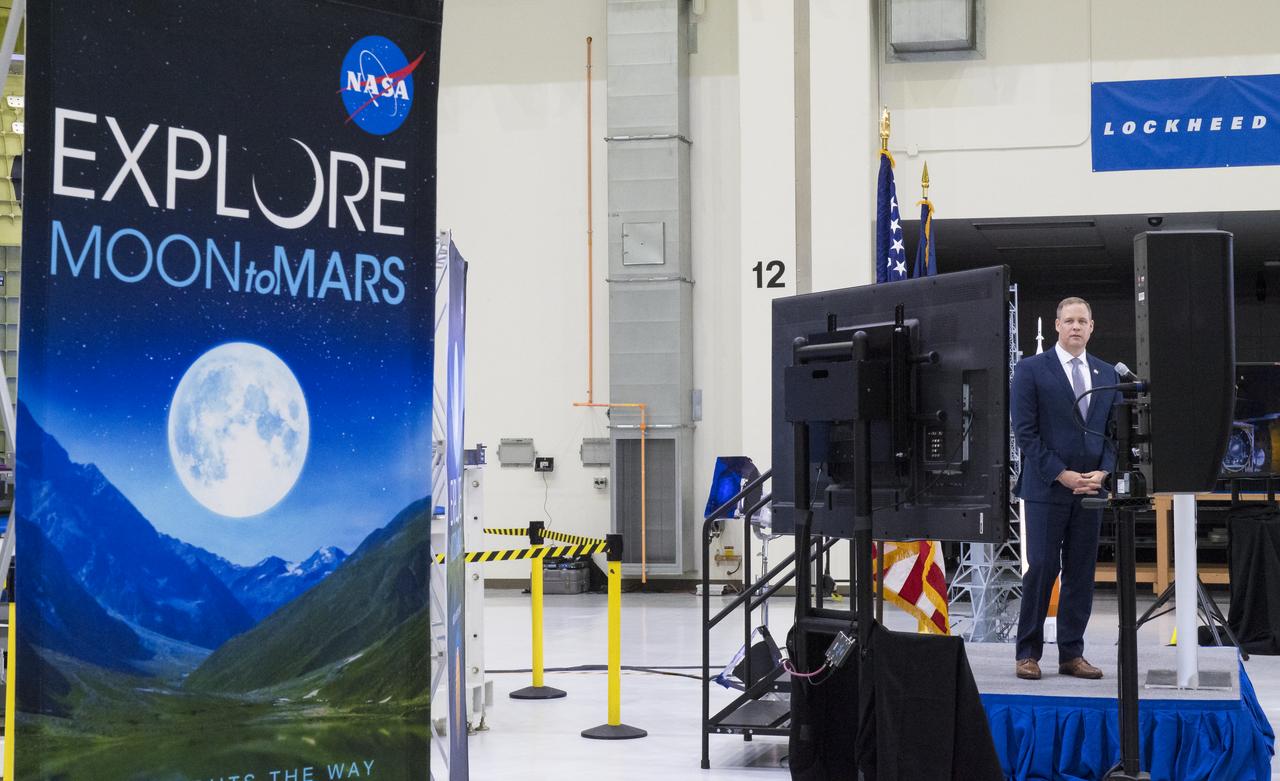
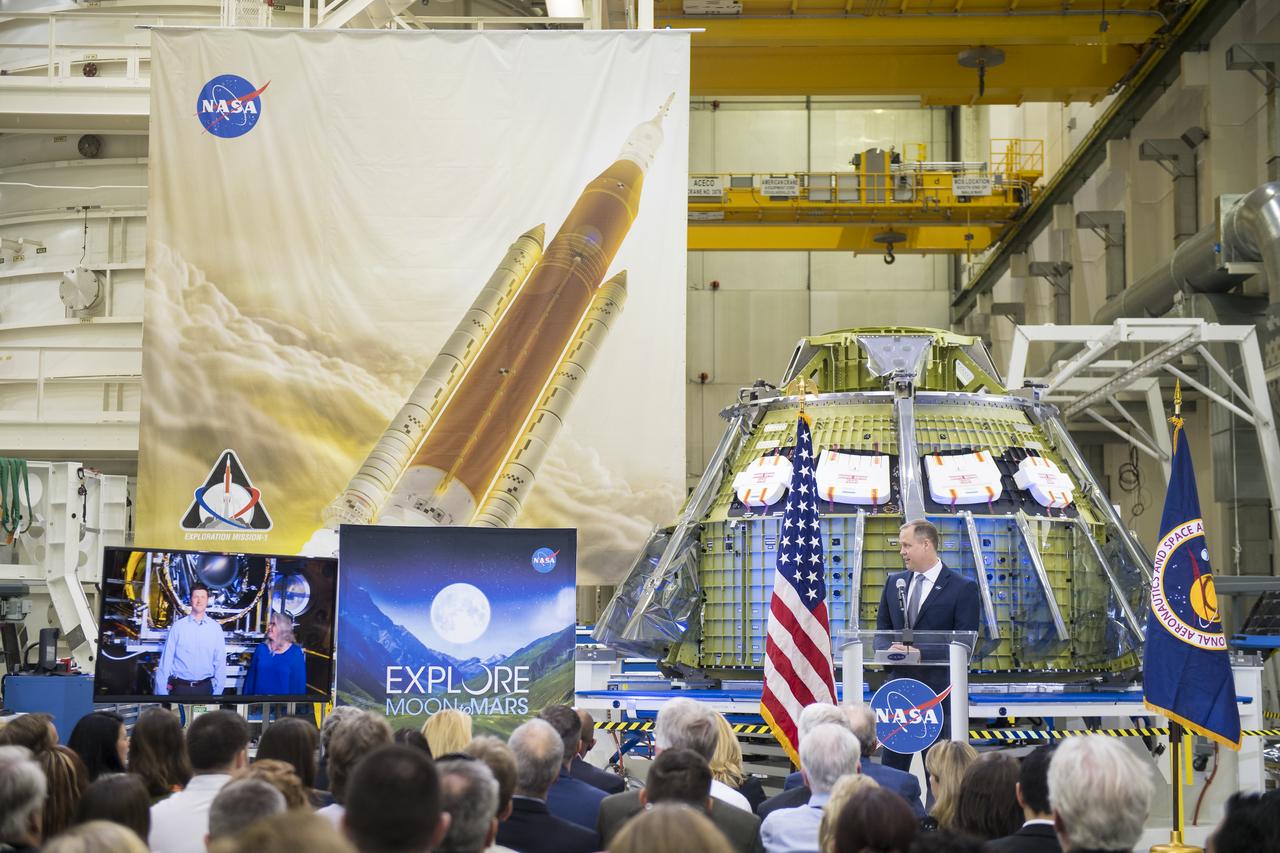
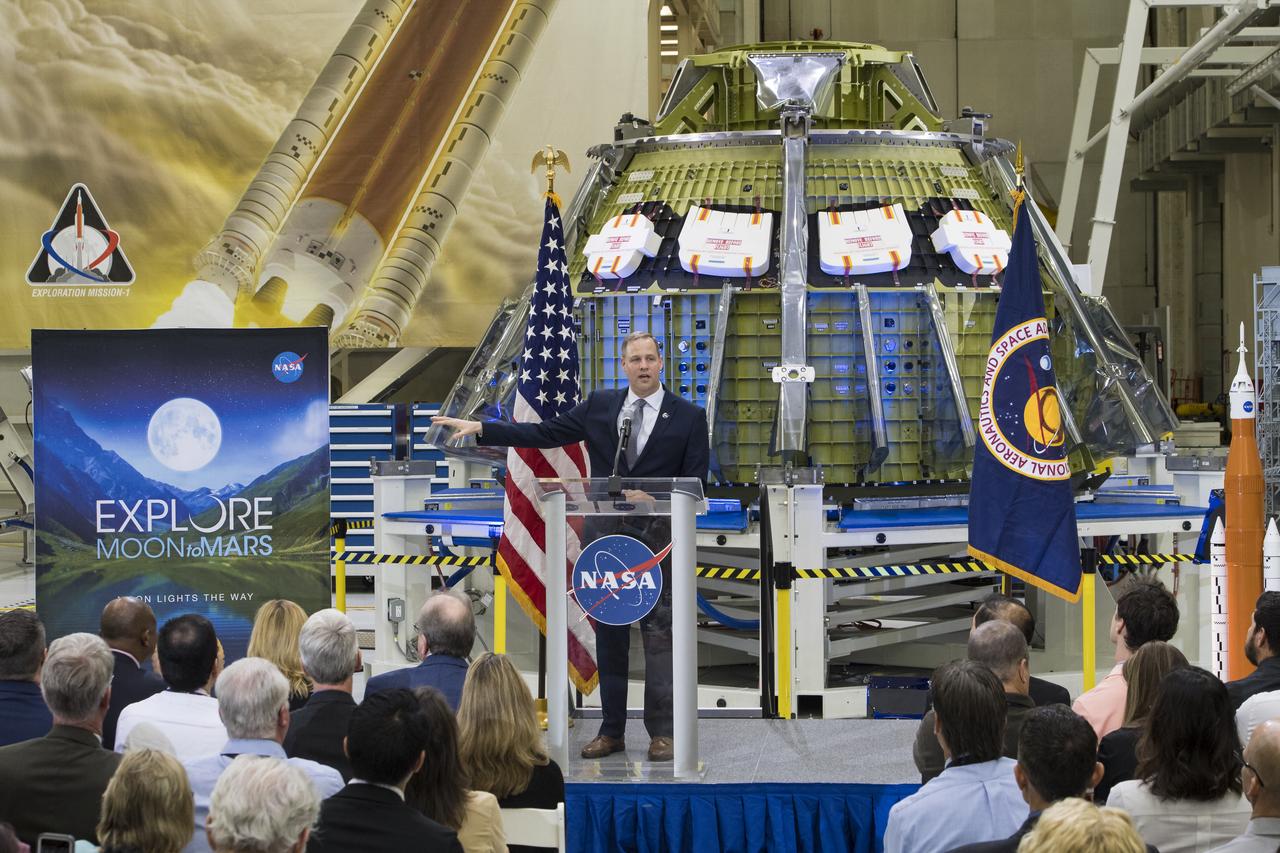
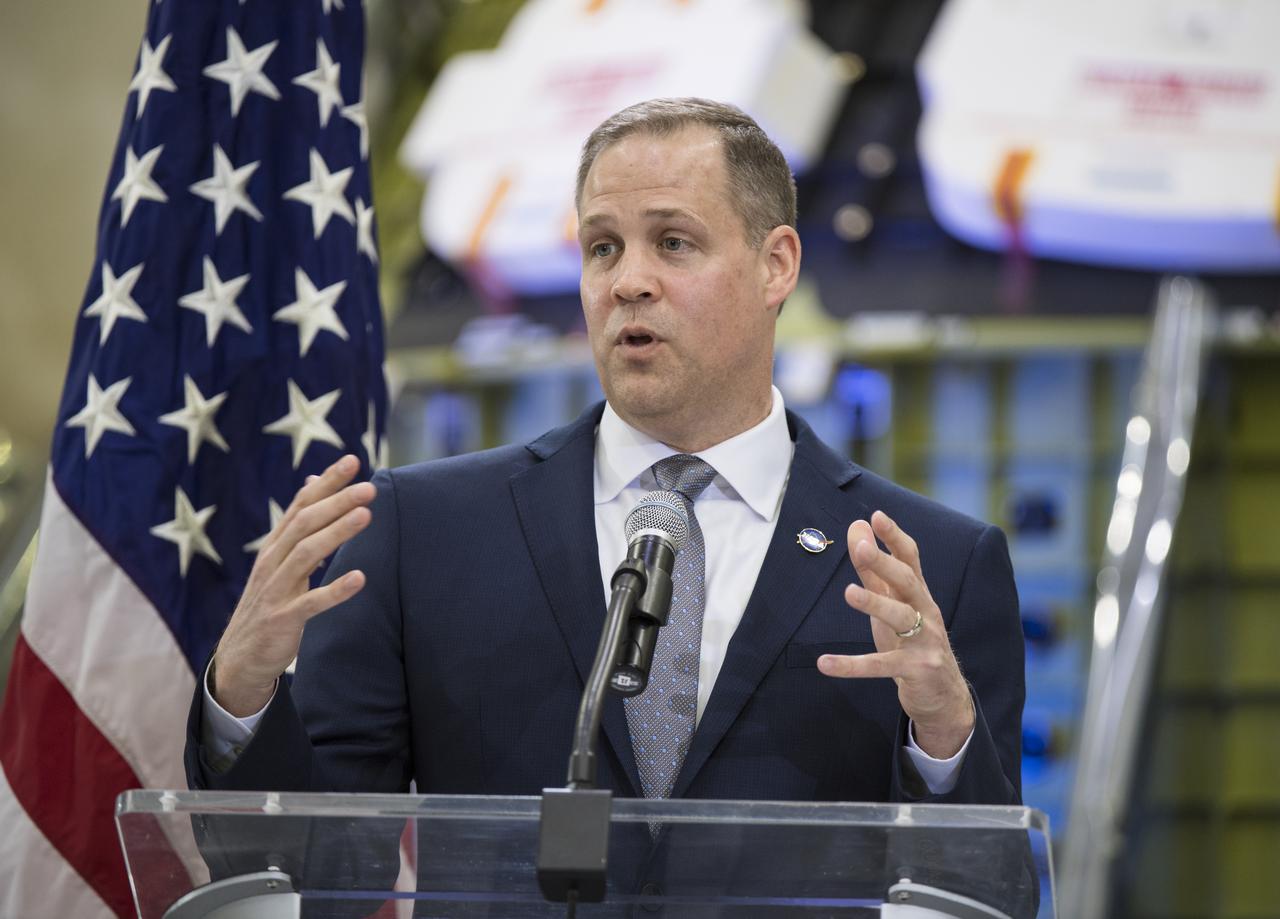
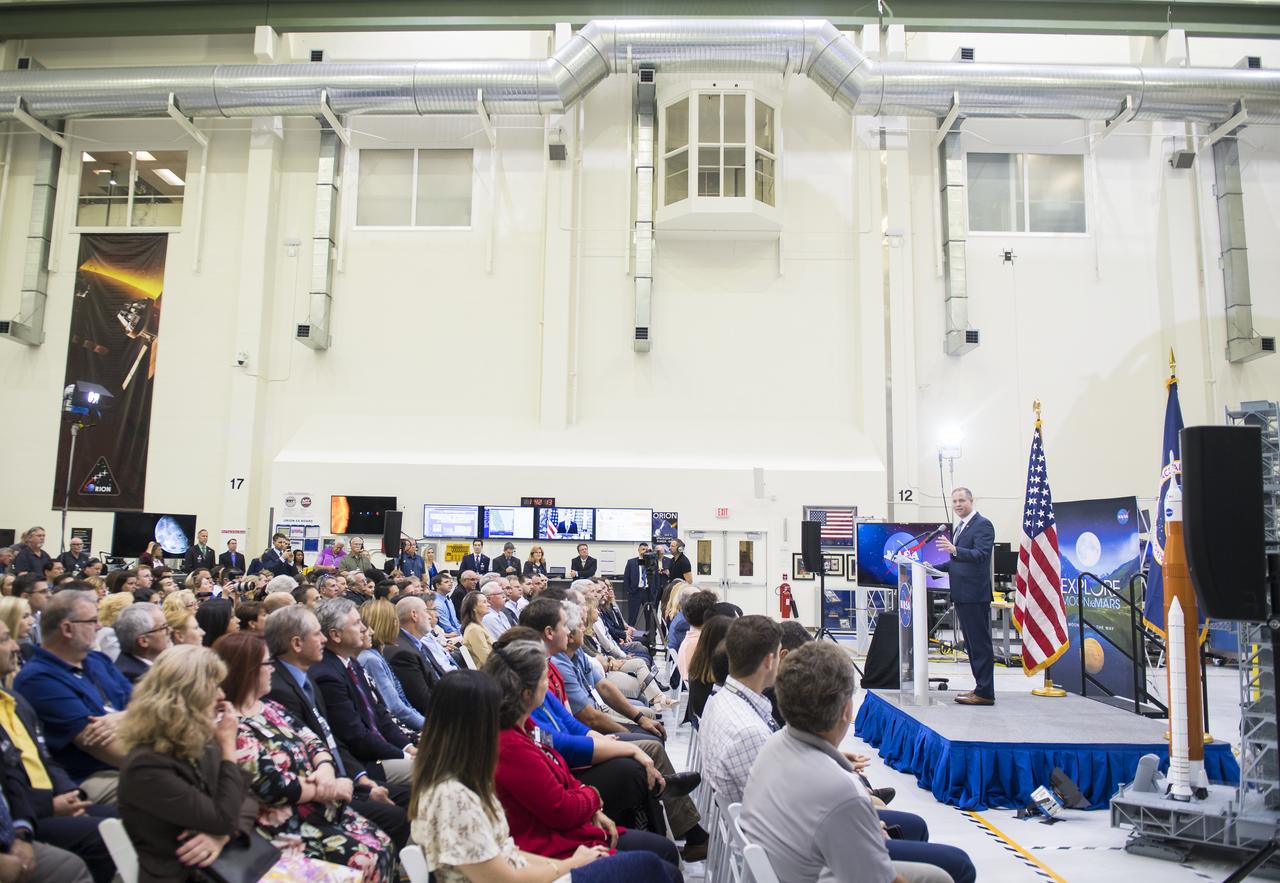
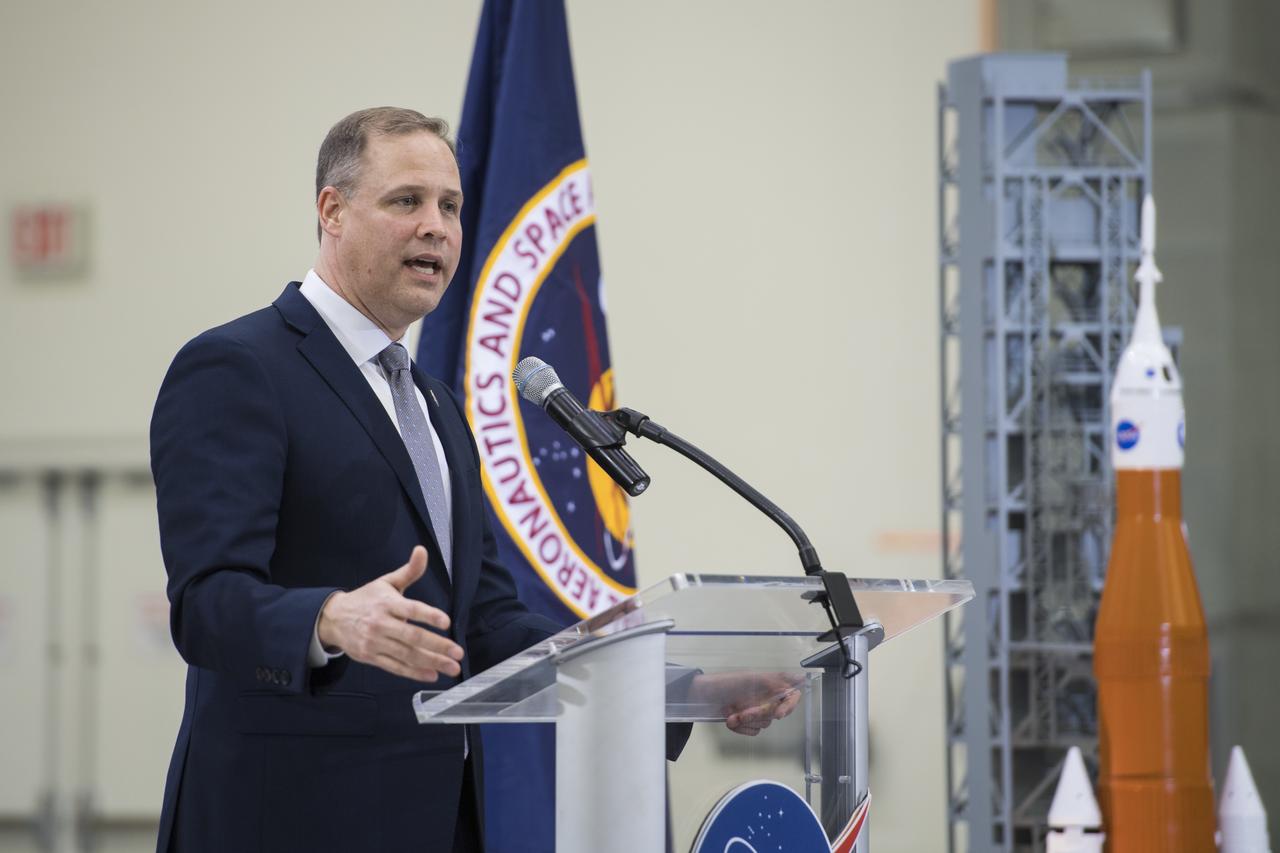
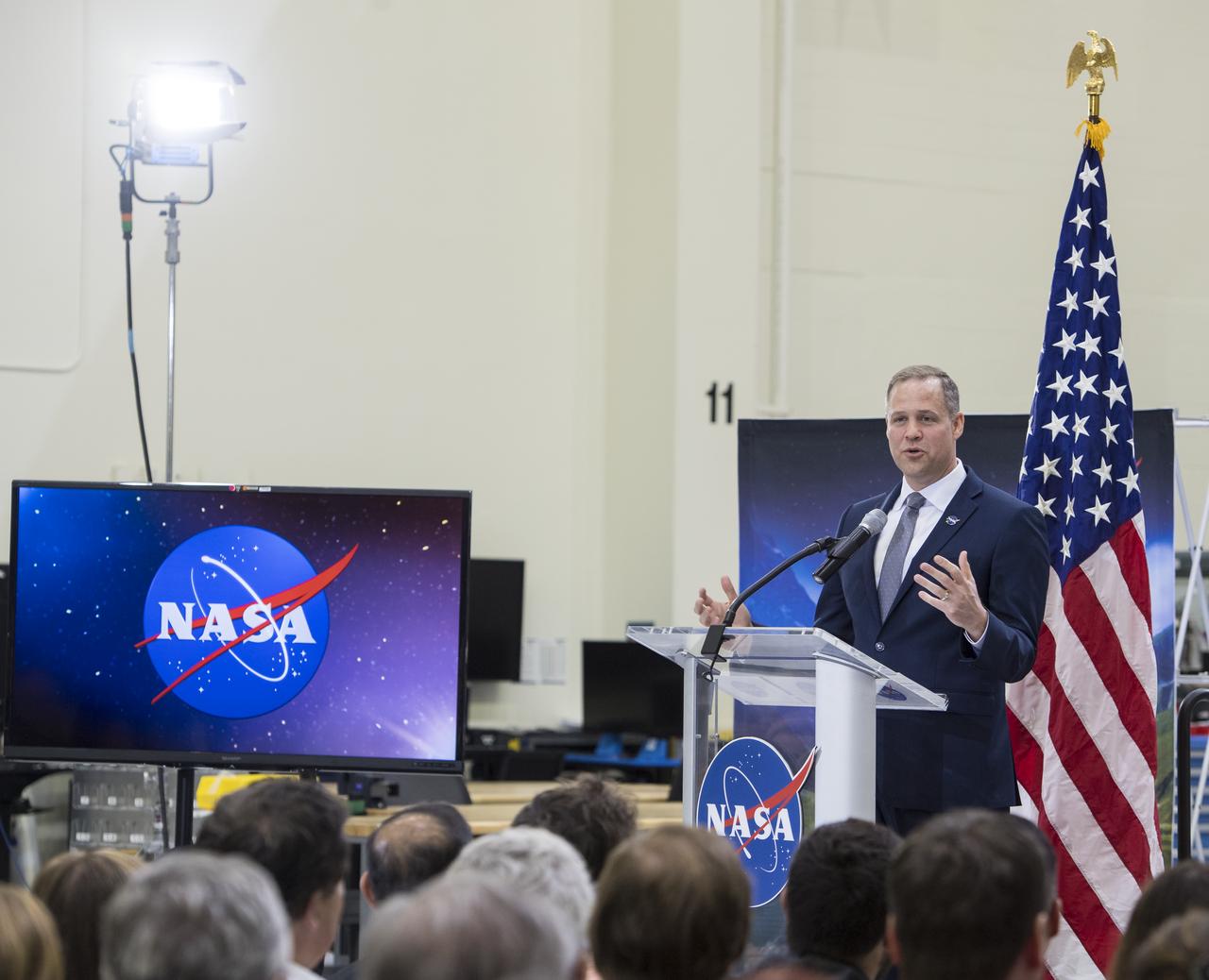
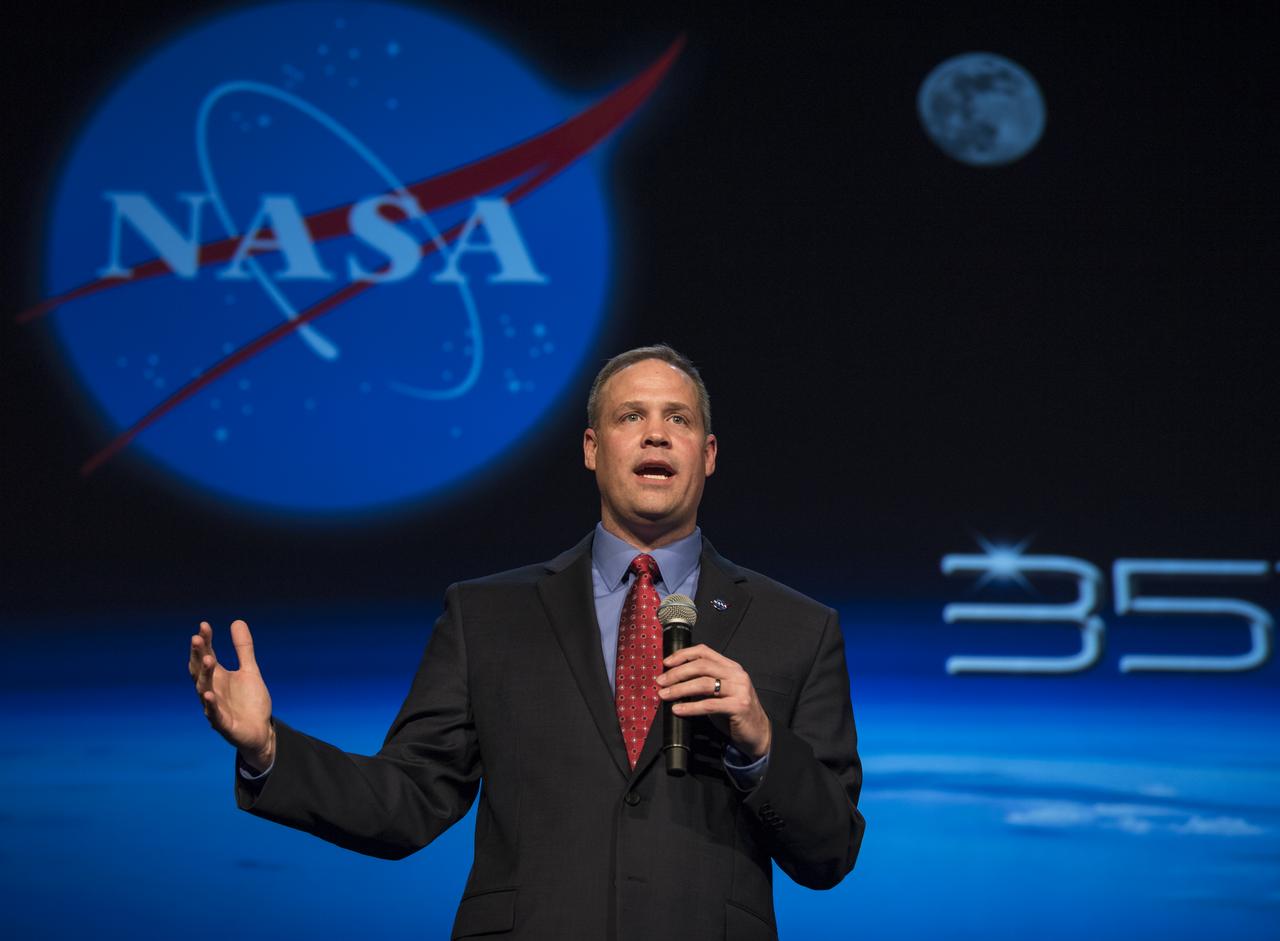
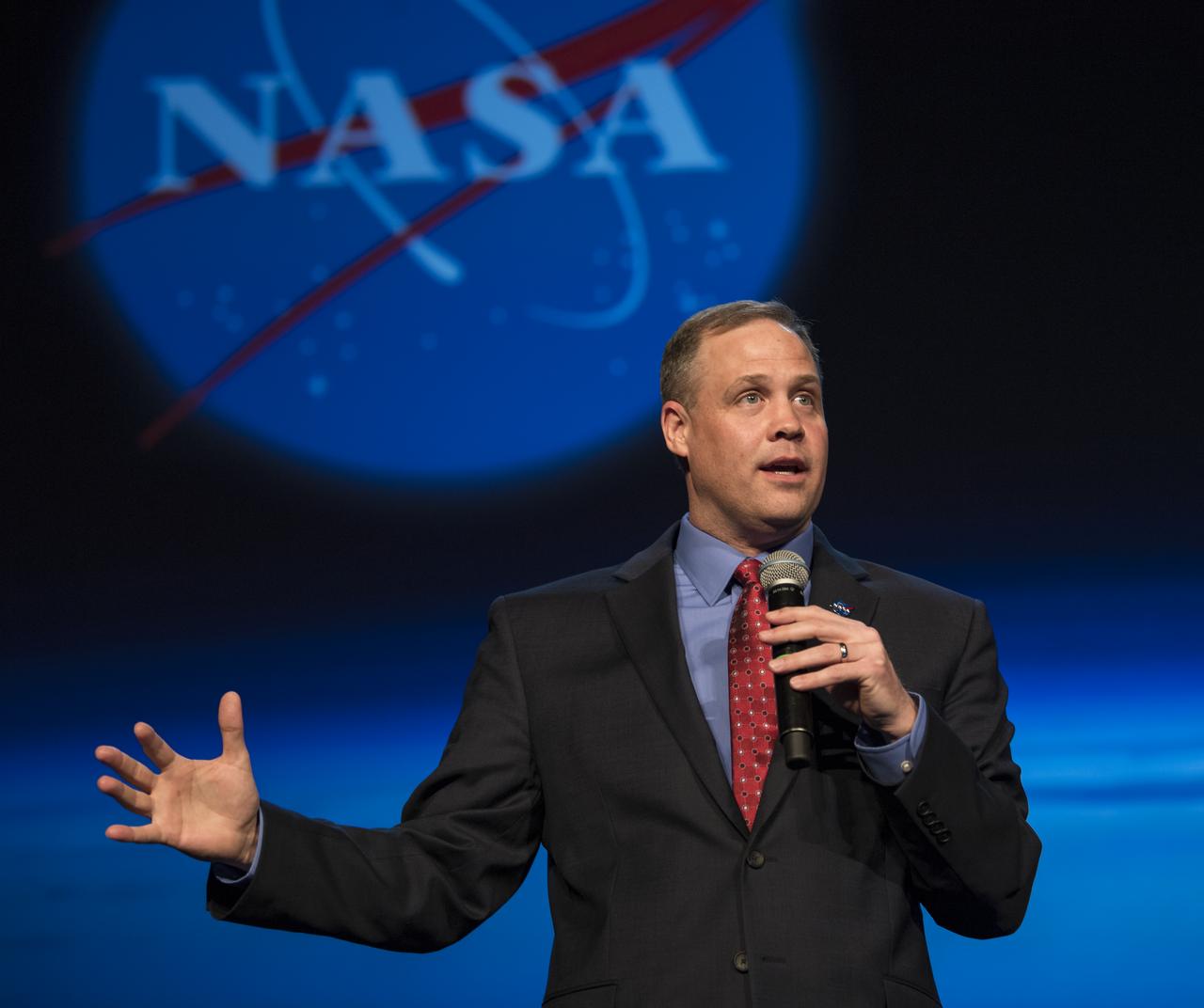
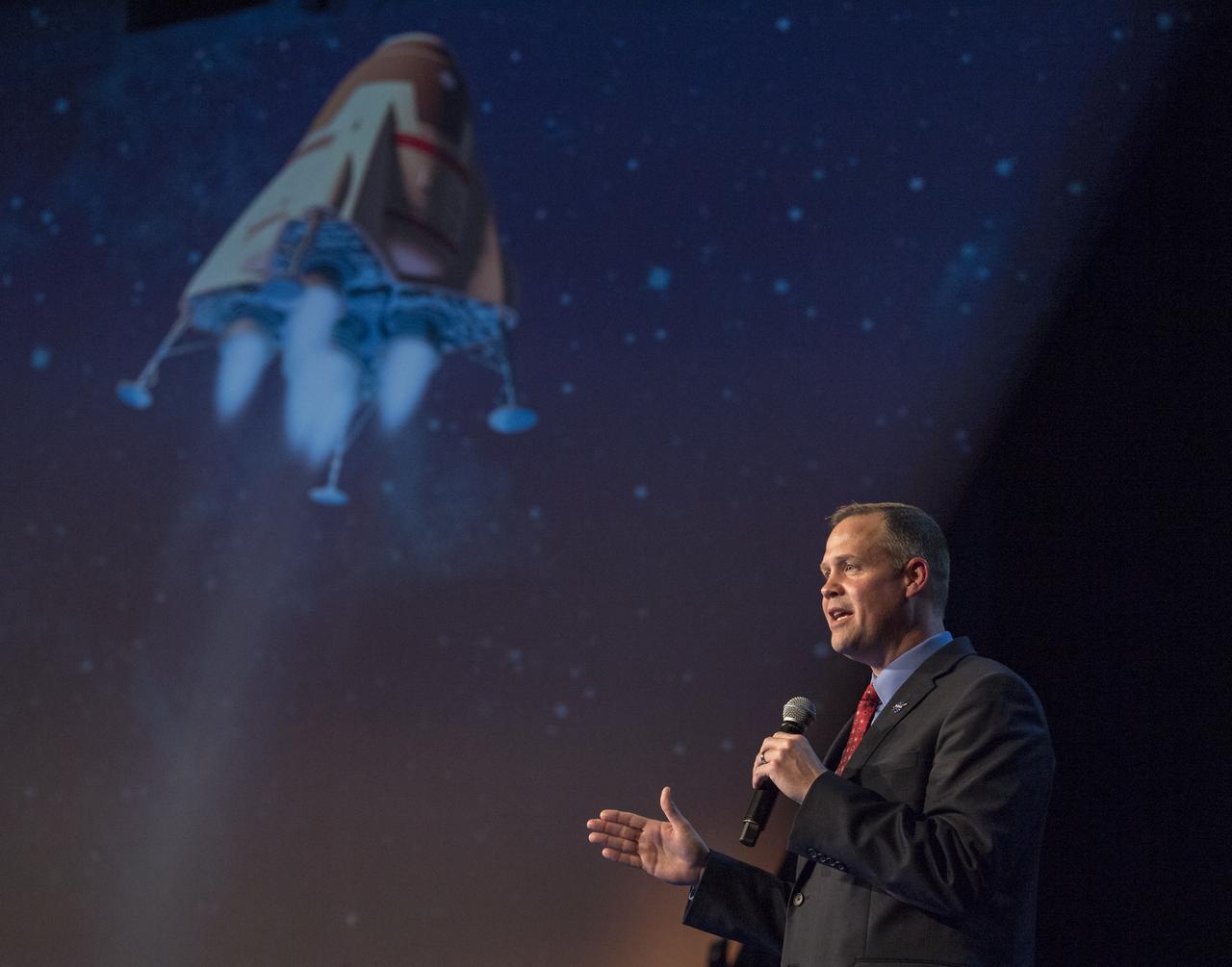
NASA Administrator Jim Bridenstine talks to employees about the agency’s progress toward sending astronauts to the Moon and on to Mars during a televised event, Monday, March 11, 2019, at the Neil Armstrong Operations and Checkout Building at NASA's Kennedy Space Center in Florida. Representatives from the Kennedy workforce, news media, and social media were in attendance. NASA's Orion spacecraft, which is scheduled to be flown on Exploration Mission-2, was on display. For information on NASA's Moon to Mars plans, visit: www.nasa.gov/moontomars Photo credit: (NASA/Aubrey Gemignani)
Moon to Mars Event
NASA Administrator Jim Bridenstine talks to employees about the agency’s progress toward sending astronauts to the Moon and on to Mars during a televised event, Monday, March 11, 2019, at the Neil Armstrong Operations and Checkout Building at NASA's Kennedy Space Center in Florida. Representatives from the Kennedy workforce, news media, and social media were in attendance. NASA's Orion spacecraft, which is scheduled to be flown on Exploration Mission-2, was on display. For information on NASA's Moon to Mars plans, visit: www.nasa.gov/moontomars Photo credit: (NASA/Aubrey Gemignani)
Moon to Mars Event
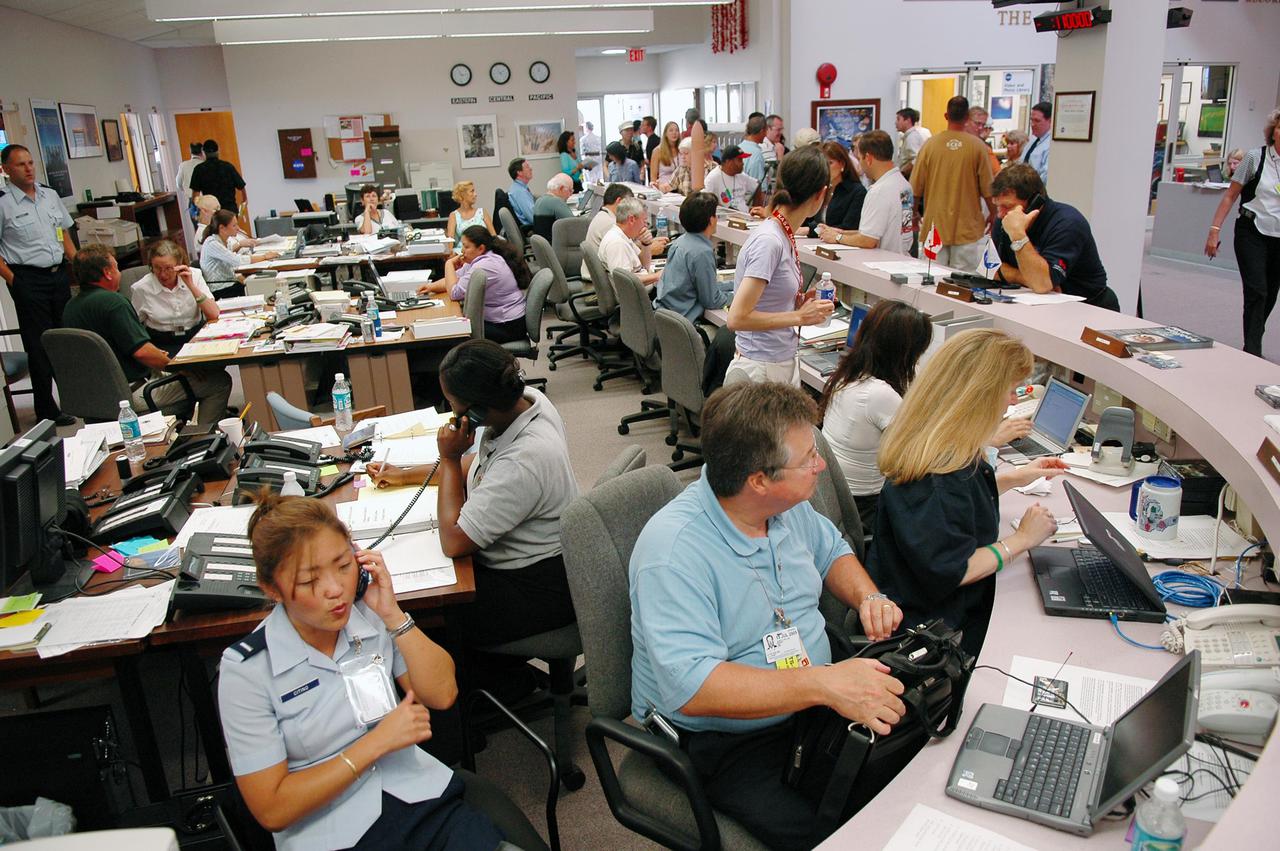
KENNEDY SPACE CENTER, FLA. -   The NASA News Center at NASA Kennedy Space Center hums with activity as workers and volunteers behind the counter help the media during launch activities for Return to Flight mission STS-114.  More than a thousand media representatives from 36 states, the District of Columbia and 32 countries converged on the News Center for the historic launch.
KSC-05pd-1596
NASA Administrator Jim Bridenstine talks to Glenn Research Center facility manager, Deb Waters, and aerospace engineer, Dave Jacobson, who are inside the vacuum chamber showing one of the Hall Effect Thrusters by video, Monday, March 11, 2019, at the Neil Armstrong Operations and Checkout Building at NASA's Kennedy Space Center in Florida. Representatives from the Kennedy workforce, news media and social media were in attendance. For information on NASA's Moon to Mars plans, visit: www.nasa.gov/moontomars Photo credit: (NASA/Aubrey Gemignani)
Moon to Mars Event
NASA Administrator Jim Bridenstine talks to employees about the agency’s progress toward sending astronauts to the Moon and on to Mars during a televised event, Monday, March 11, 2019, at the Neil Armstrong Operations and Checkout Building at NASA's Kennedy Space Center in Florida. Representatives from the Kennedy workforce, news media, and social media were in attendance. NASA's Orion spacecraft, which is scheduled to be flown on Exploration Mission-2, was on display. For information on NASA's Moon to Mars plans, visit: www.nasa.gov/moontomars Photo credit: (NASA/Aubrey Gemignani)
Moon to Mars Event
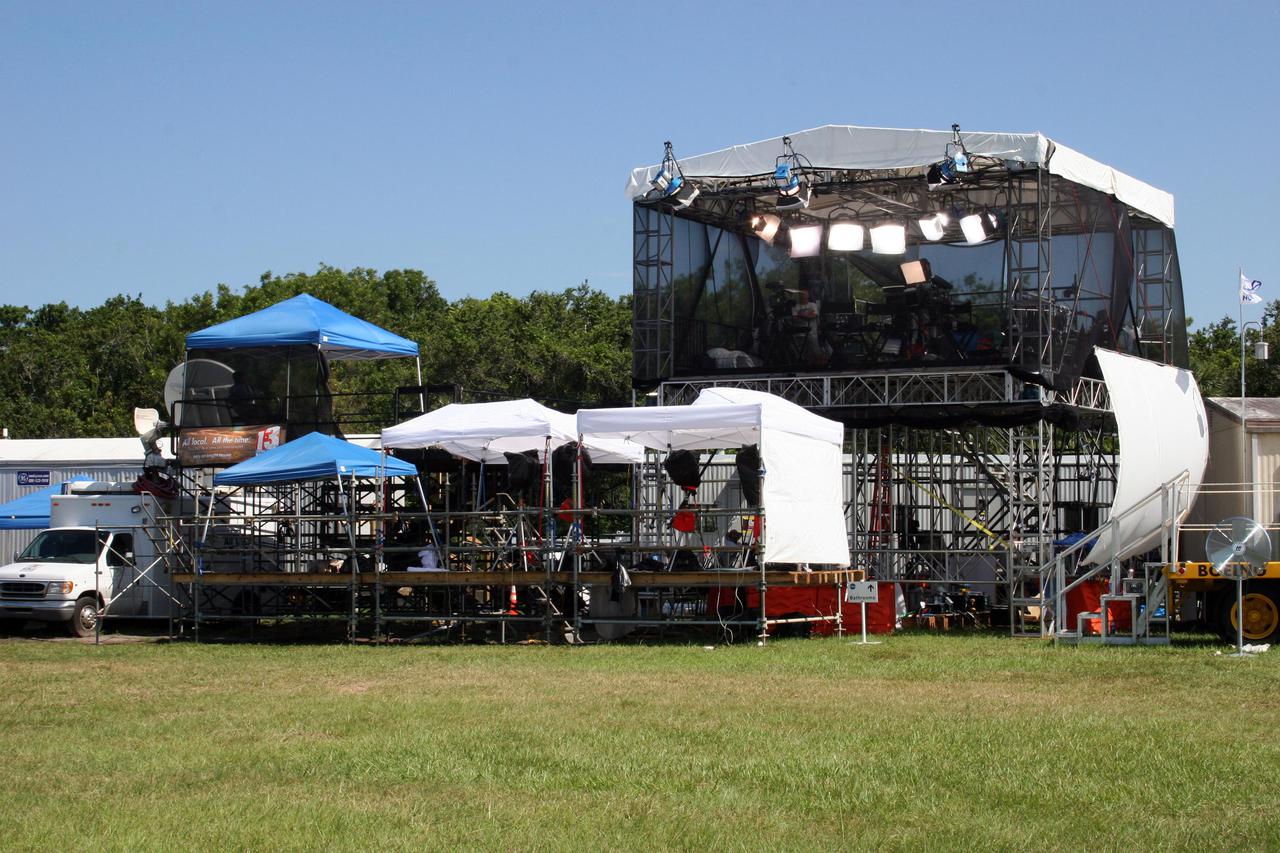
KENNEDY SPACE CENTER, FLA. -   Tents cover precious equipment in the area east of the NASA Kennedy Space Center News Center where photographers and other media wait for the launch of Space Shuttle Discovery on Return to Flight mission STS-114.  More than a thousand media representatives from 36 states, the District of Columbia and 32 countries converged on the News Center for the historic launch.
KSC-05pd-1594
NASA Administrator Jim Bridenstine talks to employees about the agency’s progress toward sending astronauts to the Moon and on to Mars during a televised event, Monday, March 11, 2019, at the Neil Armstrong Operations and Checkout Building at NASA's Kennedy Space Center in Florida. Representatives from the Kennedy workforce, news media, and social media were in attendance. NASA's Orion spacecraft, which is scheduled to be flown on Exploration Mission-2, was on display. For information on NASA's Moon to Mars plans, visit: www.nasa.gov/moontomars Photo credit: (NASA/Aubrey Gemignani)
Moon to Mars Event
NASA Administrator Jim Bridenstine talks to employees about the agency’s progress toward sending astronauts to the Moon and on to Mars during a televised event, Monday, March 11, 2019, at the Neil Armstrong Operations and Checkout Building at NASA's Kennedy Space Center in Florida. Representatives from the Kennedy workforce, news media, and social media were in attendance. NASA's Orion spacecraft, which is scheduled to be flown on Exploration Mission-2, was on display. For information on NASA's Moon to Mars plans, visit: www.nasa.gov/moontomars Photo credit: (NASA/Aubrey Gemignani)
Moon to Mars Event
NASA Administrator Jim Bridenstine talks to employees about the agency’s progress toward sending astronauts to the Moon and on to Mars during a televised event, Monday, March 11, 2019, at the Neil Armstrong Operations and Checkout Building at NASA's Kennedy Space Center in Florida. Representatives from the Kennedy workforce, news media, and social media were in attendance. NASA's Orion spacecraft, which is scheduled to be flown on Exploration Mission-2, was on display. For information on NASA's Moon to Mars plans, visit: www.nasa.gov/moontomars Photo credit: (NASA/Aubrey Gemignani)
Moon to Mars Event
NASA Administrator Jim Bridenstine talks to employees about the agency’s progress toward sending astronauts to the Moon and on to Mars during a televised event, Monday, March 11, 2019, at the Neil Armstrong Operations and Checkout Building at NASA's Kennedy Space Center in Florida. Representatives from the Kennedy workforce, news media, and social media were in attendance. NASA's Orion spacecraft, which is scheduled to be flown on Exploration Mission-2, was on display. For information on NASA's Moon to Mars plans, visit: www.nasa.gov/moontomars Photo credit: (NASA/Aubrey Gemignani)
Moon to Mars Event
KENNEDY SPACE CENTER, FLA. -   Roger Crouch (center), a payload specialist, talks to the media prior to the launch of Space Shuttle Discovery on the historic Return to Flight mission STS-114. He has flown on two Shuttle missions, STS-83 and STS-94. STS-114 is the 114th Space Shuttle flight and the 31st for Discovery.  More than a thousand media representatives from 36 states, the District of Columbia and 32 countries converged on the News Center for the historic launch.
KSC-05pd-1603
JSC2011-E-028127 (23 March 2011) --- NASA astronauts Chris Ferguson, STS-135 commander; Doug Hurley, pilot; and Sandy Magnus, mission specialist; along with news media representatives and NASA personnel are pictured during an STS-135 media day event in the Avionics Systems Laboratory at NASA's Johnson Space Center. Photo credit: NASA or National Aeronautics and Space Administration
STS-135 crew during Rendezvous Training session in Building 16 dome
NASA Administrator Jim Bridenstine talks to Glenn Research Center aerospace engineer, Dave Jacobson, left, and facility manager, Deb Waters, who are inside the vacuum chamber showing one of the Hall Effect Thrusters by video, Monday, March 11, 2019, at the Neil Armstrong Operations and Checkout Building at NASA's Kennedy Space Center in Florida. Representatives from the Kennedy workforce, news media and social media were in attendance. For information on NASA's Moon to Mars plans, visit: www.nasa.gov/moontomars Photo credit: (NASA/Aubrey Gemignani)
Moon to Mars Event
NASA Administrator Jim Bridenstine talks to employees about the agency’s progress toward sending astronauts to the Moon and on to Mars during a televised event, Monday, March 11, 2019, at the Neil Armstrong Operations and Checkout Building at NASA's Kennedy Space Center in Florida. Representatives from the Kennedy workforce, news media, and social media were in attendance. NASA's Orion spacecraft, which is scheduled to be flown on Exploration Mission-2, was on display. For information on NASA's Moon to Mars plans, visit: www.nasa.gov/moontomars Photo credit: (NASA/Aubrey Gemignani)
Moon to Mars Event
NASA Administrator Jim Bridenstine talks to employees about the agency’s progress toward sending astronauts to the Moon and on to Mars during a televised event, Monday, March 11, 2019, at the Neil Armstrong Operations and Checkout Building at NASA's Kennedy Space Center in Florida. Representatives from the Kennedy workforce, news media, and social media were in attendance. NASA's Orion spacecraft, which is scheduled to be flown on Exploration Mission-2, was on display. For information on NASA's Moon to Mars plans, visit: www.nasa.gov/moontomars Photo credit: (NASA/Aubrey Gemignani)
Moon to Mars Event
NASA Administrator Jim Bridenstine talks to employees about the agency’s progress toward sending astronauts to the Moon and on to Mars during a televised event, Monday, March 11, 2019, at the Neil Armstrong Operations and Checkout Building at NASA's Kennedy Space Center in Florida. Representatives from the Kennedy workforce, news media, and social media were in attendance. NASA's Orion spacecraft, which is scheduled to be flown on Exploration Mission-2, was on display. For information on NASA's Moon to Mars plans, visit: www.nasa.gov/moontomars Photo credit: (NASA/Aubrey Gemignani)
Moon to Mars Event
NASA Administrator Jim Bridenstine talks to employees about the agency’s progress toward sending astronauts to the Moon and on to Mars during a televised event, Monday, March 11, 2019, at the Neil Armstrong Operations and Checkout Building at NASA's Kennedy Space Center in Florida. Representatives from the Kennedy workforce, news media, and social media were in attendance. NASA's Orion spacecraft, which is scheduled to be flown on Exploration Mission-2, was on display. For information on NASA's Moon to Mars plans, visit: www.nasa.gov/moontomars Photo credit: (NASA/Aubrey Gemignani)
Moon to Mars Event
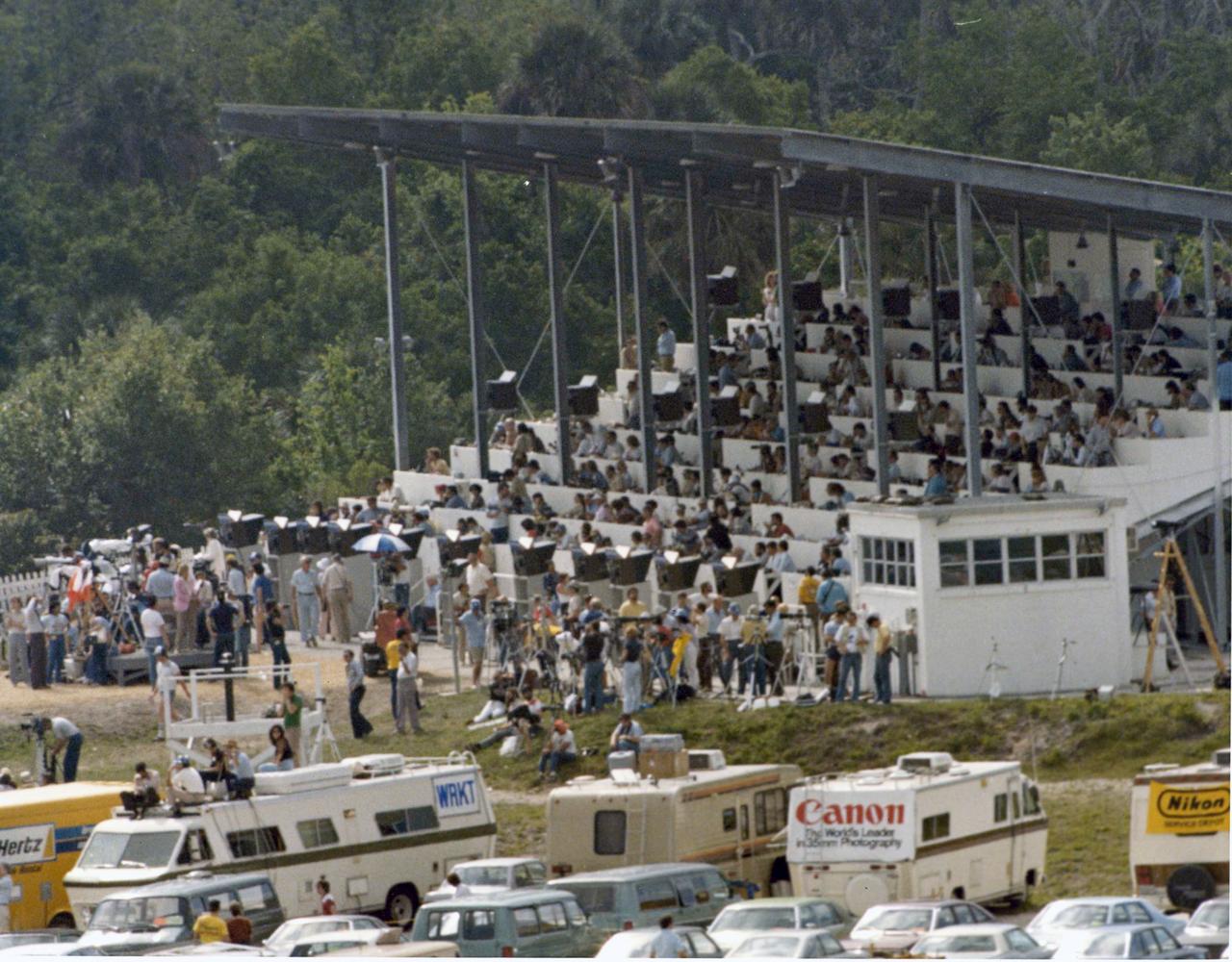
KENNEDY SPACE CENTER, FLA. -  Hundreds of news media representatives prepare for the big moment -- the liftoff of Apollo 11.  That moment came at 9:32 a.m. EDT as Apollo 11 lifted off its launch pad to begin the first manned lunar landing mission.  The space vehicle is seen on its mobile launcher at Pad 39A (center-rear, across water), prior to the liftoff.  More than 3,000 press representatives witnessed the liftoff.
KSC-69PC-401
In the Kennedy Space Center’s Press Site auditorium, news media representatives listen and take photographs as NASA and industry leaders talk about the postponement of the Orion Flight Test launch due to an issue related to fill and drain valves on the Delta IV Heavy rocket.
Orion Post Scrub Press Conference
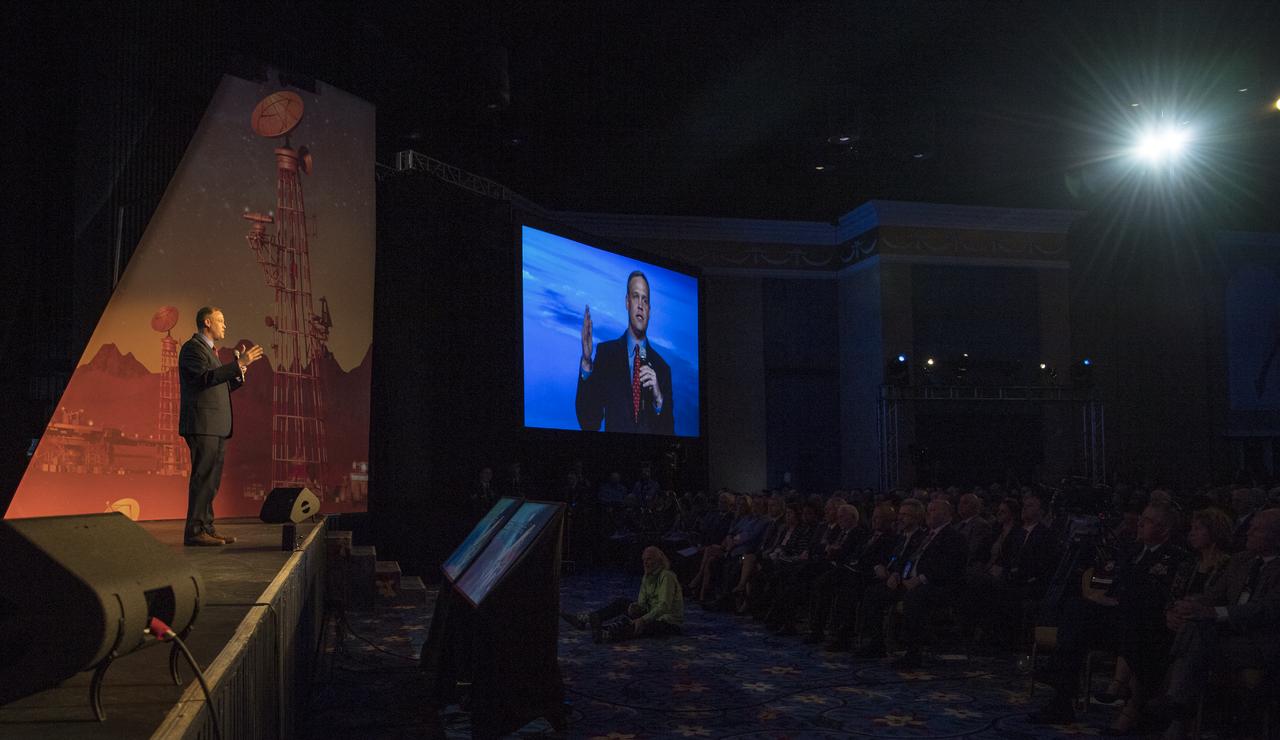
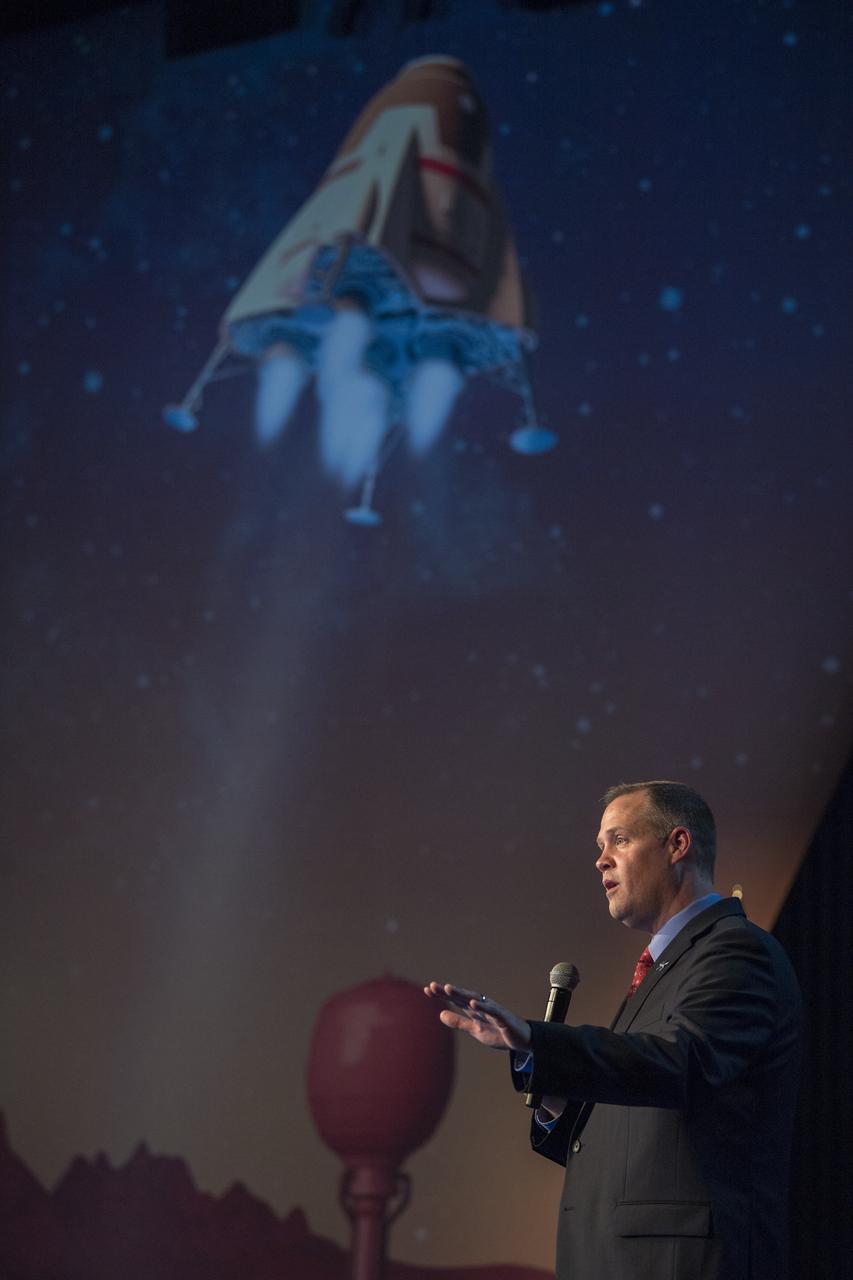
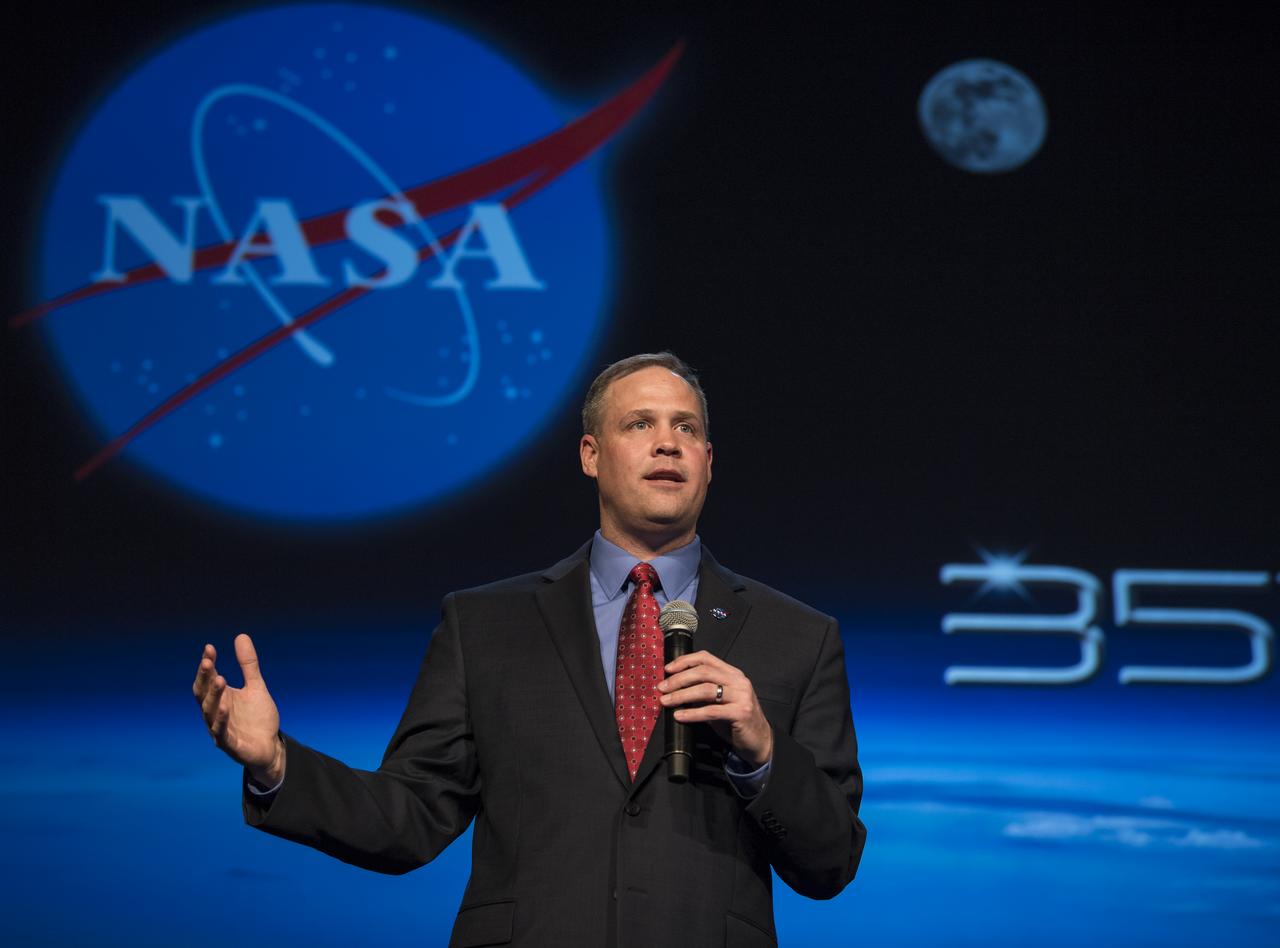
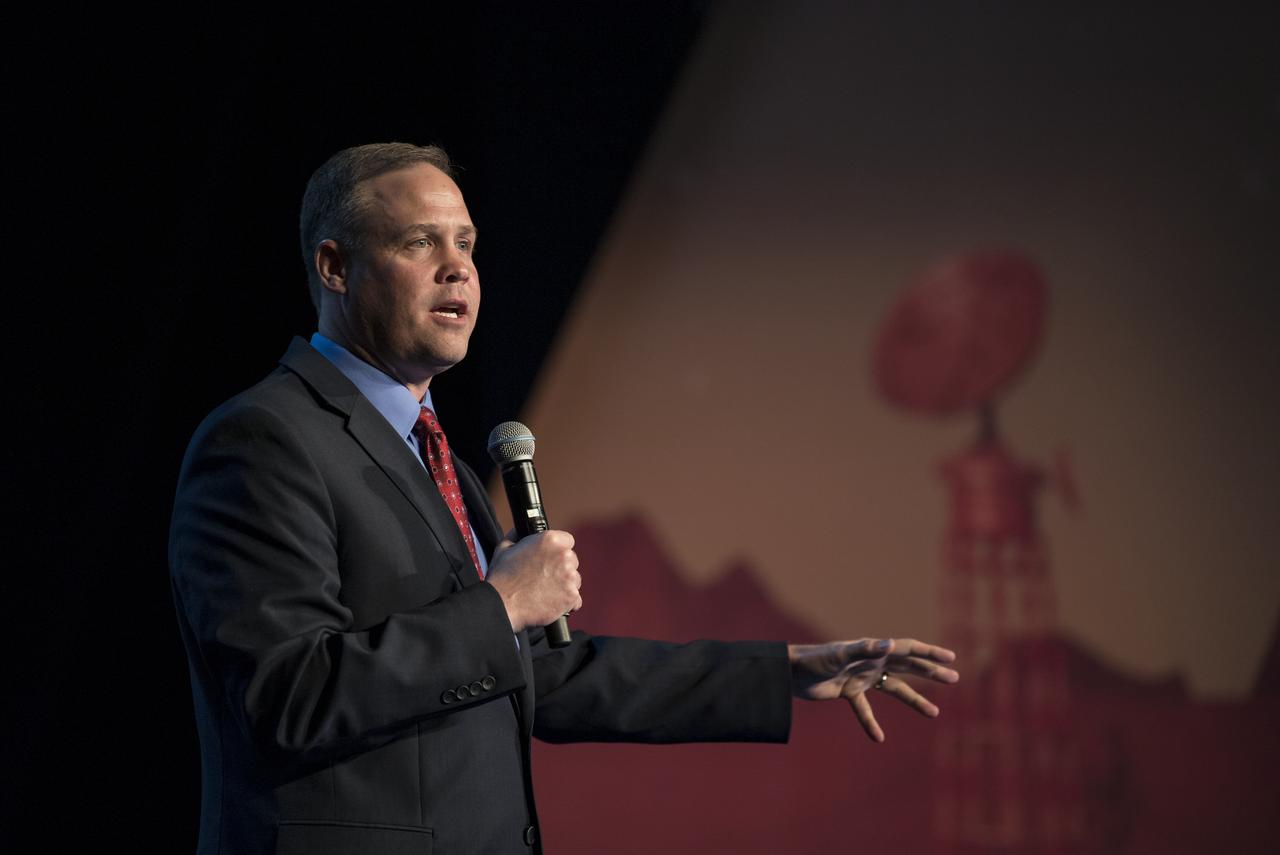
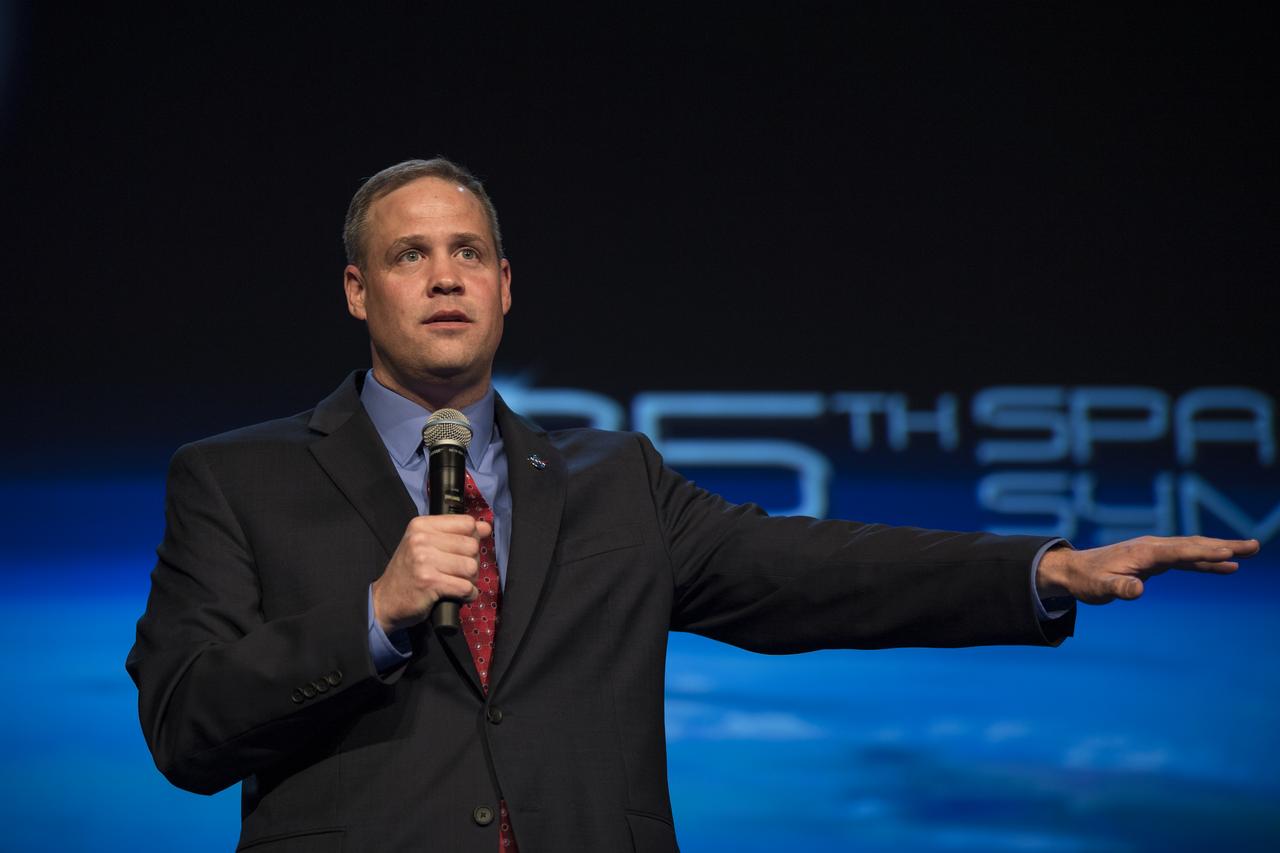
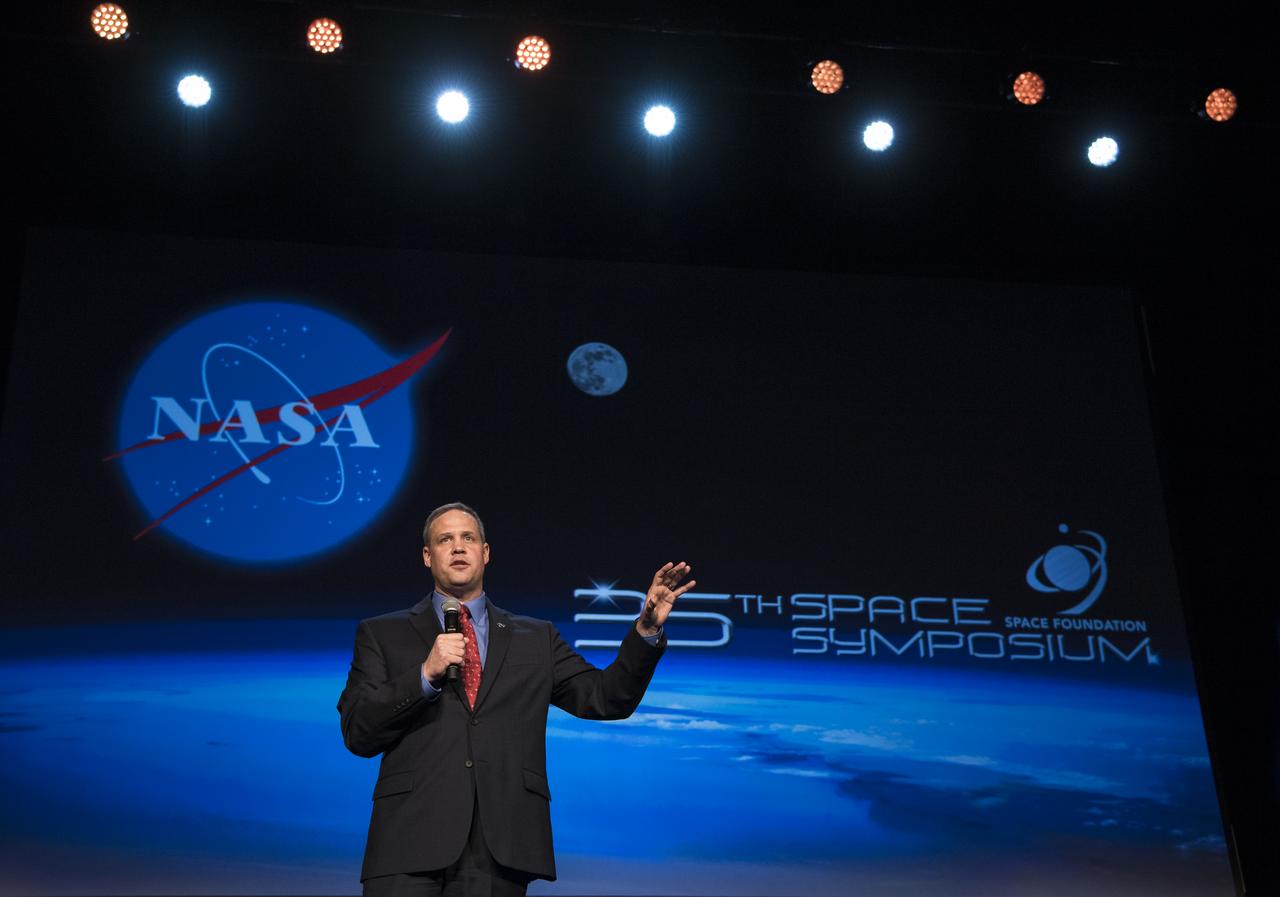
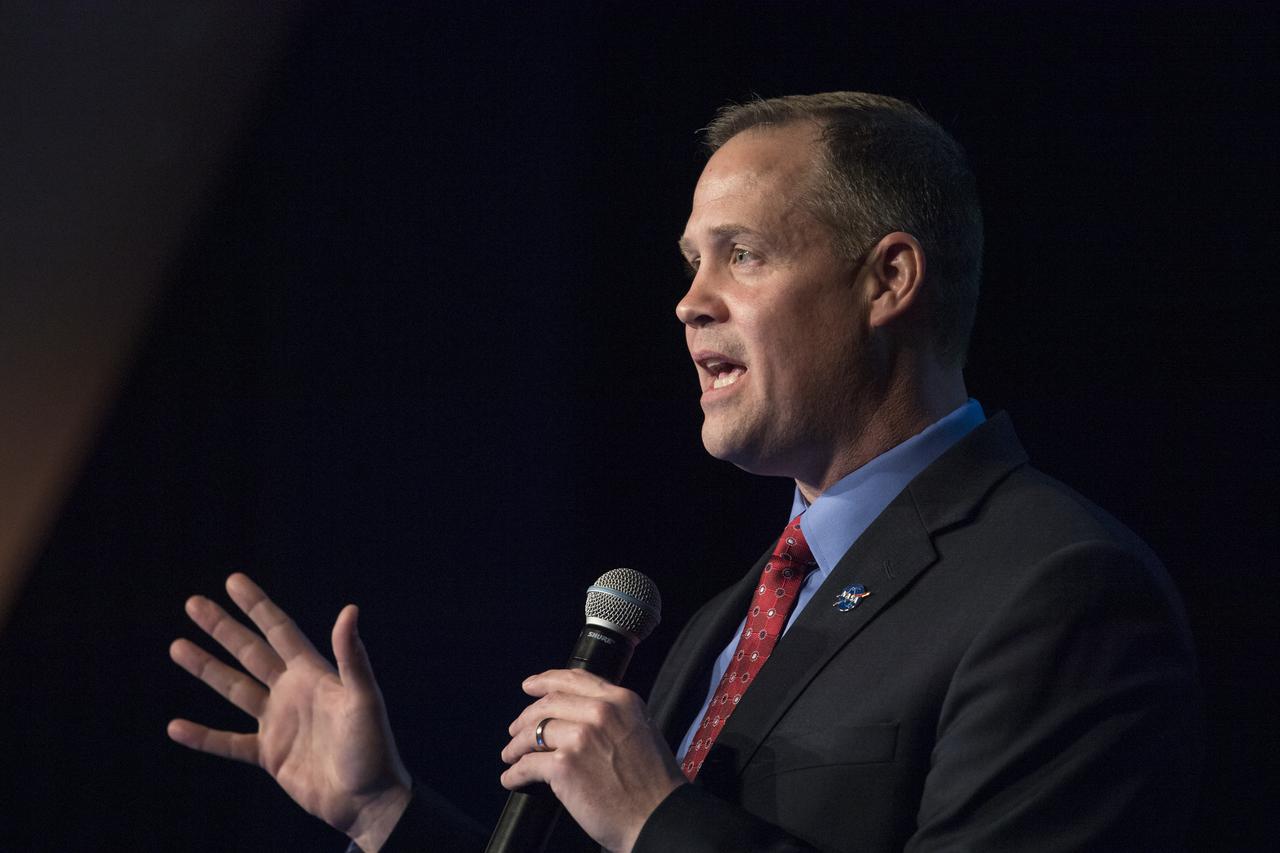
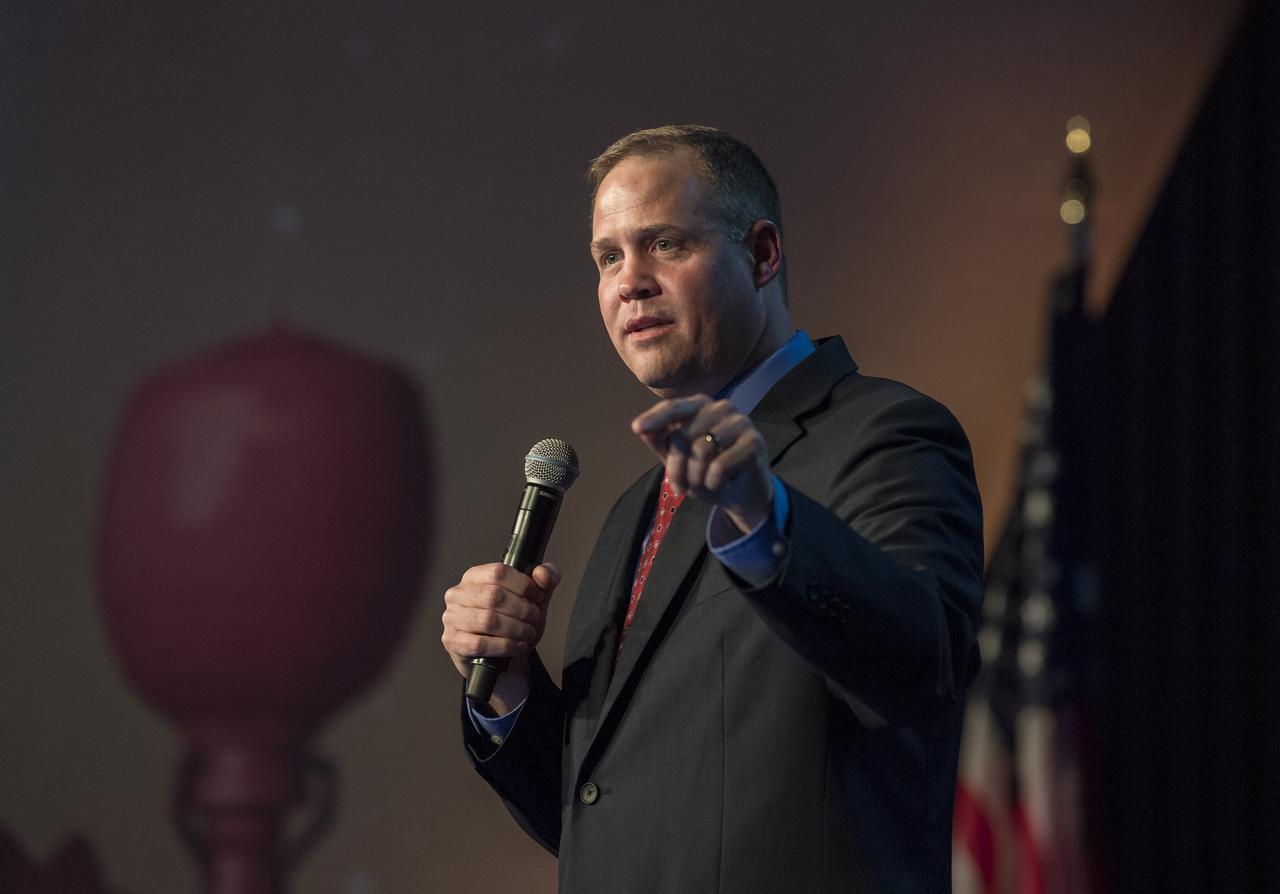
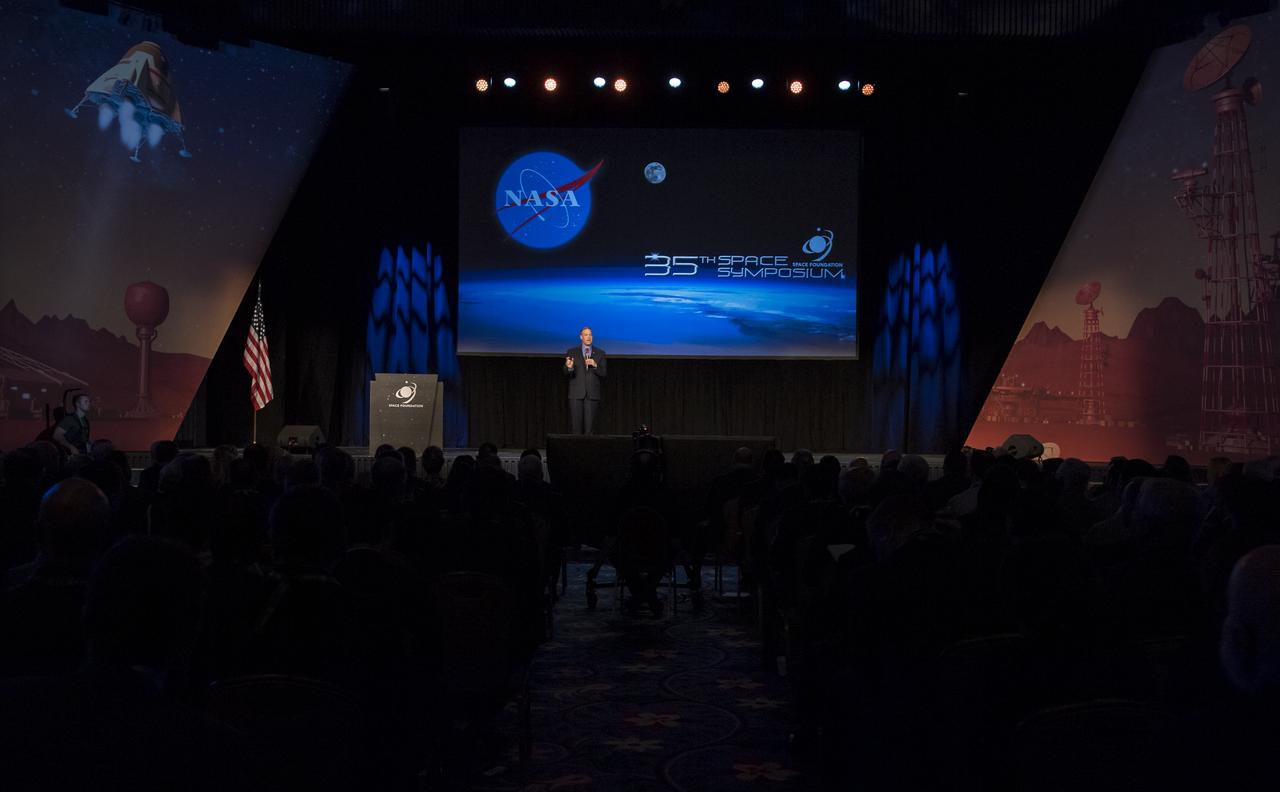
NASA Administrator Jim Bridenstine gives keynote remarks at the Space Symposium, Tuesday, April 9, 2019, at Broadmoor Hall in Colorado Springs, Colorado. Representatives from the space industry, military, and news media were in attendance. Photo credit: (NASA/Aubrey Gemignani)
Space Symposium
NASA Administrator Jim Bridenstine gives keynote remarks at the Space Symposium, Tuesday, April 9, 2019, at Broadmoor Hall in Colorado Springs, Colorado. Representatives from the space industry, military, and news media were in attendance. Photo credit: (NASA/Aubrey Gemignani)
Space Symposium
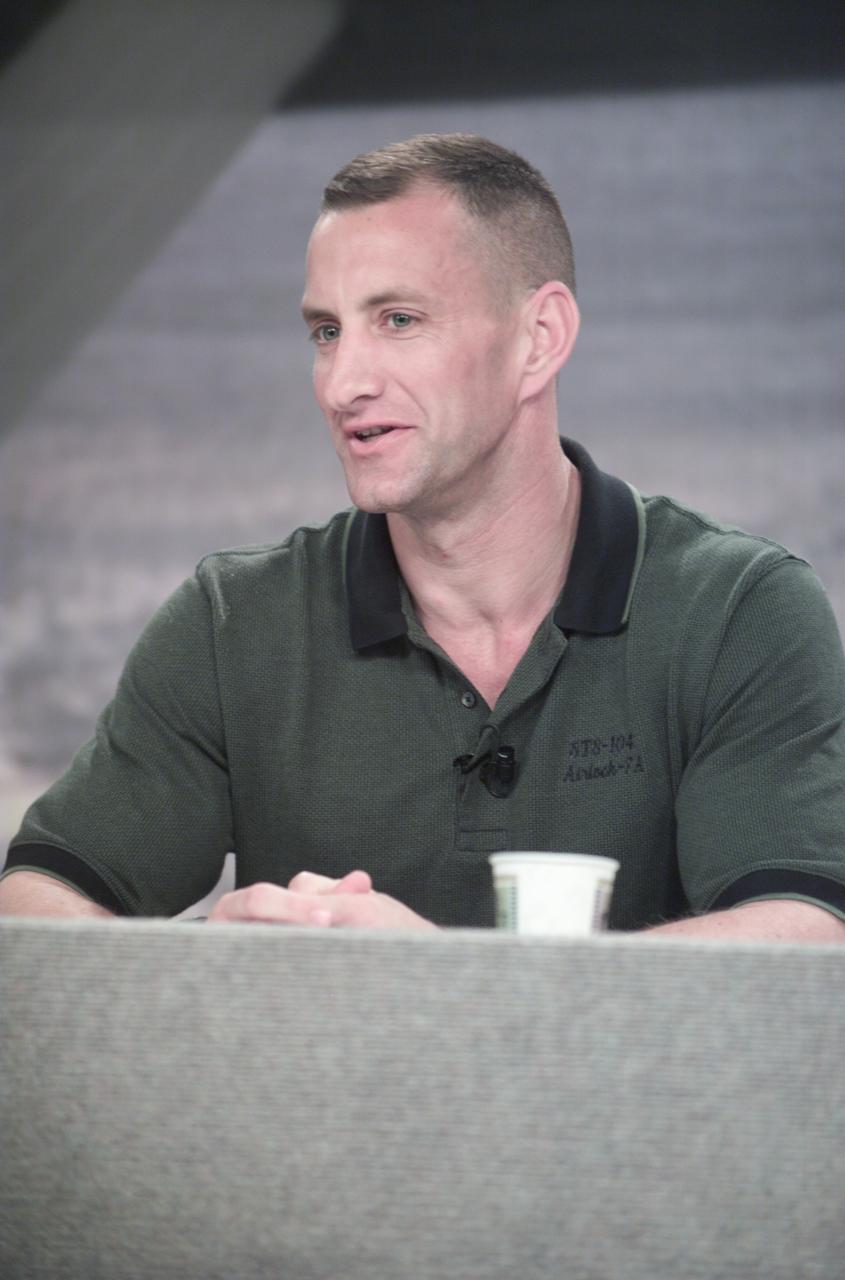
JSC2001-E-19303 (25 June 2001) --- Astronaut Charles O. Hobaugh, STS-104 mission specialist, listen to a question from a news media representative during a pre-flight press conference at Johnson Space Center (JSC).
JSC2001E19303
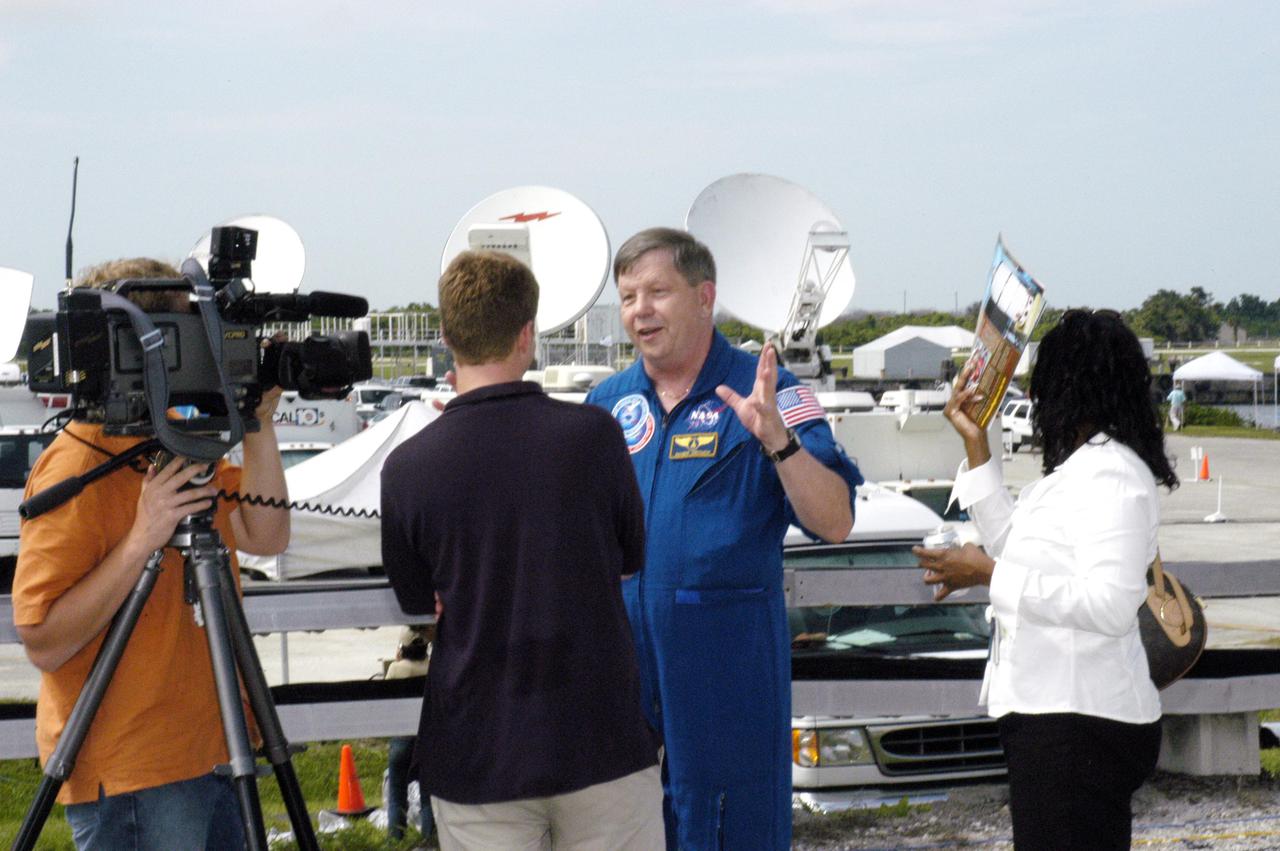
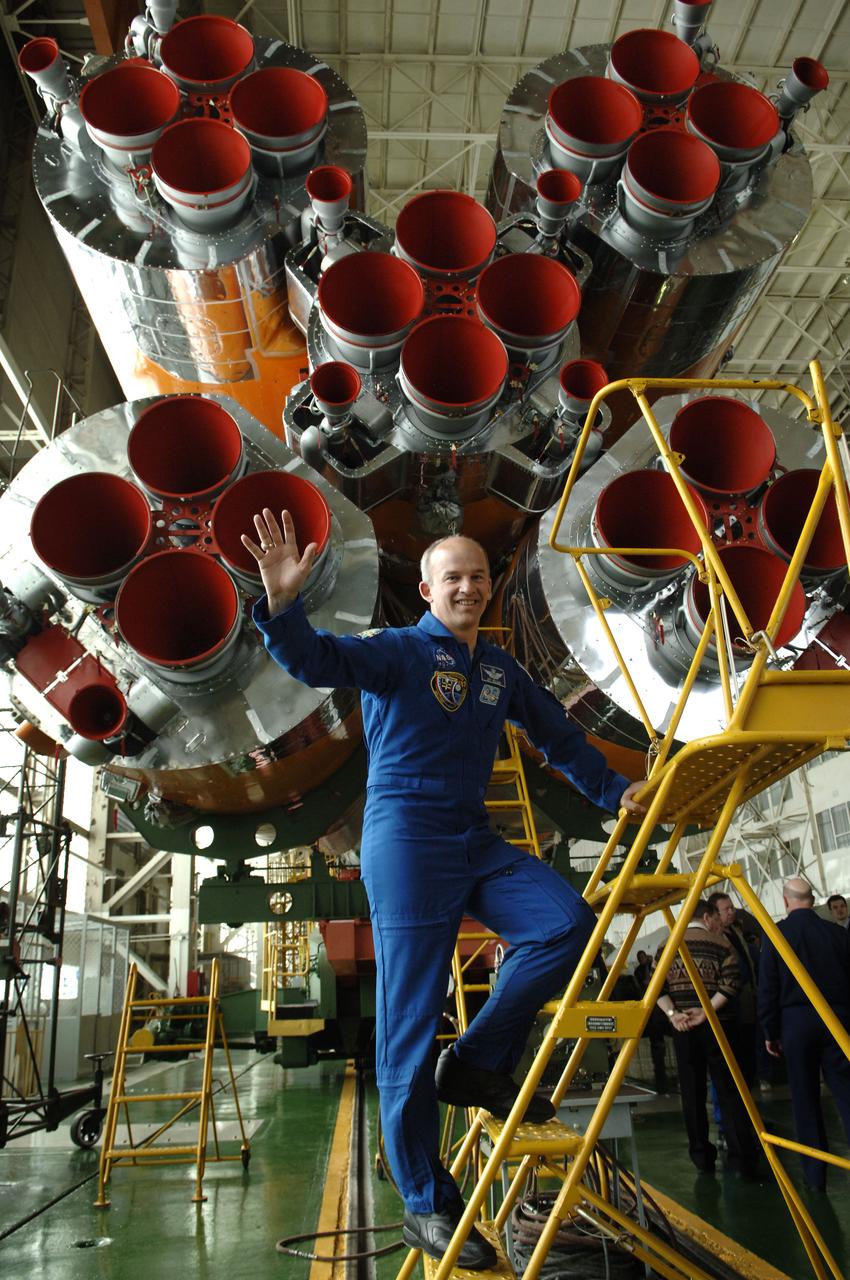
Jeffrey N. Williams, Expedition 13 Science Officer and Flight Engineer, waves at media representatives during a tour of the Soyuz assembly building at the Baikonur Cosmodrome in Baikonur, Kazakhstan. Sunday, March 26, 2006. Photo Credit: (NASA/Bill Ingalls)
Expedition 13 Preflight
NASA Administrator Jim Bridenstine gives keynote remarks at the Space Symposium, Tuesday, April 9, 2019, at Broadmoor Hall in Colorado Springs, Colorado. Representatives from the space industry, military, and news media were in attendance. Photo credit: (NASA/Aubrey Gemignani)
Space Symposium
NASA Administrator Jim Bridenstine gives keynote remarks at the Space Symposium, Tuesday, April 9, 2019, at Broadmoor Hall in Colorado Springs, Colorado. Representatives from the space industry, military, and news media were in attendance. Photo credit: (NASA/Aubrey Gemignani)
Space Symposium
NASA Administrator Jim Bridenstine gives keynote remarks at the Space Symposium, Tuesday, April 9, 2019, at Broadmoor Hall in Colorado Springs, Colorado. Representatives from the space industry, military, and news media were in attendance. Photo credit: (NASA/Aubrey Gemignani)
Space Symposium
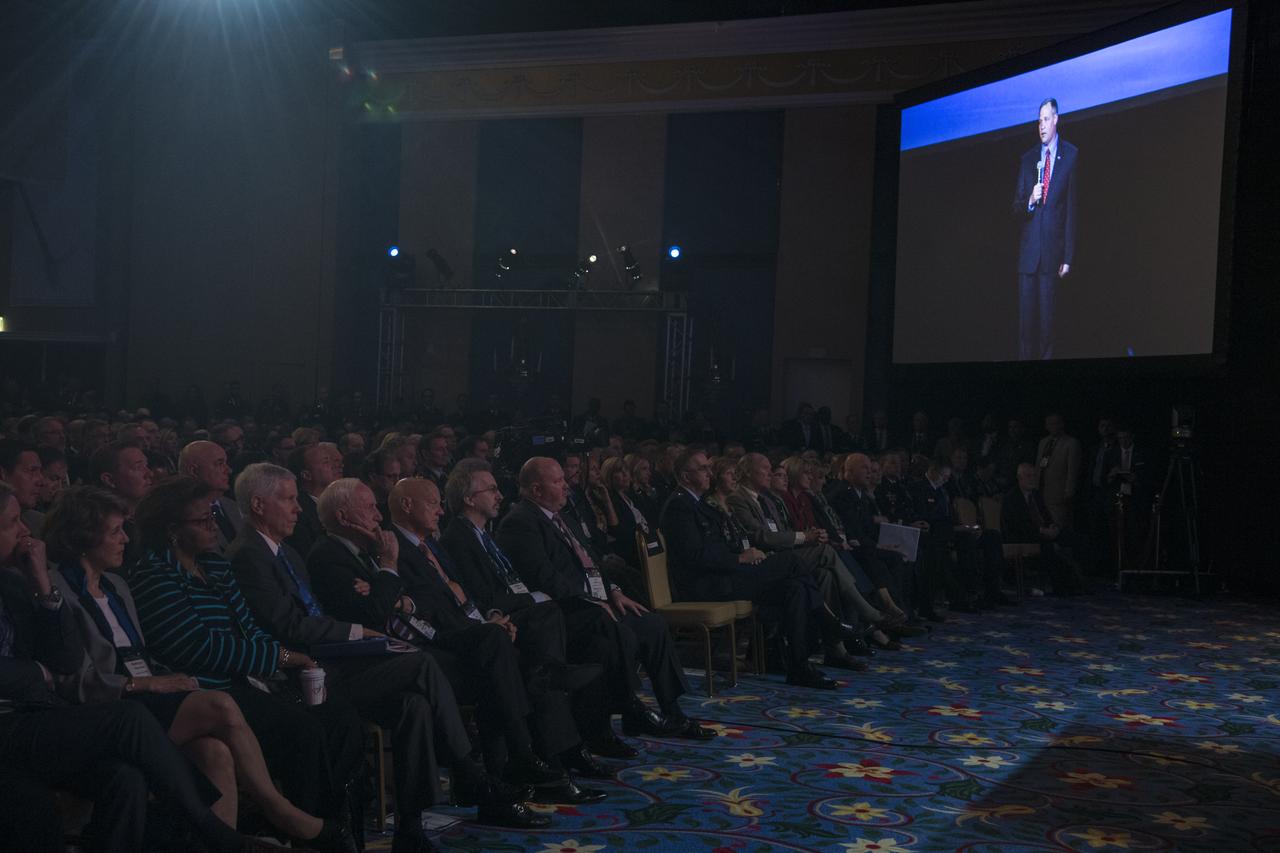
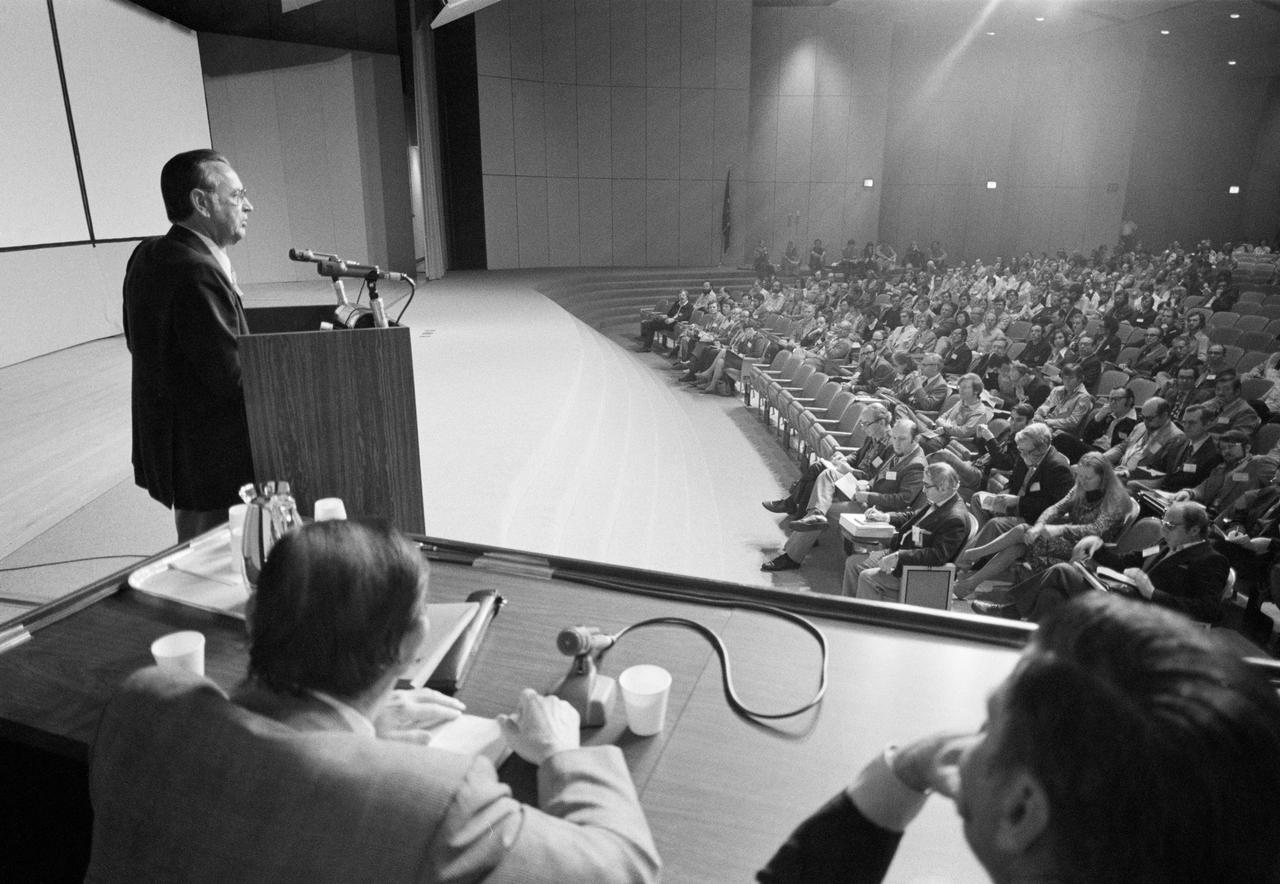
Audience members listen as NASA Administrator Jim Bridenstine gives keynote remarks at the Space Symposium, Tuesday, April 9, 2019, at Broadmoor Hall in Colorado Springs, Colorado. Representatives from the space industry, military, and news media were in attendance. Photo credit: (NASA/Aubrey Gemignani)
Space Symposium
NASA Administrator Jim Bridenstine gives keynote remarks at the Space Symposium, Tuesday, April 9, 2019, at Broadmoor Hall in Colorado Springs, Colorado. Representatives from the space industry, military, and news media were in attendance. Photo credit: (NASA/Aubrey Gemignani)
Space Symposium
NASA Administrator Jim Bridenstine gives keynote remarks at the Space Symposium, Tuesday, April 9, 2019, at Broadmoor Hall in Colorado Springs, Colorado. Representatives from the space industry, military, and news media were in attendance. Photo credit: (NASA/Aubrey Gemignani)
Space Symposium
NASA Administrator Jim Bridenstine gives keynote remarks at the Space Symposium, Tuesday, April 9, 2019, at Broadmoor Hall in Colorado Springs, Colorado. Representatives from the space industry, military, and news media were in attendance. Photo credit: (NASA/Aubrey Gemignani)
Space Symposium
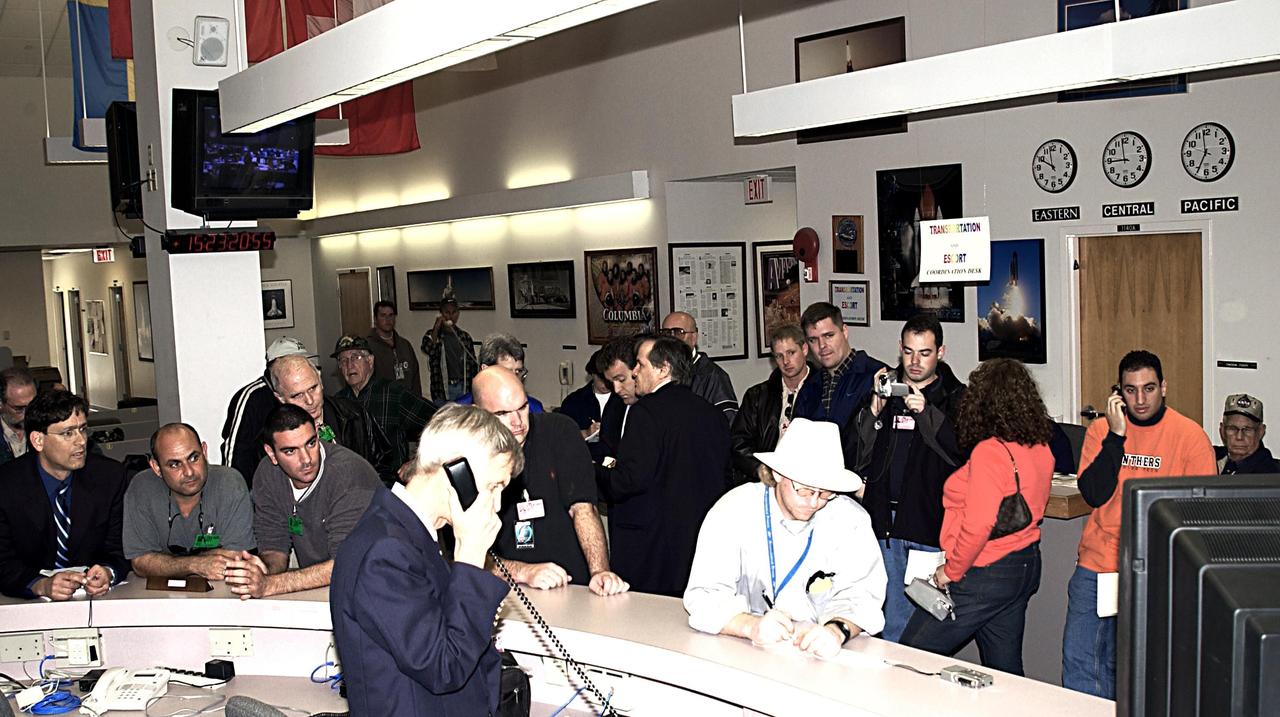
KENNEDY SPACE CENTER, FLA. - After the news that Space Shuttle Columbia was lost, crowds of media representatives begin to gather at the KSC News Center for information and interviews.  The response was international, from Australia to Japan and Russia, Europe to Canada, and across the United States.
KSC-03pd0239
NASA Administrator Jim Bridenstine gives keynote remarks at the Space Symposium, Tuesday, April 9, 2019, at Broadmoor Hall in Colorado Springs, Colorado. Representatives from the space industry, military, and news media were in attendance. Photo credit: (NASA/Aubrey Gemignani)
Space Symposium
The Complex 39 press site buzzes with activity during the final countdown to the launch of the third space shuttle flight. More than 2,000 news media representatives from around the world crowded onto the press site this morning to watch the successful 11 a.m. launch.
KSC-82PC-0331
At NASA's Kennedy Space Center in Florida, the new countdown clock at the spaceport's Press Site is used for the first time as preparations were underway for the Orion Flight Test. News media representatives gather in anticipation of the launch of NASA's Orion spacecraft atop a United Launch Alliance Delta IV Heavy rocket.
Media at the Press Site for the Orion Launch
NASA Administrator Jim Bridenstine gives keynote remarks at the Space Symposium, Tuesday, April 9, 2019, at Broadmoor Hall in Colorado Springs, Colorado. Representatives from the space industry, military, and news media were in attendance. Photo credit: (NASA/Aubrey Gemignani)
Space Symposium
KENNEDY SPACE CENTER, FLA. - After the news that Space Shuttle Columbia was lost, crowds of media representatives begin to gather at the KSC News Center for information and interviews.  The response was international, from Australia to Japan and Russia, Europe to Canada, and across the United States.
KSC-03pd0238
NASA Administrator Jim Bridenstine gives keynote remarks at the Space Symposium, Tuesday, April 9, 2019, at Broadmoor Hall in Colorado Springs, Colorado. Representatives from the space industry, military, and news media were in attendance. Photo credit: (NASA/Aubrey Gemignani)
Space Symposium